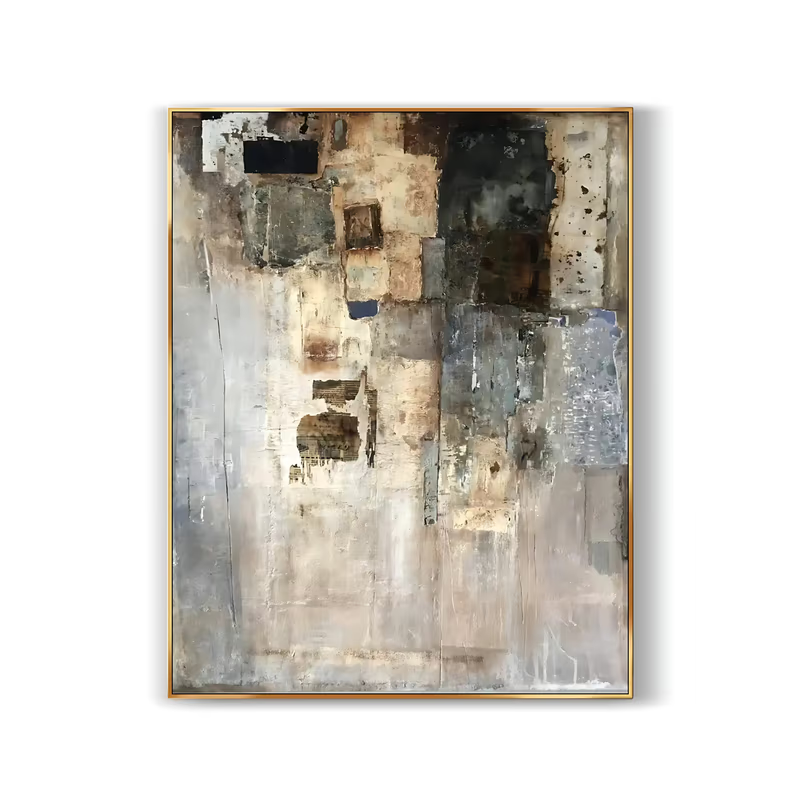
Lobby art guide · Updated
How to choose art for a hotel lobby or reception
Key takeaways
- Design for the doorway: lobby art is first seen from the entrance, often eight to ten metres away, so its main shapes and colours must work at that distance before anyone notices the brushwork.
- One anchor beats many small pieces: a single large canvas on the main sightline gives a lobby its identity; smaller works belong in the seating area and lift lobbies.
- Size to the wall, not to a catalogue: fill roughly 60–75% of the wall's width, or about two-thirds of a reception desk's length, and have the canvas painted to that exact size.
- Sample, approve, then scale up: confirm colour and texture on one piece, approve progress photos at each stage, and allow about 10 days to paint and 5–7 days to ship before the opening date.
What should art in a hotel lobby do?
Lobby art tells arriving guests what kind of place they have walked into, gives the space a focal point, and quietly points people toward reception and the lifts.
The lobby is the only room every guest, visitor and member of staff passes through, and they form an impression of it within seconds. A painting there does three jobs at once. It sets the tone: calm and residential, glamorous, coastal, urban or playful. It anchors a large, hard space full of stone, glass and timber, which otherwise has nothing for the eye to settle on. And it helps people find their way, because a strong image behind the desk or at the end of the main axis draws them in the right direction.
The same is true in office buildings and apartment blocks, where the reception is the first thing a prospective tenant or resident sees. Lobby art is also the most photographed art in a building, so it often ends up as the image that represents the property online.
How do you choose art for a lobby or reception area?
Start from the impression the lobby should make in its first few seconds, then judge each candidate from the places people actually stand: the entrance, the reception queue, the seating and the lift approach.
Write down in one sentence what the arrival should feel like, for example "warm and unhurried" or "bold and urban", and use it to filter by subject, palette and texture. Then look at the main materials. A painting that picks up one colour from the stone, timber or metalwork looks intended; one that copies every fabric in the room tends to disappear. Check the light as well: a wall lit from above at a steep angle suits relief and impasto, while a wall facing a glass frontage needs a canvas that will not wash out in daylight.
| Space | The wall that matters | What tends to work | Format |
|---|---|---|---|
| Hotel lobby | The wall on the axis from the front door | One large anchor: textured abstract, landscape or seascape | Horizontal or panoramic |
| Reception desk backdrop | The wall behind the desk, seen over staff's heads | A calm, legible composition that does not fight the signage | Panoramic or wide horizontal |
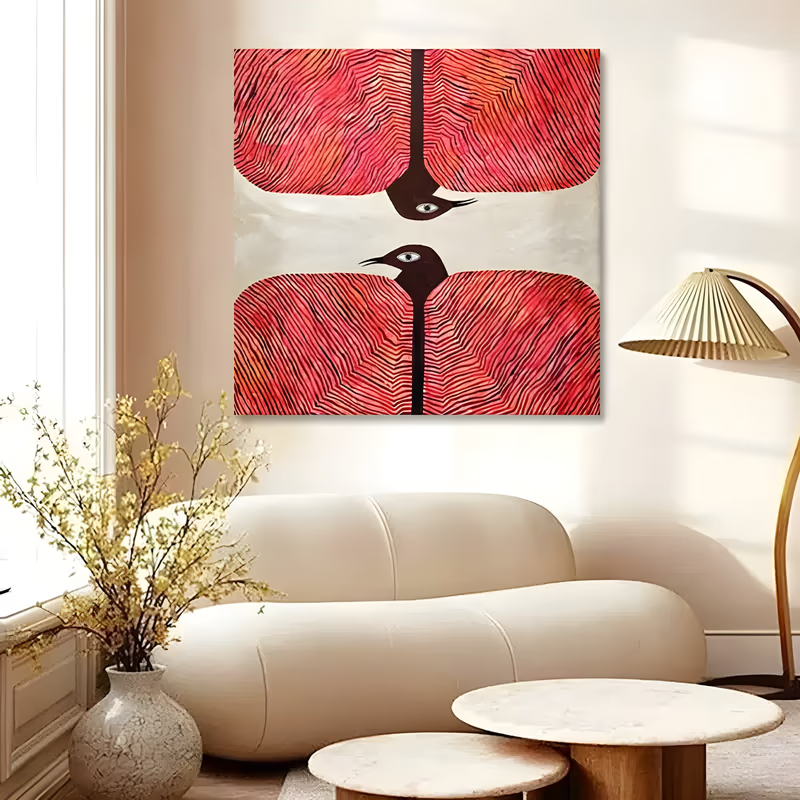
| Office or residential reception | The wall facing visitors as they wait | Composed abstract or geometric work in the building's colours | Horizontal or square |
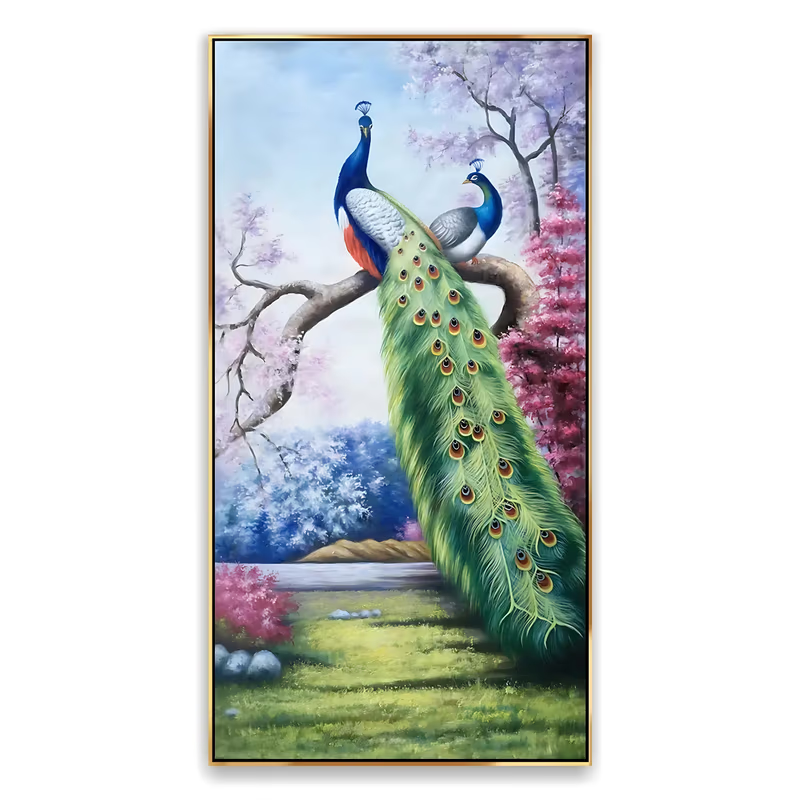
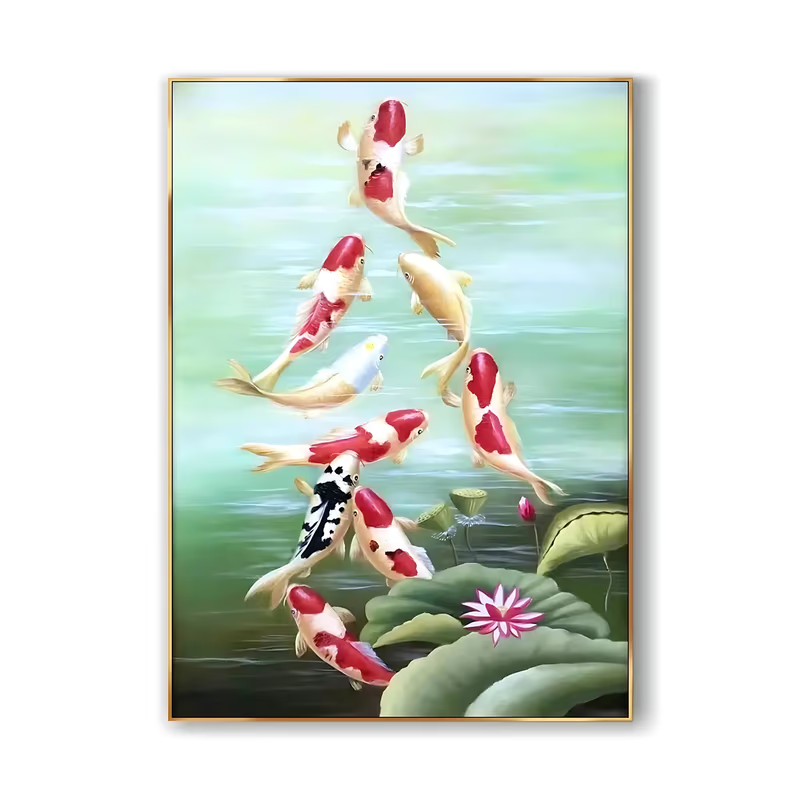
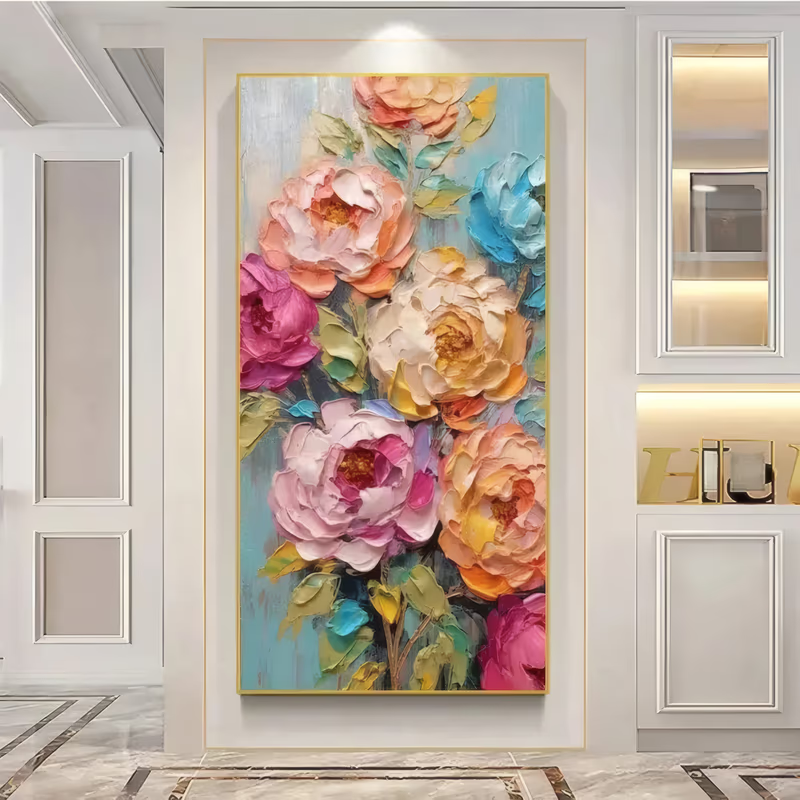
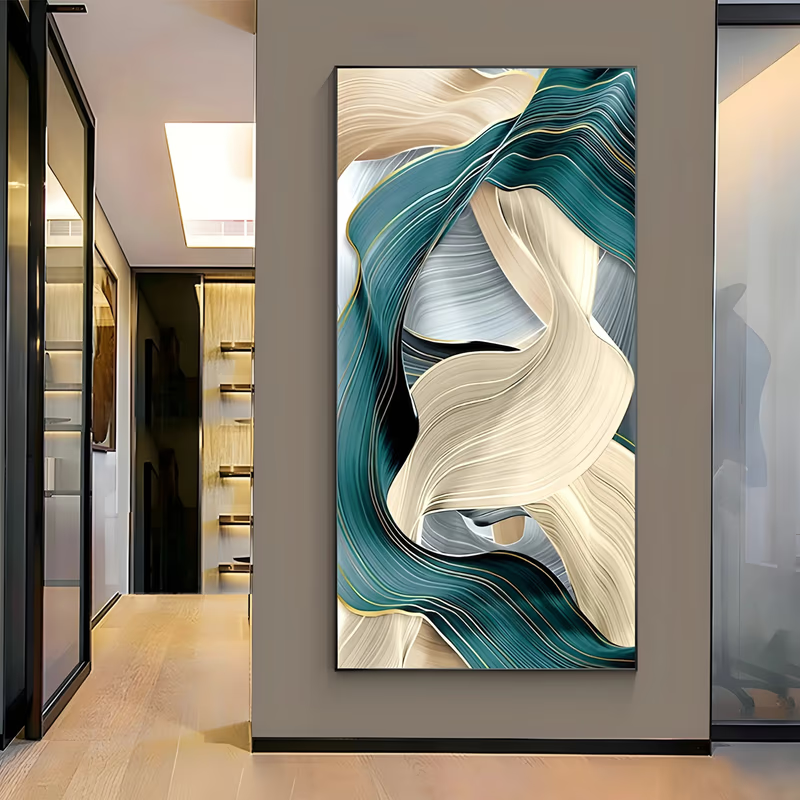
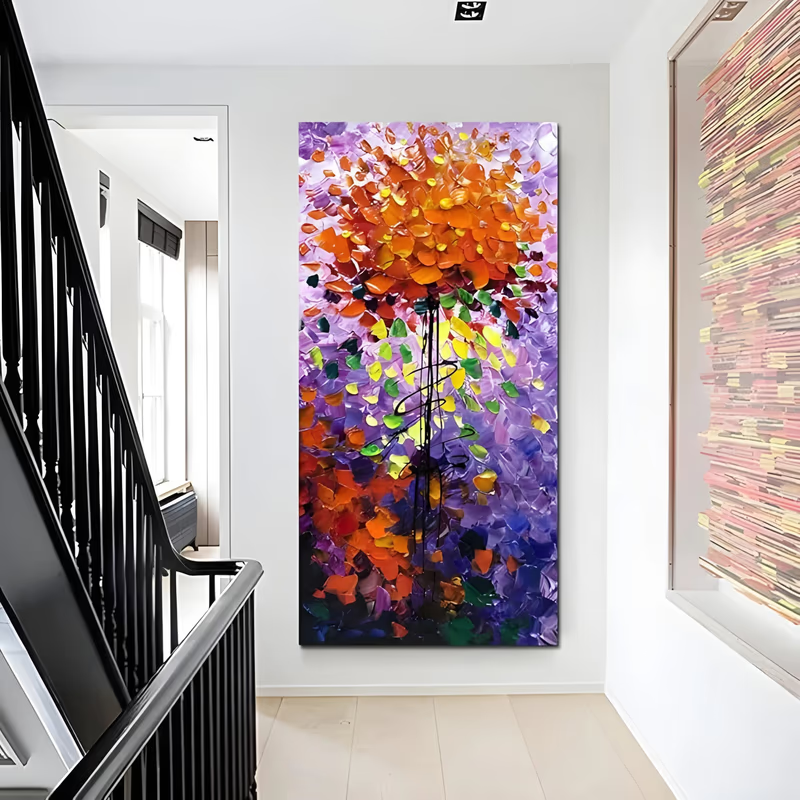
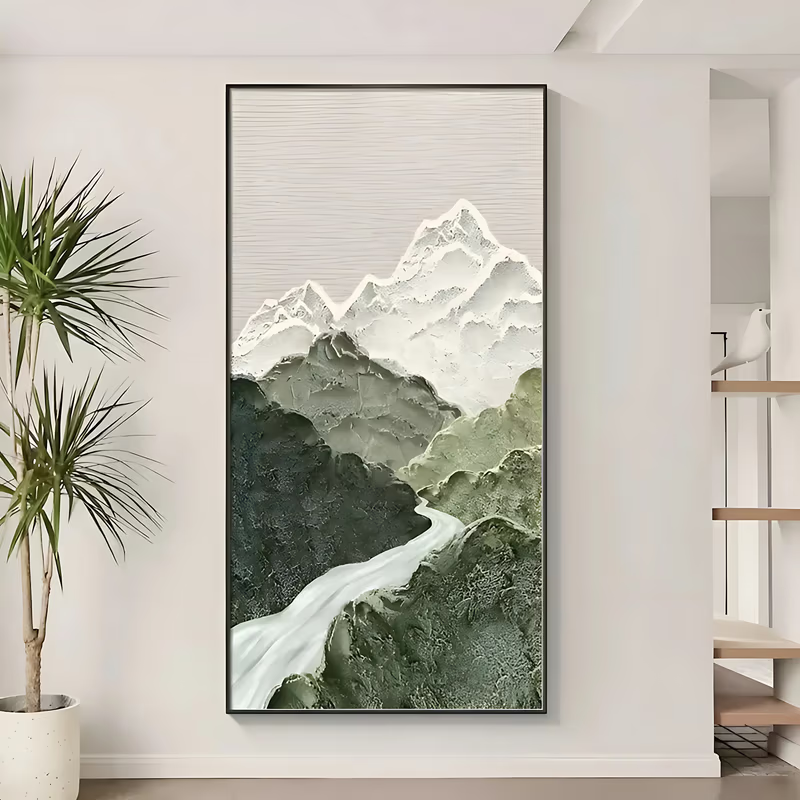
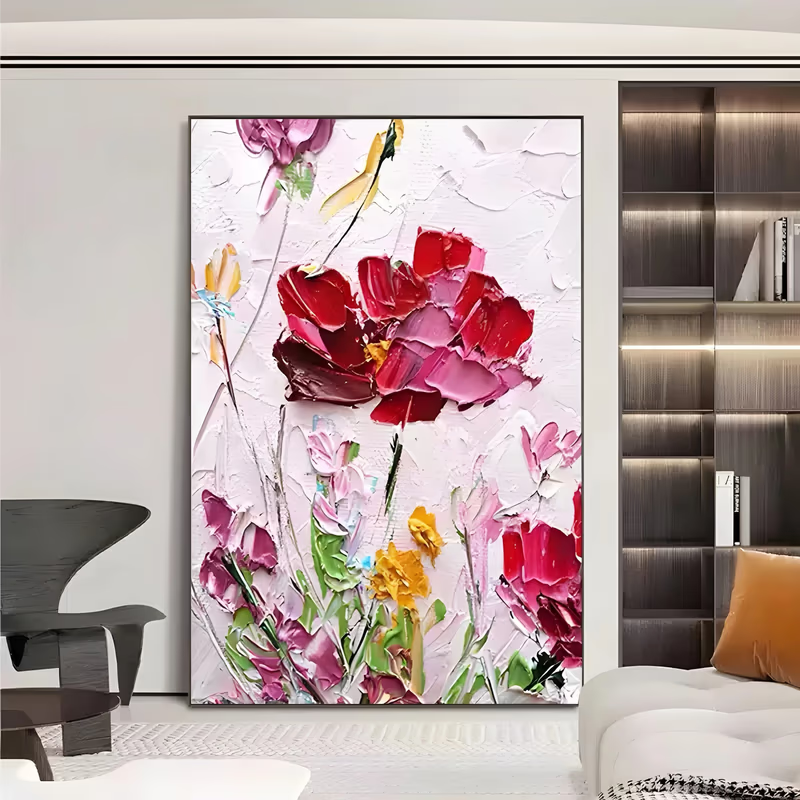
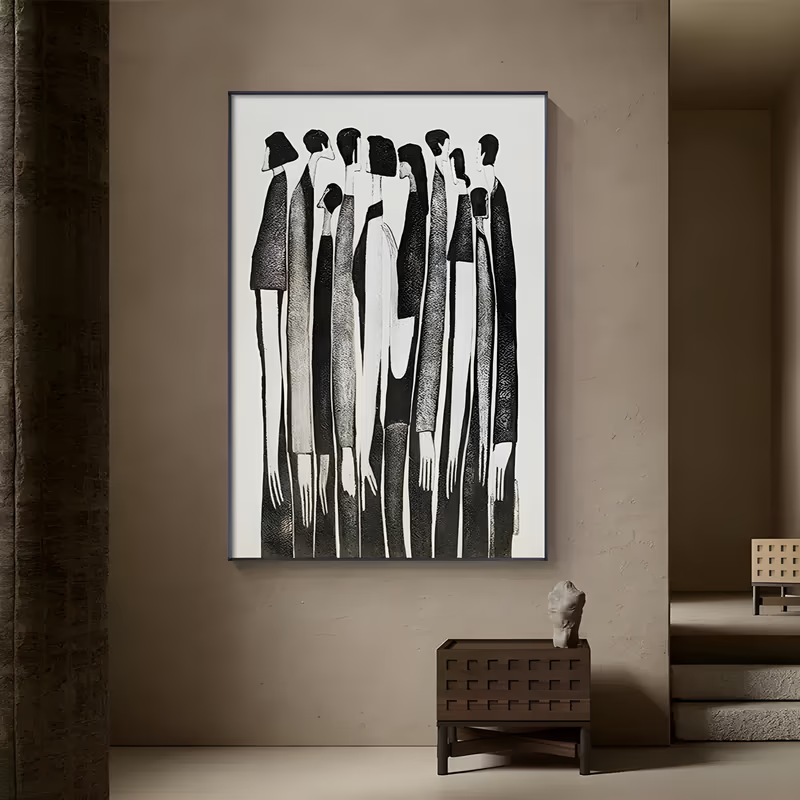
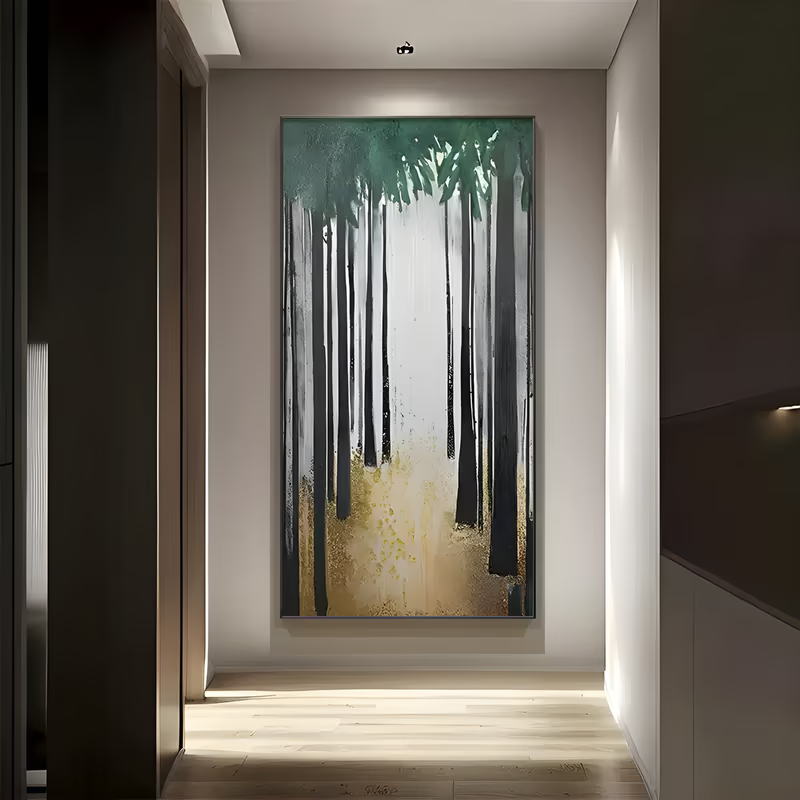
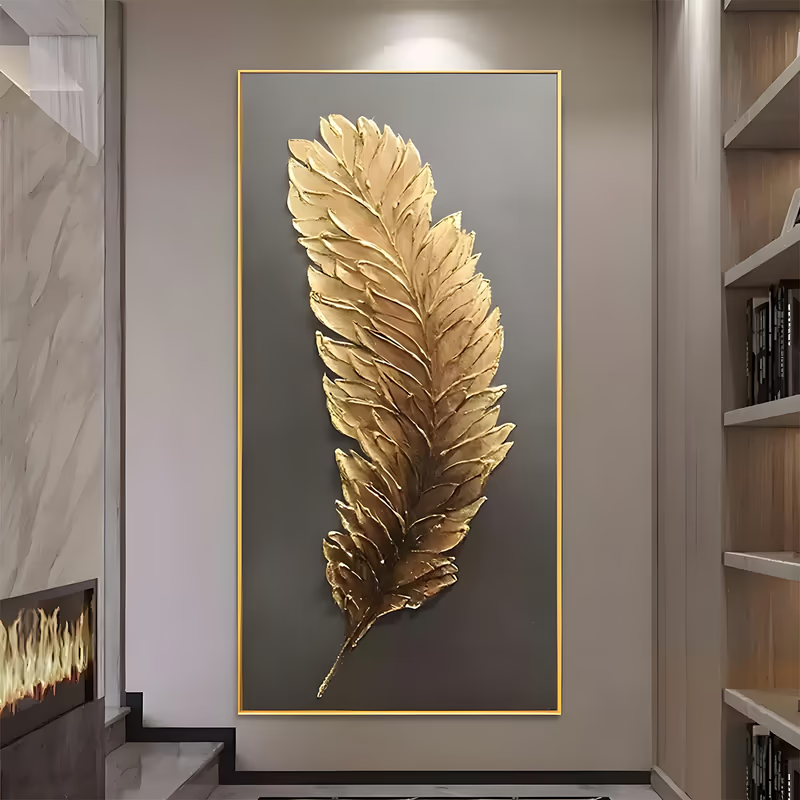
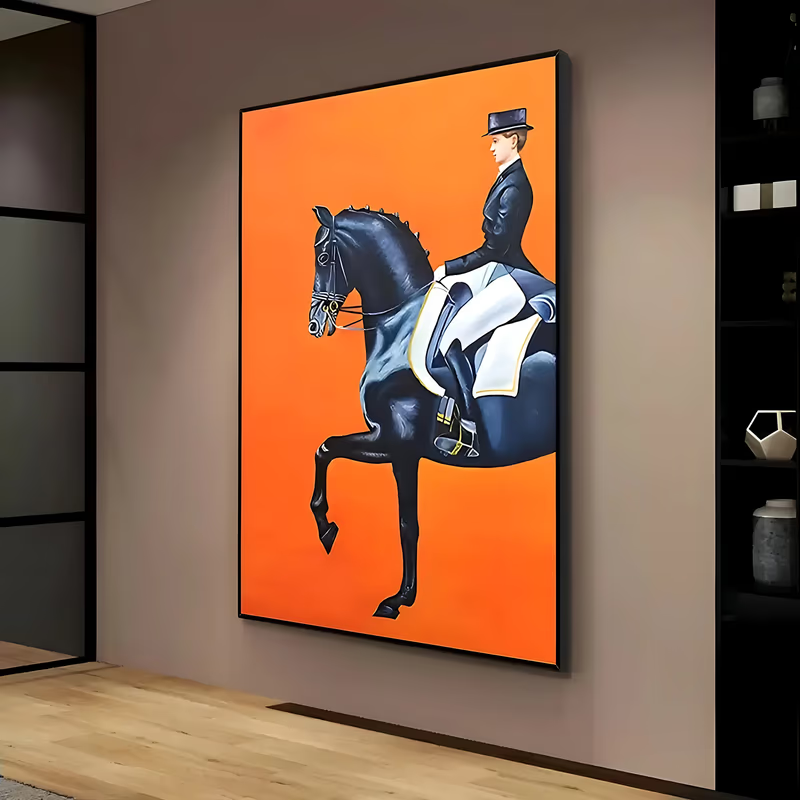
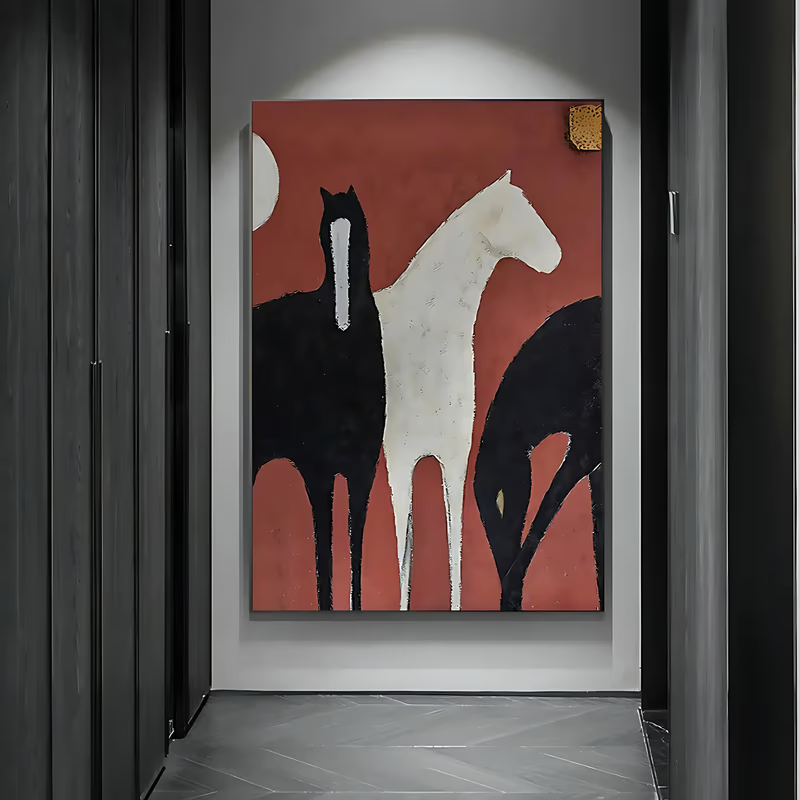
| Lift lobby | The wall facing the lift doors | A vertical piece that reads in the few seconds before the doors open | Vertical |
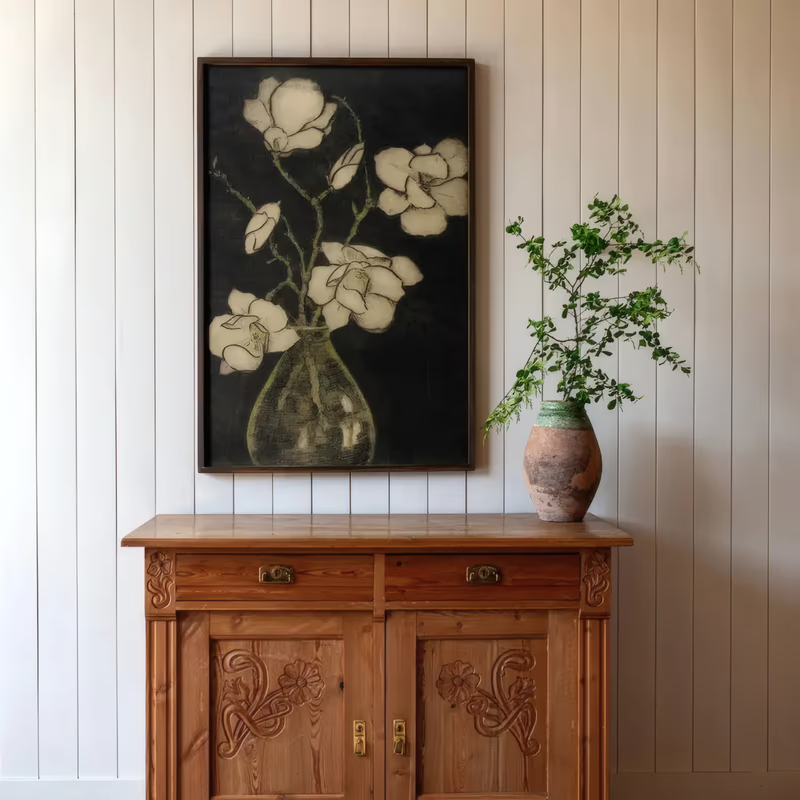
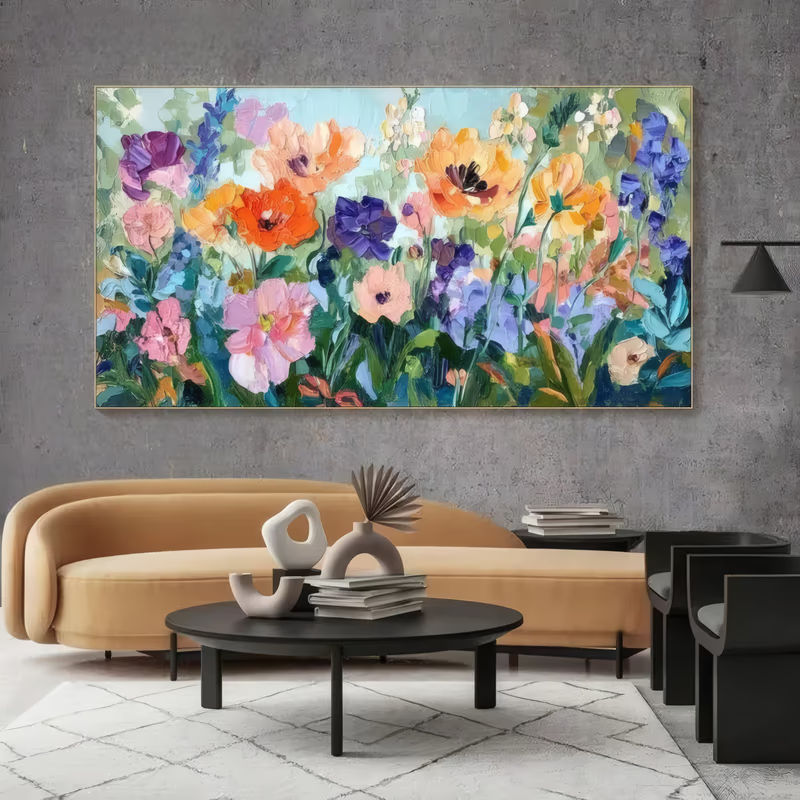
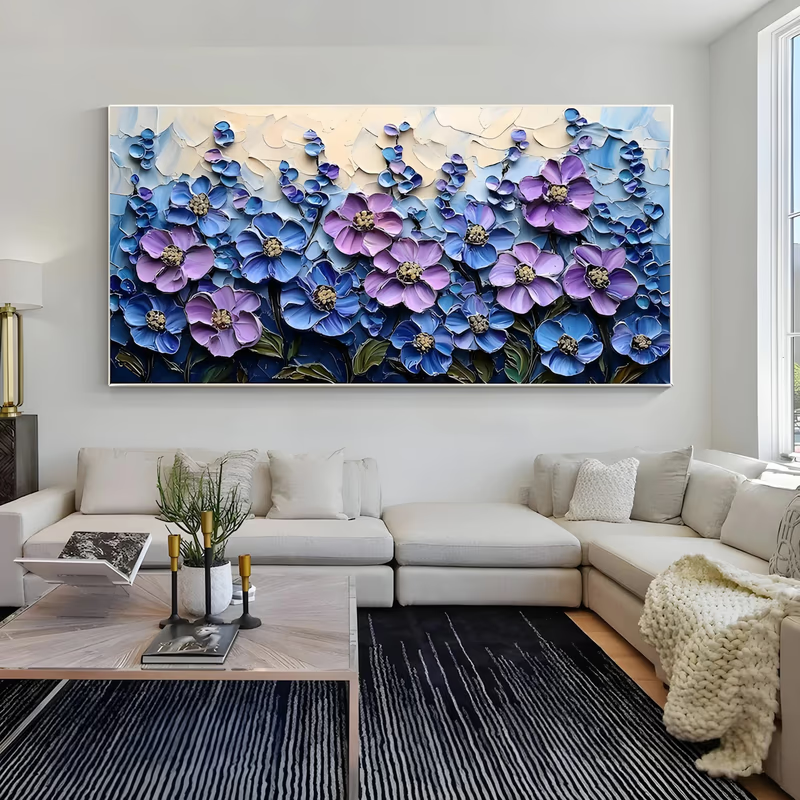
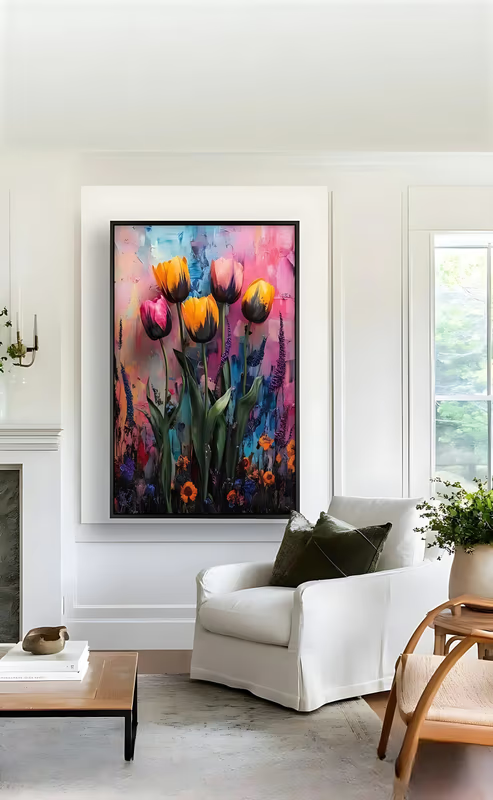
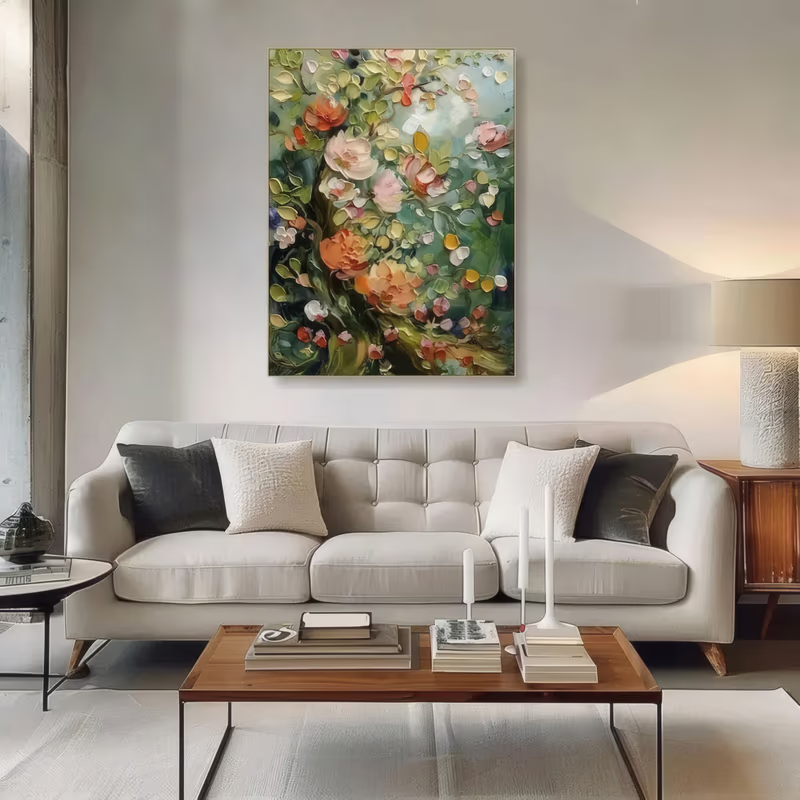
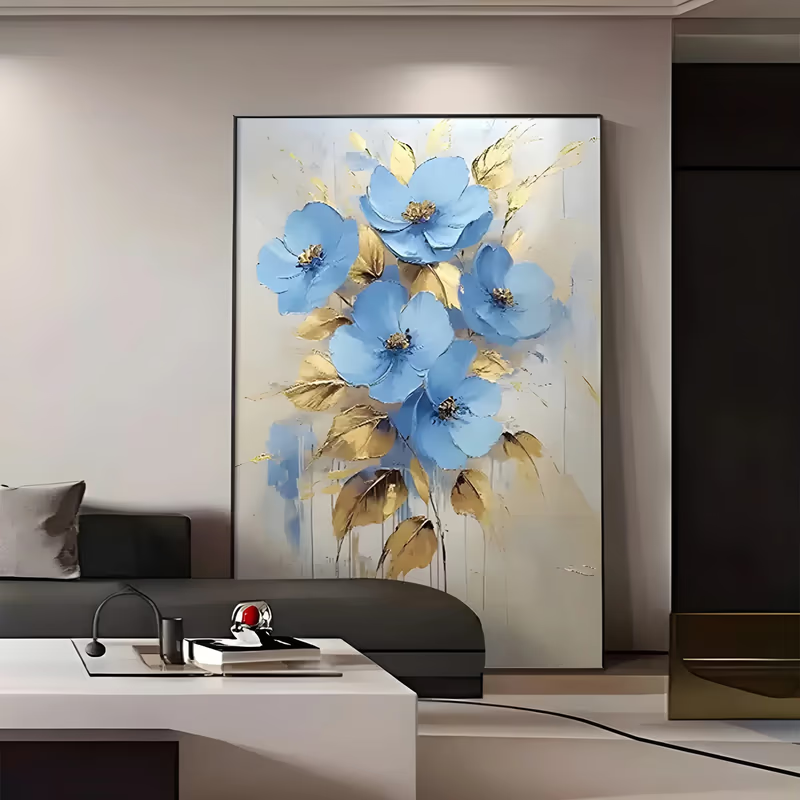
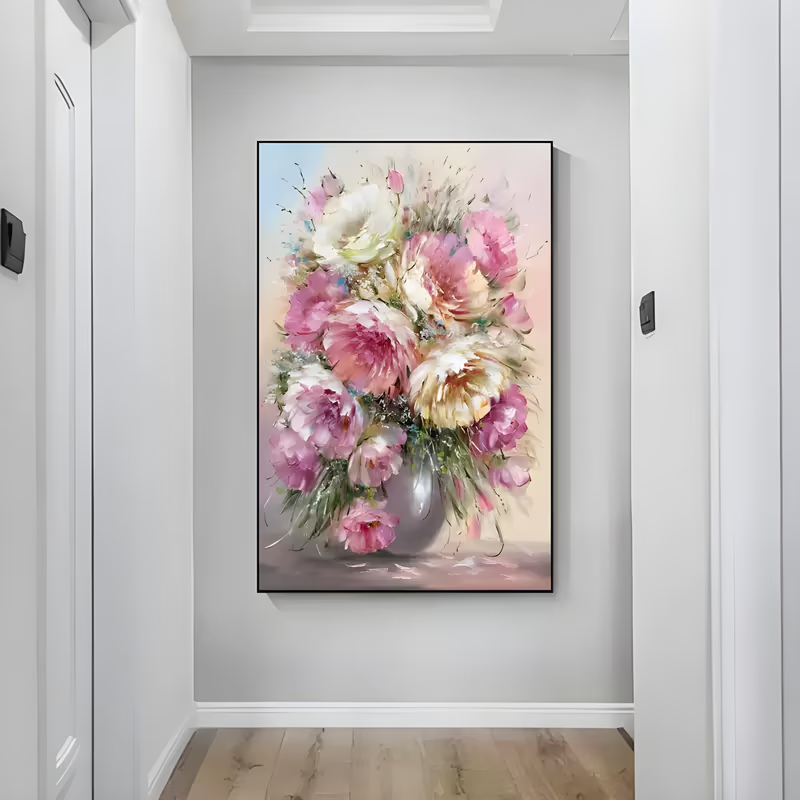
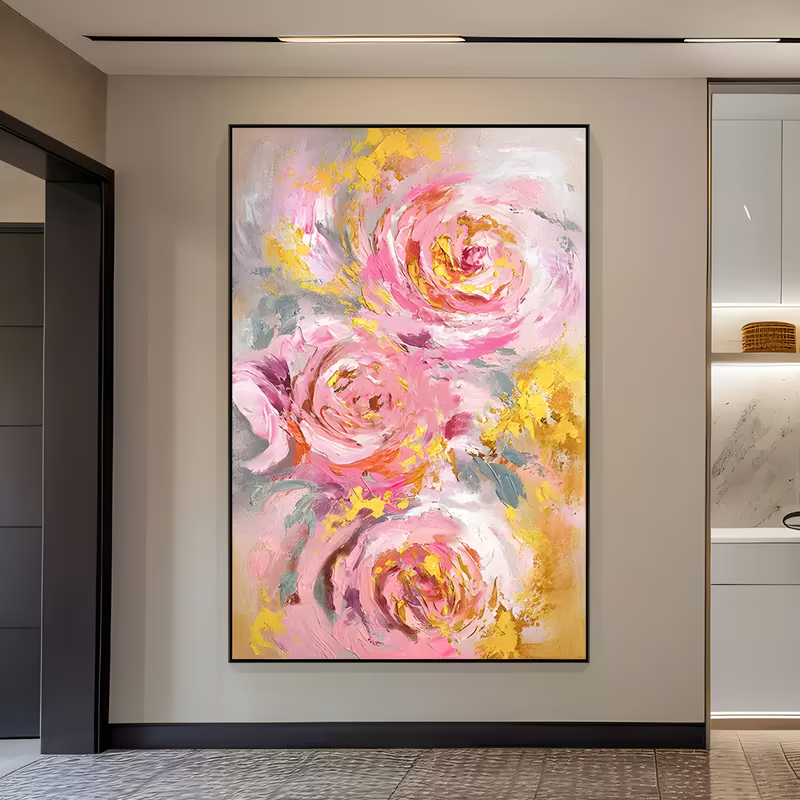
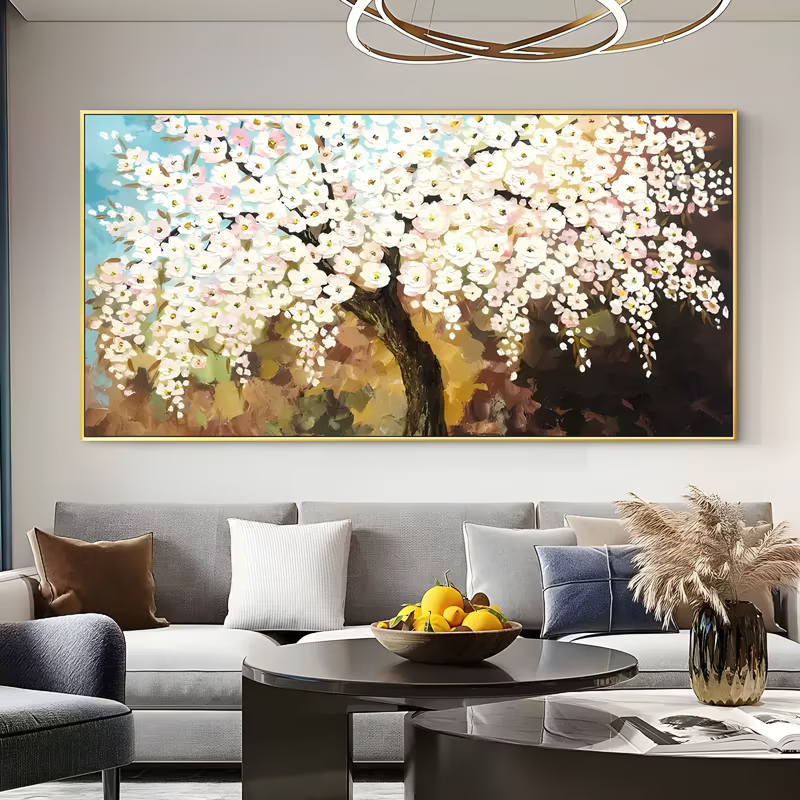
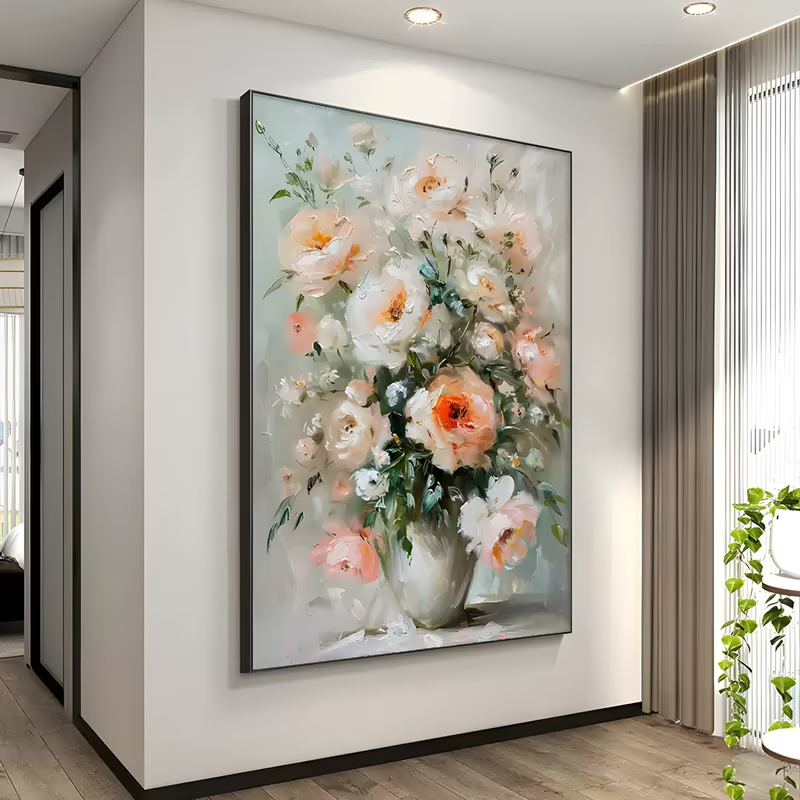
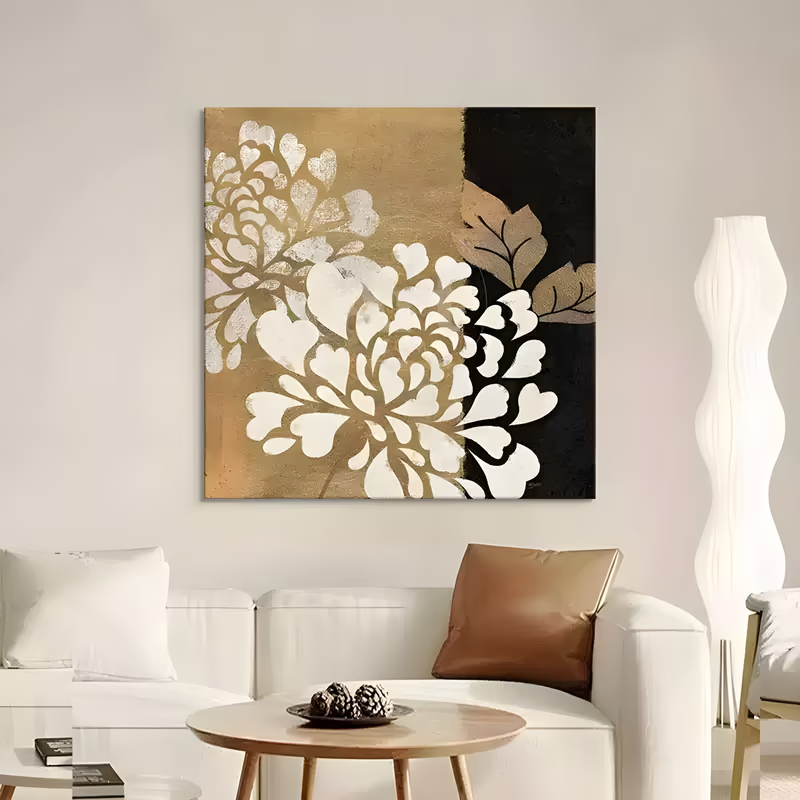
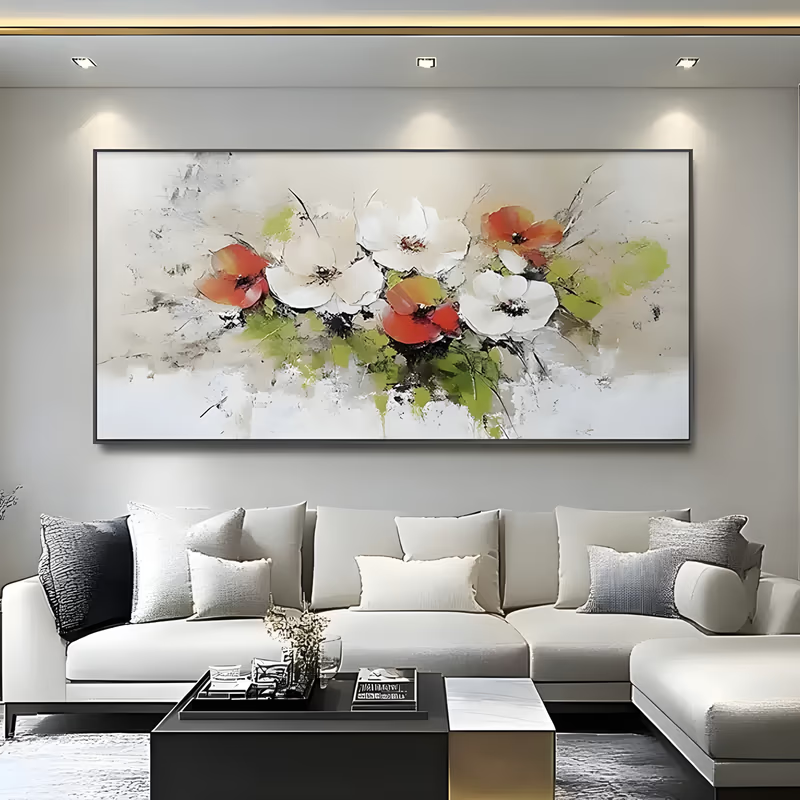
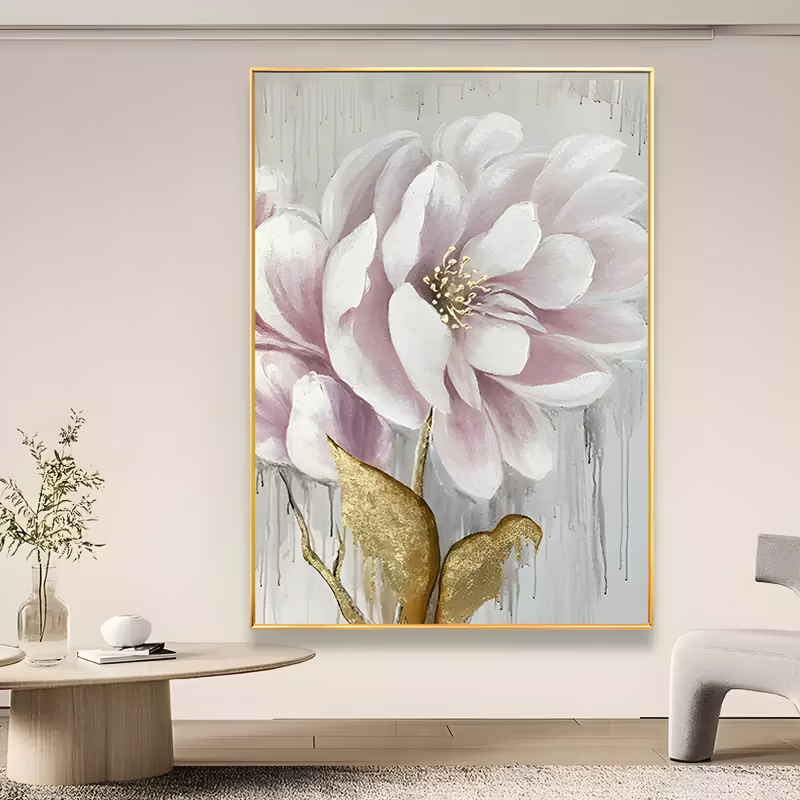
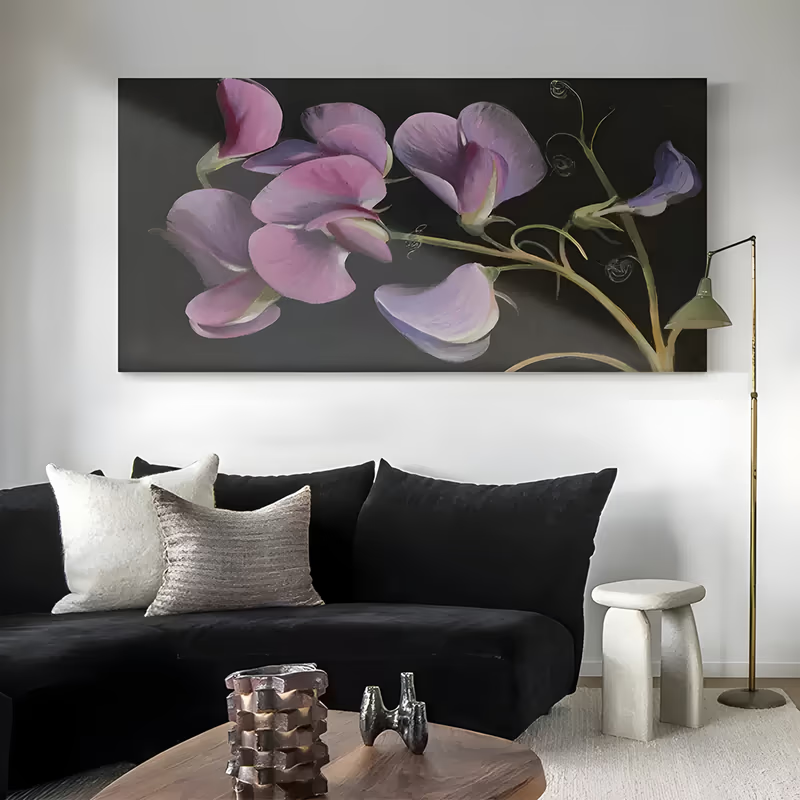
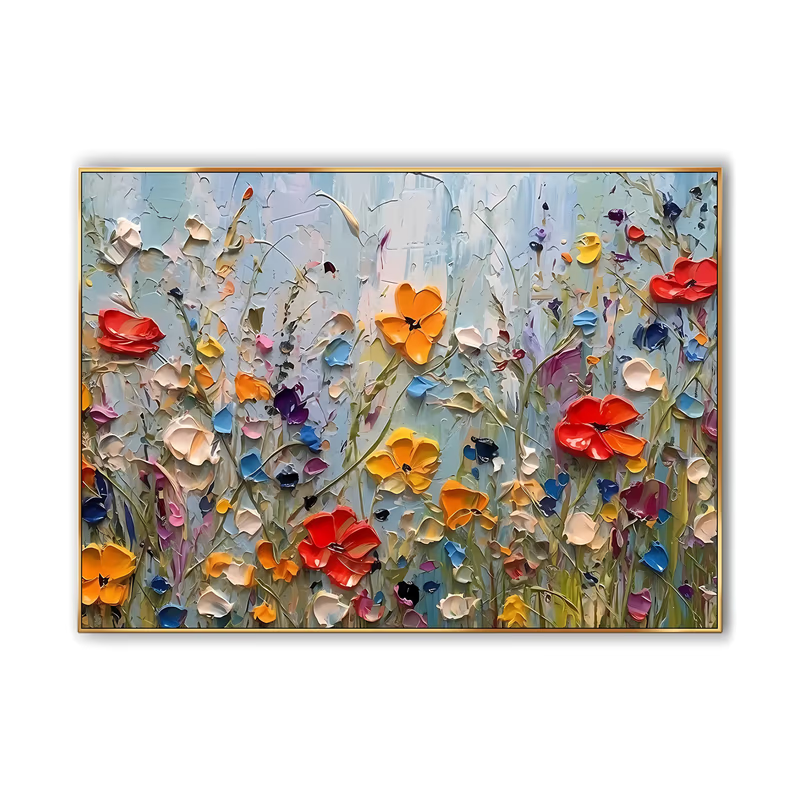
| Lounge and seating area | The wall behind the sofas | Softer, closer-range work: florals, landscapes, textured neutrals | Horizontal, or a pair |
Keep any brand reference subtle. One brand colour in an otherwise free composition usually feels more generous than a logo or a literal illustration of the business.
What kinds of lobby art work best?
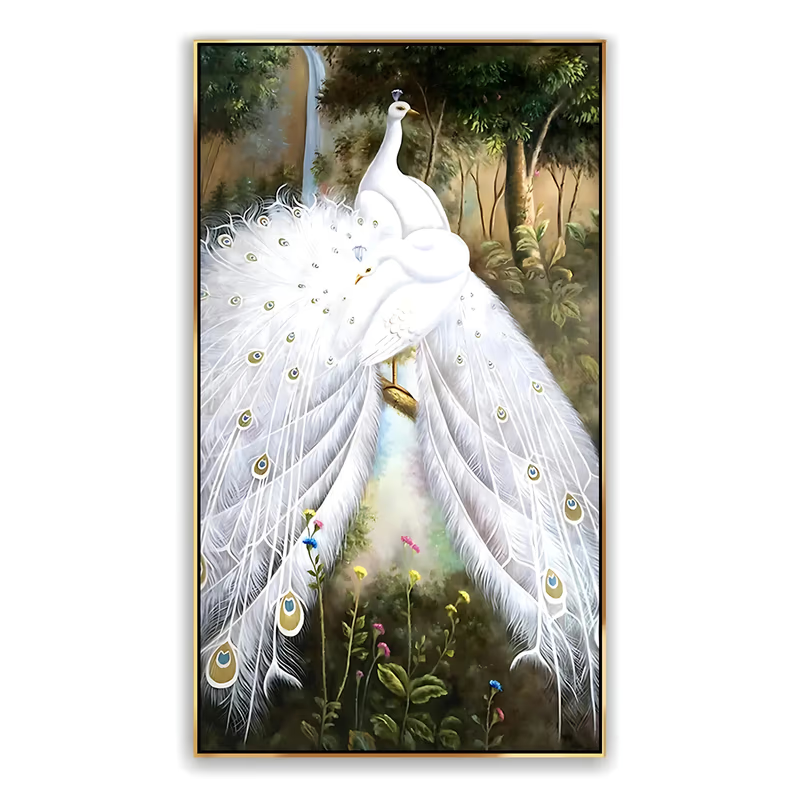
Four kinds of painting carry a lobby well: sculpted textured relief, large abstracts, landscapes and seascapes, and geometric or minimalist work.
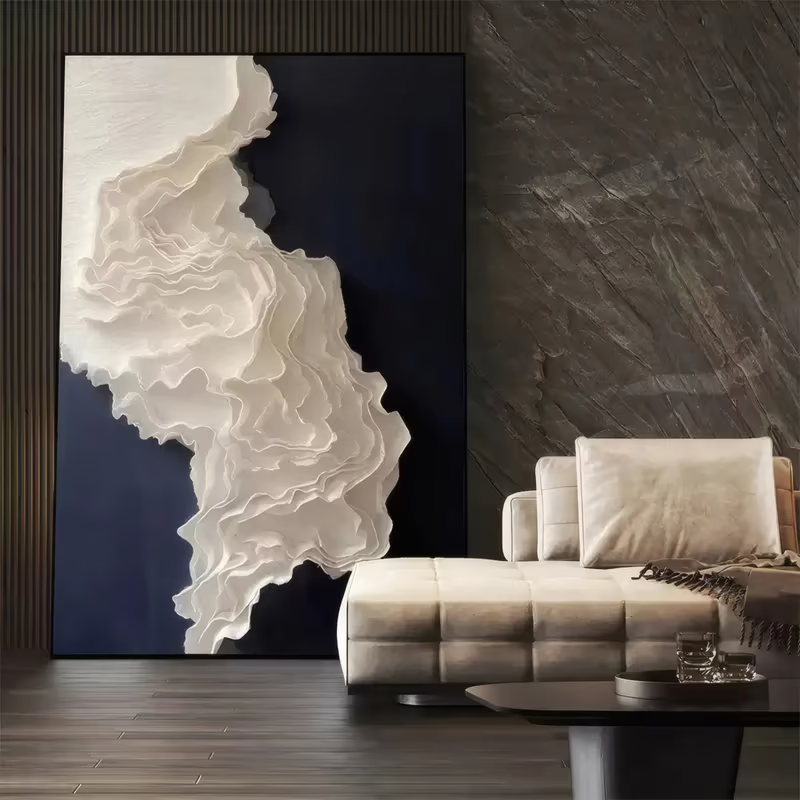
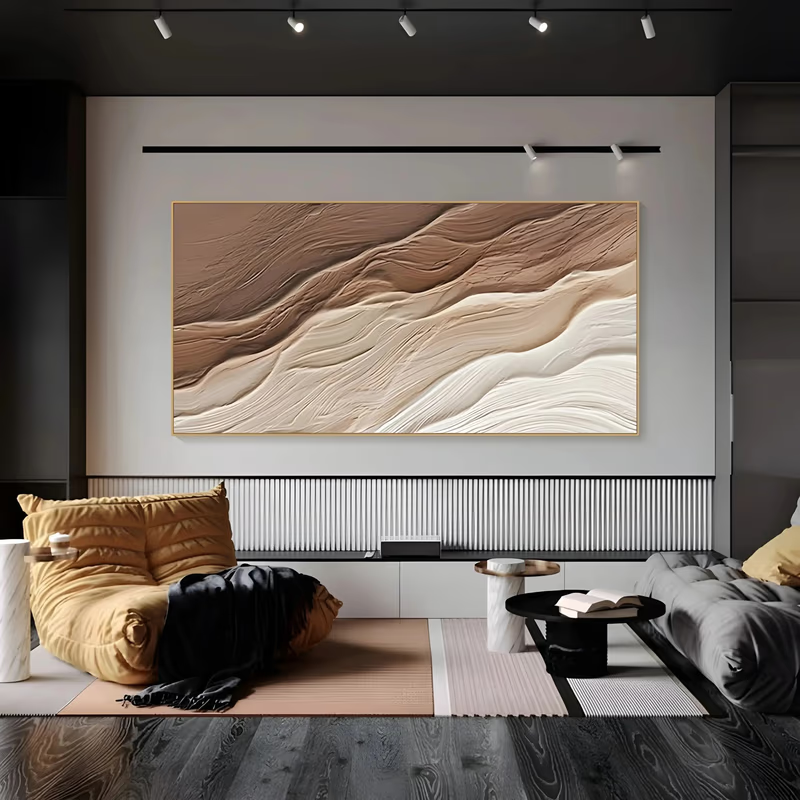
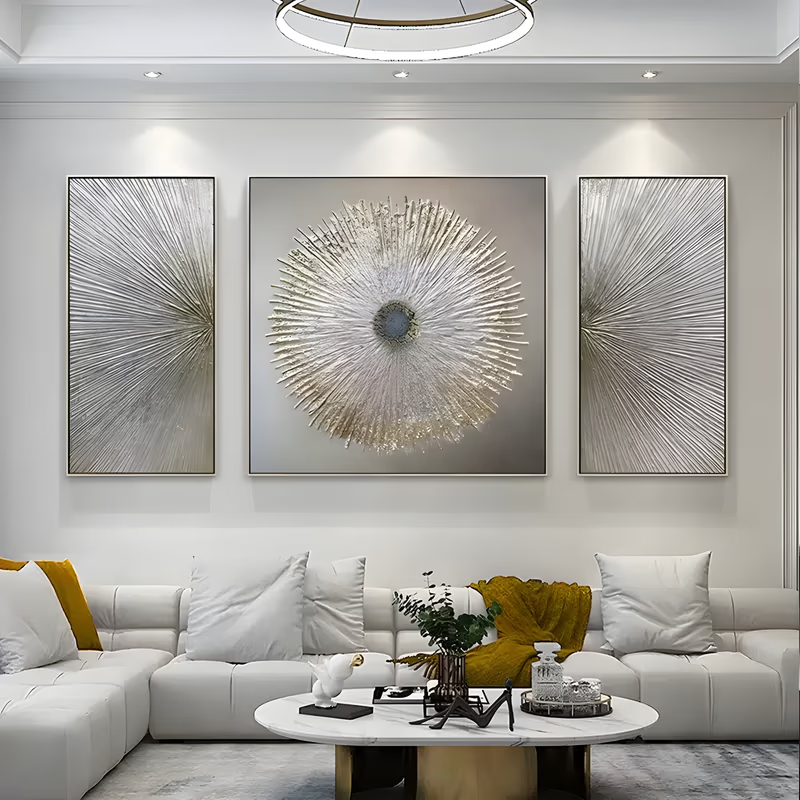
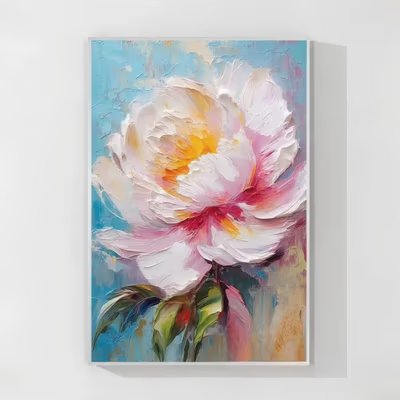
Textured and plaster relief lobby art
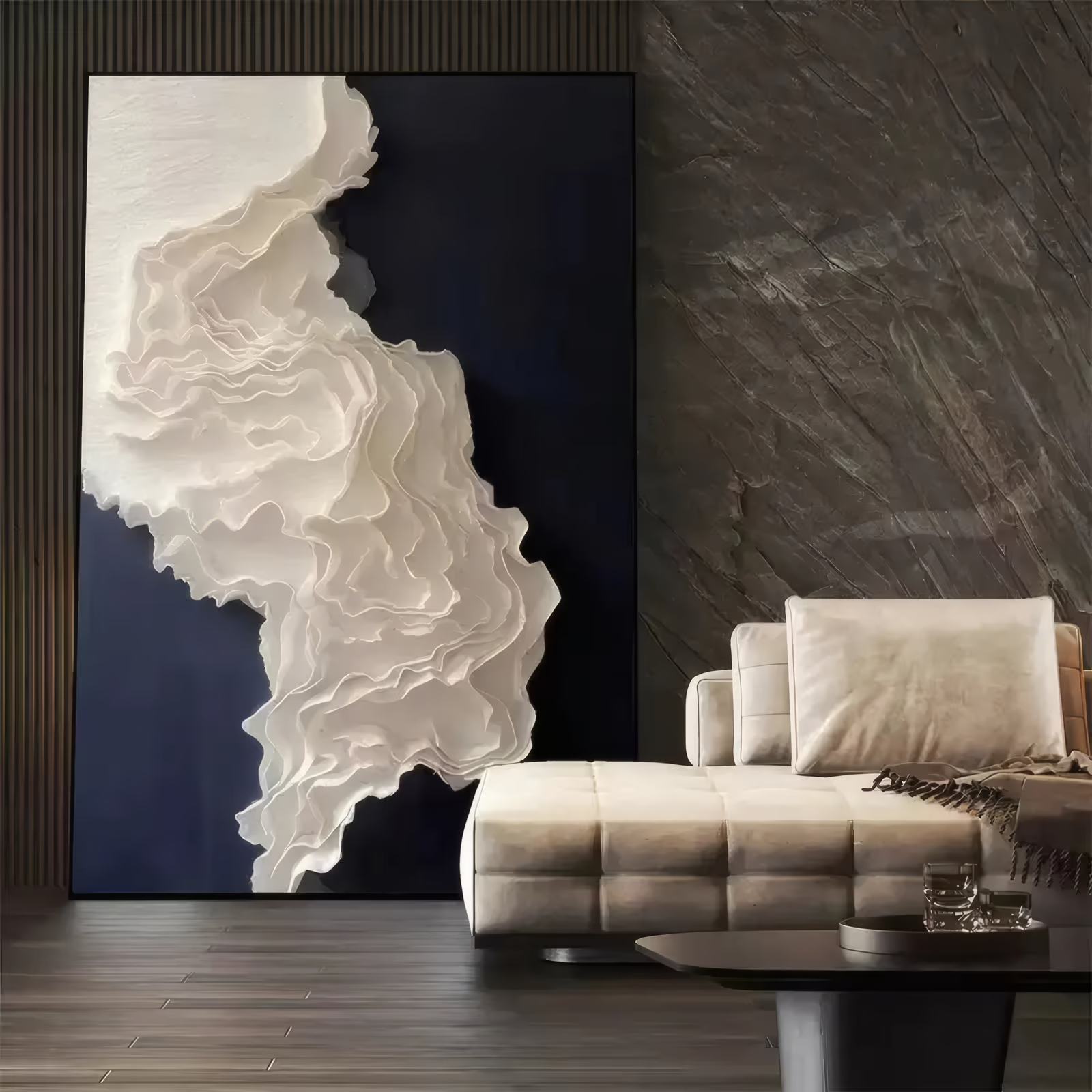
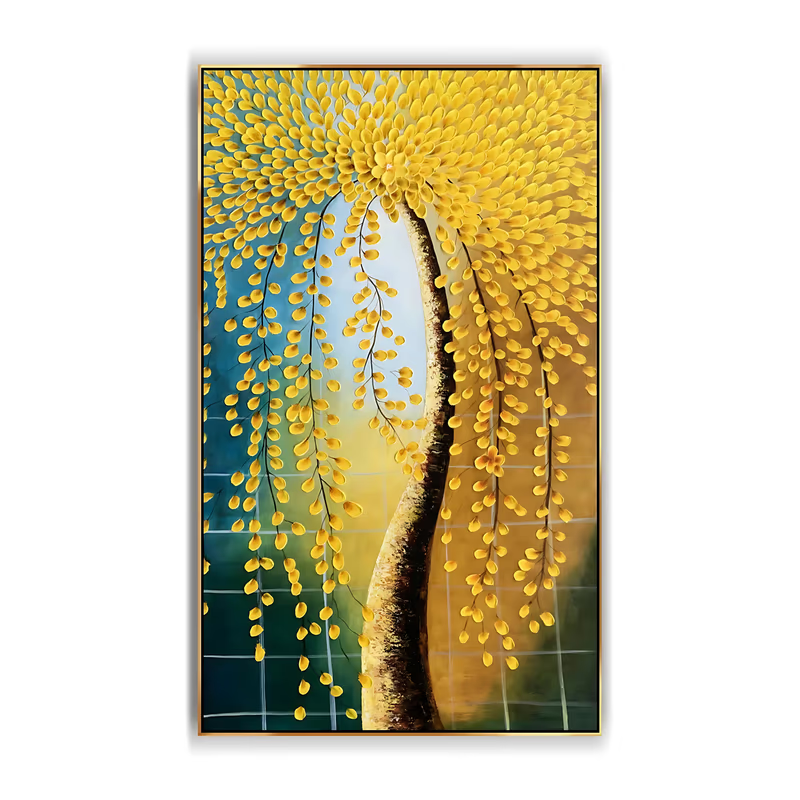
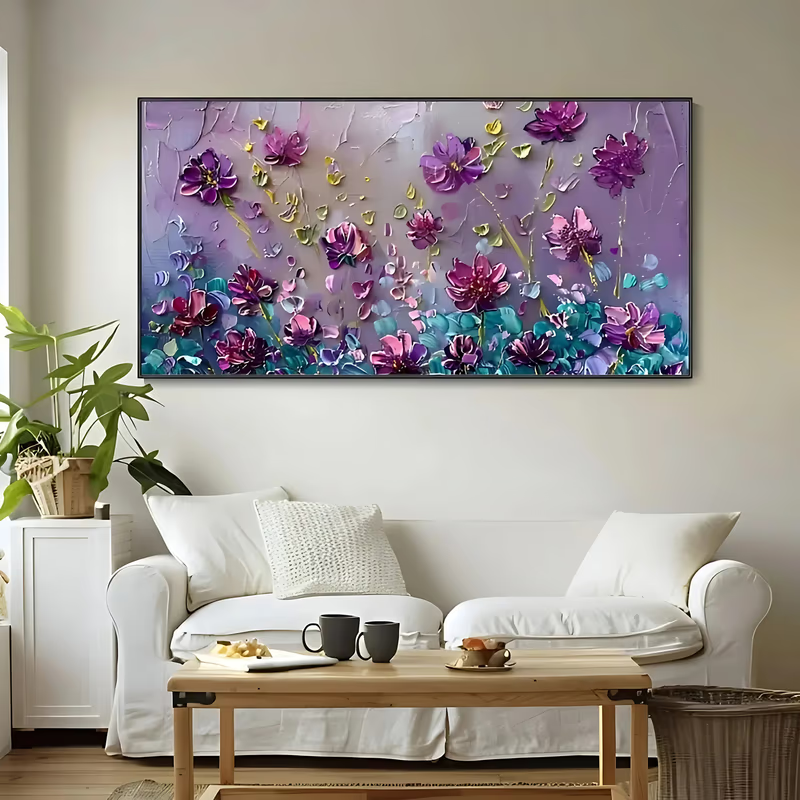
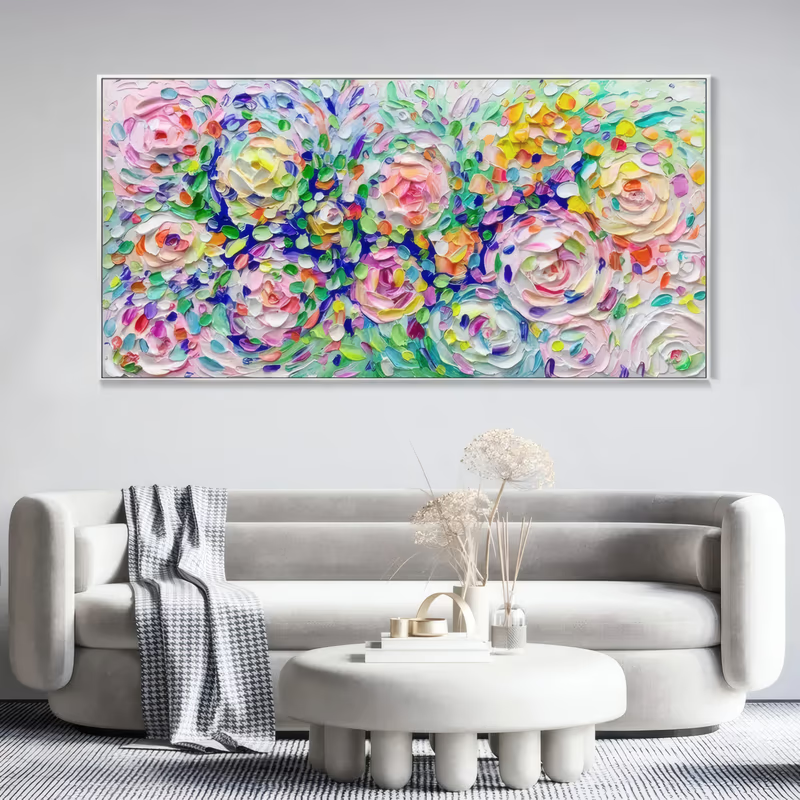
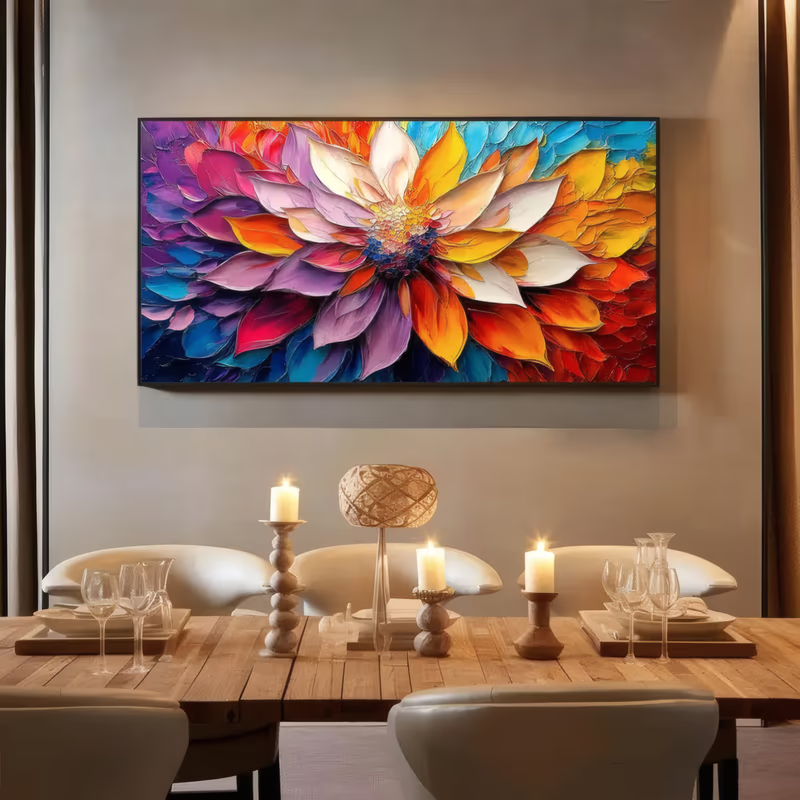
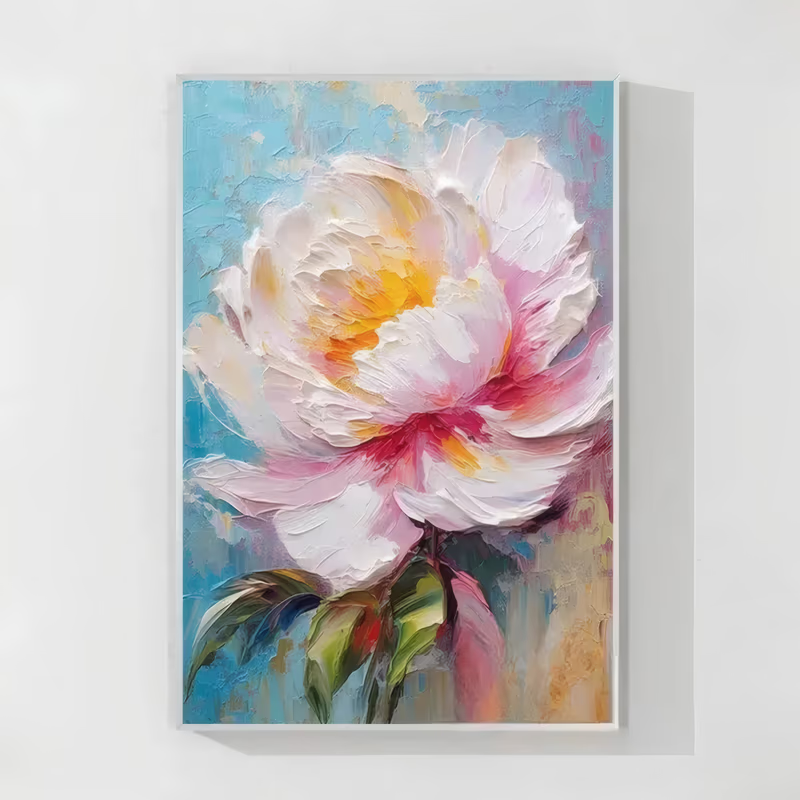
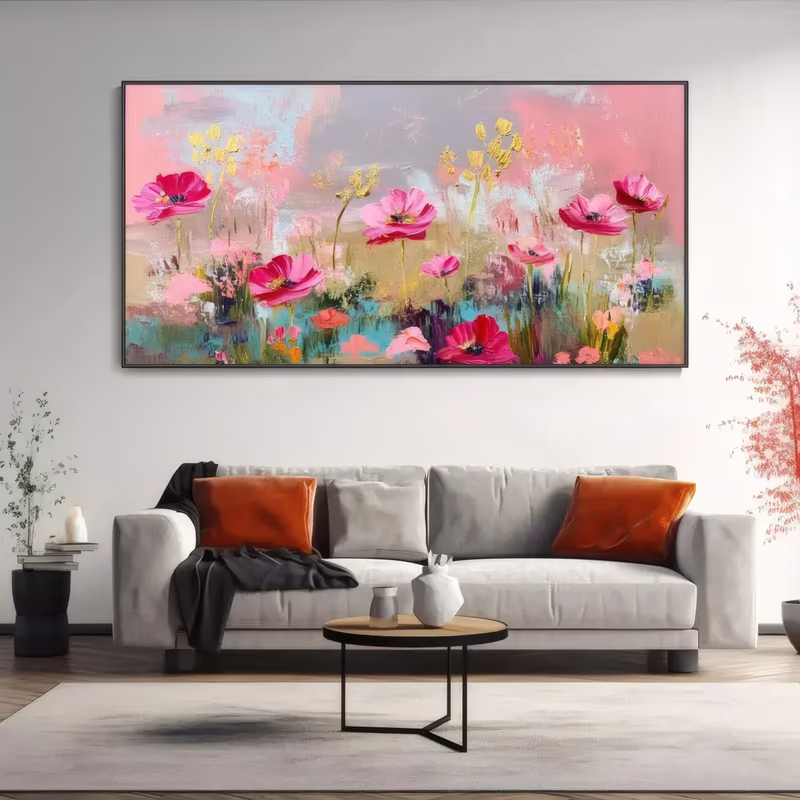
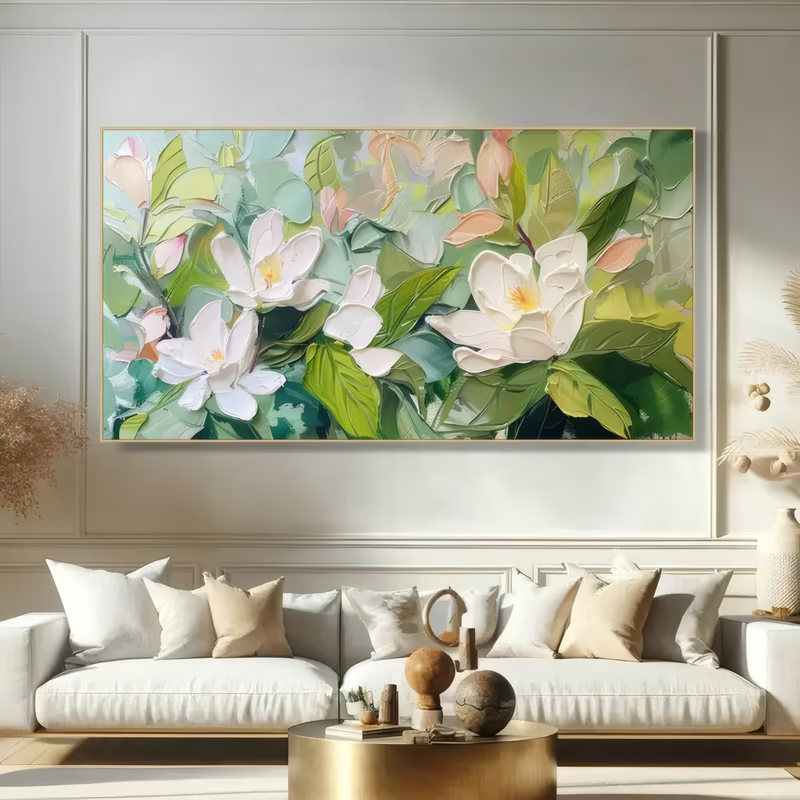
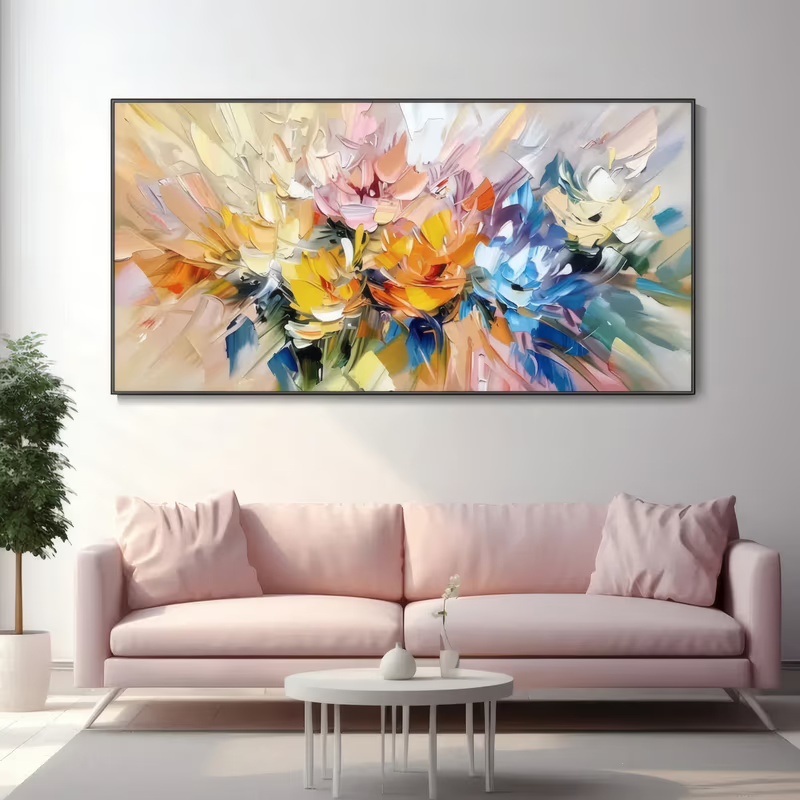
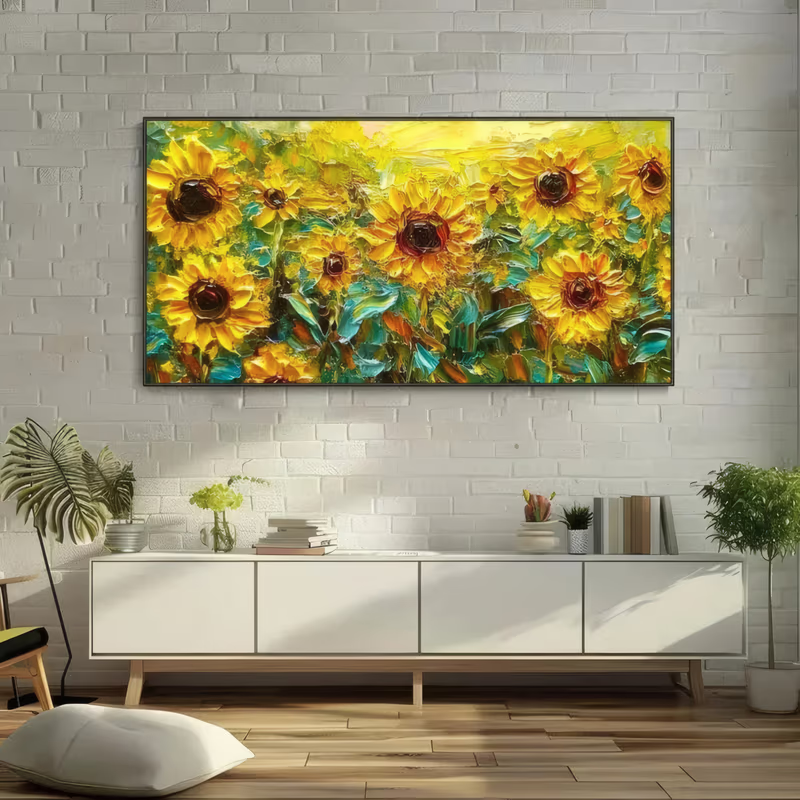
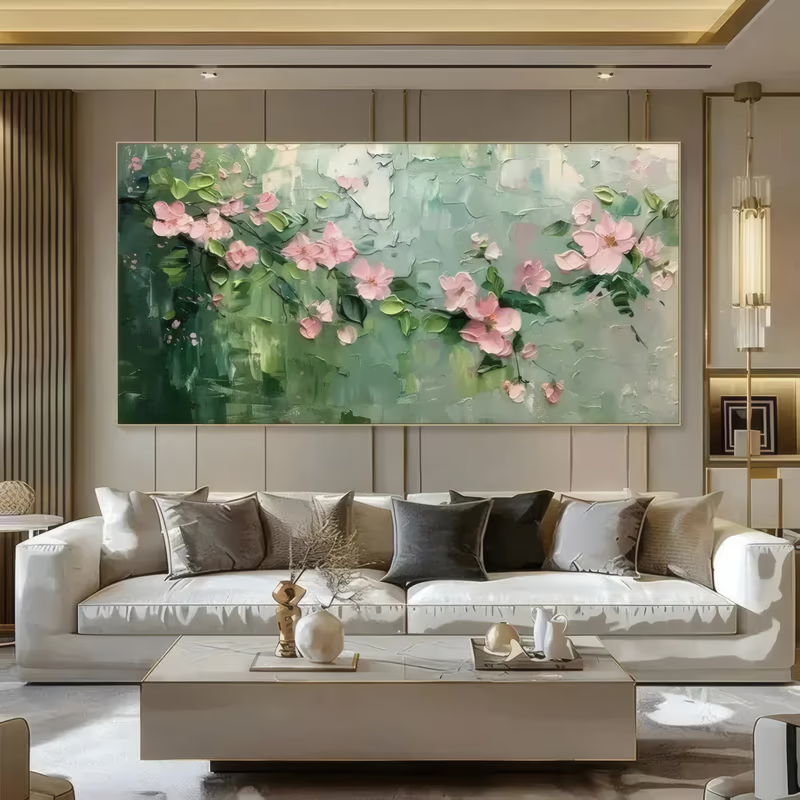
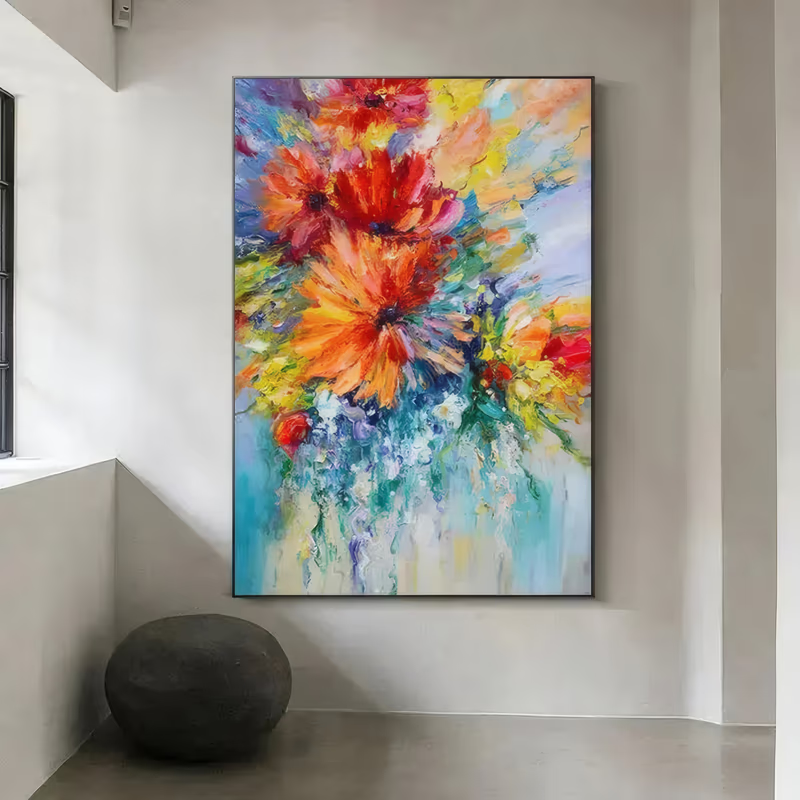
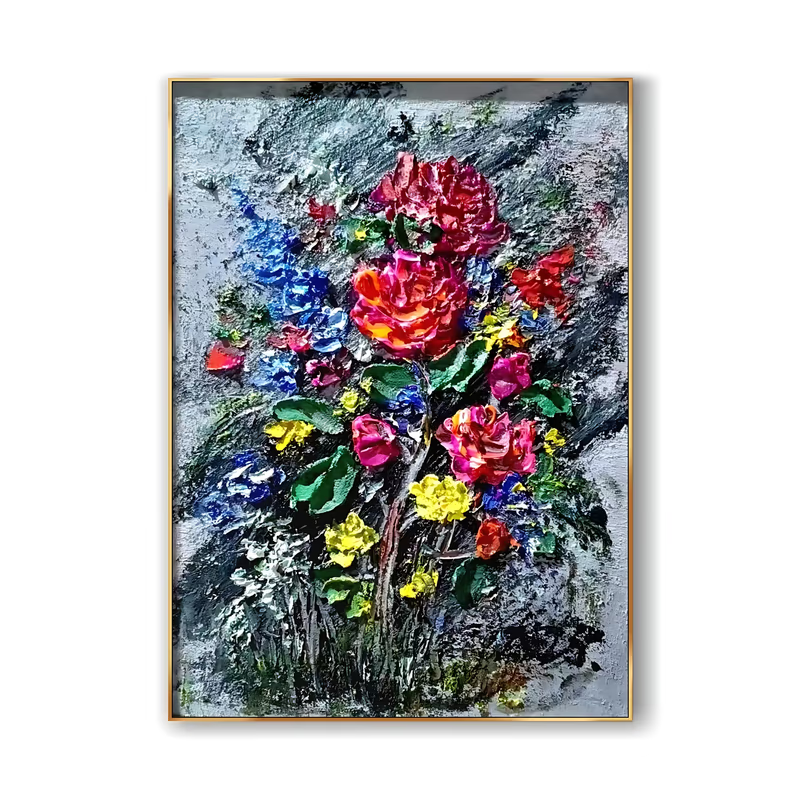
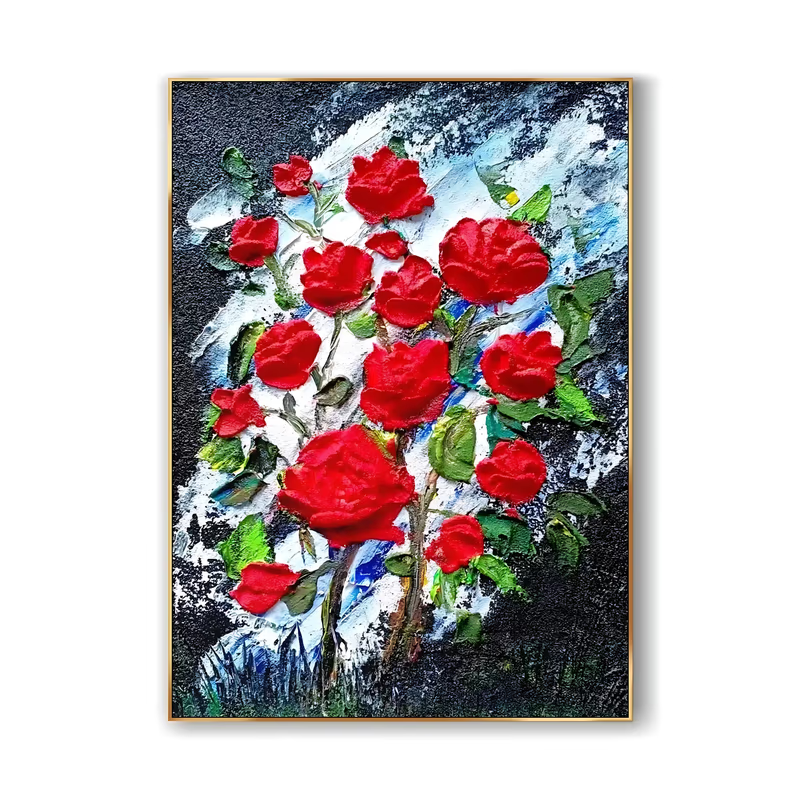
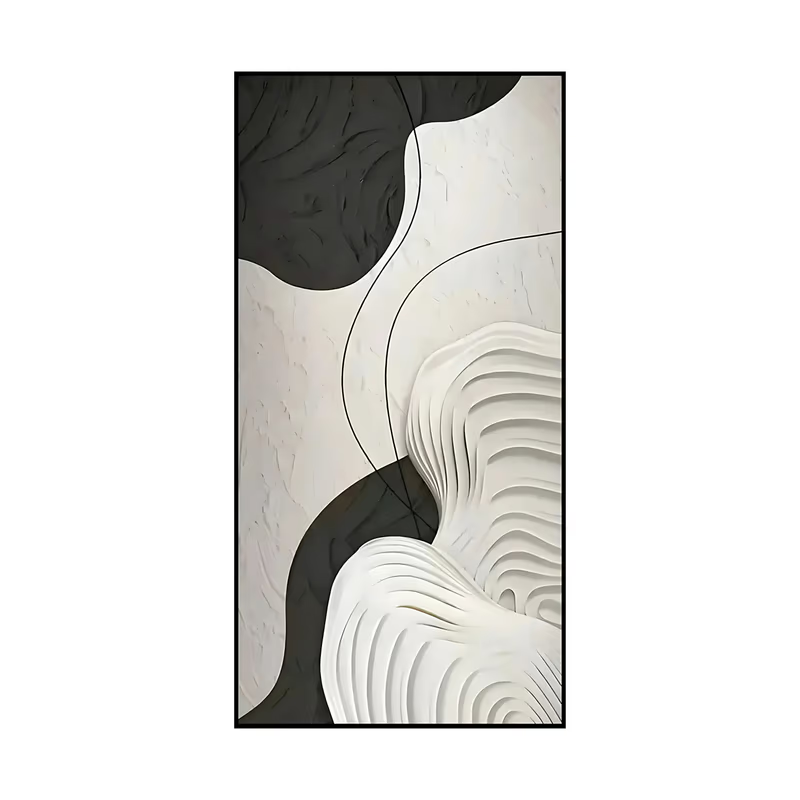
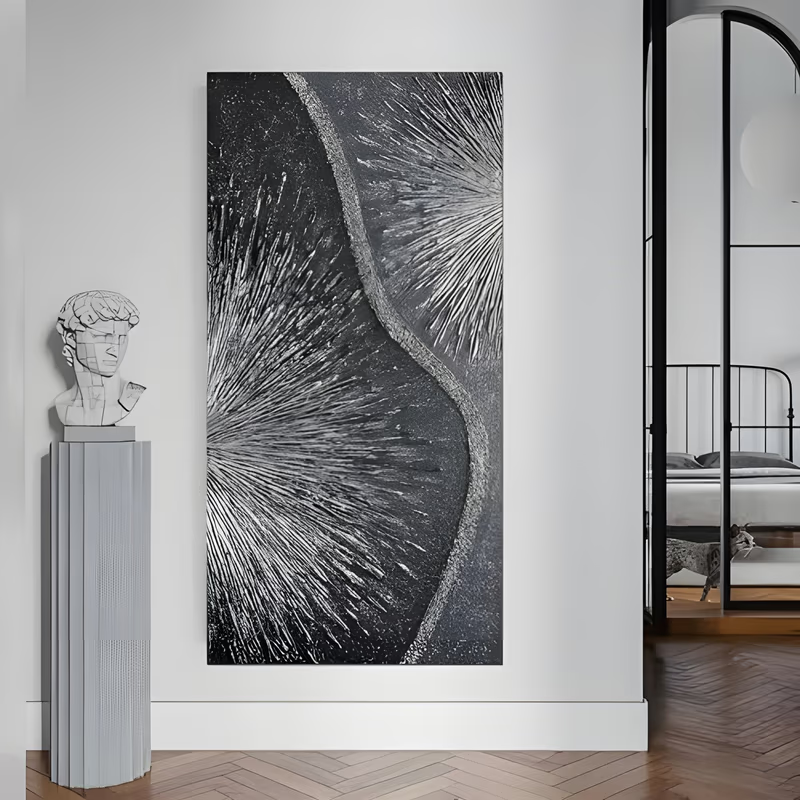
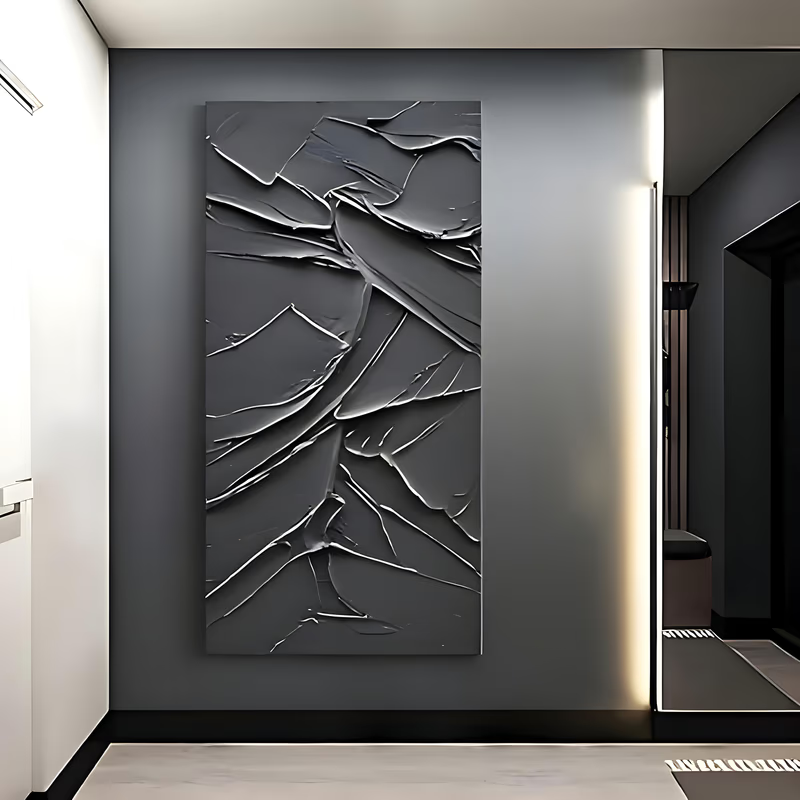
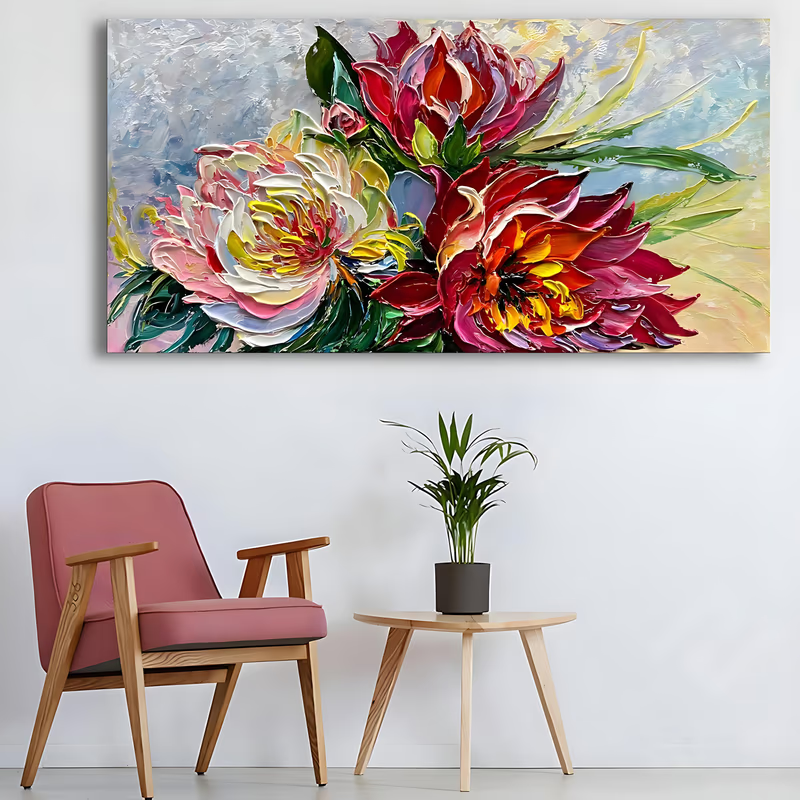
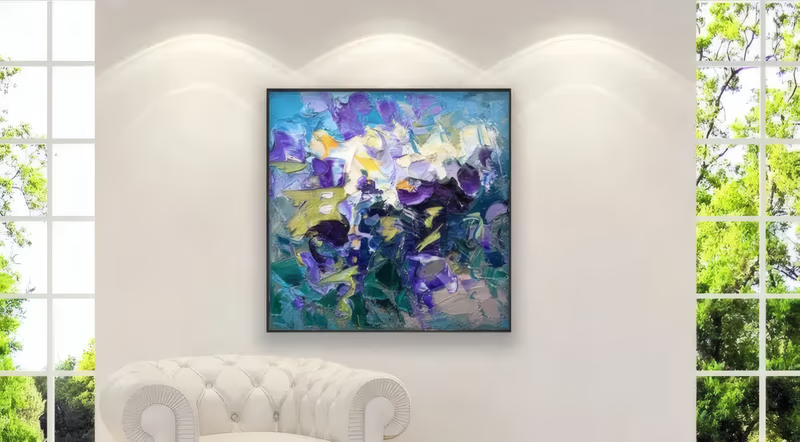
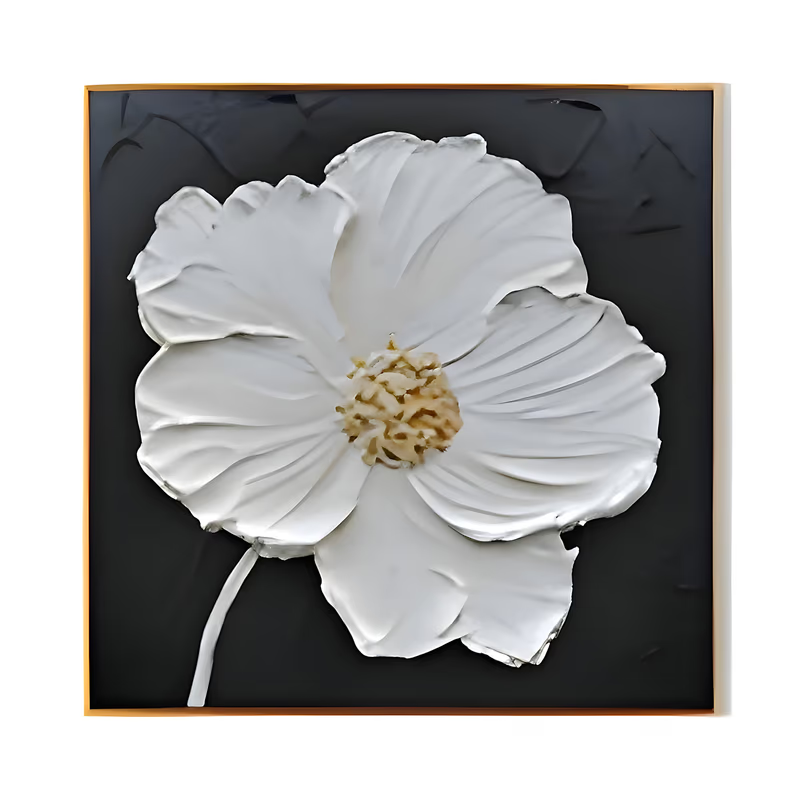
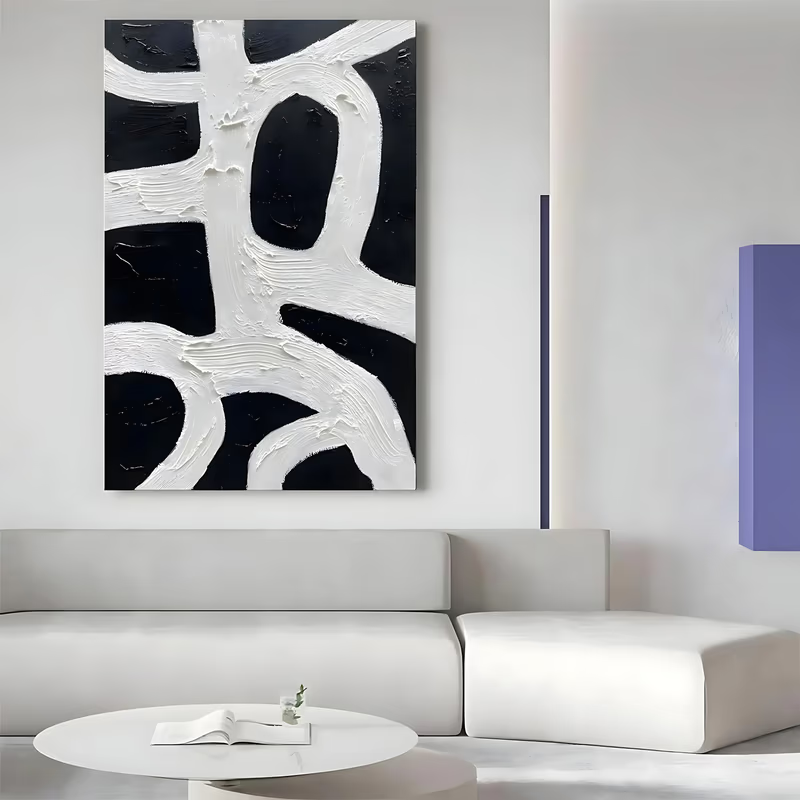
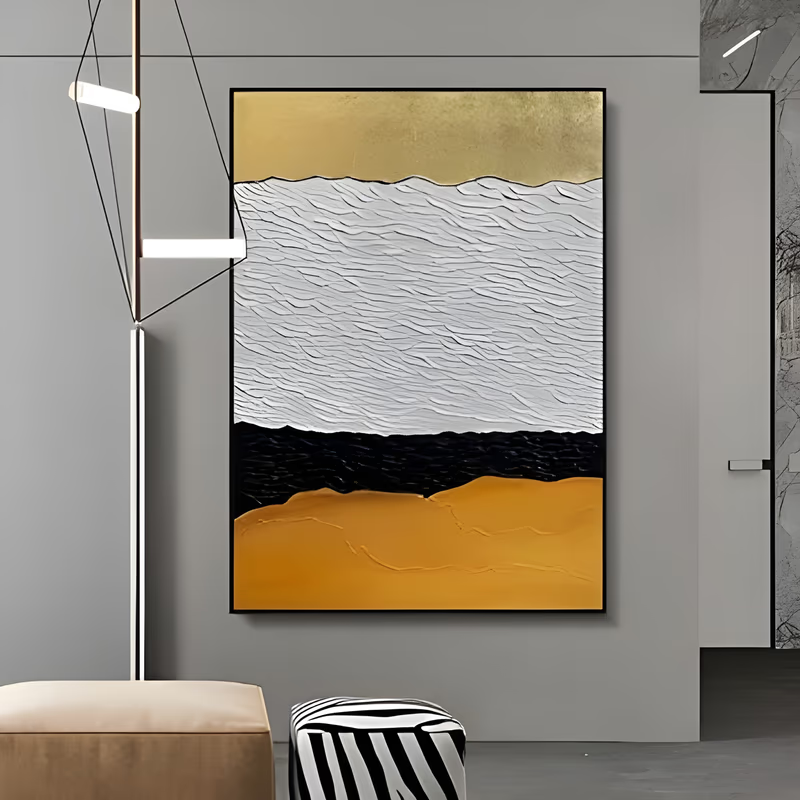
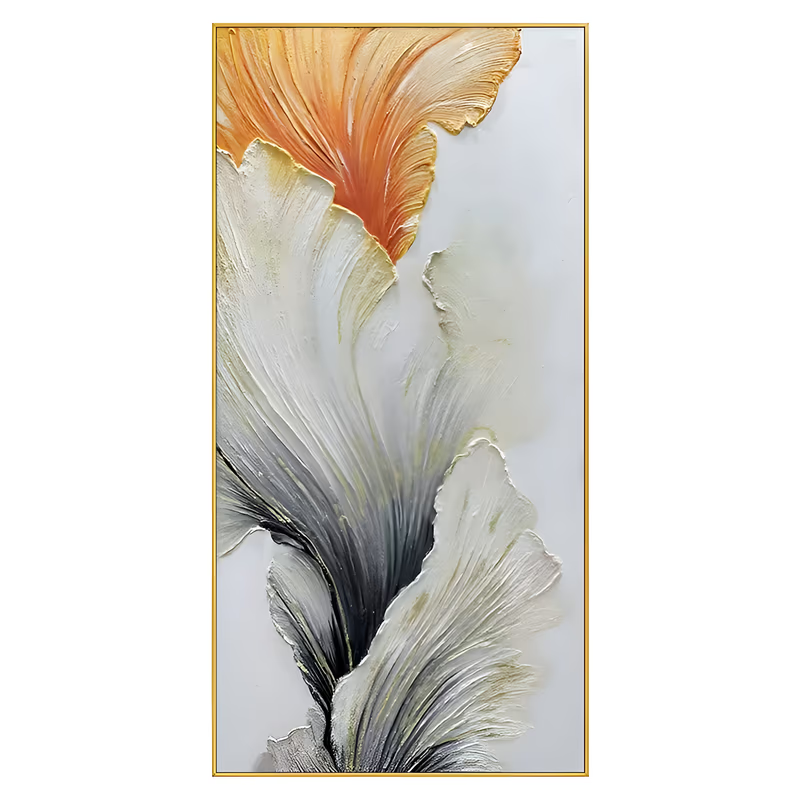
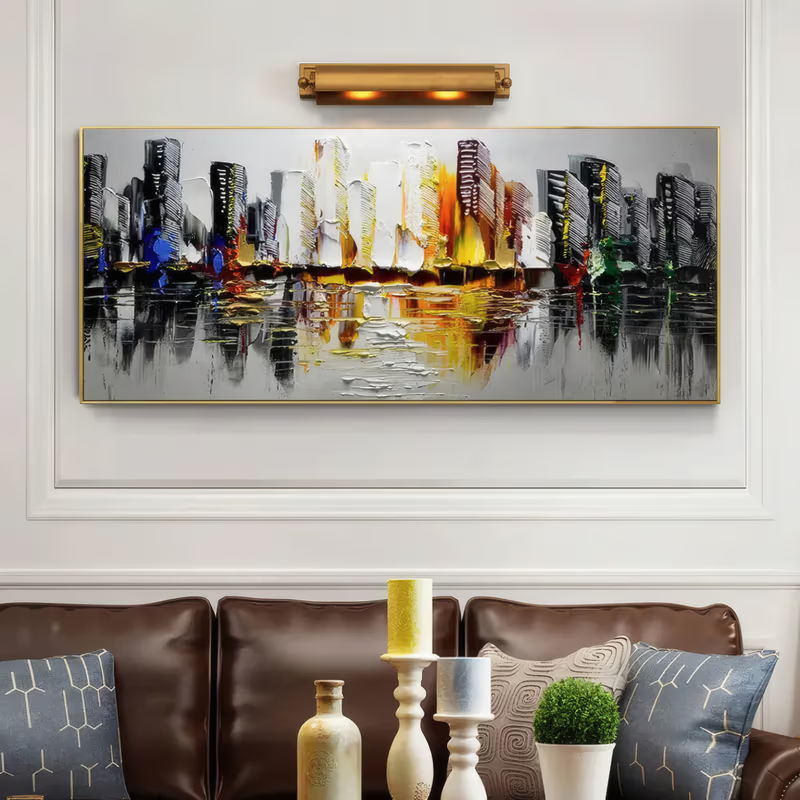
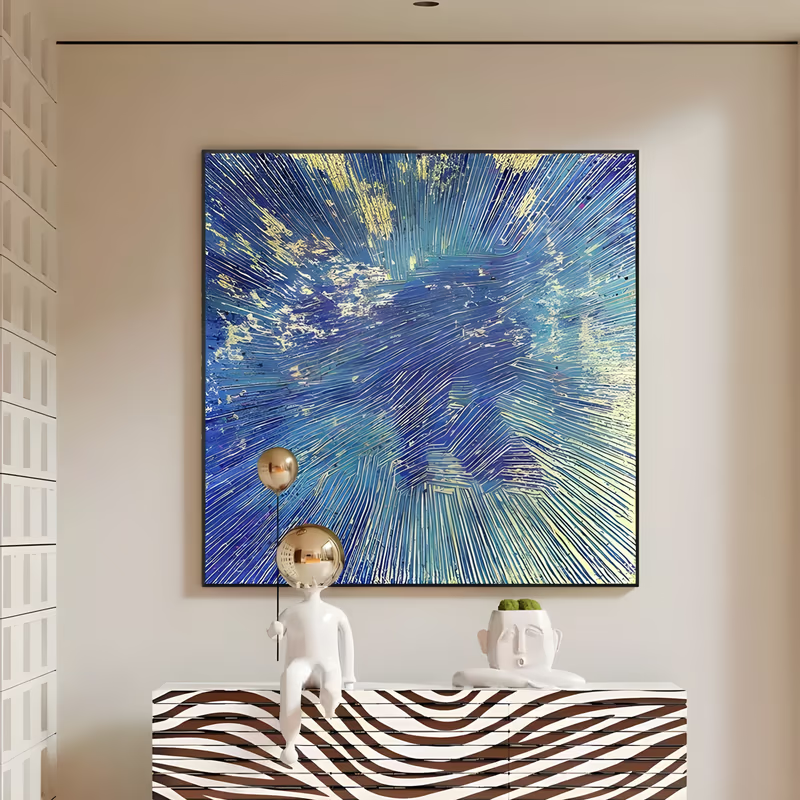
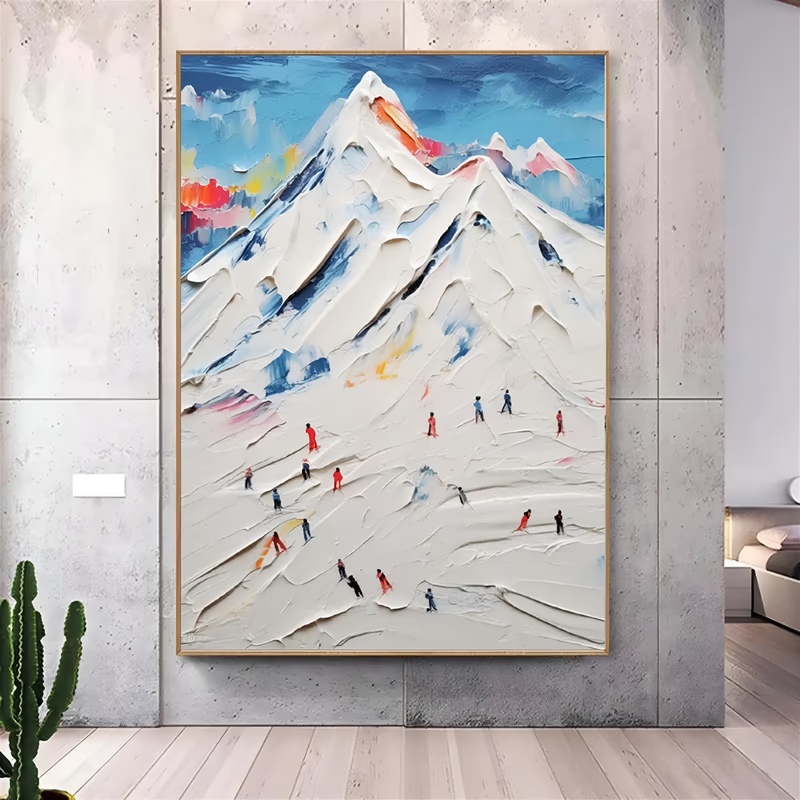
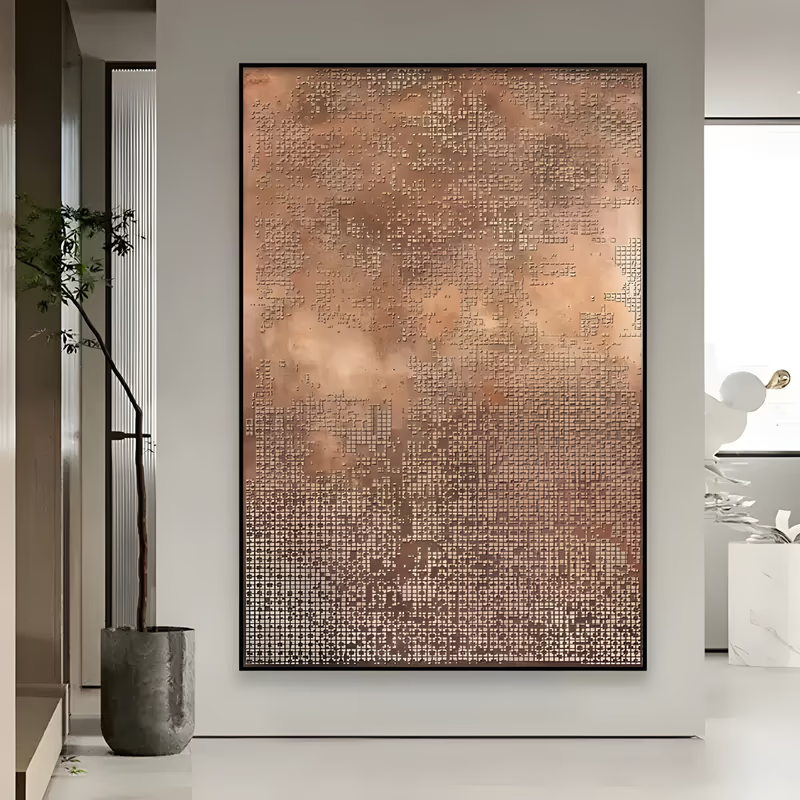
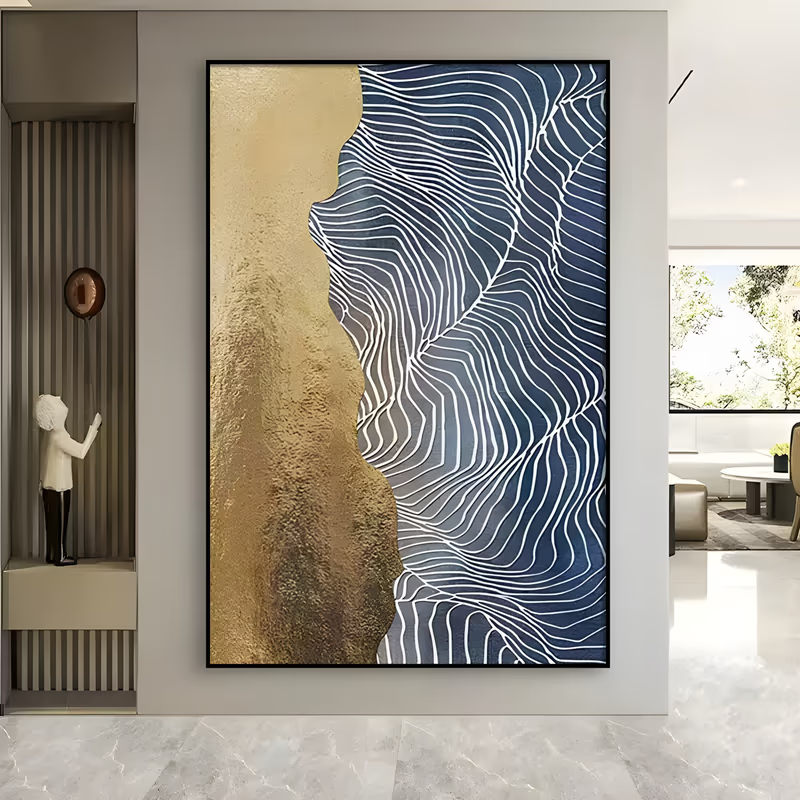
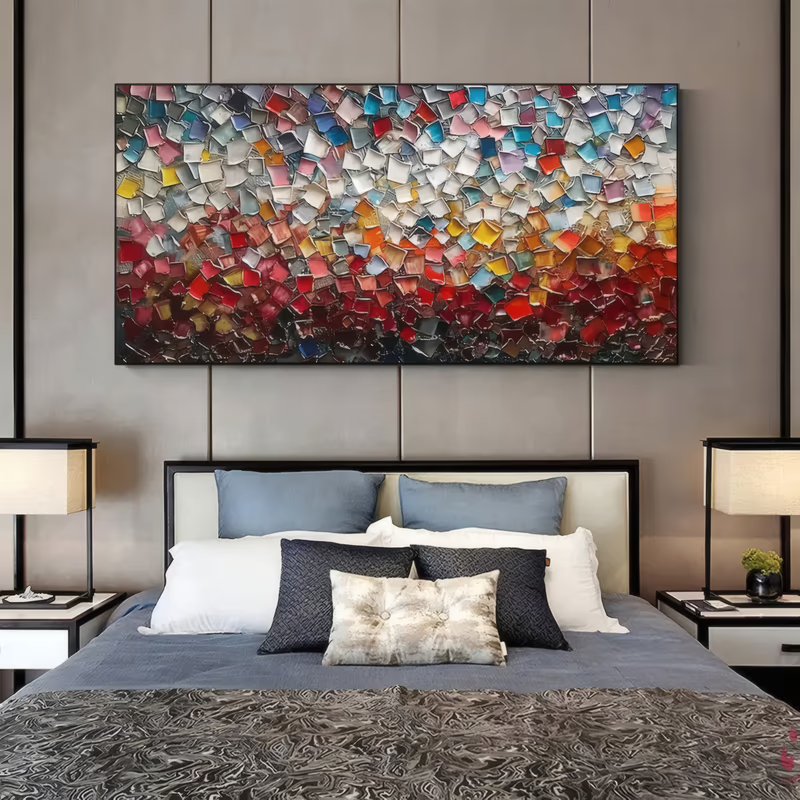
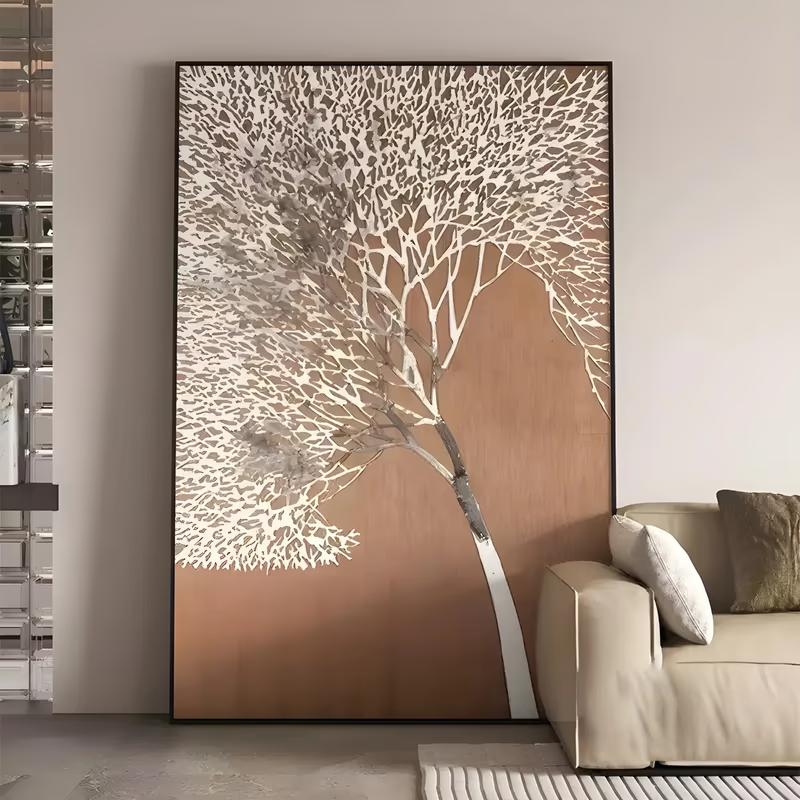
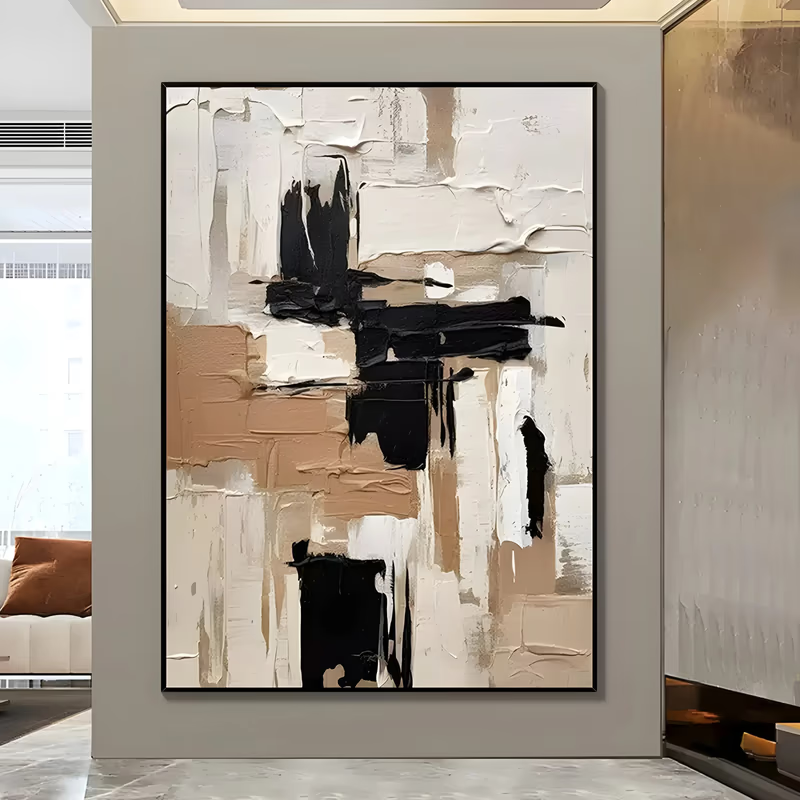
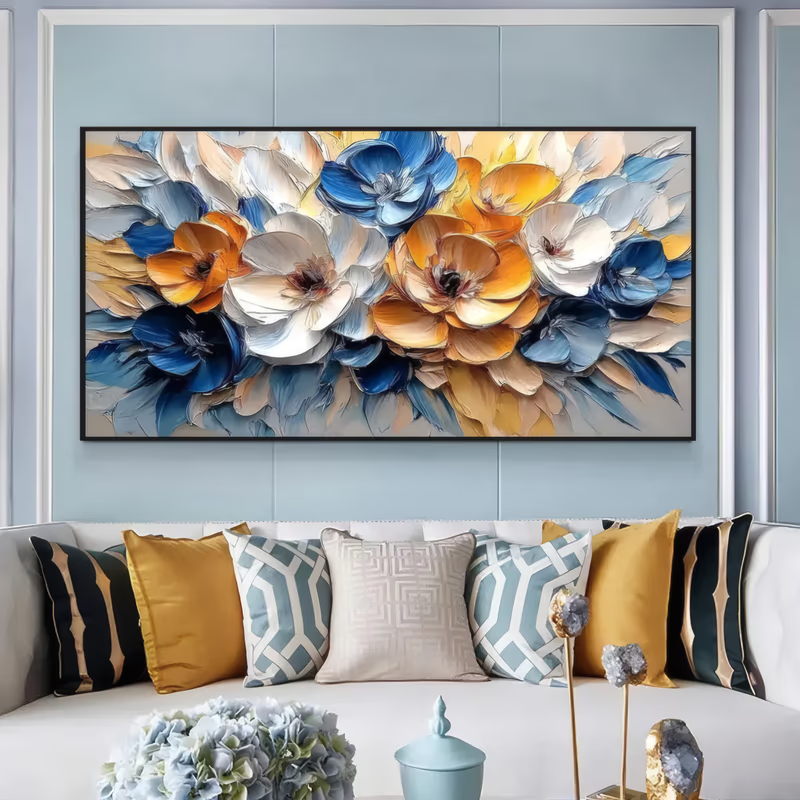
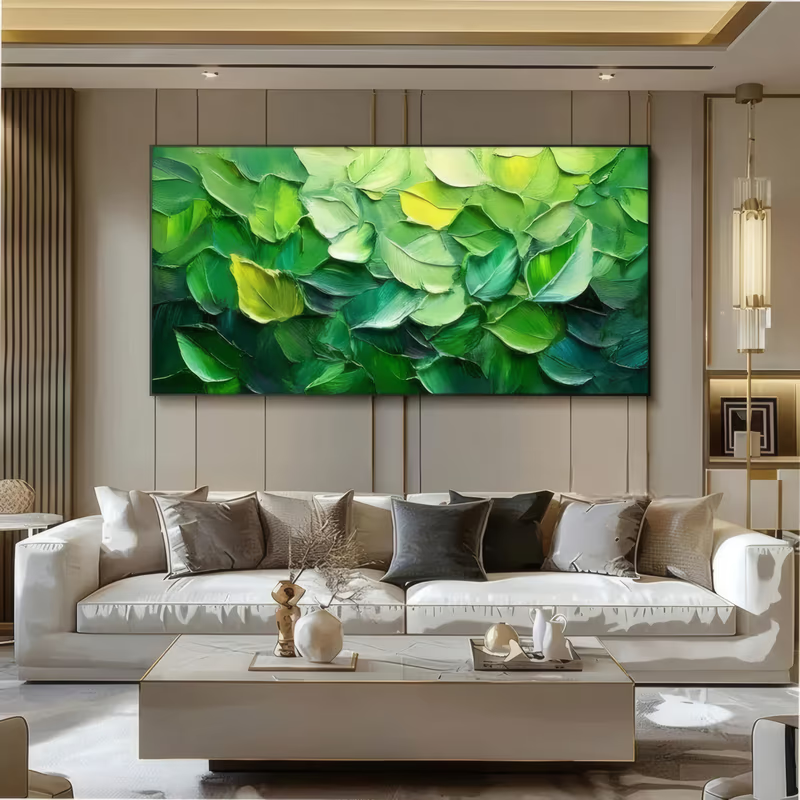
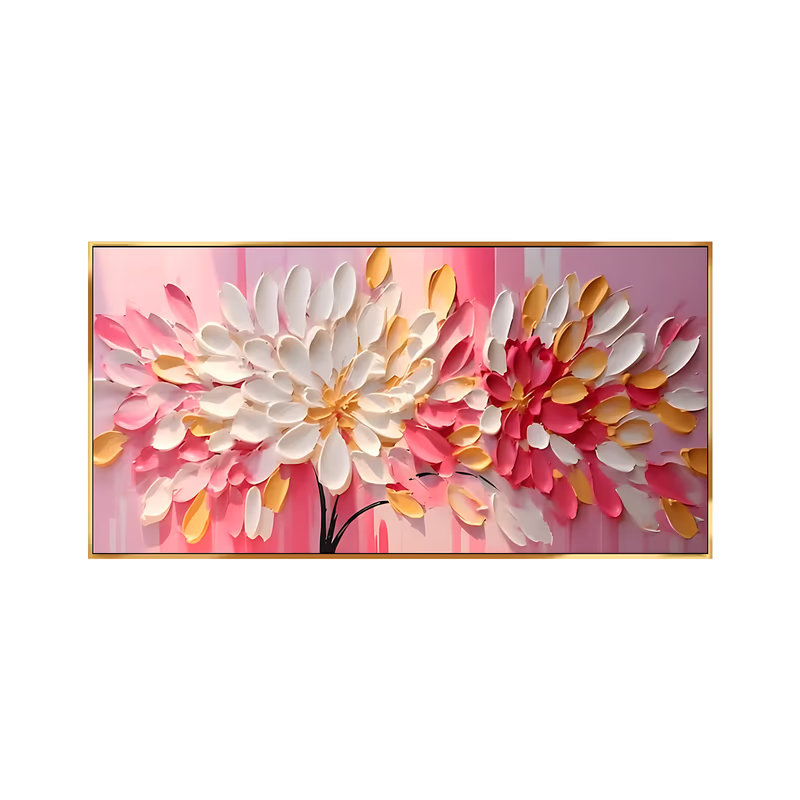
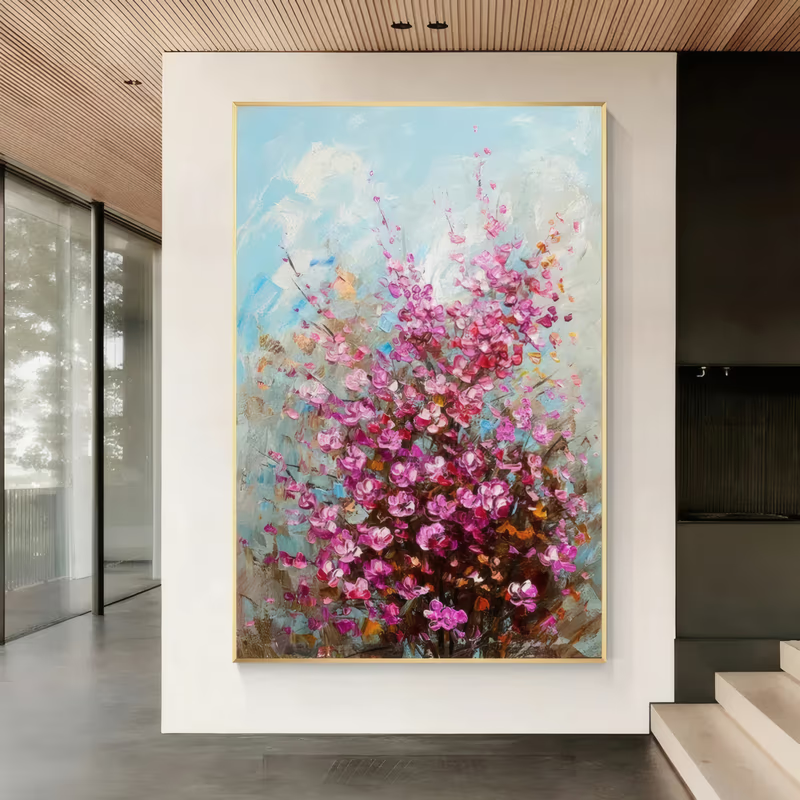
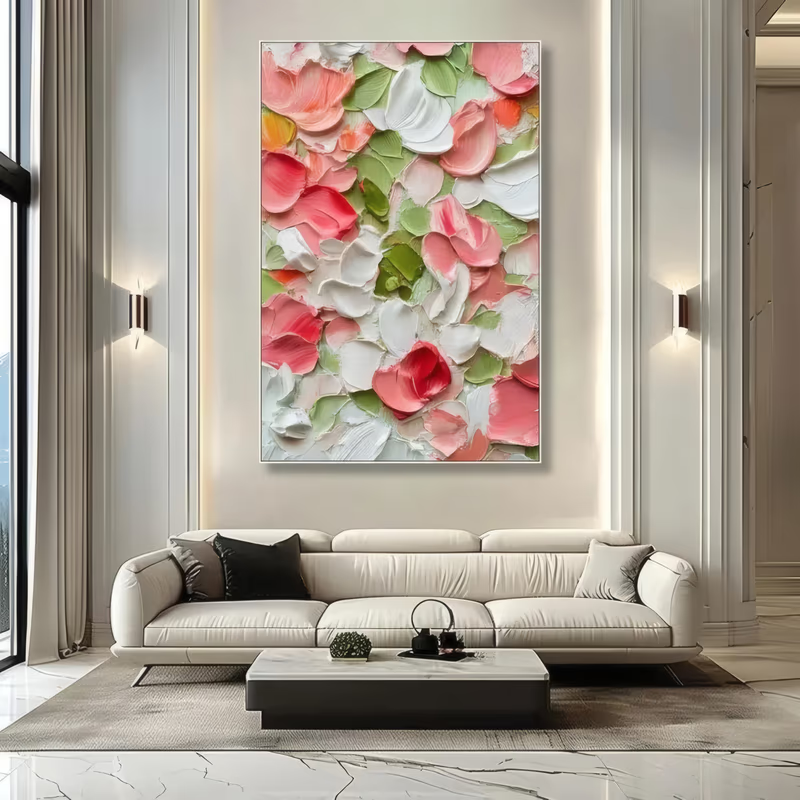
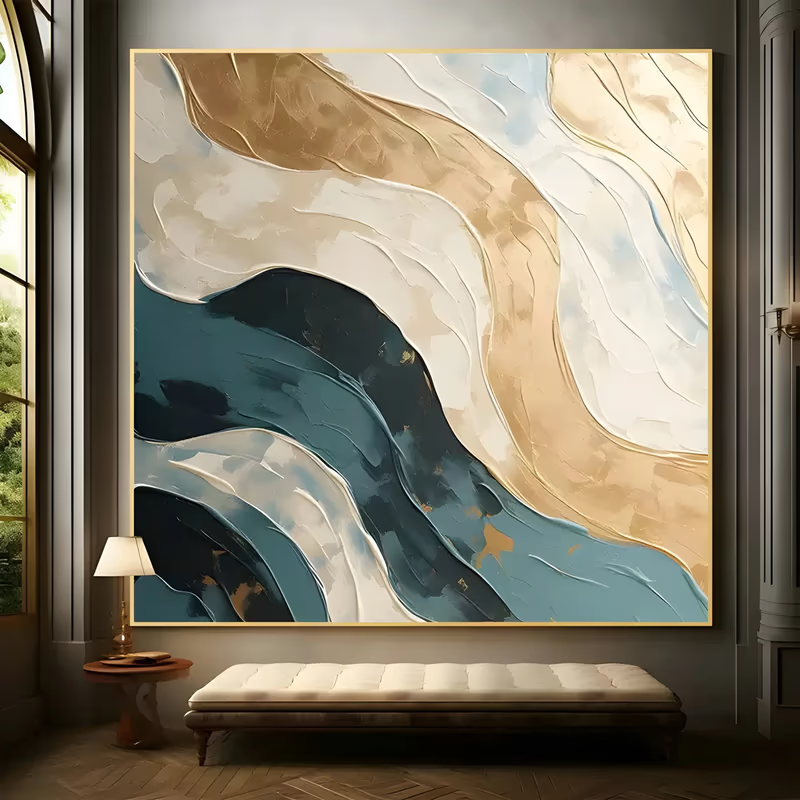
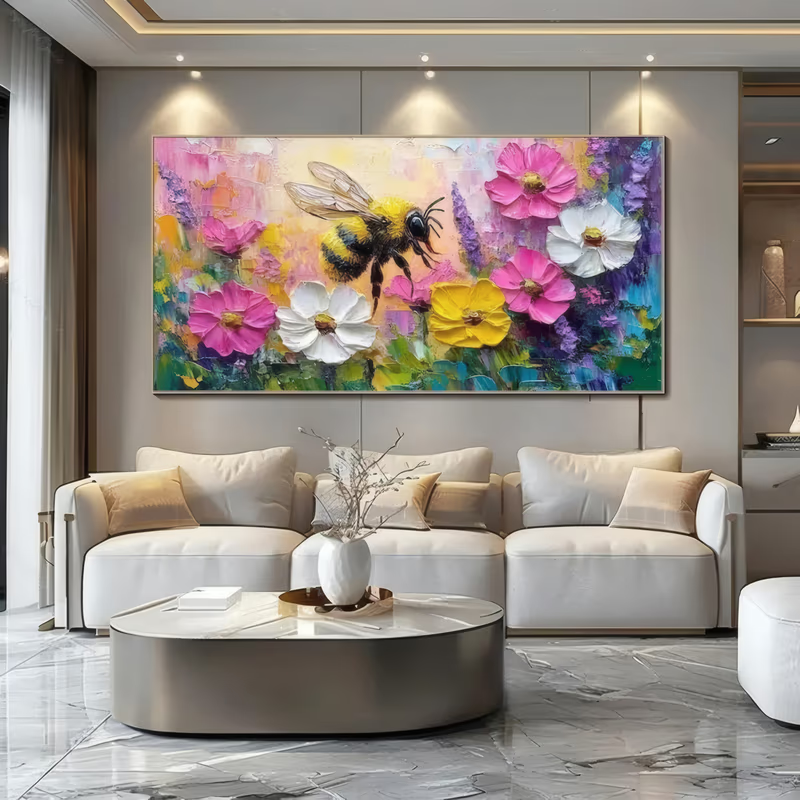
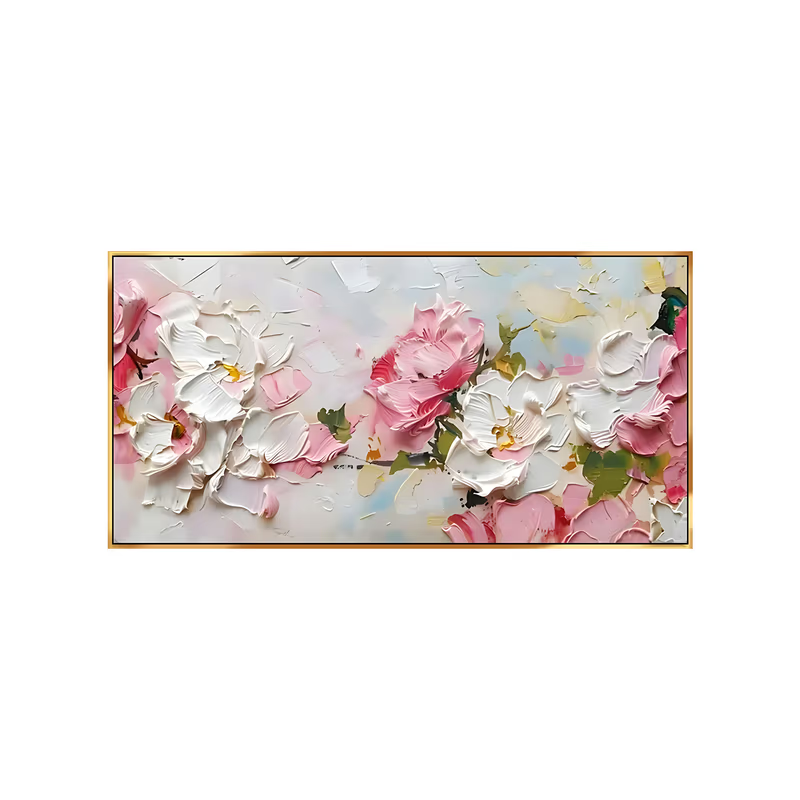
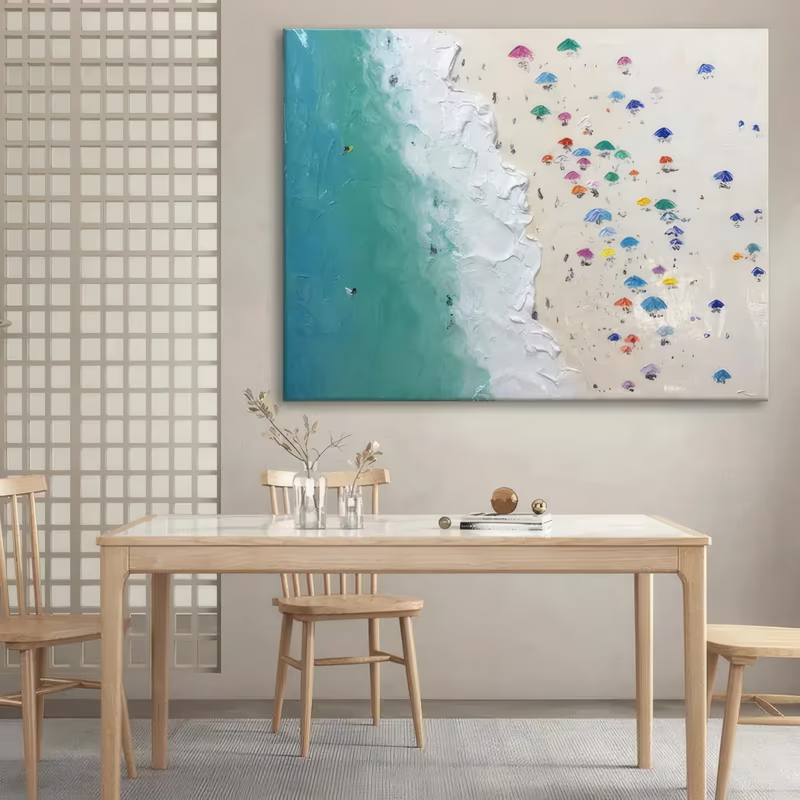
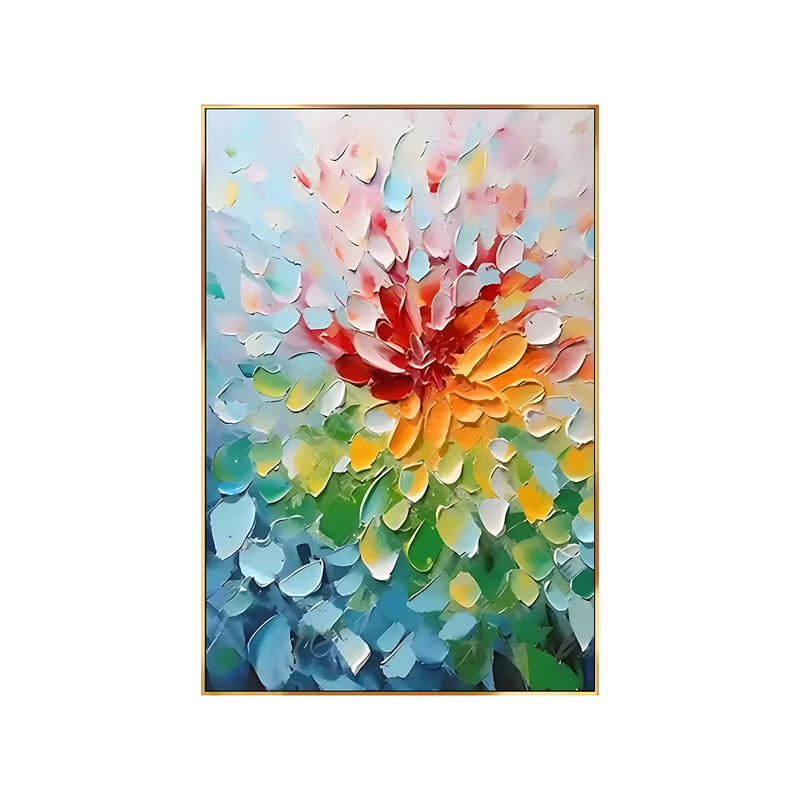
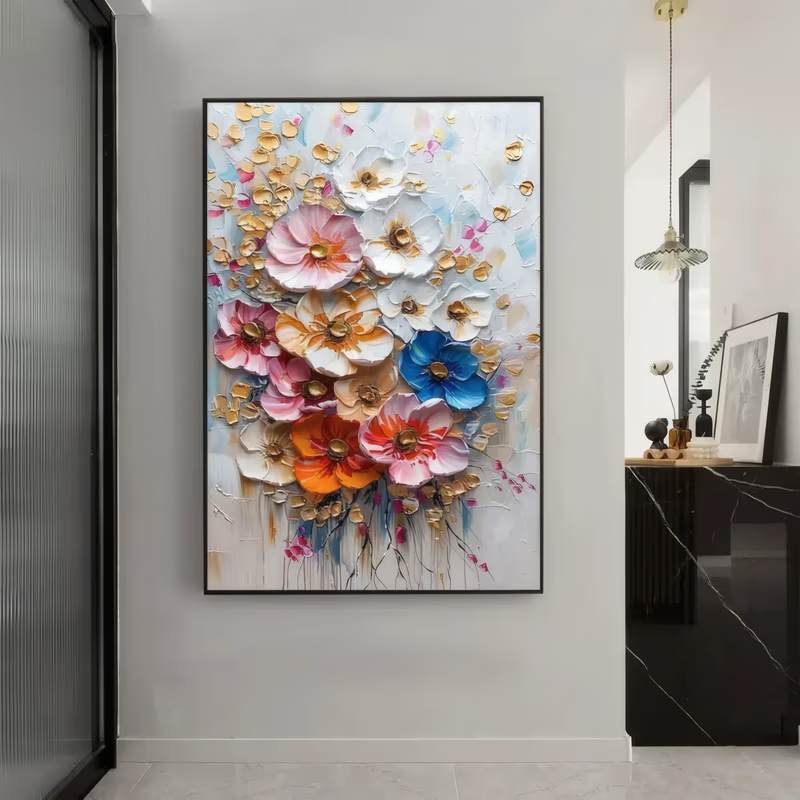
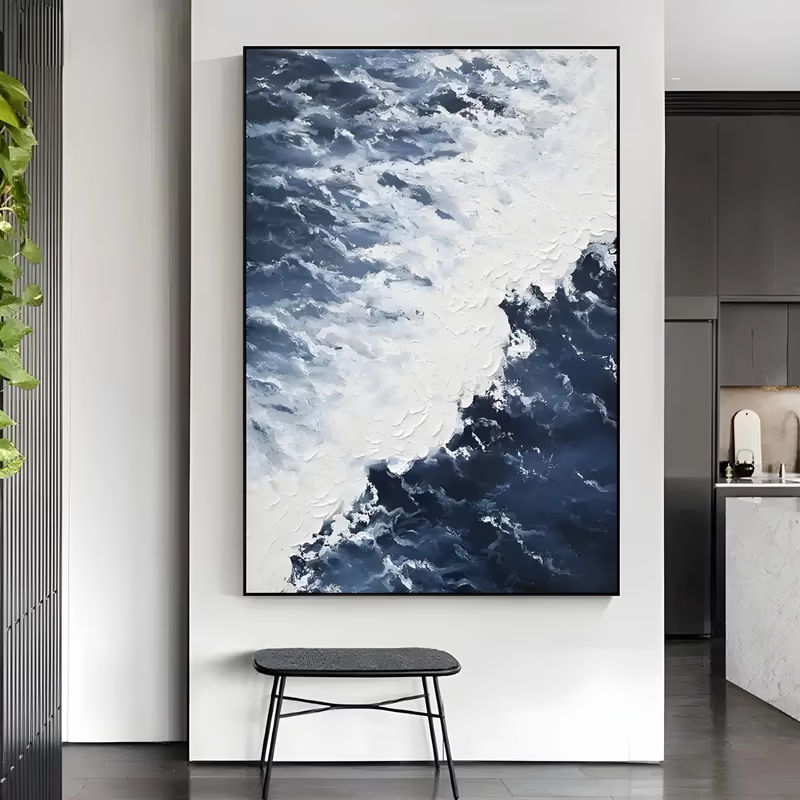
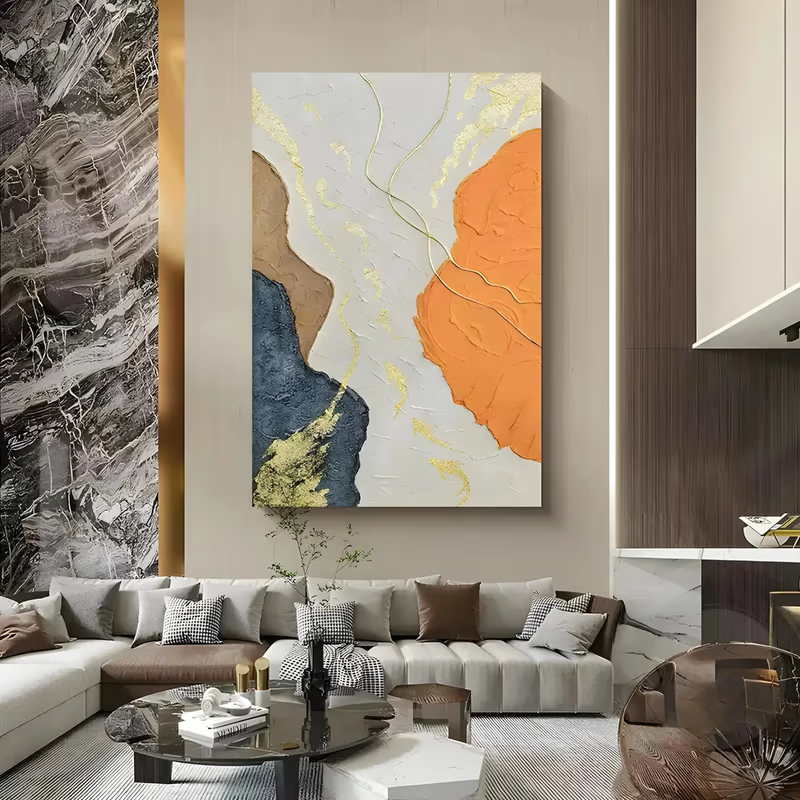
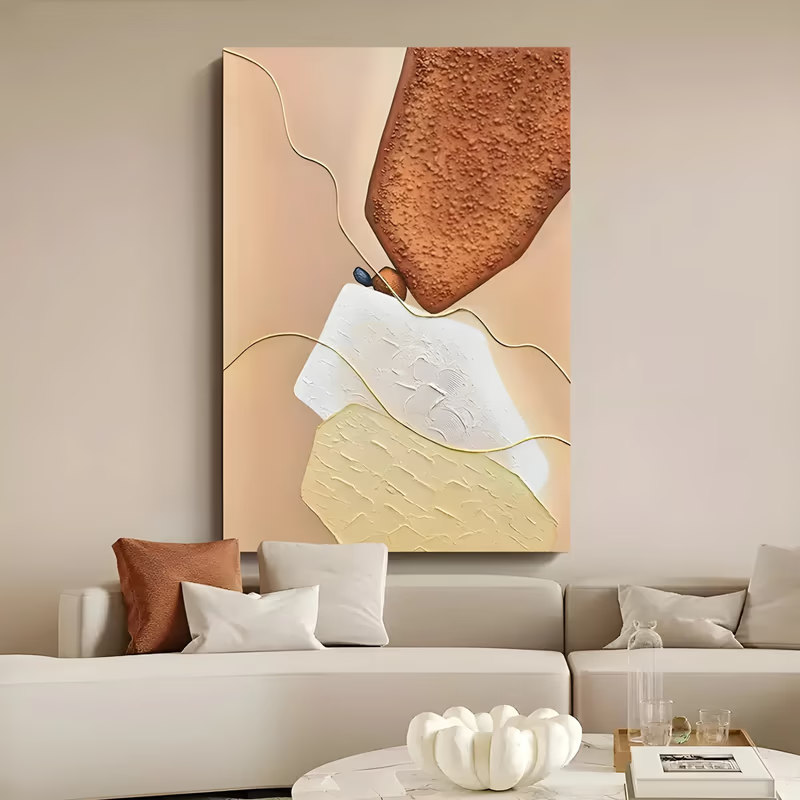
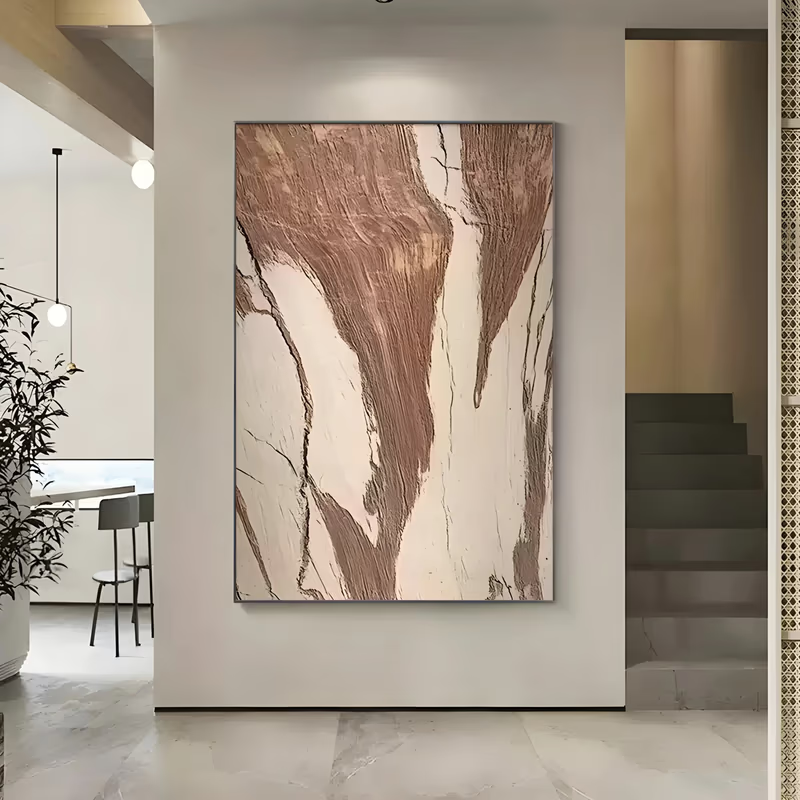
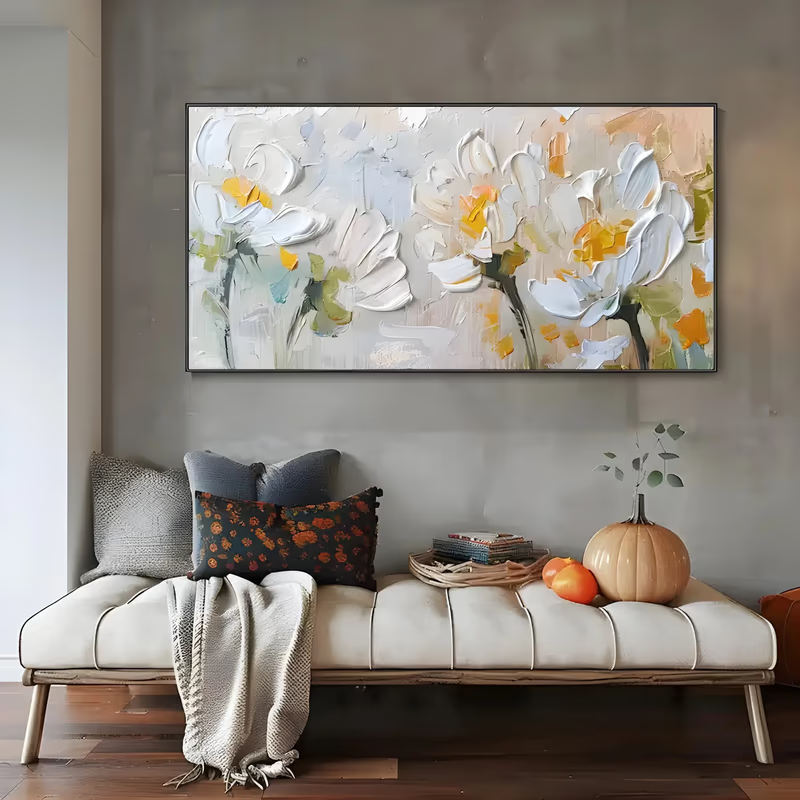
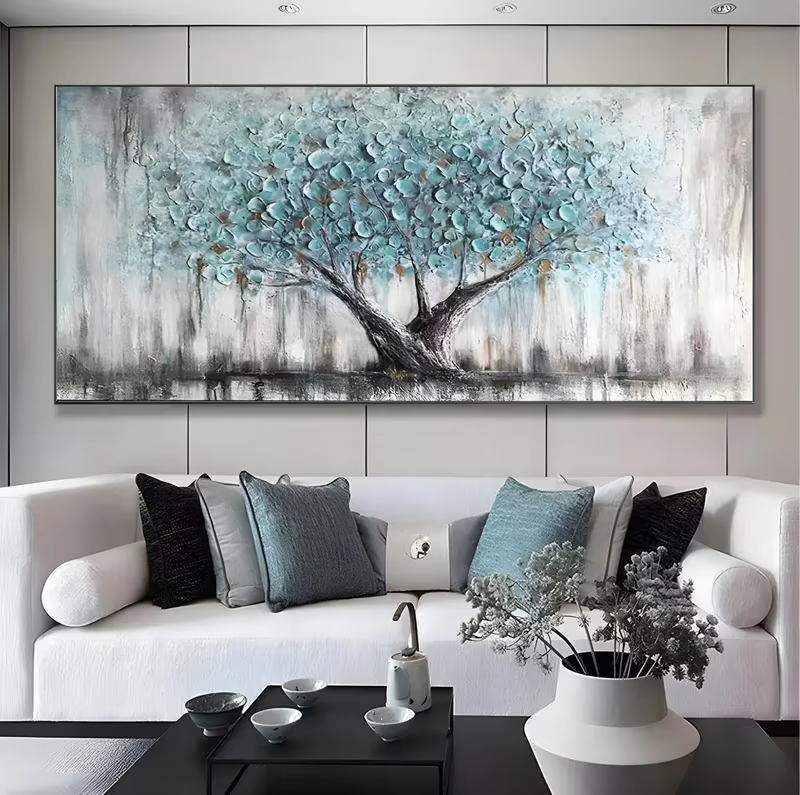
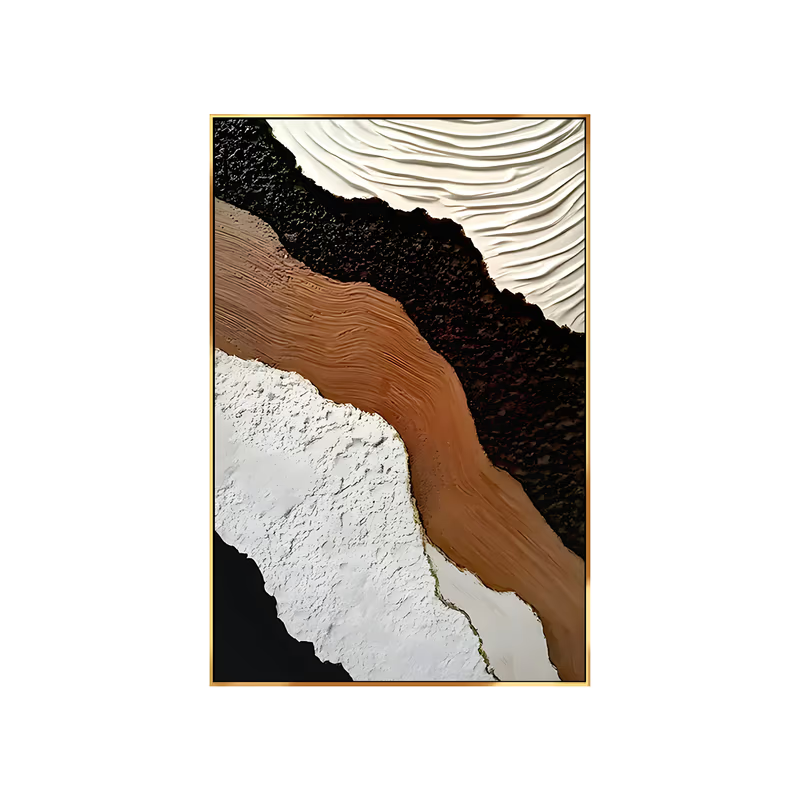
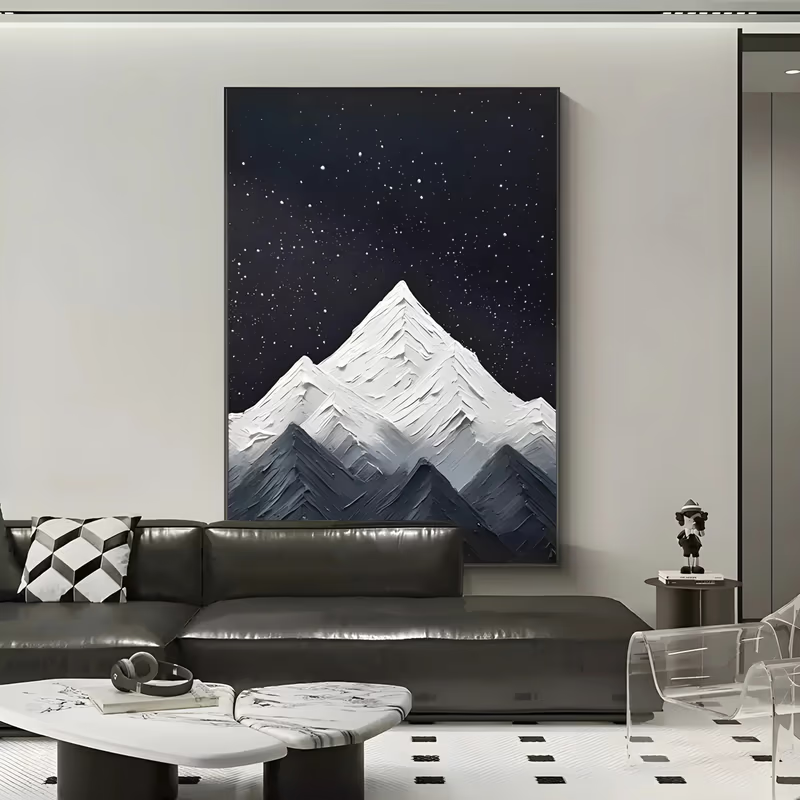
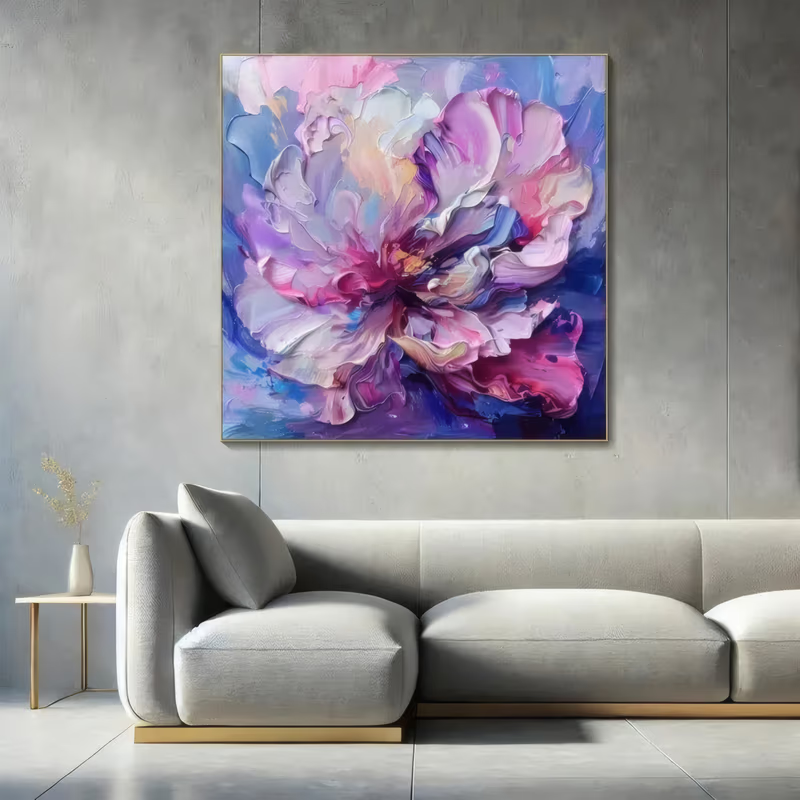
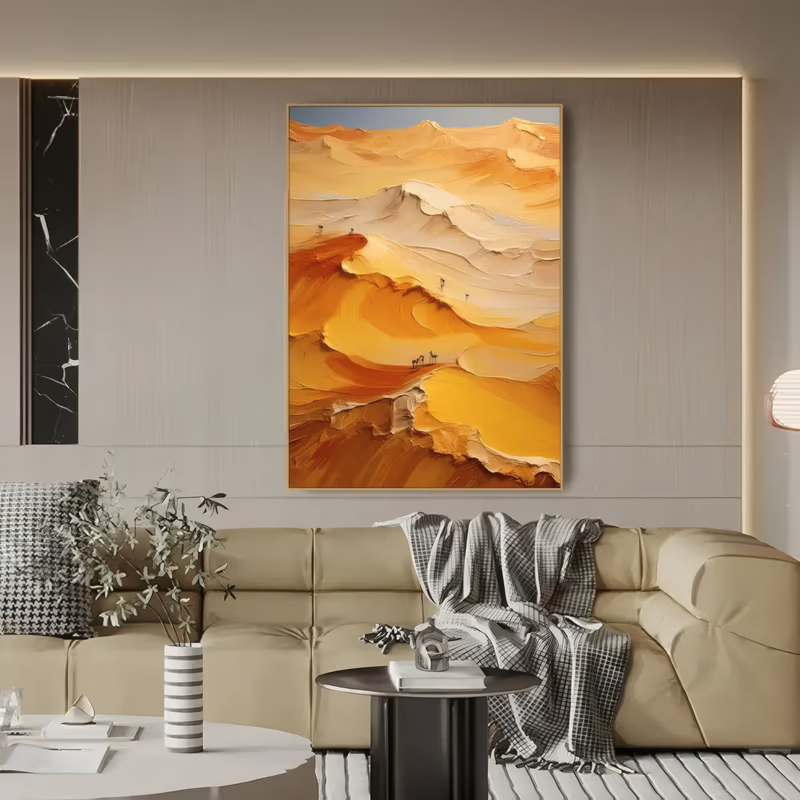
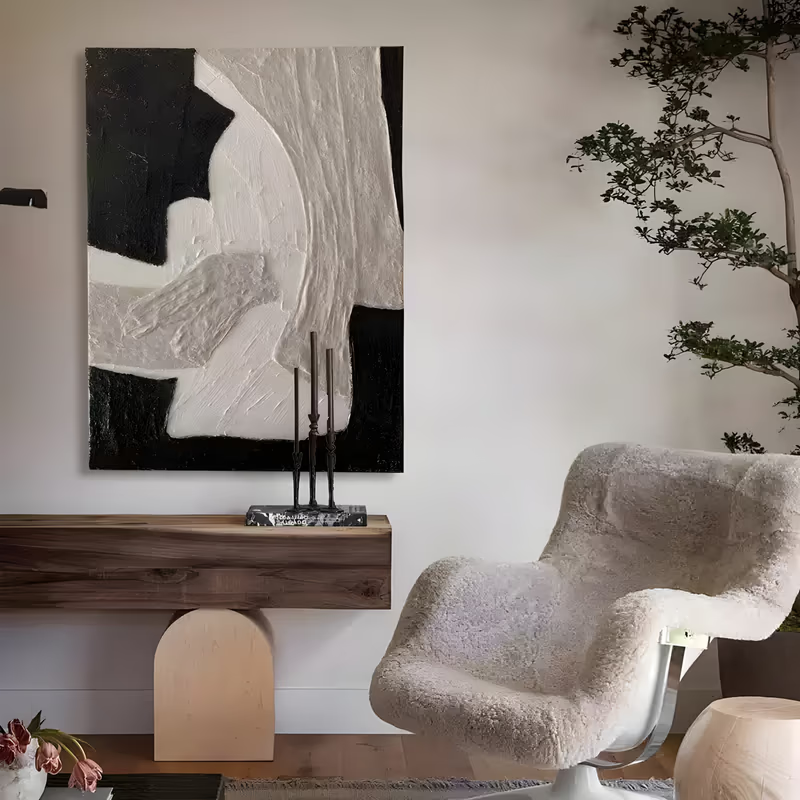
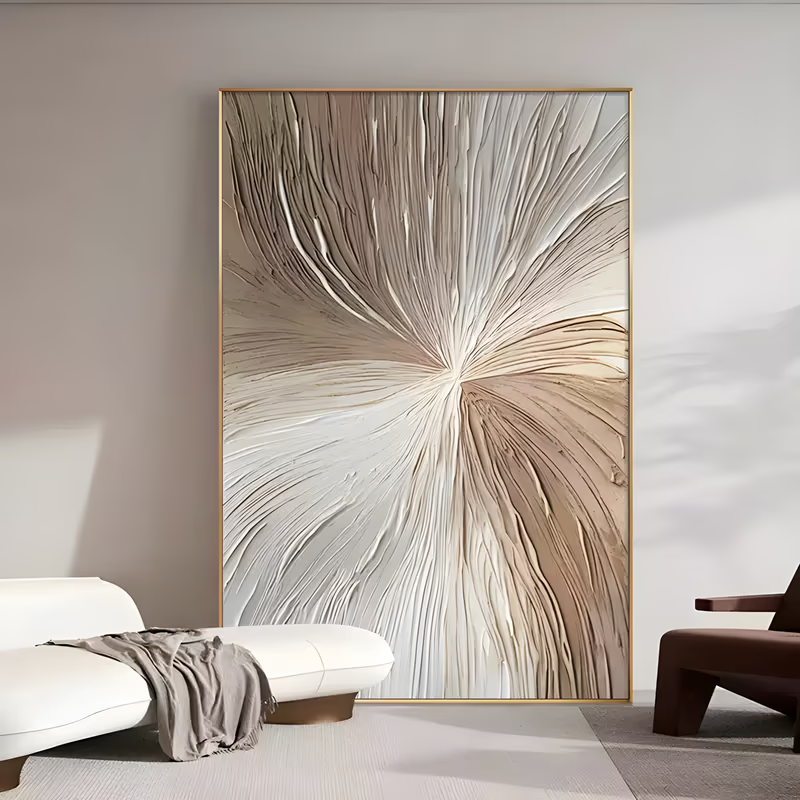
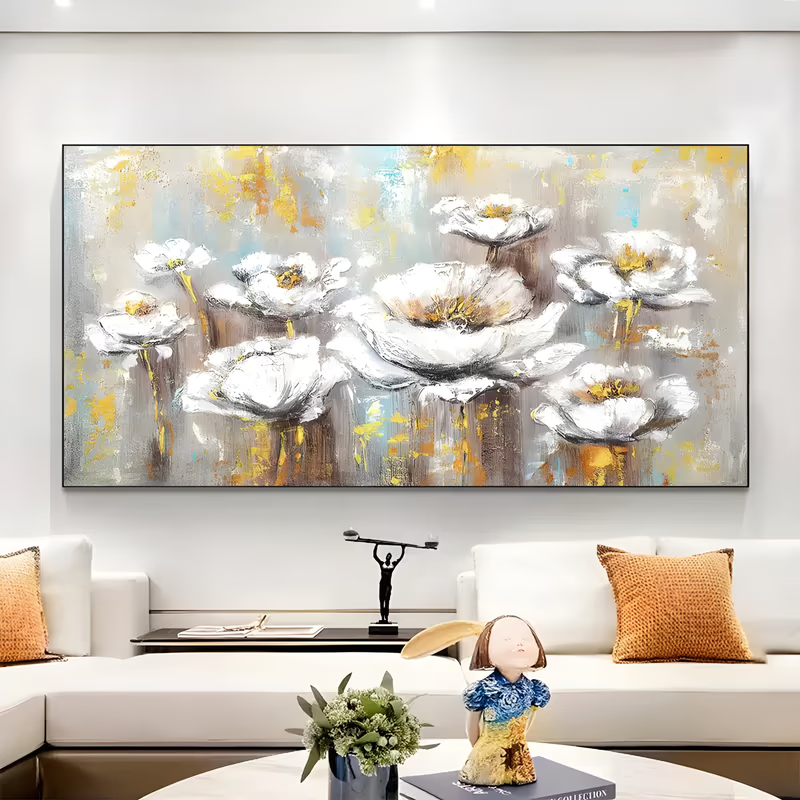
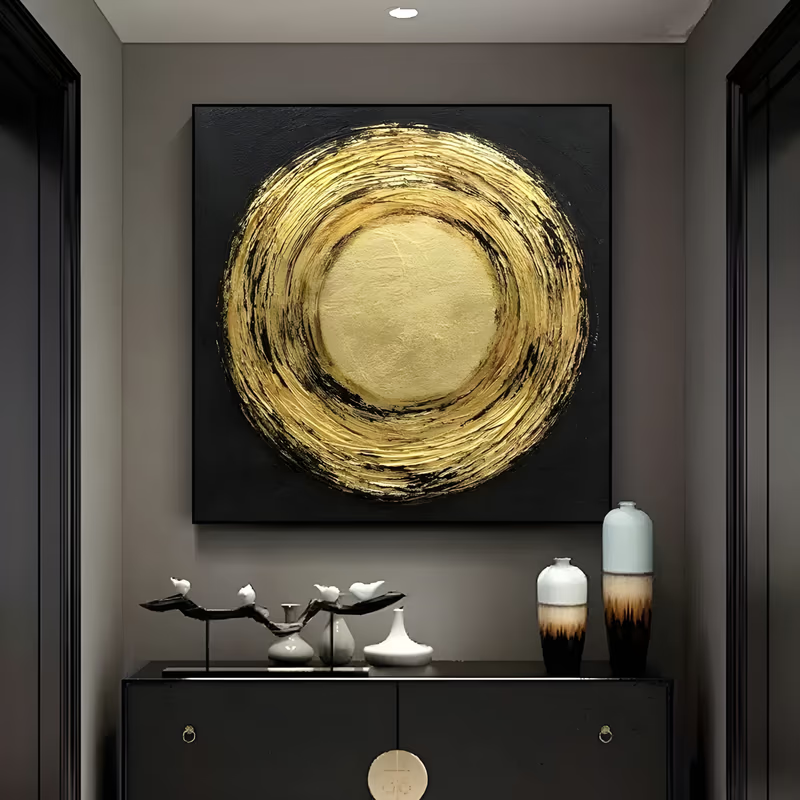
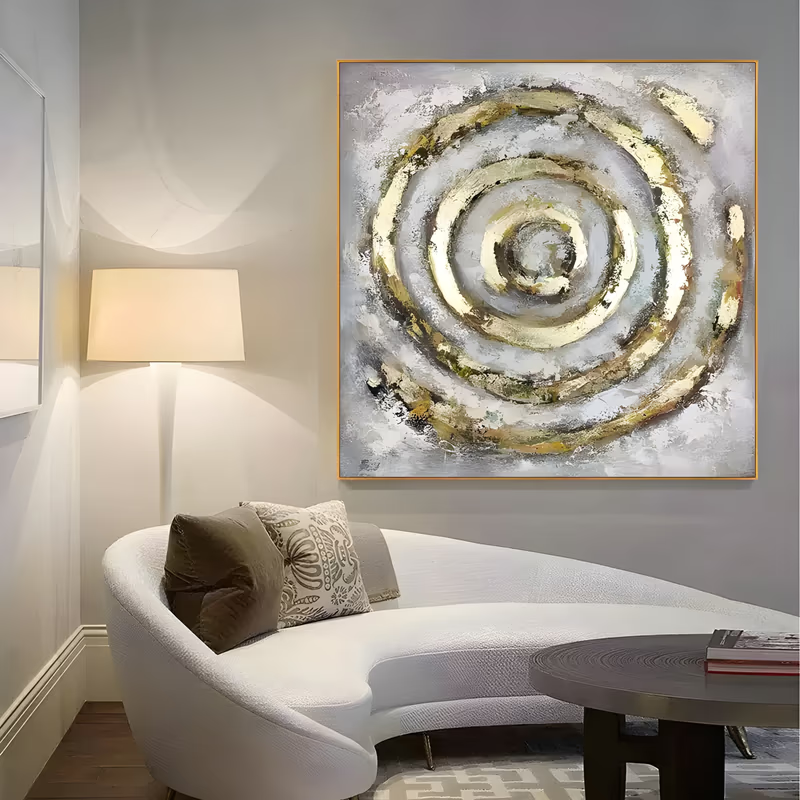
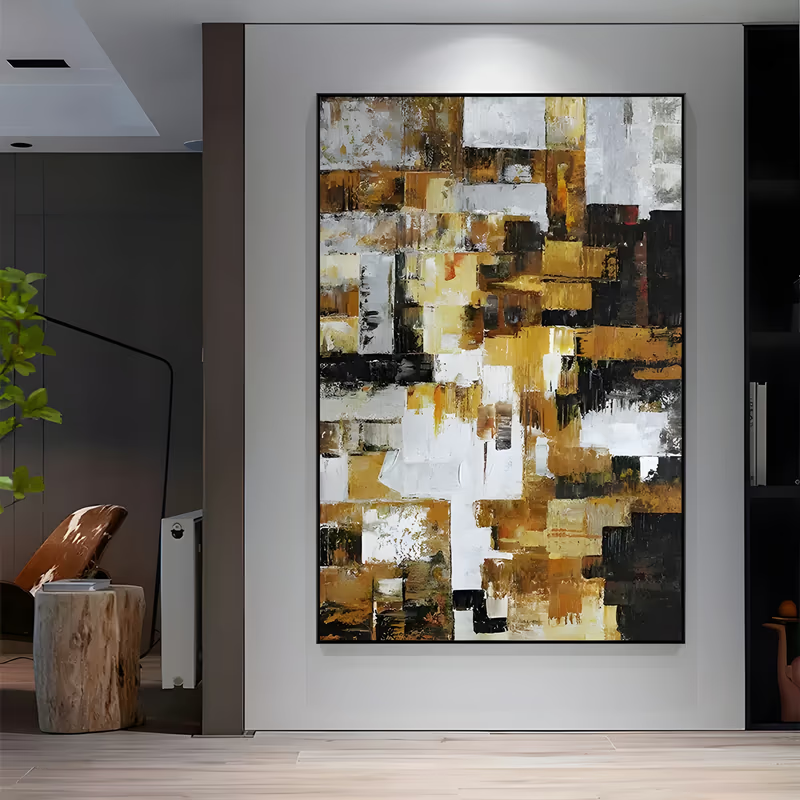
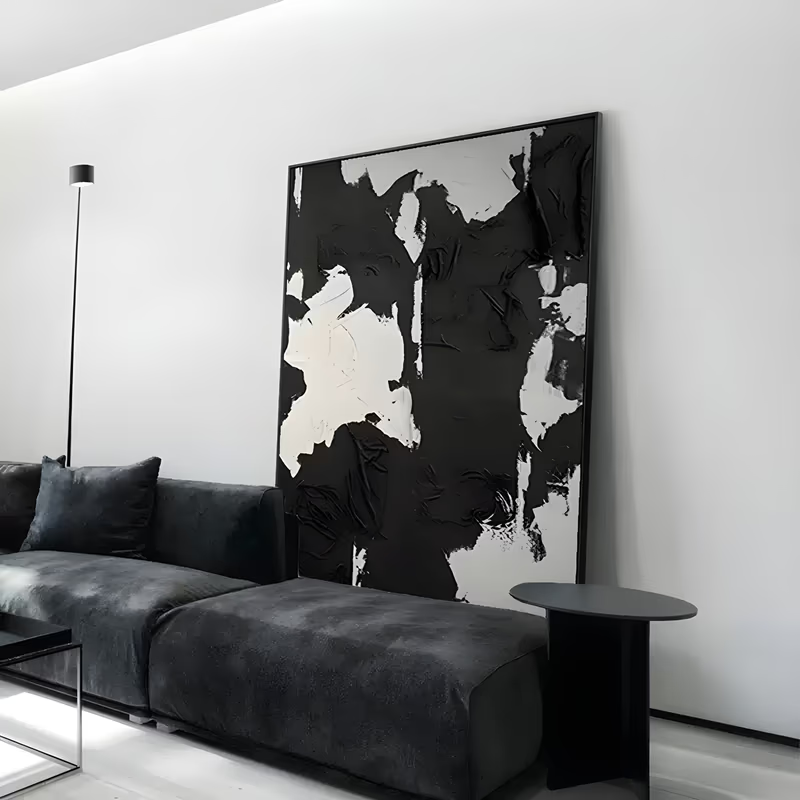
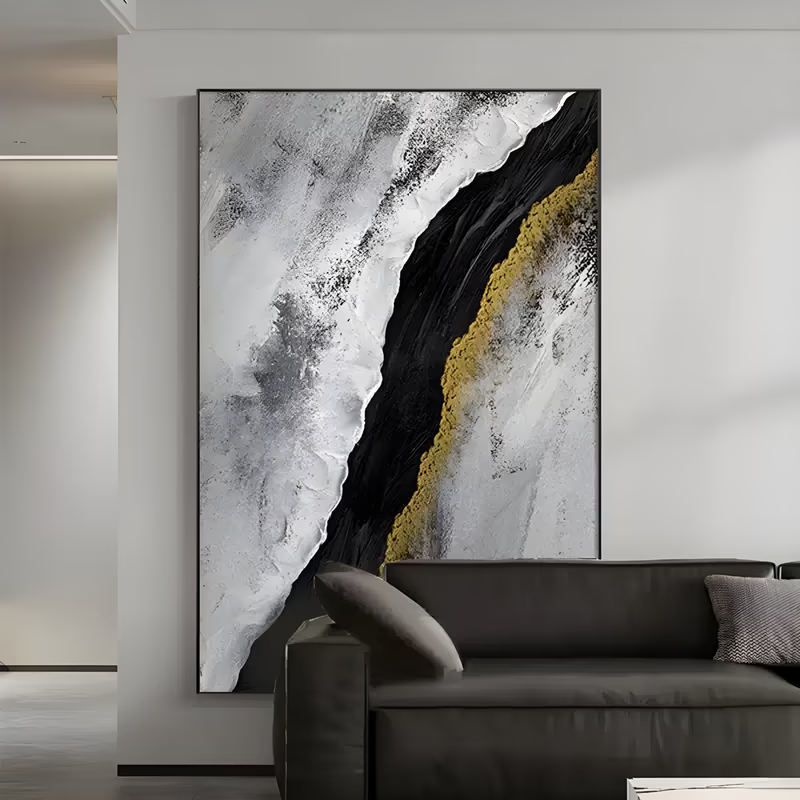
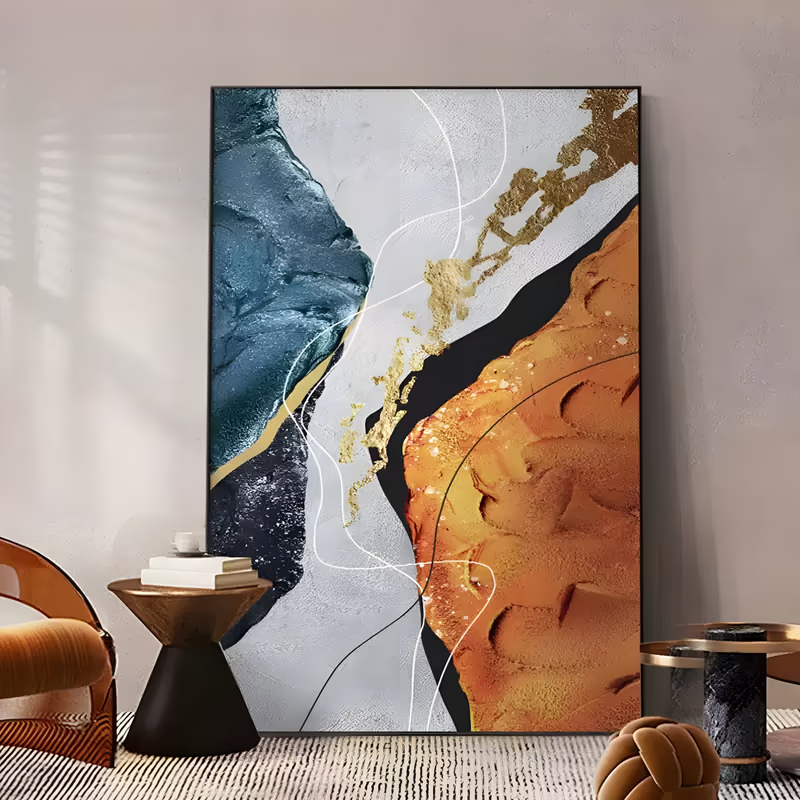
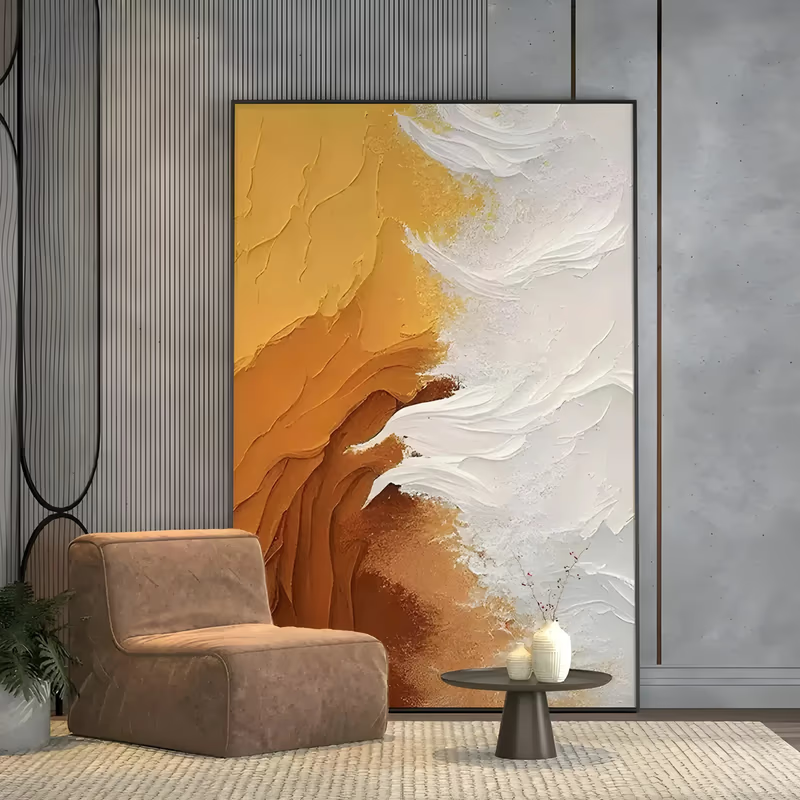
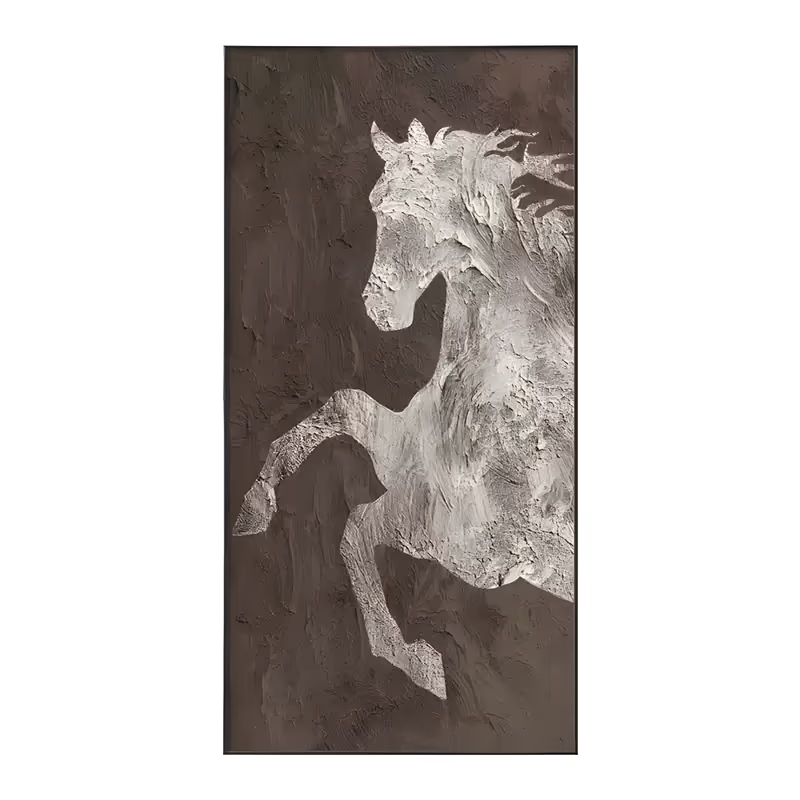
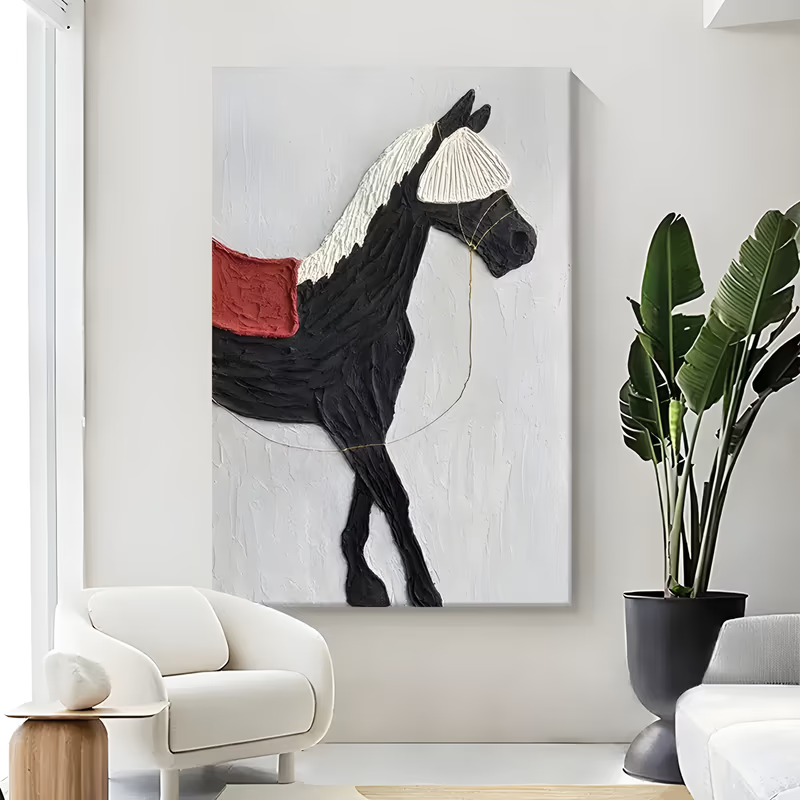
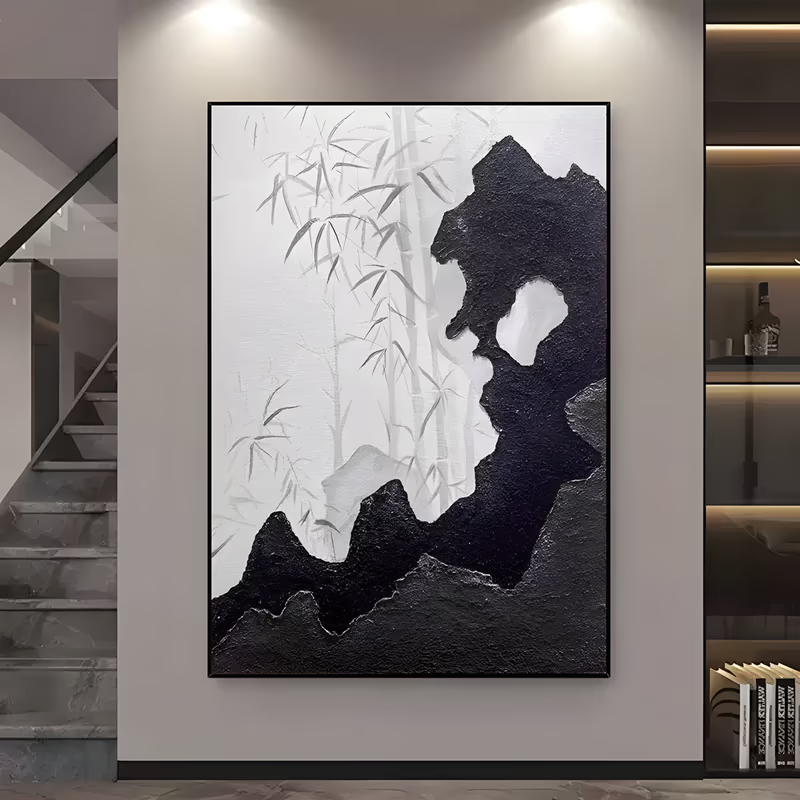
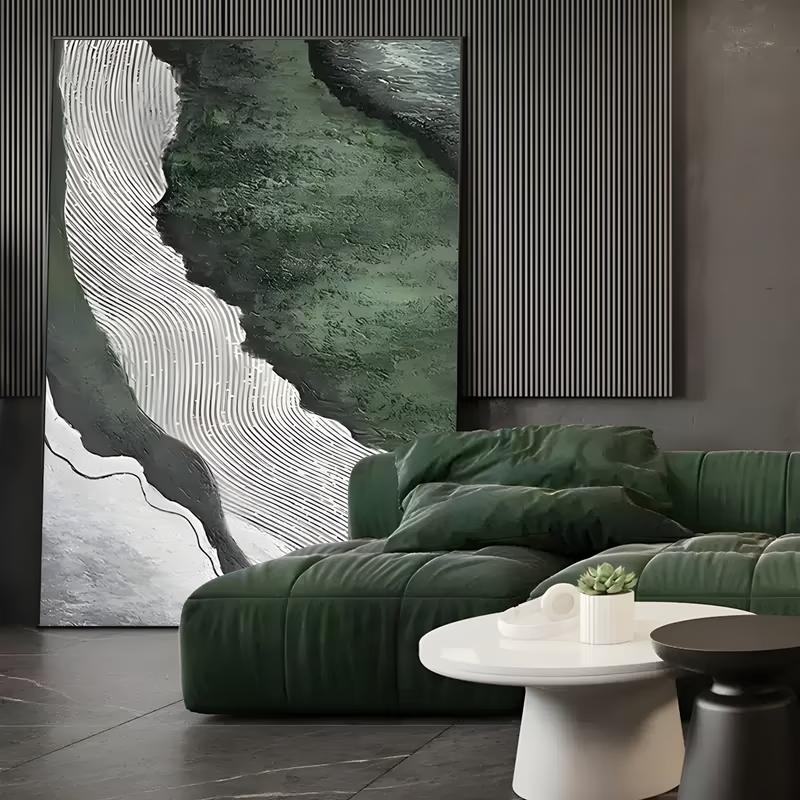
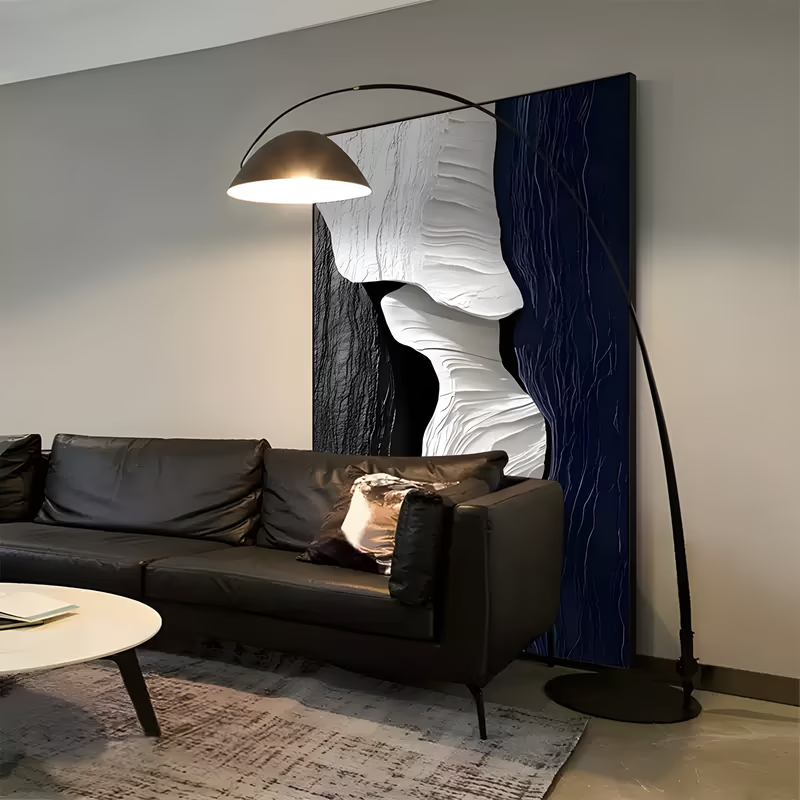
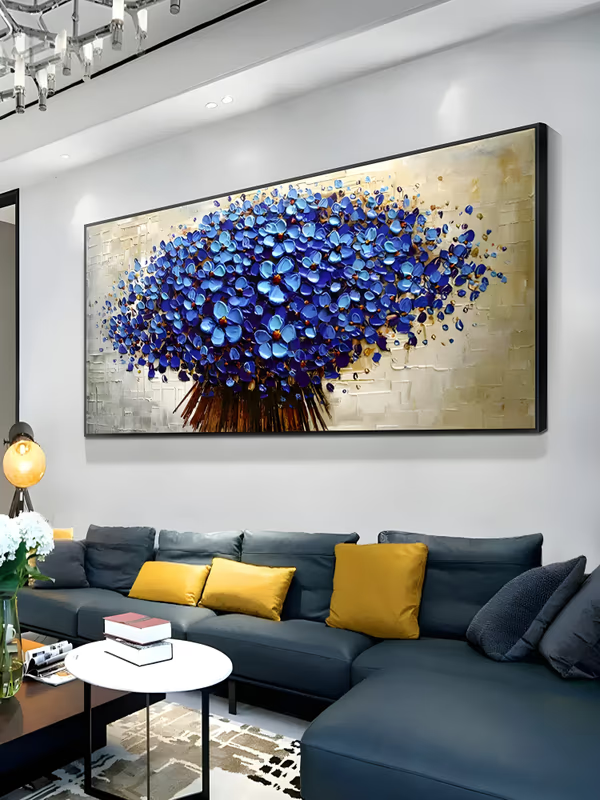
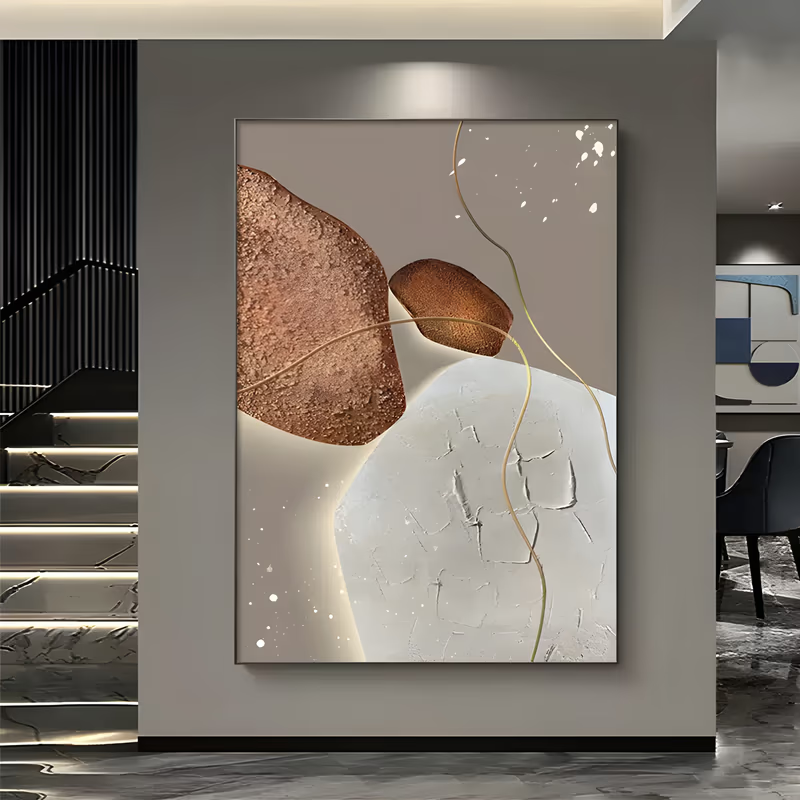
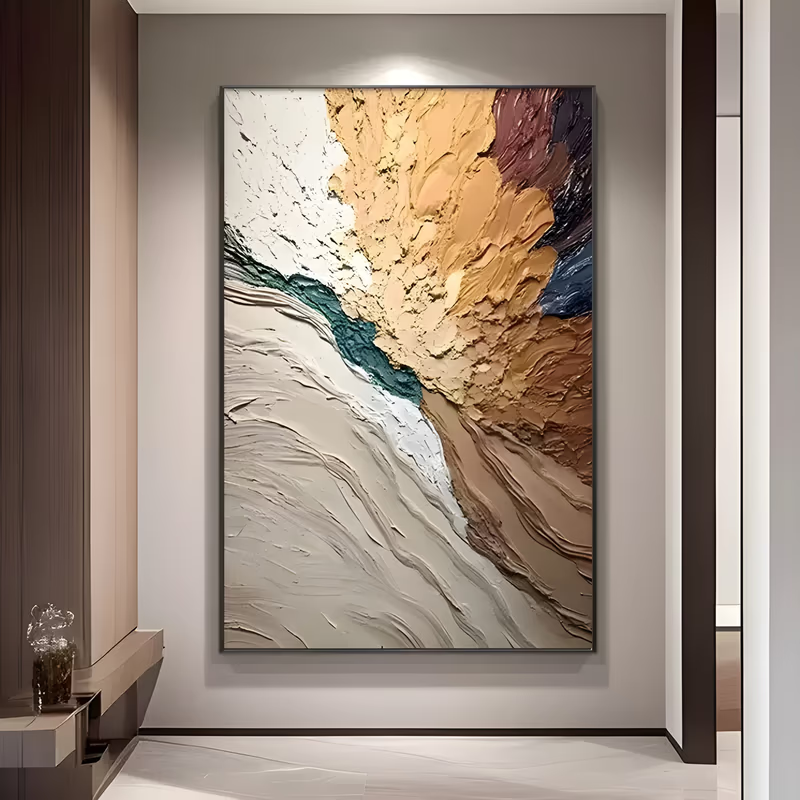
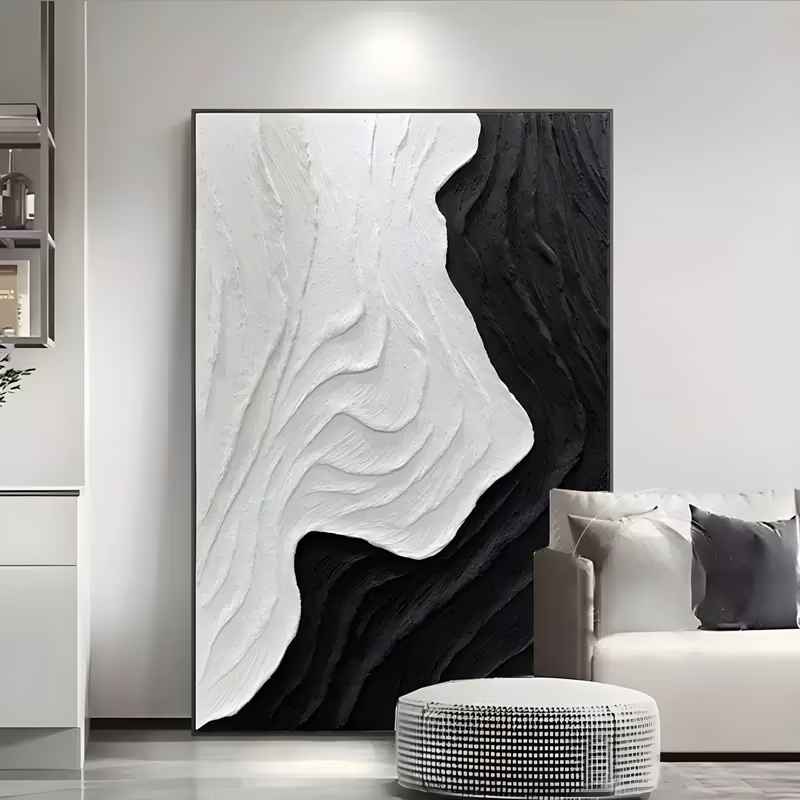
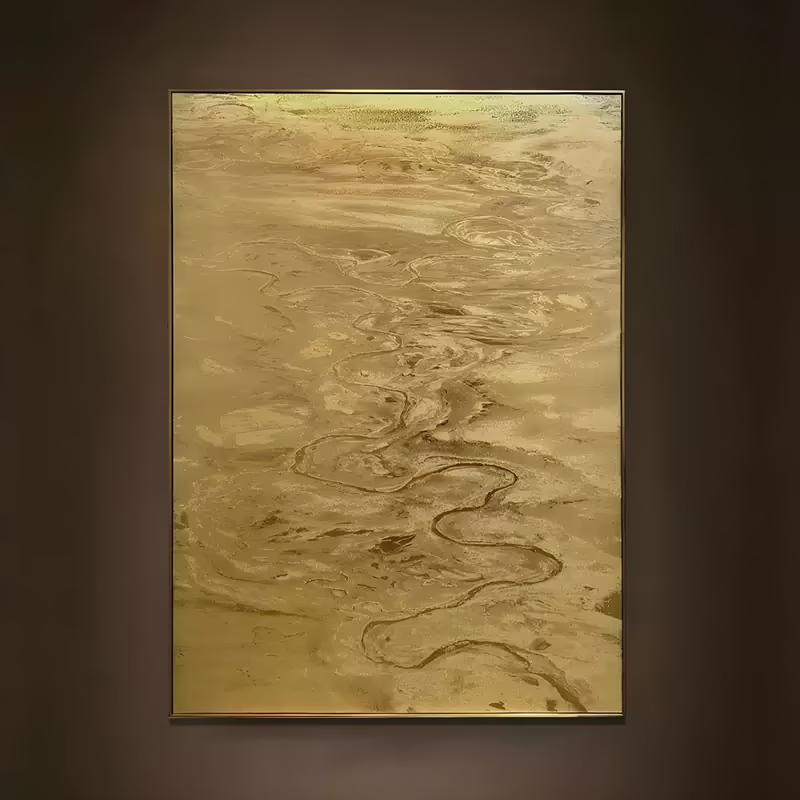
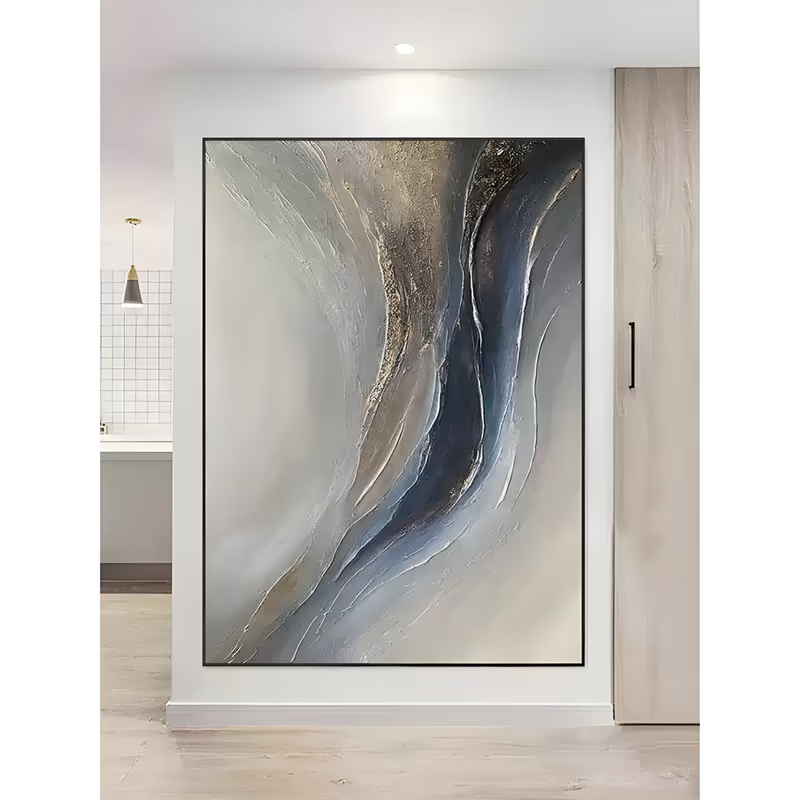
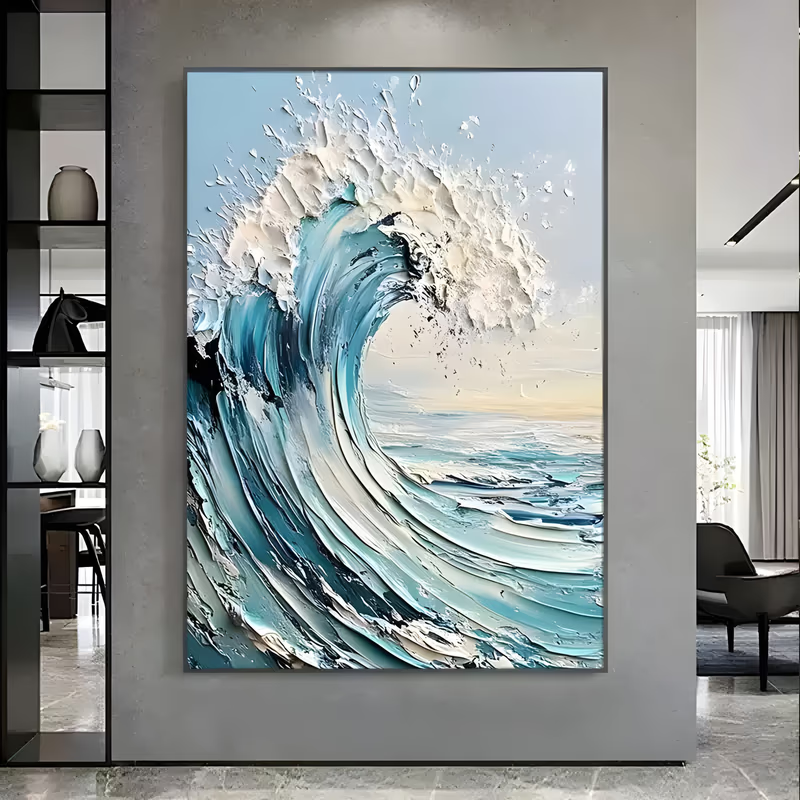
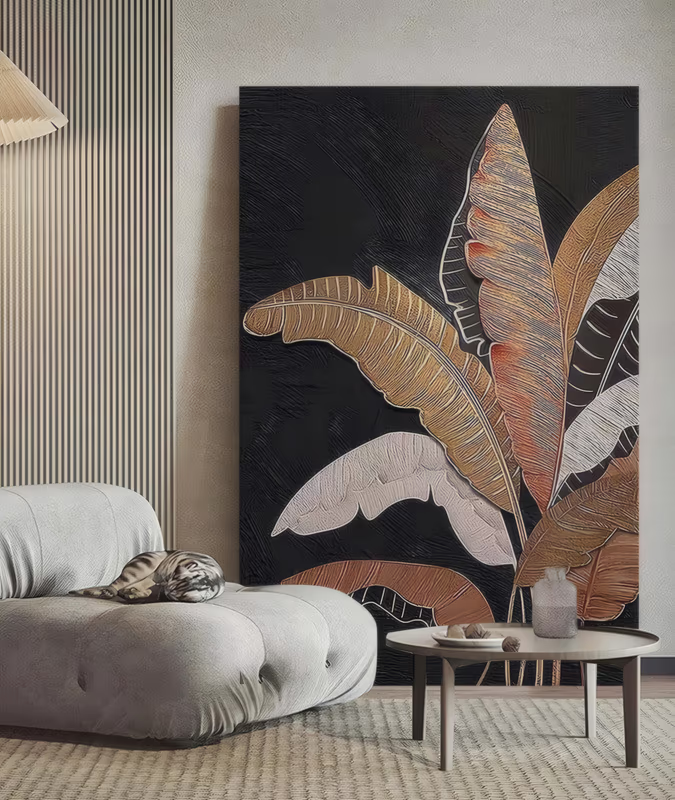
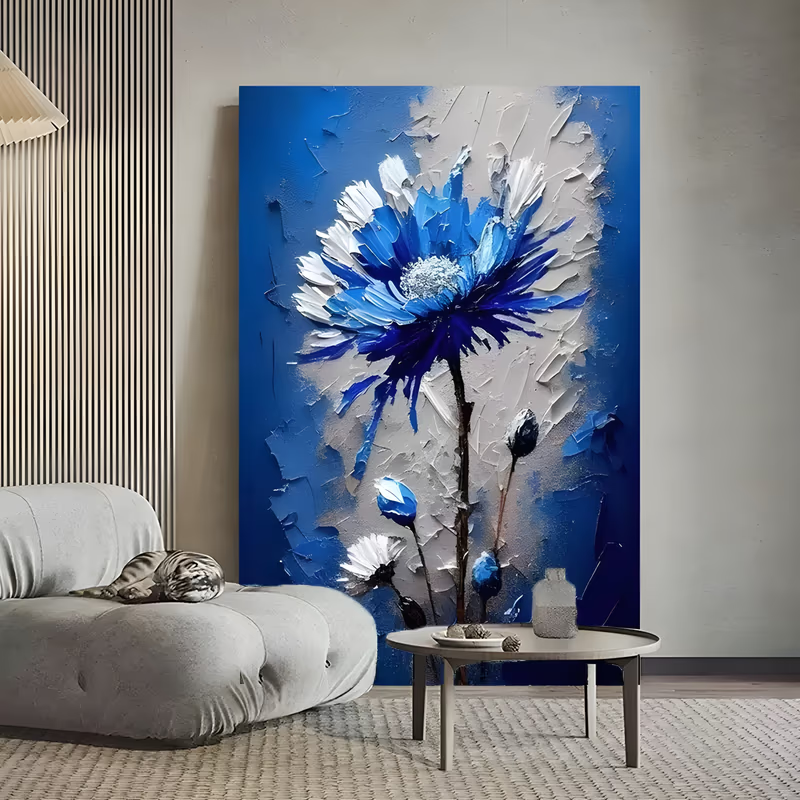
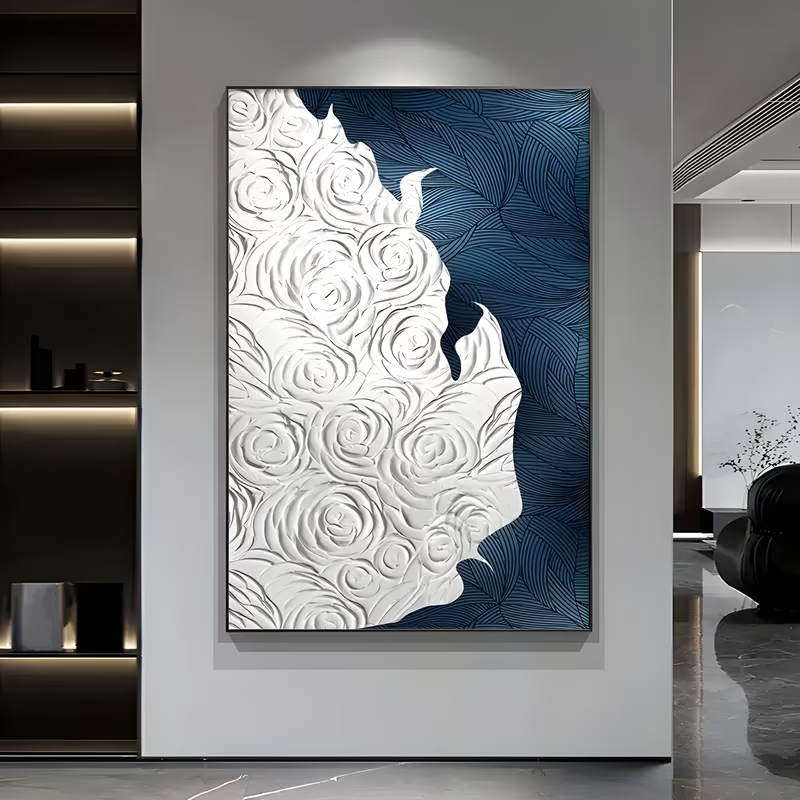
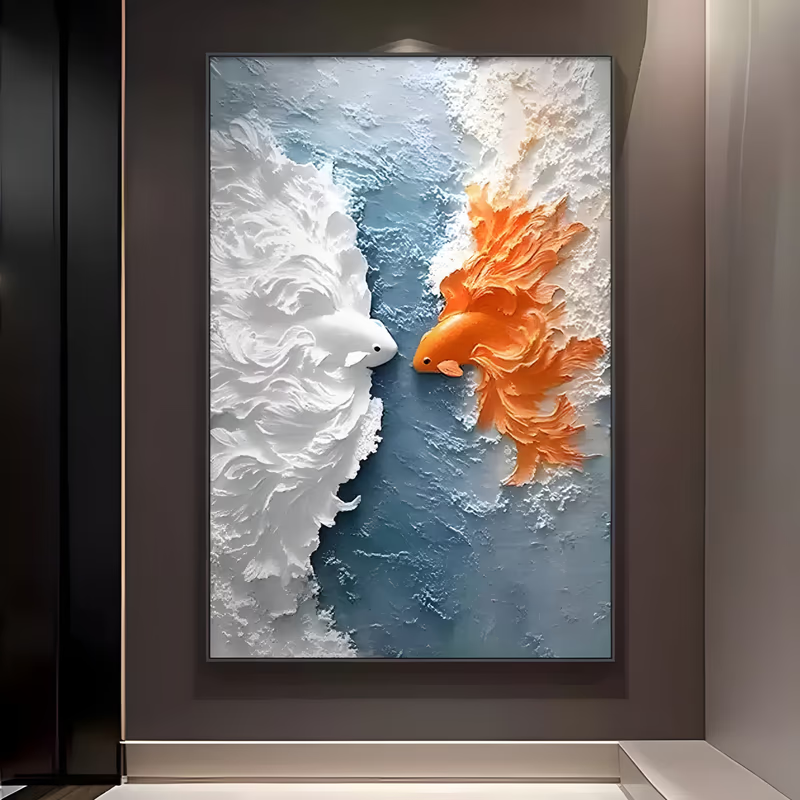
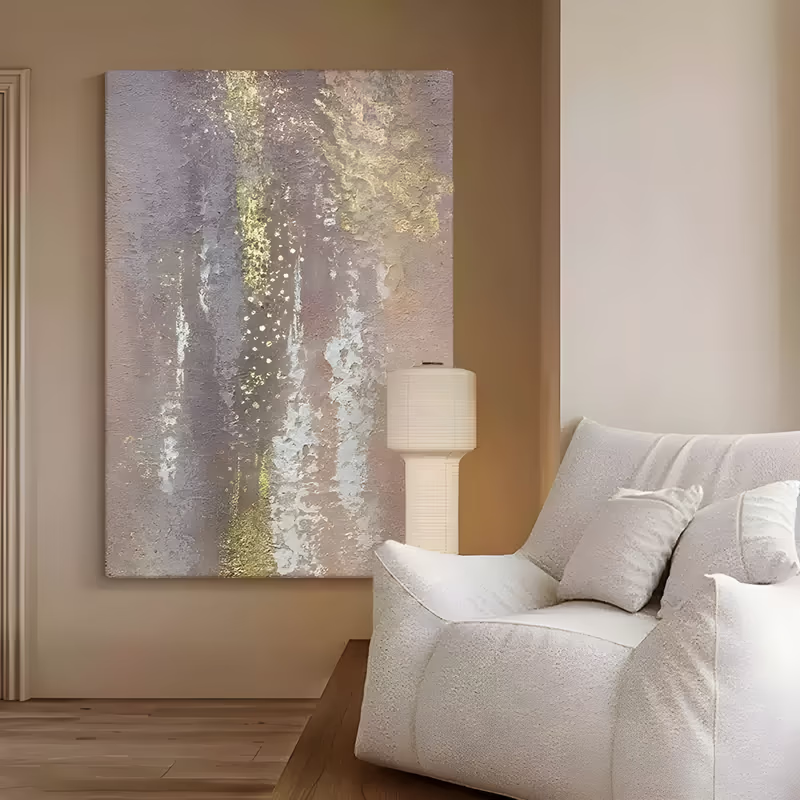
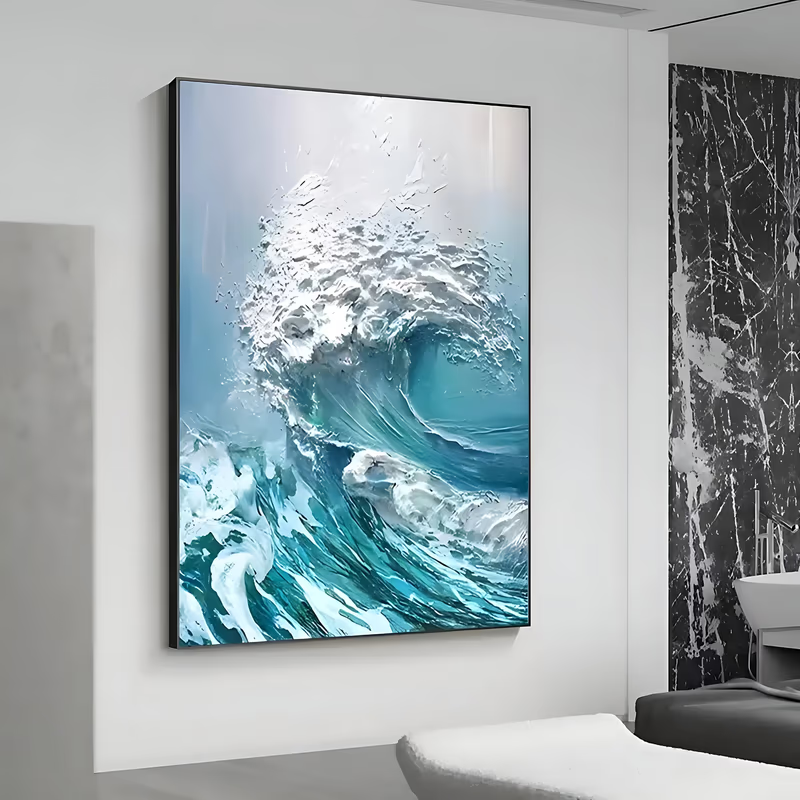
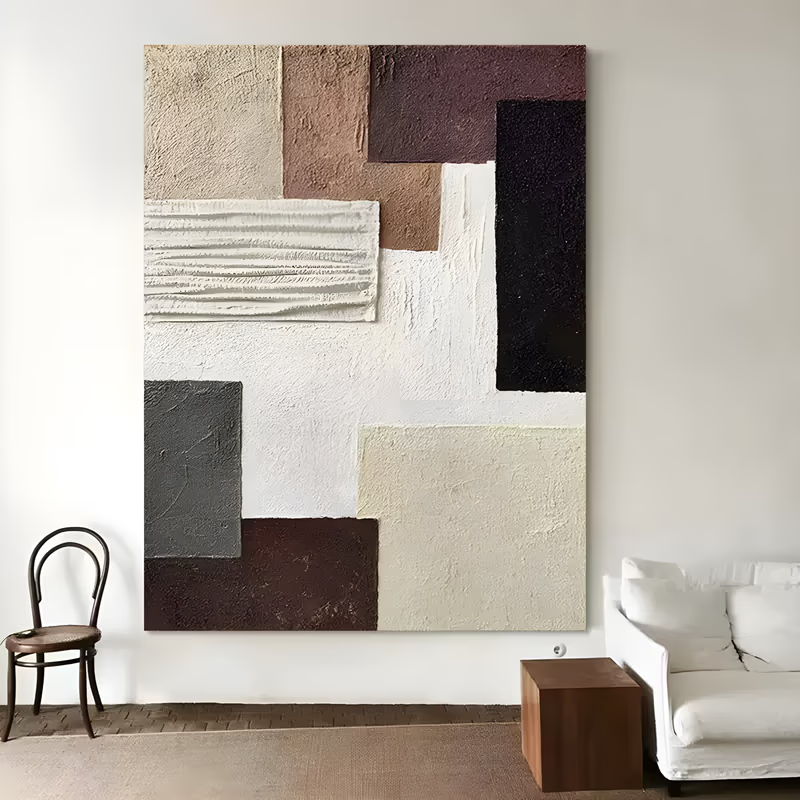
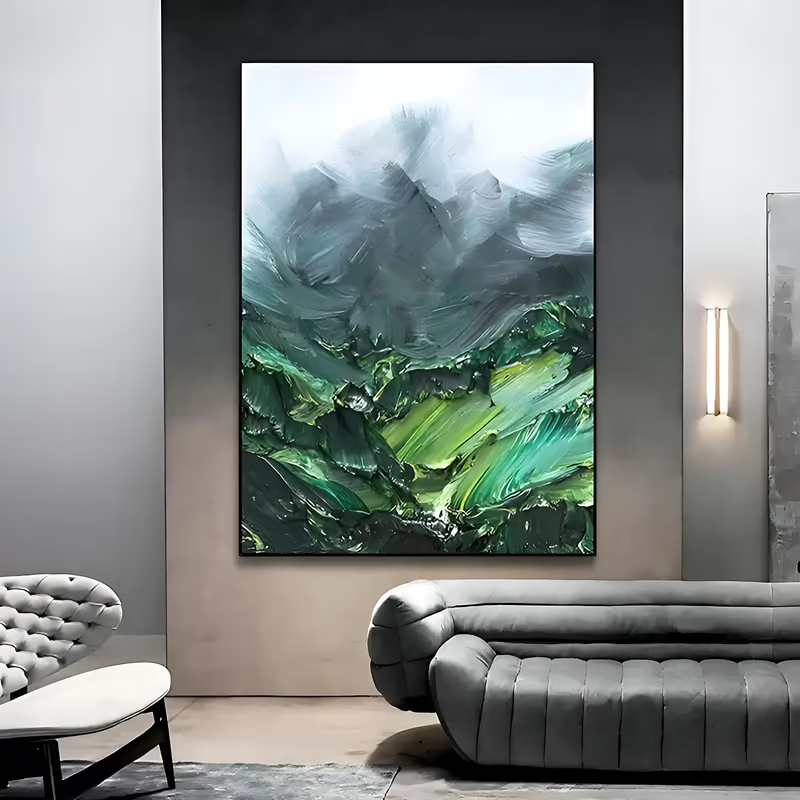
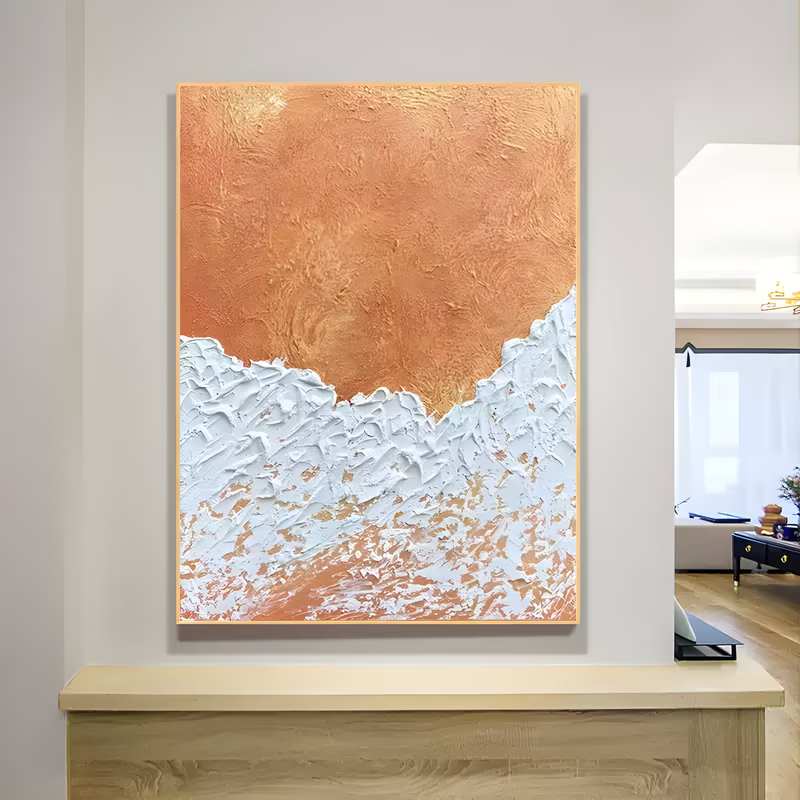
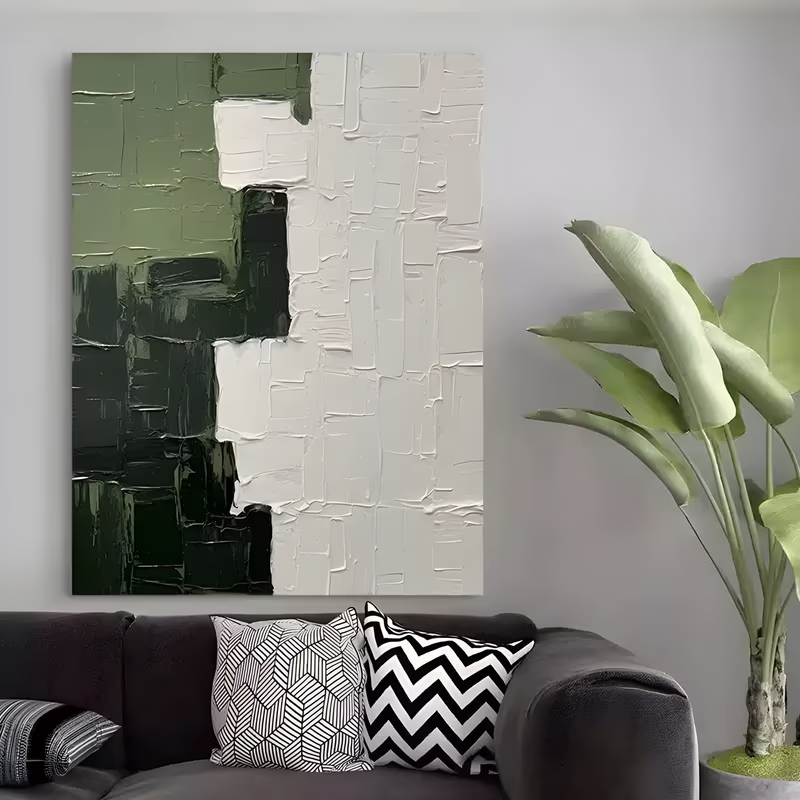
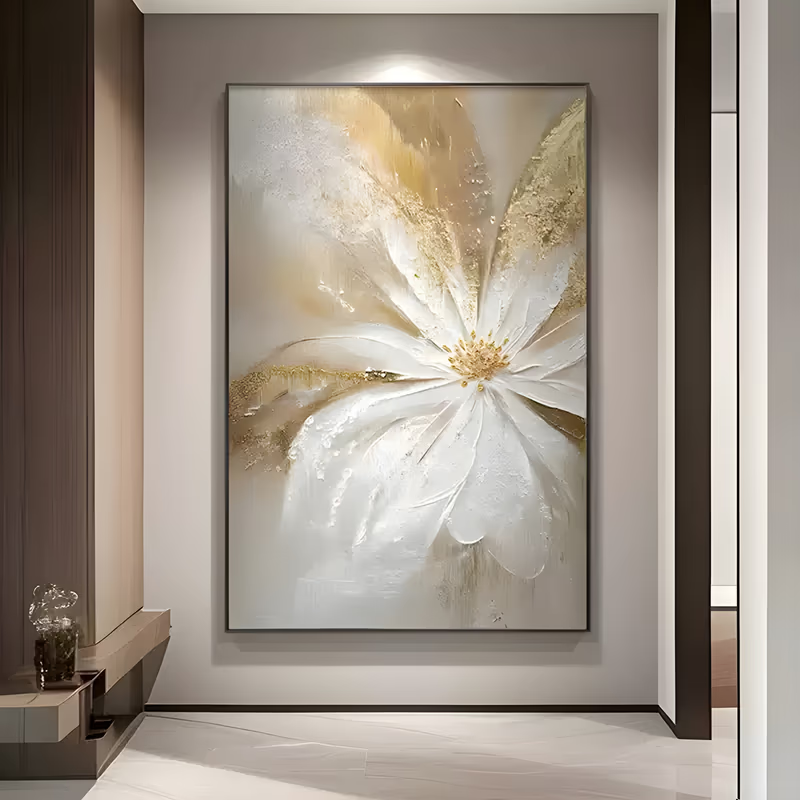
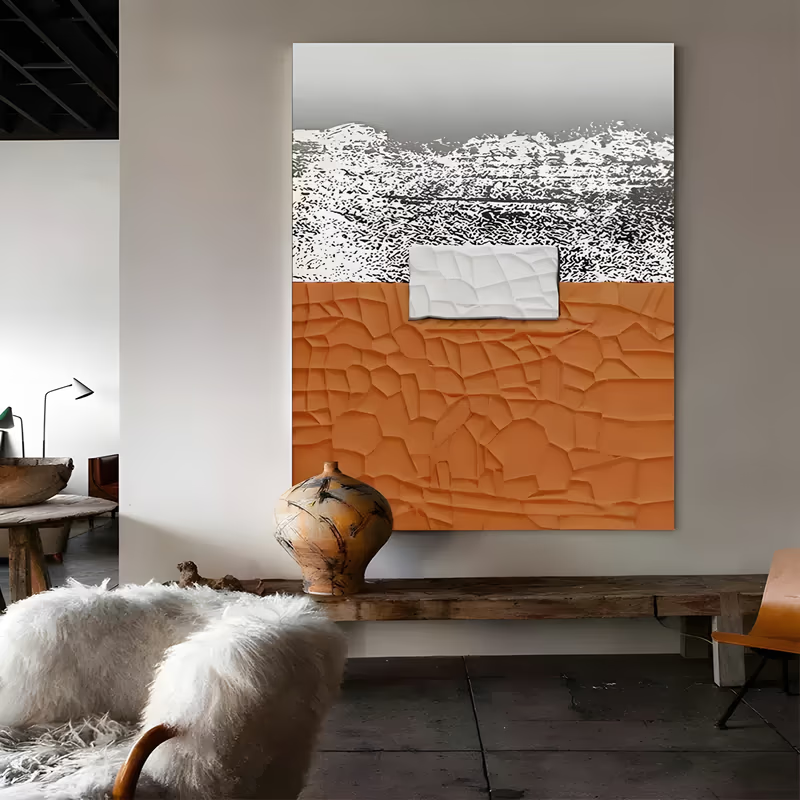
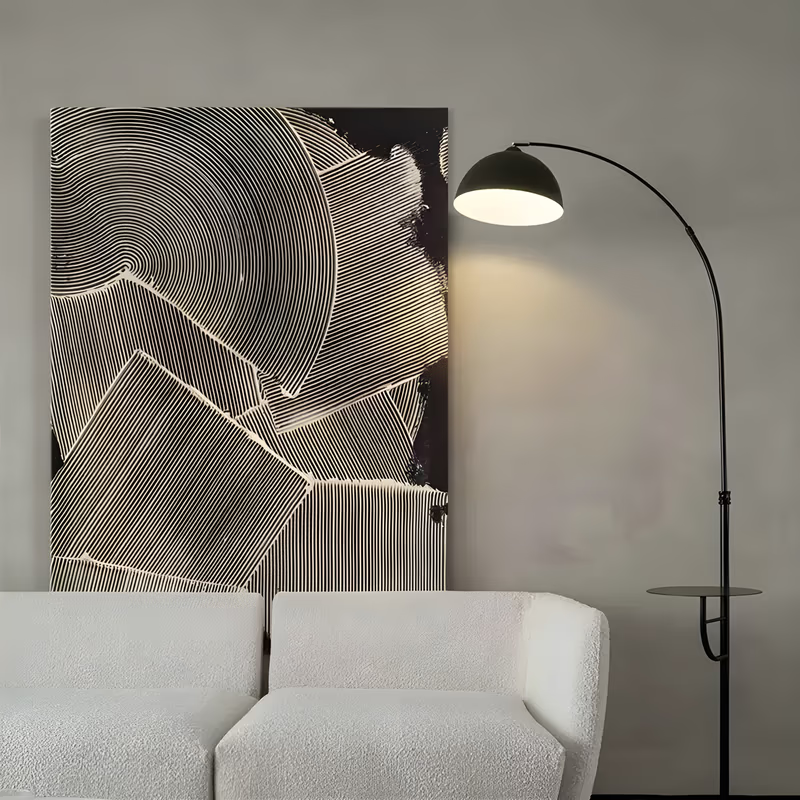
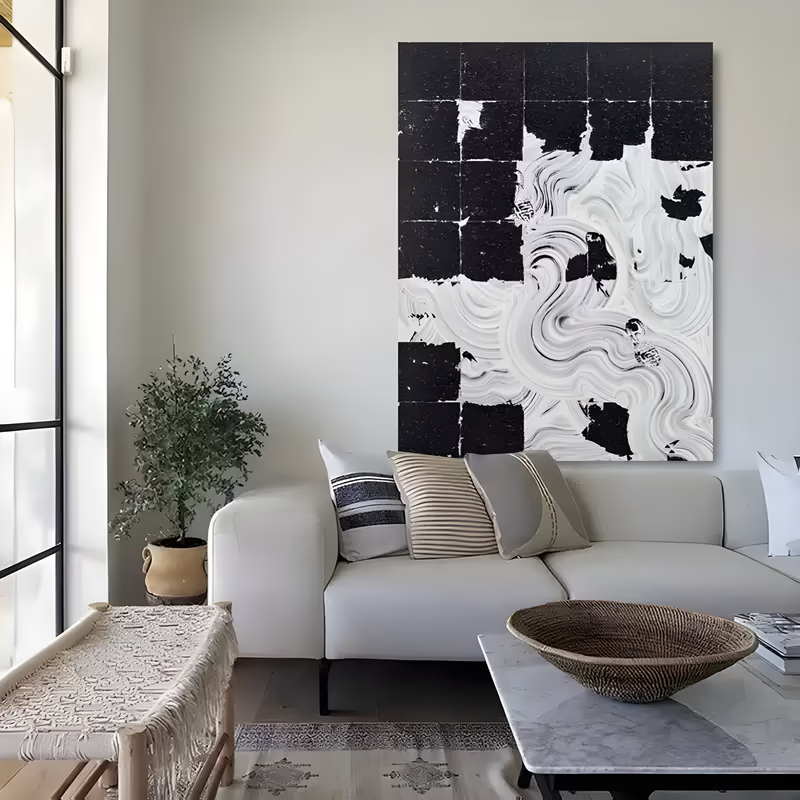
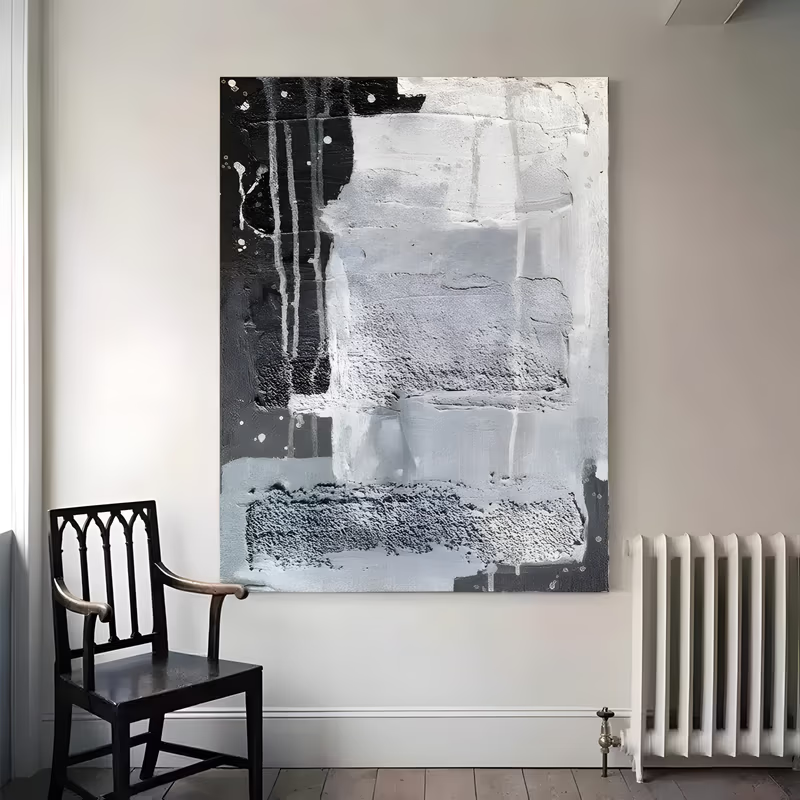
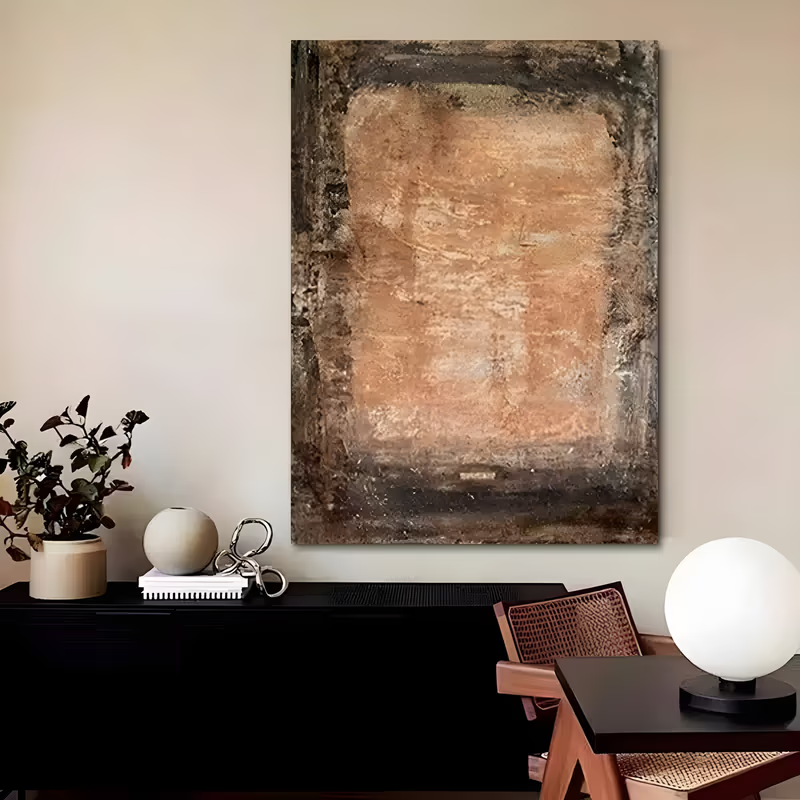
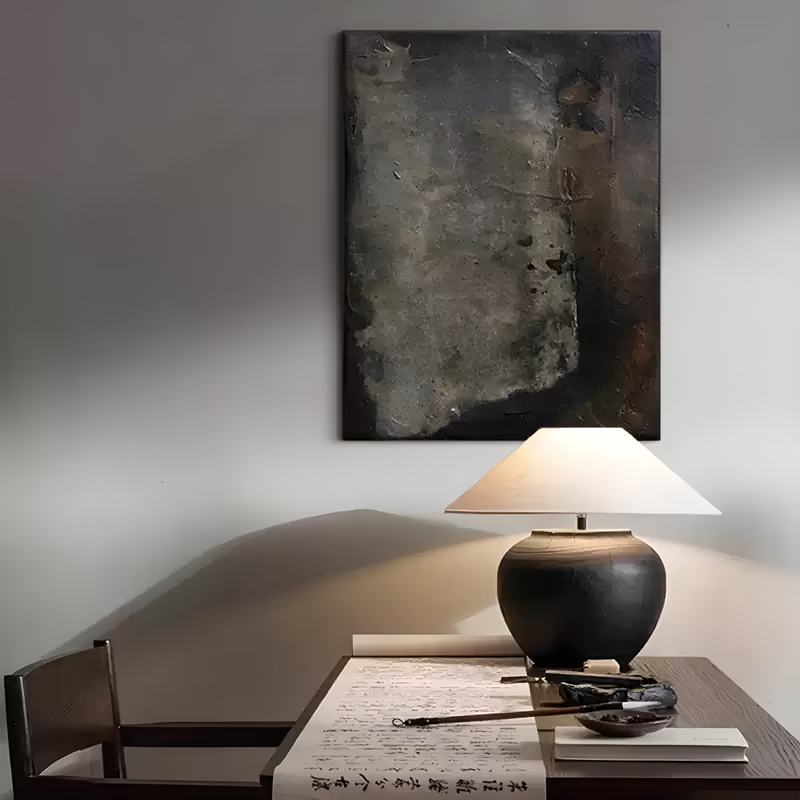
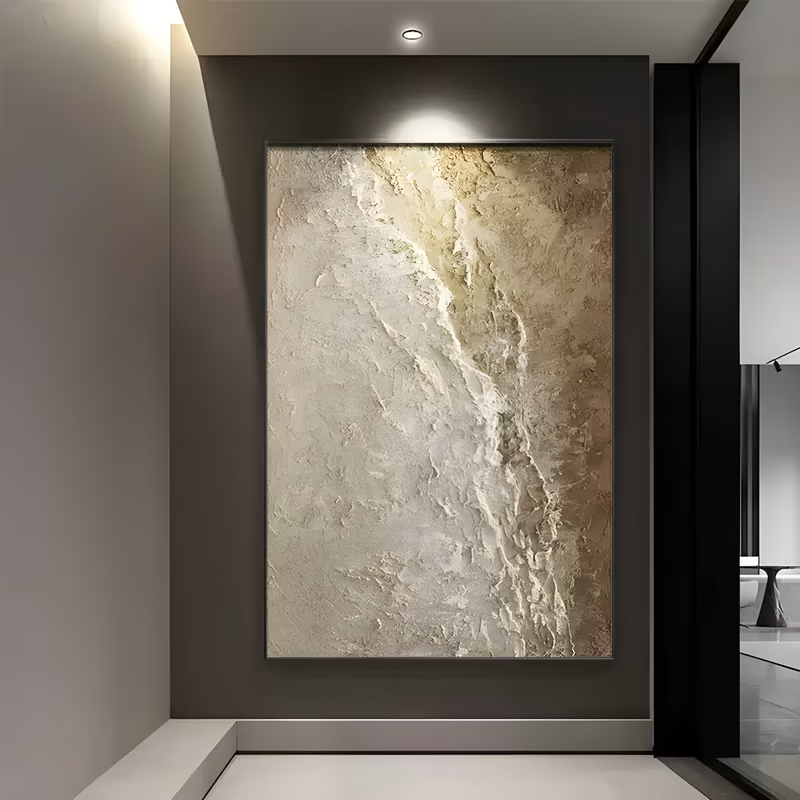
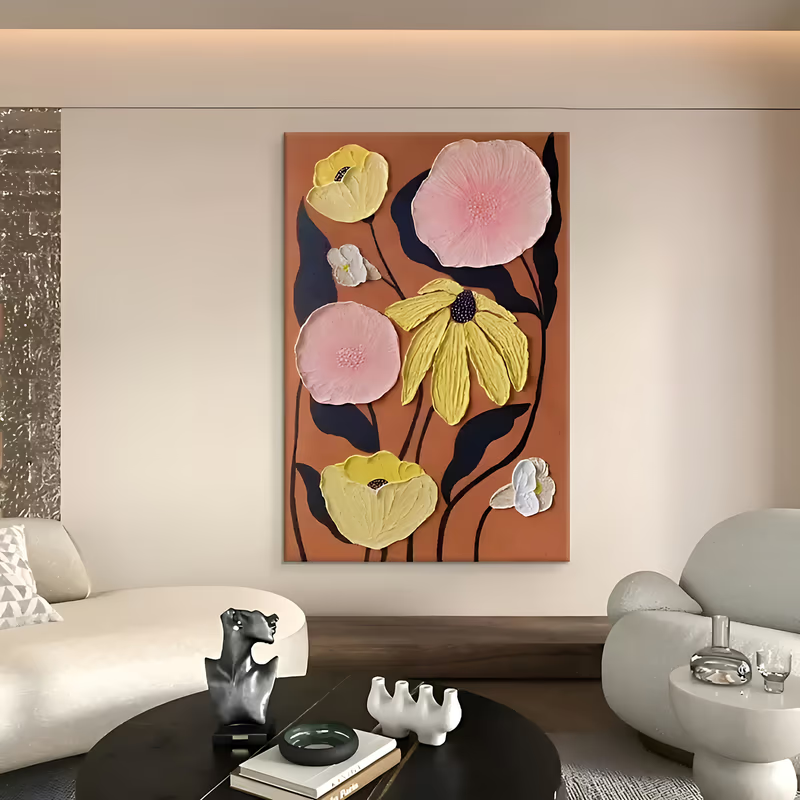
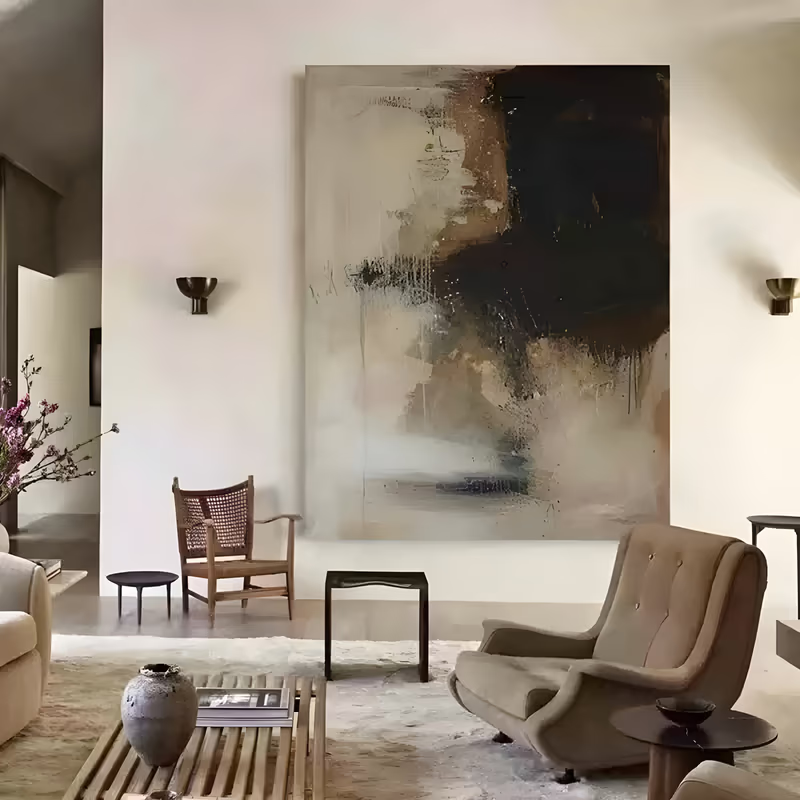
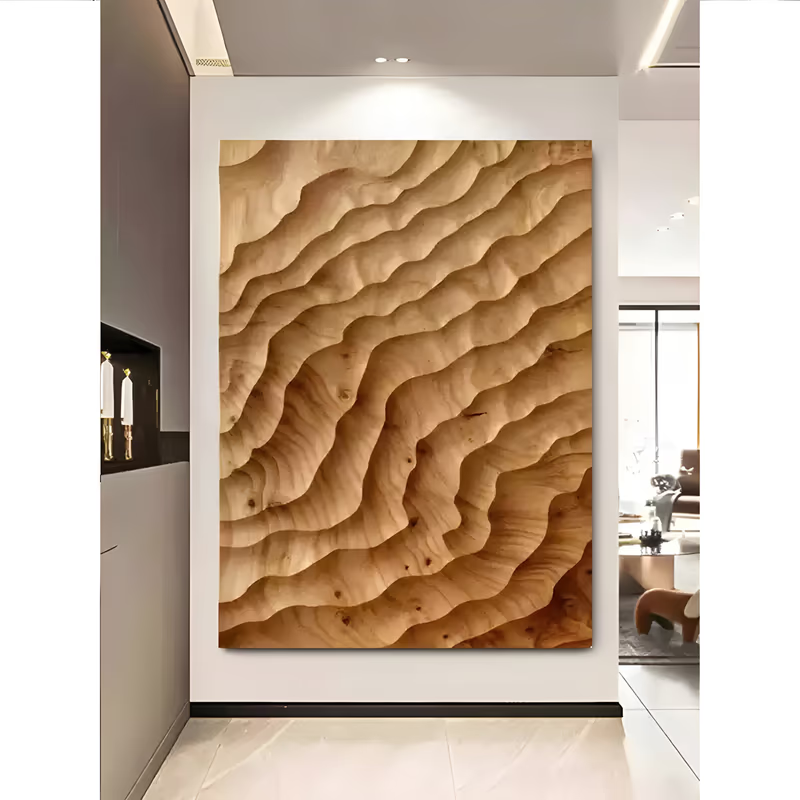
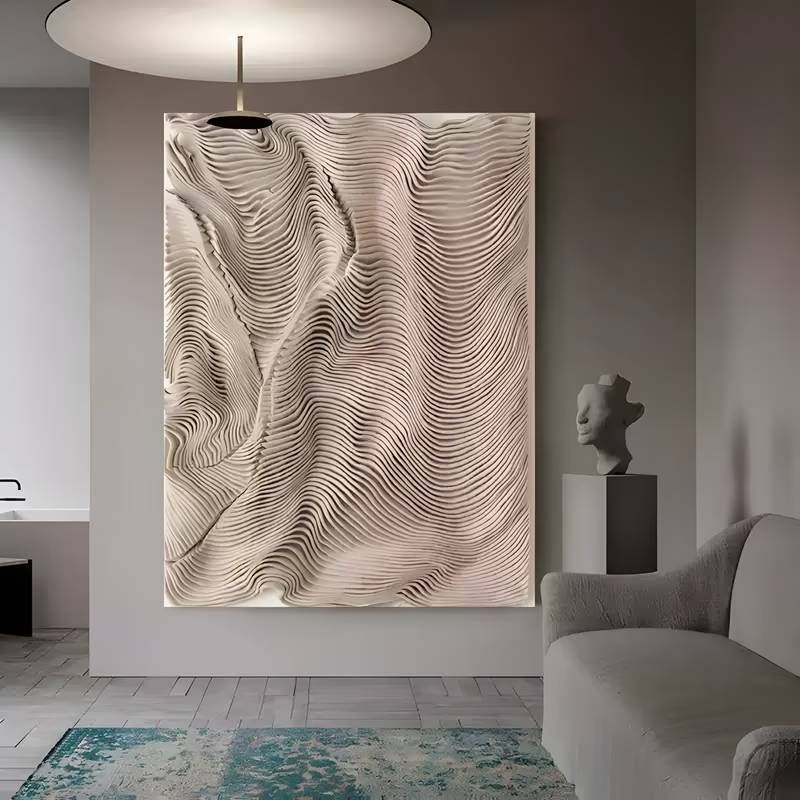
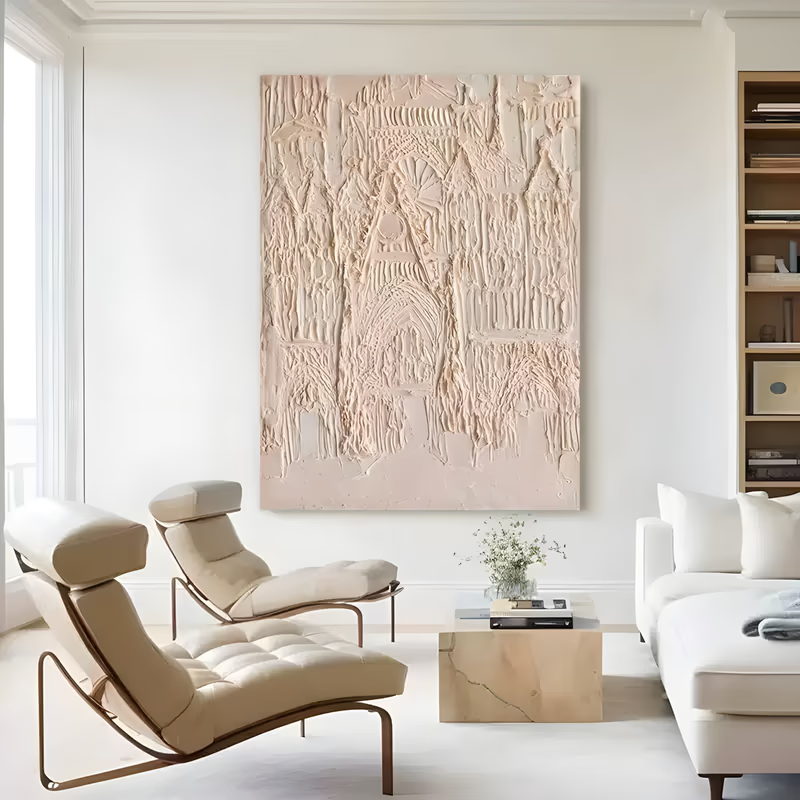
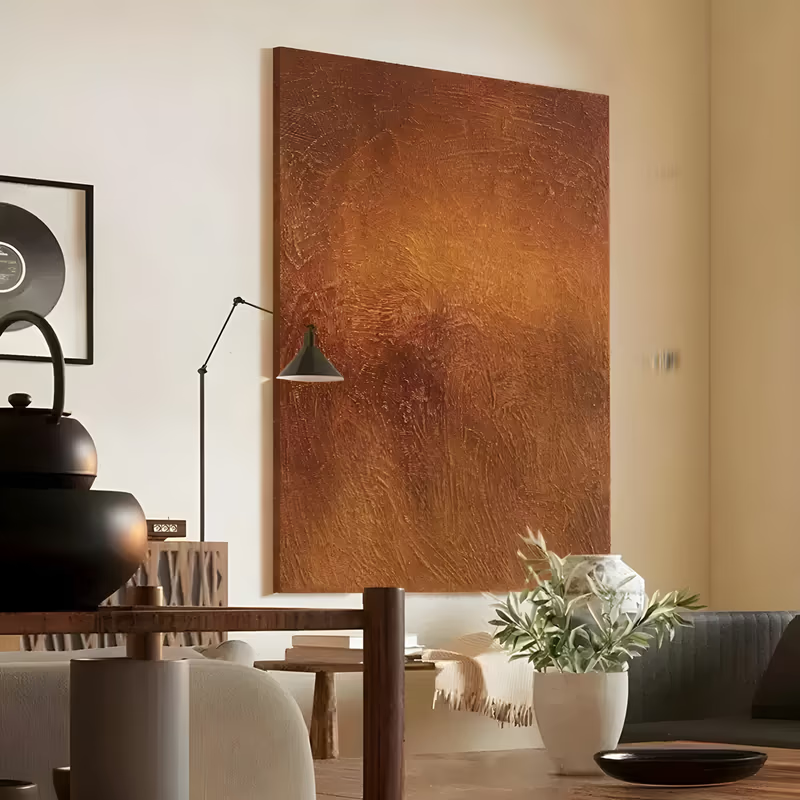
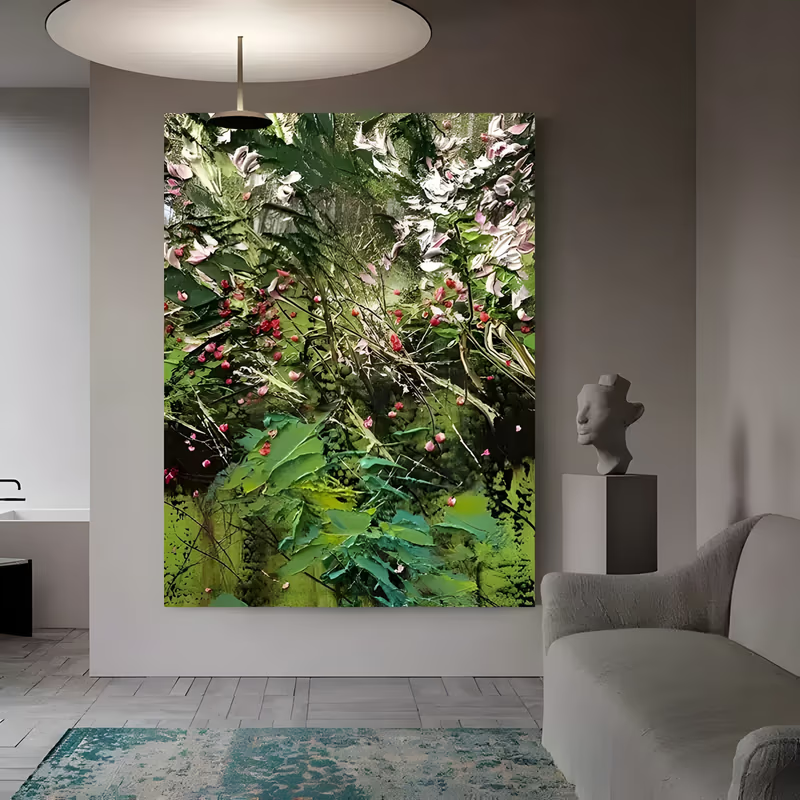
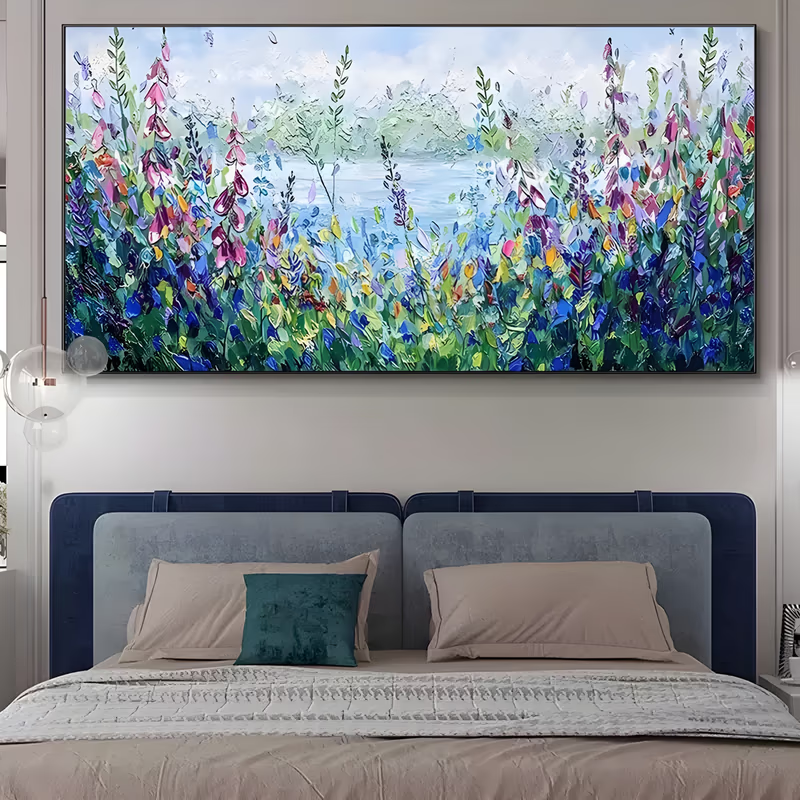
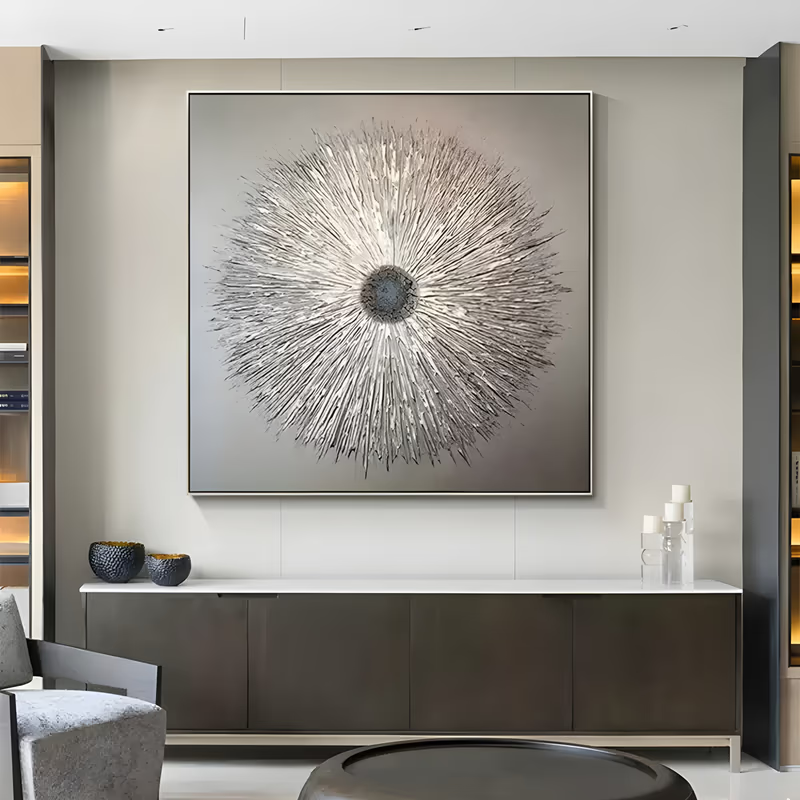
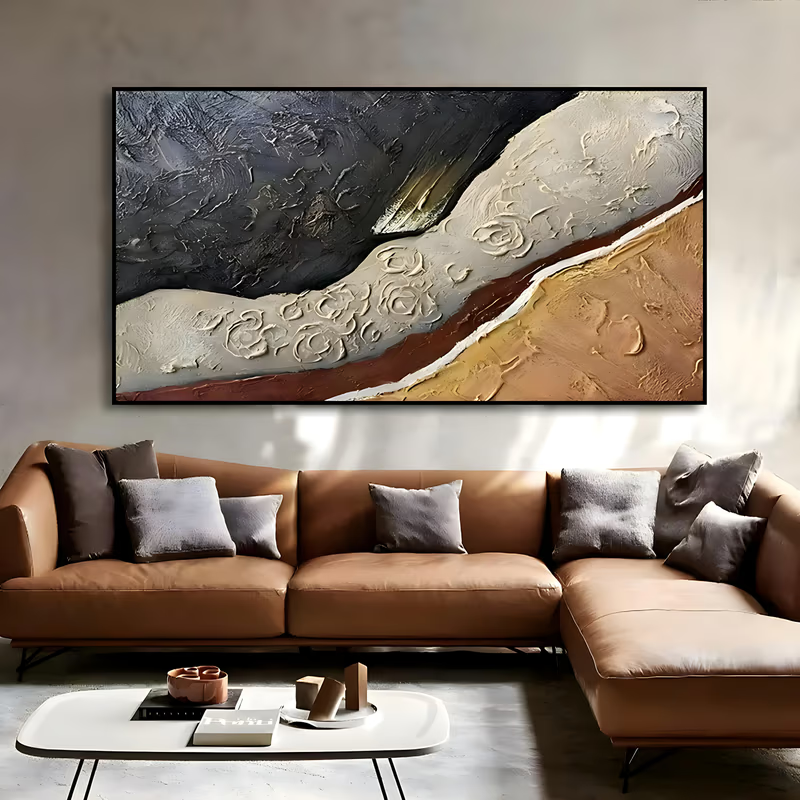
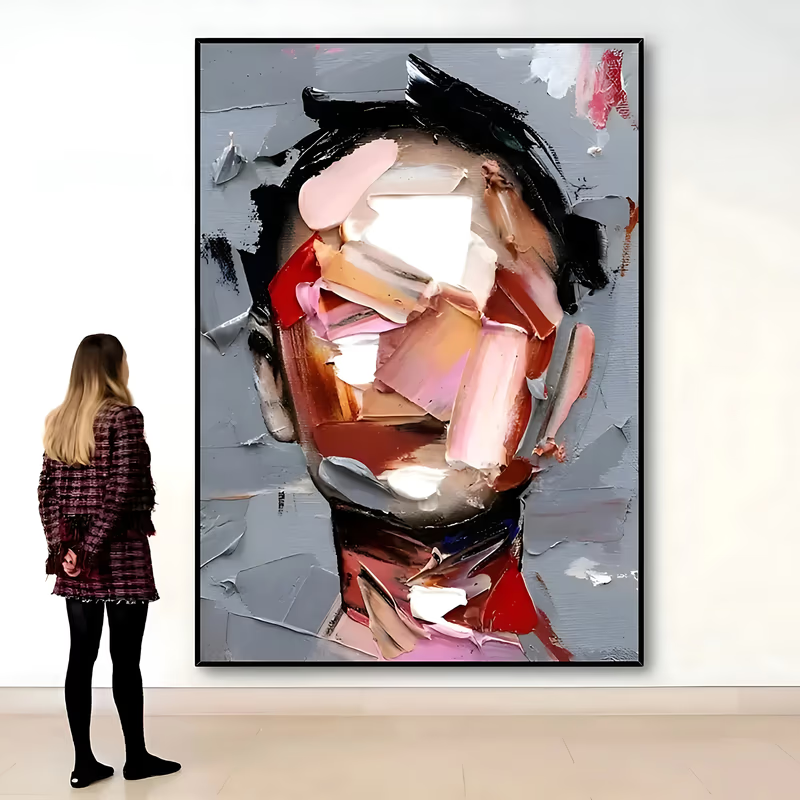
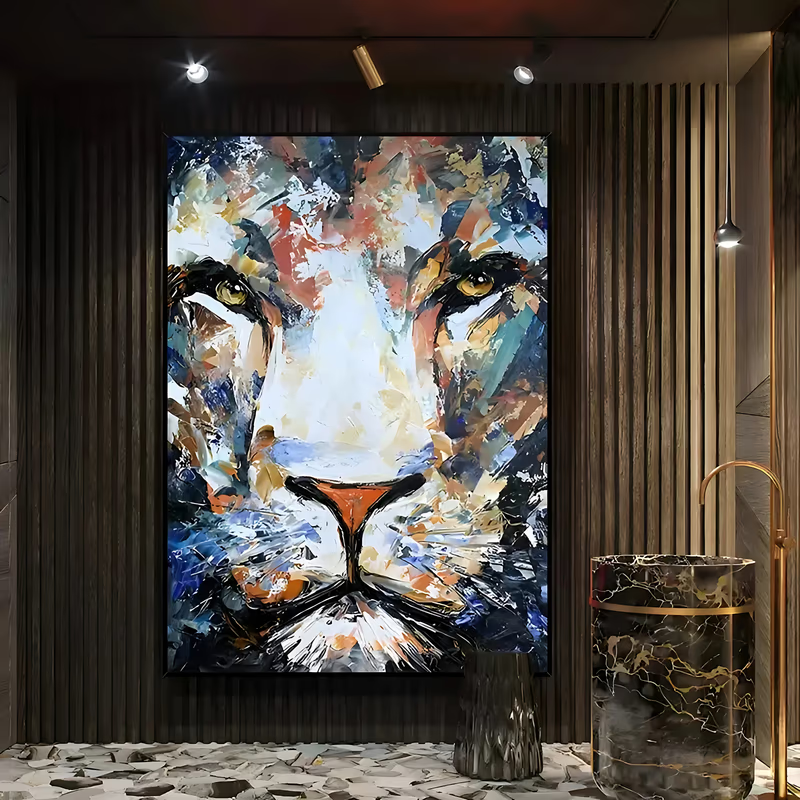
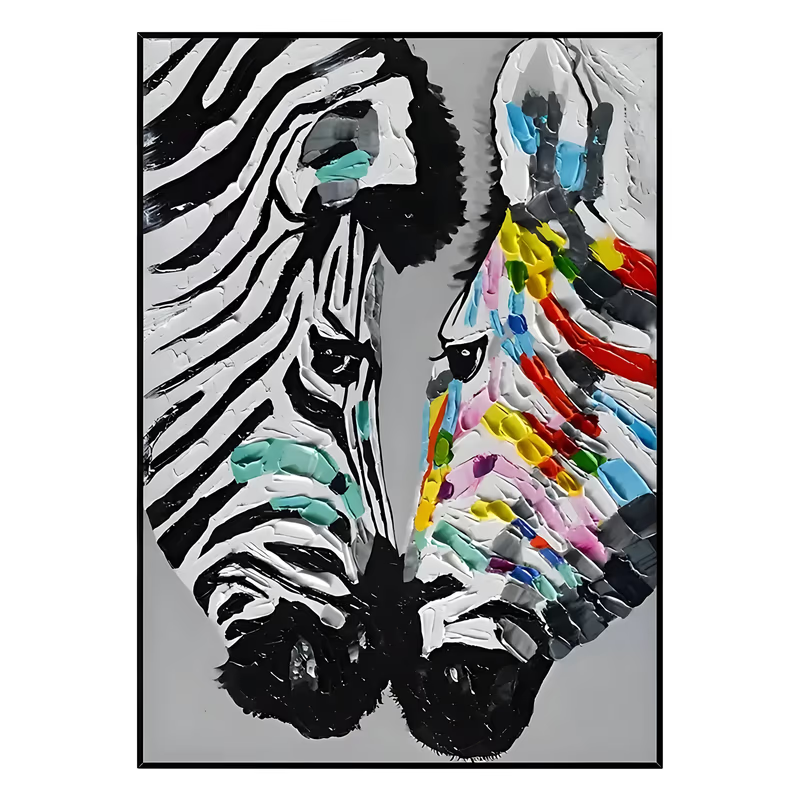
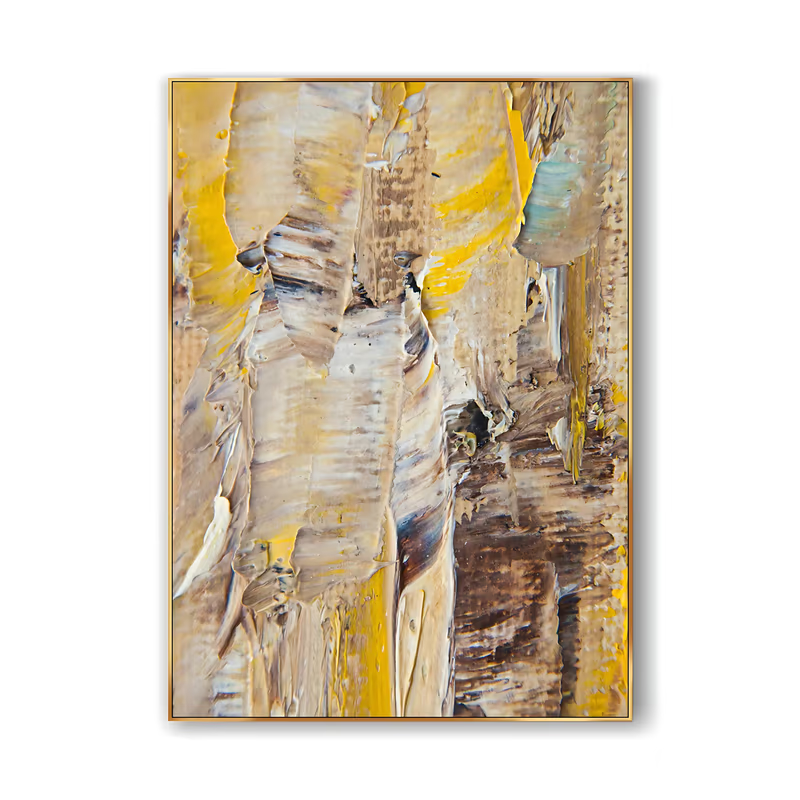
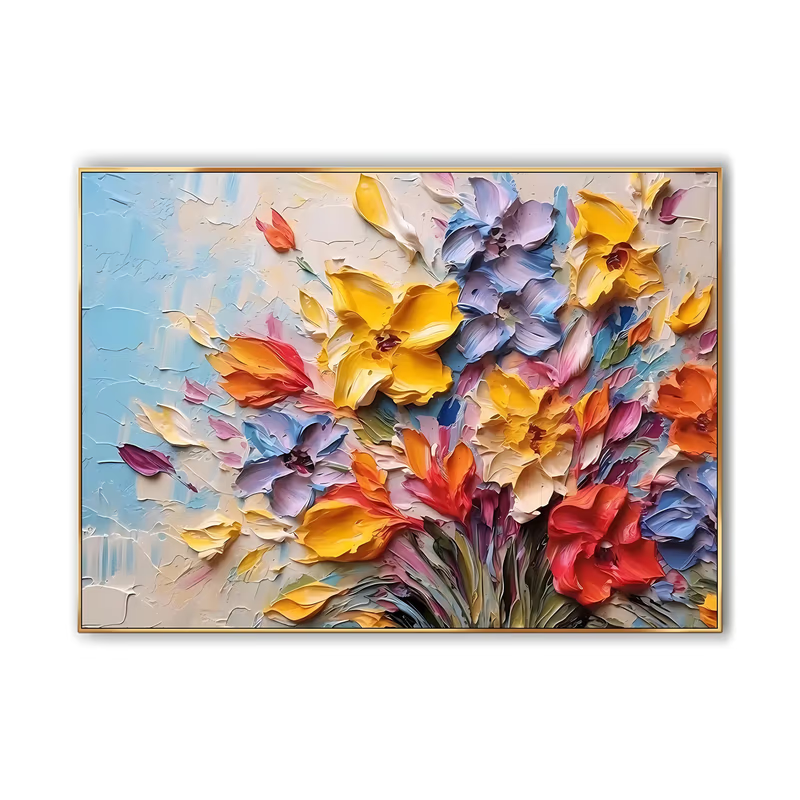
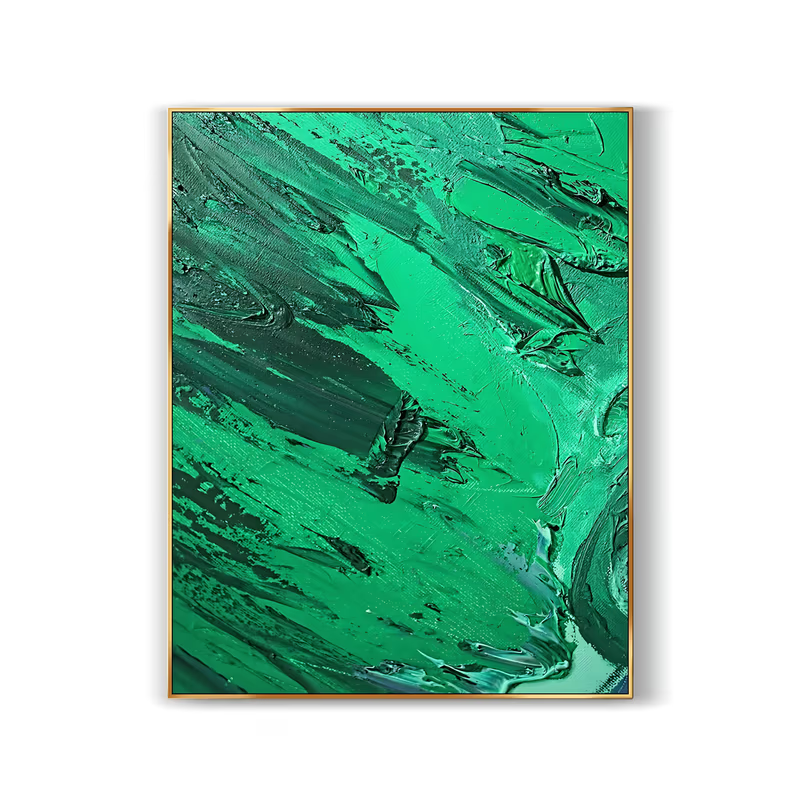
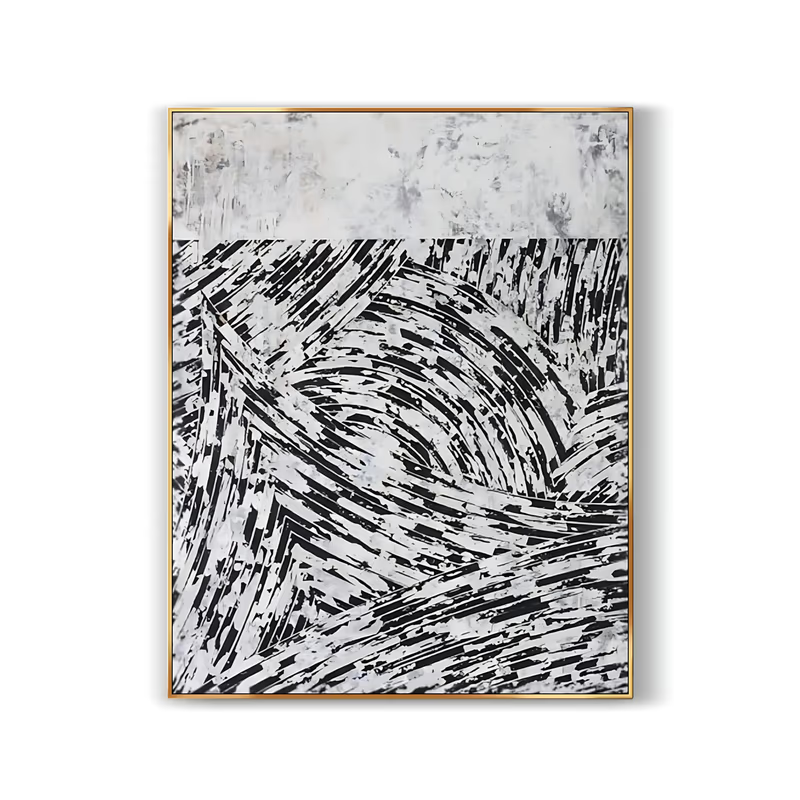
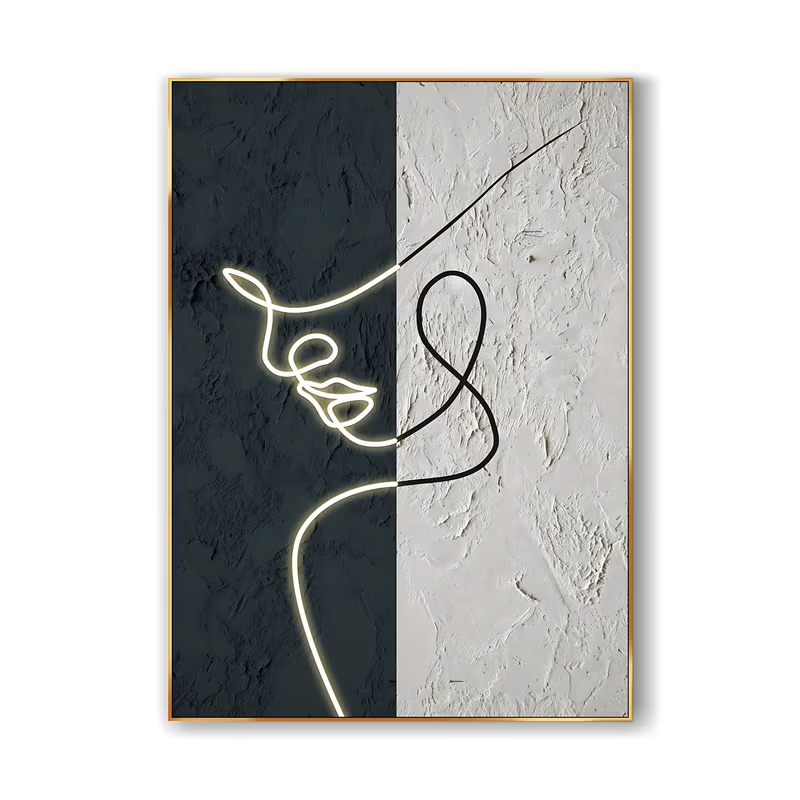
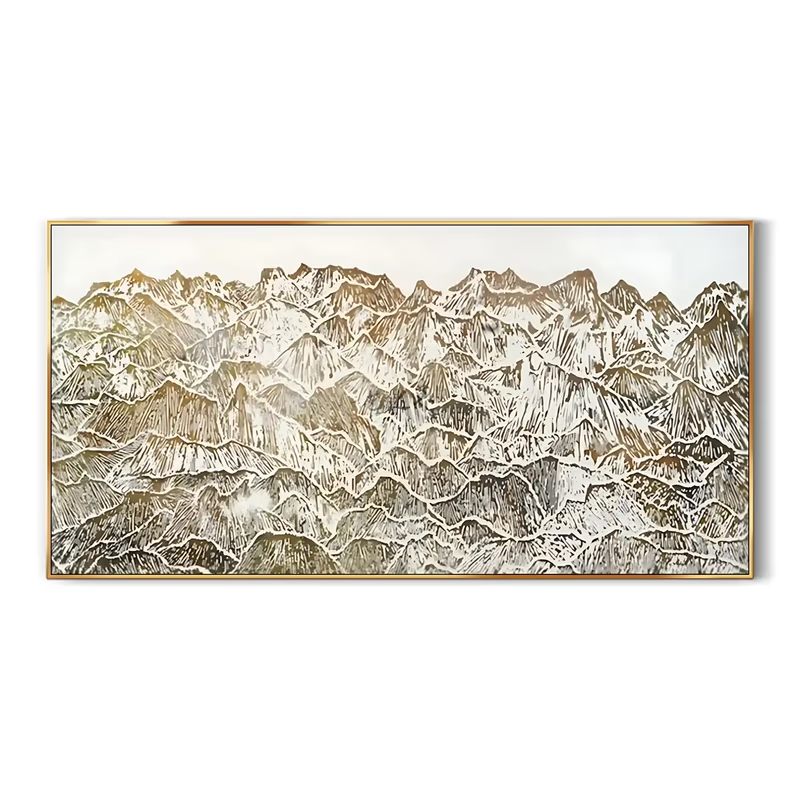
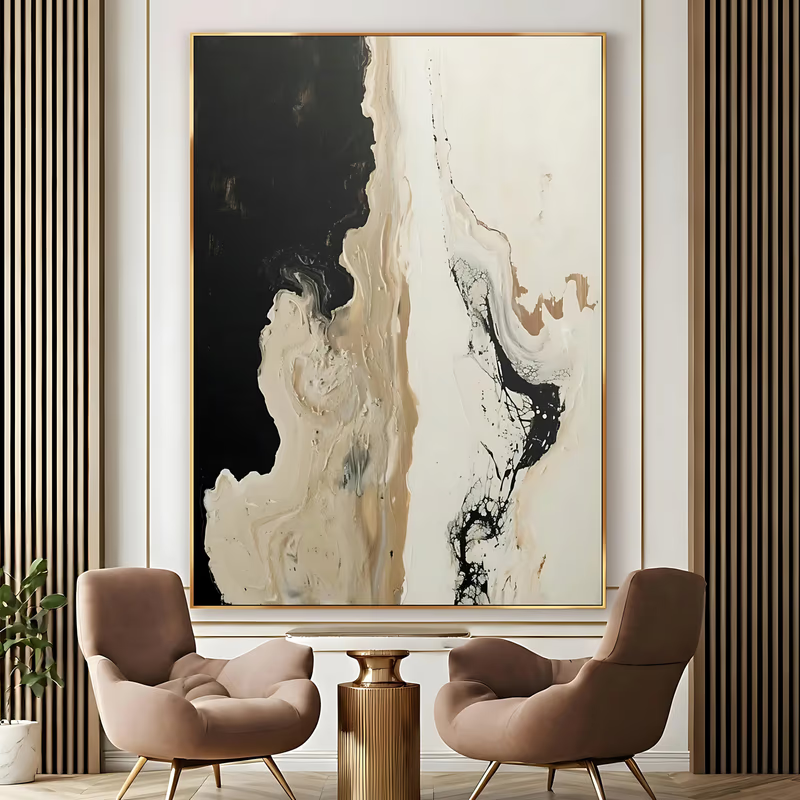
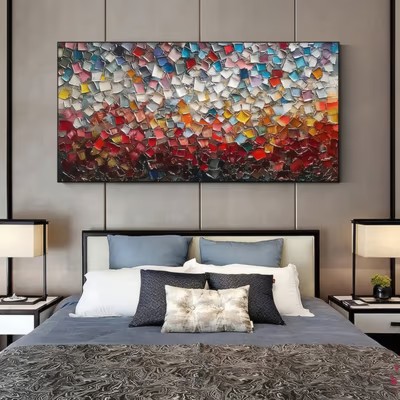
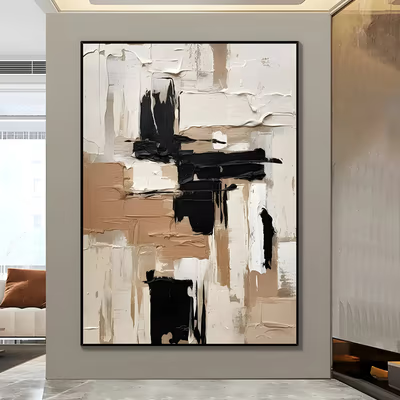
Raised plaster, combed ridges and knife-built layers that throw shadows when light grazes them. Relief looks different at nine in the morning and nine at night, which keeps a big wall alive, and it reads as craft from across the room. A natural choice behind a reception desk lit by downlights. More textured art.
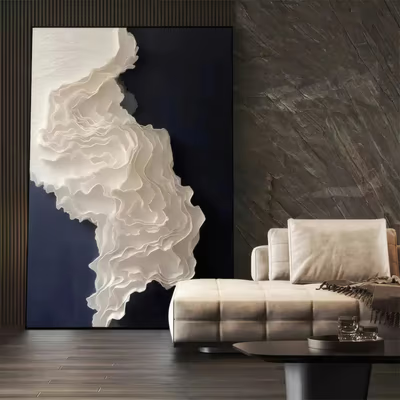
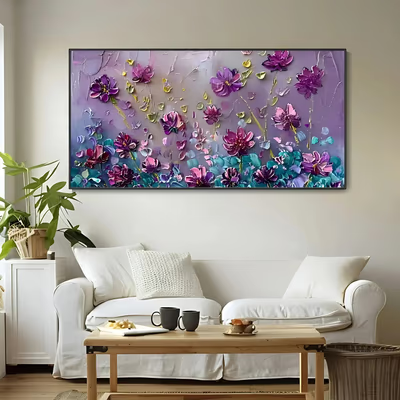
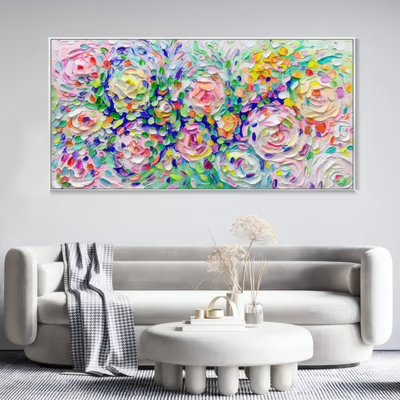
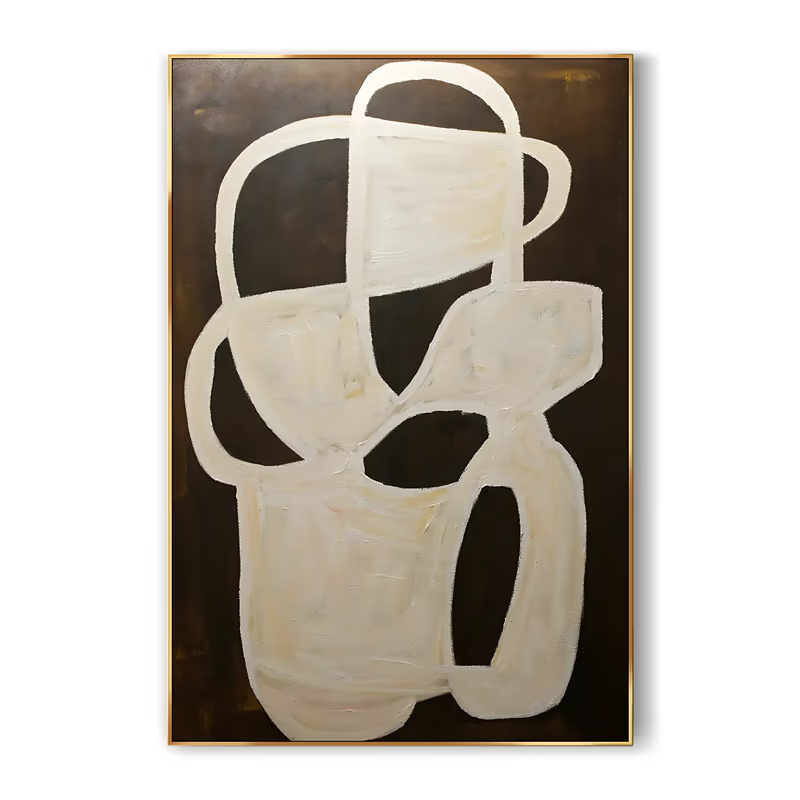
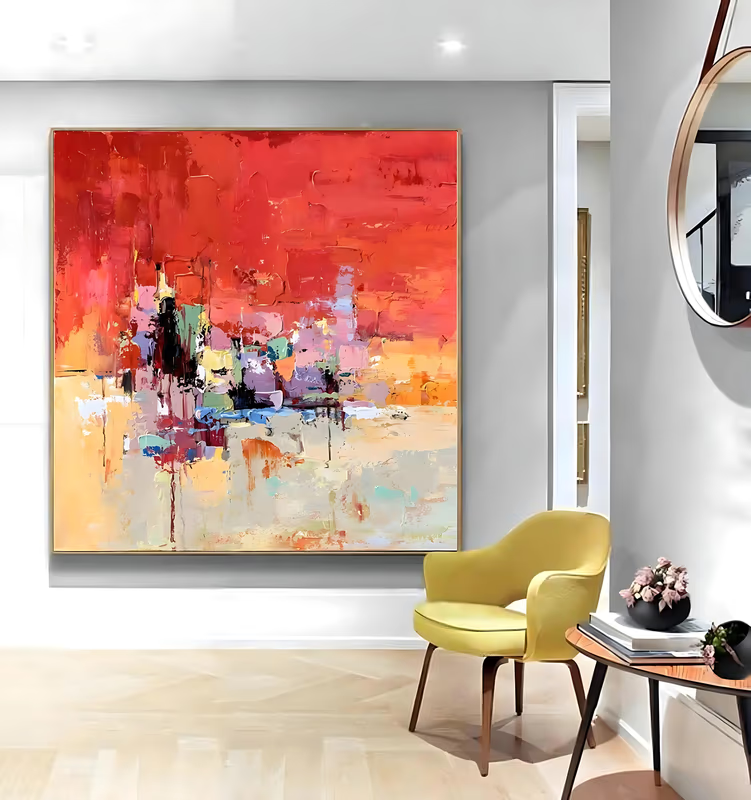
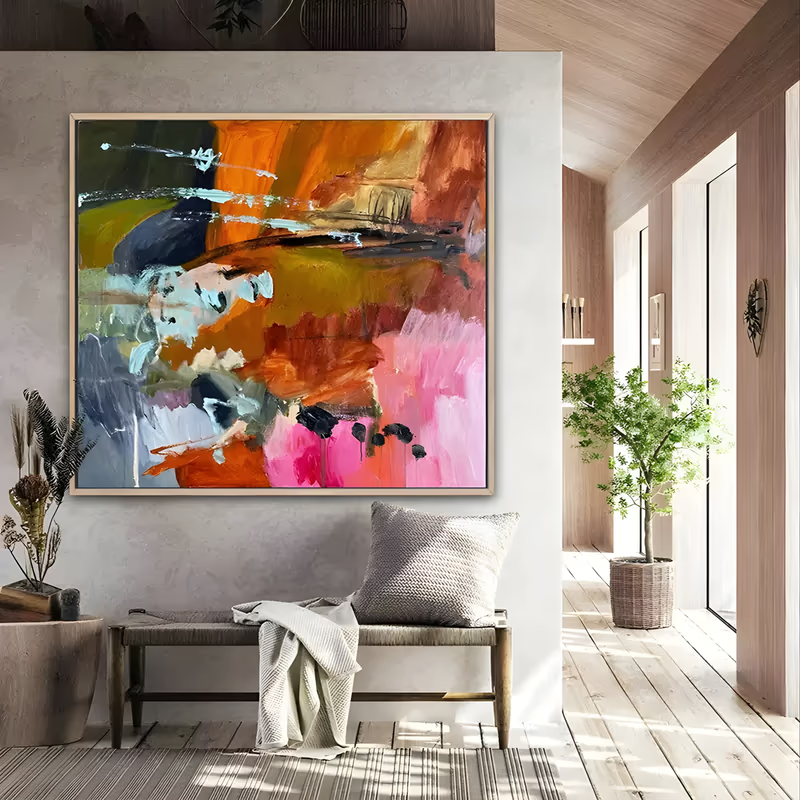
Large abstract paintings
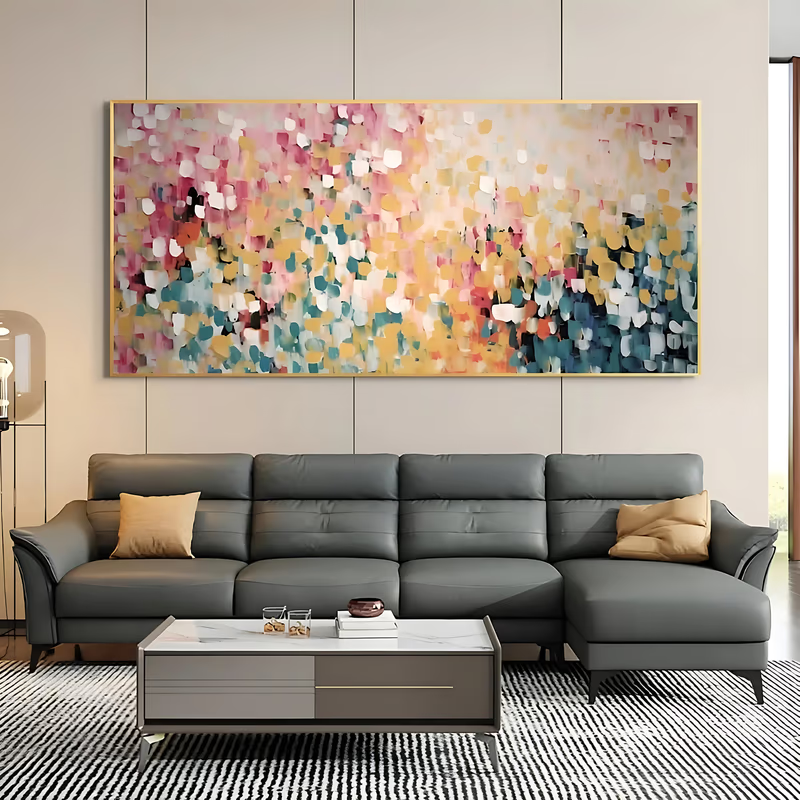
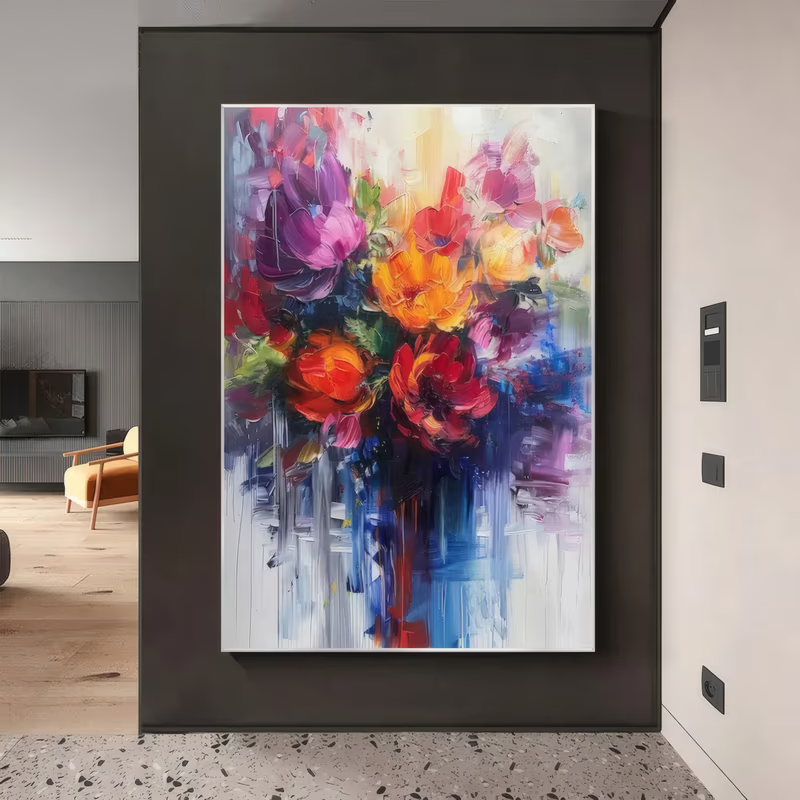
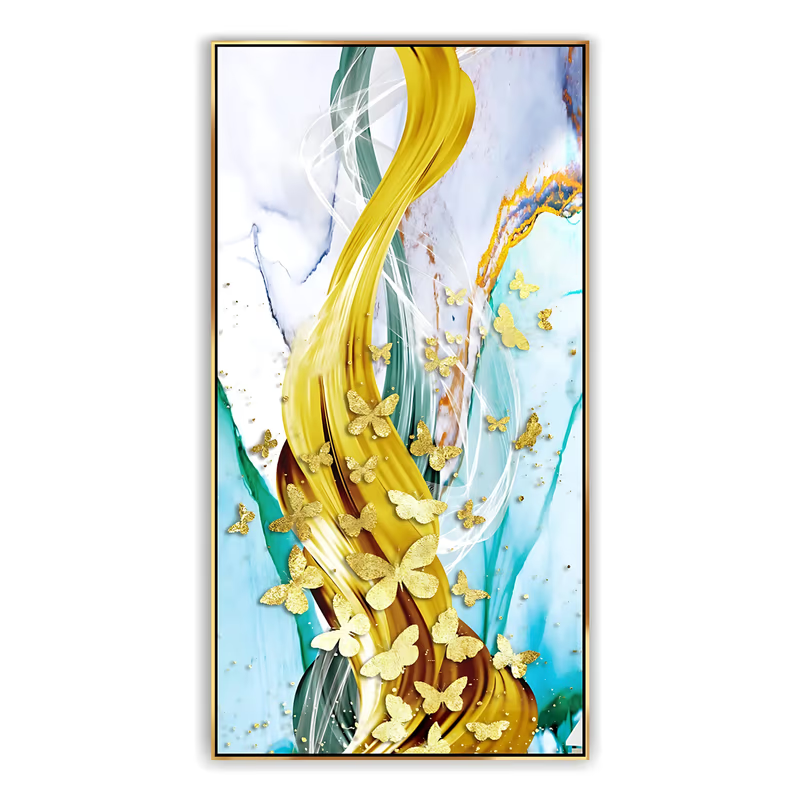
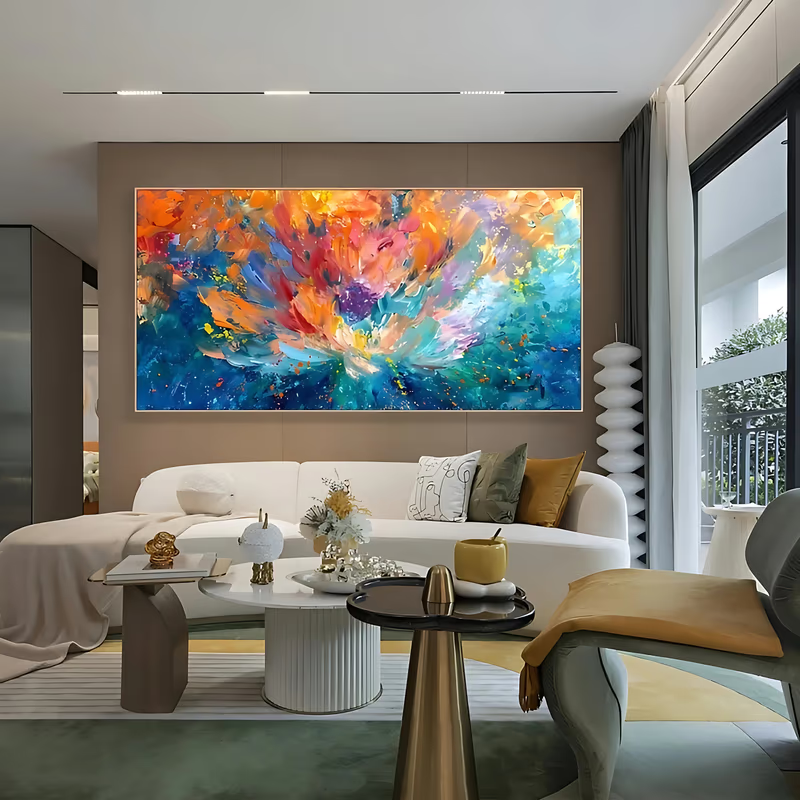
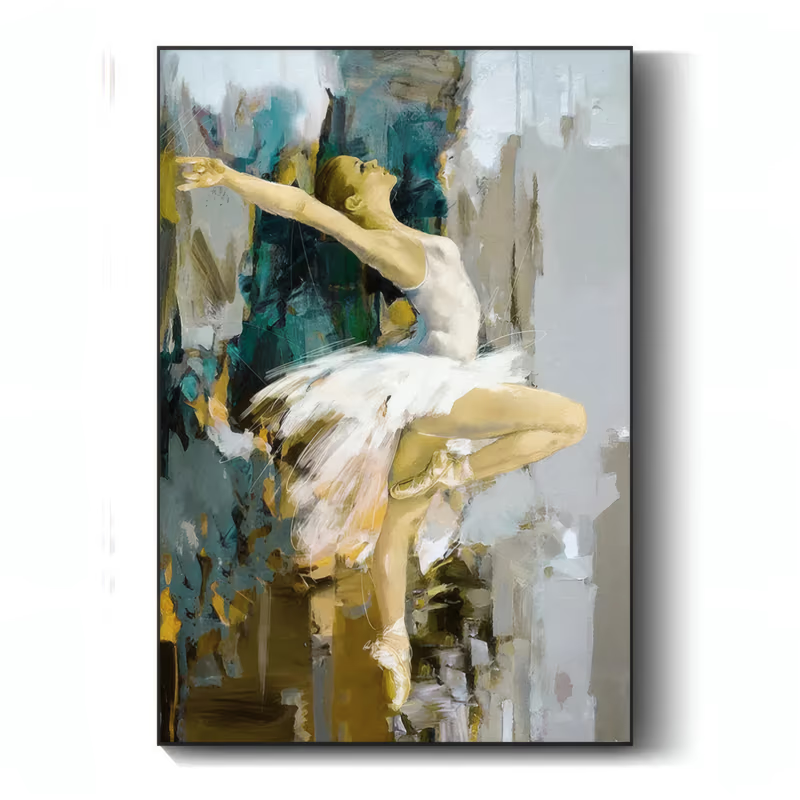
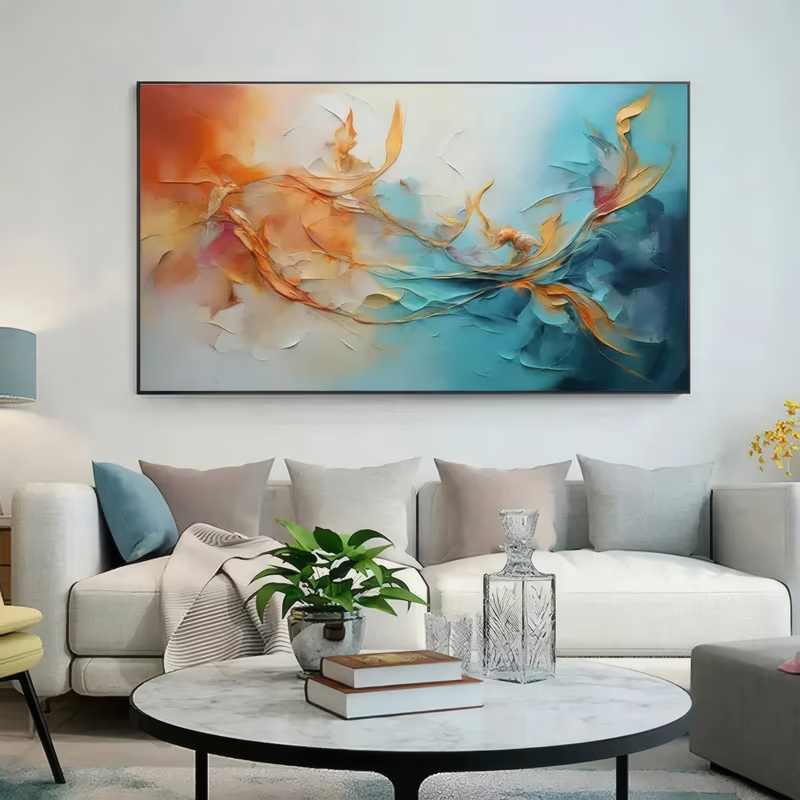
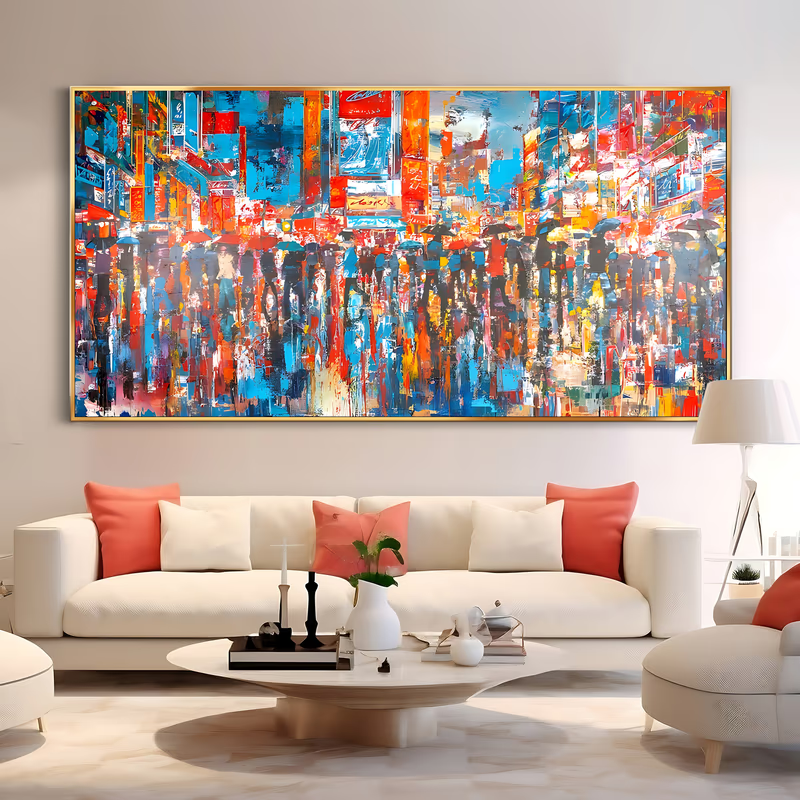
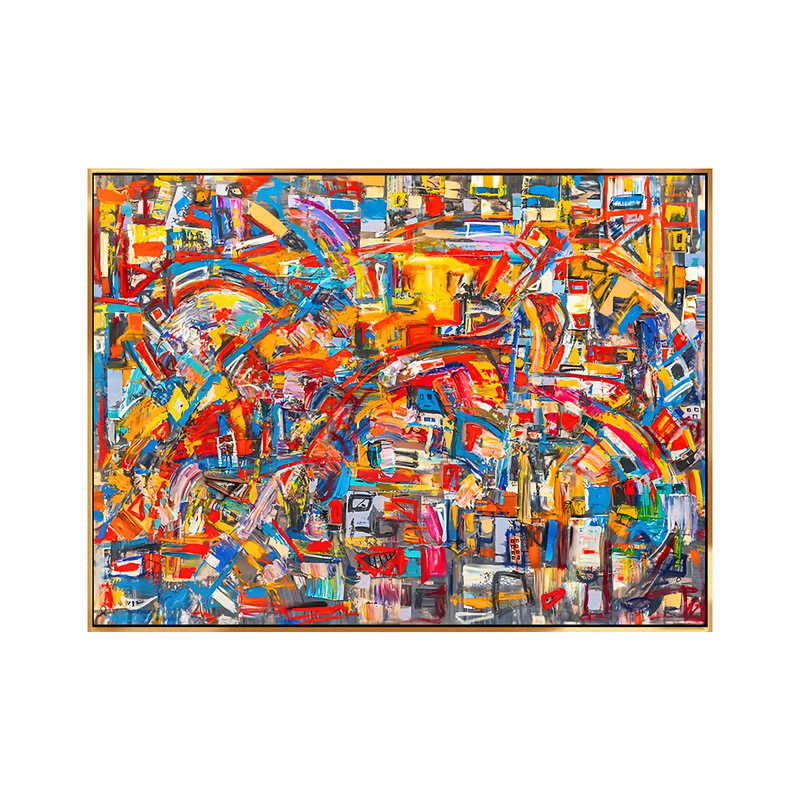
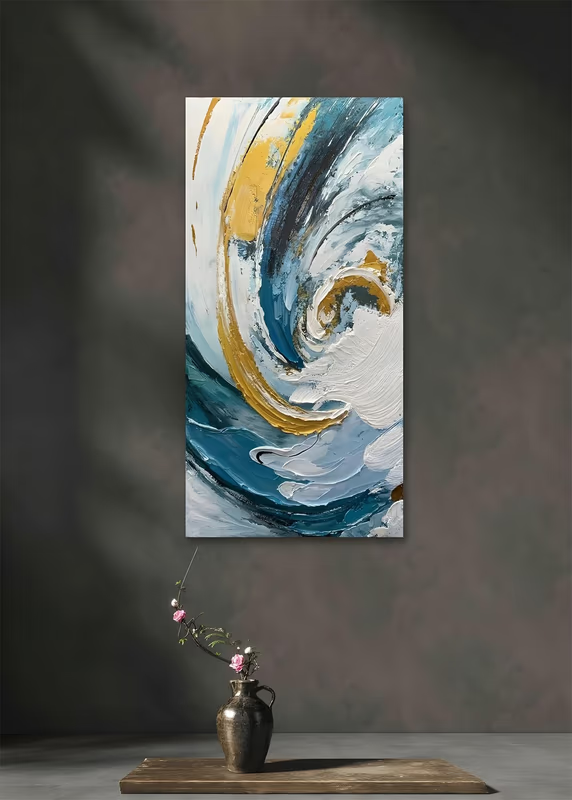
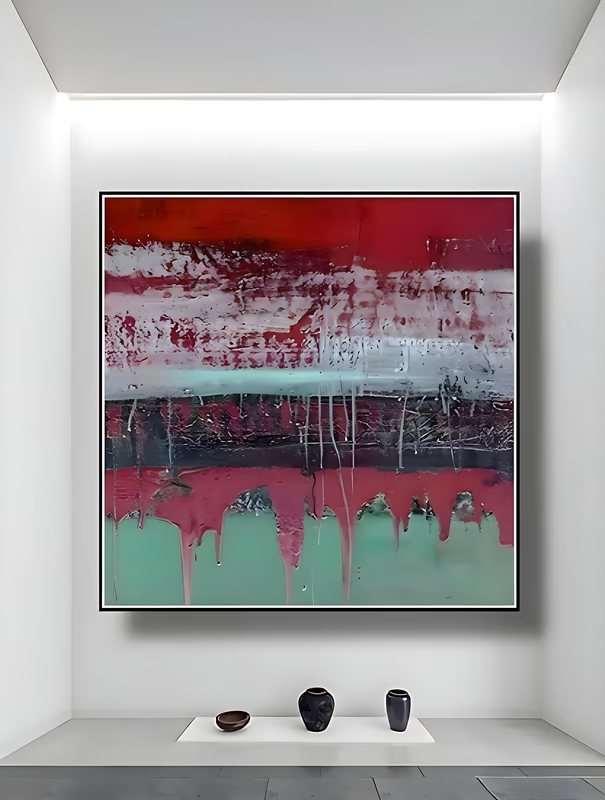
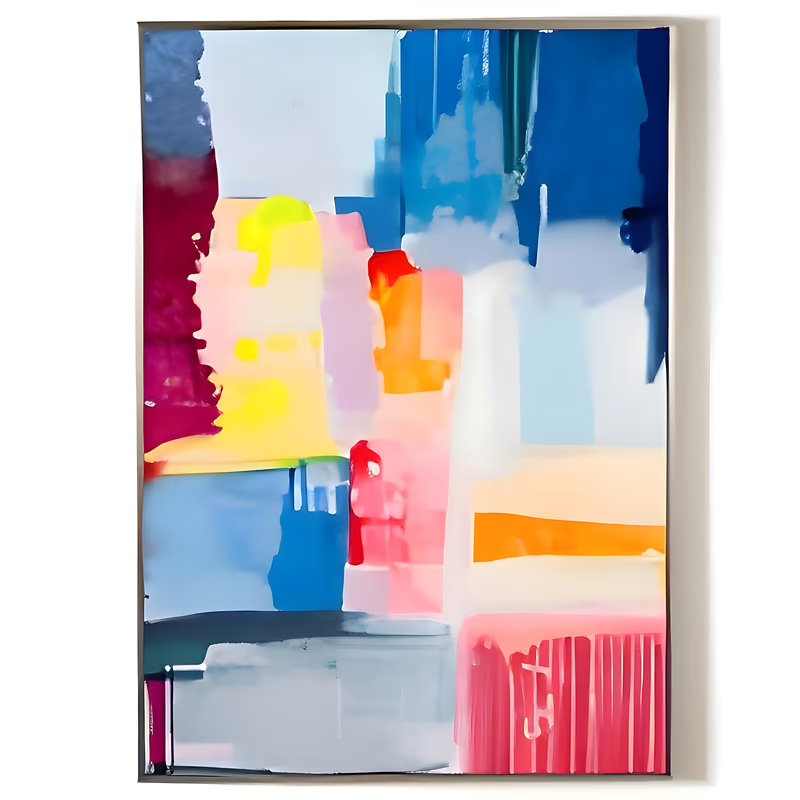
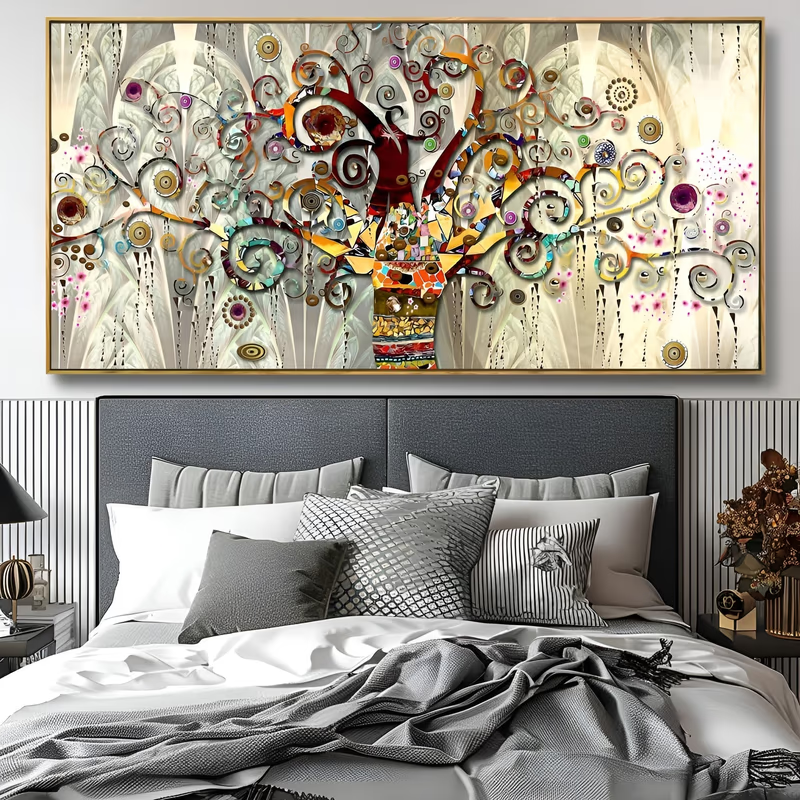
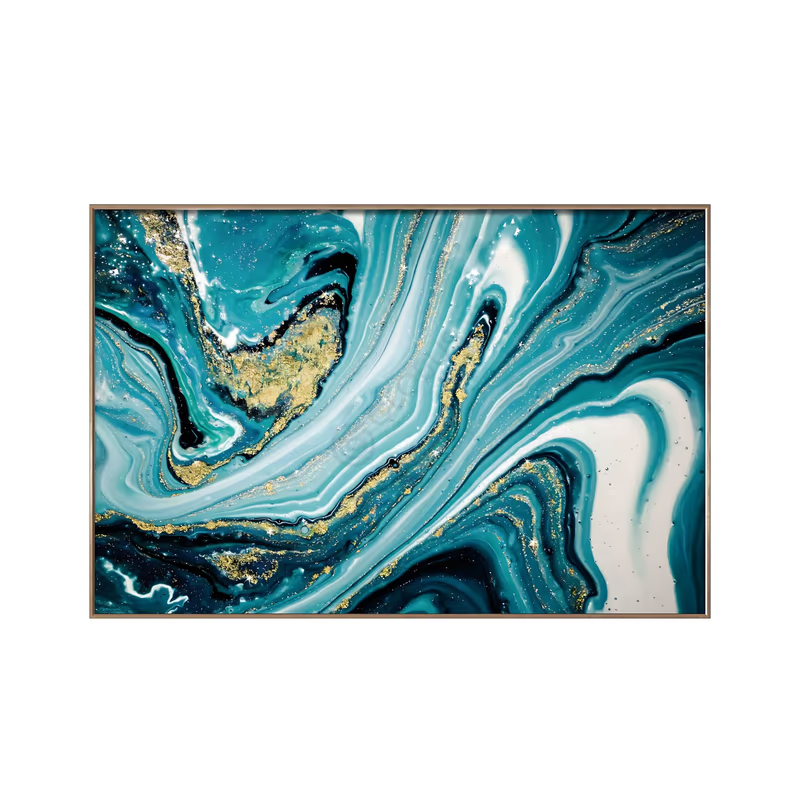
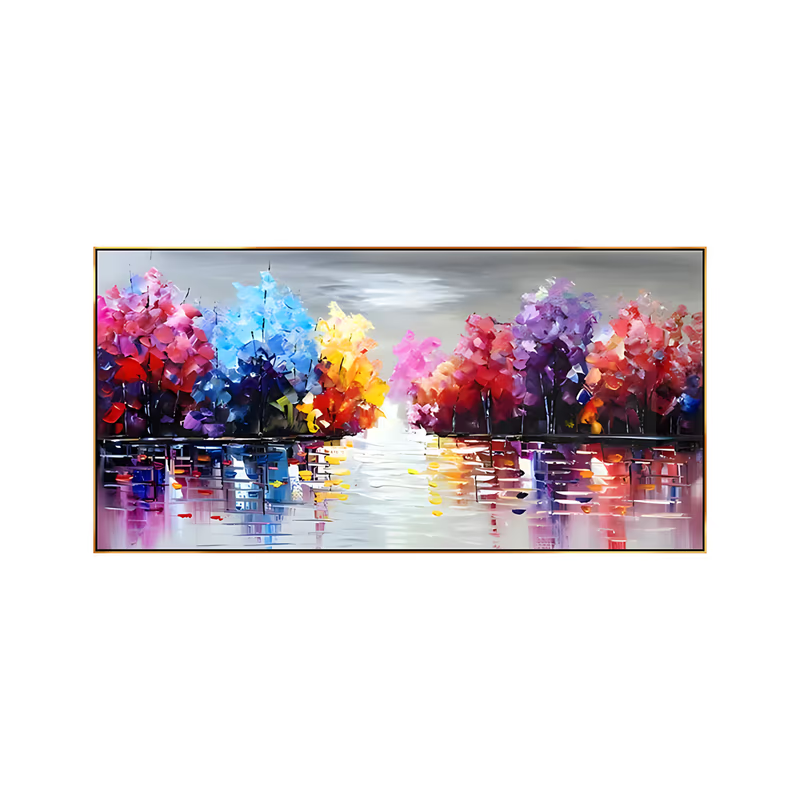
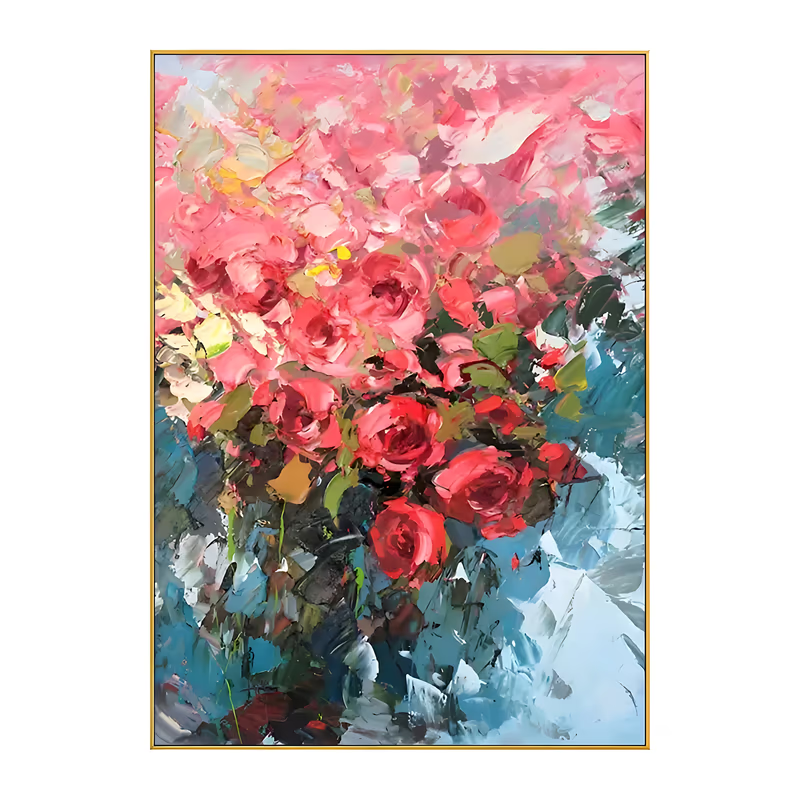
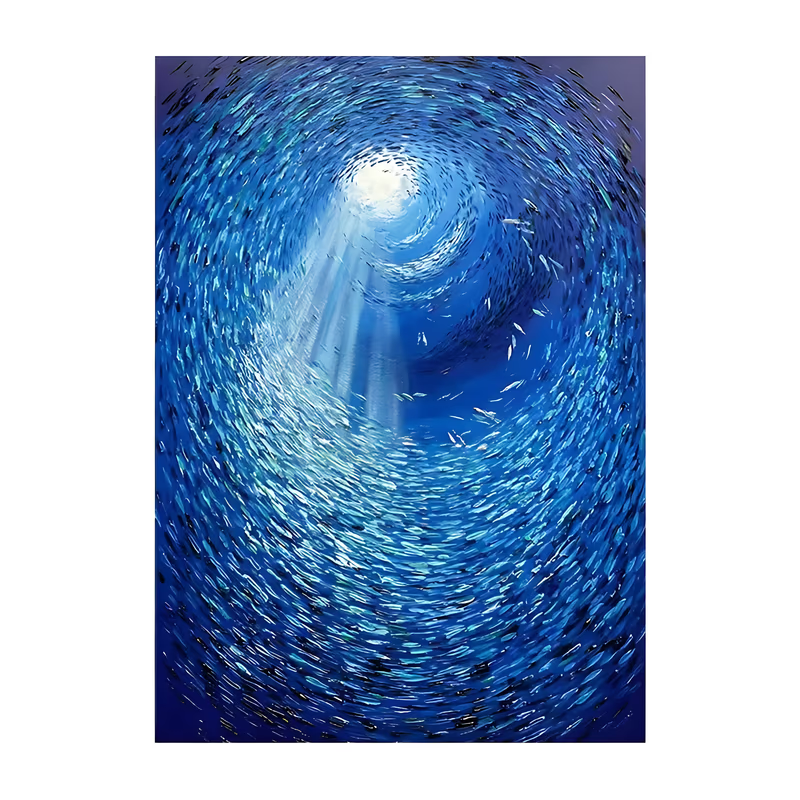
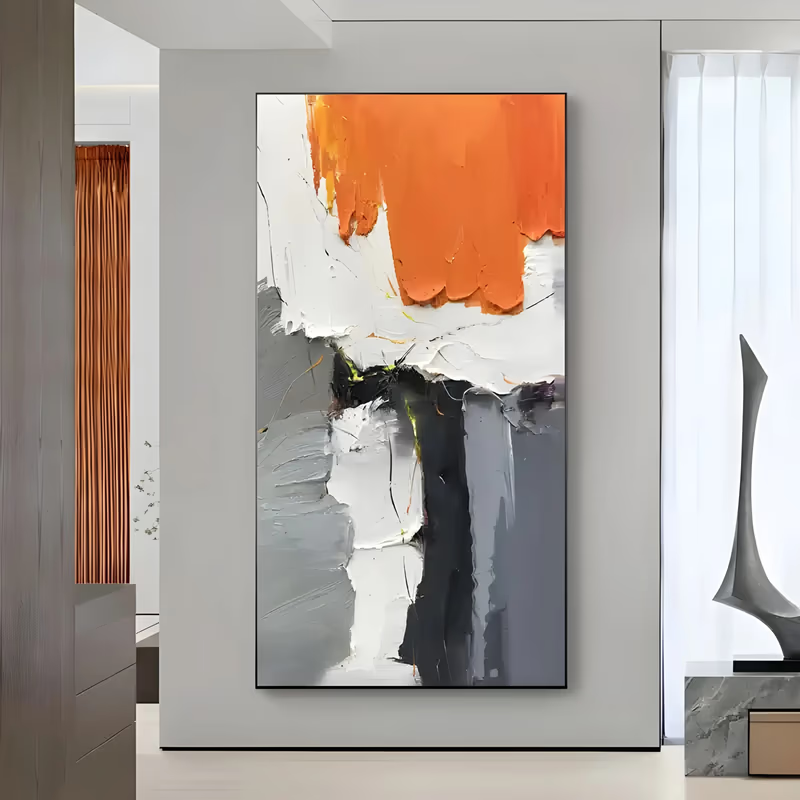
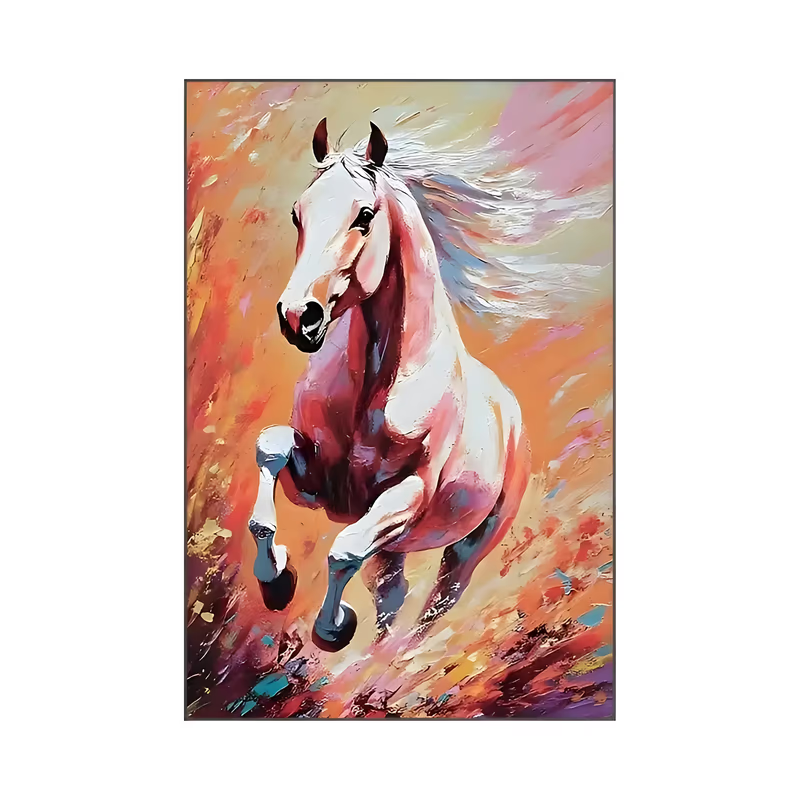
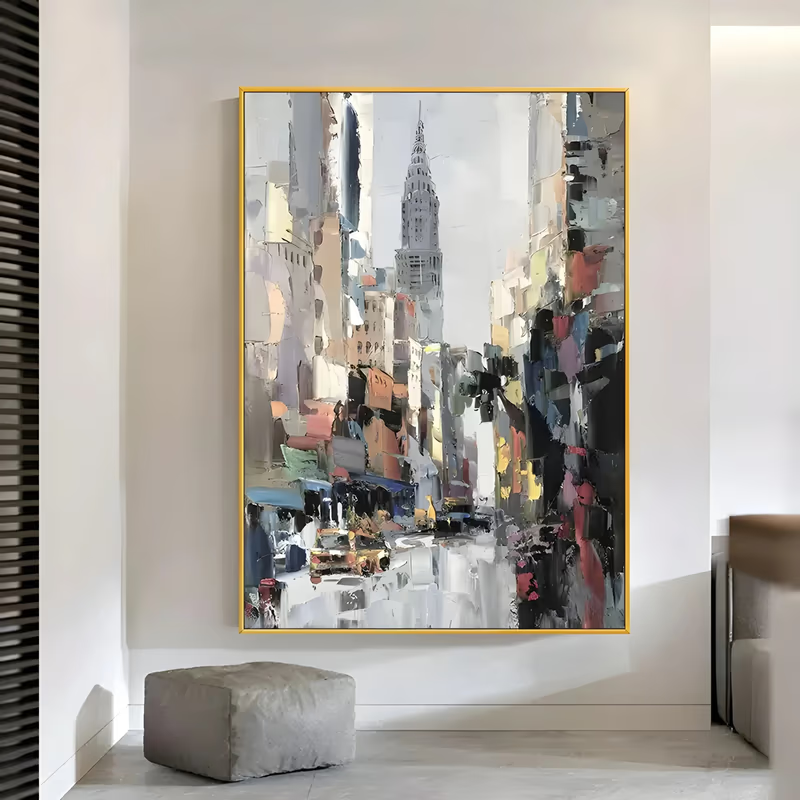
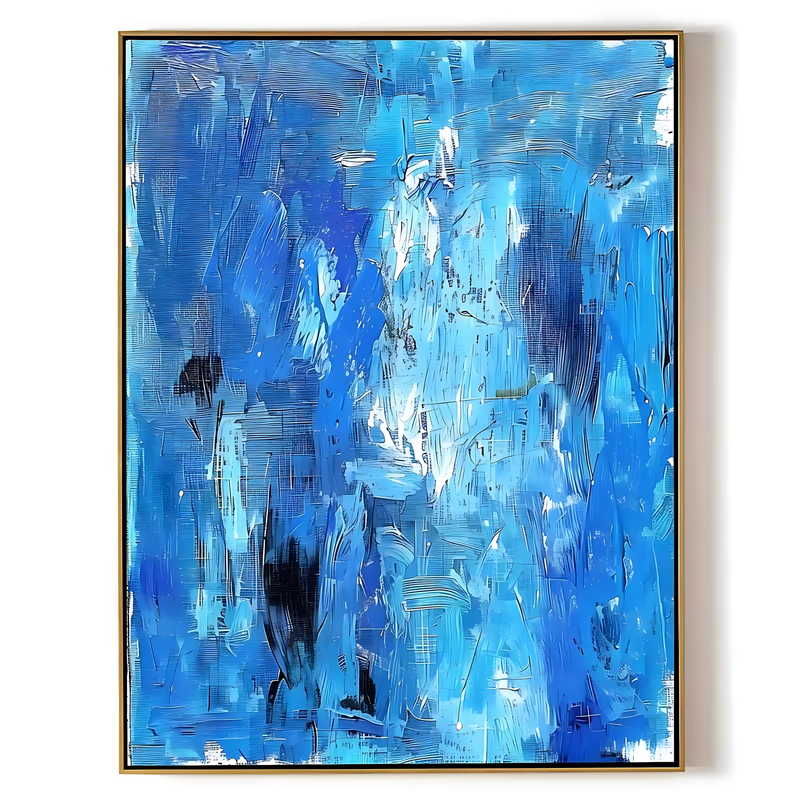
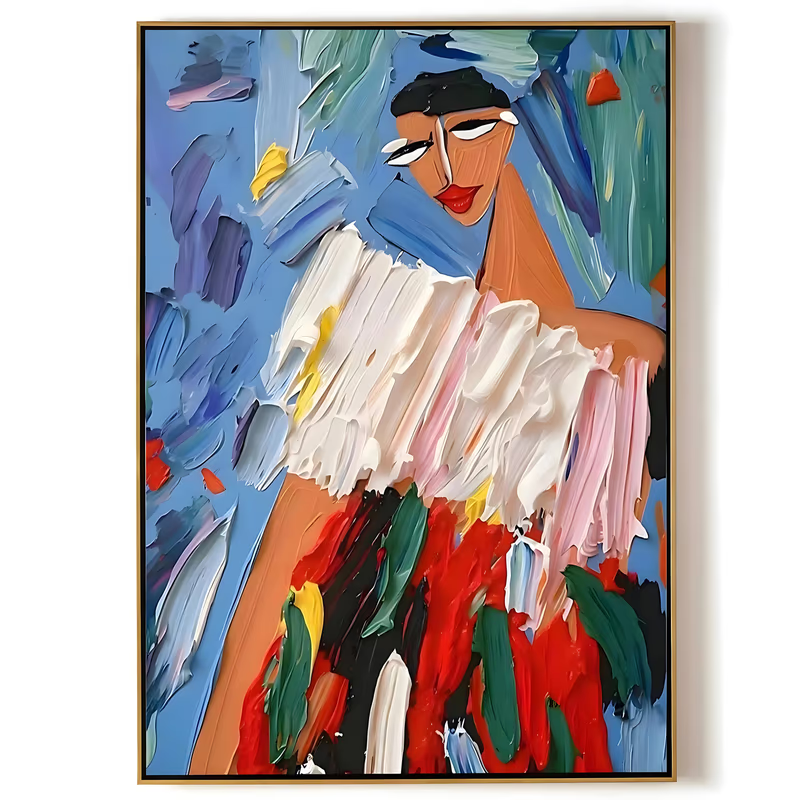
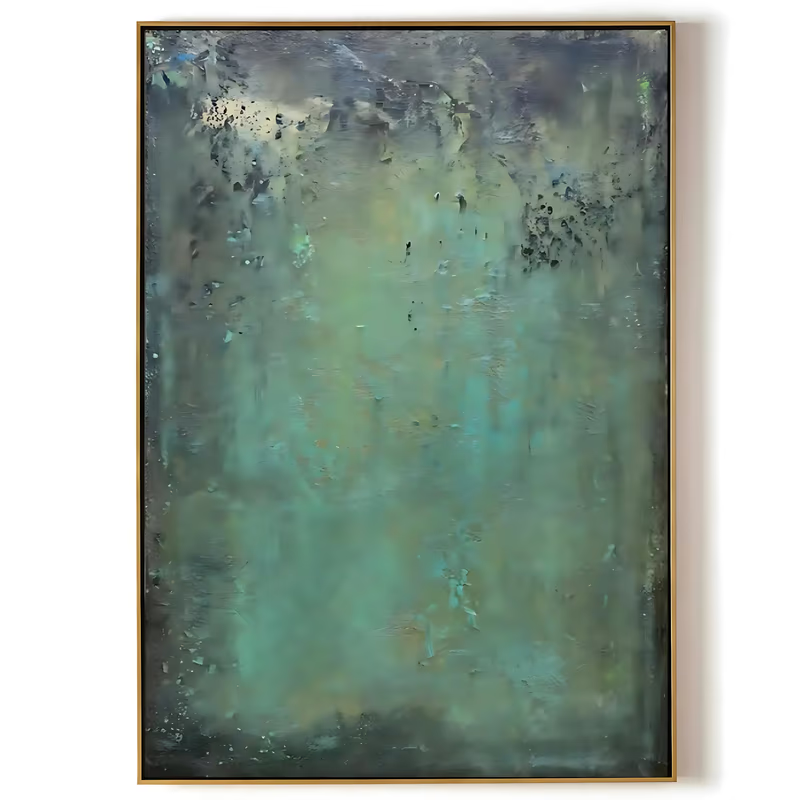
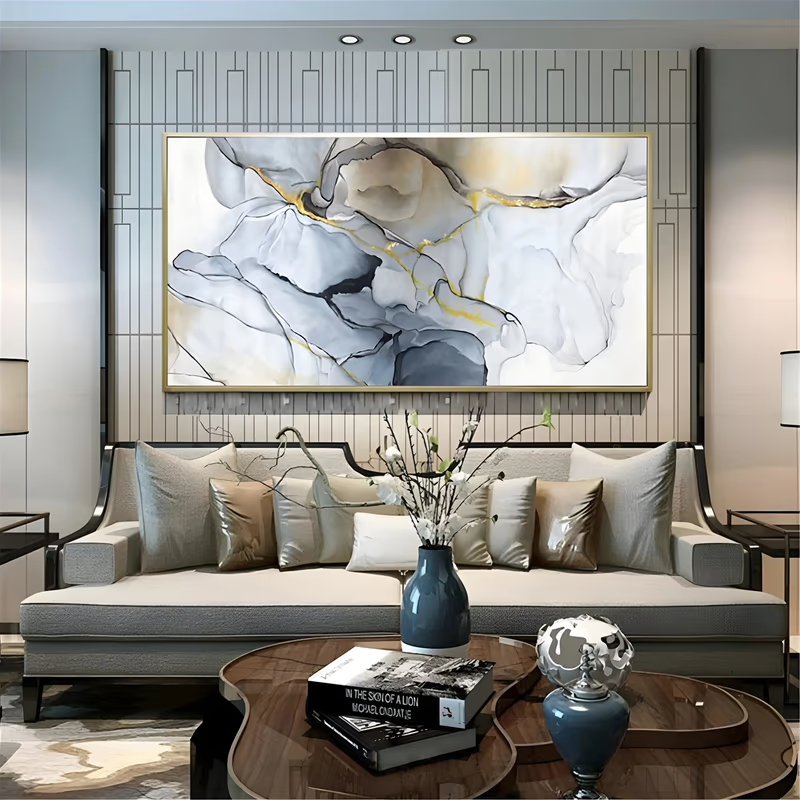
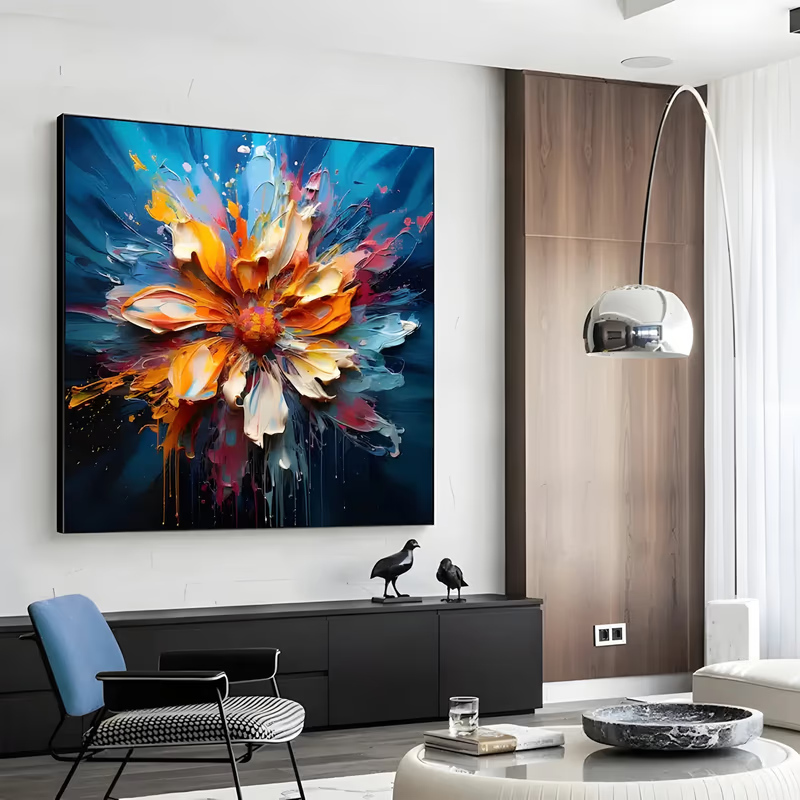
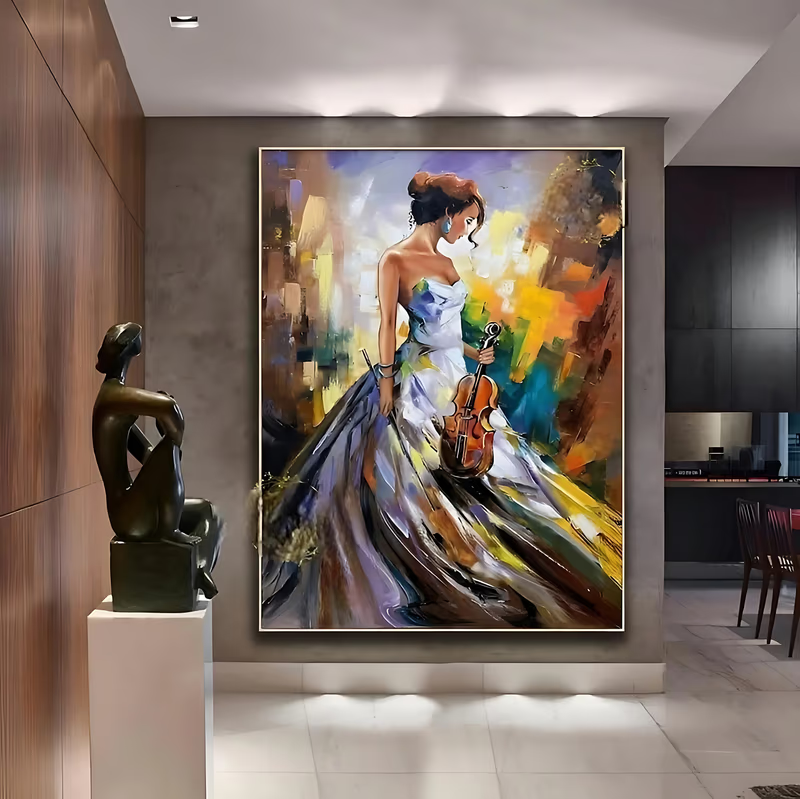
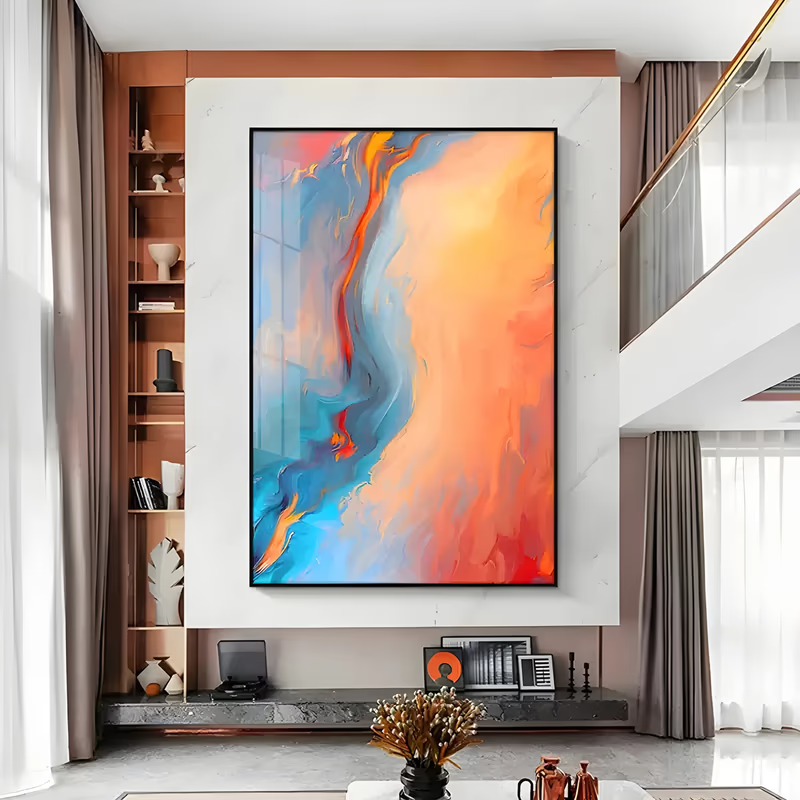
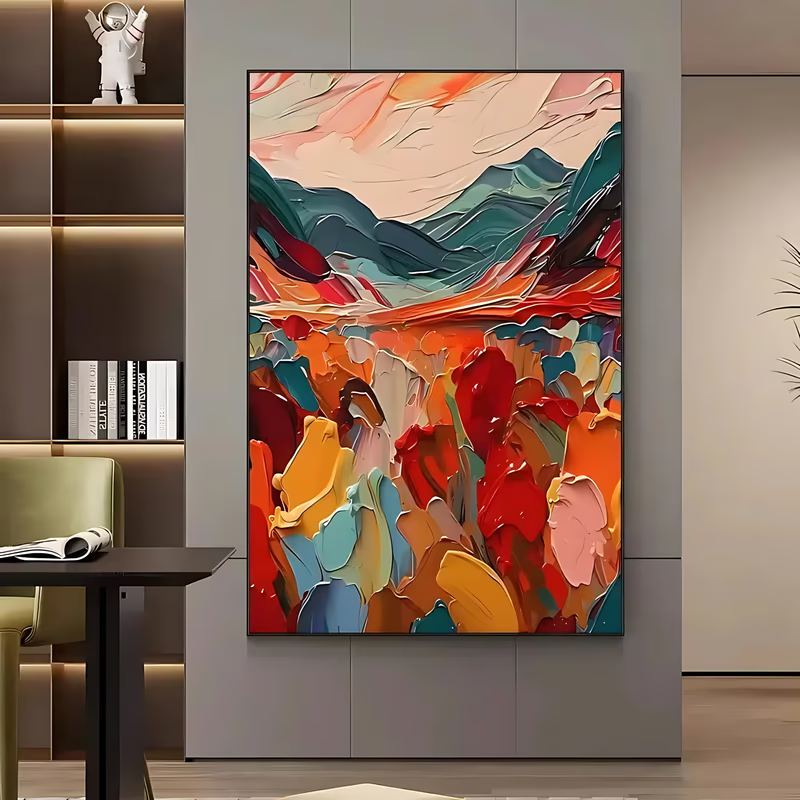
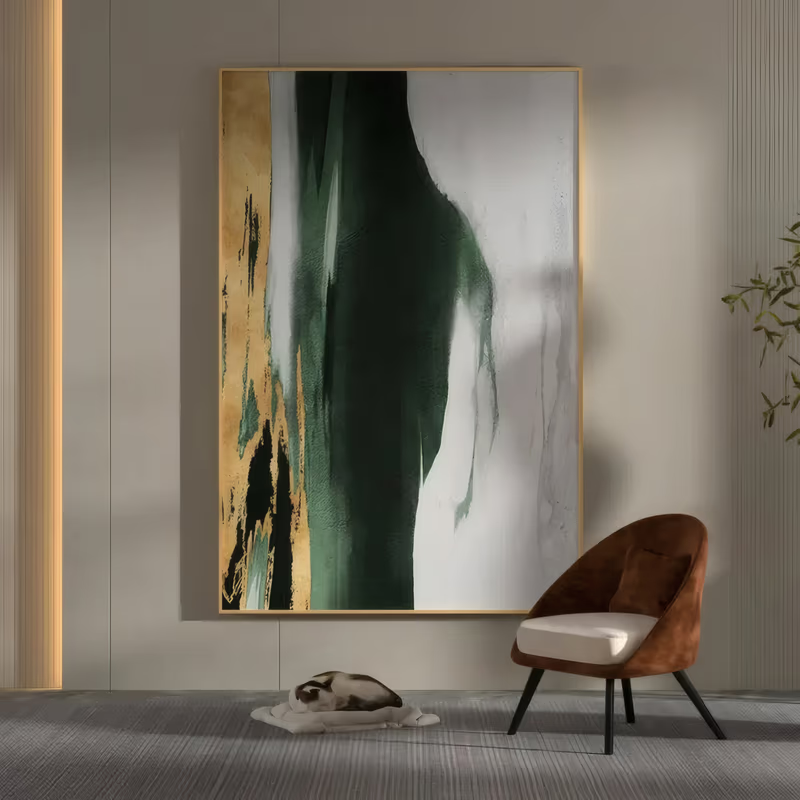
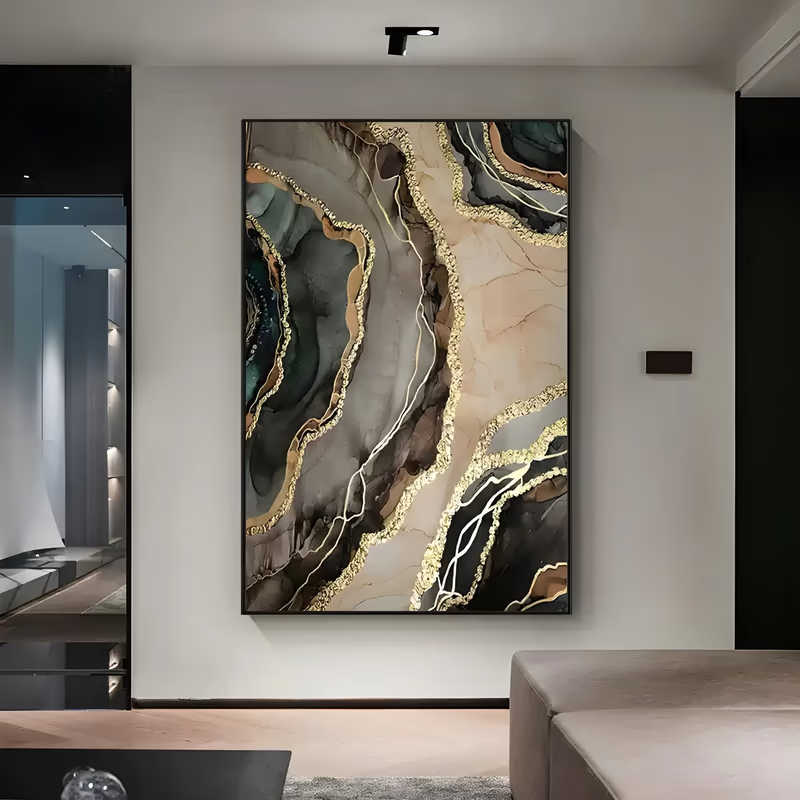
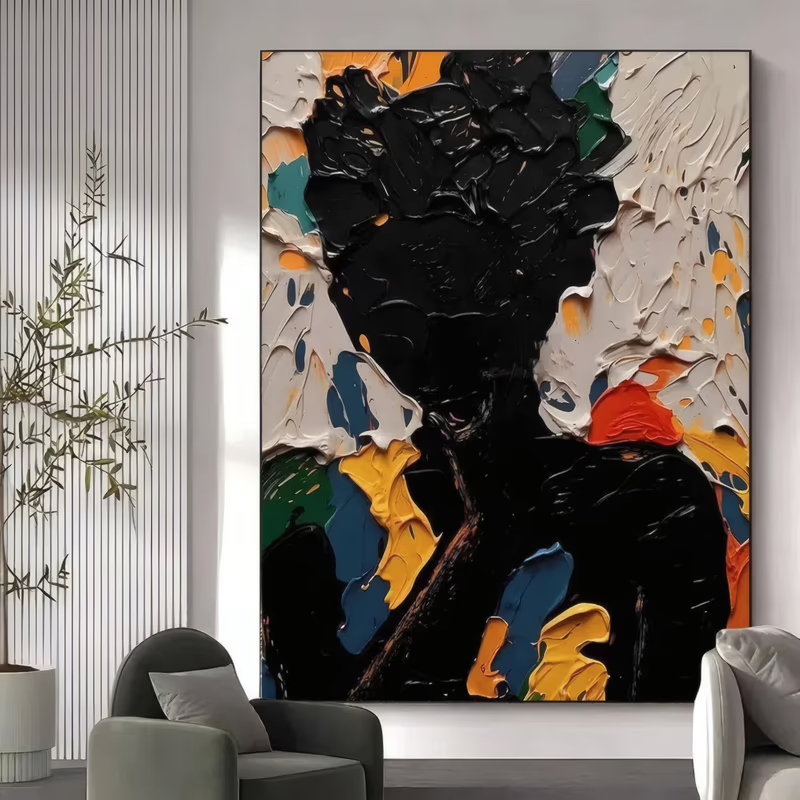
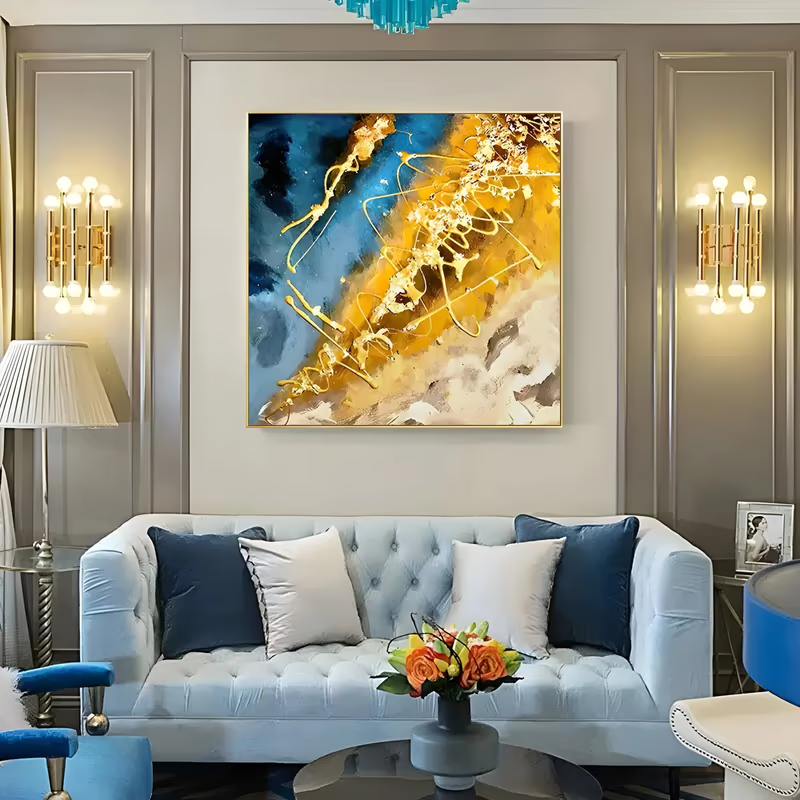
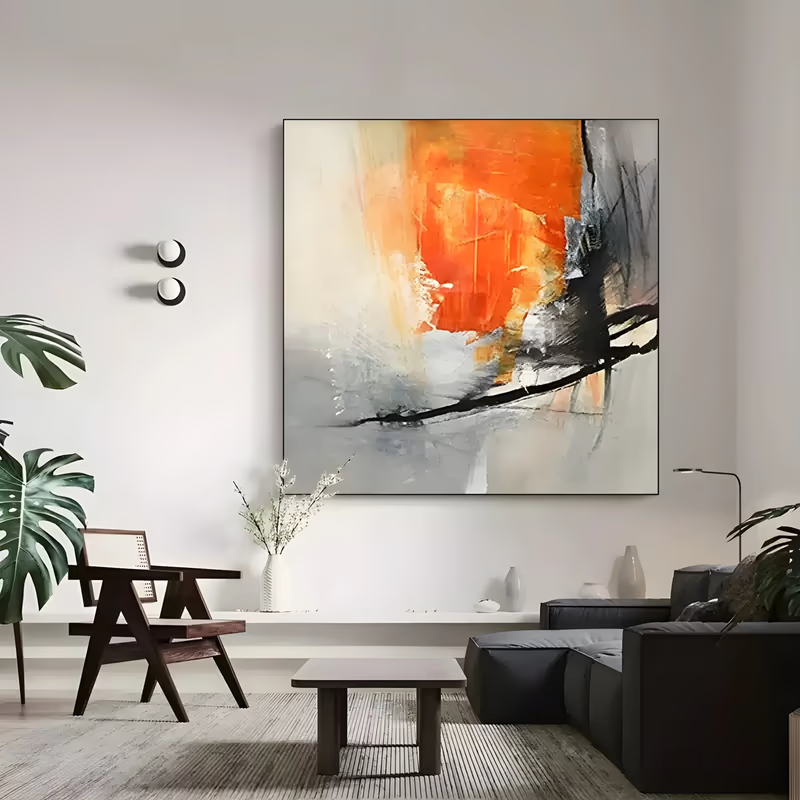
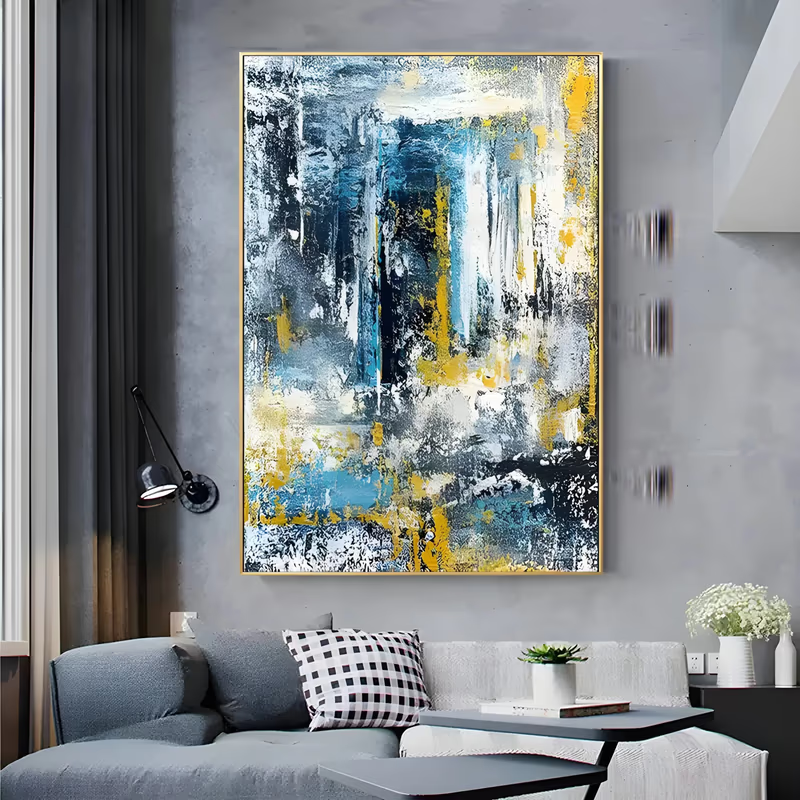
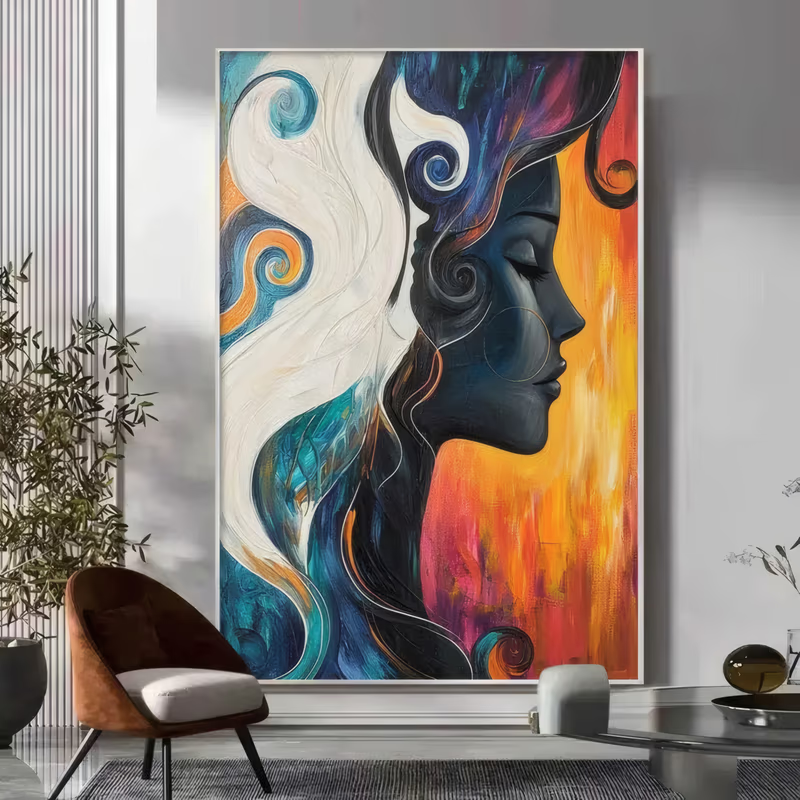
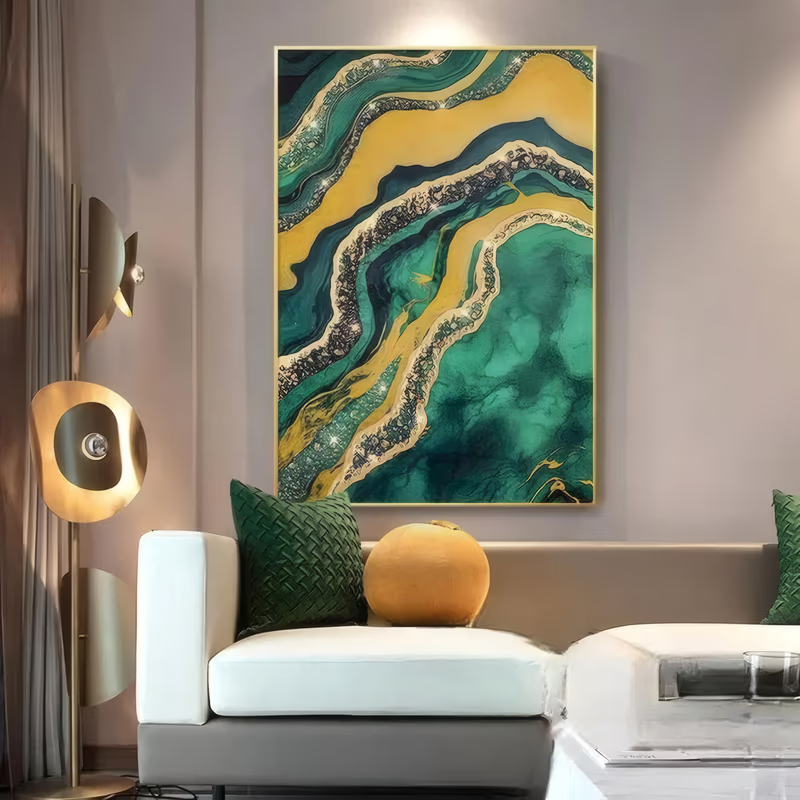
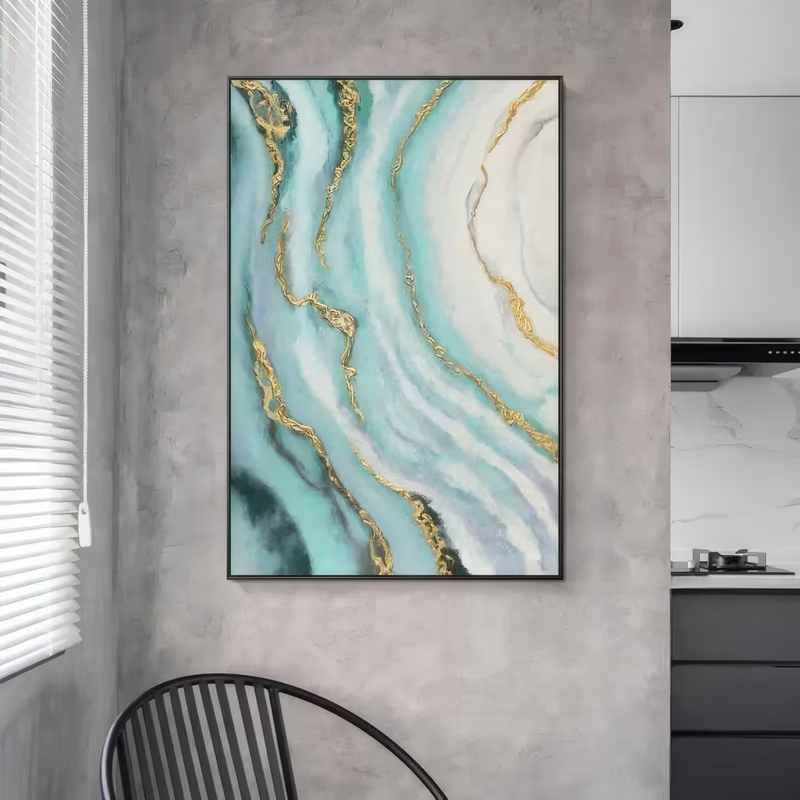
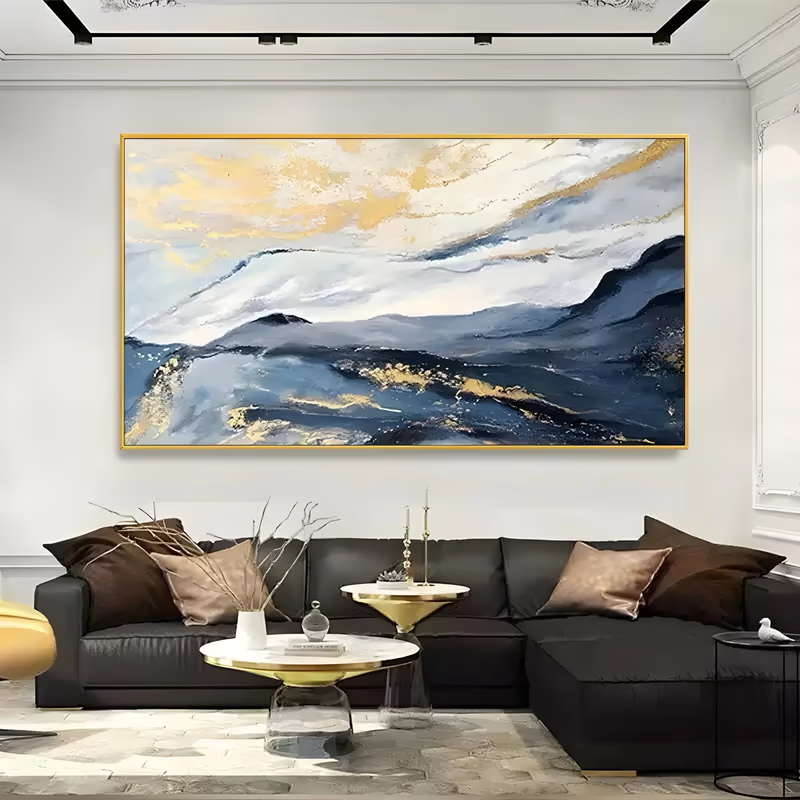
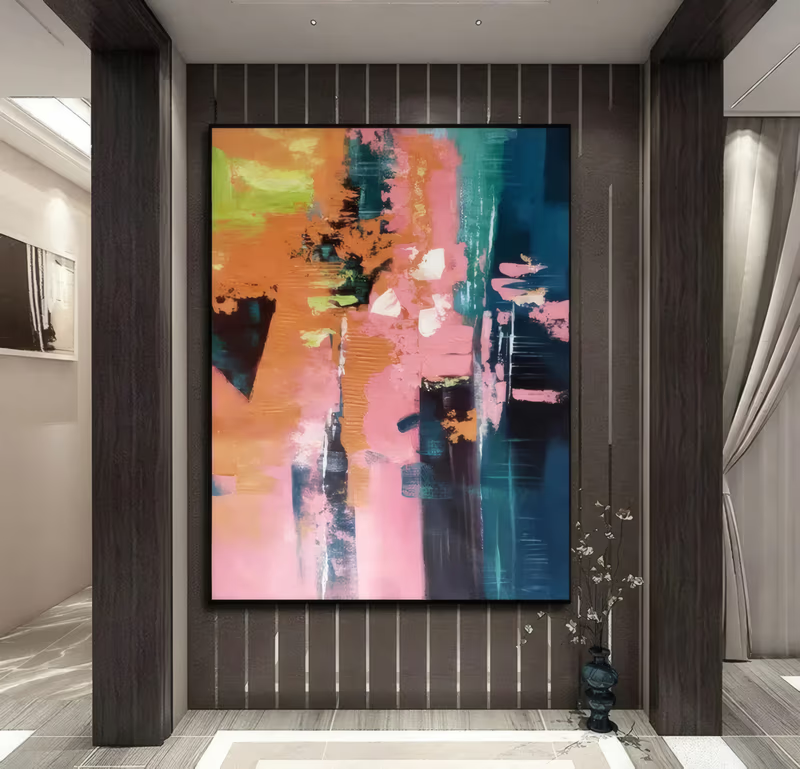
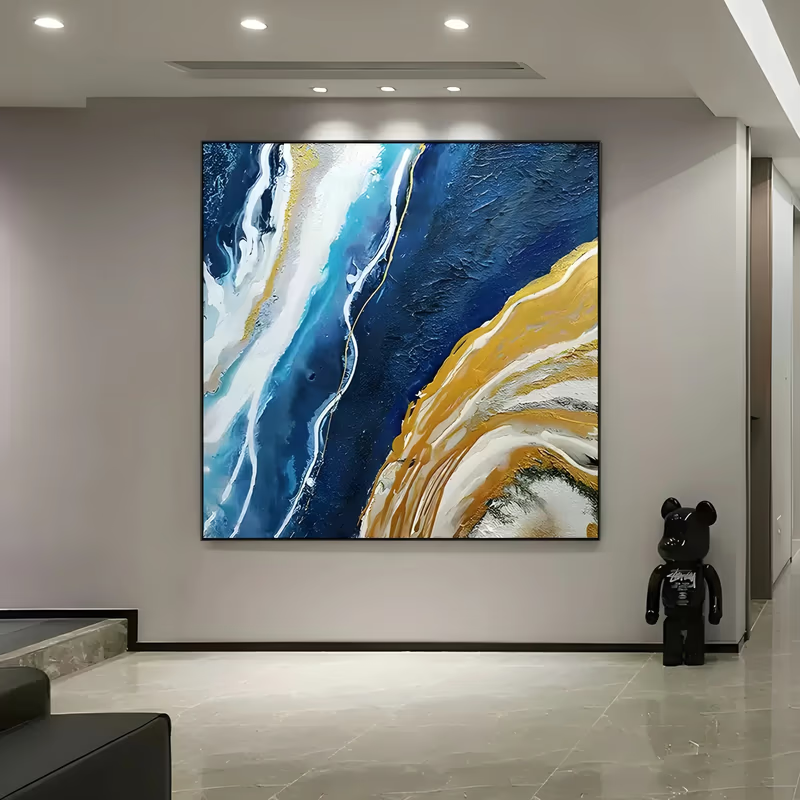
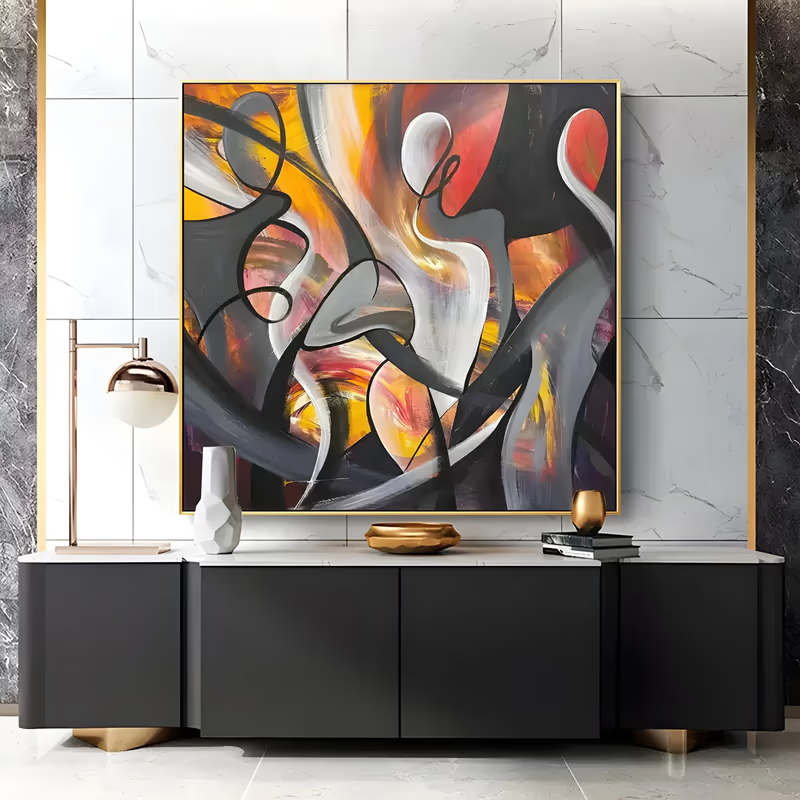
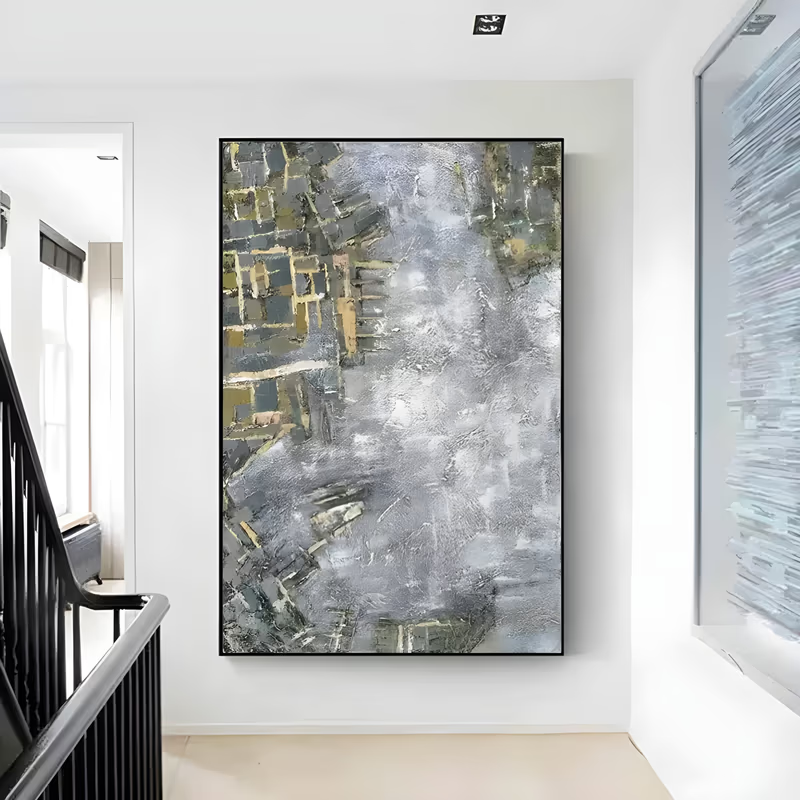
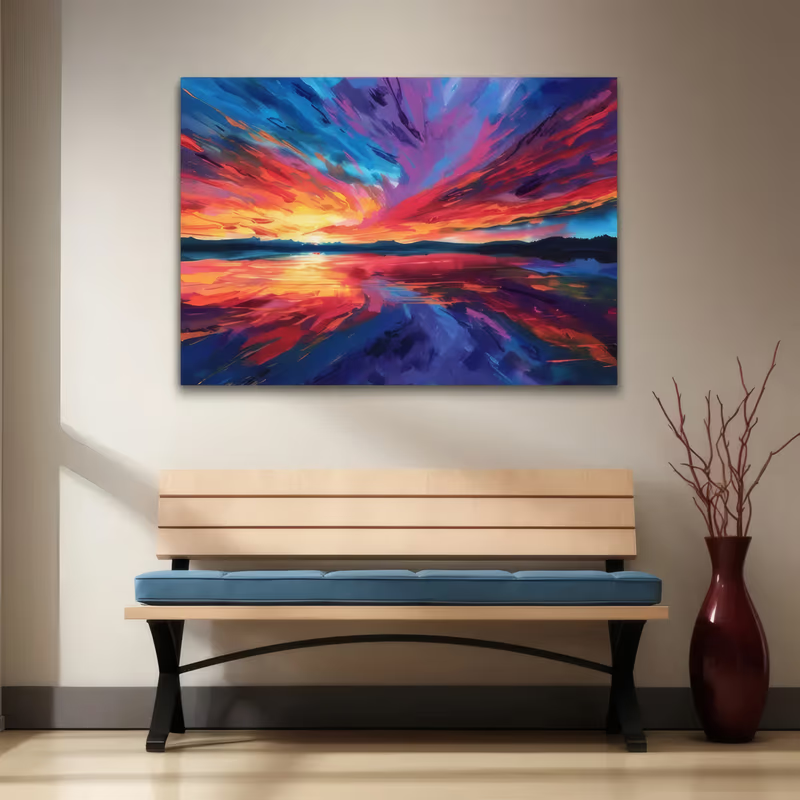
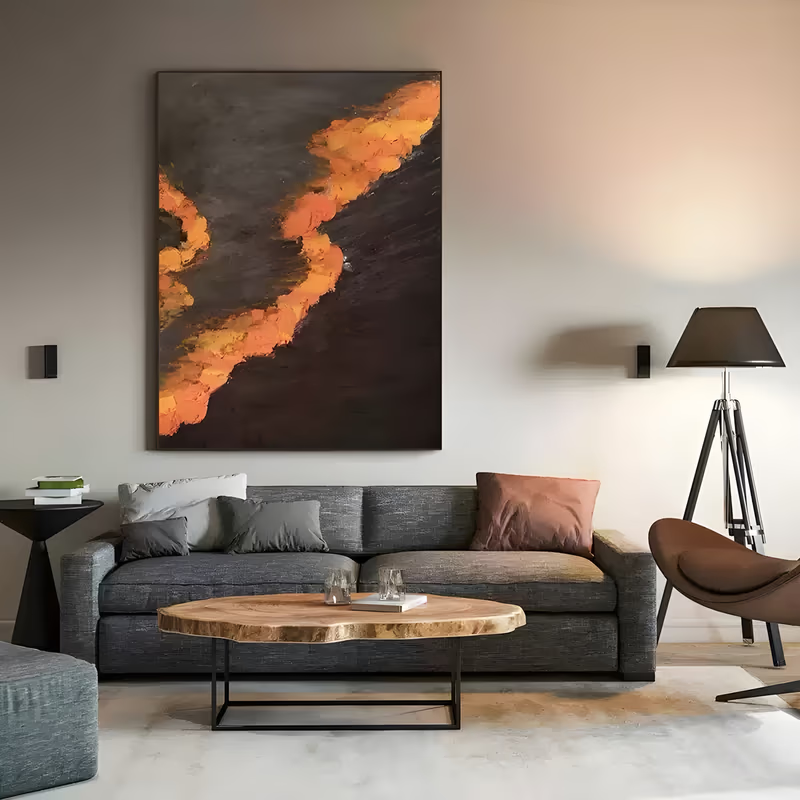
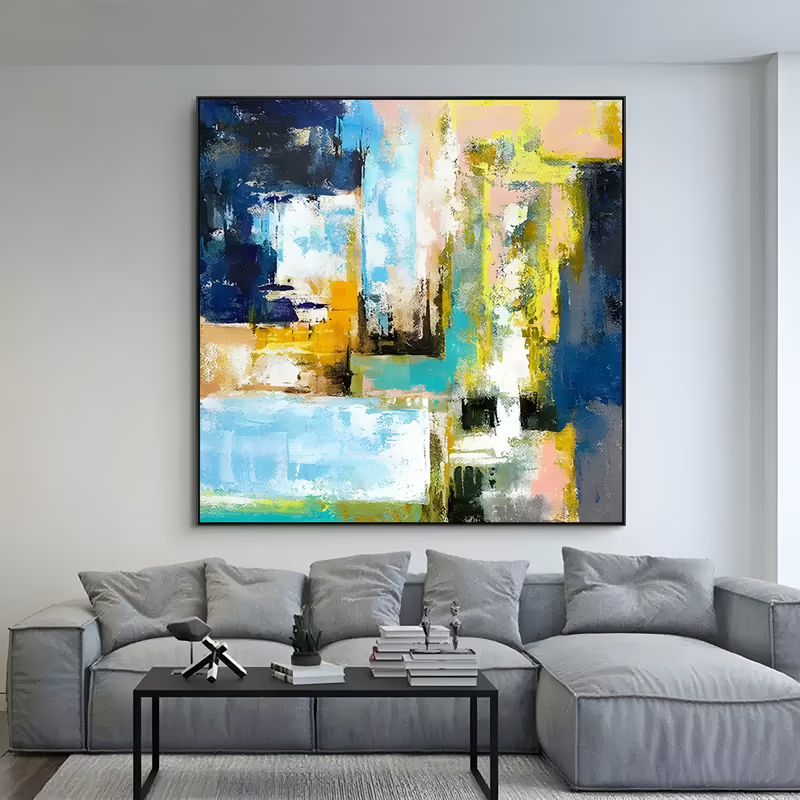
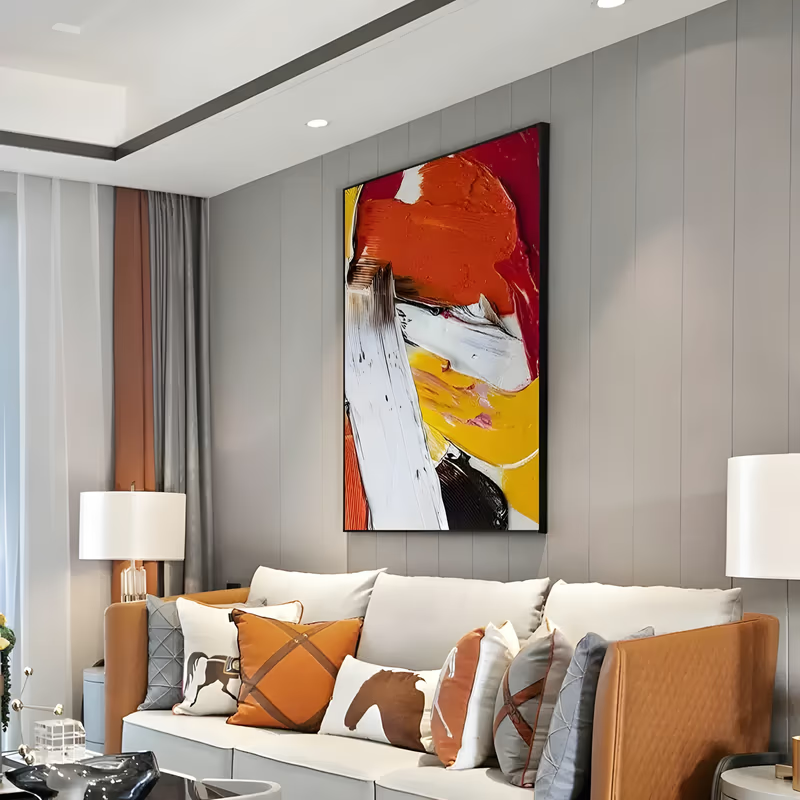
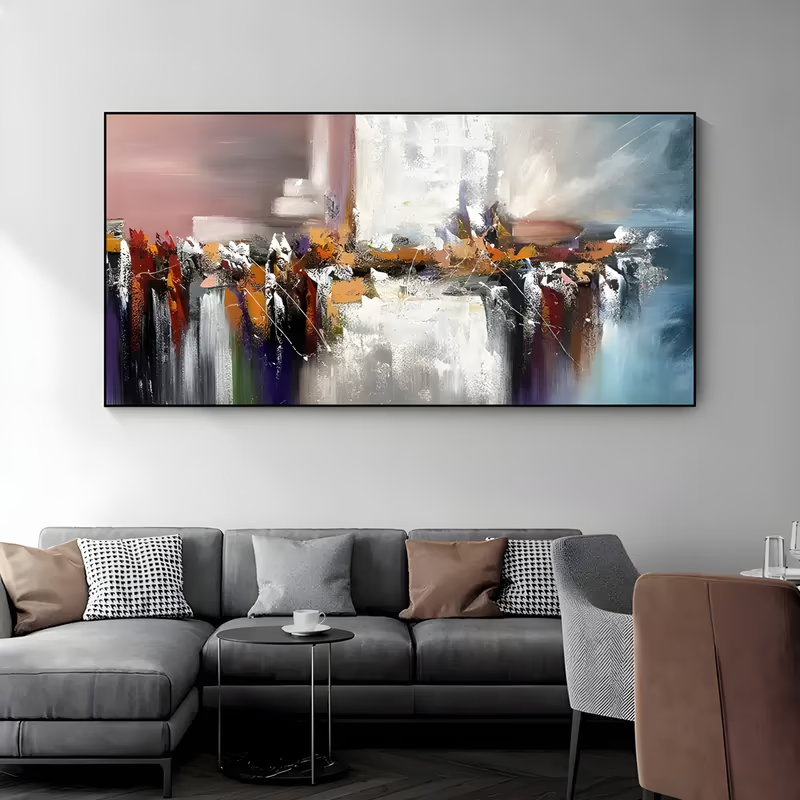
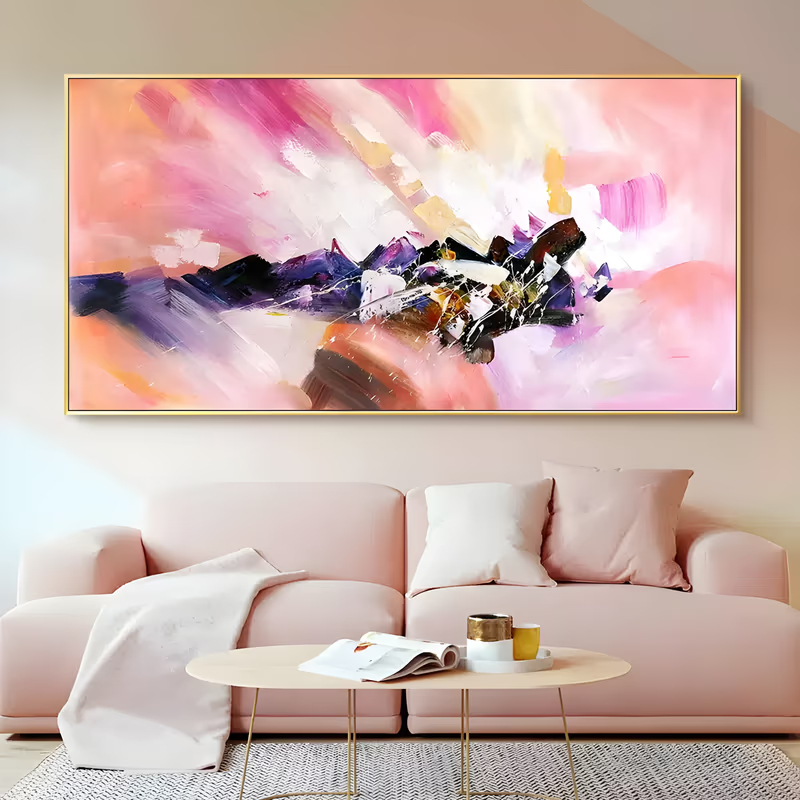
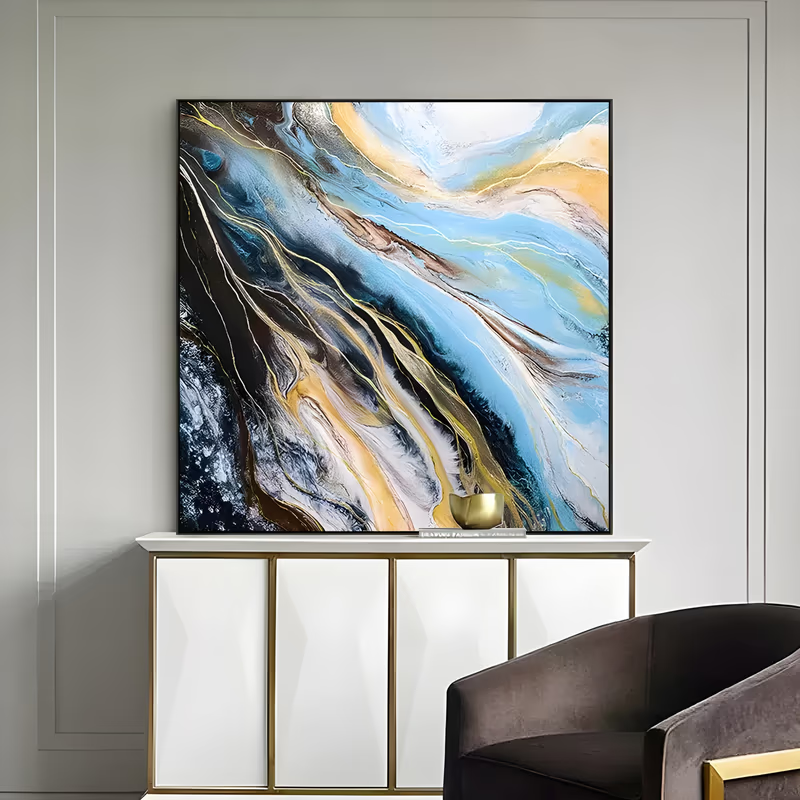
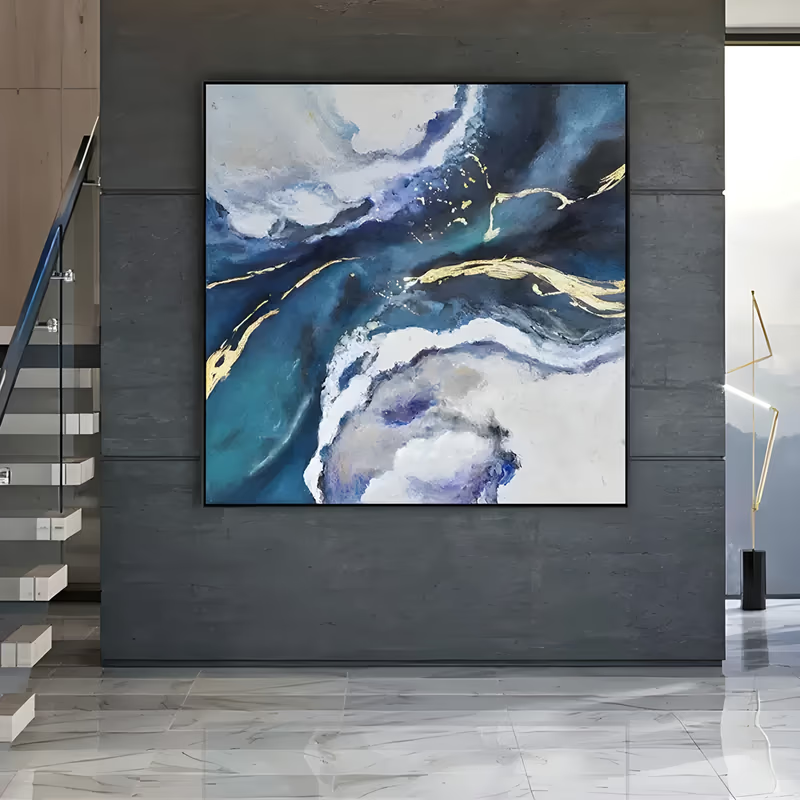
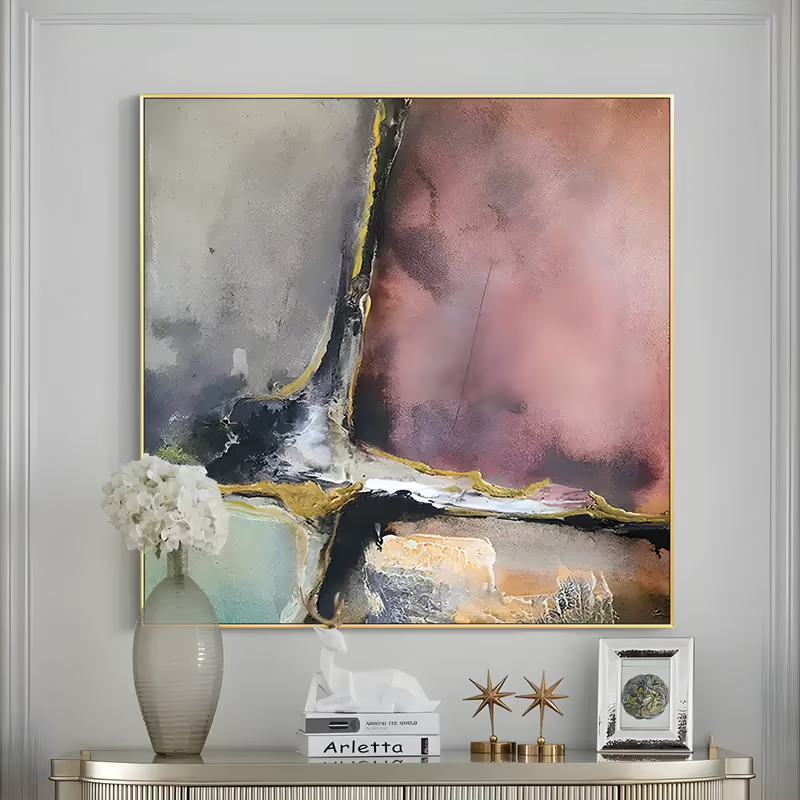
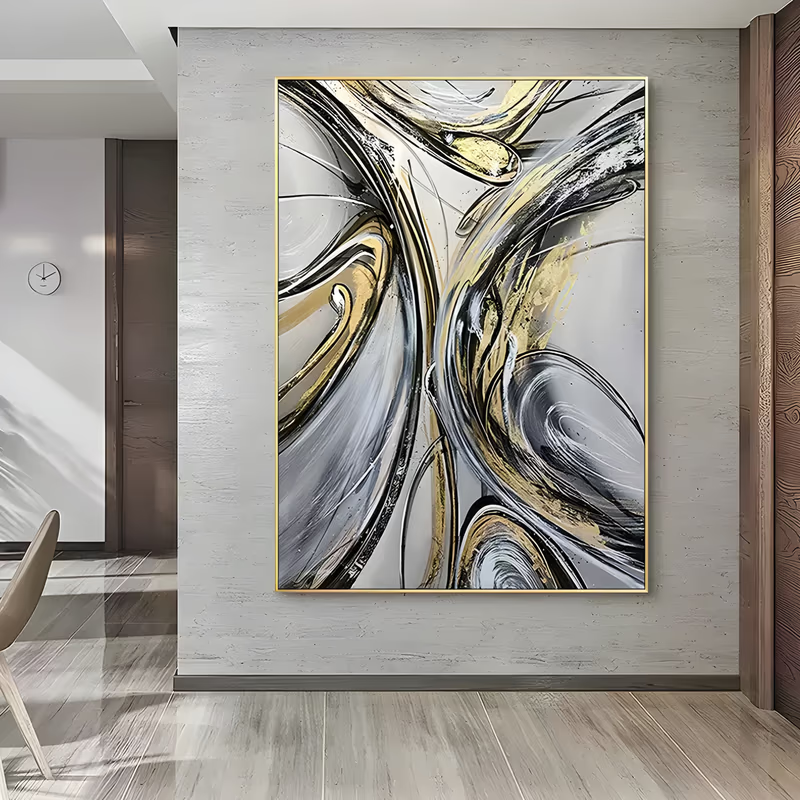
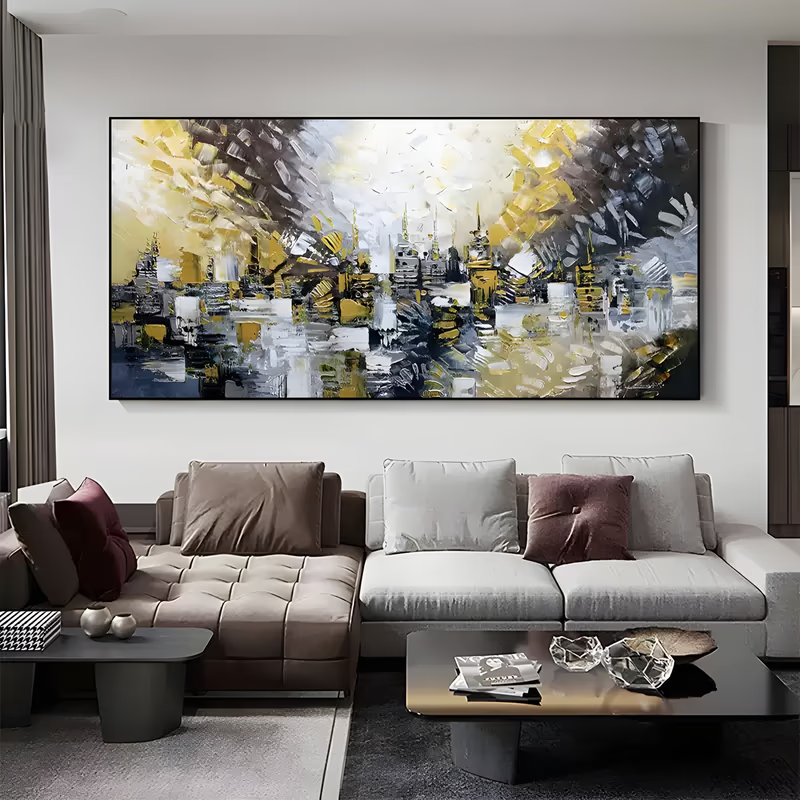
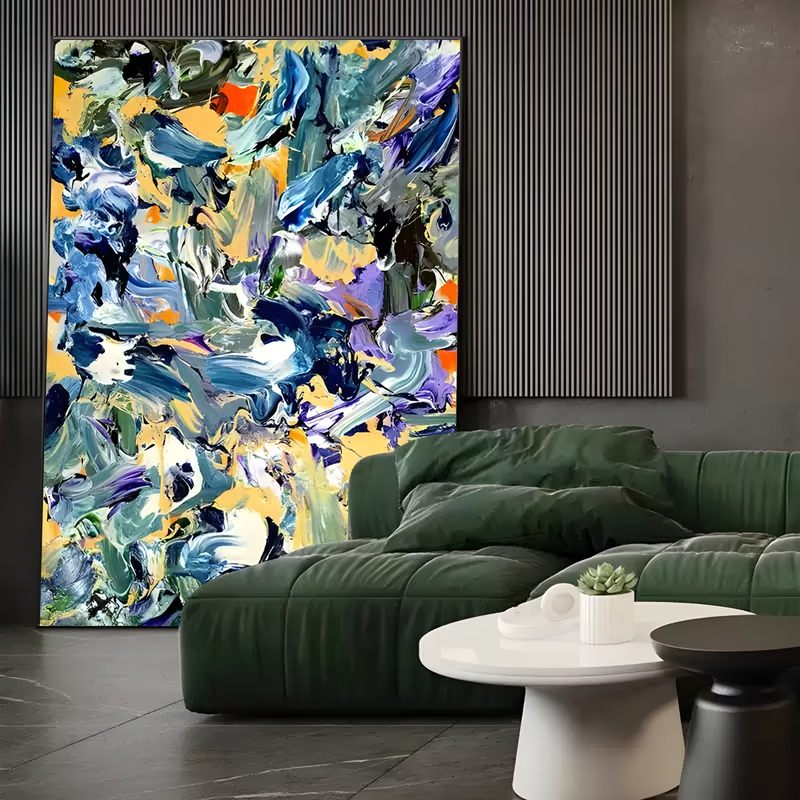
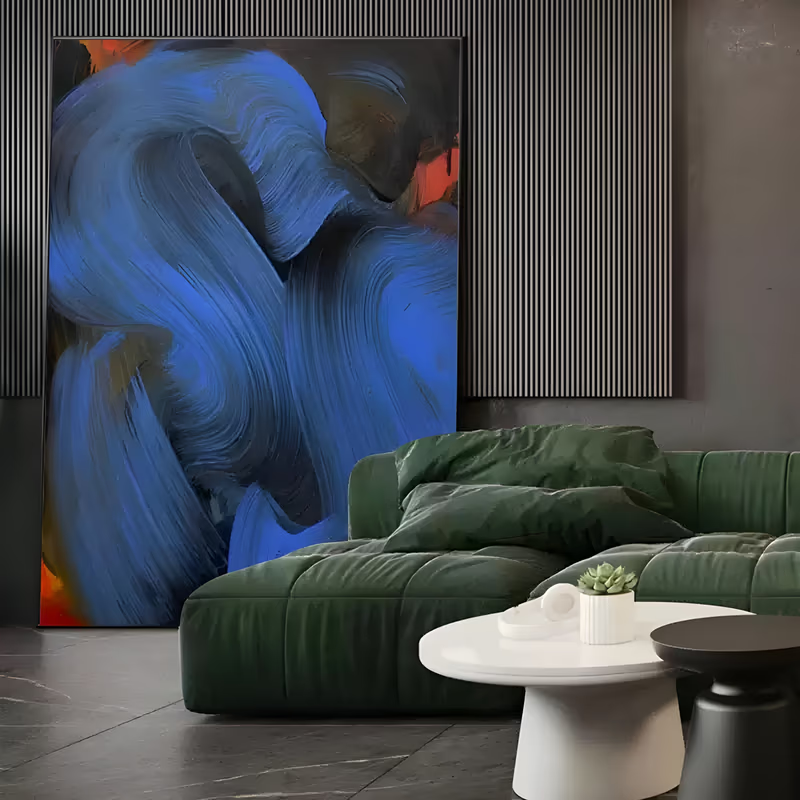
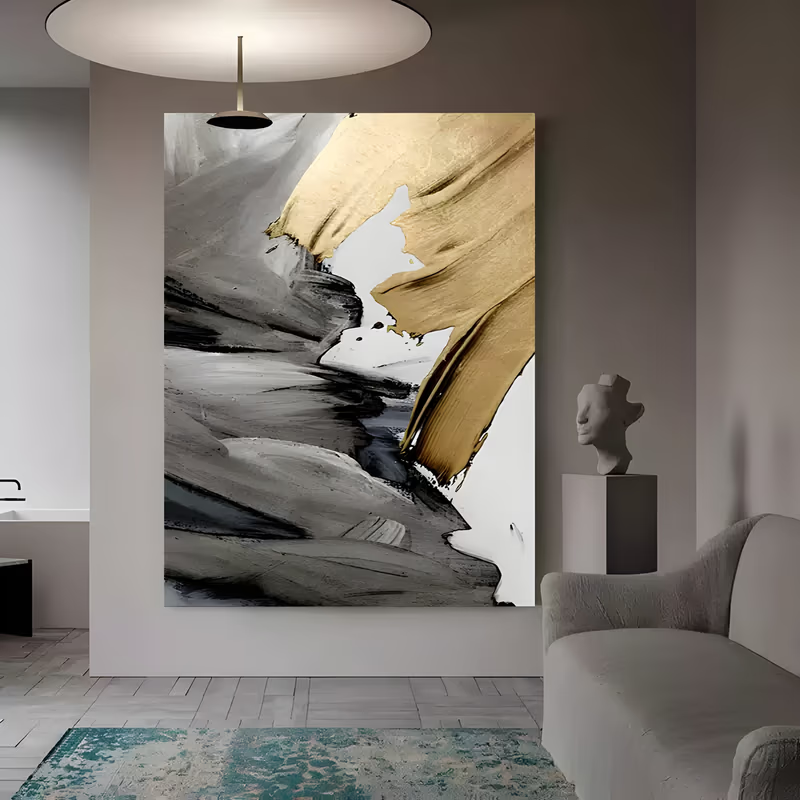
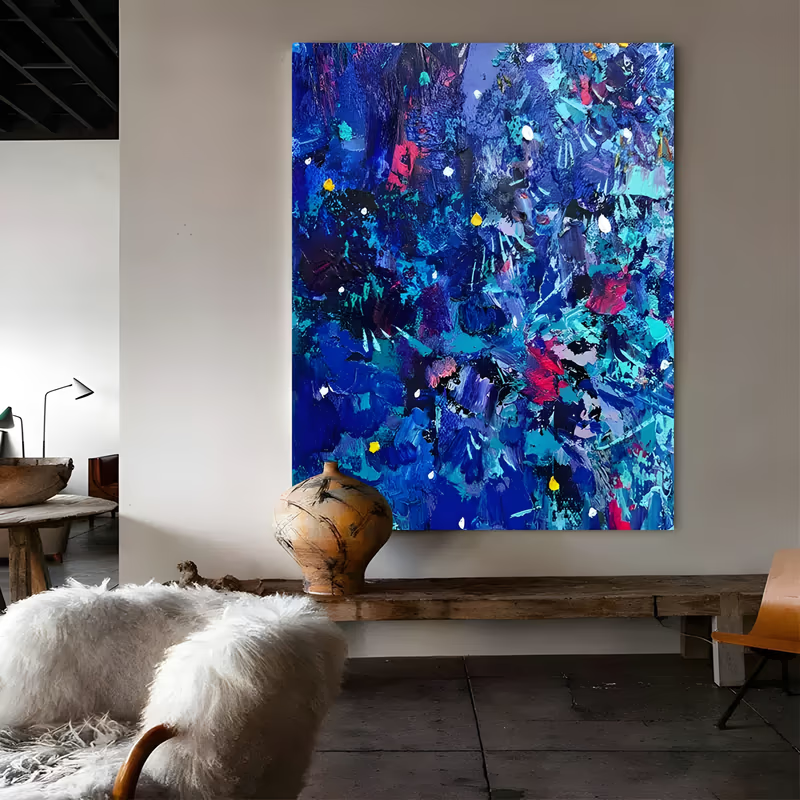
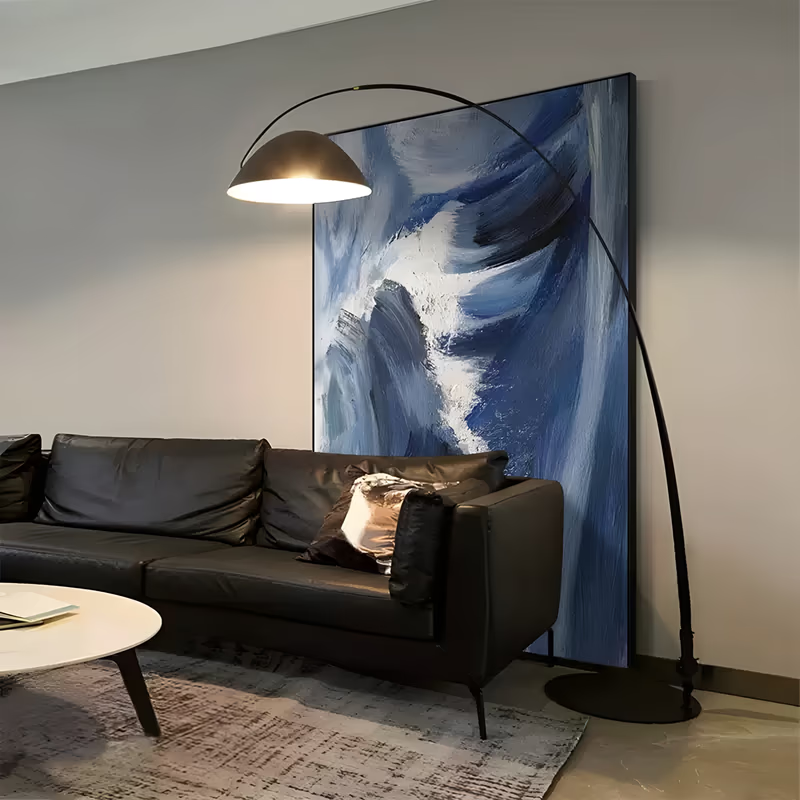
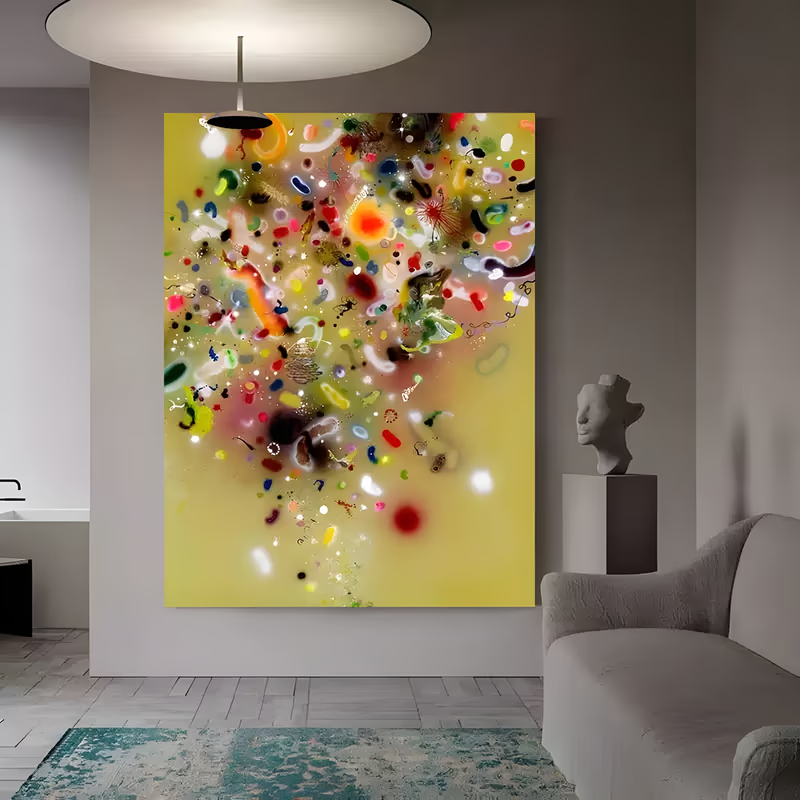
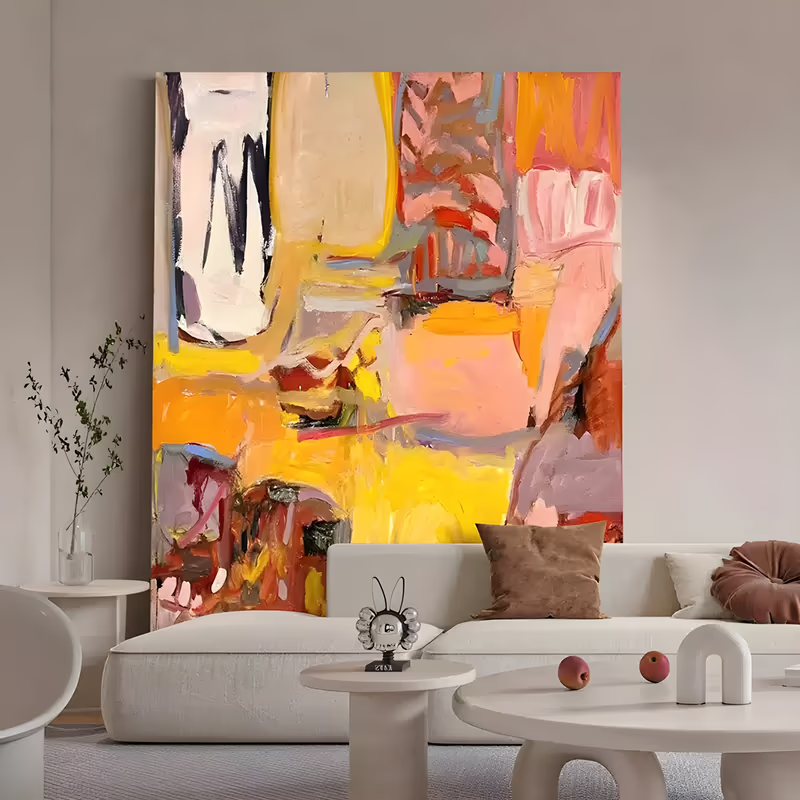
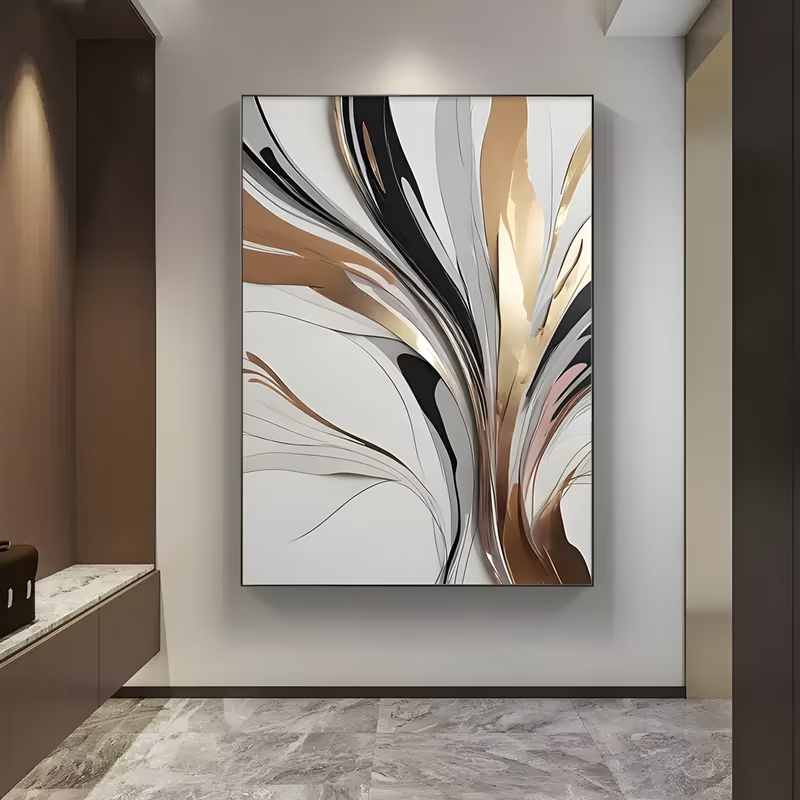
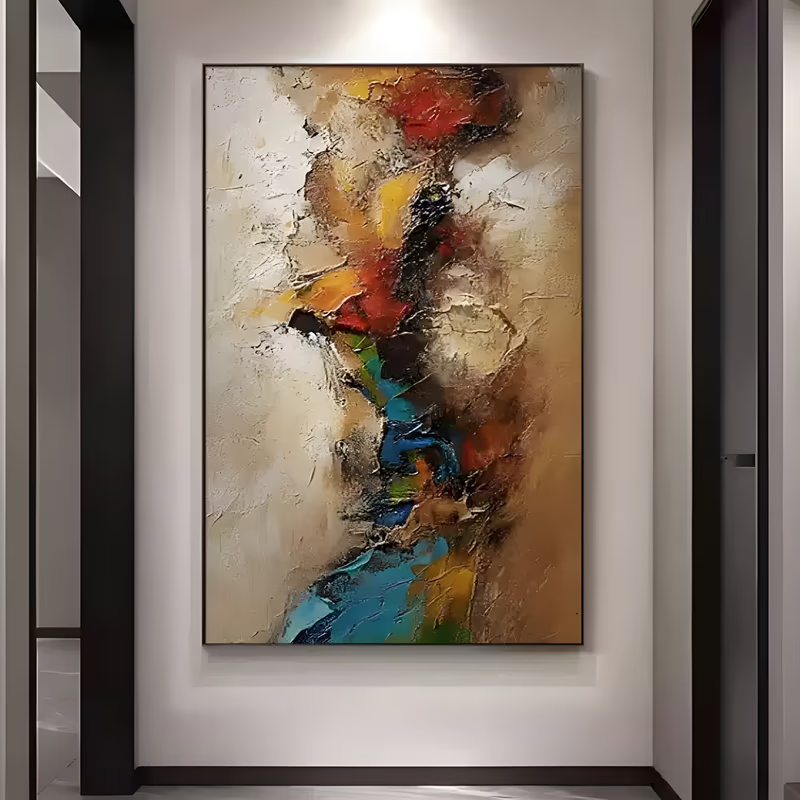
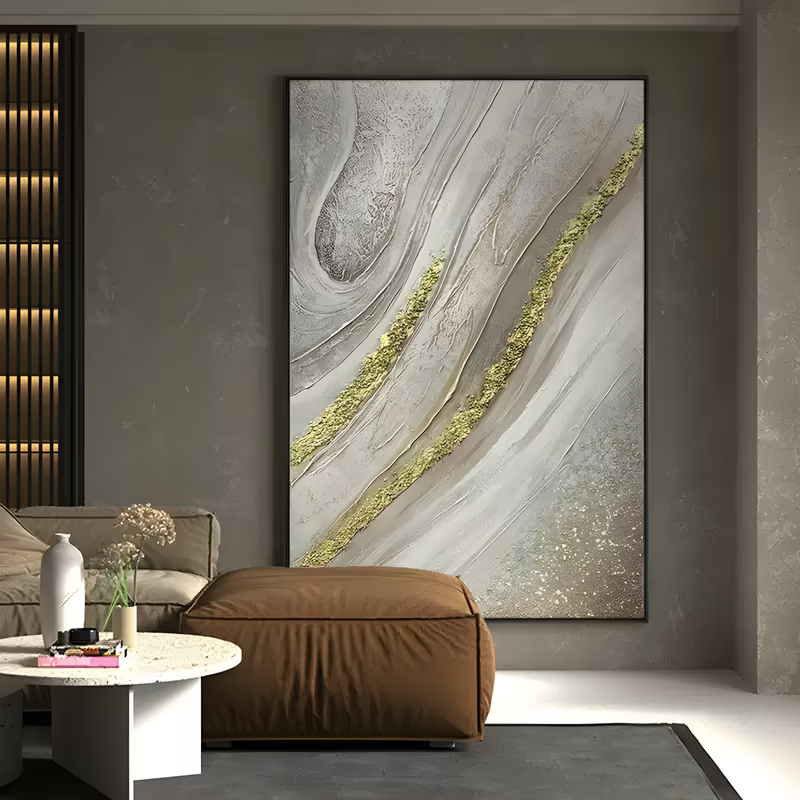
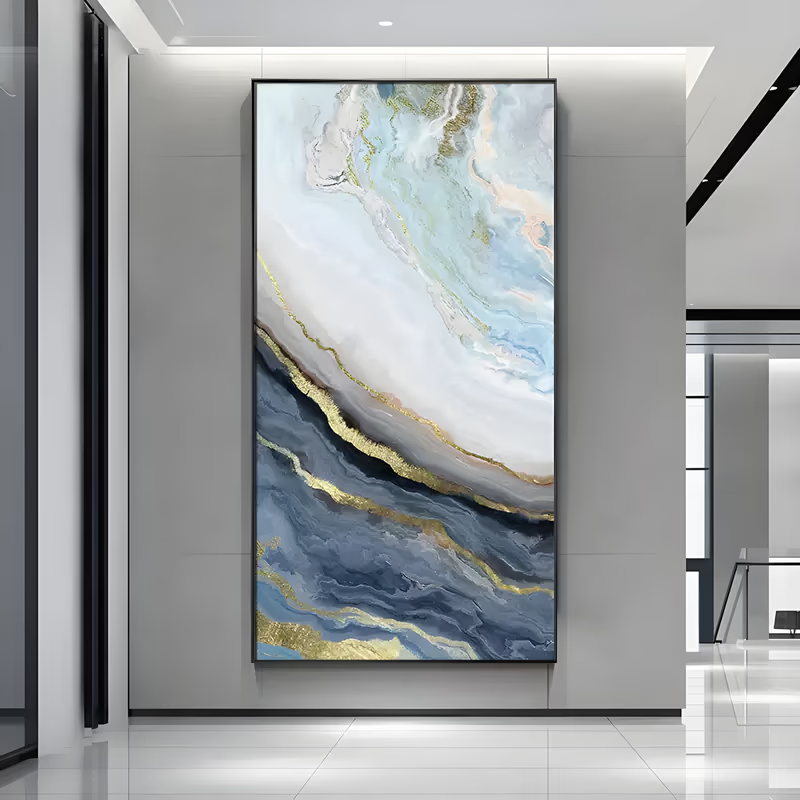
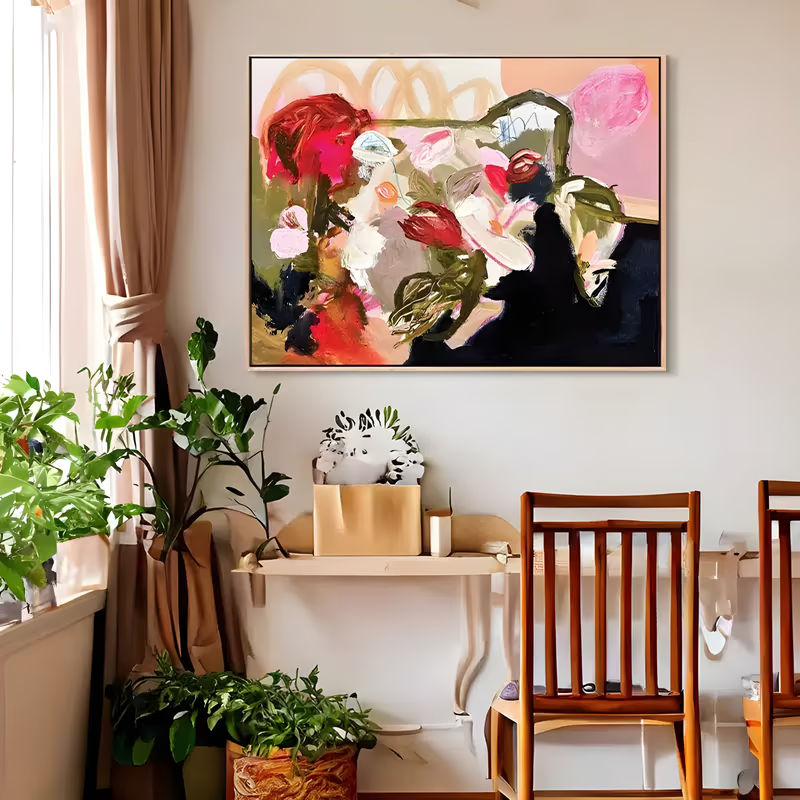
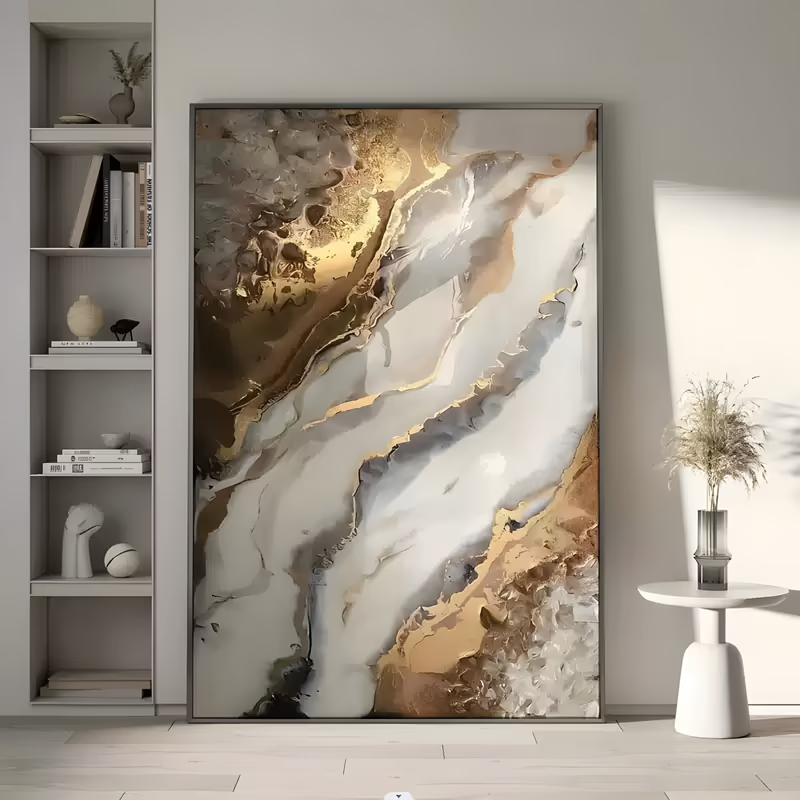
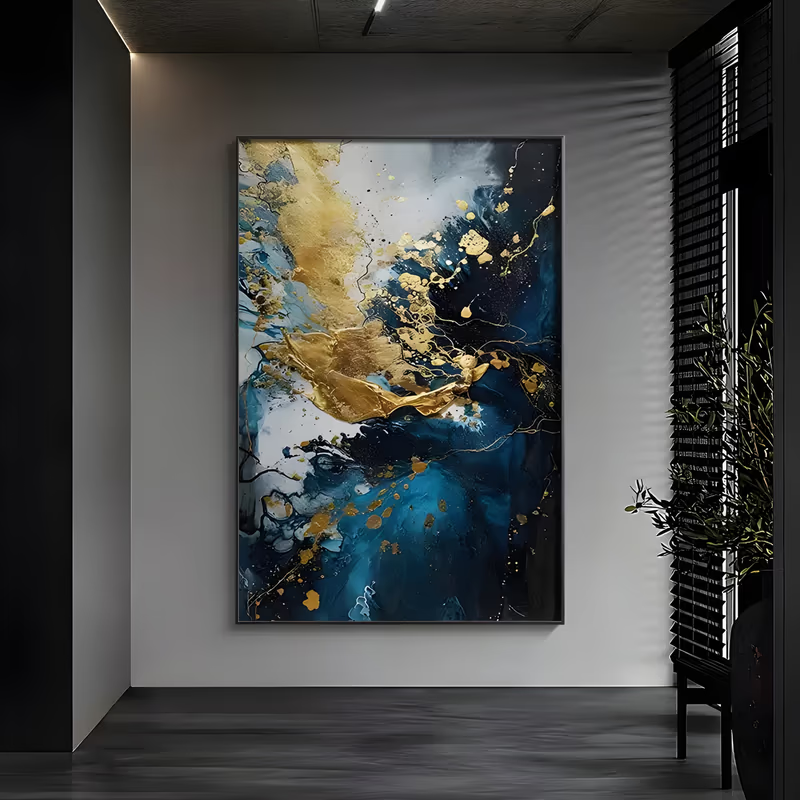
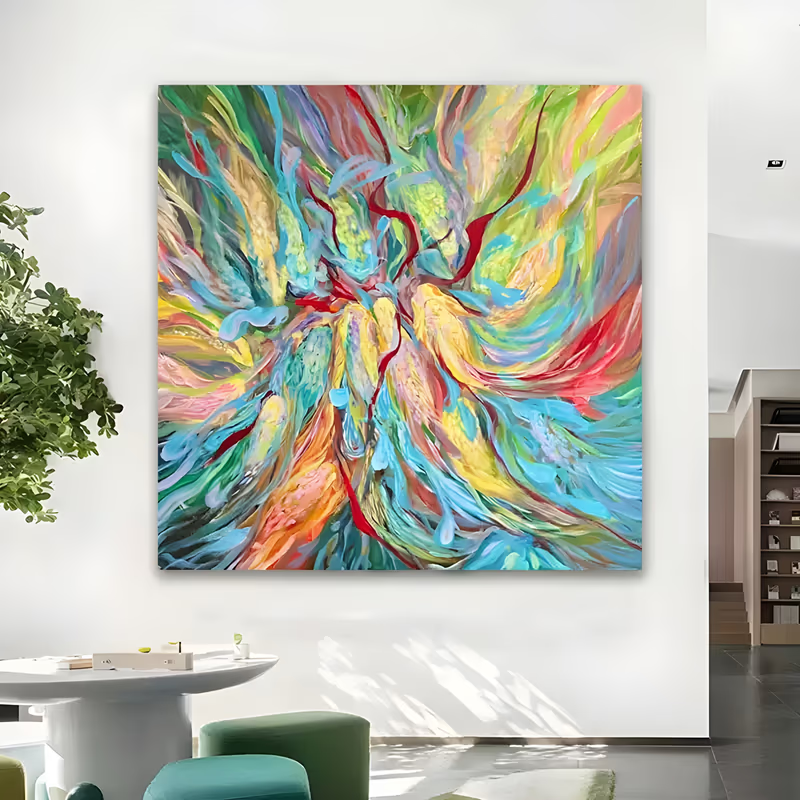
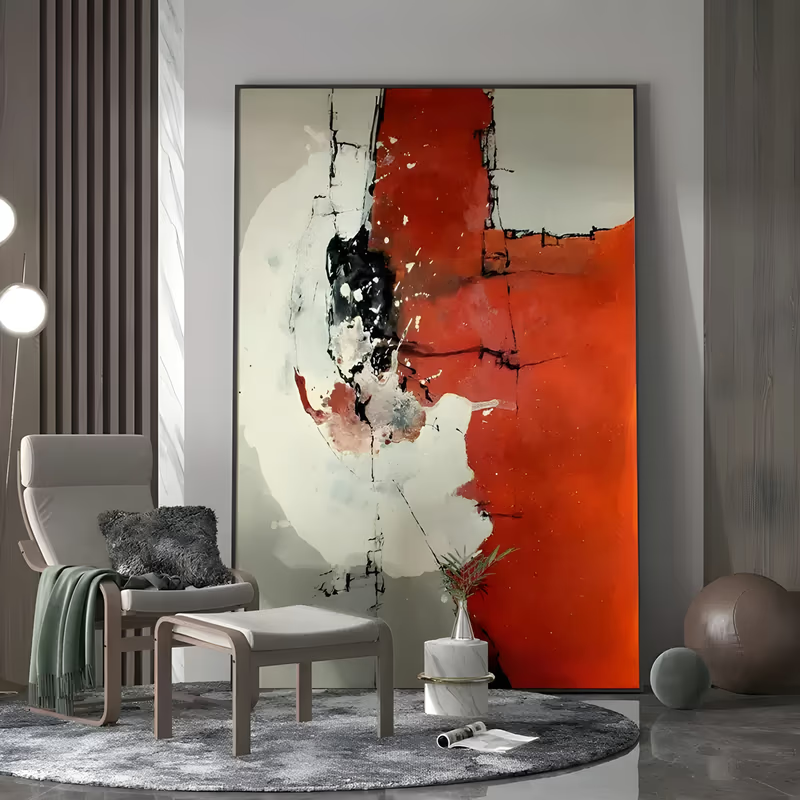
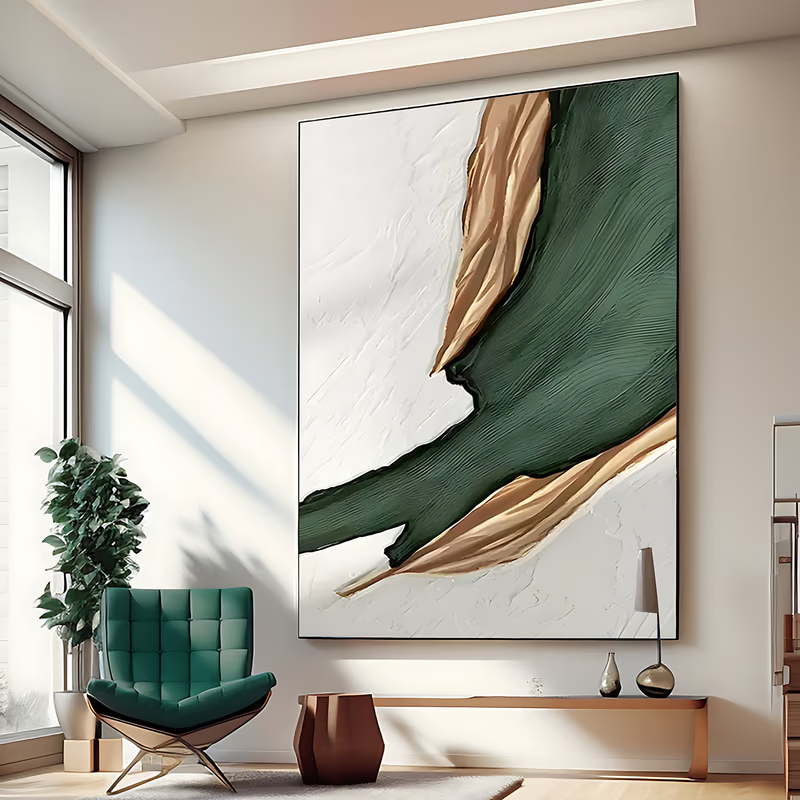
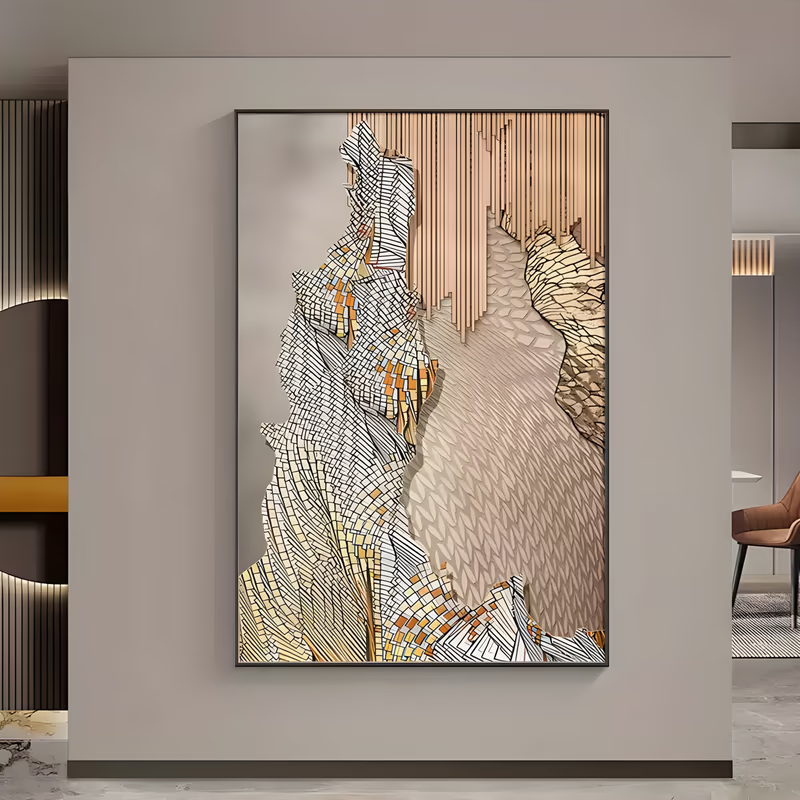
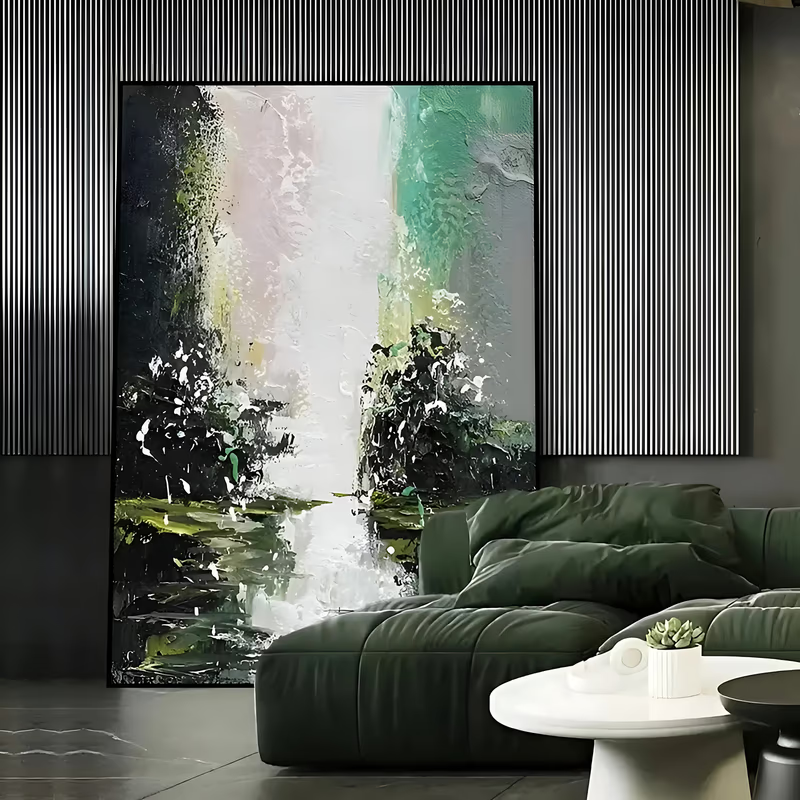
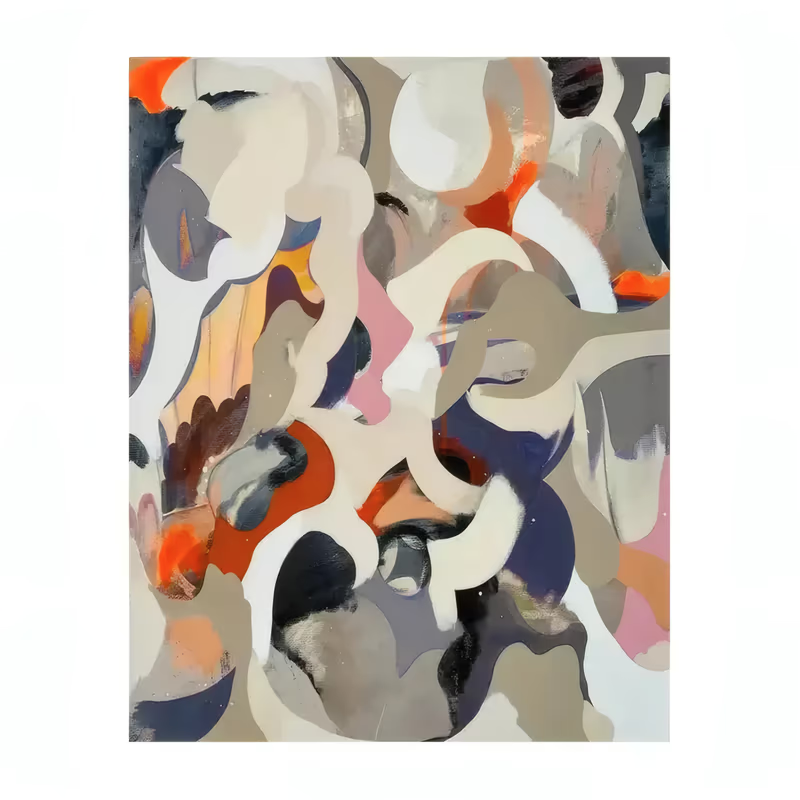
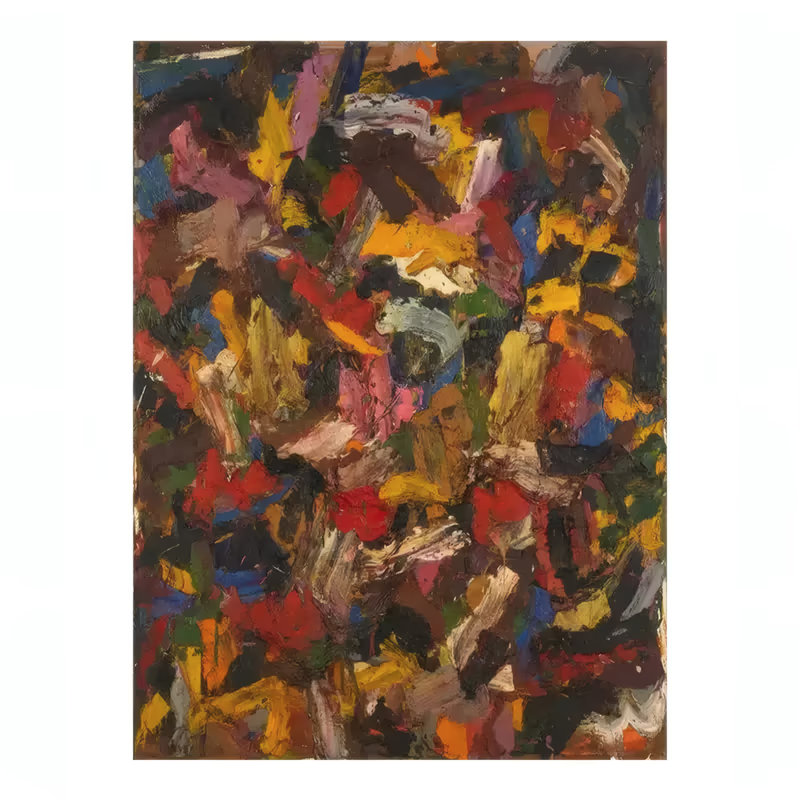
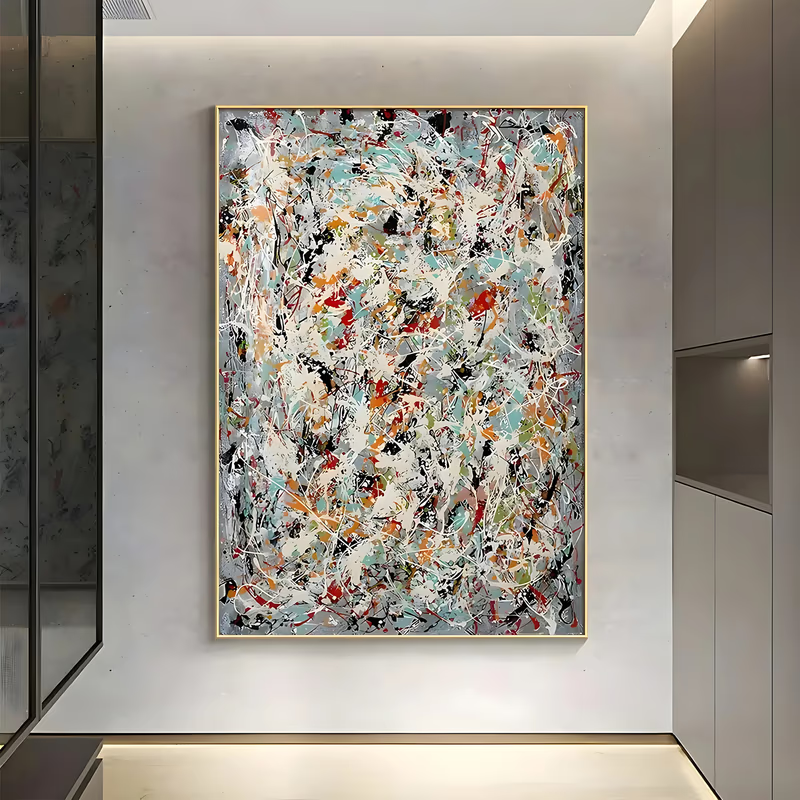
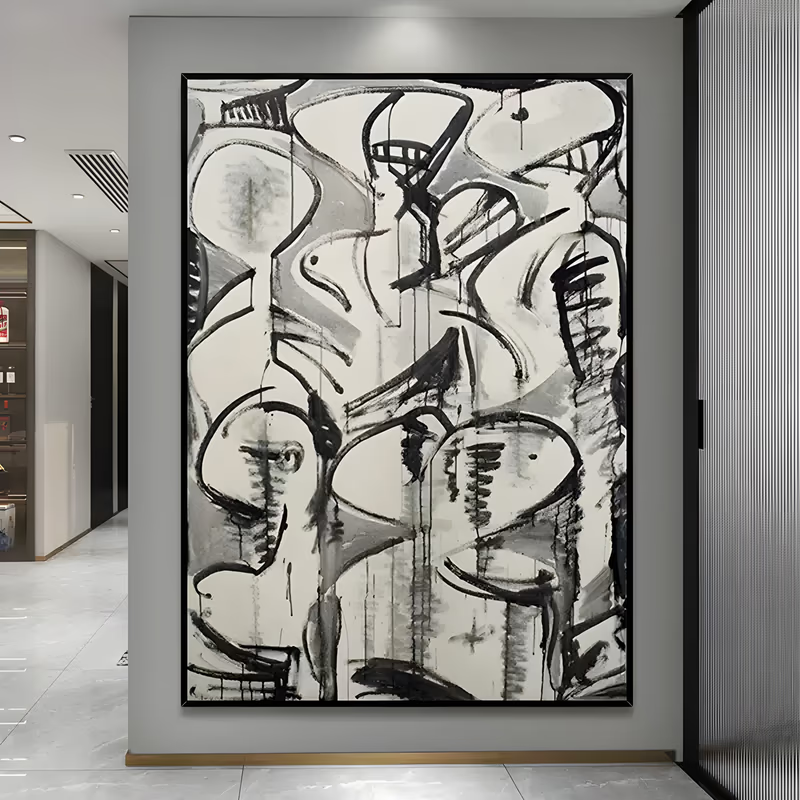
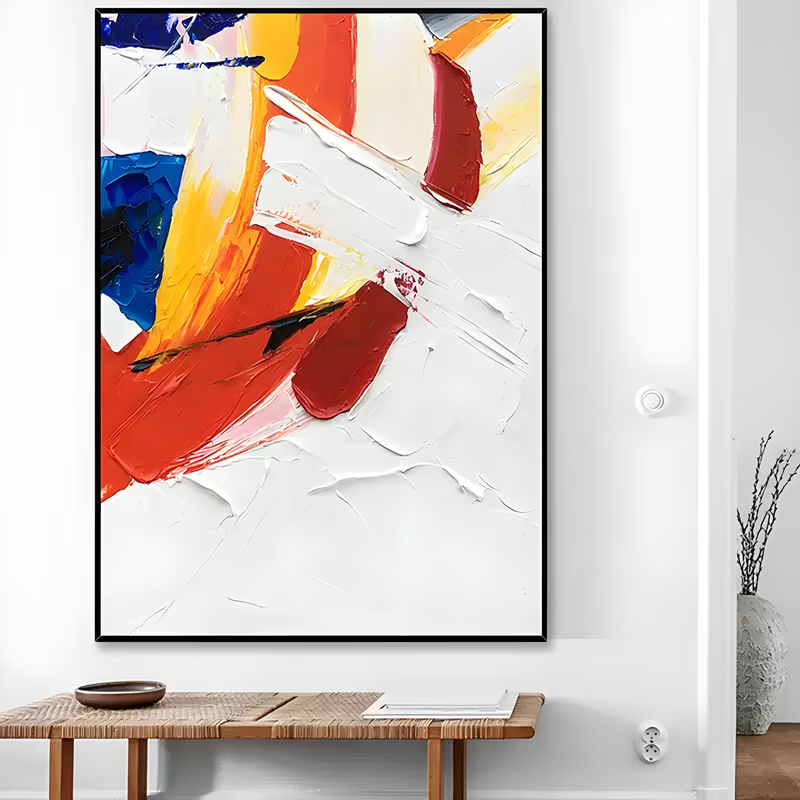
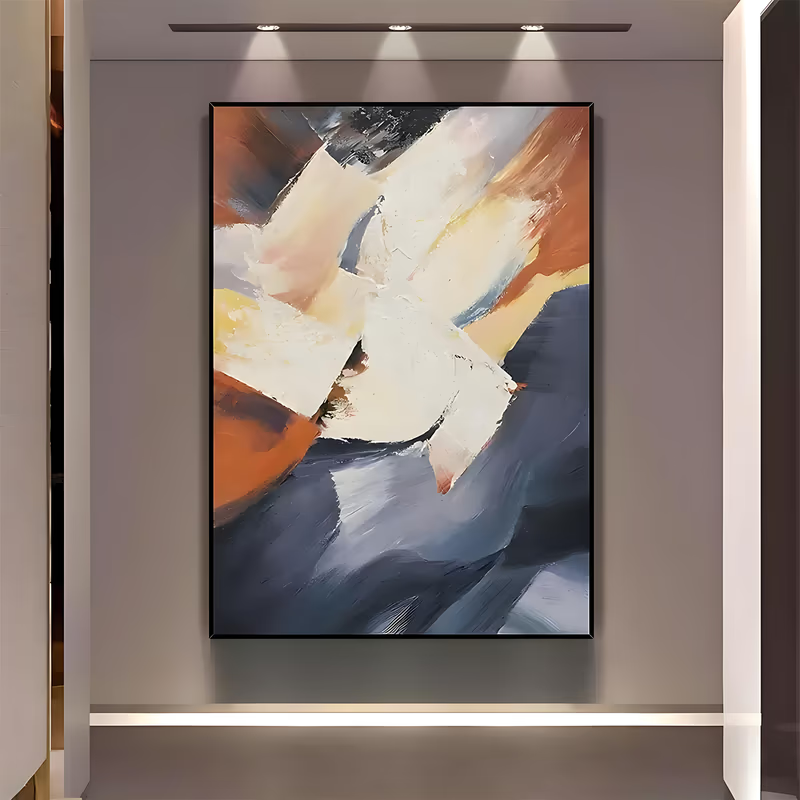
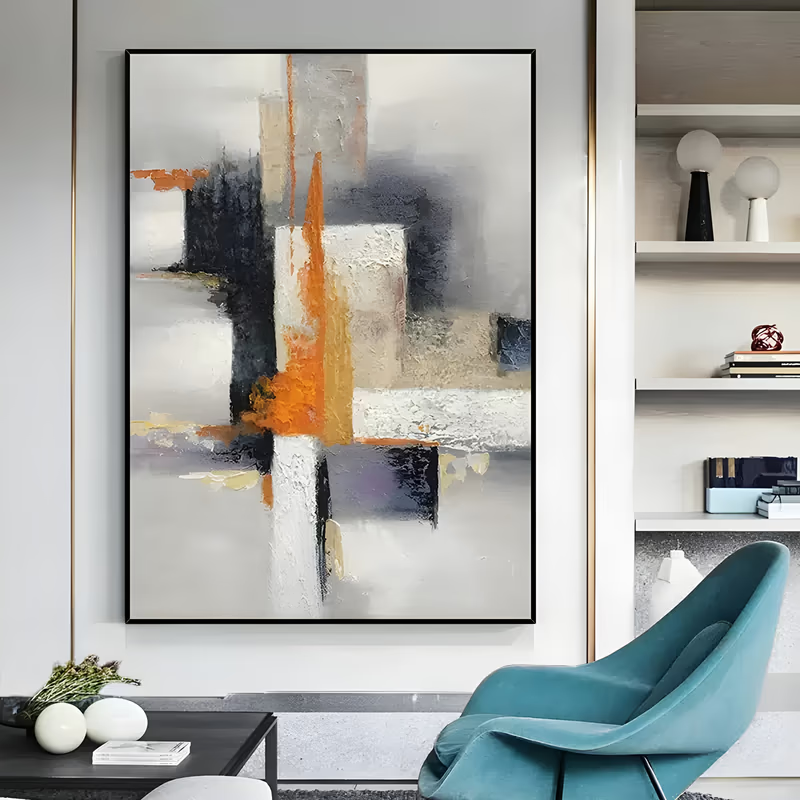
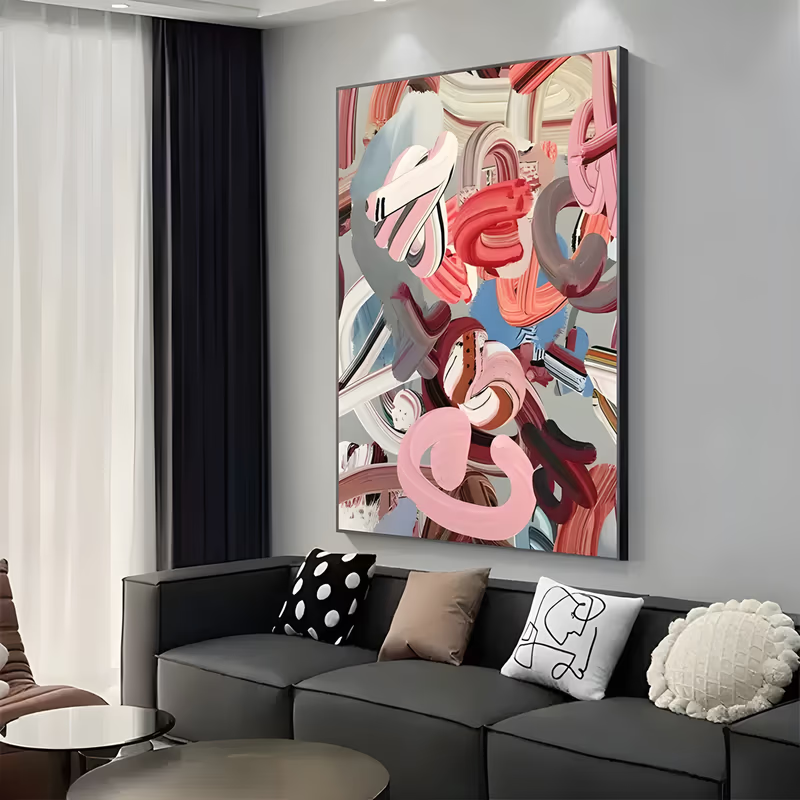
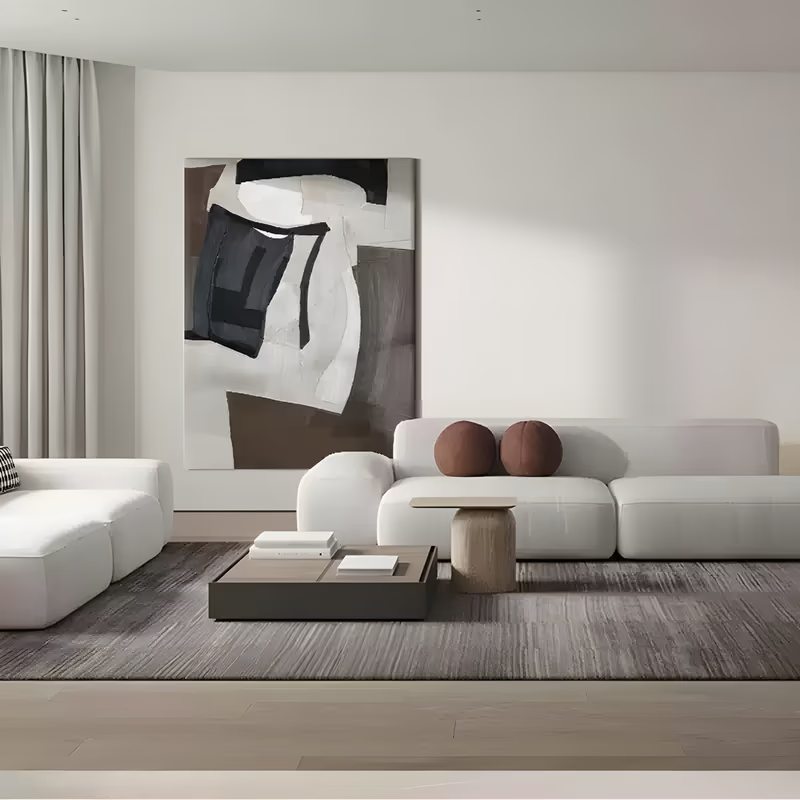
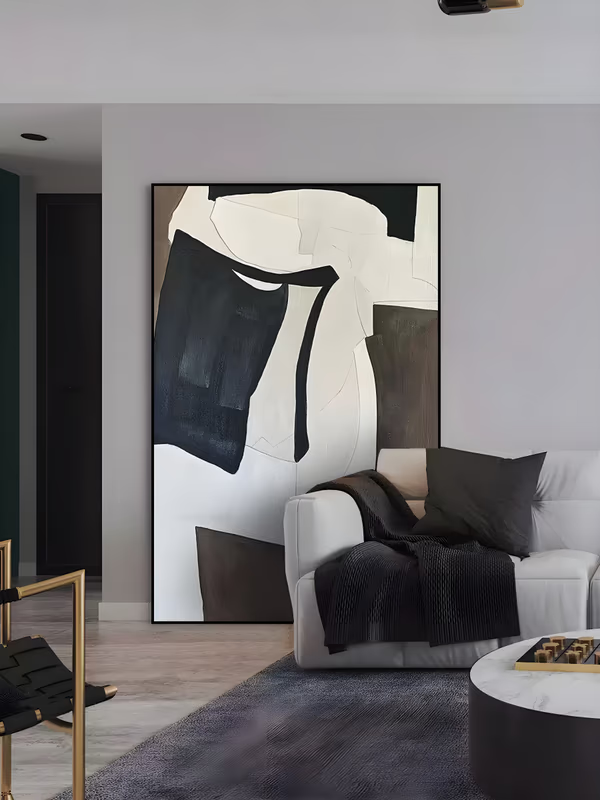
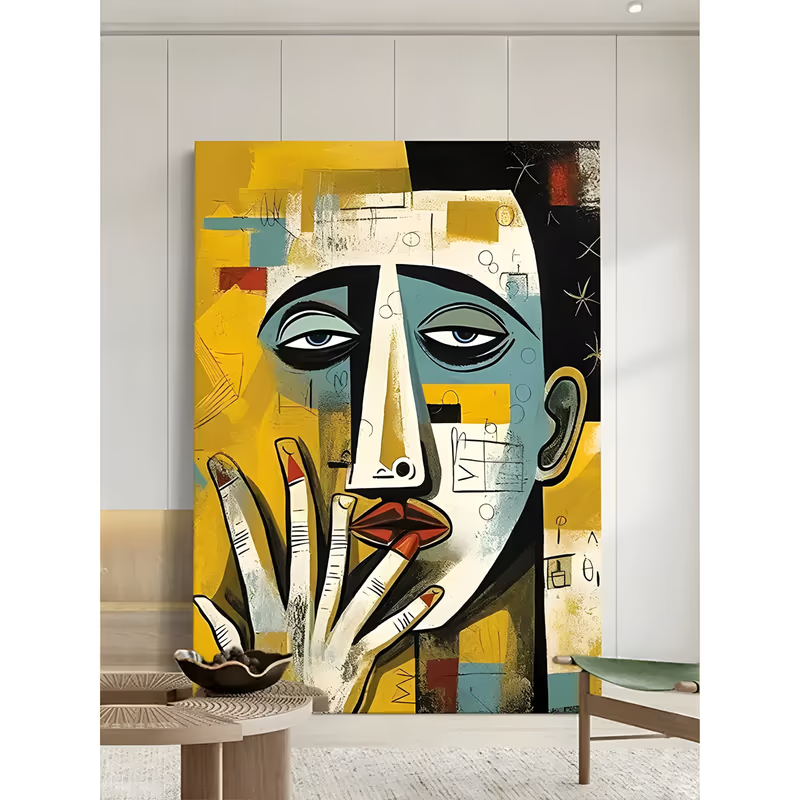
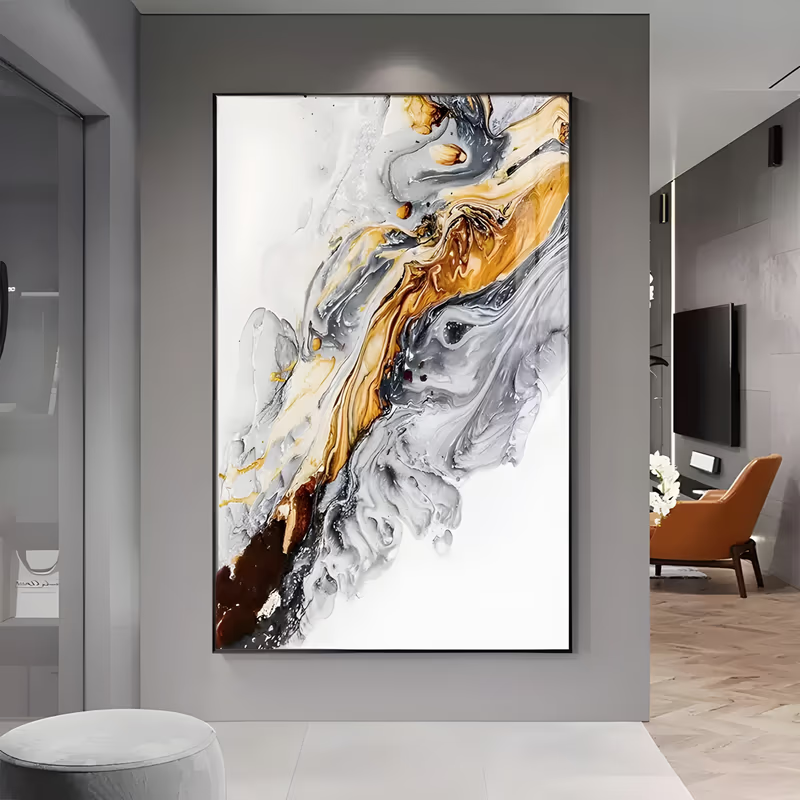
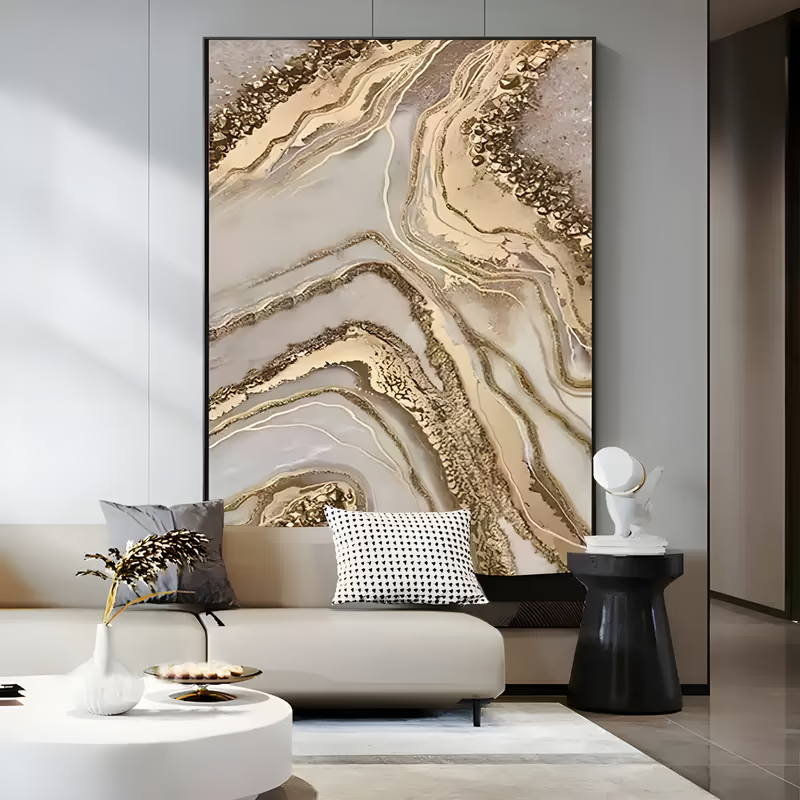
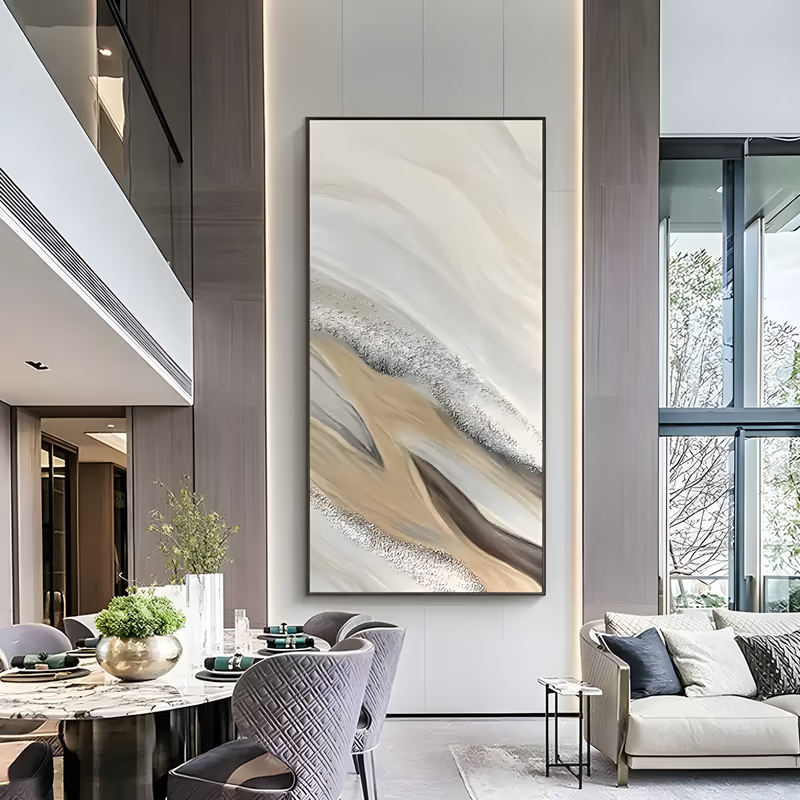
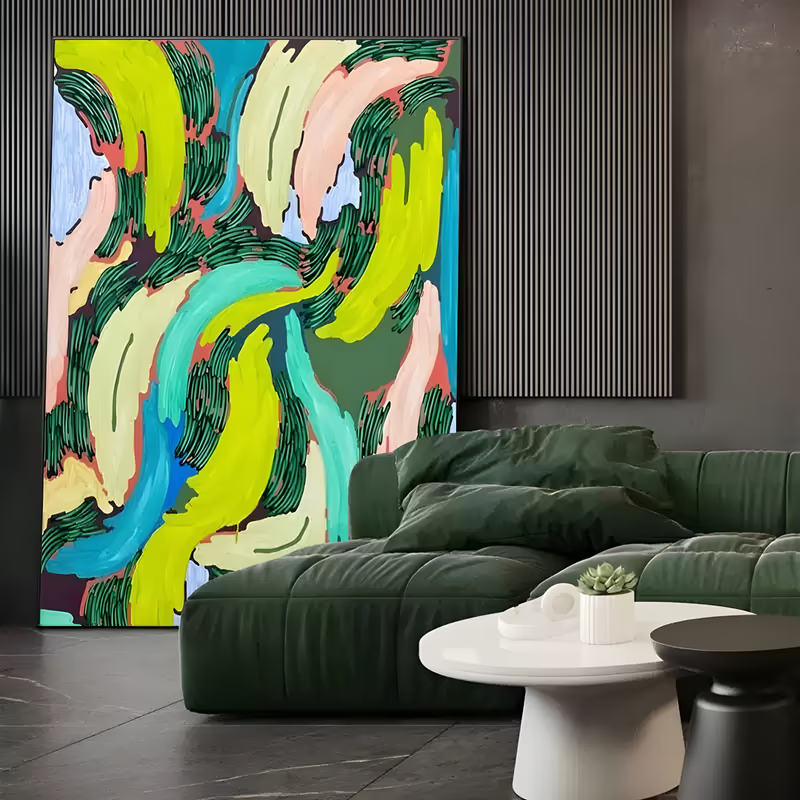
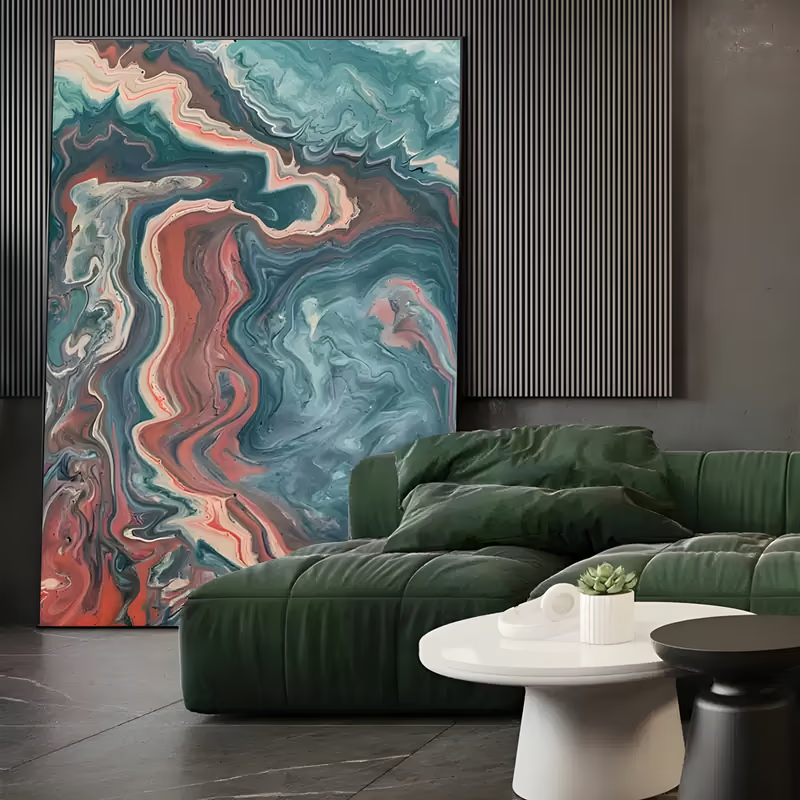
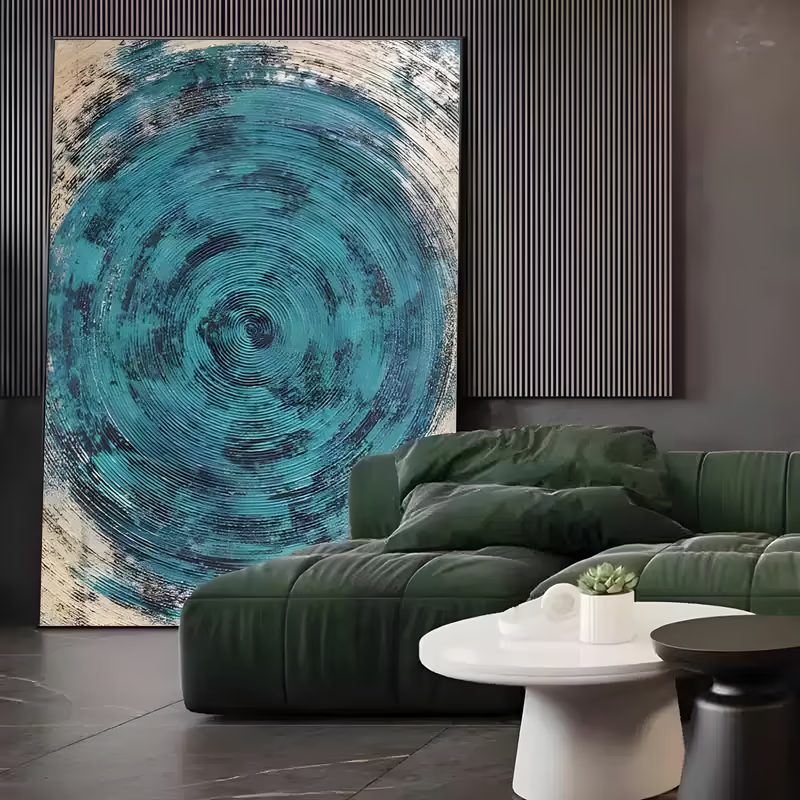
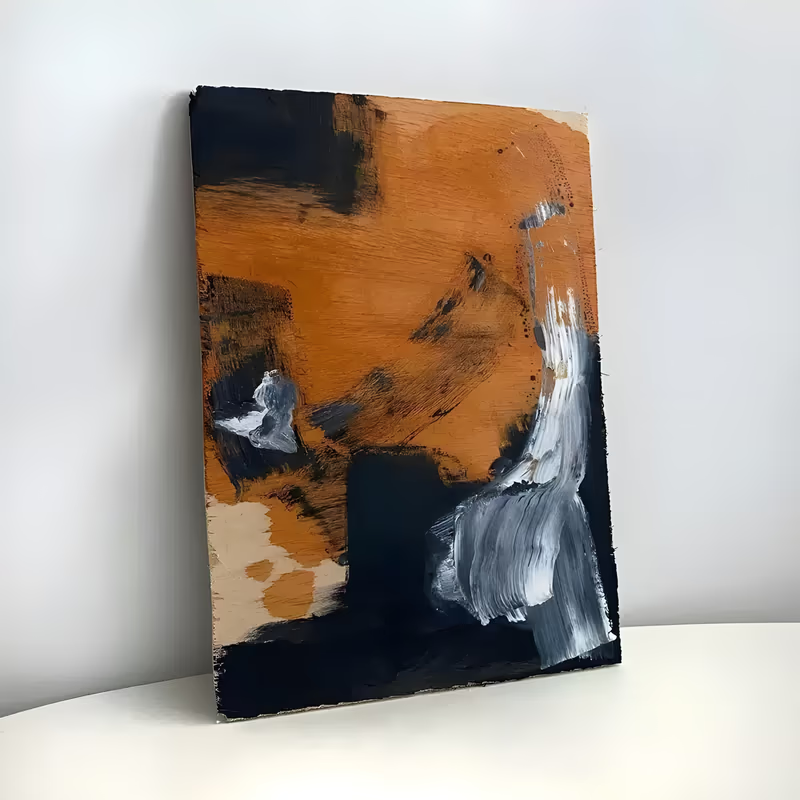
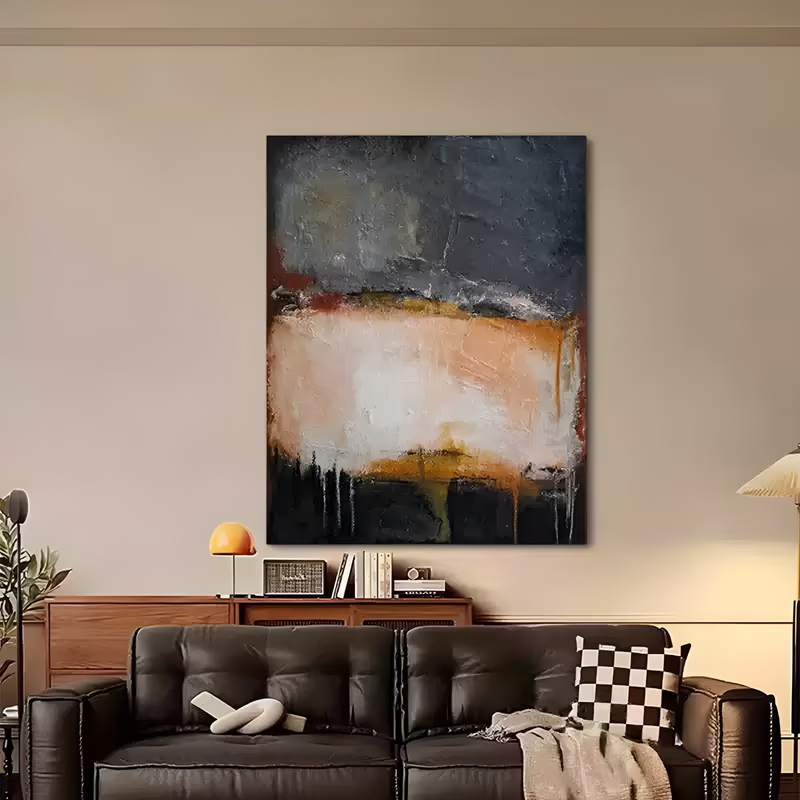
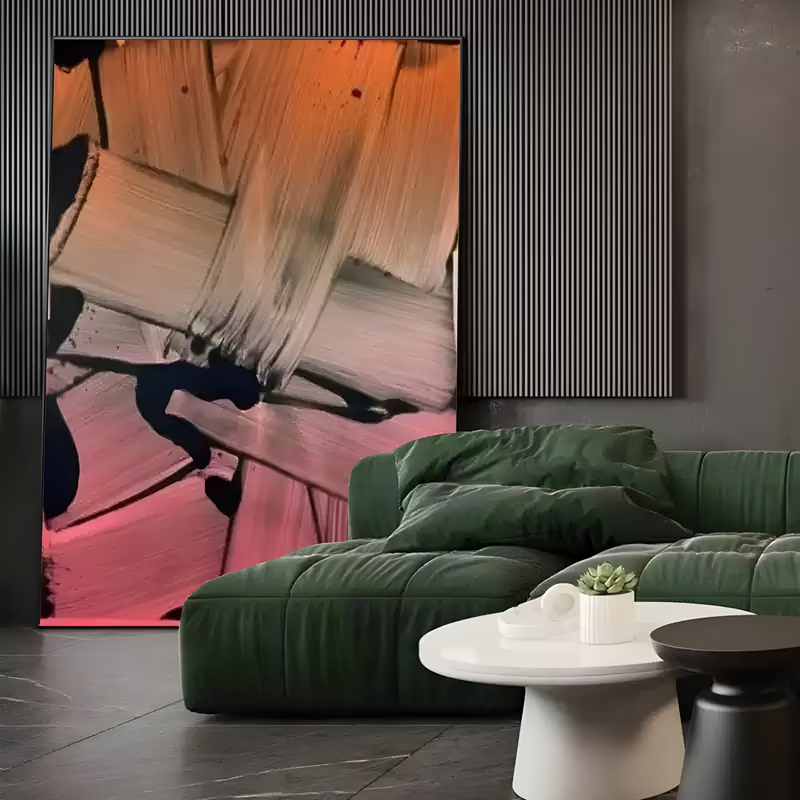
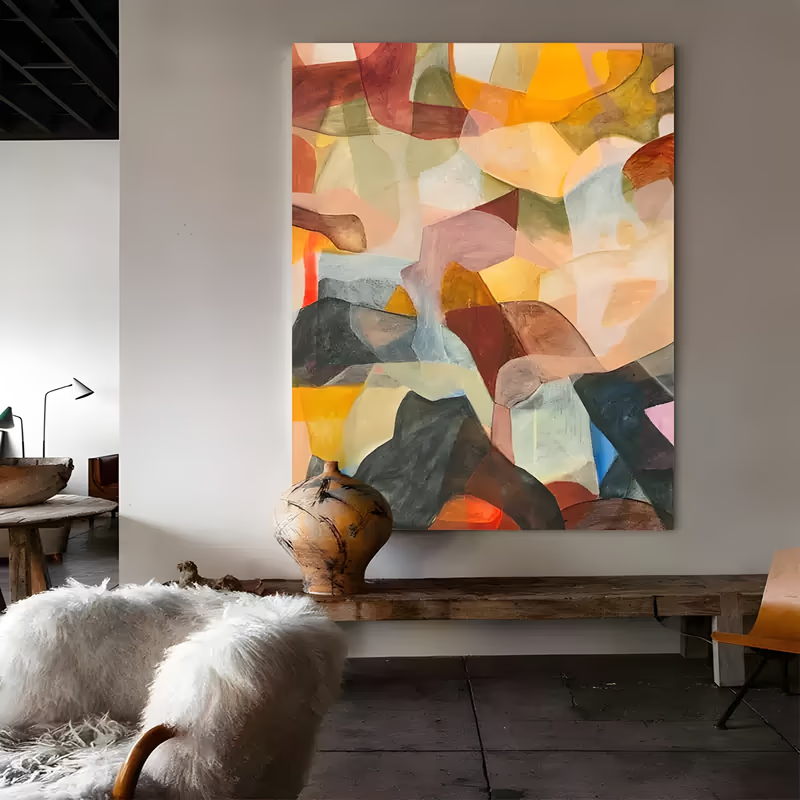
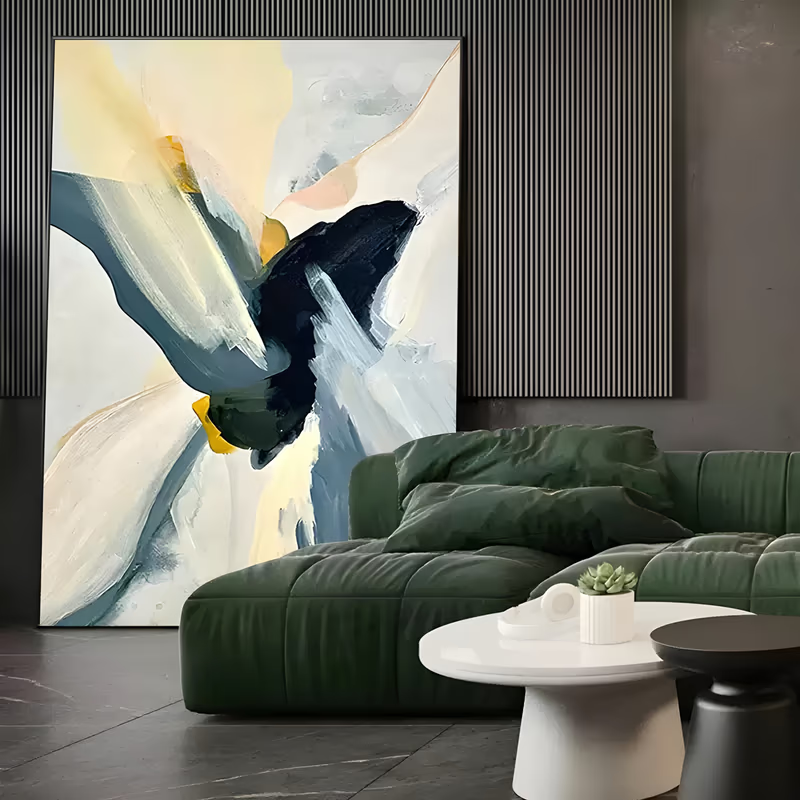
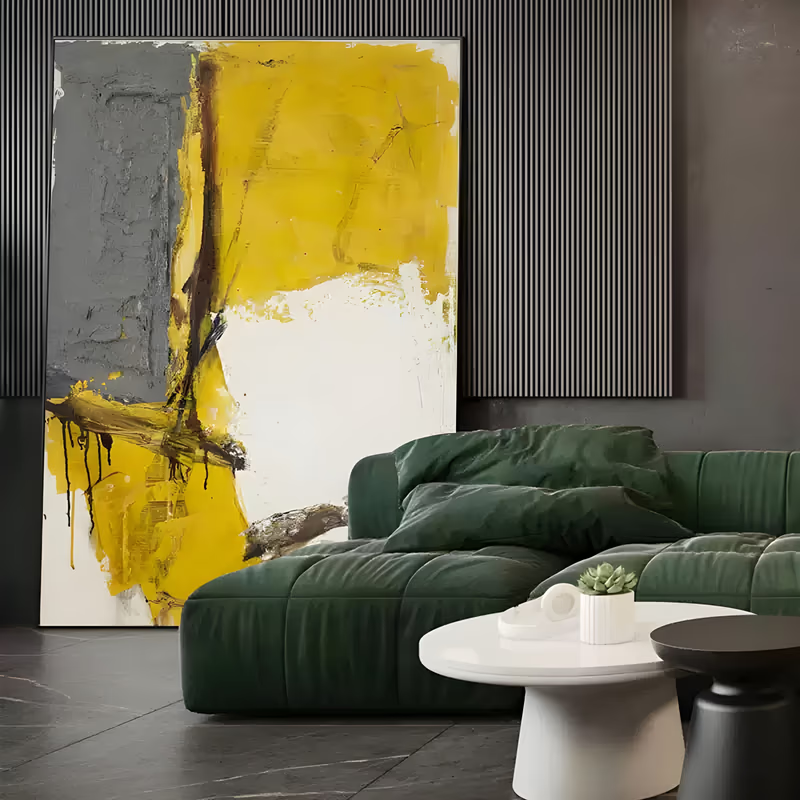
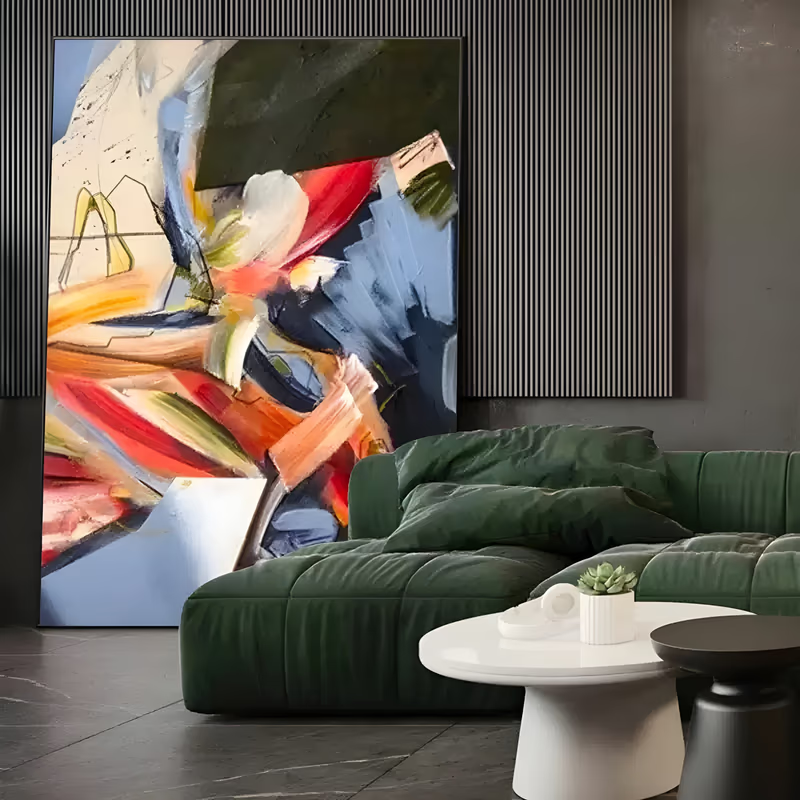
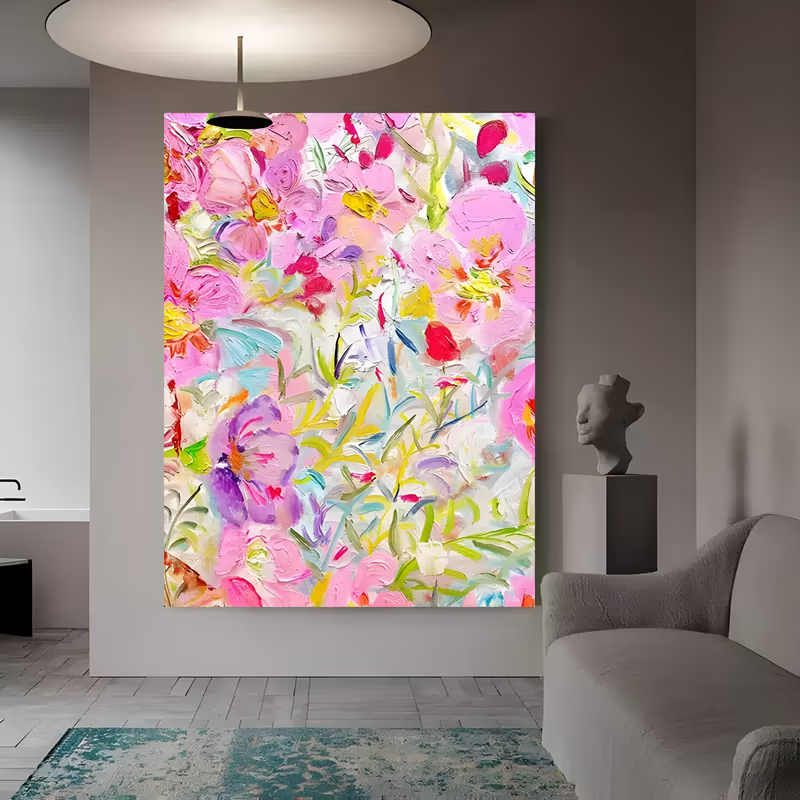
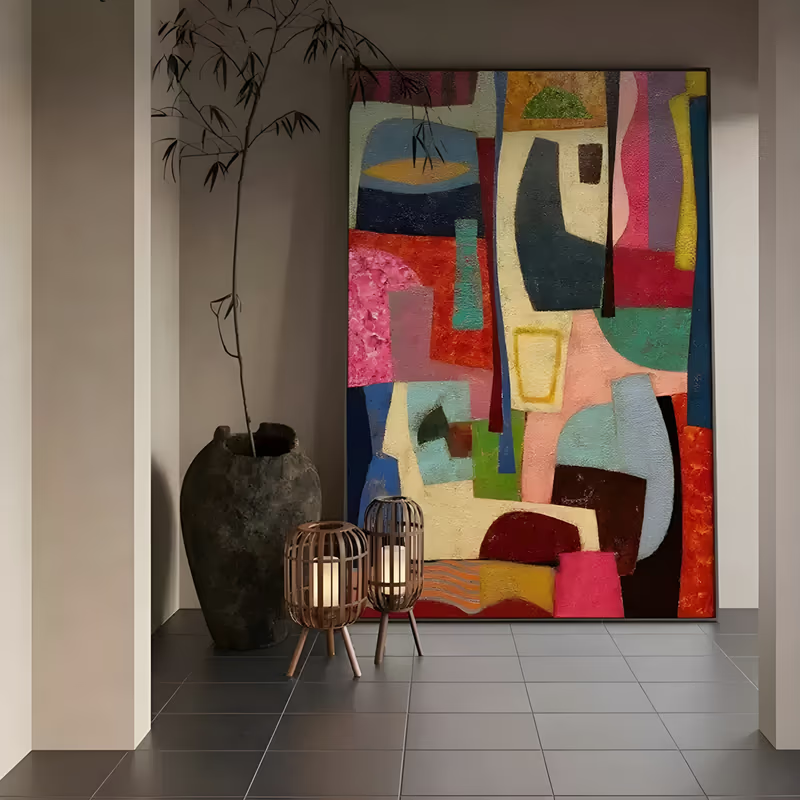
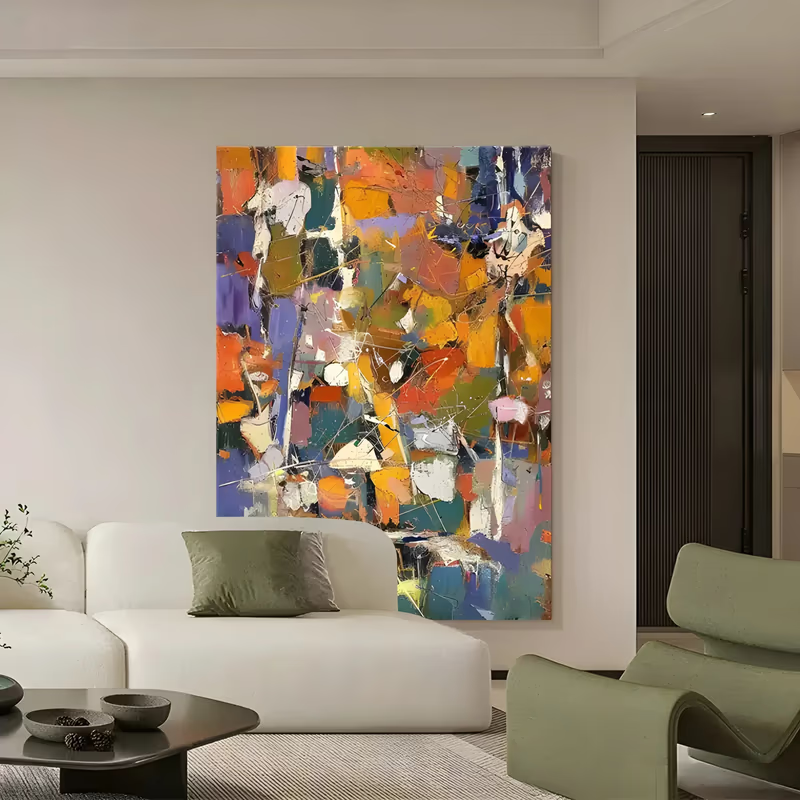
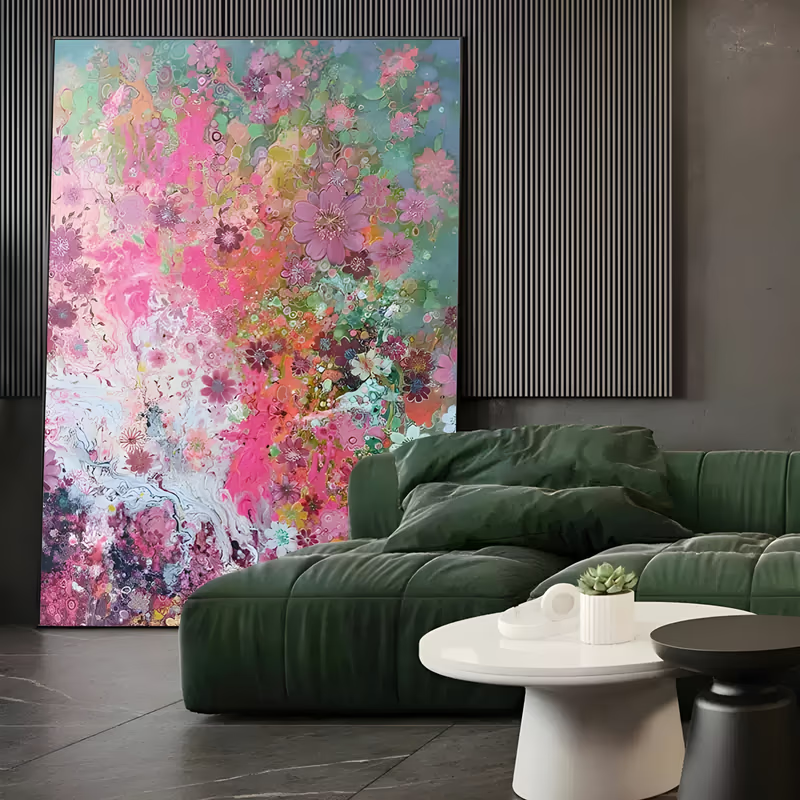
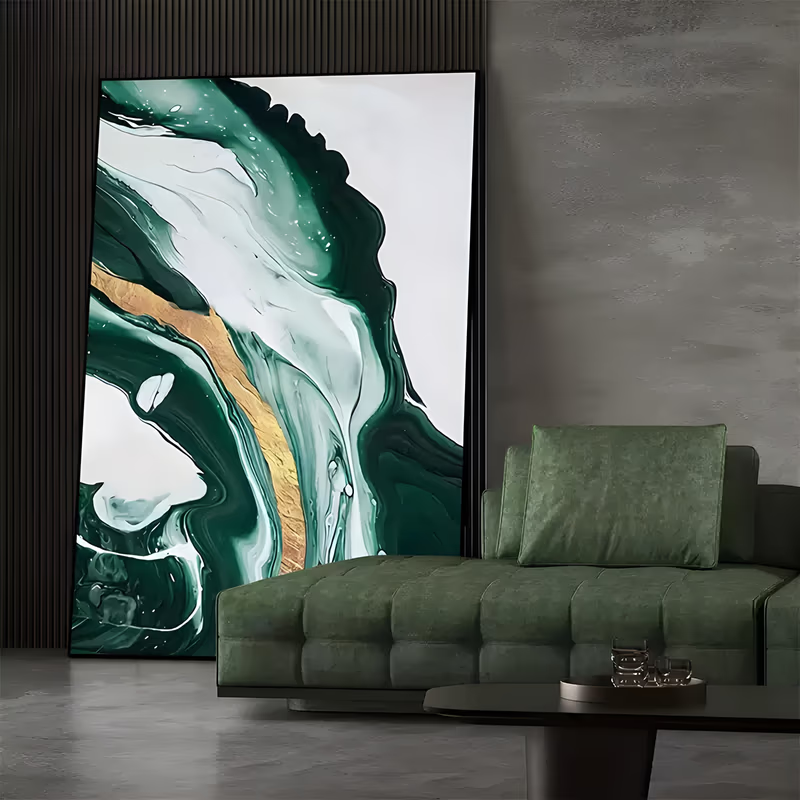
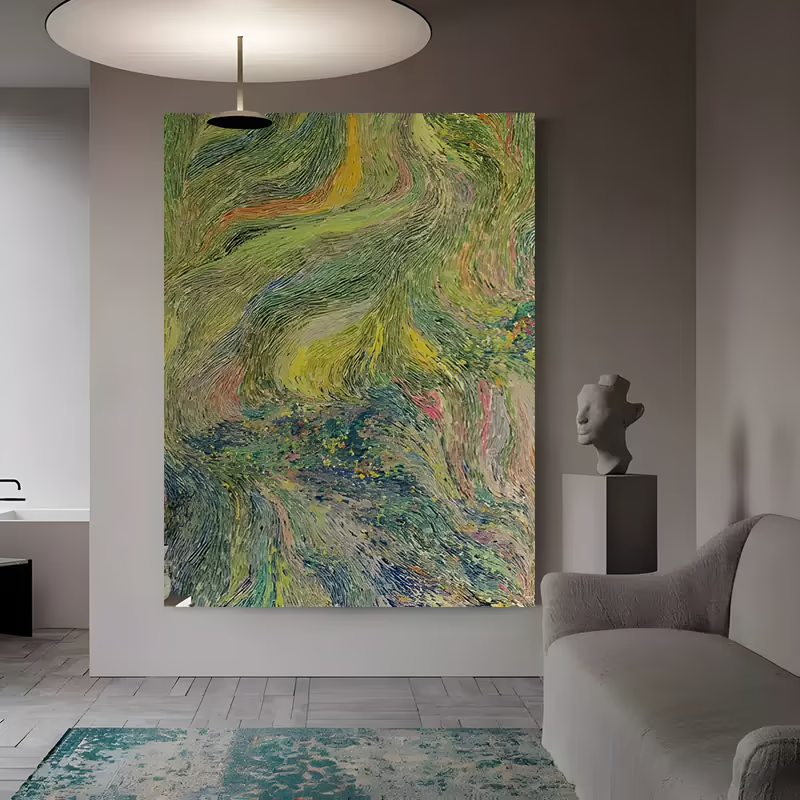
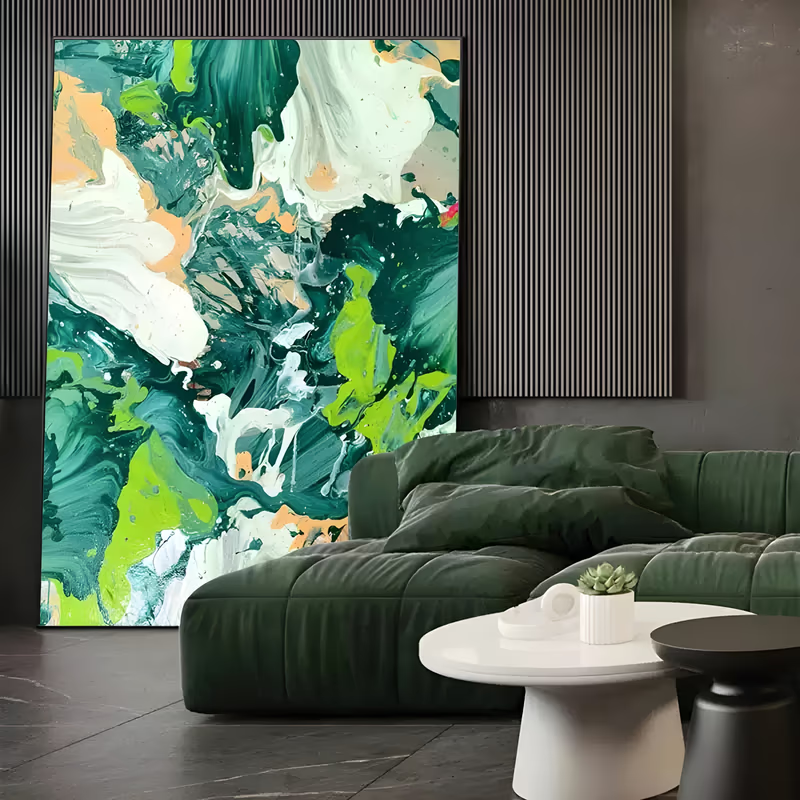
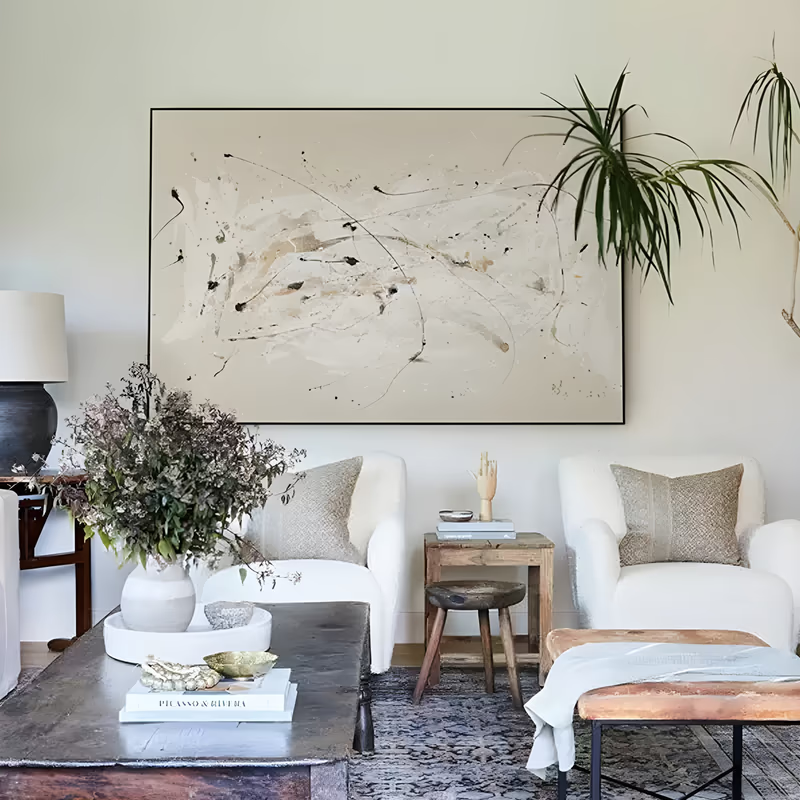
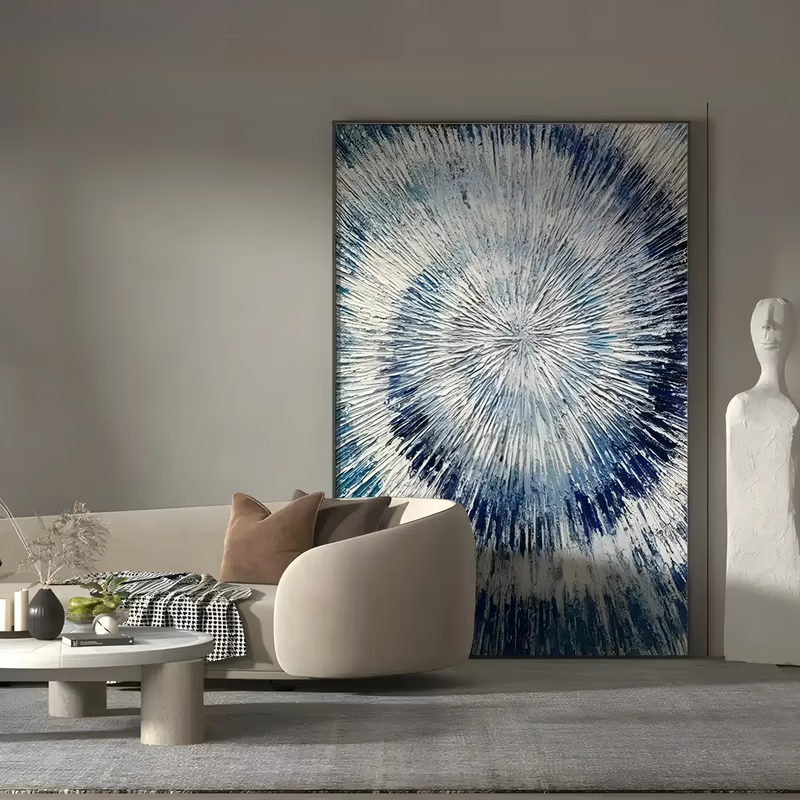
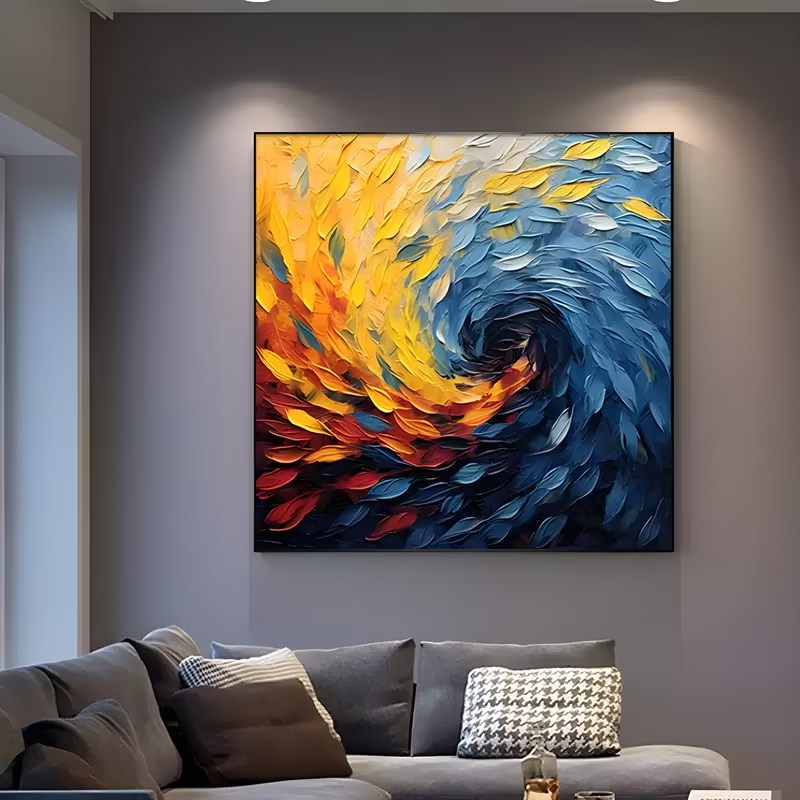
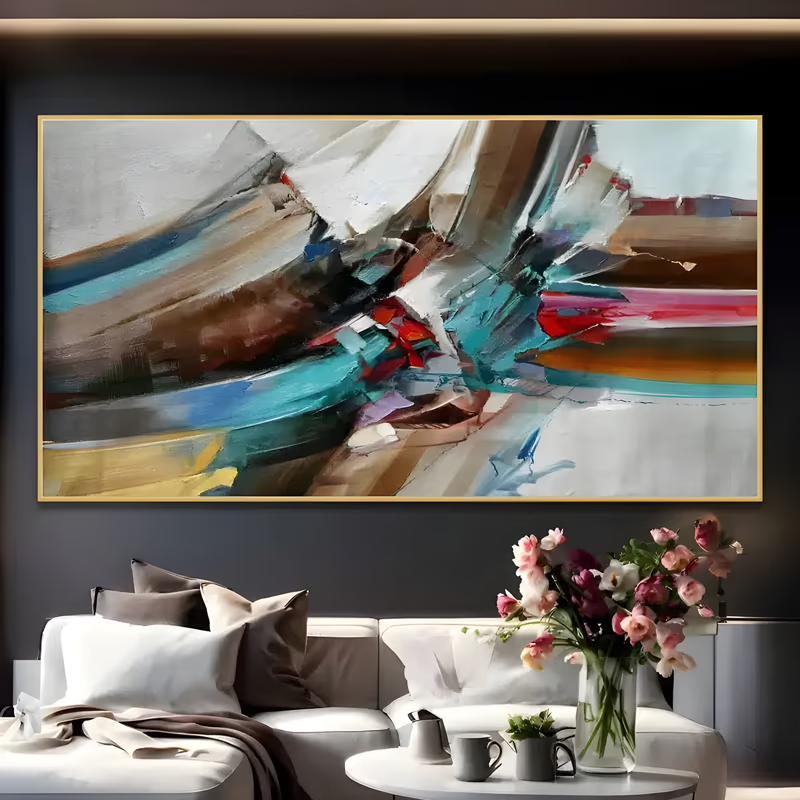
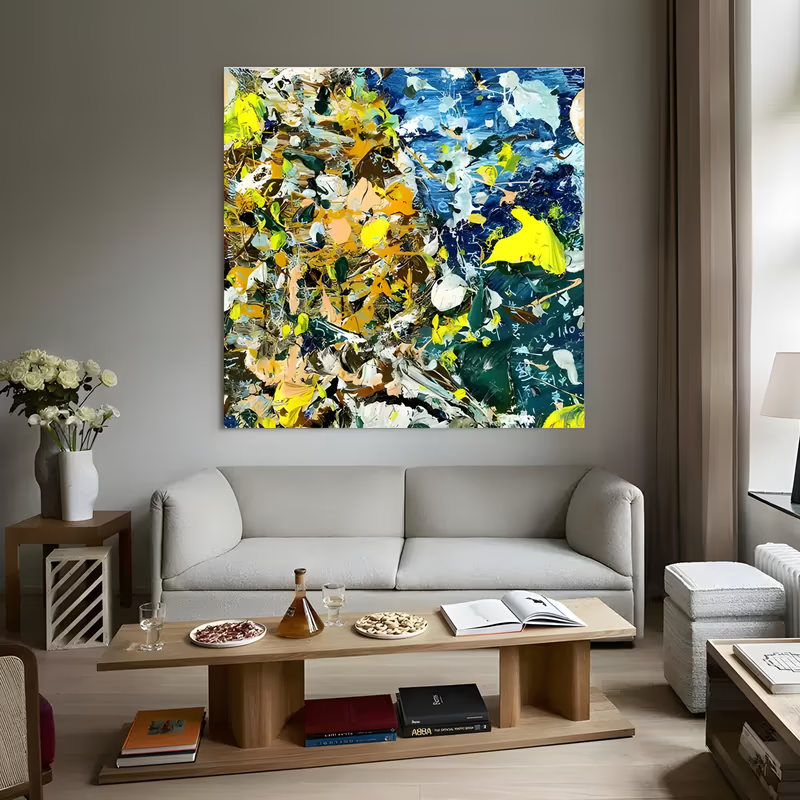
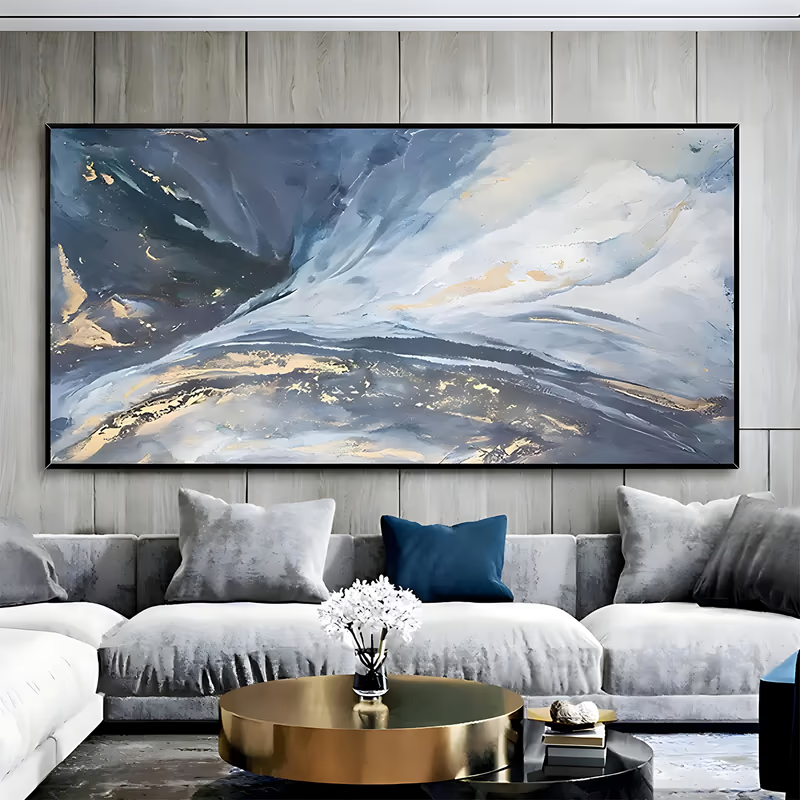
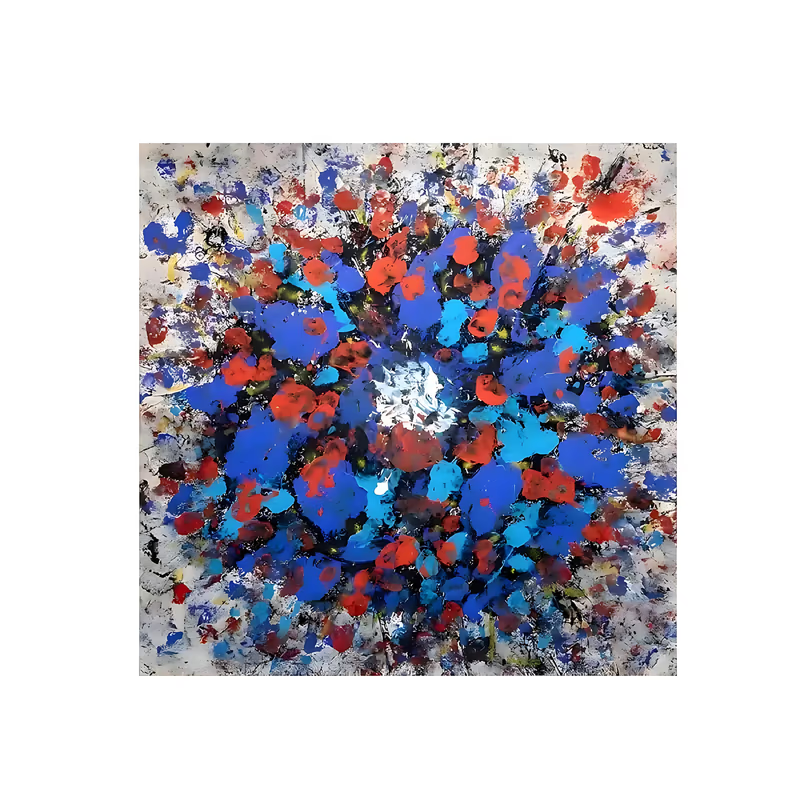
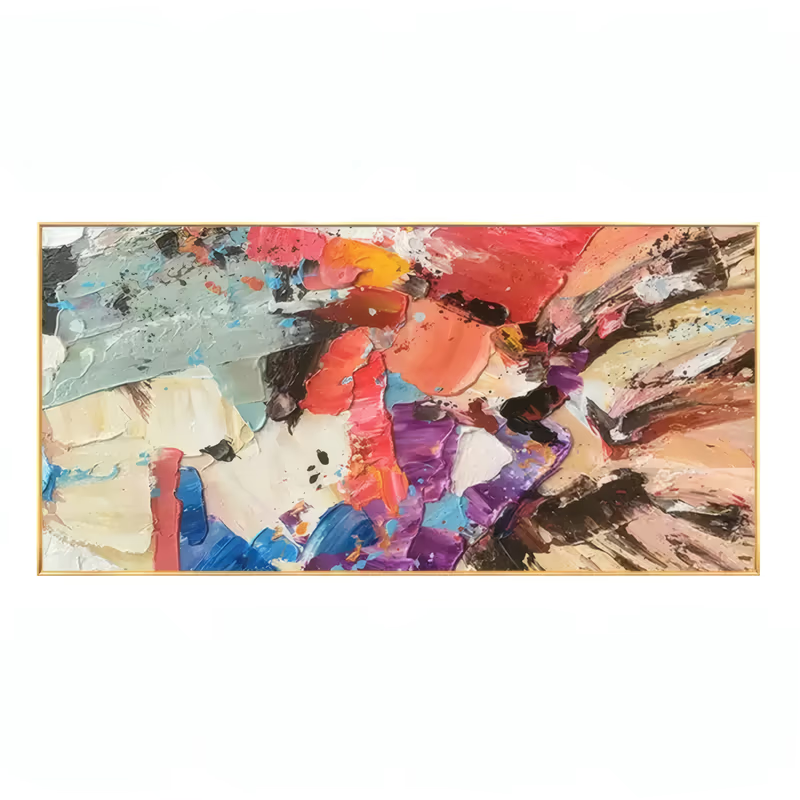
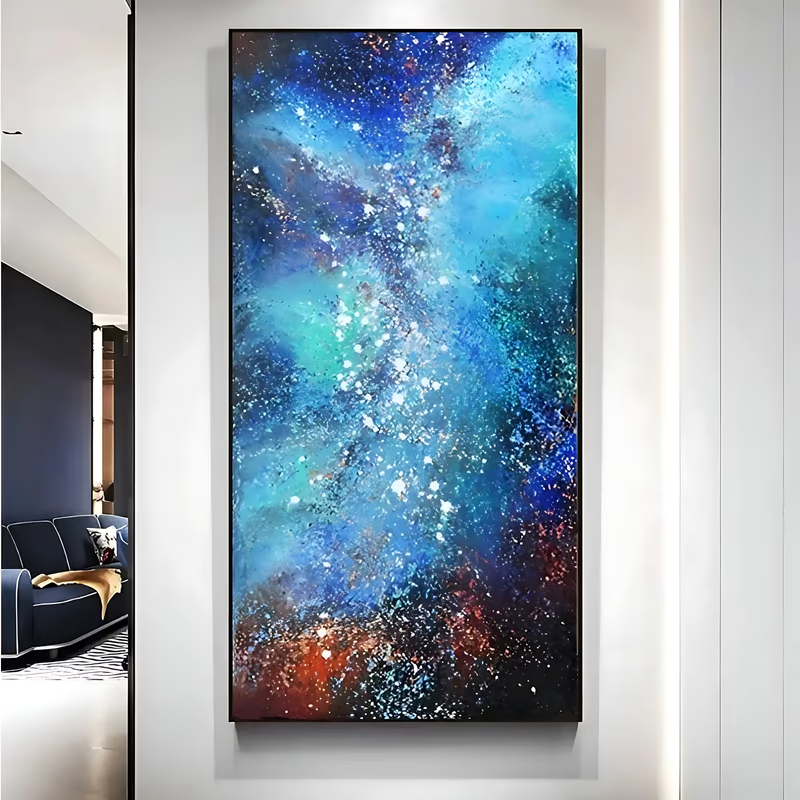
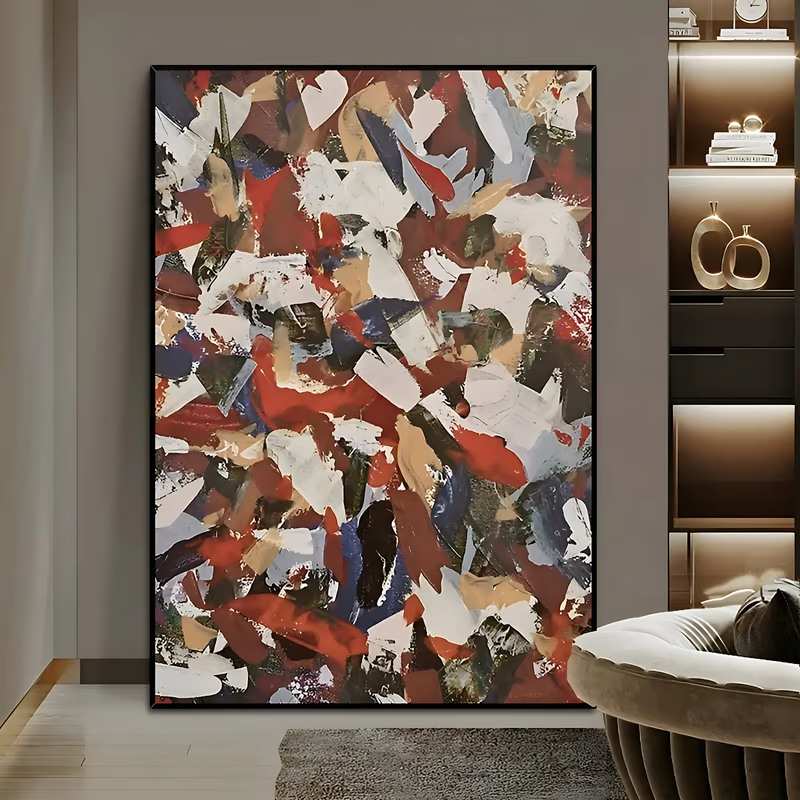
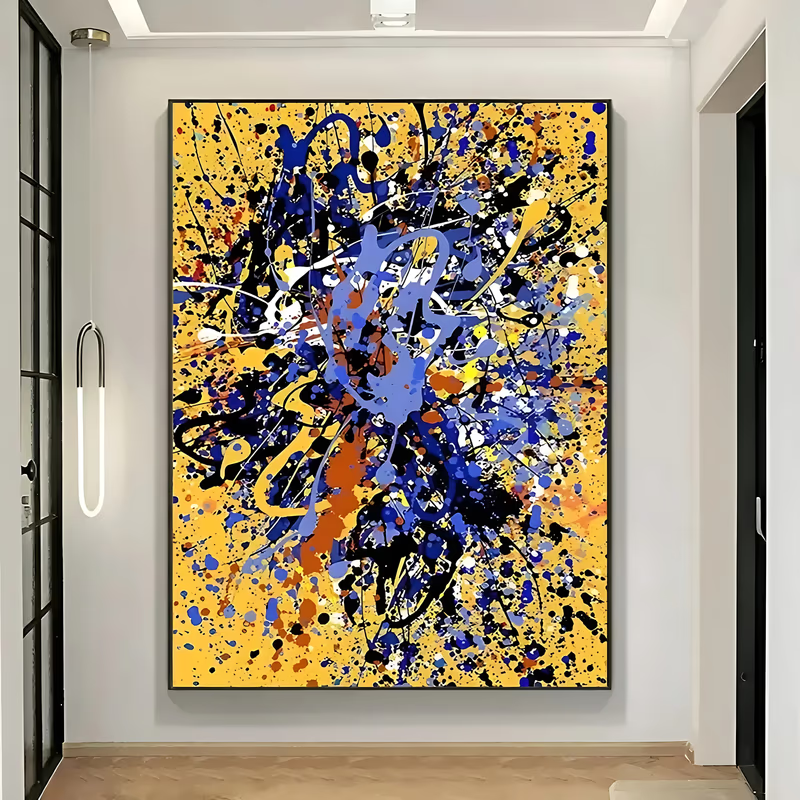
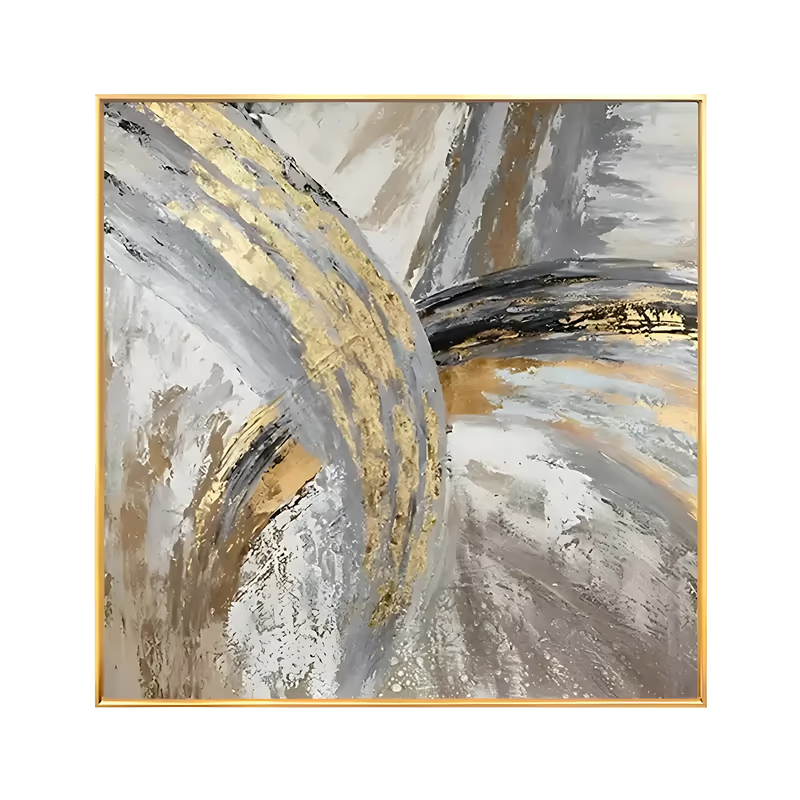
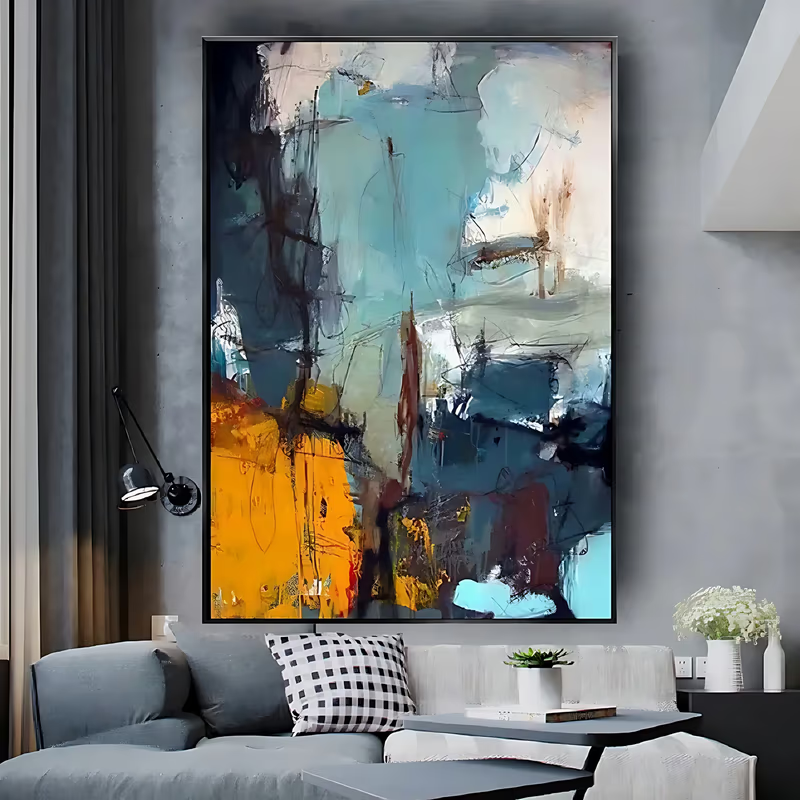
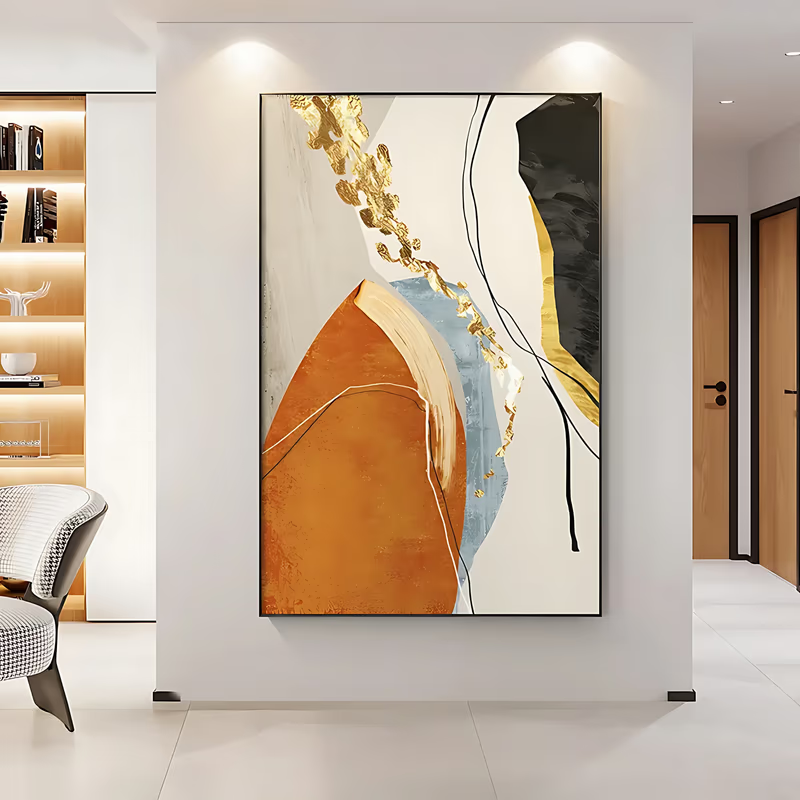
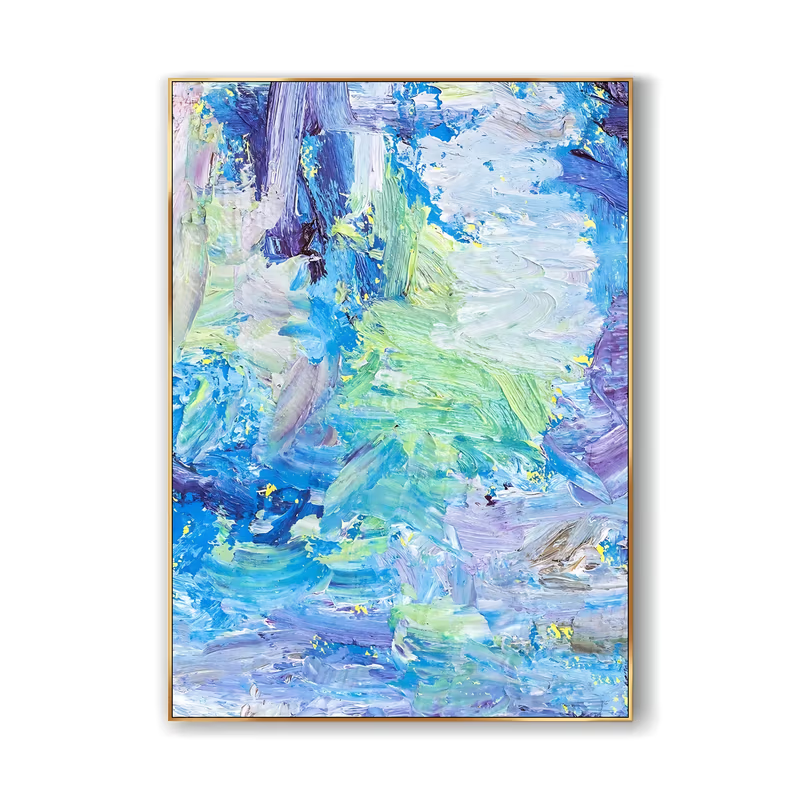
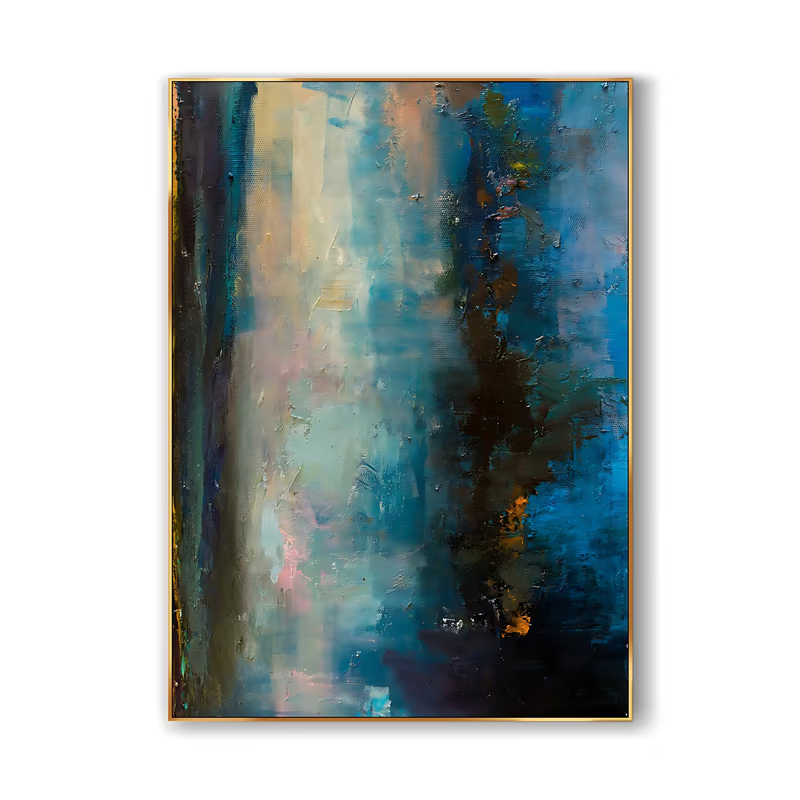
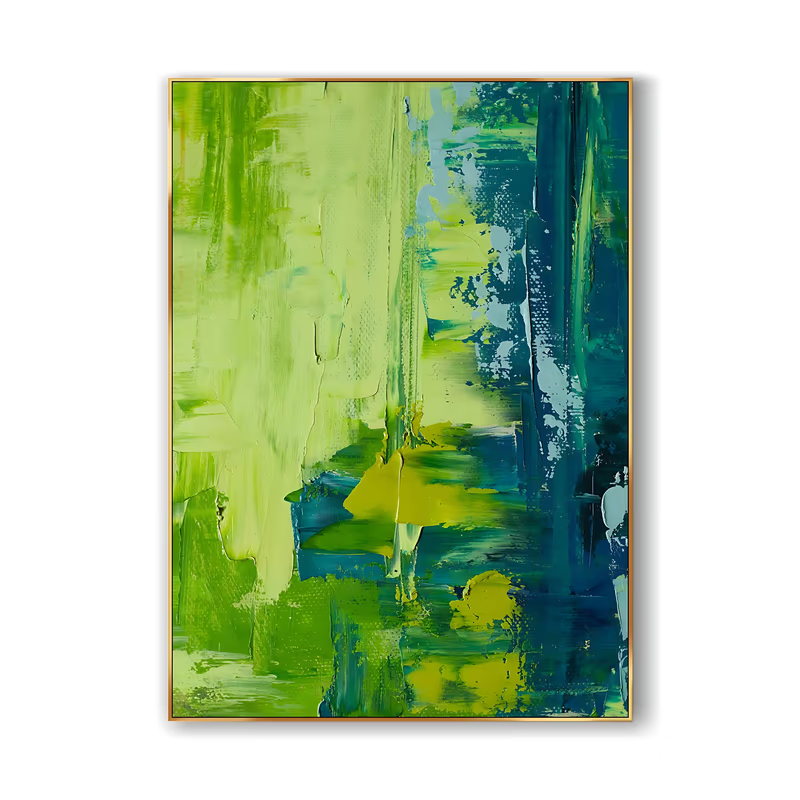
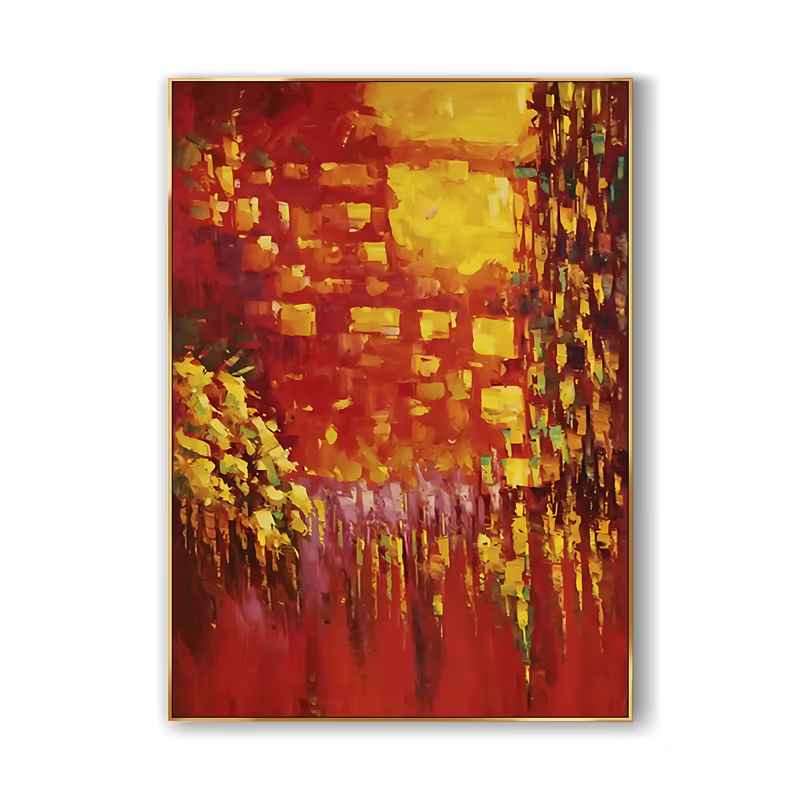
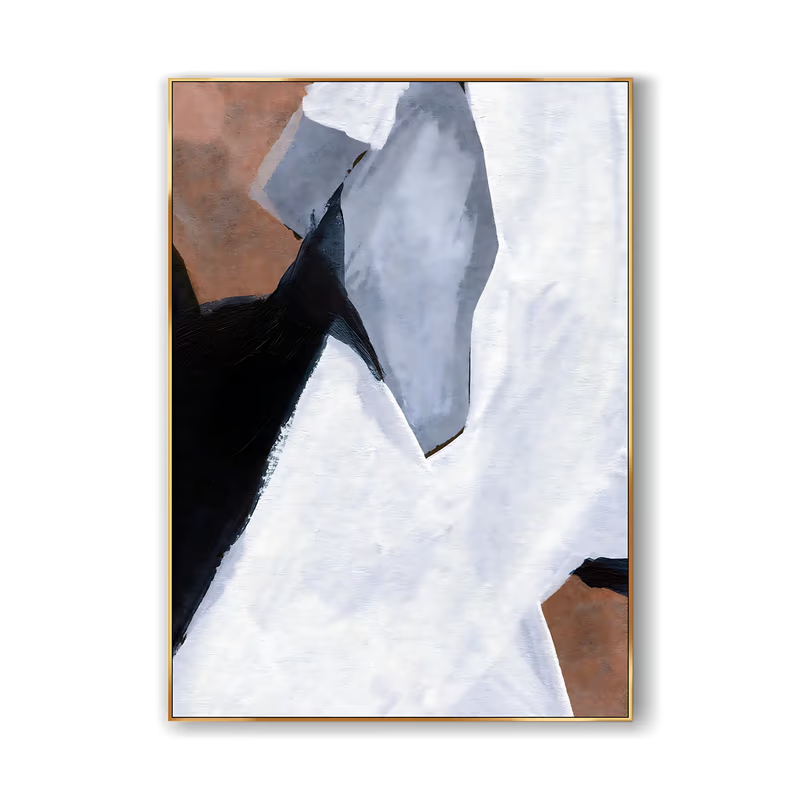
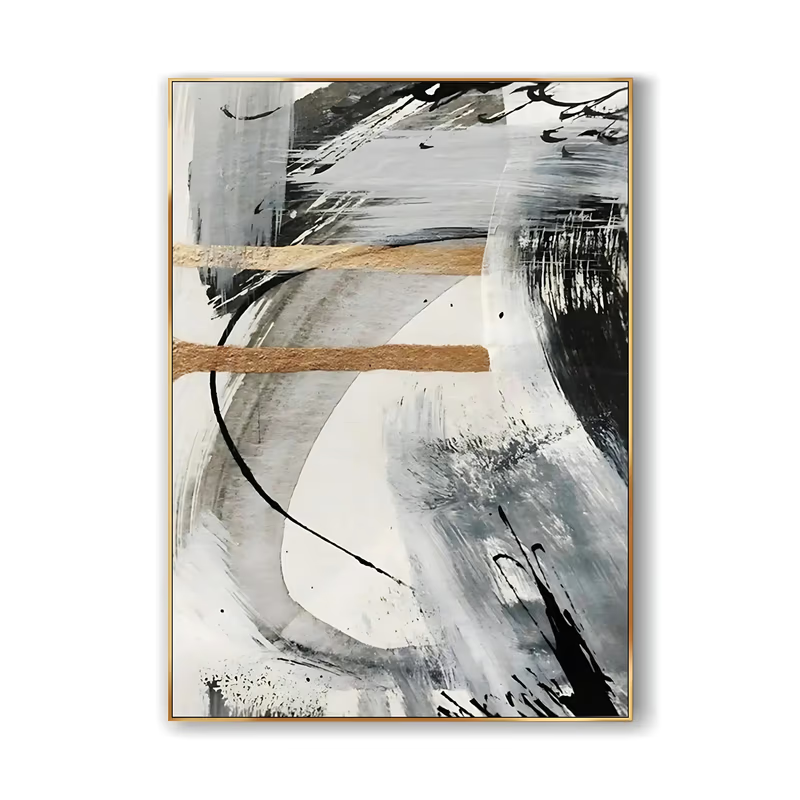
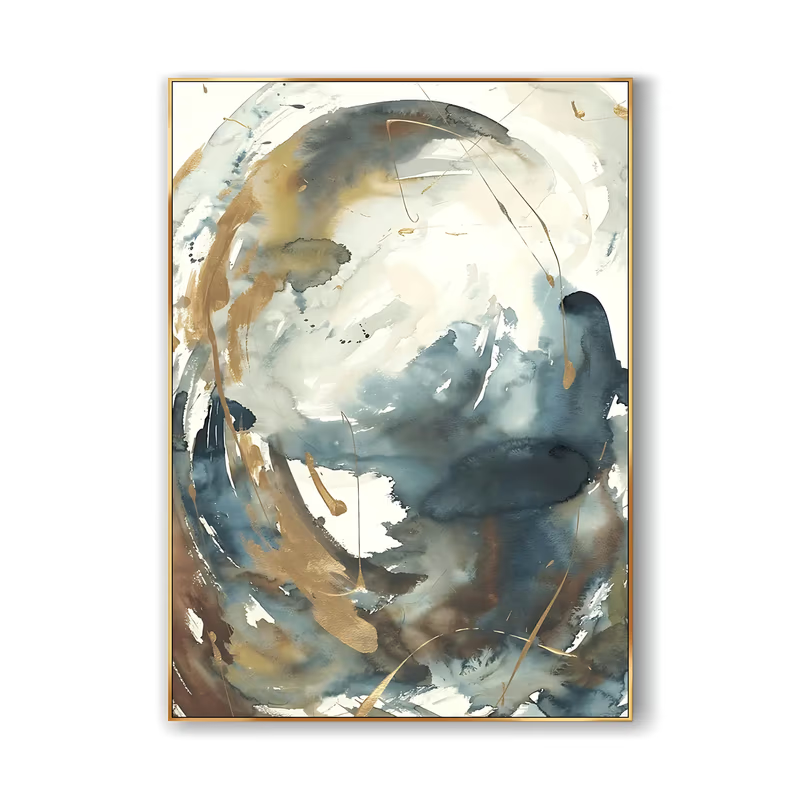
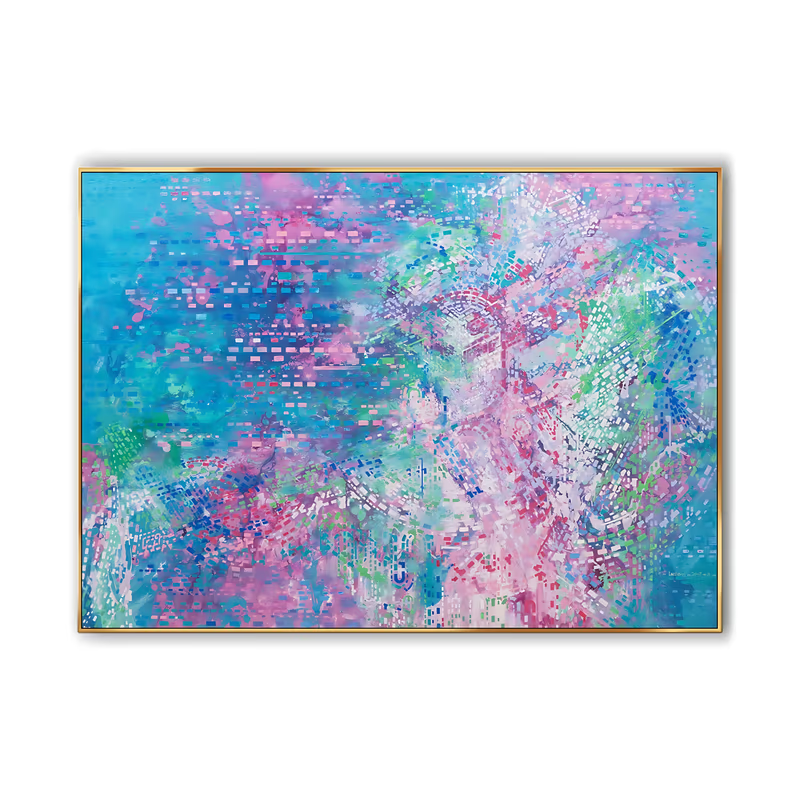
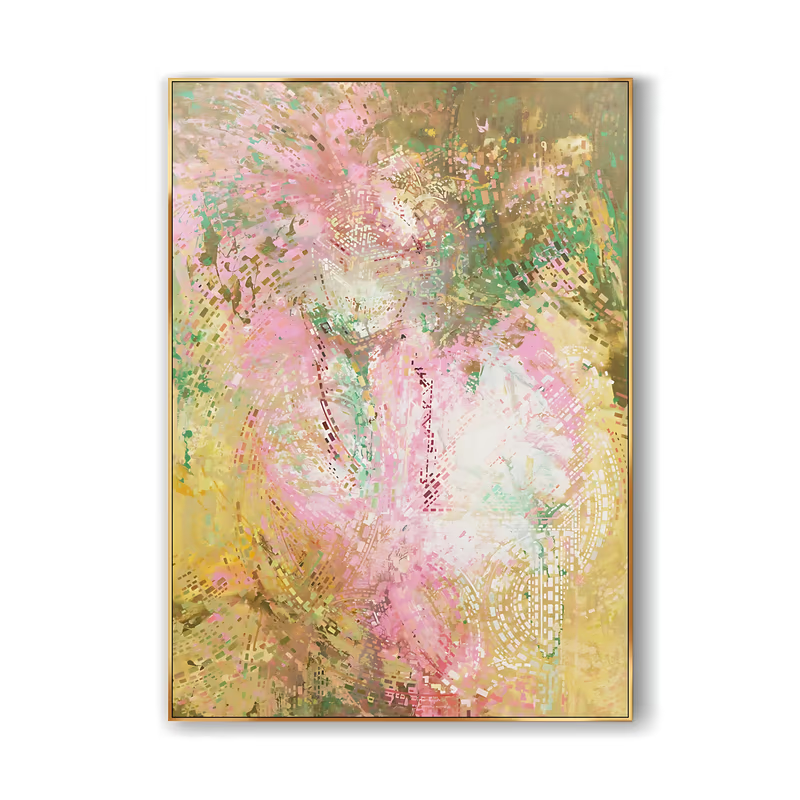
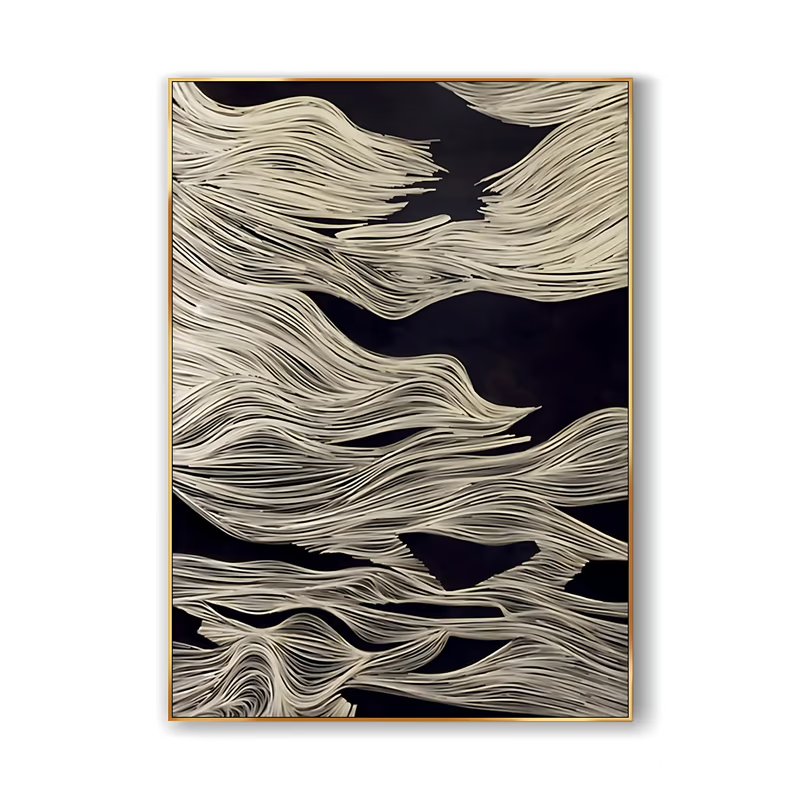
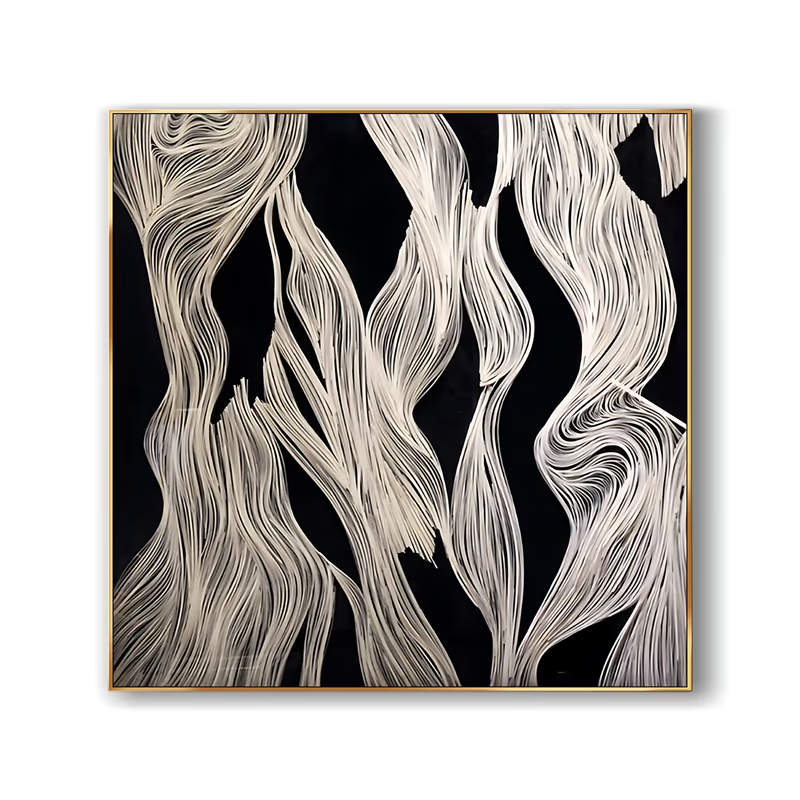
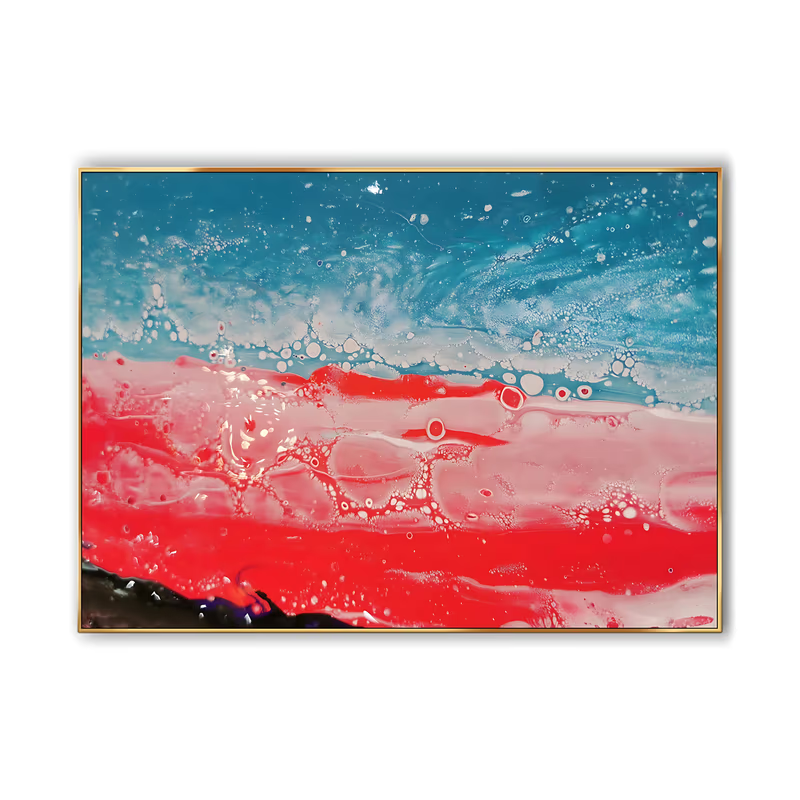
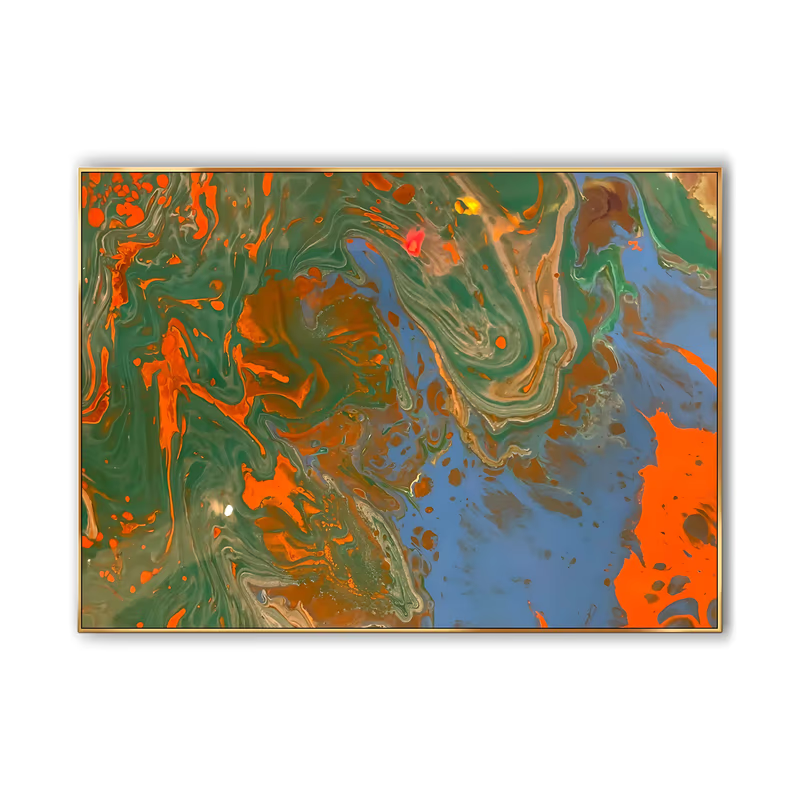
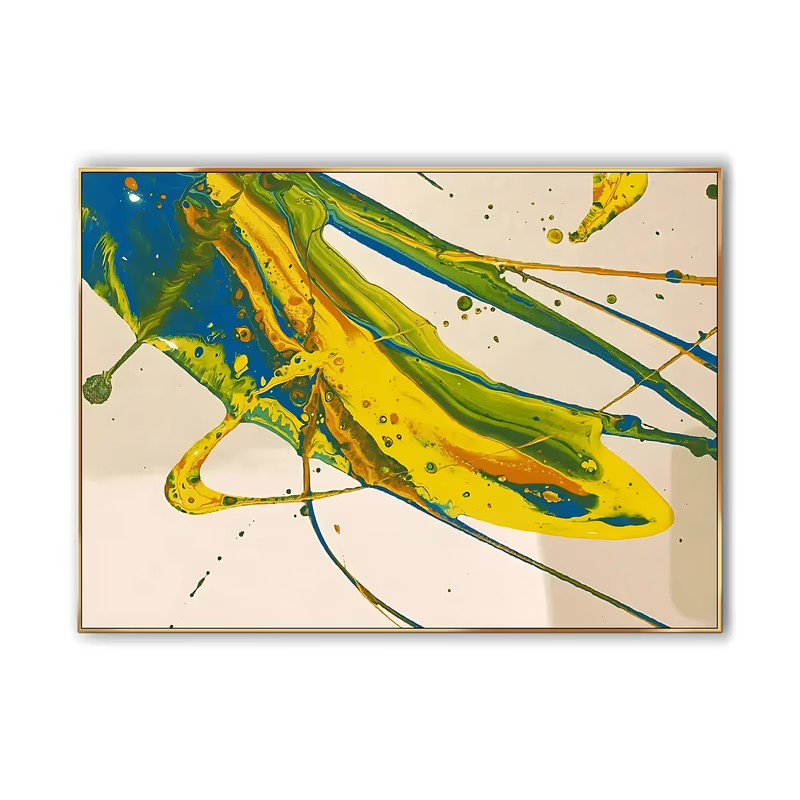
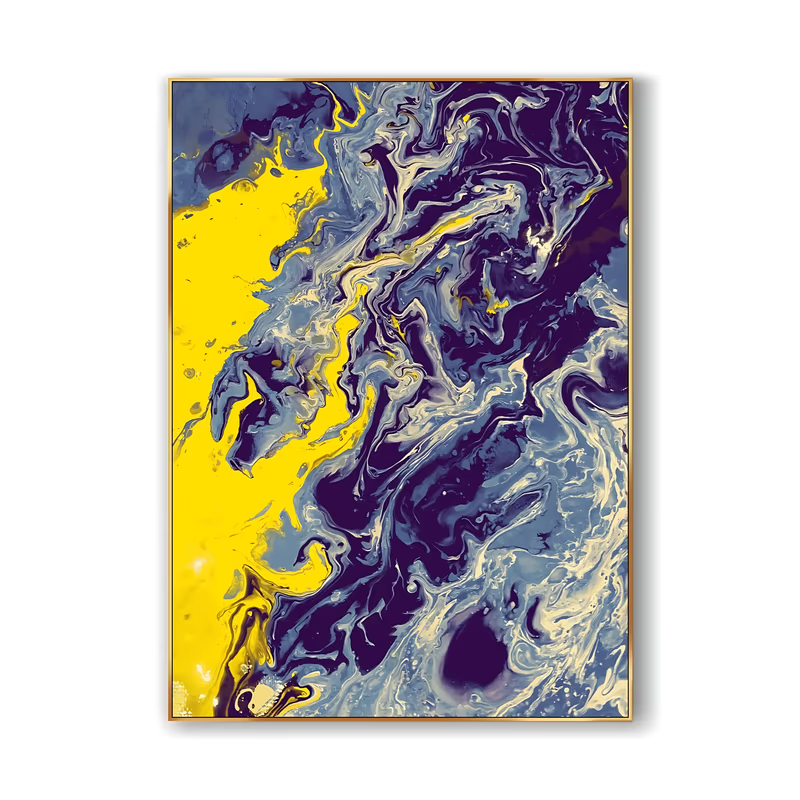
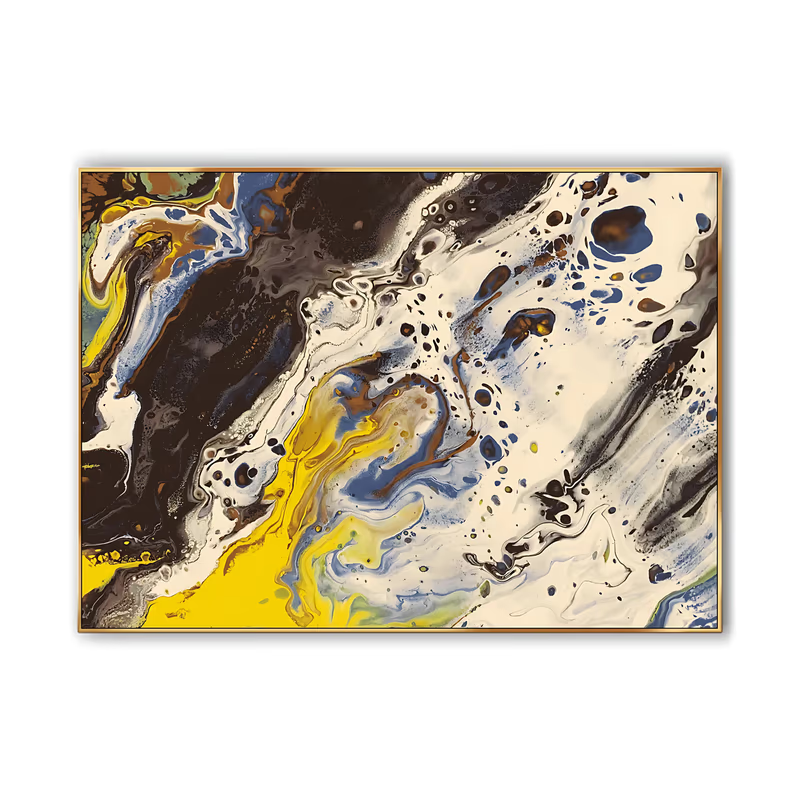
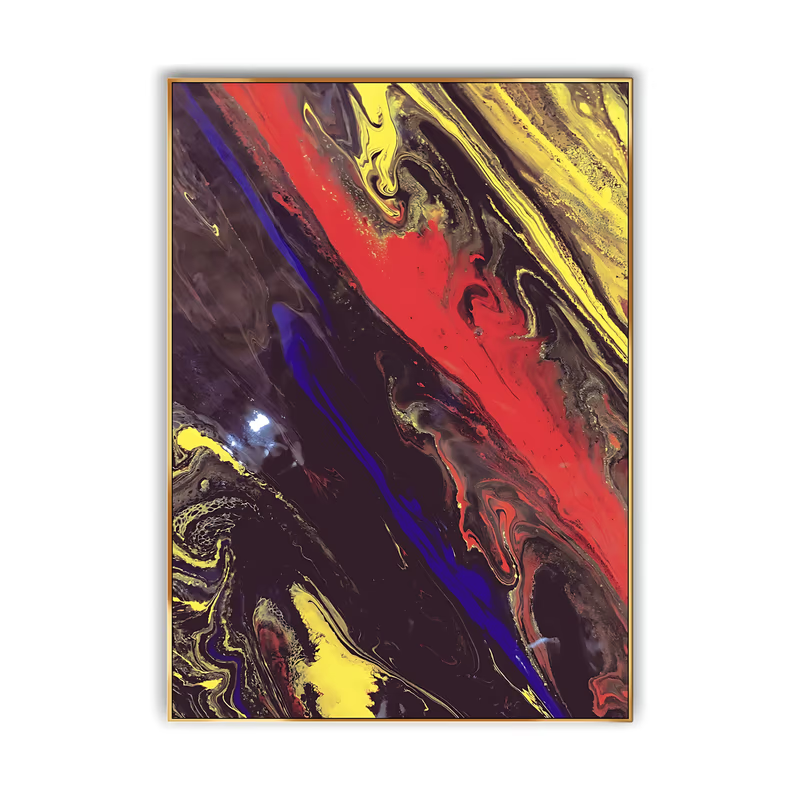
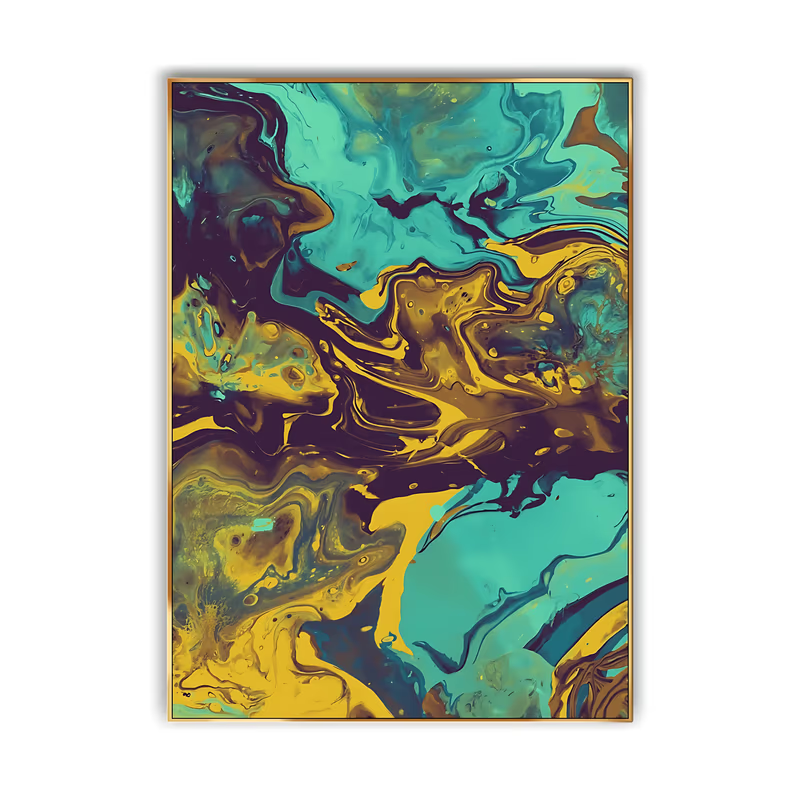
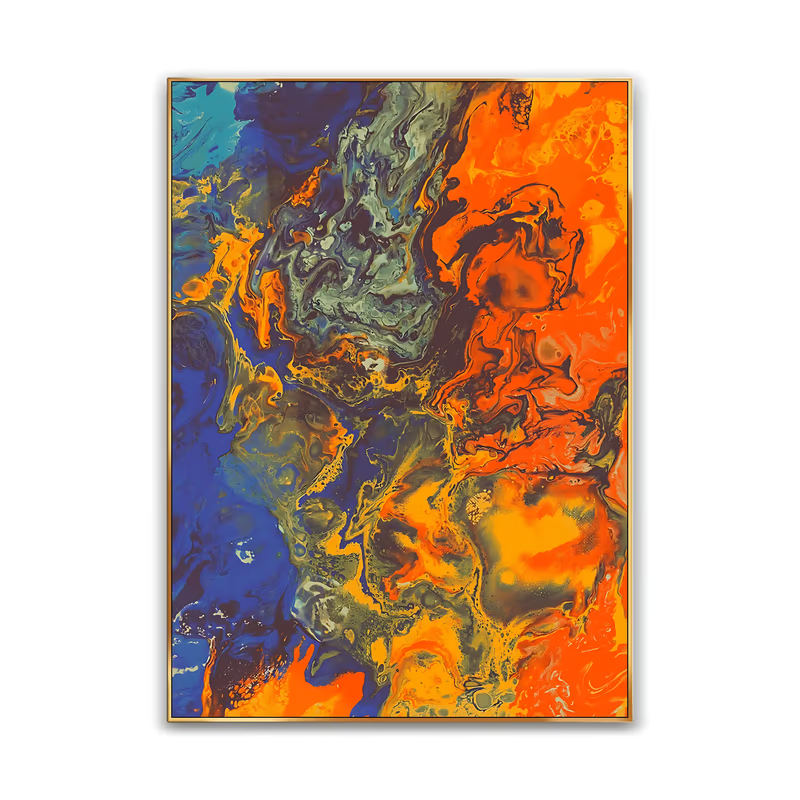
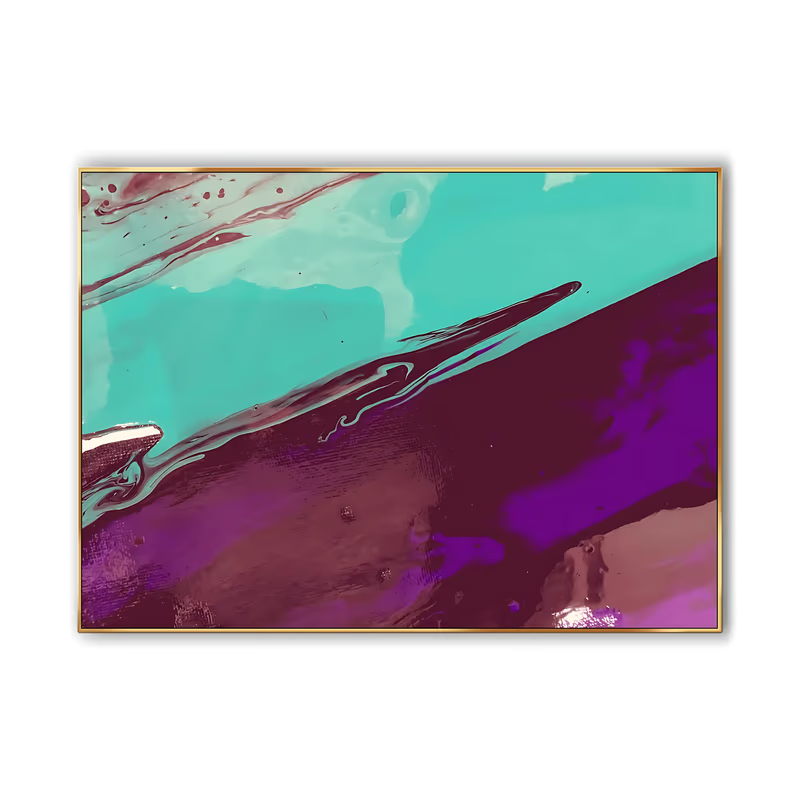
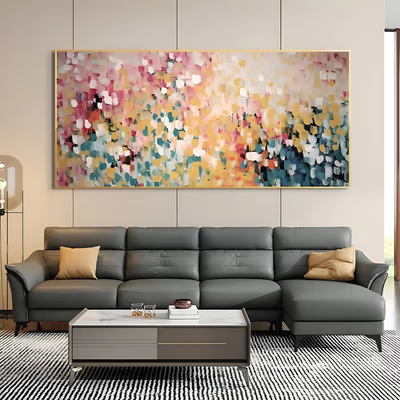
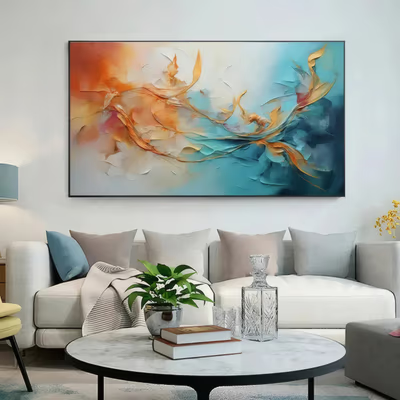
Sweeping brushwork, marbled currents and bold colour fields. An abstract has no subject to argue with the architecture, so it suits modern hotels, office receptions and residential towers, and it can carry the building's colours without looking like branding. Bold abstracts for a lobby.
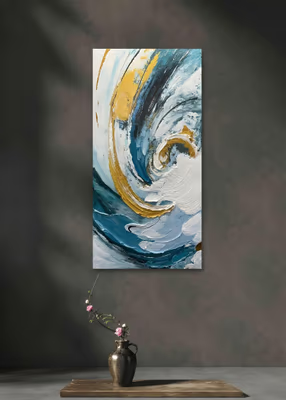
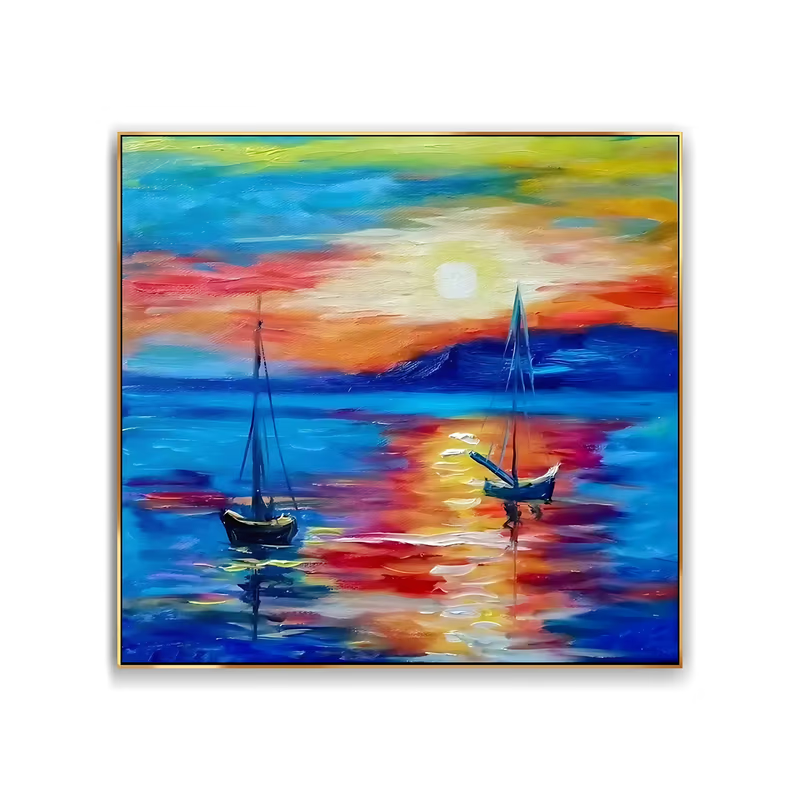
Landscapes and seascapes
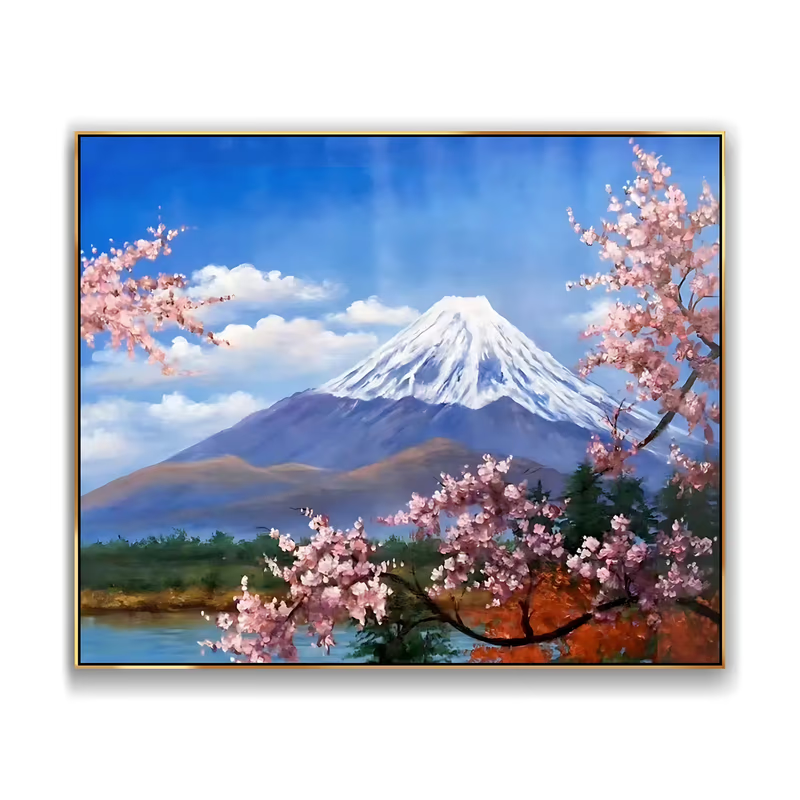
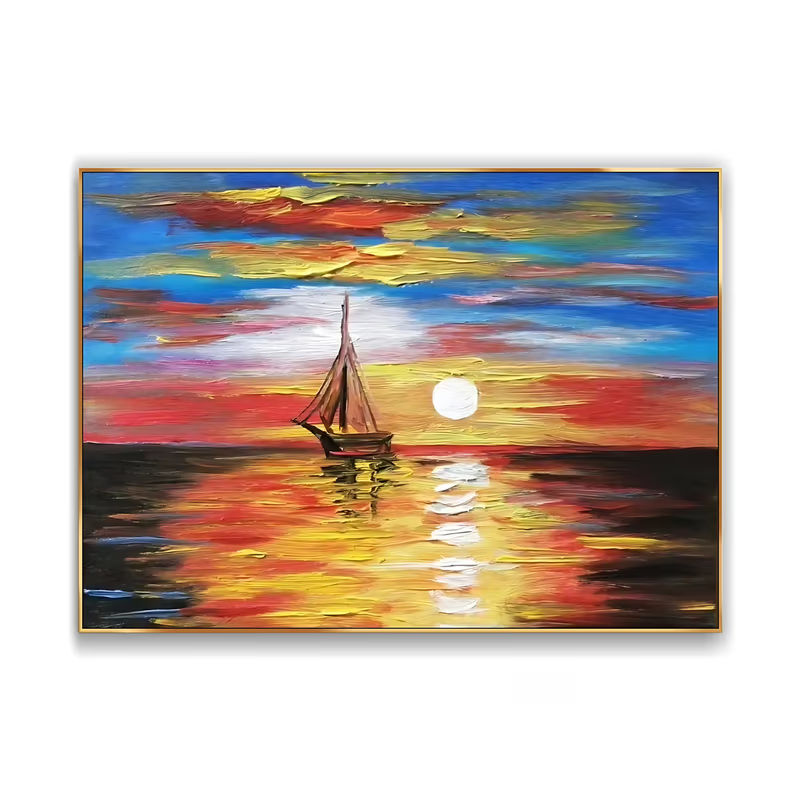
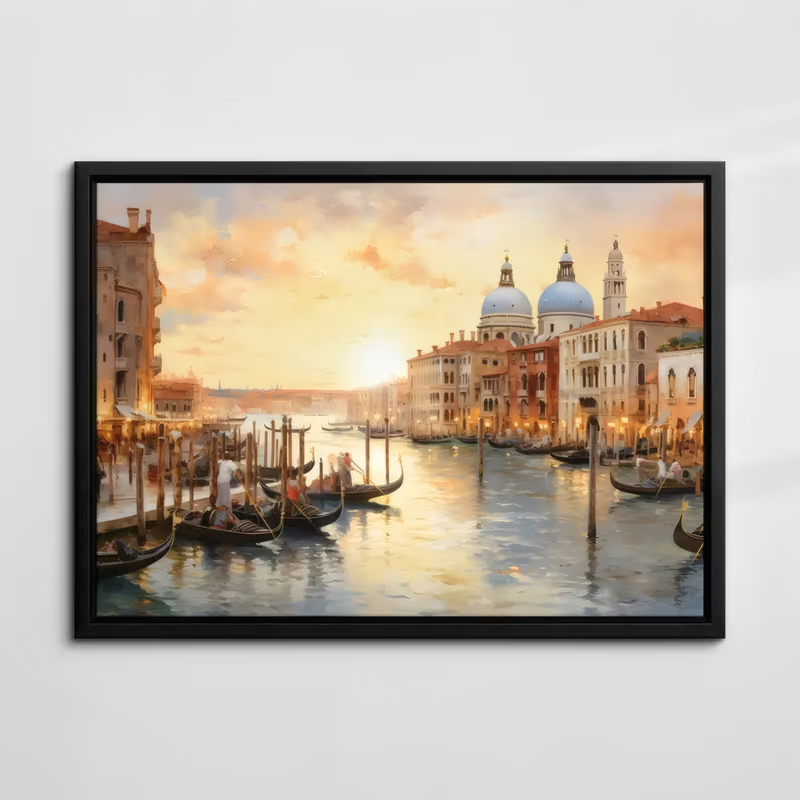
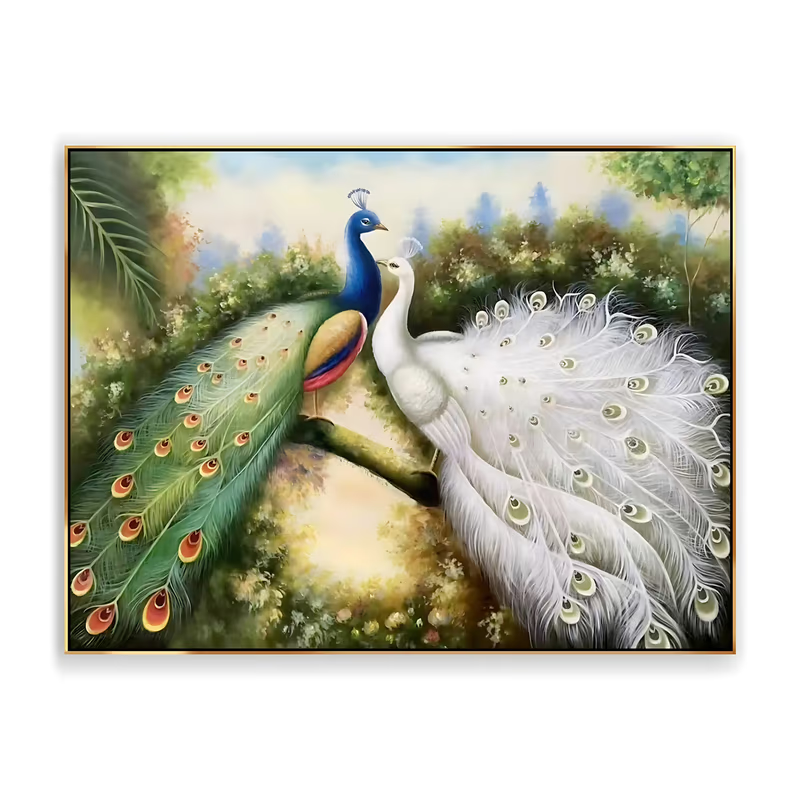
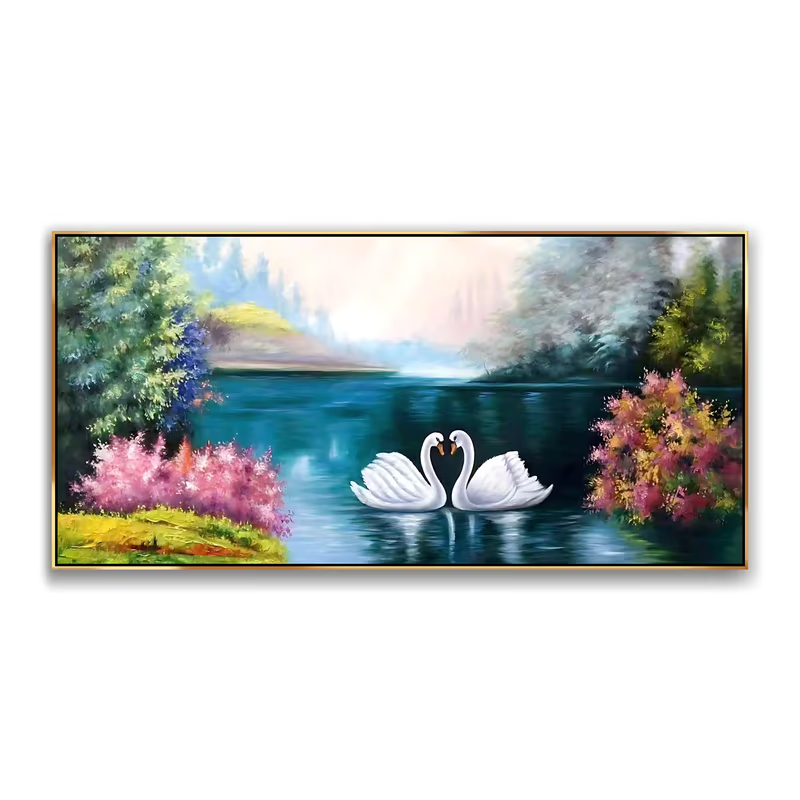
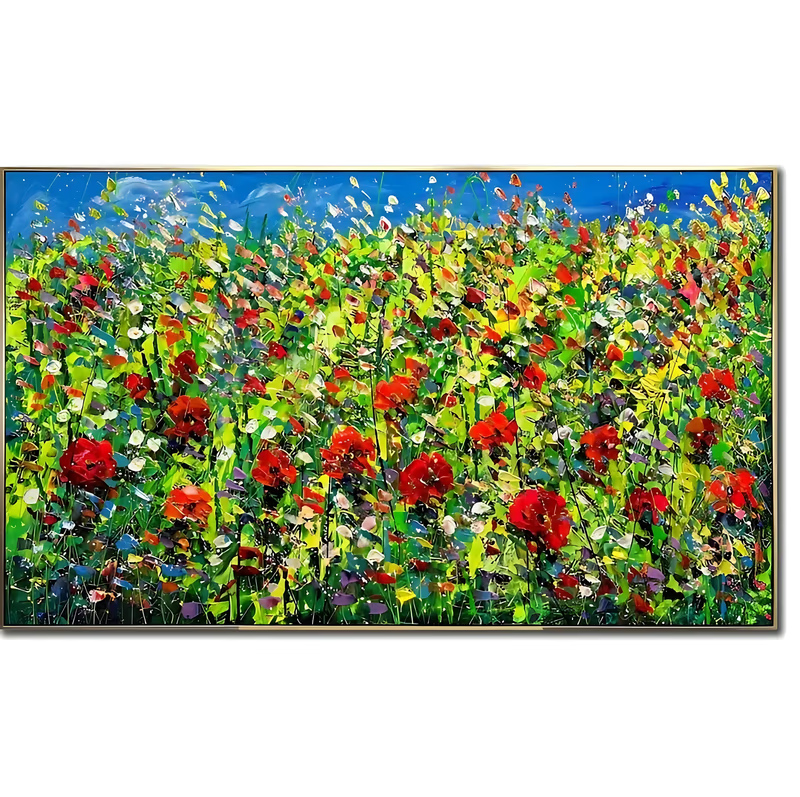
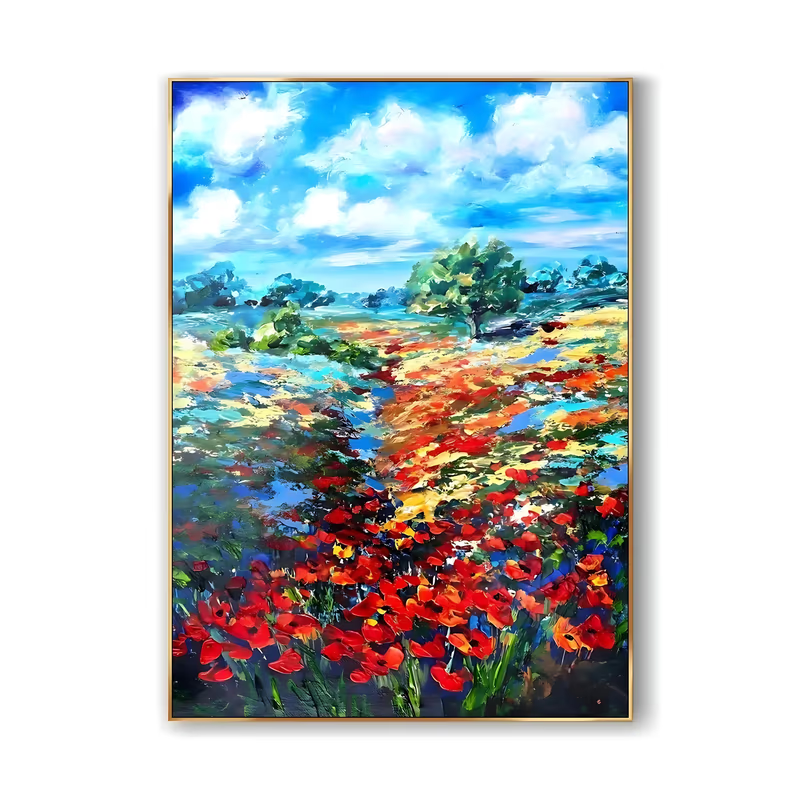
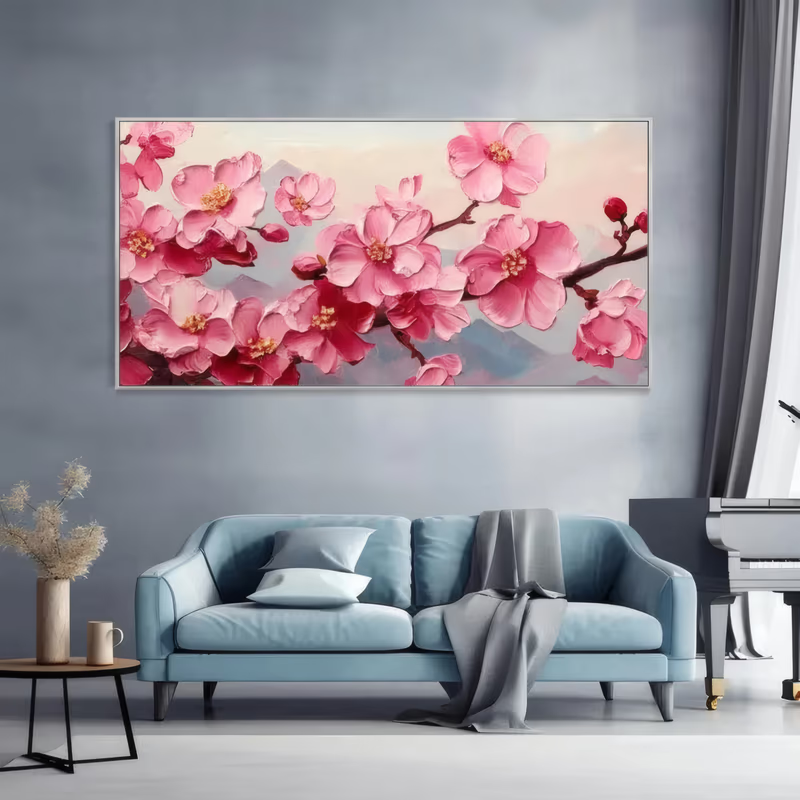
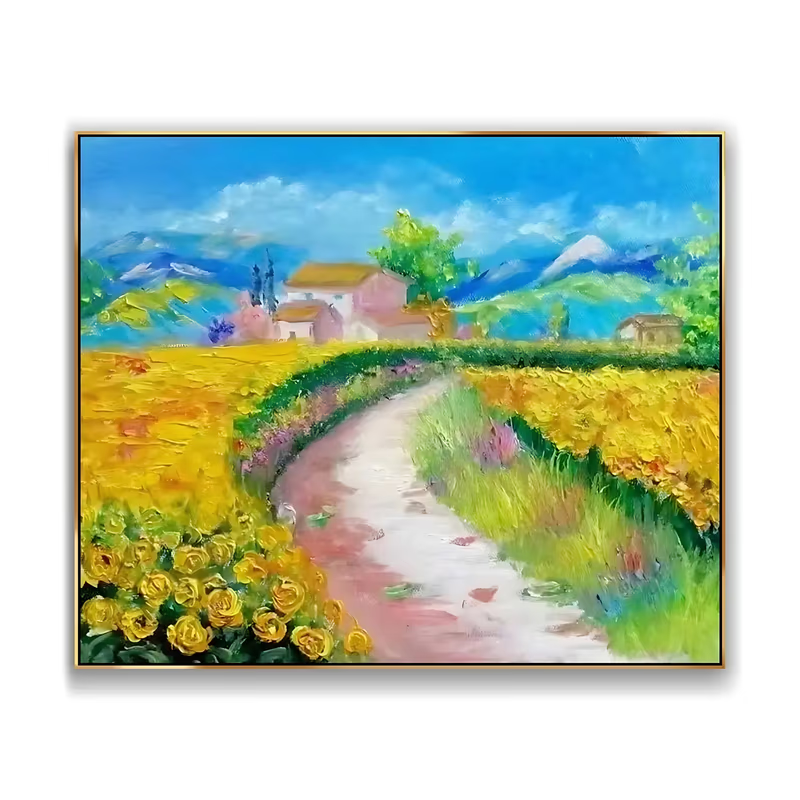
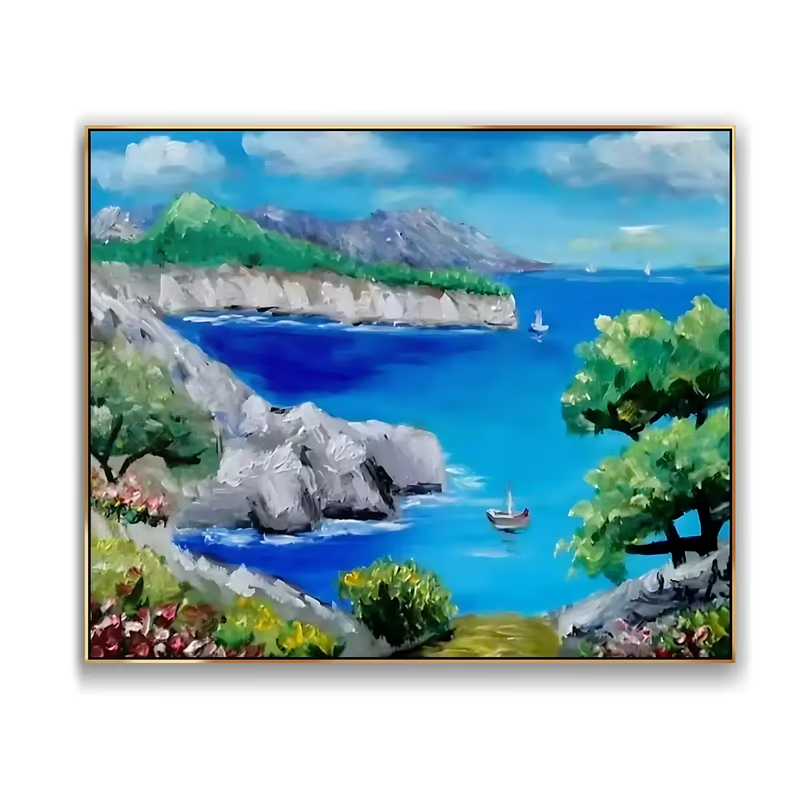
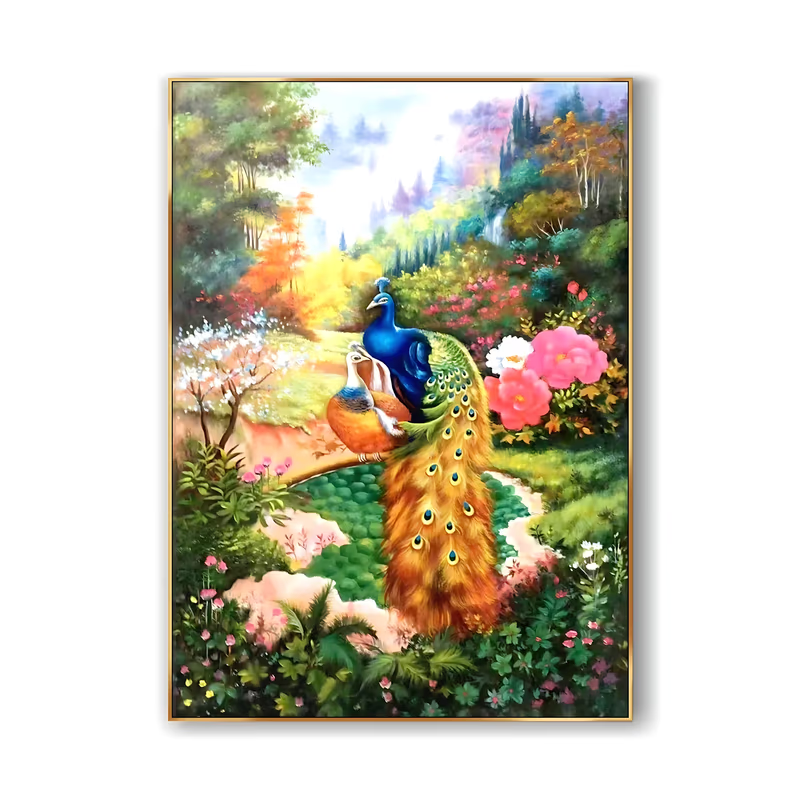
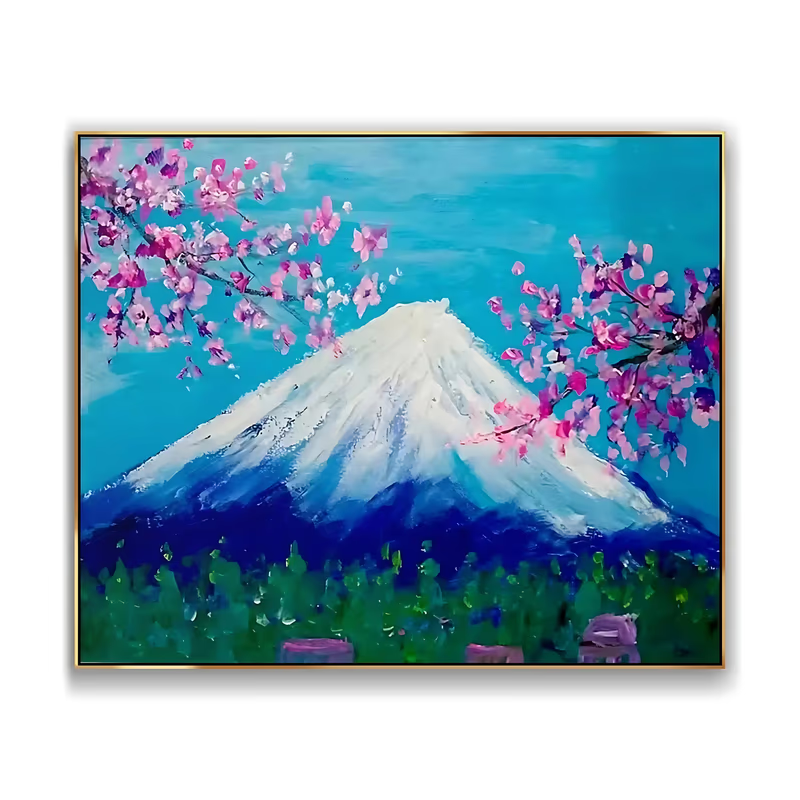
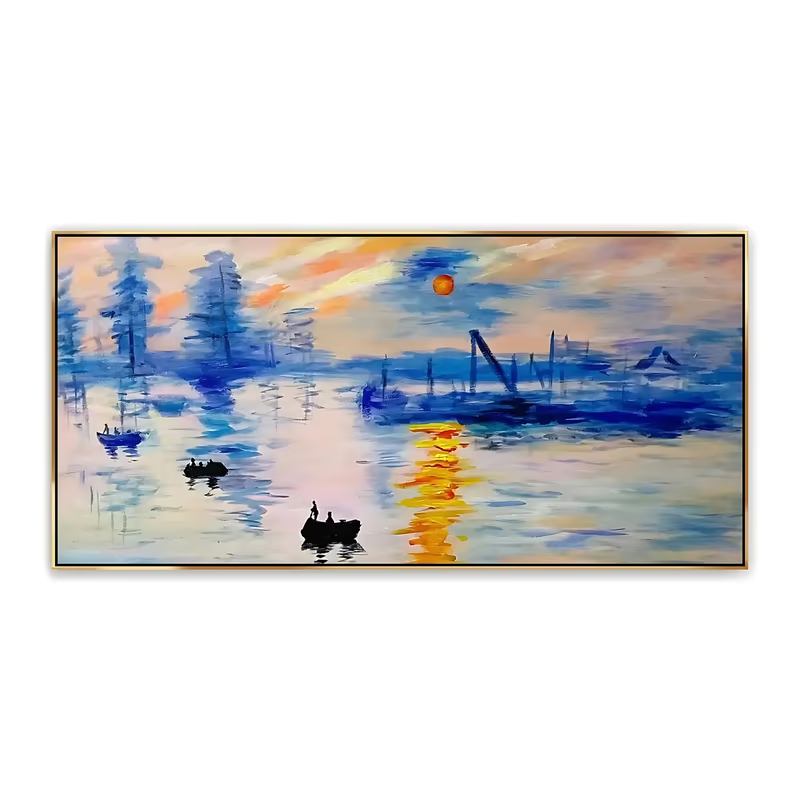
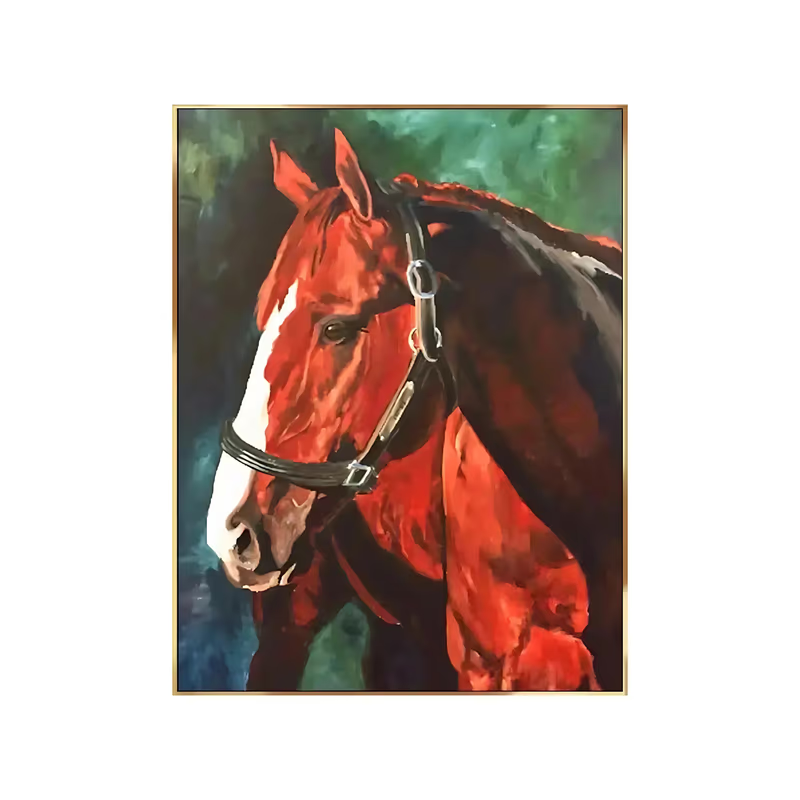
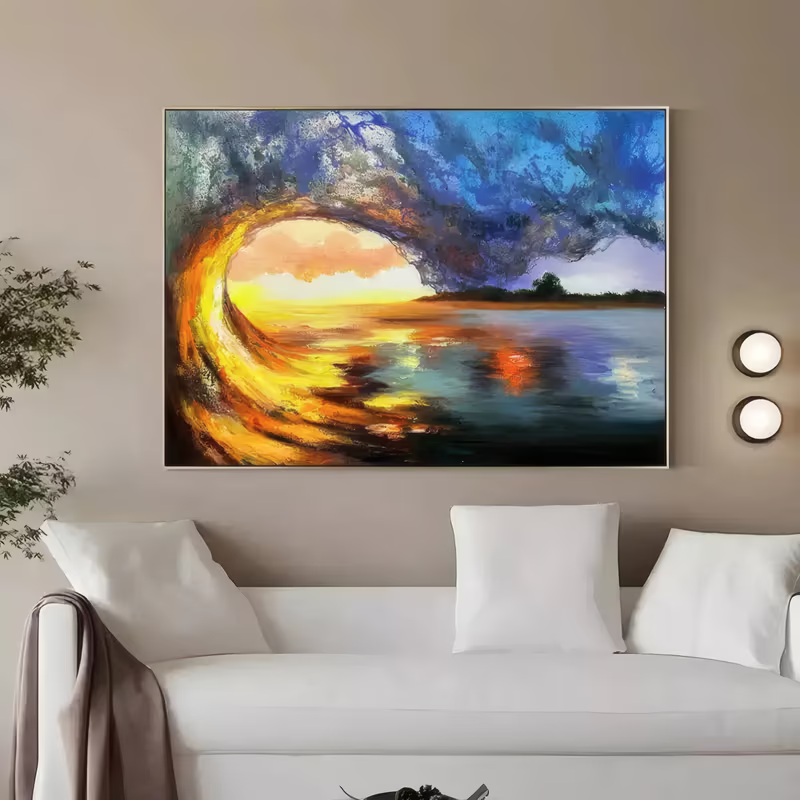
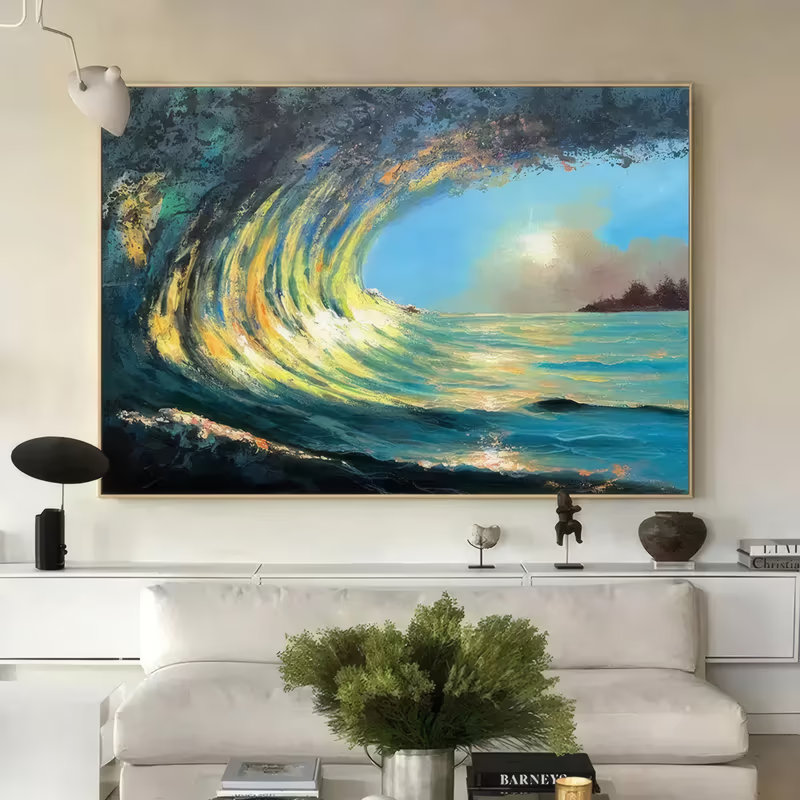
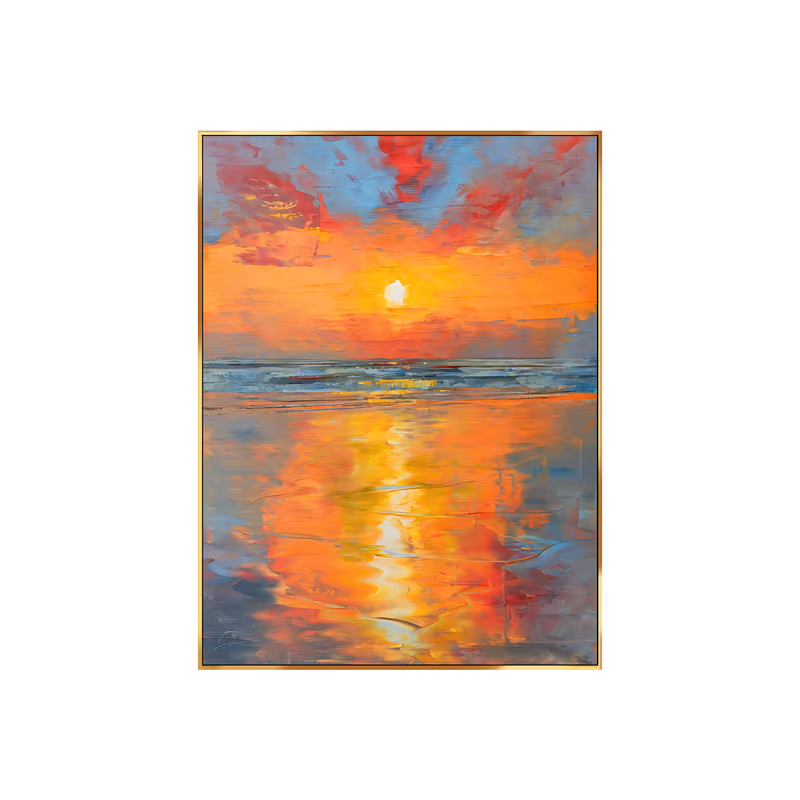
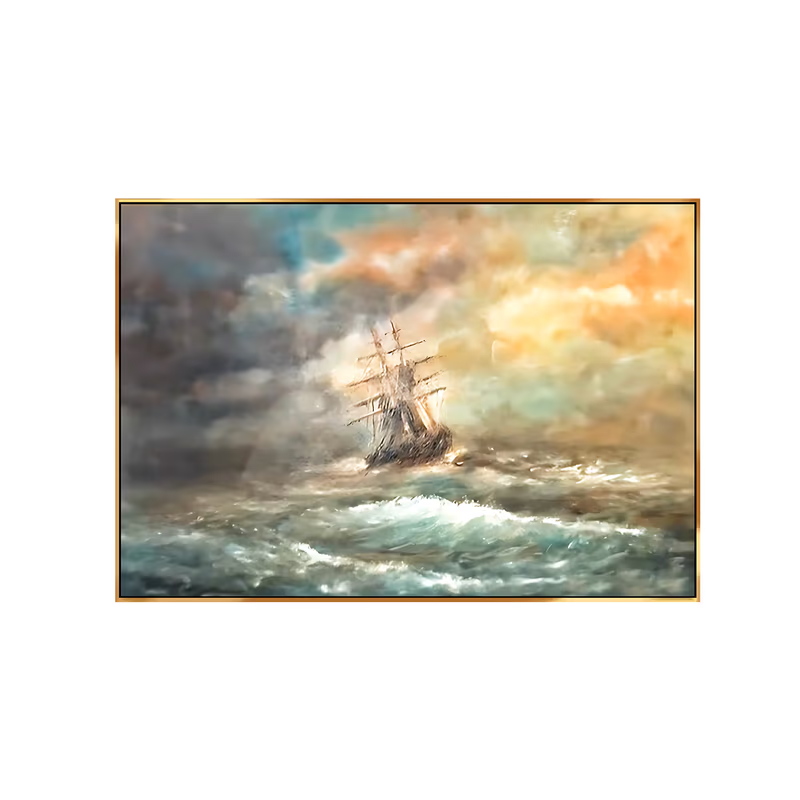
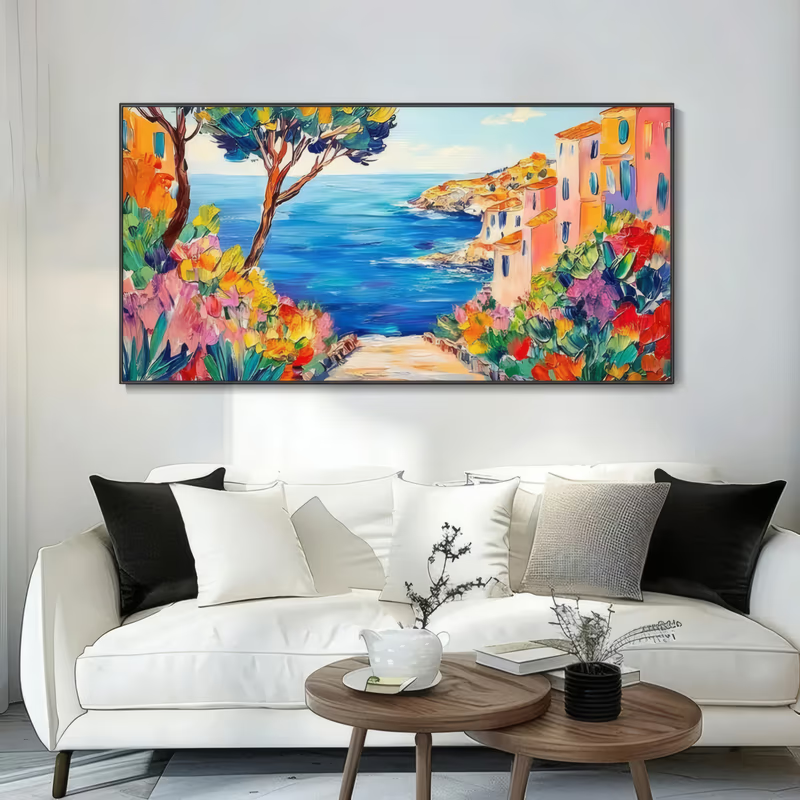
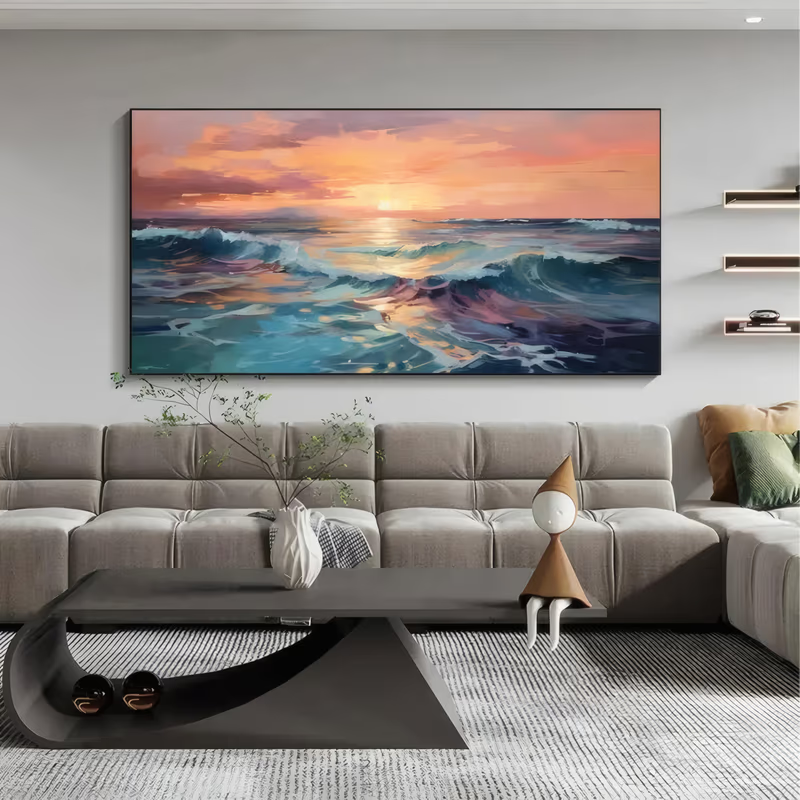
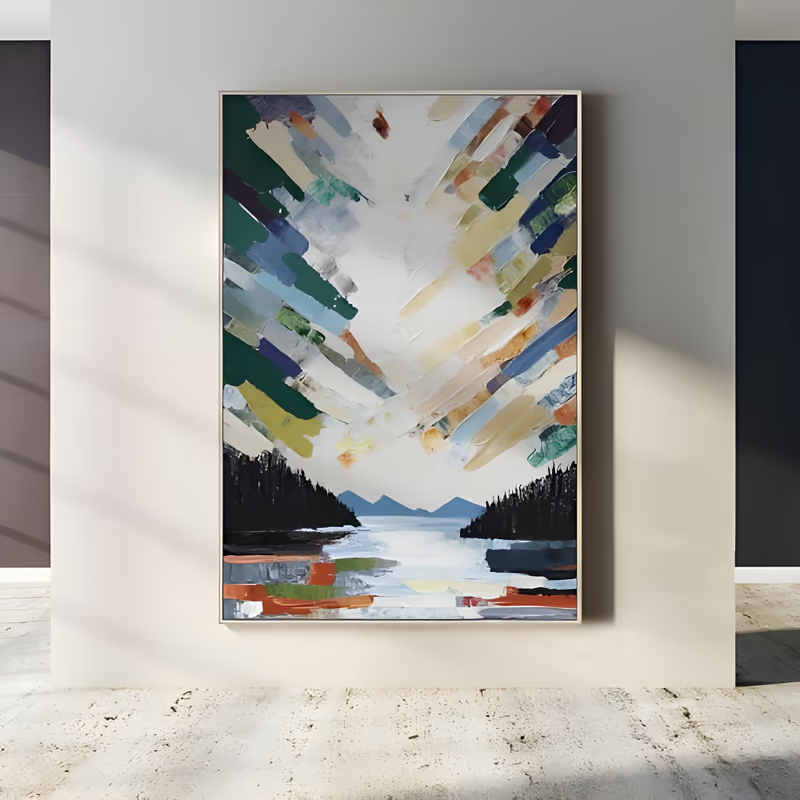
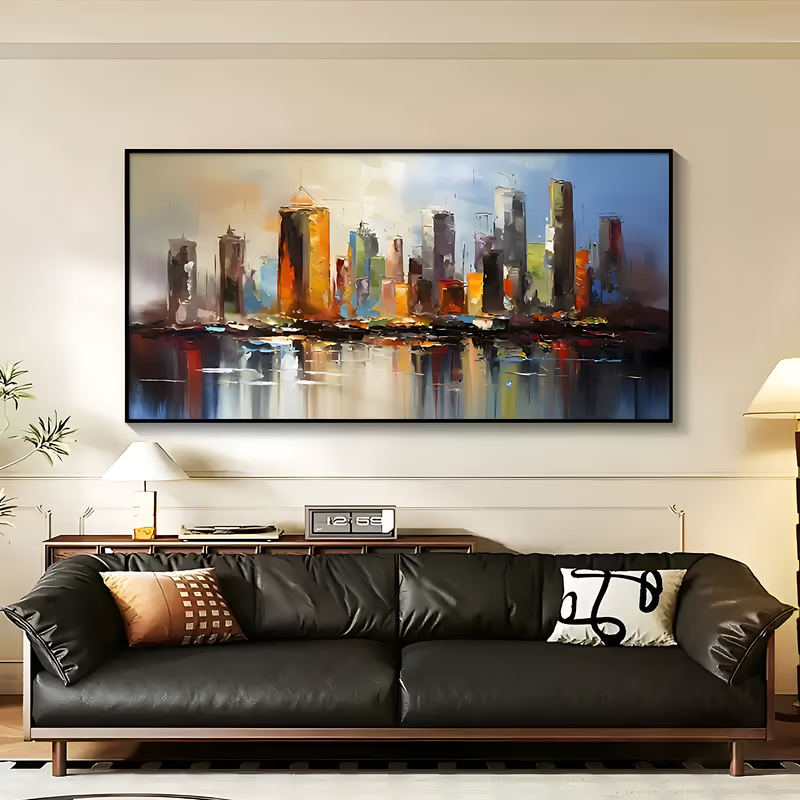
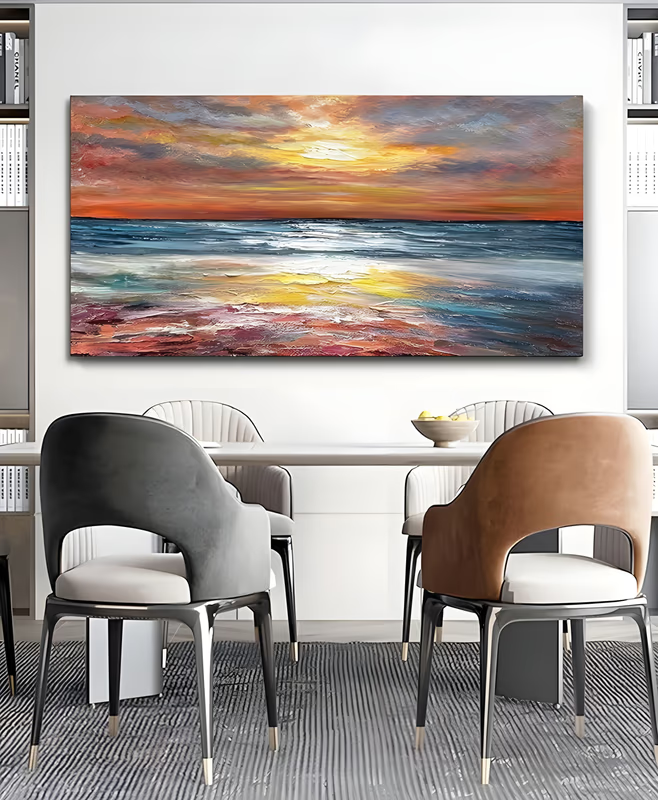
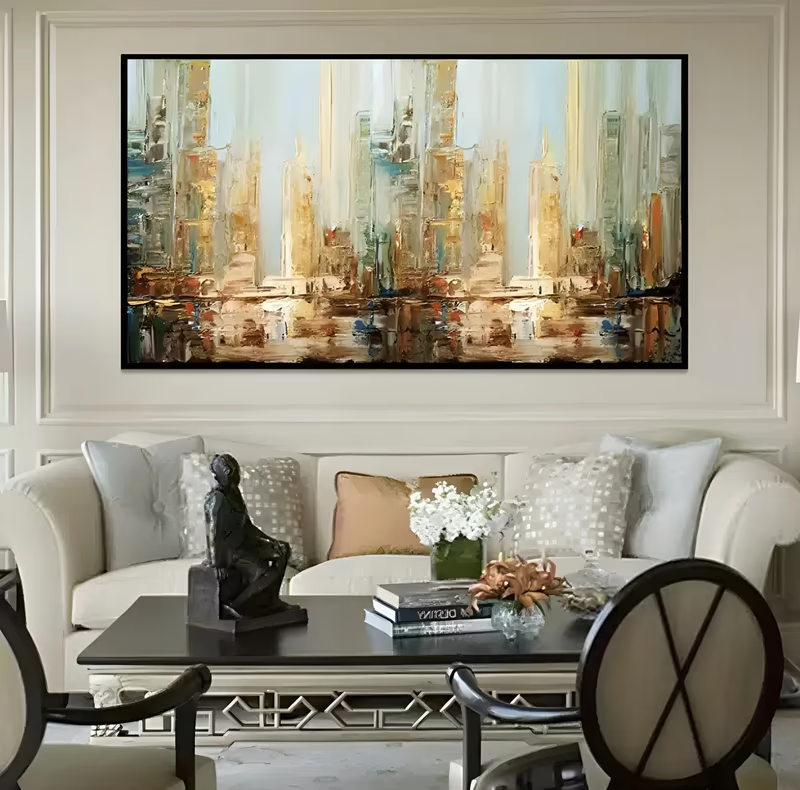
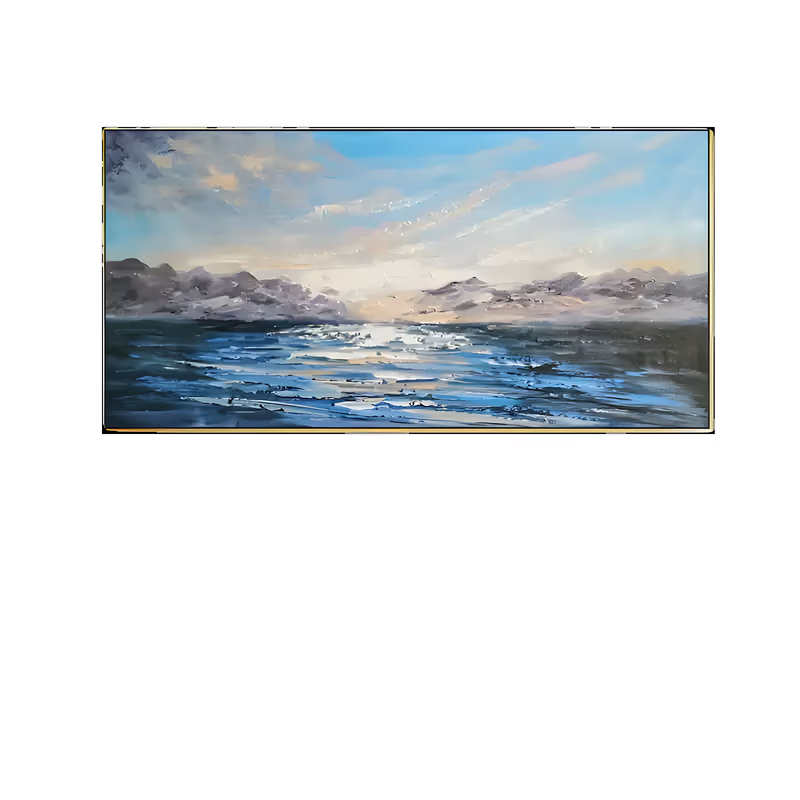
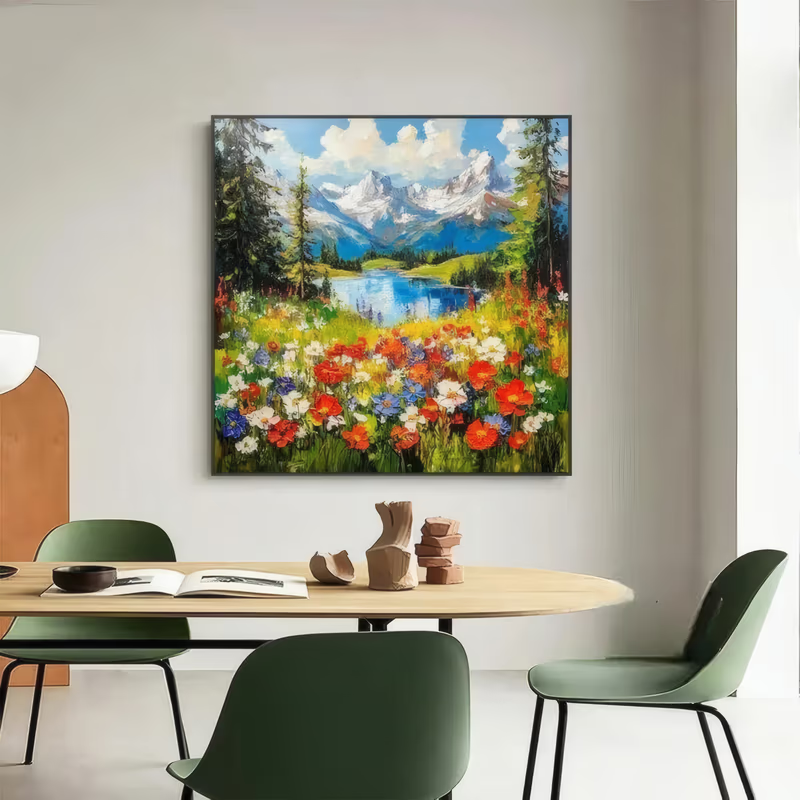
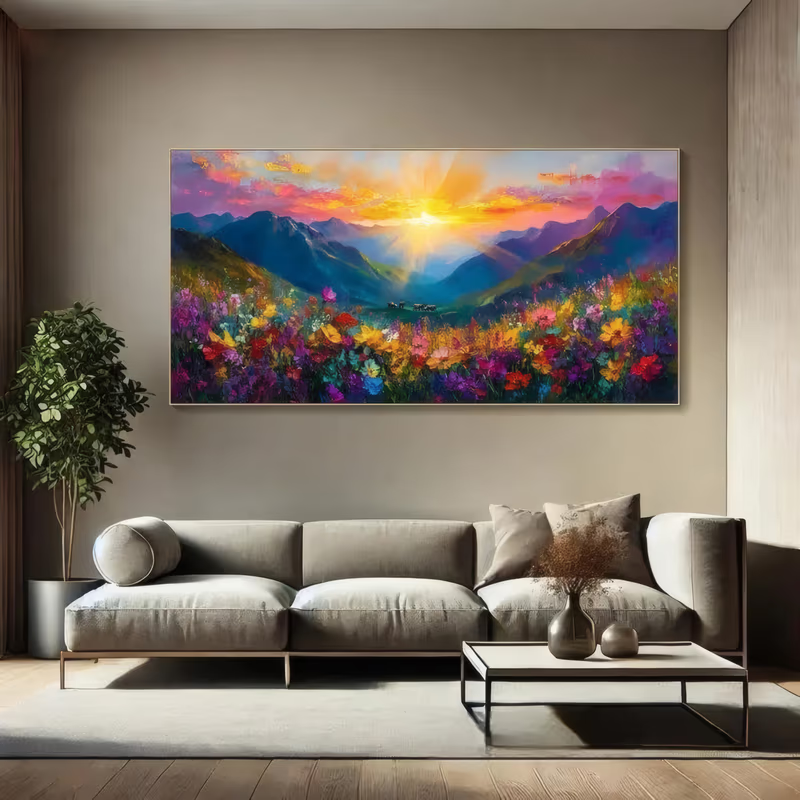
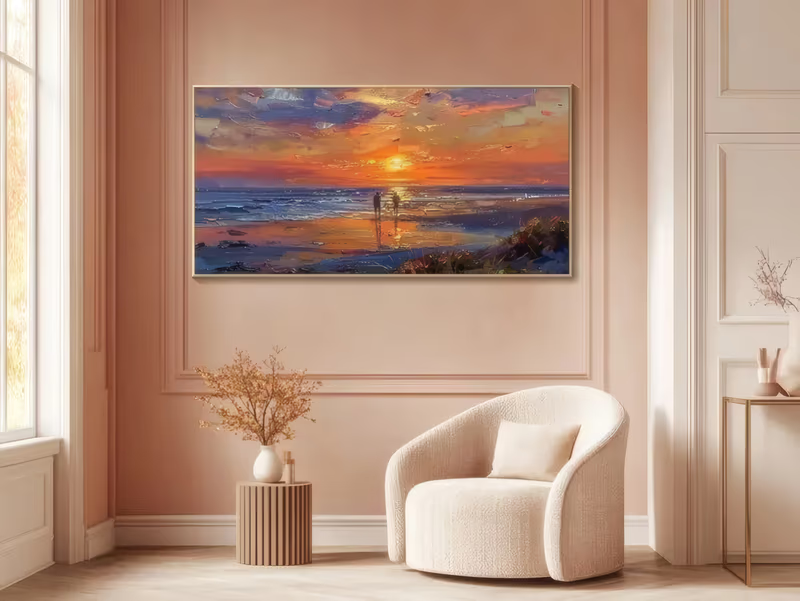
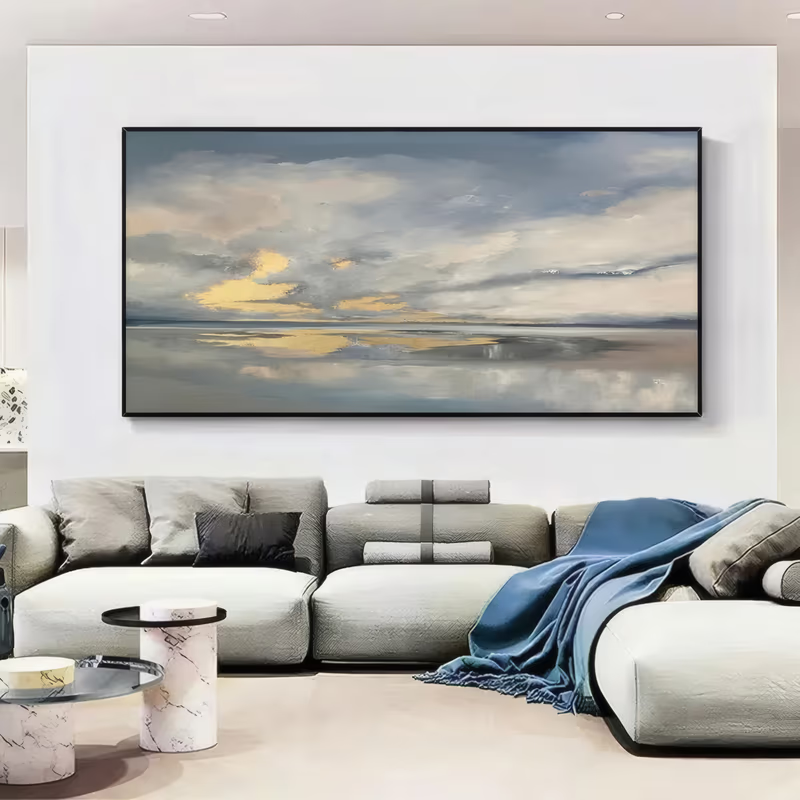
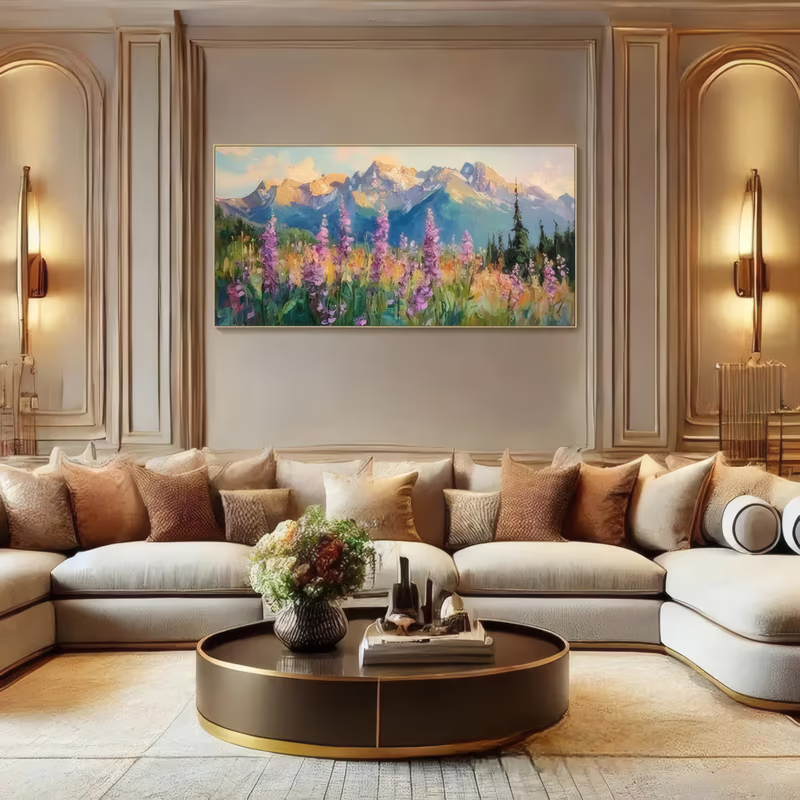
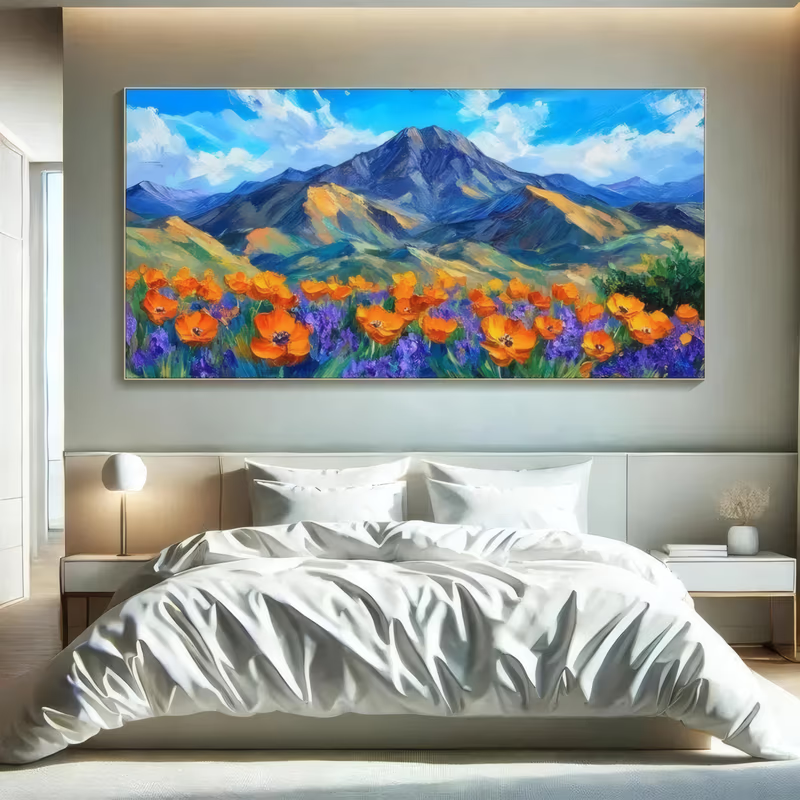
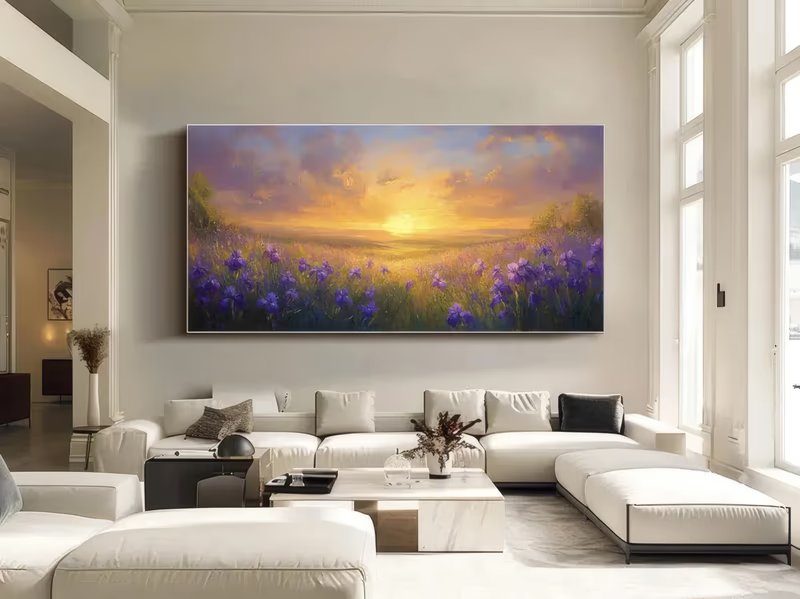
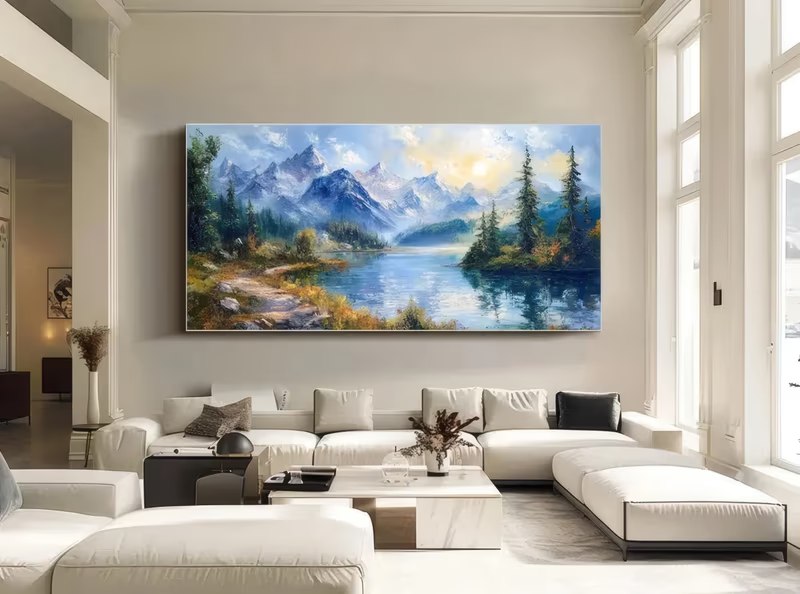
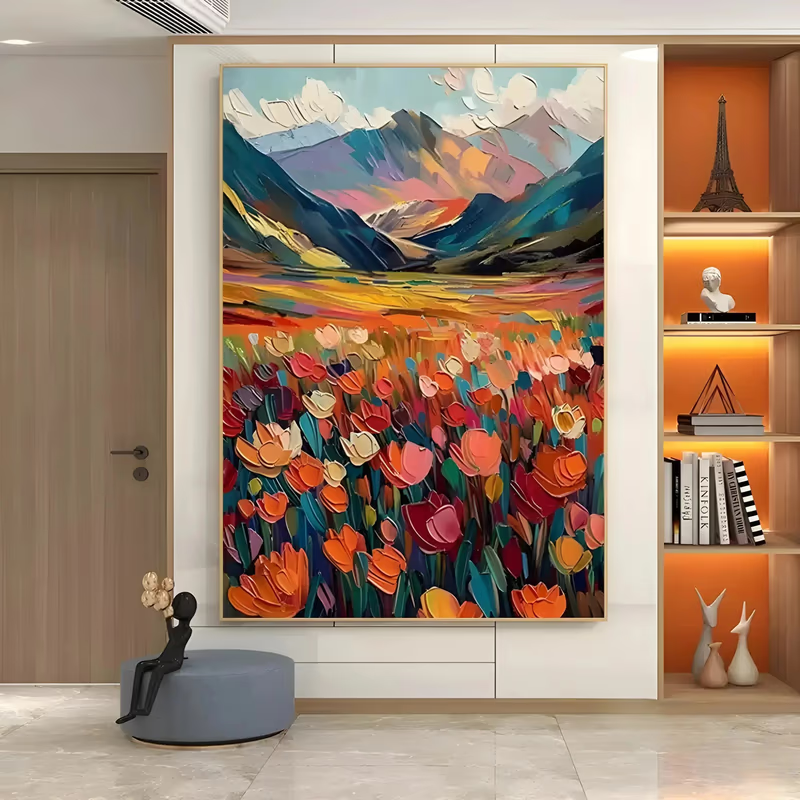
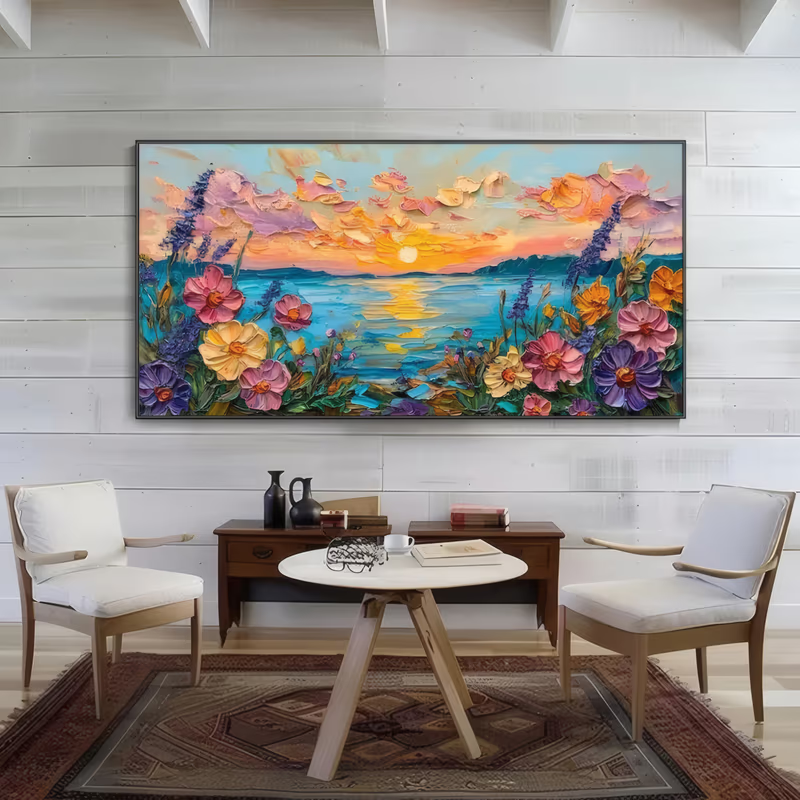
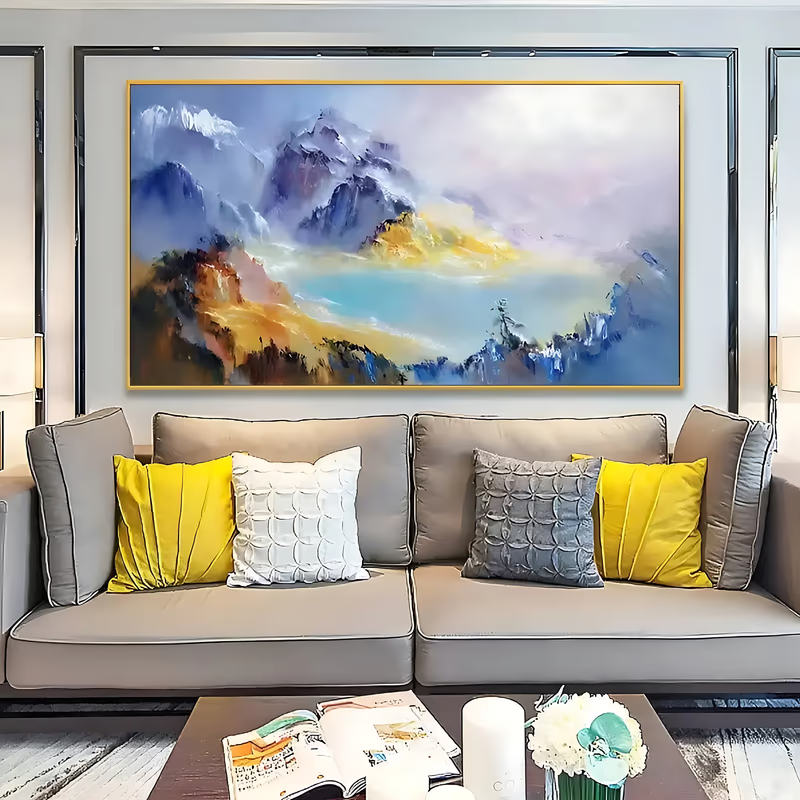
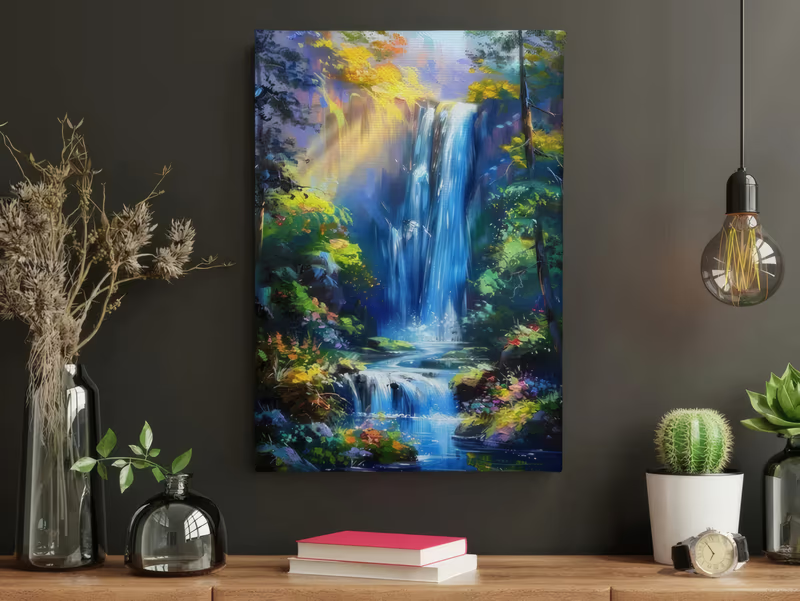
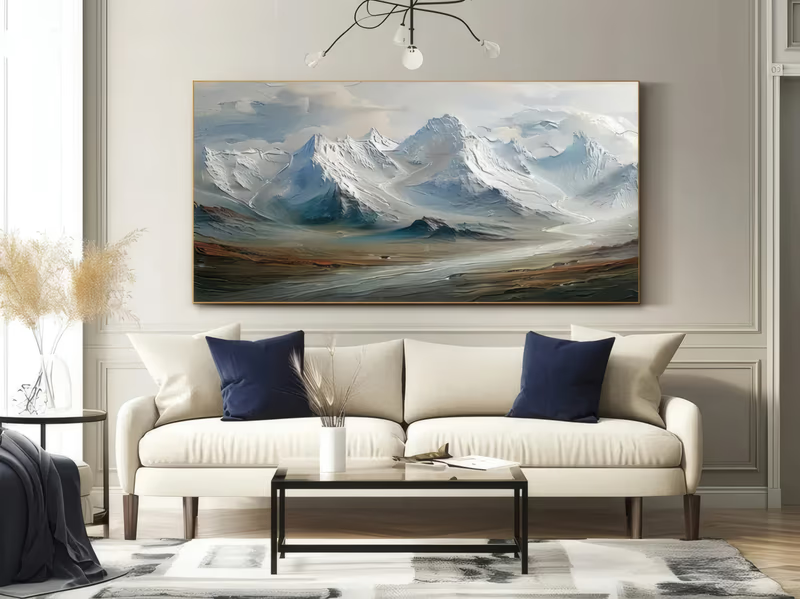
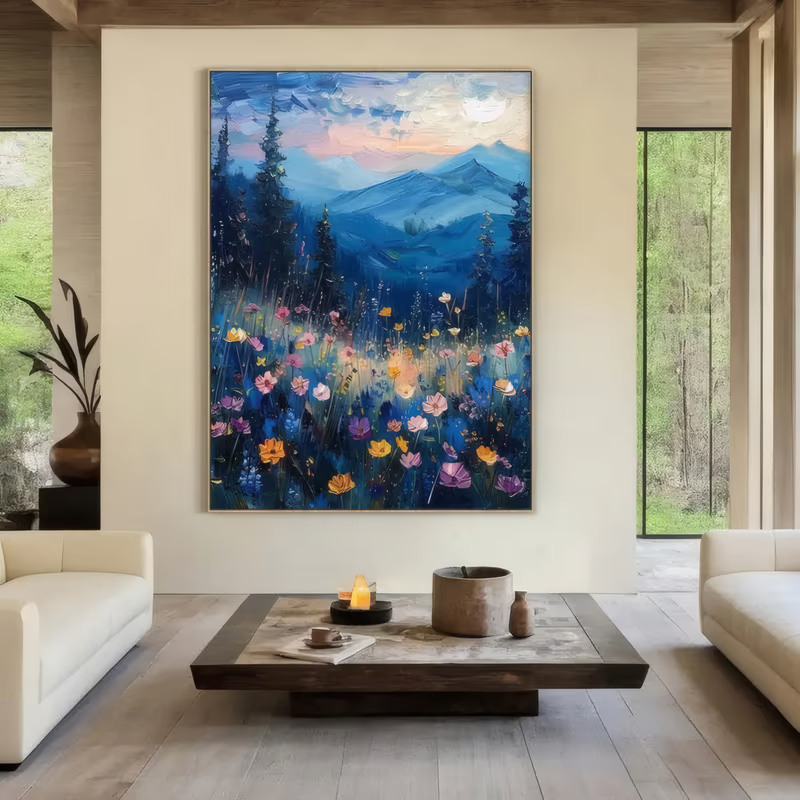
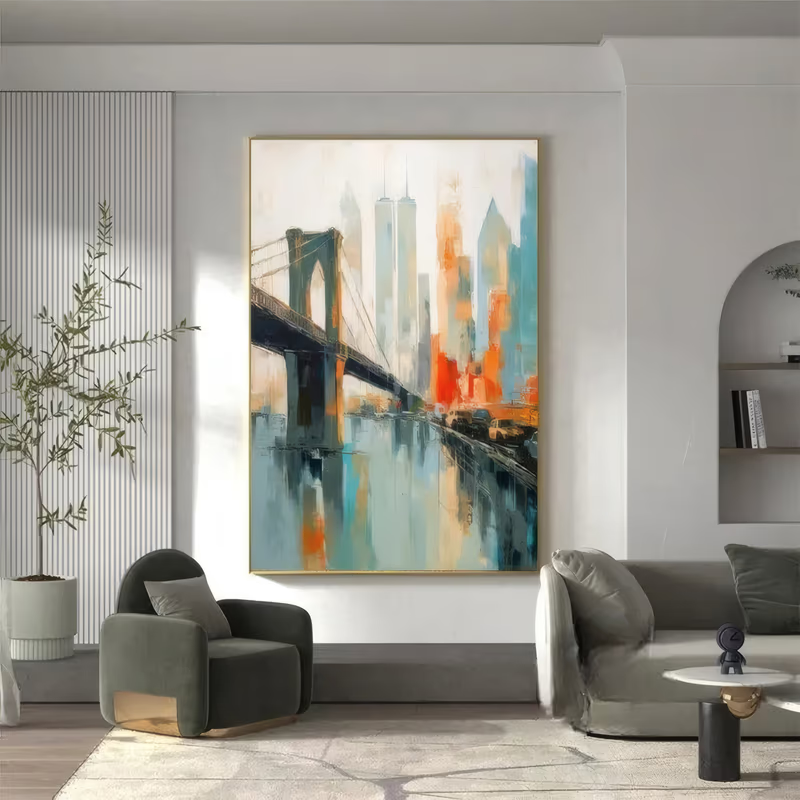
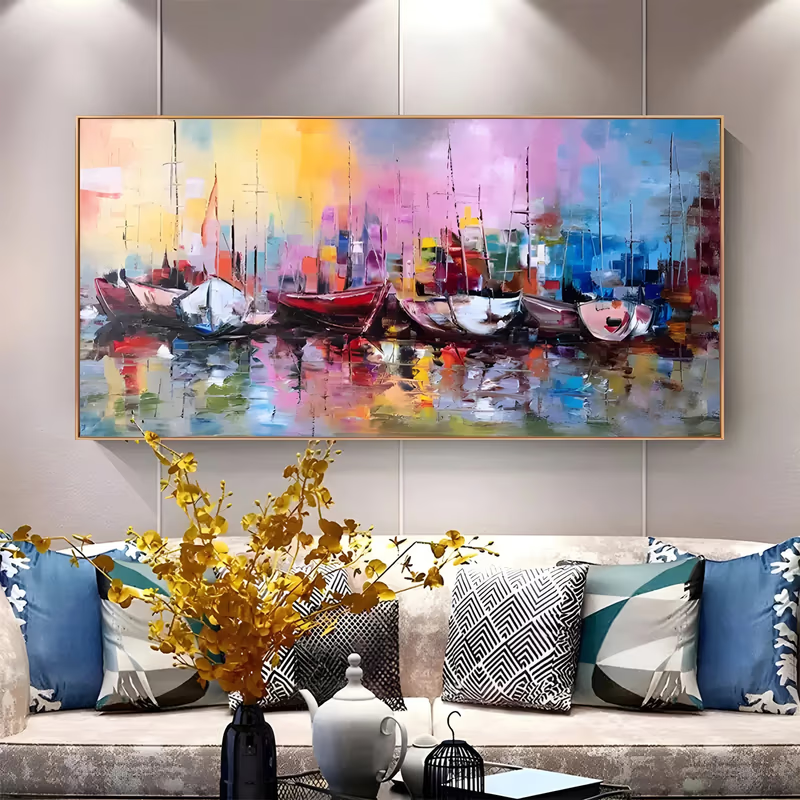
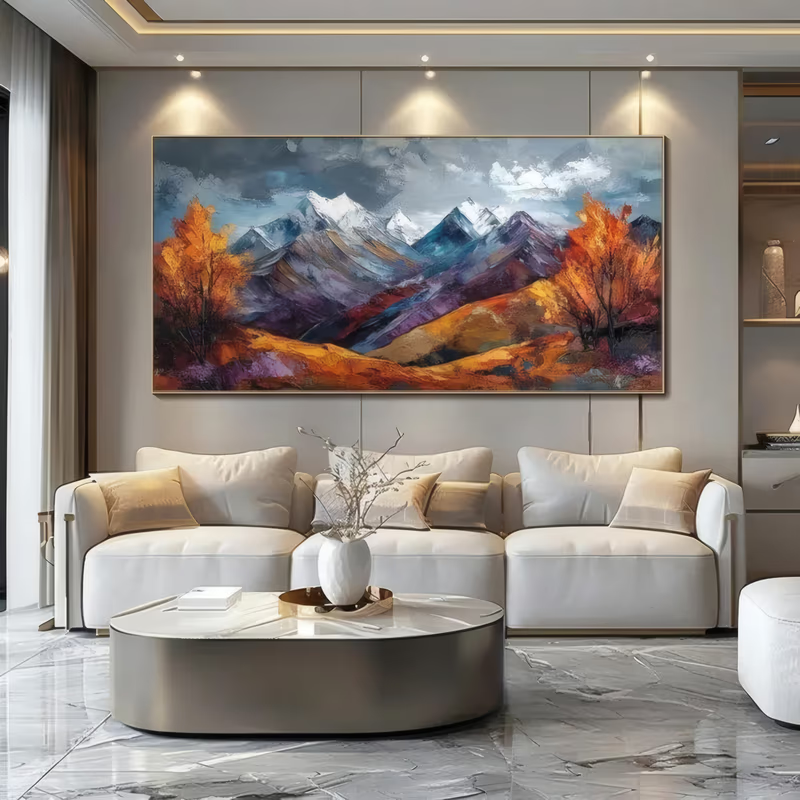
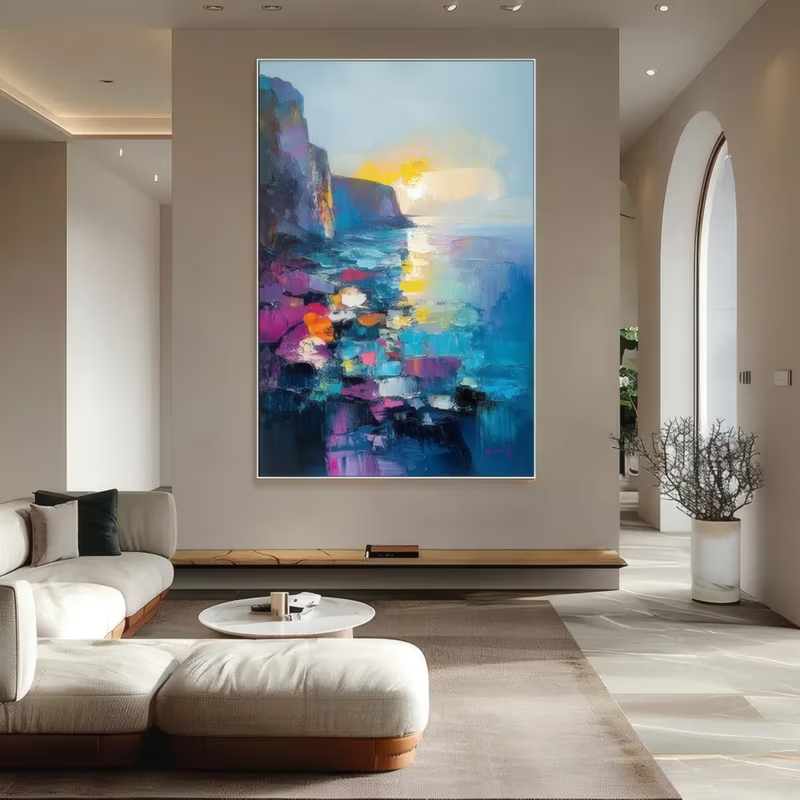
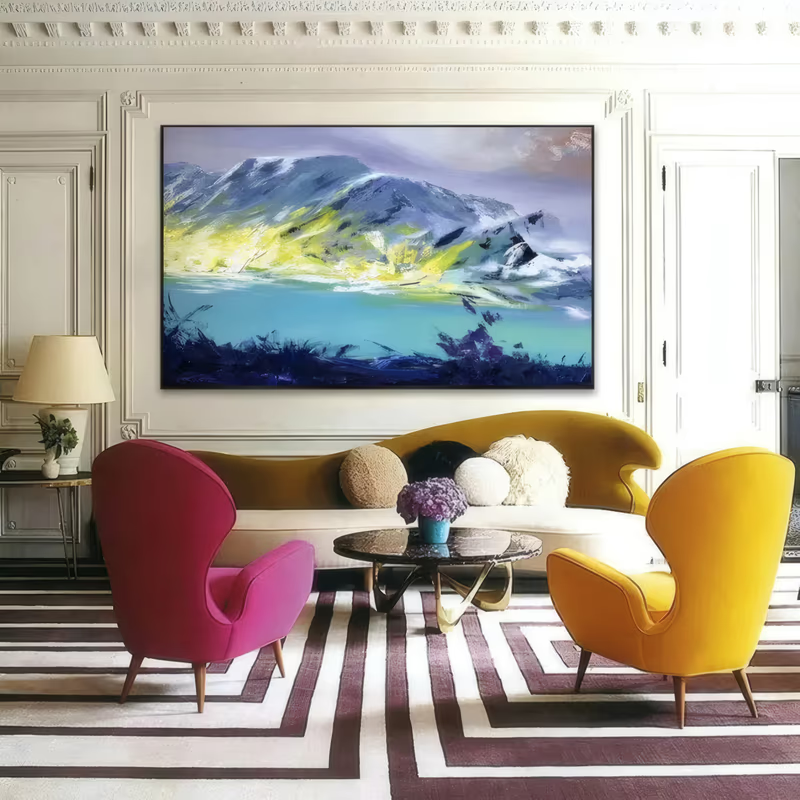
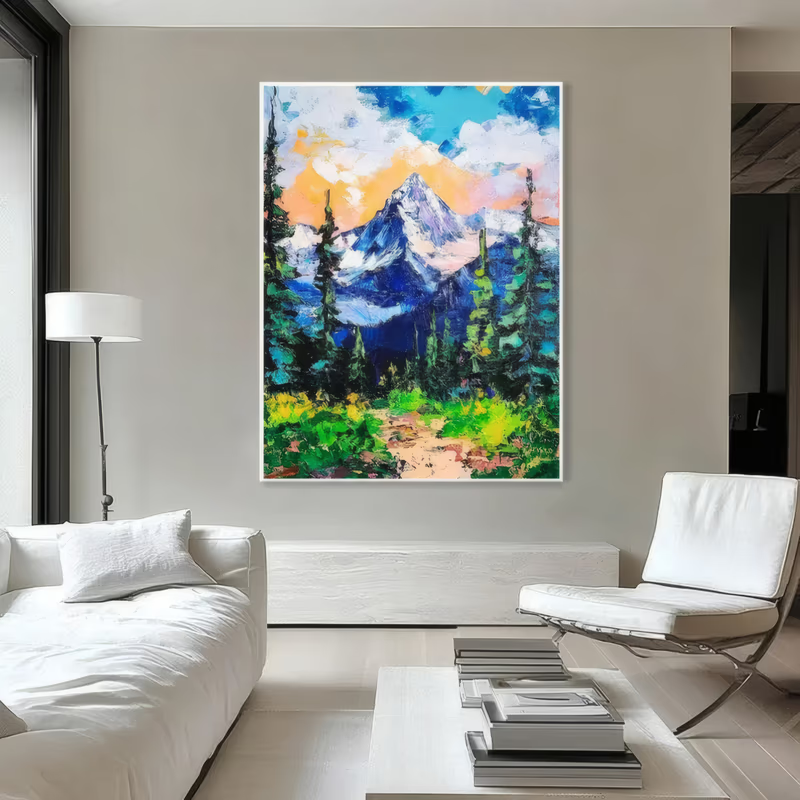
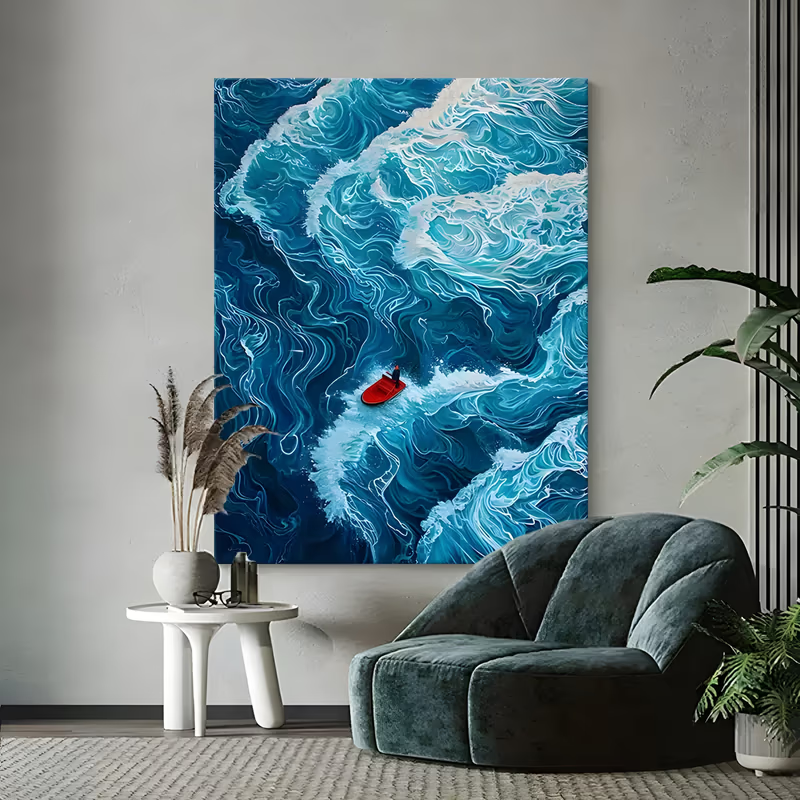
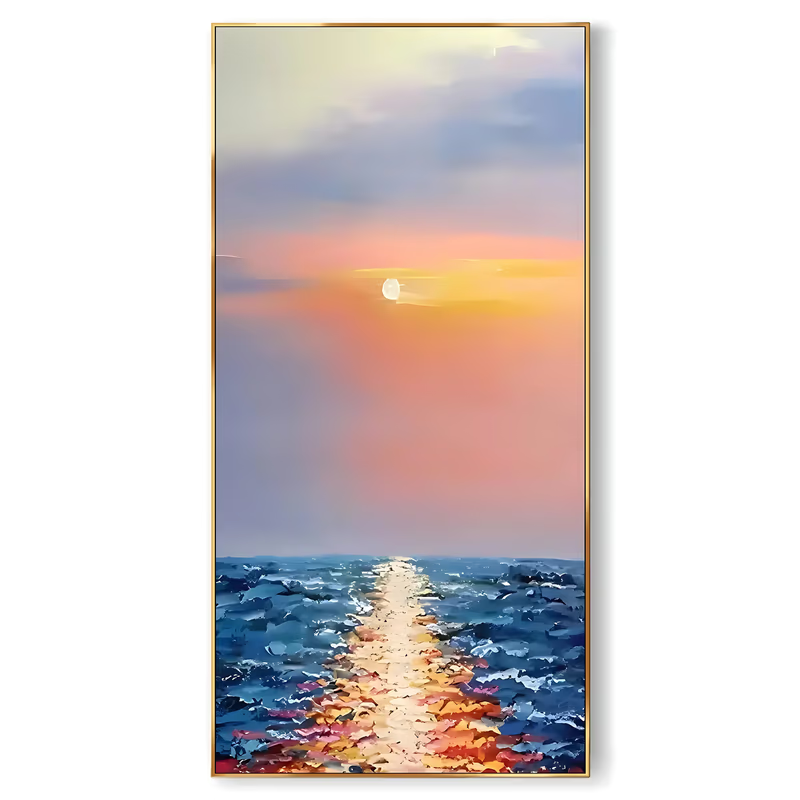
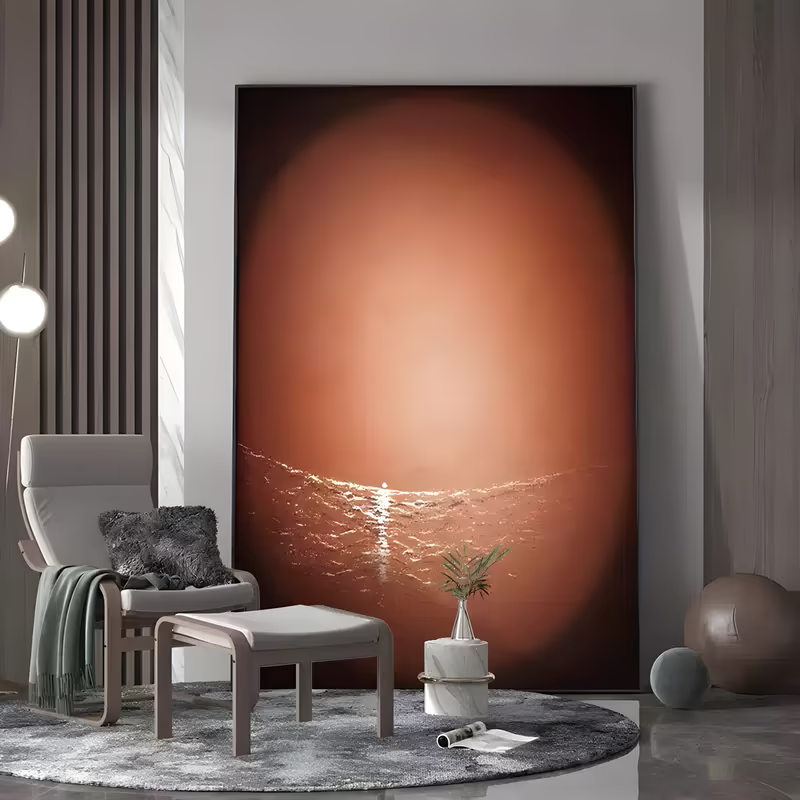
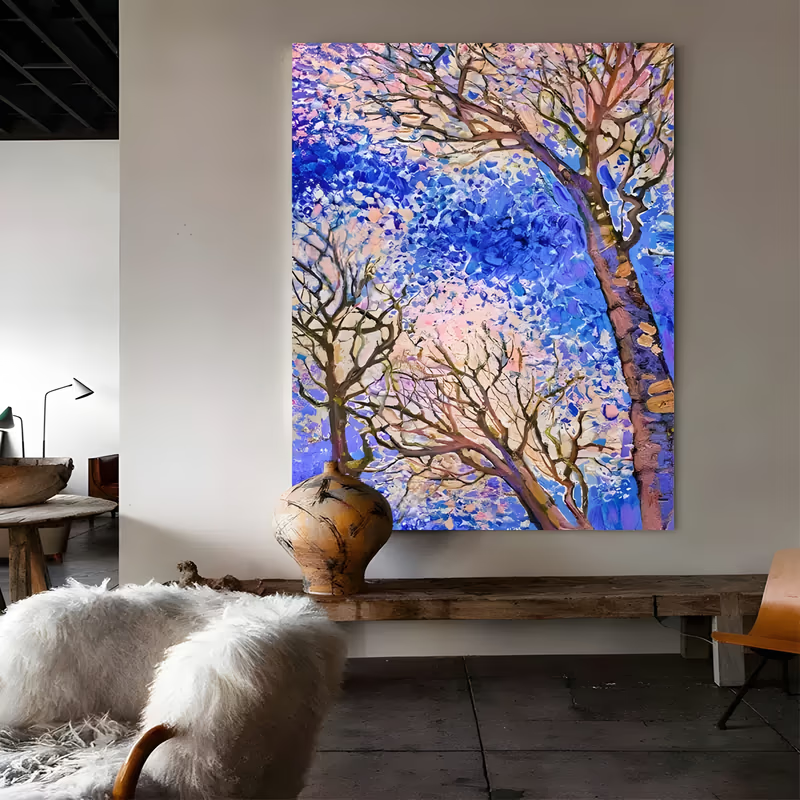
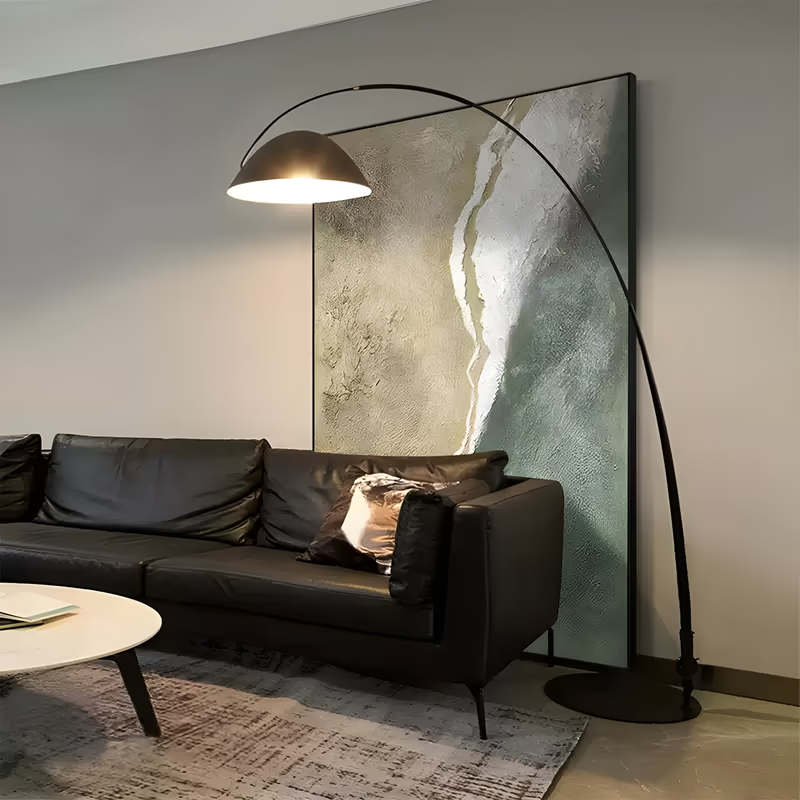
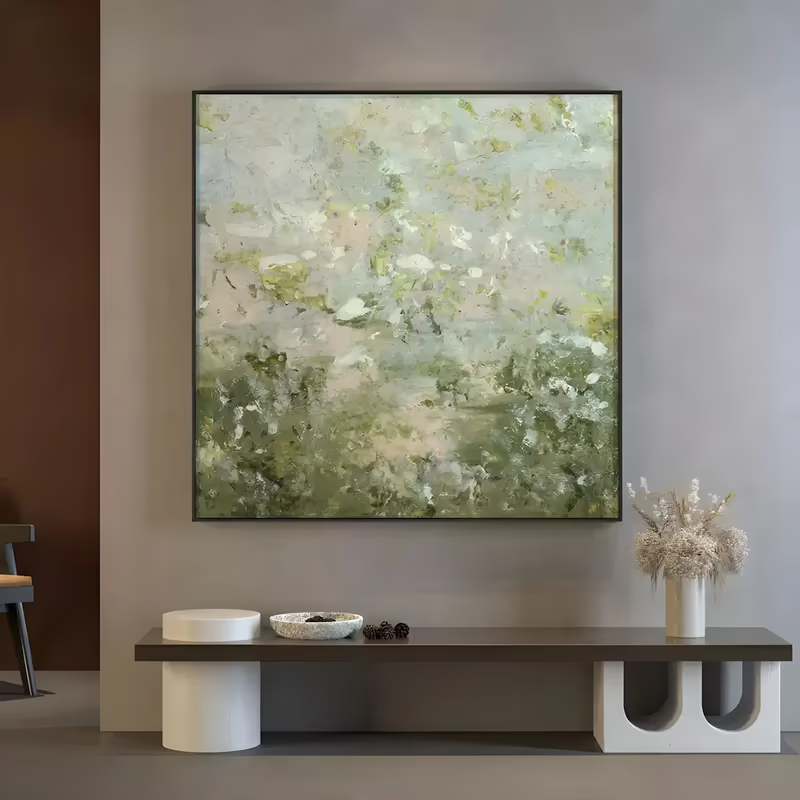
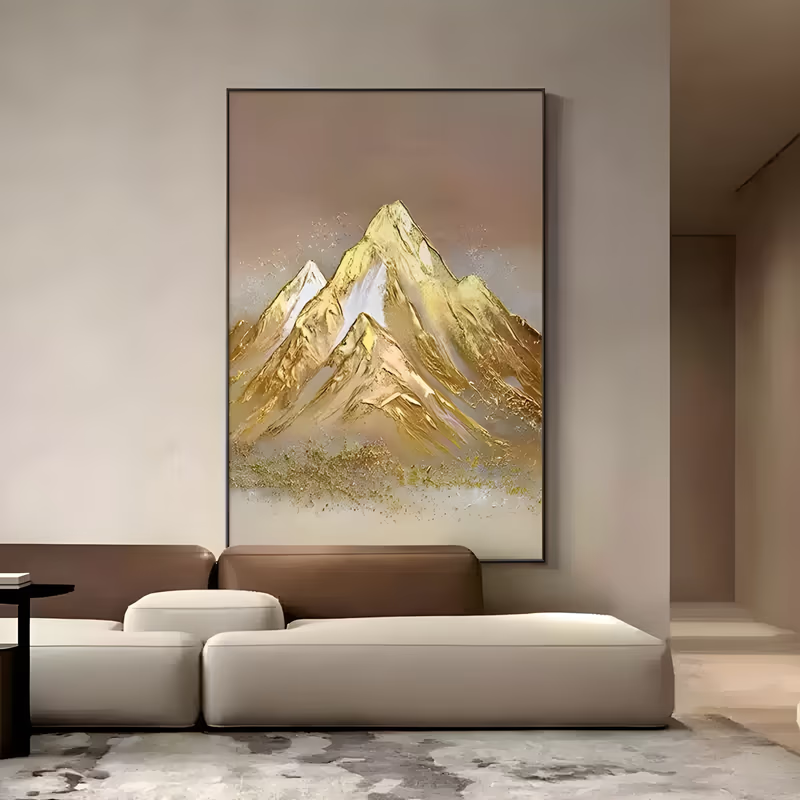
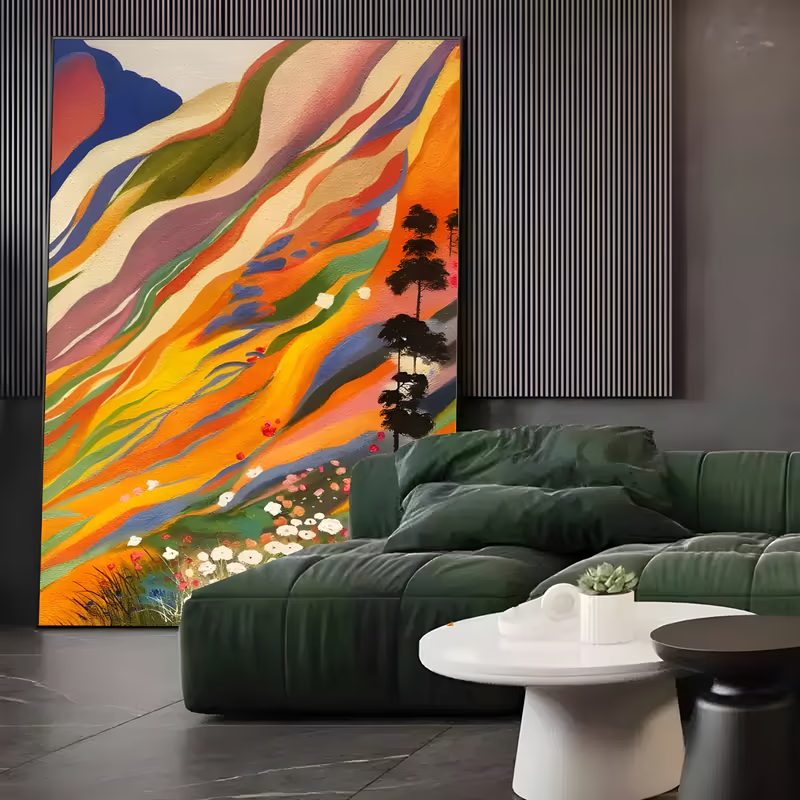
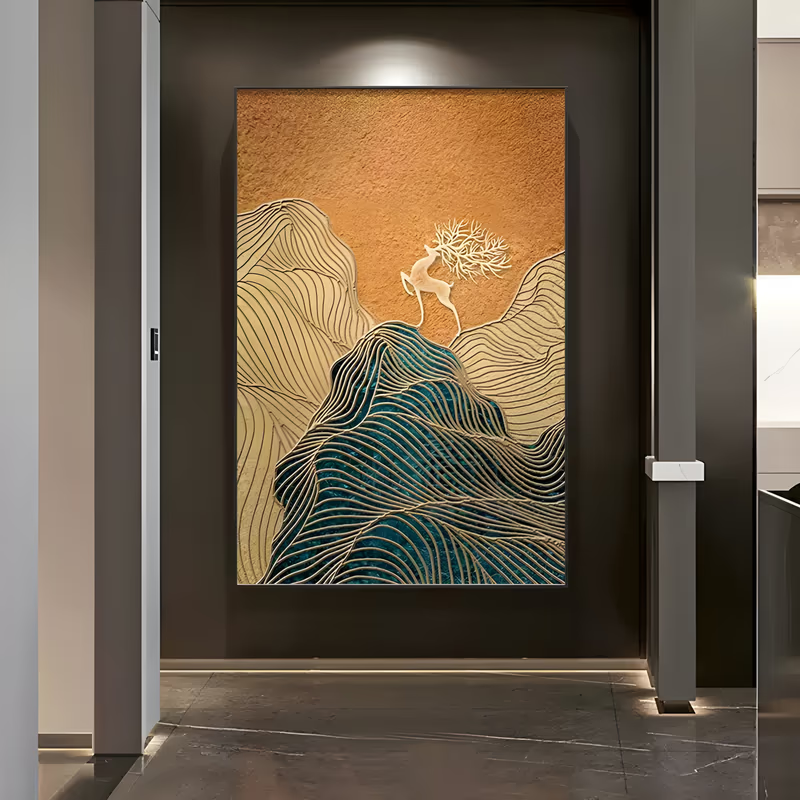
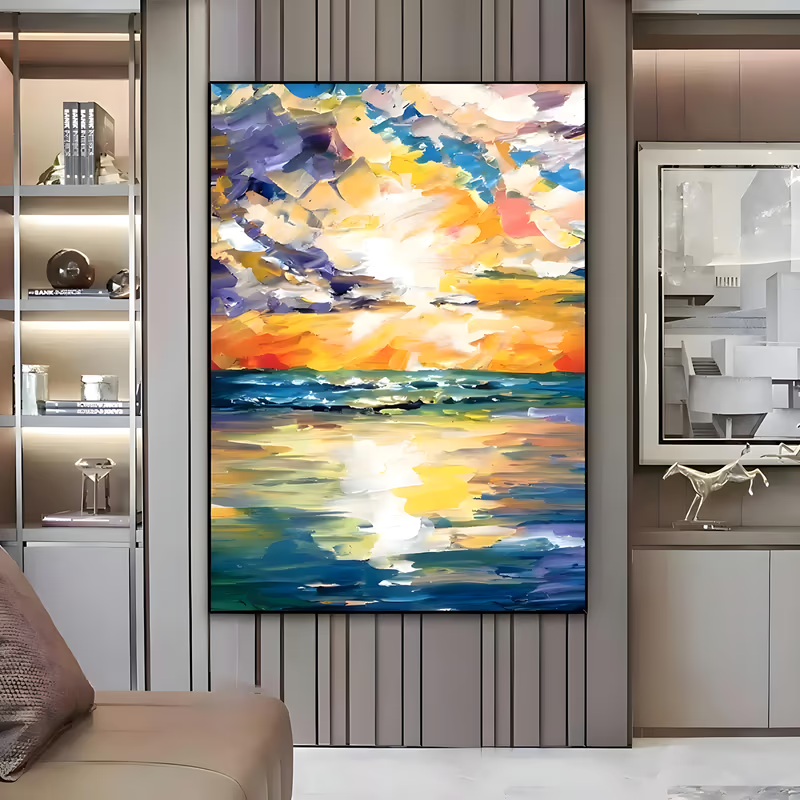
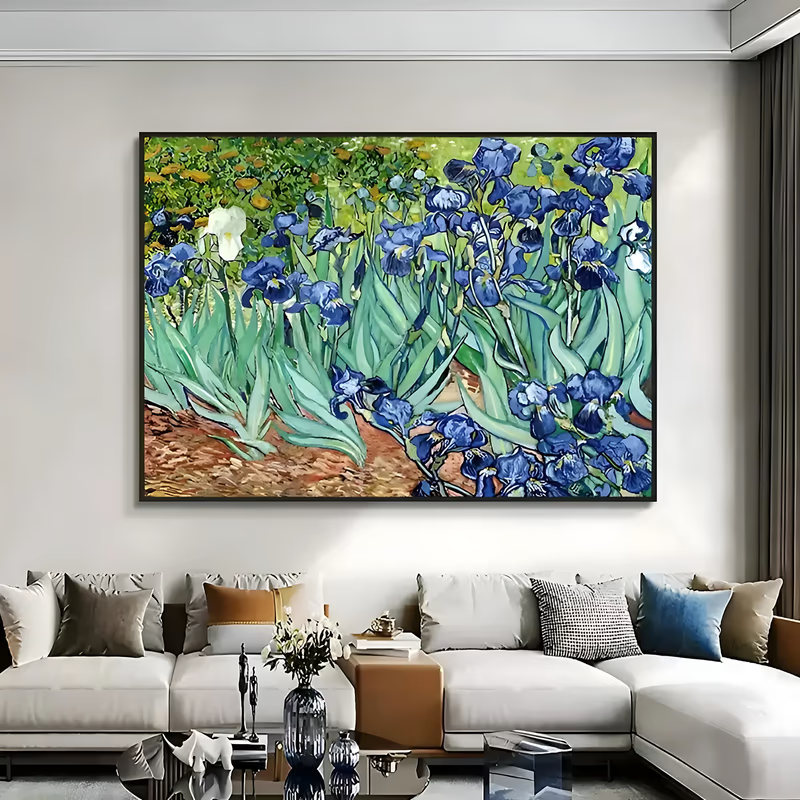
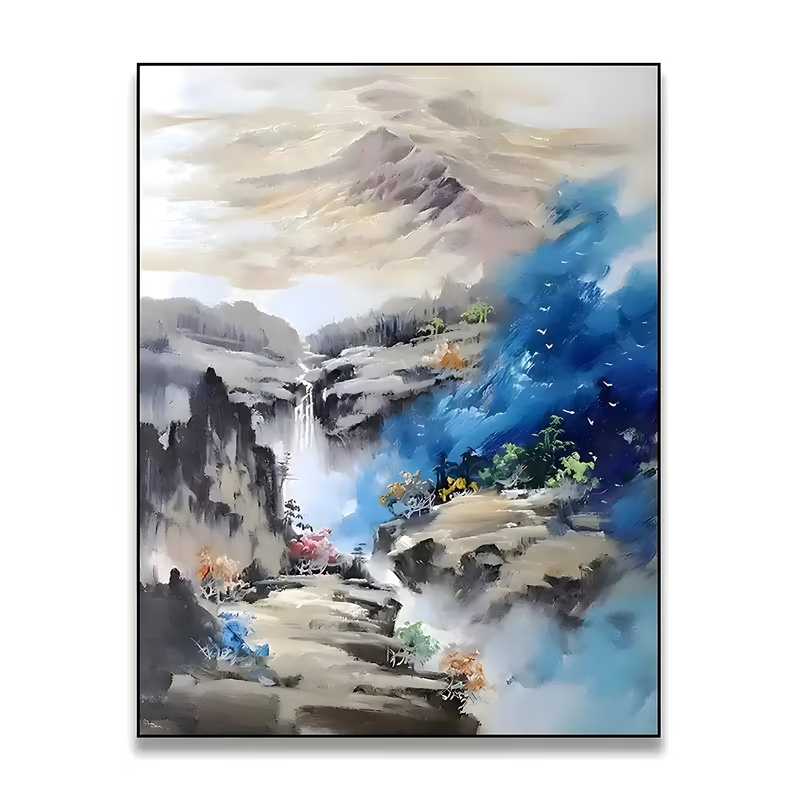
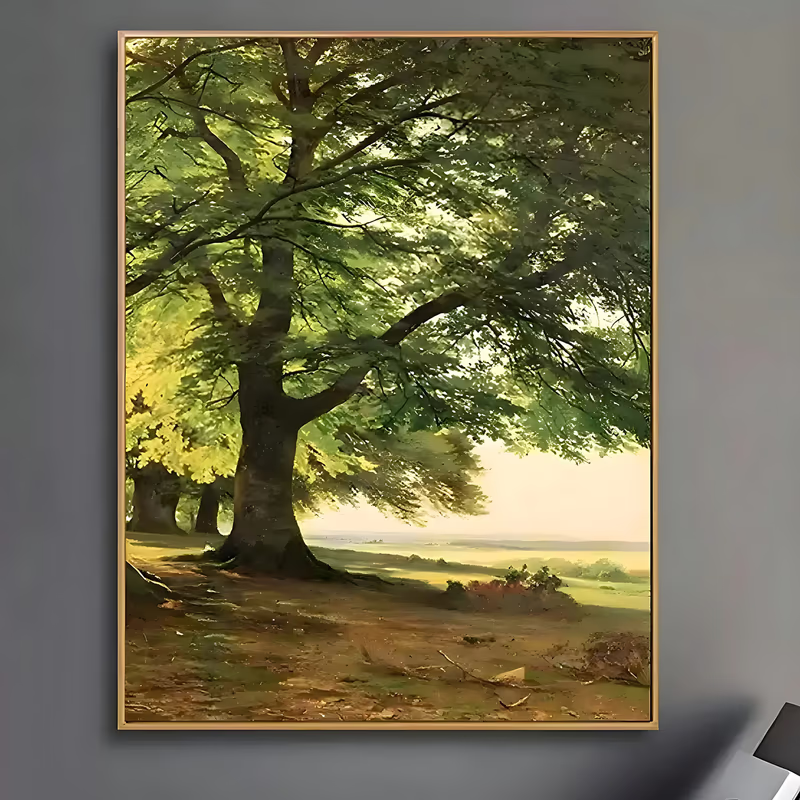
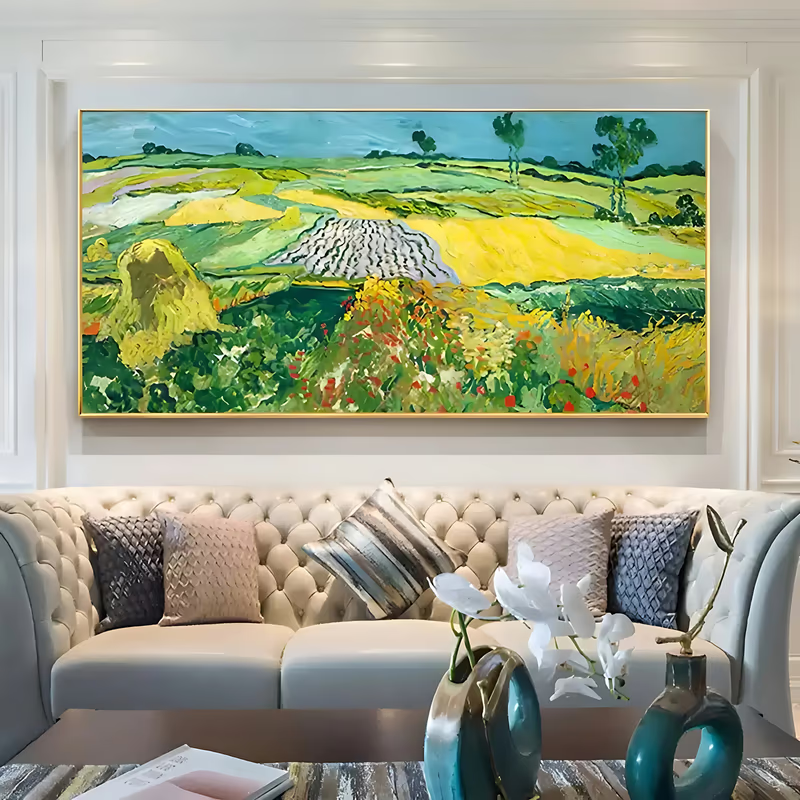
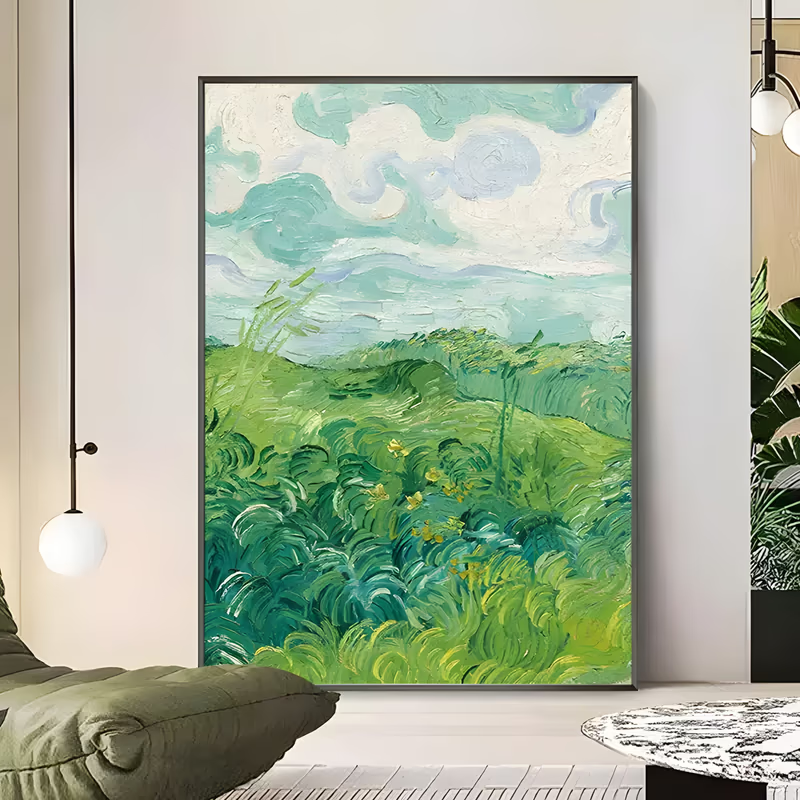
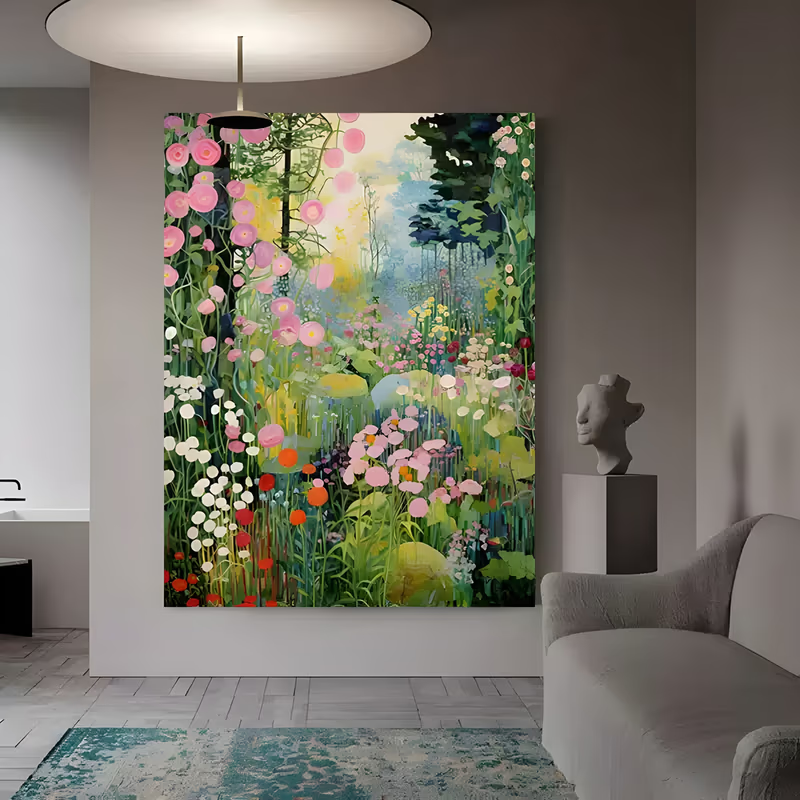
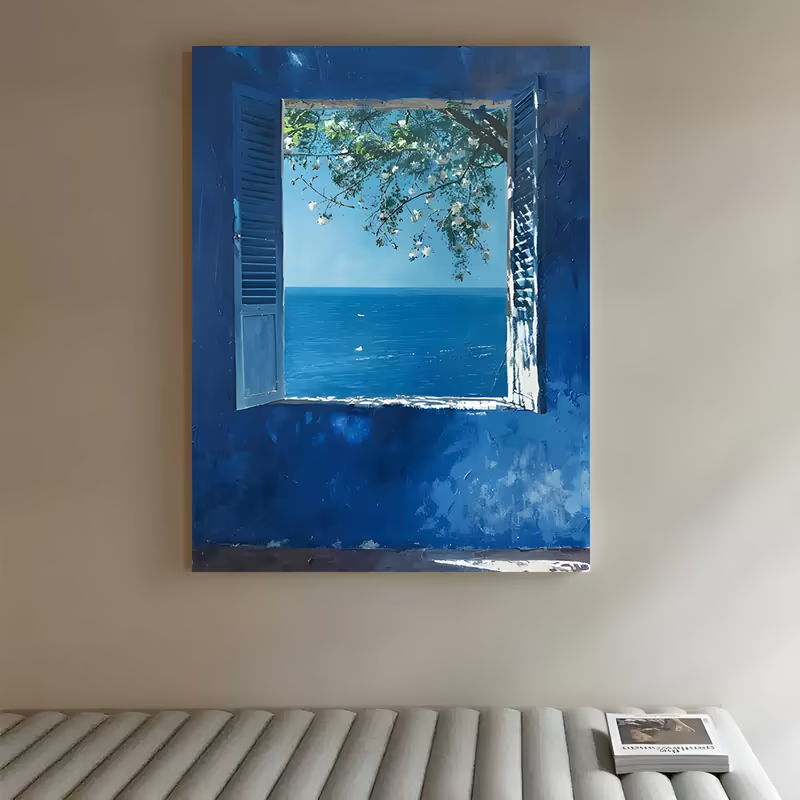
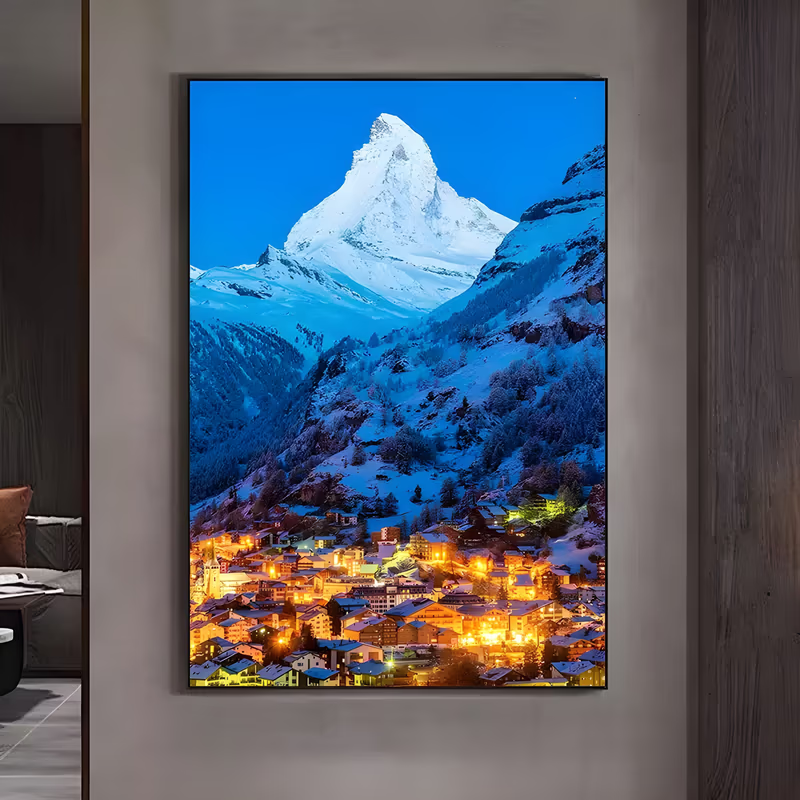
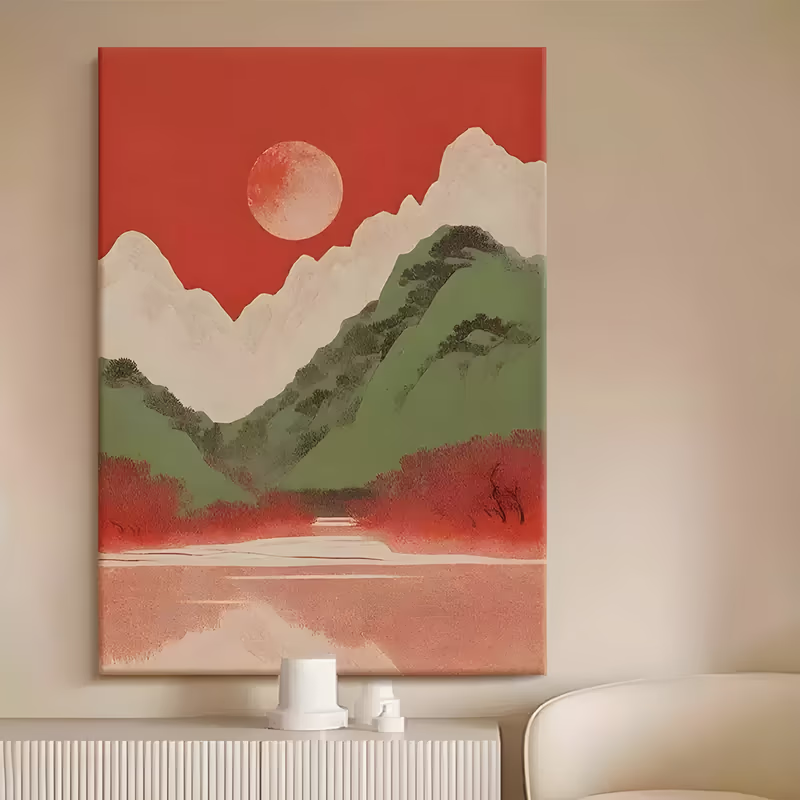
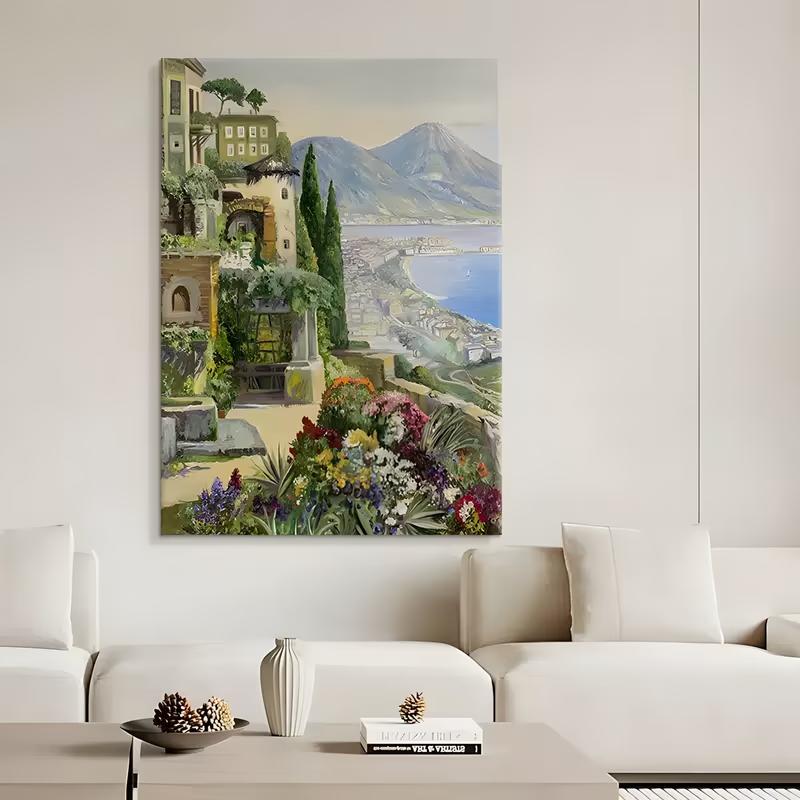
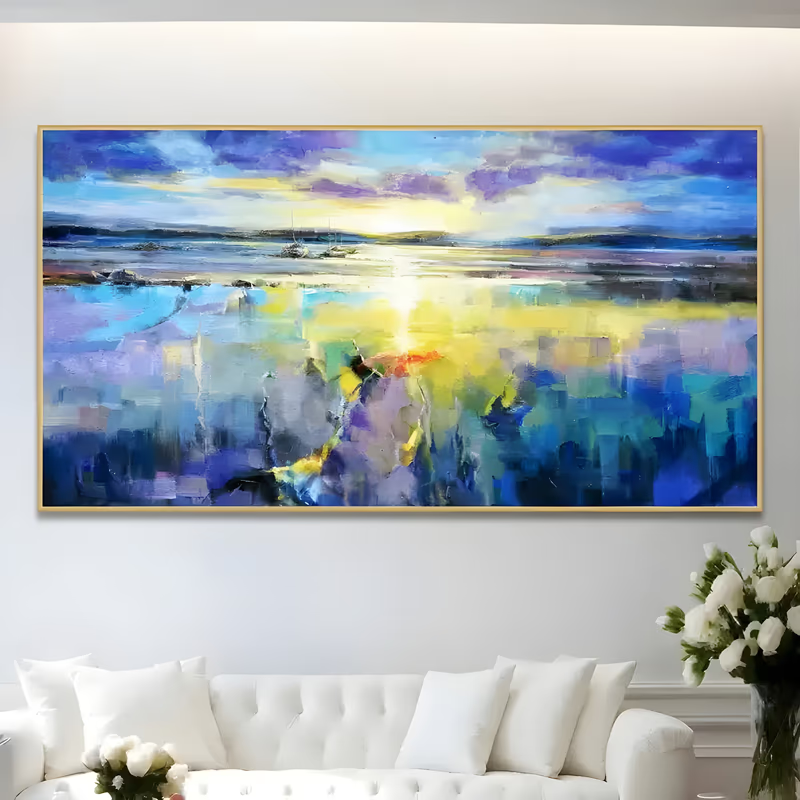
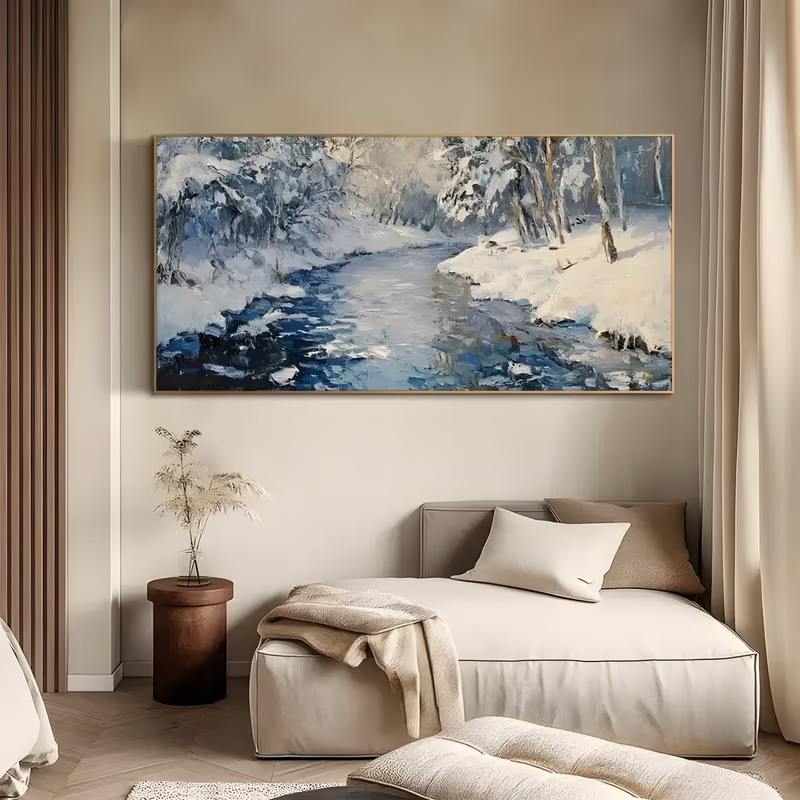
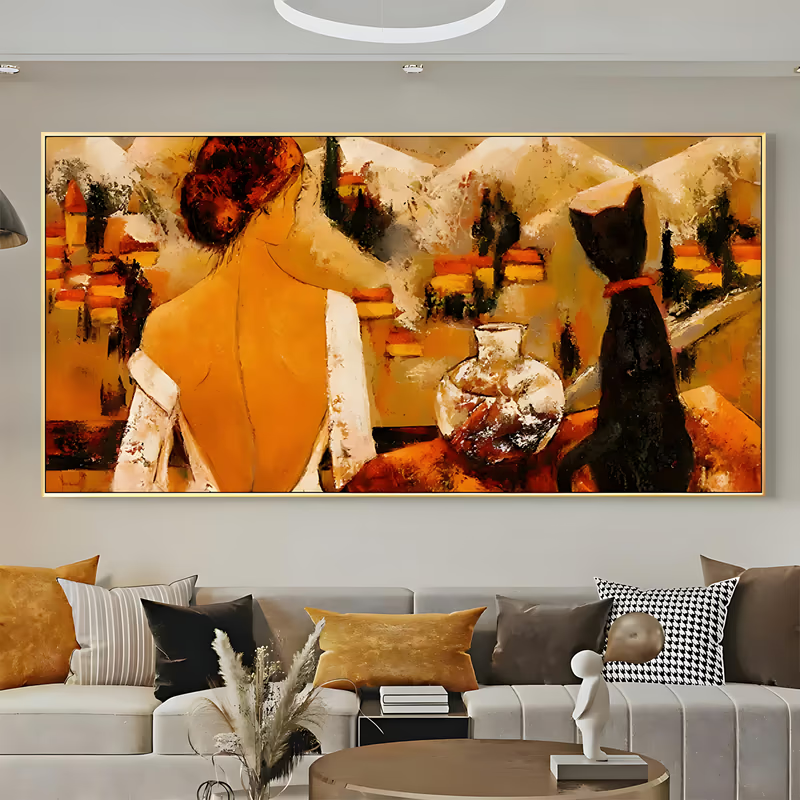
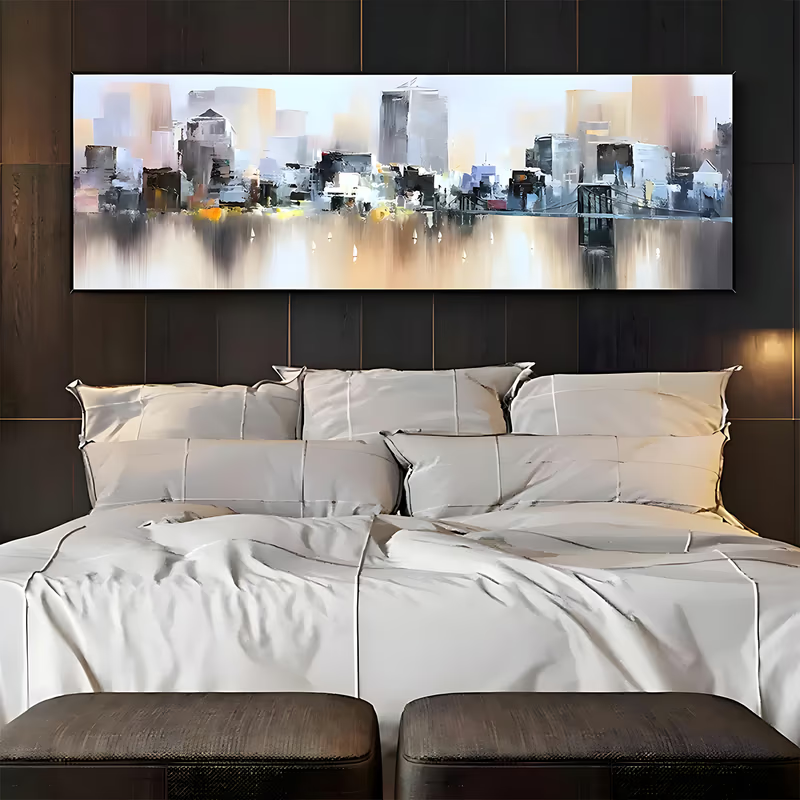
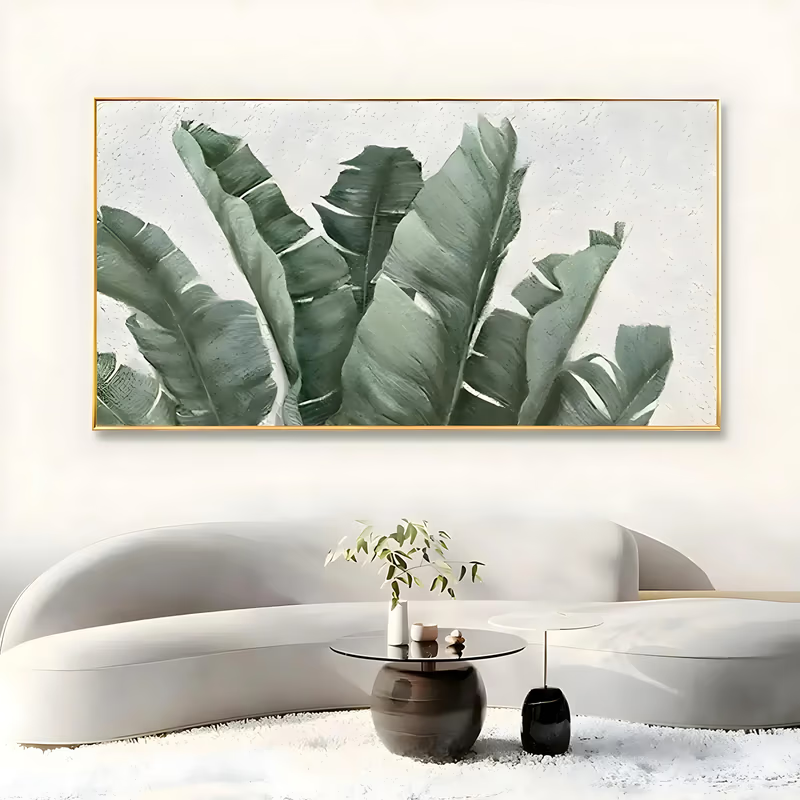
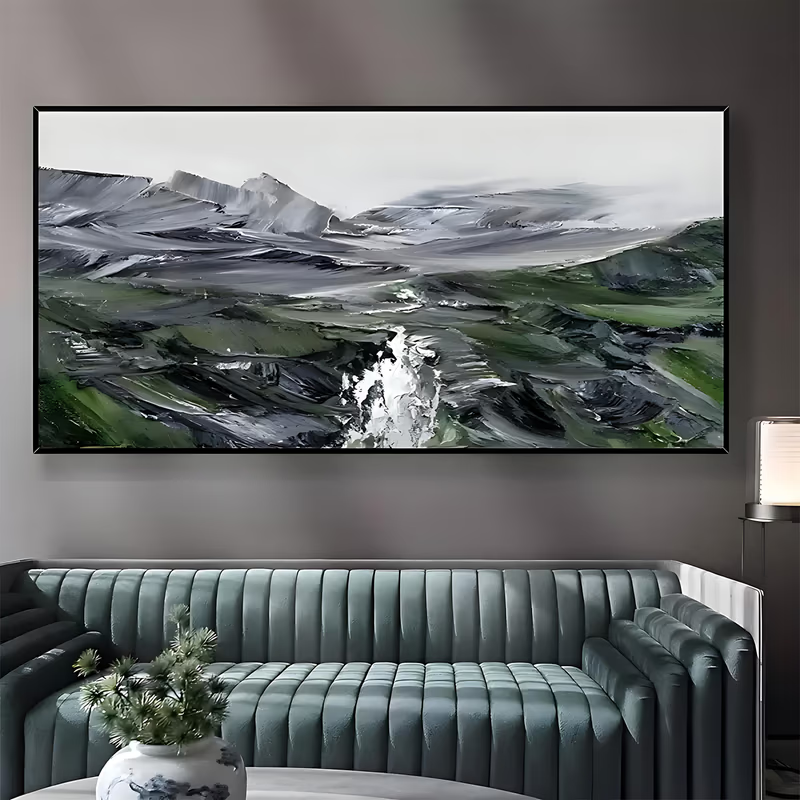
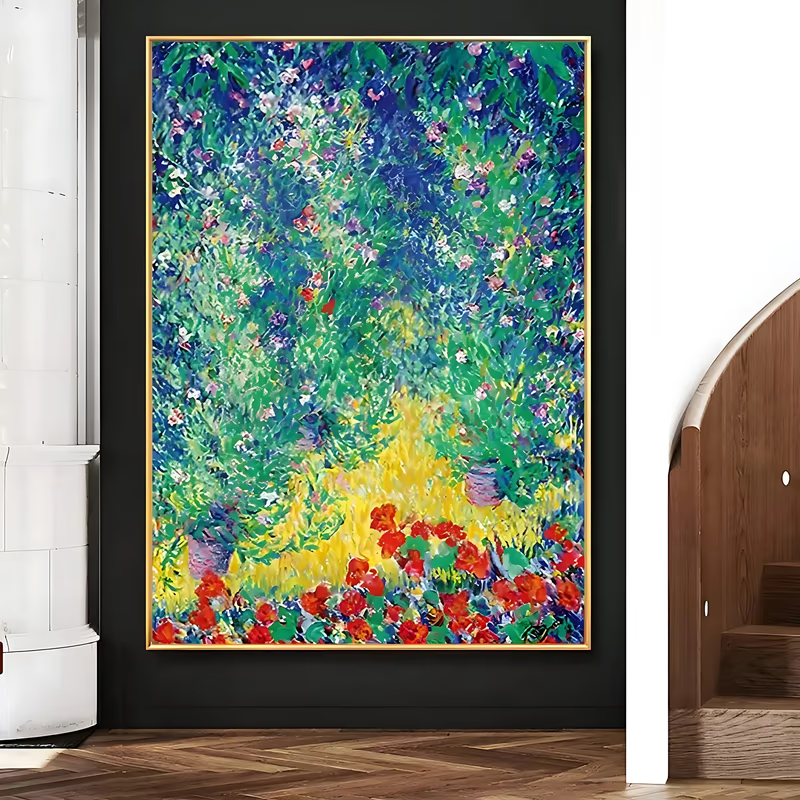
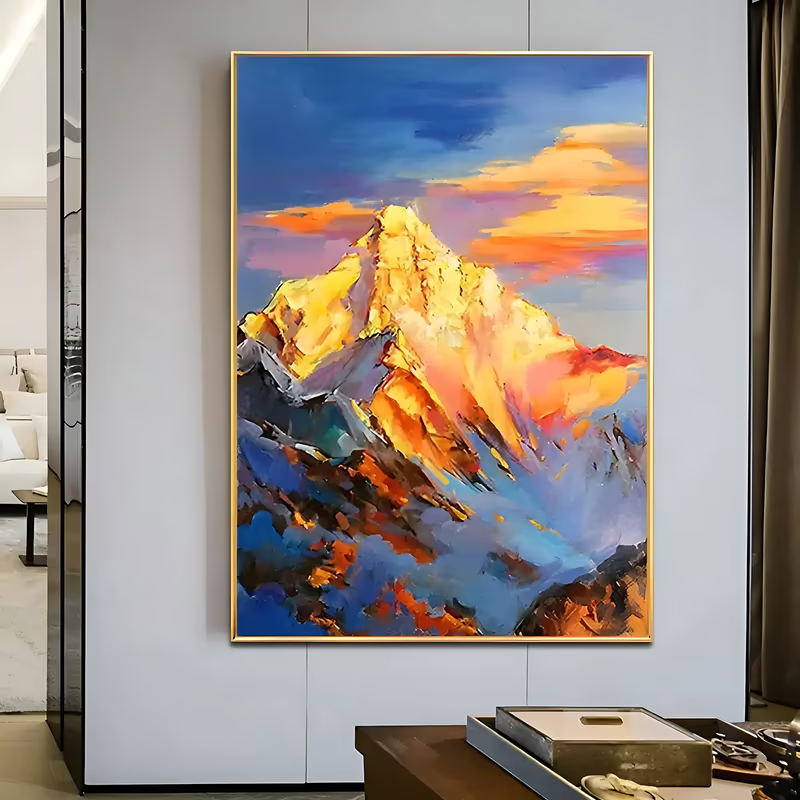
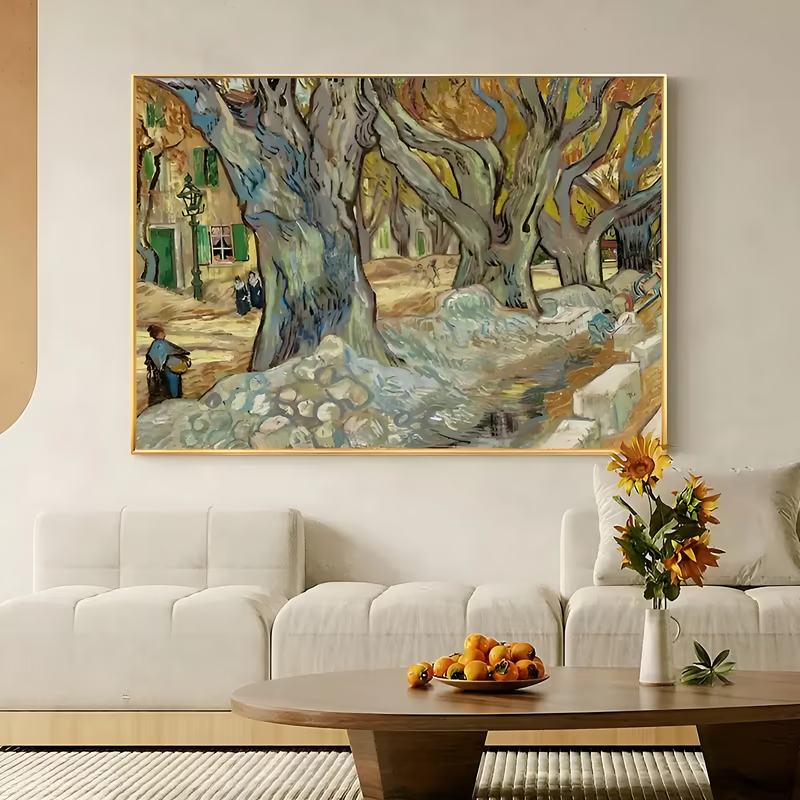
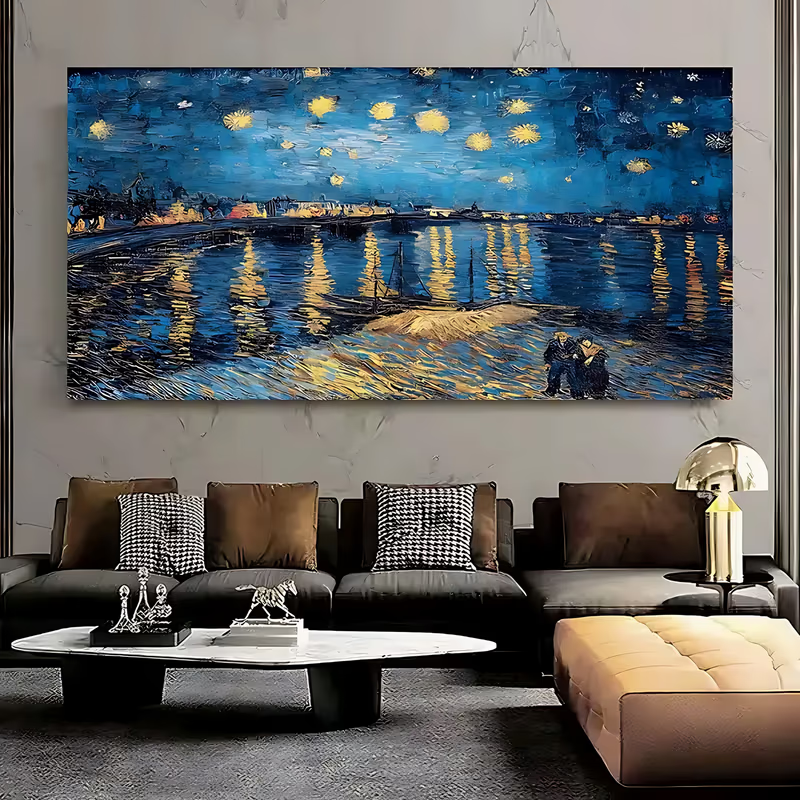
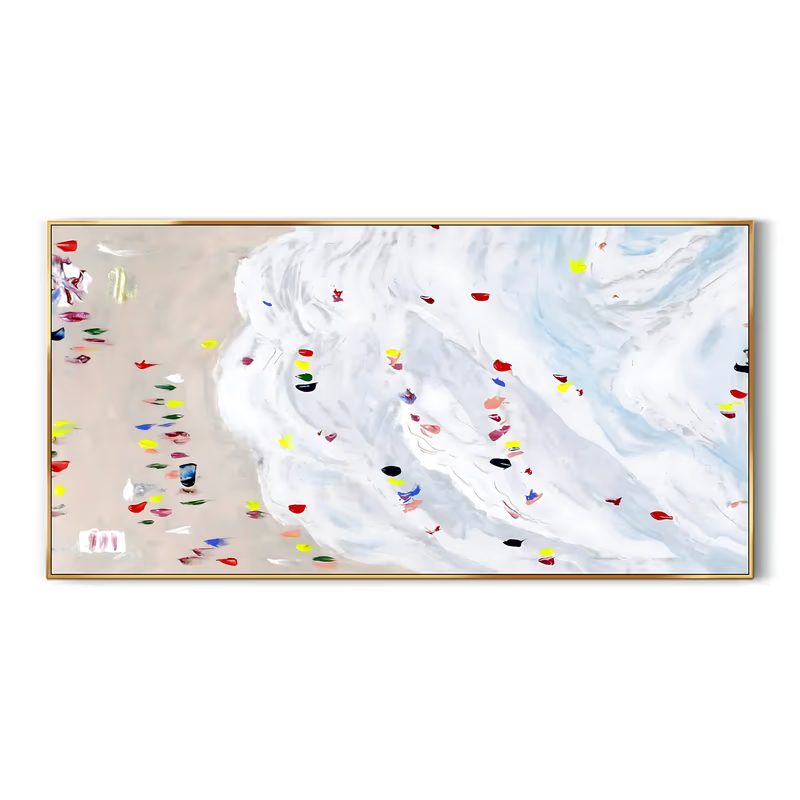
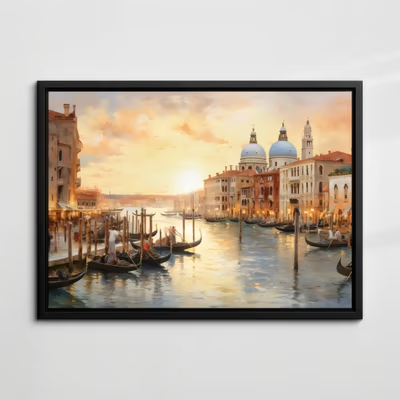
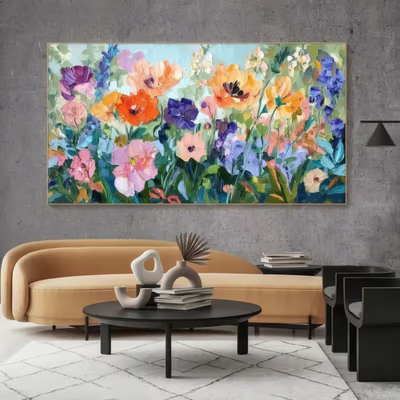
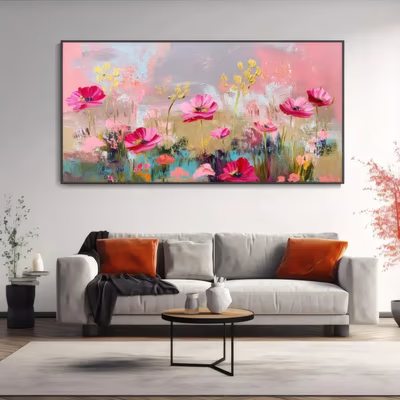
Mountains, coastlines, harbours and skies, often painted with an impressionist hand. A wide landscape gives a windowless or deep-plan lobby a horizon, and a local-feeling view is a simple way to give a resort or city hotel a sense of place.
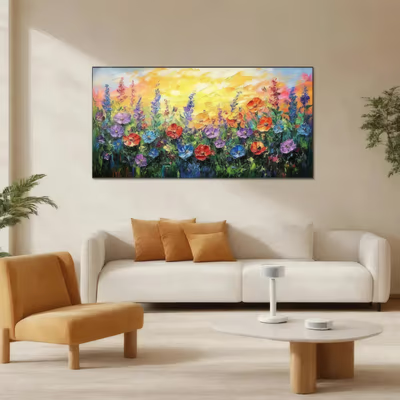
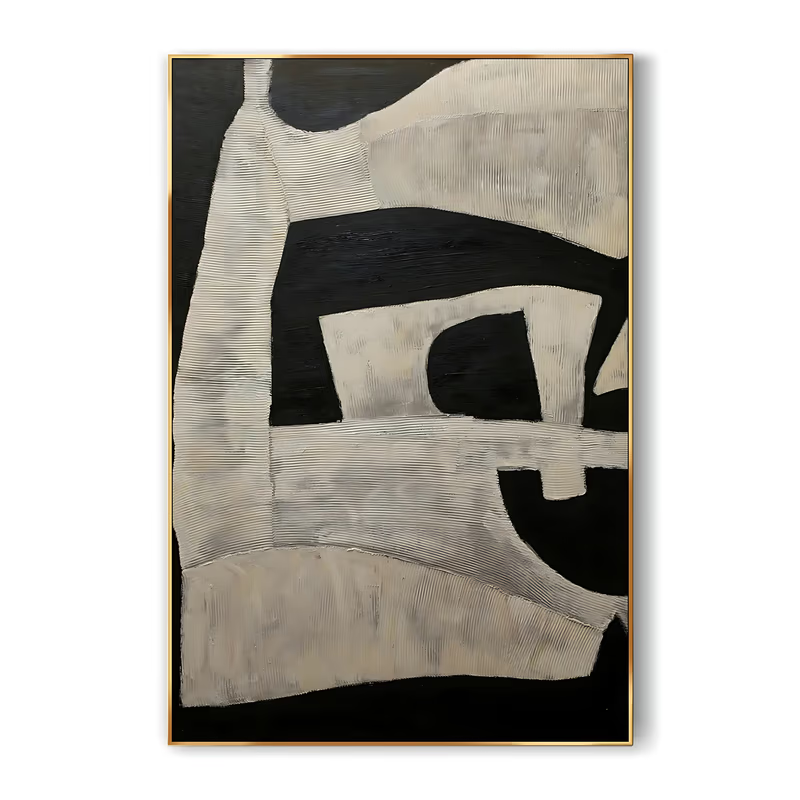
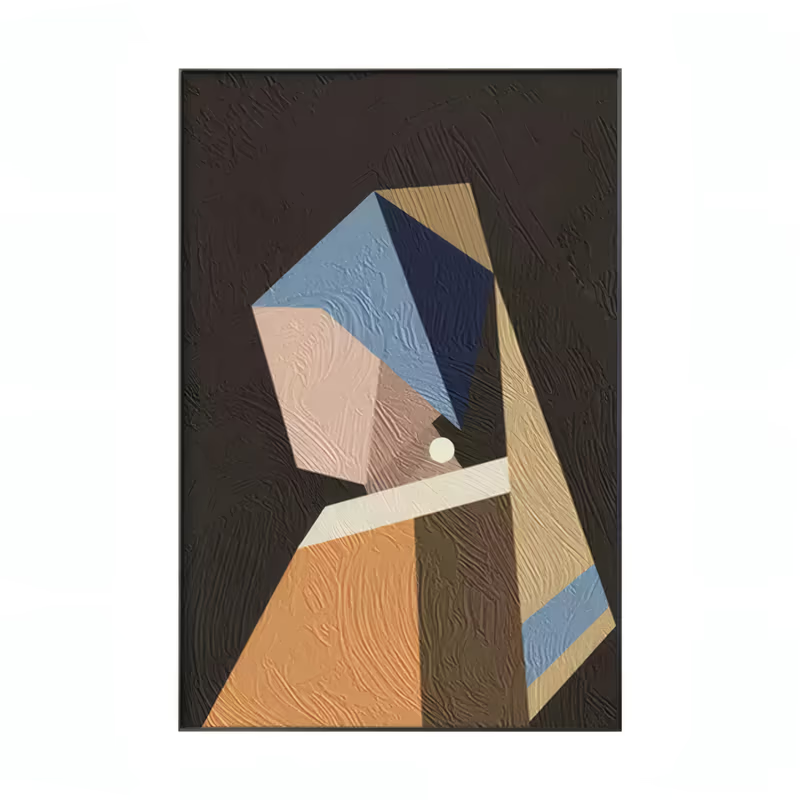
Geometric and minimalist work
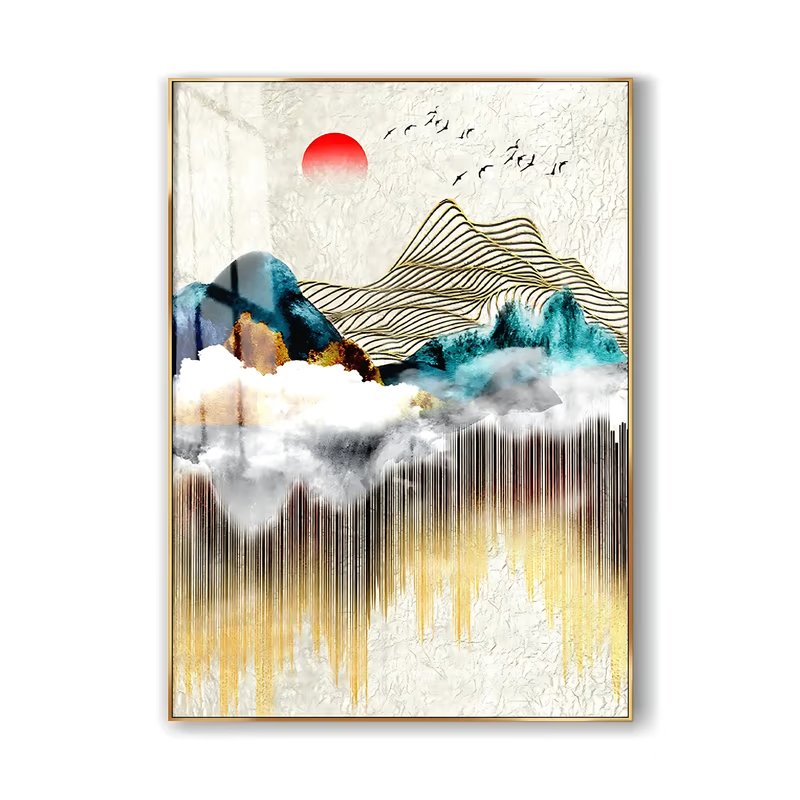
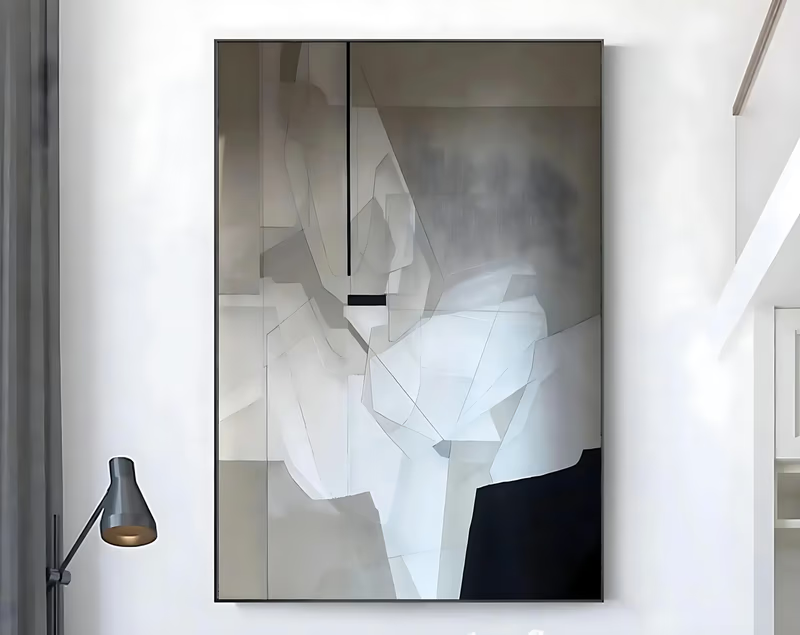
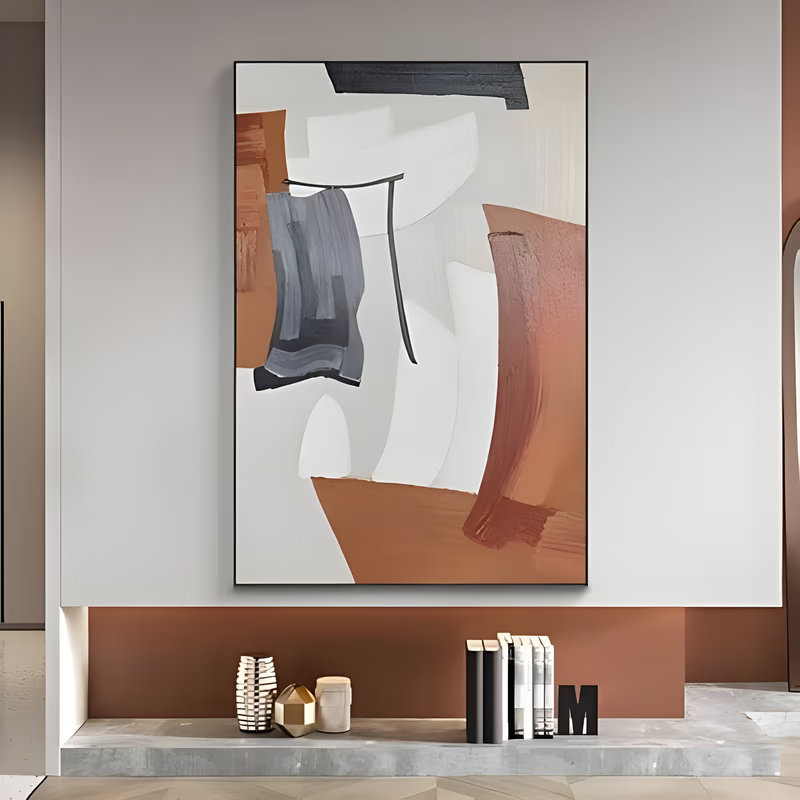
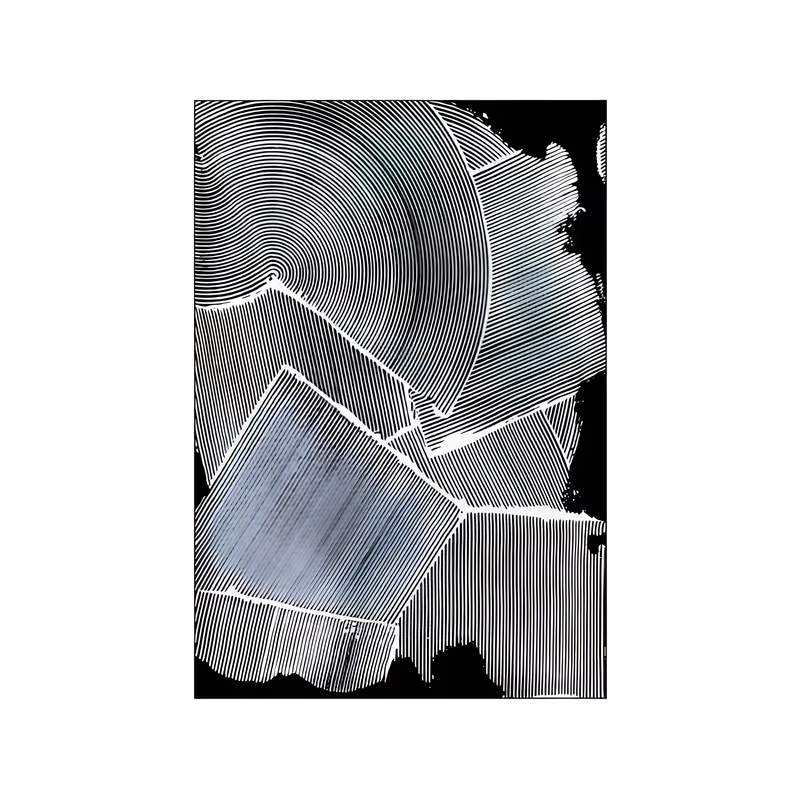
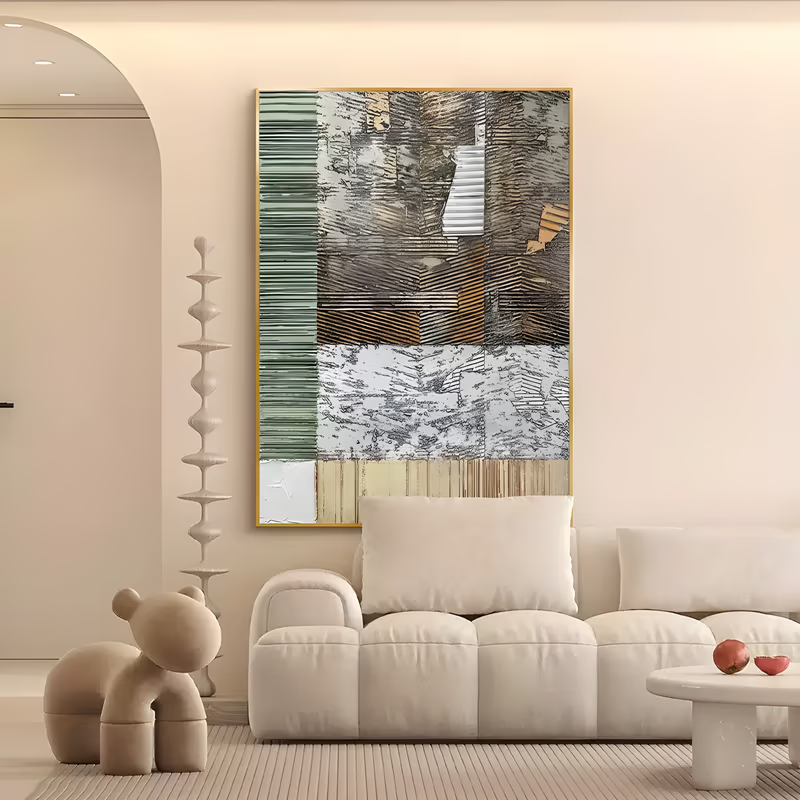
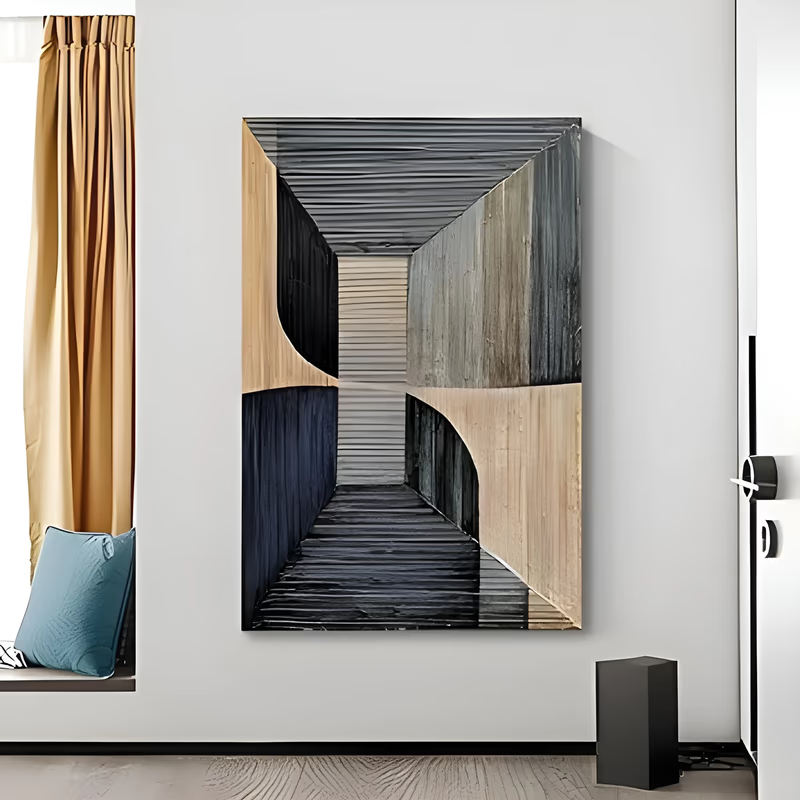
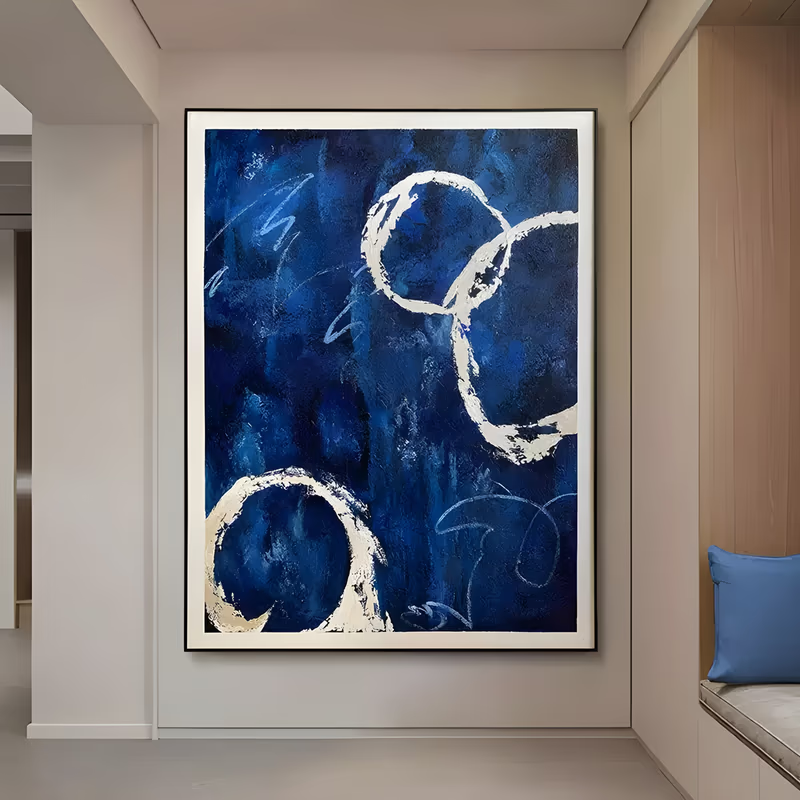
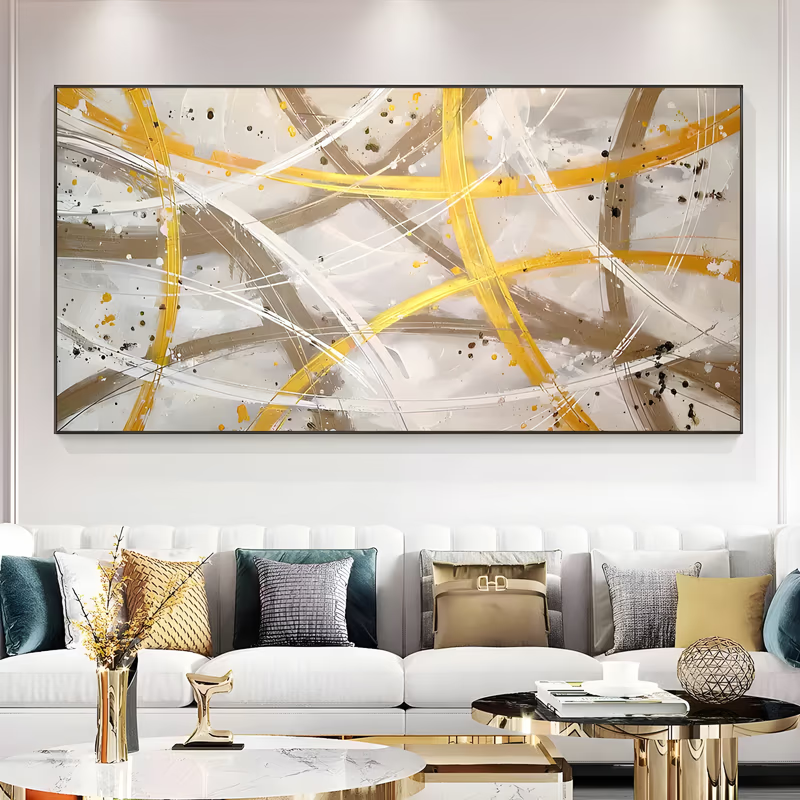
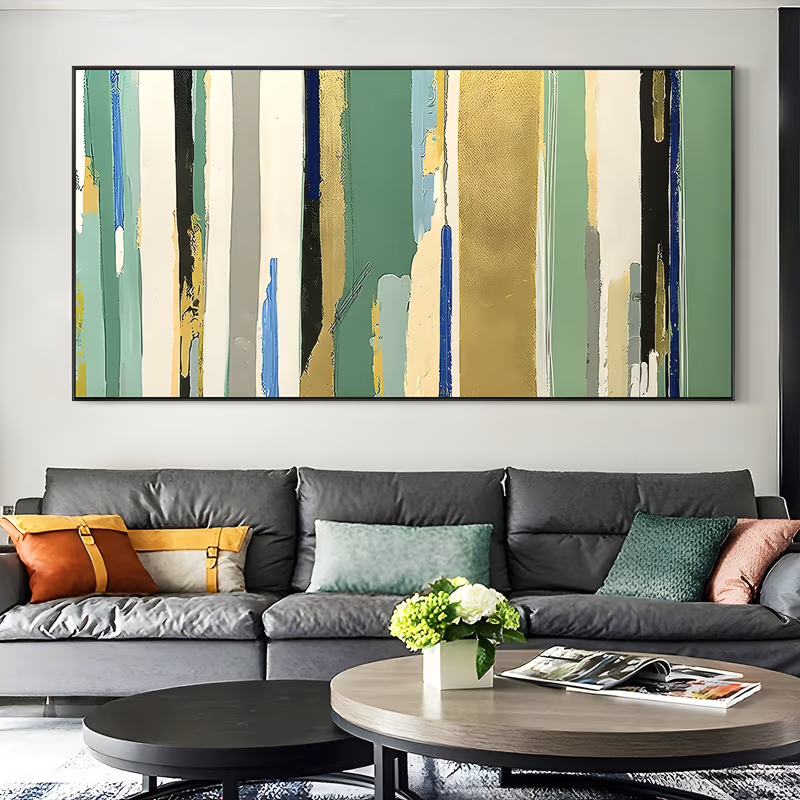
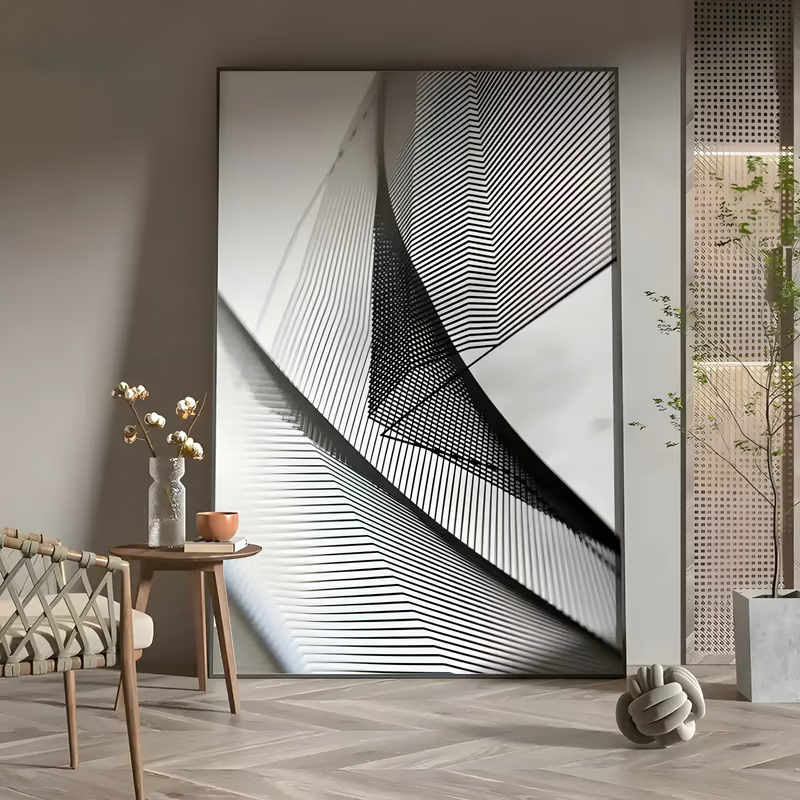
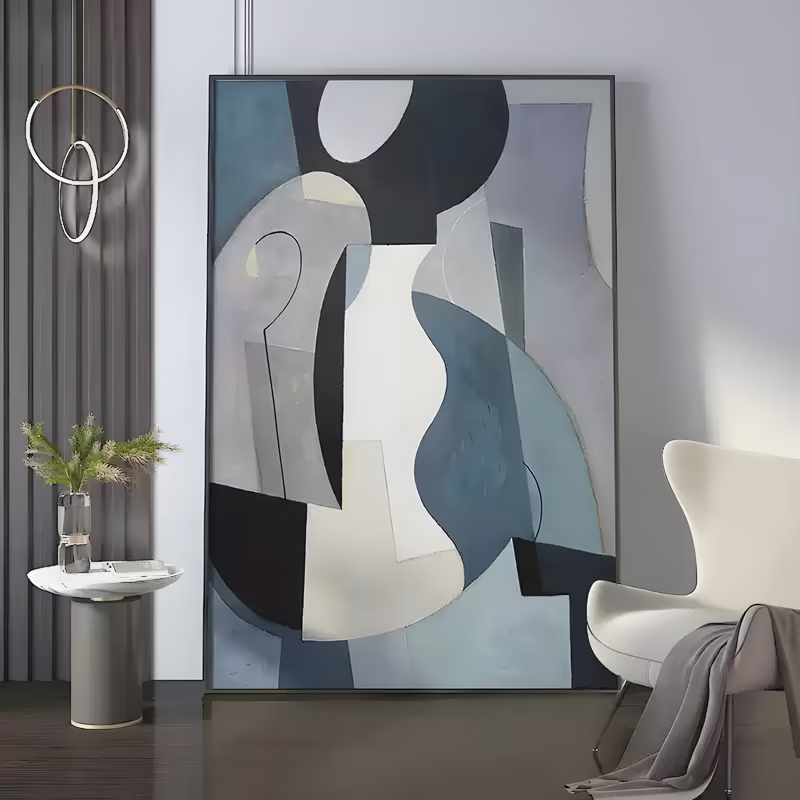
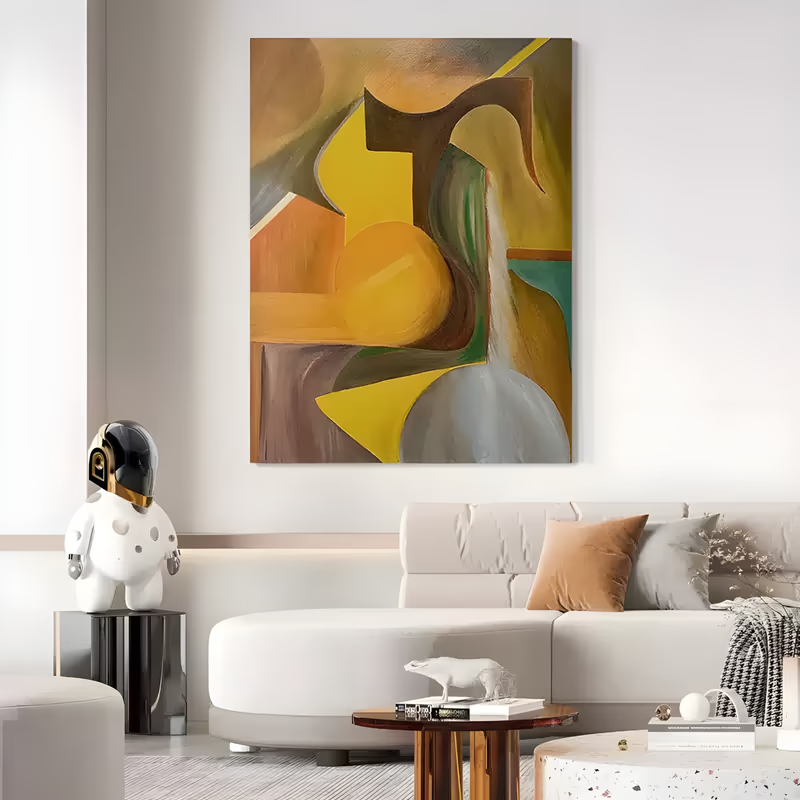
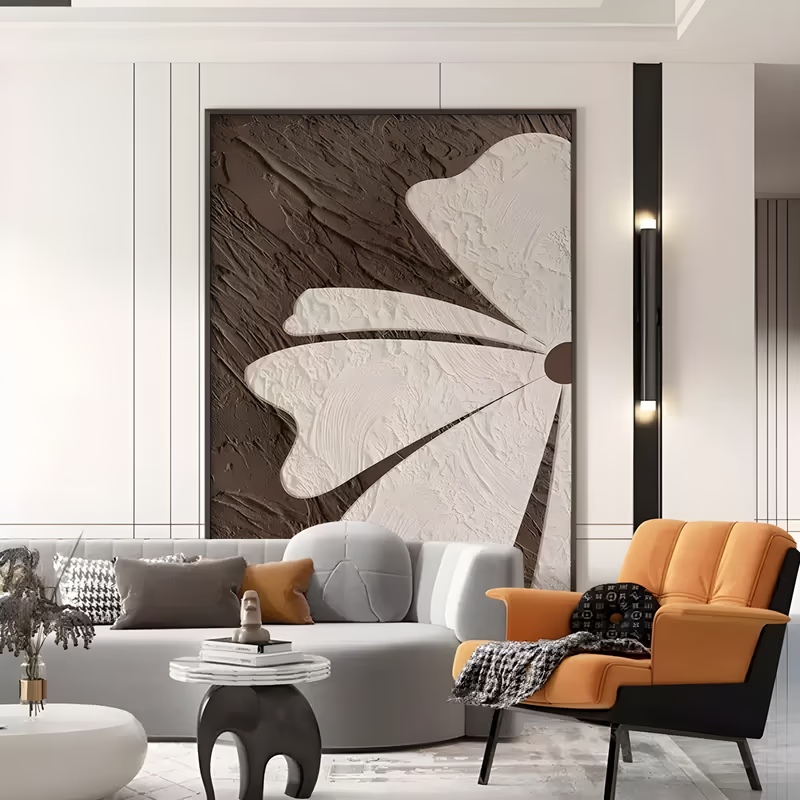
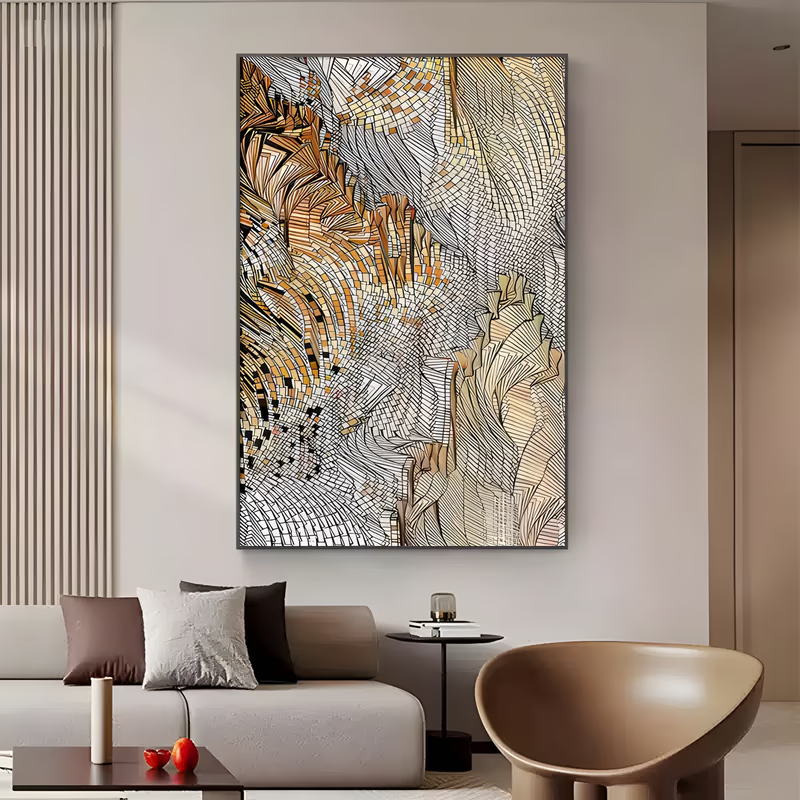
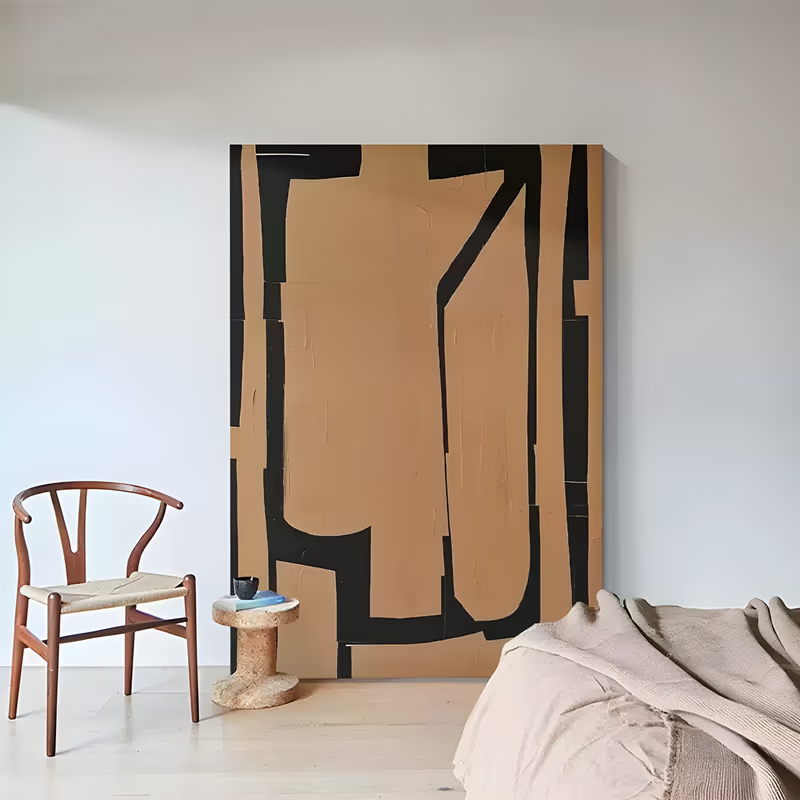
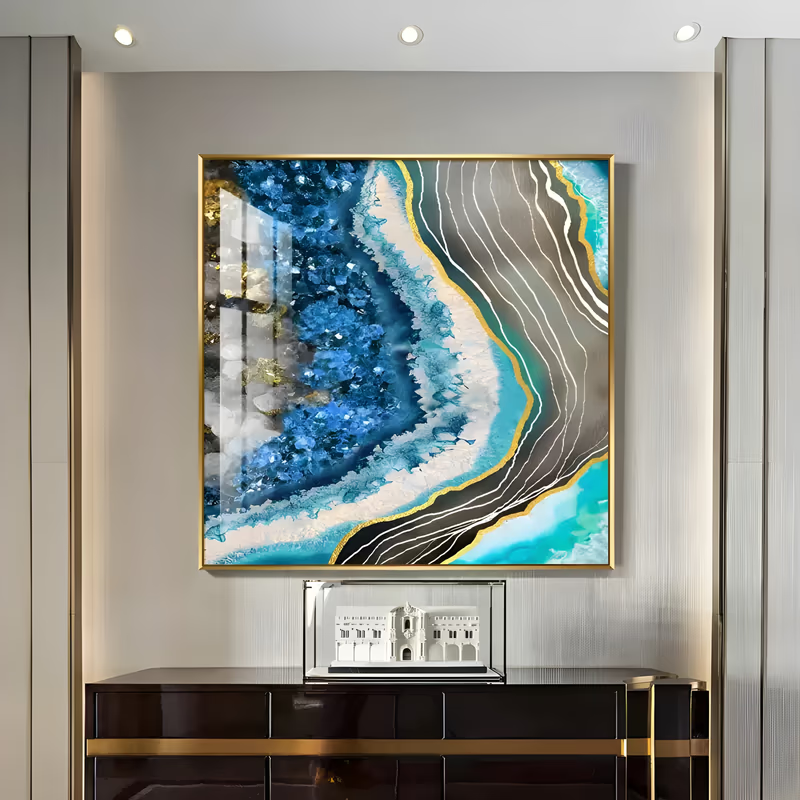
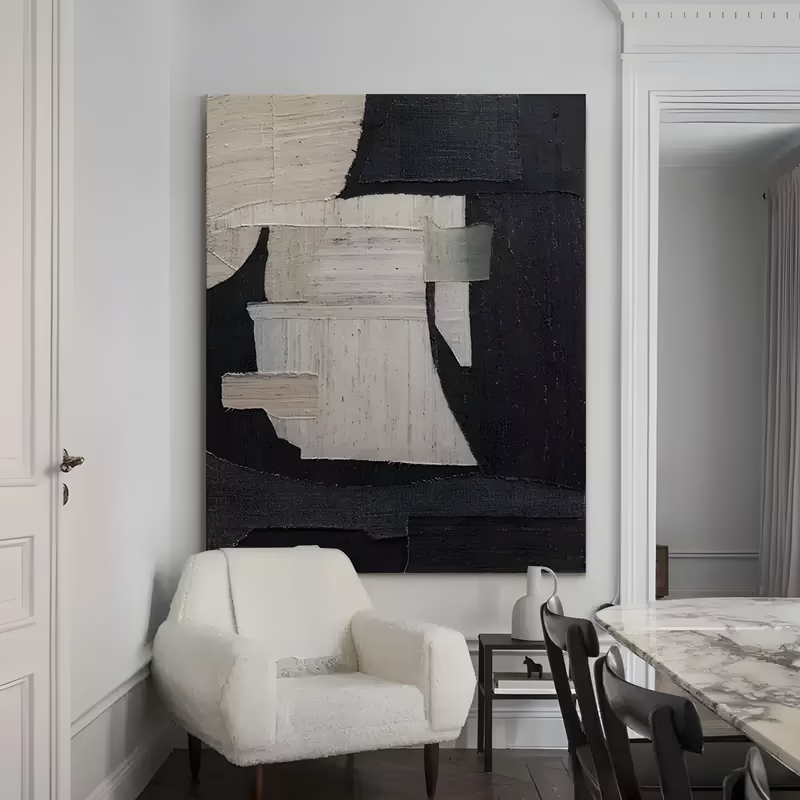
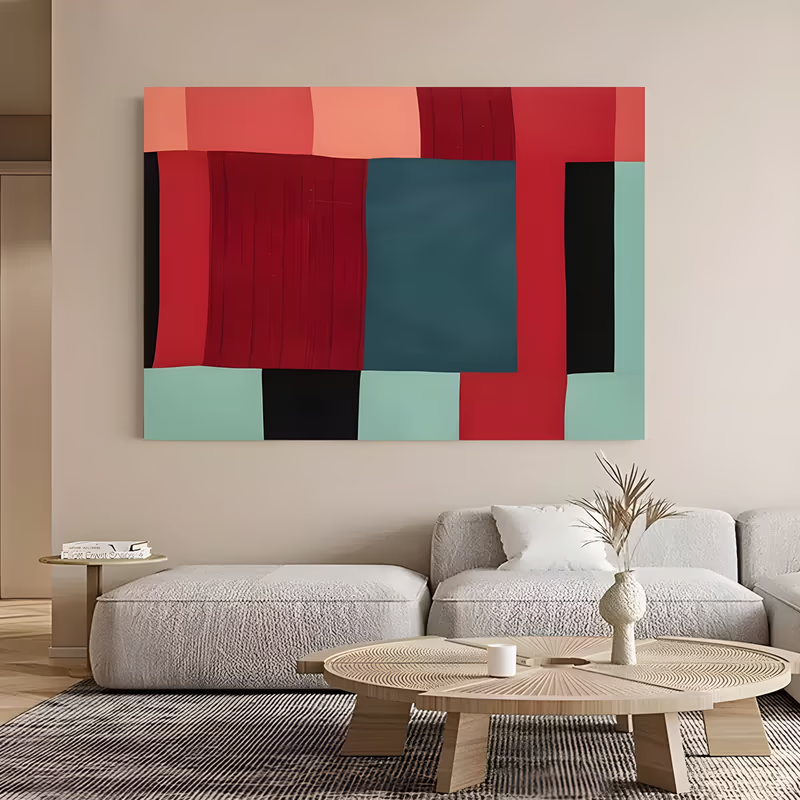
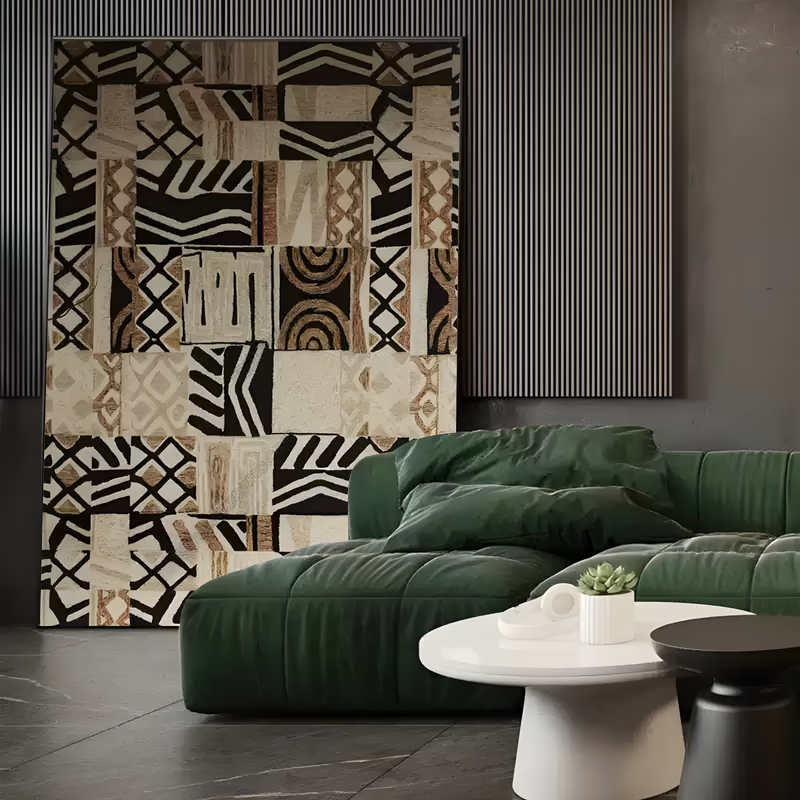
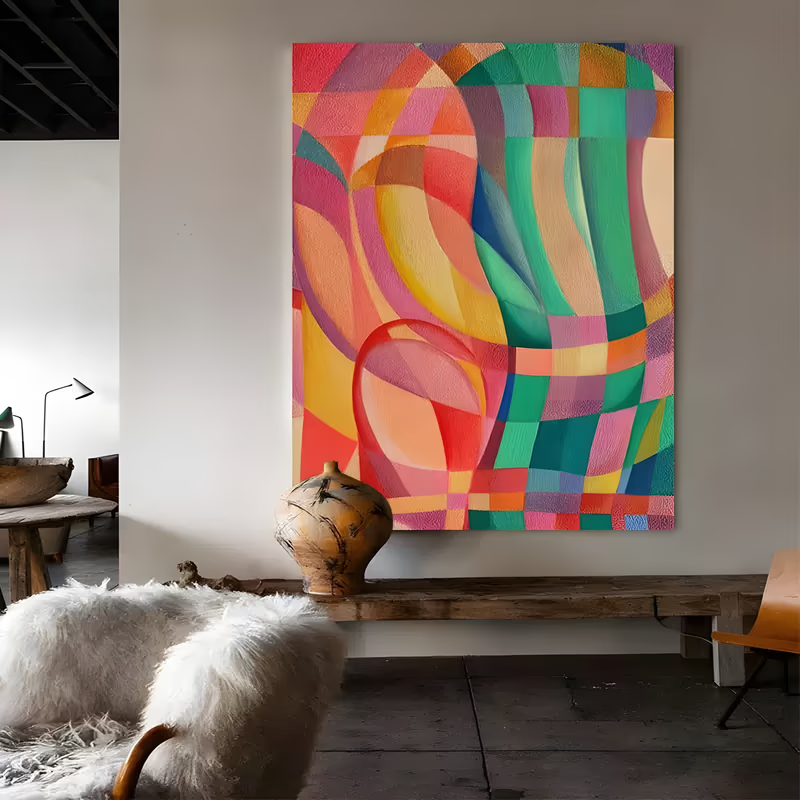
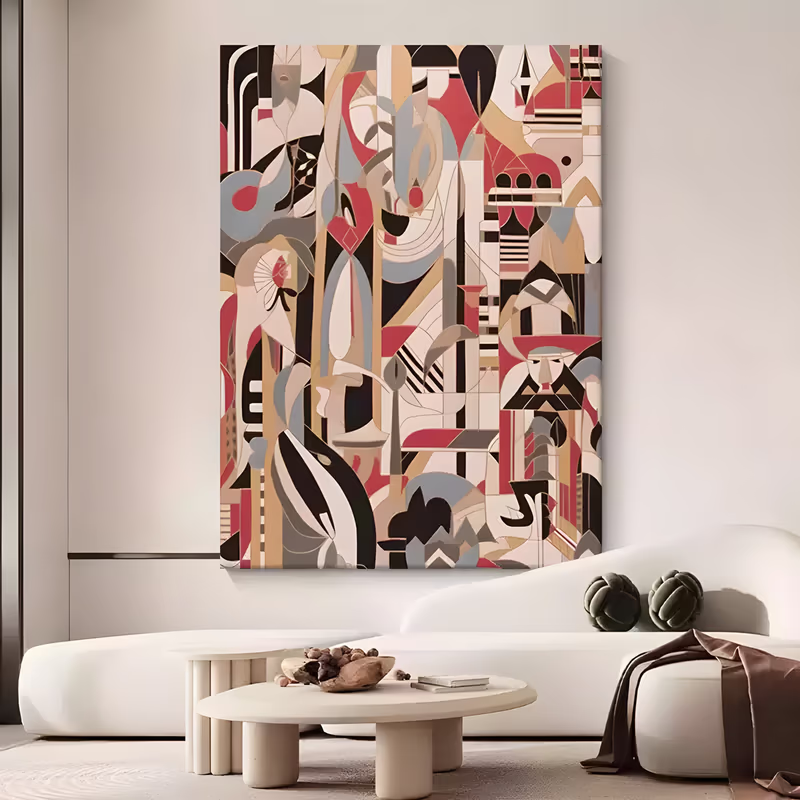
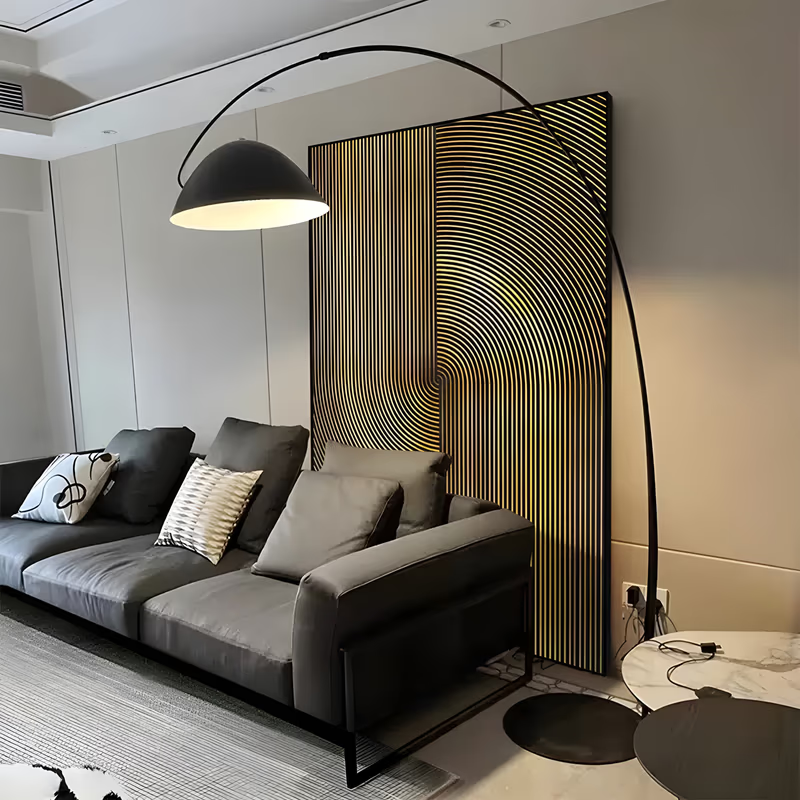
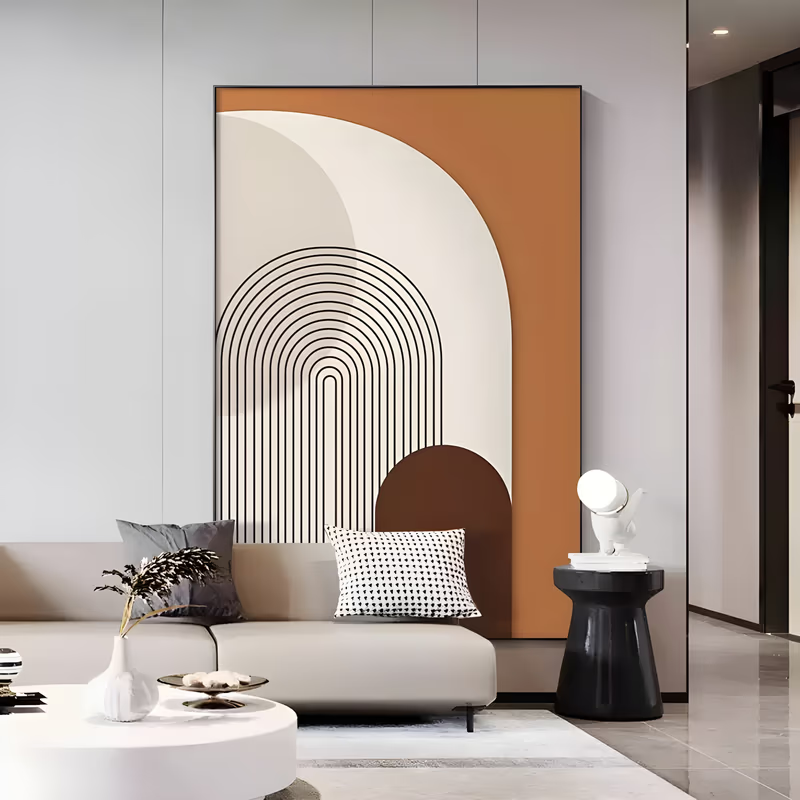
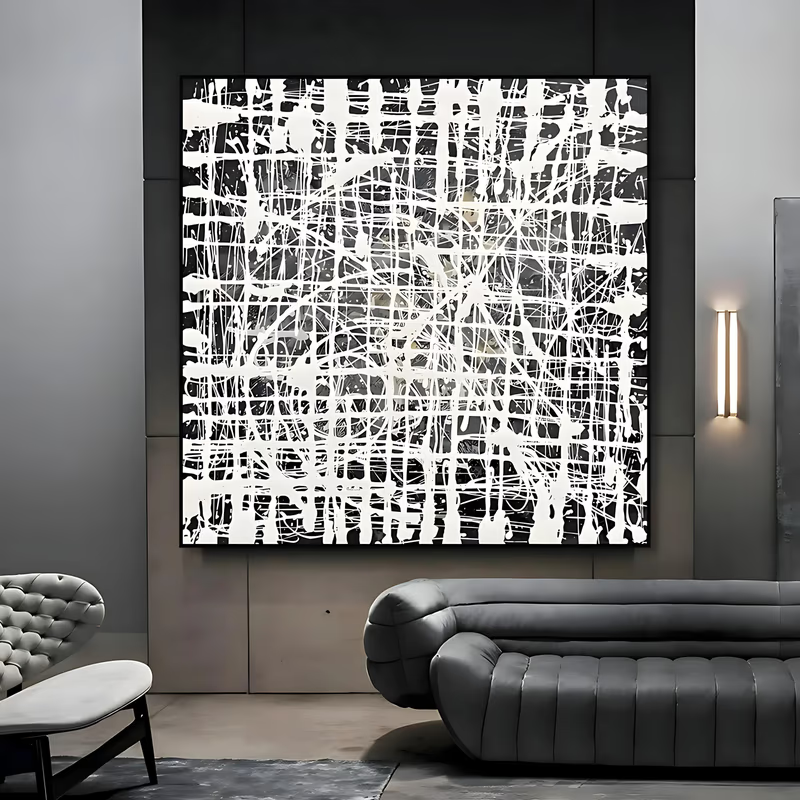
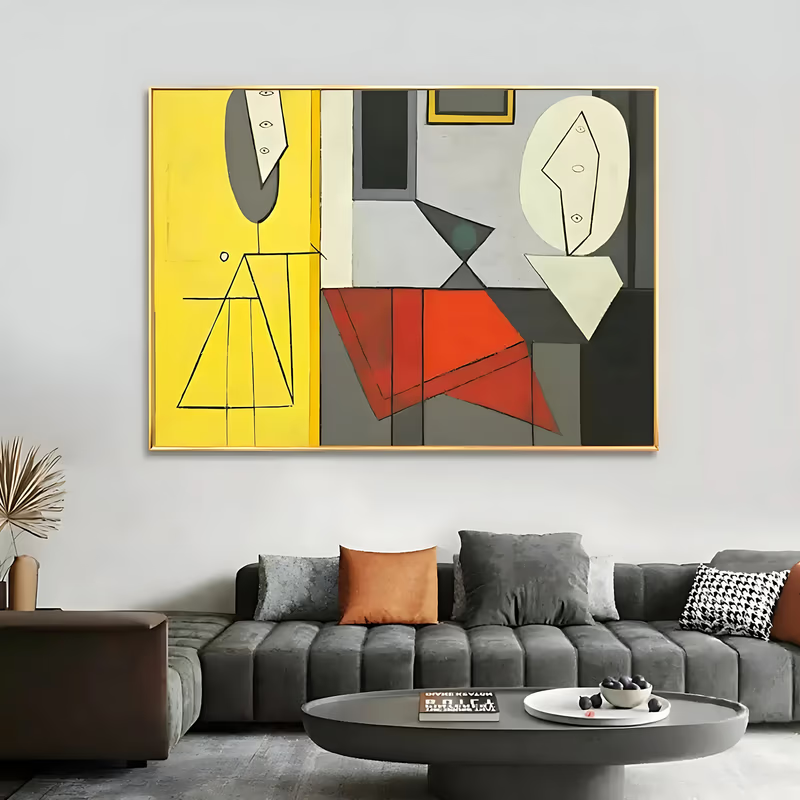
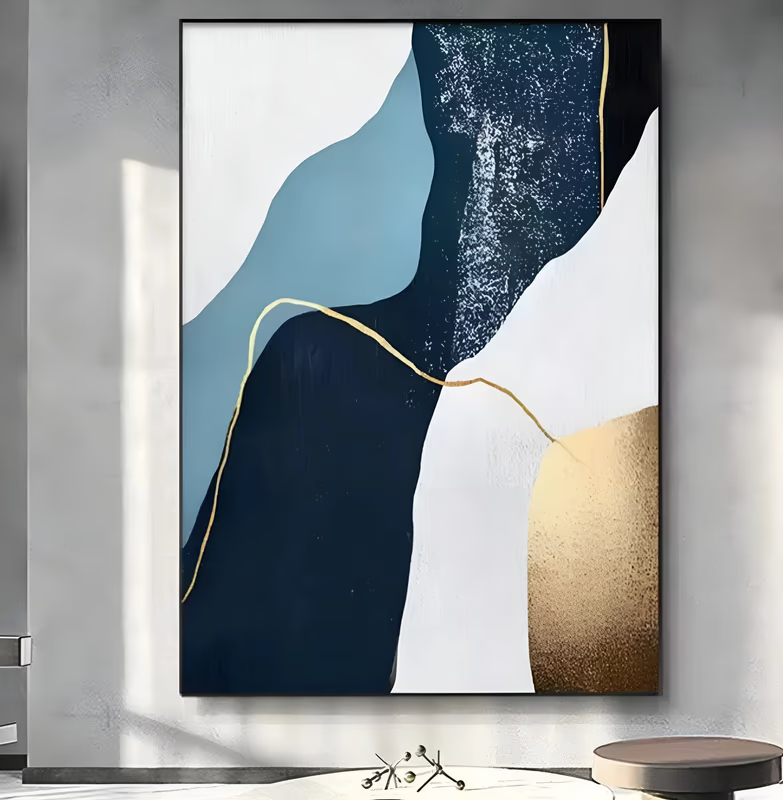
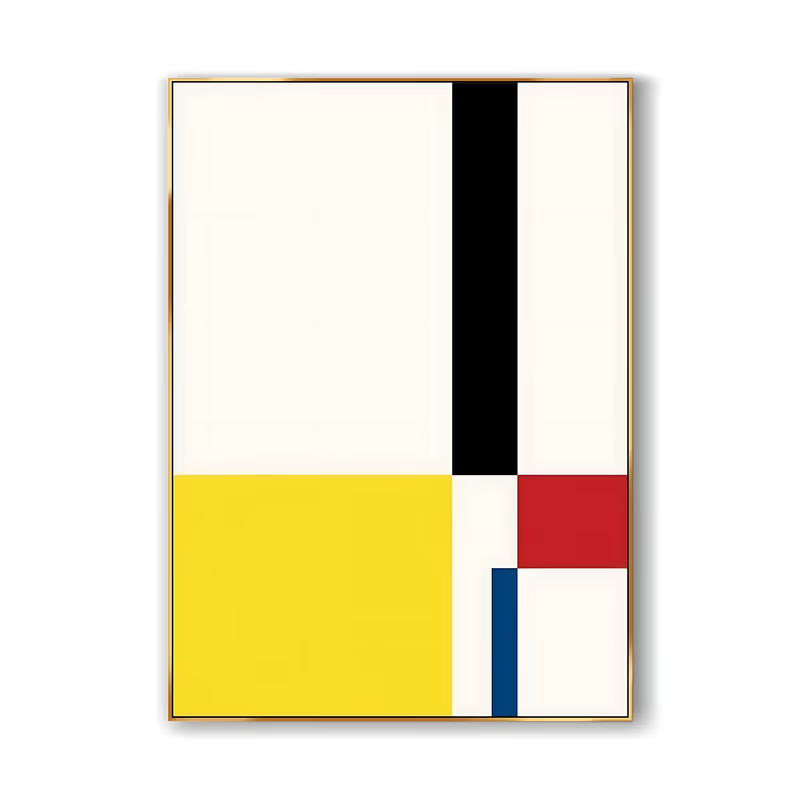
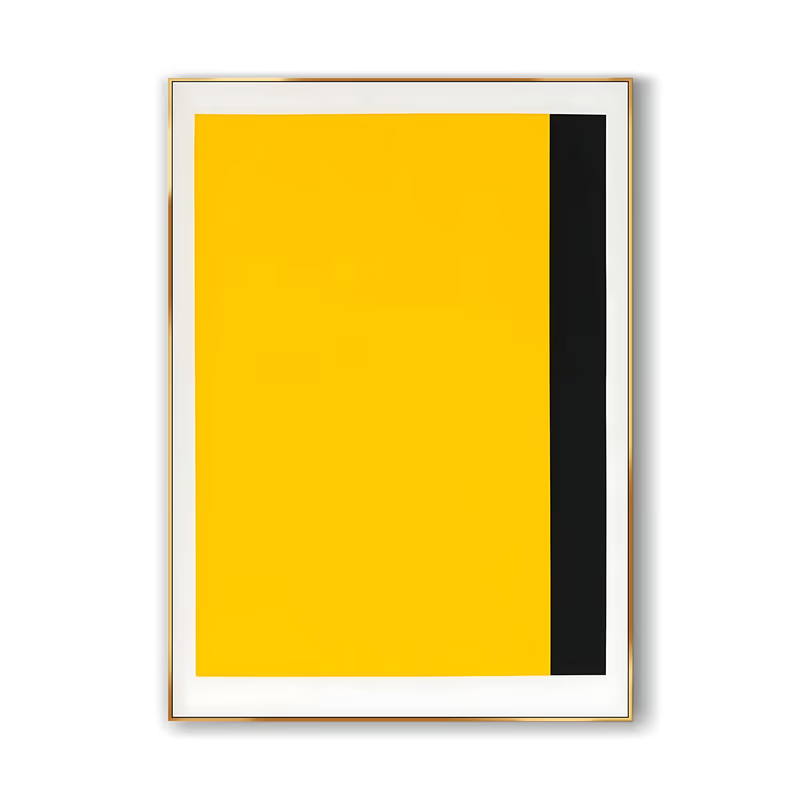
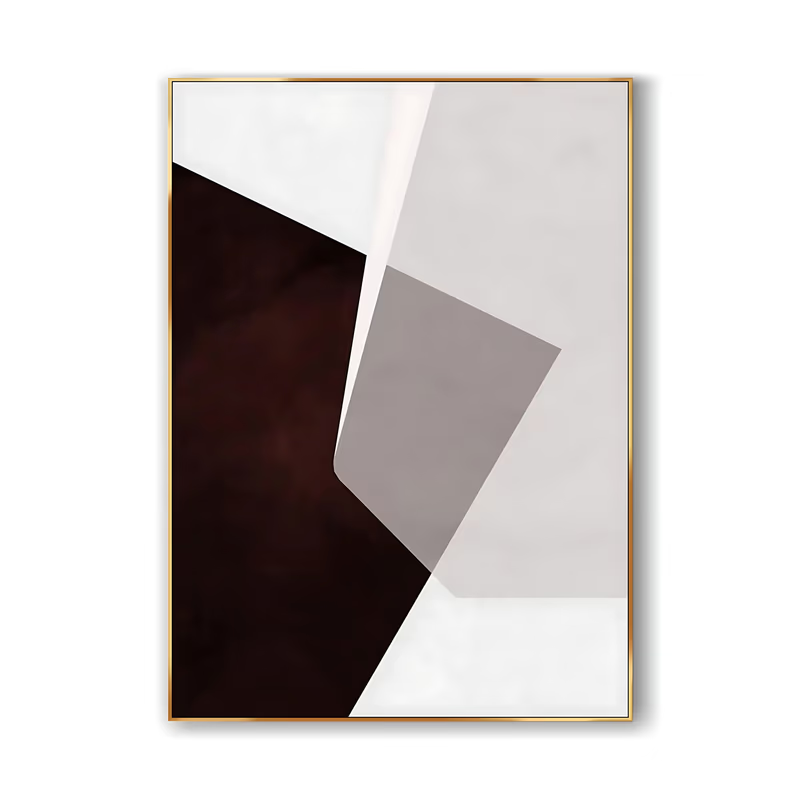
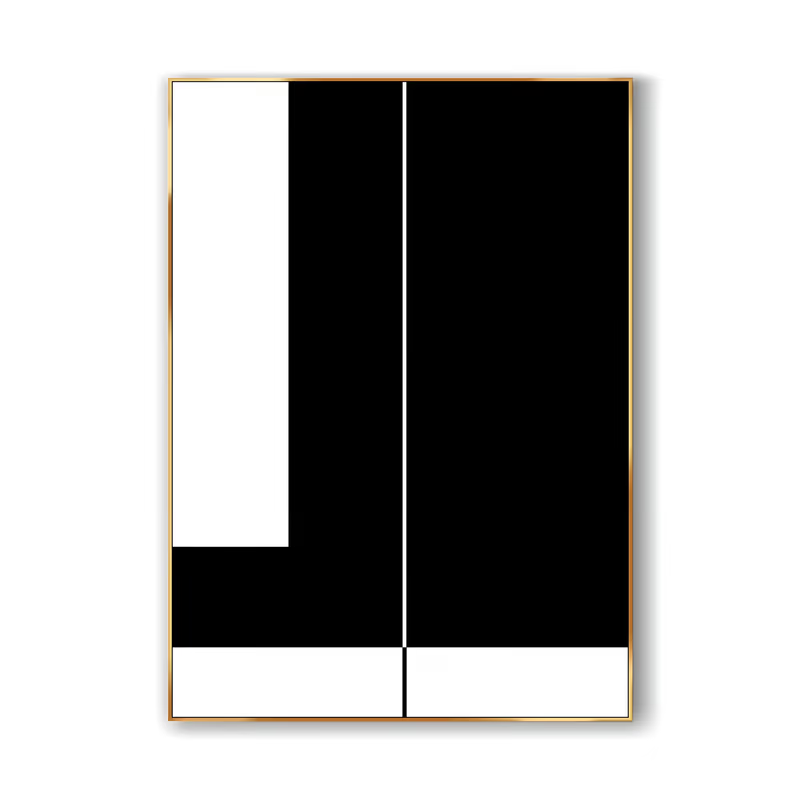
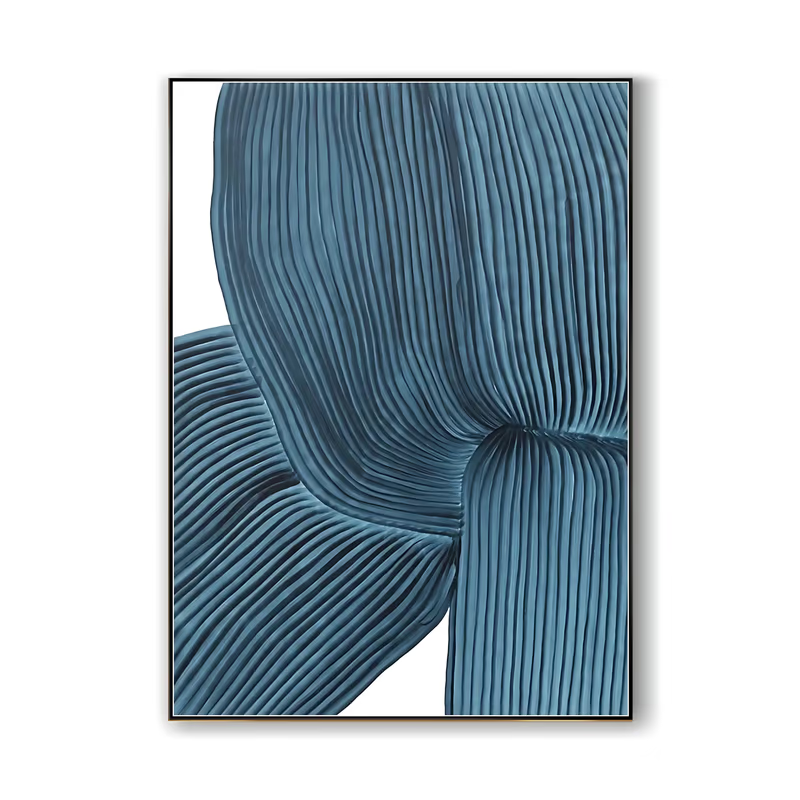
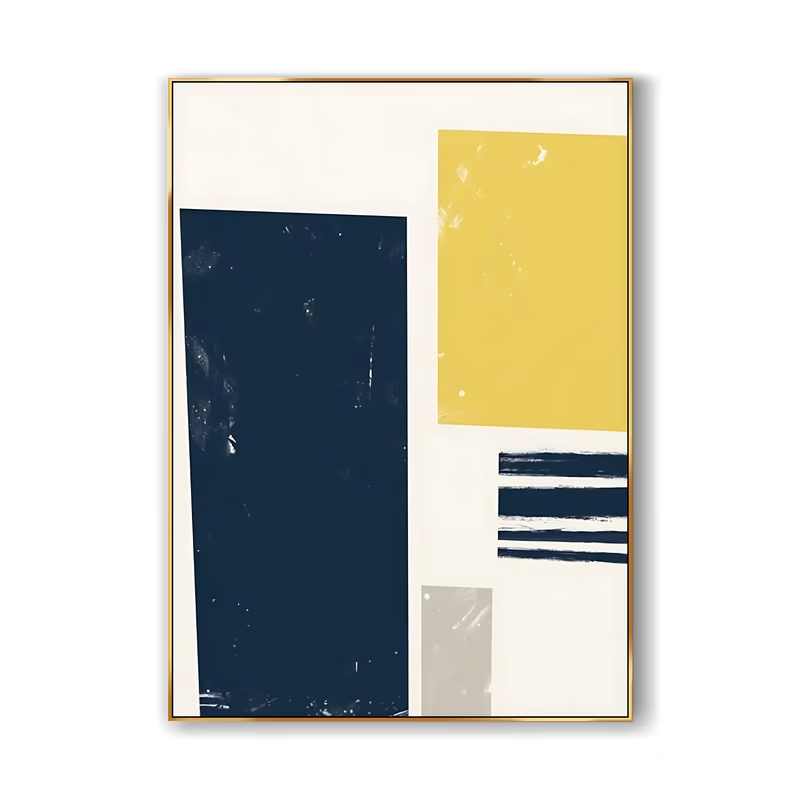
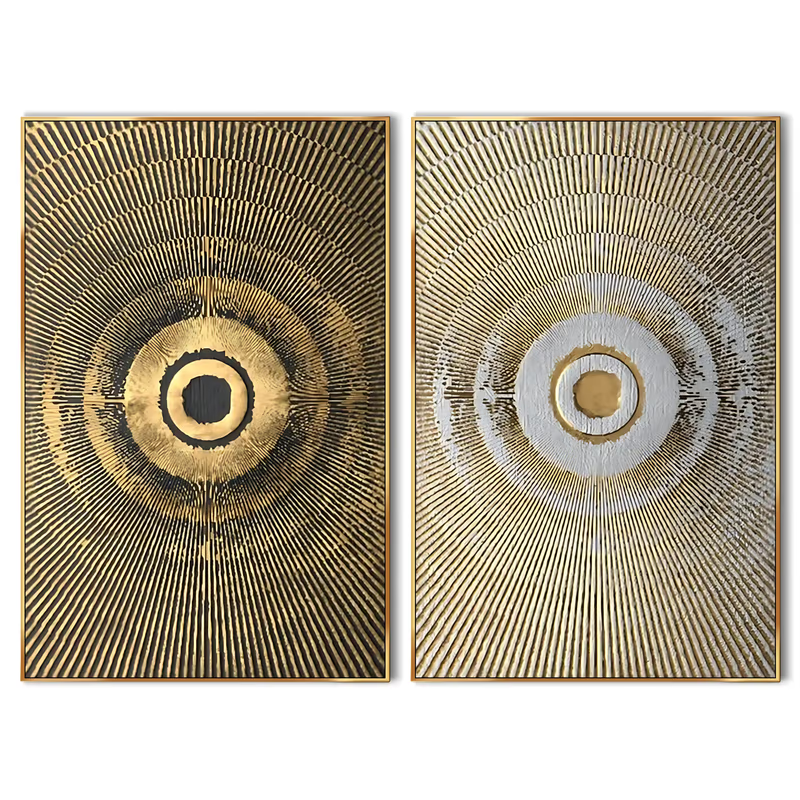
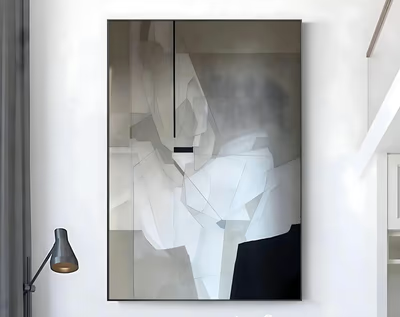
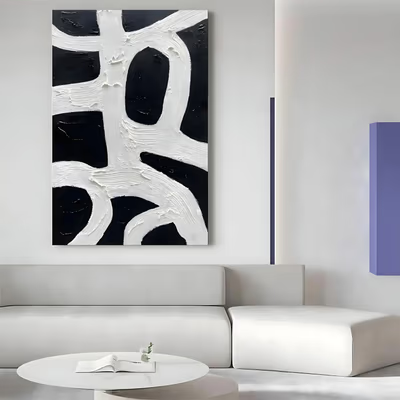
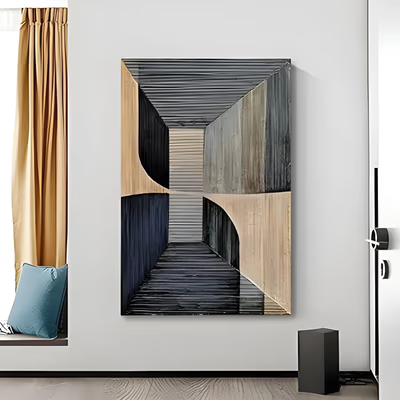
Arcs, stripes, interlocking shapes and quiet planes of colour. Precise and graphic, they sit comfortably with corporate interiors and clean modern architecture, and they hold their shape at long range. Geometric art for receptions.
Which colours and moods suit a hotel lobby?
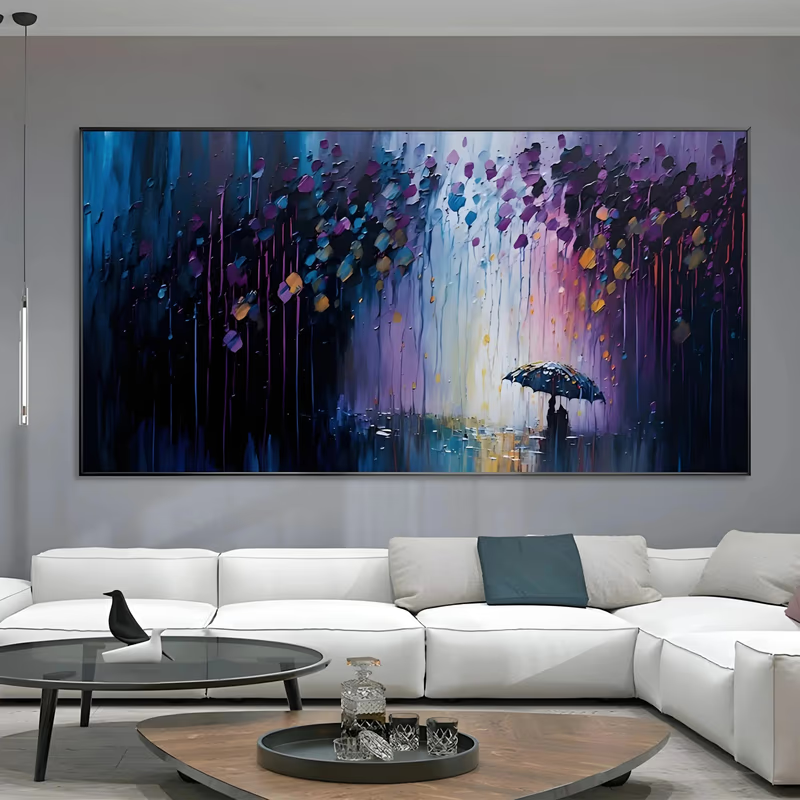
Choose the mood from how the lobby is used: bright, uplifting colour for a busy daytime lobby, dramatic dark grounds for a lobby that doubles as an evening bar, and soft neutrals for a residential or wellness-led reception.
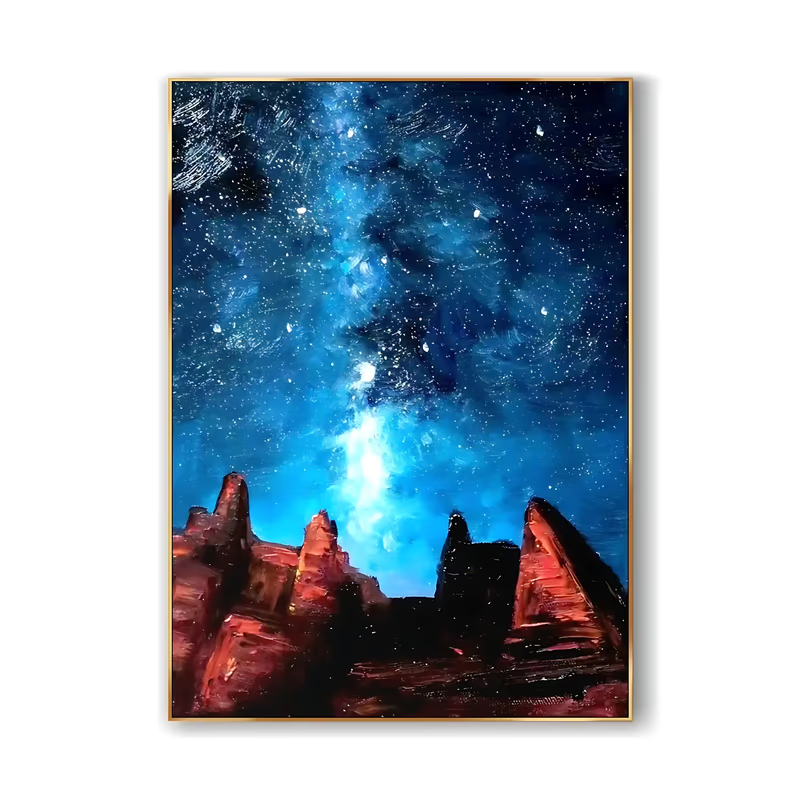
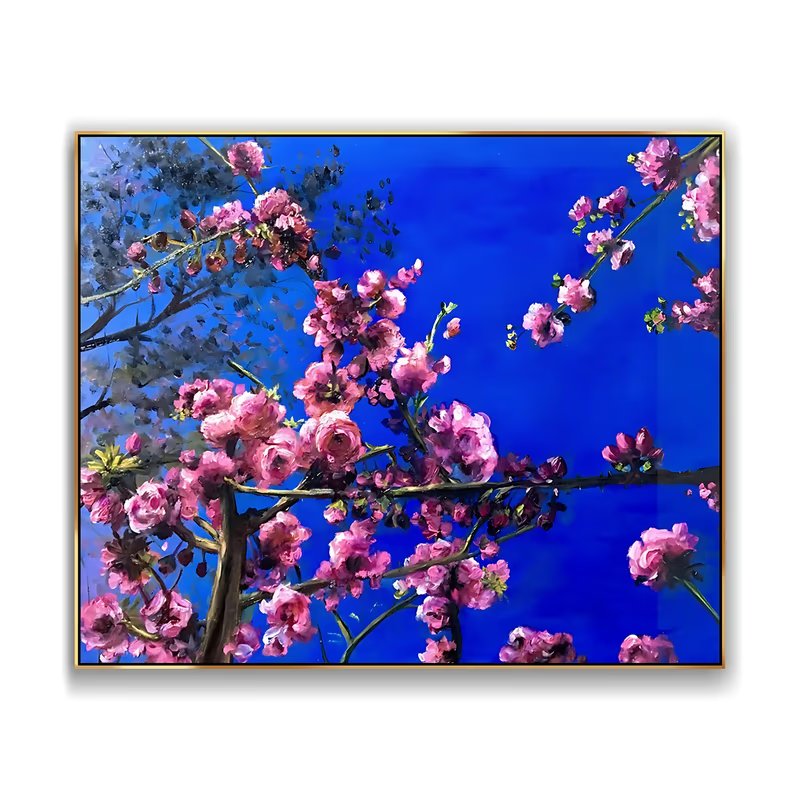
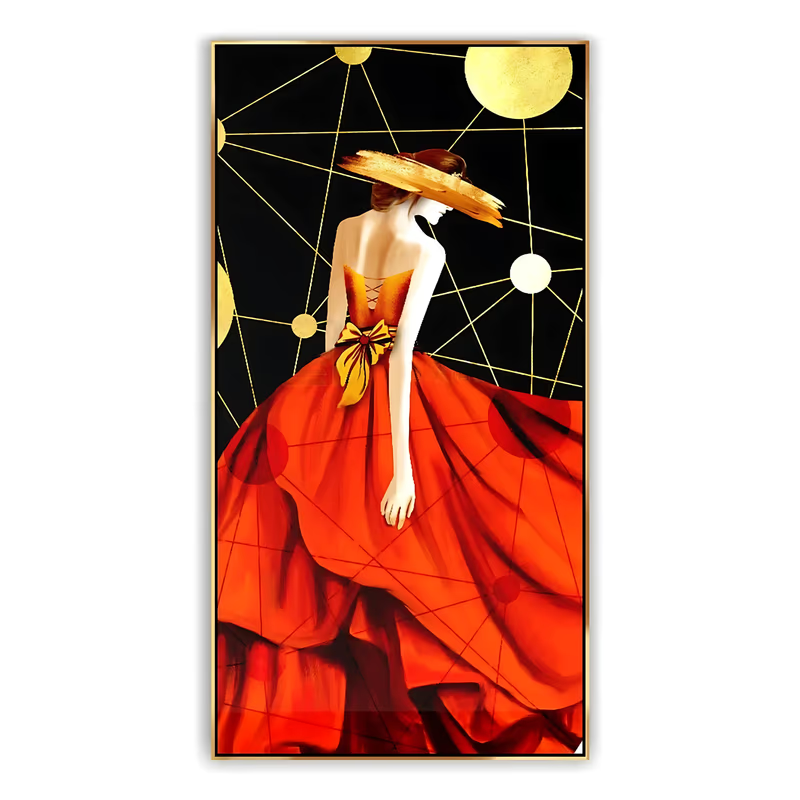
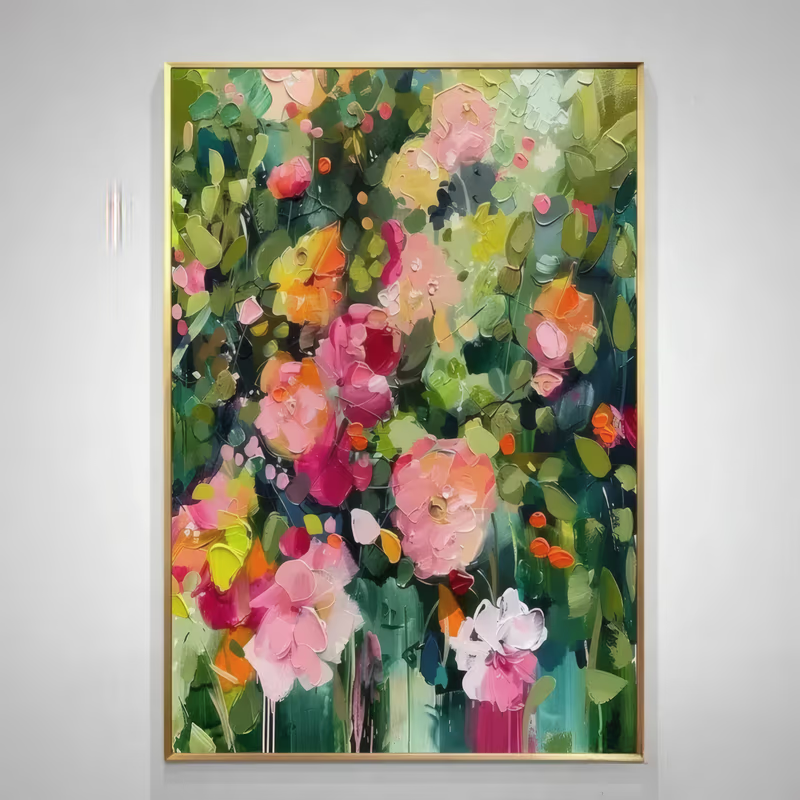
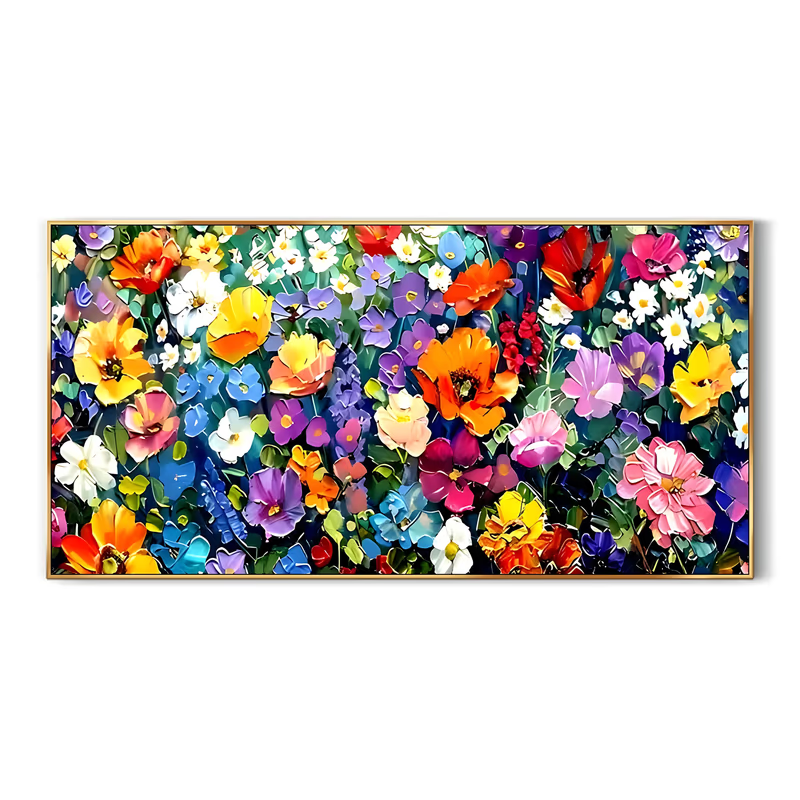
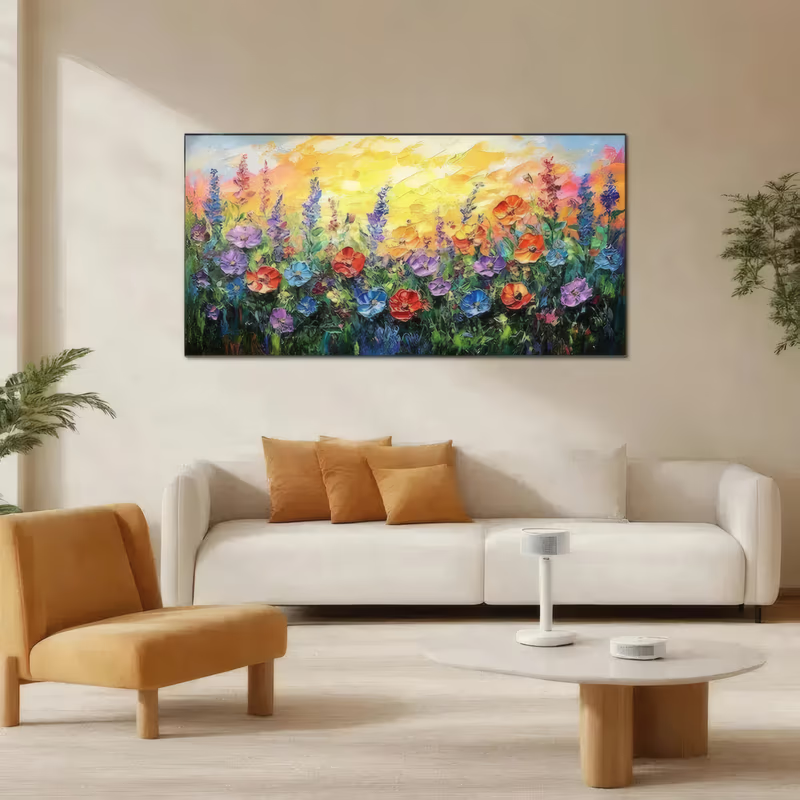
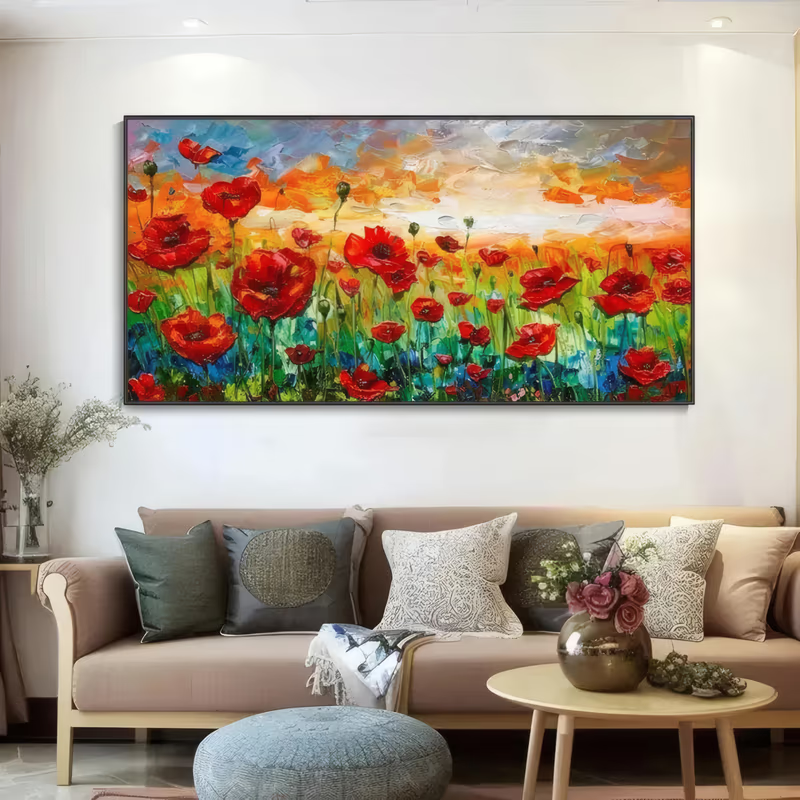
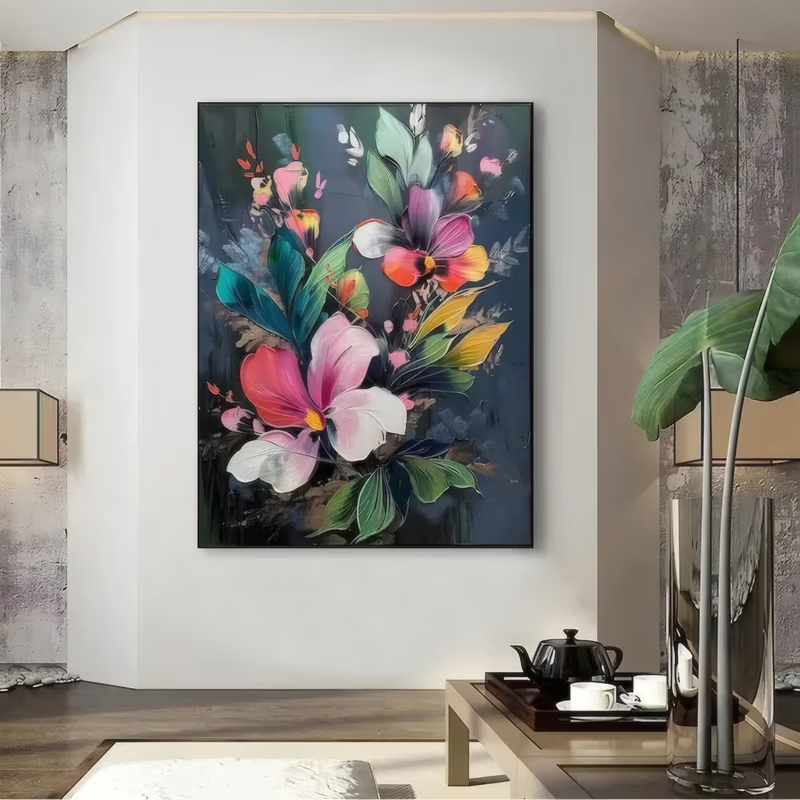
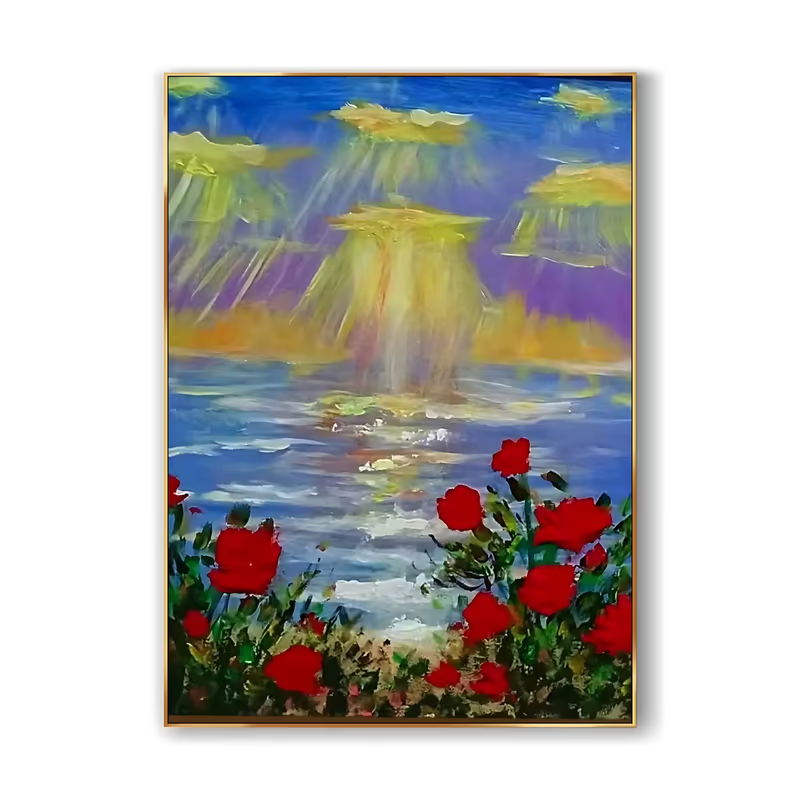
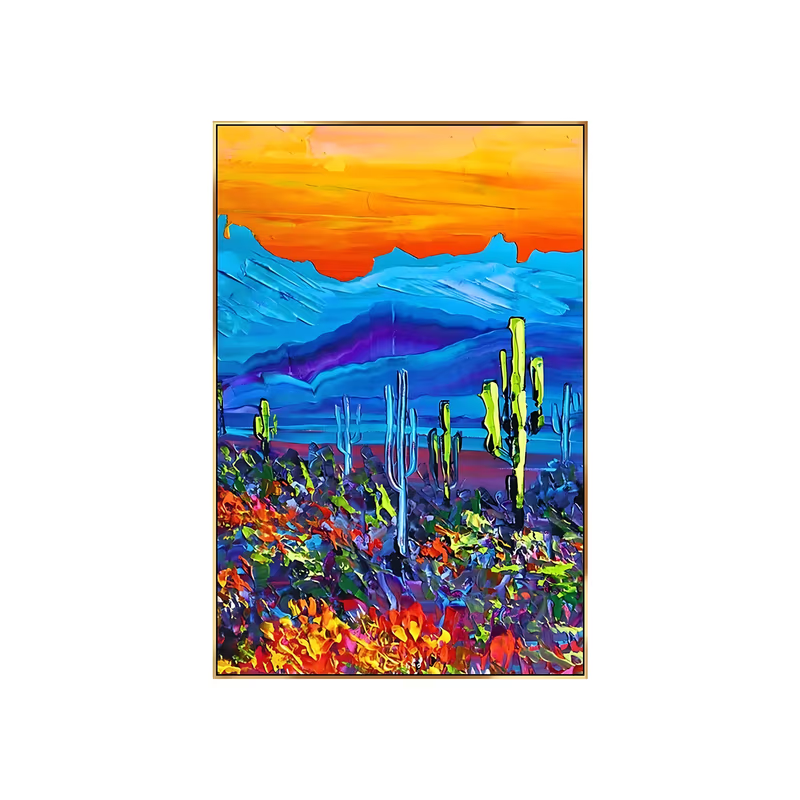
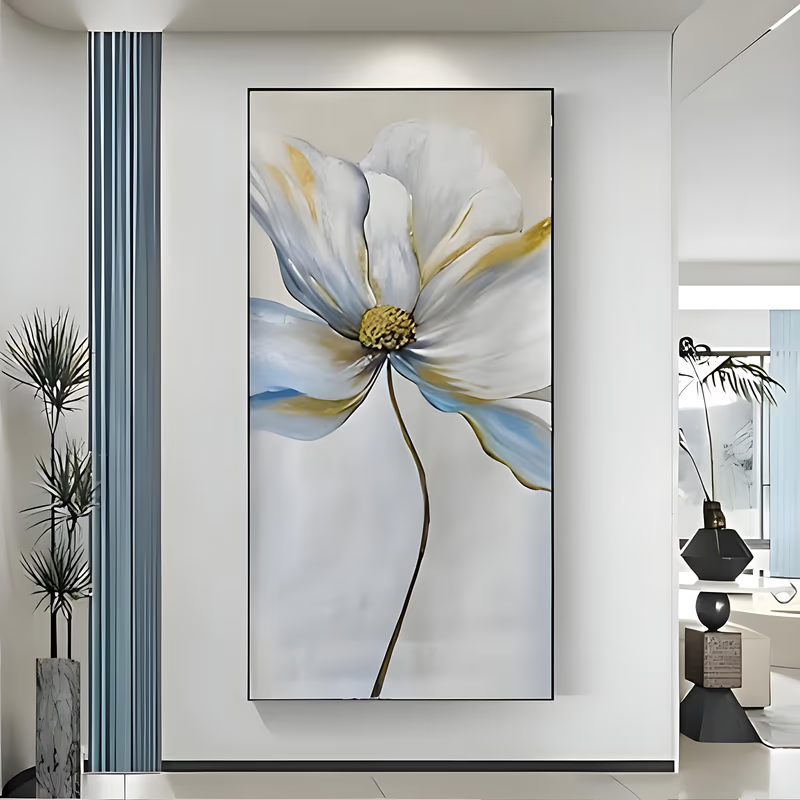
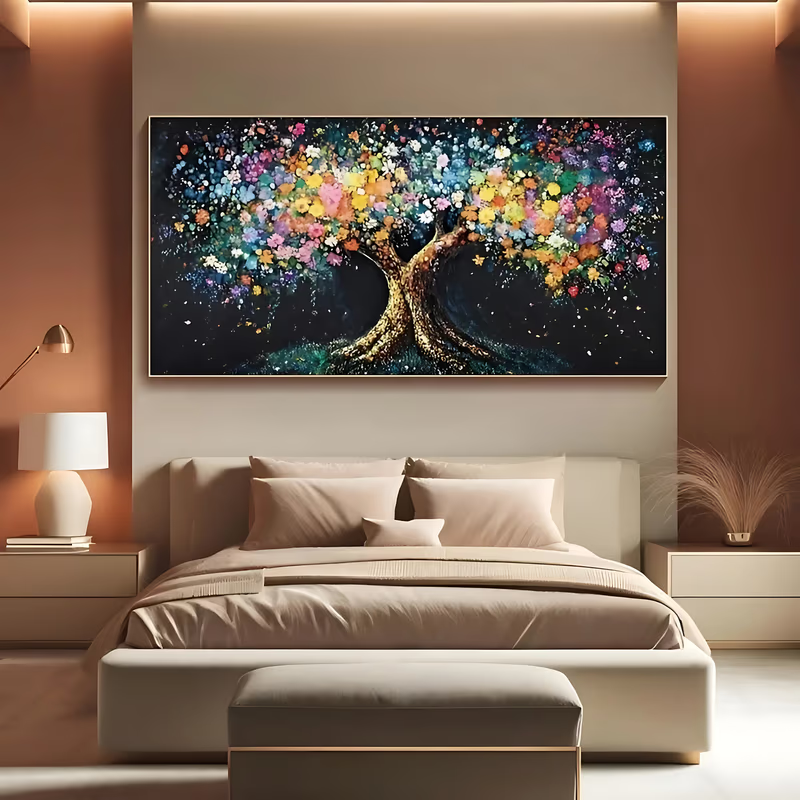
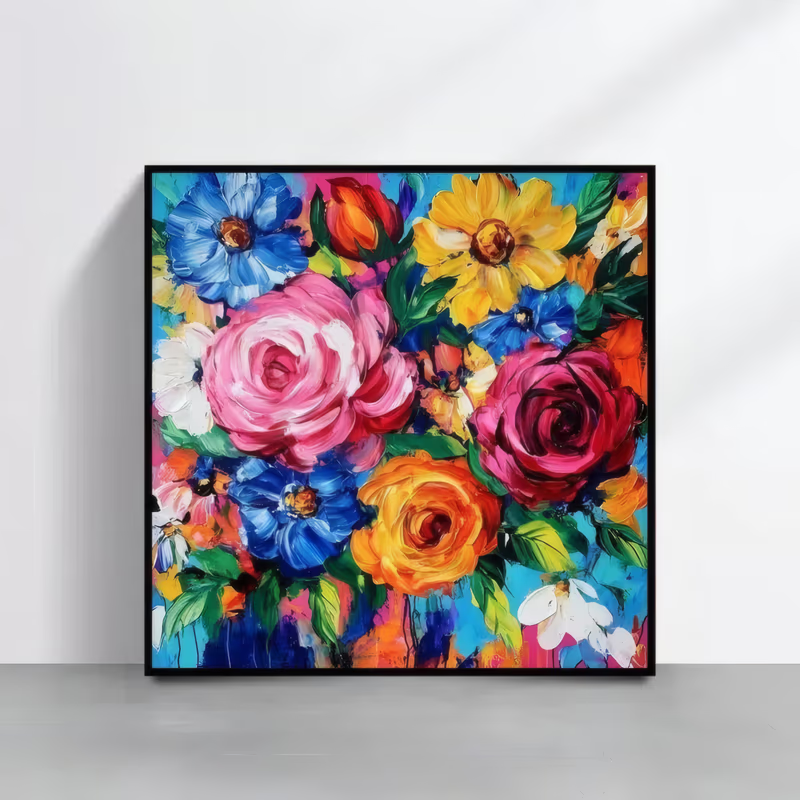
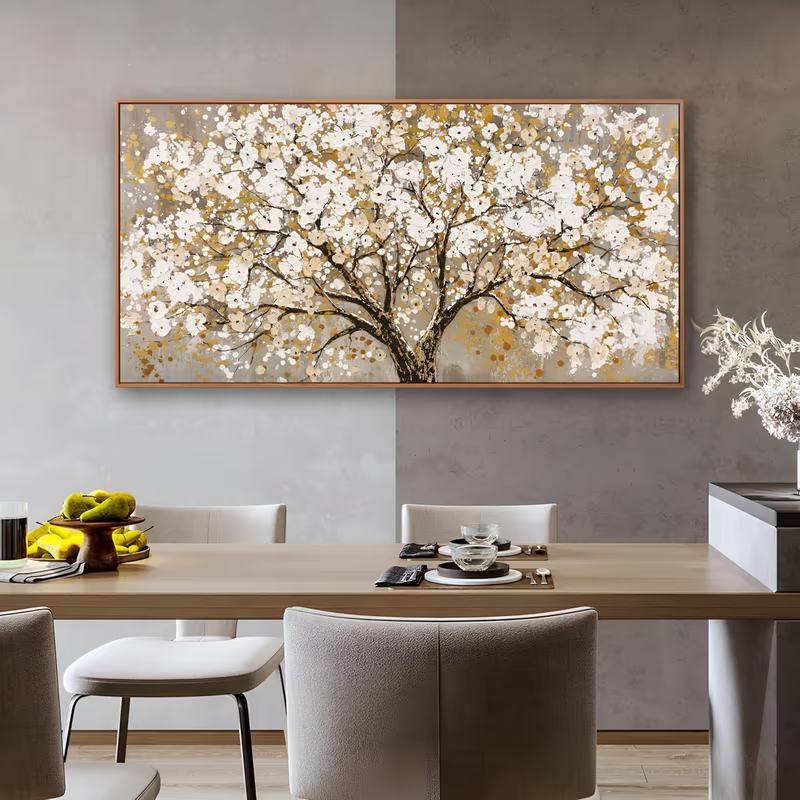
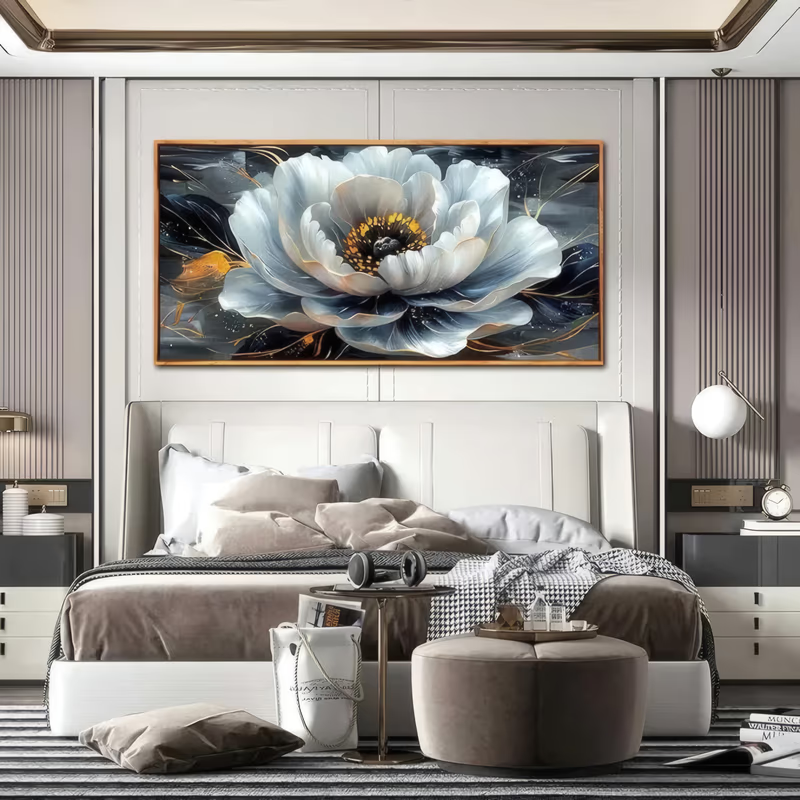
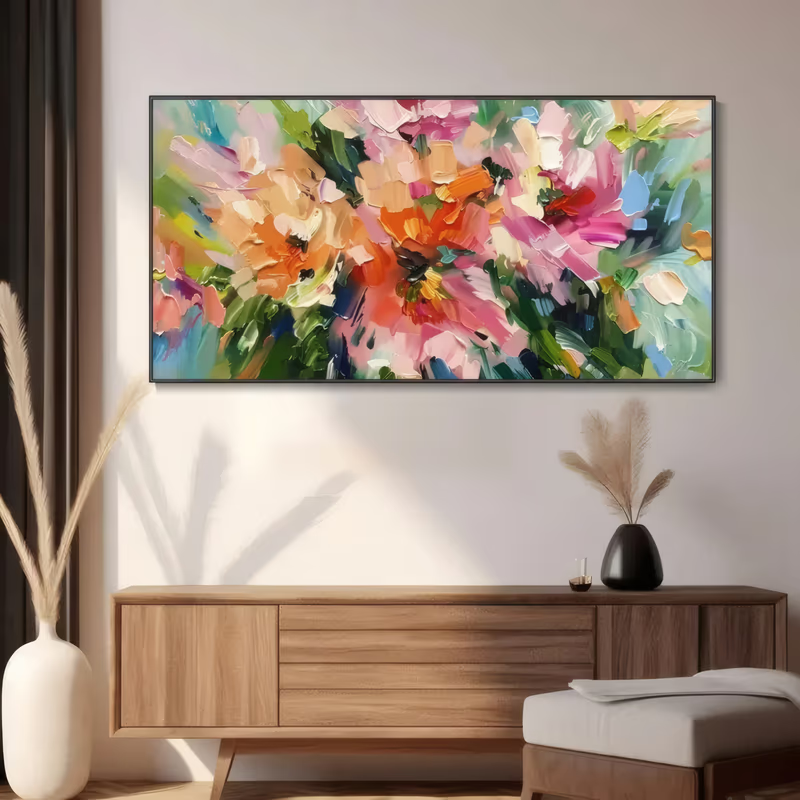
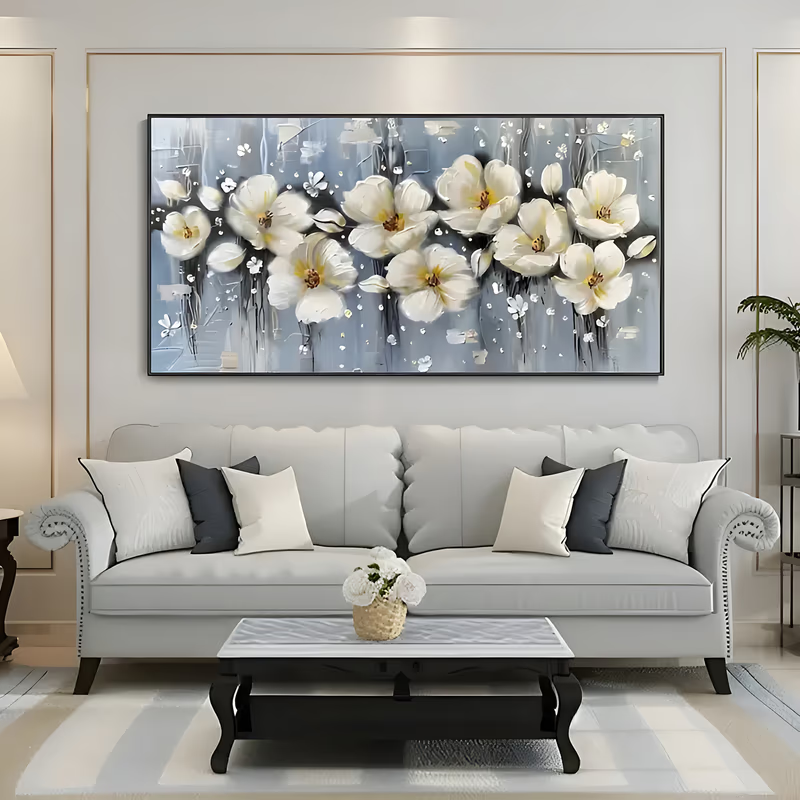
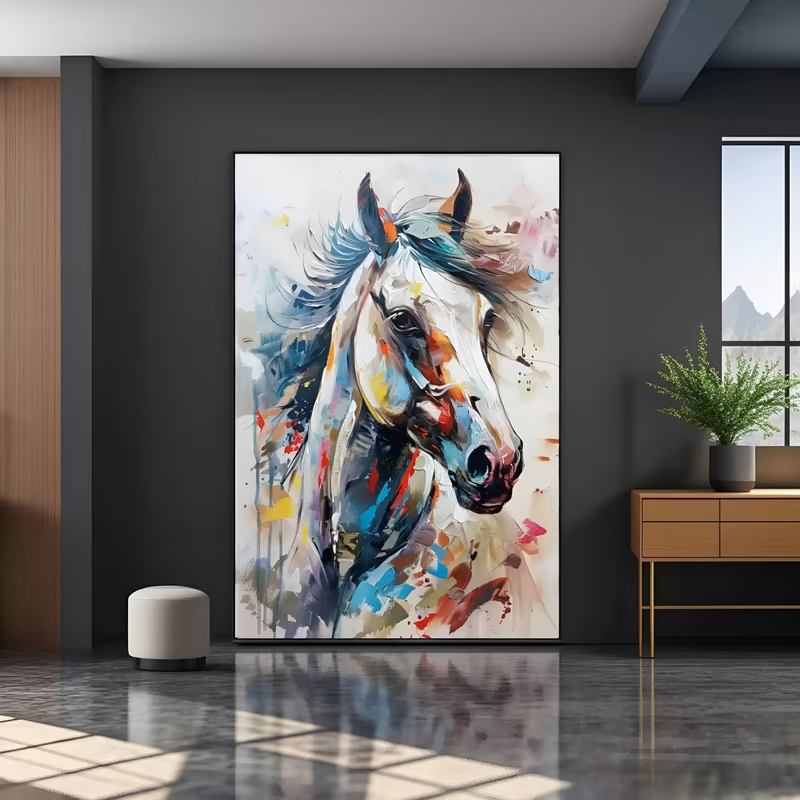
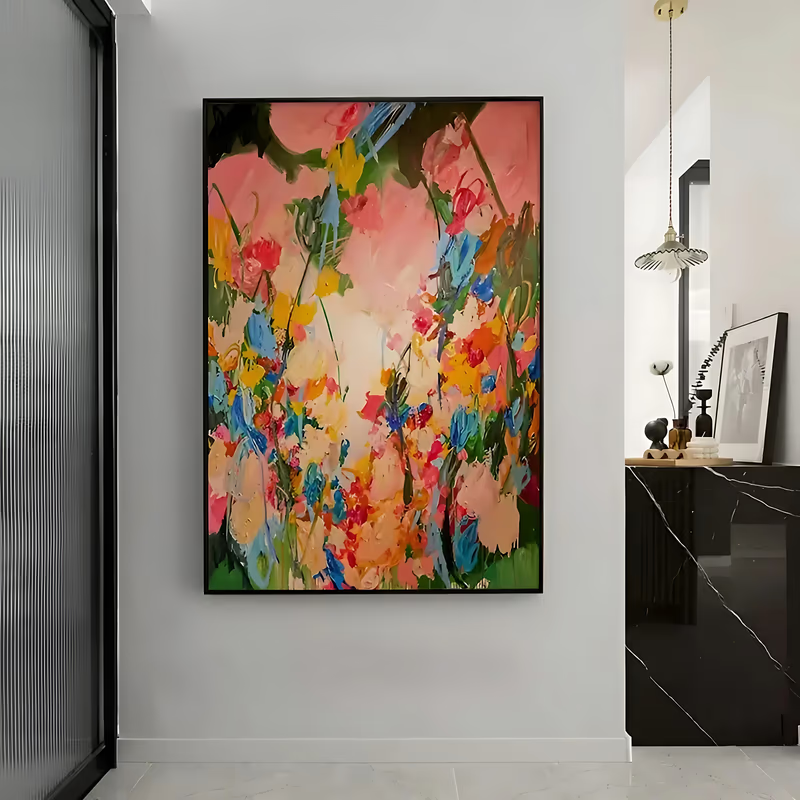
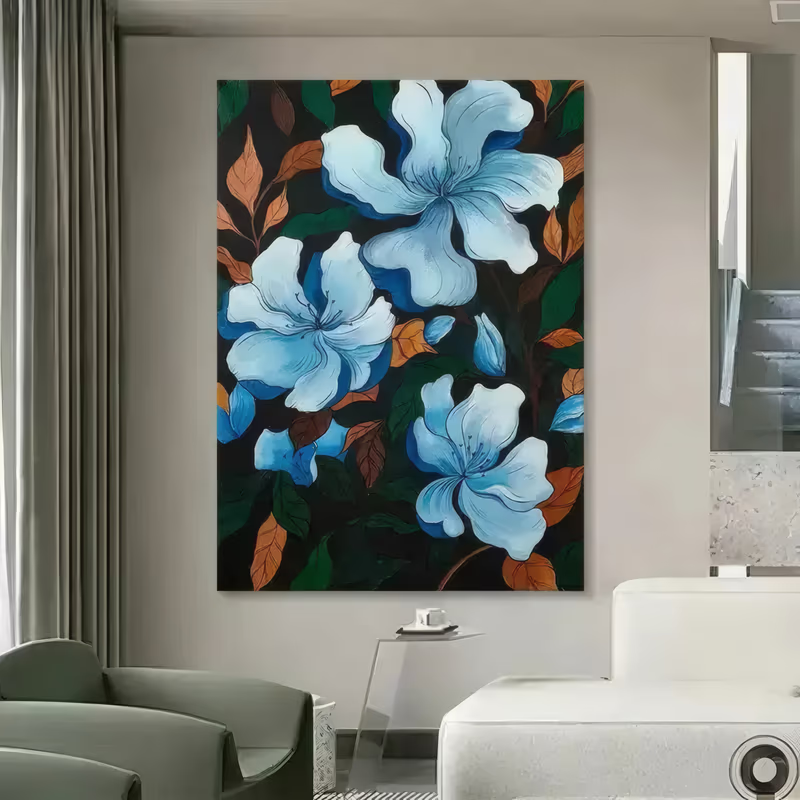
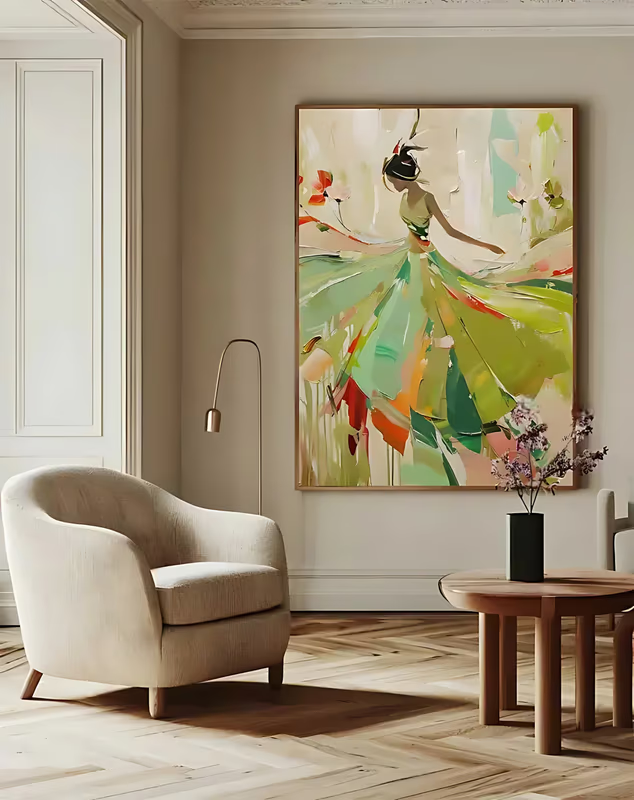
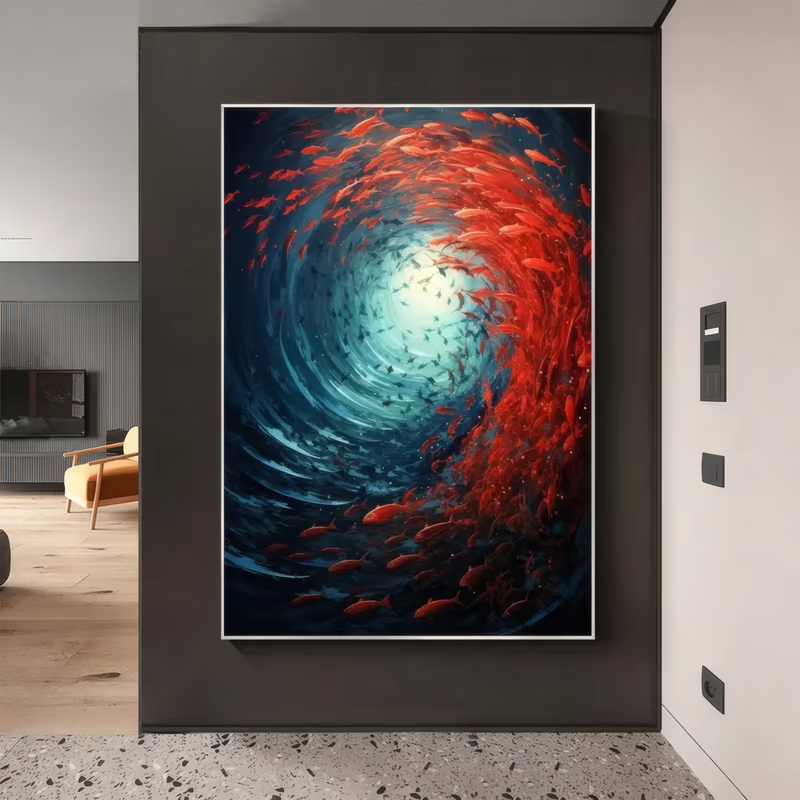
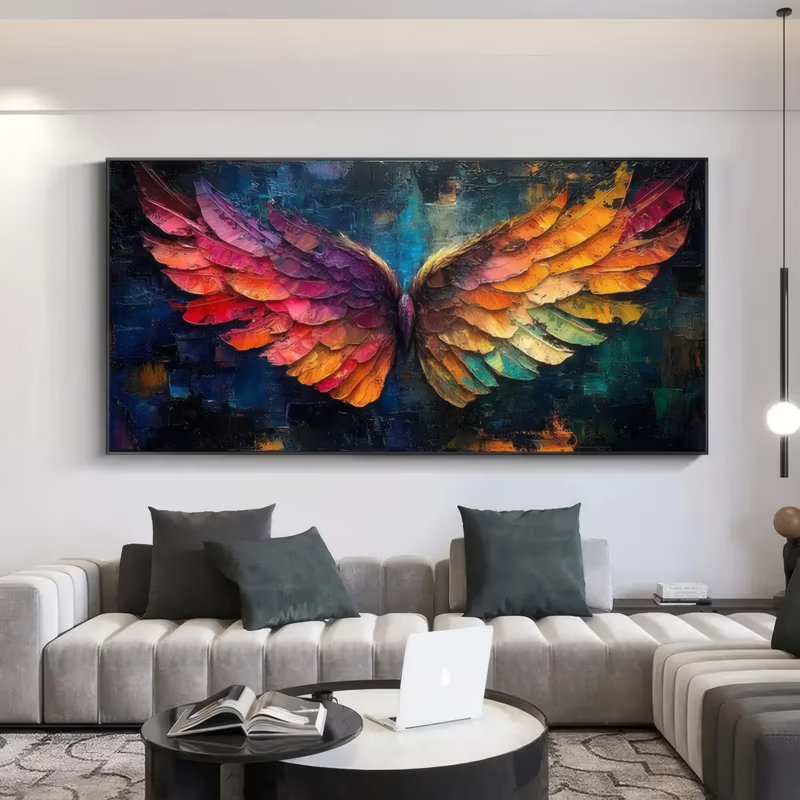
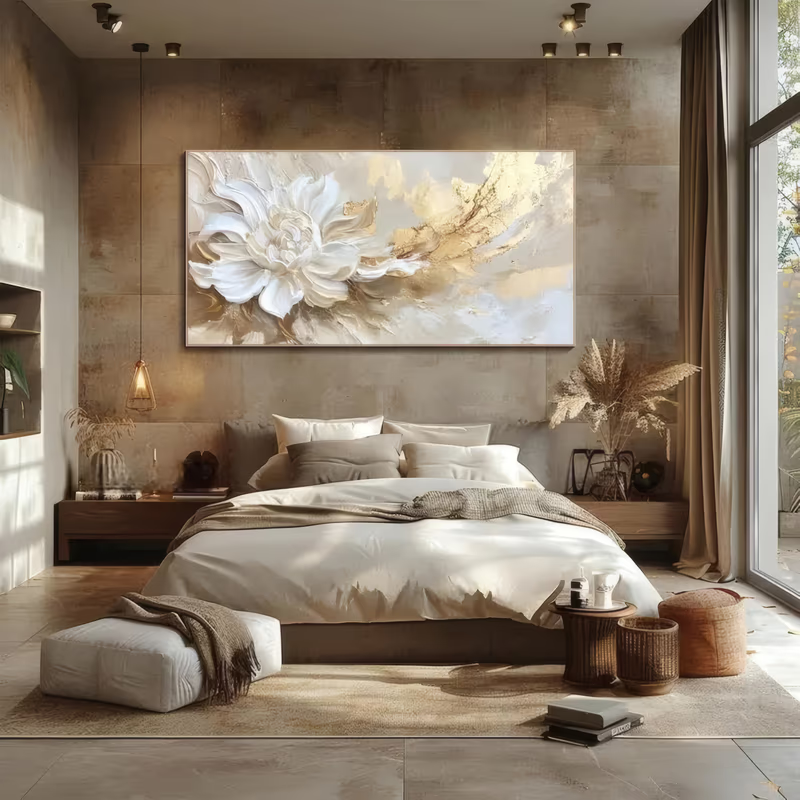
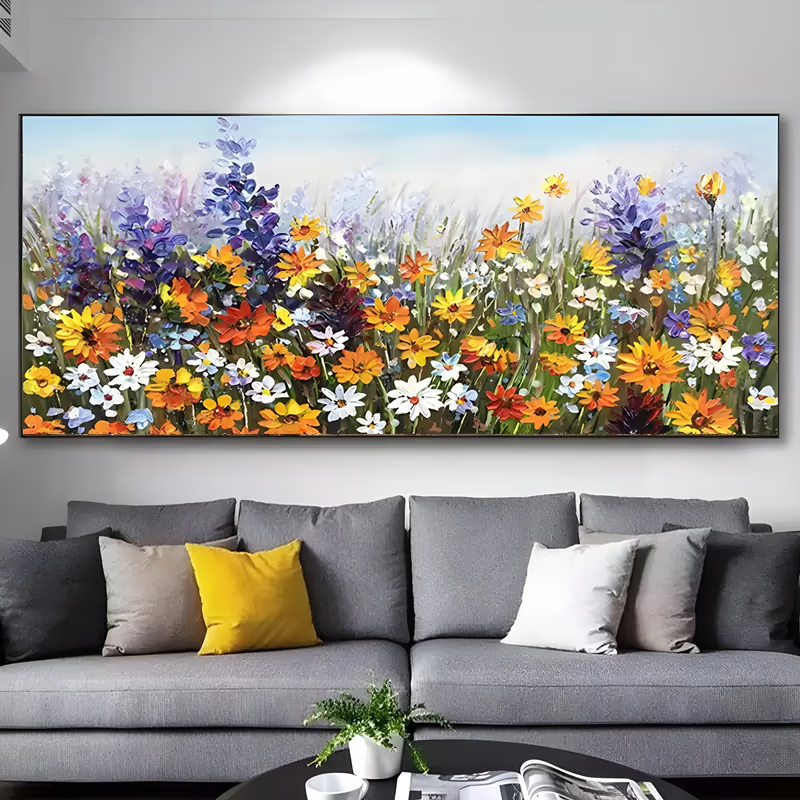
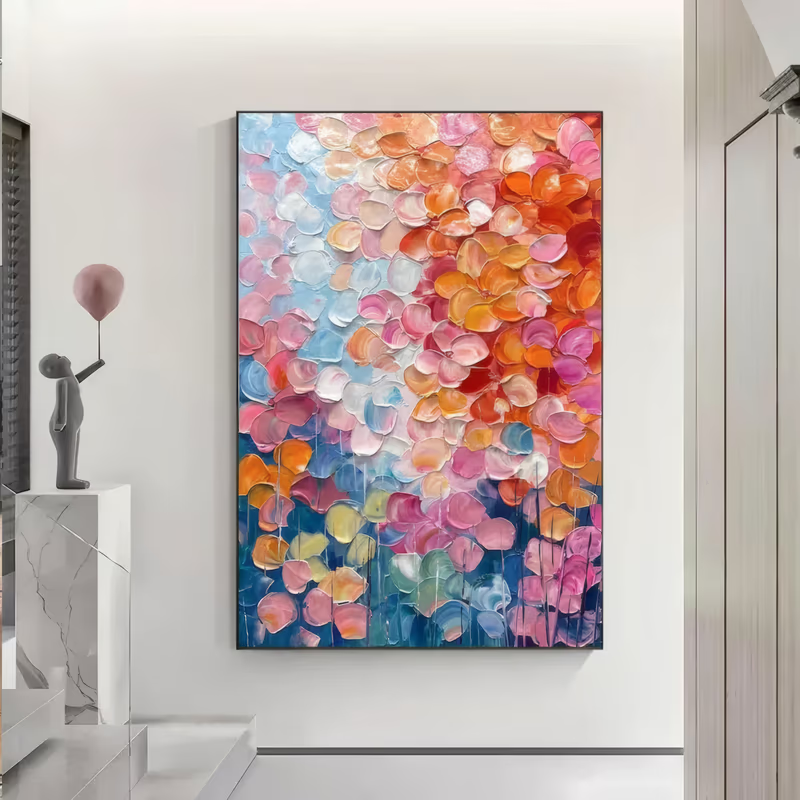
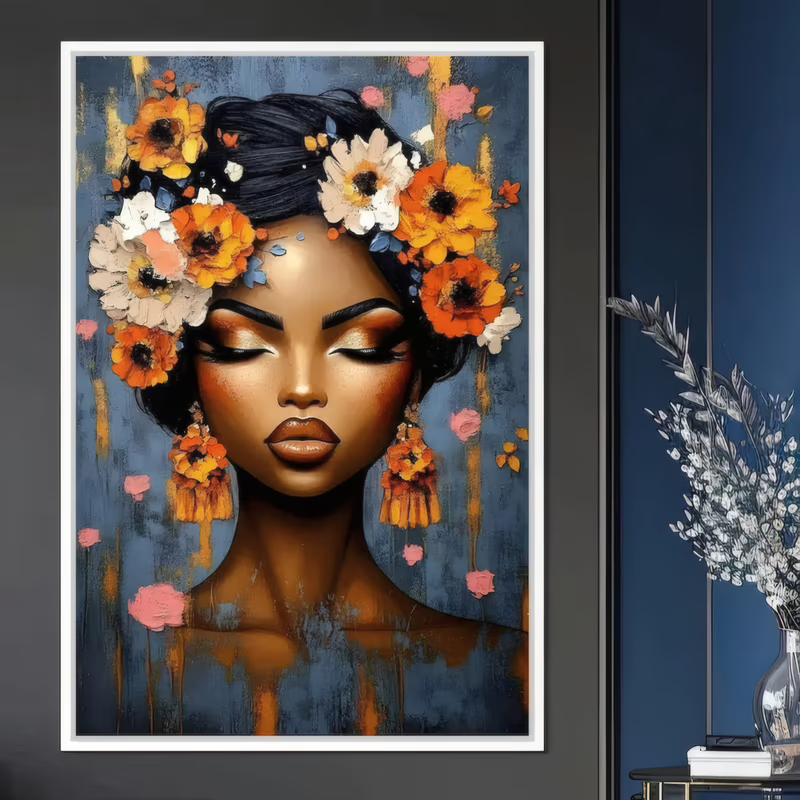
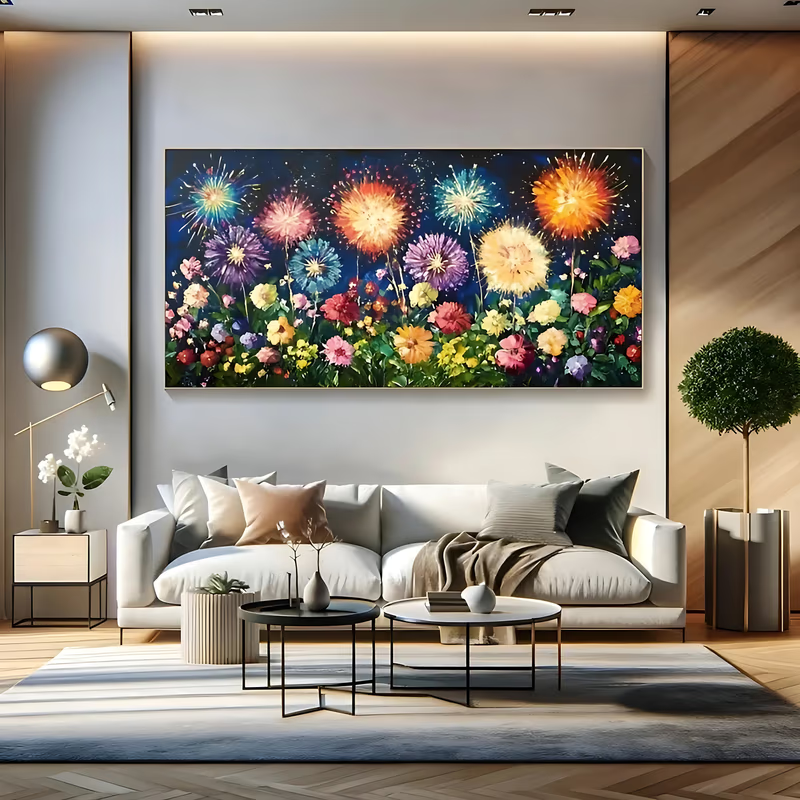
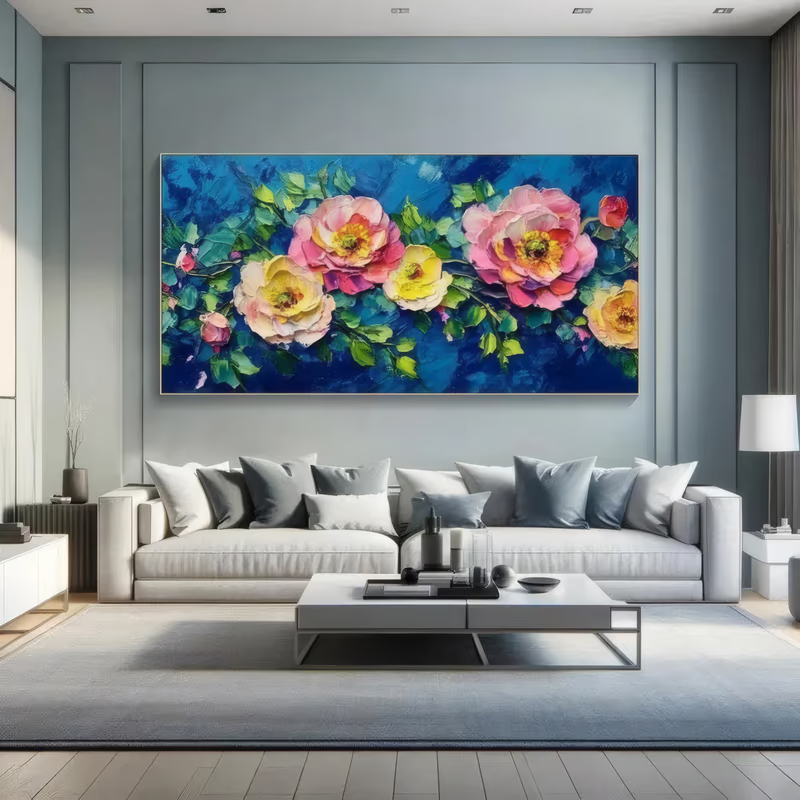
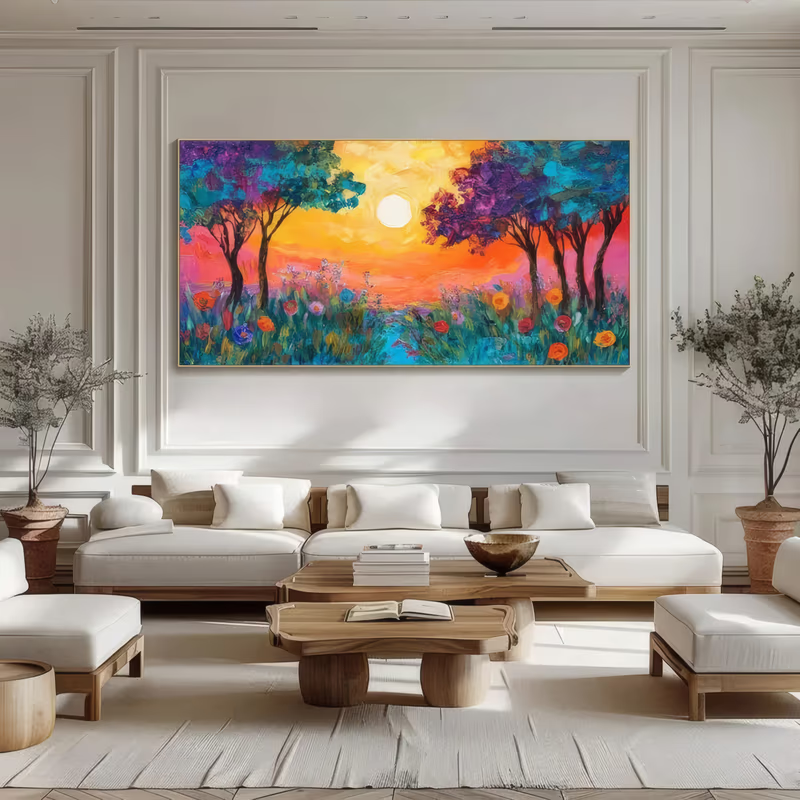
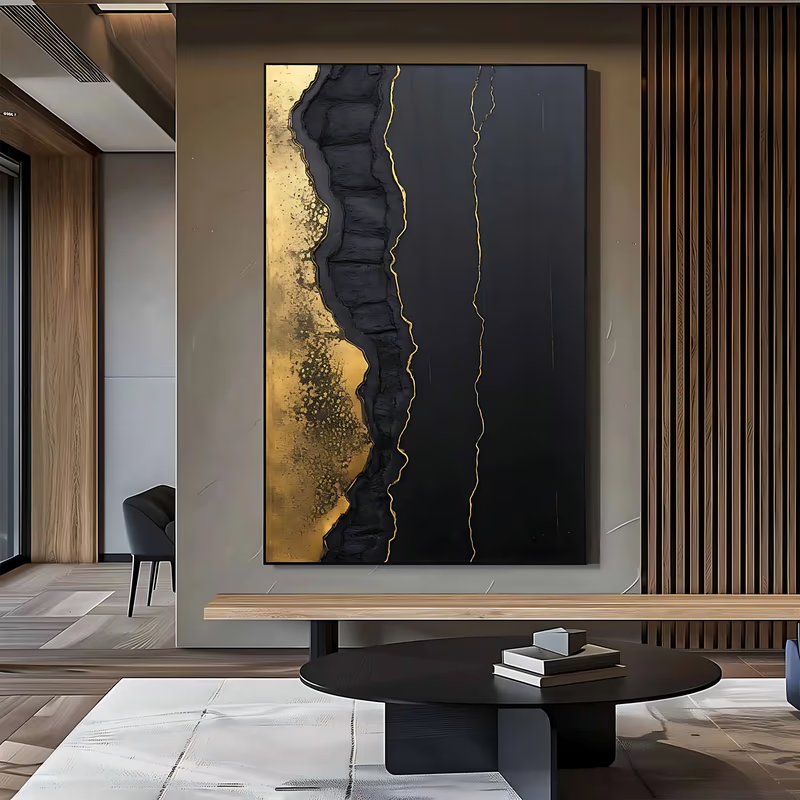
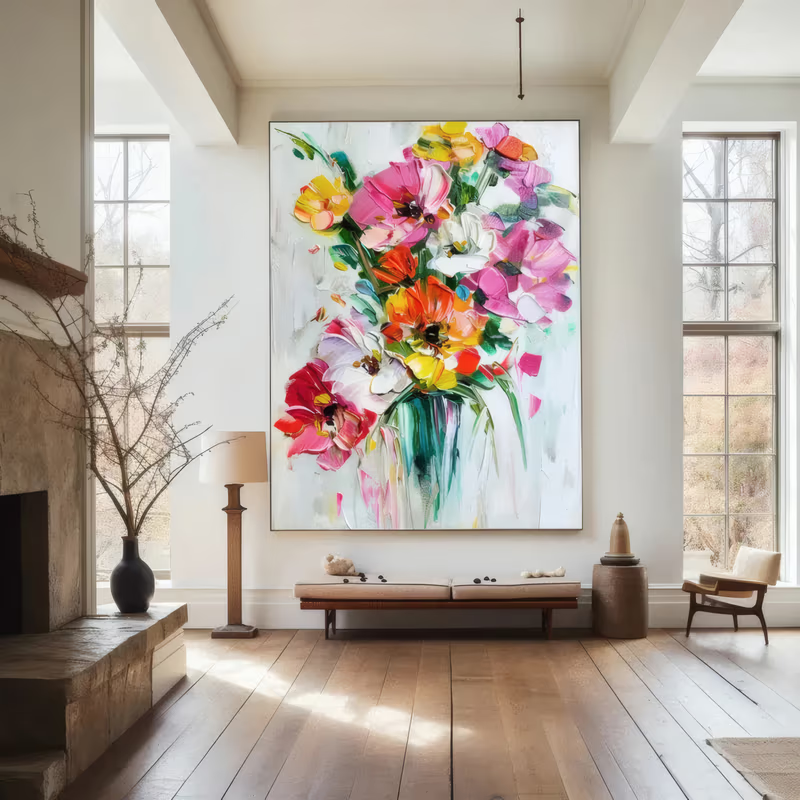
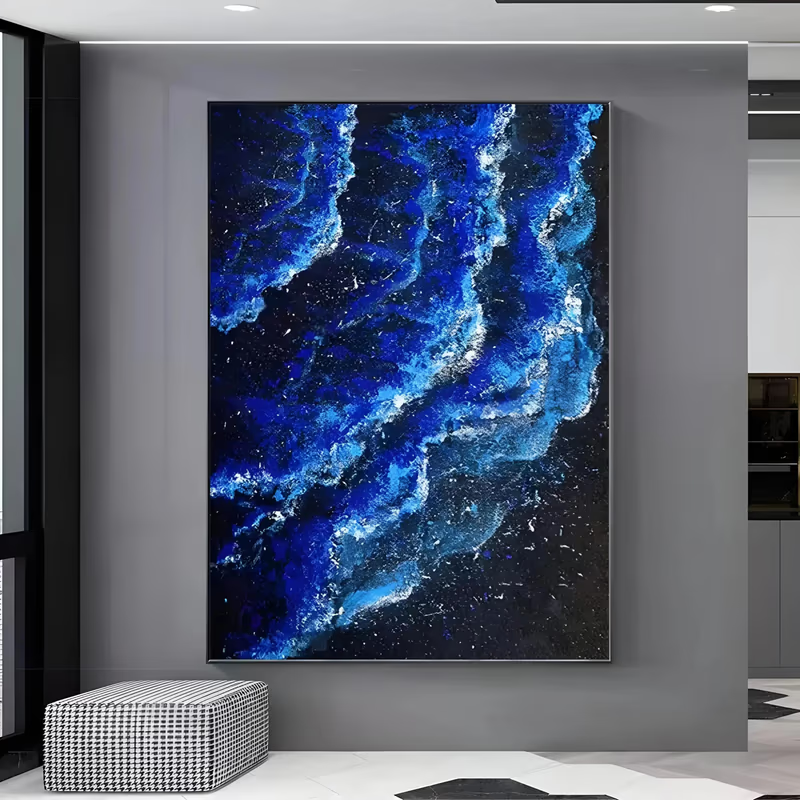
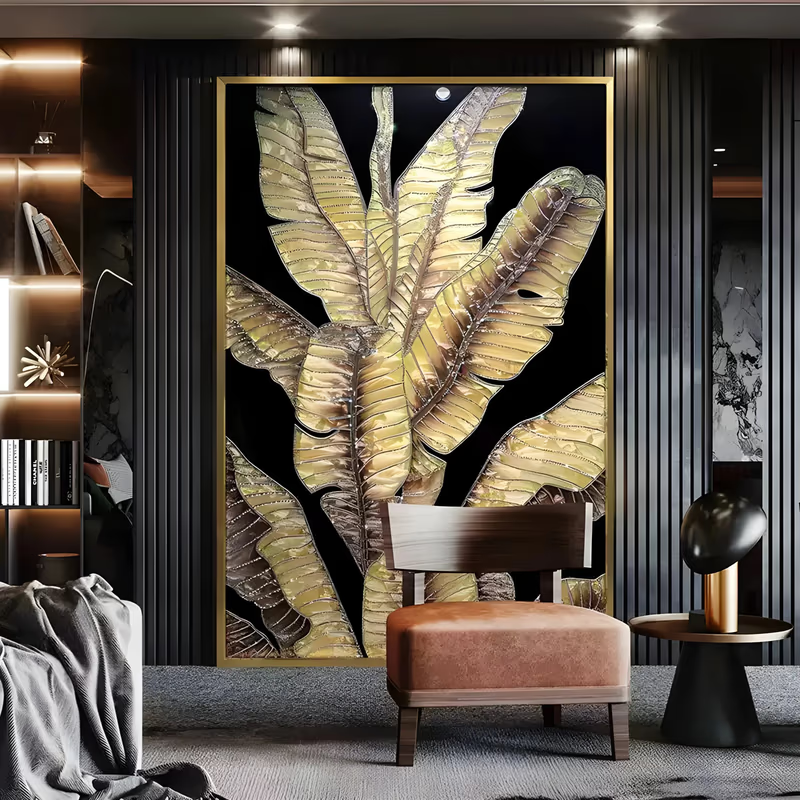
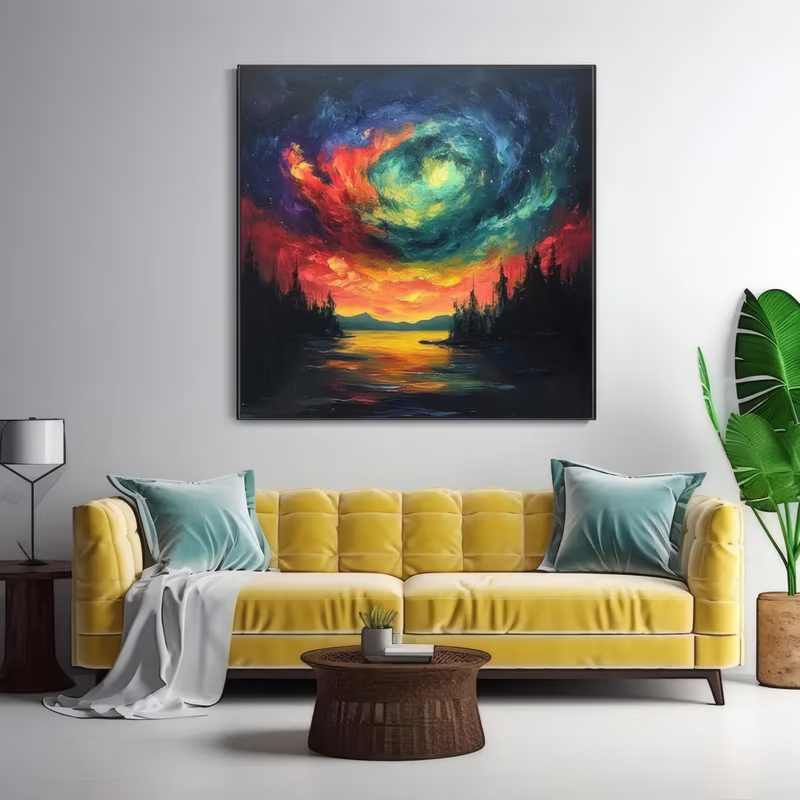
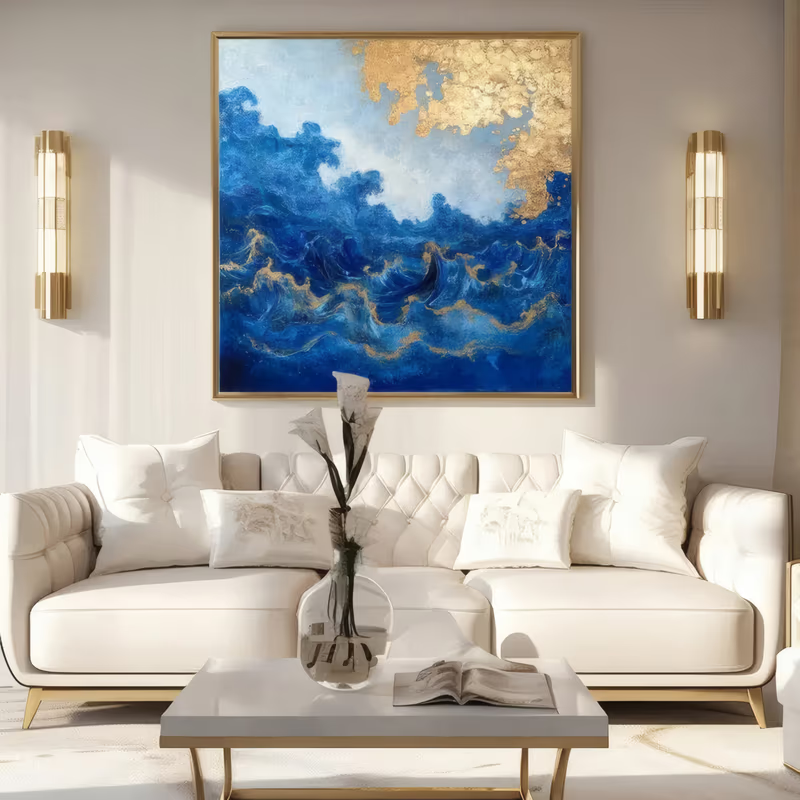
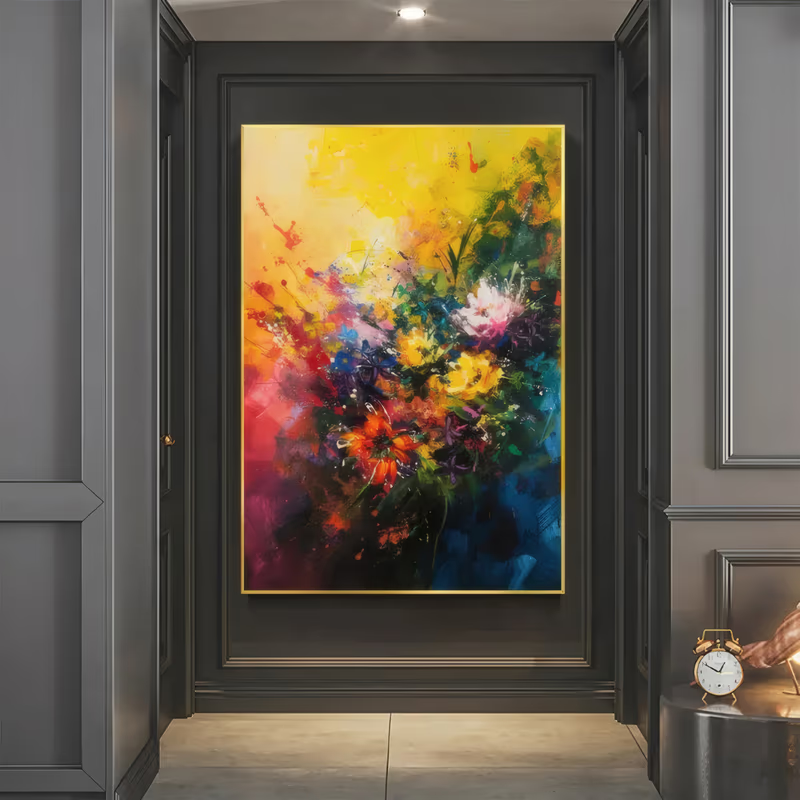
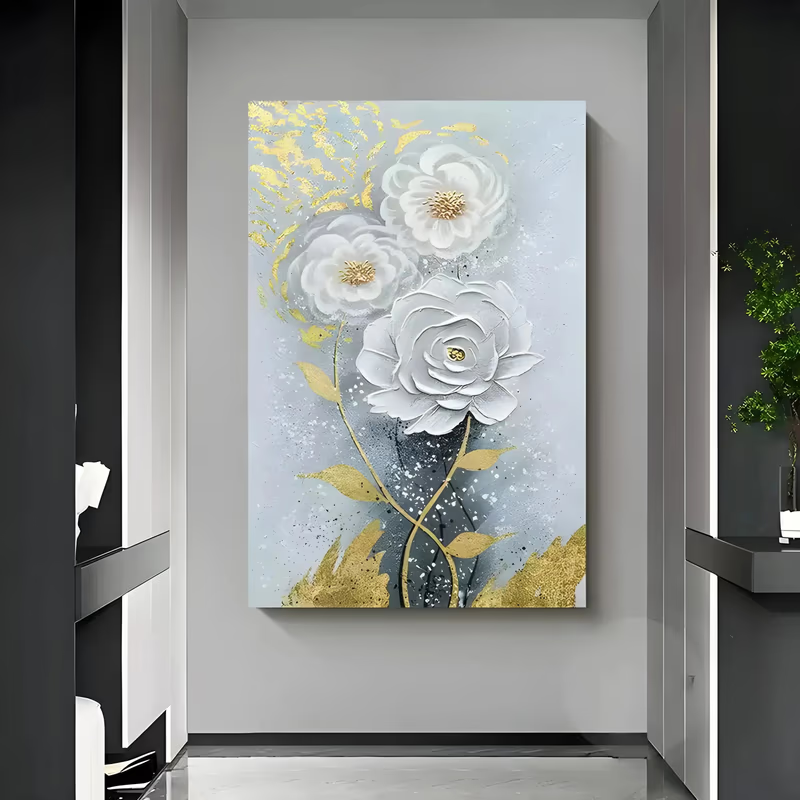
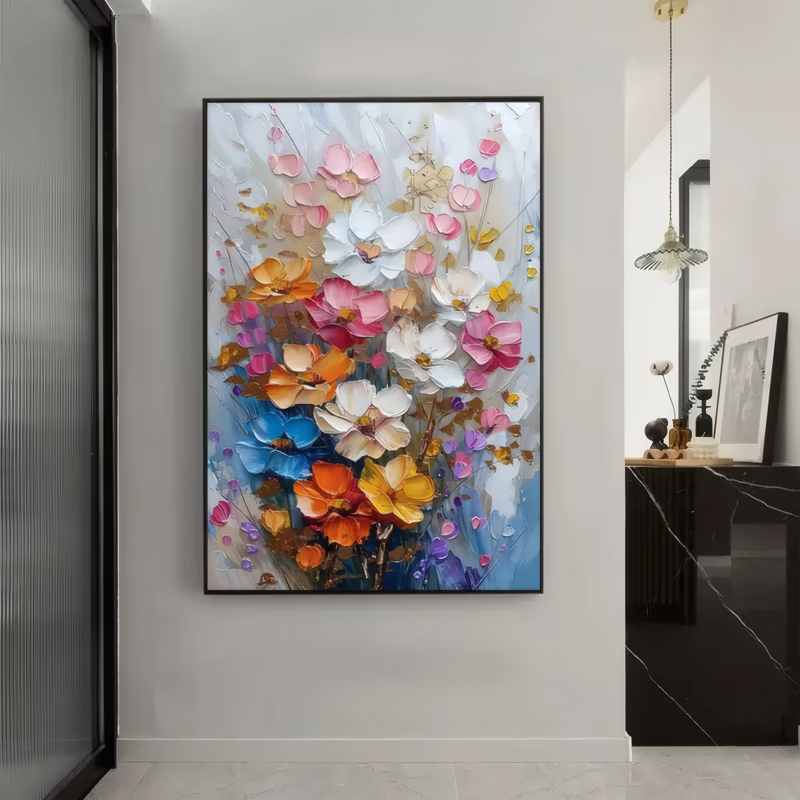
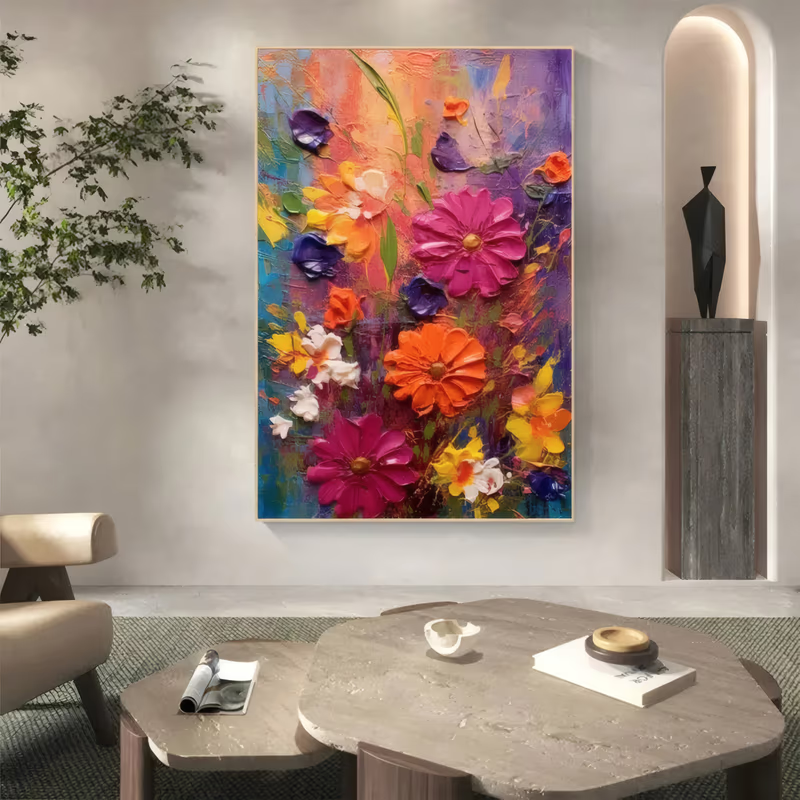
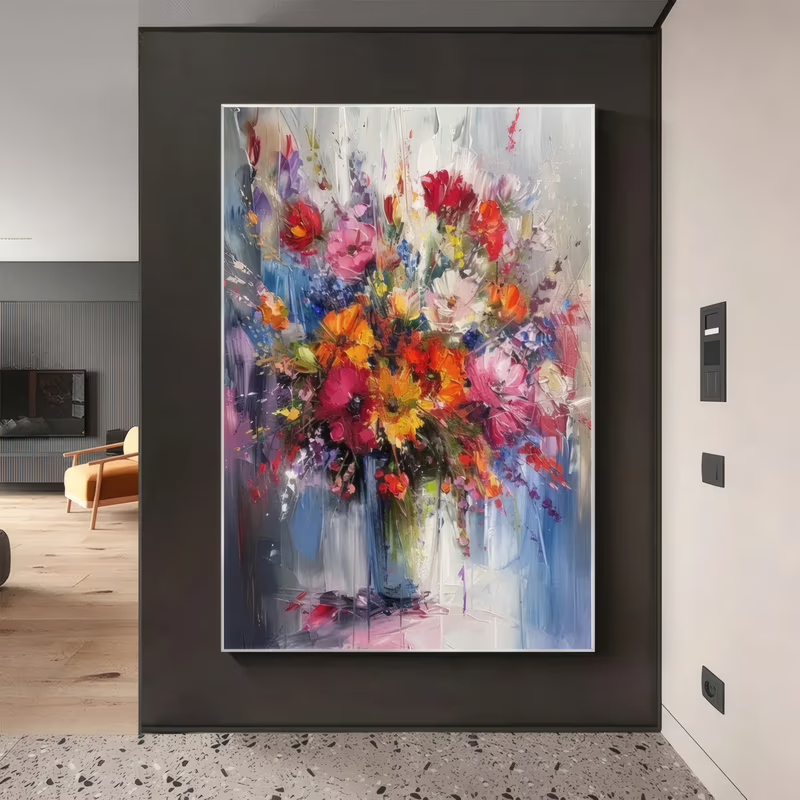
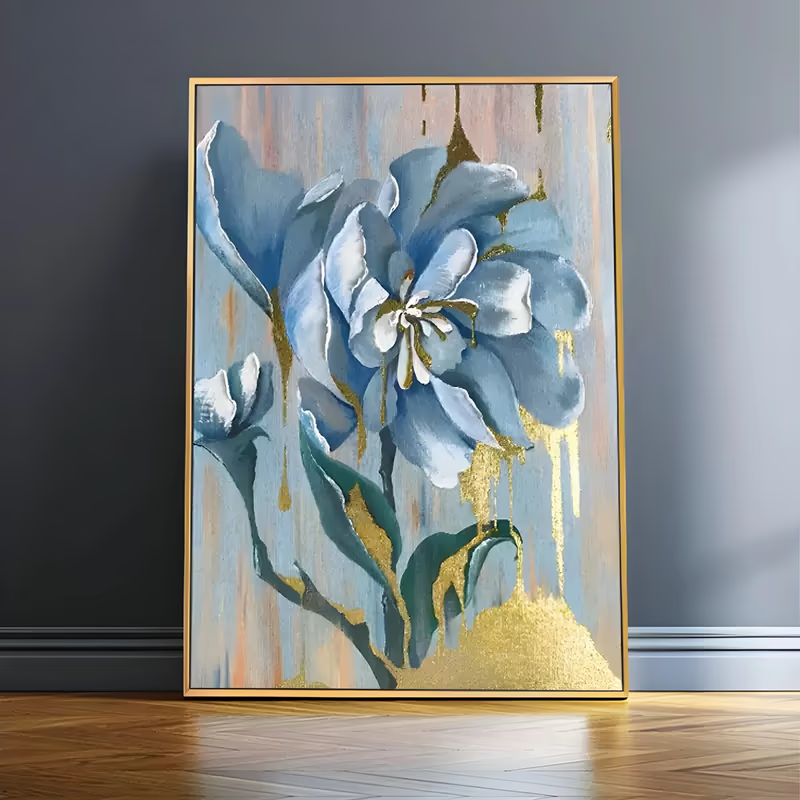
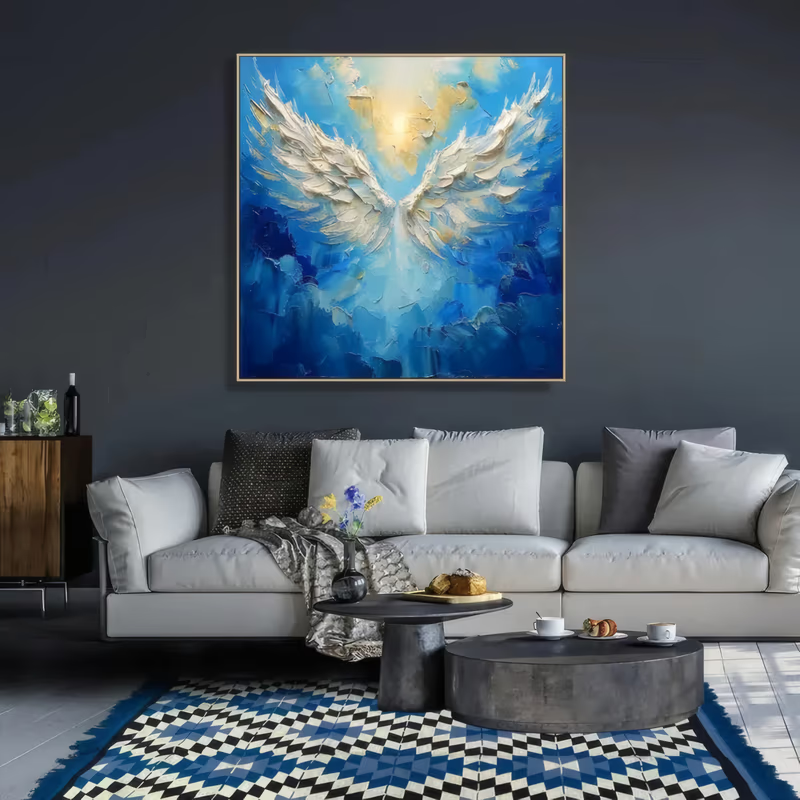
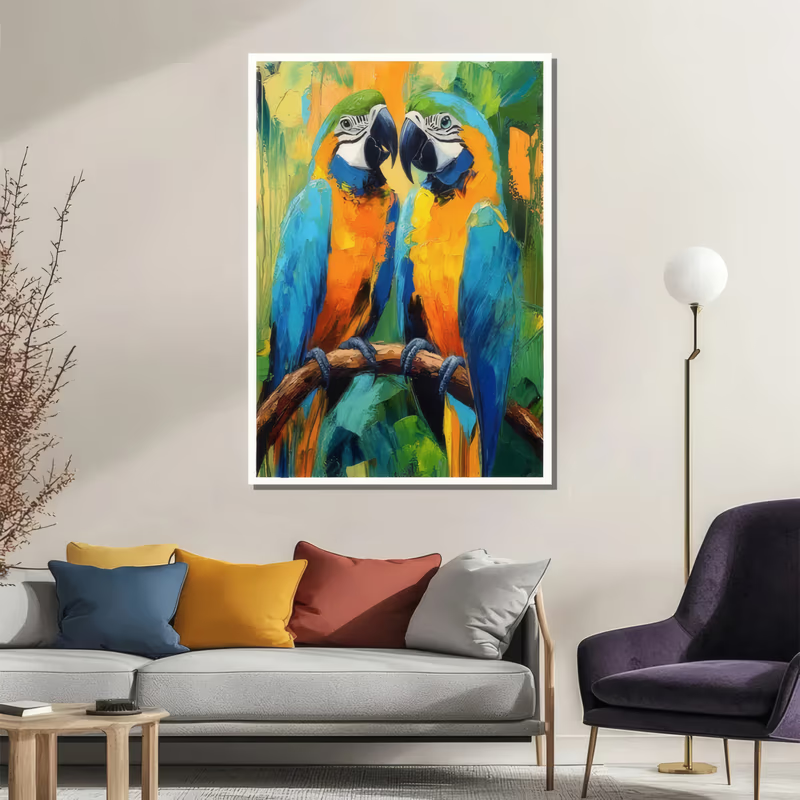
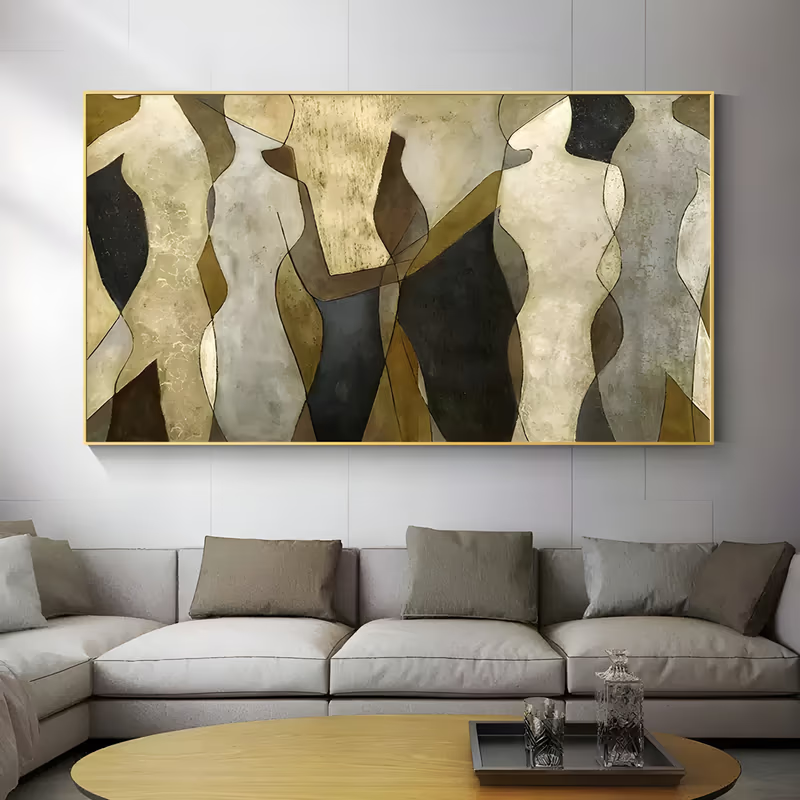
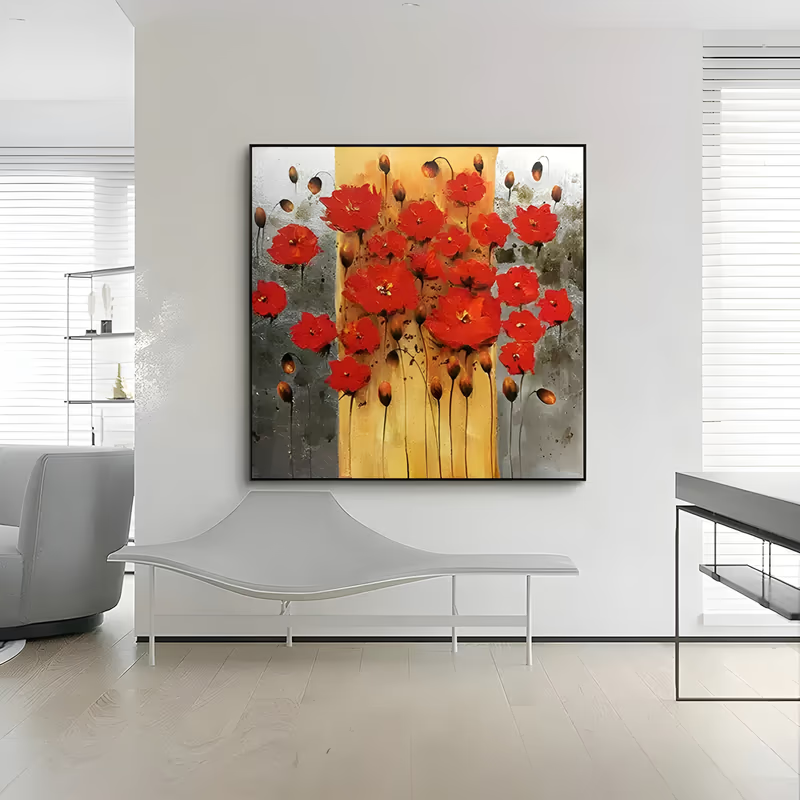
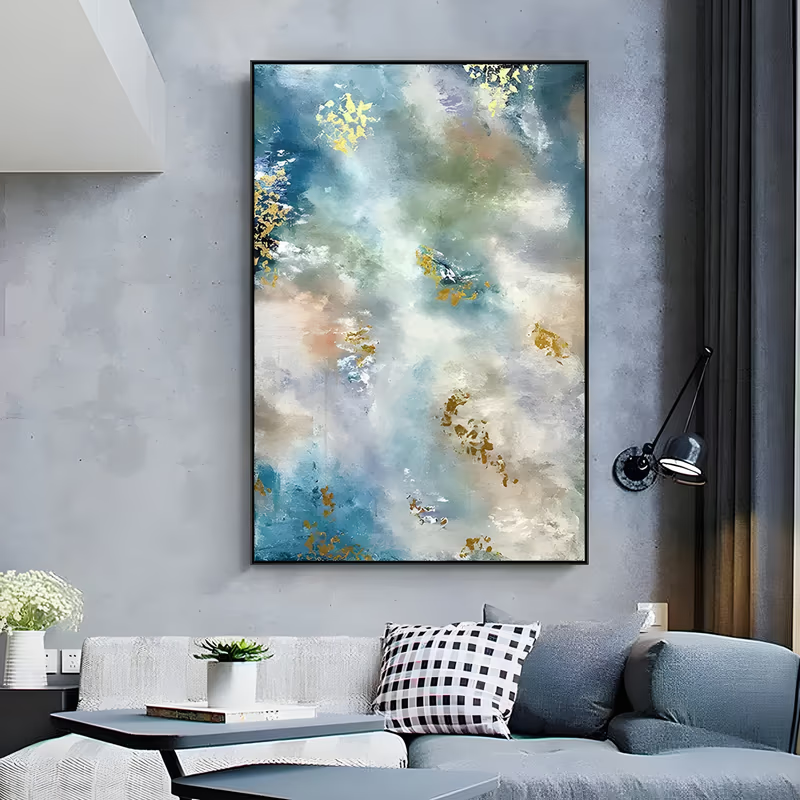
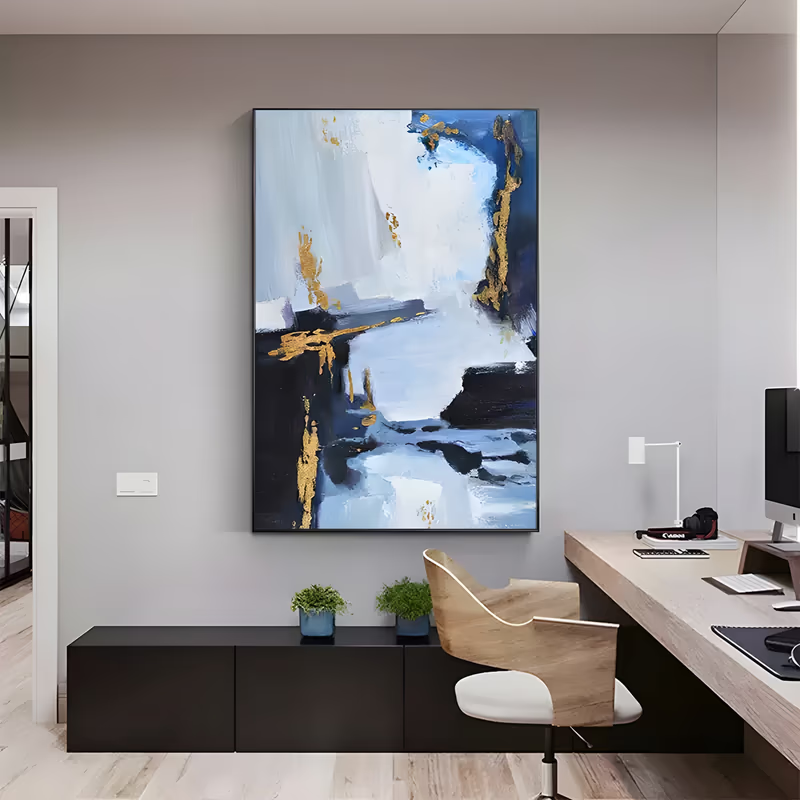
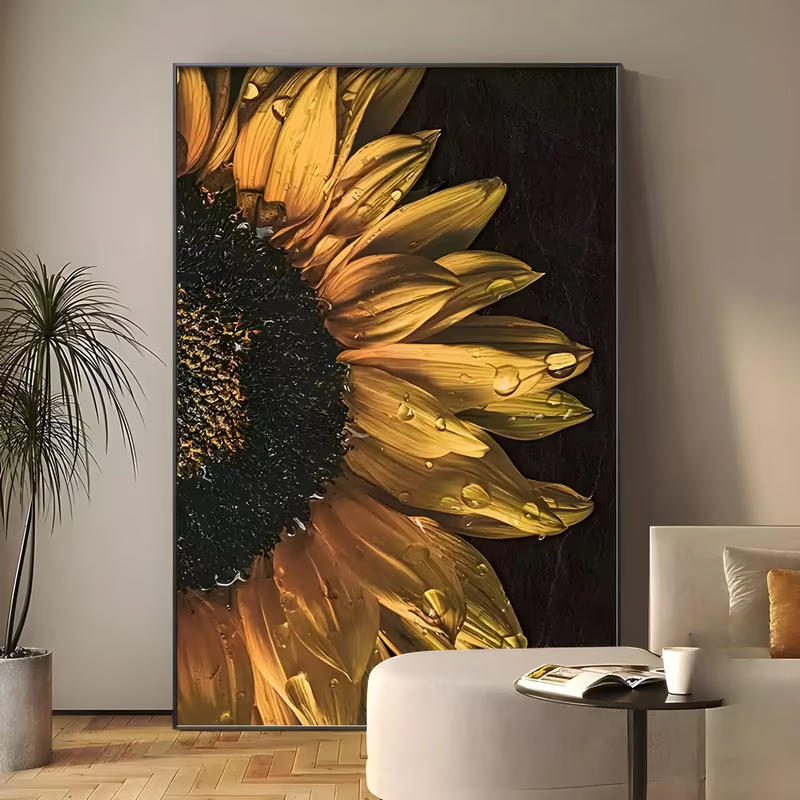
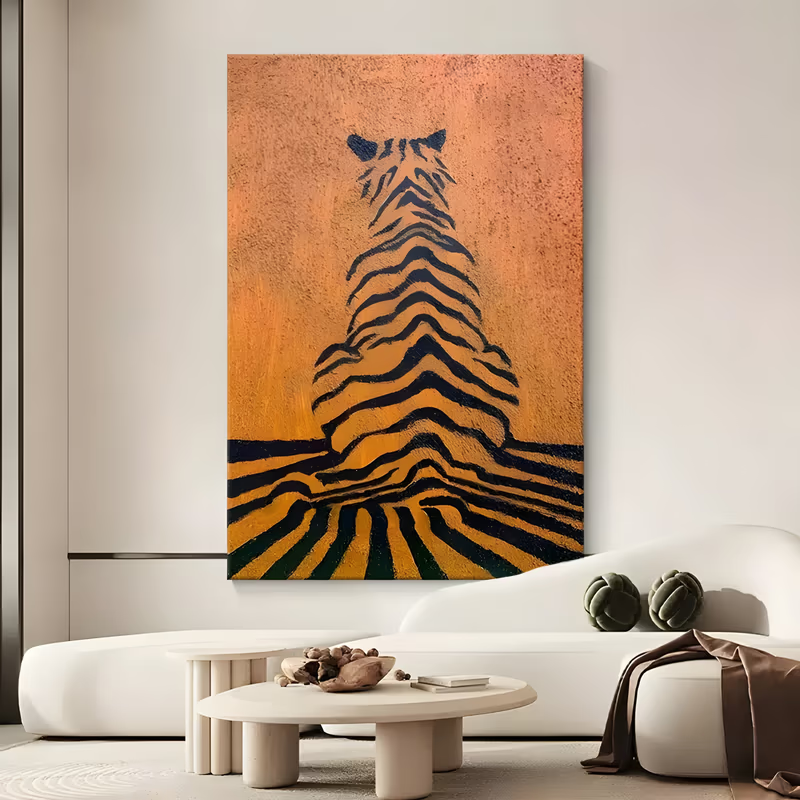
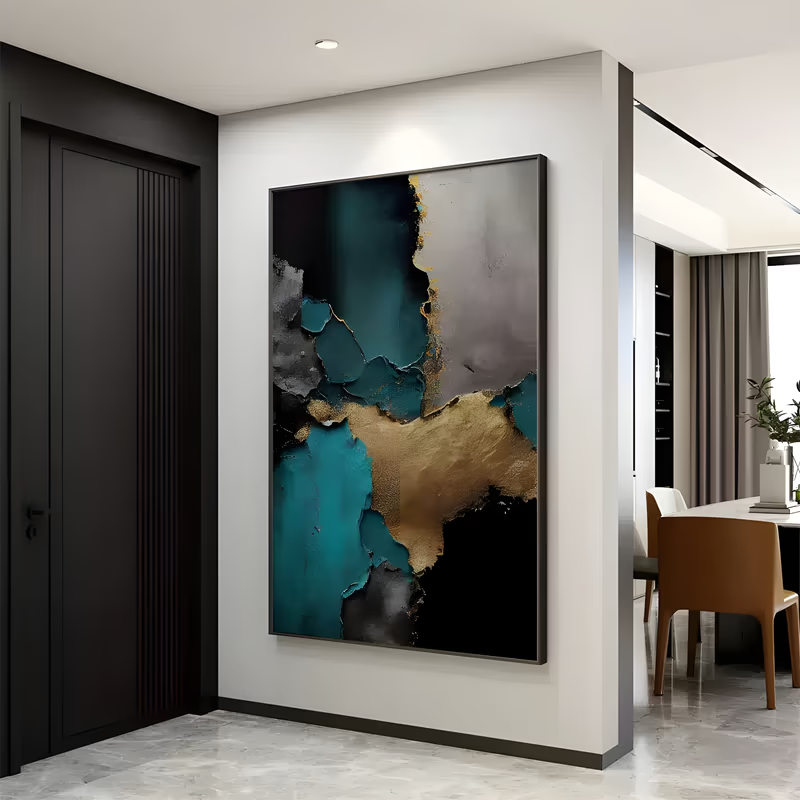
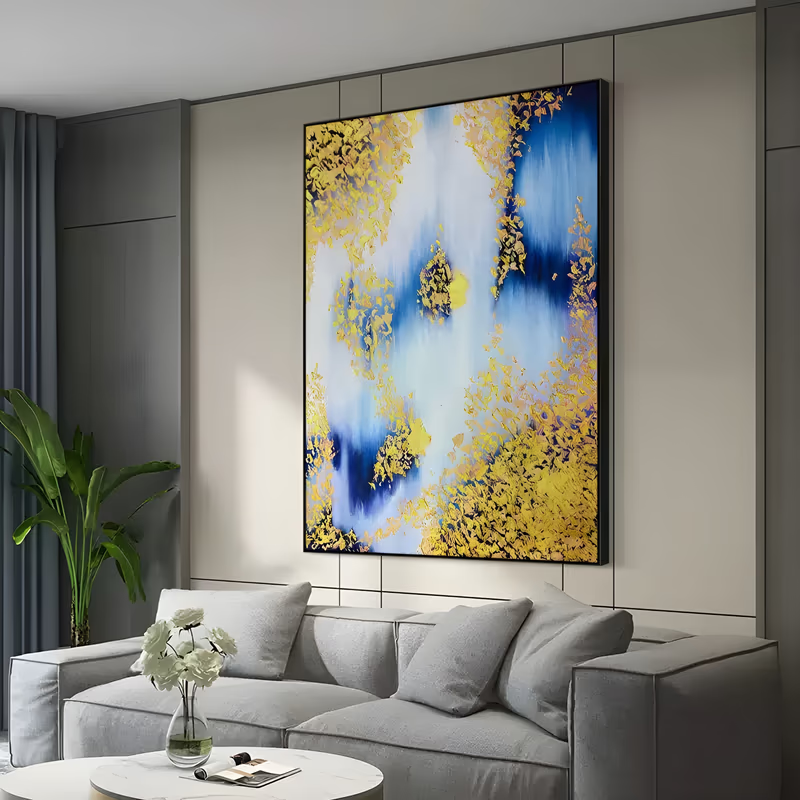
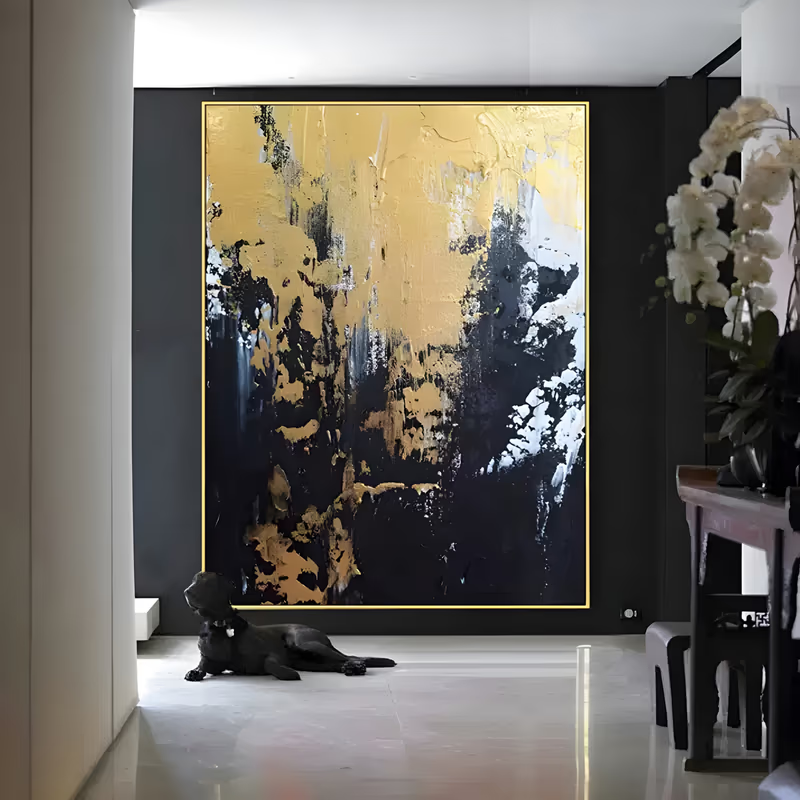
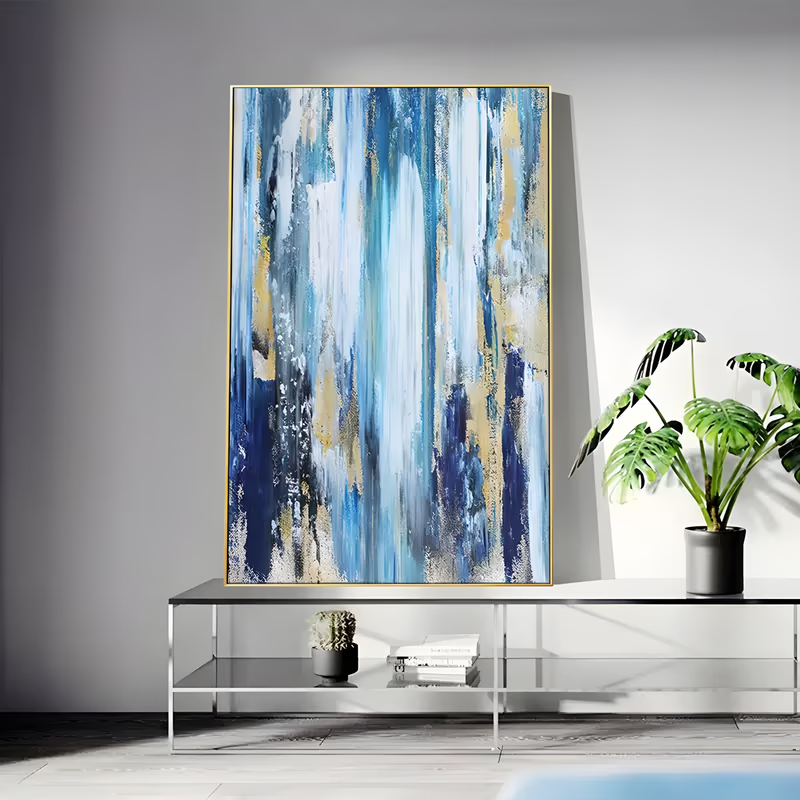
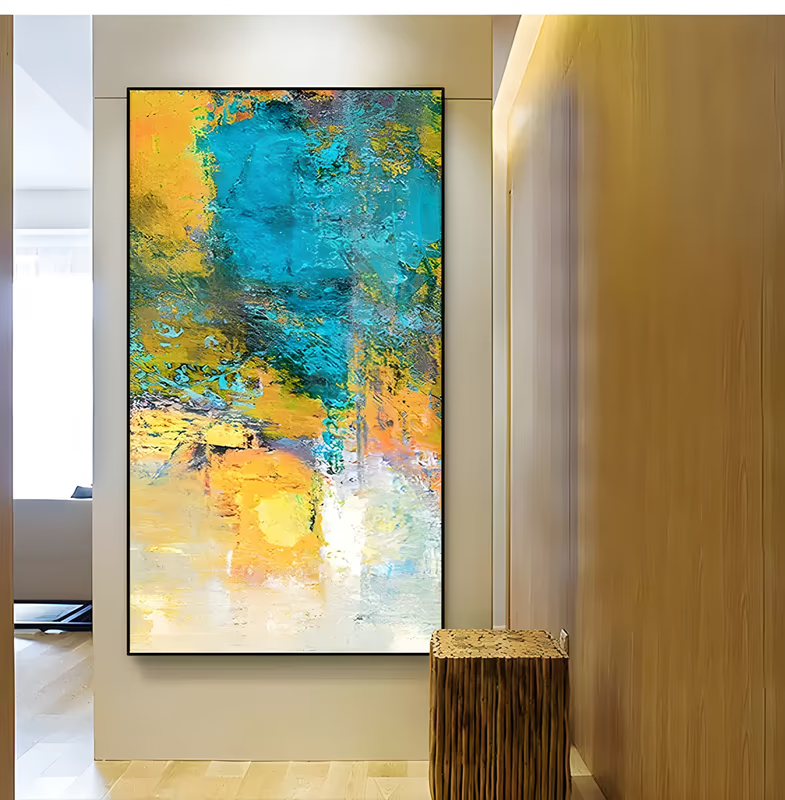
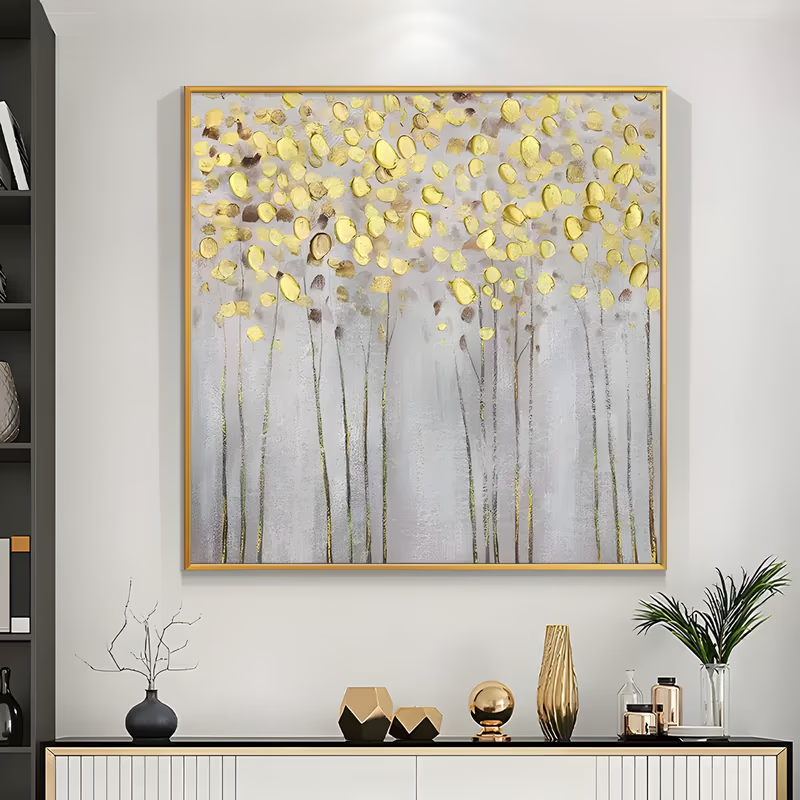
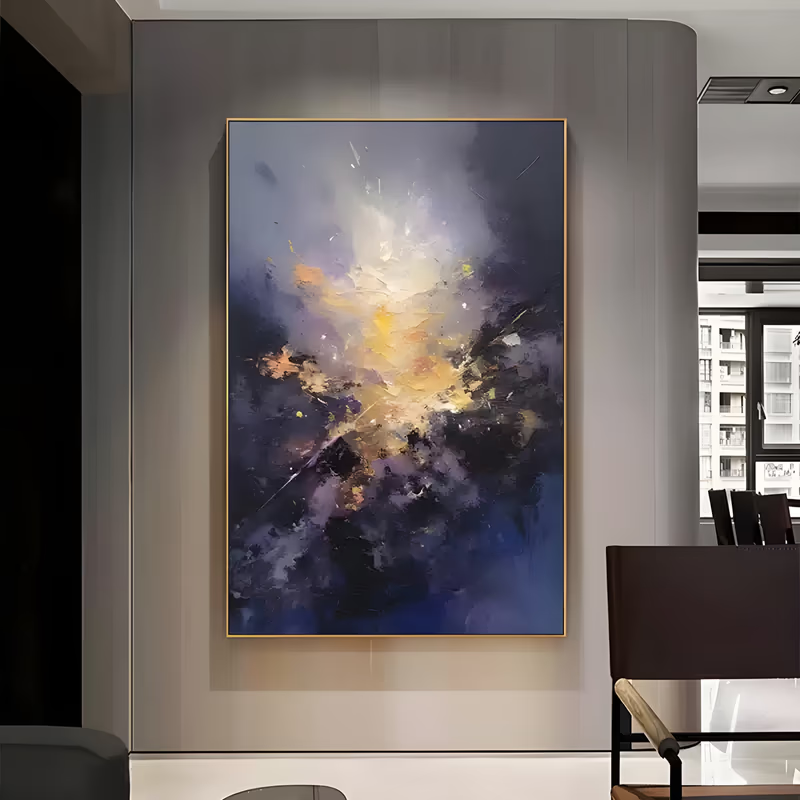
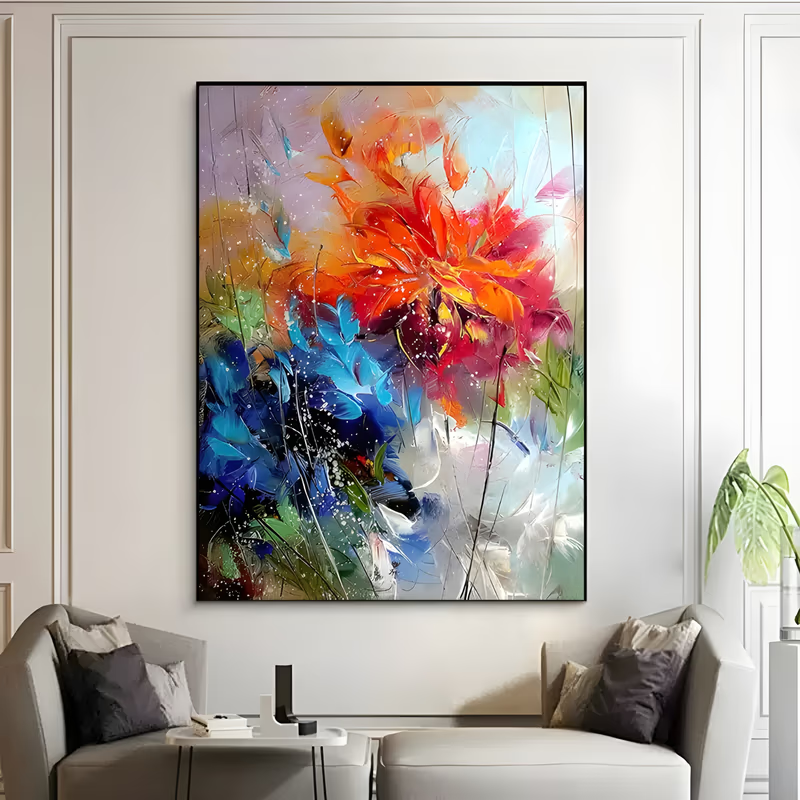
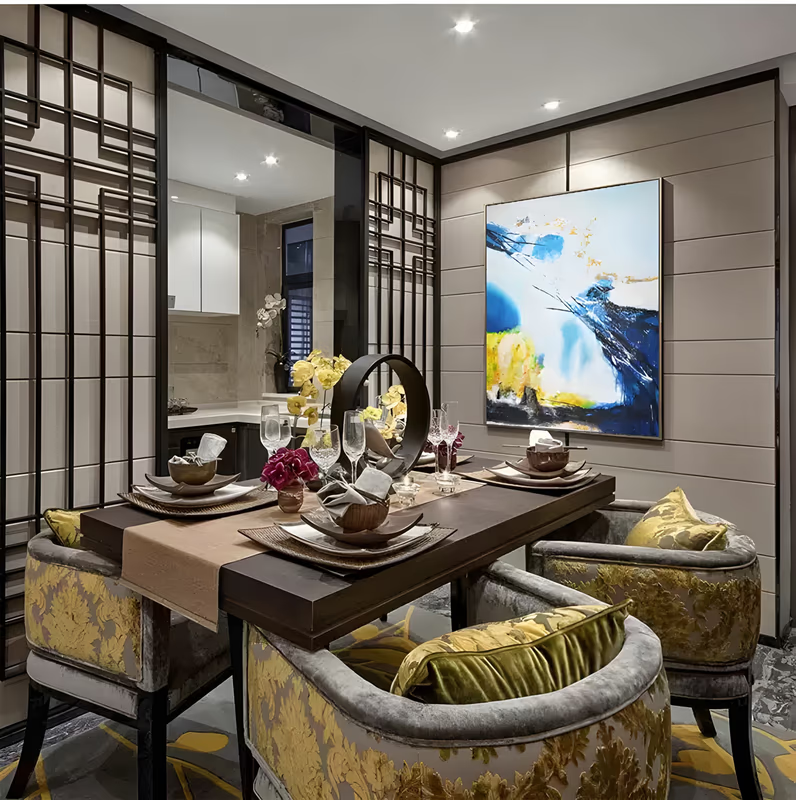
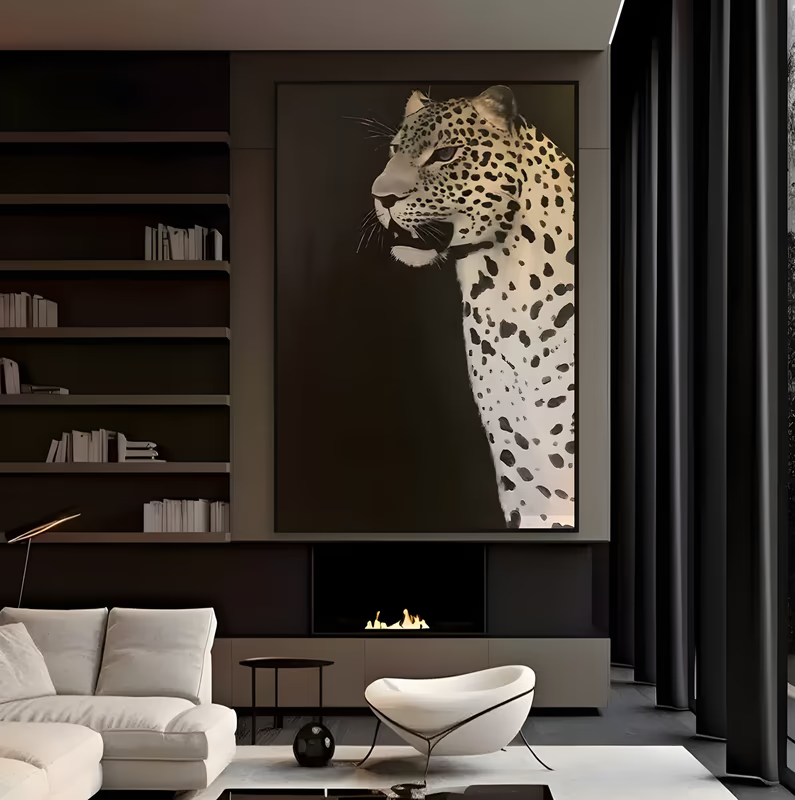
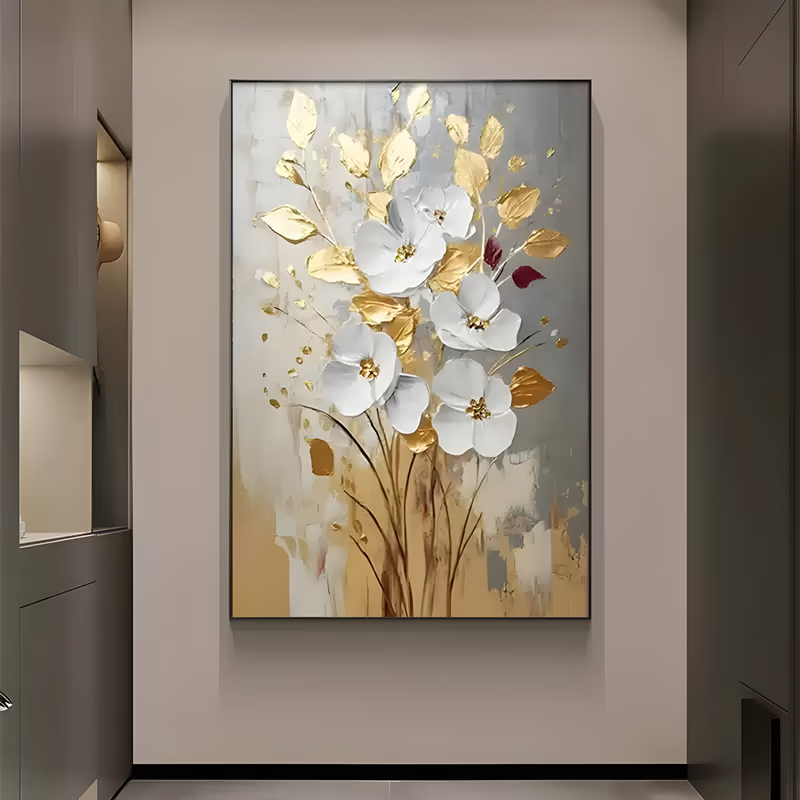
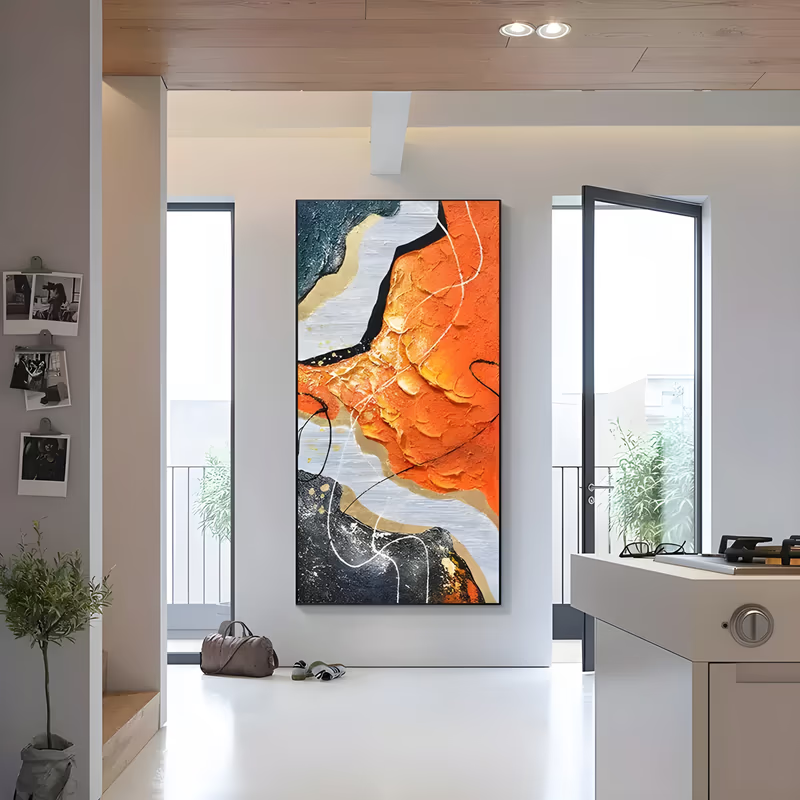
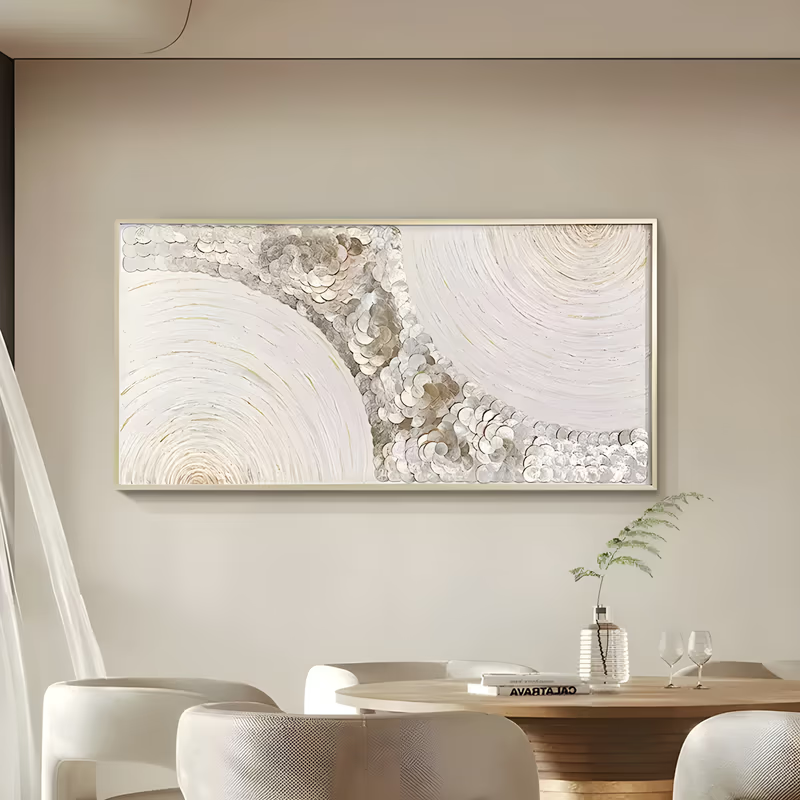
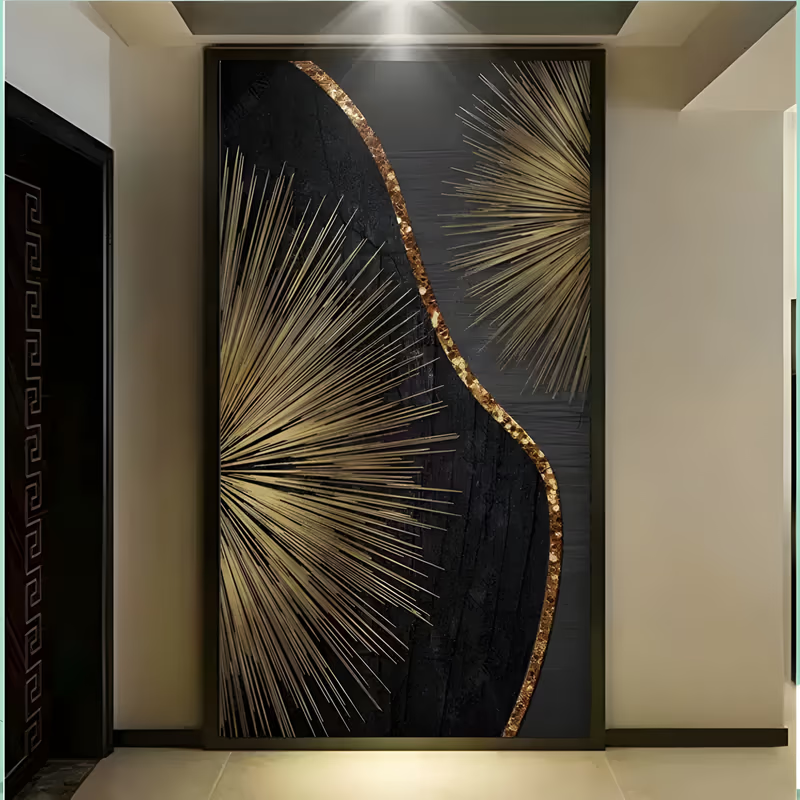
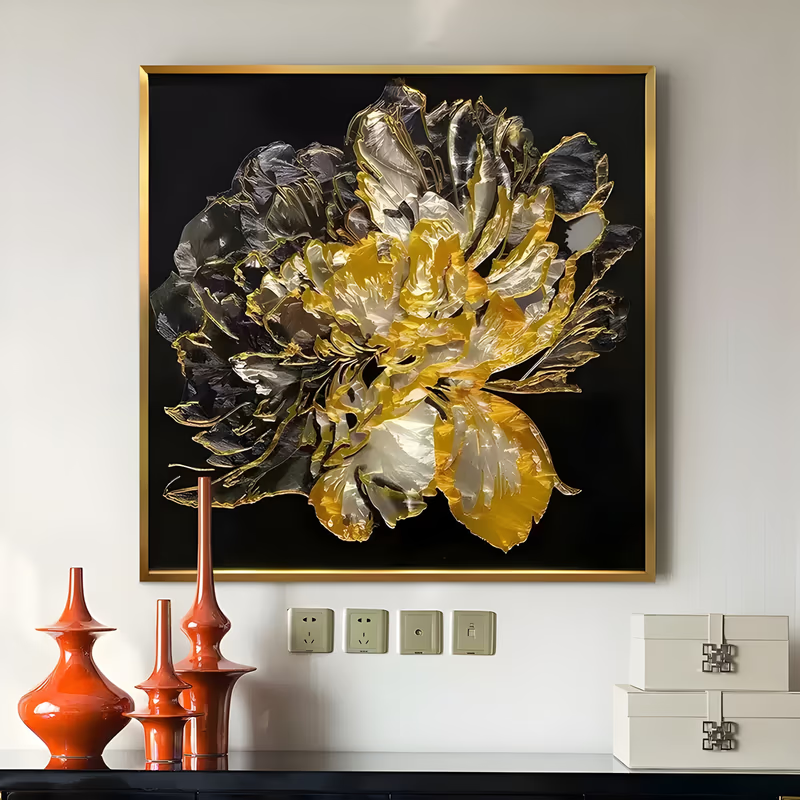
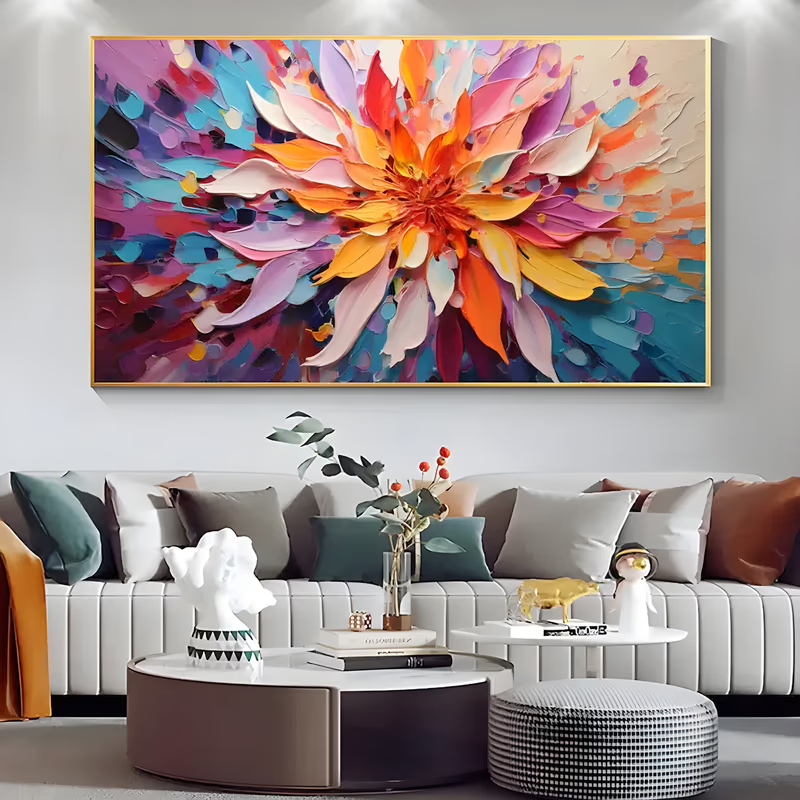
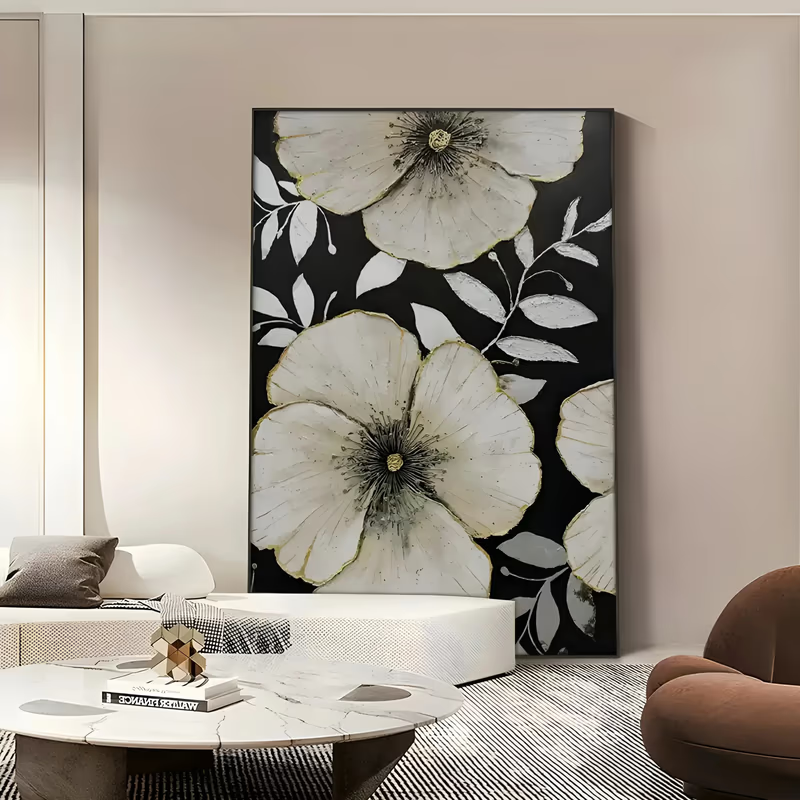
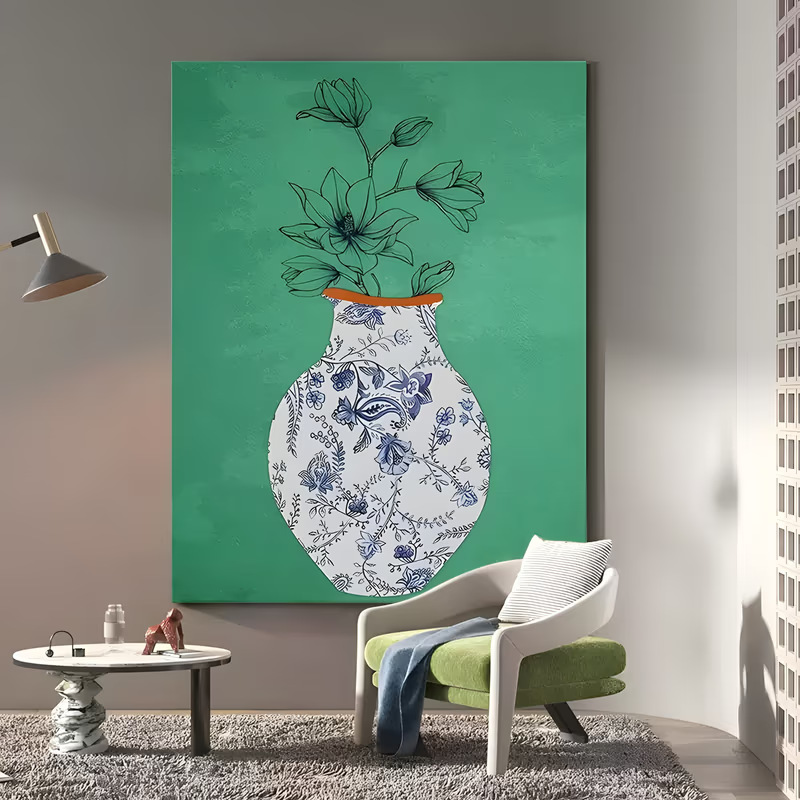
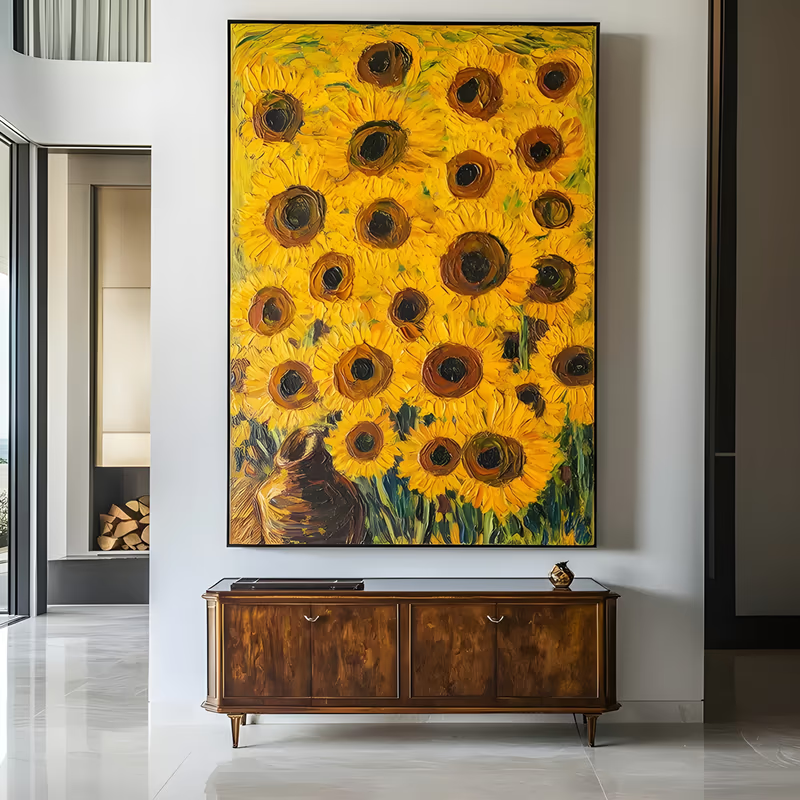
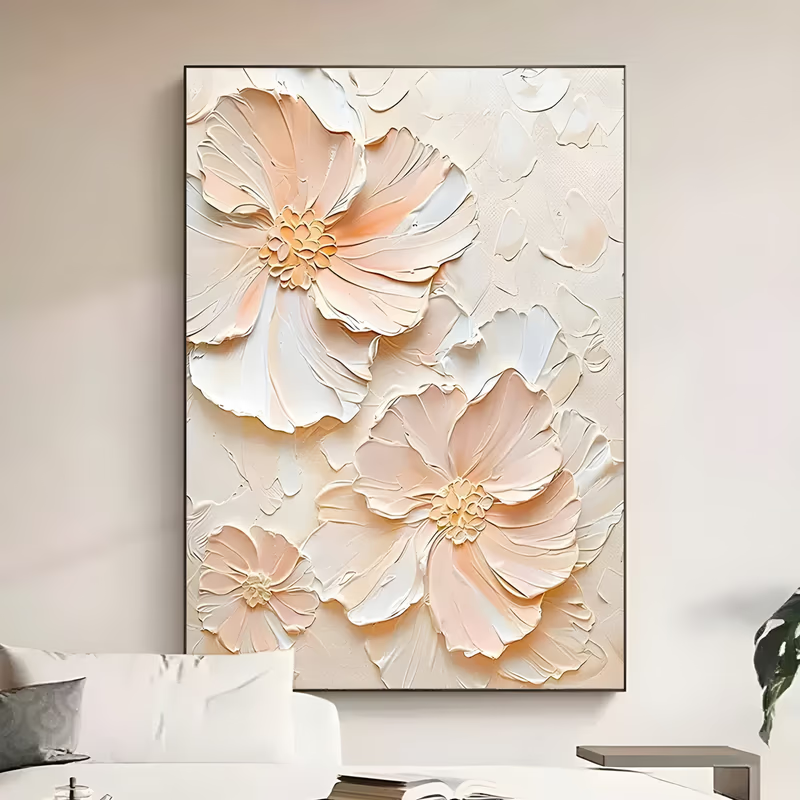
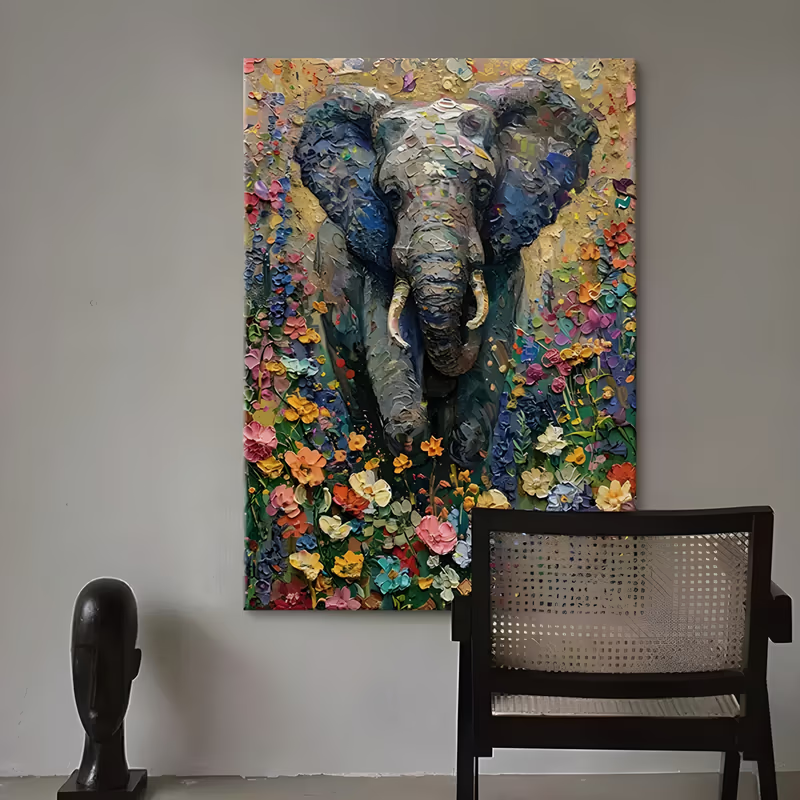
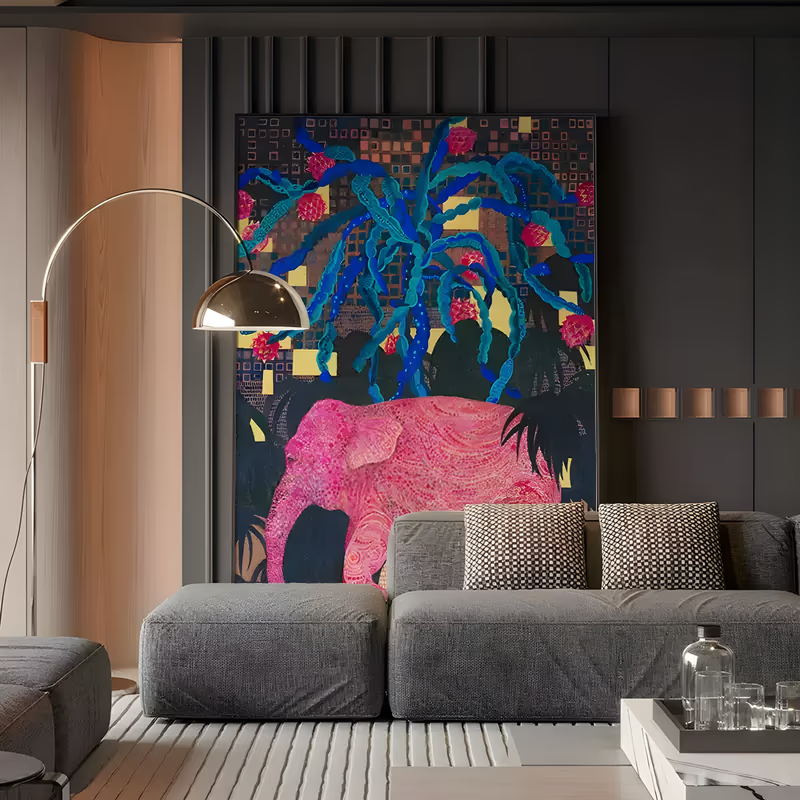
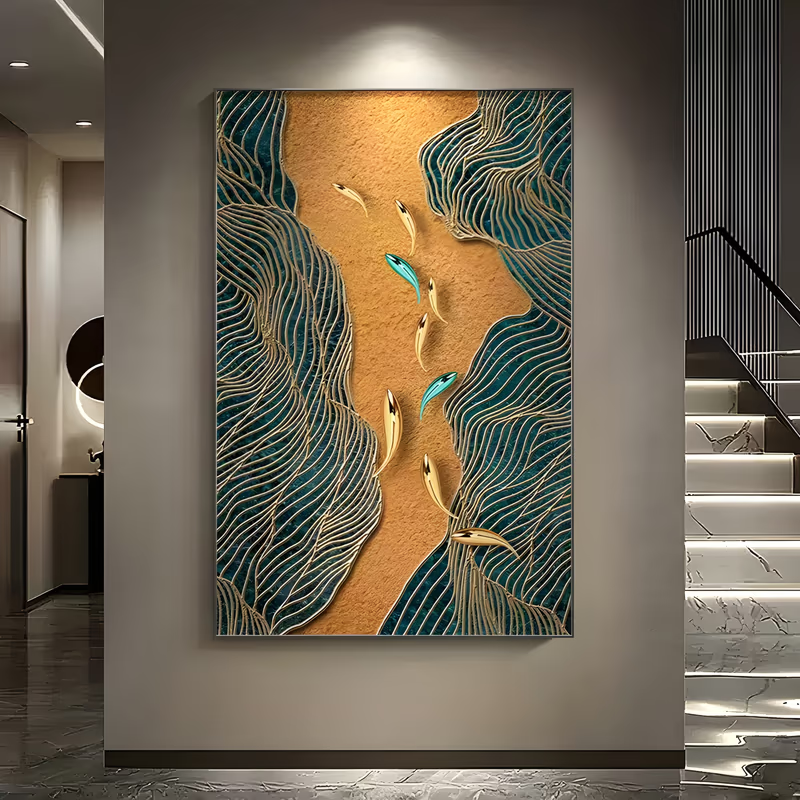
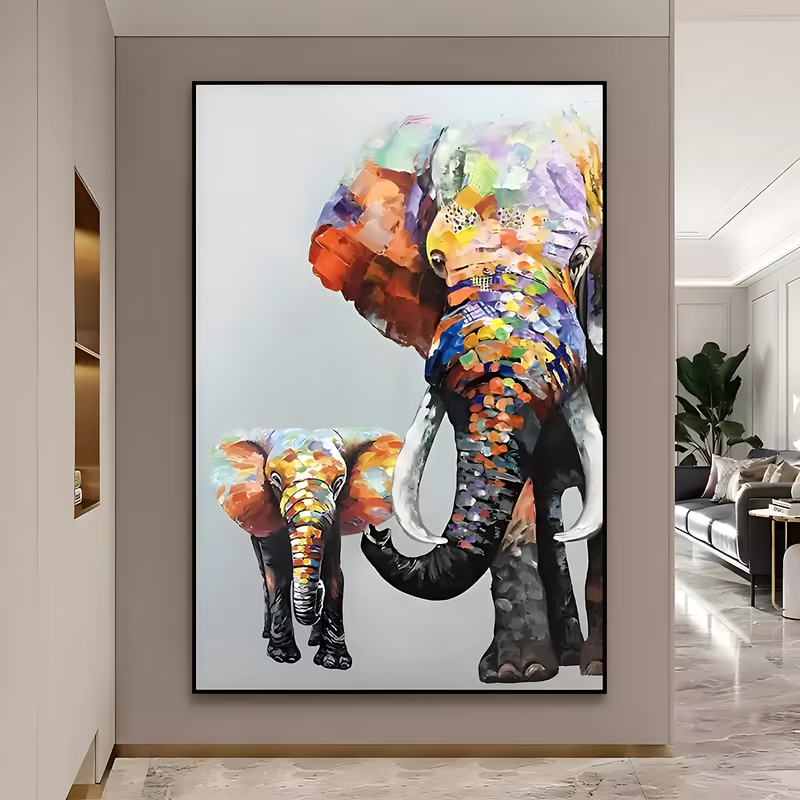
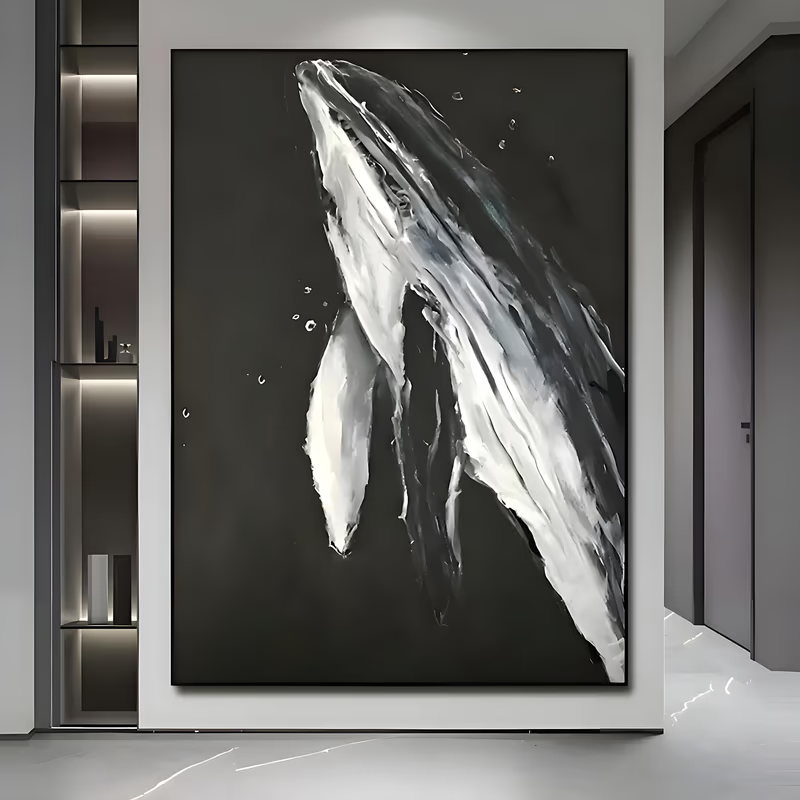
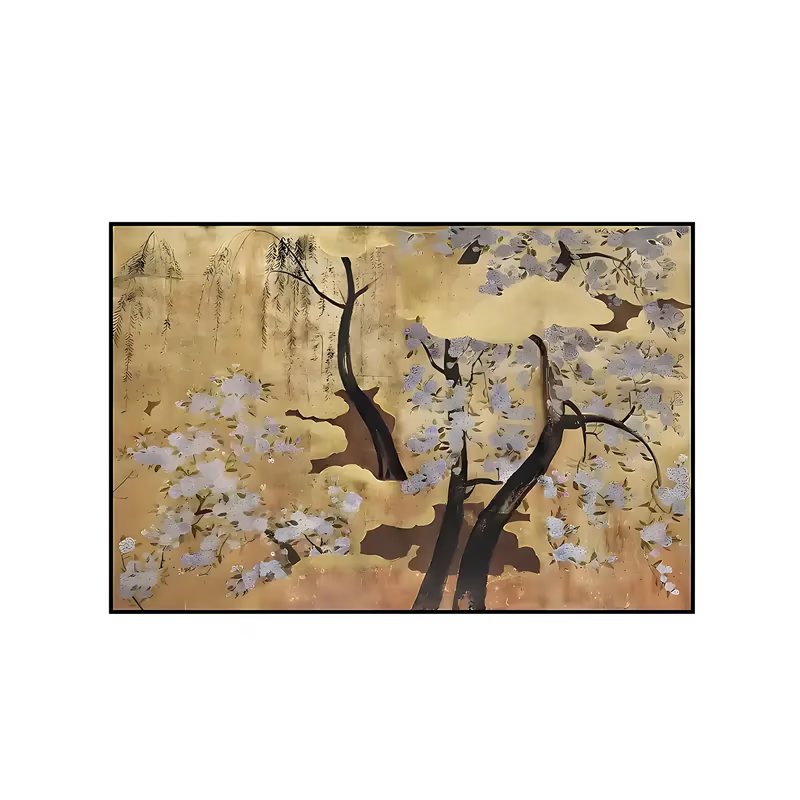
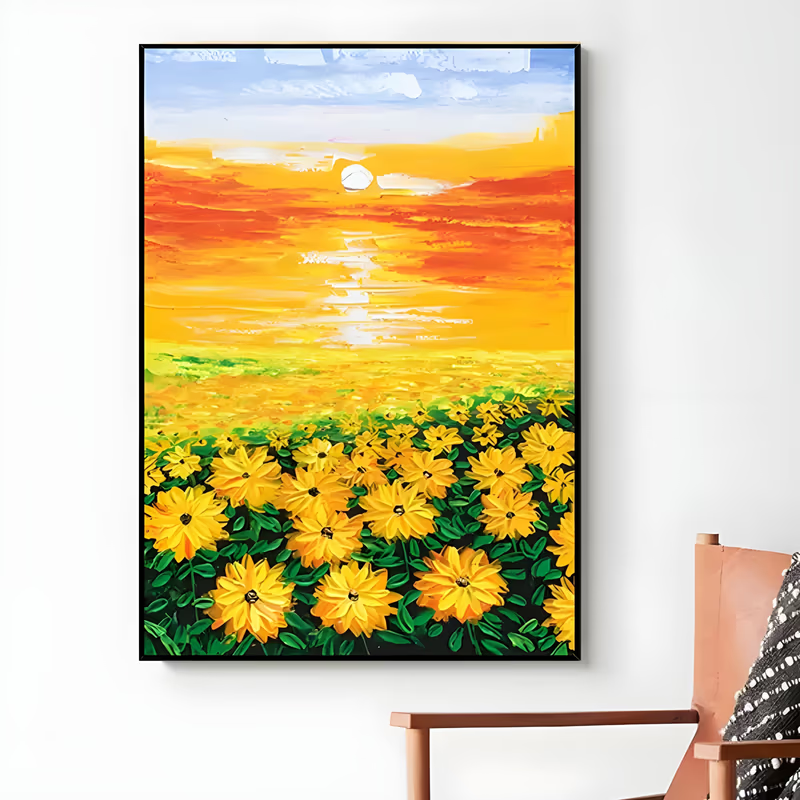
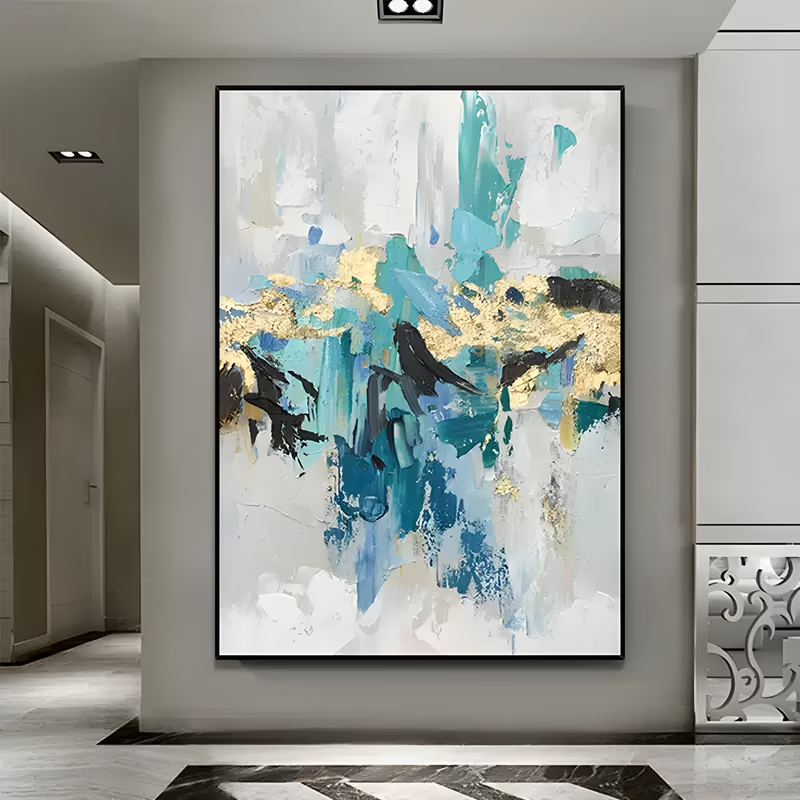
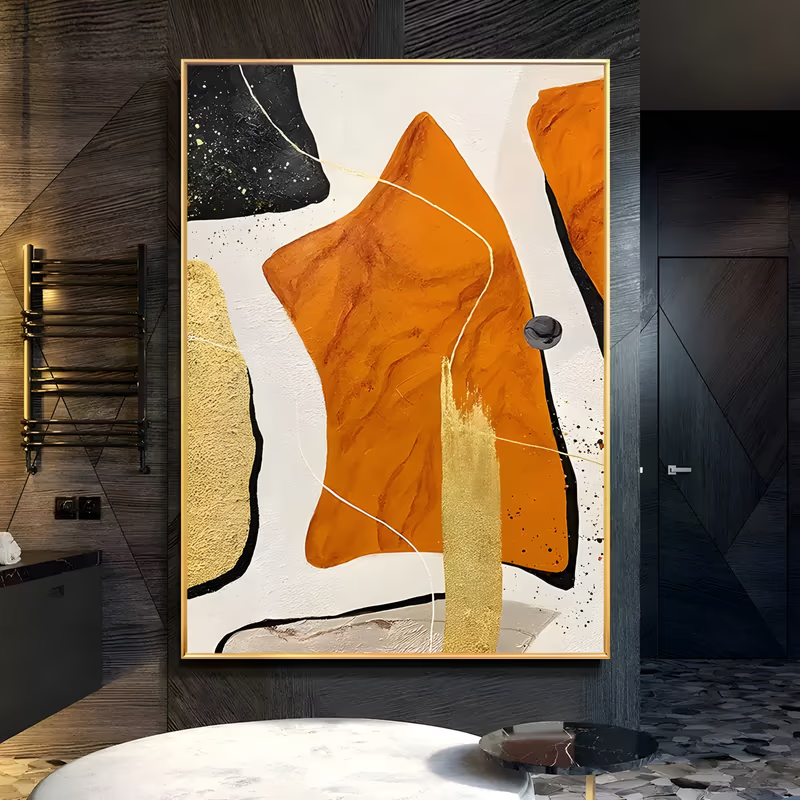
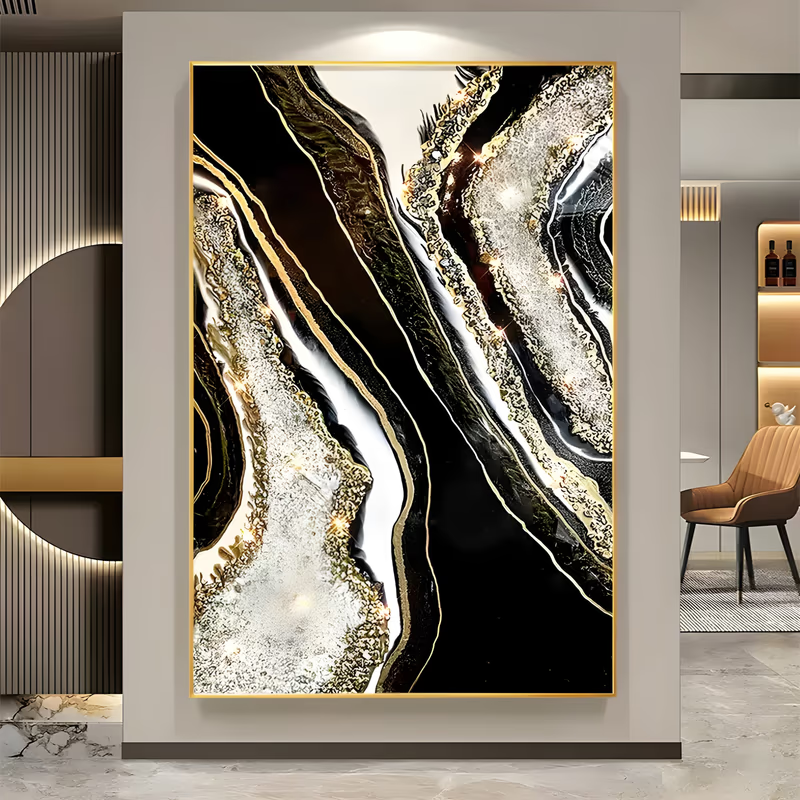
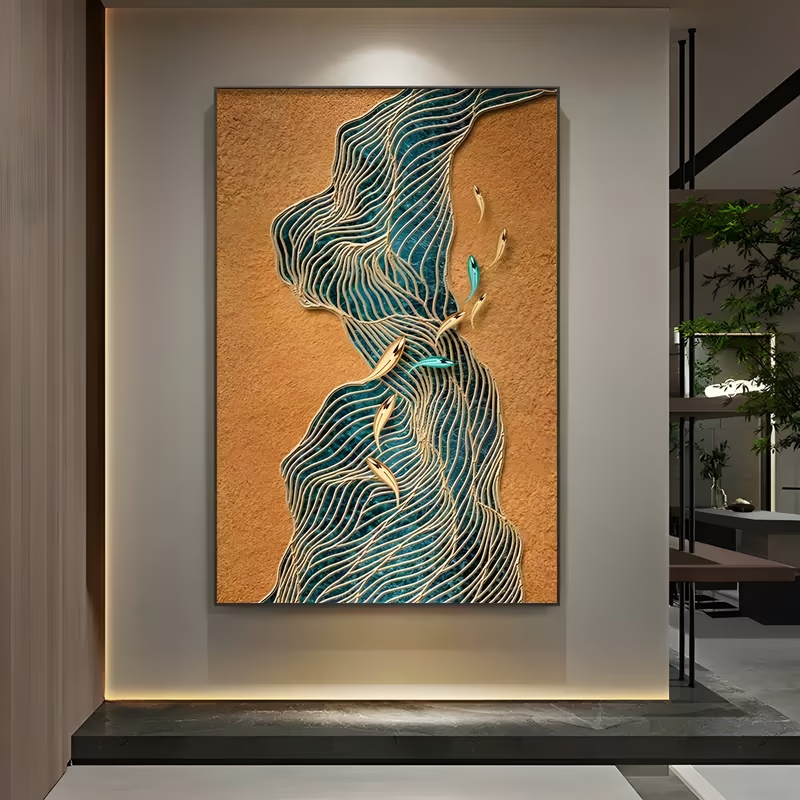
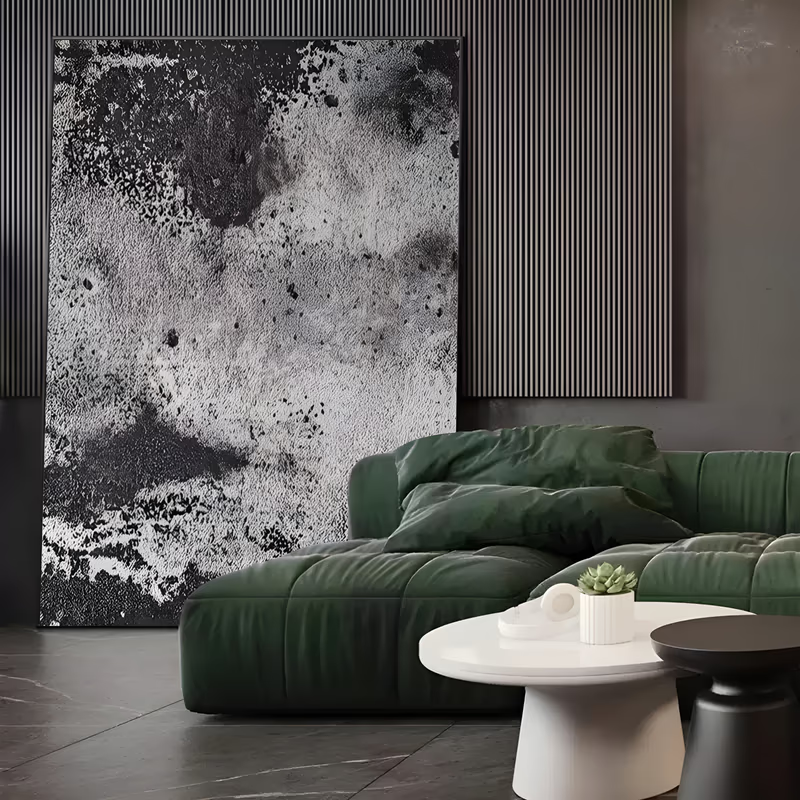
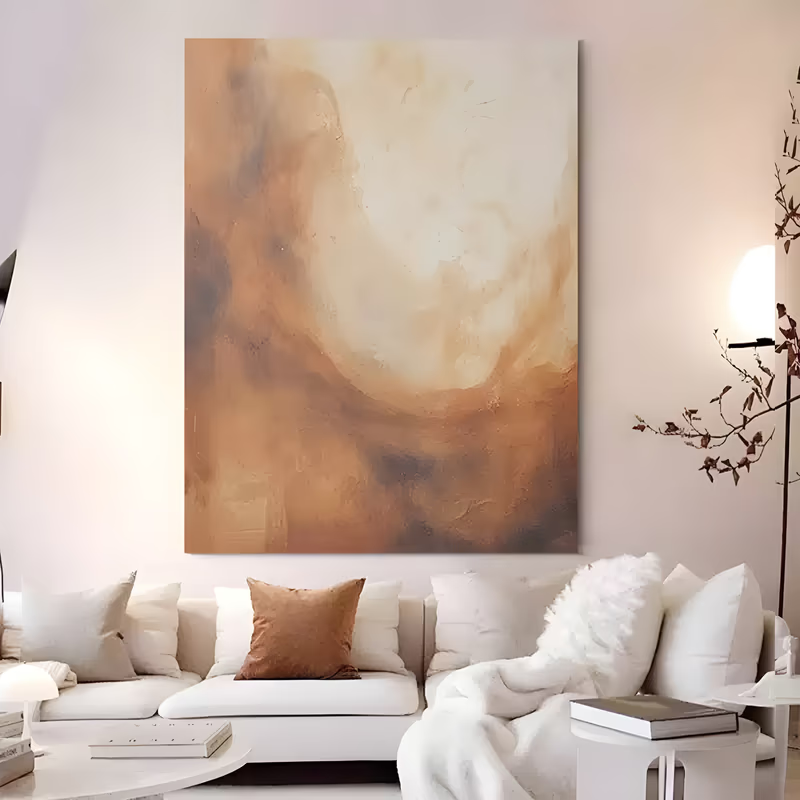
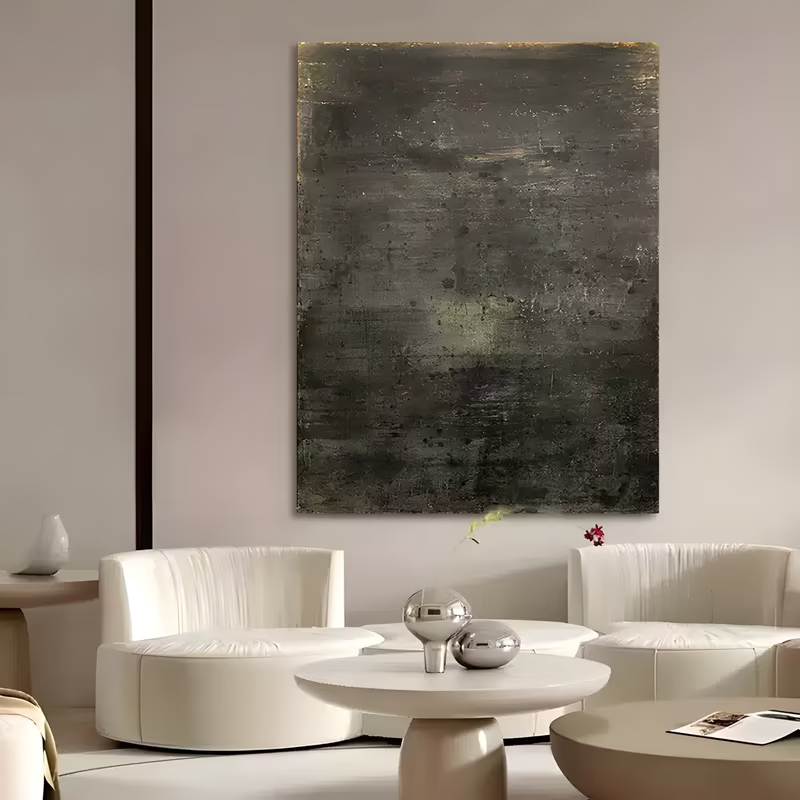
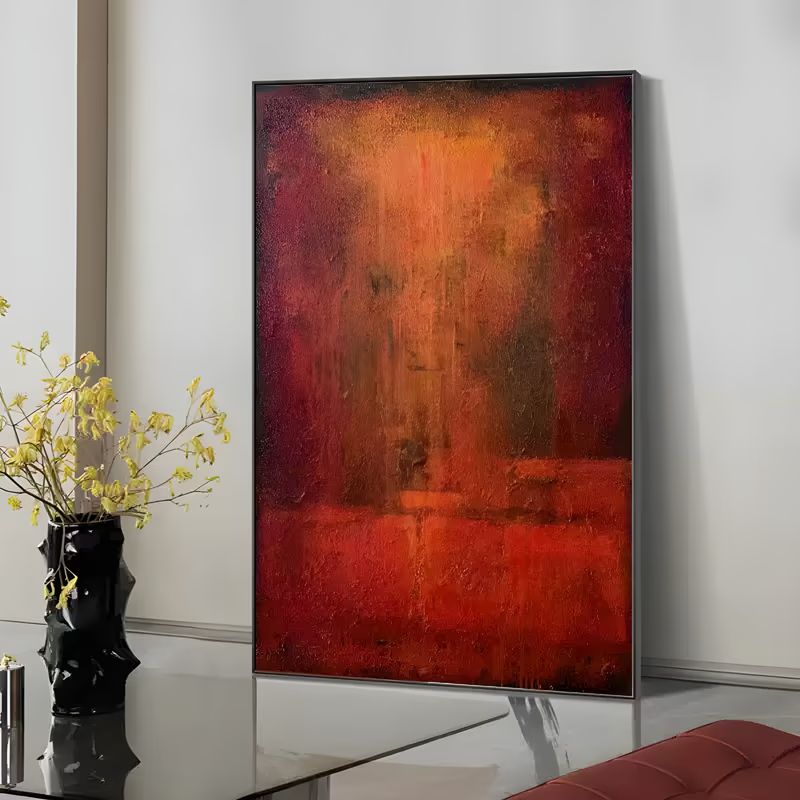
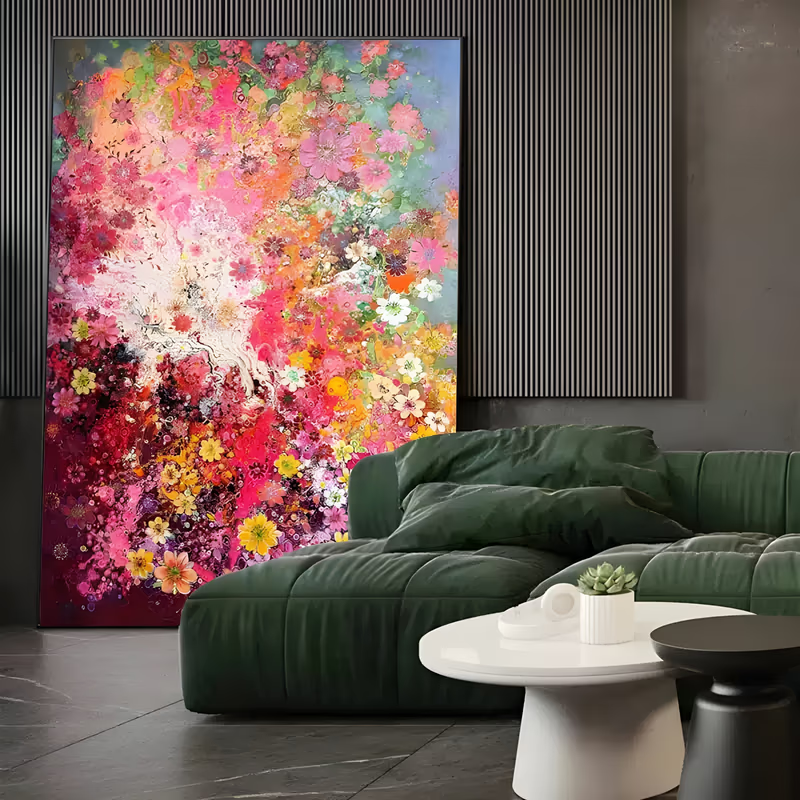
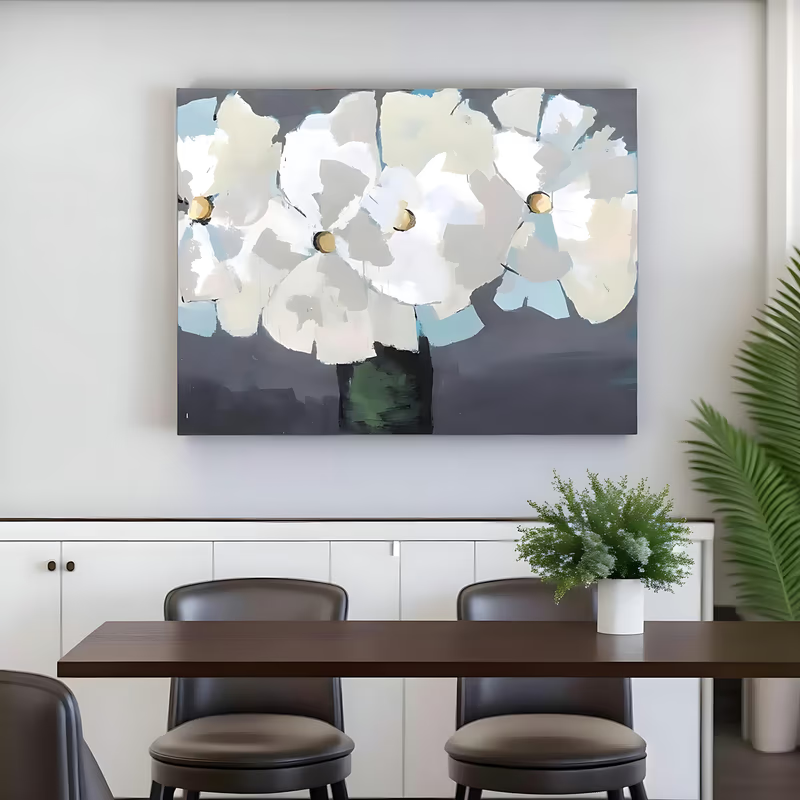
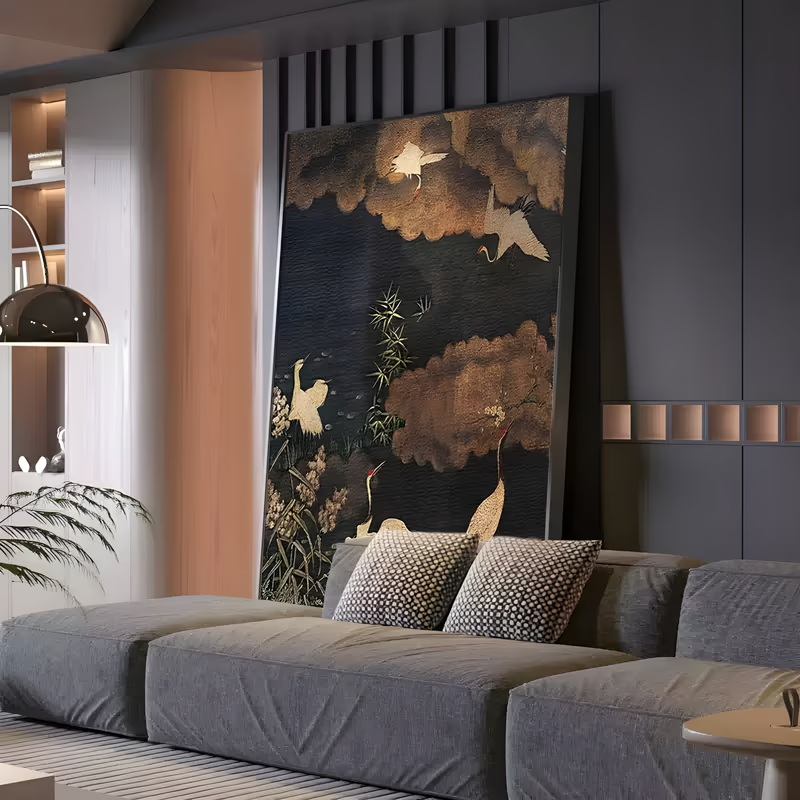
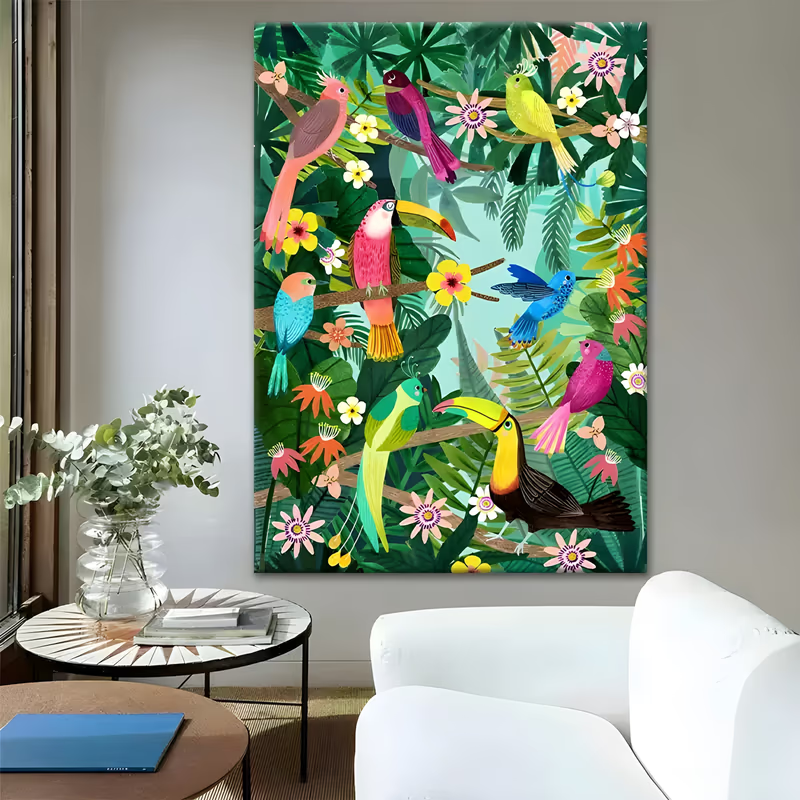
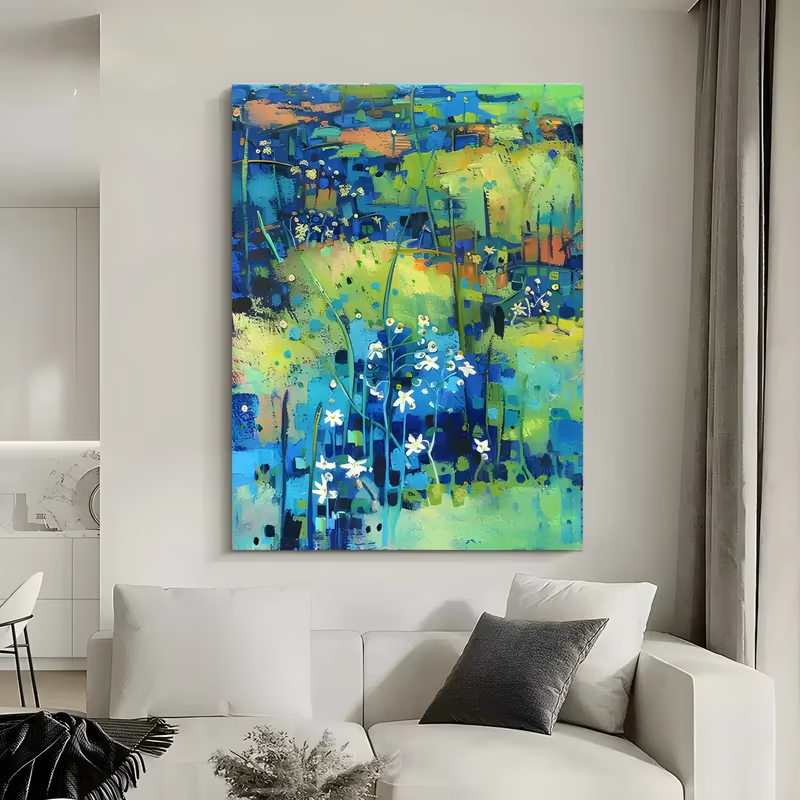
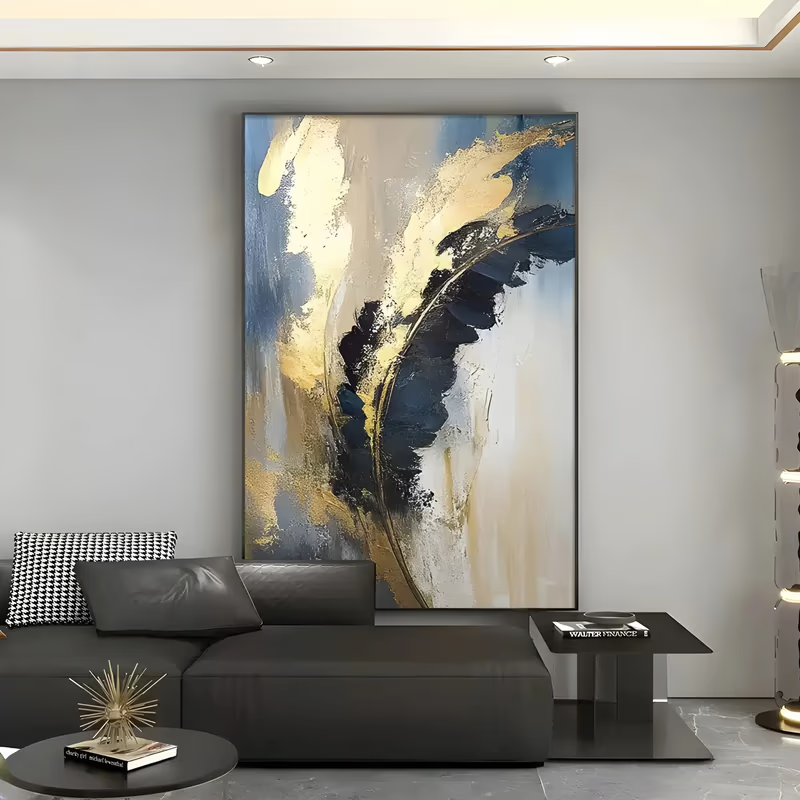
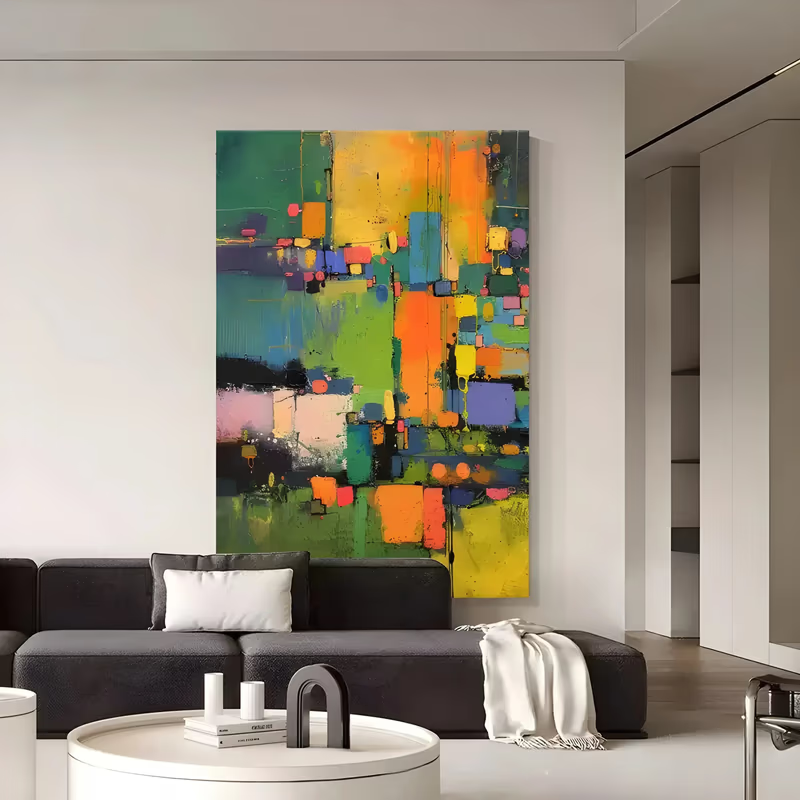
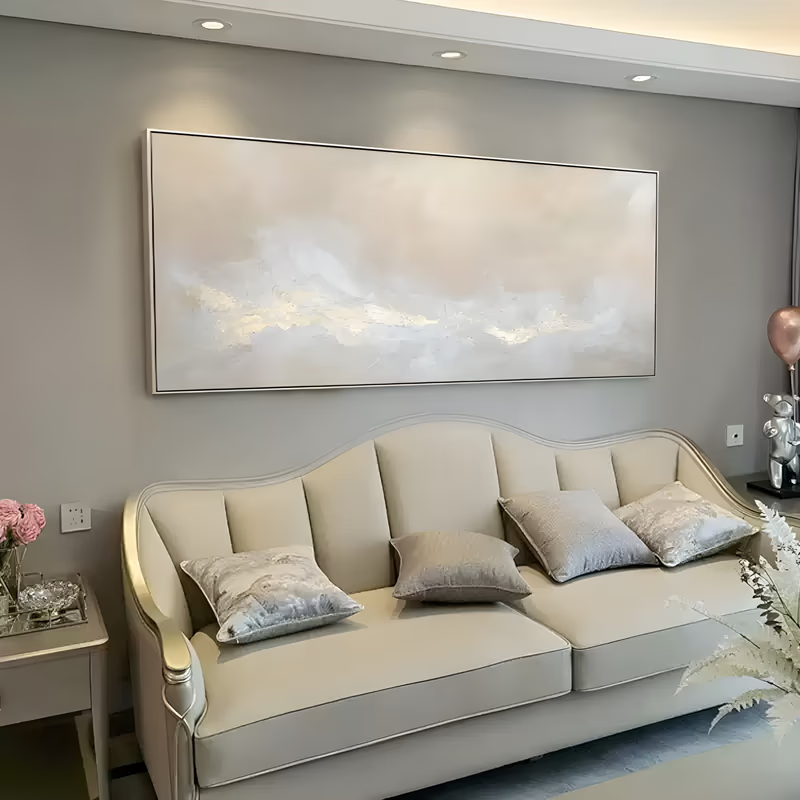
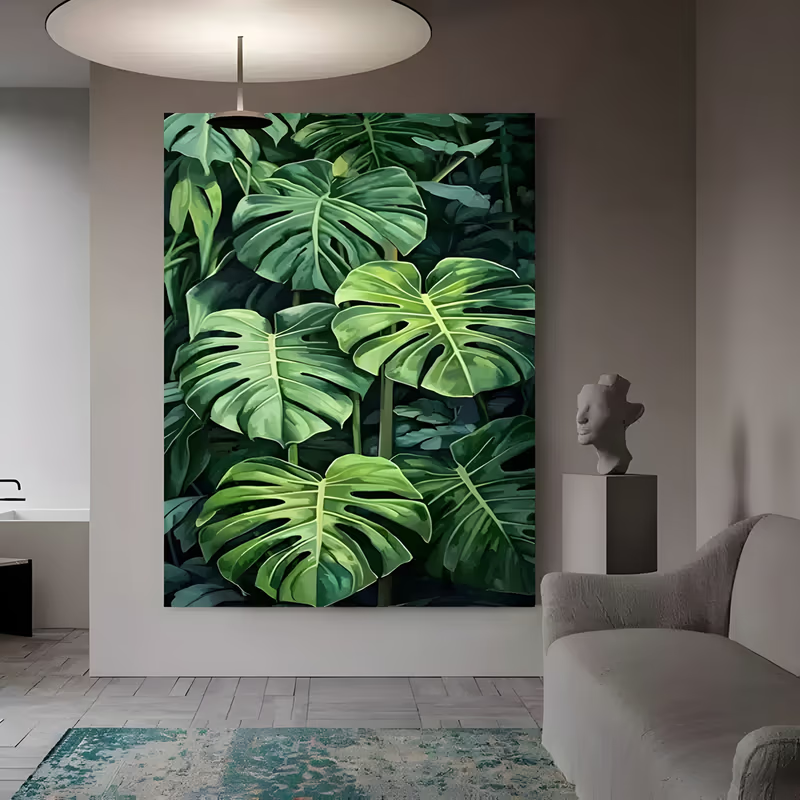
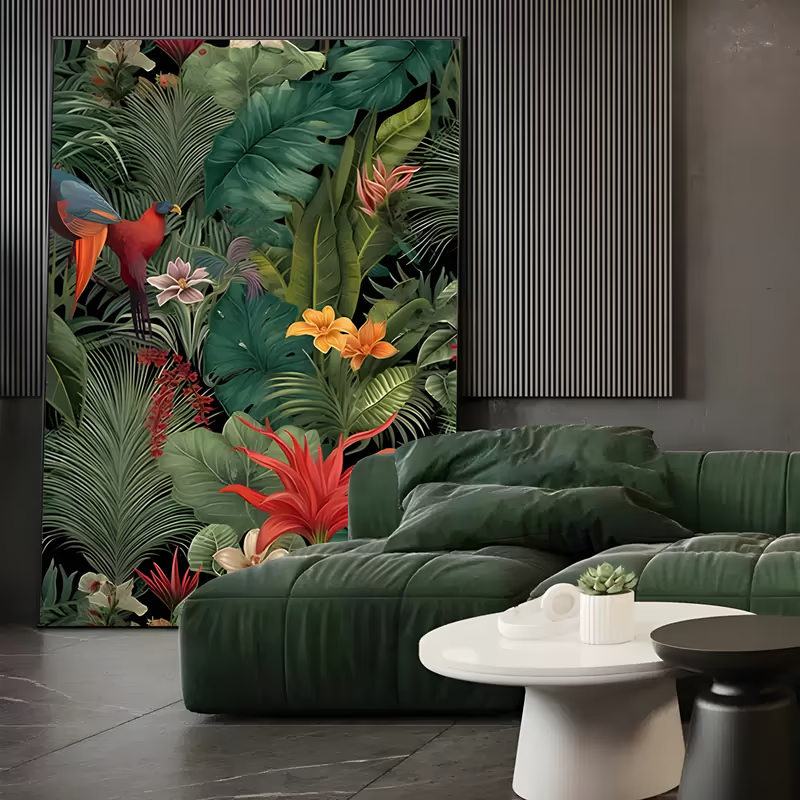
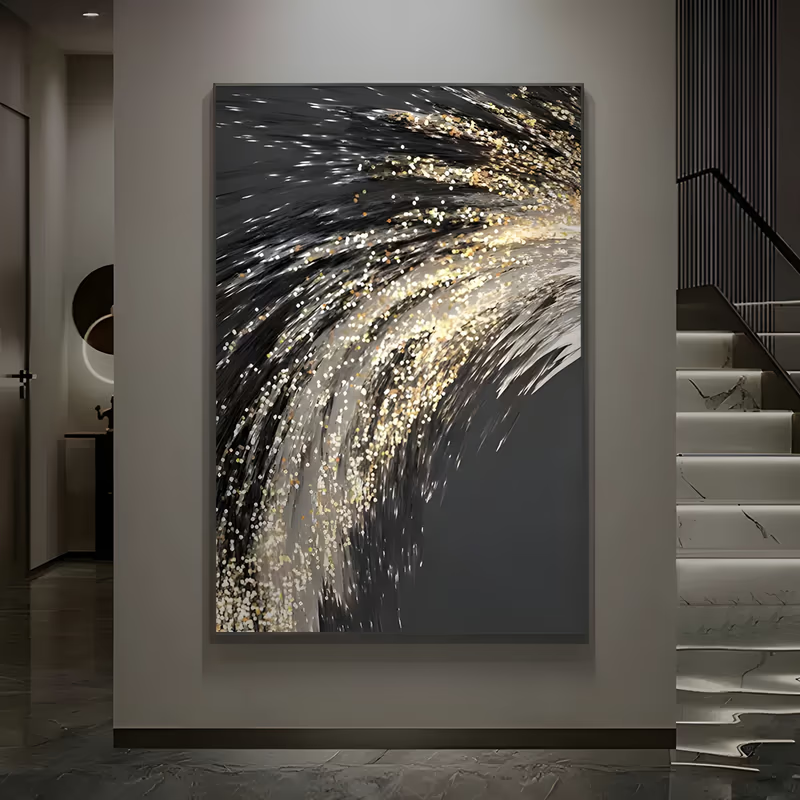
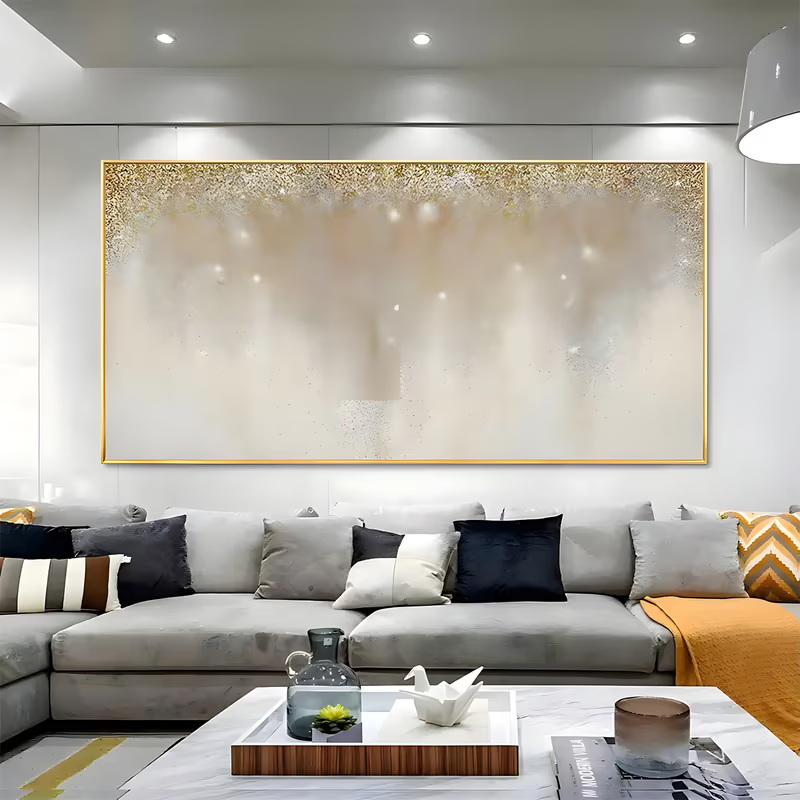
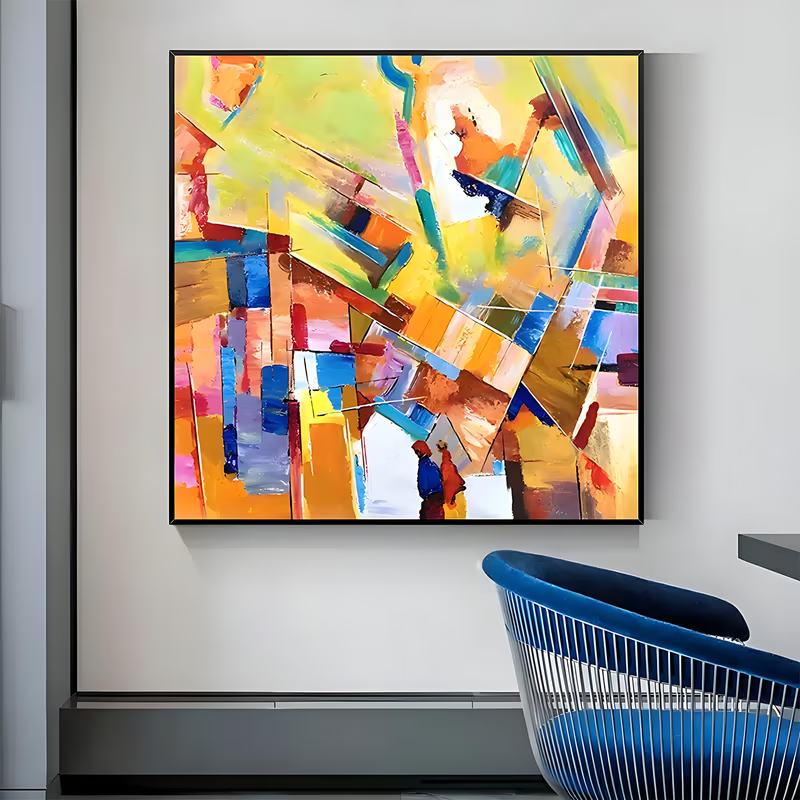
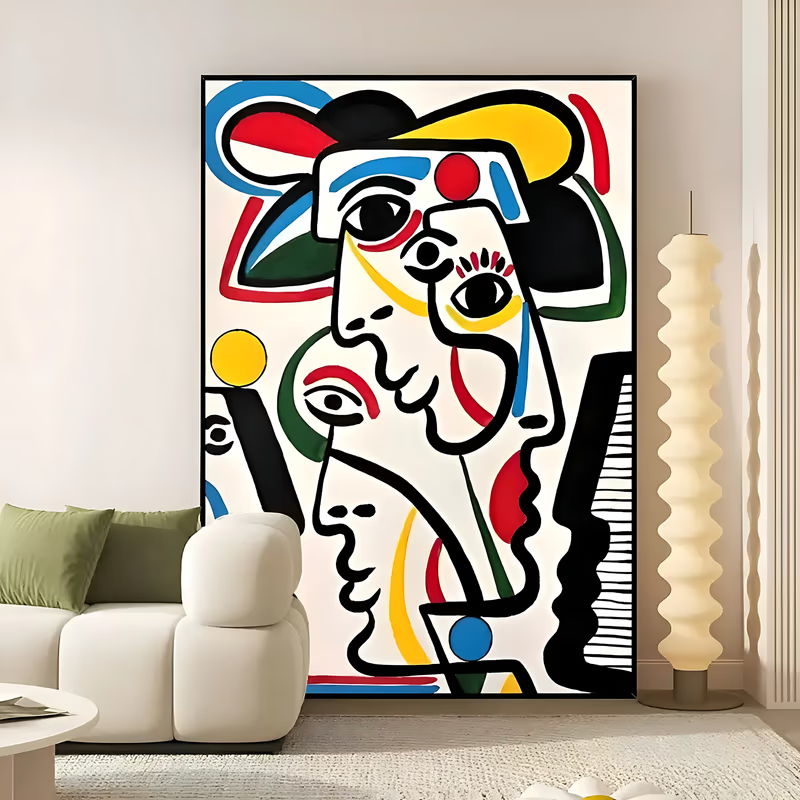
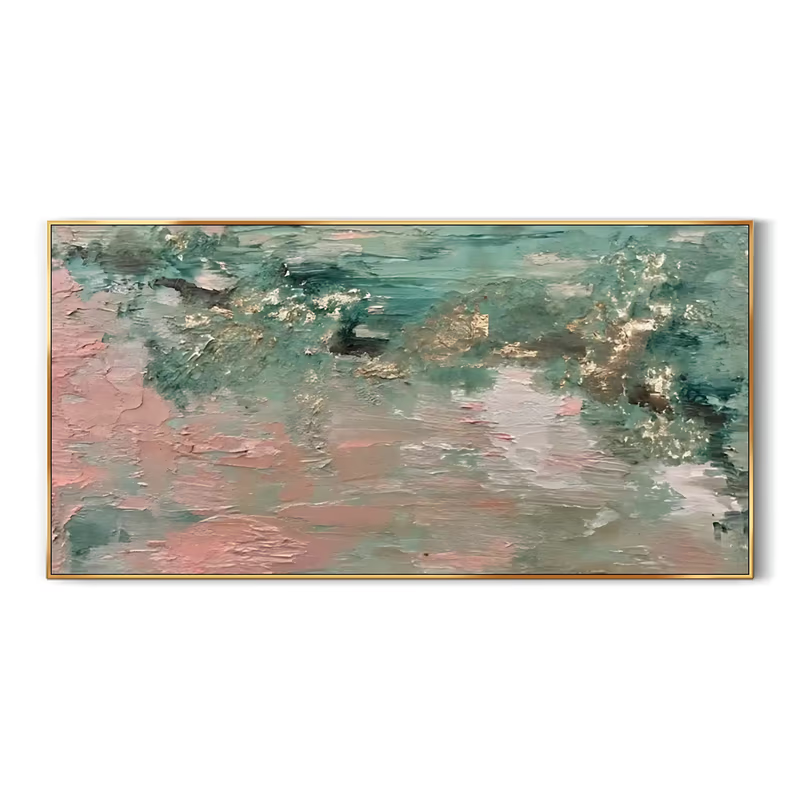
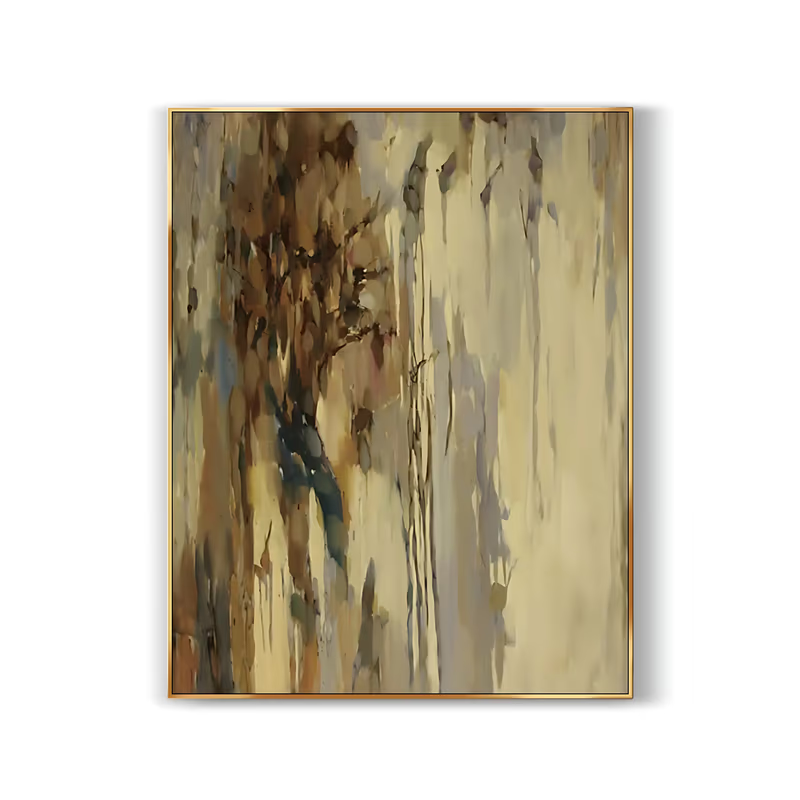
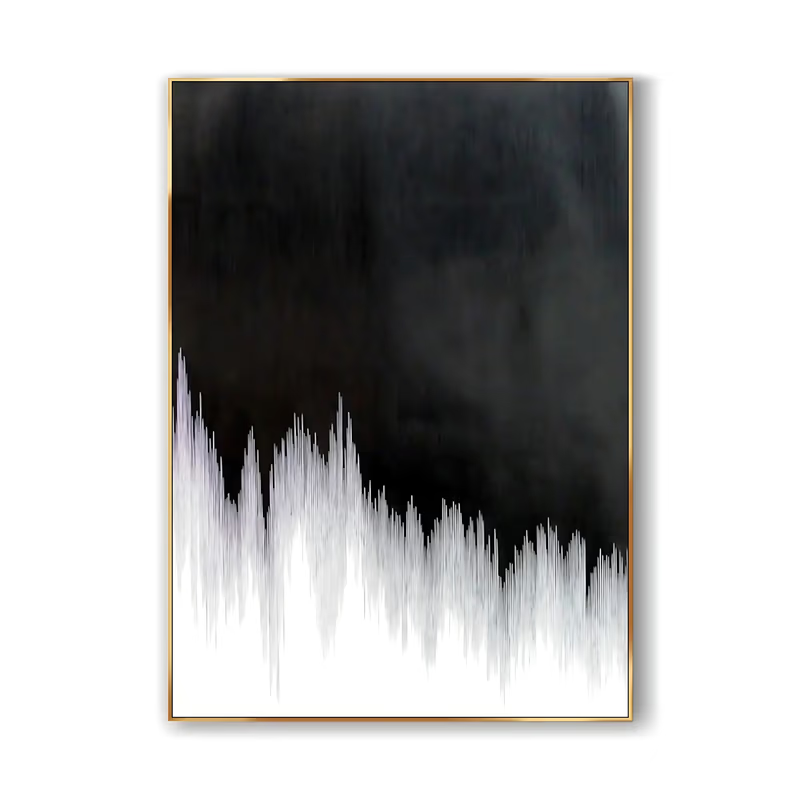
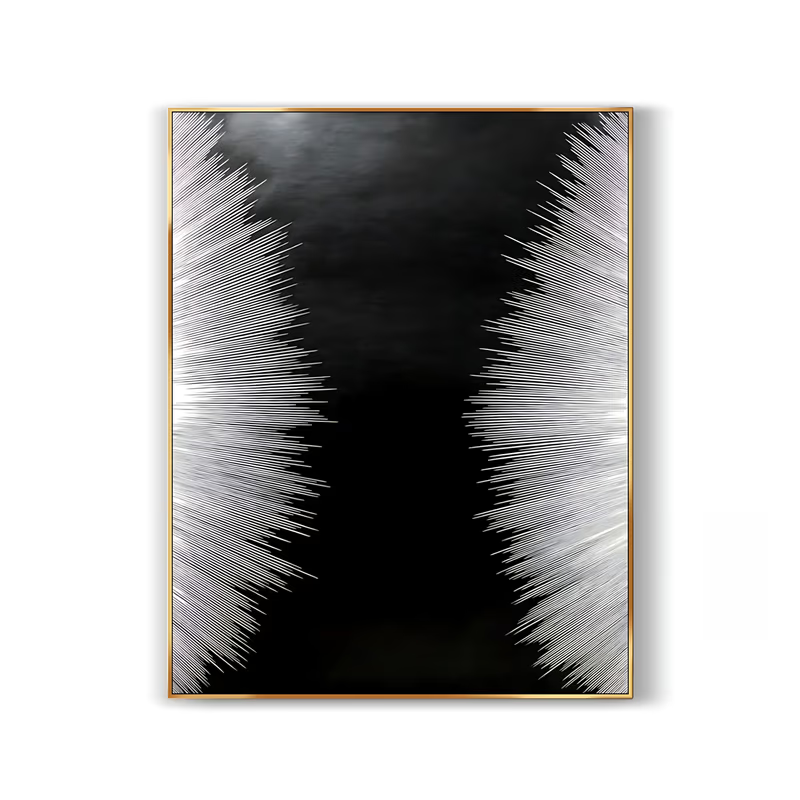
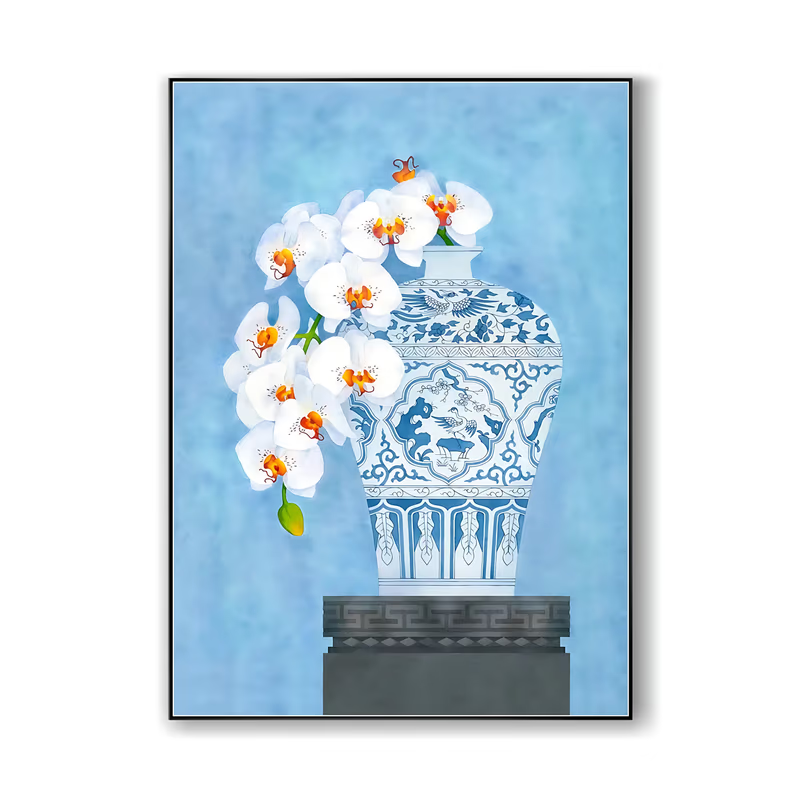
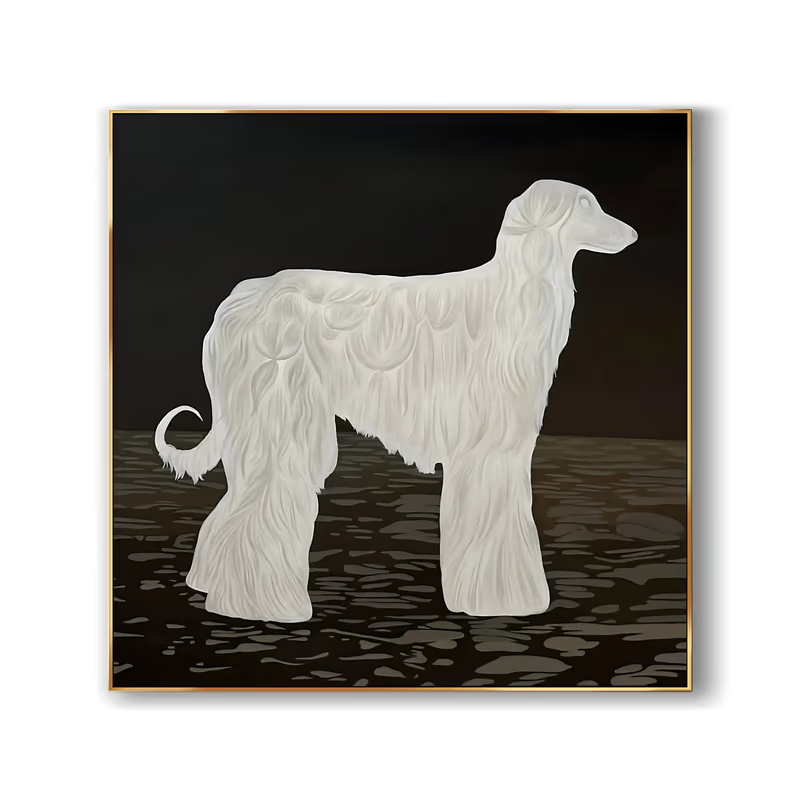
A lobby that is full of daylight and movement can take strong colour: blues, oranges and greens that look fresh against pale stone. Uplifting lobby art. A lobby lounge that turns into a bar after dark suits black, deep blue or charcoal grounds with gold, which glow under warm lamps. Dramatic pieces and gold accents. A quieter reception for apartments, a spa hotel or a clinic suits cream, white and warm grey with texture doing the work. White and cream lobby art.
Whichever direction you take, repeat one colour from the painting somewhere else in the lobby: a cushion, a chair frame, a planter. That single echo makes the art look like part of the design rather than something added at the end.
How big should lobby art be, and where should it hang?
Lobby art should fill about 60–75% of the width of its wall, or about two-thirds of the length of a reception desk, with the centre placed at eye level for normal ceilings and raised in a double-height space.
Measure the wall, then imagine the canvas from the front door. A painting that looks large in a showroom often reads as a postage stamp across a ten-metre lobby, which is why a lobby piece usually needs a long side of 150 cm or more. Behind a desk, leave 20–30 cm between the top of the desk or its back panel and the bottom of the canvas, and keep clear of the signage zone. On a standard-height wall, put the centre of the canvas at 145–152 cm (57–60 in) from the floor. On a double-height wall, raise it so the painting relates to the whole wall, while keeping the lower edge comfortably above head height.
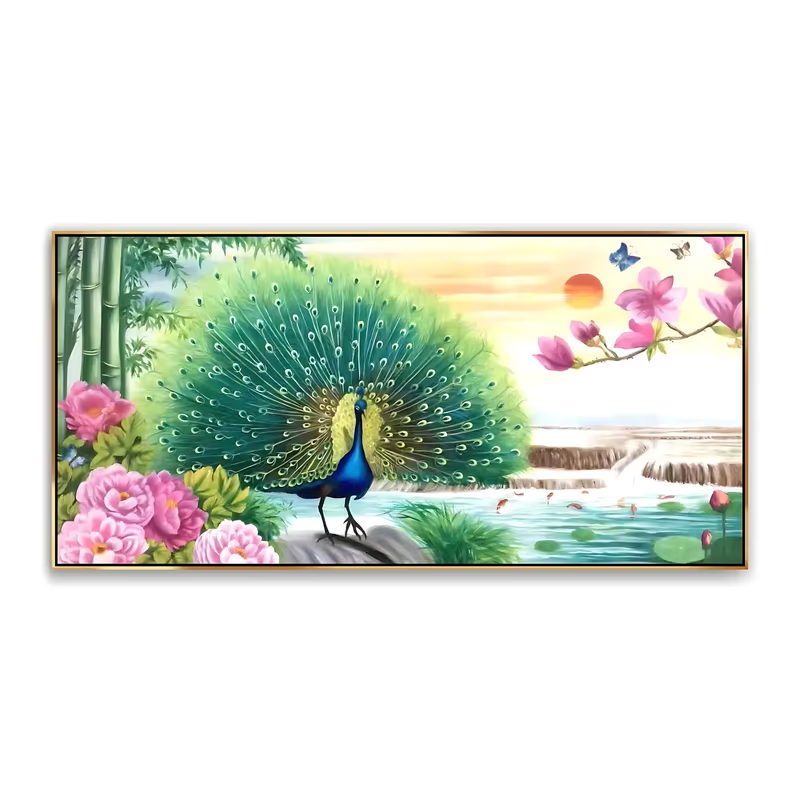
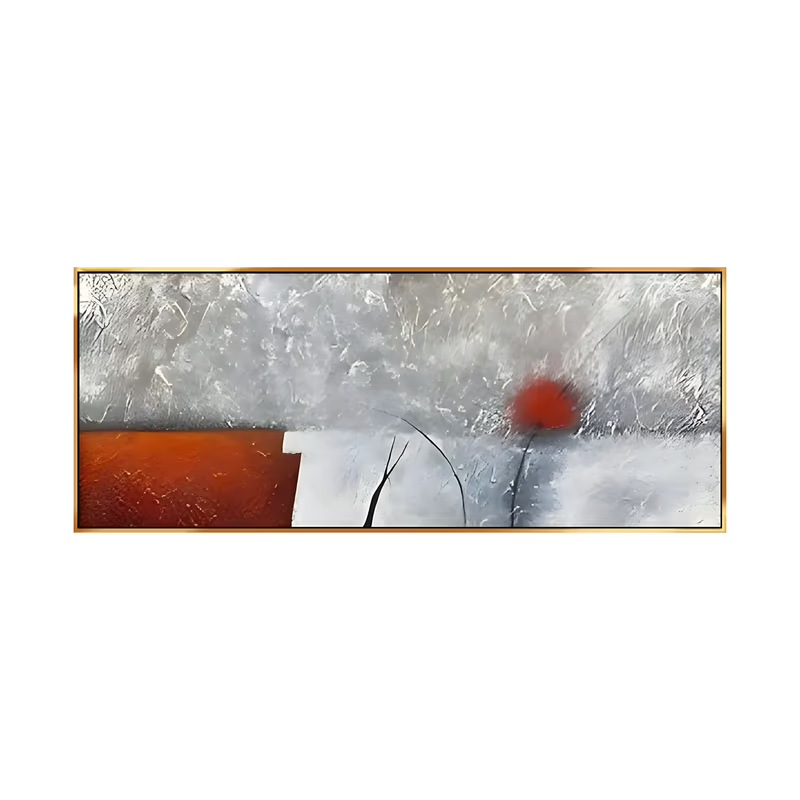
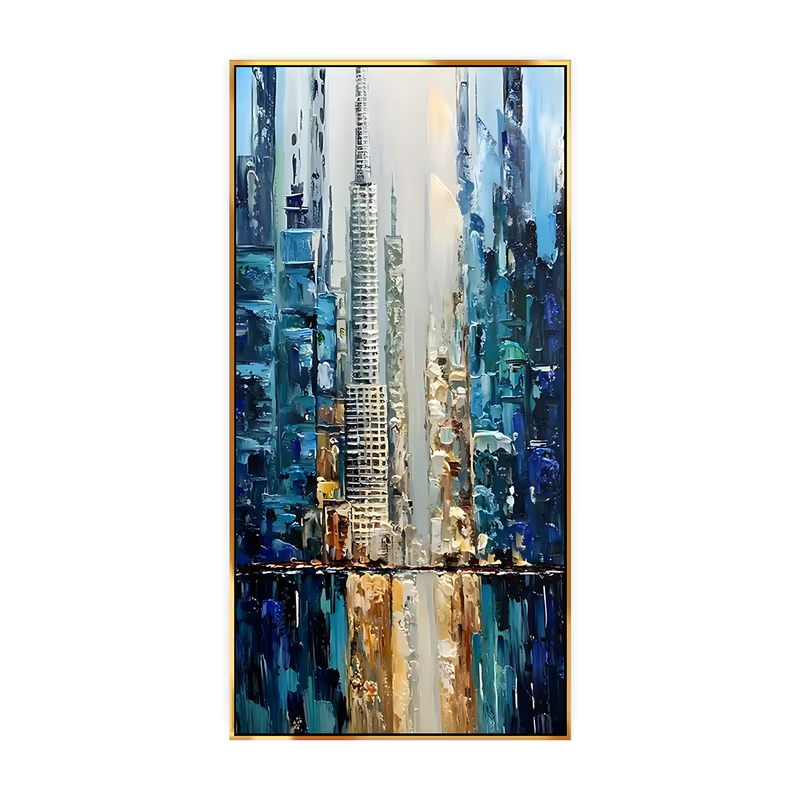
Format follows the wall. A long, low wall behind a sofa or desk wants a panoramic canvas. A tall wall beside a stair or facing the lifts wants a vertical one. If the wall is very large, one painting split into two or three panels lets you reach a big overall size while keeping each canvas manageable to install. Because every piece is painted to order, the composition is redrawn to the proportion you give rather than cropped or stretched. Panoramic lobby art or vertical lobby art.
How does lobby art connect to the rest of the building?
Treat the lobby piece as the first chapter: the corridors, lift lobbies, restaurant and rooms then pick up its palette or subject at a smaller scale, so the whole building feels designed as one.
A common scheme is one anchor in the lobby, a related vertical in each lift lobby, and quieter works in the corridors and guest rooms. The link can be colour (the lobby's deep blue appearing in every corridor piece), subject (one coastline painted in different light on each floor) or technique (the same plaster relief at a smaller scale). See corridor art, restaurant and bar art and hotel room art for the next steps along that path, or filter the works here that also suit corridors and bars and restaurants.
For hotel groups and designers specifying statement pieces, lobby statement art covers the detail of elevations, sizes and installation. For office and residential owners, art for commercial lobbies and common areas covers multi-floor lift lobbies and buildings that stay open during installation.
How do you order a lobby painting and have it ready for opening?
Send the wall size, a photograph or elevation and the work you like; the palette is adjusted to your scheme, you approve progress photos at each stage, and the finished canvas, painted in about 10 days, arrives by express 5–7 days after dispatch.
Each lobby piece is hand-painted in acrylic on canvas as standard, with oil paint available on request. The colours can be matched to a paint code, a stone sample or a fabric before painting starts, and any work on this page can be painted in another colourway. You receive photographs or video at each stage, and nothing moves on until you approve it; a final photograph is approved before dispatch.
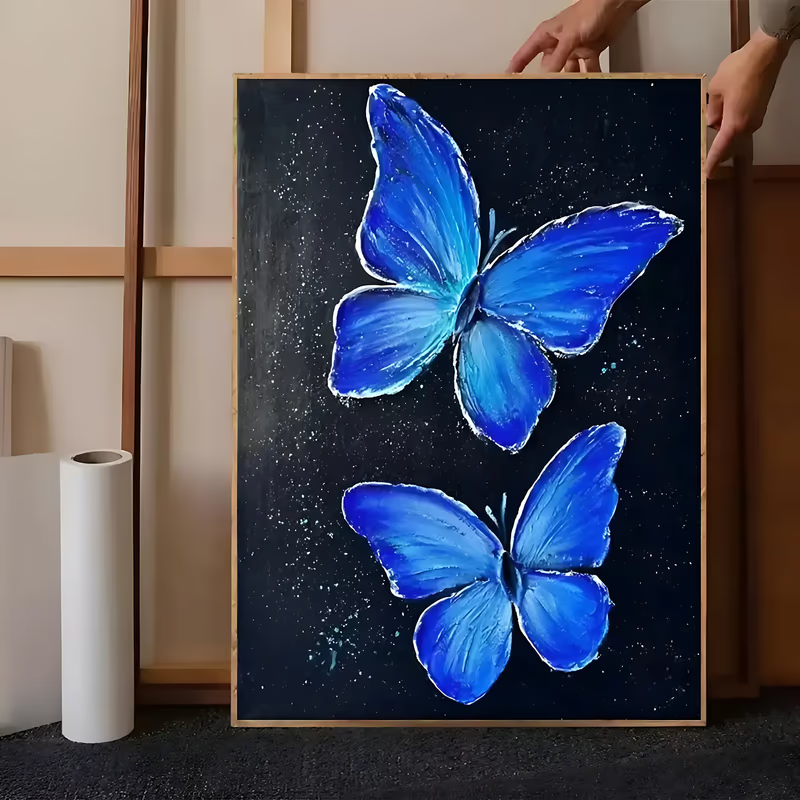
Very large canvases are usually best shipped rolled: a rolled painting fits a goods lift and a service corridor, and is stretched or framed on site. 3D plaster and deep relief pieces are the exception: they travel stretched or framed, and are only rolled if you agree to have the texture made thin enough for transport. Smaller pieces can travel stretched and ready to hang, or framed in gold, silver, black, white or wood. iHomeArt books the shipping with DHL, FedEx or UPS express and confirms its cost before dispatch. Allow about 10 days to paint and 5–7 days in transit, plus the time your team takes to approve each stage, and work back from the opening date. A single piece can be ordered; volume pricing starts at 10 pieces, and every enquiry is quoted within one business day. Request a quote or see custom sizes and colours.