




Uplifting wall art guide · Updated
How to choose uplifting wall art for rooms that need lifting
Key takeaways
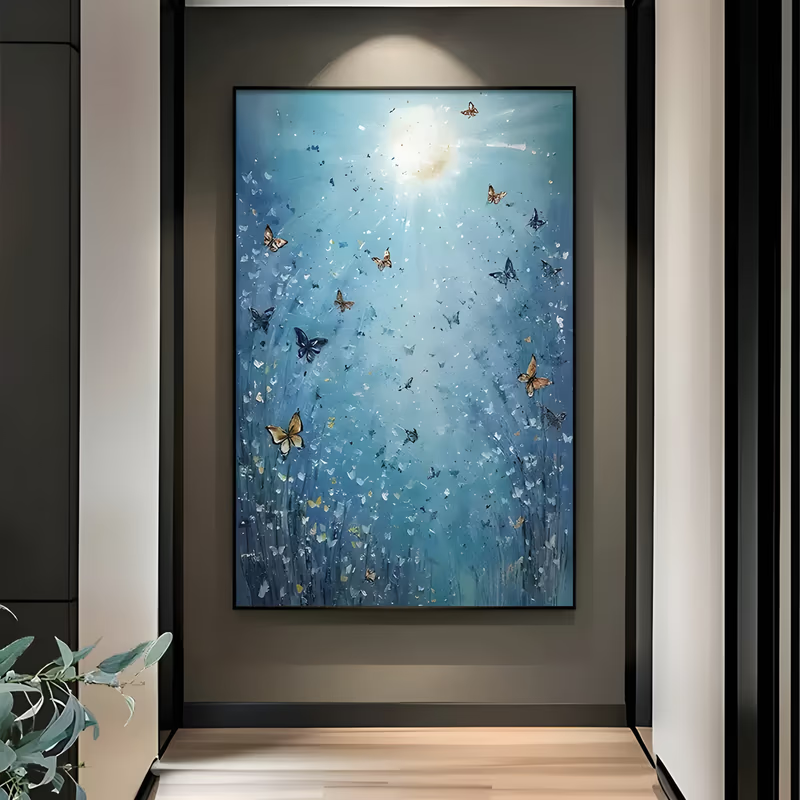
- Look for light inside the picture: a sun, a bright sky or light through leaves makes a painting seem to brighten the room.
- Uplifting is optimistic, not loud: fresh warm-and-cool colour and familiar subjects lift a room without tiring it.
- Use it where rooms feel flat: corridors, lift lobbies, waiting areas, offices without views and north-facing rooms gain the most.
- Choose easy-to-read subjects in care settings: sunlit nature, flowers and calm water suit healthcare and senior living better than abstract or dark work.
What makes wall art uplifting?
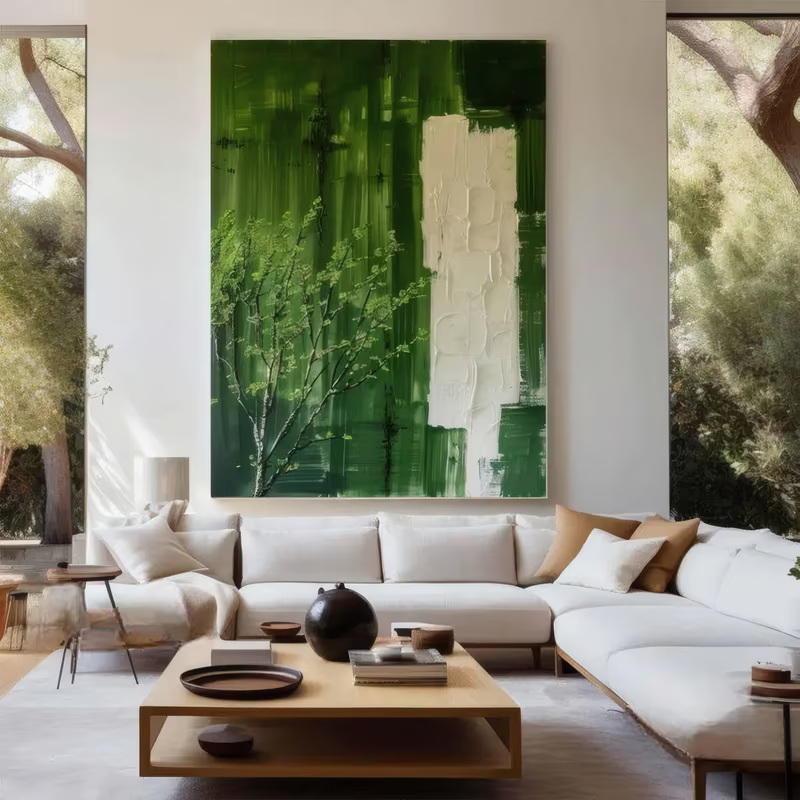
Wall art feels uplifting when it is full of light: a sunlit scene, an open sky or horizon, fresh warm-and-cool colour and familiar living subjects, painted so the eye is drawn up and out.
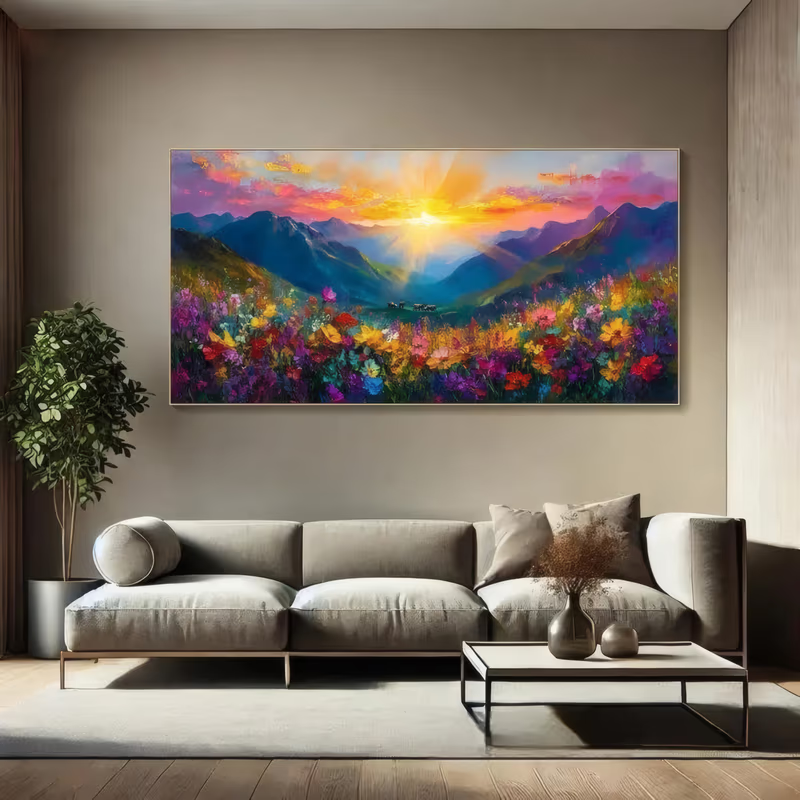
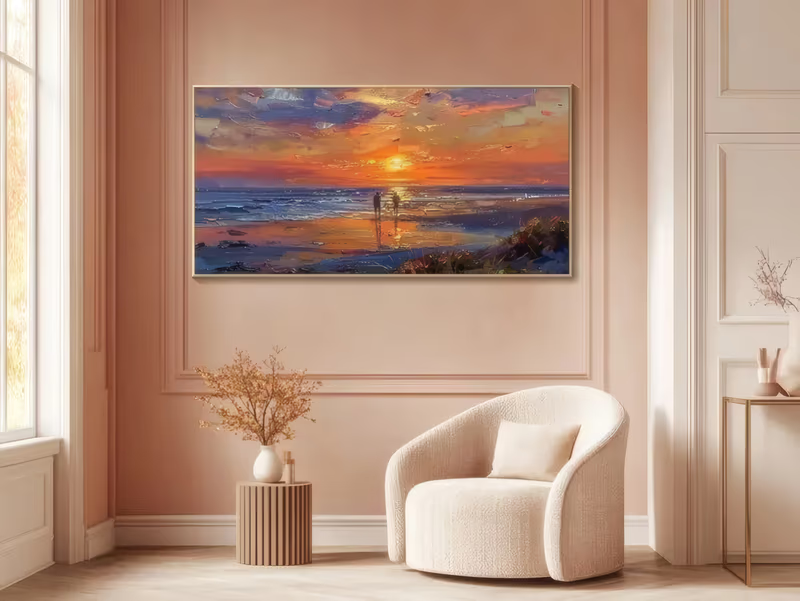
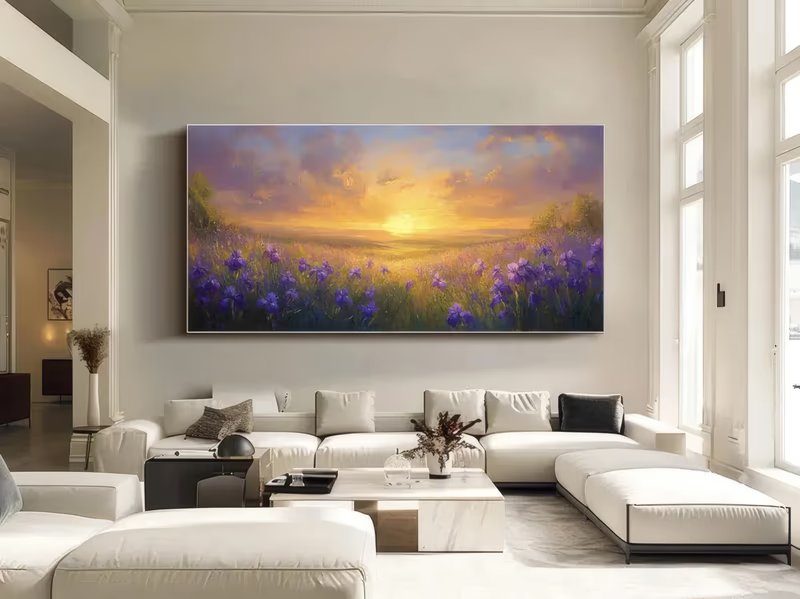
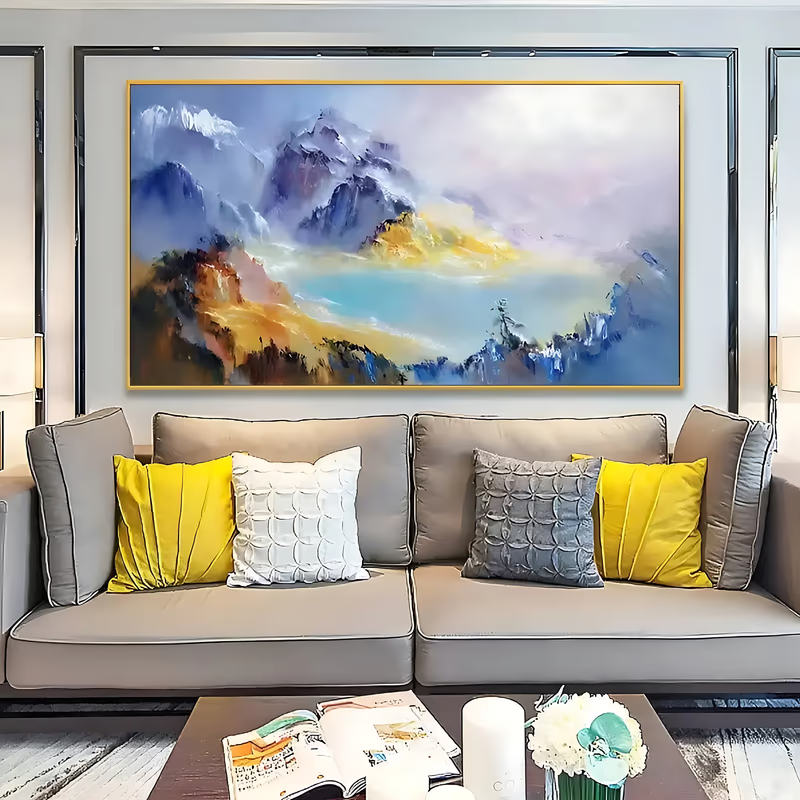
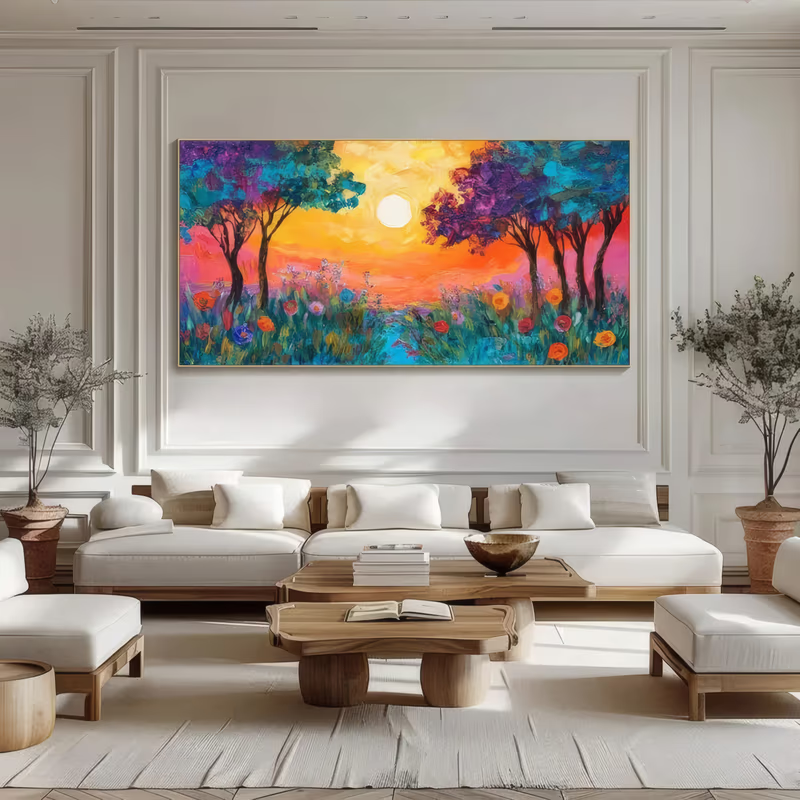
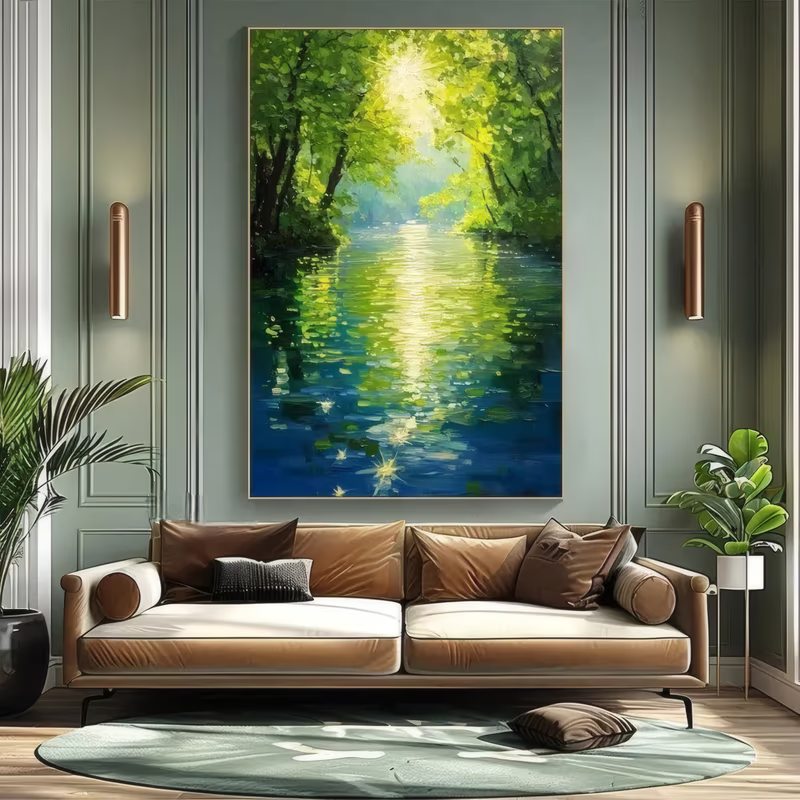
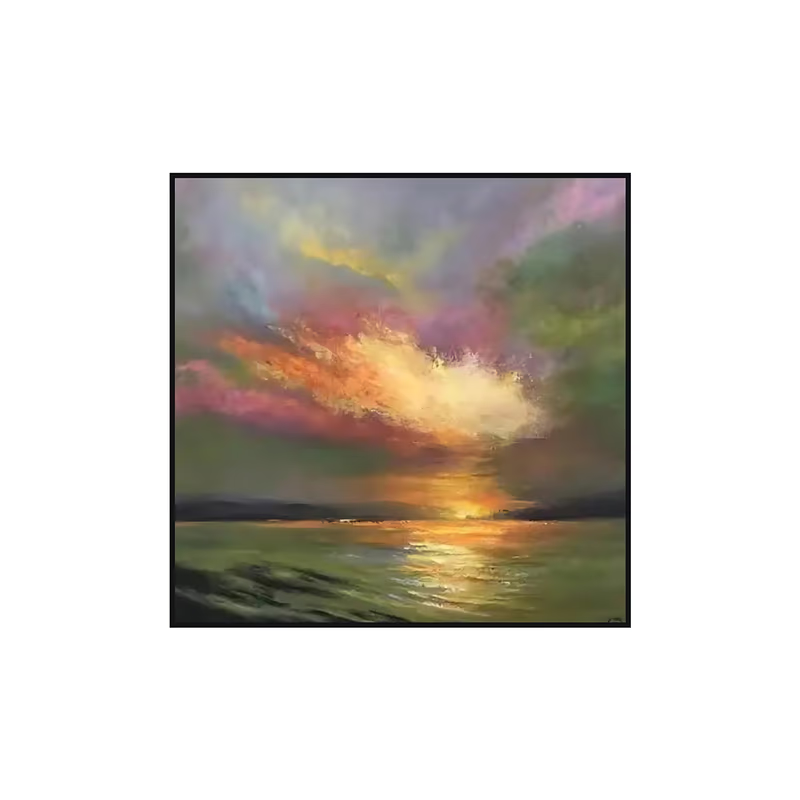
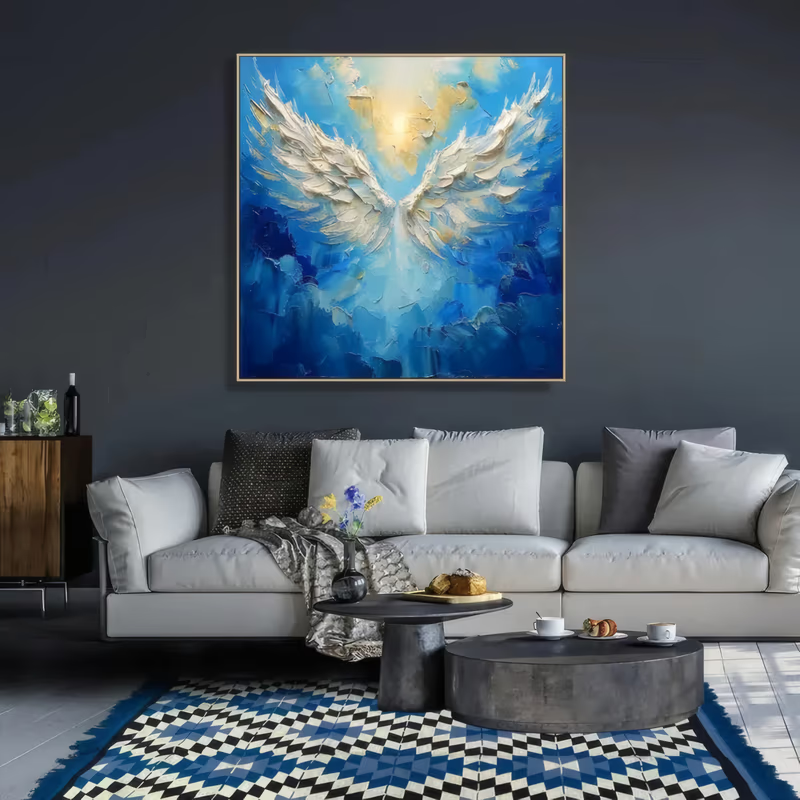
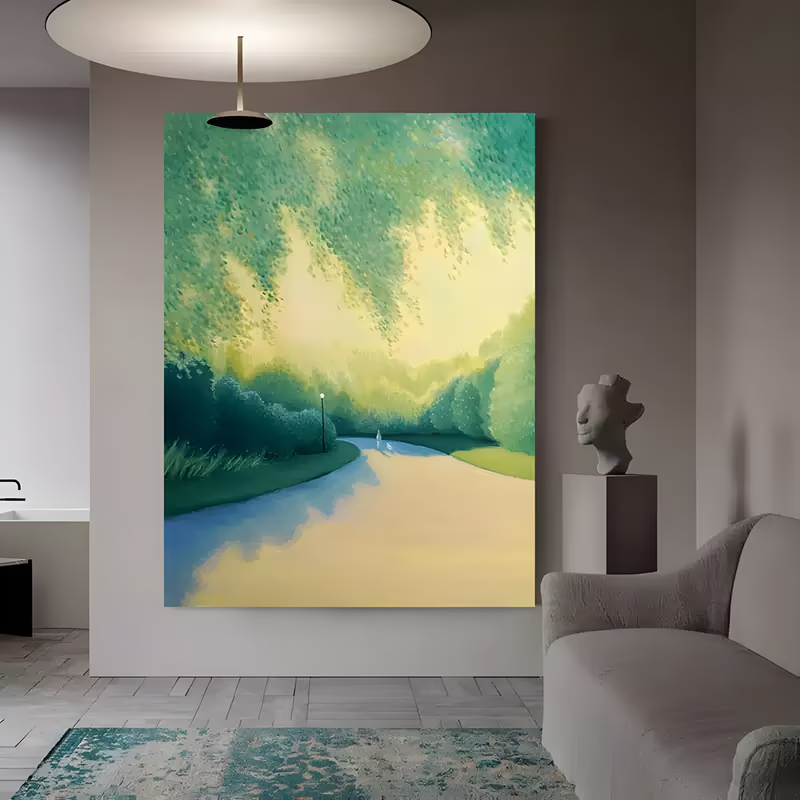
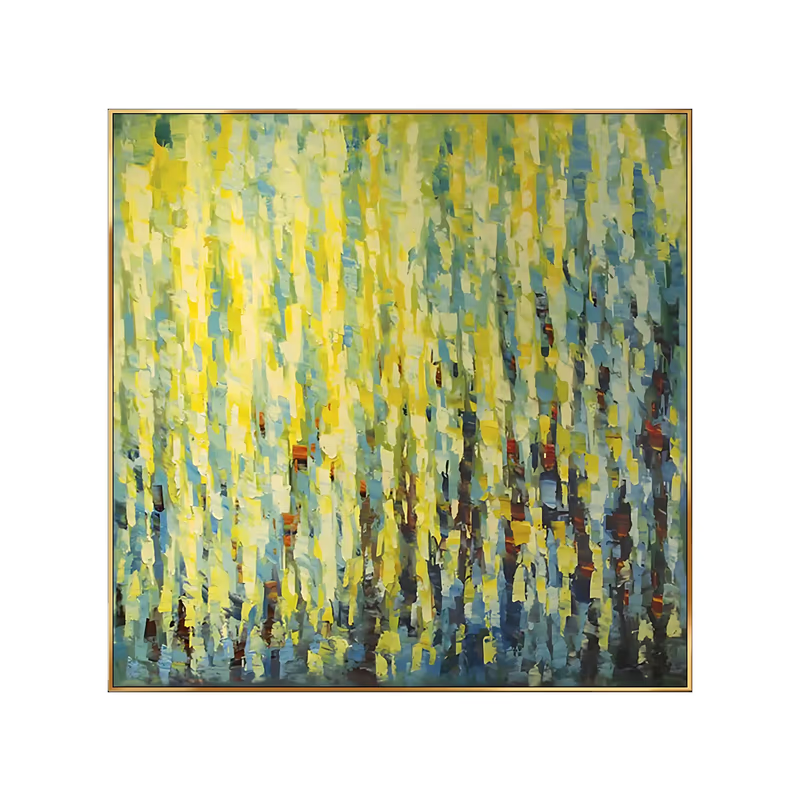
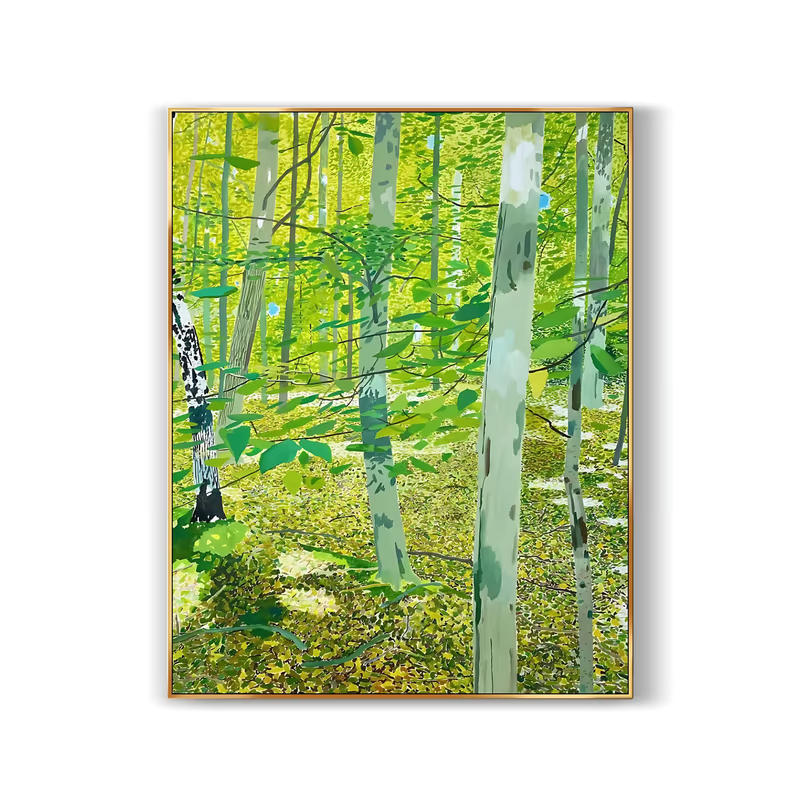
The single biggest factor is a light source inside the picture. A morning sun over a lake, light falling through leaves onto a park path or a pale sky behind a bay of sailboats makes the painting seem to give light back to the room. Openness comes next: a horizon, a path leading in, a sky with room to breathe. Colour completes it. Sunny yellows, sky blues, fresh greens, blossom pinks and peach balance warm and cool, so the result feels bright without heat.
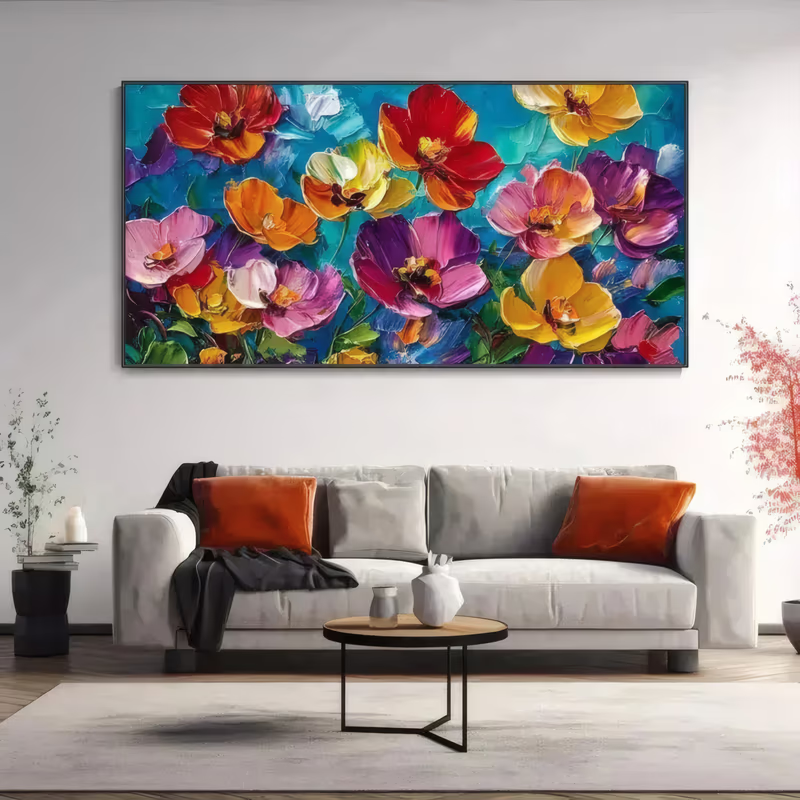
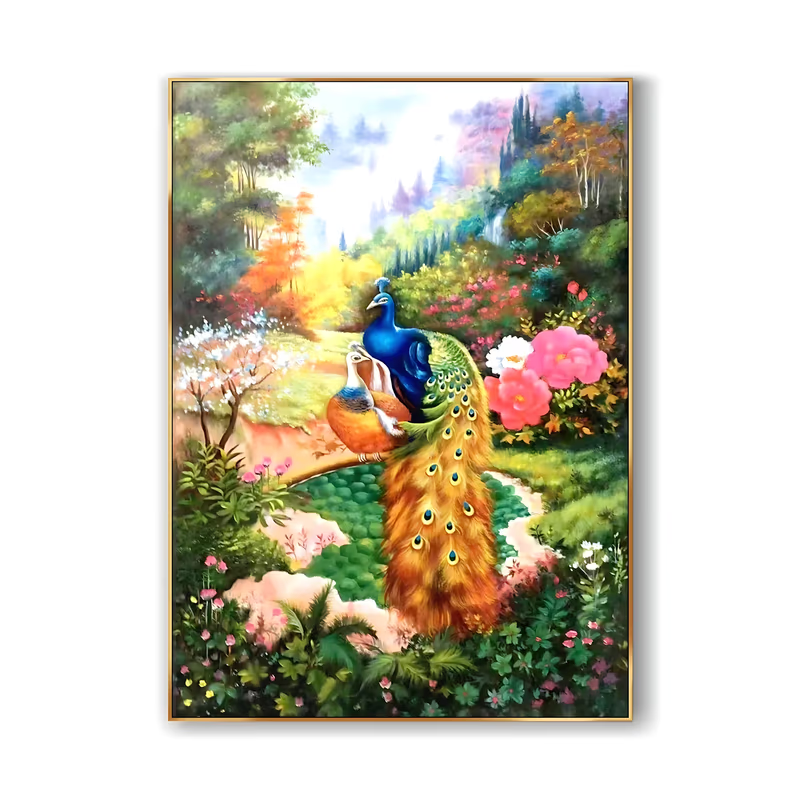
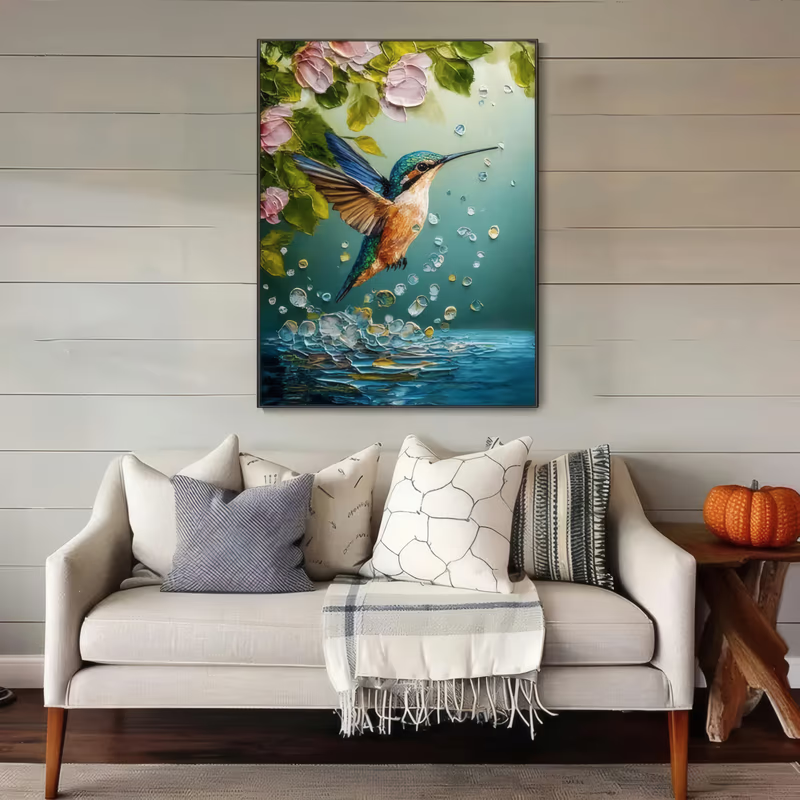
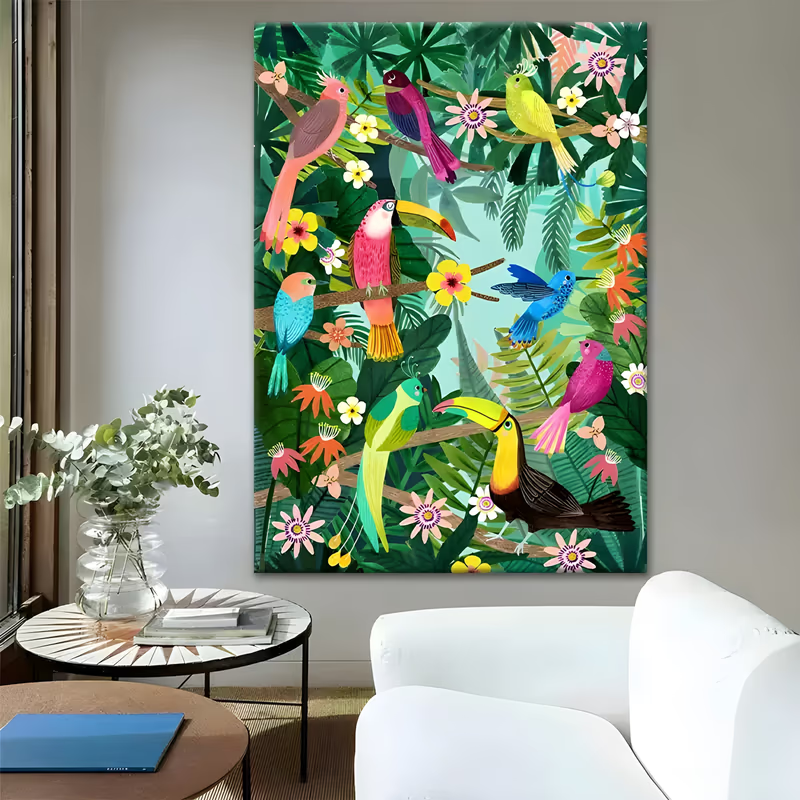
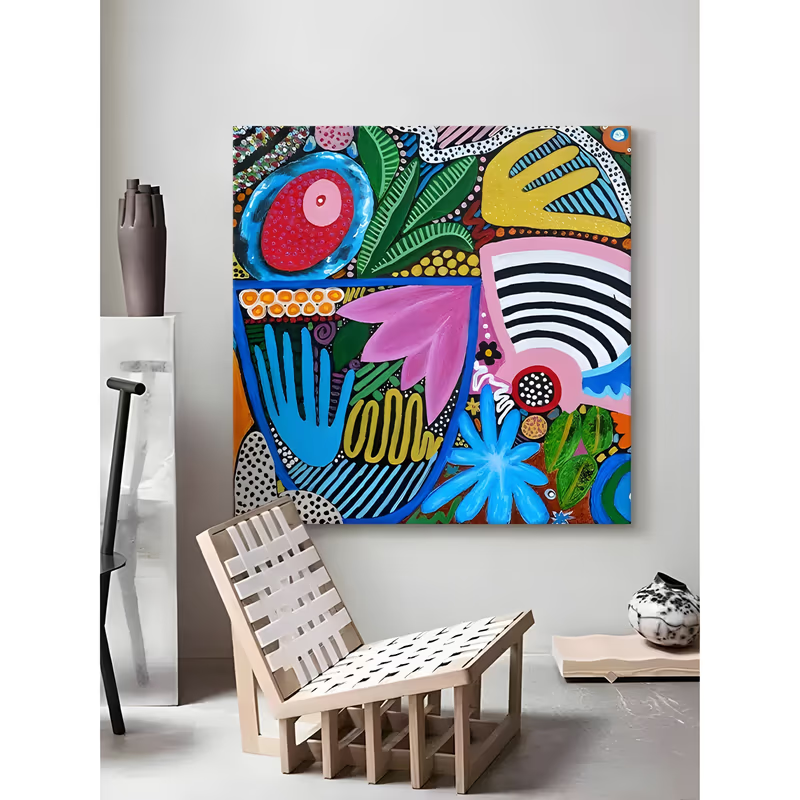
Uplifting is not the same as loud. A painting built from clashing saturated colour can energise a room, but it can also tire it. That is the territory of vibrant wall art. Uplifting work is optimistic and easy: it raises the mood of a room people pass through every day, and still feels good on the hundredth viewing. Subjects people recognise at a glance, flowers, birds, the sea, a garden, help because they need no effort to read.
Which colours and subjects make wall art uplifting?
The most uplifting wall art pairs light-filled colour, sunny yellow, sky blue, fresh green, blossom pink, with open, living subjects such as flowers, gardens, meadows, sunlit seas and morning skies.
| Light and colour | How it reads | Where it lifts most |
|---|---|---|
| Morning gold and butter yellow | Sunrise, warmth, a good start to the day | Breakfast rooms, kitchens, north-facing rooms |
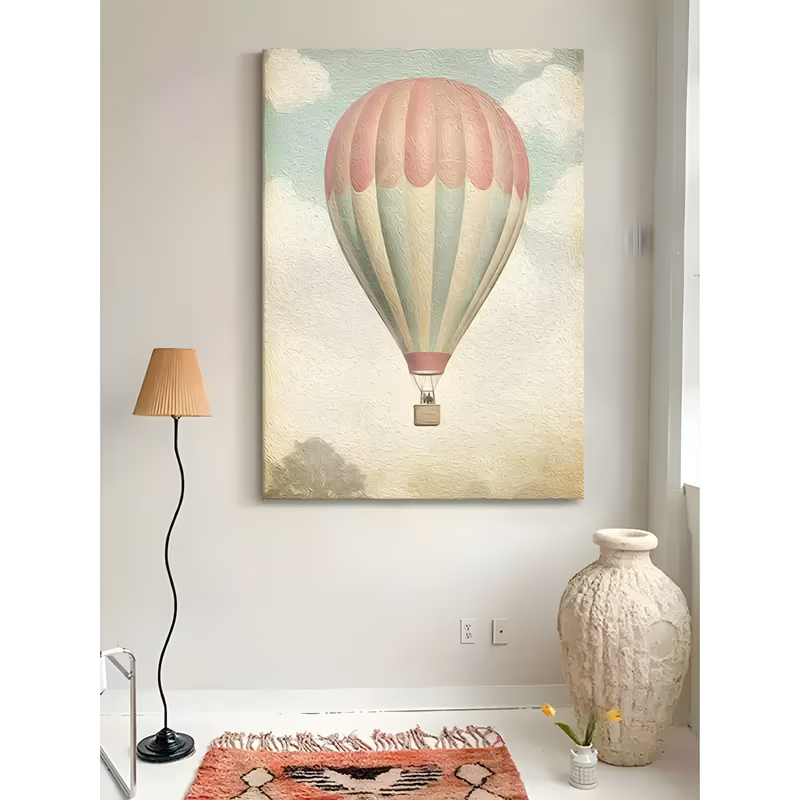
| Sky blue with white cloud | Open air, space, a window that is not there | Windowless corridors, lift lobbies, basements |
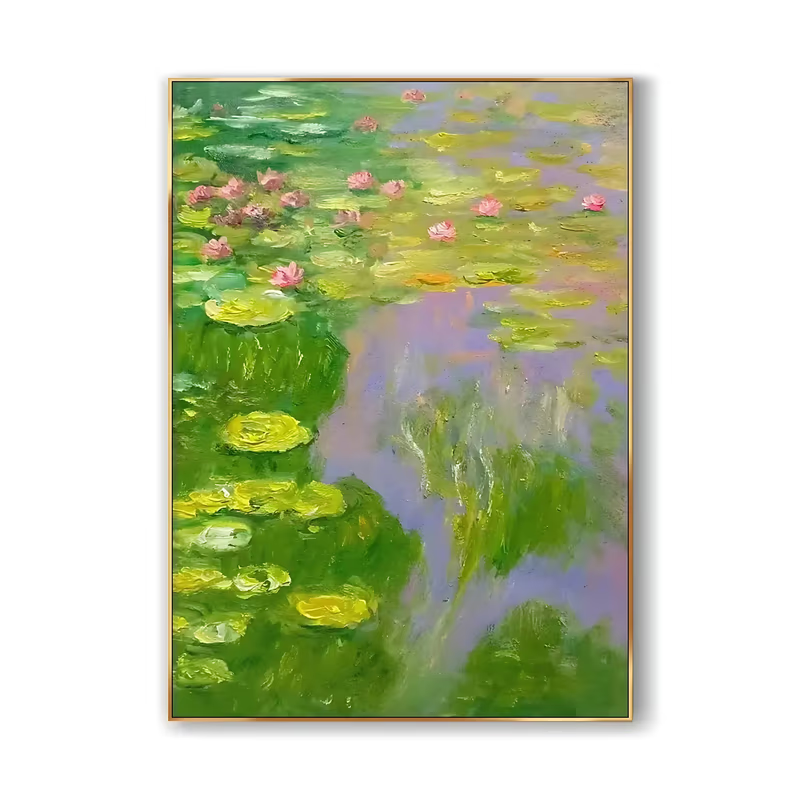
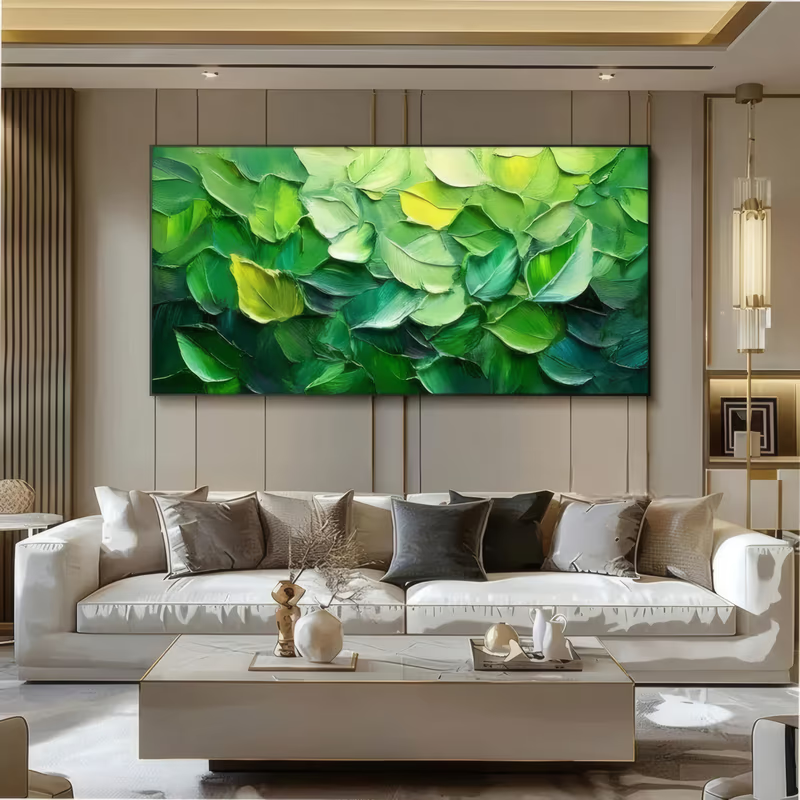
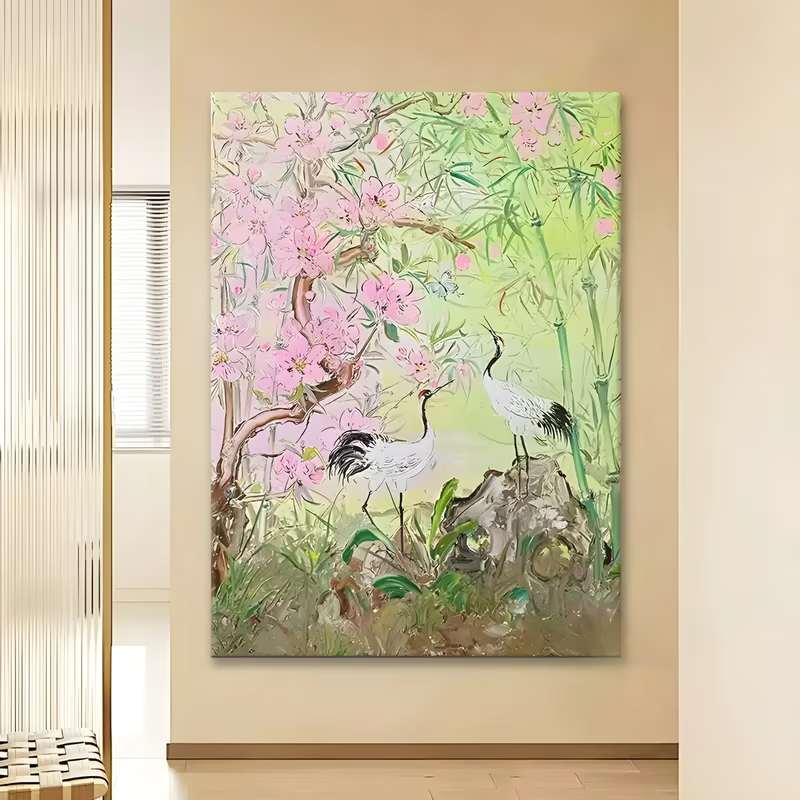
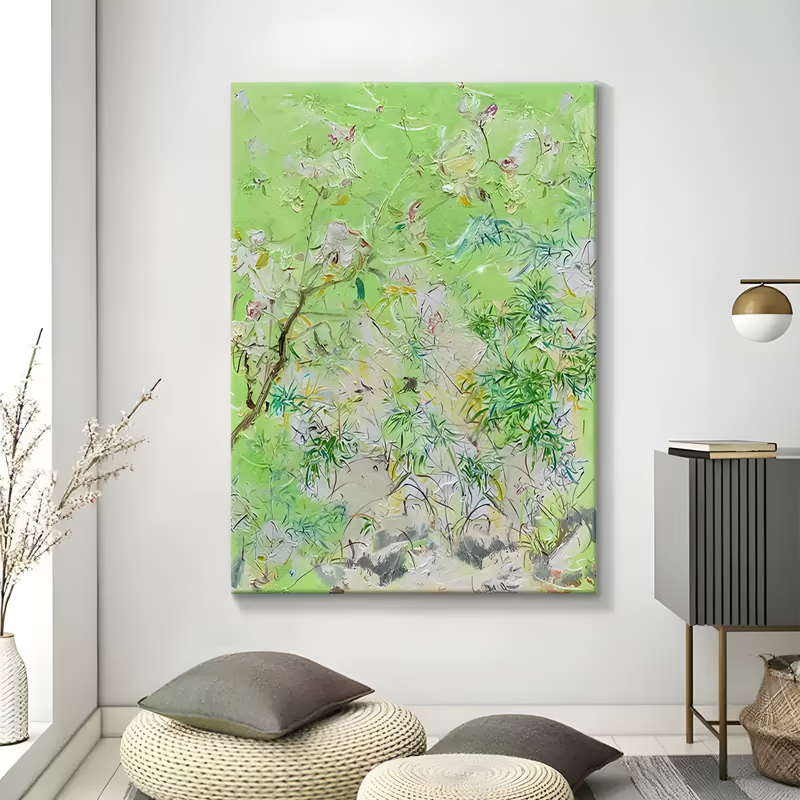
| Spring green and blossom pink | Growth, renewal, gentle cheer | Waiting areas, bedrooms, senior living lounges |
| Coral, peach and sunset rose | Friendly warmth without glare | Living rooms, guest rooms, restaurants |
| Turquoise sea and white sail | Holiday light, freshness | Bathrooms, spas, resort rooms, offices |
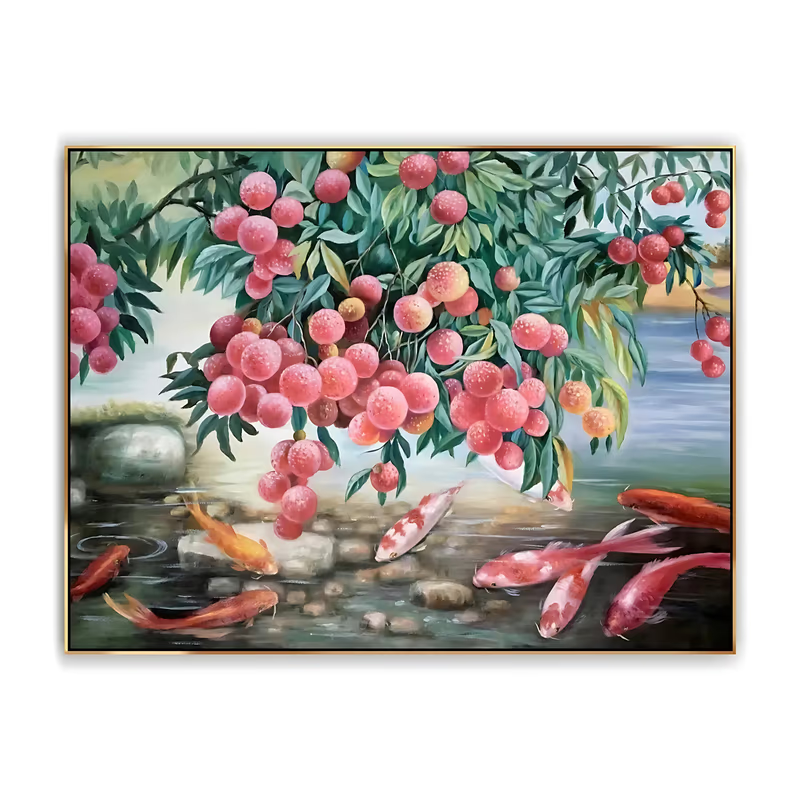
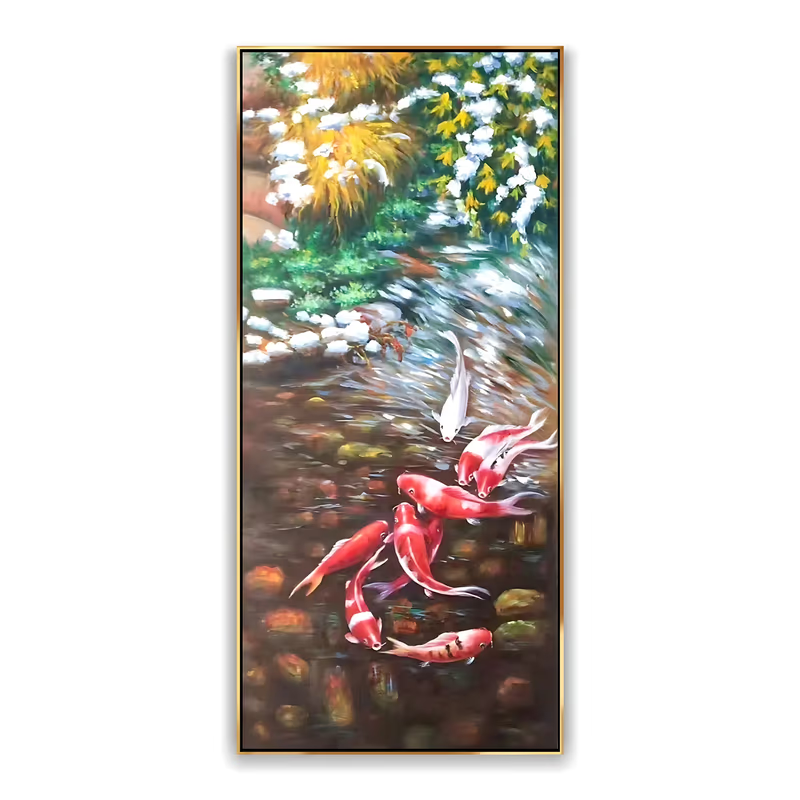
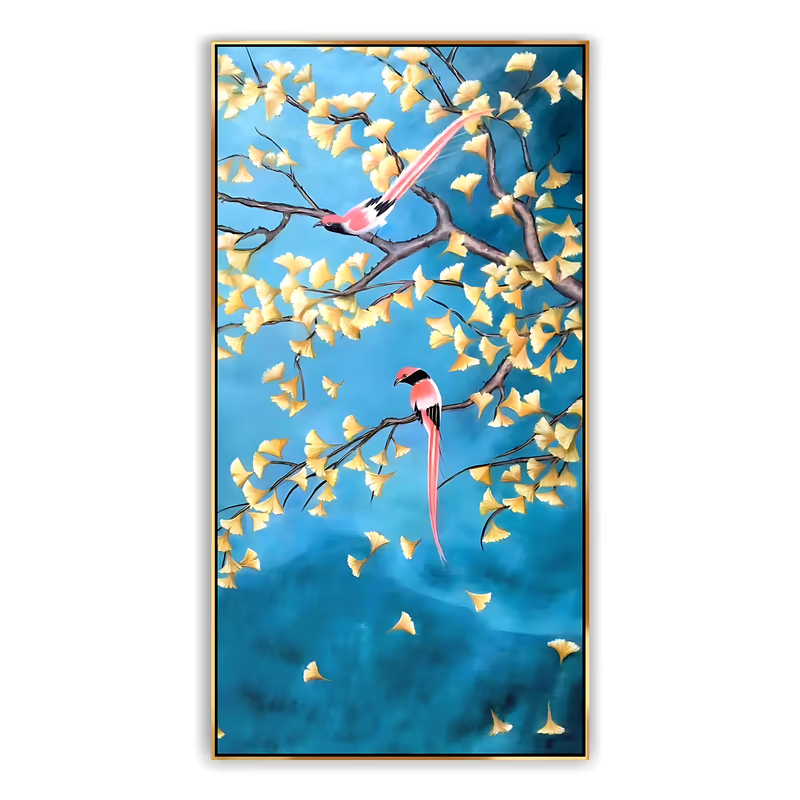
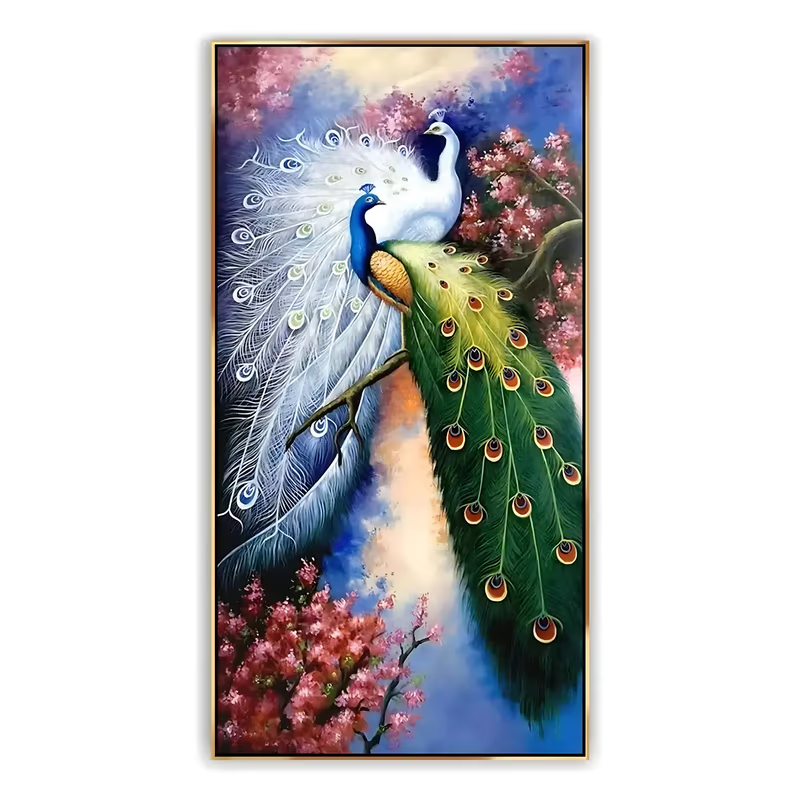
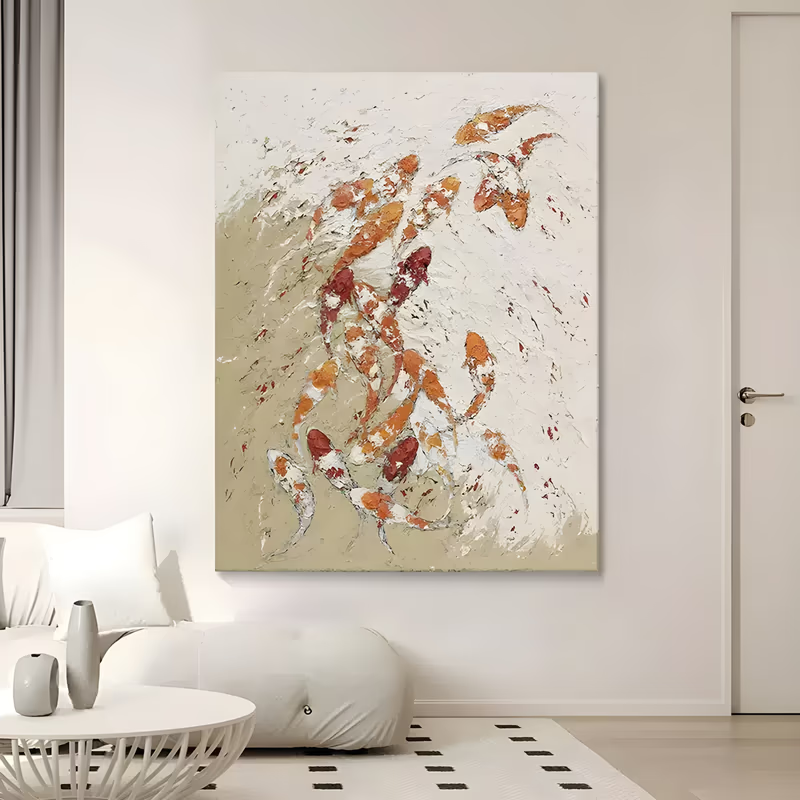
Subjects matter as much as colour. Flowers in full bloom, birds and koi, sunlit meadows and calm seas are almost universally read as positive. Strong darkness, storms, ambiguous figures and aggressive marks pull the other way, which is why they belong on the dramatic page rather than here. For deeper colour ideas, see yellow, green and blue wall art.
What kinds of uplifting paintings are there?
Uplifting wall art here comes in four kinds: sunlit flowers and blossom, light-filled landscapes and seas, bright airy abstracts, and cheerful animals, folk scenes and still lifes.
Sunlit flowers and blossom
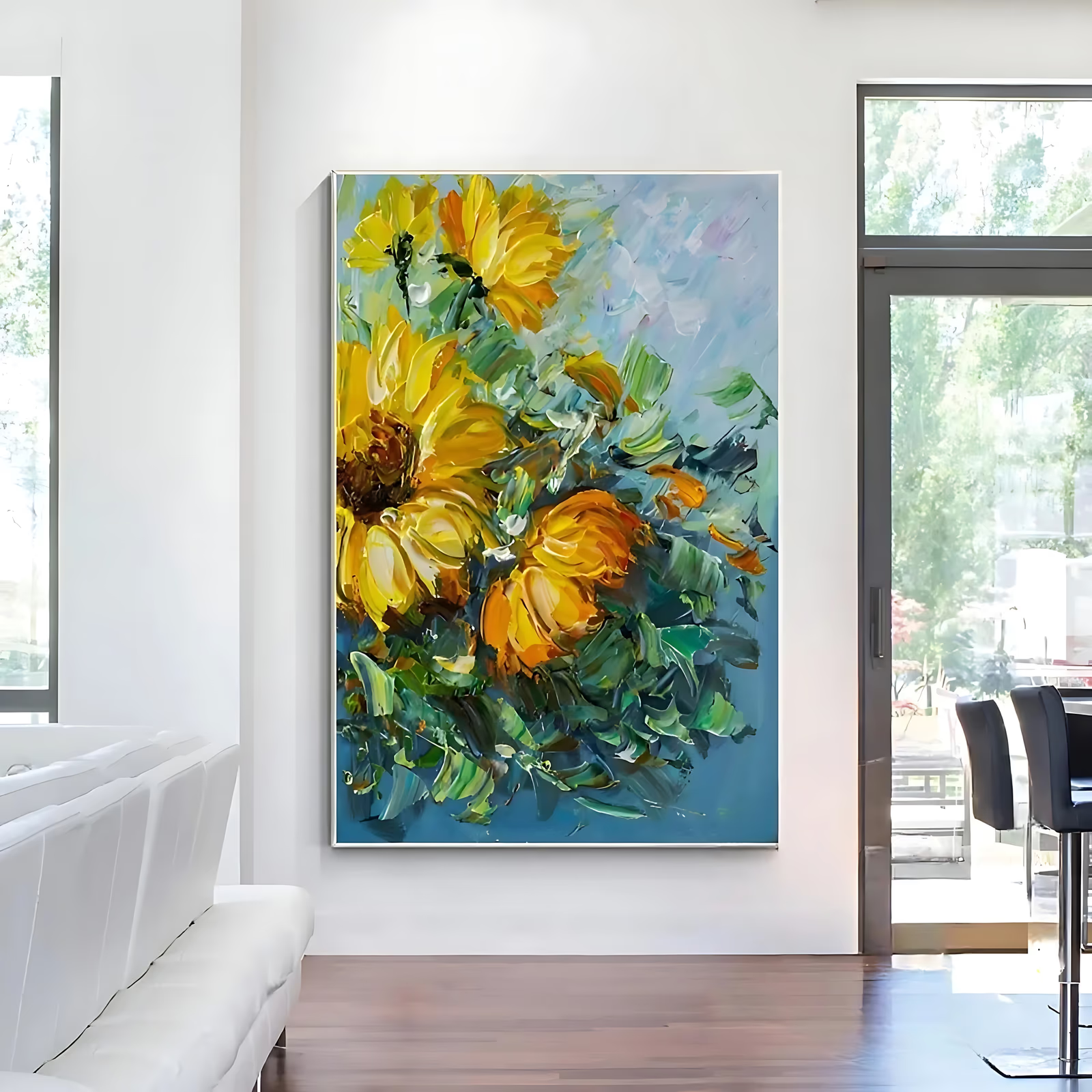
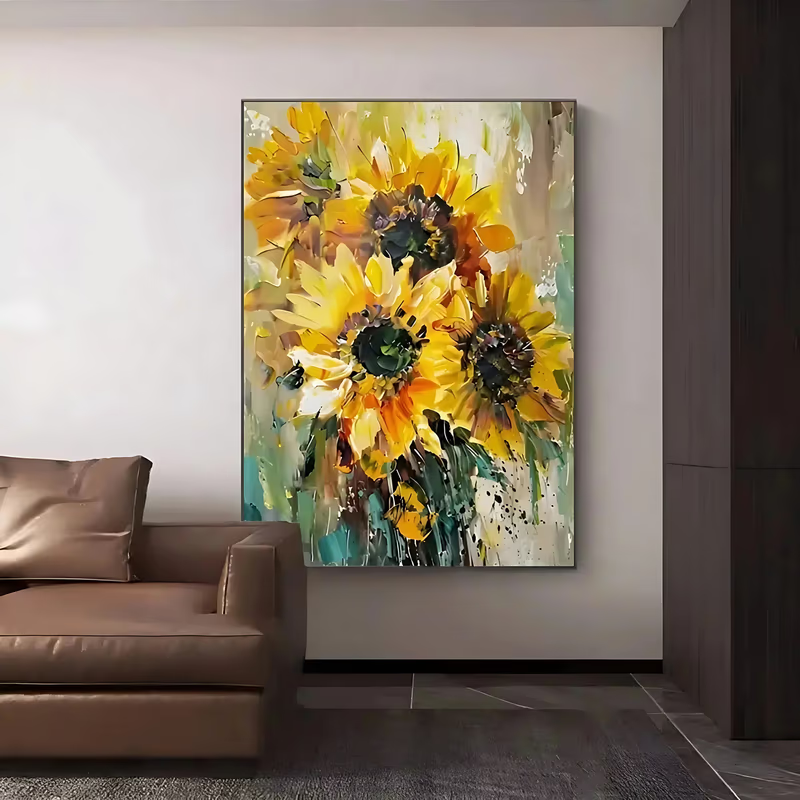
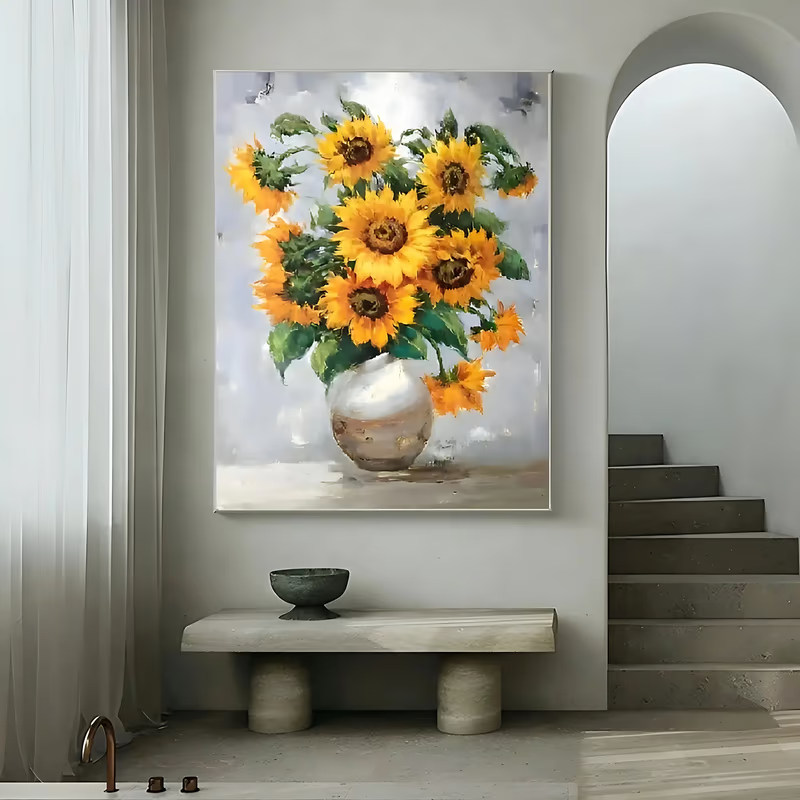
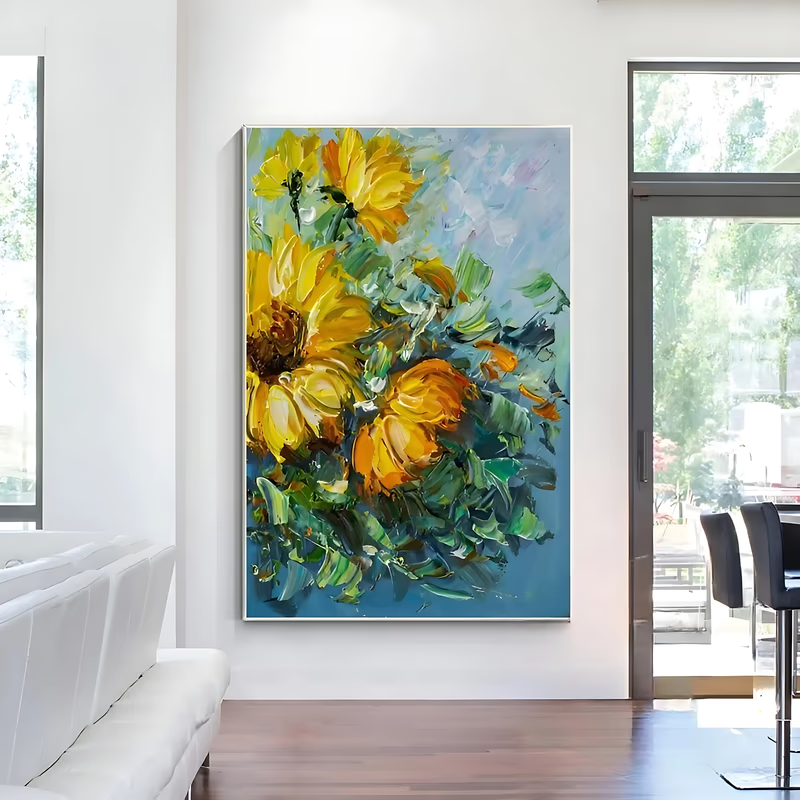
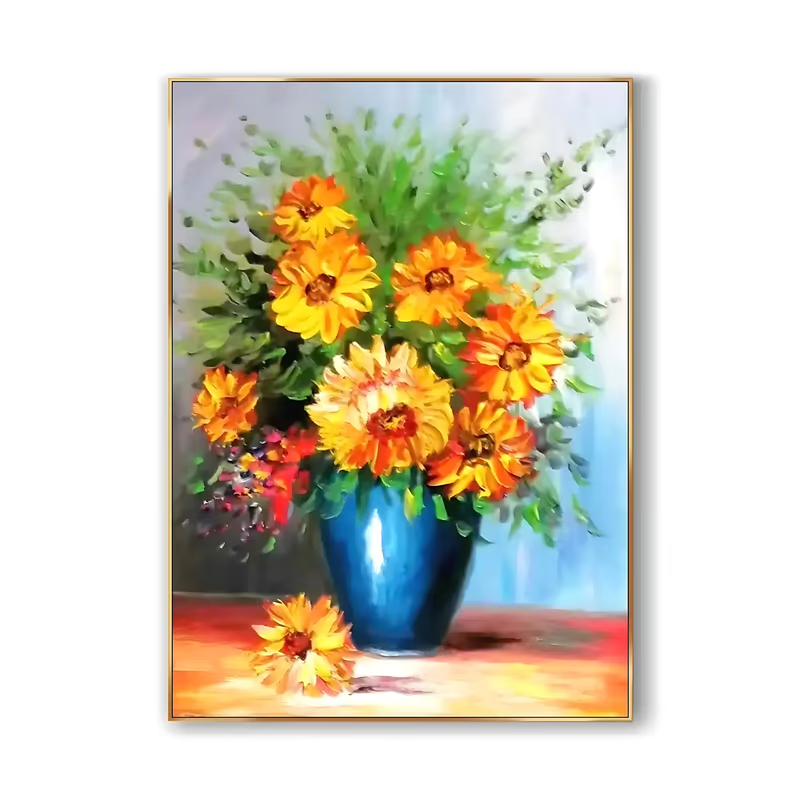
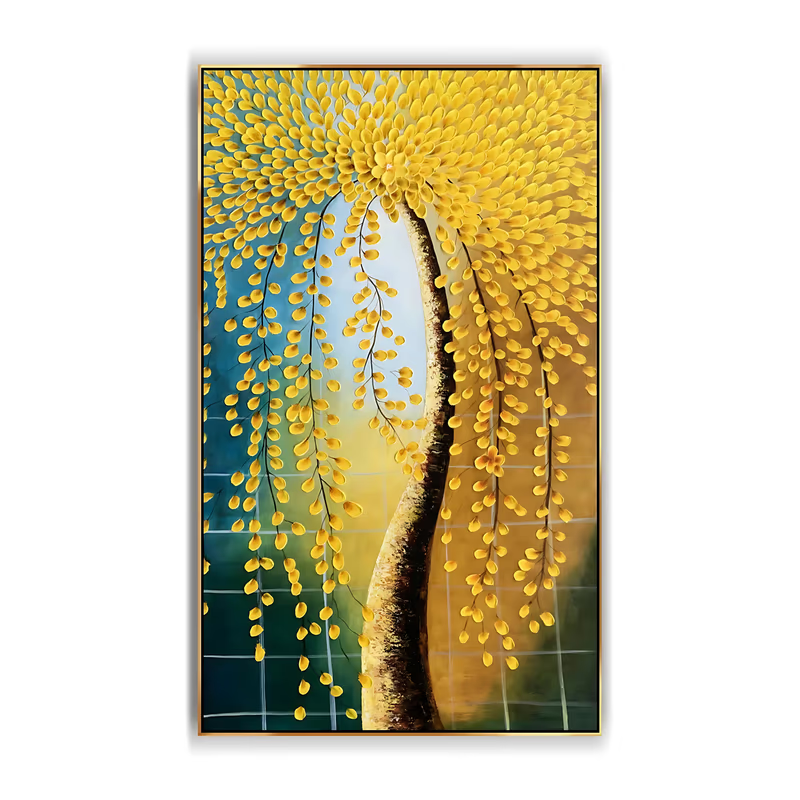
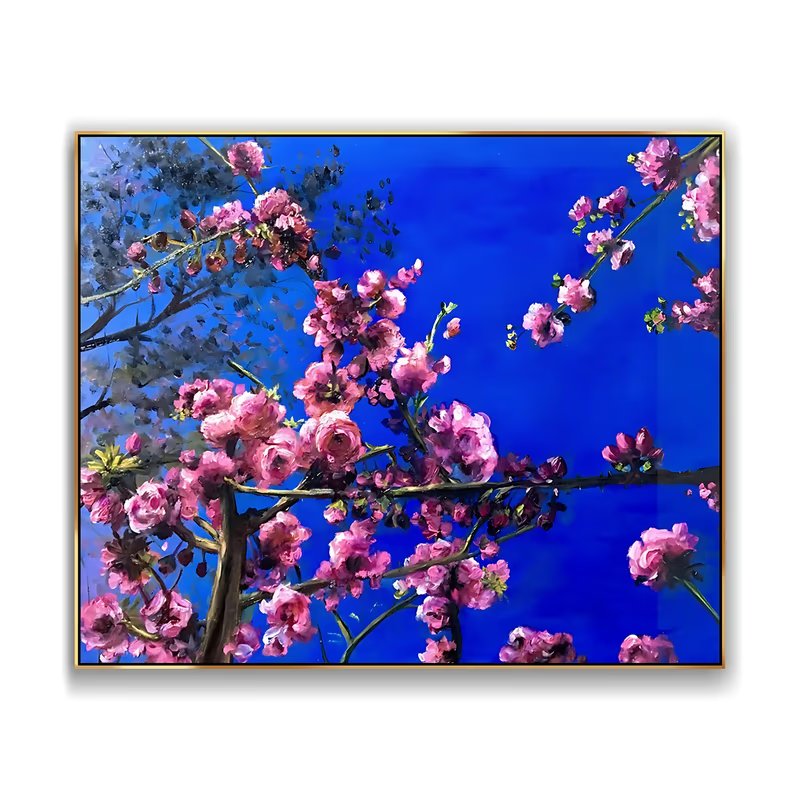
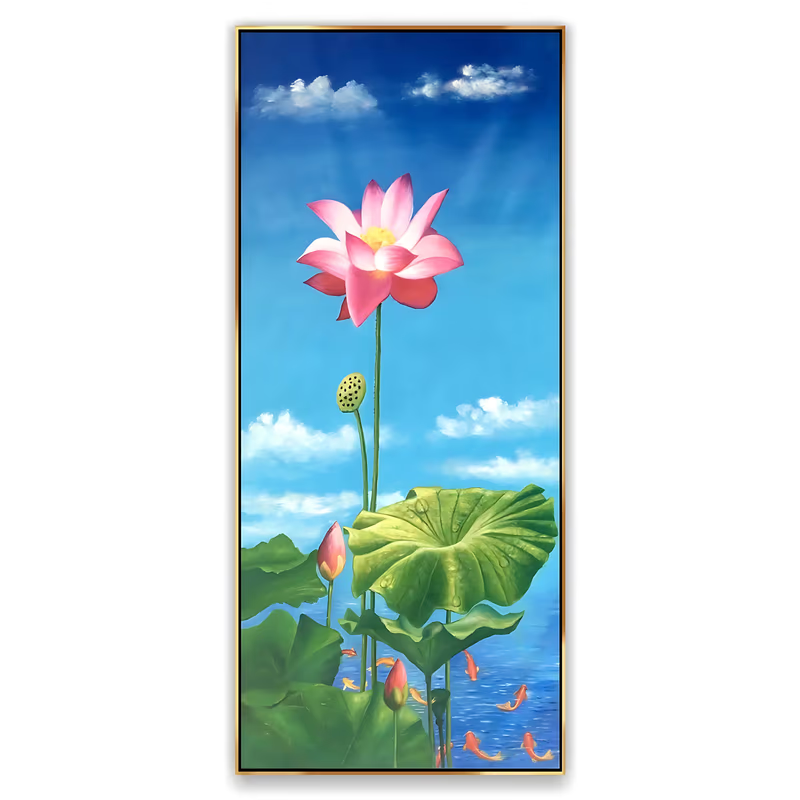
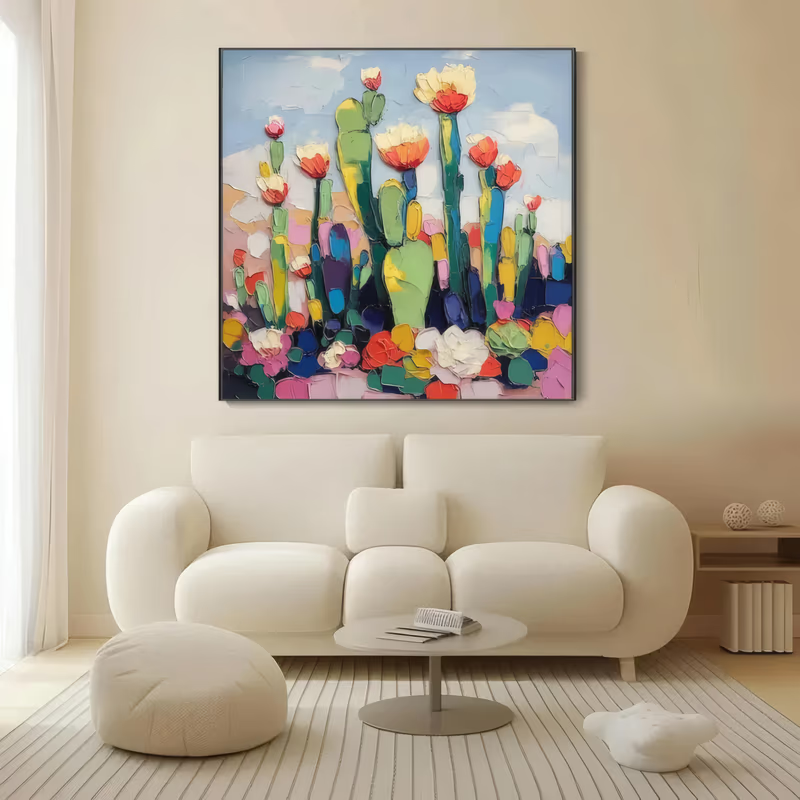
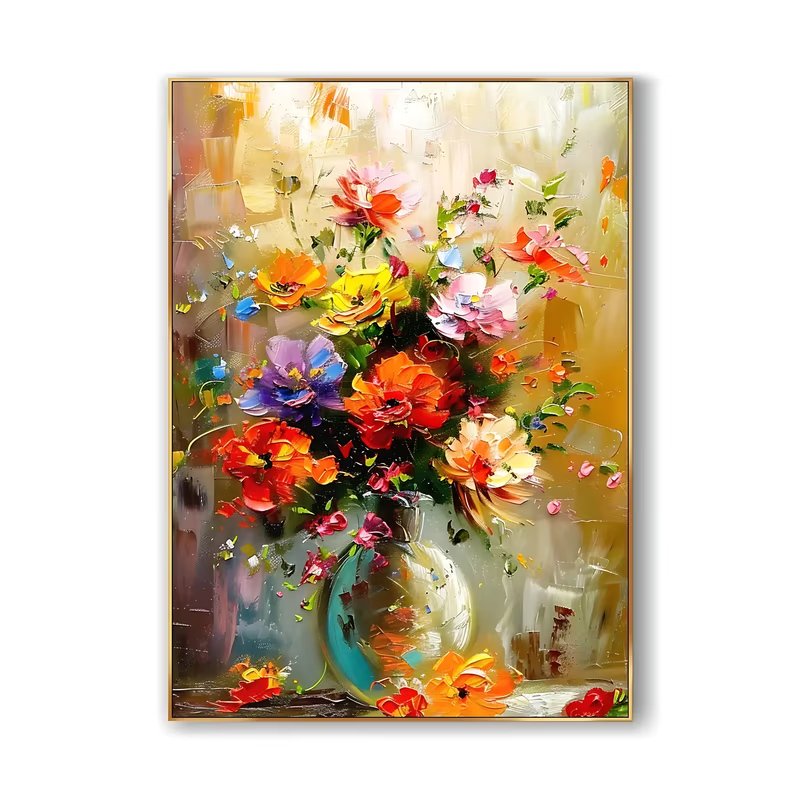
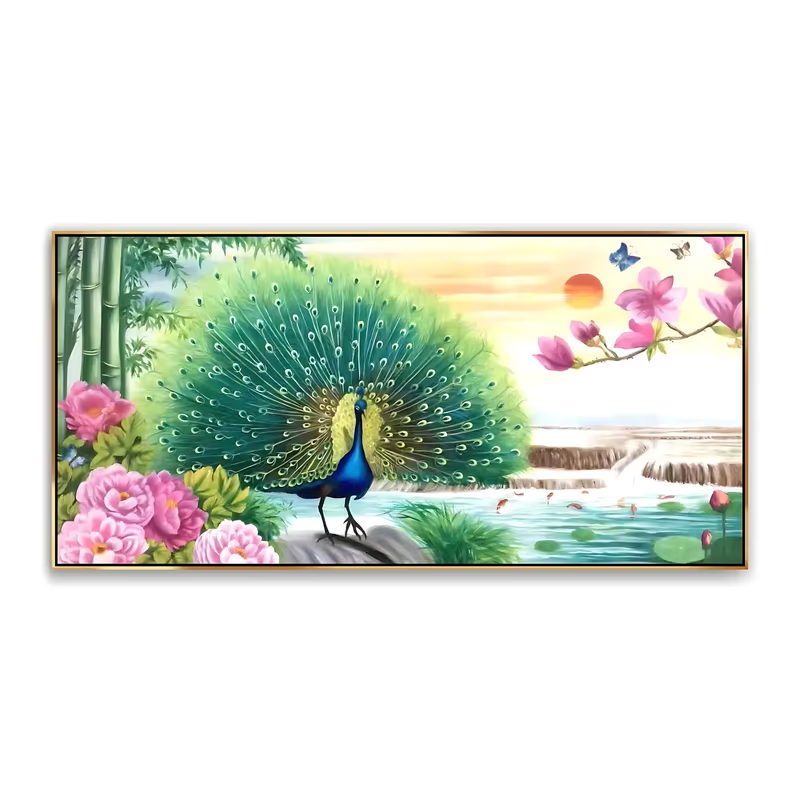
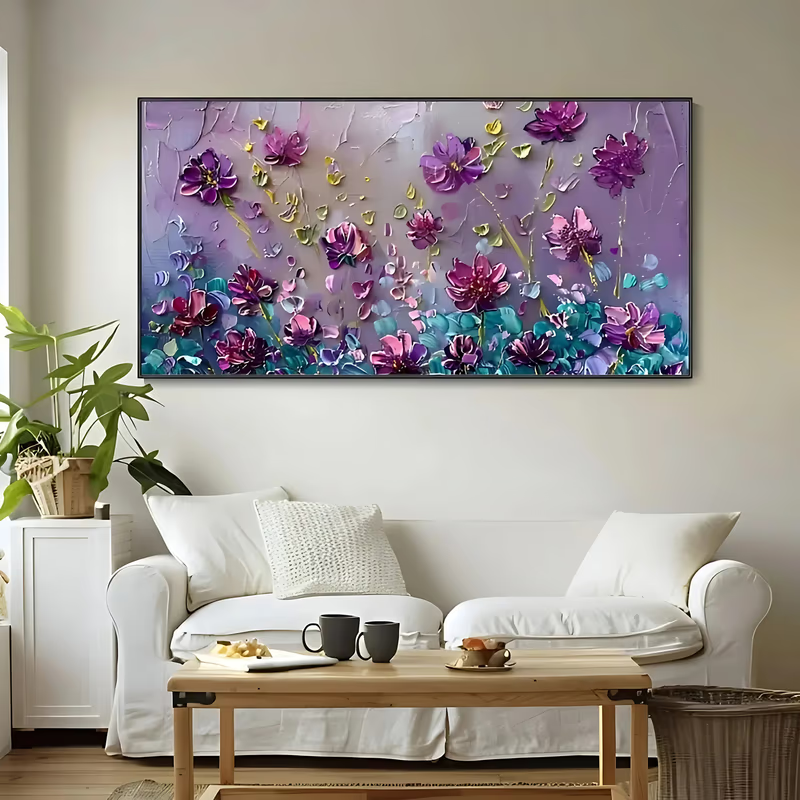
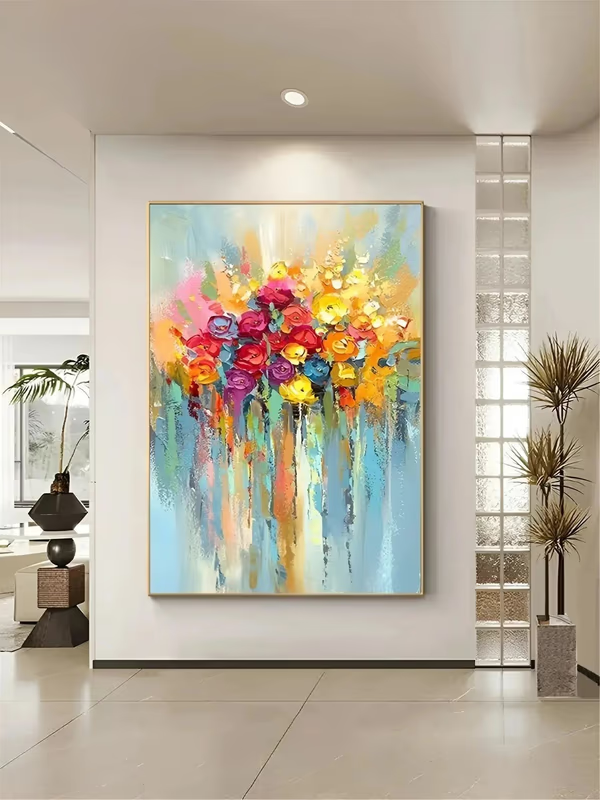
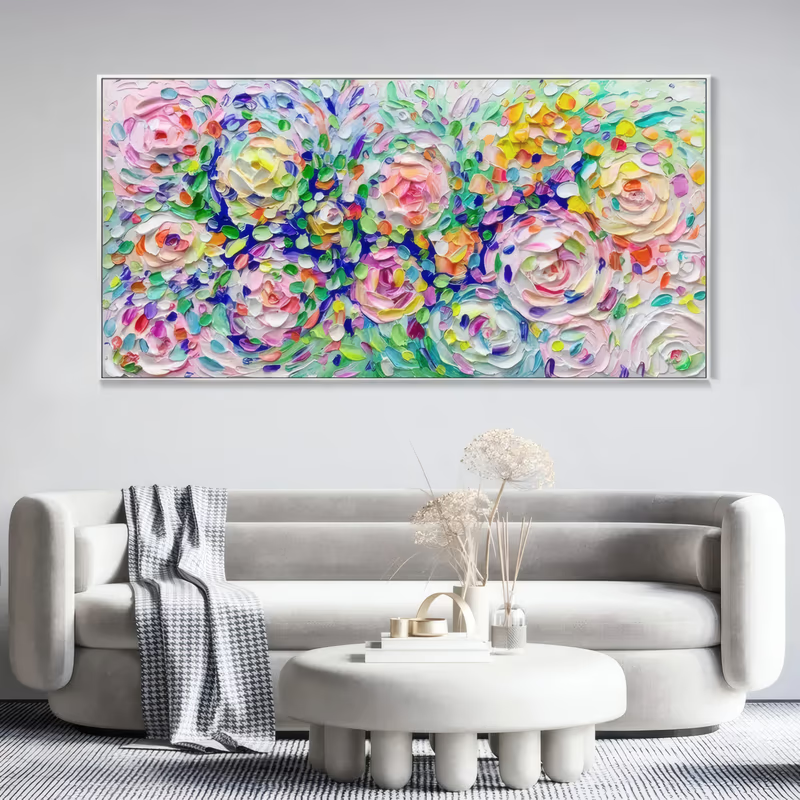
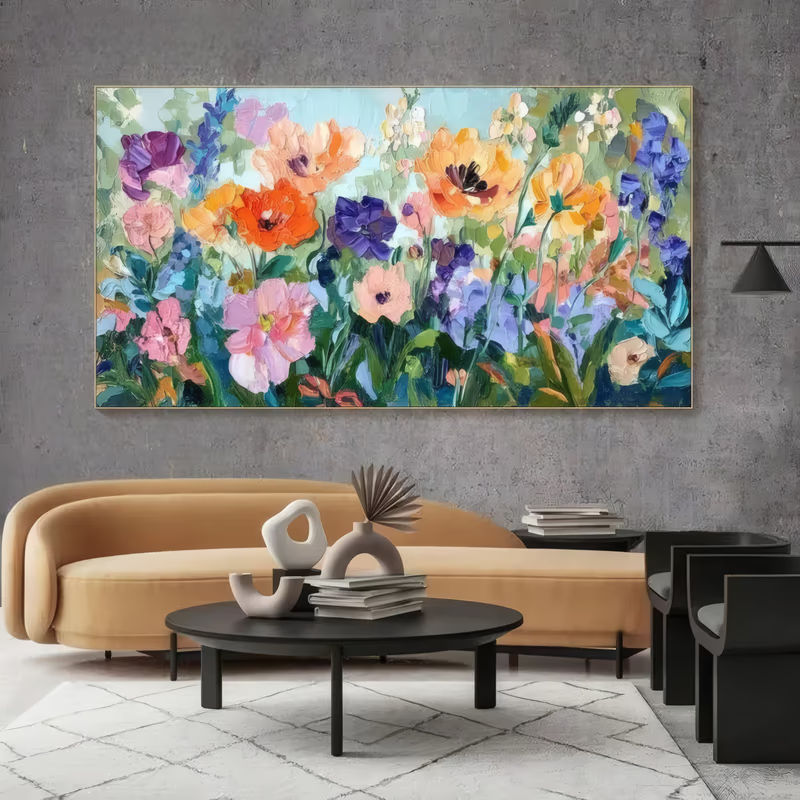
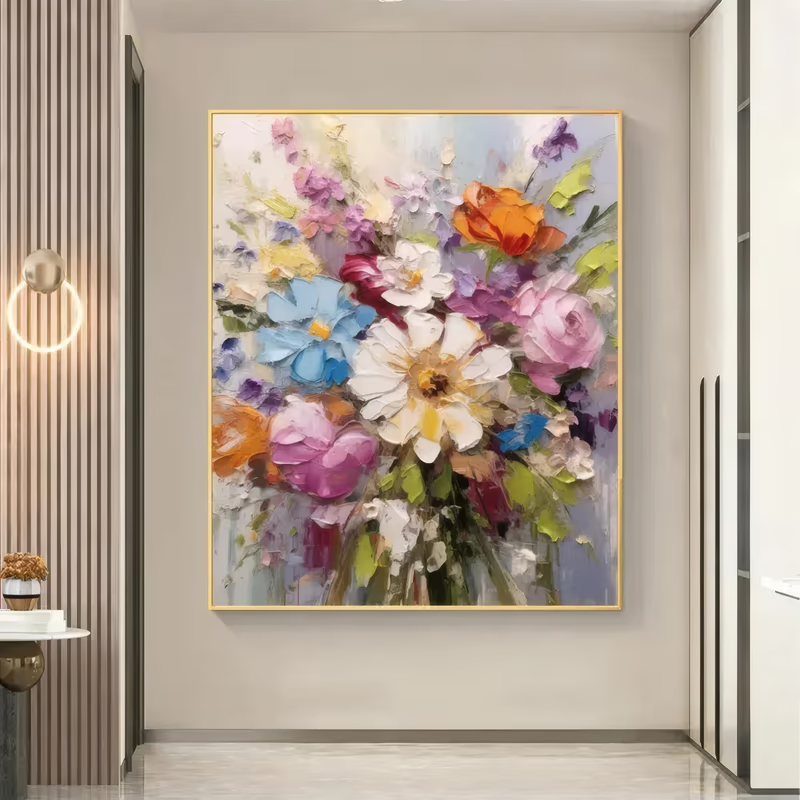
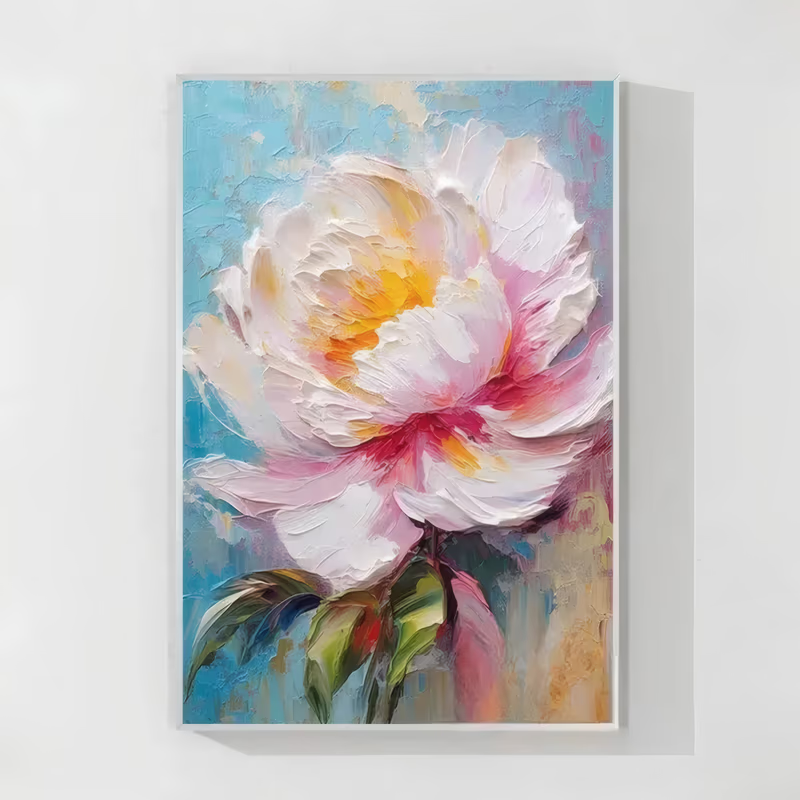
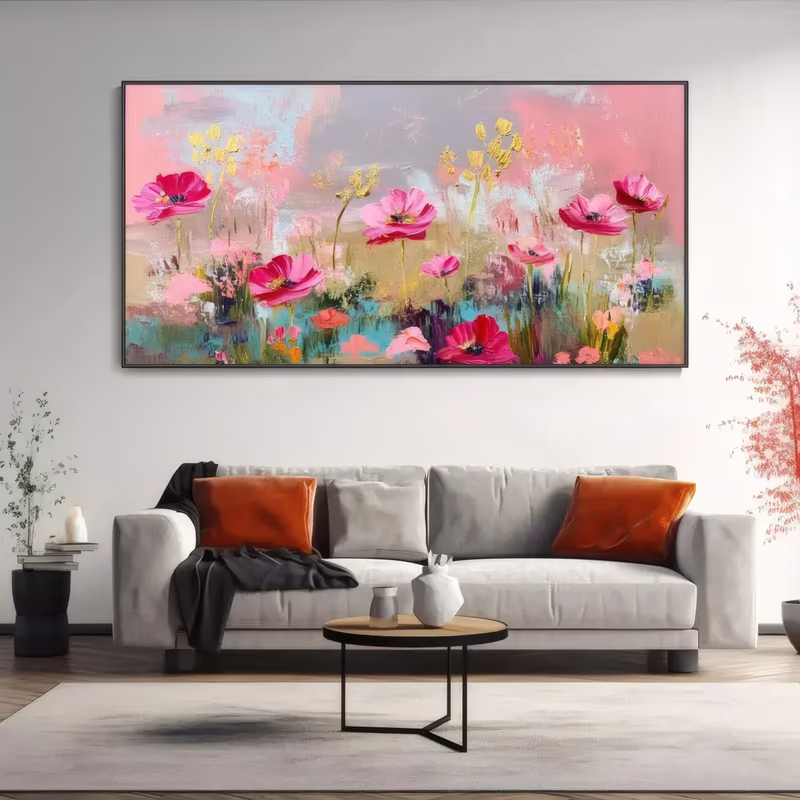
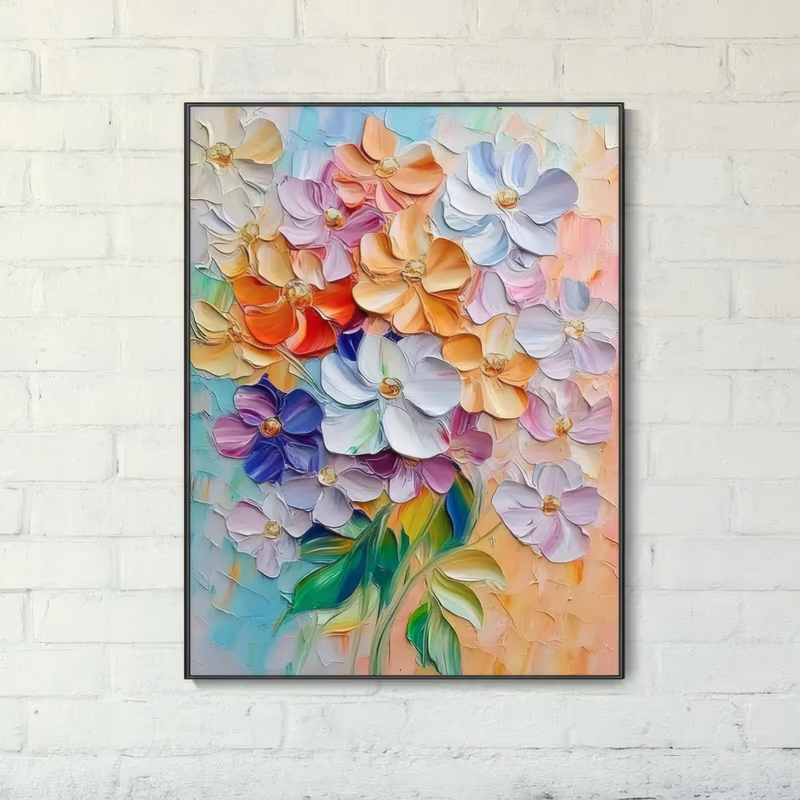
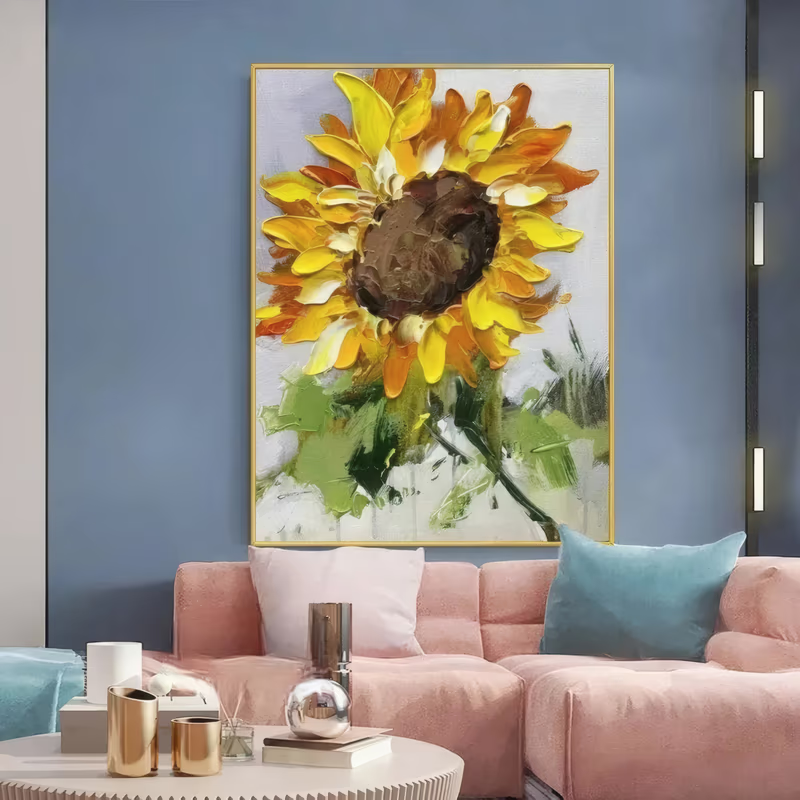
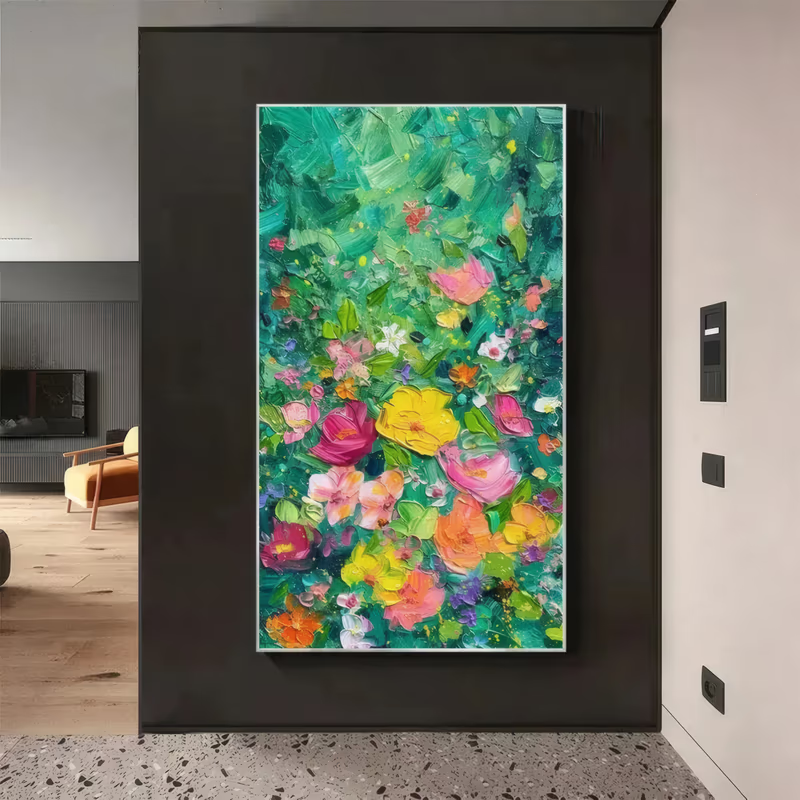
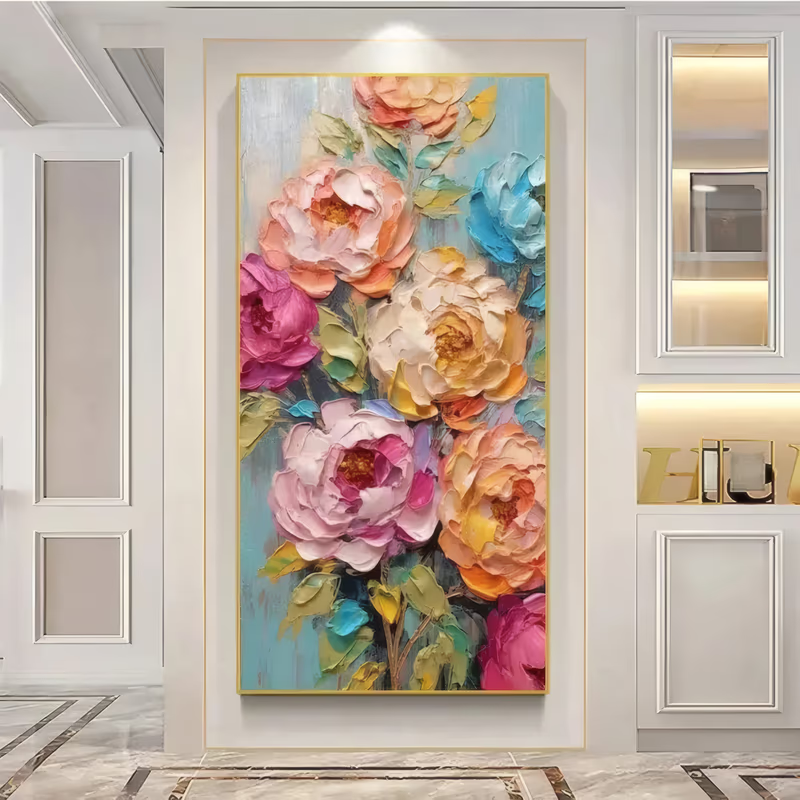
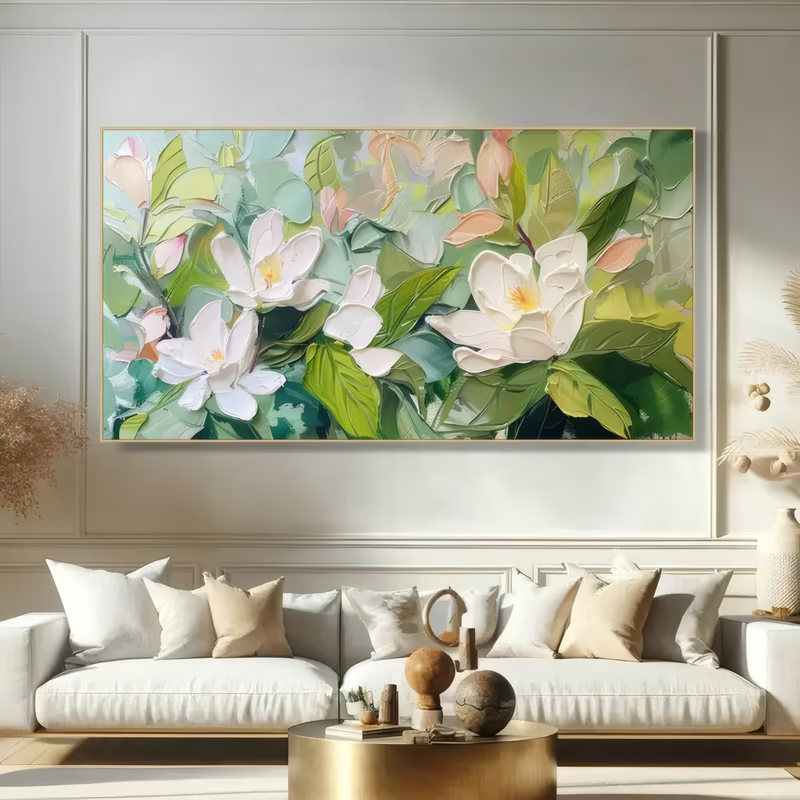
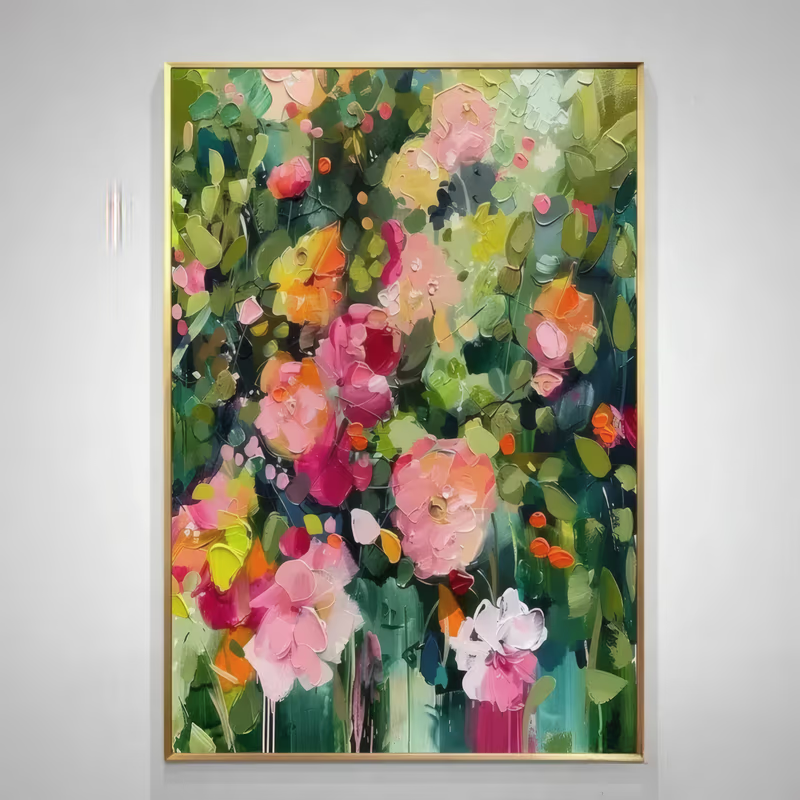
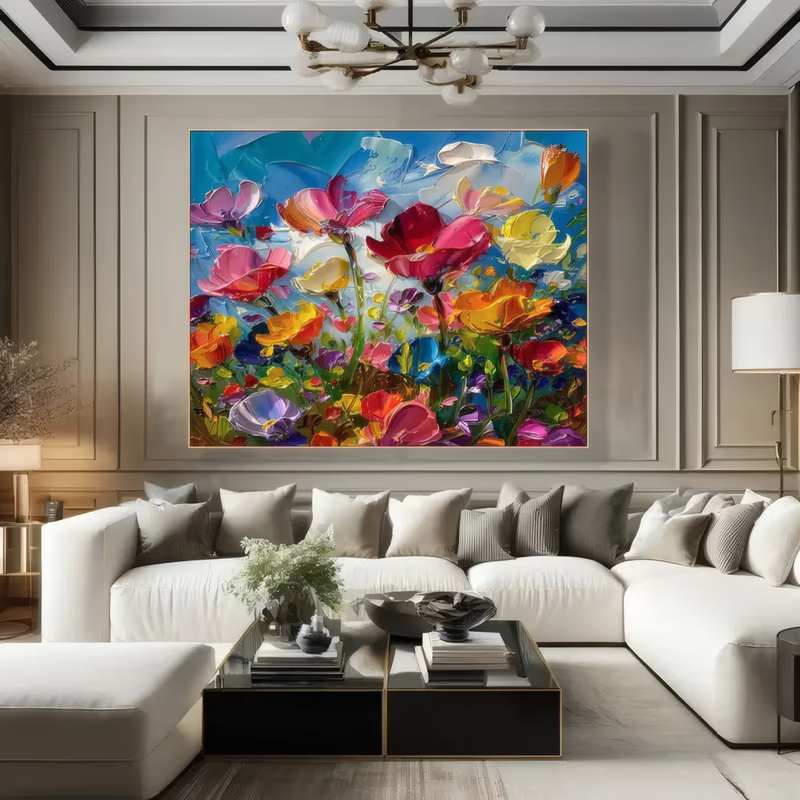
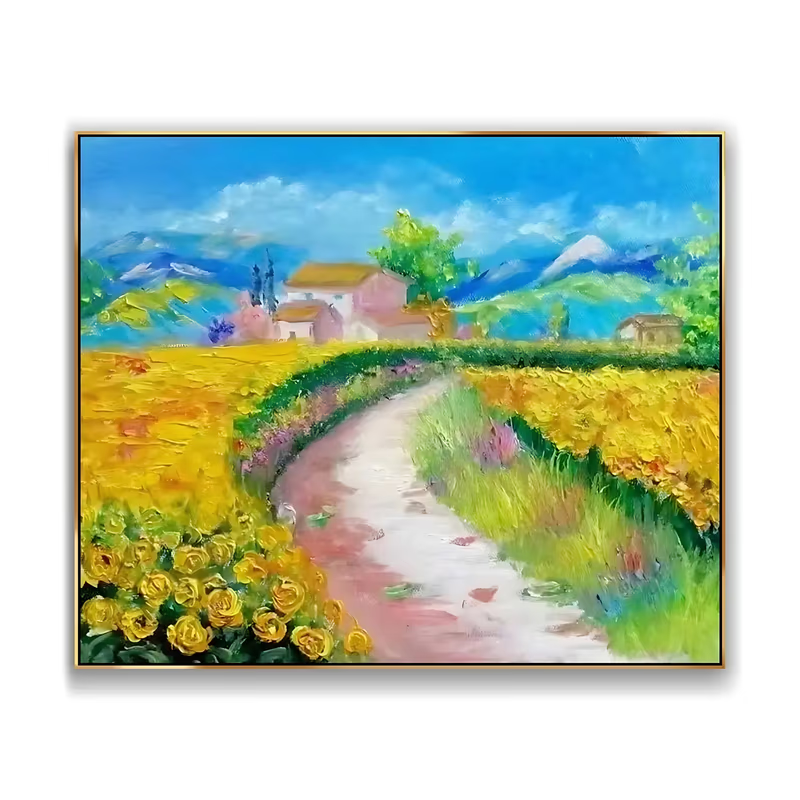
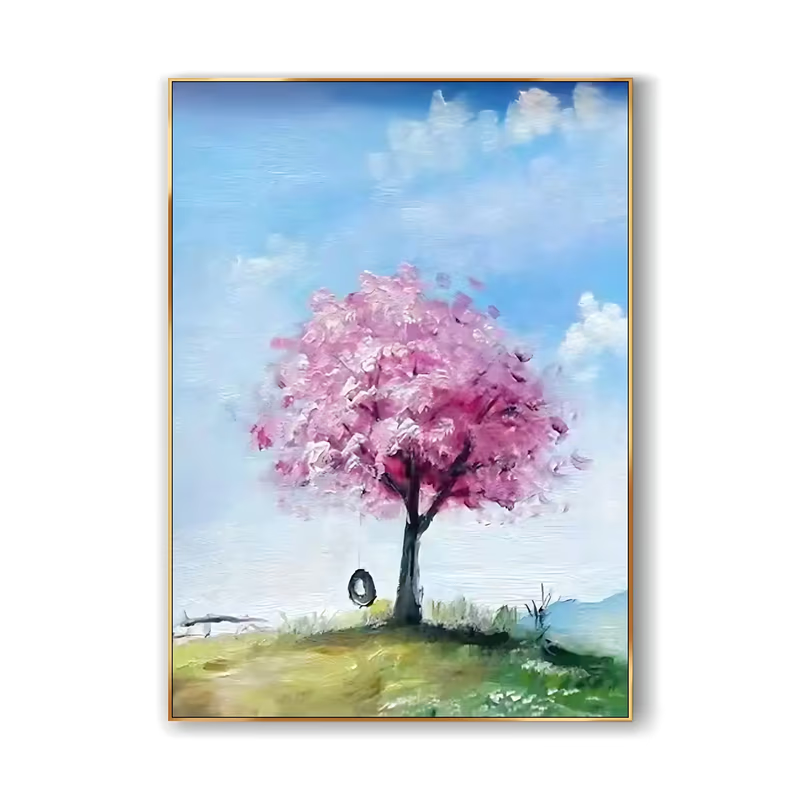
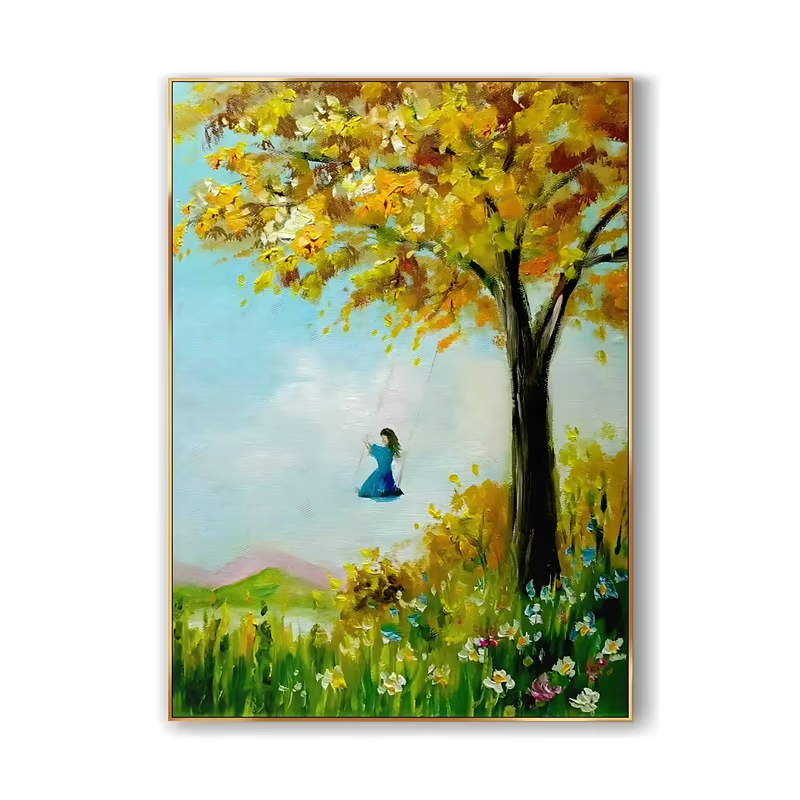
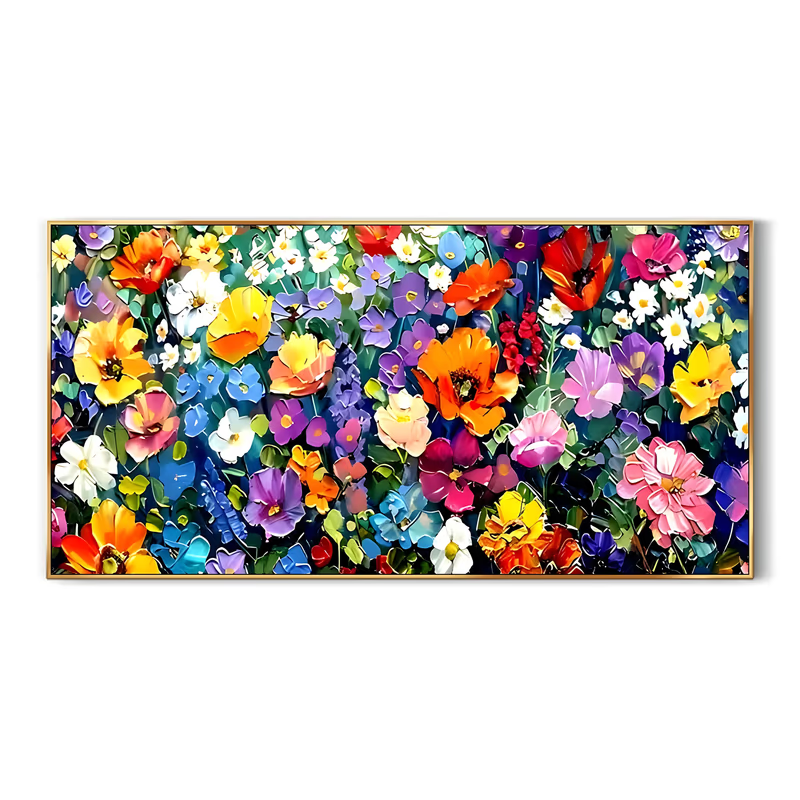
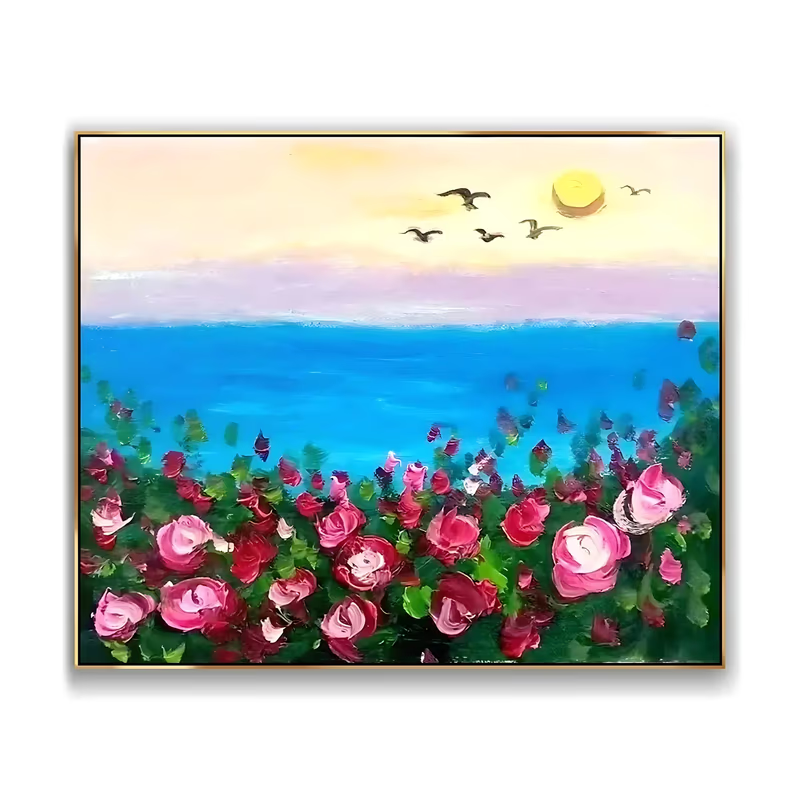
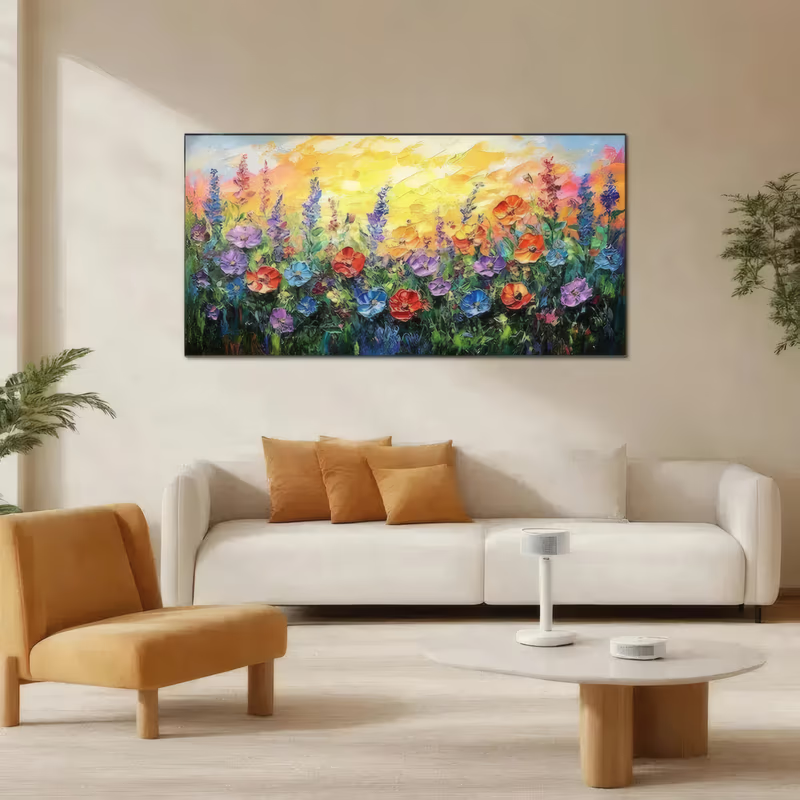
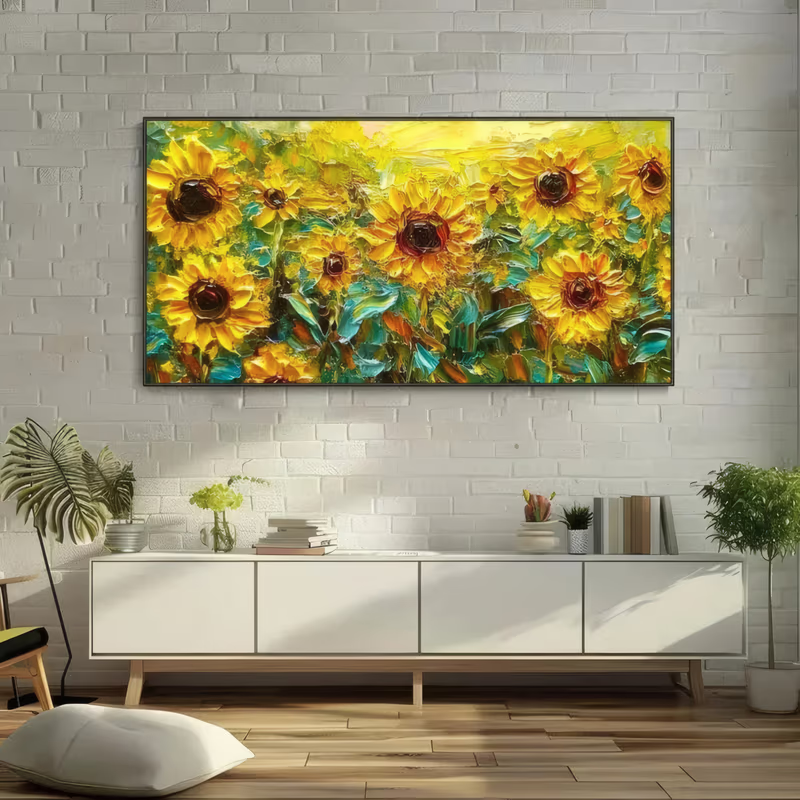
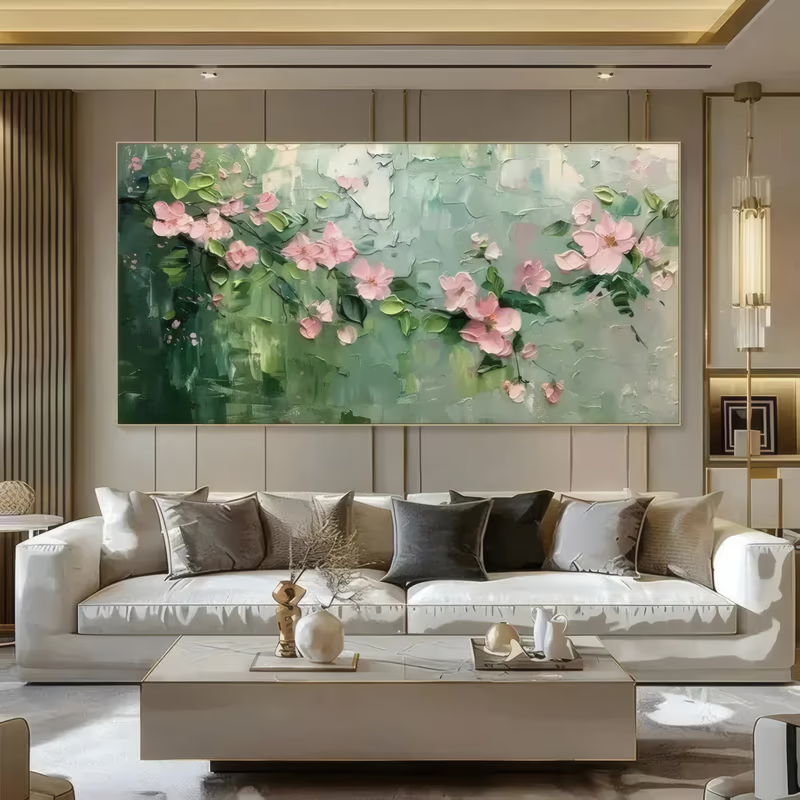
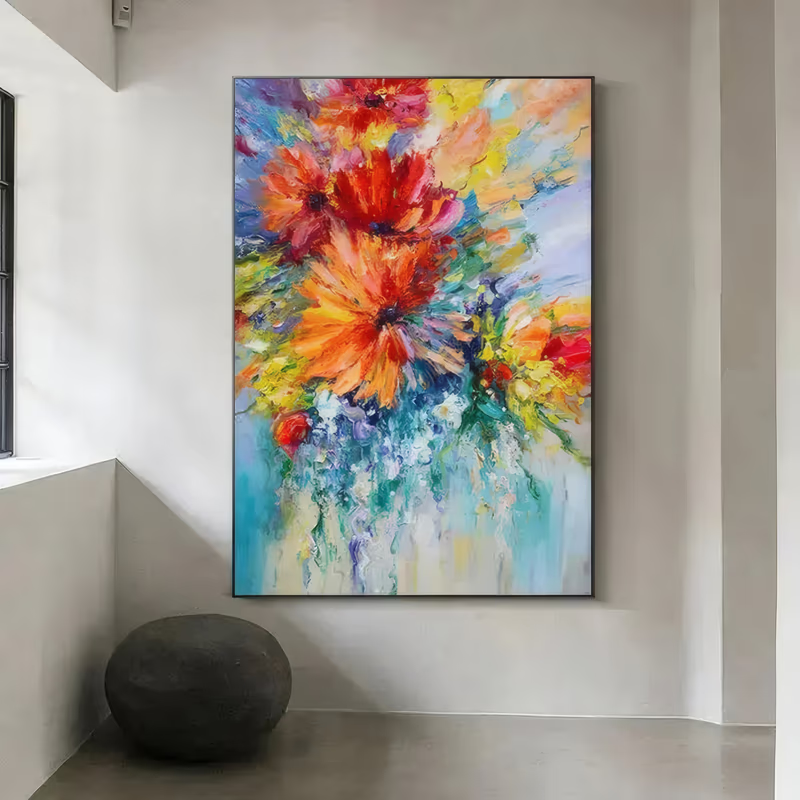
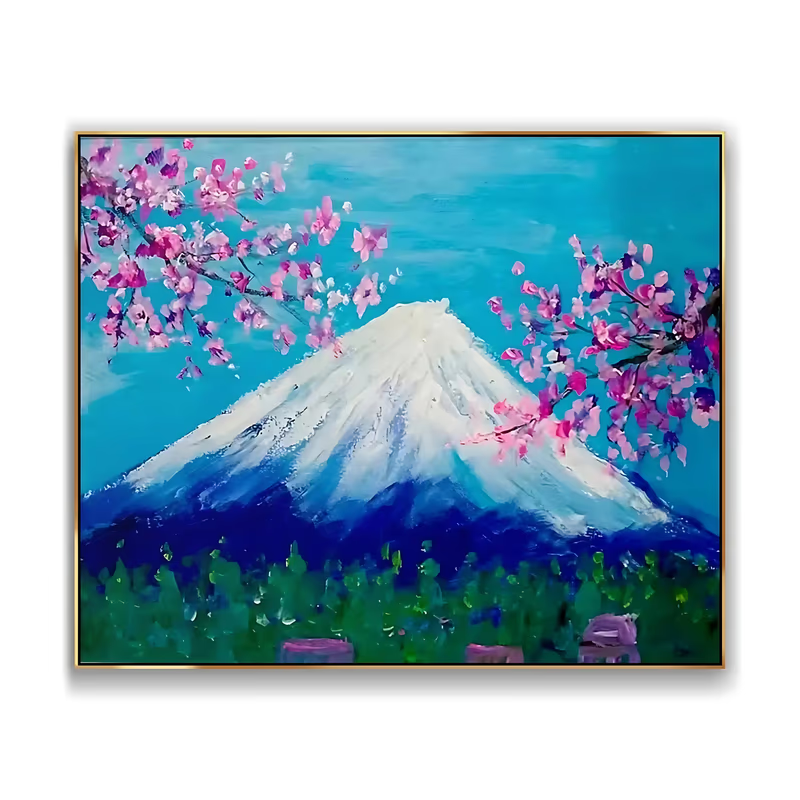
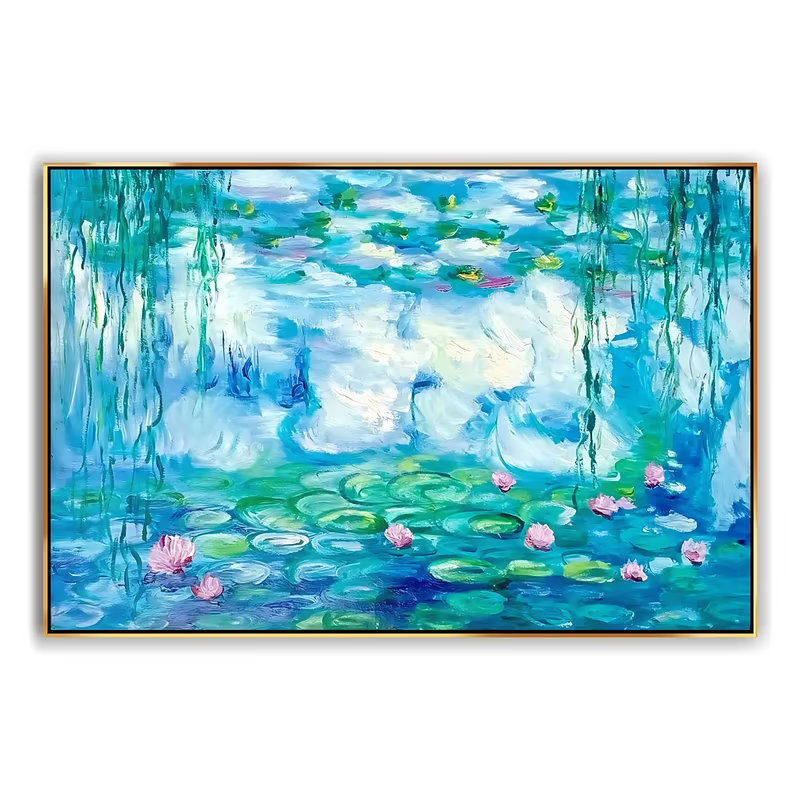
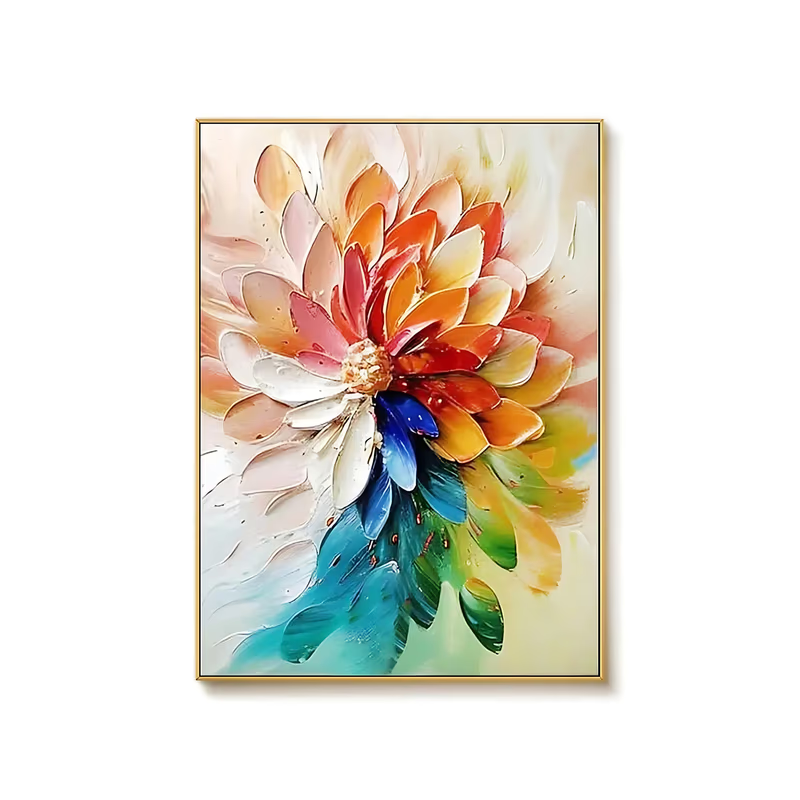
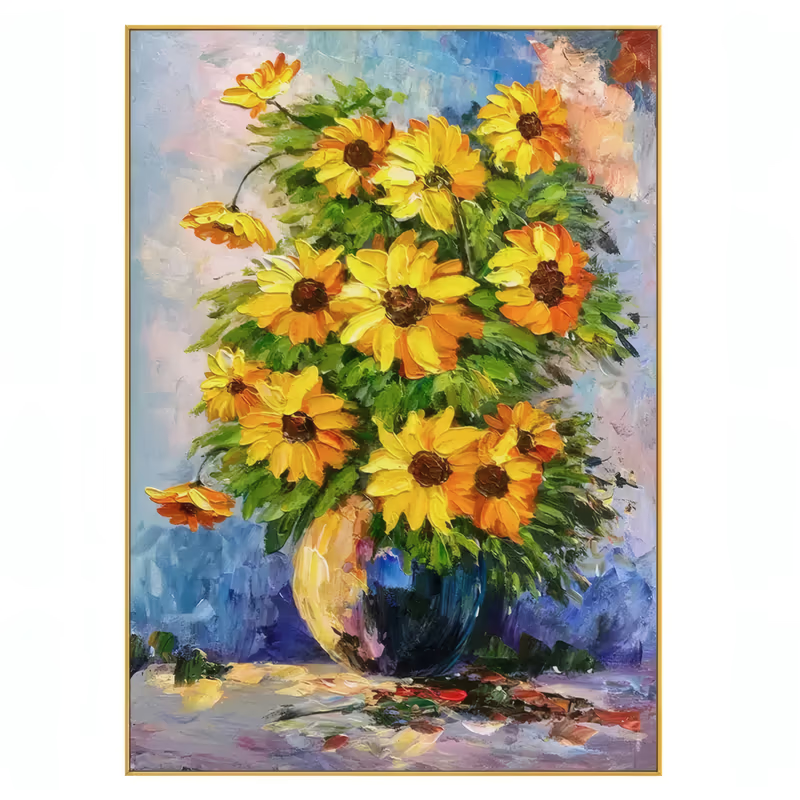
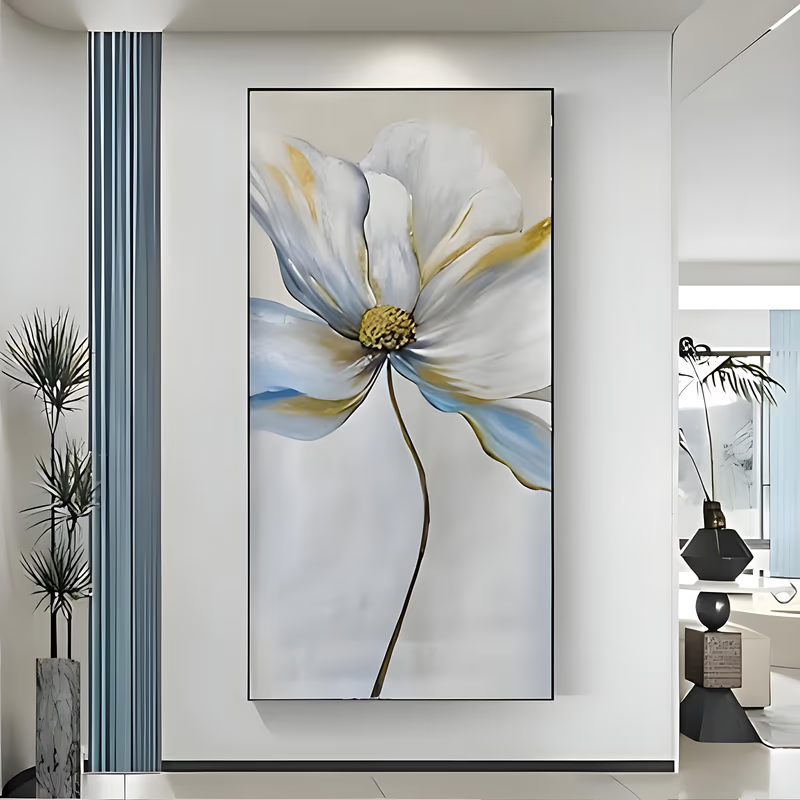
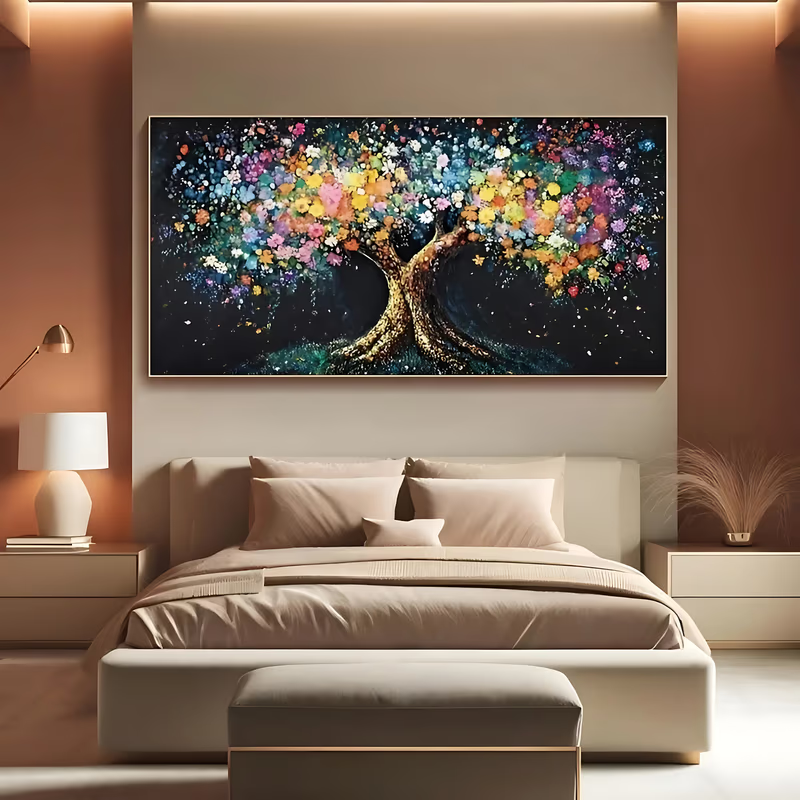
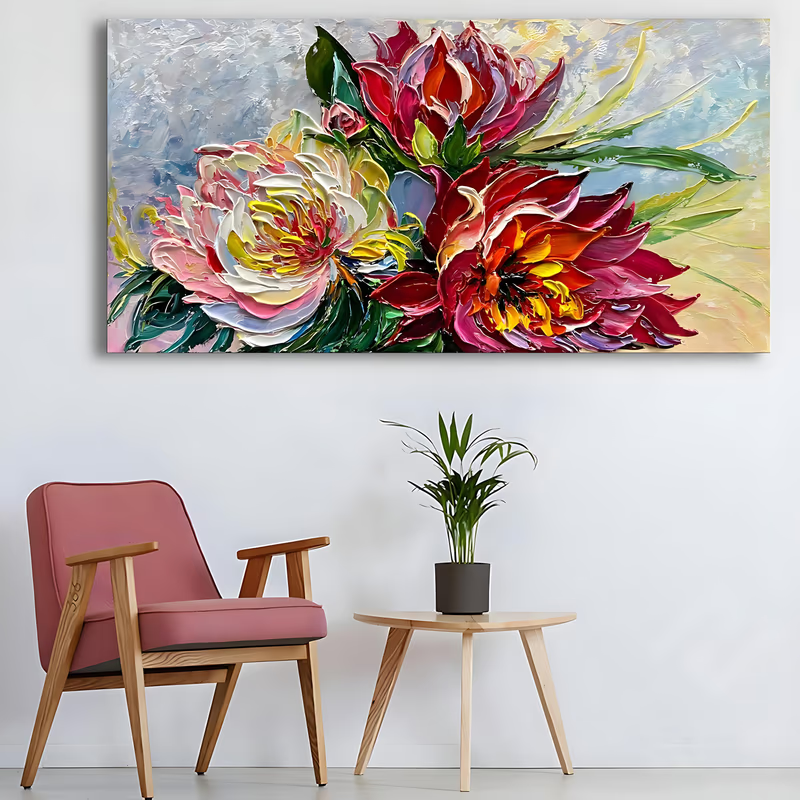
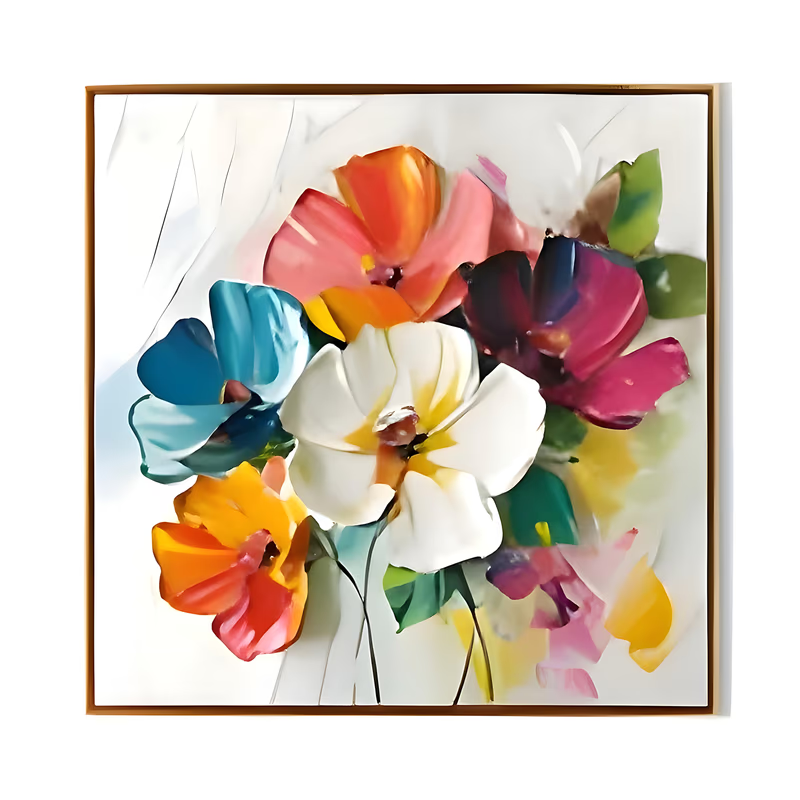
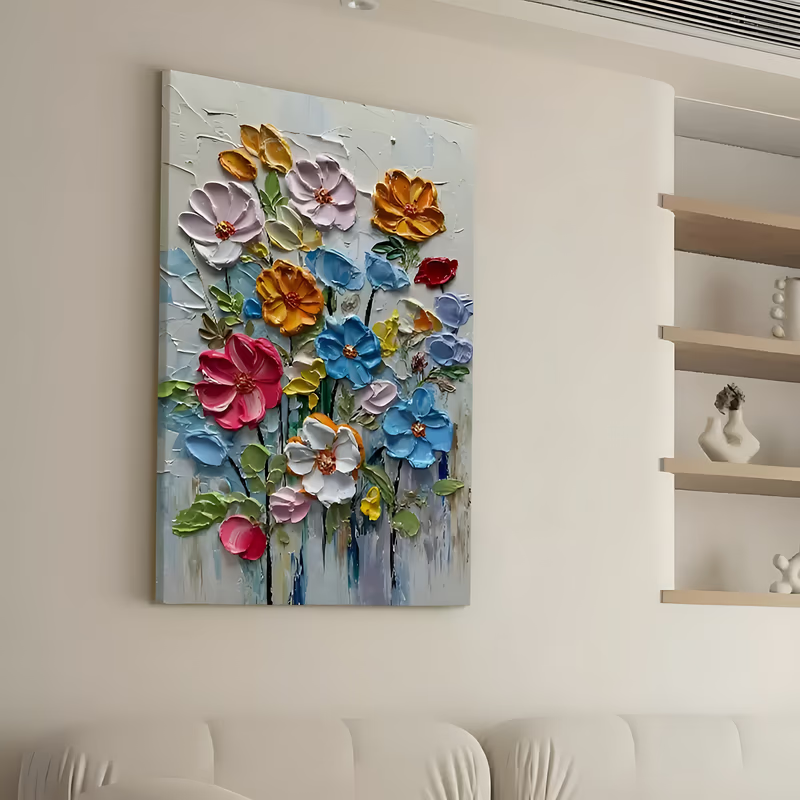
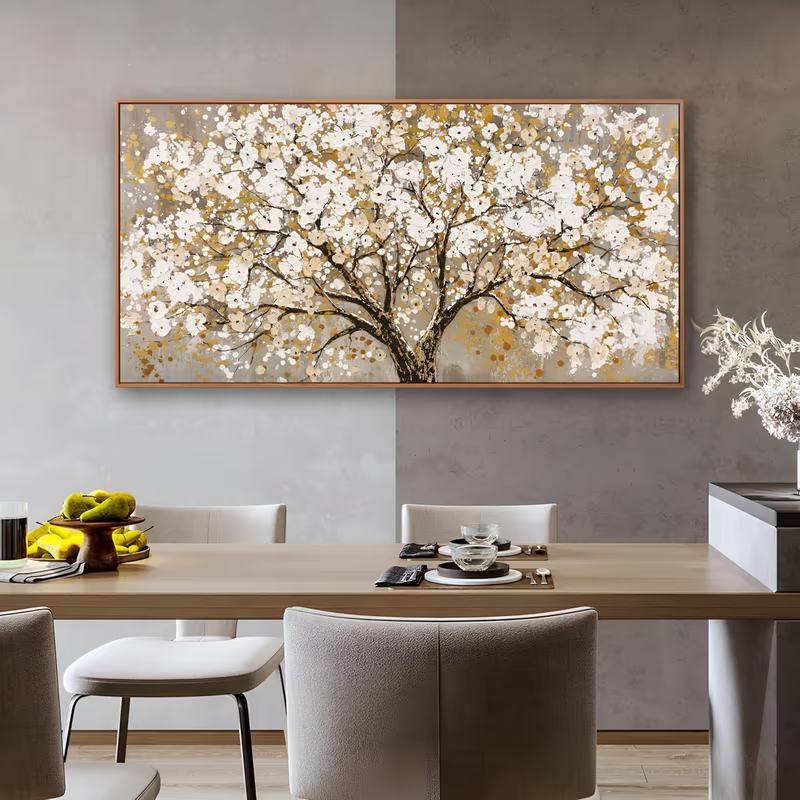
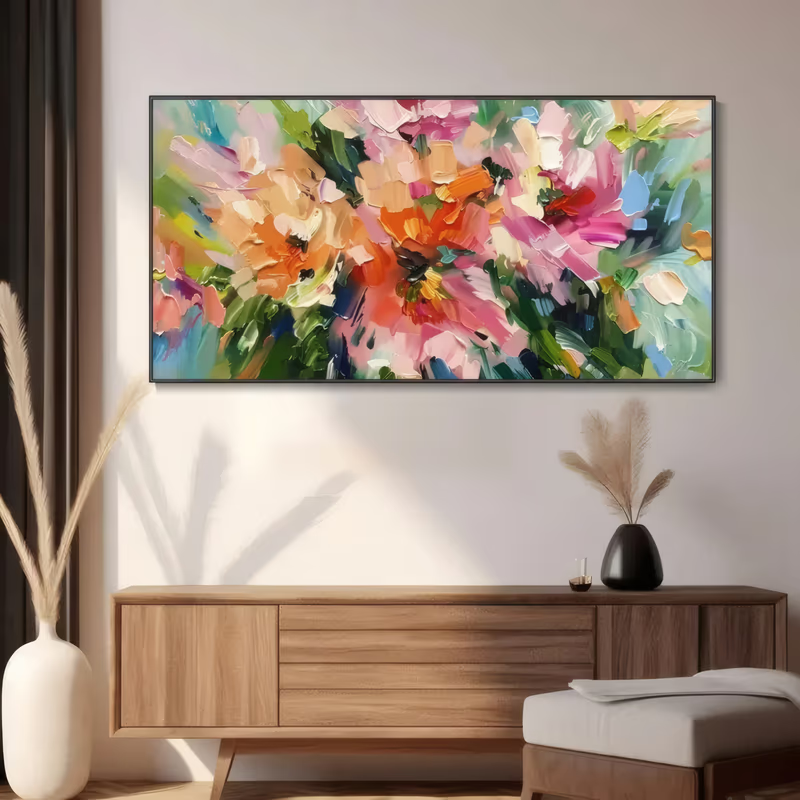
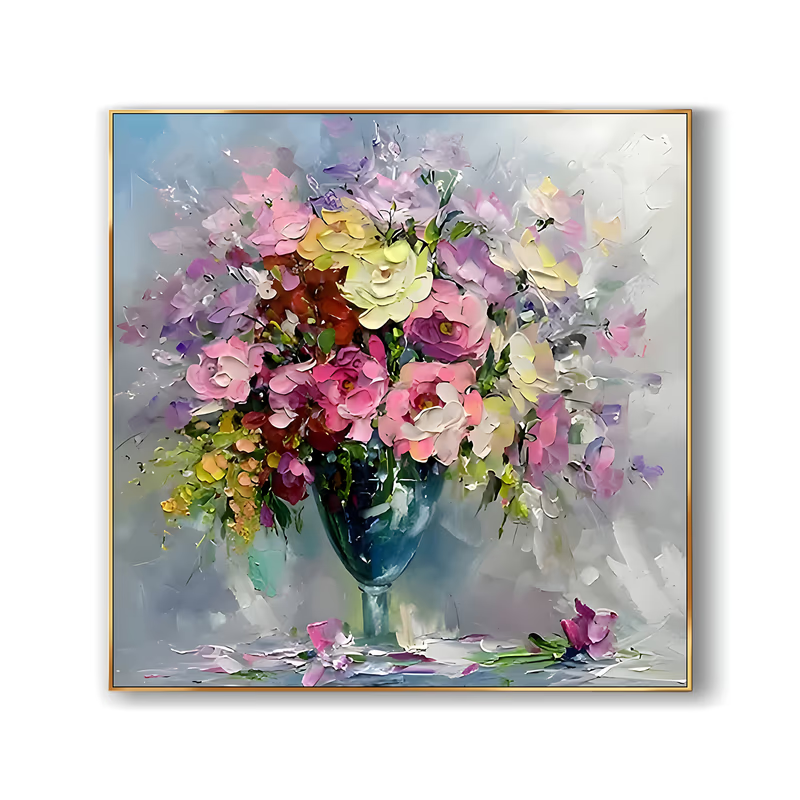
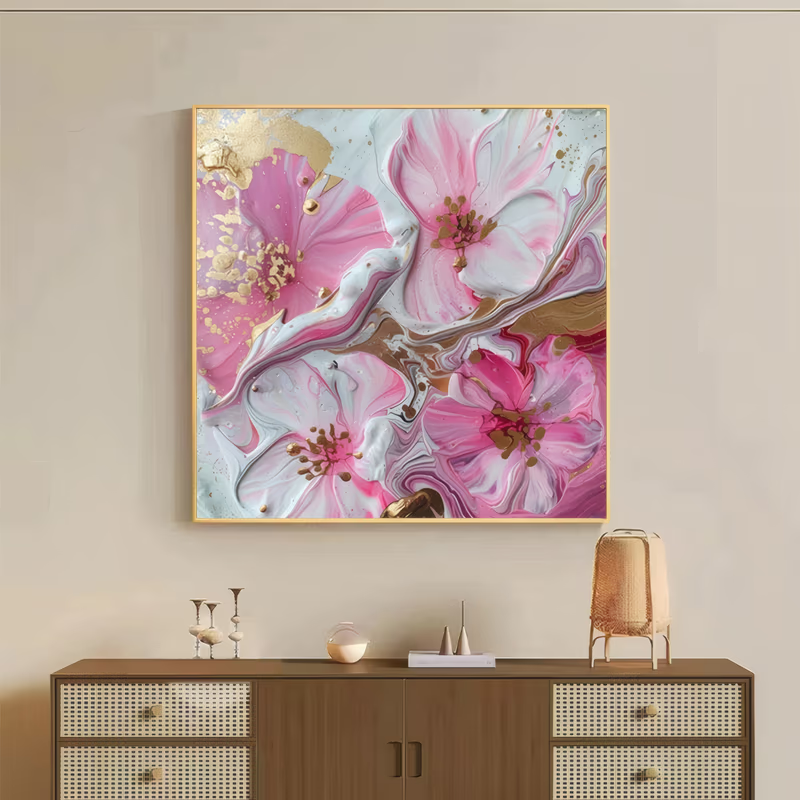
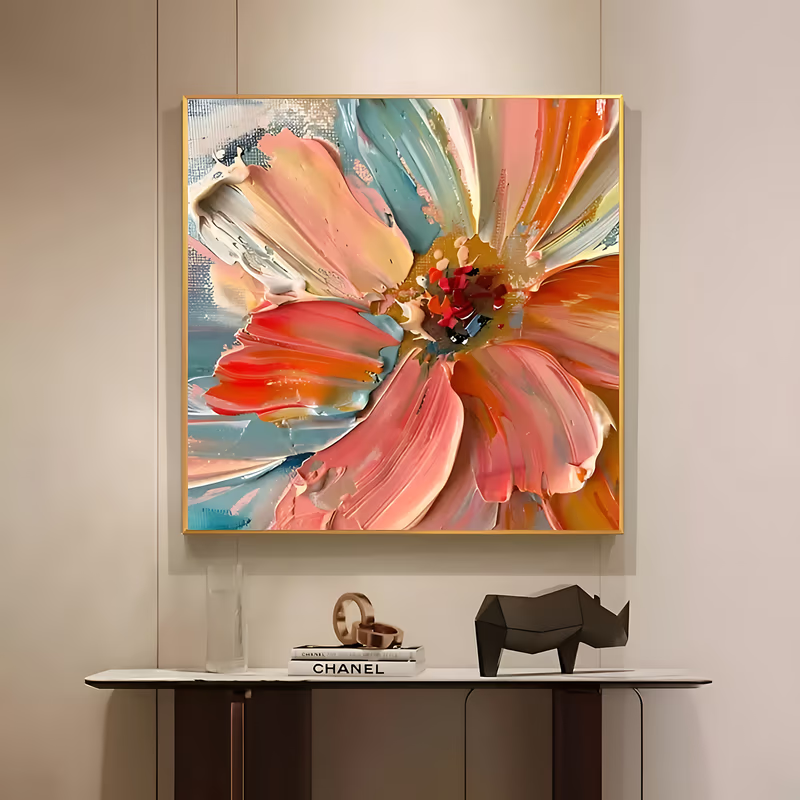
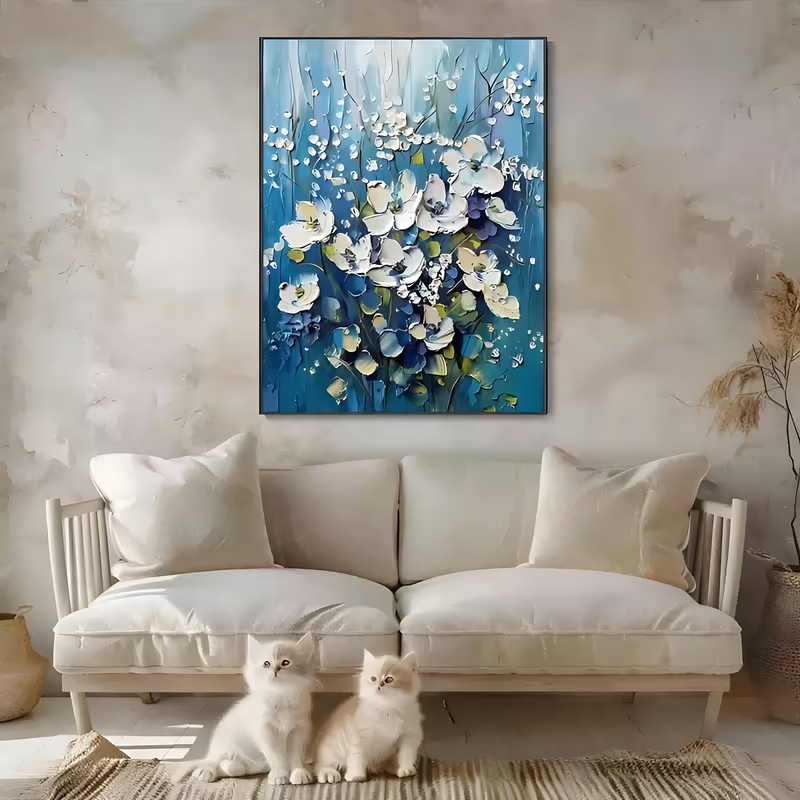
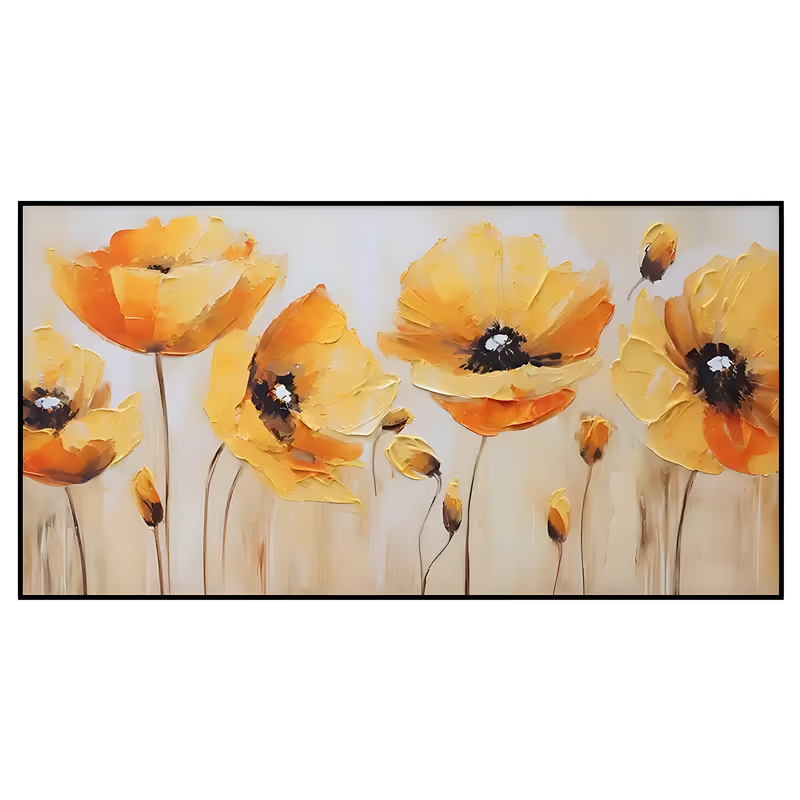
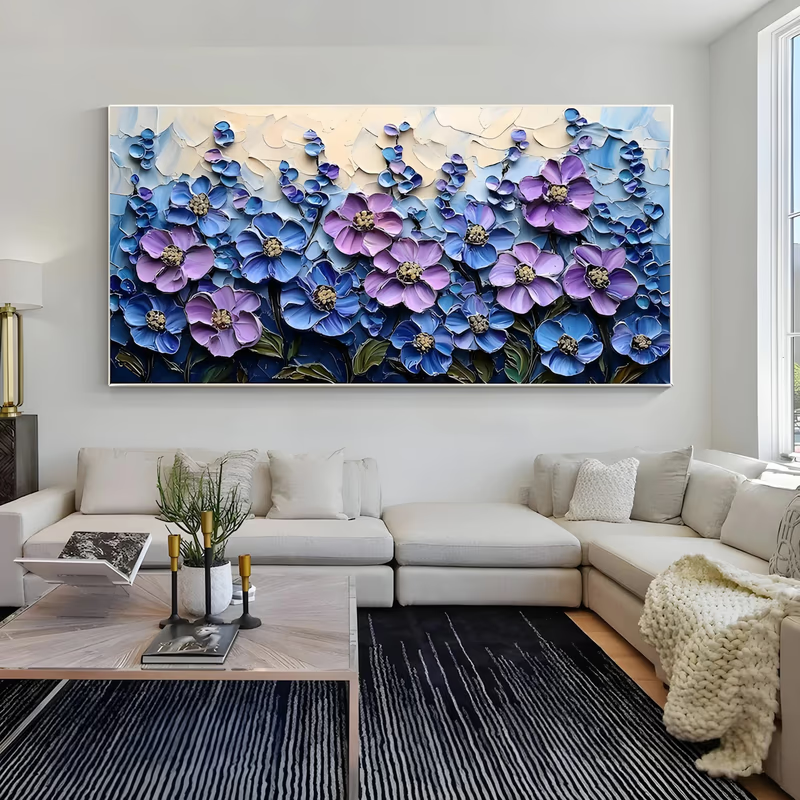
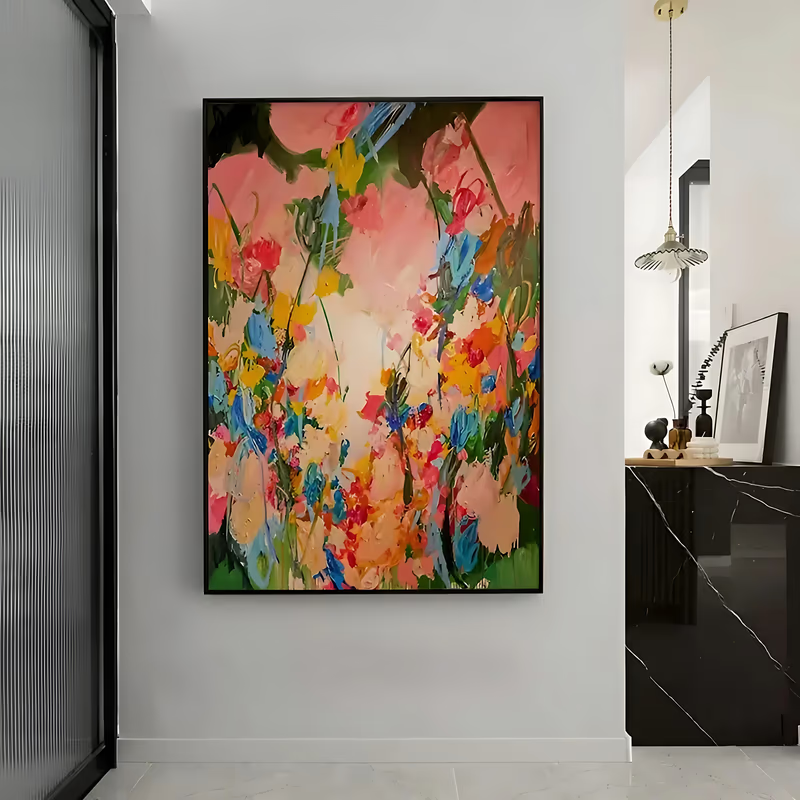
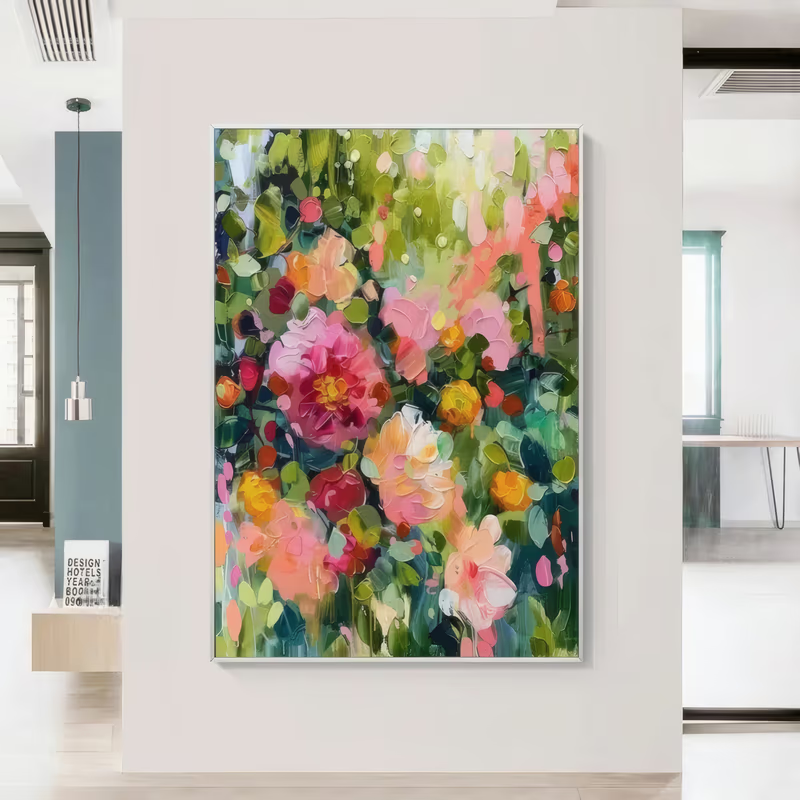
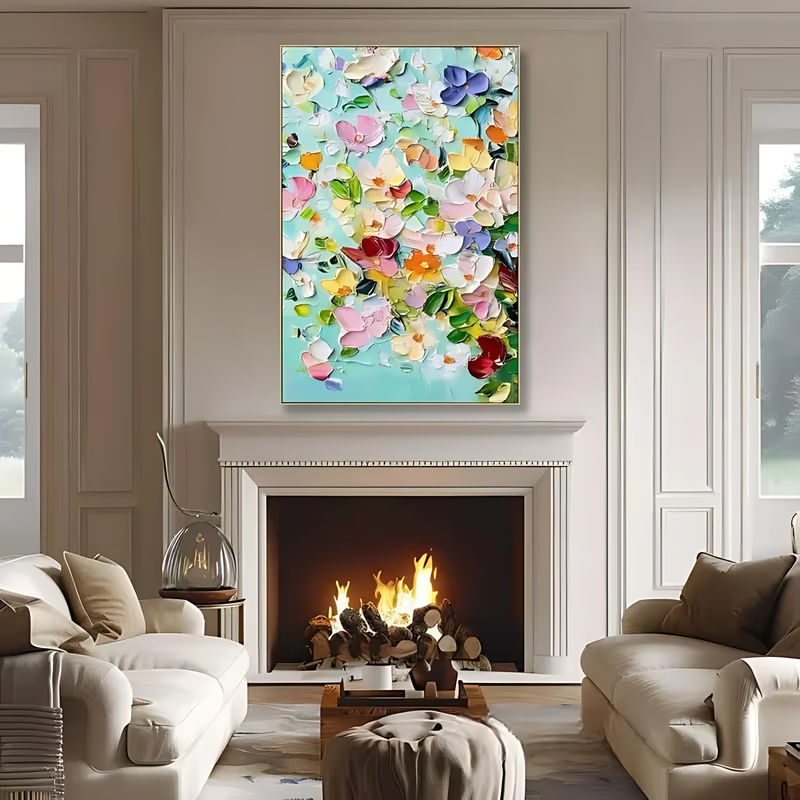
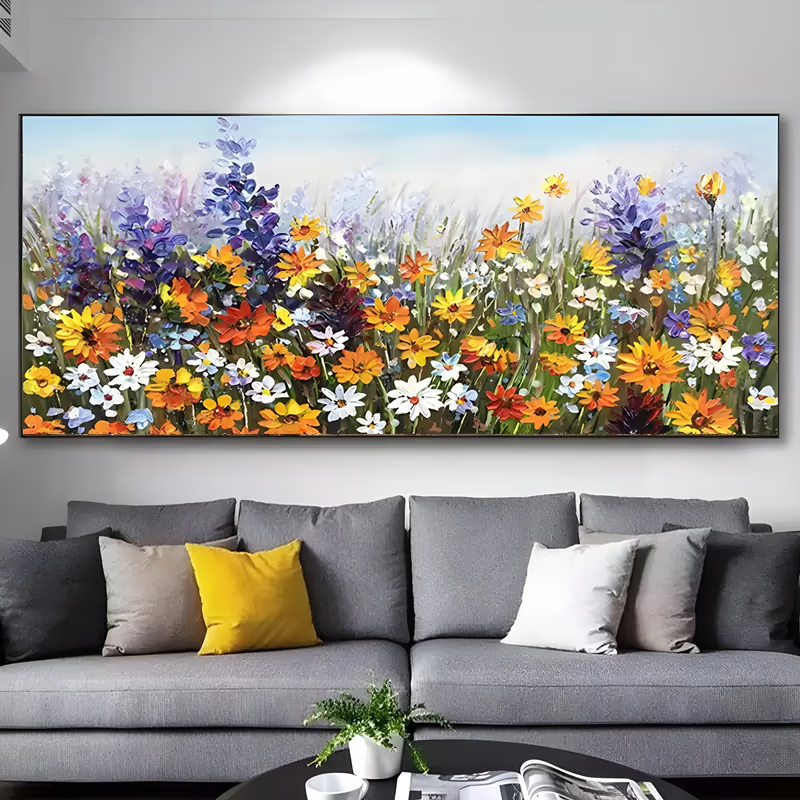
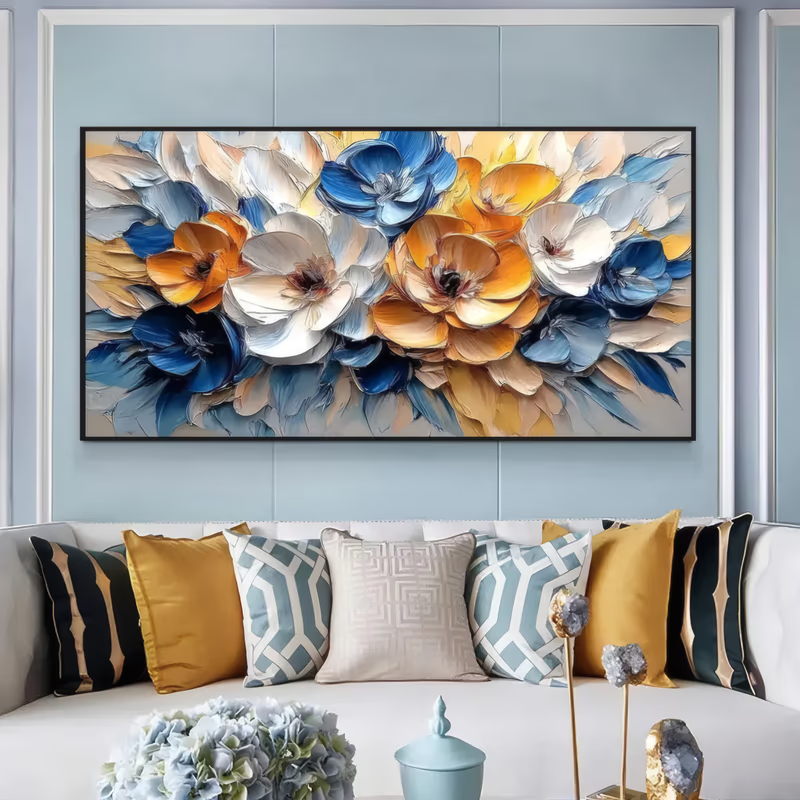
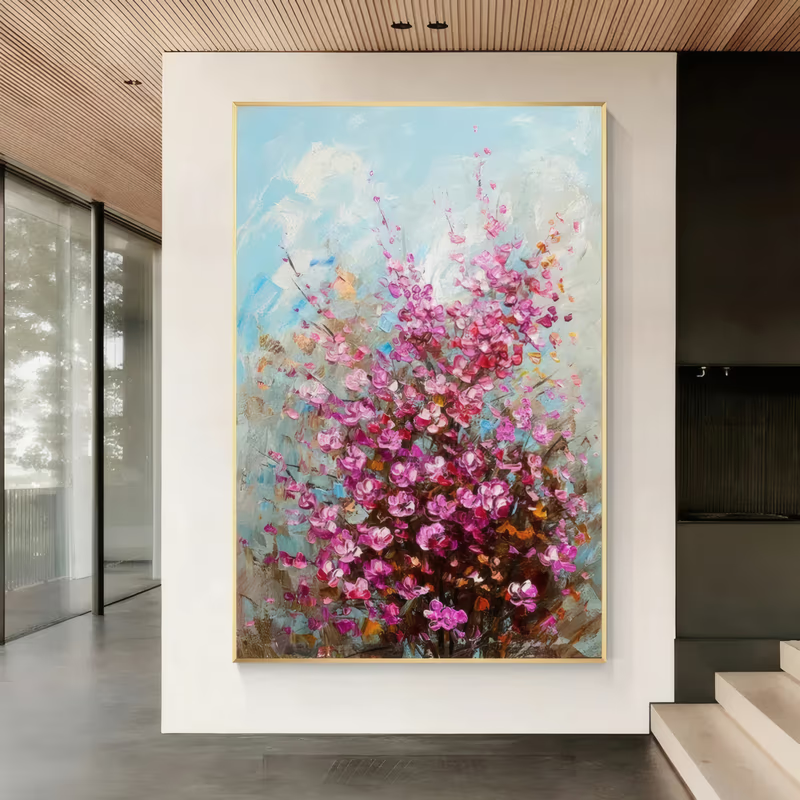
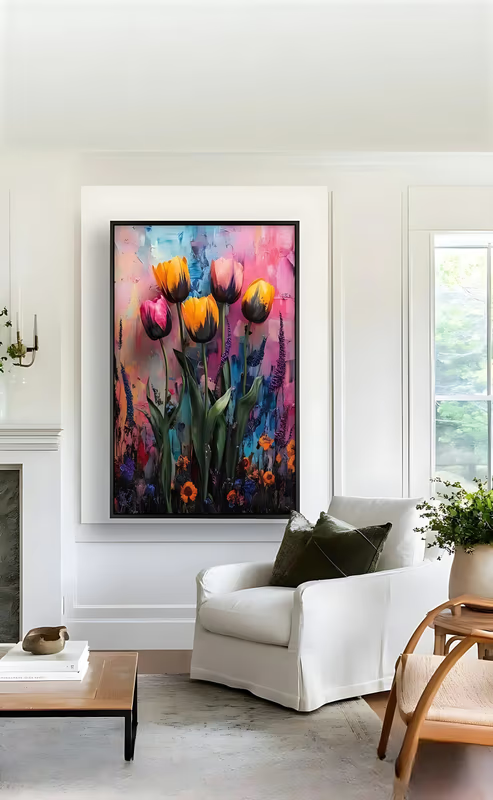
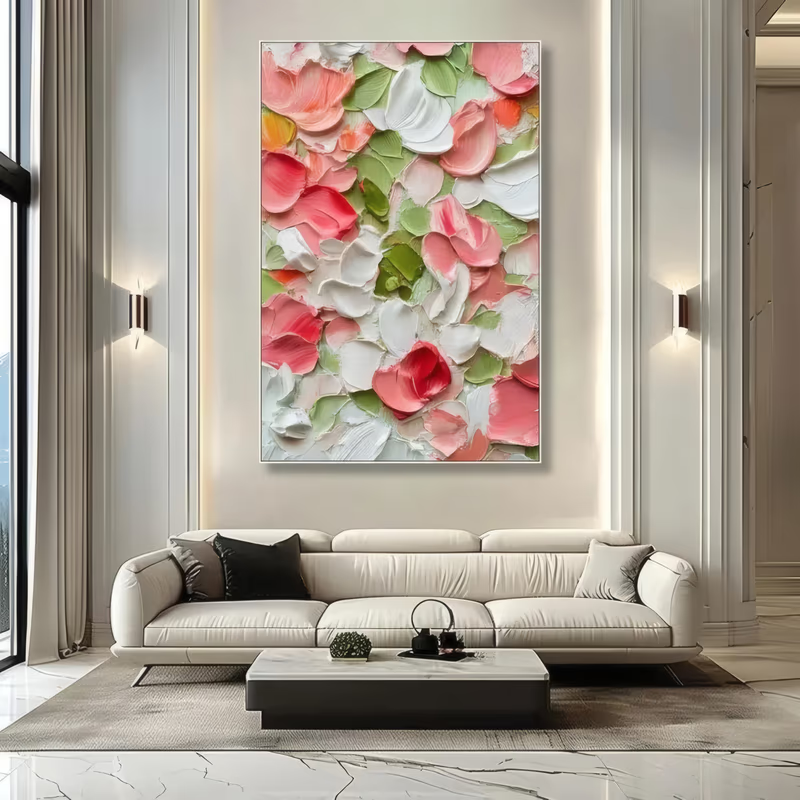
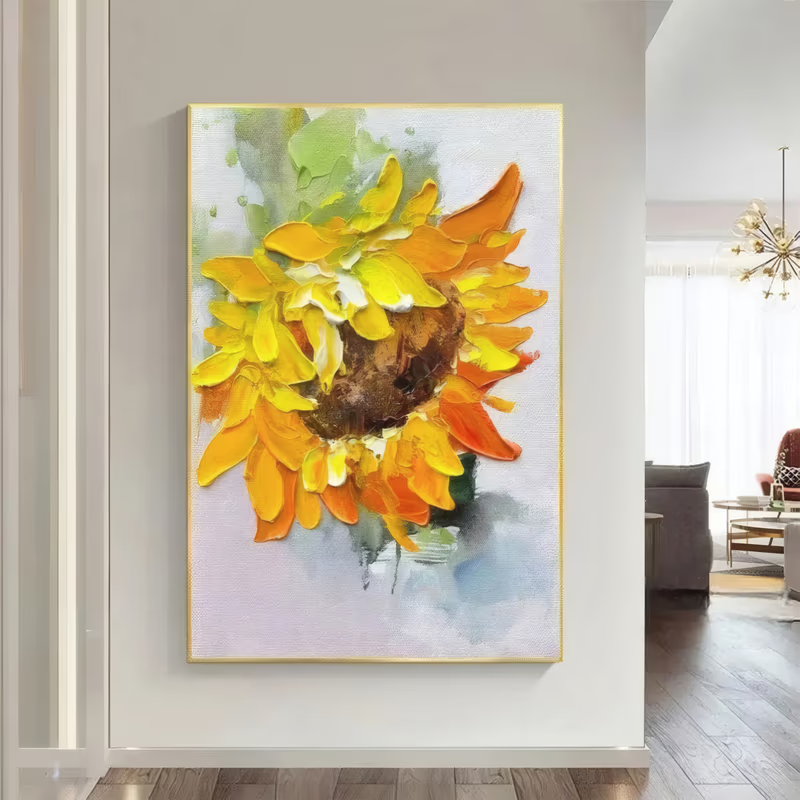
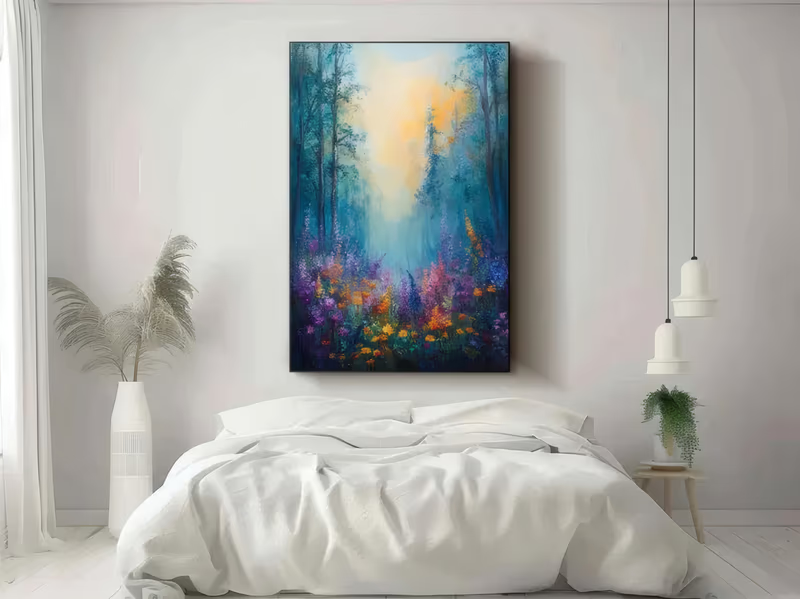
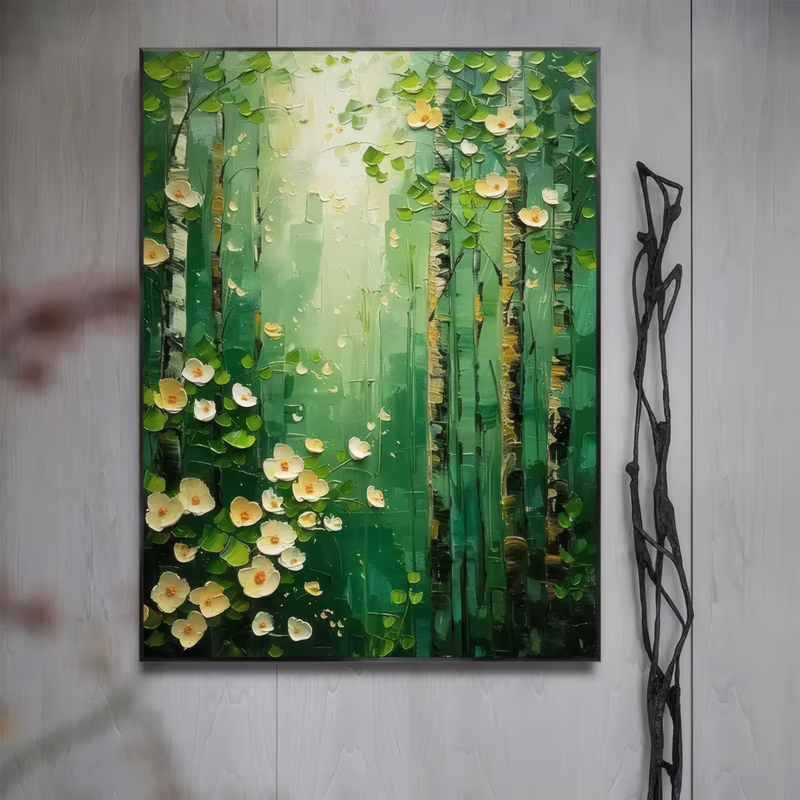
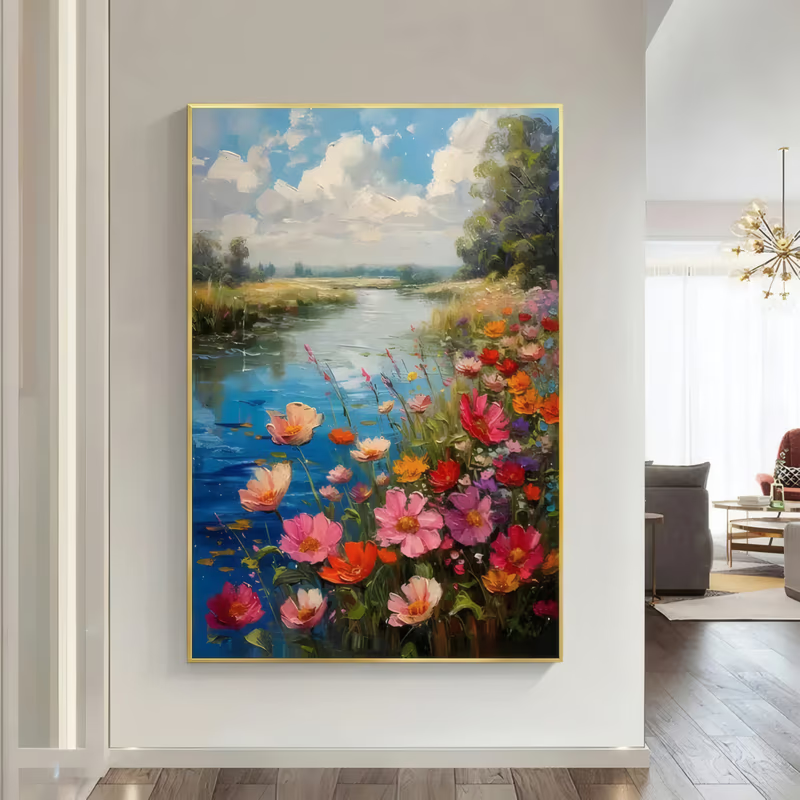
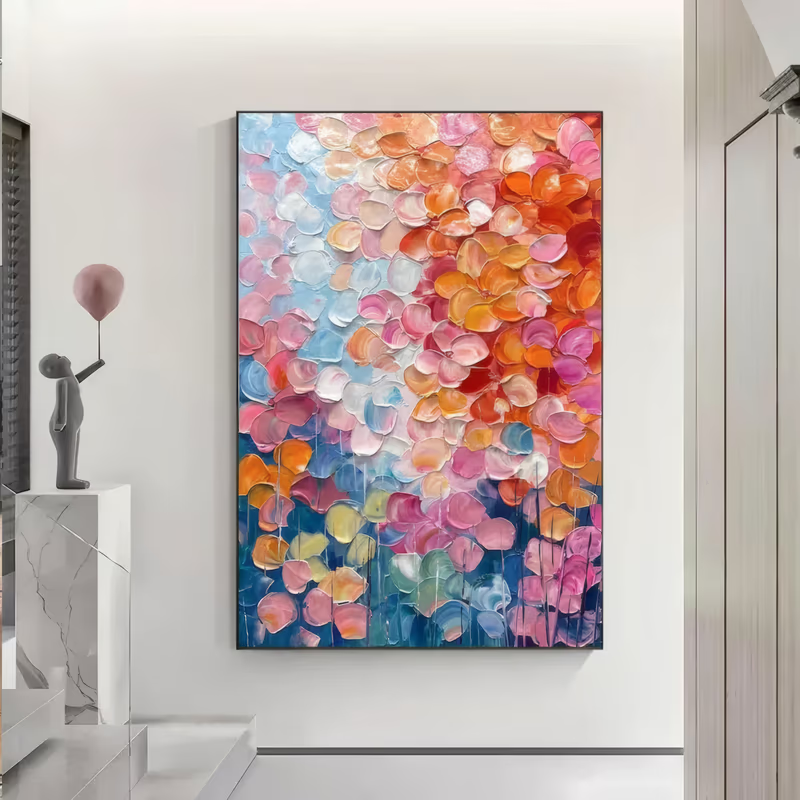
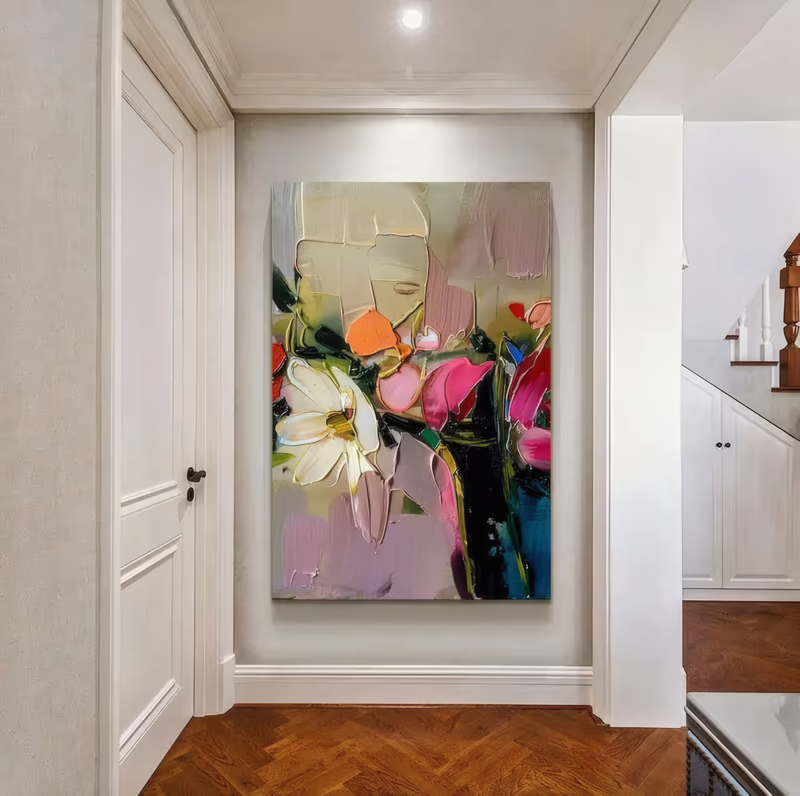
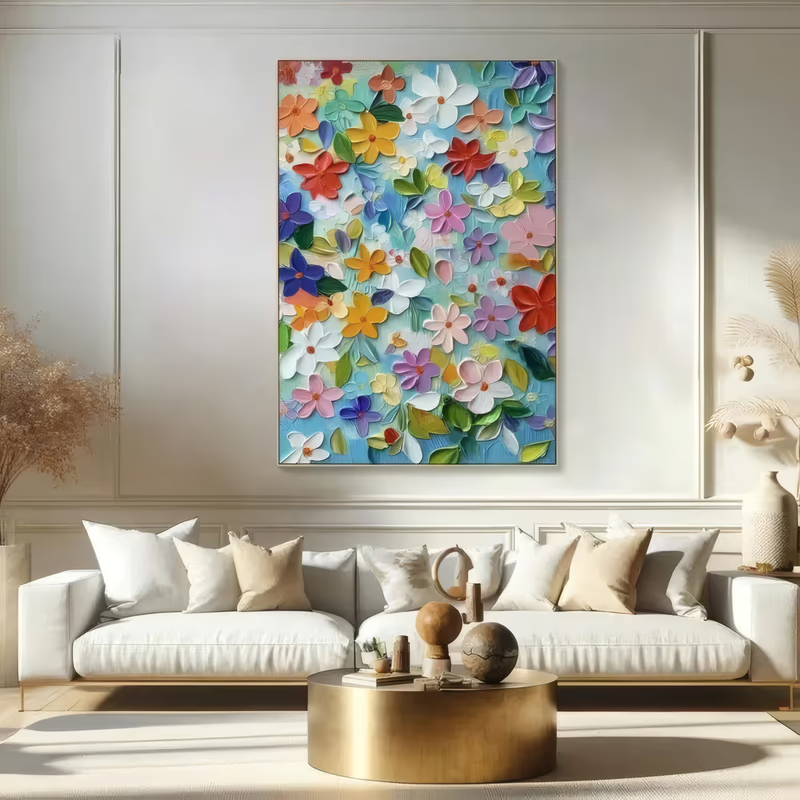
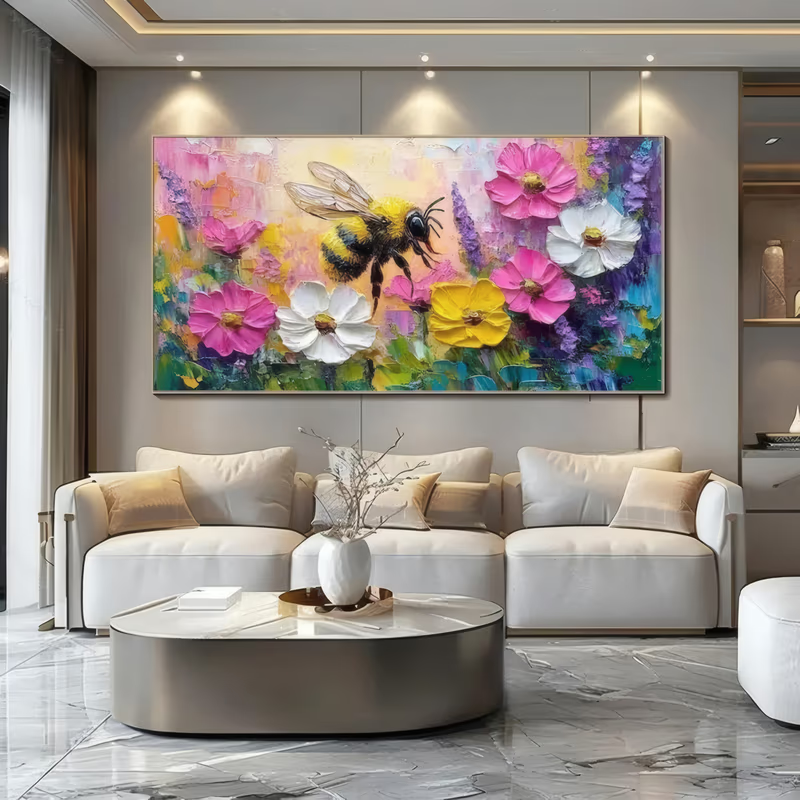
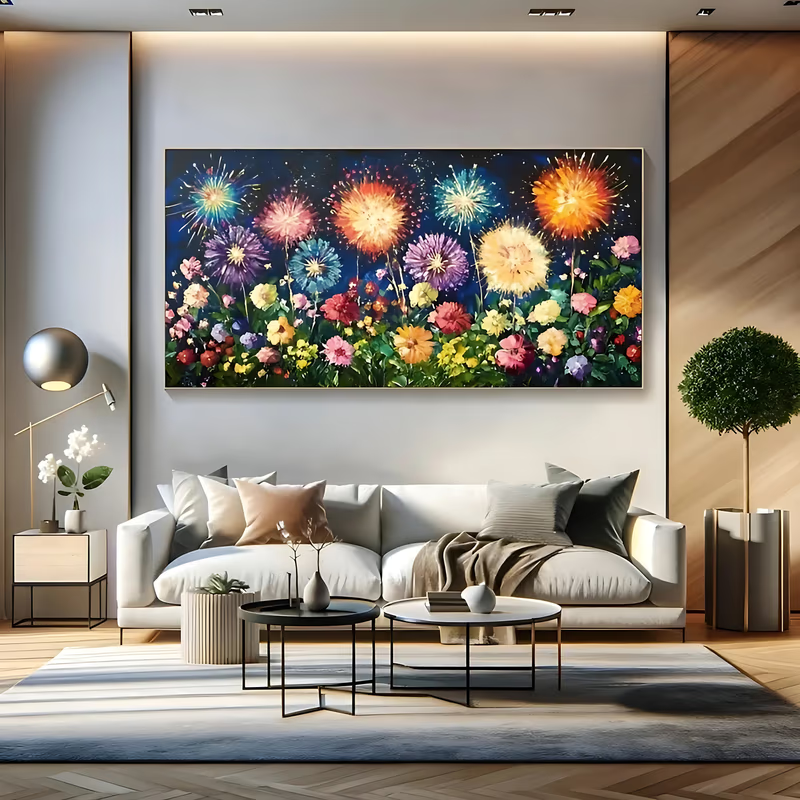
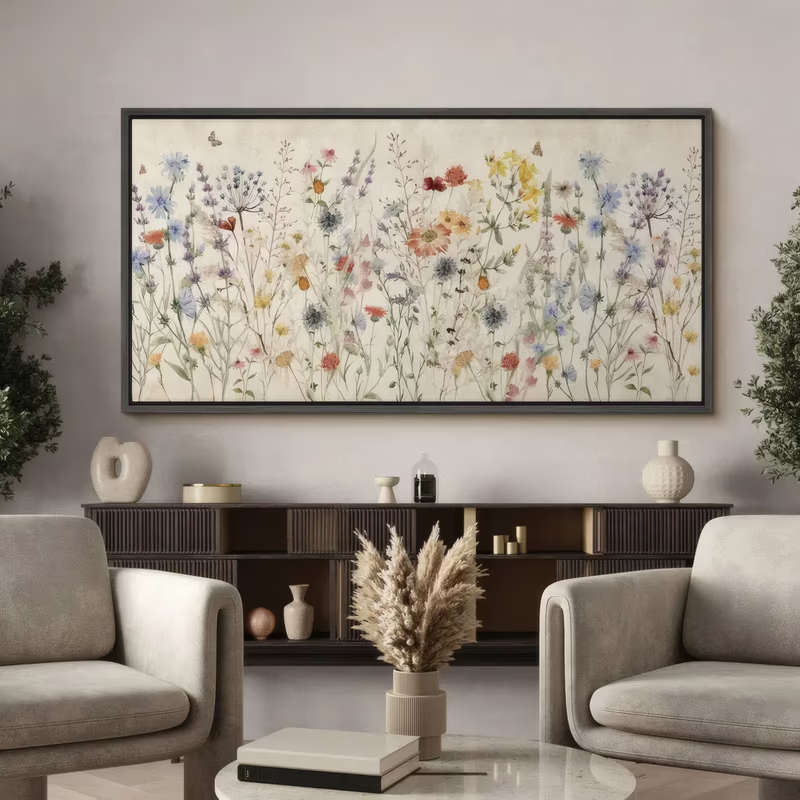
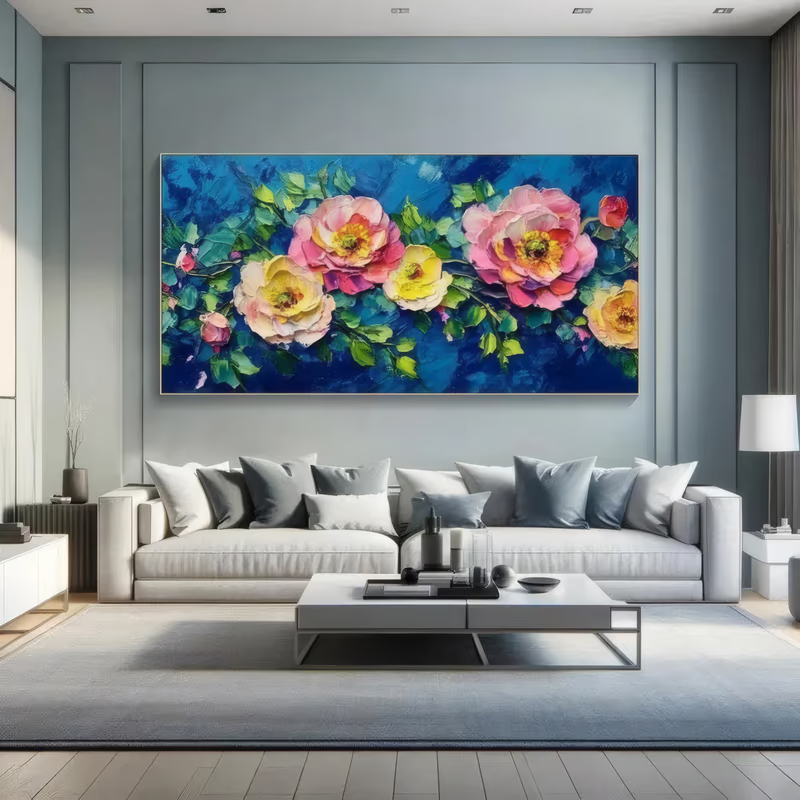
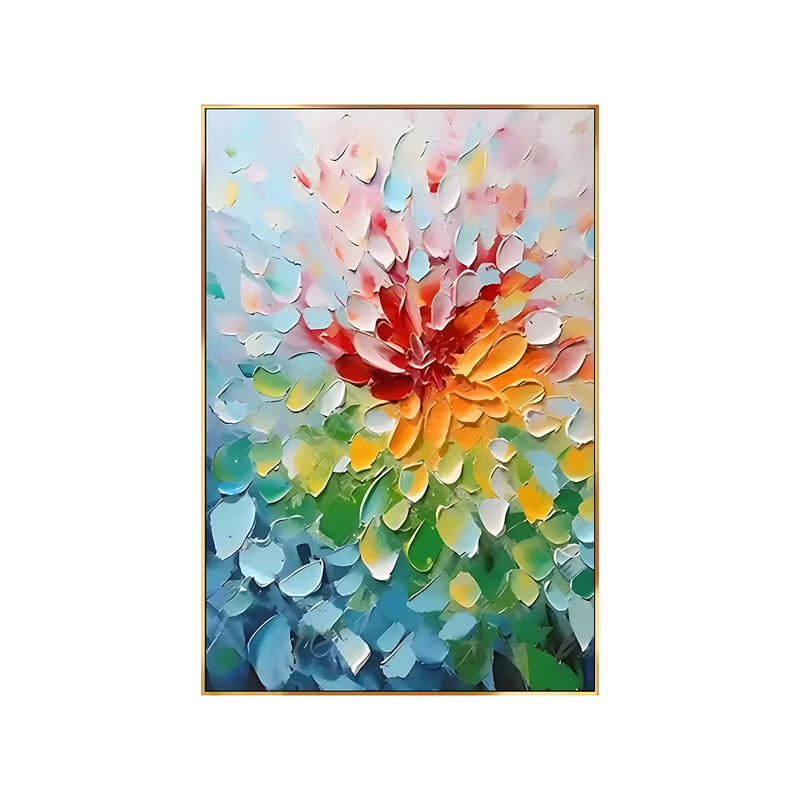
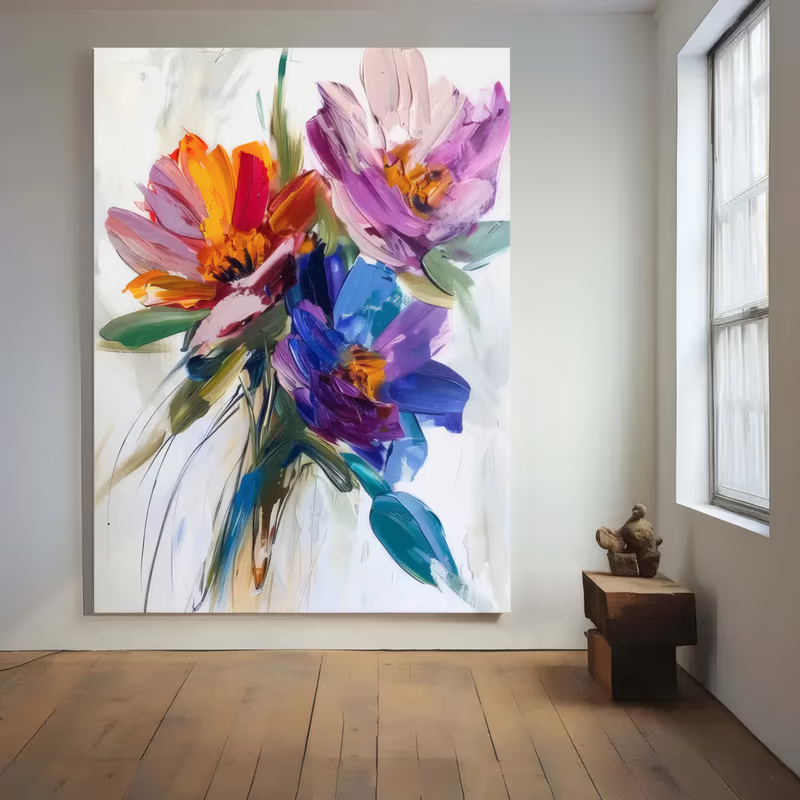
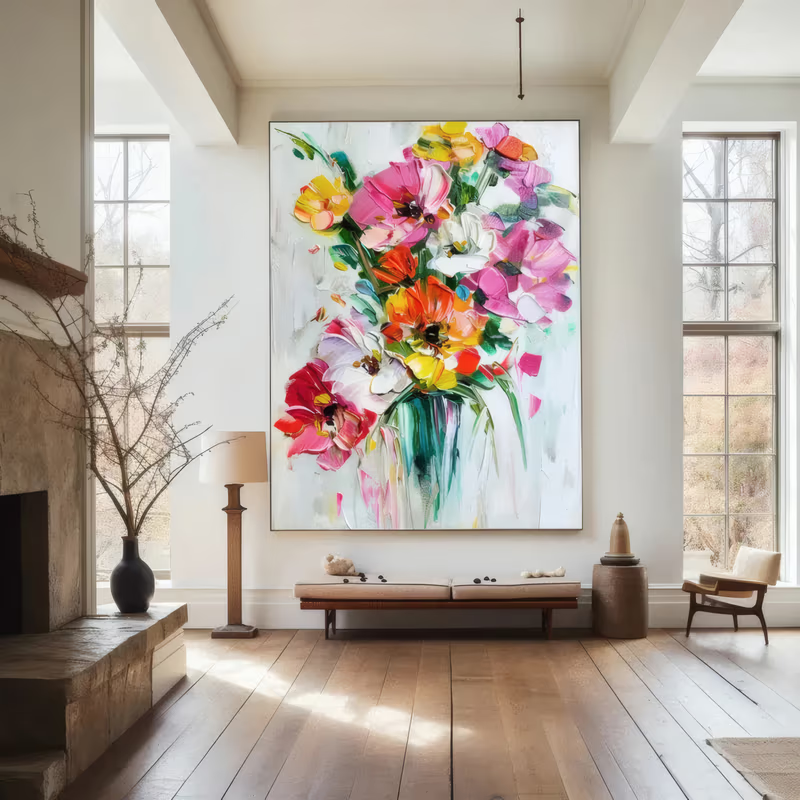
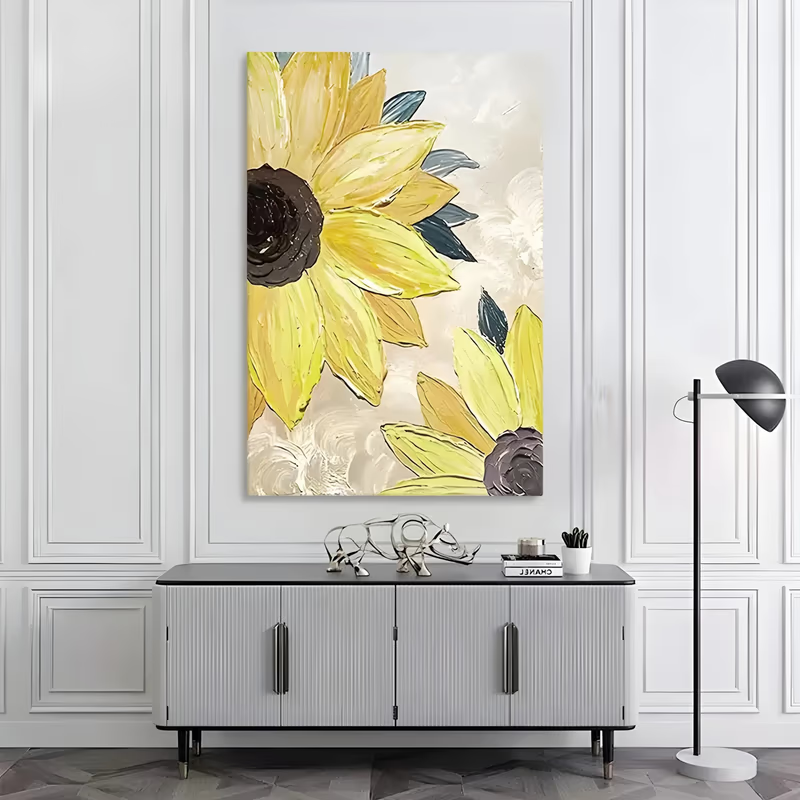
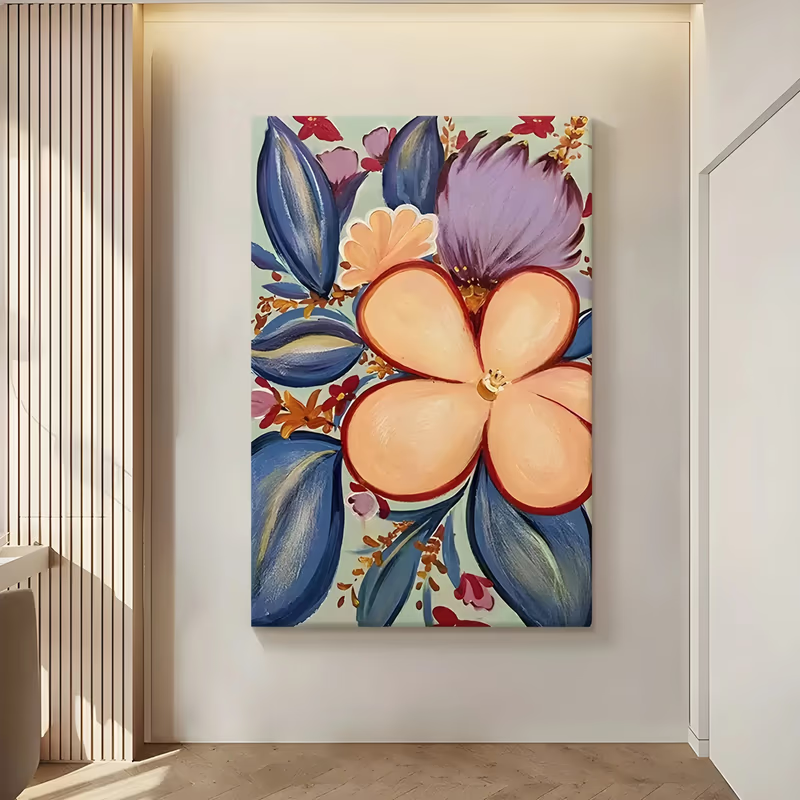
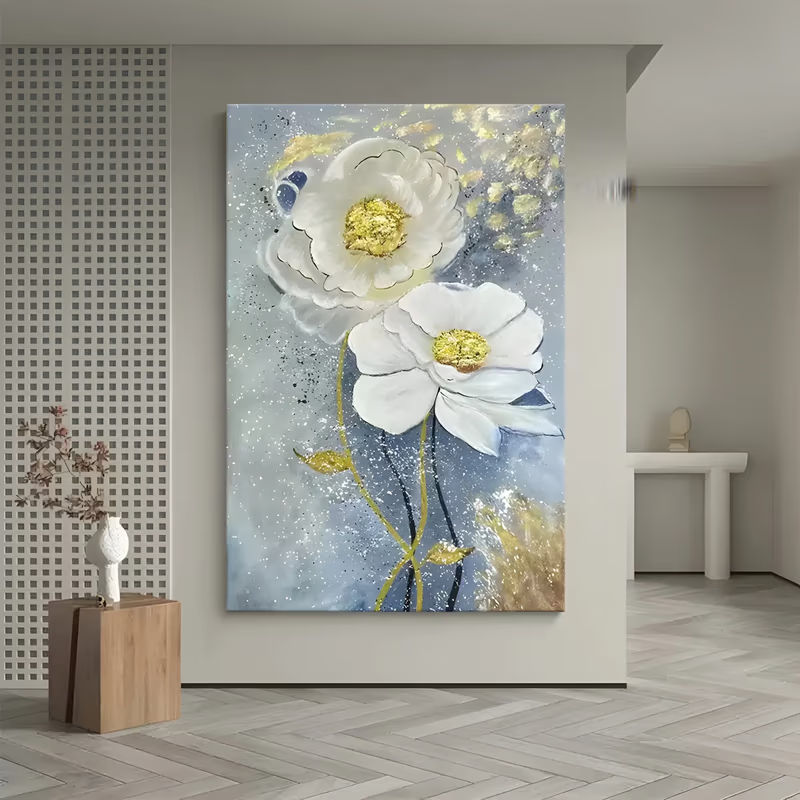
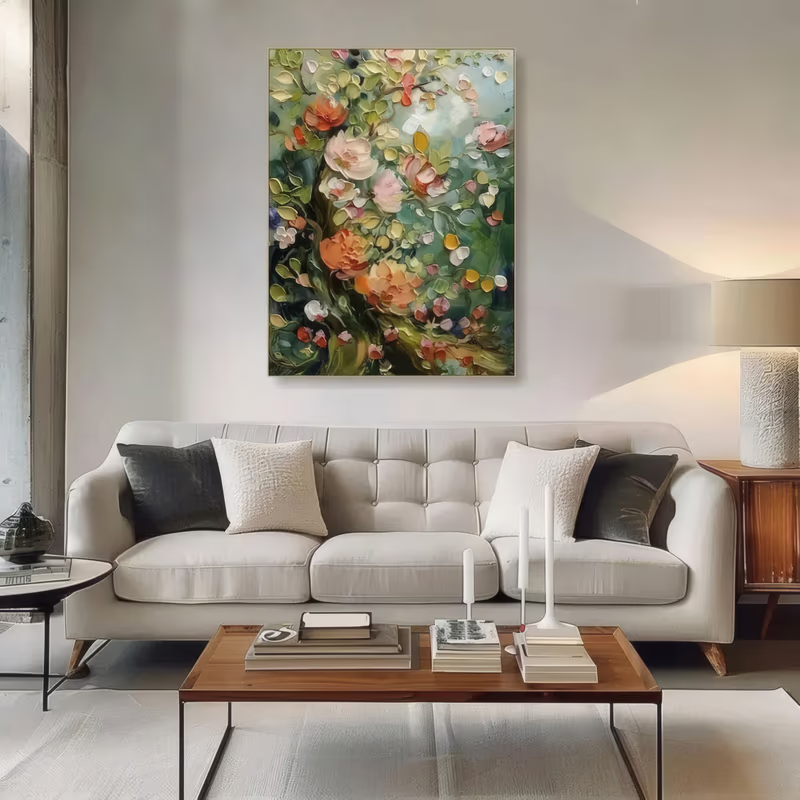
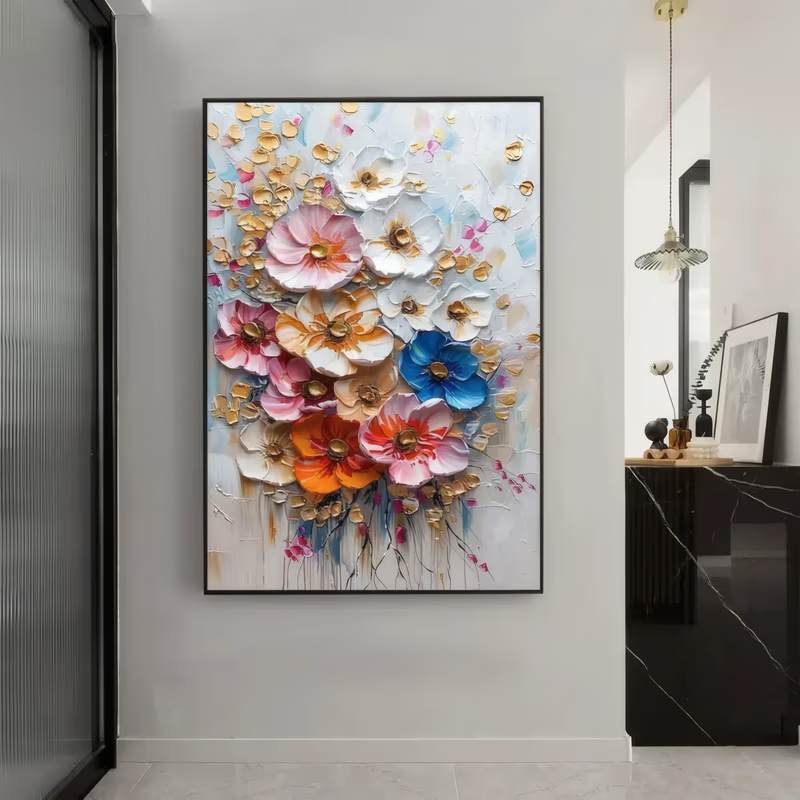
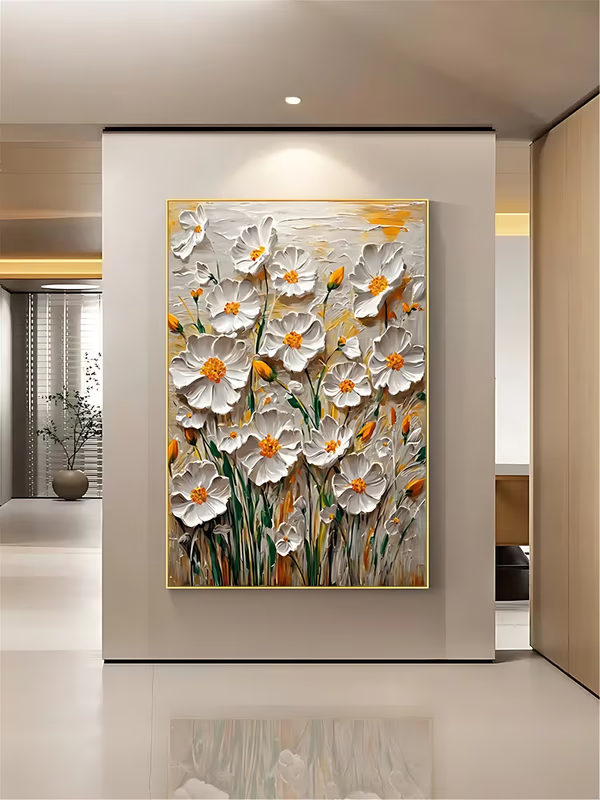
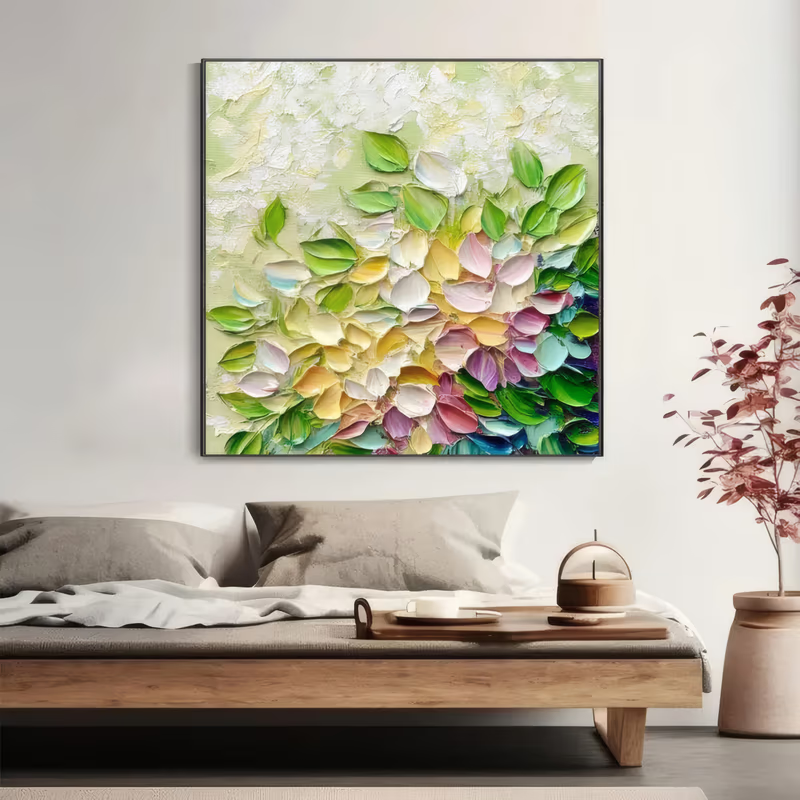
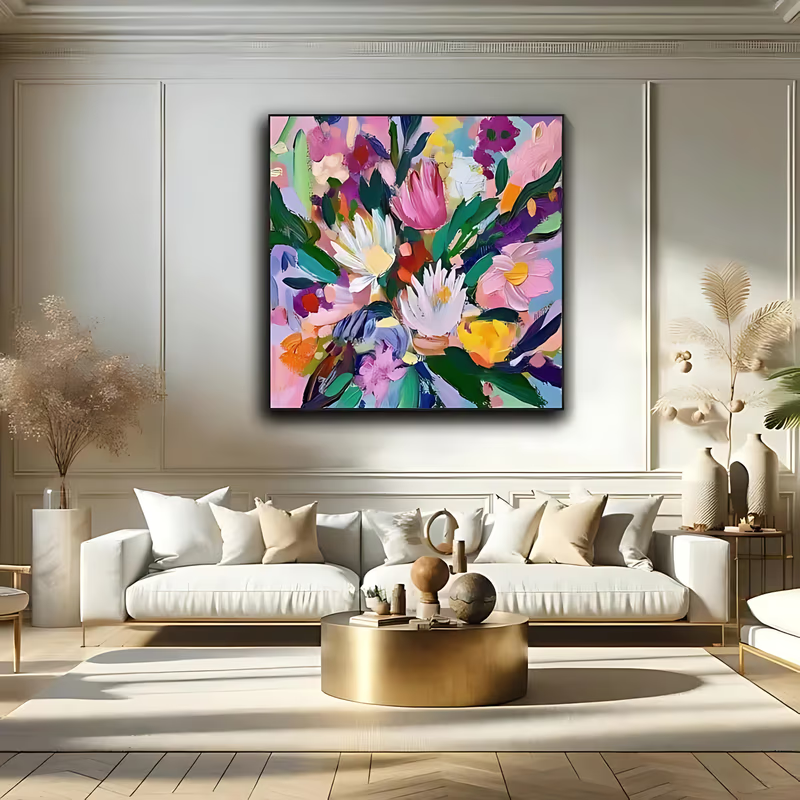
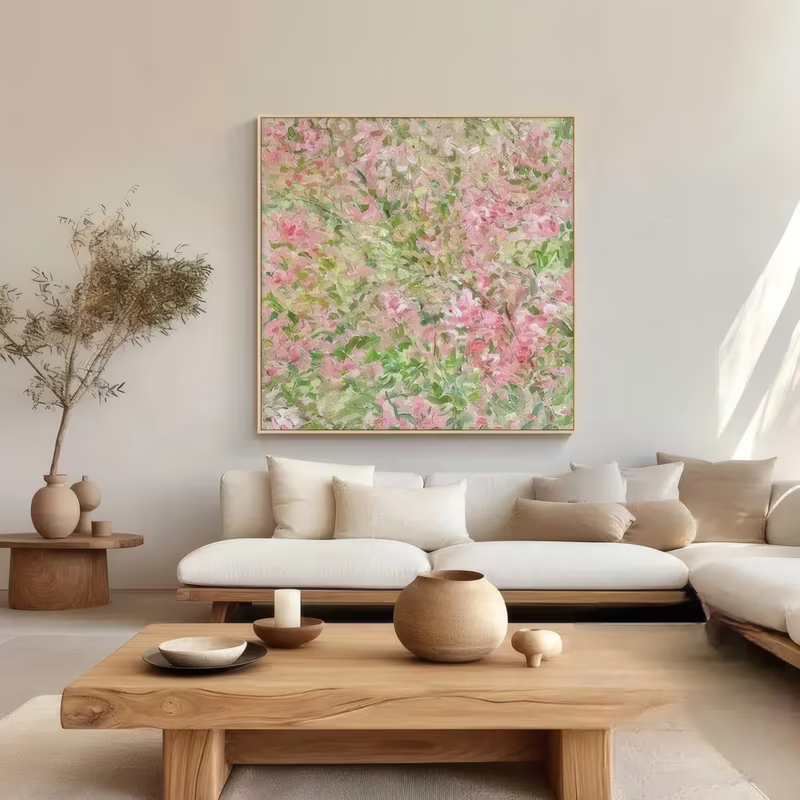
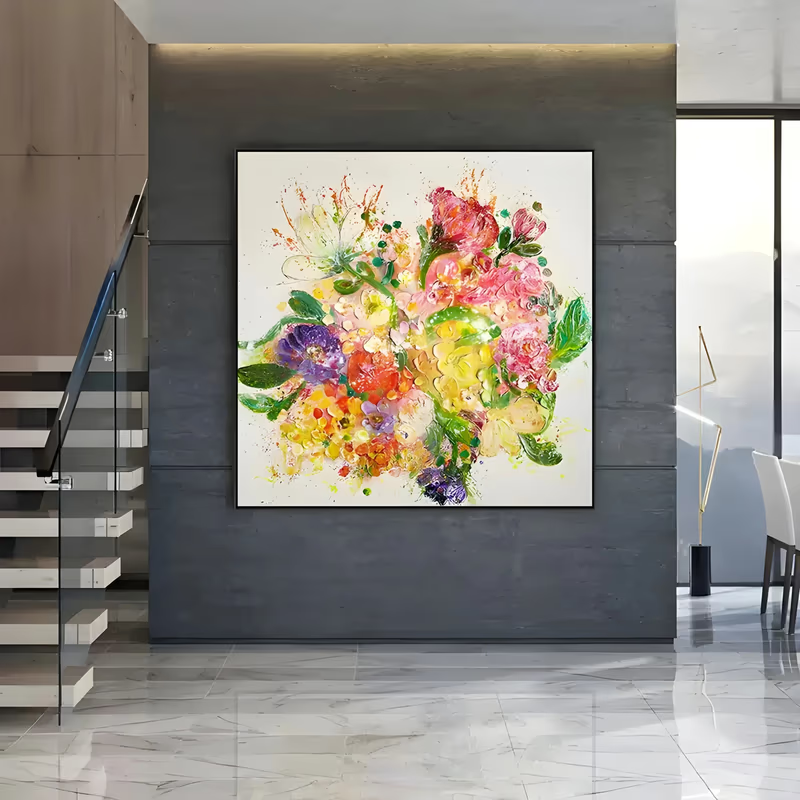
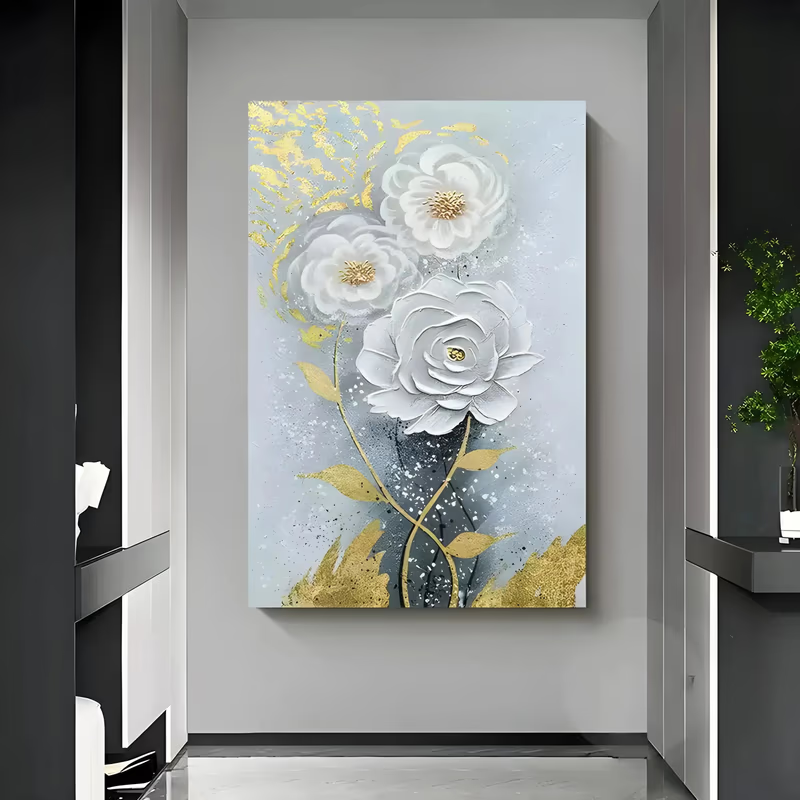
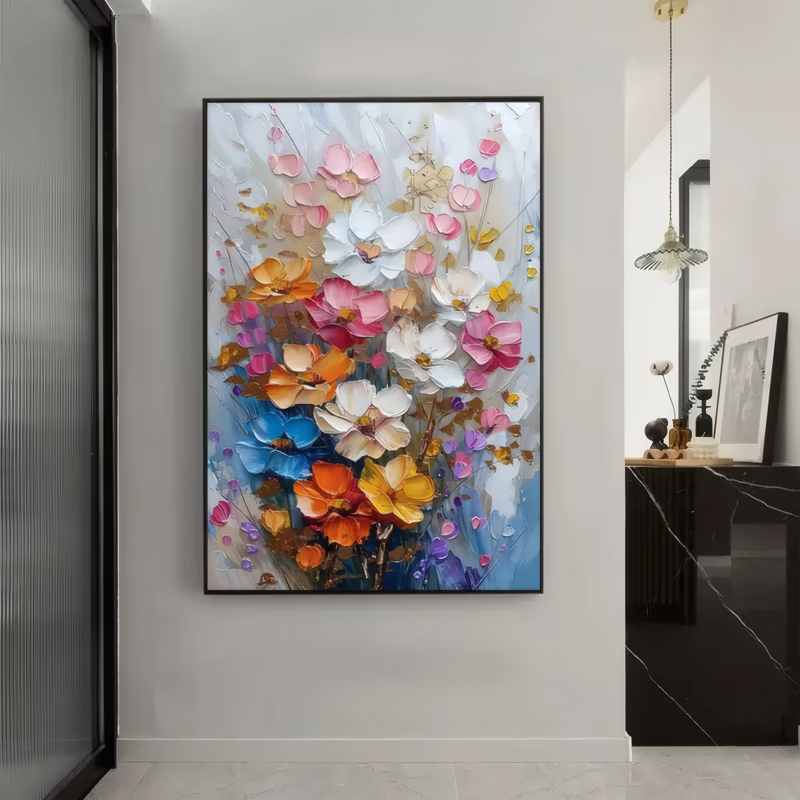
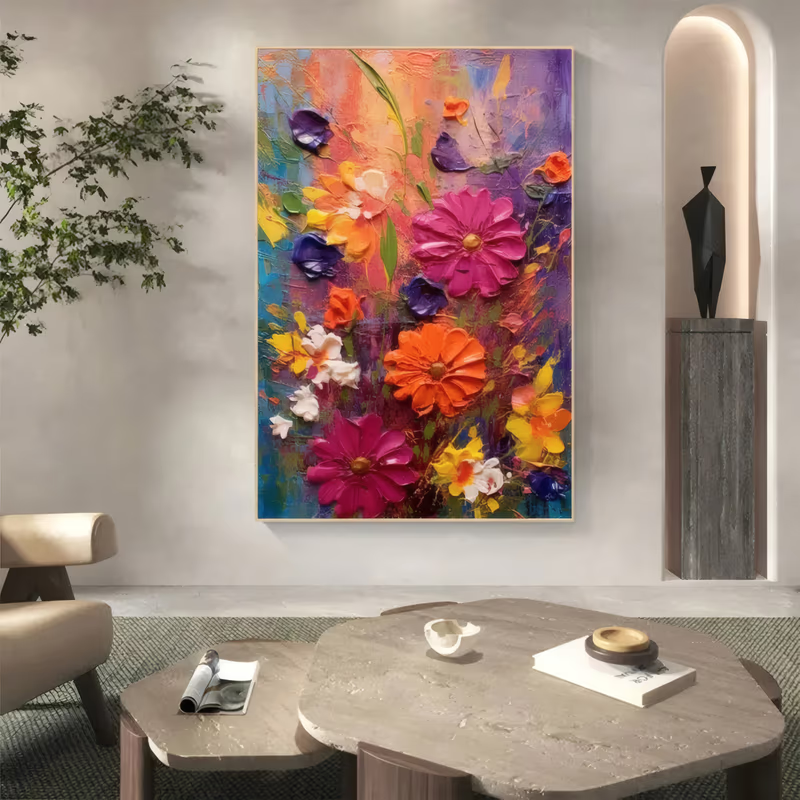
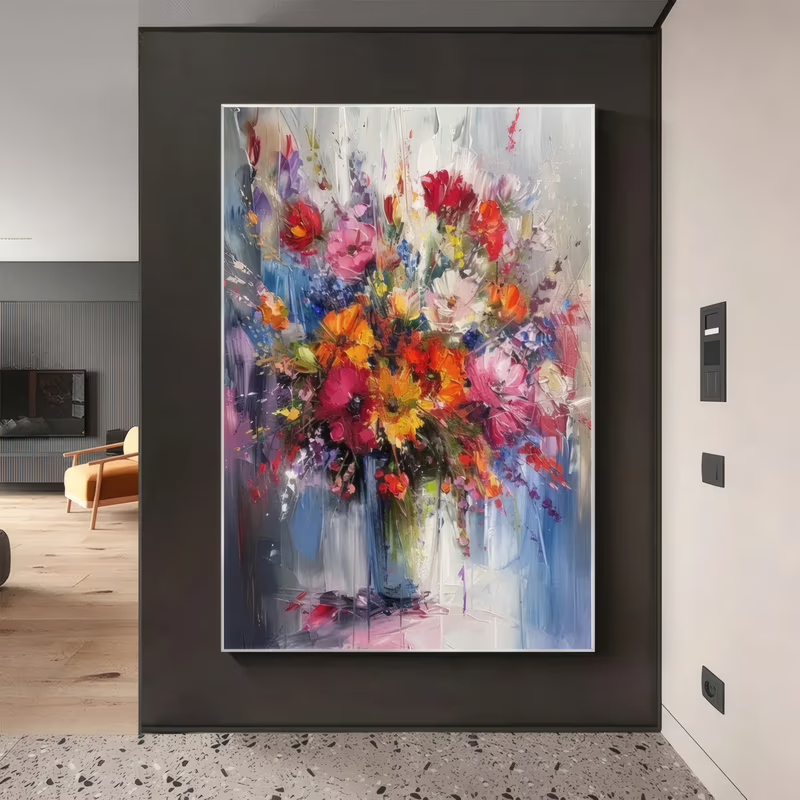
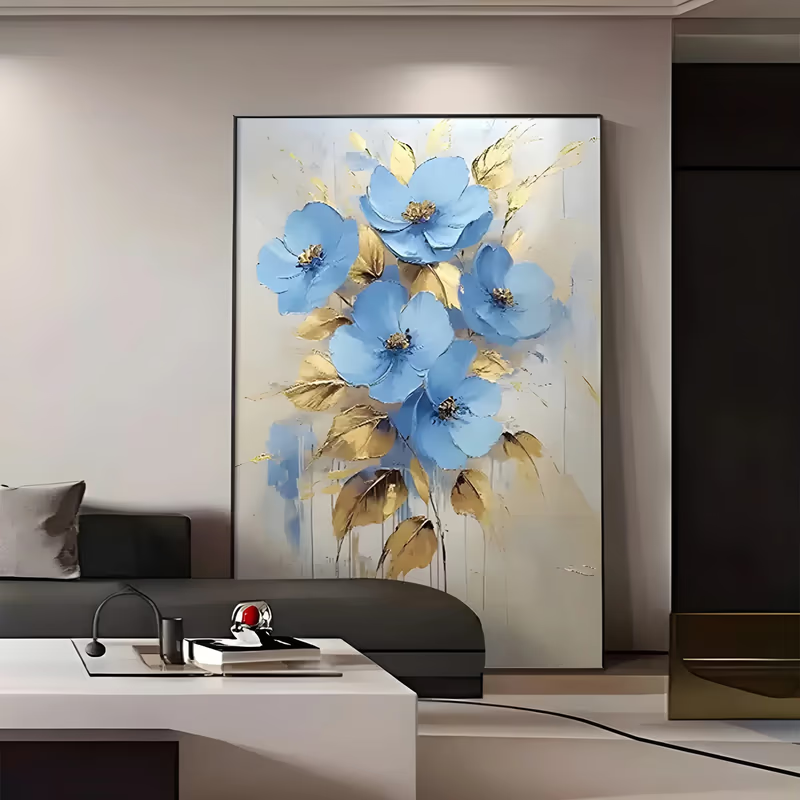
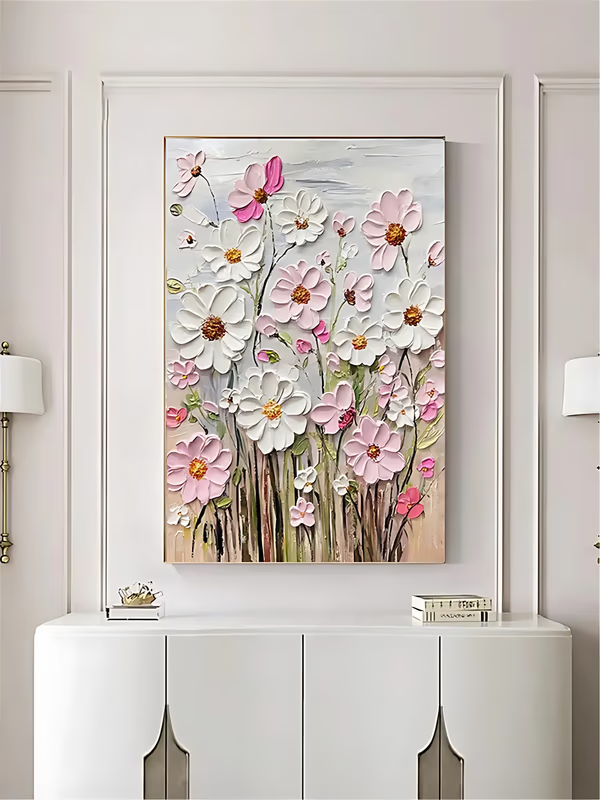
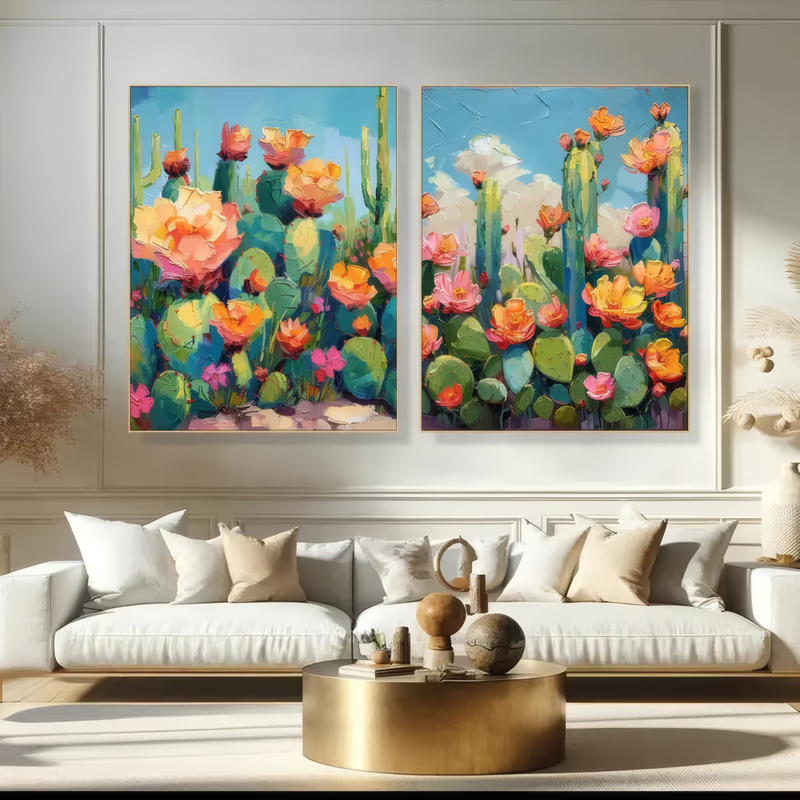
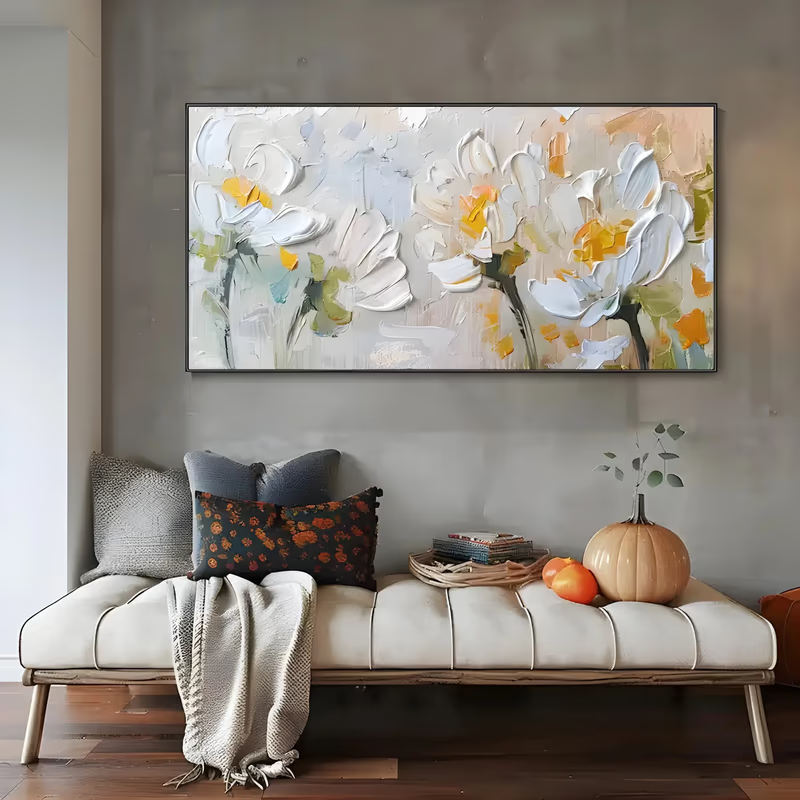
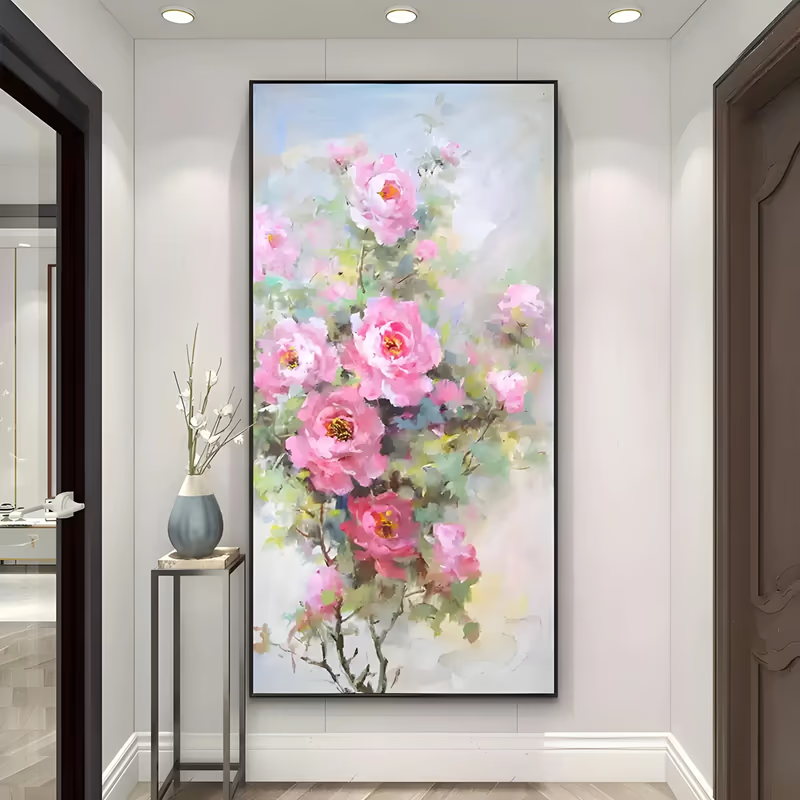
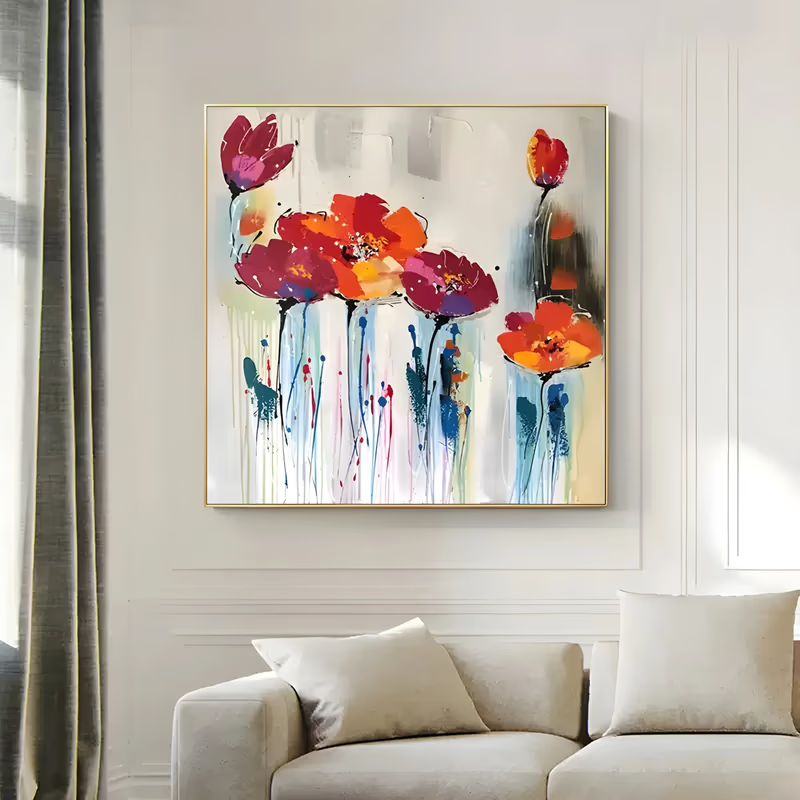
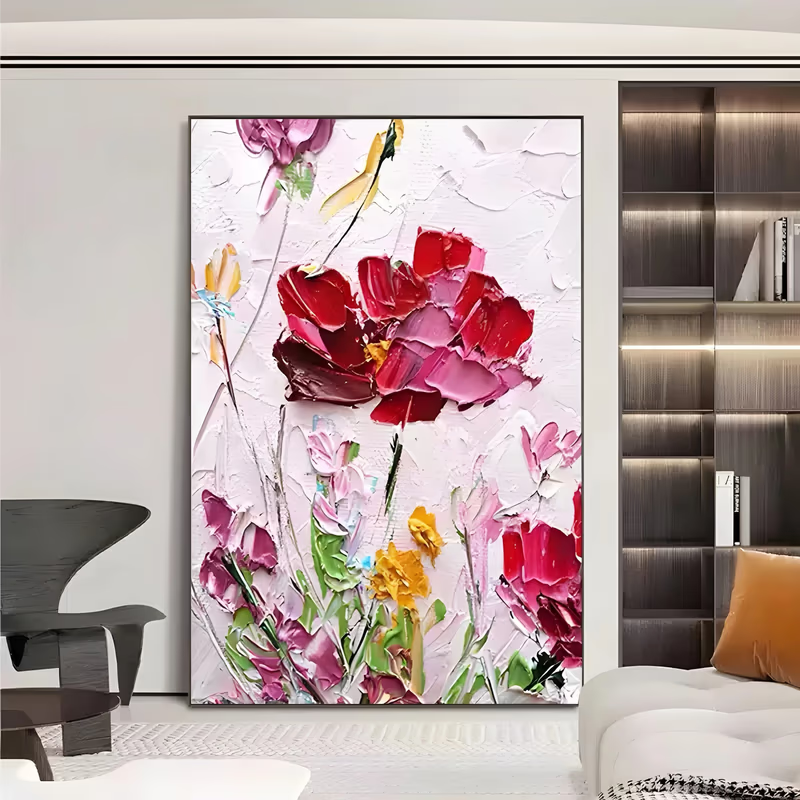
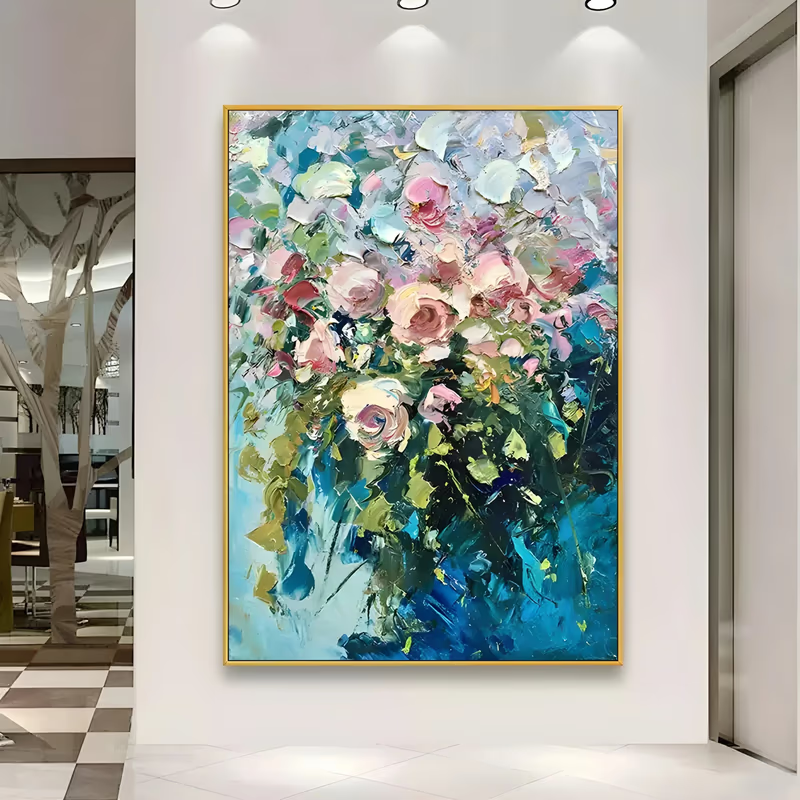
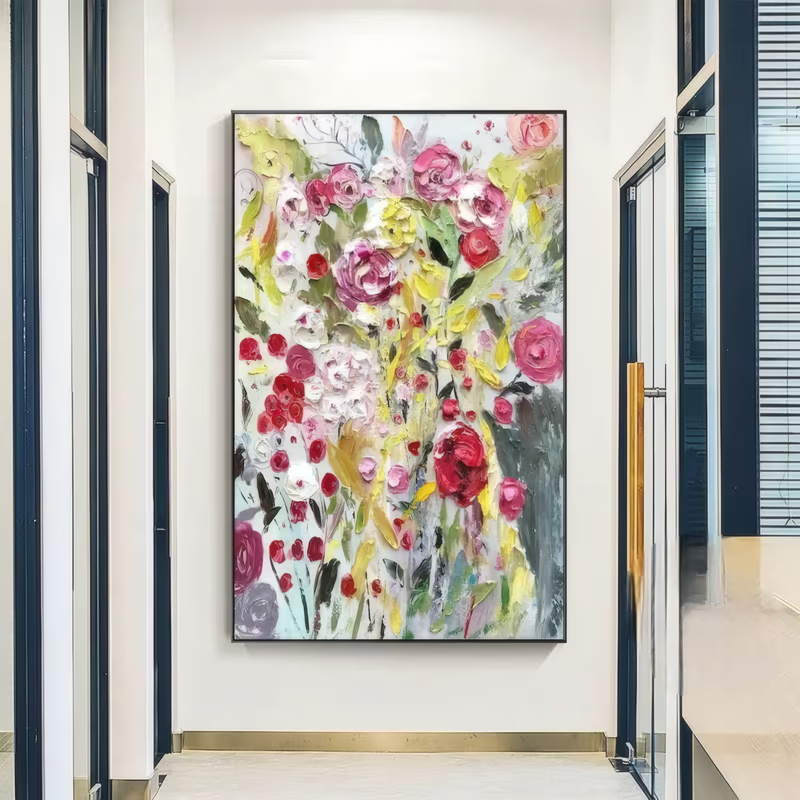
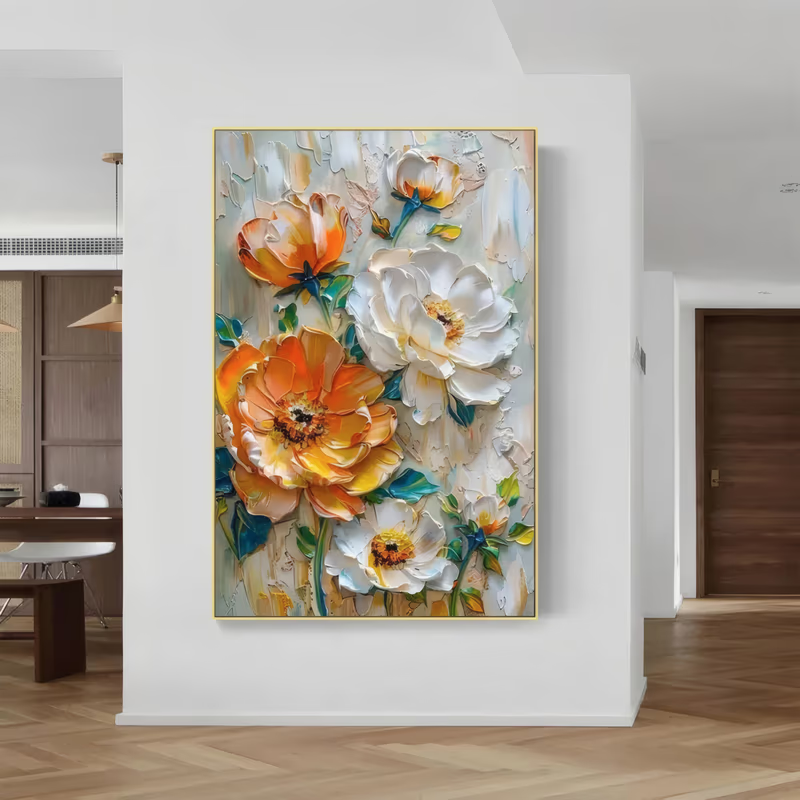
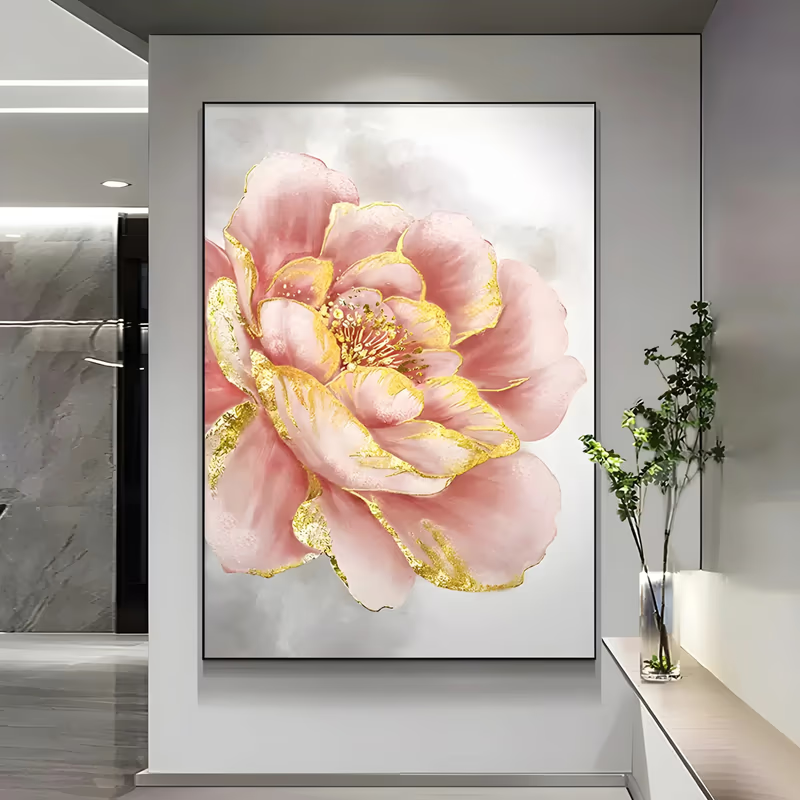
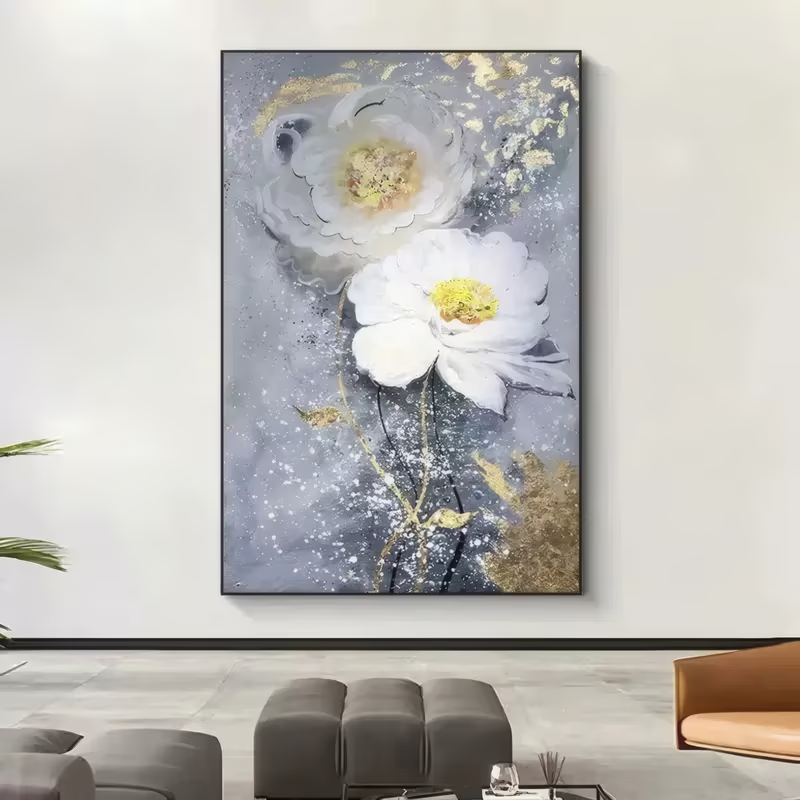
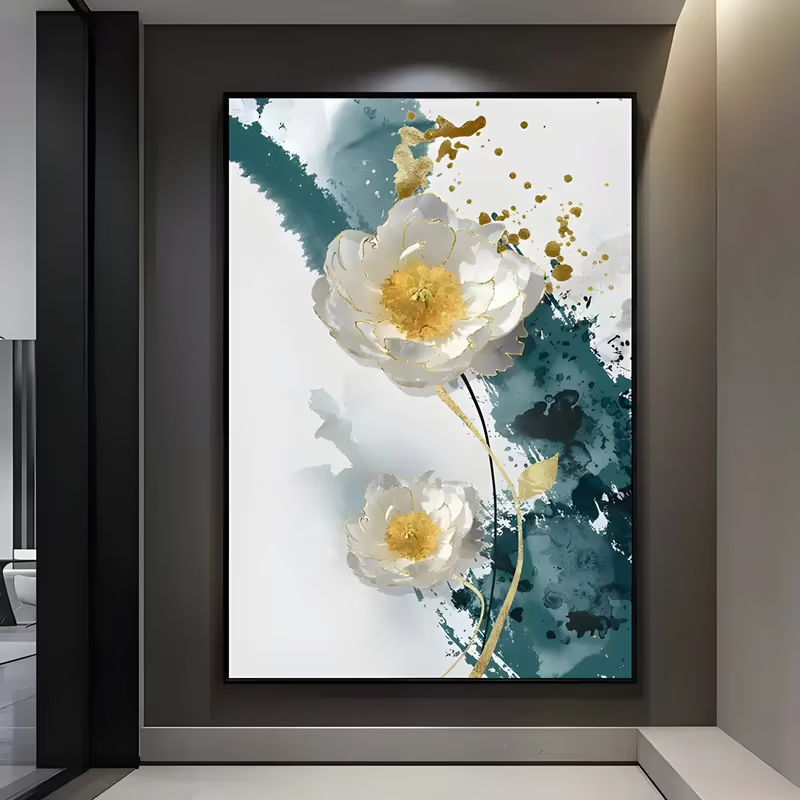
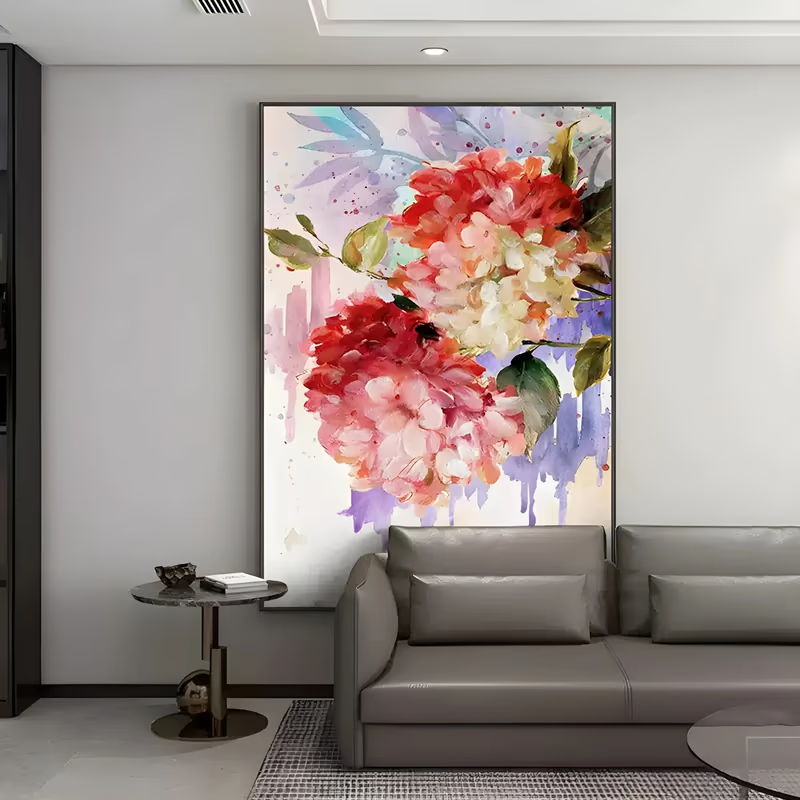
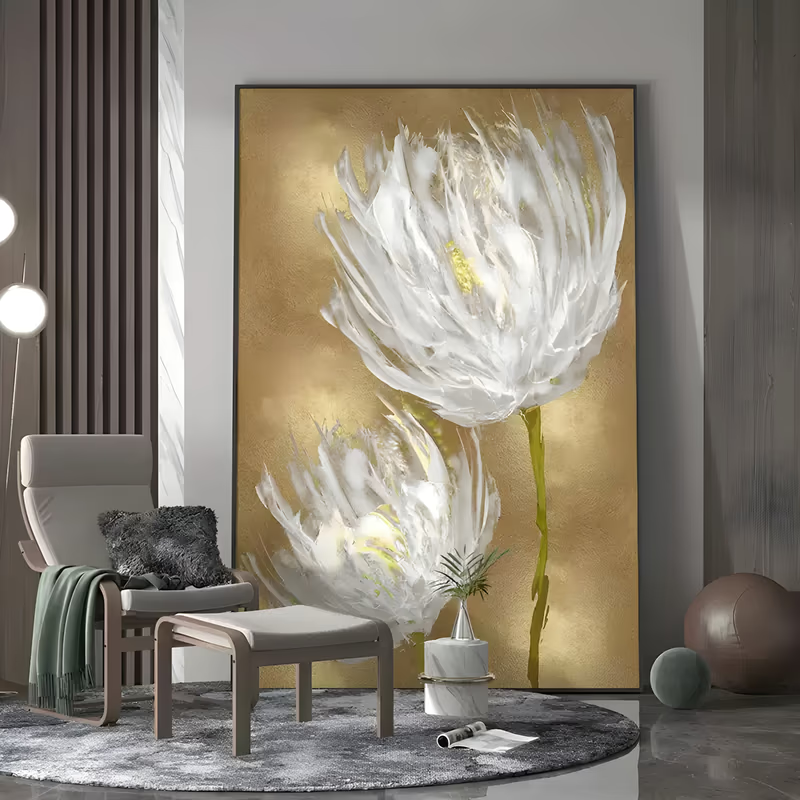
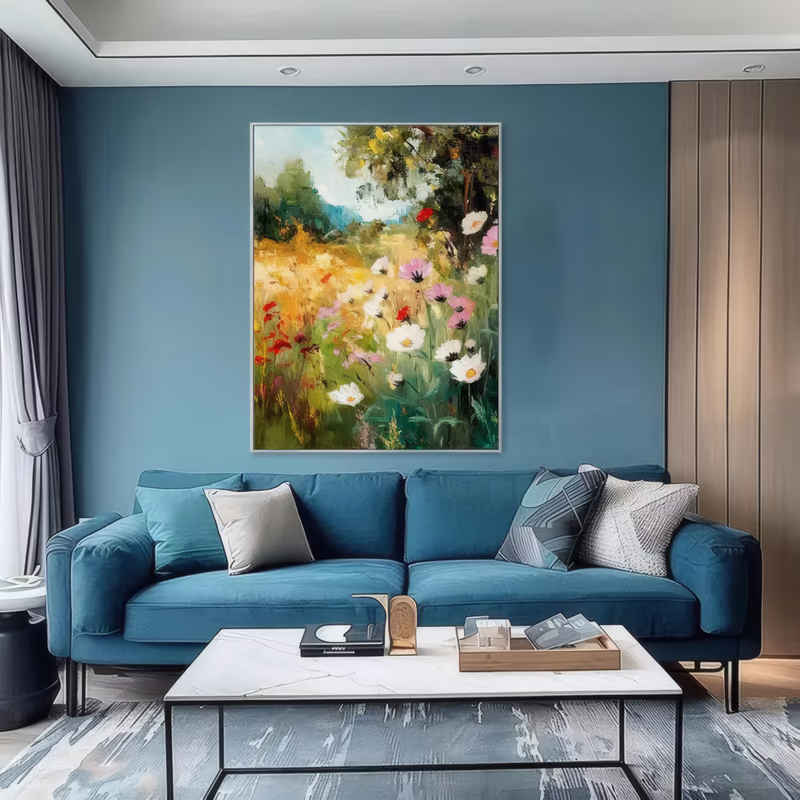
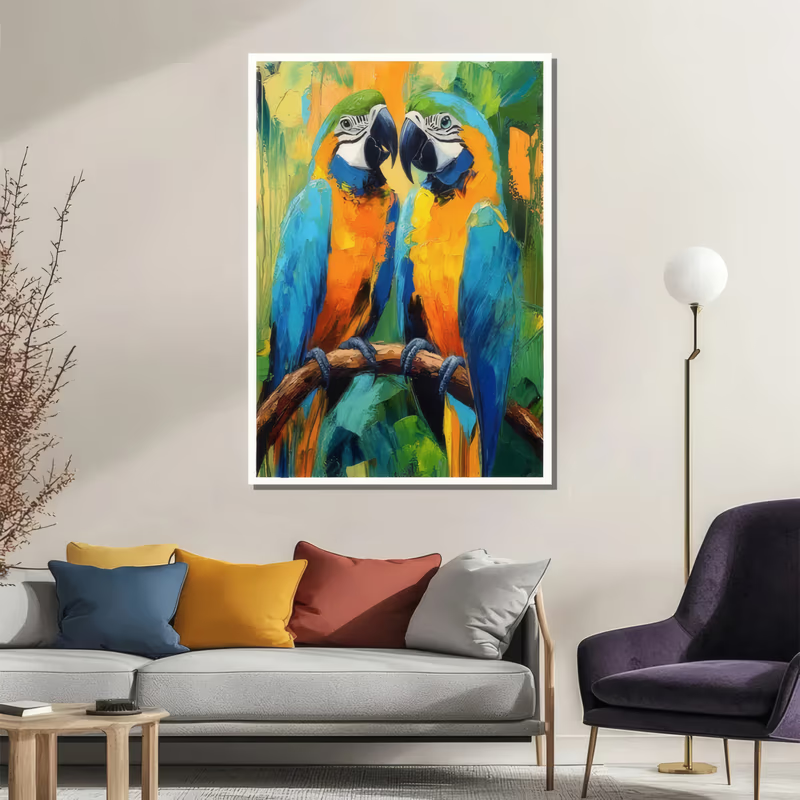
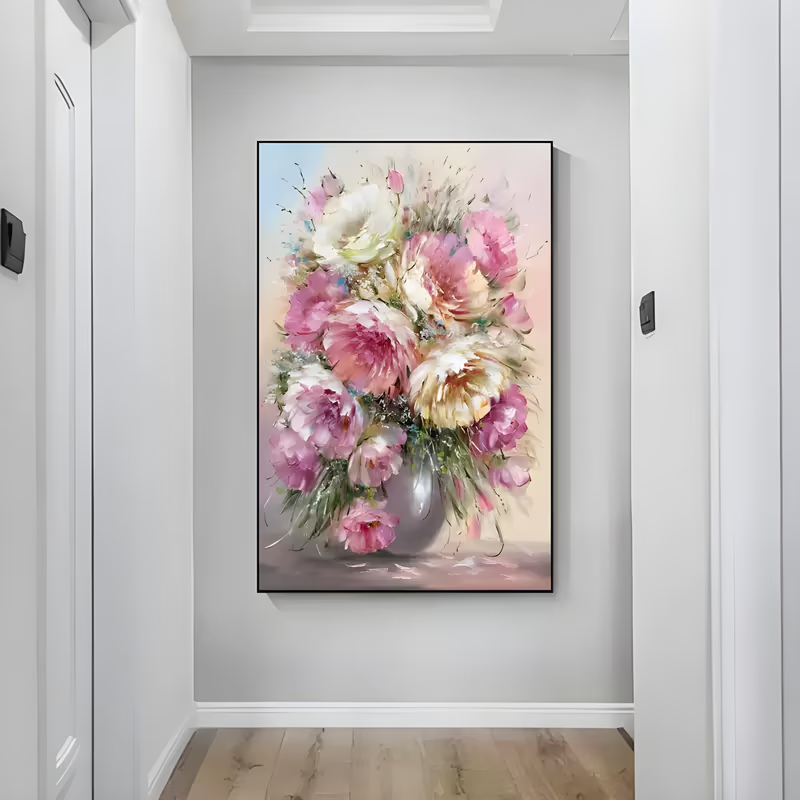
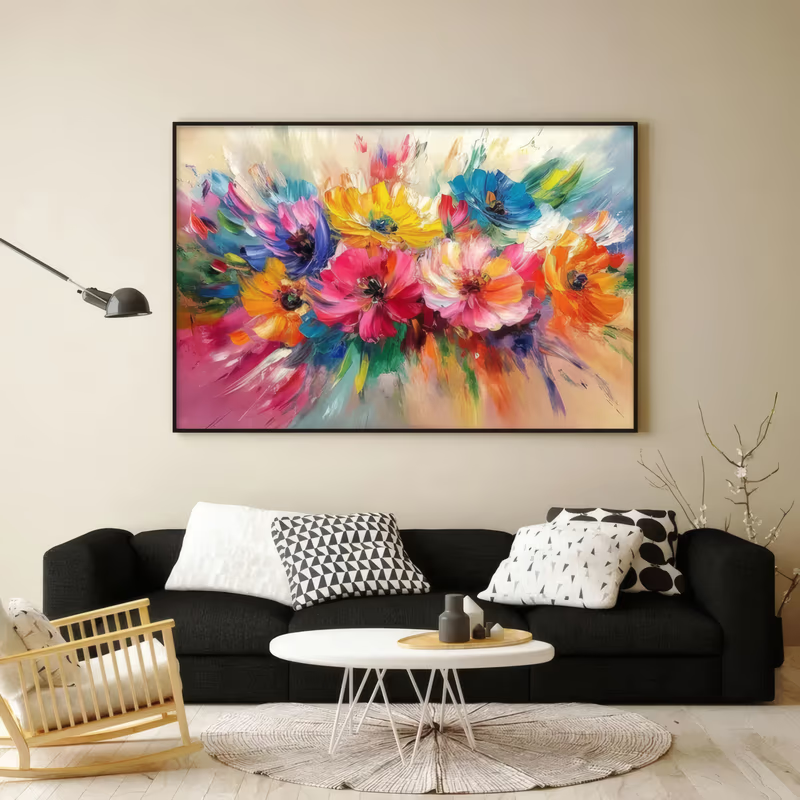
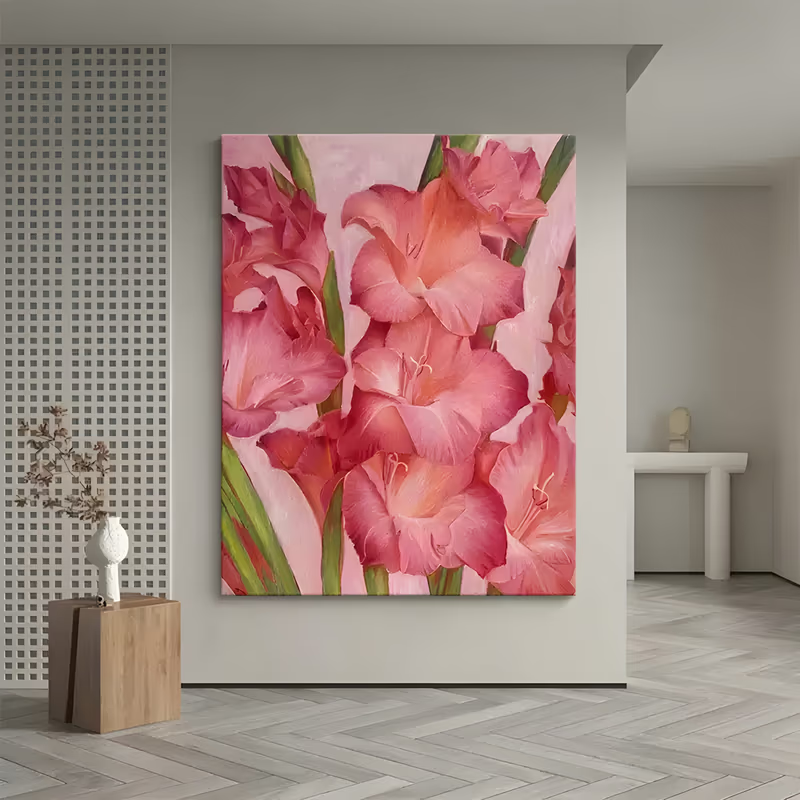
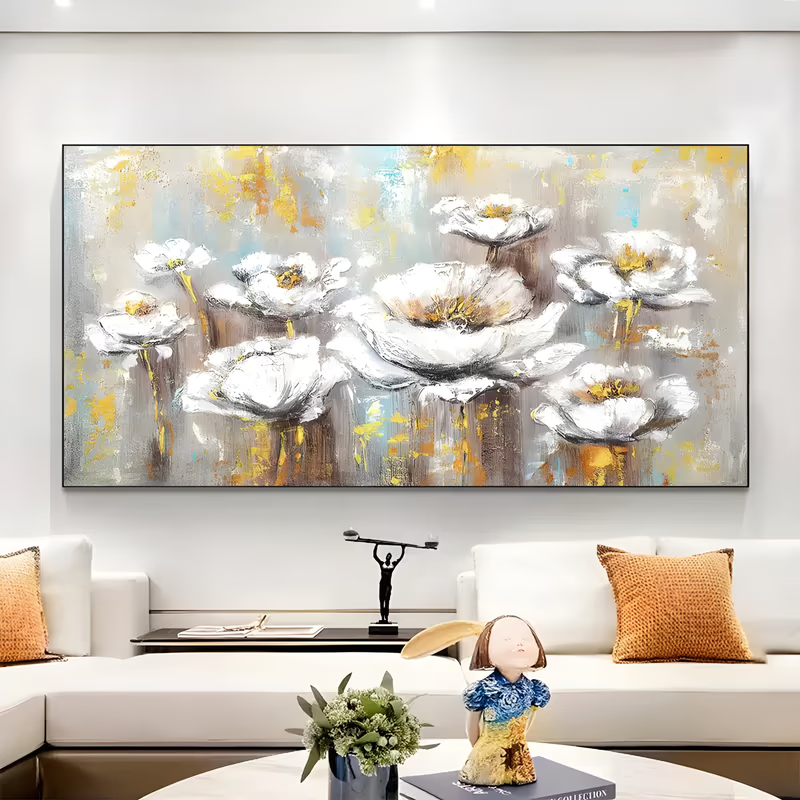
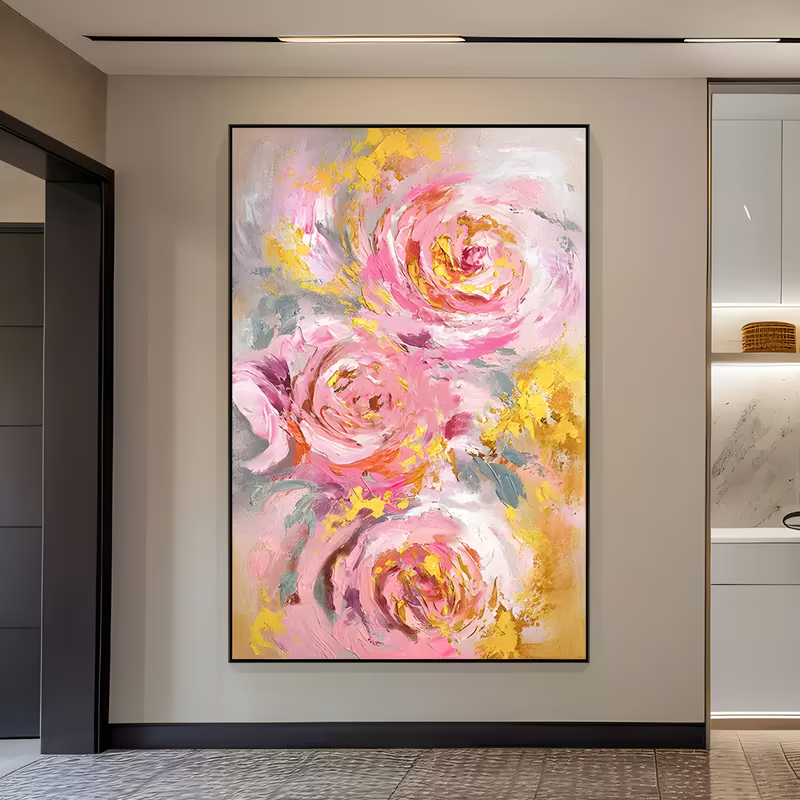
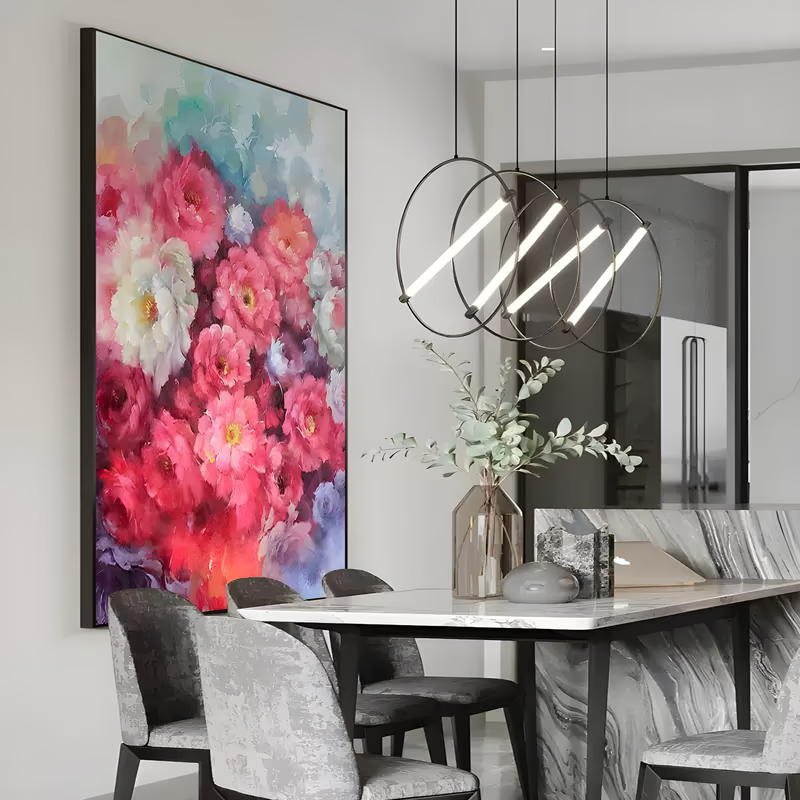
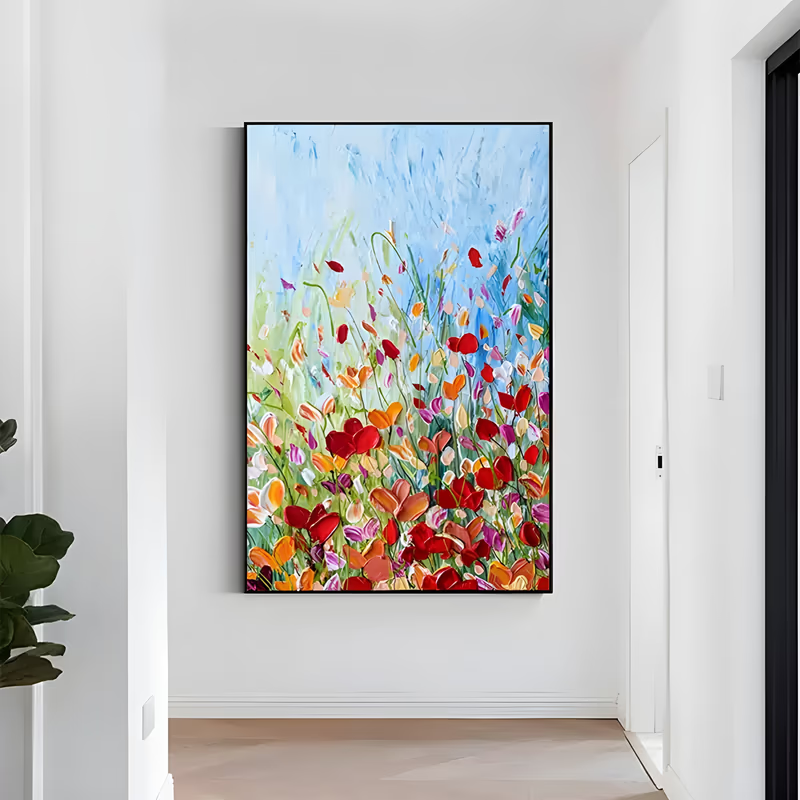
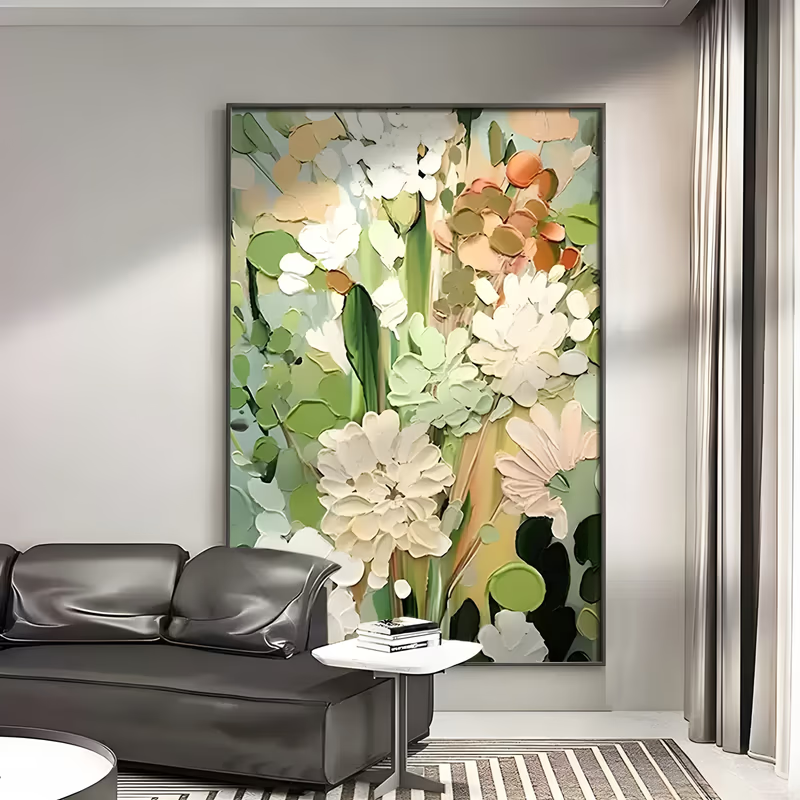
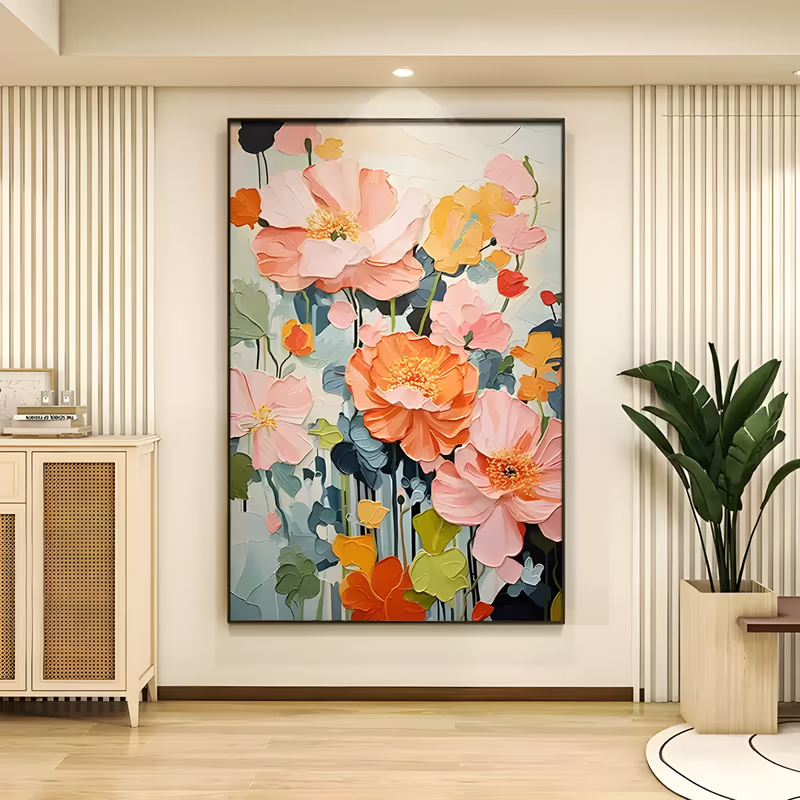
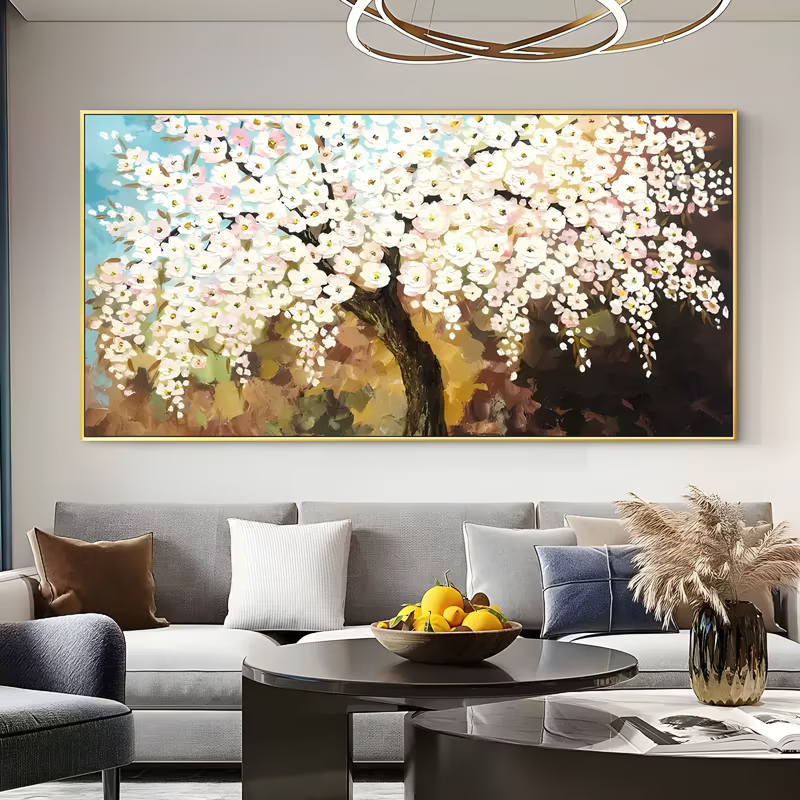
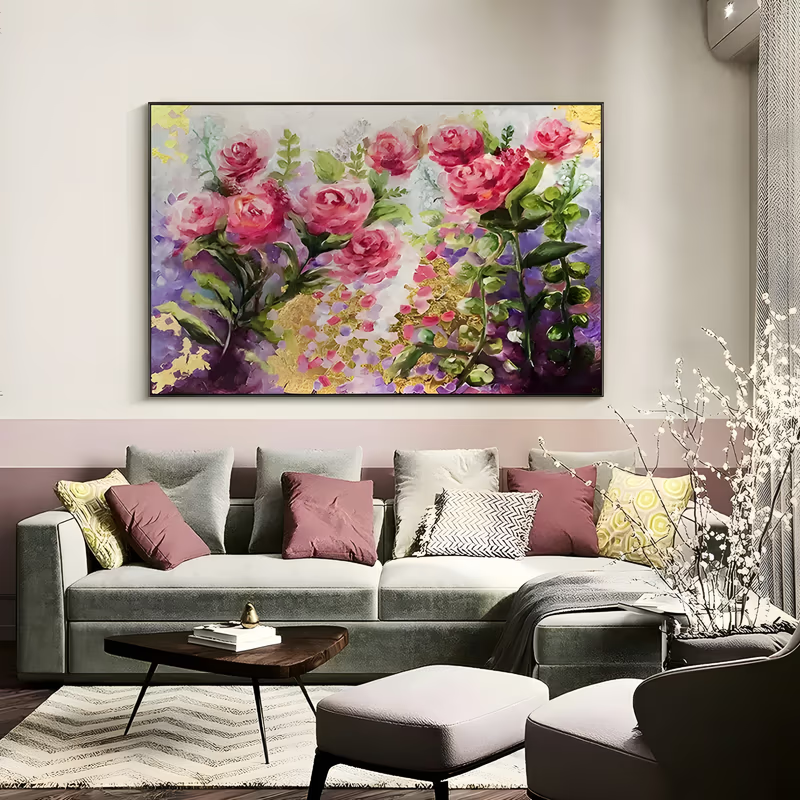
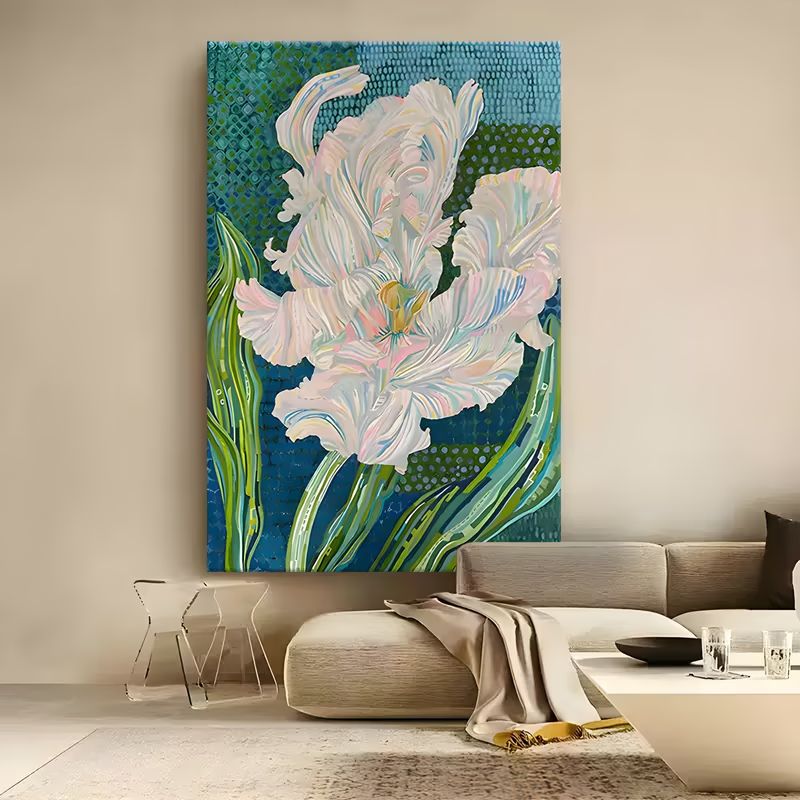
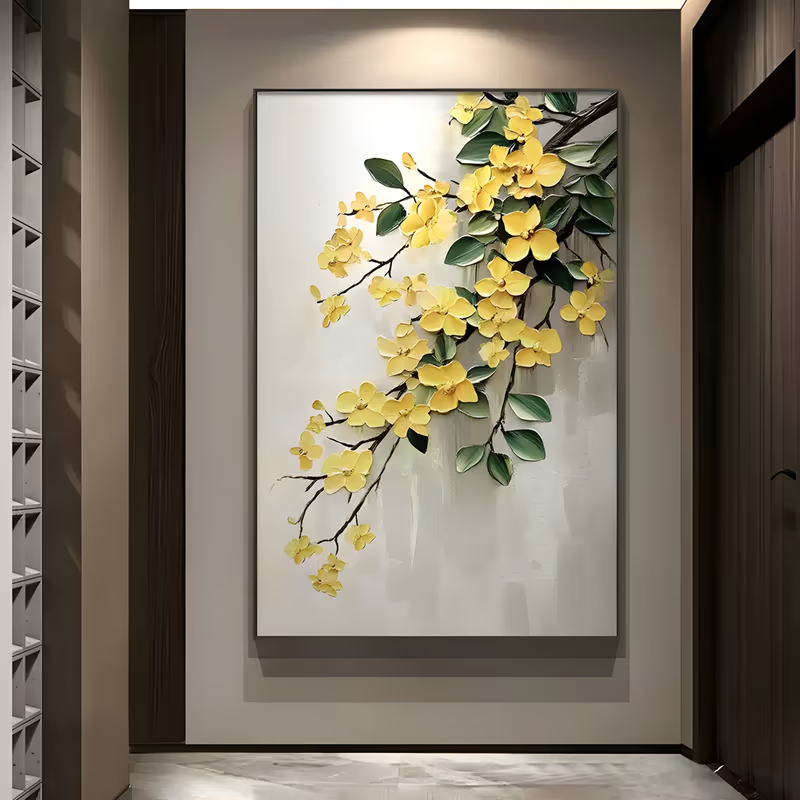
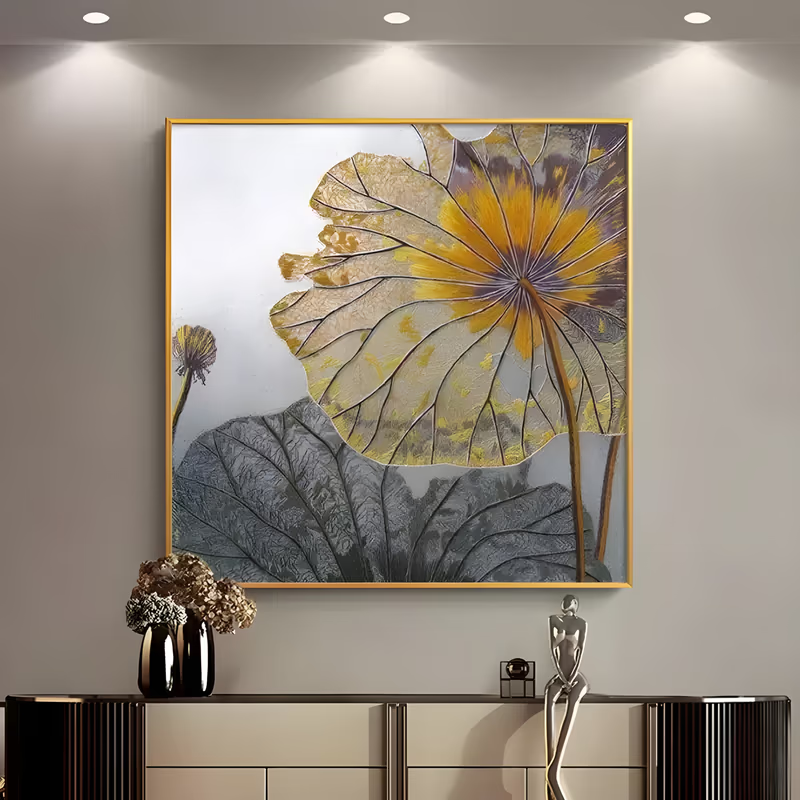
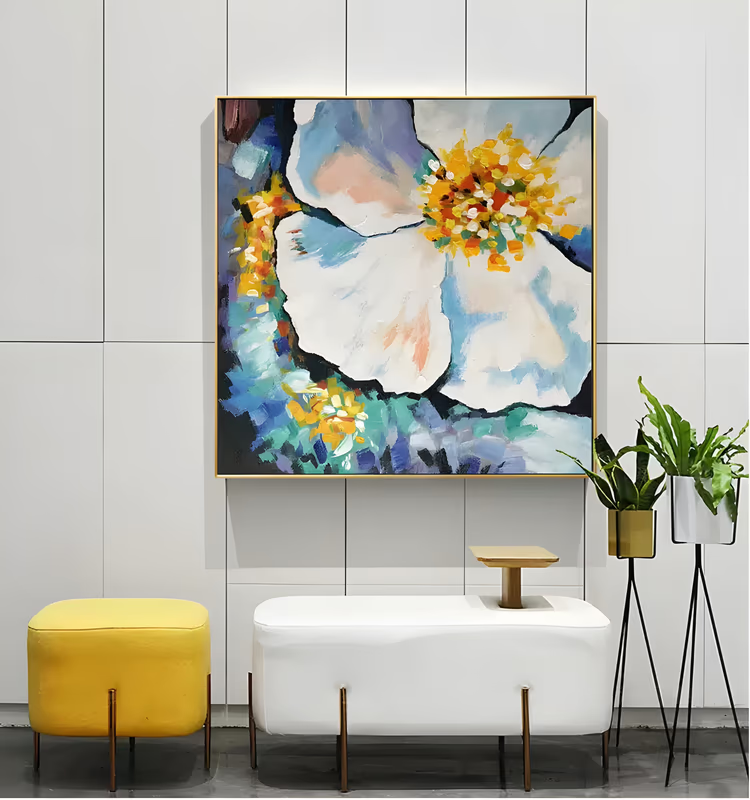
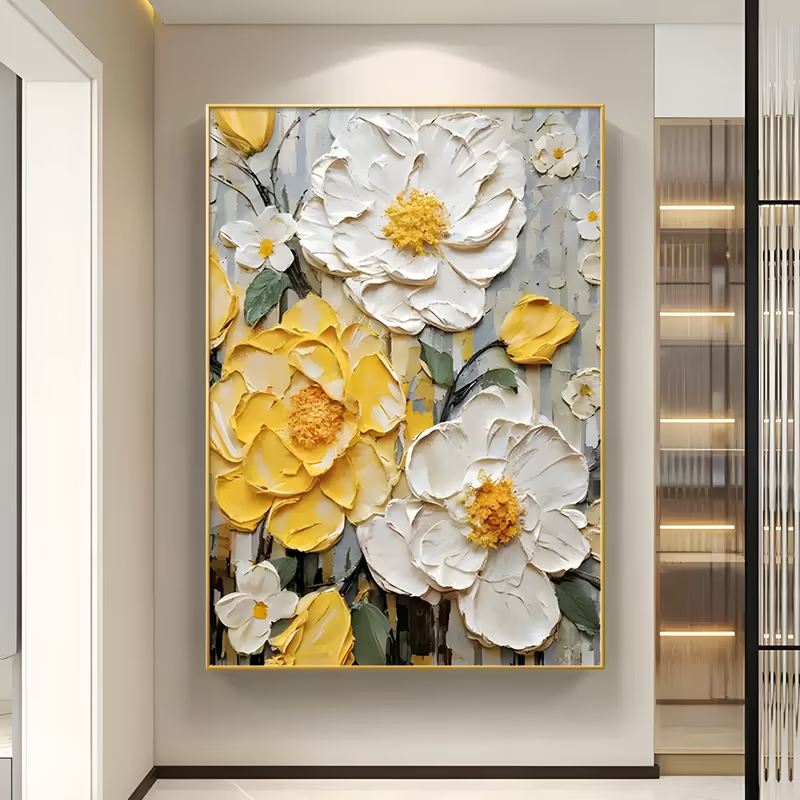
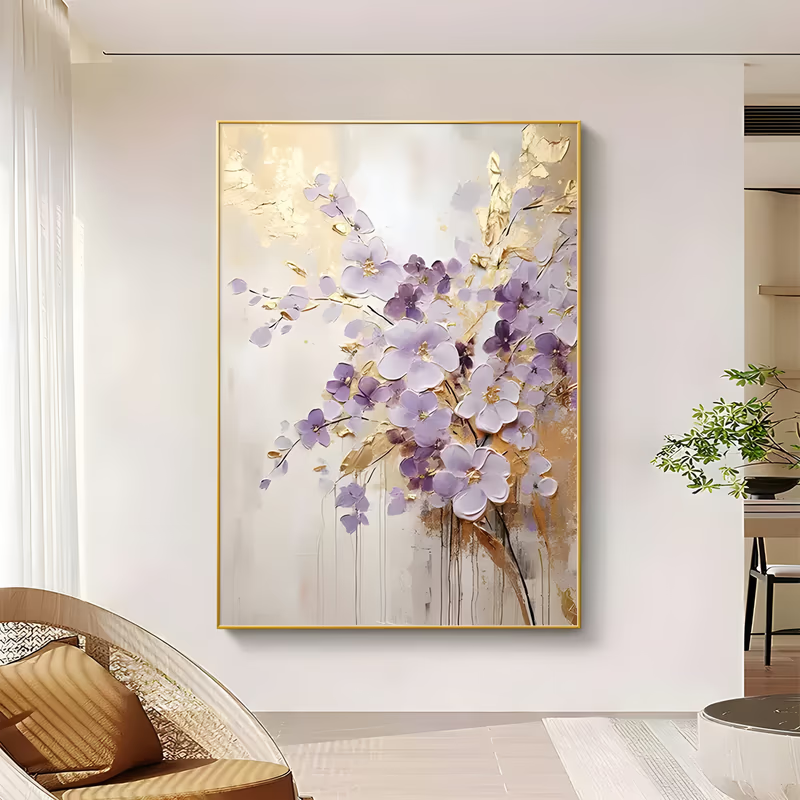
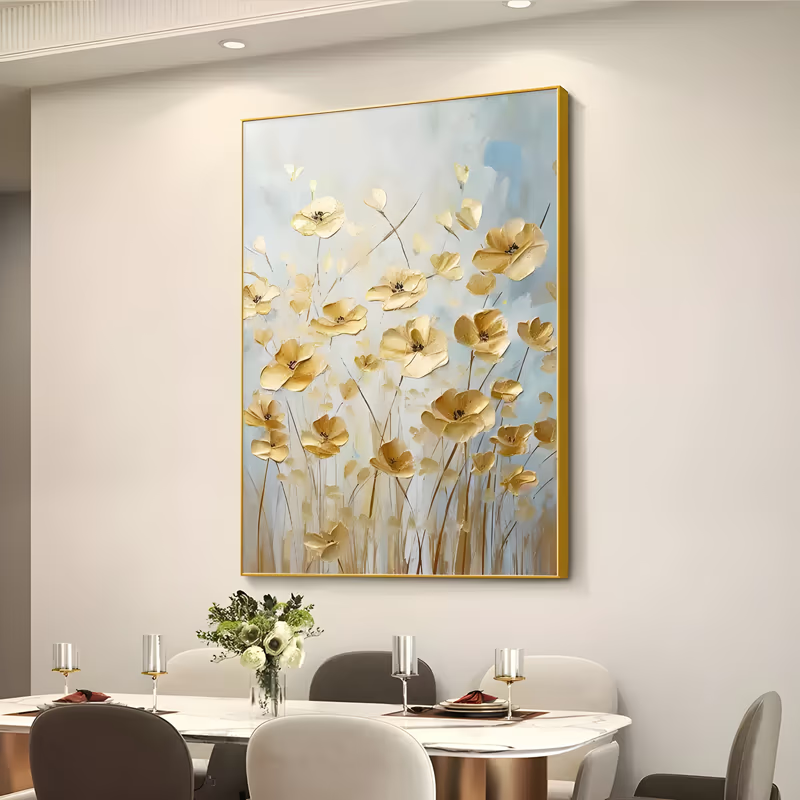
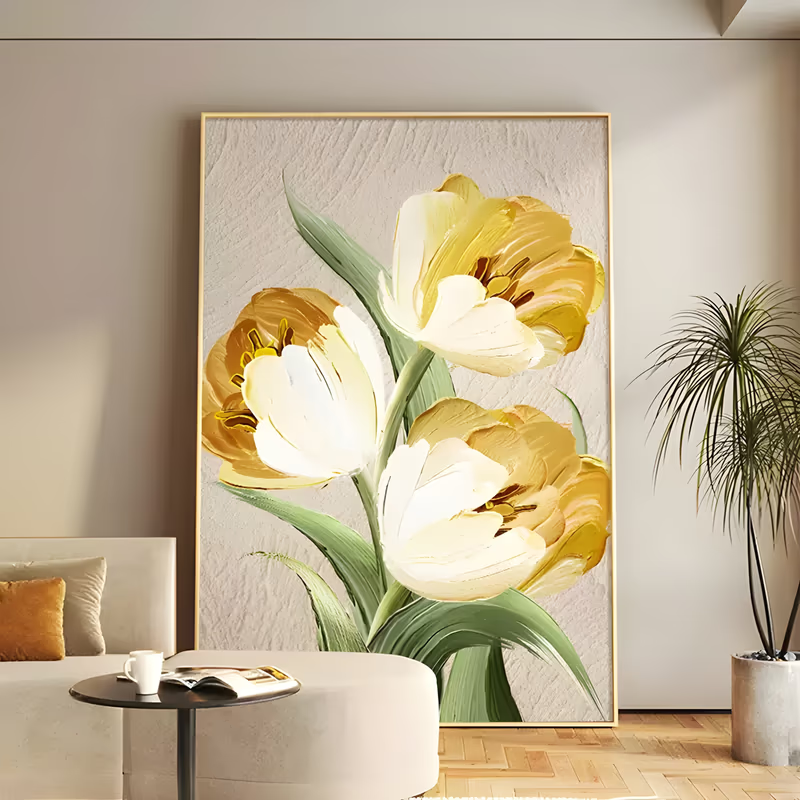
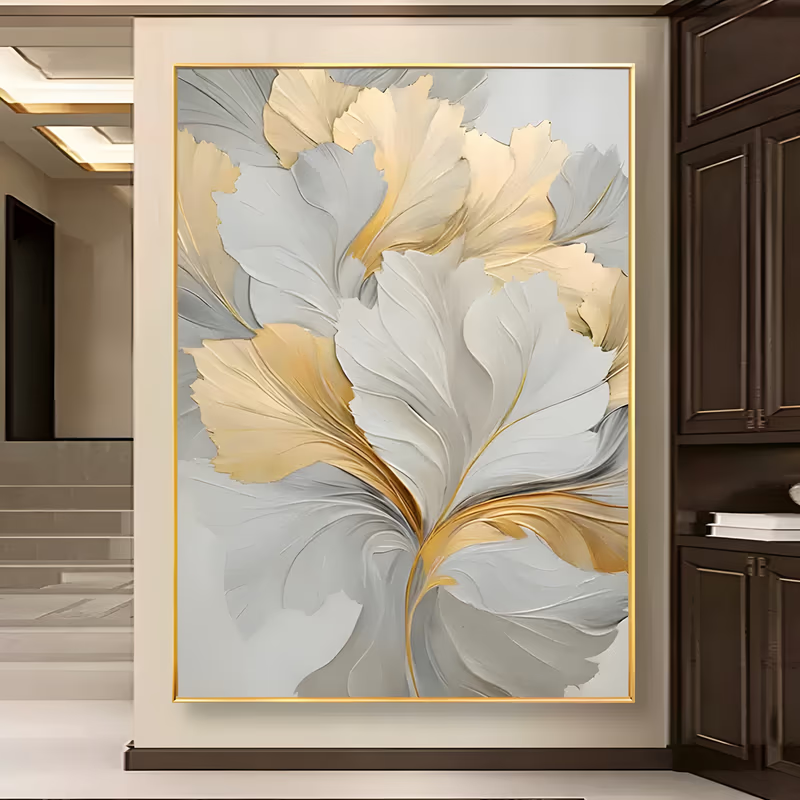
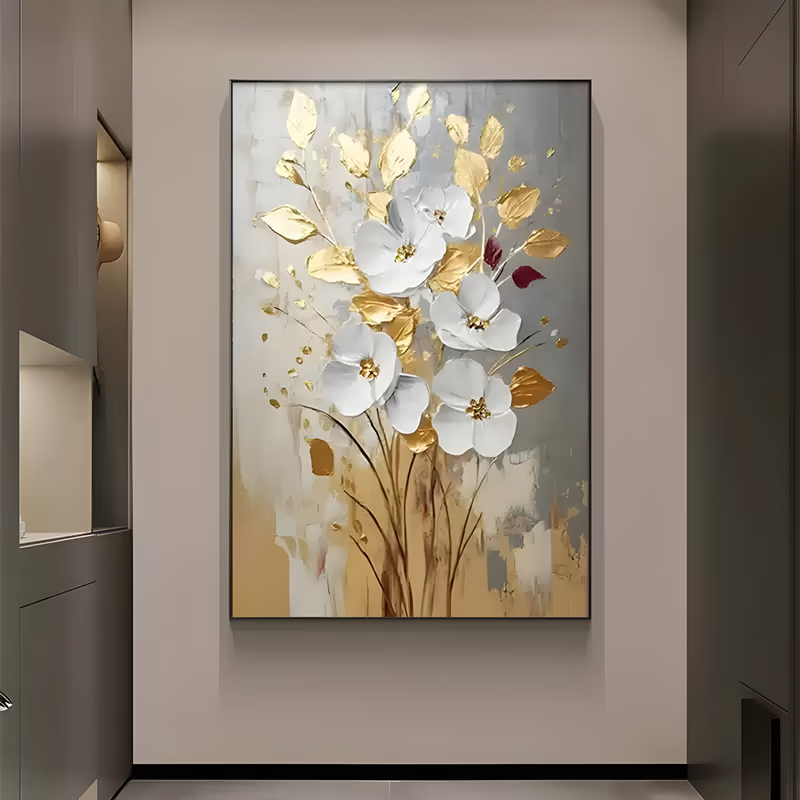
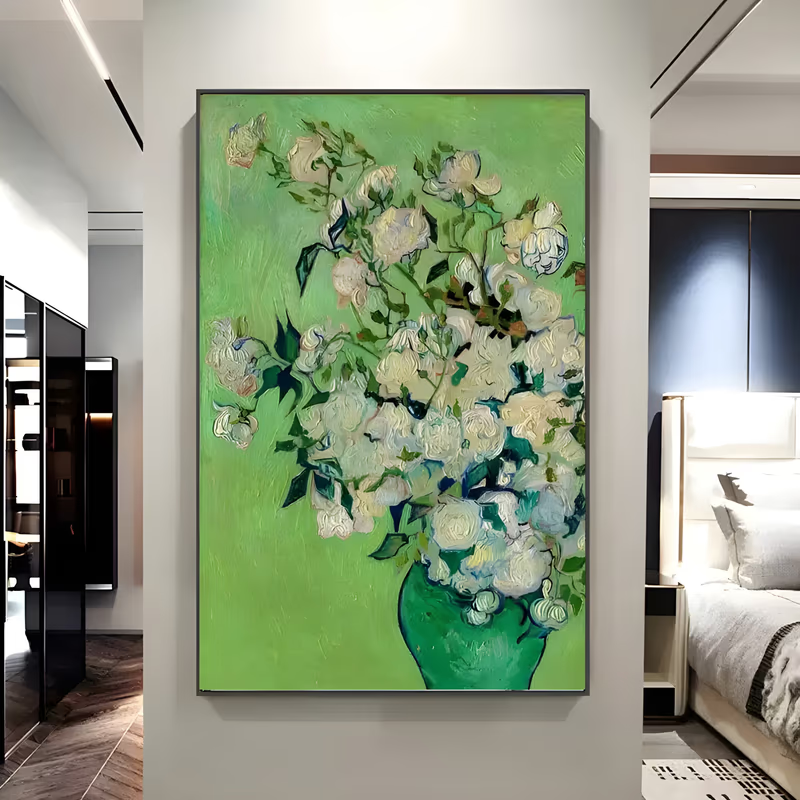
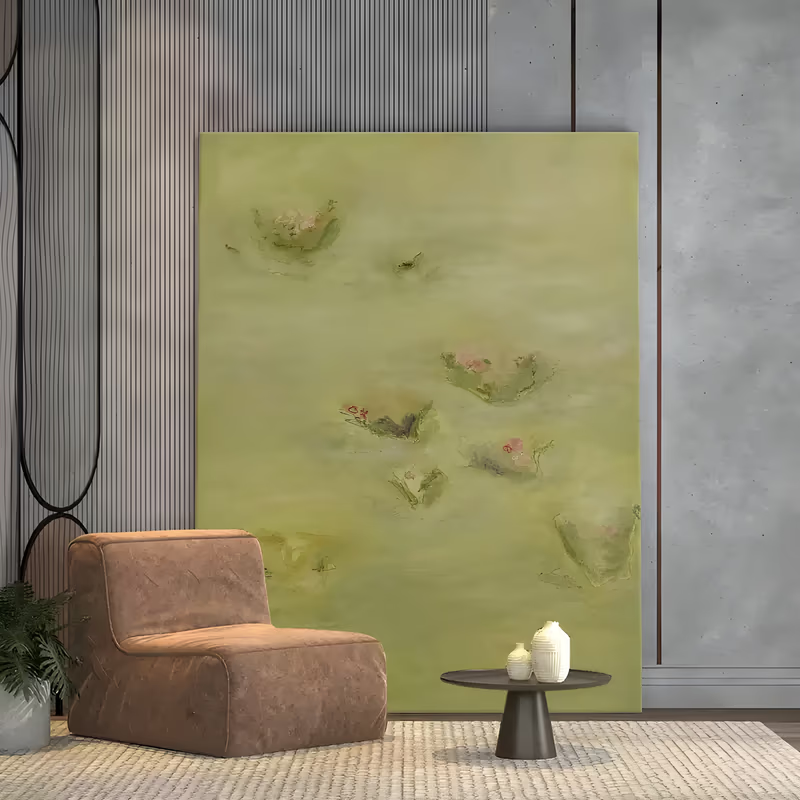
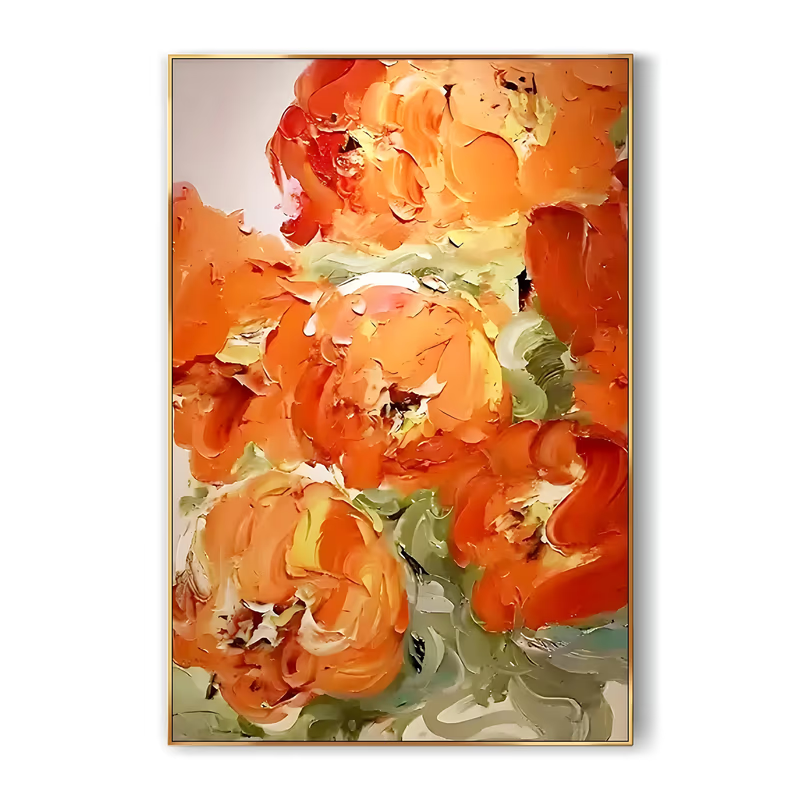
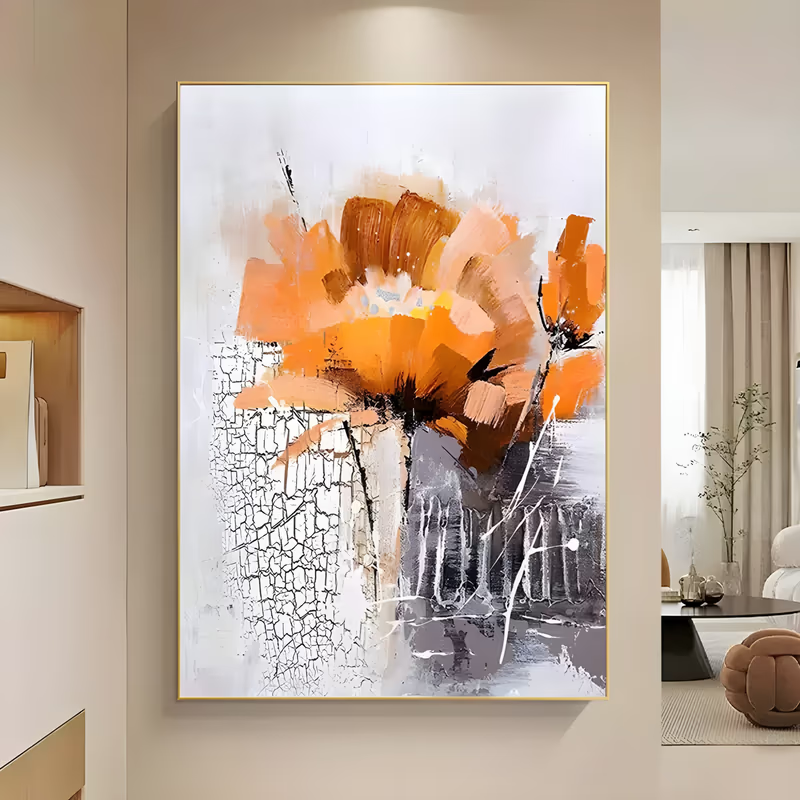
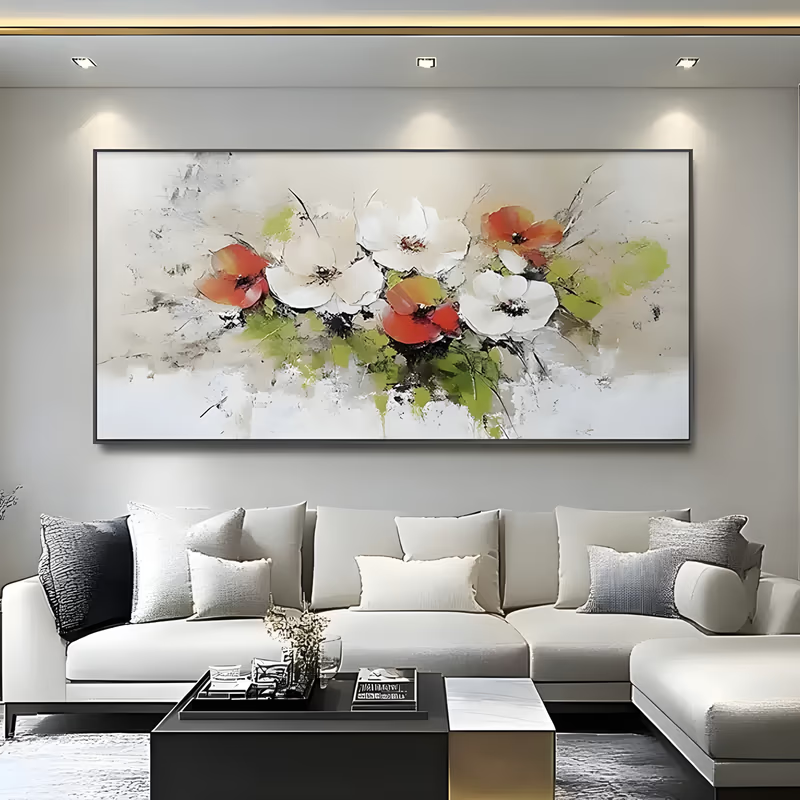
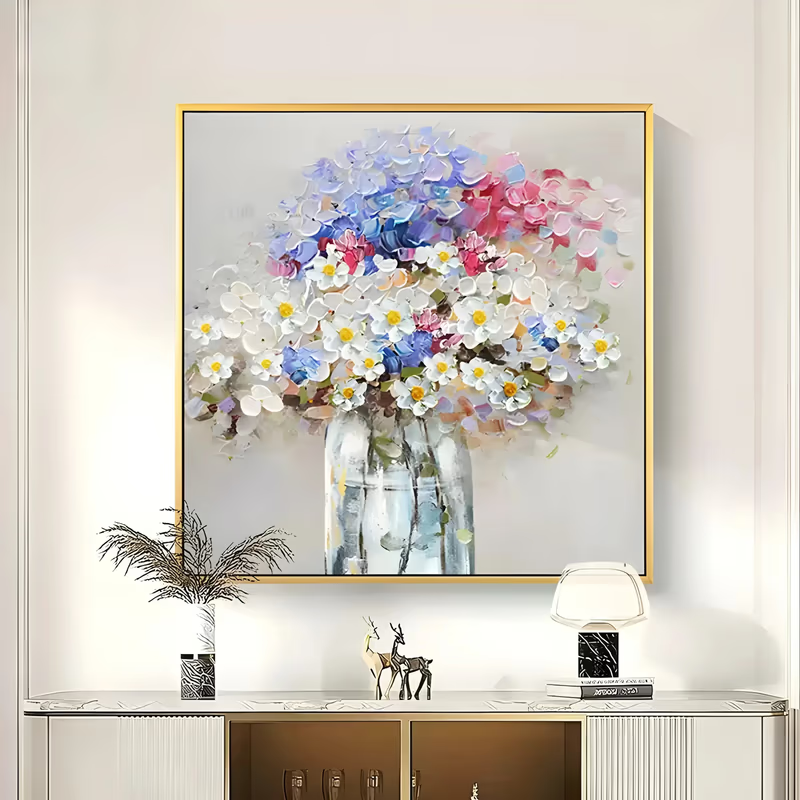
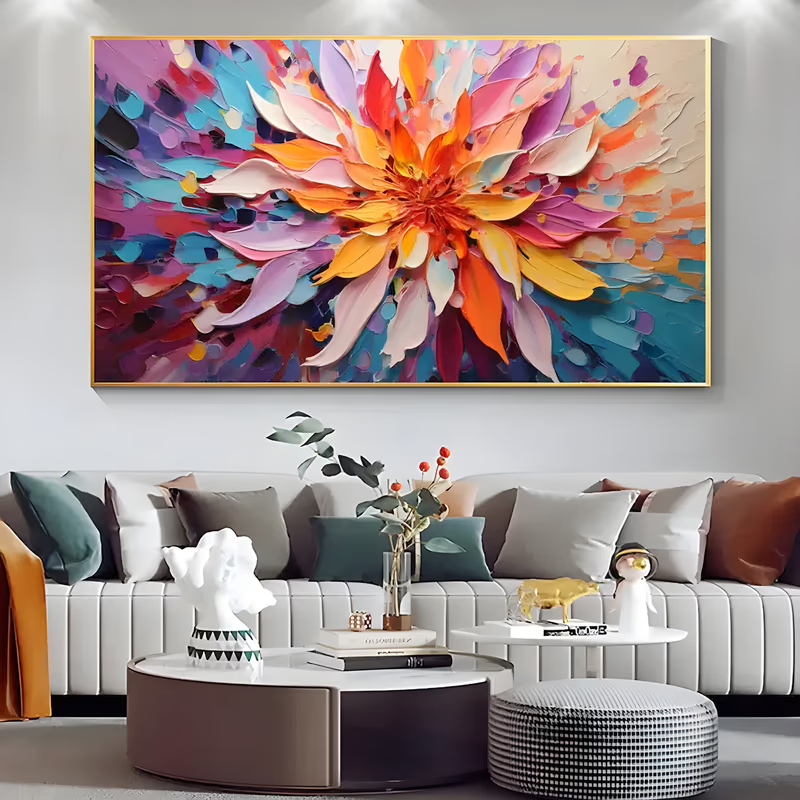
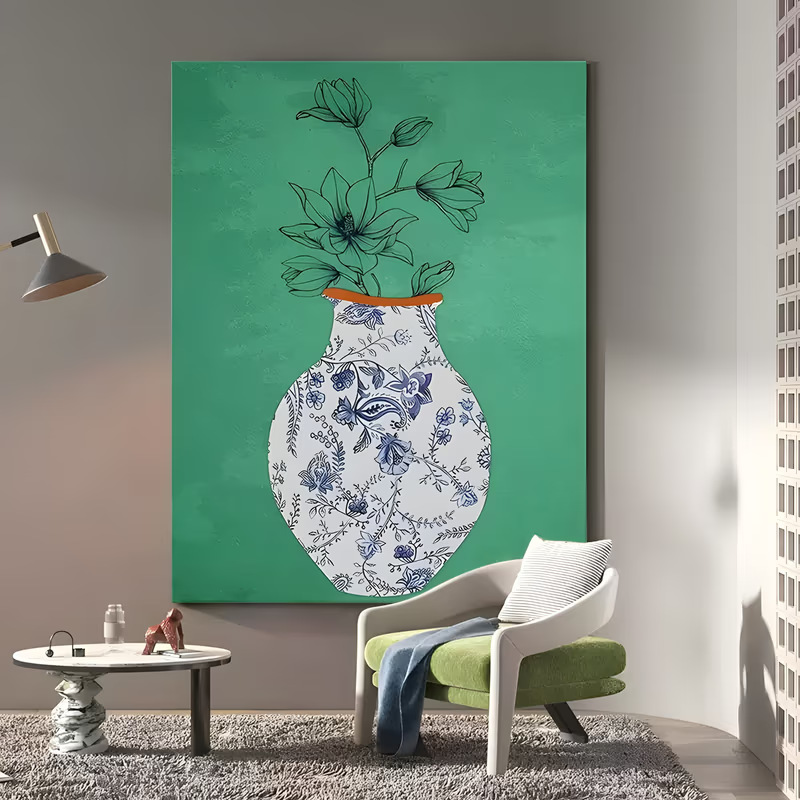
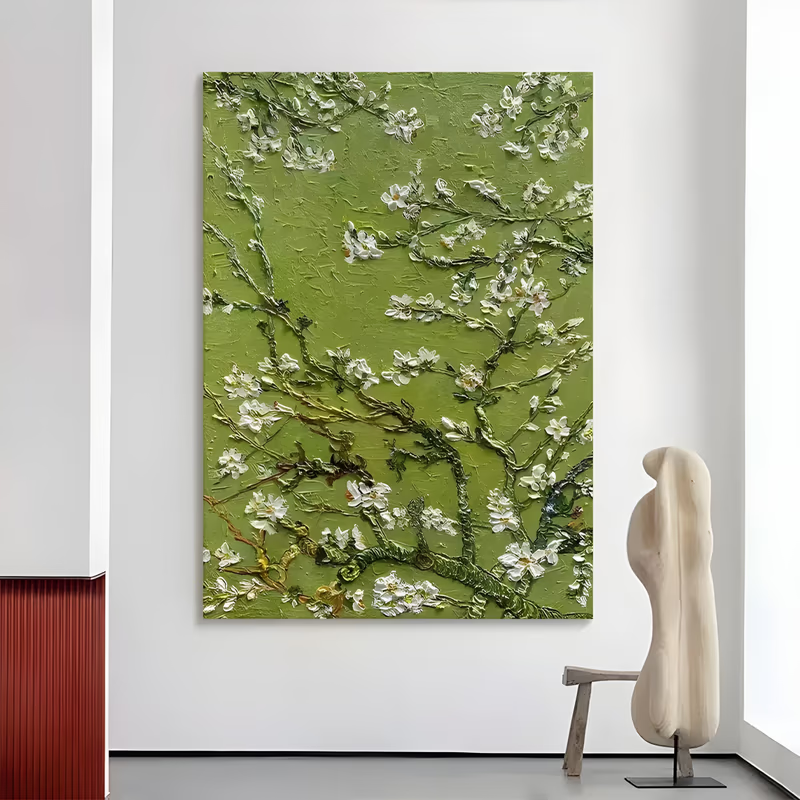
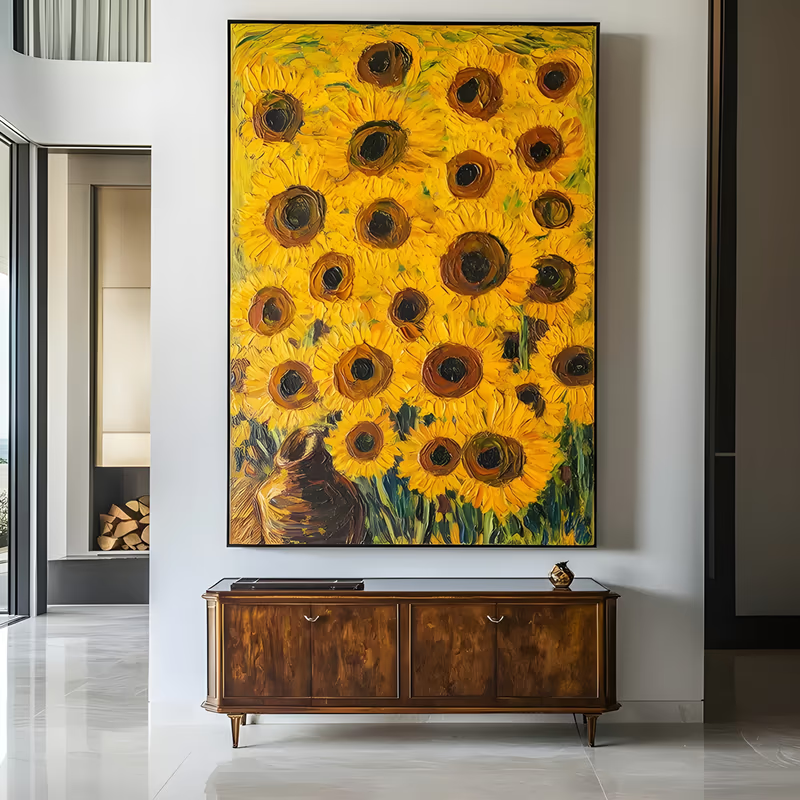
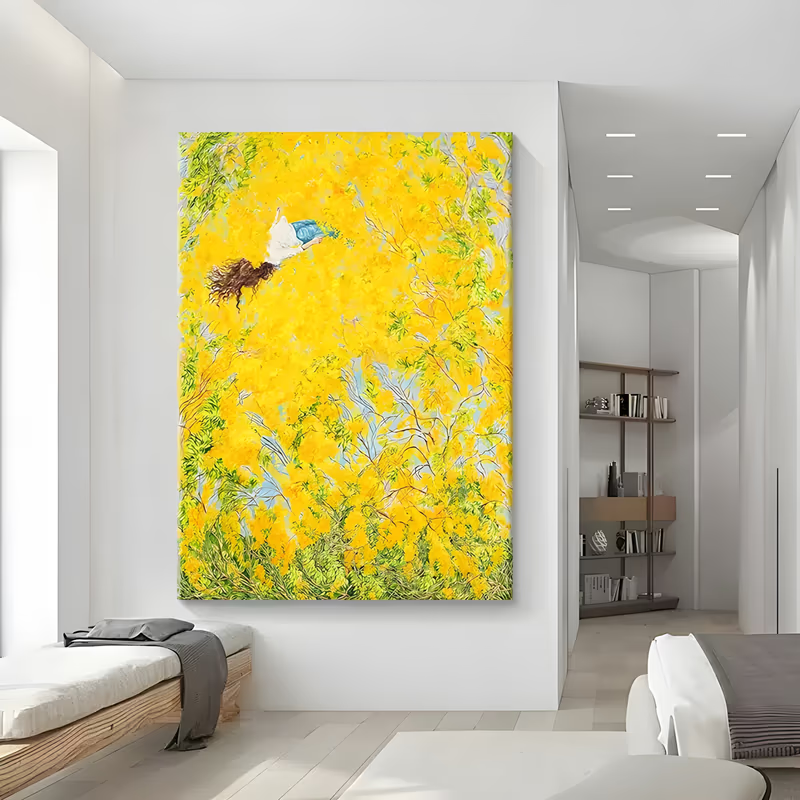
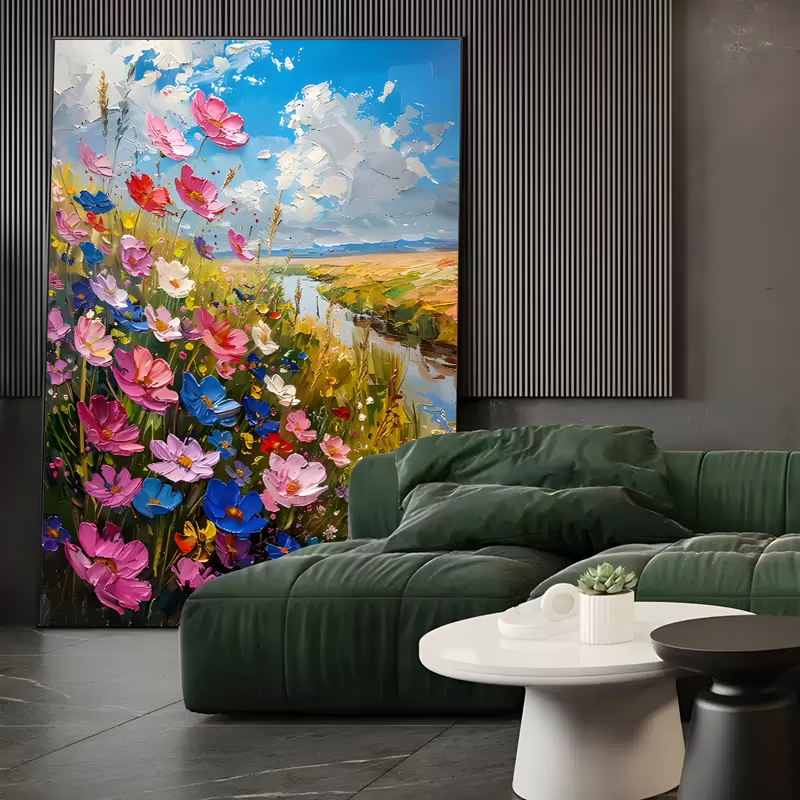
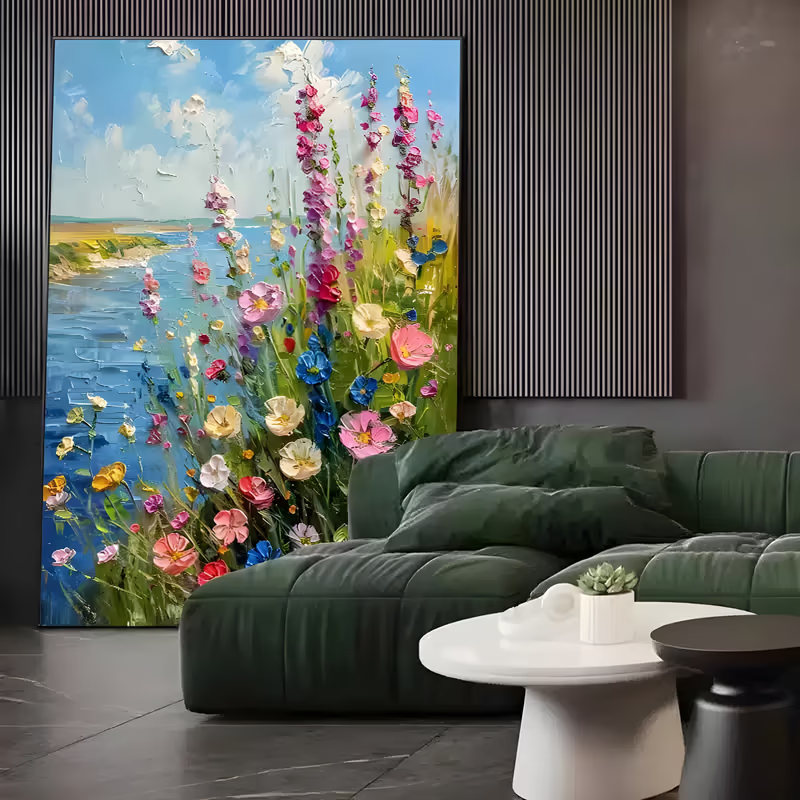
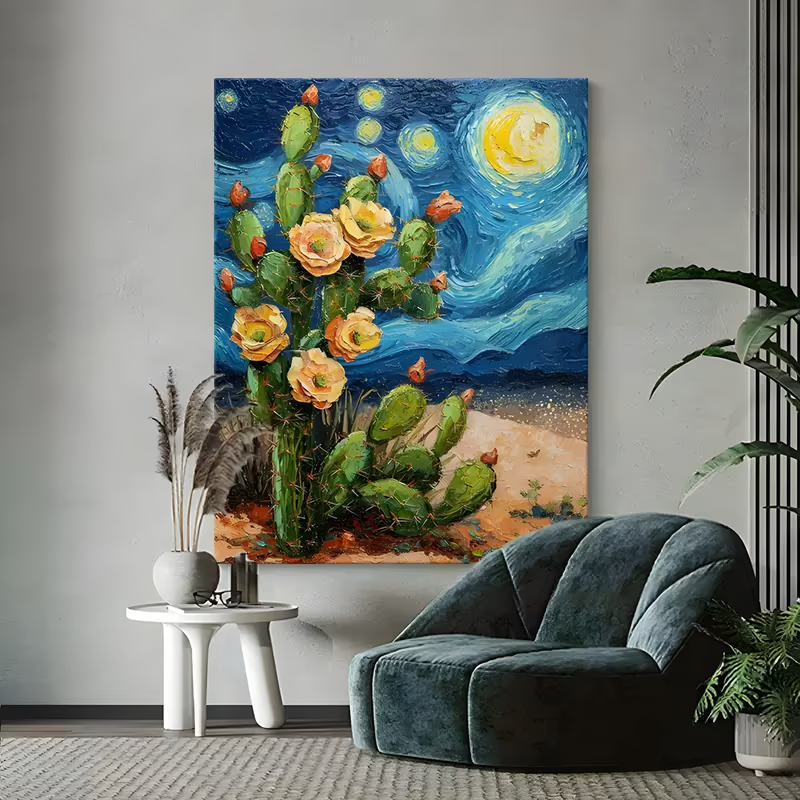
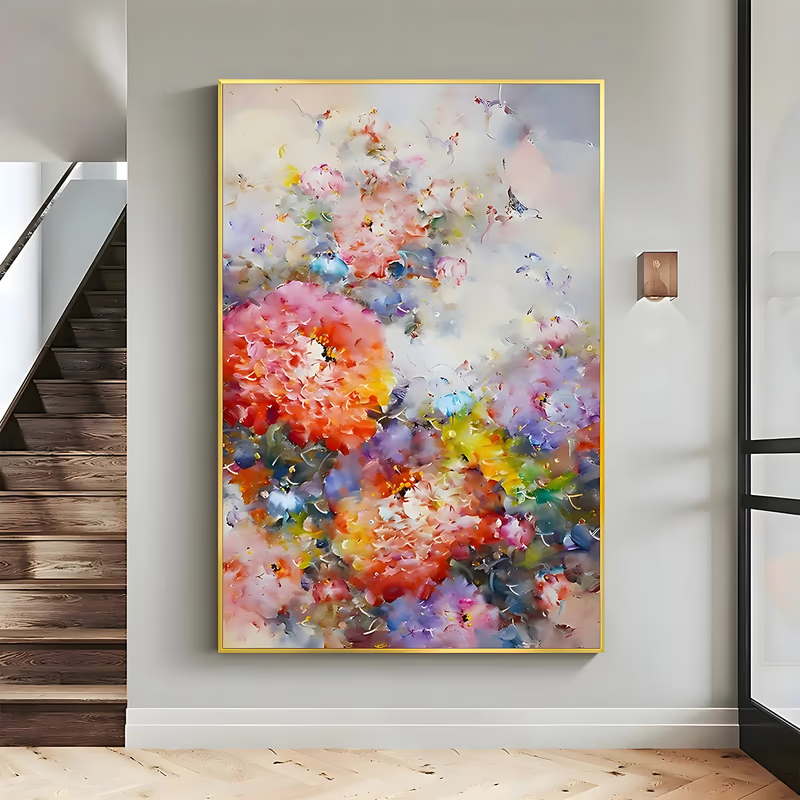
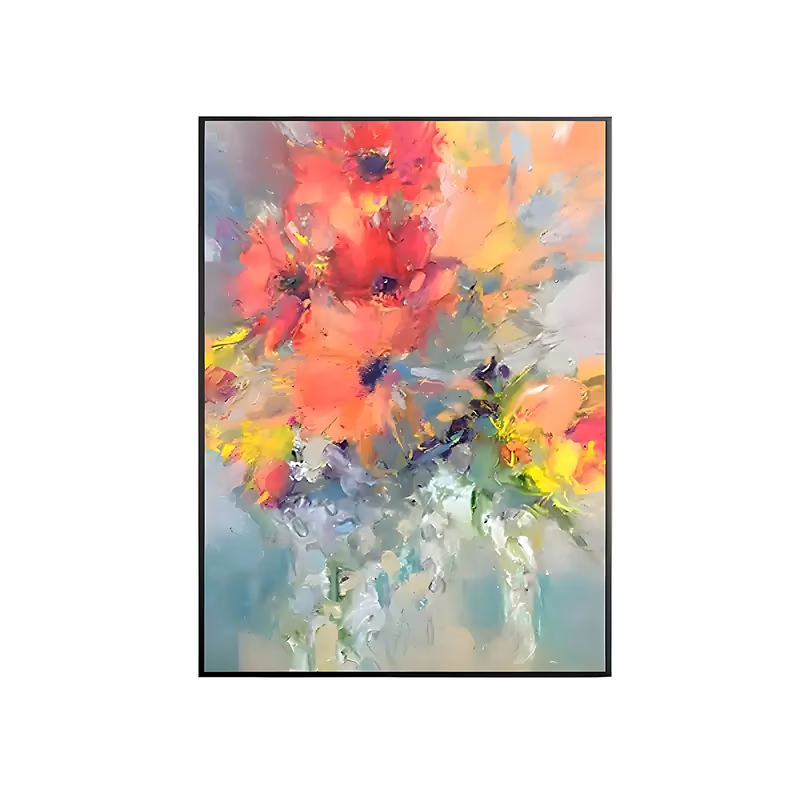
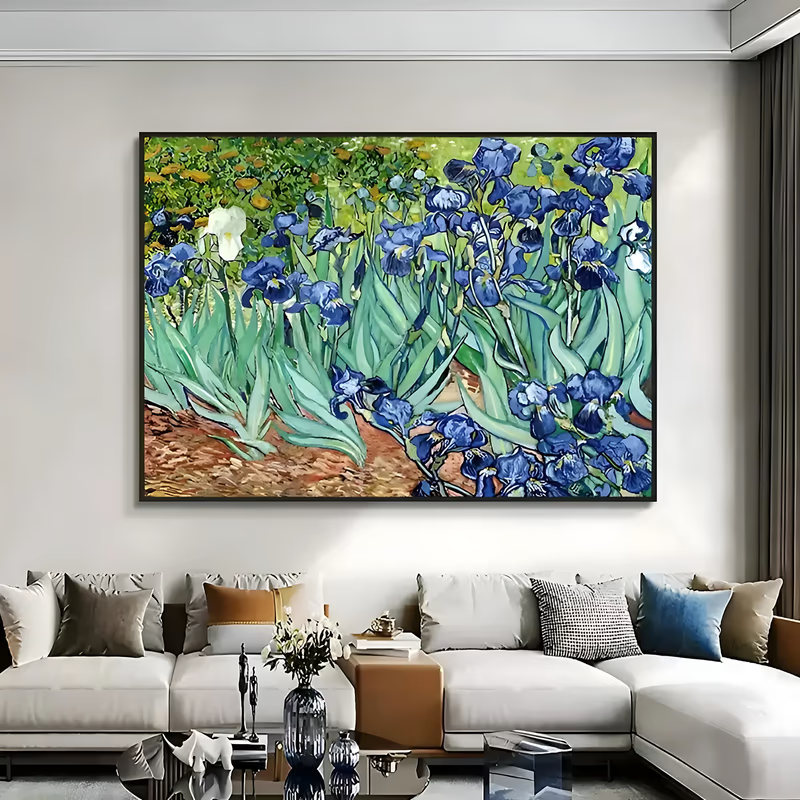
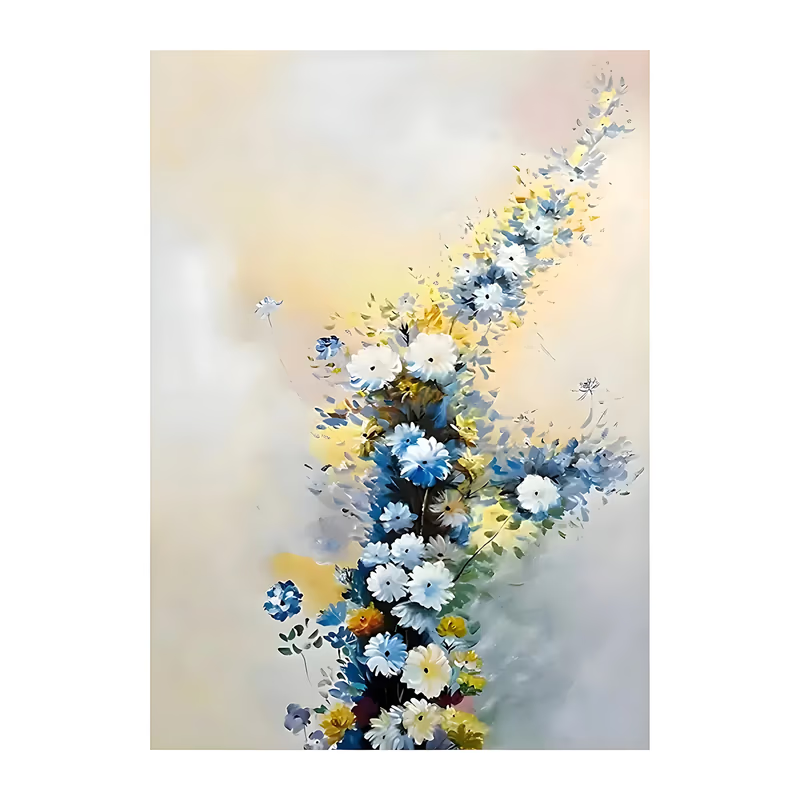
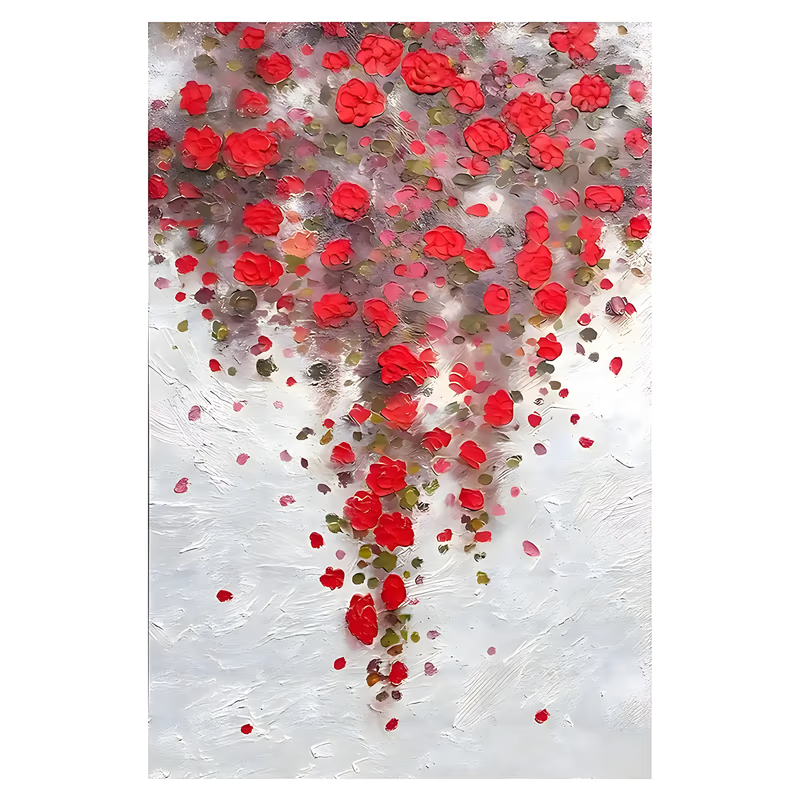
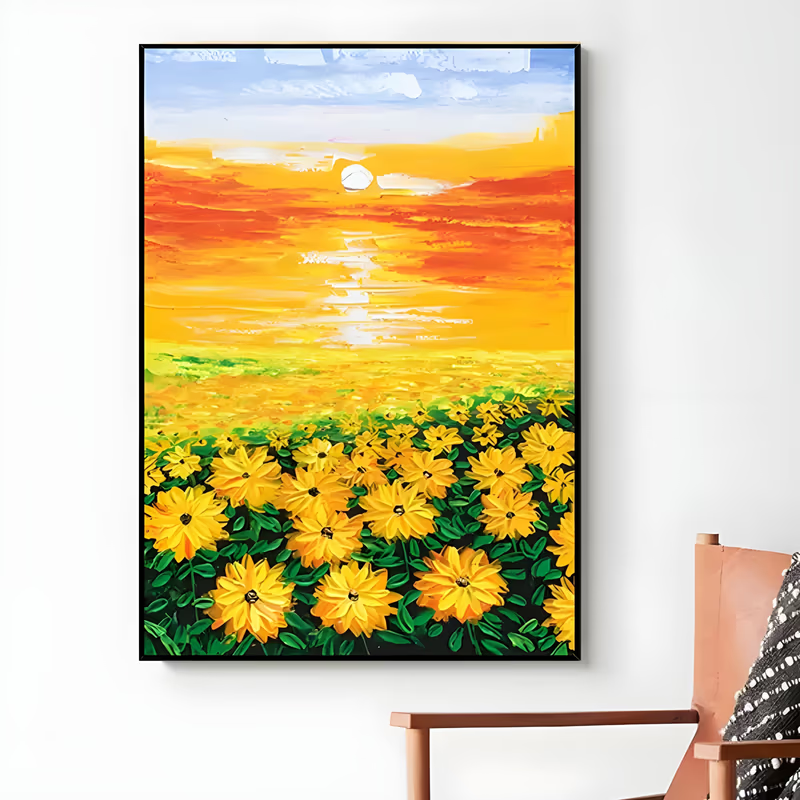
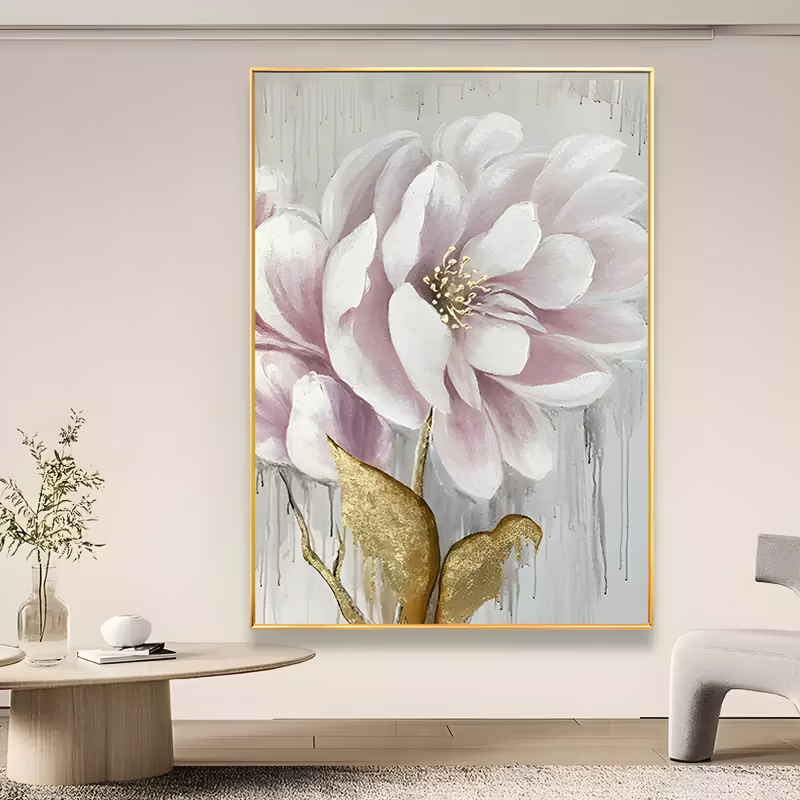
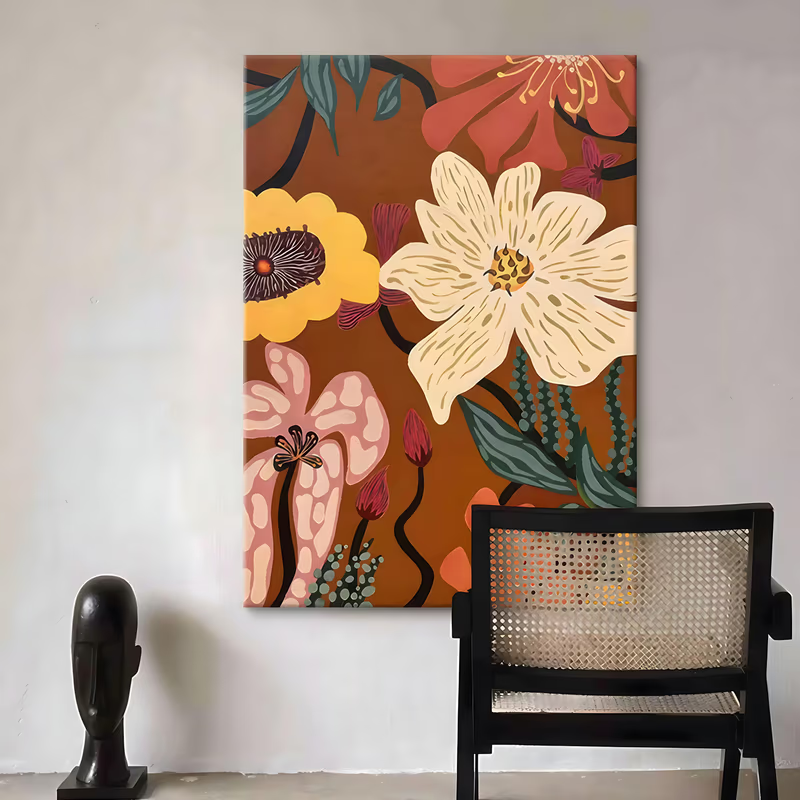
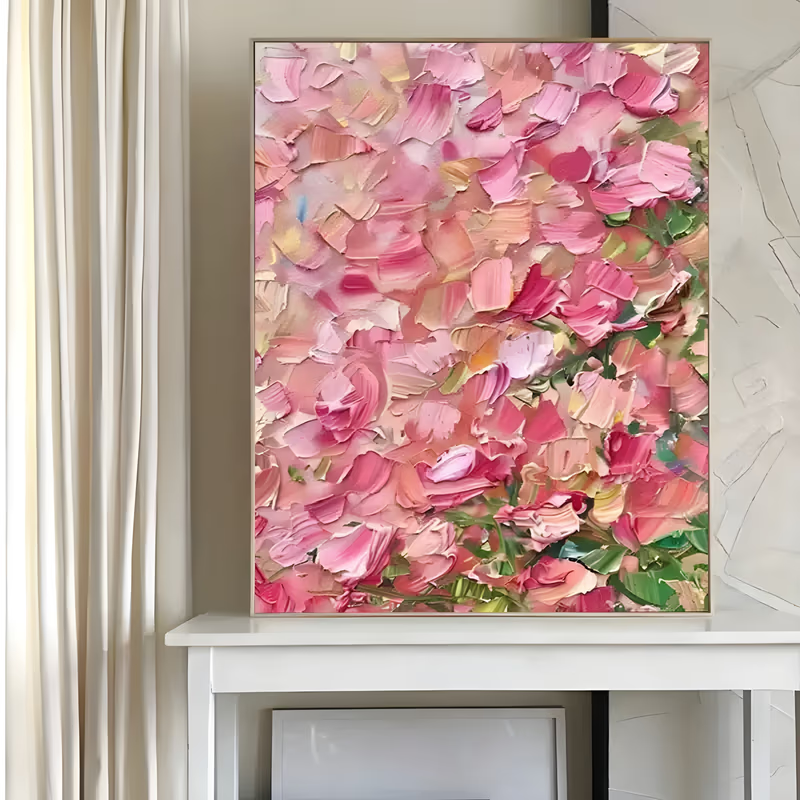
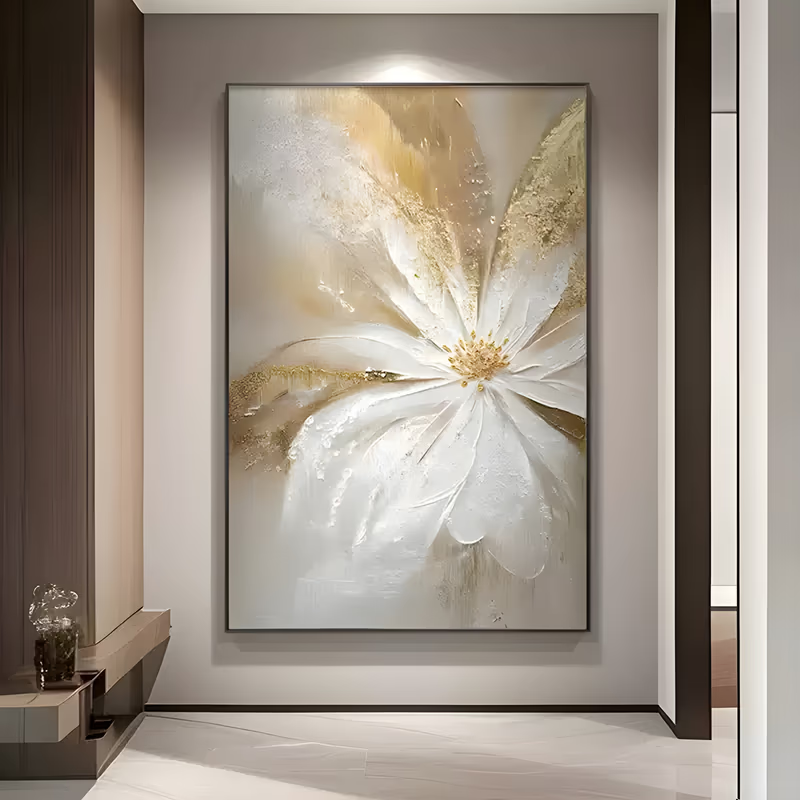
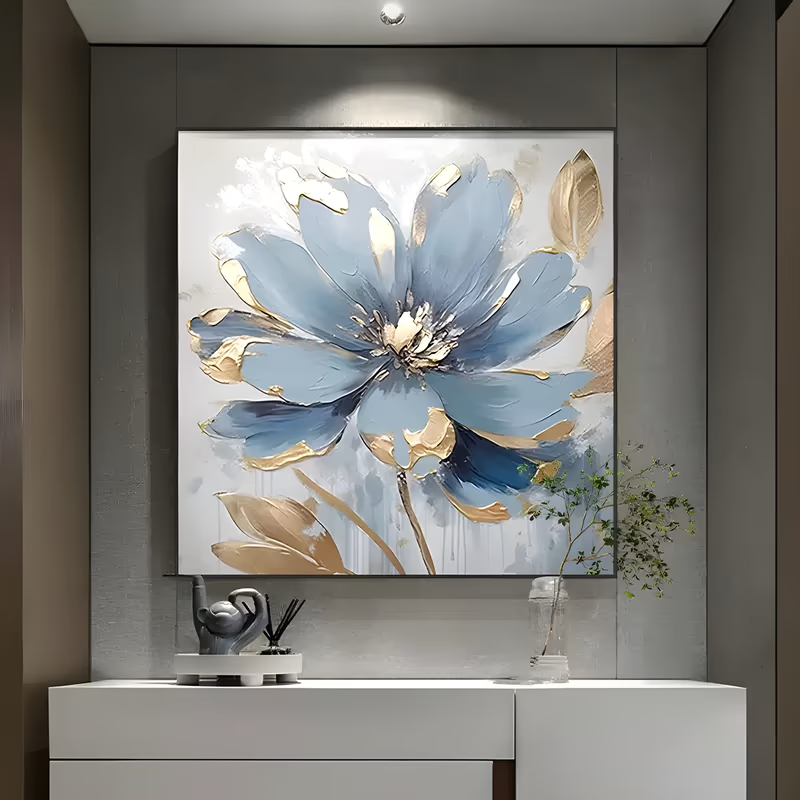
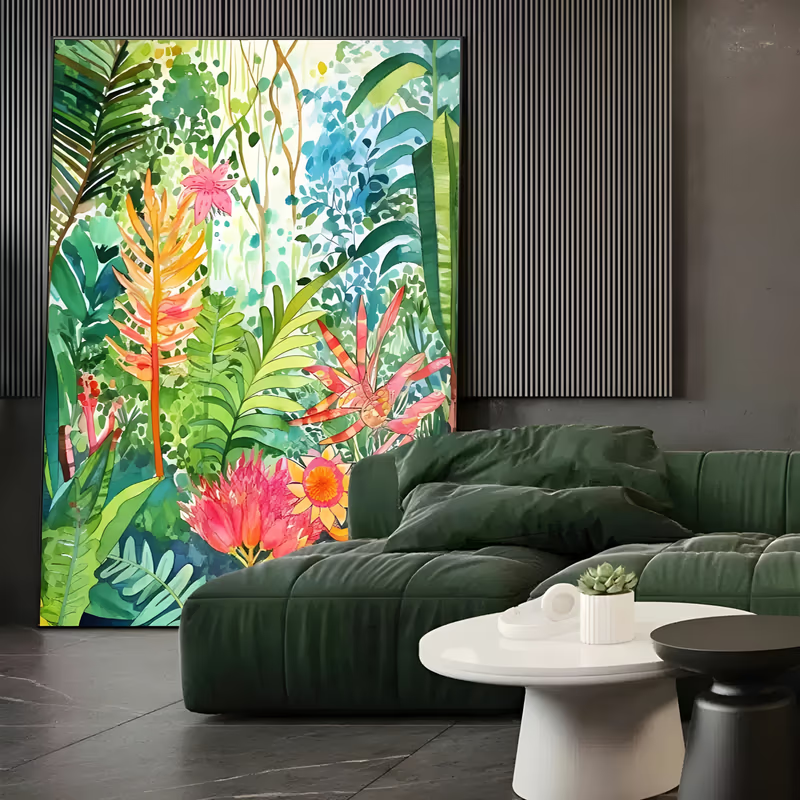
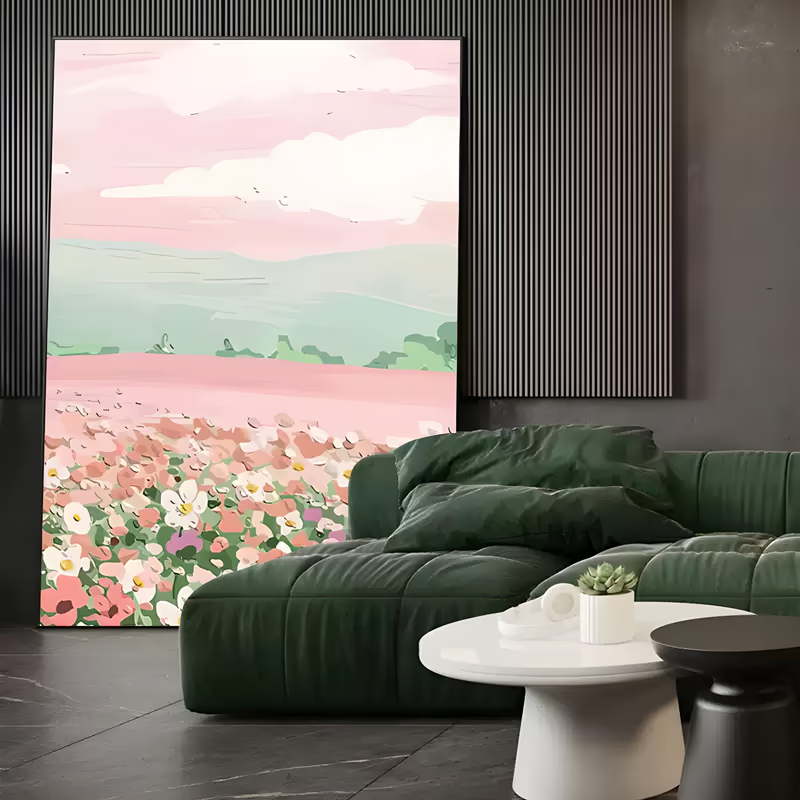
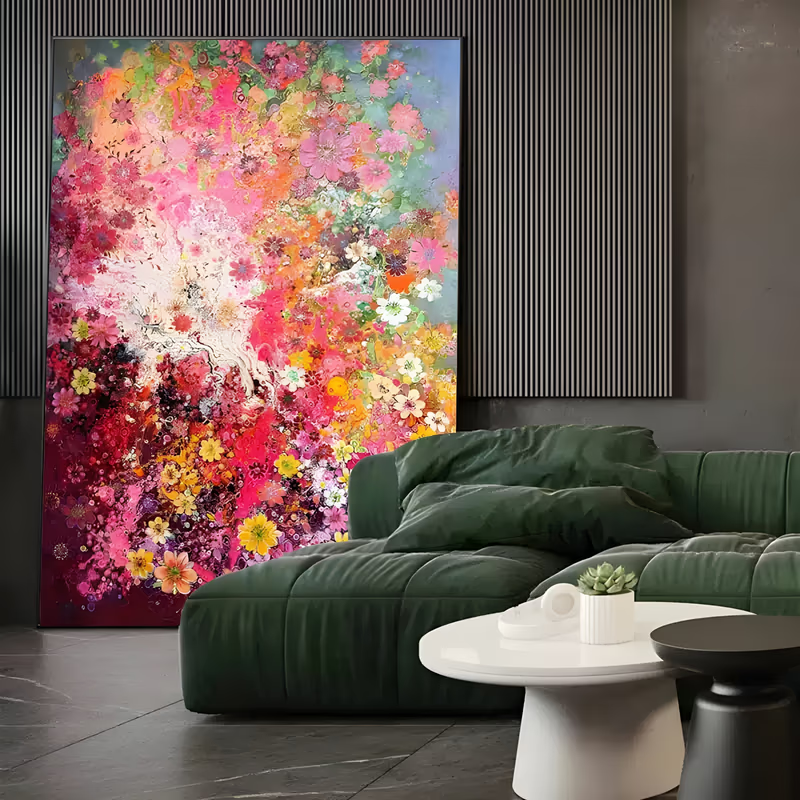
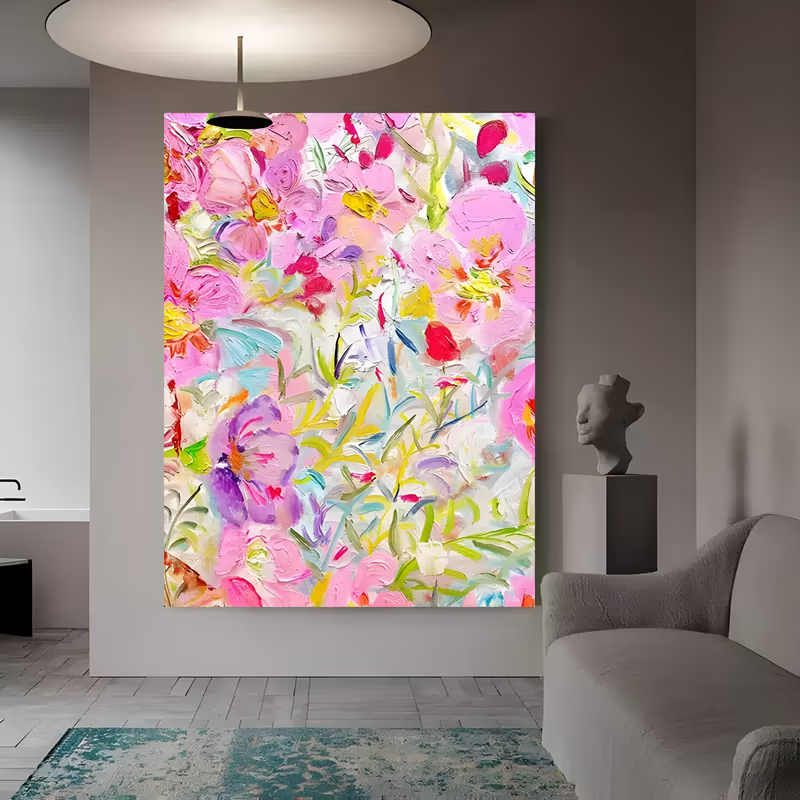
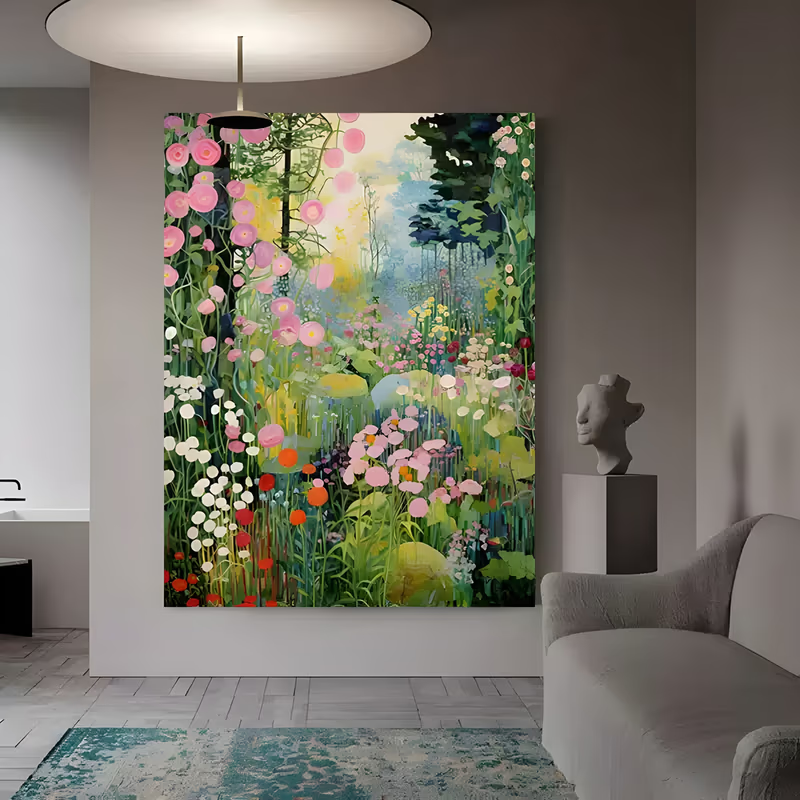
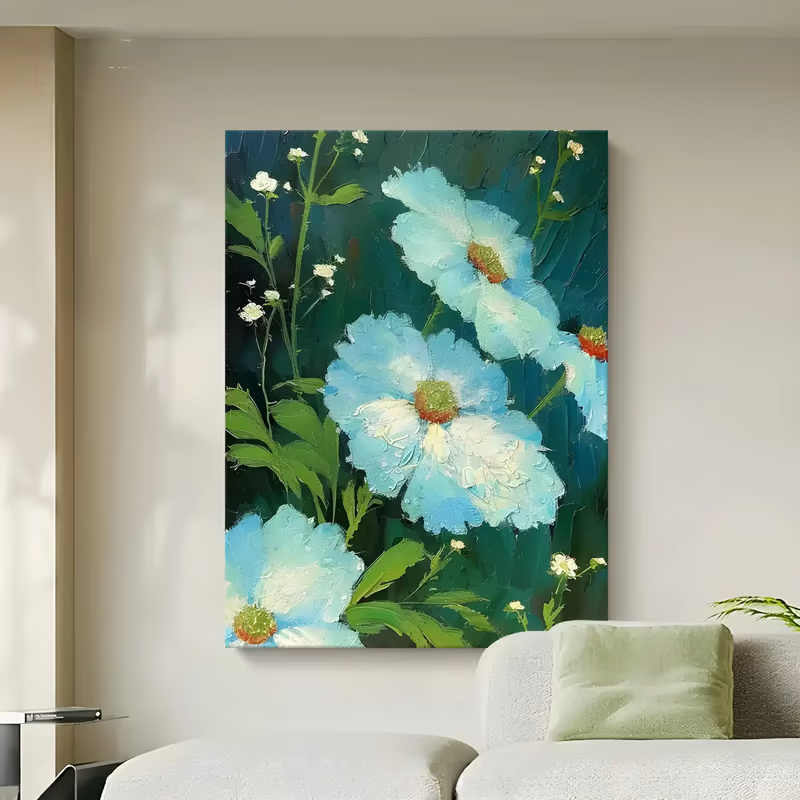
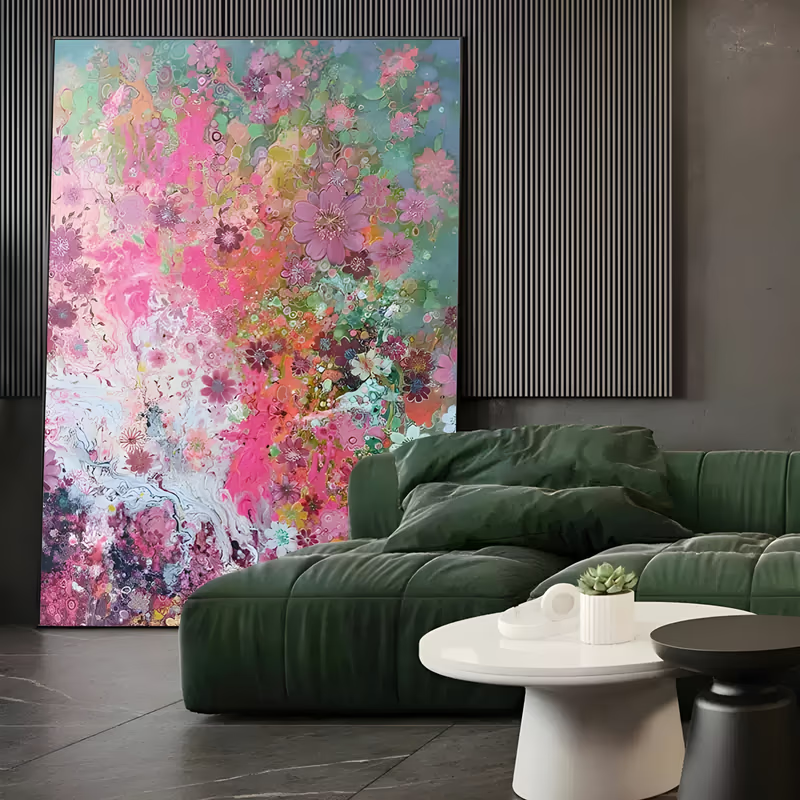
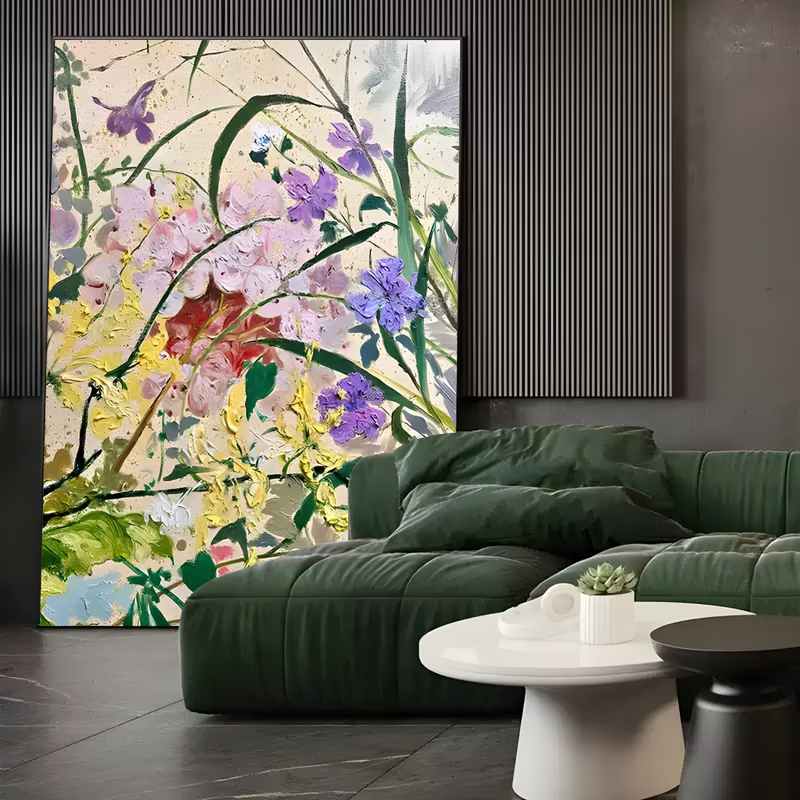
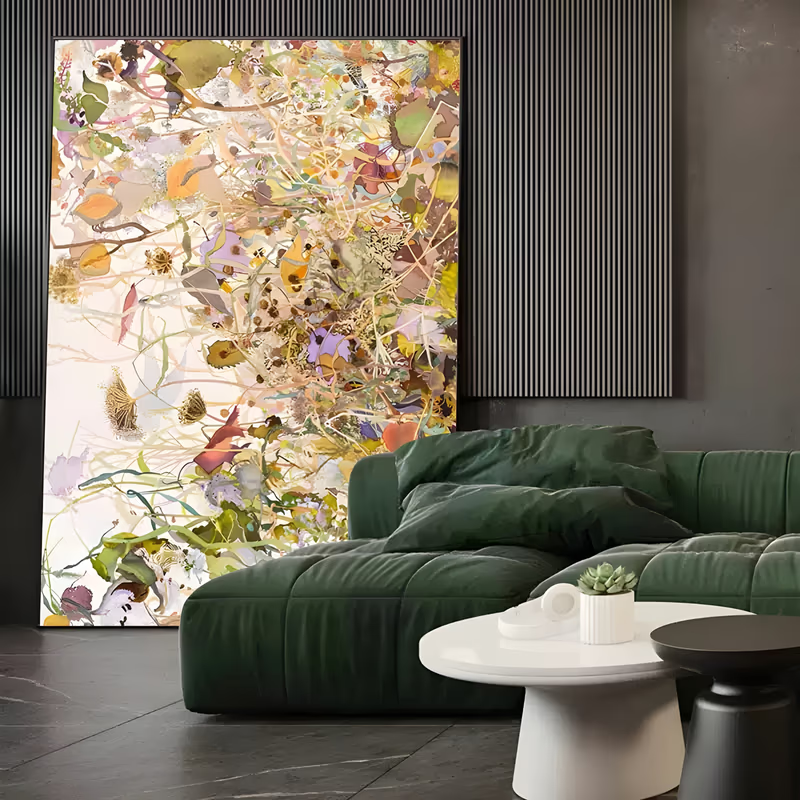
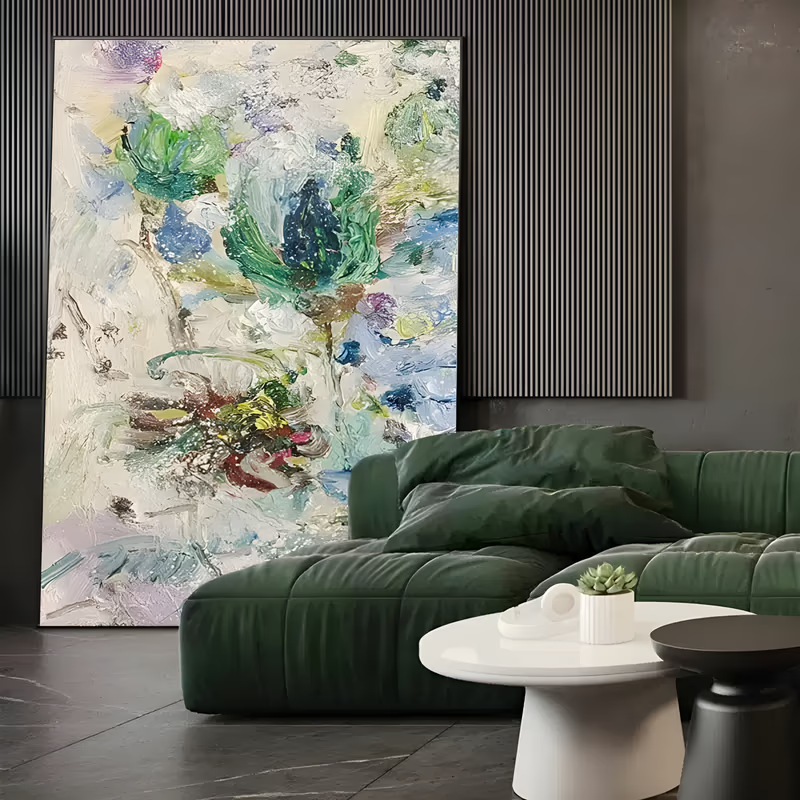
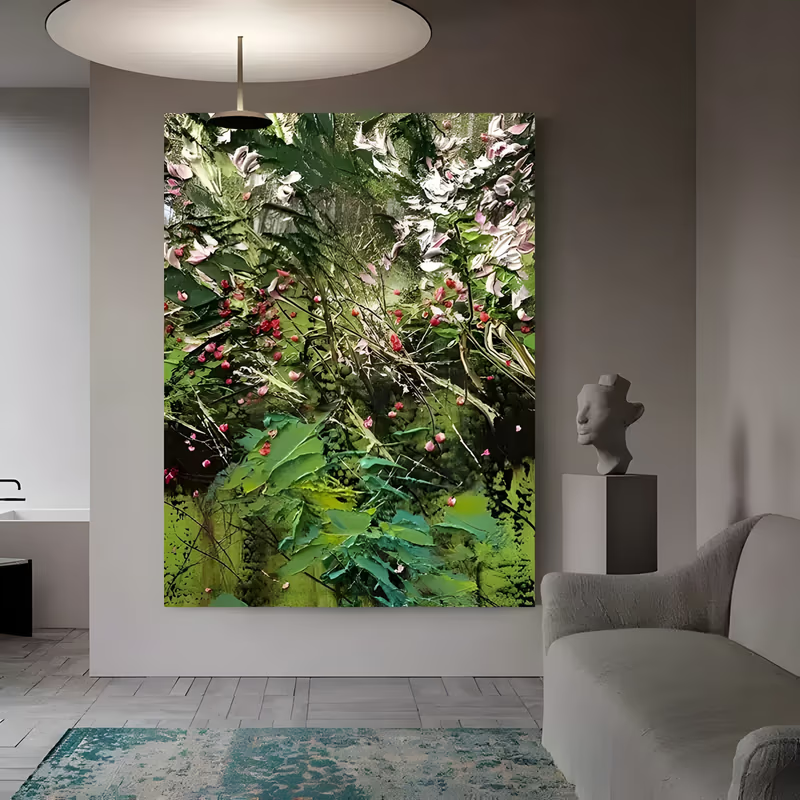
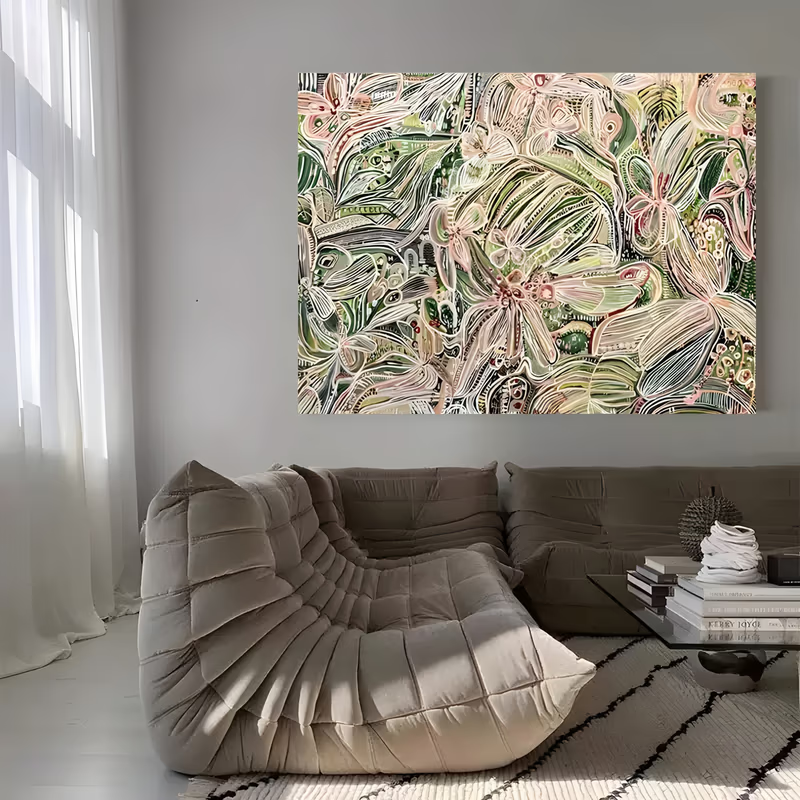
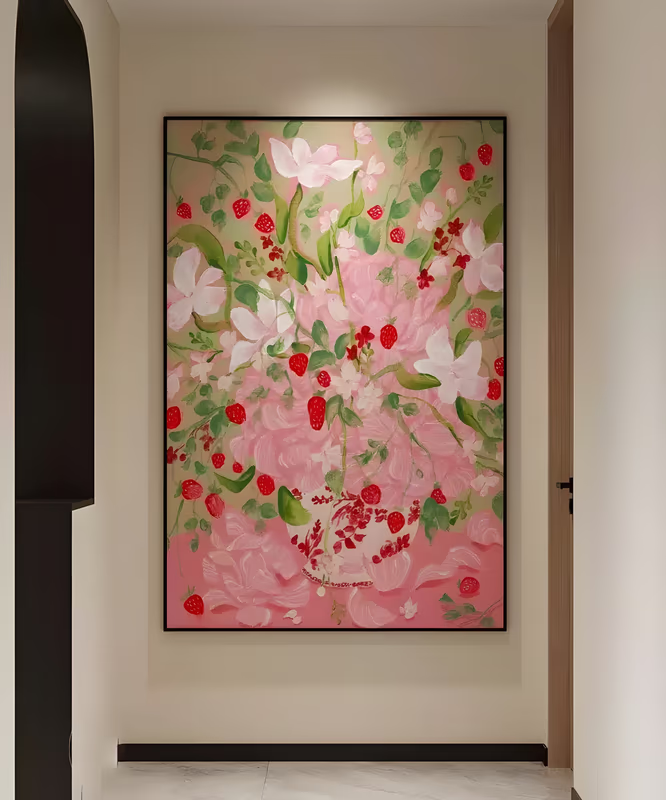
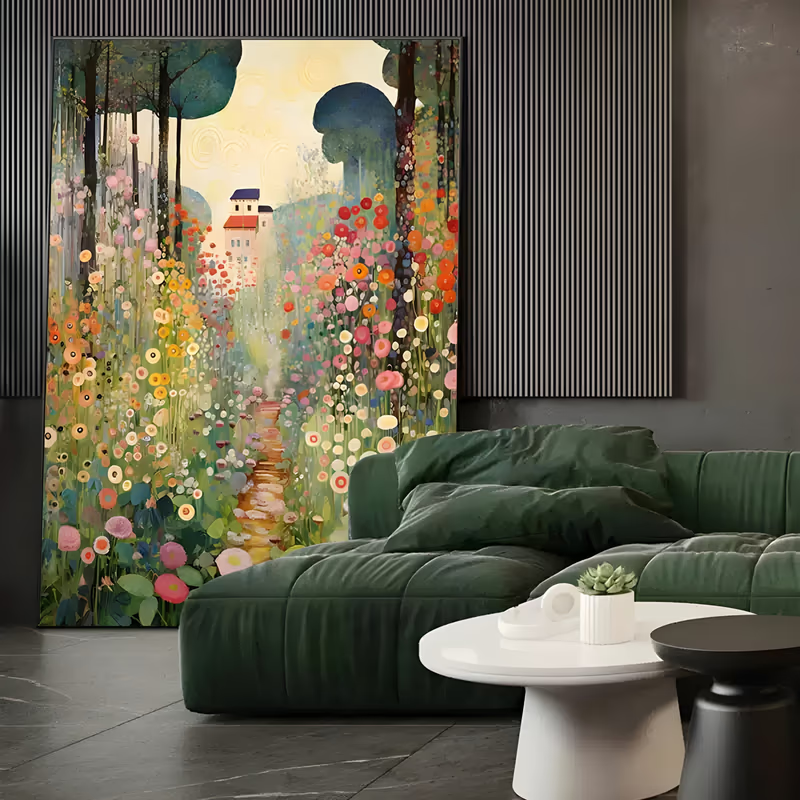
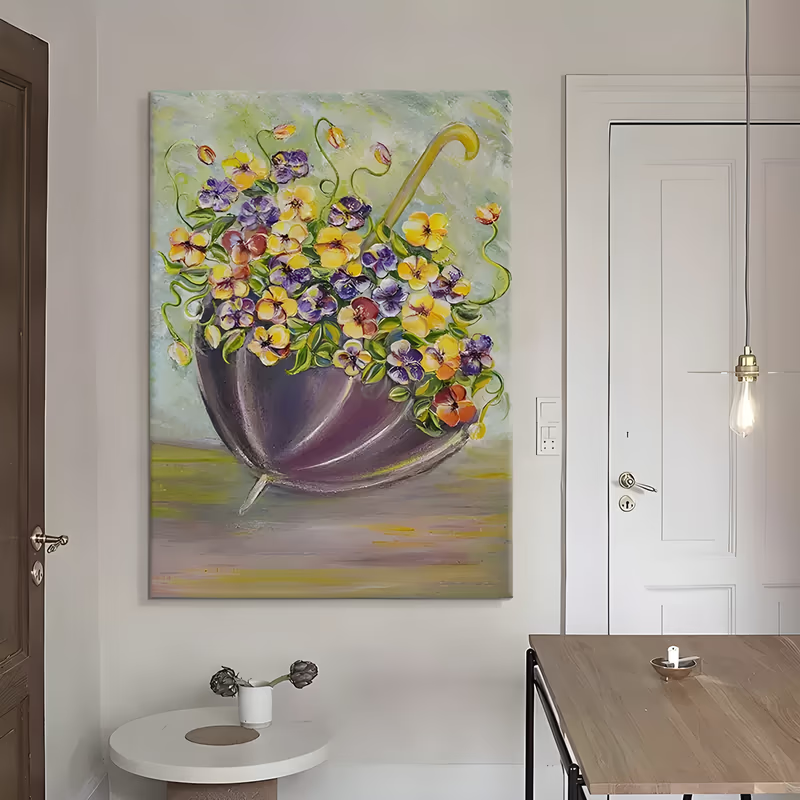
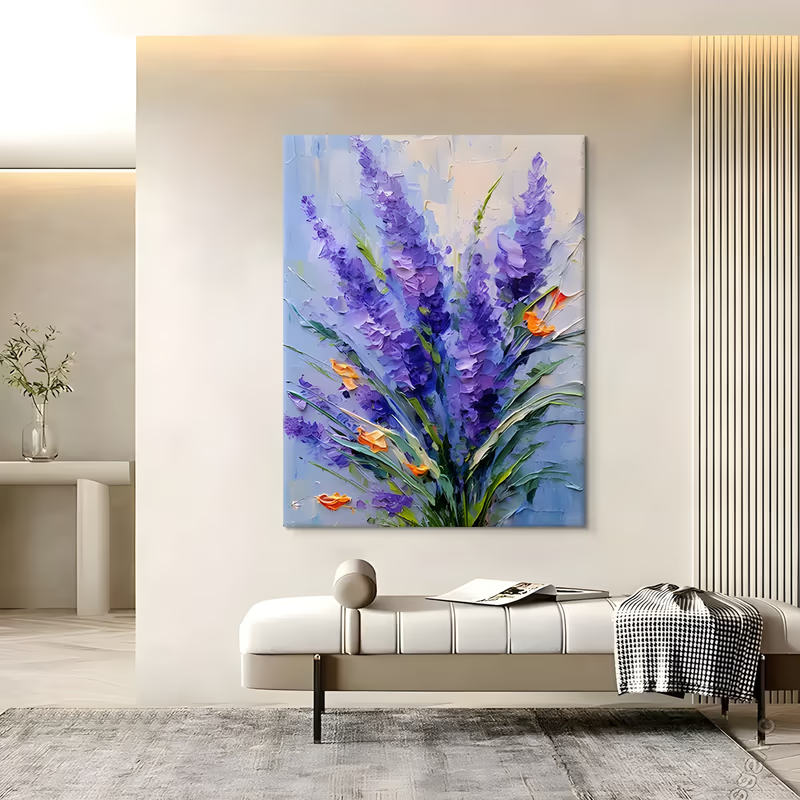
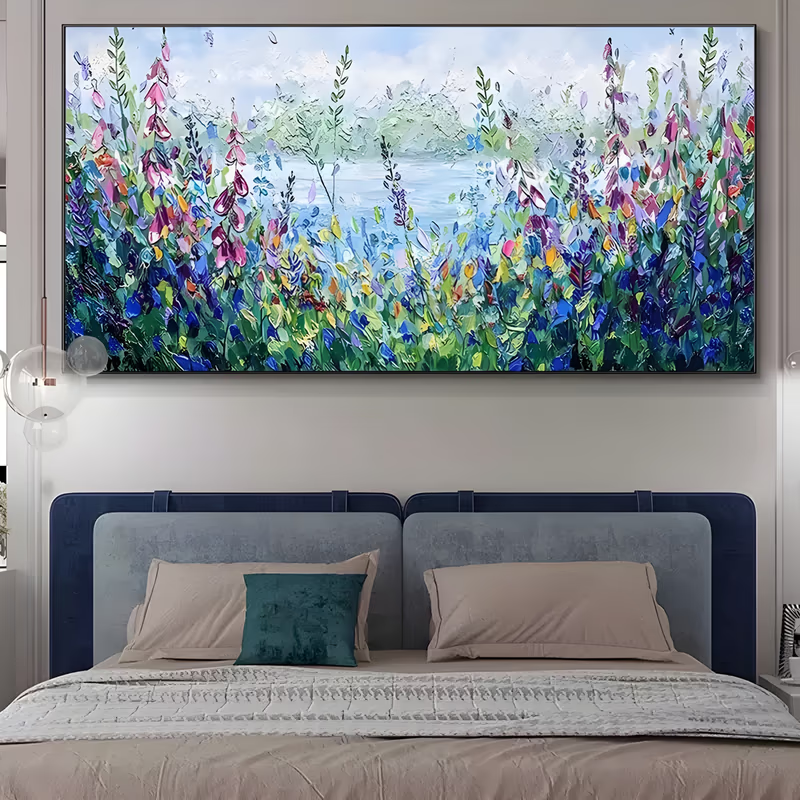
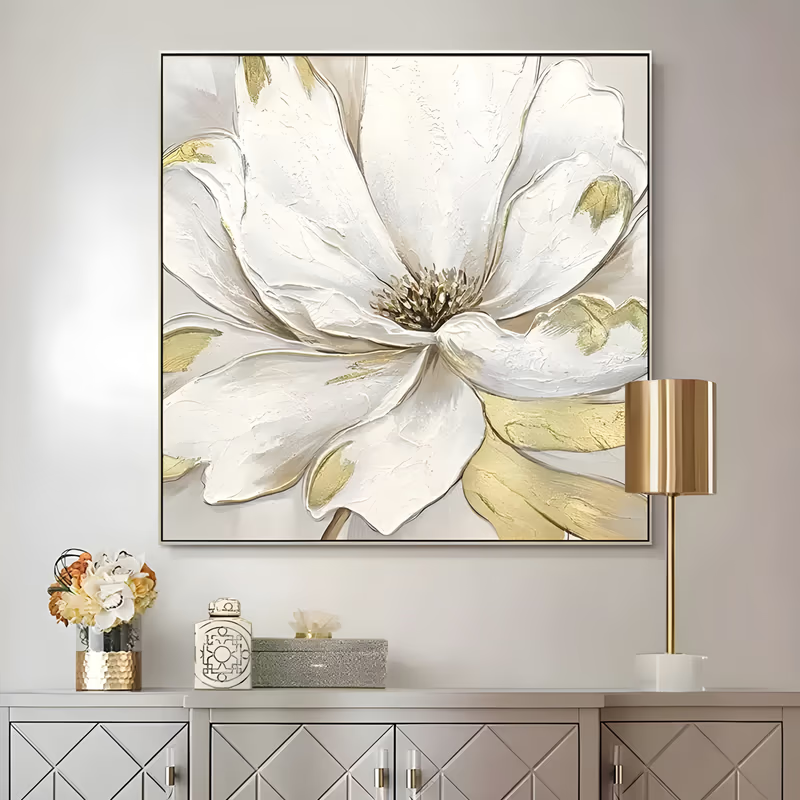
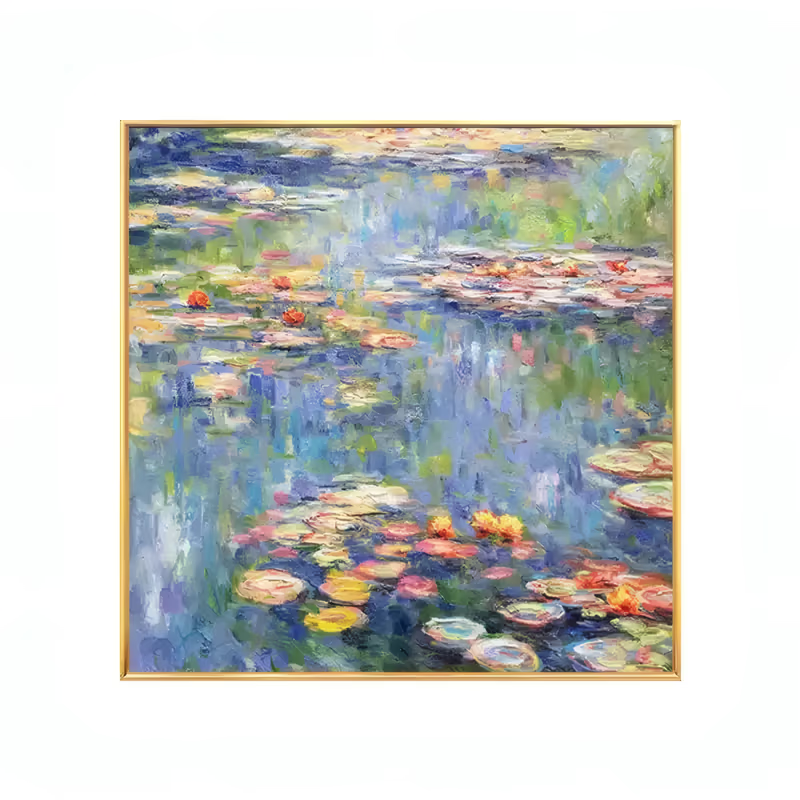
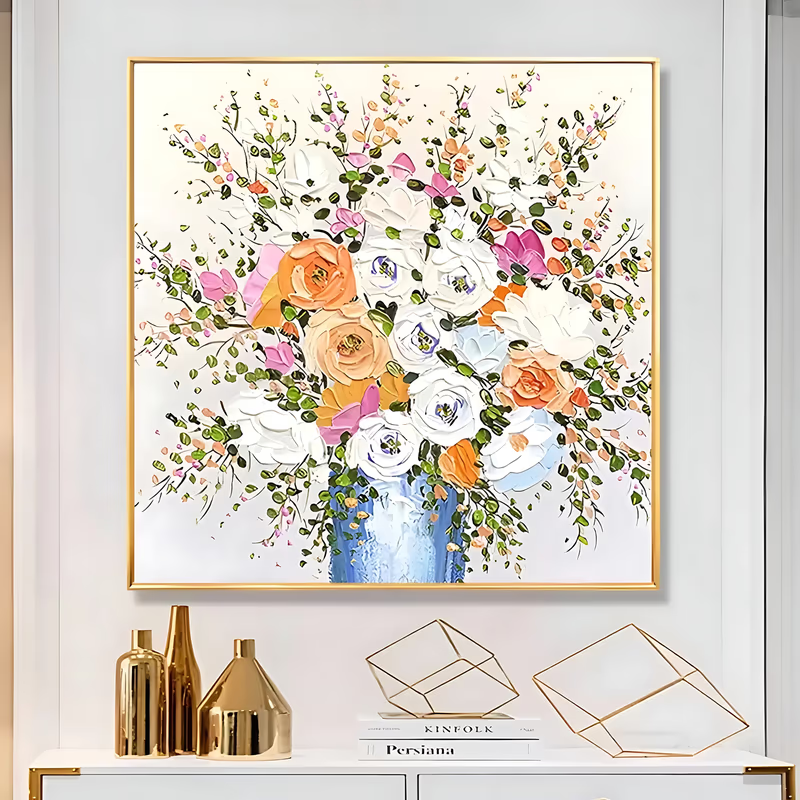
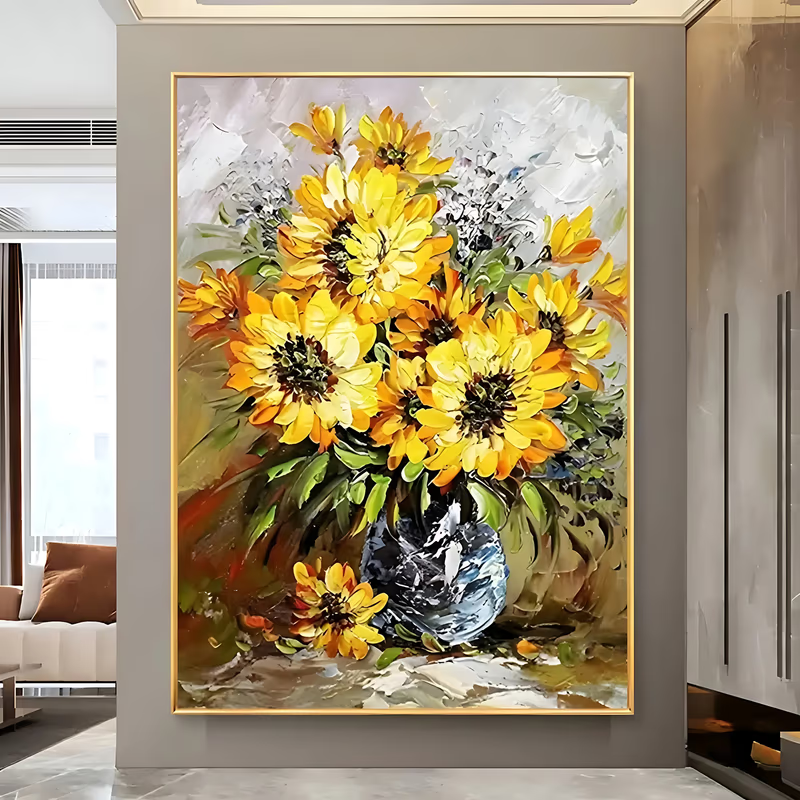
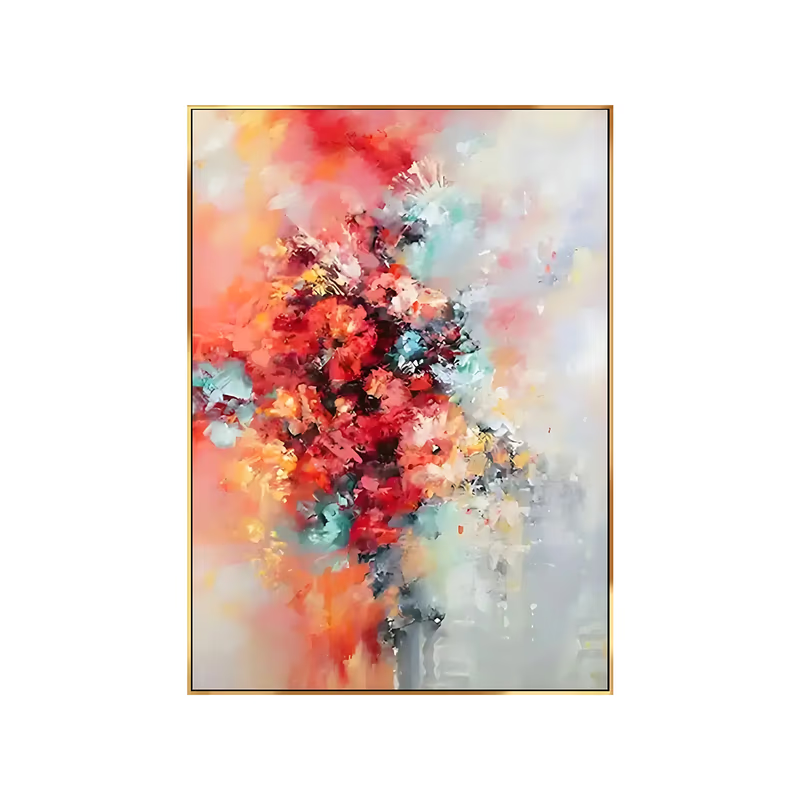
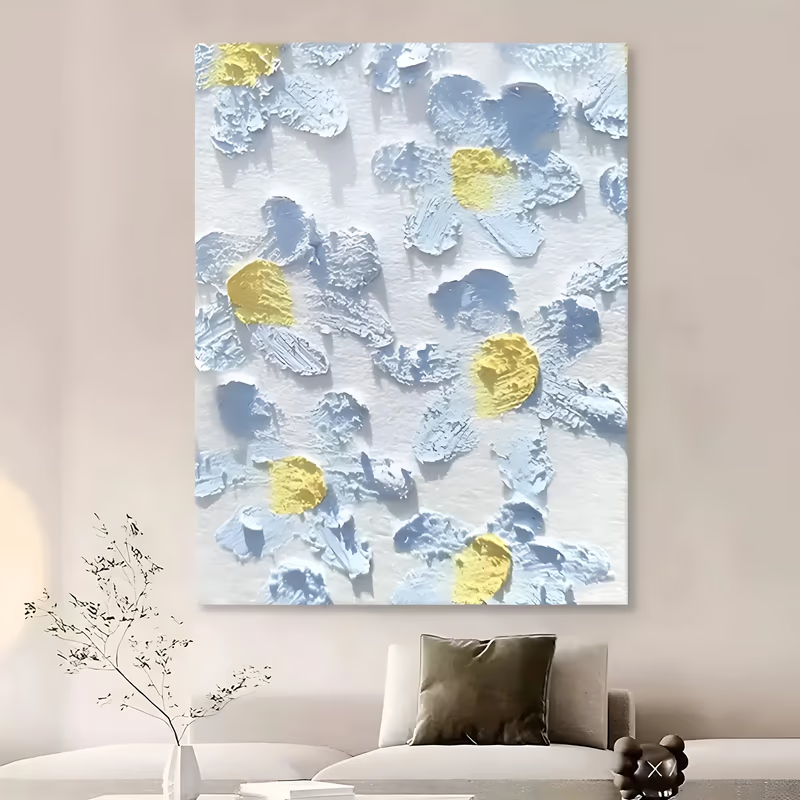
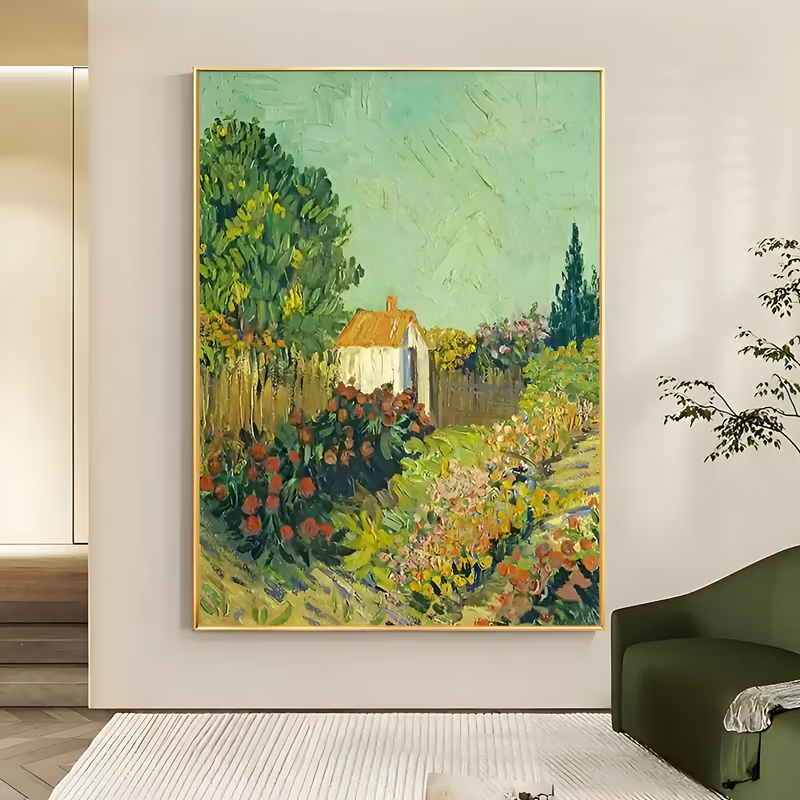
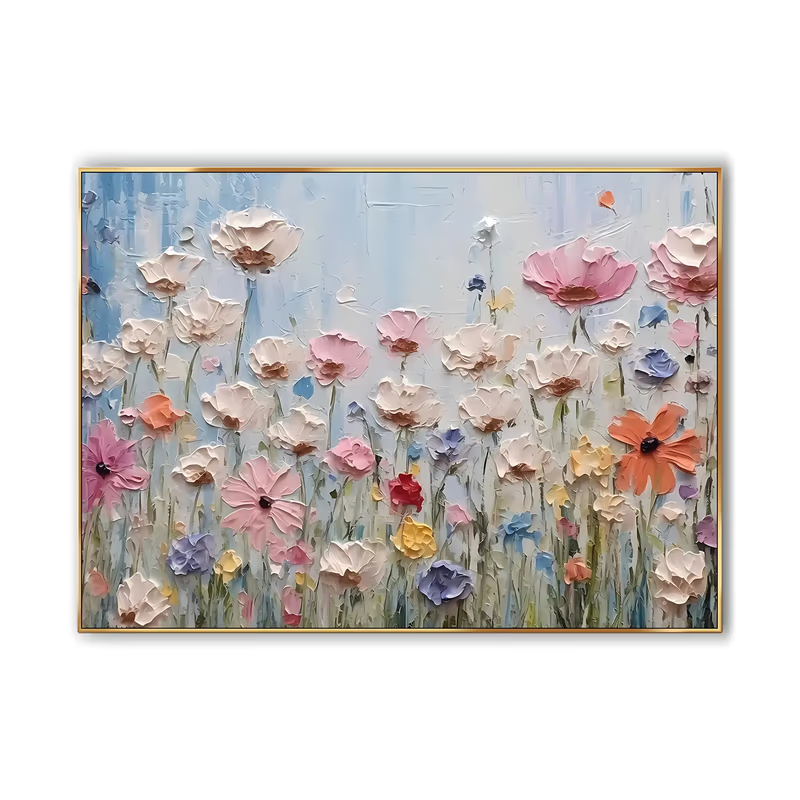
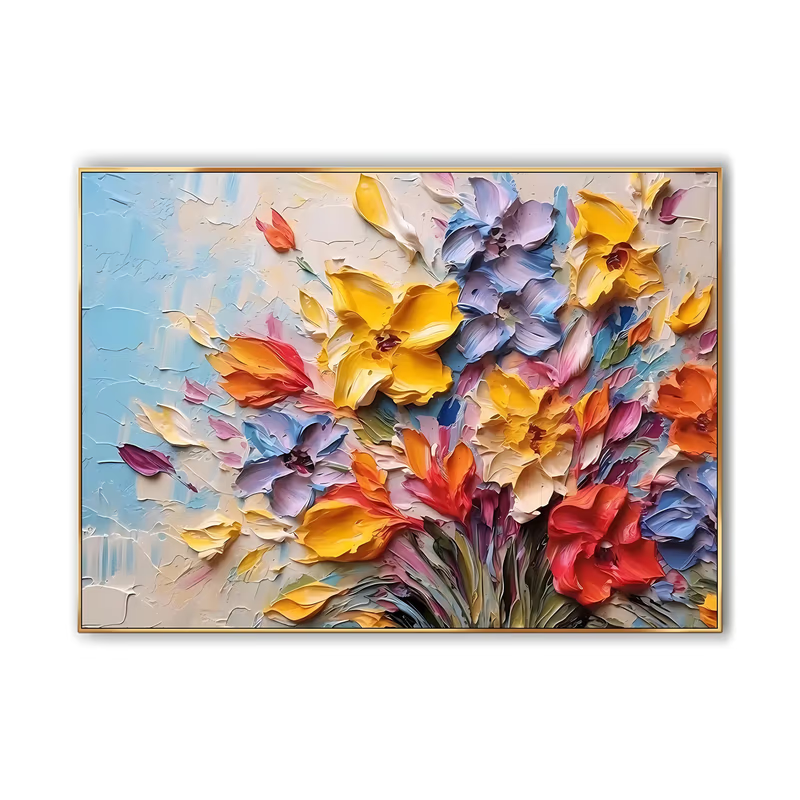
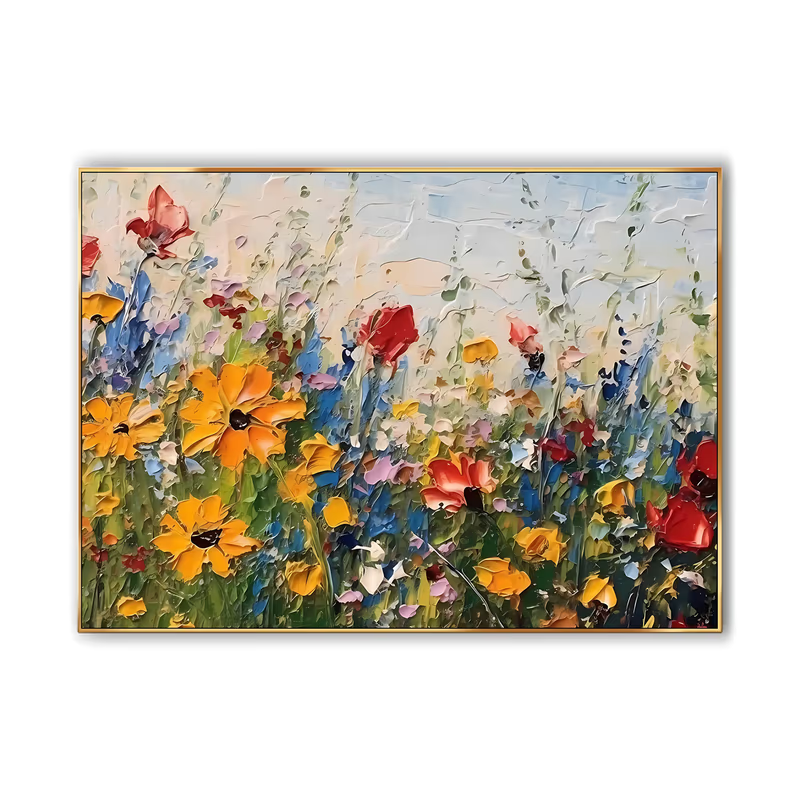
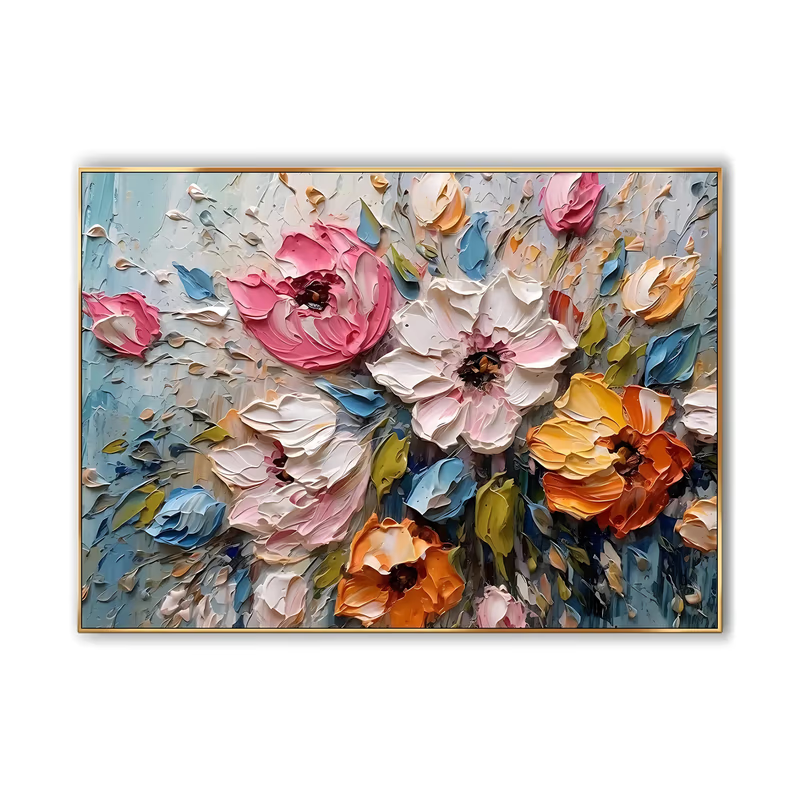
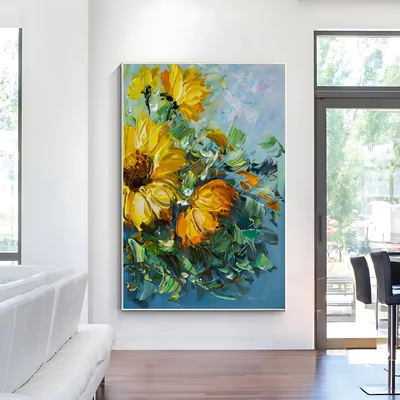
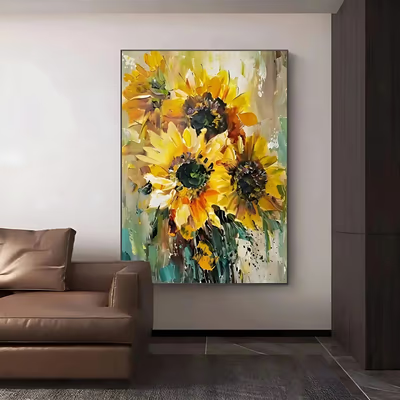
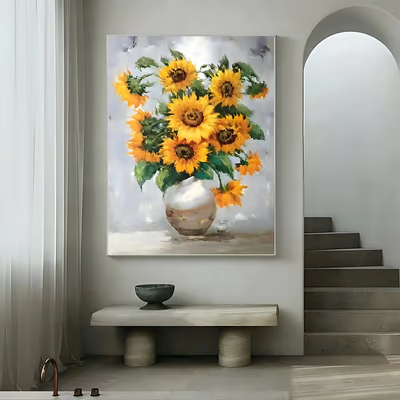
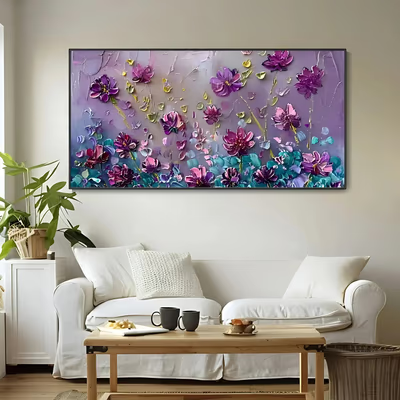
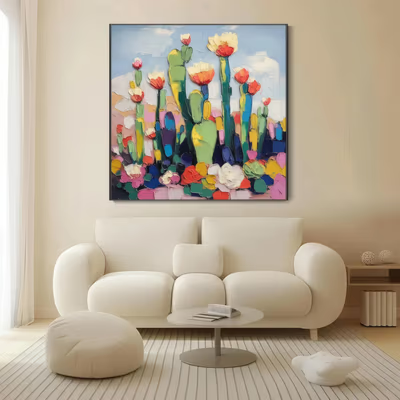
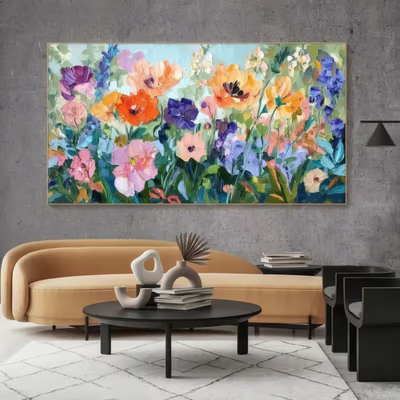
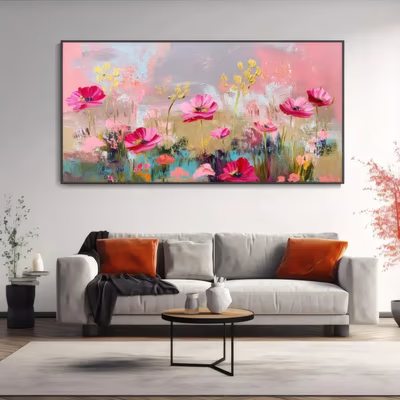
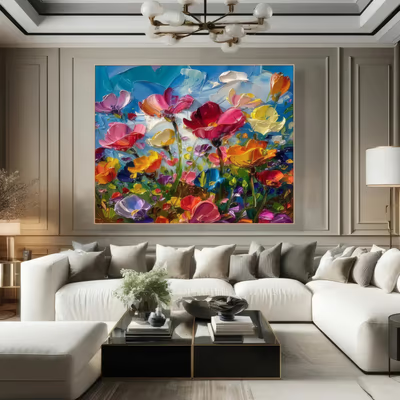
Golden sunflowers against a teal sky, a blossom tree on ochre, white peonies on turquoise, pastel blooms on mint, magnolias with sage leaves. Flowers are the most reliable uplifting subject, and they suit bedrooms, guest rooms, dining rooms and waiting areas alike. See uplifting flower paintings.
Landscapes and seas full of light
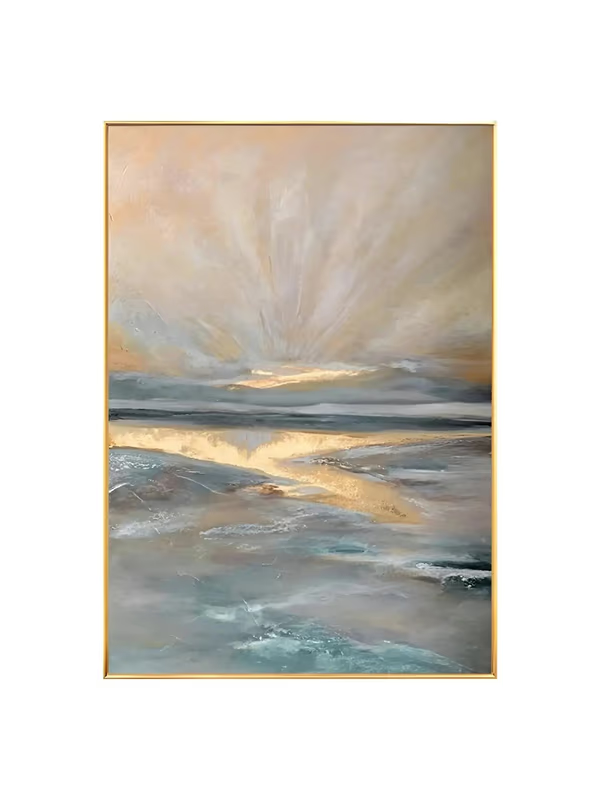
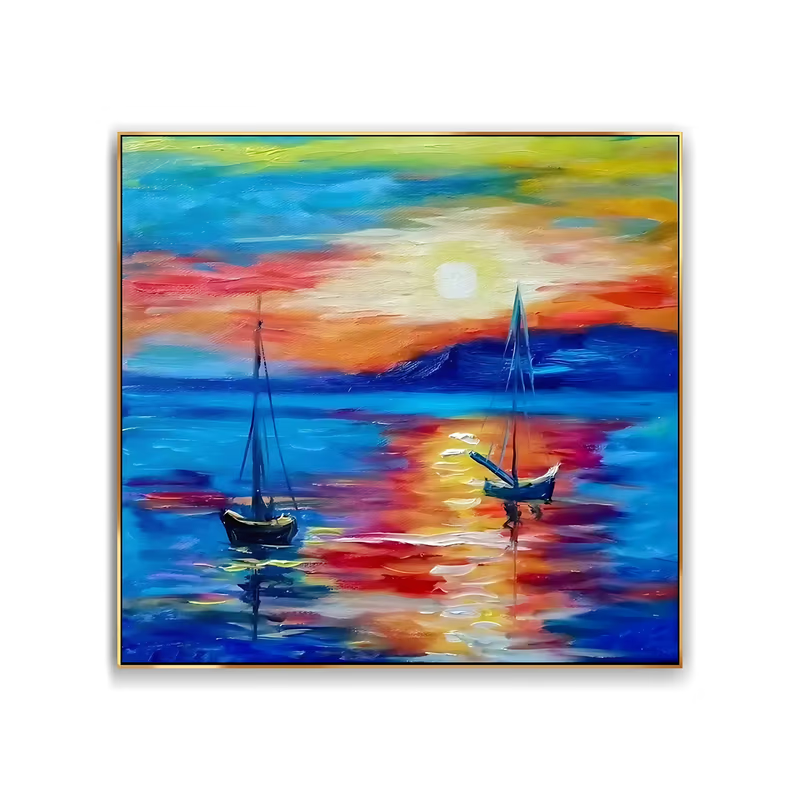
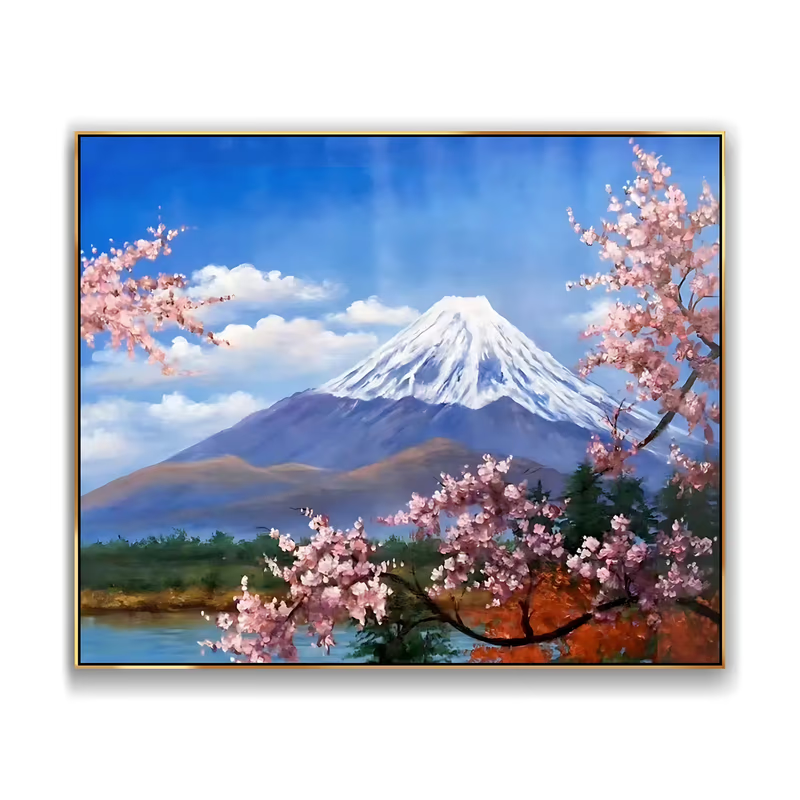
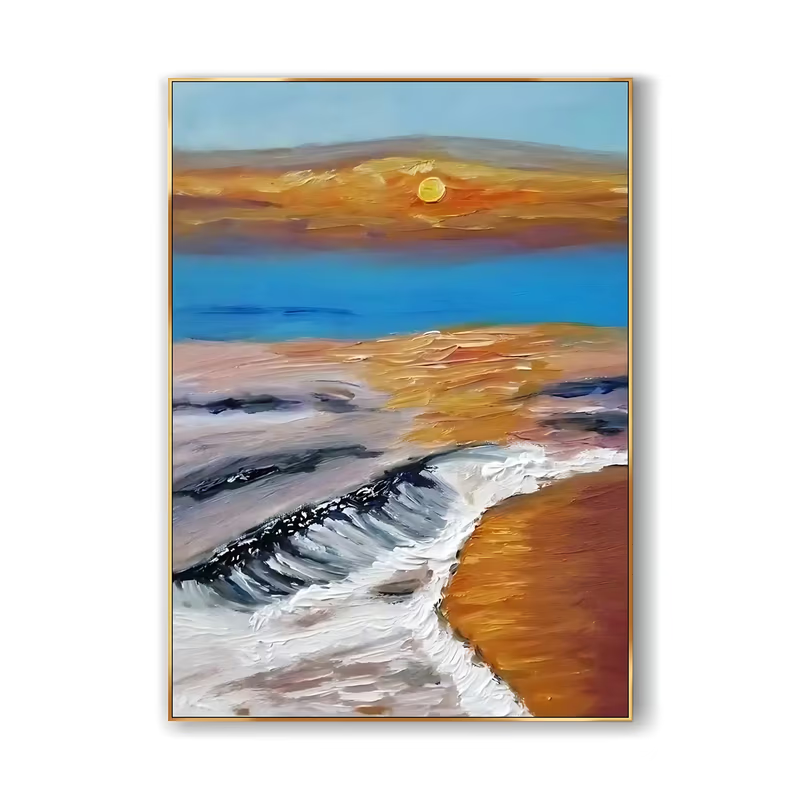
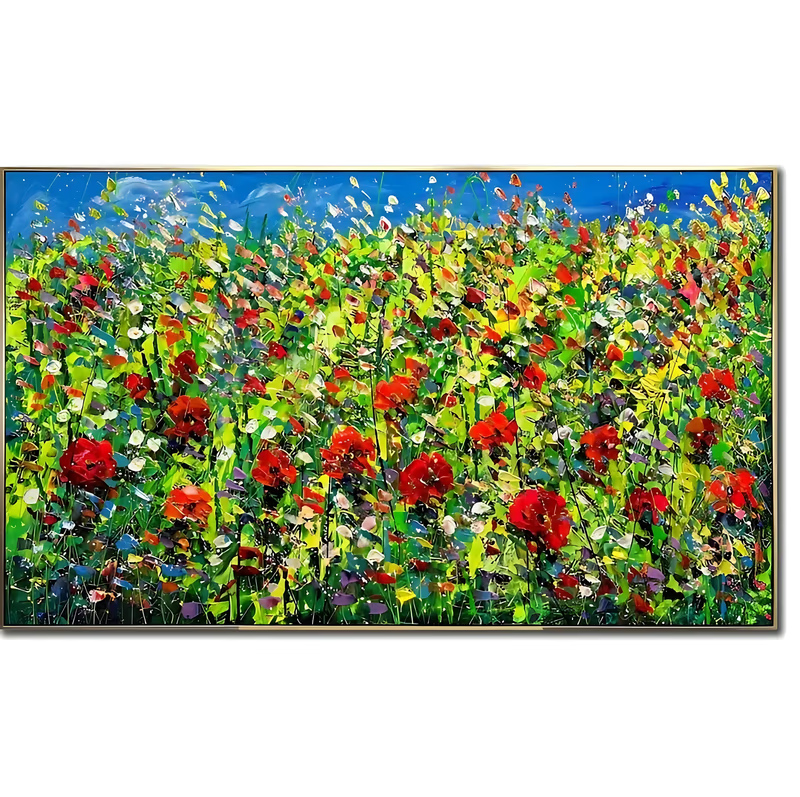
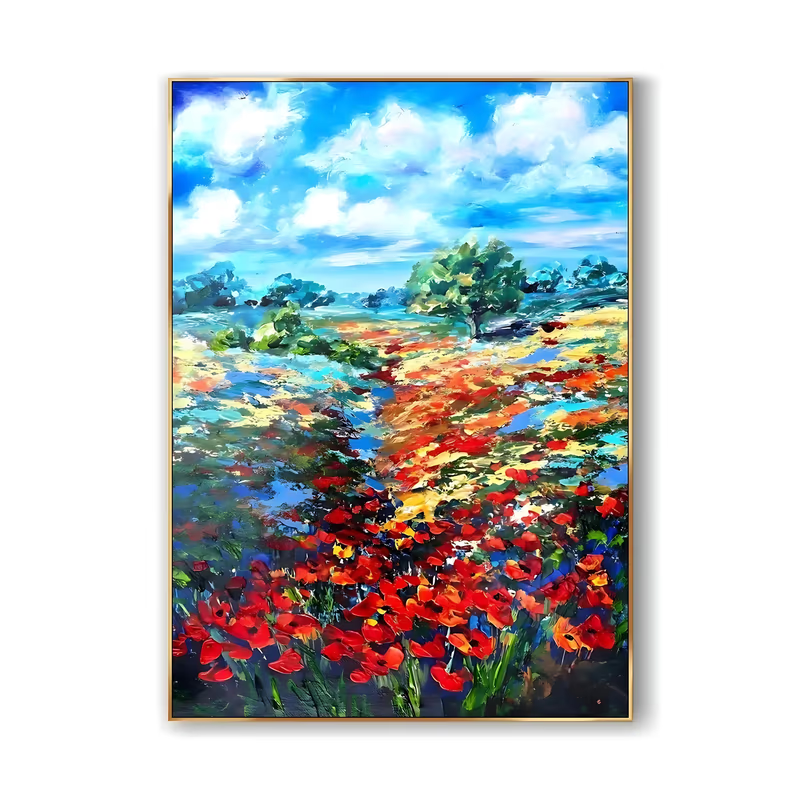
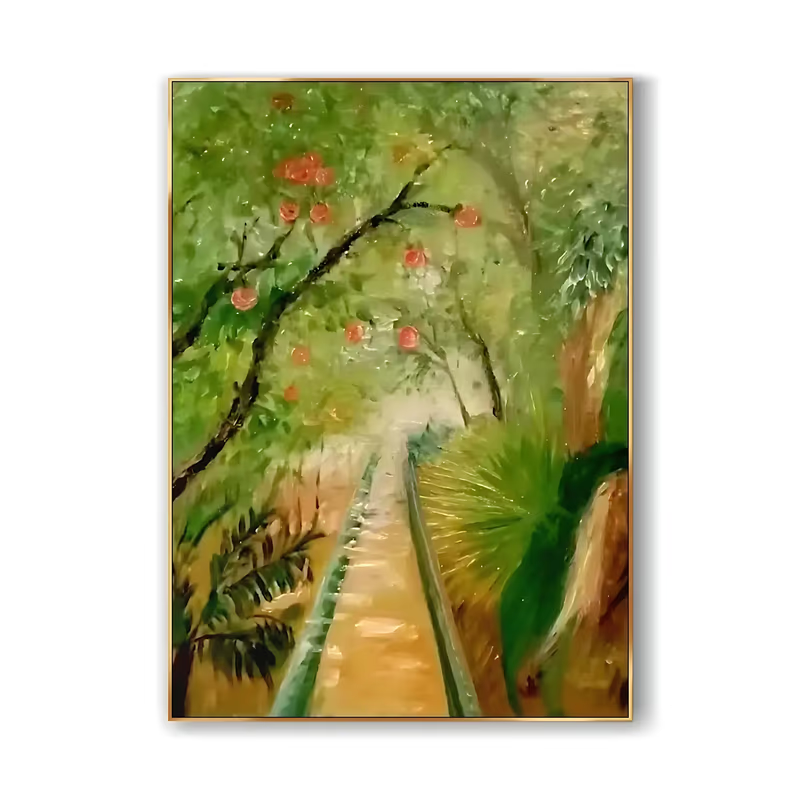
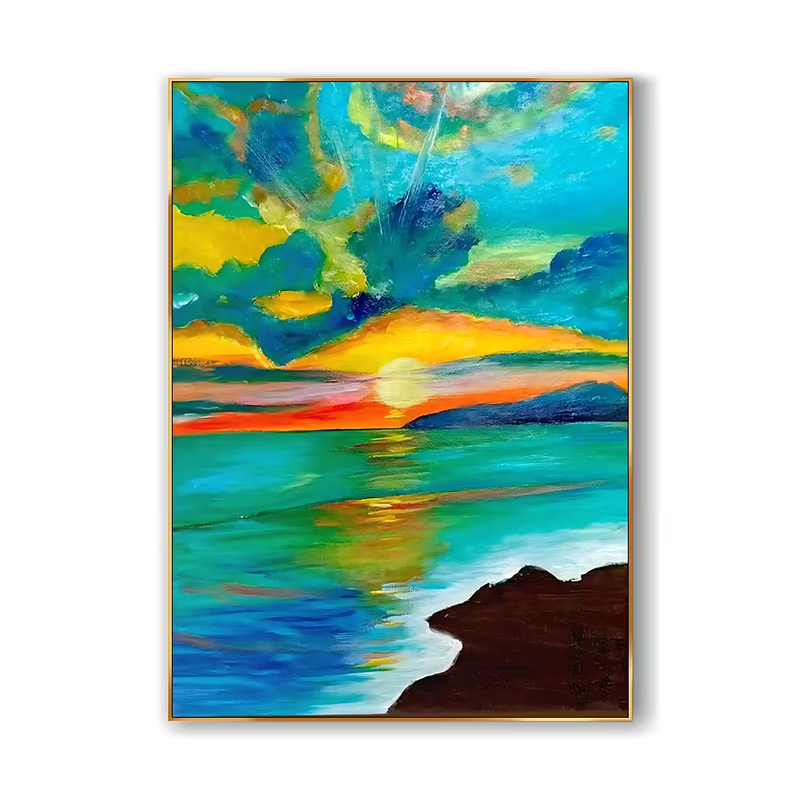
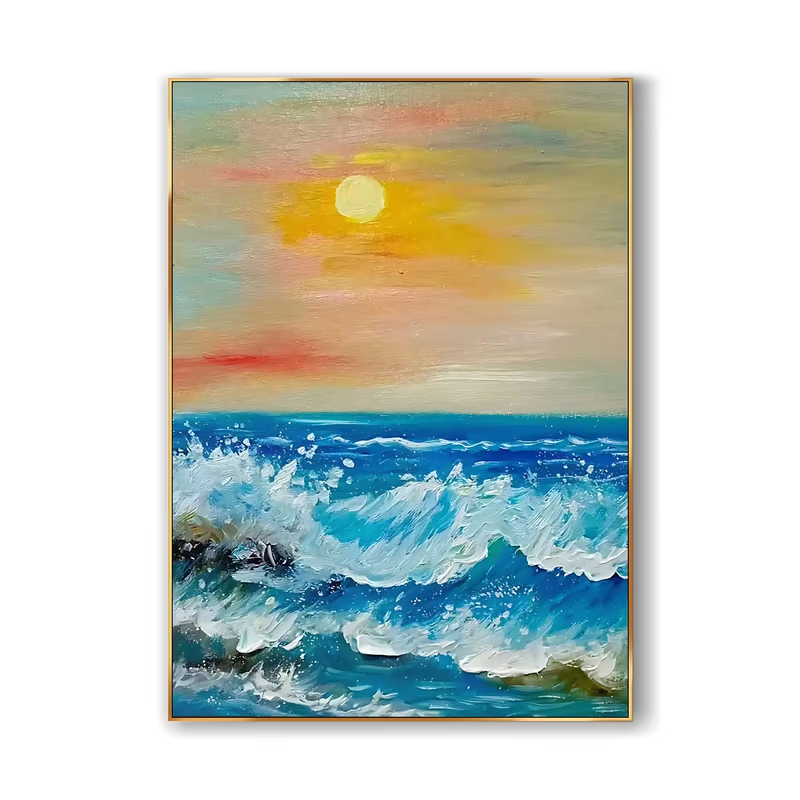
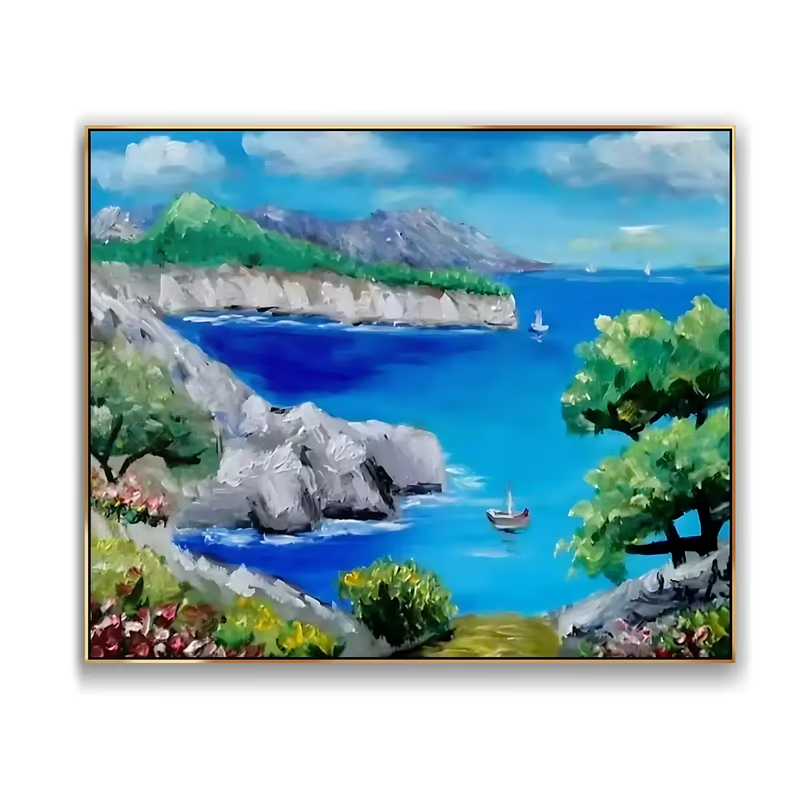
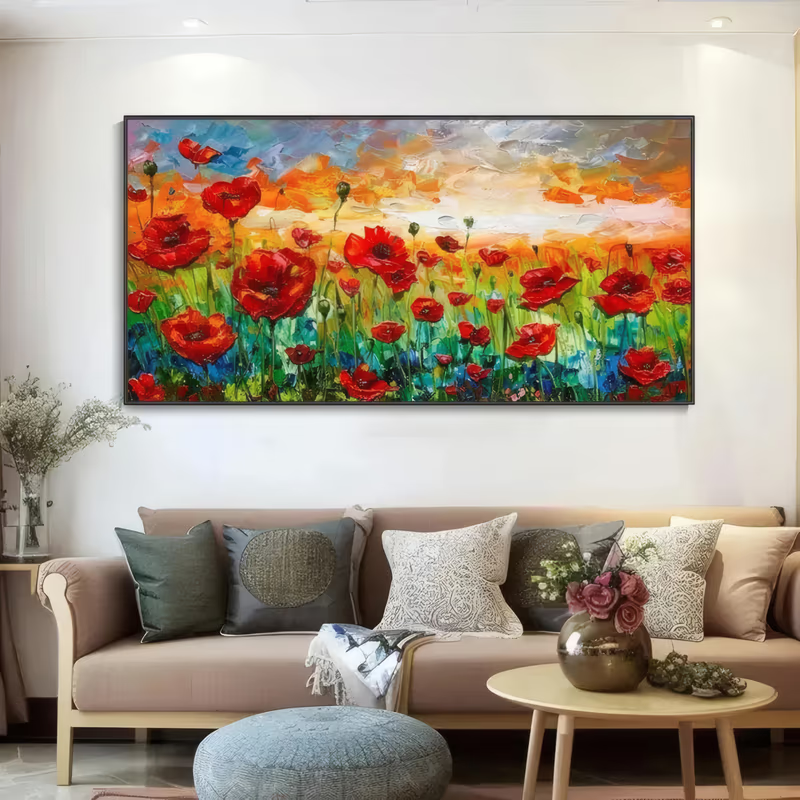
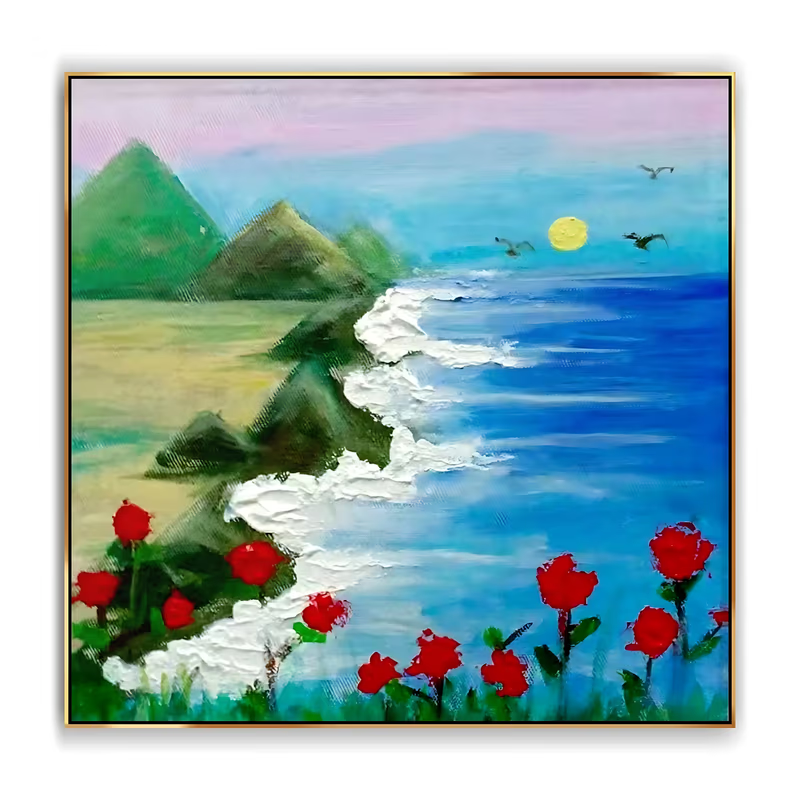
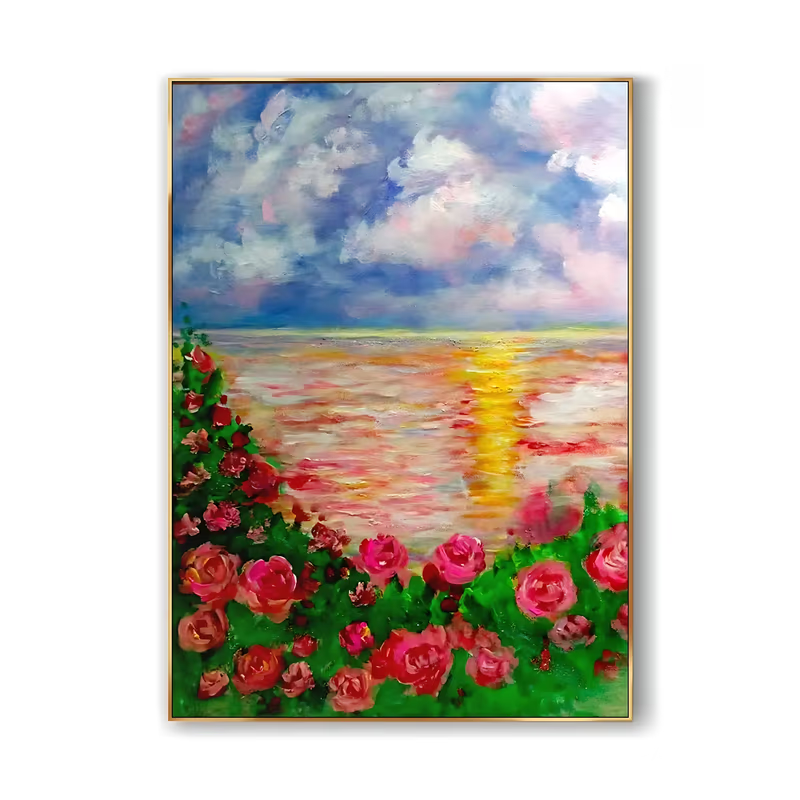
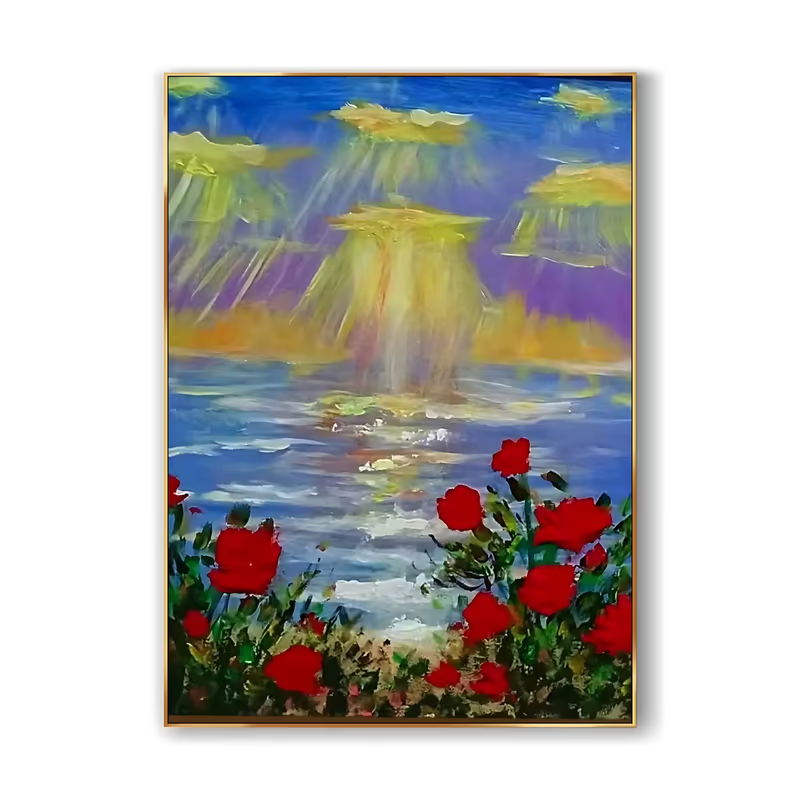
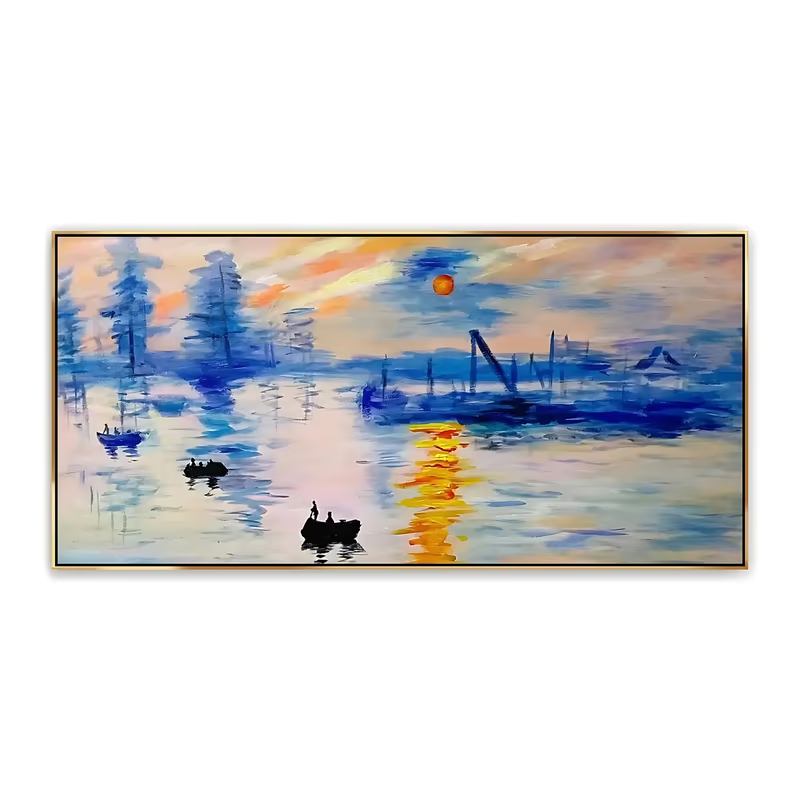
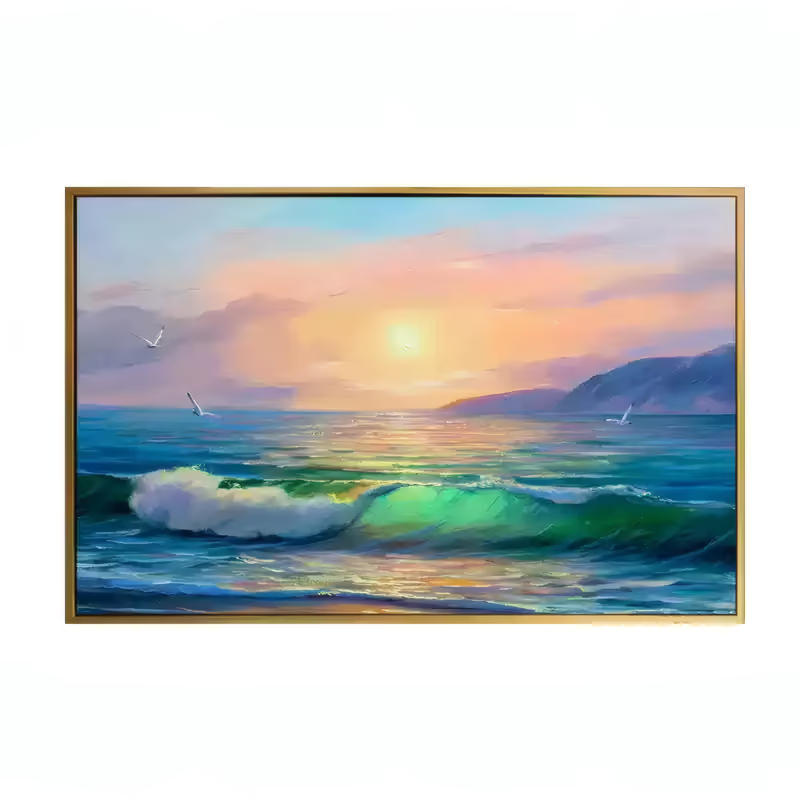
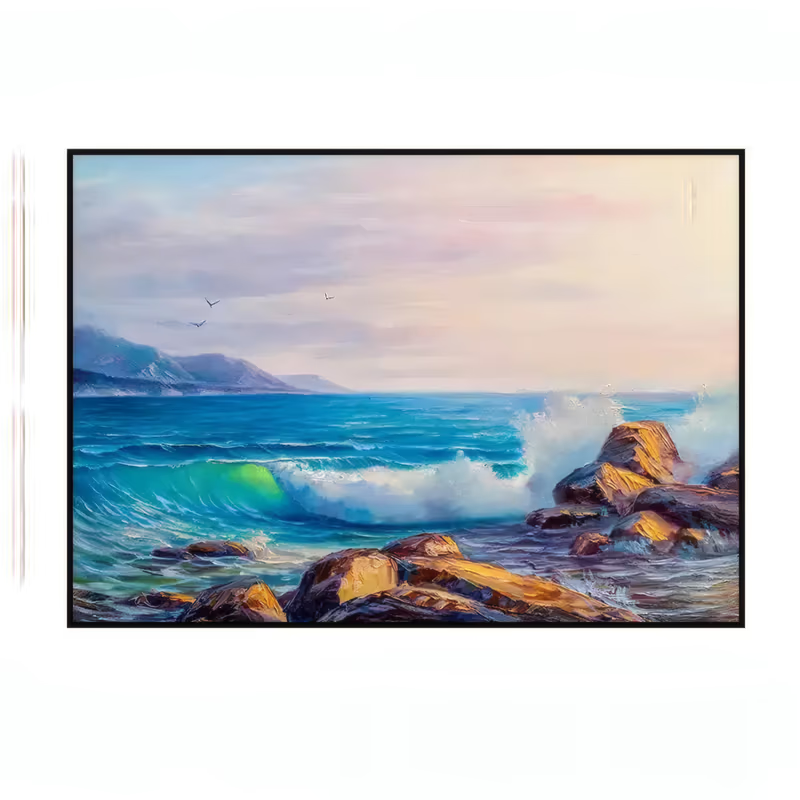
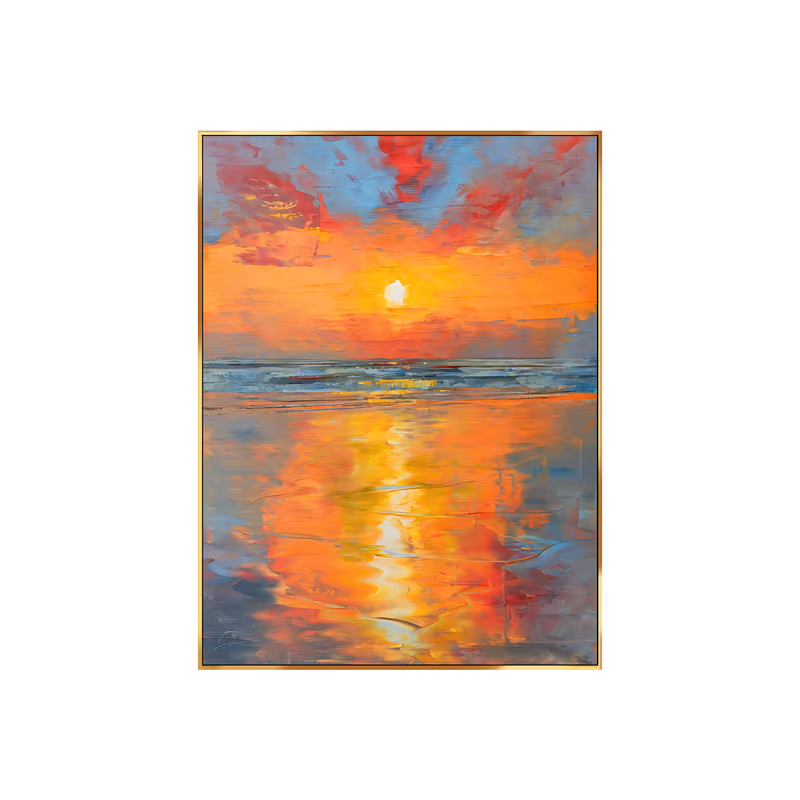
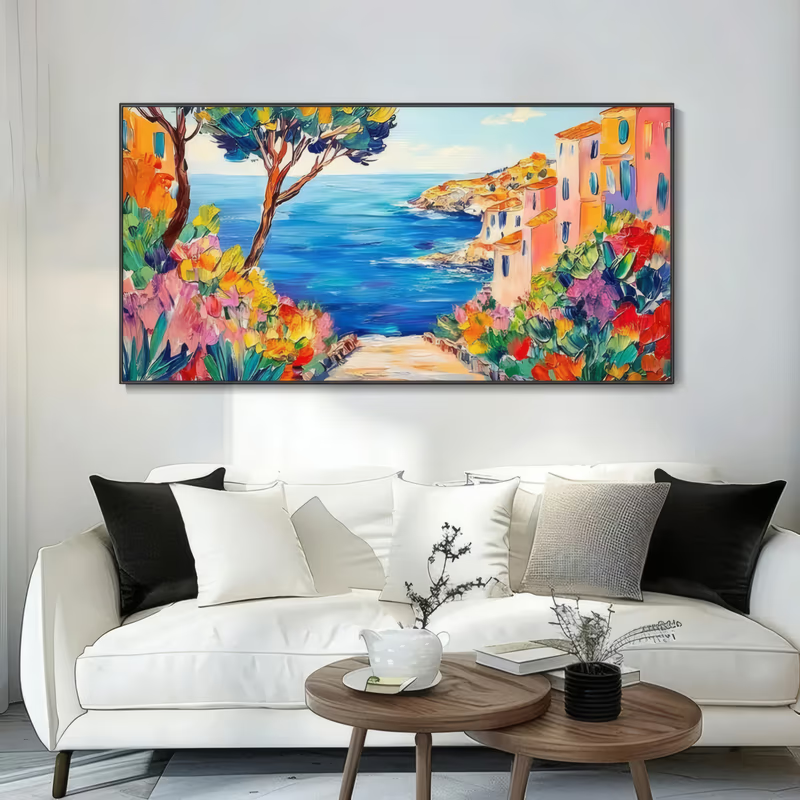
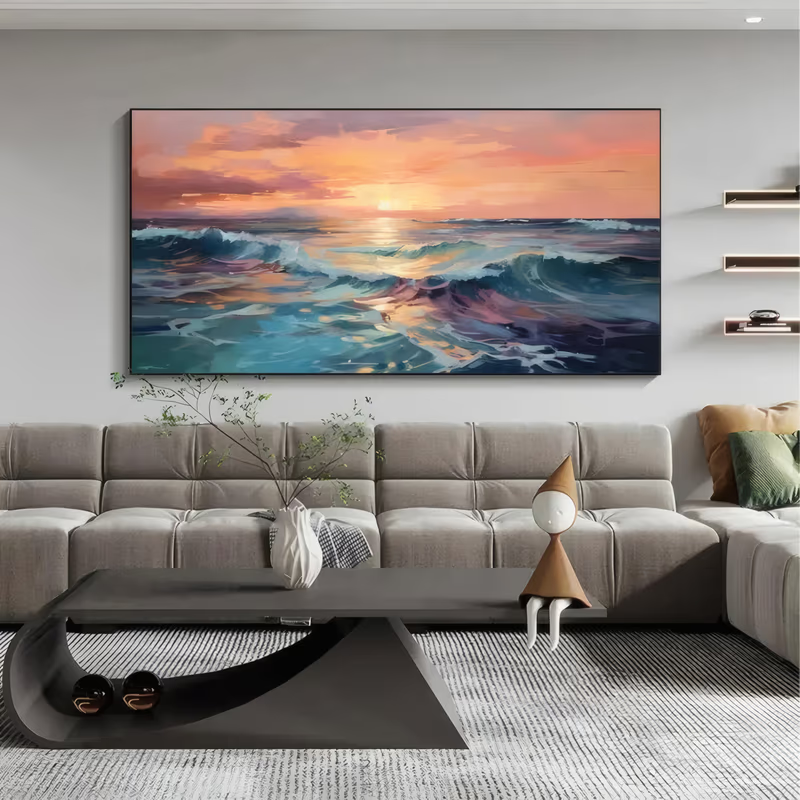
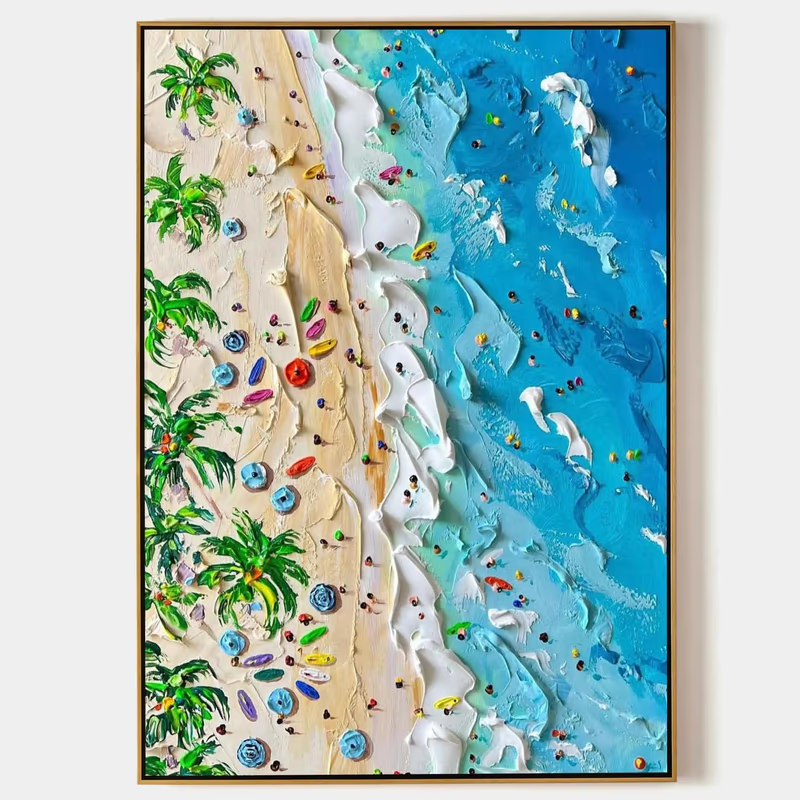
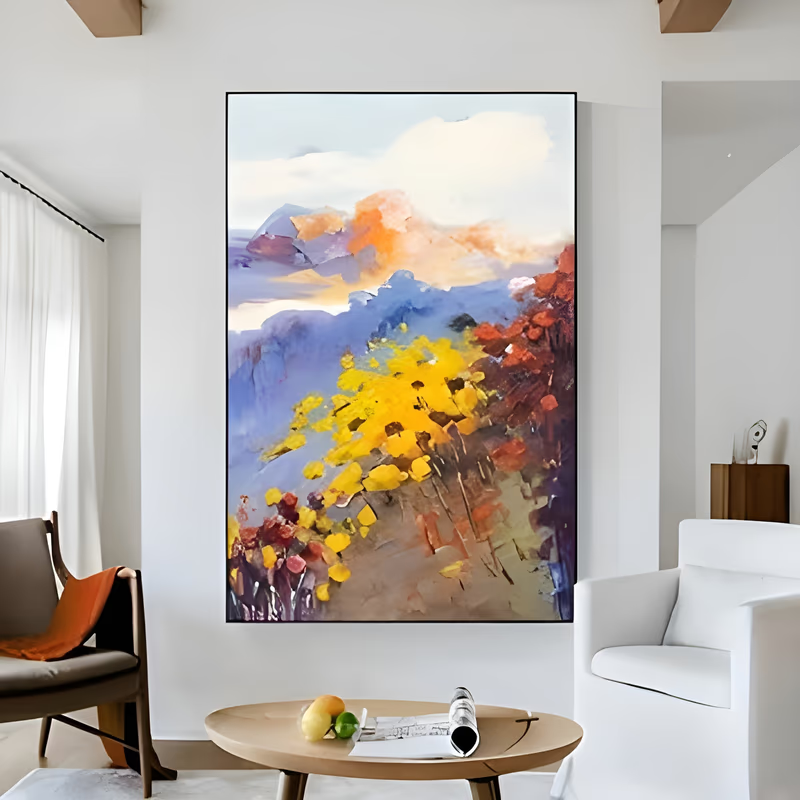
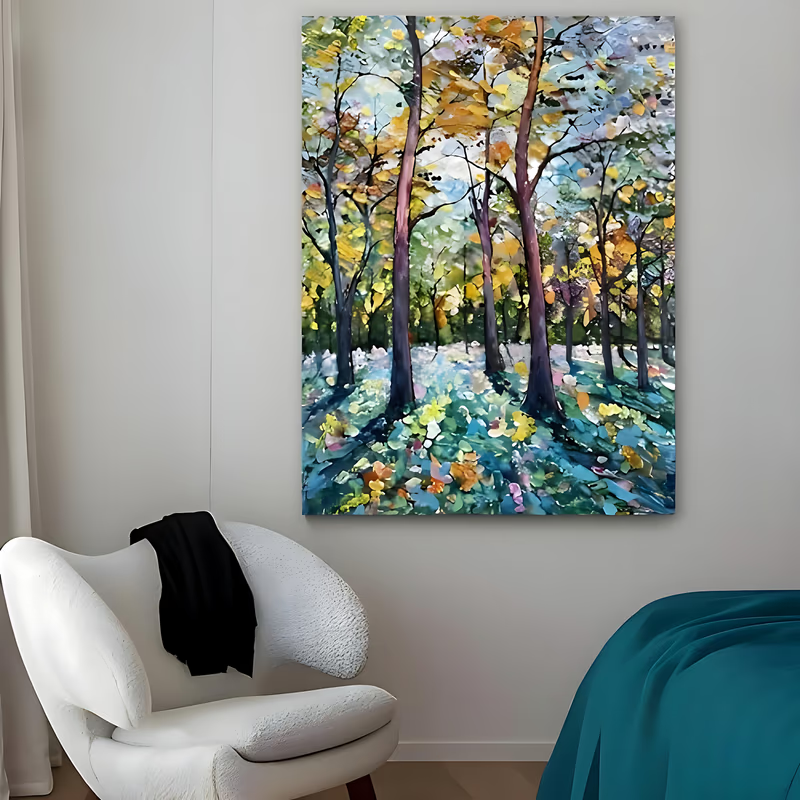
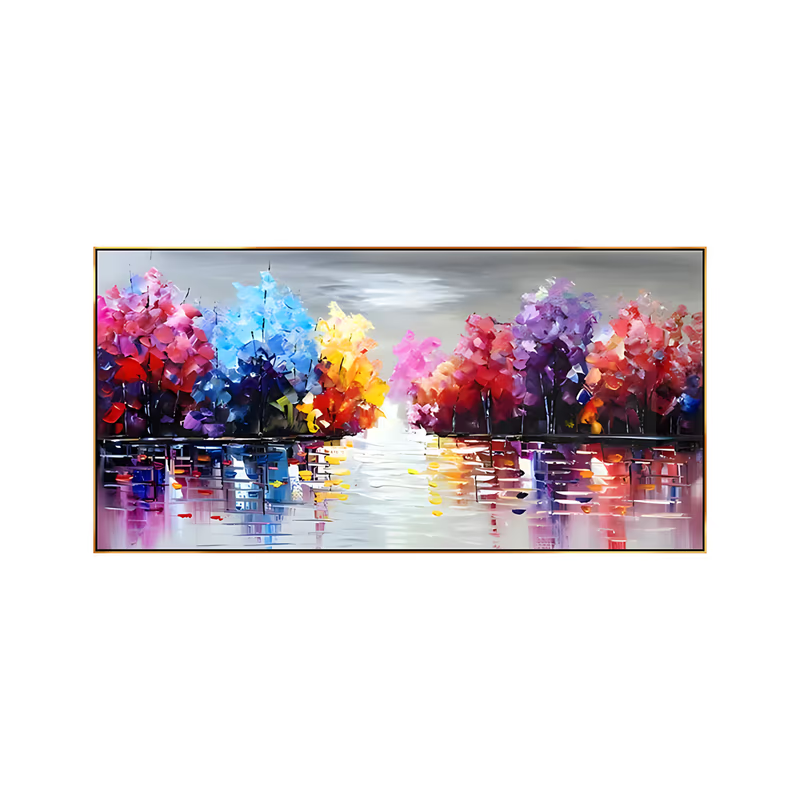
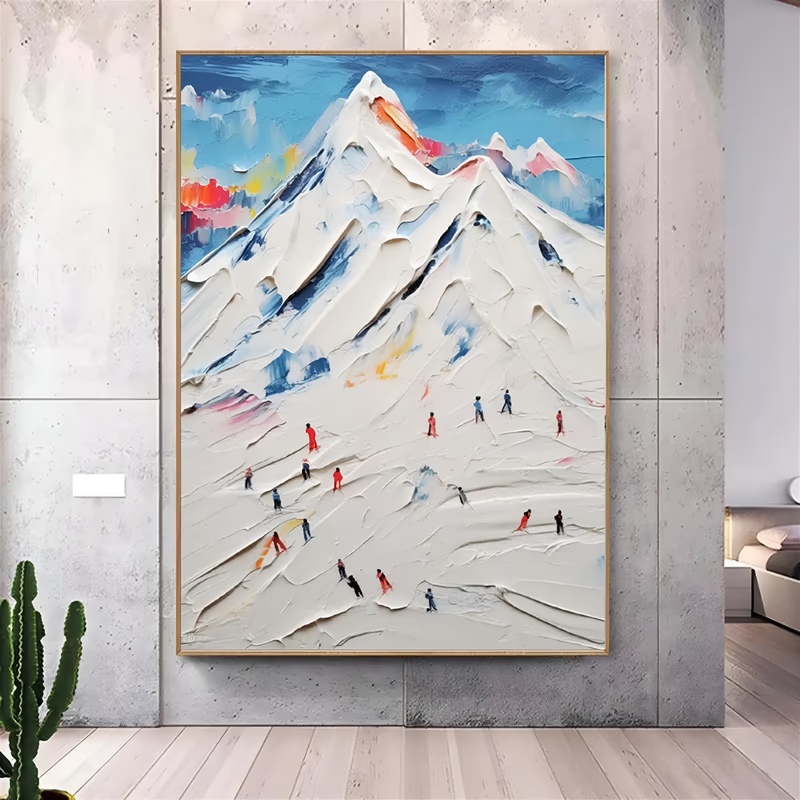
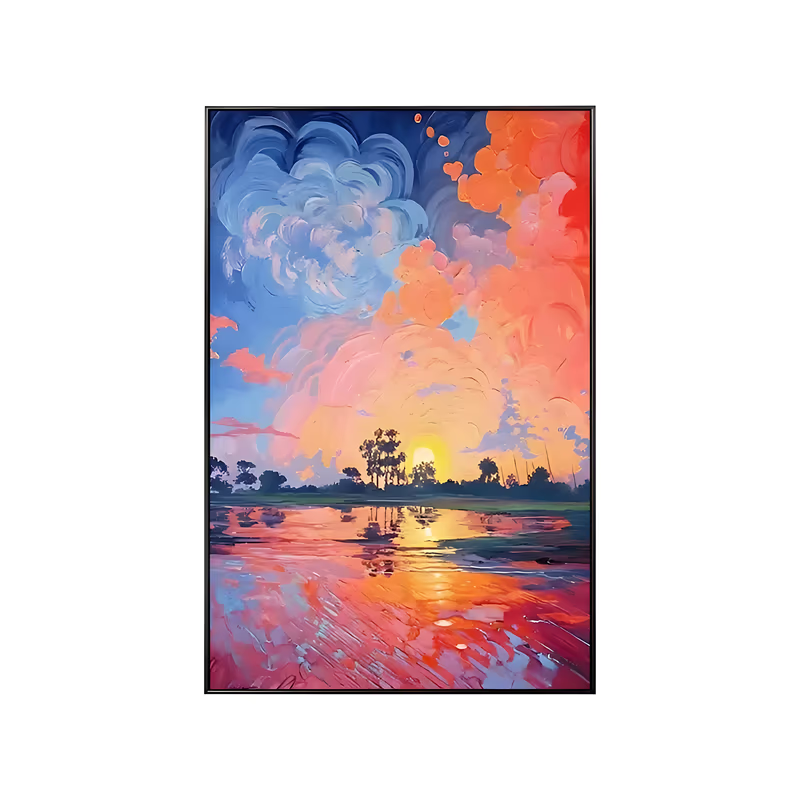
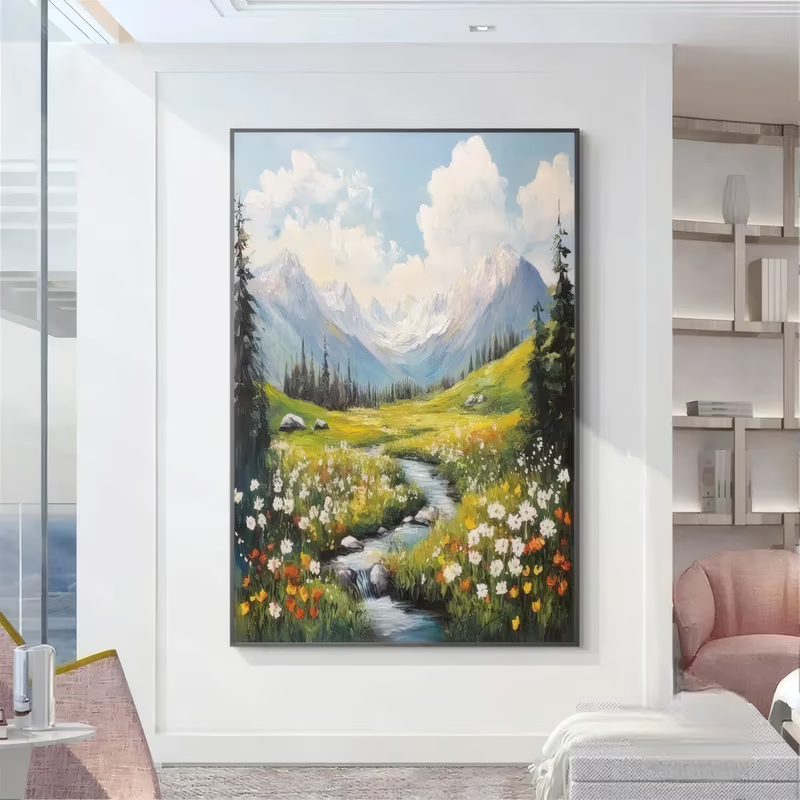
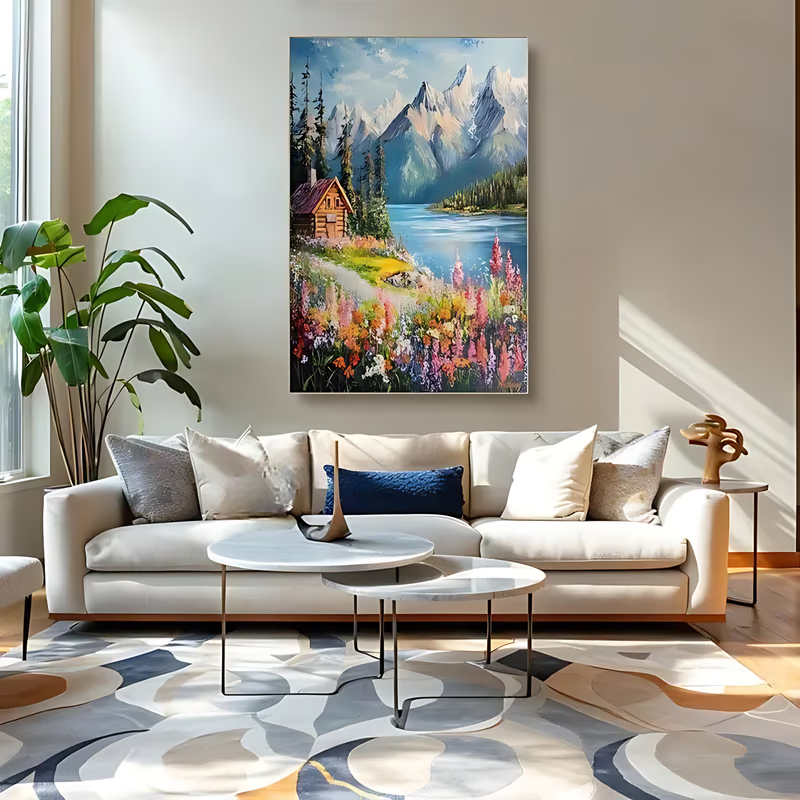
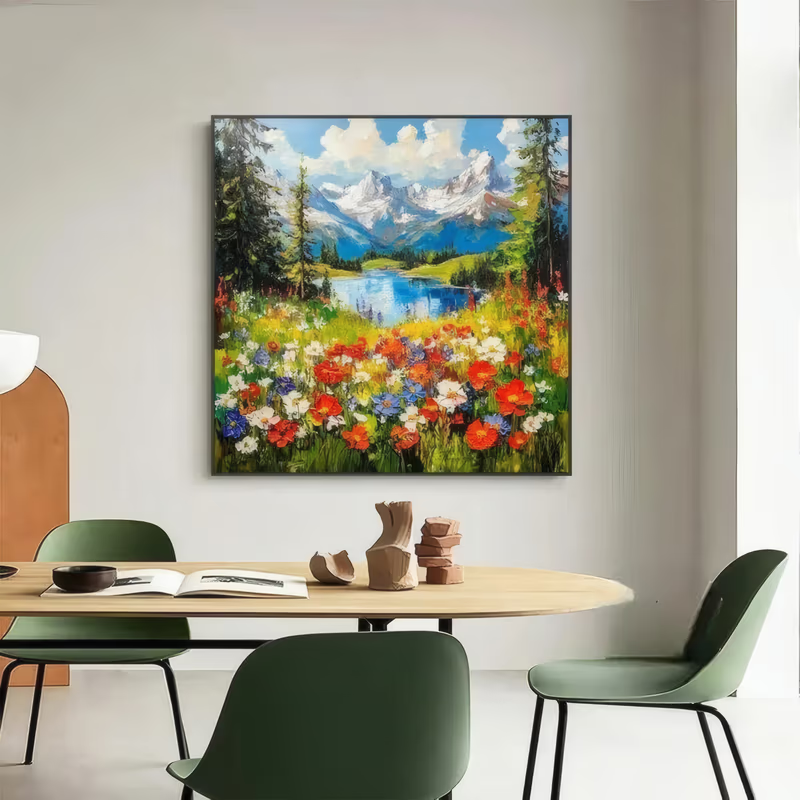
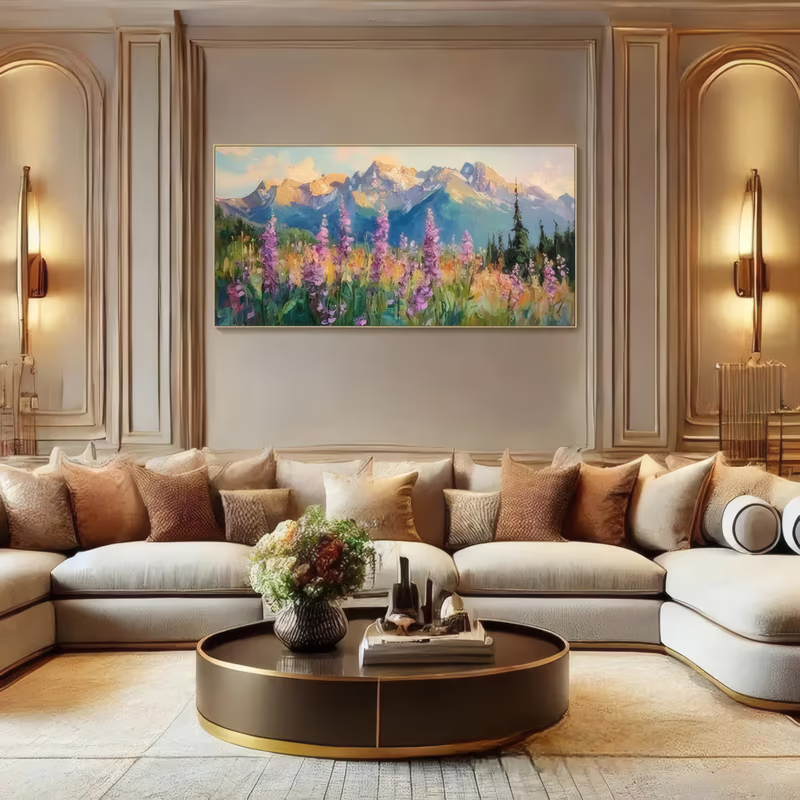
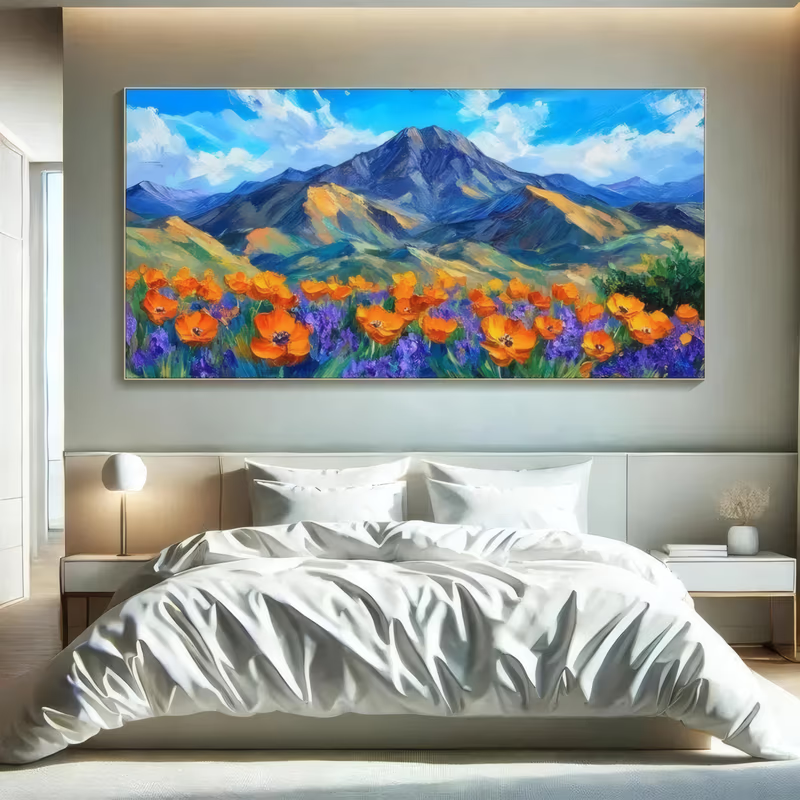
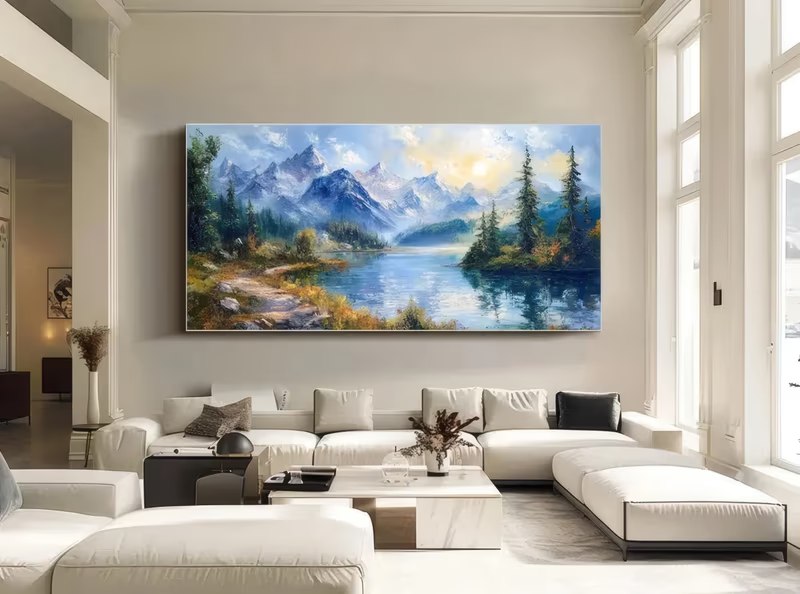
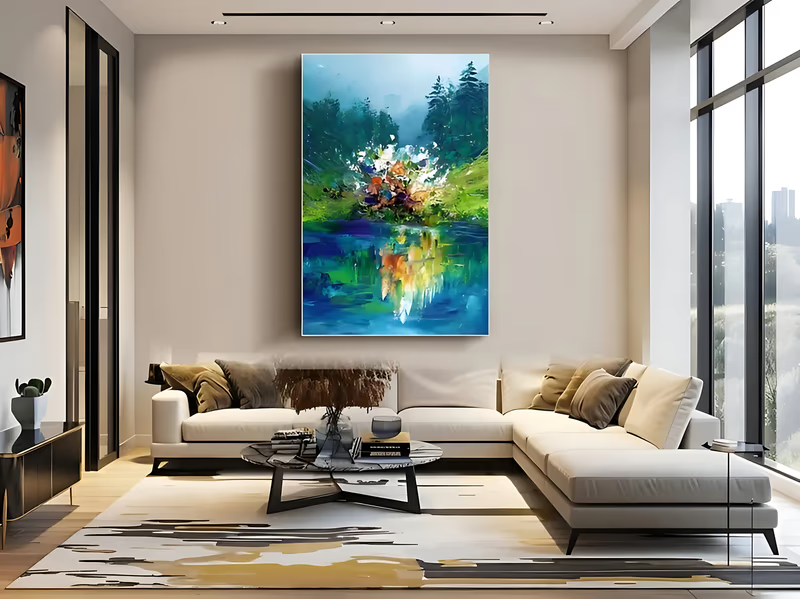
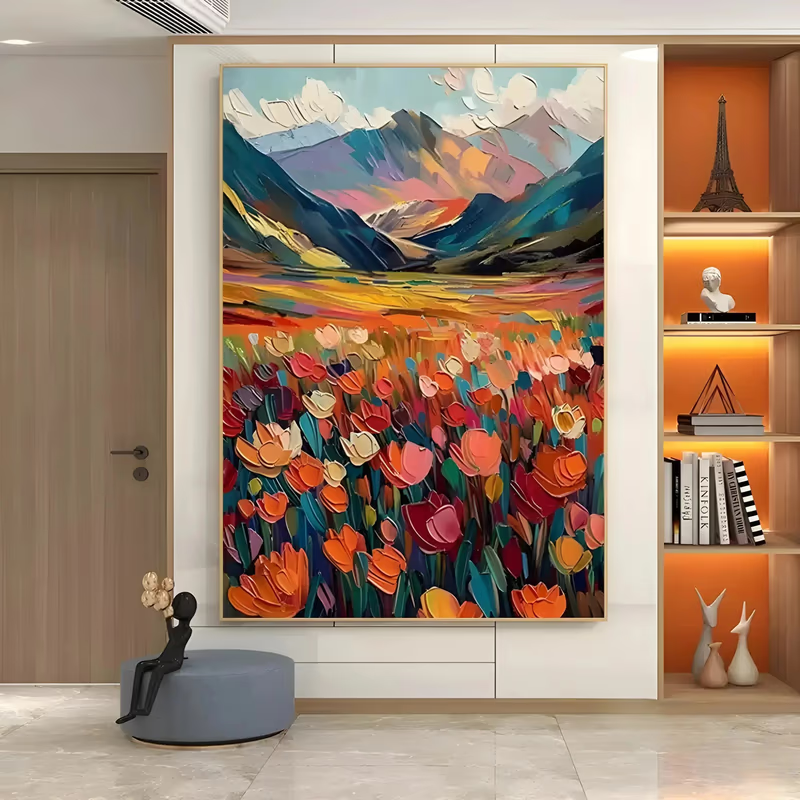
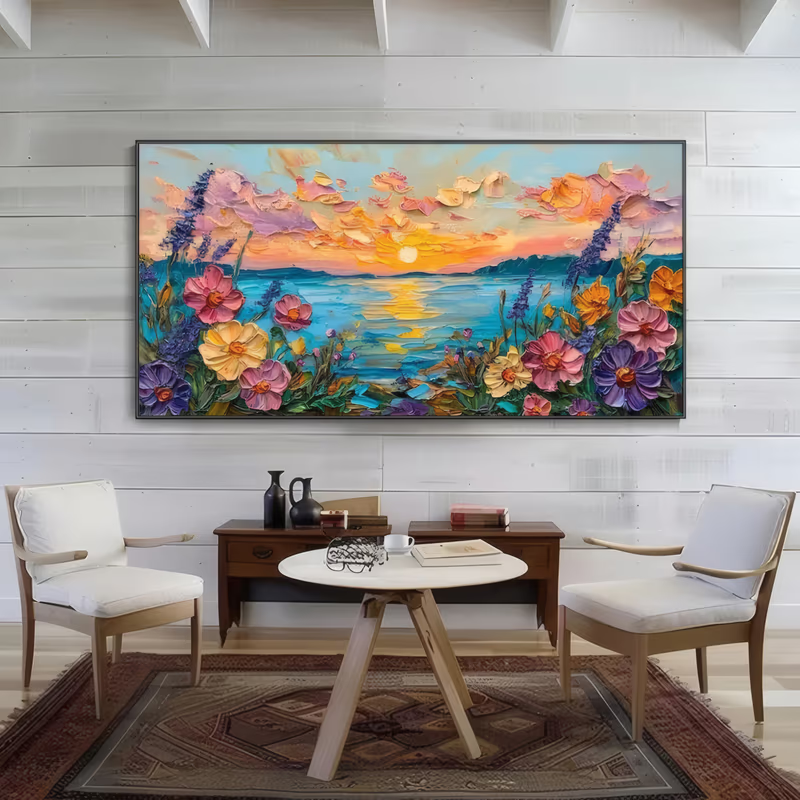
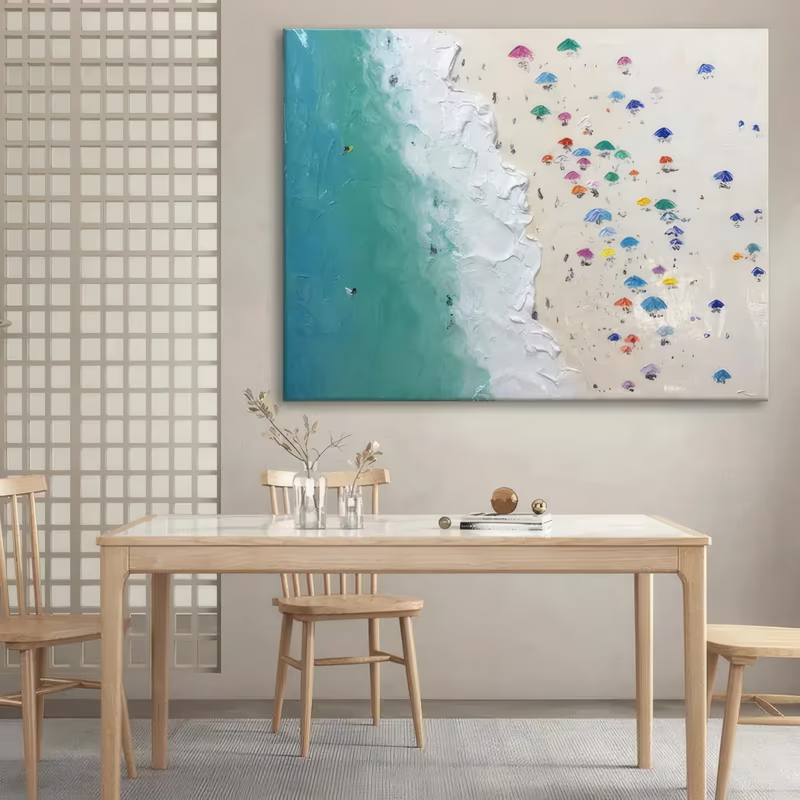
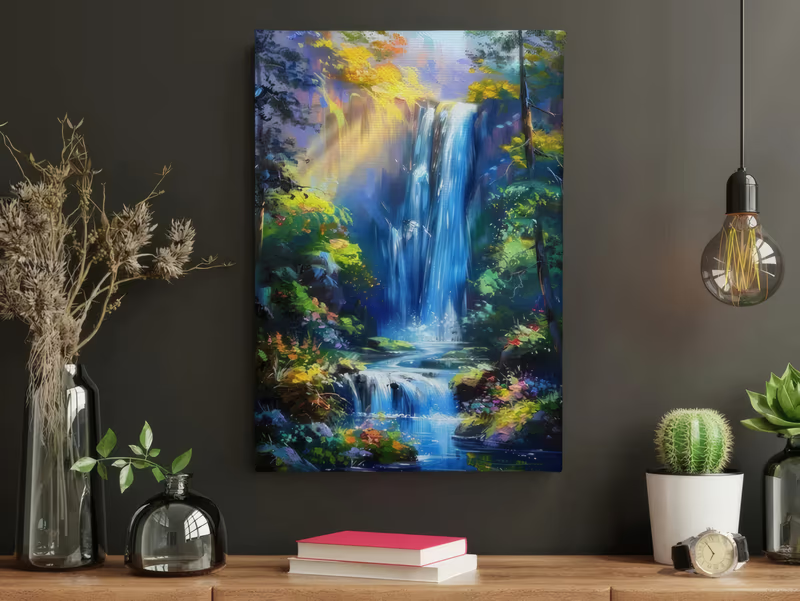
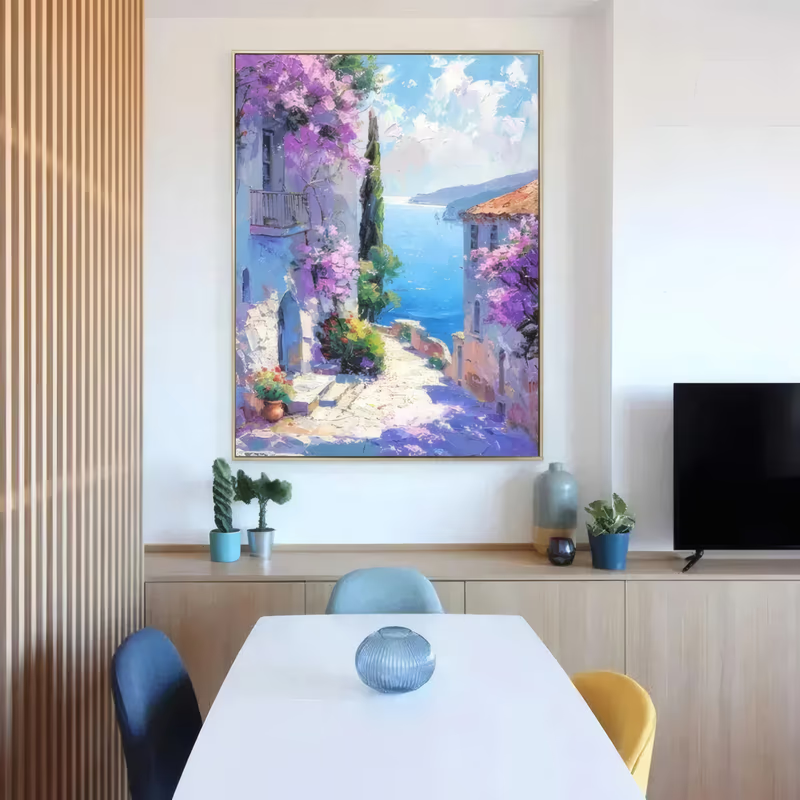
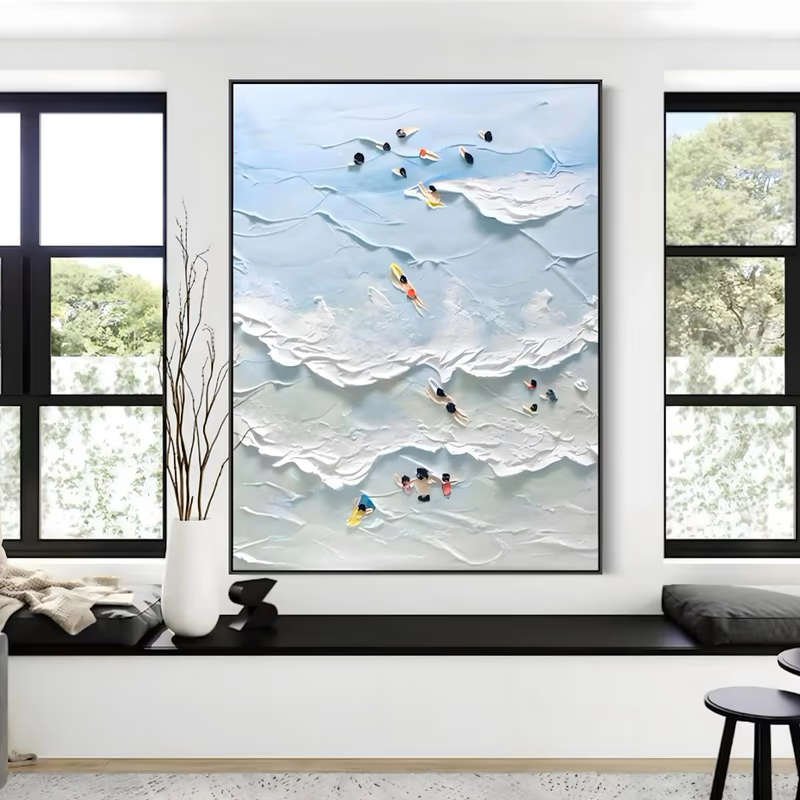
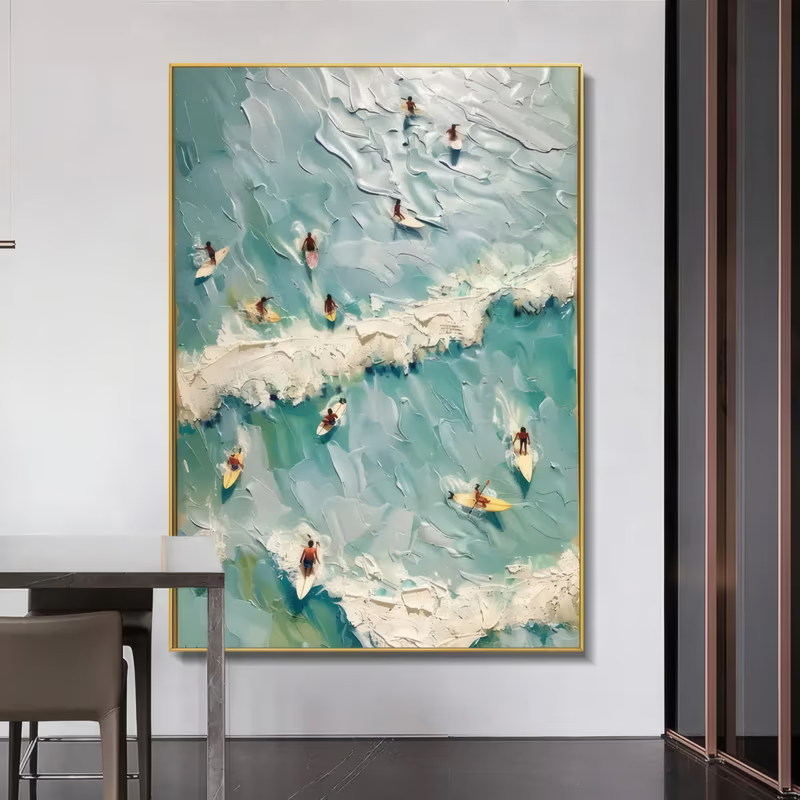
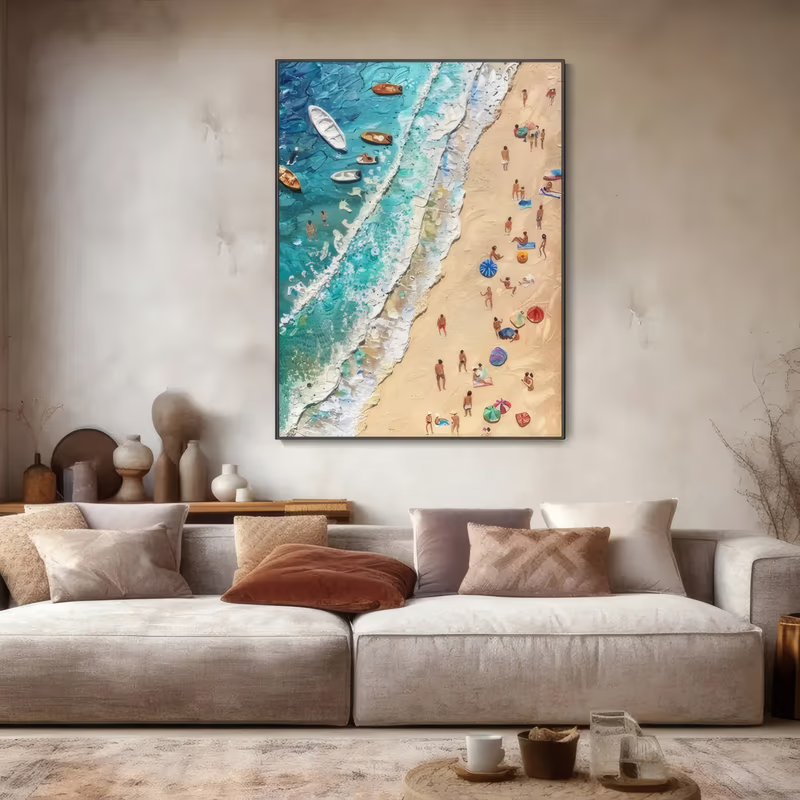
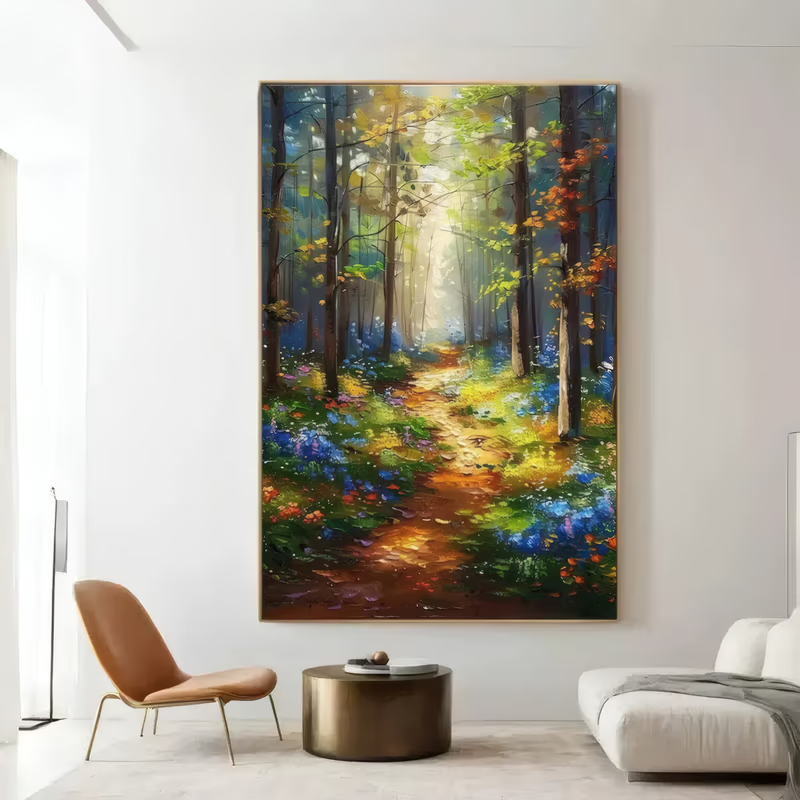
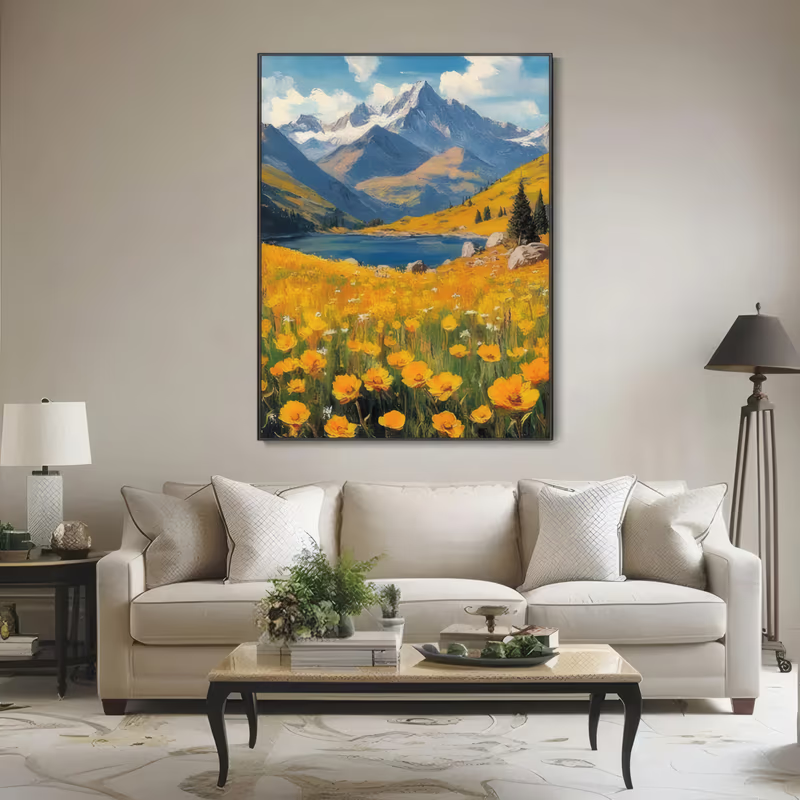
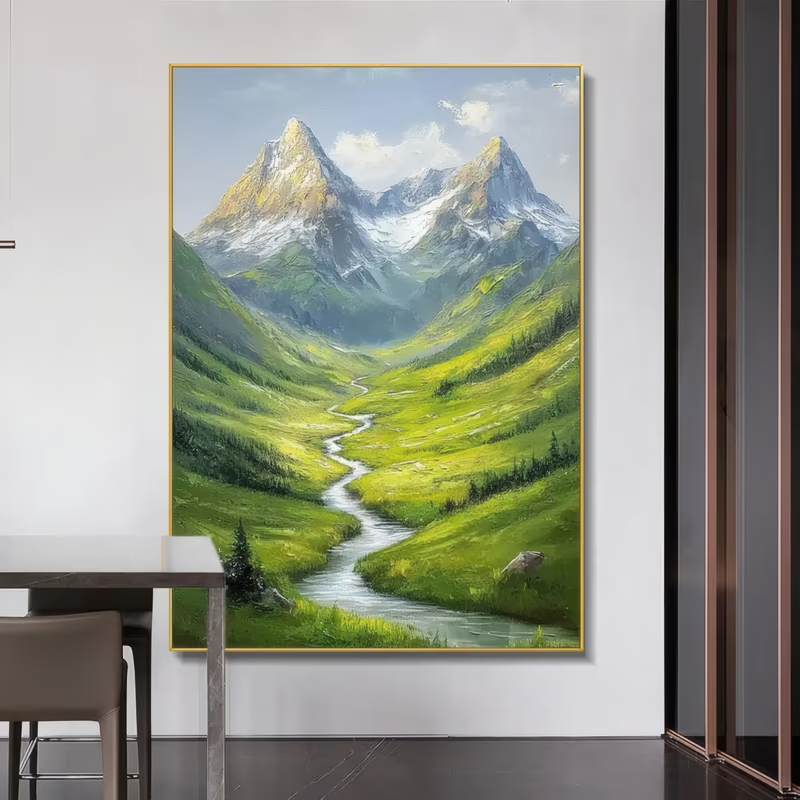
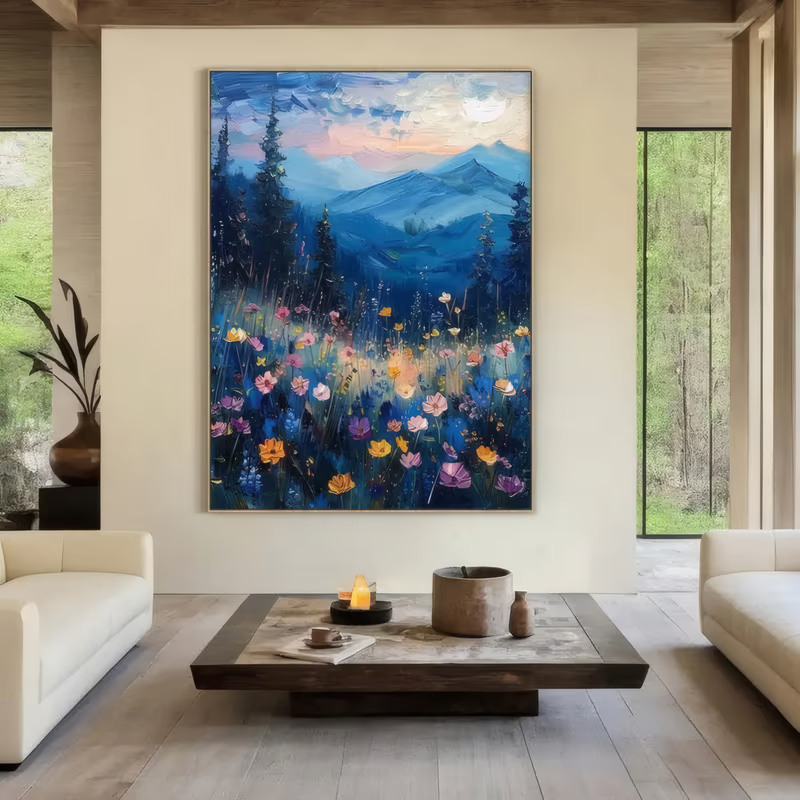
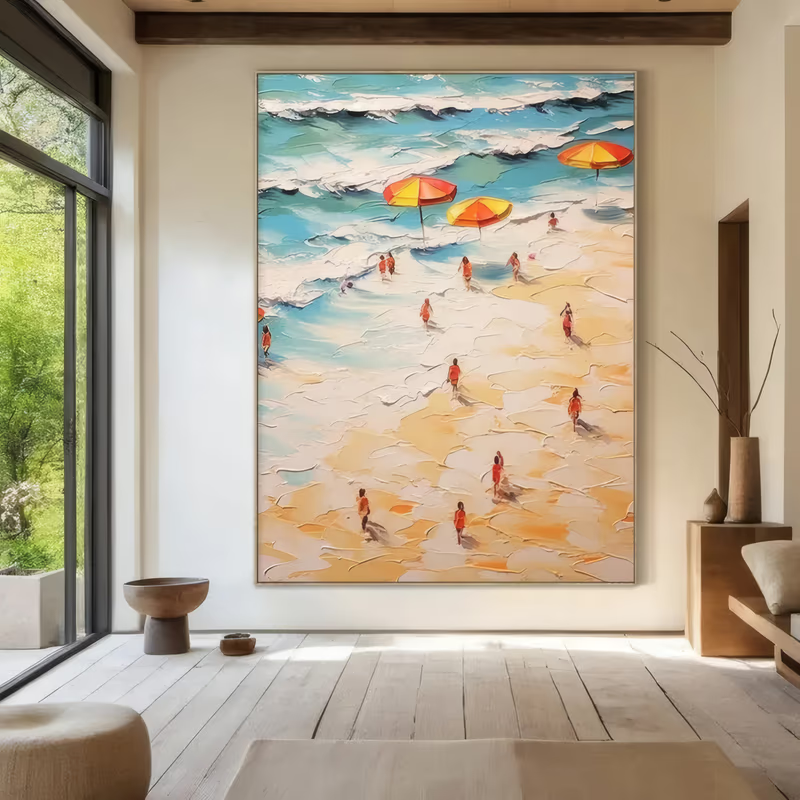
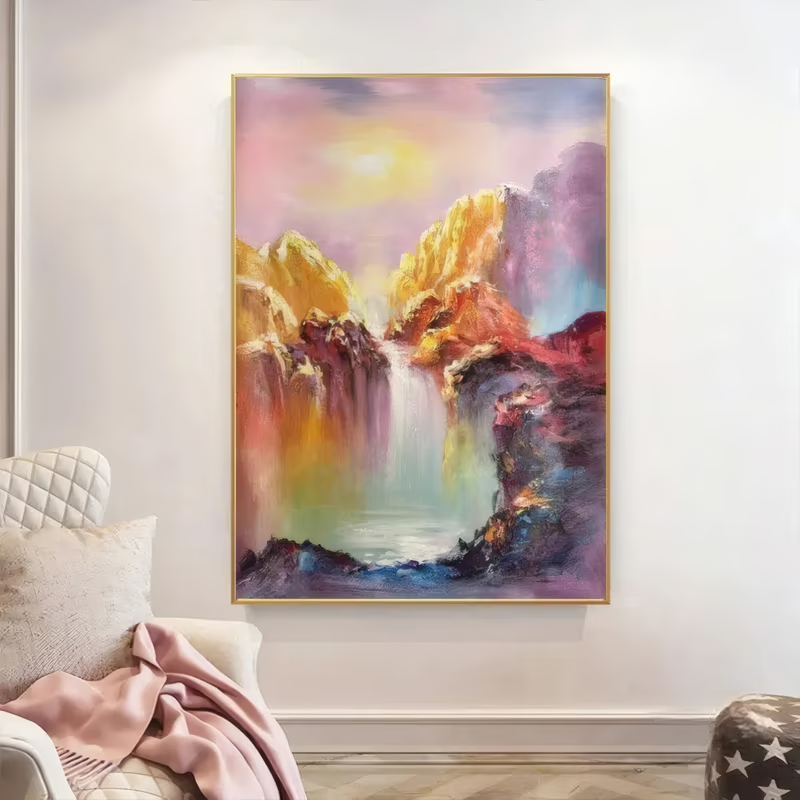
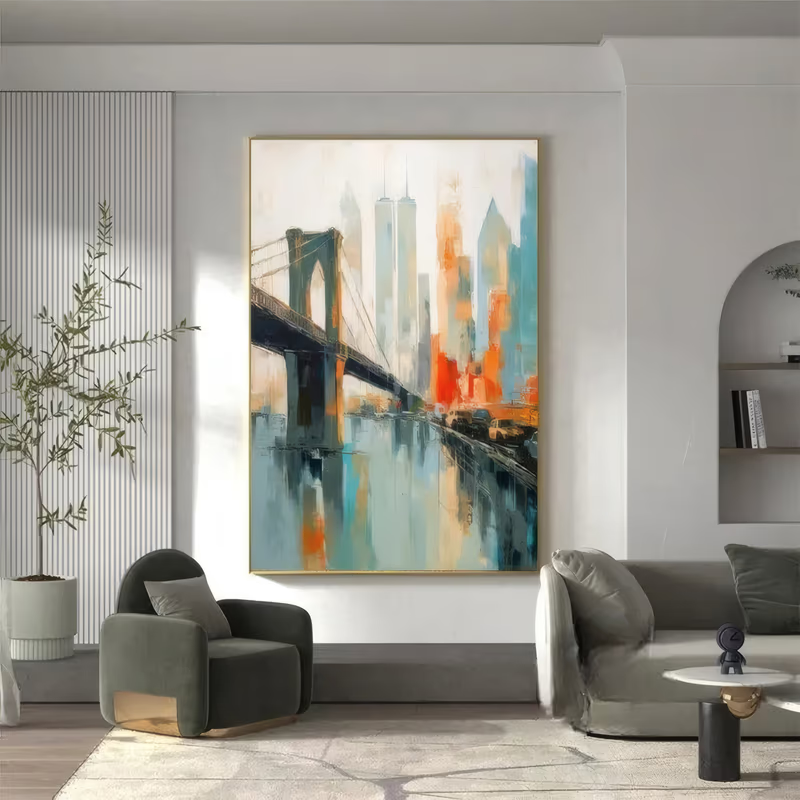
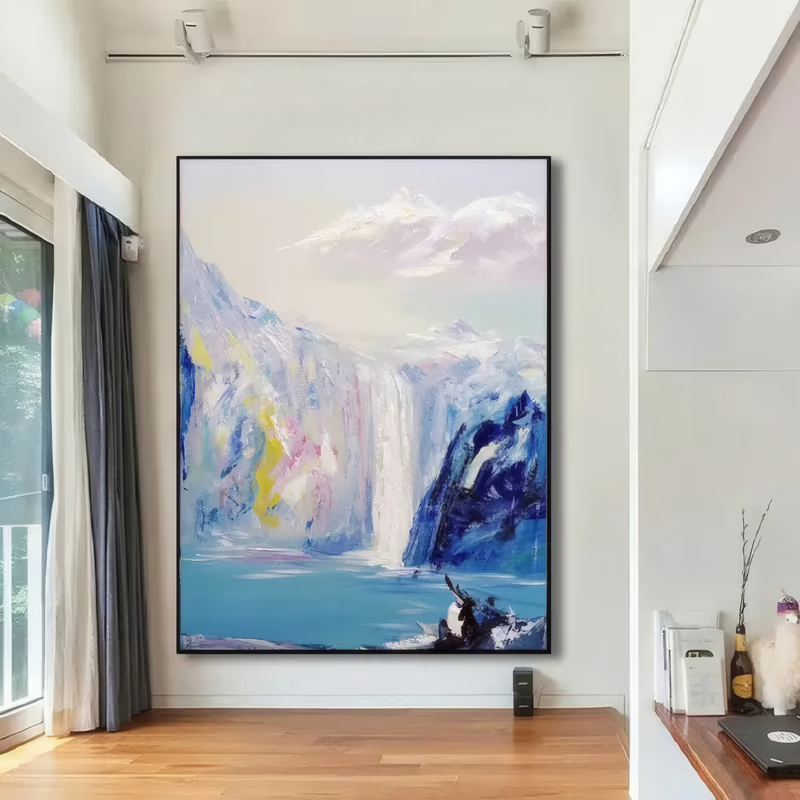
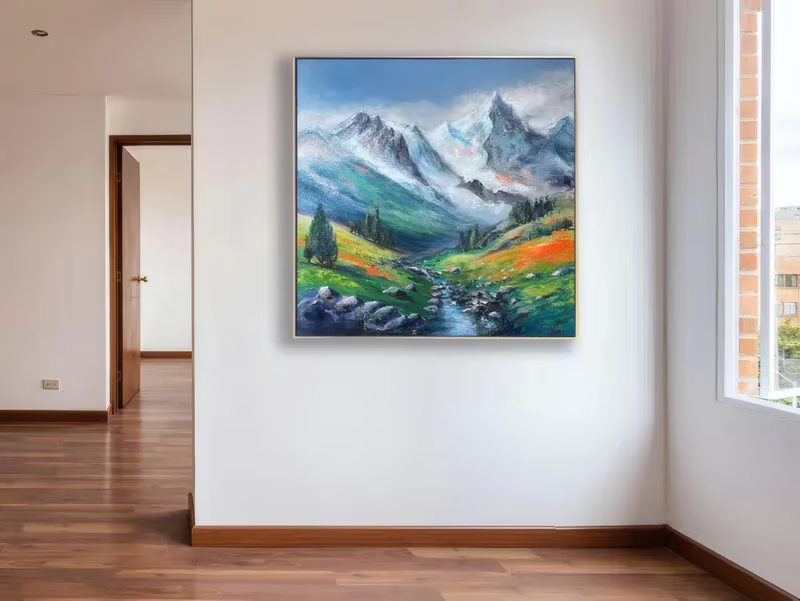
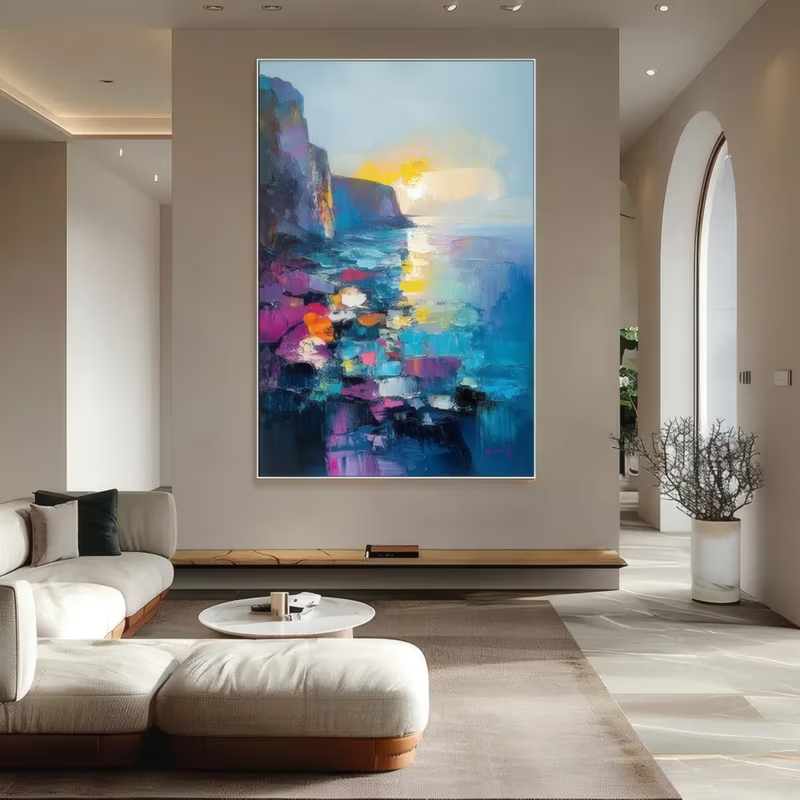
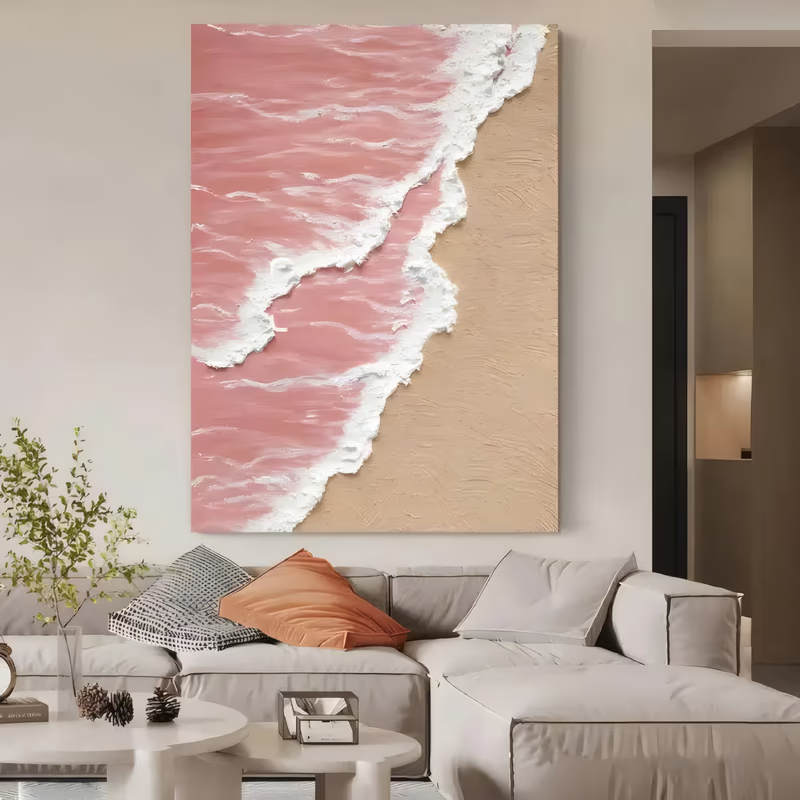
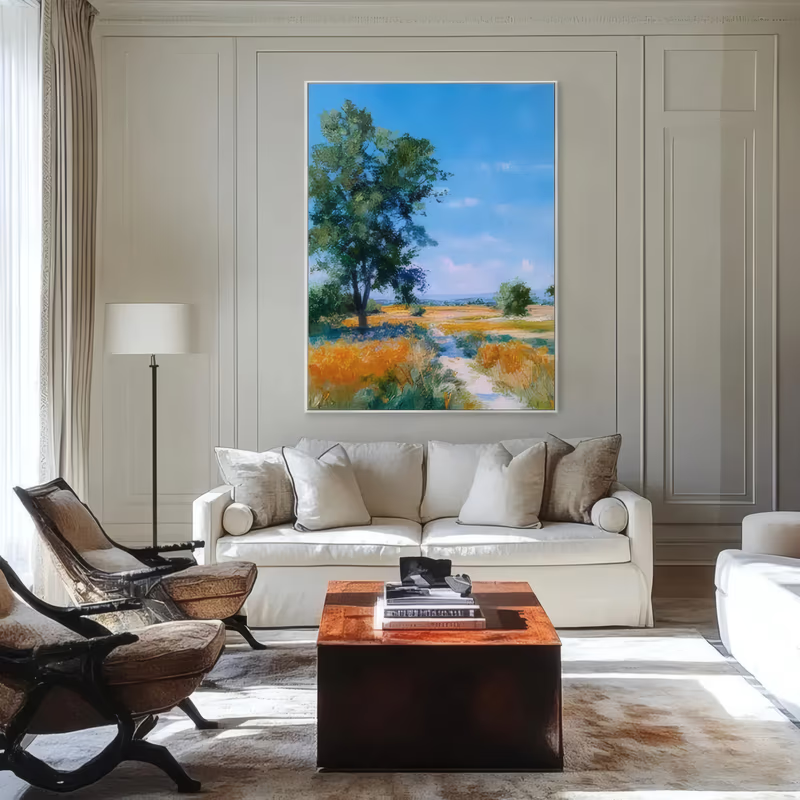
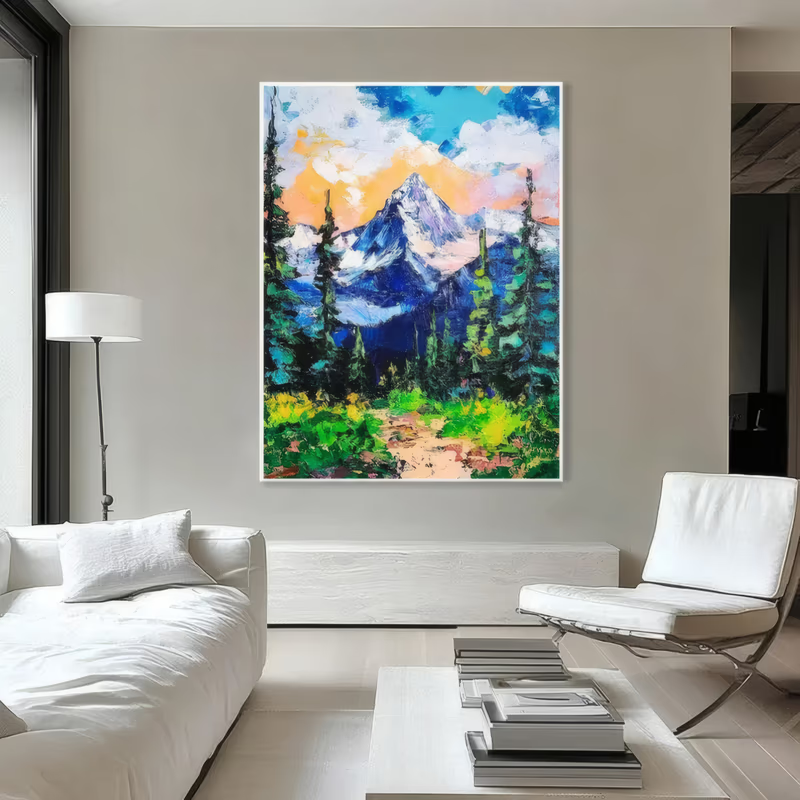
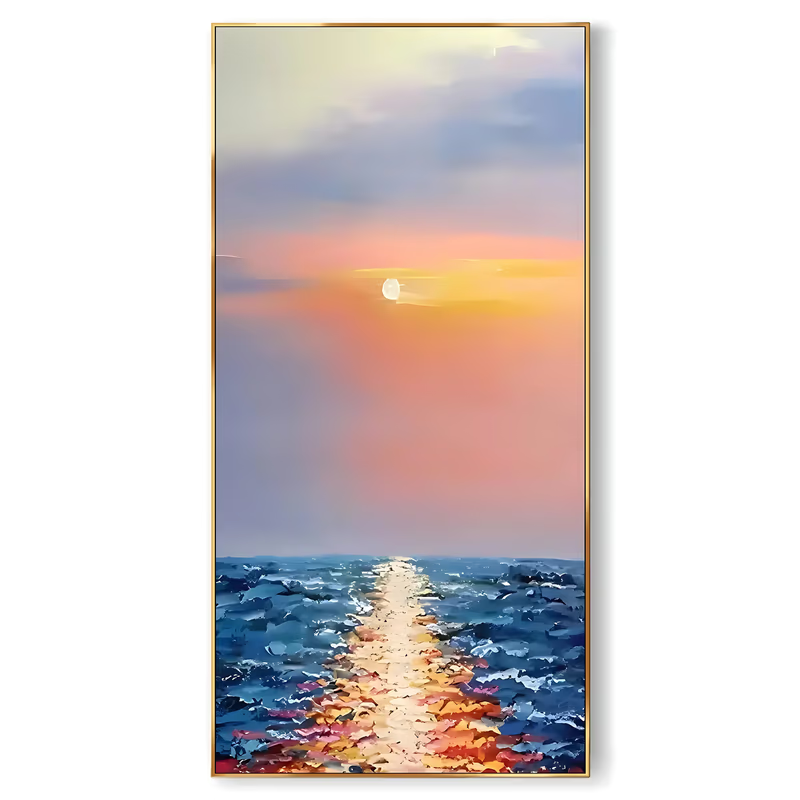
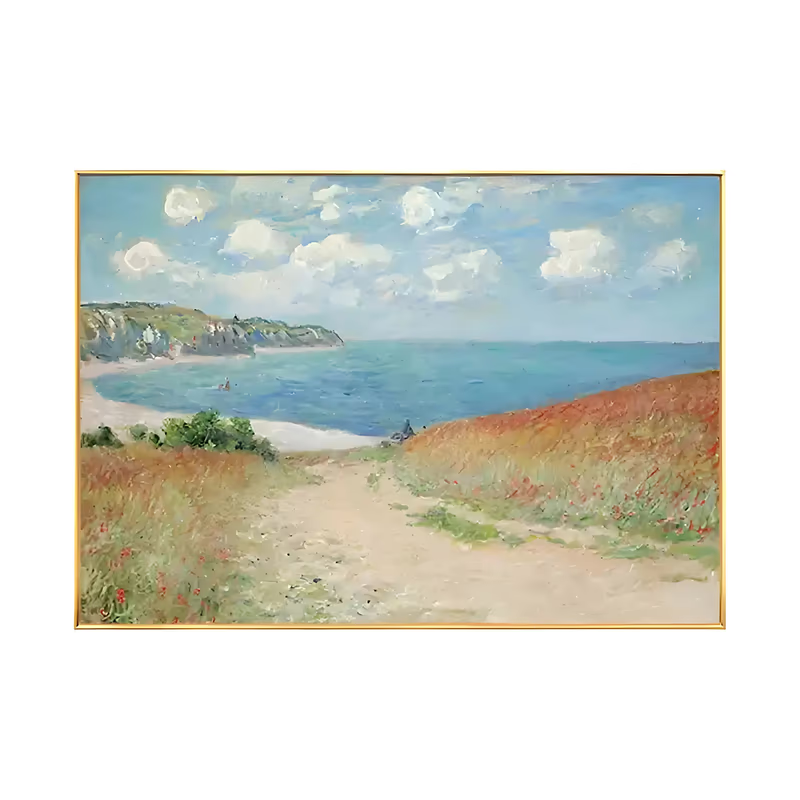
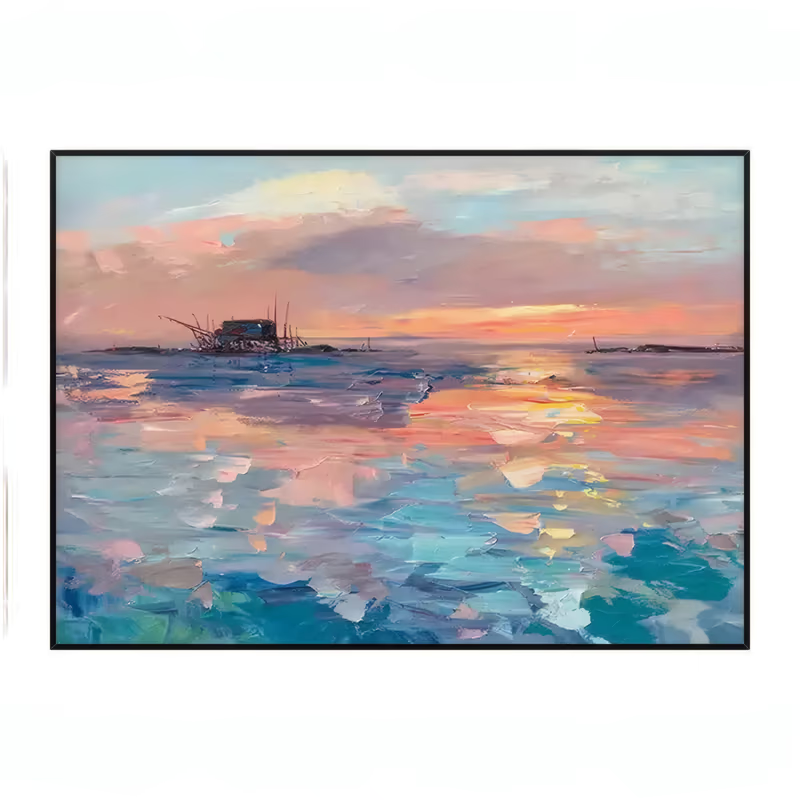
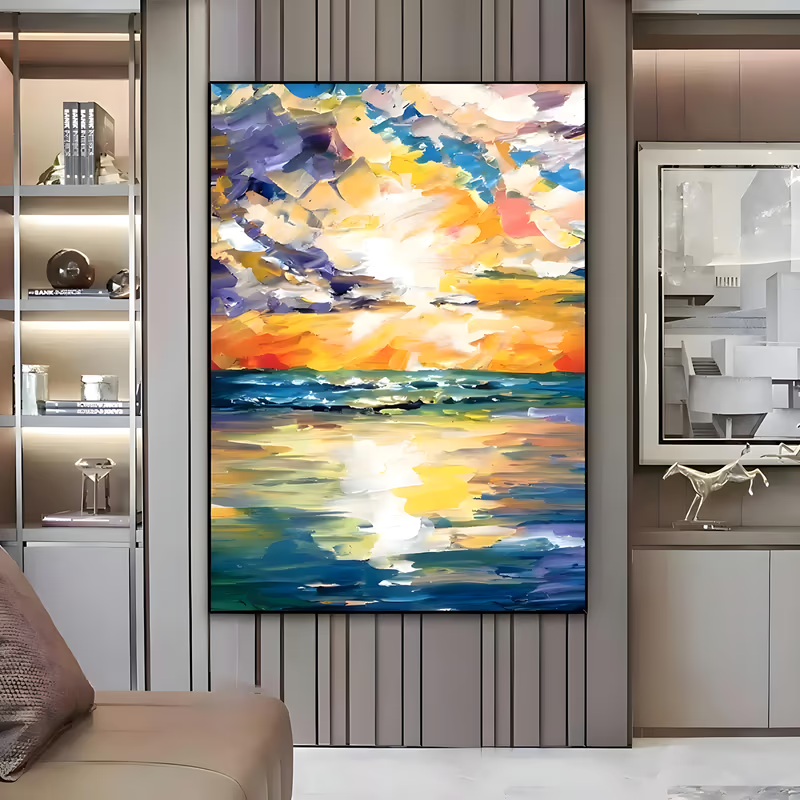
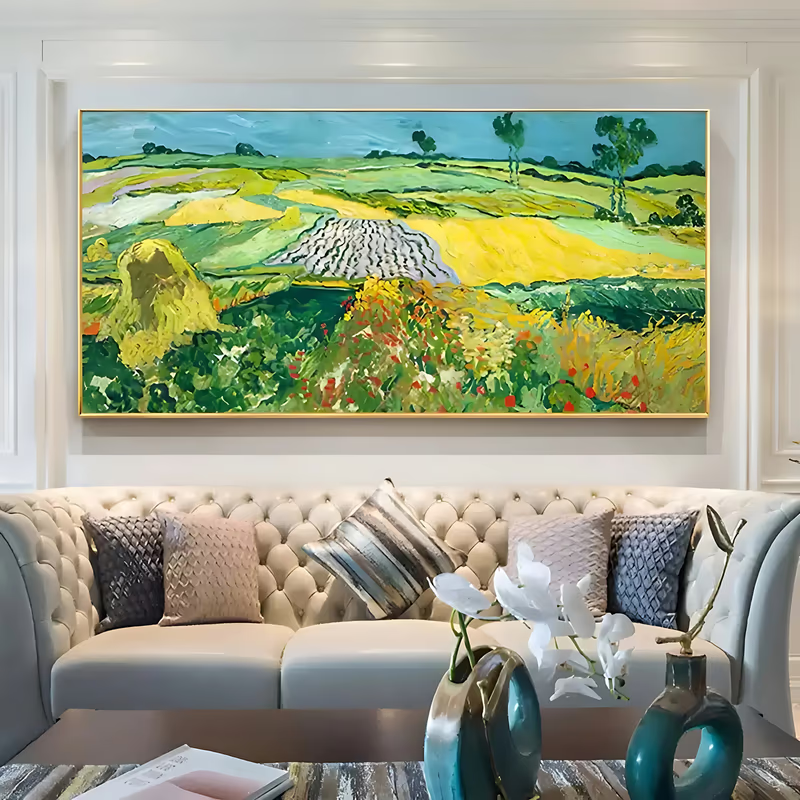
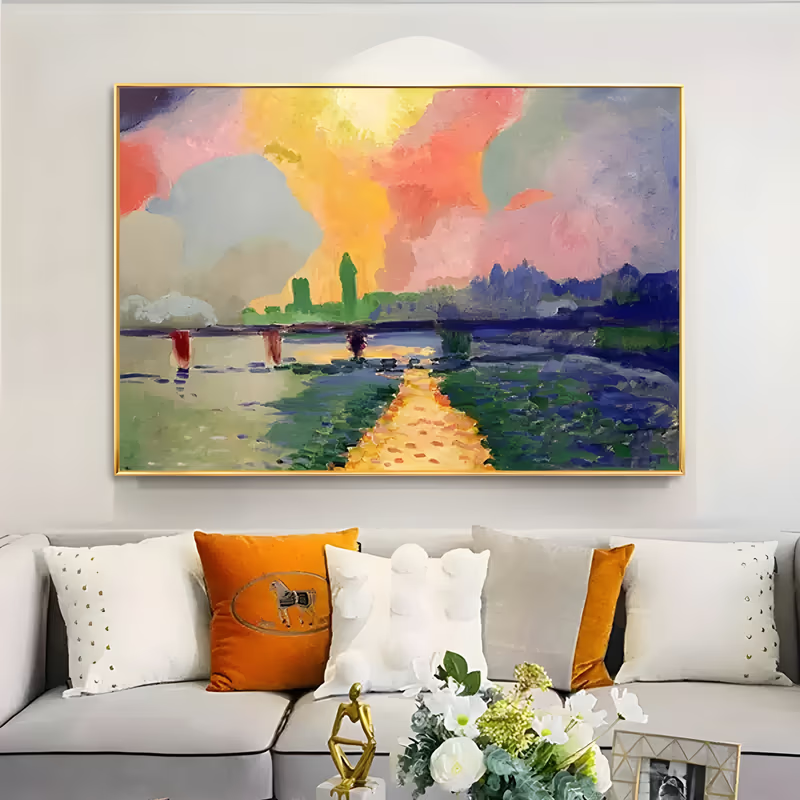
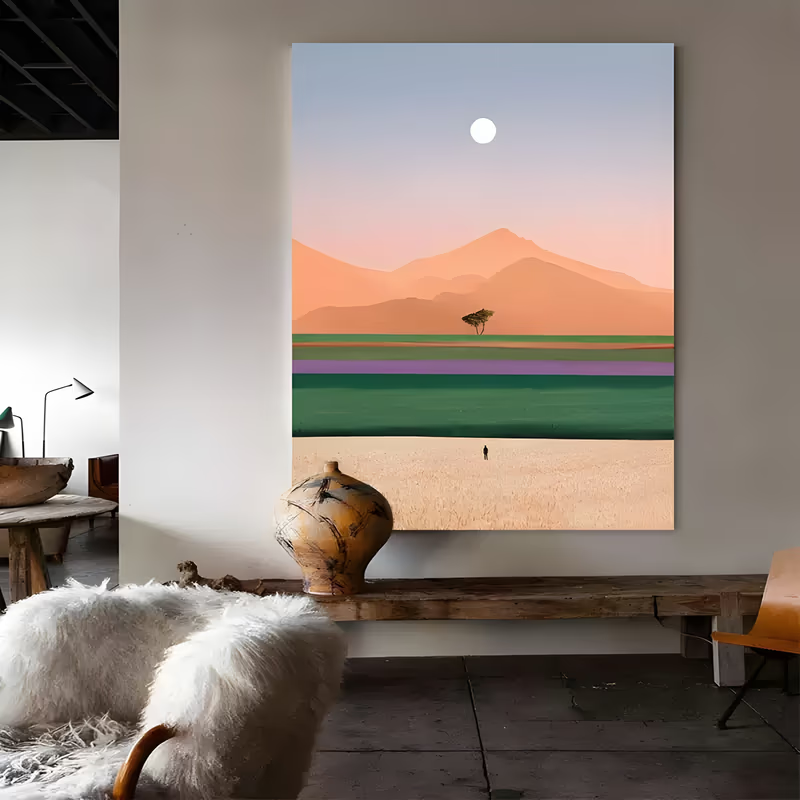
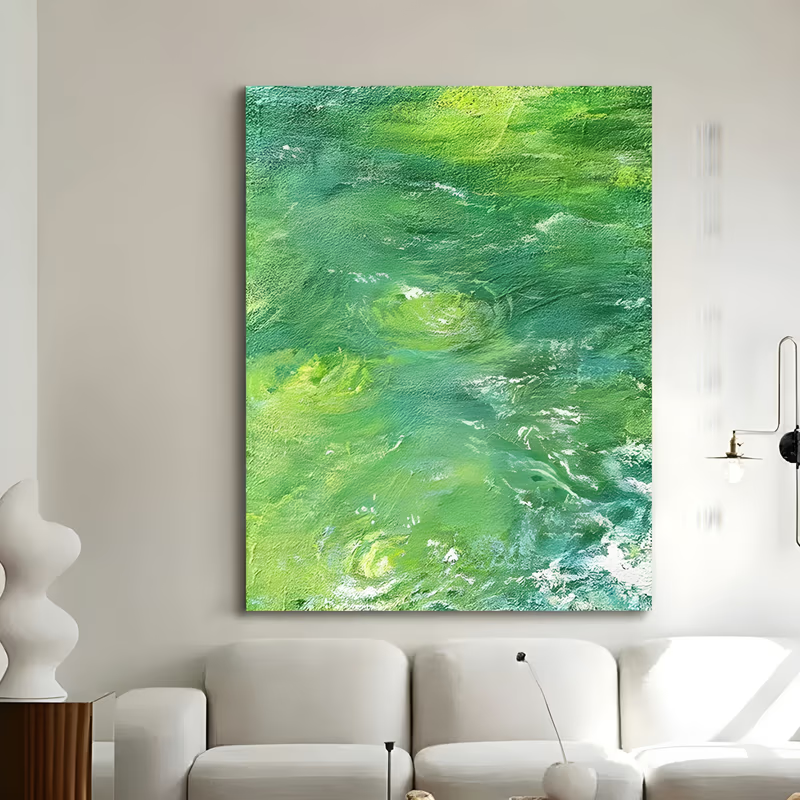
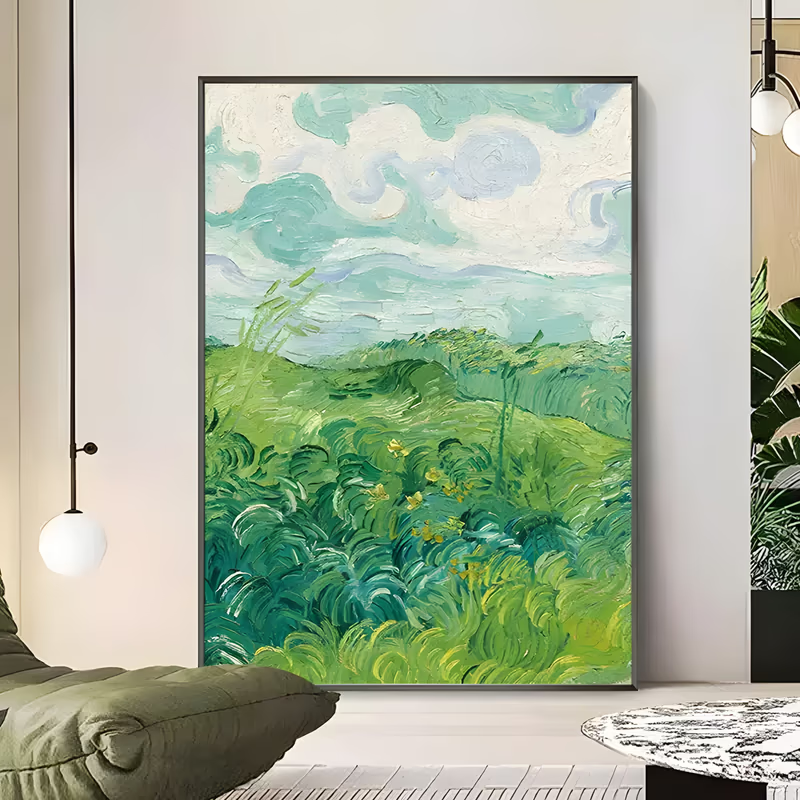
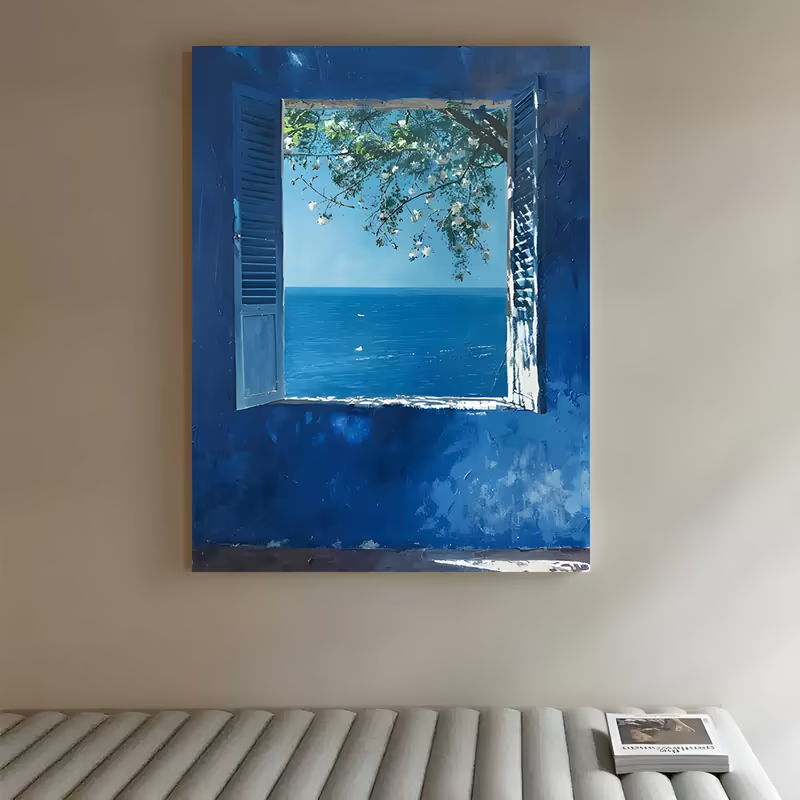
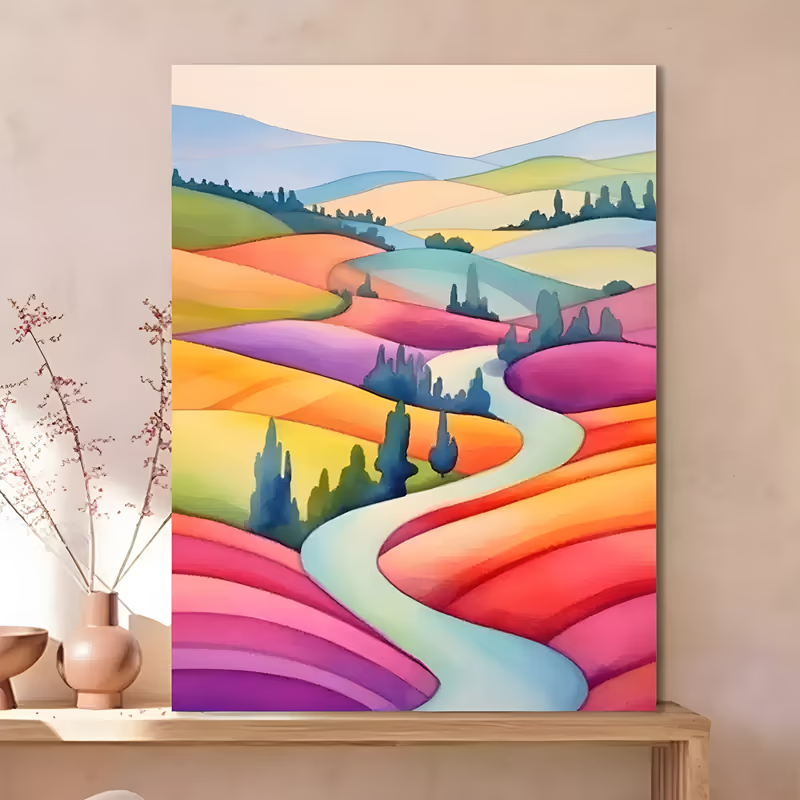
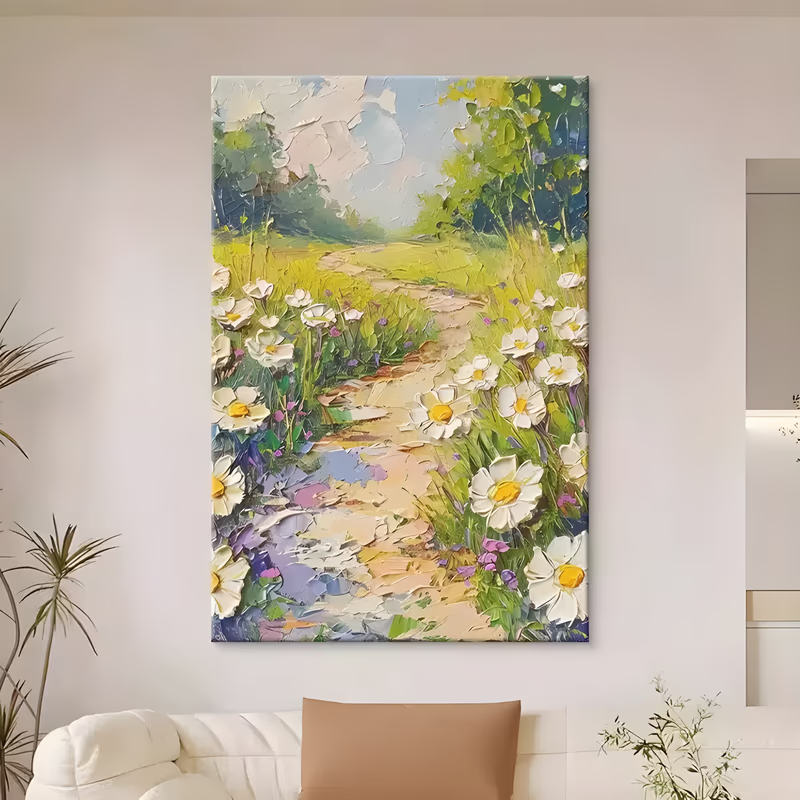
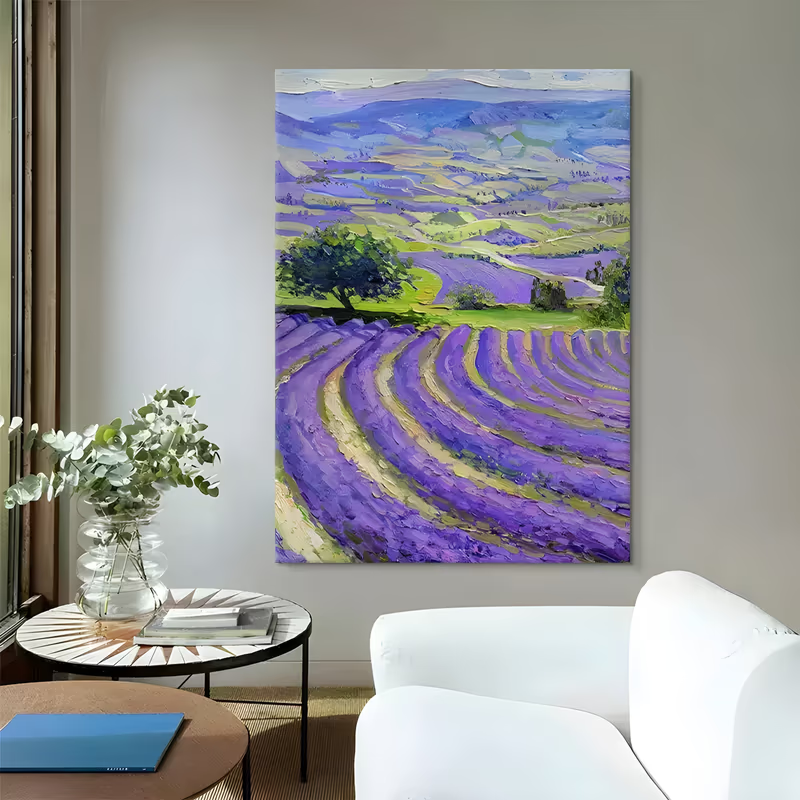
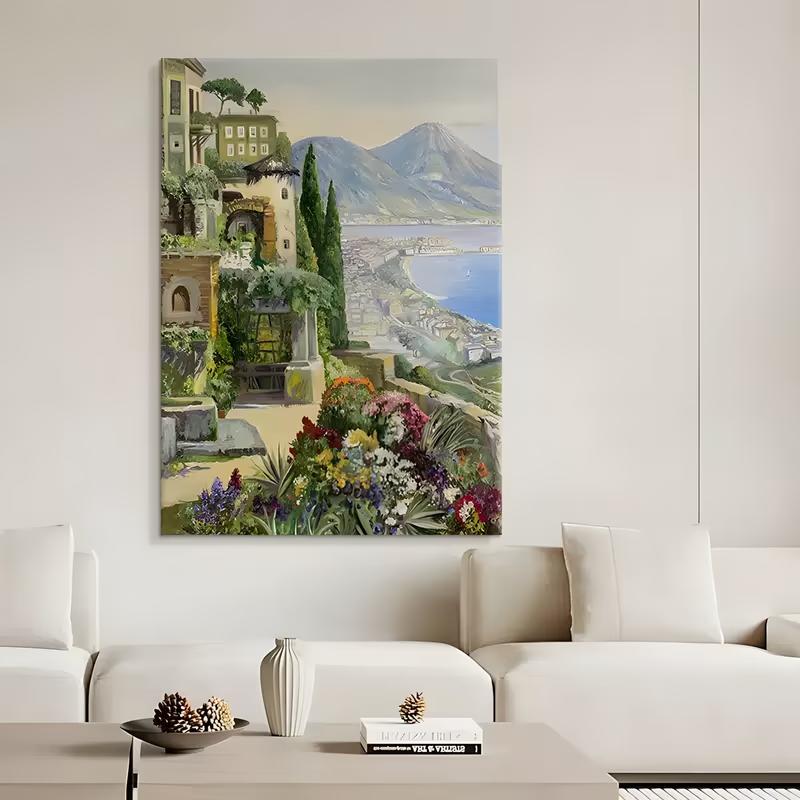
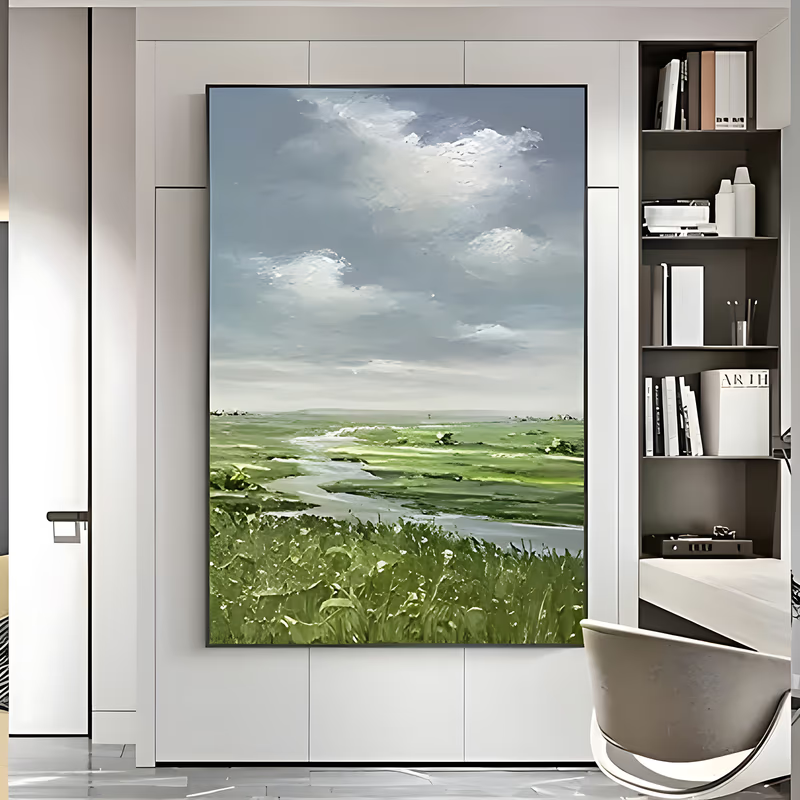
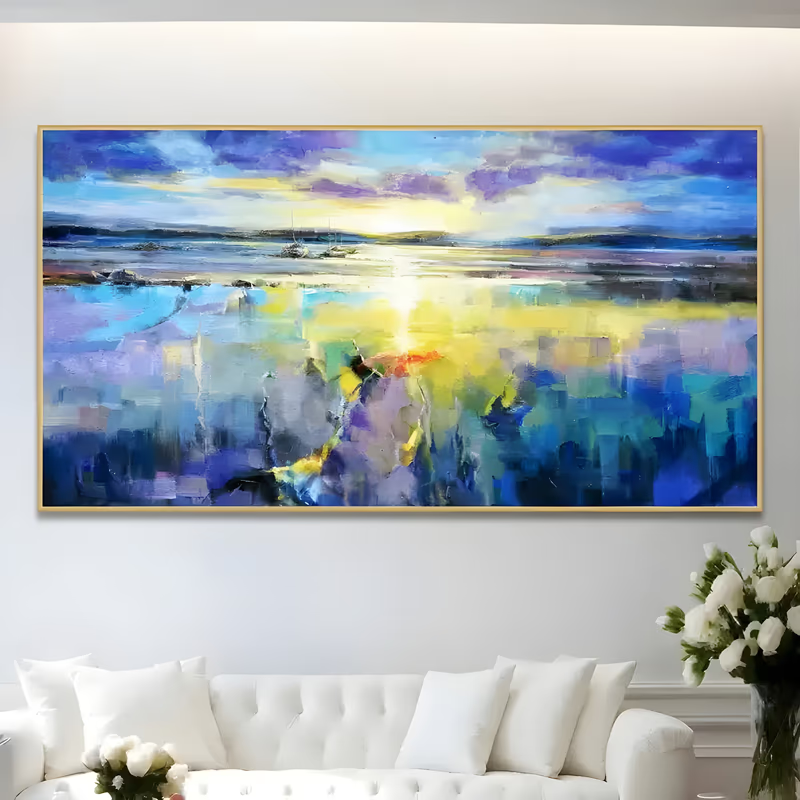
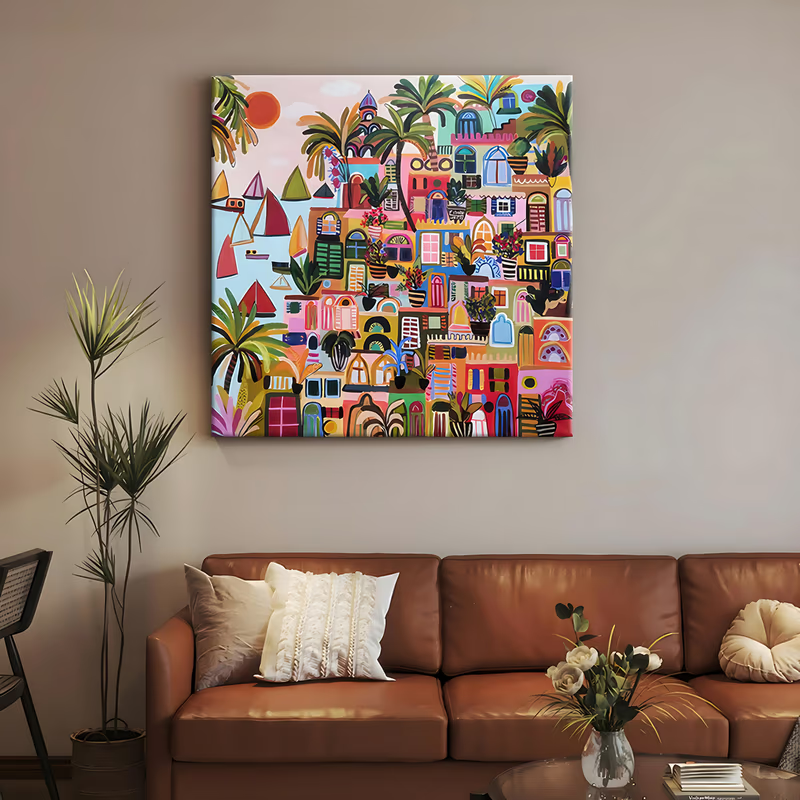
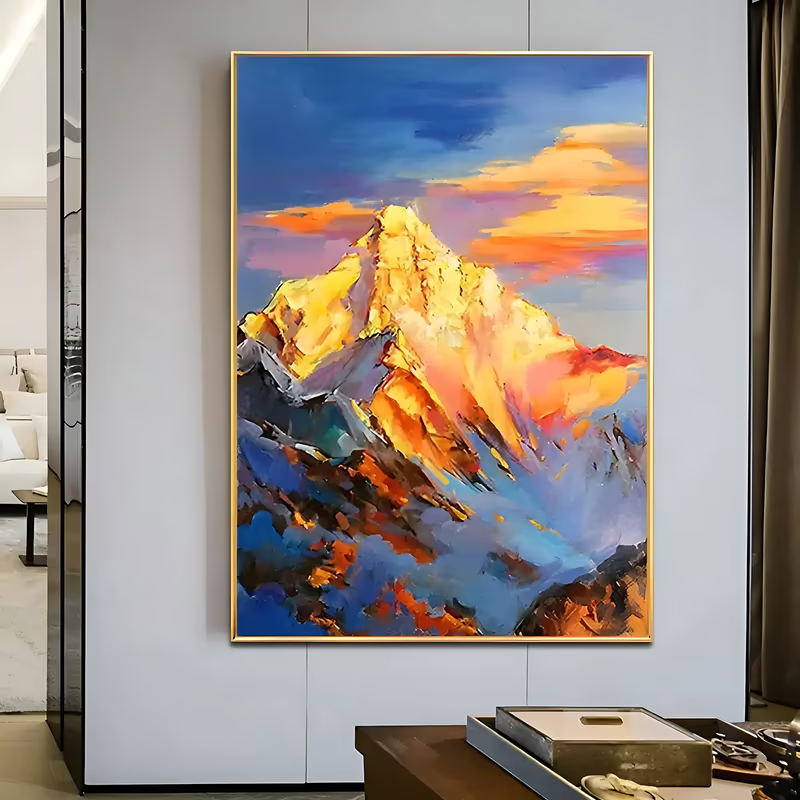
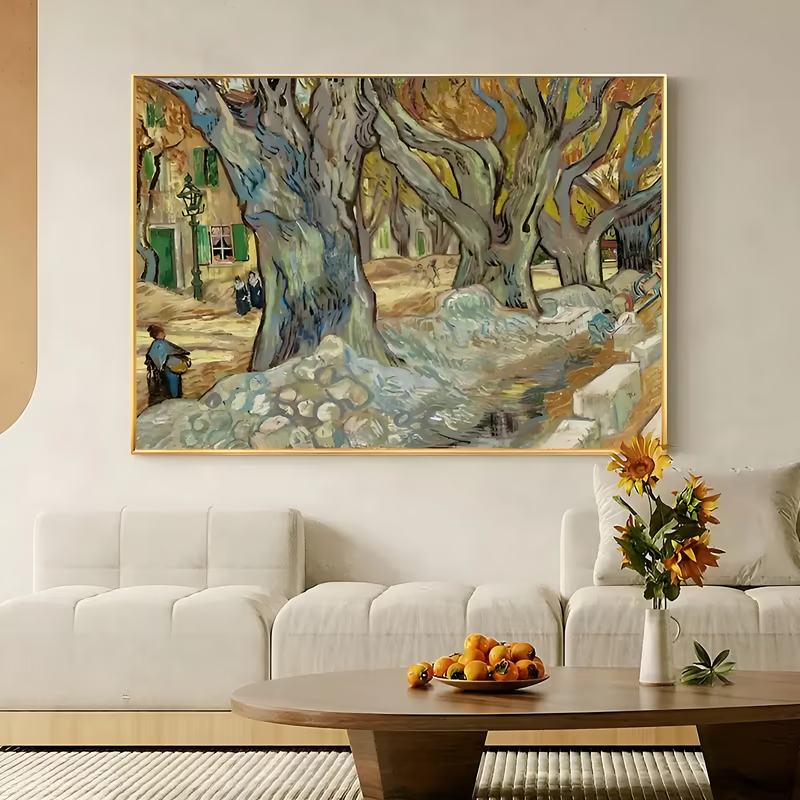
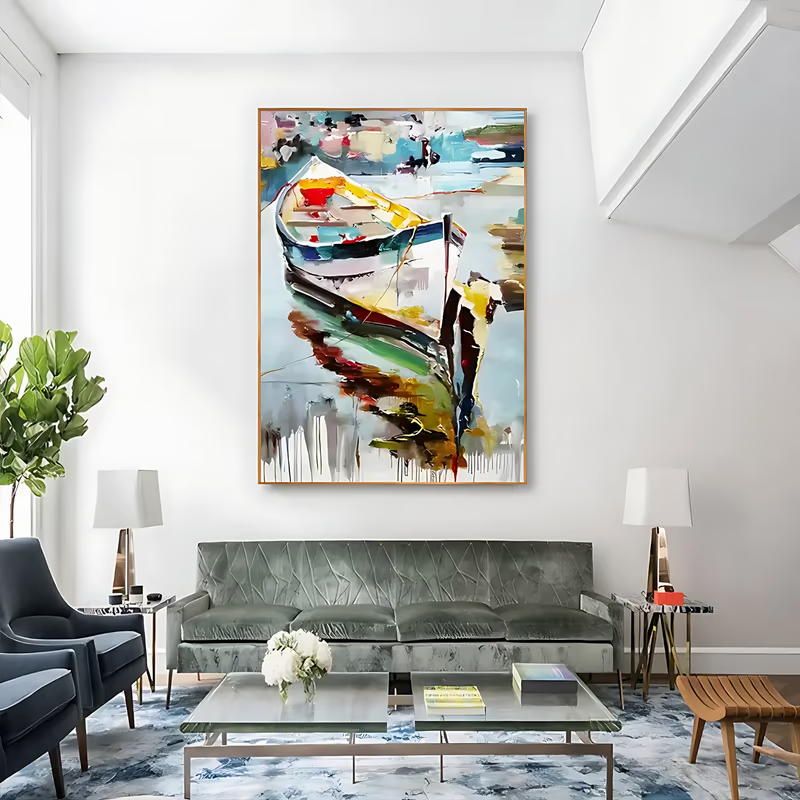
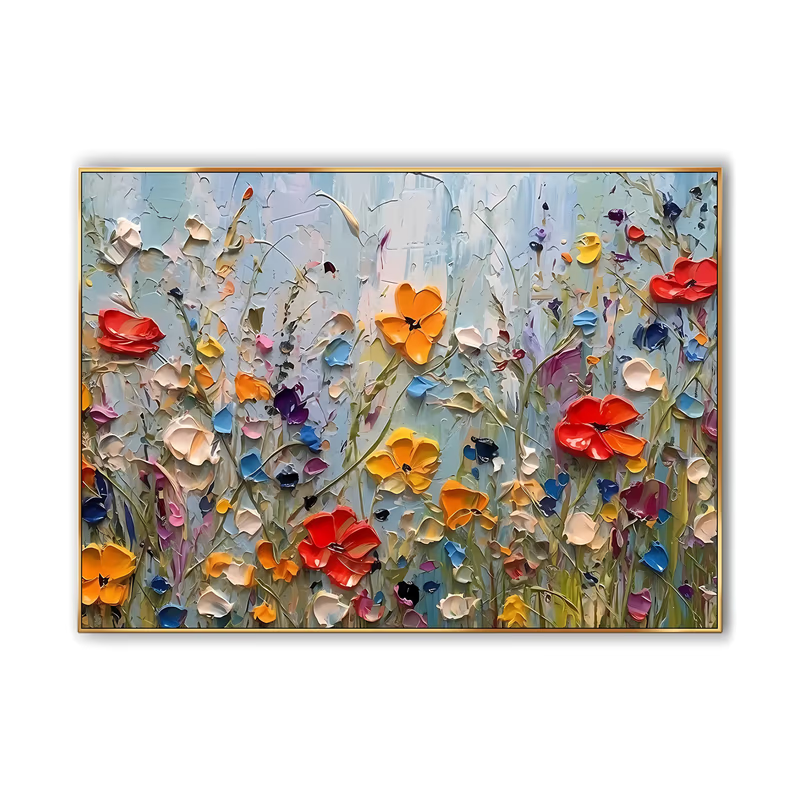
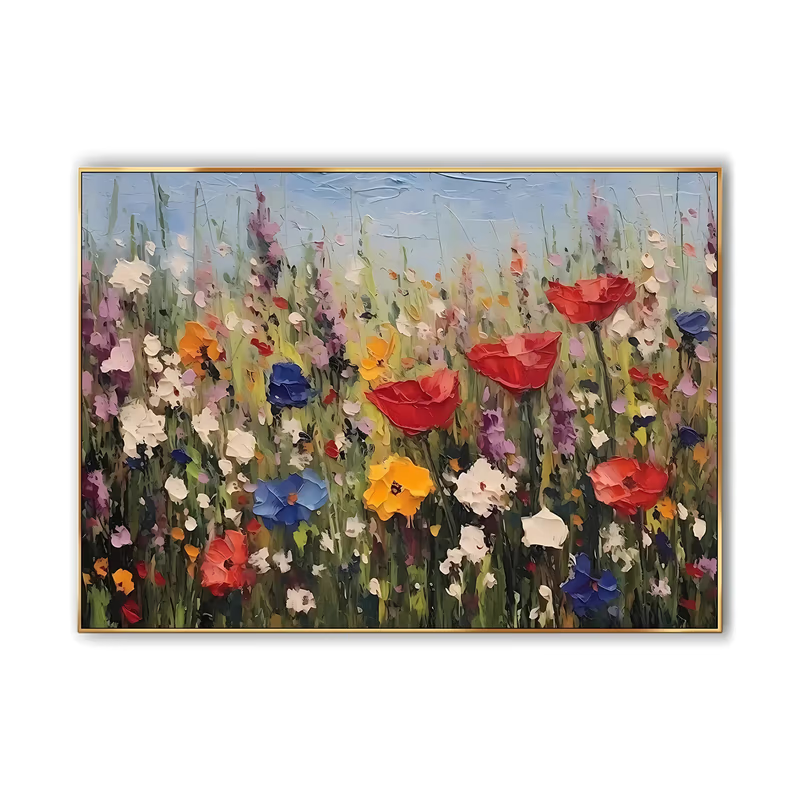
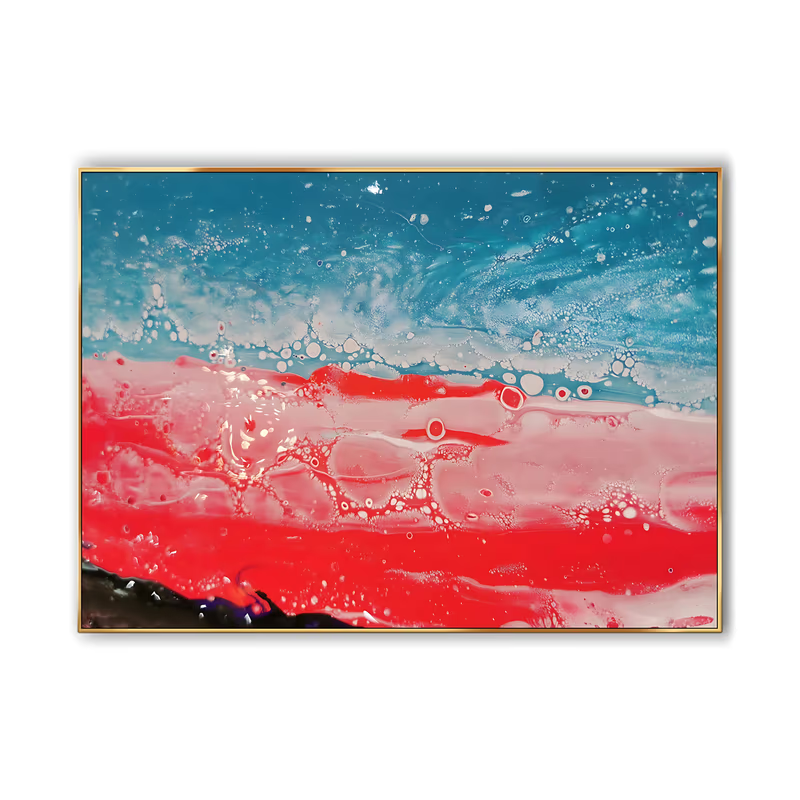
A hazy golden sunrise over a lake, sailboats on a sunset bay, Mount Fuji framed by cherry blossom, a breaking wave lit orange, a summer park path, poppy meadows under blue sky. A landscape with a horizon is the classic window for a room that has none, which makes these ideal for corridors, offices and lift lobbies. See uplifting landscapes and seascapes.
Bright, airy abstracts
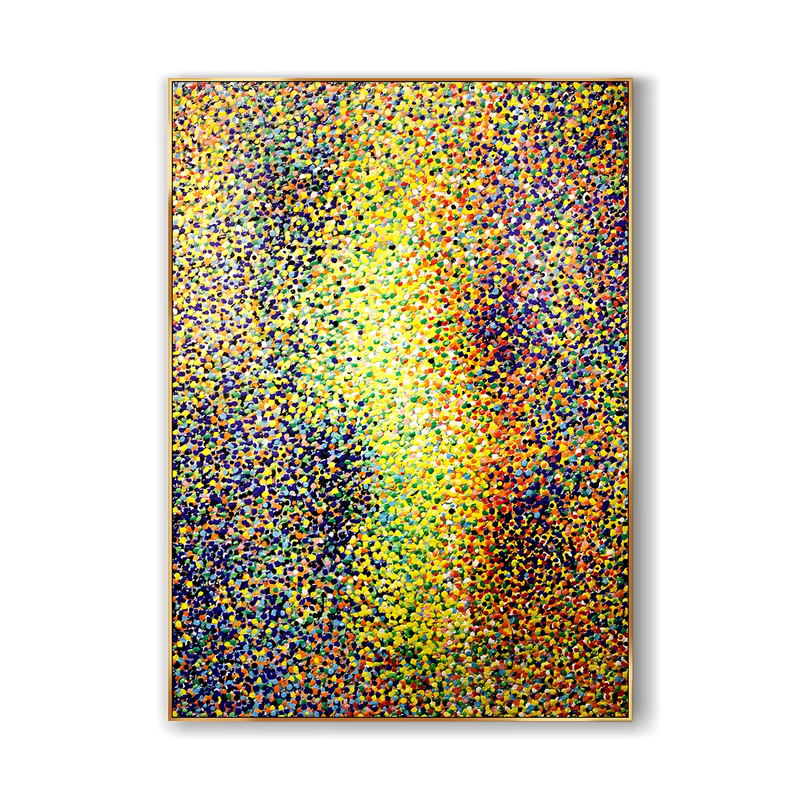
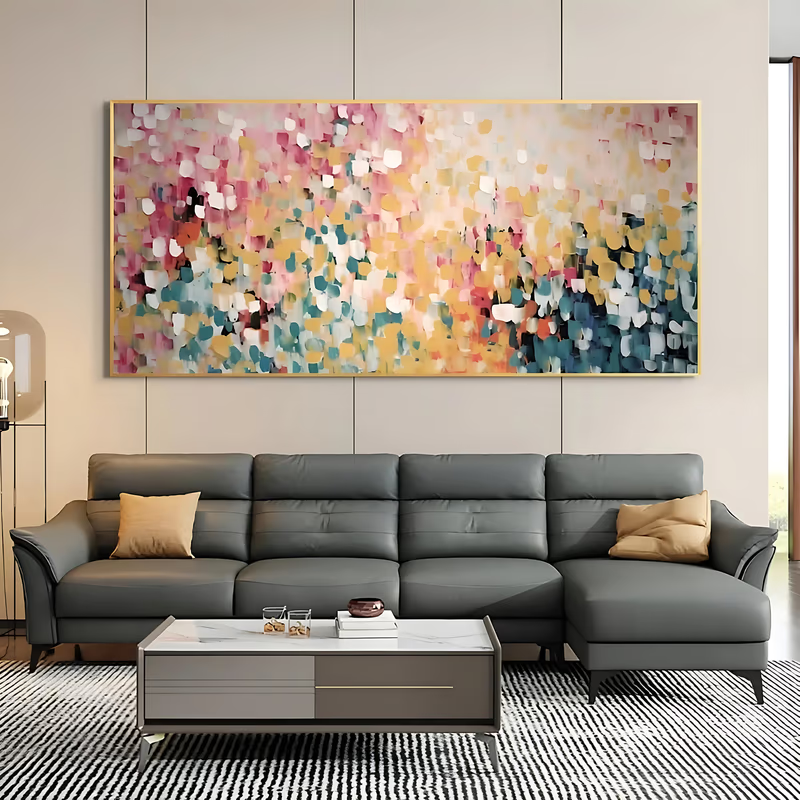
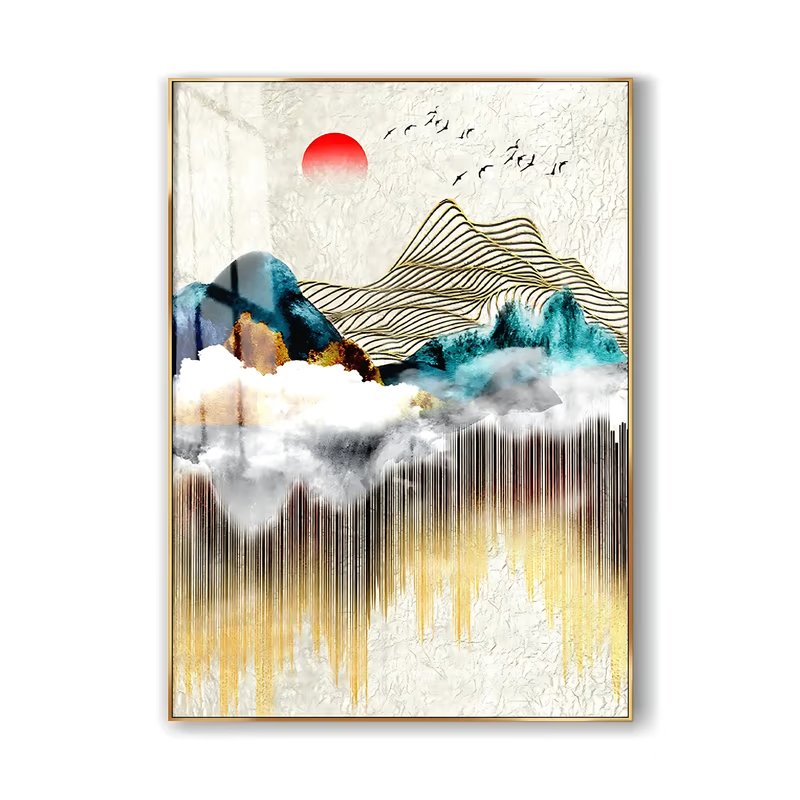
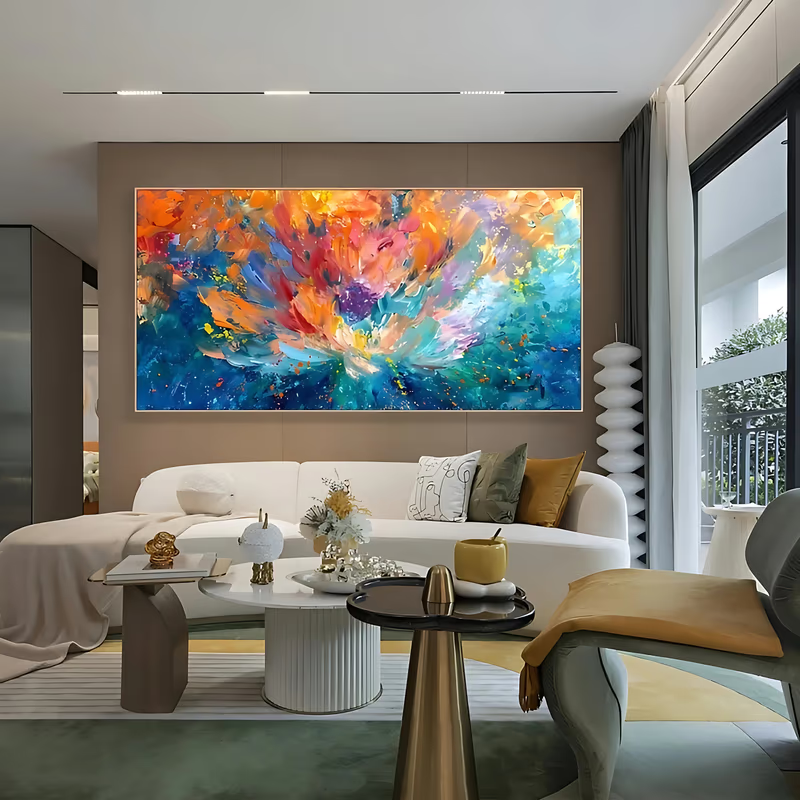
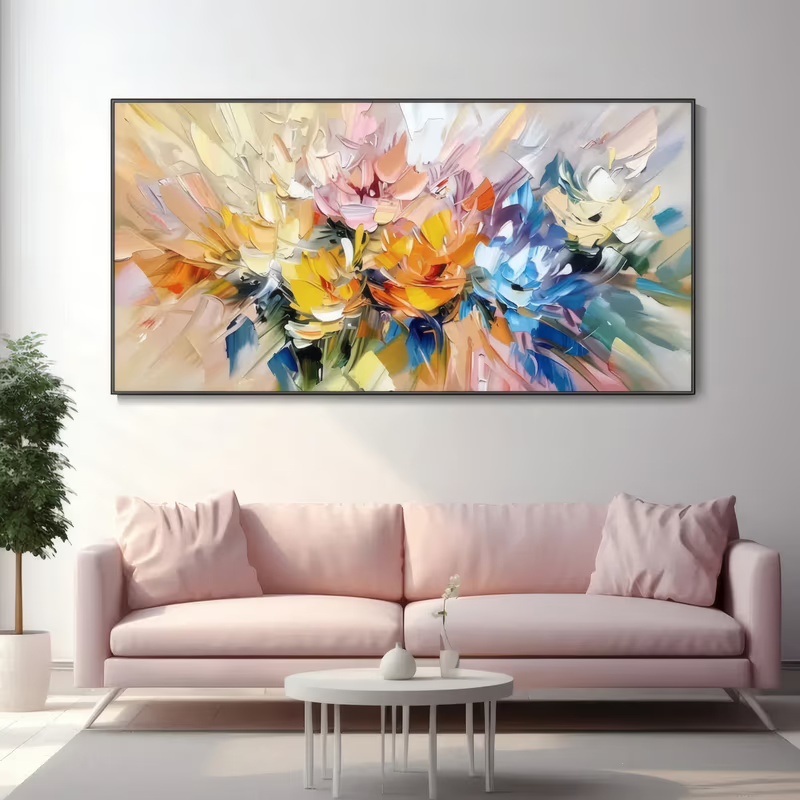
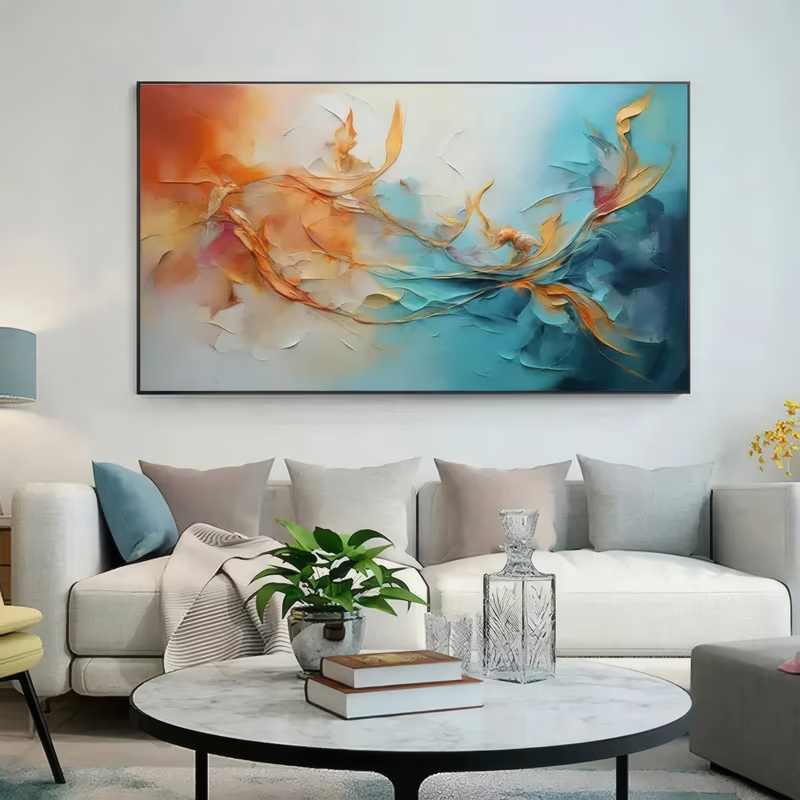
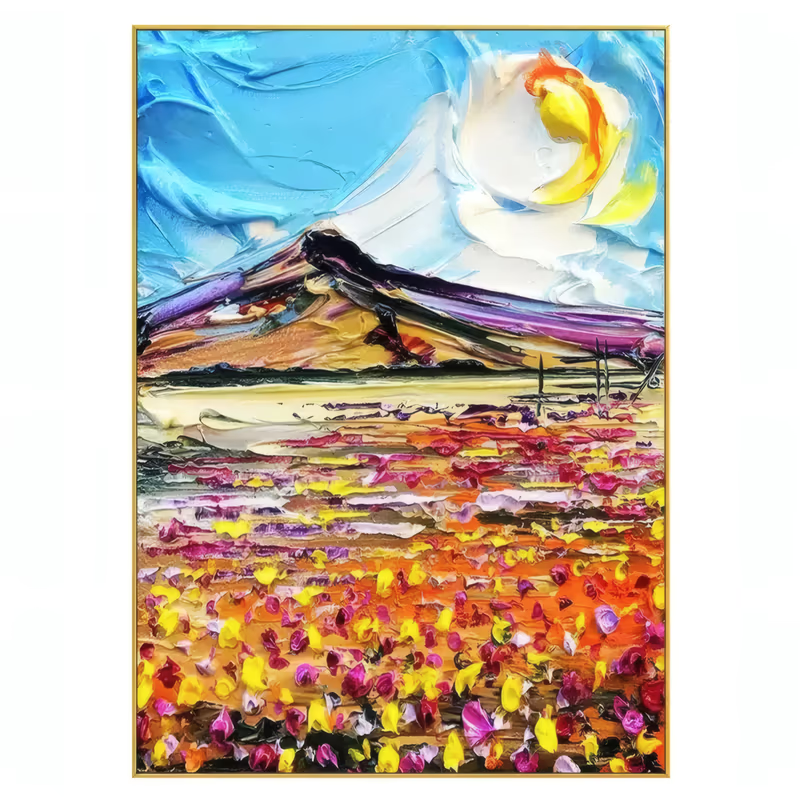
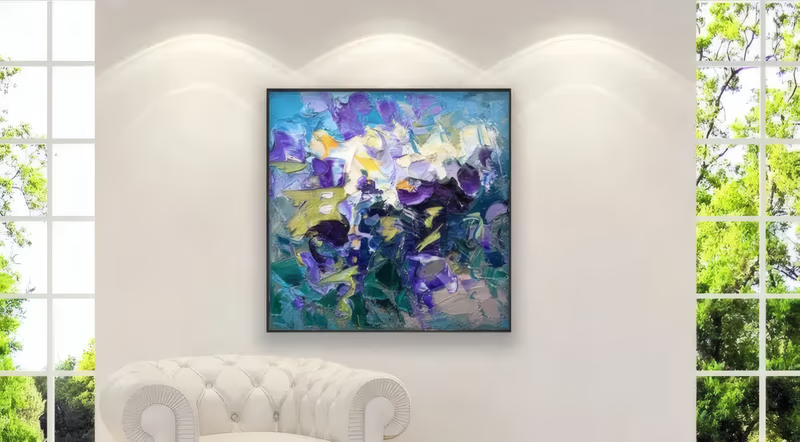
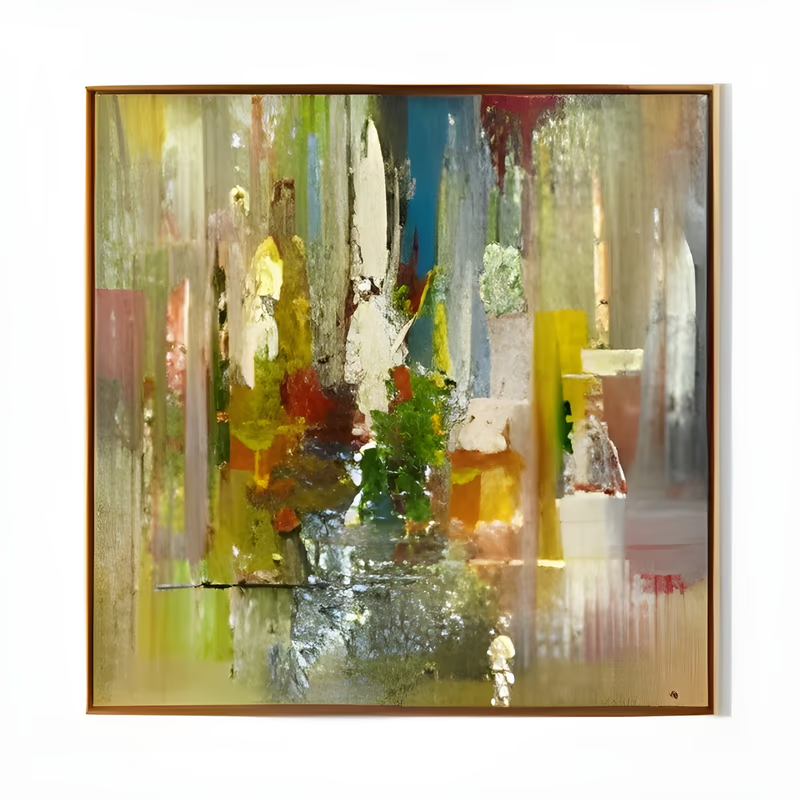
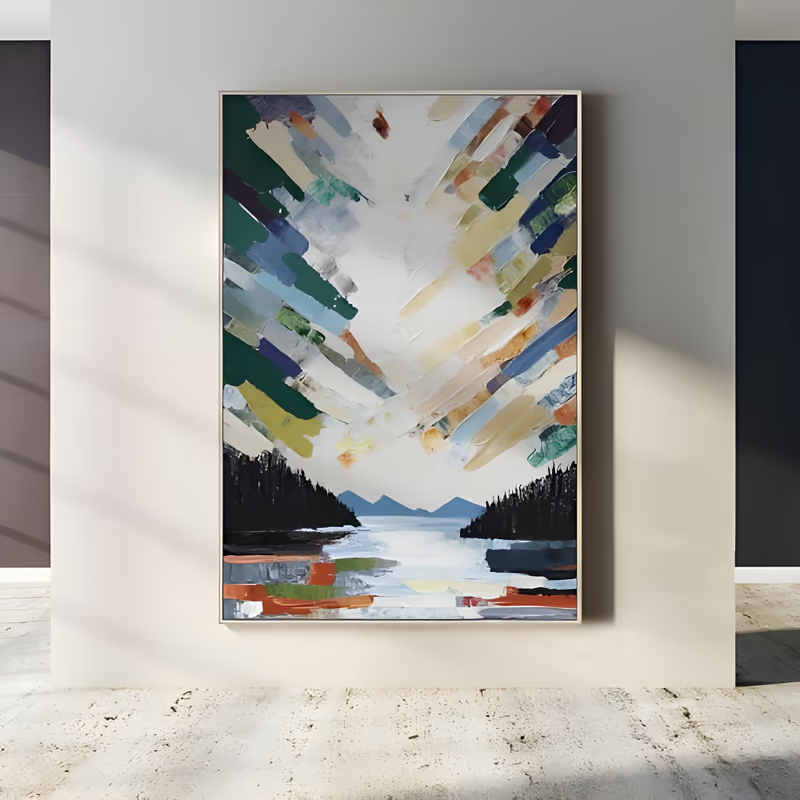
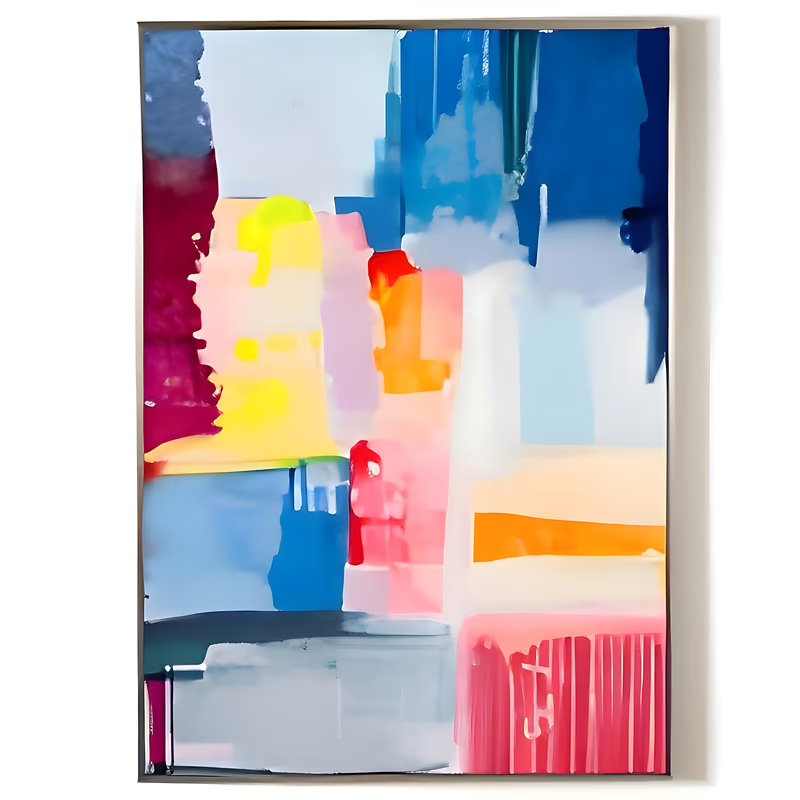
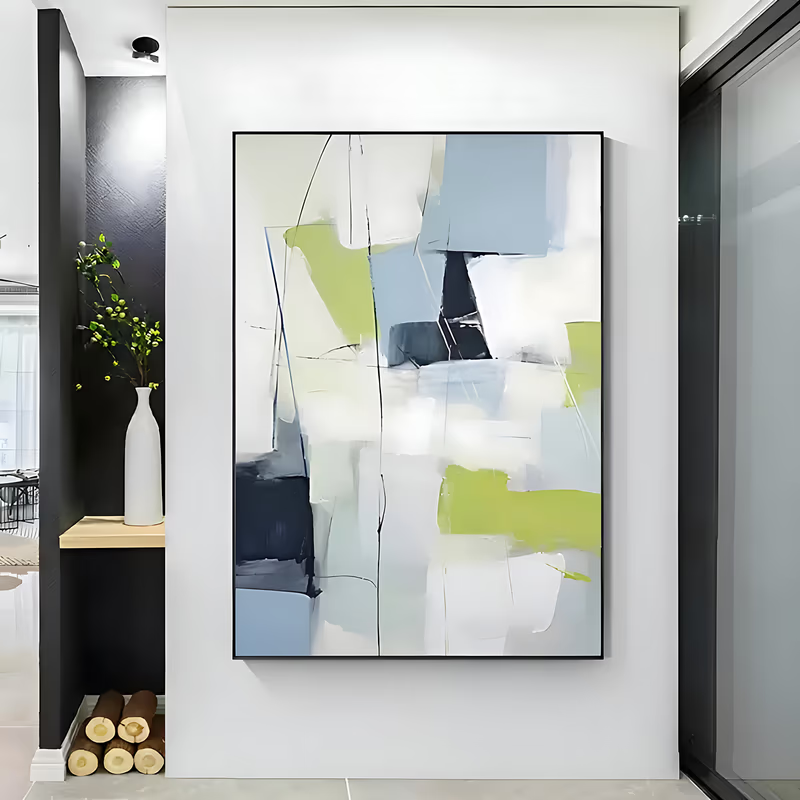
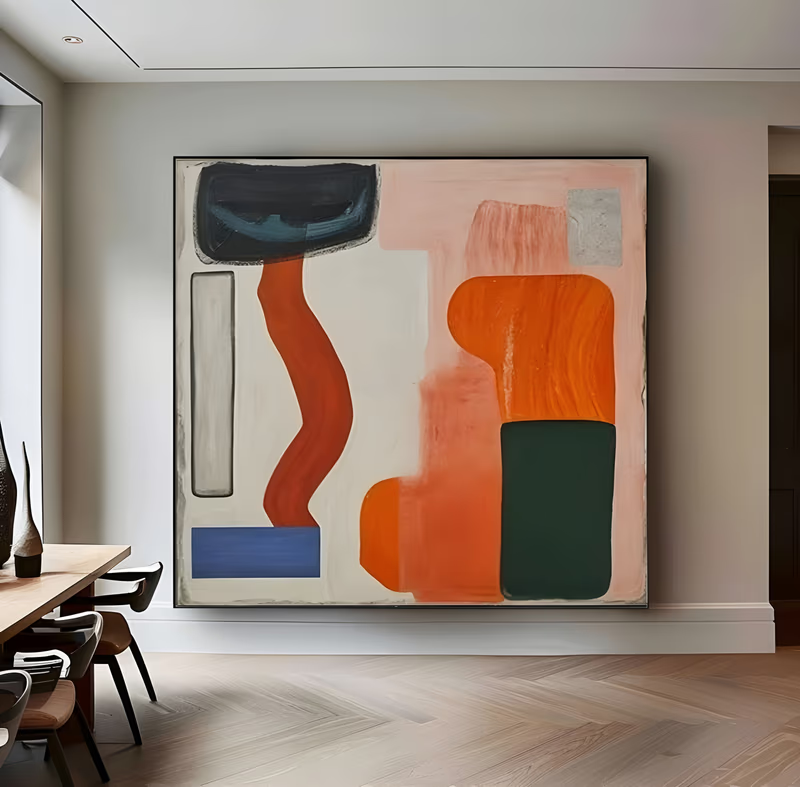
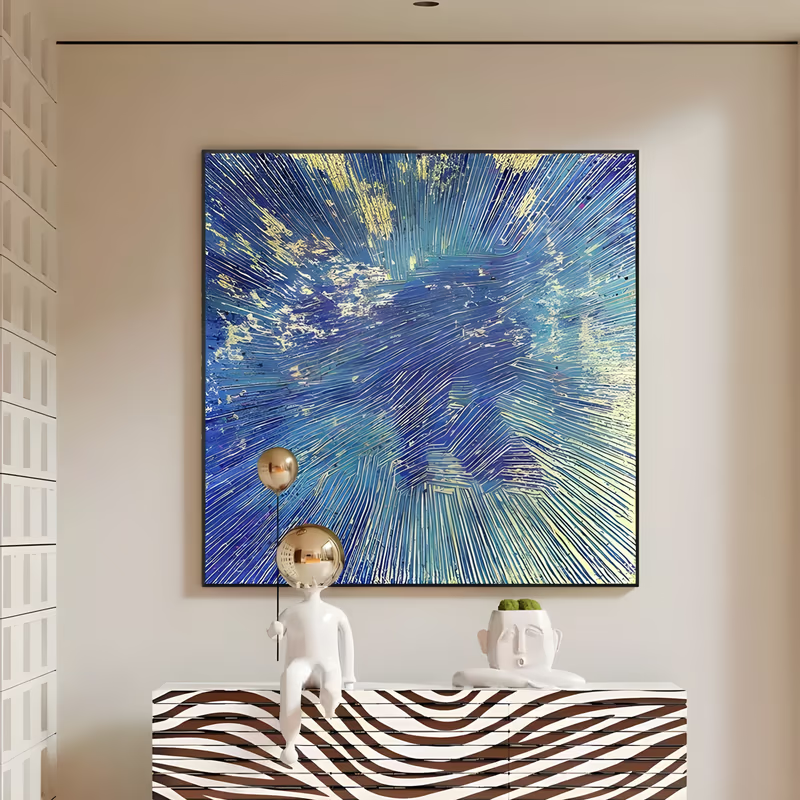
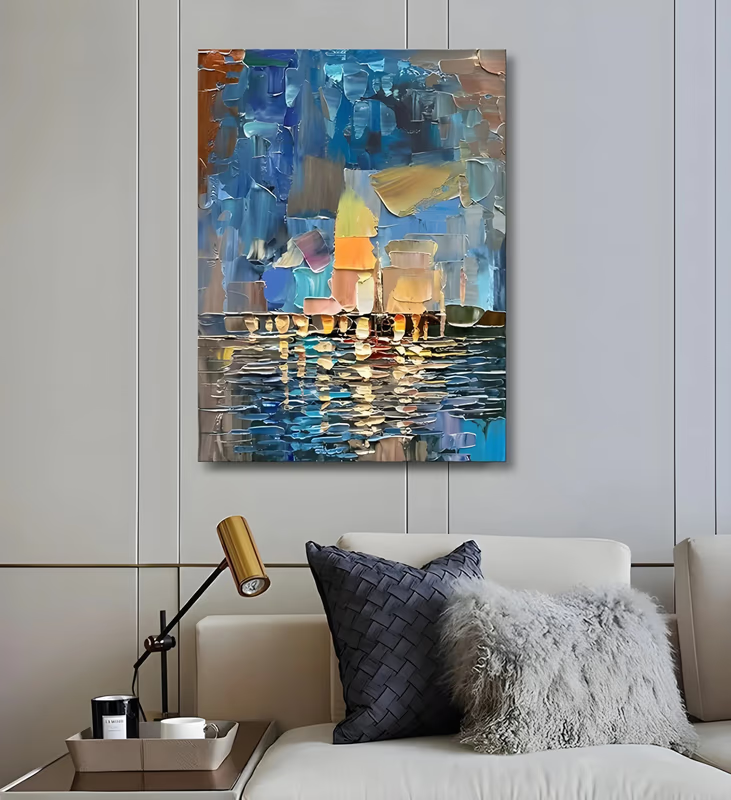
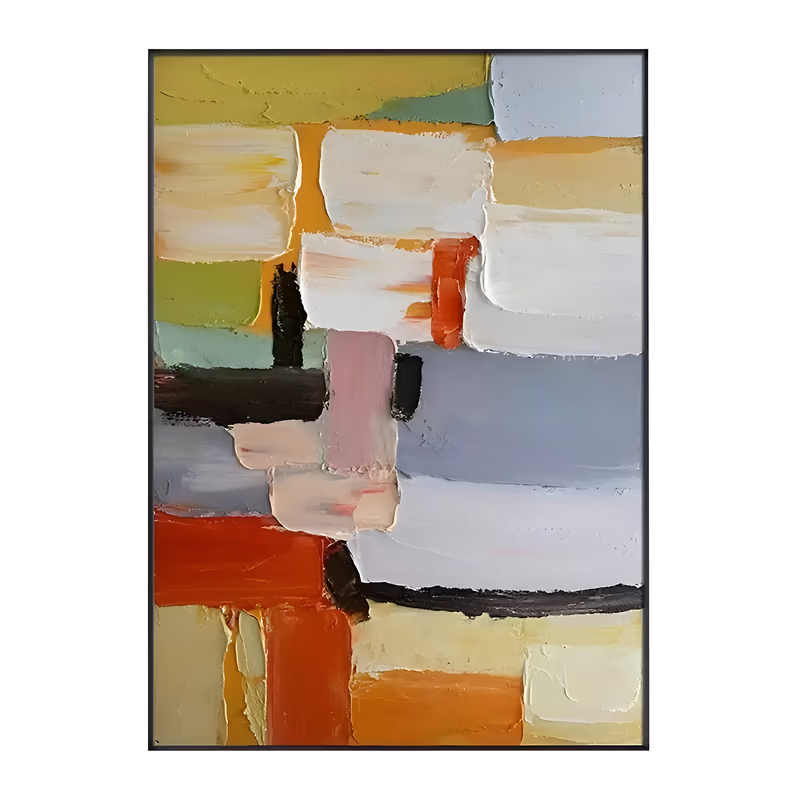
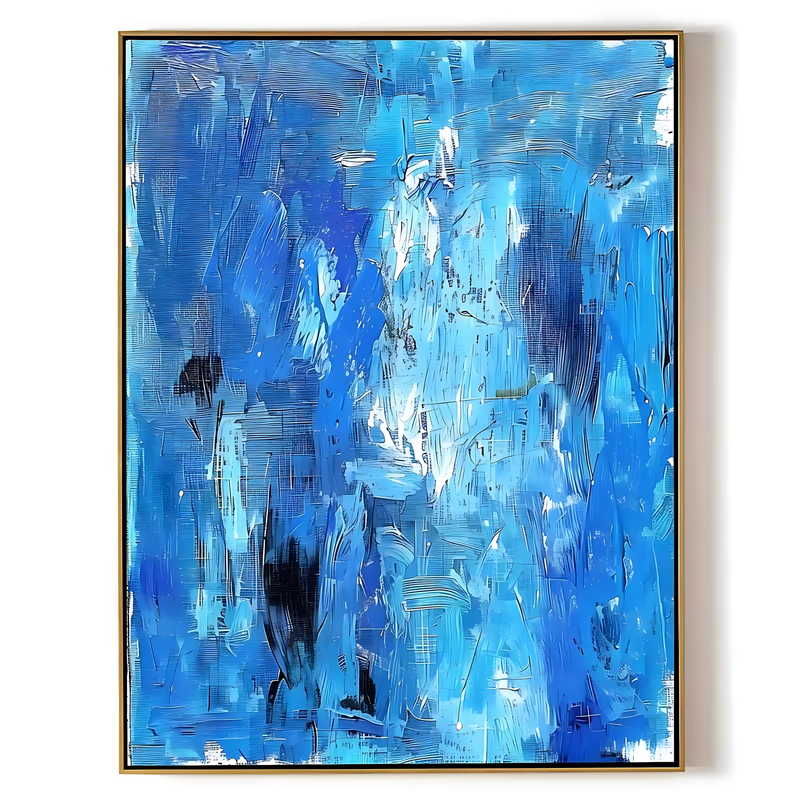
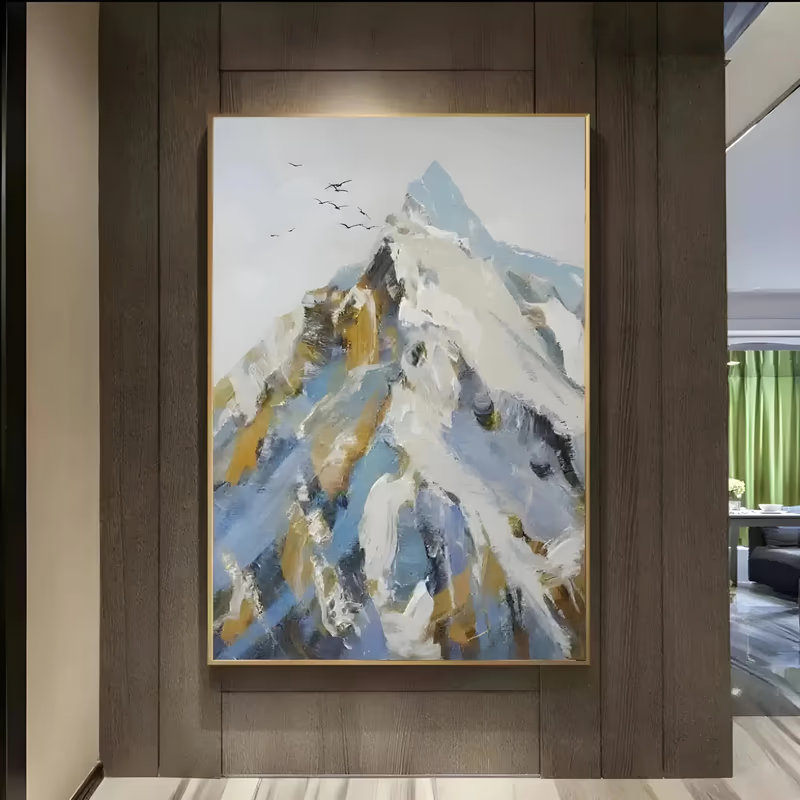
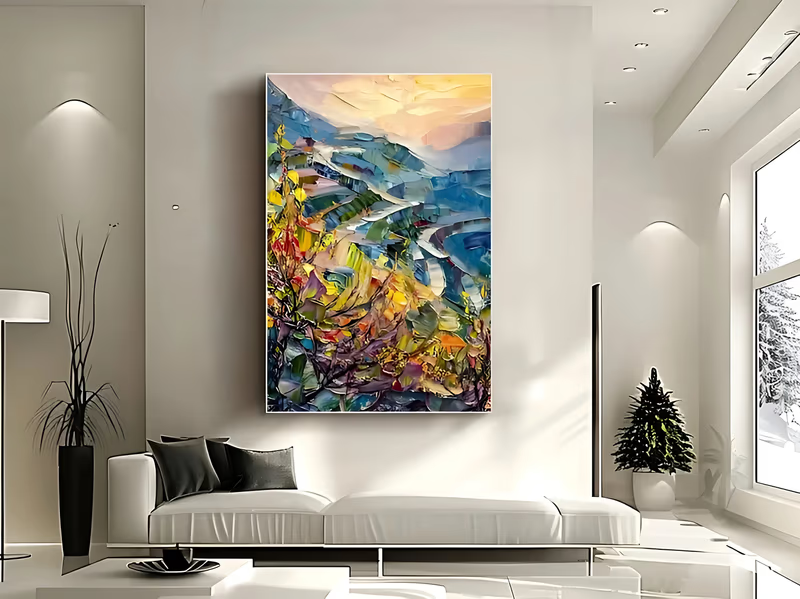
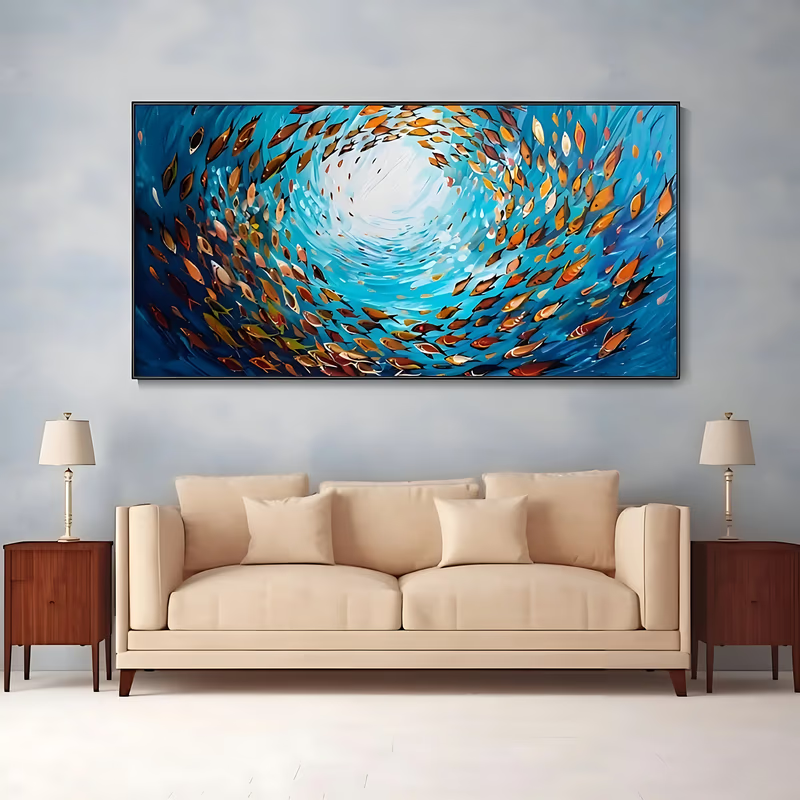
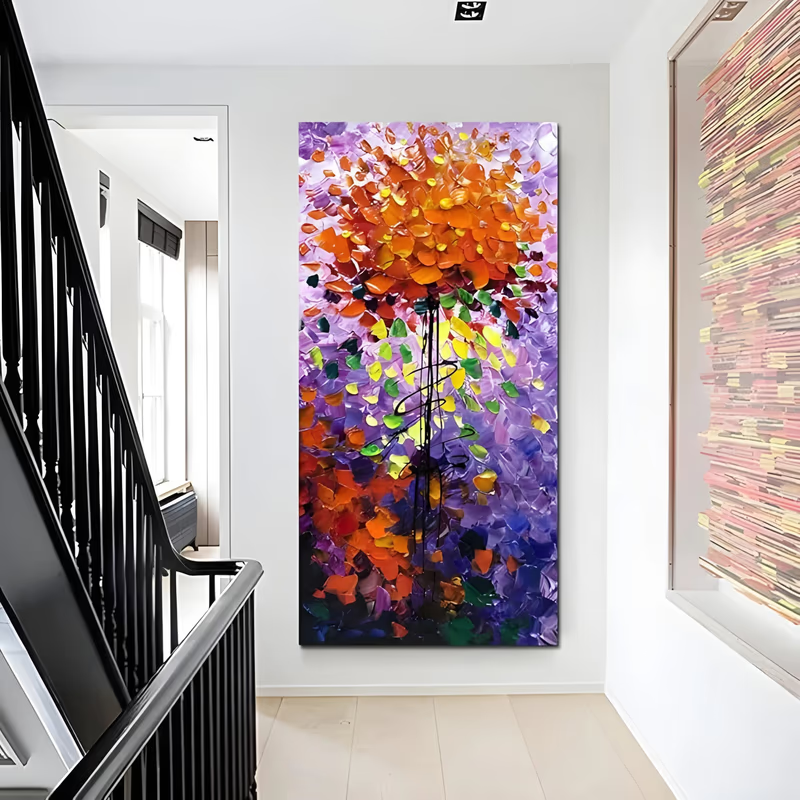
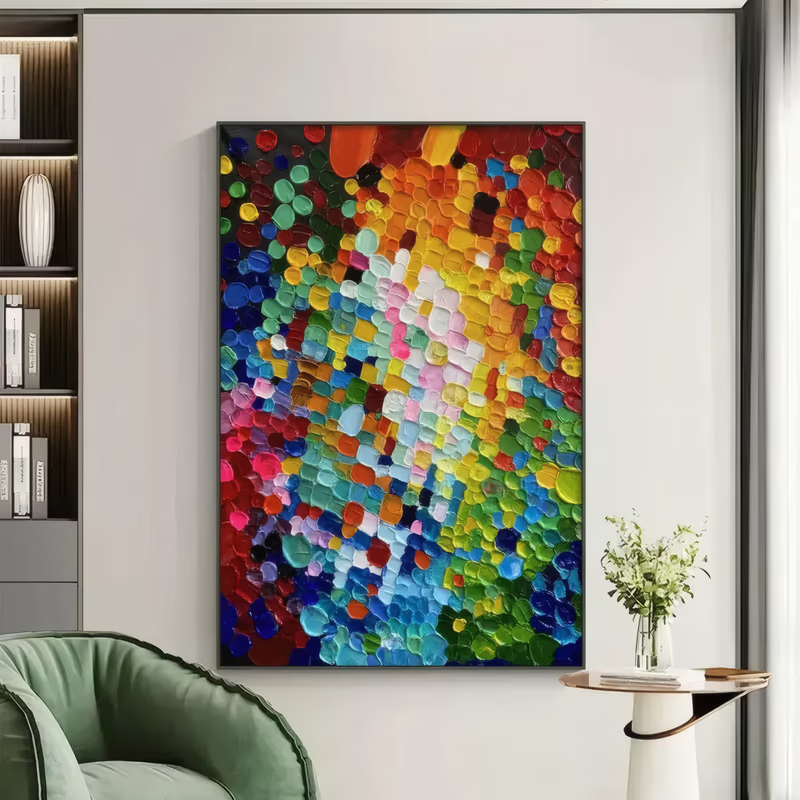
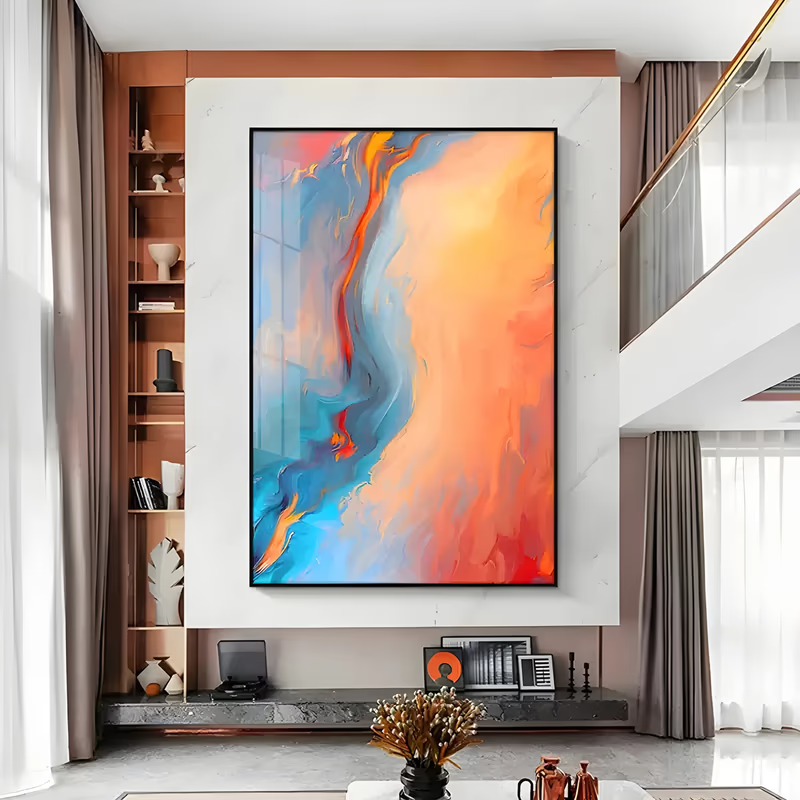
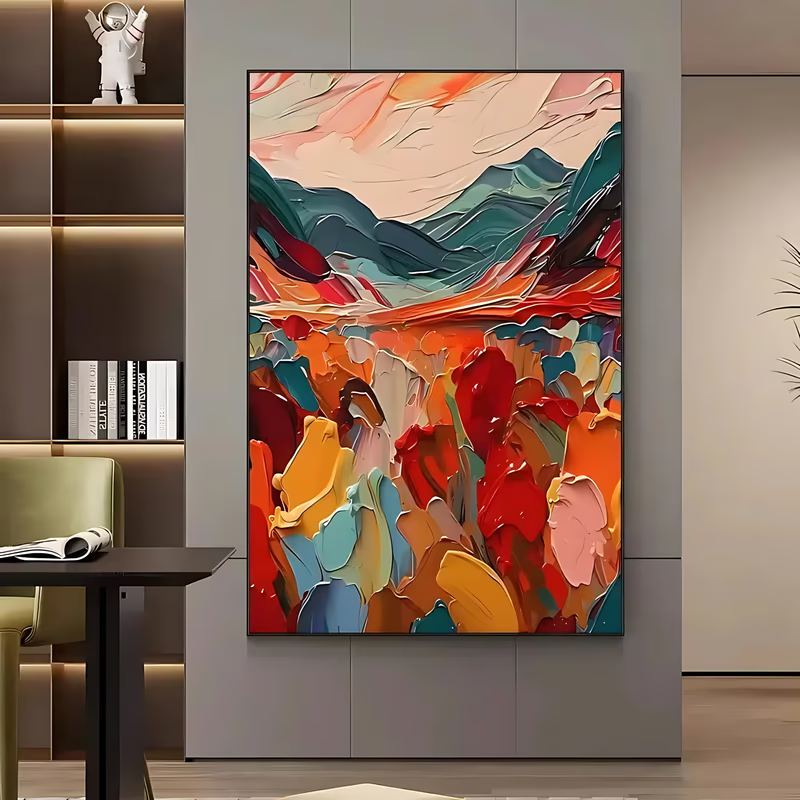
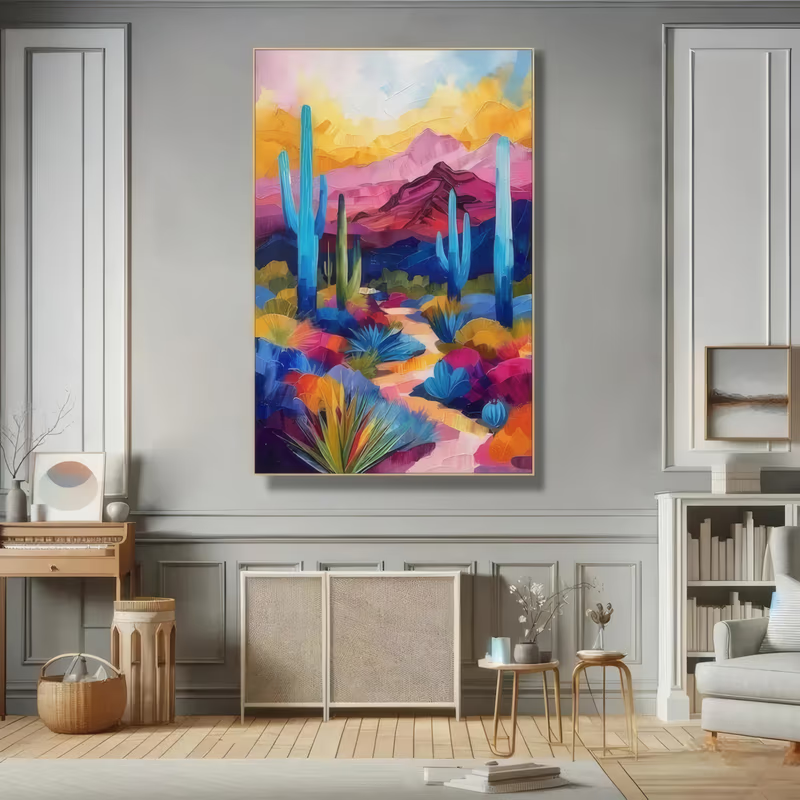
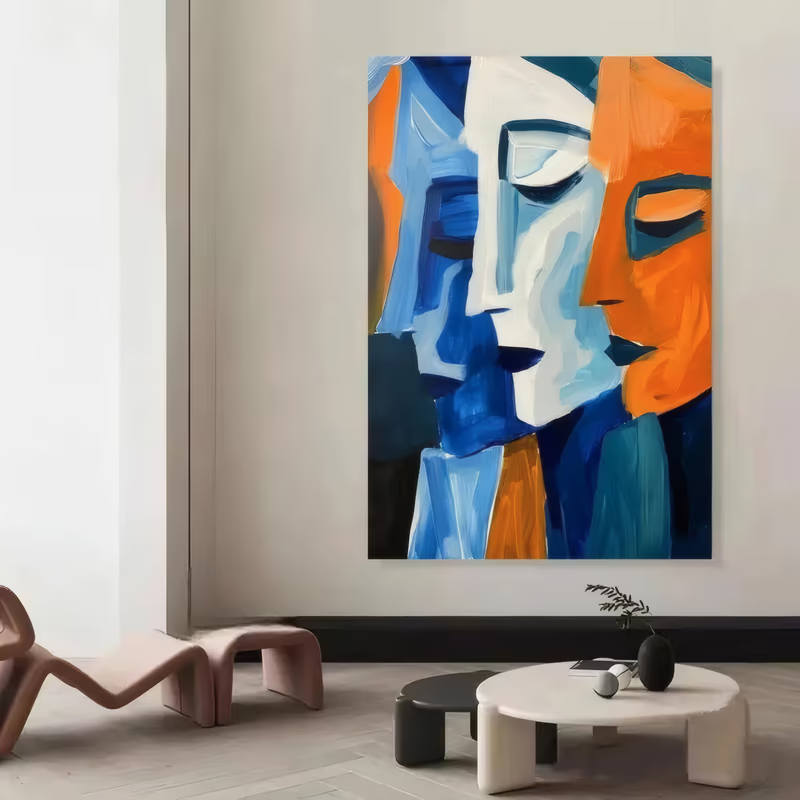
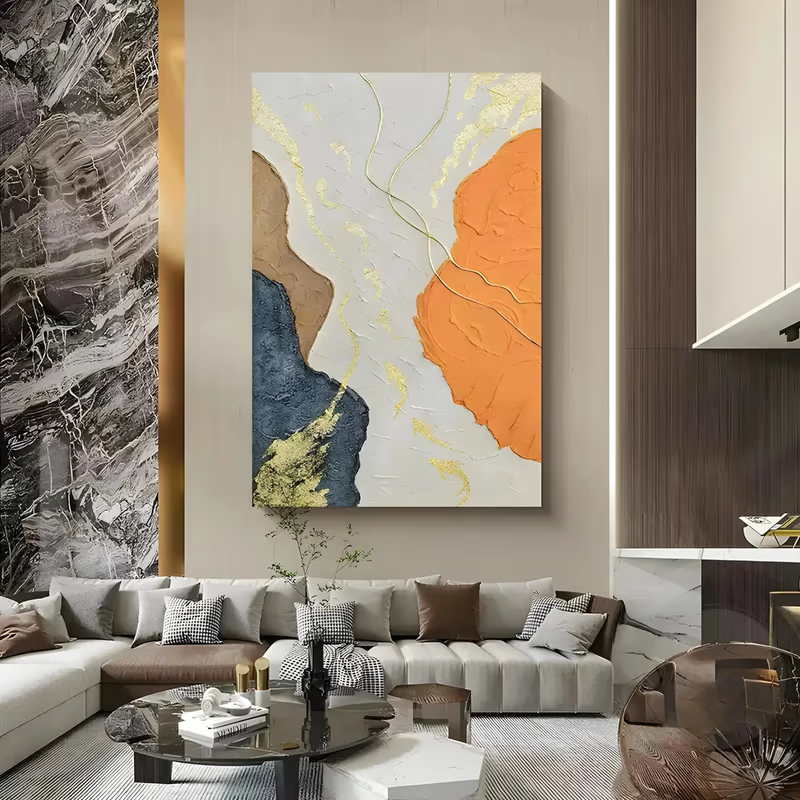
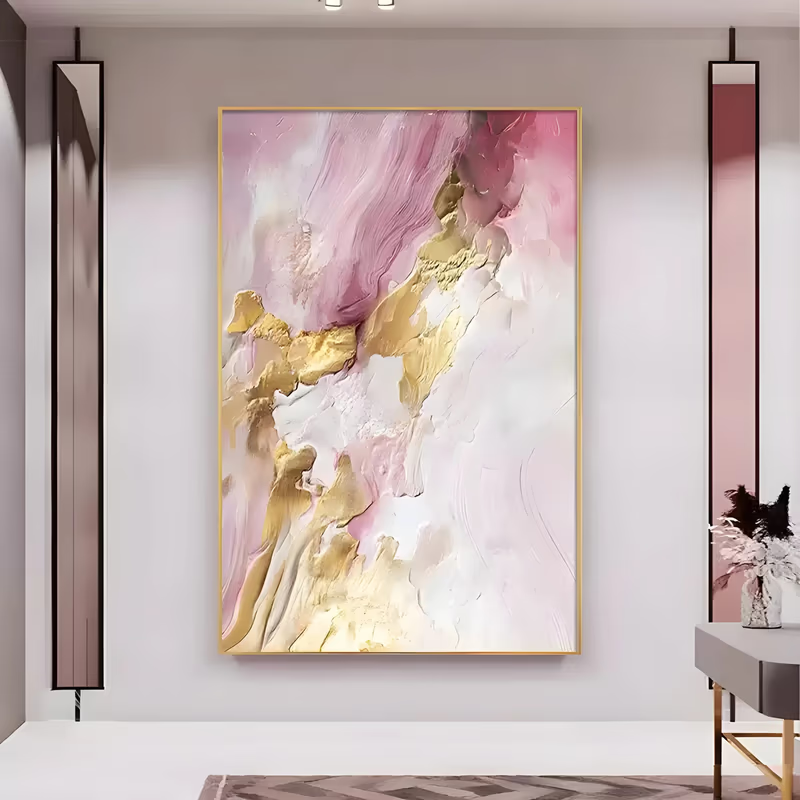
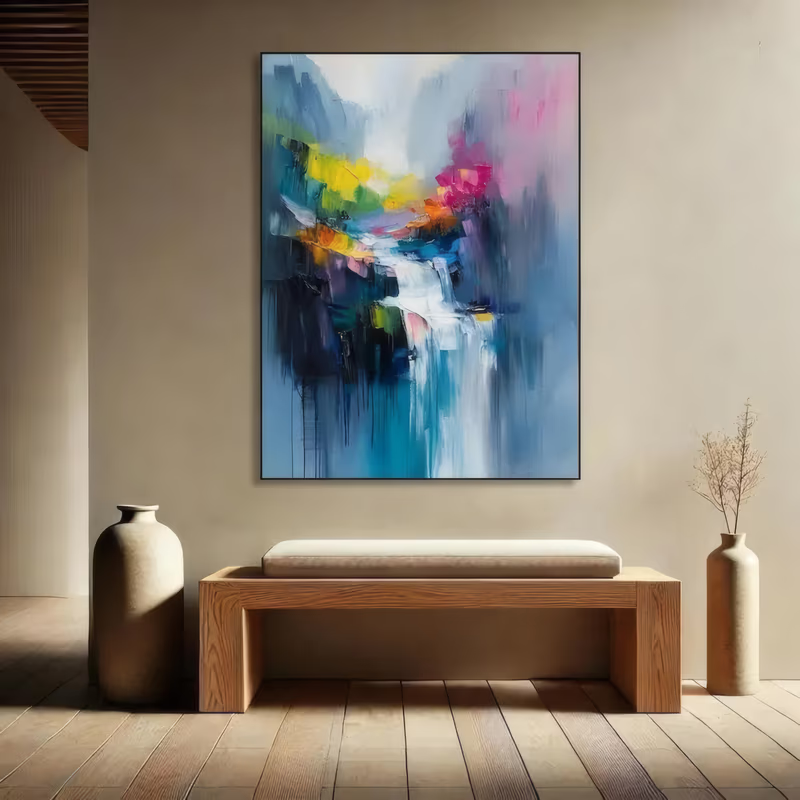
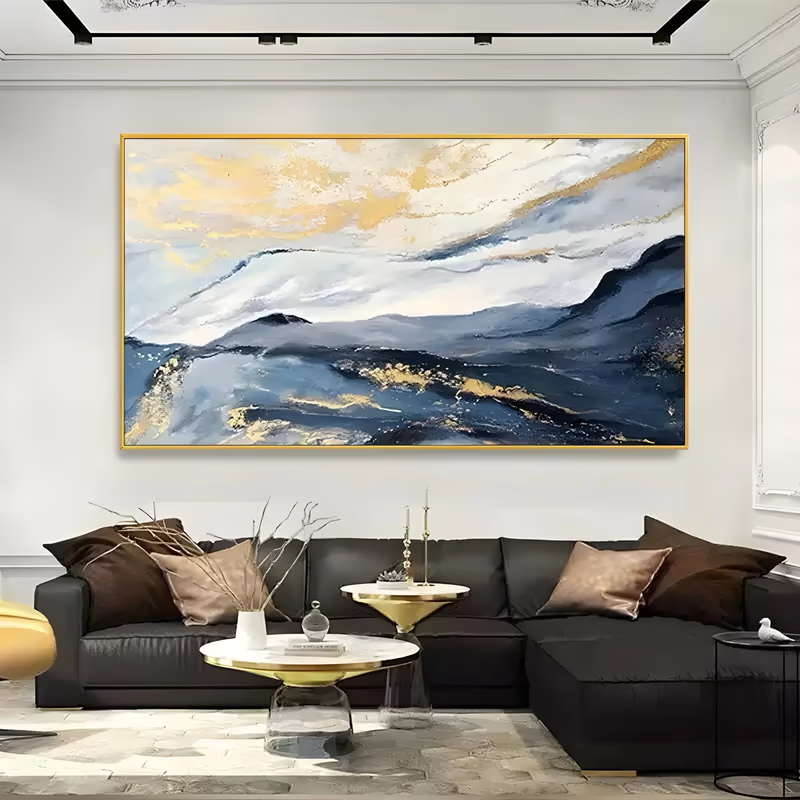
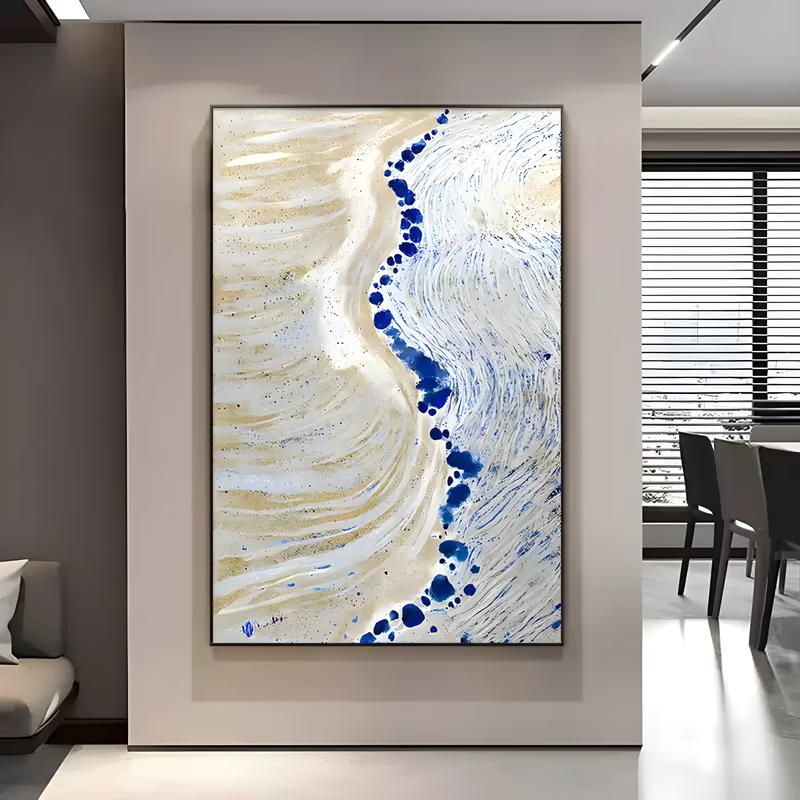
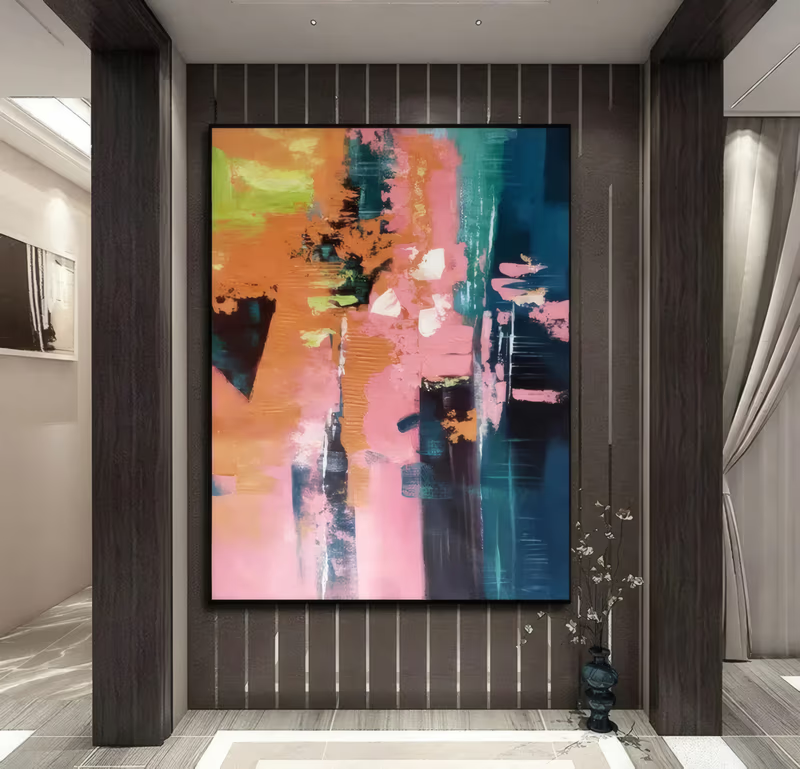
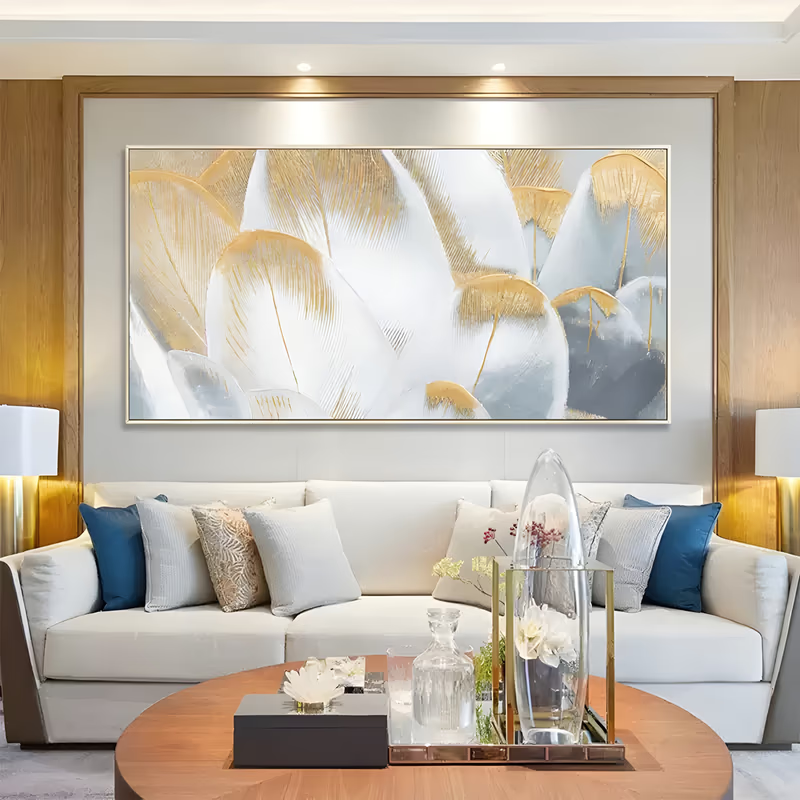
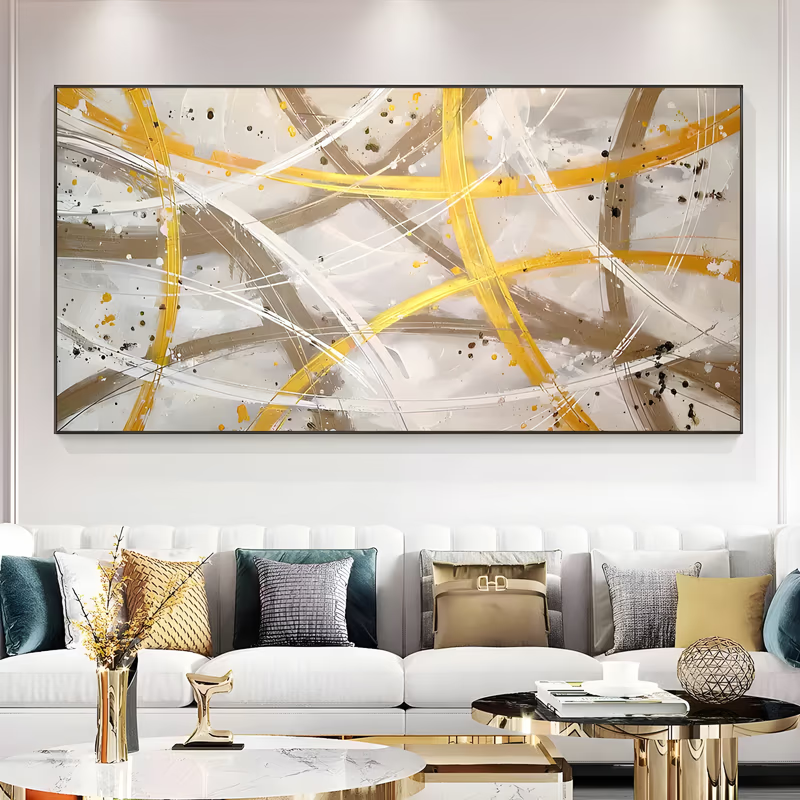
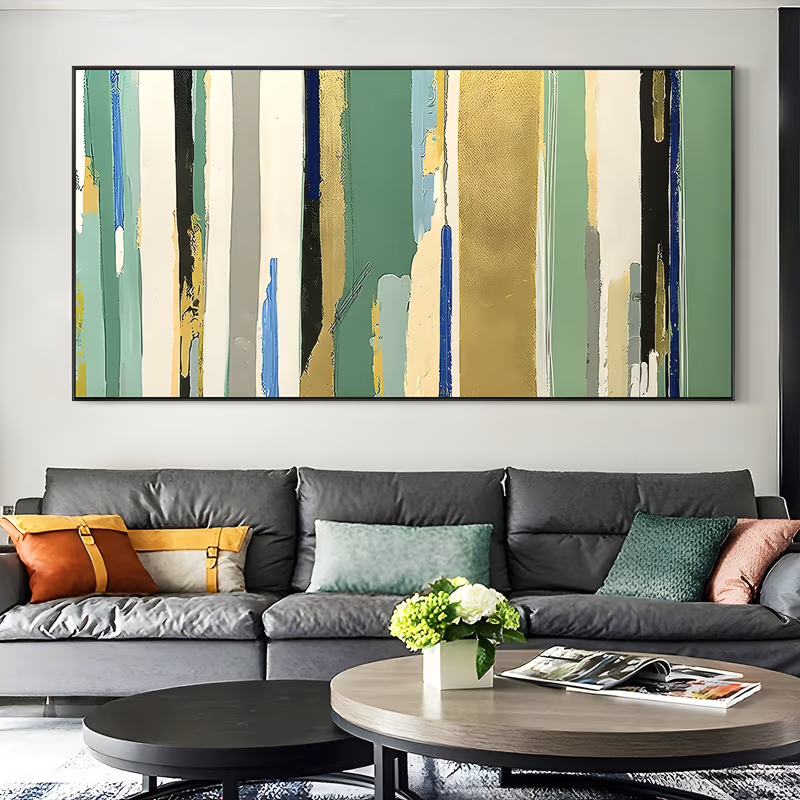
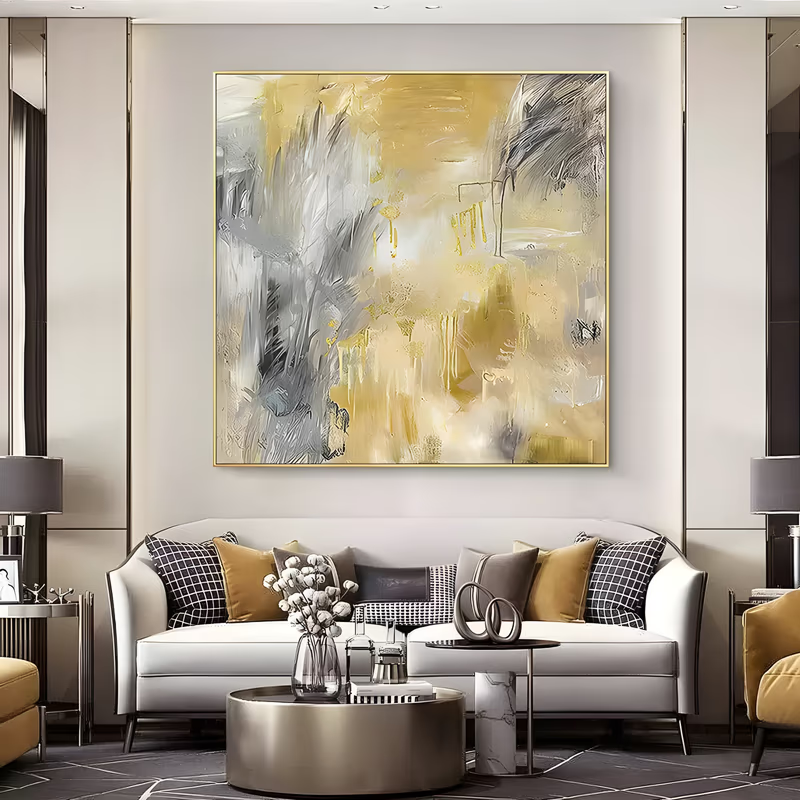
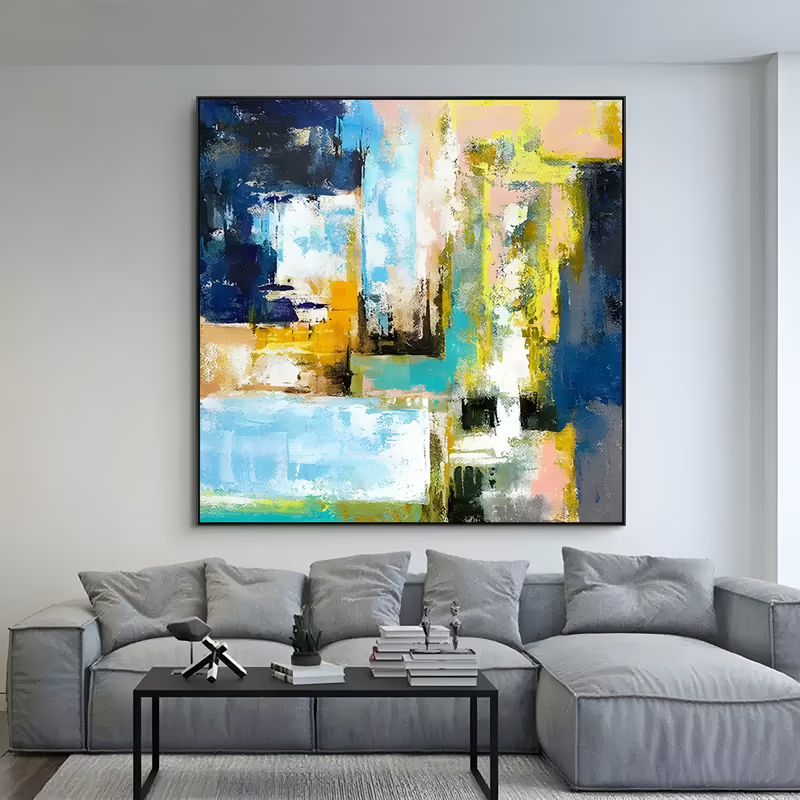
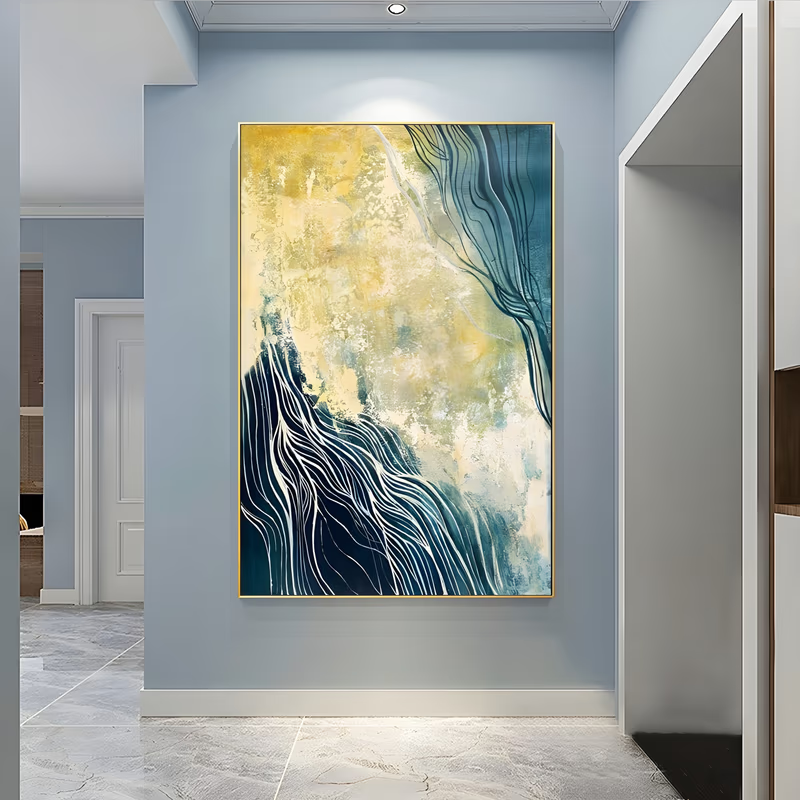
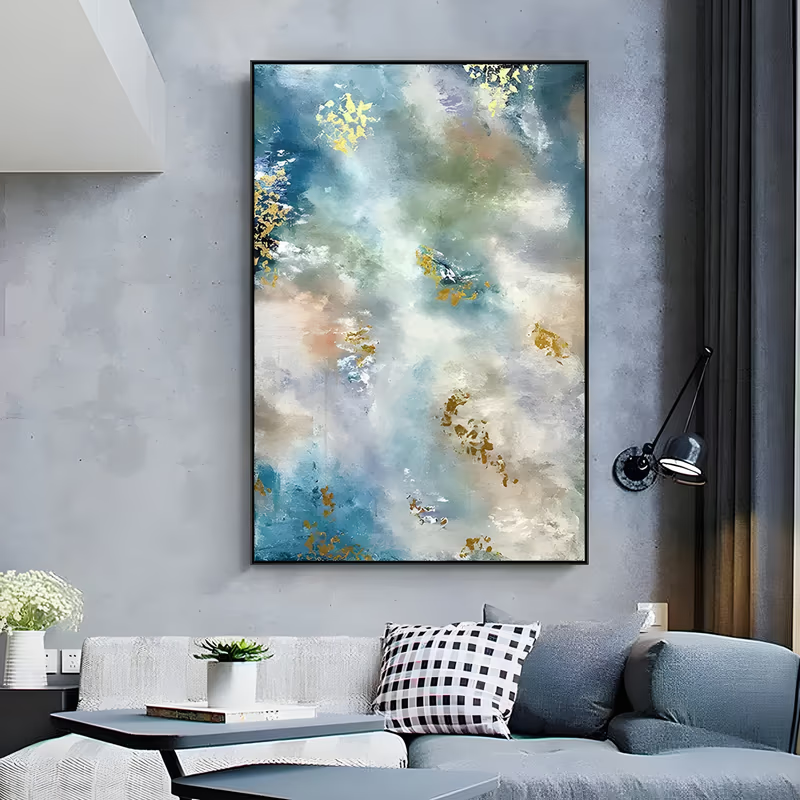
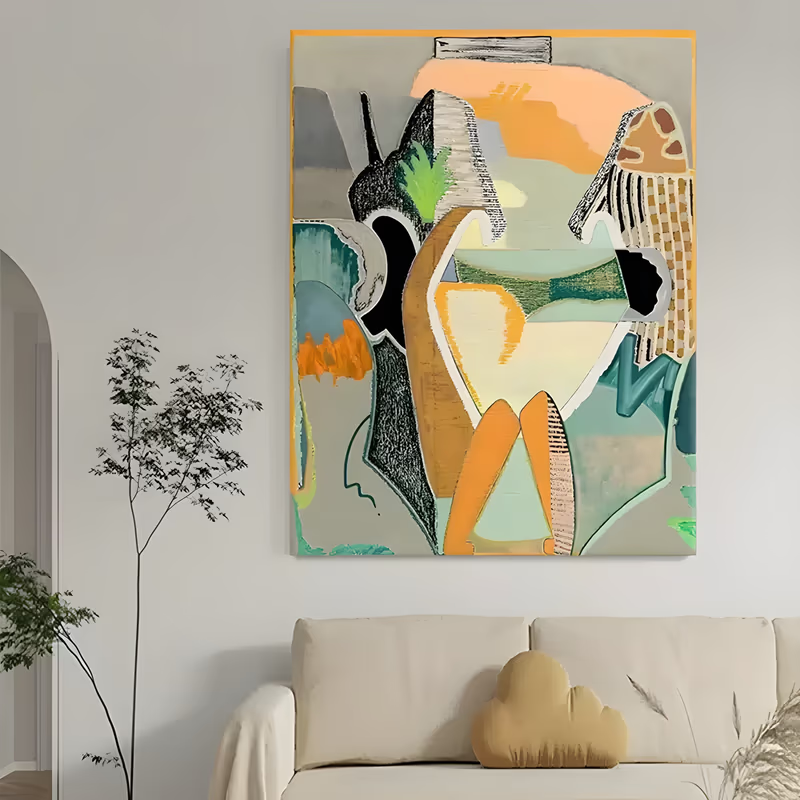
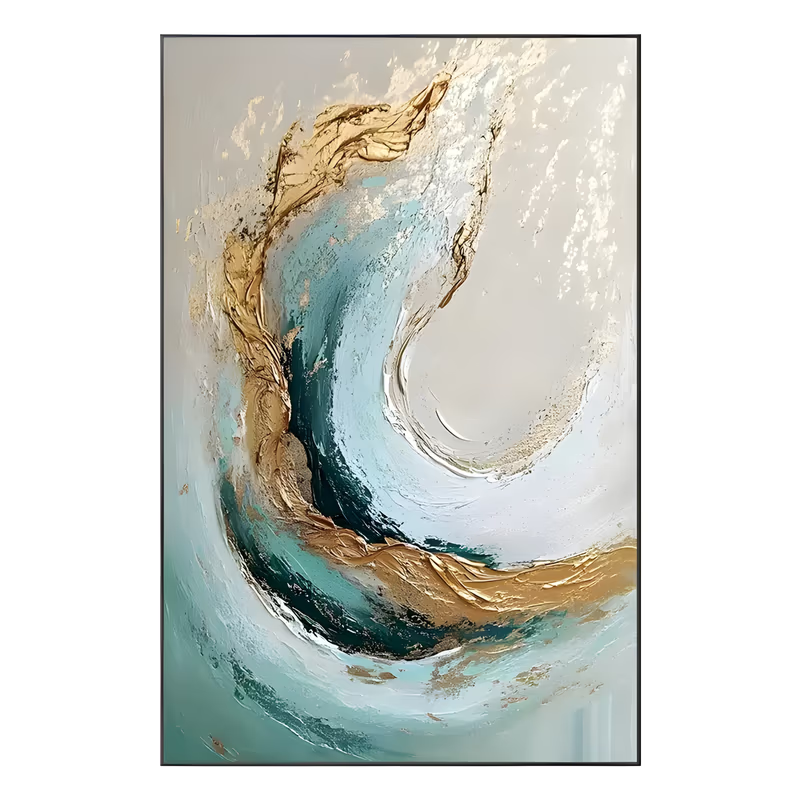
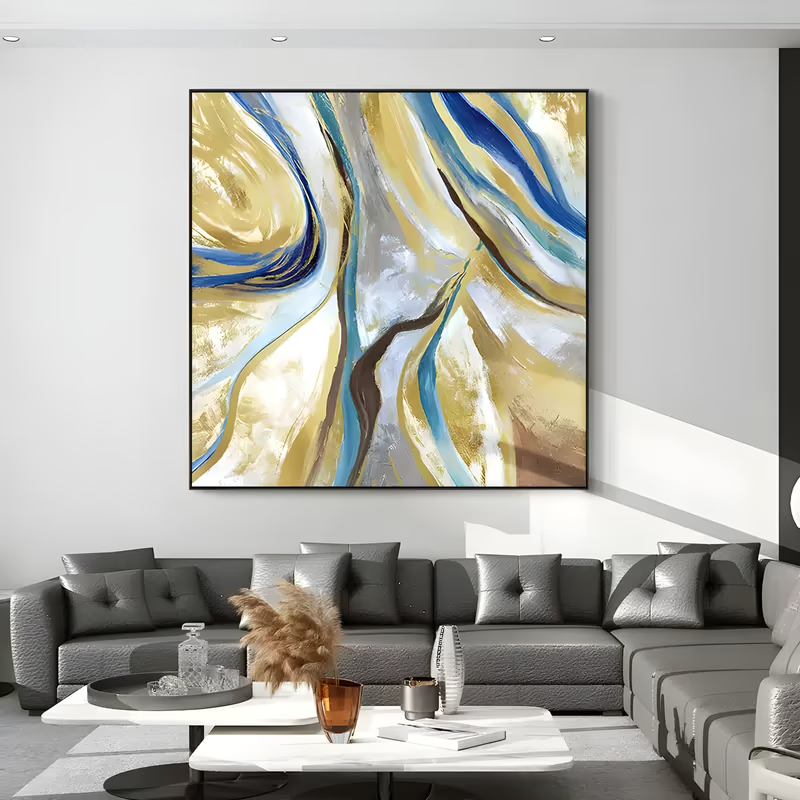
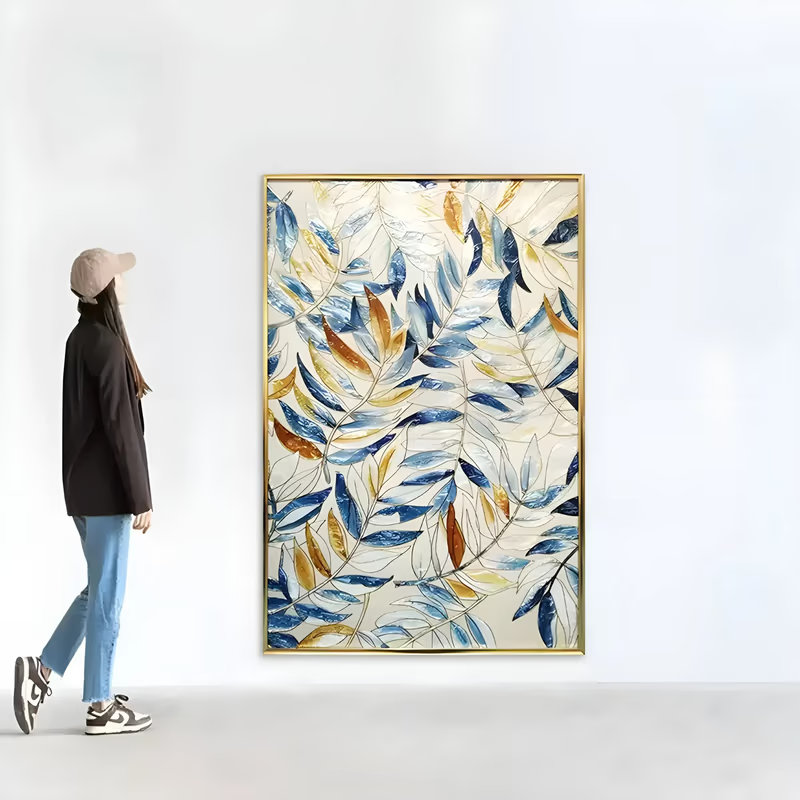
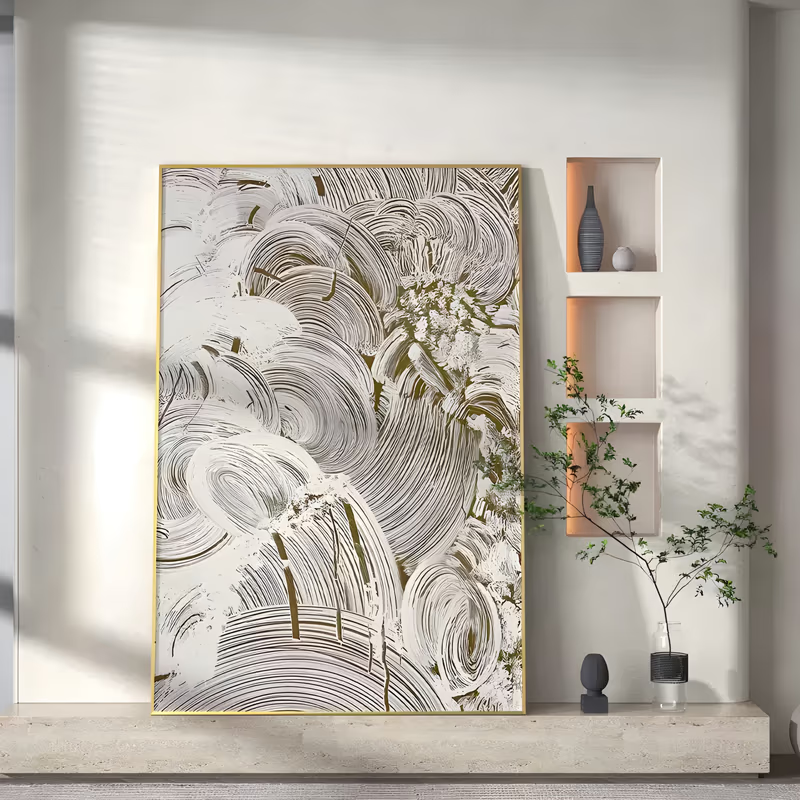
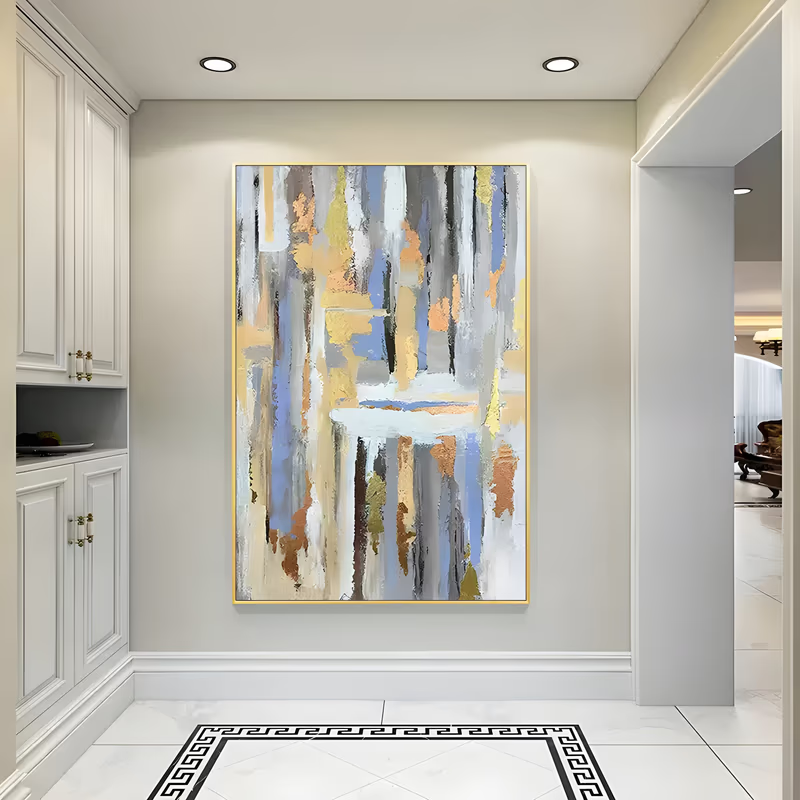
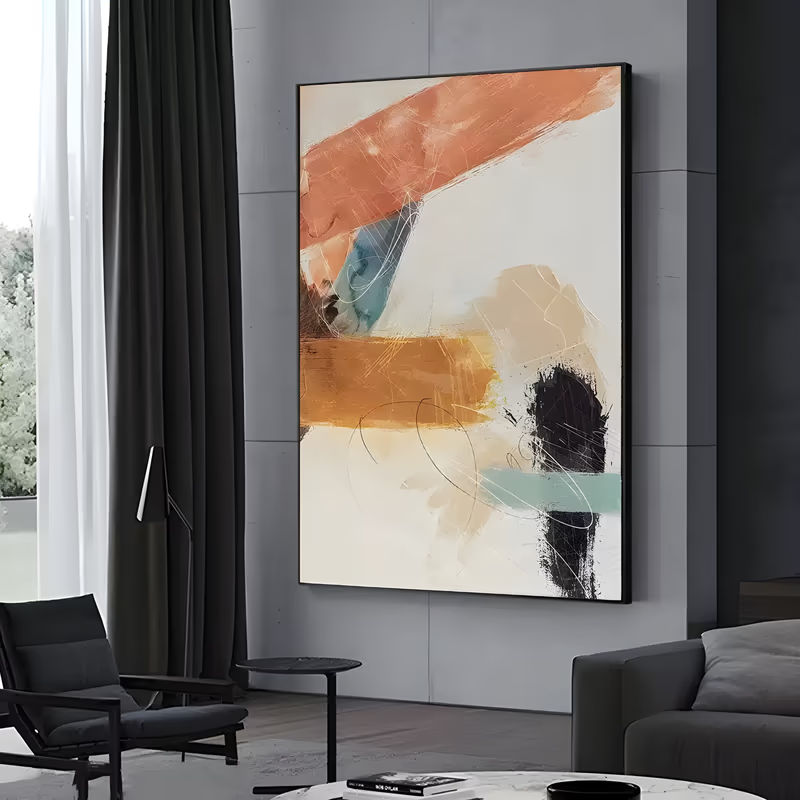
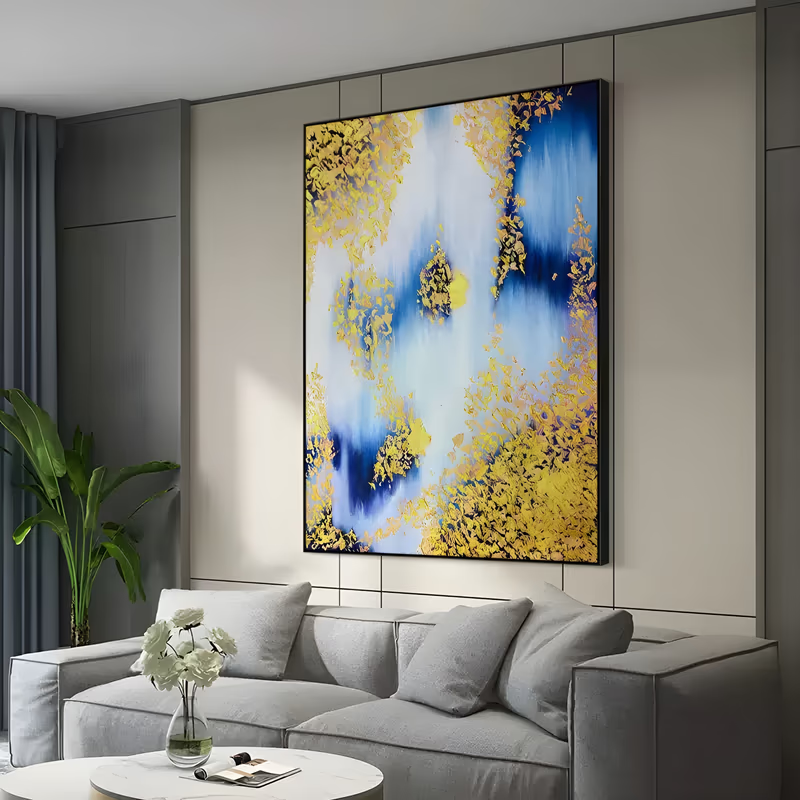
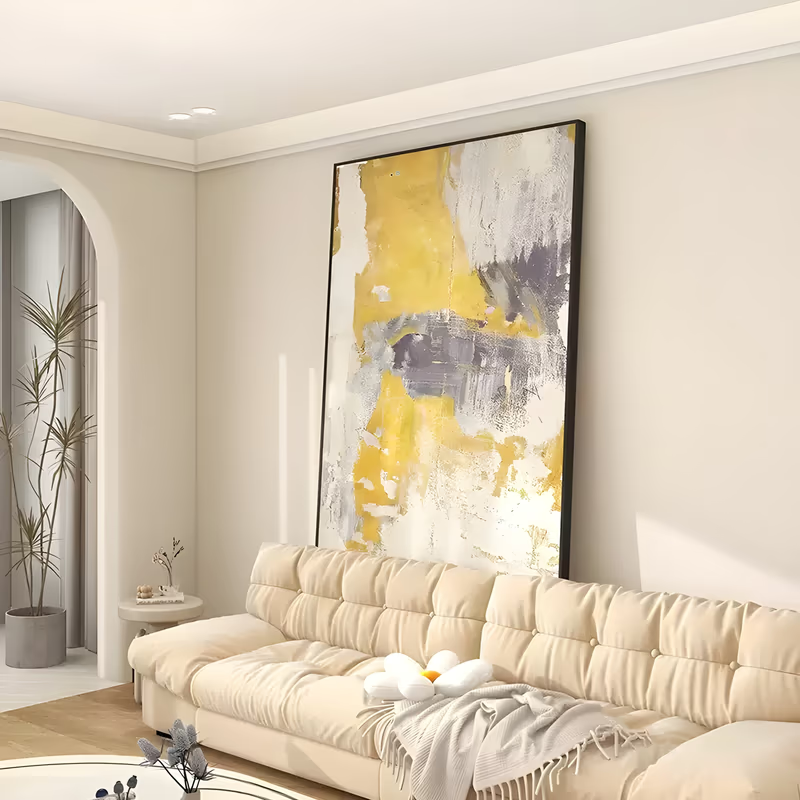
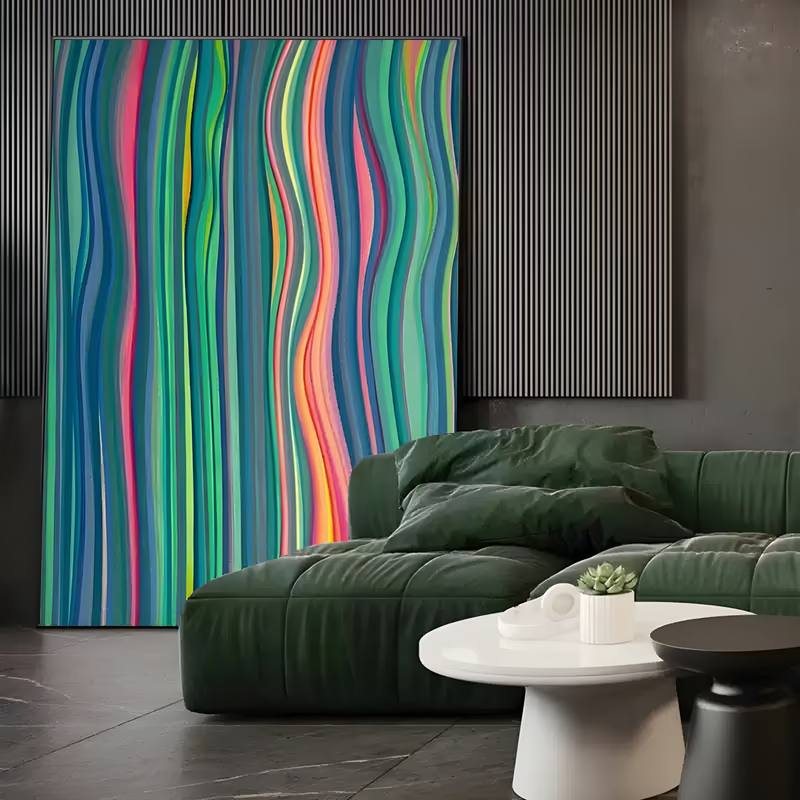
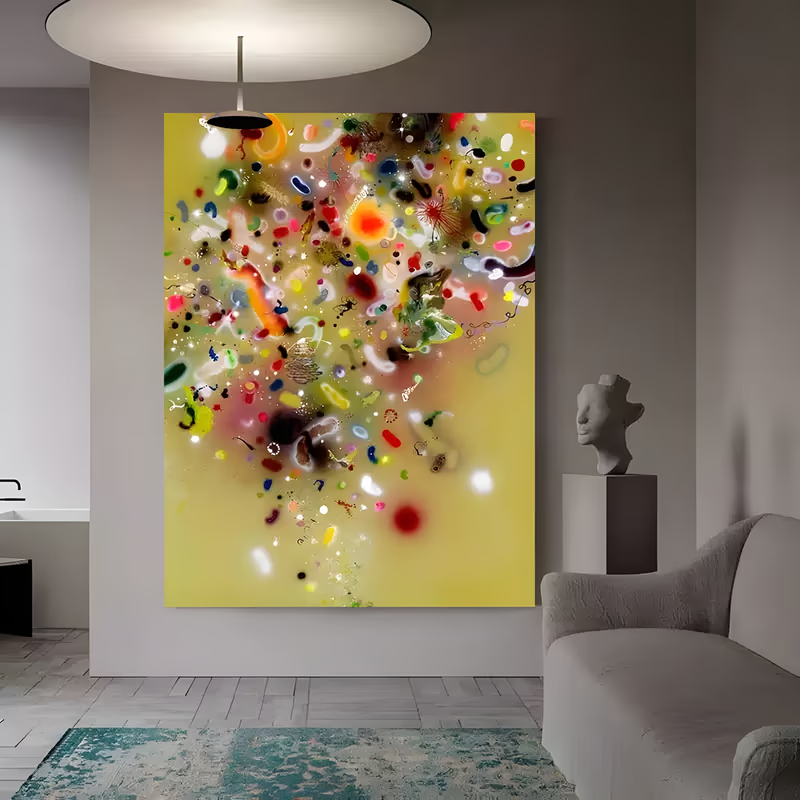
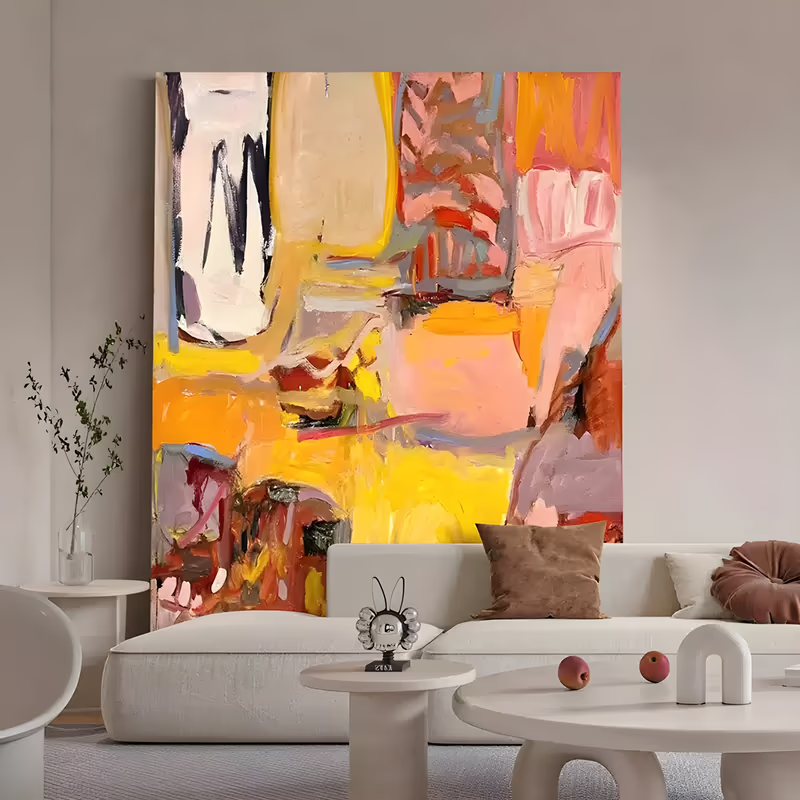
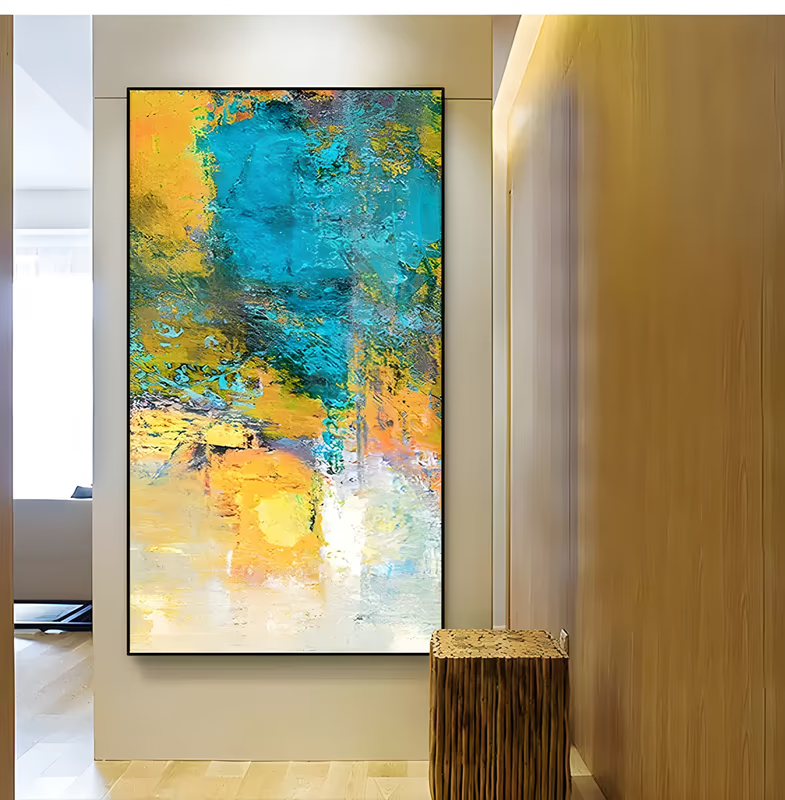
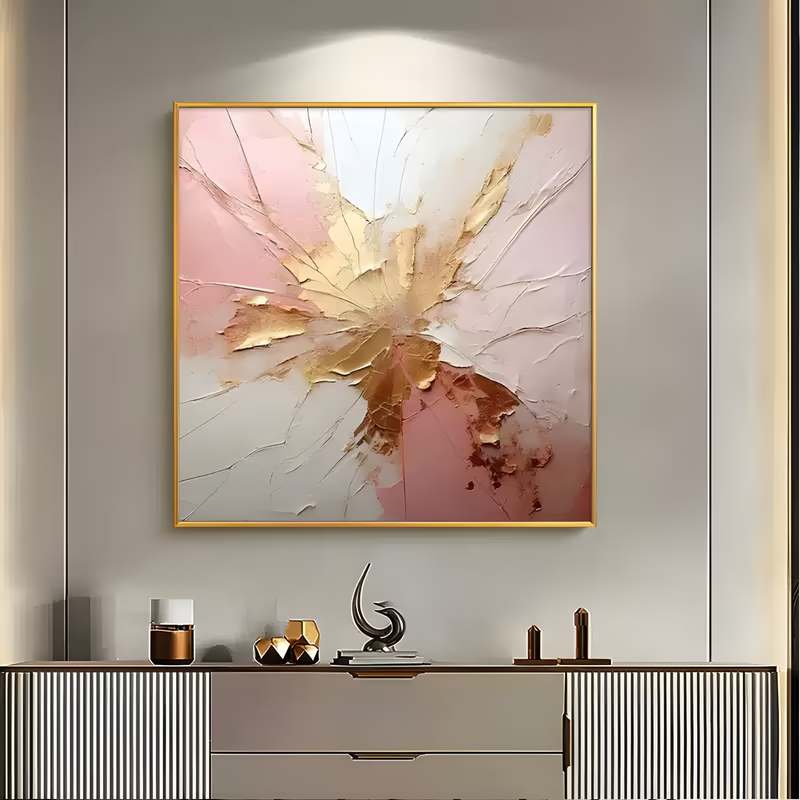
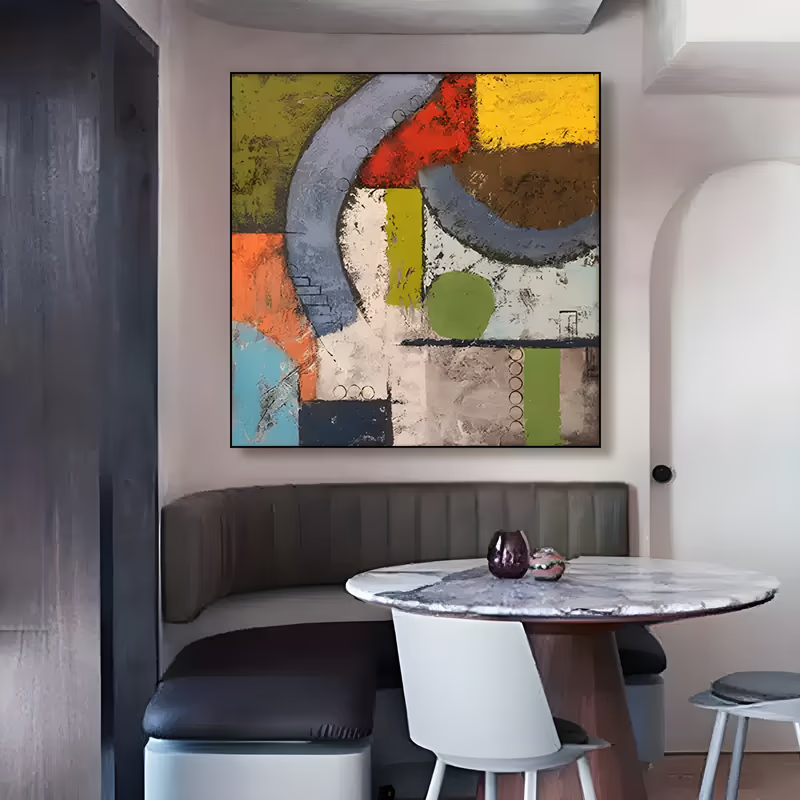
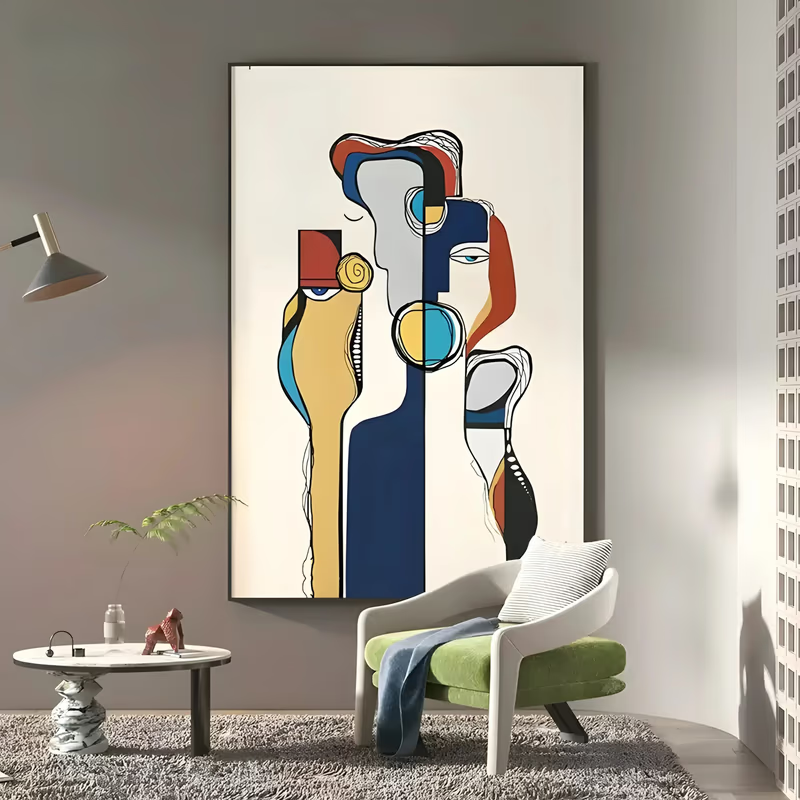
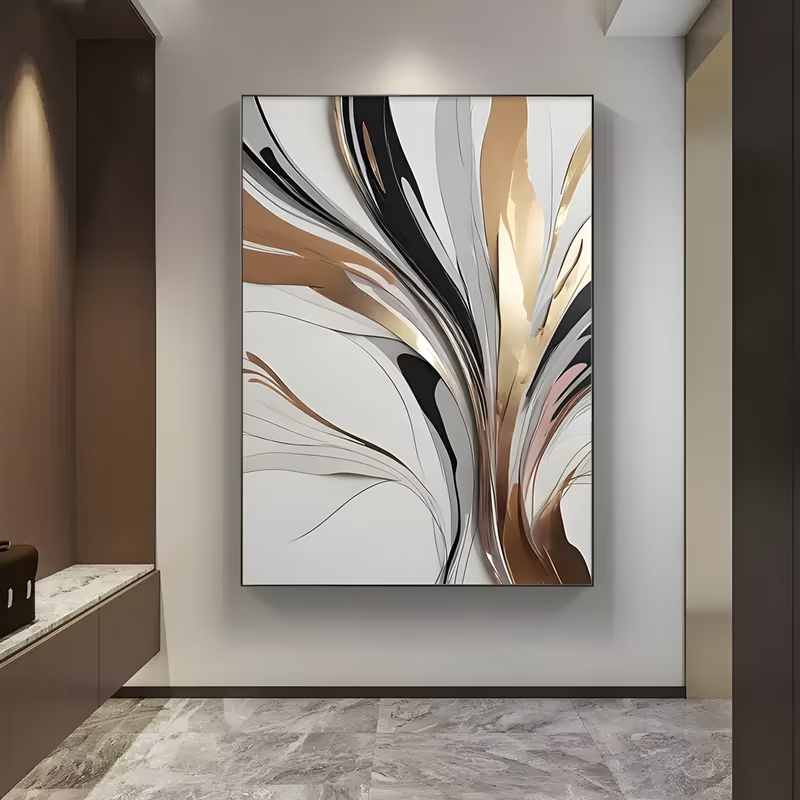
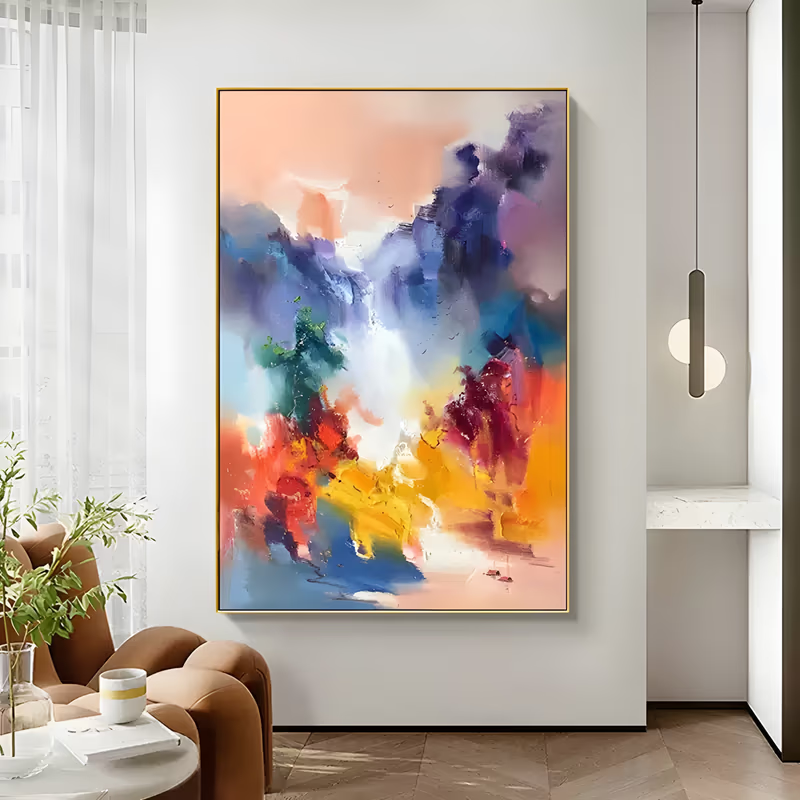
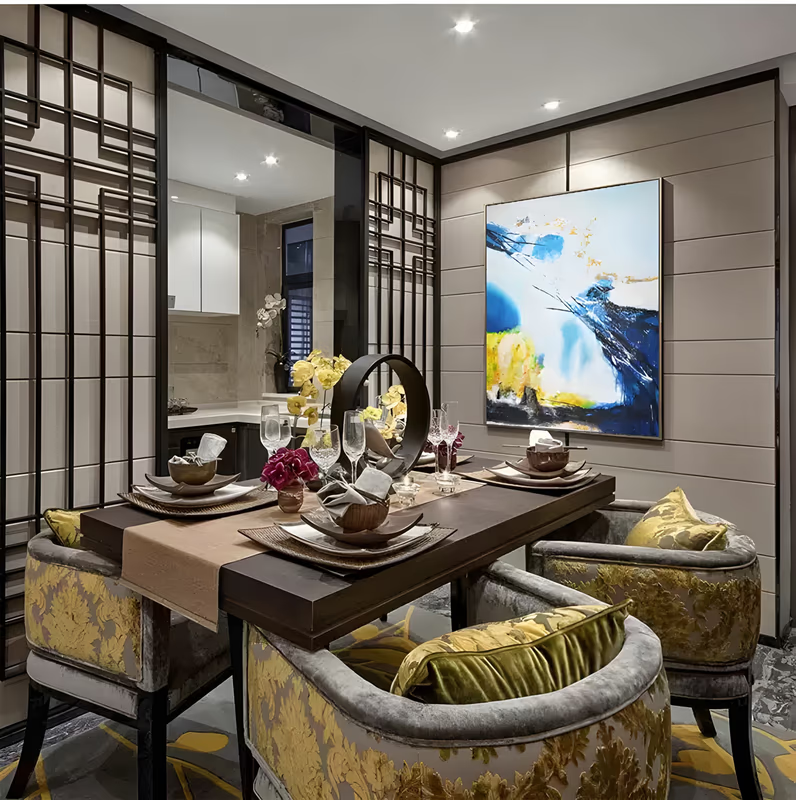
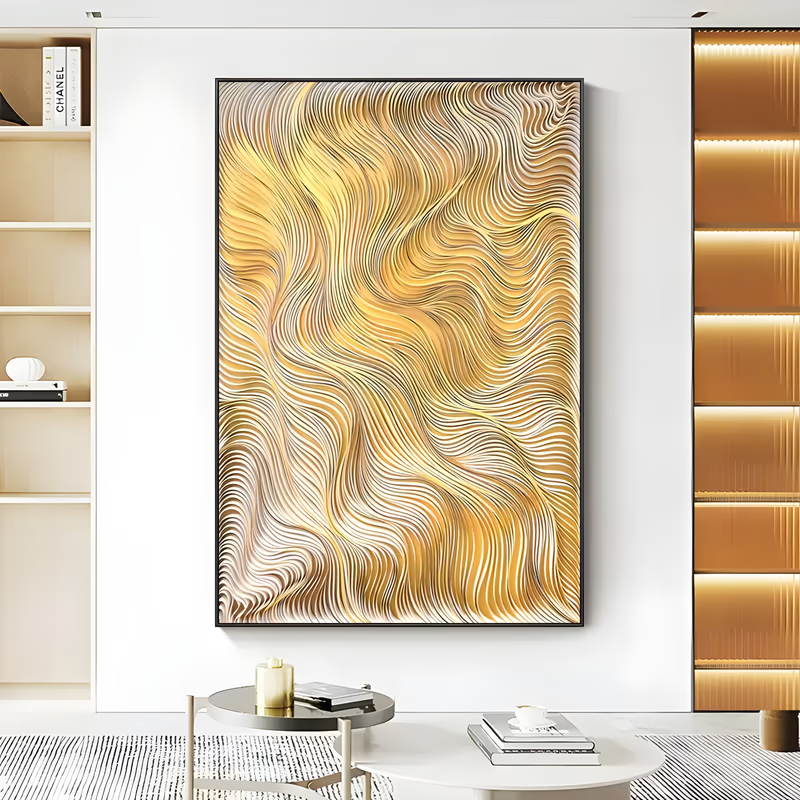
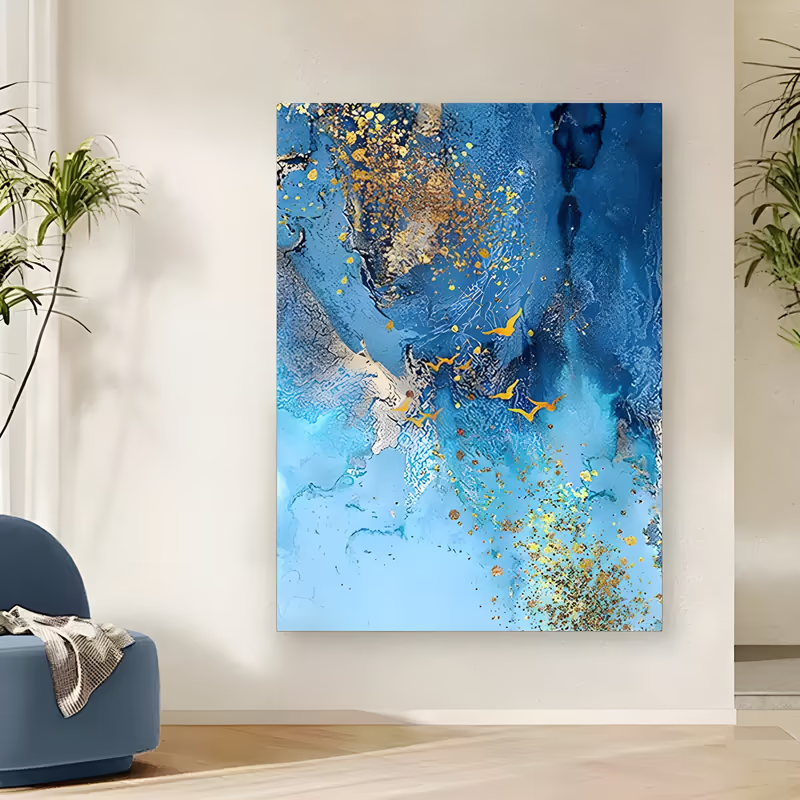
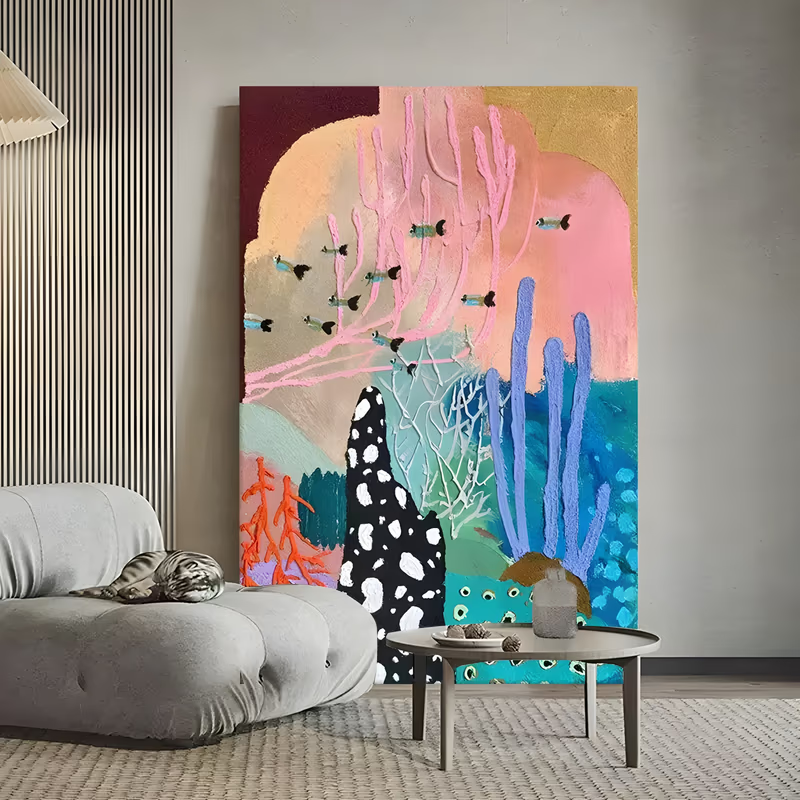
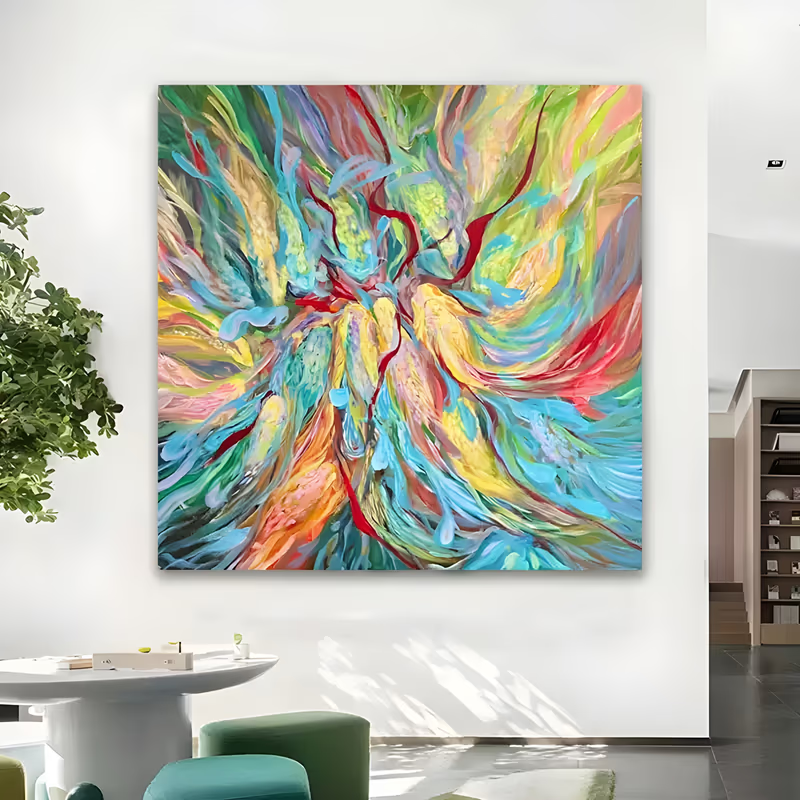
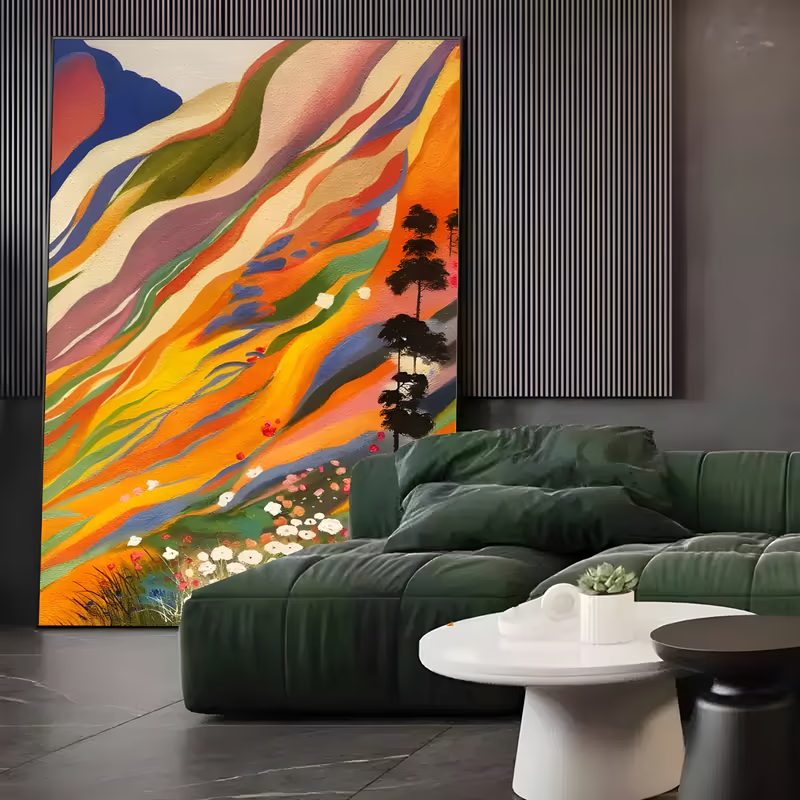
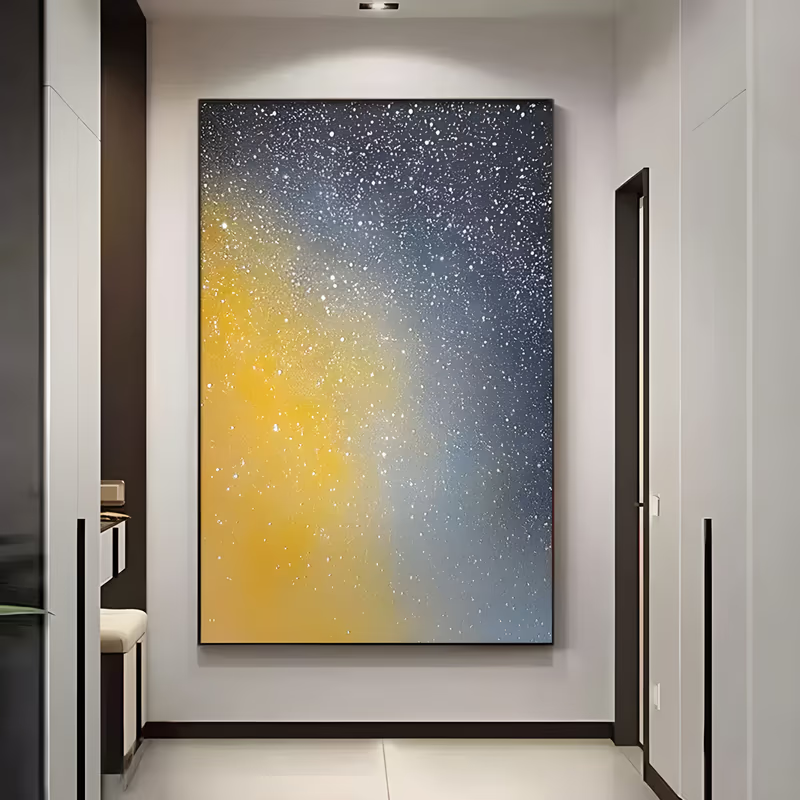
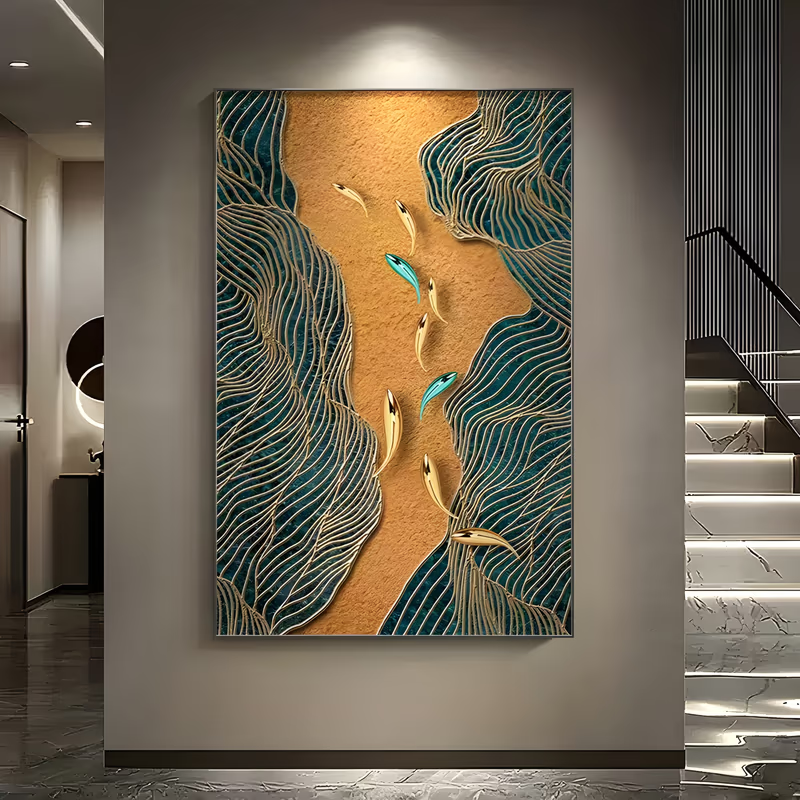
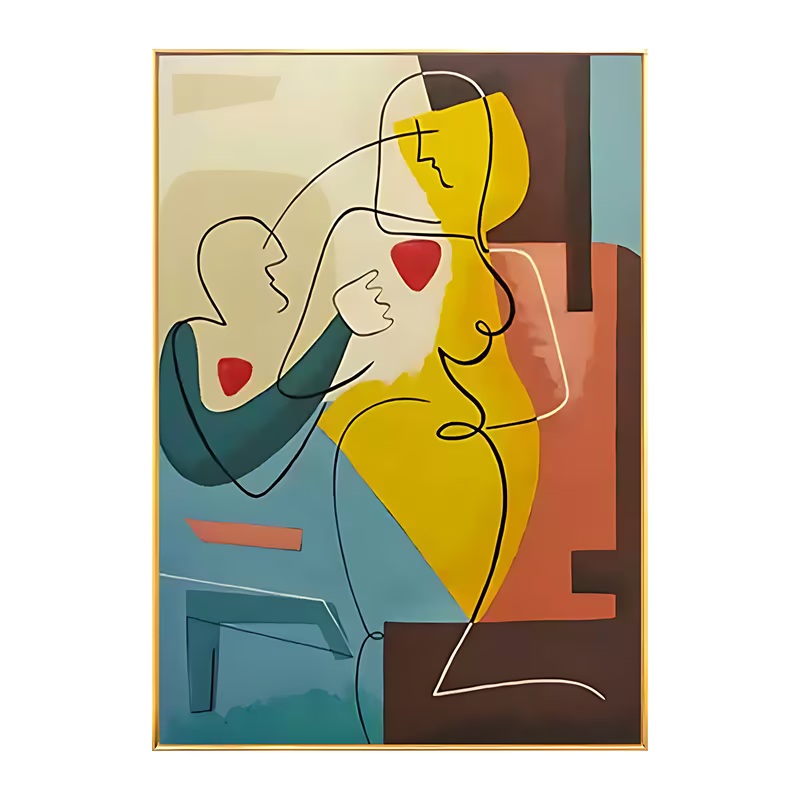
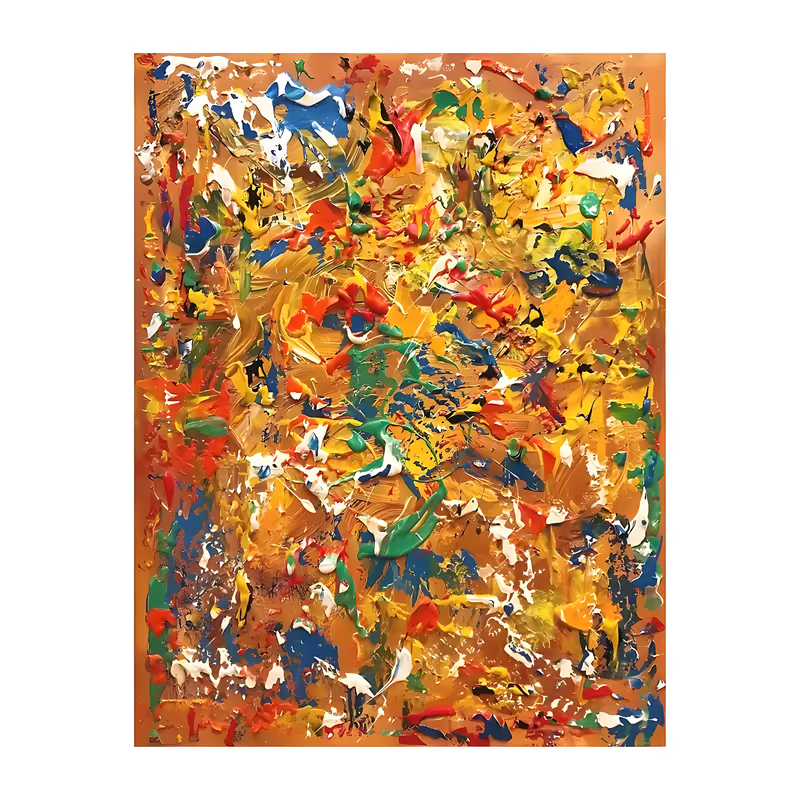
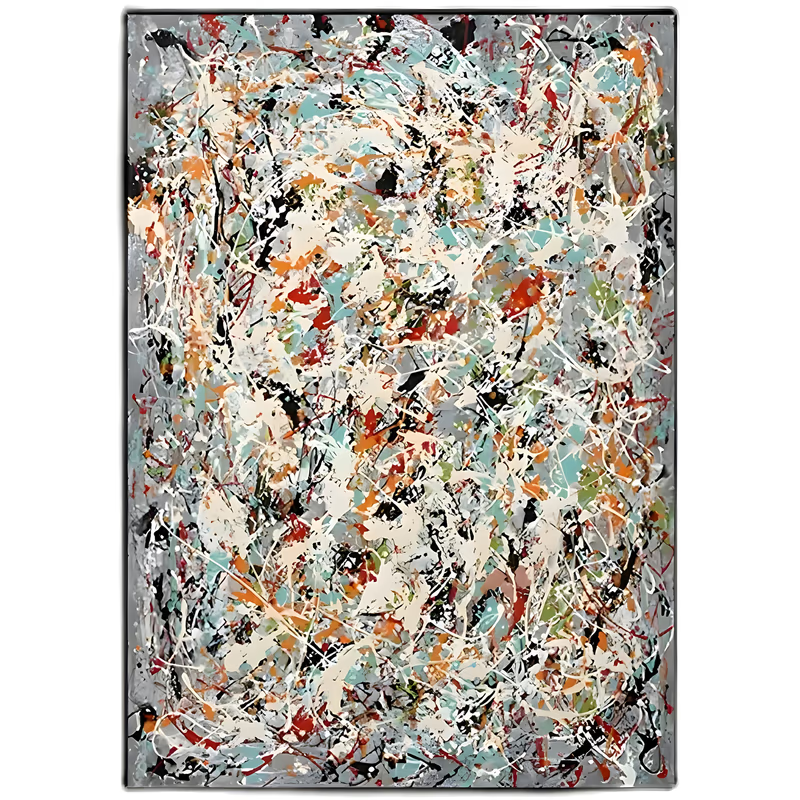
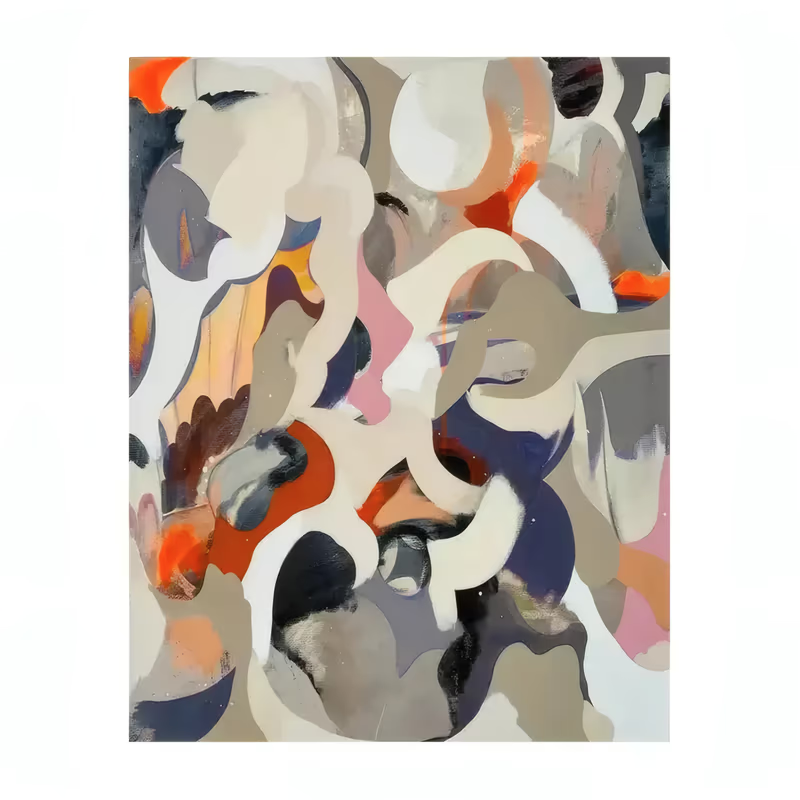
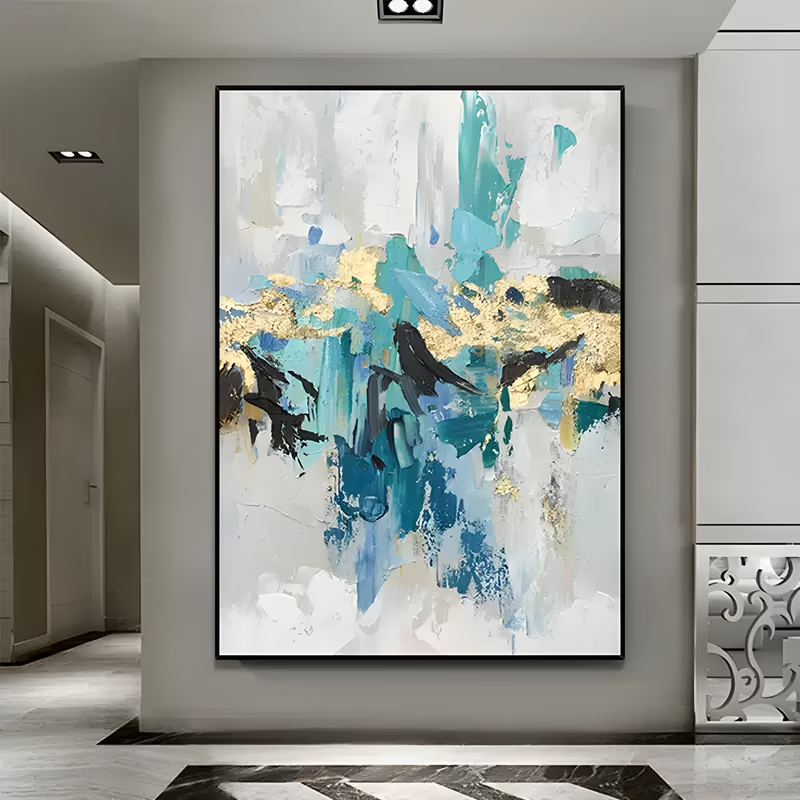
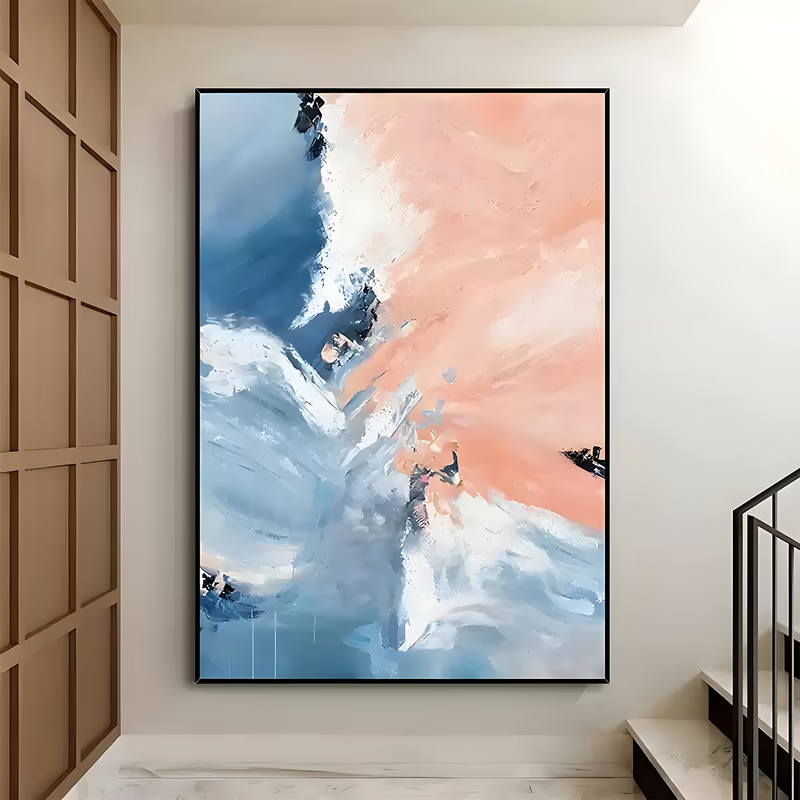
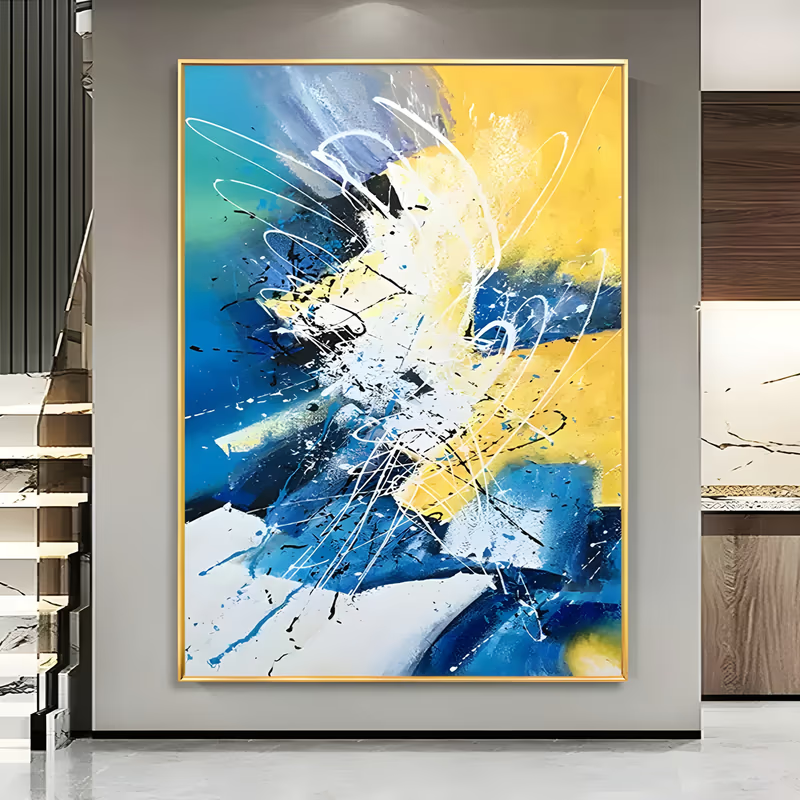
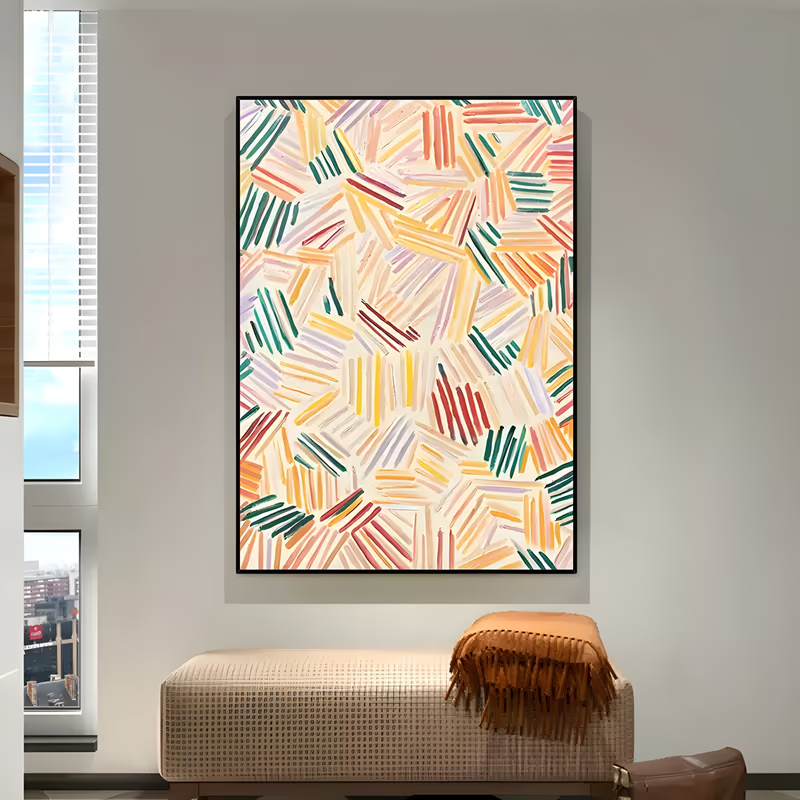
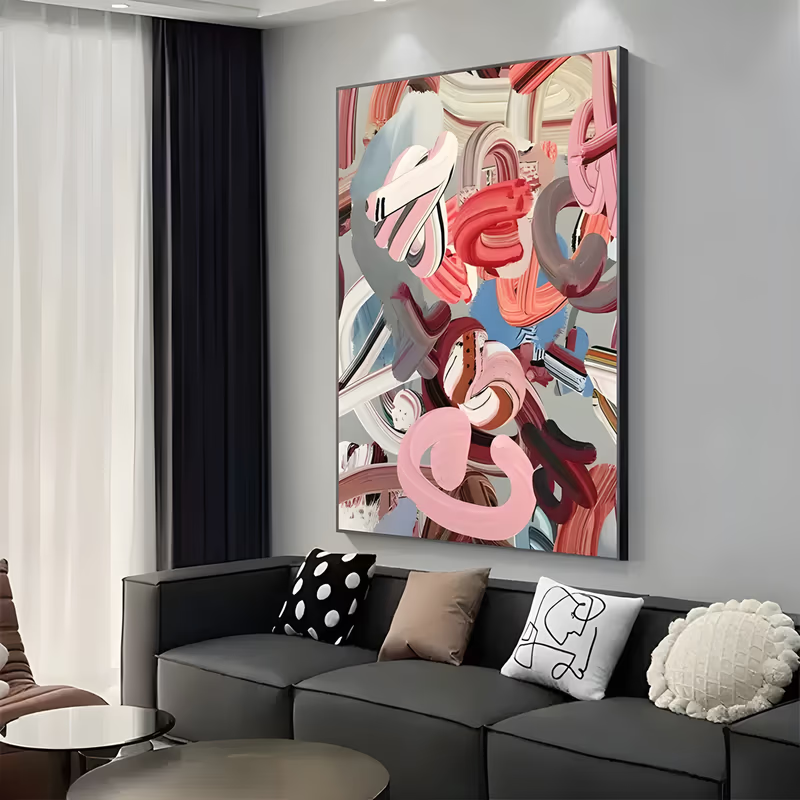
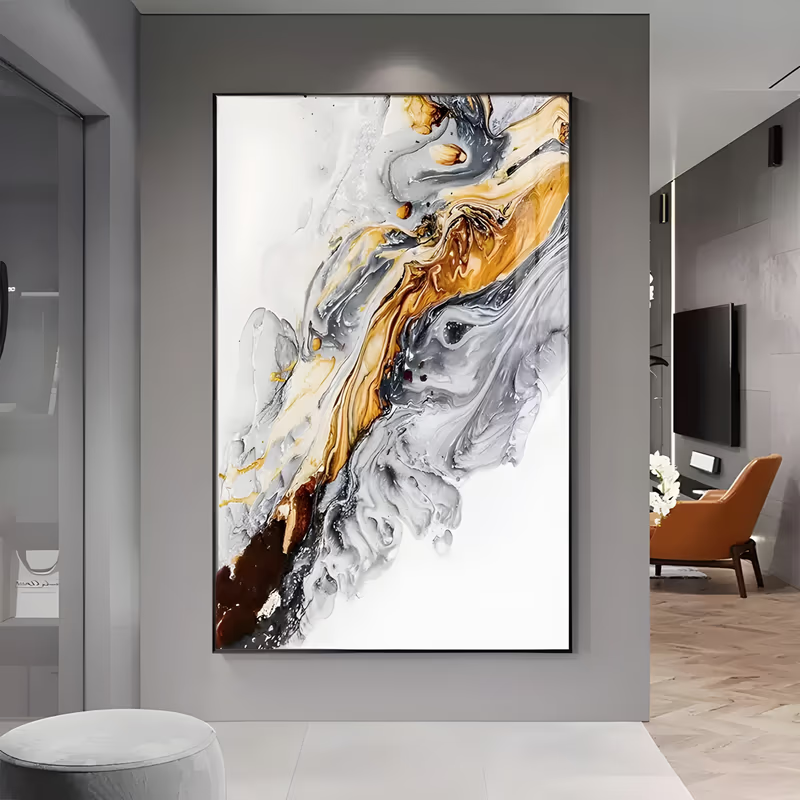
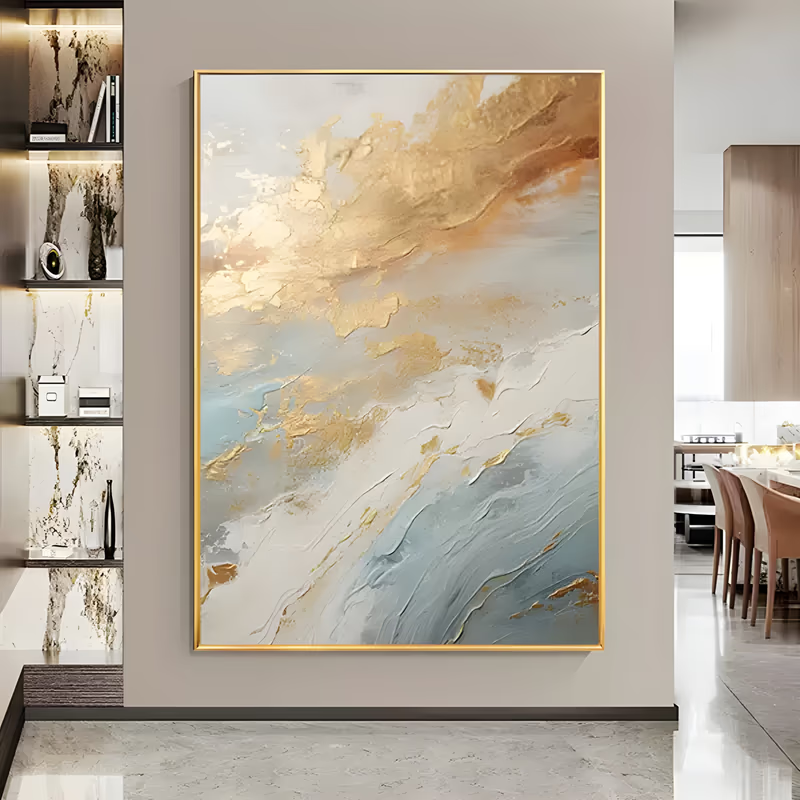
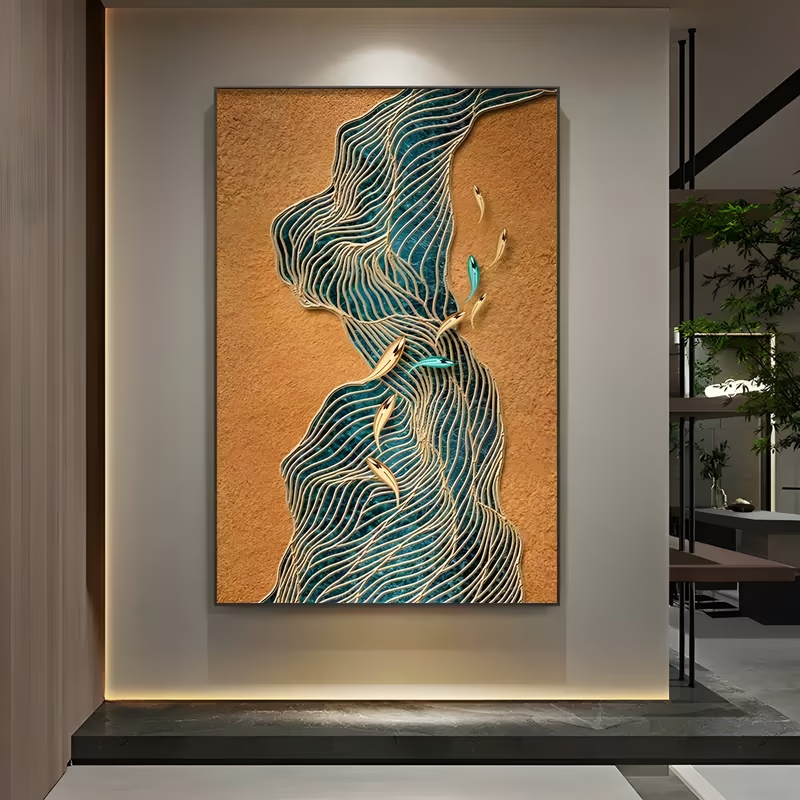
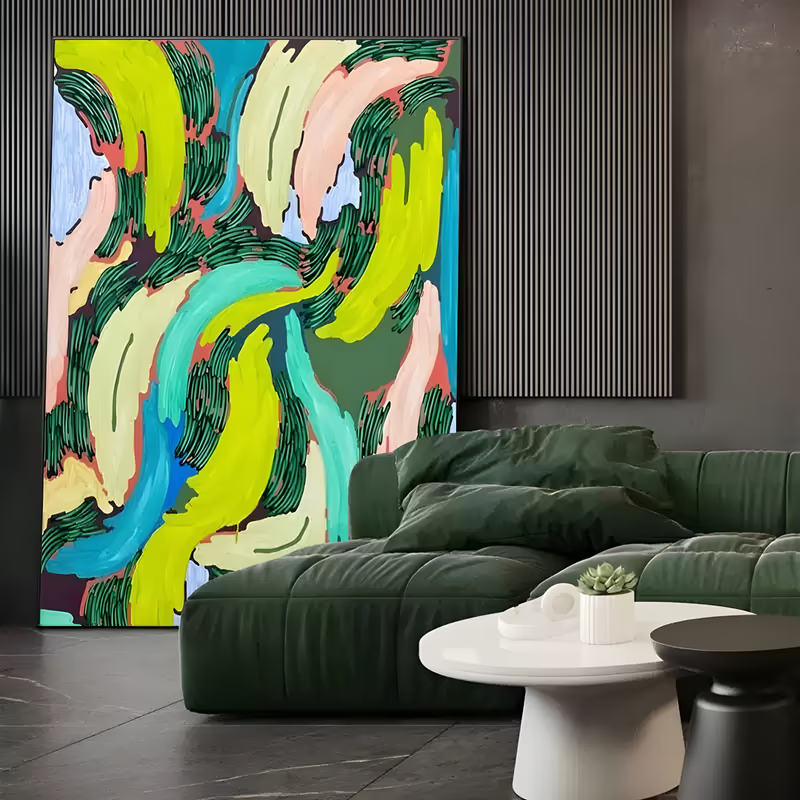
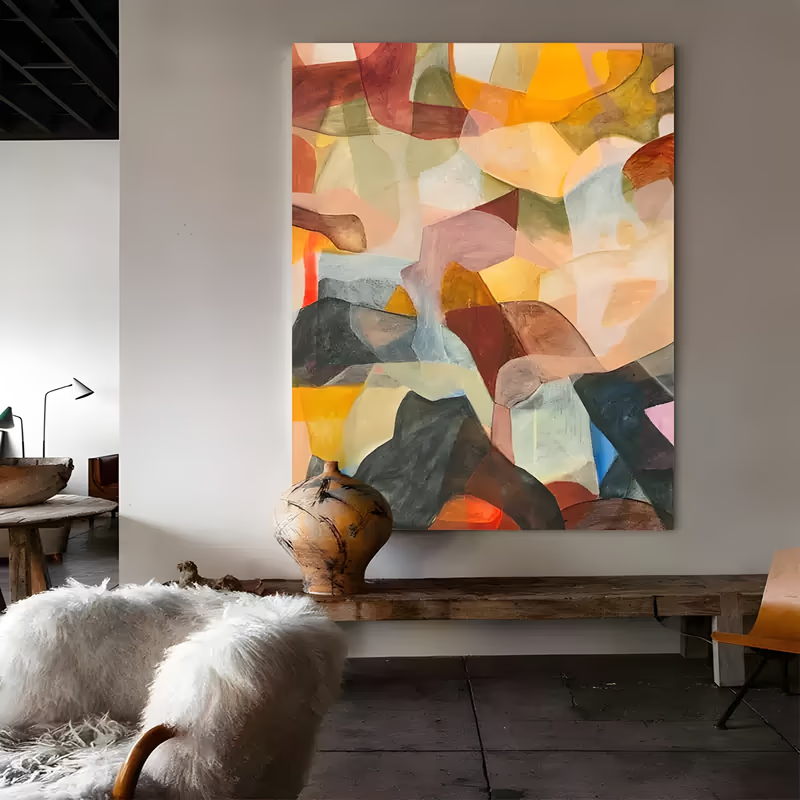
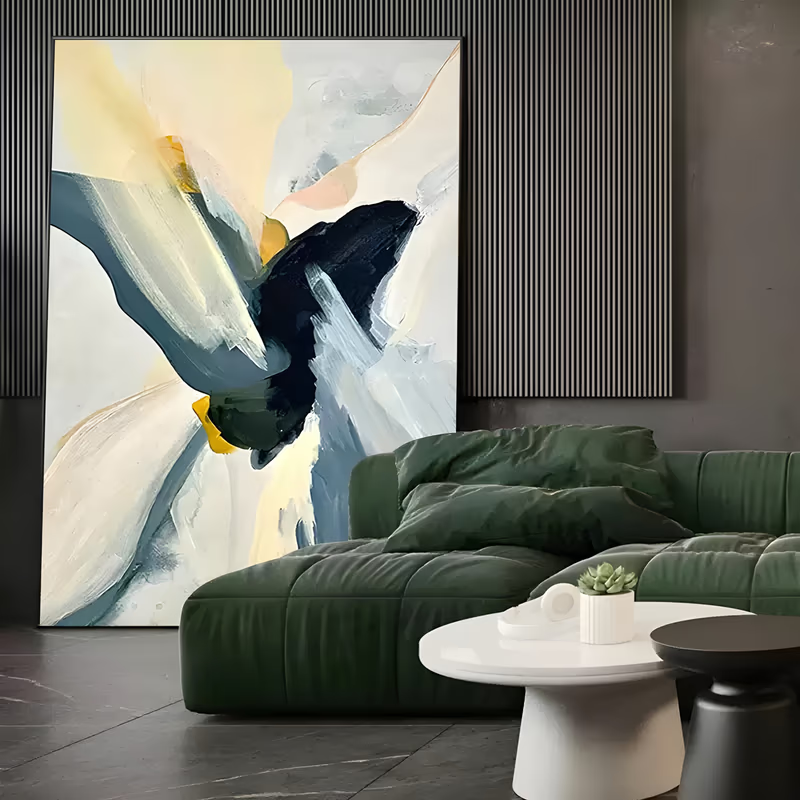
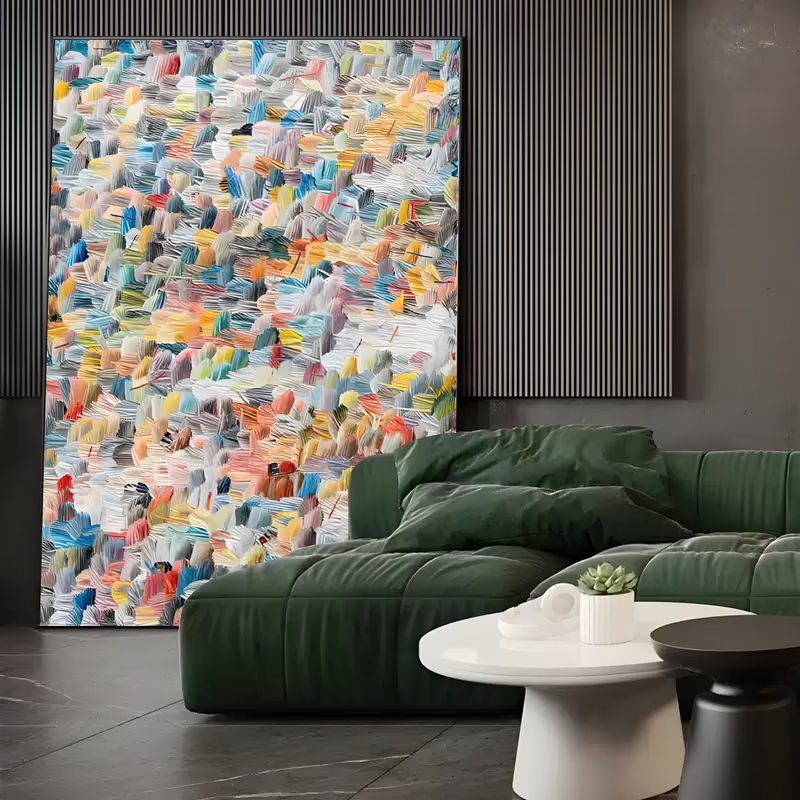
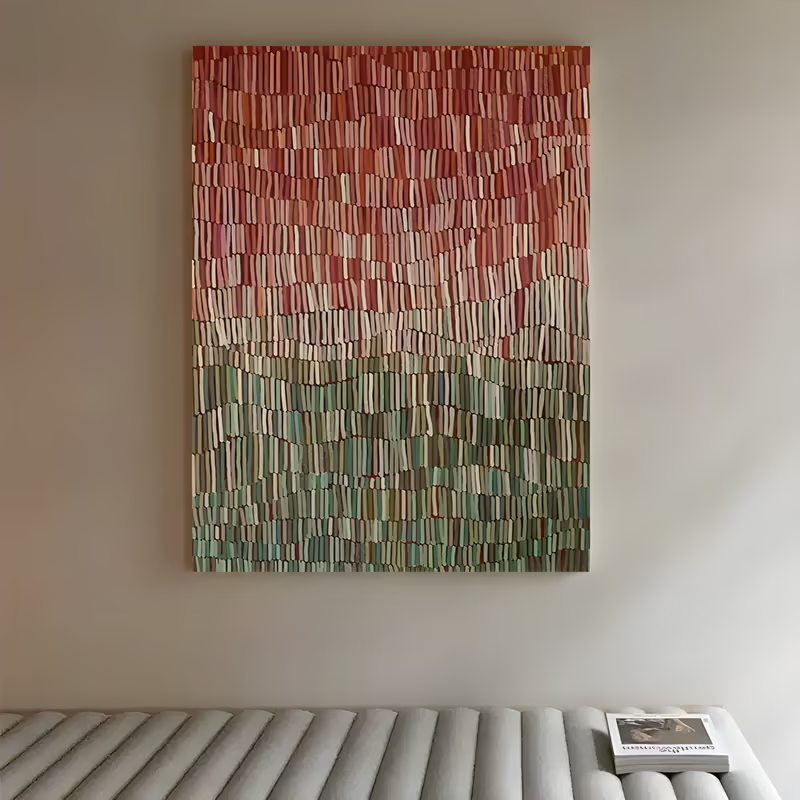
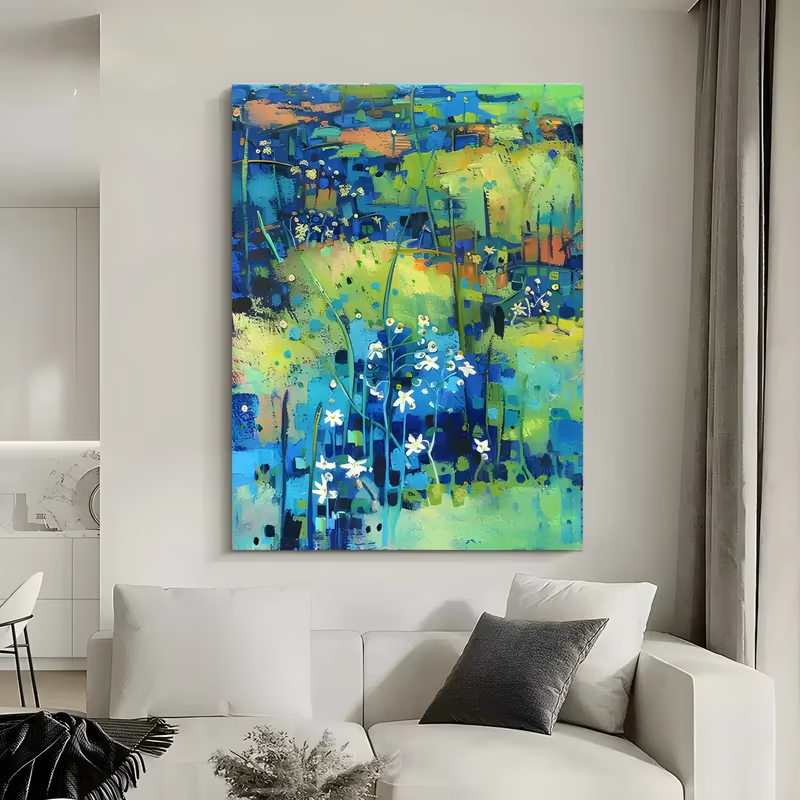
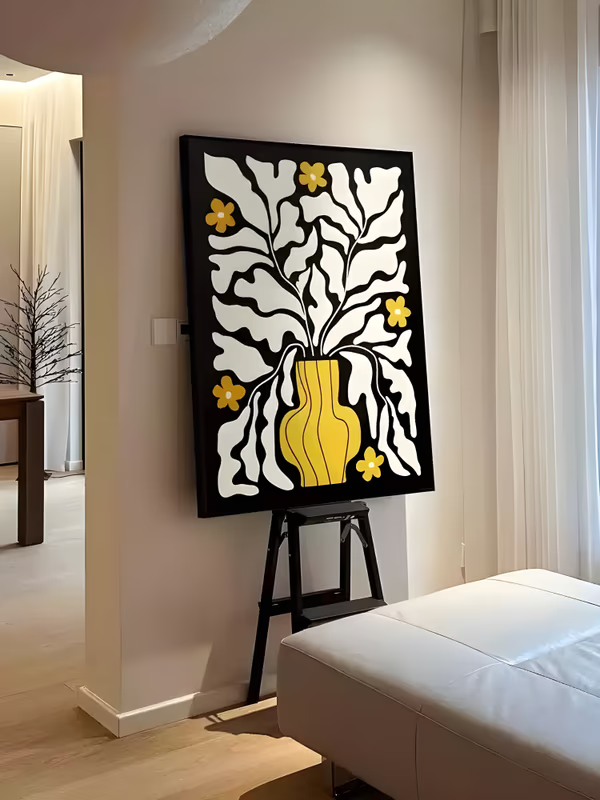
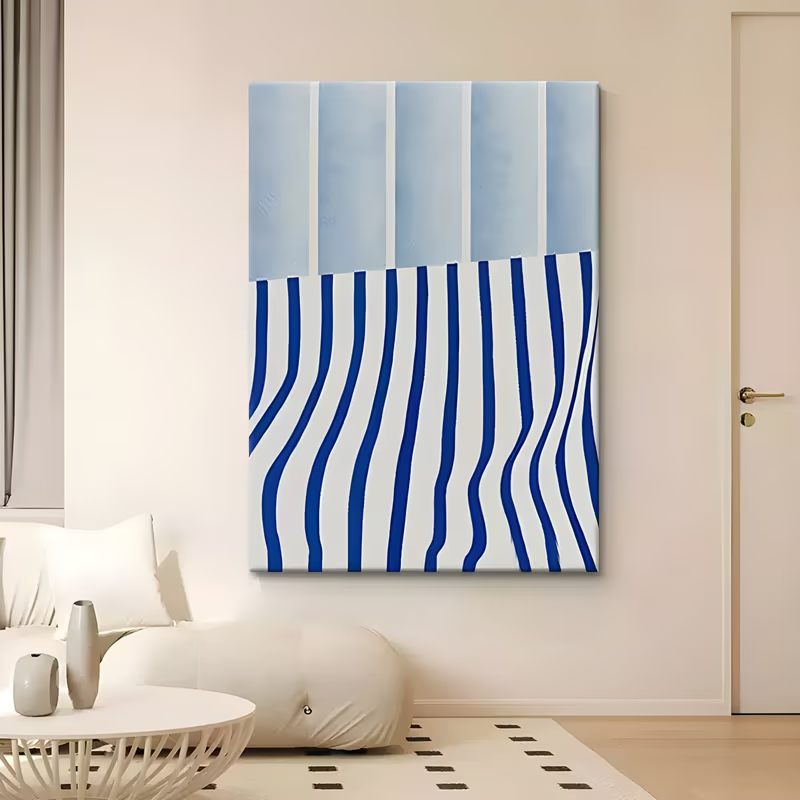
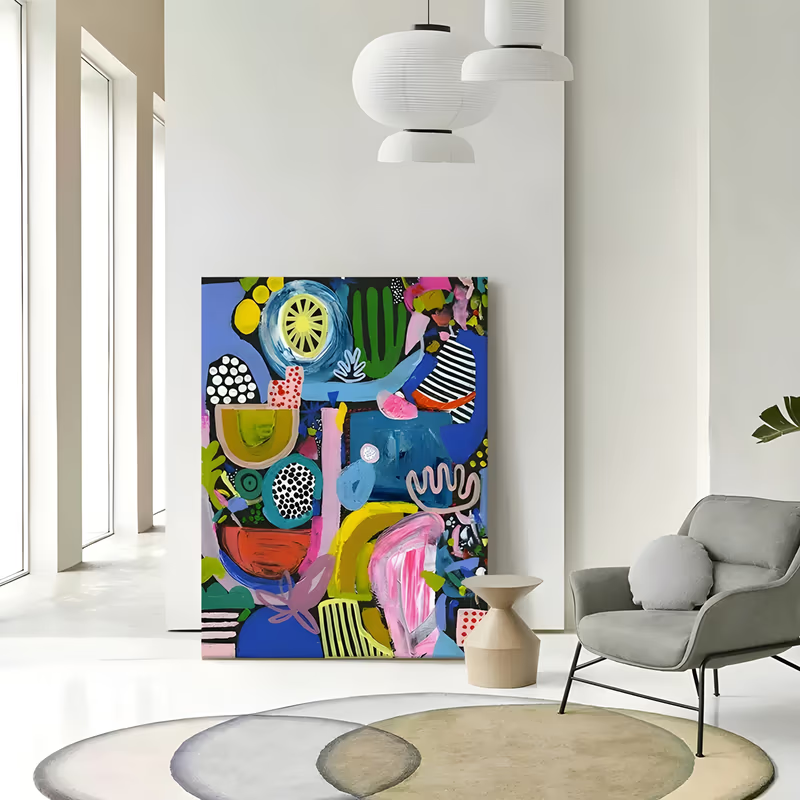
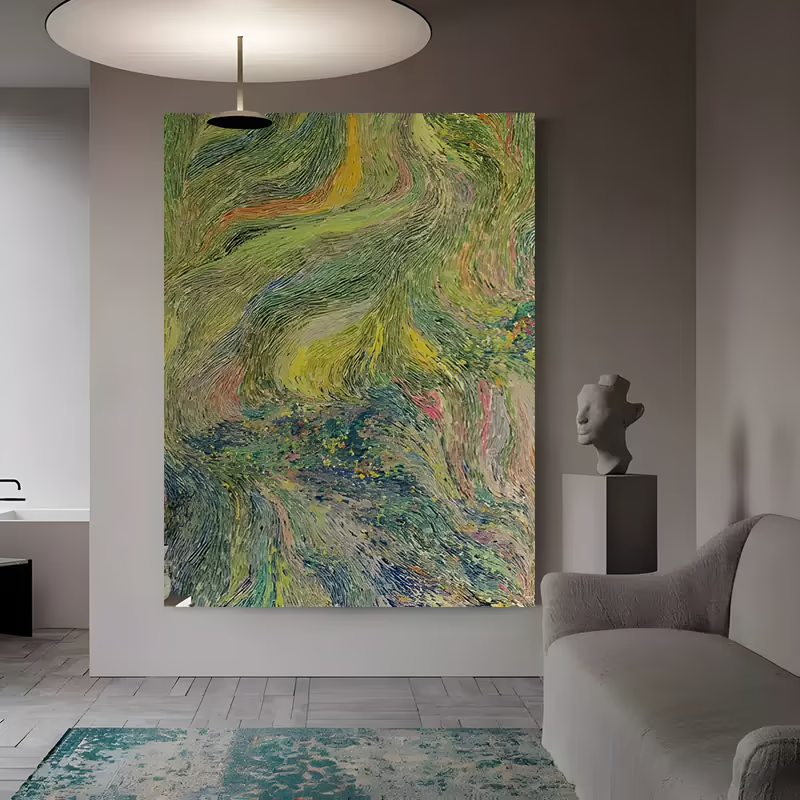
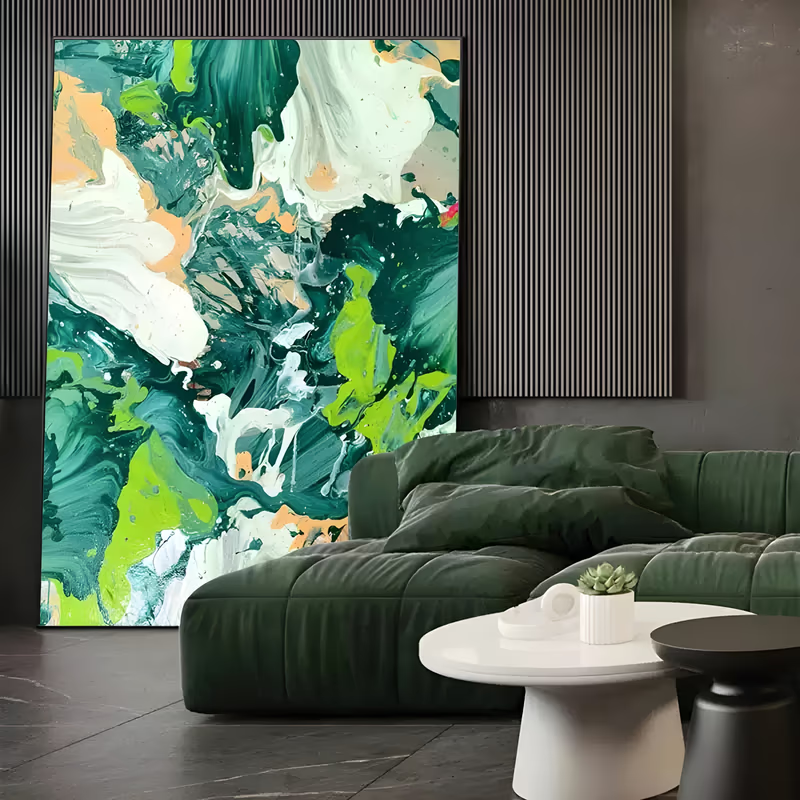
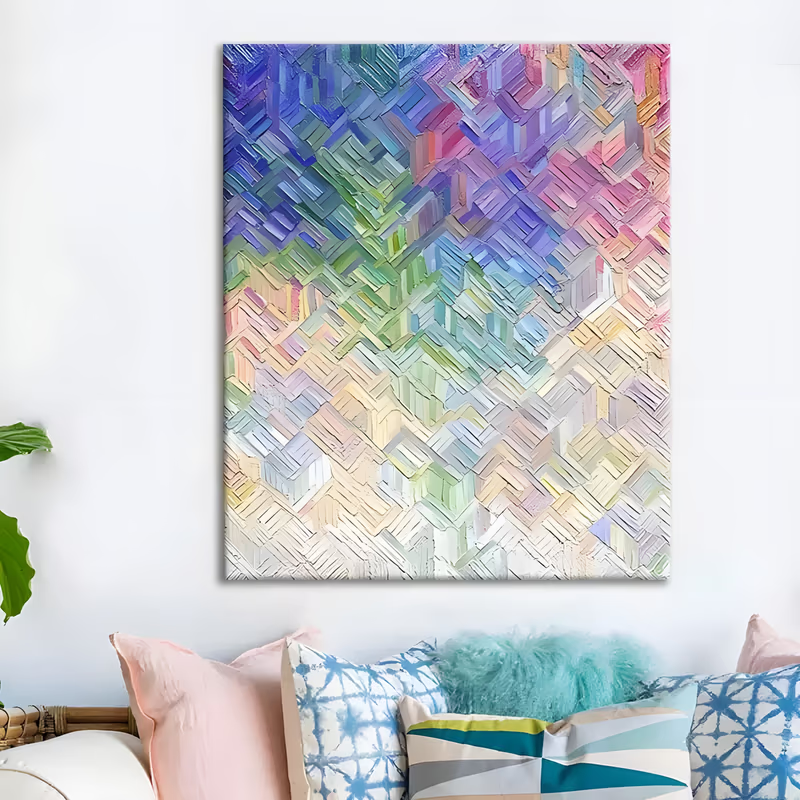
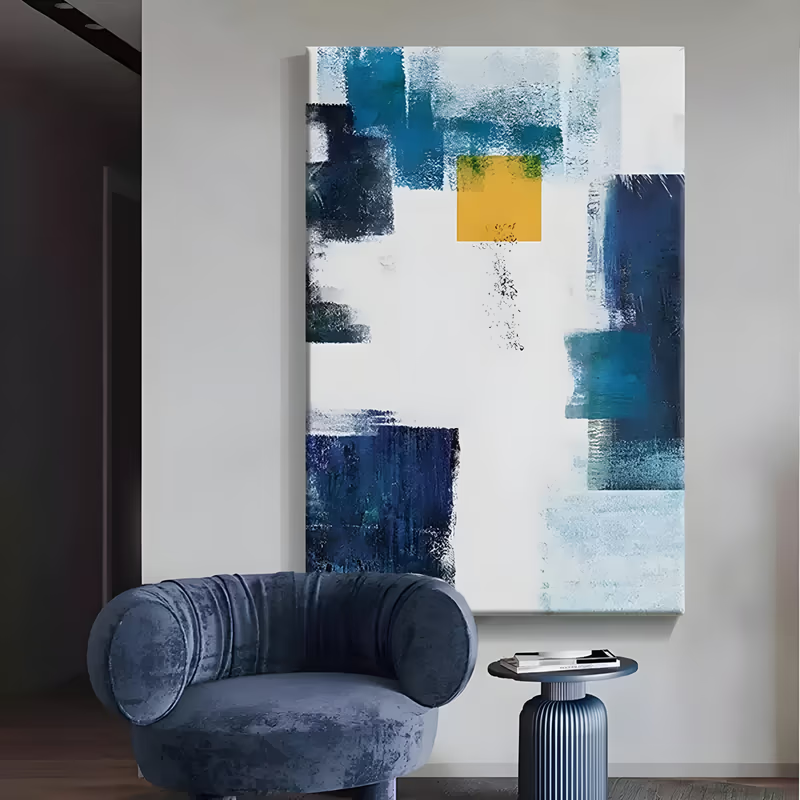
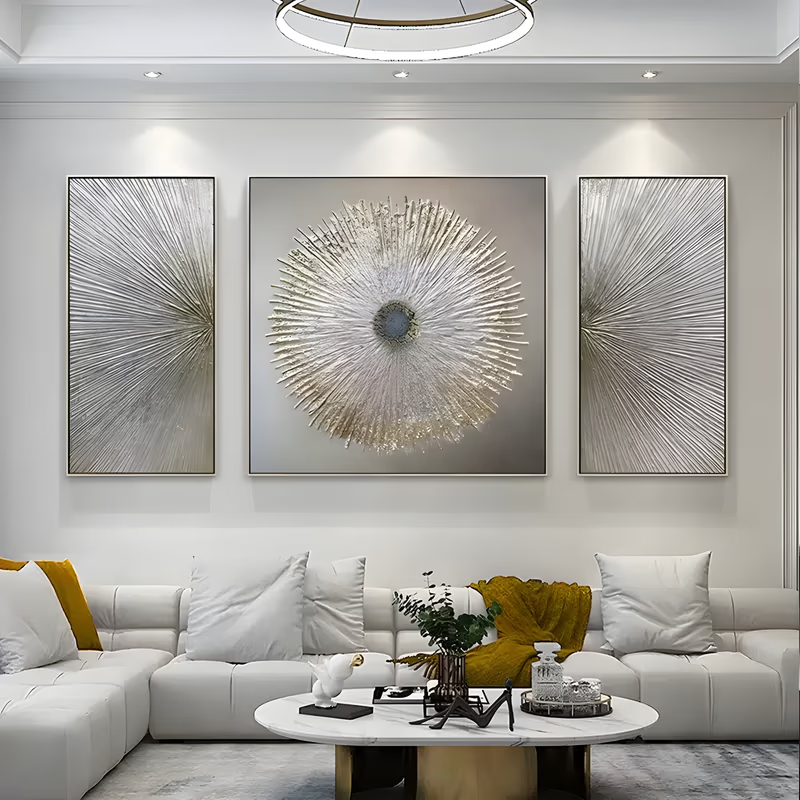
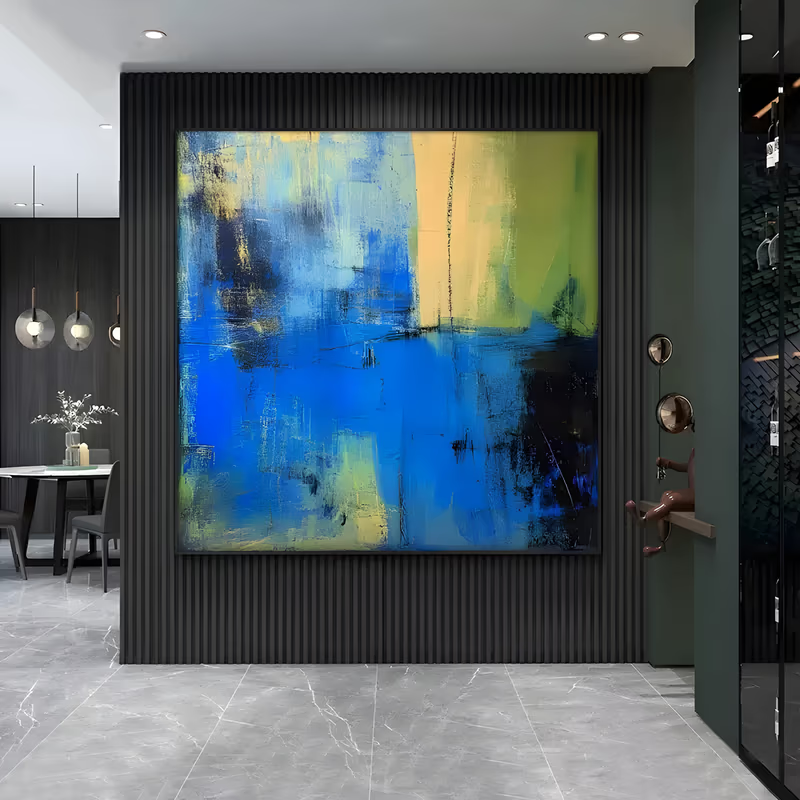
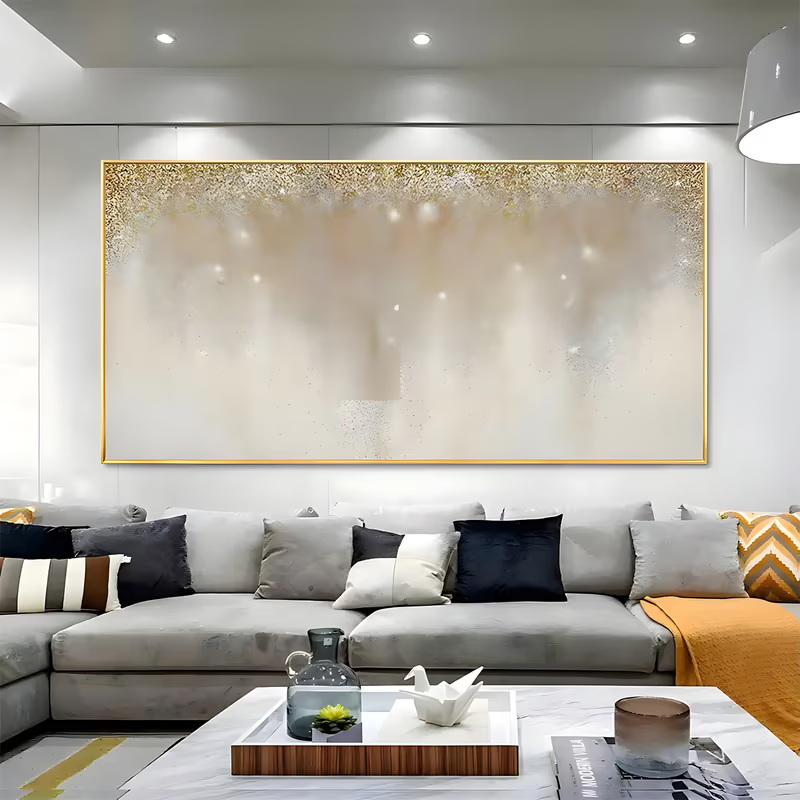
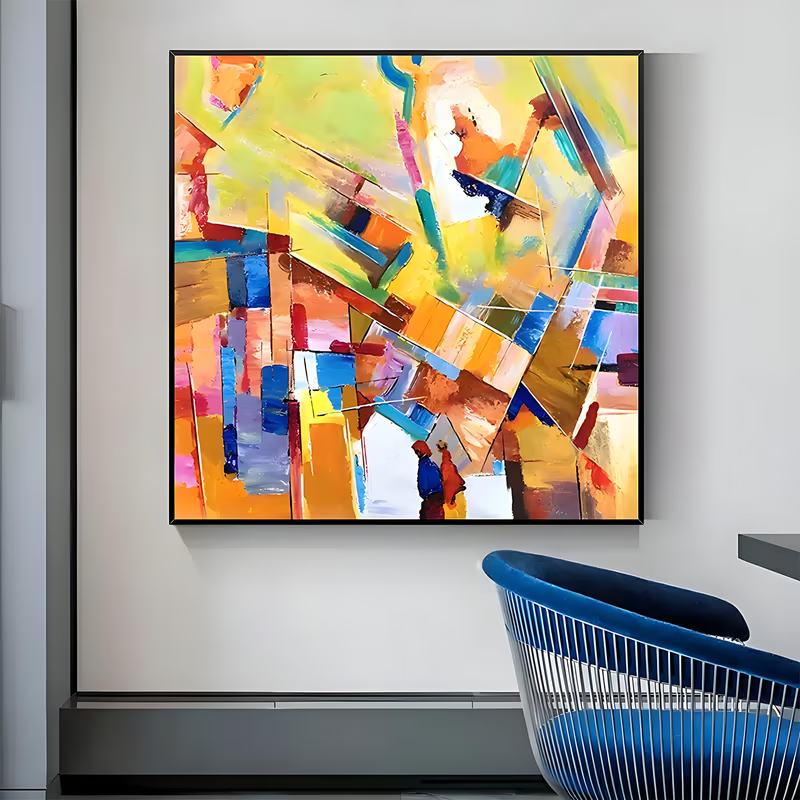
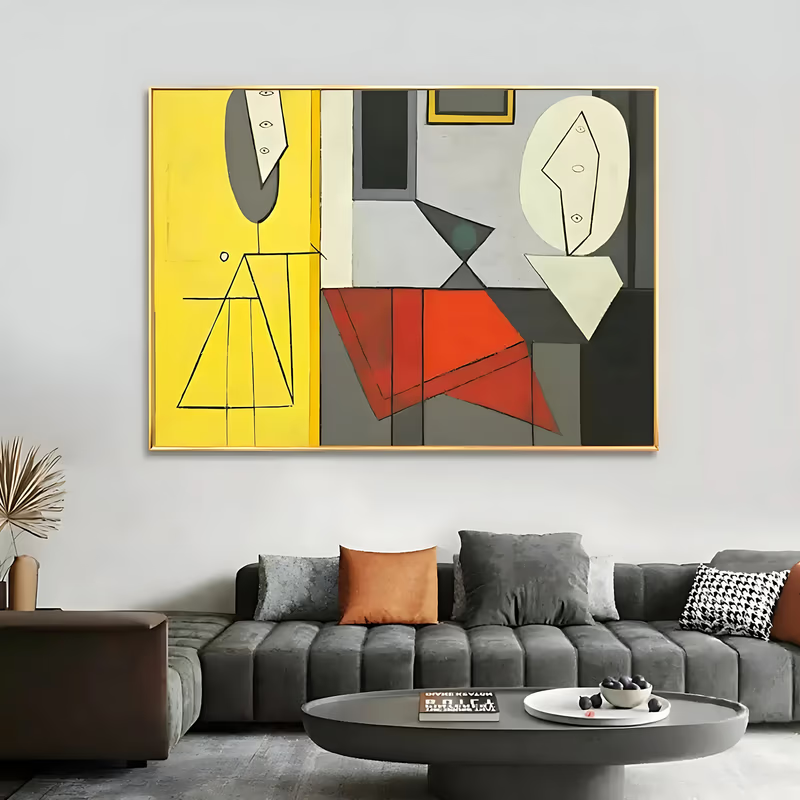
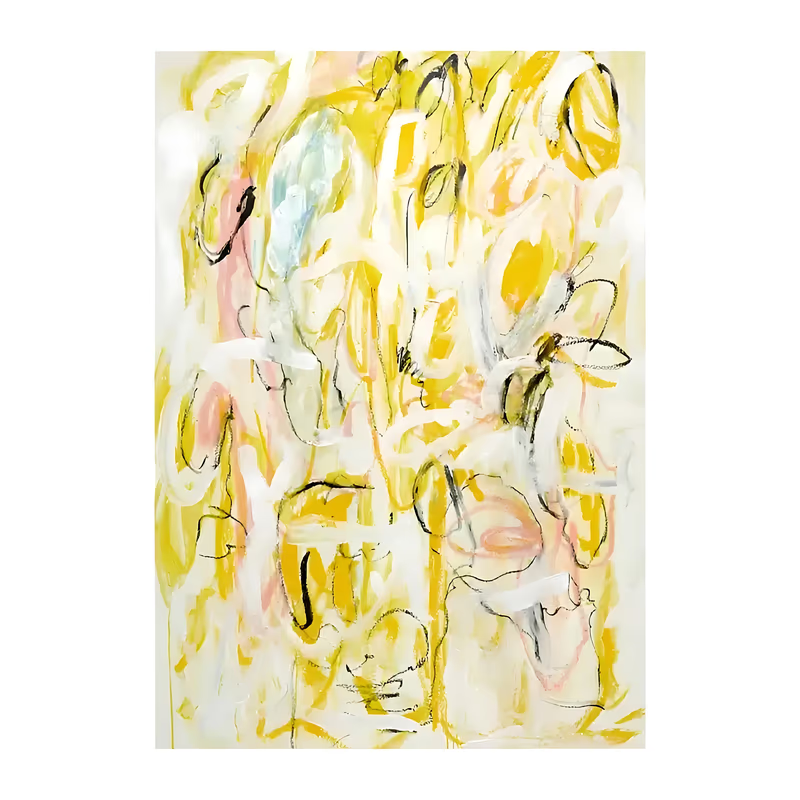
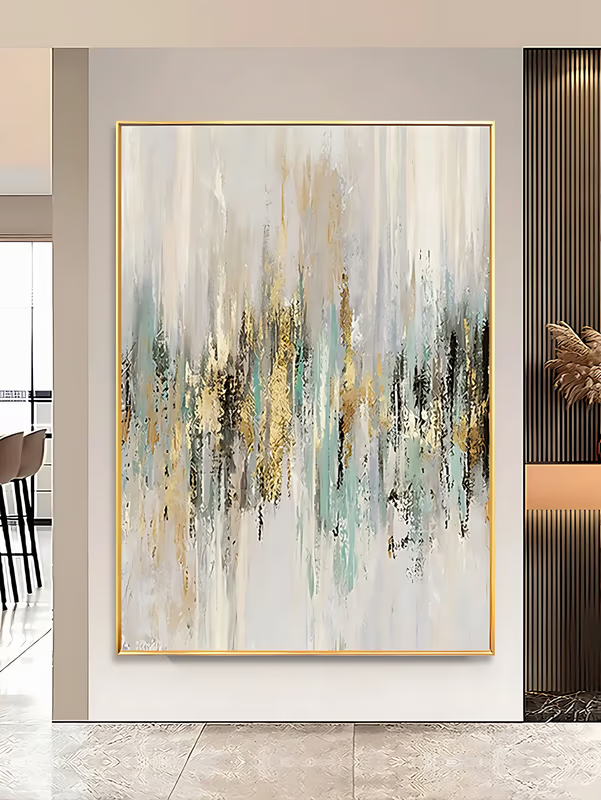
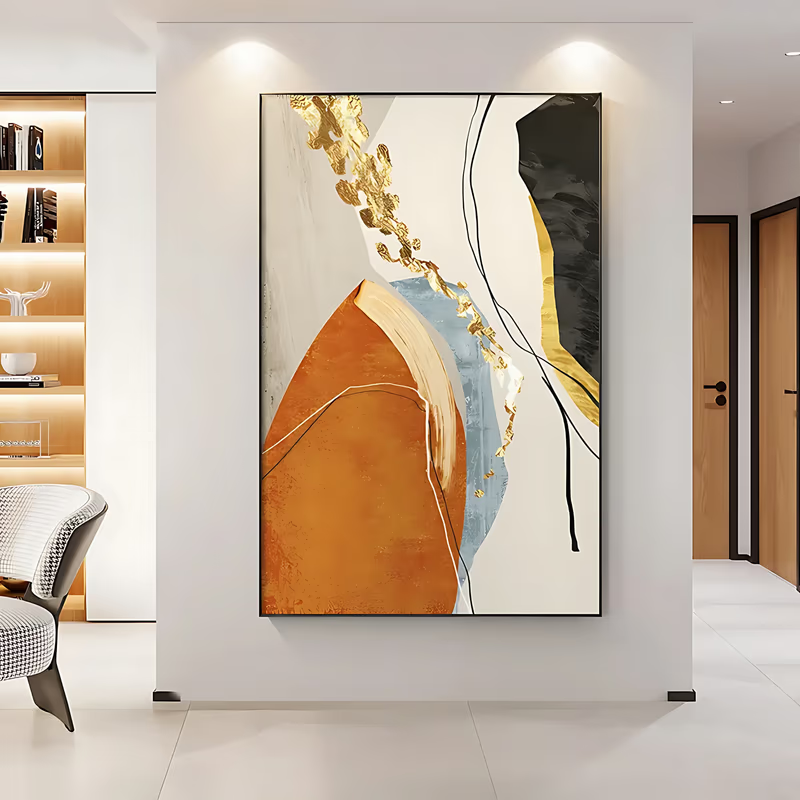
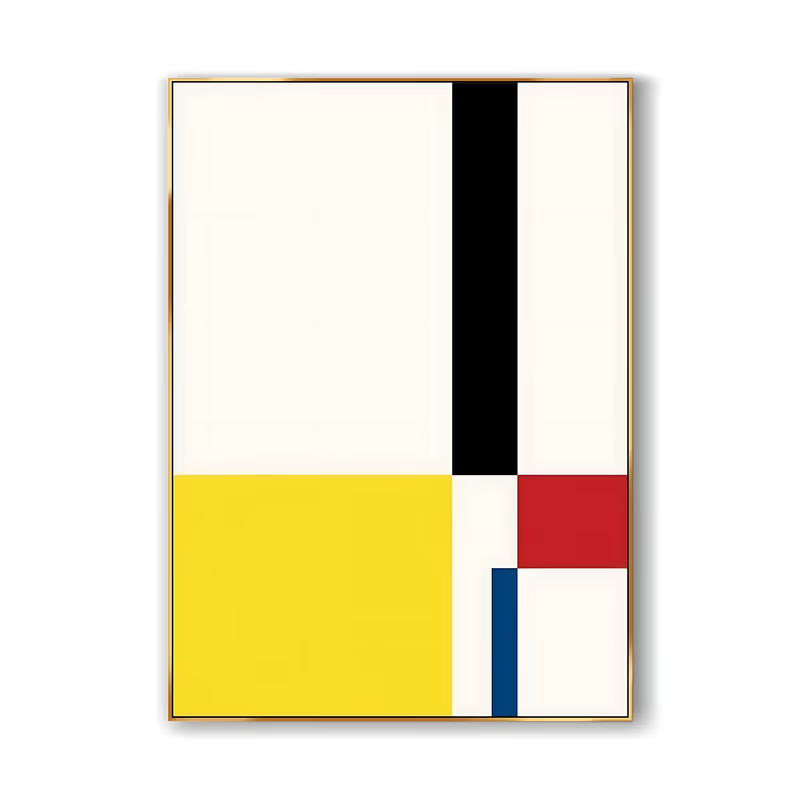
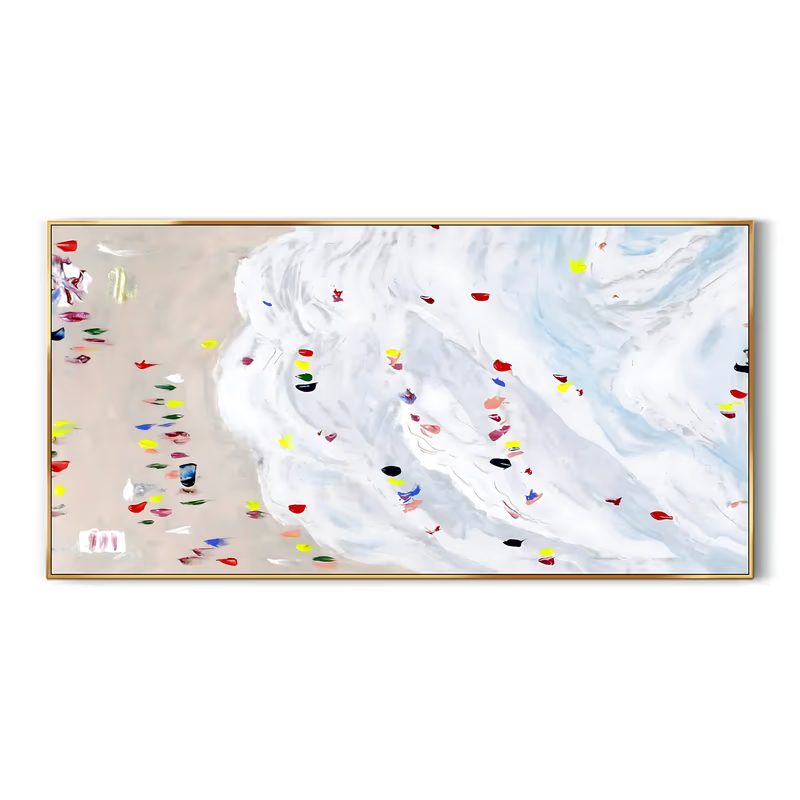
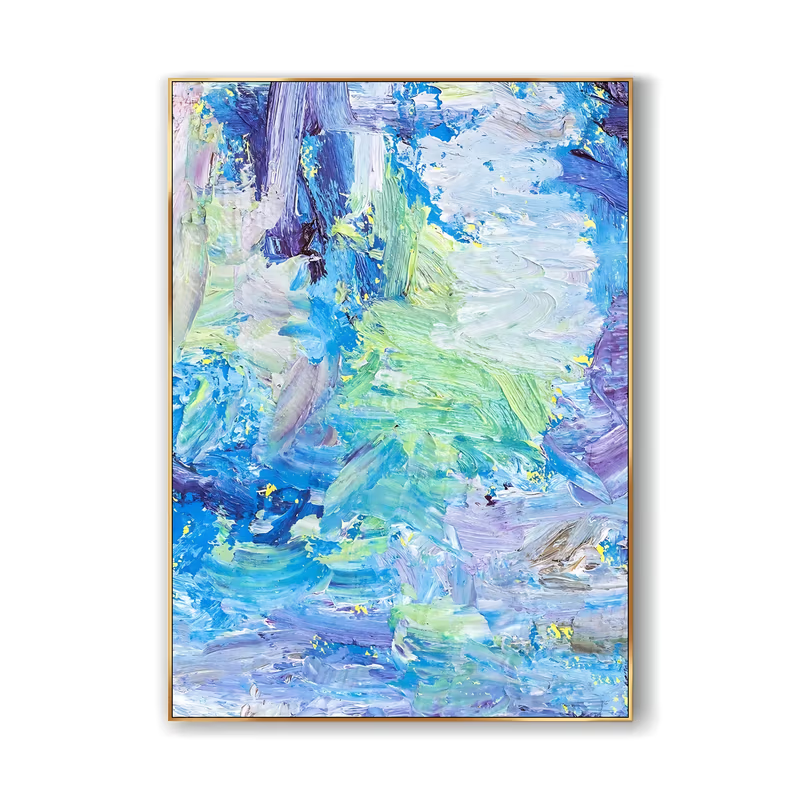
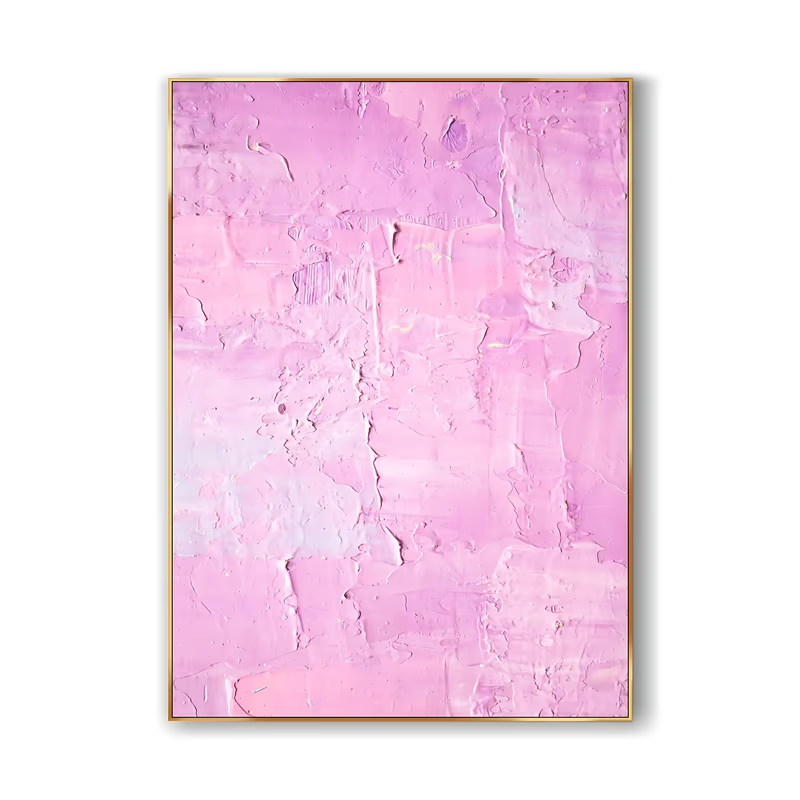
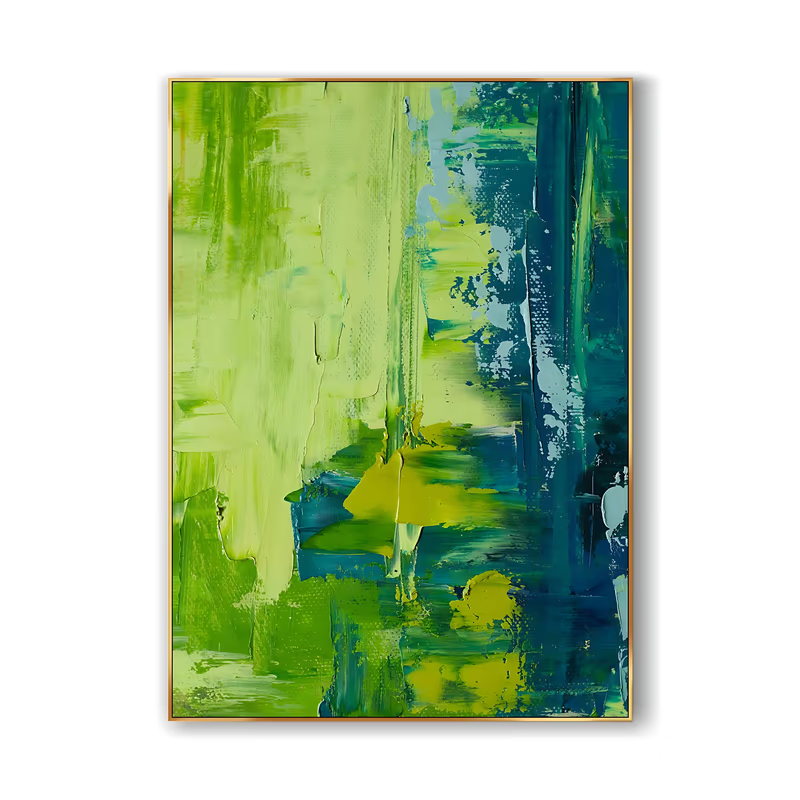
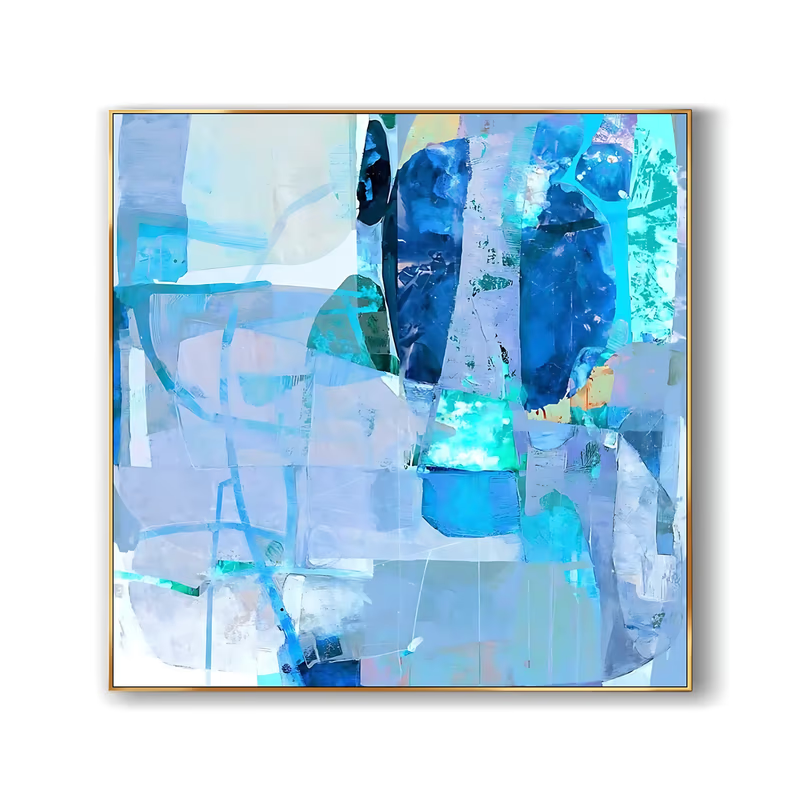
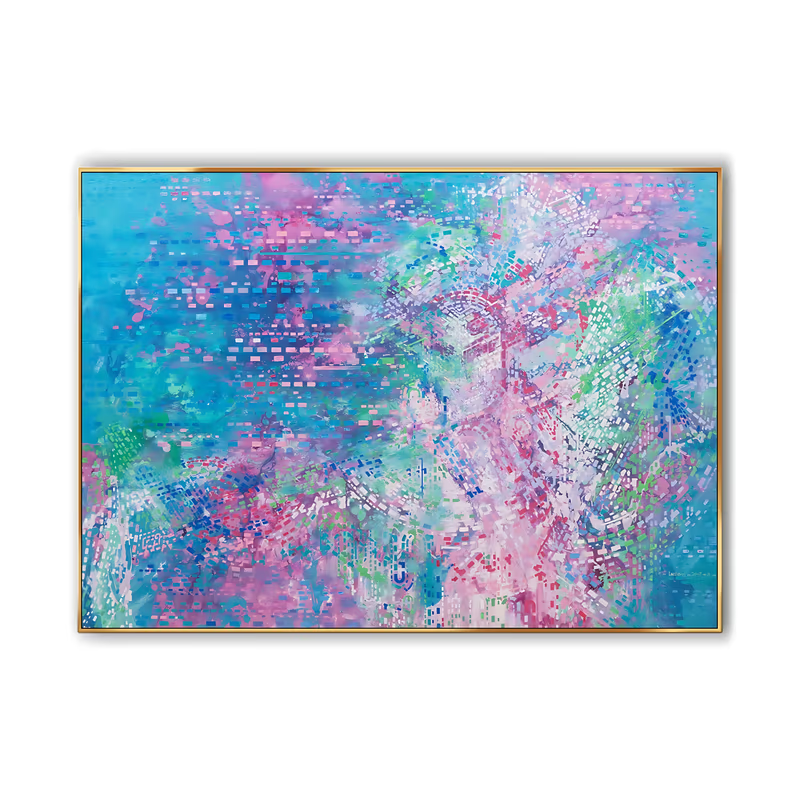
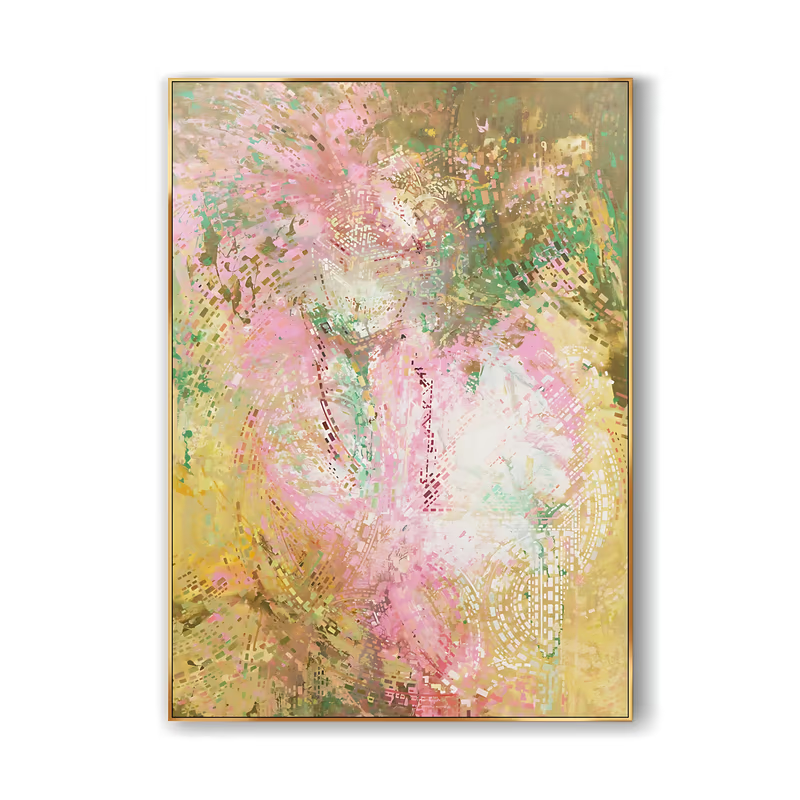
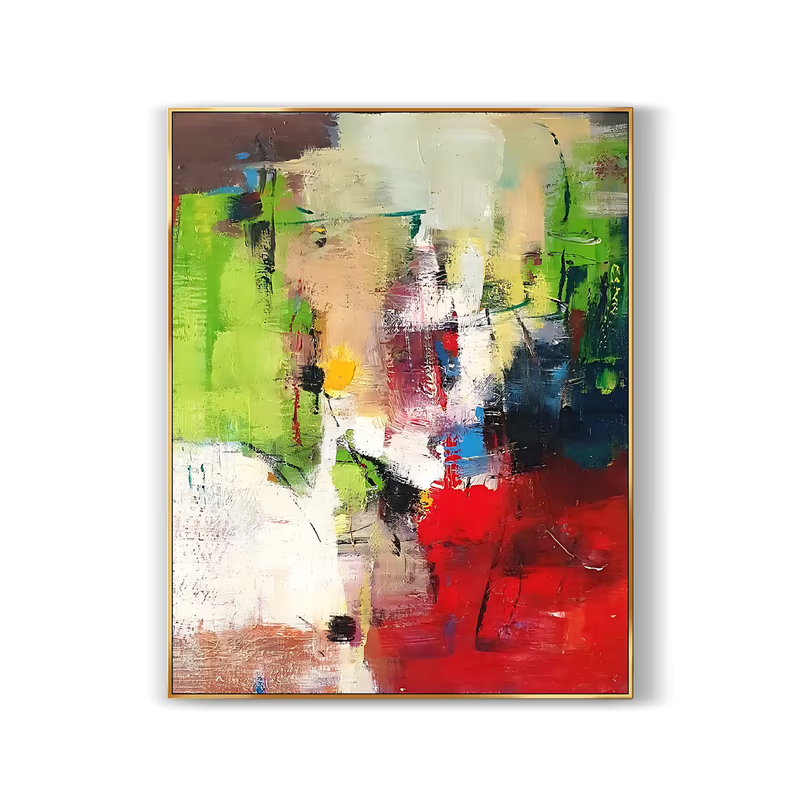
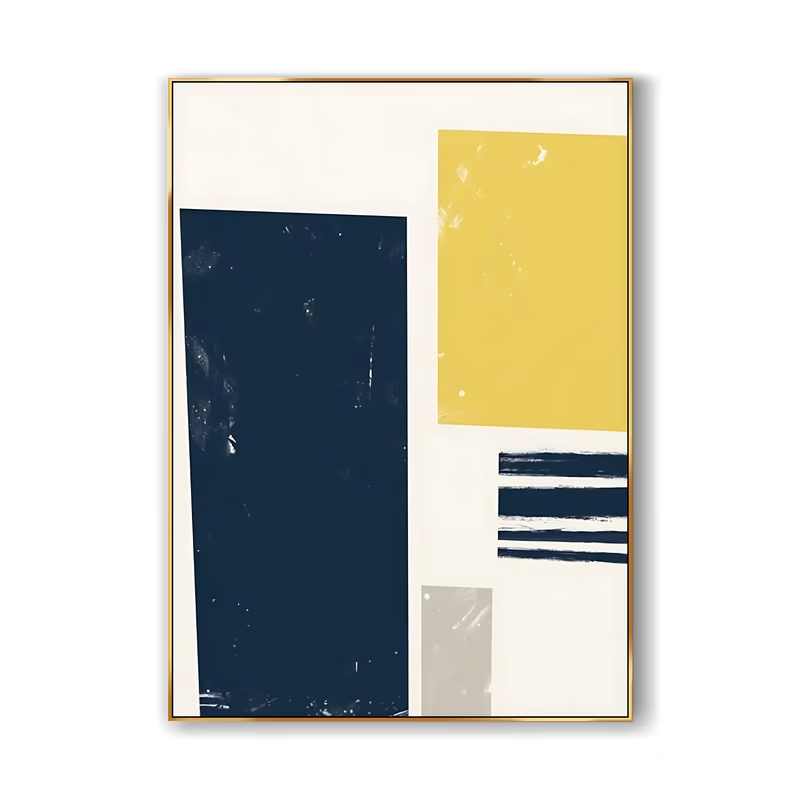
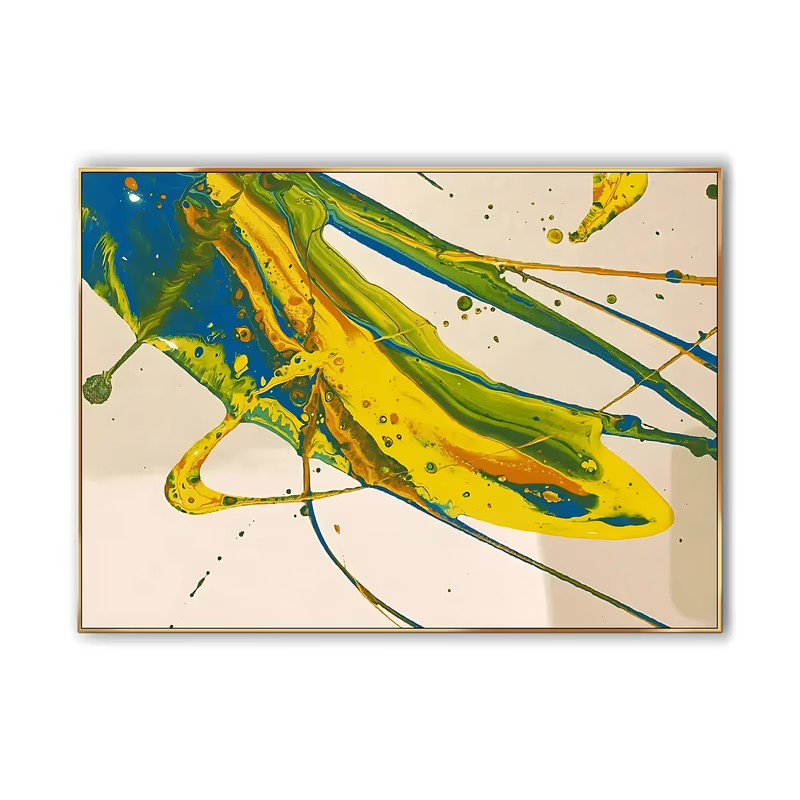
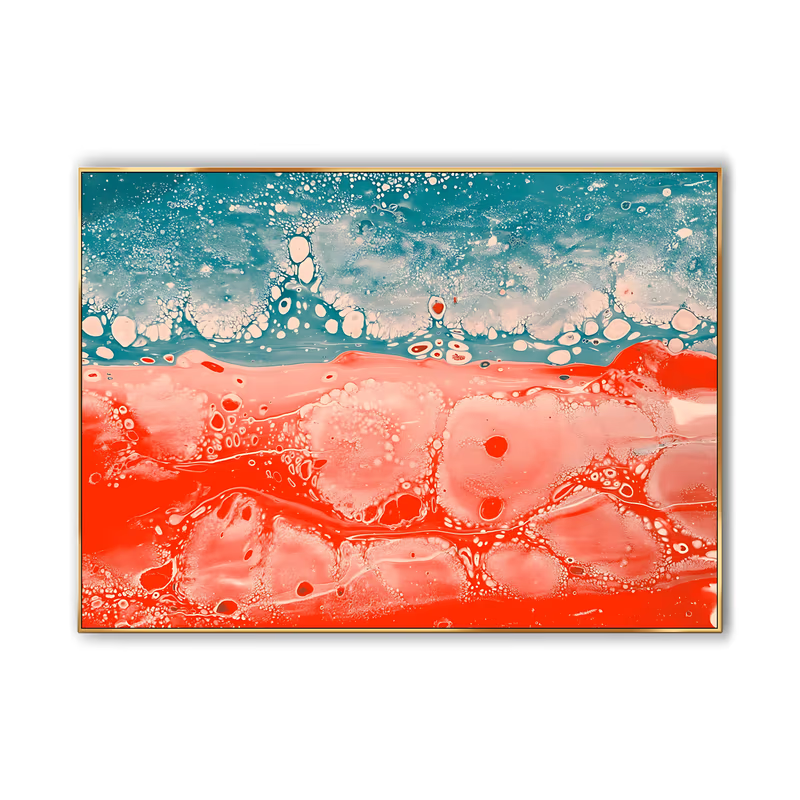
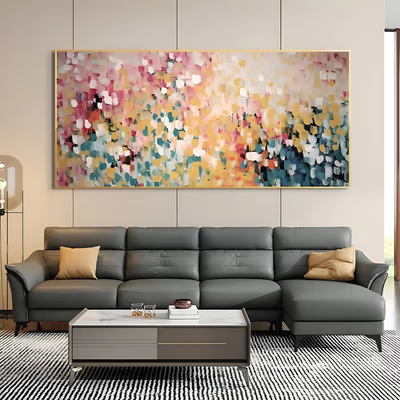
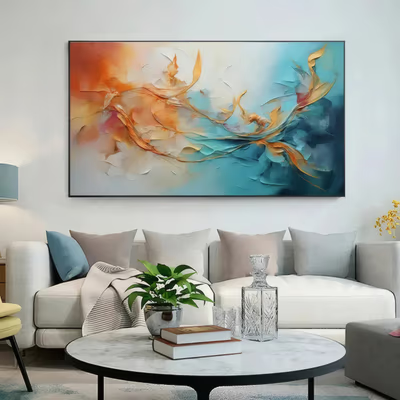
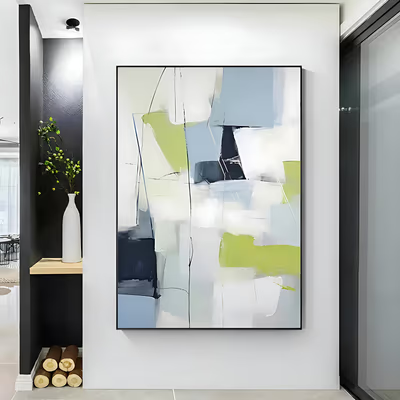
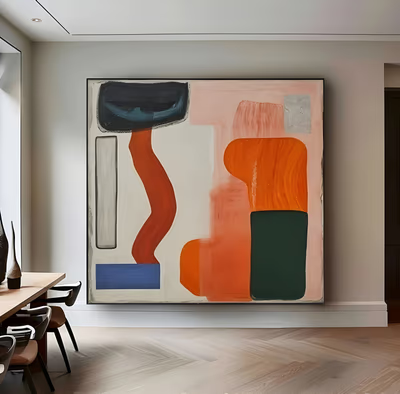
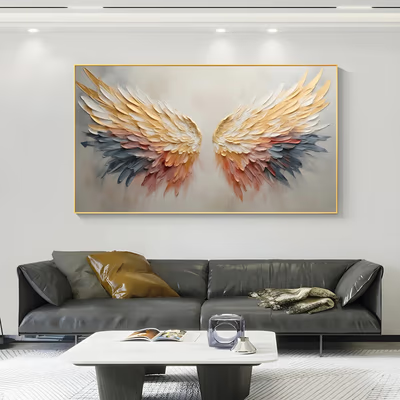
Amber and turquoise ribbons, raised dots in yellow and blue, colour blocks in lime, pale blue and navy, a sunburst ridge in blue and gold. Abstracts that keep plenty of light in the ground feel optimistic and modern, a good fit for offices, receptions and contemporary homes.
Cheerful animals, folk scenes and still lifes
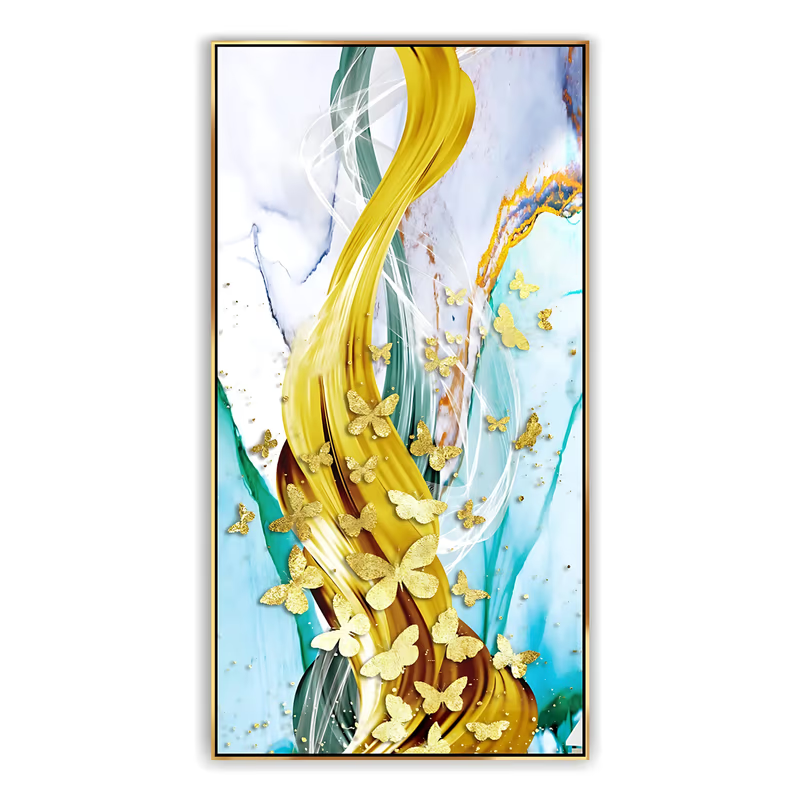
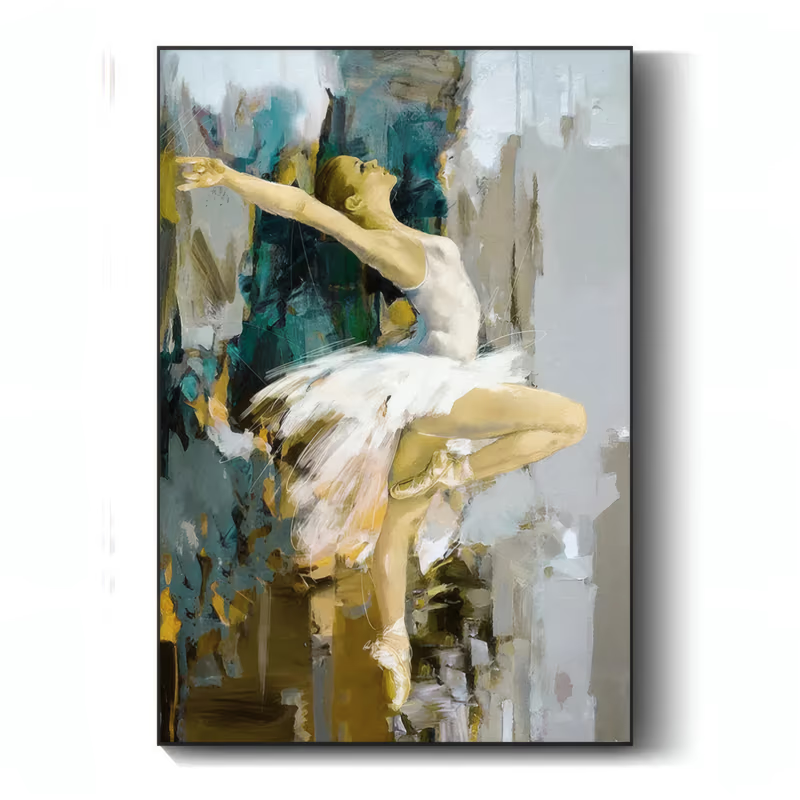
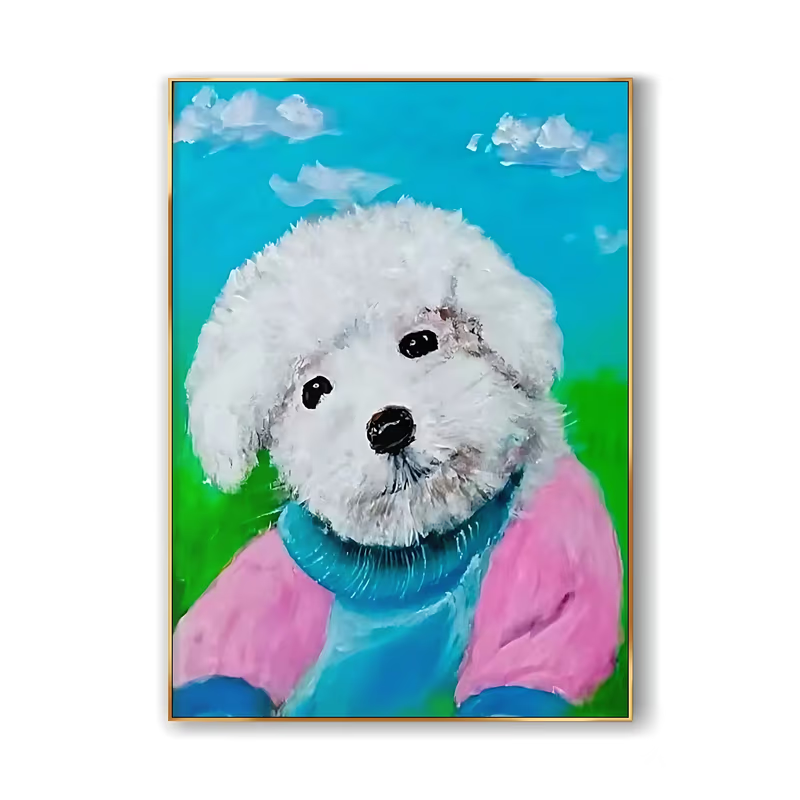
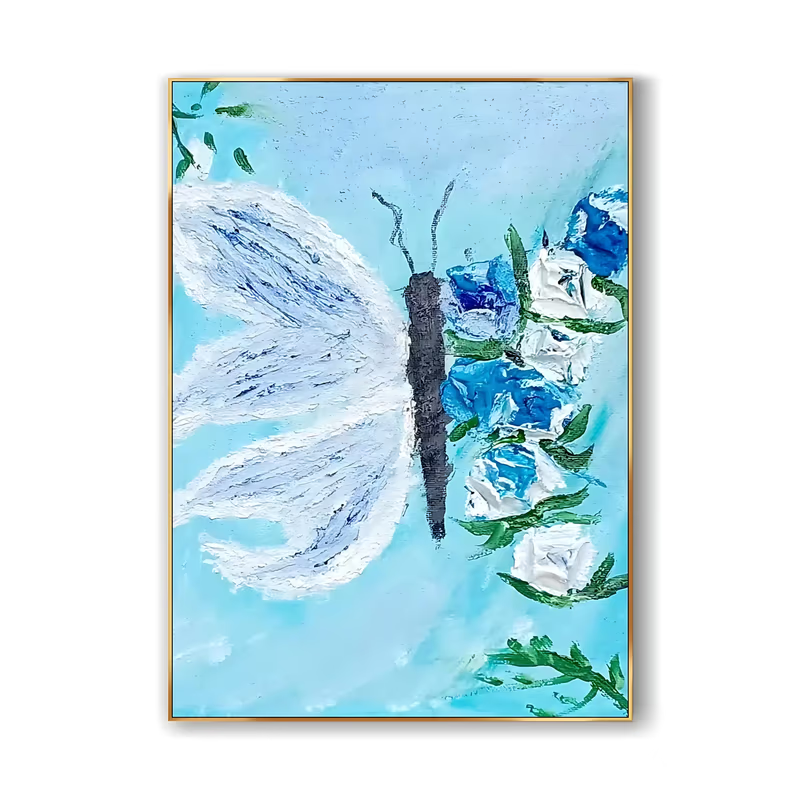
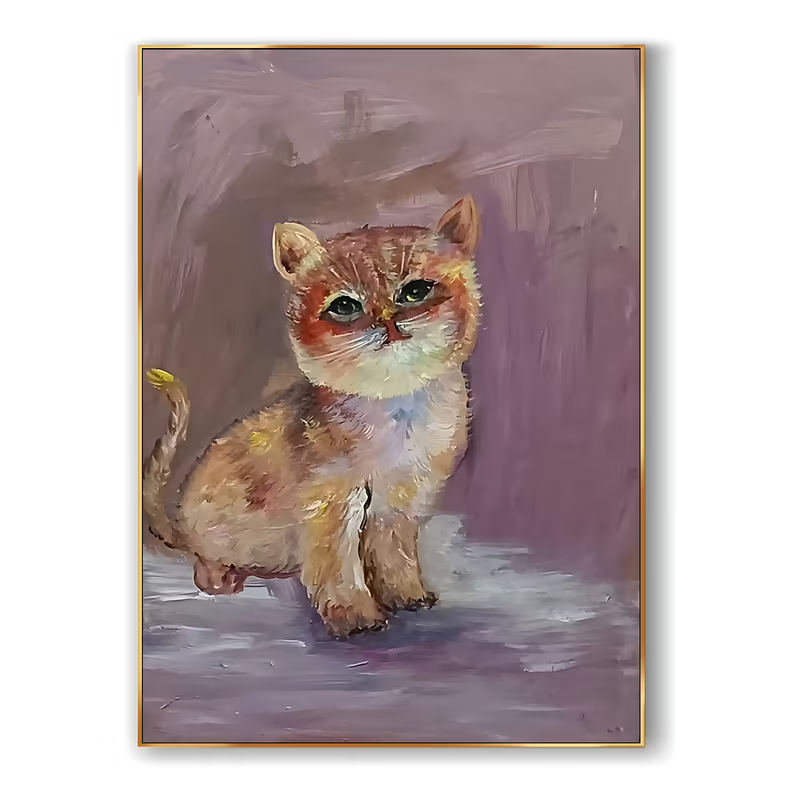
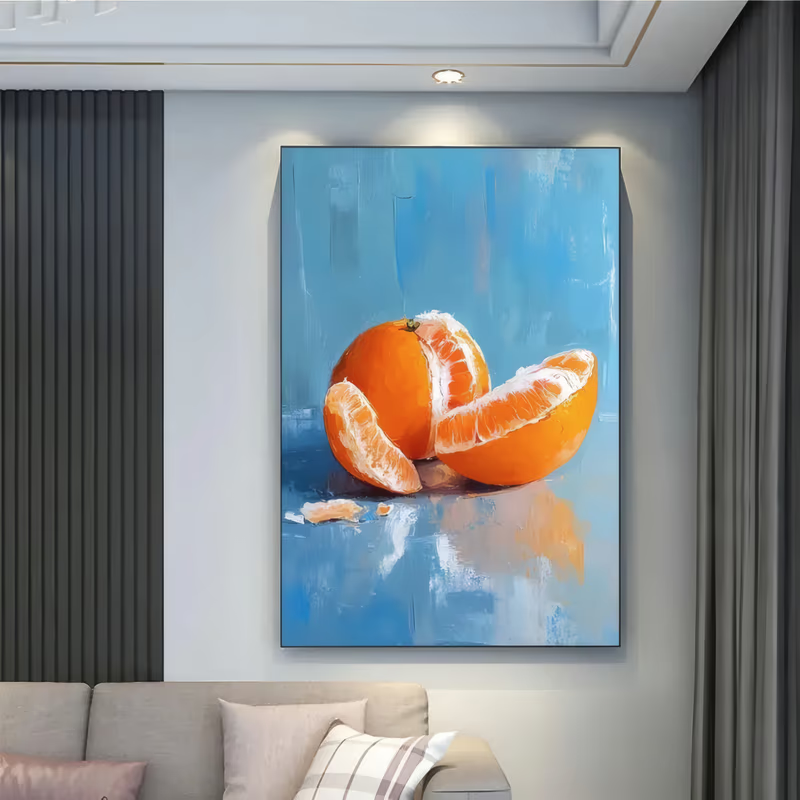
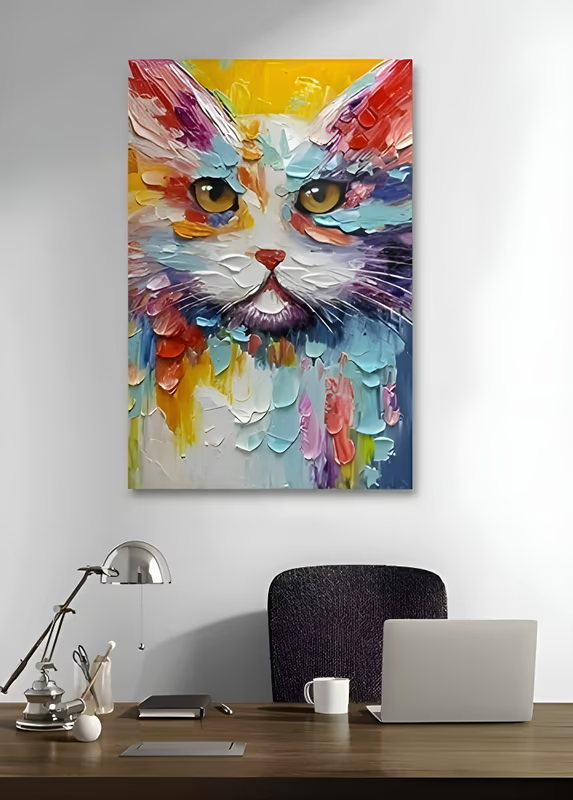
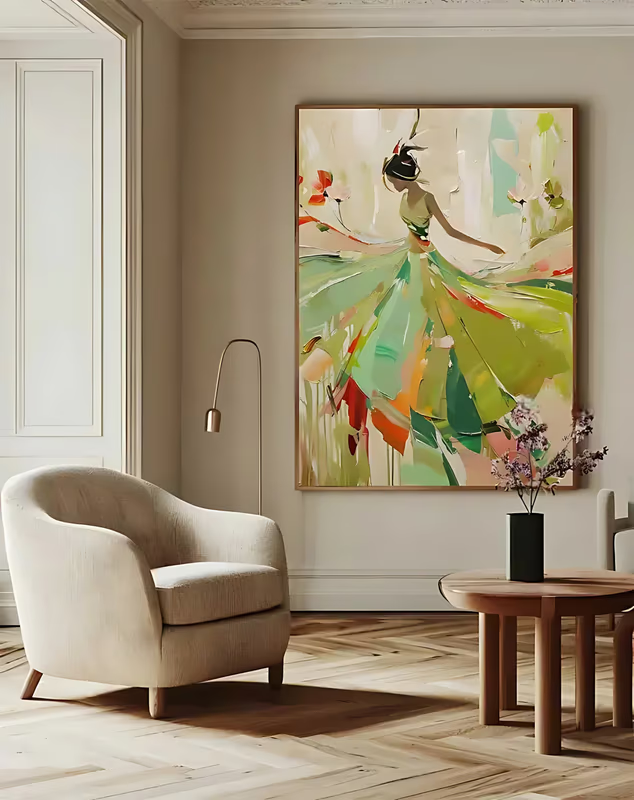
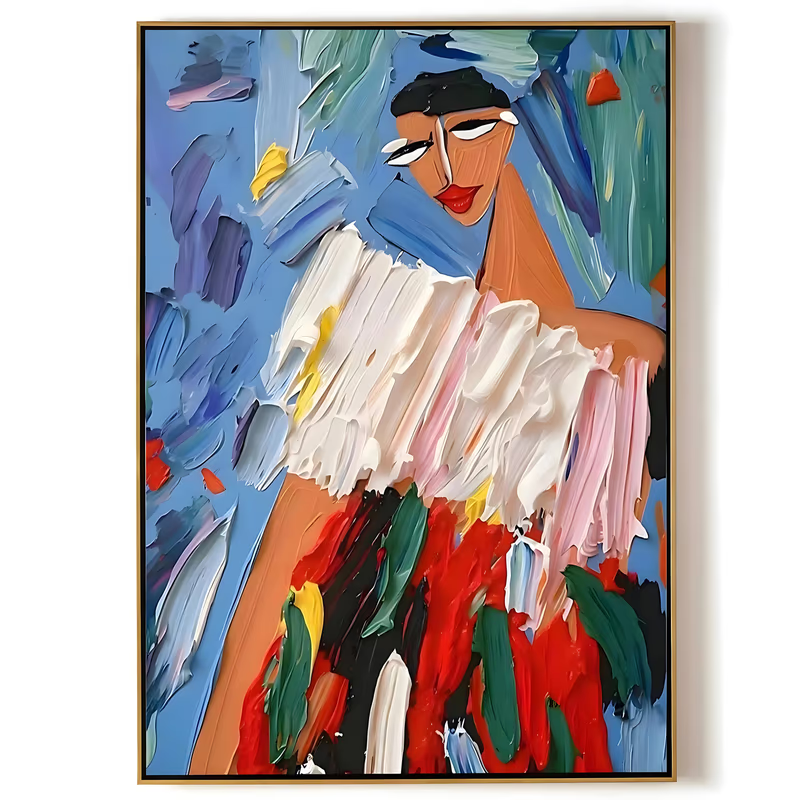
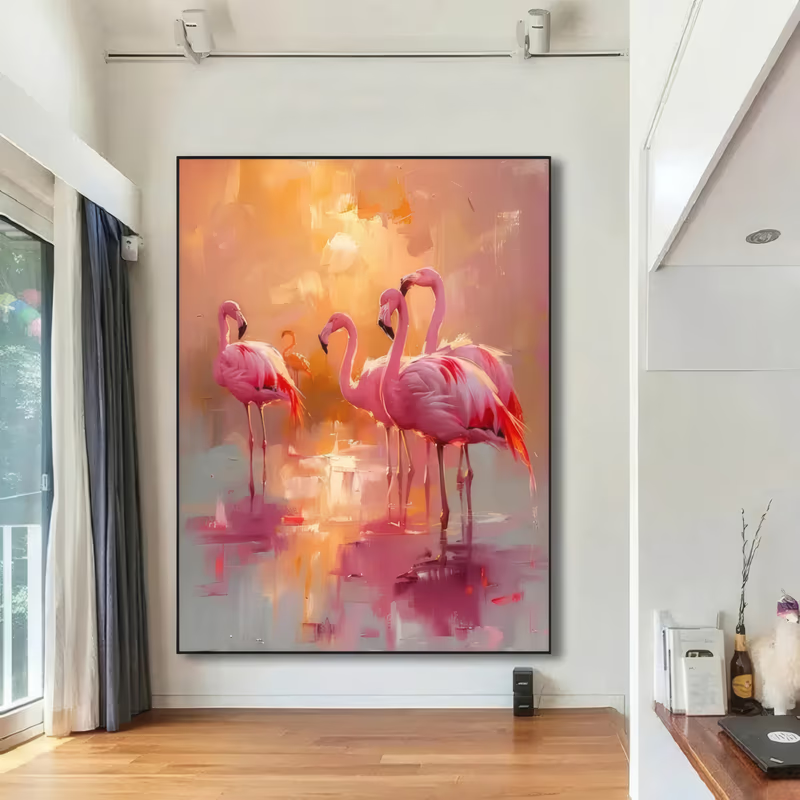
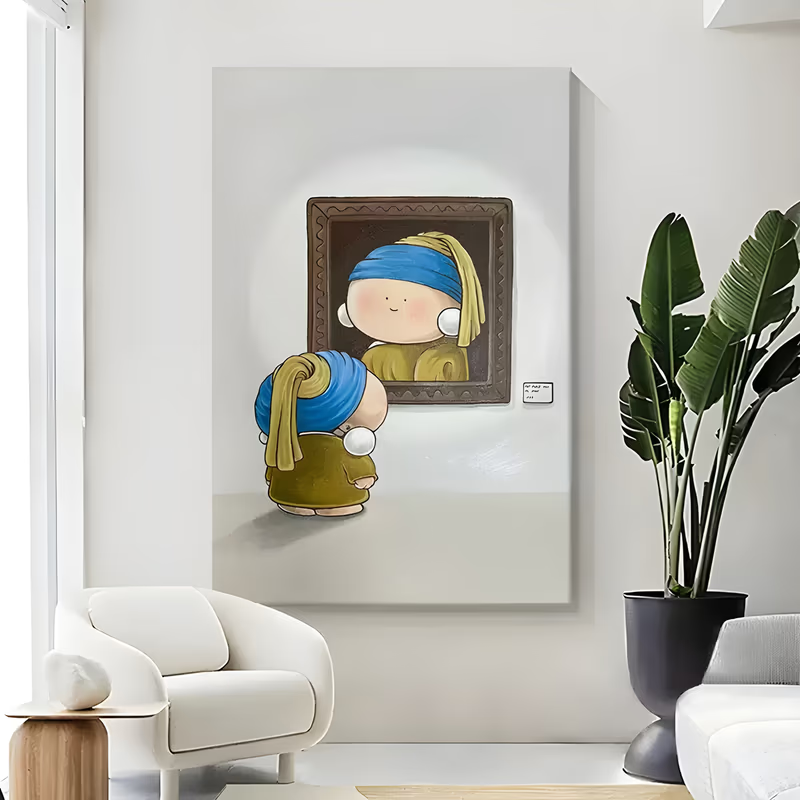
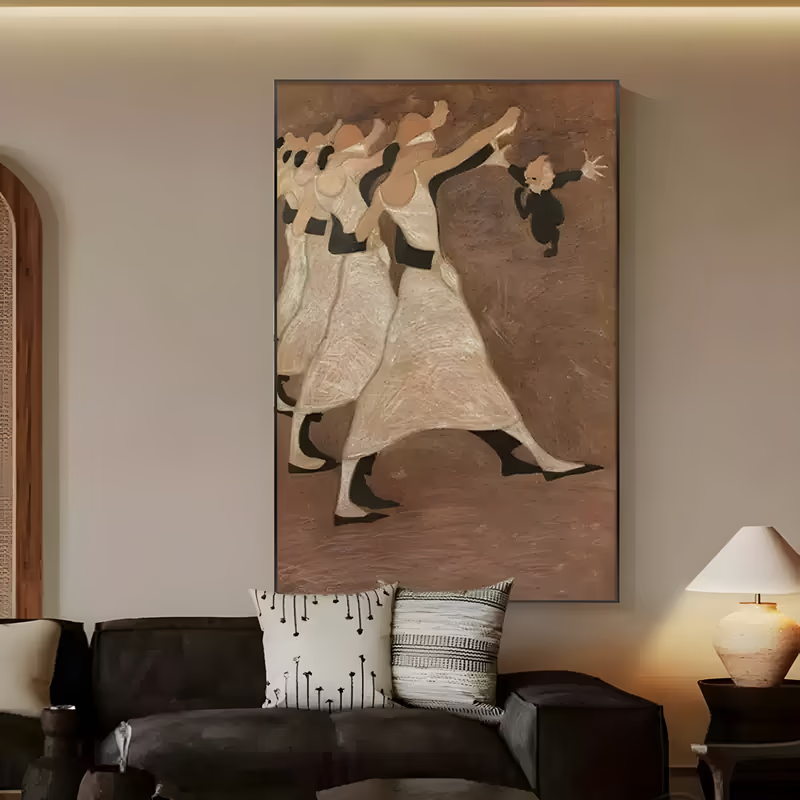
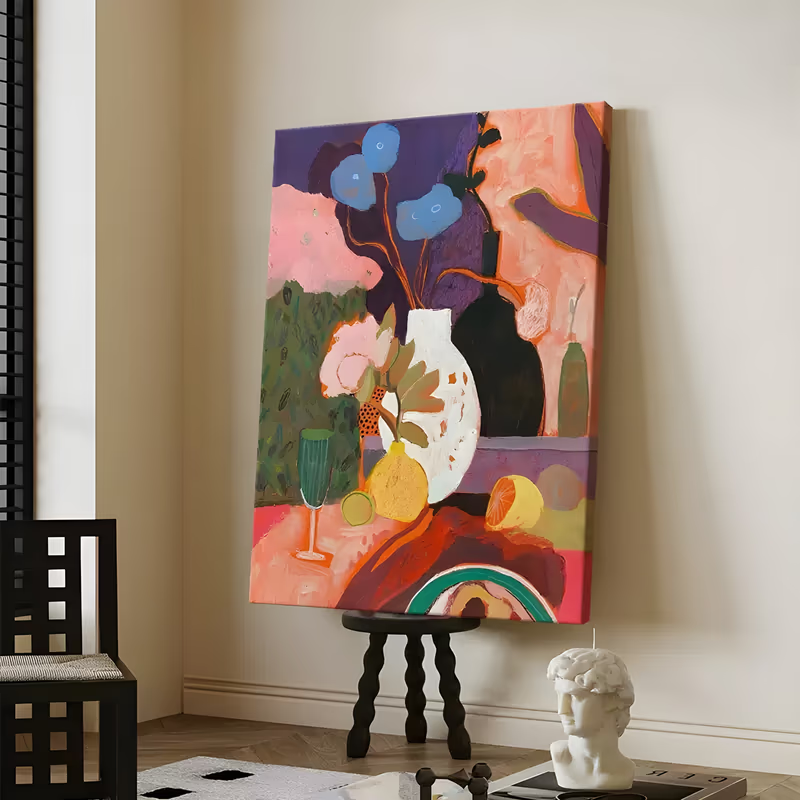
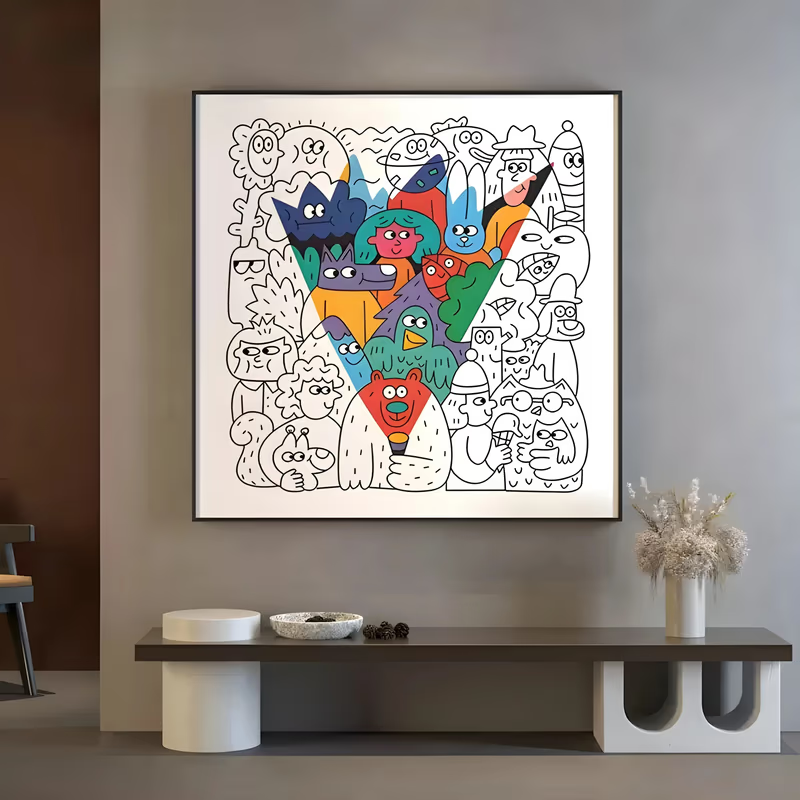
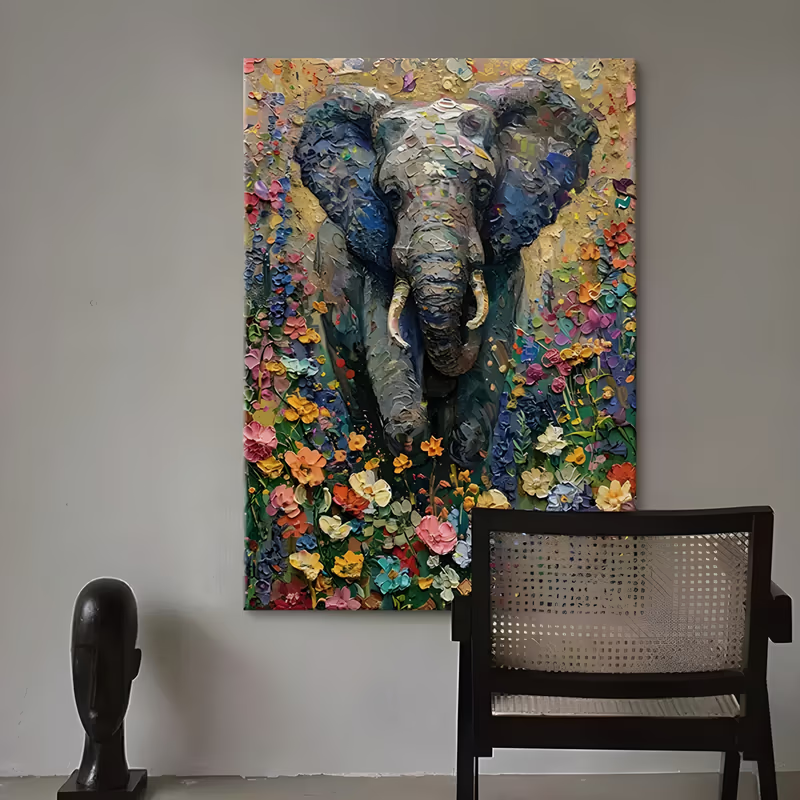
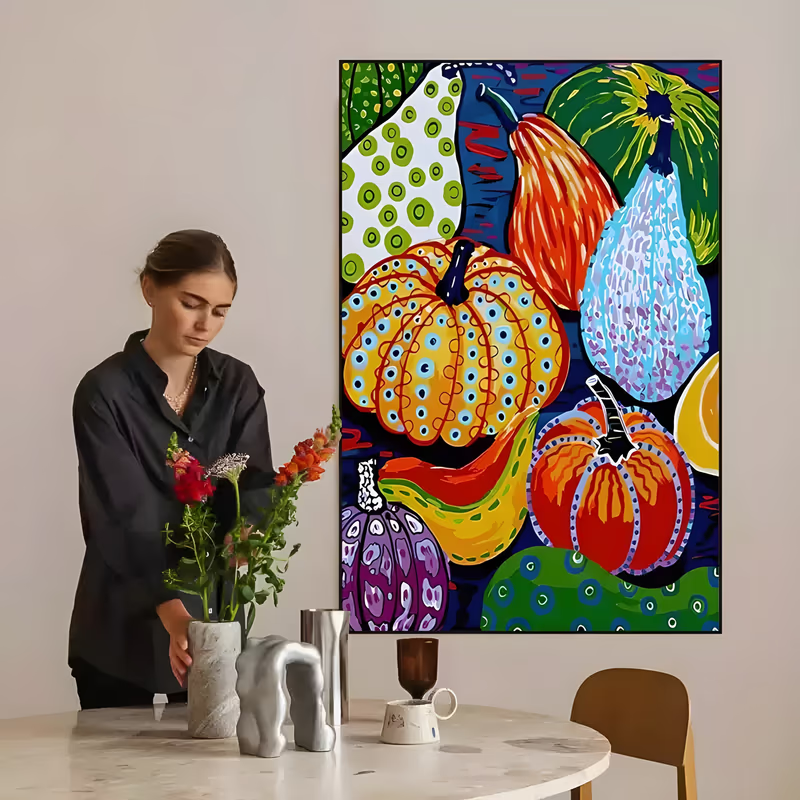
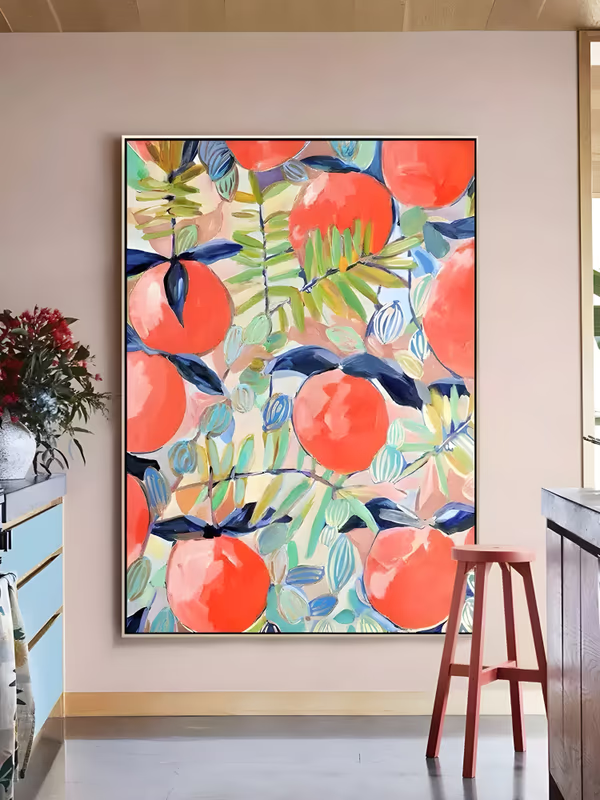
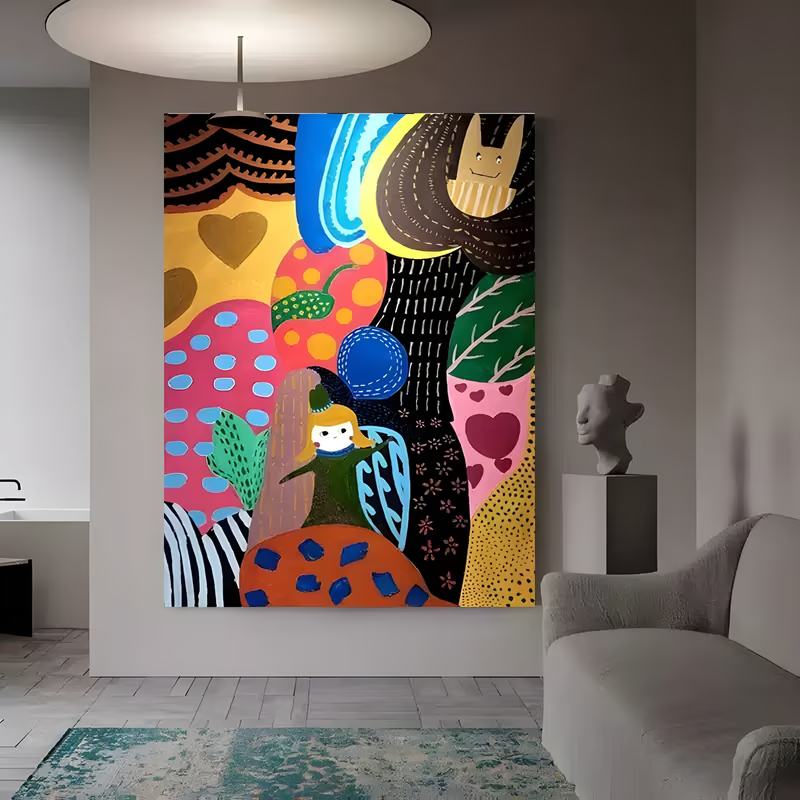
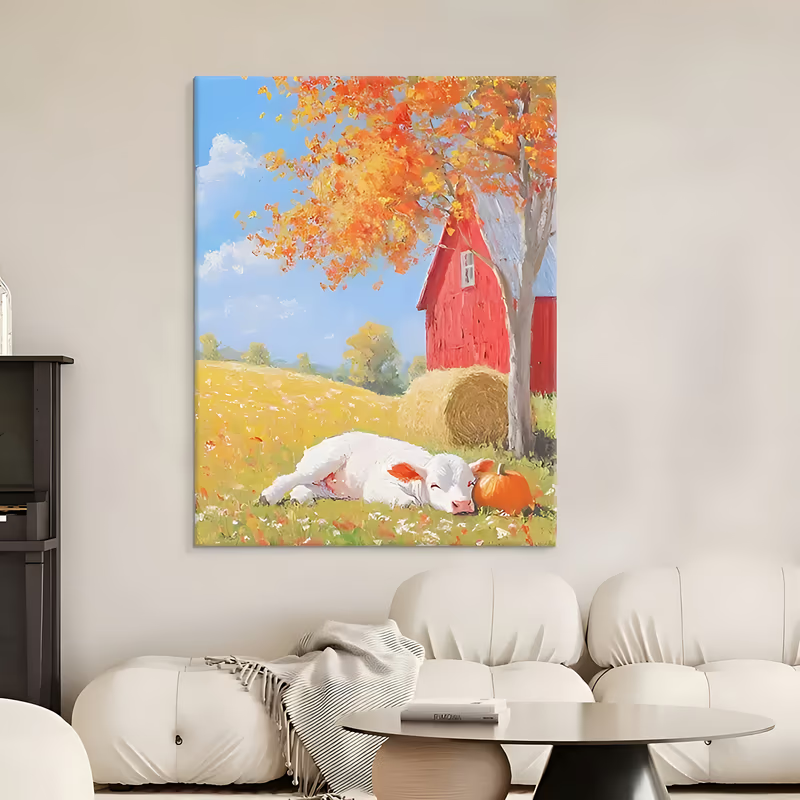
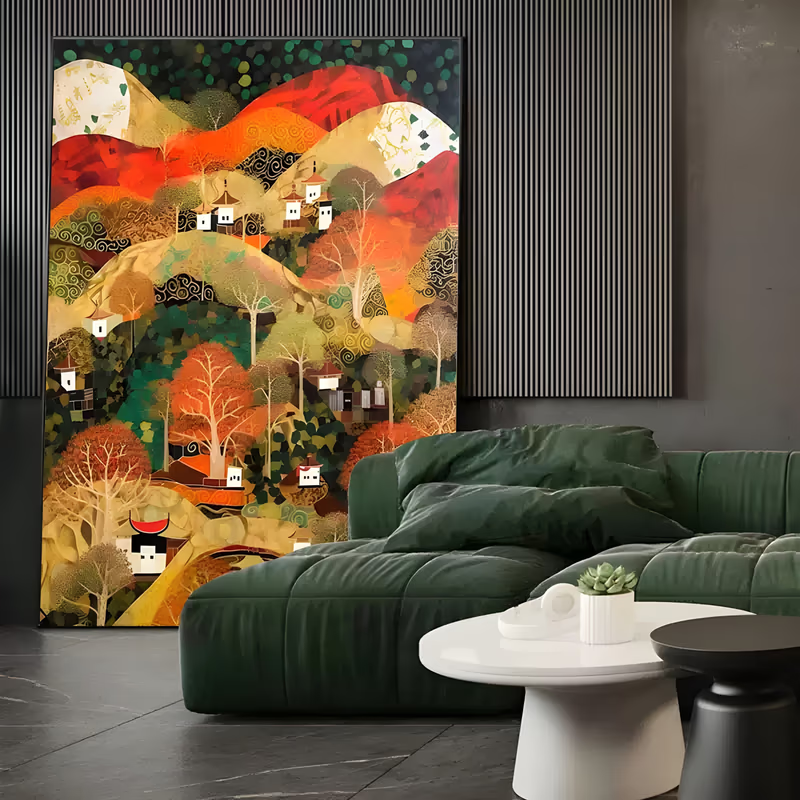
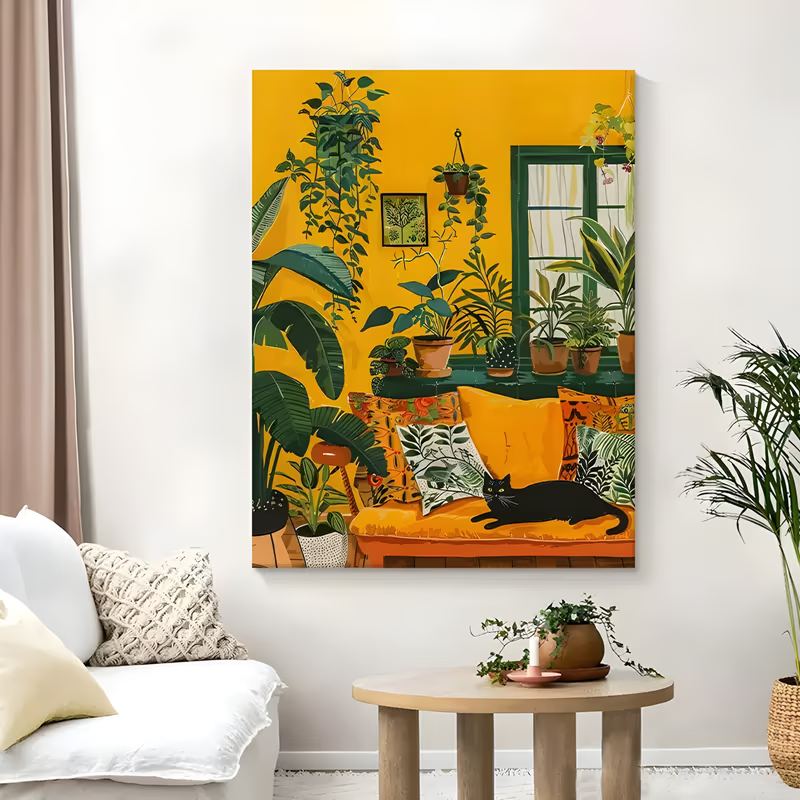
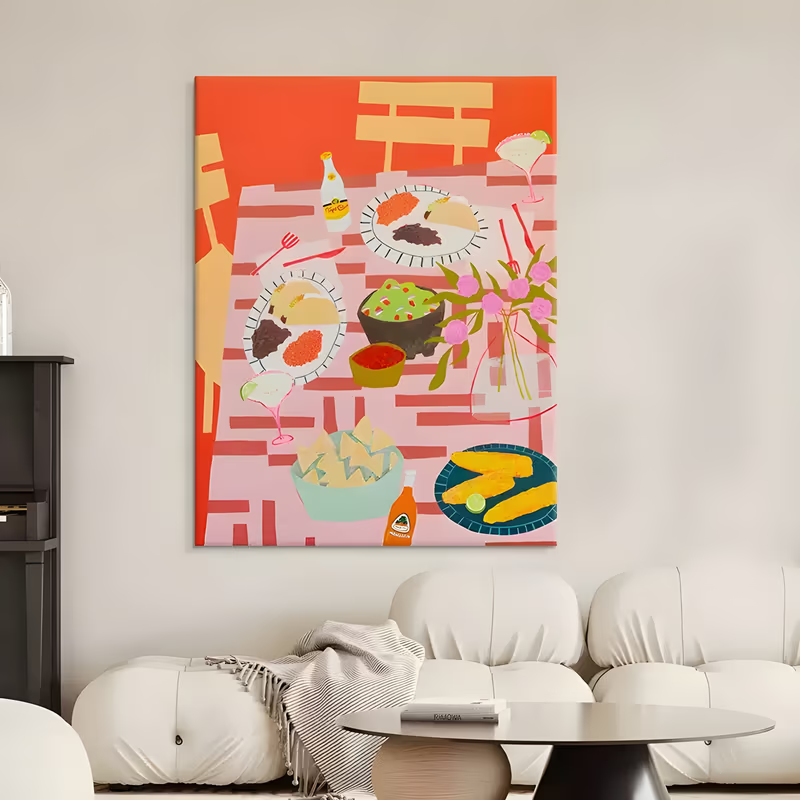
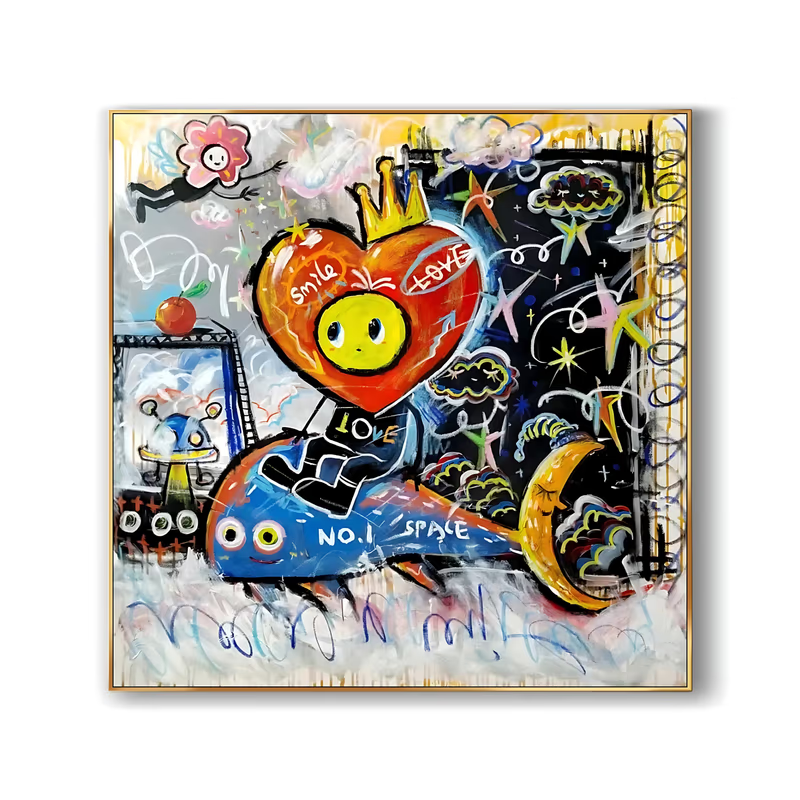
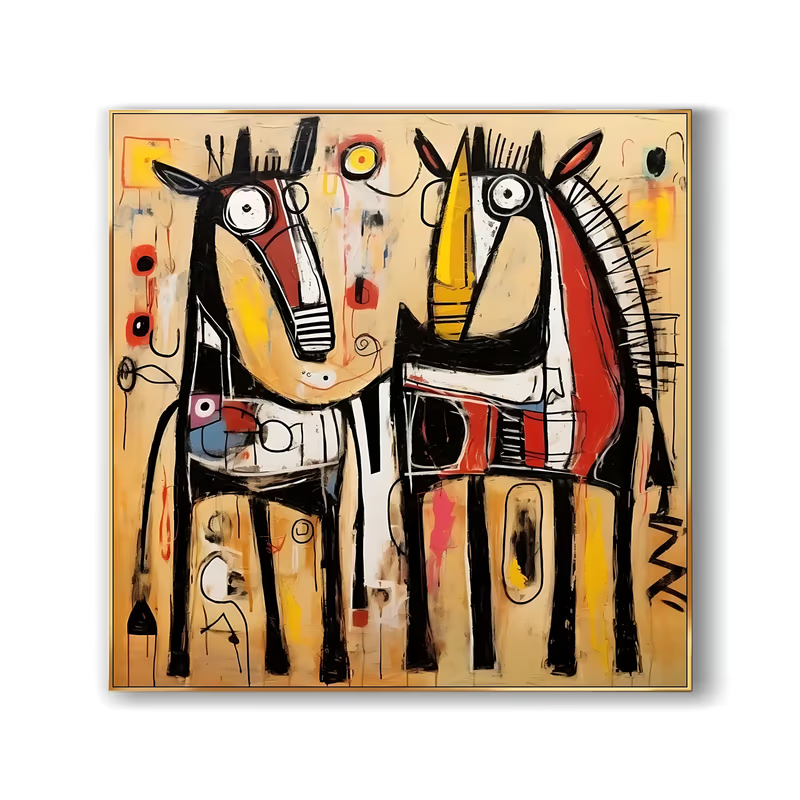
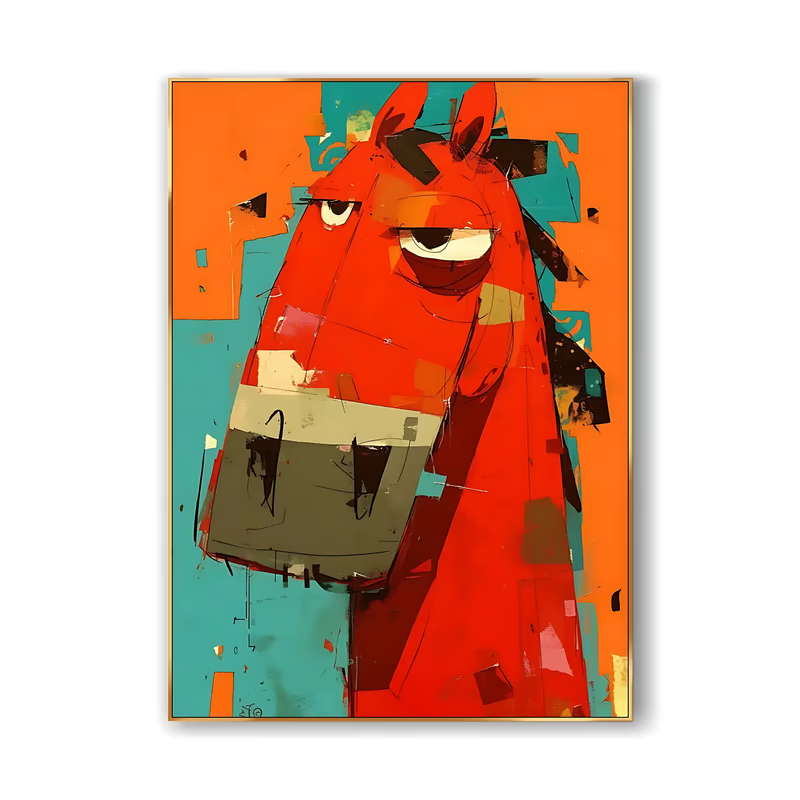
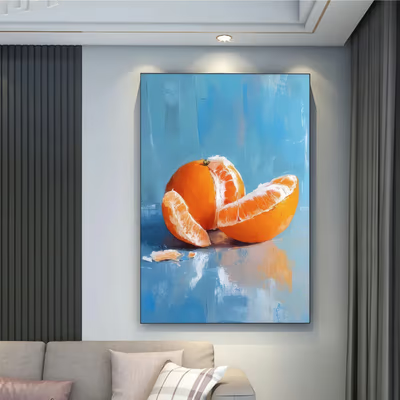
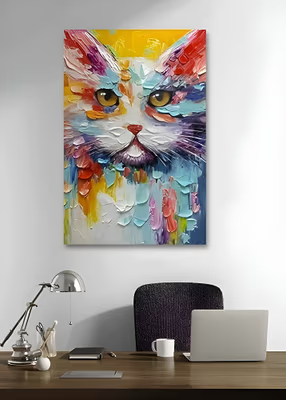
Gold butterflies on teal marble, a ballerina in a white tutu, a puppy in a pink sweater, a ginger kitten, a peeled orange on a blue table, a whimsical smiling hill under stars. Gentle humour and warmth make these favourites for family rooms, children's rooms, cafés and senior living lounges. See uplifting animal paintings.
Which rooms need uplifting wall art most?
Uplifting wall art does the most good in rooms that lack daylight or warmth, and in spaces people pass through every day: corridors, lift lobbies, waiting areas, offices without a view, north-facing rooms and breakfast rooms.
Corridors and lift lobbies
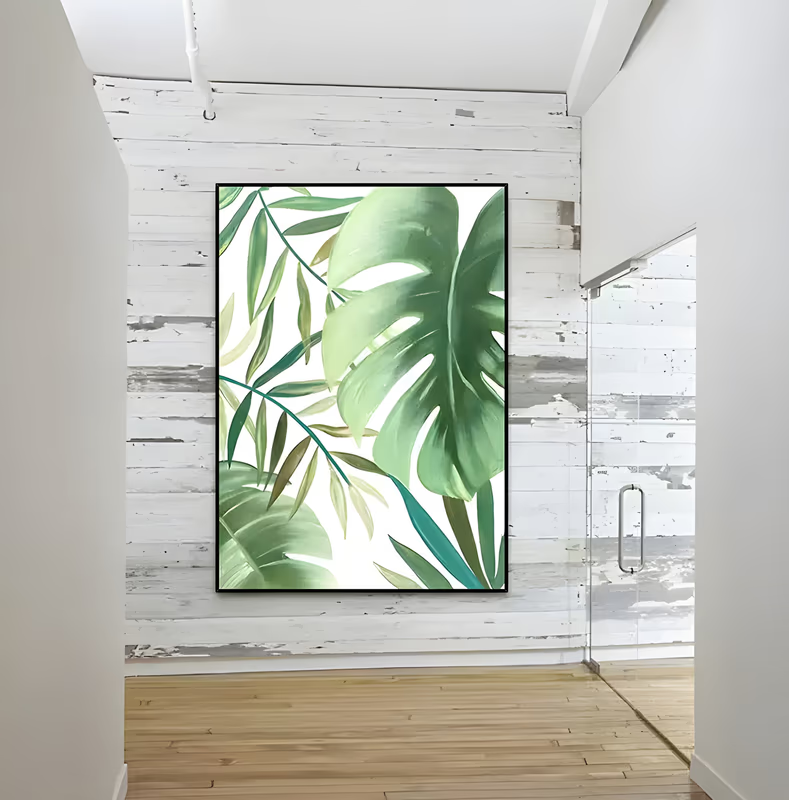
Long, windowless corridors are where a building feels most institutional. A run of light-filled landscapes gives each stretch a view and helps people remember where they are. Uplifting corridor art; see corridor series.
Hospitals, clinics and senior living
Waiting areas, patient corridors and residents' lounges benefit from familiar, optimistic scenes. See art for hospitals and healthcare and senior living communities.
Offices and receptions
Open-plan floors and meeting rooms without windows are lifted by sky, sea and garden scenes, and receptions by bright abstracts. Office art, lobbies and receptions; see corporate offices.
Homes: breakfast rooms, entrances, children's and guest rooms
Any room you see first thing, or one that faces north, gains from morning colour. Dining and breakfast rooms, entrances, bedrooms, living rooms.
Hotel rooms and spas
Guests remember a room that feels sunny on arrival. Soft florals and sunlit seas suit rooms and treatment areas. Hotel rooms, spas.
How do you choose uplifting wall art for healthcare, senior living and workplaces?
In shared and care settings, choose uplifting wall art that is easy to read at a glance: recognisable nature and daylight, gentle colour, a clear horizon or path, and nothing ambiguous or threatening.
Healthcare designers have long favoured nature scenes for patient-facing areas, and the reasons are practical. People who are anxious, unwell or tired do not want to decode a picture; they want something calm and familiar to rest their eyes on. Sunlit landscapes, gardens, flowers, birds and calm water work well. Very abstract work, dark palettes, crowded compositions and figures with unclear expressions are better kept for other settings.
For senior living, landscapes and flowers with strong, clear colour are easier to see than pale, low-contrast ones, and a distinct painting at each corridor junction can act as a landmark for finding the way. For workplaces, mix uplifting views in focus areas with brighter abstracts in social spaces. Fixing, cleaning and framing requirements are set by each facility, so say what yours are, and the pieces can be supplied stretched or framed to suit.
How can uplifting wall art make a dark or windowless room feel brighter?
Choose an uplifting painting that acts as a window: a light ground, a sky or horizon, depth that leads the eye into the distance, hung at eye level and lit well.
A painting cannot add daylight, but it can change how a dark room feels. Landscapes with a far horizon and a light sky give a sense of space beyond the wall. Set the horizon line close to eye level, about 150 cm (59 in) from the floor in a room where people stand, and lower in a waiting room or lounge where they sit. Larger is better here: a canvas that fills a good part of the wall reads as a view rather than a picture.
Light the painting with a neutral-white source, around 3000–4000K, which keeps blues and greens fresh; very warm light can make sky colours look muddy. Pale frames, white, light wood or silver, keep the edges bright. In a north-facing room, warm yellows, peach and coral balance the cool daylight; in a basement or interior office, blue sky and green landscape do the most.
How big should uplifting wall art be, and how many pieces does a corridor need?
Size uplifting wall art to the wall it lifts, roughly two-thirds of the furniture below or most of an empty wall, and in corridors hang a steady sequence rather than one isolated piece.
Above a sofa, bed or reception bench, the usual guide is a canvas about two-thirds the width of the furniture, with 15–25 cm (6–10 in) of wall between them. In corridors, viewed side-on while walking, use the same centre line for every piece and space them at regular intervals, for example one painting between each pair of doors, or one every 3–4 m (10–13 ft) on a blank stretch. A larger piece at the end of the corridor gives people something to walk towards.
A series keeps a building coherent. One sunlit landscape can be painted in different colourways for each floor, spring greens on one, sea blues on the next, so each floor is recognisable while the whole feels planned. In lift lobbies, a single generous canvas facing the doors is the first thing people see on arrival.
How do you order uplifting wall art for a home or a whole building?
Choose the works, give sizes and your colours, and each uplifting painting is made to order, approved by you stage by stage over about 10 days of painting, and delivered in 5–7 days by express.
The palette can be matched to your scheme, a paint code, a fabric or brand colours, and any catalogue work can be painted in a lighter, sunnier colourway, so a dusk scene can come back as morning. If you need a different proportion, the composition is redrawn rather than stretched. For a building, approve one sample first, then the rest; each painting is checked from progress photos or video before the next stage begins.
A final photograph is approved before dispatch. Paintings ship rolled, stretched ready to hang, or framed in gold, silver, black, white or wood; textured relief pieces travel stretched or framed unless a thinner, rollable texture is agreed. Shipping is arranged worldwide by DHL, FedEx or UPS express, and its cost is confirmed with you before dispatch. An order for a whole building can also travel by air or sea freight; iHomeArt suggests the best route, and the transit time depends on which one you choose. You can order one piece; volume pricing starts at 10 pieces, and every enquiry is quoted within one business day. Request a quote, or see custom paintings from your own photos.