Cityscape guide · Updated
How to choose a cityscape painting for your space
Key takeaways
- Choose the viewpoint first: a skyline reads as calm and expansive, a street as busy and close, a harbour or old town as relaxed and nostalgic.
- Night scenes warm a room: rain, neon and lit windows bring glow and movement to lounges, bars and evening living rooms.
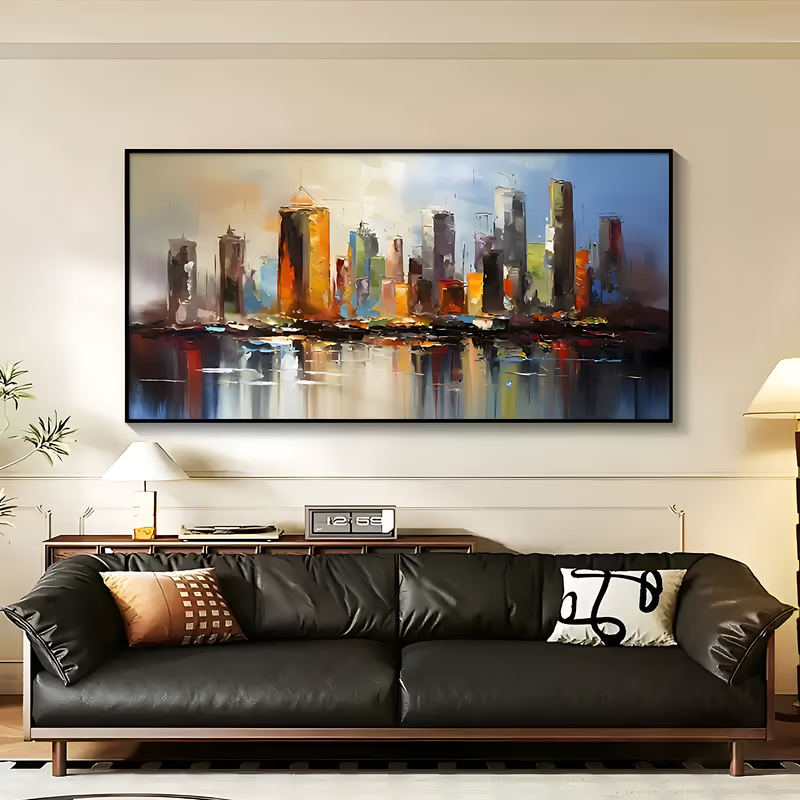
- Skylines want width: a panoramic canvas over a sofa, banquette or reception desk follows the horizontal line of the city.
- Your city can be painted: any cityscape can be commissioned from your own reference, so a hotel or office can show its own neighbourhood.
What are cityscape paintings, and what do they add to an interior?
Cityscape paintings show urban places, from skylines and streets to bridges, harbours and old towns, and they give a room a sense of energy, travel and connection to the wider world.
Where a landscape or a seascape calms a room by opening it onto nature, a city scene does something different: it brings in light from windows and streetlamps, the movement of traffic and people, and the feeling that something is going on just outside. That is why a cityscape suits rooms that are about work, conversation or evenings out more than rest. The painted versions also soften the hard geometry of buildings. With loose brushwork and reflections, a skyline becomes a field of warm and cool colour rather than an architectural drawing, so it sits easily with soft furnishings.
Coastal towns and harbours sit between the two worlds; you will find more open water on the seascape page.
Skyline, street or waterfront: which city view suits your room?
Pick a distant skyline for calm and space, a street scene for energy and intimacy, and a waterfront or old town for a relaxed, nostalgic mood.
| City view | How it feels | Where it works |
|---|---|---|
| Skyline across water | Open and calm; reflections double the light | Living rooms, boardrooms, hotel rooms with no view |
| Street at night in rain | Moody, warm, cinematic | Bars, lounges, restaurants, media rooms |
| Busy avenue by day, taxis and crowds | Lively, urban, upbeat | Offices, entrances, cafés, young professional apartments |
| Bridges and landmarks | Recognisable and proud of place | Lobbies, meeting rooms, serviced apartments |
| Harbours, canals and hillside towns | Relaxed, sunny, holiday-like | Dining rooms, resort hotels, kitchens |
| Abstract or bird's-eye city | Graphic and modern; the city as pattern | Modern living rooms, studios, workspaces |
The light in the scene matters as much as the view. Dramatic and moody cityscapes carry the evening; brighter, more peaceful ones work in daylight rooms.
What kinds of cityscape paintings can you choose from?
Four kinds: streets with people, skylines and city lights, harbours and old towns, and graphic or textured cities.
Streets with people in them
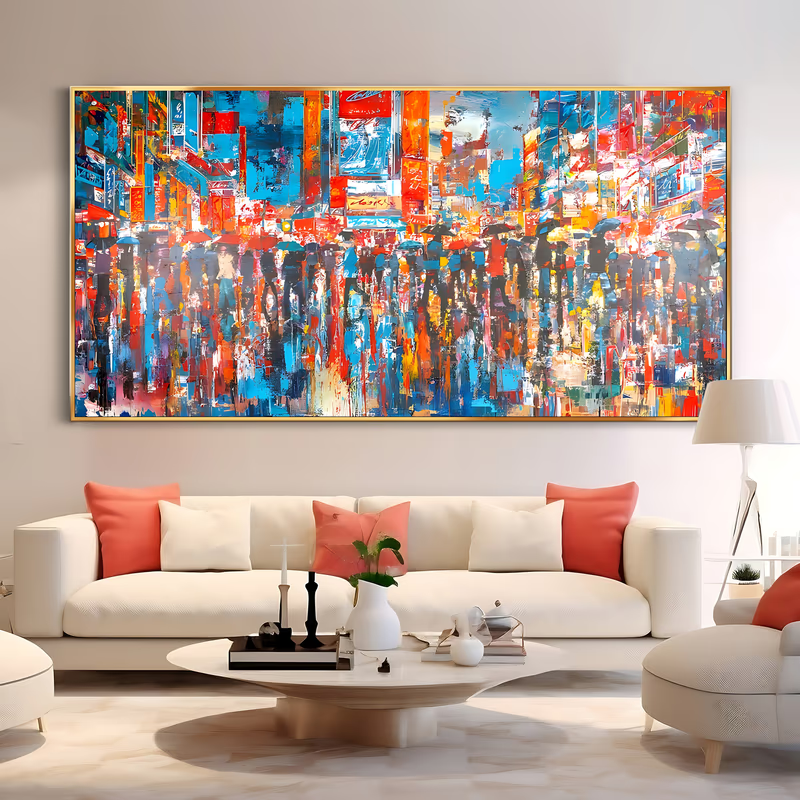
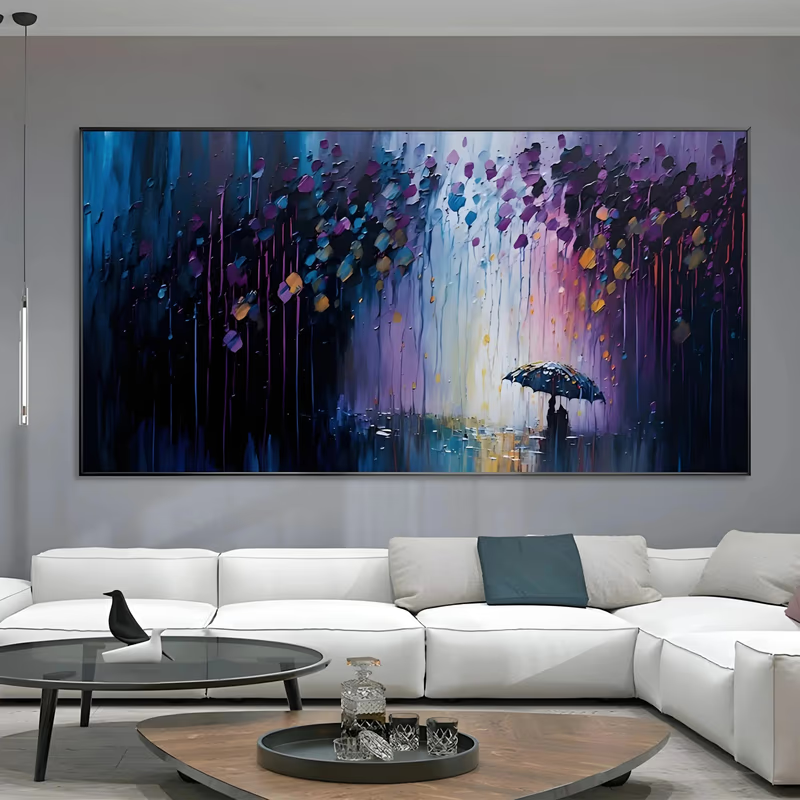
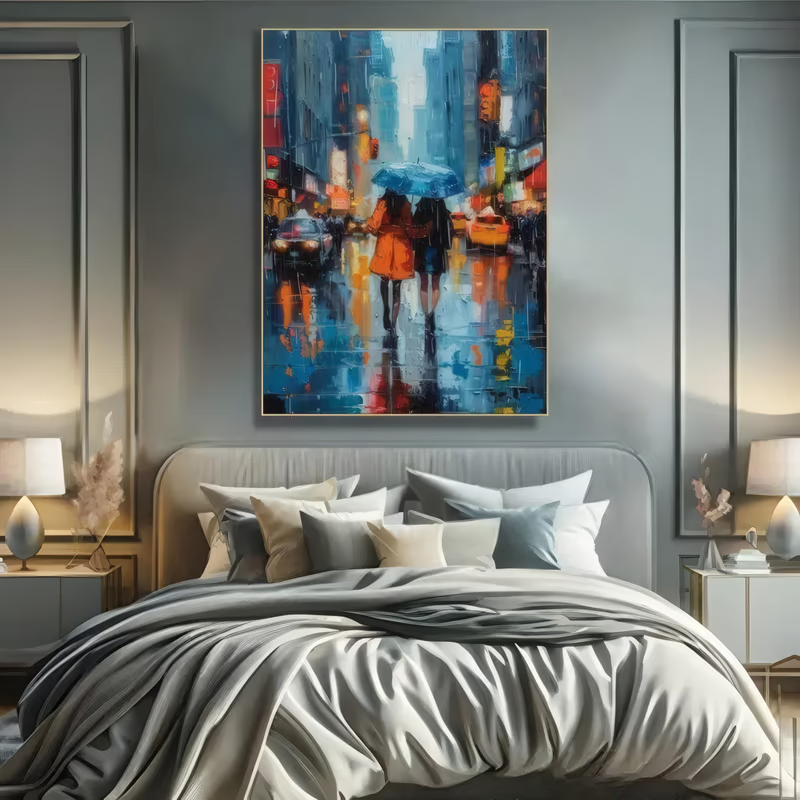
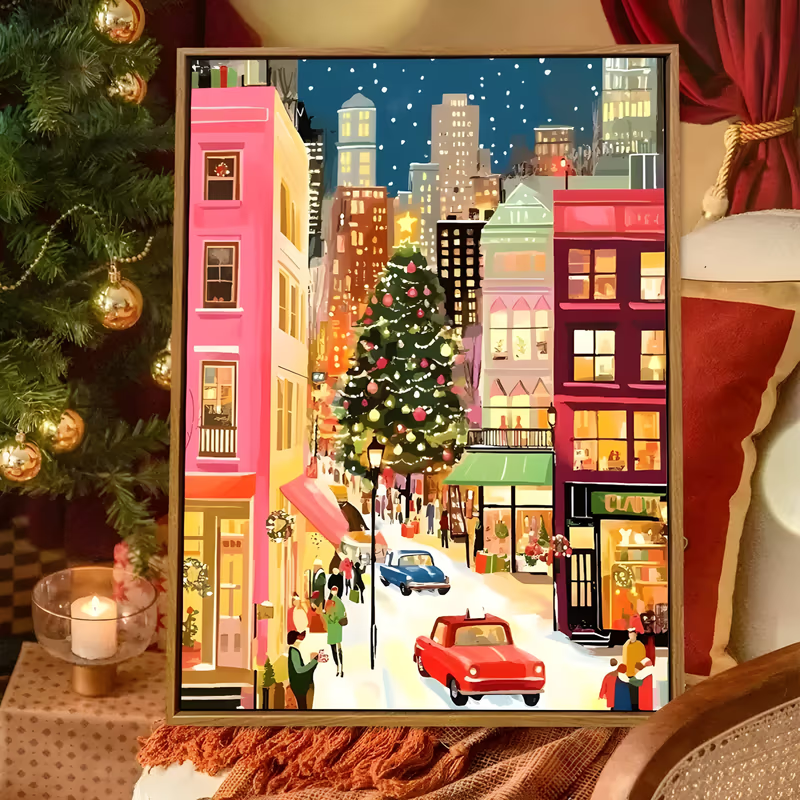
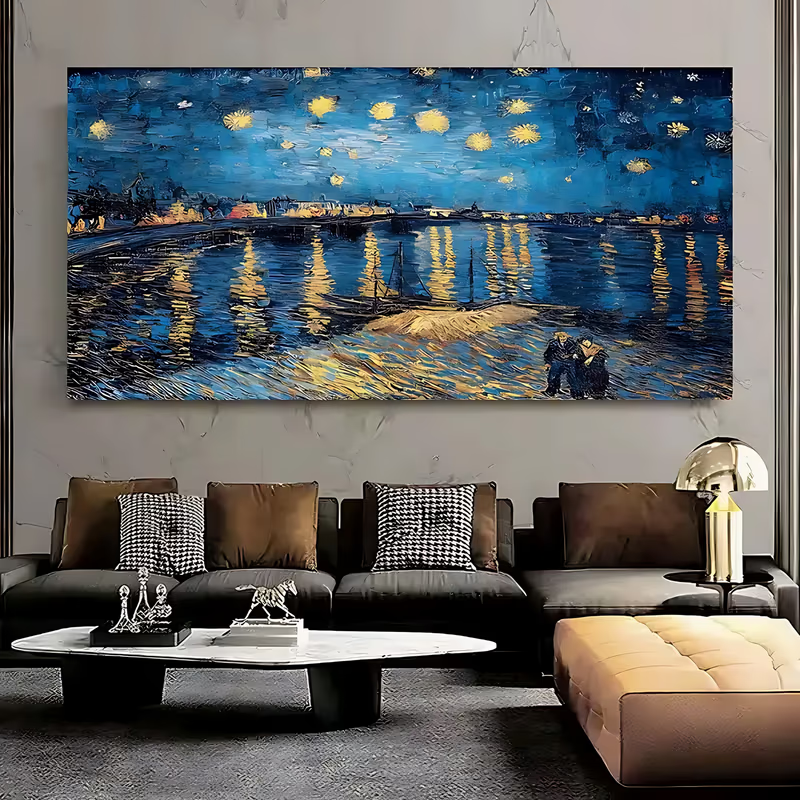
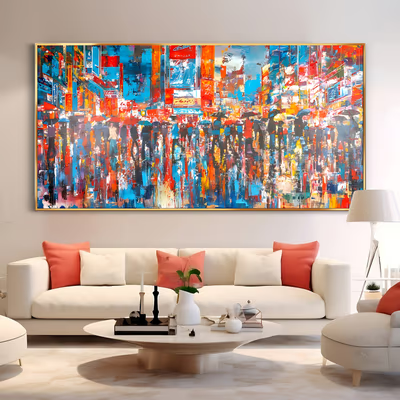
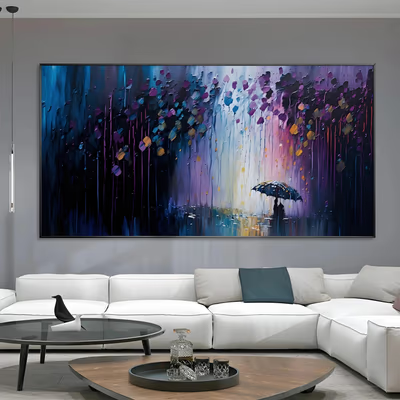
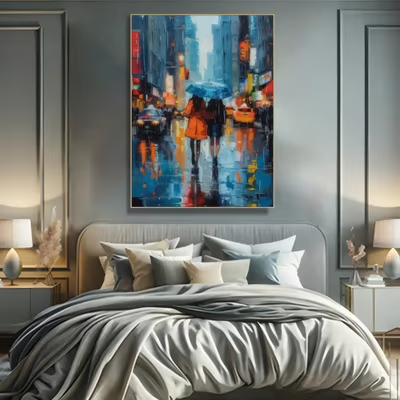
An umbrella crowd on a neon avenue, a couple walking through cobalt and amber rain, a red and teal bistro corner at night. The figures give scale and a story, and these are the most atmospheric of the city scenes.
Skylines, towers and city lights
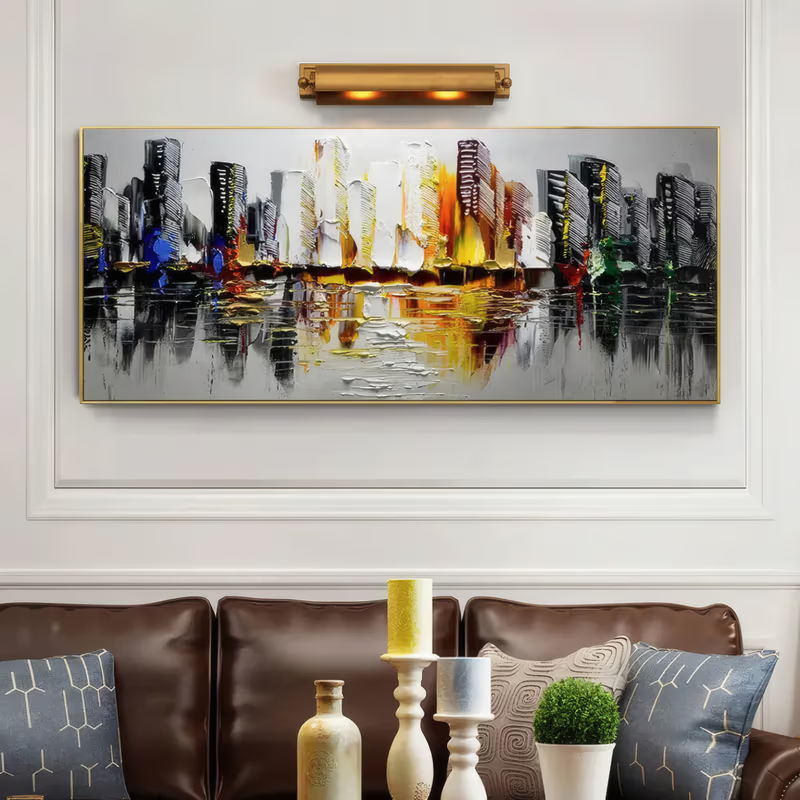
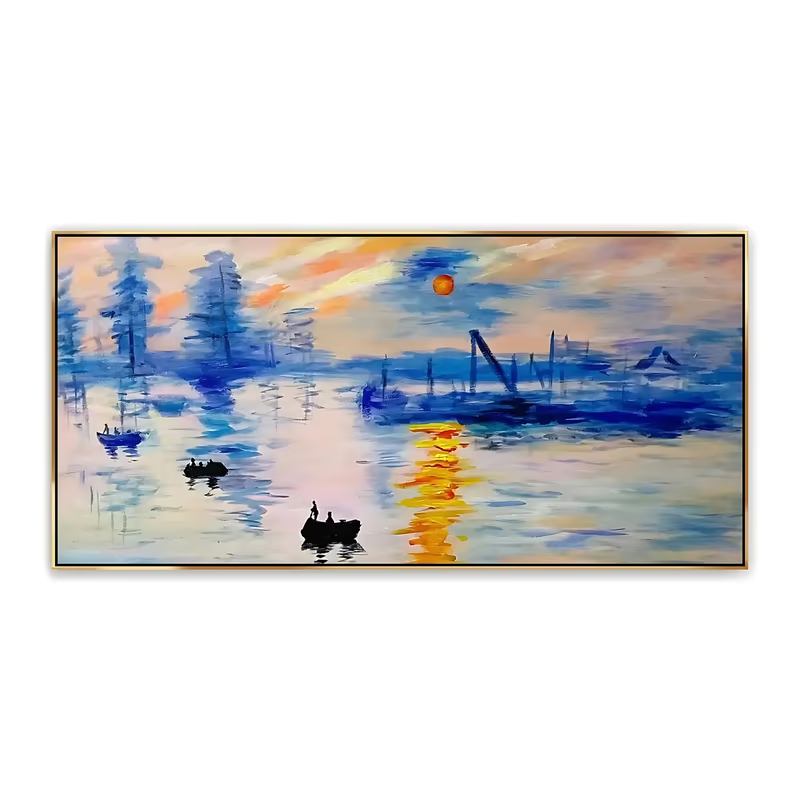
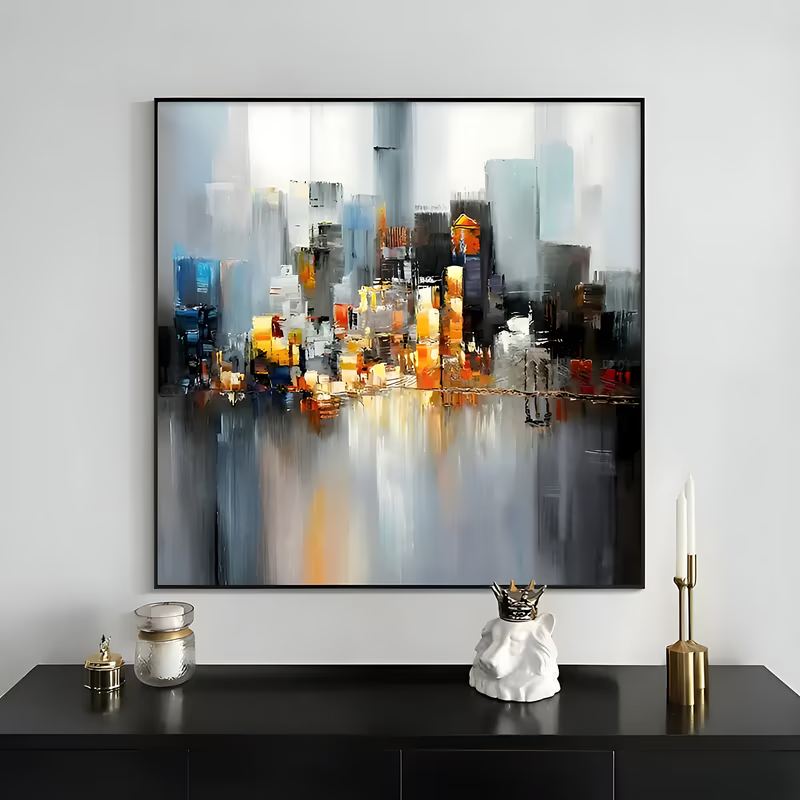
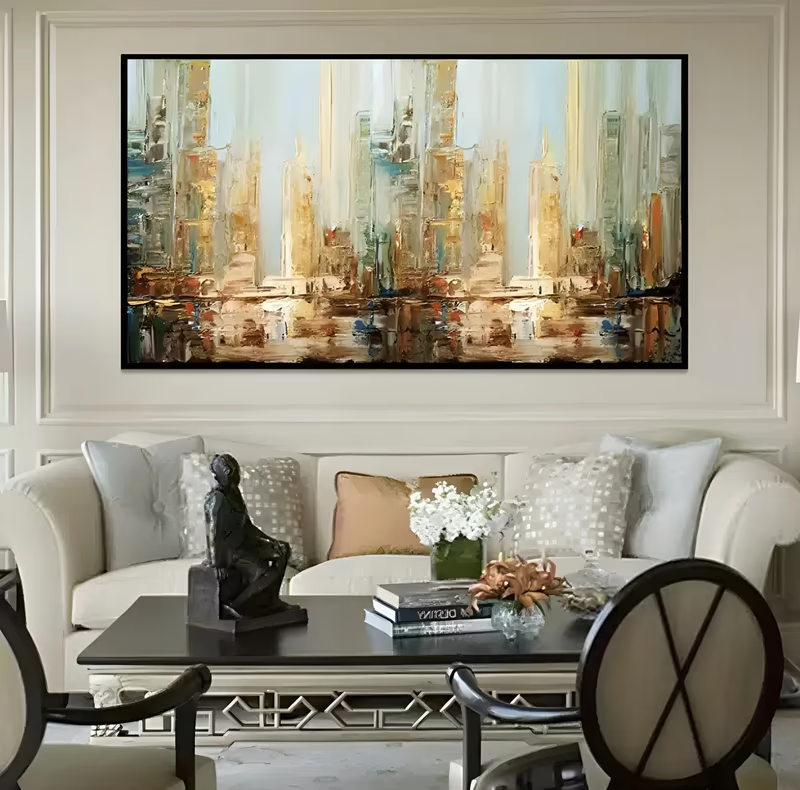
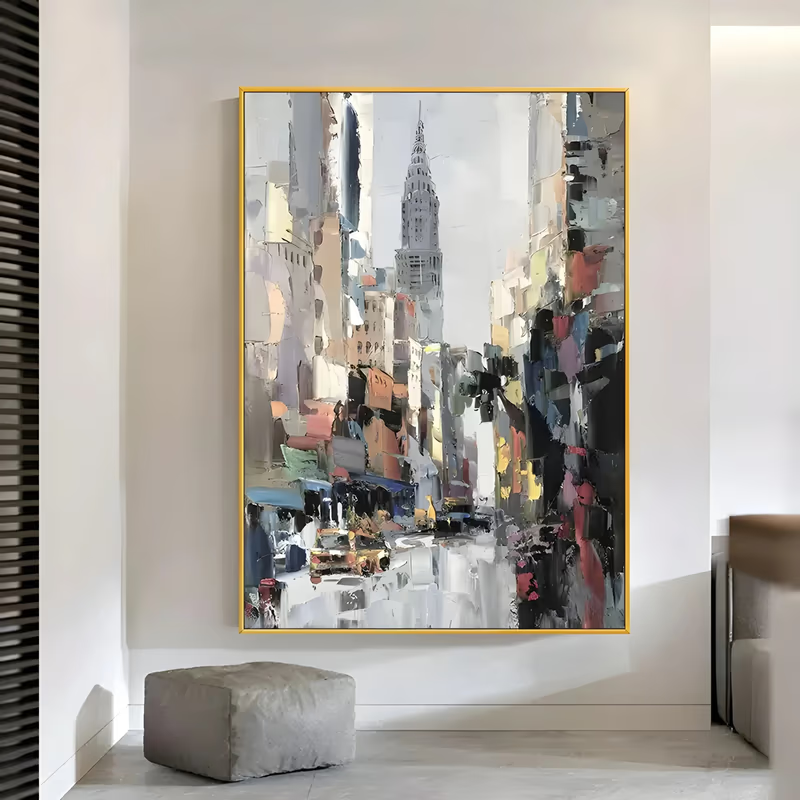
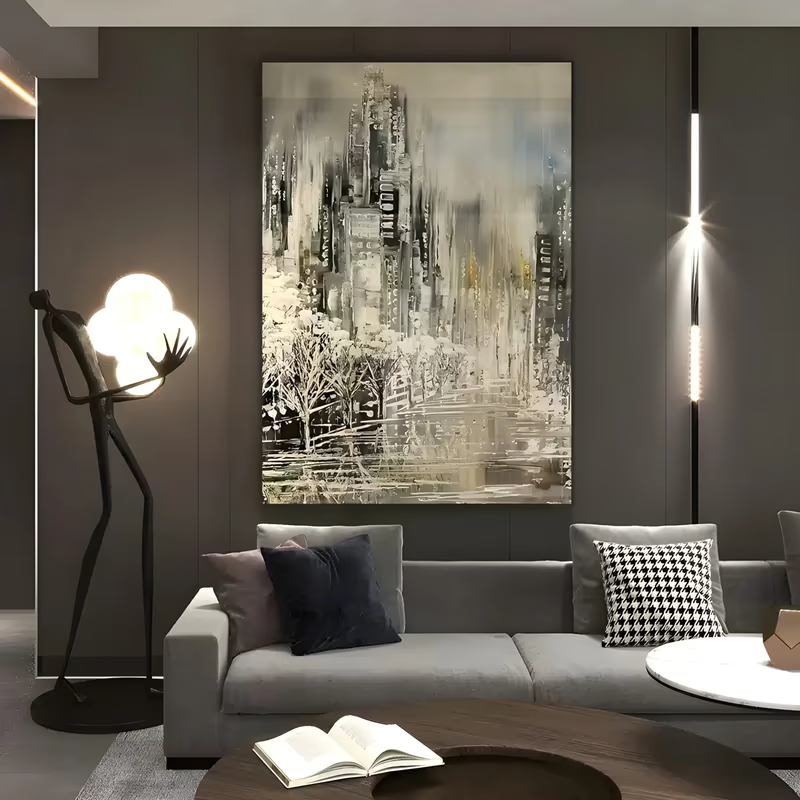
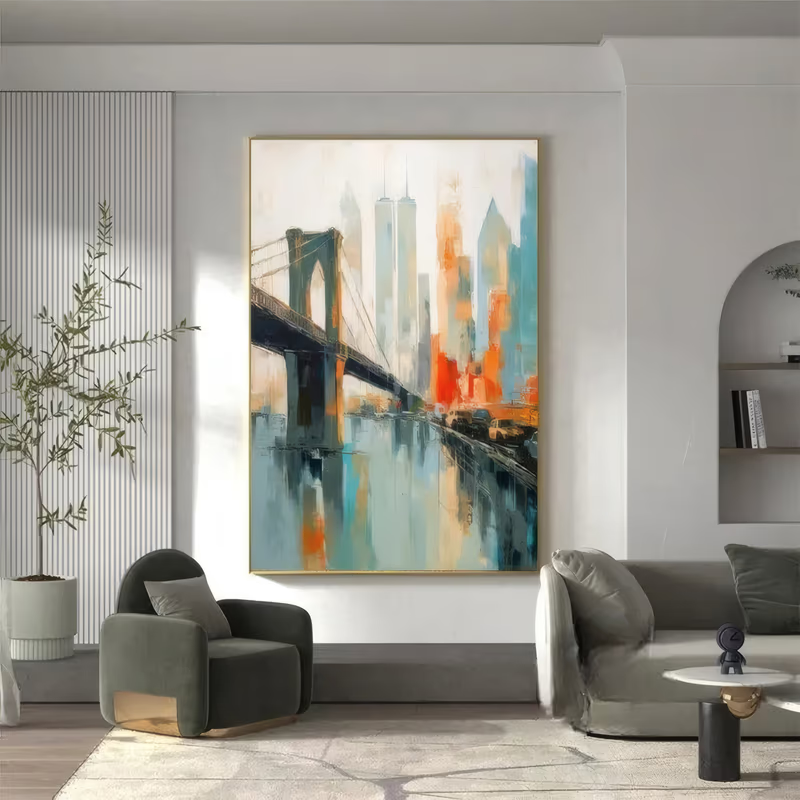
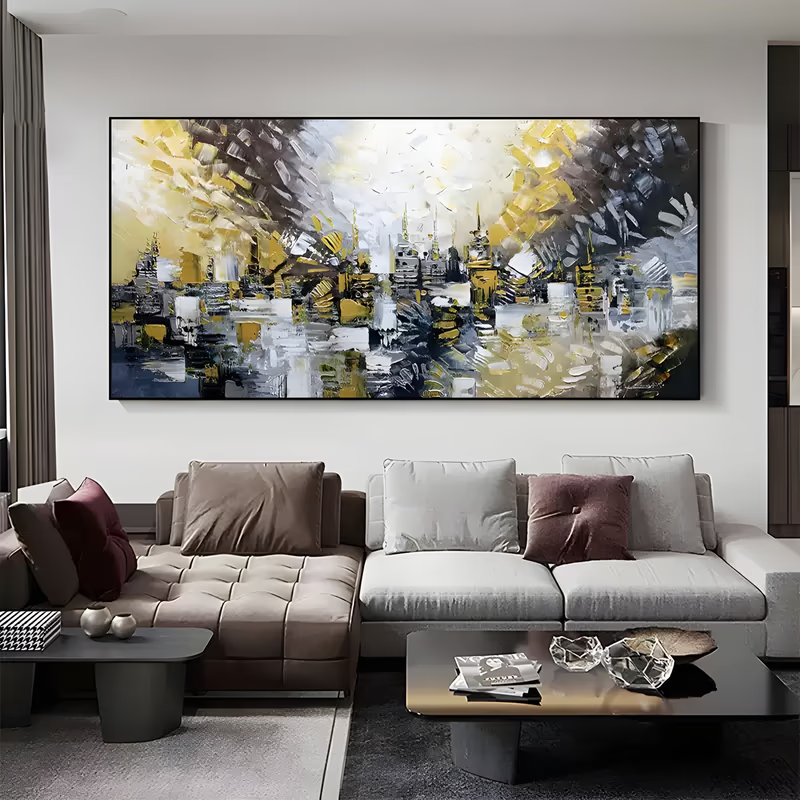
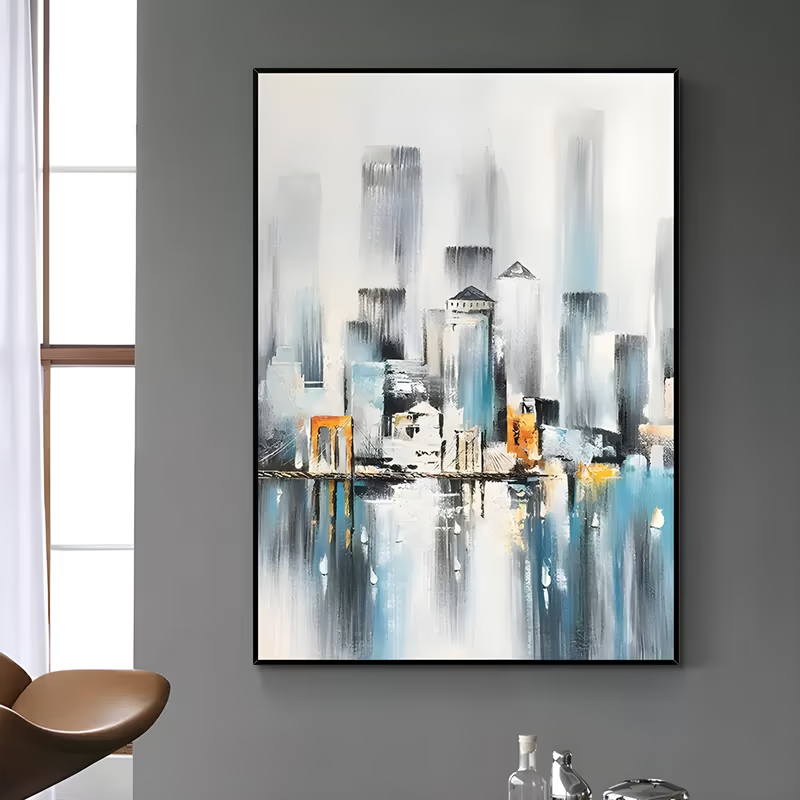
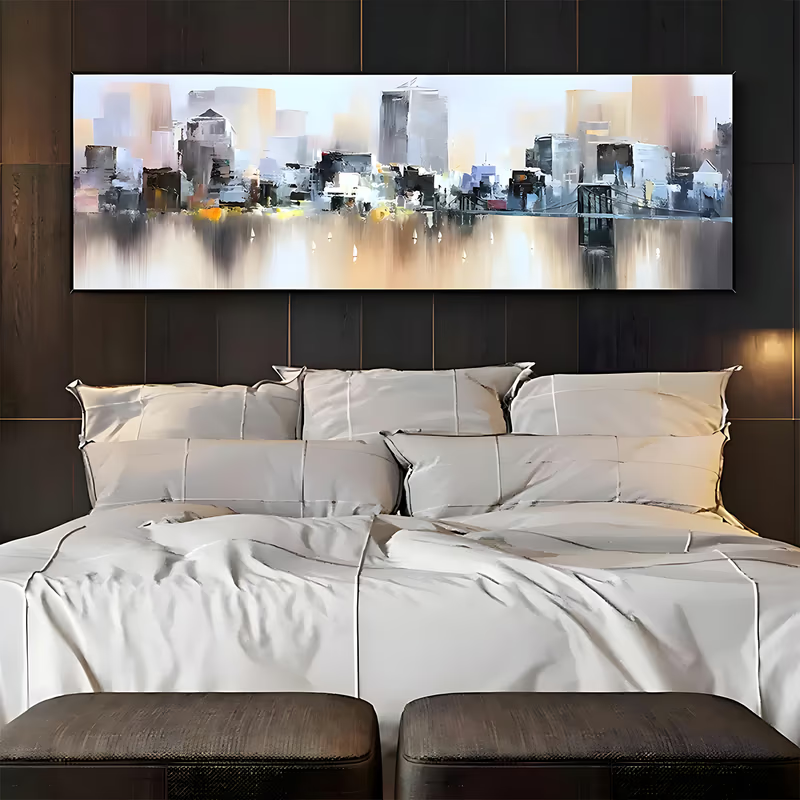
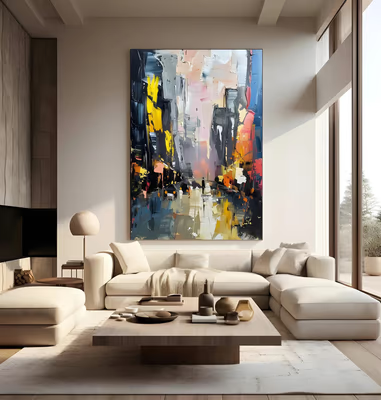
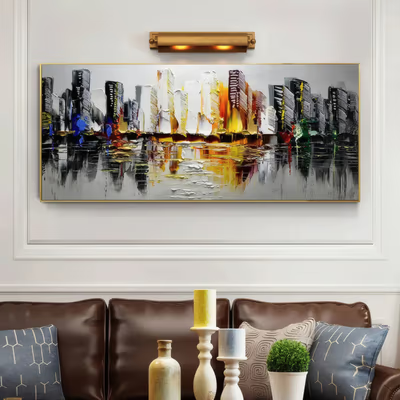
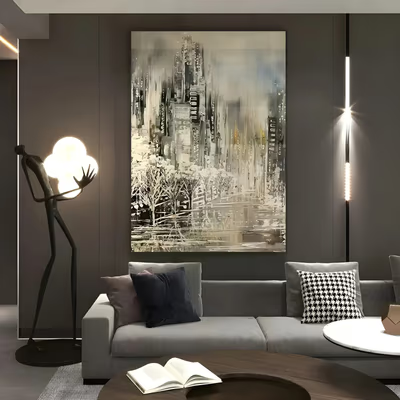
New York canyons with yellow taxis, the Brooklyn Bridge, the Chrysler Building, skyscrapers glowing orange over grey water. Painted in thick impressionist strokes, often with long reflections. More of this handling is under impressionist art.
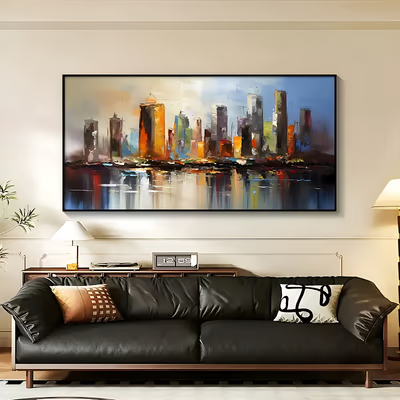
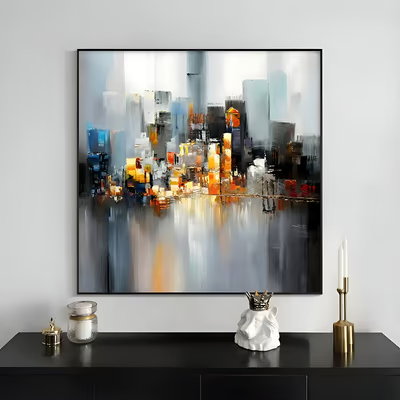
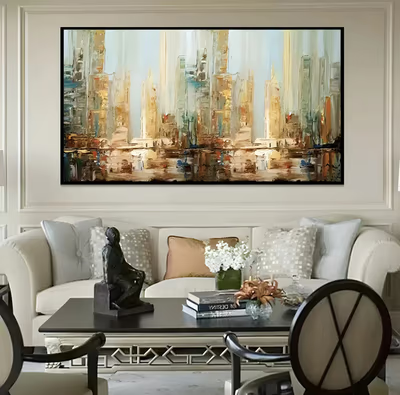
Harbours, canals and old towns
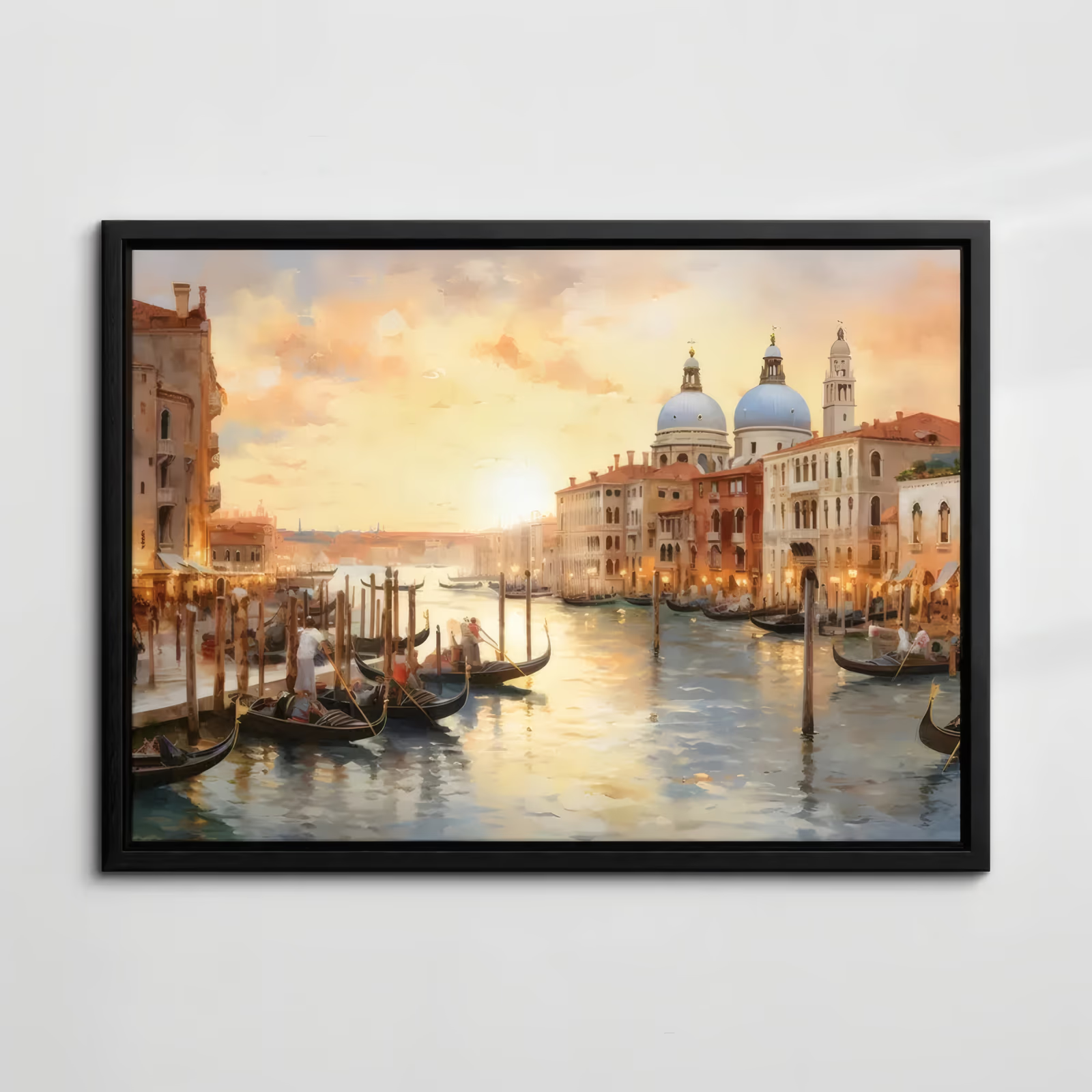
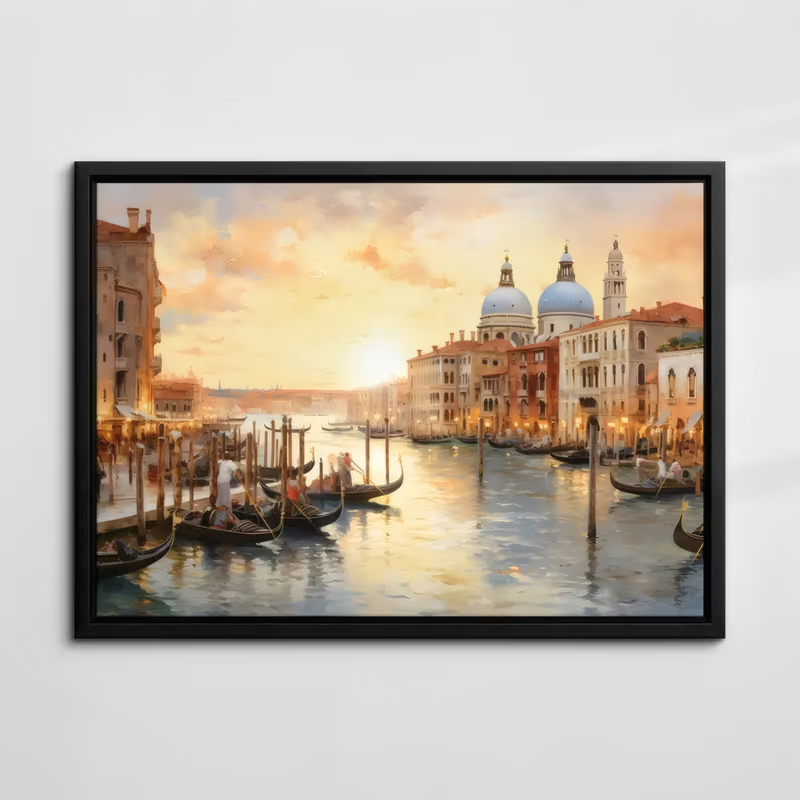
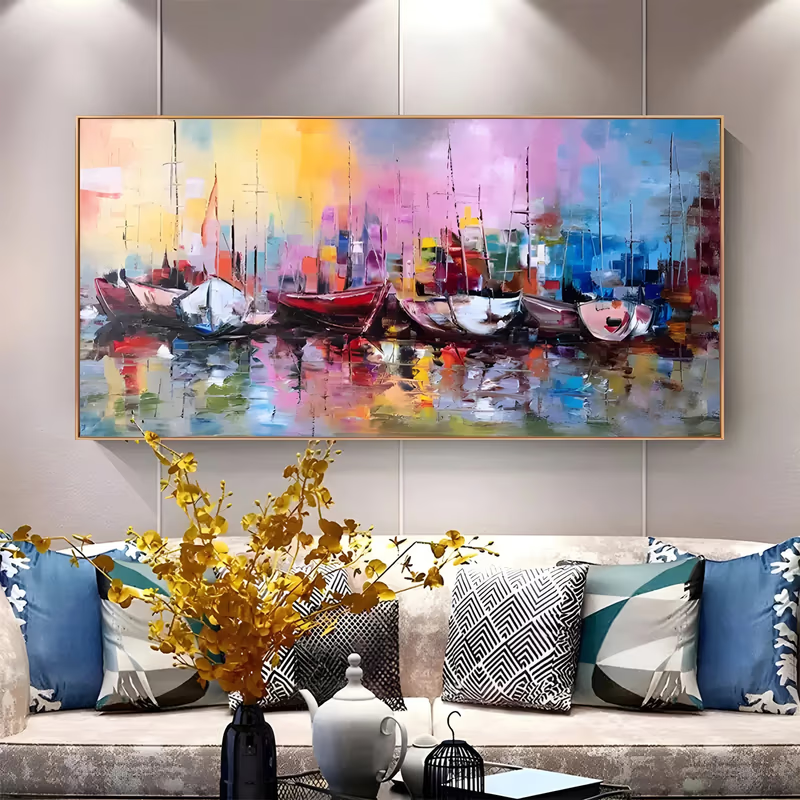
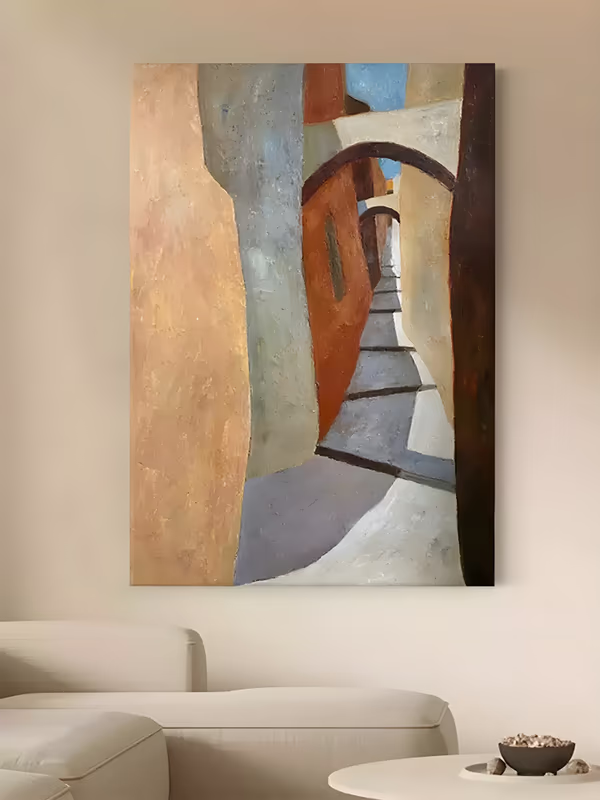
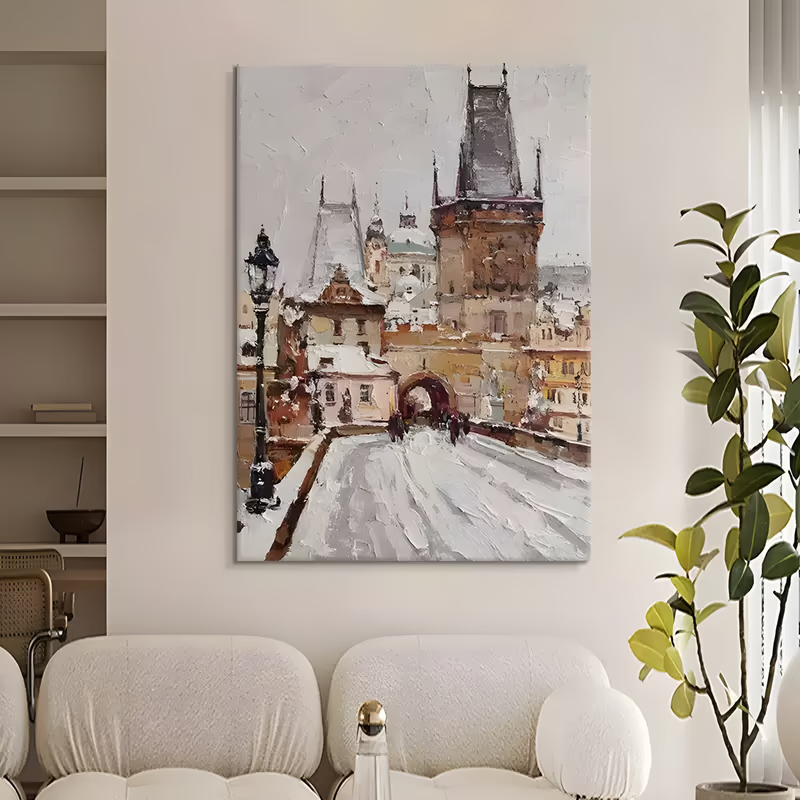
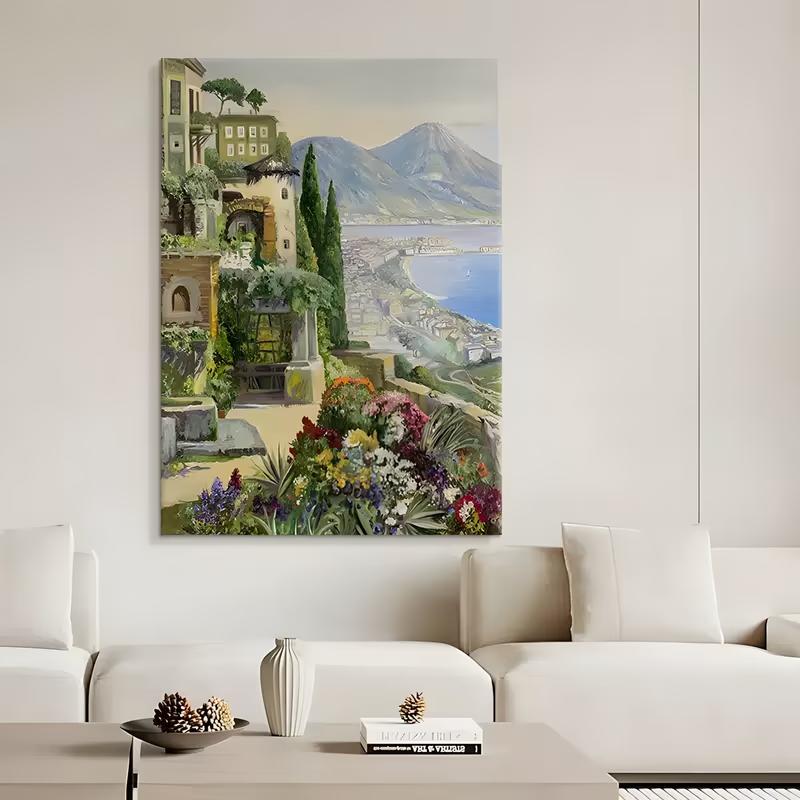
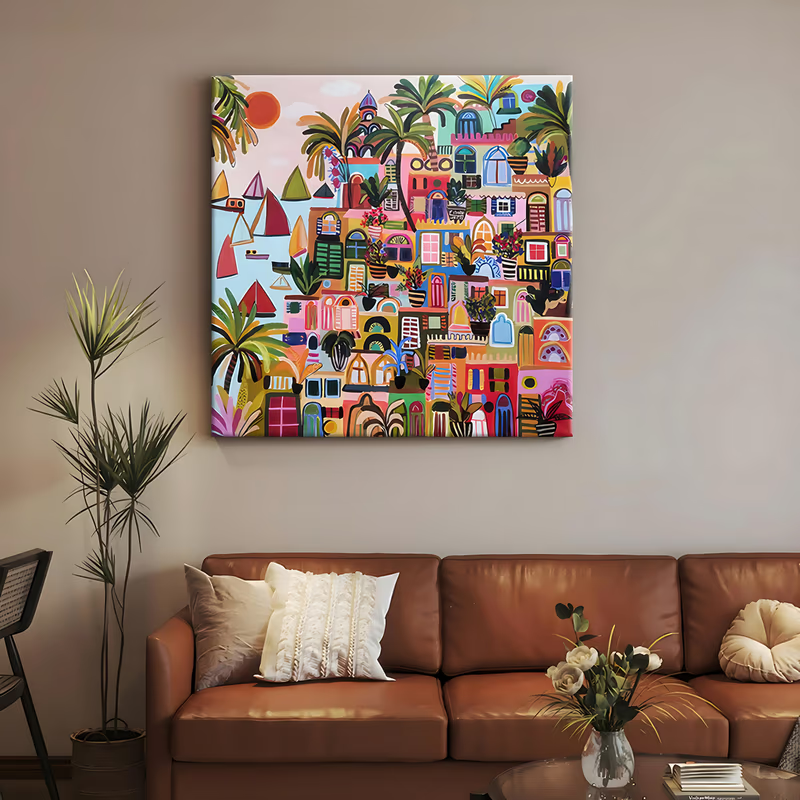
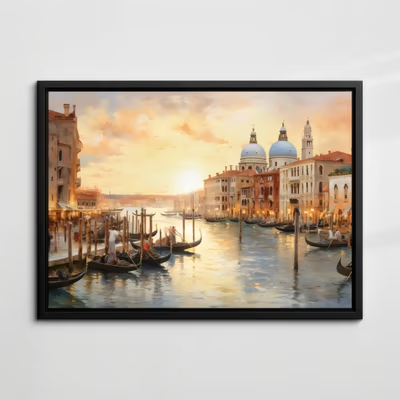
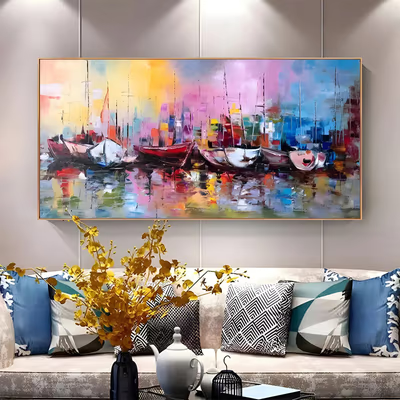
Gondolas on the Grand Canal at sunset, Prague's Charles Bridge under snow, terraced gardens over the Bay of Naples, sailboats below terracotta roofs, a stepped stone alley. Warm and unhurried, with a strong pull of travel.
Graphic, abstract and textured cities
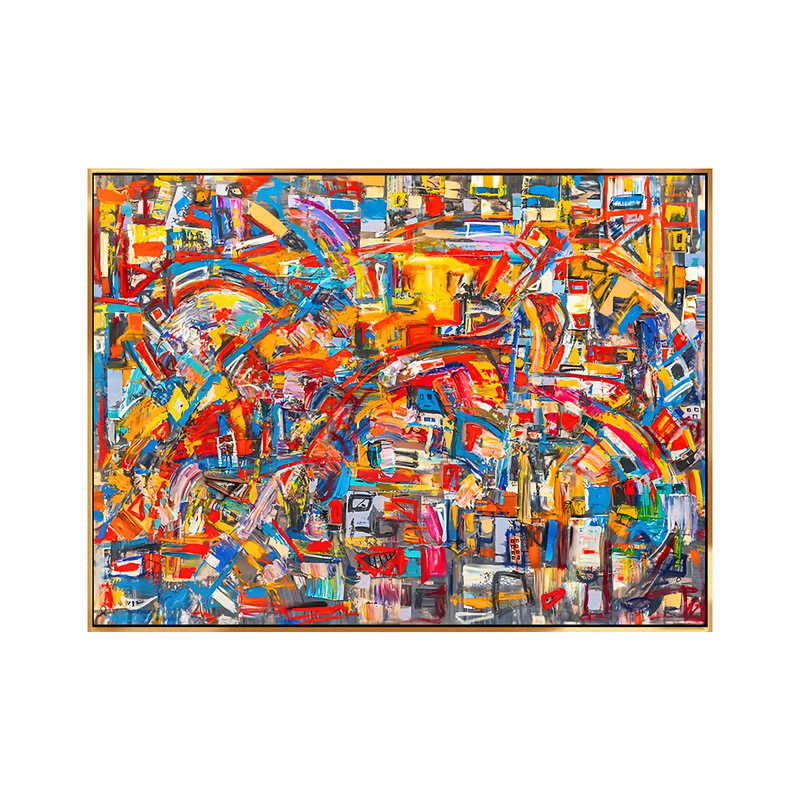
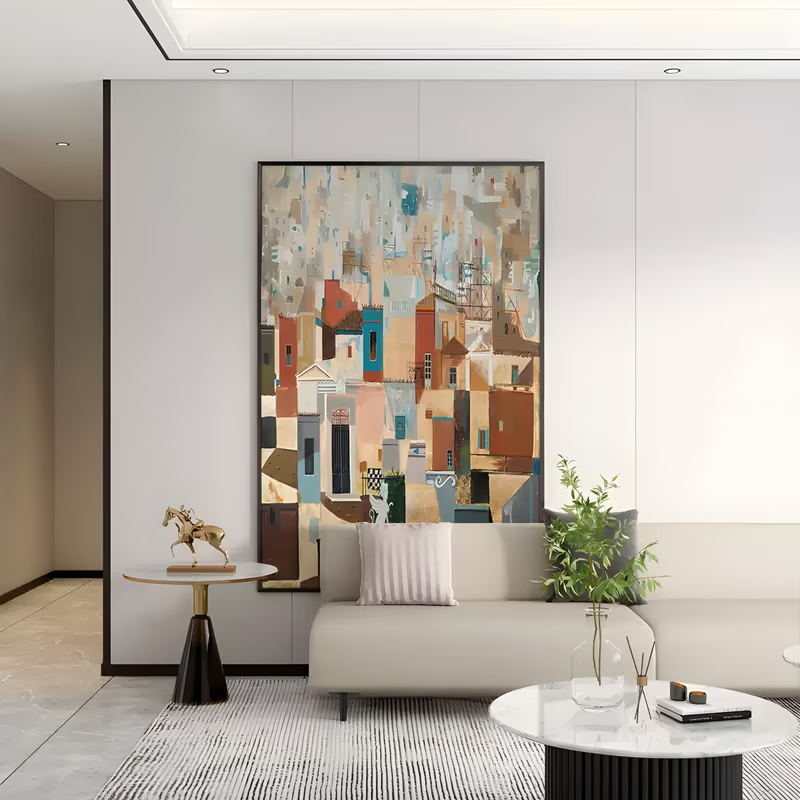
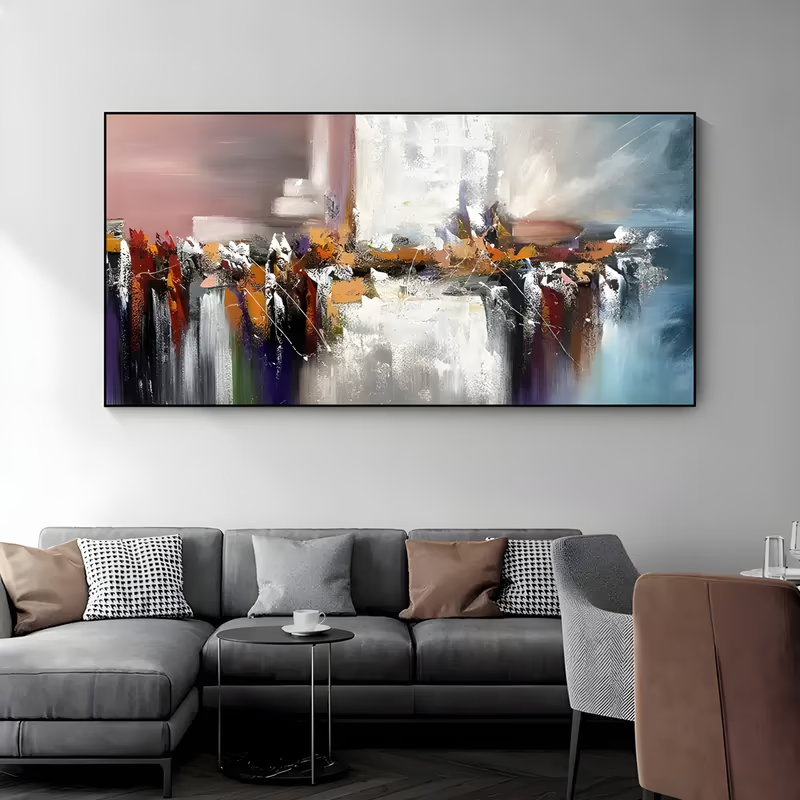
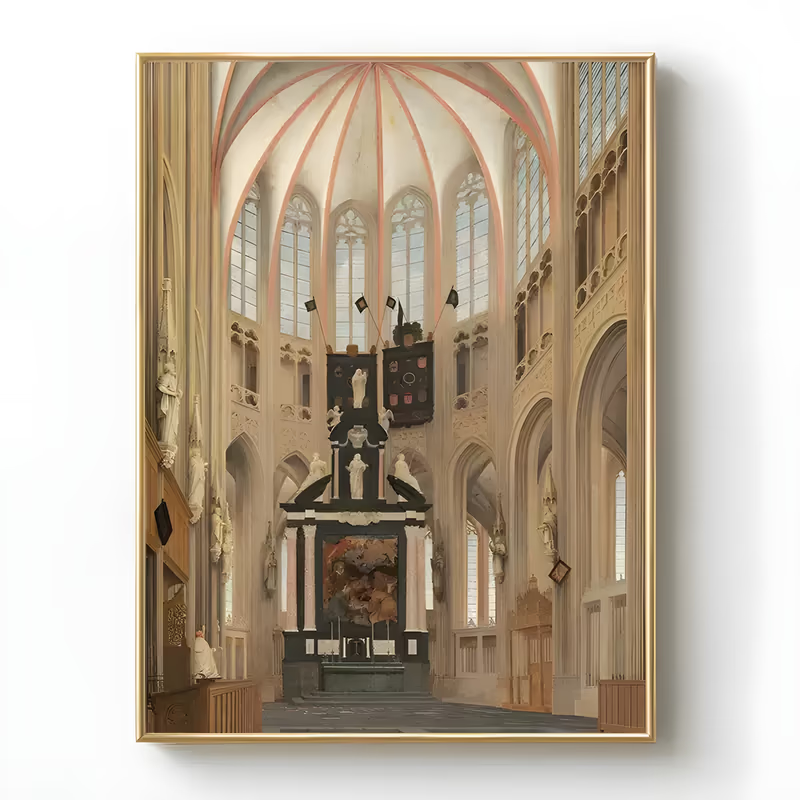
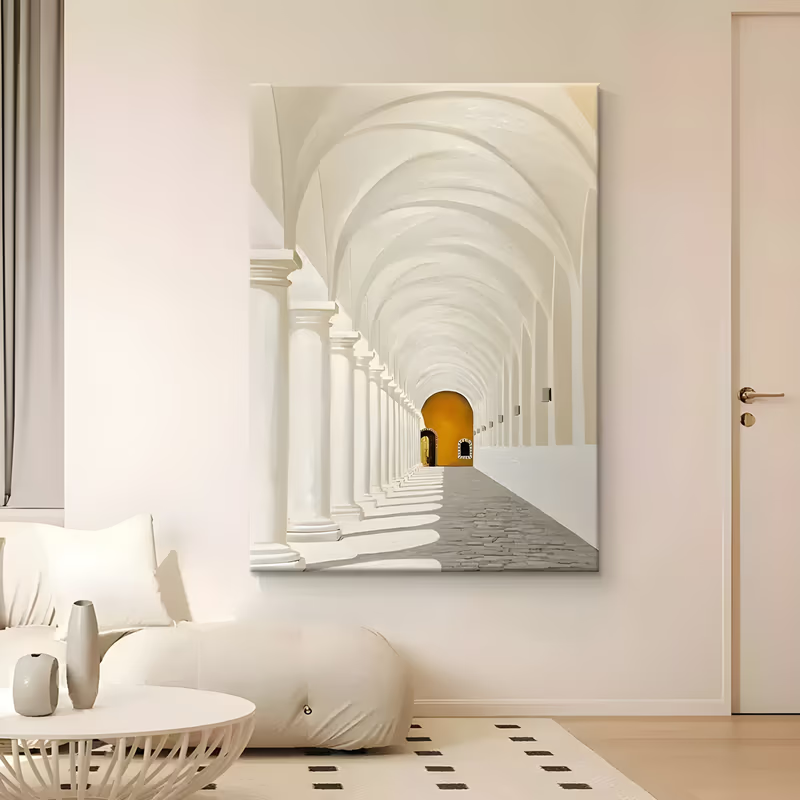
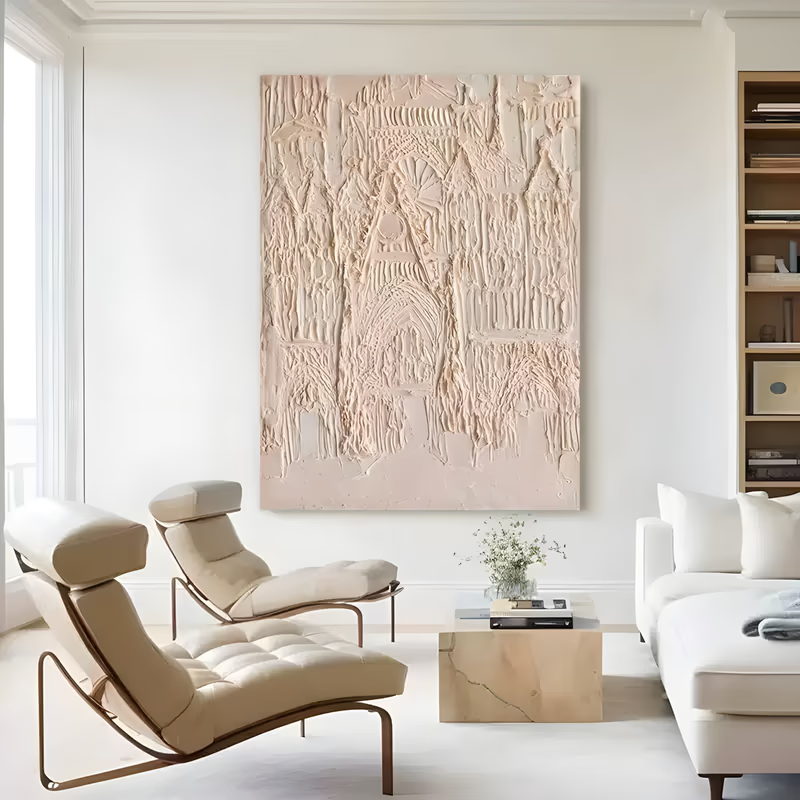
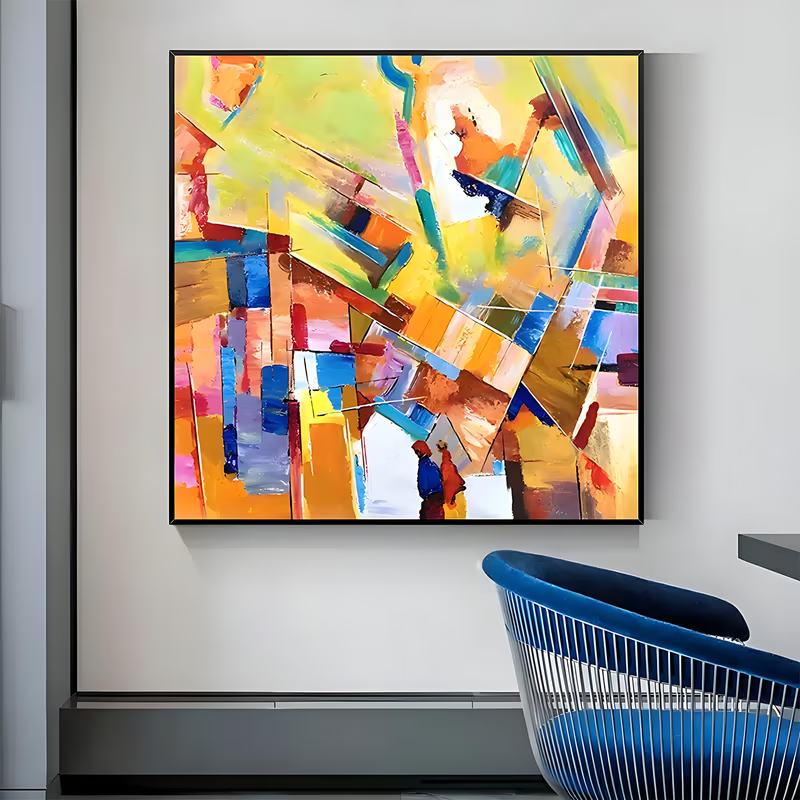
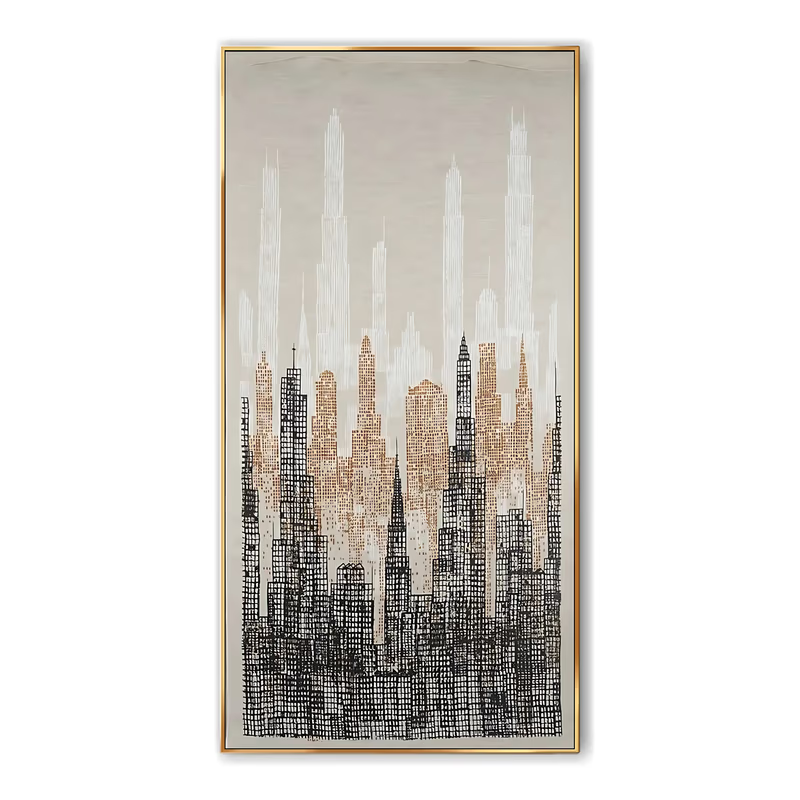
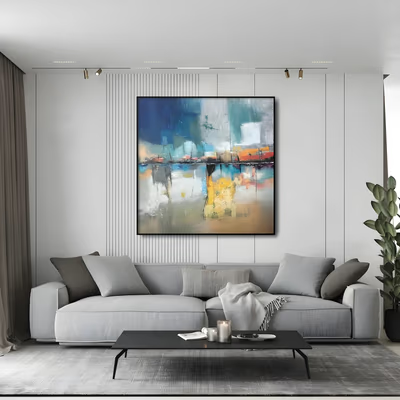
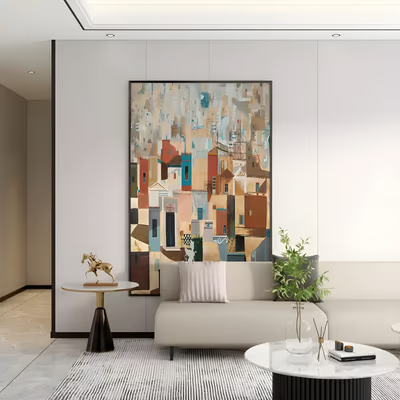
A palette-knife bird's-eye city in red and orange, a white and orange skyline in raised texture, a rust skyline on linen, a gothic nave carved in pale pink plaster. The city reduced to shape and surface, for modern rooms.
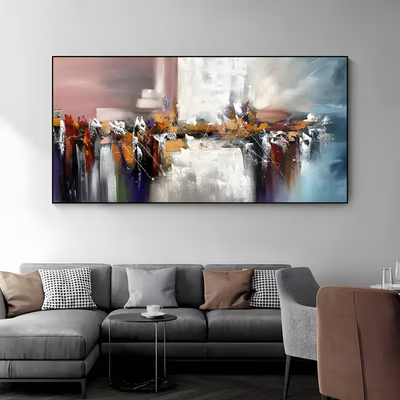
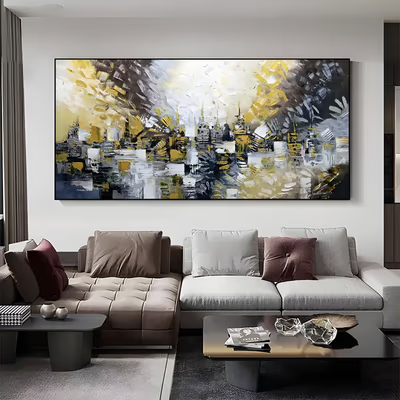
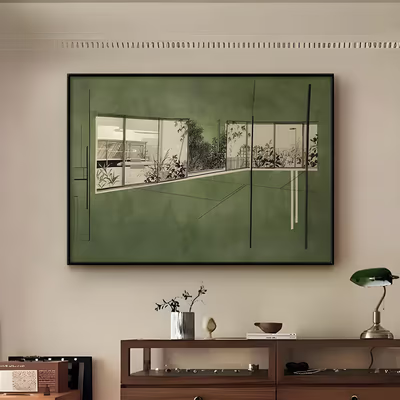
Why are rainy night city paintings so popular, and where do they belong?
Because wet streets turn every light into a long reflection, so a rainy night city painting glows with colour and movement; it belongs in rooms used in the evening, such as lounges, bars and living rooms.
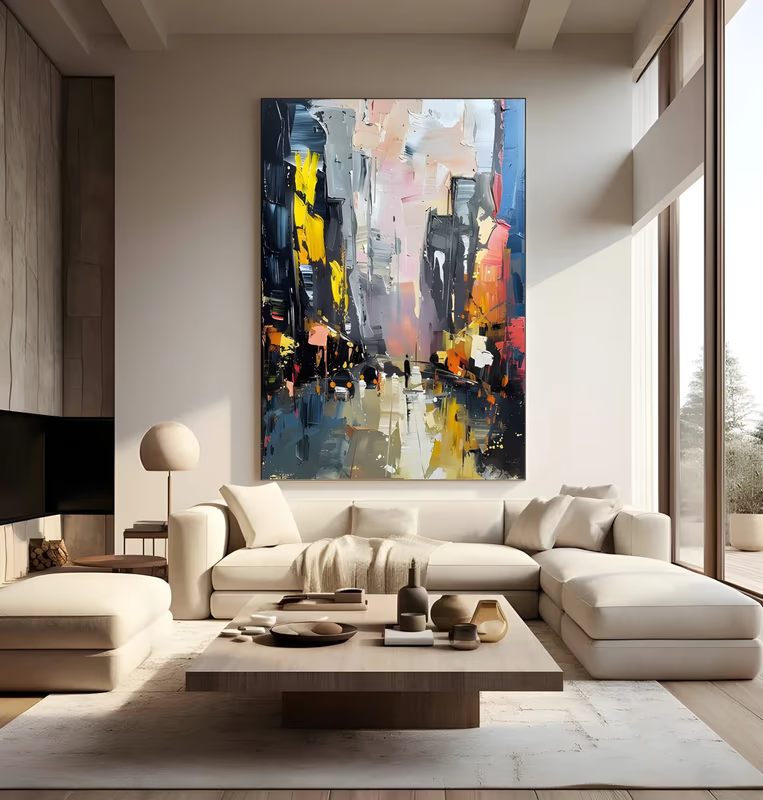
Rain is a gift to a painter. A plain street becomes a mirror, headlights and shop signs smear into bands of amber, red and cobalt, and umbrellas give people a shape that reads at any distance. The result feels cinematic and a little romantic, and it suits low, warm lighting, which picks up the bright strokes and lets the dark areas fall away.
Hang a night scene where people arrive or settle in the evening: behind a bar, over a lounge sofa, in a restaurant booth, along a hotel corridor to the lifts. In a bedroom, choose a softer, more muted rain scene rather than saturated neon. For the opposite mood, sunlit streets and harbours bring daylight to a north-facing room. Blue and orange city scenes are the classic night palette; grey and cream ones are the quiet version.
Which rooms and businesses suit cityscape art best?
Living rooms, home offices and dining rooms at home; offices, meeting rooms, business hotels, restaurants and bars in commercial projects.
Offices and meeting rooms
A city scene signals ambition and connection, and suits client-facing walls. Skylines and bridges keep it composed; busy streets bring energy to open-plan floors. Cityscapes for offices, and the corporate offices page for larger fit-outs.
Hotels and serviced apartments
Cityscapes tie a property to its location, especially when the painting shows the city outside. Use one skyline at reception and a series of street scenes along corridors and in rooms. Cityscapes for hotels; see also serviced apartments.
Restaurants and bars
Night streets, bistro corners and harbour towns set the scene for eating out. Cityscapes for dining.
Living rooms
A large skyline over the sofa makes a city apartment feel connected to its view, and a European old town brings holiday memories home. Cityscapes for living rooms and entrances.
What size and format should a cityscape painting be?
Follow the city's shape: a wide or panoramic canvas for skylines and waterfronts, a tall vertical for street canyons and towers, and roughly two-thirds of the furniture width below either way.
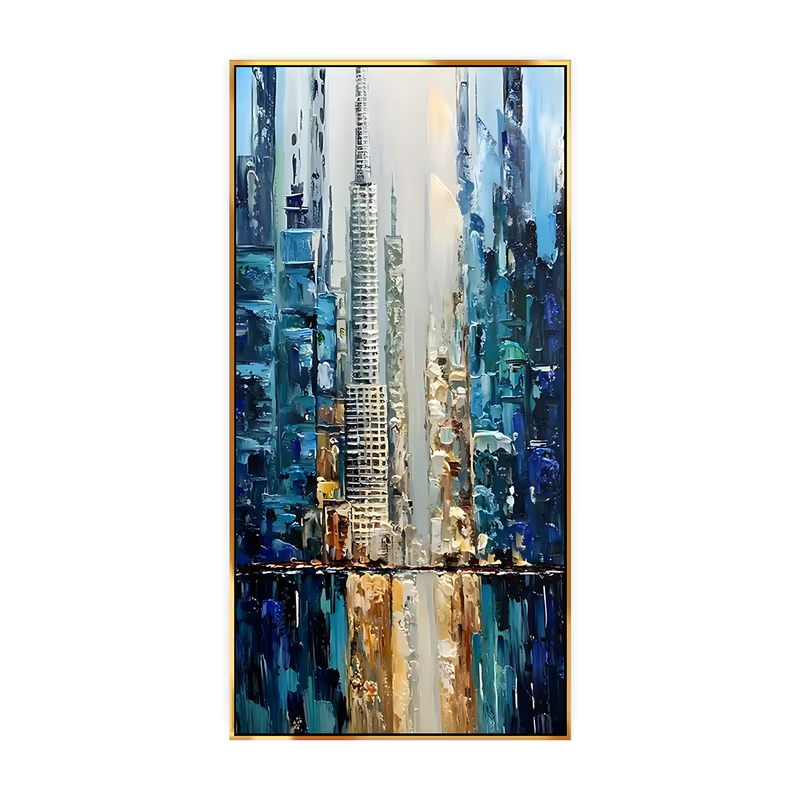
A skyline is a horizontal subject, and it looks best on a canvas that lets it stretch: over a long sofa, a banquette, a reception desk or a boardroom credenza. Panoramic cityscapes do this at their best. A street seen from the pavement, with buildings rising on both sides, is naturally vertical, and suits a narrow wall, a hall or the space between windows: vertical city scenes.
Hang the centre of the canvas about 145–152 cm (57–60 in) from the floor, leaving 15–25 cm (6–10 in) above furniture. Because cityscapes have a horizon, line it up with the room where you can: a skyline that sits roughly at seated eye level in a lounge feels like a window. Each painting is made to order, so a vertical street can be redrawn as a wide view, or a skyline extended to fill a long wall, without stretching the buildings out of shape.
Can a cityscape be painted of your own city, and how is it approved?
Yes. A cityscape can be commissioned from your own photographs or references, or any catalogue city can be repainted in your palette, and you approve progress photos at each stage before painting moves on.
For a hotel, an office or a home, a painting of the actual city outside carries more meaning than a generic skyline. Send reference photos, the size and the style you like from this page, and a sketch is agreed before painting starts. To fit a scheme, the palette can be adjusted to a paint code or fabric: a grey skyline warmed with gold, a neon street cooled to blue. Photos or video follow each stage, nothing goes further until you approve it, and the finished painting is photographed for approval before it is packed. Allow about 10 days to paint and 5–7 days in transit by DHL, FedEx or UPS express, and the shipping cost is confirmed before the painting is sent. It arrives rolled, stretched ready to hang, or framed in gold, silver, black, white or wood. Start on the commissions page or with a quote request.