
Bathroom wall art guide · Updated
How to choose and place art in a bathroom
Key takeaways
- Steam that clears is the test: a painting is happiest in a bathroom where the mirror demists within half an hour; where it stays fogged, hang the art just outside the door.
- Keep a dry wall between art and water: never inside the shower or within reach of spray; above the toilet, beside the vanity and behind the door are the safest walls.
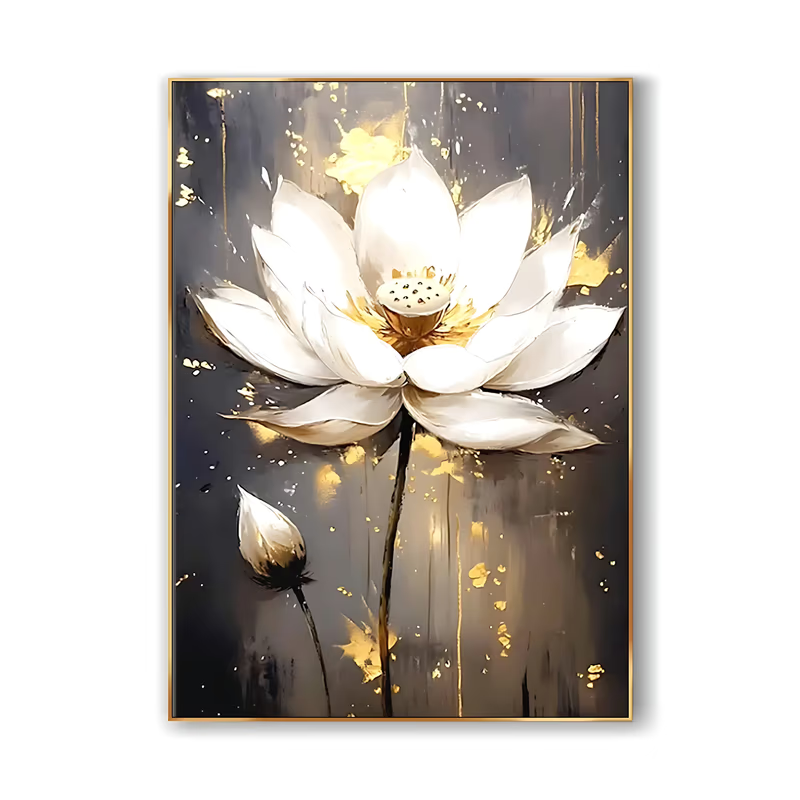
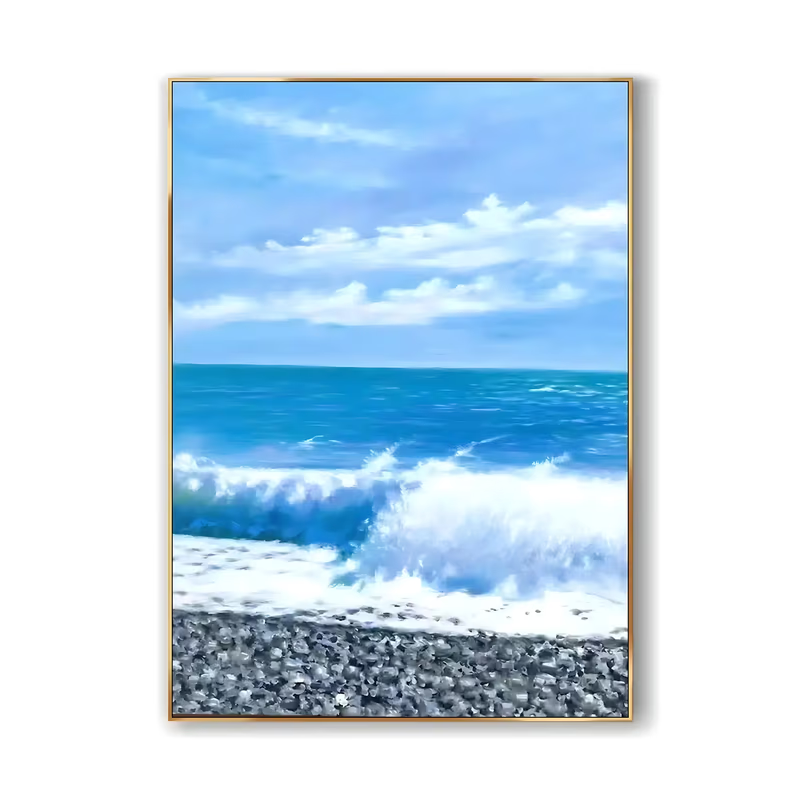
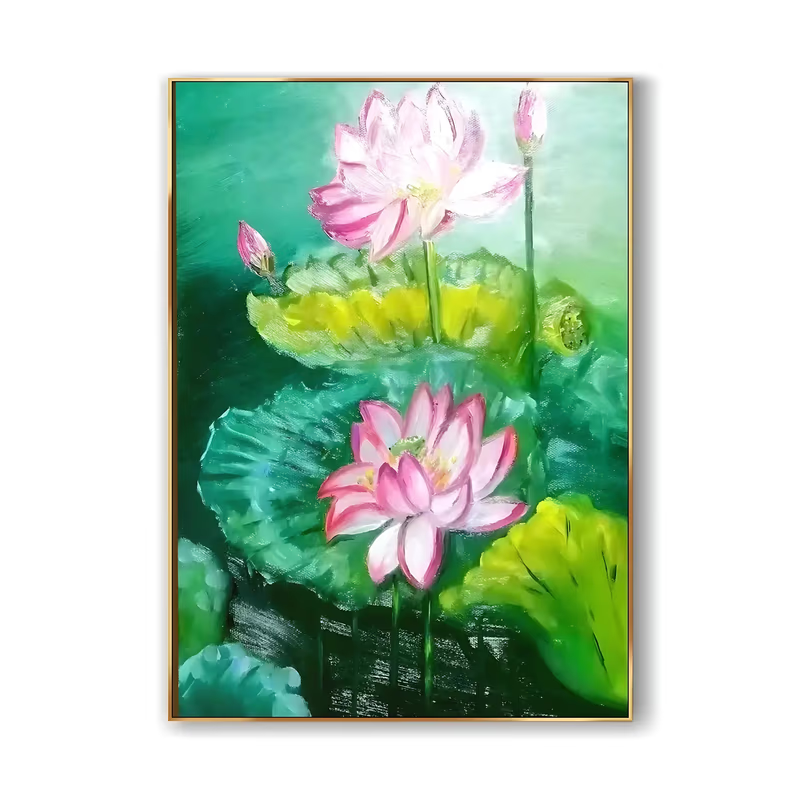
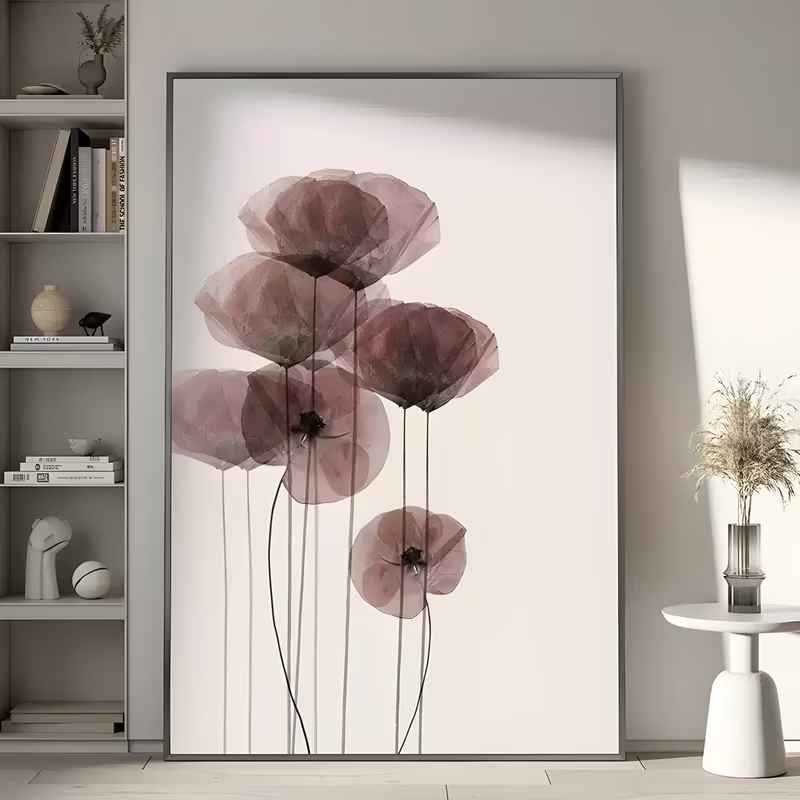
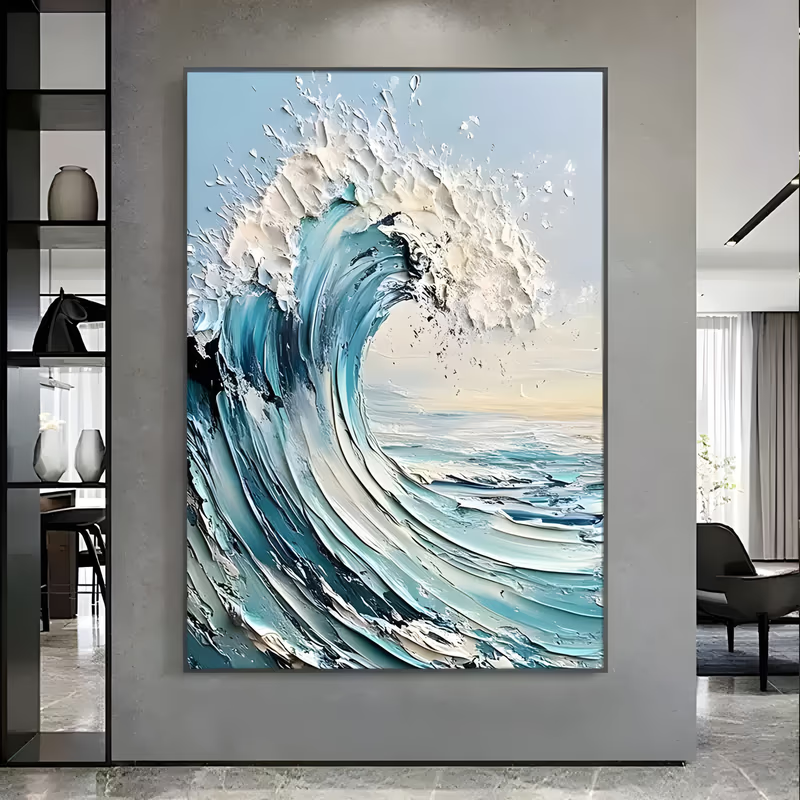
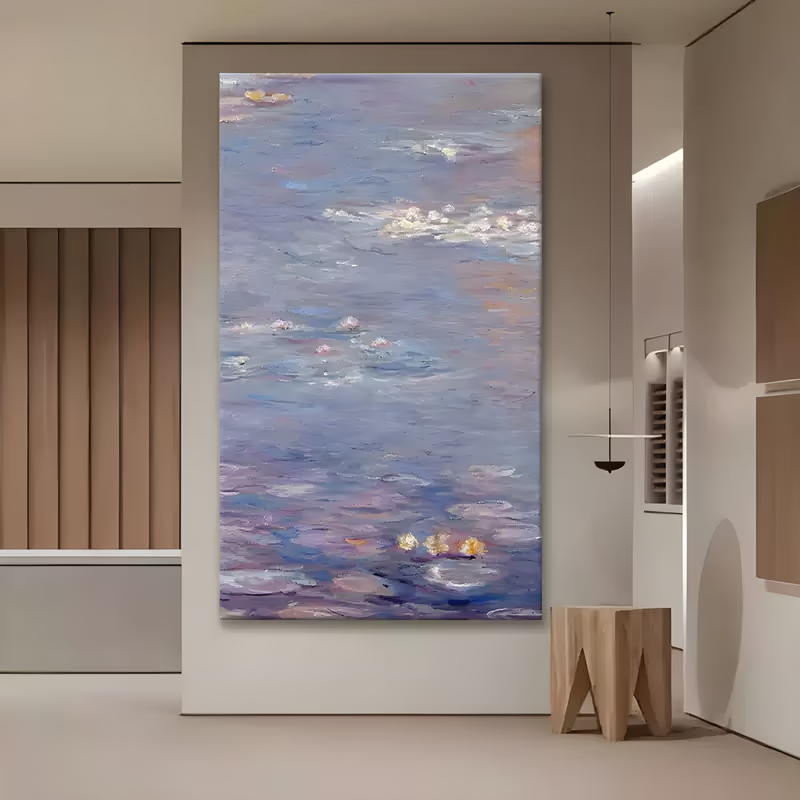
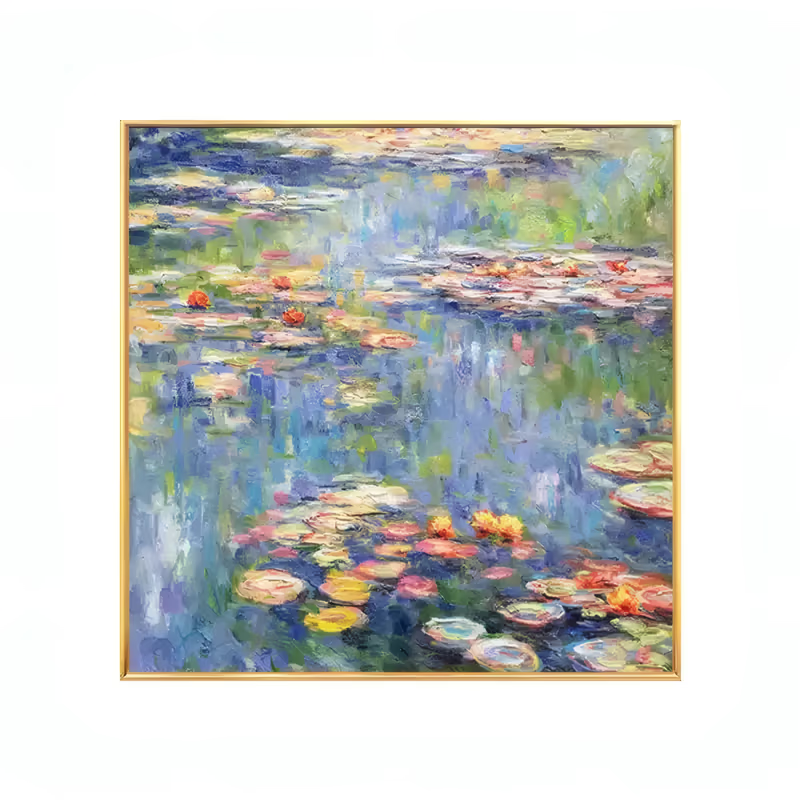
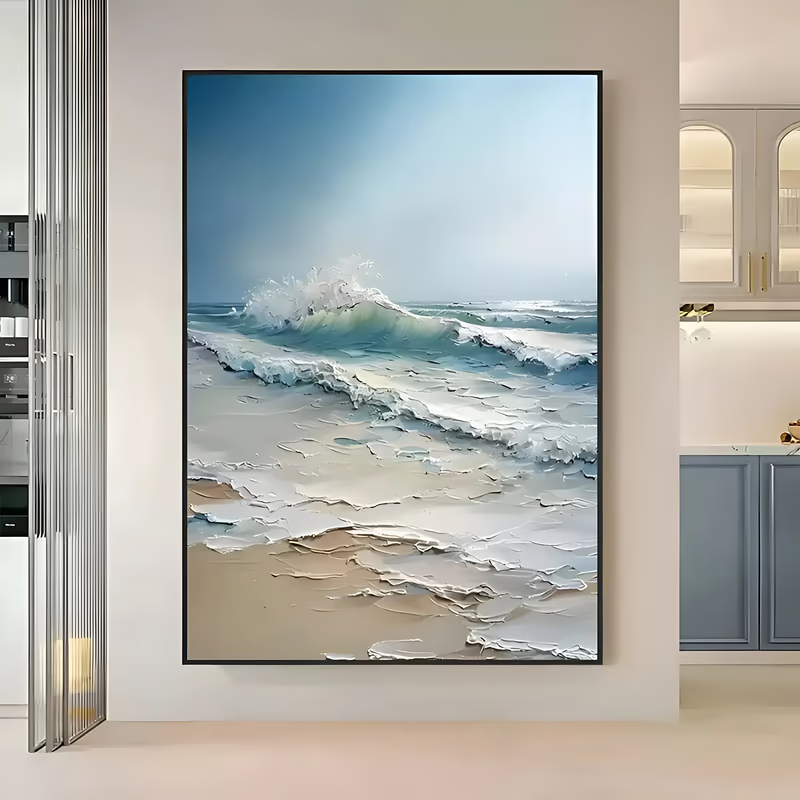
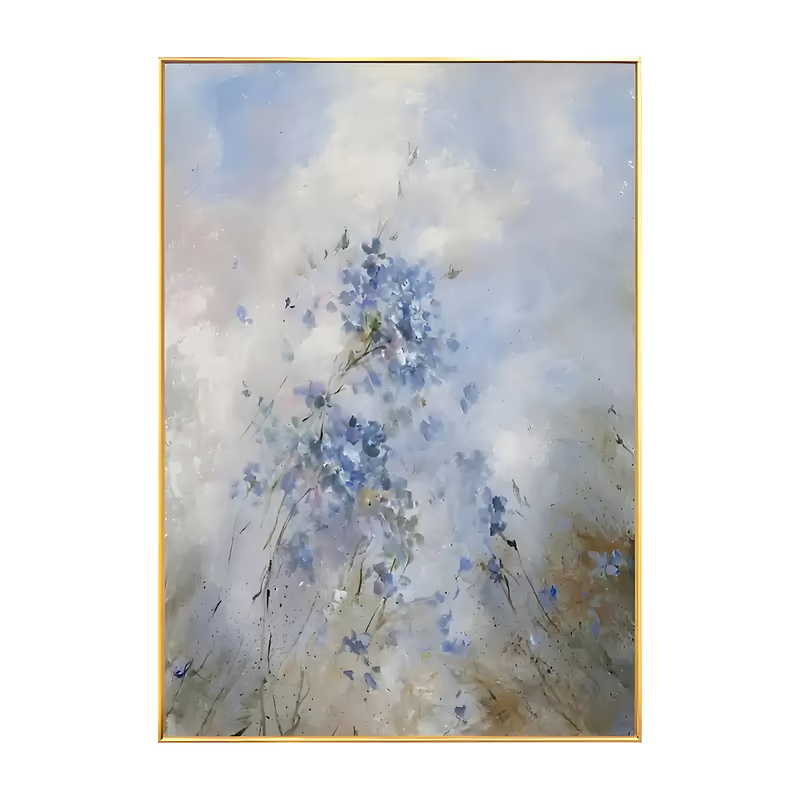
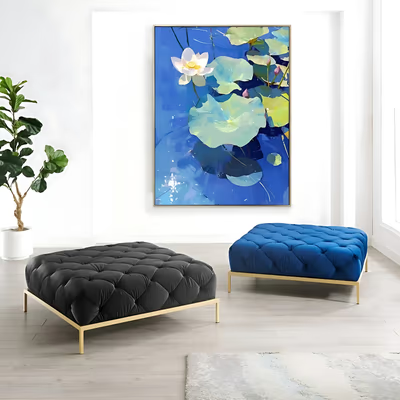
- Water and leaves read best: seascapes, lotus ponds, botanicals and pale plaster relief suit the light and calm of a bathroom.
- Size to the fixture, not the wall: about 30–40 cm (12–16 in) wide over a toilet cistern, a pair either side of the mirror, a long low canvas over a bath.
Can you hang a canvas painting in a bathroom?
Yes, in most bathrooms: an acrylic painting on canvas can hang where steam clears quickly, but it should not live in a room that stays damp for hours.
Moisture itself is less of a problem than moisture that lingers. Acrylic dries to a flexible film, but the cotton canvas and the wooden stretcher behind it take on water from humid air and give it up again as the room dries. Short, regular swings are what a ventilated bathroom produces, and most paintings cope with them. Long, repeated soaking is different: a canvas can slacken, and a wall that never dries invites mould behind anything hung on it. Nobody can promise how a particular painting will age in a particular room, so judge the room first.
| Type of bathroom | How steam behaves | What to do with art |
|---|---|---|
| Powder room or guest WC | Little or none; basin only | Hang freely; this is the place for a bigger or more delicate piece |
| Ensuite with an extractor fan or opening window | Brief after showers, clears within half an hour | Fine on a dry wall away from the shower; run the fan during and after showers |
| Busy family bathroom | Several showers or baths a day | Choose the wall farthest from the bath and shower; keep the fan running and the door open afterwards |
| Windowless shower room, mirror fogged for an hour | Lingers and condenses on walls | Put the painting in the hallway or bedroom outside, where it is still seen |
A simple test: after a hot shower, see how long the mirror stays misted. If it clears in 20–30 minutes with the fan on, the room is a reasonable home for a painting.
Where should bathroom wall art hang, and how far from the shower?
Hang bathroom art on the driest wall you have, above the toilet, beside the vanity or behind the door, and keep it at least a metre (about 3 ft) from the shower opening or bath taps.
That distance is a rule of thumb, not a measured standard; more is better. The walls directly beside a shower or across a narrow gap from it collect the most condensation, and anywhere a hand towel, a wet sleeve or a splash can reach will mark a canvas over time.
| Spot | Suitability | Why |
|---|---|---|
| Above the toilet | Good | Usually the driest, most visible wall; a natural frame for one vertical piece |
| Either side of the vanity mirror | Good | A matching pair adds symmetry; keep them clear of tap splash |
| Behind or beside the door | Good | Seen when you turn round, and furthest from the water |
| Over a freestanding bath | Only in a well-ventilated room | A striking spot, but steam rises from the water; leave at least 30 cm (12 in) above the rim |
| Inside or beside the shower enclosure | No | Direct spray and constant condensation |
Two small habits help wherever you hang it. Fit felt or rubber bumpers to the lower corners so air moves behind the canvas instead of trapping moisture against the wall. And keep the painting out of the direct blast of a heater or an air vent, which dries one side faster than the other.
What kinds of bathroom wall art suit the room?
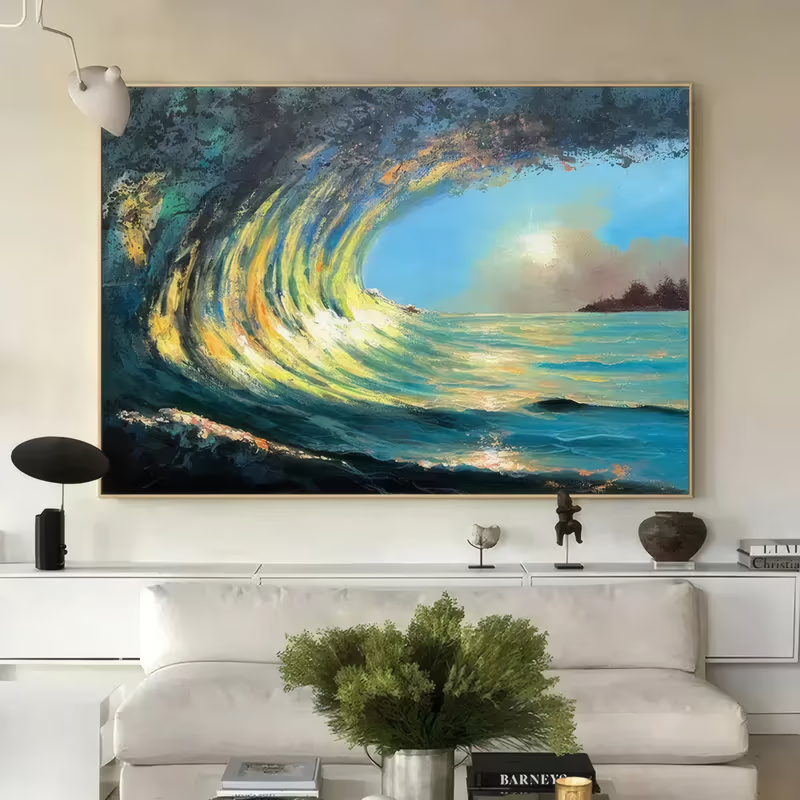
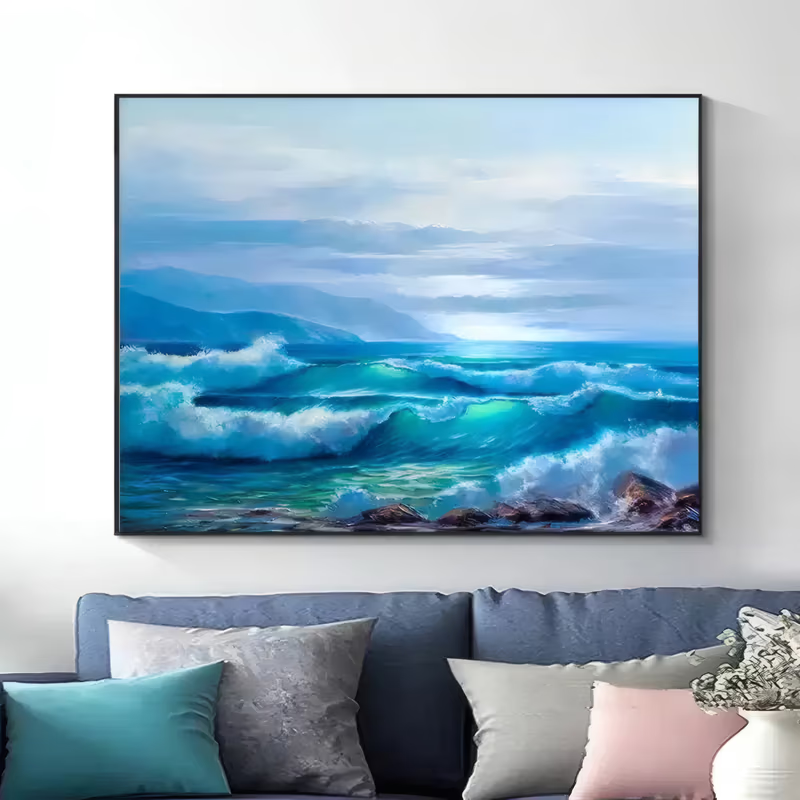
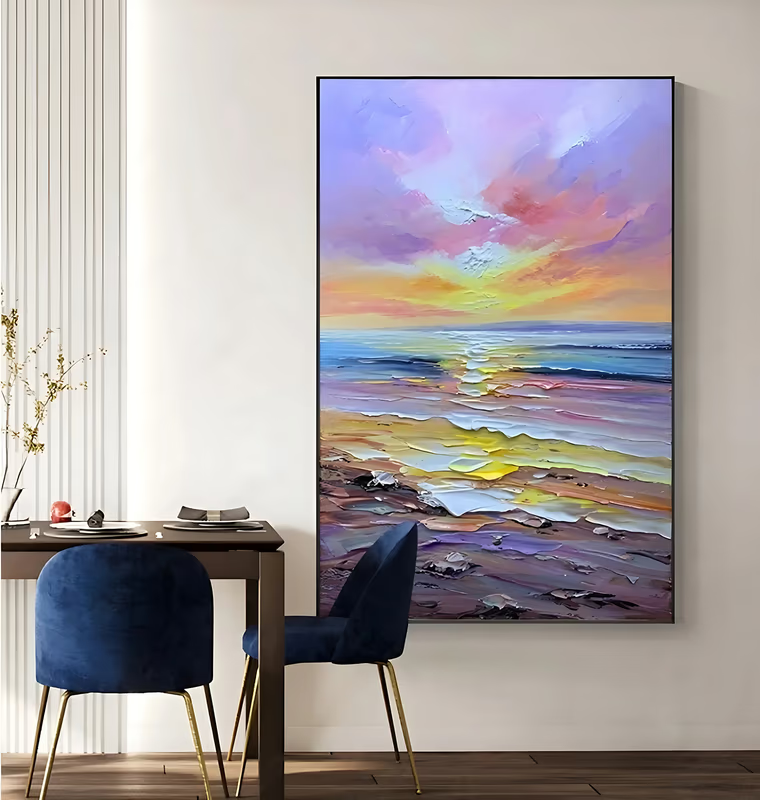
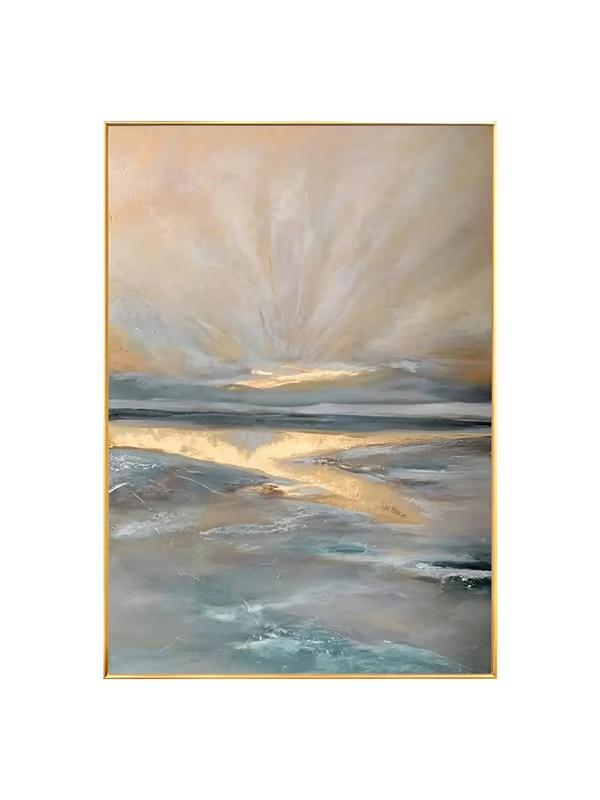
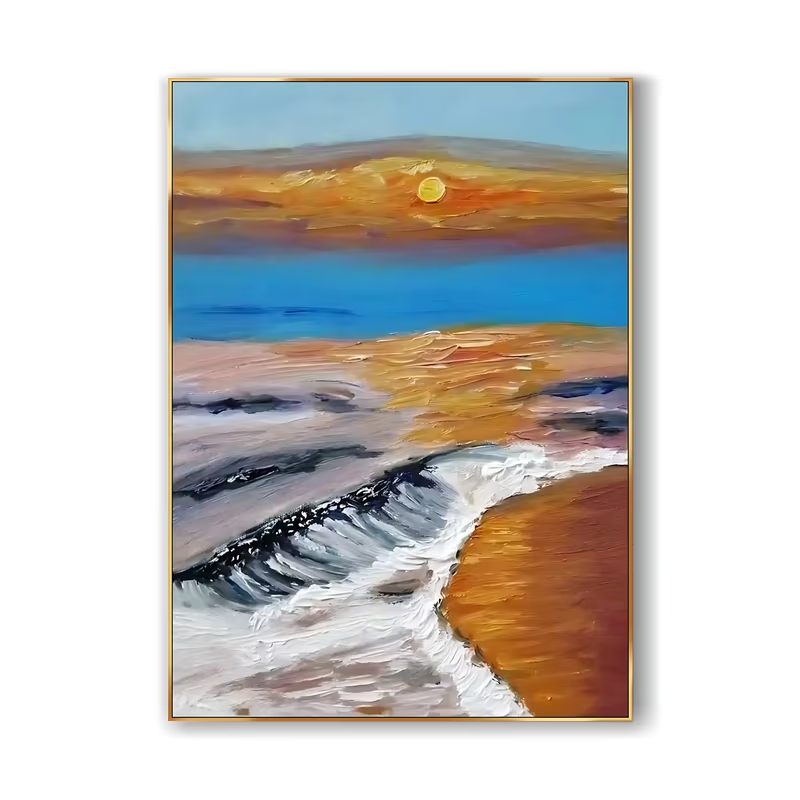
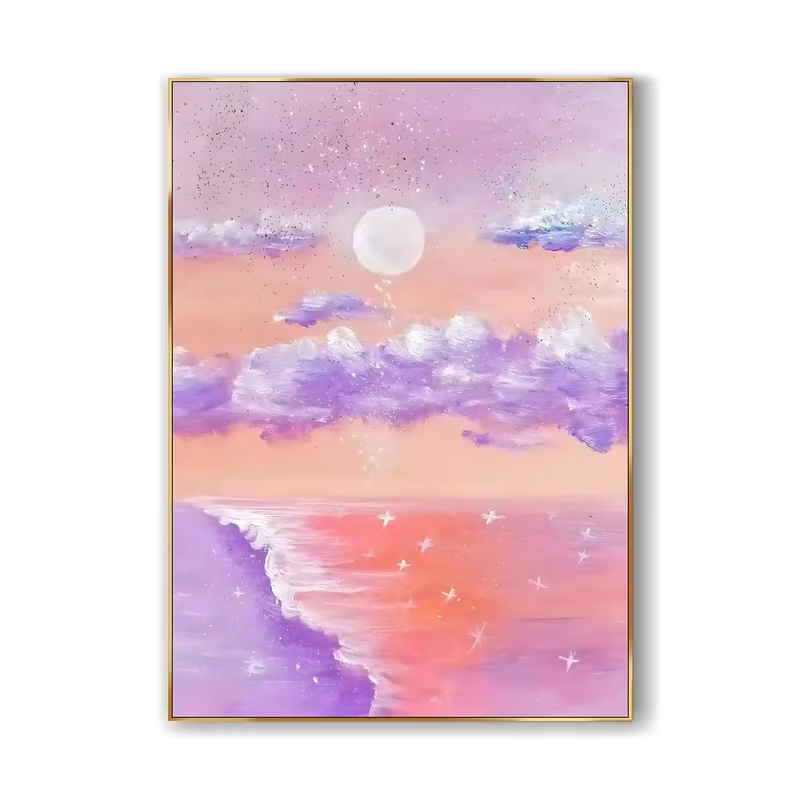
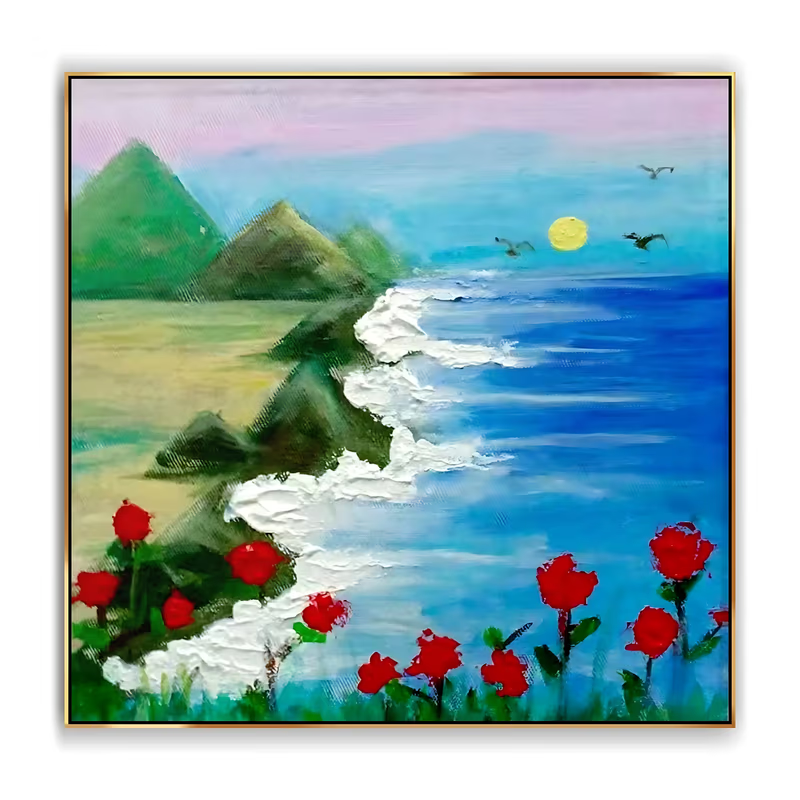
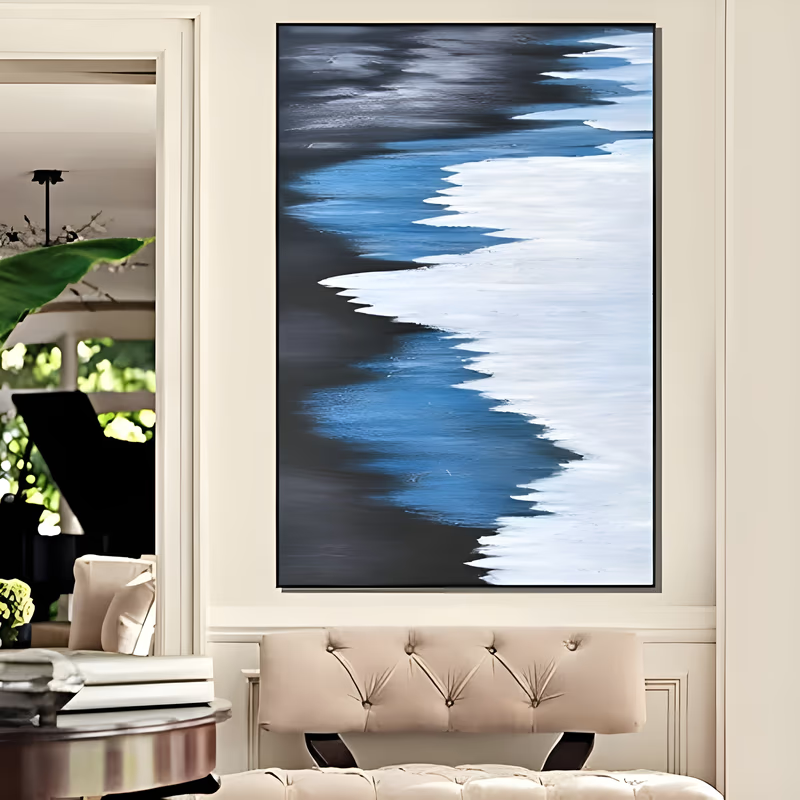
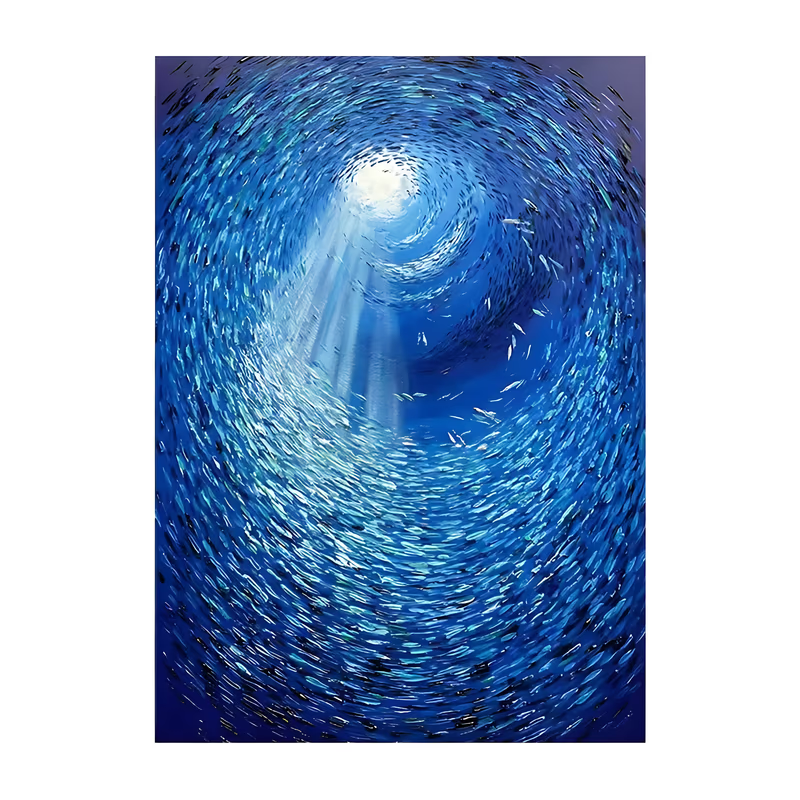
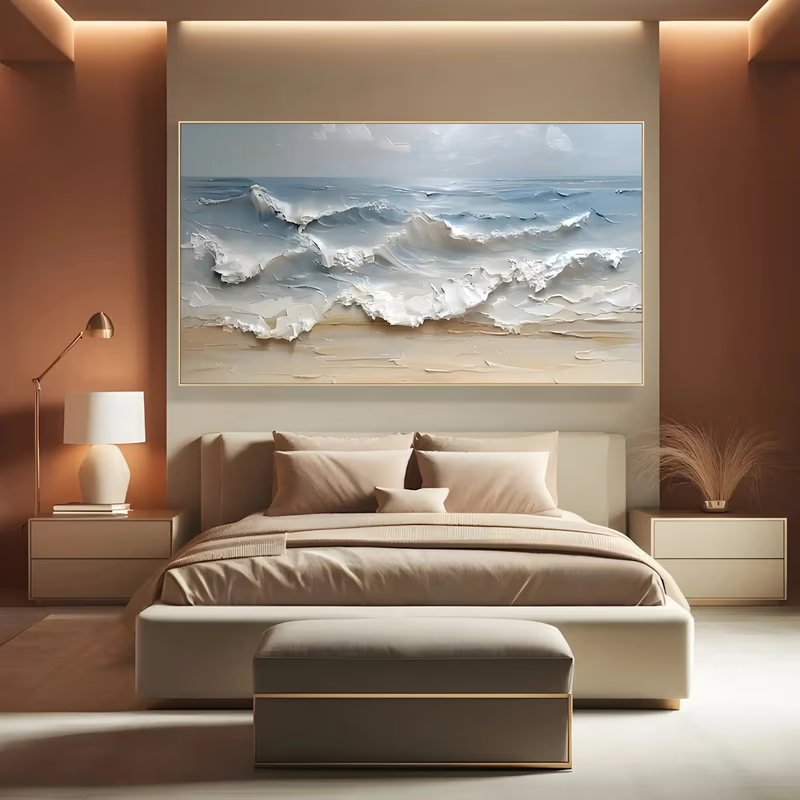
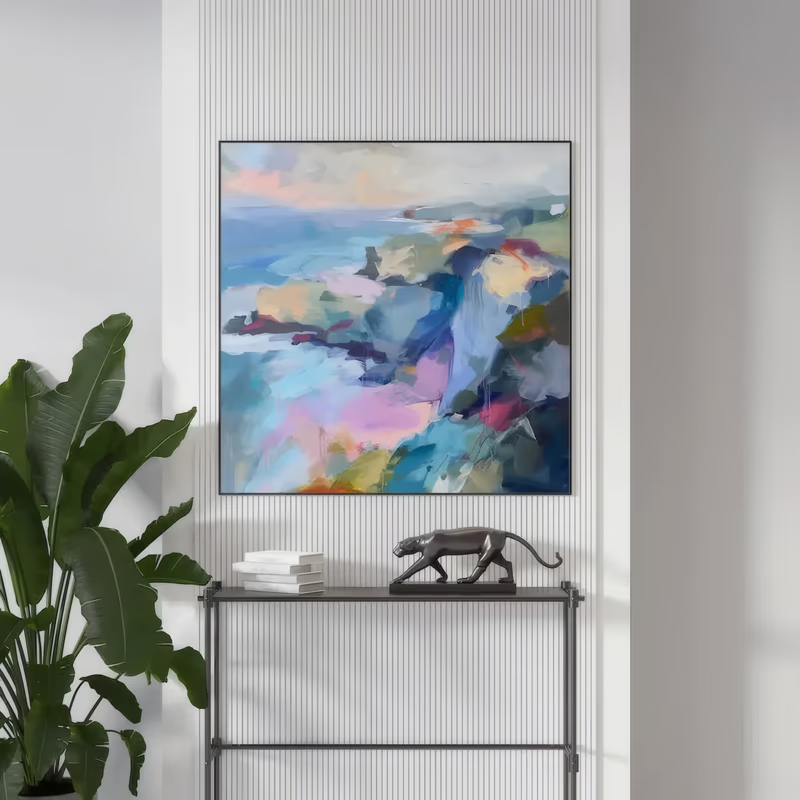
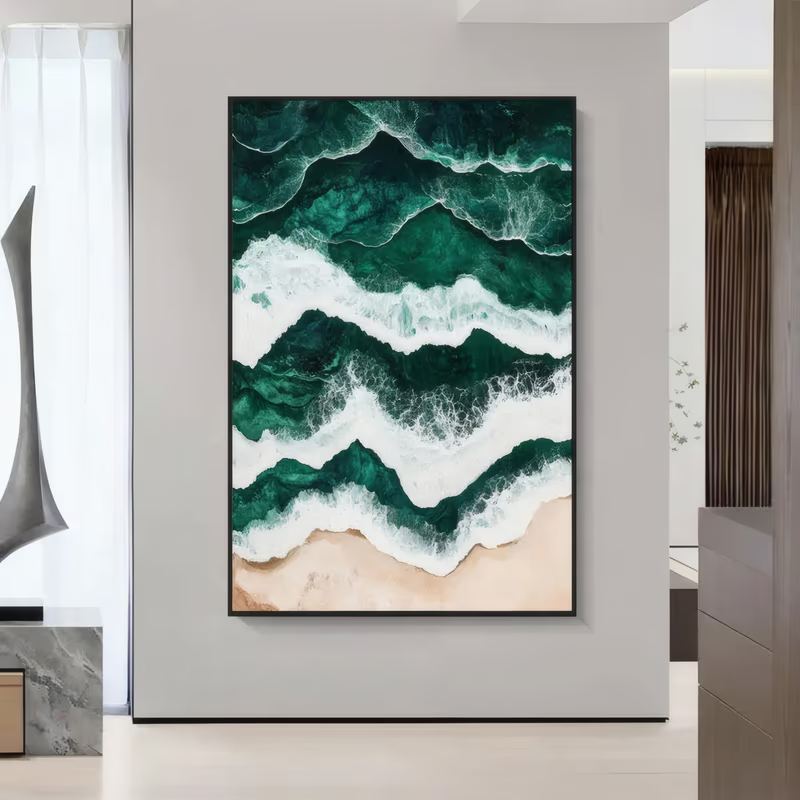
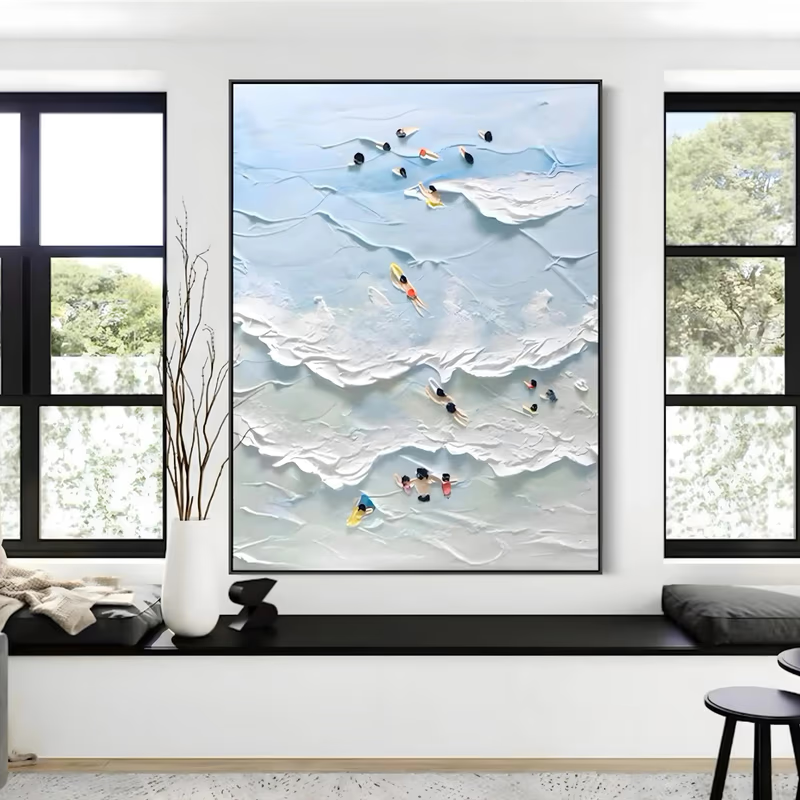
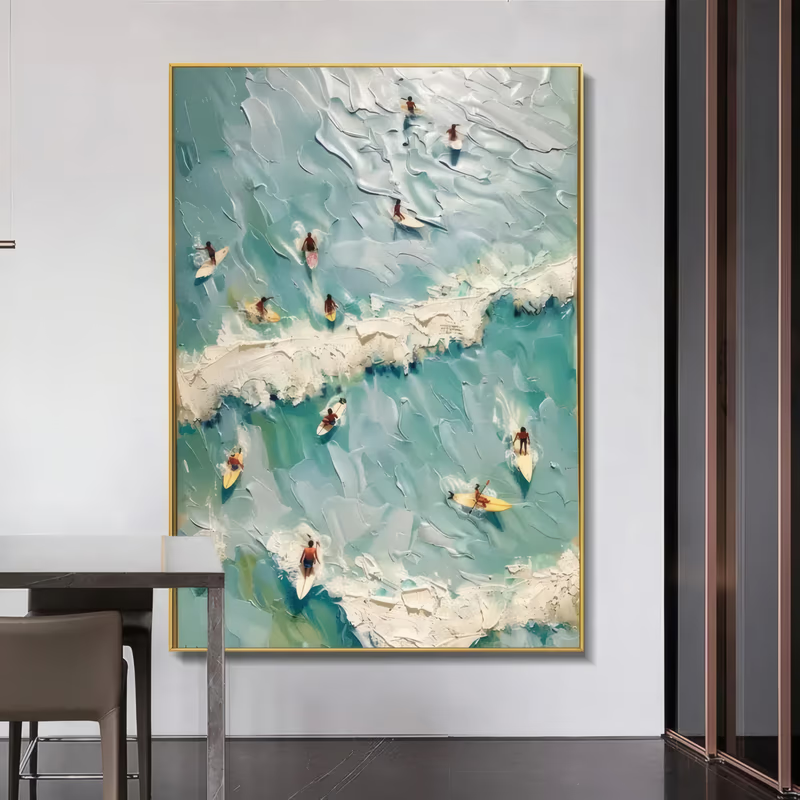
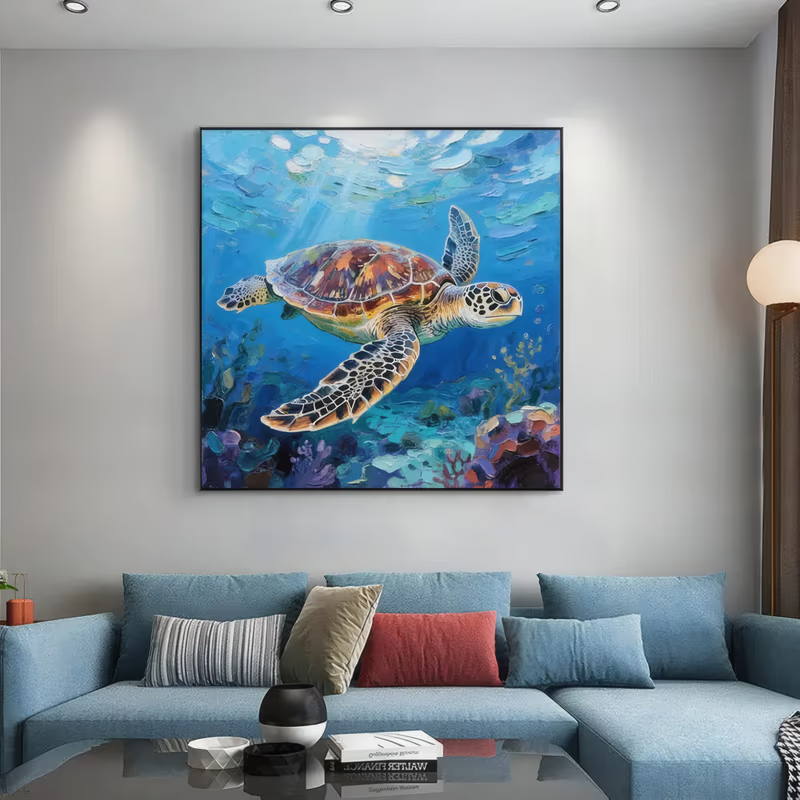
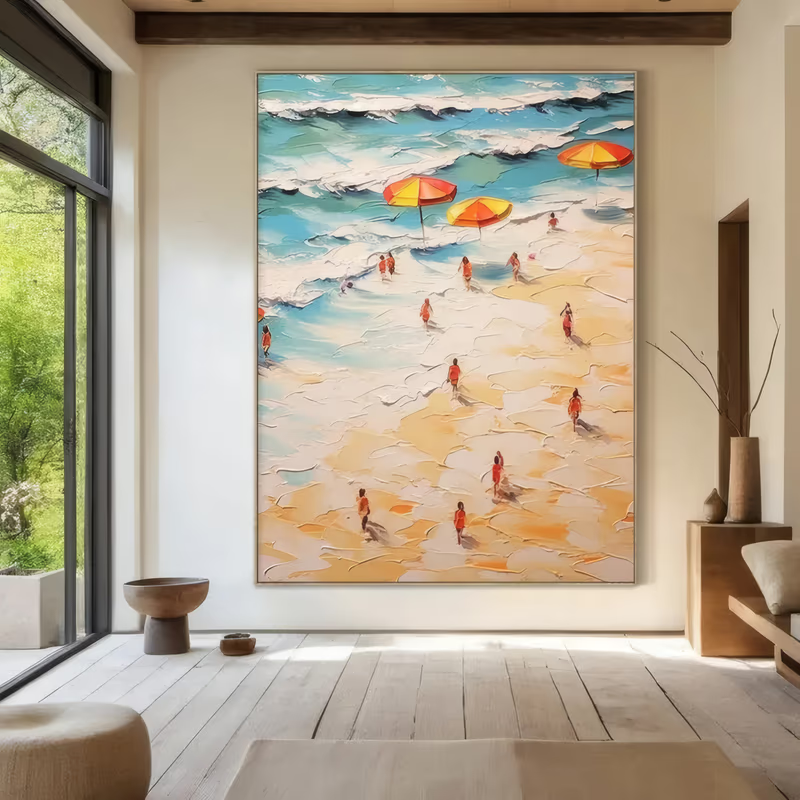
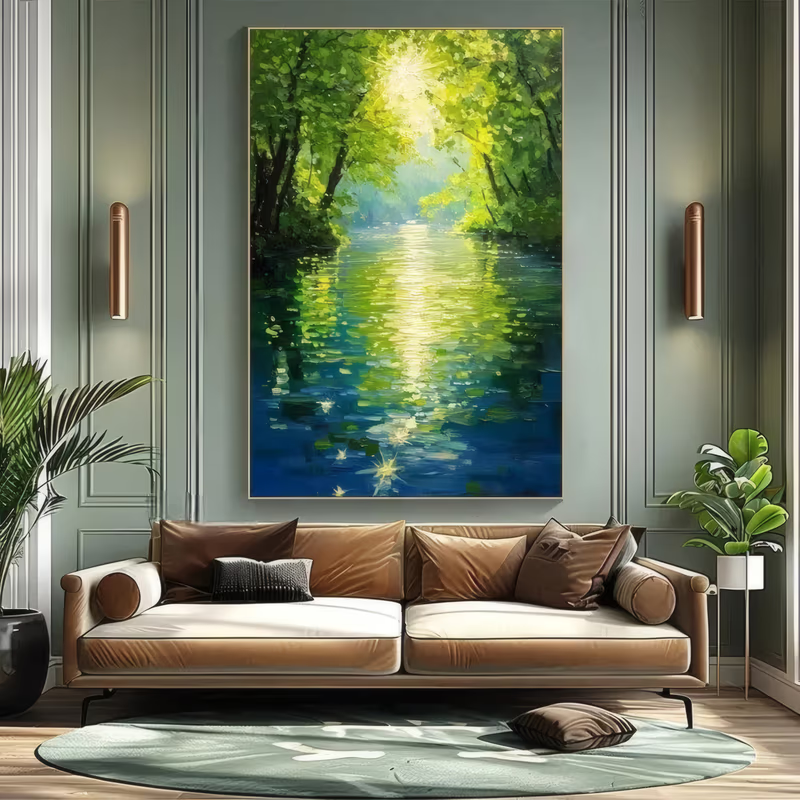
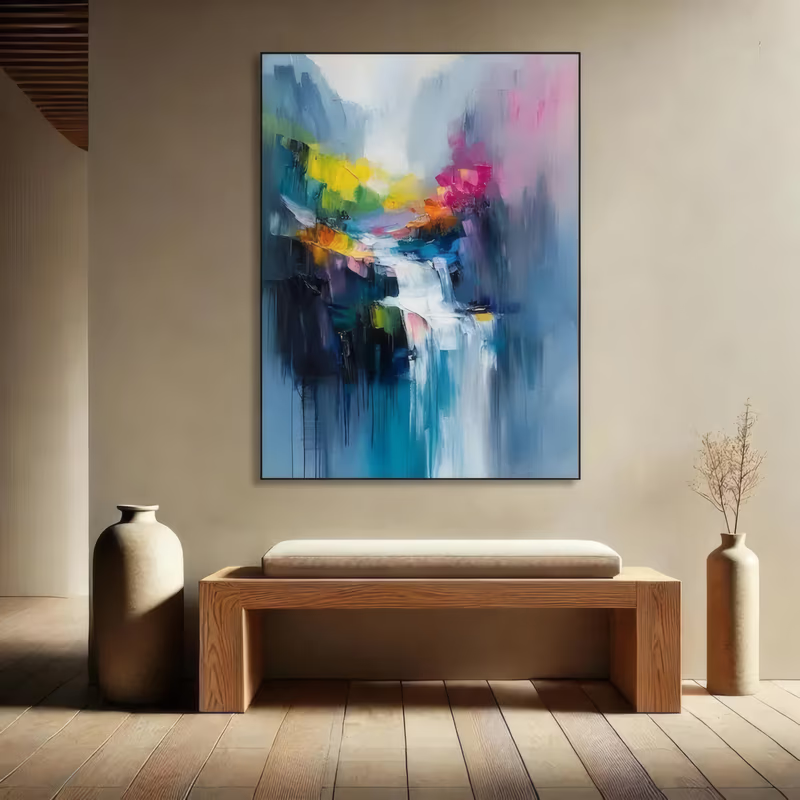
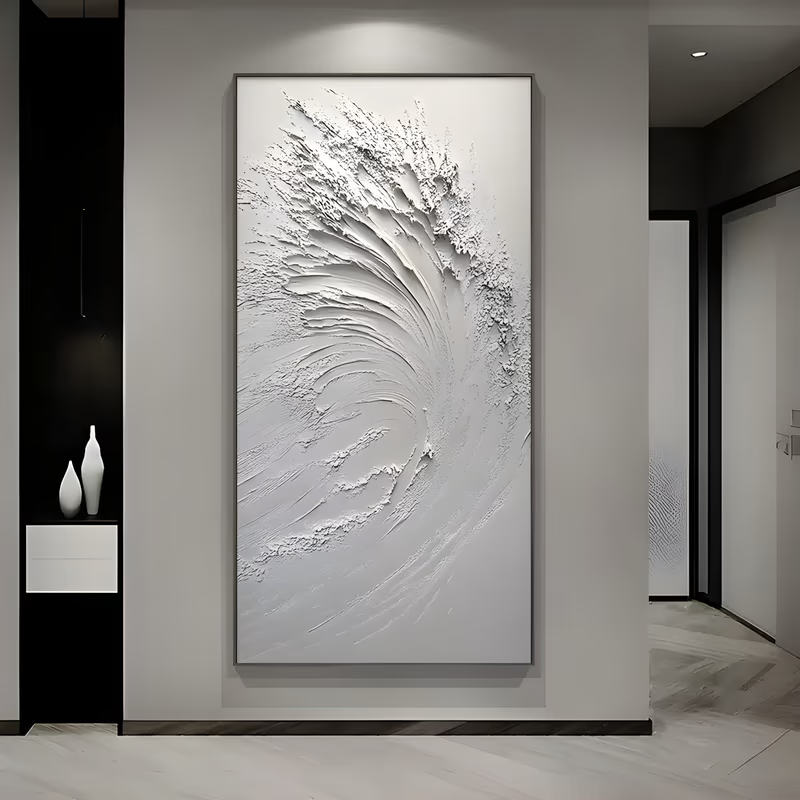
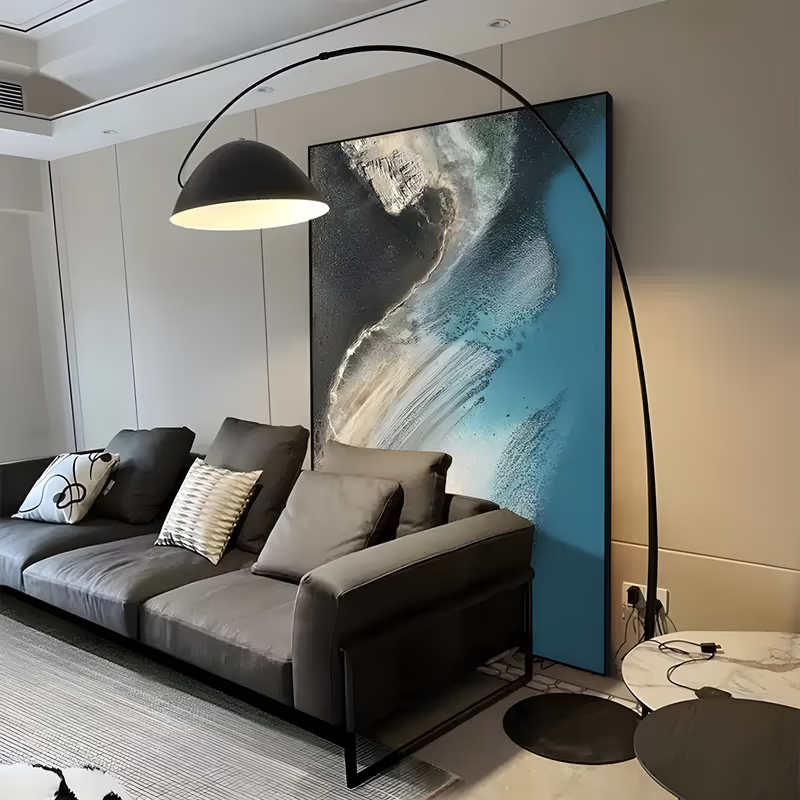
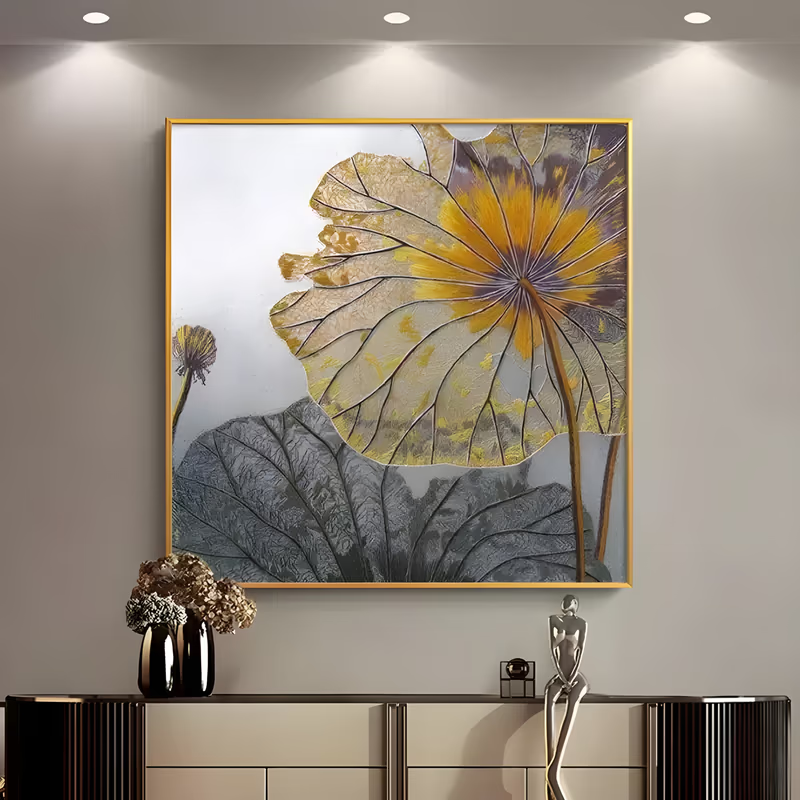
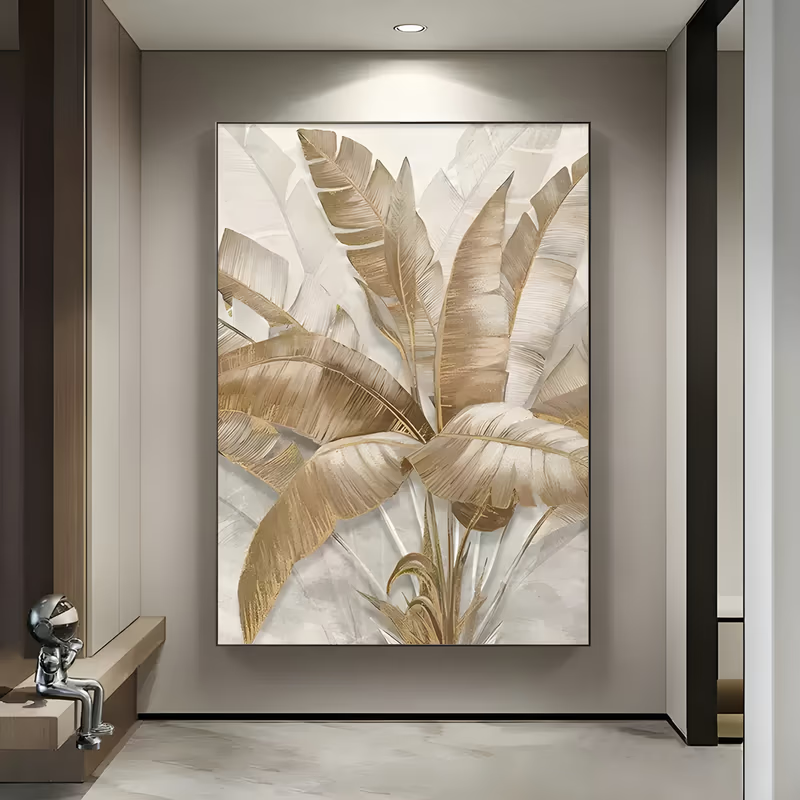
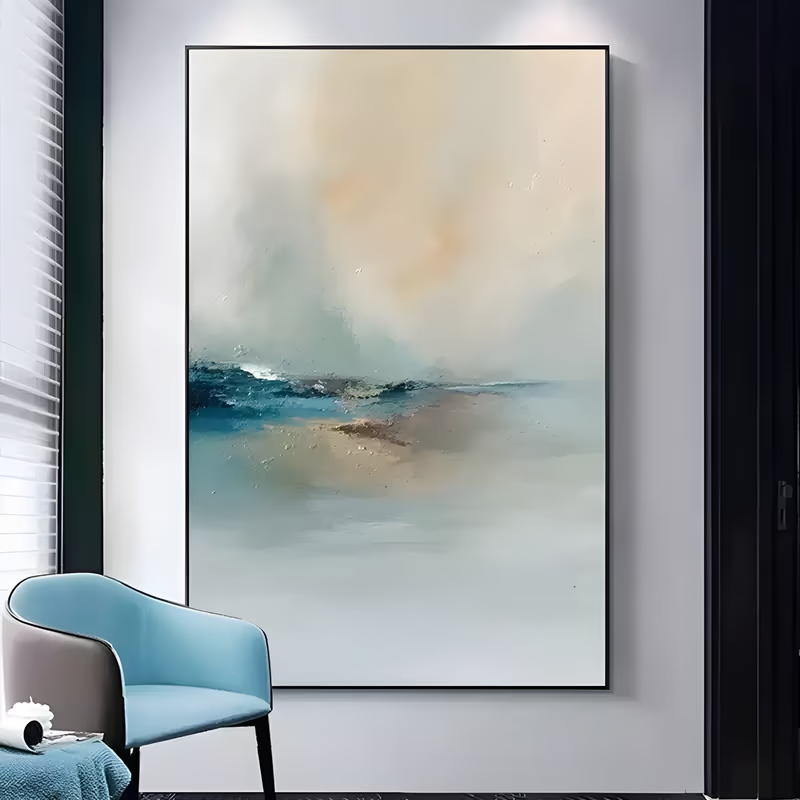
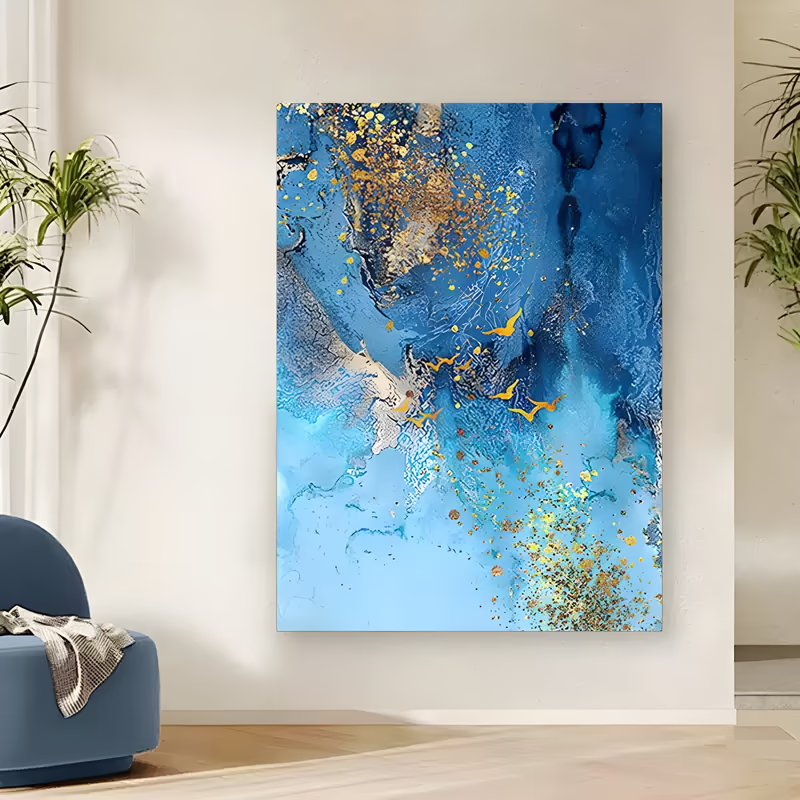
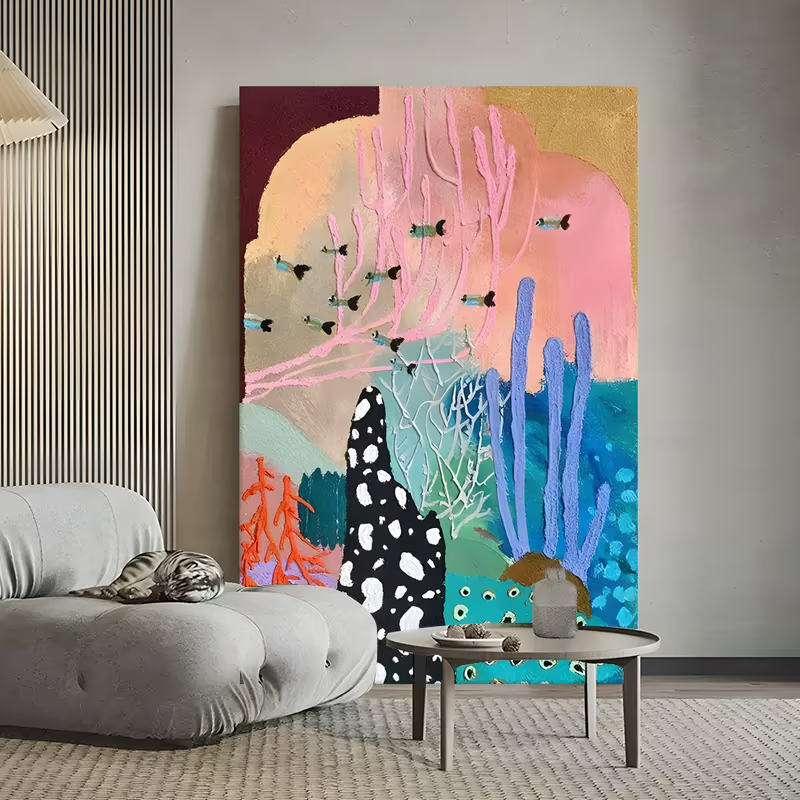
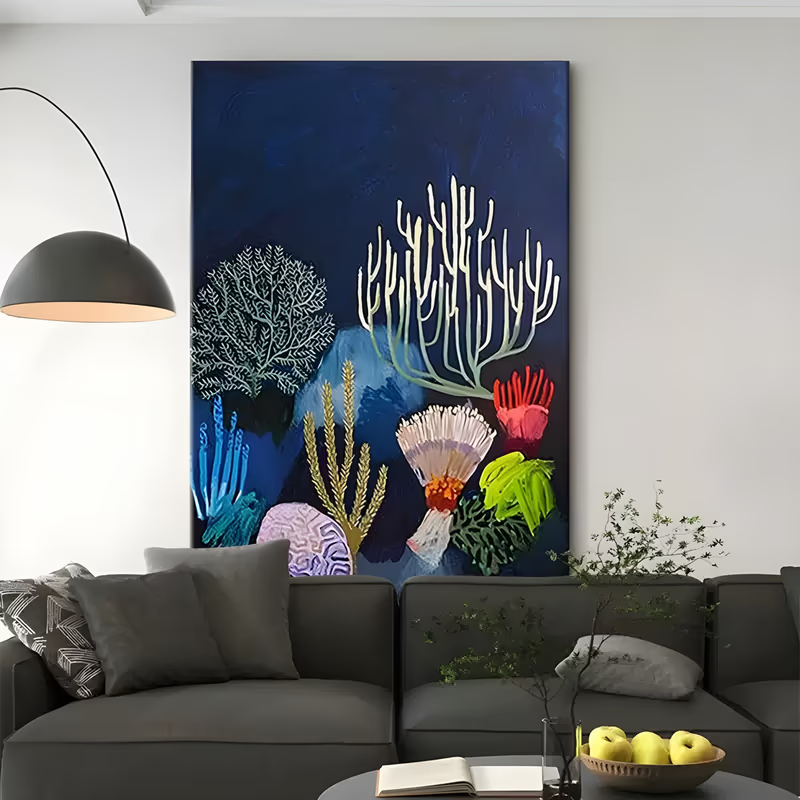
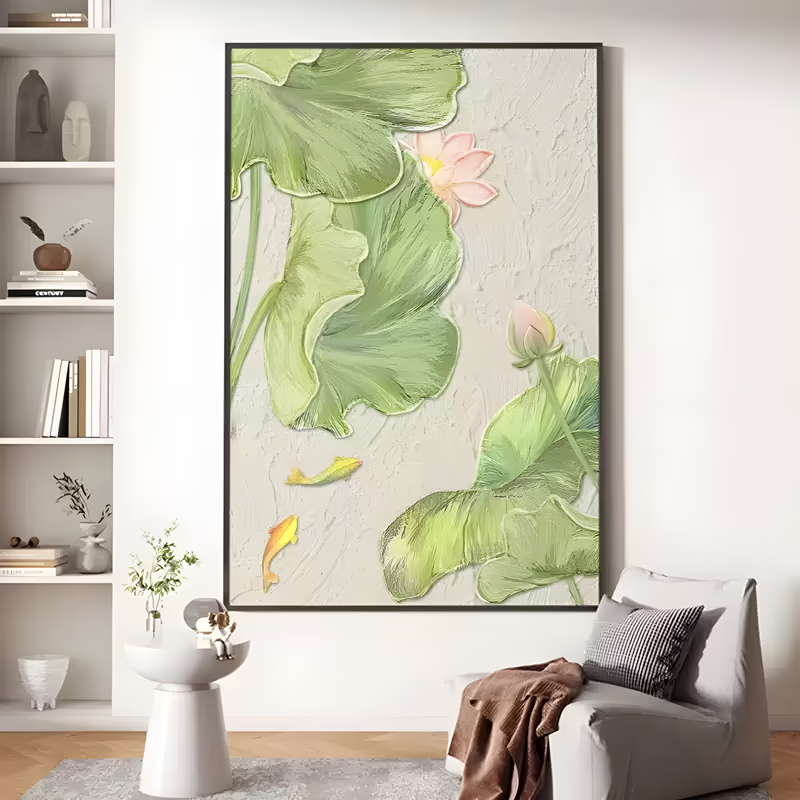
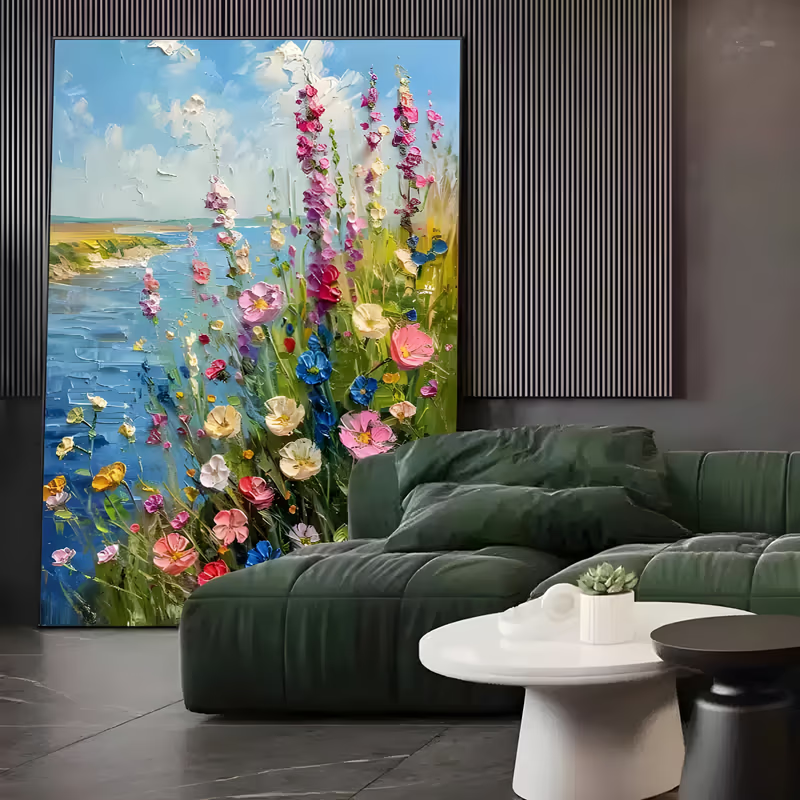
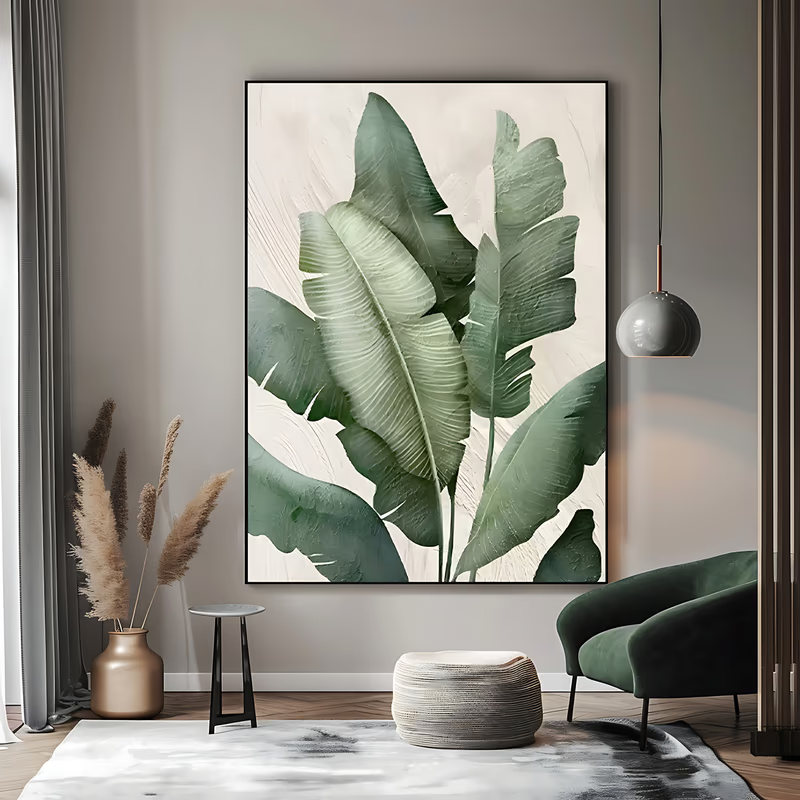
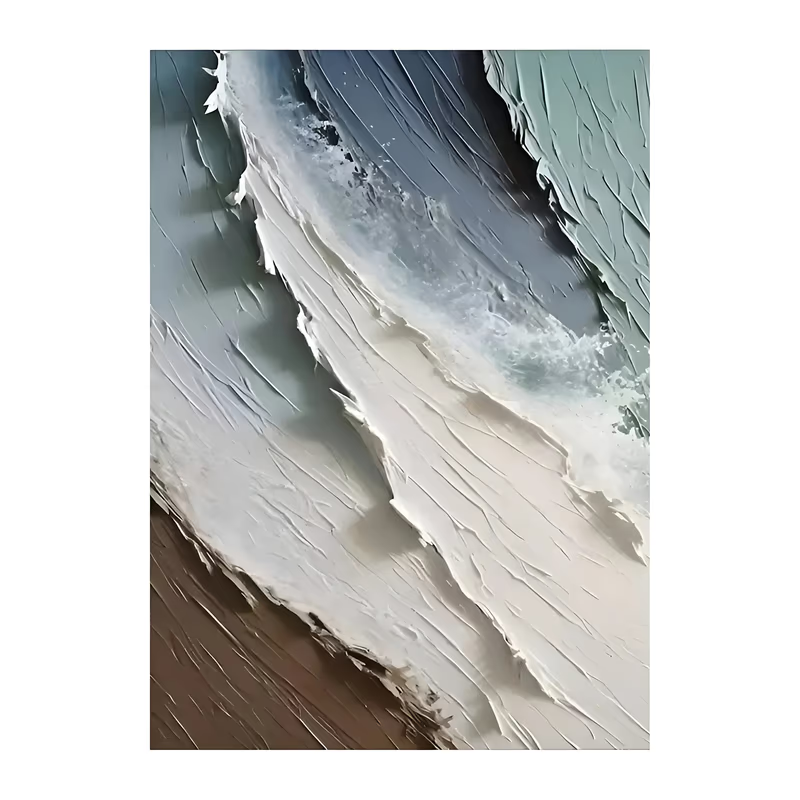
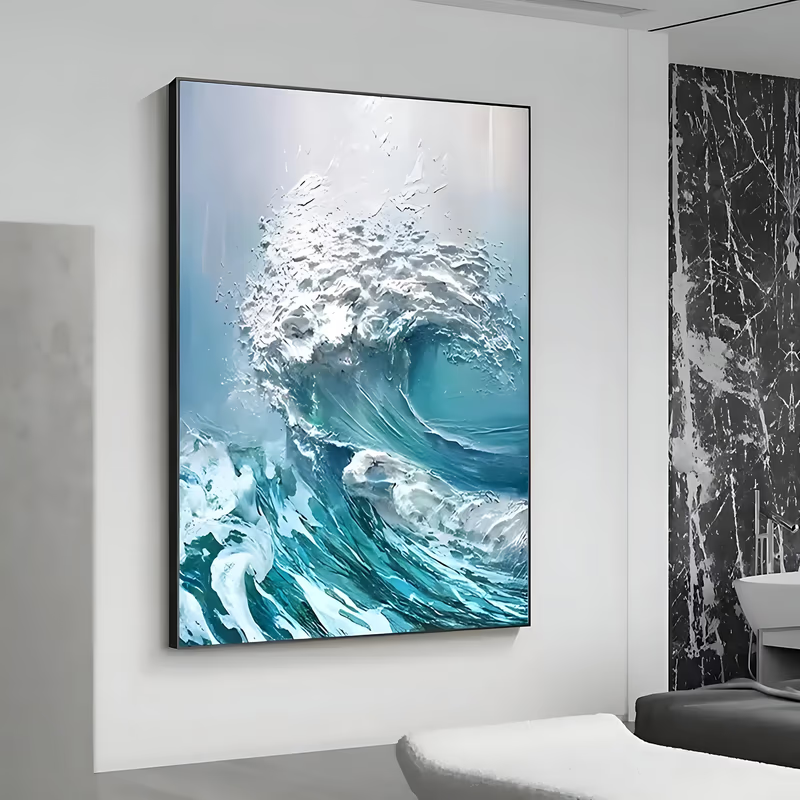
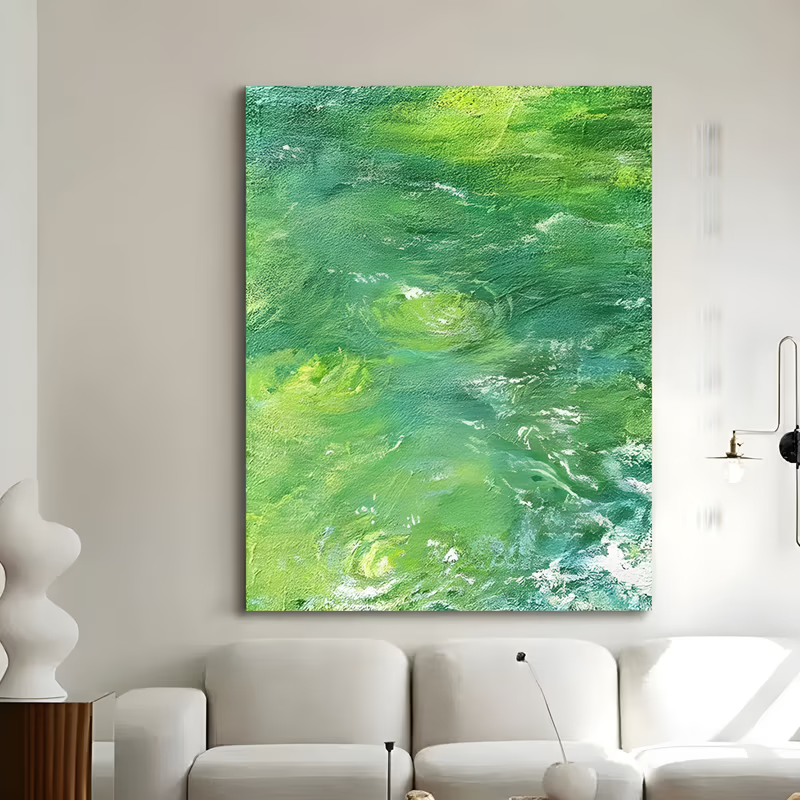
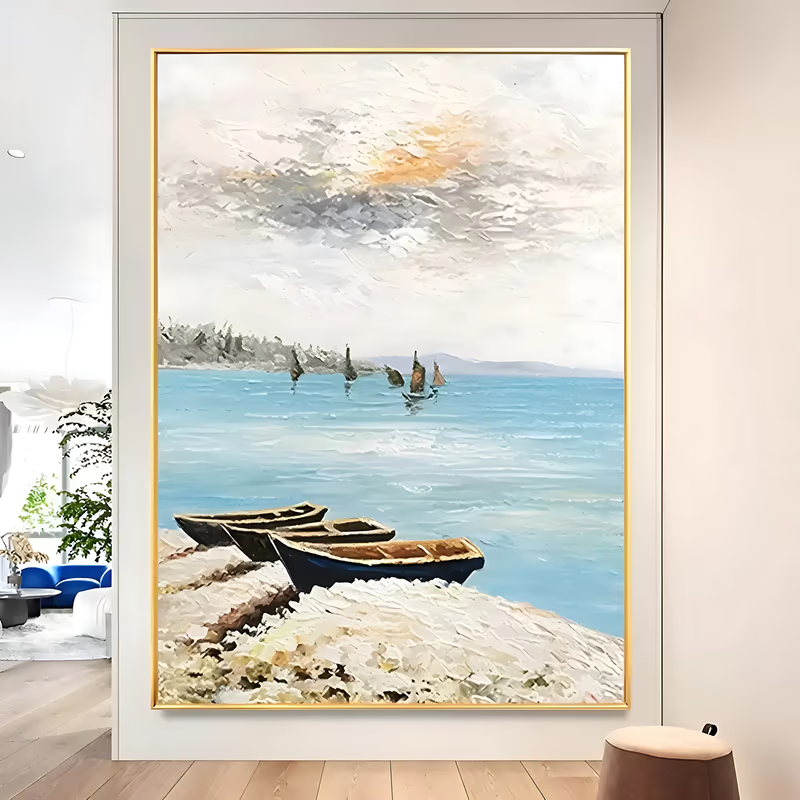
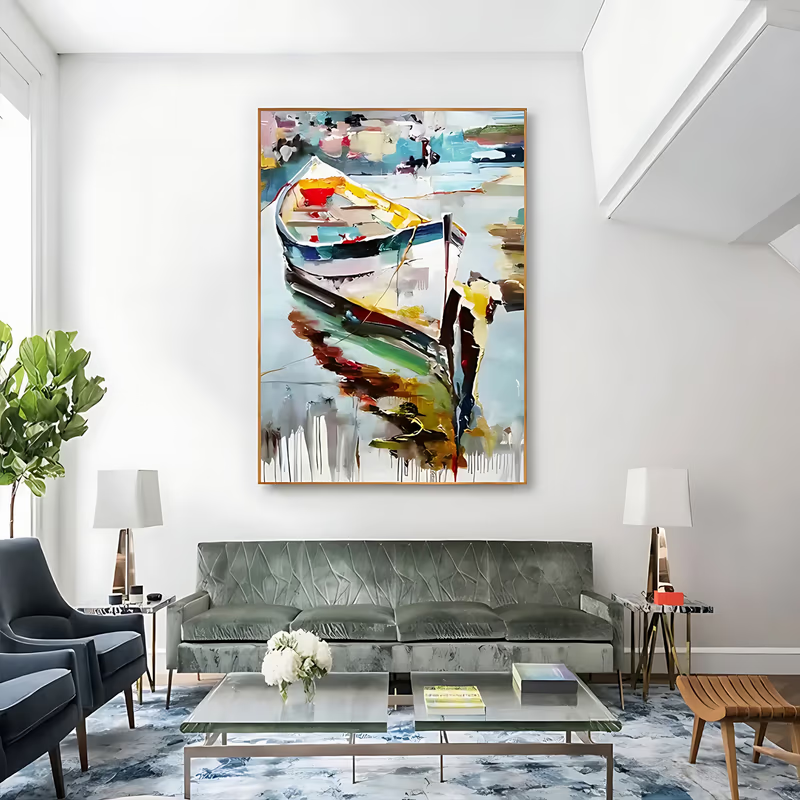
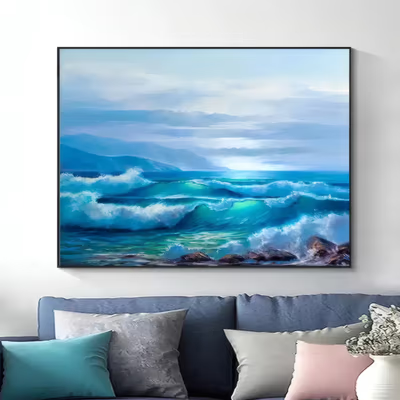
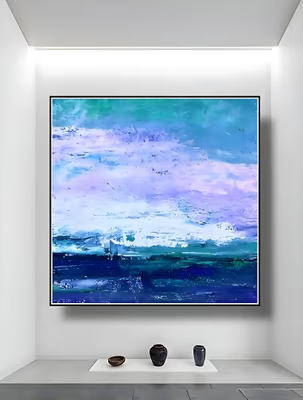
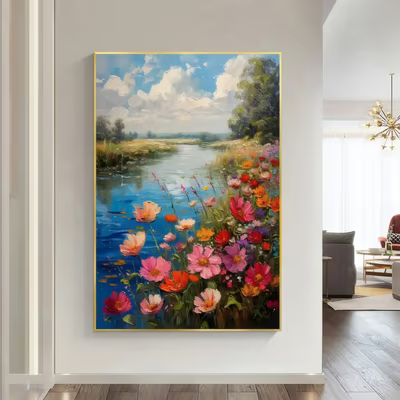
Bathroom wall art works best when it echoes water, plants or quiet texture: seascapes and waves, lotus ponds and botanicals, and pale plaster-relief abstracts.
Seascapes, waves and shorelines
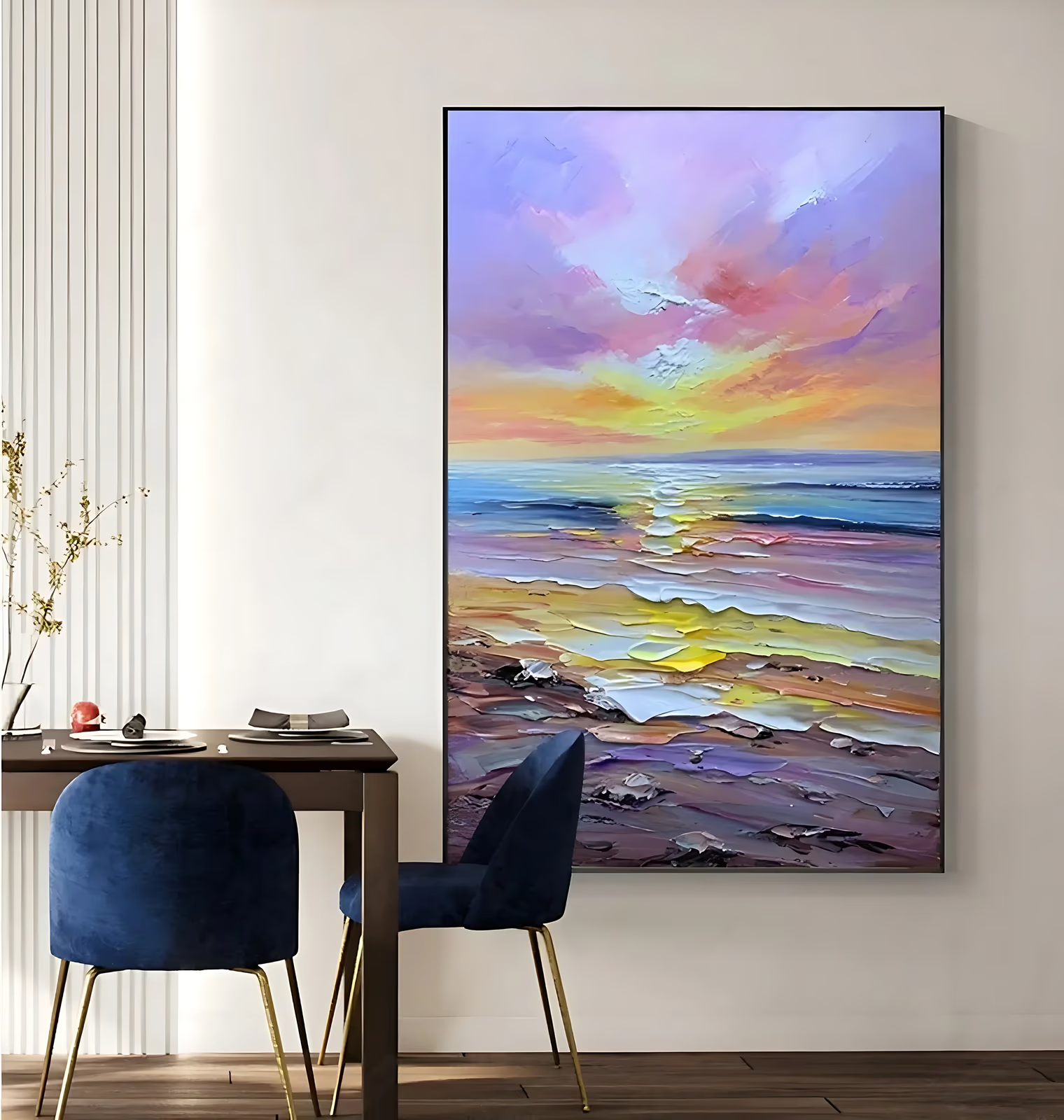
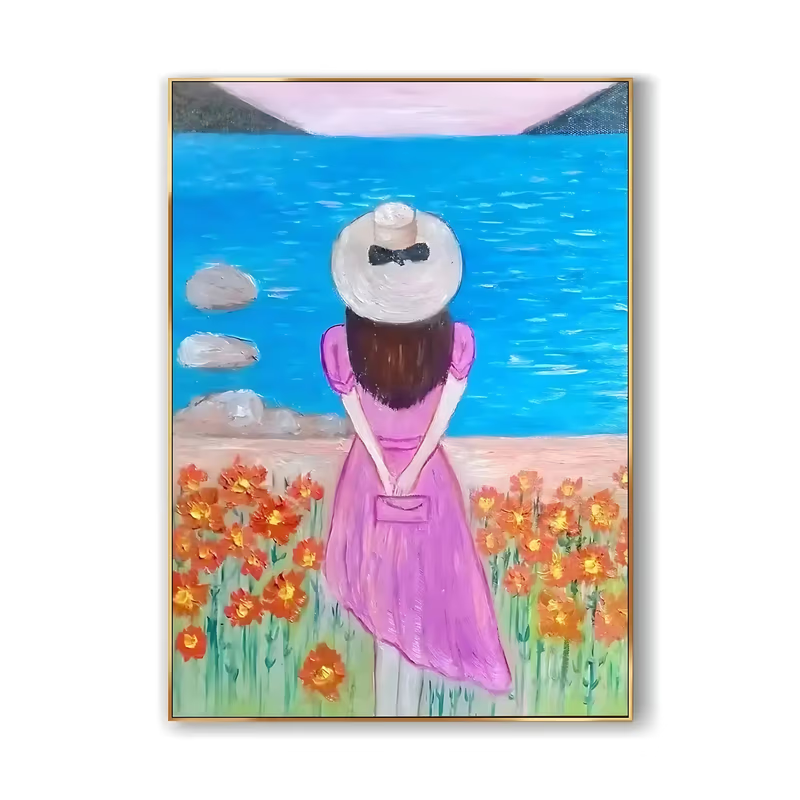
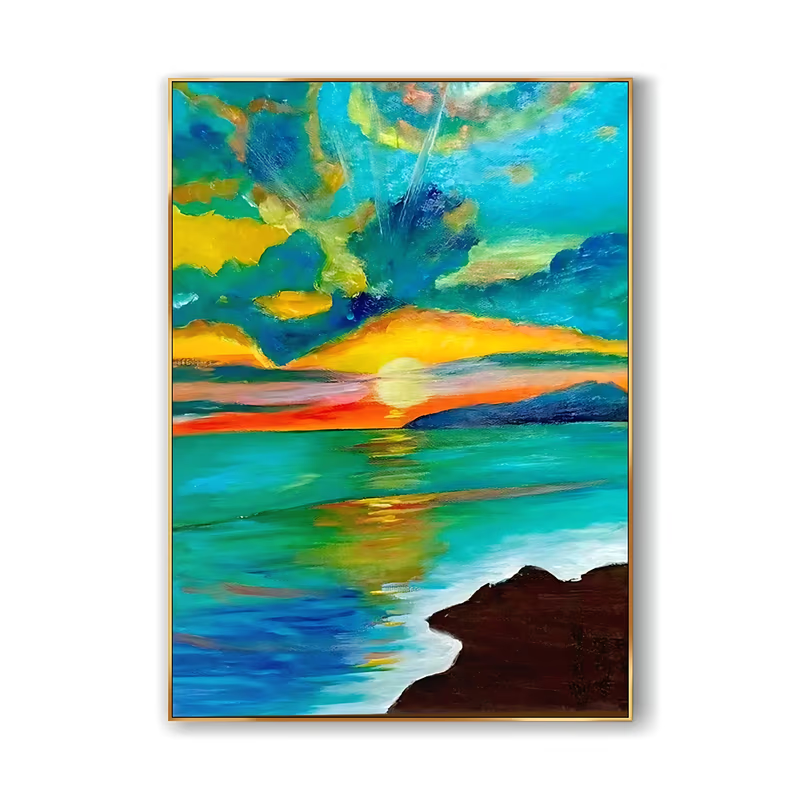
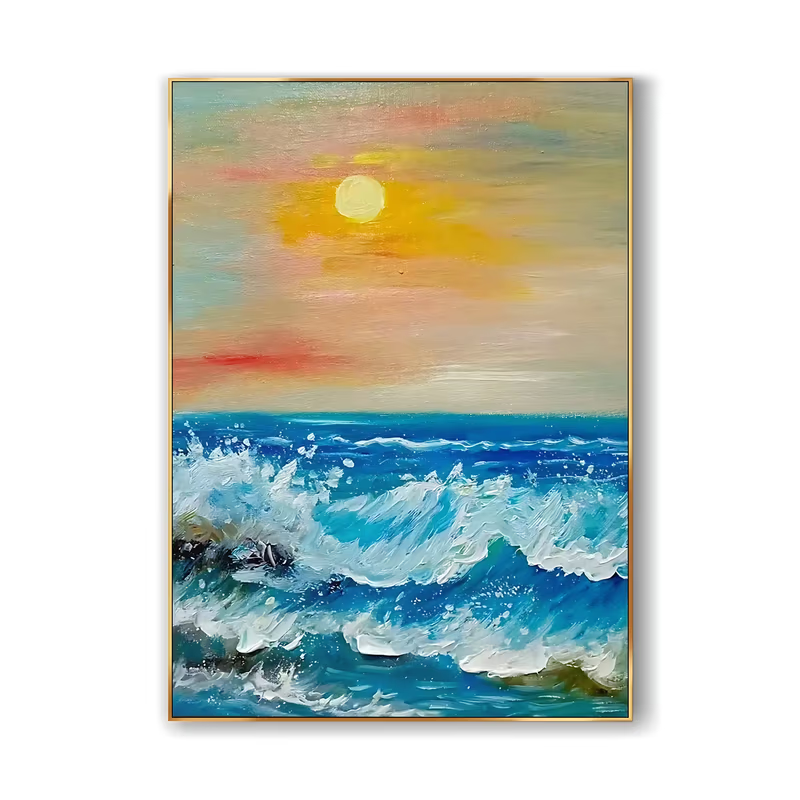
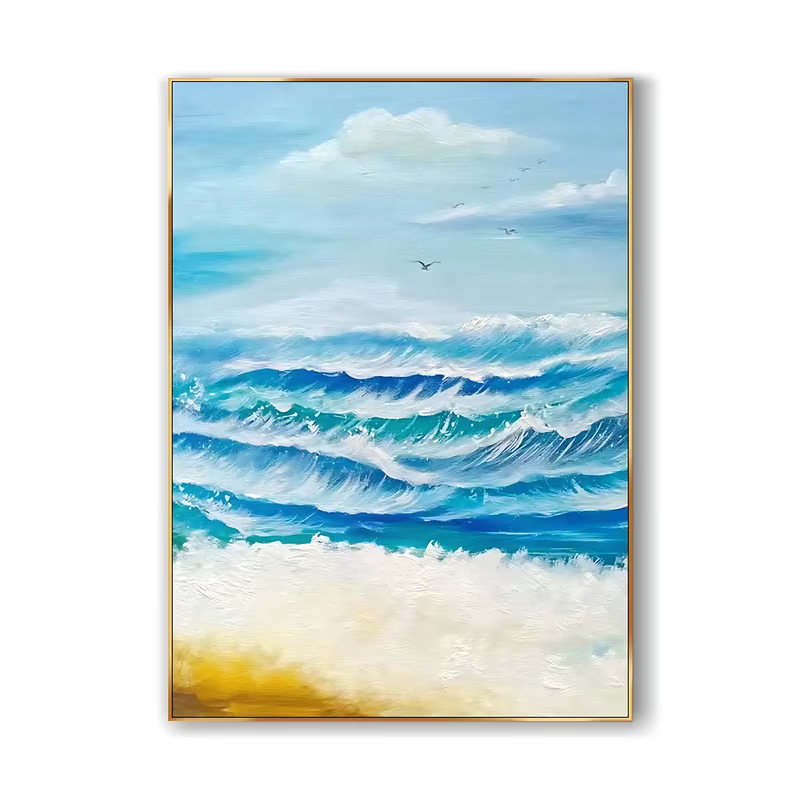
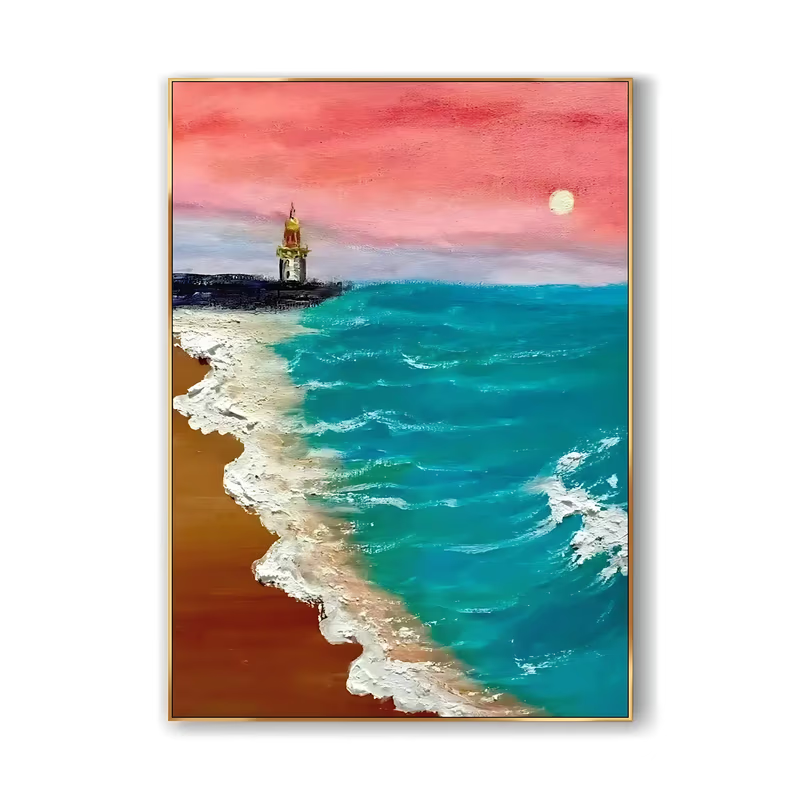
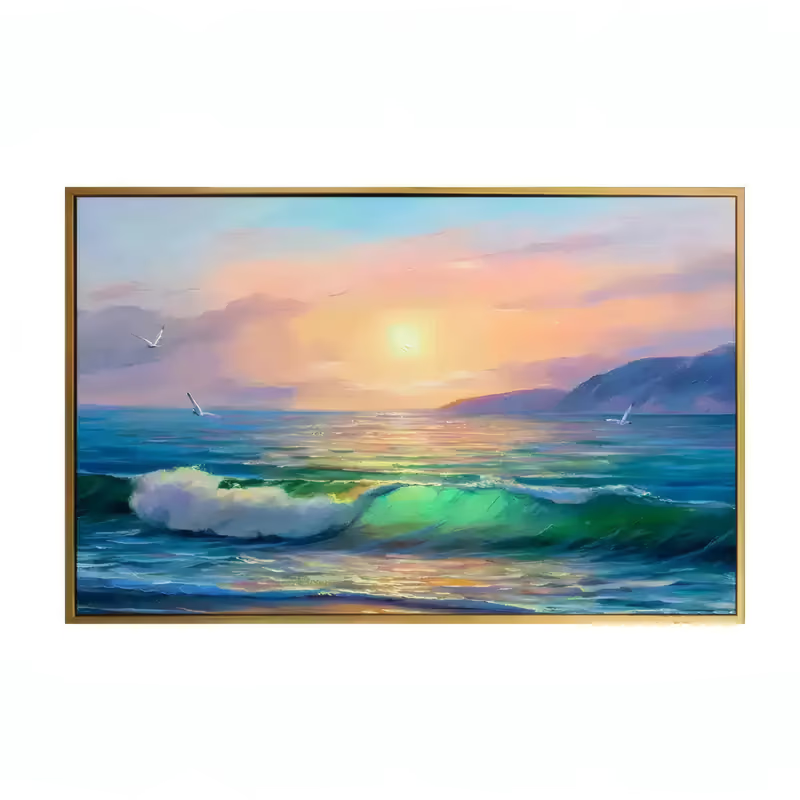
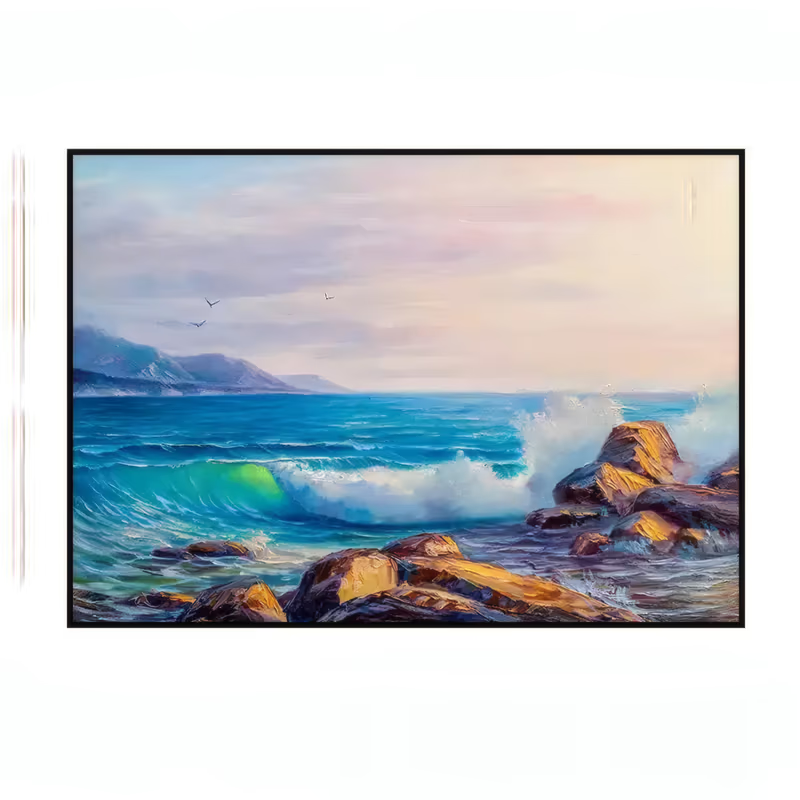
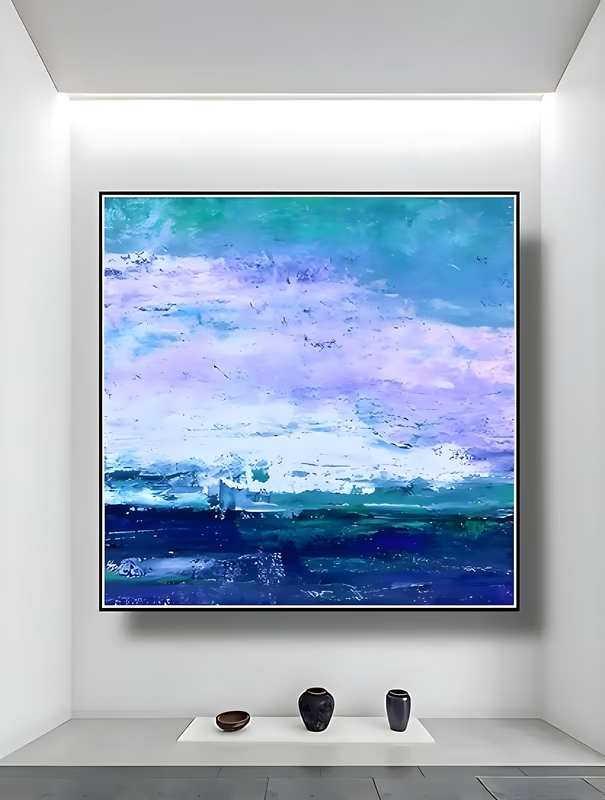
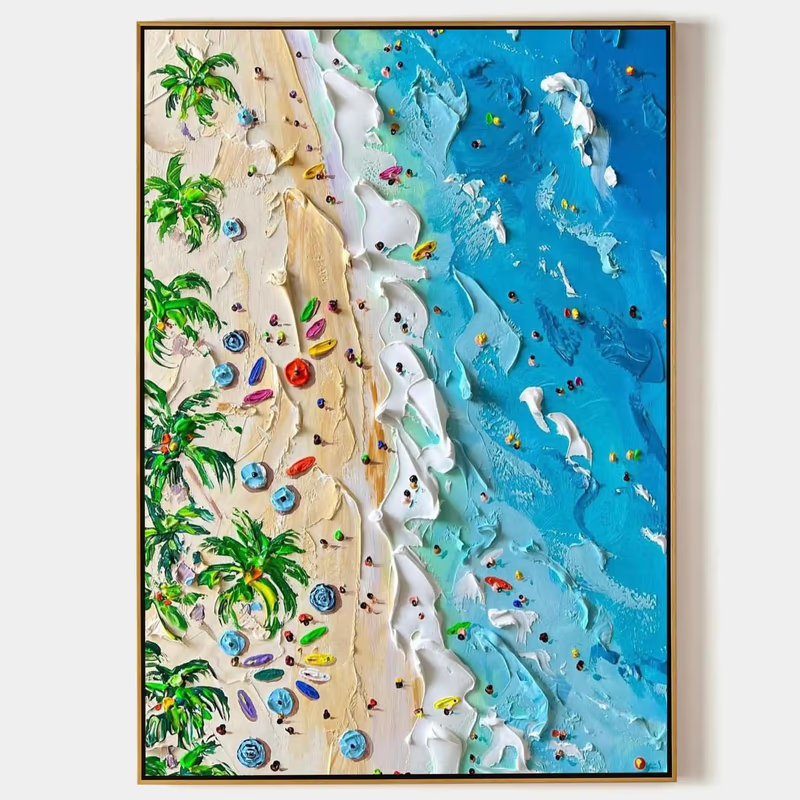
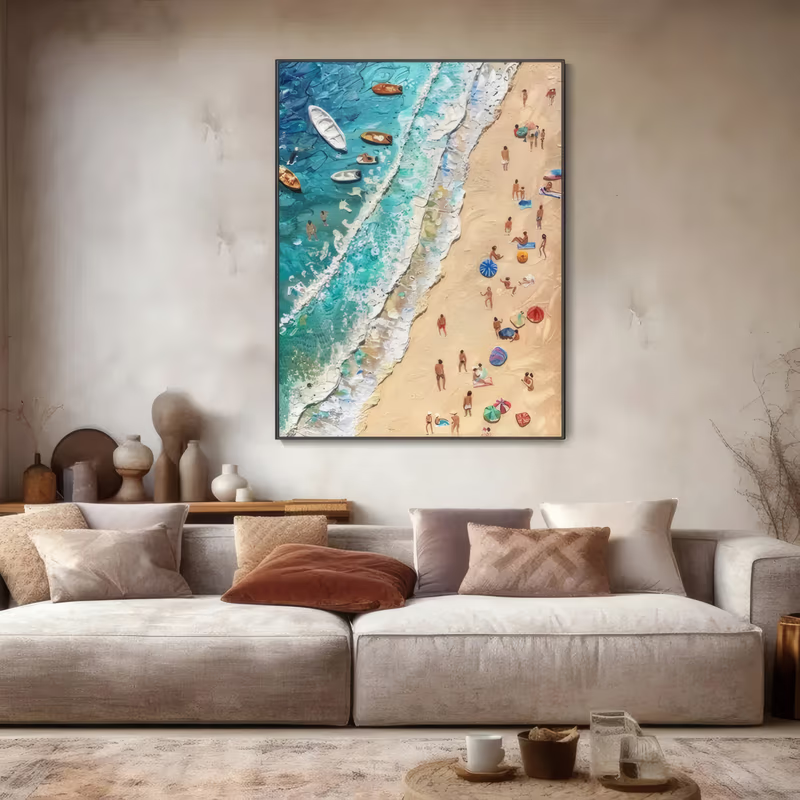
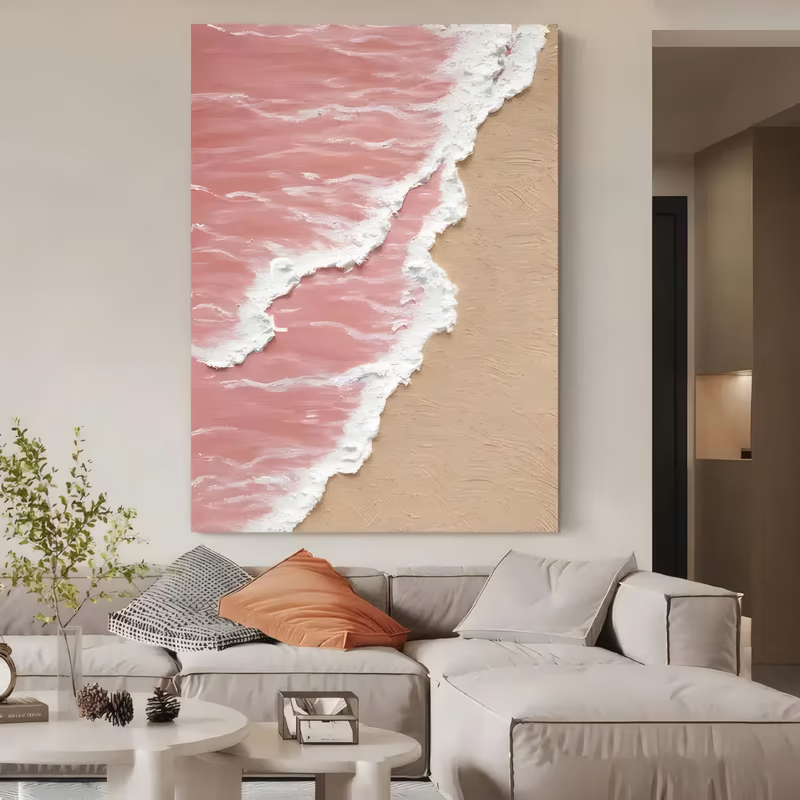
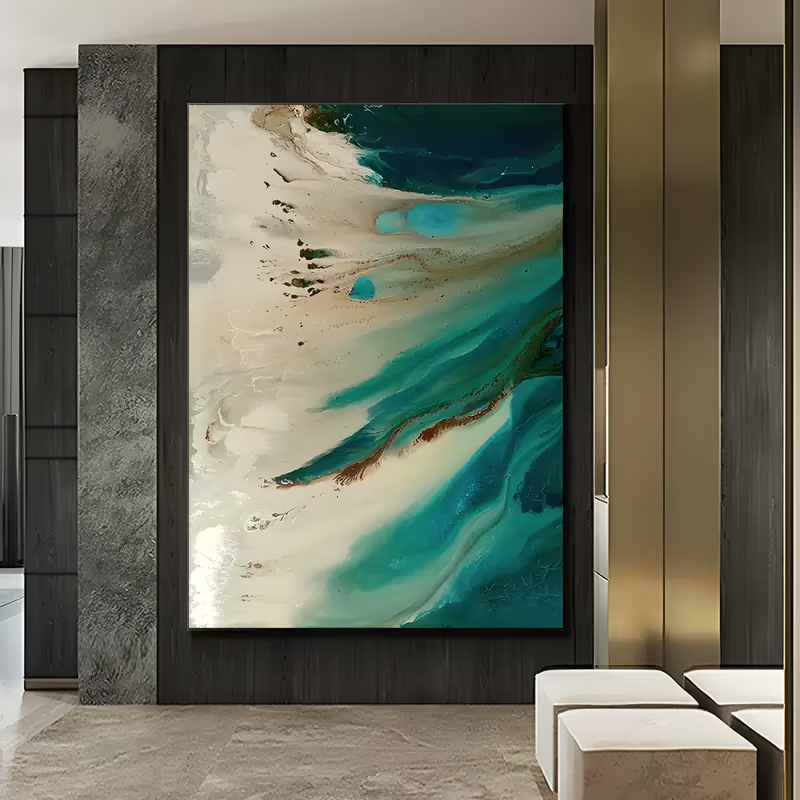
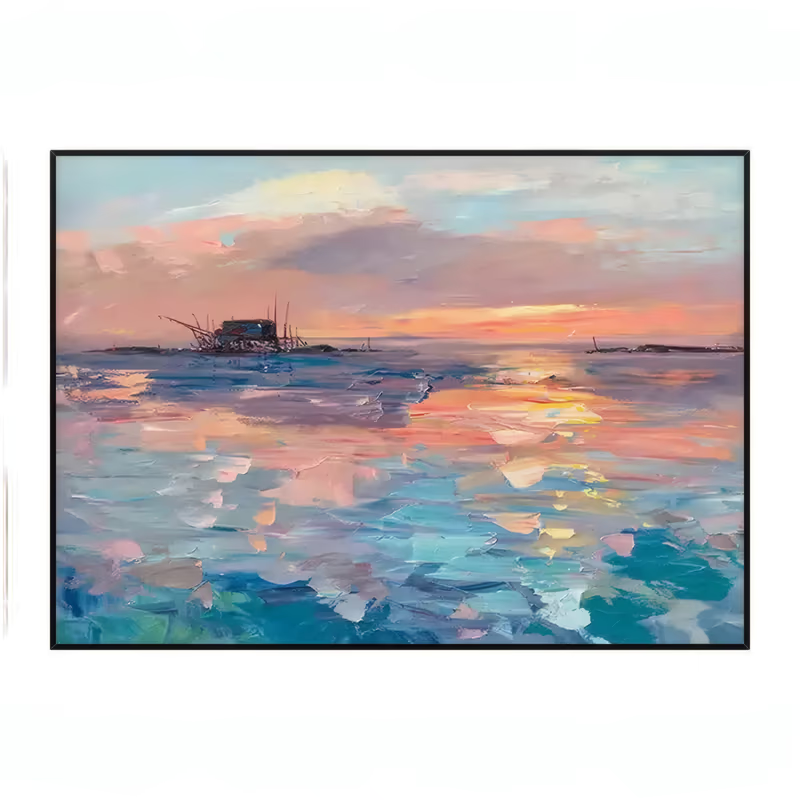
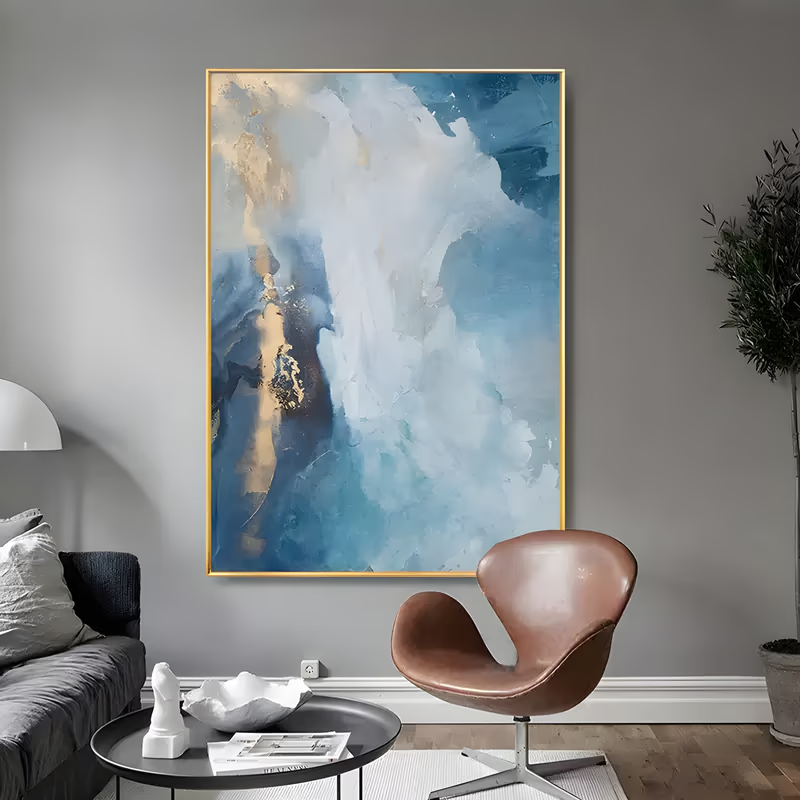
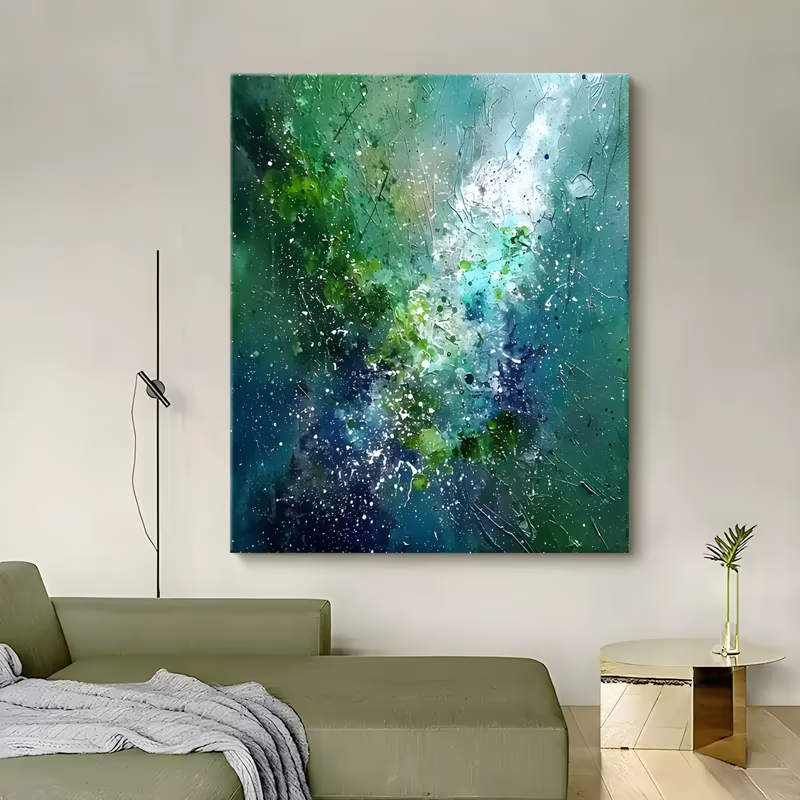
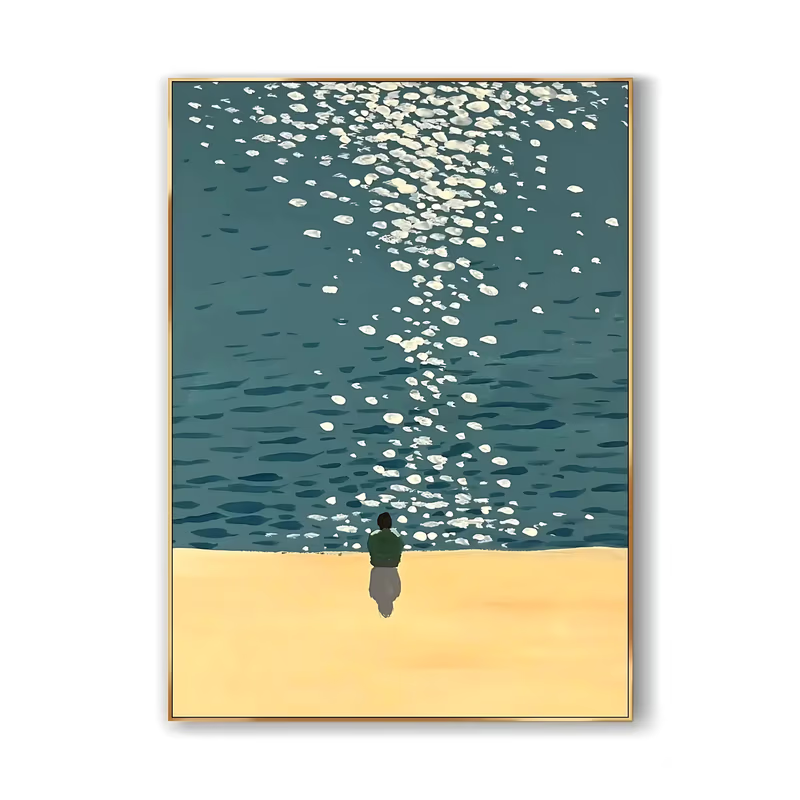
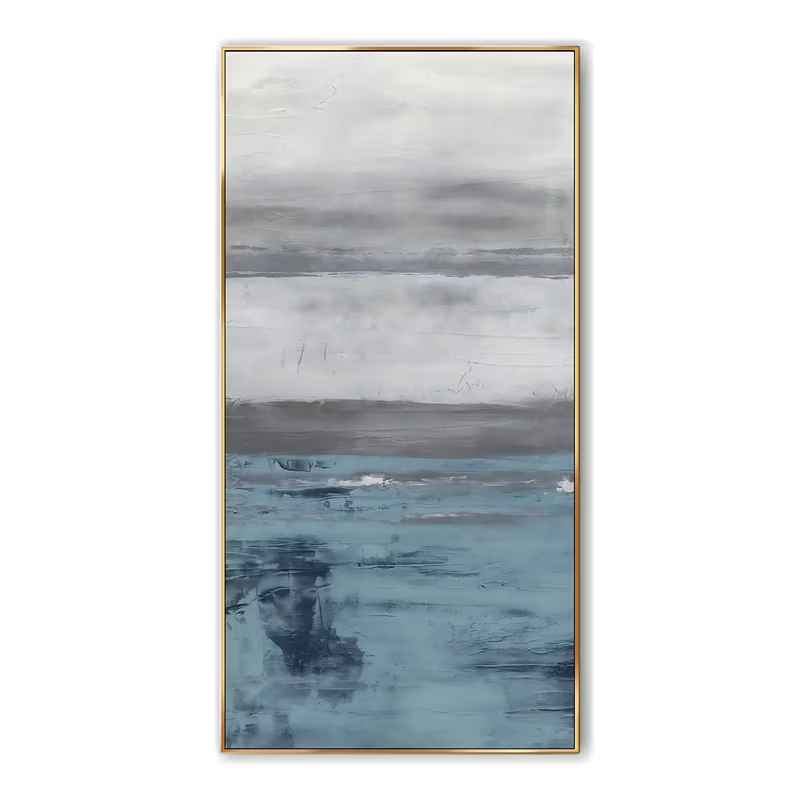
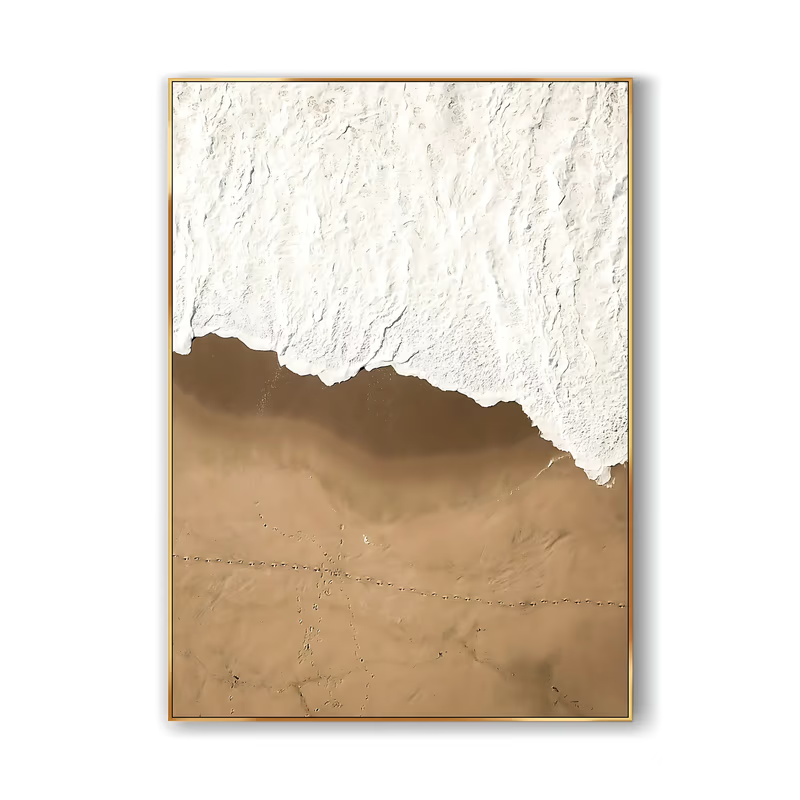
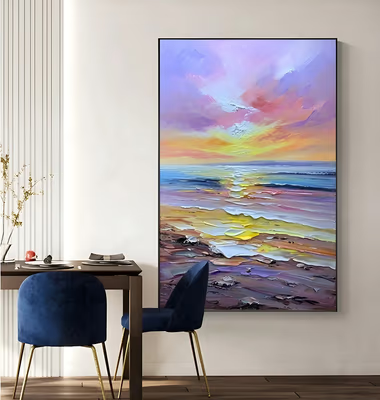
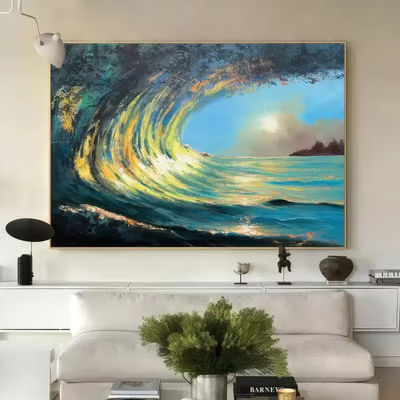
Turquoise surf on pale sand, a lavender sunset over a still sea, a lighthouse on a headland. A painted horizon gives a small, windowless bathroom a sense of distance, and the blues and sea-greens sit naturally beside white tiles and chrome. All seascapes for bathrooms.
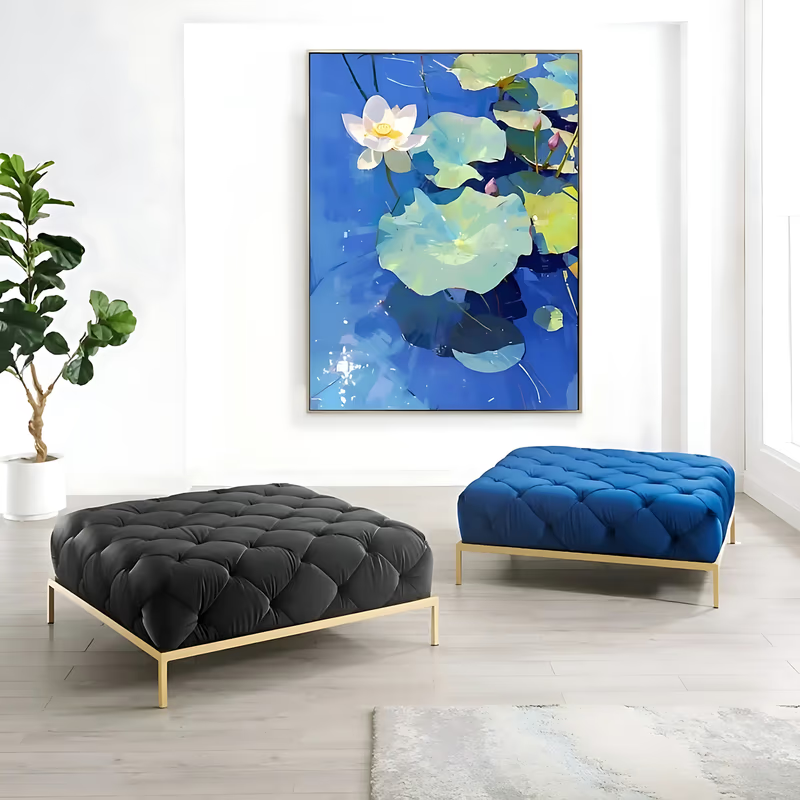
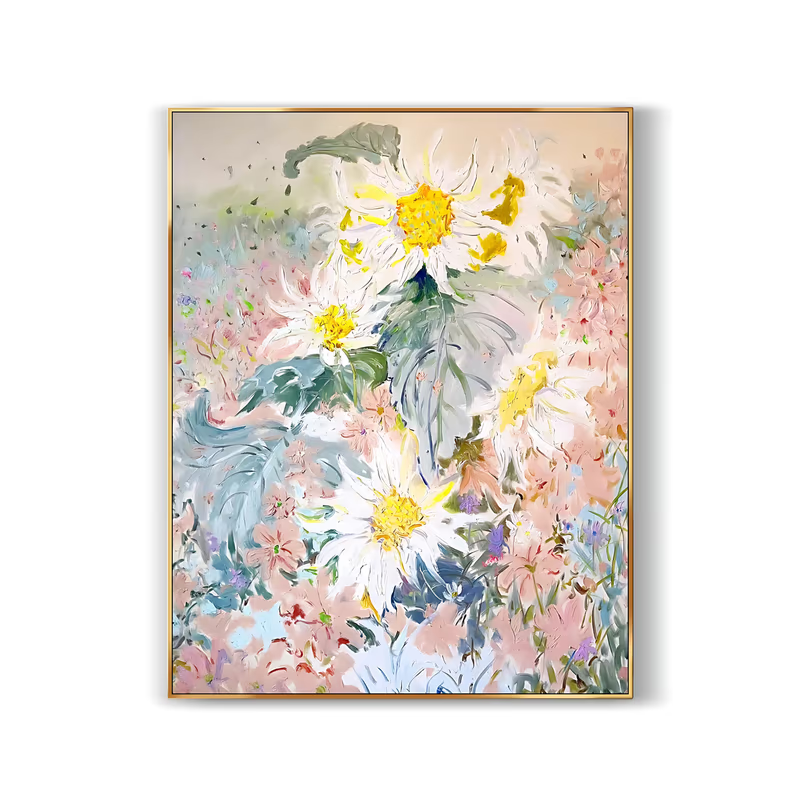
Lotus ponds, koi and botanicals
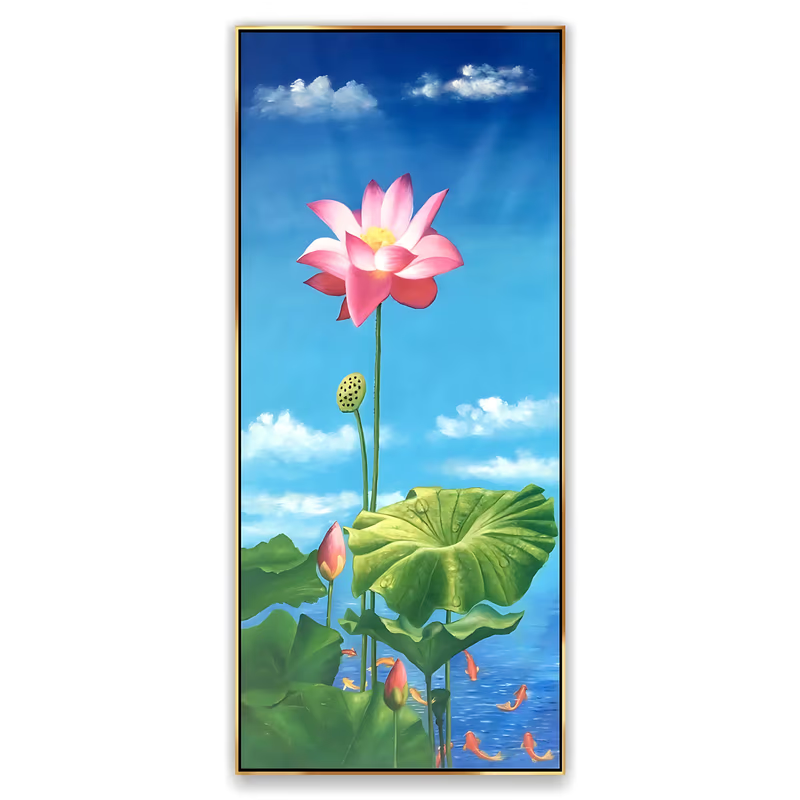
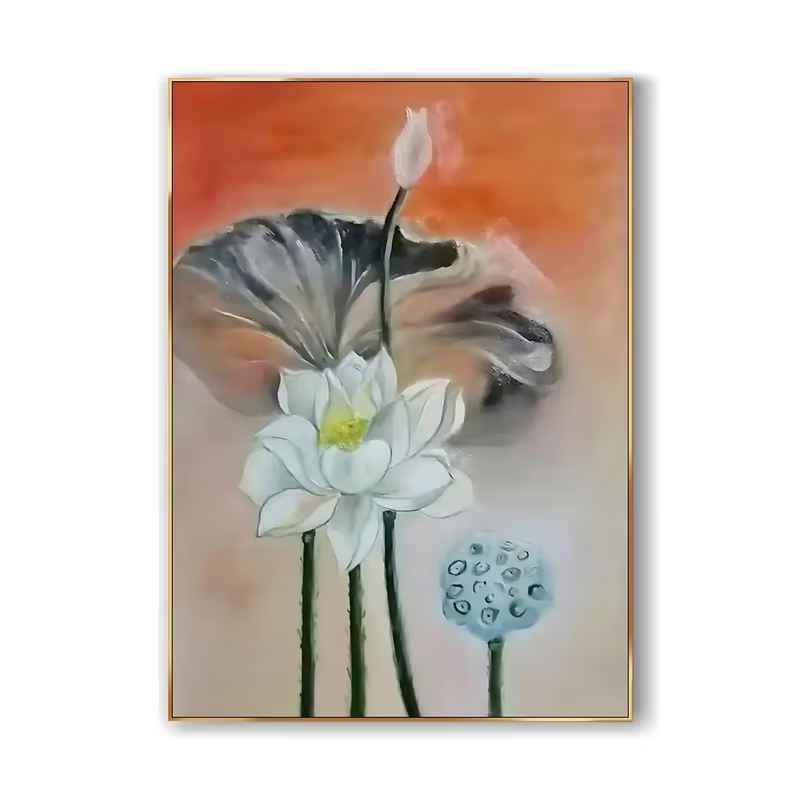
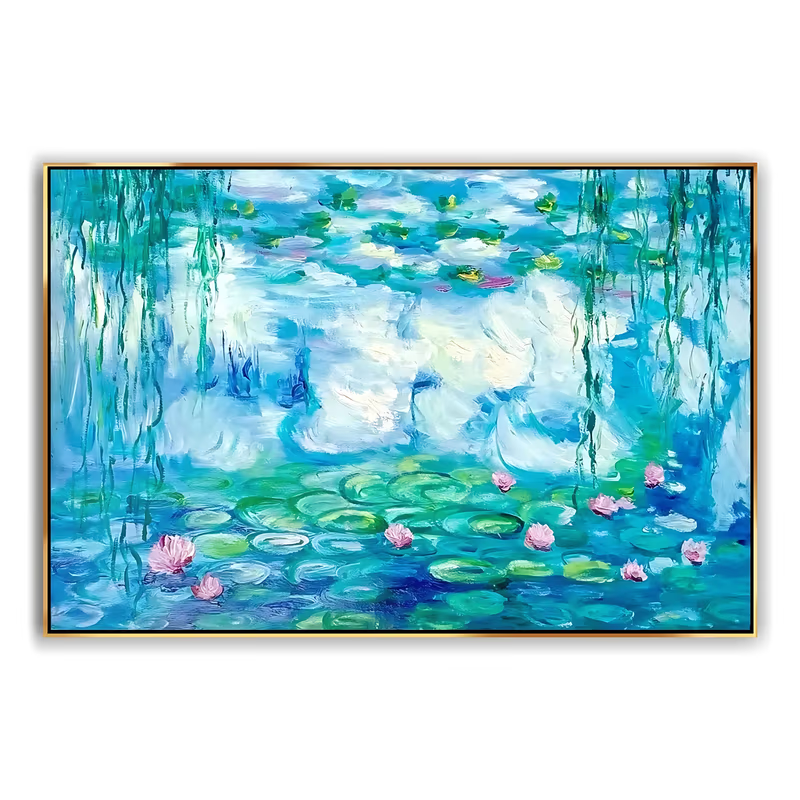
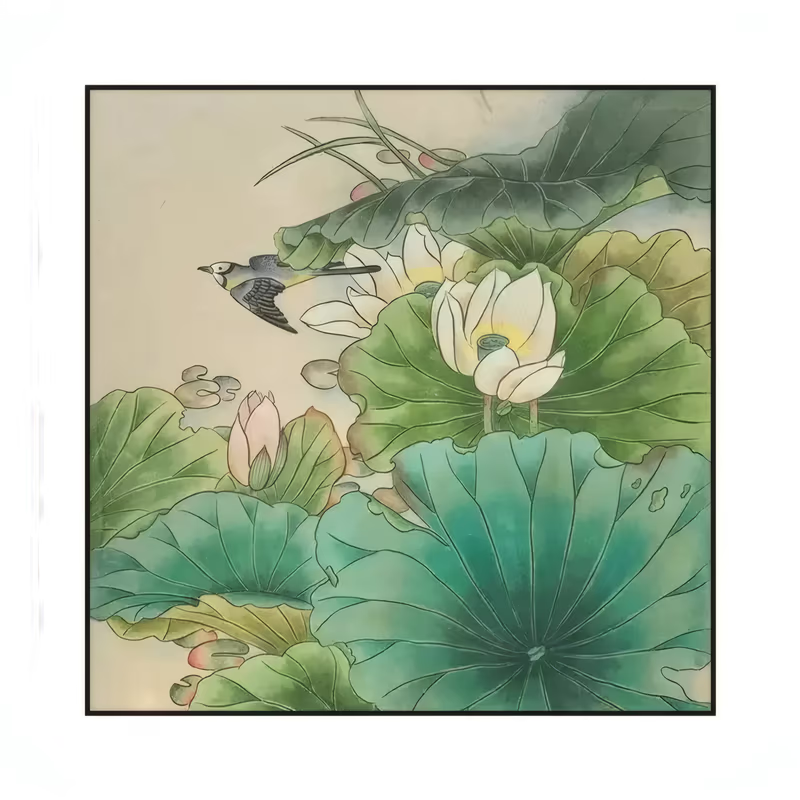
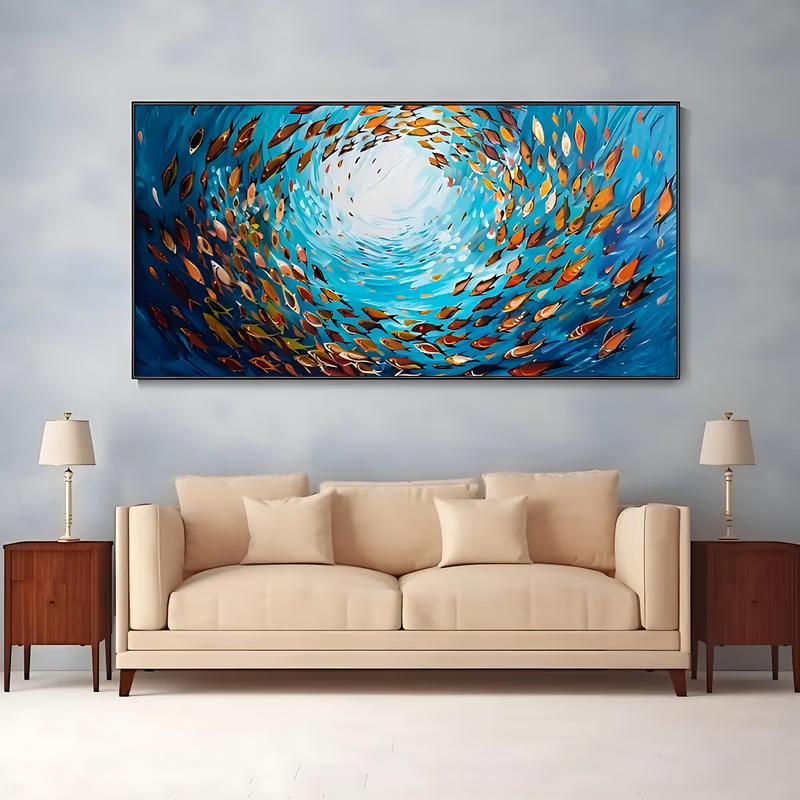
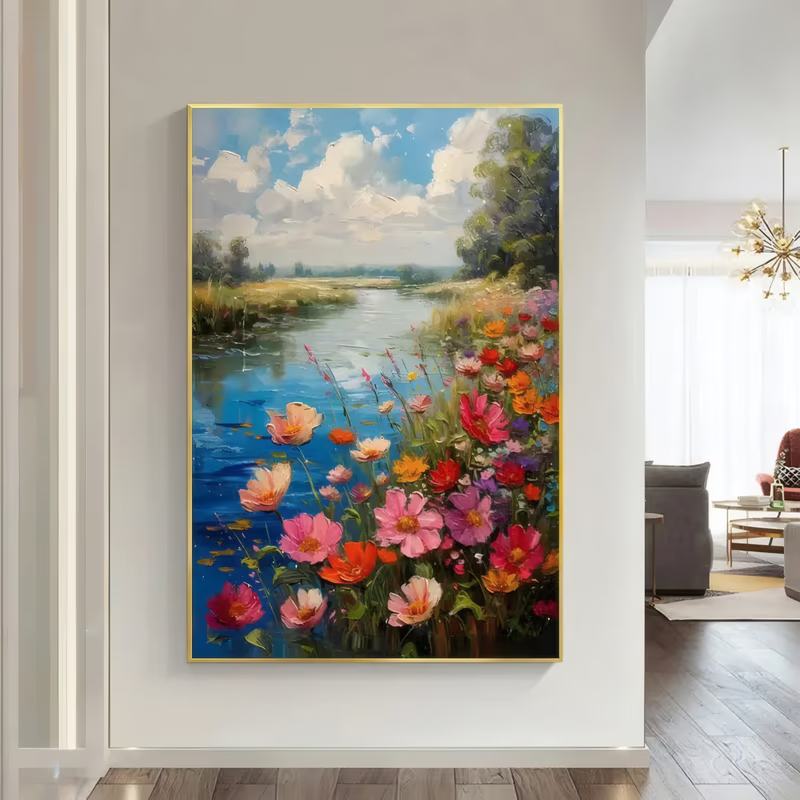
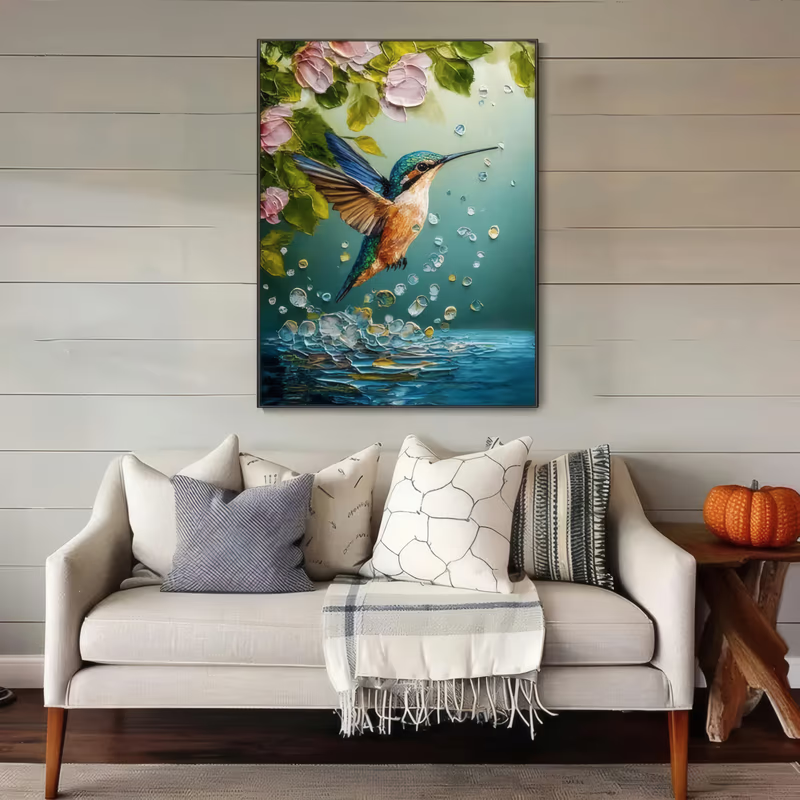
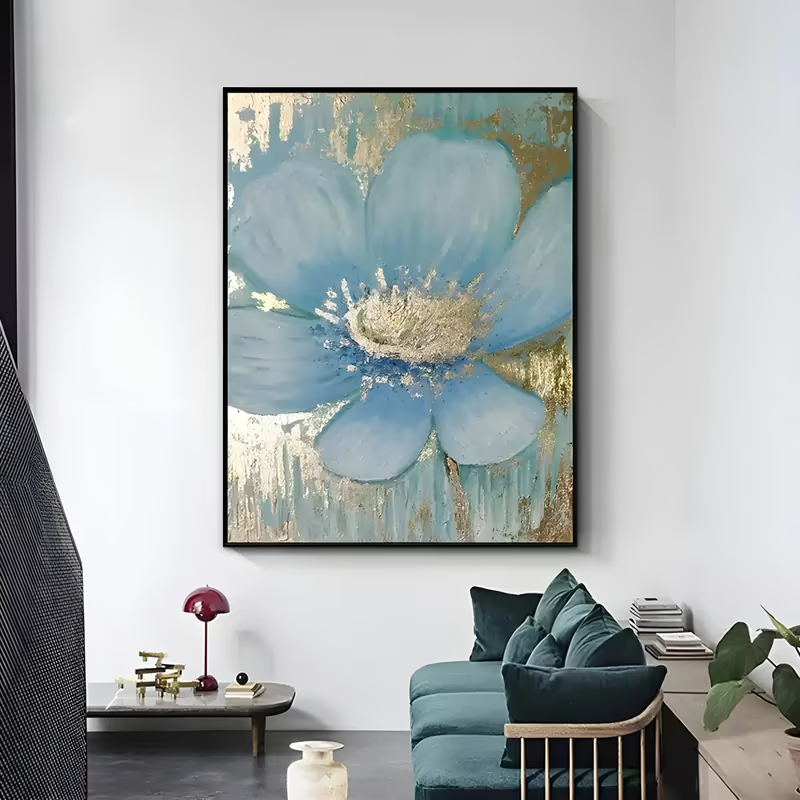
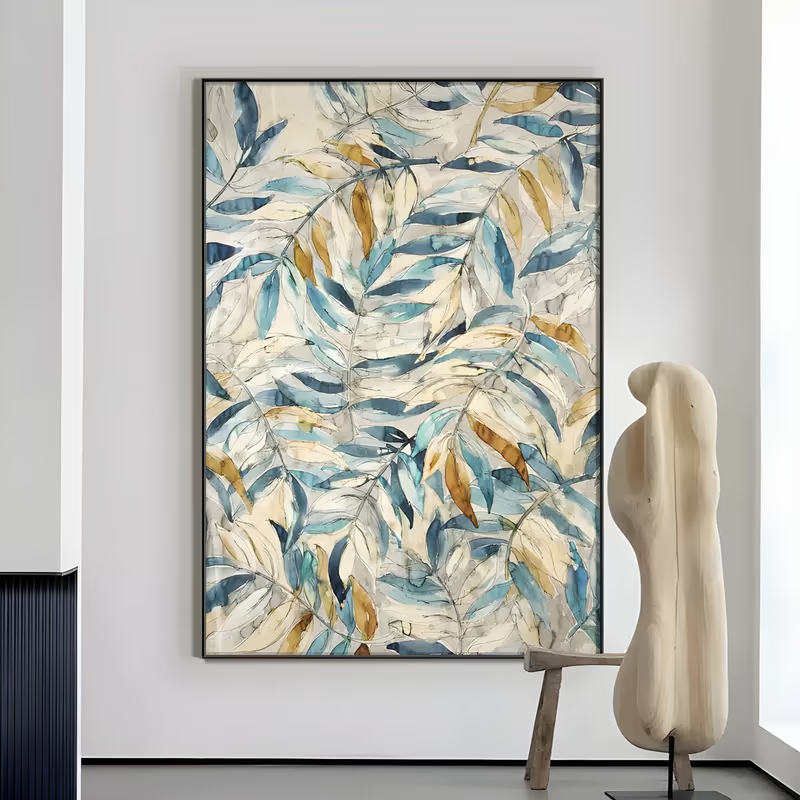
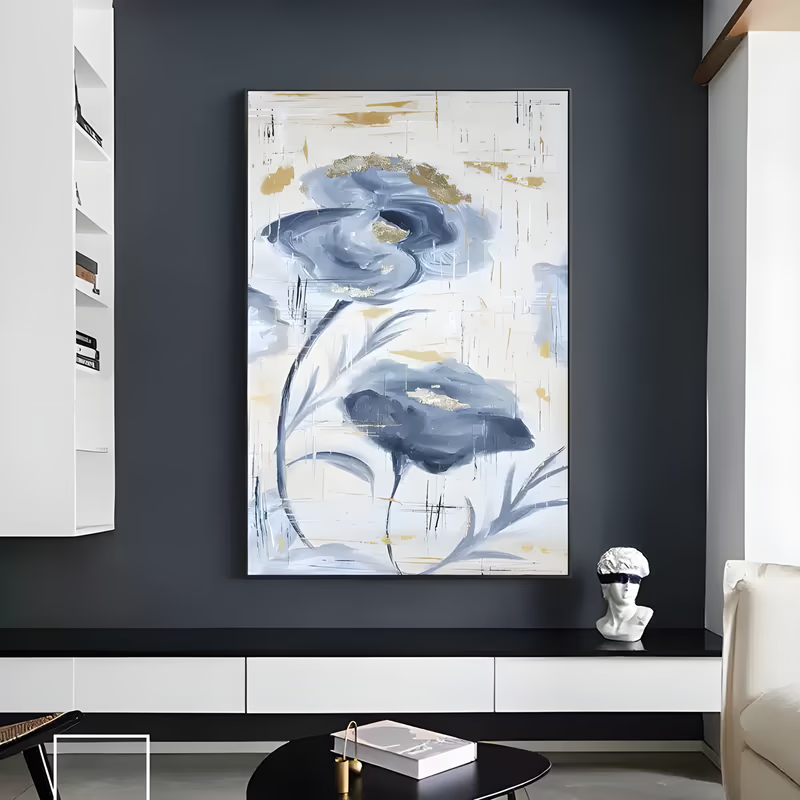
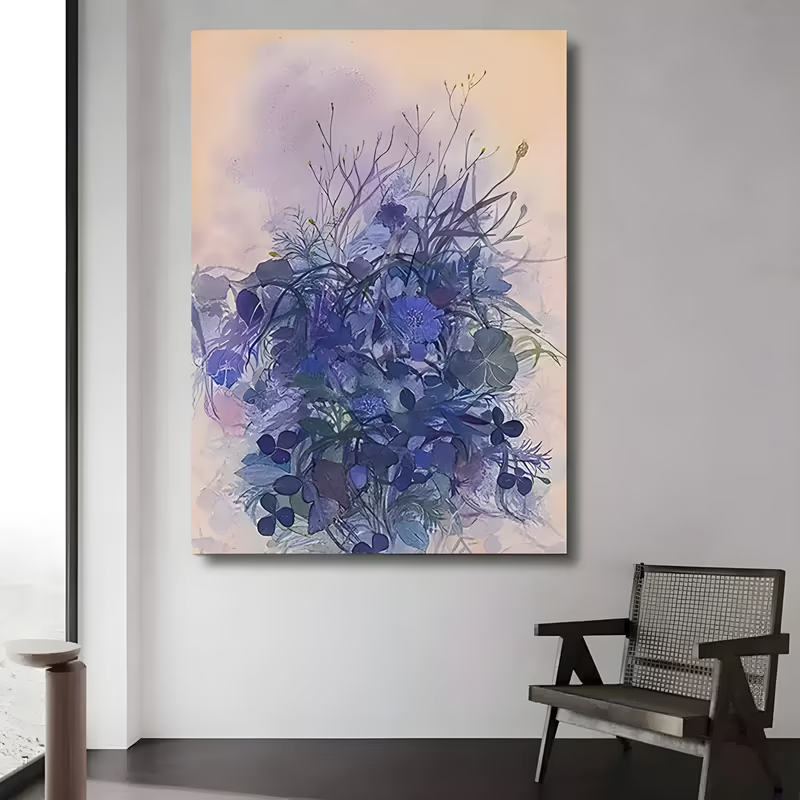
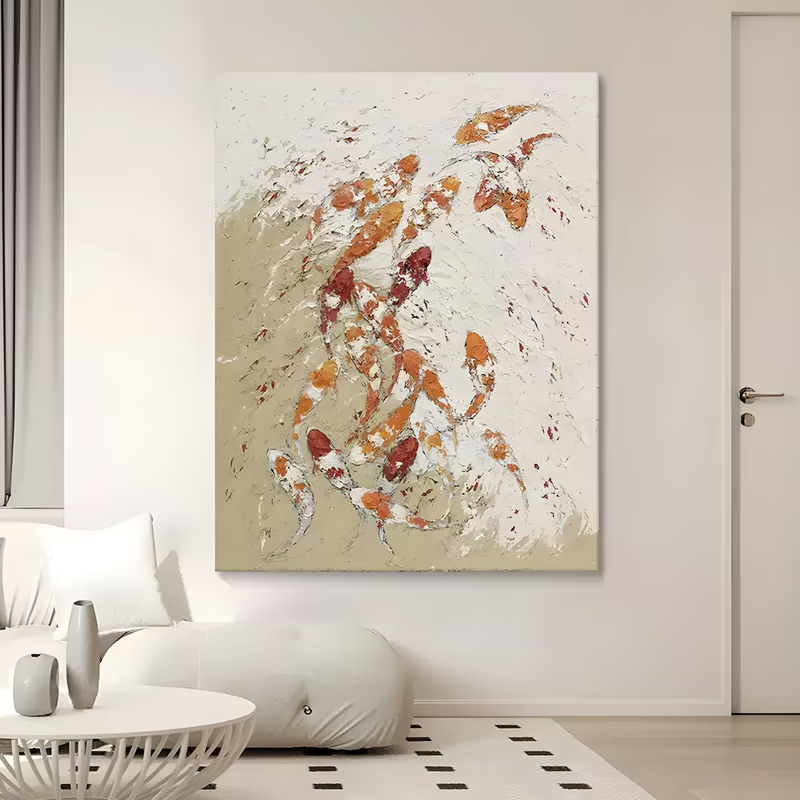
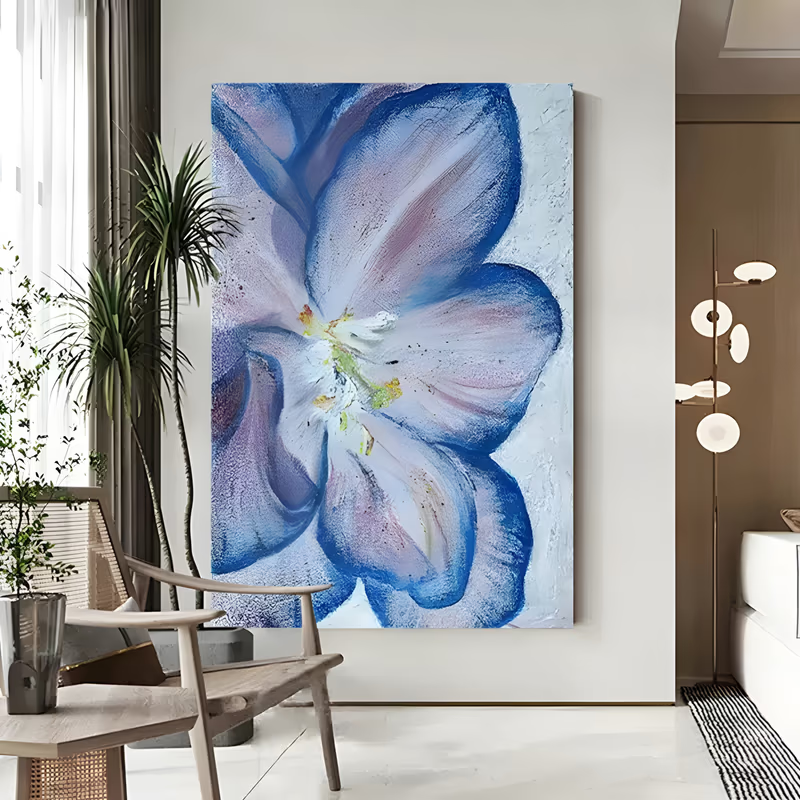
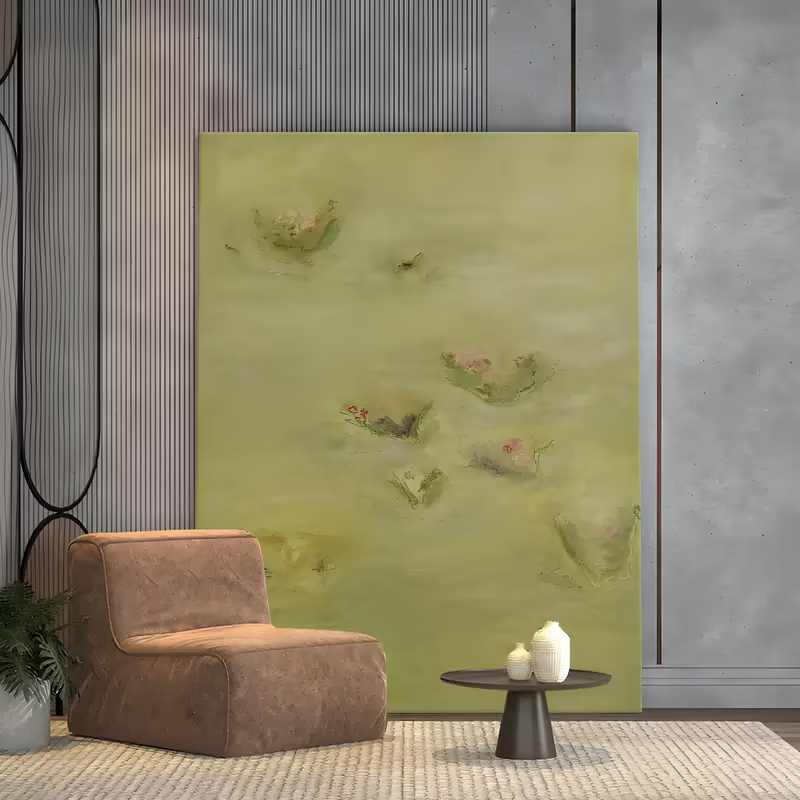
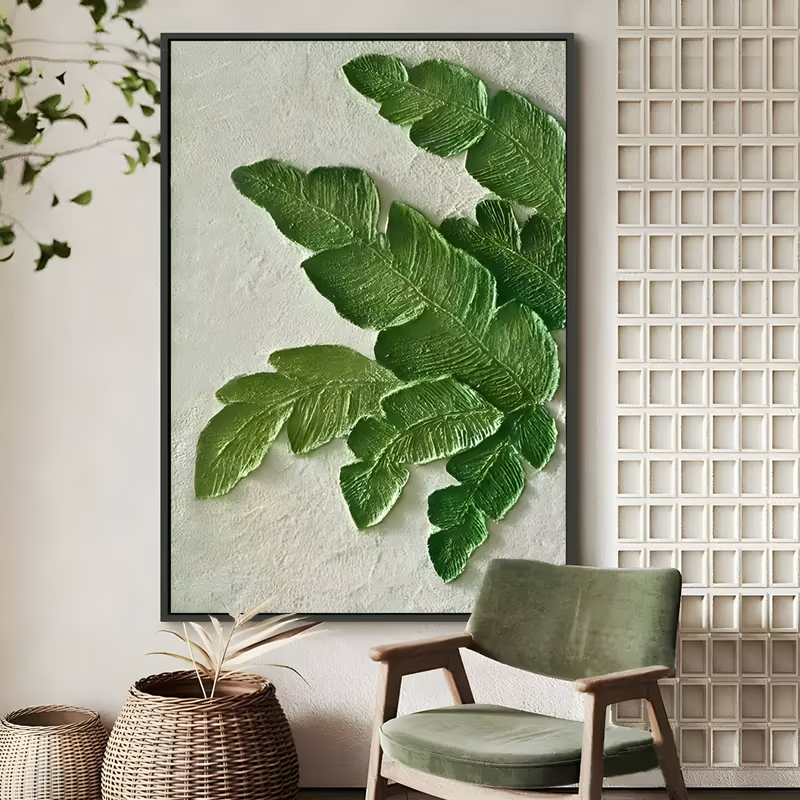
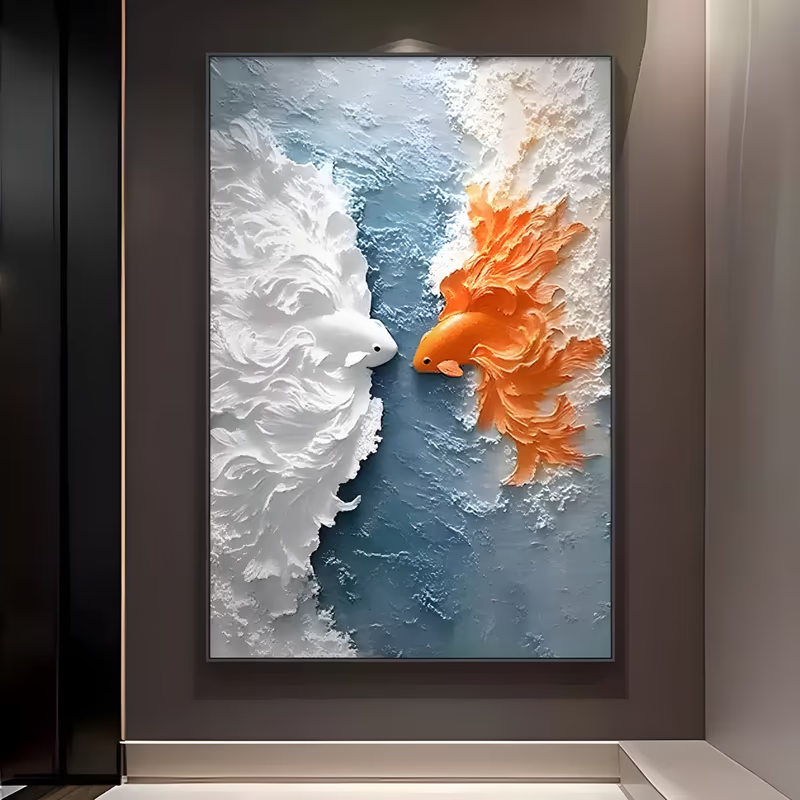
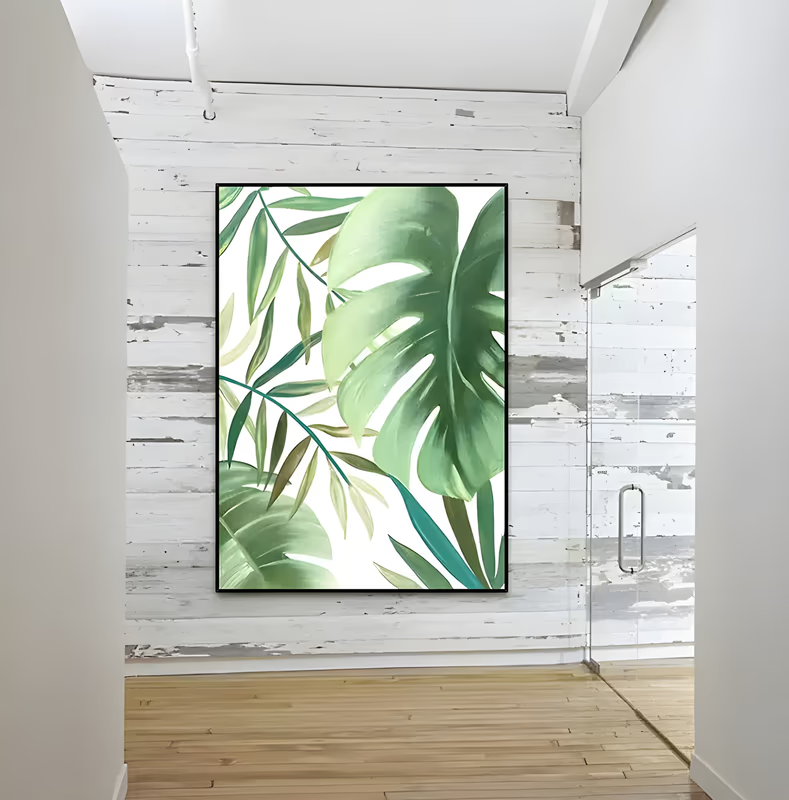
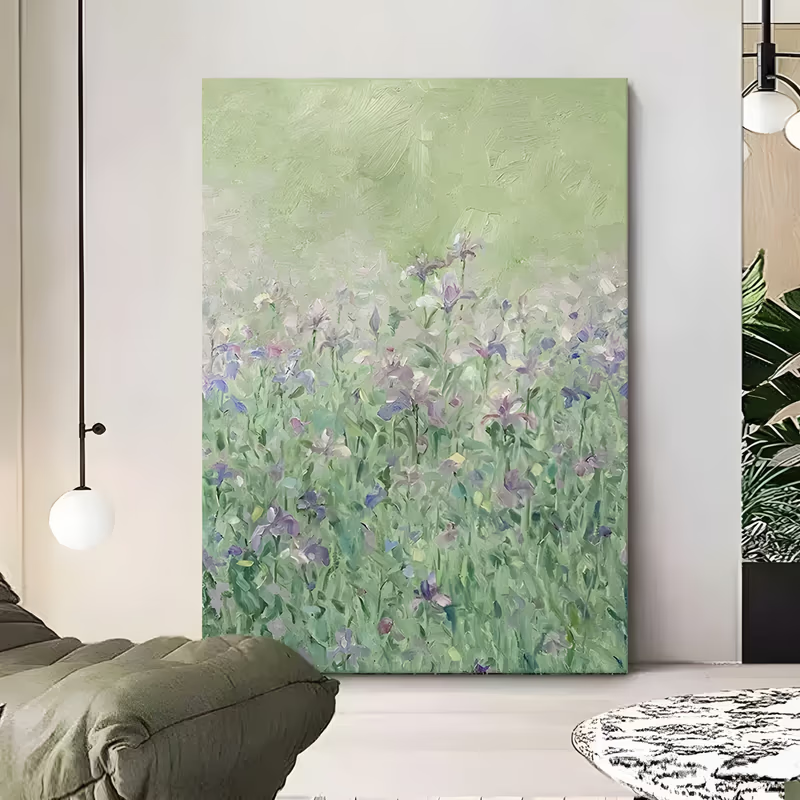
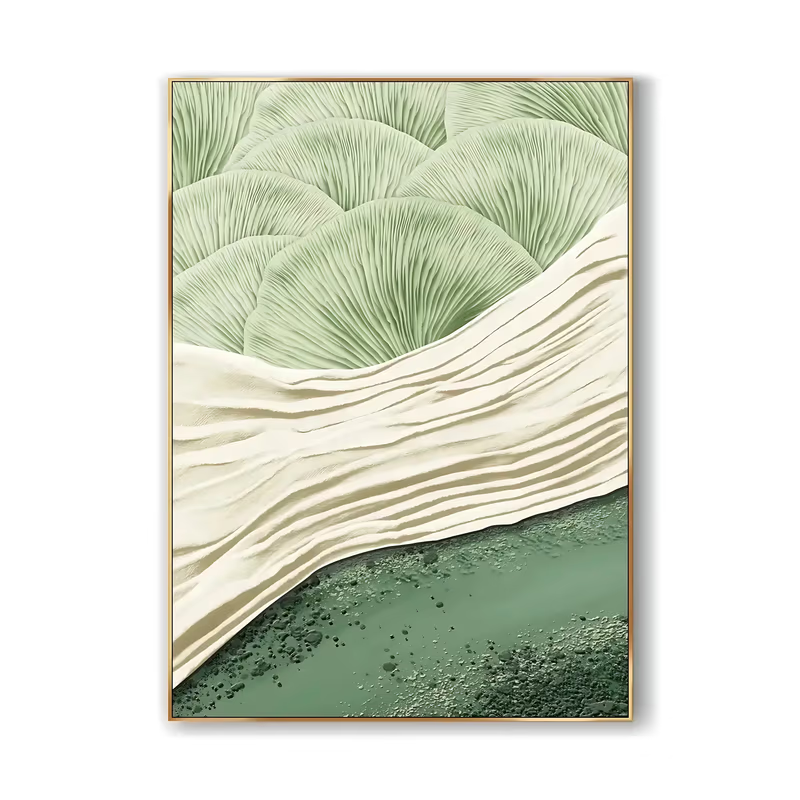
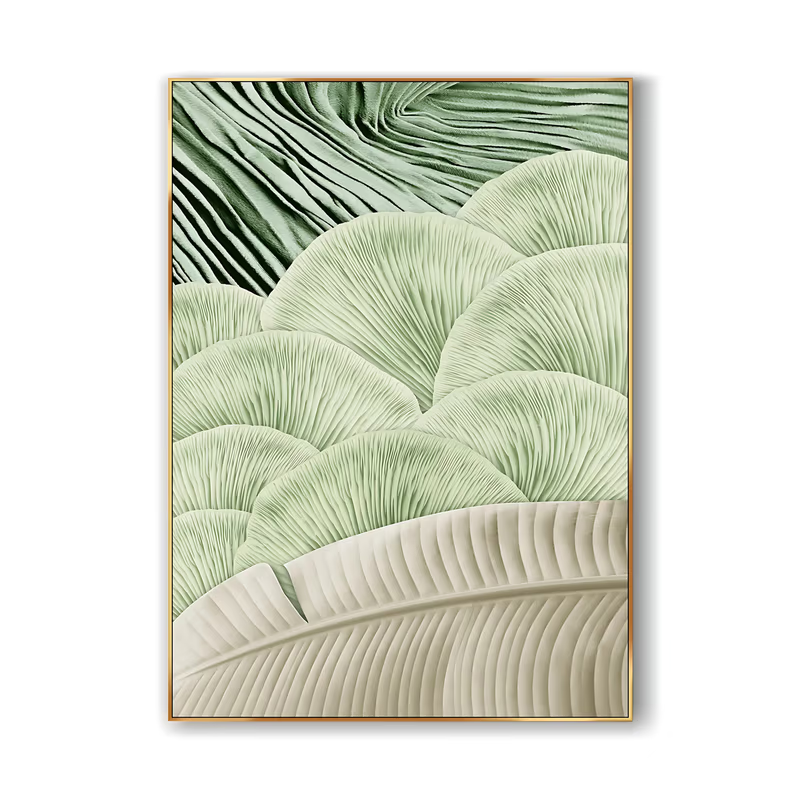
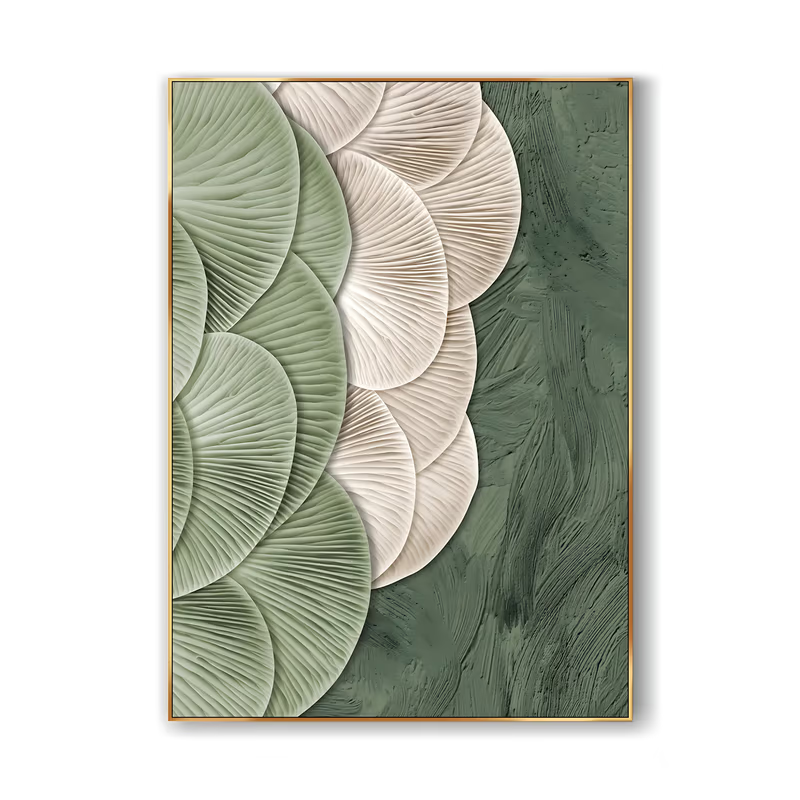
Single white lotus blooms, pink lilies on green pads, koi turning in pale water, ribbed leaf forms. They bring the calm of a garden pool indoors and suit a spa-style bathroom with stone, wood and plants. Botanical bathroom art.
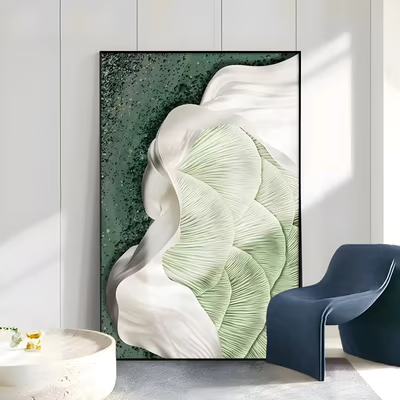
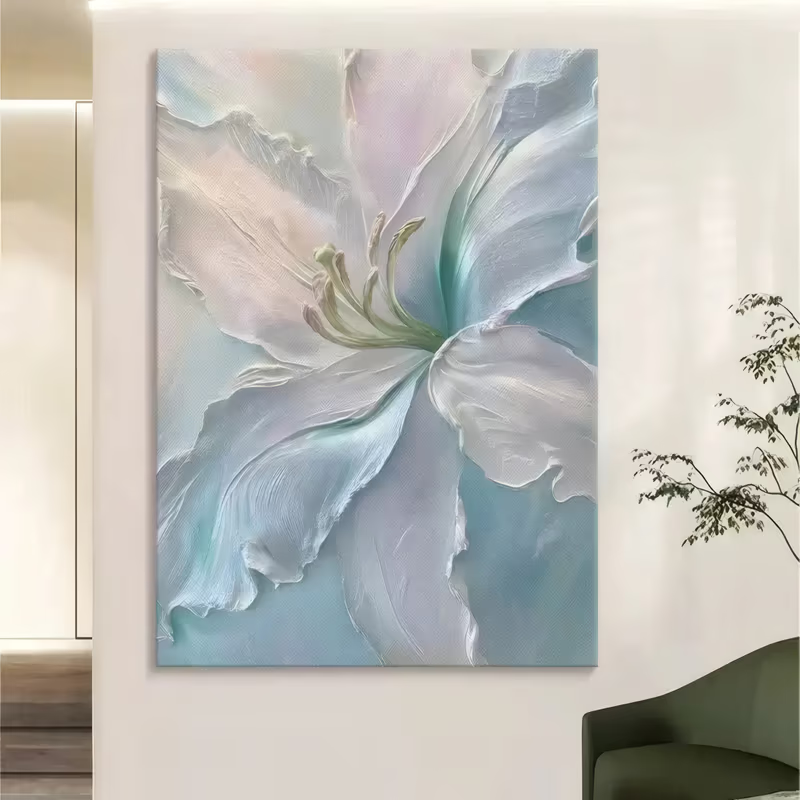
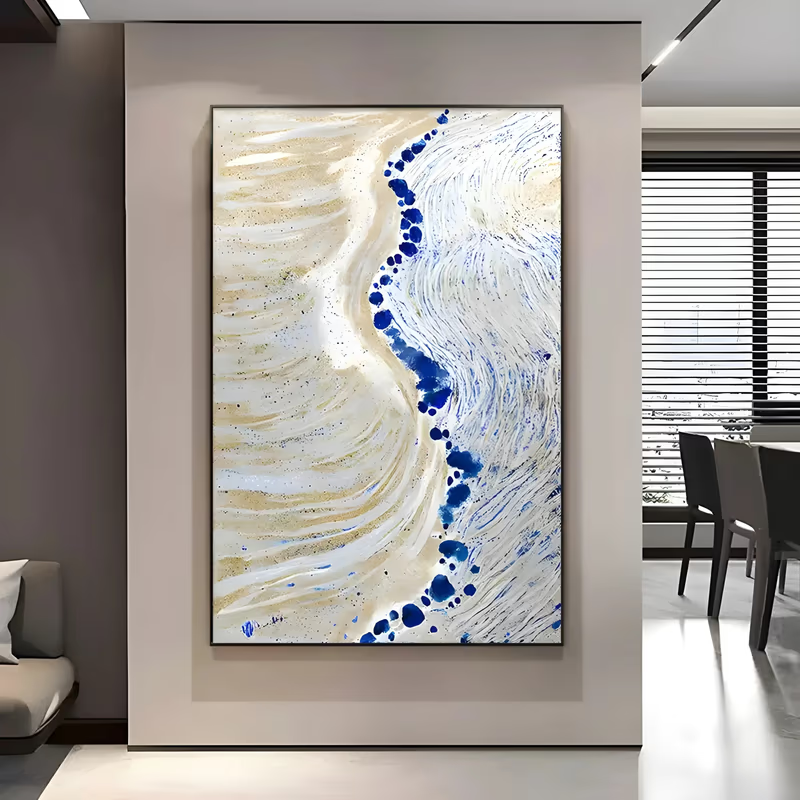
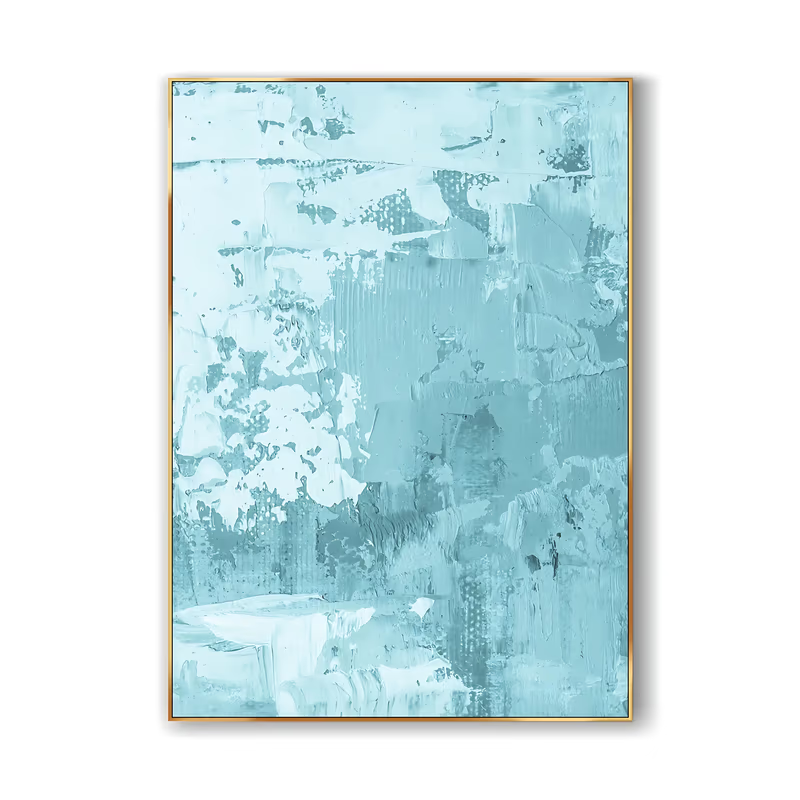
Plaster relief and calm abstracts
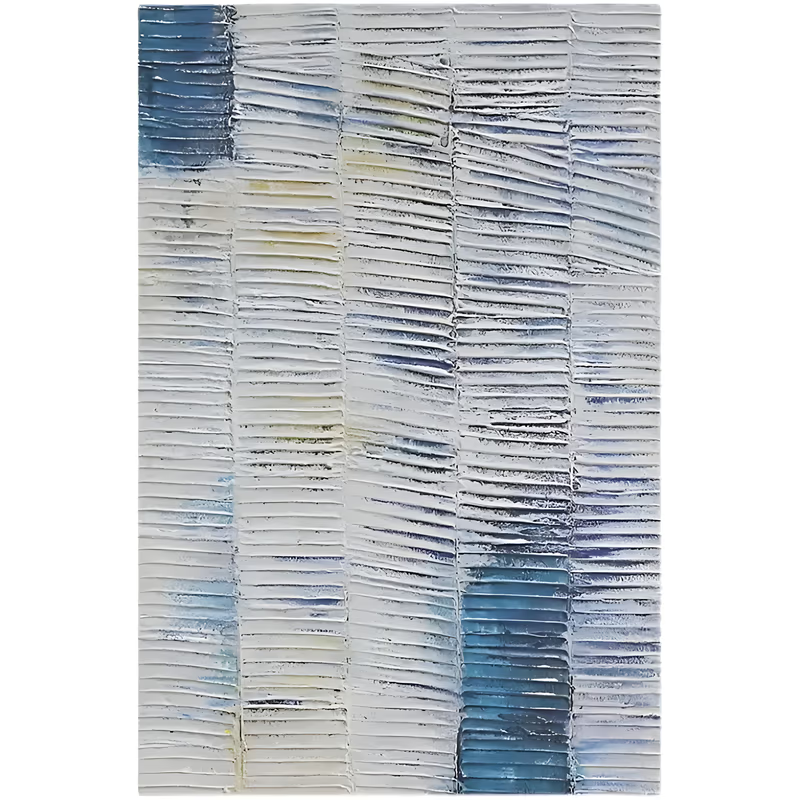
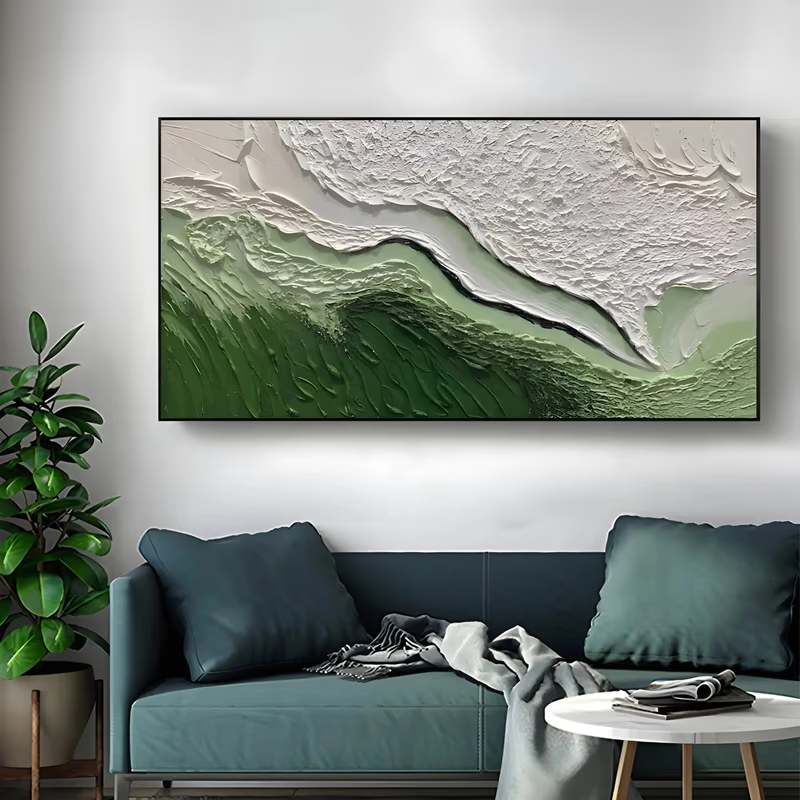
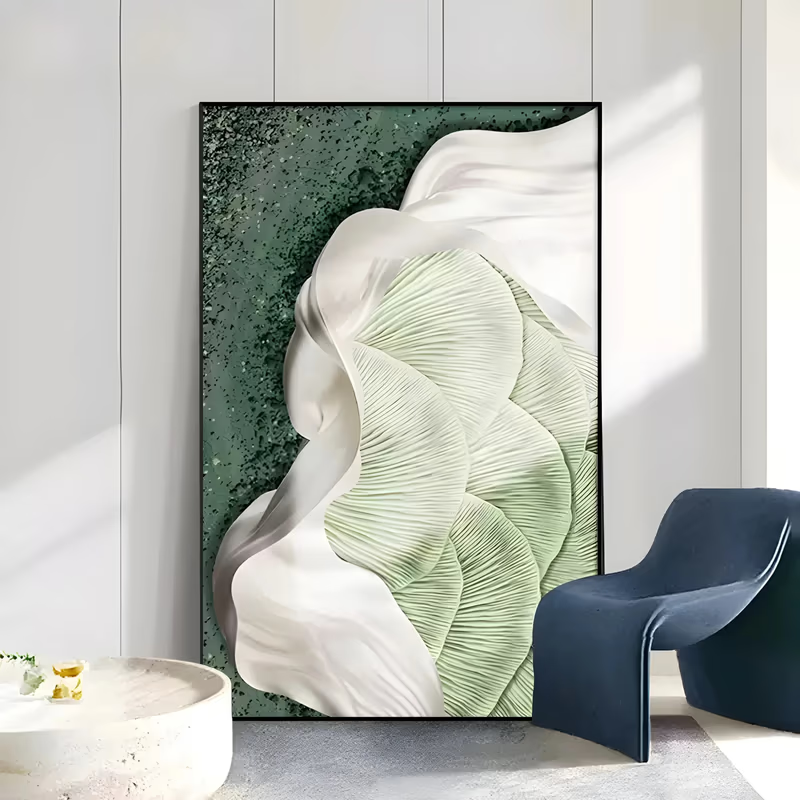
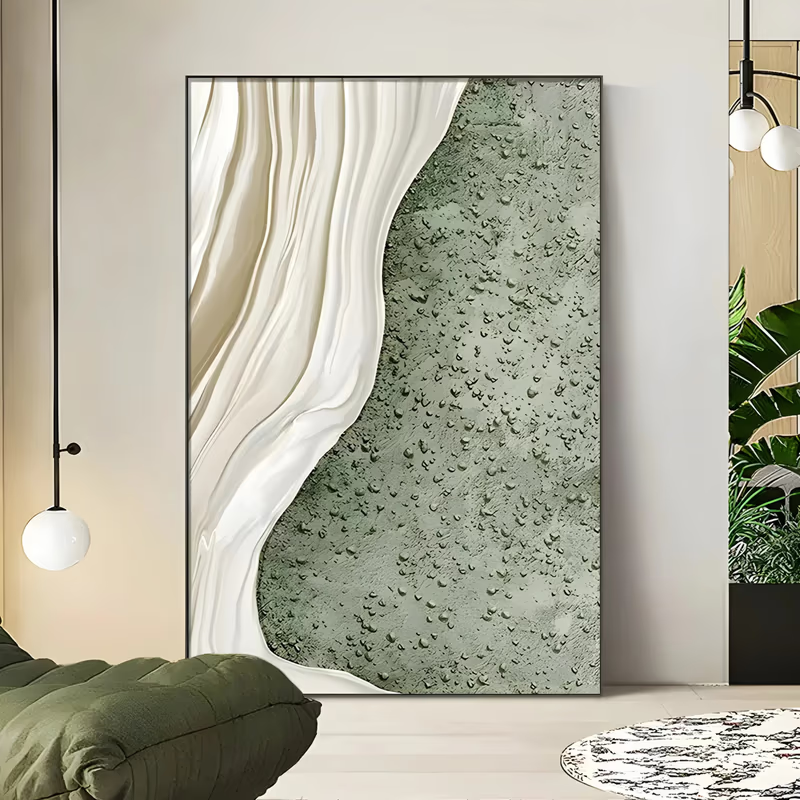
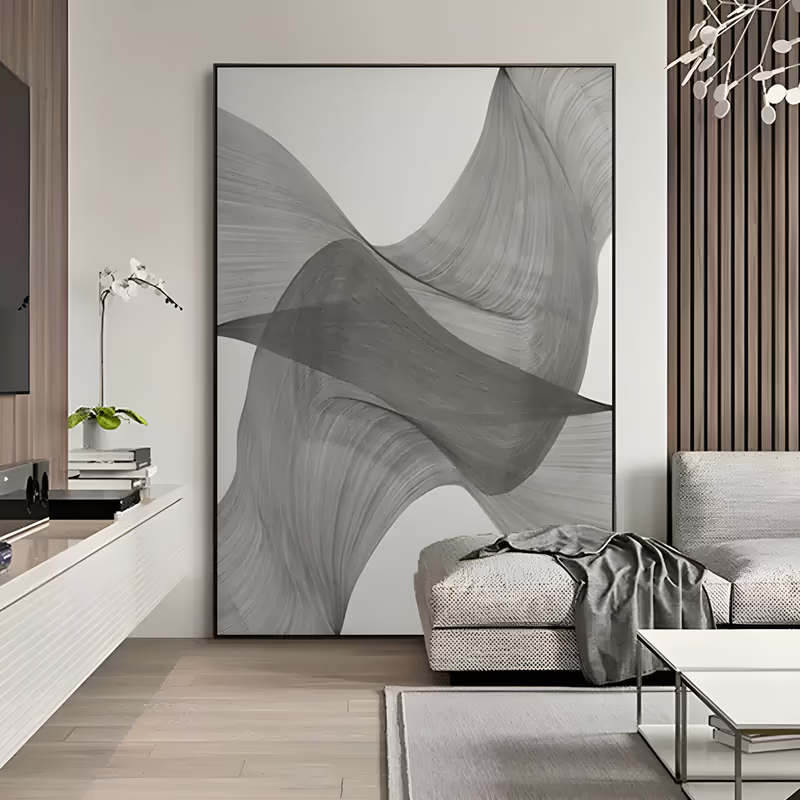
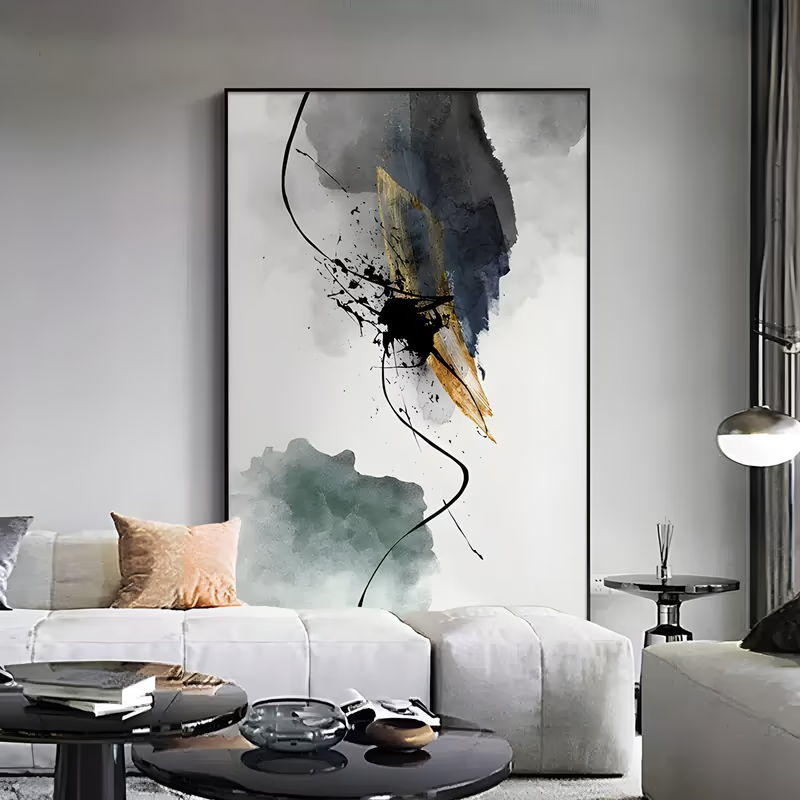
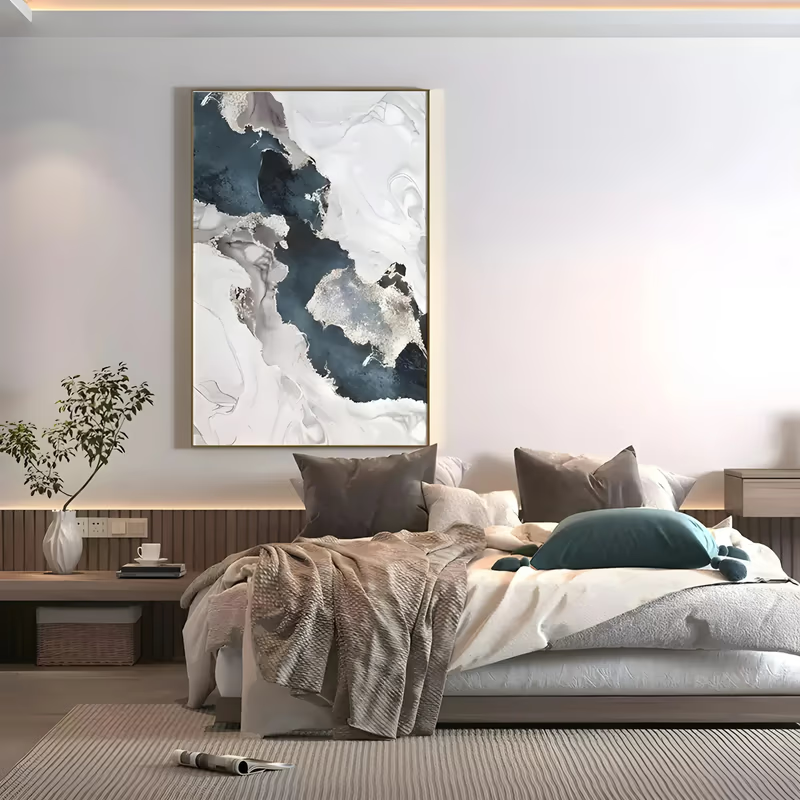
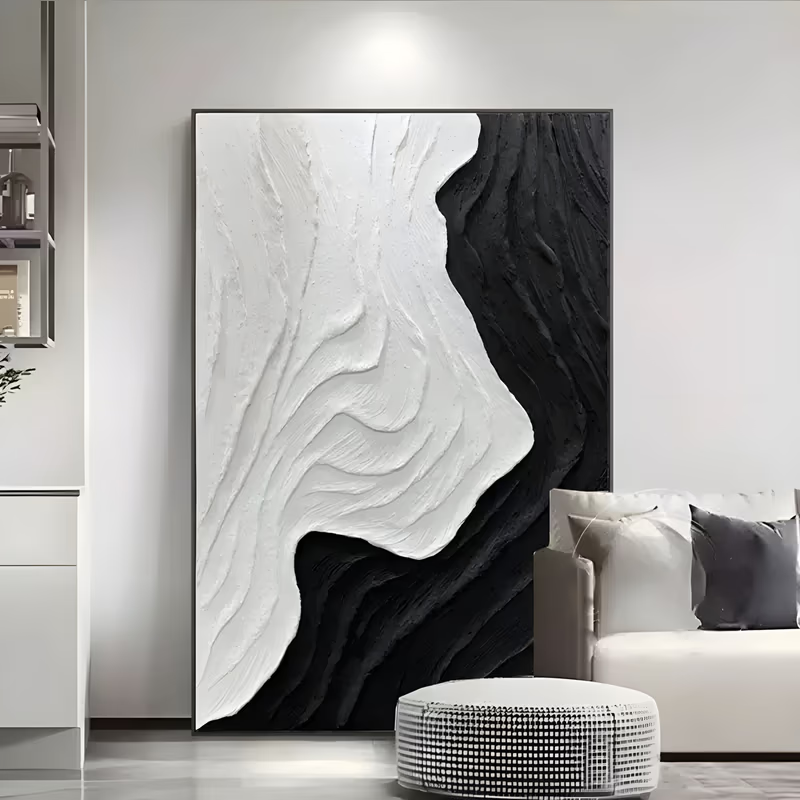
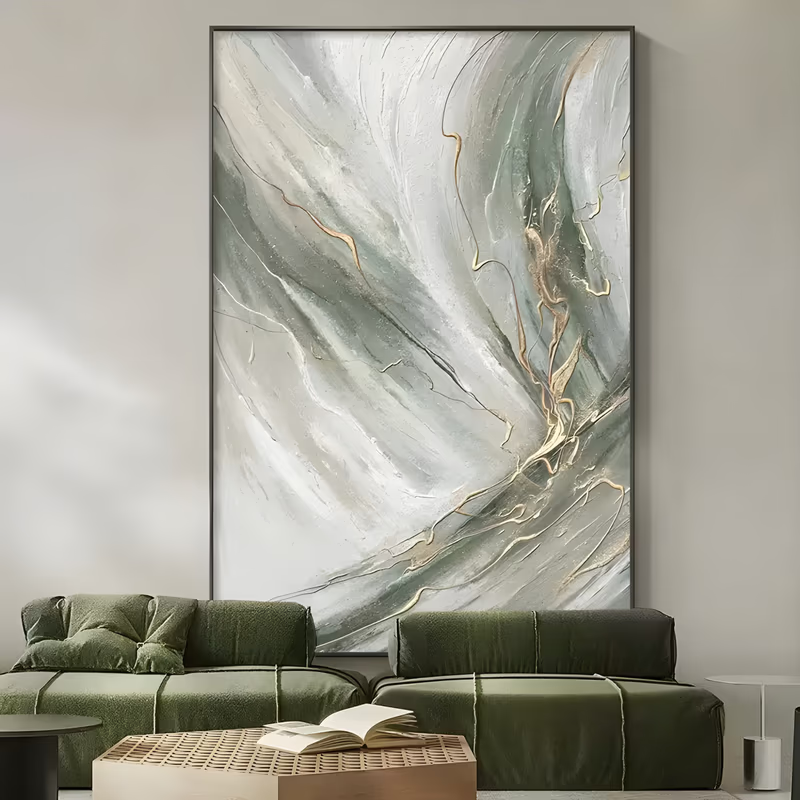
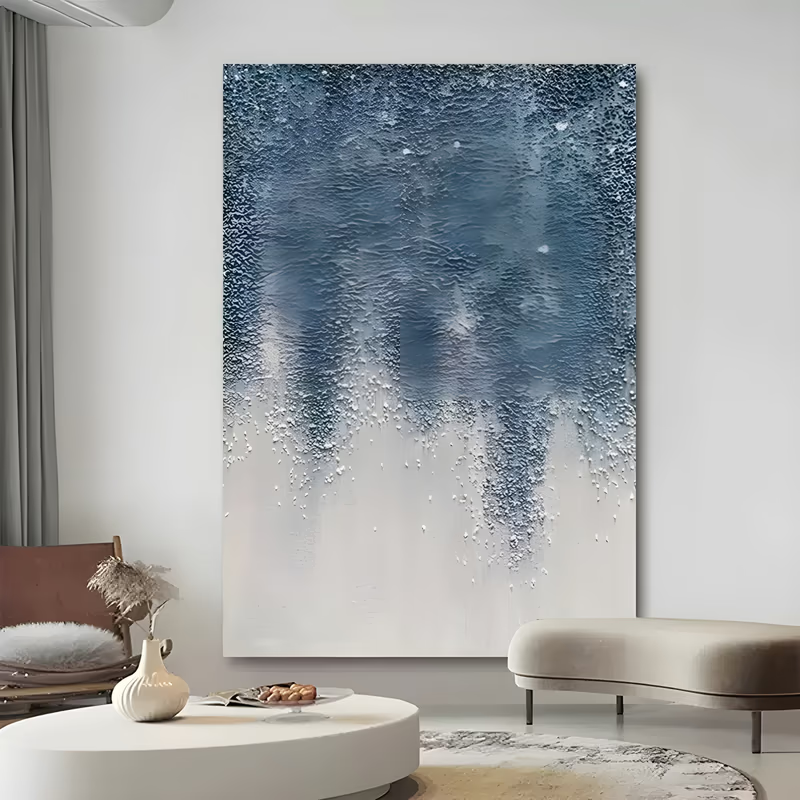
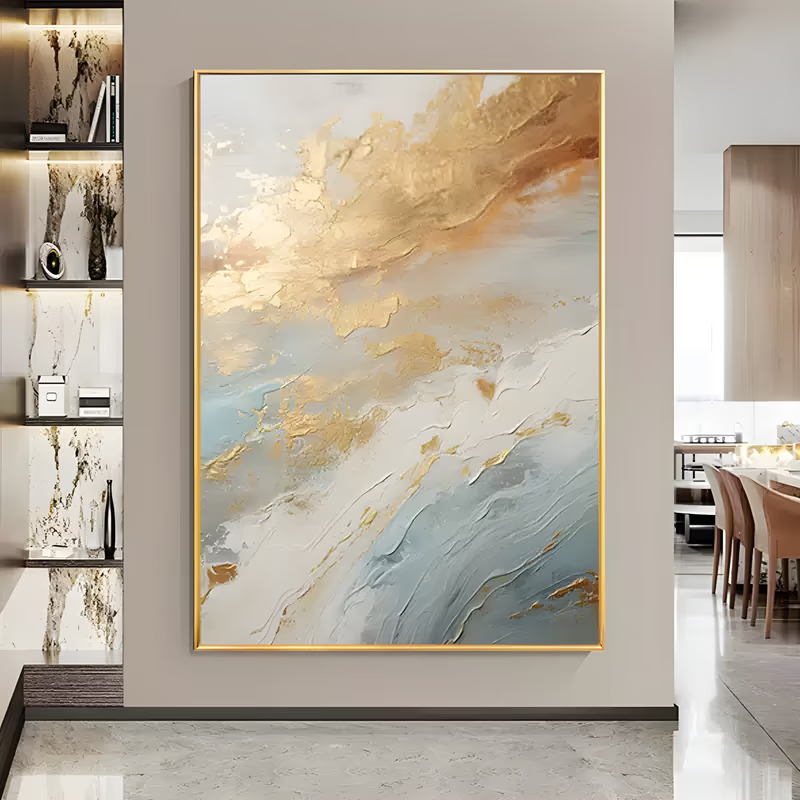
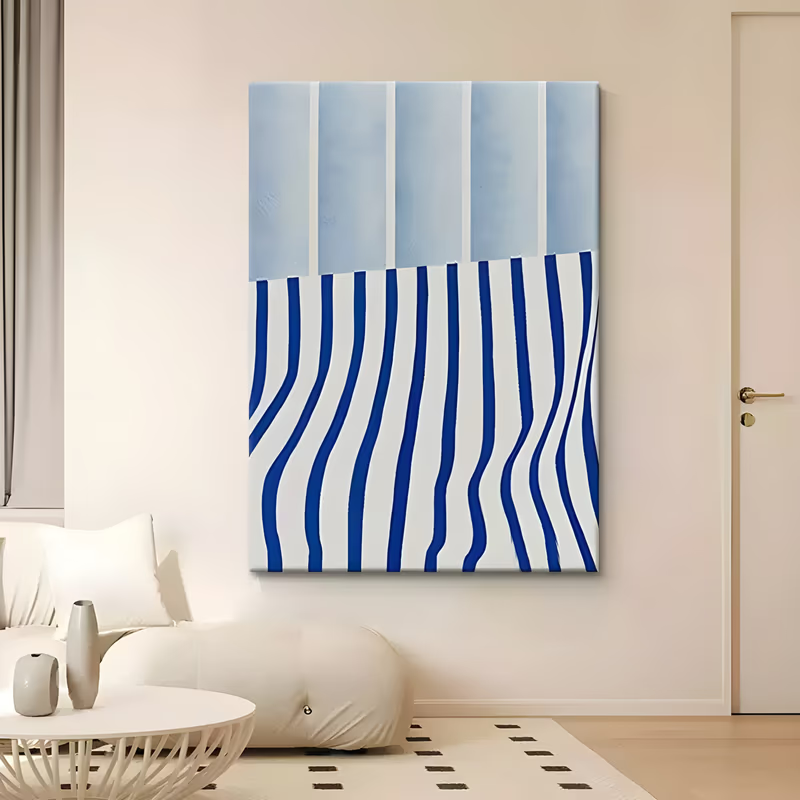
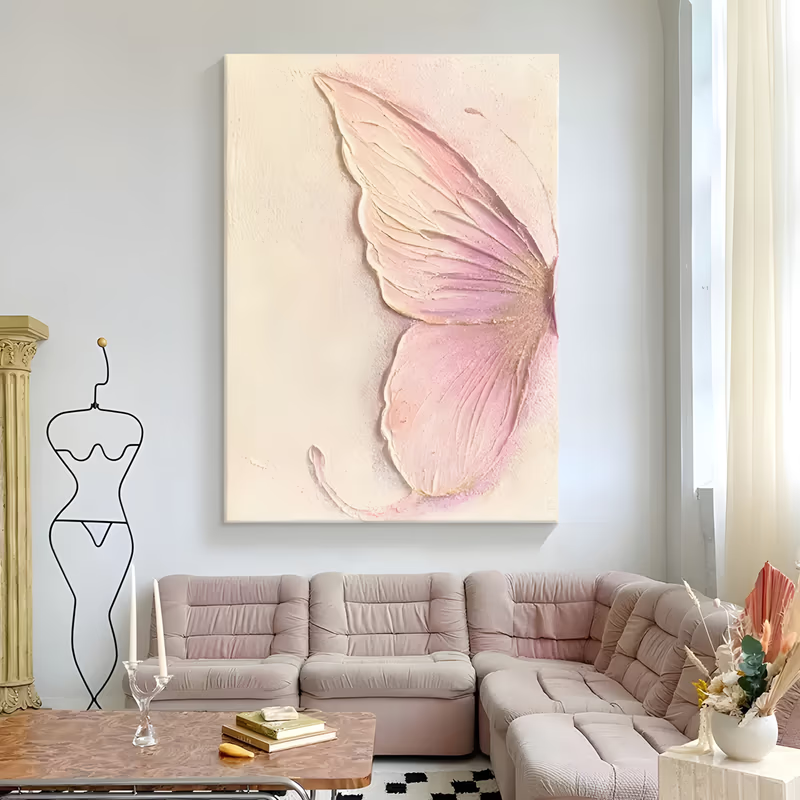
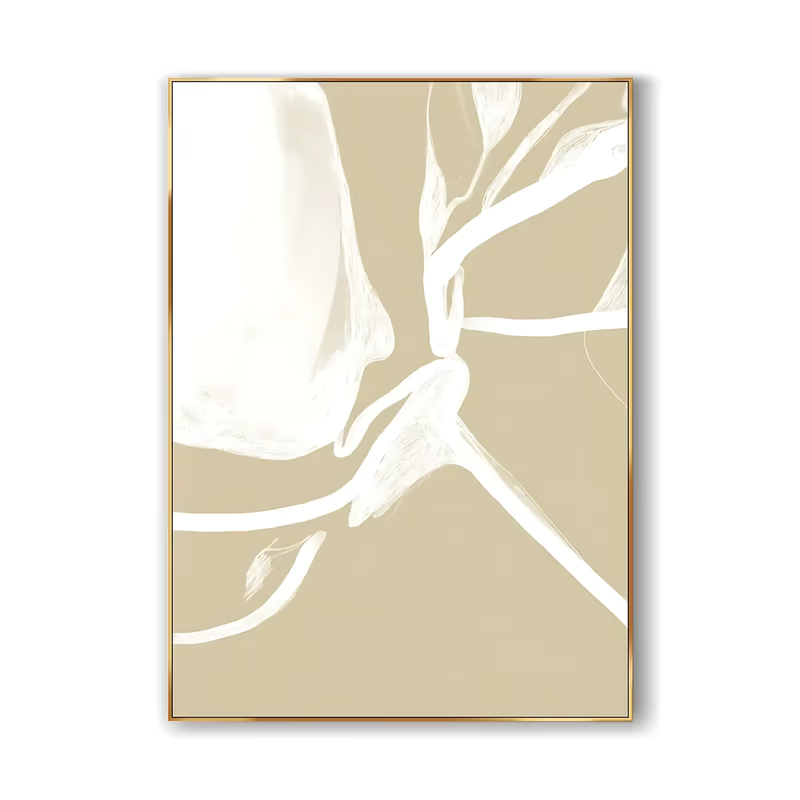
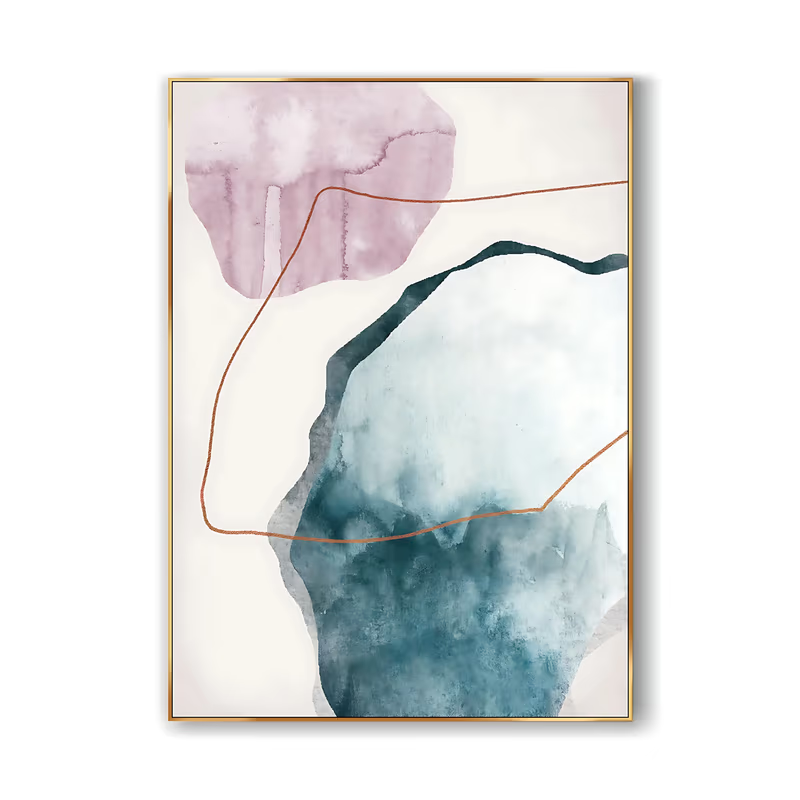
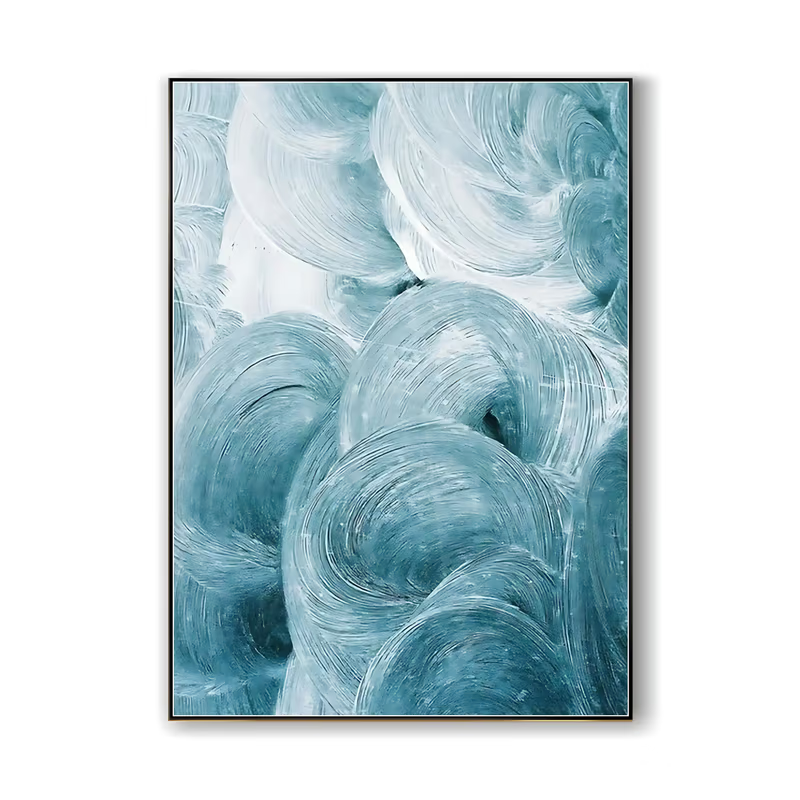
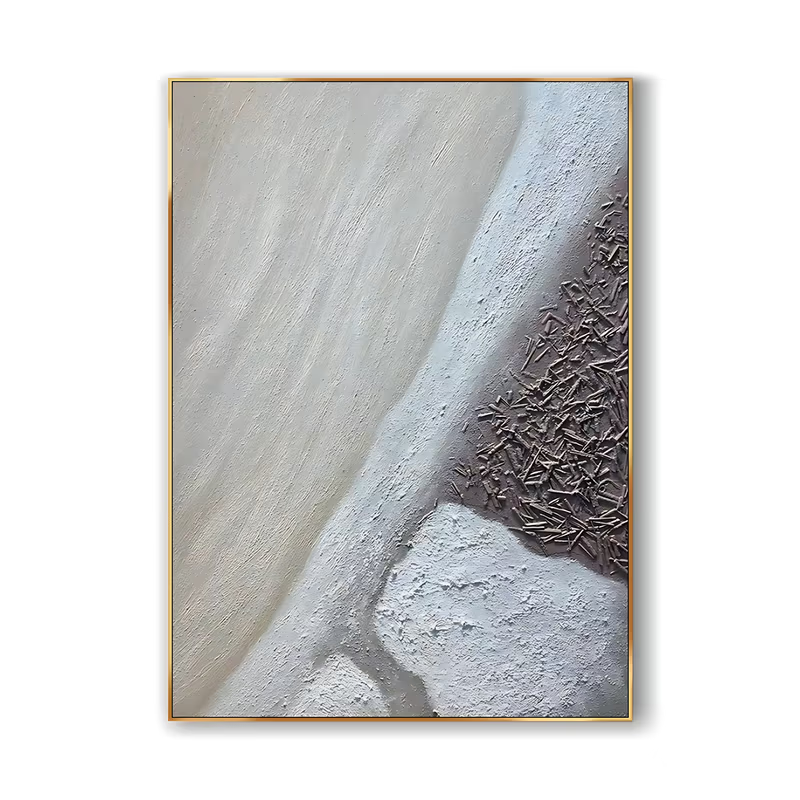
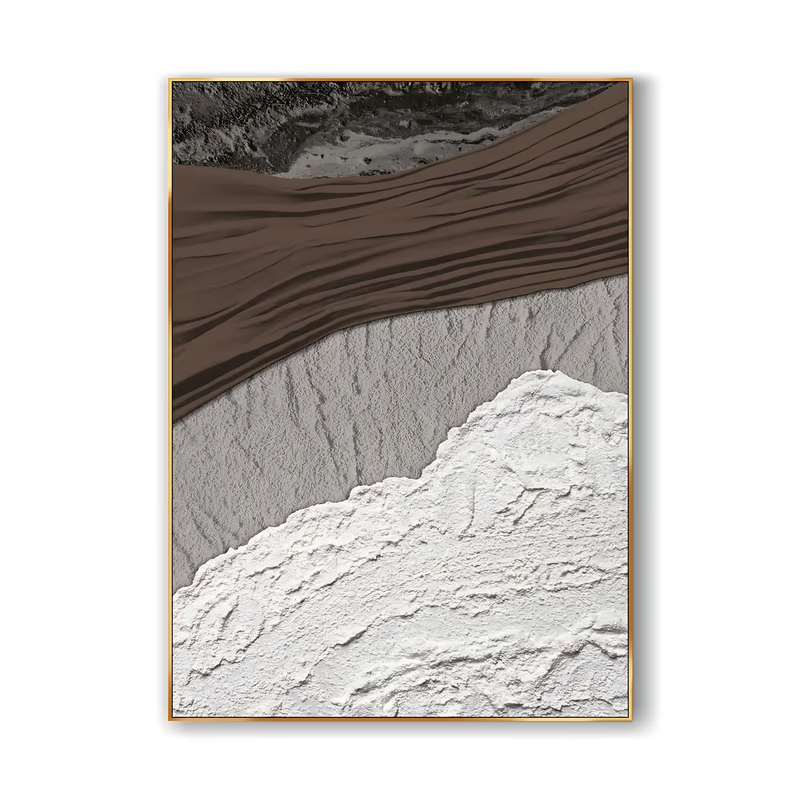
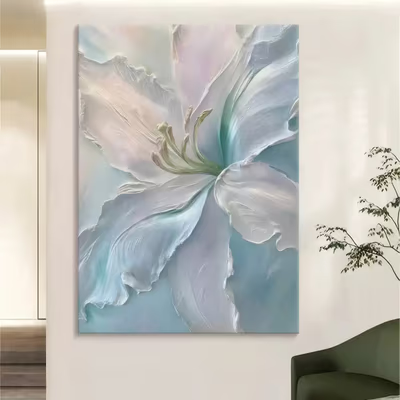
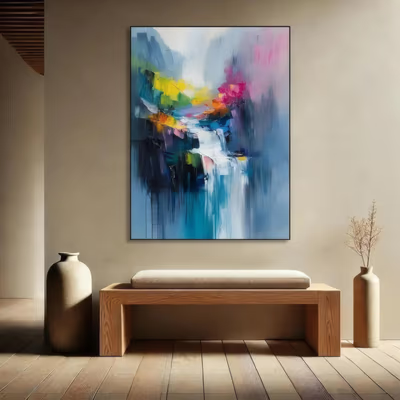
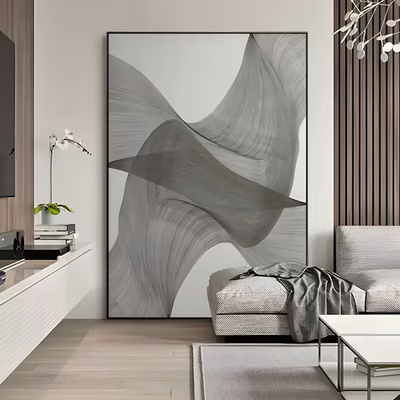
Combed white ridges washed with teal, sand-coloured knife work, soft colour fields. Texture catches the raking light from a window or a mirror light and keeps a minimal bathroom from feeling clinical. Choose relief for a well-ventilated room where it will not be brushed against. Textured bathroom art.
Which colours of bathroom art go with tiles, stone and fittings?
Take the painting's colours from the hard surfaces: the tile, the stone and the metal of the taps, then add one colour the room lacks.
A bathroom's palette is fixed in a way a living room's is not. You cannot swap the tiles, so the art has to agree with them. Look at three things: the main tile or stone colour, the grout and veining, and whether the fittings are chrome, brushed brass or black.
| Bathroom finish | Art that works | Try |
|---|---|---|
| White tiles, chrome taps | Blue and sea-green seascapes, crisp white relief | Blue, teal |
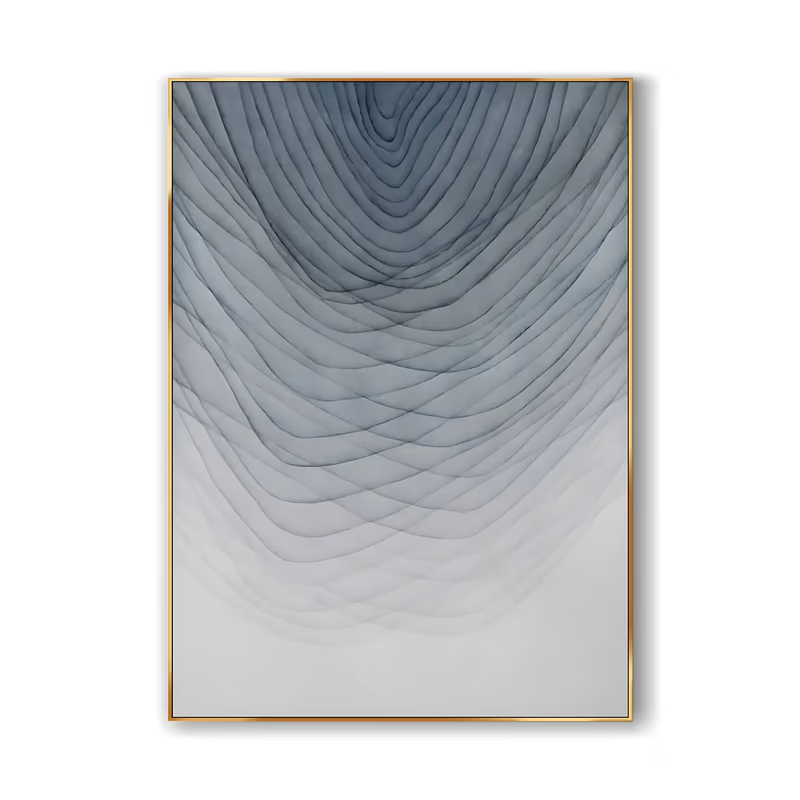
| Marble with grey veining | Soft grey-blue water, white lotus on charcoal | Grey, white |
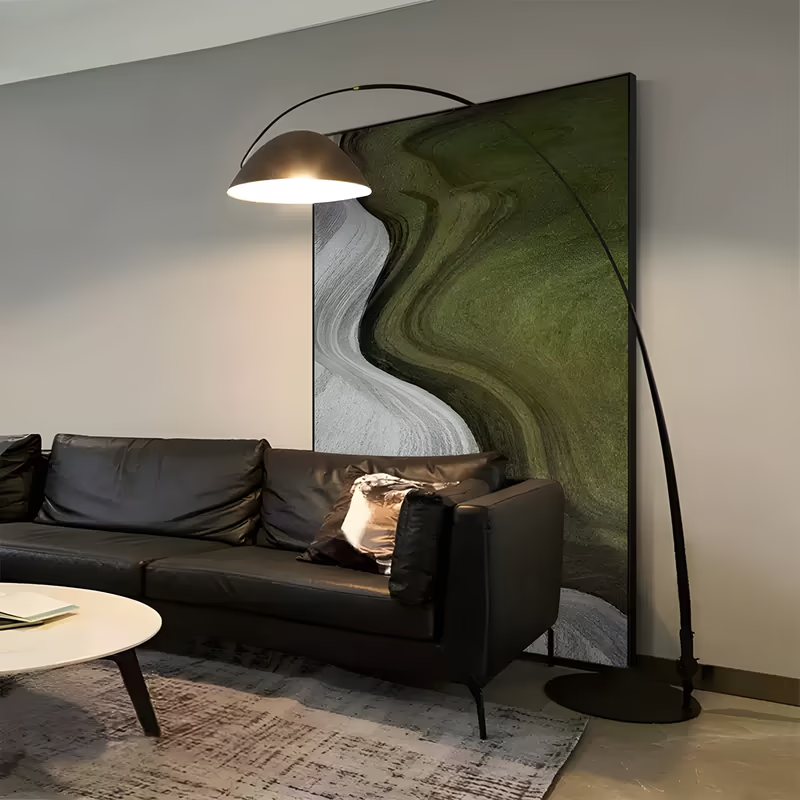
| Green zellige or sage paint | Lotus pads, ferns, green waves | Green |
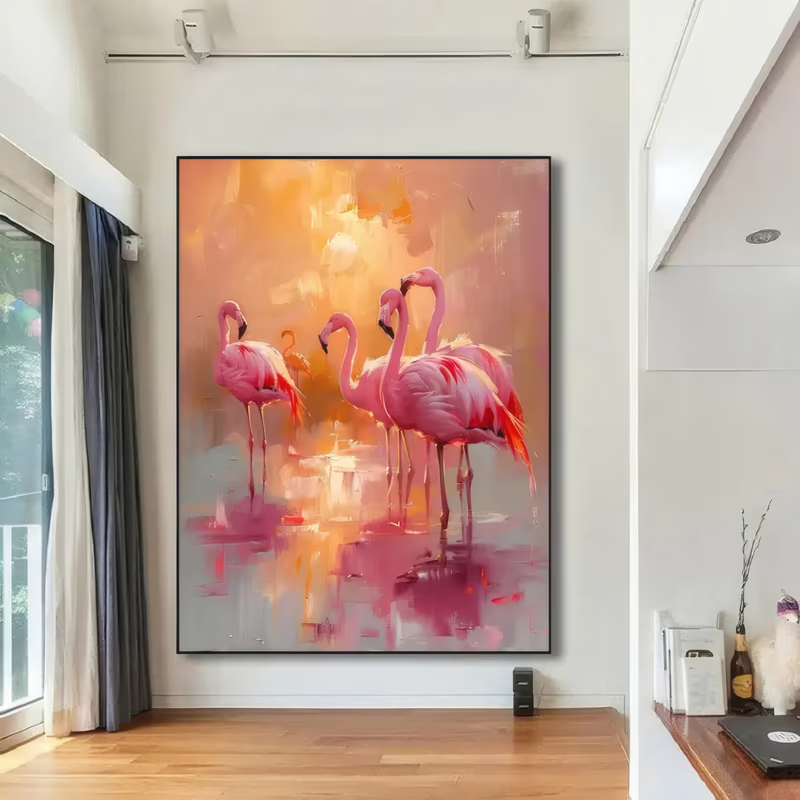
| Warm travertine, terracotta or wood | Sunset seascapes, sand-toned relief, flamingos | Beige, orange |
| Dark tiles with brass fittings | Gold-lit water, pink lilies, deep teal | Gold, pink |
Bathroom light is the other variable. Mirror lights are often cool white, which flattens warm colours; a candle-lit evening bath does the opposite. If you mostly use the room at night, choose a slightly warmer palette than you would by daylight.
What size should bathroom art be, and how high should it hang?
Size bathroom art to the fixture beneath it, and hang it so its centre sits near eye level for someone standing, about 145–152 cm (57–60 in) from the floor, unless a fixture pushes it higher.
Over the toilet
The usable width is the cistern plus a little either side, usually 45–60 cm. A vertical canvas around 30–40 cm (12–16 in) wide and 40–60 cm (16–24 in) tall fits without crowding, with its lower edge 20–25 cm (8–10 in) above the cistern lid.
Beside the mirror
Two narrow vertical pieces, each roughly a third of the mirror's width, with their centres level with the centre of the mirror. Leave 10–15 cm between frame and mirror so each reads on its own.
Over a bath or on an open wall
A long, low canvas about two-thirds the length of the bath, kept well above the rim. On a clear wall with nothing beneath it, let the piece fill roughly half the wall's width; bathrooms are seen close up, so the scale can be more modest than in a living room.
In a powder room you can break the rule and go larger: guests are there for a minute or two, and one confident canvas makes the visit memorable.
Should a bathroom have one painting, a pair or a series?
One painting suits a small bathroom or powder room, a pair suits a vanity wall, and a related series suits a large bathroom or a run of hotel bathrooms.
Small rooms read clutter quickly. A single canvas over the toilet or opposite the door is usually enough, and it leaves the tiles room to breathe. A double vanity or a wide mirror invites a pair: two lotus studies, two halves of one shoreline, or one composition painted in two related colourways. A tall vertical piece also fits the narrow strip of wall beside a door, which is often the only clear space in an ensuite.
For hotel suites, serviced apartments and spas, a series keeps bathrooms consistent without repeating the same image: the same seascape in sand, sea-green and dusk palettes, for example. Trade buyers can sample one piece first, approve it from progress photos, then roll the series out; see art for hotel guest room programmes and art for spas and wellness centres, or browse spa and wellness art.
How do you order bathroom art painted to fit your room?
Measure the wall above the fixture, photograph the bathroom with its tiles in daylight, and the painting is sized and coloured to match before the first brushstroke.
Every bathroom painting here is made to order, so the size follows your wall and the composition is redrawn to those proportions rather than cropped. The palette can be shifted to a tile, a paint code or a towel colour: a turquoise wave made sage, a sunset cooled to grey-blue. You see progress photos or video at each stage, and the next stage starts only after you approve; a final photograph is approved before dispatch.
For a bathroom, choose stretched and ready to hang, or framed in gold, silver, black, white or wood; a frame protects the canvas edges where hands and towels pass. A rolled canvas suits you if you will have it framed locally. After about 10 days of painting, delivery is 5–7 days door to door by DHL, FedEx or UPS express, and the shipping cost is confirmed with you before the piece leaves. To start, send your measurements through a quote request, or see custom commissions.