
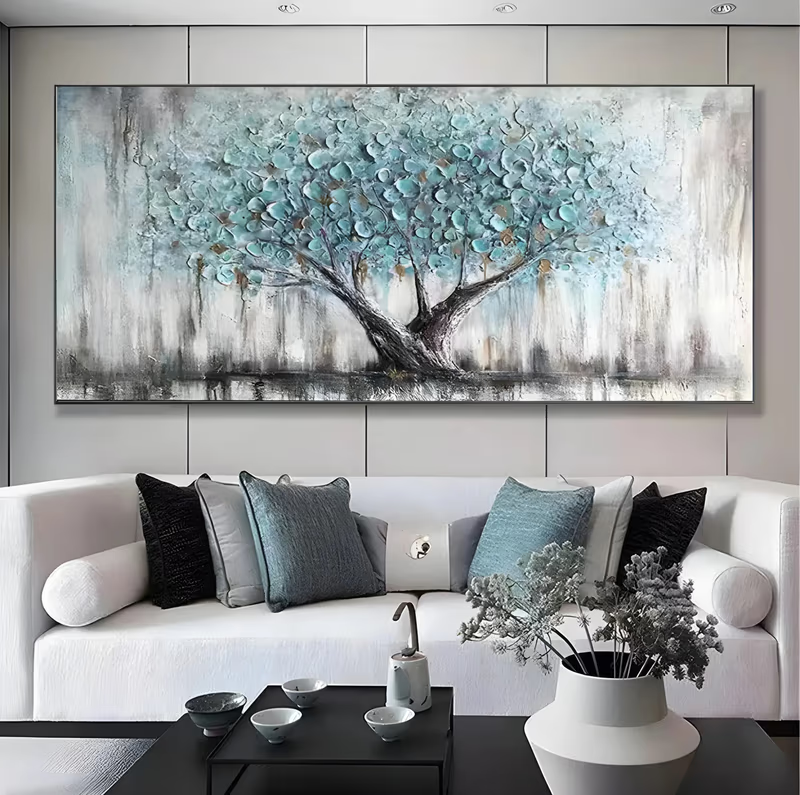
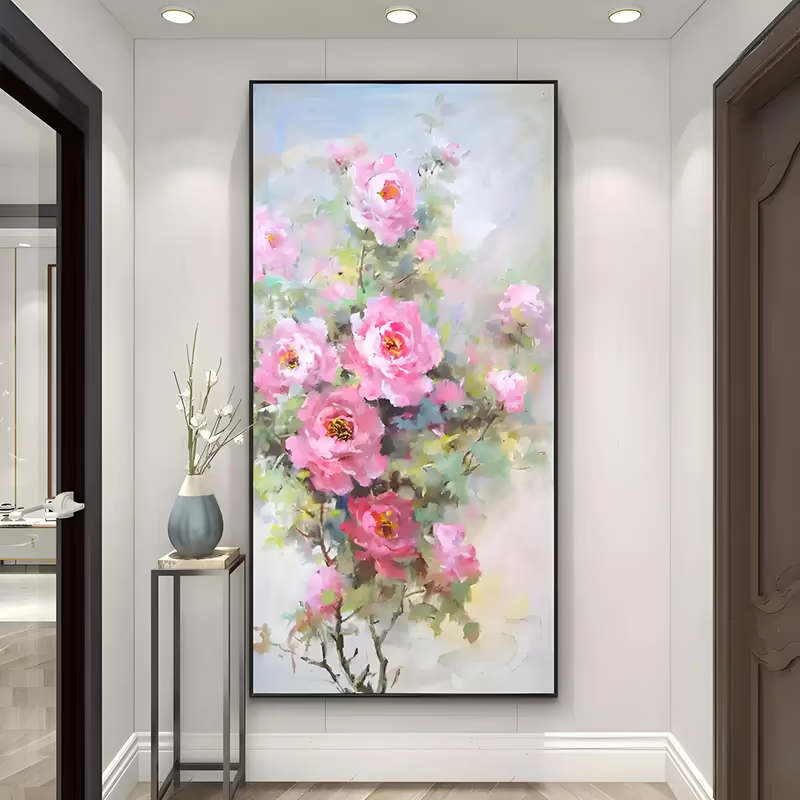
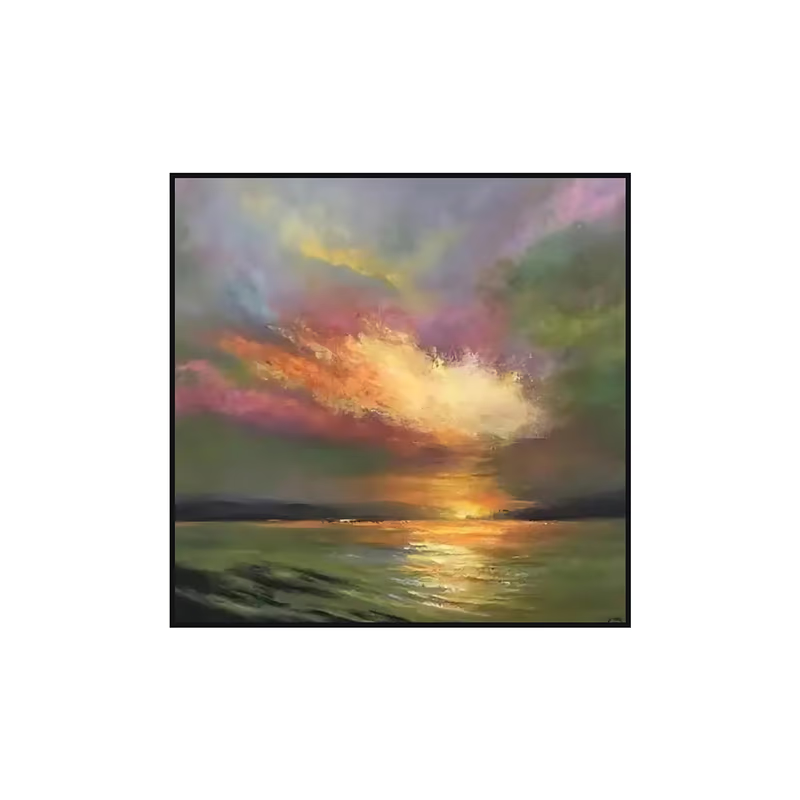
Green wall art guide · Updated
How to choose green wall art: sage, olive, forest and emerald
Key takeaways
- Green brings the outdoors in: a botanical or landscape canvas carries the look of planting into rooms where real plants struggle, such as windowless corridors, meeting rooms and hotel rooms.
- Sage and olive are the easy greens: grey-green and yellow-green behave almost like neutrals; forest and emerald are for depth and drama.
- Pair green with natural materials: oak, walnut, rattan, limestone, travertine and terracotta all flatter it, and so do brass and blush pink.
- Paint leaves close to life size: large botanicals look most convincing when a leaf on the canvas is near real scale, so lean towards a bigger canvas.
Why choose green wall art for a room?
Green wall art brings nature indoors, and because green is the colour the eye meets most outdoors, it feels restful and familiar in almost any space.
Green is the most adaptable colour on a wall. It works as background in a sage leaf study, as a view in a forest or meadow landscape, and as a jewel in an emerald abstract. It also ties a room to whatever is outside the window, so a green painting in a garden-facing room reads as part of the view. In hotels and workplaces it has a practical role as well: it answers the biophilic brief, the design approach built on the idea that people feel more at ease among natural forms, materials and colours.
Can green wall art replace real plants?
Green wall art cannot grow or freshen the air, but it can carry the look of planting into rooms where real plants fail, with no watering, no daylight and no dropped leaves.
Real plants need light, water and someone to look after them, and many rooms cannot offer that: an internal meeting room, a hotel corridor, a guest room left empty for days, a restaurant wall above the pass. A large leaf painting, a forest landscape or a canvas of ferns and palms gives the same visual cue of greenery, and it looks the same in February as in June.
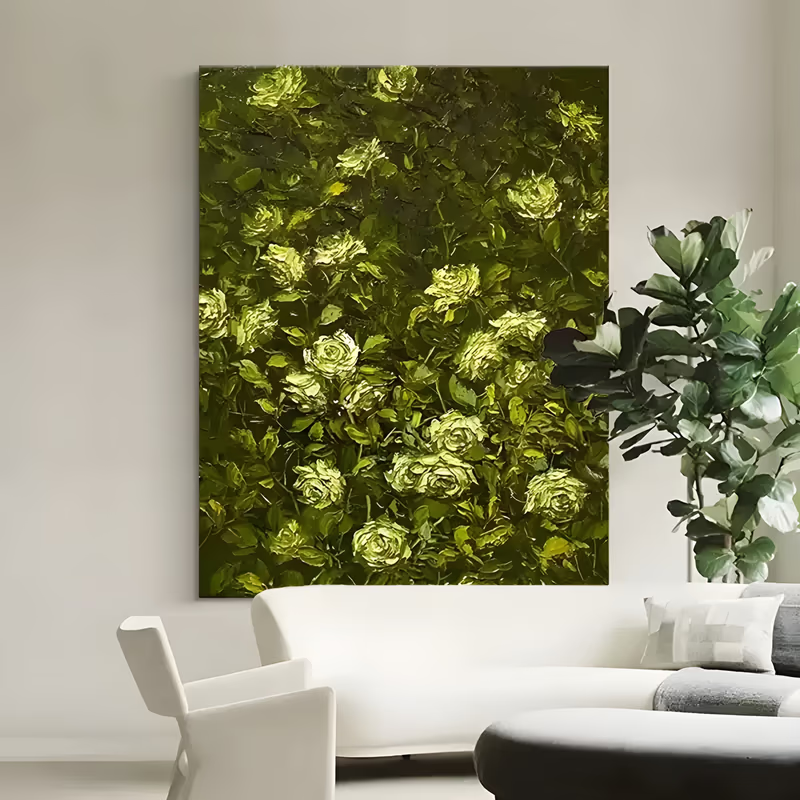
At home, art and plants often work best together: a living plant on the floor and a green botanical canvas above it, the painting repeating the leaf shapes at a larger scale. When a project specification asks for biophilic elements, botanical and landscape paintings are among the simplest to deliver across many rooms, because they can be painted as a matched series.
Which green suits your room: sage, olive, forest or emerald wall art?
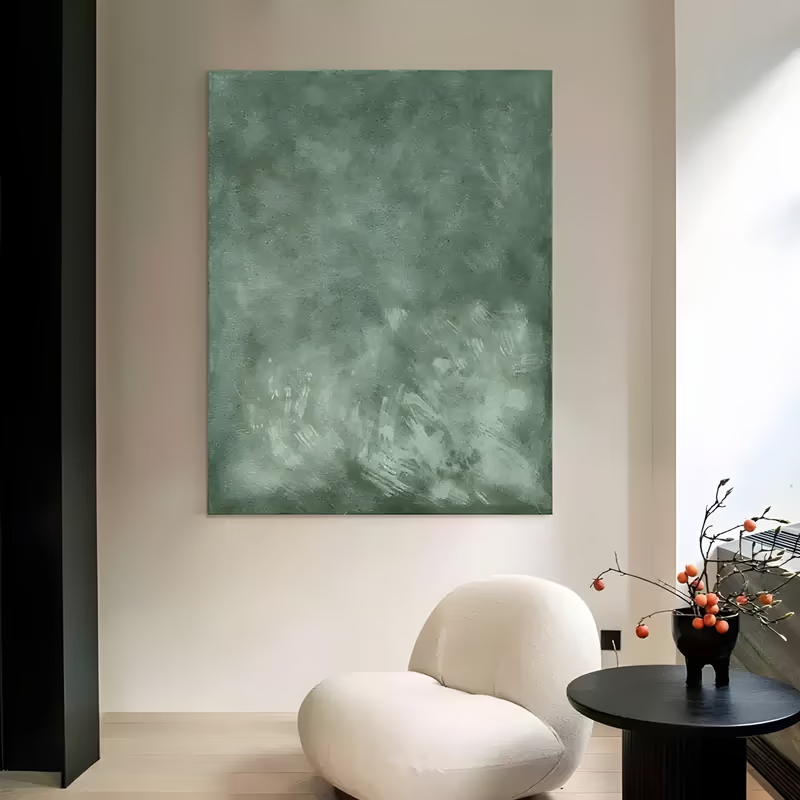
Sage and olive are soft and easy to live with, forest green is deep and sheltering, emerald is rich and glamorous, and fresh leaf greens are lively.
| Shade | Character | Rooms it suits |
|---|---|---|
| Sage and eucalyptus | Grey-green; quiet, almost a neutral | Bedrooms, living rooms, spas, guest rooms |
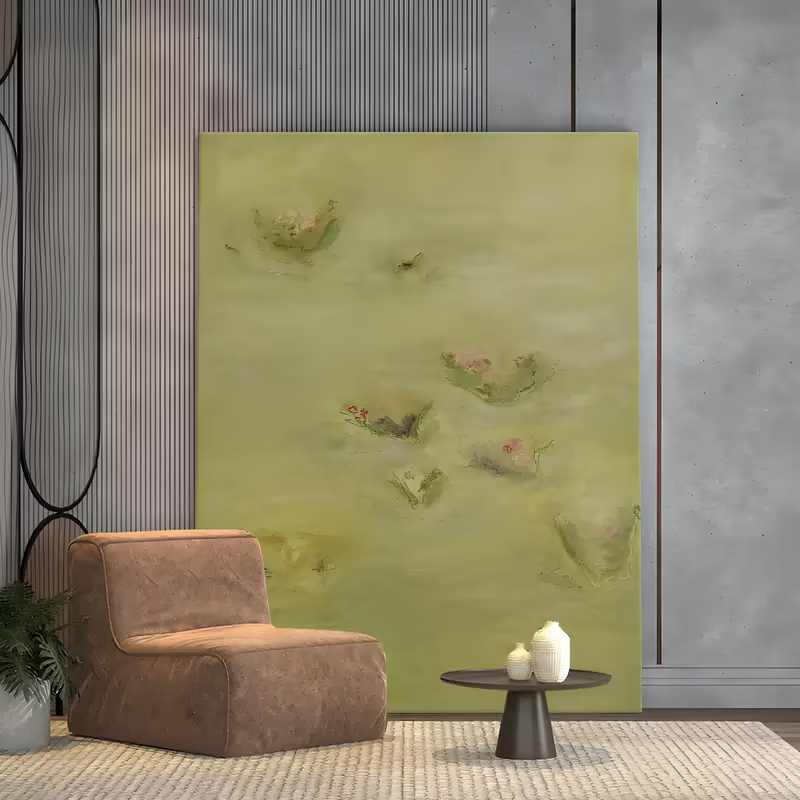
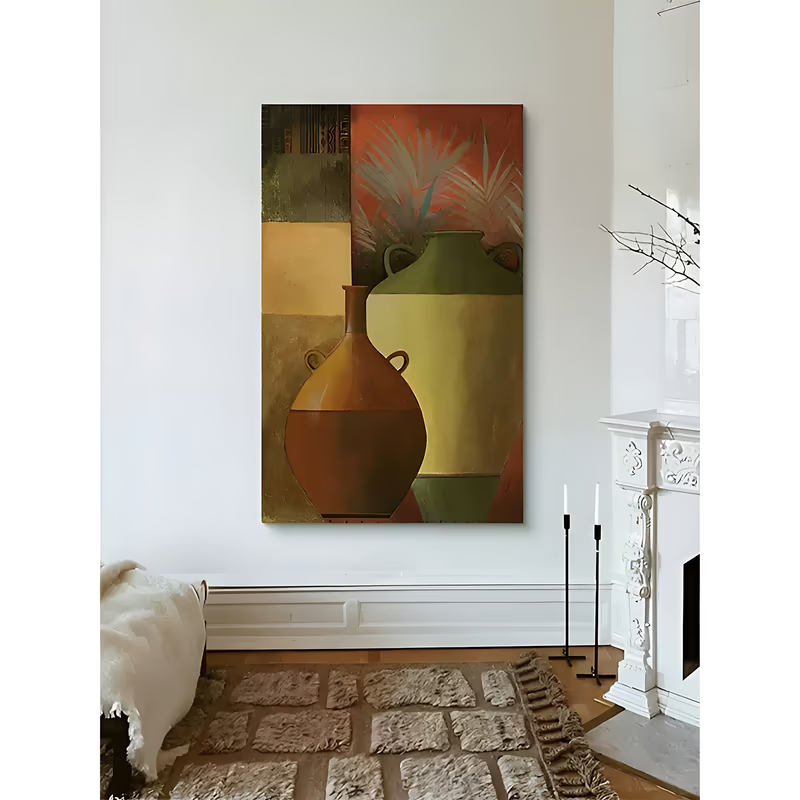
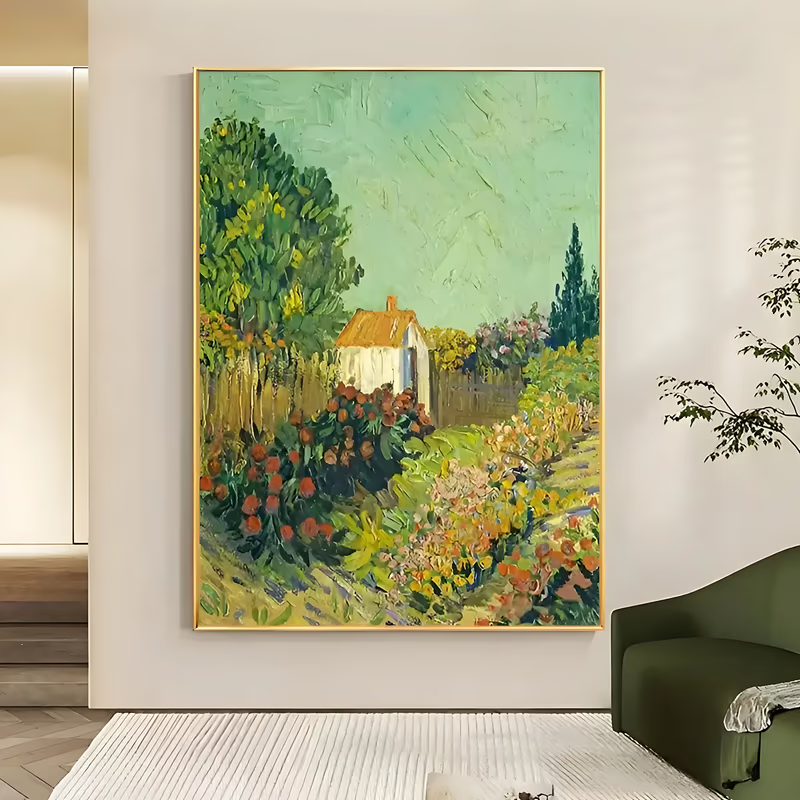
| Olive and moss | Yellow-green; earthy and warm | Kitchens, dining rooms, studies, rustic or Mediterranean schemes |
| Forest and bottle green | Deep, sheltering, traditional | Libraries, home offices, dining rooms, boardrooms |
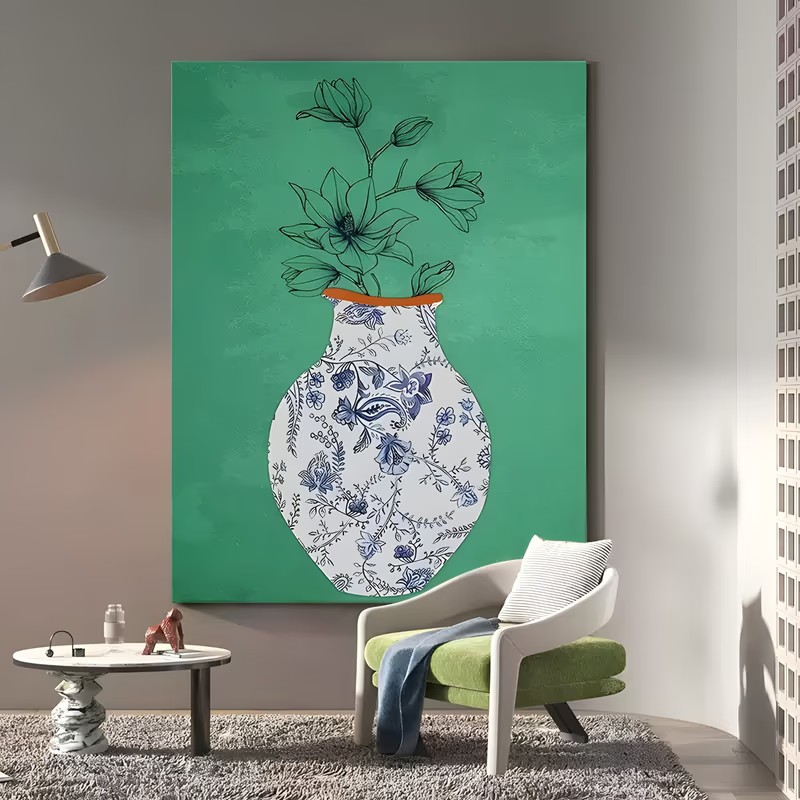
| Emerald | Saturated jewel tone; luxurious | Bars, restaurants, lobbies, a statement wall |
| Leaf and spring green | Fresh, bright and energetic | Breakfast rooms, kitchens, children's rooms, cafés |
The deciding factor is usually the undertone. Sage leans grey and suits cool, pale rooms; olive leans yellow and suits warm timber and terracotta. If the room already holds a lot of honey-coloured wood, pick a green with yellow in it; if it is mostly white and stone, a cooler grey-green or an emerald will look sharper.
What kinds of green paintings are there?
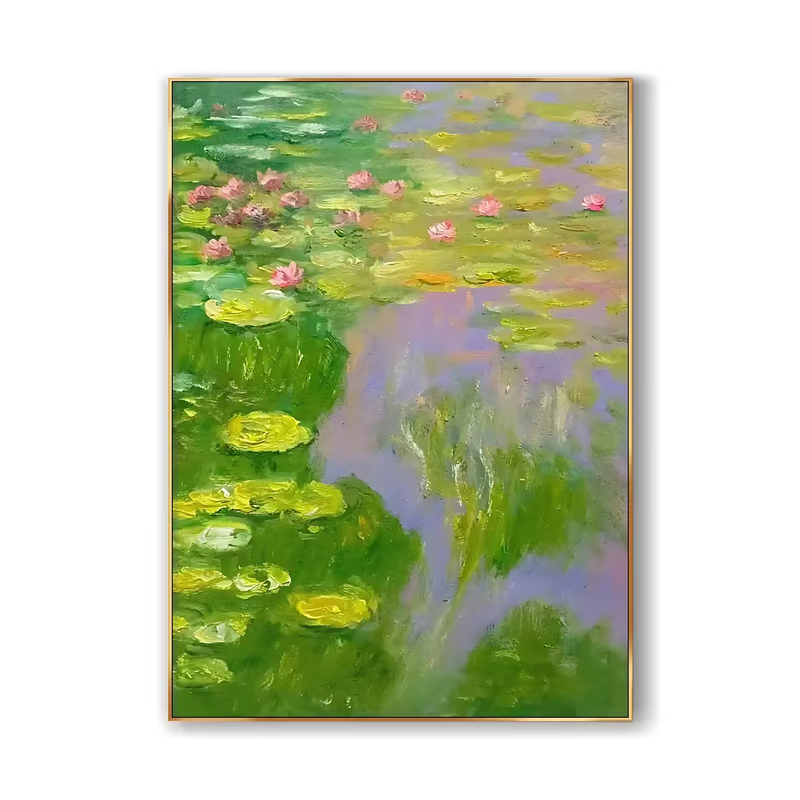
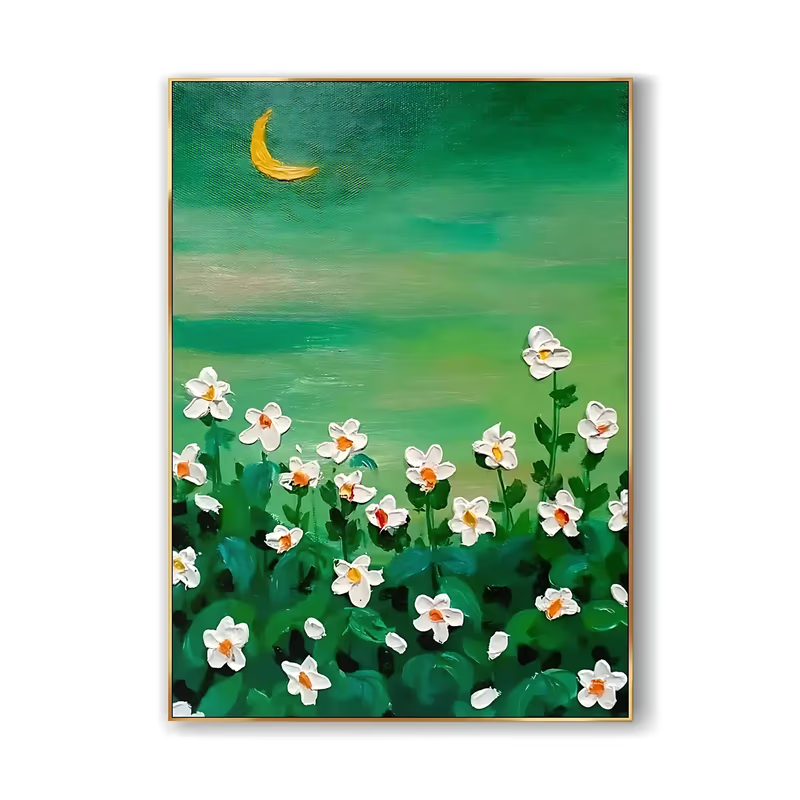
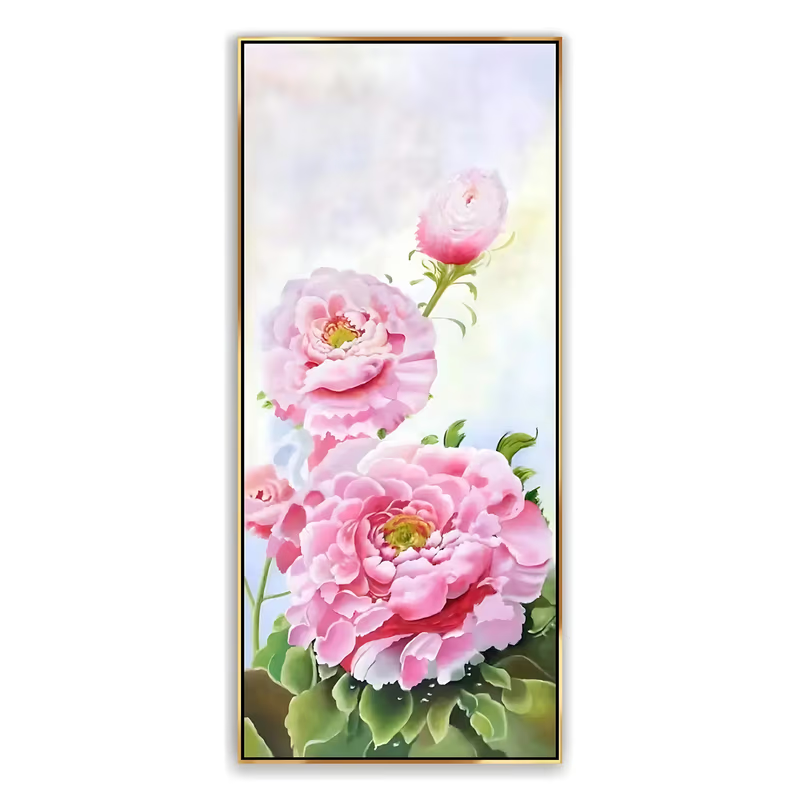
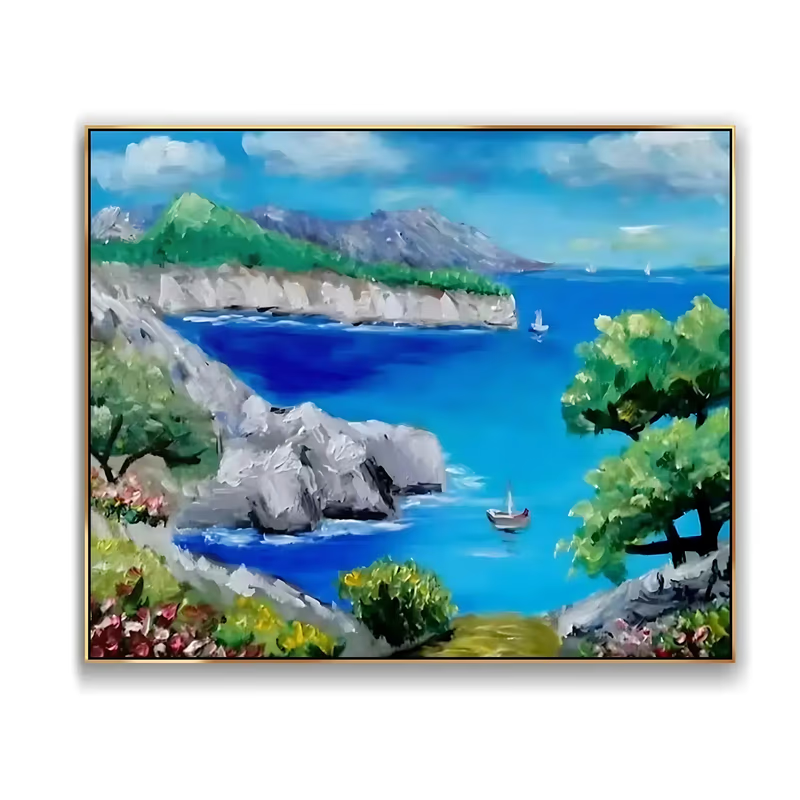
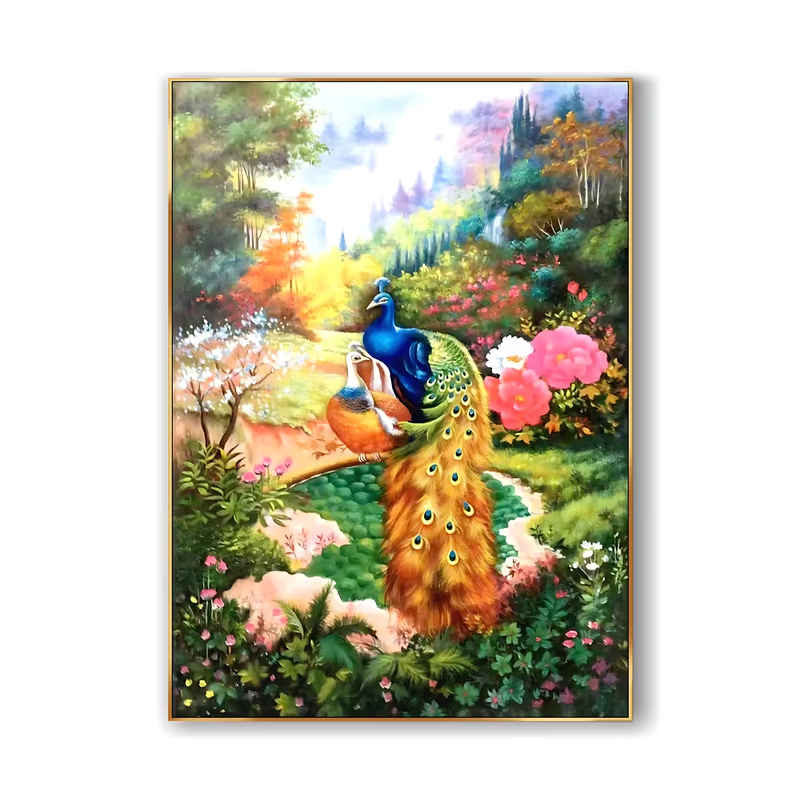
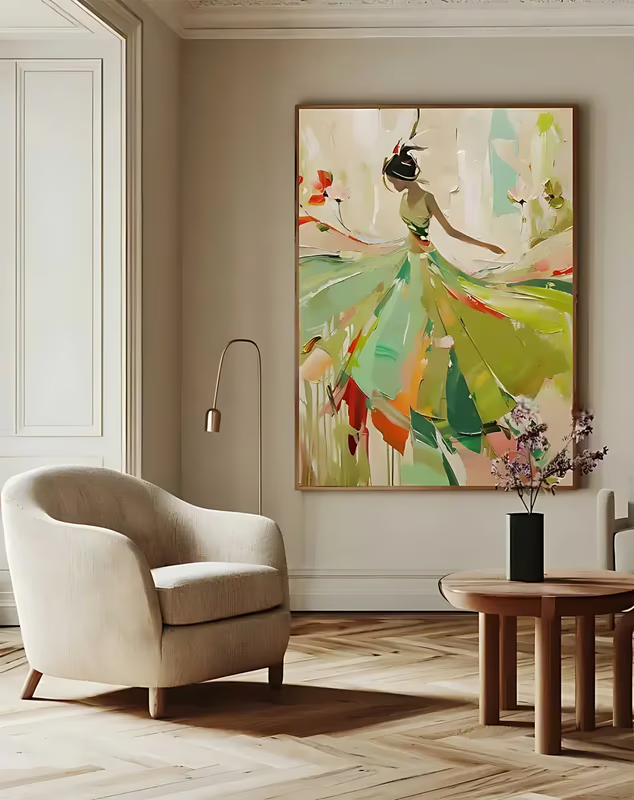
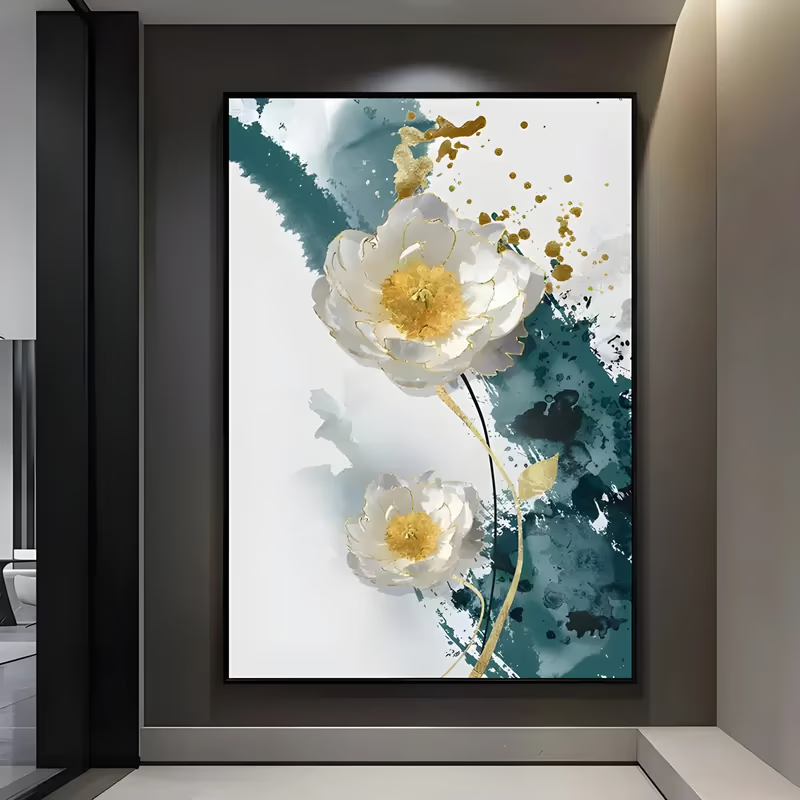
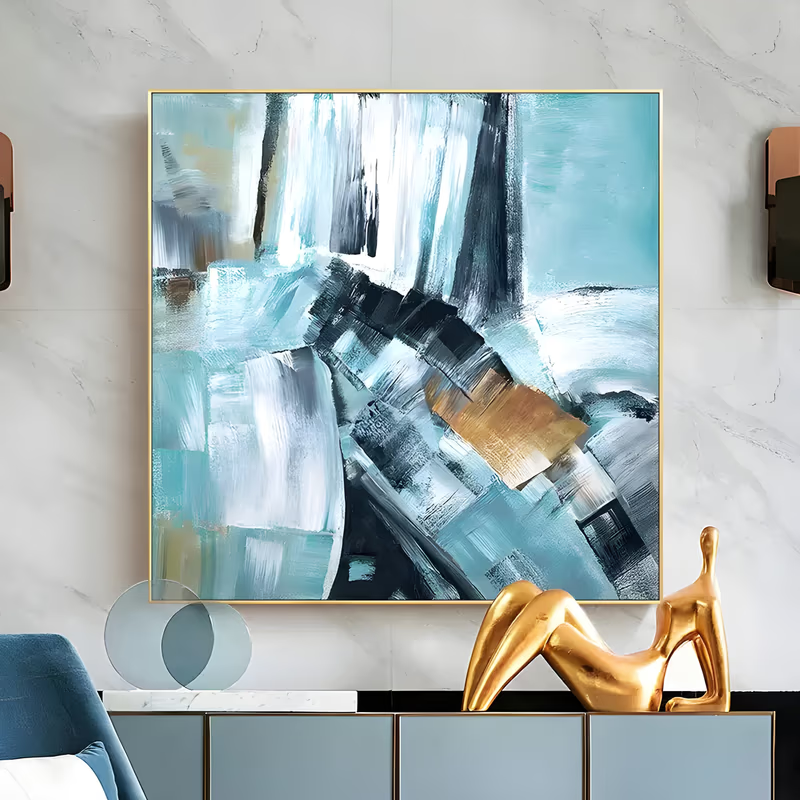
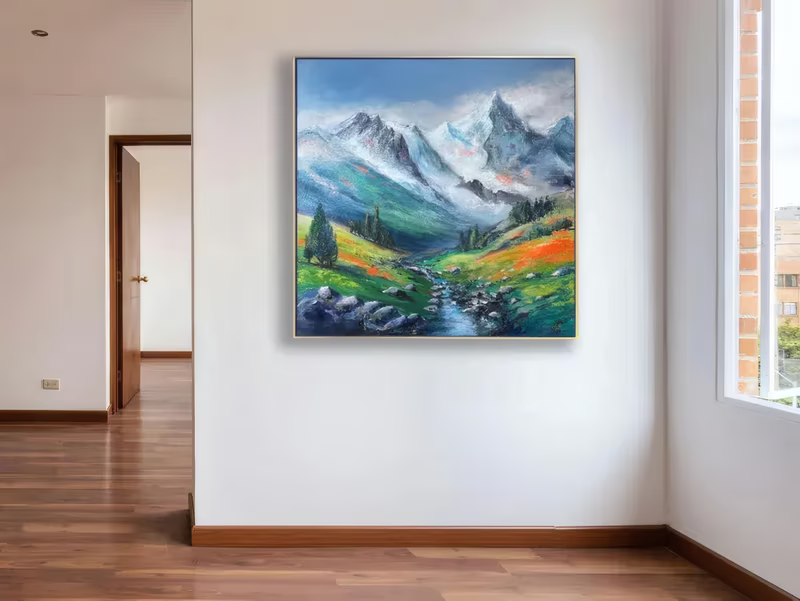
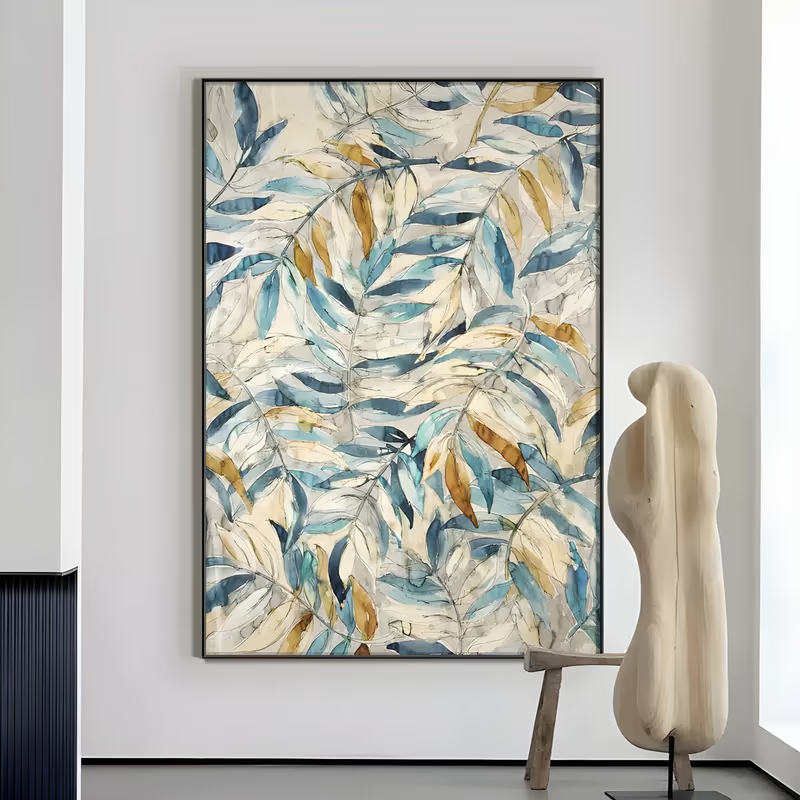
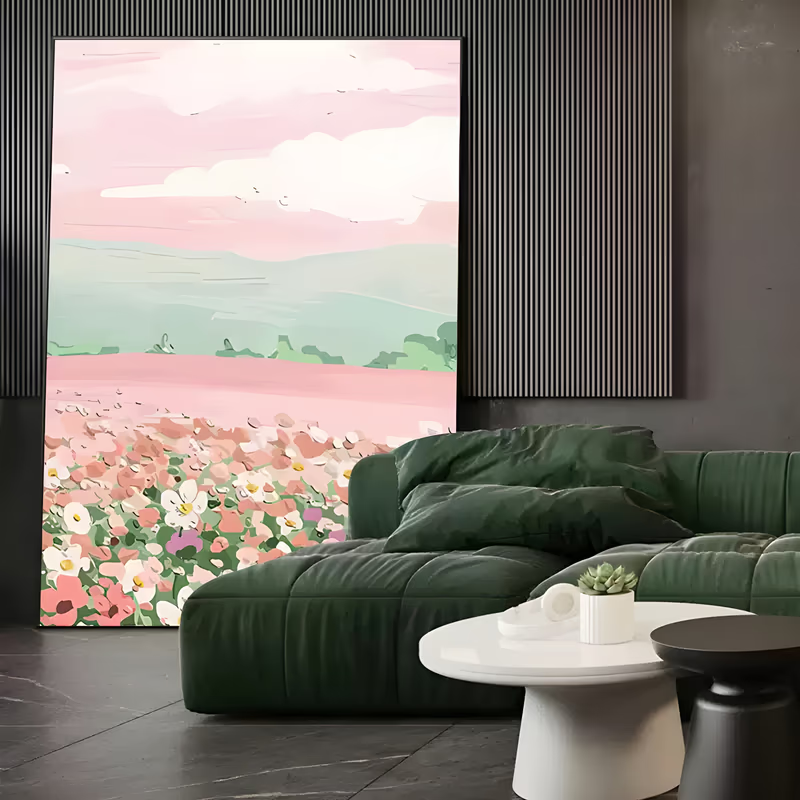
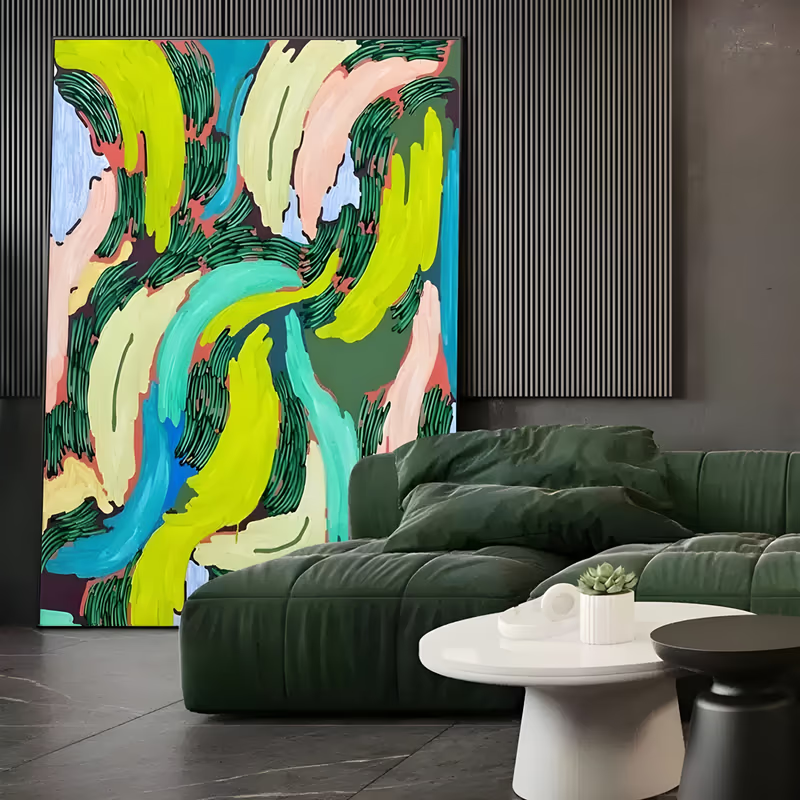
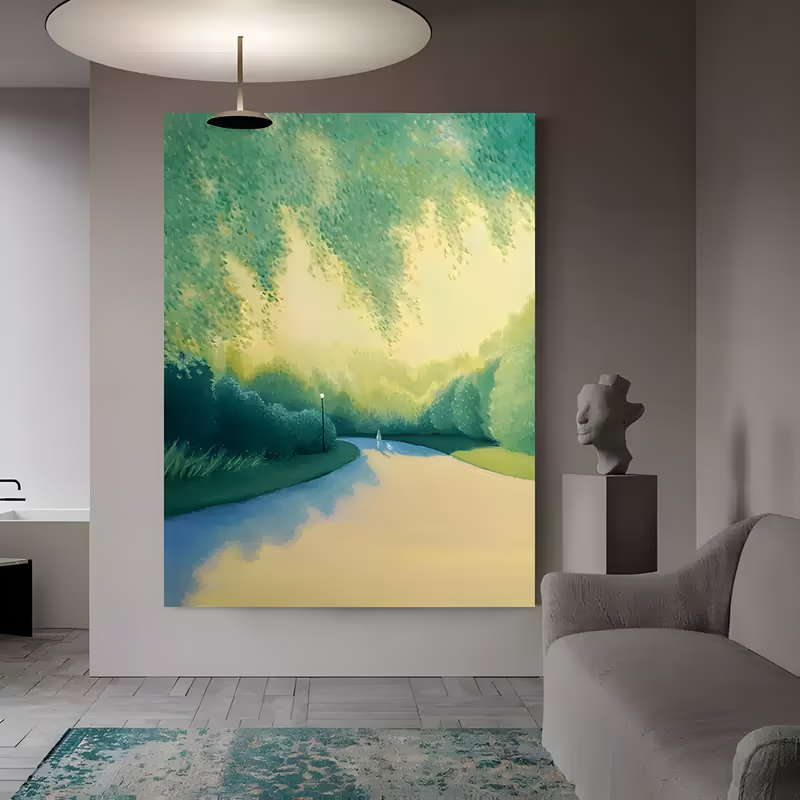
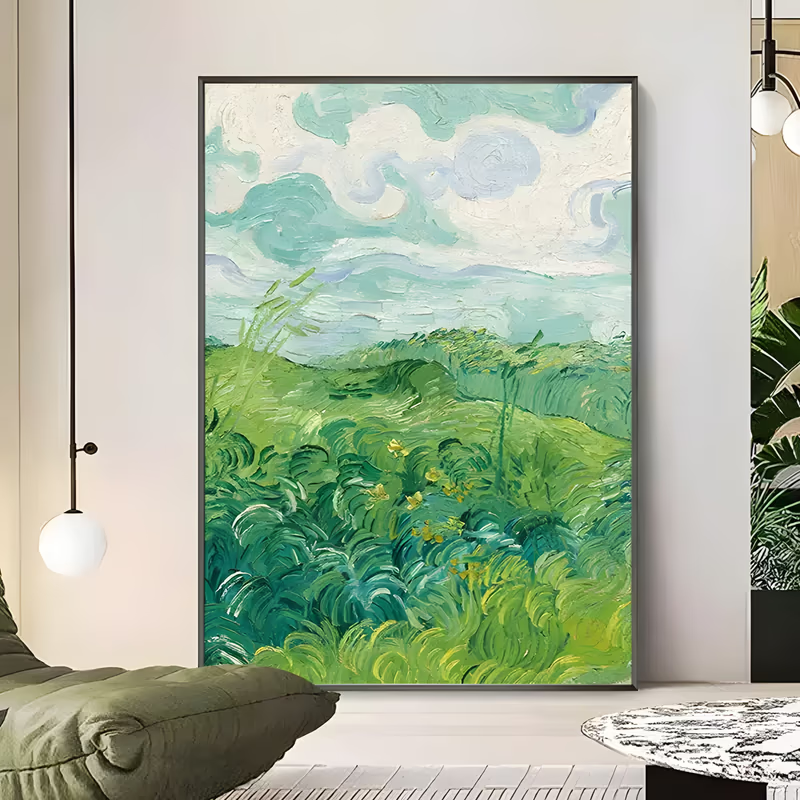
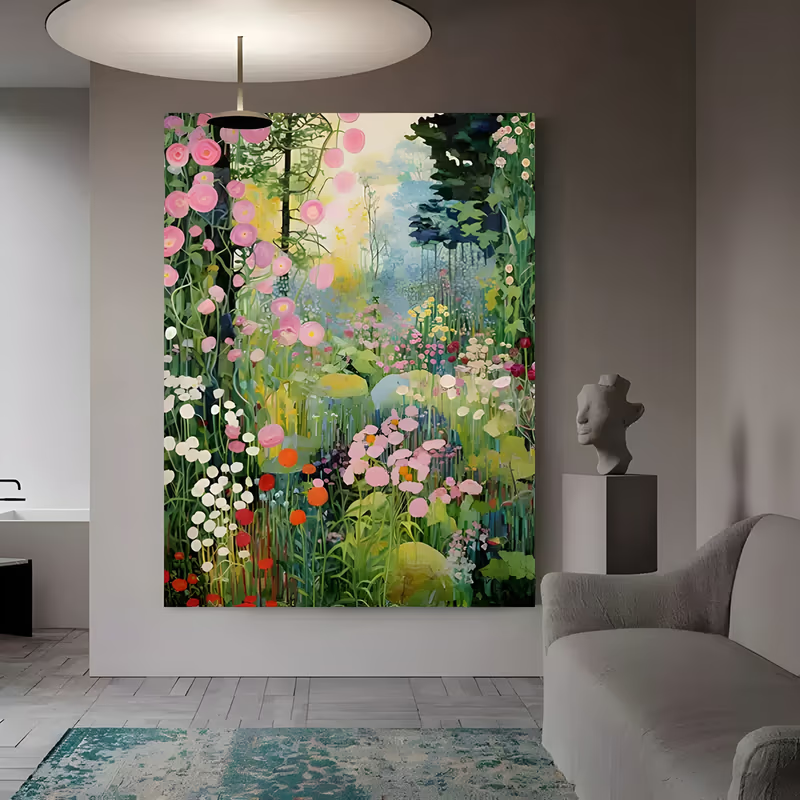
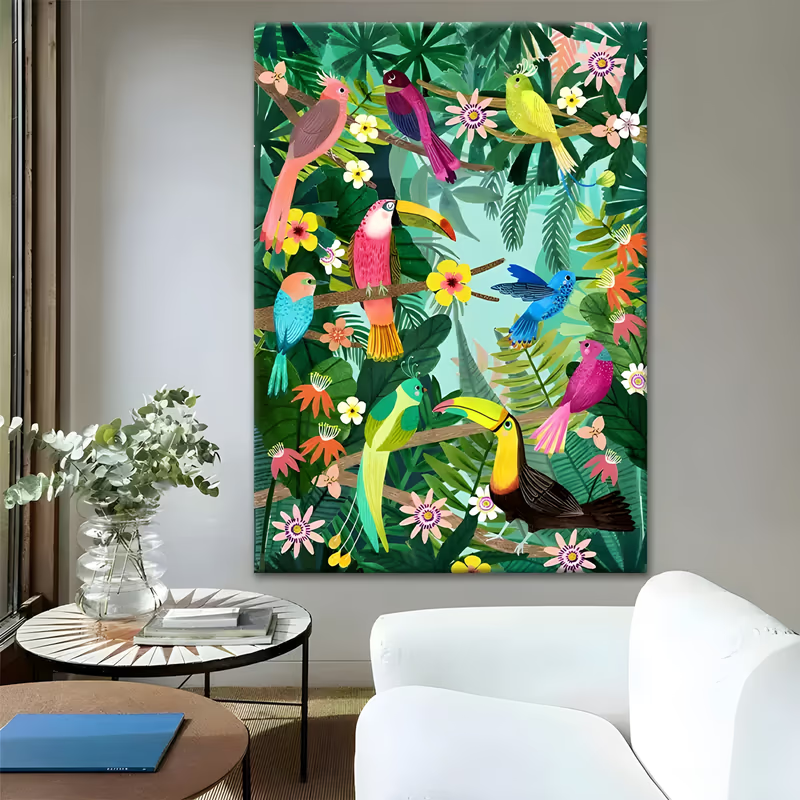
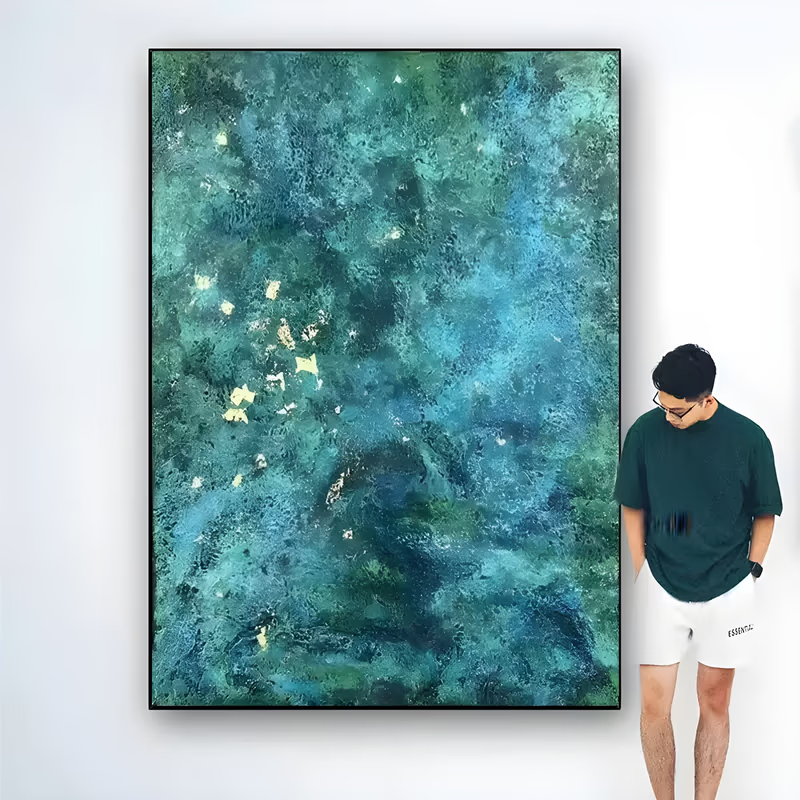
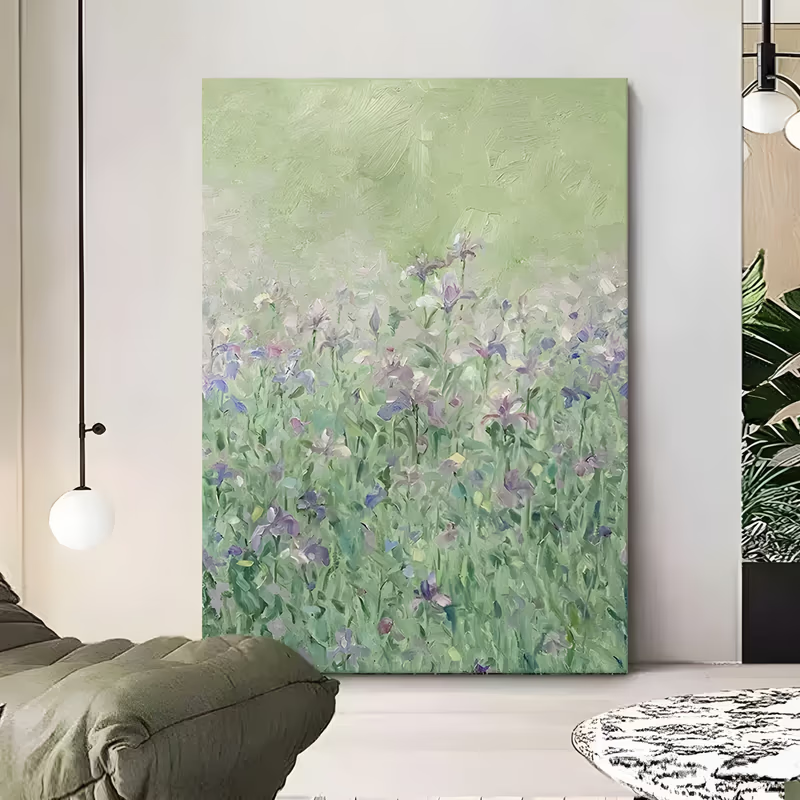
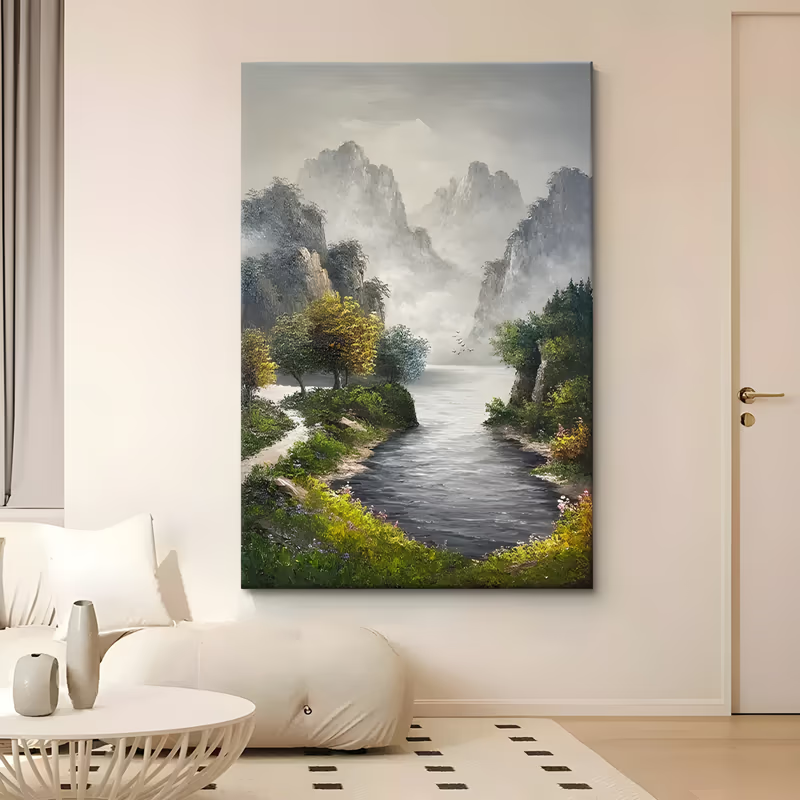
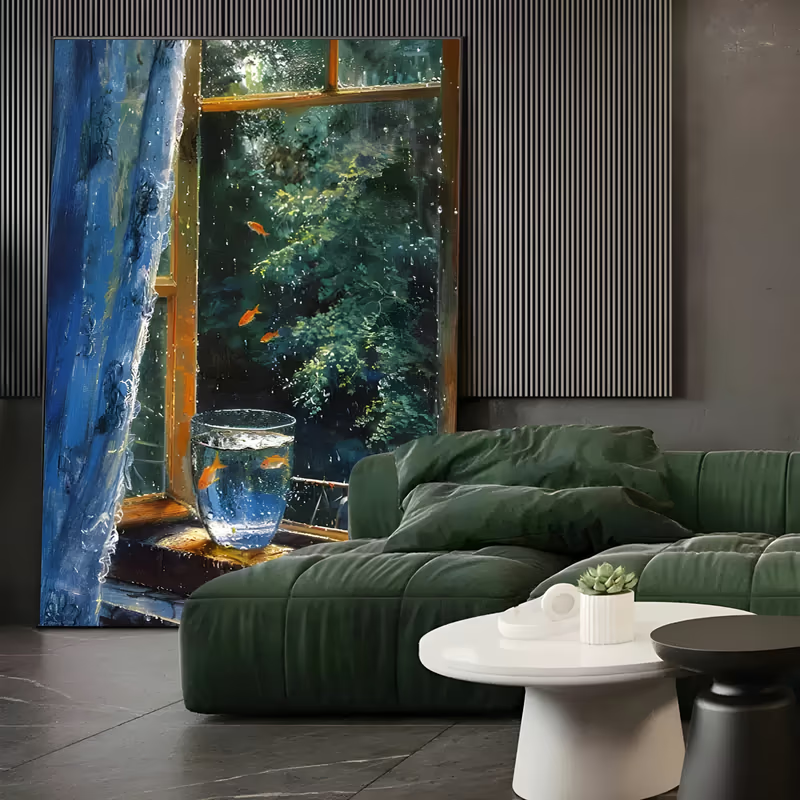
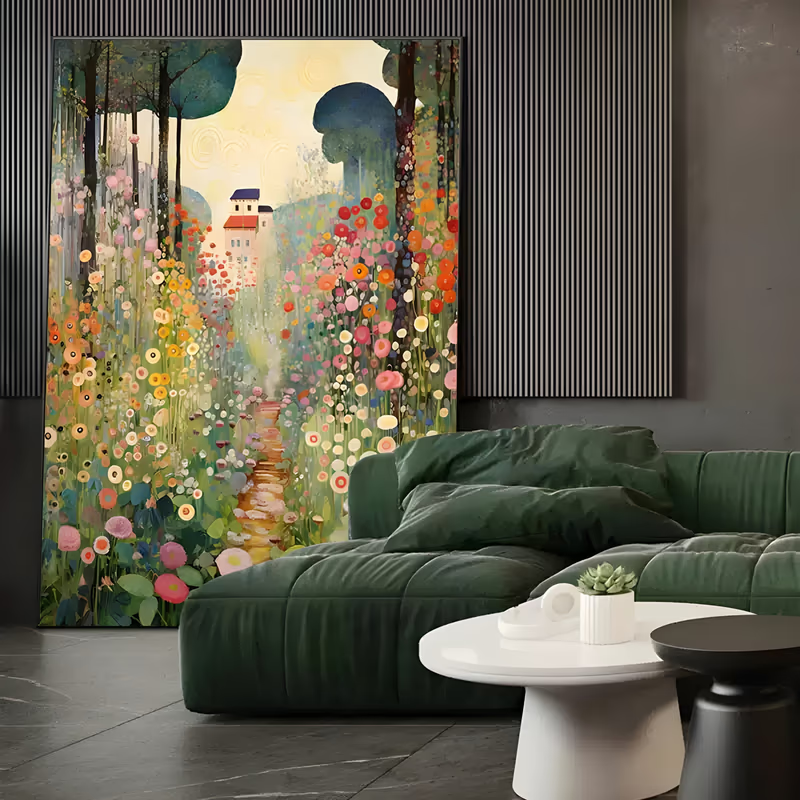
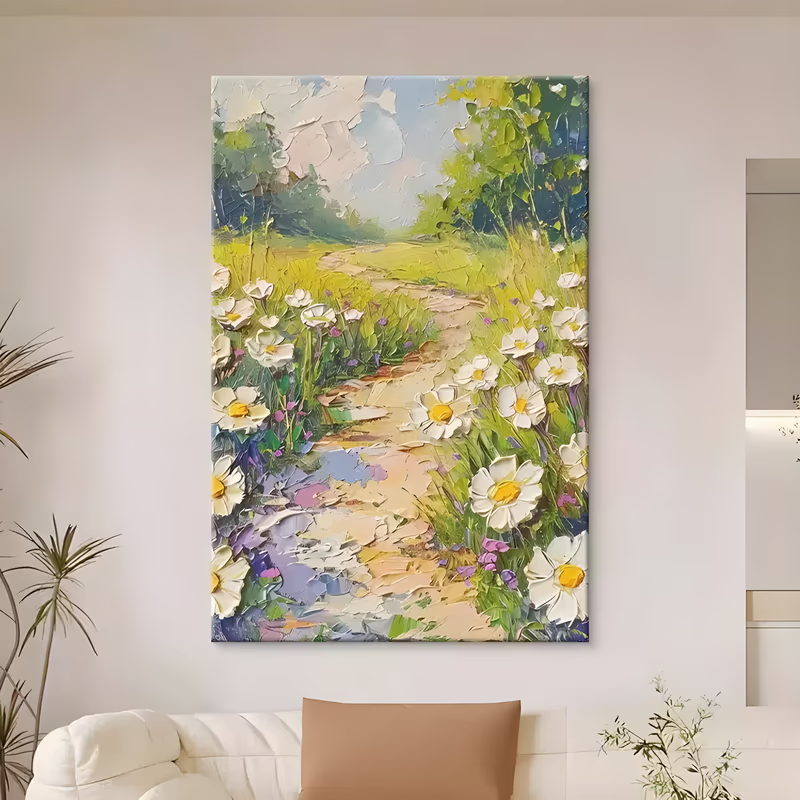
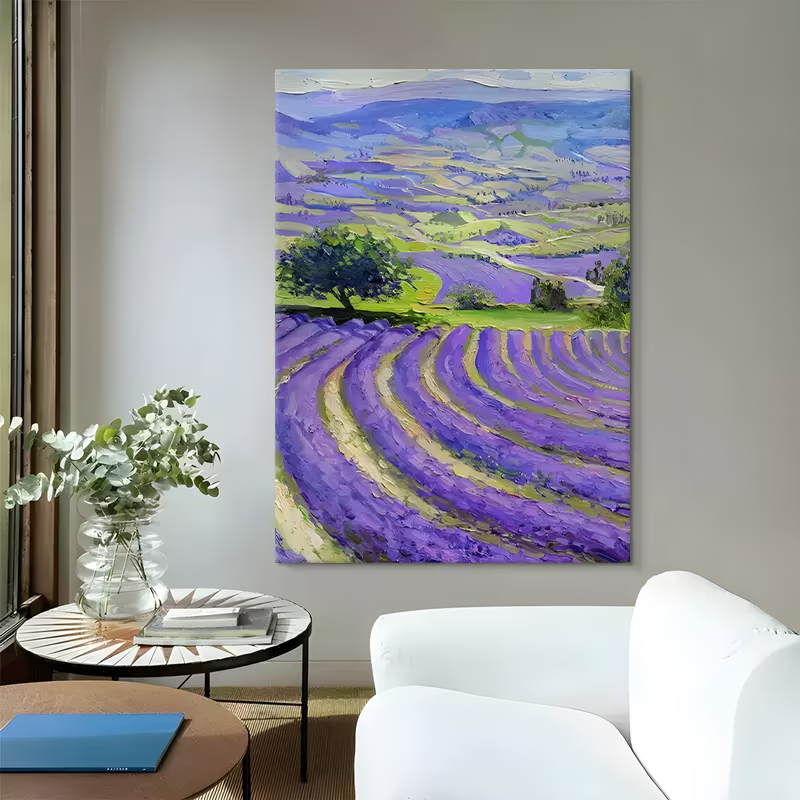
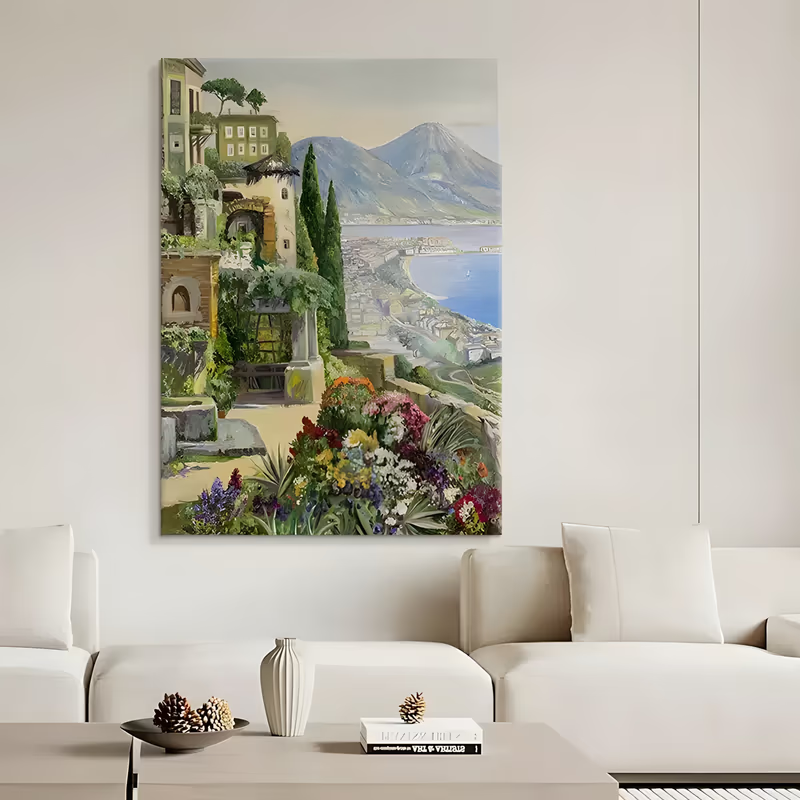
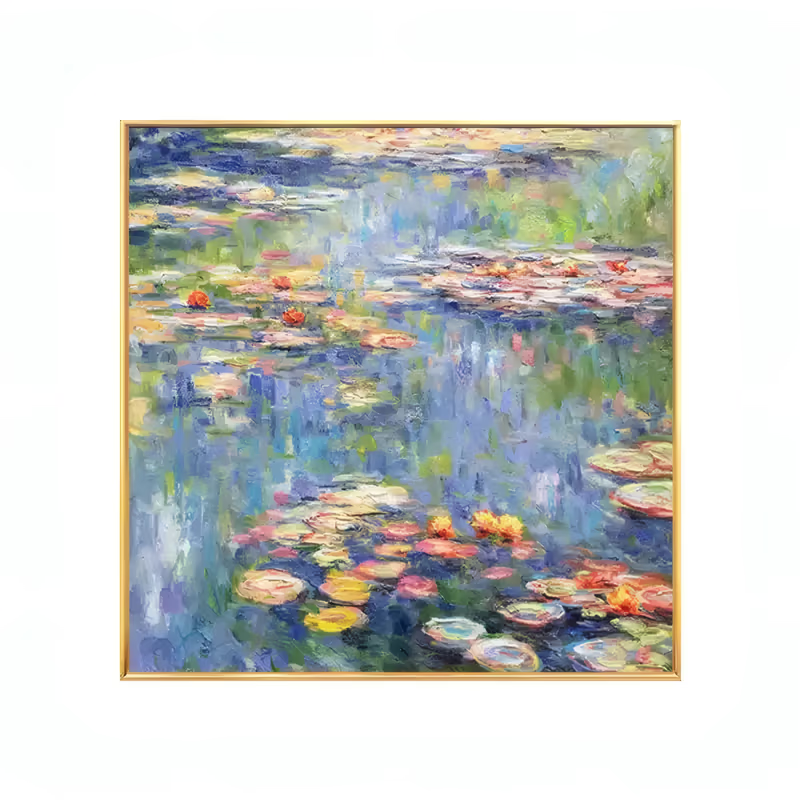
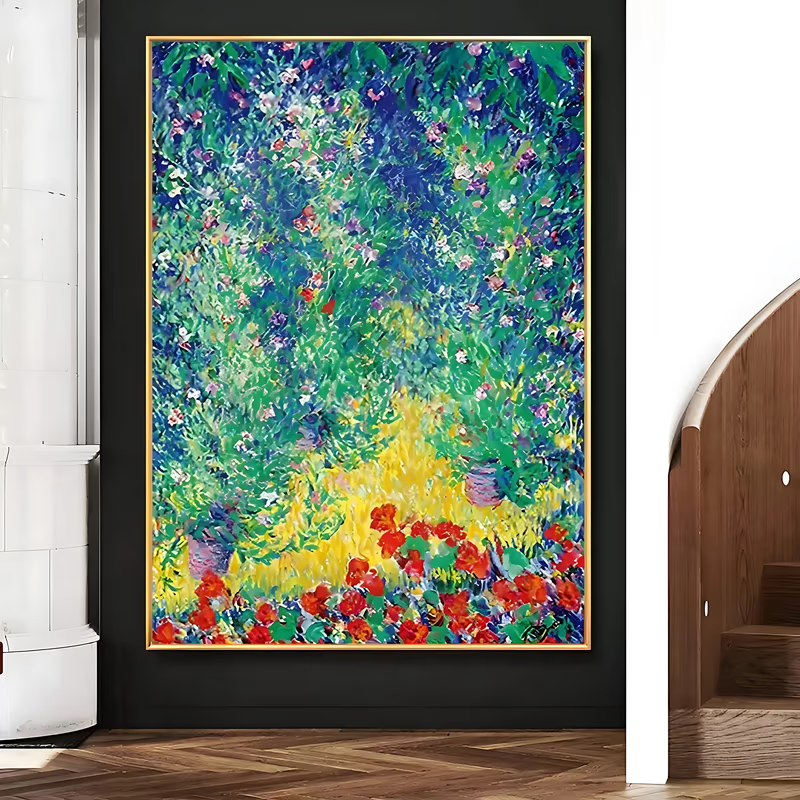
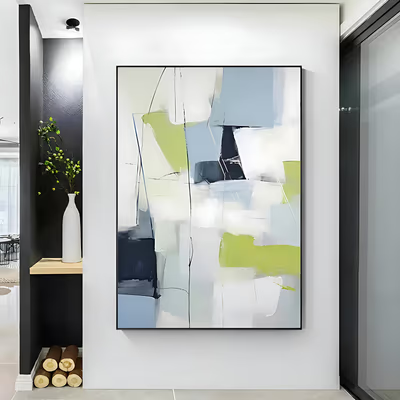
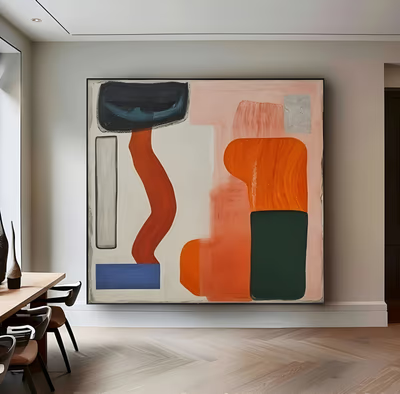
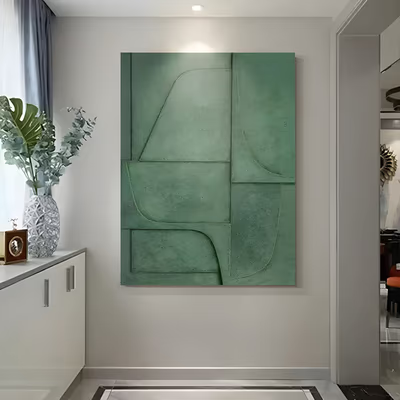
Green wall art covers three main kinds: botanical and leaf paintings, landscapes of forests and meadows, and abstract or textured work in sage, olive and emerald.
Green botanical and leaf paintings
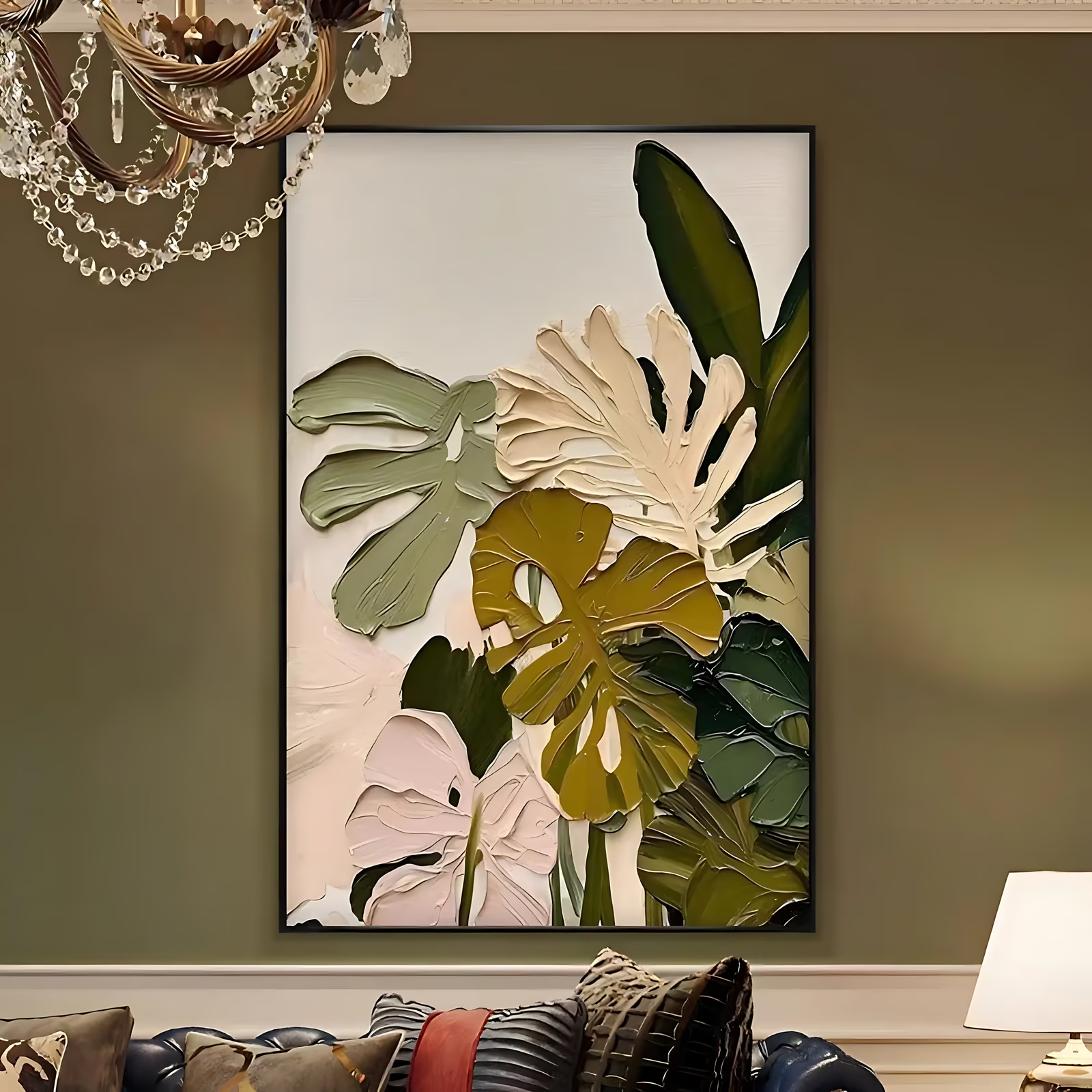
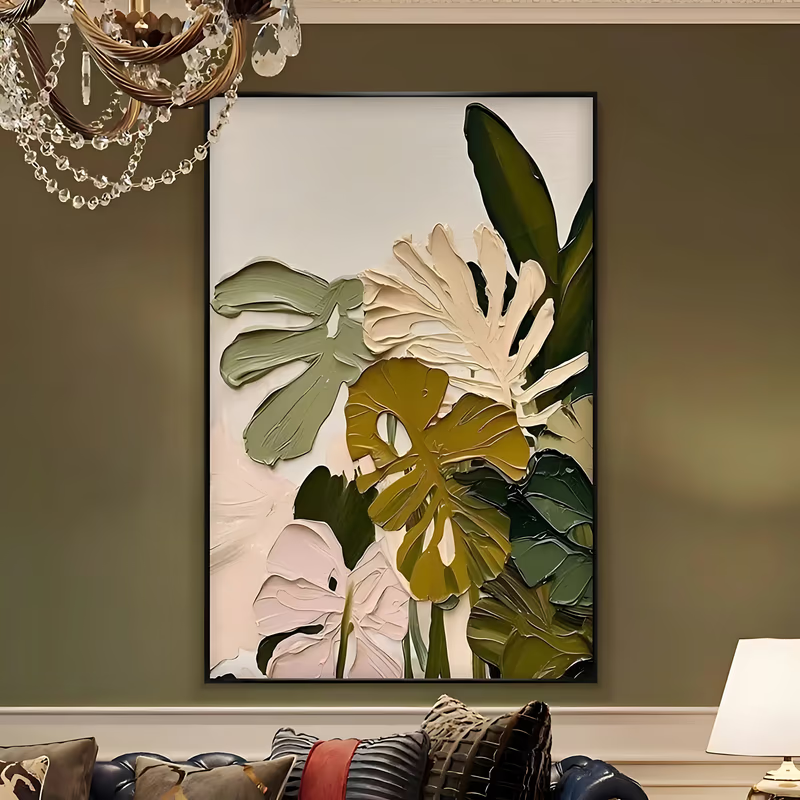
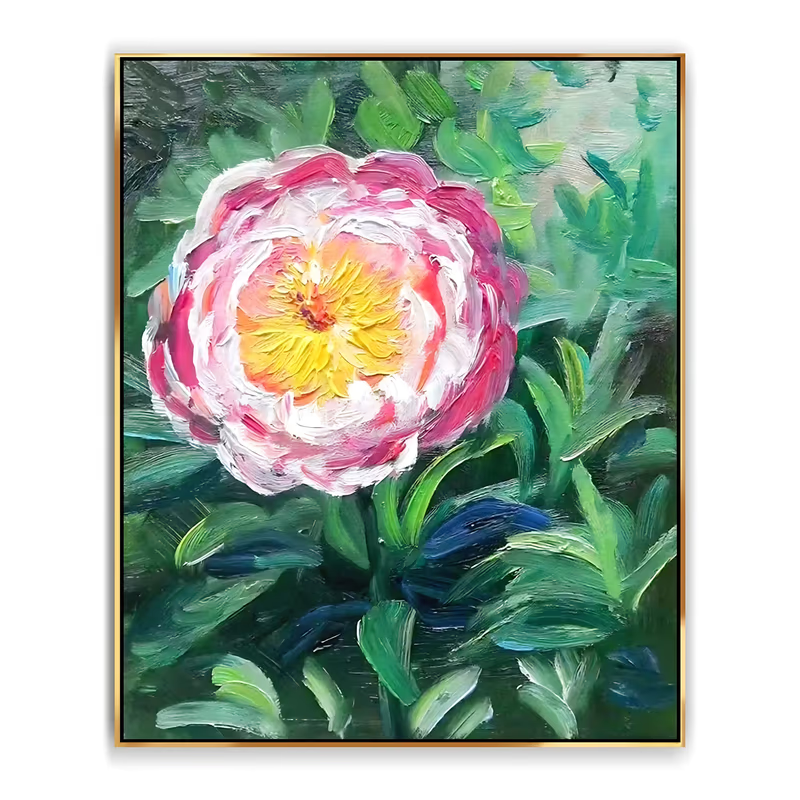
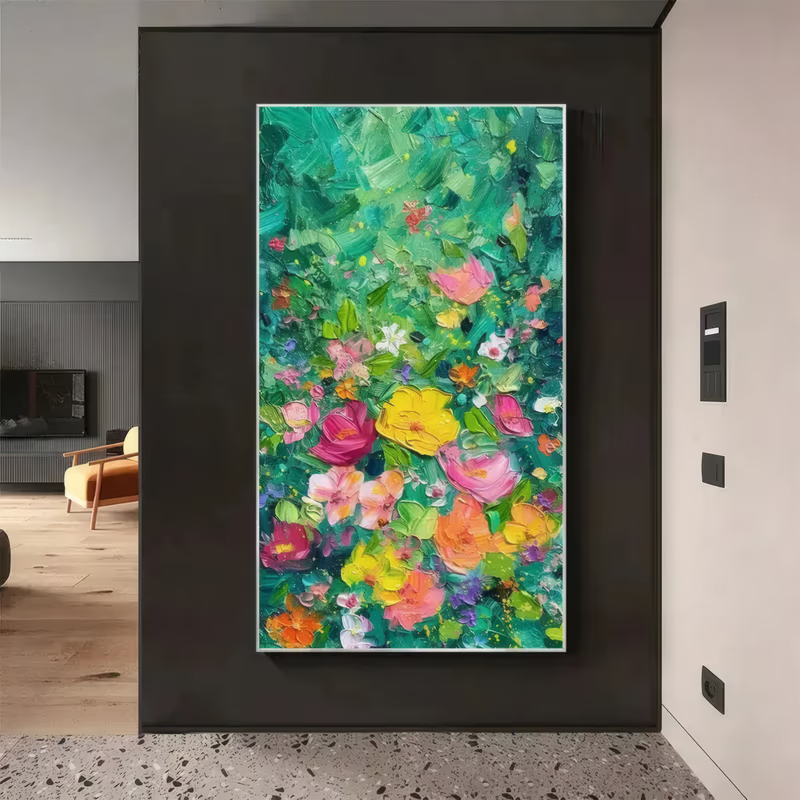
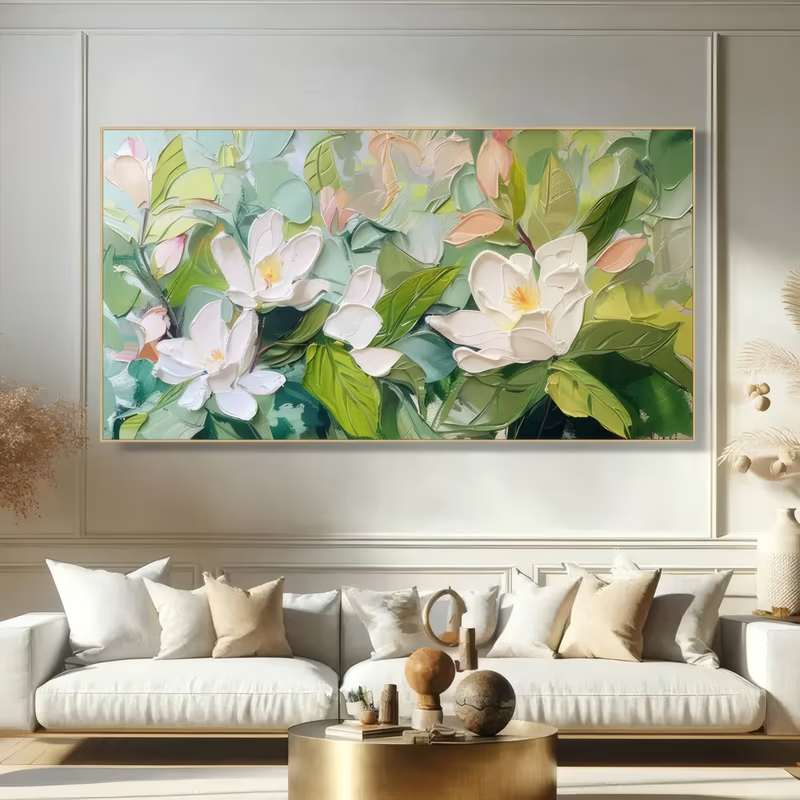
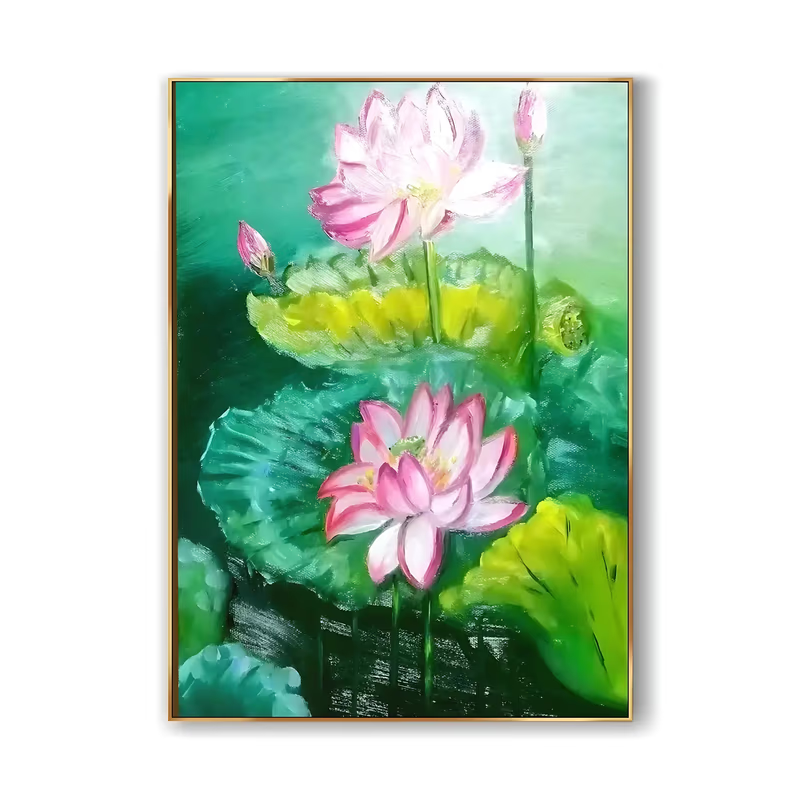
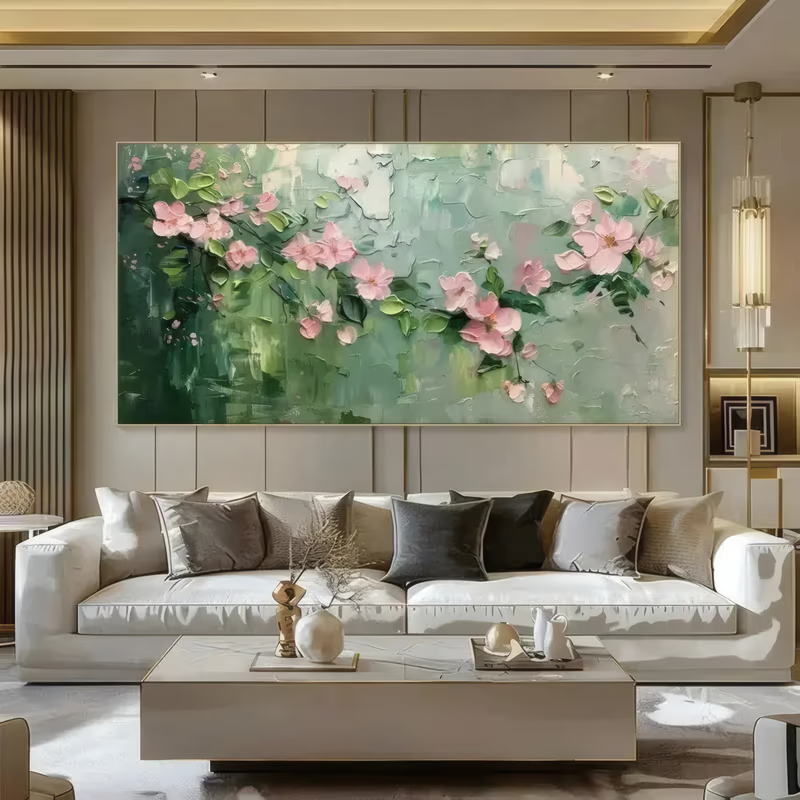
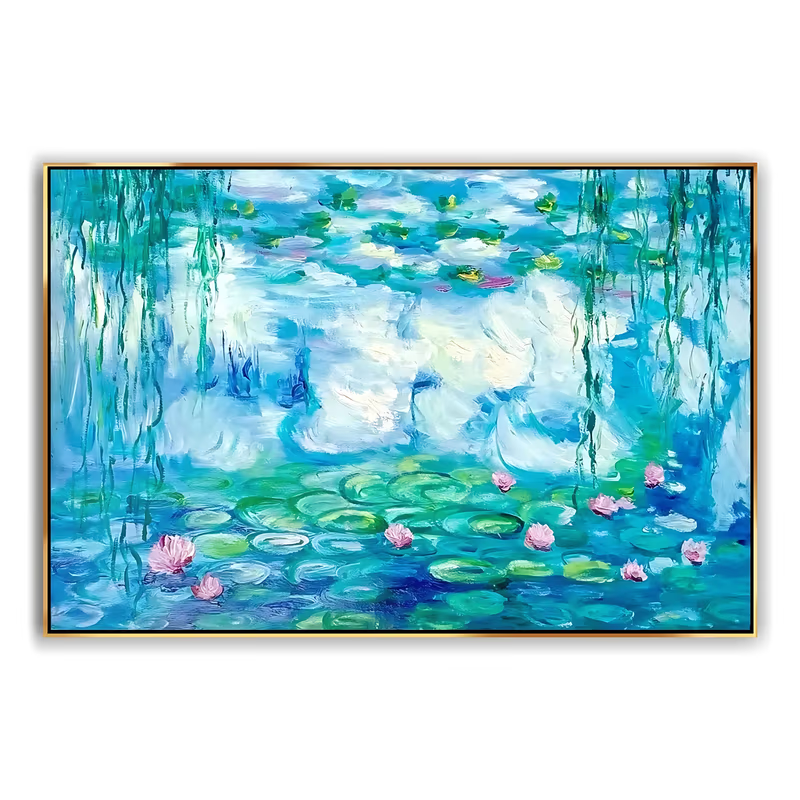
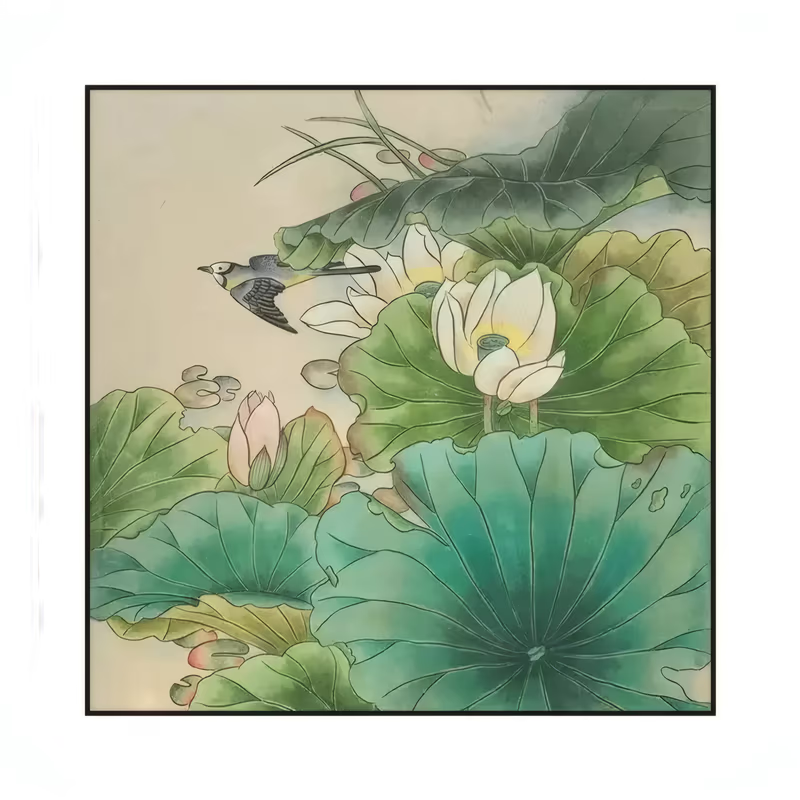
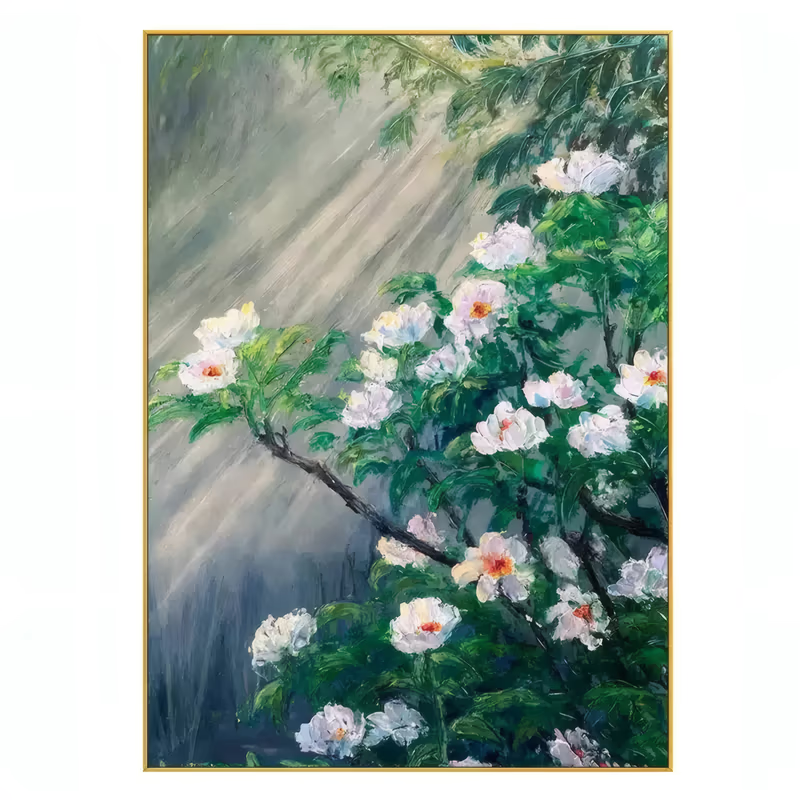
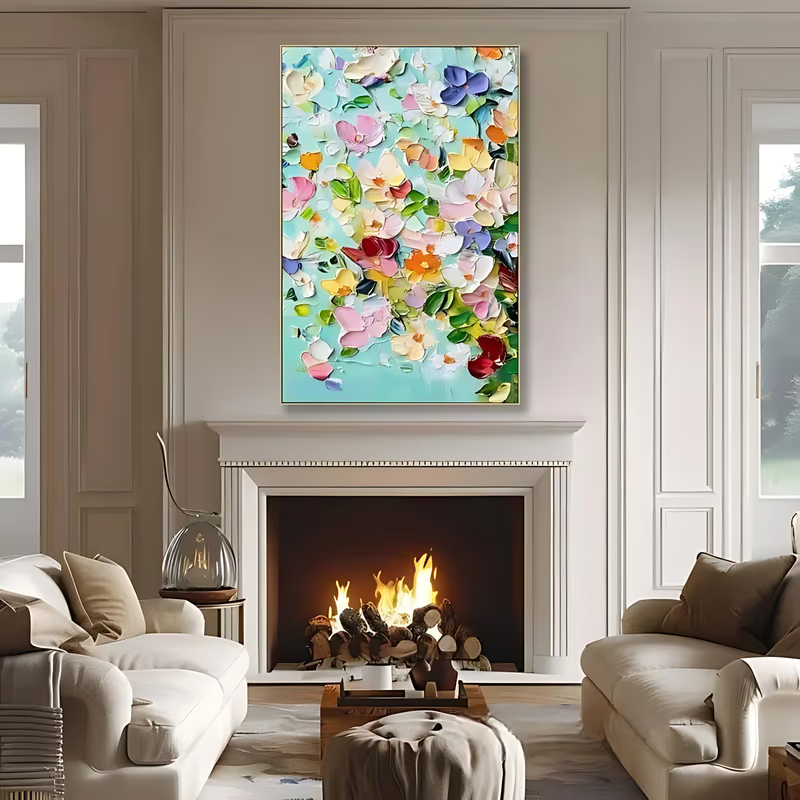
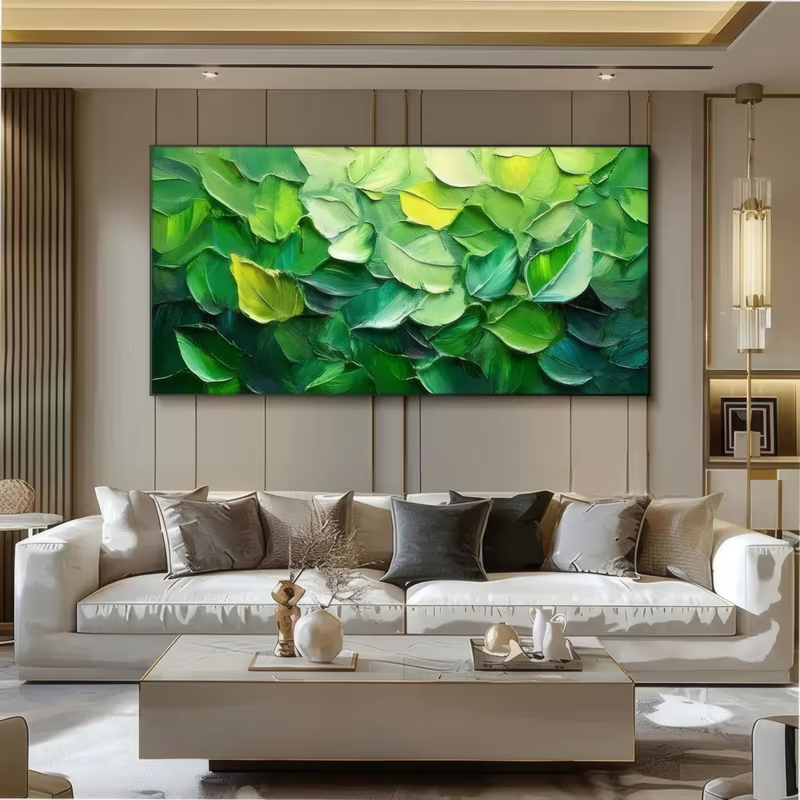
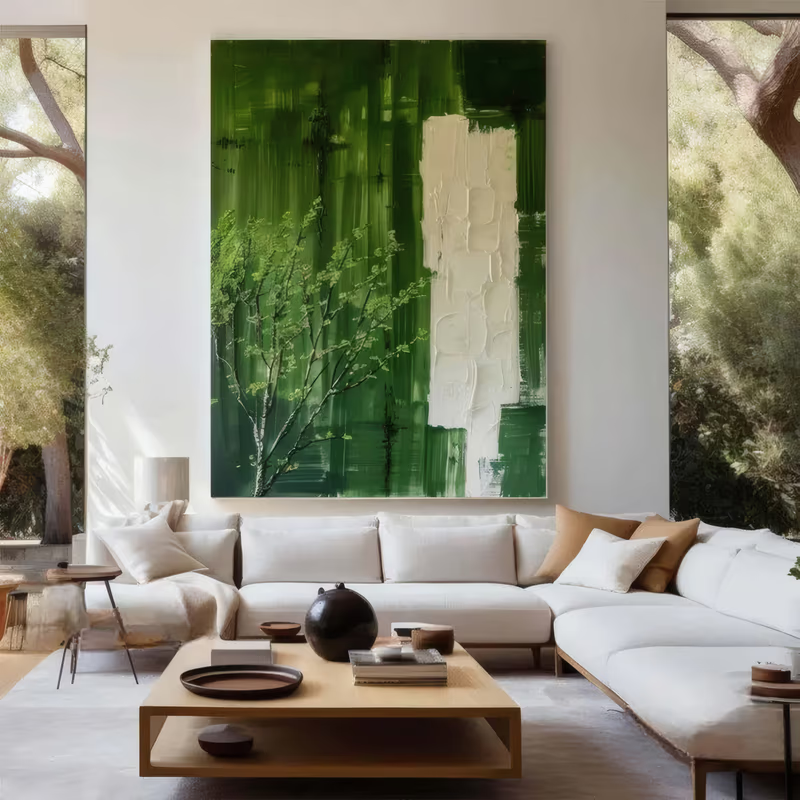
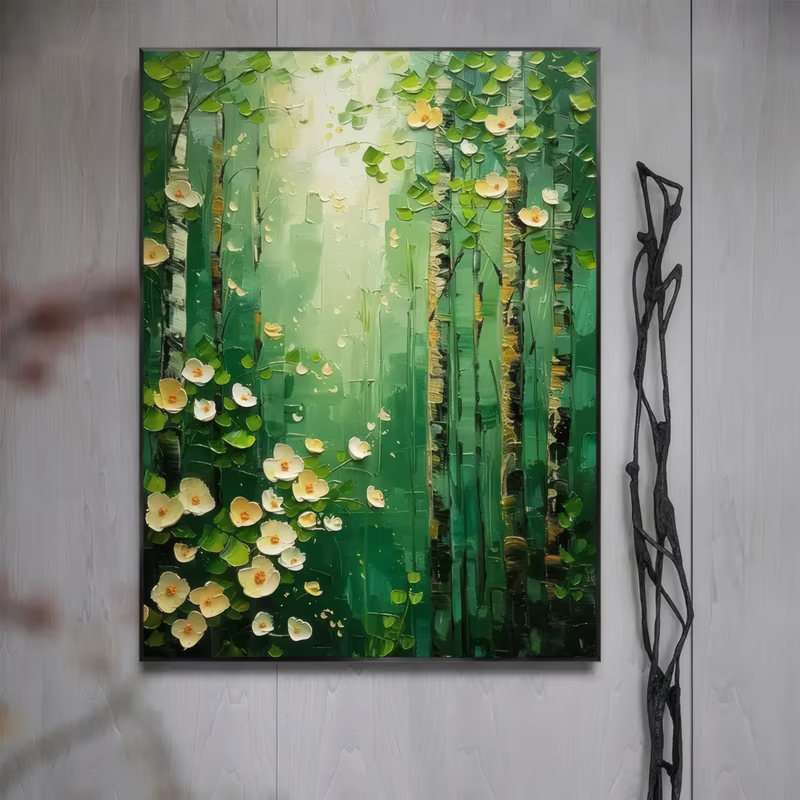
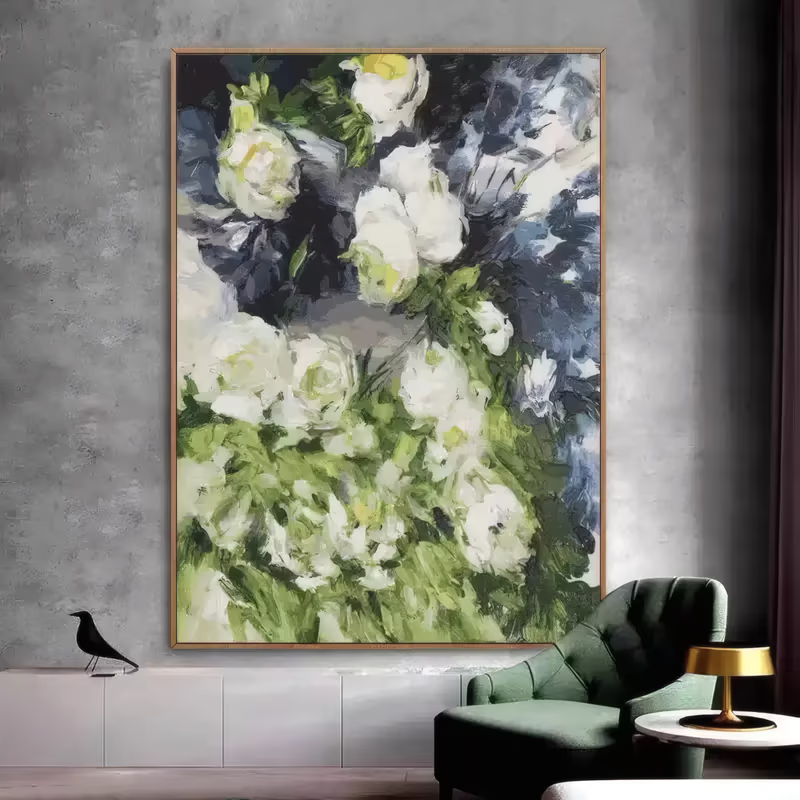
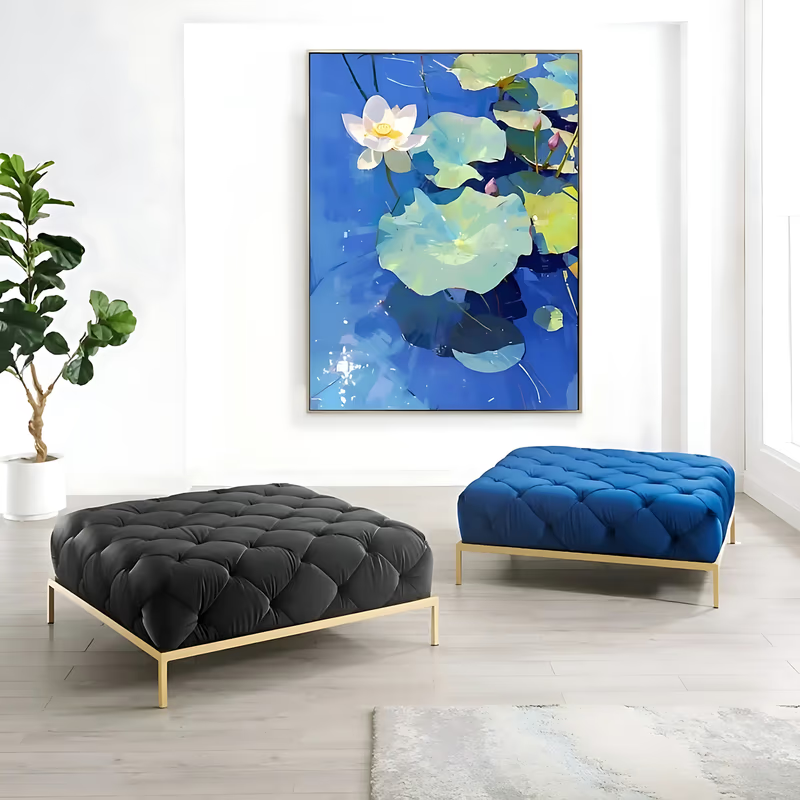
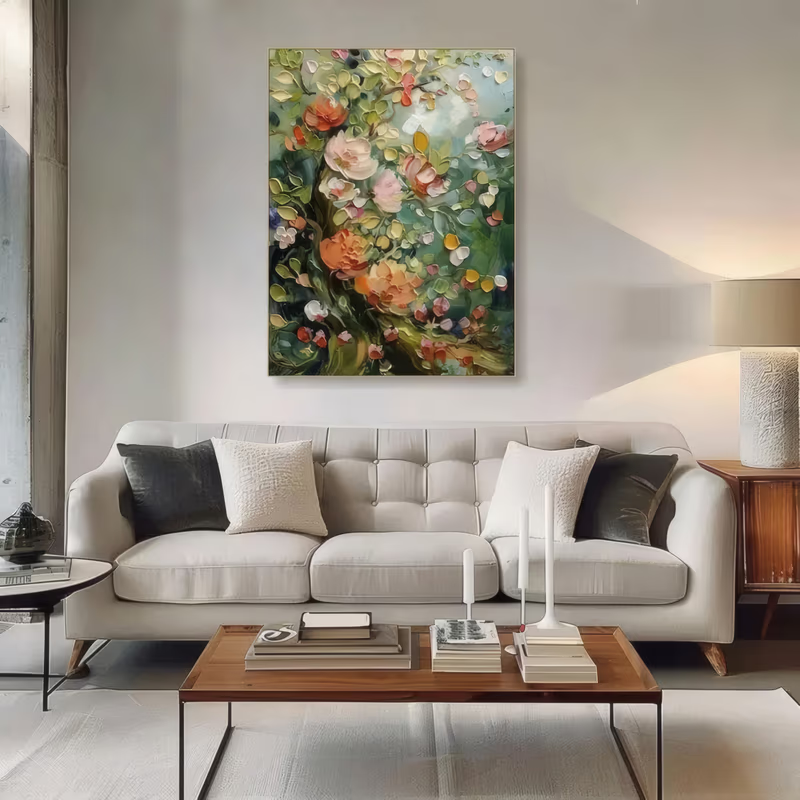
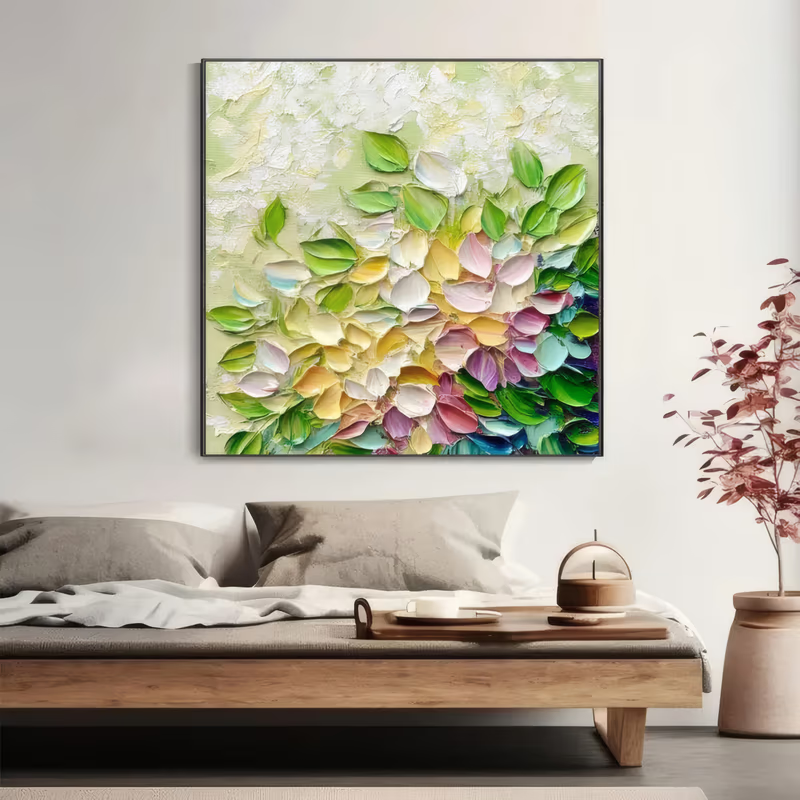
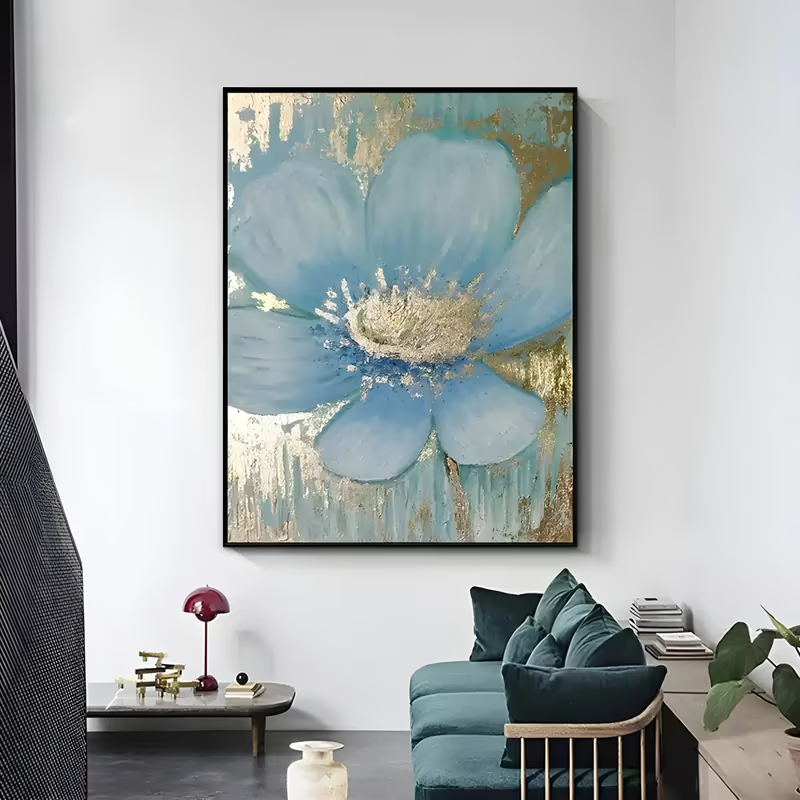
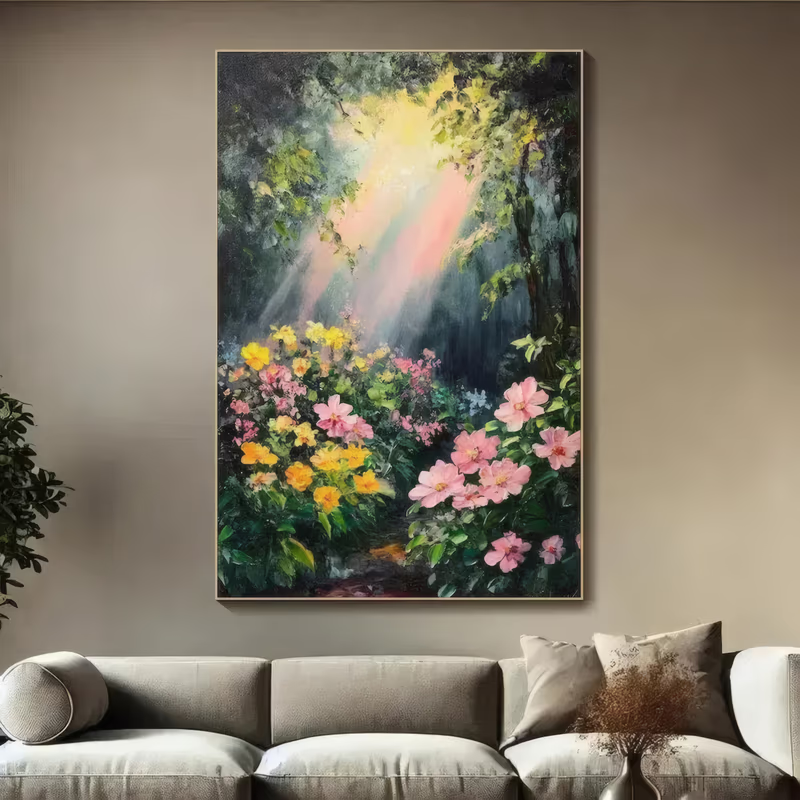
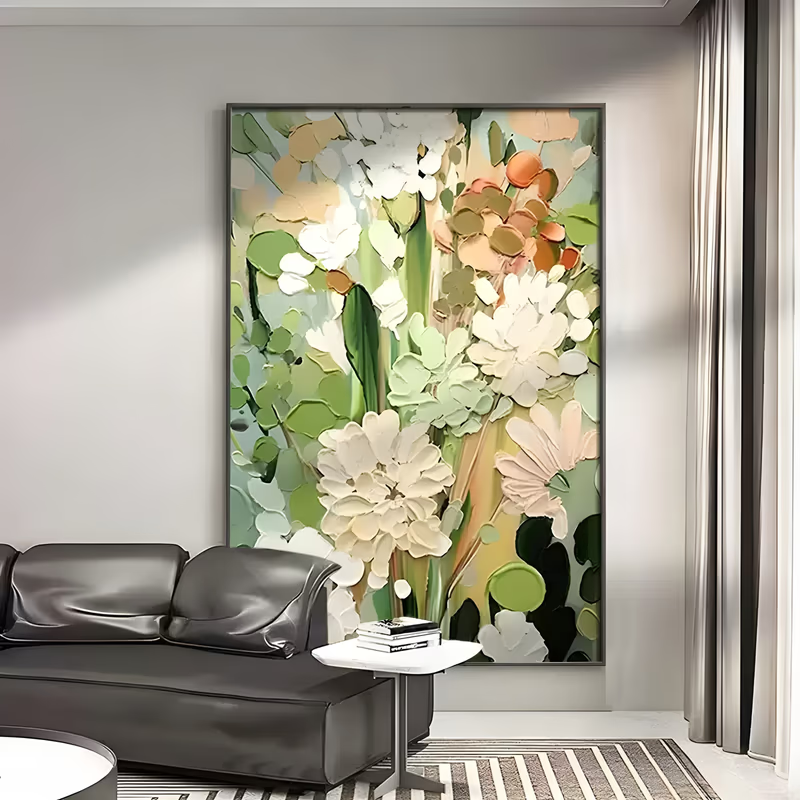
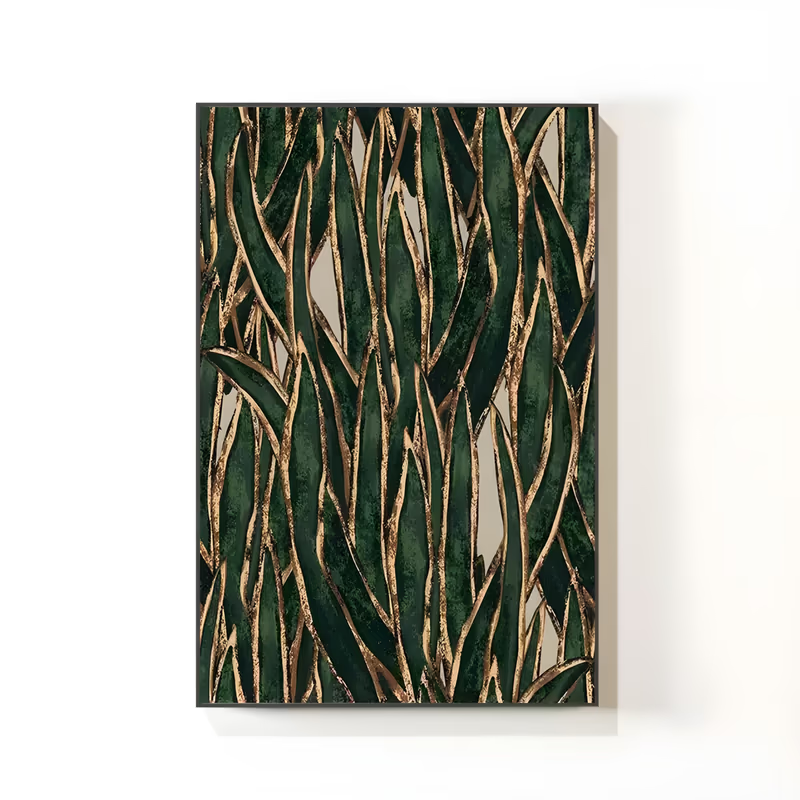
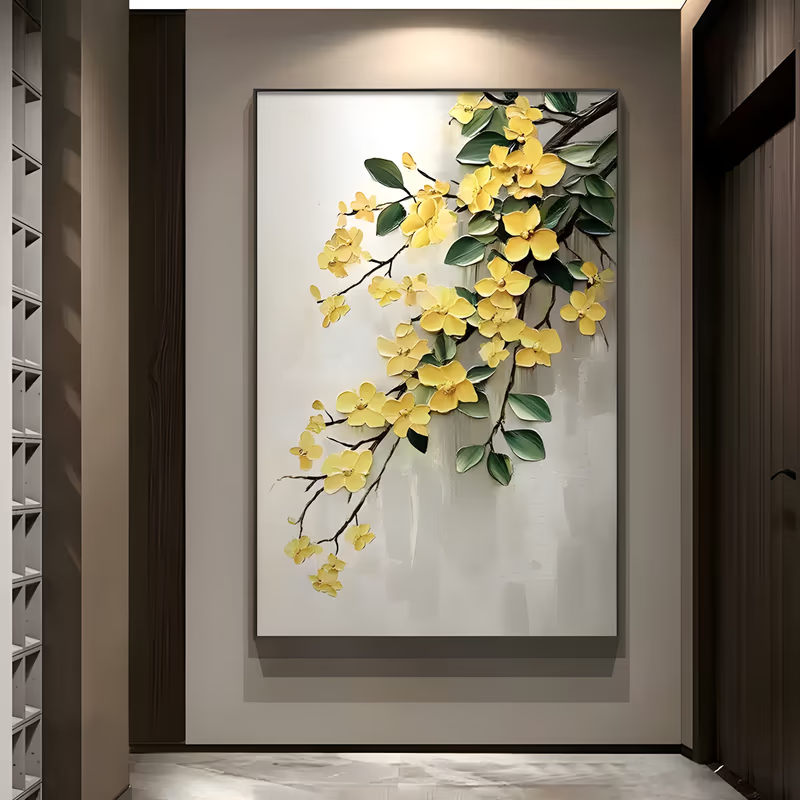
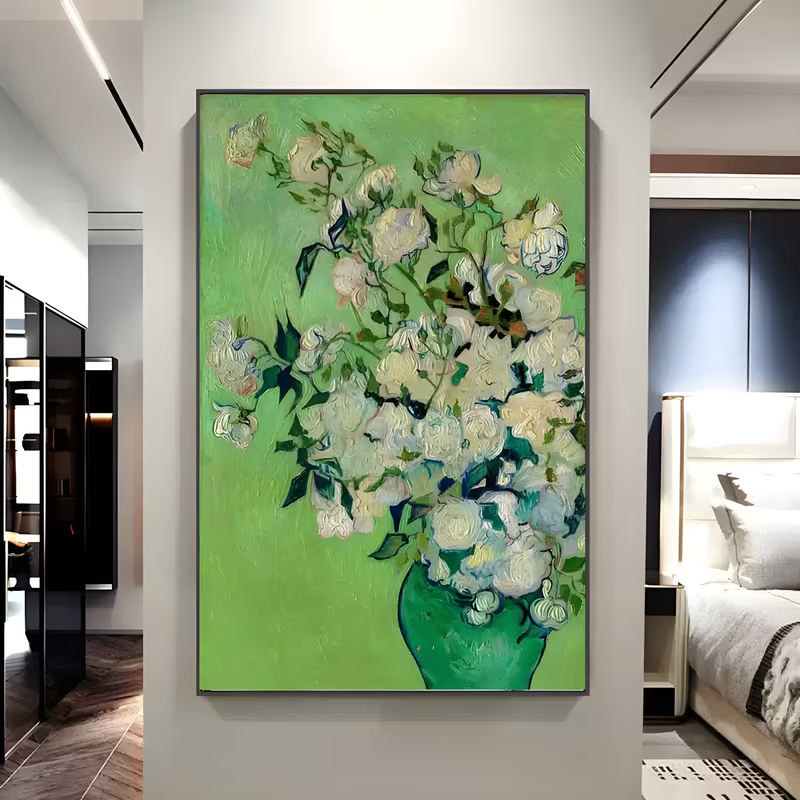
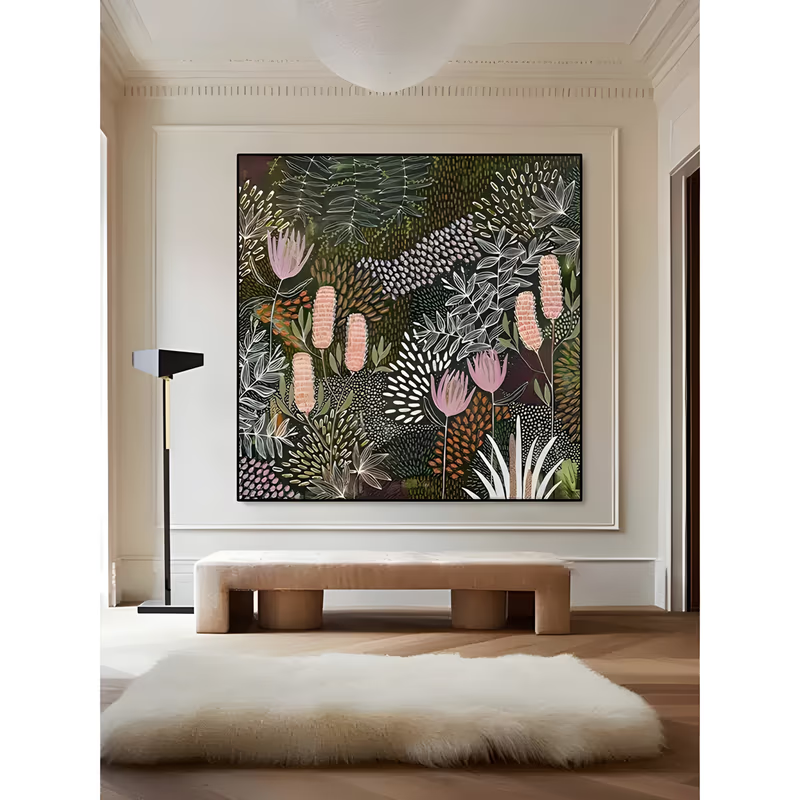
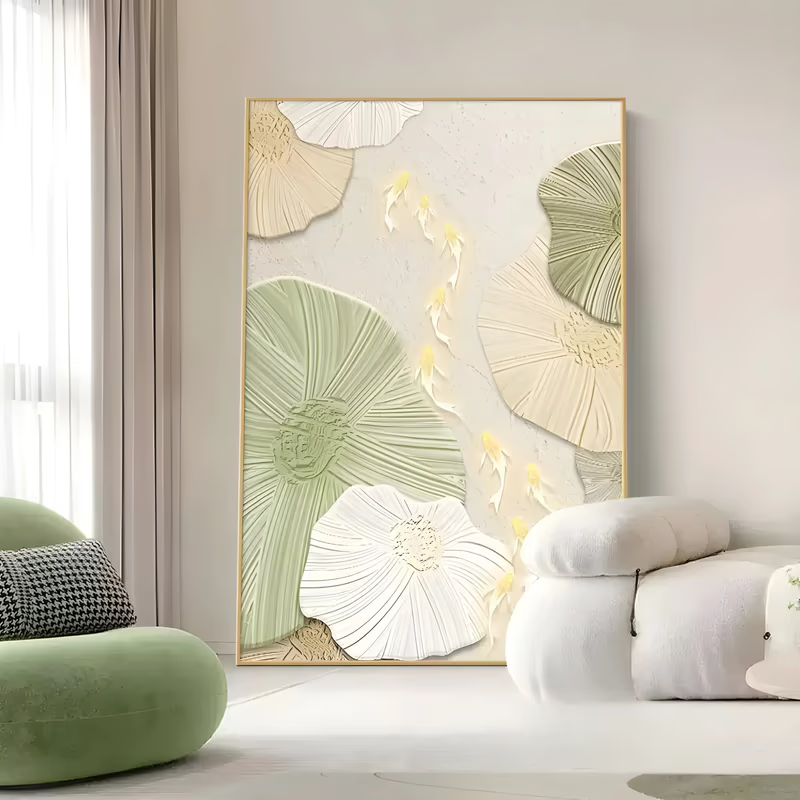
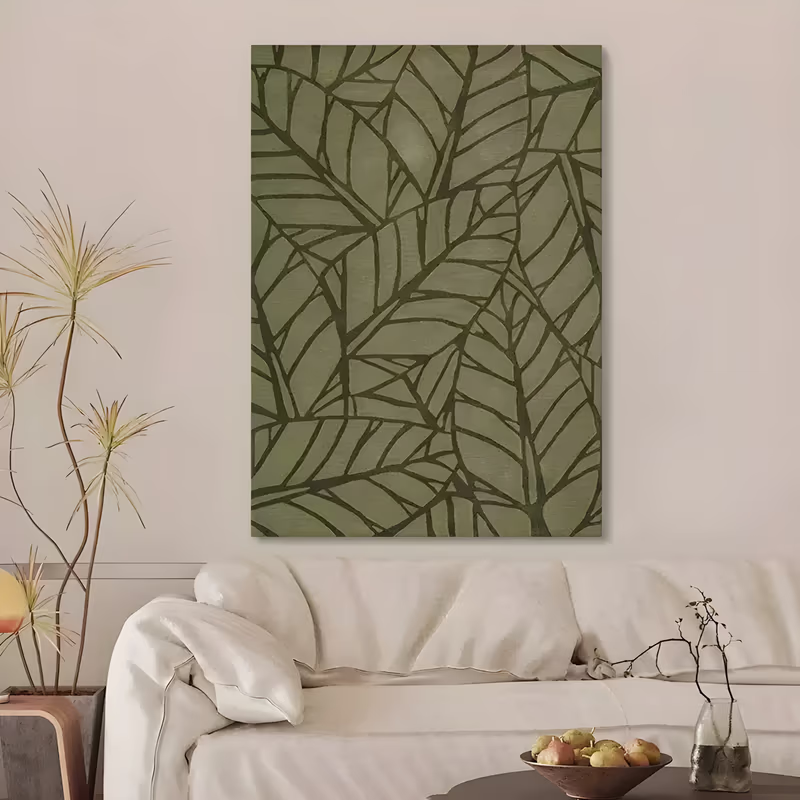
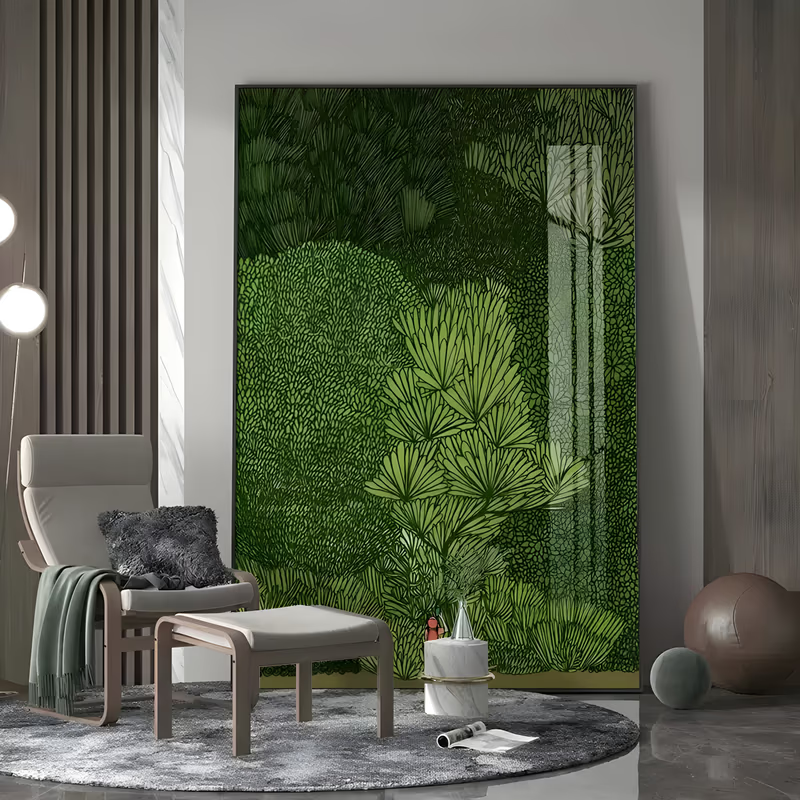
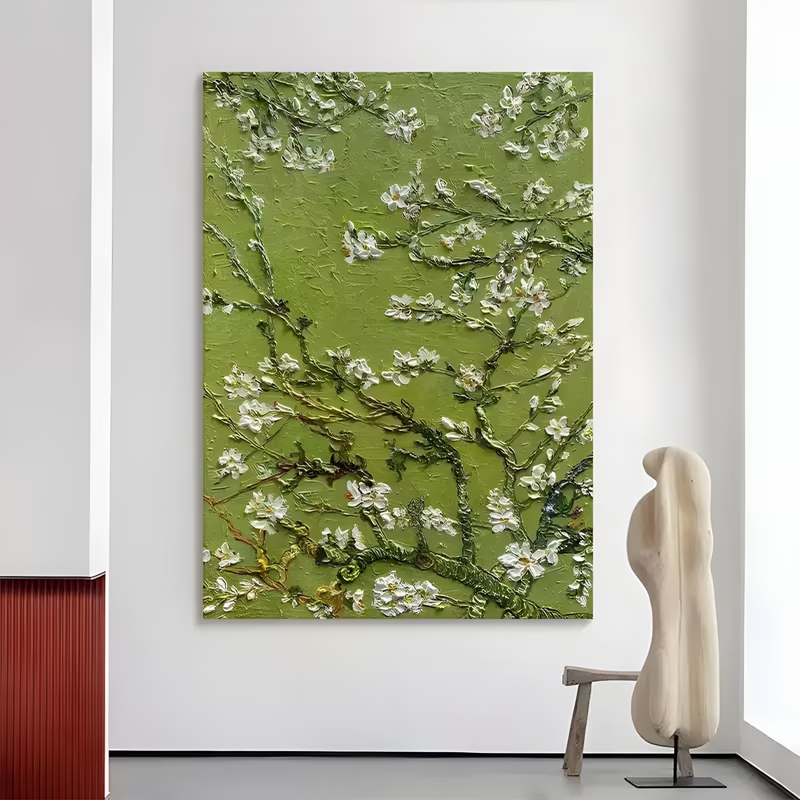
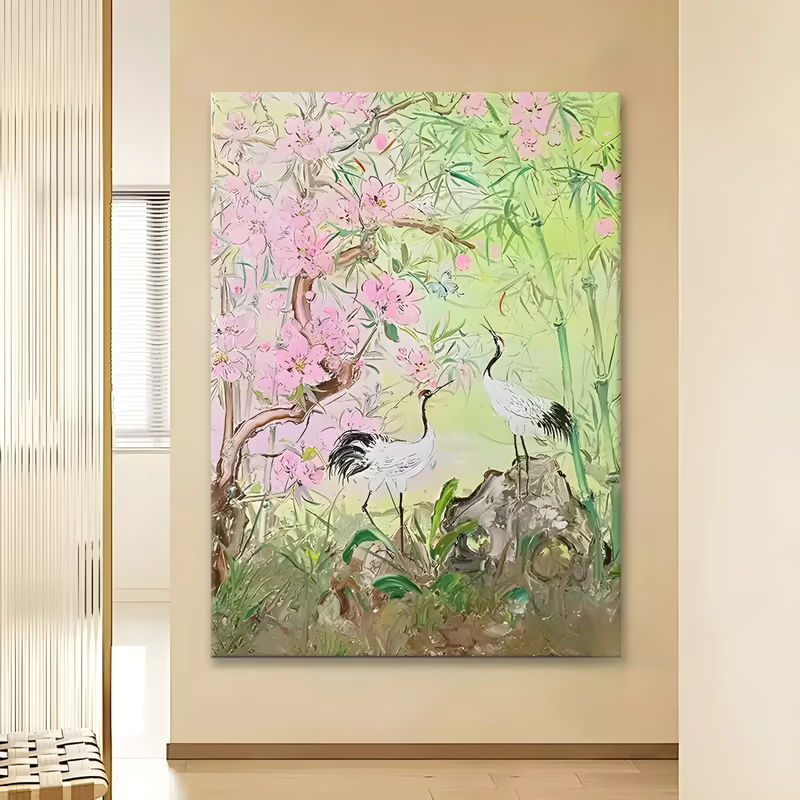
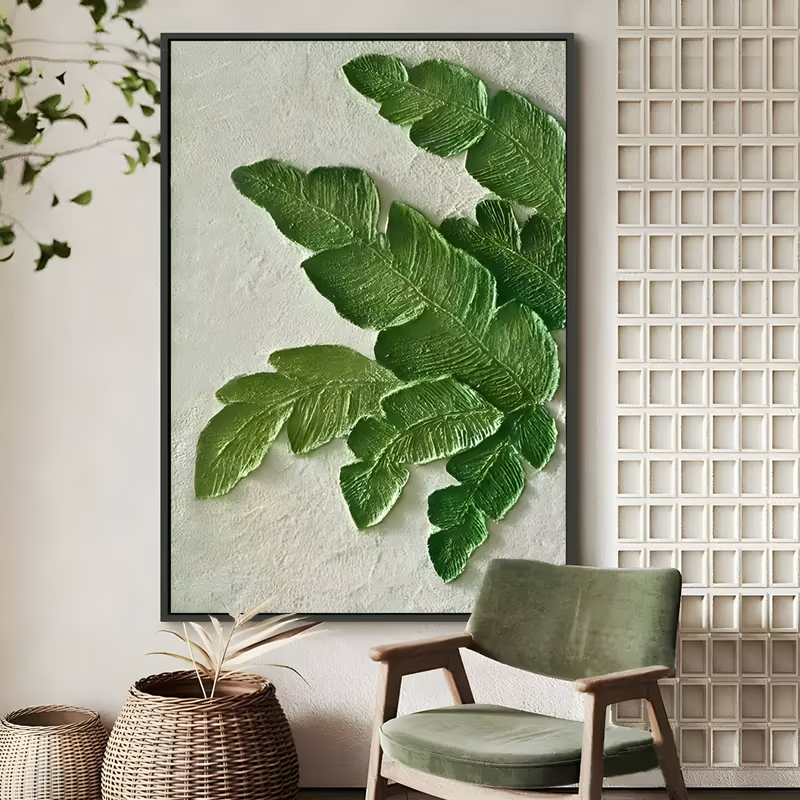
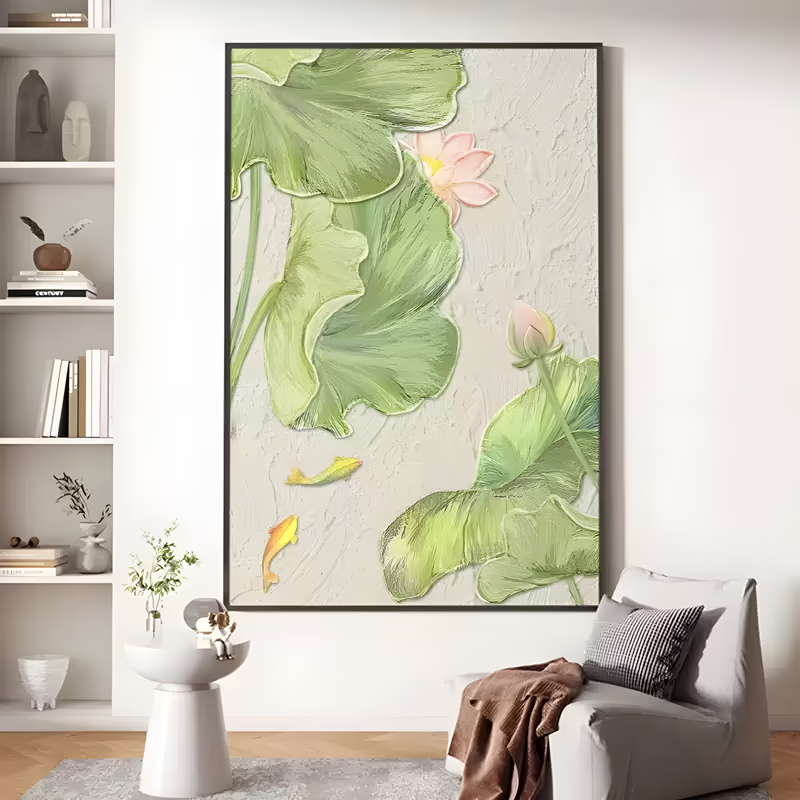
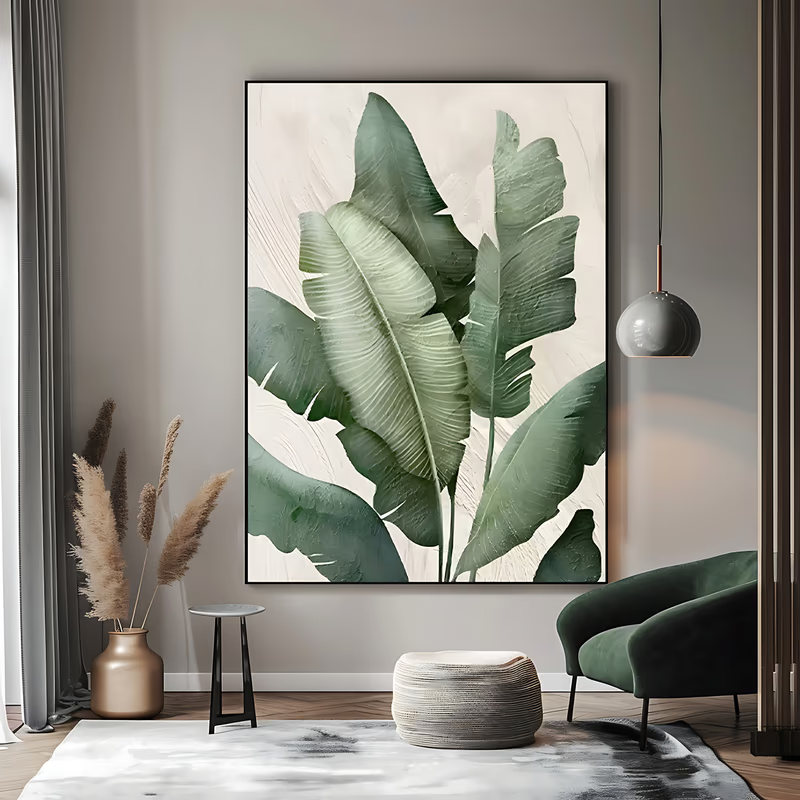
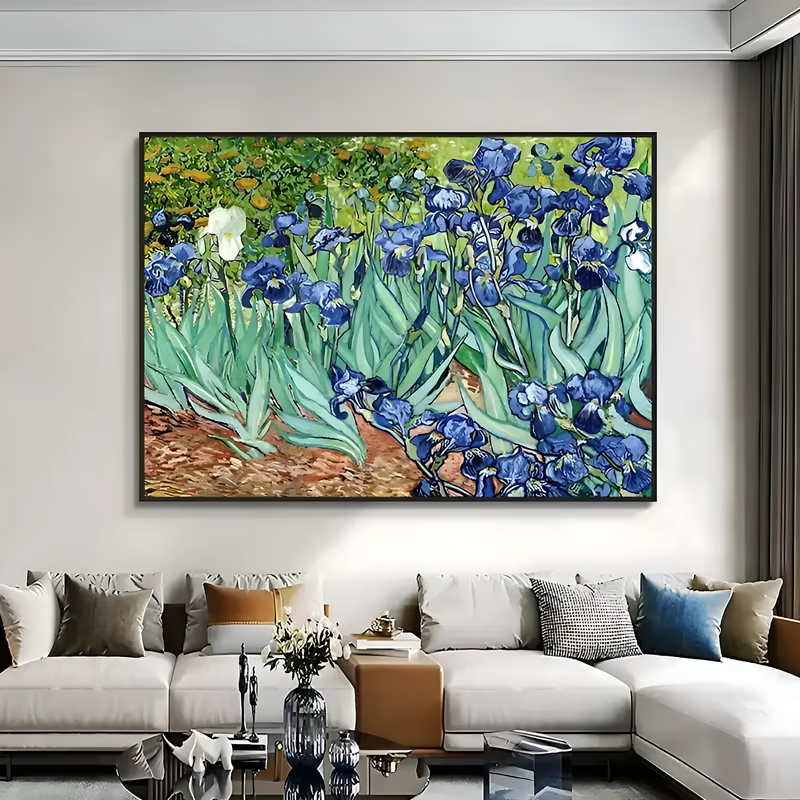
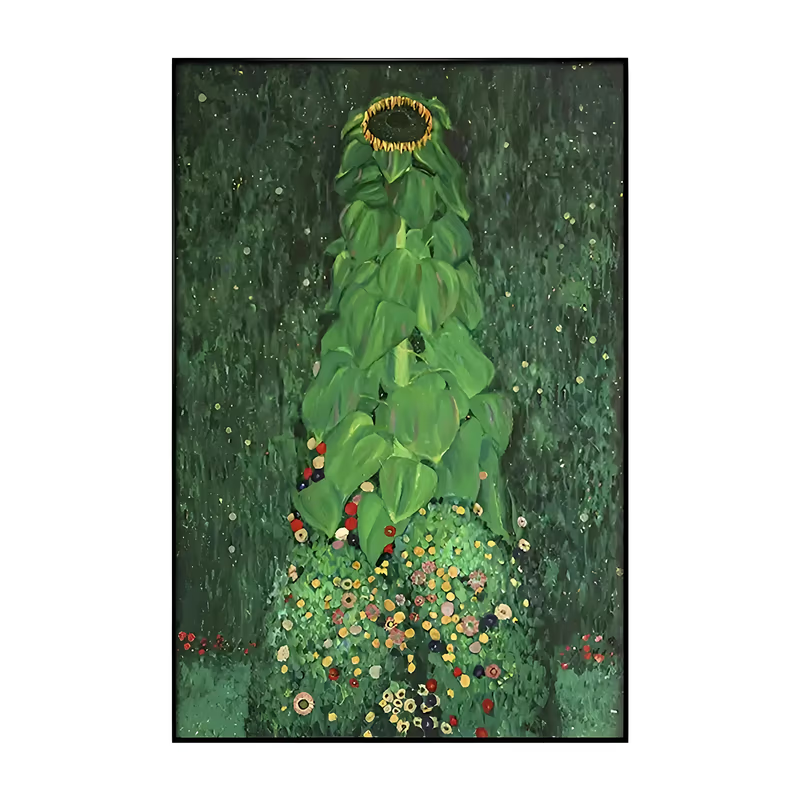
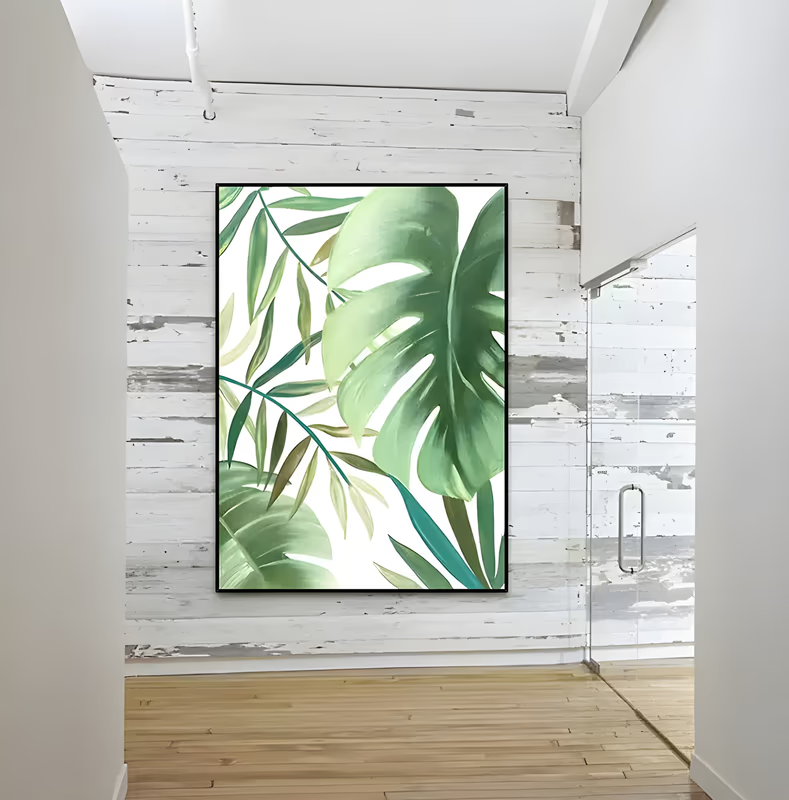
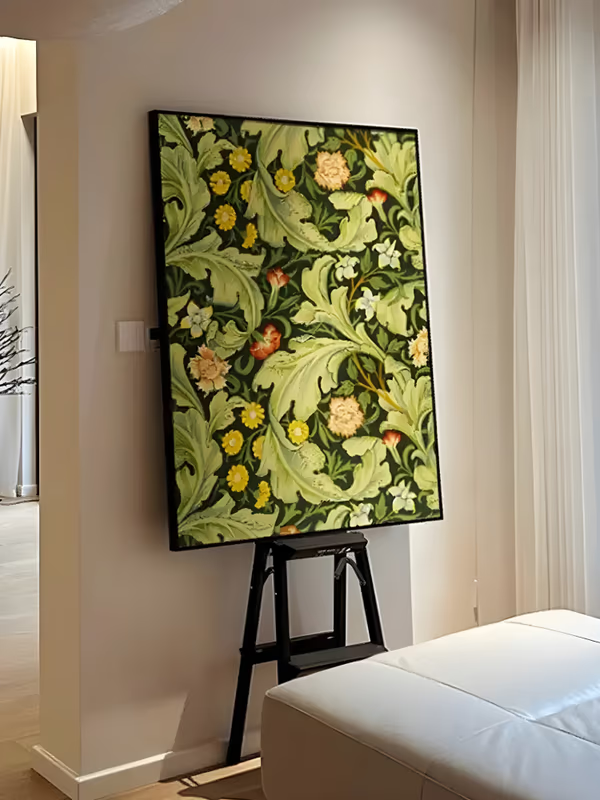
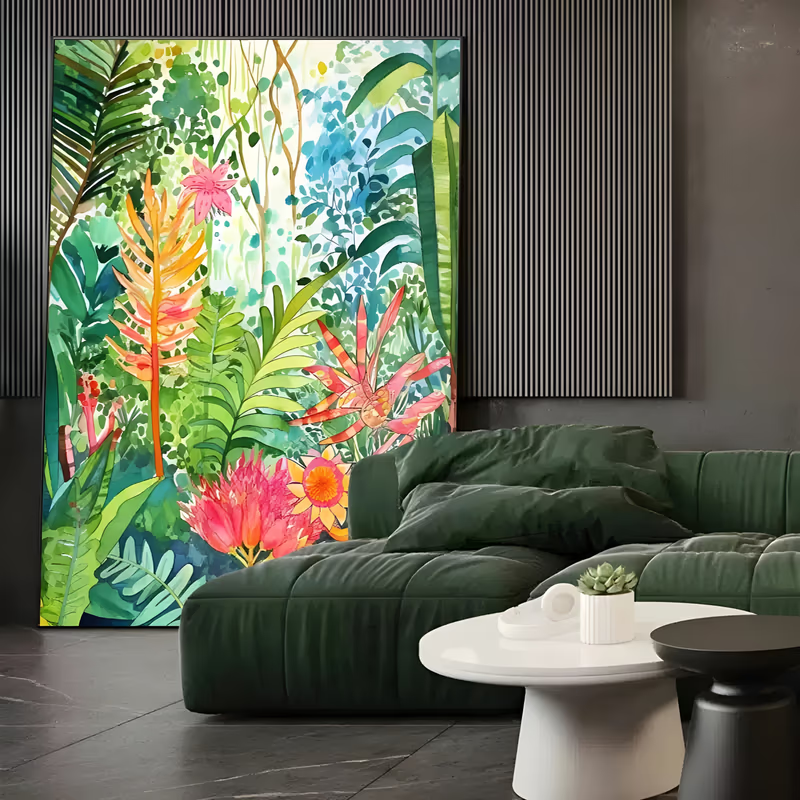
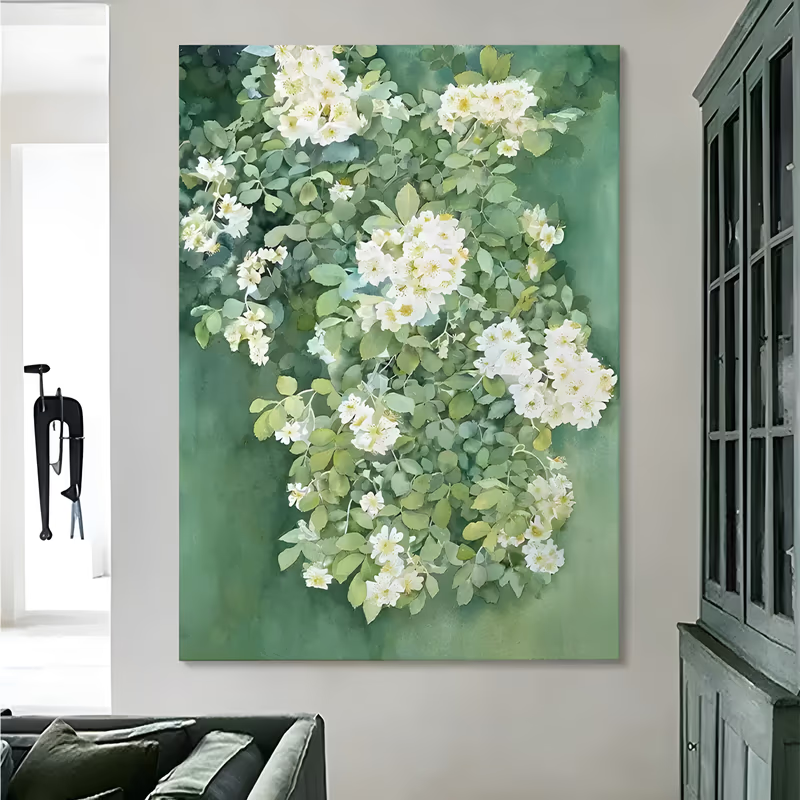
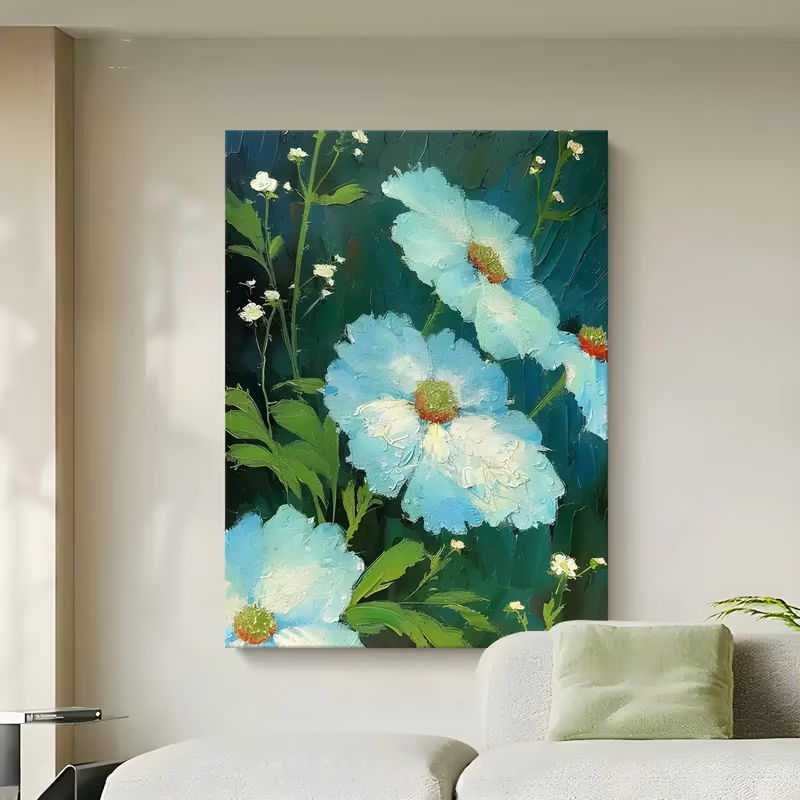
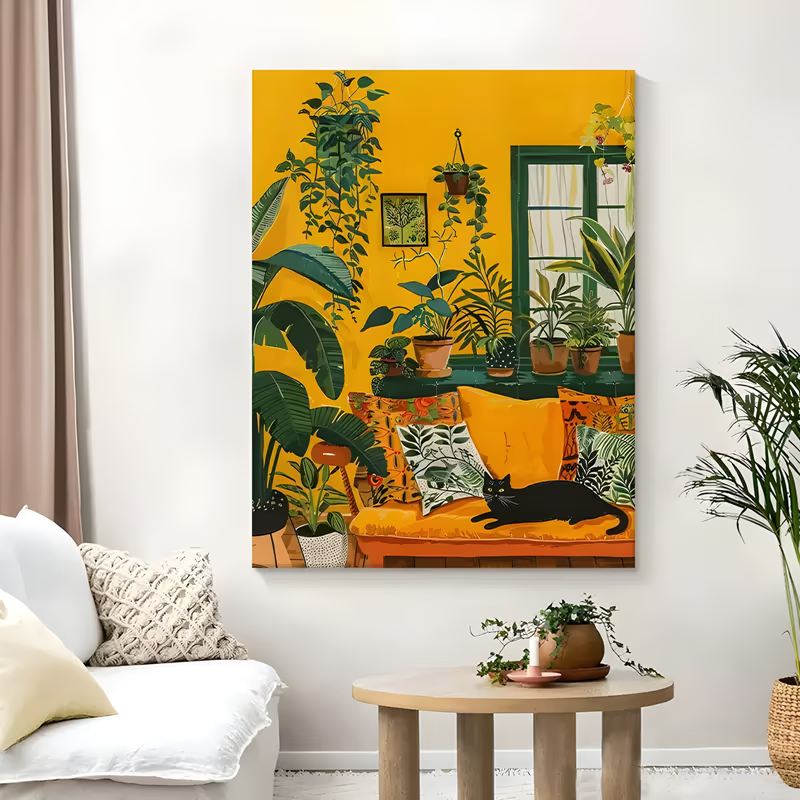
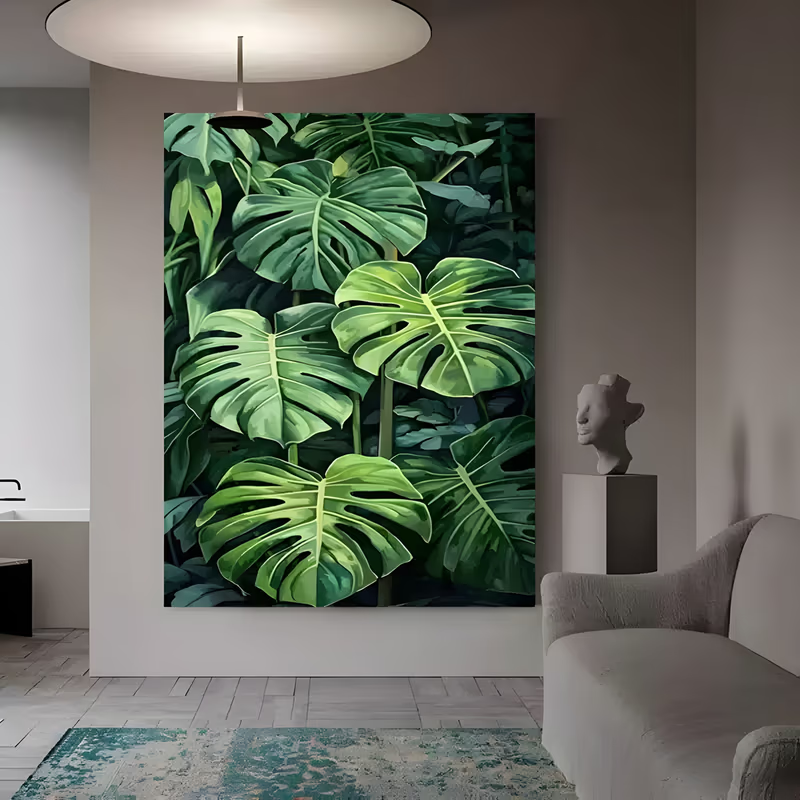
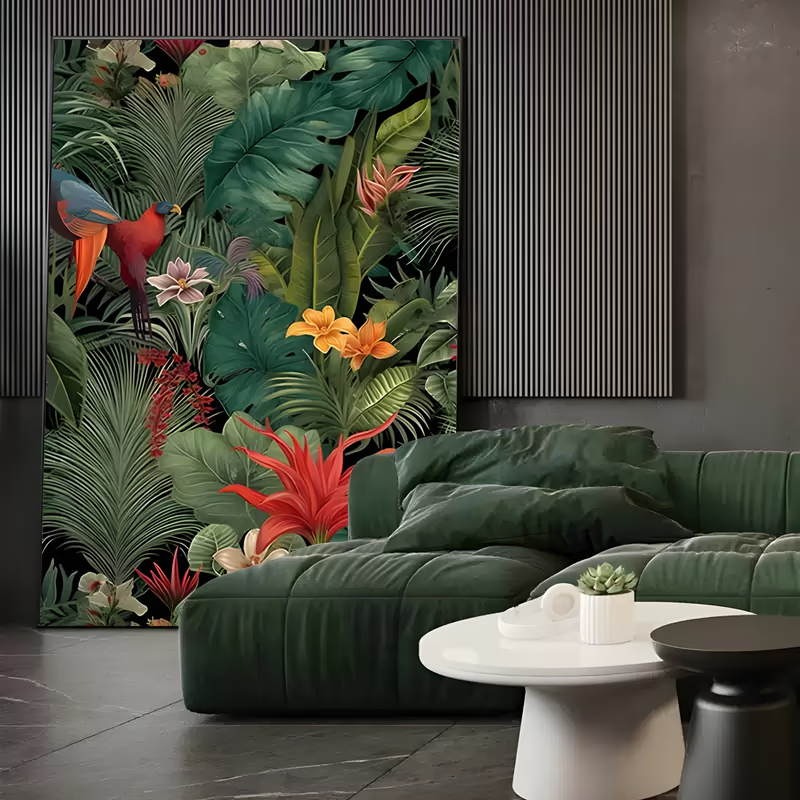
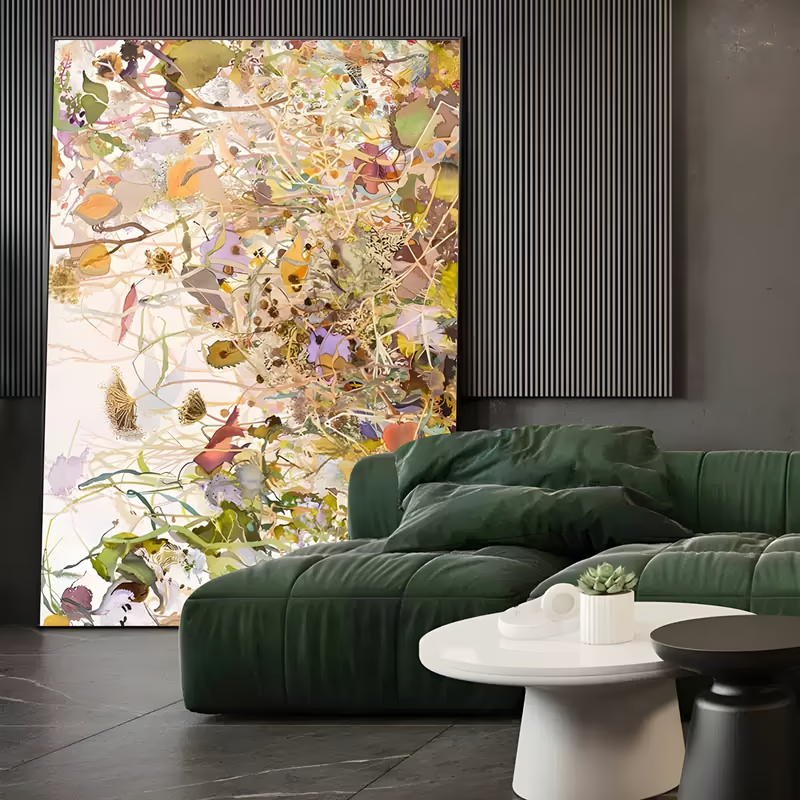
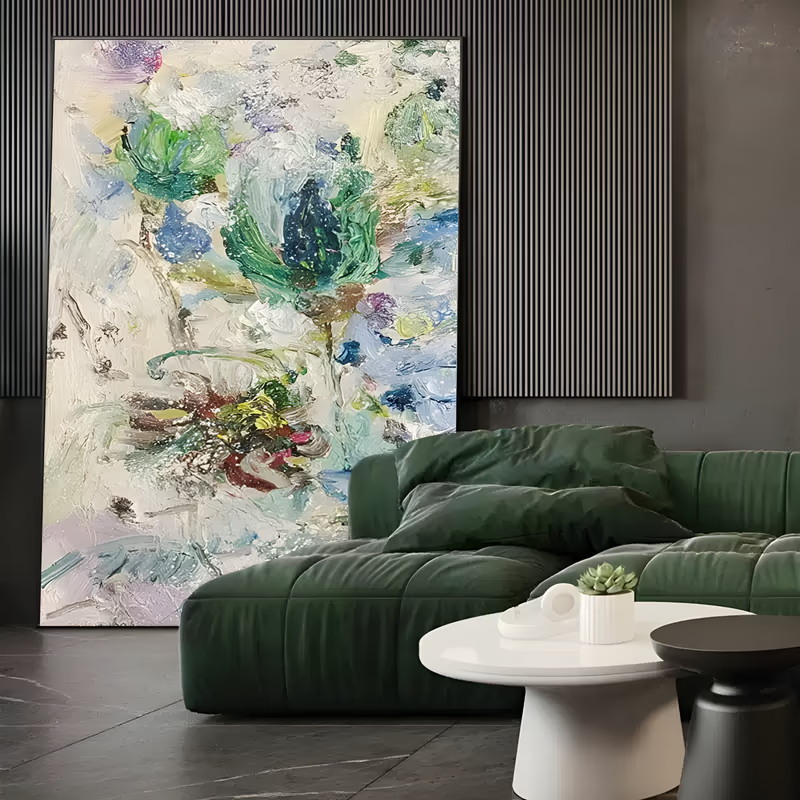
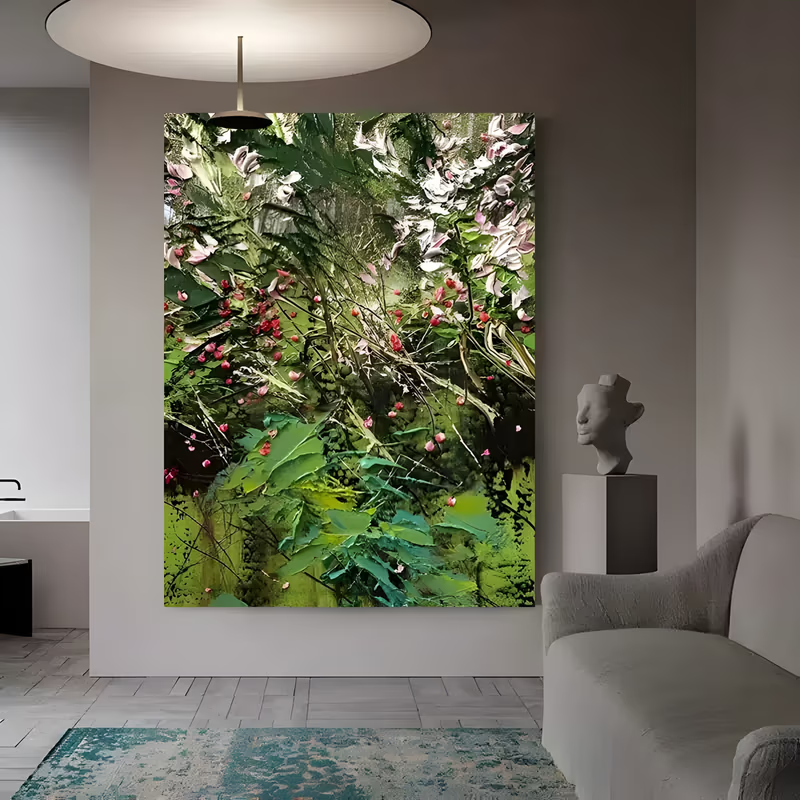
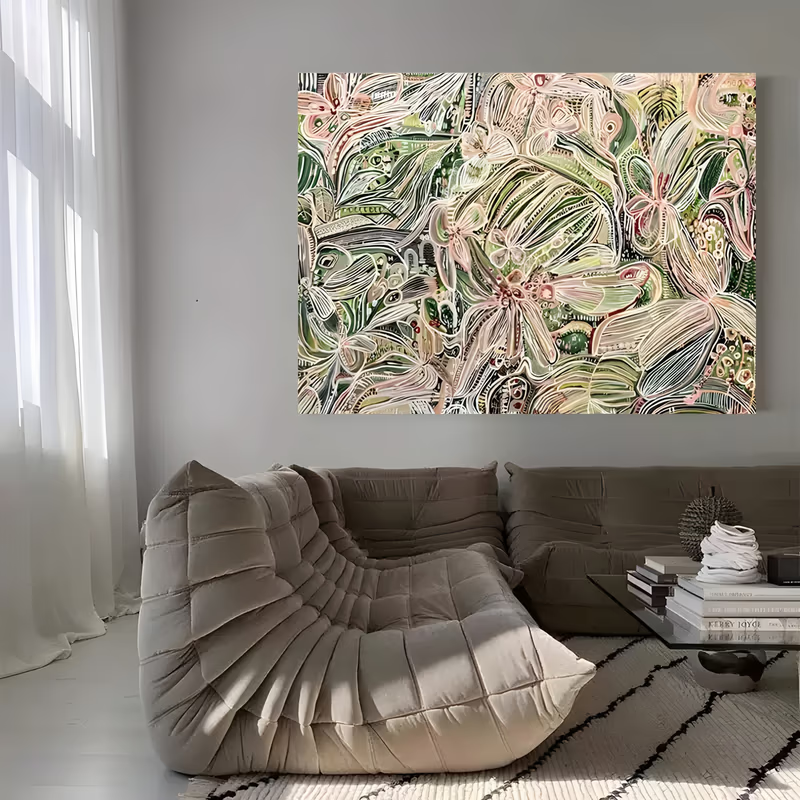
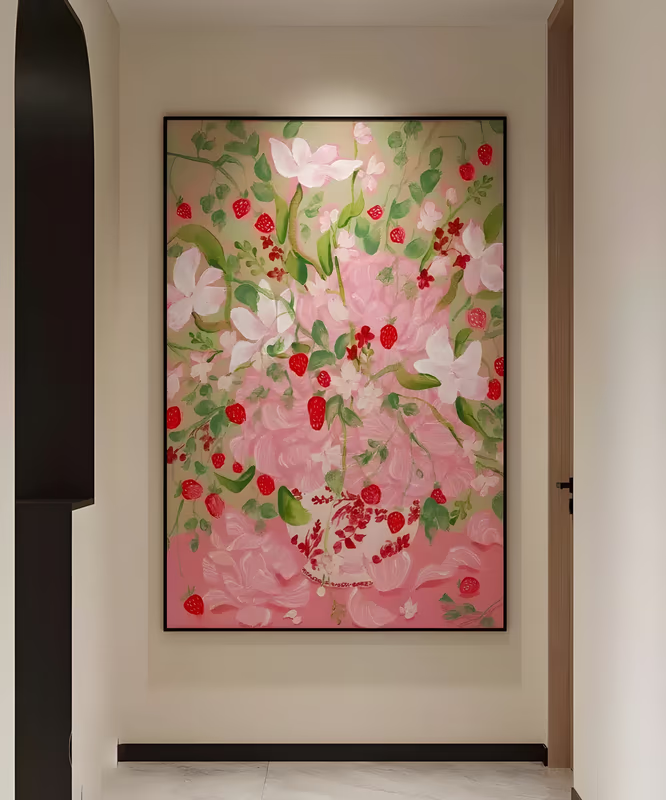
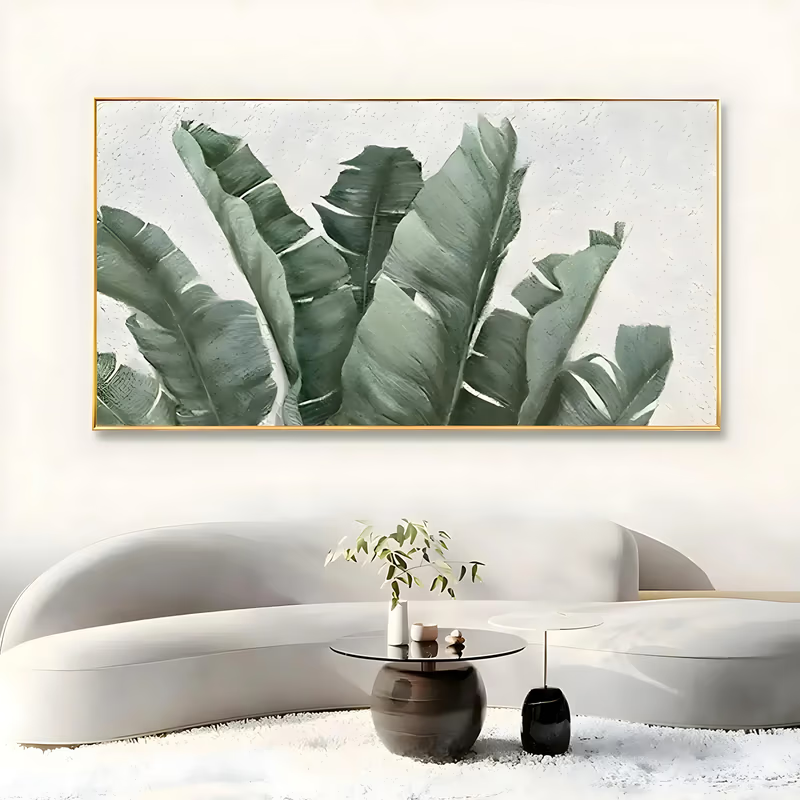
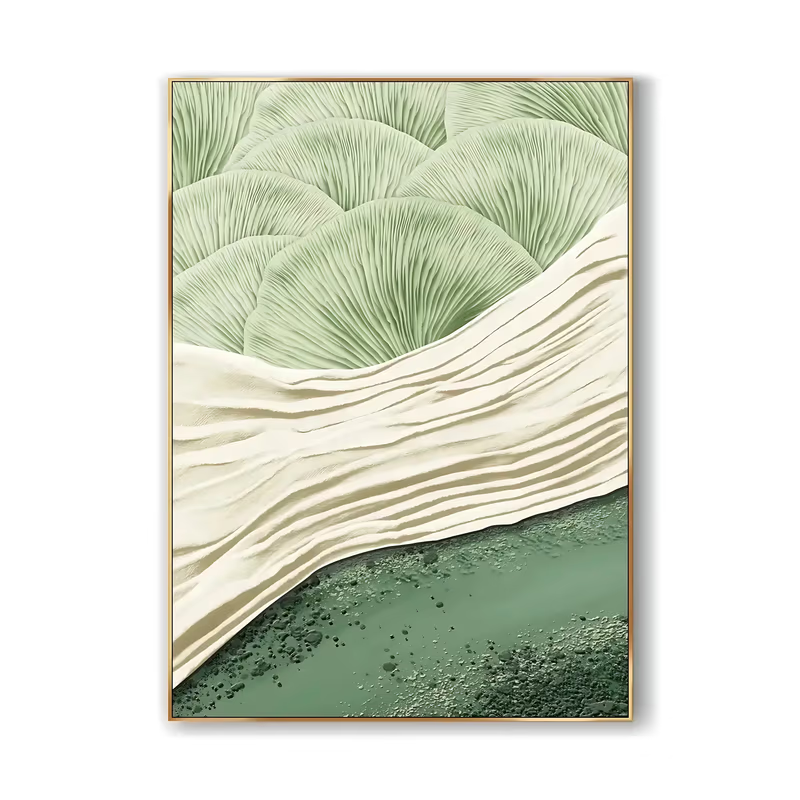
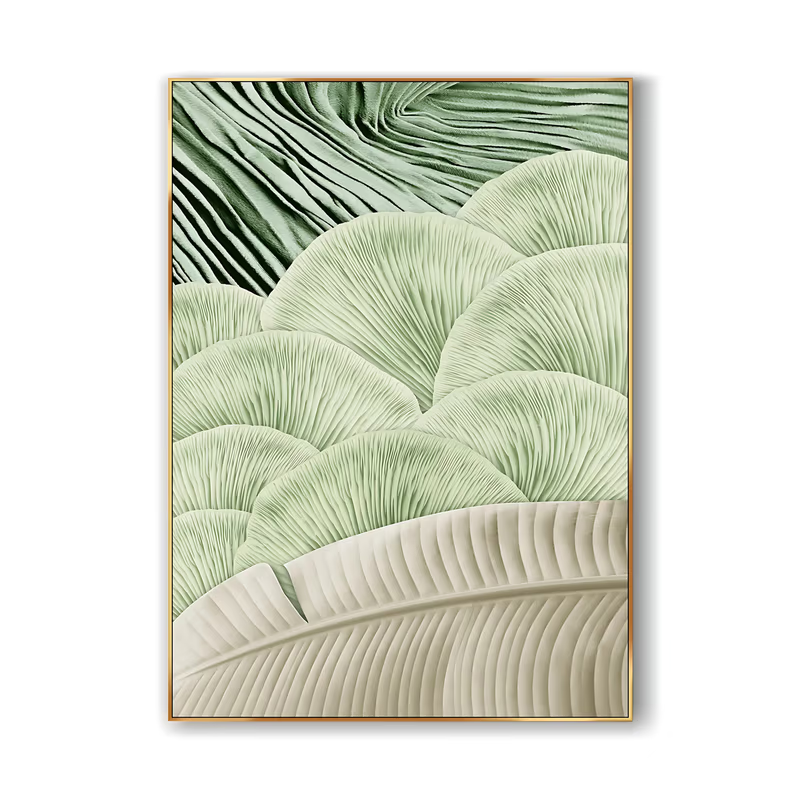
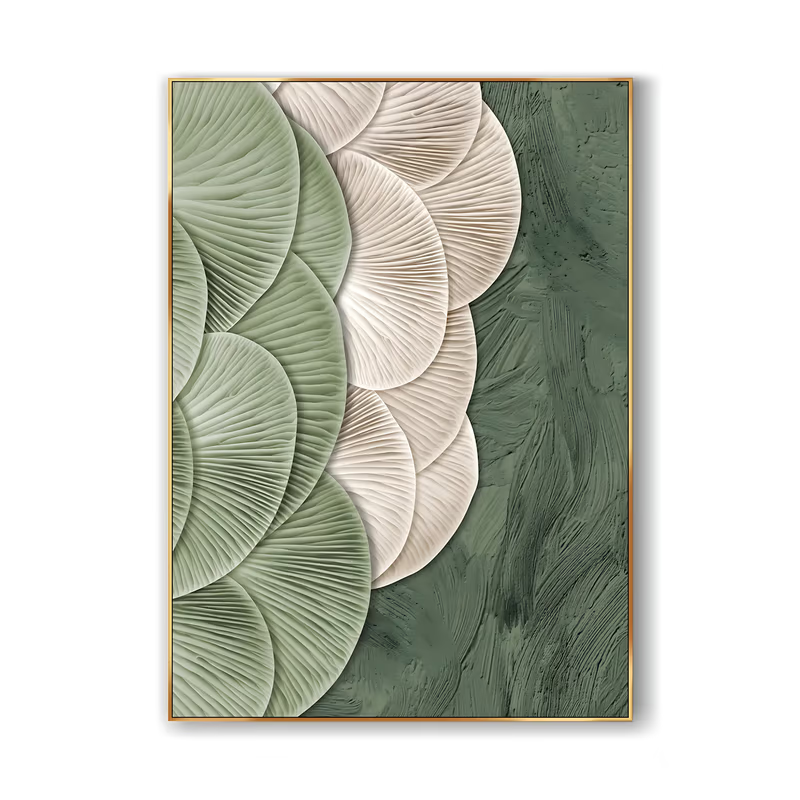
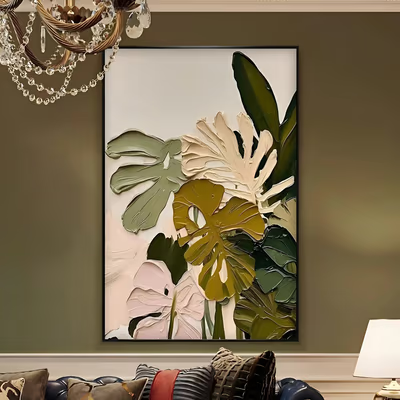
Banana and monstera leaves, palm fronds, ferns, acanthus and sage-green blossom sprays, often sculpted in raised paste so the leaves cast small shadows of their own. The most direct stand-in for planting, and the strongest fit for biophilic schemes, spas, kitchens and garden rooms.
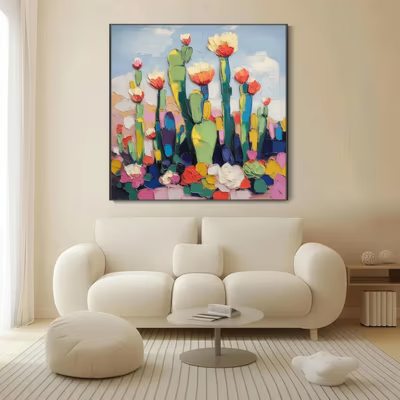
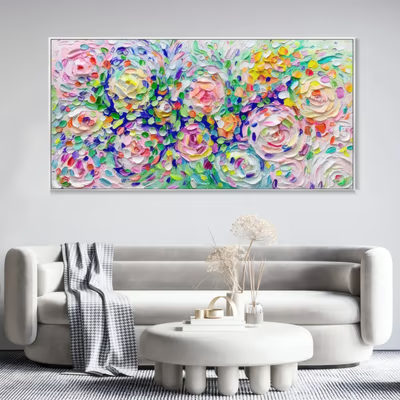
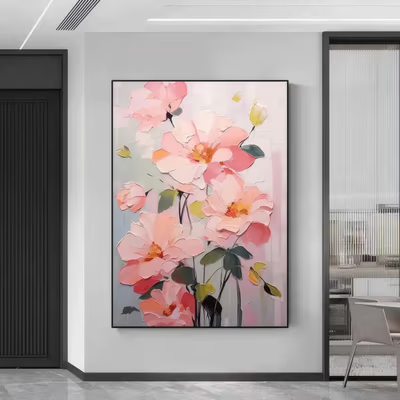
Green landscapes: forests, meadows and valleys
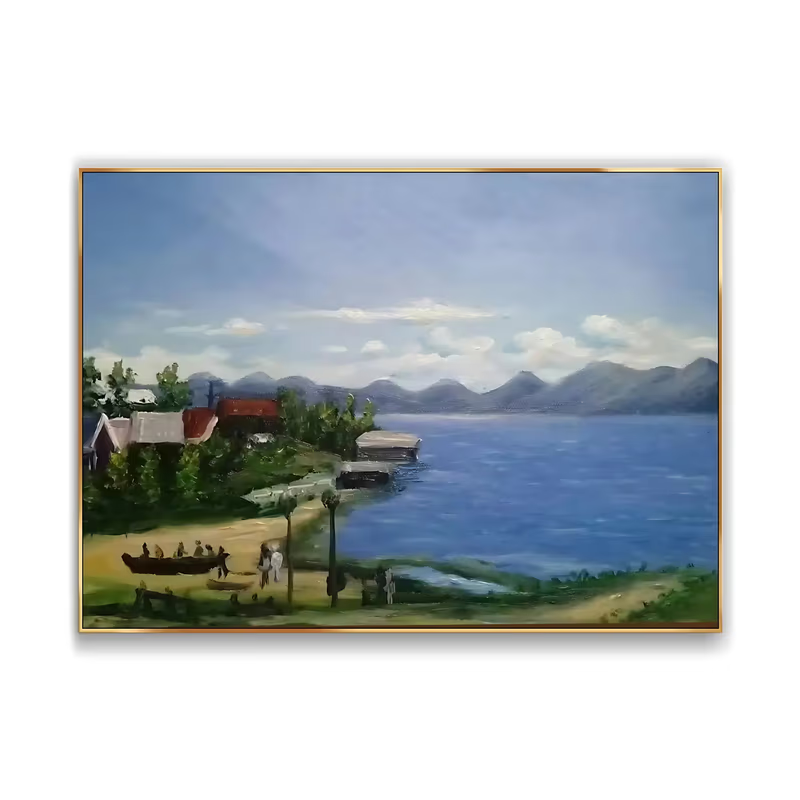
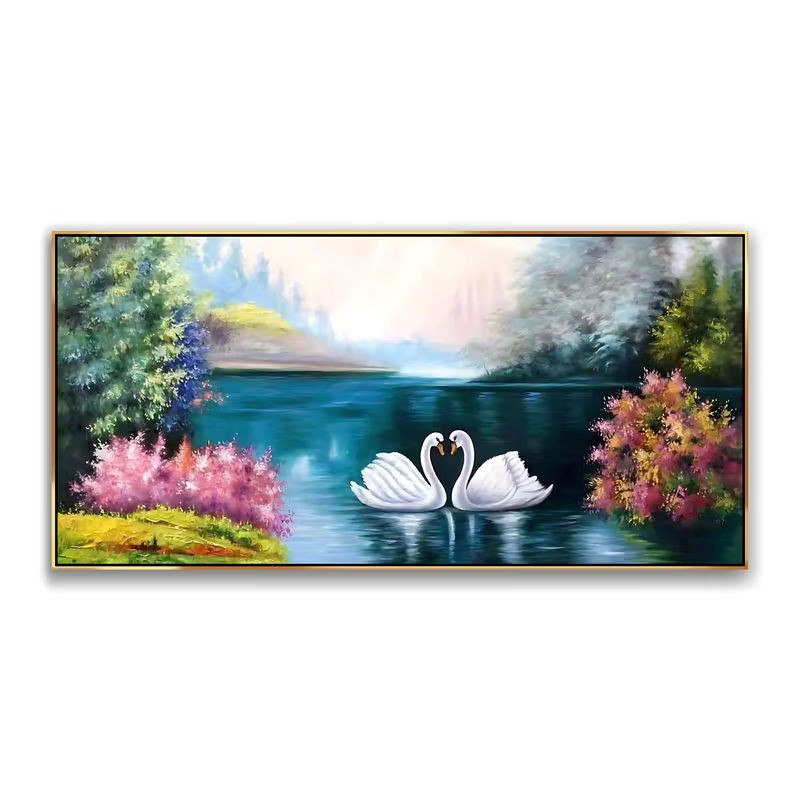
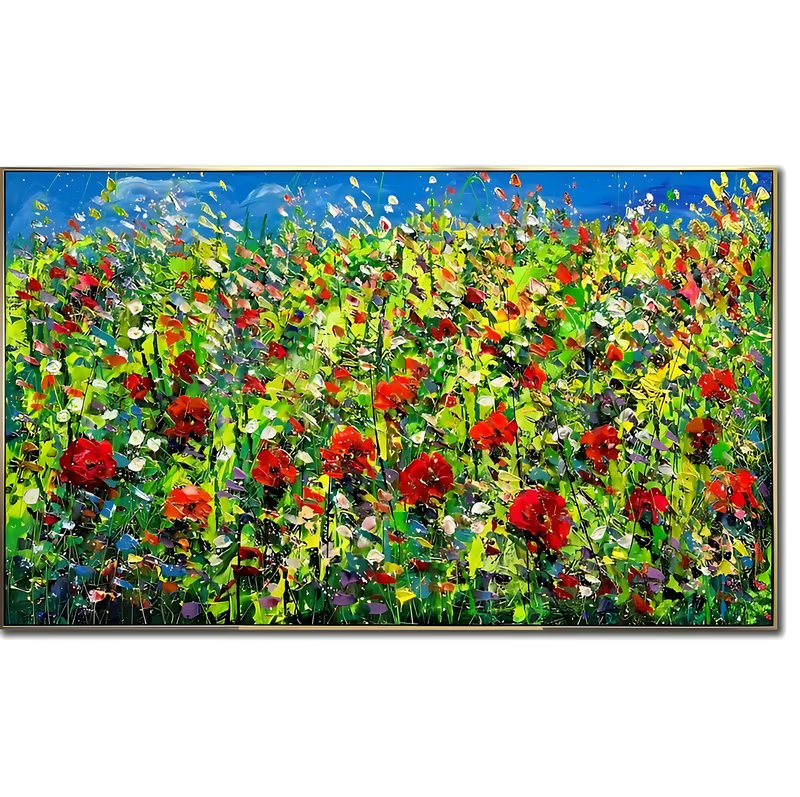
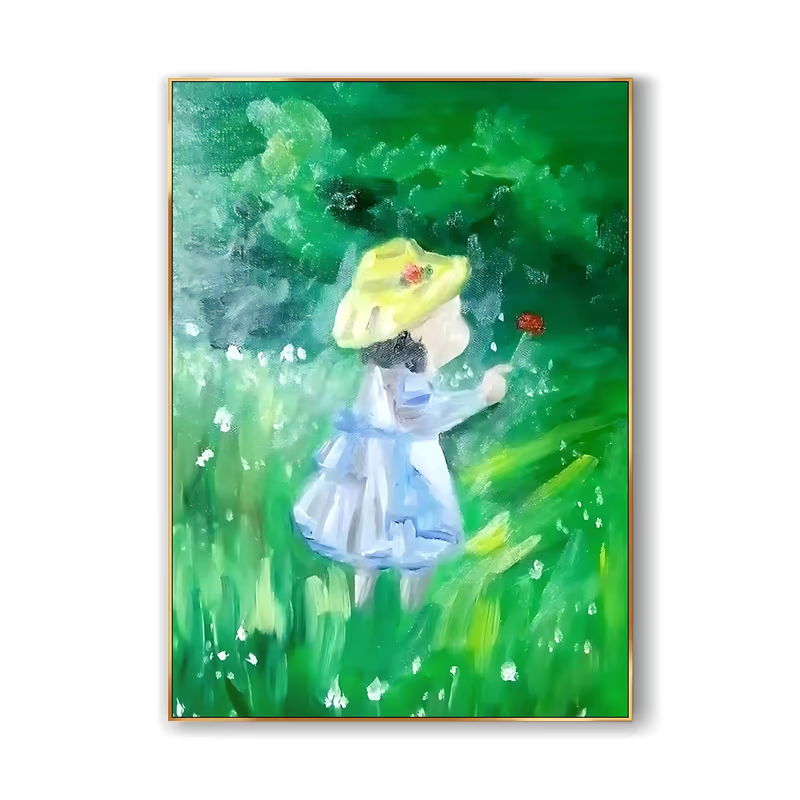
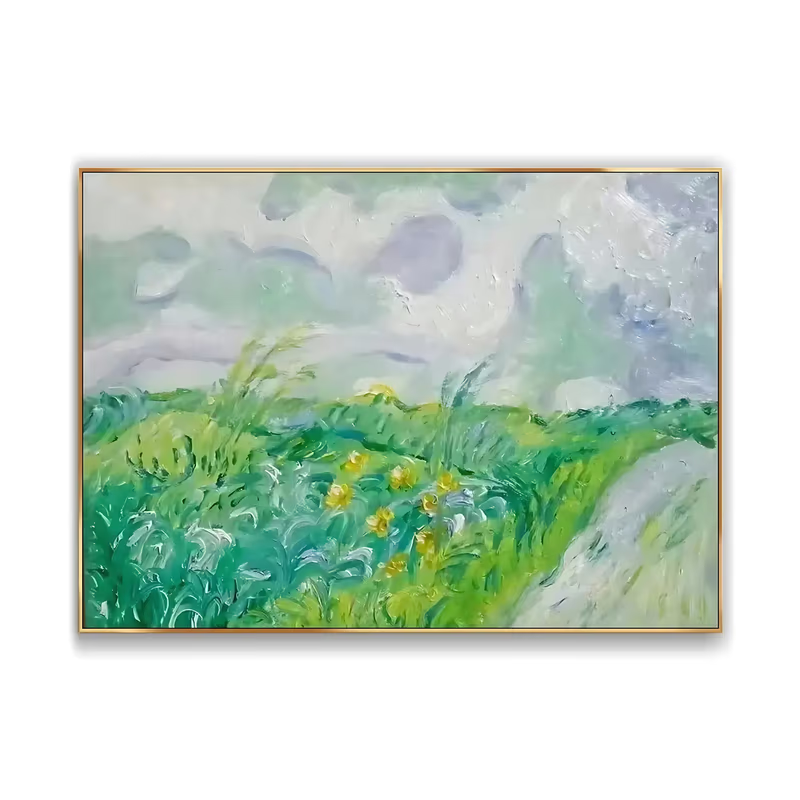
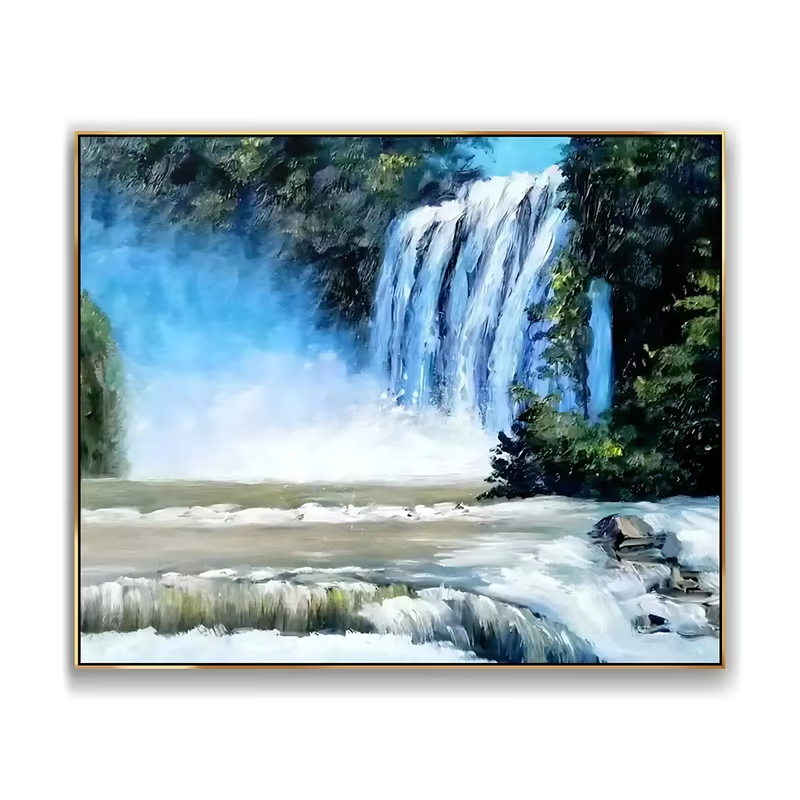
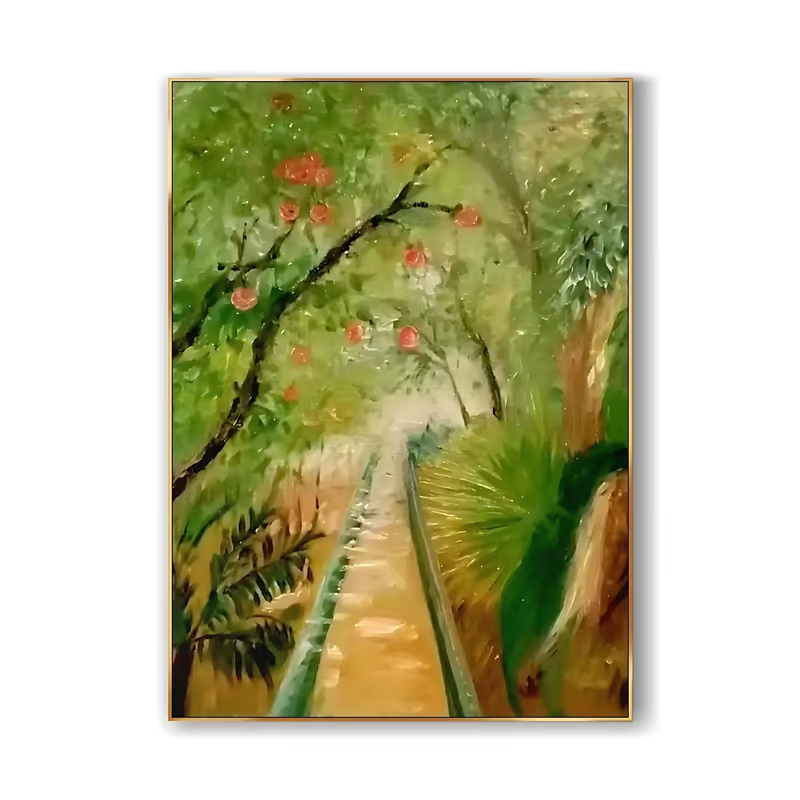
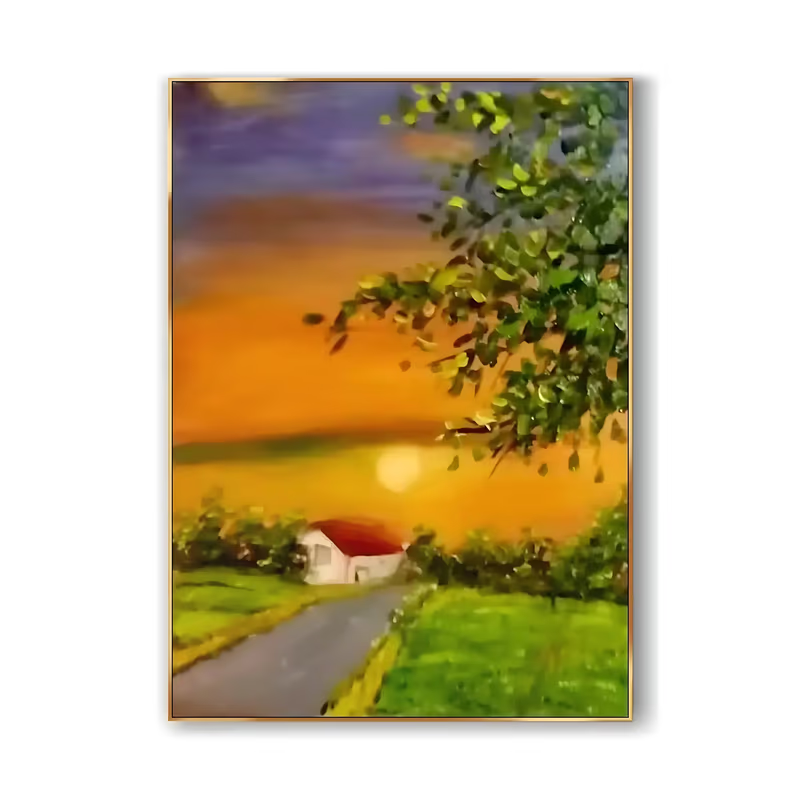
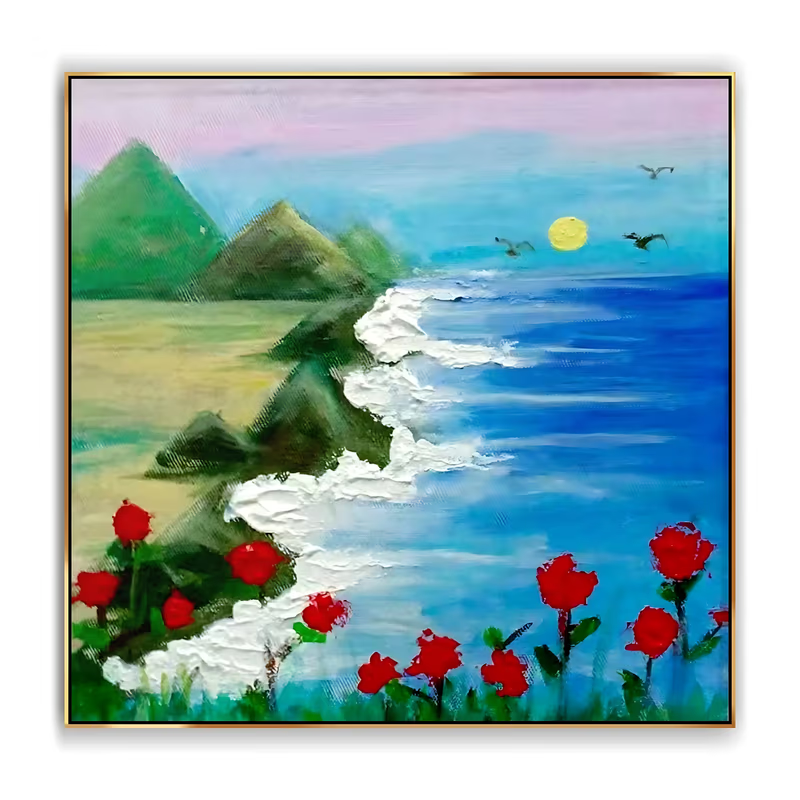
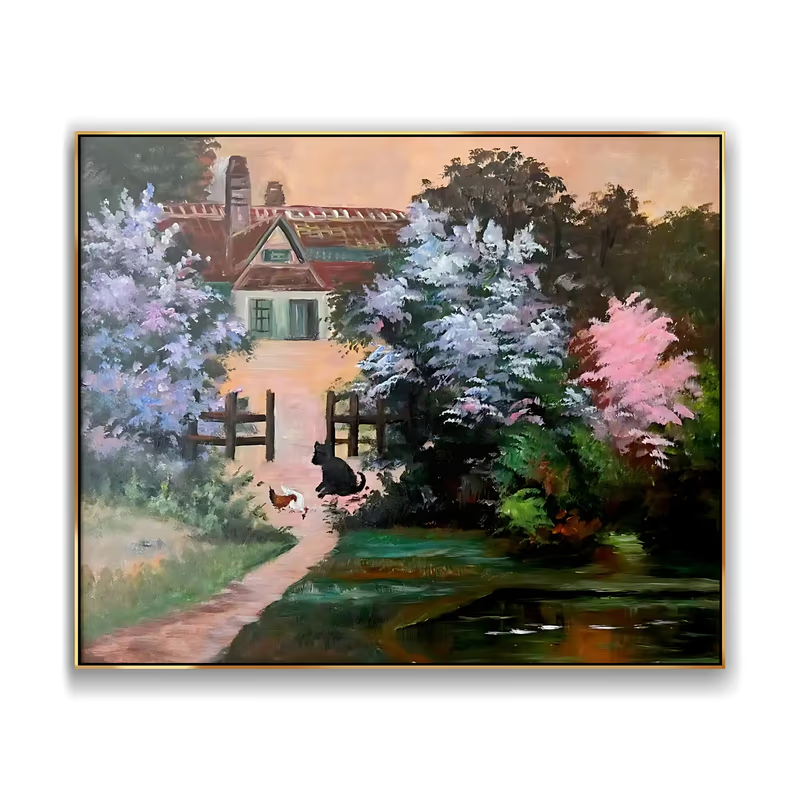
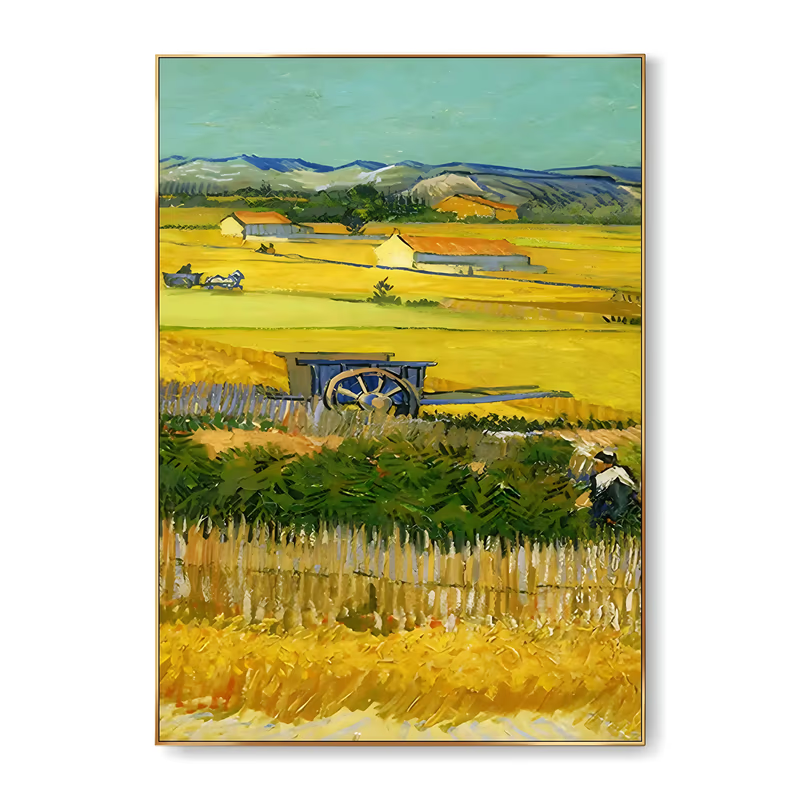
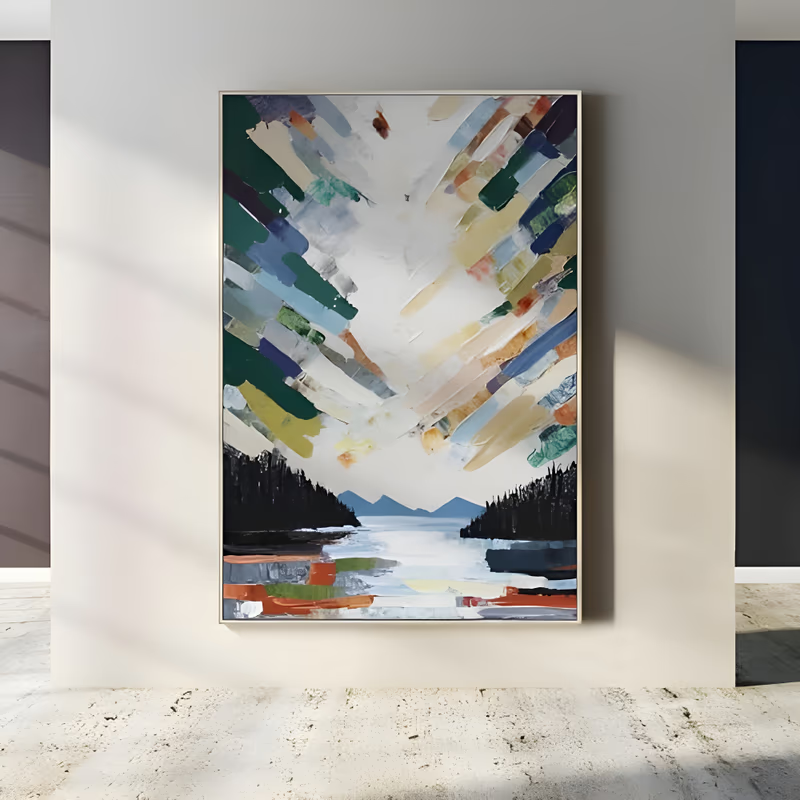
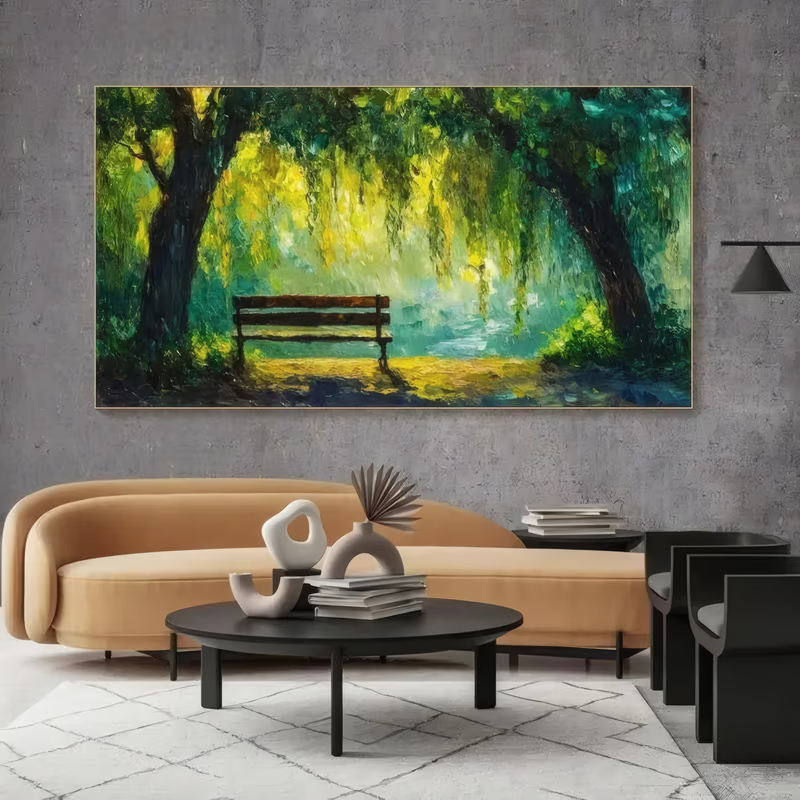
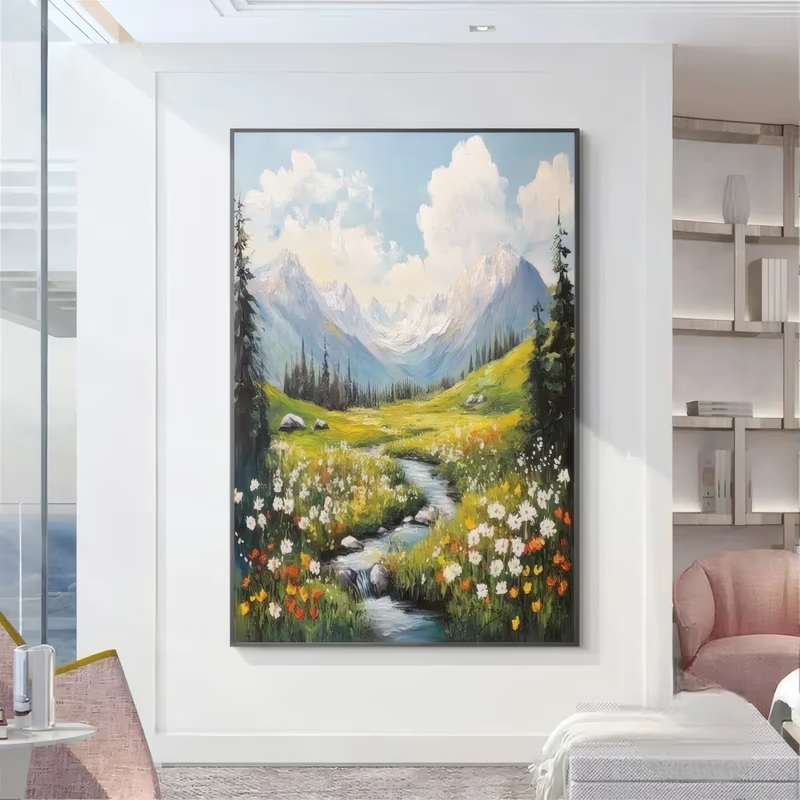
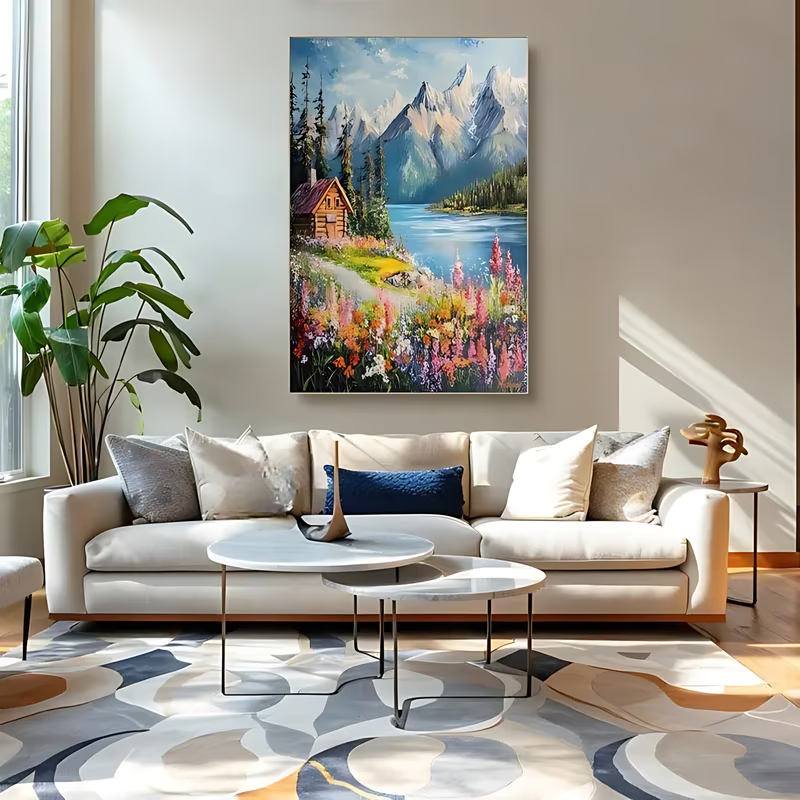
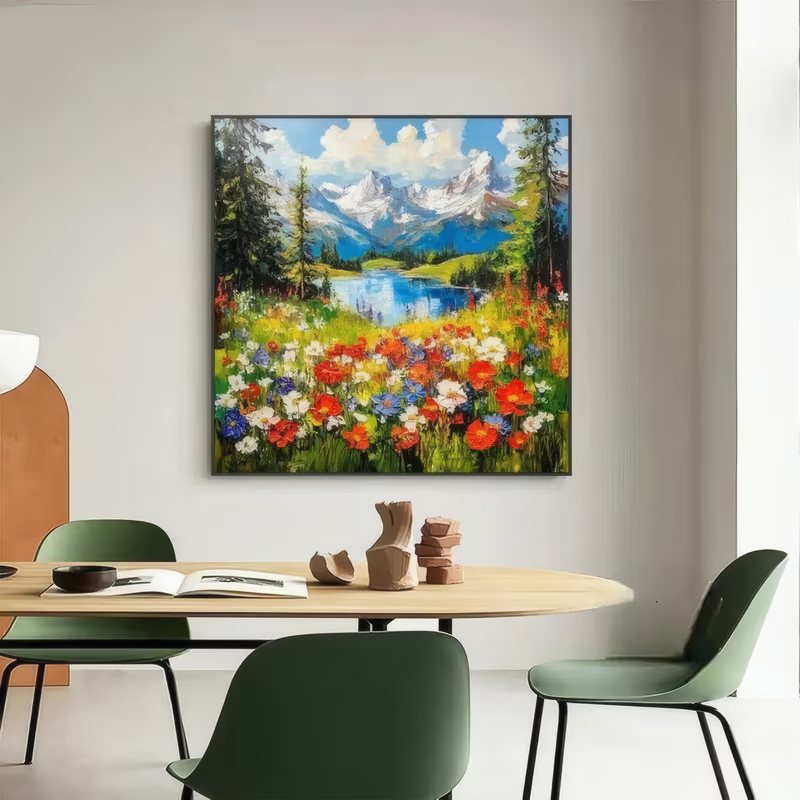
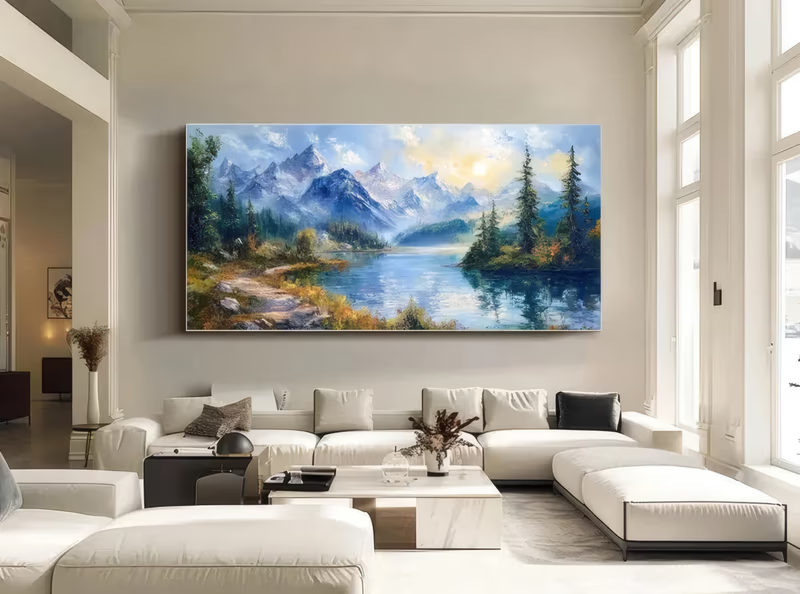
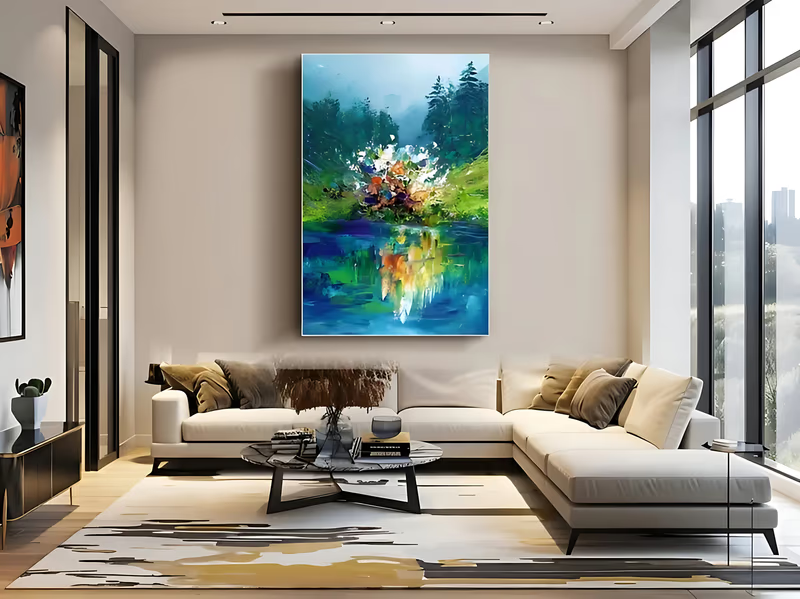
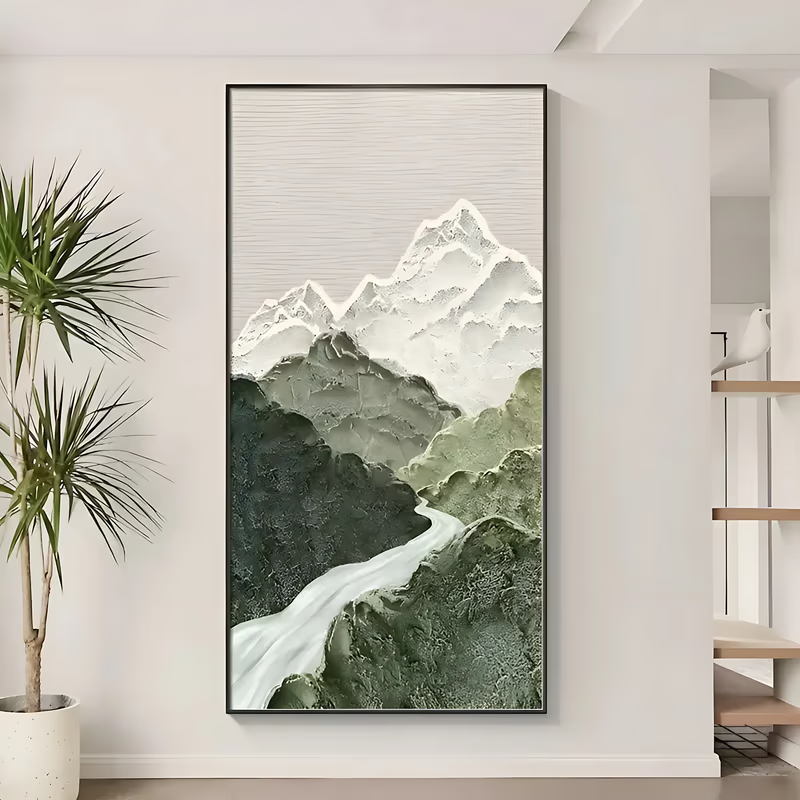
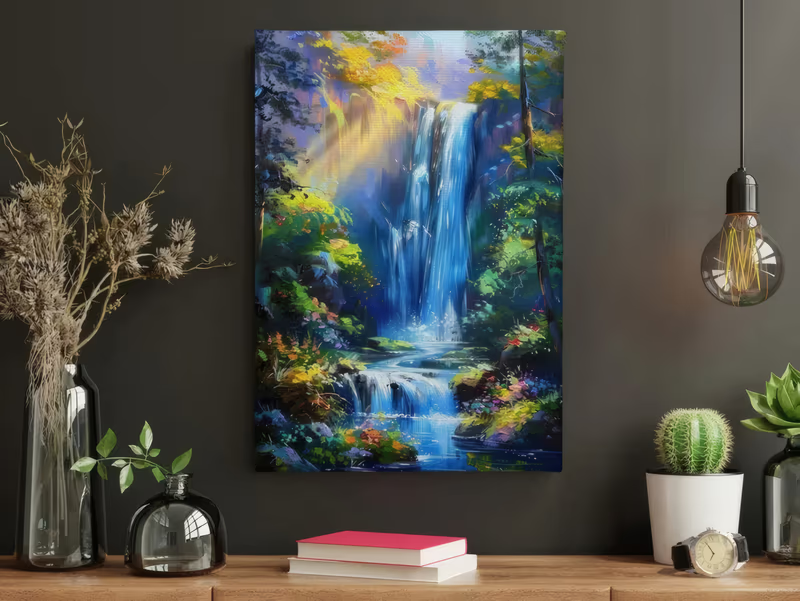
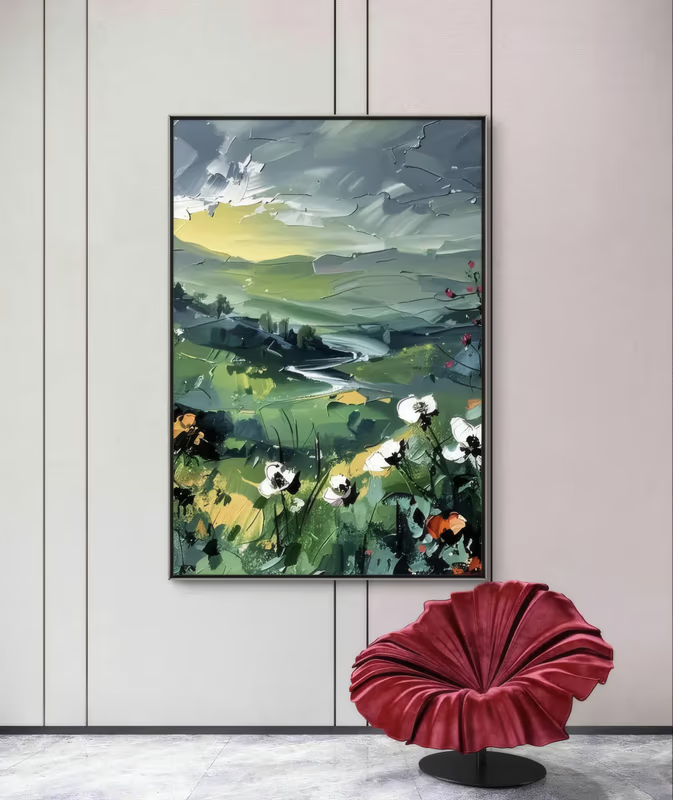
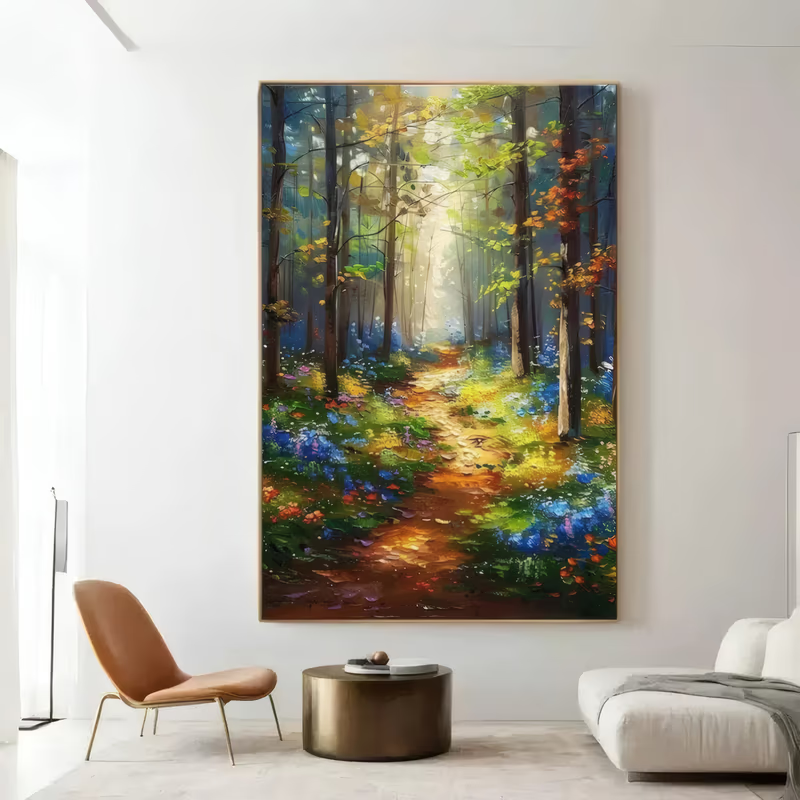
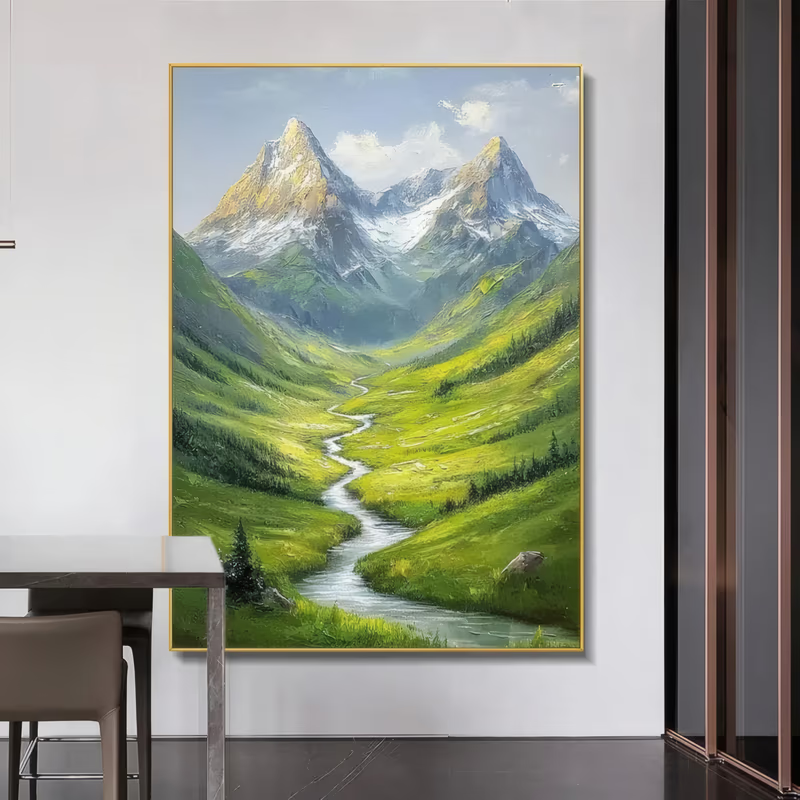
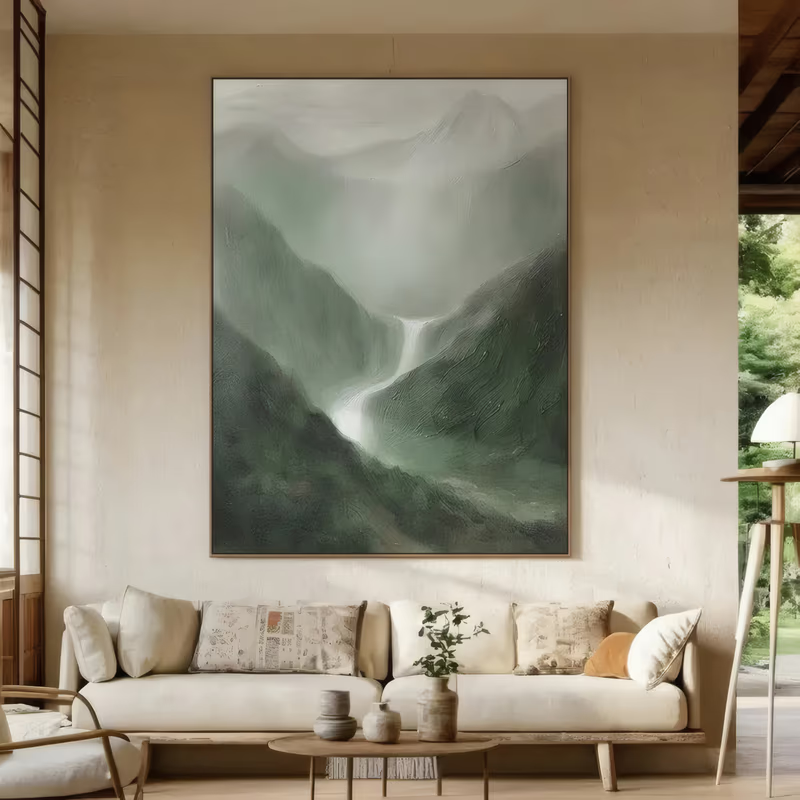
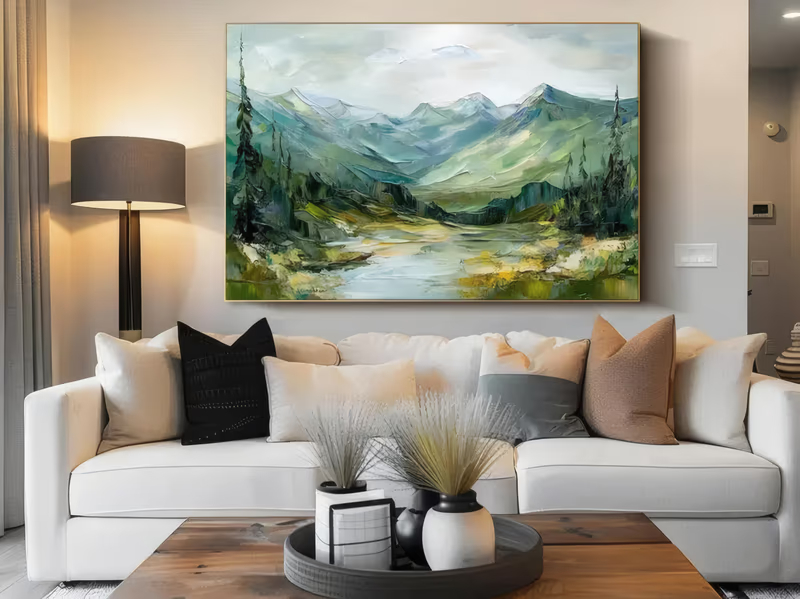
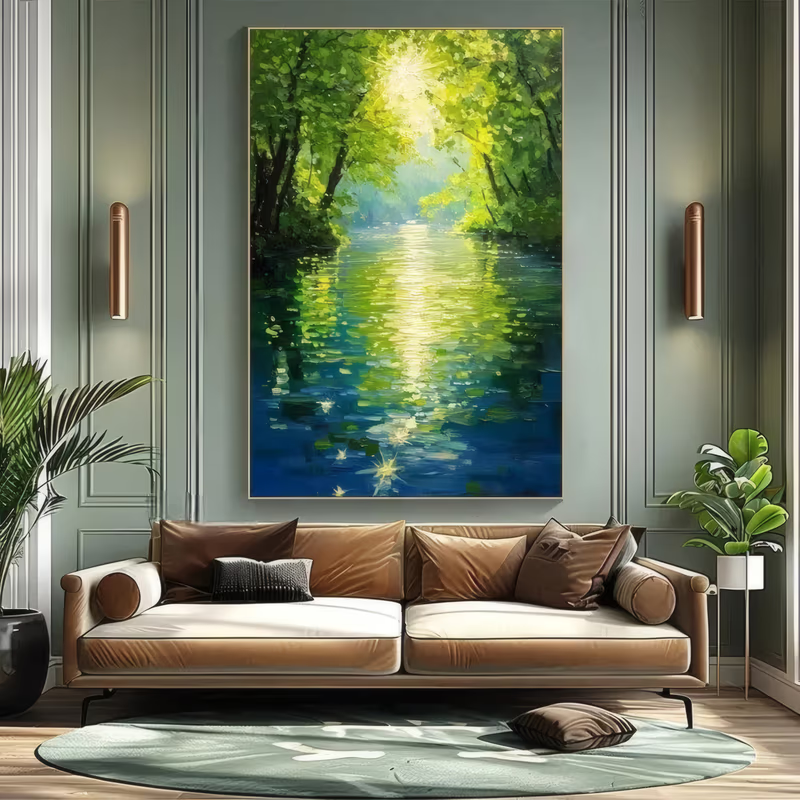
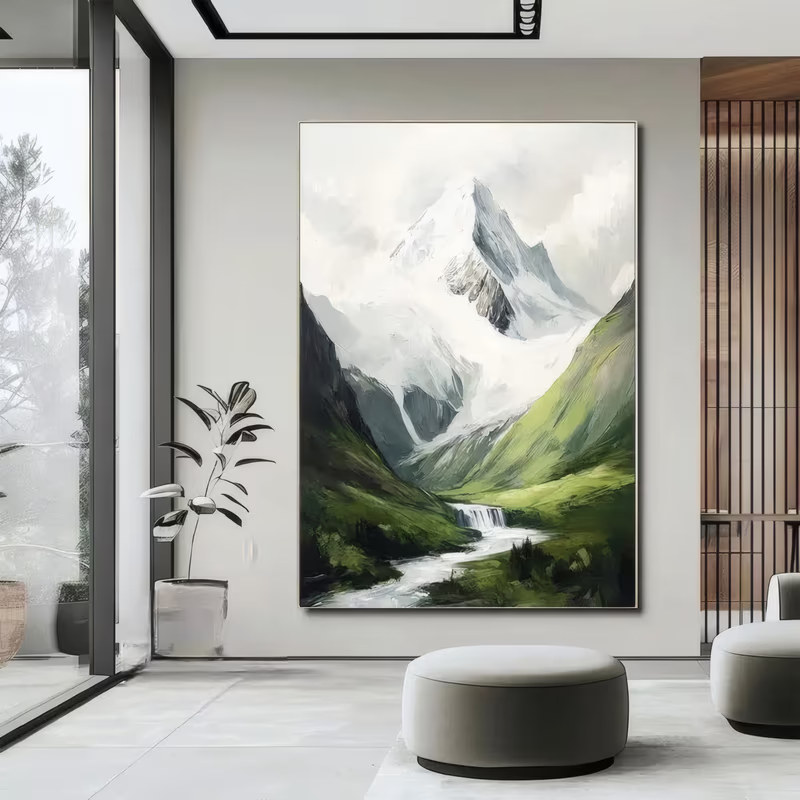
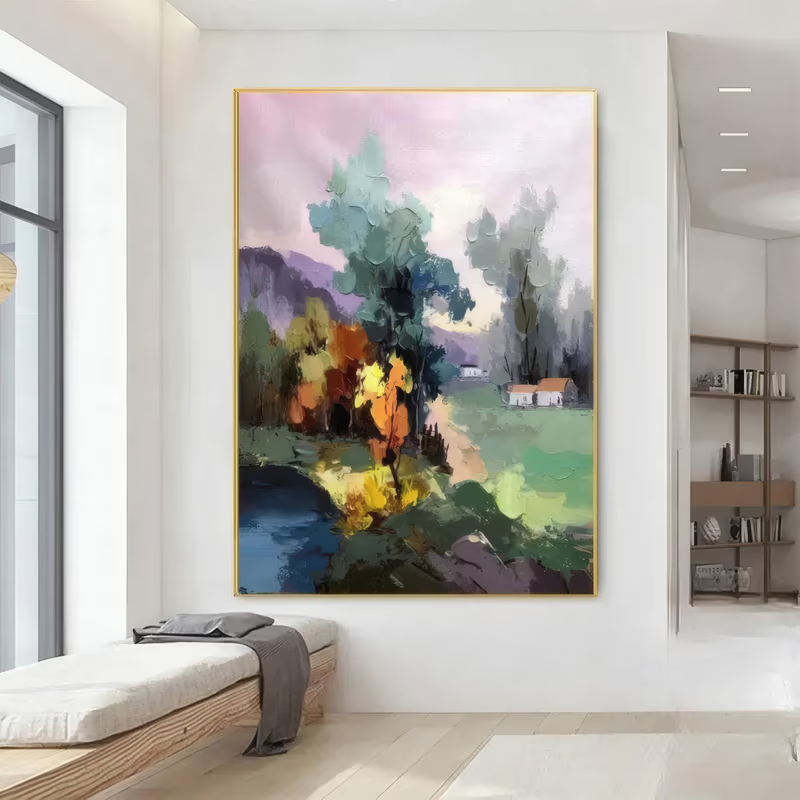
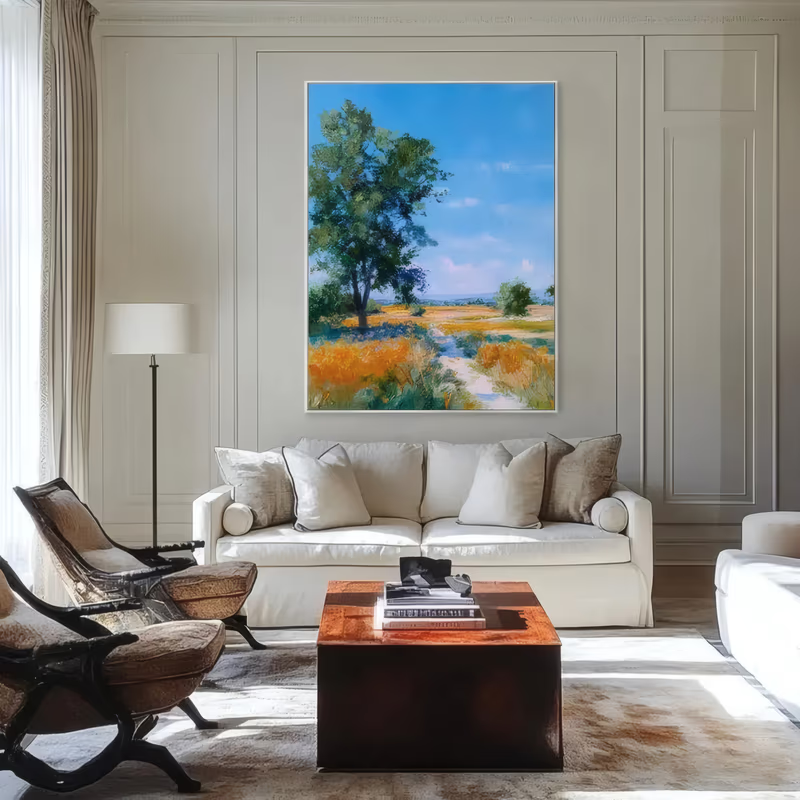
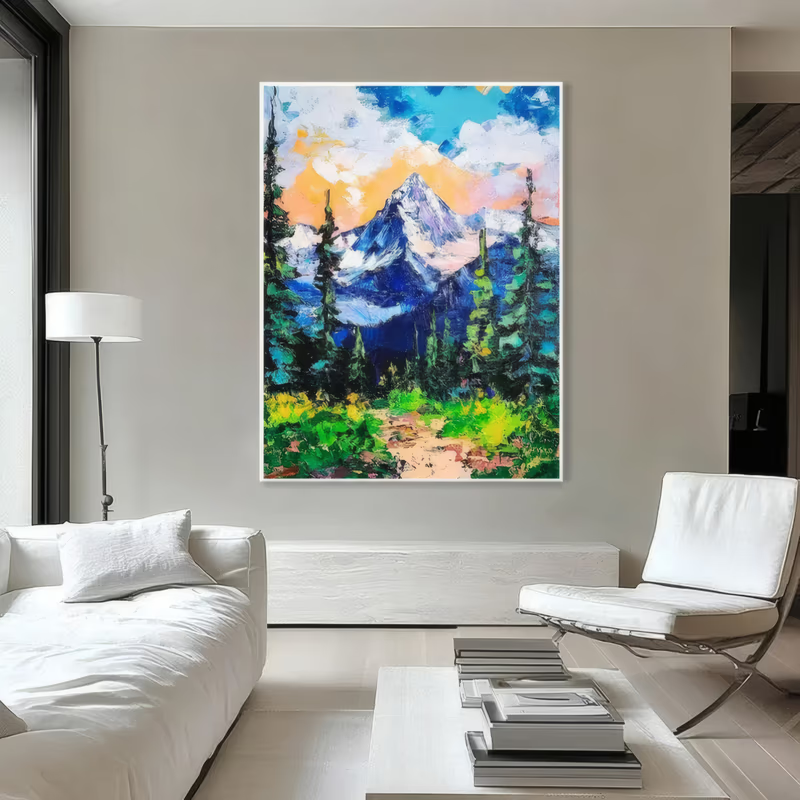
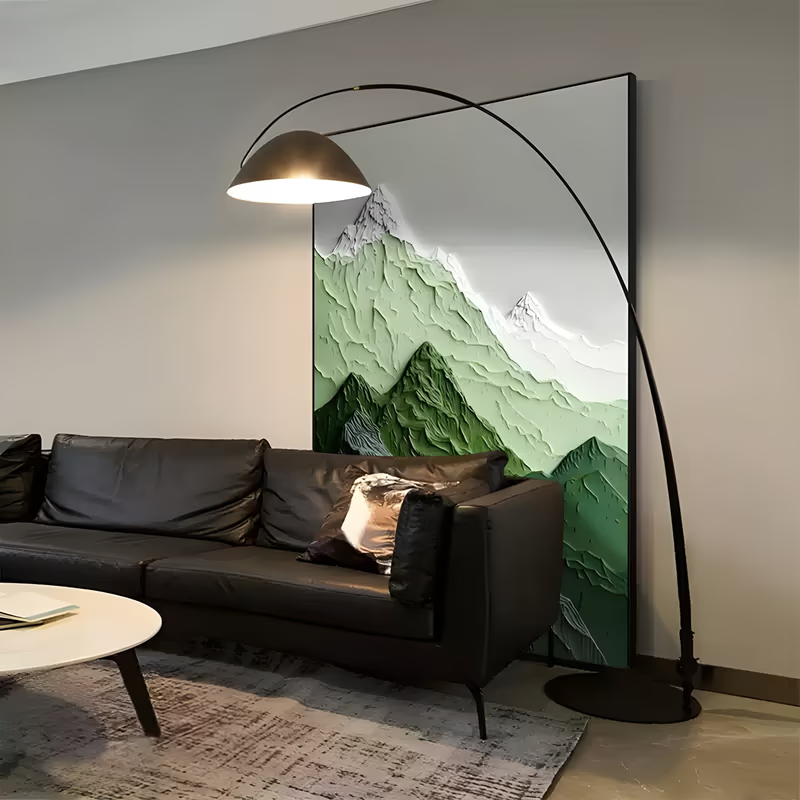
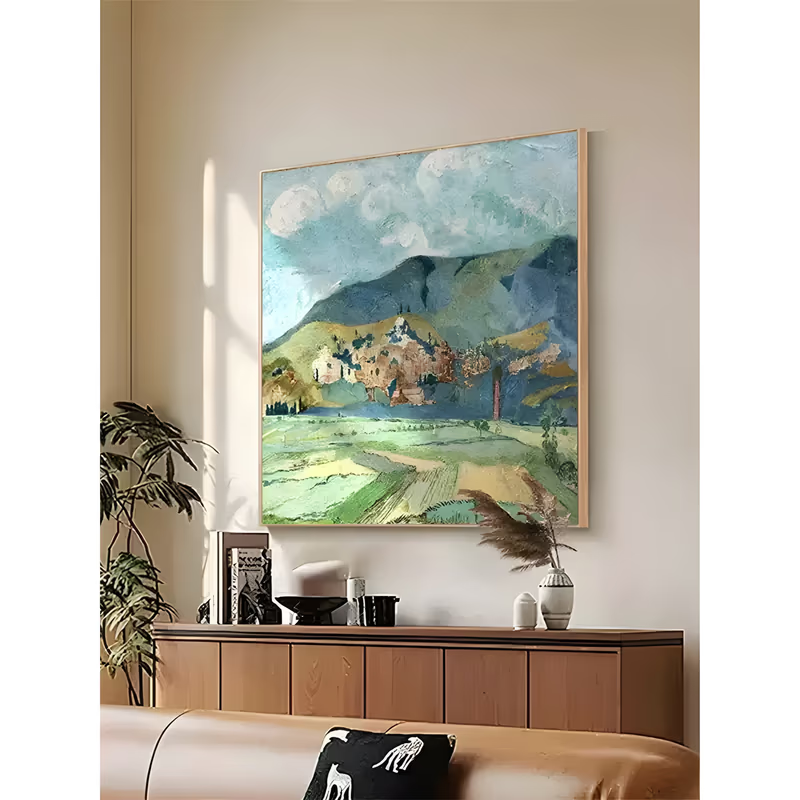
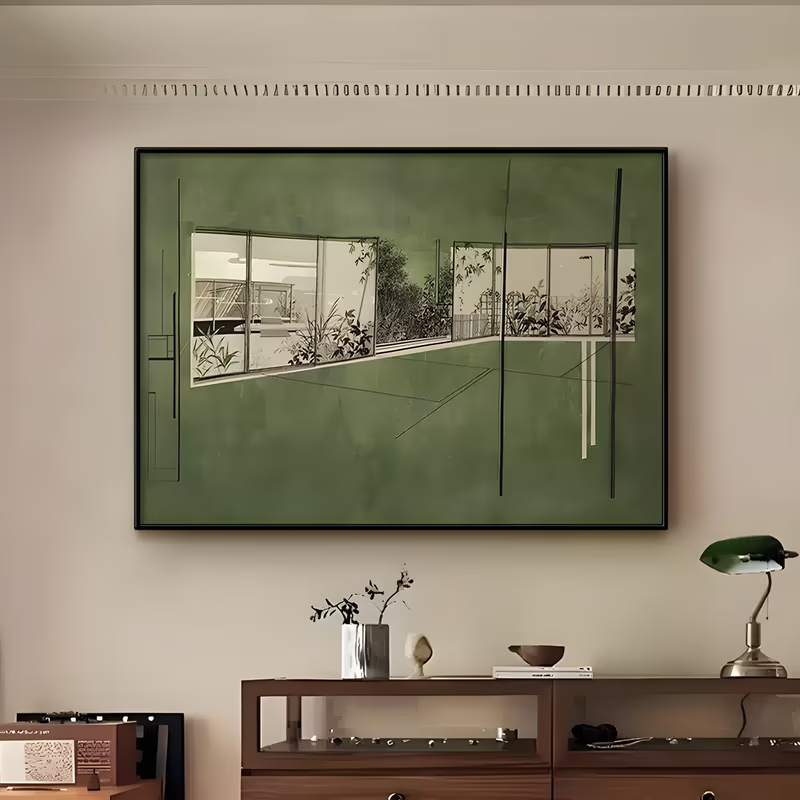
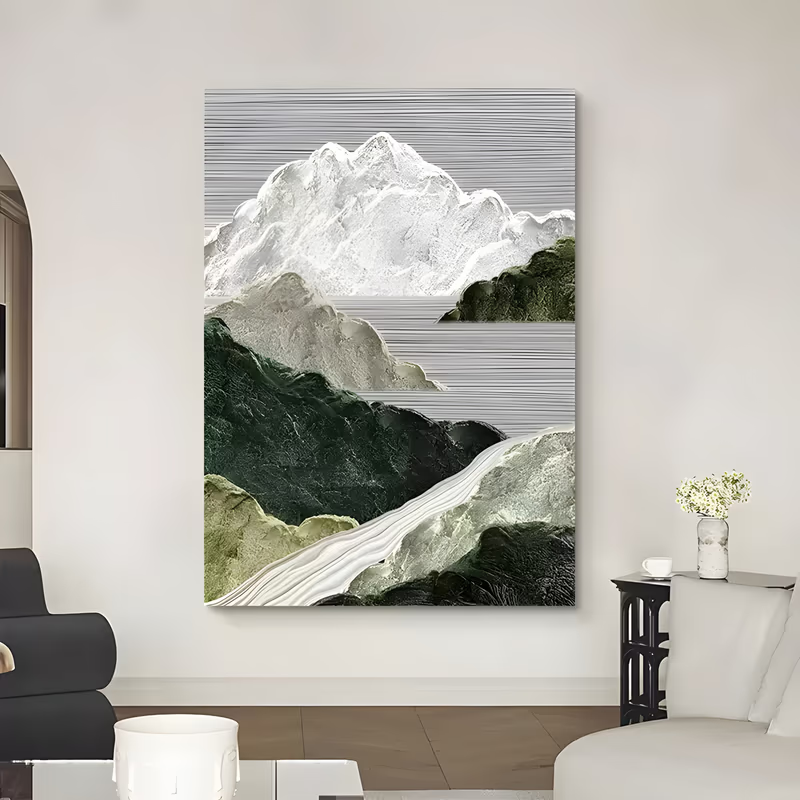
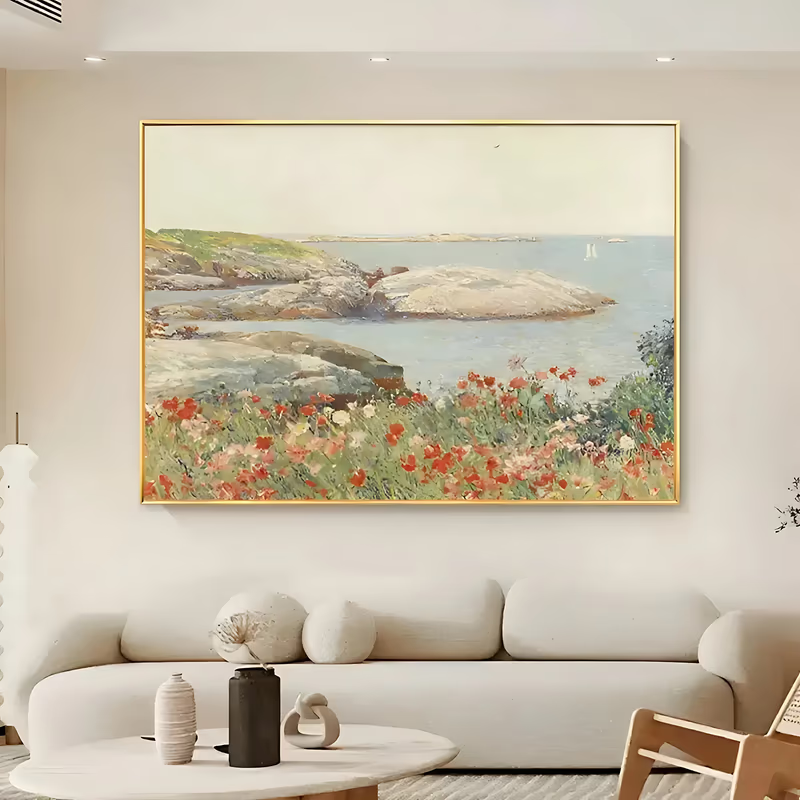
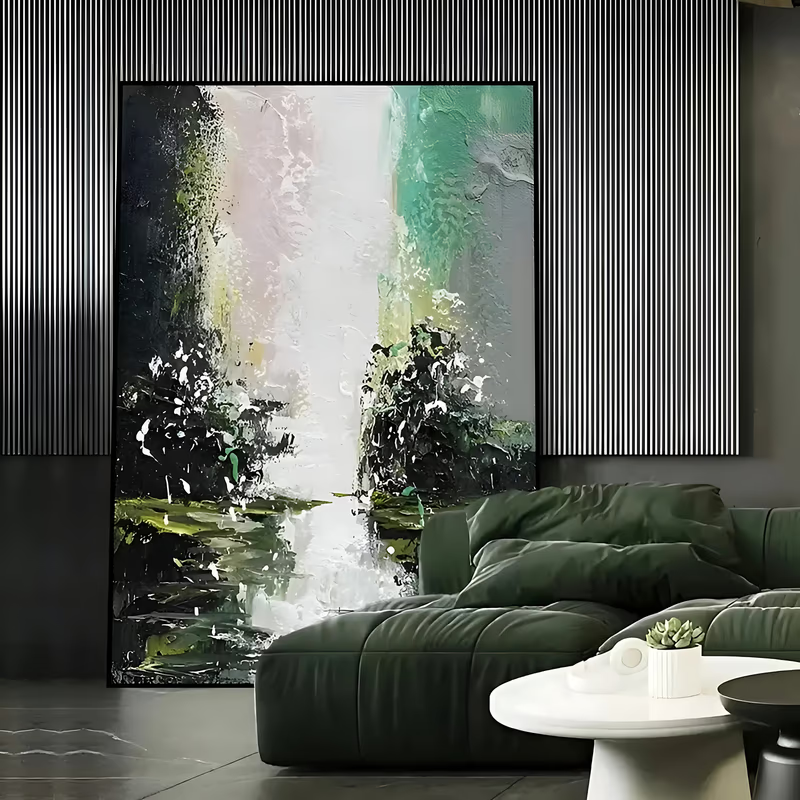
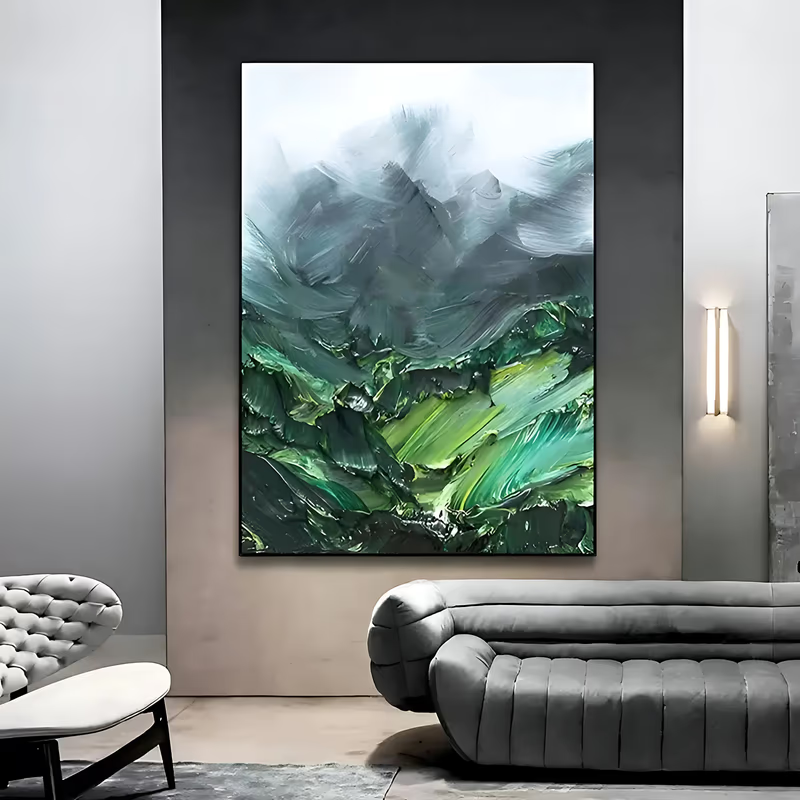
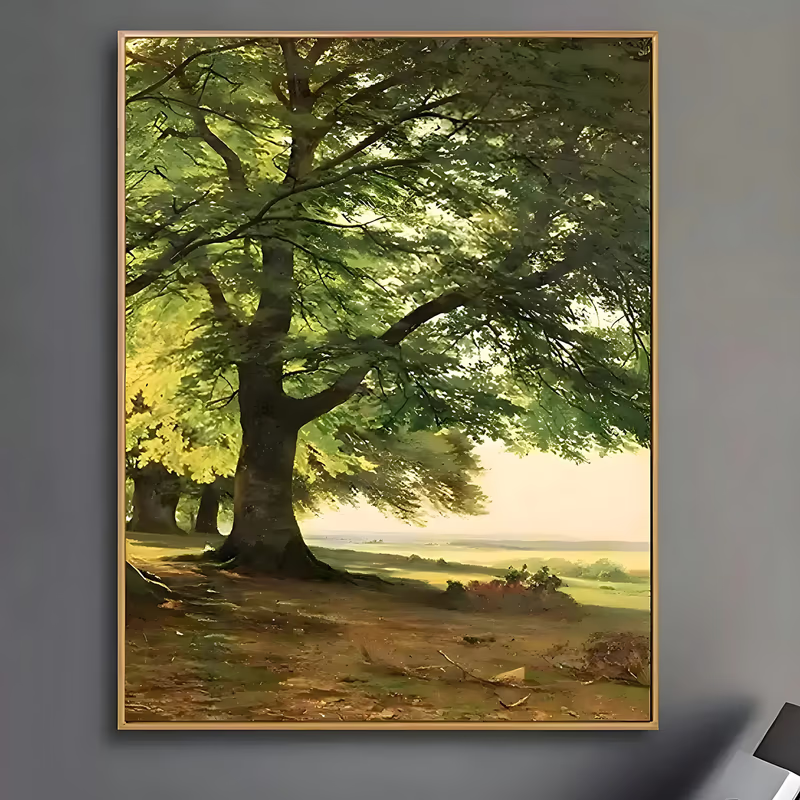
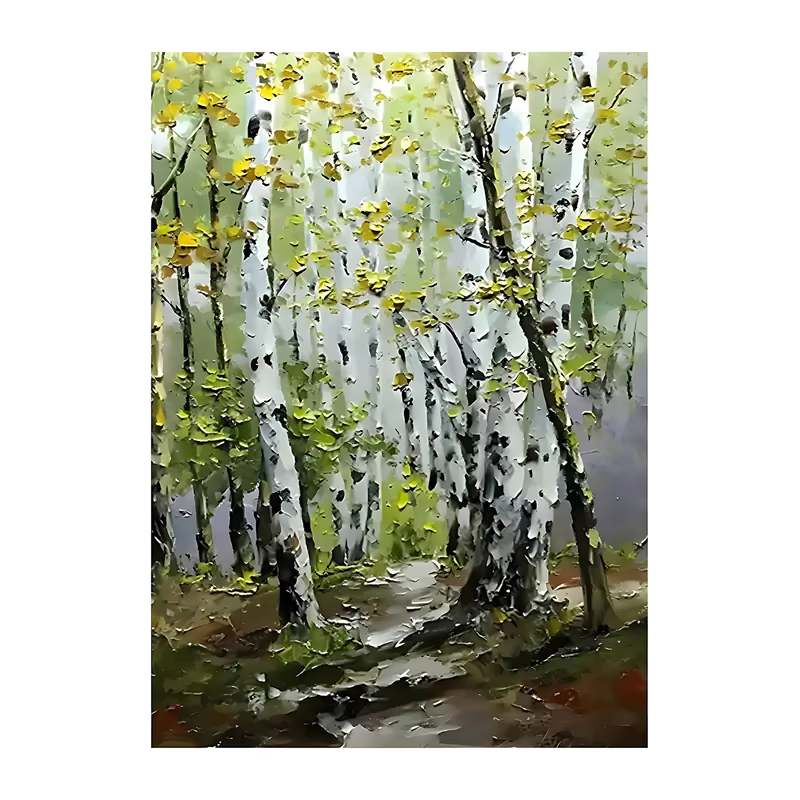
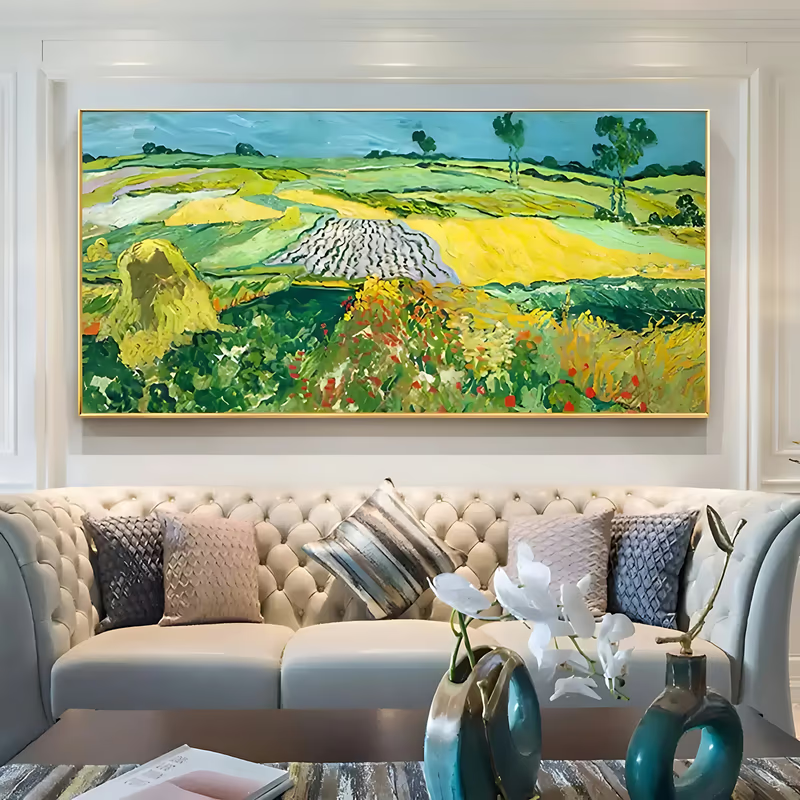
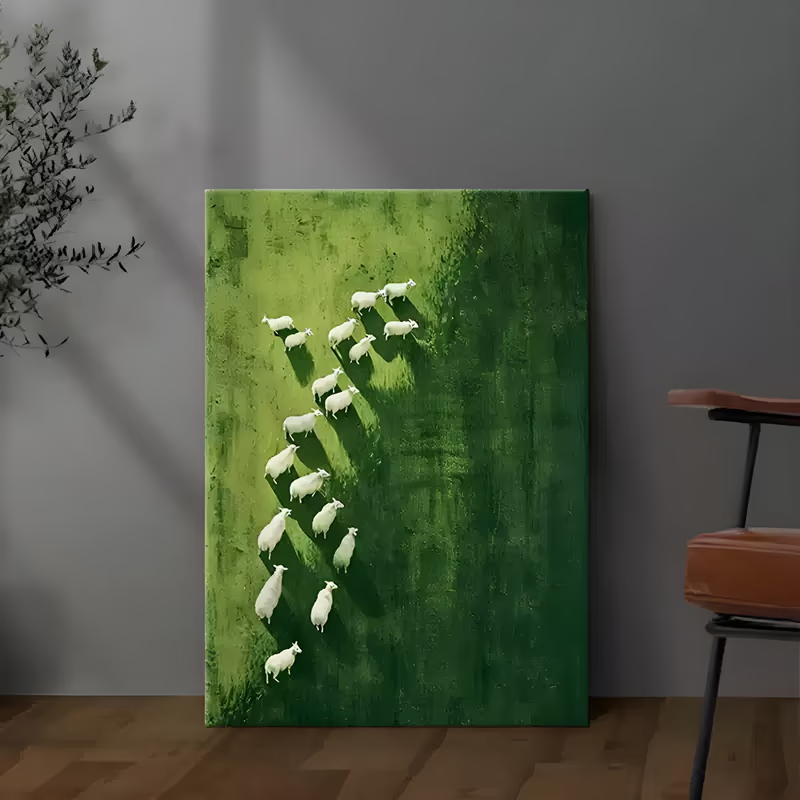
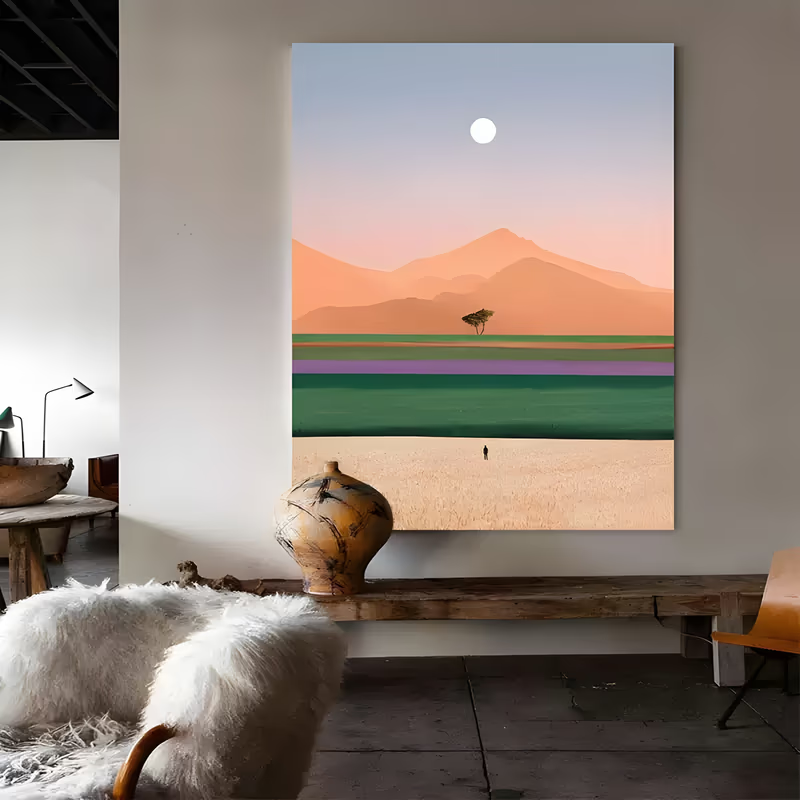
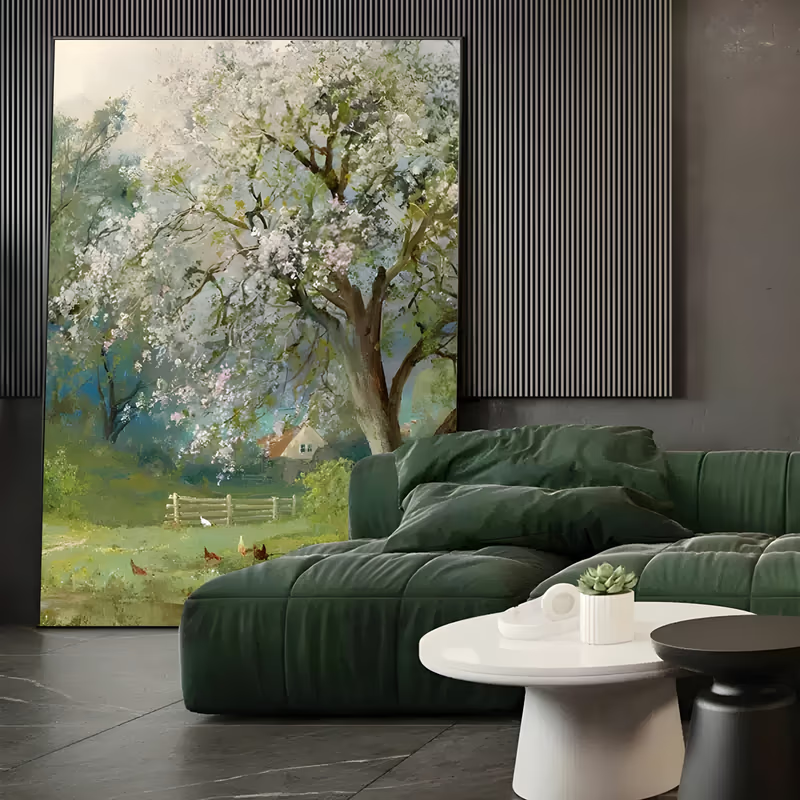
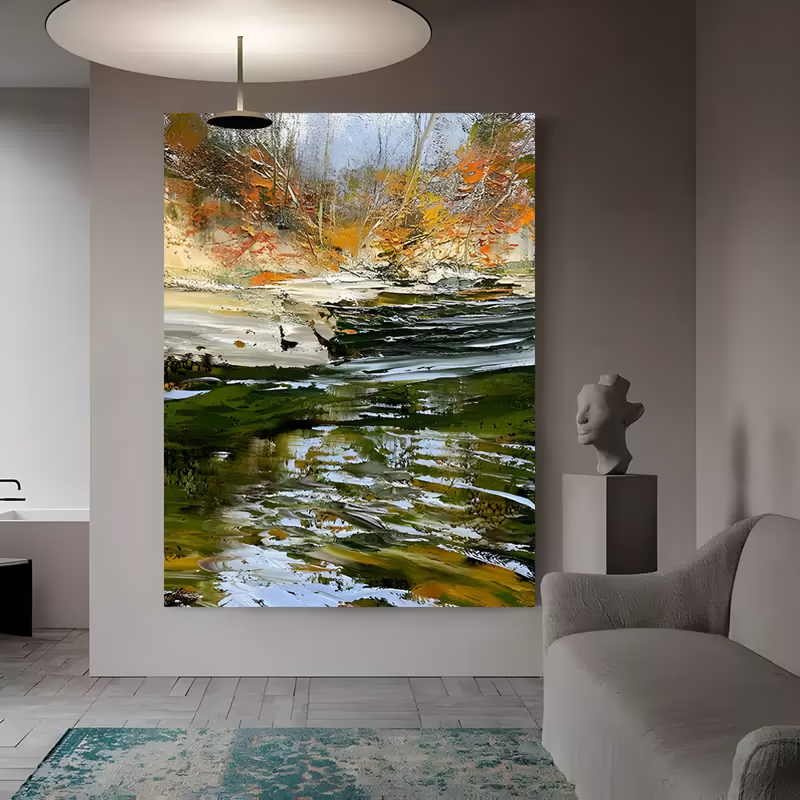
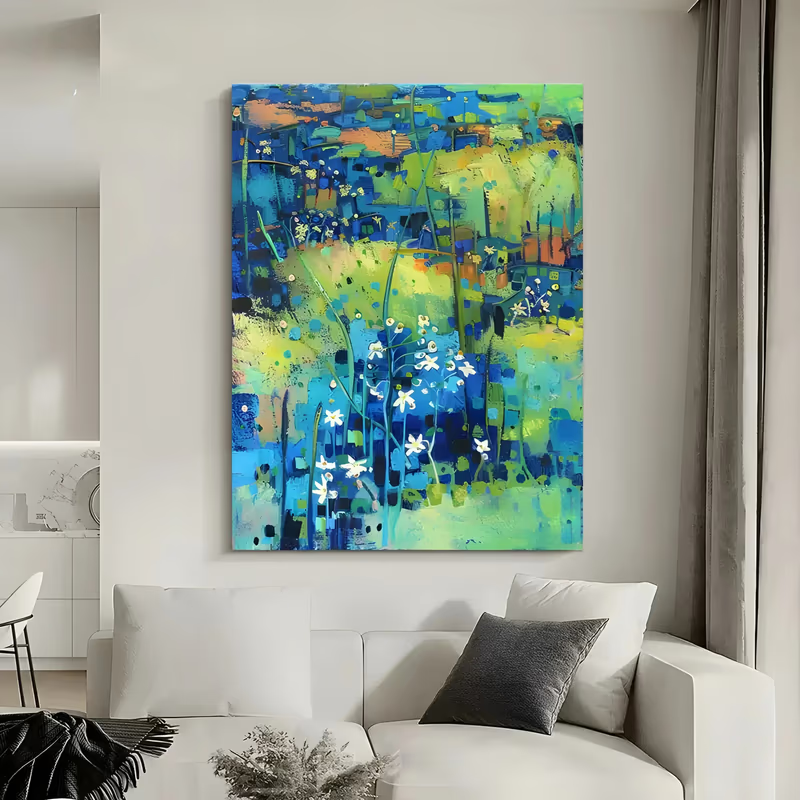
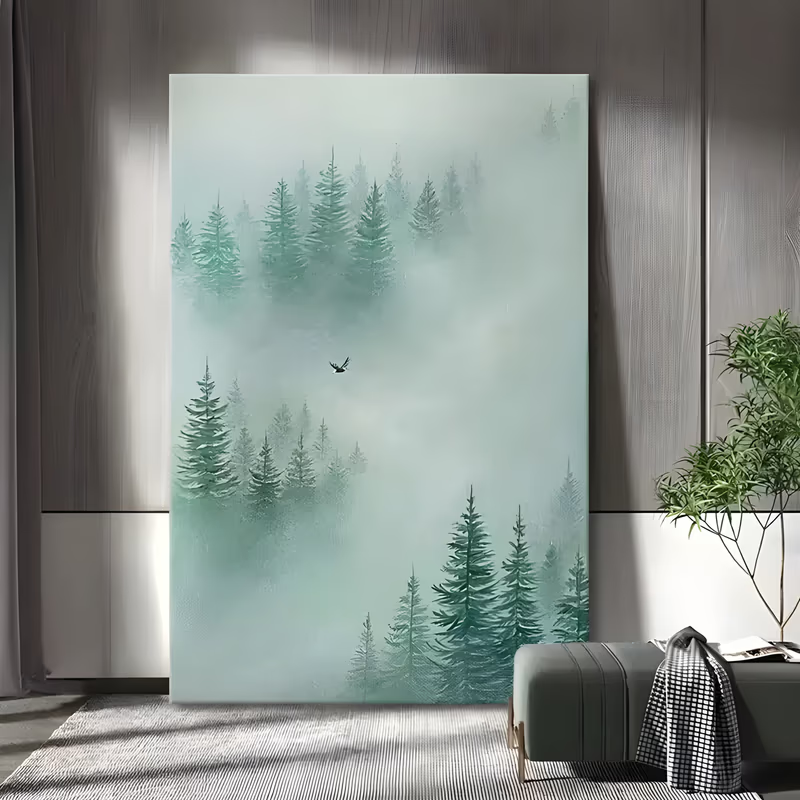
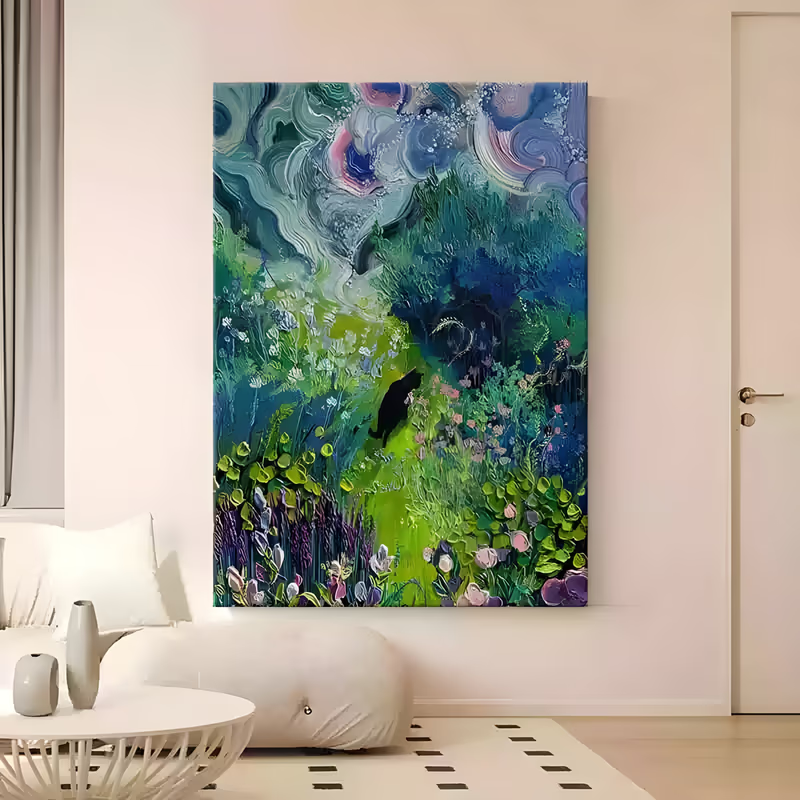
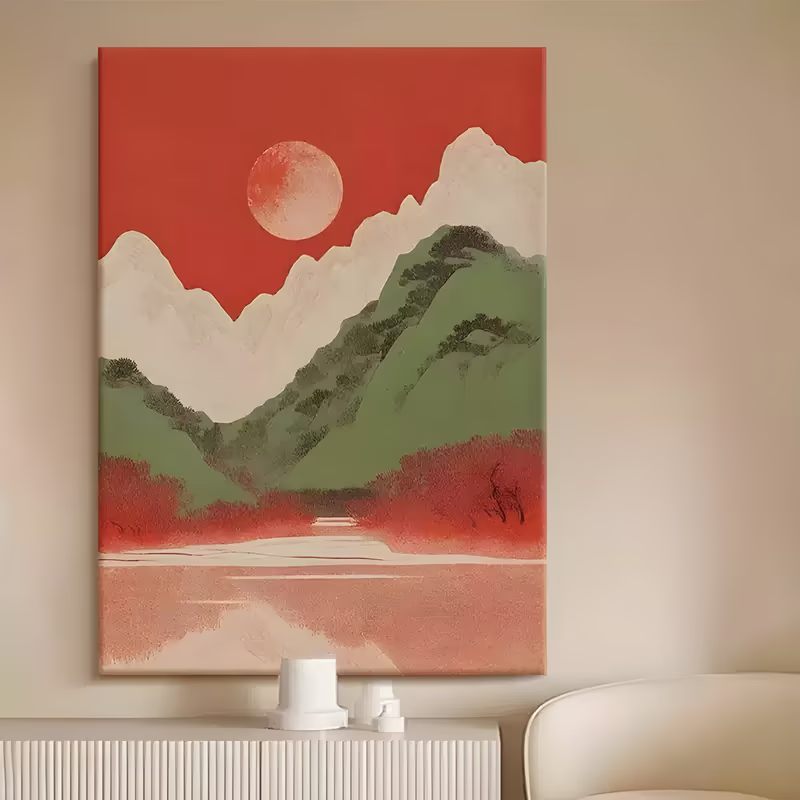
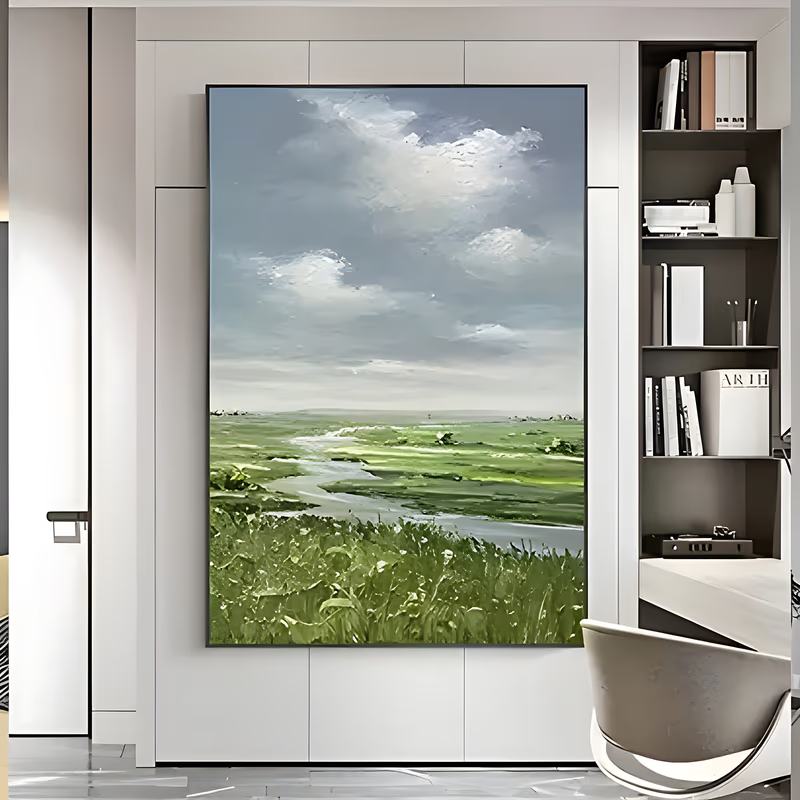
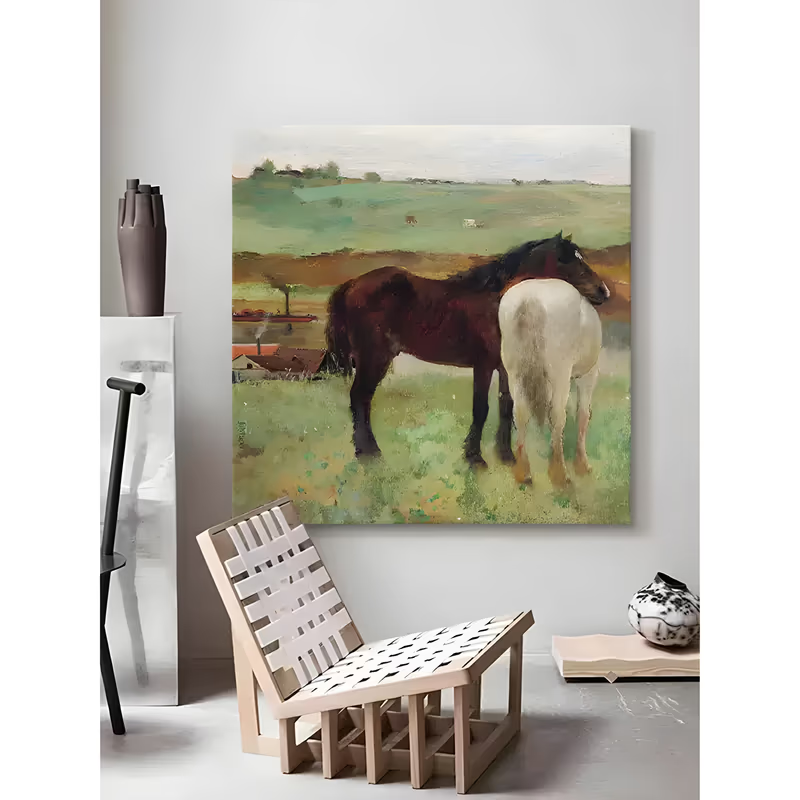
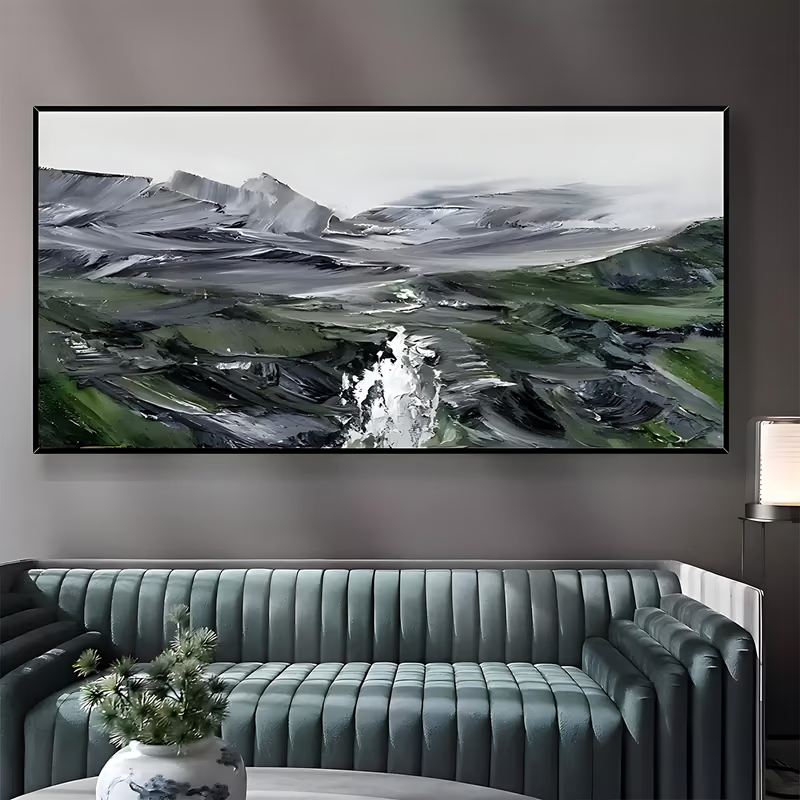
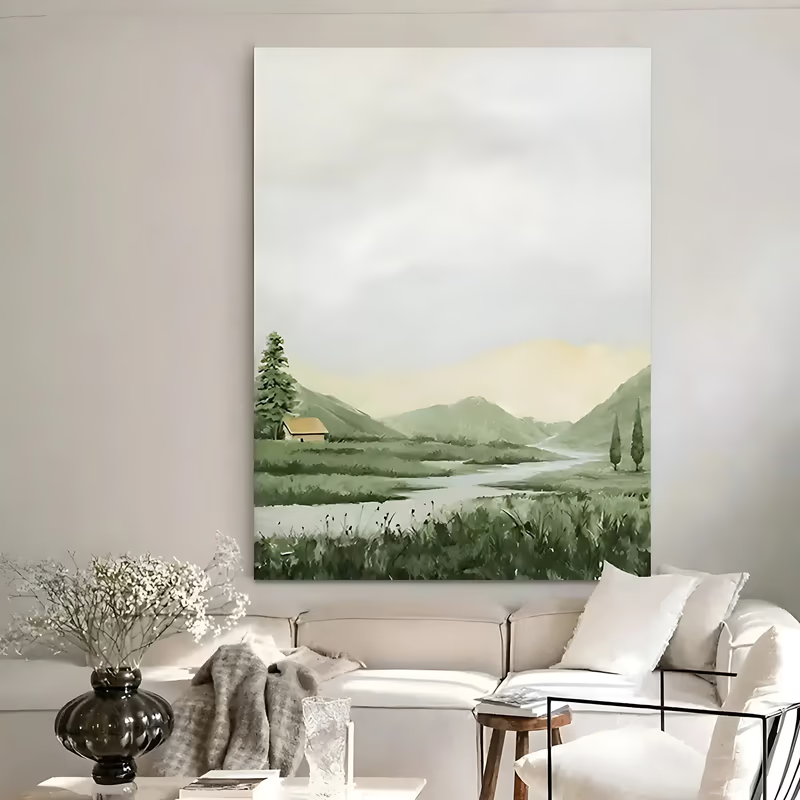
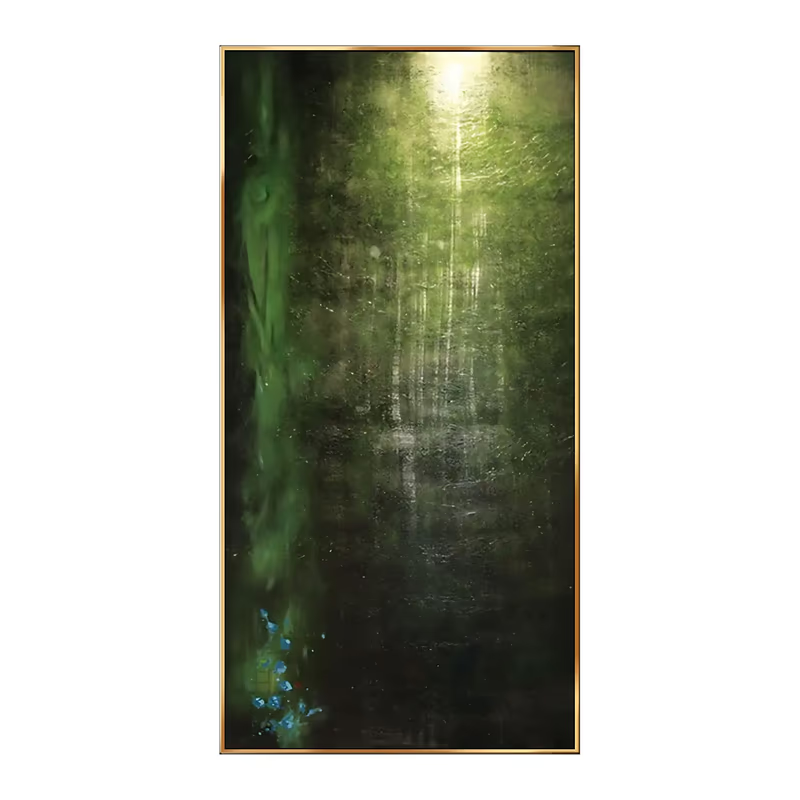
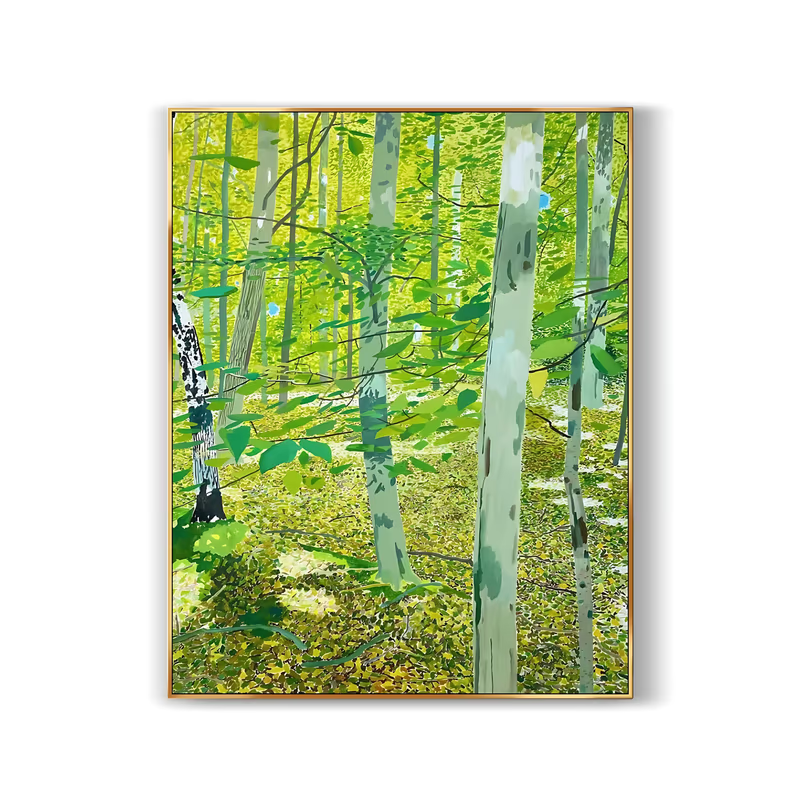
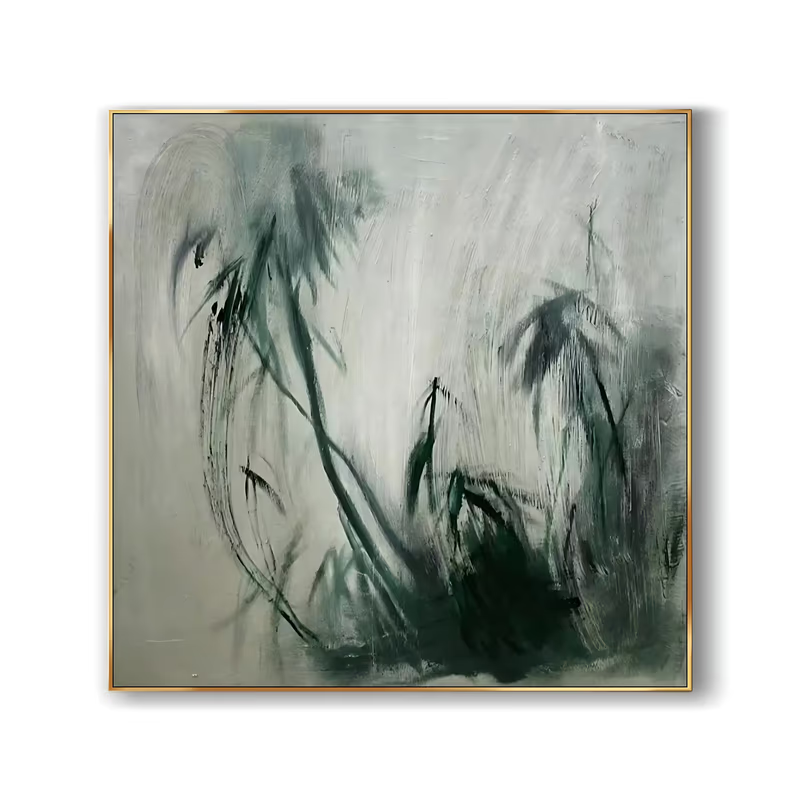
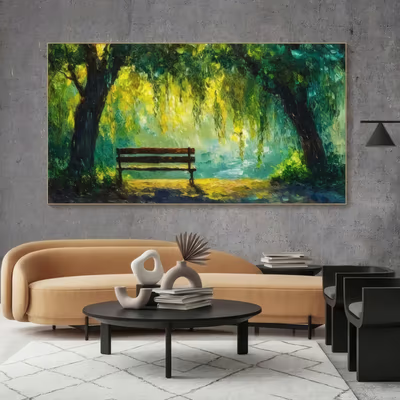
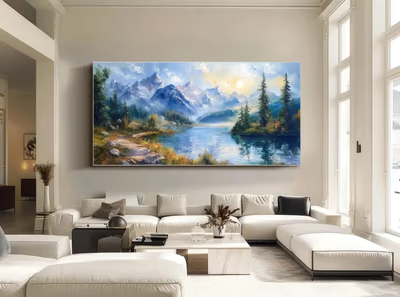
Misty pine woods, birch forests, alpine lakes below green slopes, river meadows and country paths. A landscape opens a wall like a window, which suits a windowless room, a long corridor or a hotel room whose own view is of the car park.
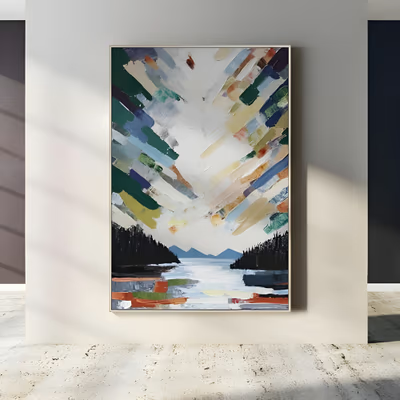
Green abstract and textured art
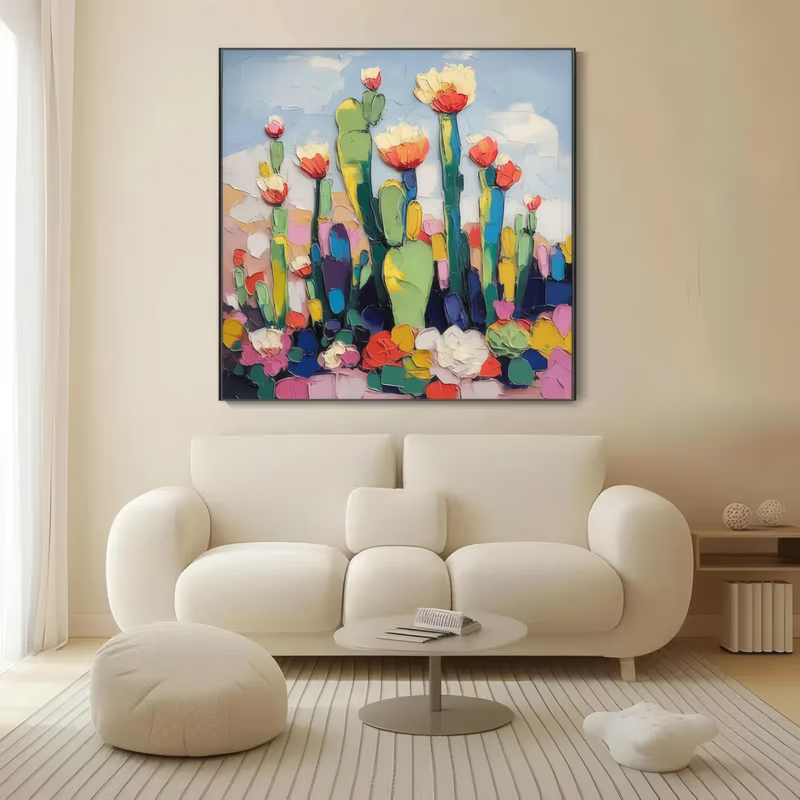
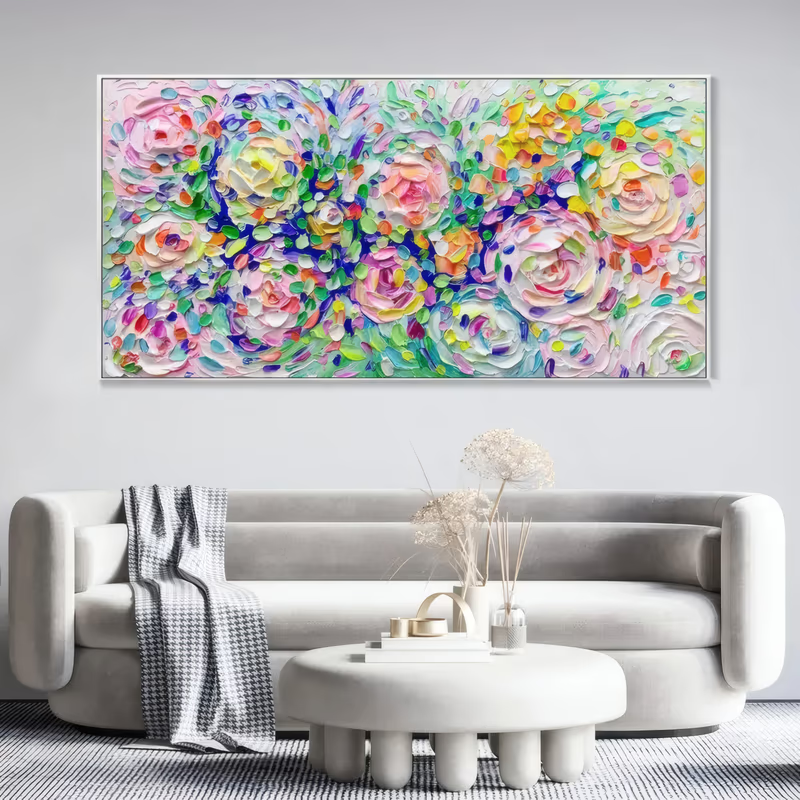
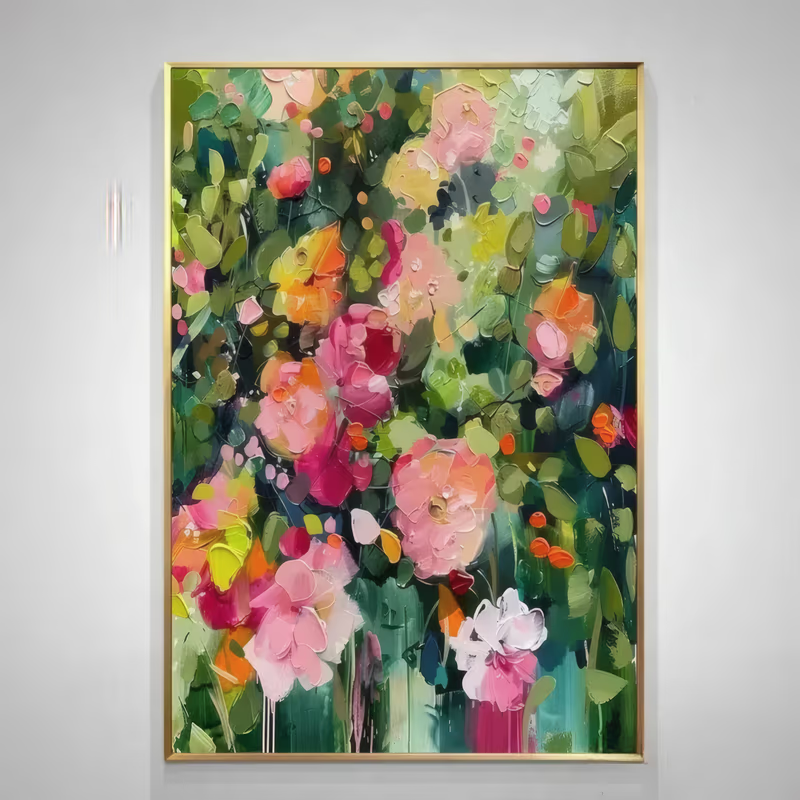
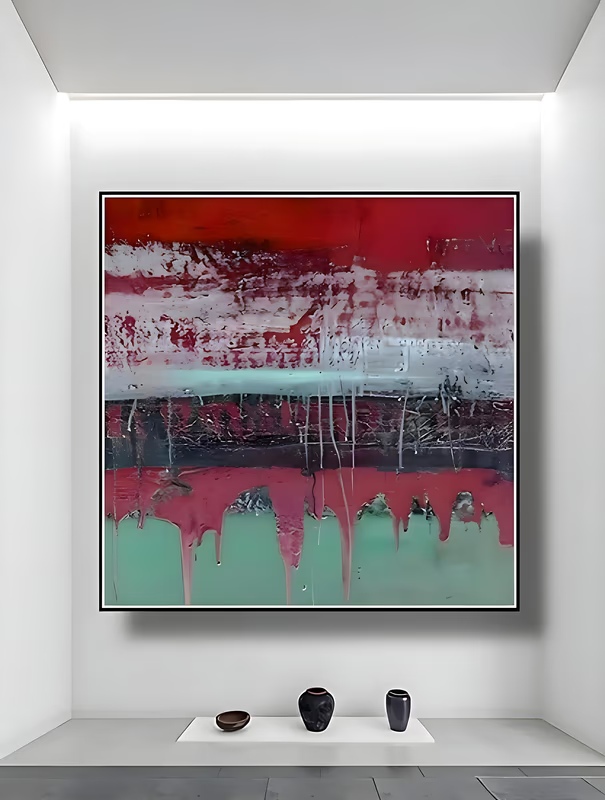
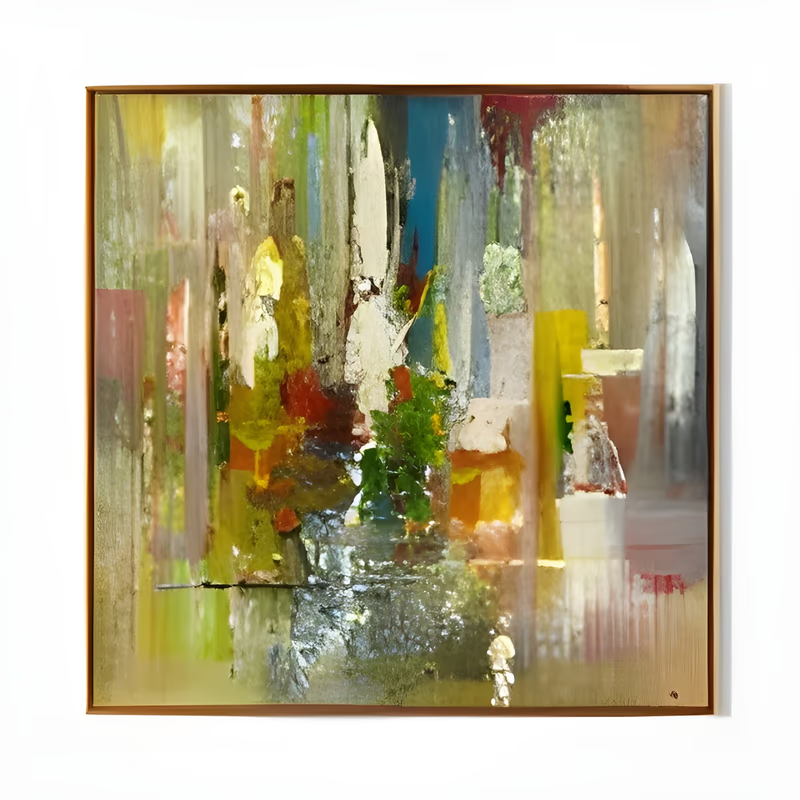
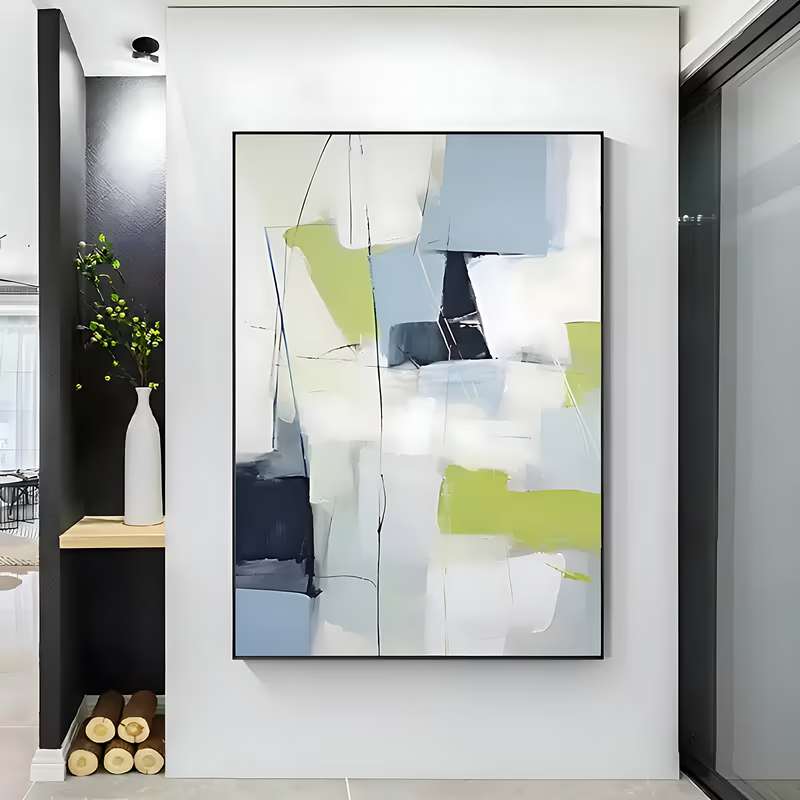
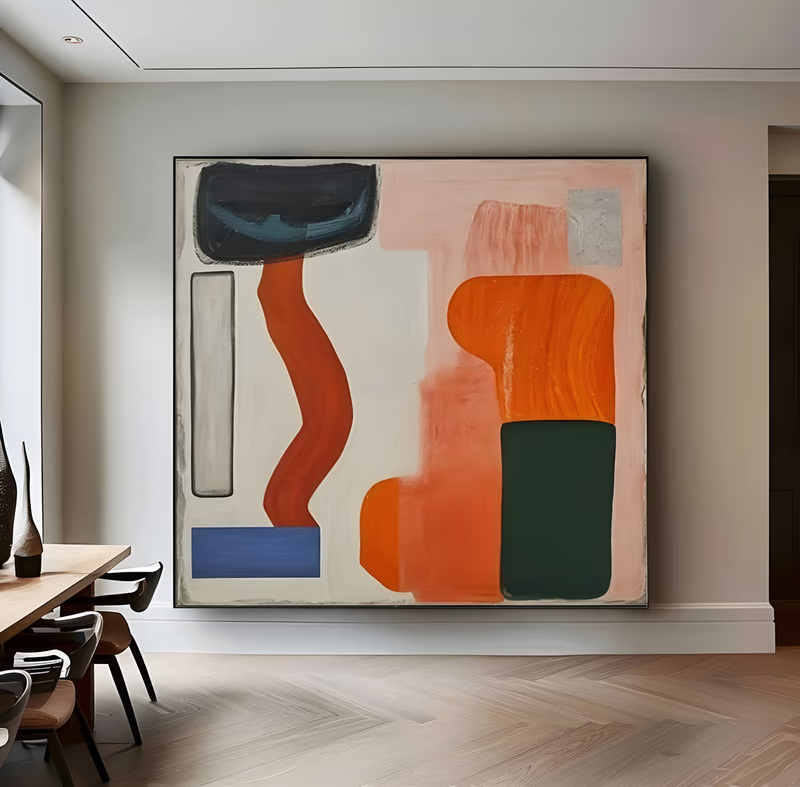
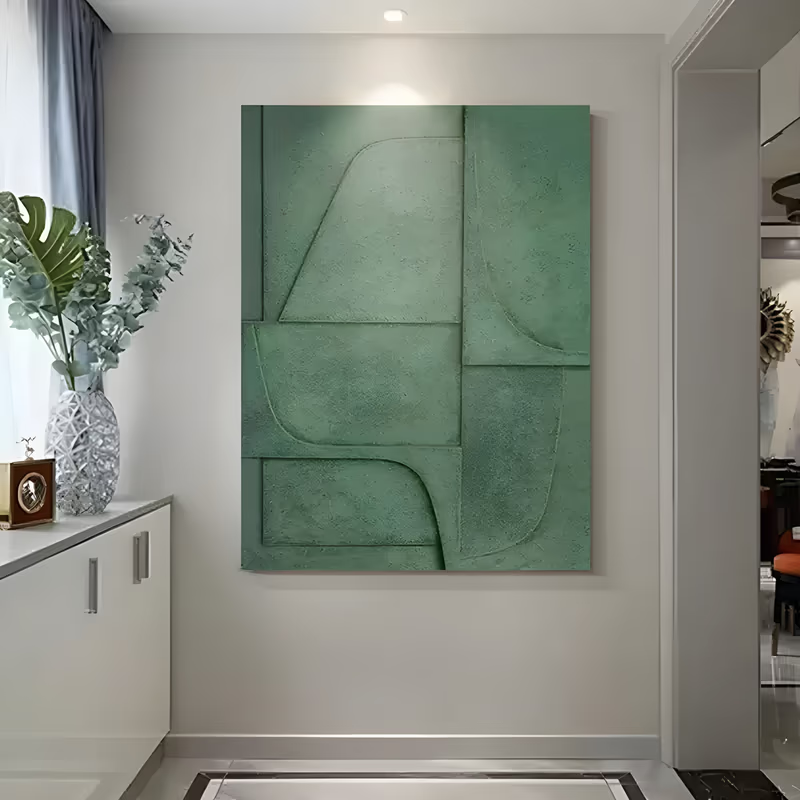
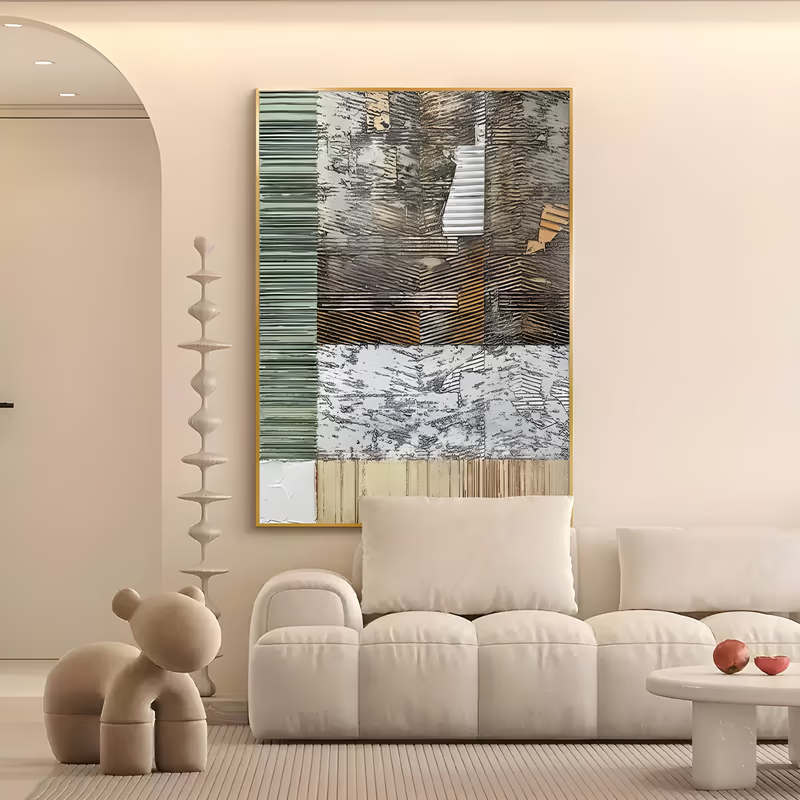
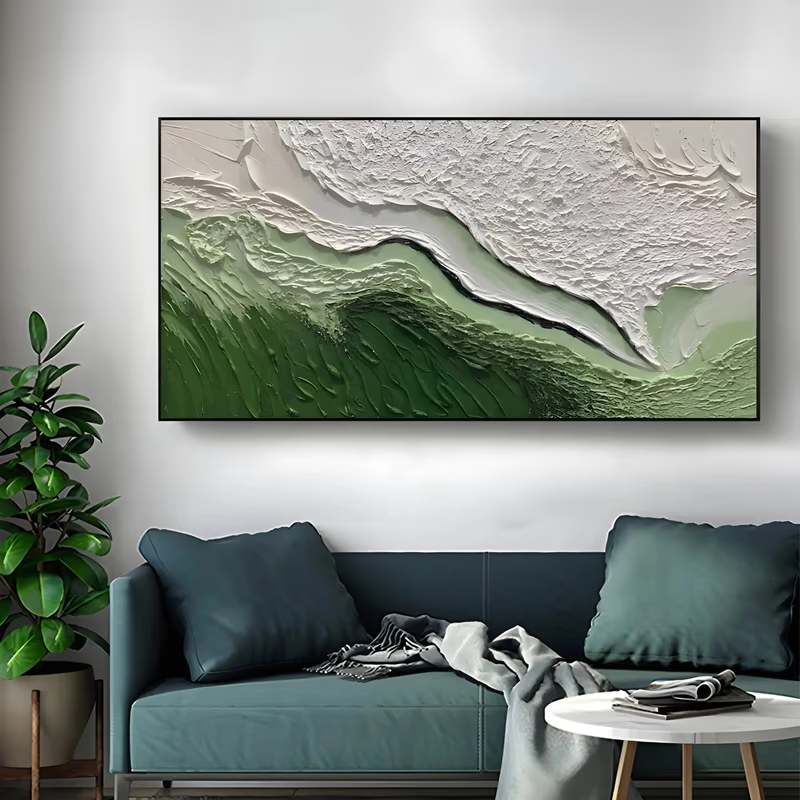
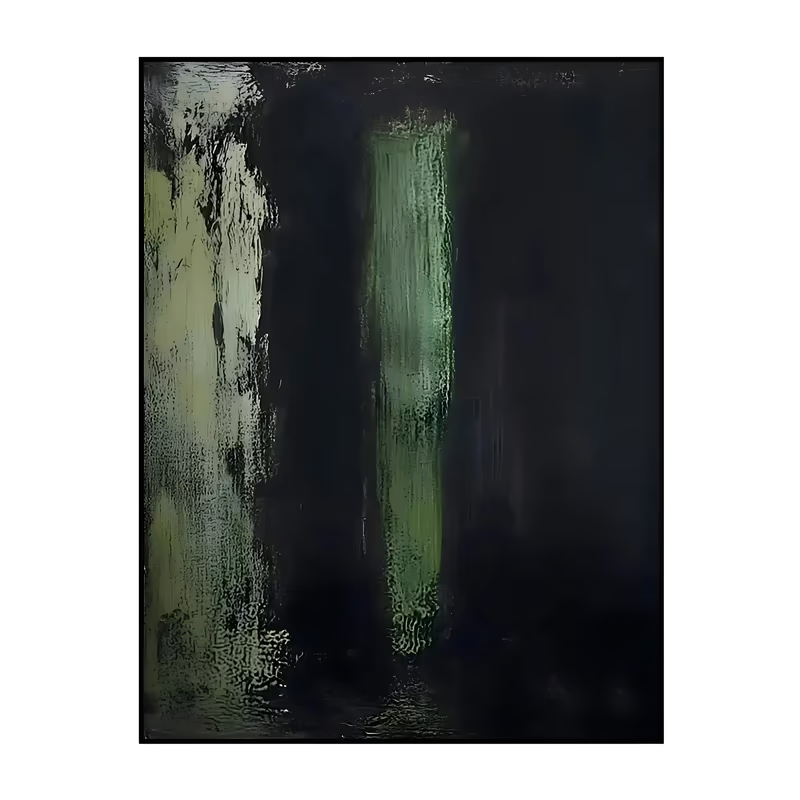
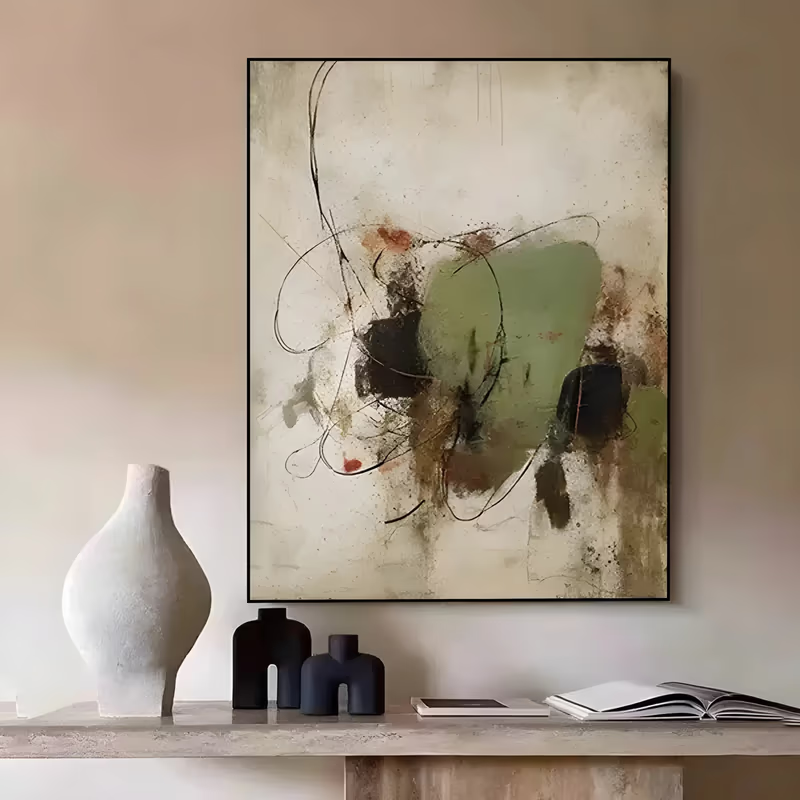
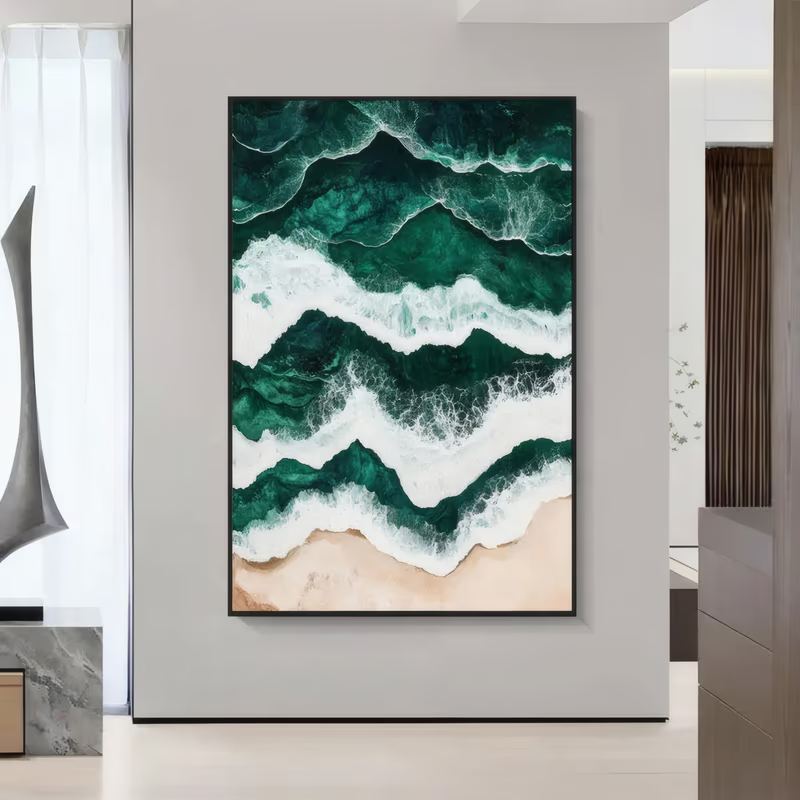
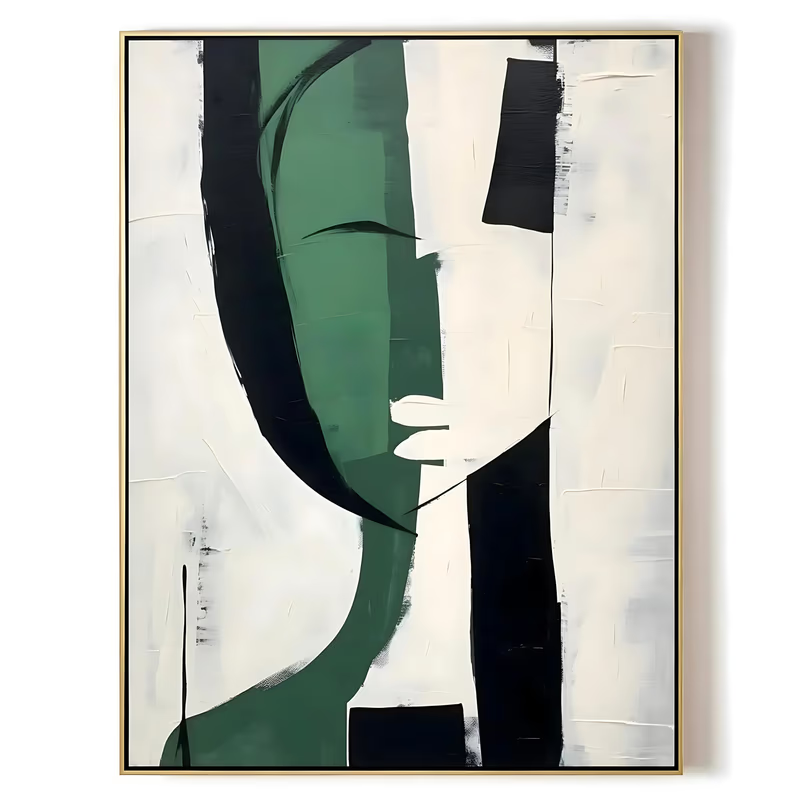
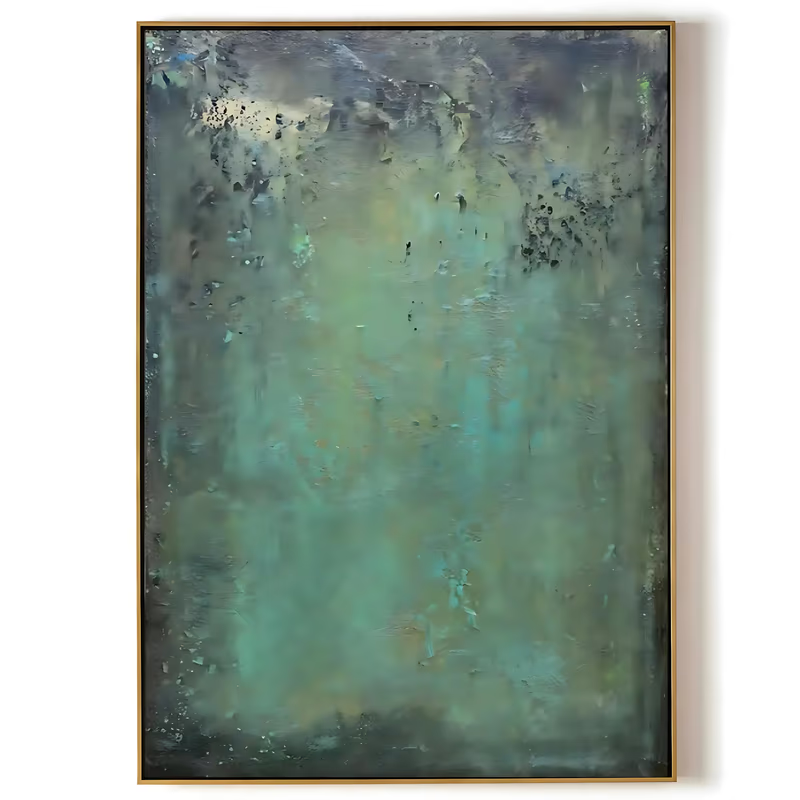
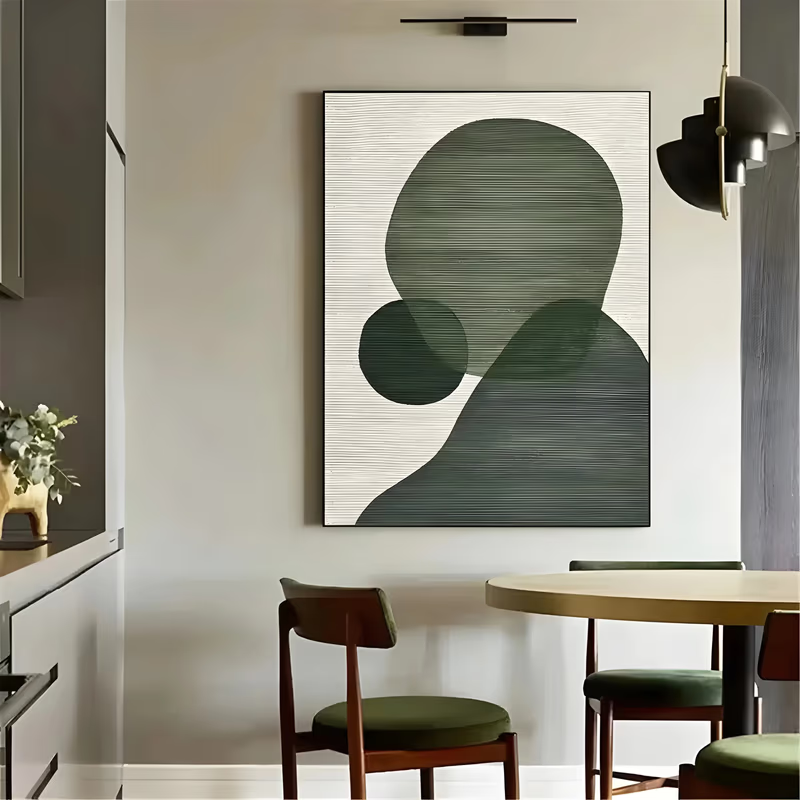
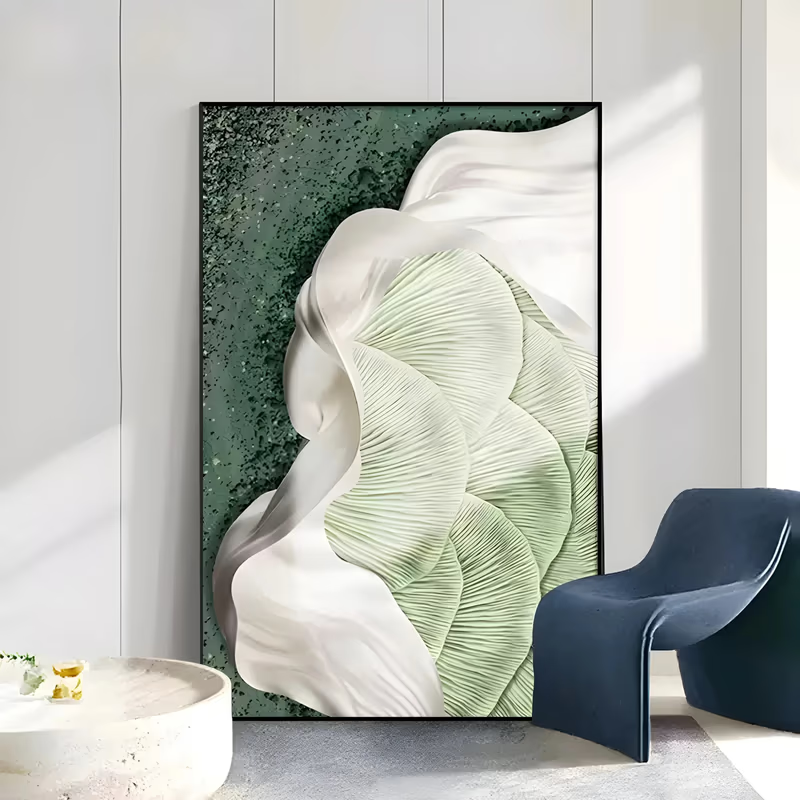
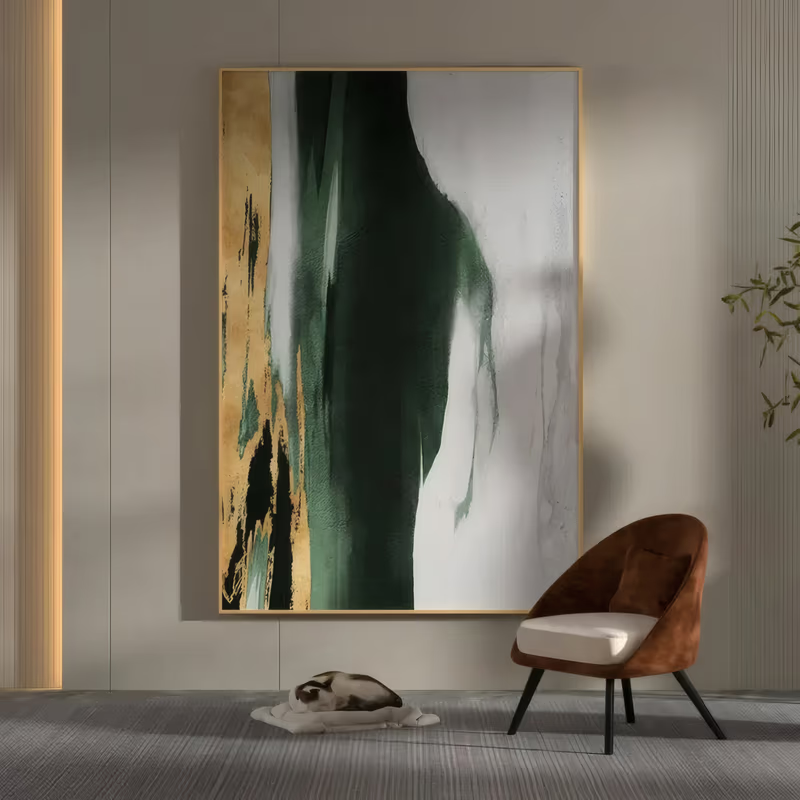
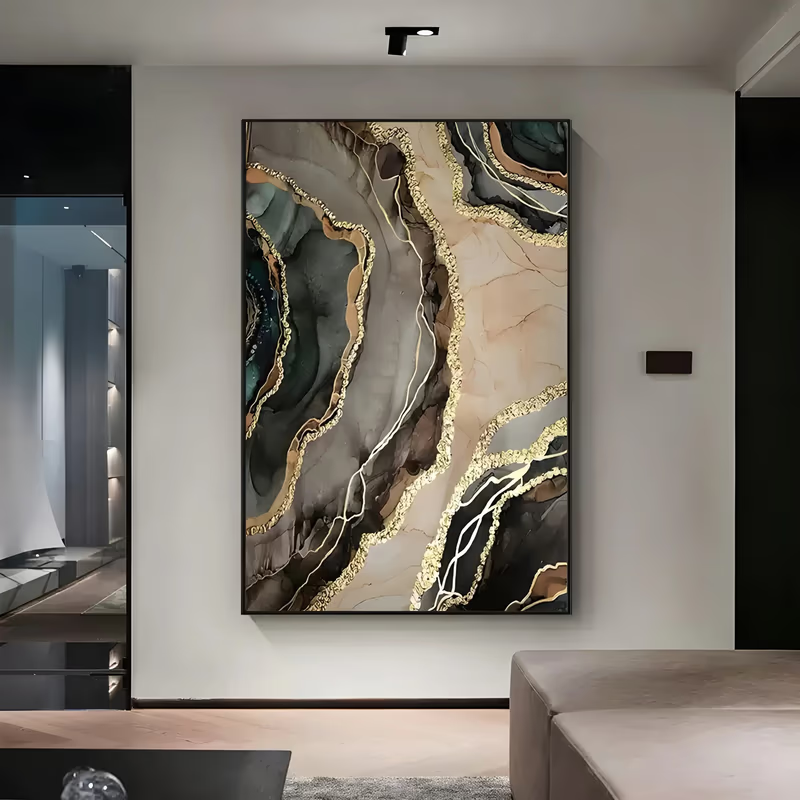
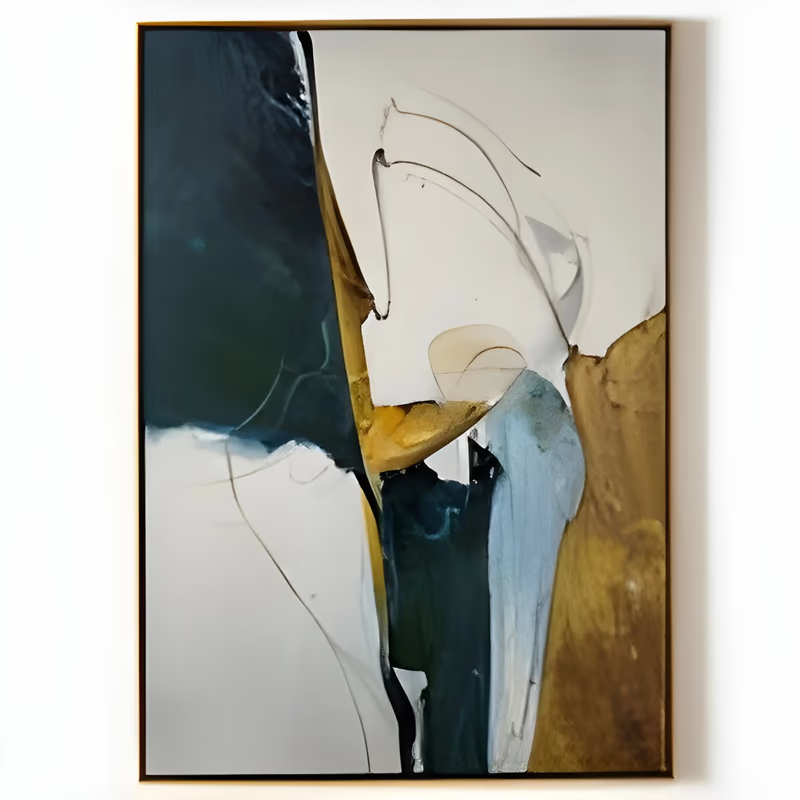
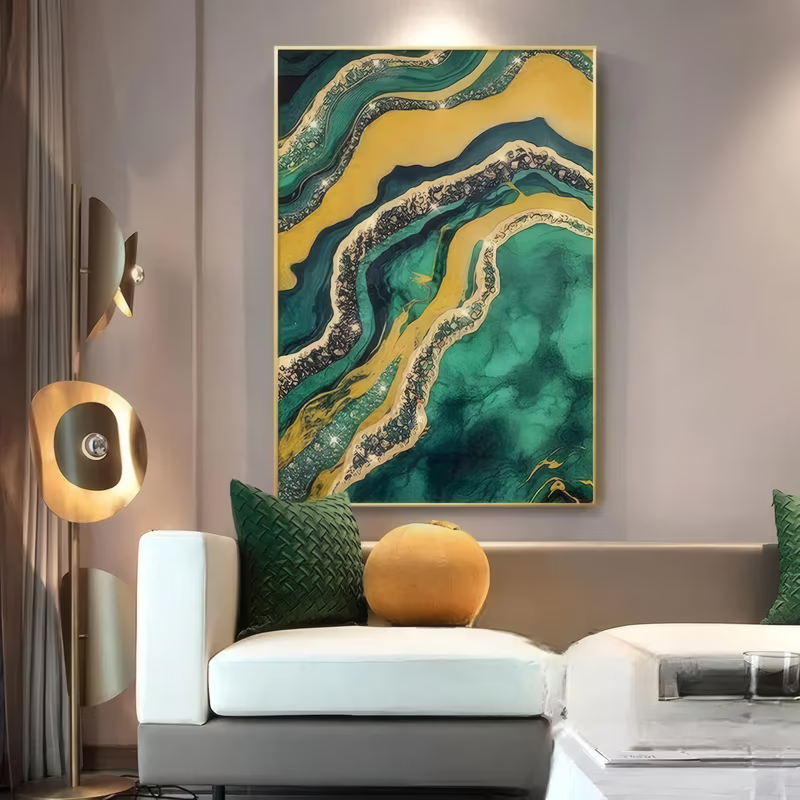
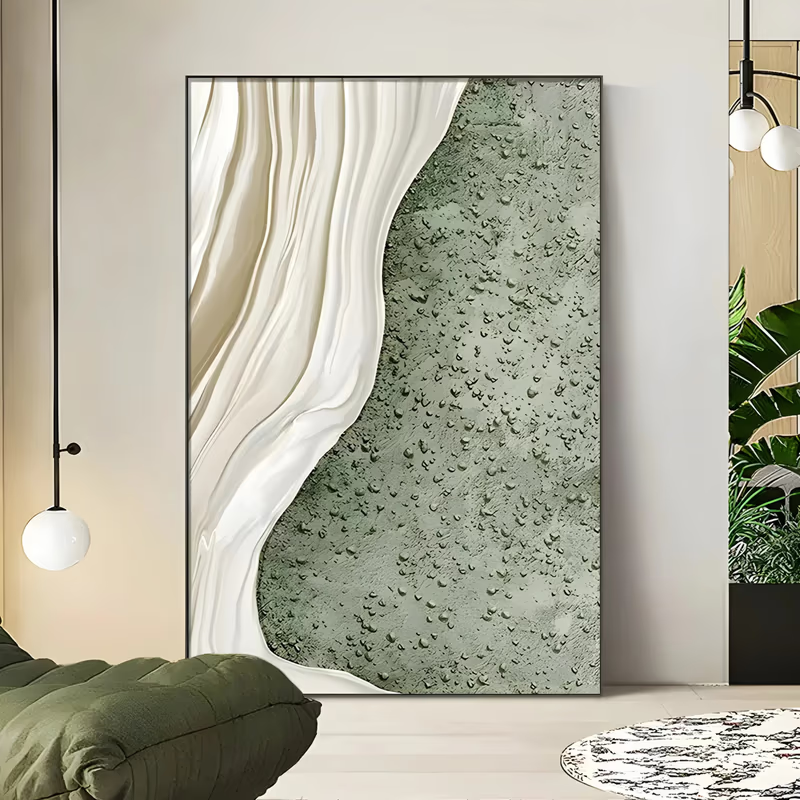
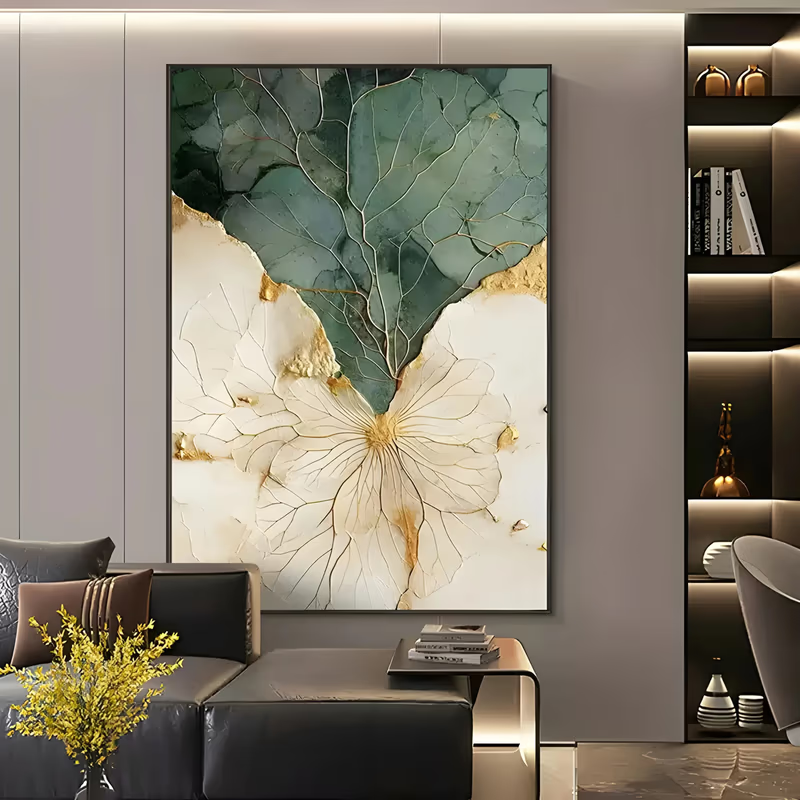
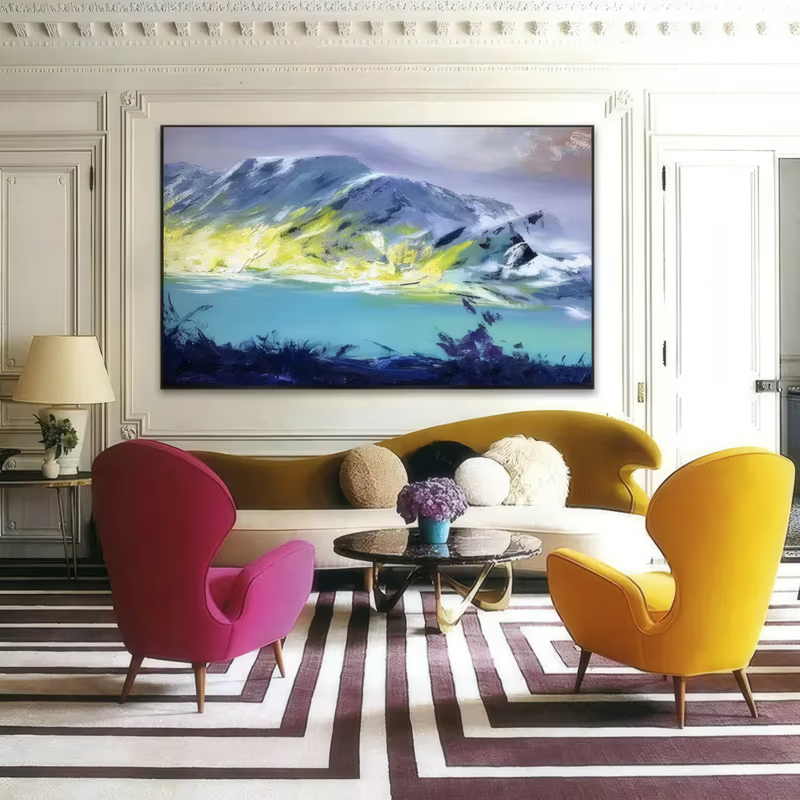
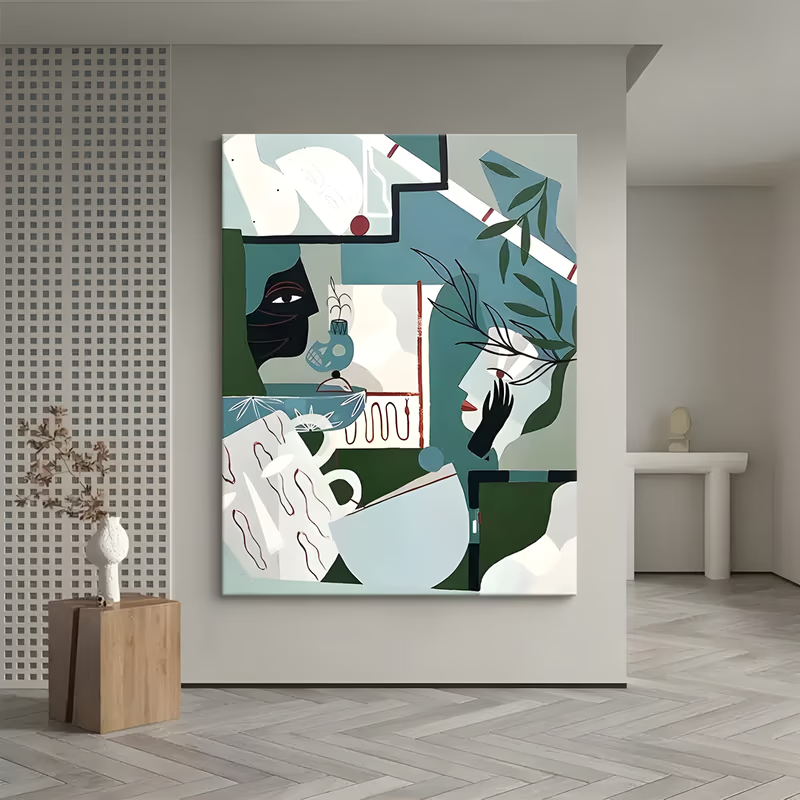
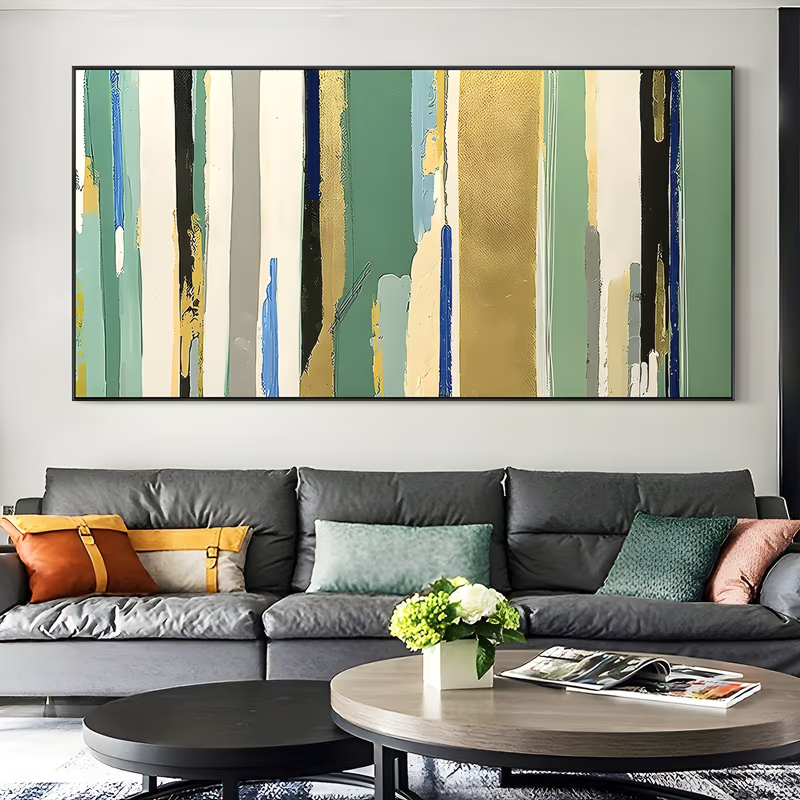
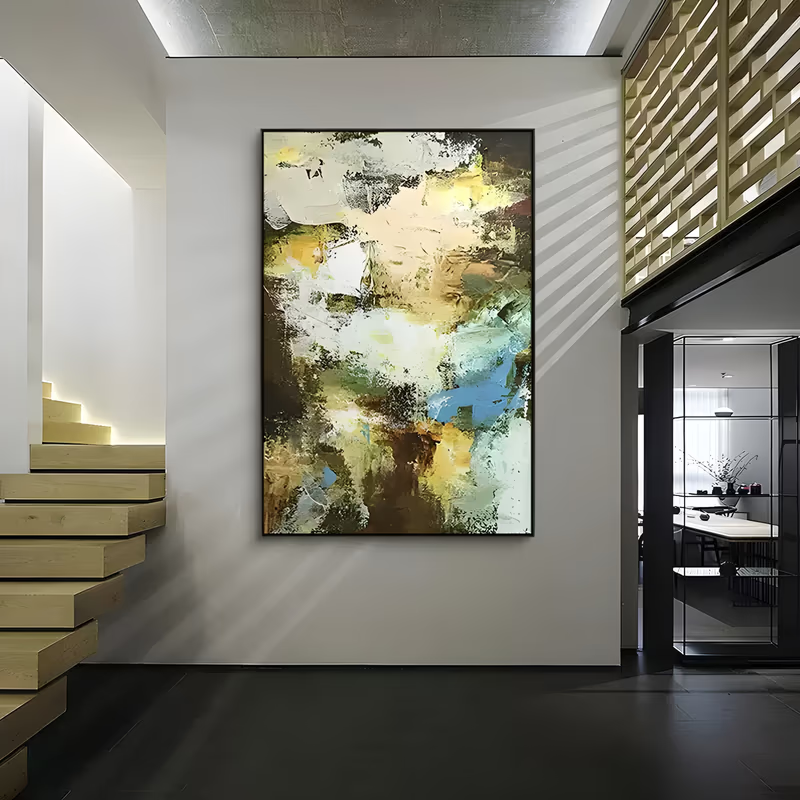
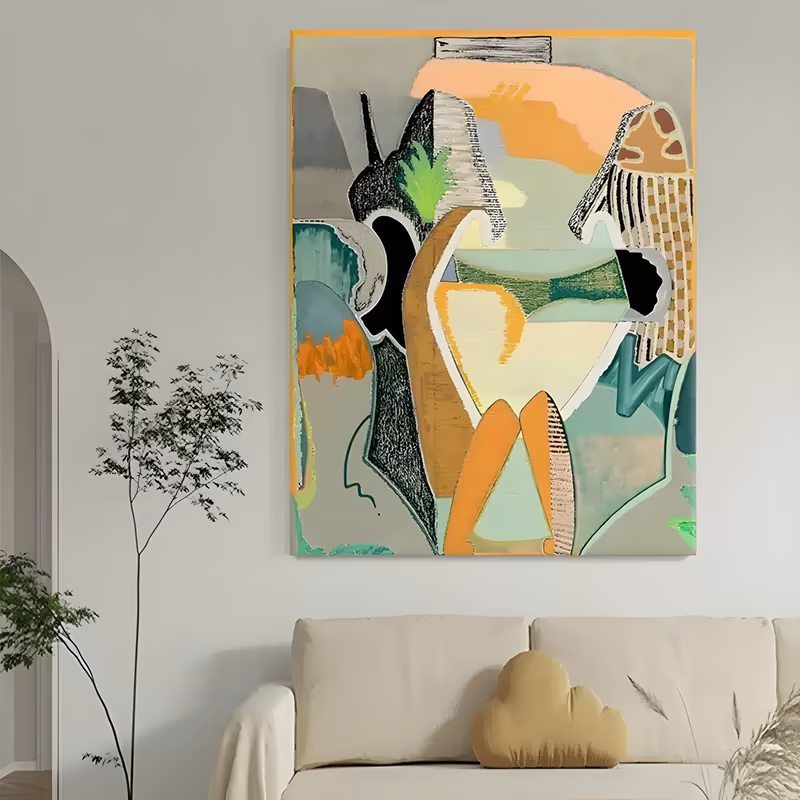
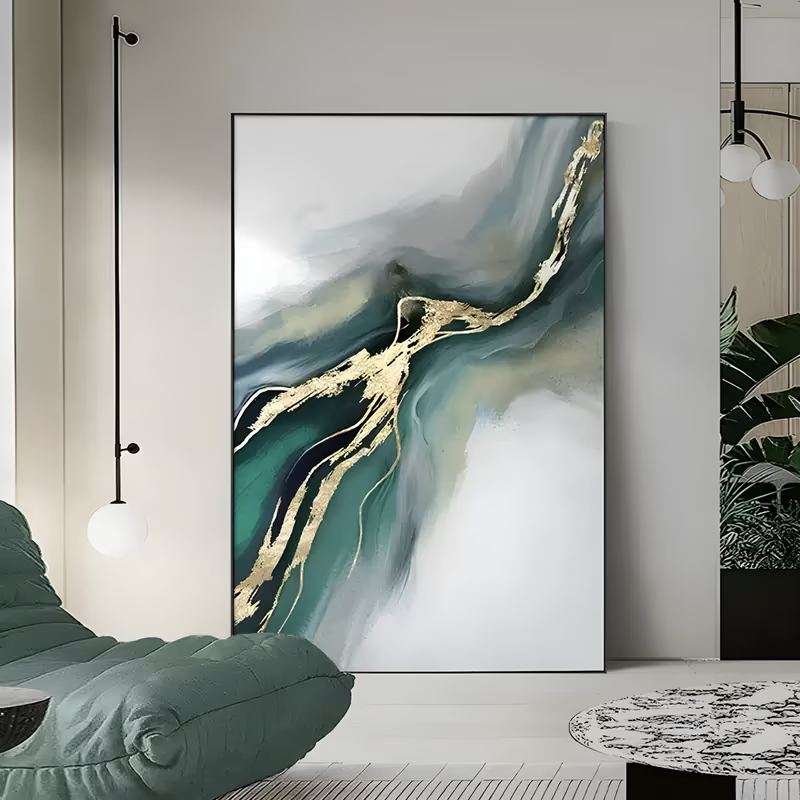
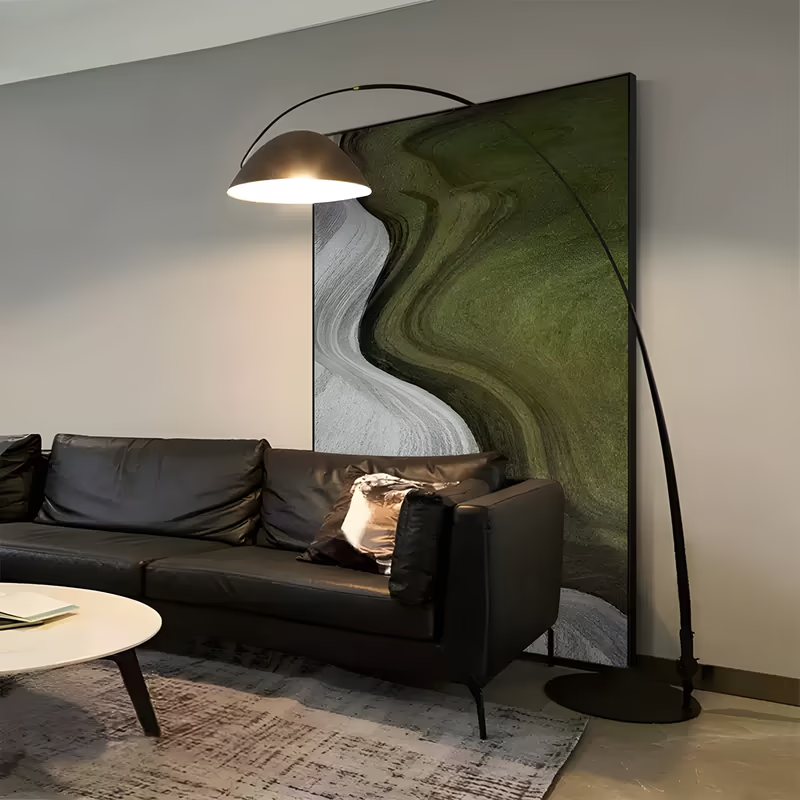
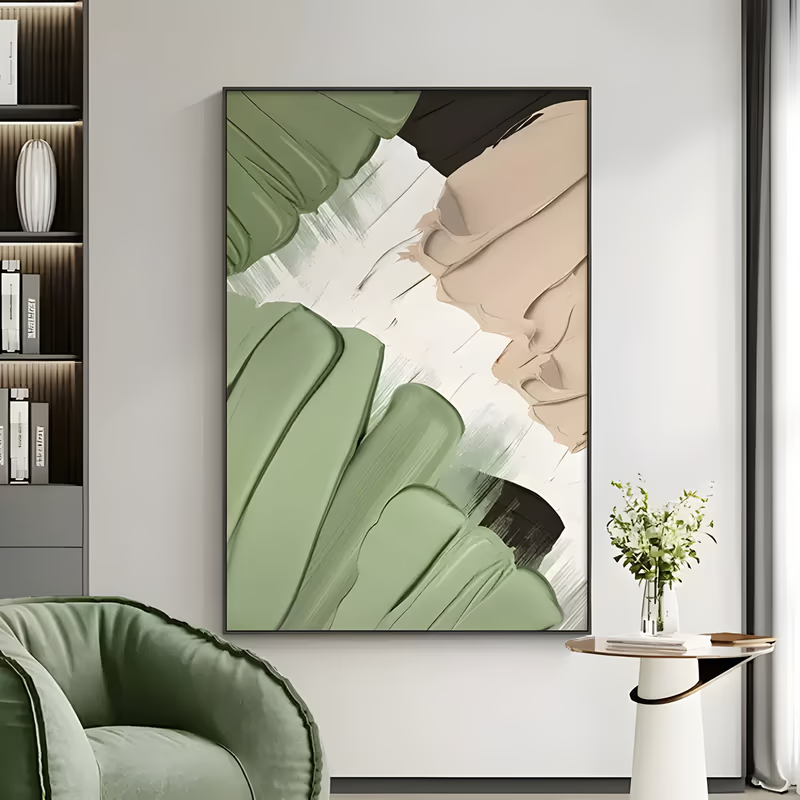
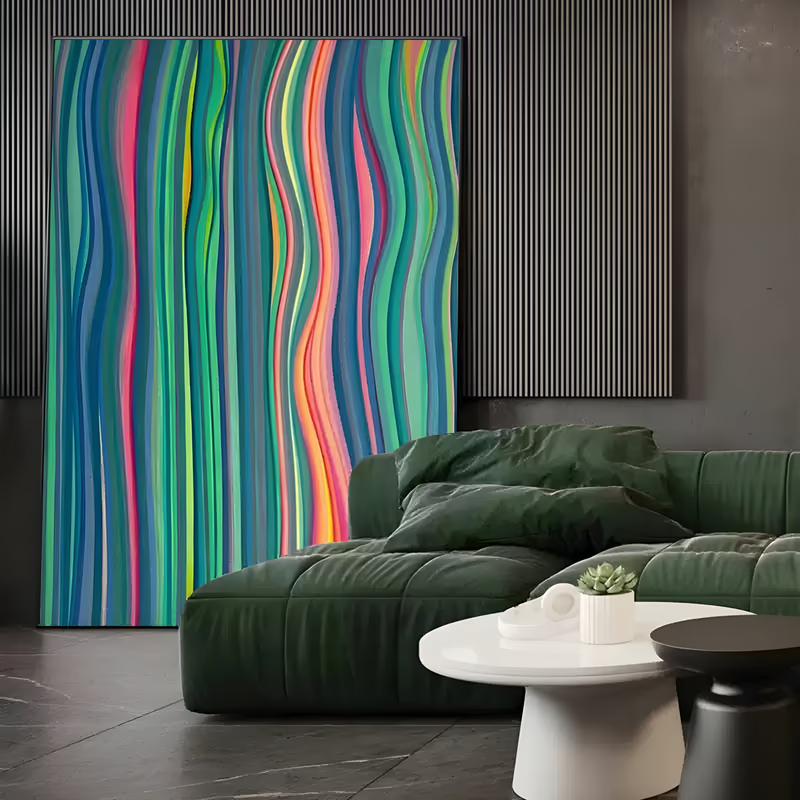
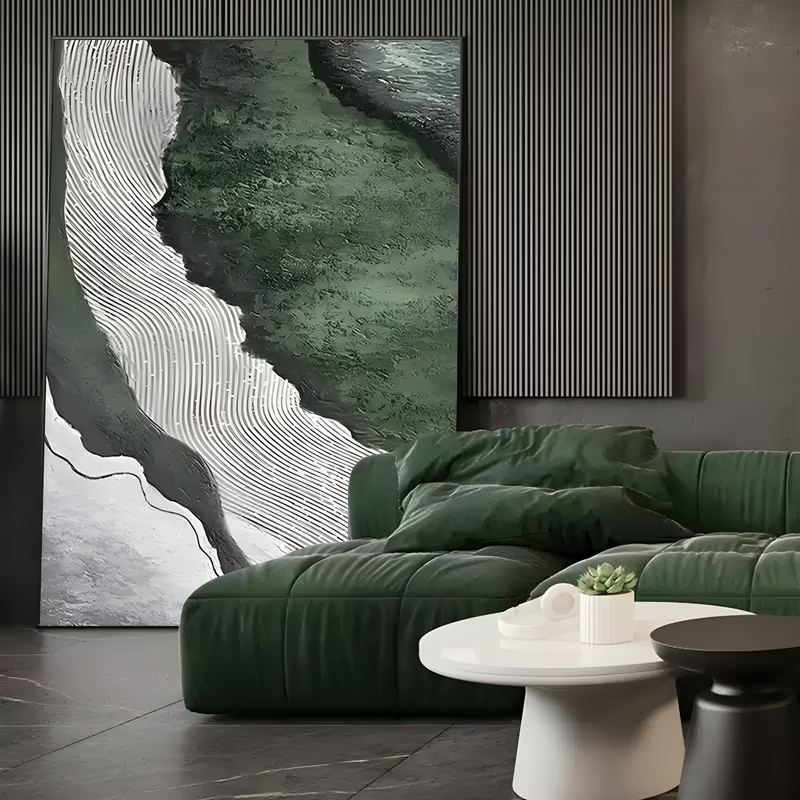
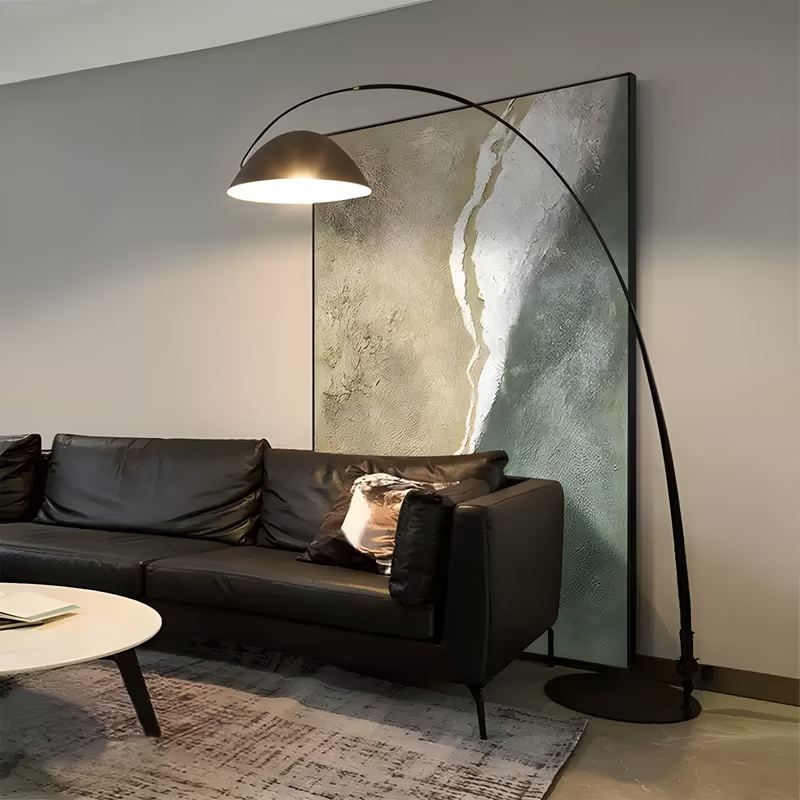
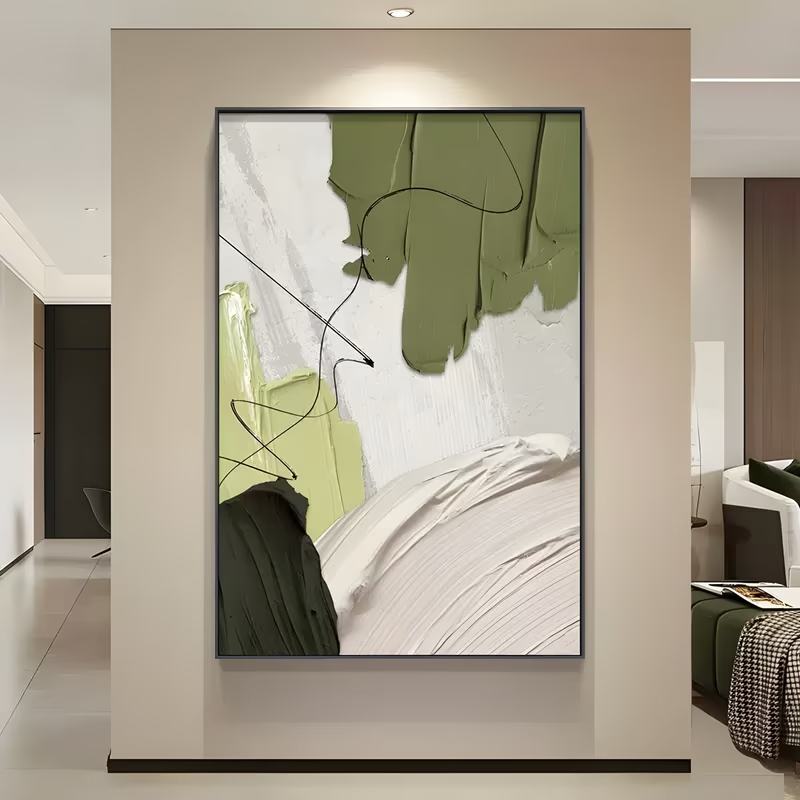
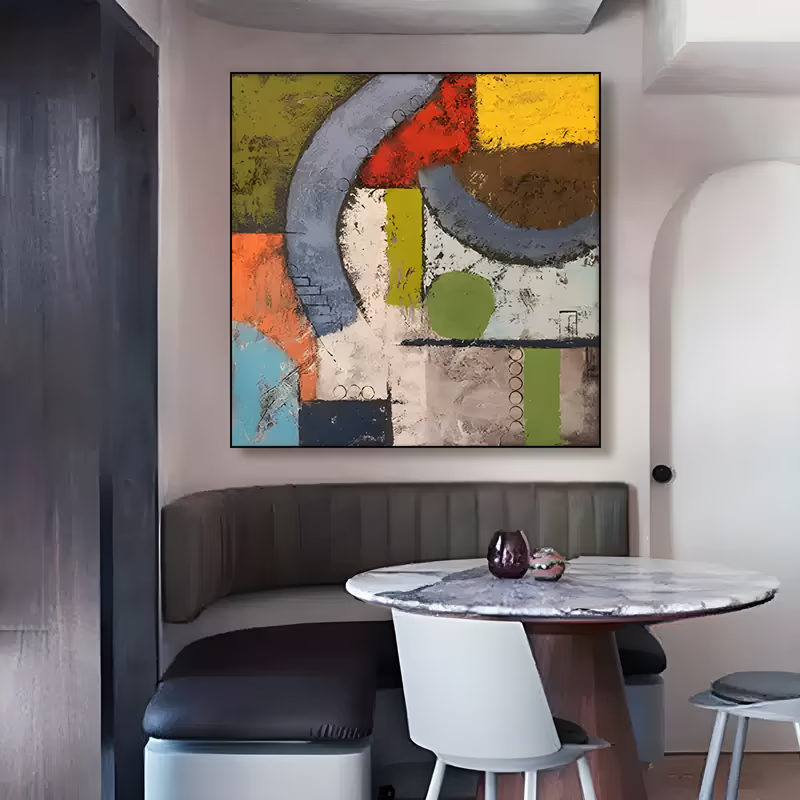
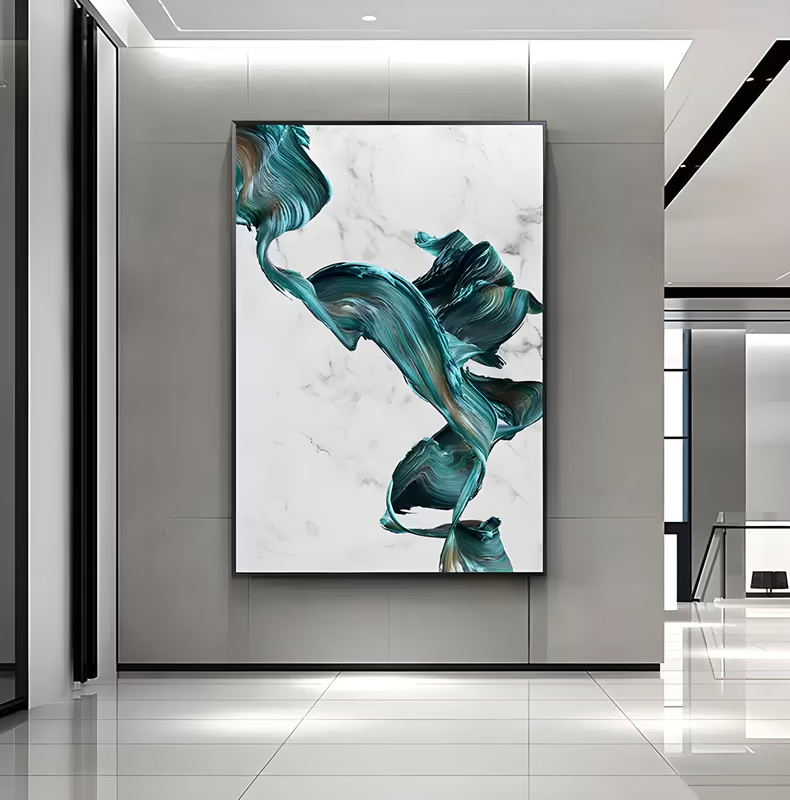
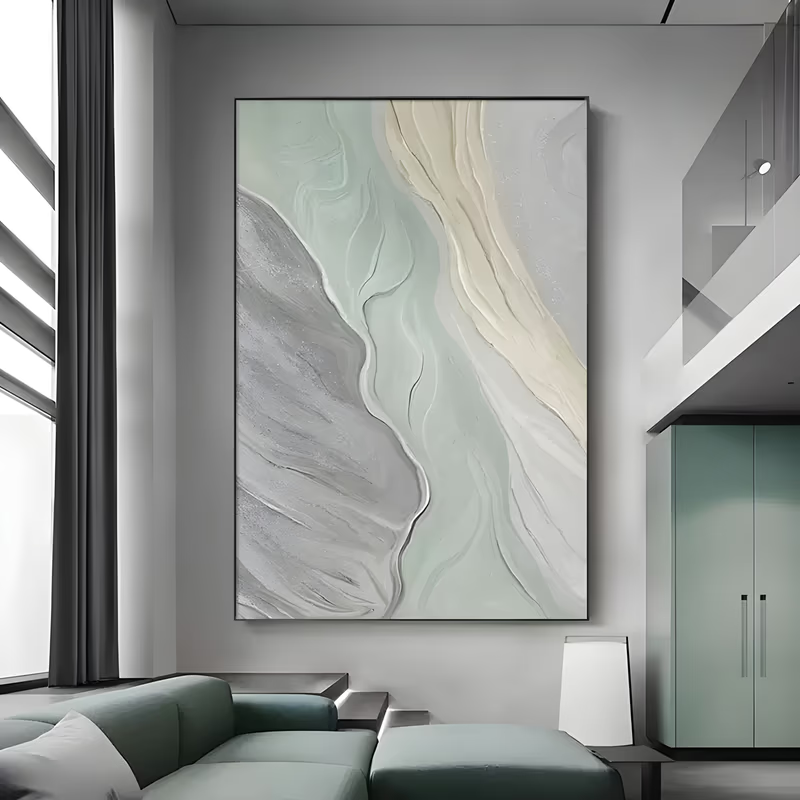
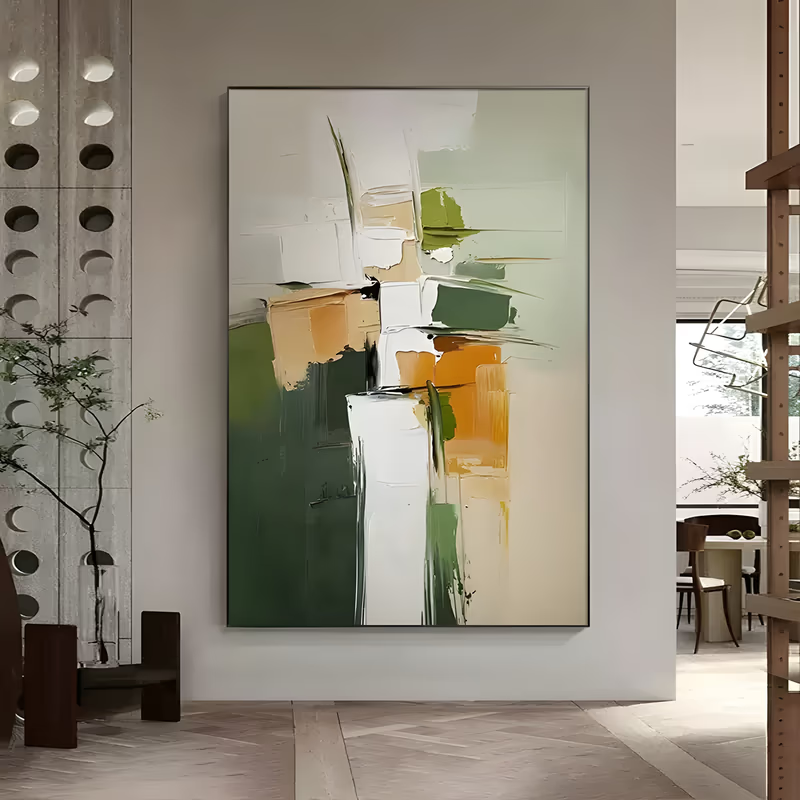
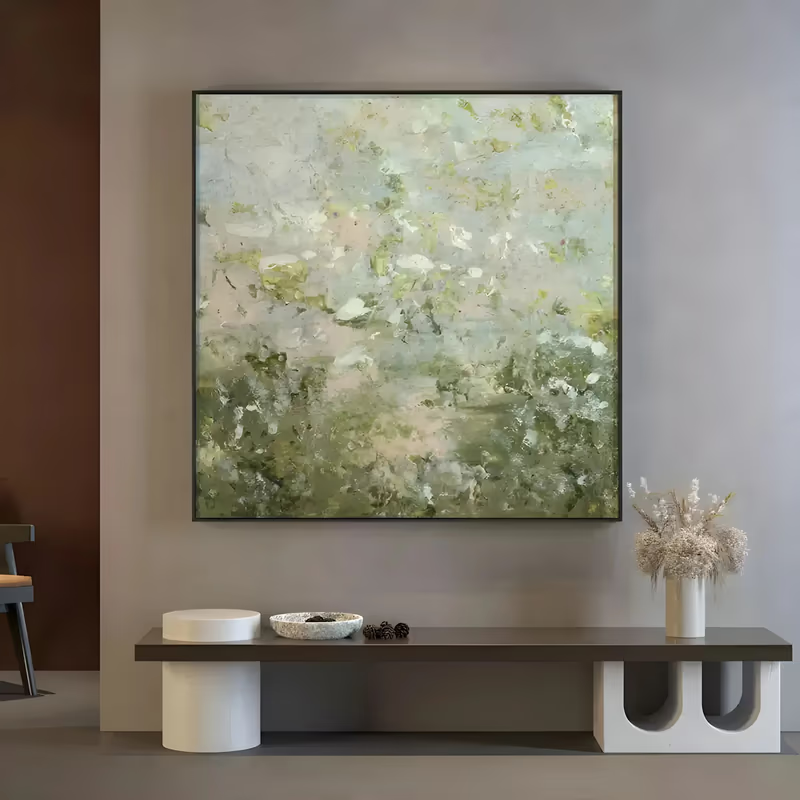
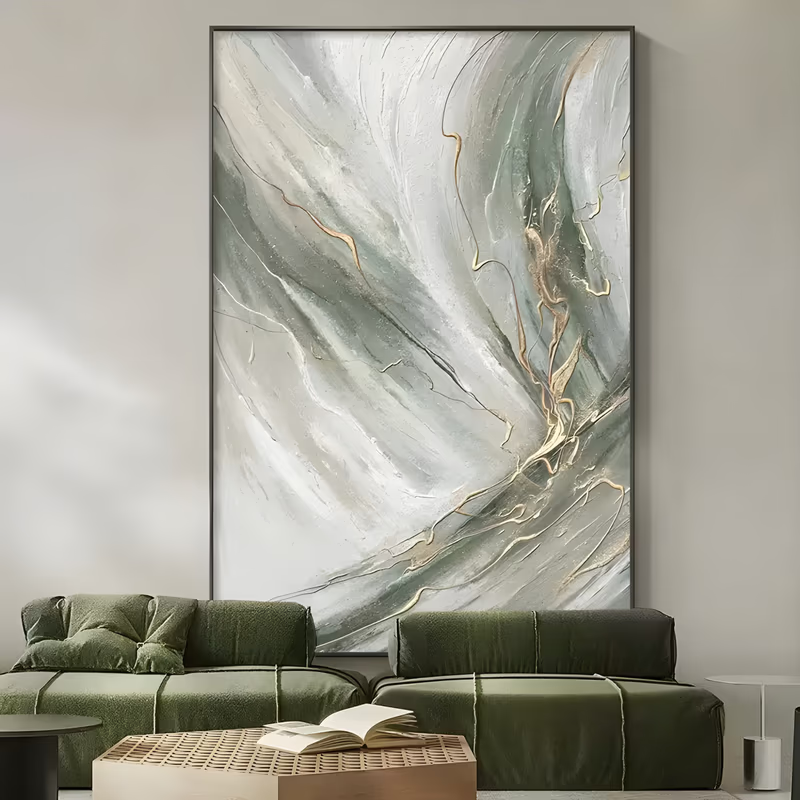
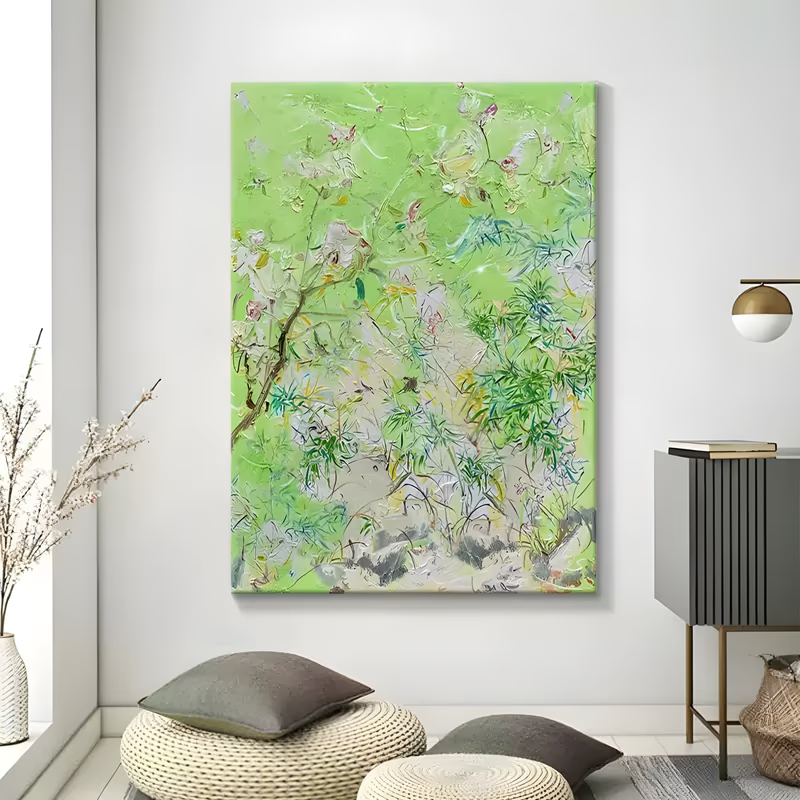
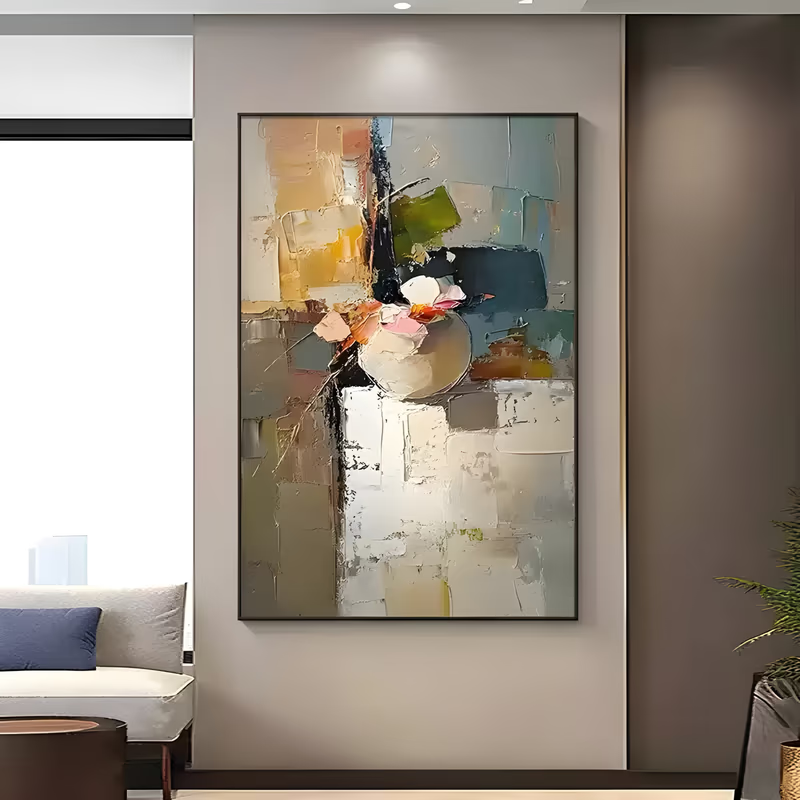
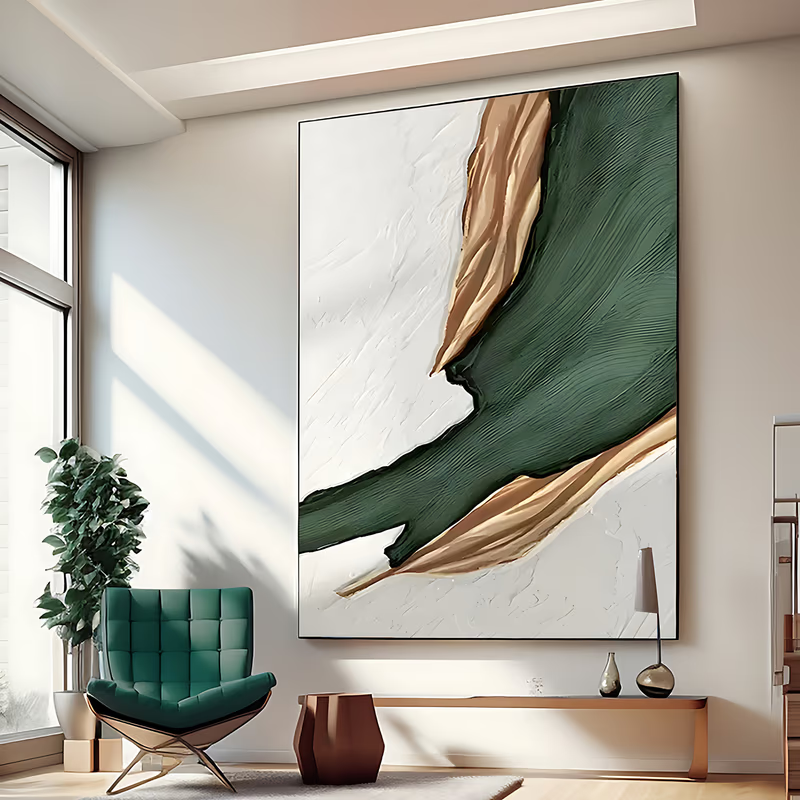
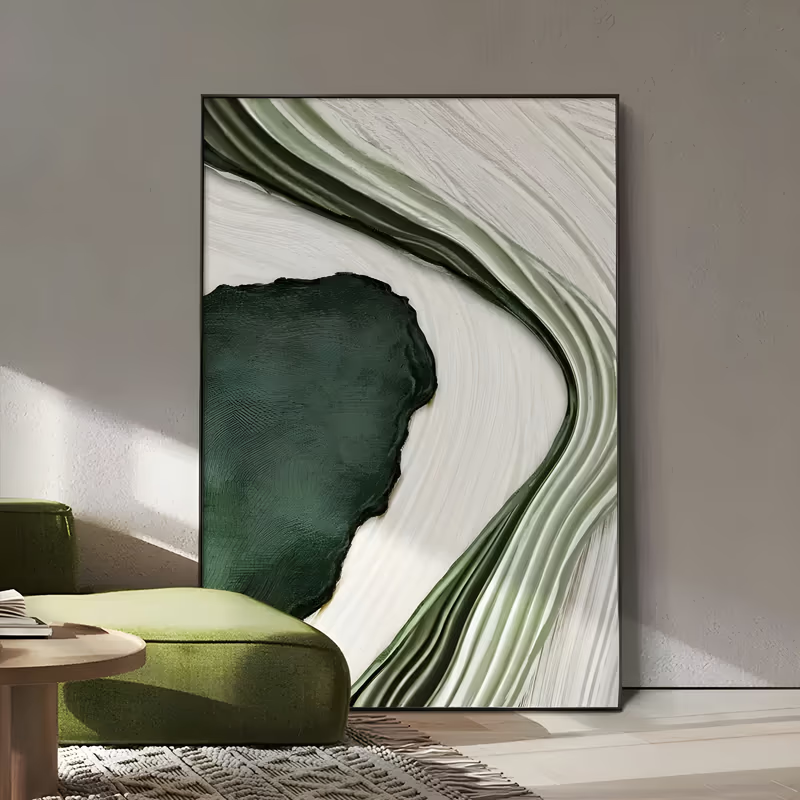
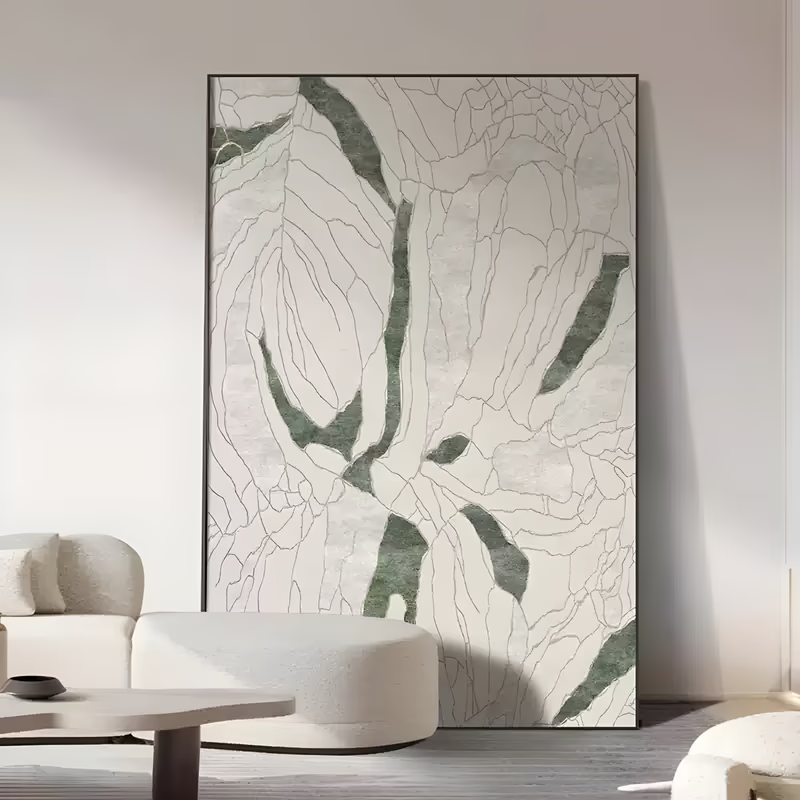
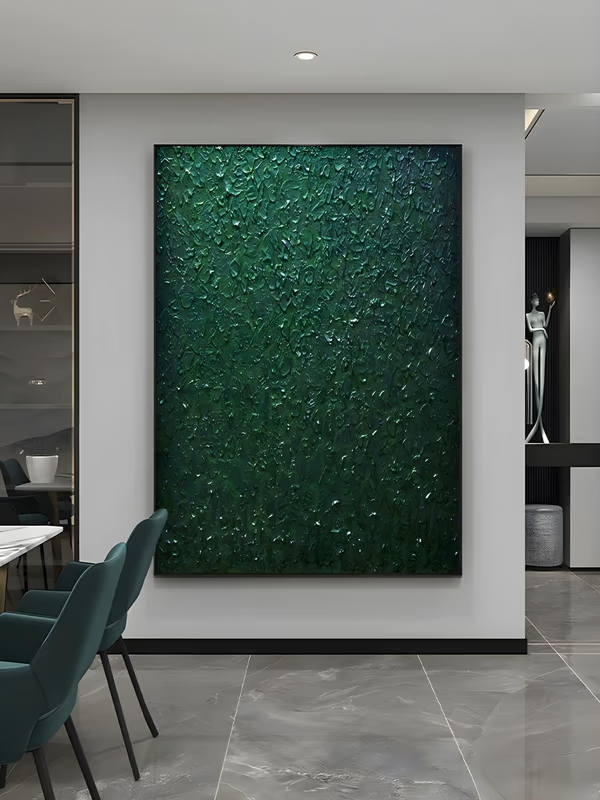
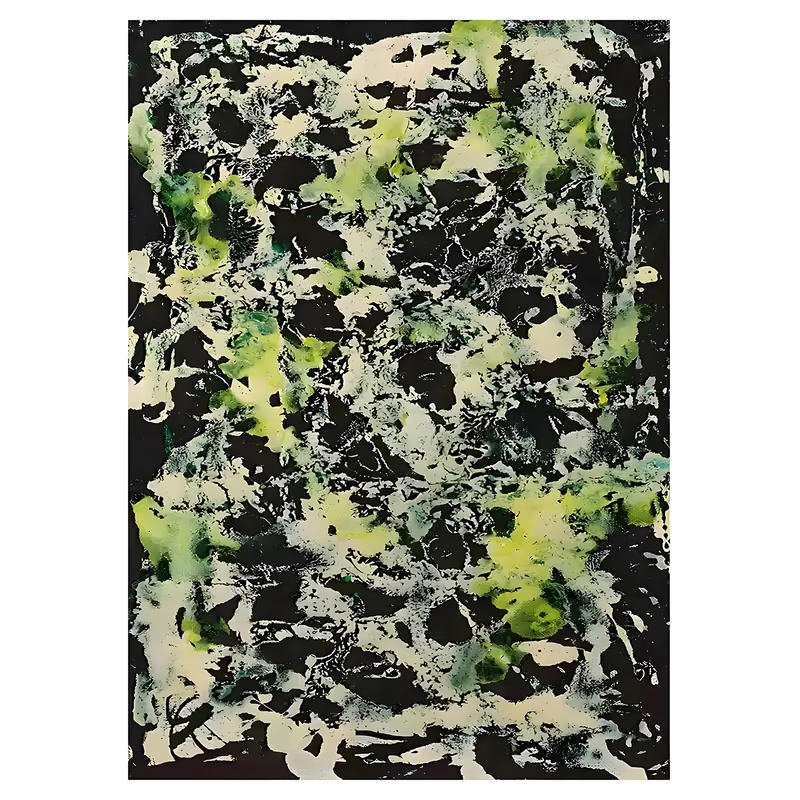
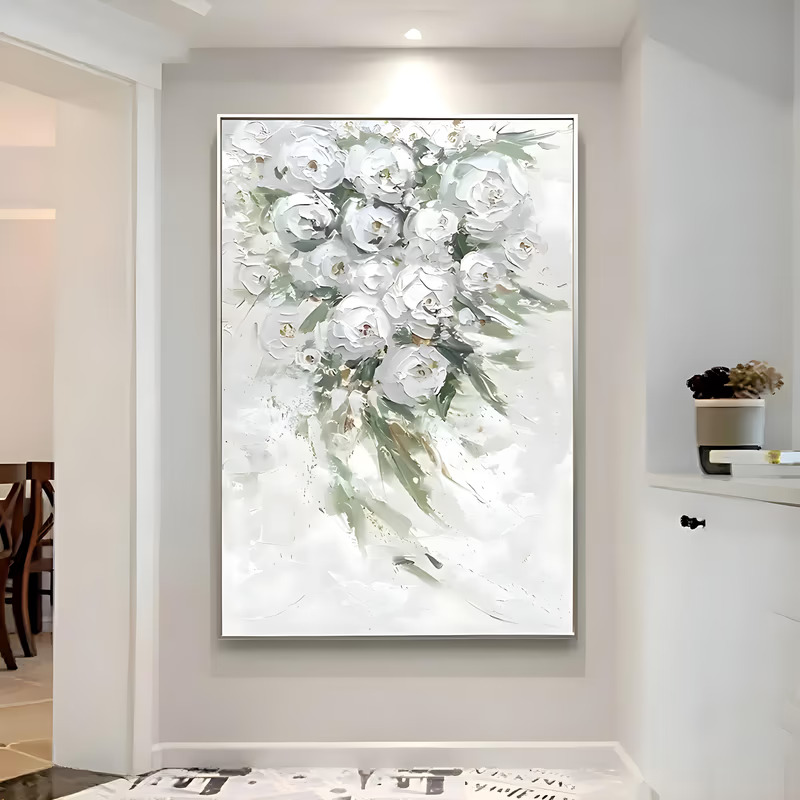
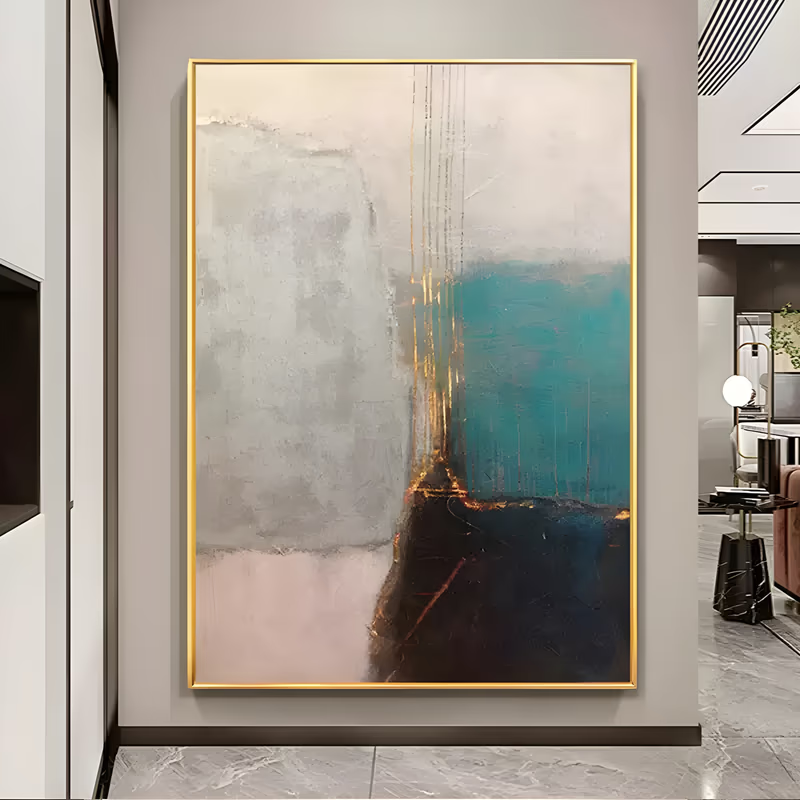
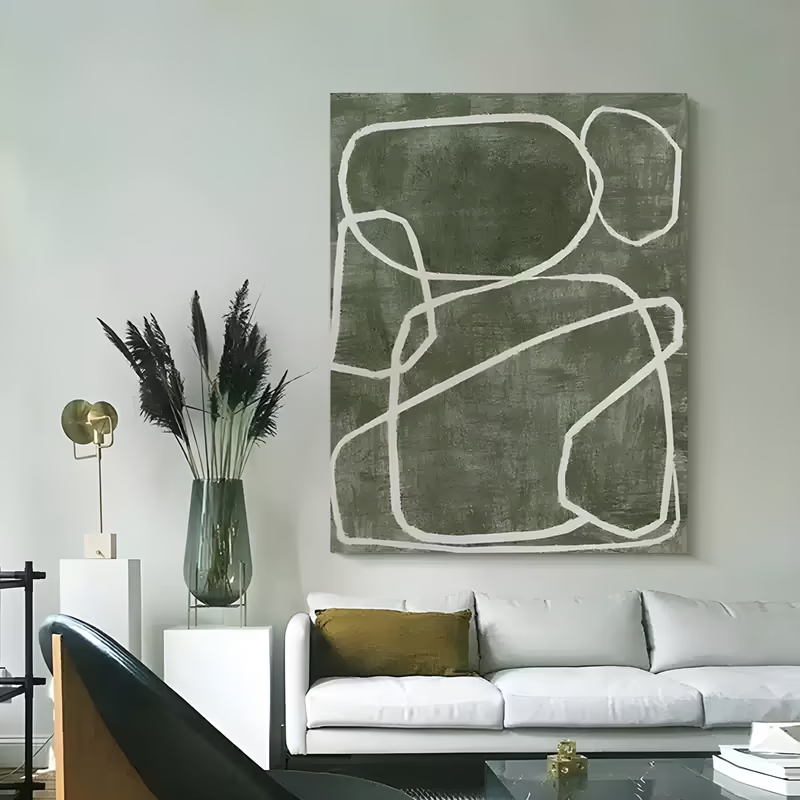
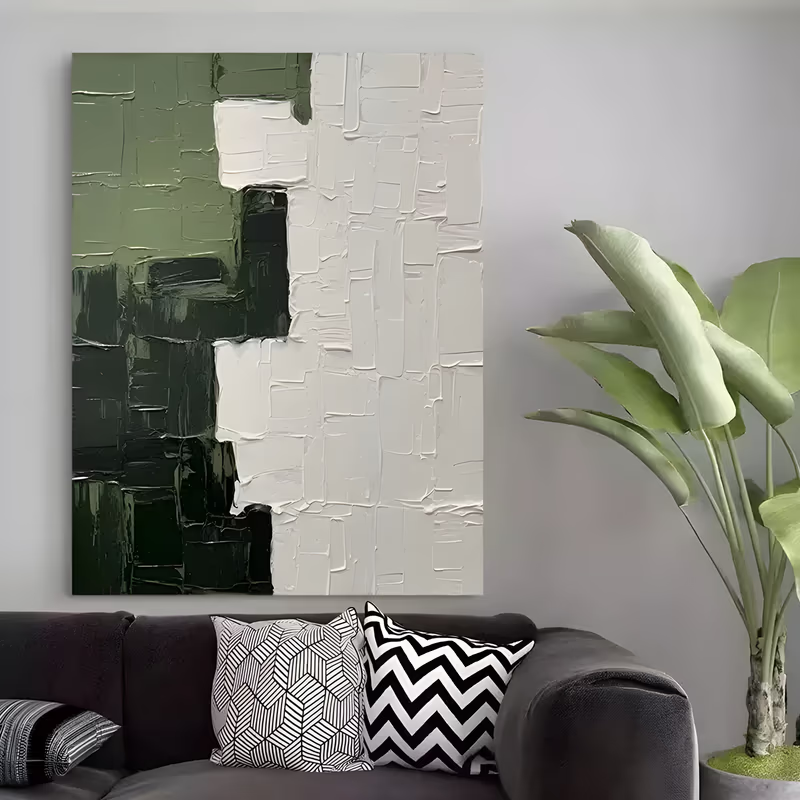
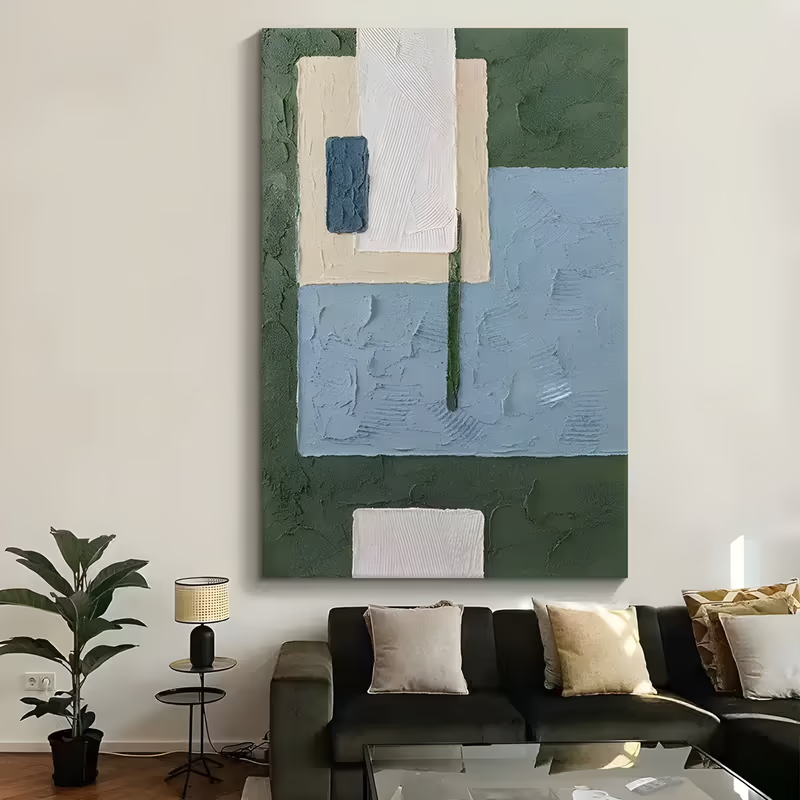
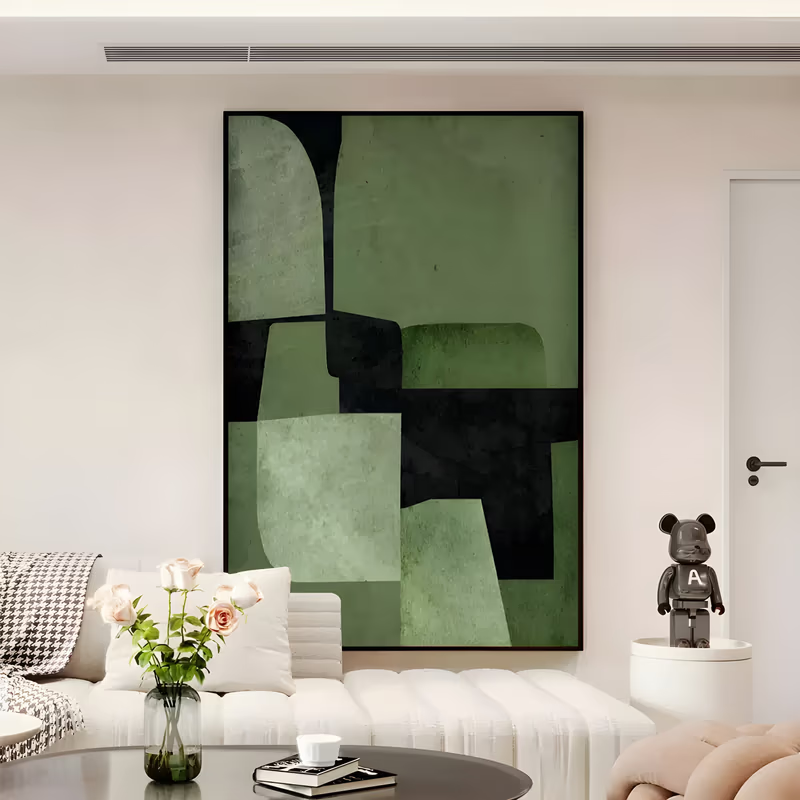
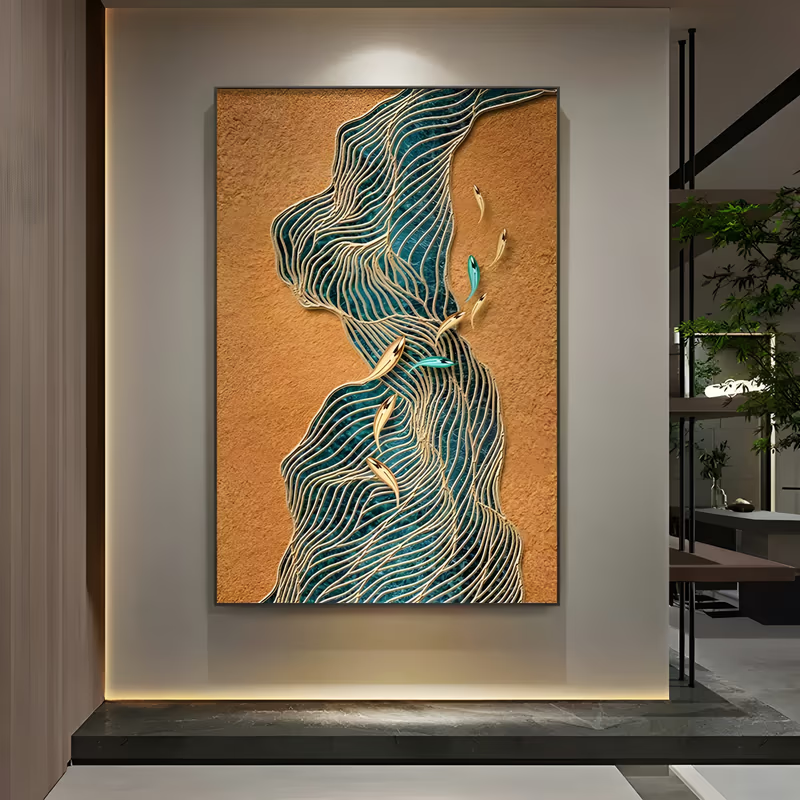
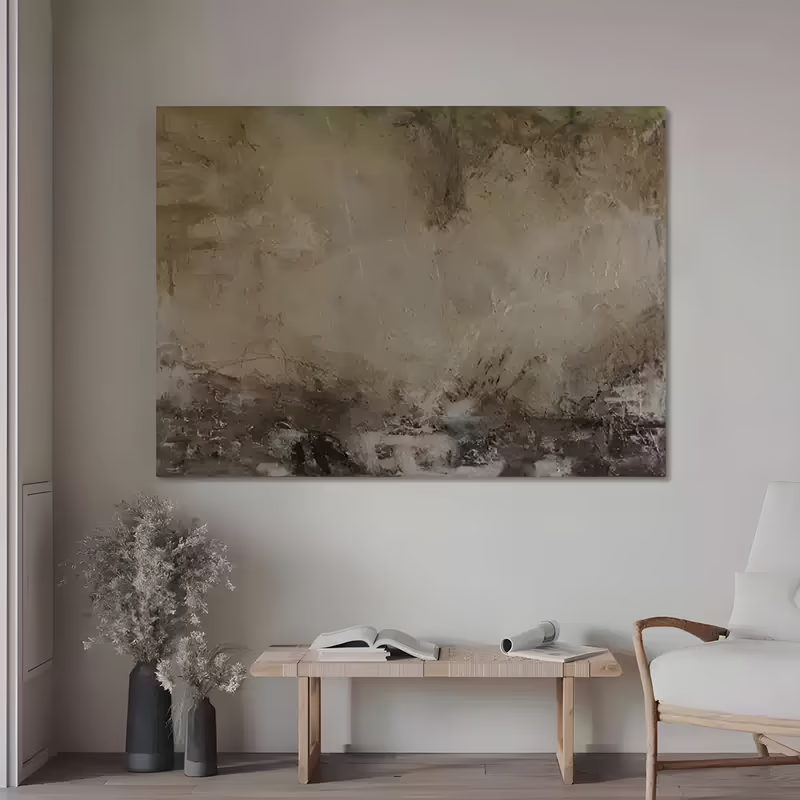
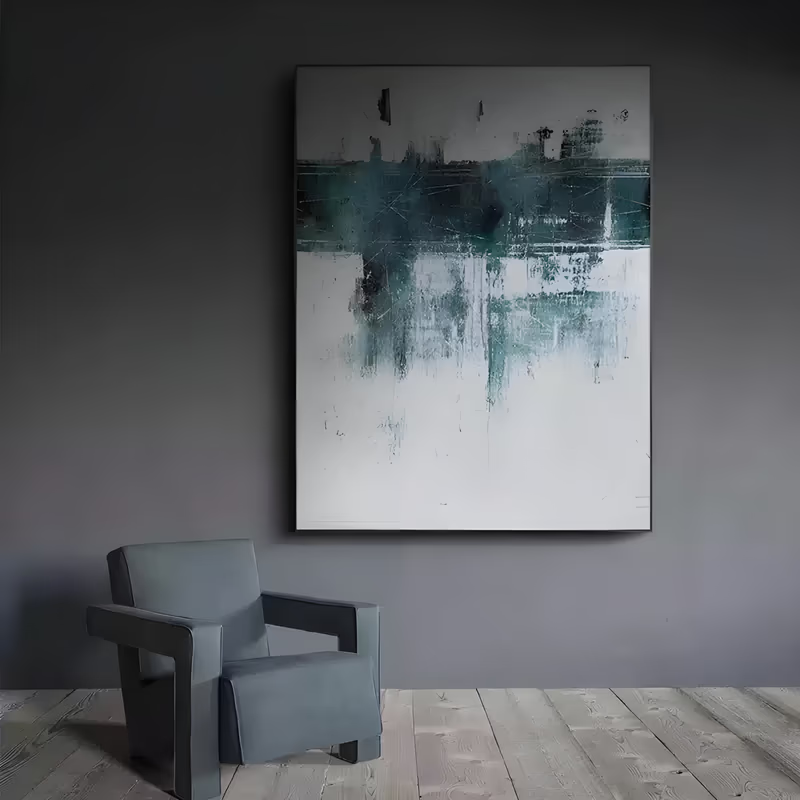
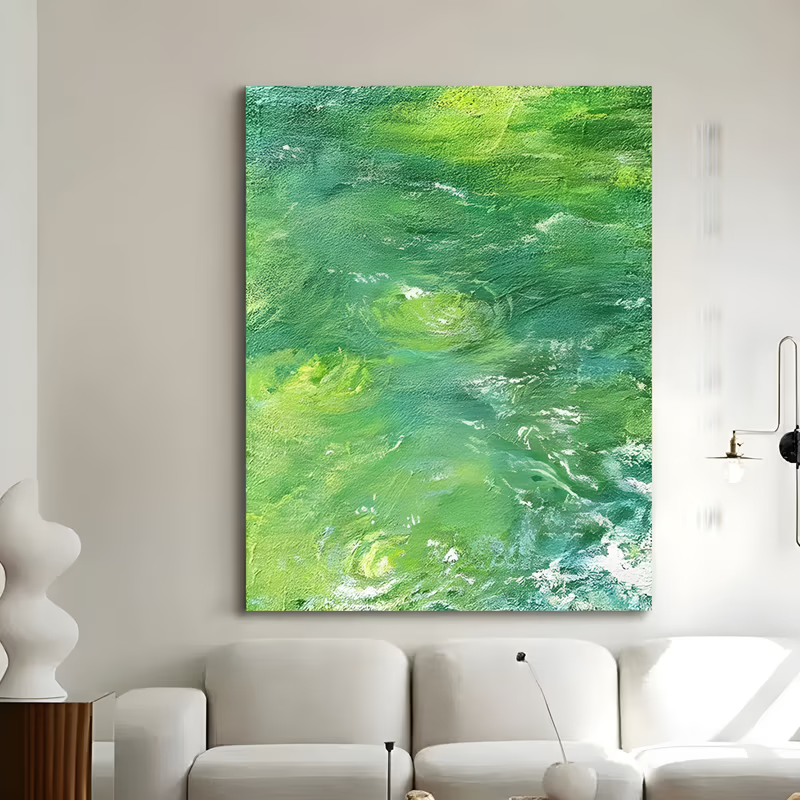
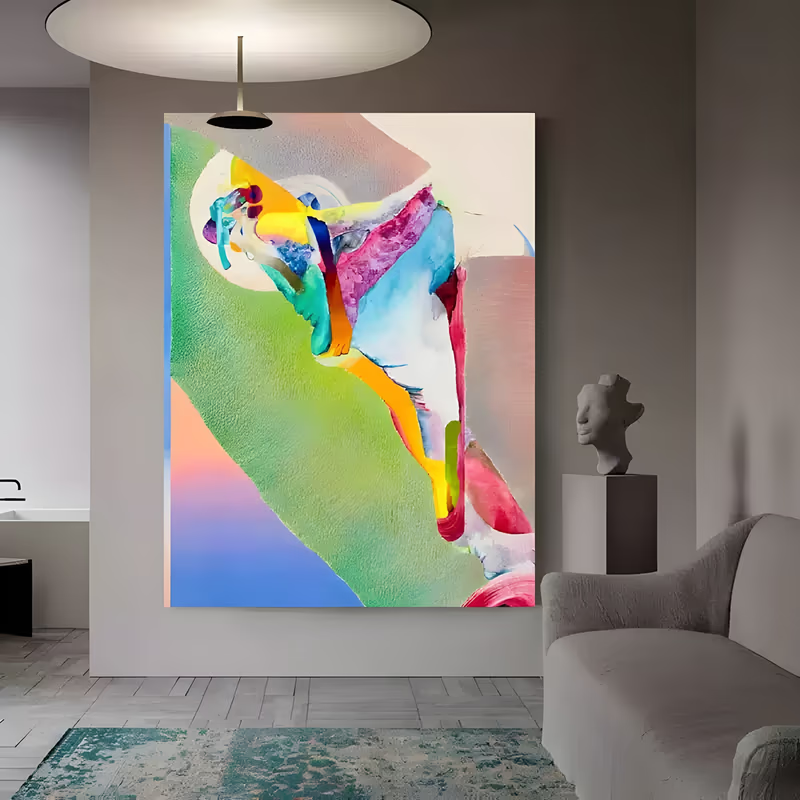
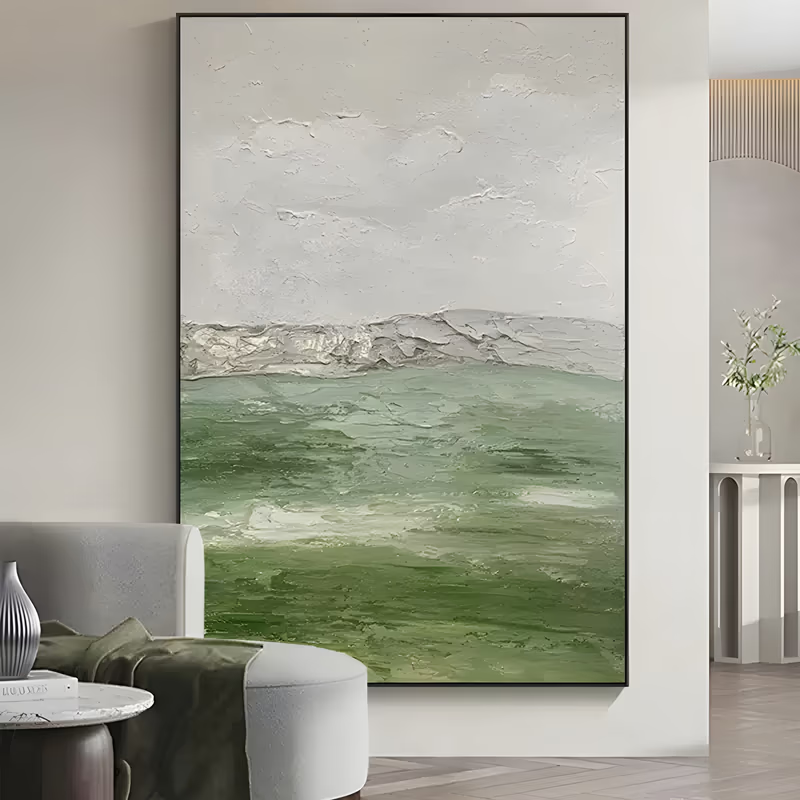
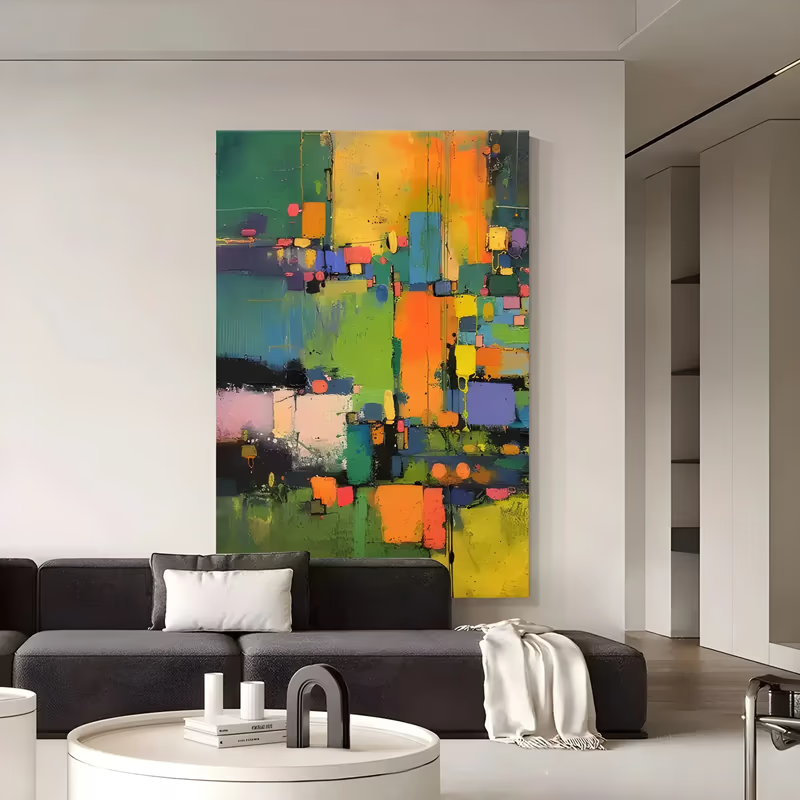
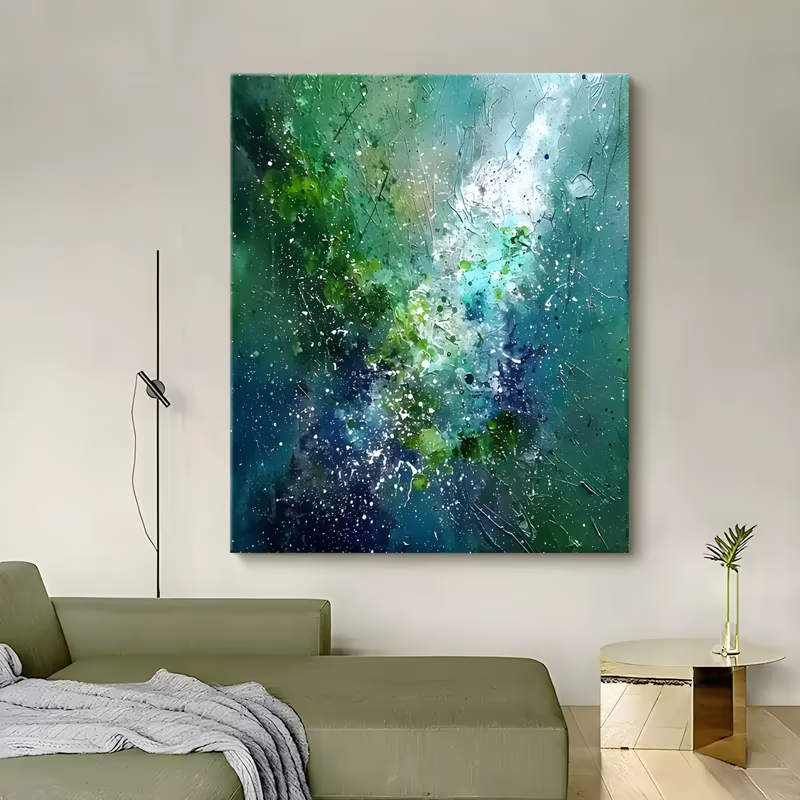
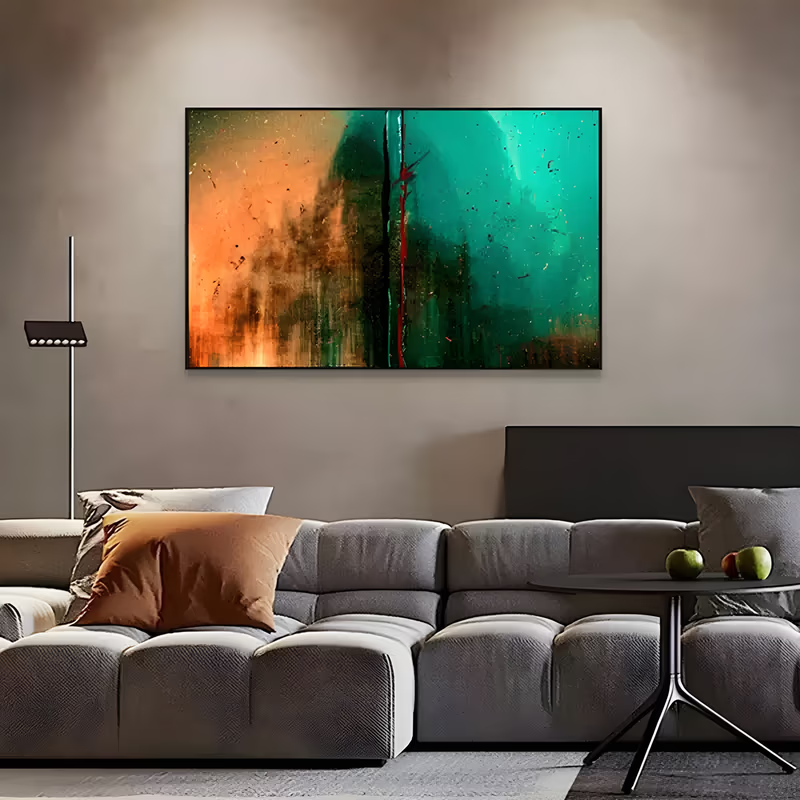
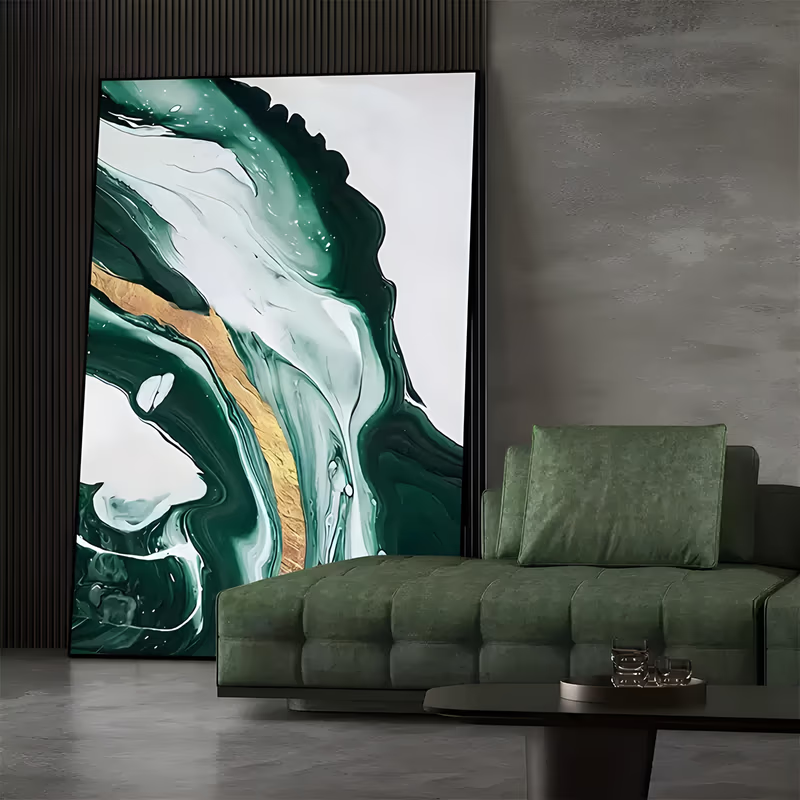
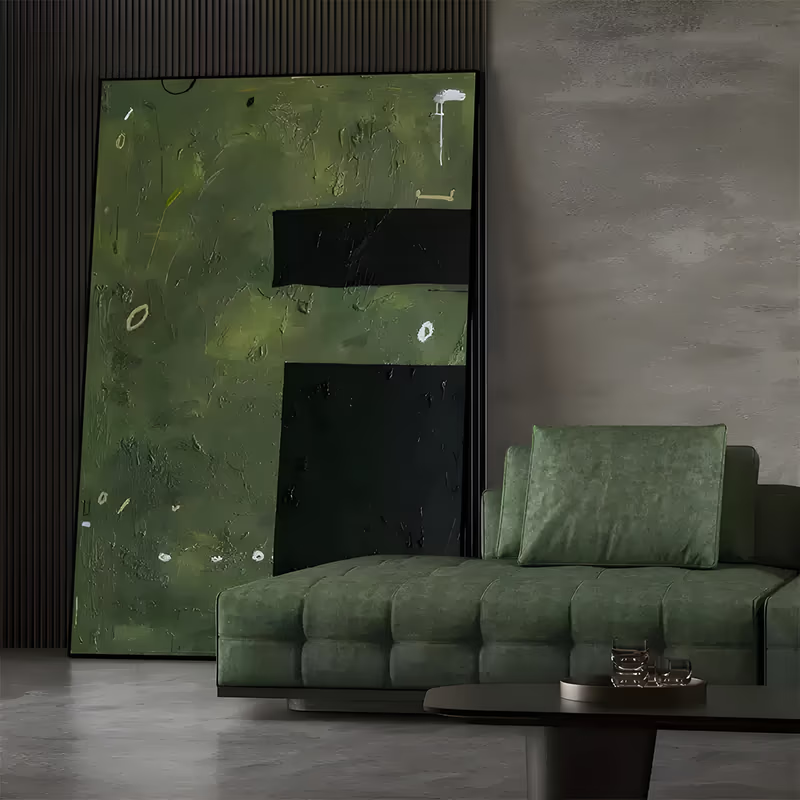
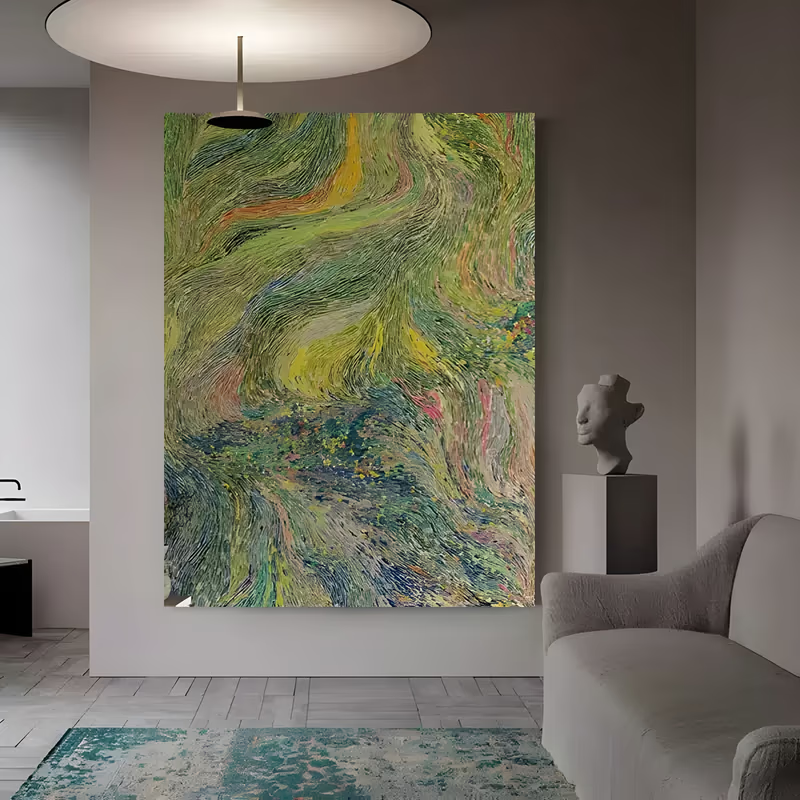
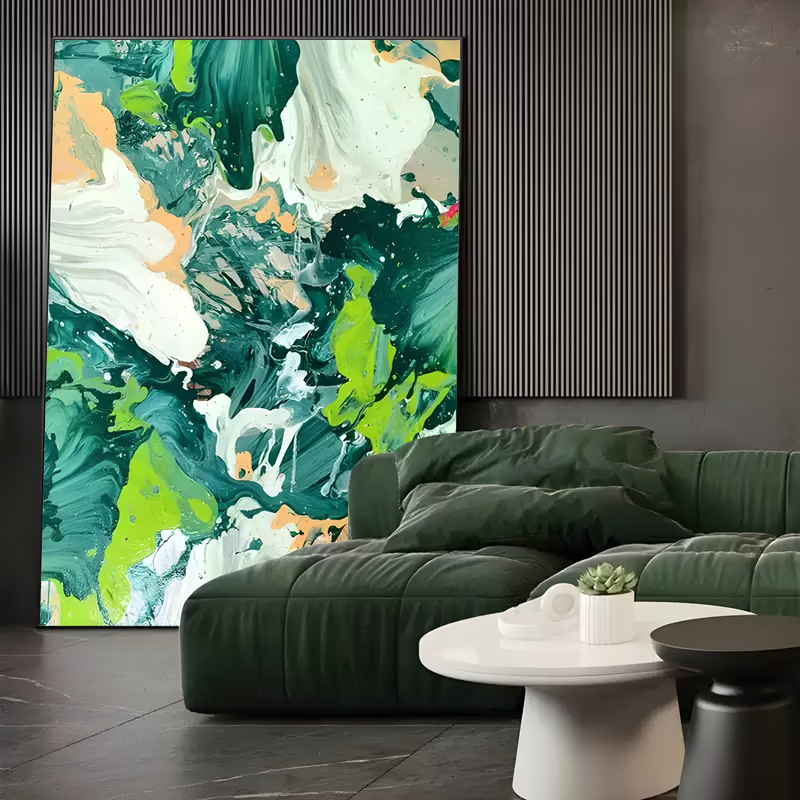
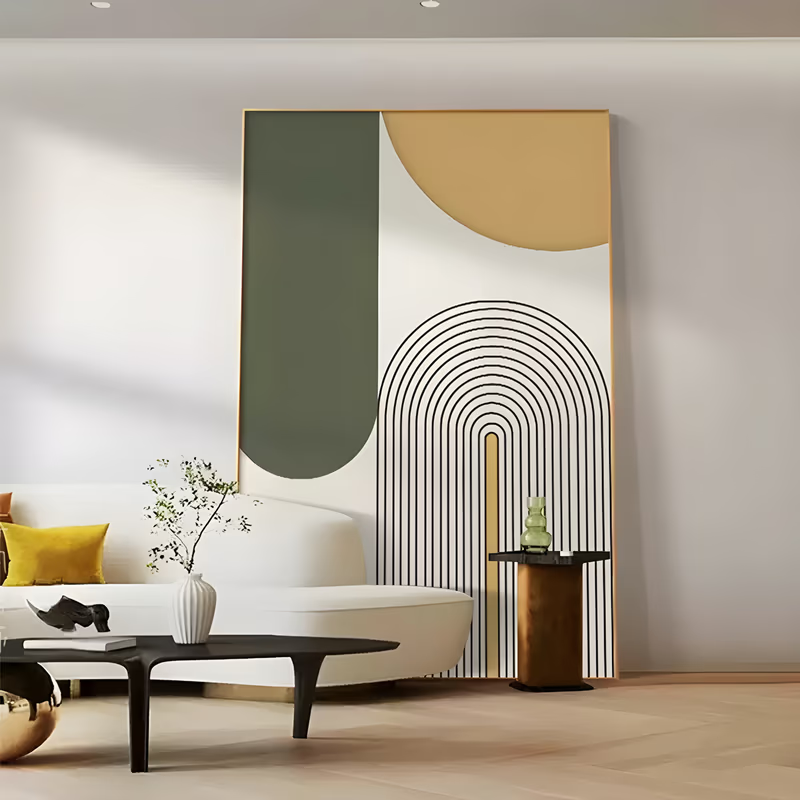
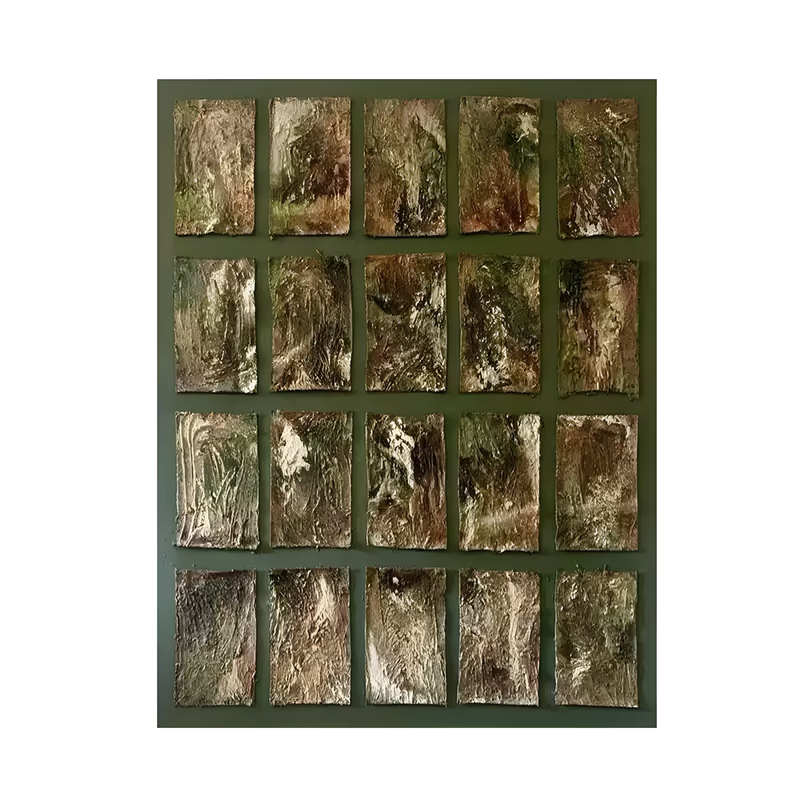
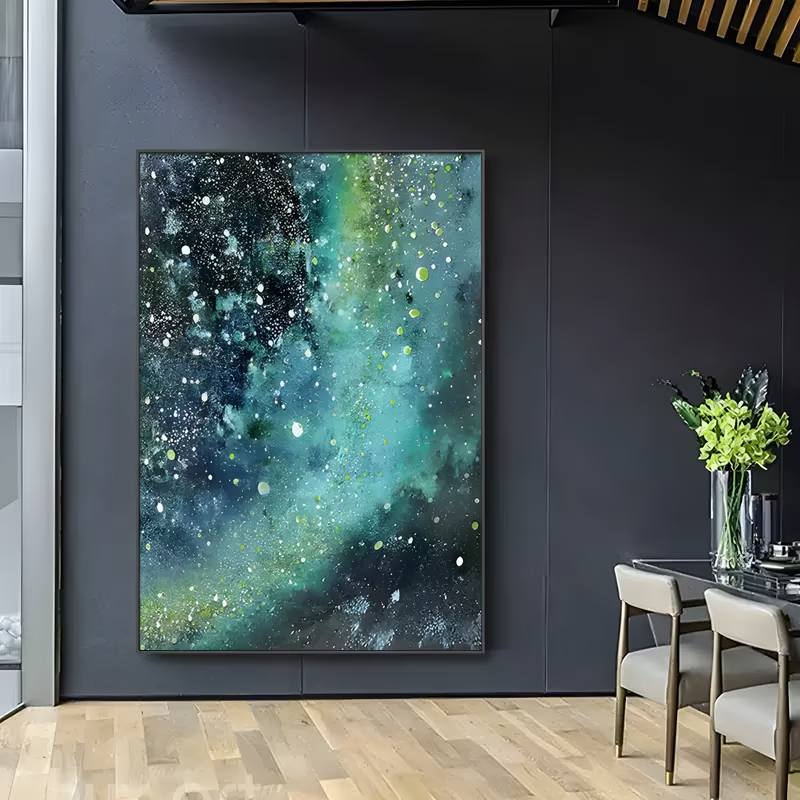
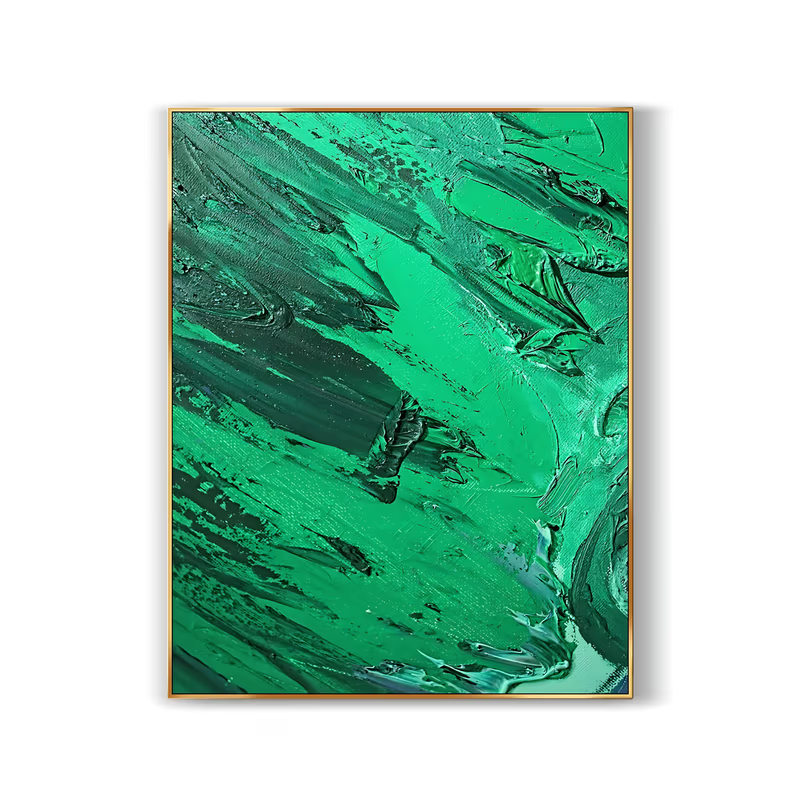
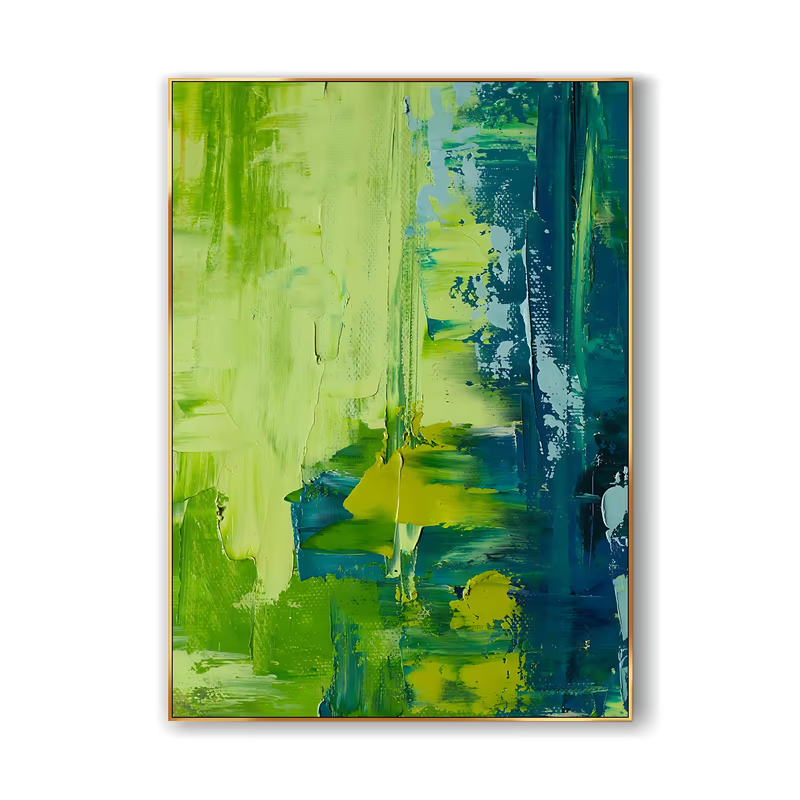
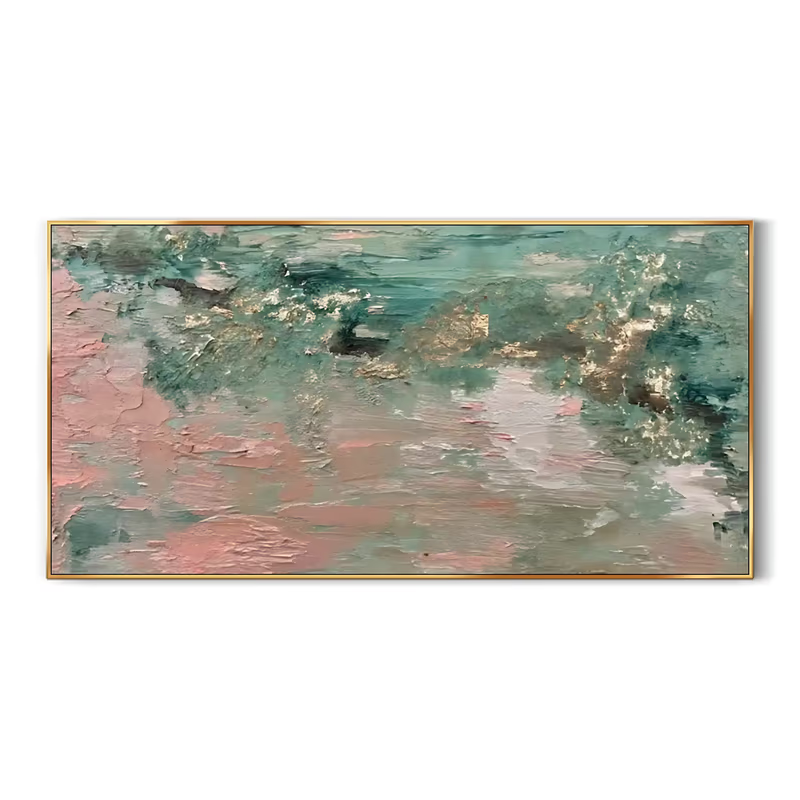
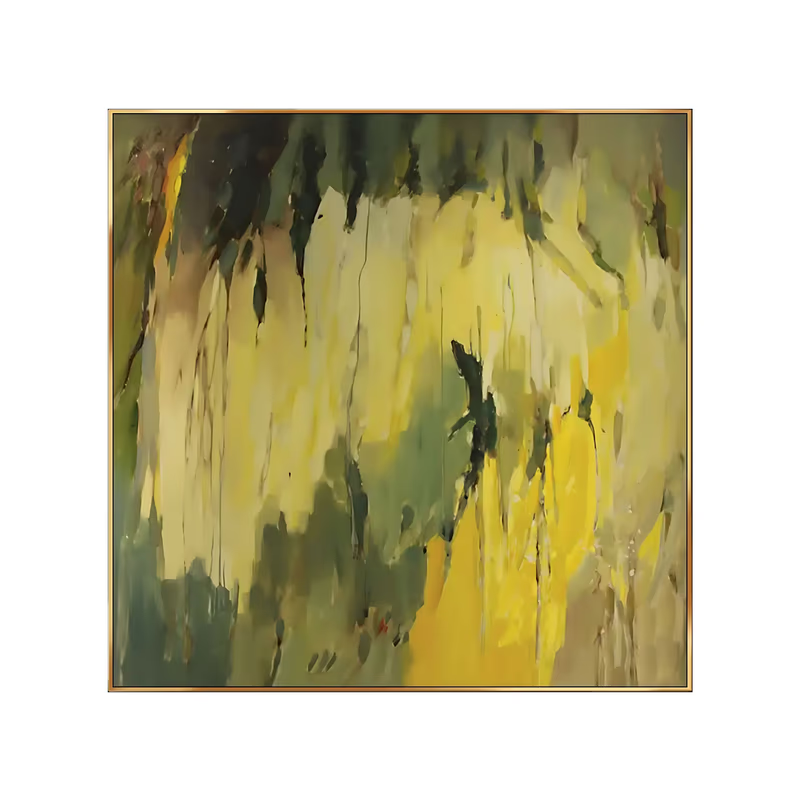
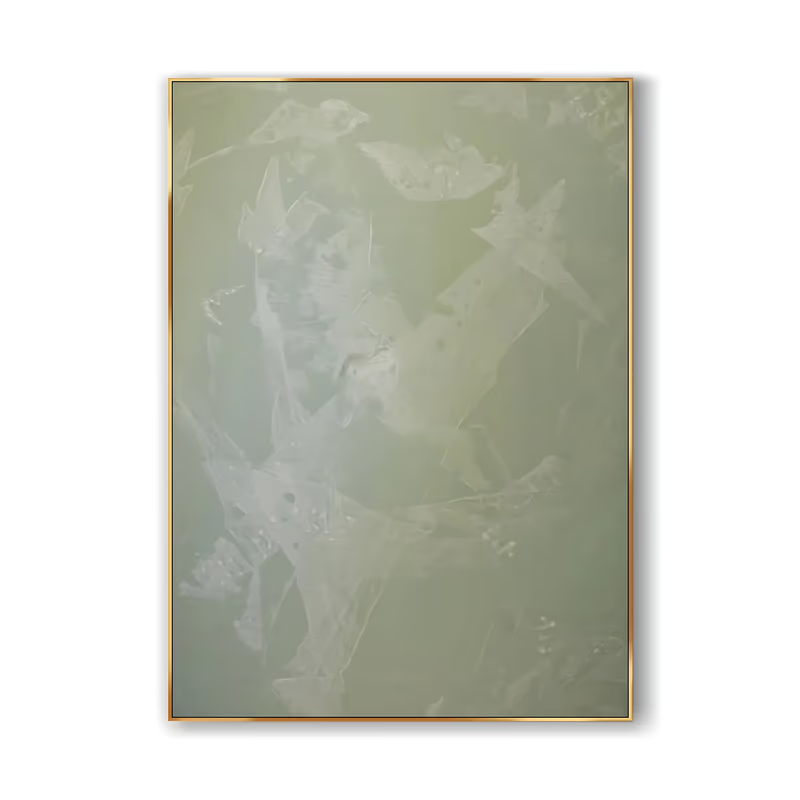
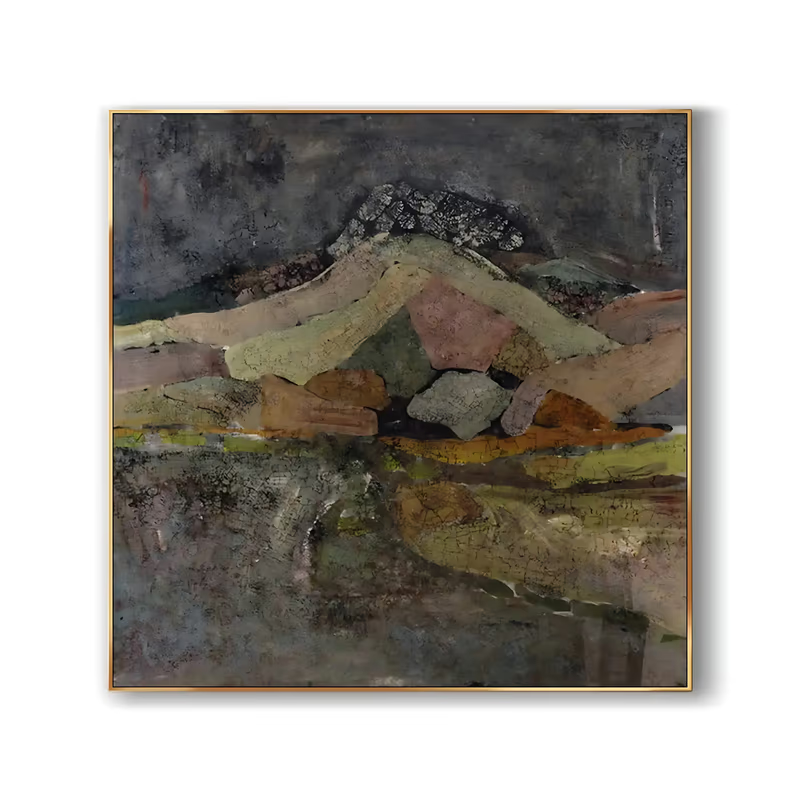
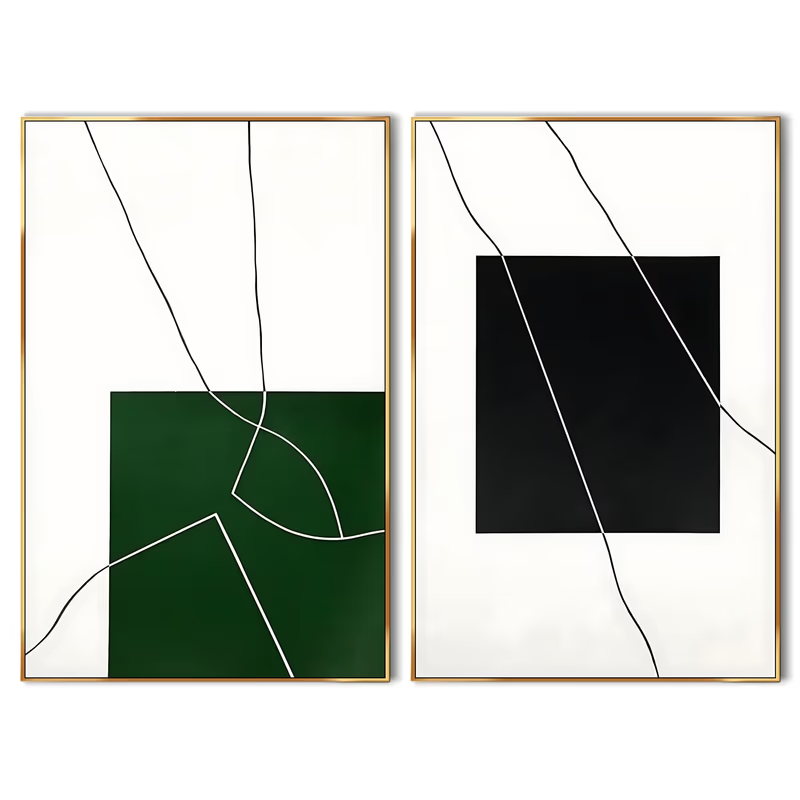
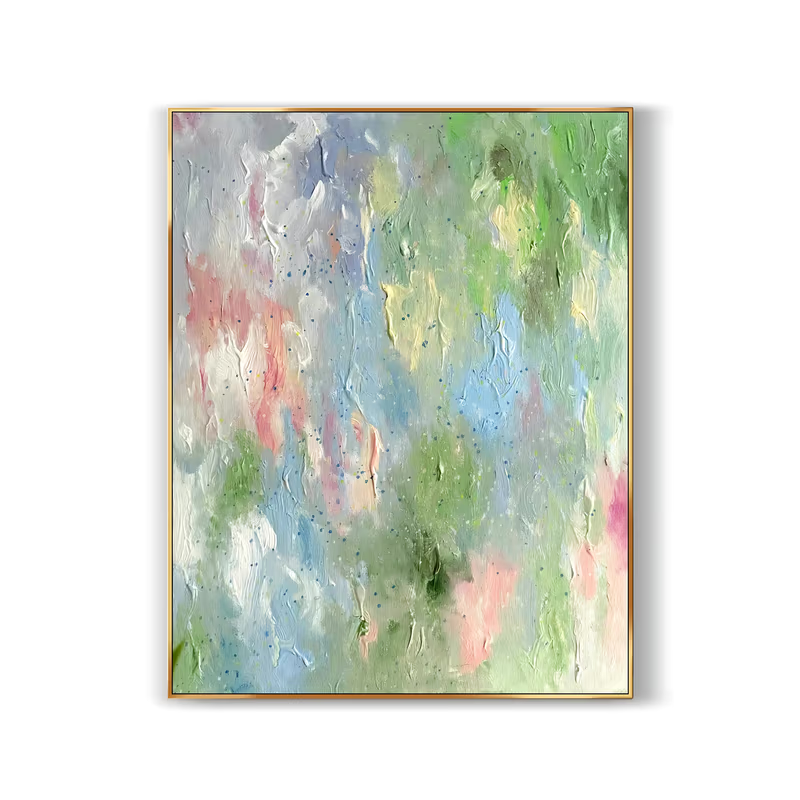
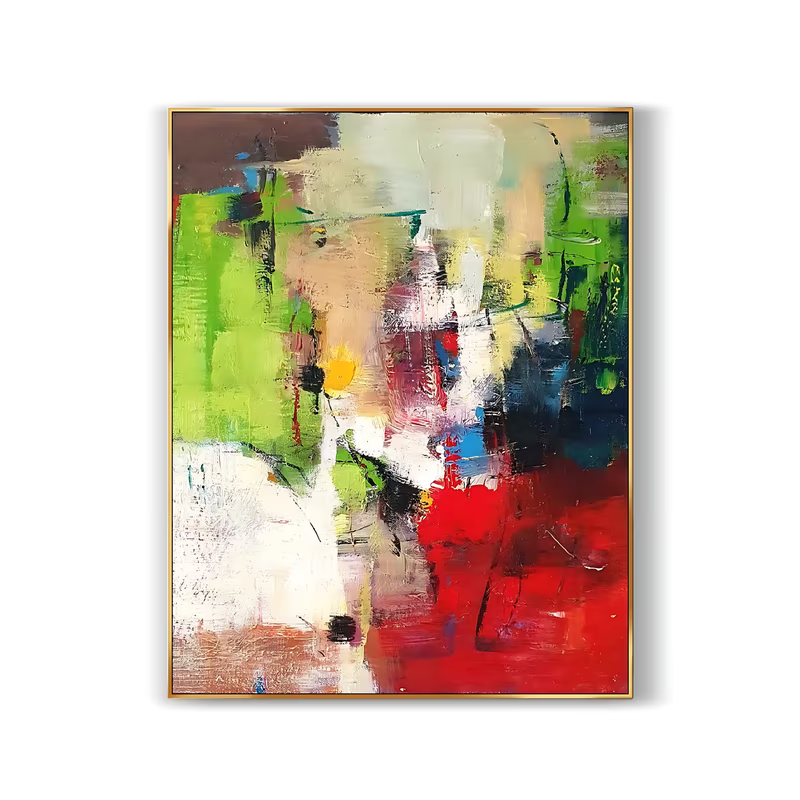
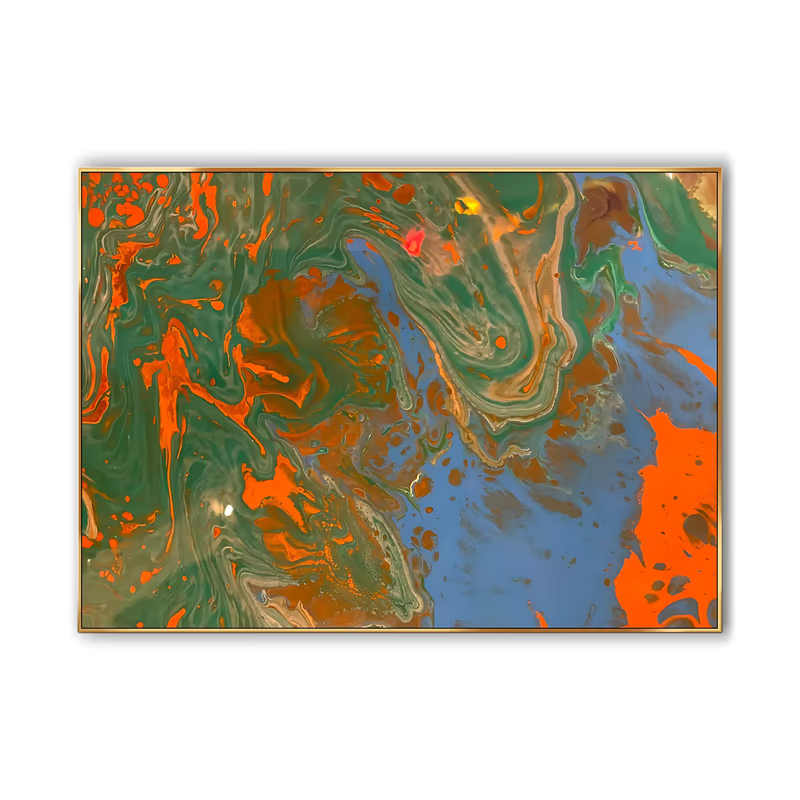
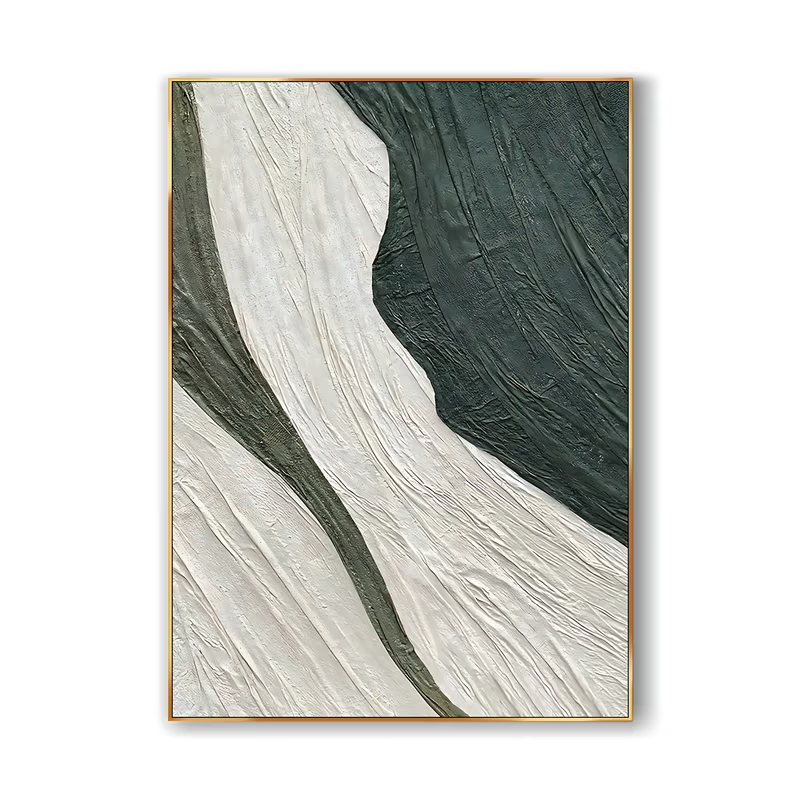
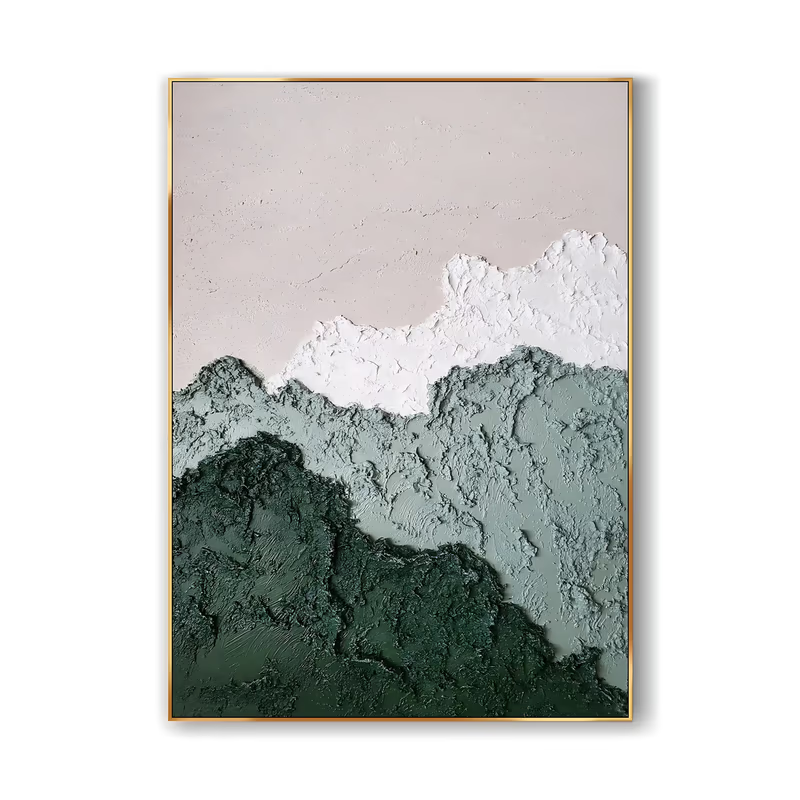
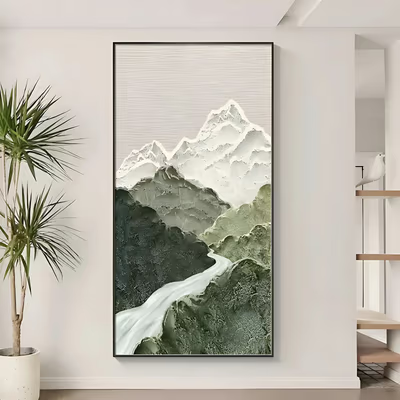
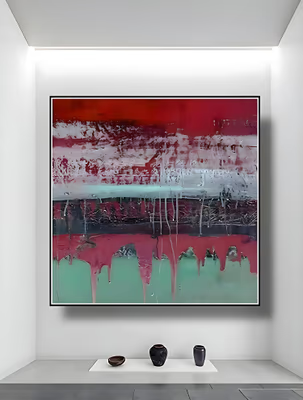
Sage marble with gold veins, emerald agate, olive columns on near-black, forest-green palette-knife blocks and weathered plaster in moss and rust. For modern rooms, offices and restaurants that want the colour of nature without a literal picture of it.
Where should you hang green wall art?
Green wall art suits almost every room: use sage and botanicals where people rest or bathe, forest green where they work or dine, and emerald where they gather at night.
Living room
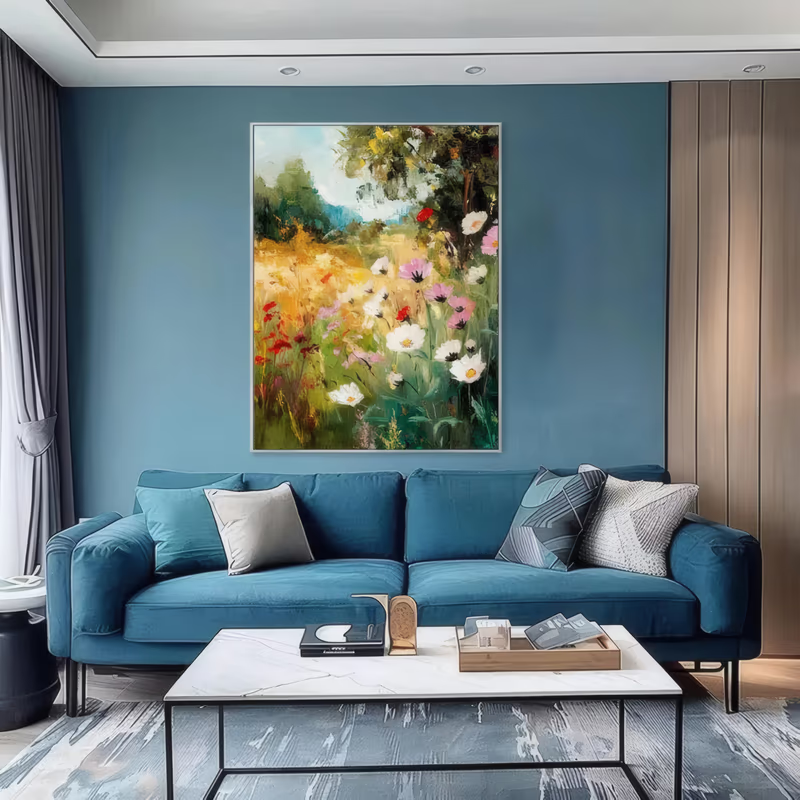
A large leaf painting or a green landscape over the sofa connects the room to the garden or the street trees outside. Green art for living rooms.
Bedroom
Sage, eucalyptus and softly misted forests keep a bedroom quiet and easy on the eye first thing in the morning. Green art for bedrooms.
Dining room and kitchen
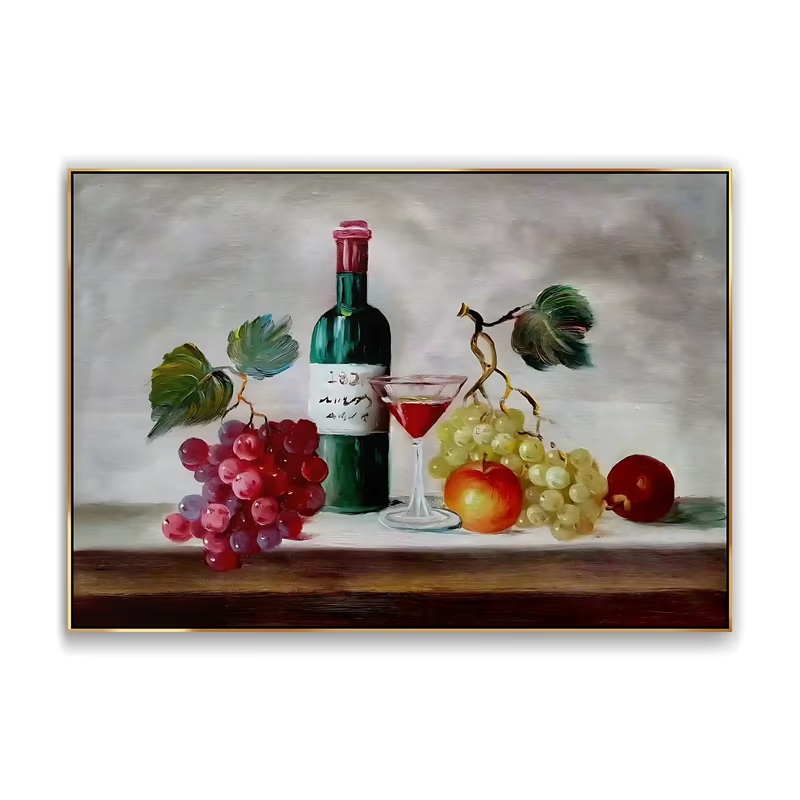
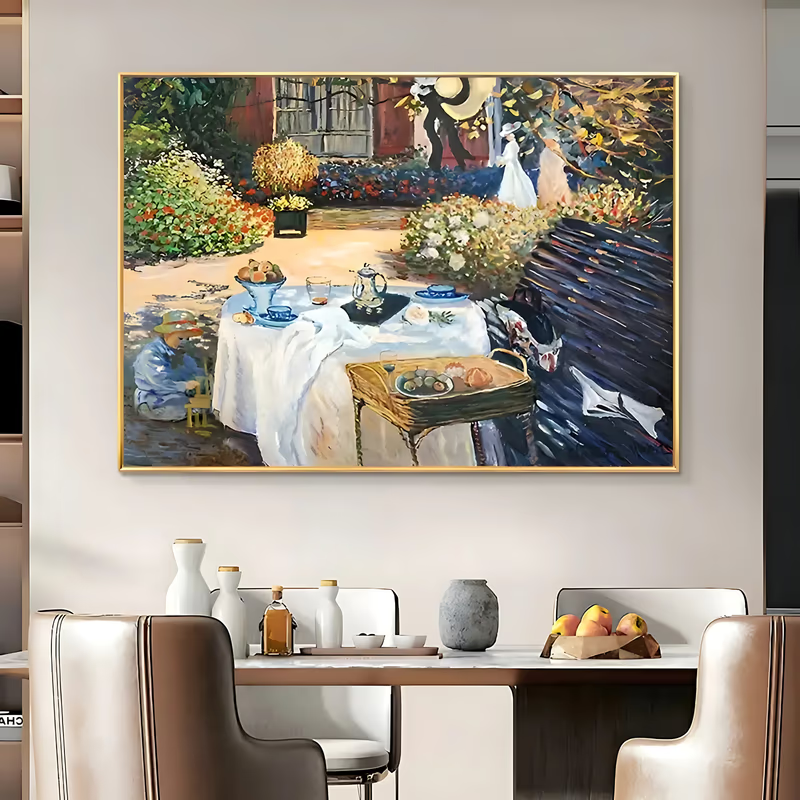
Olive, herb greens and still lifes of fruit and foliage suit rooms built around food. Green art for dining rooms.
Home office and meeting rooms
Forest green feels focused and traditional, and a green landscape gives an internal room the view it lacks. Green art for offices and meeting rooms.
Spa and wellness
Sage botanicals and soft green abstracts belong with stone, timber and steam. Green art for spas.
Hotels, restaurants and corridors
Emerald with brass for bars; botanicals repeated down corridors and into guest rooms to carry a garden theme through a whole building. Green art for hospitality.
What goes with green wall art: which woods, stones and colours?
Green looks most at home with natural materials such as oak, walnut, rattan, linen, limestone and terracotta, and its best colour accents are blush pink, cream, rust and brass.
| Green shade | Woods and stone | Colour accents |
|---|---|---|
| Sage | Pale oak, limestone, travertine, linen | Blush, cream, dusty lilac, brushed brass |
| Olive and moss | Walnut, terracotta, rattan, jute | Rust, mustard, burnt orange |
| Forest green | Dark oak, leather, slate, aged brass | Cream, camel, deep red |
| Emerald | Marble, black lacquer, dark walnut | Gold, pink, navy, velvet |
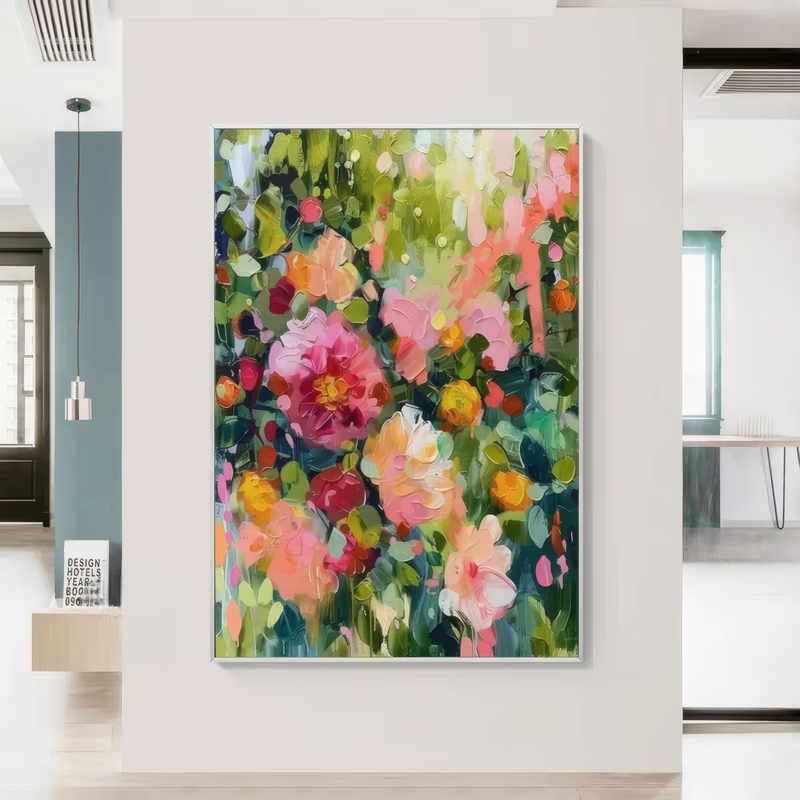
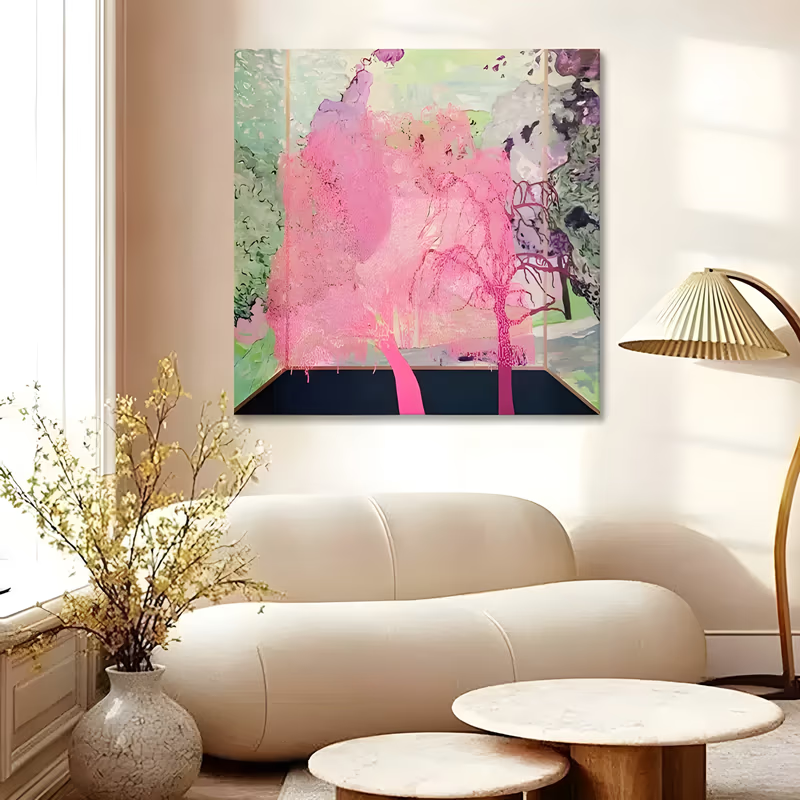
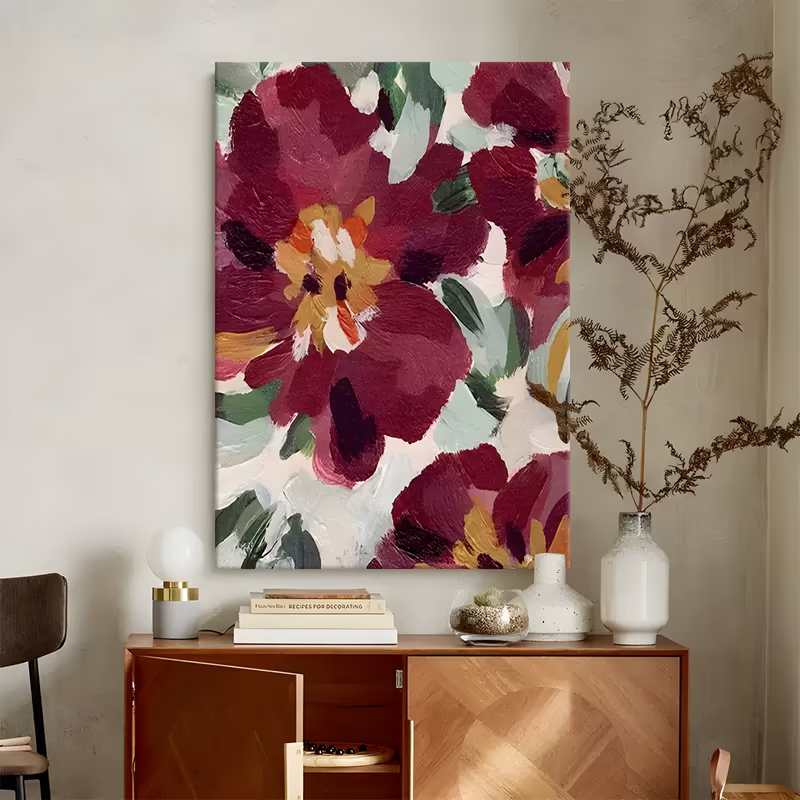
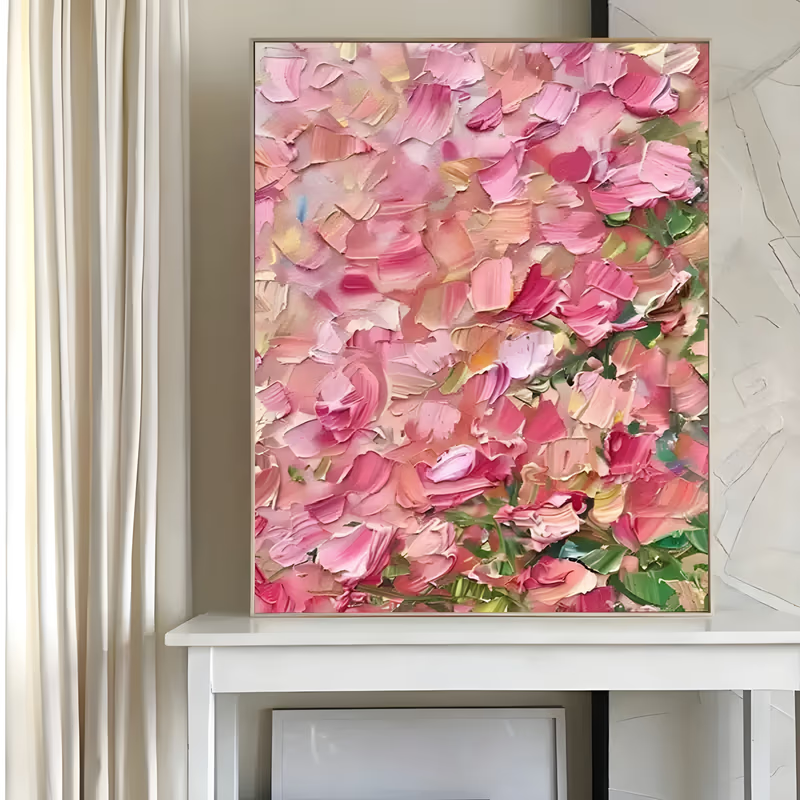
Green also tolerates other greens better than any colour does. A sage wall, an olive chair and an emerald painting can share a room, because a garden mixes greens all the time and the eye accepts it. Pink is green's complementary colour, which is why pink flowers in green foliage, or a blush chair beside a green canvas, look so natural together.
How big should green wall art be, and how high should it hang?
Choose a green canvas about two-thirds the width of the furniture beneath it, and lean larger for botanicals so that the leaves read close to life size.
A leaf painting is most convincing when a banana or monstera leaf on the canvas is near the size of a real one, roughly an arm's length, so botanicals reward a generous canvas. Landscapes can run wider and lower, like a window: a panoramic forest above a sideboard or a bed. Hang the centre at 145–152 cm (57–60 in) from the floor, and above furniture leave a hand's width or two of bare wall between the furniture and the bottom edge of the painting.
In a corridor or a run of hotel rooms, a matched set of green botanicals at a single centre height reads like a planted walk. Vary the leaf from one canvas to the next, but keep the scale and the green constant.
How do you get the green right for your room?
Send a paint code, a fabric or a photo of the room, and the green is mixed to suit it before painting starts, with your approval at each stage.
Green shifts with light more than most people expect. Warm bulbs push it towards olive and yellow; north light and cool LEDs can turn sage grey and emerald blue. Because every painting is made to order, the green can be made warmer, cooler, softer or deeper, and any catalogue work can be repainted in a green palette. Photos or video arrive at each stage, nothing continues until you approve it, and you see the finished canvas in a final photograph before dispatch. It ships rolled, stretched and ready to hang, or framed in gold, silver, black, white or wood; a natural wood frame suits green particularly well.