Europe · Germany · Munich · Hamburg · Frankfurt · Berlin · Düsseldorf
Wall art in Germany: hand-painted for Altbau, villa, office and hotel
iHomeArt paints wall art for Germany by hand and to order: original canvases for Altbau flats, villas, new builds, offices and hotels from Hamburg to Munich, painted to the size of your wall. Because German ceilings run from 2.4 metres in a new build to 4.5 metres in the grandest Gründerzeit flats, this guide starts with size, then covers colour, where to buy and how you approve a painting before it ships.
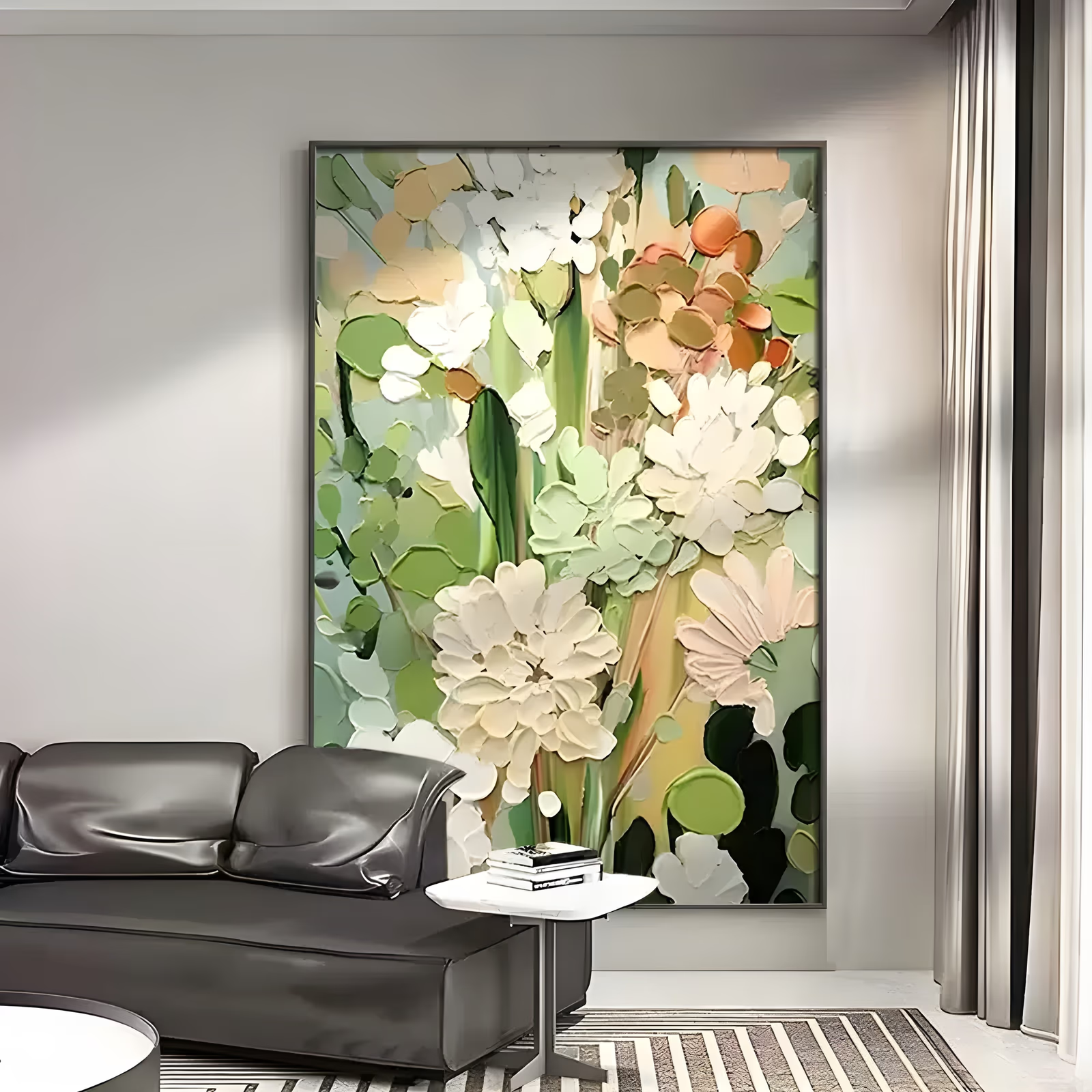
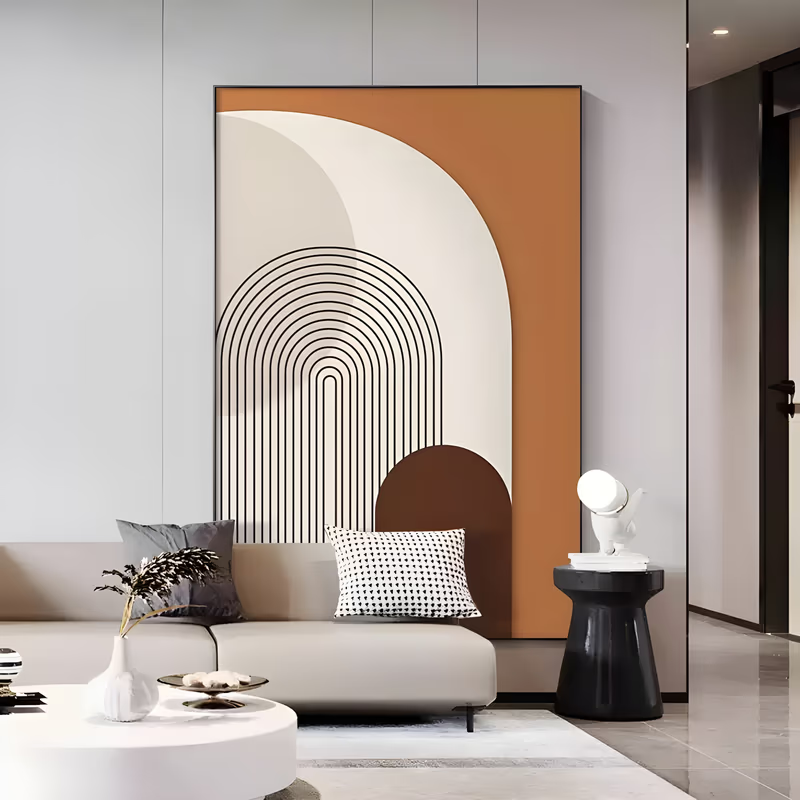
Ordering wall art in Germany from iHomeArt
- 1 pieceMinimum order; volume pricing from 10
- Any sizePainted to the wall, oversized and multi-panel included
- About 10 daysTo paint, then 5–7 days by DHL, FedEx or UPS express to Germany
- Every stageApproved by photo or video before the next one starts
- 50 / 50Half upfront, half once you approve the final photograph
What German homes and buyers ask of a painting
- Ceilings
- 2.40 m minimum in new builds; often 3.3 m and more in pre-war Altbau
- Home ownership
- About 47% of households own their home, the lowest share in Europe
- Favourite colours
- Blue (19%), then green (14%), in a poll of 1,000 Germans
- Hotels under way
- 146 projects and 24,821 rooms in mid-2026, third in Europe by projects
The Germany wall art guide, page by page
Each page answers one buying question for Germany: the home room by room, offices, hotels, where to buy, taste and sizes.
- Villas & Altbau homesWhich painting each room of a German home takes, from the Altbau interior's stucco salon to the villa stair and the Dachschräge.
- Offices & institutionsOffice wall art in Germany
- Hotels & restaurantsHow to choose art for hotels and restaurants in Germany, from Altbau lobbies to Alpine inns.
- Where to buyWhere to buy art in Germany
- Taste & stylesGerman wall art ideas
- Size guideA wall art size guide for German rooms, in cm and inches
Altbau, new build or villa: how big should wall art be in Germany?
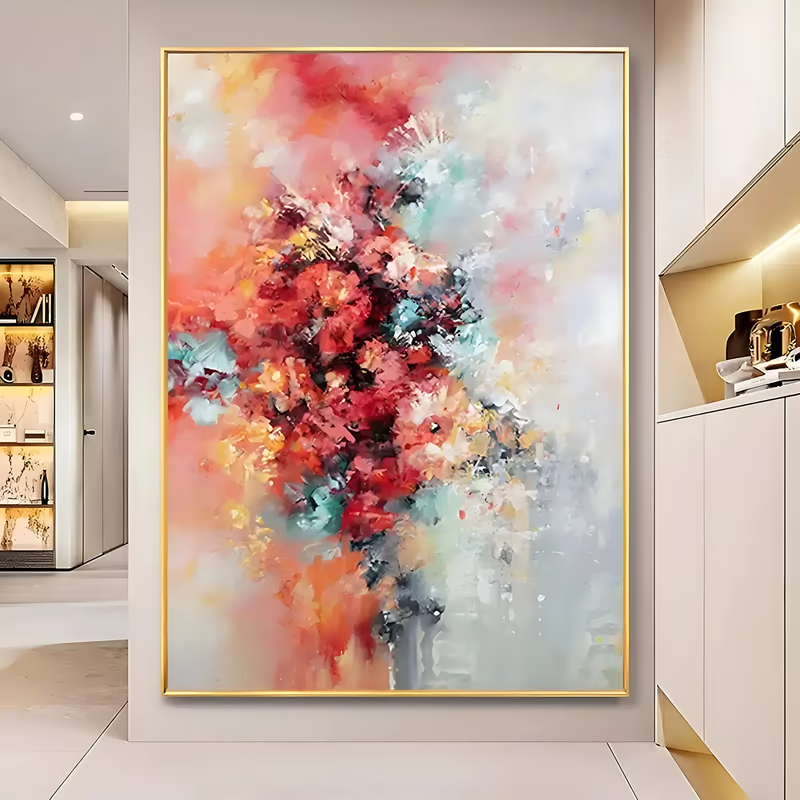
Let the ceiling decide: about 120–180 cm of canvas over the sofa in a 2.4 m new build, tall verticals of 150–200 cm in a 3.3 m Altbau, and 200–300 cm in a villa's open living room.
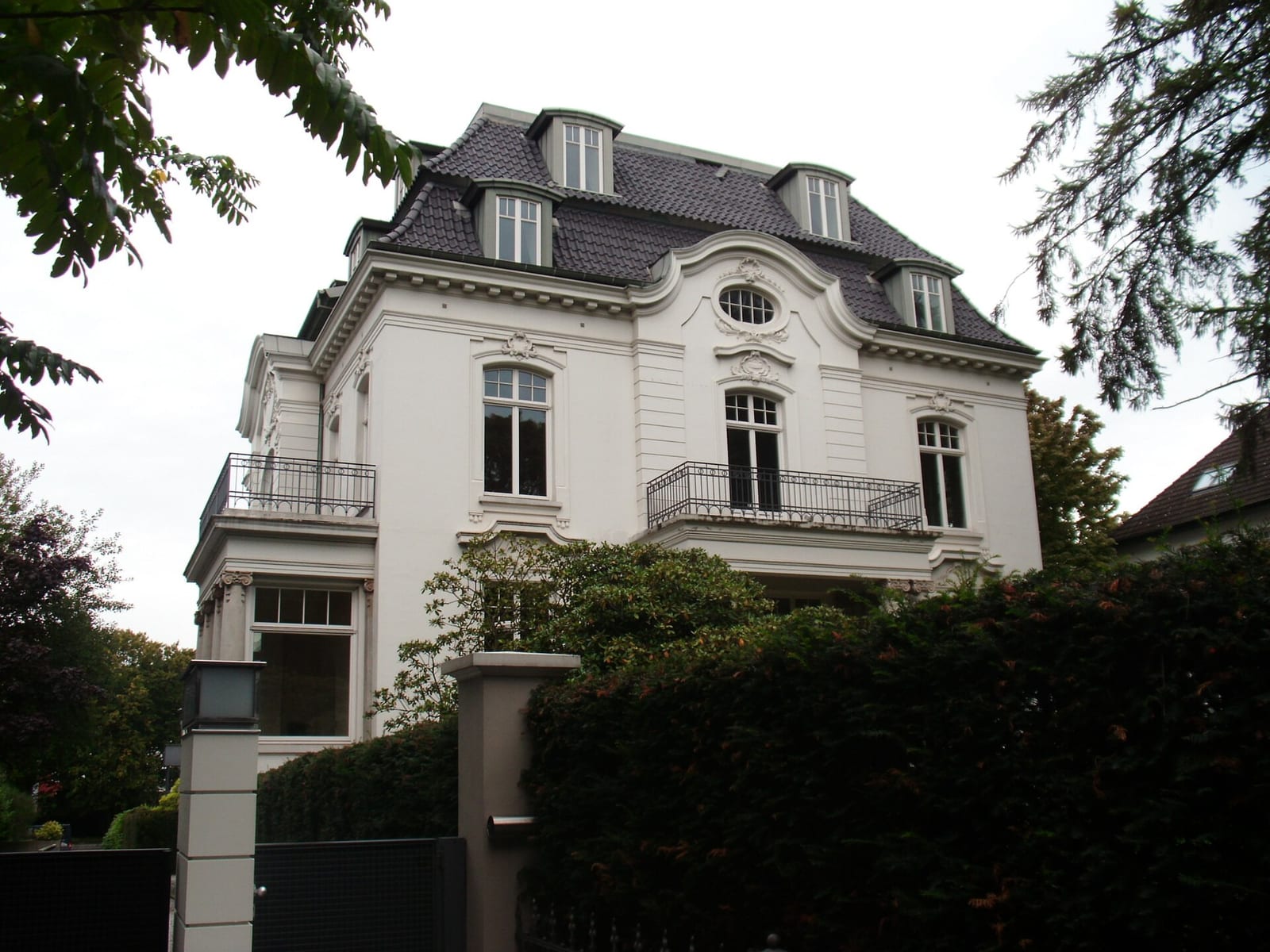
Germany builds to two heights. The model building code sets 2.40 m as the minimum for habitable rooms, and most buildings since the 1960s sit at or a little above it. Pre-war city flats often have 3.3 m and more, Gründerzeit flats in extreme cases 4.5 m; a renovated Altbau flat in Berlin-Charlottenburg listed in September 2026 had ceilings of about 3.50 m. A painting that looks right in one of these rooms looks lost or cramped in the other, so measure the ceiling before you choose:
| Where you live | Clear ceiling | A canvas that holds the main wall |
|---|---|---|
| Hamburg's post-war brick blocks | About 2.2 m | 80–120 cm wide, or a pair side by side |
| New build (Neubau) | 2.4–2.6 m | 120–180 cm wide over the sofa |
| Altbau and Gründerzeit flats | 3.3 m and more | Tall: 150–200 cm verticals, or a stacked pair |
| Villa living room or void | Up to 7 m in places | 200–300 cm, panoramic or tall |
In an Altbau the wall is high rather than long: with the sofa back at 80–90 cm, more than two metres of plaster rise above it, which a small print cannot fill. Villas work at a larger scale again: living areas in Grünwald run from 240 to 797 m², and a Bauhaus-style house in Meerbusch has a split-level living room with ceilings of up to 7 m. Every iHomeArt canvas is painted to the dimensions you send, so a catalogue size is only a starting point. Room-by-room measurements are in the Germany size guide.
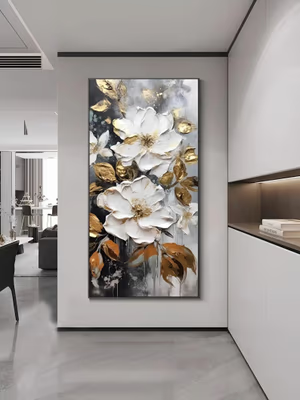
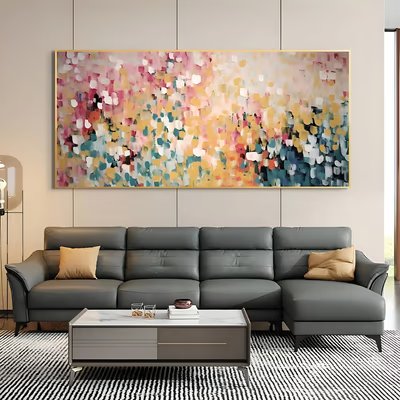
Which wall in a German home gets the painting?
The living and dining room: German homes rarely keep a parlour for guests any more, so the sofa or dining wall carries one good painting, about two-thirds to three-quarters the width of the furniture beneath it.
The Gute Stube, the parlour kept for Sundays and visitors, gave way to the everyday living room by the 1970s, and in larger homes the dining room took over the job of receiving guests. So the wall that matters is the one you live with. AD Germany's September 2026 round-up of nine living rooms, from Berlin Altbau flats to a country house on Rügen, shows how it is used: six of the seven rooms that name a wall piece hang originals or gallery editions, in two of them a painting over the sofa, and only one hangs a print. In a Frankfurt Gründerzeit flat featured by the same magazine, a 2018 painting by Grace Weaver hangs between 1902 stucco and a 1981 Hans Hollein sideboard.
For placement, one German home magazine borrows the museum rule: centre the picture at about 1.60 m, make it two-thirds to three-quarters the width of the furniture below, and leave 10–30 cm between the two. And since only about 47% of German households own their home, choose art that moves with you: a canvas comes down in minutes and goes up in the next flat. The rooms of German homes, from Altbau salon to villa, are on villas and Altbau homes.
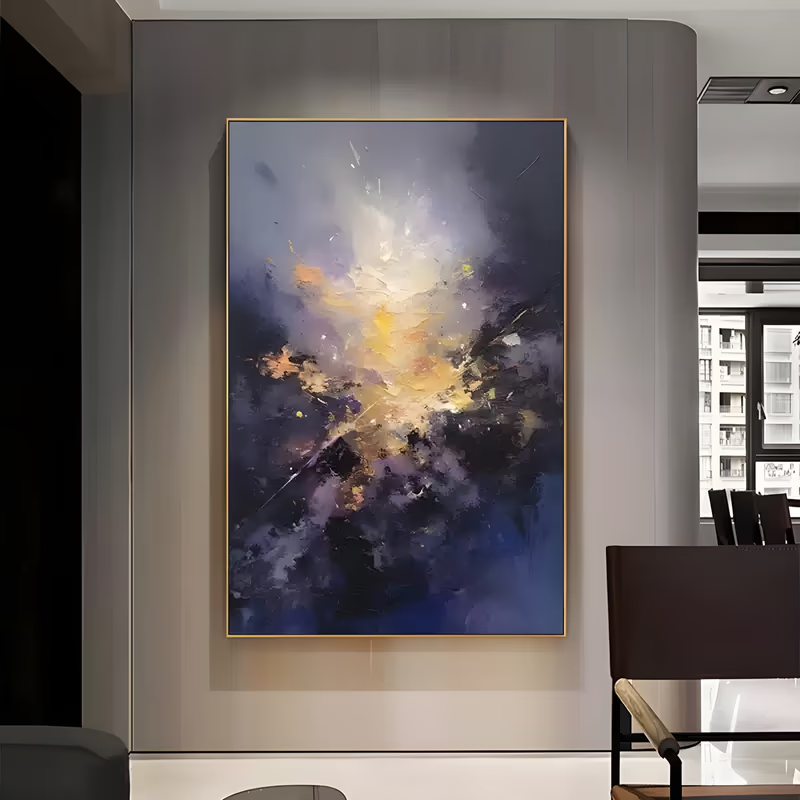
-
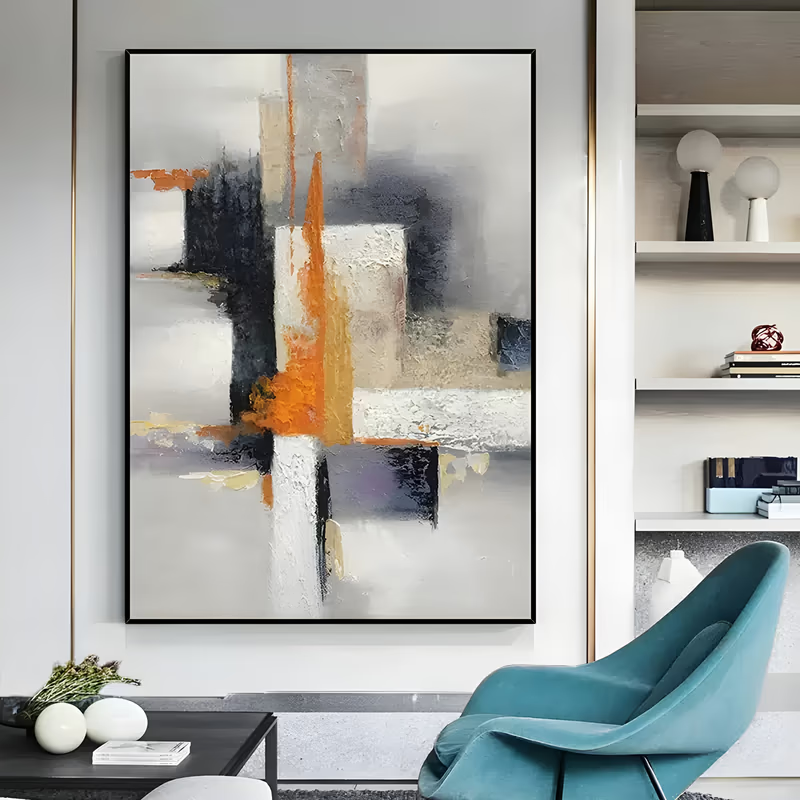 AA#170
The sofa wall
The wall guests face first: one generous canvas, centred on the sofa, rather than a cluster of small frames.
Art for living rooms -
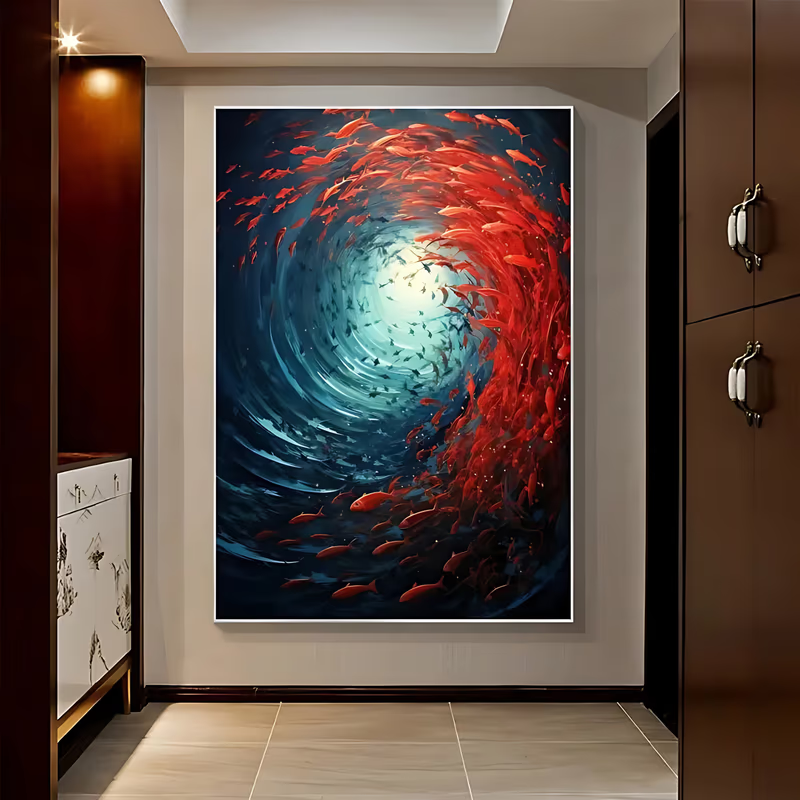
 AA#592
The dining wall
Where guests sit longest, and sit down: hang the canvas a little lower, in colours that hold up under warm evening light.
Art for dining rooms -
 HA#1009
The Altbau hall
Long and high: a tall, narrow canvas at the end of the corridor turns a passage into a view.
Art for halls and entrances
Which colours and subjects suit wall art in Germany?
Calm, natural colour: the blues and greens Germans name as favourites, set against warm neutral walls with terracotta or rust as the accent, in abstract, landscape and sea subjects rather than the old stag in the mountains.
Asked for their favourite colour, 1,000 Germans put blue first at 19%, then green at 14%, red at 13% and beige at 10%. Their living rooms are rarely gallery-white: in a 2017 snapshot only one in four was painted white, with beige and brown the most popular choice. A paint maker's 2026 trend report names a blue as its trend colour, calls sage green a perennial best-seller and sets pastels against terracotta, saffron and rust-red. On canvas that means a blue-green abstract or a North Sea seascape against greige, or sand and terracotta in a room of oak and linen.
Subjects carry history. The röhrender Hirsch, the rutting stag sold as mass wall art after 1870, is the German byword for kitsch, so wildlife and alpine scenes work when they are stylised, not literal. Painting itself carries prestige: Gerhard Richter has led the Kunstkompass ranking of living artists every year since 2010, and the Neue Leipziger Schule is the best-known figurative current. In shared buildings, keep it gentle: three nude paintings came down from a town hall in Oberhausen after about 30 complaints, less than four days into the show. The palette in more depth is on taste and styles in Germany.
Blue and green, warmed
Germany's favourite colours look best against beige, greige or warm white, with one terracotta, rust or ochre accent.
Nothing to explain at reception
For an office, practice or hotel lobby, rule out nudes and anything provocative in the brief, so no piece has to come down after opening.
Works to browse
-
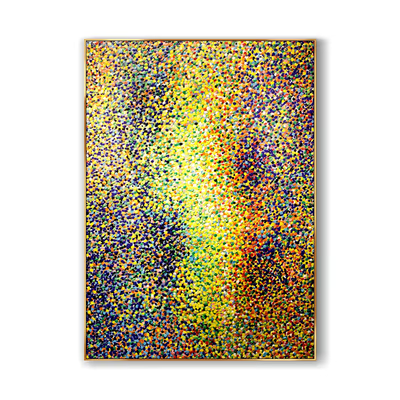 Abstract in blue and sage green — Germany's two favourite colours, in the calmer register
-
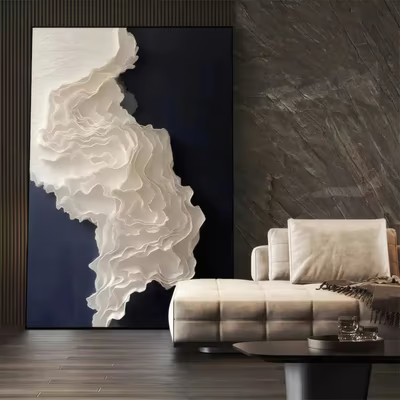 Seascapes in Elbe and North Sea colours — soft blue, grey, sand and white for Hamburg homes and hotels
- Textured & Plaster in sand, cream, warm white and terracotta — relief surfaces for the 'warm minimalism' living room
-
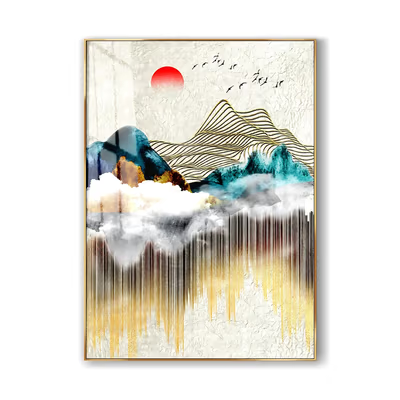 Abstract in terracotta, sand beige, brown and gold — the warm palette German buyers ask for
-
 Deer, birds and wildlife in earth tones — the stylised Alpenchic motif, not the 'röhrender Hirsch'
Where does Germany's supply of large paintings run out?
At about two metres: home chains sell prints, online décor shops stock hand-painted canvases in set sizes and colours, and galleries sell the size the artist chose, so a bigger wall, or your own colours, means a commission.
Germany sells wall art in four tiers. Furniture chains and print shops carry prints, where 'XXL' can mean as little as 120 × 80 cm. Online décor shops sell canvases labelled hand-painted, most often around 150 × 100 cm, rarely beyond two metres and usually without changes to size or colour. Self-employed painters sell originals of two metres and more, with commissions taking six to ten weeks or longer. Galleries sit at the top: some 700 of them, selling more than 60% of their work to private buyers.
The gallery world also has two very German doors to a first original. Kunstvereine sell Jahresgaben, editions and small works by artists they have shown, to their members, and the art academies open their studios at the Rundgang: the Kunstakademie Düsseldorf drew about 40,000 visitors to its winter show in February 2026. The fairs follow the calendar: POSITIONS Berlin in September, Art Cologne on 5–8 November 2026 with 164 galleries, and Art Düsseldorf on 9–11 April 2027. What each kind of seller does best is on where to buy art in Germany.
Can you return a painting made to order in Germany, and how do you approve it instead?
A painting made to your specification is not one you send back, so with iHomeArt you approve your own canvas in photographs at every stage, and the finished piece before it leaves.
You may be used to sending things back: about one in four online parcels in Germany is returned, most of them clothes. A painting made to order works differently: you approve each stage and the final photograph before it ships, so finished pieces are not returnable. That is why painters here show you the work before it leaves the studio, and it is how we work too.
Each stage of your canvas comes to you as photographs or video, and the next stage starts only once you approve. Ask for a side-lit photograph and you see the ridges of brush and knife, the surest sign that a canvas is painted by hand and not printed. You approve a photograph of the finished piece before it ships, so nothing about it is a surprise when it arrives. Damage in transit is rare, under 0.01% of pieces; if it happens, send us photos and we take it up with the carrier and work out a solution with you, such as a replacement or a refund.
Each canvas can travel stretched and ready to hang, framed, or rolled; a rolled canvas, the lightest and most economical way to send a large painting, arrives without stretcher bars, and any local framer can stretch it for you.
Can you have a Friedrich, the Alster from your window or your company crest painted?
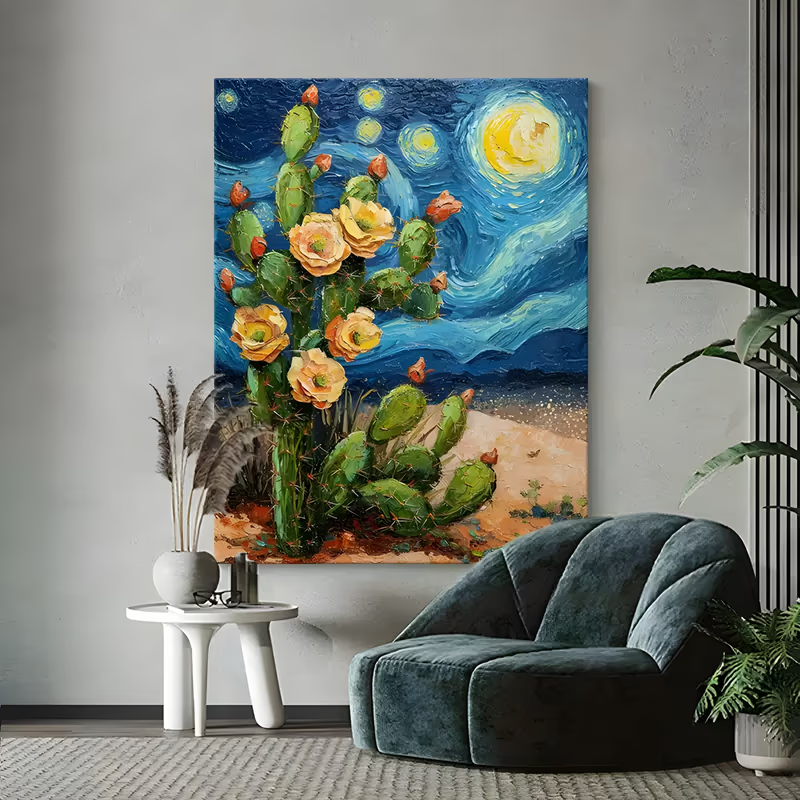
Yes: send us the picture, whether a painting out of copyright, a photograph of your view or your logo, and we tell you the size, format and finish it will paint best at.
Hand-painted reproductions are part of what we do: a Caspar David Friedrich coastline, Franz Marc's blue horses or a Monet garden, painted by hand at the size of your wall rather than printed. A work still in copyright, which in Germany means until 70 years after the painter's death, needs the rights holder's permission.
The same goes for the picture only you have: the Alster from your balcony, the Elbe at Blankenese, the façade of your Altbau, a family photograph, or your firm's logo or crest for the reception. Send it with the wall size; we tell you how it will translate to canvas, suggest a size and finish, and paint it once you are happy. You need to own the image or have permission to use it, and a design can be kept exclusive to you if you ask before we start. More on paintings from your own image.
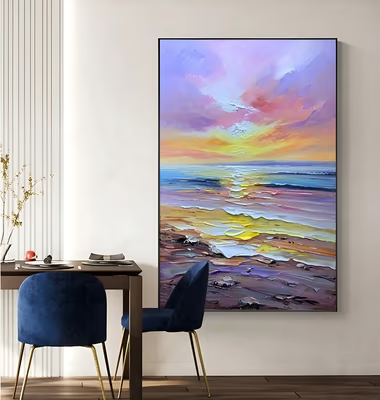
What wall art do offices, practices and law firms in Germany hang?
Art hung to one idea, from the reception to the corridors and meeting rooms, with abstract painting the common thread; without a curator, a set of large abstracts in one palette does the same job.
German companies take office art seriously. The Arbeitskreis Corporate Collecting brings together 35 companies with their own collections; Deutsche Bank gives each of the 60 floors of its Frankfurt towers to one artist, and Munich Re hangs more than 3,000 works in its corridors, foyers, conference rooms and stairwells. In Düsseldorf, Henkel hung abstract painting through the offices, corridors, staircases and conference rooms of its headquarters for decades. Smaller firms work at their own scale: a Bonn law firm has shown artists in its offices since 2007, and the Robert Bosch Krankenhaus in Stuttgart holds more than 1,500 works, from the entrance to the patient rooms.
What these buildings share is one line running through reception, meeting rooms and corridors. Without a curator you get the same effect by choosing one palette and one register, usually abstract, and having each wall painted to its size, from the reception canvas to a run of matching pieces down the corridor. The buyers and walls of German offices are on offices and institutions; for a whole floor, see art for corporate offices.
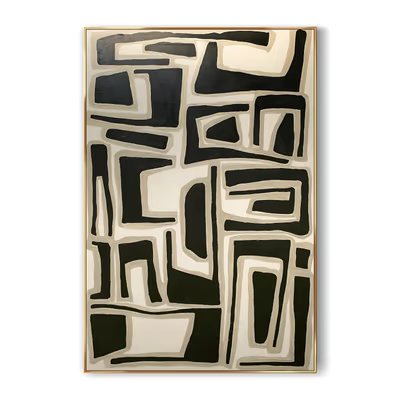
How do German hotels choose their art, and where does a painting studio fit?
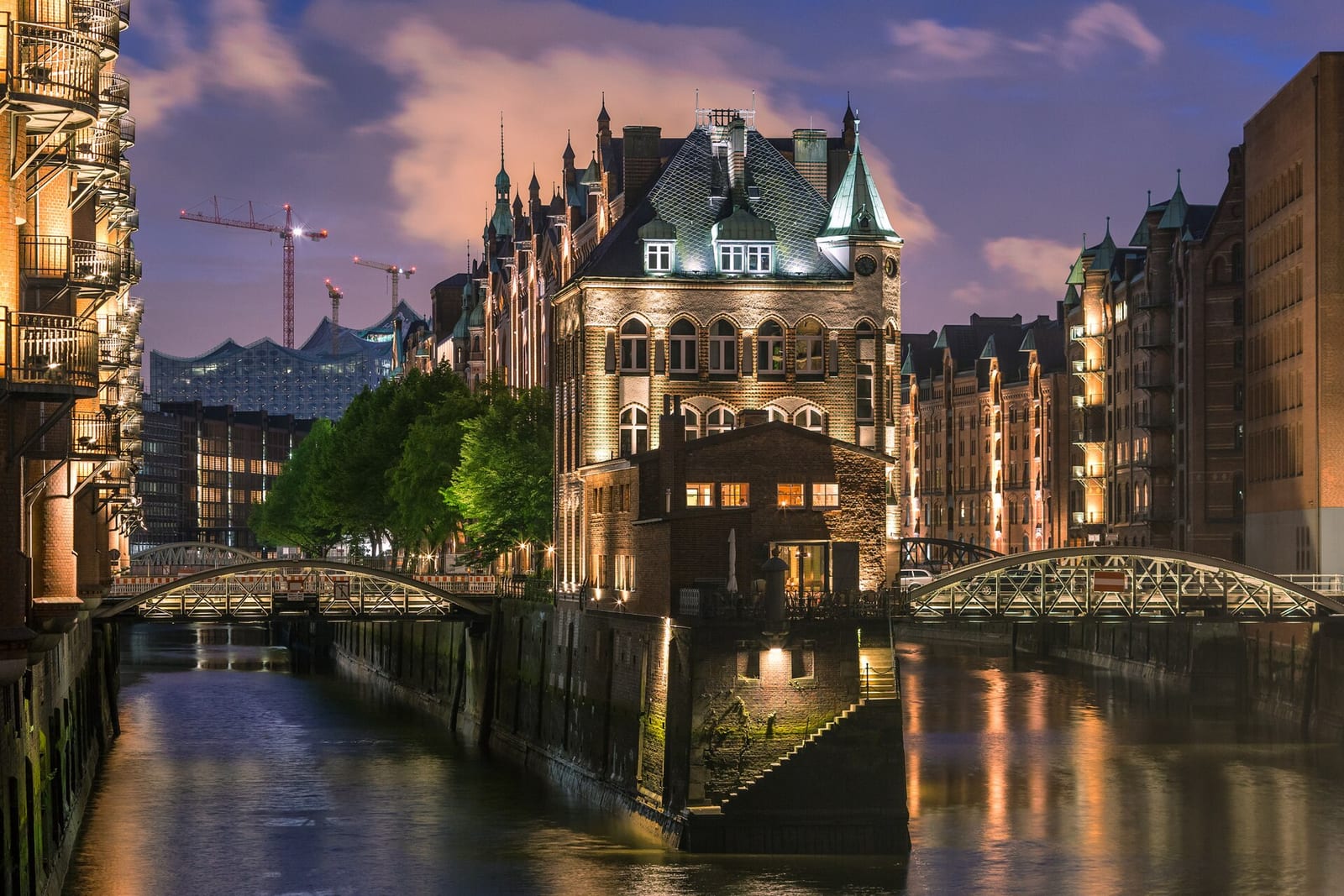
Through the interior designer or a curator, to one idea per house, from a different artist in every room to one series throughout; a studio that paints to order supplies the room series and the big walls to the designer's drawings and palette.
Germany has the third-largest hotel pipeline in Europe by projects: 146 projects and 24,821 rooms under way in mid-2026, 25 of the projects in Hamburg. The hotels people write about hang their art to an idea. Château Royal Berlin has a different artist in each of its 93 rooms; The Wellem in Düsseldorf hangs originals by contemporary artists in its guest rooms, under four-metre ceilings in its Studios; TORTUE Hamburg opened in 2018 with watercolours by a Hamburg artist in the rooms; and Motel One's hotel at Frankfurt's main station runs a mural of more than 100 m² from reception down to the bar. Designers lead: Hamburg's JOI-Design counts more than 500 hotel projects and has artists in its team.
Budgets are tight, though: in a 2025 survey, 72.1% of hotel and restaurant operators said they had not been able to make necessary investments. That is where we fit. If you are the designer, the FF&E buyer or the owner, we paint the room series and the large public walls to your drawings, sizes and palette, room type by room type, with one sample first if you like and volume pricing from ten pieces; each canvas can be labelled by room or position, with a packing list. More on hotels and restaurants in Germany and art for boutique hotels.


Wall art in Germany FAQs
Can I pay on invoice, as I would with a German online shop?
Buying on invoice is common in German online shopping: it took about a quarter of turnover in a 2025 survey of retailers. A painting made to order works a little differently: half upfront against a proforma invoice, so painting can start, and the other half once you approve the photograph of the finished piece, before it ships. Your quote usually arrives within one business day.
How long does a painting take to reach Berlin, Munich or Hamburg?
About 10 days to paint, then 5–7 days by DHL, FedEx or UPS express to any address in Germany, from Kiel to Garmisch. Larger orders may travel by air or sea freight instead; we choose the best route for your address and confirm the shipping cost before anything leaves.
Rolled, stretched or framed: which suits a German flat?
Rolled is the lightest and most economical way to travel, and any framing workshop can stretch the canvas for you; it is also the safe choice for a top-floor Altbau flat with a narrow stair and no lift. Stretched or framed in gold, silver, black, white or wood arrives ready to hang. Heavily textured and plaster work always travels stretched or framed.
What is the largest painting you can make for an Altbau or villa wall?
Send us a photo of the wall with its width, the ceiling height and how the piece will reach the room: by stair, lift or door.
Is it an oil painting or acrylic?
Acrylic on canvas is our standard, and oil is available on request. Whichever you choose, every canvas is painted by hand and nothing is printed: you see the brushwork in the stage photographs before you approve the next step. Care is simple too: dust it with a dry cloth and keep sprays away from the paint.
Can I see one painting before ordering a set for an office or hotel?
Yes. The minimum order is one piece, so a sample is simply a first order: we paint one canvas, you approve it, and the rest of the set follows in the same hand and palette, each piece checked against the one you approved. Volume pricing starts at ten pieces.
Can you match the colours of my sofa, curtains or wall paint?
Yes. Send photographs of the fabric, stone or paint taken in daylight, ideally next to a sheet of white paper, and the palette is mixed to them. You see the colours on the canvas in the stage photographs and approve them before the next stage starts.
Germany
Send us your wall, Altbau or new build
Send a photo of the wall, its width and the ceiling height on WhatsApp, with the quote form or by email. We reply within one business day with a size that suits the room, a shortlist from the catalogue and a price for each piece.
Sources
- Die besten Jahresgaben – Monopol · 2022-12-07
- EHI Retail Institute – Paypal festigt Spitzenposition · 2025-05-07
- Retourenforschung.de – Neuer Rekord: 2025 voraussichtlich 550 Millionen Retourenpakete · 2025-11-25
- Kulturkreis der deutschen Wirtschaft — Arbeitskreis Corporate Collecting · 2026-09-18
- Deutsche Bank — Art in the Towers · 2026-09-18
- Munich Re — The Collection · 2026-09-18
- Robert Bosch Krankenhaus — Healing Art · 2026-09-18
- Meyer-Köring — Kunst in der Kanzlei · 2026-09-18
- Nackte Haut: Kunst im Rathaus muss weg – Abendzeitung München · 2014-11-26
- Röhrender Hirsch – Wikipedia (de)
- Gute Stube (Wohnraum) – Wikipedia (de)
- Die Lieblingsfarbe der Deutschen ist Blau – Deutsches Lackinstitut · undated press release (post-2014)
- Wandfarben – Statista Infografik · 2017-08-16
- Bilder aufhängen: 6 Tipps & Regeln – Wohnglück
- JOI-Design – Hamburg – Interior Designers – About (german-architects.com) · 2026
- Raumhöhe – Wikipedia (de) · 2024-09-16
- Wohnung kaufen in Berlin-Charlottenburg – immobilo · 2026-09-18
- Villa kaufen in Grünwald (82031) – 20 Angebote | immowelt · 2026-09-18
- Einzigartige Bauhaus-Villenhälfte in Alt Meererbusch – Baum Immobilien · 2026-09-18
- Europe's Hotel Construction Pipeline Reaches 1,736 Projects (Q2 2026) · 2026-08-12
- Das Gastgewerbe in Deutschland kämpft weiter mit Umsatzeinbußen und Kostensteigerungen (DEHOGA) · 2025-09-02
- Château Royal Berlin - Art in the Hotel · 2026
- Motel One eröffnet zwei Hotels in Frankfurt (HOGAPAGE) · 2026-02-24
- Tortue-Design-Hotel in Hamburg eröffnet (Tageskarte) · 2018-06-21
- The Wellem Düsseldorf · 2026
- Living trends 2026: Current furnishing & colour trends – MissPompadour · 2026-09-18
- BVDG – Galerienstudie 2025 · 2025-09-09
- Monopol – 164 Galerien aus 22 Ländern bei der Art Cologne 2026 · 2026-09-08
- POSITIONS Berlin Art Fair · 2026-09
- Kunstkompass – Wikipedia (de) · 2026-09-18
- Neue Leipziger Schule – Wikipedia (de) · 2026-09-18
- Sparkasse.de – Deutschland ist Europas Schlusslicht beim Wohneigentum · 2025
- AD Magazin: Die schönsten Wohnzimmer Deutschlands: 9 persönliche Wohnwelten von Kreativen · 2026-09-01
- AD Magazin: Wohnung mit Kunst einrichten – so wohnen Johanna & Friedrich Gräfling · 2021-10-03
- Art Düsseldorf – official site · 2026-09-19
- Winterrundgang 2025/2026 – Kunstakademie Düsseldorf · 2026-02
- Henkel – Die Kunstsammlung – Kunstsammlung NRW · 2016-04-08
Researched 2026-09-19. Prices and figures are as published by the sources on the dates shown.