
Europe · Germany · Munich · Hamburg · Frankfurt · Berlin · Düsseldorf
Paintings for an Altbau interior, a villa or a new build in Germany
iHomeArt paints original canvases by hand and to order for German homes, from Altbau flats in Berlin, Hamburg and Frankfurt to villas in Grünwald, Blankenese and Meerbusch, each at the size its wall needs. Whether yours is an Altbau interior with 3.5 m ceilings or a new build at 2.4 m, this page shows, room by room, the shape and size of painting each wall takes.
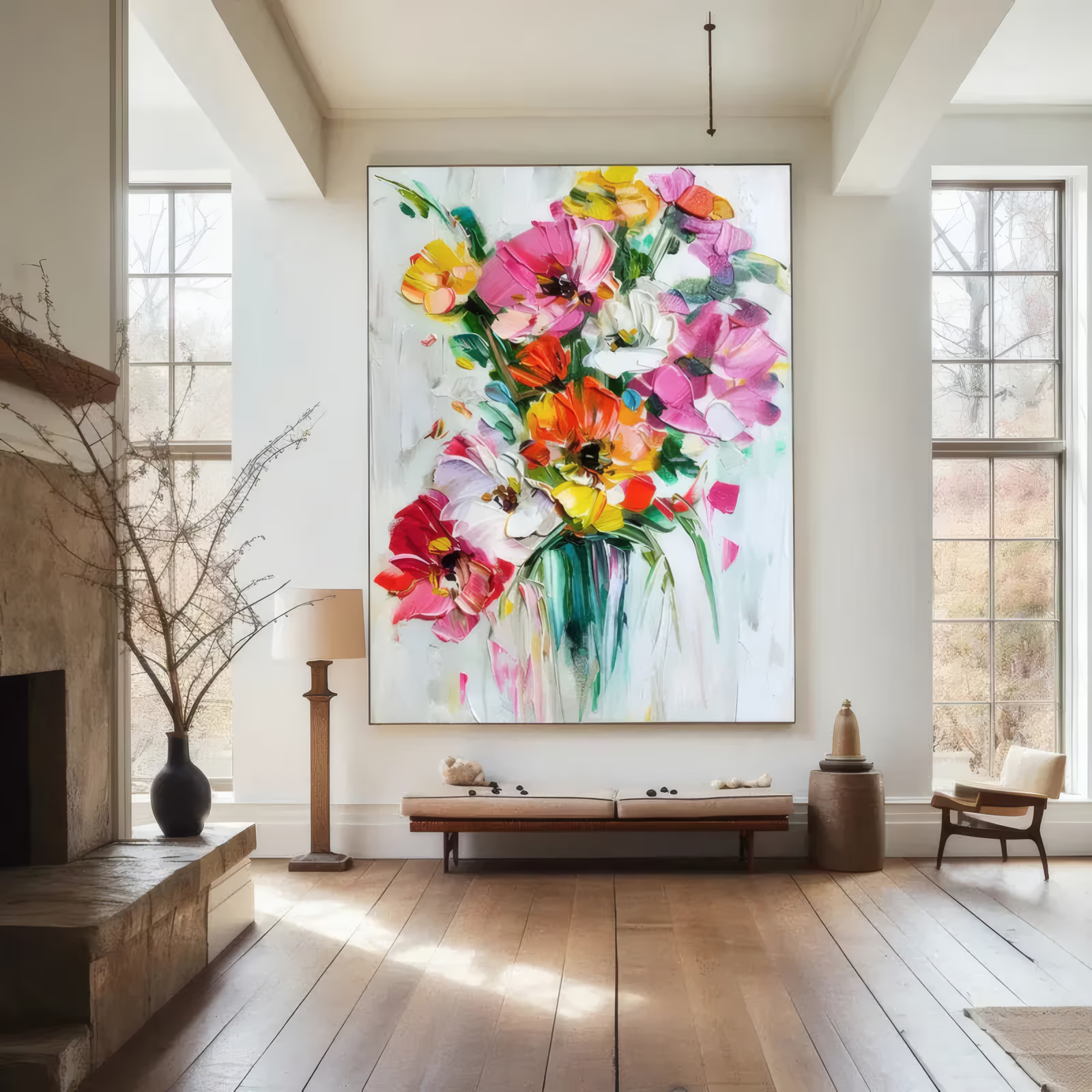
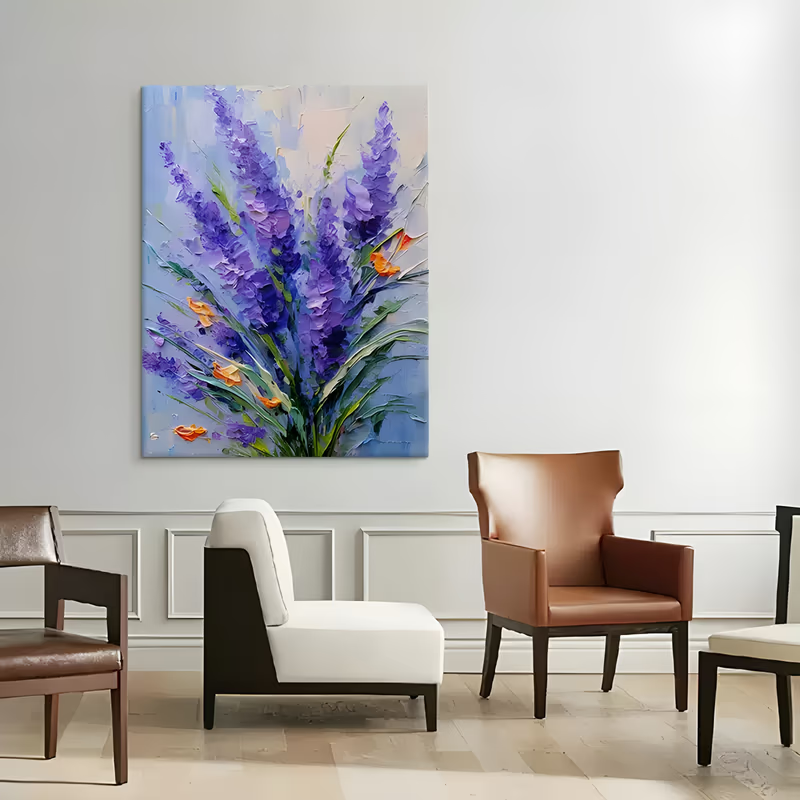

Ordering paintings for a German home from iHomeArt
- 1 pieceMinimum order; volume pricing from 10
- Any sizePainted to the wall, oversized and multi-panel included
- About 10 daysTo paint, then 5–7 days by DHL, FedEx or UPS express to Germany
- Every stageApproved by photo or video before the next one starts
- 50 / 50Half upfront, half once you approve the final photograph
What German homes ask of a painting
- New-build ceilings
- 2.40 m minimum for living rooms in the model building code; 2.20–2.50 m by state
- Altbau ceilings
- Often 3.3 m and more in pre-war city flats; up to 4.5 m in rare Gründerzeit cases
- Villa living space
- 240–797 m² among the Grünwald villas listed in September 2026
- Owning or renting
- About 47% of households own their home, the lowest share in Europe
Altbau interior or new build: which shape of painting does your wall need?
In an Altbau the wall is tall and broken up, so the painting goes vertical; in a new build it is low and long, so it goes horizontal; a villa needs a planned set, and a tower or attic flat gives you one full wall.
German homes divide by age before style. The model building code sets 2.40 m as the minimum ceiling for living rooms, while pre-war city flats often reach 3.3 m and more; a renovated Altbau flat in Berlin-Charlottenburg was listed in September 2026 with ceilings of about 3.50 m. At the other end, many of the brick blocks Hamburg built between 1948 and 1966 have rooms only 2.2 m high.
That one measurement decides the shape of the painting. Measure the ceiling and the clear wall between door, window and corner, then find your home in the cards below. Sizes for every room, in centimetres and inches, are in the German size guide.
-
Altbau flat
- Ceiling
- Often 3.3 m and more
- The wall
- Tall panels between double doors, windows and stucco
- The painting
- Vertical, 150–200 cm high, or a stacked pair
-
New build or post-war flat
- Ceiling
- 2.40 m or a little more; 2.2 m in some post-war blocks
- The wall
- Long and low, behind the sofa
- The painting
- Horizontal, 120–180 cm wide, or a pair
-
Villa
- Ceiling
- From standard rooms to voids of 7 m
- The wall
- An open living area, a stair void, many smaller rooms
- The painting
- A set: one statement canvas, then a series
-
Tower or attic flat
- Ceiling
- Glass on one or two sides, or a sloping roof
- The wall
- One or two full-height solid walls
- The painting
- Sized to the one wall that takes it
Where does the painting hang in an Altbau interior with stucco and double doors?
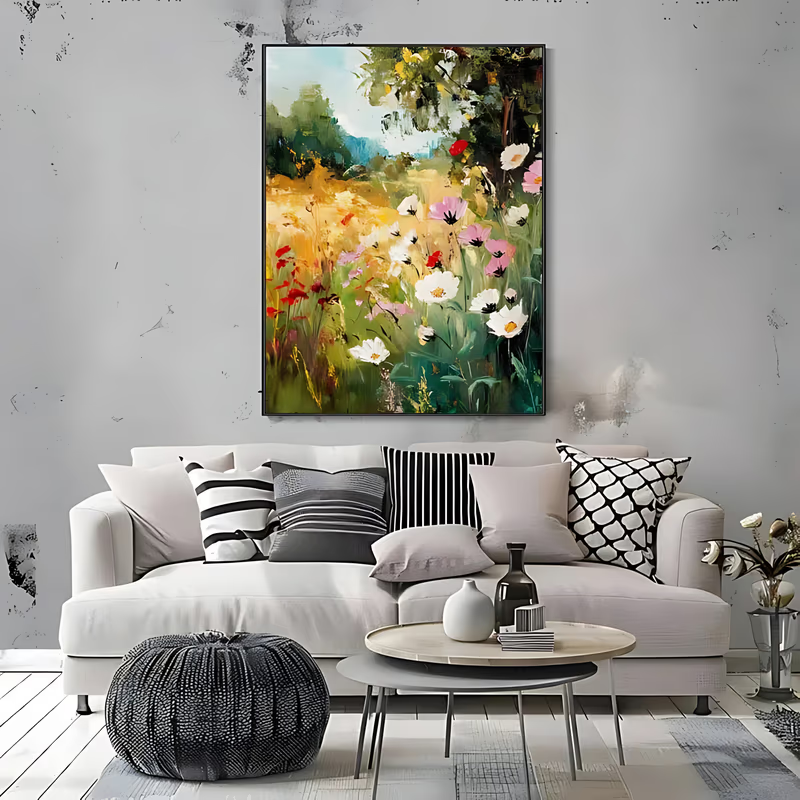
On the one long, unbroken wall, usually behind the sofa or facing the windows: one tall canvas or a stacked pair, starting just above the furniture and stopping well short of the cornice.
An Altbau salon rarely has a long, empty wall. Double doors (Flügeltüren) lead to the next room, tall windows face the street and the stucco cornice runs along the top, leaving tall panels of wall that suit a vertical painting. A sofa back at about 85 cm under a 3.5 m ceiling leaves some 2.5 m of bare wall: a canvas 150–200 cm high (59–79 in) fills it, where a small print floats.
Hang it from the furniture up. German hanging guides borrow the museum rule of a picture centred at about 1.60 m and 10–30 cm above the furniture; under an Altbau ceiling, keep the gap, let the centre rise and leave plain wall below the cornice. The living rooms in AD Germany's 2026 round-up favour one painting over the sofa: an oil by the owner's husband over the sofa in one Berlin Altbau, the owner's own painting over the sofa in another. A Frankfurt couple hang theirs between 1902 stucco and a sideboard, on walls deliberately painted in colour rather than white.

How many paintings does a villa in Grünwald, Blankenese or Meerbusch need?
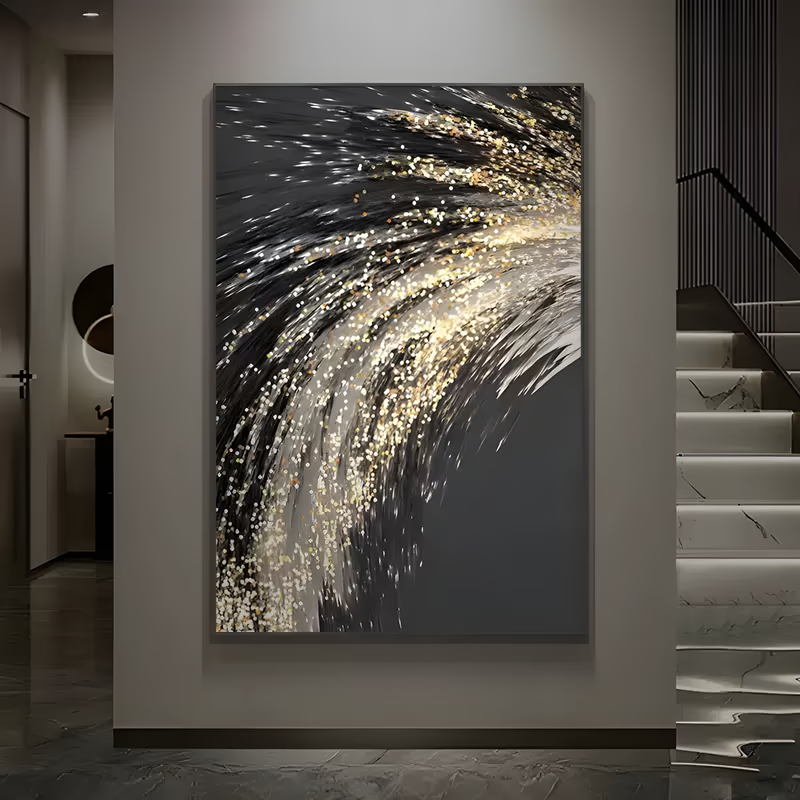
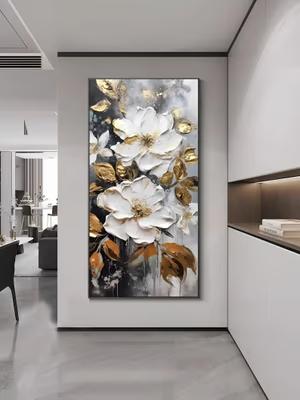
Usually eight to twelve, planned as a set: one statement canvas for the open living area or the stair void, then a series in one palette for the dining room, study, bedrooms and guest rooms.
Grünwald villas listed in September 2026 had 240–797 m² of living space, and Blankenese's list included a 16-room villa of 453 m² in the hillside Treppenviertel. Twelve villa listings in nearby Nienstedten that month sold gardens, Elbe views and square metres without a word about art, so the walls arrive empty.
Count the walls you face, not the rooms. One large space takes the statement piece: a 1997 half-villa in Meerbusch has a split-level living area whose ceiling reaches 7 m in places, a wall for a canvas of 2 m or more, or a vertical set. The smaller rooms take a series in a shared palette, so the house reads as one. Ten pieces or more reach volume pricing, each canvas arrives labelled for its room with a packing list, and art planned while the interior architect draws the joinery fits best. More on art for whole villas.
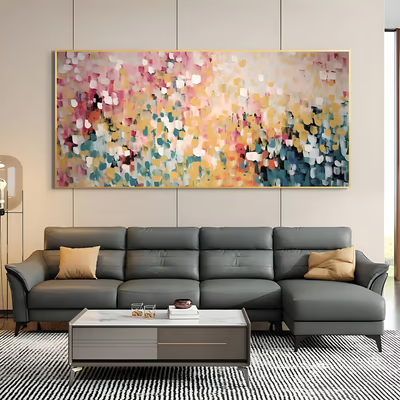
What suits the Berliner Zimmer, the Wohnküche and the dining wall?
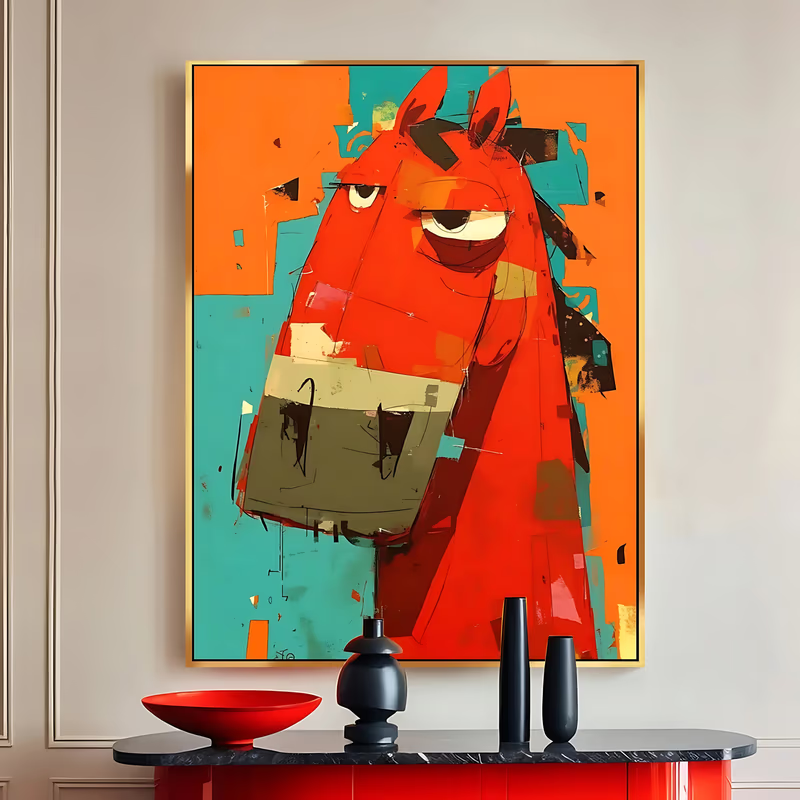
In the Berliner Zimmer, where one corner window lights the room, a light-ground painting in warm colours; in an open kitchen and dining space, a horizontal piece over the table or a bold one over the sideboard.
The Berliner Zimmer is the large corner room linking the front of a Berlin tenement to its side wing, lit by a single window in one corner. Many households use it as the dining room, and the light decides the painting: dark, heavily textured work sinks into the far wall, while a light ground and warm colours hold their own. Hang it on the wall the window lights.
In a new build, kitchen, table and sofa often share one open room of 50 m² or more, as planning guides recommend, and the dining wall is often the only one free of cupboards and windows. A horizontal canvas two-thirds to three-quarters the length of the table or sideboard holds it. Either way, the room is lived in daily: the Gute Stube, the parlour kept for Sundays and guests, gave way to the everyday living room by the 1970s, so choose a painting you are glad to see at breakfast.
What hangs in the Diele, the long Altbau corridor and the stairwell?
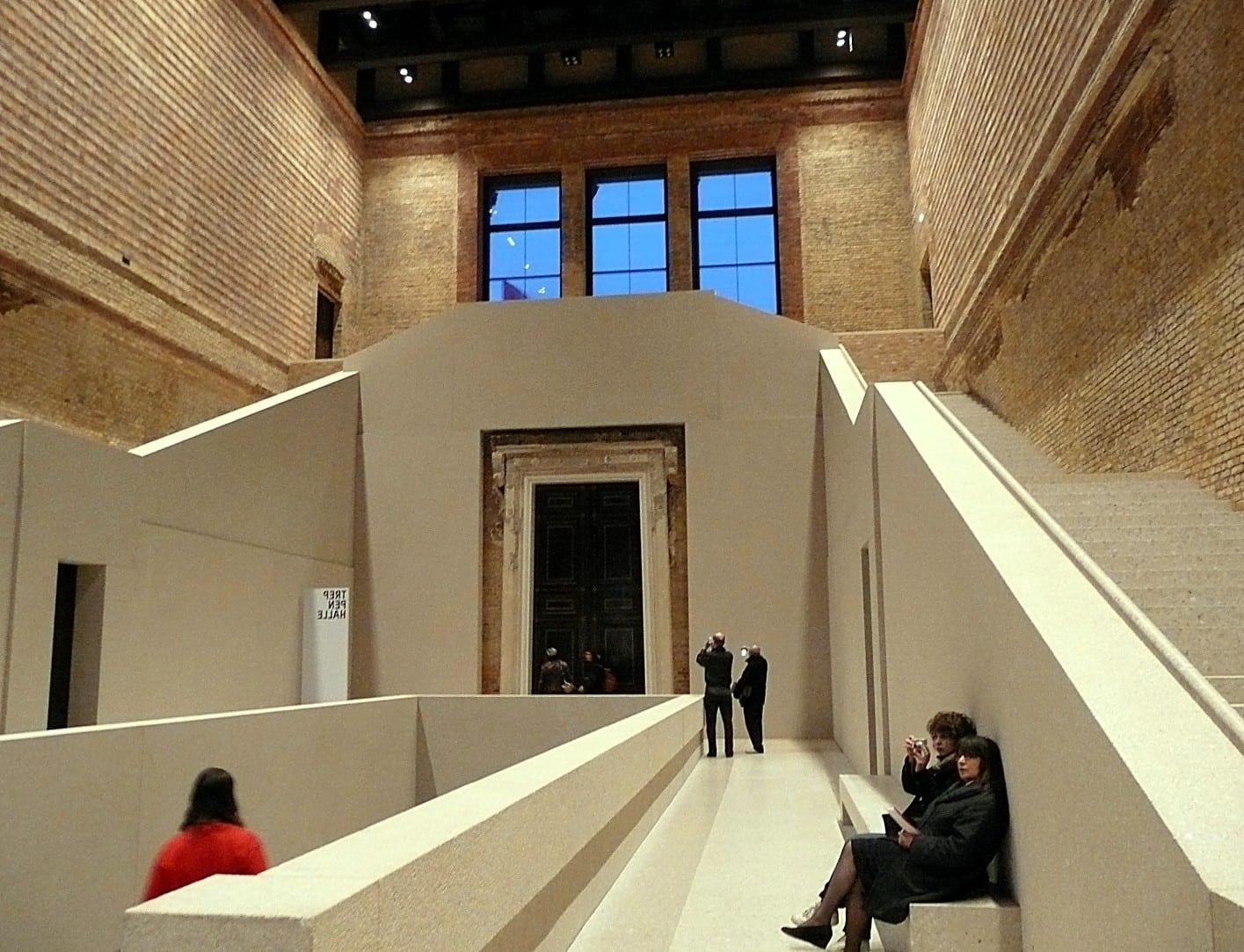
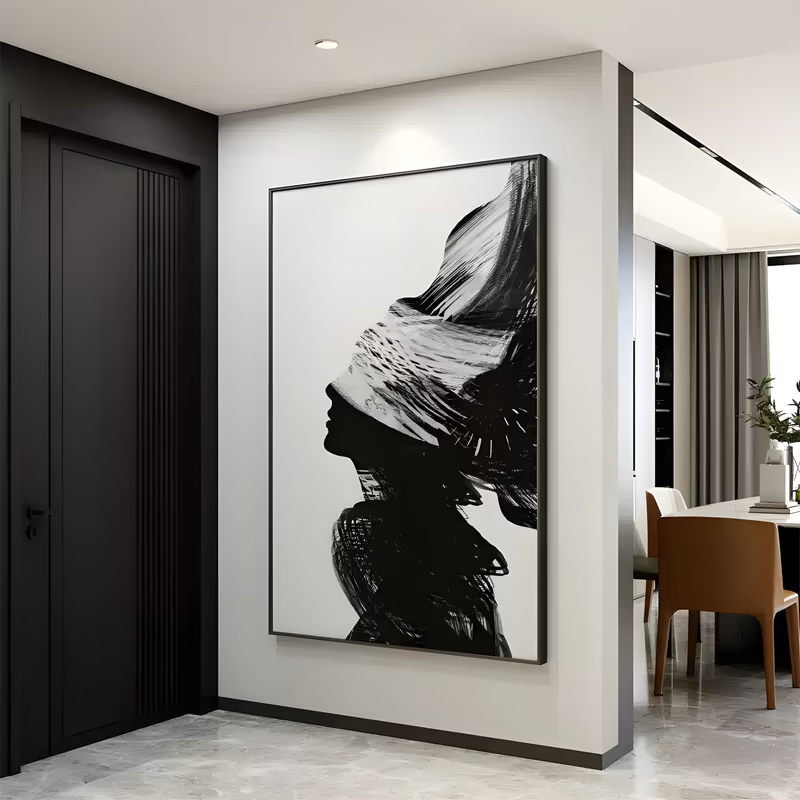
One vertical piece facing the front door, a series of three to five smaller canvases along the corridor, and the tallest painting in the house in the stair void.
Planning guides allow at least 5 m² for an entrance hall, so the Diele usually has one wall worth a painting, the one facing the door: a vertical canvas of 80–120 cm suits it. The long, narrow Altbau corridor suits a run of smaller canvases painted as a series, all the same height and palette, hung on one centre line.
Check the way in before choosing a size. A villa's stair void takes the tallest work in the house, hung to read from the half-landing. See art for entrances and hallways.
How do you hang art under a Dachschräge or in a glass-walled tower flat?
Under a sloping roof, the main painting goes on the gable or another full-height wall, with only low, wide pieces under the slope; in a tower flat, it goes on the one solid wall behind the sofa or the bed.
Attic flats (Dachgeschosswohnungen) look larger on paper than on the wall: floor under a ceiling lower than 2 m usually counts only half towards the listed living area. The full-height walls, usually the gable ends and the partition walls, take the main canvas; under the slope, keep to low horizontal or panoramic pieces, with the top edge clear of the slope.
Tower flats turn the problem round. A 97 m² residence on the 41st floor of Frankfurt's Grand Tower has floor-to-ceiling glazing on two sides, so the solid wall behind the sofa or the bed carries the painting, usually a horizontal of 120–160 cm. New builds are similar: the average new dwelling had 96.2 m² in 2024, with ceilings mostly of about 2.4 m, so the long, low sofa wall takes a horizontal canvas or a pair.
Which painting suits the Schlafzimmer, the guest room and the home office?
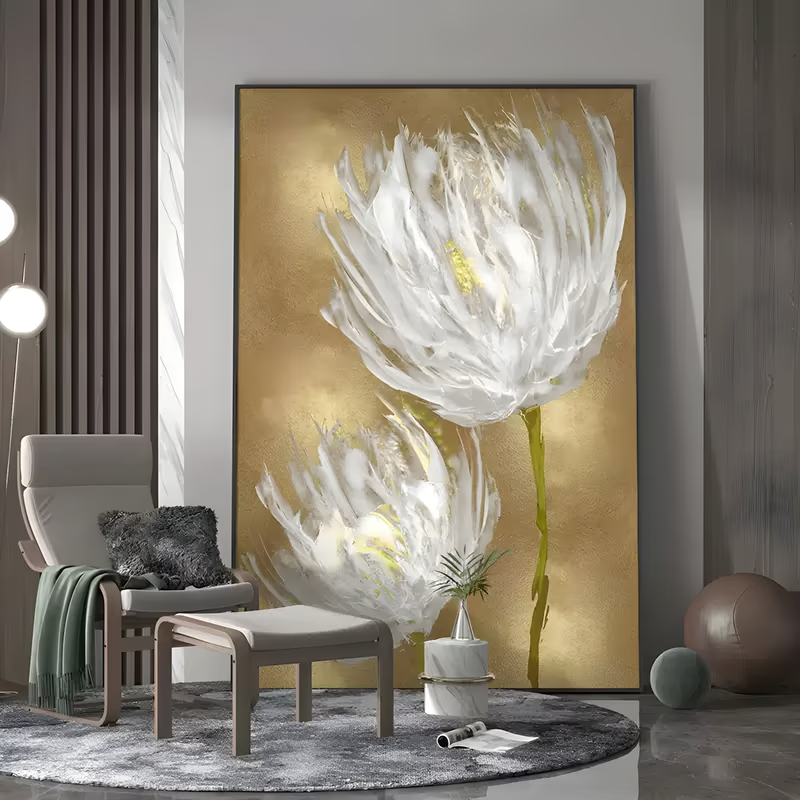
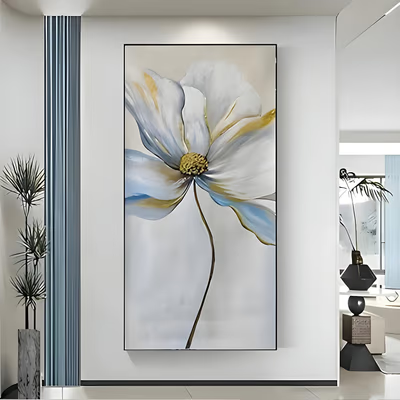
Something calm above the bed, about two-thirds of its width; smaller pieces from the same series in the guest rooms; and a quiet canvas on the wall behind the desk, the one your video calls show.
In a parents' bedroom of 16–20 m², the size German planning guides suggest, hang one calm piece above the bed, about two-thirds of its width and 20–30 cm above the headboard, or a vertical either side of it; landscapes, seascapes in North Sea greys and blues, florals and quiet abstracts suit a room you wake up in. Guest rooms are where a series pays off: canvases from one design, varied in size or colour, give each room its own piece. Behind the desk, the wall colleagues see on every call wants a calm canvas of 80–120 cm. See art for bedrooms and art for home offices.
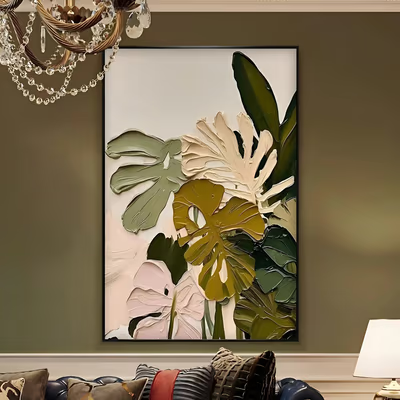
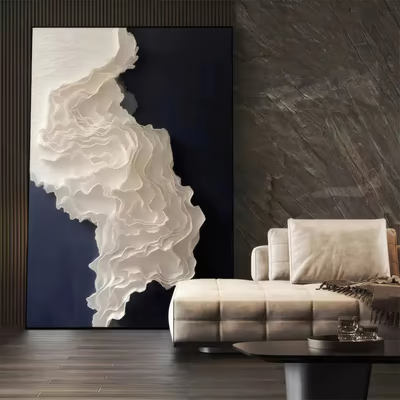
Renting in Berlin, Munich or Hamburg: will the painting move with you?
Choose it so that it does: most German households rent, so pick sizes and finishes that will suit the next flat as well as this one.
Only about 47% of German households own their home, the lowest share in Europe, so many readers rent and will move again. Buy for the next wall too: a vertical of 100–150 cm works under a 2.5 m ceiling and a 3.5 m one alike, a stretched canvas without a heavy frame is light to carry, and a picture rail under the cornice lets you rehang without drilling.
The wall colour changes with the flat as well: in a 2017 snapshot only one German living room in four was white, with beige and brown the favourite, so choose a palette that sits as happily on warm neutrals as on white. If the next room needs a companion piece, we keep the code of every order on file, so a second canvas can be painted from the same design, resized or recoloured.


How does ordering a painting for a German home from iHomeArt work?
Send a photo of the wall with its width and the ceiling height; we suggest a size and designs, and you approve your own canvas in photographs at every stage before it ships.
German shoppers are used to sending things back: nearly one in four e-commerce parcels in Germany is returned, most of them clothes. A painting made to your specification is different: you approve it from photographs before it ships, so it is not returnable once finished. Every iHomeArt canvas is painted to order, so your safeguard comes first: photographs or video at each stage, the next stage only after you approve, and the final photograph approved before dispatch. That is why finished pieces are not returnable; damage in transit is rare, under 0.01% of pieces, and if it happens we take it up with the carrier and work out a solution with you, such as a replacement or a refund.
Choose the finish for the way in: rolled is the lightest and most economical, and the easiest up an Altbau stair; stretched or framed arrives ready to hang, and heavily textured work always travels that way. For your own street, house or view, see paintings from your own image; for subjects and palettes, taste and styles; for the overview, the Germany wall art guide.
Each canvas can travel stretched and ready to hang, framed, or rolled; a rolled canvas, the lightest and most economical way to send a large painting, arrives without stretcher bars, and any local framer can stretch it for you.
Altbau interior FAQs
Can you paint my Altbau street, my house or the view from my balcony?
Yes. Send us the photograph, whether of your Gründerzeit façade, the villa from the garden or your family, with the size of the wall. We tell you how it will translate to canvas, suggest a size and finish and paint it by hand. You need to own the image or have permission to use it, and the design can be kept exclusive to you if you ask before we start.
How long does a painting take to reach Berlin, Munich, Hamburg or Frankfurt?
About 10 days to paint, then 5–7 days by DHL, FedEx or UPS express to any address in Germany, from a walk-up in Prenzlauer Berg to a villa in Grünwald. Larger orders may travel by air or sea freight instead; we choose the best route for your address and confirm the shipping cost before anything leaves.
Can the painting match my wall paint, sofa or curtains?
Yes. Photograph the paint, fabric or floor in daylight, ideally next to a sheet of white paper, and send it with the size of the wall. The palette is mixed to those photographs, and you see the colours on your own canvas in the stage photographs before the next stage starts.
Where should a painting not hang in a German flat?
Avoid the wall directly above a radiator or a working tiled stove, where rising heat dries the canvas, and walls in strong afternoon sun behind floor-to-ceiling glass. A bathroom without good ventilation is too humid for canvas. To clean it, dust with a soft, dry cloth and never use sprays.
Can I order one painting now and the rest of the house later?
Yes. The minimum order is one piece, and a first canvas can serve as your sample if you are planning more. We keep the code of every order on file, so the rest of a flat or villa can follow months later in the same design and palette. Volume pricing starts at ten pieces ordered together.
Can you paint a copy of a Caspar David Friedrich for my salon?
Yes. Hand-painted reproductions are part of what we do, and a work whose copyright has long expired, such as a Friedrich landscape, can be painted at the size your wall needs. A work still in copyright needs the rights holder's permission first. Nothing is printed: every reproduction is painted by hand on canvas, in acrylic as standard or in oil on request.
Germany
Send us your wall, Altbau or new build
Send a photo of the wall, its width and the ceiling height on WhatsApp, with the quote form or by email, and tell us which room it is. We usually reply within one business day with a size that suits the room, a shortlist from some 1,300 designs or a piece designed for it, and a price for each canvas.
More of the Germany guide
The overview and each part of the guide answer one buying question for Germany.
- Germany: overviewWall art in Germany, hand-painted to the size of your wall for Altbau flats, villas, offices and hotels.
- Offices & institutionsOffice wall art in Germany
- Hotels & restaurantsHow to choose art for hotels and restaurants in Germany, from Altbau lobbies to Alpine inns.
- Where to buyWhere to buy art in Germany
- Taste & stylesGerman wall art ideas
- Size guideA wall art size guide for German rooms, in cm and inches
Sources
- Retourenforschung.de – Neuer Rekord: 2025 voraussichtlich 550 Millionen Retourenpakete · 2025-11-25
- Gute Stube (Wohnraum) – Wikipedia (de)
- Wandfarben – Statista Infografik · 2017-08-16
- Bilder aufhängen: 6 Tipps & Regeln – Wohnglück
- Raumhöhe – Wikipedia (de) · 2024-09-16
- Wohnung kaufen in Berlin-Charlottenburg – immobilo · 2026-09-18
- Villa kaufen in Grünwald (82031) – 20 Angebote | immowelt · 2026-09-18
- Villa kaufen in Hamburg Blankenese – 11 Angebote | immowelt · 2026-09-18
- Einzigartige Bauhaus-Villenhälfte in Alt Meererbusch – Baum Immobilien · 2026-09-18
- Luxusimmobilien Frankfurt kaufen, Marktüberblick 2026 · GT·41 · 2026-09-18
- 14,4 % weniger fertiggestellte Wohnungen im Jahr 2024 – Statistisches Bundesamt · 2025-05-23
- Wie groß sollte ein Wohnzimmer sein? | SchwörerHaus Blog · 2024-02-01
- Raumgrößen: Richtwerte für die Raumaufteilung im Grundriss – Fertighaus.de · 2026-08-19
- Engel & Völkers – Villen Hamburg Nienstedten · 2026-09-18
- Sparkasse.de – Deutschland ist Europas Schlusslicht beim Wohneigentum · 2025
- AD Magazin: Die schönsten Wohnzimmer Deutschlands: 9 persönliche Wohnwelten von Kreativen · 2026-09-01
- AD Magazin: Wohnung mit Kunst einrichten – so wohnen Johanna & Friedrich Gräfling · 2021-10-03
Researched 2026-09-19. Prices and figures are as published by the sources on the dates shown.