Europe · Germany · Munich · Hamburg · Frankfurt · Berlin · Düsseldorf
German wall art ideas: originals for rooms of oak, sage and sand
iHomeArt paints original canvases by hand and to order for homes, offices and hotels across Germany, from Hamburg and Berlin to Frankfurt and Munich, in the subject, palette and finish each room calls for. These German wall art ideas start where German buyers do, with a real painting rather than a print, then turn the country's colours, landscapes and materials into choices for your wall.
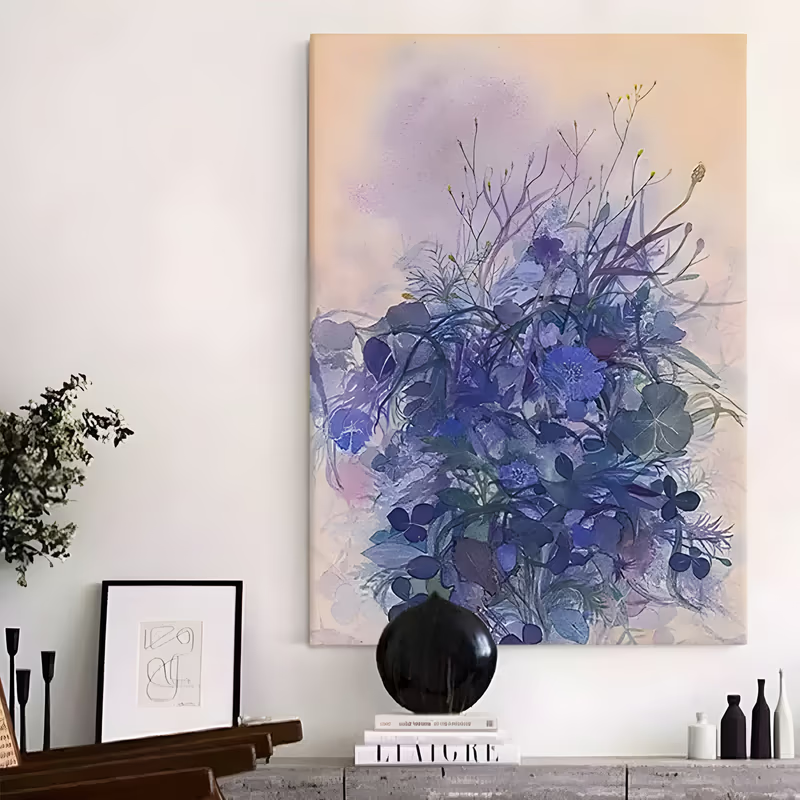
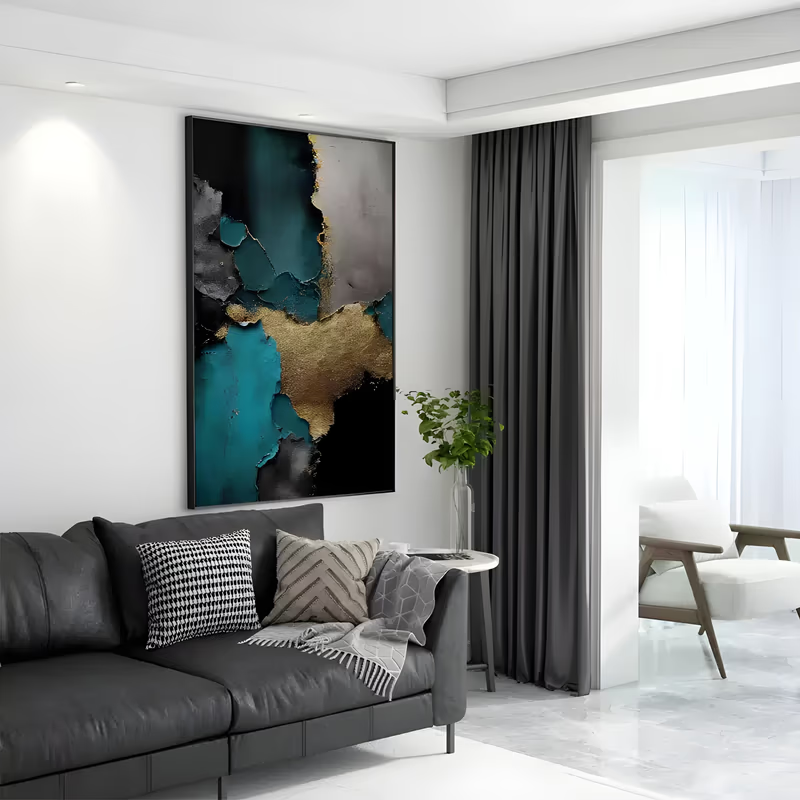
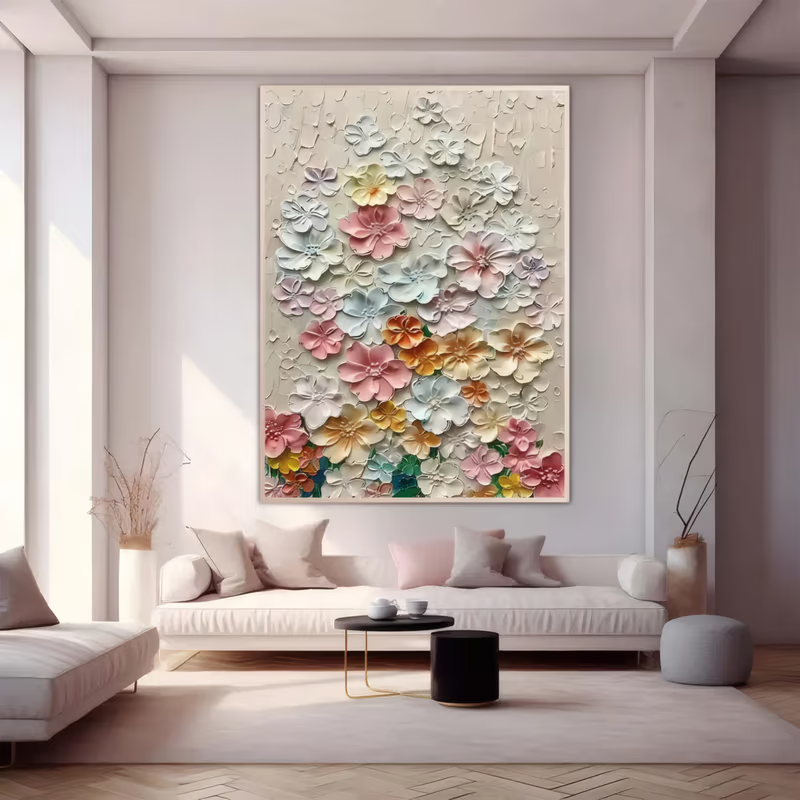
Ordering a painting for a German room from iHomeArt
- 1 pieceMinimum order; volume pricing from 10
- Any sizePainted to the wall, oversized and multi-panel included
- About 10 daysTo paint, then 5–7 days by DHL, FedEx or UPS express to Germany
- Every stageApproved by photo or video before the next one starts
- 50 / 50Half upfront, half once you approve the final photograph
What German walls and buyers start from
- Favourite colour
- Blue 19%, green 14%, red 13%, beige 10% (survey of 1,000 people)
- Living-room walls
- One in four white; beige and brown the favourite at 20% (2017)
- Creatives' living rooms
- 4 of 9 in a 2026 AD round-up hang an original painting; 1 a print
- Younger buyers
- 45.8% of 18–29-year-olds interested in buying art, mostly modern and abstract (2025)
- Art in shared spaces
- Nudes taken out of a town hall in Oberhausen after about 30 complaints (2014)
Original or Kunstdruck: what makes German wall art feel right?
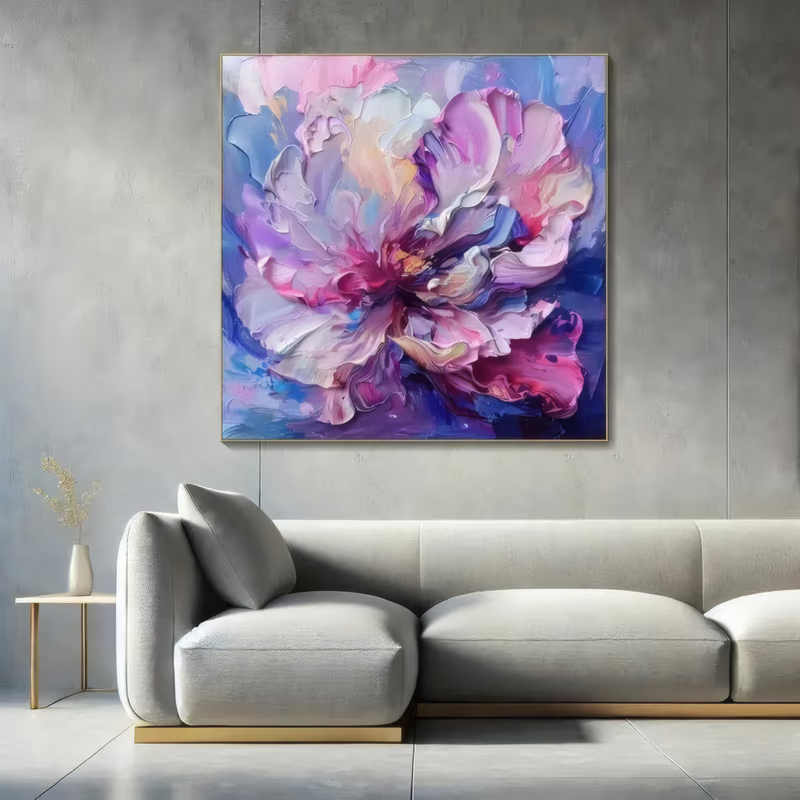
A real painting: in a German room the first question about a picture is whether it is an original, and a canvas painted by hand for that wall answers it before style even comes up.
German taste draws a firm line between an original and a Kunstdruck, the art print, and draws it early. When AD Germany gathered nine of the country's most beautiful living rooms in September 2026, four named an original painting by a living artist, one gallery editions and only one a print. A German design blog puts the rule plainly: better to invest in one original than in many cheap copies. Younger buyers agree: in a 2025 survey commissioned by an online gallery, 45.8% of 18–29-year-olds said they were interested in buying art, drawn above all to modern, abstract and one-off work.
So the first choice is painted or printed; palette, subject and finish follow, in the order of this page. Every iHomeArt canvas is painted by hand, in acrylic or in oil on request, and nothing is printed. You see the brushwork in photographs at every stage, and a side-lit photograph of the texture if you ask.
Which colours suit German wall art: warm neutrals, blue or sage?
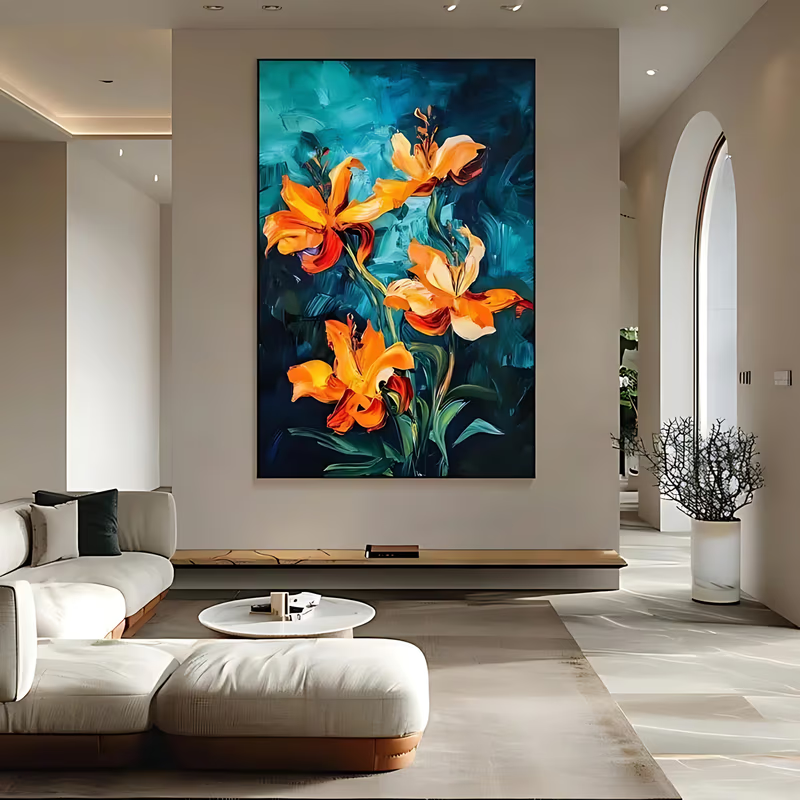
Take the body of the painting from the room's warm neutrals and the accent from Germany's favourite blues and greens, or turn it round with sand and terracotta when the walls themselves are coloured.
Blue is Germany's favourite colour, chosen by 19% in a survey of 1,000 people published by the Deutsches Lackinstitut, ahead of green at 14%, red at 13% and beige at 10%. The walls run warmer: in 2017 only one living room in four was white, and beige and brown were the favourite at 20%. One German paint brand calls its sage green a perennial best-seller and pairs its pastels with terracotta and saffron. So take the body of the painting from the wall, and the accent from the colour the room lacks:
| Your wall | Body of the painting | Accent |
|---|---|---|
| Warm white or beige | Sand, cream, stone | Blue, teal or sage |
| Greige or pale grey | Grey, black, white | Ochre or a seam of gold |
| Sage or green | Sand and ochre | Terracotta or rust |
| Blue, lavender or coloured plaster | Cream and warm white | Ochre, coral or deep blue |
Restraint suits most rooms: one living room in the AD round-up keeps everything in deliberately neutral tones and lets a single painting carry the accent. Coloured walls work too: a Frankfurt couple who wanted to get away from white walls as a backdrop for pictures now live with sky blue and lavender in pigmented clay plaster. Send a daylight photograph and the palette is mixed to yours.
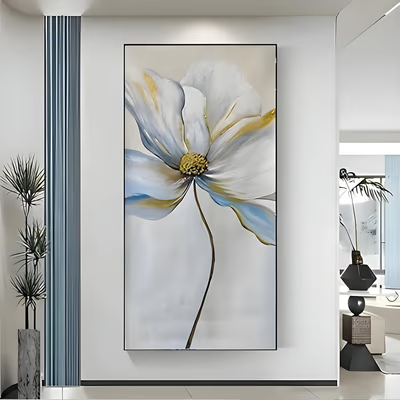
Abstract or figurative: which German art styles suit which room?
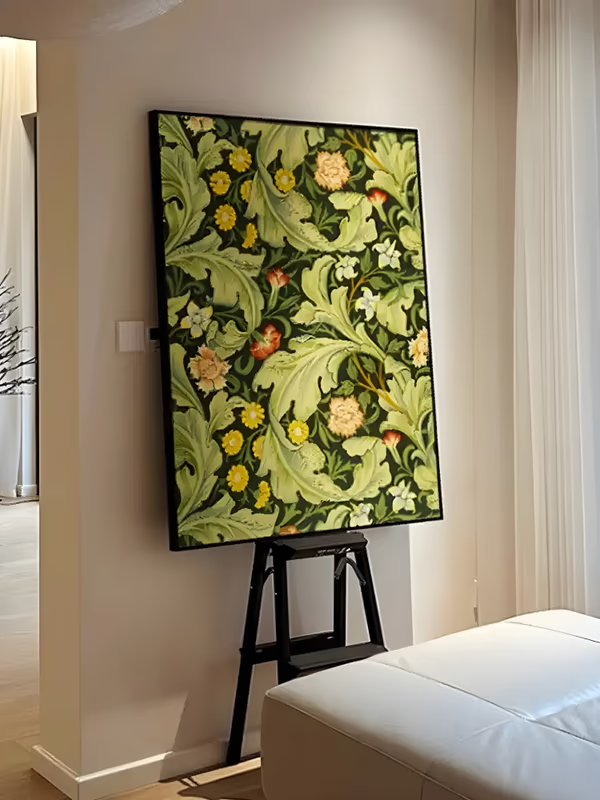
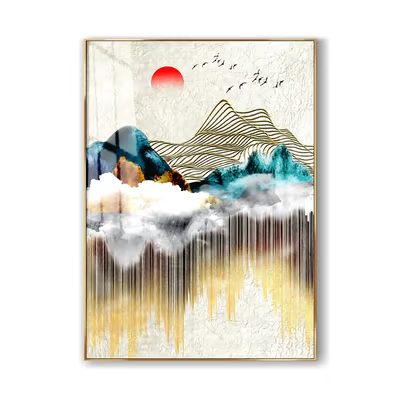
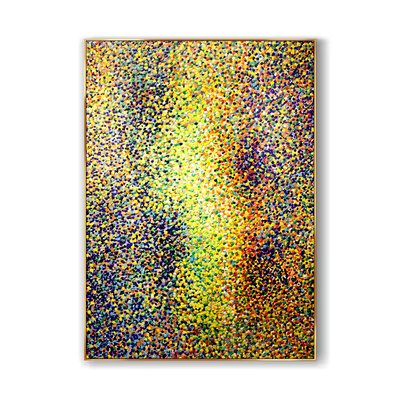
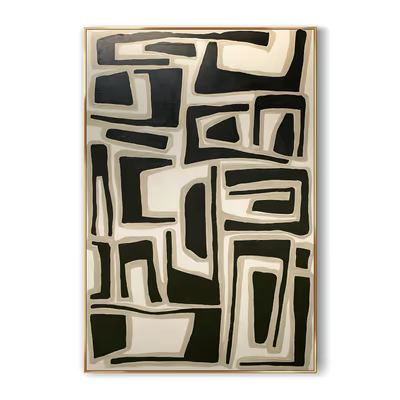
Abstraction, landscape and botanical work for rooms many people share, figurative work for the rooms you keep for yourself; German taste gives both real standing.
Painting carries real prestige in Germany, and its most celebrated living painters move between the abstract and the figurative: the Kunstkompass has ranked Gerhard Richter the world's most sought-after living artist every year since 2010, with Georg Baselitz third in 2025. Leipzig added a figurative current of its own, the Neue Leipziger Schule of Neo Rauch and Rosa Loy, whose recognisable scenes rest on abstract cores.
Use that range room by room. Abstraction is the safe choice where many people pass: Henkel hung its collection, centred on abstract painting, in the offices, corridors and staircases of its Düsseldorf headquarters for decades, and Bauhaus geometry lives on in new rooms, such as the Anni Albers-inspired collages at Kimpton Main Frankfurt, opened in 2025. Figures and nudes are a private choice: Oberhausen took three nude paintings out of its town hall in 2014 after about 30 complaints, and a Munich consultant's rule for companies is simply not to provoke. More on offices in Germany.
At home
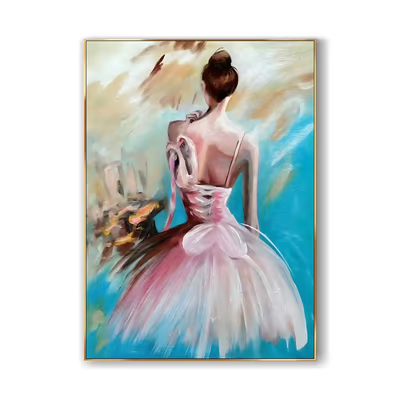
A portrait, a figure group or a nude is your own choice: hang it where friends are invited, not where clients wait.
In offices, practices and hotels
Brief abstraction, landscape or botanical subjects from the start, so no piece has to be swapped after the first complaint.
Can you have a Caspar David Friedrich or another German classic painted?
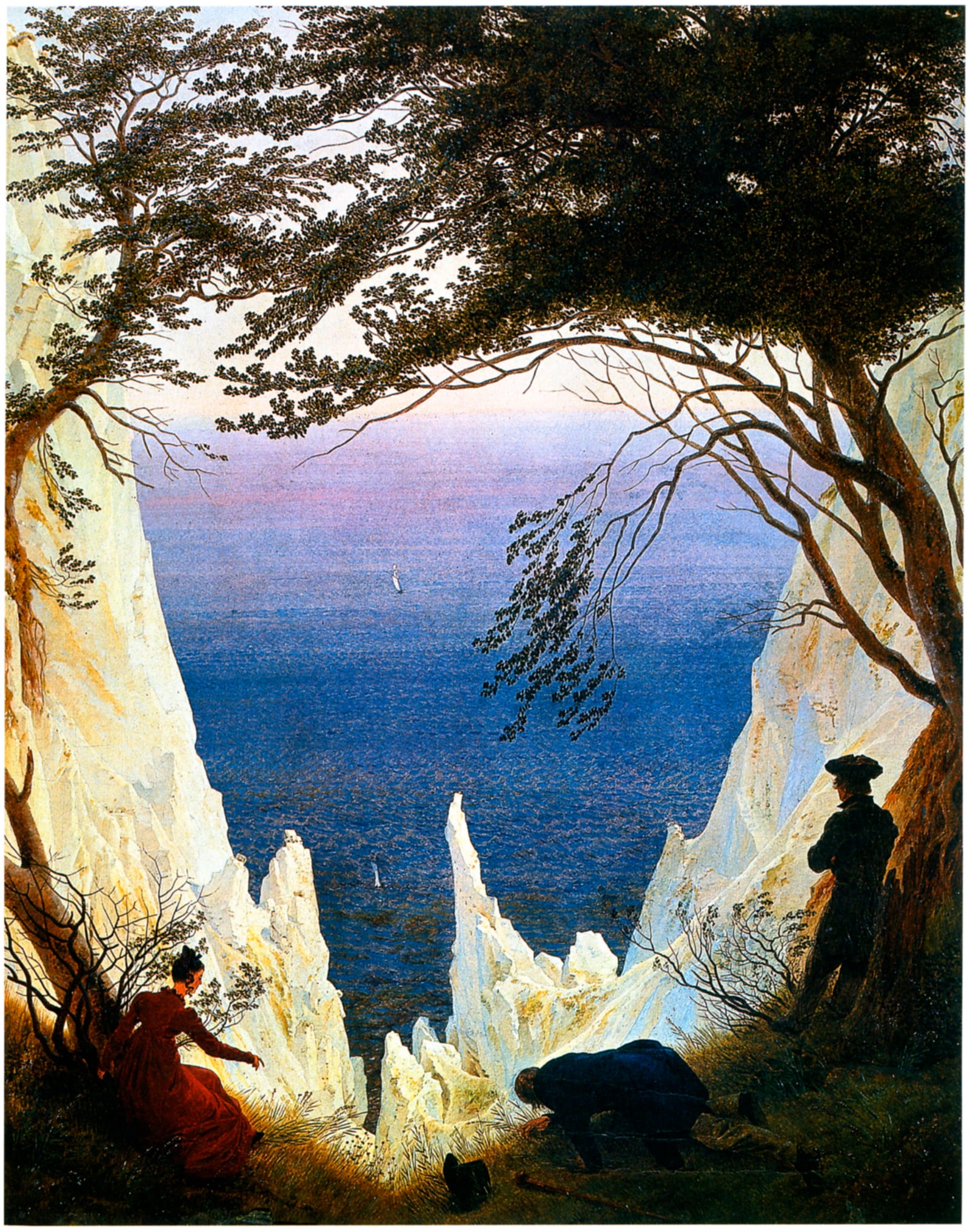
Yes, by hand and at the size of your wall, as long as the work is out of copyright; for a living painter's look we suggest or design a piece in a similar spirit instead.
Caspar David Friedrich's chalk cliffs and misty mountains are the German picture of a calm landscape: wide sky, northern light, few colours. Friedrich died in 1840, so his paintings, like those of the other Romantics and Max Liebermann's gardens on the Wannsee, are long out of copyright, and we can reproduce one by hand at the size your wall needs. In Germany a work stays protected until 70 years after the artist's death, so a Richter or any other living painter's work needs the rights holder's permission. If you love such a look, send us the picture: we suggest catalogue designs in a similar spirit or design a new piece for you. See Impressionist paintings and landscapes.
How does taste change from Hamburg to Berlin, Frankfurt and Munich?

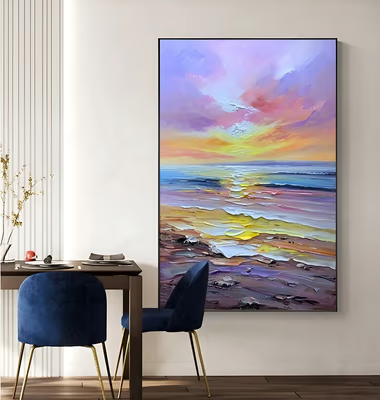
The north leans to sea light and restraint, Berlin to personal contemporary work, Frankfurt and the Rhineland to colour and abstraction, and the south to warmth, wood and craft.
German cities differ more in palette than in subject:
| Region | What you see | What suits the wall |
|---|---|---|
| Hamburg and the north | A Blankenese boutique hotel in an Elbe palette of soft blue, sand yellow, botanical green and dark wood; a top-ranked Hamburg home account called minimal.wohnen | Seascapes and skies in grey, blue and sand; quiet abstraction |
| Berlin | Altbau flats hung with originals from the owners' own circle, such as a husband's oil over the sofa | One personal, contemporary piece per wall; tall verticals for high ceilings |
| Frankfurt | Coloured clay-plaster walls; a bank collection where works on paper dominate | Confident colour and geometric abstraction that hold their own beside photography |
| Düsseldorf and the Rhineland | The academy of Beuys, Richter and Polke, and the Becher school of photography | Large abstraction, strong colour fields, black and white |
| Munich and the south | A designer's show flat in a Schwabing Jugendstil building, hung with contemporary art | Warm palettes and wood tones; alpine landscape and stylised wildlife for country houses |
How do you give a room alpine or Bavarian character without the kitsch?
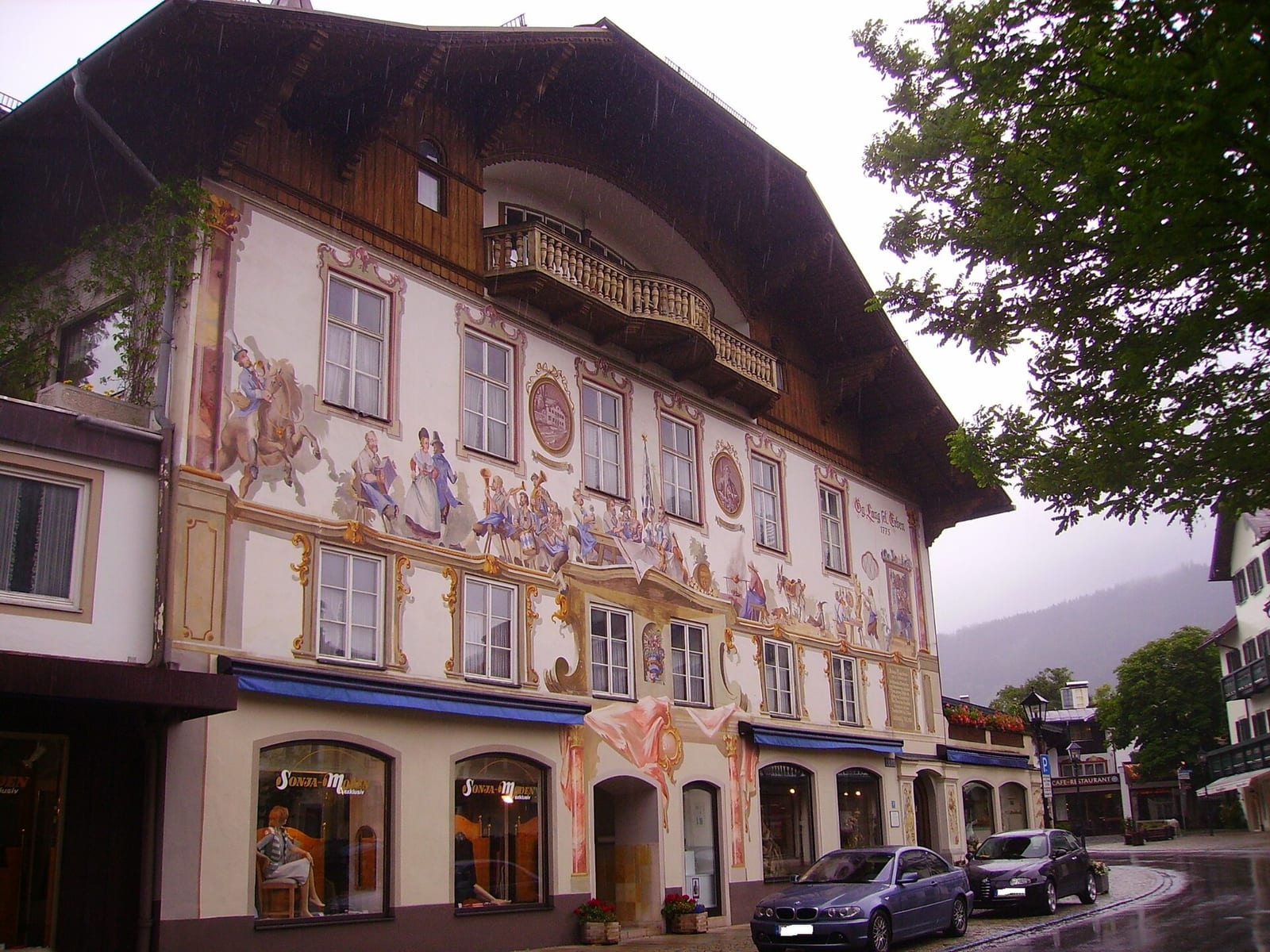
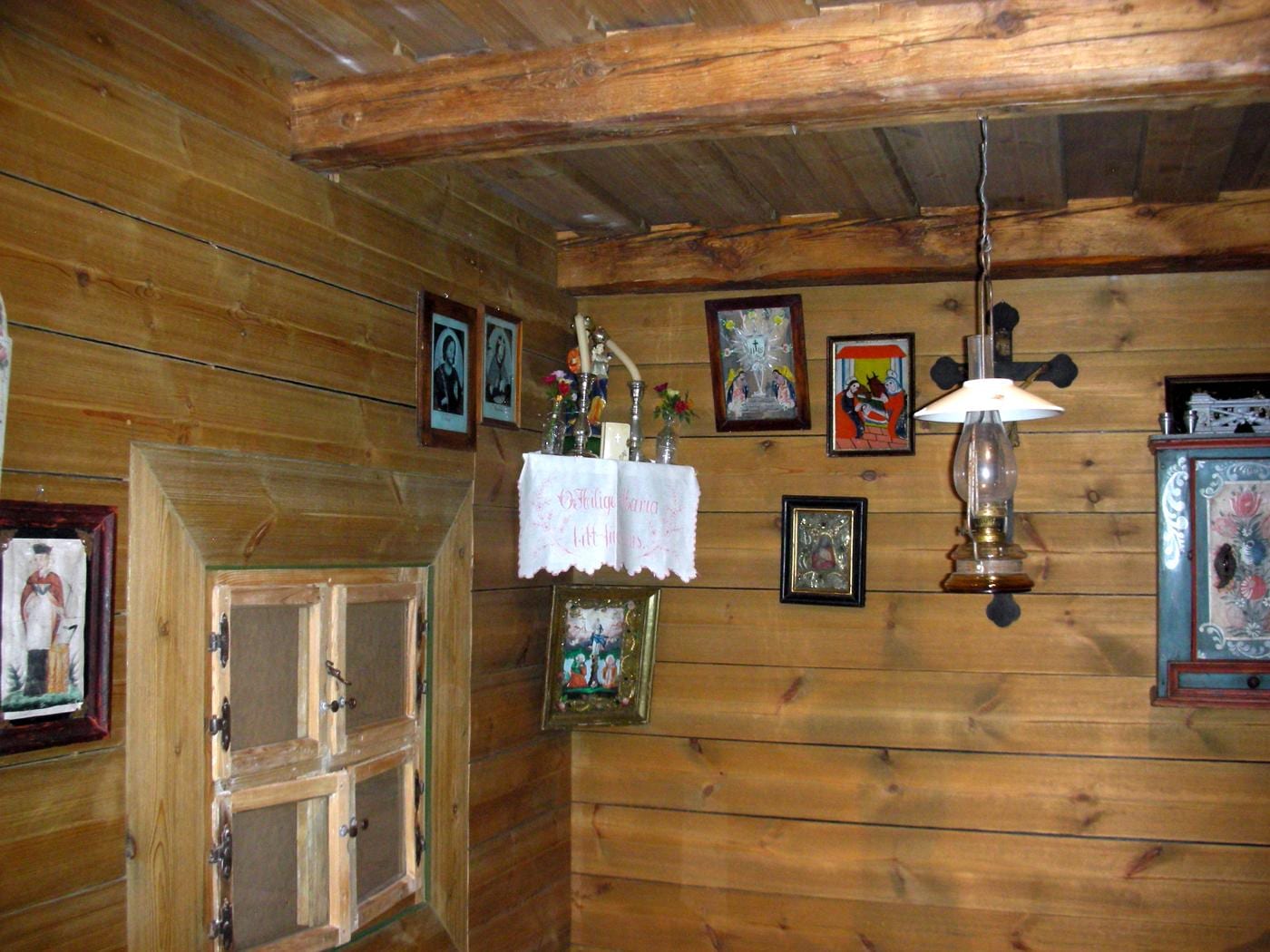
Quote the region rather than copy it: a loosely painted mountain lake or stylised wildlife in earth tones, a touch of folk motif, and never the naturalistic rutting stag in a gilt frame.
German has precise words for what to avoid. The 'röhrender Hirsch', the rutting stag in the mountains, became mass wall art after 1870 through magazine reproductions and is now a byword for kitsch; 'Gelsenkirchener Barock', named after the heavy veneered cabinets of the 1930s to 1950s, still brands a furnishing as tasteless. So stylise: a deer, ibex or capercaillie in earth tones with space around it, or a lake and mountain painted loosely, rather than a photographic stag in an ornate frame.
Bavaria's traditions supply the vocabulary, in small doses. Lüftlmalerei, the Baroque facade painting of Oberammergau and Mittenwald, mixes patron saints with hunting scenes and painted sayings. The Herrgottswinkel, the corner with the crucifix and holy pictures, has been the devotional focus of Catholic homes since the 16th century and is still common in southern inns: leave that corner to its cross and give the painting another wall. Hotels show the modern register, from wood carving and stained glass at Rosewood Munich to a new Frankfurt hotel hung with paintings that rework historical motifs with irony. See wildlife paintings.

When does texture suit a German interior, and which finish goes with it?
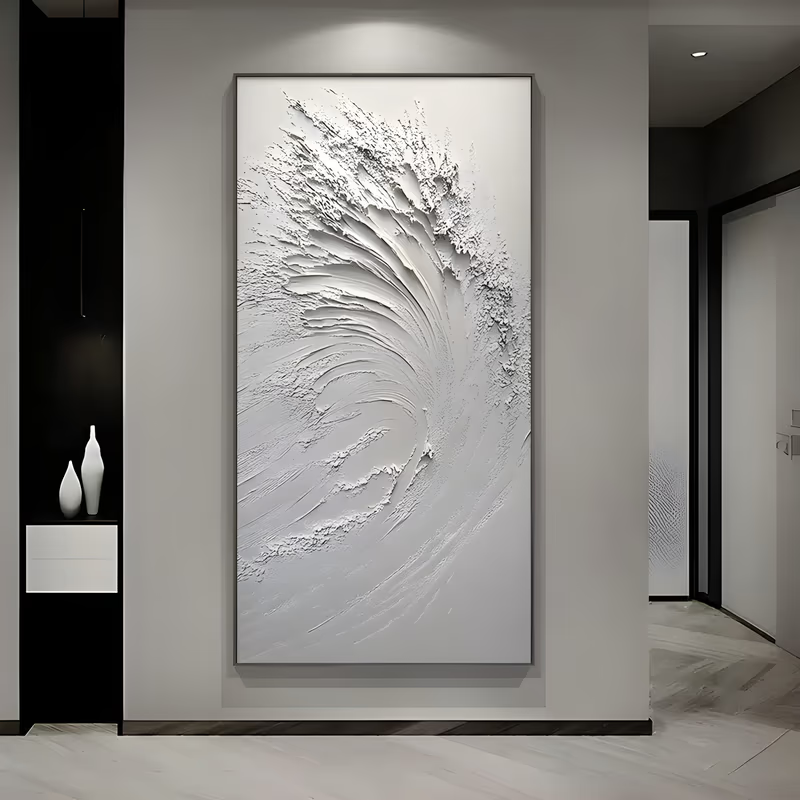


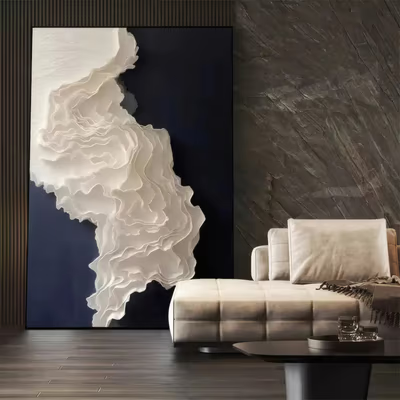
When the room is built from materials such as wood, clay plaster and stone, and the relief stays in one quiet colour; finish it unframed, in a slim frame or in a floater frame.
German interiors are increasingly presented through their materials. One Munich town-villa renovation is described entirely through walnut cladding, an azure glass bar and copper-finished walls, with no artwork mentioned, and the coverage of the 2025 Best of Interior awards names no paintings at all. In rooms like these a flat print disappears, while a canvas with a surface, palette-knife relief or carved plaster, holds its own as one more material. Keep the relief to one or two colours, cream on cream or sand on sand, and it reads as art; glitter, foil and heavy gilding are what tip texture into décor.
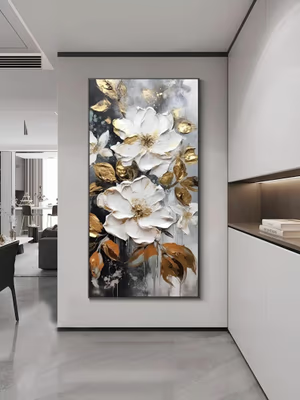
The finish follows the same restraint: most German rooms take a canvas unframed, or in a slim black, white or wood frame, more easily than ornate gold, which works best as a seam inside the painting. Plaster and heavy relief travel stretched or framed, never rolled; a flat canvas can travel rolled, the lightest and most economical way. See textured paintings.
How do you know the style and colours are right before the painting arrives?
You see your own canvas in photographs at every stage and approve each one, so the decision is made before the painting leaves rather than after it reaches you.
Germany is used to sending things back: about 530 million parcels were returned in 2024, almost a quarter of all online parcels. A painting made for your wall works the other way round: each stage starts only once you approve the photographs of the last, and you approve the finished canvas from a final photograph before dispatch, which is why finished pieces are not returnable.
Start with a daylight photo of the room, the wall width and photos of the fabric, wood or plaster the painting must live with. We suggest a shortlist from some 1,300 catalogue designs or design a piece for your project, then resize it, recolour it to your samples or vary it into a series. Your own view, house or logo can be painted too (see paintings from your own image). Sizes for German rooms are in the Germany size guide, and the overview in the Germany wall art guide.
Each canvas can travel stretched and ready to hang, framed, or rolled; a rolled canvas, the lightest and most economical way to send a large painting, arrives without stretcher bars, and any local framer can stretch it for you.
German wall art FAQs
Can you paint Bauhaus-style wall art?
Yes. Bauhaus-style wall art usually means geometric abstraction: circles, bars and grids in red, yellow and blue with black, or in softer earth tones, painted as an original design at the size of your wall. Kandinsky and Klee are out of copyright, so their works can be reproduced by hand; Josef and Anni Albers's work is still protected and needs the rights holder's permission.
What wall art suits a minimal, Scandinavian-style German flat?
Fewer, larger pieces with space around them: one canvas over the sofa rather than a gallery wall, in warm white, sand or stone, with texture doing the work colour would. The look has a wide following in Germany: two of the country's leading home accounts on Instagram, from Hamburg and Stuttgart, carry 'minimal' in their names.
Does a modern painting suit an Altbau with stucco ceilings?
Yes, and mixing eras is part of the look: in one Frankfurt Gründerzeit flat a 2018 painting by Grace Weaver hangs between stucco of 1902 and a Hans Hollein sideboard of 1981. Choose one strong piece per wall, tall enough for the ceiling; a dense pattern or a figurative work stands up to ornate stucco better than a pale minimal canvas.
Should I choose acrylic or oil for a painting in Germany?
Acrylic on canvas is our standard: it dries quickly, keeps its colour and suits palette-knife texture and relief. Oil is available on request, if you want the slower blending and deeper sheen of a traditional oil, for a landscape in the manner of the Romantics, say. Either way the canvas is painted by hand and nothing is printed.
How long does a painting take to reach Germany?
About 10 days to paint, then 5–7 days by DHL, FedEx or UPS express to Hamburg, Berlin, Munich or any other German address. Larger orders may travel by air or sea freight instead; we choose the best route for your address and confirm the shipping cost before anything leaves.
Germany
Show us the room, and we will suggest the painting
Send a daylight photo of the room with the wall width, and tell us which colours, woods or fabrics the painting must live with, on WhatsApp, through the quote form or by email. Usually within one business day you have a shortlist or a design idea, a size that suits the wall and a price for each piece.
More of the Germany guide
The overview and each part of the guide answer one buying question for Germany.
- Germany: overviewWall art in Germany, hand-painted to the size of your wall for Altbau flats, villas, offices and hotels.
- Villas & Altbau homesWhich painting each room of a German home takes, from the Altbau interior's stucco salon to the villa stair and the Dachschräge.
- Offices & institutionsOffice wall art in Germany
- Hotels & restaurantsHow to choose art for hotels and restaurants in Germany, from Altbau lobbies to Alpine inns.
- Where to buyWhere to buy art in Germany
- Size guideA wall art size guide for German rooms, in cm and inches
Sources
- Retourenforschung.de – Neuer Rekord: 2025 voraussichtlich 550 Millionen Retourenpakete · 2025-11-25
- LTO — Kunst in der Kanzlei: Was passt, und was lohnt sich? · 2015-03-12
- Umfrage: Junge Generation zeigt Interesse an Kunstkauf – retail-news.de · 2025-09-24
- Nackte Haut: Kunst im Rathaus muss weg – Abendzeitung München · 2014-11-26
- Herrgottswinkel – Wikipedia (de)
- Lüftlmalerei – Wikipedia (de)
- Röhrender Hirsch – Wikipedia (de)
- Gelsenkirchener Barock – Wikipedia (de)
- Die Lieblingsfarbe der Deutschen ist Blau – Deutsches Lackinstitut · undated press release (post-2014)
- Wandfarben – Statista Infografik · 2017-08-16
- Design & Kunst zum (Er)Leben – Zu Besuch in der Show Flat von Stephanie Thatenhorst, München (AnneLiWest) · 2024-09-03
- Mut zur Farbe – Boutiquehotel stilwerk Strandhotel Blankenese (md) · 2025-05-05
- Berliner Architekt Christopher Sitzler gewinnt Best of Interior Award 2025 – baunetz interior|design · 2025-10
- Rosewood Munich Sets a New Standard for Luxury in Bavaria · 2025-01-01
- Kimpton Main Frankfurt eröffnet als Design-Hotspot (HOGAPAGE) · 2025-03-17
- Motel One eröffnet zwei Hotels in Frankfurt (HOGAPAGE) · 2026-02-24
- Top 20 Home & Interior Design from Germany on Instagram Influencers – influData · 2026-09-18
- Top 20 Home & Interior Design from Hamburg on Instagram – influData · 2026-09-15
- Living trends 2026: Current furnishing & colour trends – MissPompadour · 2026-09-18
- Sammlung Deutsche Bank – Wikipedia (de) · 2026-09-18
- Kunstkompass – Wikipedia (de) · 2026-09-18
- Neue Leipziger Schule – Wikipedia (de) · 2026-09-18
- Kunst in der eigenen Wohnung: Was sollte man beachten? – designmadeingermany.de · 2022-12-02
- AD Magazin: Die schönsten Wohnzimmer Deutschlands: 9 persönliche Wohnwelten von Kreativen · 2026-09-01
- AD Magazin: Wohnung mit Kunst einrichten – so wohnen Johanna & Friedrich Gräfling · 2021-10-03
- MünchenArchitektur: Familienvilla im Grünen (Gabriela Raible Innenarchitektur) · undated (fetched 2026-09-19)
- Kunstakademie Düsseldorf – Wikipedia · 2026-09-19
- Henkel – Die Kunstsammlung – Kunstsammlung NRW · 2016-04-08
Researched 2026-09-19. Prices and figures are as published by the sources on the dates shown.