Europe · Germany · Munich · Hamburg · Frankfurt · Berlin · Düsseldorf
Where to buy art in Germany, and when to commission a painting
iHomeArt paints original canvases by hand and to order for Altbau flats, villas, offices and hotels across Germany, from Hamburg to Munich, at the size and in the colours your wall needs. Where to buy art in Germany depends on the wall: a gallery for a named artist, a Kunstverein or academy show for a first original, a décor shop for a standard sofa wall, and a commission once the wall outgrows what is in stock.
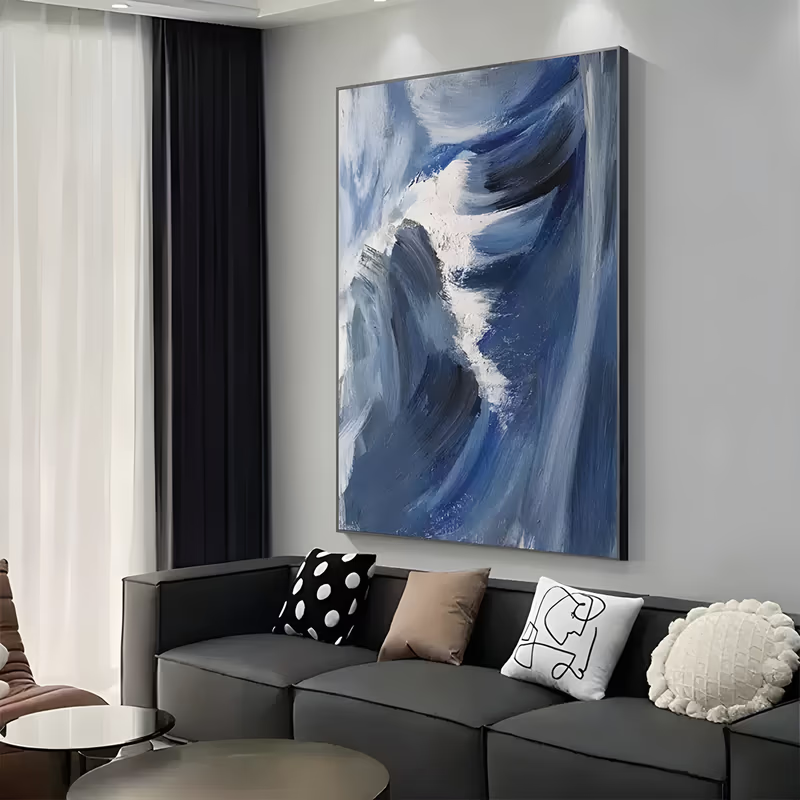
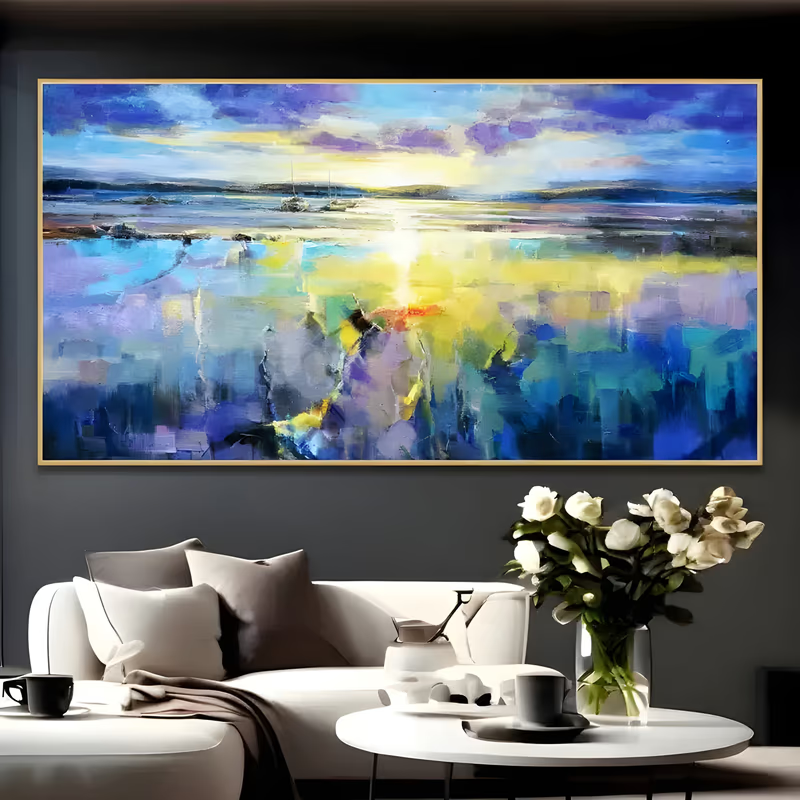
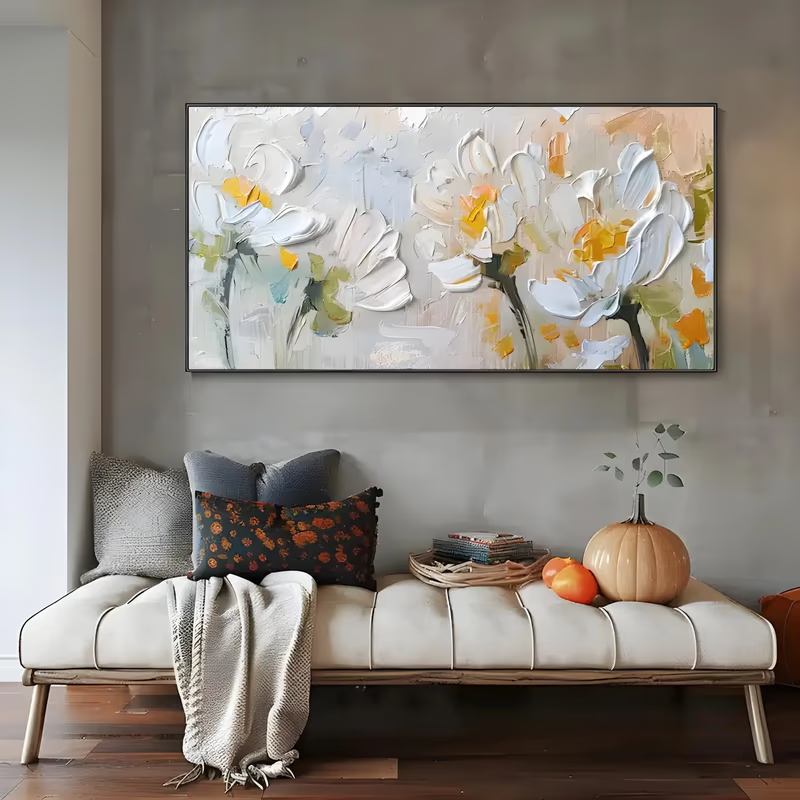
Ordering a painting in Germany from iHomeArt
- 1 pieceMinimum order; volume pricing from 10
- Any sizePainted to the wall, oversized and multi-panel included
- About 10 daysTo paint, then 5–7 days by DHL, FedEx or UPS express to Germany
- Every stageApproved by photo or video before the next one starts
- 50 / 50Half upfront, half once you approve the final photograph
How Germany's art market works for a buyer
- Galleries
- About 700, selling more than 60% of their work to private buyers
- Gallery pricing
- In Berlin: height plus width, times a factor for the artist's standing
- Kunstvereine
- Annual editions for members each winter, mostly objects and works on paper
- Painters
- More than 64,000 self-employed visual artists in the artists' social fund
- Art Cologne
- 5–8 November 2026: 164 galleries from 22 countries
Where to buy art in Germany: which kind of seller suits your wall?
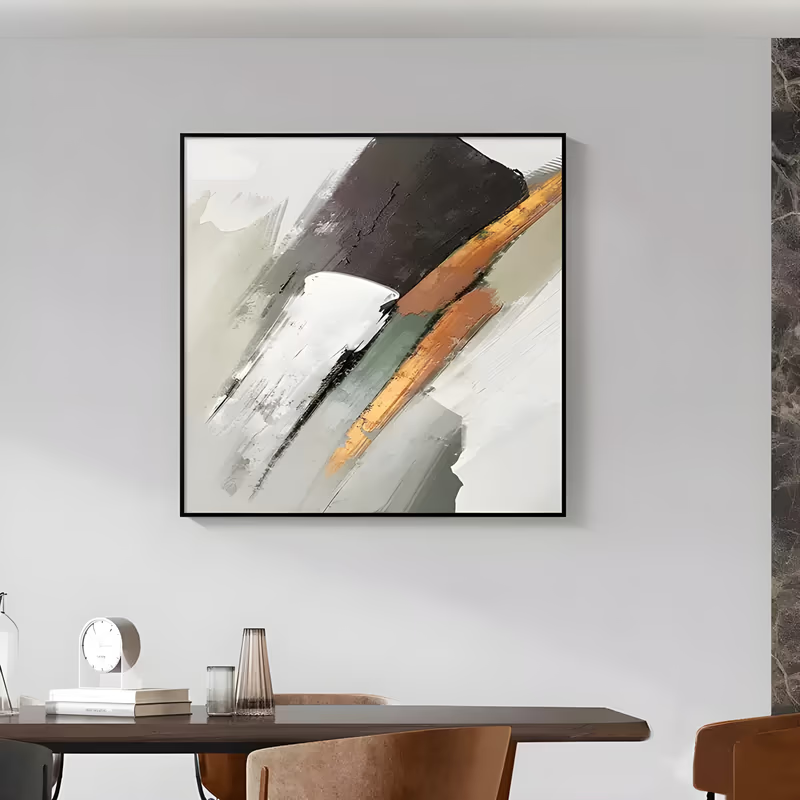
It depends on the wall: a home or décor shop for a ready-made piece at a standard size, a gallery or fair for a named artist, a Kunstverein or academy show for a first original, and a painting made to order once the wall outgrows them all.
Germany buys art through two worlds that rarely meet: some 700 professional galleries, most of them small businesses selling more than 60% of their work to private buyers, and a décor trade that sells printed and hand-painted canvases in the sizes and colours it stocks. Kunstvereine, academies, art consultancies and thousands of painters fill the space between.
| Kind of seller | What you find | Largest size | Best for |
|---|---|---|---|
| Home and furniture stores | Prints, framed reproductions, multi-panel and panoramic sets | Single pictures rarely past 120 cm | A rented flat, a quick change |
| Online décor shops | ‘Handgemalt’ canvases in fixed designs, sizes and colours | Mostly up to 150 × 100 cm; a few at 2–2.4 m | One piece over a standard sofa |
| Galleries and art fairs | Work by represented living artists | The size the artist chose | The piece you collect |
| Kunstvereine, academies, flea markets | Members’ editions, small works, student work, finds | Mostly small | A first original, a gift |
| Painters taking commissions | Their own style, painted to your size | Larger on request, over weeks or months | A piece from an artist you admire |
| Art consultancies | A selection from galleries and artists for your building | Whatever the project needs | Offices, practices, hotels |
| Framers | Stretching onto a Keilrahmen; shadow-gap and classic frames | Whatever you bring | Finishing a rolled canvas |
| Made to order (iHomeArt) | Any design, size and palette; sets painted in one hand | Painted to the wall | Altbau walls, villas, whole homes, hotel and office floors |
Choose by the wall first and the seller second: a print for the kitchen of a rented flat is a shop purchase; a canvas the height of an Altbau salon, or six paintings for one villa, is not. The wider picture is in our Germany wall art guide.
When and where can you buy art in Berlin, Düsseldorf, Cologne and Munich?
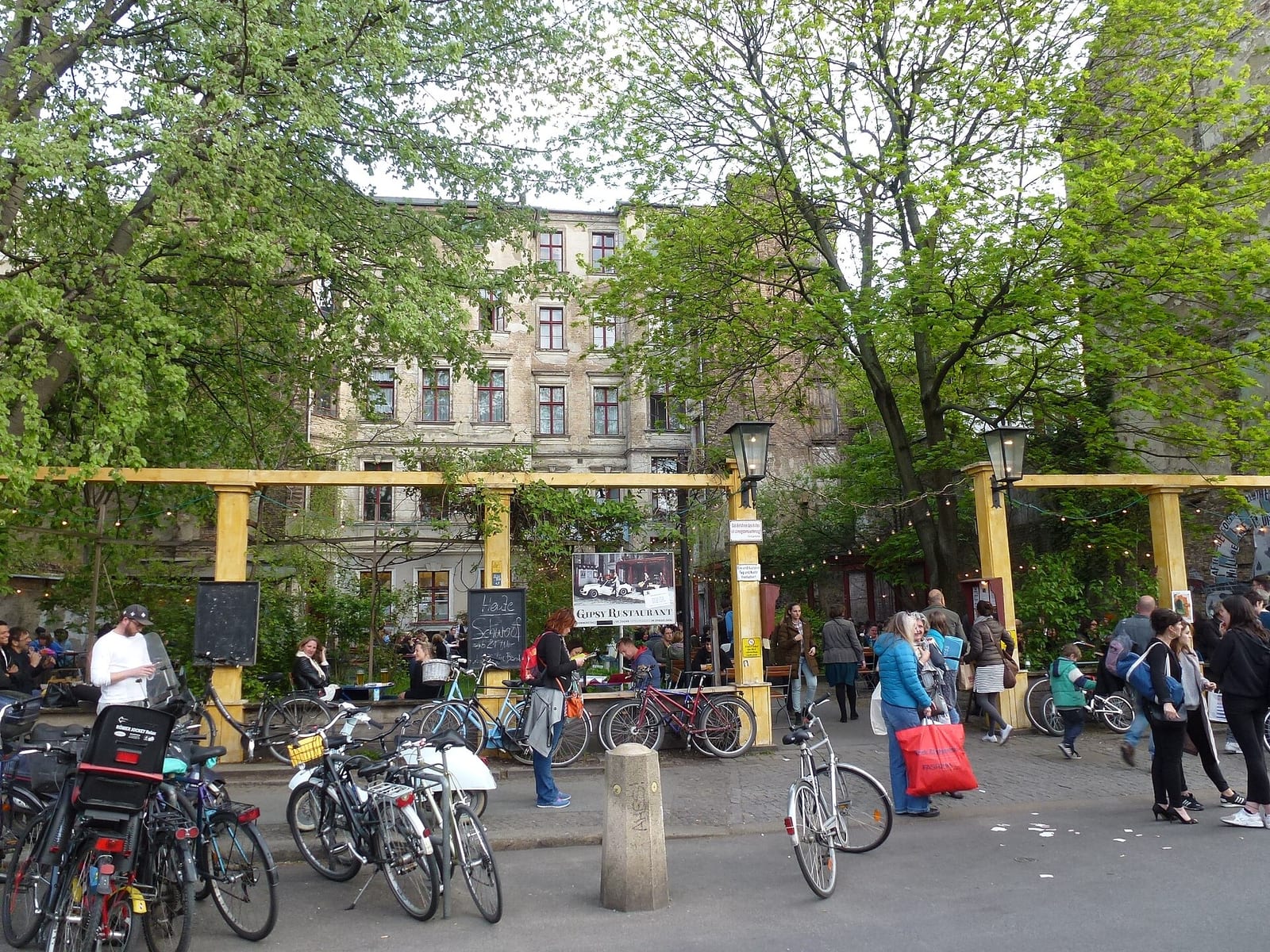
Follow the calendar: the Düsseldorf academy shows in February and July, Art Düsseldorf in April, Berlin and the Rhineland galleries in September, Art Cologne in November and the Kunstverein editions before Christmas.
Germany’s art year runs to a steady rhythm, open to anyone who walks in, starting with the Kunstakademie Düsseldorf, where Joseph Beuys and Gerhard Richter both taught.
| When | Where | What is on | Good for |
|---|---|---|---|
| February | Düsseldorf | Kunstakademie Winterrundgang: about 40,000 visitors in 2026 | Young painters before the galleries find them |
| April | Düsseldorf | Art Düsseldorf: 119 galleries in 2026; next 9–11 April 2027 | Rhineland and Berlin galleries |
| July | Düsseldorf | Sommerrundgang: 56 graduates’ final works in 2026 | Painters at the start of their careers |
| September | Berlin | POSITIONS Berlin: 96 galleries from 20 countries in 2026 | Many galleries under one roof |
| Early September | Düsseldorf and Cologne | DC Open: about 50 galleries and spaces opening together in 2025 | A gallery weekend on the Rhine |
| November | Cologne | Art Cologne: 164 galleries from 22 countries, 5–8 November 2026 | Established names and younger galleries |
| November–December | Kunstvereine in Munich and elsewhere | Jahresgaben, the members’ annual editions | A first original or an edition |
Take the wall with you: its width, its height and a photograph let you judge on the spot whether a work will hold it.
When is a German gallery the right place to buy a painting?
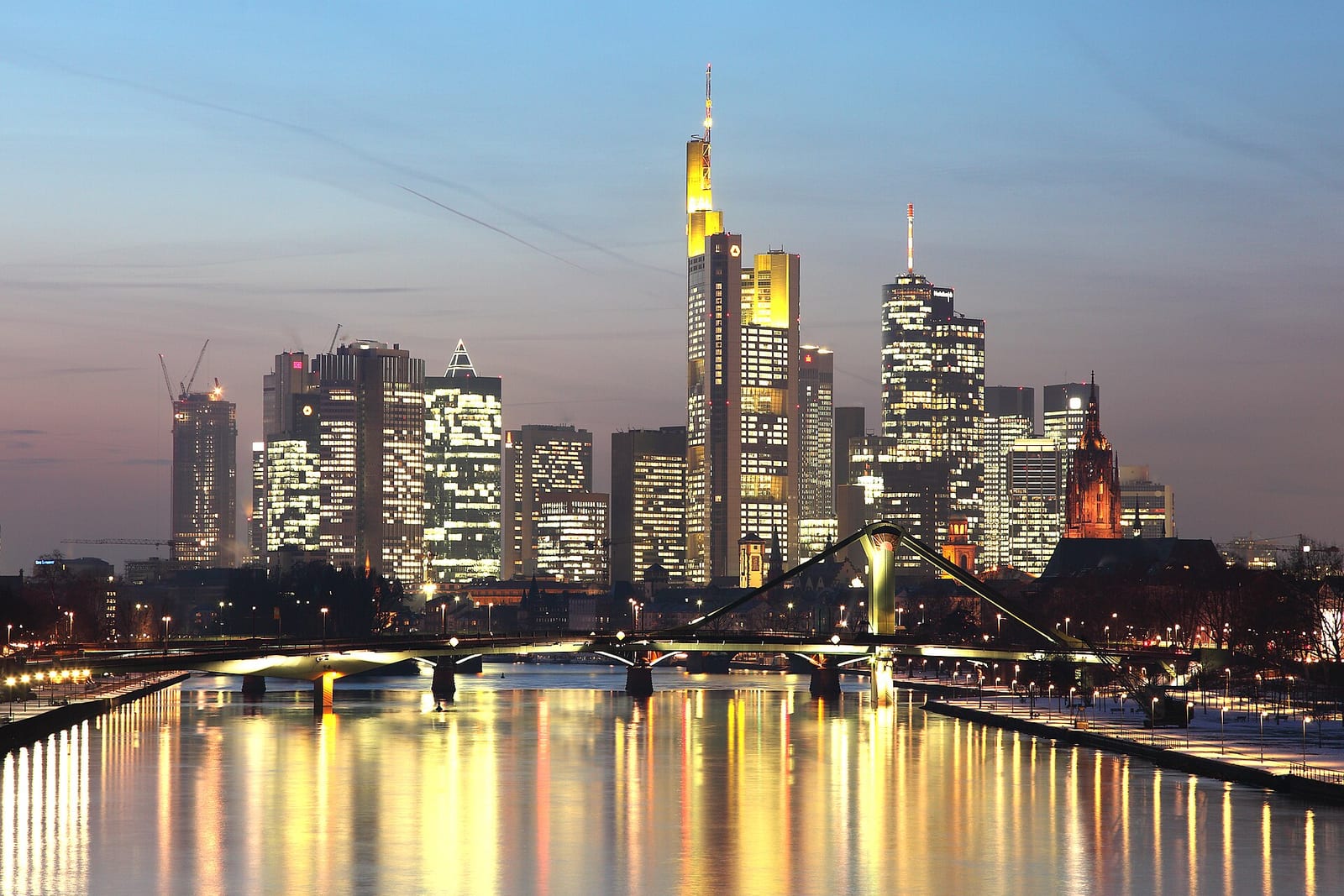
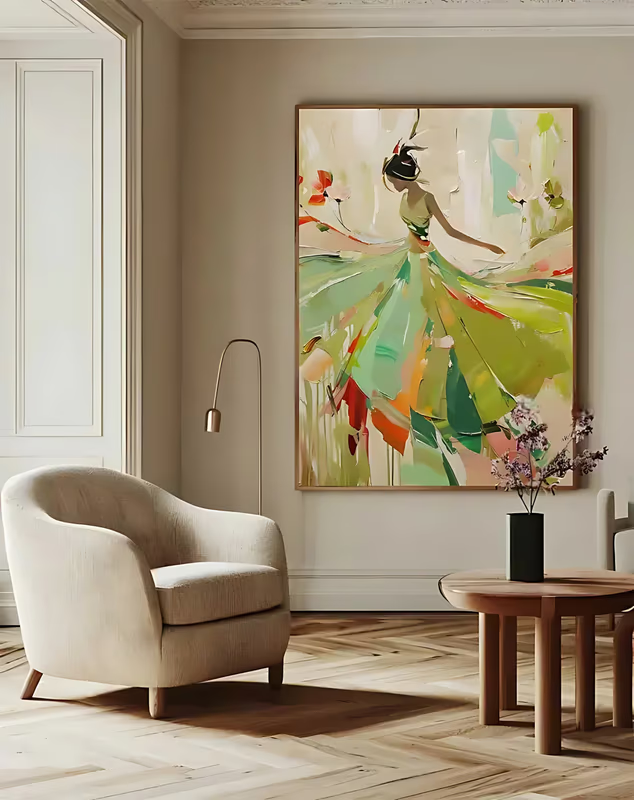
When you want a named living artist’s own work at the size the artist chose; because gallery prices climb with every centimetre, a gallery is the place for the piece you collect rather than for every wall in the house.
Most German galleries are small, personal businesses, representing some 14,600 artists between them. In Berlin, prices follow a convention that a city art magazine sets out plainly: height plus width, times a factor for the artist that rises with exhibitions, museum purchases and prizes. So size is what costs most at a gallery, and a canvas the width of a villa wall soon becomes a collector’s purchase.
What a gallery gives you is the artist, and Germany has a strong figurative line, from the Neue Leipziger Schule of Neo Rauch and Rosa Loy to this year’s graduates; ask whether the artist takes commissions. To train your eye first, the Boros Collection fills a bunker in Berlin-Mitte and is seen by guided tour, and Deutsche Bank’s Frankfurt towers, one artist to a floor, run guided tours every month. A sound plan is often both: a gallery work for the wall that matters most, and the walls around it painted to order in colours that answer it.
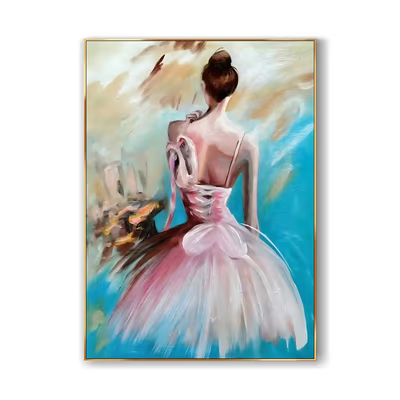
Where do people in Germany find their first original painting?
At the Kunstvereine’s annual editions, the academies’ open days, flea markets and artists’ open studios: good for a first original or a small wall, less so for a large canvas in colours you choose.
The Kunstvereine, member-run art associations found in most German cities, sell Jahresgaben each winter: editions and small unique works by artists they have shown, most of them objects and works on paper rather than canvases. You usually join before you buy: the Kunstverein München sold its 2025 editions on site on one evening in late November, then online to members. Academy Rundgang shows, open studios and Berlin’s flea markets are the other doors, and a German design magazine’s advice still holds: better to invest in one original than to buy many cheap copies.
These routes reward time and a good eye. For a stair hall, a wall above a 2.8 m sofa or a whole flat to furnish before moving day, look to galleries, commissions and canvases made to order.
What do ‘handgemalt’, ‘Unikat’ and ‘XXL’ mean when you buy wall art in Germany?
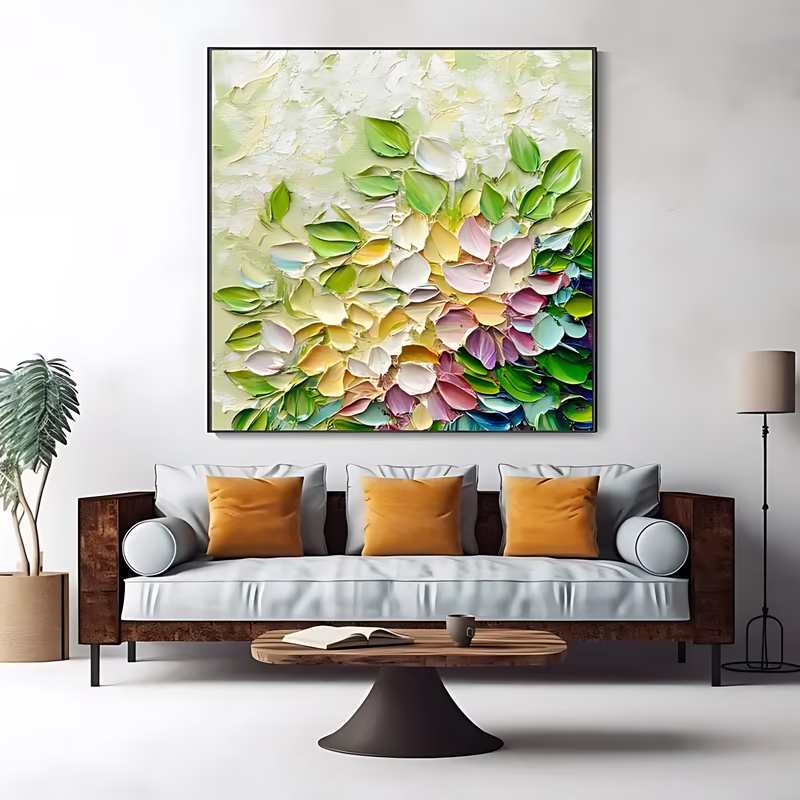
They are sellers’ words, not standards: ‘XXL’ can mean anything from 120 × 80 cm to 2 metres, a ‘Unikat’ may be one of a small run of the same design, and stocked hand-painted canvases rarely pass 2 metres.
German home stores and online décor shops describe their wall art generously. ‘XXL’ means 120 × 80 cm at one large online department store and 200 × 100 cm at a canvas-print shop. ‘Handgemalt’ (hand-painted) and ‘Unikat’ (one of a kind) sit on canvases sold next to prints, and one well-known décor shop explains that its catalogue works are painted in small editions, with no change of size or colour. Stocked hand-painted canvases thin out above 150 × 100 cm, and that shop’s commission service stops at about 2 × 1.5 metres.
That range suits a standard sofa wall. The rooms Germany’s design press photographs look different: of the nine living rooms in AD Germany’s 2026 round-up, only one names a print. To check what you are buying, ask for a side-lit photograph of the surface, where brush and knife marks throw small shadows, and a photograph of the work in progress. With iHomeArt nothing is printed: you see your own canvas at every stage, and a side-lit photograph of the texture whenever you ask. See our textured paintings.
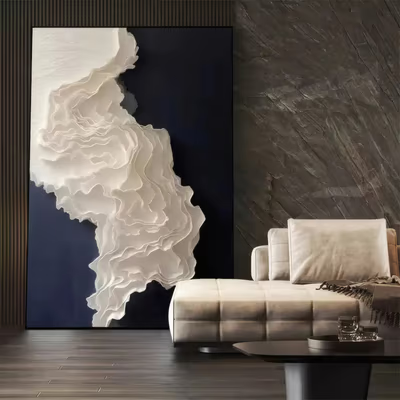
When should you commission a painting instead of buying art in Germany?
When the wall needs more than about 2 metres of canvas, a tall format under an Altbau ceiling, a colour no shop stocks, a set that belongs together or a subject that is yours alone.
Four signals tell you the shops will not have it. The first is width: a common German hanging rule of two-thirds to three-quarters of the furniture’s width already asks for about 2 metres of canvas over a 2.8 m sofa, which is where the stocked range ends. The second is height: in an Altbau flat the wall rises well above the sofa, and the tall vertical it wants is rarely on a shelf. The third and fourth are colour and number: a palette taken from your own rug or wall paint, or six pieces that belong together, have to be painted for you.
Sizes for each room are in the Germany size guide, and the rooms themselves in German homes, room by room.
-
Wider than 2 metres
- Where
- Villa living rooms, open-plan new builds, lobbies
- Why commission
- Stocked hand-painted canvases rarely pass 2 m
-
Taller than the shelf
- Where
- Altbau salons, stair halls, double-height voids
- Why commission
- Verticals of 150 cm and more are rare in stock
-
Your colours
- Where
- Rooms built around one sofa, rug or wall colour
- Why commission
- Catalogue décor comes in the colours it was painted in
-
A set, or your own image
- Where
- A whole flat, a practice, a hotel floor, a view of your city, your logo
- Why commission
- Pieces painted in one hand read as one scheme; no shop stocks your image
Should you commission a painter in Germany or a made-to-order studio?
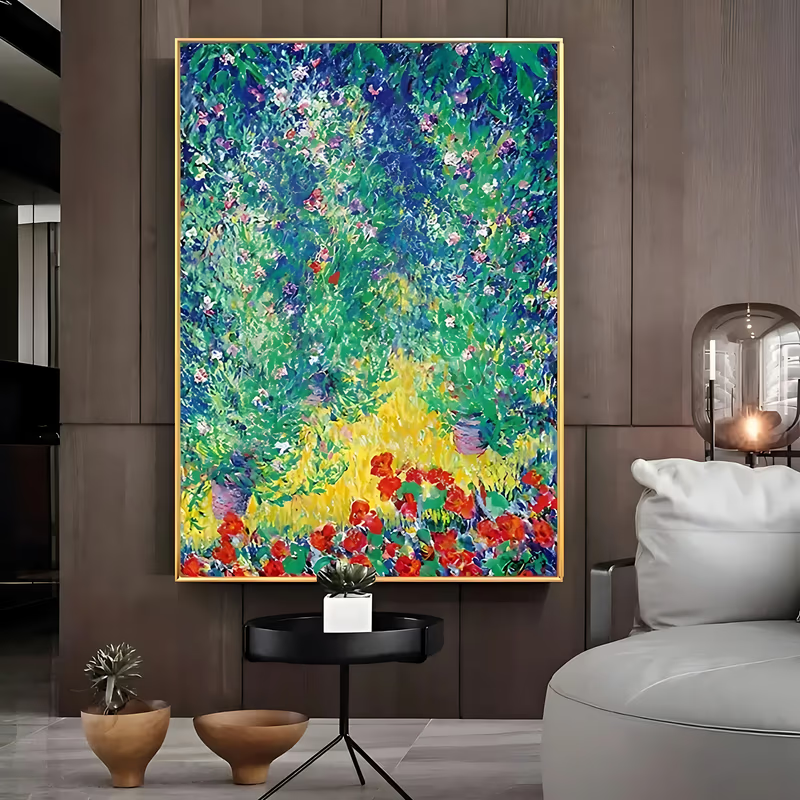
Commission a painter when you want that artist’s own hand and style; choose a made-to-order studio when you want a particular design, size and palette, a set painted as one, or several walls done at once.
Germany has no shortage of painters who take commissions: more than 64,000 self-employed visual artists belong to the Künstlersozialkasse, the artists’ social fund. A painter gives you their own hand and often a studio visit; expect weeks or months, usually against a deposit. Agree in writing how you will see the work in progress, because a painting made to your specification is usually not returnable.
A made-to-order studio such as iHomeArt answers a different brief: a design from some 1,300 catalogue works, or one designed for your project, painted to your wall and your colours, alone or as a set in one hand. Send a photograph of the wall with its width and ceiling height; your quote usually arrives within one business day. You approve every stage in photographs or video and the finished canvas before it ships, which is why finished pieces are not returnable. Specifying for clients? See art for interior designers.
Each canvas can travel stretched and ready to hang, framed, or rolled; a rolled canvas, the lightest and most economical way to send a large painting, arrives without stretcher bars, and any local framer can stretch it for you.


Where to buy art in Germany FAQs
Where can I buy art in Berlin?
Start with Berlin’s galleries, many of them in Mitte, and go in September, when the fair season brings dozens of galleries to the city. For a first original, try the Kunstverein editions in winter, the academy shows and the flea markets. For a large canvas for a high Altbau wall, send us a photo of the wall and its height and we suggest a size.
Where can I buy art in Munich?
The city’s galleries sell work by named artists, and the Kunstverein München sells annual editions to its members each winter, in 2025 from 28 November. Furniture and décor showrooms cover standard walls. For a period flat in Schwabing or a villa in Bogenhausen or Grünwald, where walls run taller and longer, a canvas painted to the wall is often the simpler route.
Can you paint a larger version of a picture I saw in a German shop or gallery?
If the design is still in copyright, only with the rights holder’s permission, so we ask about that first. Otherwise, send us a photo of what caught your eye and the size of your wall: we suggest catalogue designs in the same spirit, painted at the size the wall needs, or design a new piece around the colours you liked.
How long does a painting take to reach Germany?
About 10 days to paint, then 5–7 days by DHL, FedEx or UPS express to Berlin, Munich, Hamburg, Frankfurt, Düsseldorf or any other German address. Larger orders may travel by air or sea freight instead; we choose the best route for your address and confirm the shipping cost before anything leaves.
Do you work with interior designers and Innenarchitekten in Germany?
Yes. We paint to your drawings, sizes and palette, with one sample canvas first if you want it, and send the stage photographs straight to whoever approves them, you or your client. Each canvas can be labelled by room or position with a packing list, and we keep the order codes on file for re-orders.
Can I order a single painting, or do you only supply the trade?
A single painting is welcome: the minimum order is one piece, whether it is for your own living room or a client’s. Volume pricing starts at ten pieces, for a whole flat, a practice or a run of hotel rooms, and a first canvas can serve as the sample for the rest.
Germany
Send us the wall you are buying for
Send a photo of the wall, its width and the ceiling height on WhatsApp, with the quote form or by email. We usually reply within one business day with a size that suits the room, a shortlist from the catalogue and a price for each piece.
More of the Germany guide
The overview and each part of the guide answer one buying question for Germany.
- Germany: overviewWall art in Germany, hand-painted to the size of your wall for Altbau flats, villas, offices and hotels.
- Villas & Altbau homesWhich painting each room of a German home takes, from the Altbau interior's stucco salon to the villa stair and the Dachschräge.
- Offices & institutionsOffice wall art in Germany
- Hotels & restaurantsHow to choose art for hotels and restaurants in Germany, from Altbau lobbies to Alpine inns.
- Taste & stylesGerman wall art ideas
- Size guideA wall art size guide for German rooms, in cm and inches
Sources
- KSK in Zahlen – Künstlersozialkasse · 2026-01-01
- Die besten Jahresgaben – Monopol · 2022-12-07
- Jahresgaben 2025 | Kunstverein München · 2025-11-28
- Deutsche Bank — Art in the Towers · 2026-09-18
- Bilder aufhängen: 6 Tipps & Regeln – Wohnglück
- Kunstleben Berlin – Was zeitgenössische Kunst in Berlin wirklich kostet · 2026-06-11
- BVDG – Galerienstudie 2025 · 2025-09-09
- Monopol – 164 Galerien aus 22 Ländern bei der Art Cologne 2026 · 2026-09-08
- POSITIONS Berlin Art Fair · 2026-09
- Neue Leipziger Schule – Wikipedia (de) · 2026-09-18
- Kunst in der eigenen Wohnung: Was sollte man beachten? – designmadeingermany.de · 2022-12-02
- Sammlung Boros – Wikipedia (de) · 2026-09-18
- AD Magazin: Die schönsten Wohnzimmer Deutschlands: 9 persönliche Wohnwelten von Kreativen · 2026-09-01
- Art Düsseldorf: Diese Galerien nehmen 2026 teil – Rhein-Ruhr-Magazin · 2026-02-05
- Art Düsseldorf – official site · 2026-09-19
- Winterrundgang 2025/2026 – Kunstakademie Düsseldorf · 2026-02
- Sommerrundgang 2026 – Kunstakademie Düsseldorf · 2026-07
- Kunstakademie Düsseldorf – Wikipedia · 2026-09-19
- DC Open 2025 – KUNSTFORUM International · 2025-09
Researched 2026-09-19. Prices and figures are as published by the sources on the dates shown.