
Who we supply · Healthcare & senior living
Senior living art residents recognise, hand-painted to order
iHomeArt supplies senior living art to retirement communities, care homes and memory care operators: original canvases for lounges, dining rooms, corridors and apartments, each hand-painted to order. Every piece is chosen to be recognised and talked about, from a jug of sunflowers to your own town's high street painted from a photograph, in colours older eyes read easily.
Senior living art at a glance
- FamiliarGardens, animals, country lanes and still lifes that residents can name and talk about
- Clear colourWarm, saturated paint and strong contrast that older eyes read from a chair
- Every junctionA different landmark picture at each turn of a memory care corridor
- Your townIts high street, harbour or church painted from your own photographs
- No glassUnglazed canvas, ready for the fixings your installer specifies
- Medium
- Acrylic on canvas as standard; oil paint on request. Hand-painted, never printed
- Size
- Any size, including oversized single canvases and multi-panel sets
- Finish
- Rolled, stretched ready to hang, or framed in gold, silver, black, white or wood; 3D plaster and deep relief ship stretched or framed
- Approval
- Photos or video at each stage; the next stage starts only after you approve; the final photograph is approved before dispatch
- Lead time
- About 10 days to paint, then 5–7 days by DHL, FedEx or UPS express. Large orders get their own date in the quote
- Minimum order
- One piece; volume pricing from 10
- Price
- Priced for your sizes, finishes and quantity; your quote usually arrives within one business day
- Shipping
- Arranged for you: we find the best route for your address and confirm the cost with you before dispatch, as shipping is quoted separately
- Payment
- 50% upfront against a proforma invoice; 50% once you approve the final photograph, before shipping
- Peace of mind
- You approve every finished piece from a photo before it ships. If anything arrives damaged, we take it up with the carrier and work out a solution with you
Senior living art: which subjects do residents recognise and talk about?
Subjects people can name at a glance and have a story about: a garden in flower, a lane to a cottage, a horse or a bird, a bowl of fruit on the table.
A resident who can say what a picture shows can talk about it, and a visiting grandchild can ask about it. That is the real job of art in a retirement community, more than matching the cushions. Build the scheme from four families of subject in one warm, clear palette.
-
 CA#066
Gardens and flowers
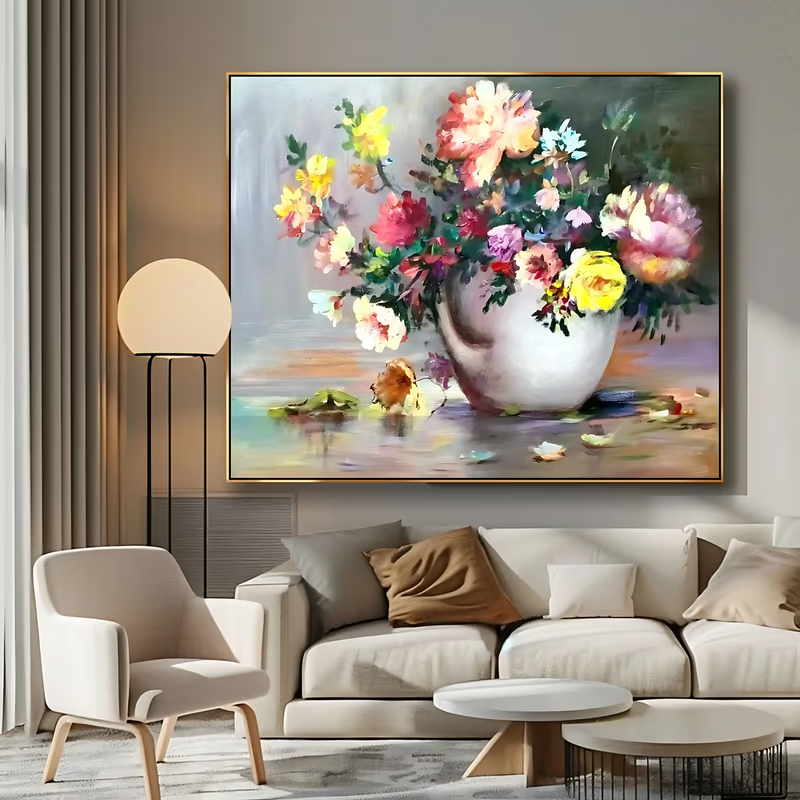
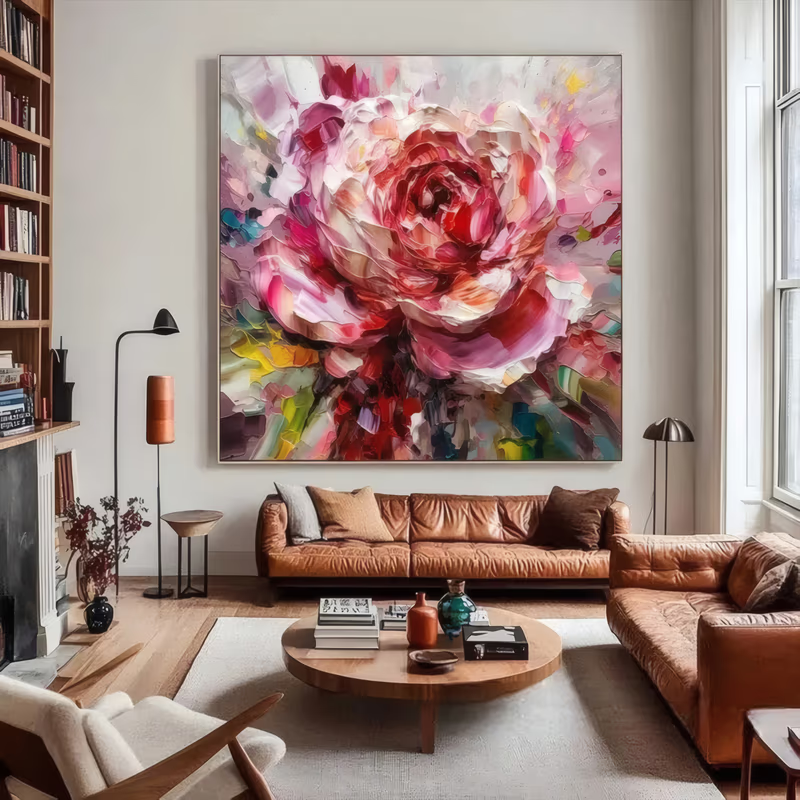
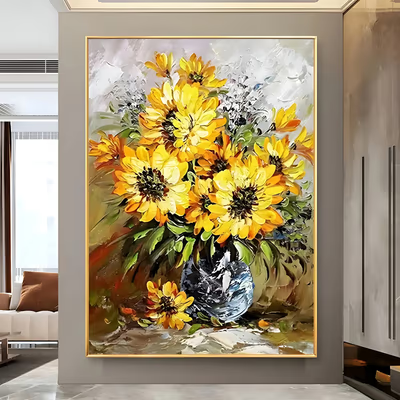
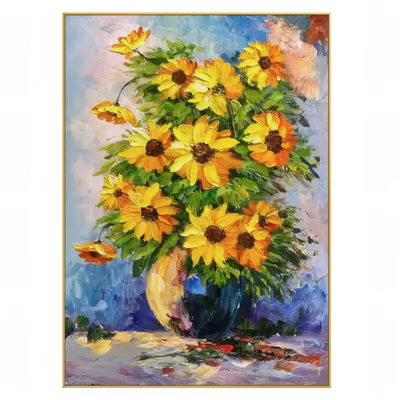
Roses, peonies and sunflowers: nearly everyone has grown, picked or been given flowers. One big bloom reads across a lounge.
Floral works -
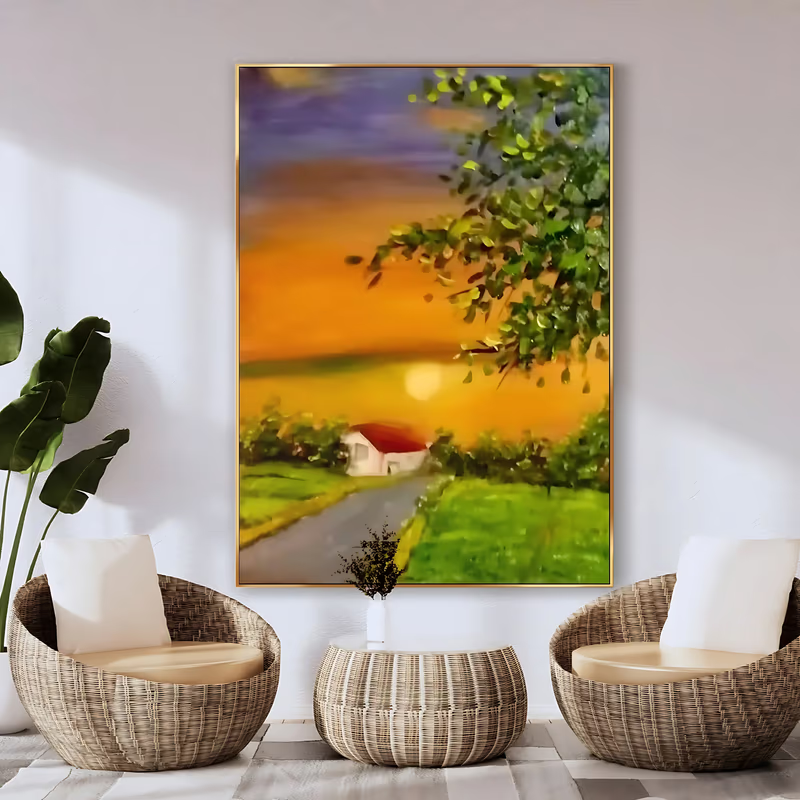 IA#037
Country lanes and coasts
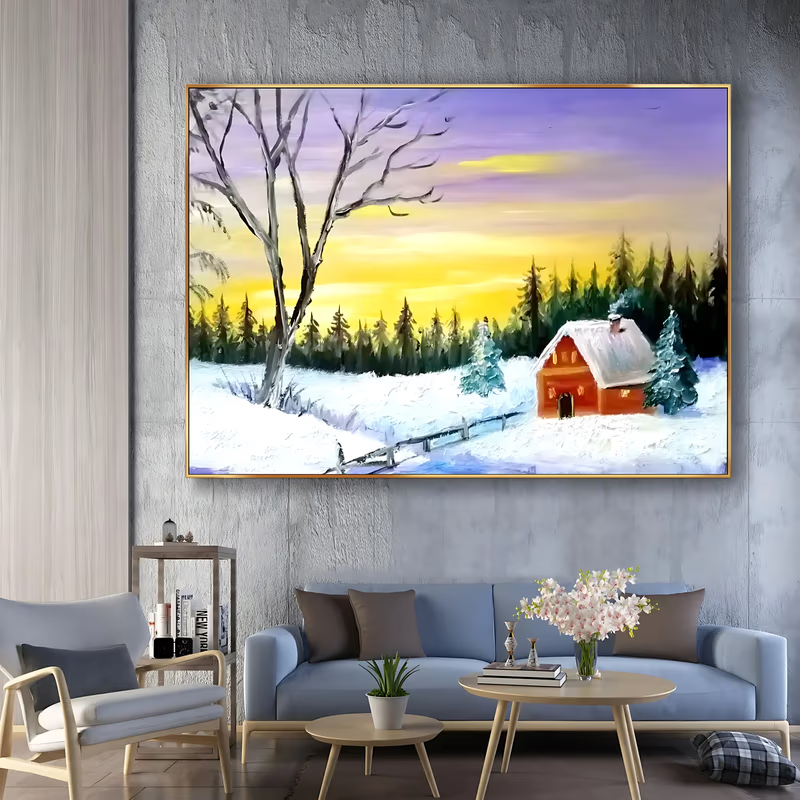
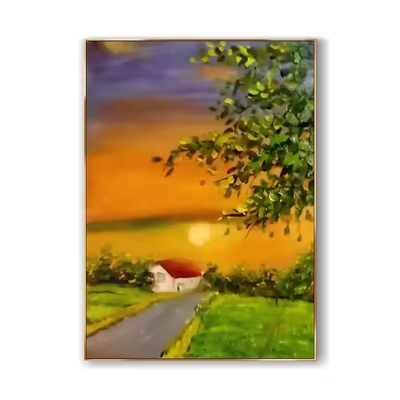
A road to a cottage at sunset, a harvest field, a harbour: places residents walked, worked or spent their holidays.
Landscapes -
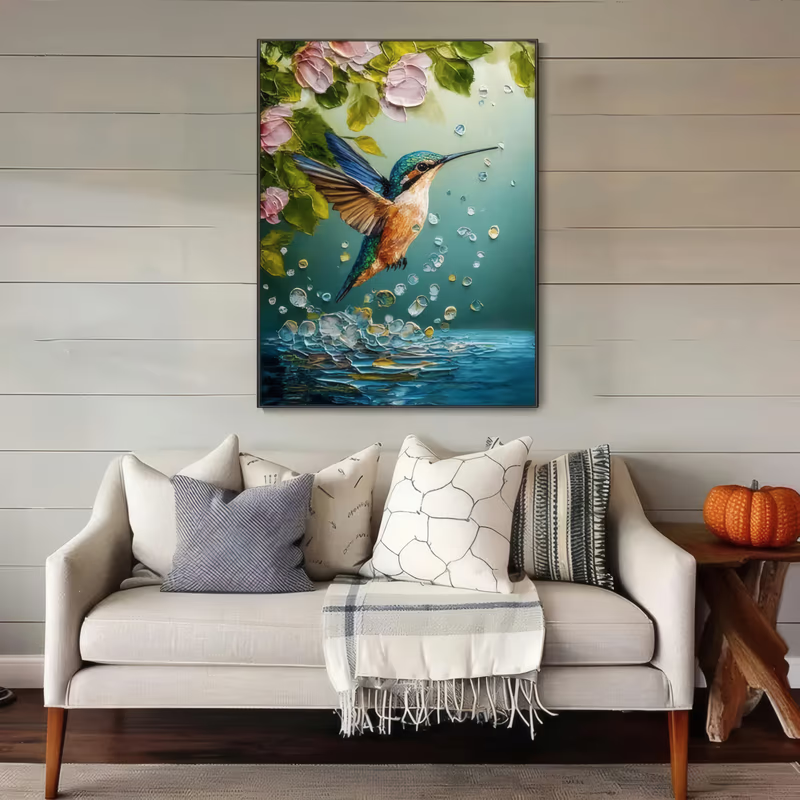 HA#915
Animals and birds
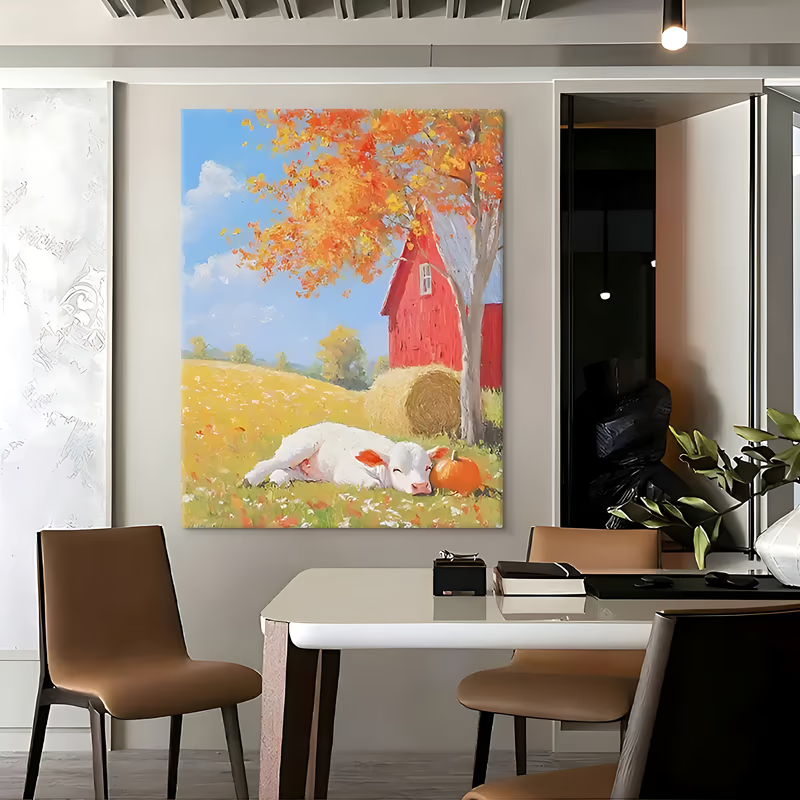
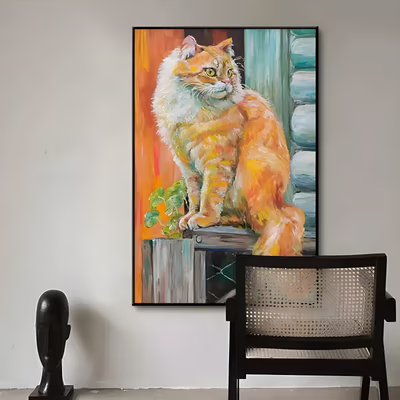
Horses, cats, dogs, calves and garden birds start more conversations than any other subject, and they are the pictures grandchildren stop at.
Animals and birds -
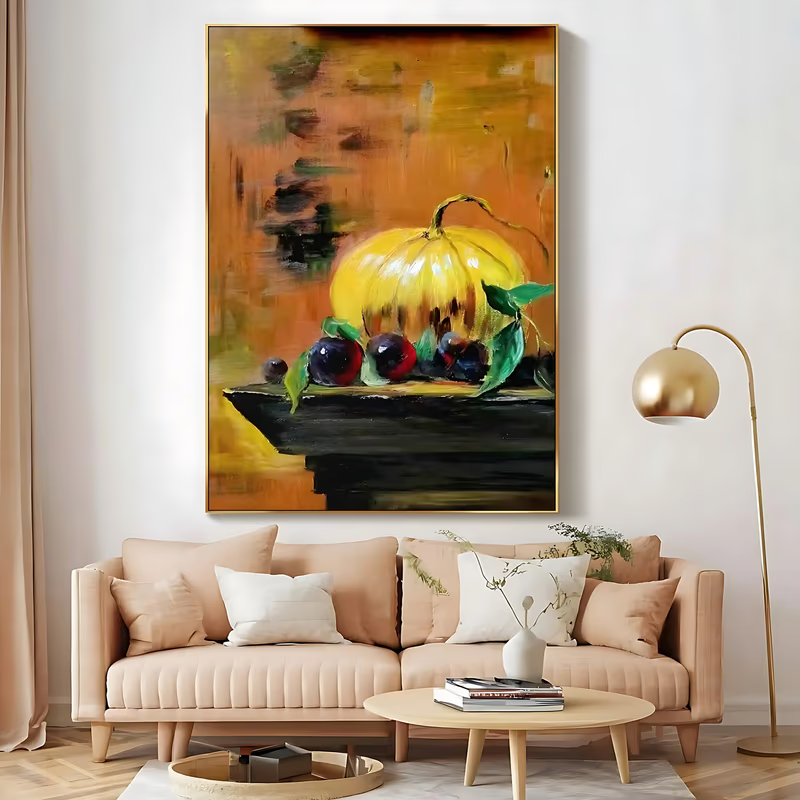 IA#1180
The kitchen table
Fruit, vegetables and flowers on a table, painted as they are: familiar from every kitchen, and the natural choice for a dining room or a tea room.
Still lifes
Which colours and contrasts suit older eyes?
Clear, saturated colour, a subject that stands out from its background, and a size one step larger than you would hang in a hotel.
Pale blues and greens are the colours older people most often confuse, while reds, yellows and oranges stay distinct, and dark blues look darker than they are 2. A soft blue-green seascape can turn to grey haze from a lounge chair; a red barn or a poppy field does not.
- Colour
- Lead with warm, saturated red, yellow and orange, and use blue deep rather than pale. Vibrant works are a good place to start.
- Contrast
- One clear subject against a plain ground: one horse, one lighthouse, one vase. Mist and pale-on-pale are harder to read.
- Size
- Go up a size: where a hotel corridor takes 61 × 51 cm (24 × 20 in), hang 81 × 61 cm (32 × 24 in).
- Height
- Many residents look from an armchair or a wheelchair, so hang the centre at about 130–140 cm rather than the usual 145–150 cm.
- Light
- Older eyes need more light and are more sensitive to glare 2. Unglazed canvas throws back no reflection; a picture light does the rest.
Love a catalogue work in pale tones? The Recolour route repaints the same composition in deeper colours.
How can memory care artwork help residents find their way?
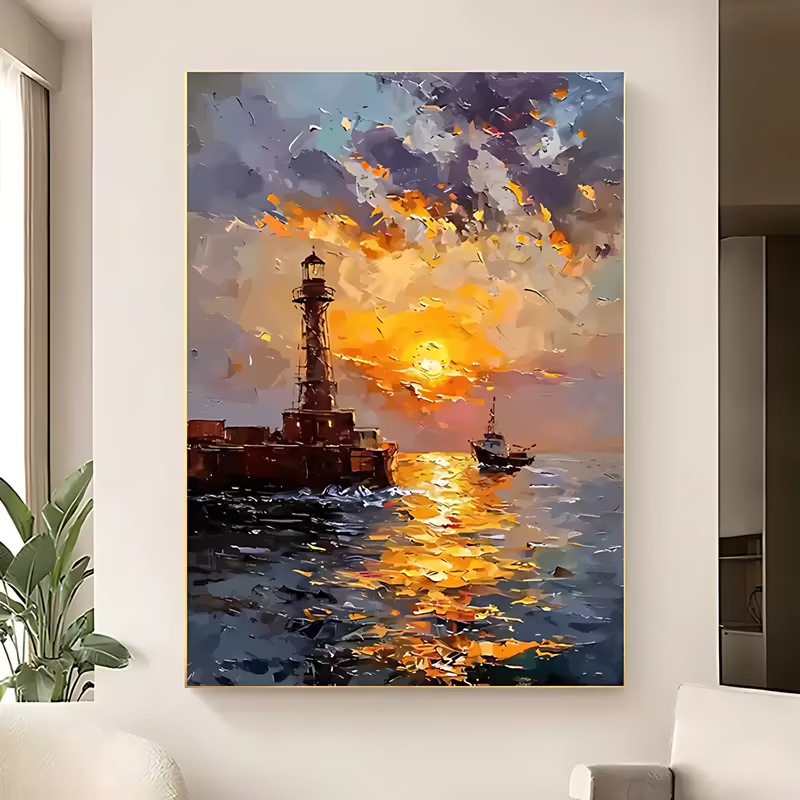
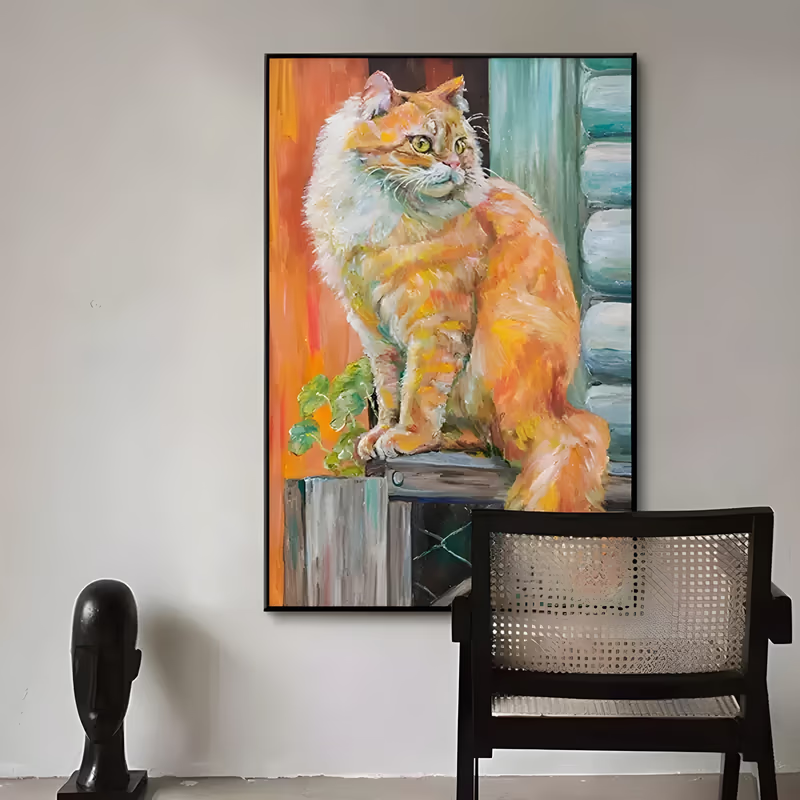
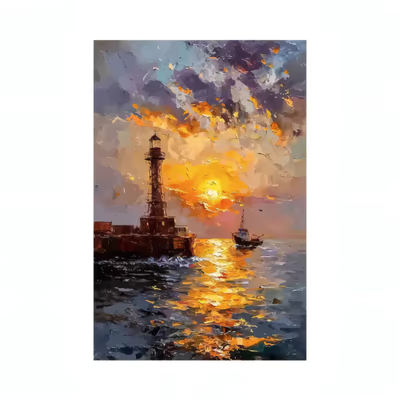
Give every corridor junction and key door its own memorable picture, so residents and staff can say ‘left at the lighthouse, then past the ginger cat’.
In a UK study of older people with memory difficulties living in a retirement development, residents favoured memorable, meaningful places over signs as a way of finding their way, and the authors note that meaningful landmarks can also start conversations 1. A painting is one of the simplest landmarks a building can have.
- Make every landmark different: a lighthouse, a ginger cat, a vase of sunflowers, a peacock, each in its own colour. Corridors that look alike are the problem, so a memory care route never repeats a picture.
- Hang them where a decision is made: at junctions, corridor ends, the lounge and dining room doors, opposite the lift.
- Pick subjects easy to say aloud, so the picture becomes the way staff and families give directions.
- Keep apartment doors personal: a small painting chosen with the family, such as their dog or their garden, helps a door look like theirs.
Independent and assisted living floors work the other way round: a related series per floor, in that floor's colour (see corridor art series). Which pictures suit your residents is your care team's call, and we paint to their brief.
Art for care homes: how do lounges and dining rooms feel like home?
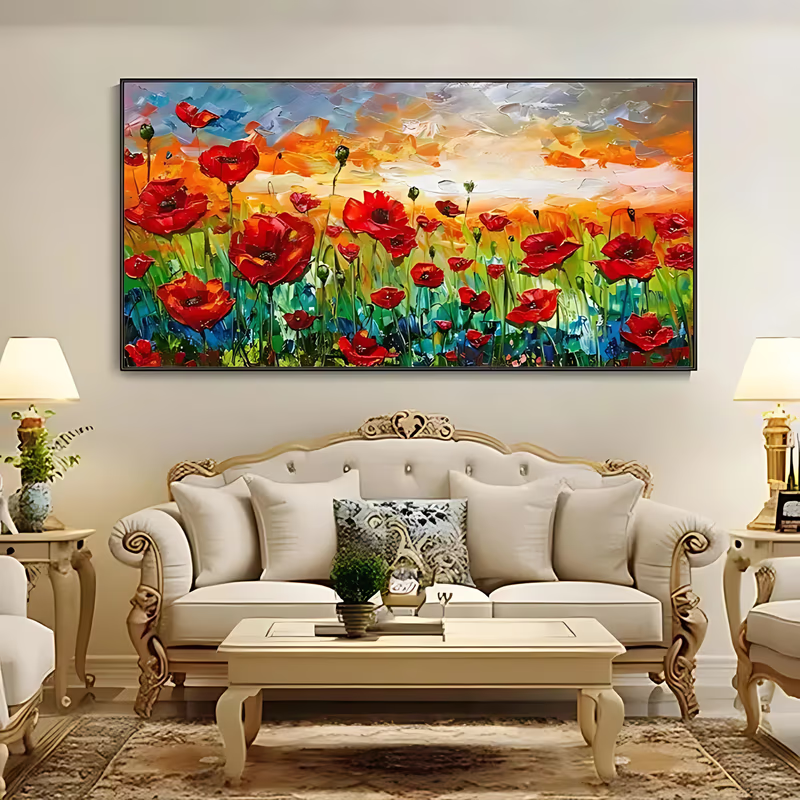
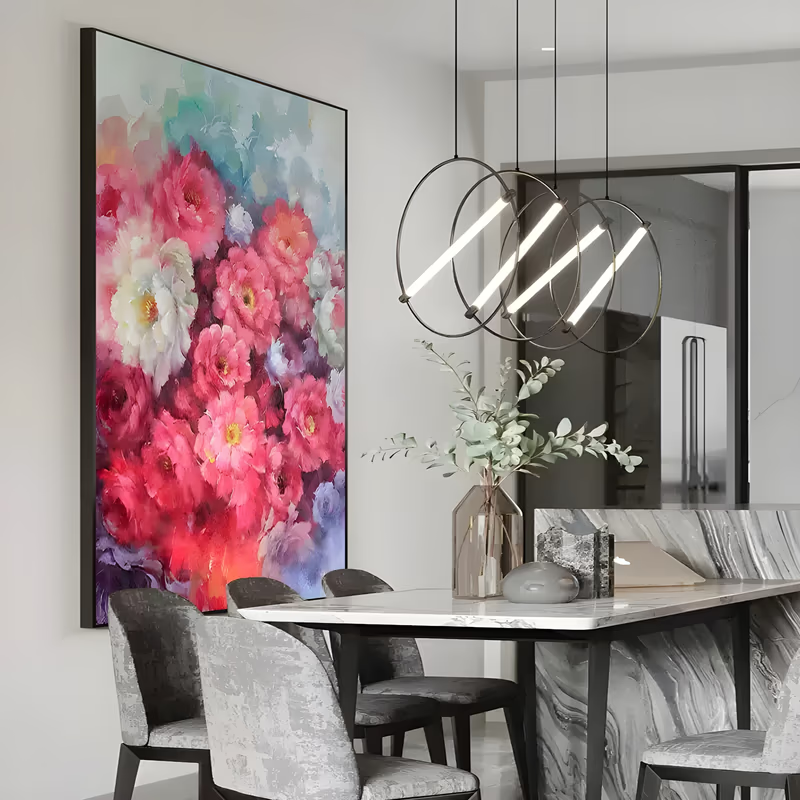
Hang art the way a family home does: framed pictures in mixed sizes, a still life by the dining tables and one bigger painting over the lounge sofa or fireplace.
The lounge. One larger landscape or flower piece that people sit beneath, and a smaller group over a sideboard or a bookcase. Frames in wood or gold read as a home; a row of identical frameless canvases reads as a waiting room. A simple idea for the main wall: four paintings, one for each season, swapped by the activities team in March, June, September and December, so residents notice the change.
The dining room. Fruit, flowers and the kitchen table, hung low enough for seated diners, one picture to each run of tables. Browse dining room art for ideas.
The garden room or café. The place for the boldest piece in the building: see colourful works.
Apartments. Where the operator furnishes them, one picture above the bed or the armchair, from the same subject families, so a new resident arrives in a room that already feels lived in.
Can the art show our own town, or a painting residents already know?

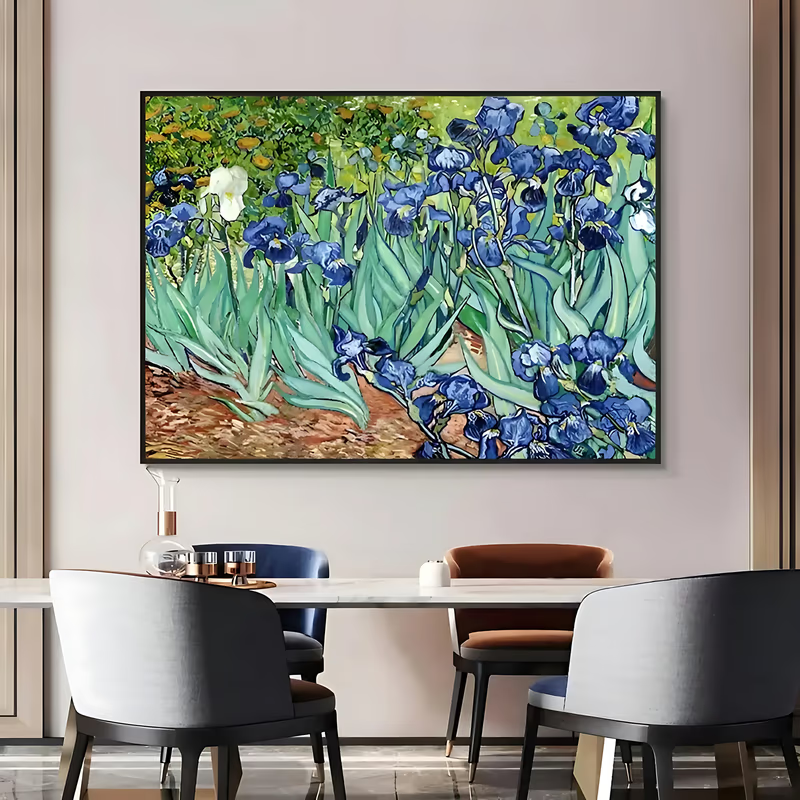
Yes to both: we paint your own photographs of the high street, the harbour or the church, and reproduce well-known paintings by hand at the size of your wall.
Your town. The place residents grew up, worked and married in is the most personal subject a community can hang, and no catalogue holds it. A view taken this spring will do, and so will an old print from the local history society or a resident's album, painted in colours you agree with us at the first stage. Hang it at the entrance, where it tells visitors where they are, or in the lounge, where residents point at it. See paintings from your own image.
A famous painting. Monet's water lilies or Van Gogh's sunflowers come with their conversation built in: residents know them from calendars, biscuit tins and classroom walls. Works by artists who died long ago are out of copyright and can be painted for you as they are; a work still in copyright needs its rights holder's permission first.
How can residents and families help choose the art?
Show them a shortlist, let them vote, hang the favourite first and share the progress photos: residents can take part at every step.
Art that residents chose is art they look after and talk about.
- Photos of the roomsSend photos of the lounge, the dining room and a corridor, with a rough count of walls. We reply with a shortlist of catalogue works for each space.
- A residents' voteShow the shortlist at a residents' meeting or in the families' newsletter, and let people choose the lounge and dining room pieces.
- The favourite firstOrder the winning lounge painting on its own and live with it for a few weeks before the rest of the building is ordered.
- Progress at the meetingPhotos or video of each stage reach you as the work is painted: share them, gather comments, then approve the stage.
- Hanging dayThe pieces arrive labelled for their walls. Invite residents to watch the first one go up; it makes a good afternoon.
Artwork for nursing homes: how should it be finished and hung?
Unglazed canvas, fixed with the security fixings your installer specifies, in the finish that suits each part of the building.
No glass. Paint on canvas leaves nothing to shatter where walking frames and wheelchairs pass, and no reflection to hide the picture.
Your installer's fixings. Care settings usually want pictures that cannot be lifted off the wall. Stretched and framed pieces take the locking or screw-through fixings your installer fits to the building's standard. Corridor pictures go above the handrail, clear of the hands that hold it.
- Rolled for long corridor runs: the cheapest and quickest to ship; your framer or fit-out contractor stretches each canvas and mounts it to the fixing system you already use.
- Stretched, frameless for memory care corridors: light, with no frame corners at shoulder height.
- Framed in wood or gold for lounges, dining rooms and the entrance, where a frame looks like home. The bulkiest boxes, so the dearest to ship.
Thick palette-knife flowers and plaster relief would crack in a tube, so they travel stretched or framed. They also invite touch: lovely in a lounge, worth a thought at hand height in memory care.
How should a care group budget senior living art across a community, or several?
Spend where residents gather, keep the corridors modest, and order several communities together so volume pricing counts across the whole group.
- Shared rooms
- The lounge, dining room and entrance carry the larger, framed pieces: a few good pictures here do more than many small ones elsewhere.
- Memory care
- Landmarks need not be large: 81 × 61 cm (32 × 24 in), stretched, reads well at a junction.
- Corridors
- Smaller canvases, shipped rolled and stretched locally, keep the cost per position down.
- Apartments
- Optional: dress the show apartment first, then add pictures as families ask.
- Shipping
- Quoted separately; we find the best route and confirm the cost before anything ships.
For a group, one shortlist can serve every community, with each home's own town at the entrance. Quantities count across the whole order, so three homes ordering together reach the 10-piece volume tier long before one would alone. Every piece keeps its reference code, so a refurbished wing or one damaged picture is reordered from the same sheet.
Dental office artwork and clinic waiting rooms: what works?
Calm, natural subjects in soft colour for the waiting room, one restful picture where the patient looks from the chair, and the practice's own colours if you want them.
Clinics and dental practices buy a few pieces per site, chosen by the owner or the group's facilities manager, often without a designer. Dental trade advice favours calm natural scenes in soft colours over hard-edged modern work, and even suggests the ceiling above the chair for a picture children can look at 3. Hospital programmes have their own page.
-
Waiting room
- Subjects
- Landscapes, gardens and water in soft, natural colour
- Size
- One piece of about 122 × 91 cm (48 × 36 in) over the seating, or a pair
- Browse
- Reception art and calming works
-
Treatment room
- Where
- On the wall the patient faces from the chair or the couch
- Subjects
- One quiet subject: a bird, a flower, a stretch of shore
- Finish
- Stretched and frameless: light, unglazed and easy to dust
-
Your brand
- Colours
- Any catalogue work recoloured to the practice's palette
- Your image
- Your town, your building or your logo painted from your own image
-
Several practices
- One look
- The same codes at every site, or a related version for each
- Pricing
- Volume pricing from 10 pieces, counted across the group
Three practices, one order
A reception landscape at 122 × 91 cm (48 × 36 in) and seven treatment-room florals at 61 × 51 cm (24 × 20 in) for each of three practices: 24 stretched pieces, quoted together at the volume tier.
One practice, one painting
A single waiting-room painting is a normal order: send a photo of the wall and we suggest a size and three works.
A 64-bed care home with a memory care wing, wall by wall
An illustrative schedule built from catalogue works, not a client project. Every piece would be painted to the size of its wall.
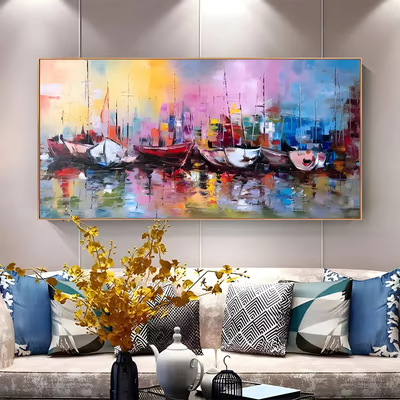
- Entrance: the first picture visitors seeMoored fishing boats in a bright harbour, or your own town in its place; framed in wood; 1 piece122 × 61 cm (48 × 24 in)
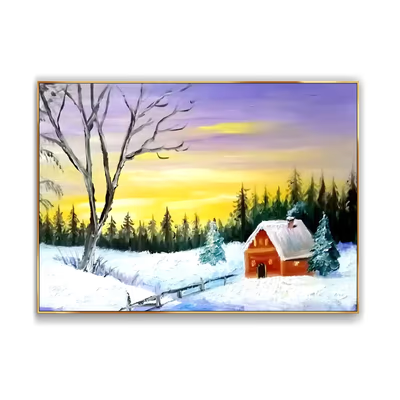
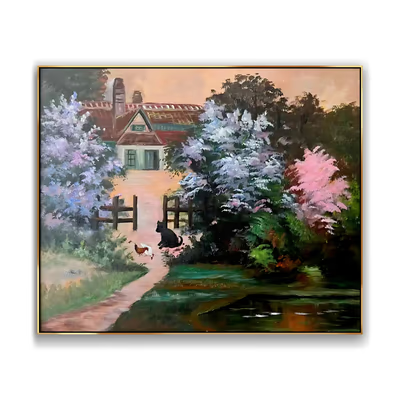
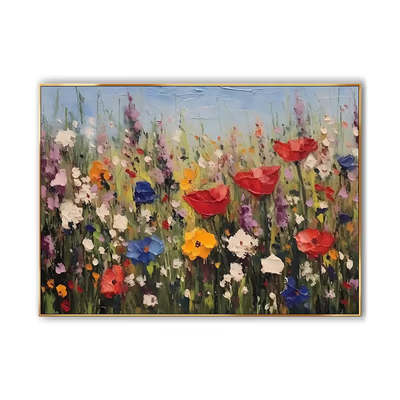
- Residents' lounge, main wall: four seasons, swapped by the activities teamRed cabin in snow, lilac cottage garden, poppies and cornflowers in a meadow, autumn trees over water; framed in wood; 4 pieces102 × 76 cm (40 × 30 in)
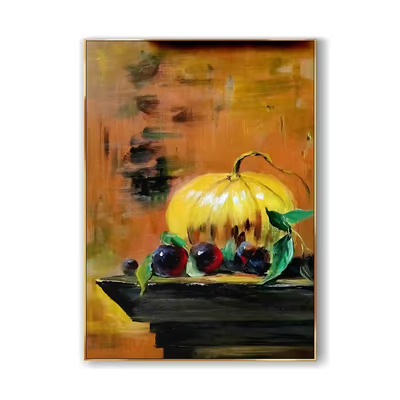
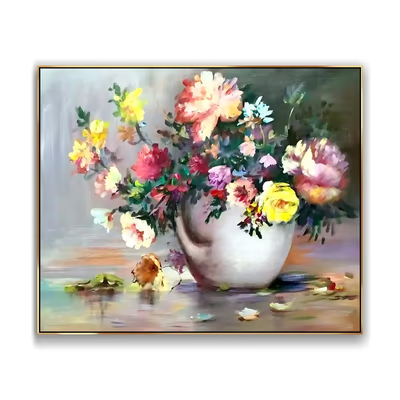
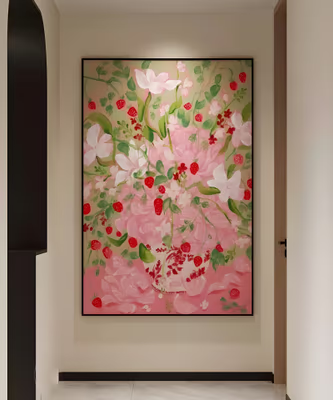
- Dining room: a still life to each run of tablesPumpkin and plums, blooms in a white vase, peonies with strawberries, knife-laid sunflowers (shipped stretched); 4 pieces76 × 61 cm (30 × 24 in)
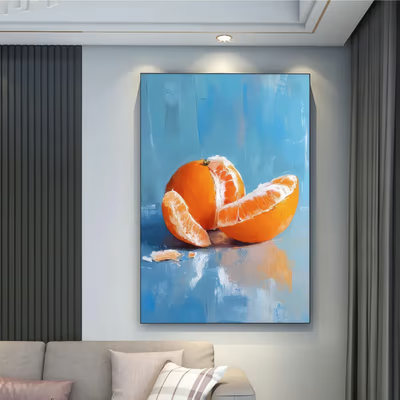
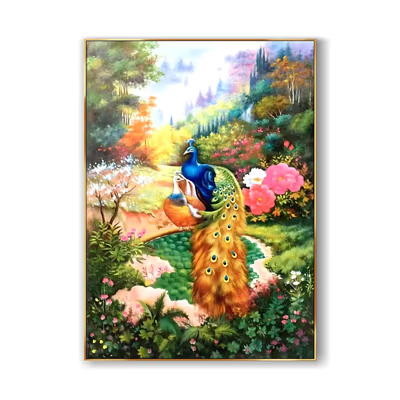
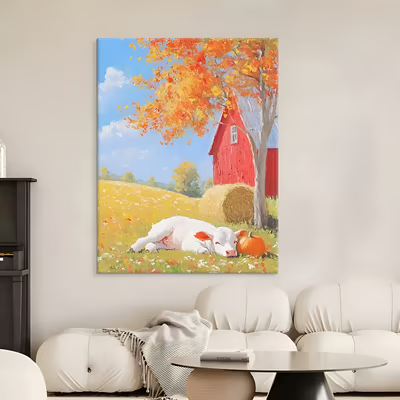
- Memory care wing: a different landmark at each of six junctionsLighthouse at sunset, ginger cat, sunflower bouquet, peeled orange on blue, peacock and peahen in a garden, calf asleep by a red barn; stretched, frameless; 6 pieces81 × 61 cm (32 × 24 in)
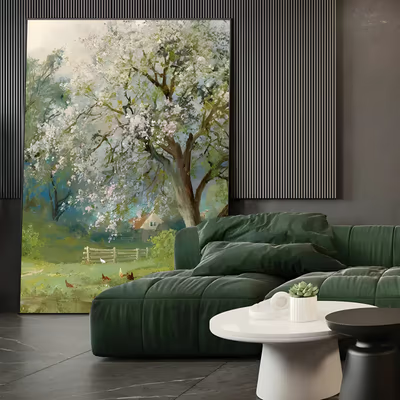
- First-floor corridors: one related seriesVaried from one blossoming orchard tree over a spring meadow; rolled, stretched locally; 10 pieces81 × 61 cm (32 × 24 in)
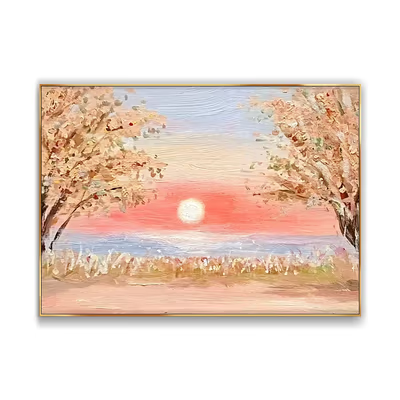
- Second-floor corridors: a second seriesVaried from one country road to a cottage at sunset; rolled, stretched locally; 10 pieces81 × 61 cm (32 × 24 in)
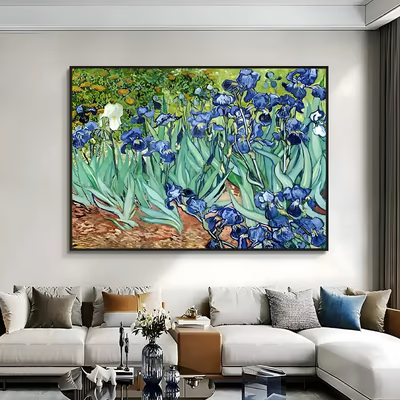
- Garden roomBlue irises in a garden bed, the boldest colour in the building; framed in gold; 1 piece122 × 91 cm (48 × 36 in)
- Total 36 hand-painted originals in one order, past the 10-piece volume tier and priced piece by piece. The codes are real catalogue works; the quantities and sizes are an example.
Senior living art: questions operators and families ask
What should memory care artwork avoid?
Care teams usually leave out pictures that could be mistaken for something real: a painted door, path or window, dark water or a black patch that can read as a hole, and life-size figures. Stormy seas and busy patterns tend to go too. That still leaves plenty: flowers, animals, still lifes and sunny landscapes, each with one clear subject.
Can a family order a painting for a resident's own room?
Yes. One piece is a normal order, so a family can have the old family home, a garden, a favourite view or a much-loved dog painted from a photograph and sent to the community, ready to hang. Agree the size and the fixing with the home first. See paintings from your own image.
What if residents don't take to a painting once it is hung?
Every finished piece is approved from a photograph before it ships and is not returnable, which is why we suggest hanging the lounge favourite first and letting residents live with it. If a picture still does not settle, try another room: a still life that feels busy in a quiet lounge often looks right by the dining tables.
Can paintings be used in reminiscence and activity sessions?
Yes. A painting of the town's old high street, a harvest field or a famous picture gives a group something to look at and talk about together. A small set of light canvases on one theme, such as the seaside or the farm, can travel from room to room; stretched pieces of 61 × 51 cm (24 × 20 in) are easy to hold up.
Do you work with healthcare art consultants and interior designers?
Yes. Where a designer or a healthcare art consultant specifies the scheme, we paint to their schedule: their codes or reference images, their sizes, their palette and their delivery address, with each stage approved from photos. See art consultants and interior designers.
Can we order art for a new retirement community from the drawings?
Yes. Send the plans or the designer's renderings with the wall elevations, and we suggest works and sizes for each position before the walls are built. Order the show apartment and the lounge first, so the marketing suite has real paintings, then the rest in phases as floors are handed over.
Healthcare & senior living
Start with the lounge wall
Send us a photo of your lounge, how many residents you care for and when the rooms open. By WhatsApp, the quote form or email, the reply comes within one business day: a shortlist for your walls and a price for each piece.
Other buyers we supply
Each kind of buyer has its own page: what they need from hand-painted art, and how we work with them. All buyer pages
- Hospitals & healthcare systems Hospital artwork painted by hand to order
- Corridor, lift-lobby & circulation series Hotel corridor artwork hand-painted to order
- Build-to-rent, multifamily, student housing & co-living Build-to-rent art, hand-painted to order
- Spas, wellness centres & treatment rooms Spa wall art, hand-painted to order
- Art consultants & advisory firms needing production capacity Art production for art consultants
Sources
- O'Malley, Innes, Muir and Wiener, ‘All the corridors are the same’: orientation experiences and design preferences of UK older adults in a communal retirement development, Ageing and Society 38(9) · 2018
- Sherwin-Williams STIR, Color perception and the aging eye (reporting research by Marilyn Schneck) · 2026-10
- Dental News, Using art in your practice to soothe mild dental anxiety · 2020-08