
Who we supply · Healthcare & senior living
Hospital artwork, hand-painted for patient rooms, corridors and atria
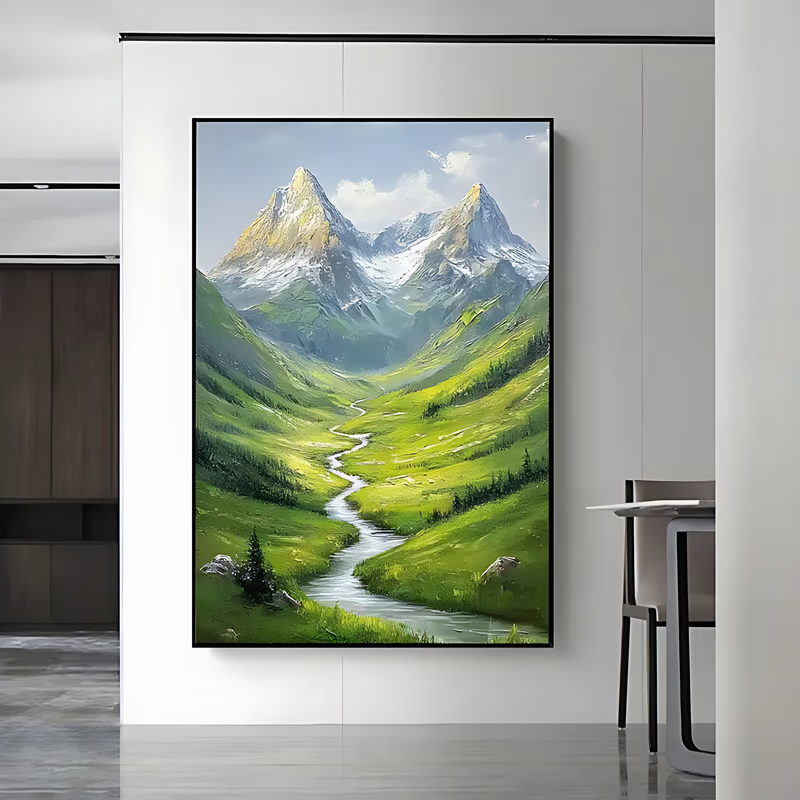
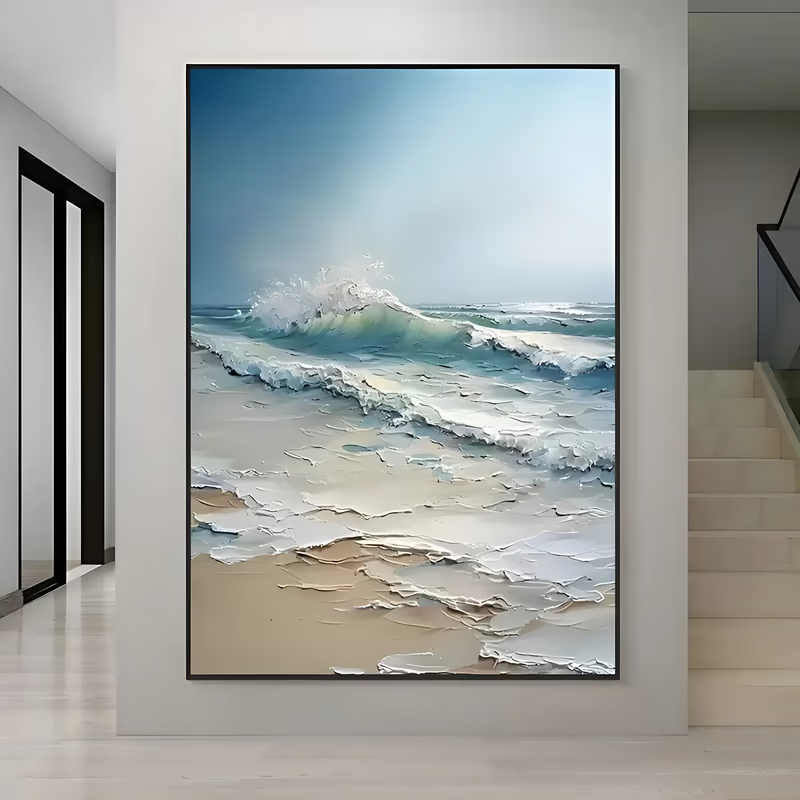
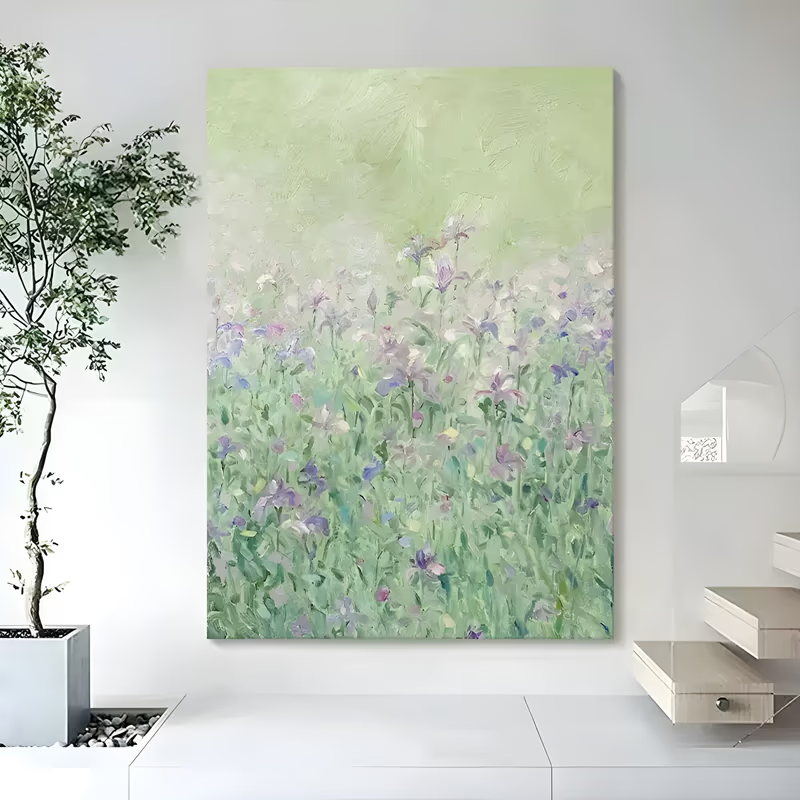
iHomeArt supplies hand-painted hospital artwork to hospitals, health systems and healthcare art consultants: calm landscapes, water and garden scenes for patient rooms, corridors, waiting areas and atria, painted to order on canvas. Your art committee reviews a shortlist and then photos of every canvas at each stage, and your own region's scenery can be painted from photographs so the building feels local.
Hospital artwork at a glance
- Nature firstWater, landscapes and gardens for patient rooms; bolder work kept for public and staff areas
- Committee-readyA shortlist with codes, sizes and room photos, then stage photos of every canvas
- Your regionLocal views and landmarks painted from your own photographs
- Colour by floorCorridor families recoloured to each level's wayfinding colour
- Your frame specCanvases painted to fit your standard frame; framing and glazing follow your facility's specification
- Medium
- Acrylic on canvas as standard; oil paint on request. Hand-painted, never printed
- Size
- Any size, including oversized single canvases and multi-panel sets
- Finish
- Rolled, stretched ready to hang, or framed in gold, silver, black, white or wood; 3D plaster and deep relief ship stretched or framed
- Approval
- Photos or video at each stage; the next stage starts only after you approve; the final photograph is approved before dispatch
- Lead time
- About 10 days to paint, then 5–7 days by DHL, FedEx or UPS express. Large orders get their own date in the quote
- Minimum order
- One piece; volume pricing from 10
- Price
- Priced for your sizes, finishes and quantity; your quote usually arrives within one business day
- Shipping
- Arranged for you: we find the best route for your address and confirm the cost with you before dispatch, as shipping is quoted separately
- Payment
- 50% upfront against a proforma invoice; 50% once you approve the final photograph, before shipping
- Peace of mind
- You approve every finished piece from a photo before it ships. If anything arrives damaged, we take it up with the carrier and work out a solution with you
What hospital artwork calms patients, and what should it avoid?
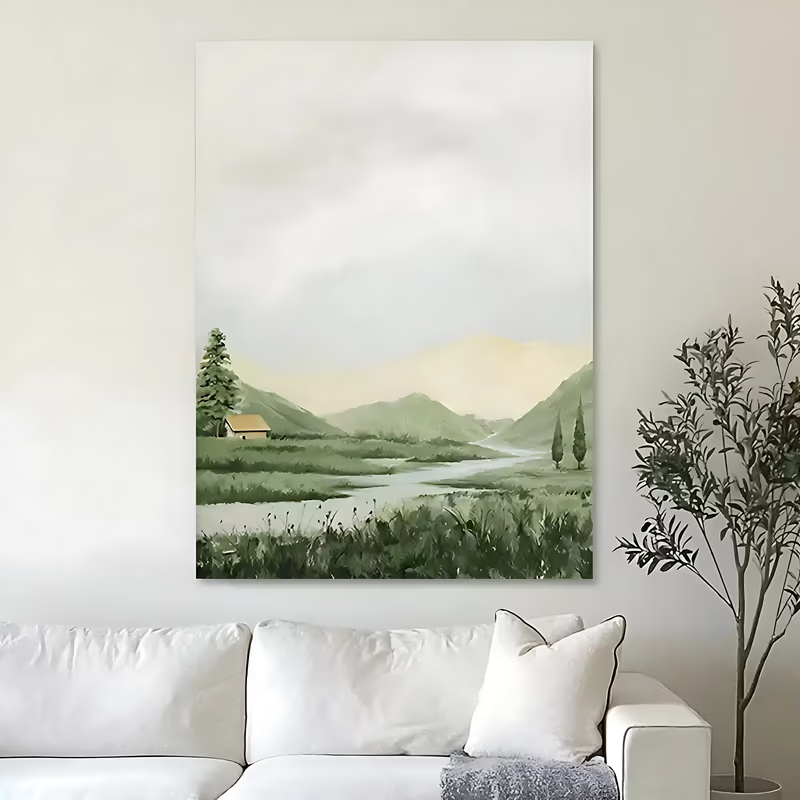
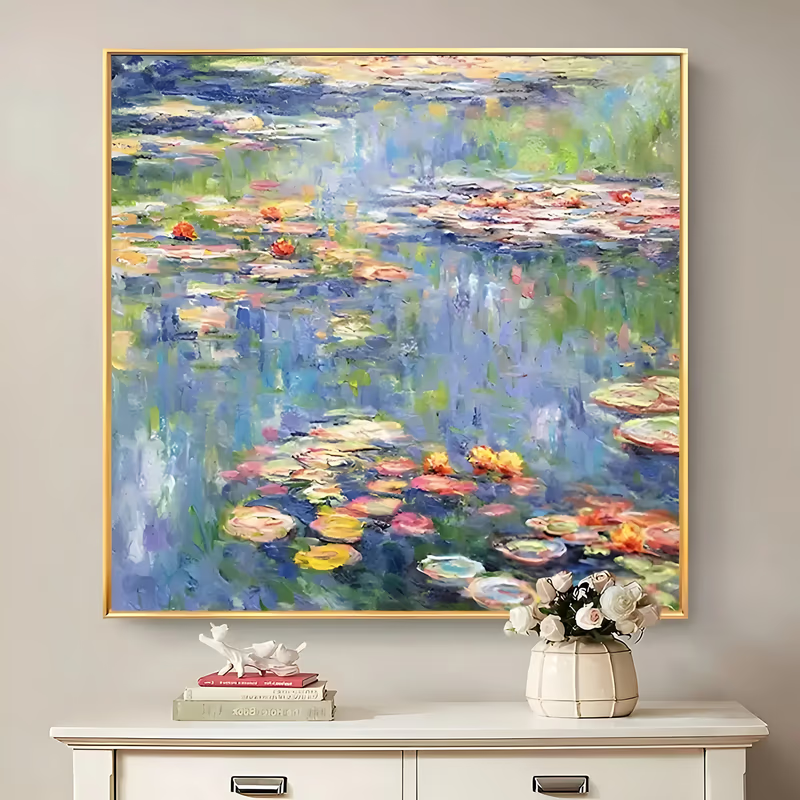
Clear, recognisable nature calms: open landscapes, still water and gardens in daylight colours. Dark, ambiguous images and abstract shapes a frightened patient could read as threatening do the opposite.
Healthcare artwork guidelines ask for landscapes, water and plant life in patient areas, and warn that complex, chaotic or ambiguous images can raise stress in intensive care, behavioural health and paediatrics 1. One study committees often quote: among heart-surgery patients in intensive care, abstract art caused more anxiety than no picture at all 2. Shortlist with that in mind.
- Choose a horizon or a path to follow, still or gently moving water, daylight rather than dusk, and colours that stay light under clinical lighting.
- Leave out stormy or night skies, deep shadow, jagged forms, abstracts whose shapes could turn into faces or wounds for a medicated patient, animals staring out of the canvas 2, and anything sad, graphic or political 1.
- Look twice at very busy florals, fog so dense the subject disappears, and strong reds in clinical rooms.
Start with calming and peaceful works, or go straight to landscapes and seascapes.
Patient room art: what can a patient actually see from the bed?
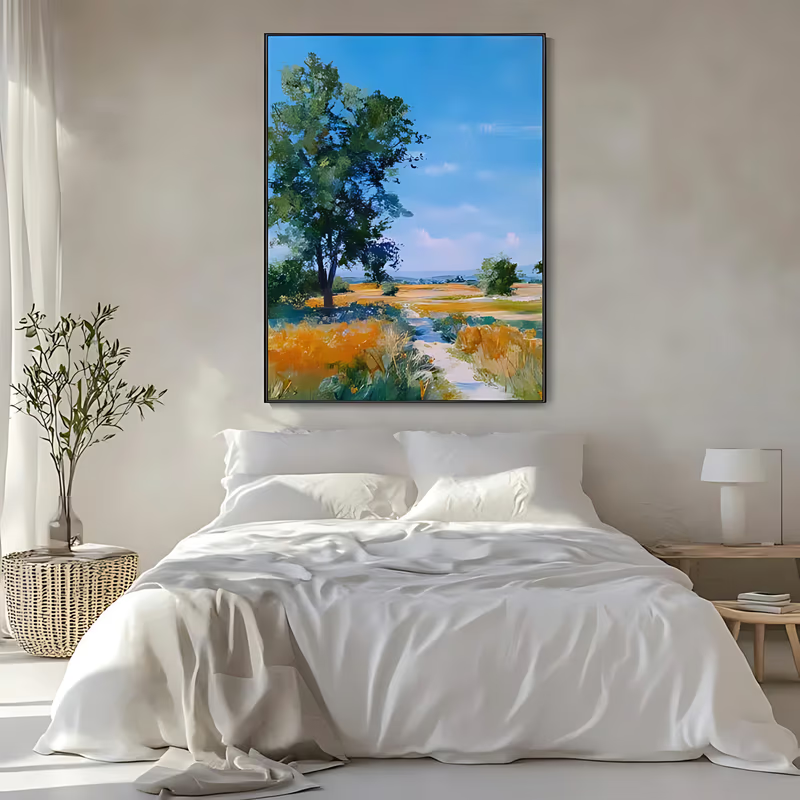
Mostly the wall facing the foot of the bed, so that is where the painting belongs, chosen for someone lying back, not for someone standing in the doorway.
A patient spends most of the day half-reclined with the headwall of outlets and call buttons behind them, so the hotel position over the bed is the one wall they cannot see. Plan the piece for the facing wall, or the side wall nearest the window when the television takes the foot wall, and test the sight line from the bed in the mock-up room.
- A way in. A path, river or shoreline leading into the picture gives a reclining patient somewhere to rest the eye.
- Size for the distance. Two or three metres from the pillow, around 81 × 61 cm (32 × 24 in) reads clearly; in shared bays, two smaller pieces give every bed a view.
- Room for equipment. Leave space for monitors, hoists and the patient whiteboard.
- Lighter works behind glazing. A dark canvas behind glass turns into a mirror for the window.
For a first shortlist, browse bedroom works in green or blue.
Can healthcare art show our own region's landscapes and landmarks?
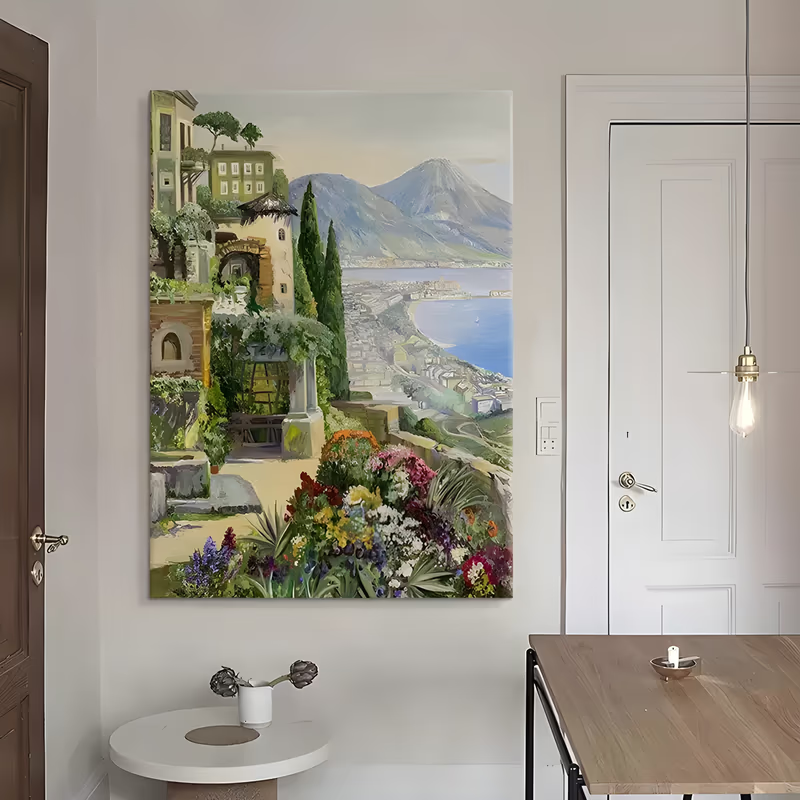
Yes. Send photographs of the coastline, hills, parks, river or landmarks your patients know, and we paint them by hand as originals, for one atrium wall or for a whole floor.
Familiar local and regional scenery is one of the subjects healthcare art guidelines recommend 1, and it does two jobs: a patient sees a place they know, and a visitor remembers "the floor with the harbour paintings" the next day. Photographs by staff or local photographers often mean more to the community than any catalogue subject.
Send each photograph at the largest size you have, say which wall it is for, and whether it should be a faithful view or simplified into the calmer manner of the rest of the programme: fewer people, a softer sky, the cranes left out. You approve the composition at the first stage, and a view can grow into a varied series for a corridor. Please make sure the photographs are yours or licensed for this use. More on paintings from your own image.
How can hospital artwork help patients and visitors find their way?
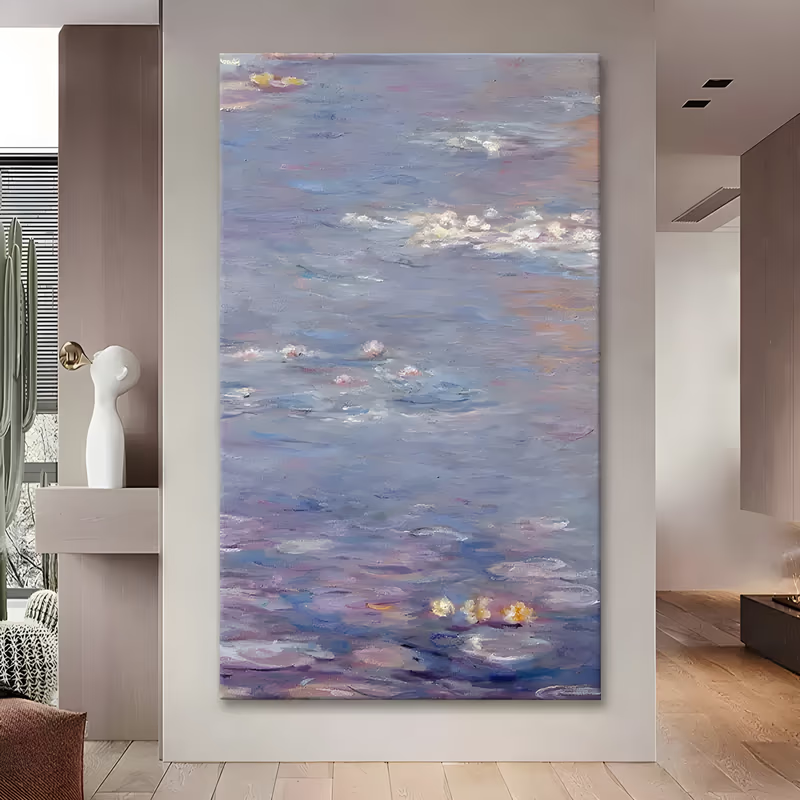
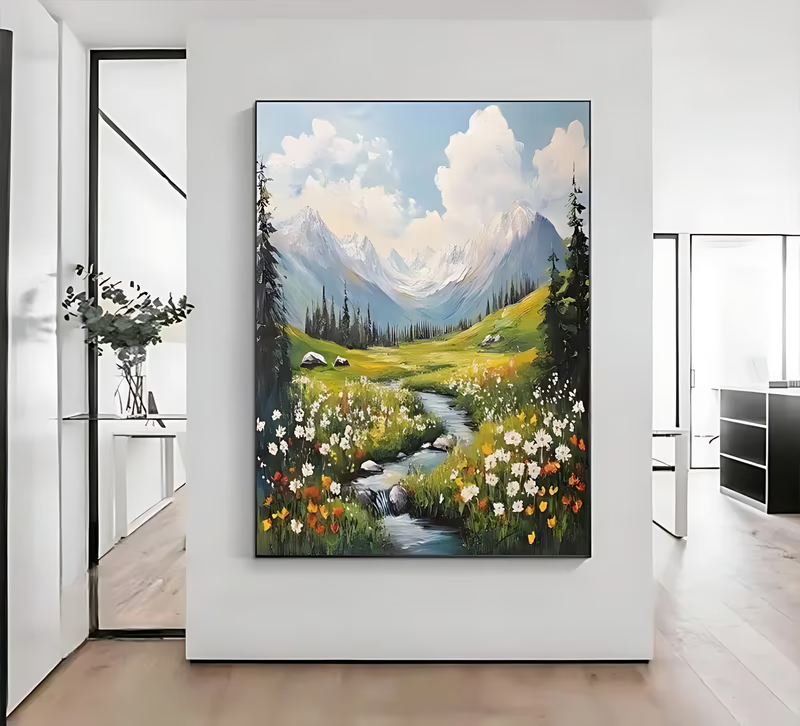
Give each floor its own colour and family of paintings, and put one memorable landmark wherever people must decide which way to go.
Signs carry the directions; the art makes the route easier to remember, without competing with the signs.
- Colour by floor. If level 3 is signed in blue and level 4 in green, the corridor paintings carry the same colour, recoloured from one family to the paint codes or the signage drawing you send.
- One family per corridor. A catalogue work varied into related originals, so a long run reads as one place without repeating. Our corridor series page covers sizes, spacing and numbering for installers.
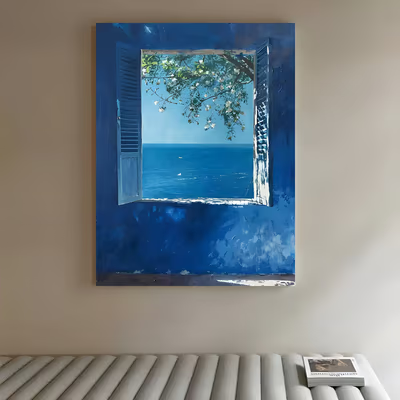
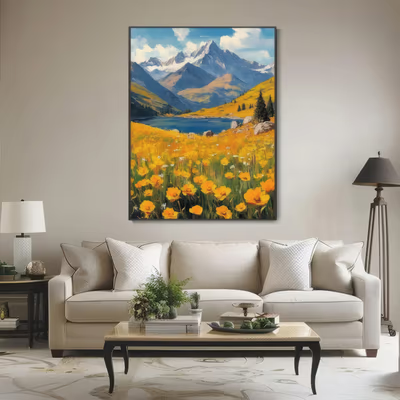
- Landmarks at decision points. One larger, distinctive piece facing the lift doors or at a junction, such as a blue window open onto the sea or a field of yellow poppies, gives people a phrase to use: "turn left at the poppies".
Keep landmark subjects clearly different from floor to floor, and hang them a little apart from the signs.
Atrium, waiting room, chapel, staff lounge: where can healthcare art be bolder?
In the spaces people pass through or choose to sit in, art can take more scale, colour and even abstraction.
Healthcare art guidelines favour nature in patient rooms but find abstract work well suited to lobbies, public corridors and staff areas 1. Give each of these spaces its own line in the schedule, with its own size and finish.
-
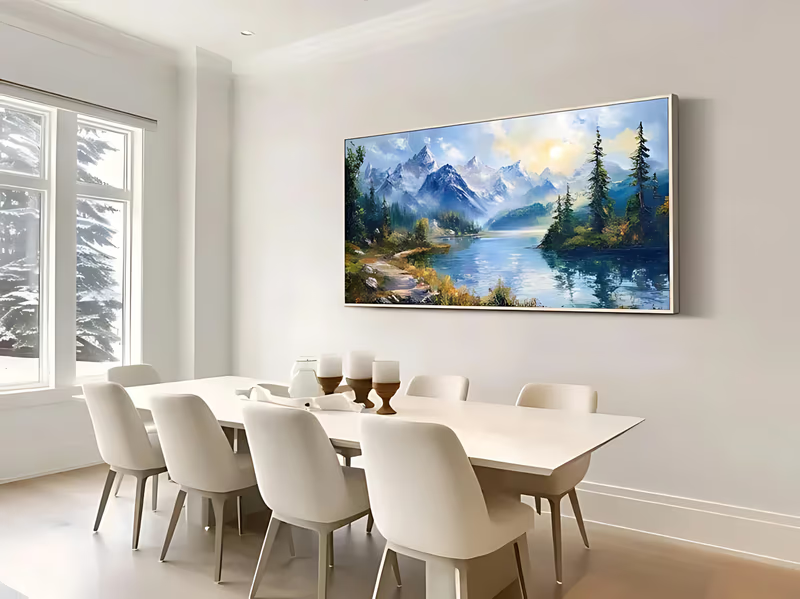 IA#985
Atrium and main entrance
One wide landscape at the scale of the wall, often two or three metres long, or a regional view painted from your photographs.
Art for lobbies and reception -
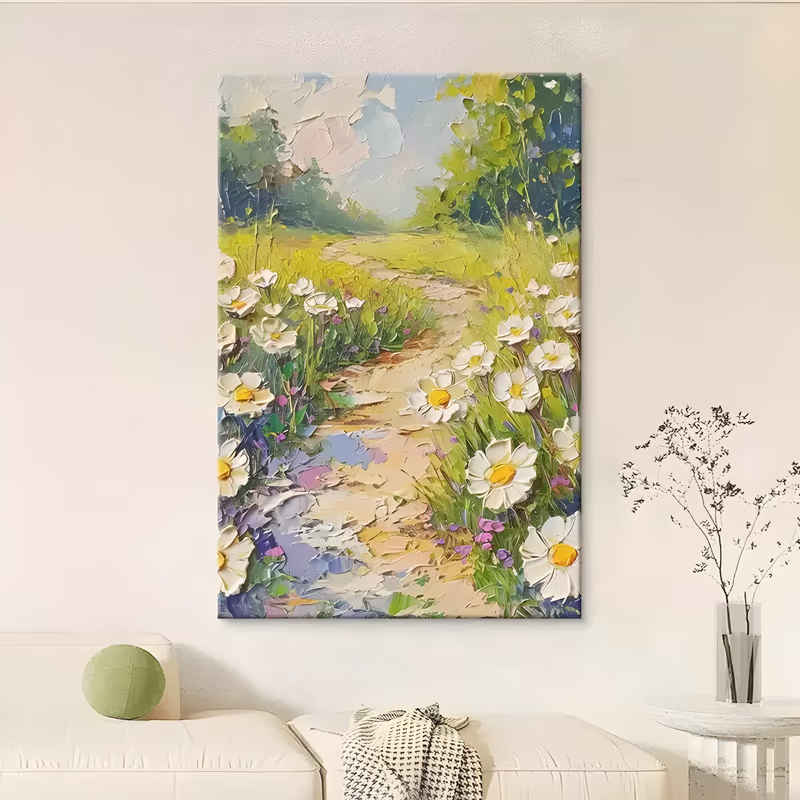 IA#402
Waiting areas
Uplifting rather than sleepy: sunlit paths, meadows and gardens, in twos or threes along a waiting wall.
Uplifting works -
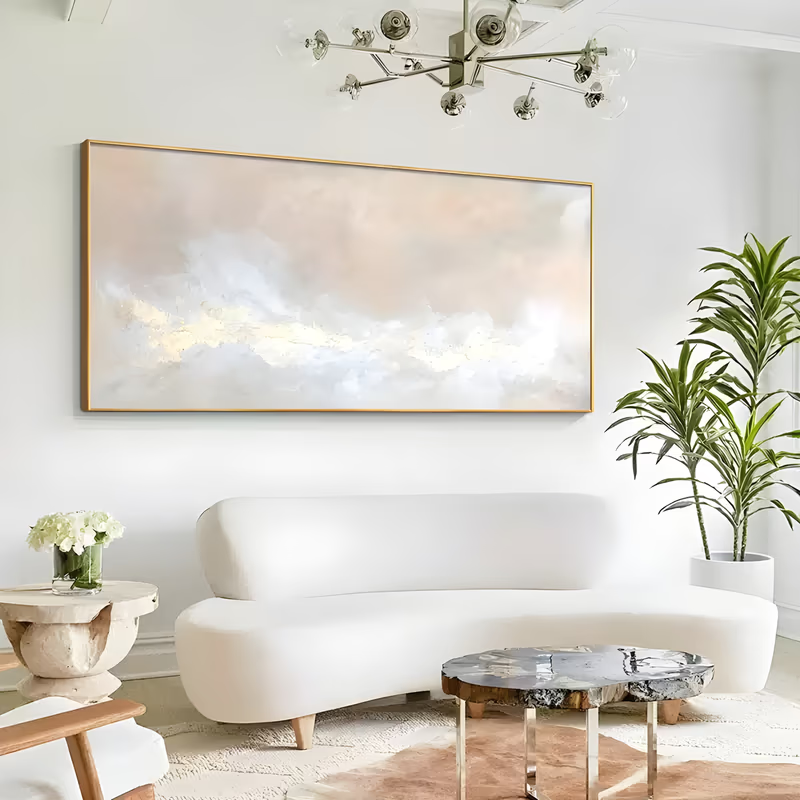 WA#369
Chapel, quiet and family rooms
The quietest canvases in the building, for hard conversations: soft horizons and pale clouds, with little detail.
Peaceful works -
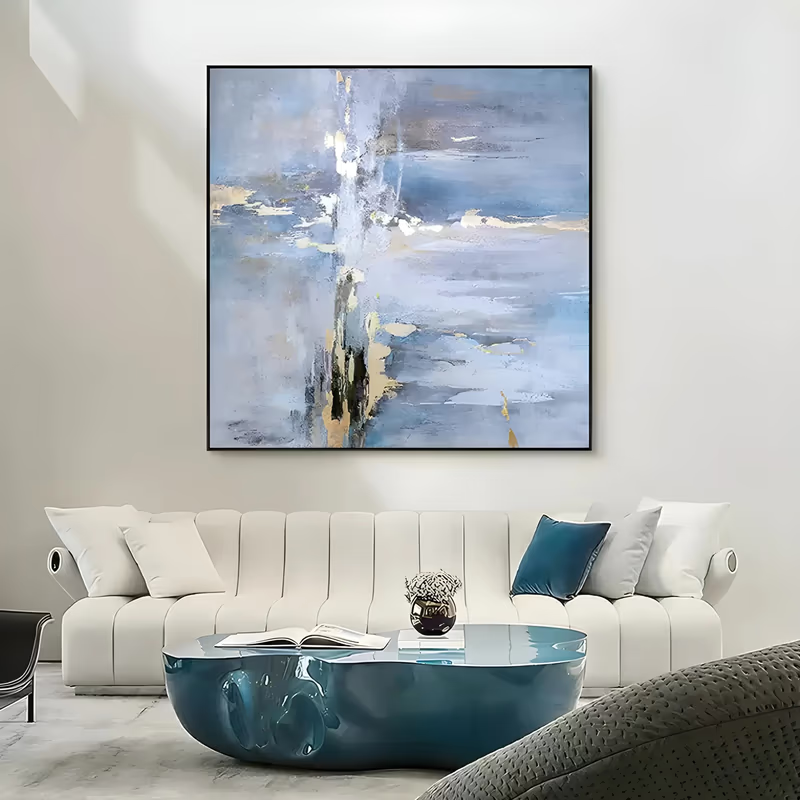 AA#801
Staff lounges and offices
Calm abstracts and Wabi-Sabi pieces give staff a change from the nature subjects they pass all shift.
Abstract works
How does an art committee approve hospital artwork that has not been painted yet?
Line by line from a review pack of catalogue works, sizes and room photos, then from photos of every canvas at each stage, so the committee signs off the painting itself, not a promise.
A hospital art committee often brings together clinical leads, facilities, infection prevention and patient representatives, sometimes with an art consultant, and meets on its own calendar. Give them a pack they can settle in one sitting.
- The shortlist. Send floor plans or wall photos and your subject rules; we reply with catalogue works for each position, two or three options where the committee wants a choice, with codes, sizes and room photos.
- The adjustments. A lighter sky, a figure painted out, the floor's colour: we confirm each change before painting.
- The mock-up room. One painting under the room's own lighting answers questions no screen can.
- The stage photos. Every canvas is photographed at each stage, so the committee, or the member it delegates, sees each painting before it ships.
File the approved photographs with their codes: they become the artwork reference library guidelines recommend for keeping later phases and other sites consistent 1.
What do infection prevention and facilities teams need from healthcare artwork?
Wipeable frames, glazing and secure fixings follow your facility's own specification: we paint the canvas to fit it, and it is framed to that spec, by us or by your own framer.
In a patient room the cleanable surface is the glazing and the frame; the painting sits behind them. For behavioural health, guidelines add tamper-resistant screws with the frame flush to the wall, rounded edges and shatterproof polycarbonate glazing 1. Treat the art as two lines on the schedule: the canvas we paint, and the frame, glazing and fixings your facility specifies.
-
Patient rooms and clinical areas
- Painting
- Flatter brushwork, so the canvas sits close behind the glazing
- Frame
- Your standard wipeable frame and glazing, the same on every floor
- Ships
- Rolled for your framer, or framed to your specification
-
Behavioural health
- Painting
- Simple, calm subjects with no dense pattern
- Frame
- Rounded profile, polycarbonate glazing, flush to the wall
- Ships
- Rolled, for the framer who fits your tamper-resistant hardware
-
Atrium and public areas
- Painting
- Any surface, including palette-knife texture and plaster relief
- Frame
- Frameless stretched, or framed in gold, silver, black, white or wood
- Ships
- Stretched or framed, ready to hang, hooks included
Keep deep texture for public areas
Thick palette-knife paint and plaster relief gather dust, are hard to wipe and will not sit flat behind glazing; they also ship stretched or framed only. Keep them for the atrium and staff areas.
Send the frame's inside size
Standardise one frame across every site and phase and send us its inside dimensions: each canvas is painted to fit, with nothing for the framer to trim.
How do we budget hospital artwork across hundreds of patient rooms?
Spend on the few walls everyone sees and keep the repeated positions lean: standard sizes, rolled for your framer, in the patient rooms and corridors.
- Repeat sizes
- Two or three standard sizes across patient rooms and corridors keep the framing simple and each piece's price down.
- Ship rolled
- The cheapest and quickest way to send a few hundred canvases to one framer.
- Families
- Varied series from a few catalogue works keep every room different without designing each painting from scratch.
- Volume
- Volume pricing from 10 pieces, counted across every floor and wing.
- Where to spend
- The atrium, the main waiting areas and one landmark per floor.
We price every line of the schedule separately, so the committee sees where a smaller size or a different finish keeps the programme on budget. Pieces funded by donors or a hospital foundation can be quoted on their own.
How does the art order follow a phased hospital opening?
Wing by wing: the committee approves the programme once, and each phase is painted and shipped against its own handover date, from the same codes and approved photographs.
Send the handover sequence with the schedule, and the quote gives a delivery date for each phase.
- Schedule and rulesPositions by floor and room type, subject rules, wayfinding colours and the frame specification.
- Shortlist and quoteCodes, sizes and room photos for the committee; every line priced, a date for each phase.
- Mock-up roomOne painting, judged in the mock-up patient room before the programme is signed off.
- Phase one paintedThe first wing or floor, photographed at each stage, then labelled by floor and position.
- Delivered to the handoverTo your framer, contractor or loading dock by express, or by air or sea freight for a large batch.
- Later phasesPainted from the same codes and photographs, months or years later, in the same palette or a refreshed one.
Do you work with healthcare art consultants and smaller facilities?
Yes: healthcare art consultants use us as the studio behind their selection, and the same approach to art for hospitals scales down to clinics and hospices.
Healthcare art consultants keep the client, the curation and the committee presentations; we paint the originals to your brief, send the stage photos to you and ship to your framer or installer. The art consultants page explains how that runs day to day.
Outpatient centres and clinics are mostly waiting and consulting rooms: twenty to sixty pieces, often one order and one delivery. Hospices, rehabilitation and long-stay units are closer to a home than a ward: recognisable landscapes and local scenes, chosen with residents in mind, as on our senior living page.
A two-level ward block opening in two phases
An illustrative schedule built from catalogue works, not a client project. Every piece would be painted to the size of its wall.
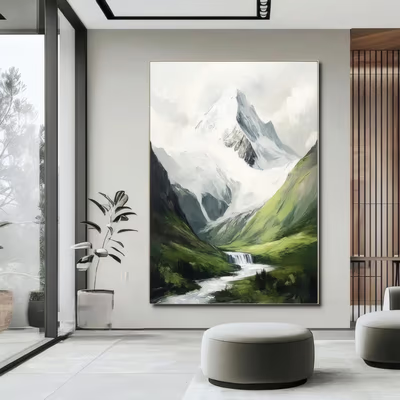
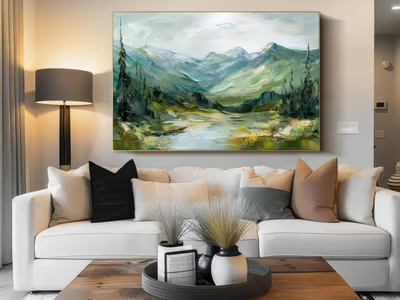
- Mock-up patient room: the sample the committee judges in placeSnow peak above a green valley and river; rolled; 1 piece81 × 61 cm (32 × 24 in)
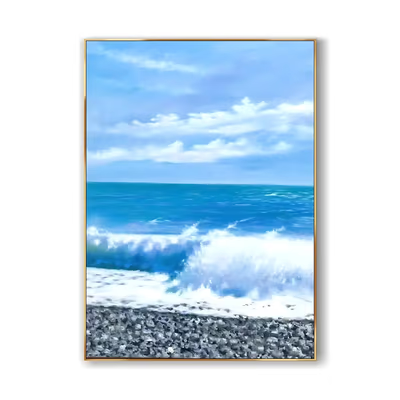
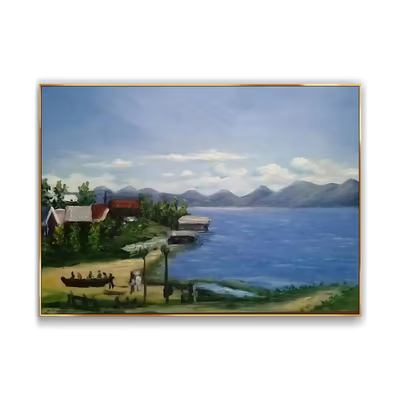
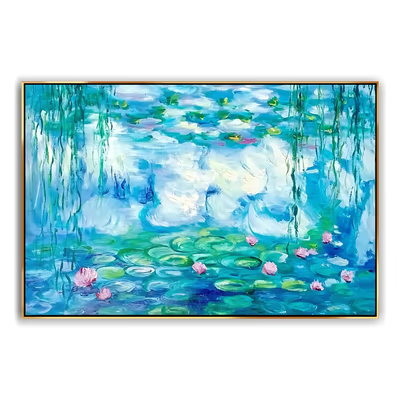
- Level 3 patient rooms, blue level, phase 1A wave on a pebble shore, a lake village with boats and a willow lily pond, each varied into eight; rolled for the glazed standard frame; 24 pieces81 × 61 cm (32 × 24 in)
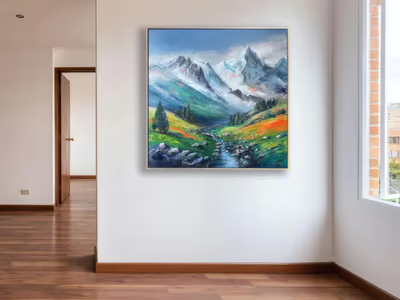
- Level 4 patient rooms, green level, phase 2The approved valley sample, an alpine lake with pines and a meadow stream below snowy peaks, each varied into eight; rolled; 24 pieces81 × 61 cm (32 × 24 in)
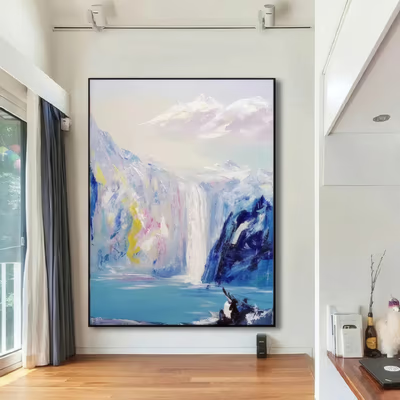
- Level 3 corridor: eight positionsPastel waterfall into a teal lake, varied into eight verticals; rolled; 8 pieces91 × 61 cm (36 × 24 in)
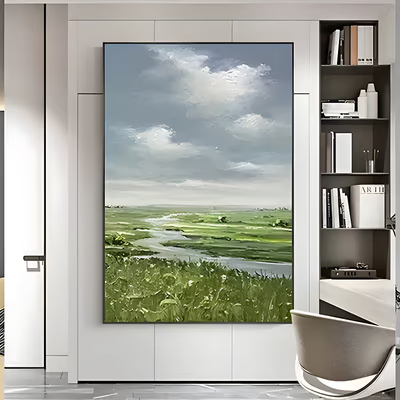
- Level 4 corridor: eight positionsRiver winding through a green meadow, varied into eight verticals; rolled; 8 pieces91 × 61 cm (36 × 24 in)
- Lift lobby landmarks, one per levelA shuttered window onto a cobalt sea (level 3), golden poppies below a mountain lake (level 4); framed in white; 2 pieces122 × 81 cm (48 × 32 in)
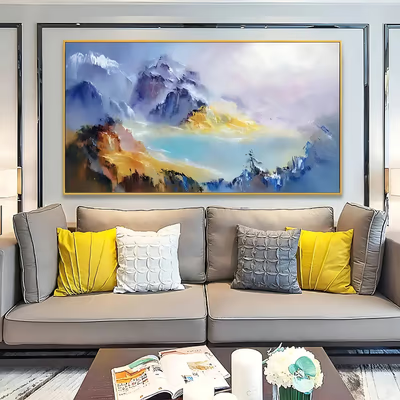
- Ward entranceSnowy mountains above a turquoise lake, or your own region from a photograph; stretched; 1 piece203 × 76 cm (80 × 30 in)
- Family room and quiet roomSlate-blue water and a sandbar under a pale sky, varied into a pair; stretched; 2 pieces102 × 76 cm (40 × 30 in)
- Total 70 original canvases at volume pricing, quoted line by line with a date for each phase. The codes are real catalogue works; quantities, sizes and phases are an example.
Hospital artwork: questions art committees ask
Why choose hand-painted originals over prints for hospital artwork?
Many programmes mix the two. Originals earn their place where people look closely and for a long time: brushwork stays alive behind glass, every patient room can have its own painting rather than the same image down the floor, and any work can be resized, recoloured or painted from your region's photographs, by hand in acrylic, or oil on request.
Can patients and staff help choose the art?
Yes, and it usually makes the art better liked. Put two or three shortlisted works for a position to a vote in a staff room, on a ward or with a patient panel; the shortlist we send, with codes and room photos, prints and shares easily. The committee then confirms the winners.
What art suits a children's ward or children's hospital?
Brighter and more colourful than the adult wards: in the studies, children preferred bright, colourful nature scenes with a clear subject 2. Friendly animals in a landscape work well; close-up faces staring out do not. Hang at a child's eye height, and see colourful works. Children's own drawings can also be painted large on canvas from a scan.
How should hospital staff clean the paintings?
Clean the glazing and the frame, not the paint, following your usual protocol for wipeable surfaces. A frameless canvas in a public area needs only a soft dry brush or microfibre cloth now and then; keep disinfectant sprays and wet wipes off the paint, and hang it where trolleys and beds will not brush past.
Can one painting be replaced years later if it is damaged or goes missing?
Yes. Keep the code, size and approved photograph of each position, and a single canvas can be painted again to match the family on the wall. The minimum order is one piece, so a replacement is an ordinary order, photographed at each stage like the first.
What happens if a canvas arrives damaged?
It is rare: careful packing and trusted carriers keep our return rate under 0.01%. If it does happen, photograph the box and the canvas before the packing goes out with the building waste; we take the claim up with the carrier and work out a solution with you, such as a replacement or a refund.
Healthcare & senior living
Start with one floor and the mock-up room
Send one floor's plan or schedule, your artwork guidelines and the first handover date on WhatsApp, with the quote form or by email. We reply within one business day with a shortlist for the committee and a price for every line.
Other buyers we supply
Each kind of buyer has its own page: what they need from hand-painted art, and how we work with them. All buyer pages
- Senior living & retirement communities Senior living art, hand-painted to order
- Art consultants & advisory firms needing production capacity Art production for art consultants
- FF&E procurement agents & hotel purchasing companies FF&E art supplier for hotel projects
- Corridor, lift-lobby & circulation series Hotel corridor artwork hand-painted to order
- Hotel lobby & public-area statement pieces Hotel lobby art painted by hand to order