Peaceful art guide · Updated
How to choose peaceful wall art that gives a room stillness
Key takeaways
- Peaceful means still and spacious: a painting feels serene when nothing in it moves and there is open space for the eye to travel into.
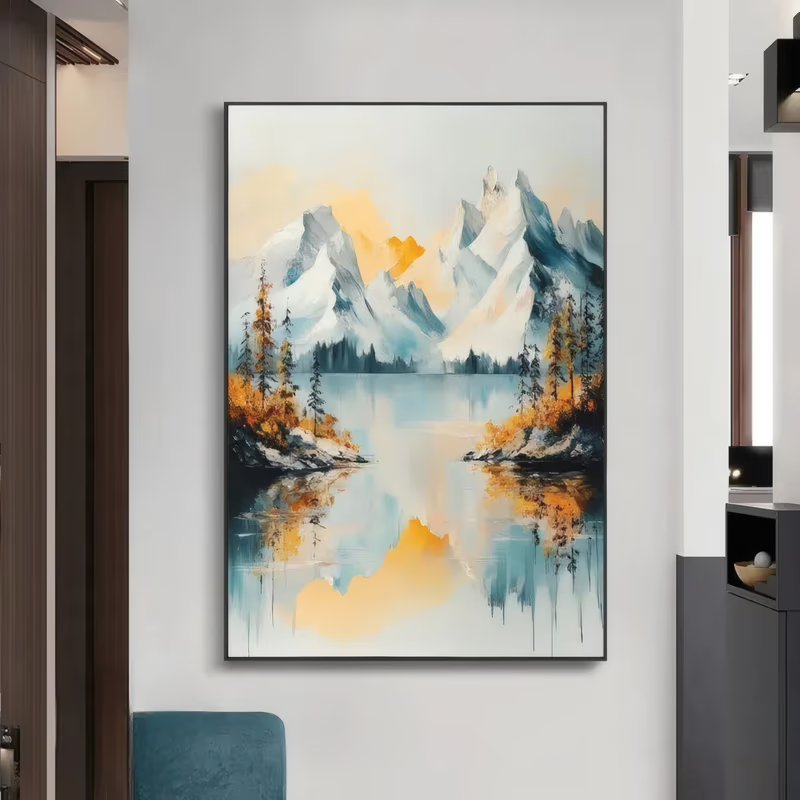
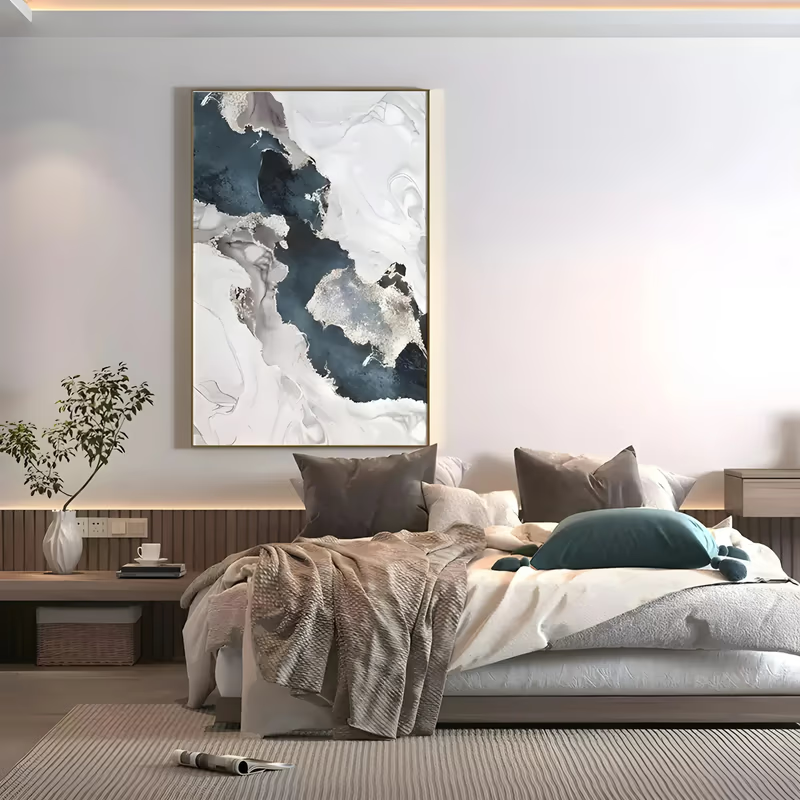
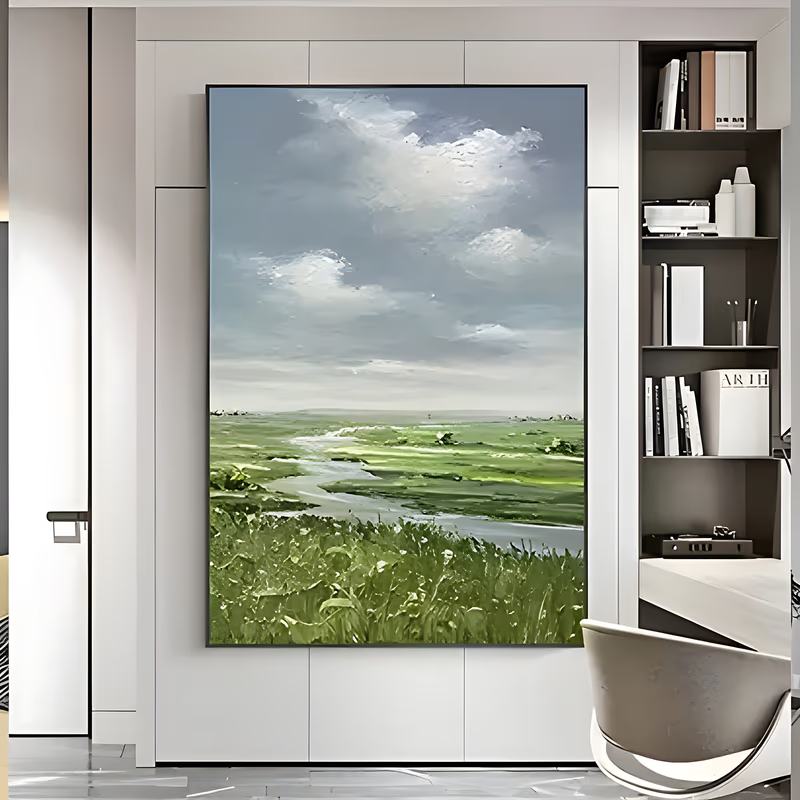
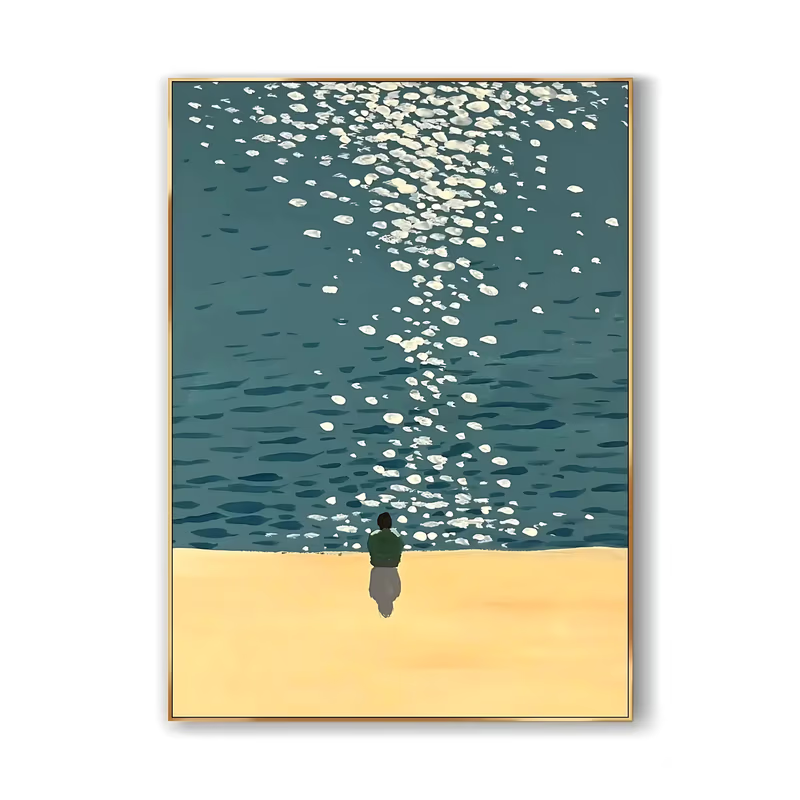
- Look for the composition, not the colour: a low horizon, a mirrored lake, mist in the distance or one subject in open space all create stillness, even in golden or deep tones.
- Give it empty wall: a tranquil canvas needs clear space around it; crowding it with shelves or other frames cancels the effect.
- Hang it for the way people sit: centre it nearer 110–120 cm (43–47 in) in a room used on cushions or low chairs, and 145–152 cm (57–60 in) where people stand.
What makes wall art feel peaceful rather than just calm?
Peaceful wall art adds stillness and distance: it shows a scene where nothing is happening and opens a long view, whereas calming art simply turns down colour and contrast.
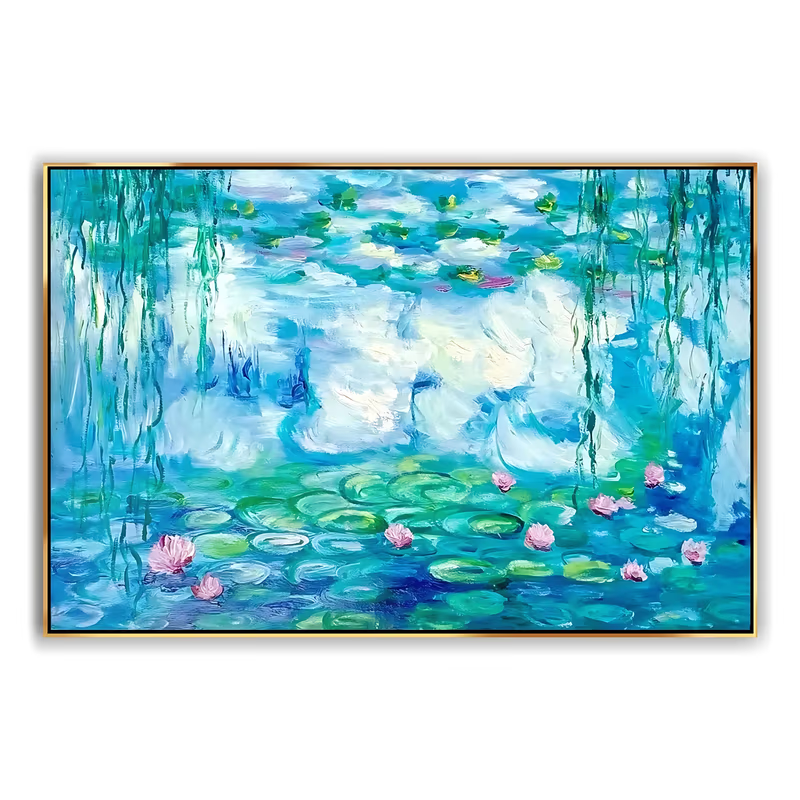
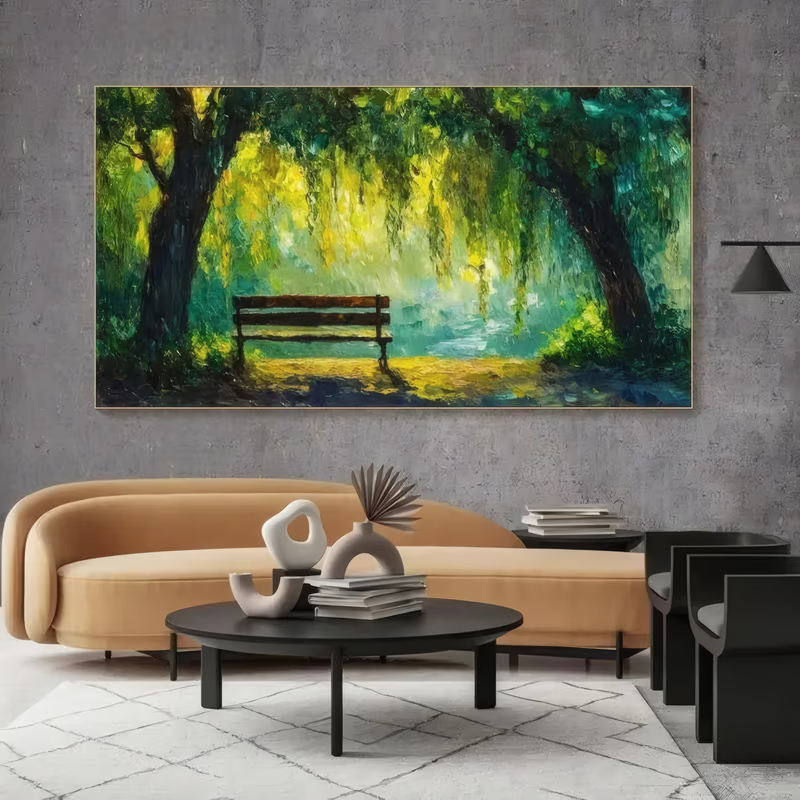
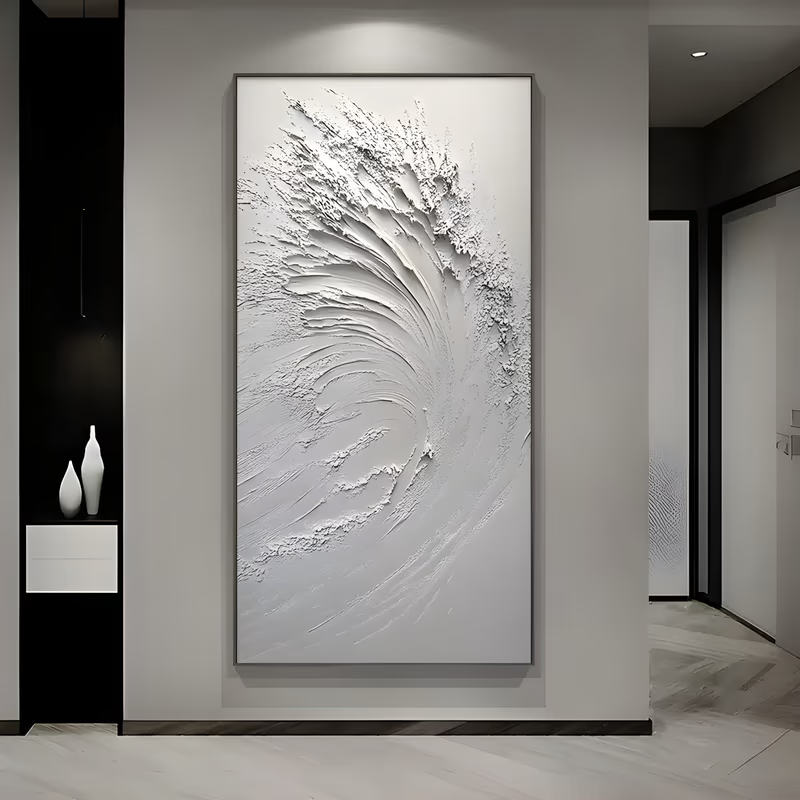
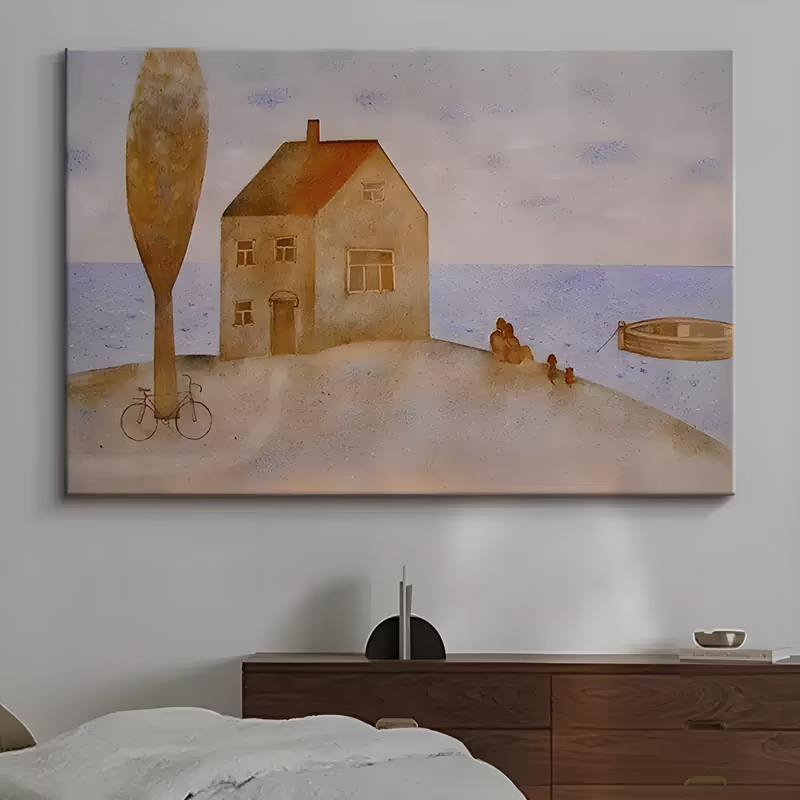
The two are often confused. A calming painting lowers stimulation, so it can be a soft plaster surface with no view at all. A peaceful painting does something different. It gives you a place to be: a lake at dawn with no wind on it, an empty bench under willows, a horizon so far away that the eye slows down to reach it. That sense of space and suspended time is what people mean by serene or tranquil.
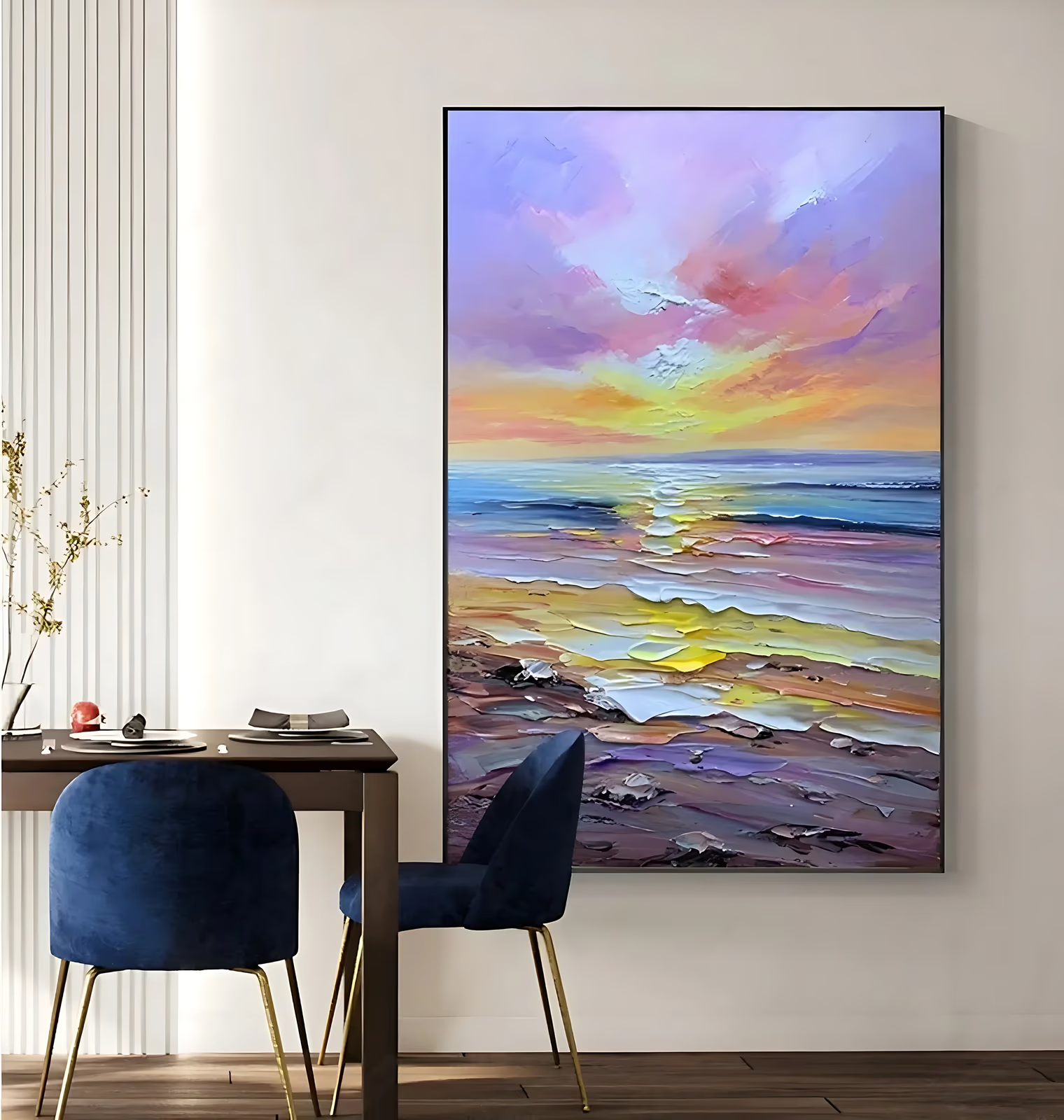
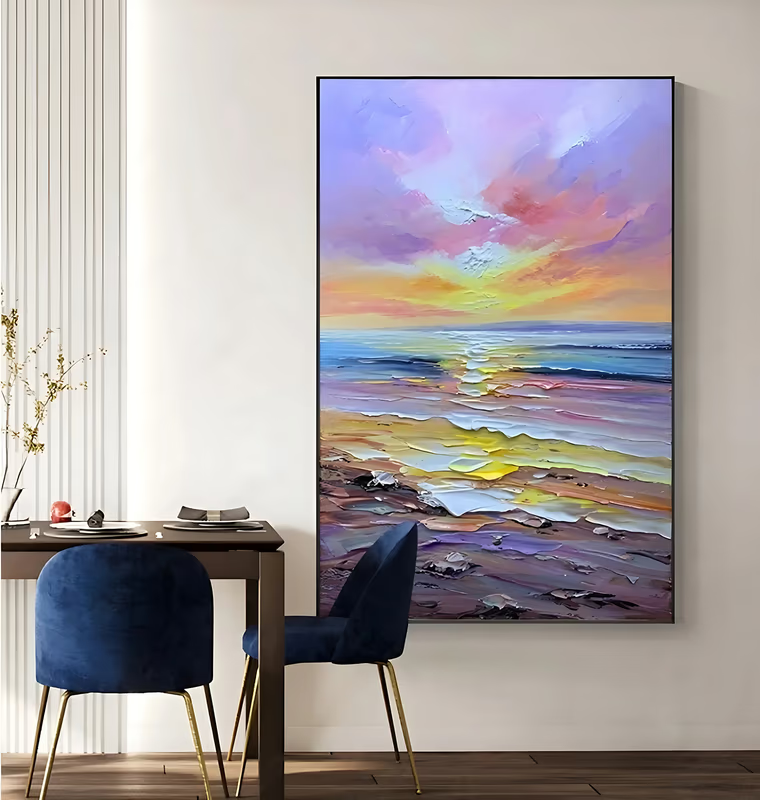
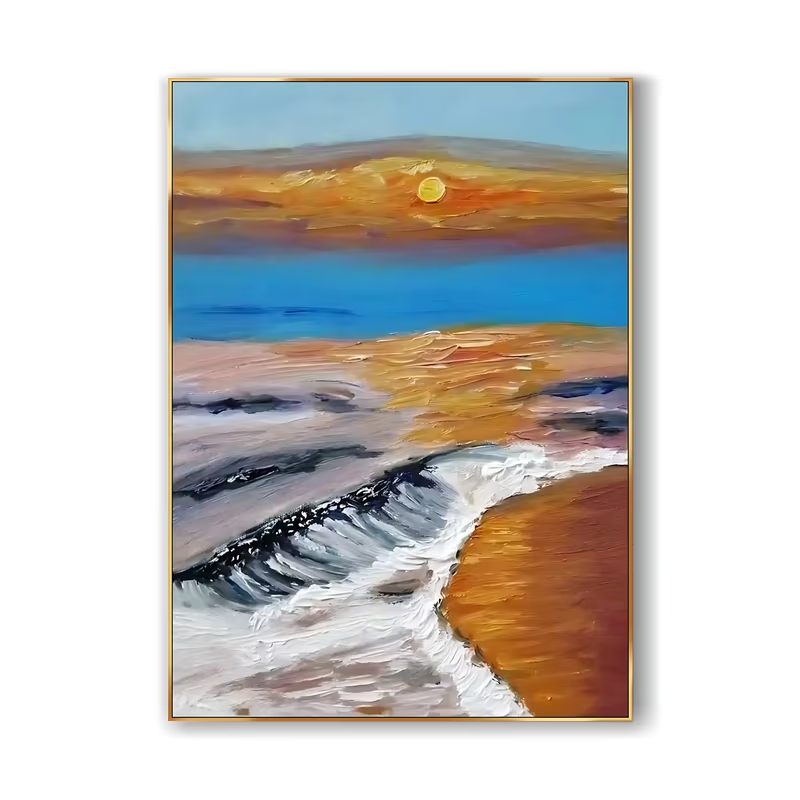
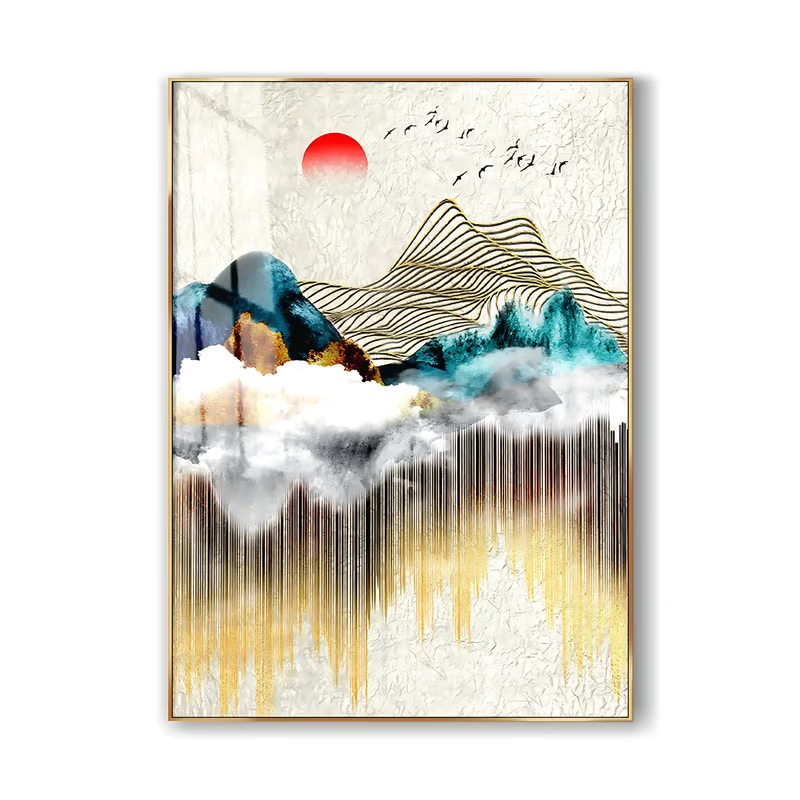
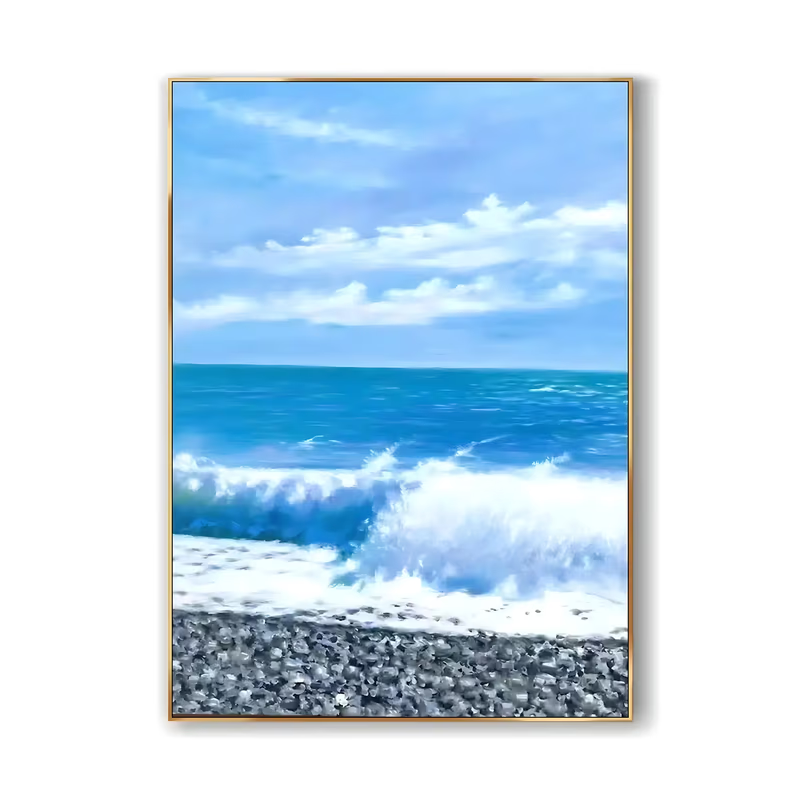
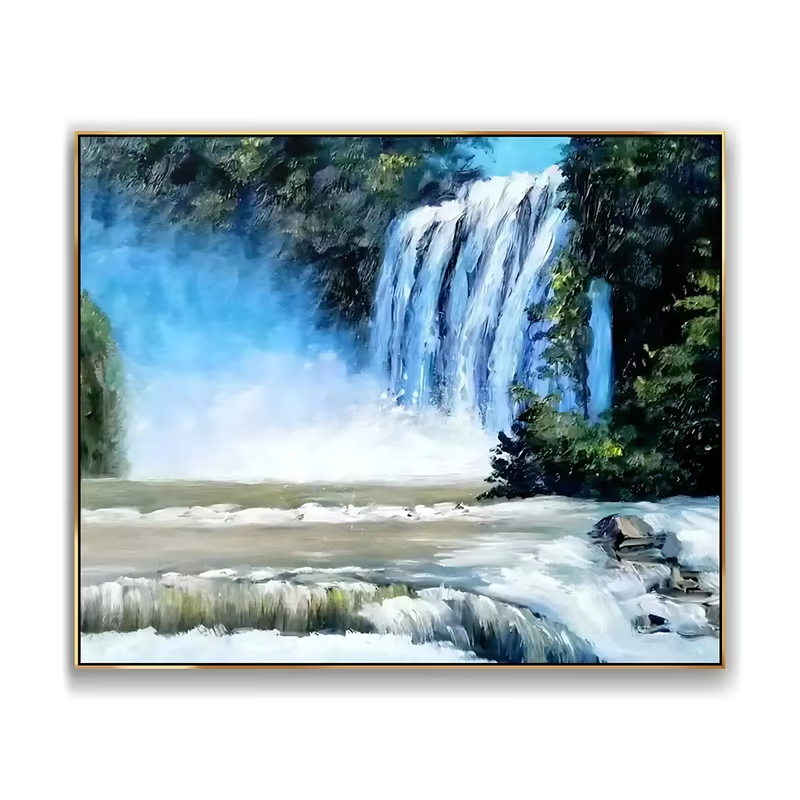
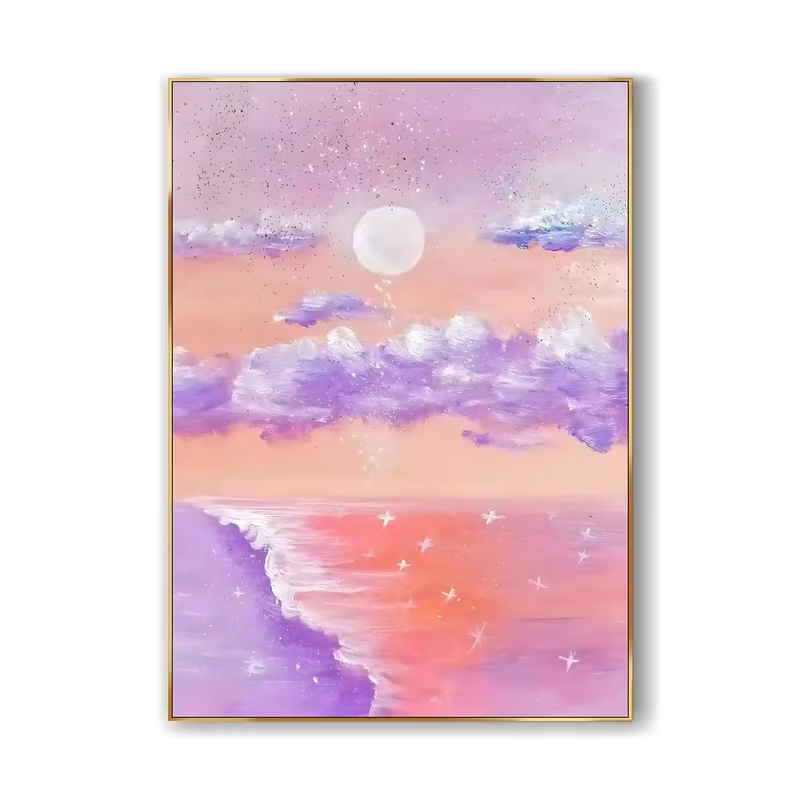
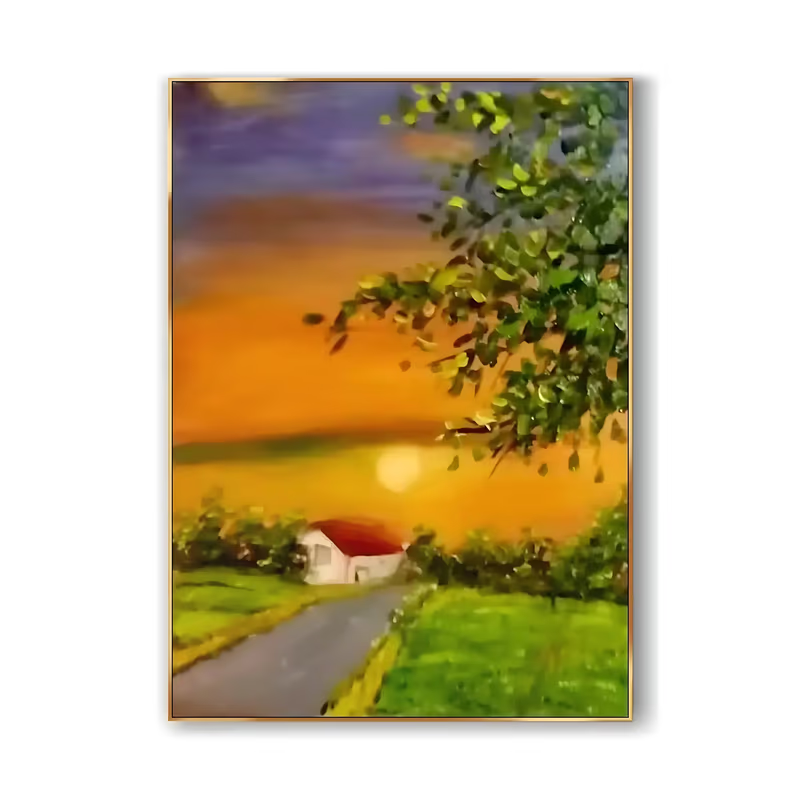
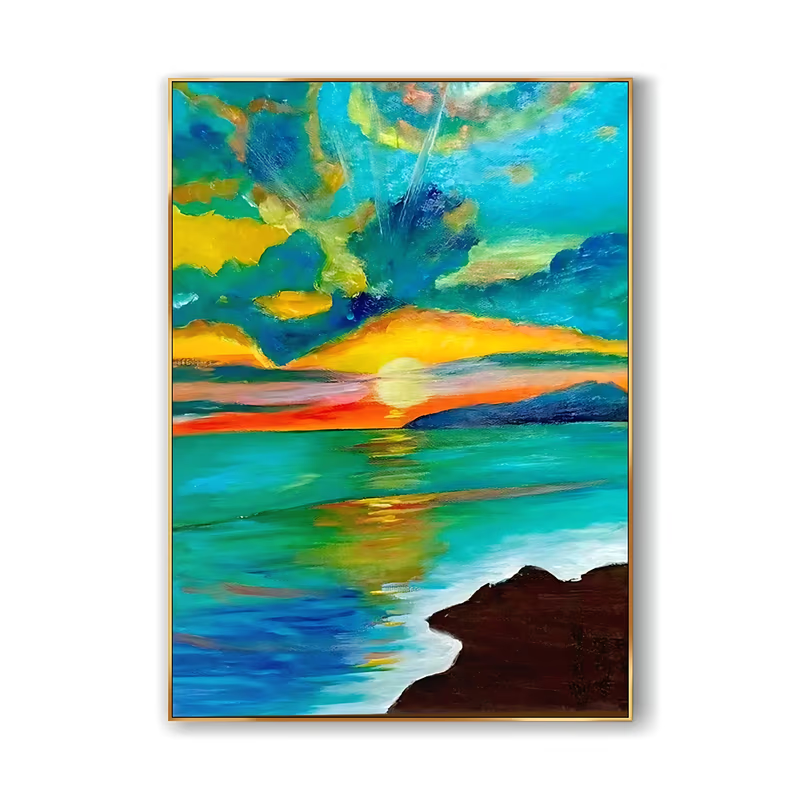
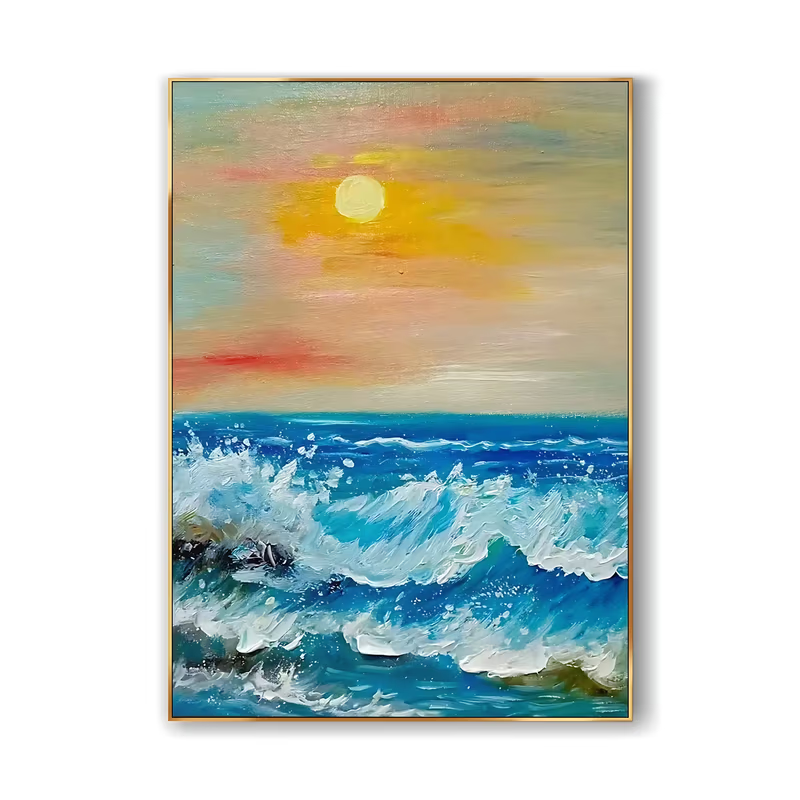
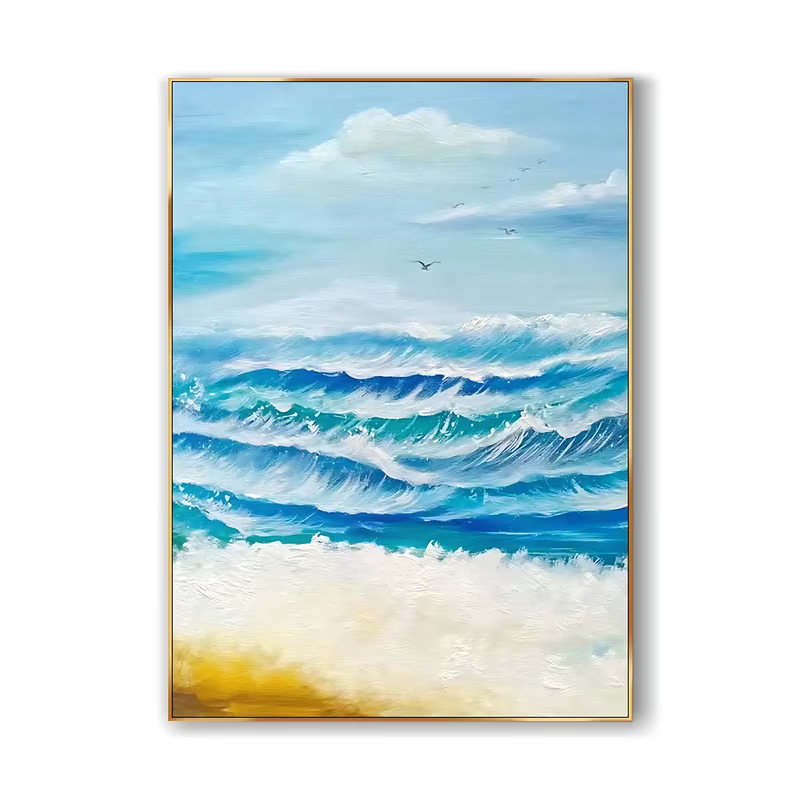
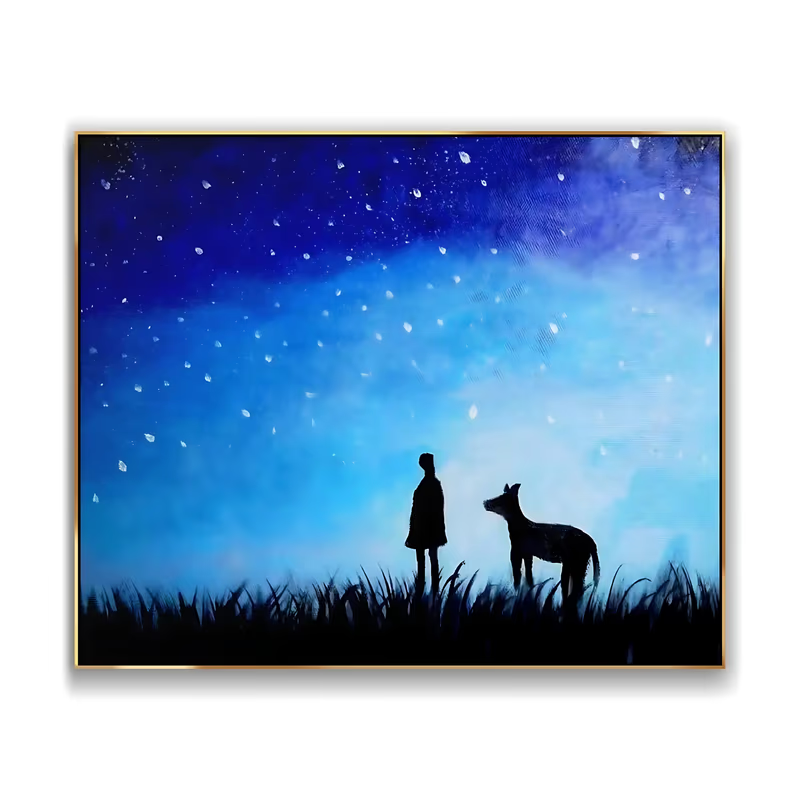
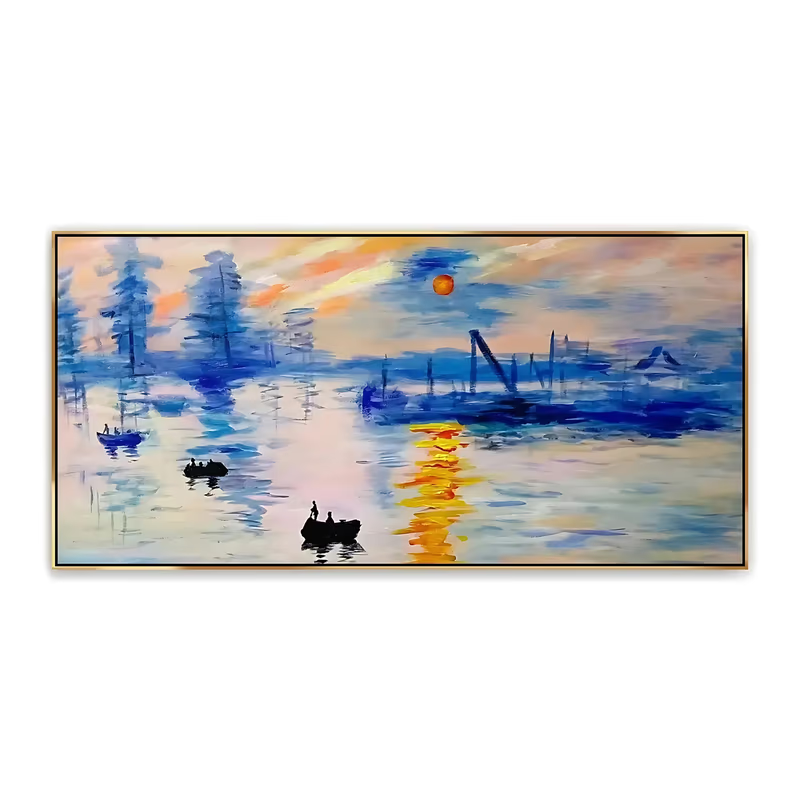
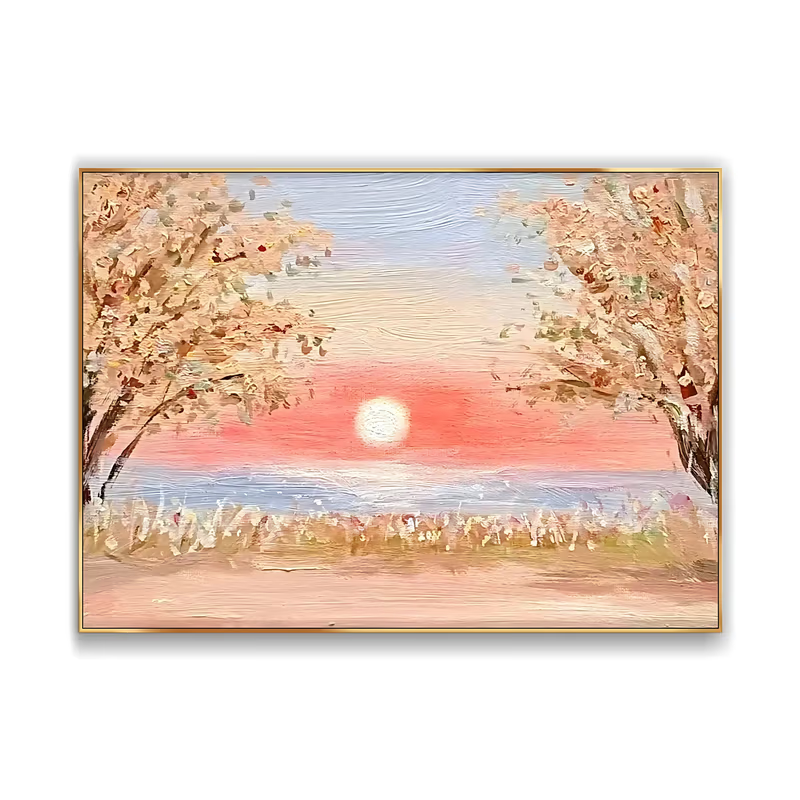
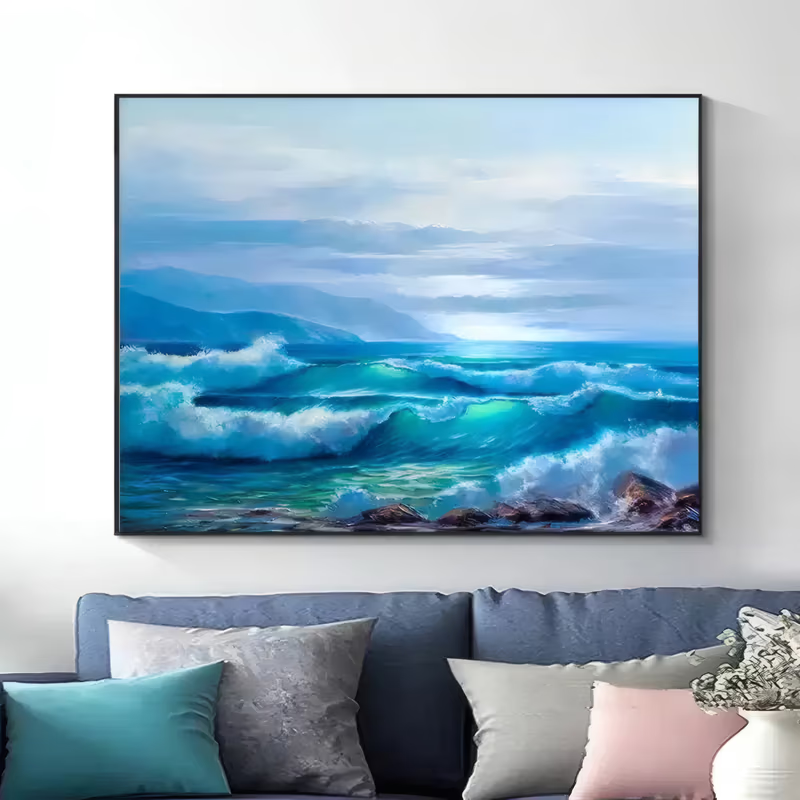
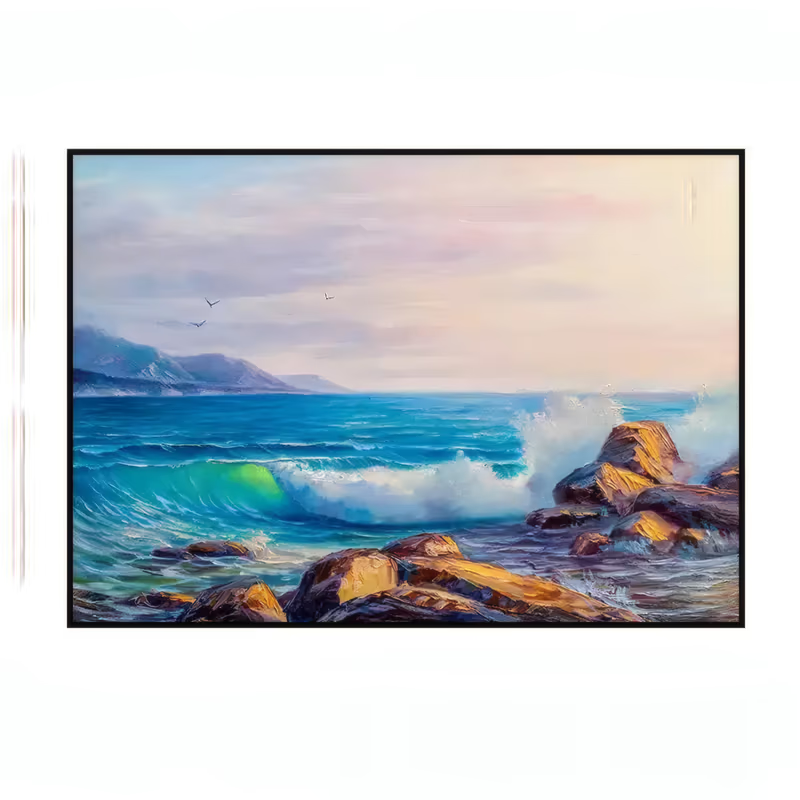
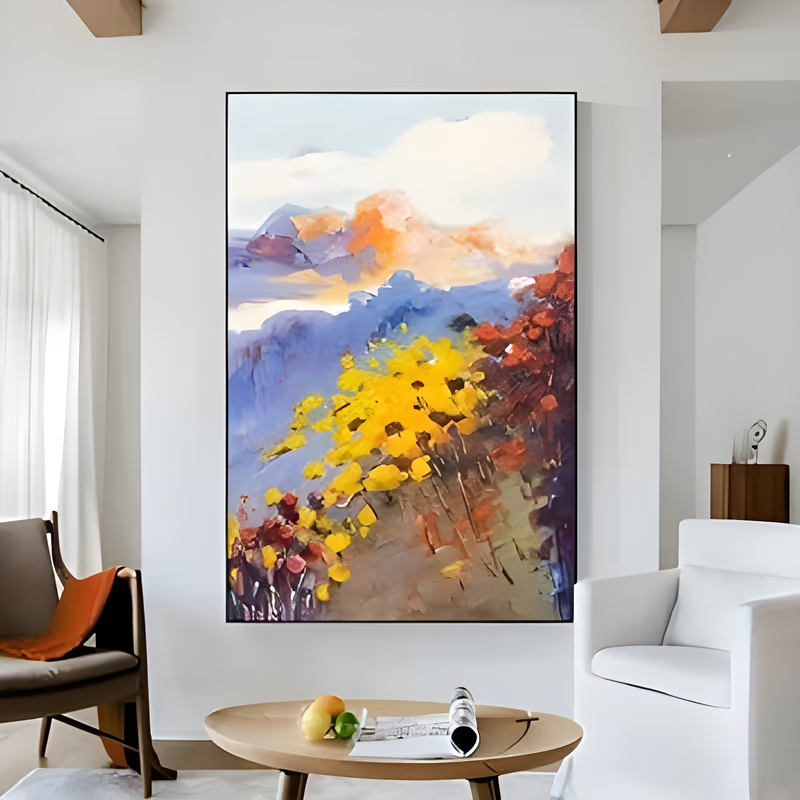
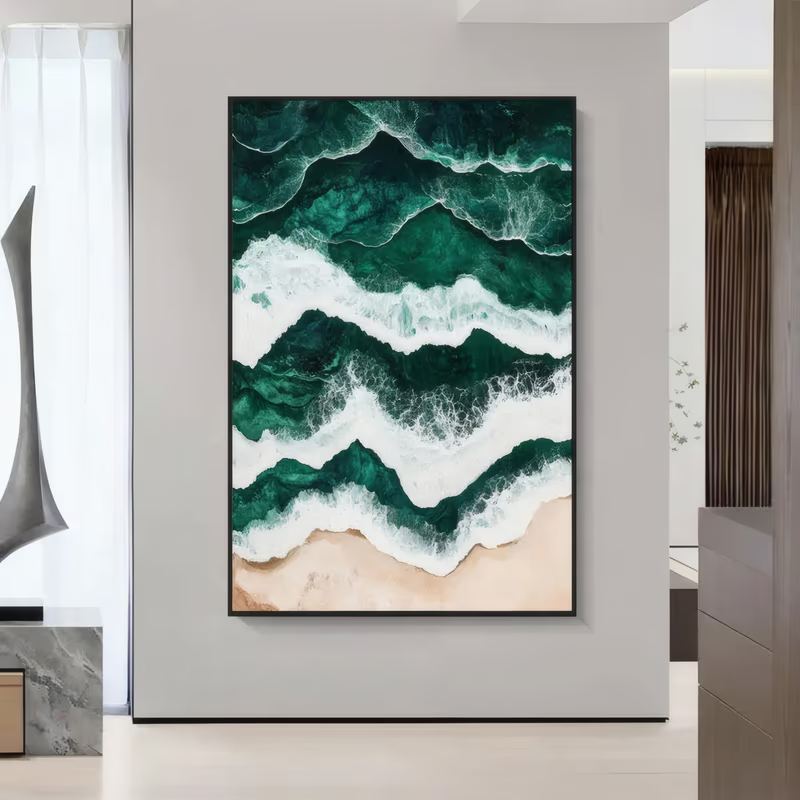
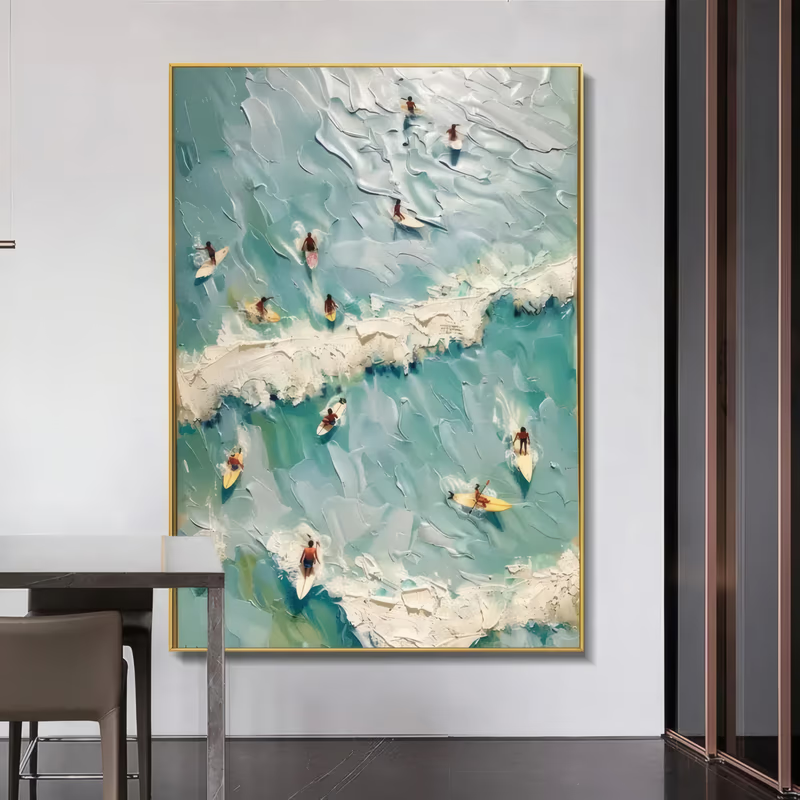
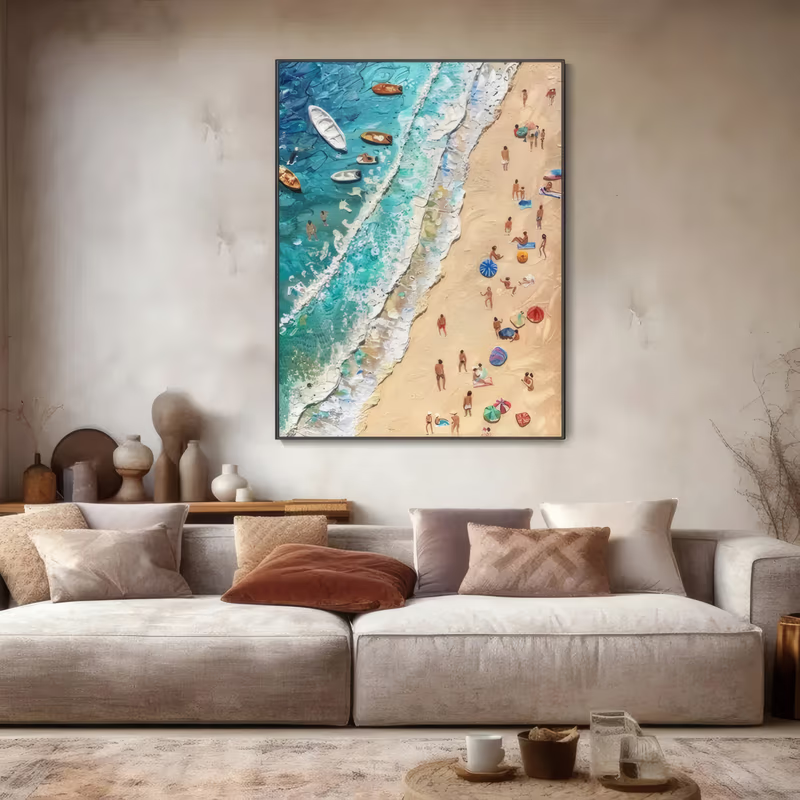
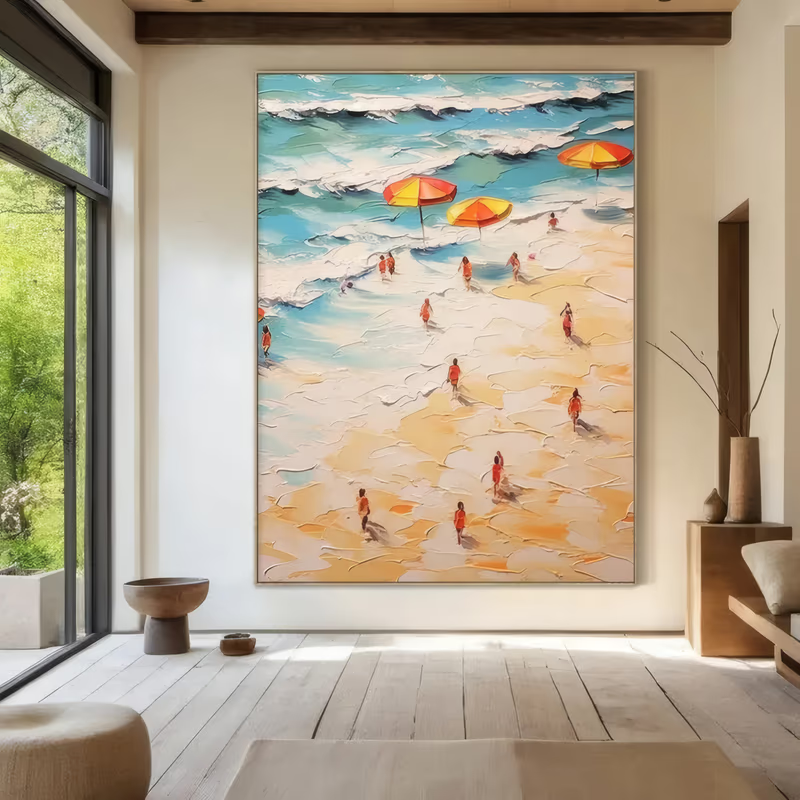
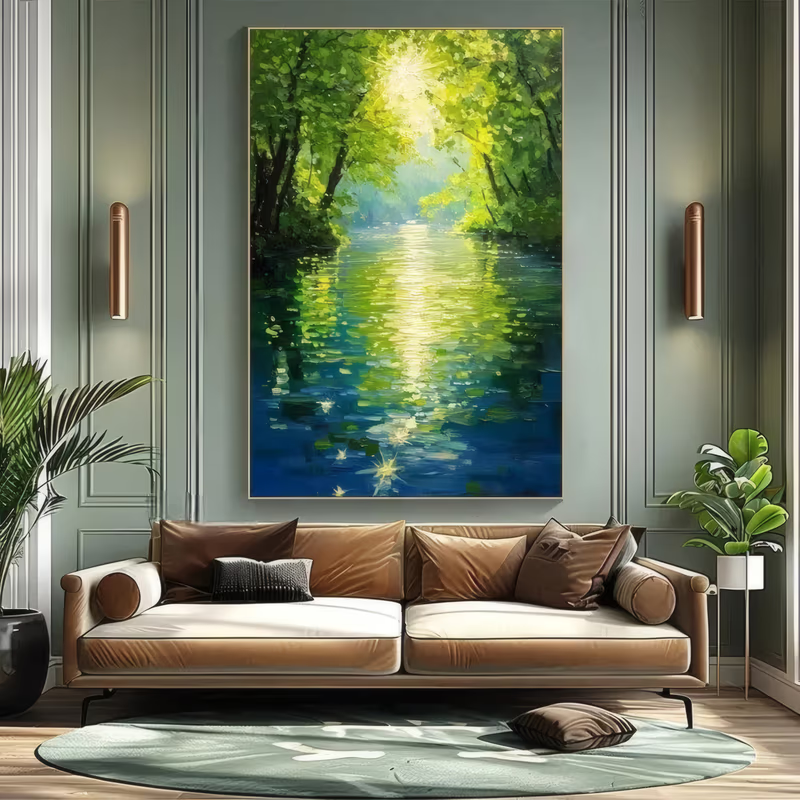
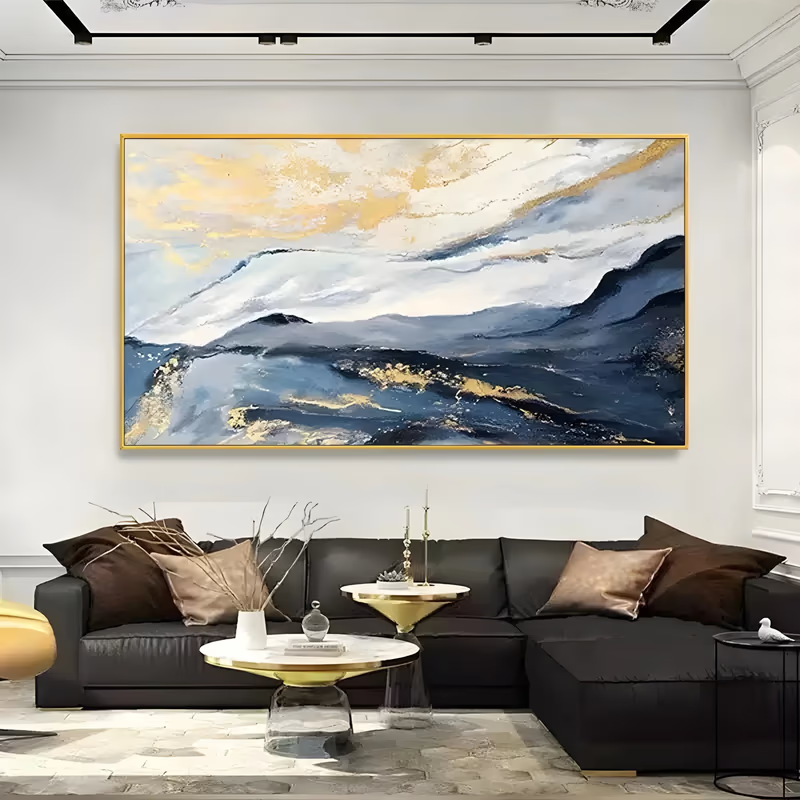
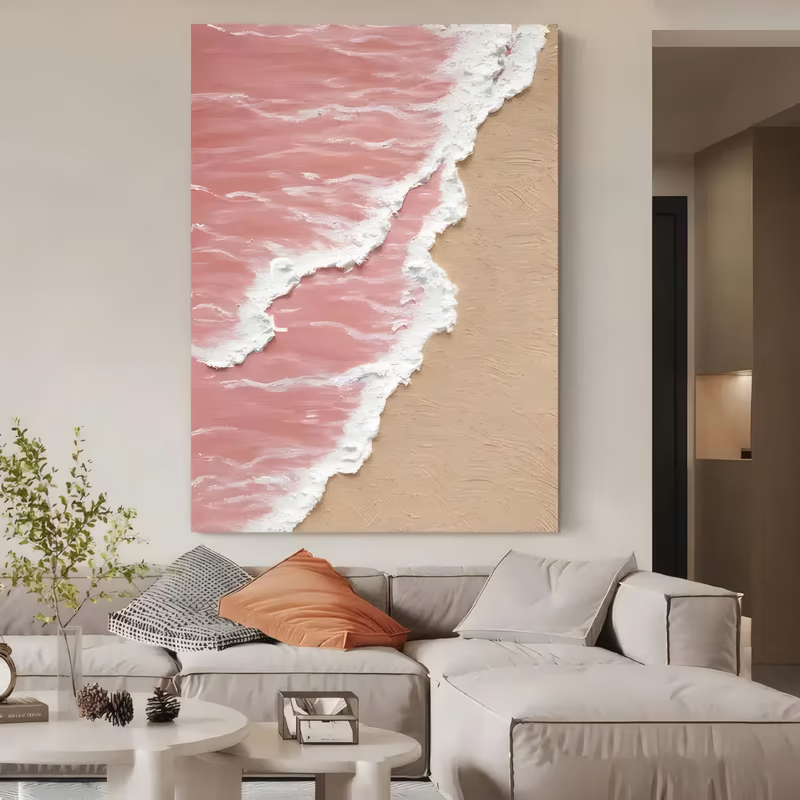
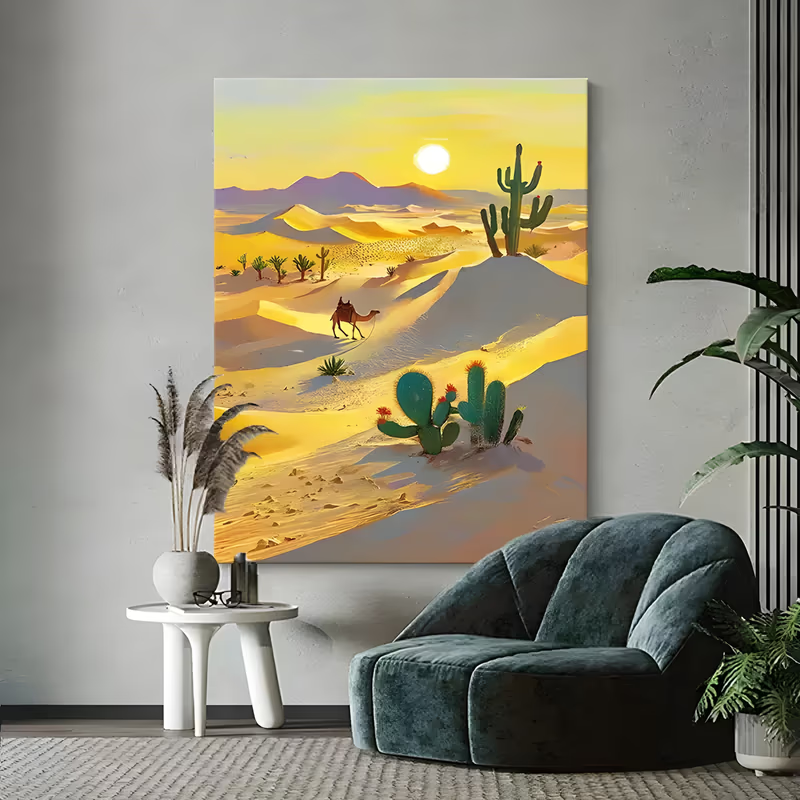
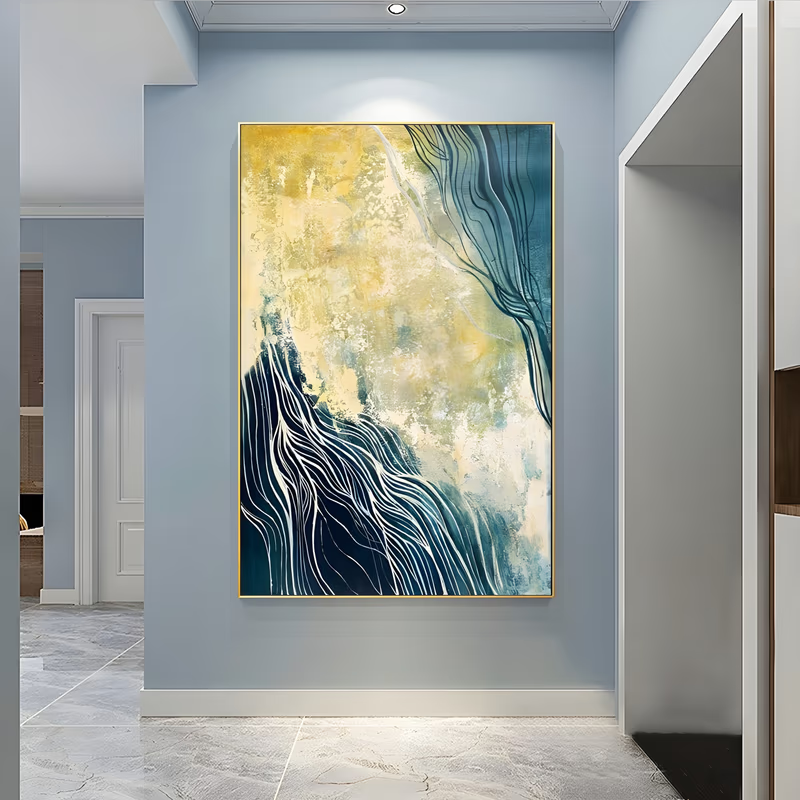
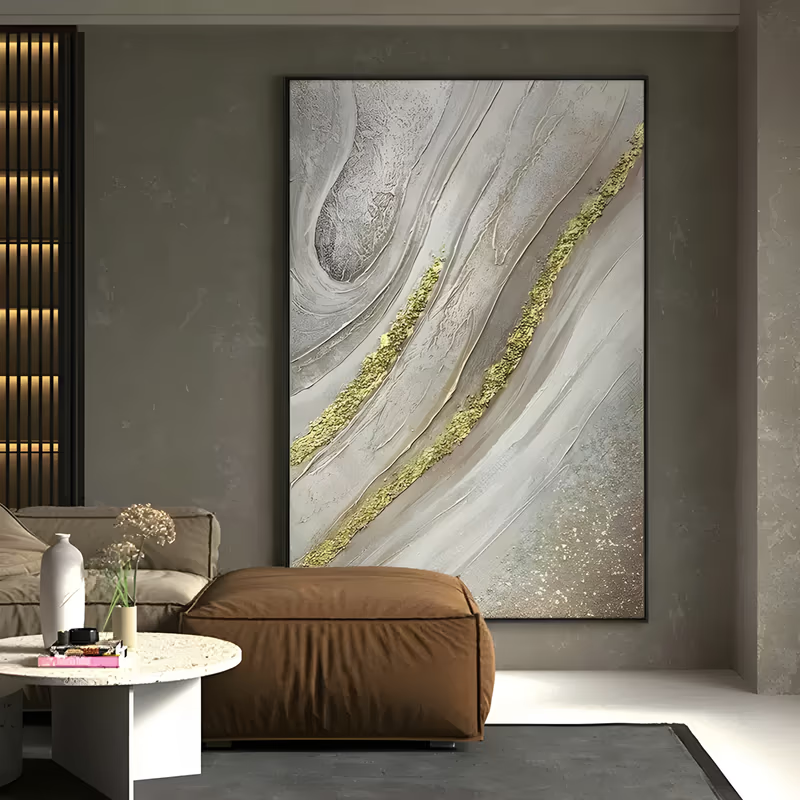
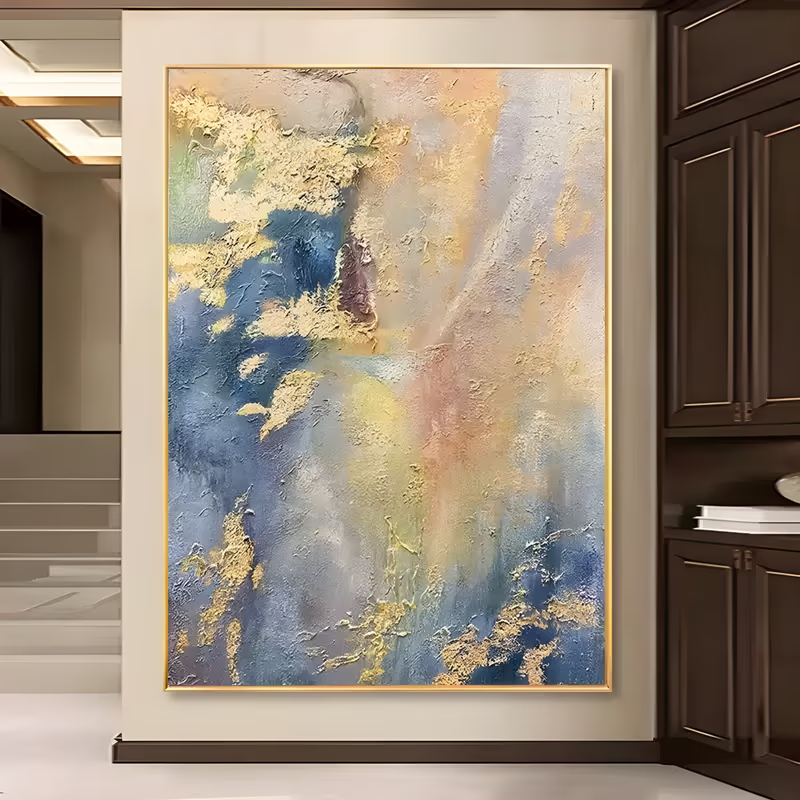
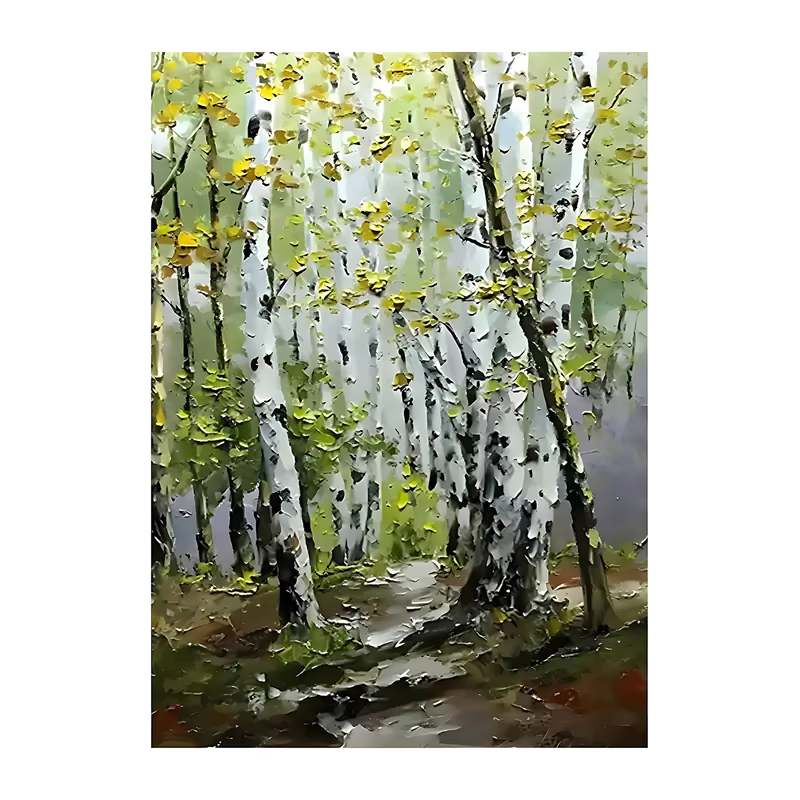
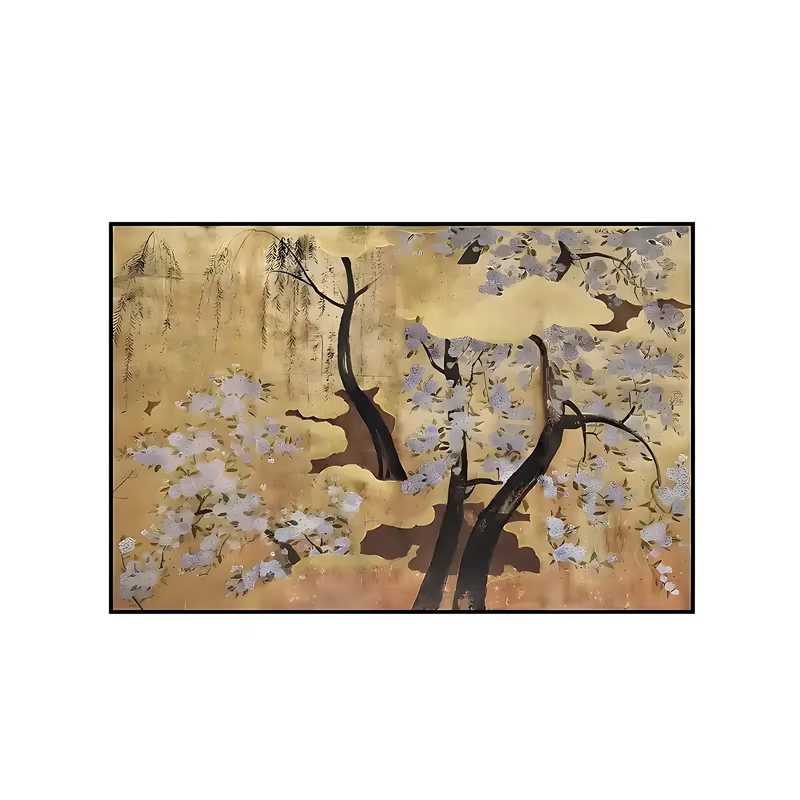
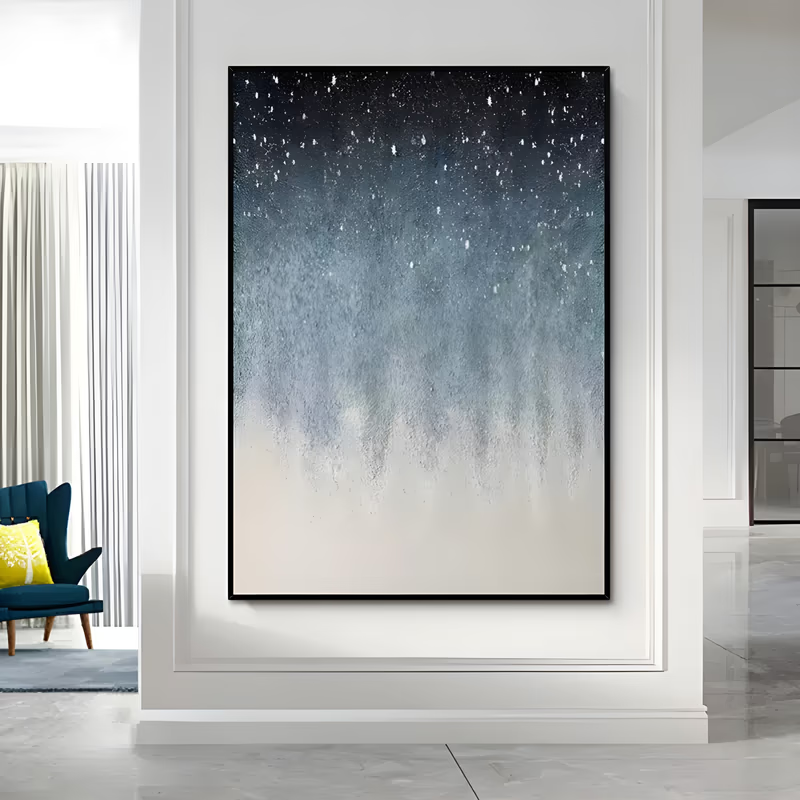
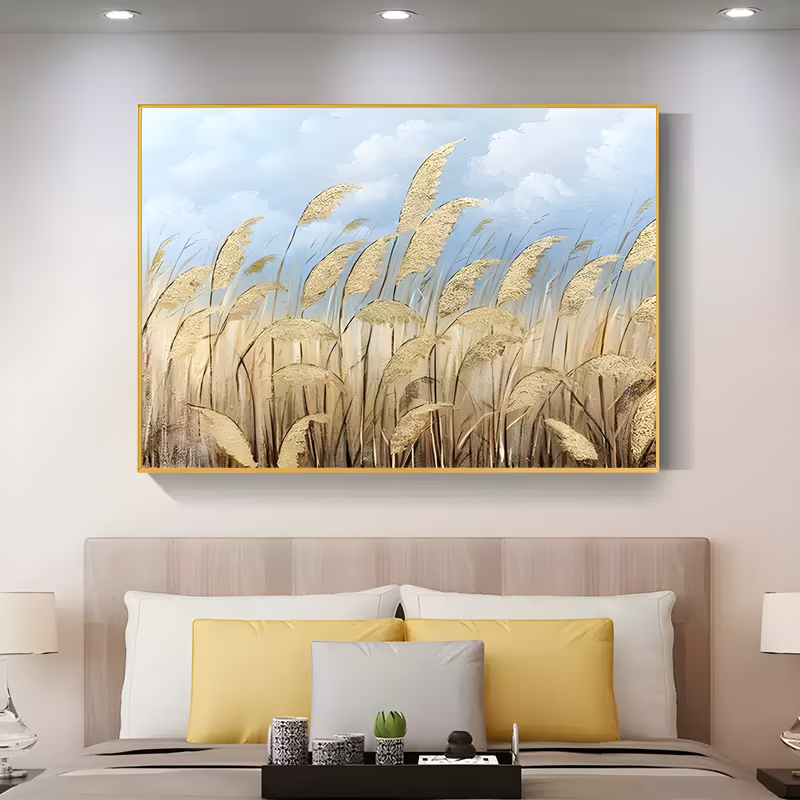
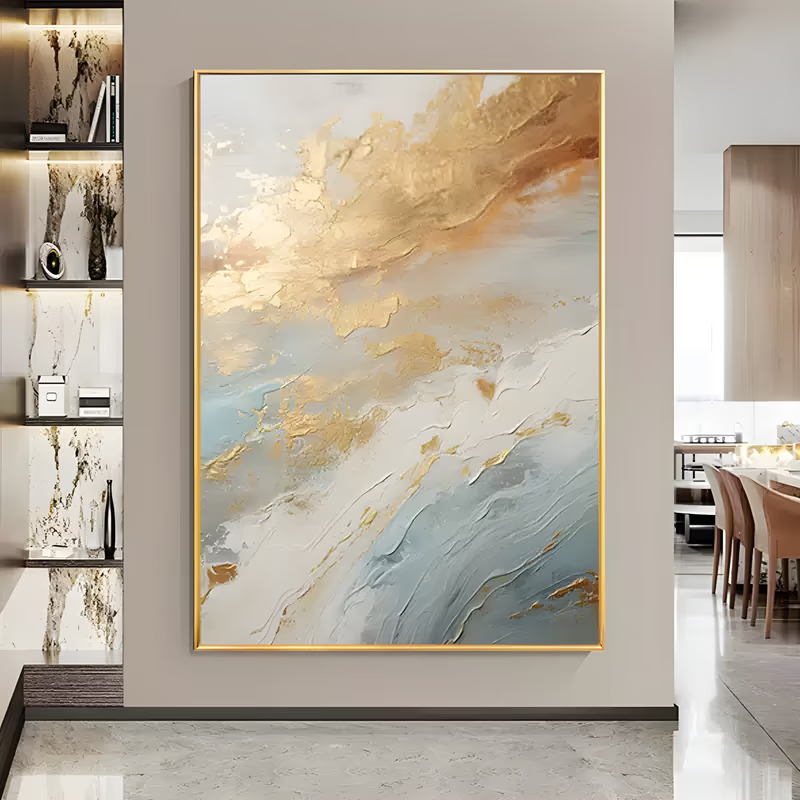
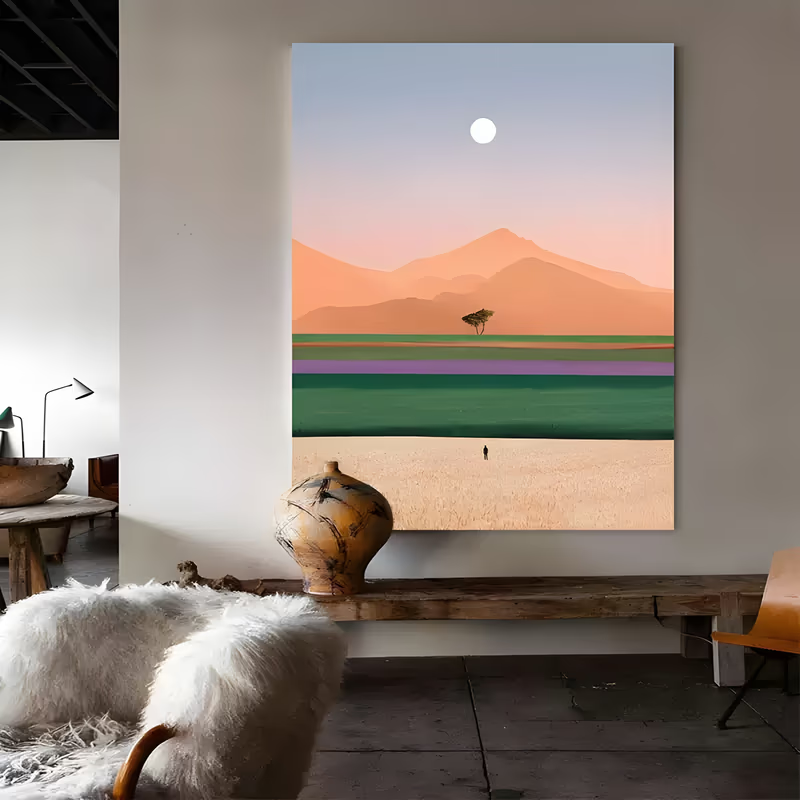
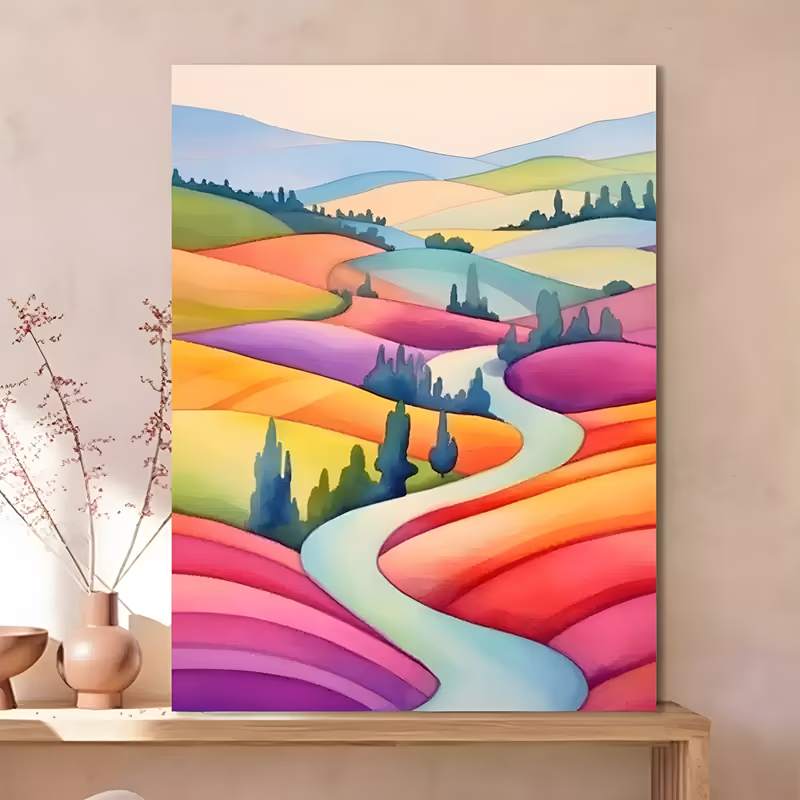
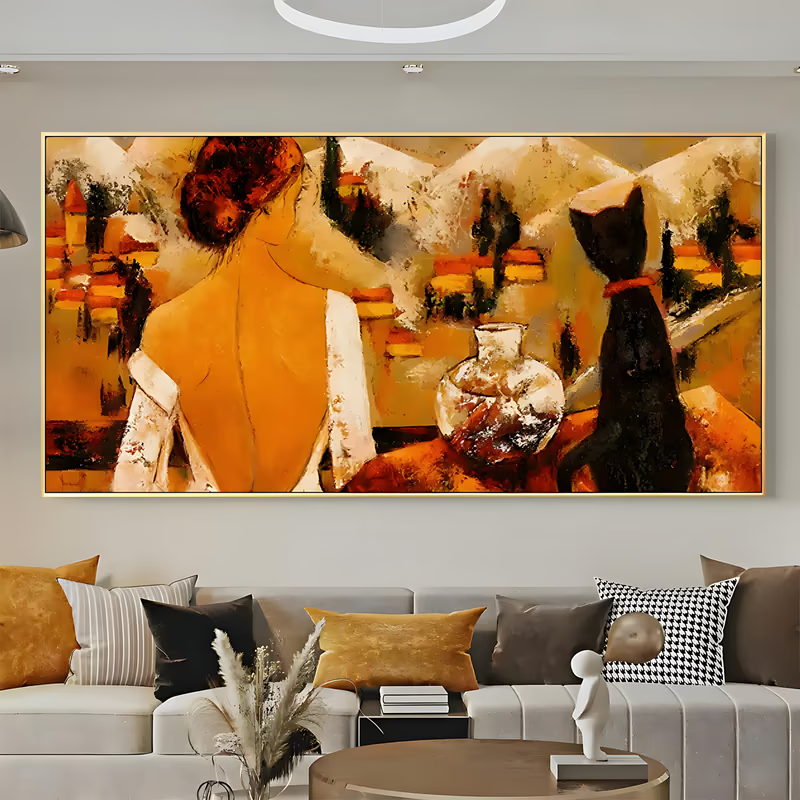
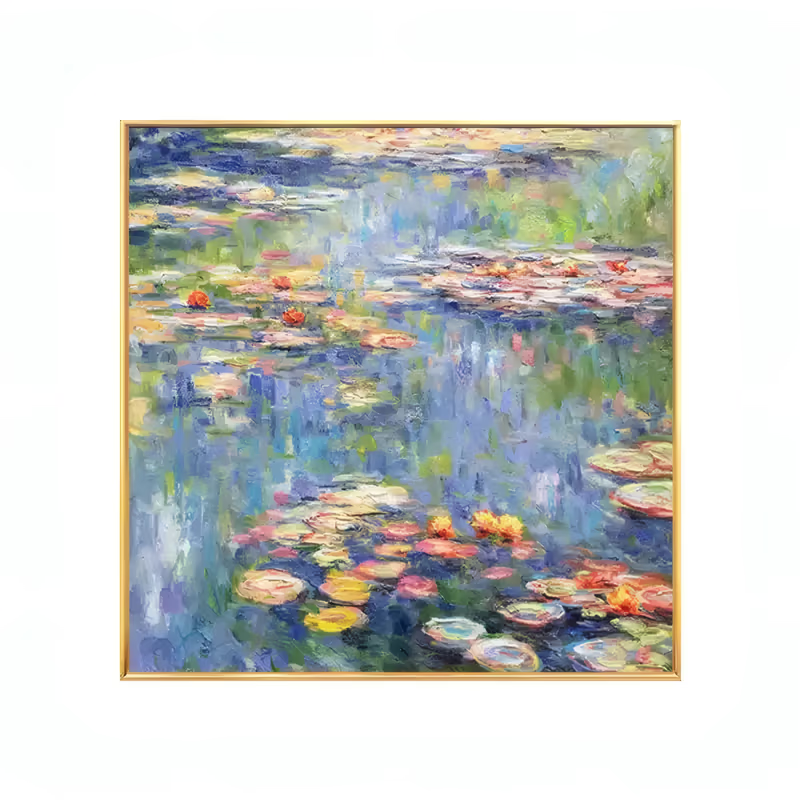
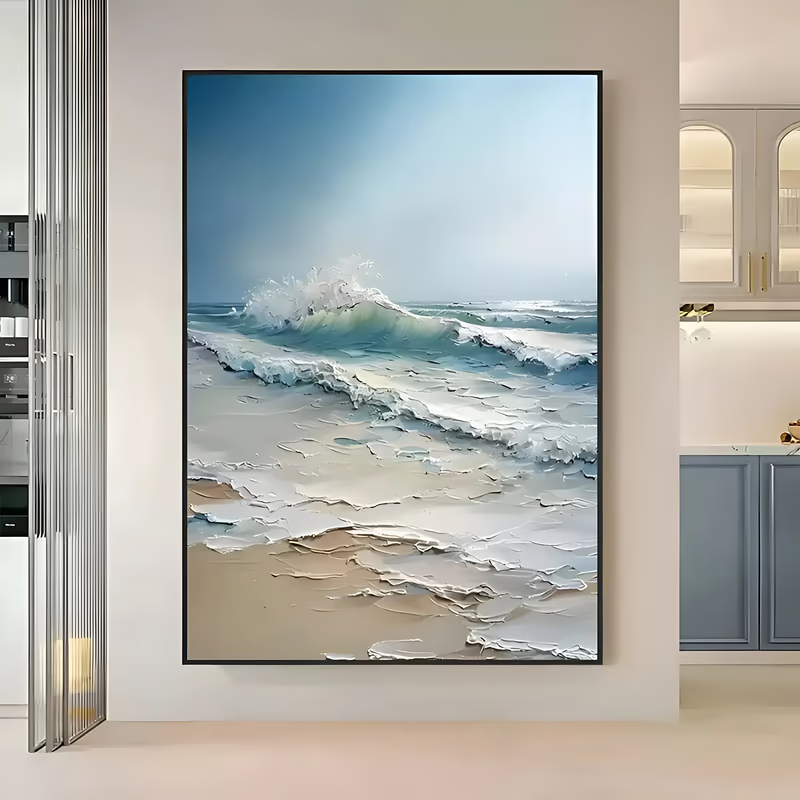
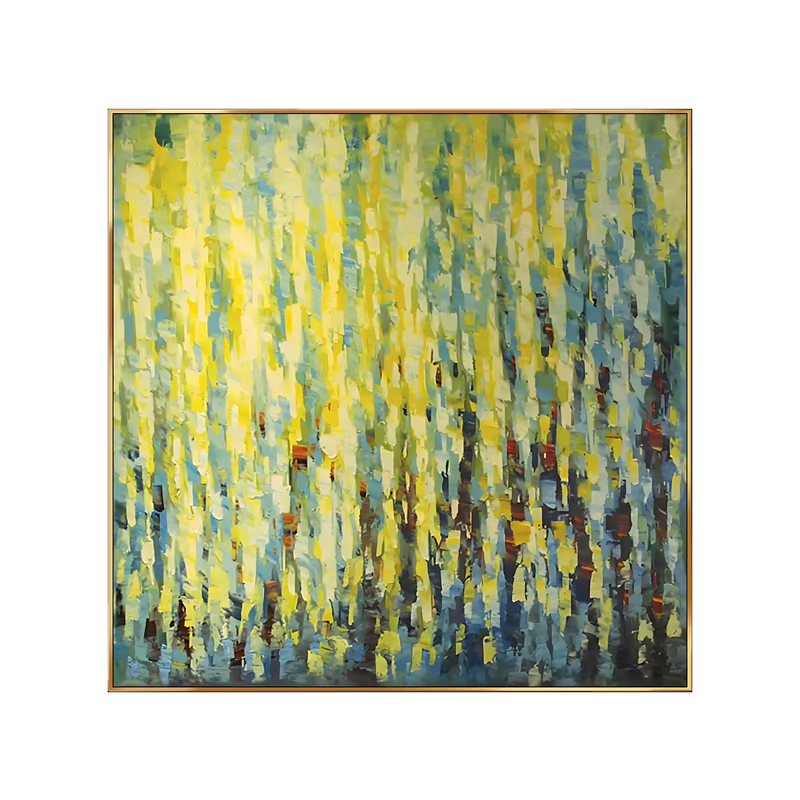
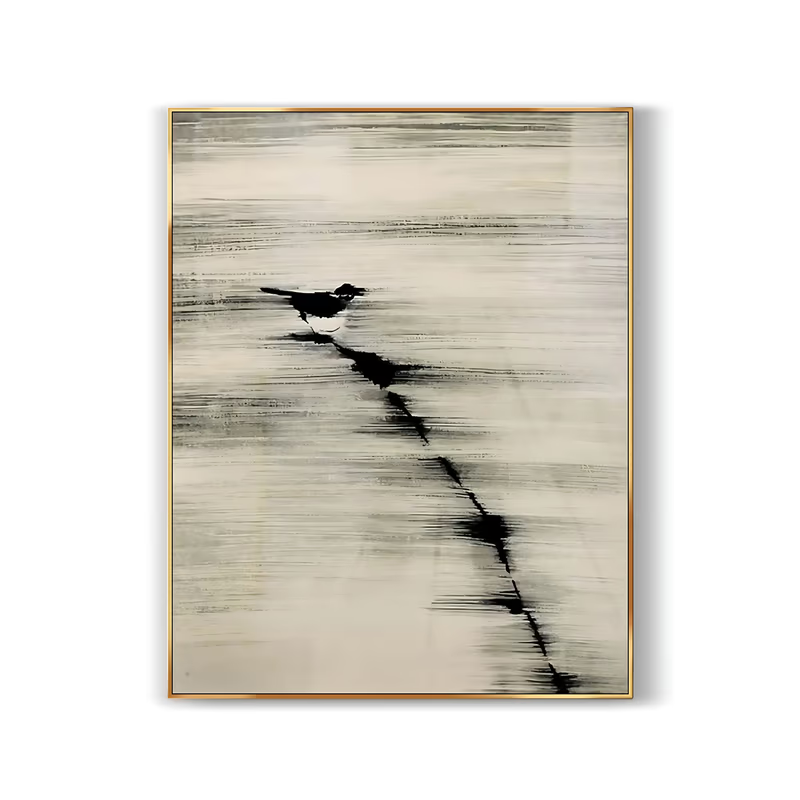
Because stillness comes from composition, peaceful art is not limited to pale colours. A golden sunrise, a deep blue night sky over a lake or a red sun behind ink mountains can all be serene, provided the scene is quiet and uncluttered. What breaks the mood is action: crashing surf, crowds, sharp diagonals and anything that seems about to move.
Which compositions make a painting serene?
Six devices make a painting serene: a low horizon, reflection, haze in the distance, one subject in open space, slow repetition, and an empty path or seat that invites you in.
| Device | Why it feels still | Where you see it here |
|---|---|---|
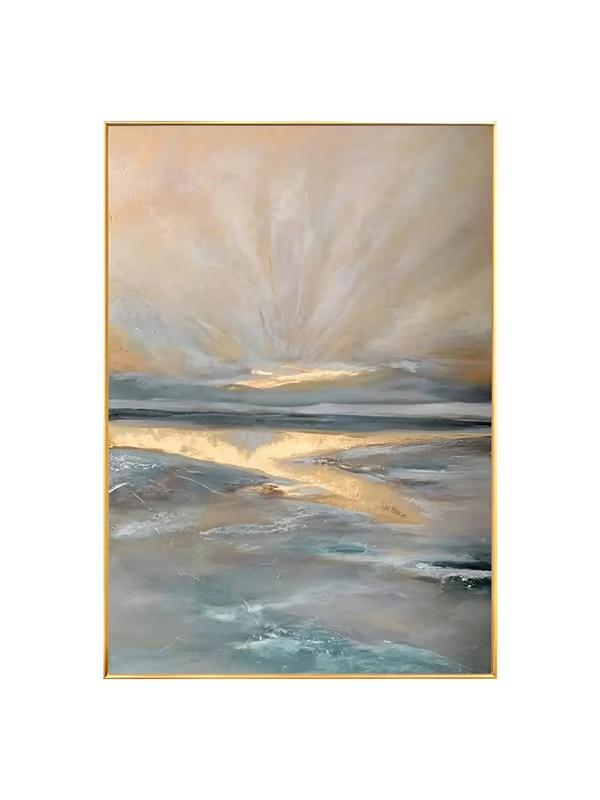
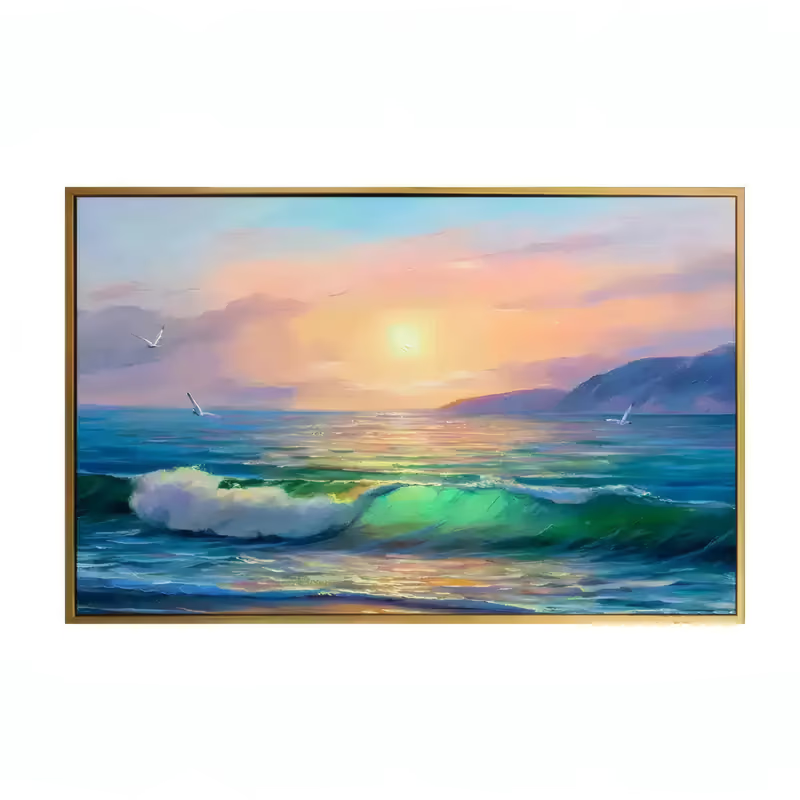
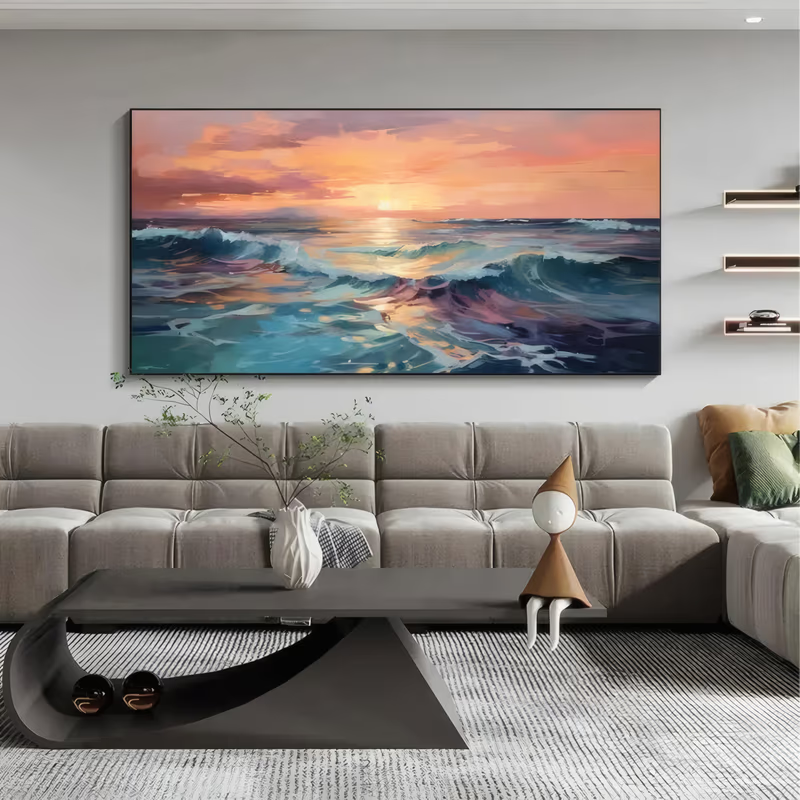
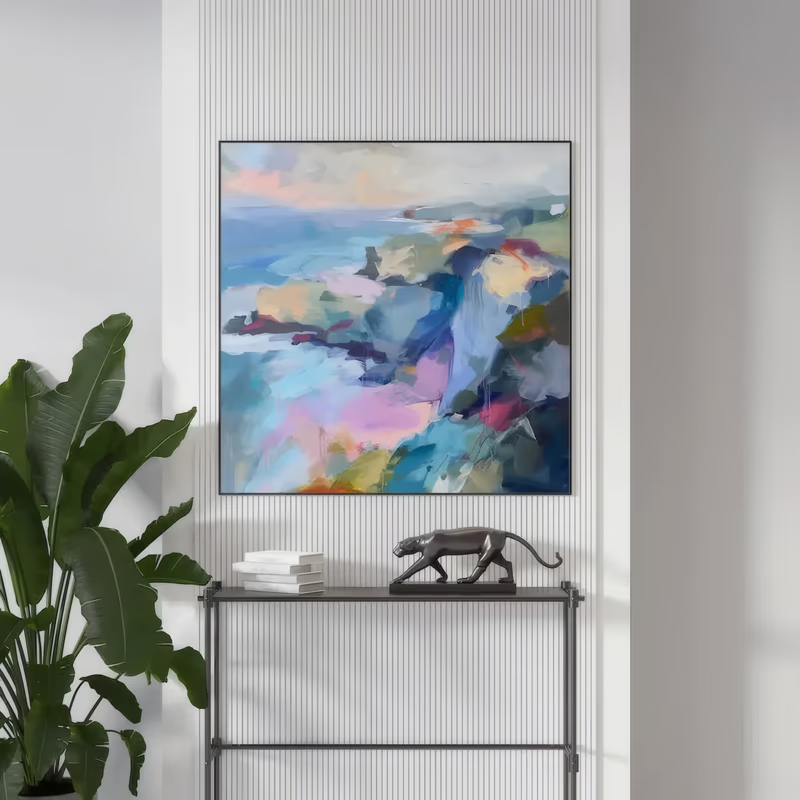
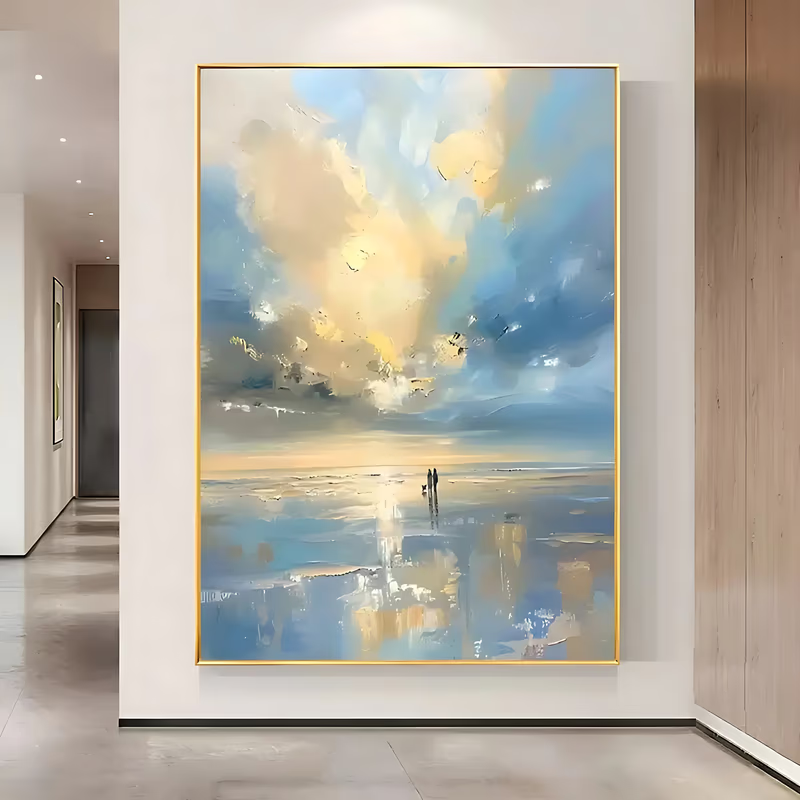
| Low horizon, big sky | Most of the canvas is open air, so the eye floats rather than searches | Sunrise shores, pastel sea horizons, golden sun on still water |
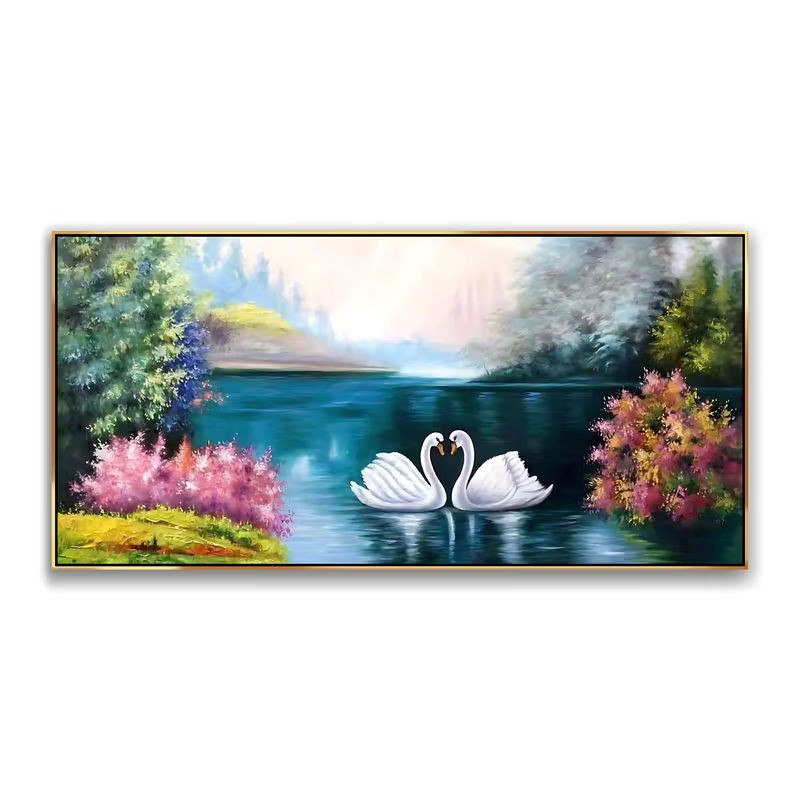
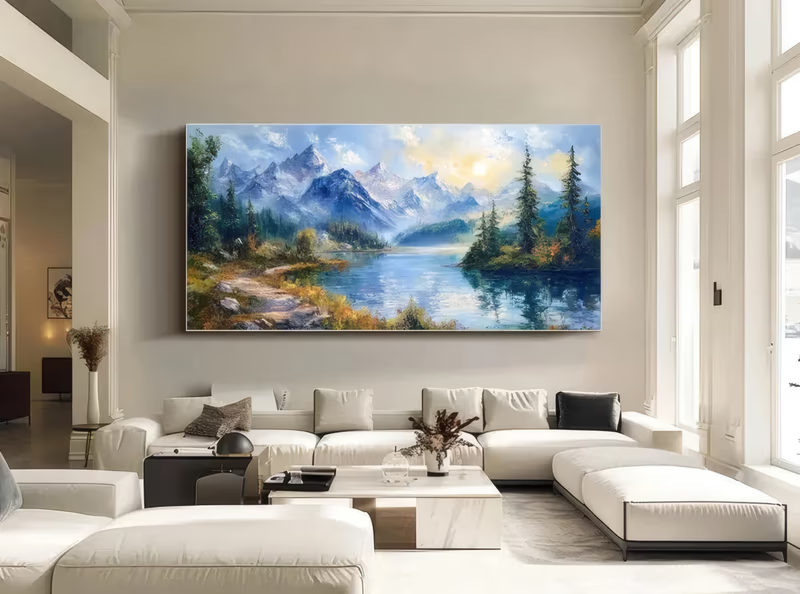
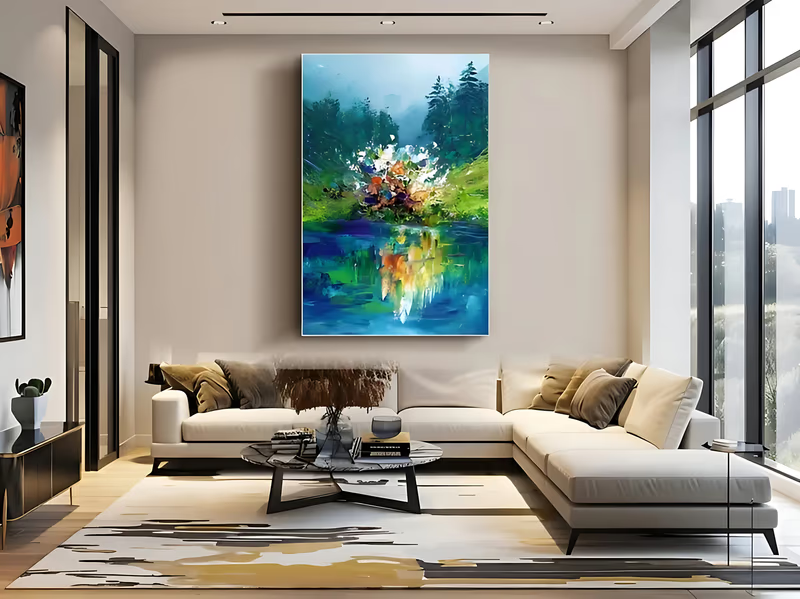
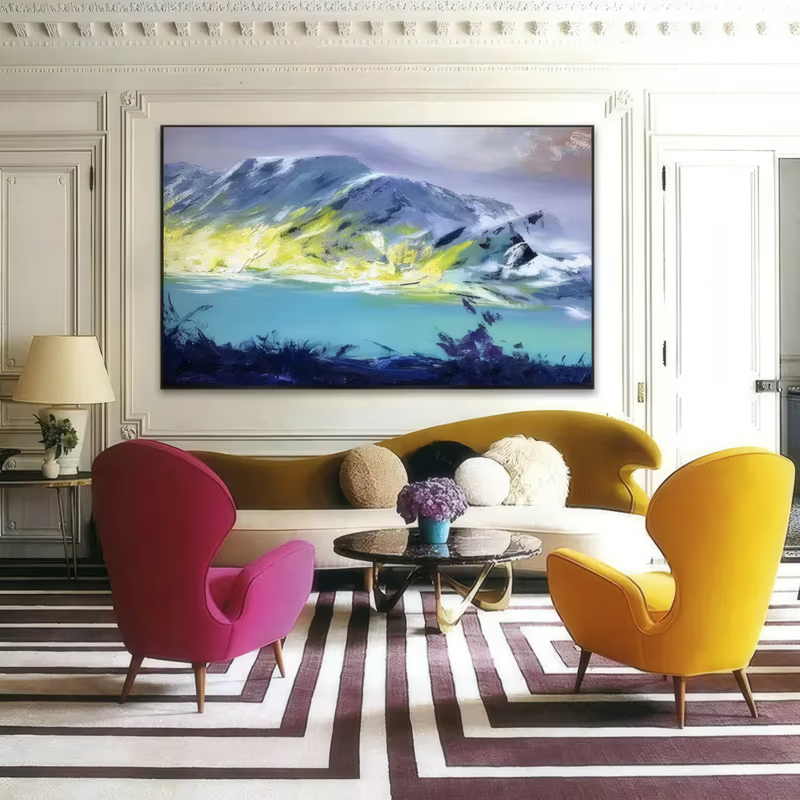
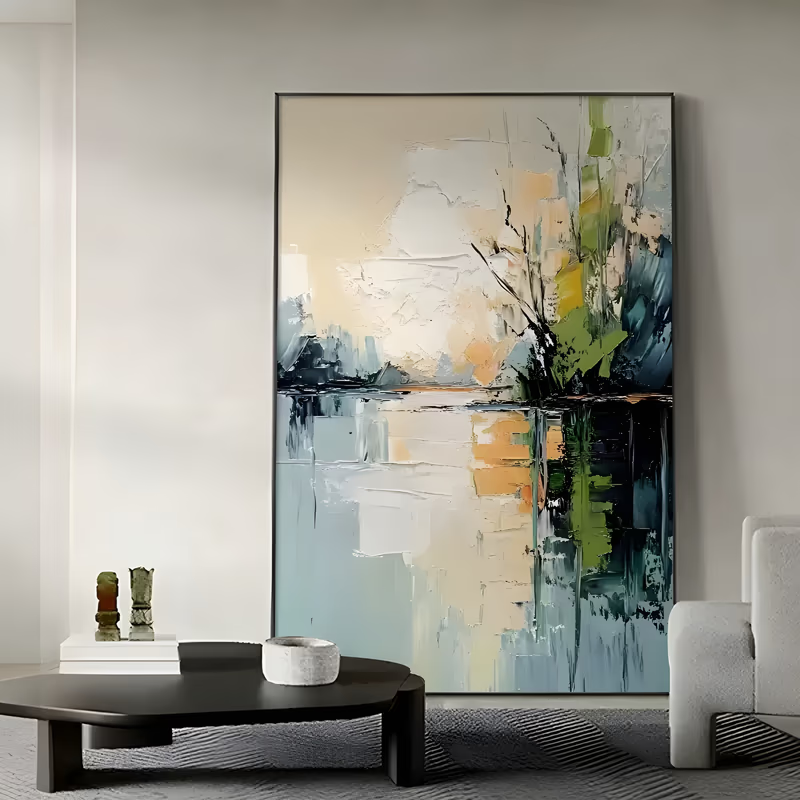
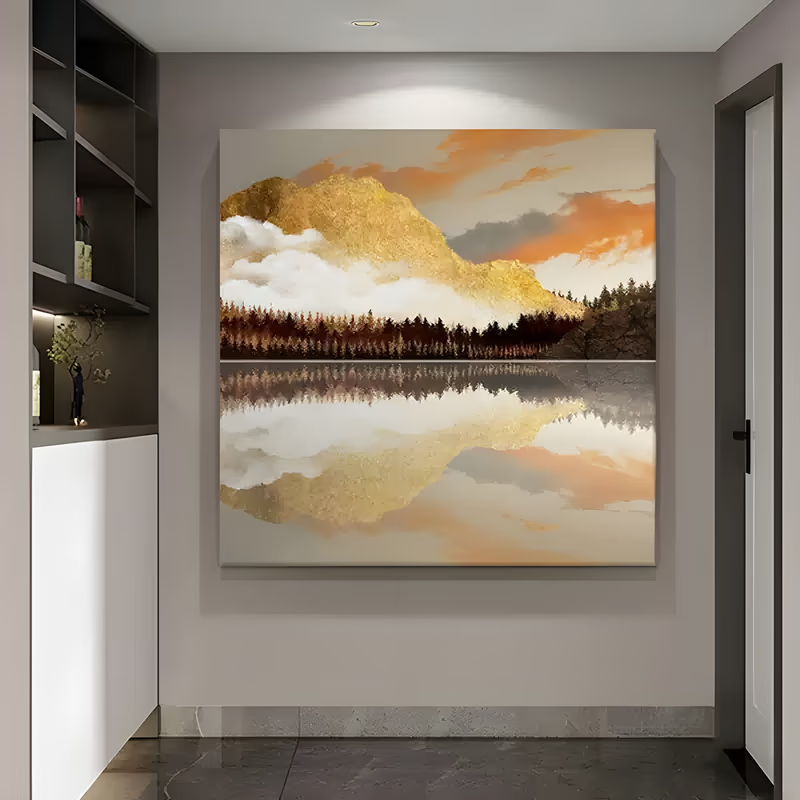
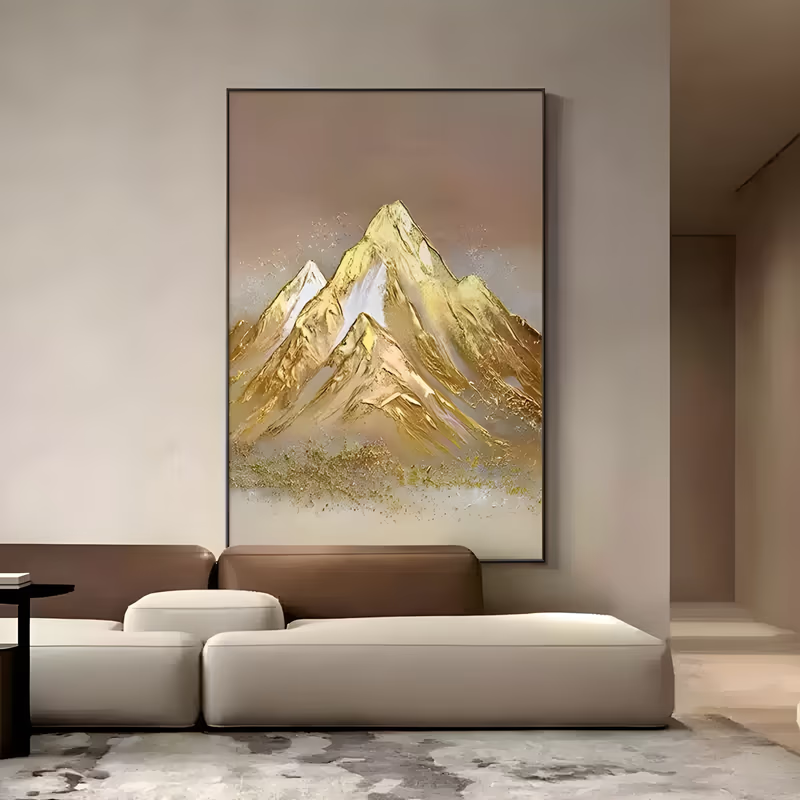
| Reflection | Mirrored water doubles the scene and makes it symmetrical and motionless | Mountain lakes, a gold-leaf peak mirrored at sunset |
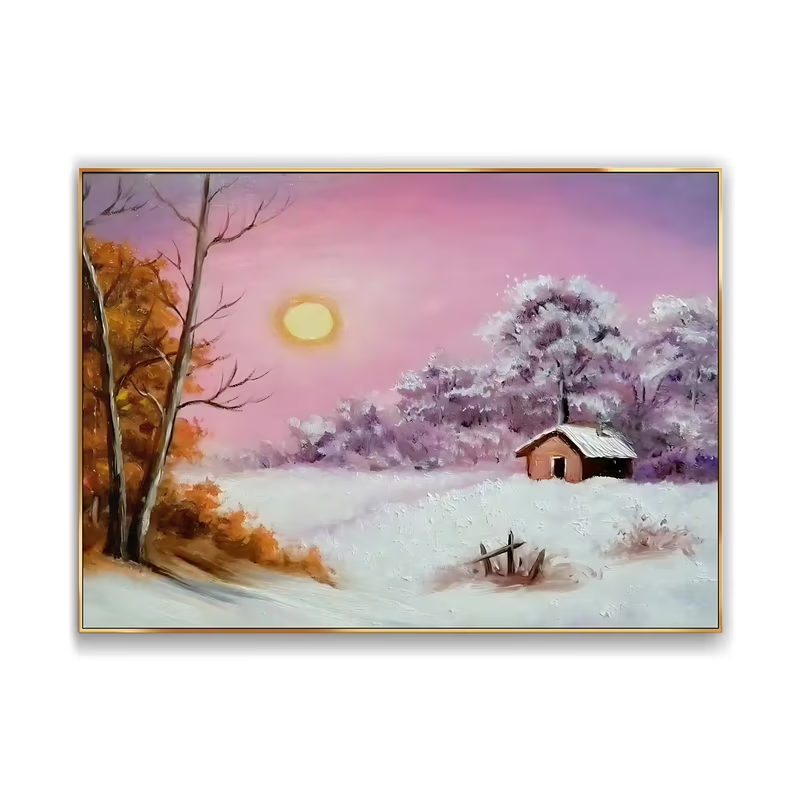
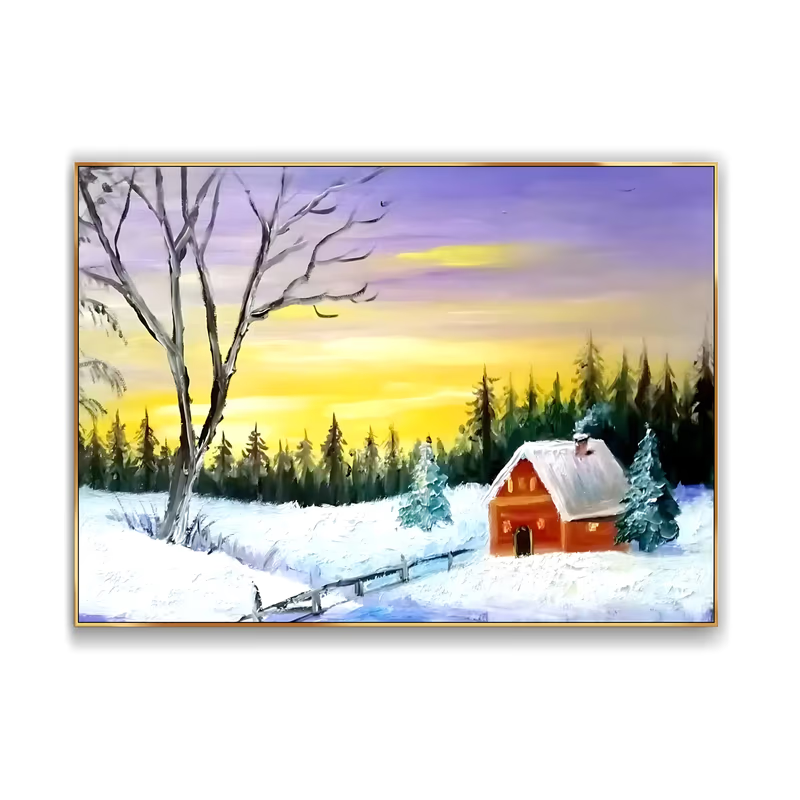
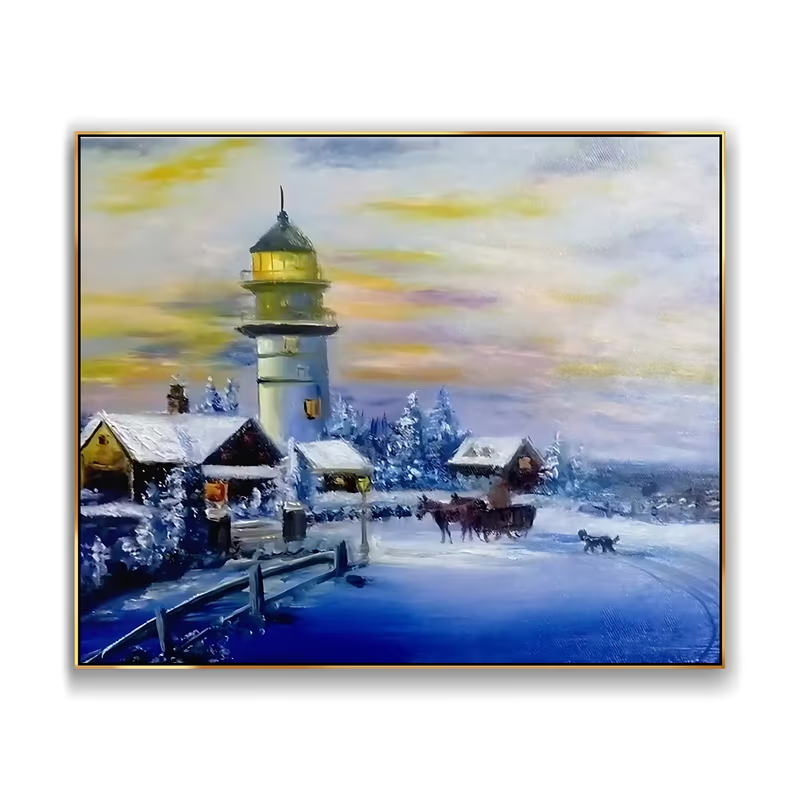
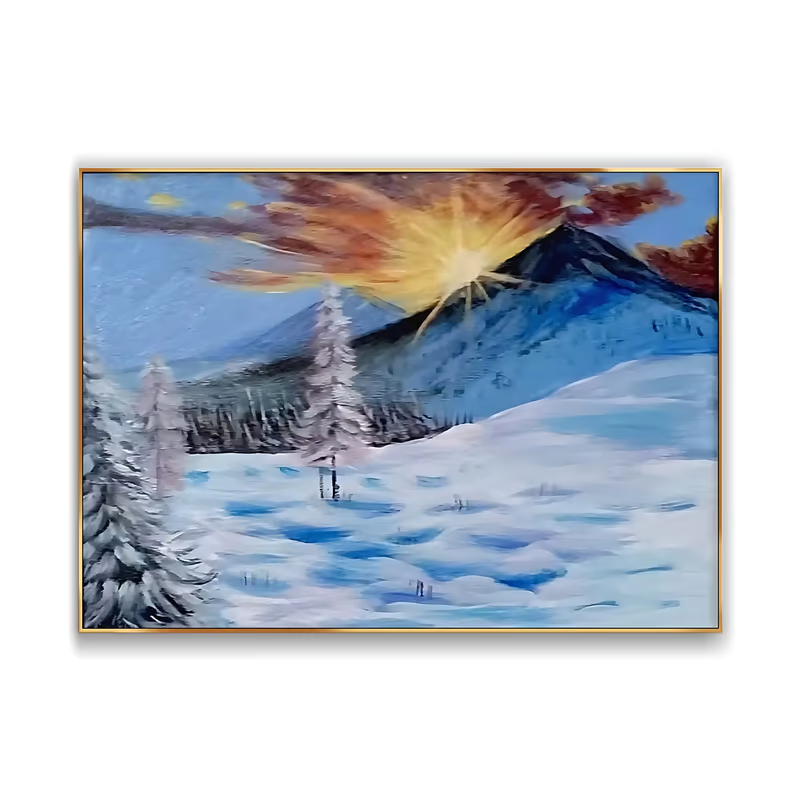
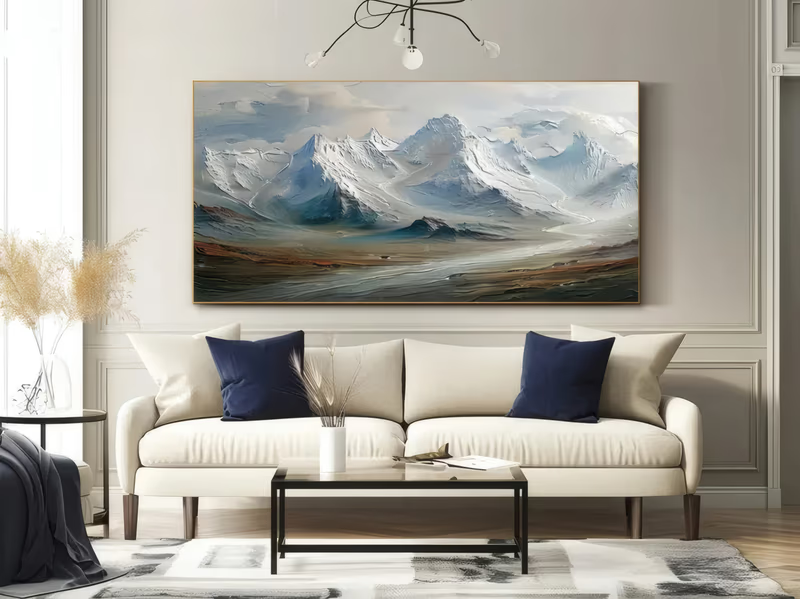
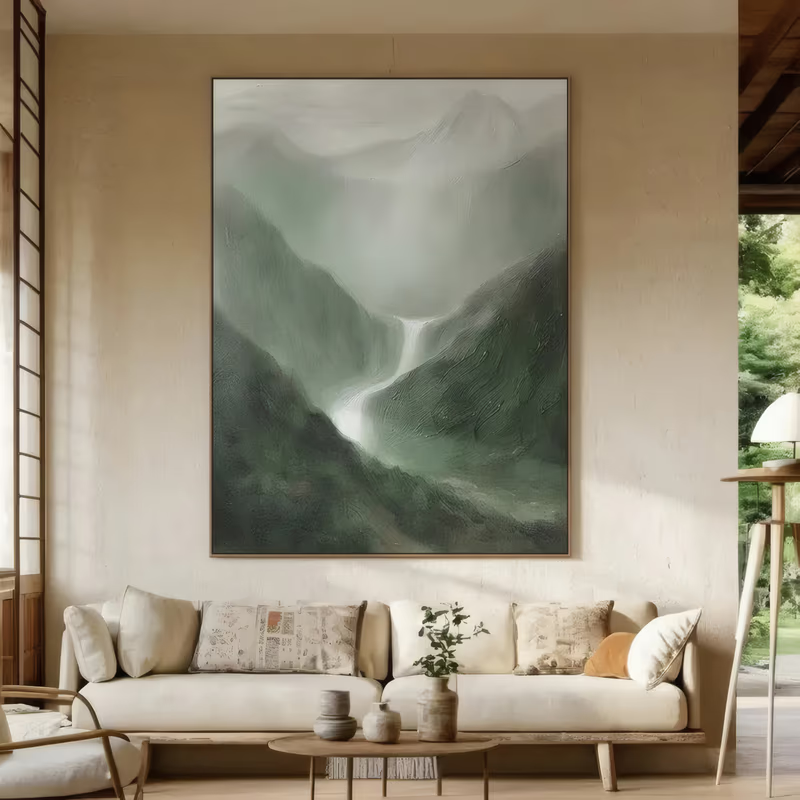
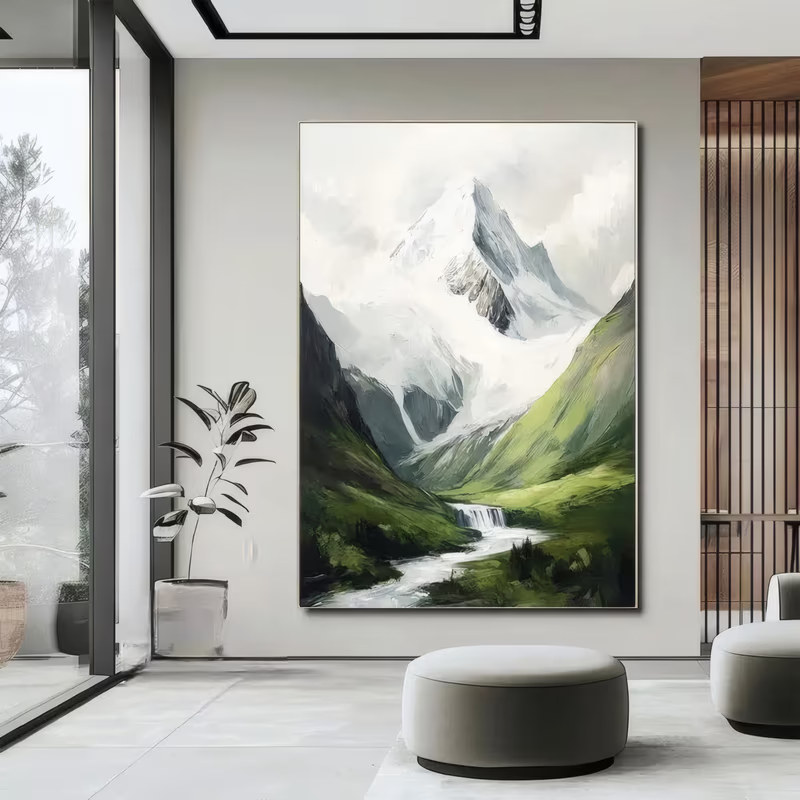
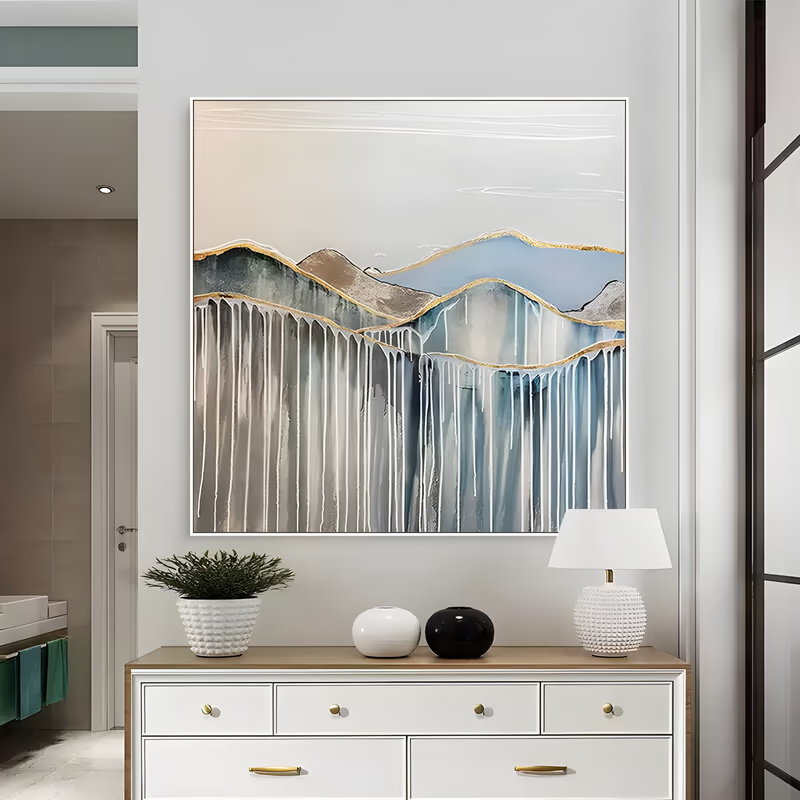
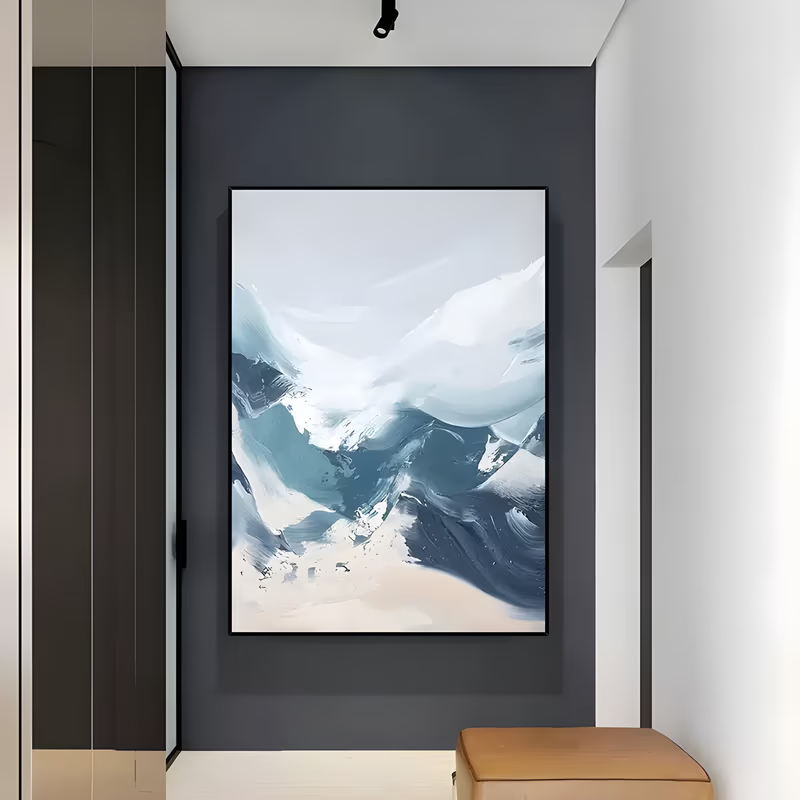
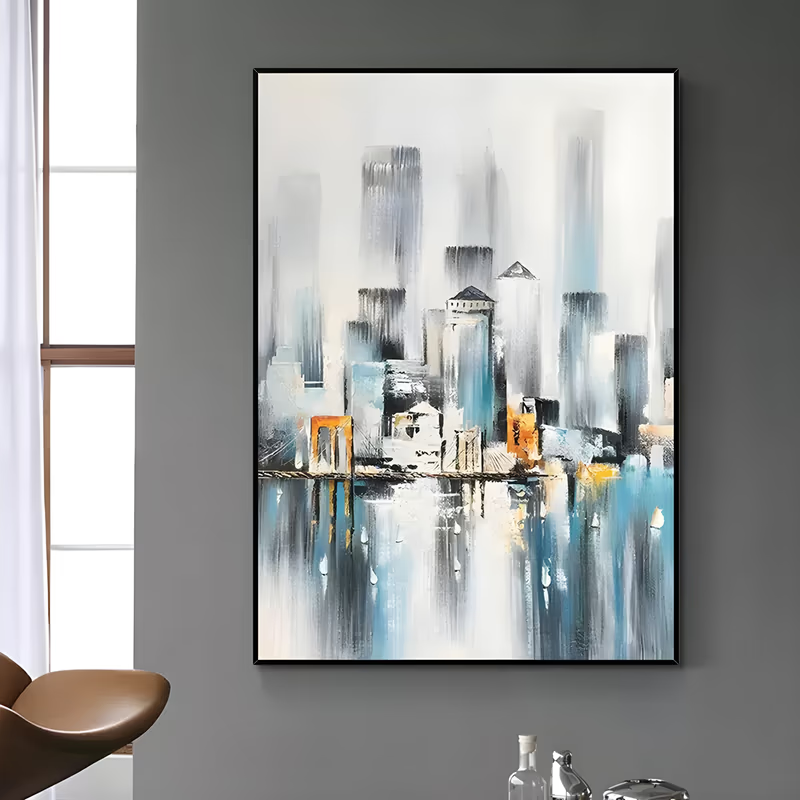
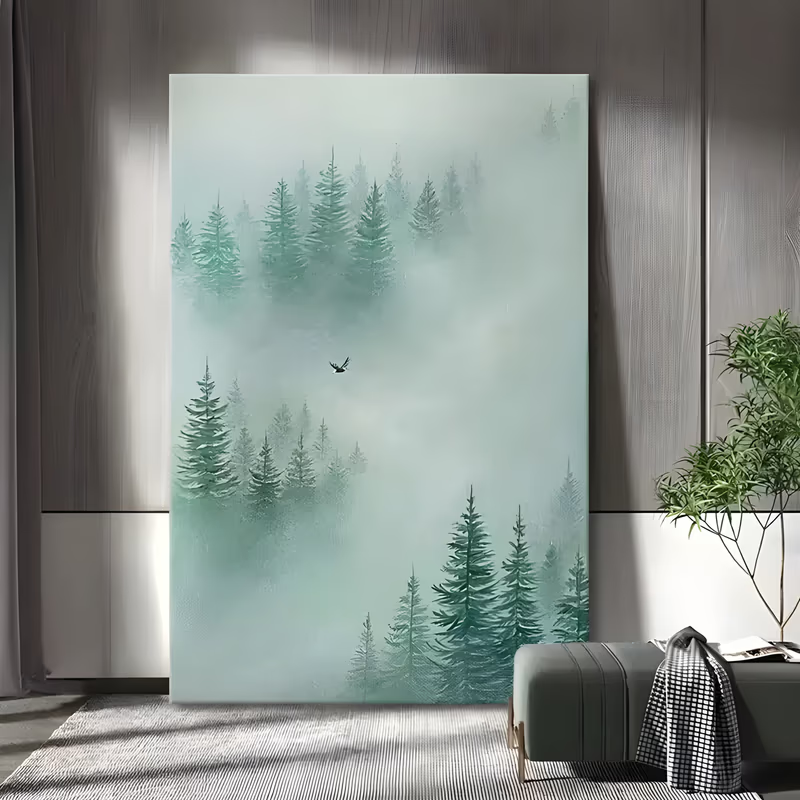
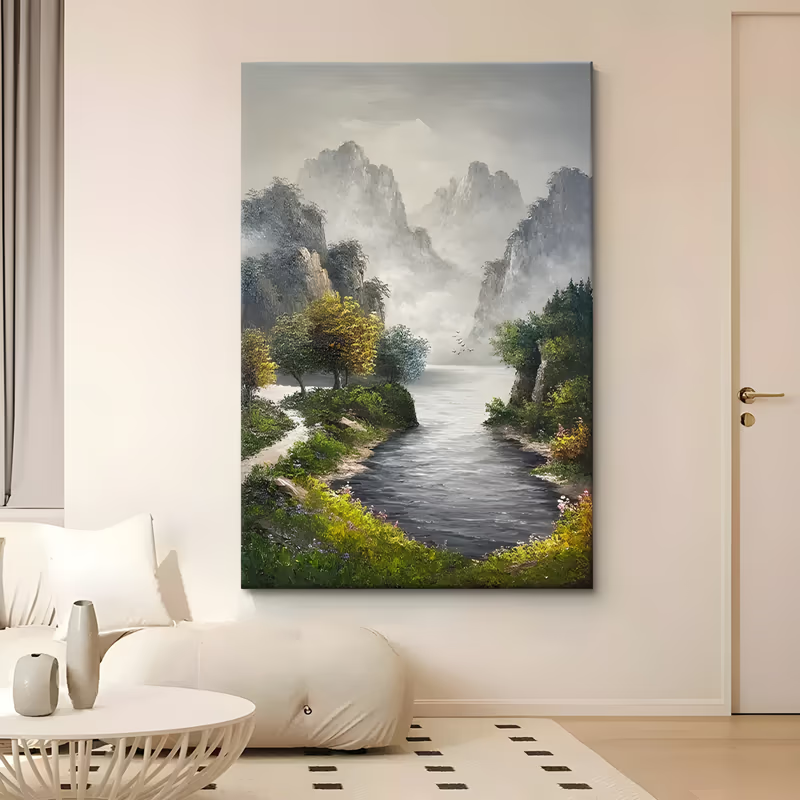
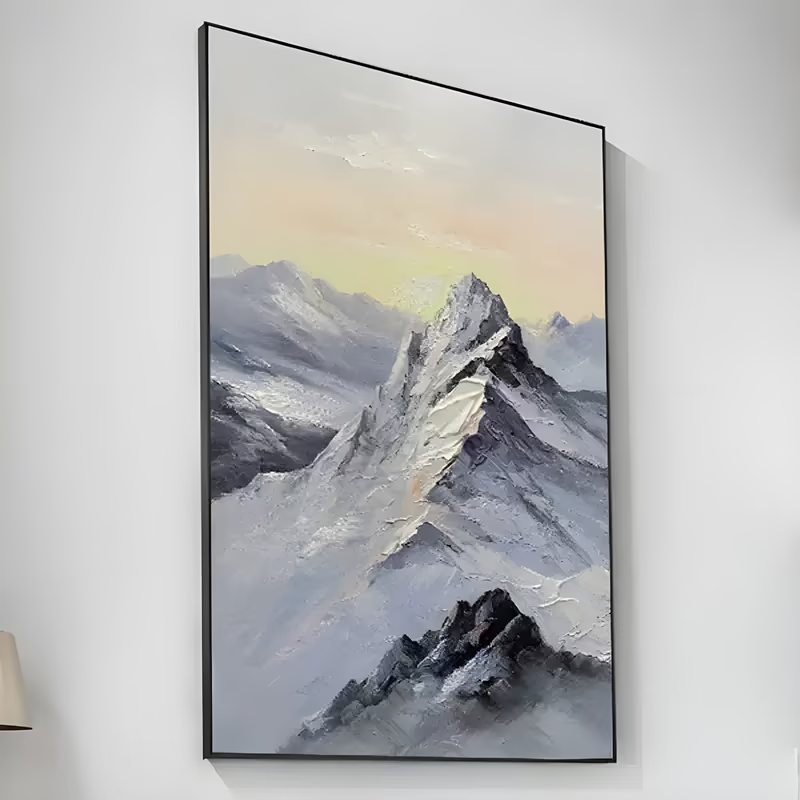
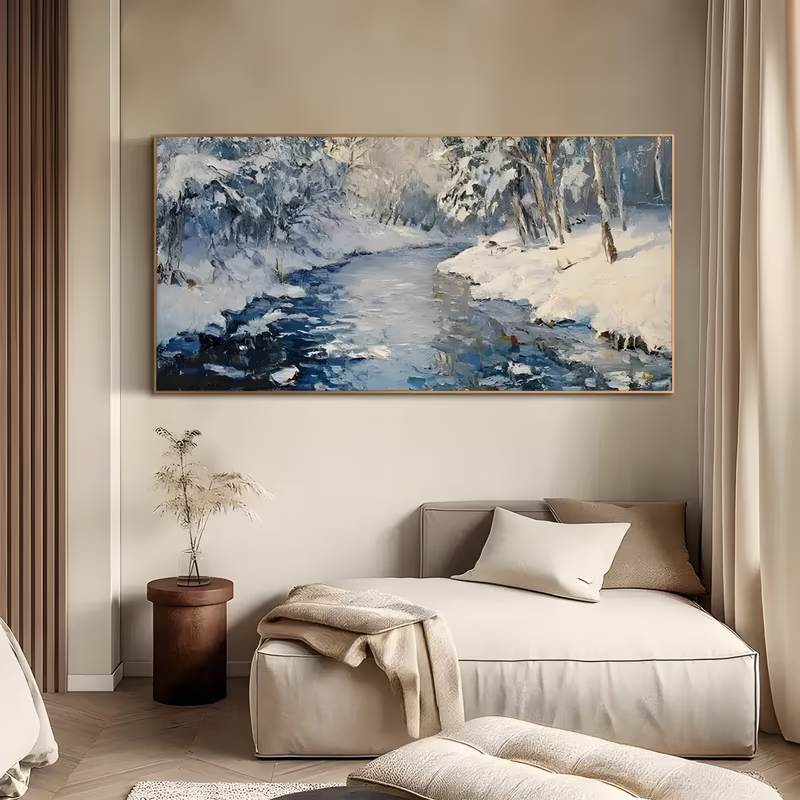
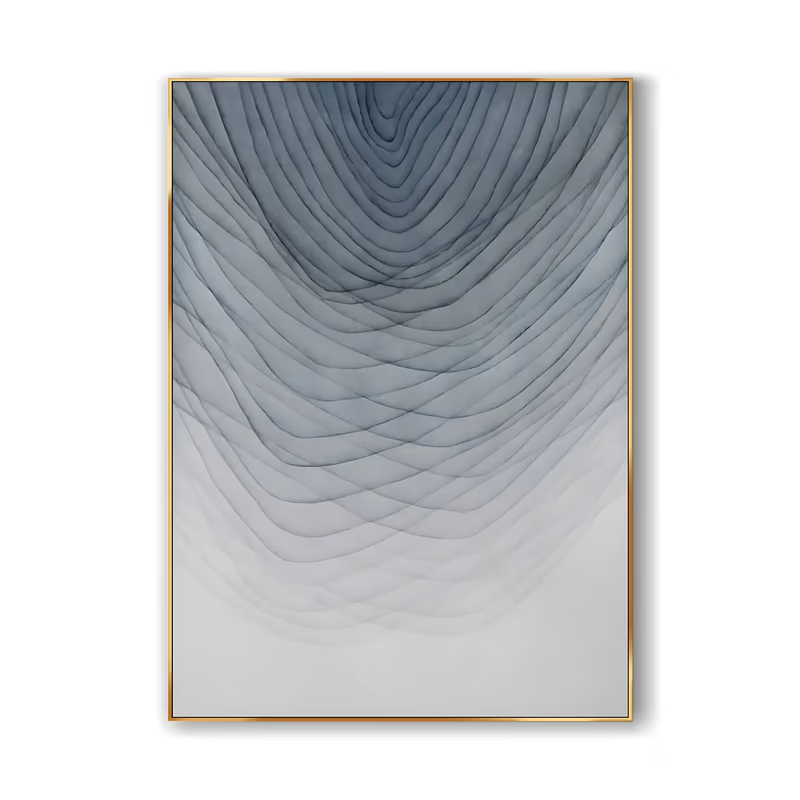
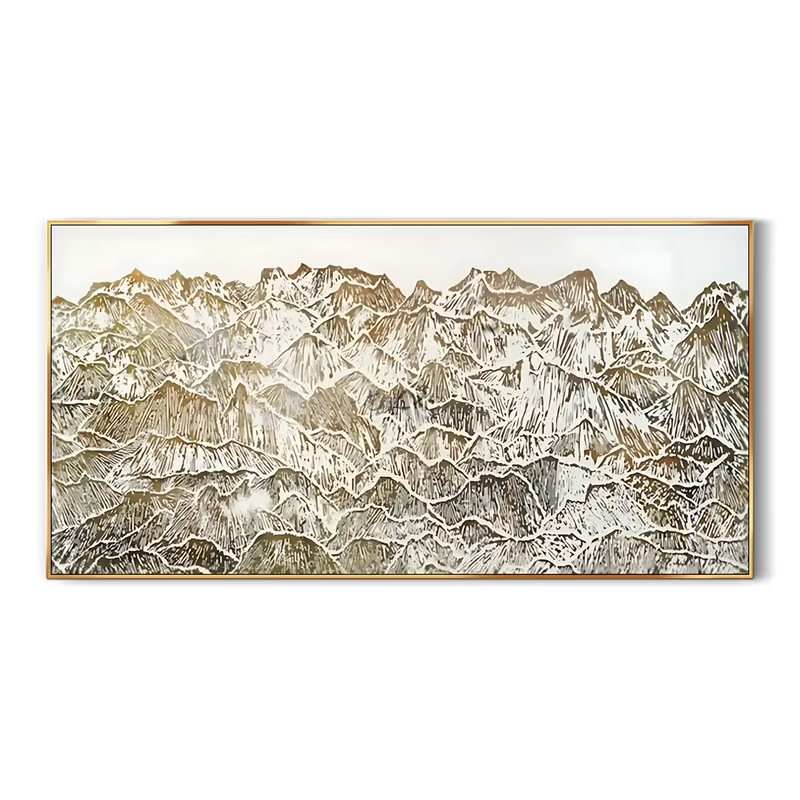
| Haze and fading distance | Colours paling into the distance create depth, so the wall seems to recede | Ink-wash ridges, blue hills in mist, snow valleys |
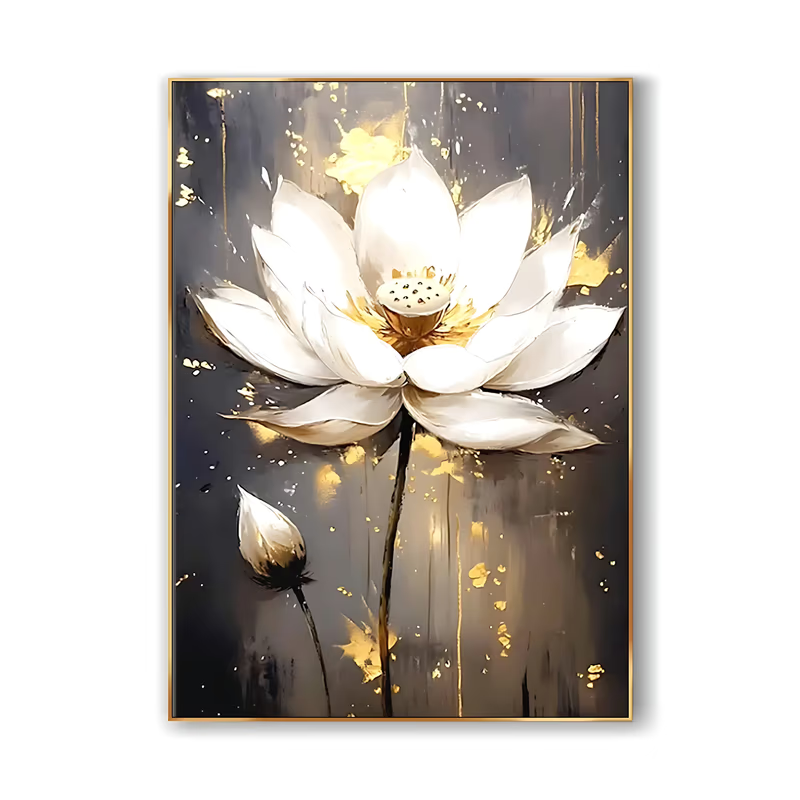
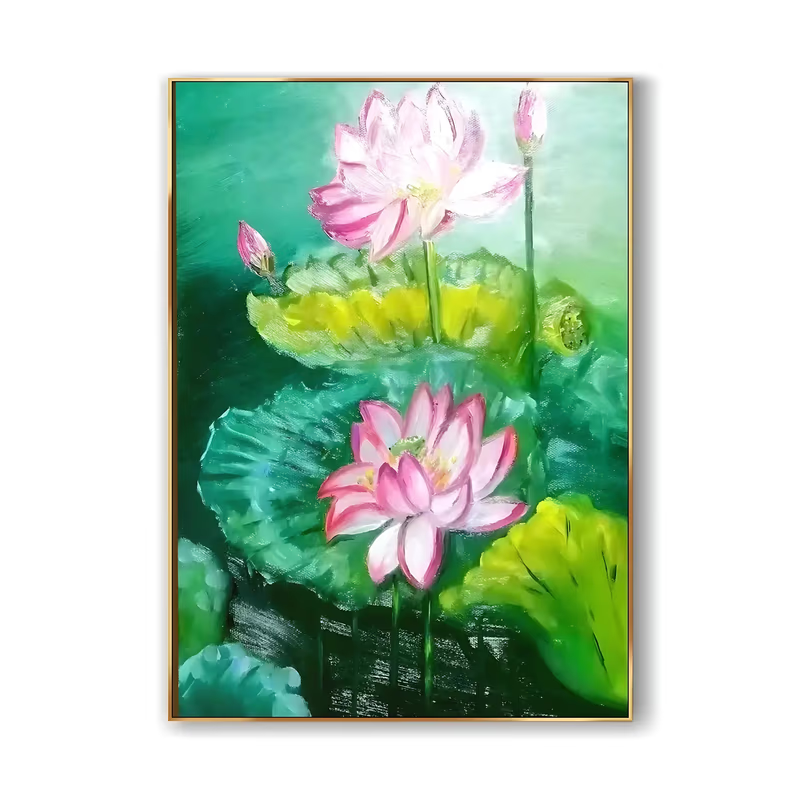
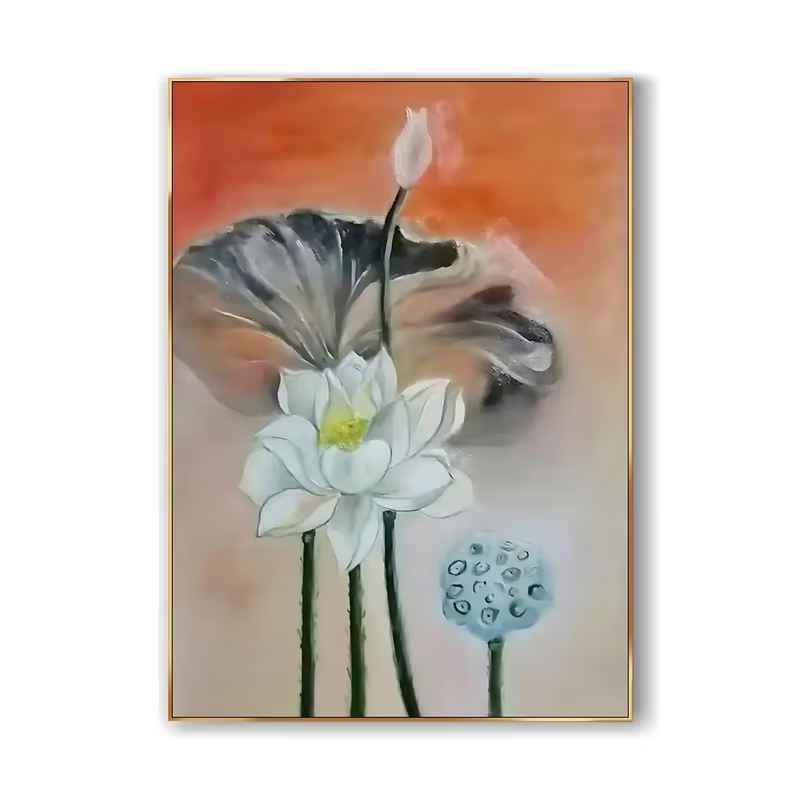
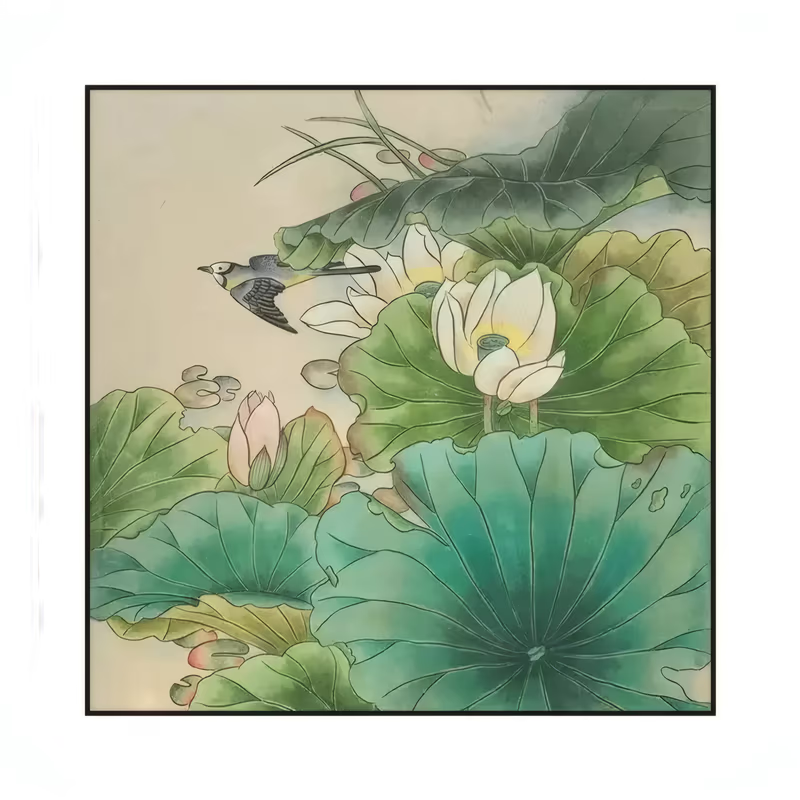
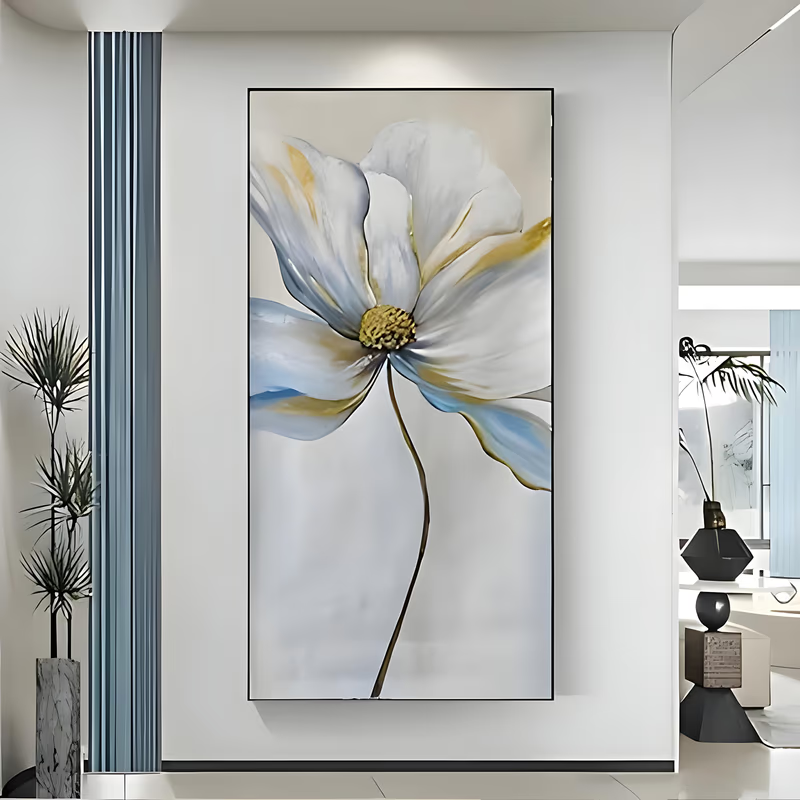
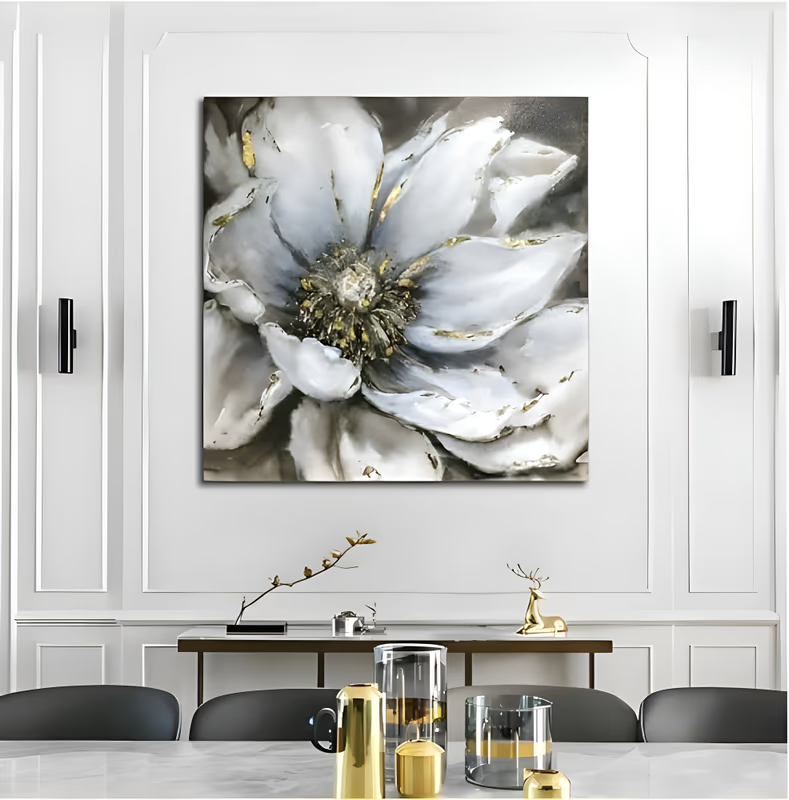
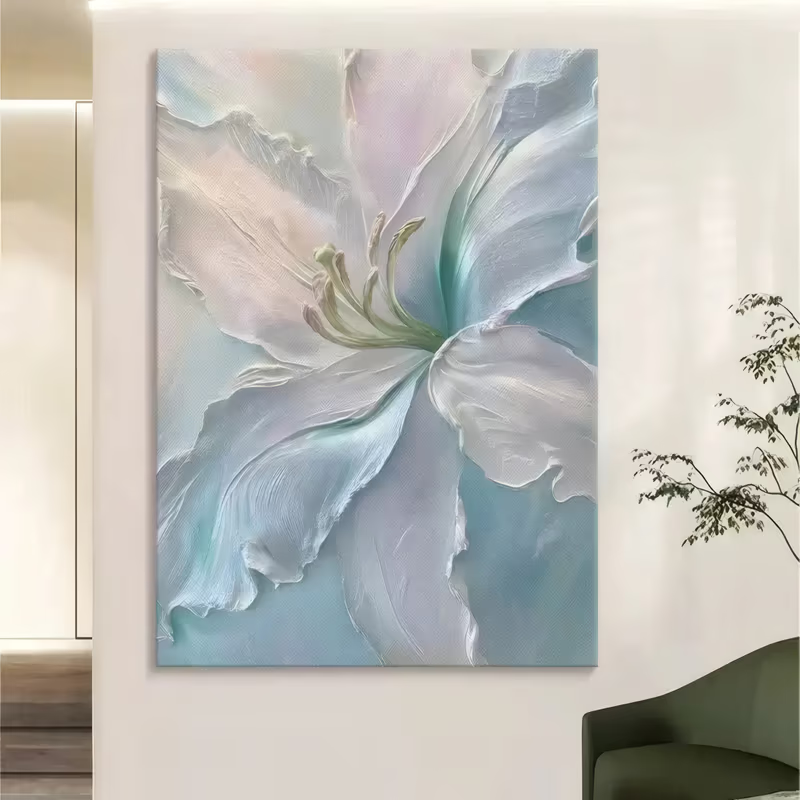
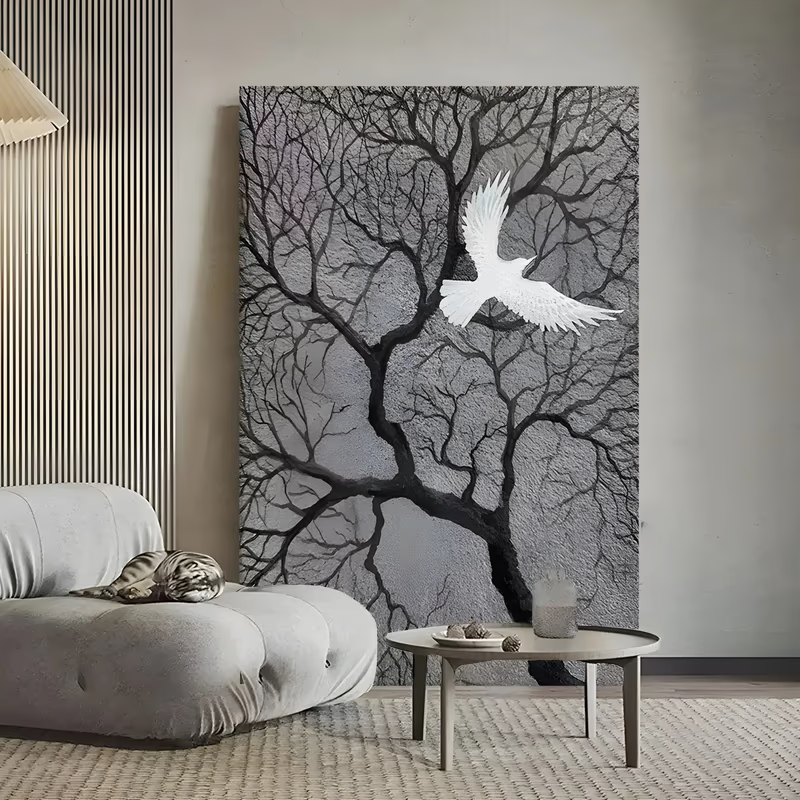
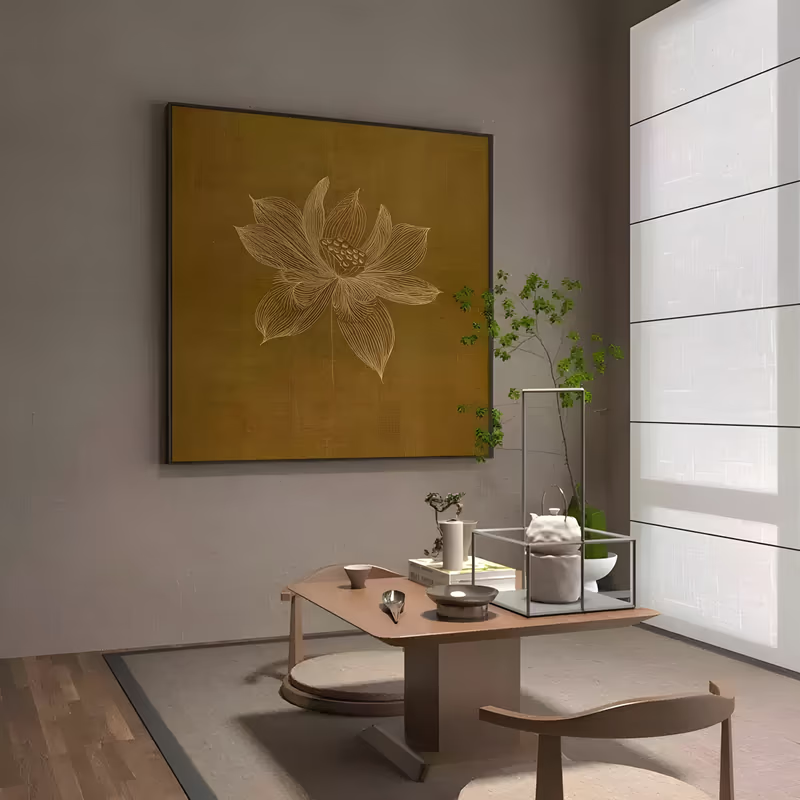
| One subject in open space | Nothing competes; the empty ground is part of the picture | A single white lotus, a lone sailboat, one lily on pale mint |
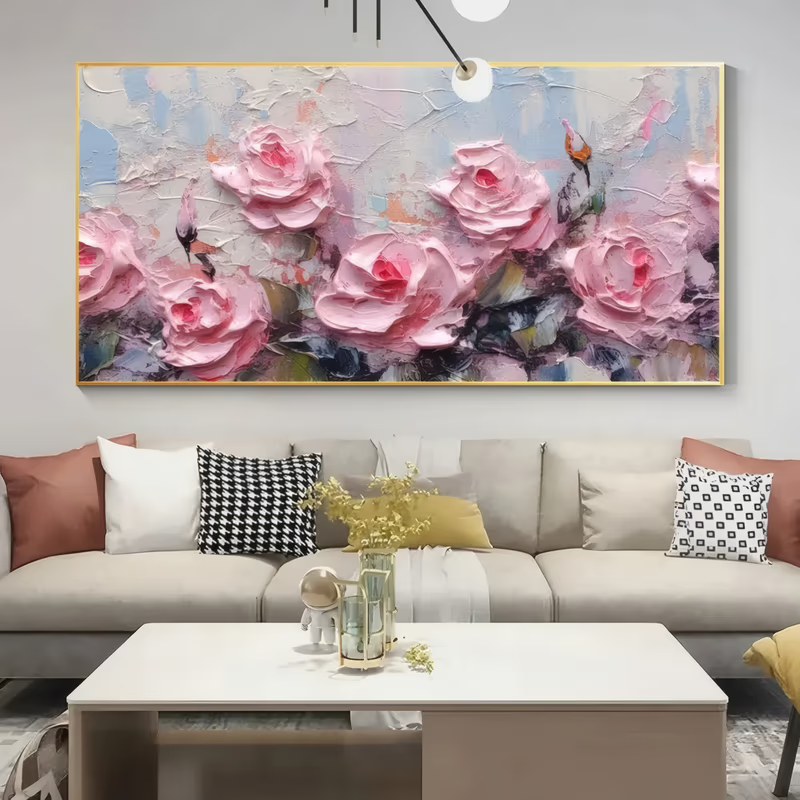
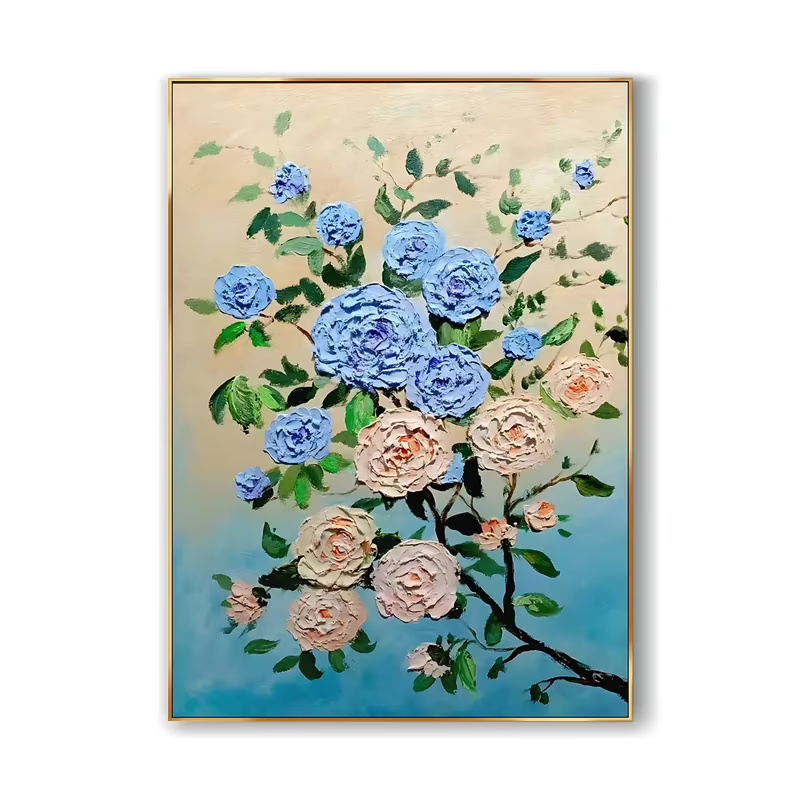
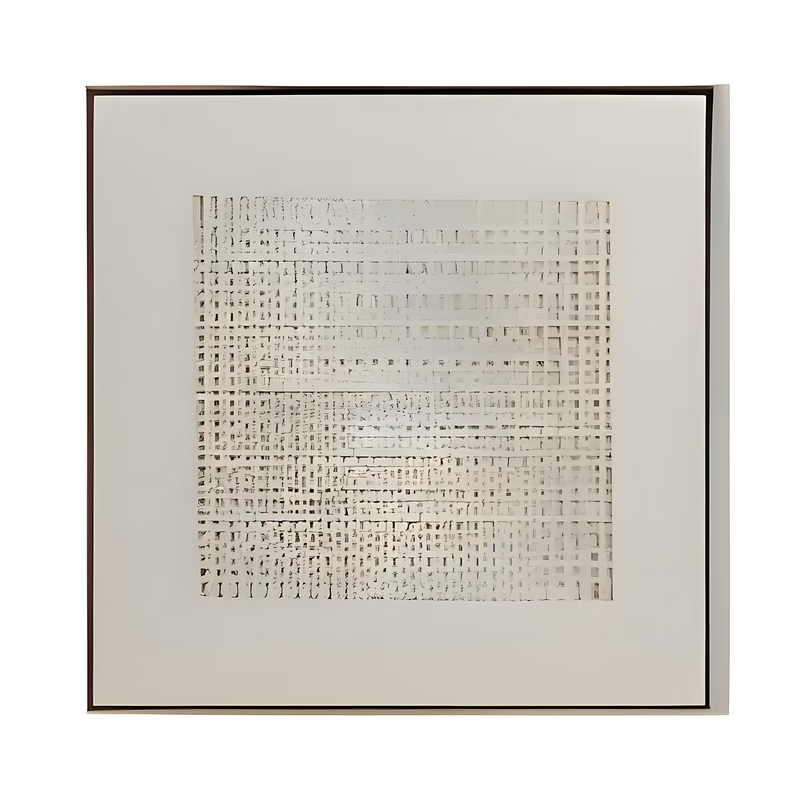
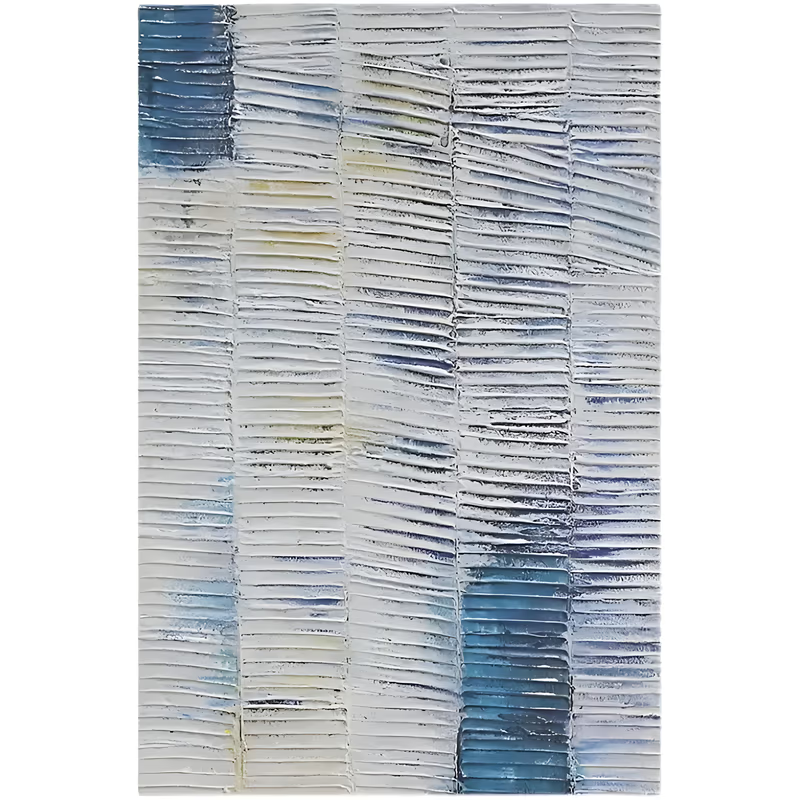
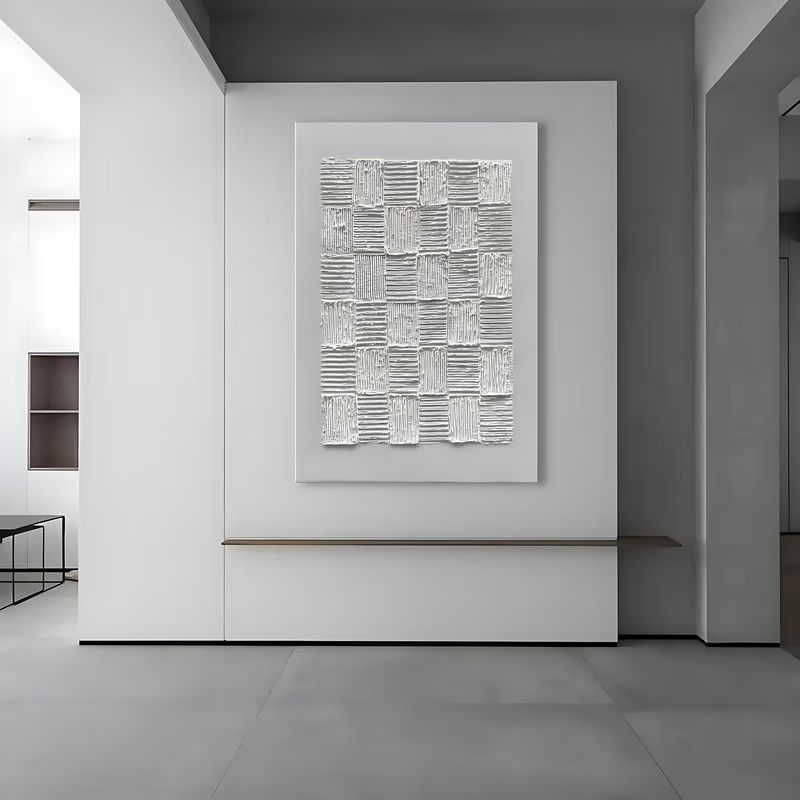
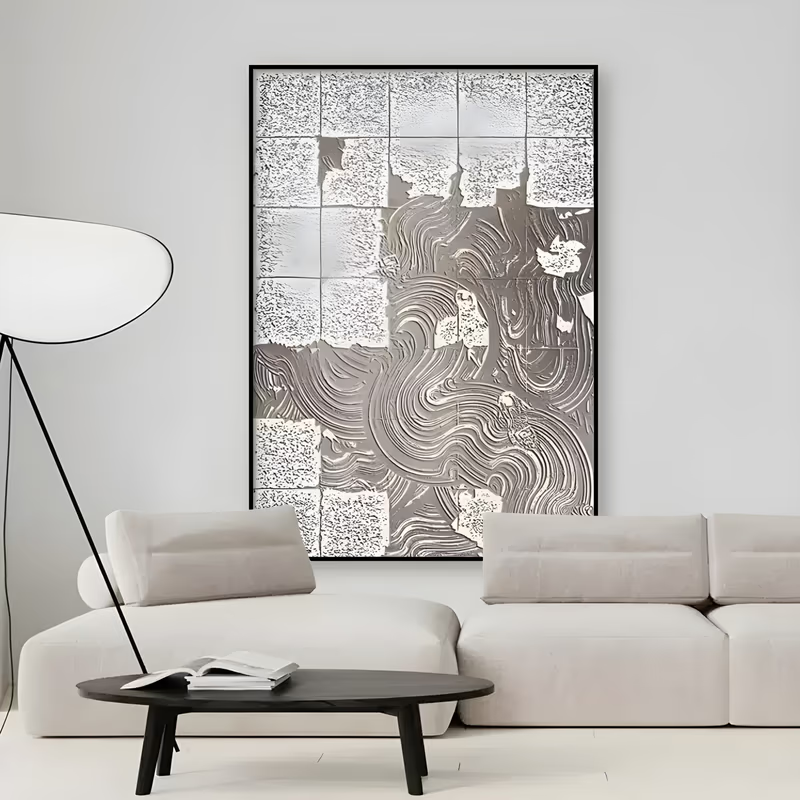
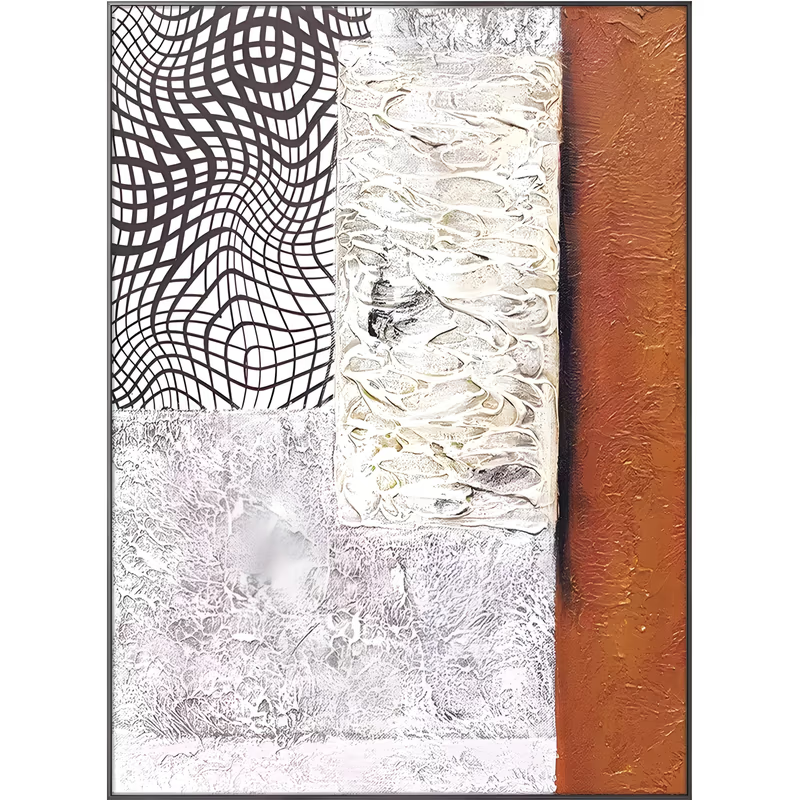
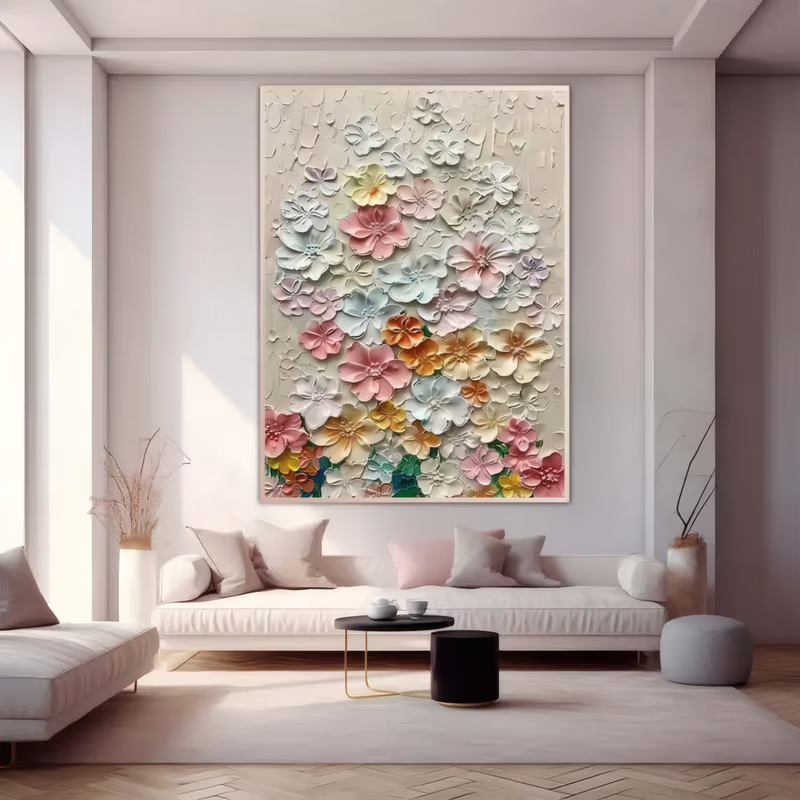
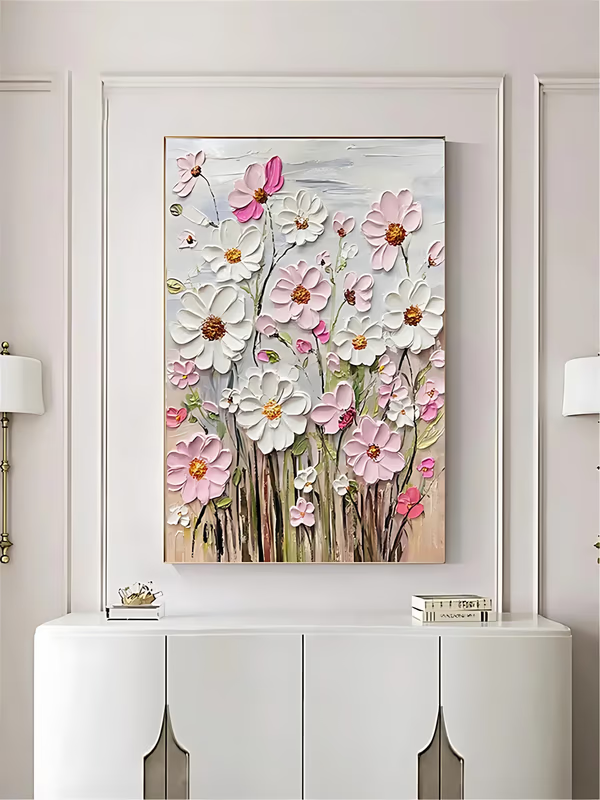
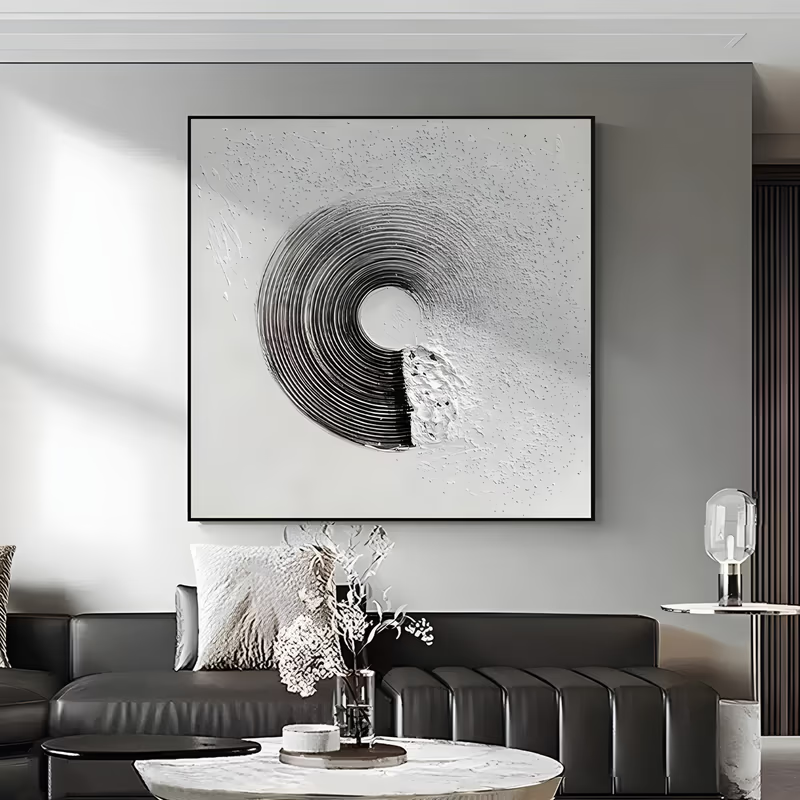
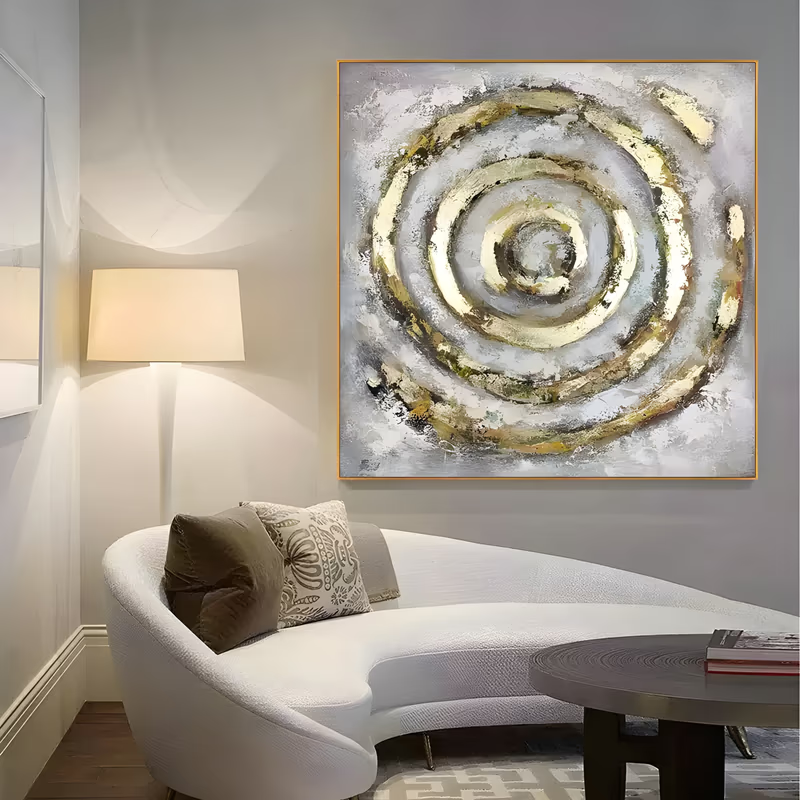
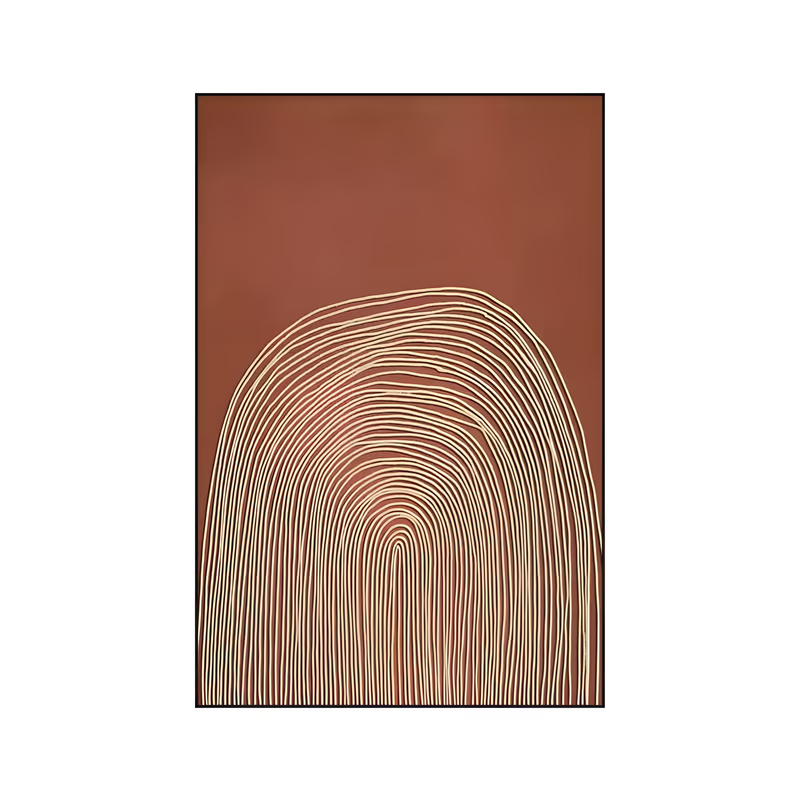
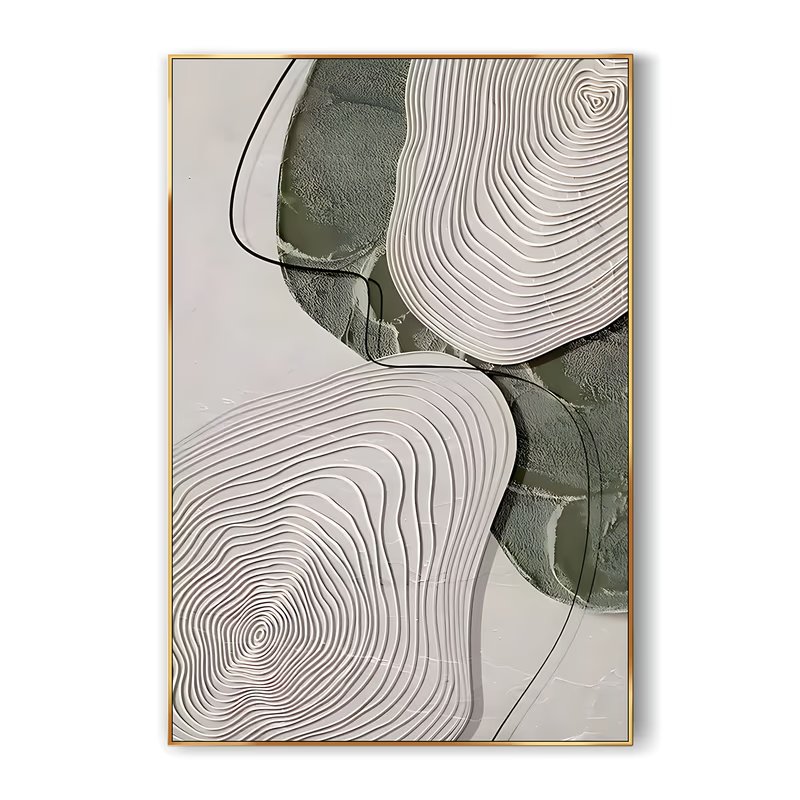
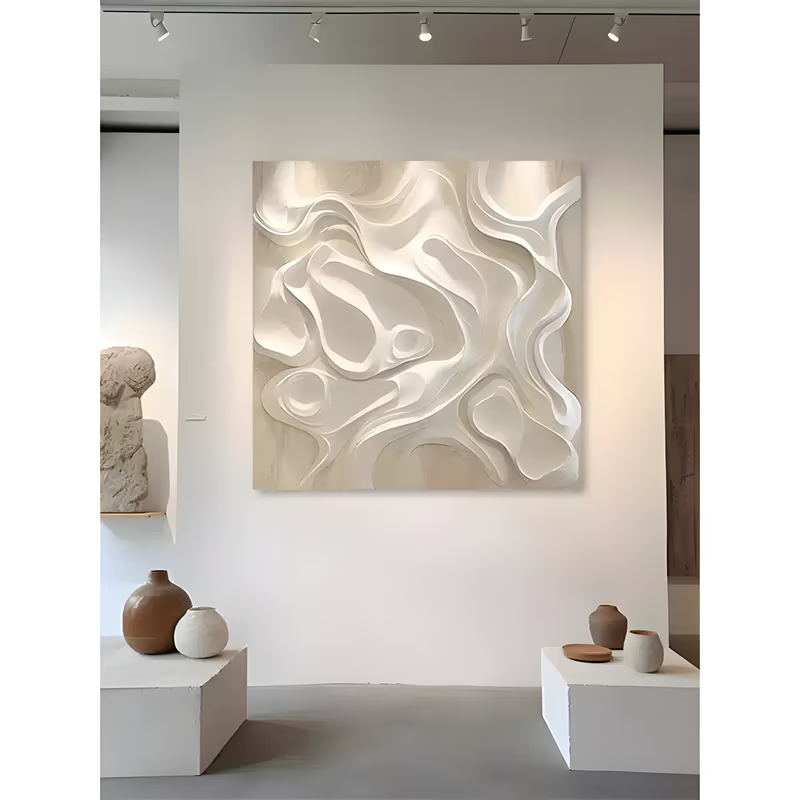
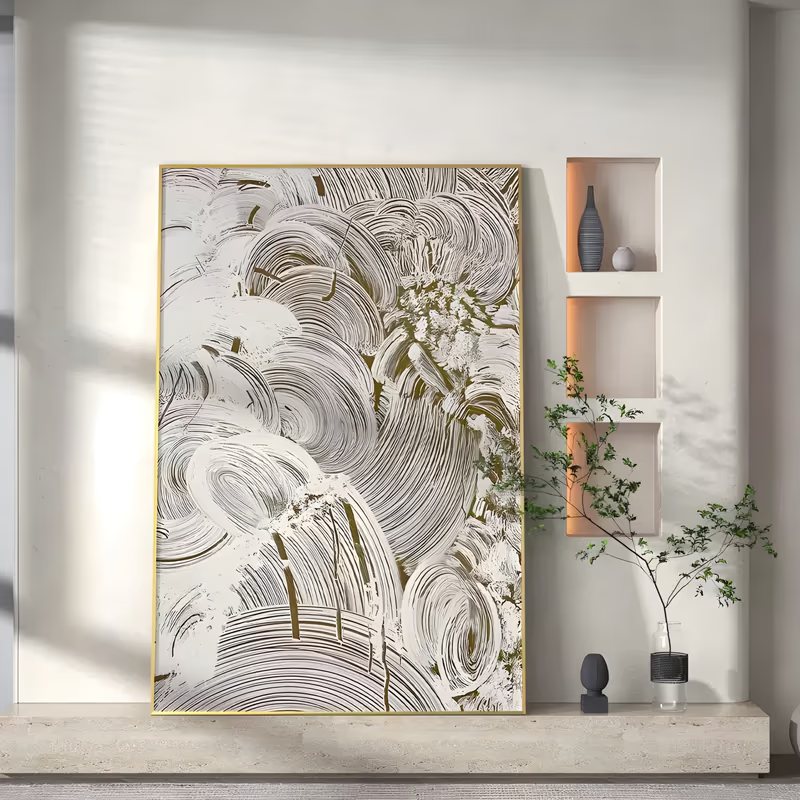
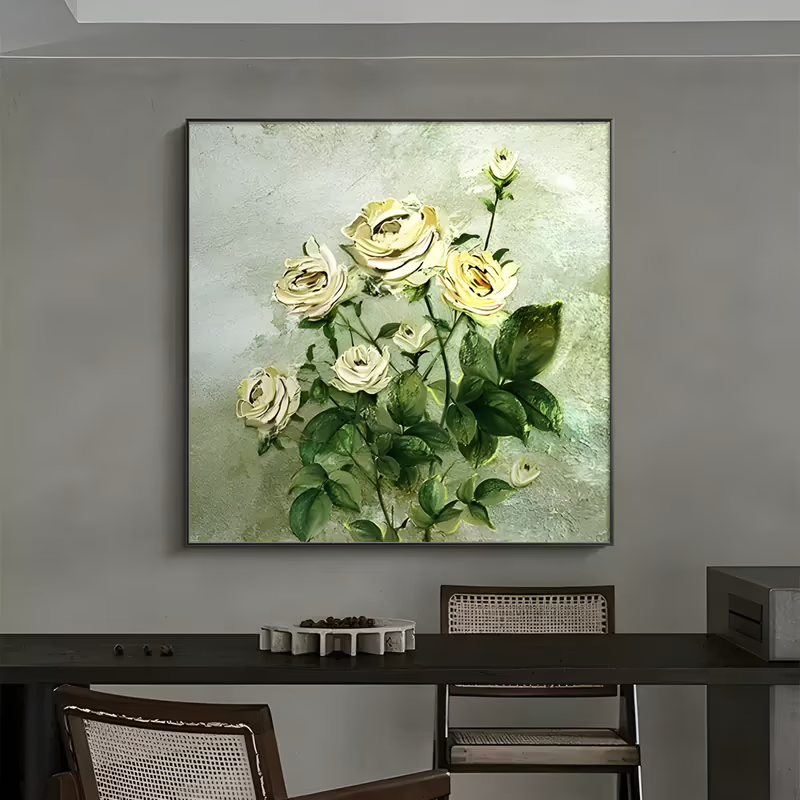
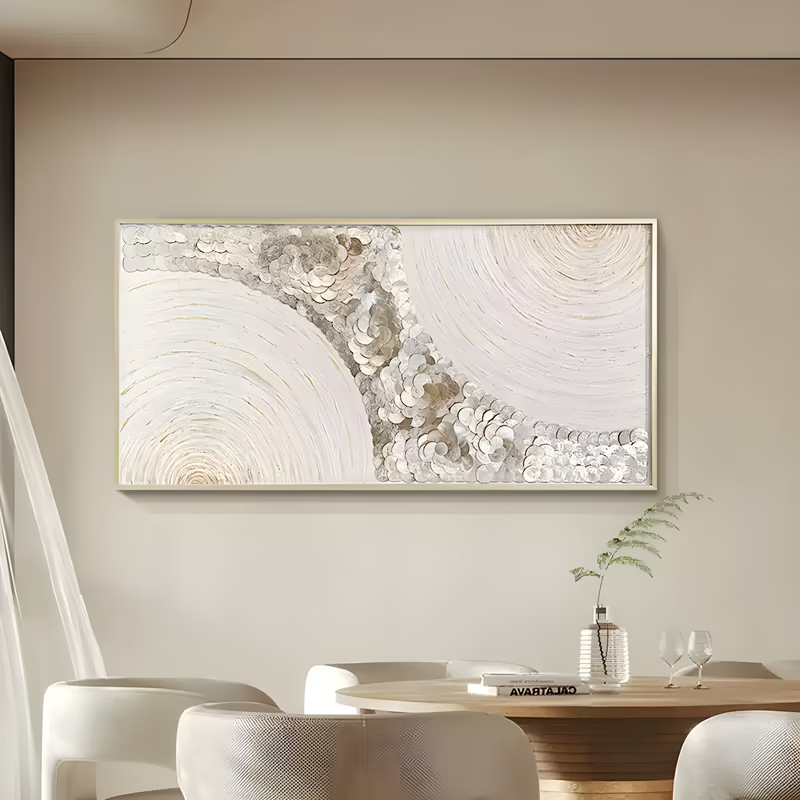
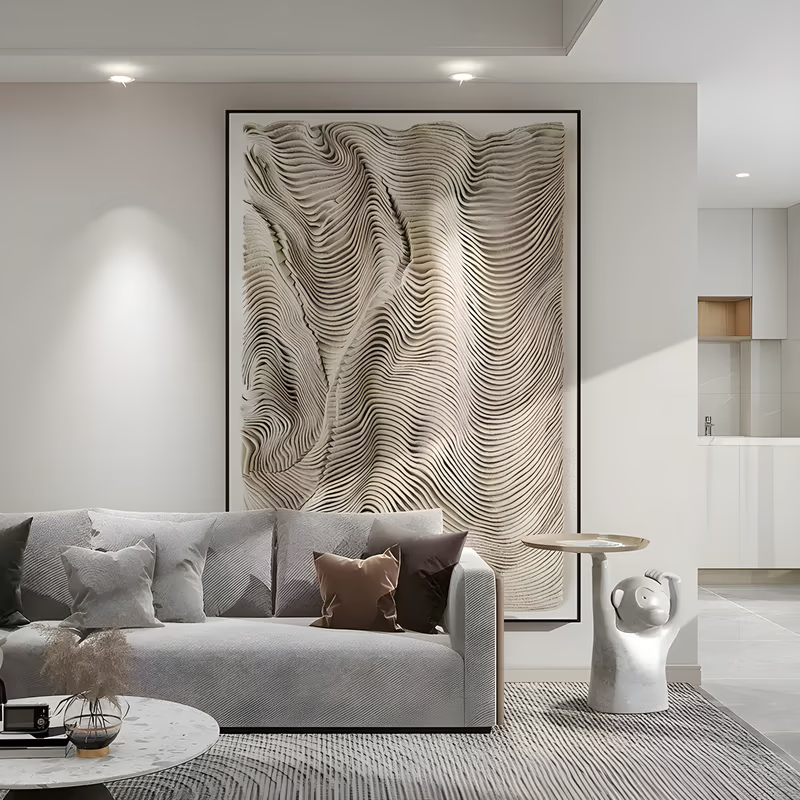
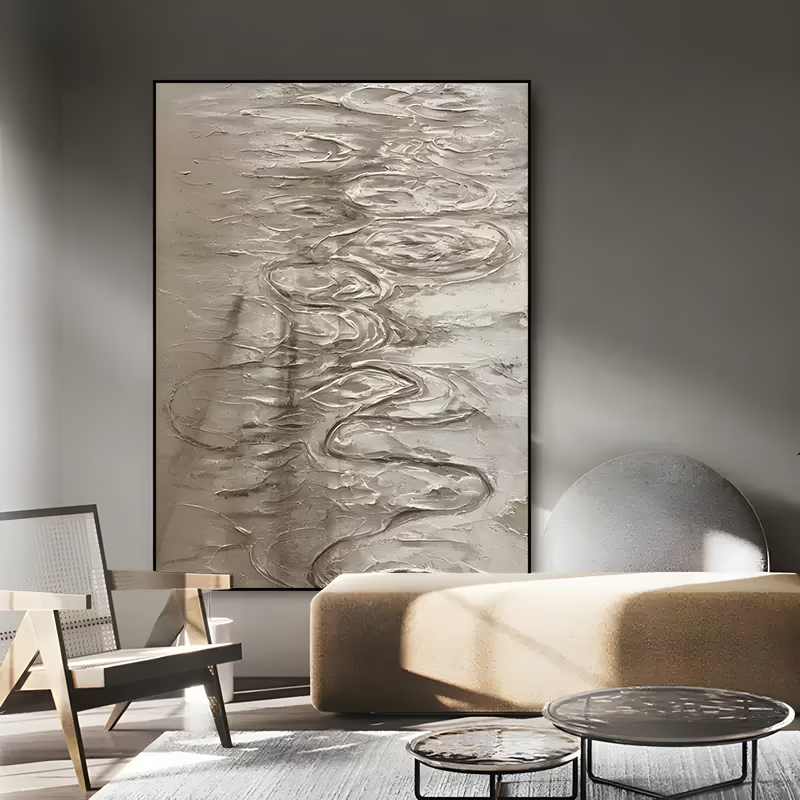
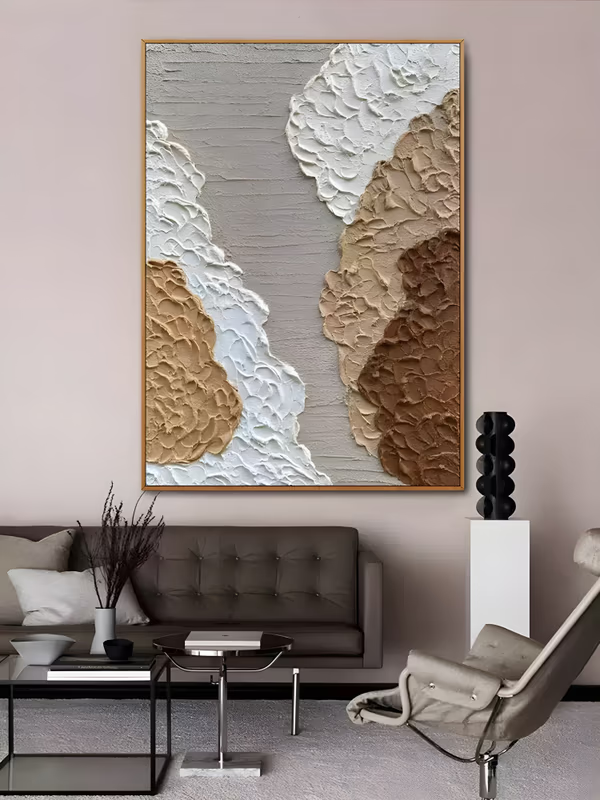
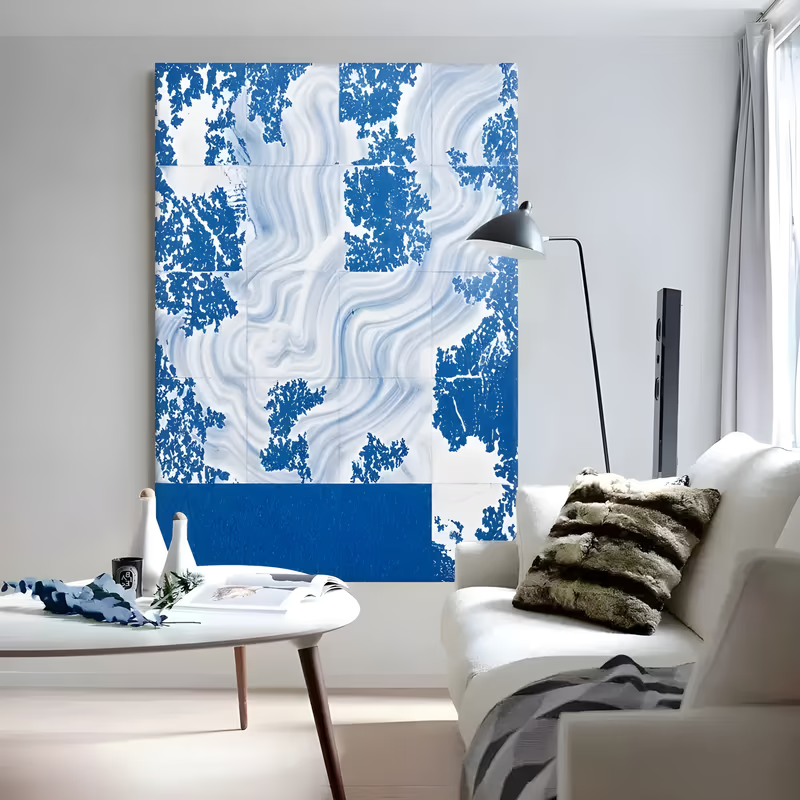
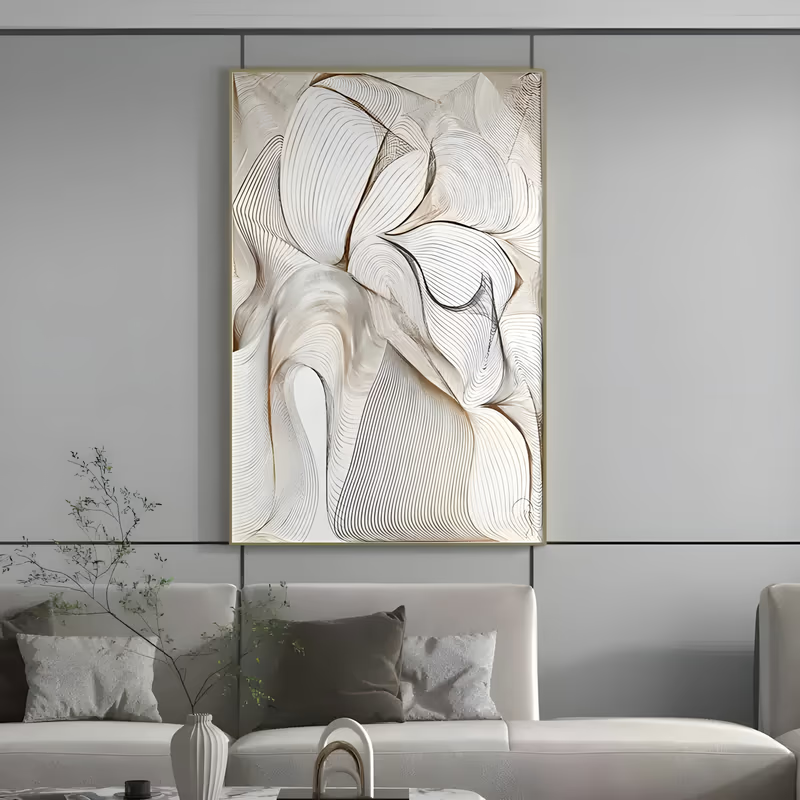
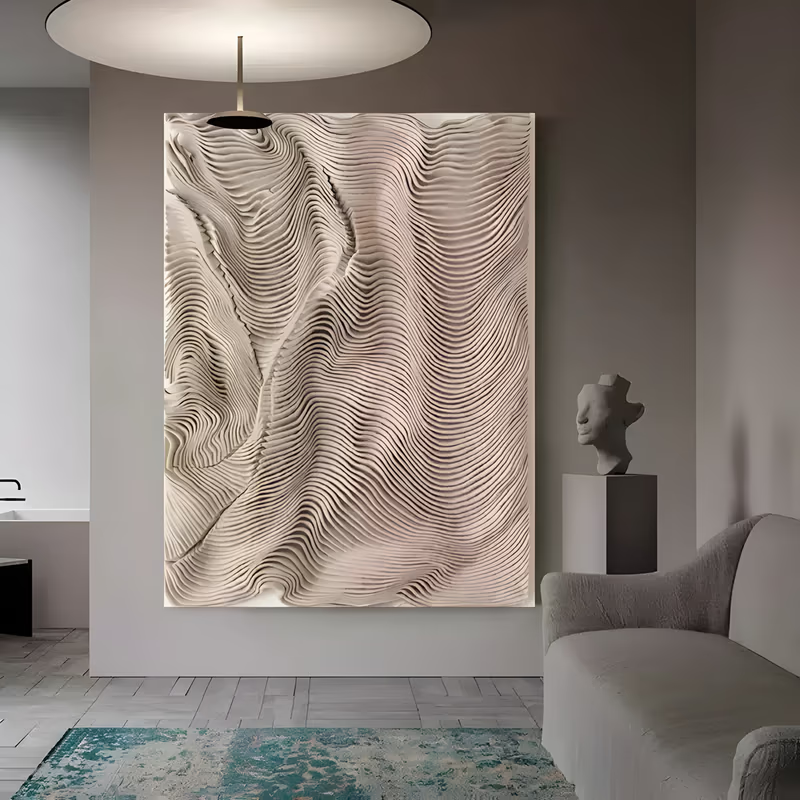
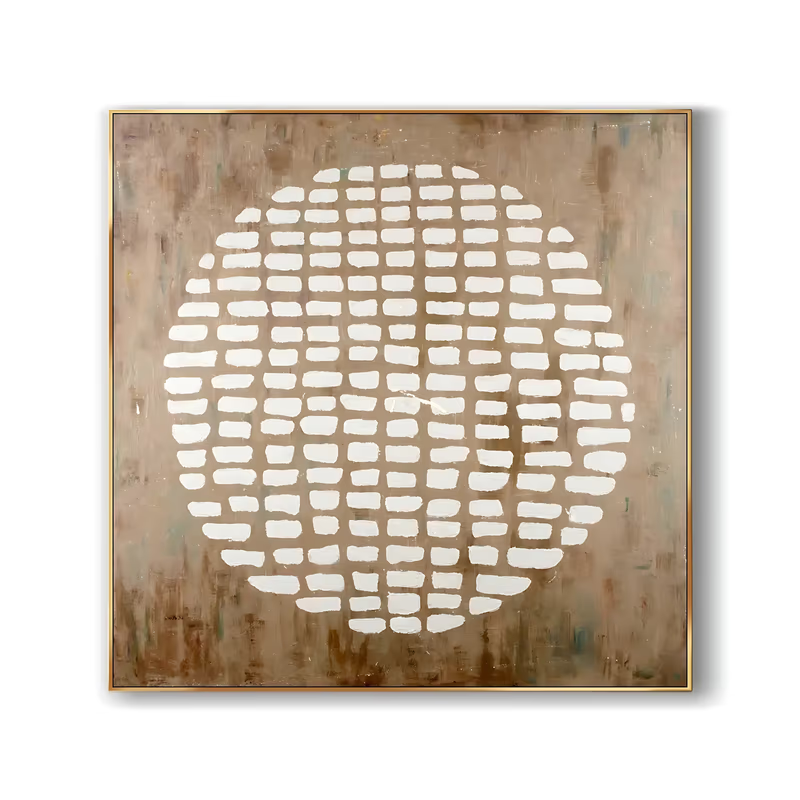
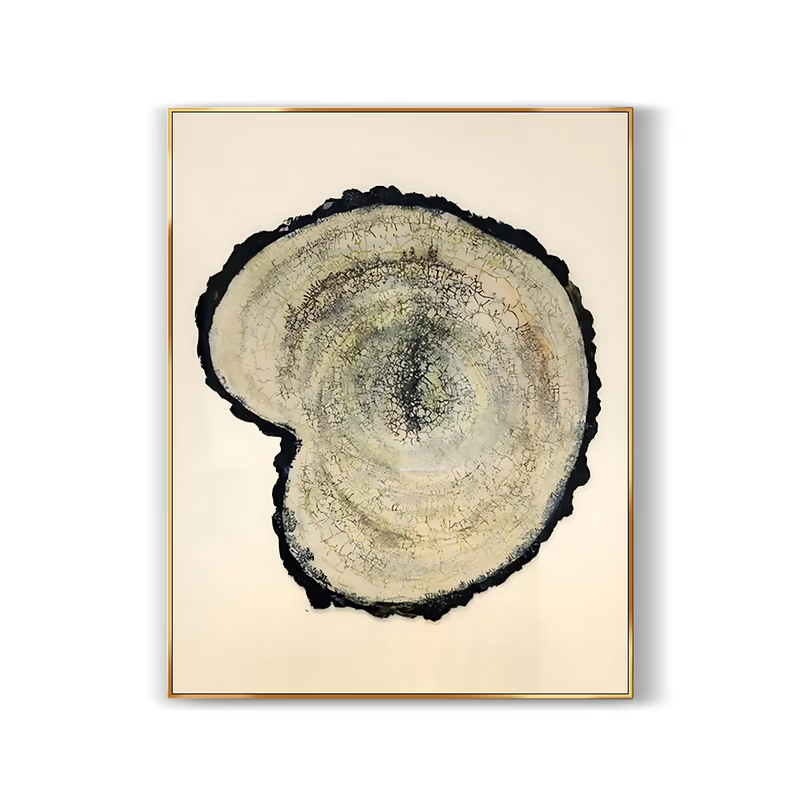
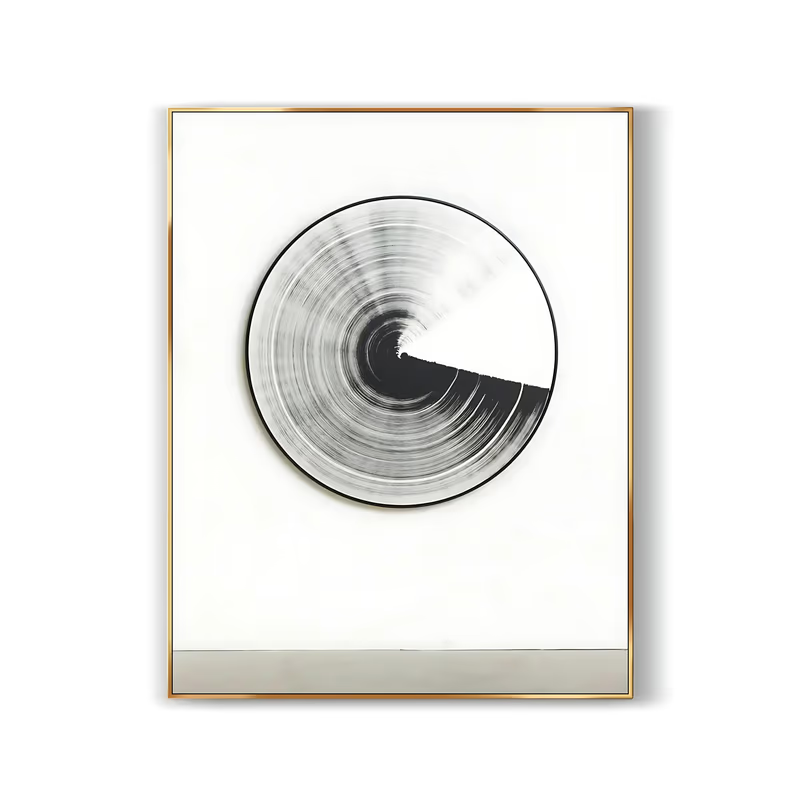
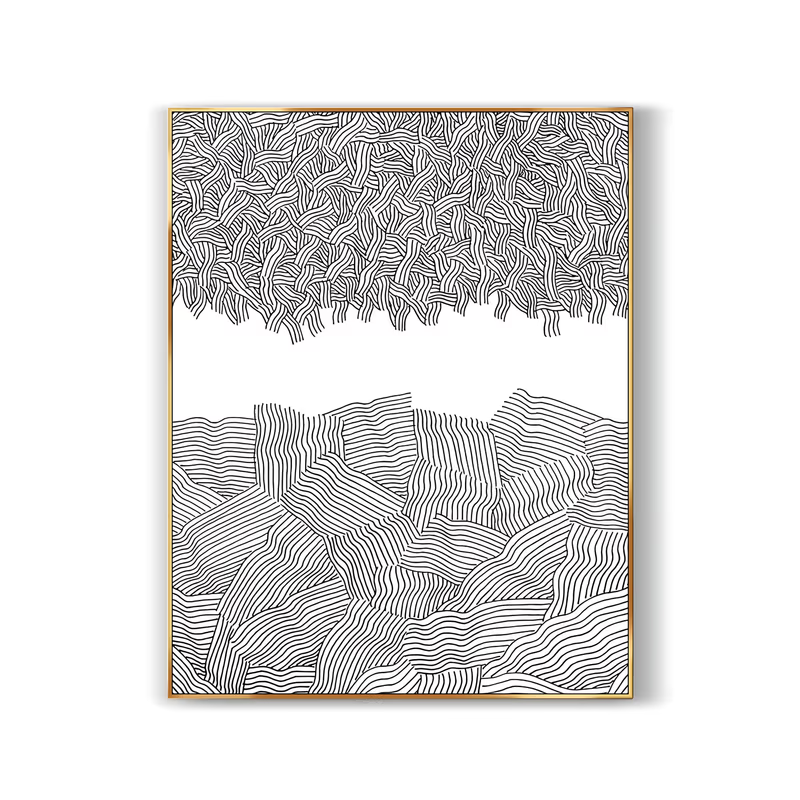
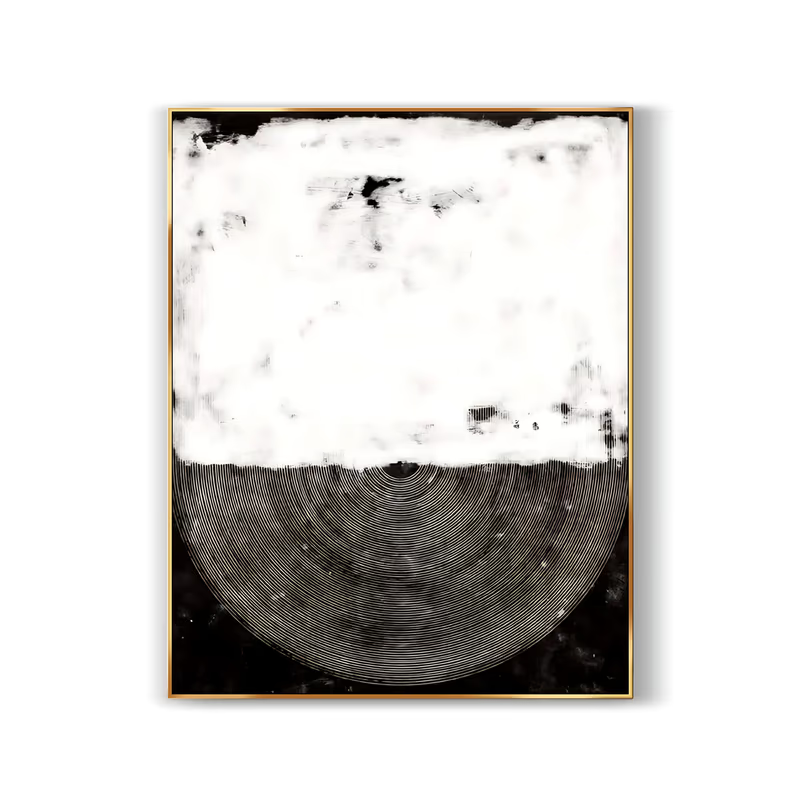
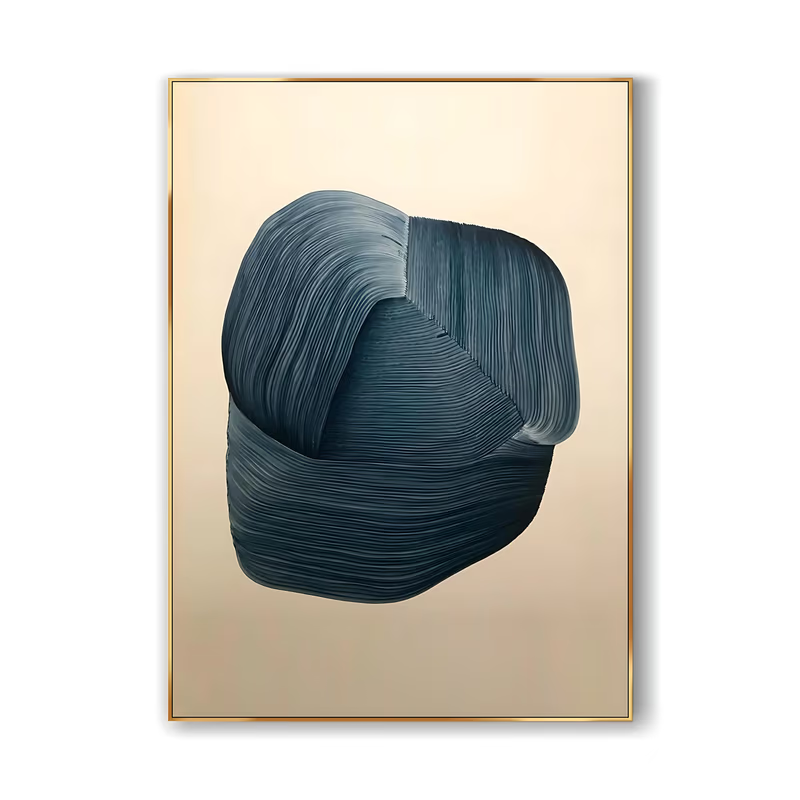
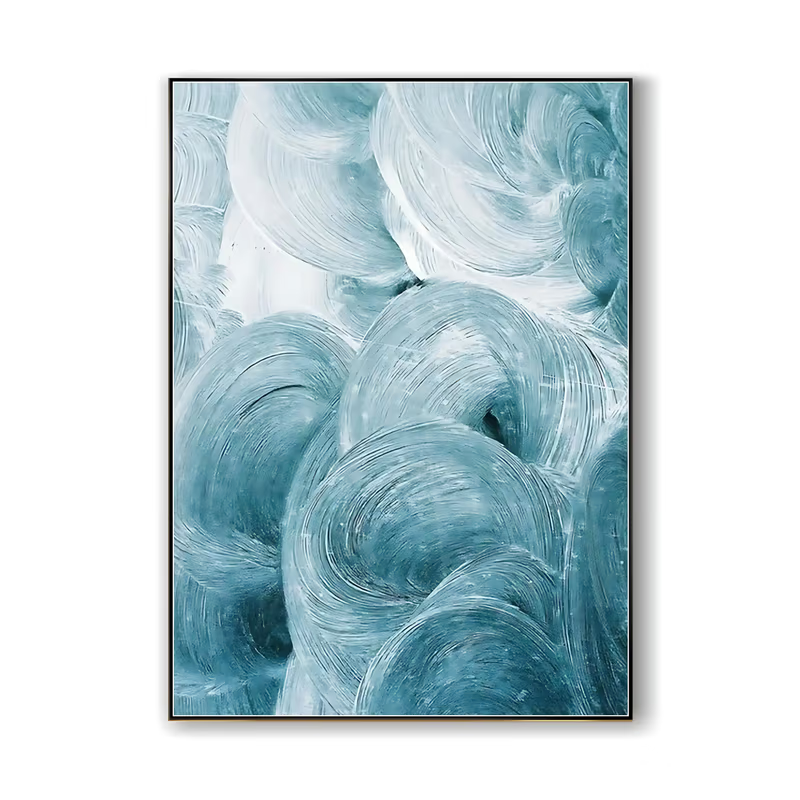
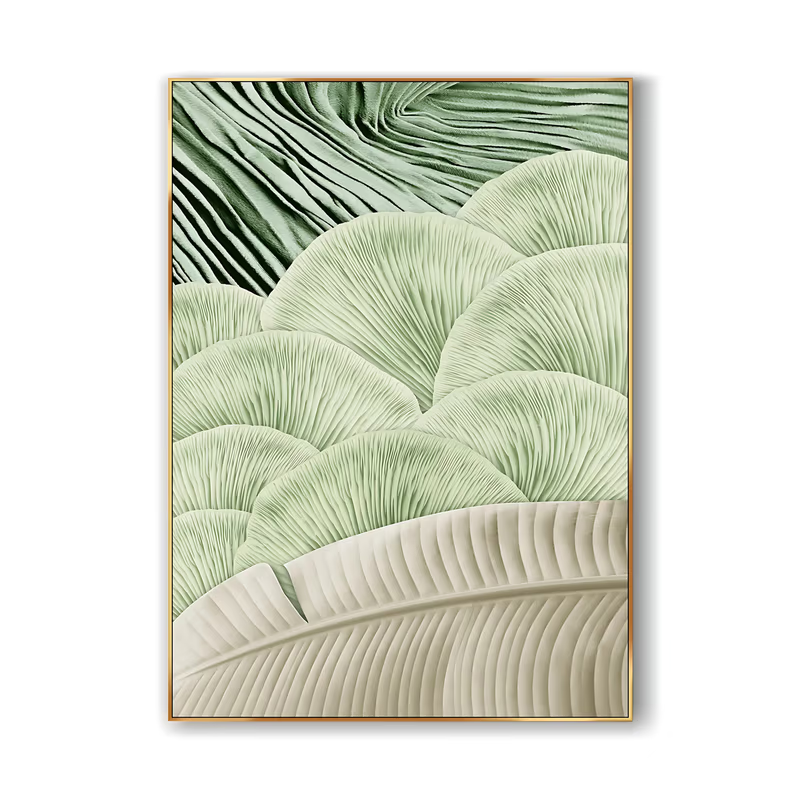
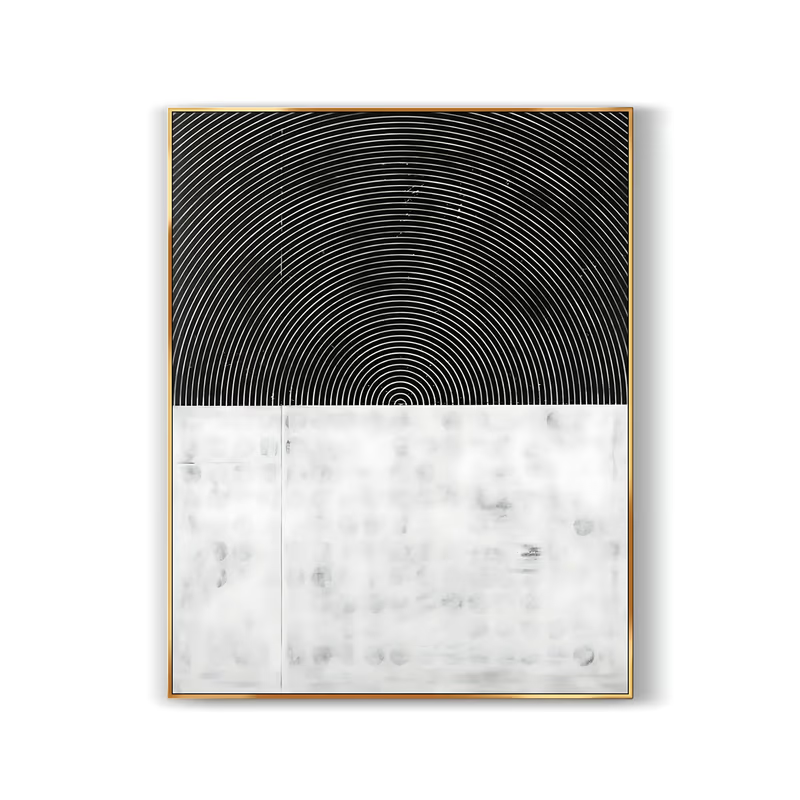
| Slow repetition | Even rhythm is predictable, so the eye relaxes into it | Concentric plaster rings, a row of sculpted roses, woven plaster grids |
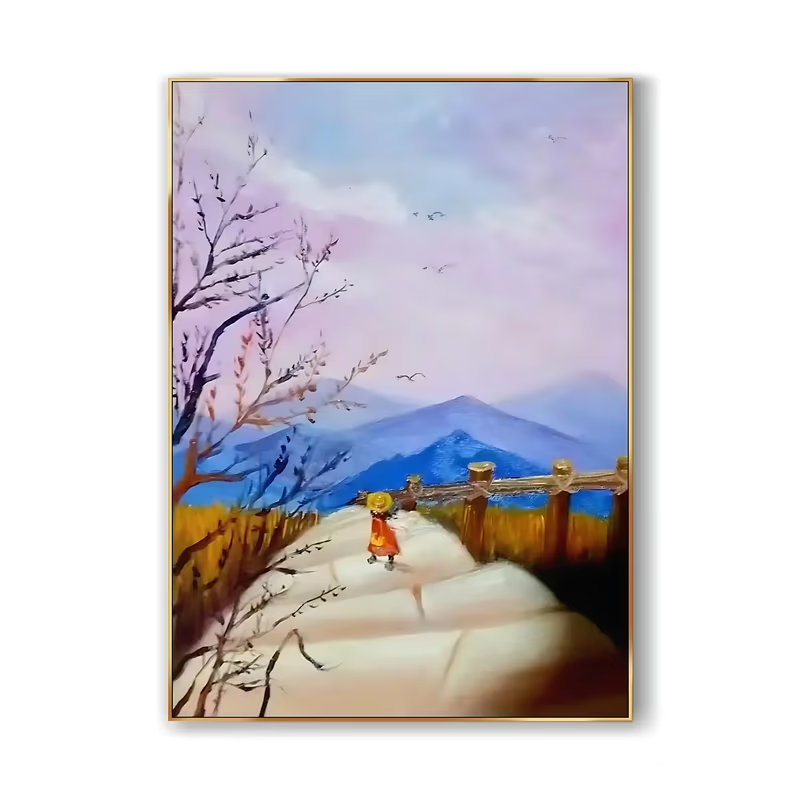
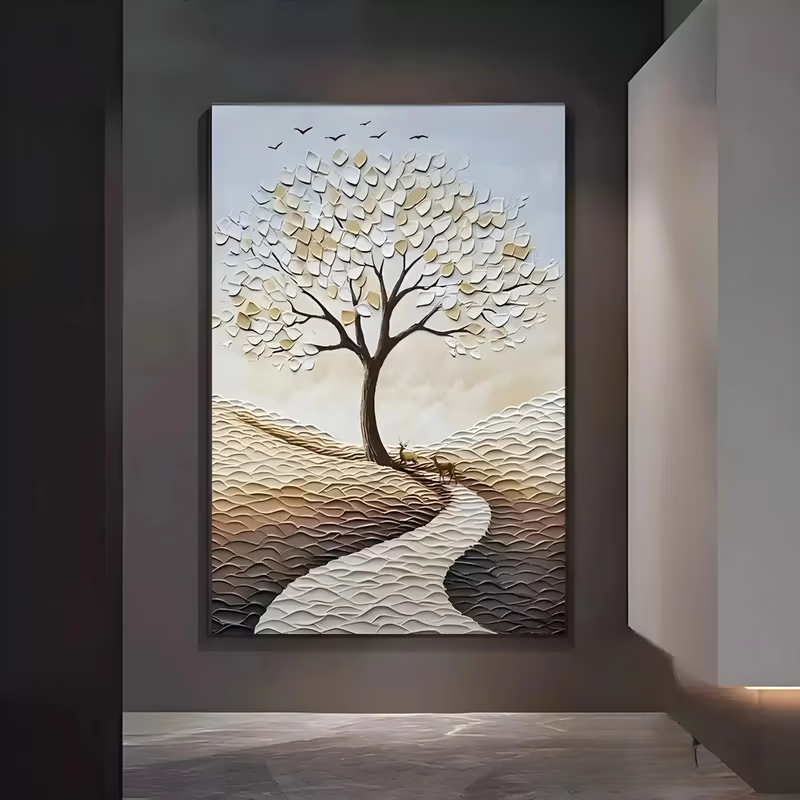
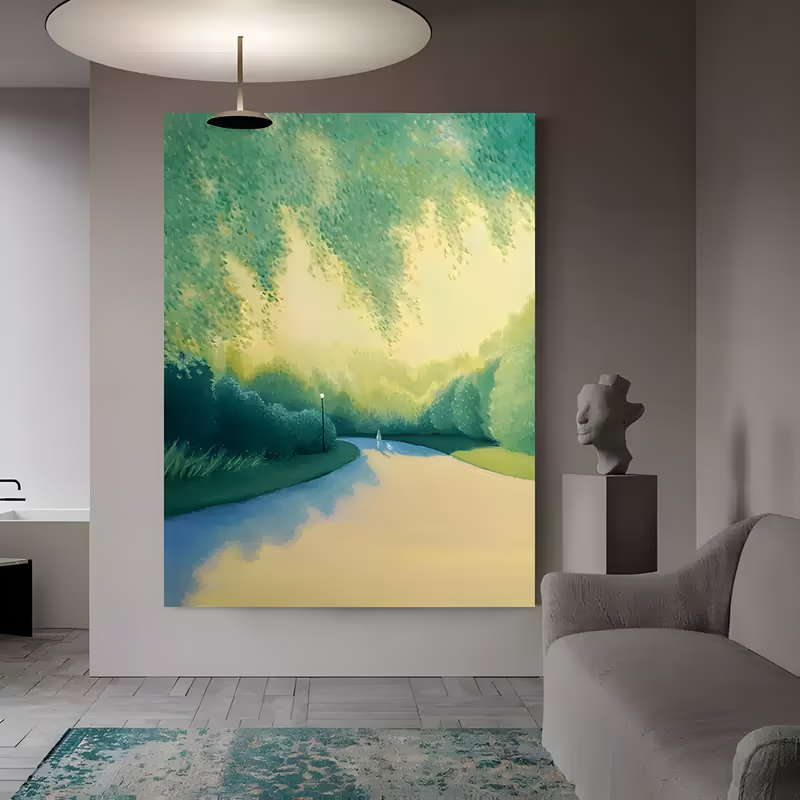
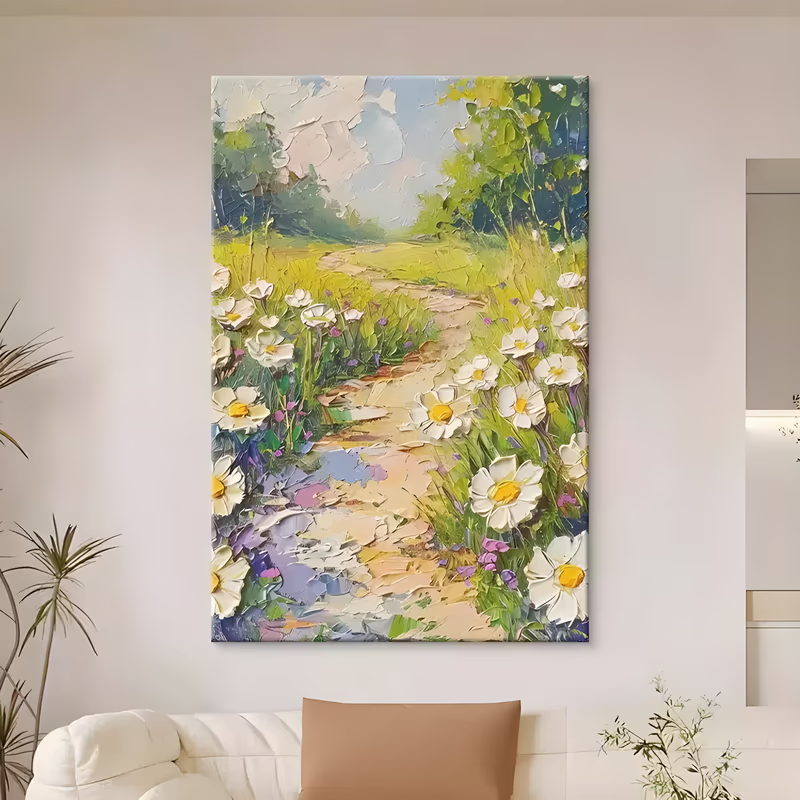
| An empty path or seat | Invites you into the scene without anyone else in it | A bench under willows, a deer on a winding path |
When choosing between two works, look for the one with more empty space and fewer focal points. That is almost always the more tranquil of the two.
What kinds of peaceful paintings are there?
Peaceful paintings here fall into four kinds: open horizons and still water, ink mountains with koi and lotus, single-bloom studies, and spare minimalist or wabi-sabi abstracts.
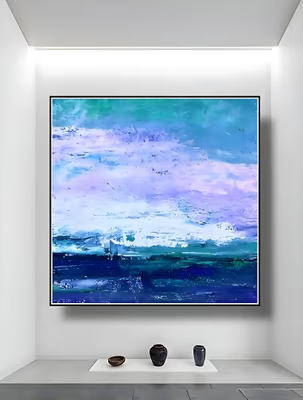
Horizons, lakes and open skies
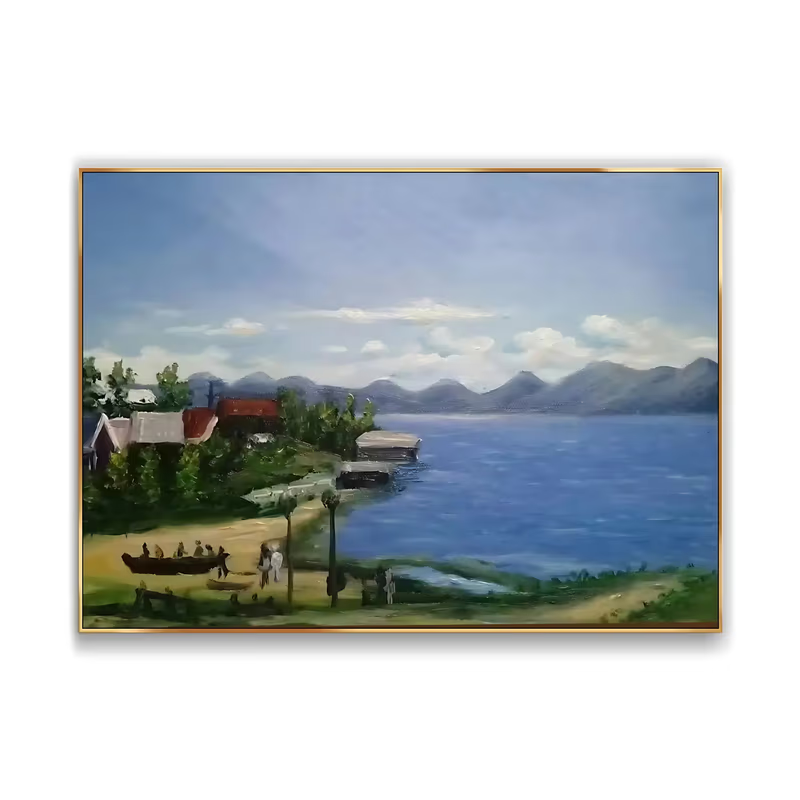
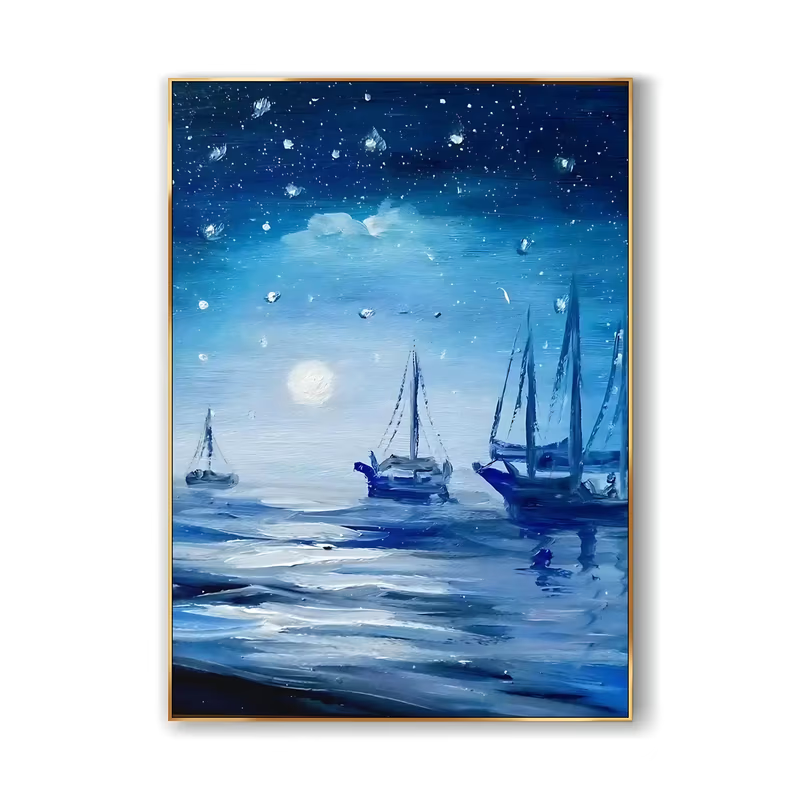
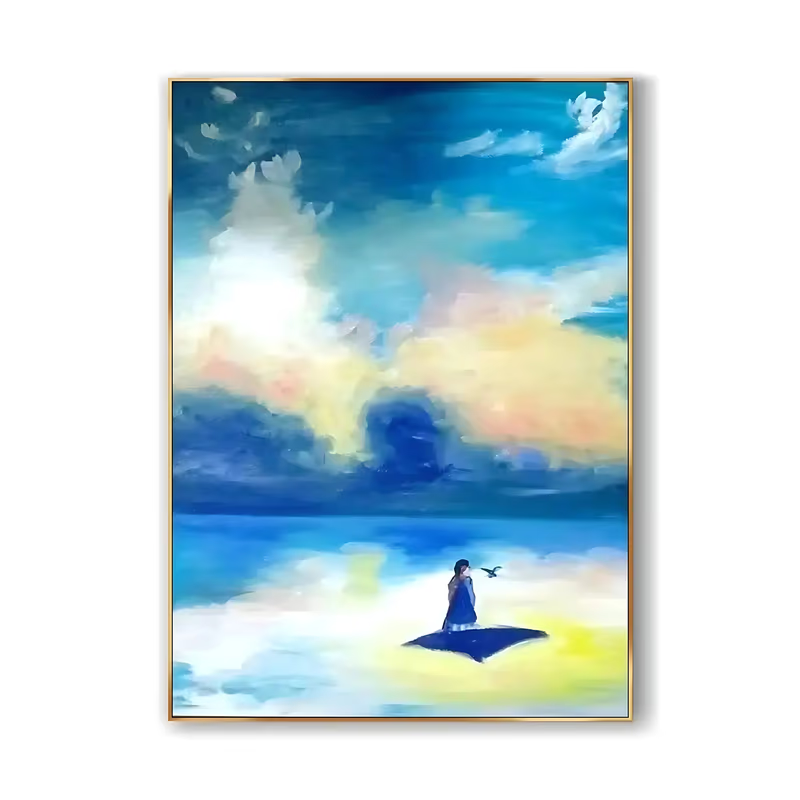
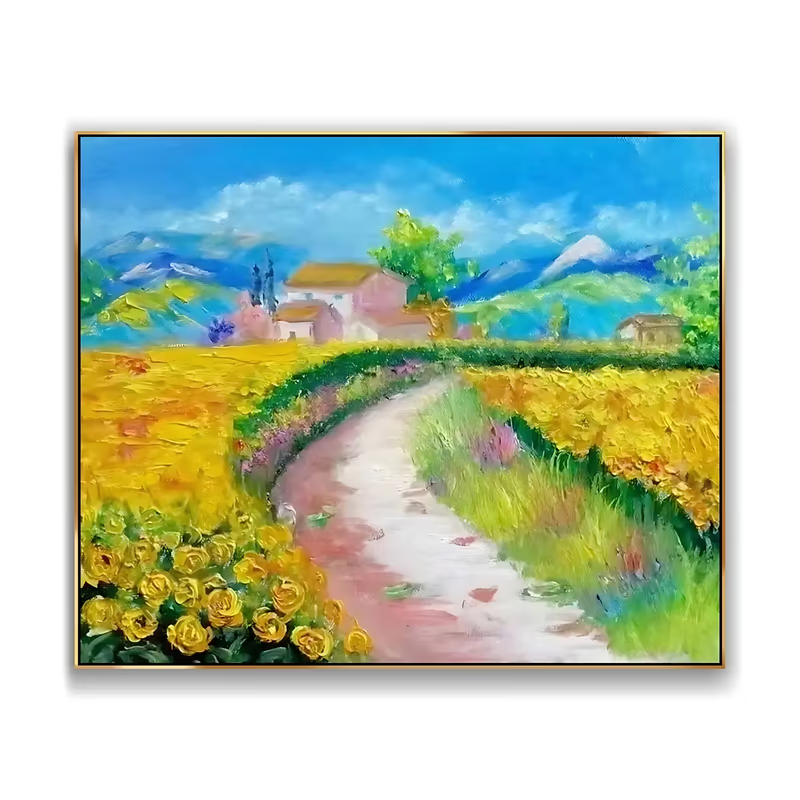
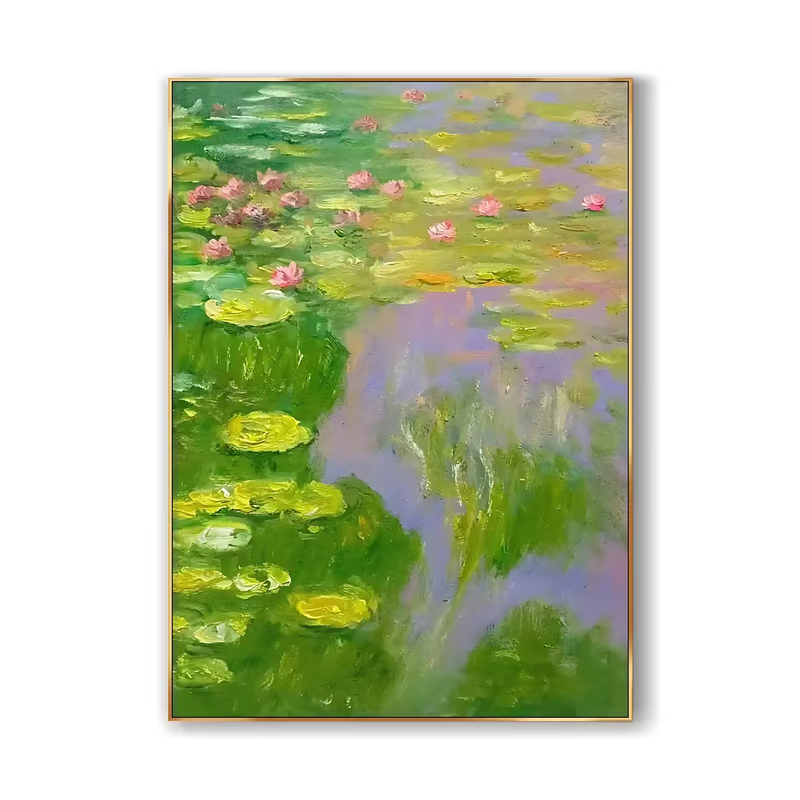
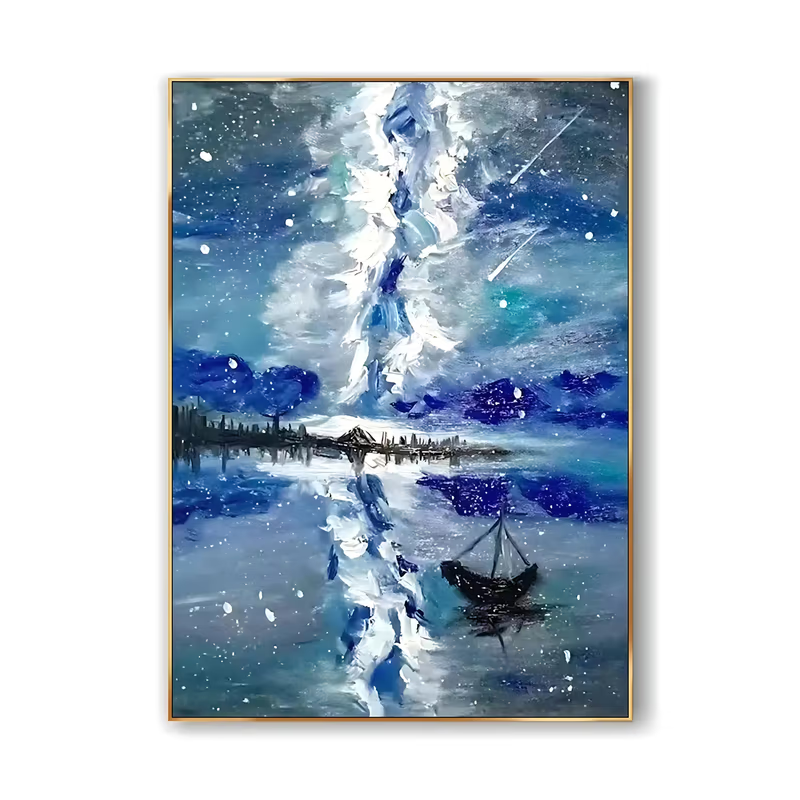
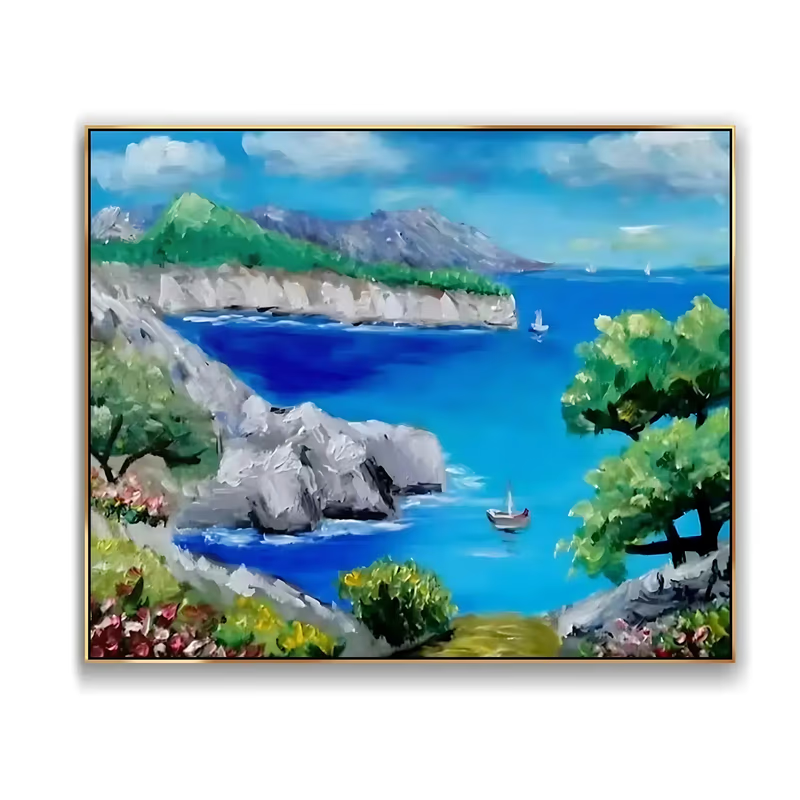
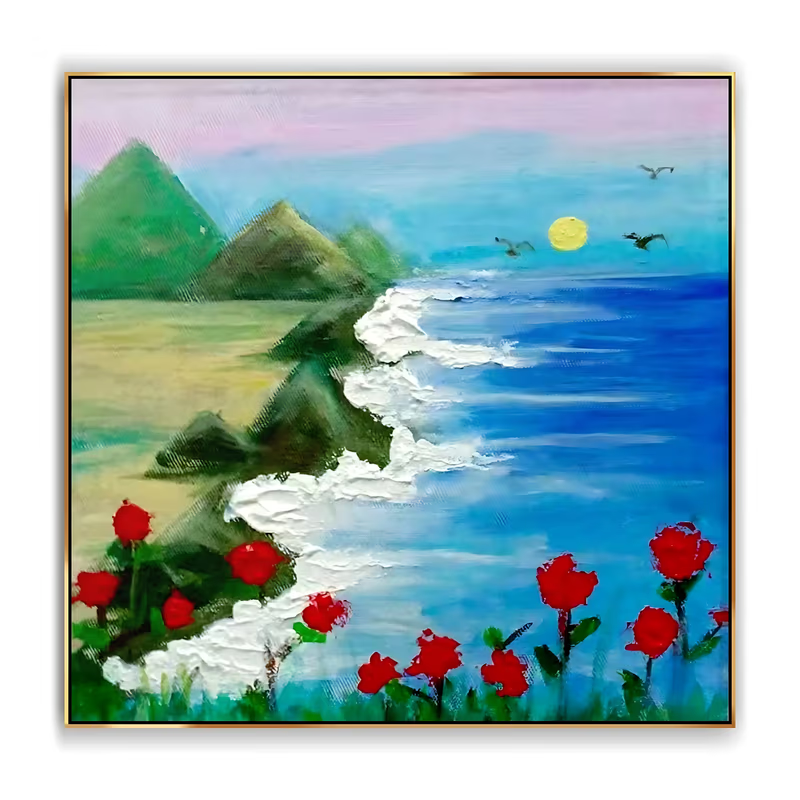
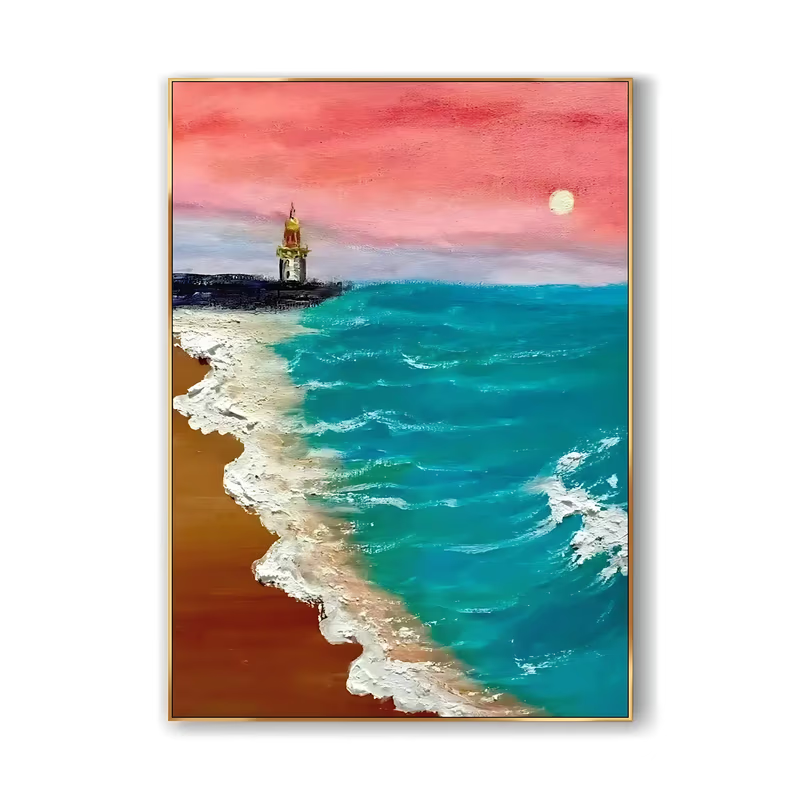
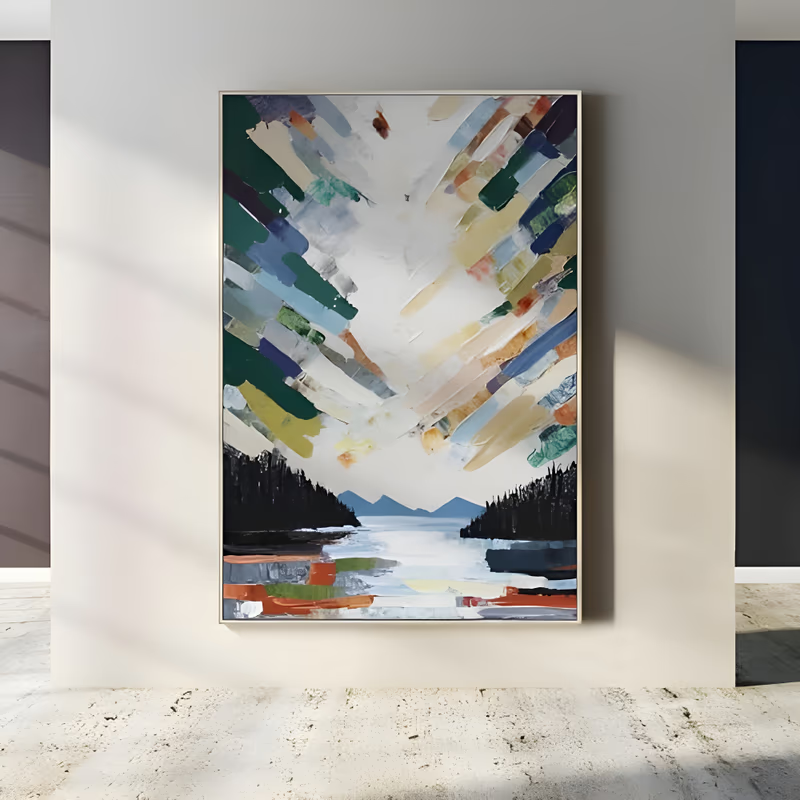
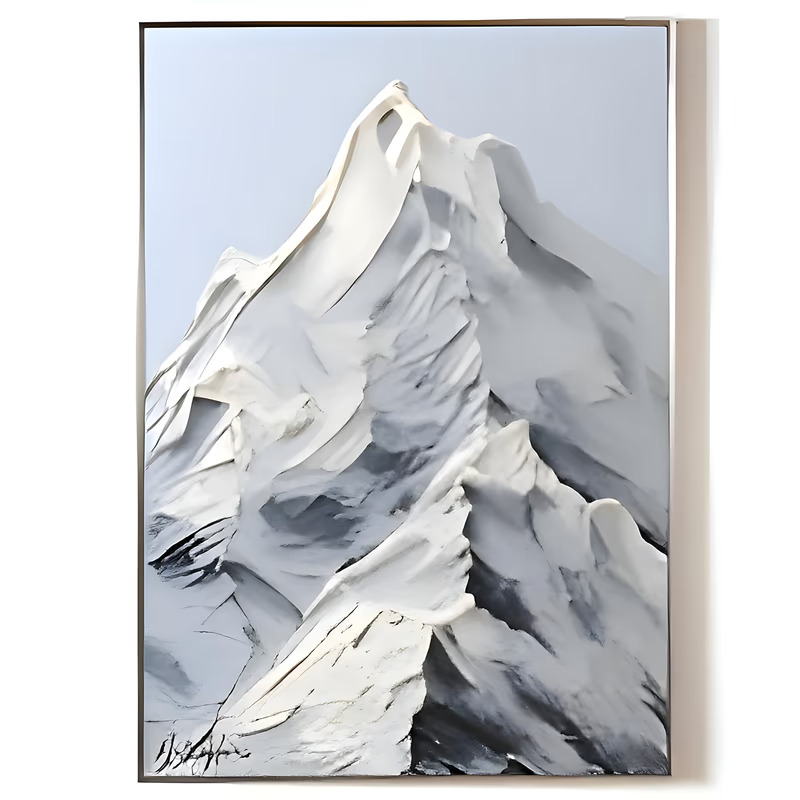
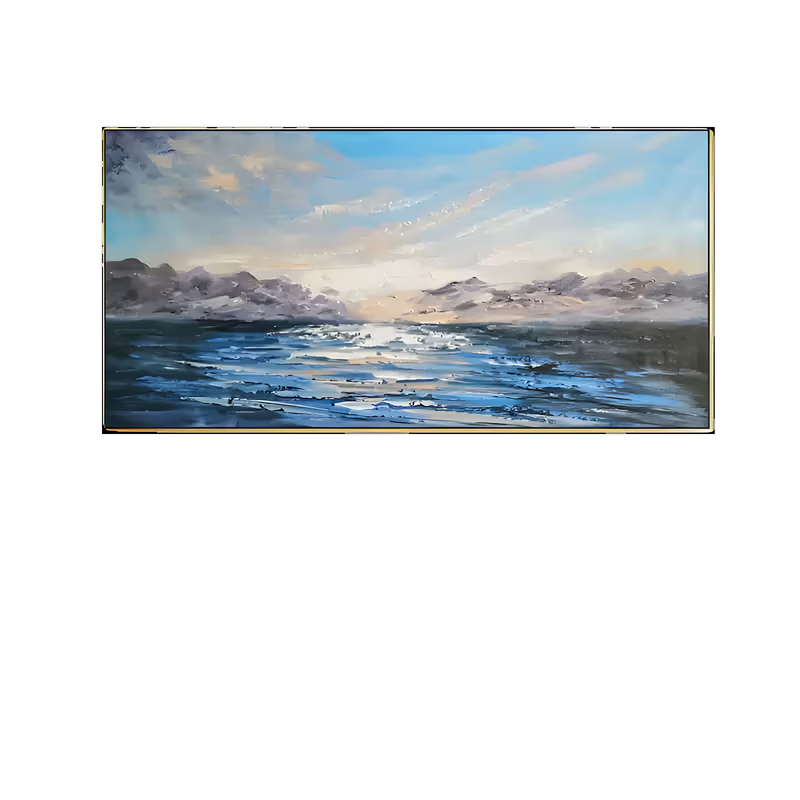
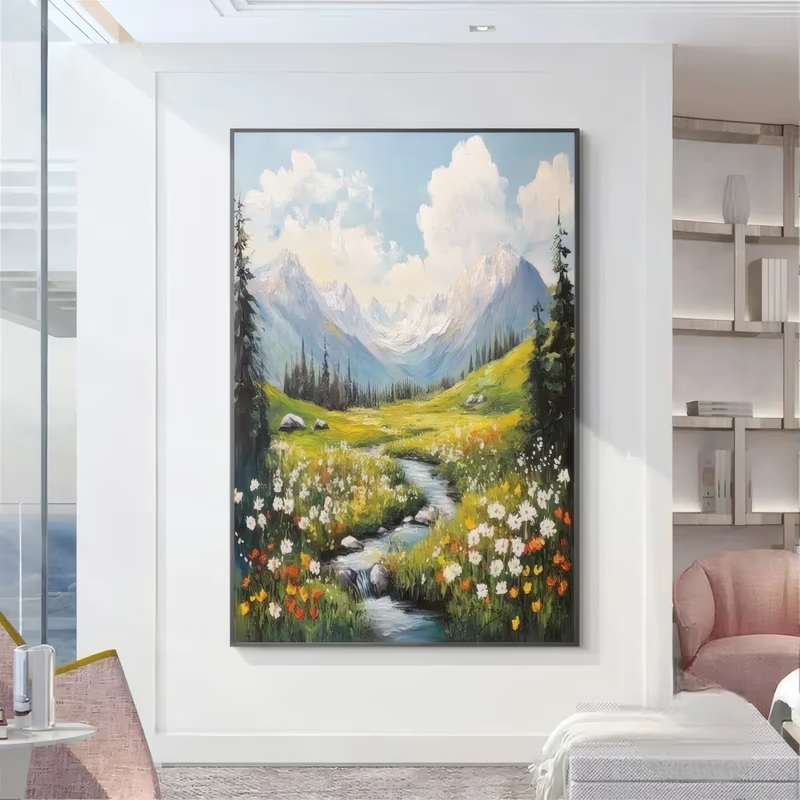
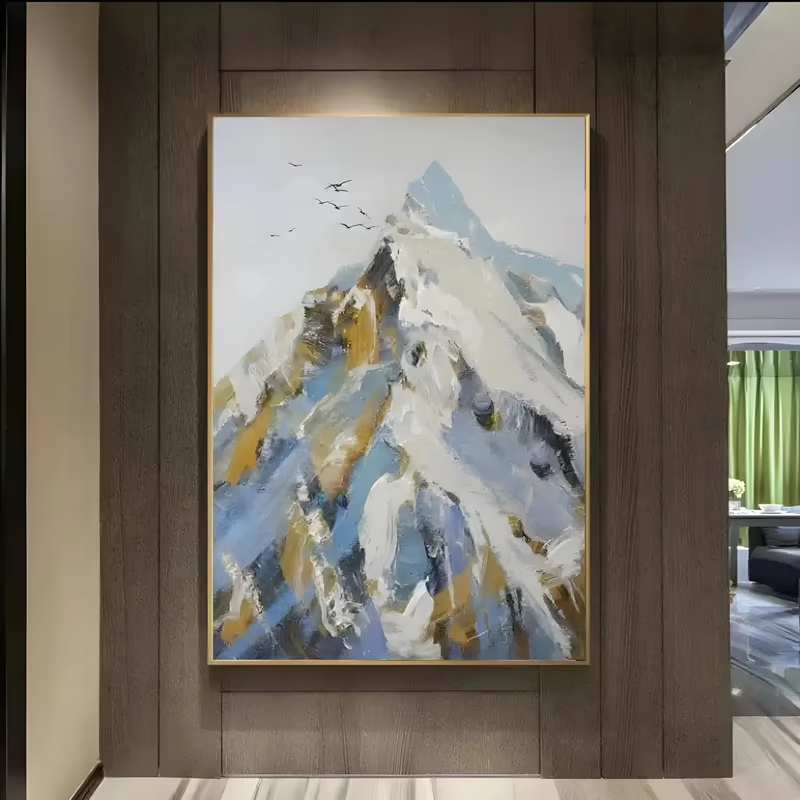
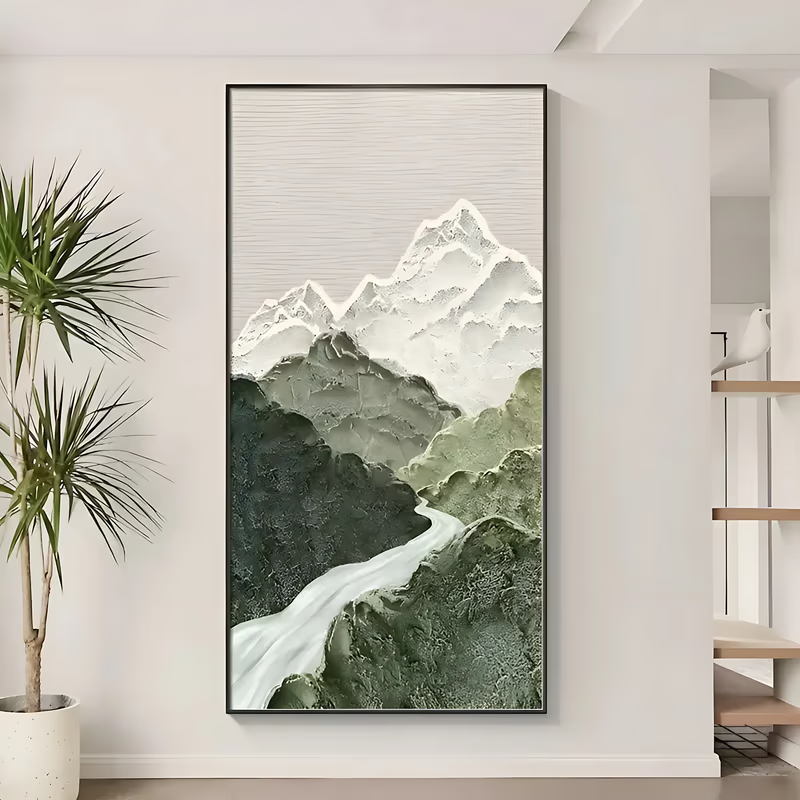
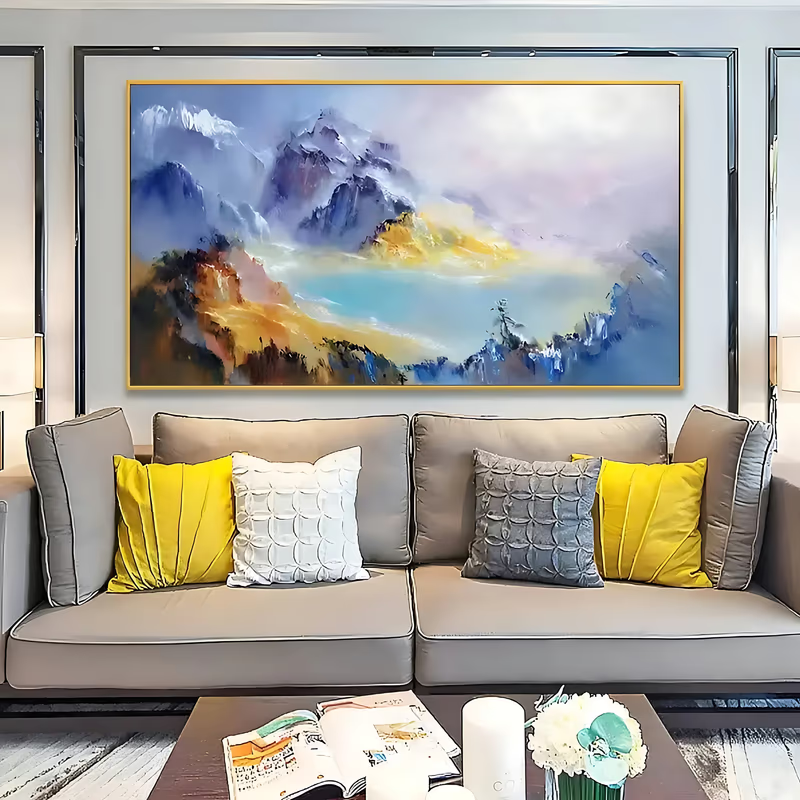
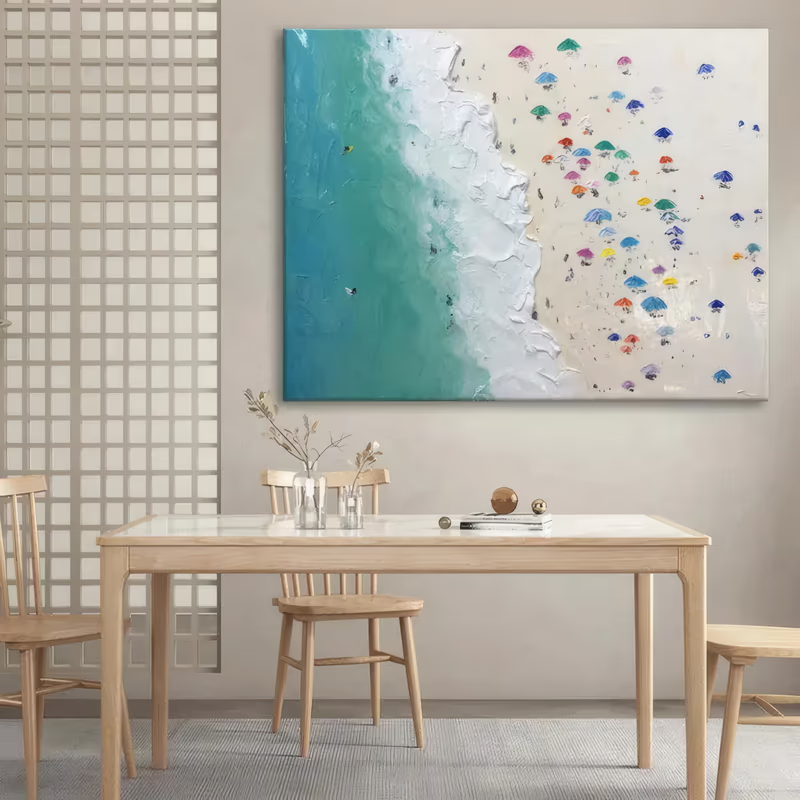
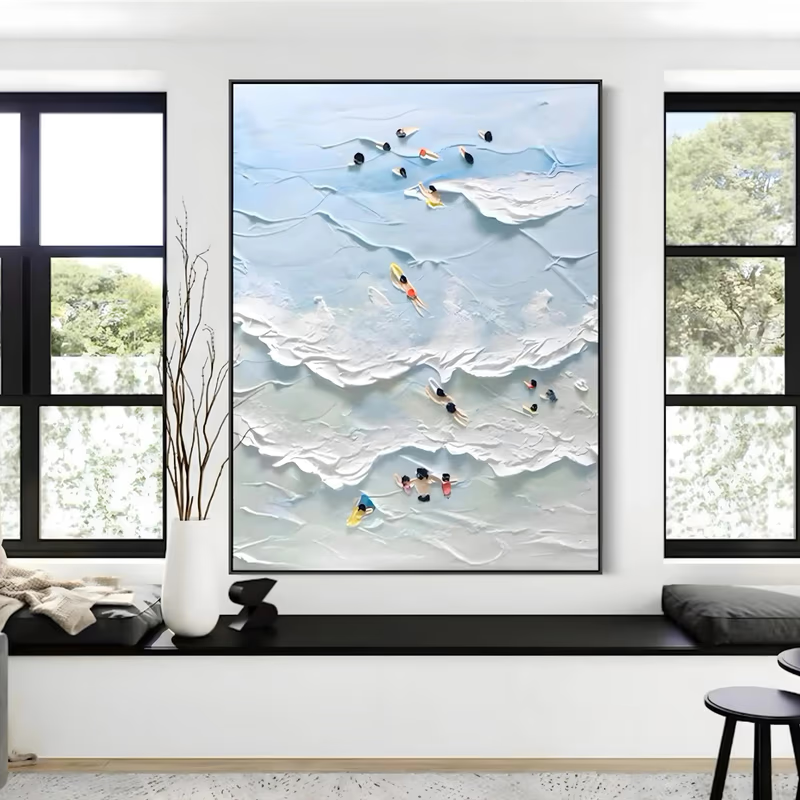
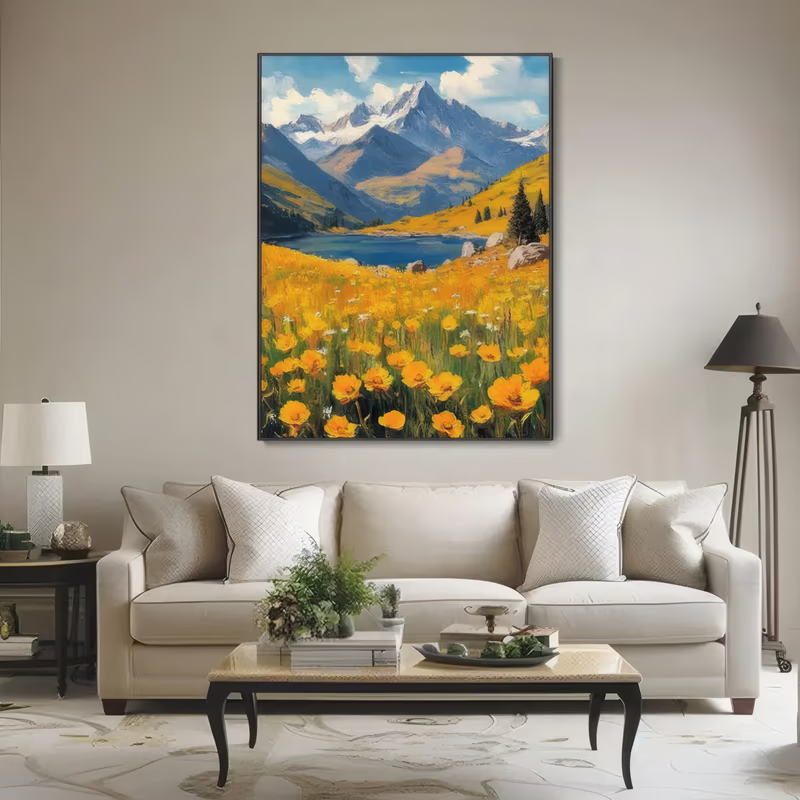
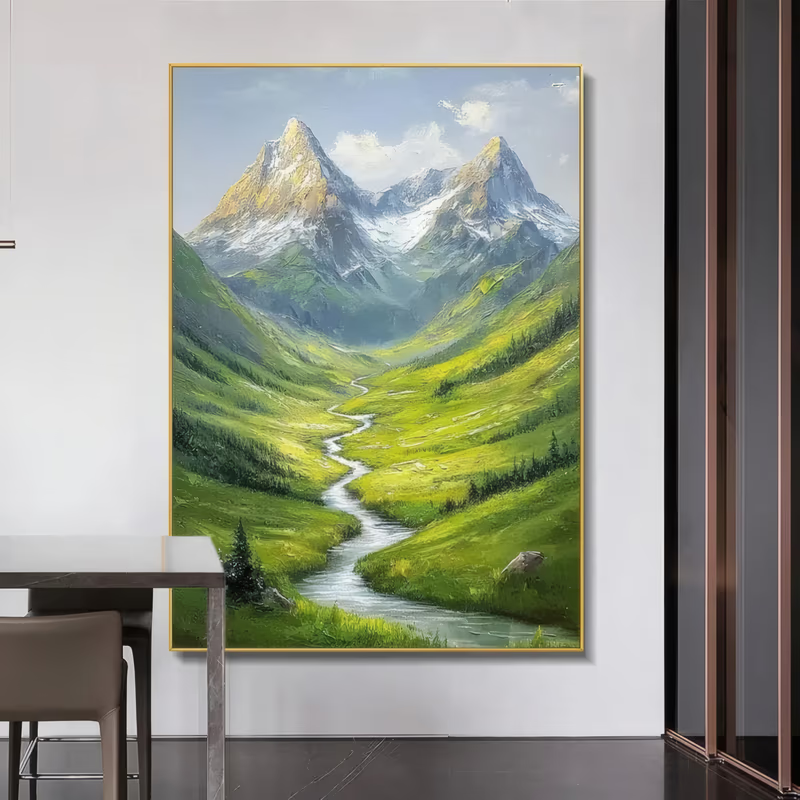
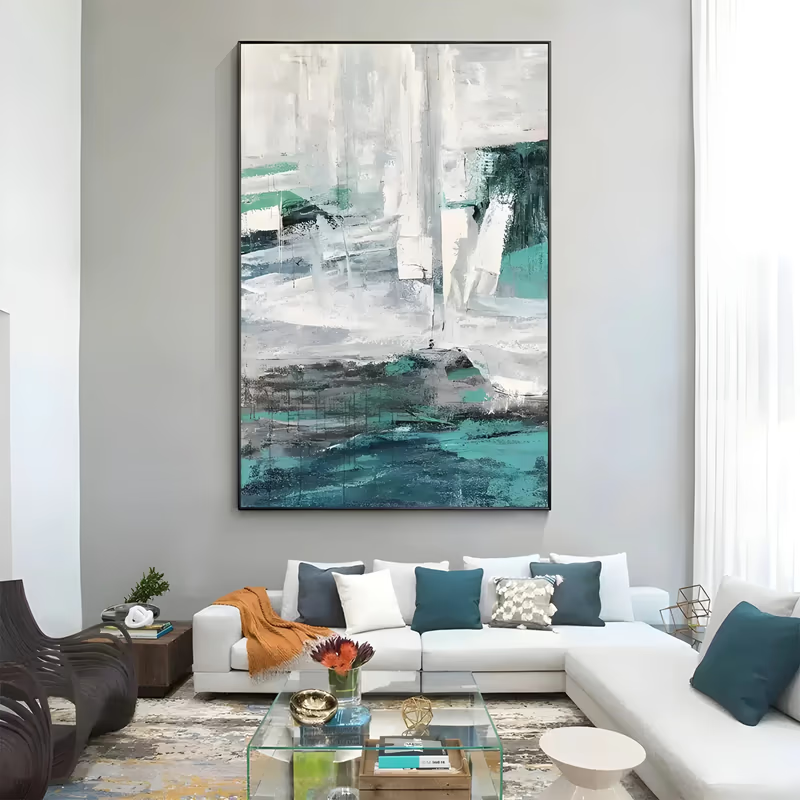
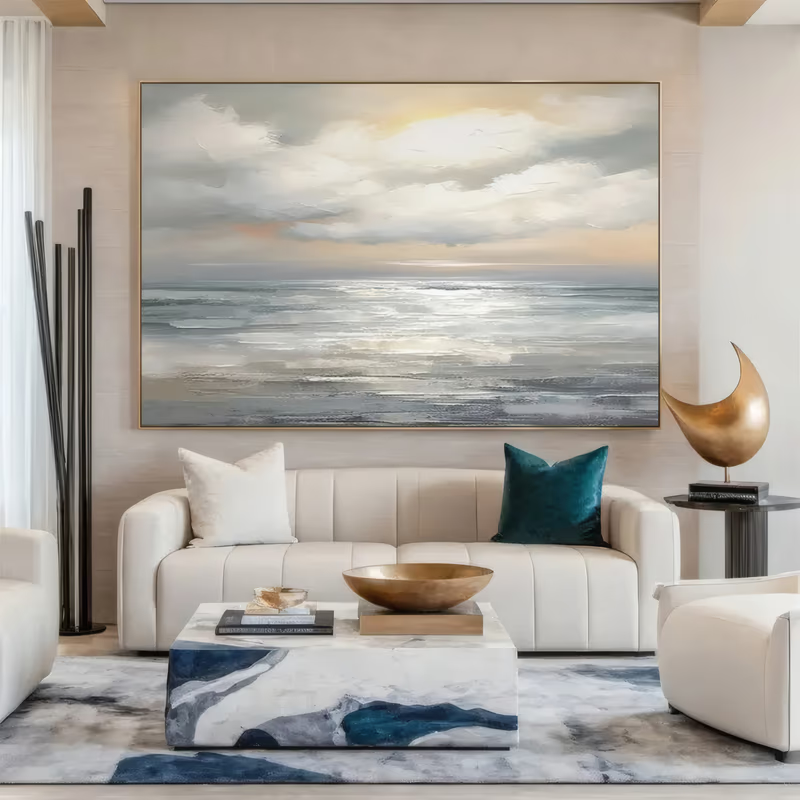
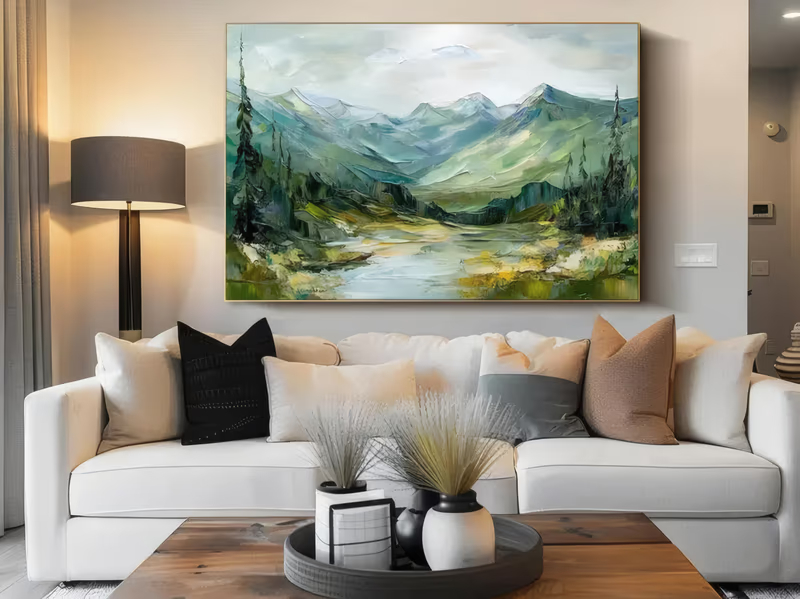
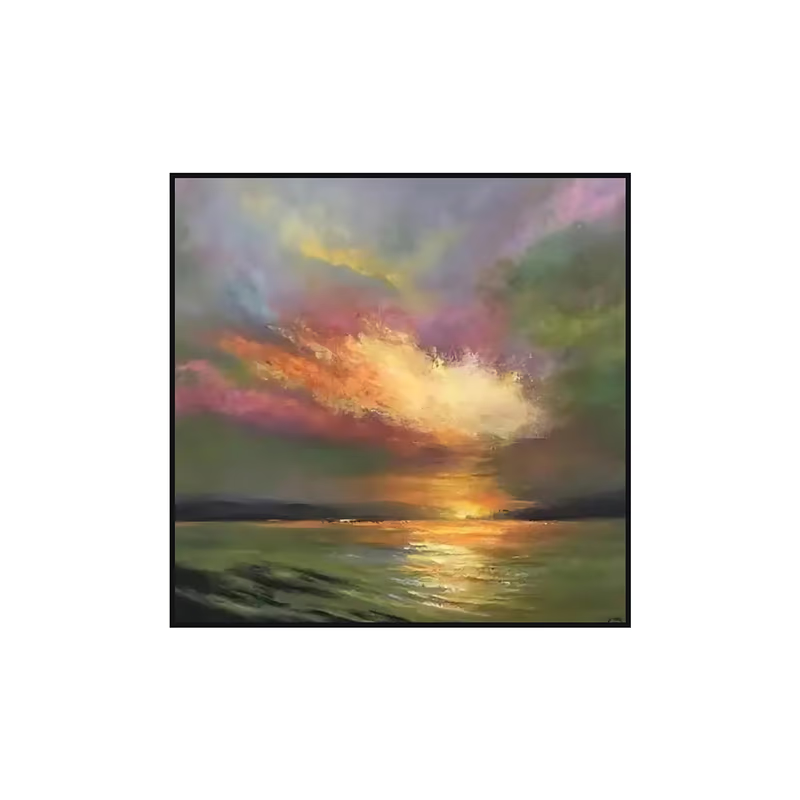
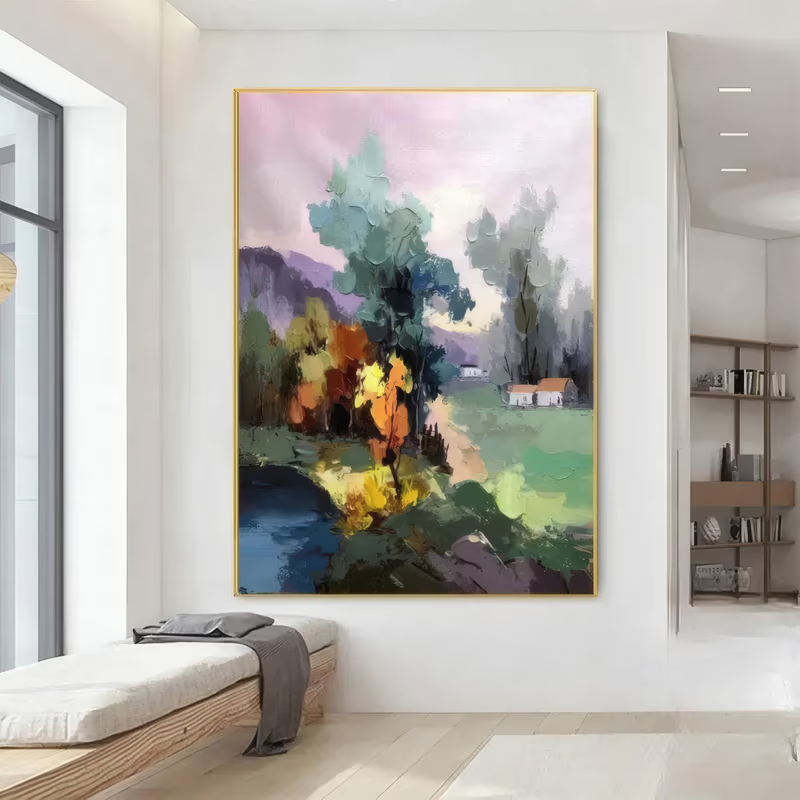
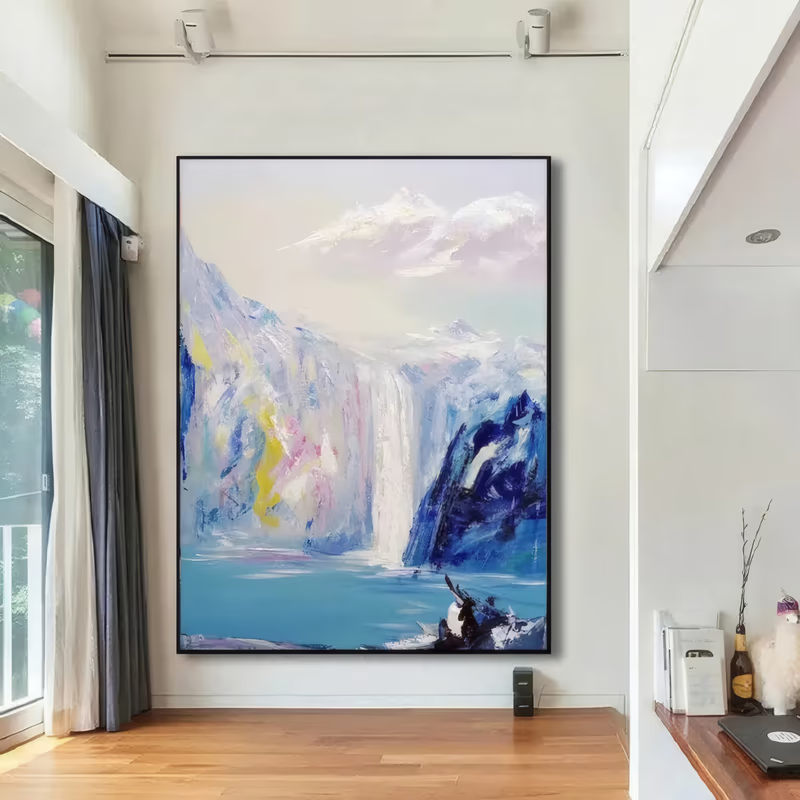
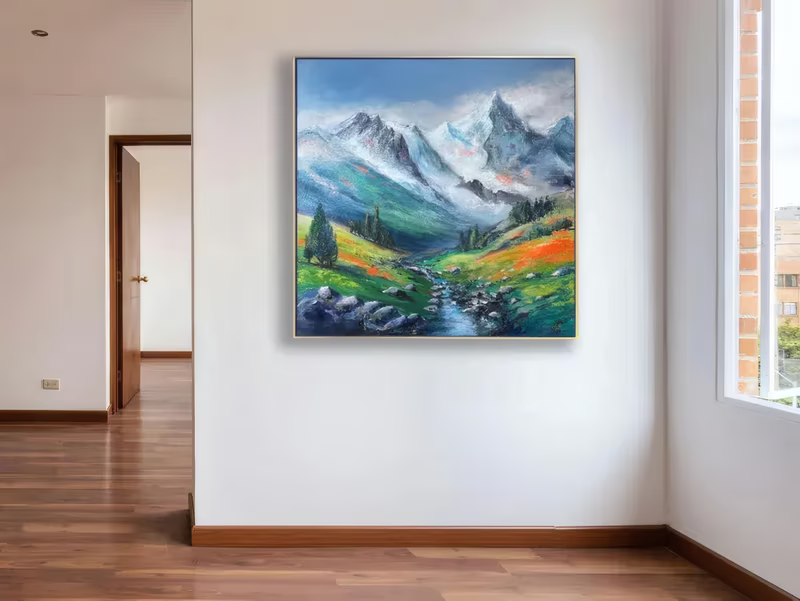
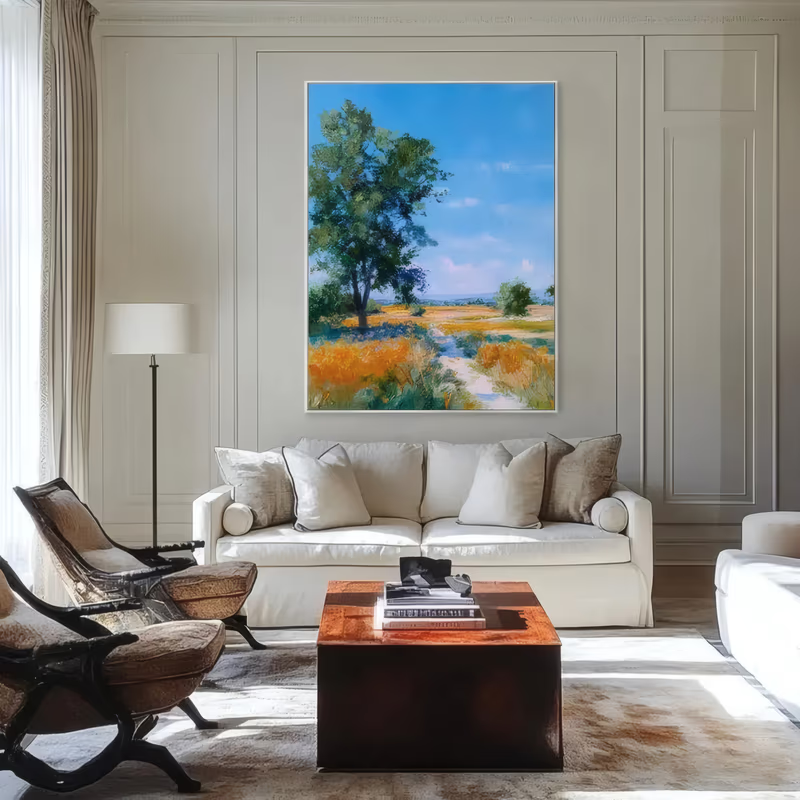
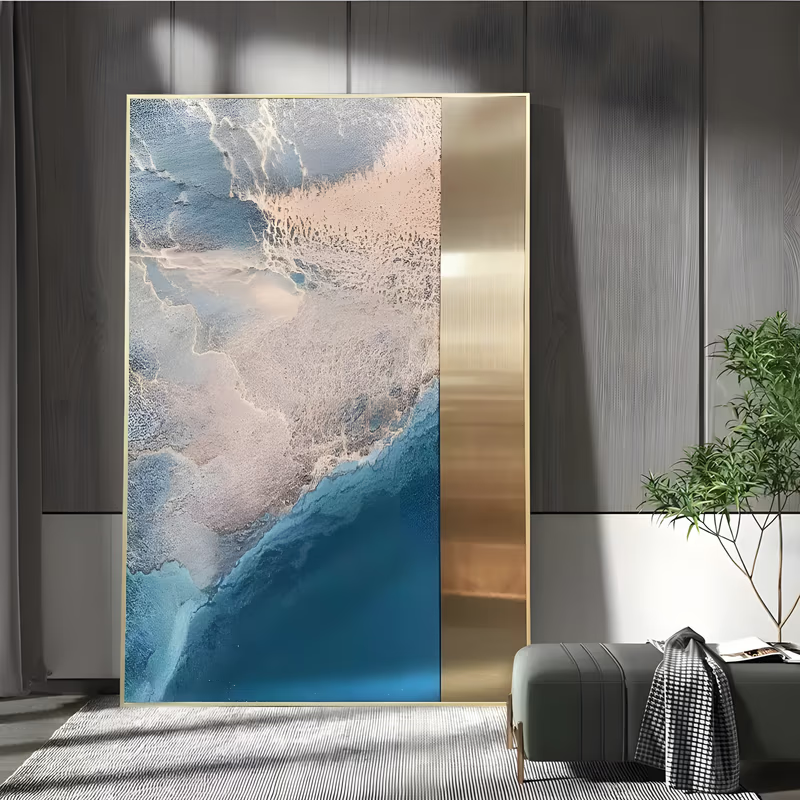
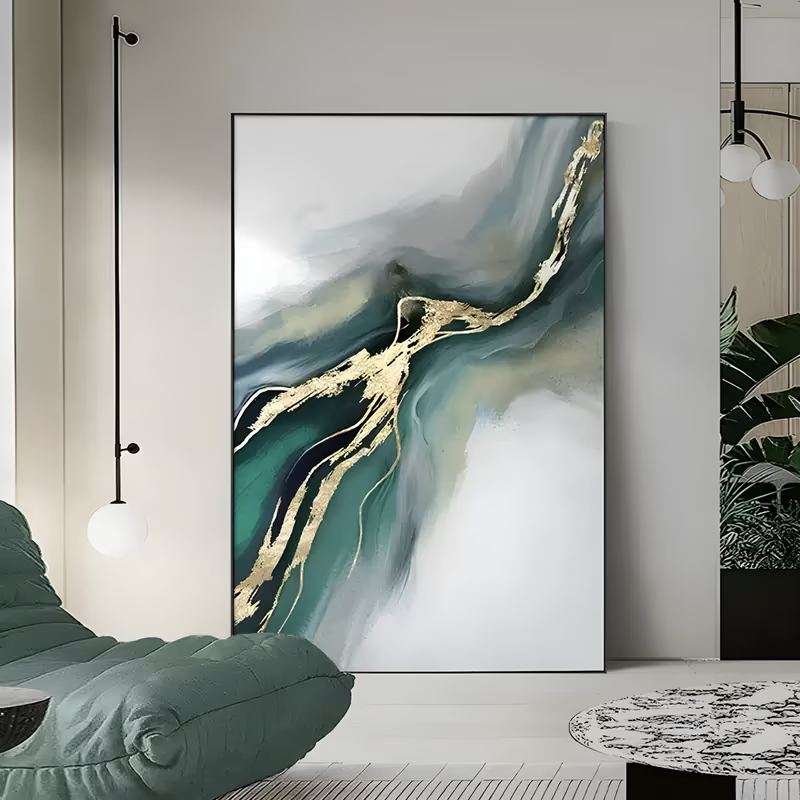
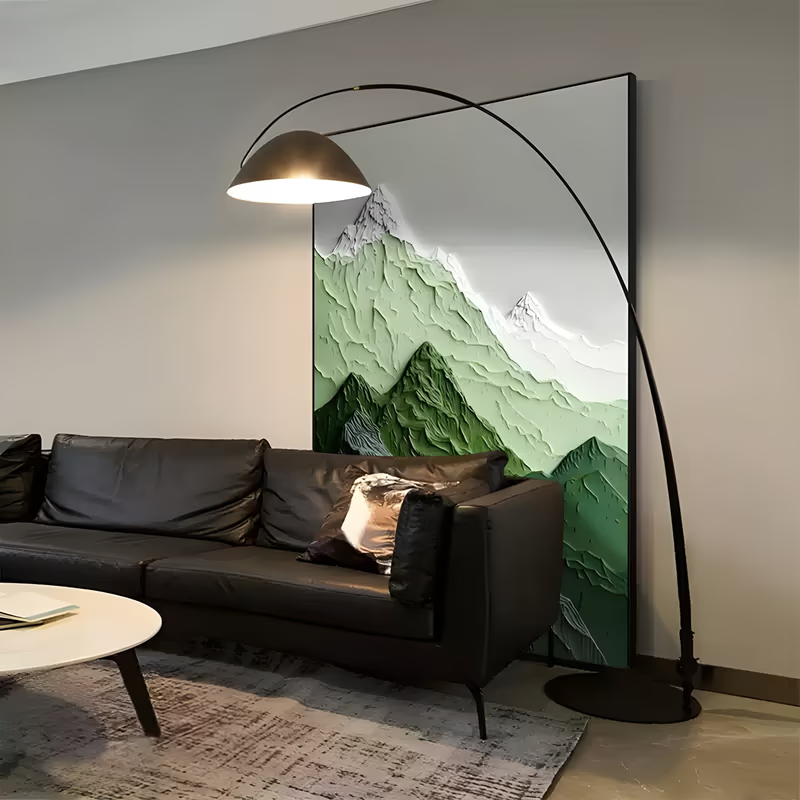
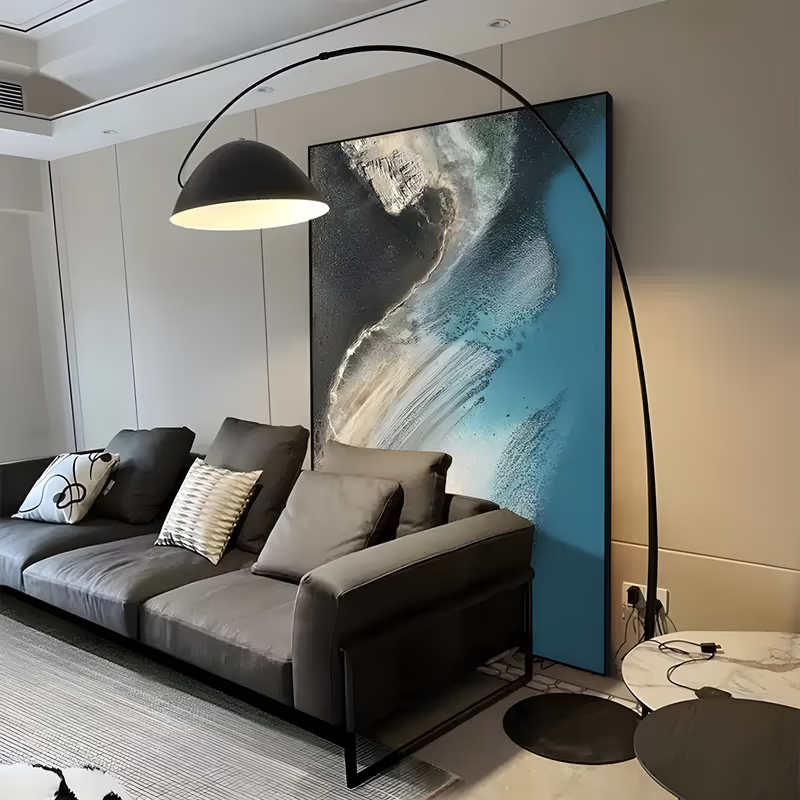
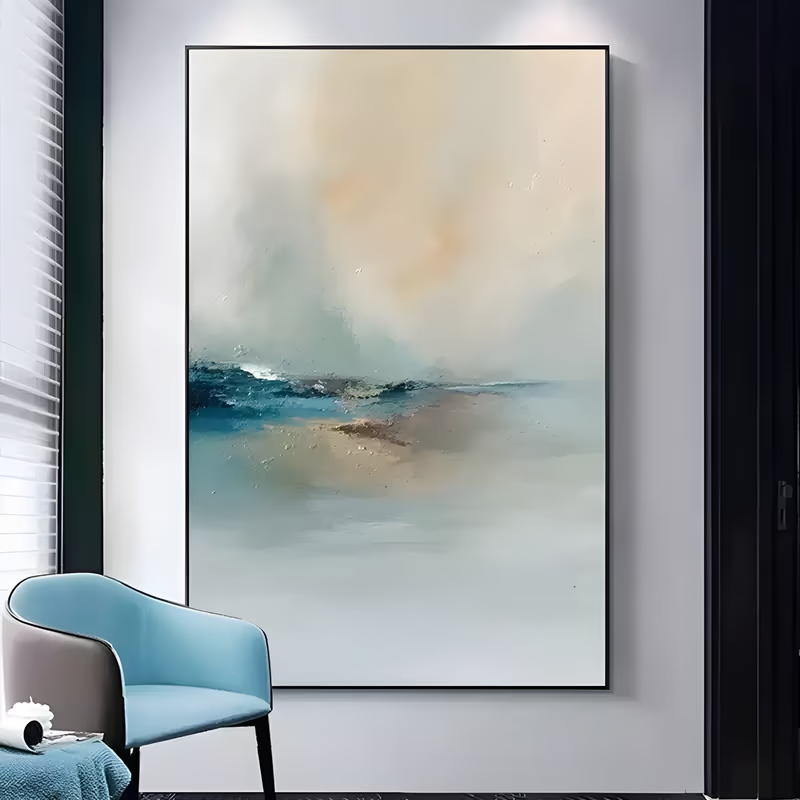
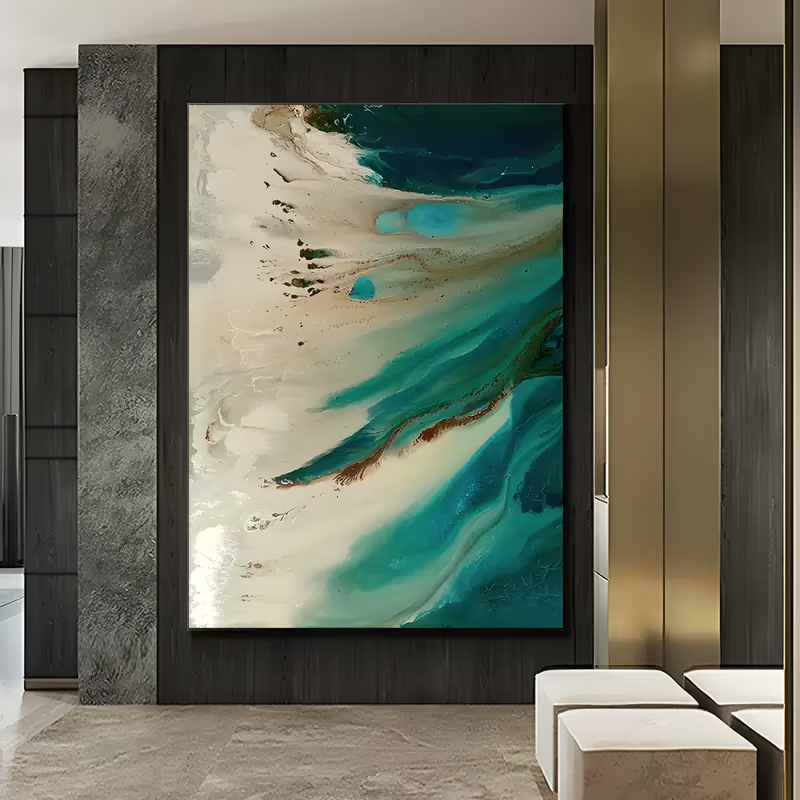
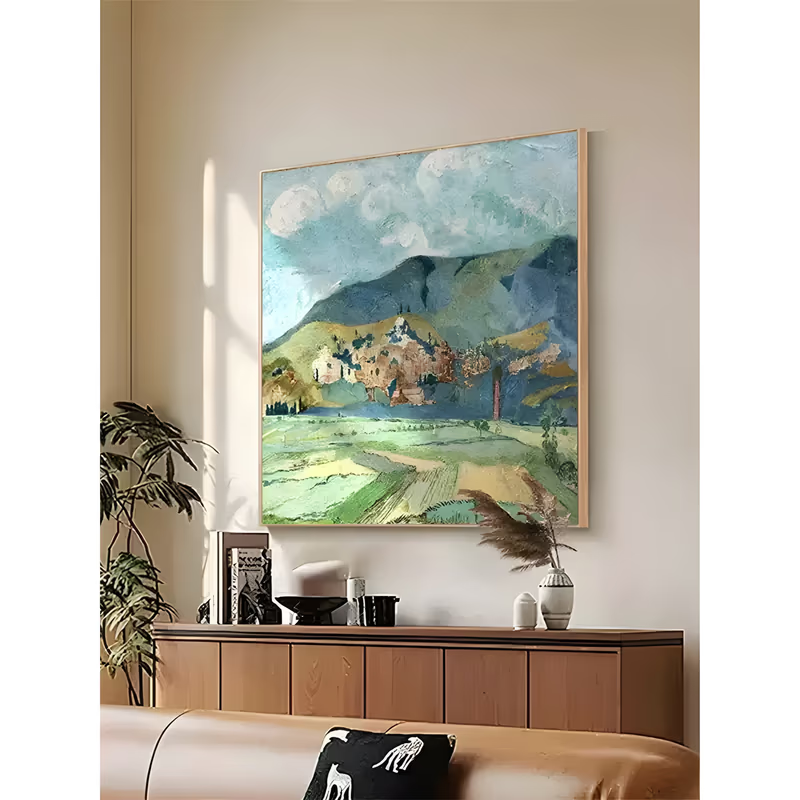
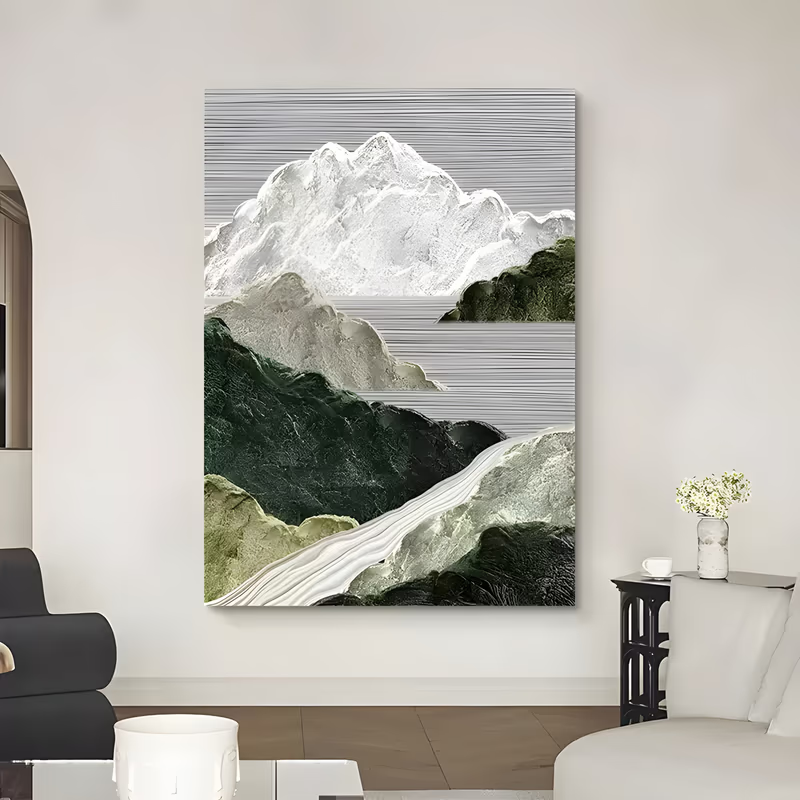
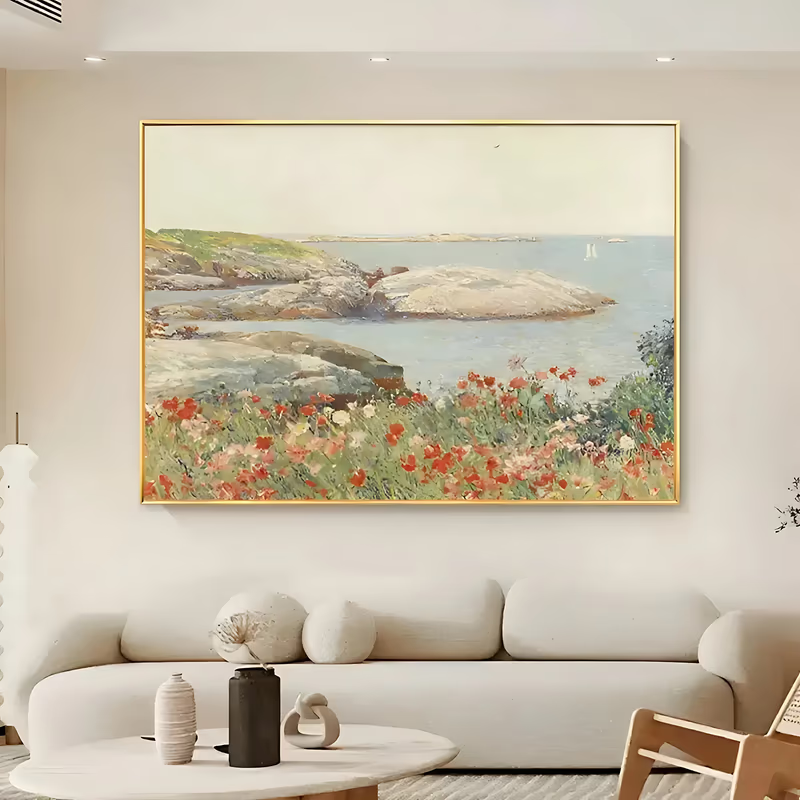
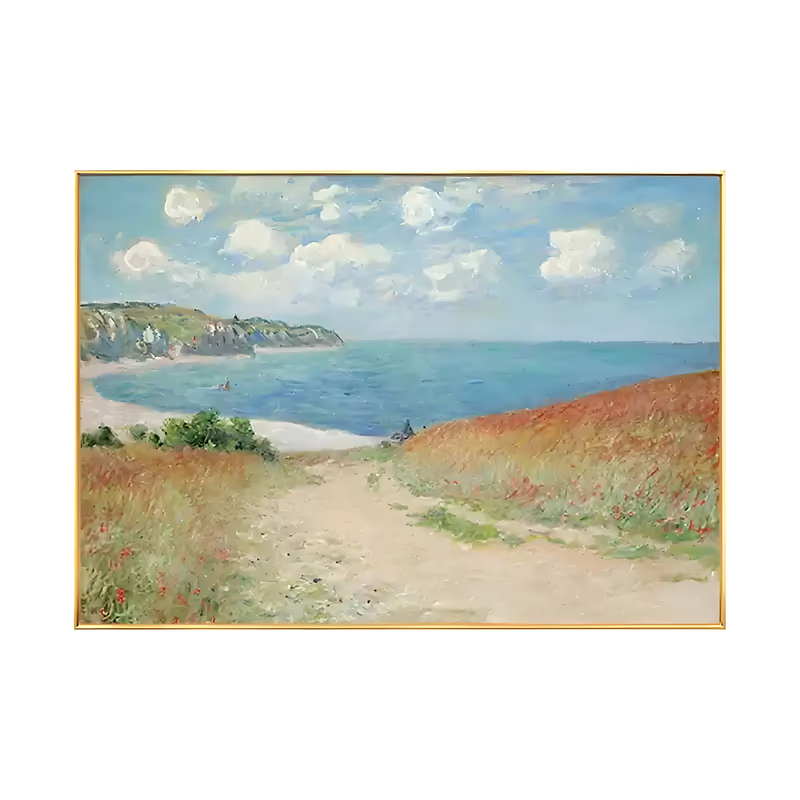
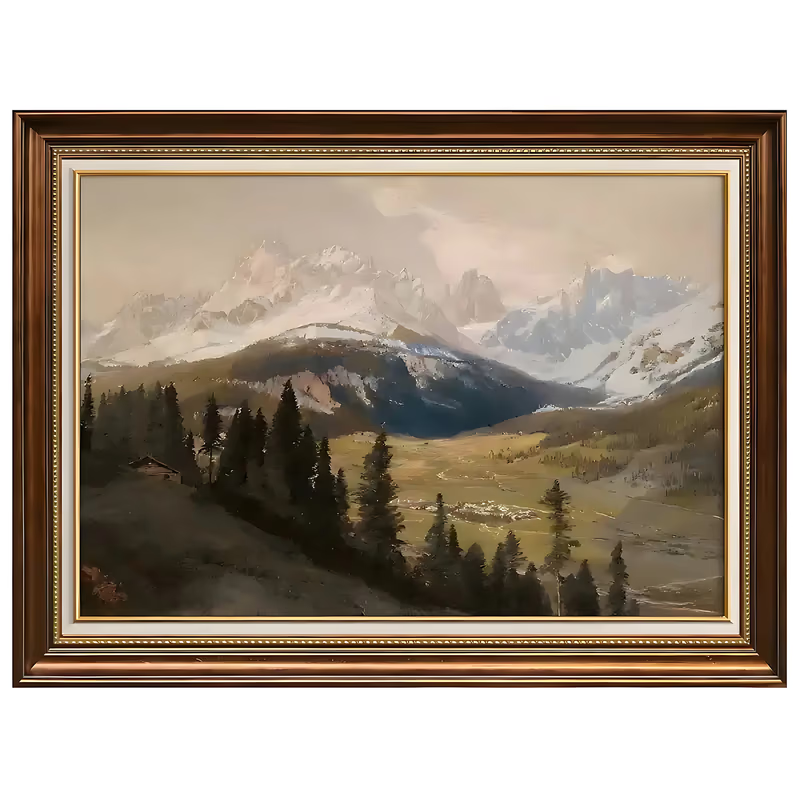
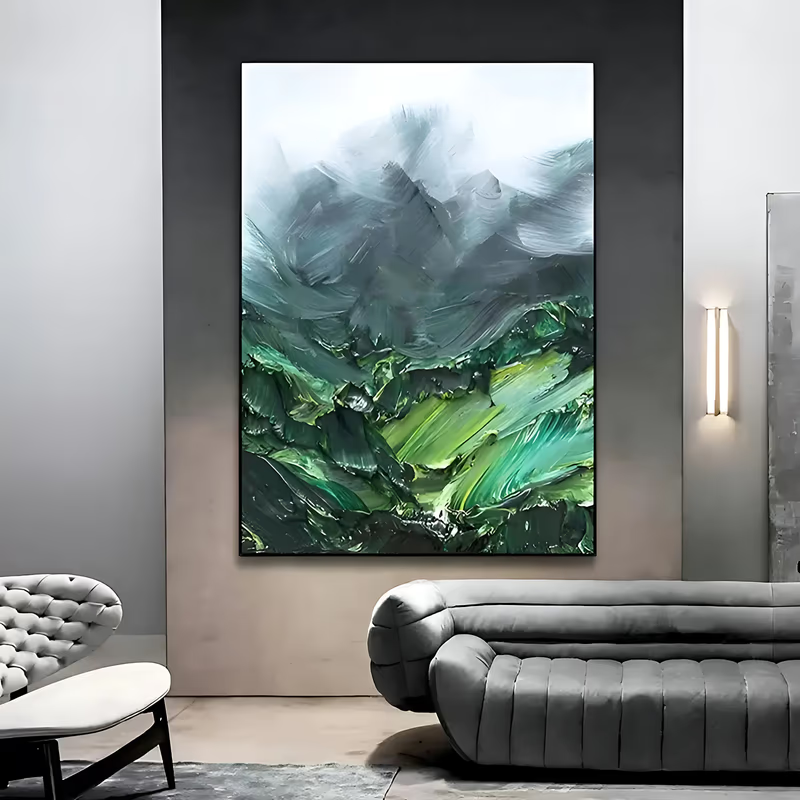
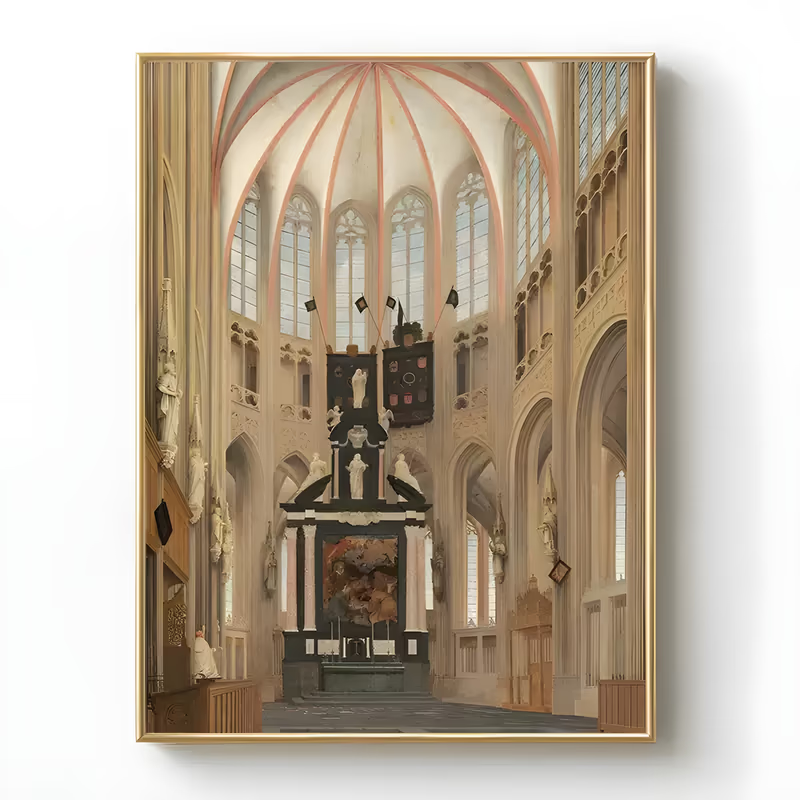
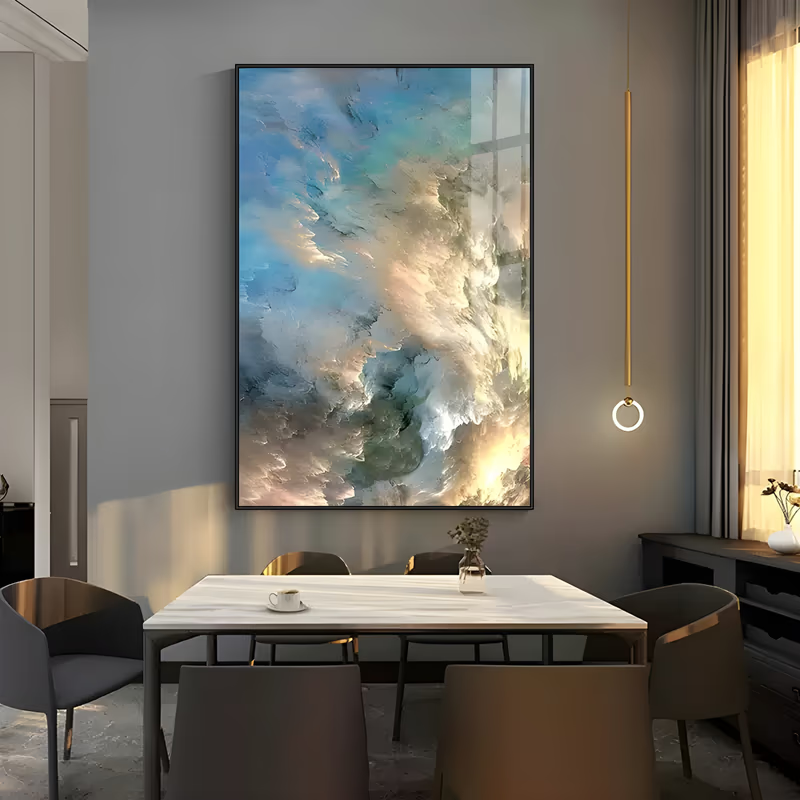
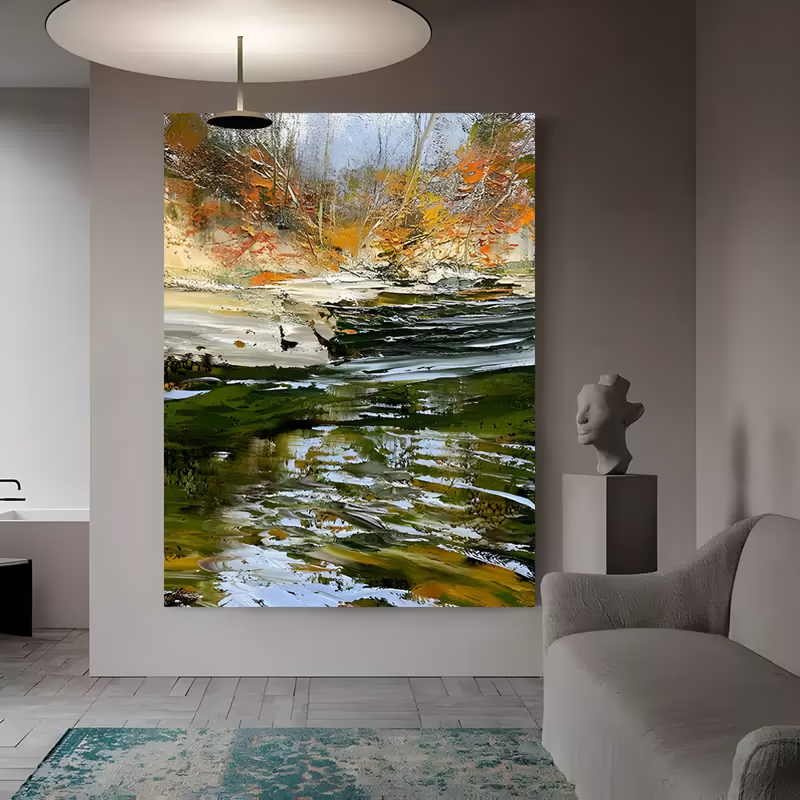
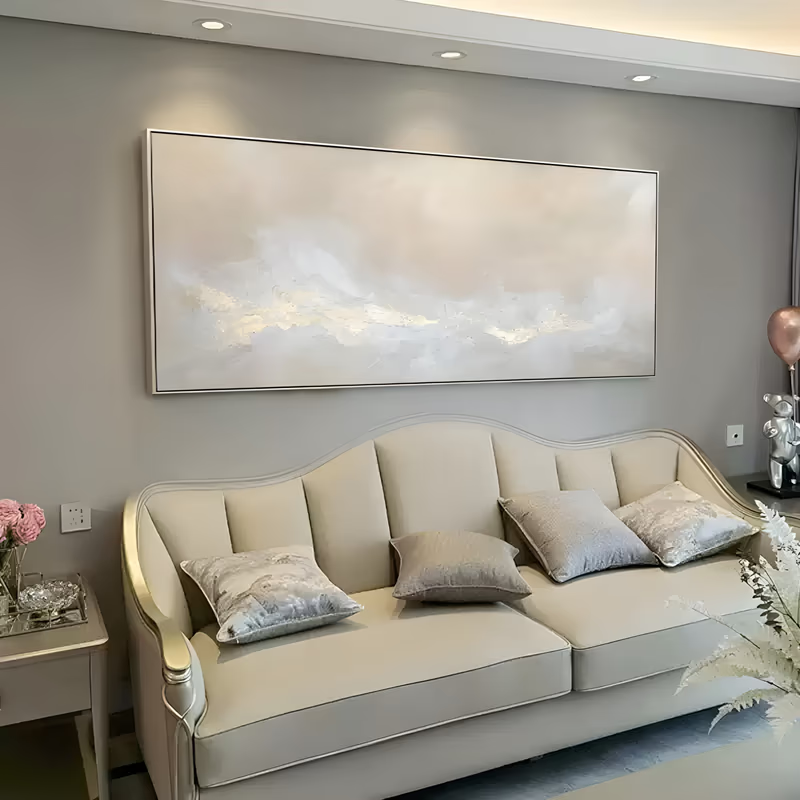
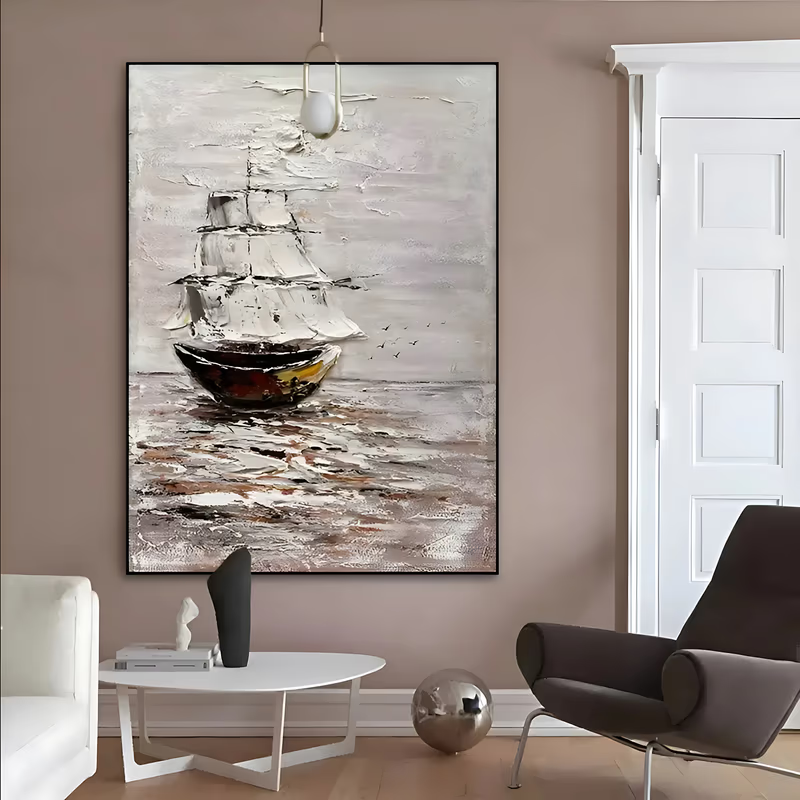
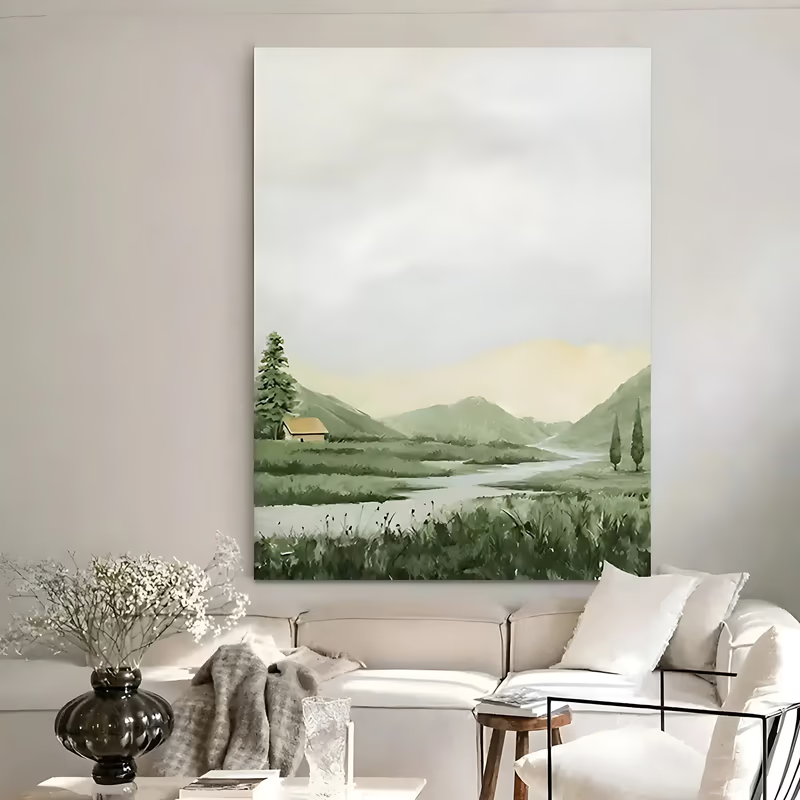
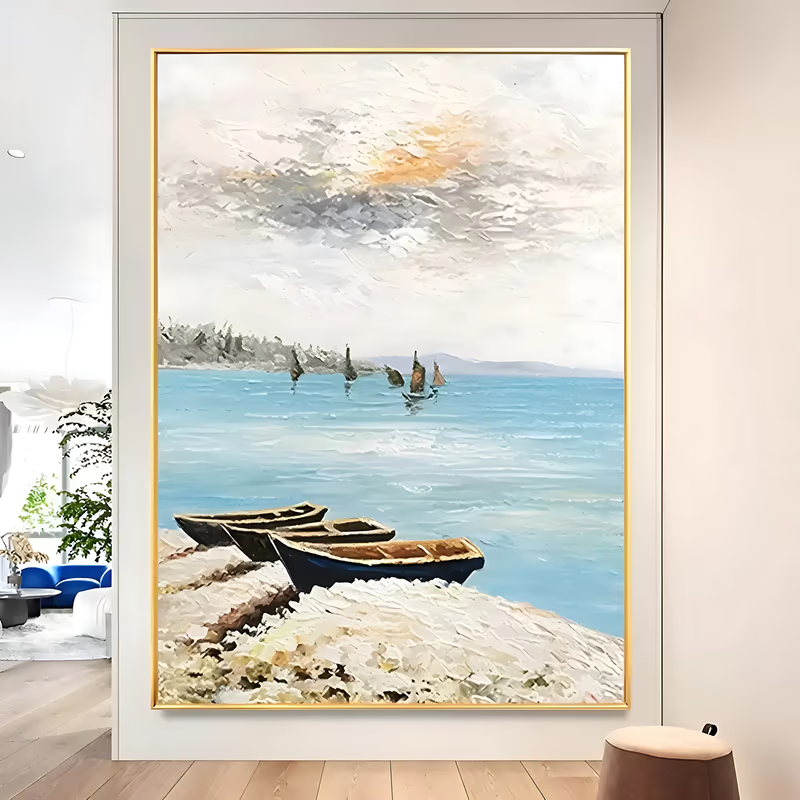
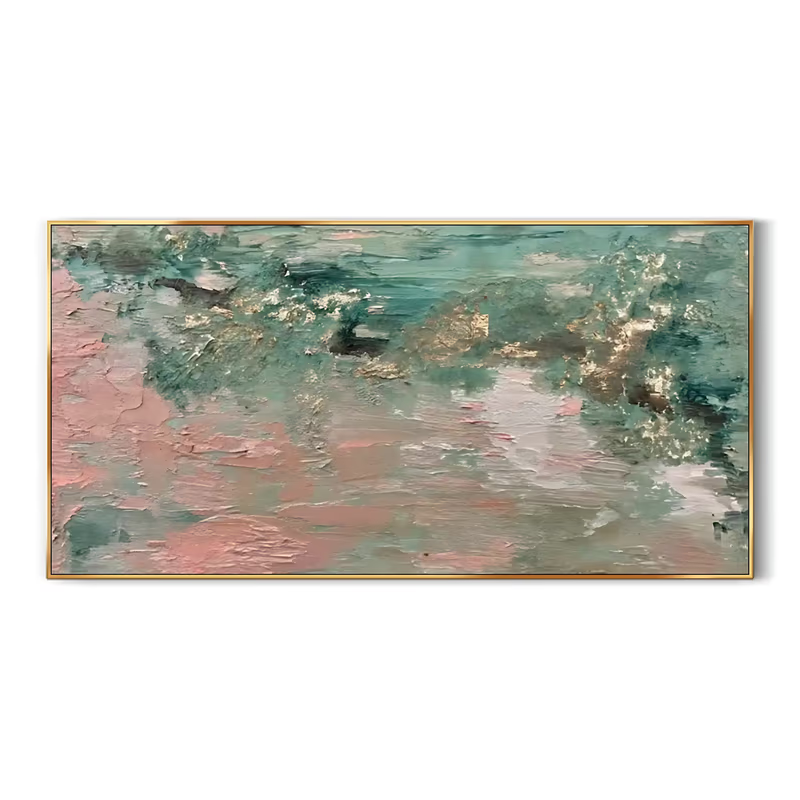
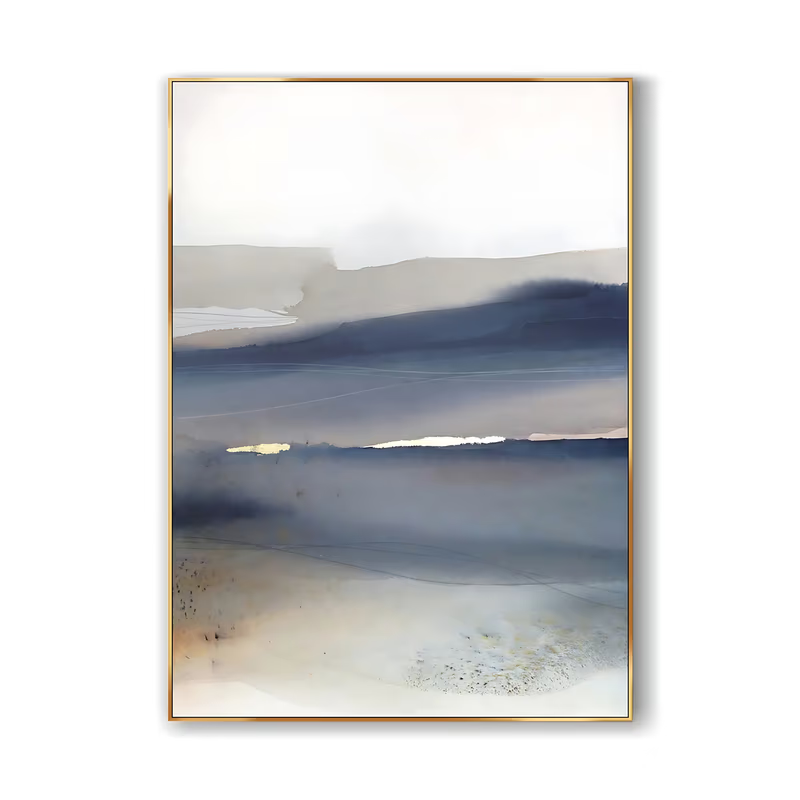
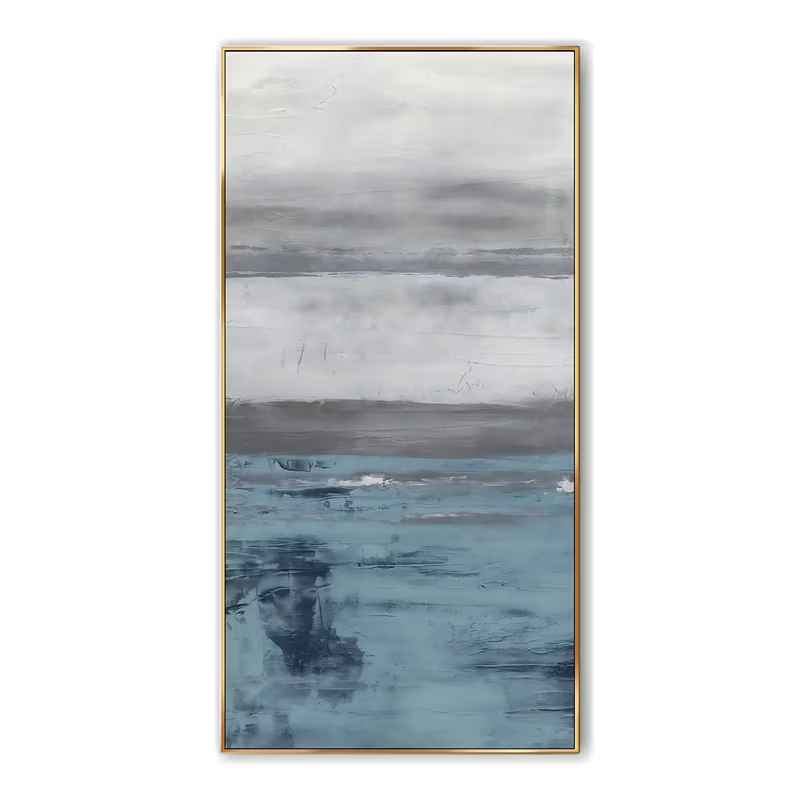
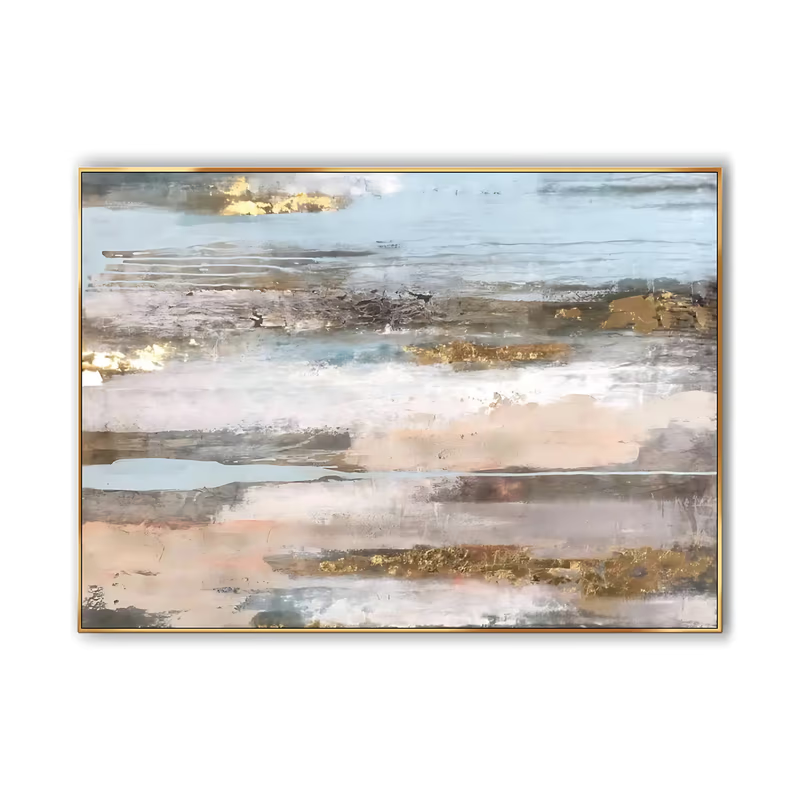
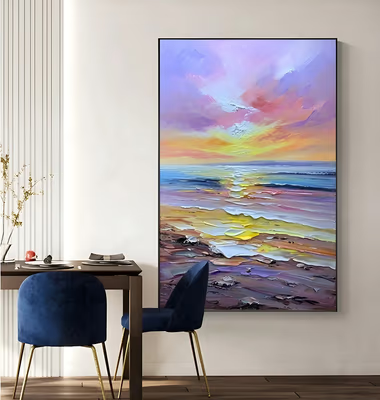
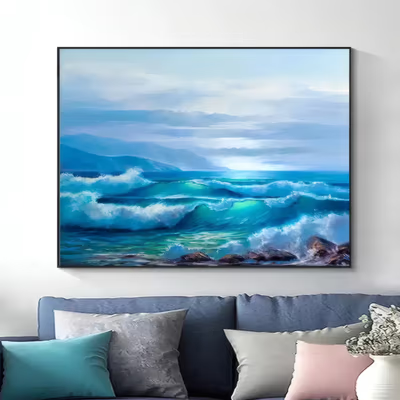
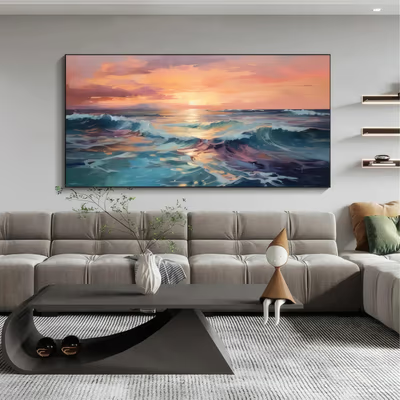
Hazy sunrises over grey-teal lakes, a lone boat in golden light, snow peaks above green valleys, a village by a mountain lake, starry skies reflected in water. These are the most direct way to bring distance into a room without a window, and they suit living rooms, suites and lounges.
Ink mountains, koi and lotus
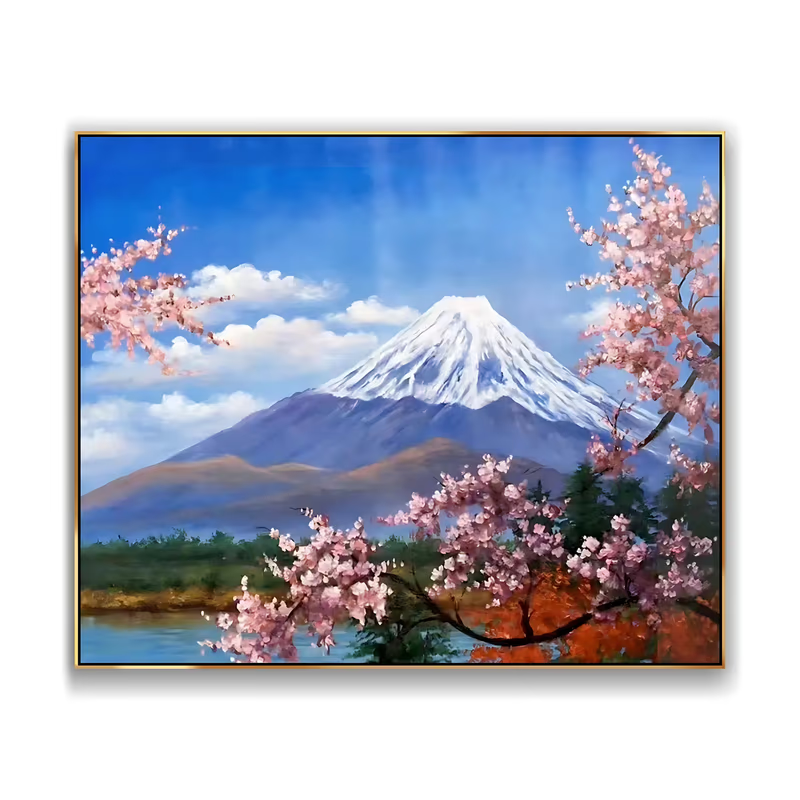
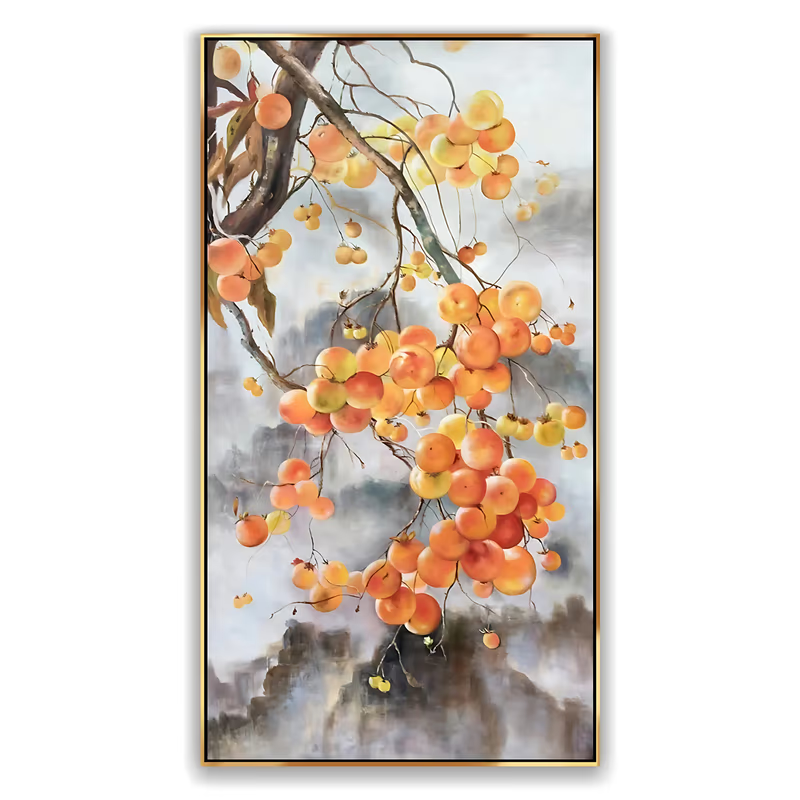
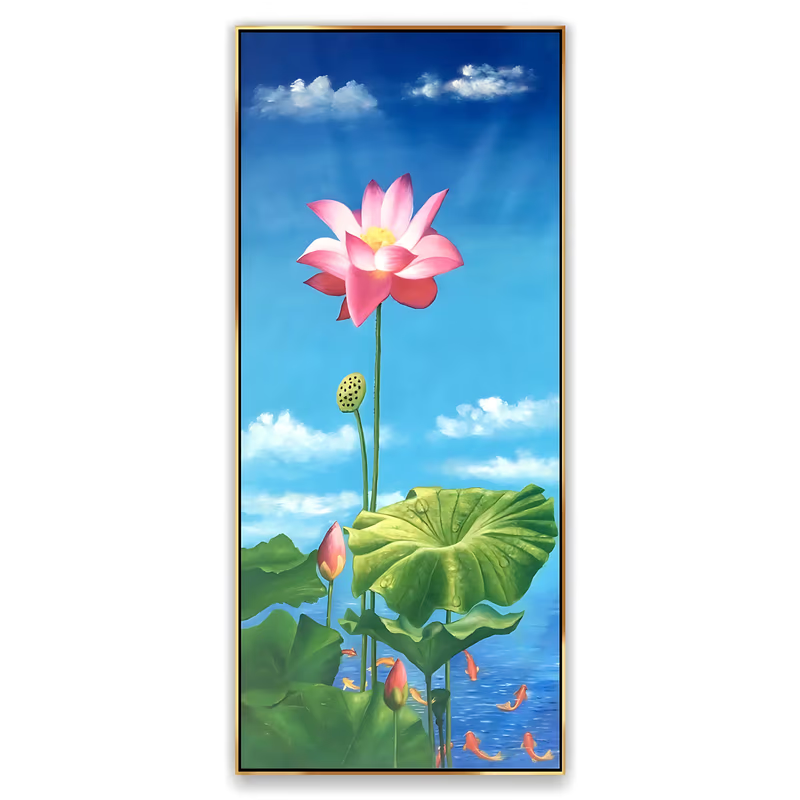
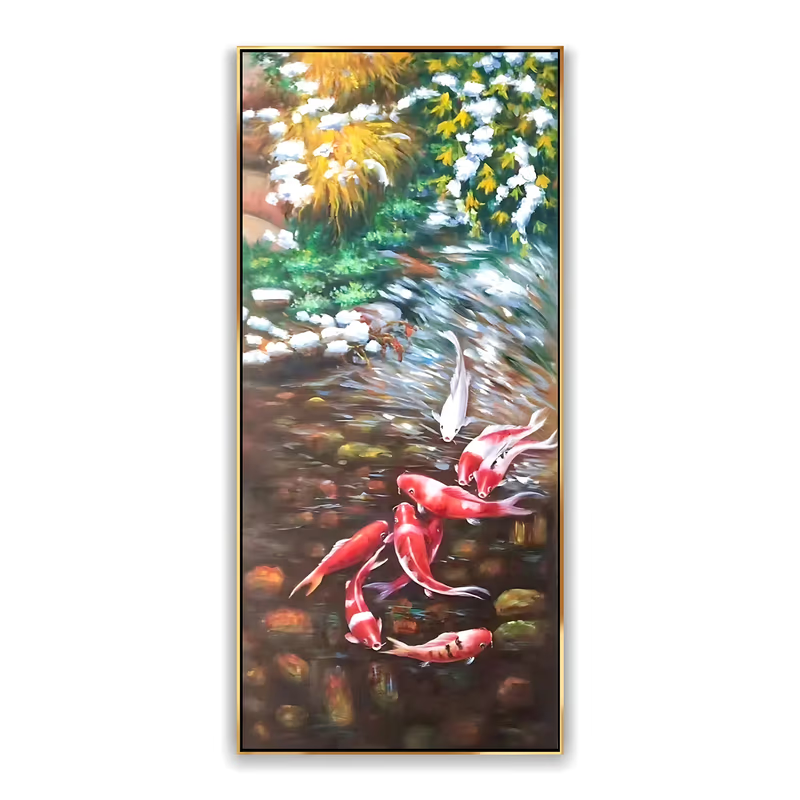
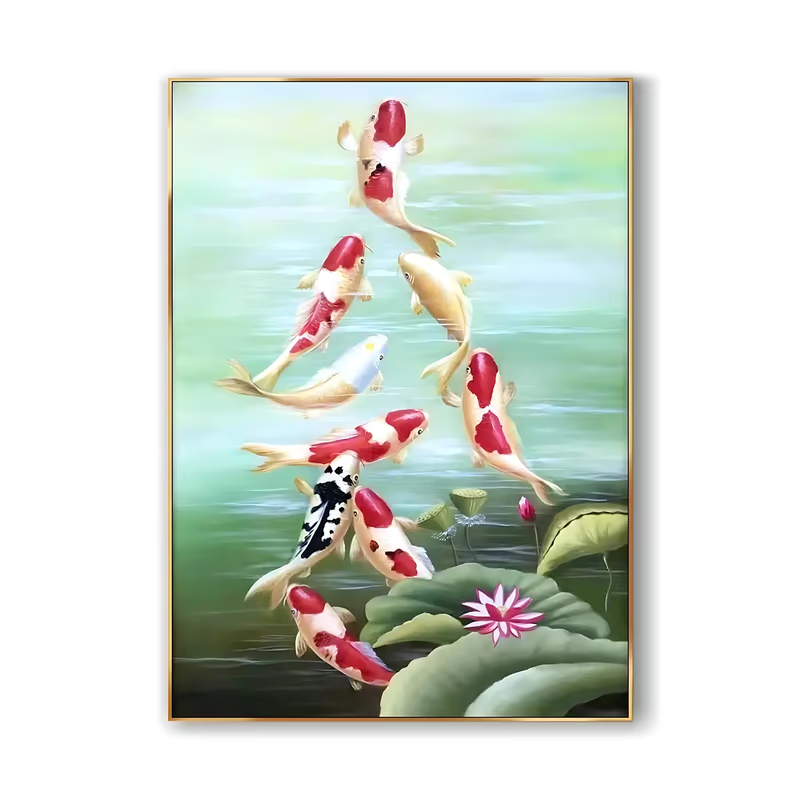
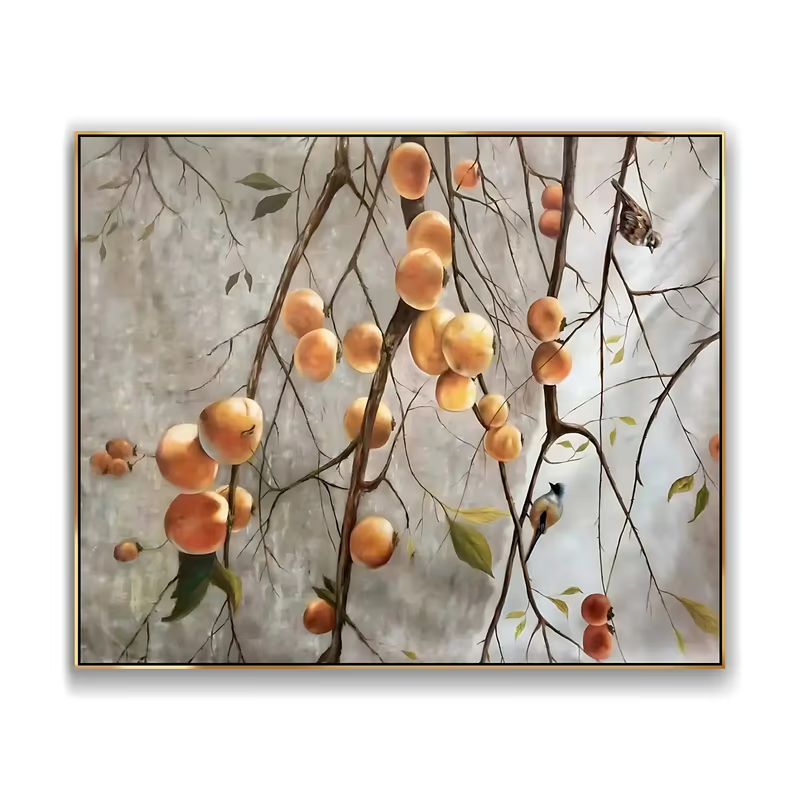
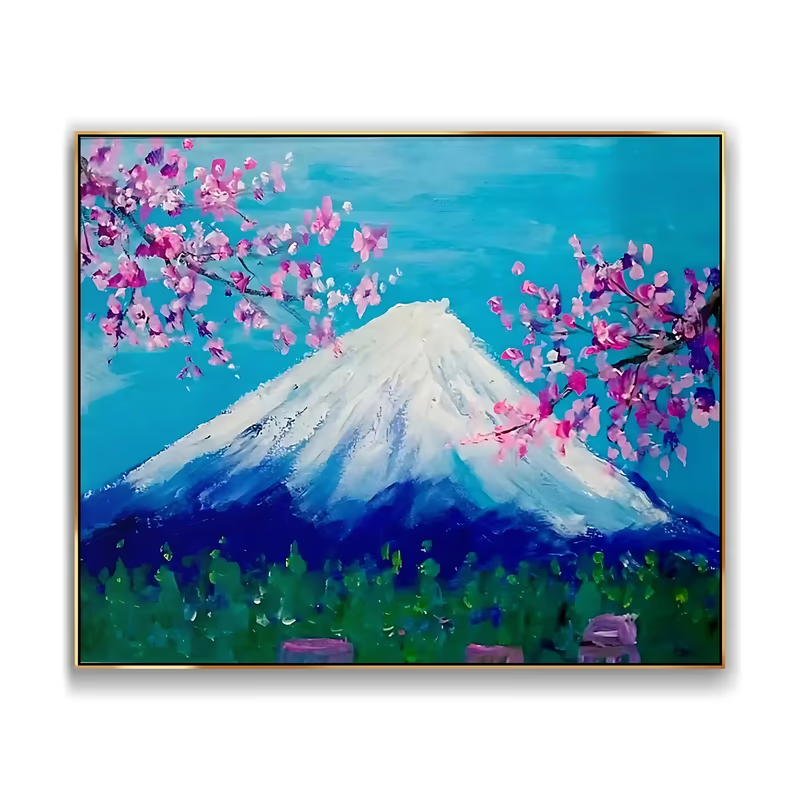
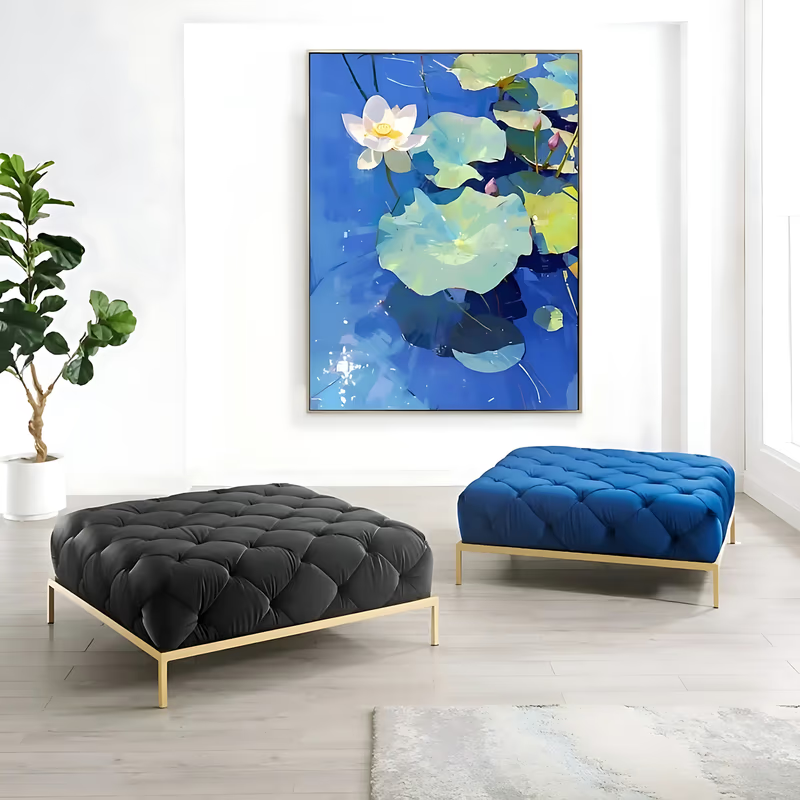
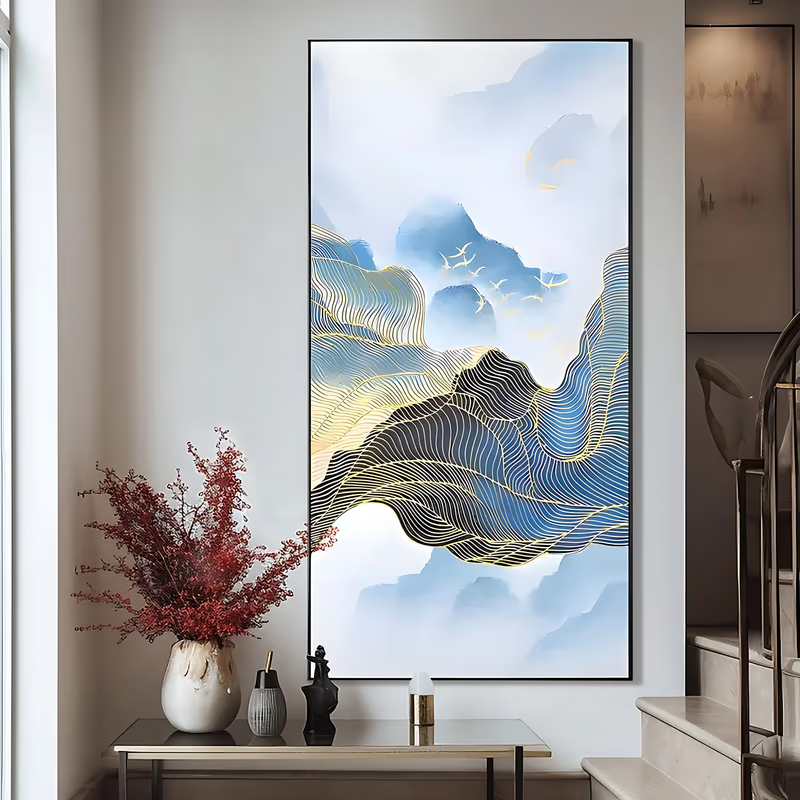
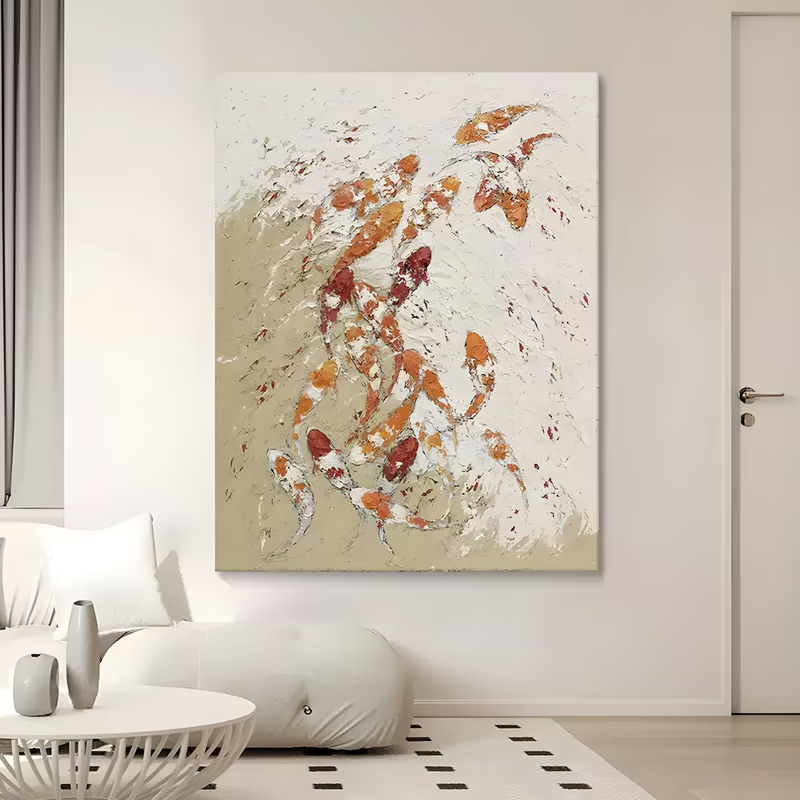
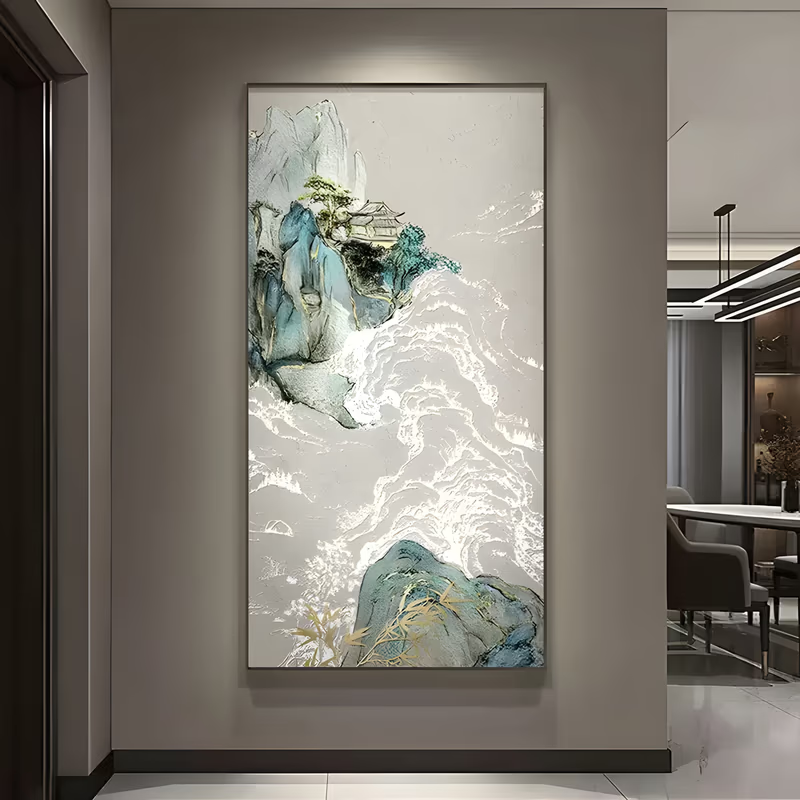
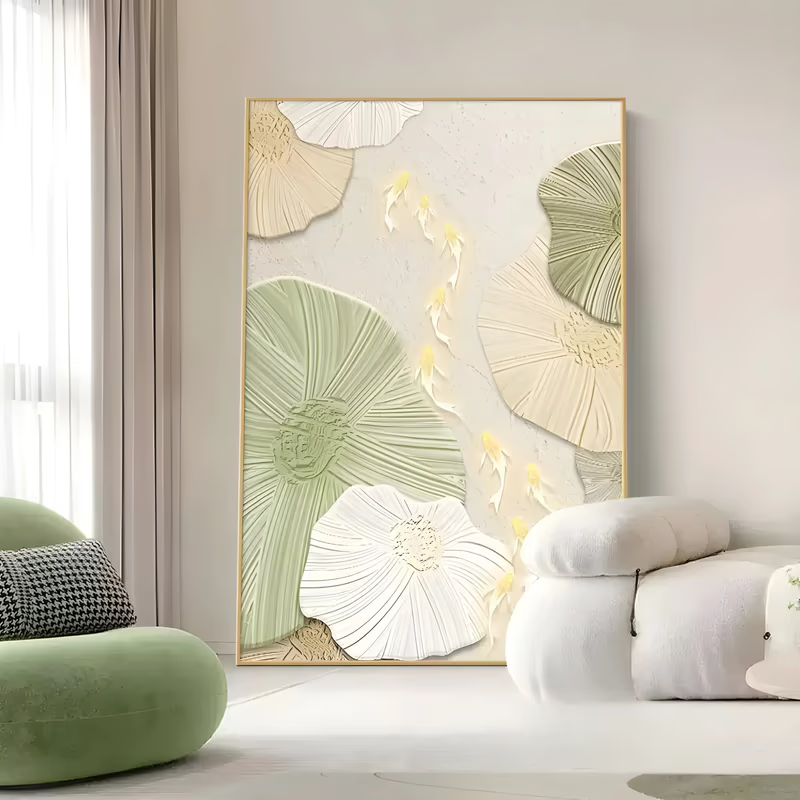
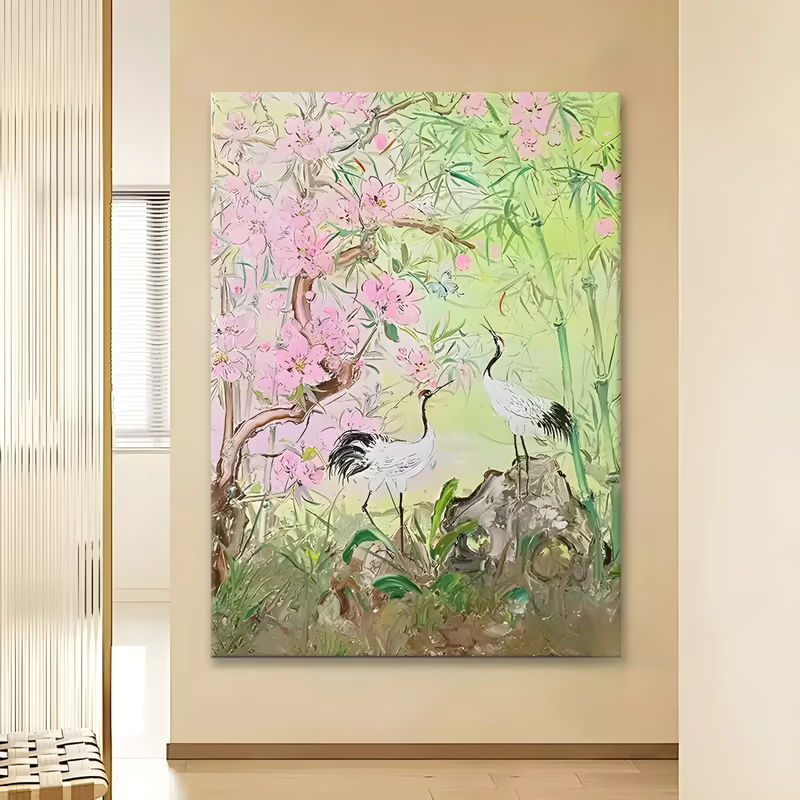
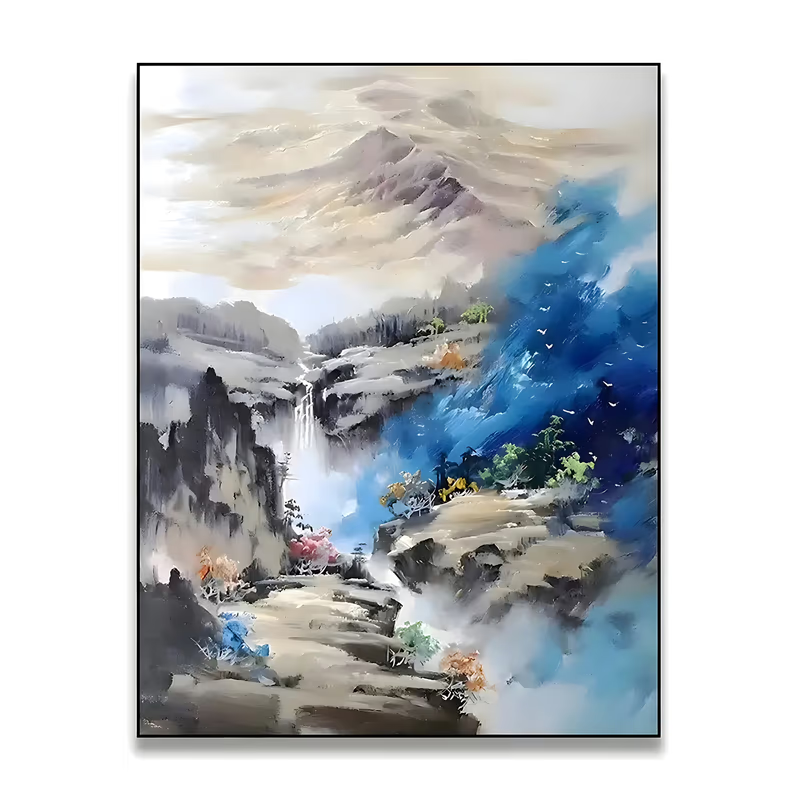
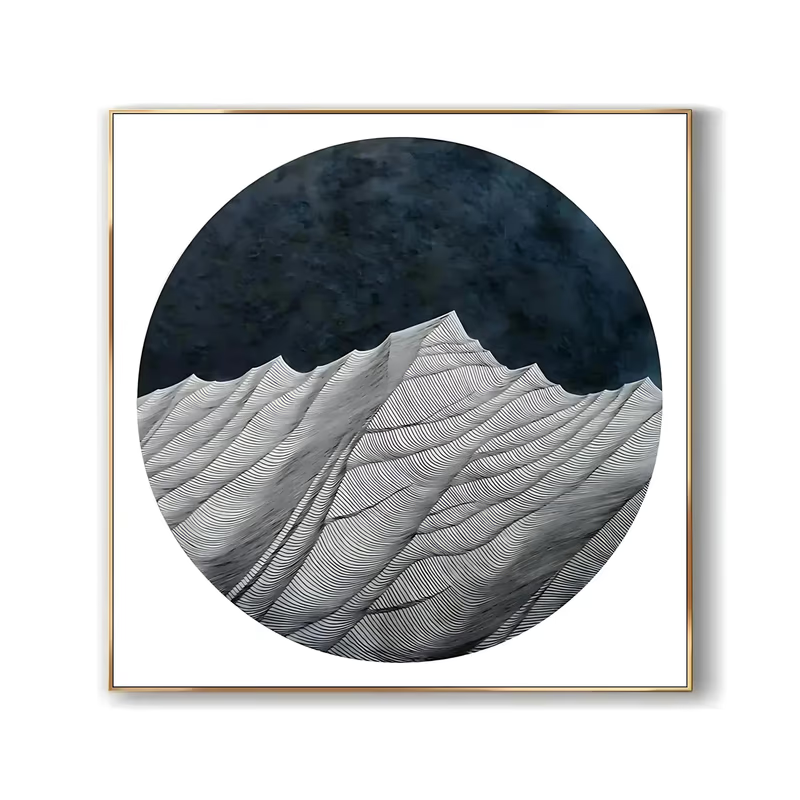
Mount Fuji under sakura branches, persimmon boughs over misty grey peaks, koi circling a lotus, a pavilion above carved cloud waves. These draw on East Asian painting, where empty paper and mist are part of the composition. They suit meditation rooms, spas, tea rooms and Japandi homes. More in Asian and folk art.
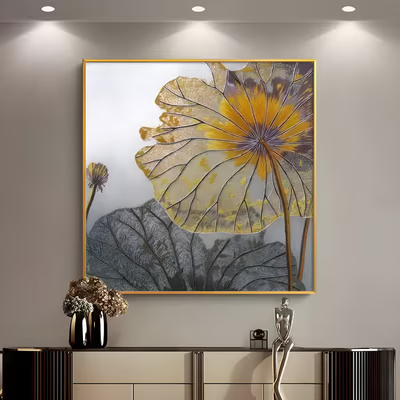
Single blooms and blossom branches
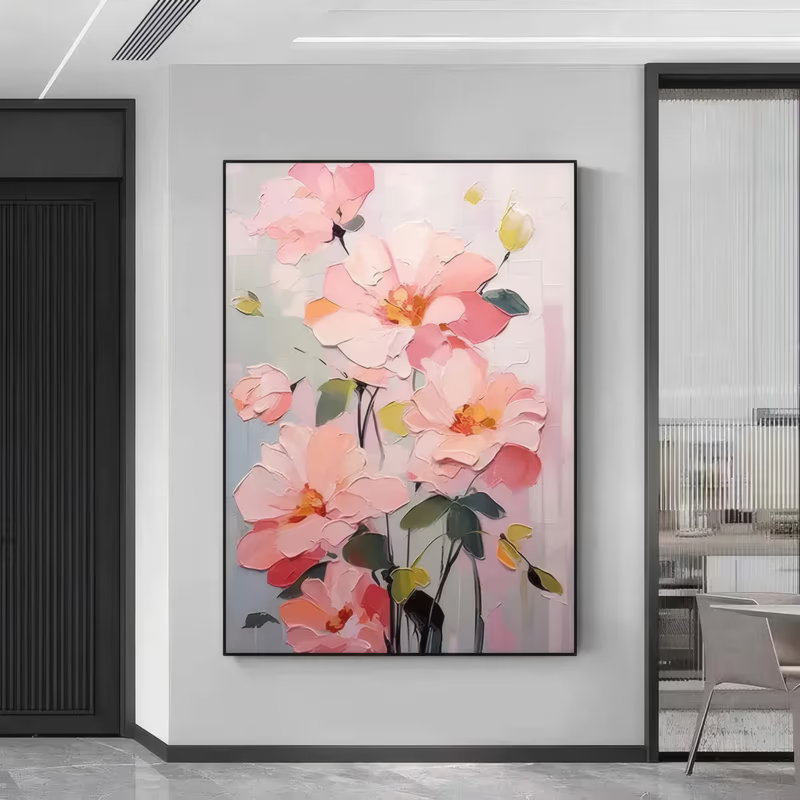
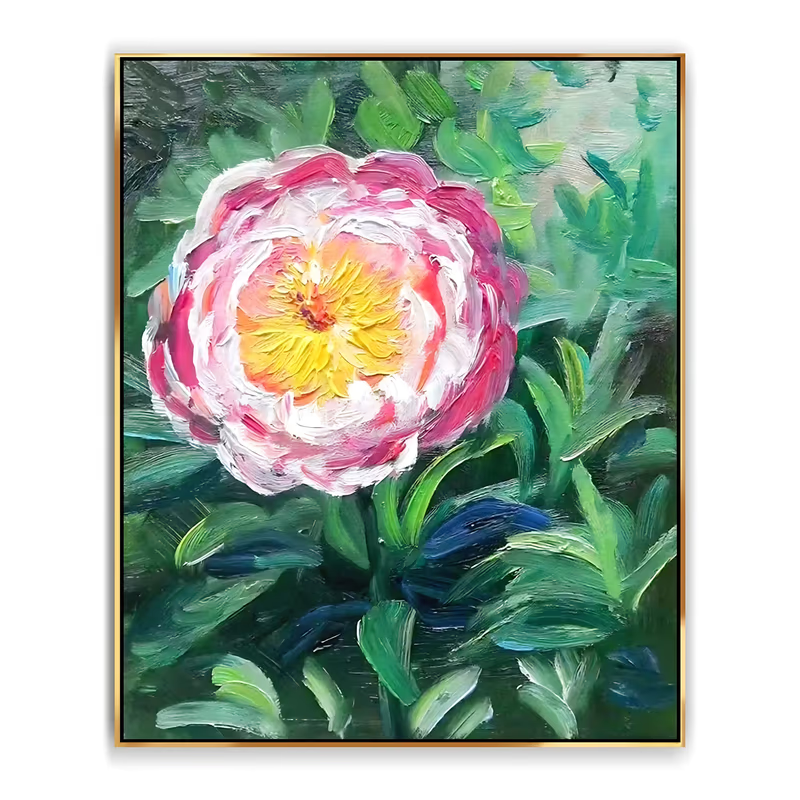
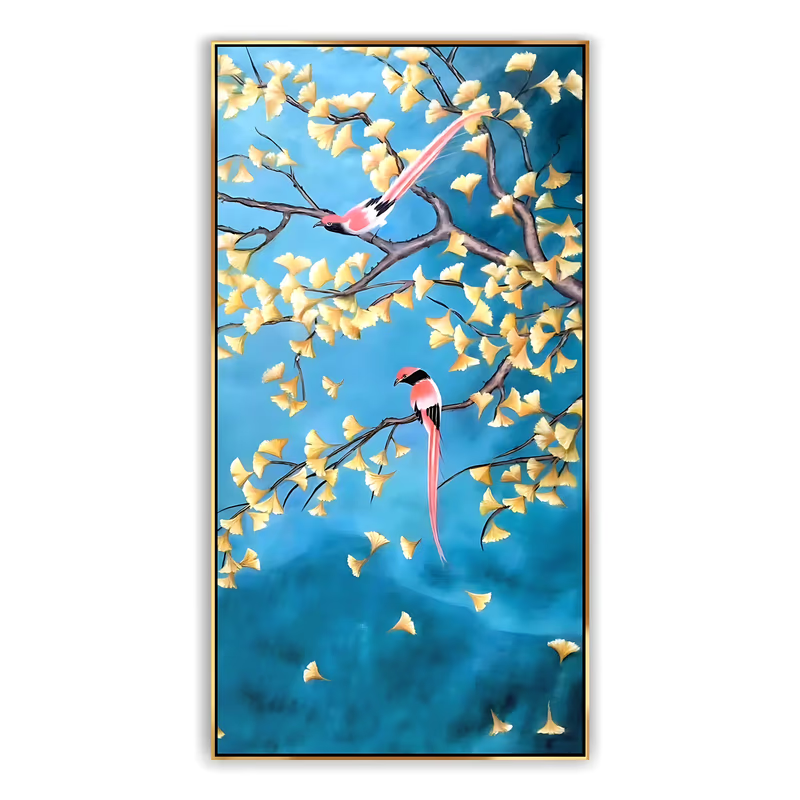
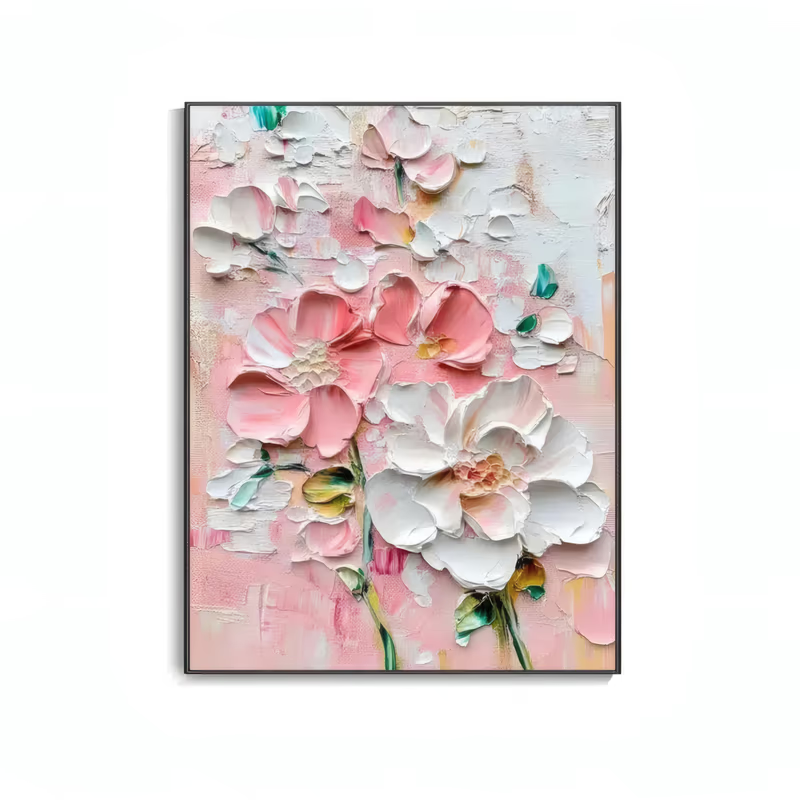
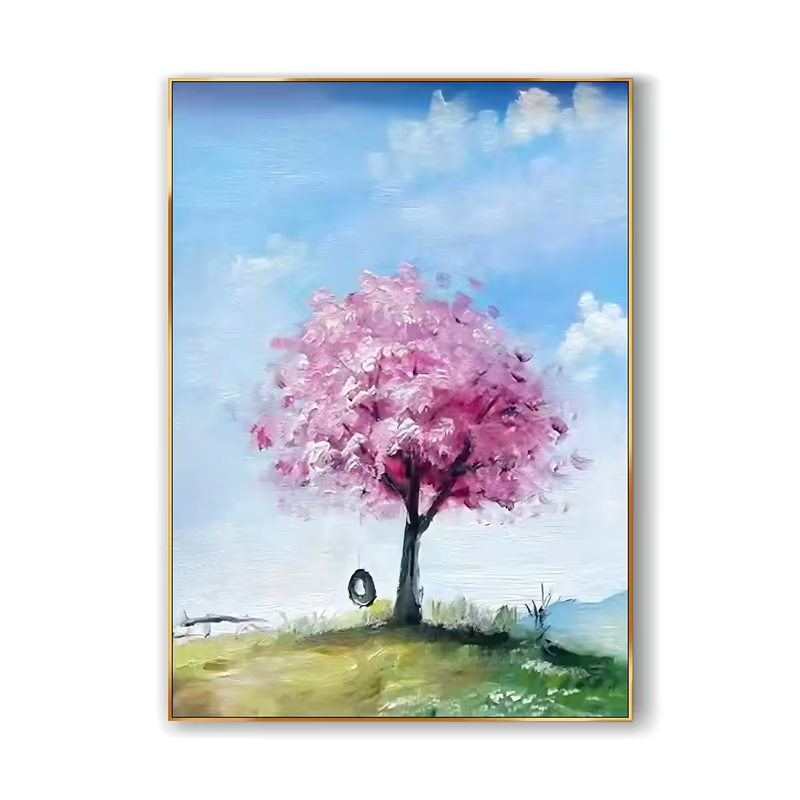
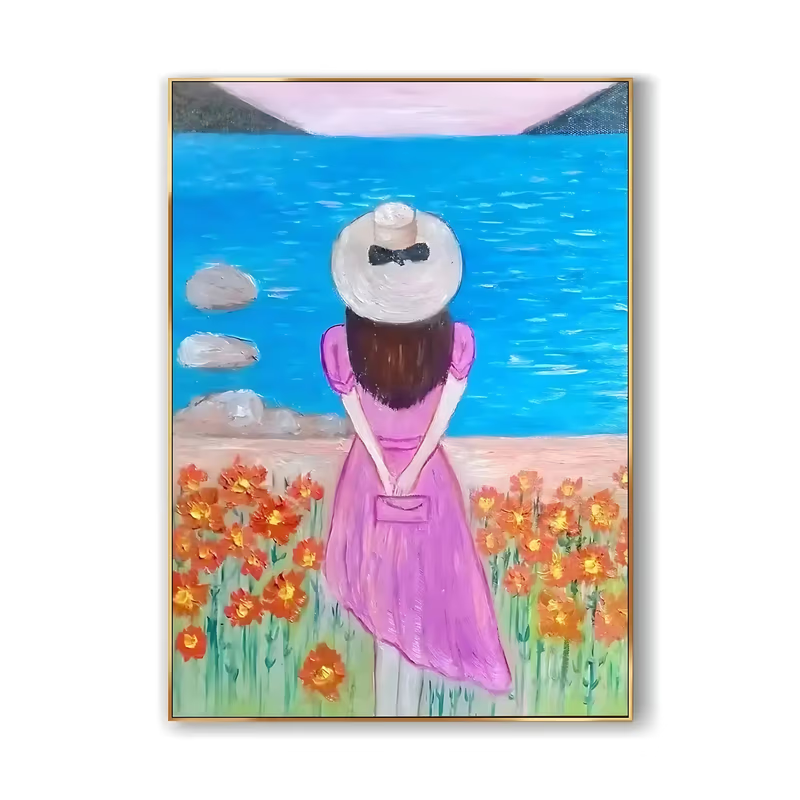
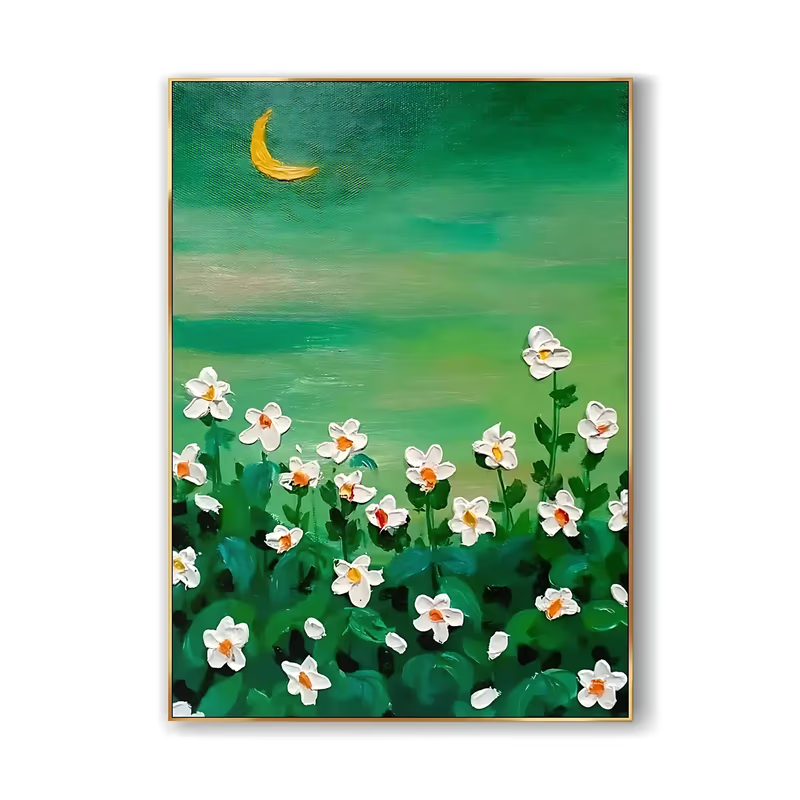
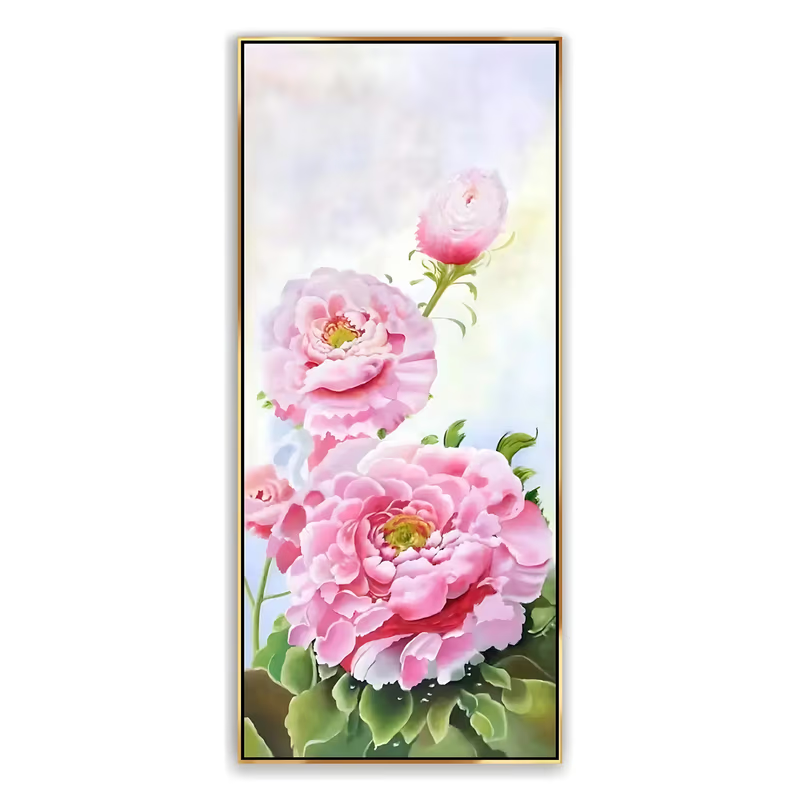
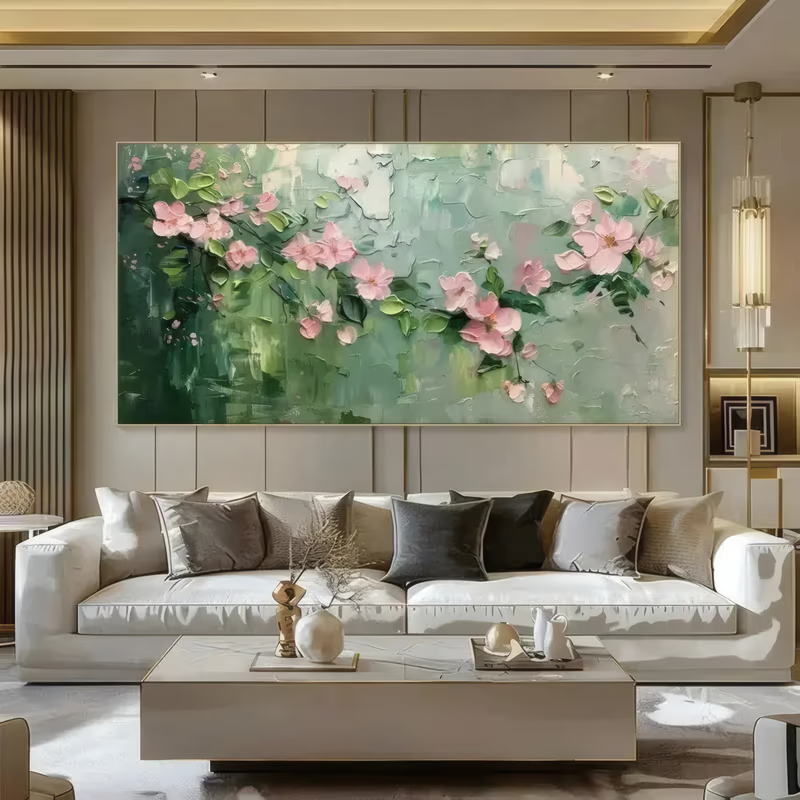
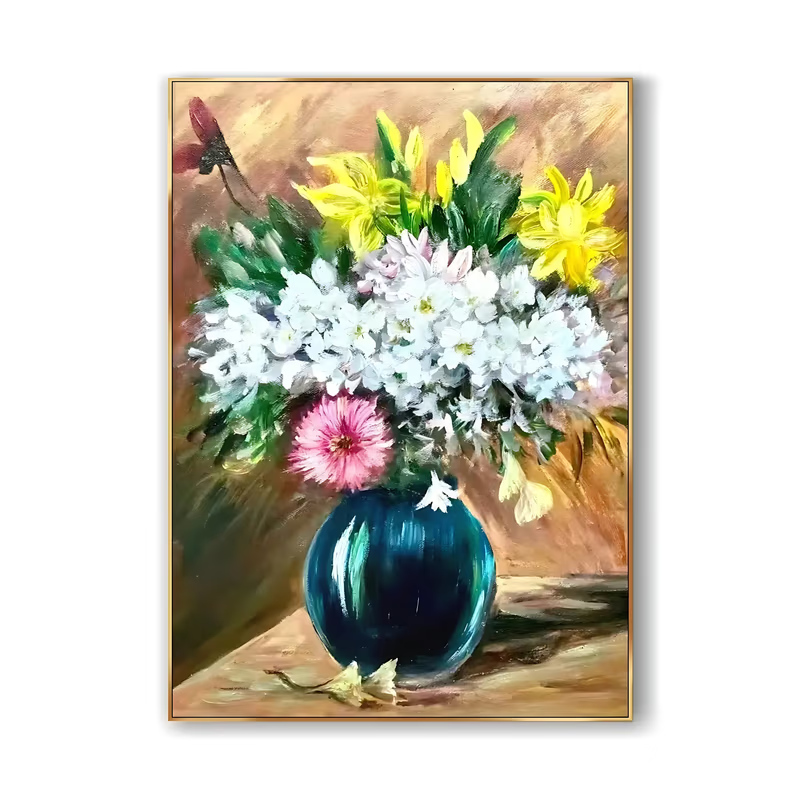
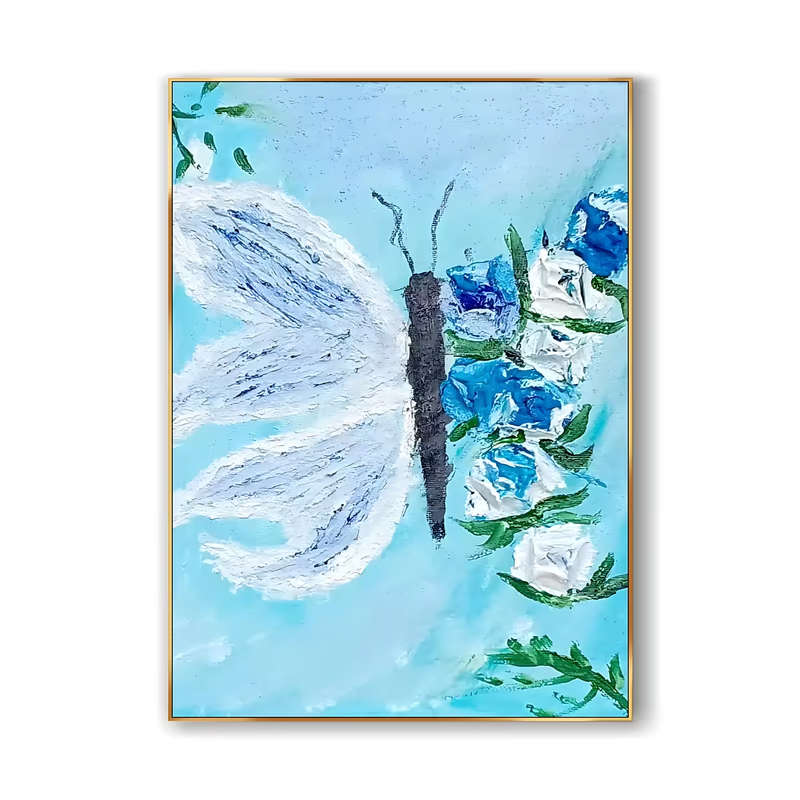
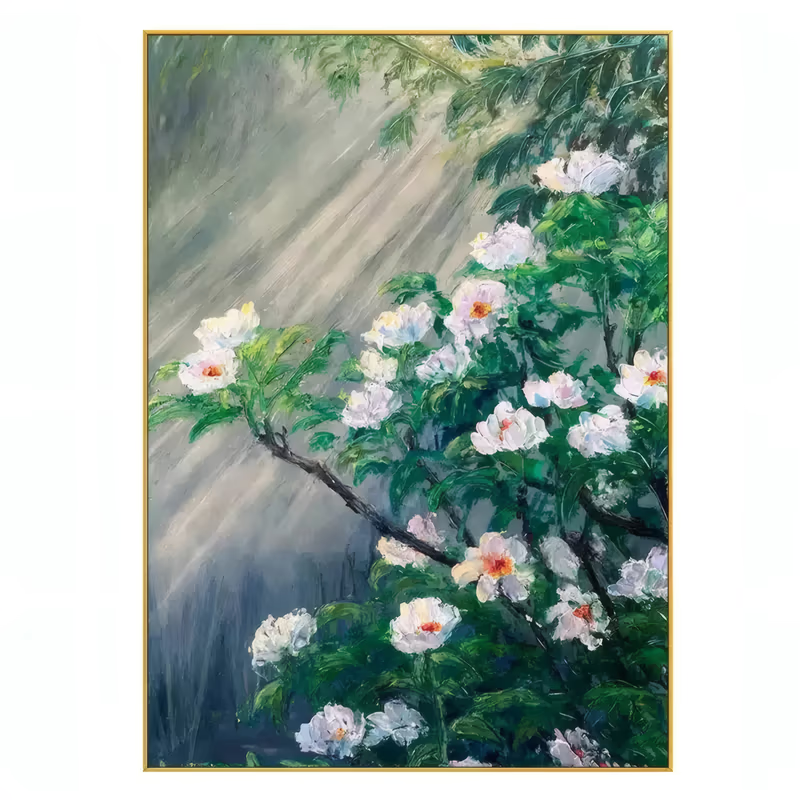
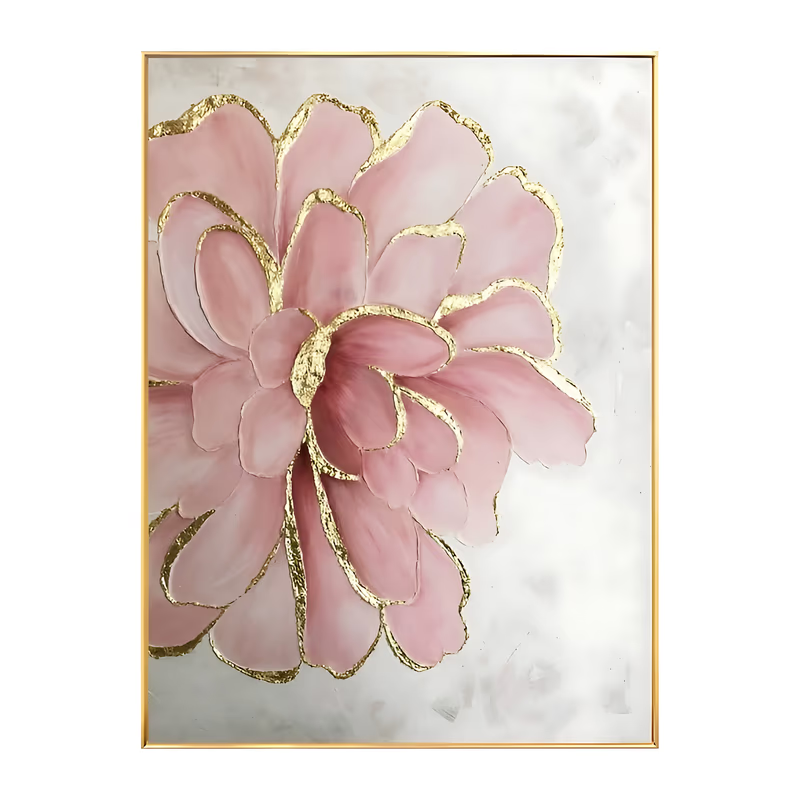
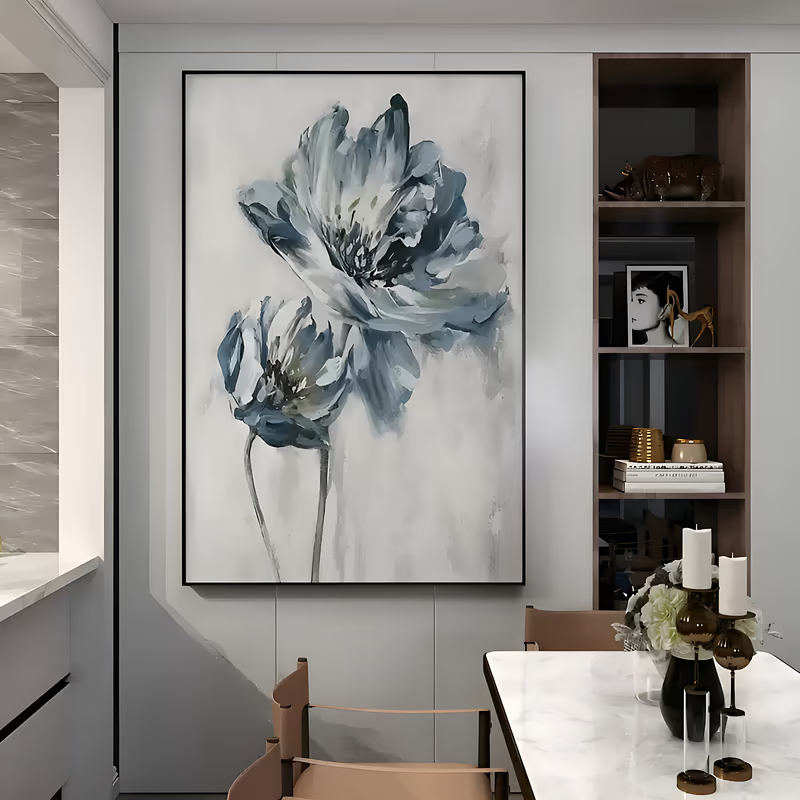
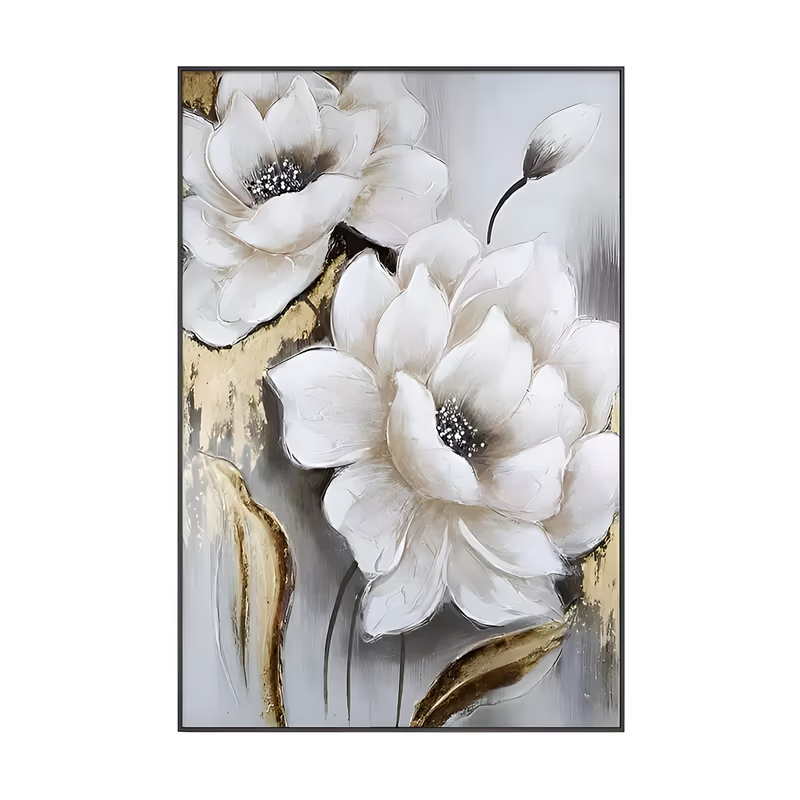
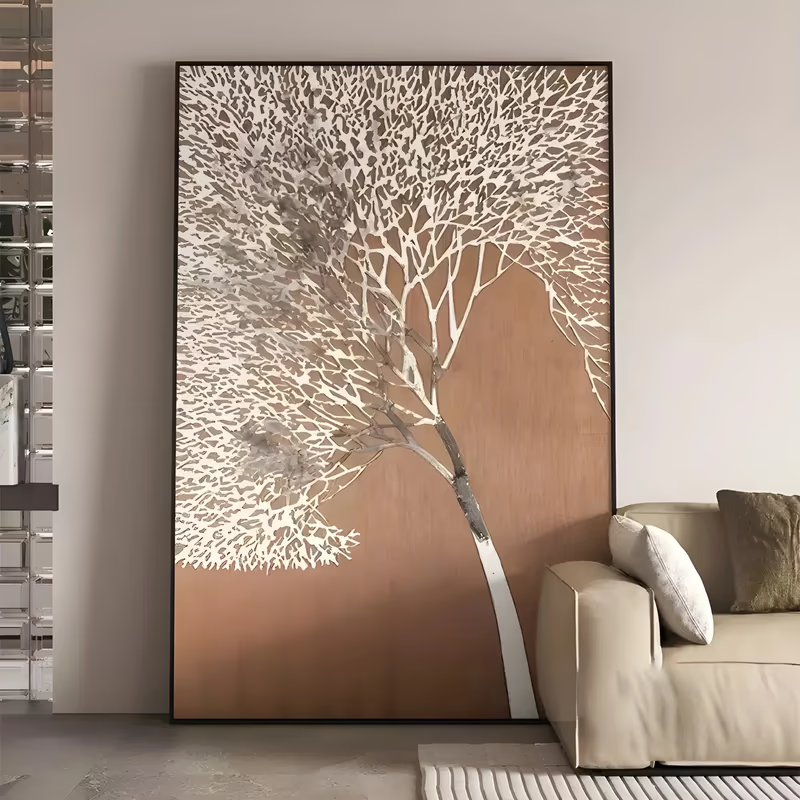
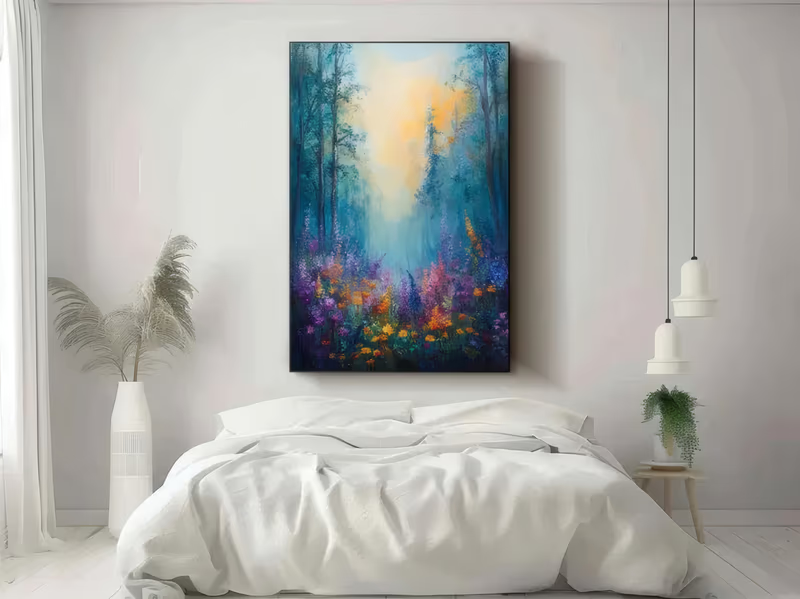
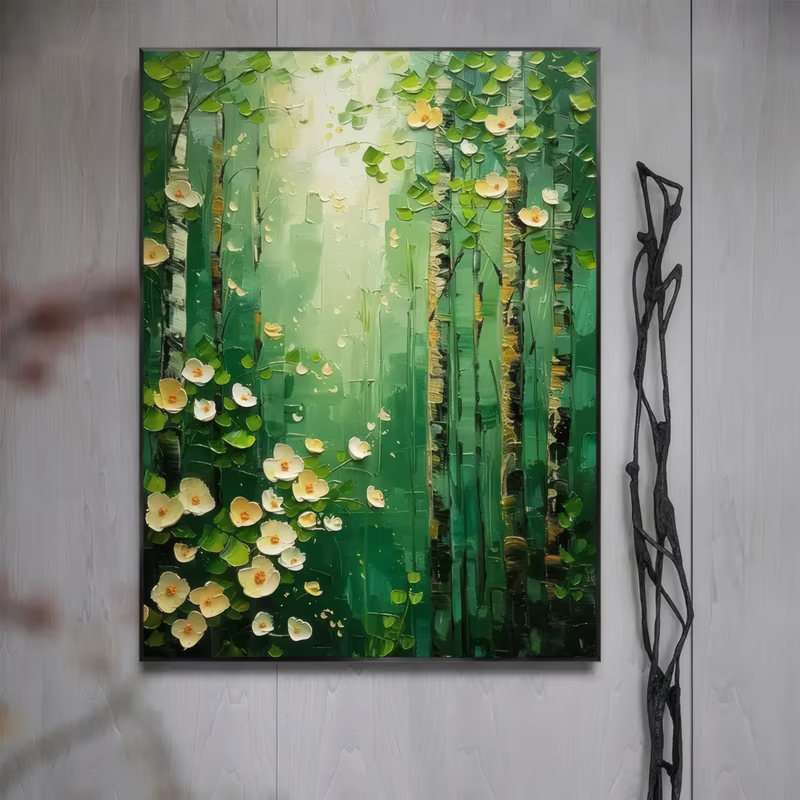
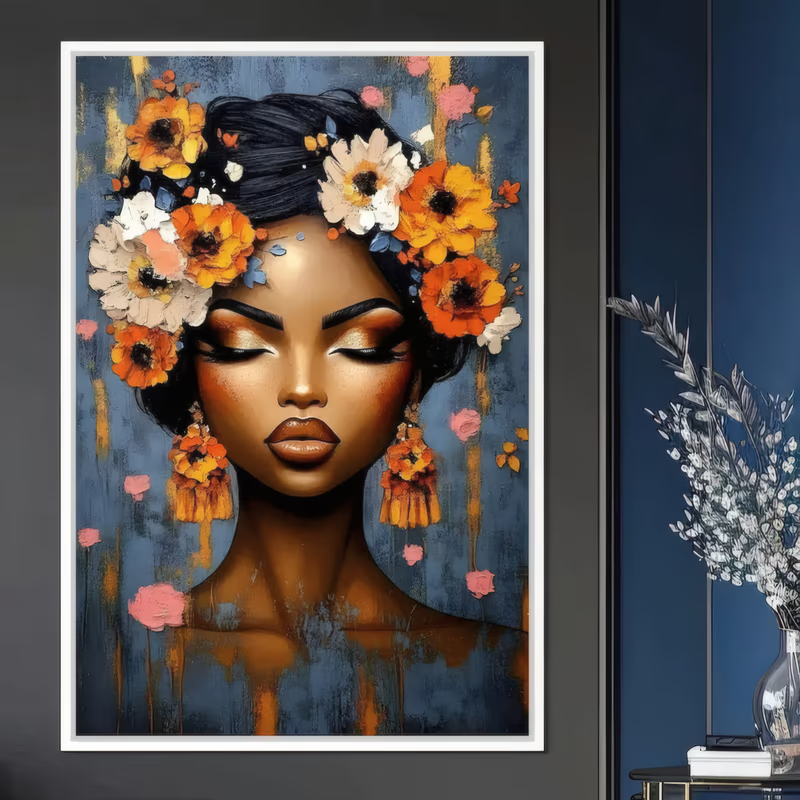
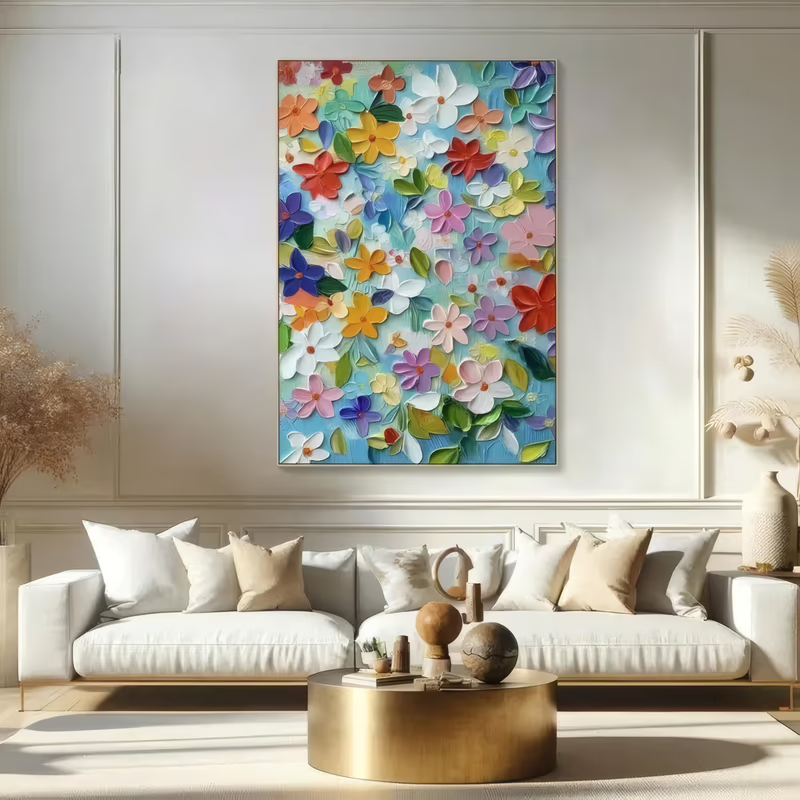
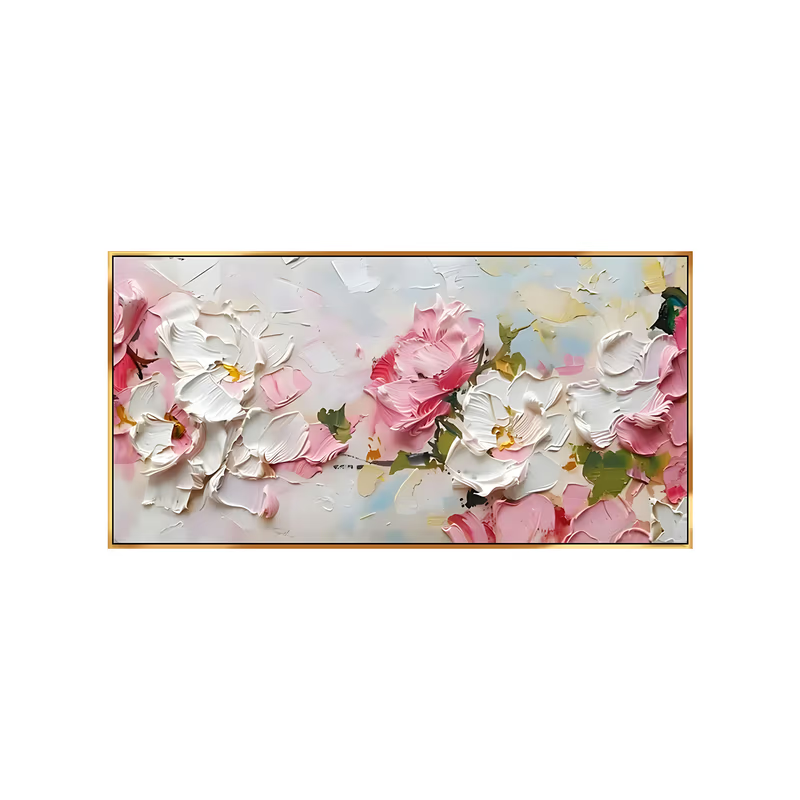
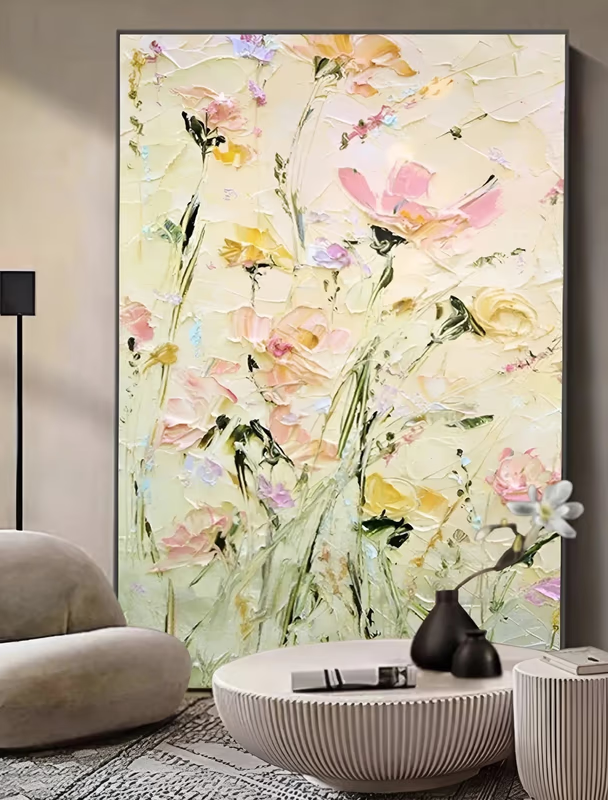
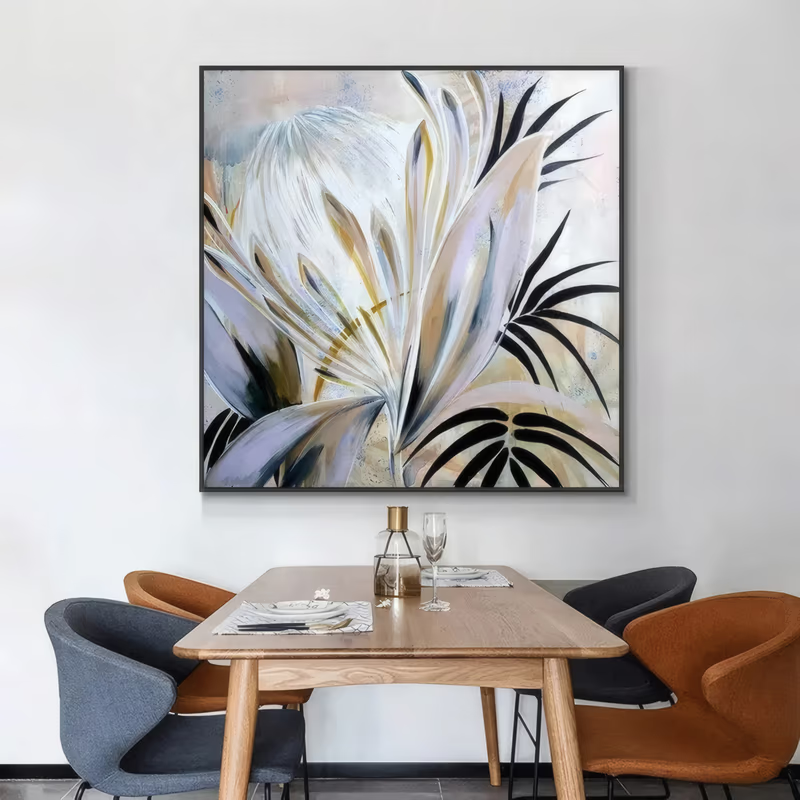
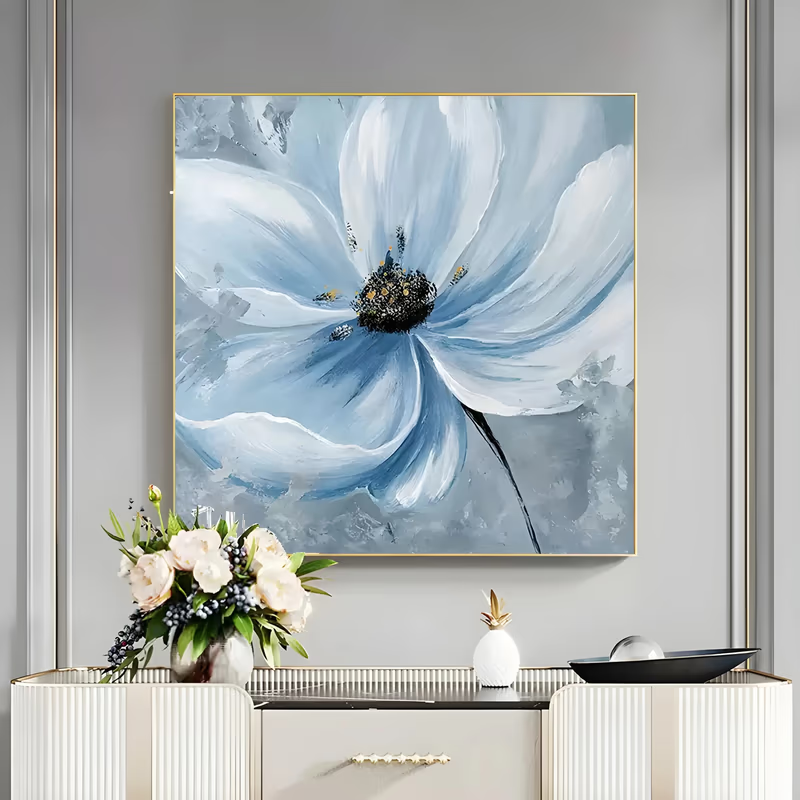
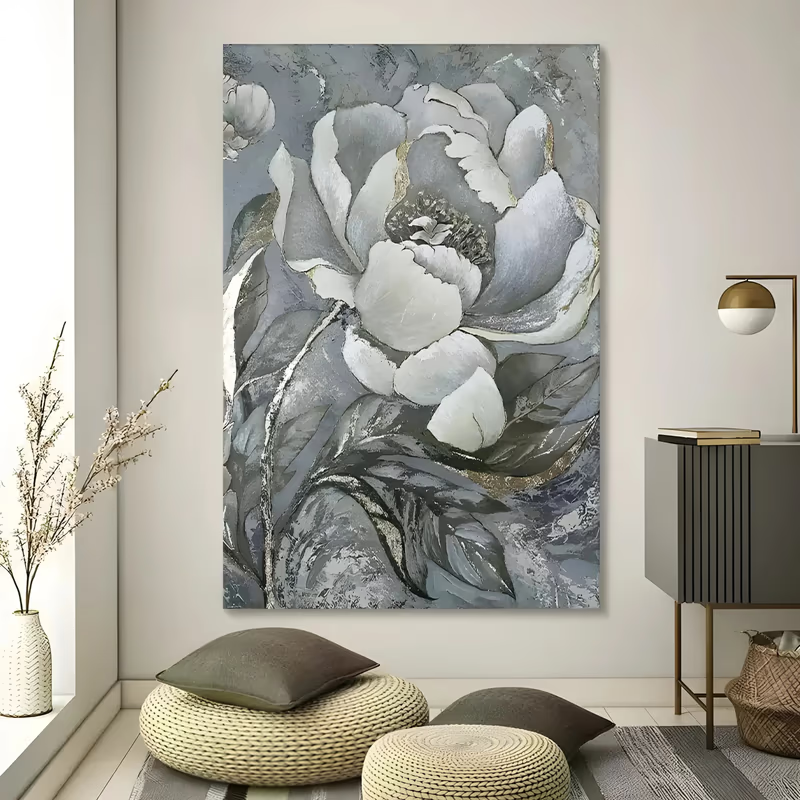
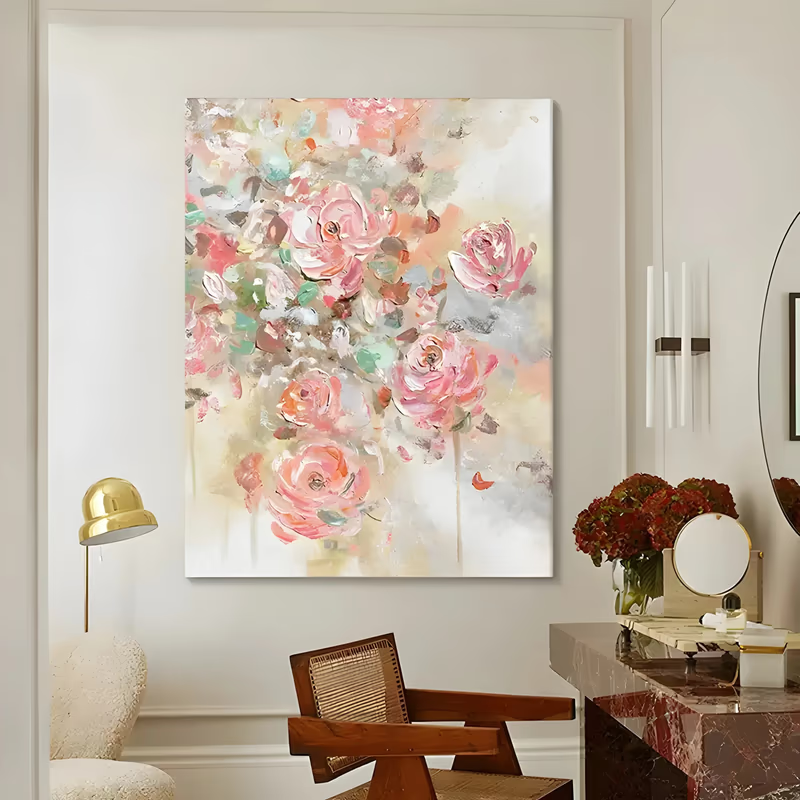
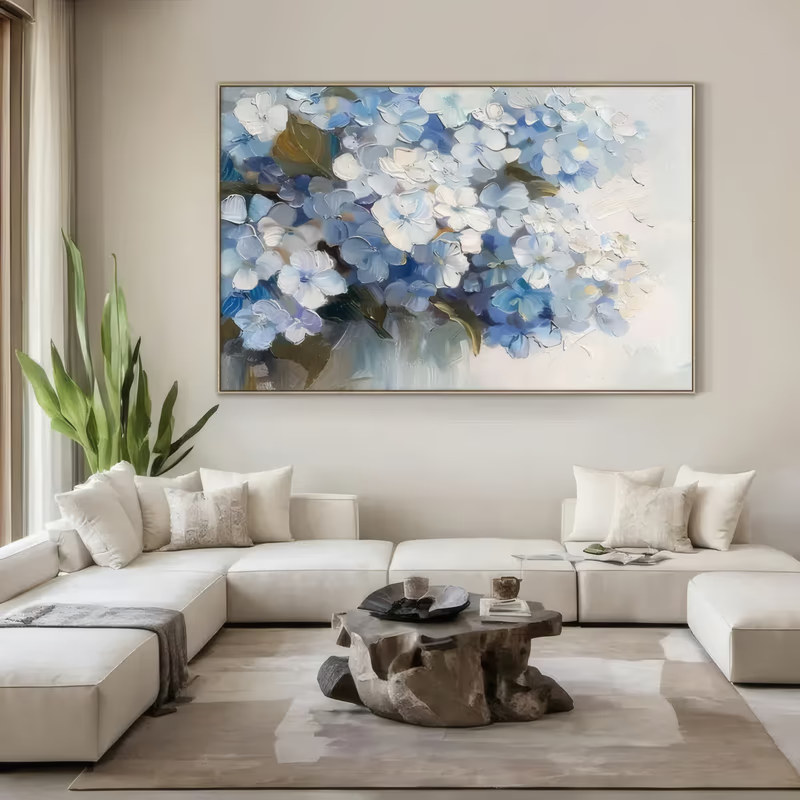
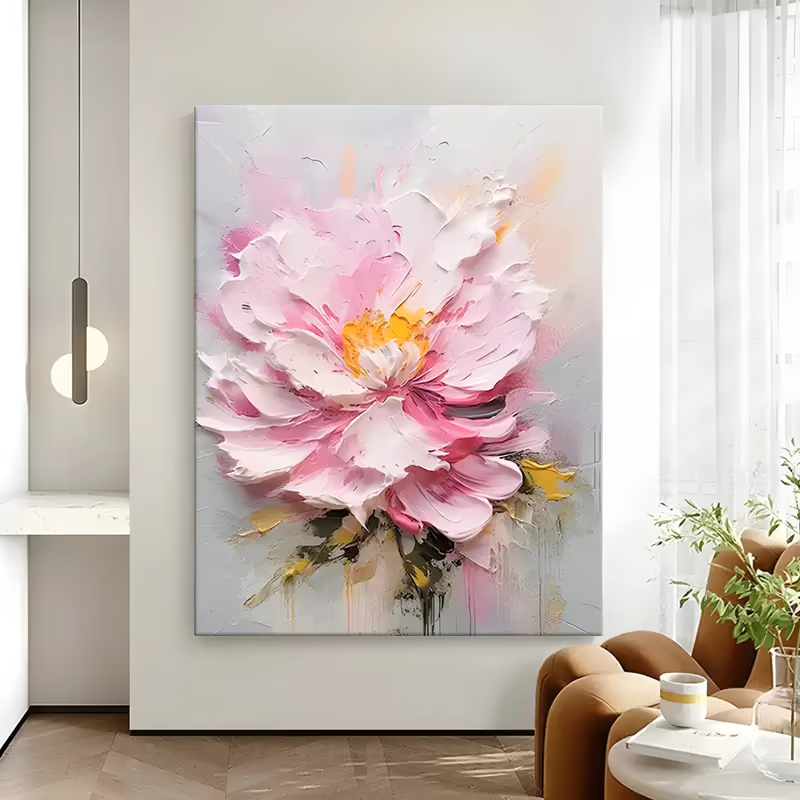
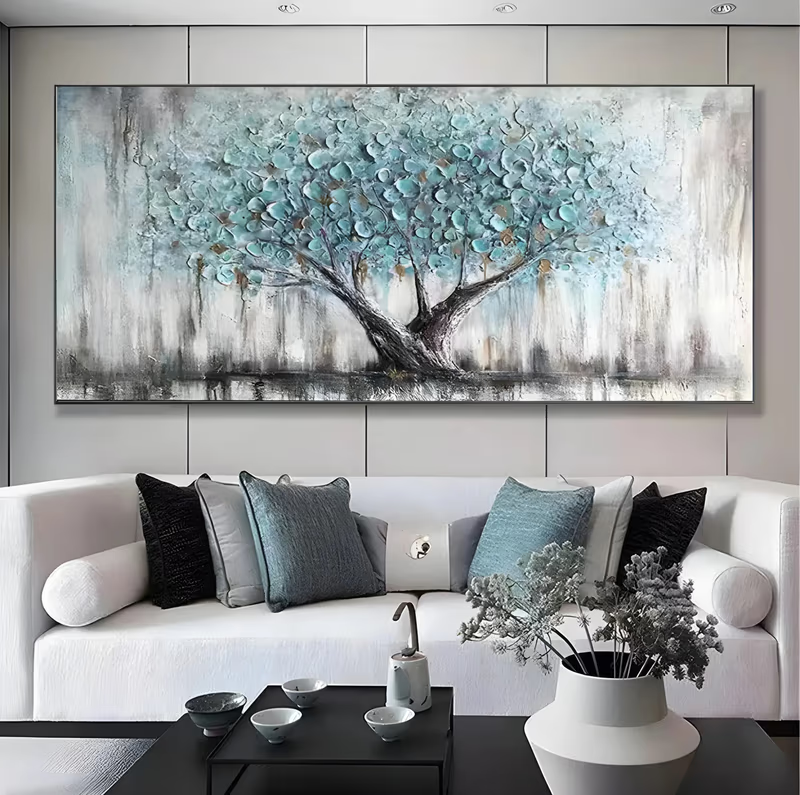
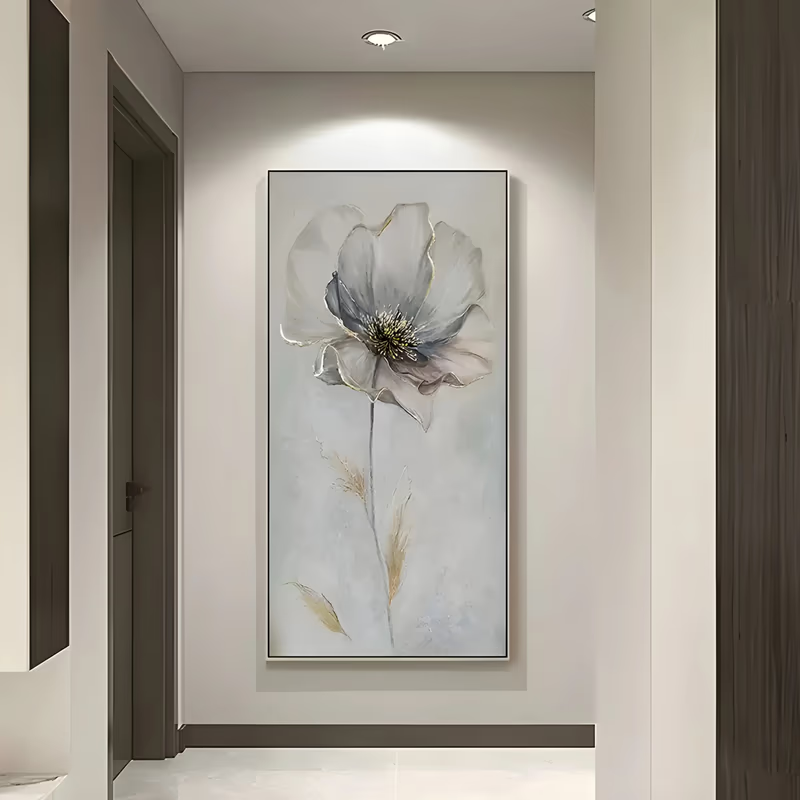
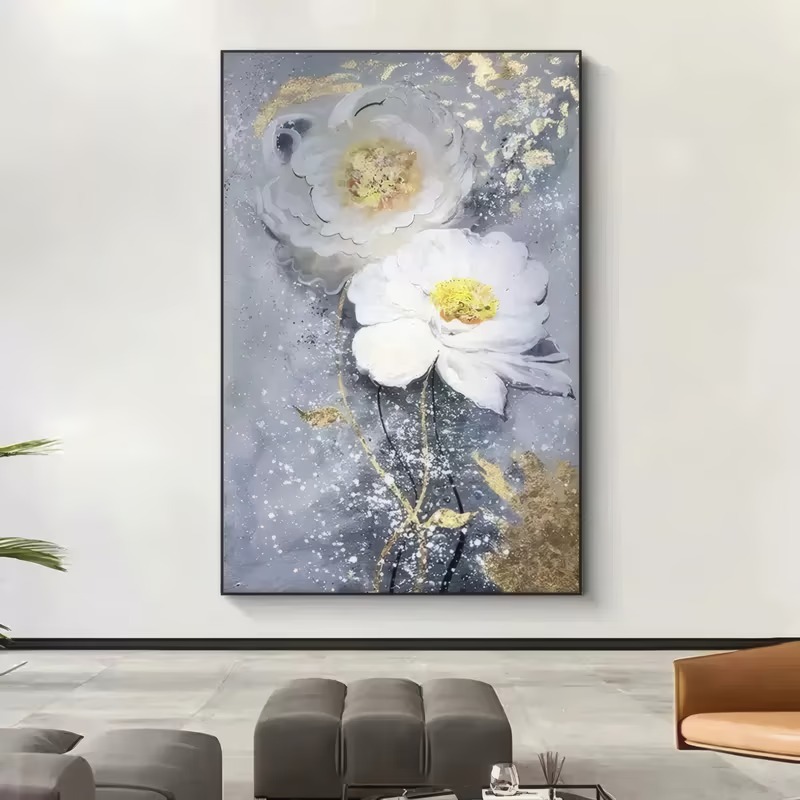
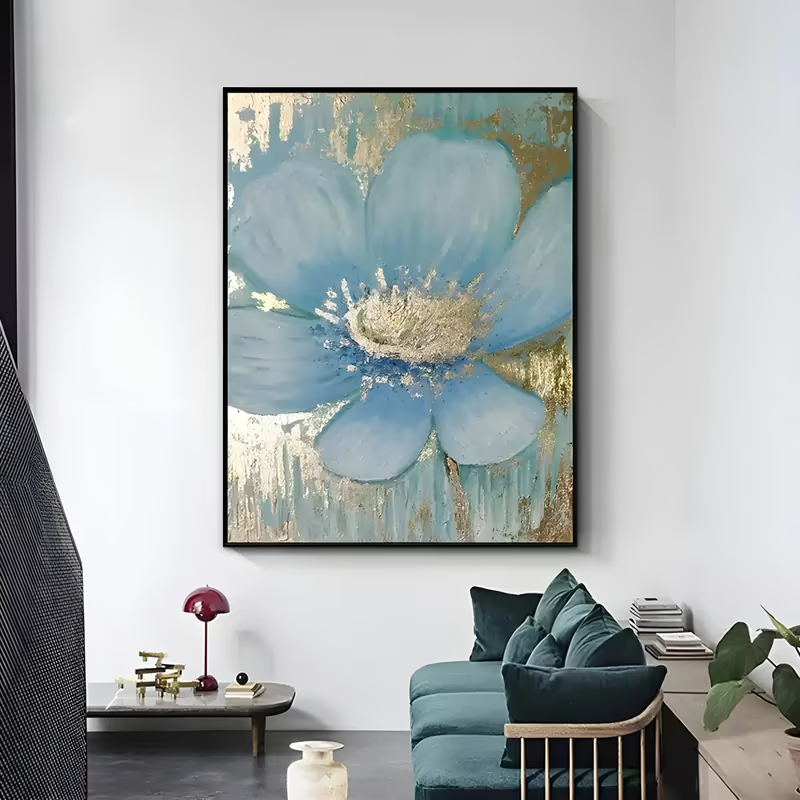
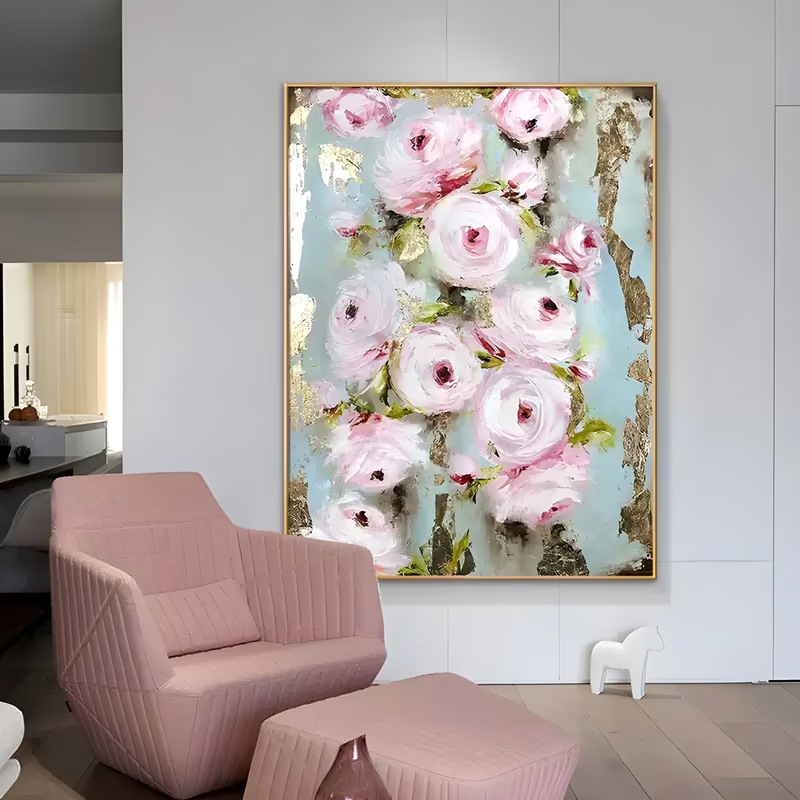
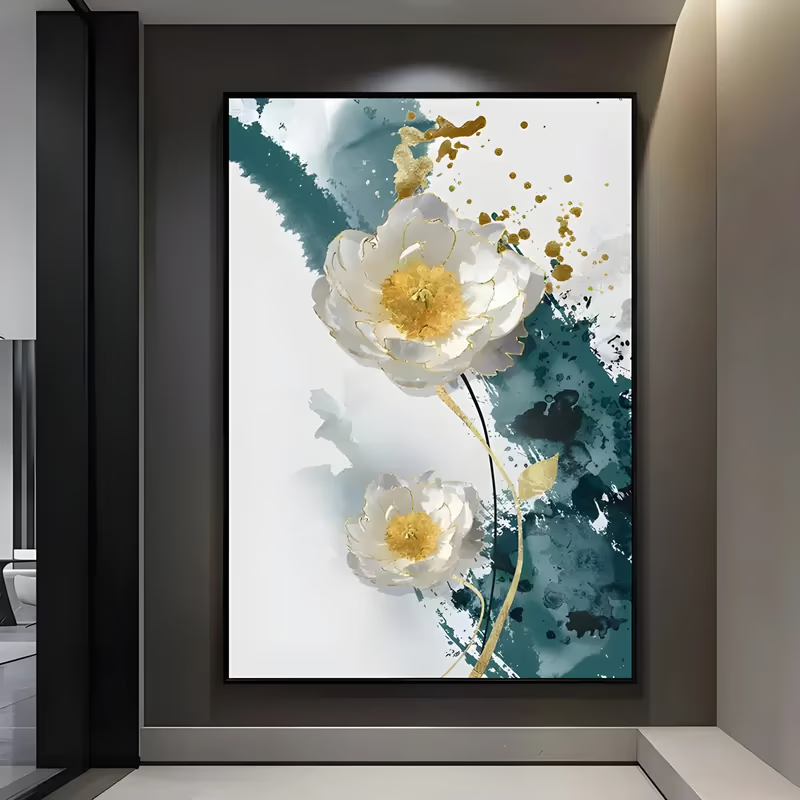
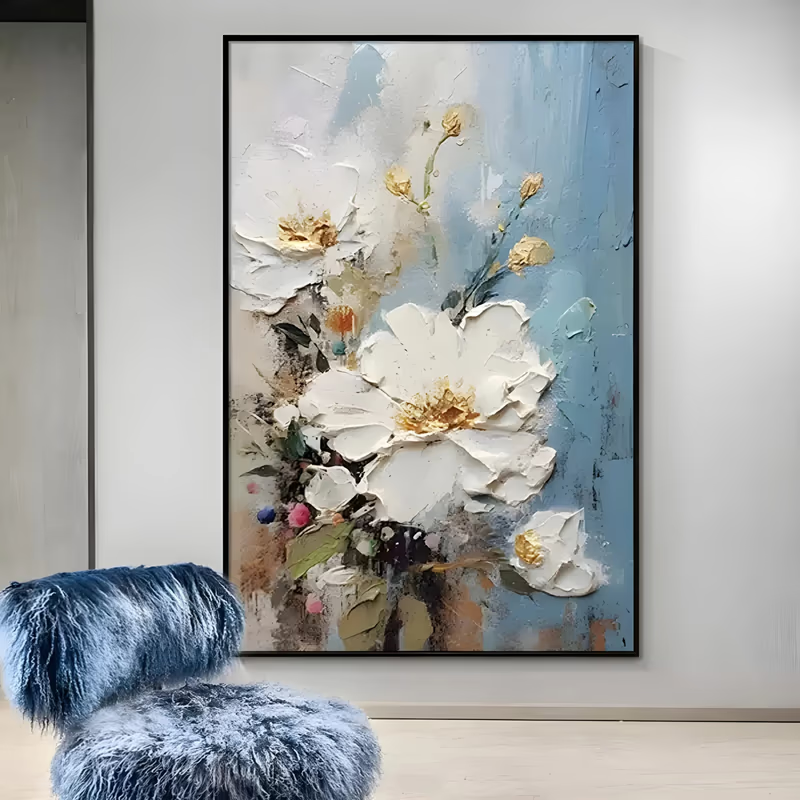
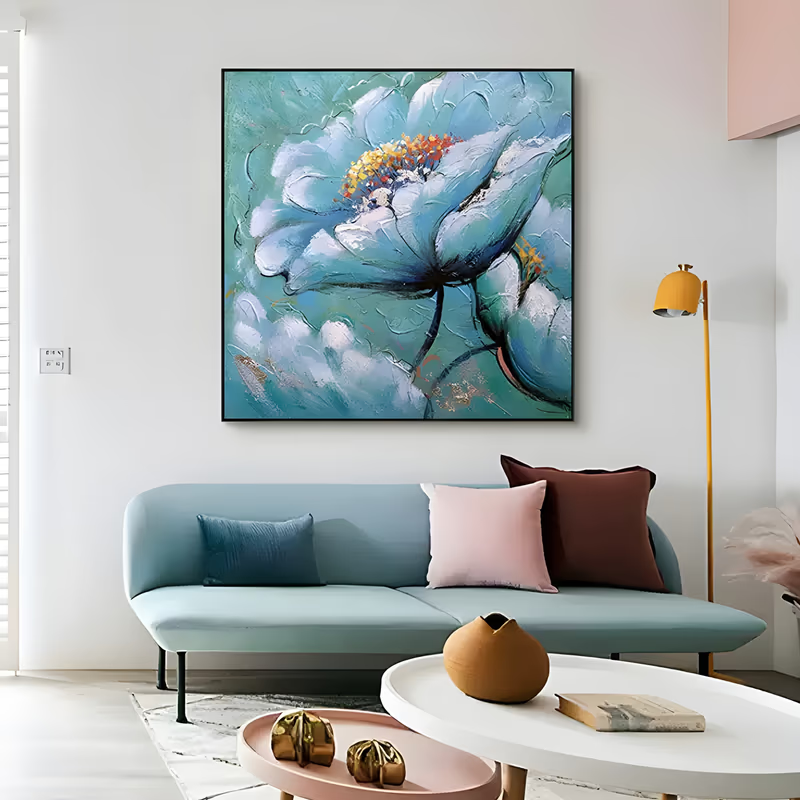
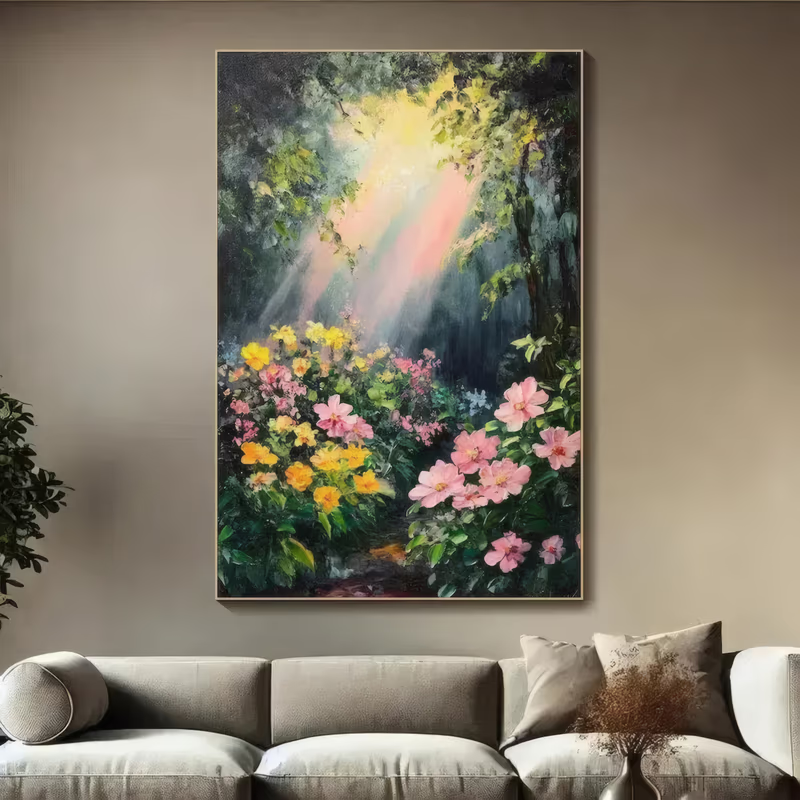
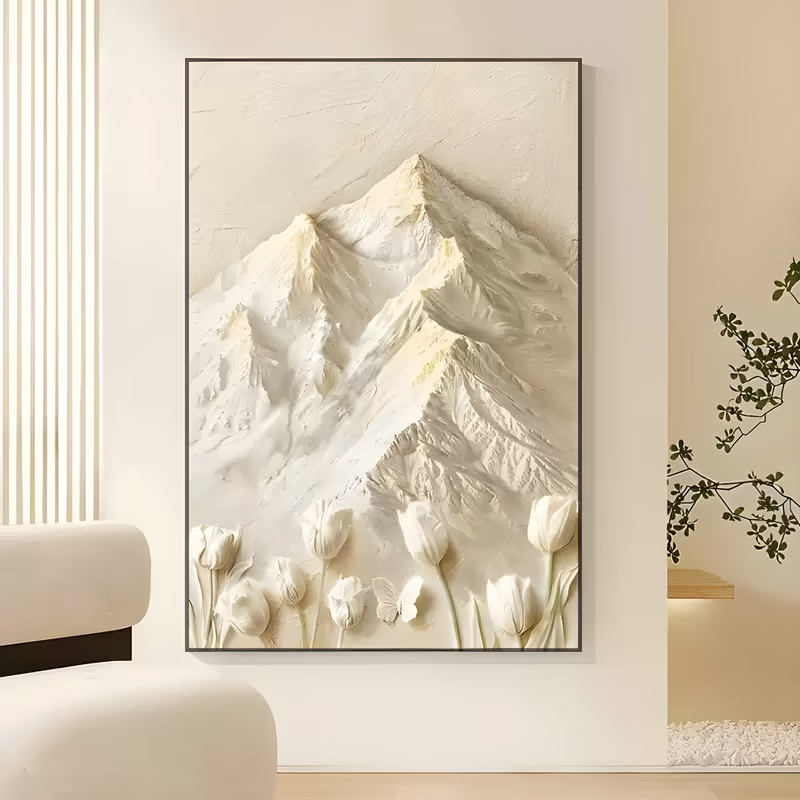
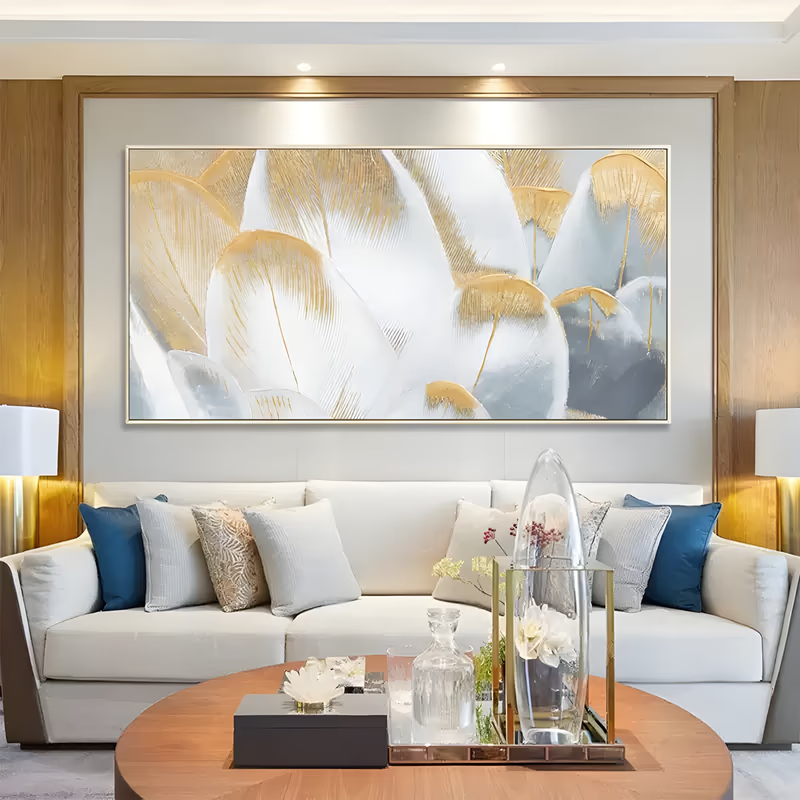
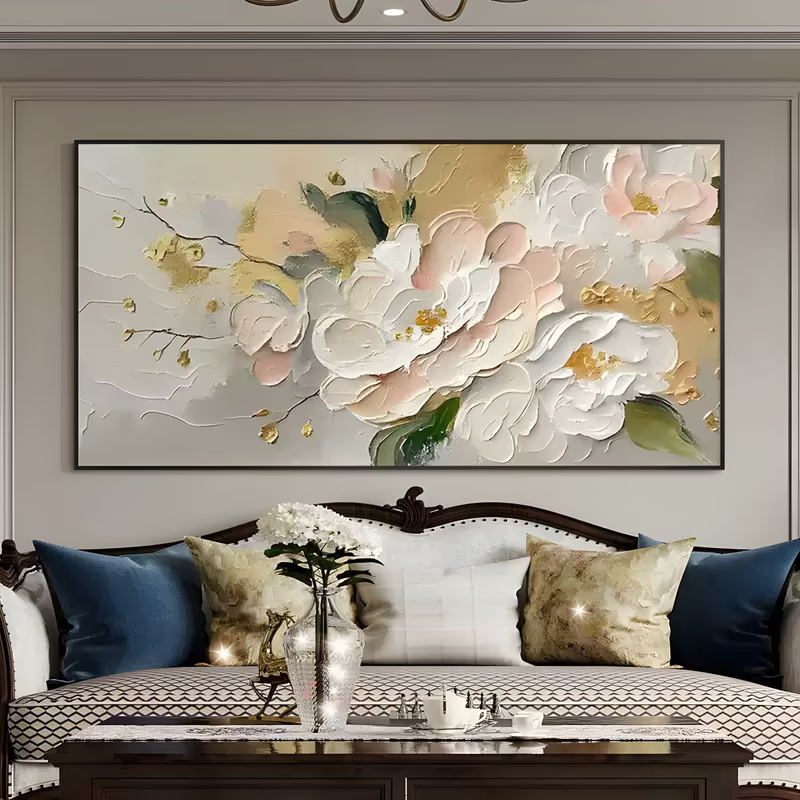
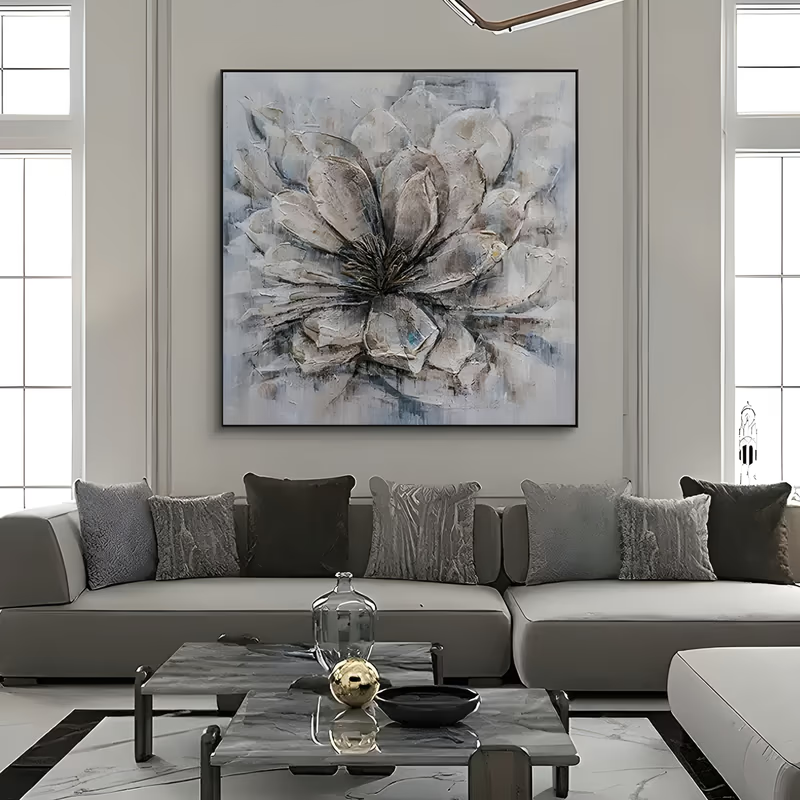
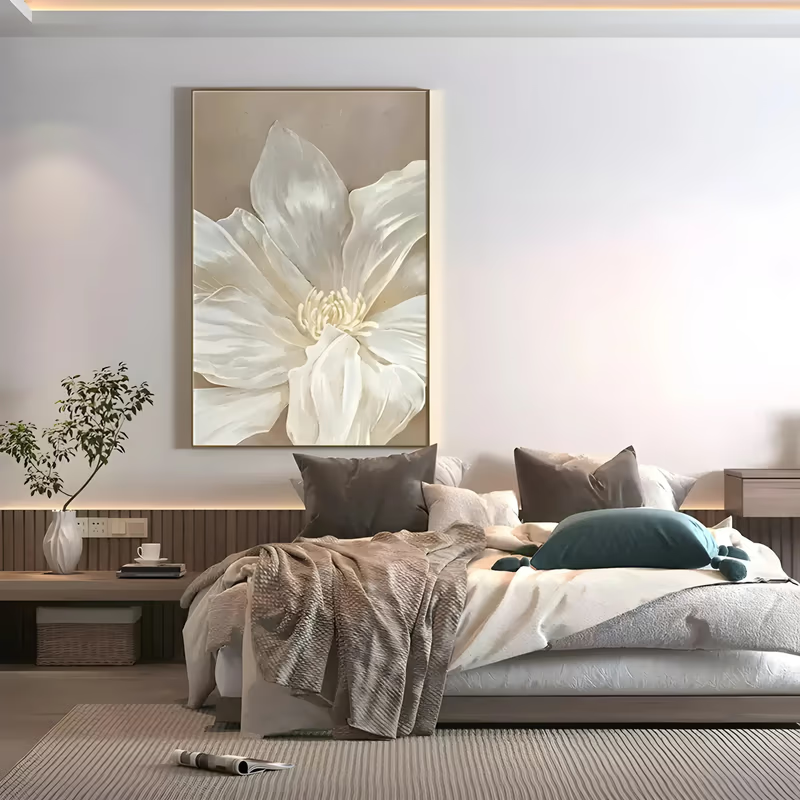
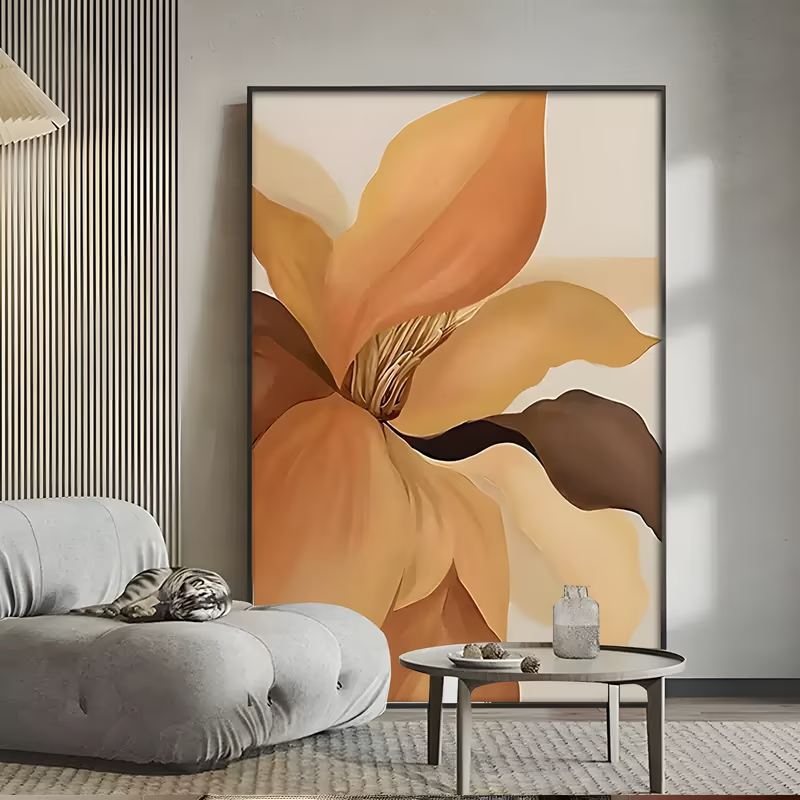
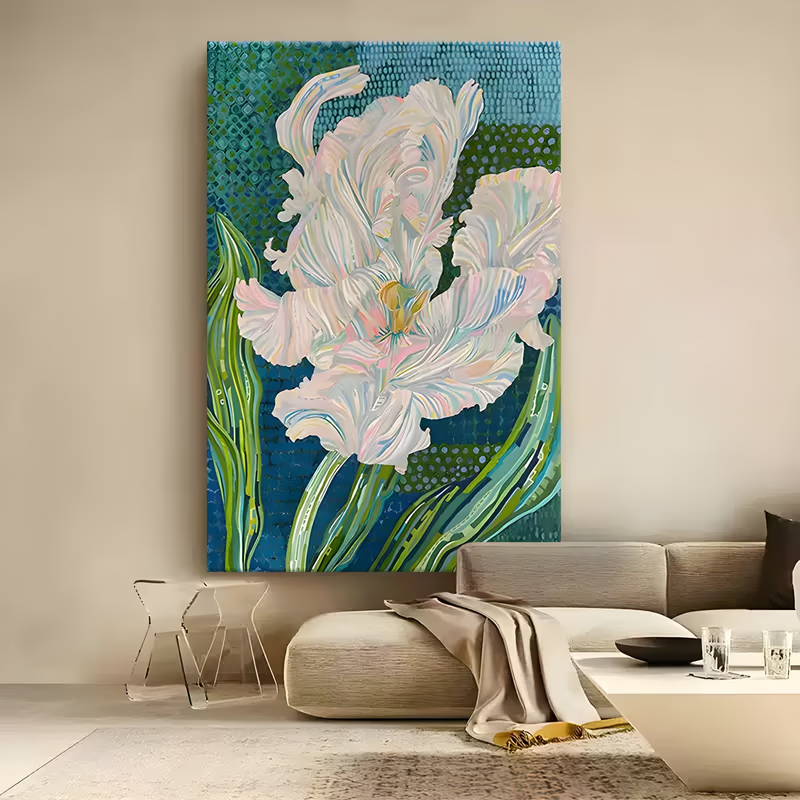
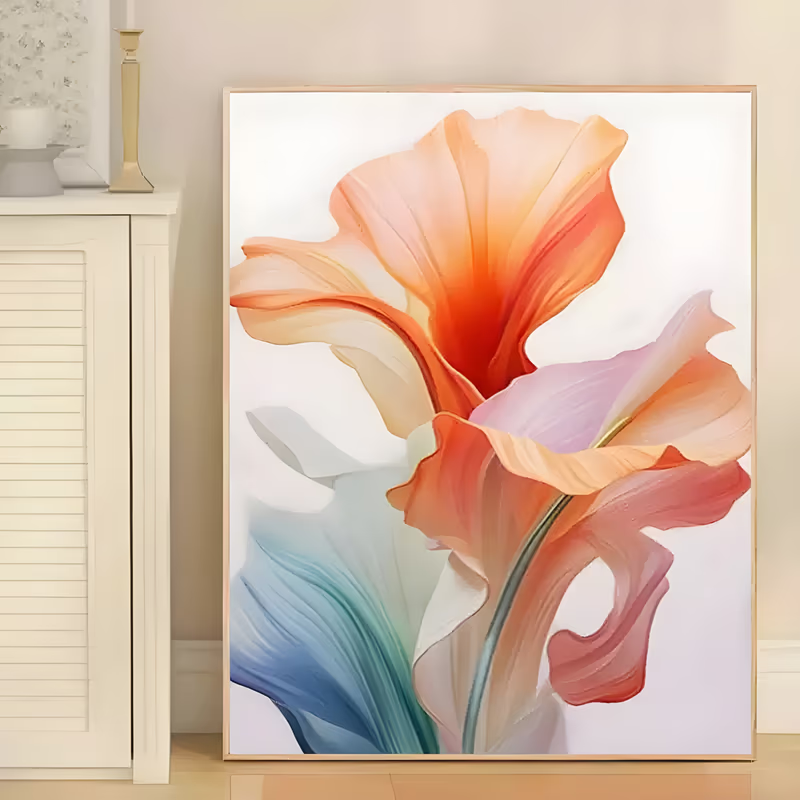
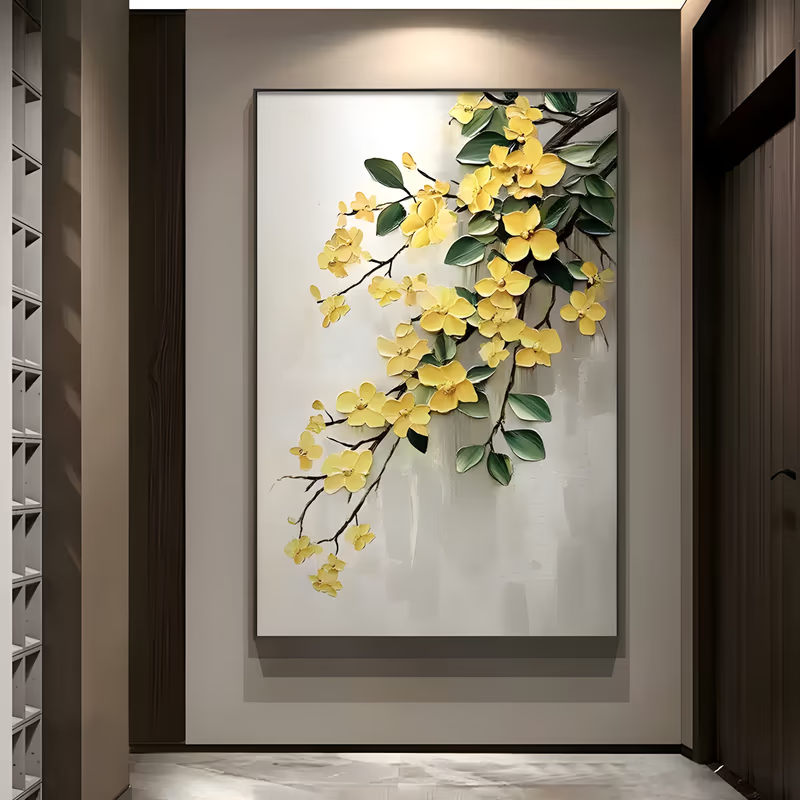
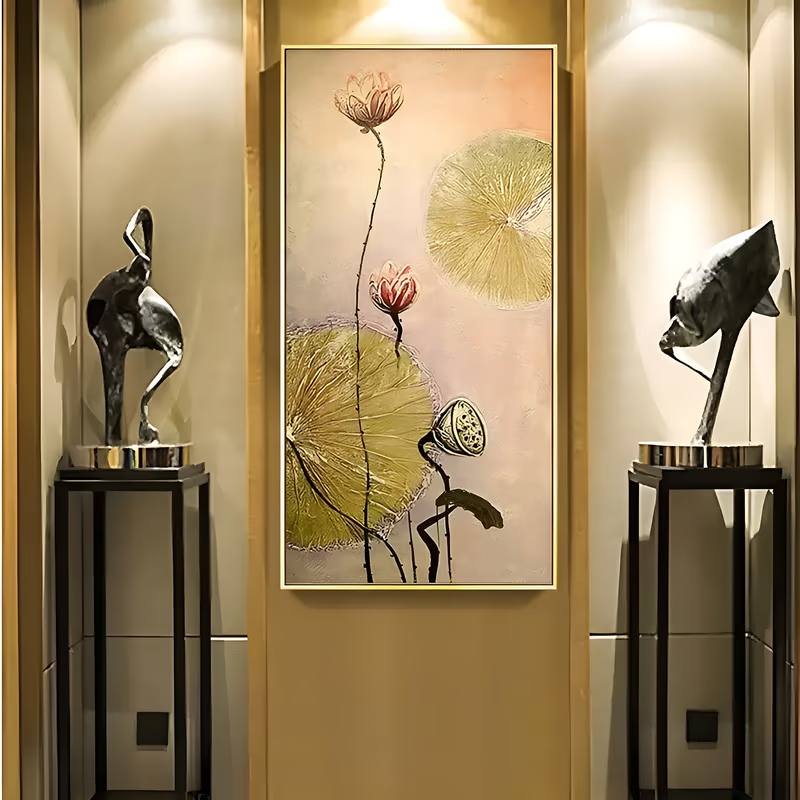
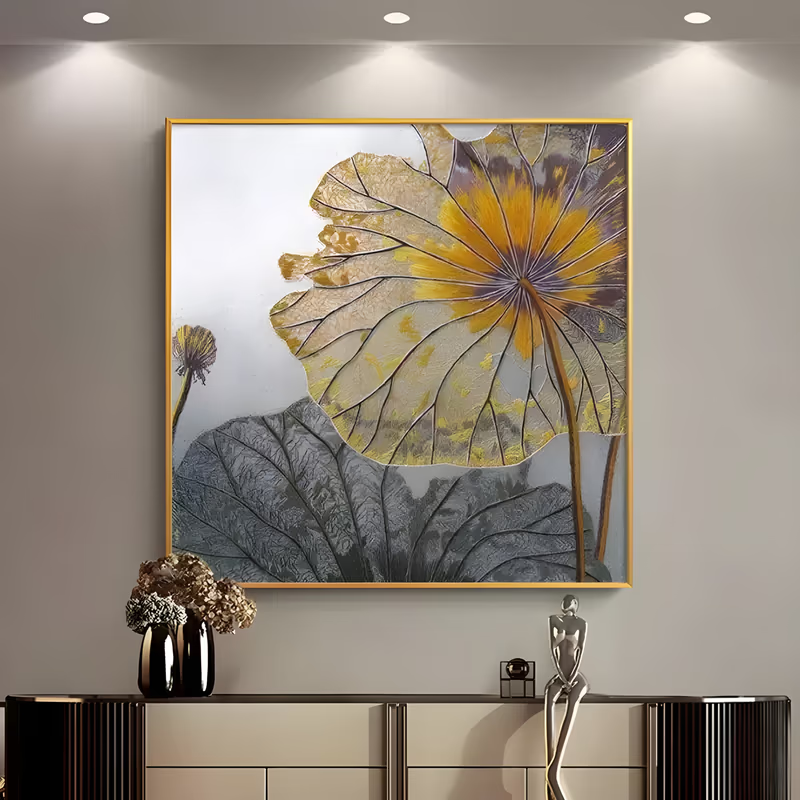
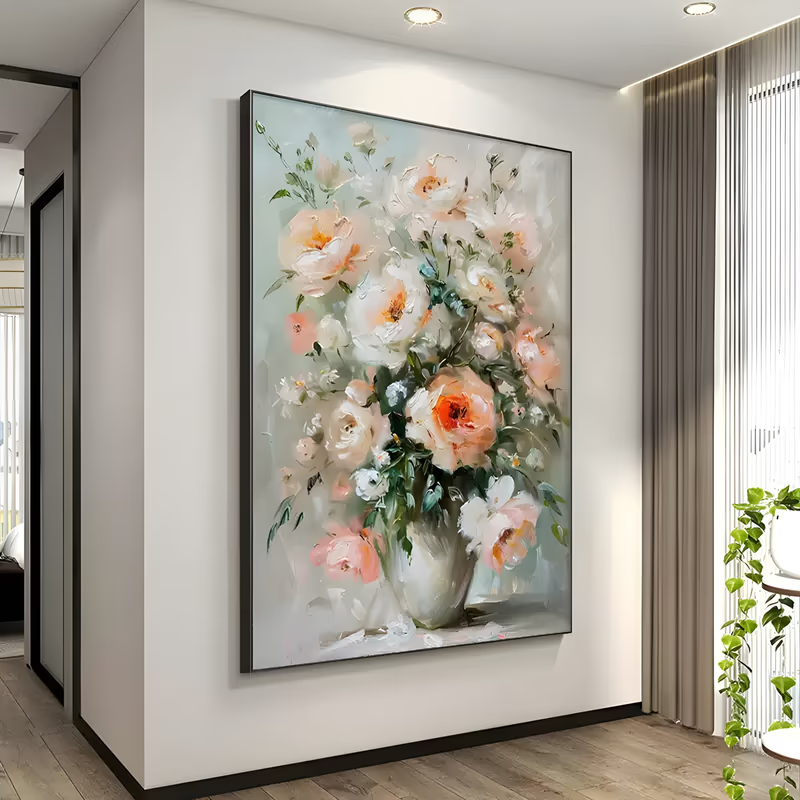
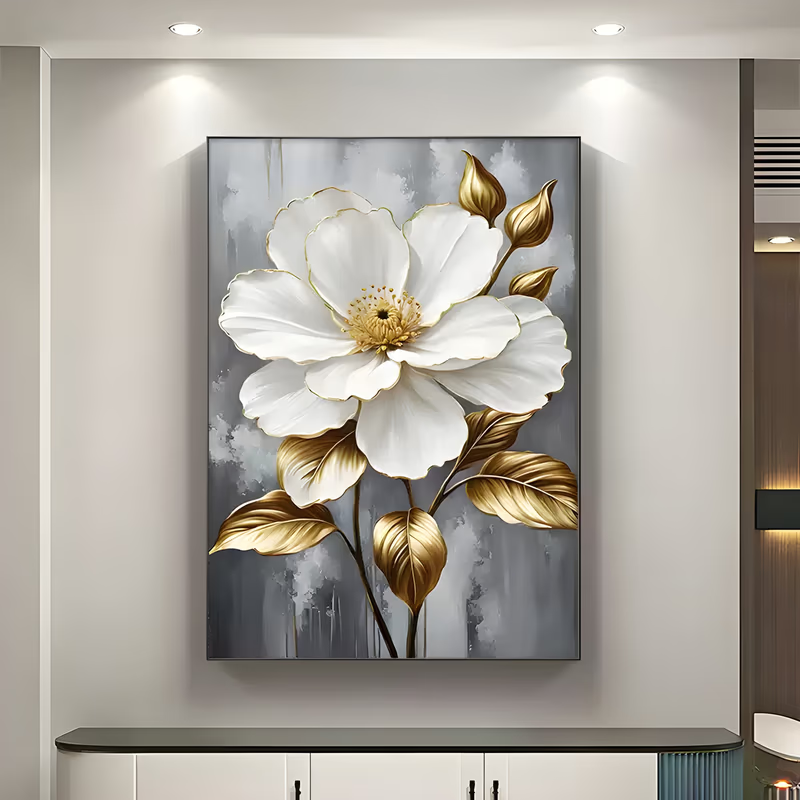
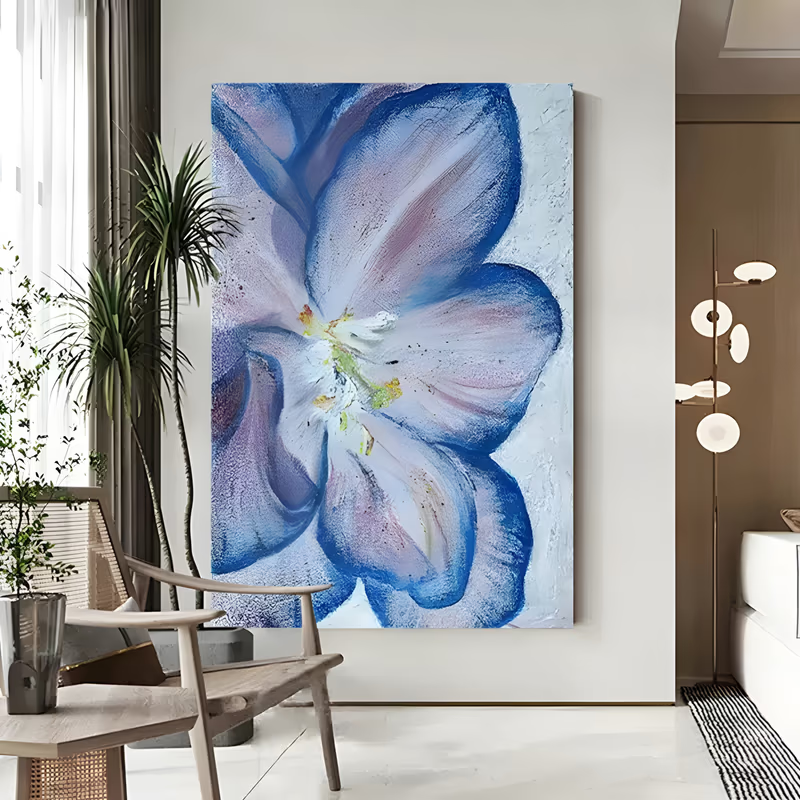
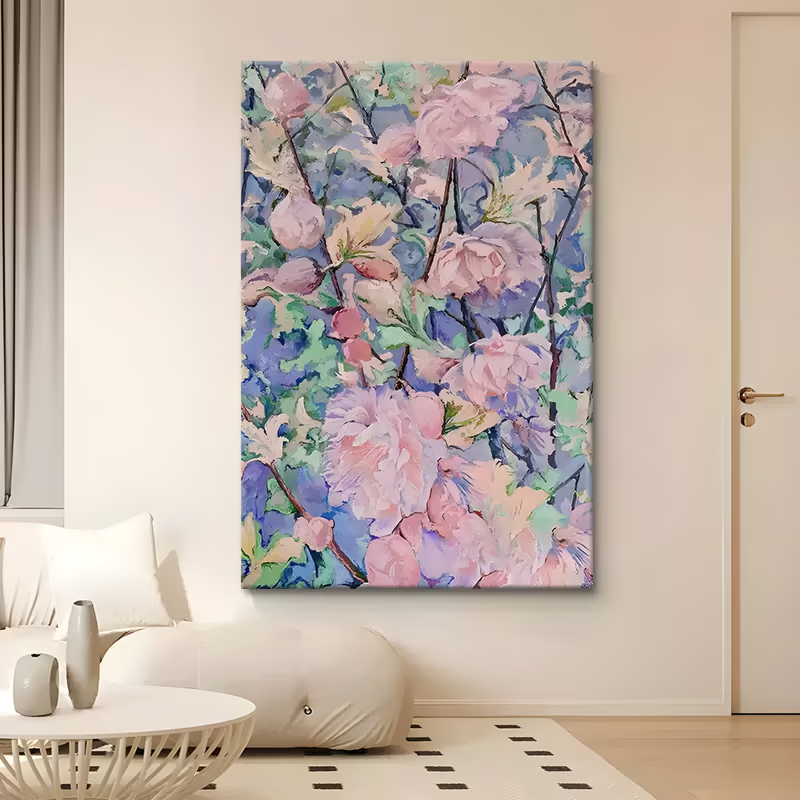
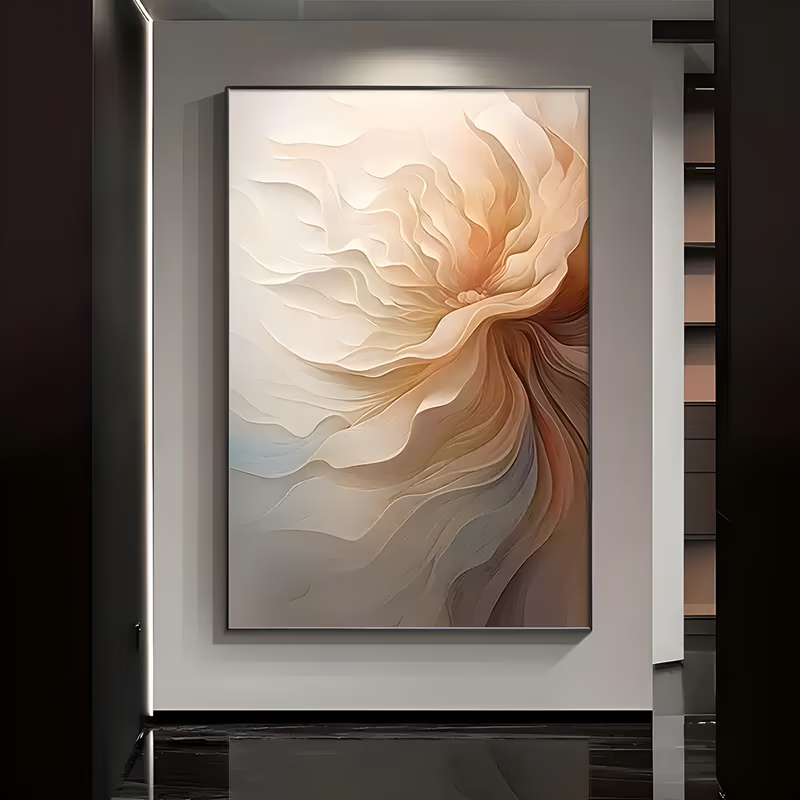
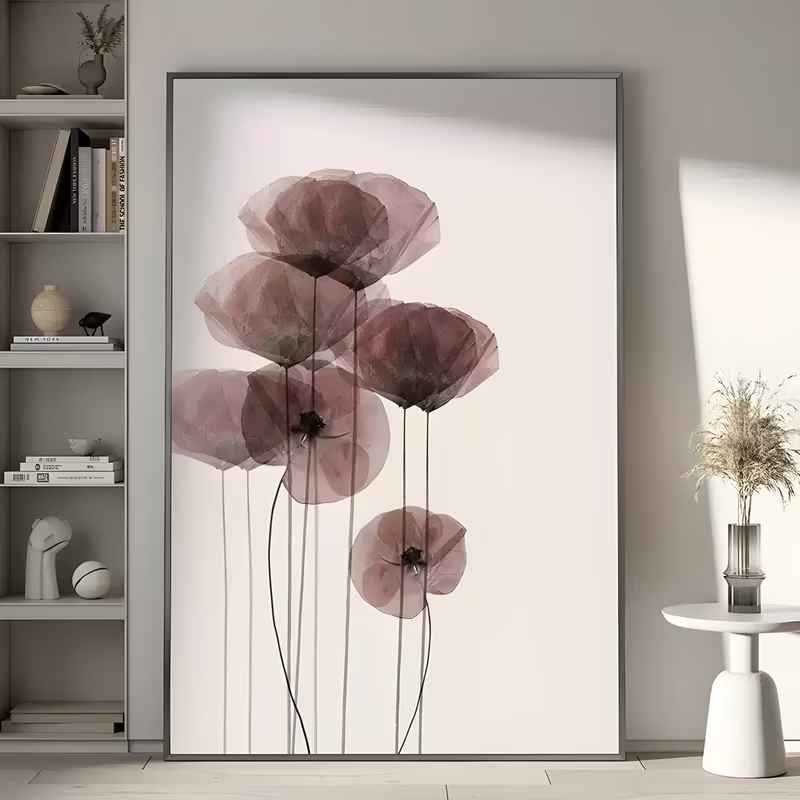
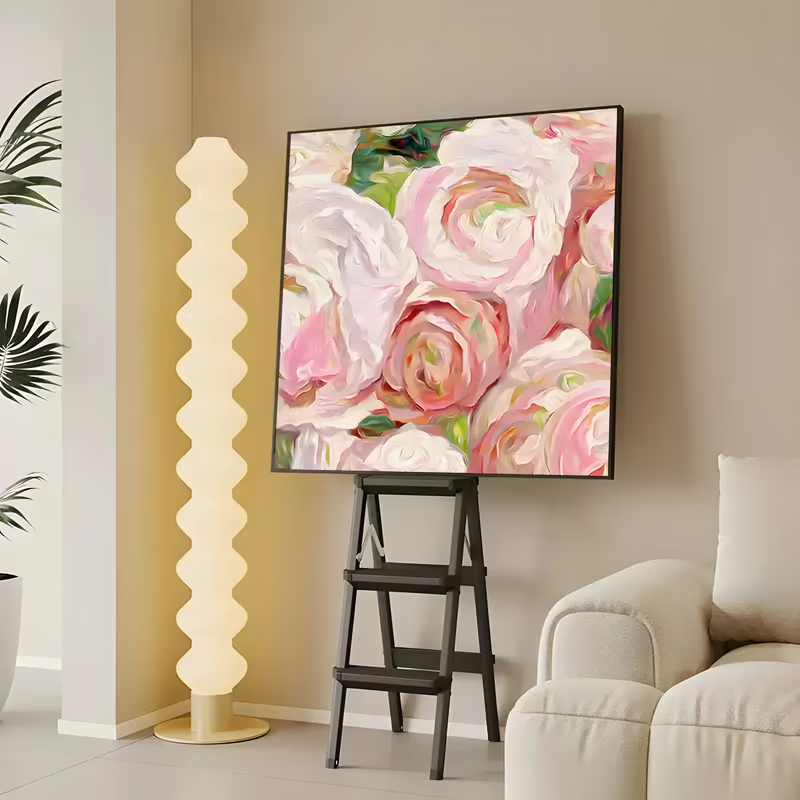
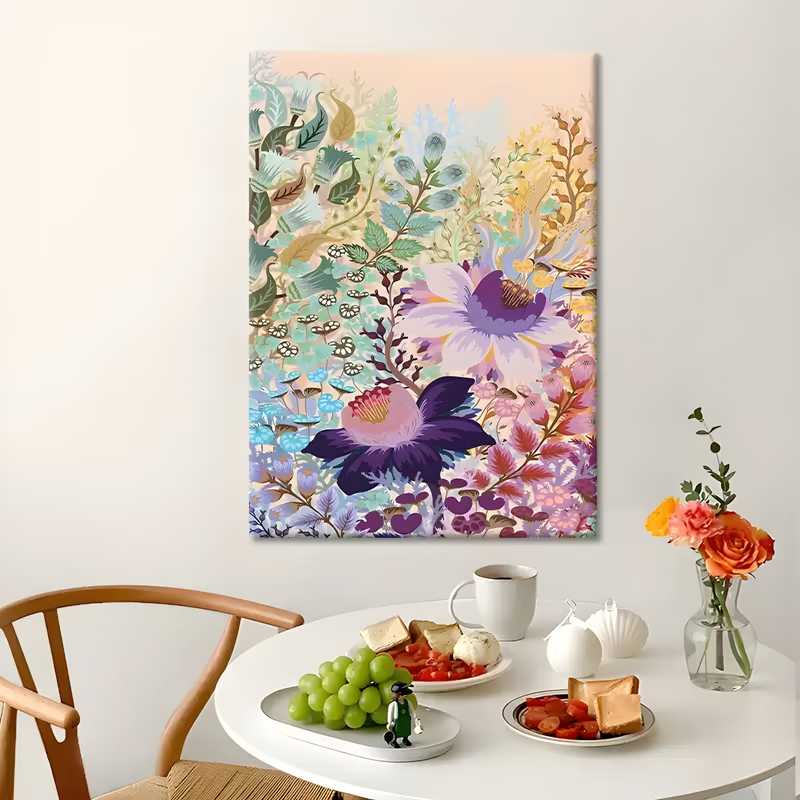
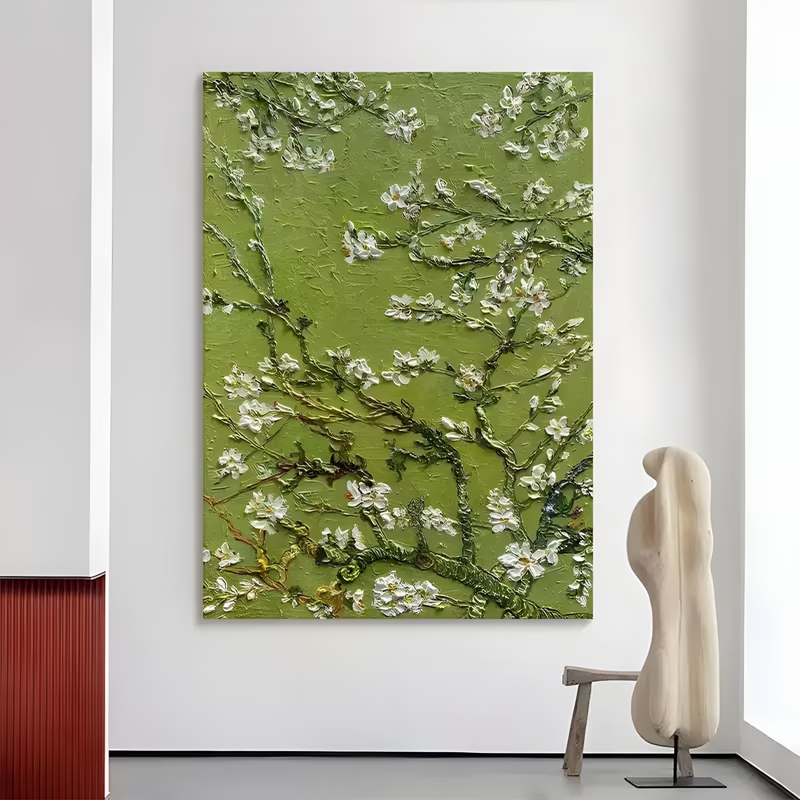
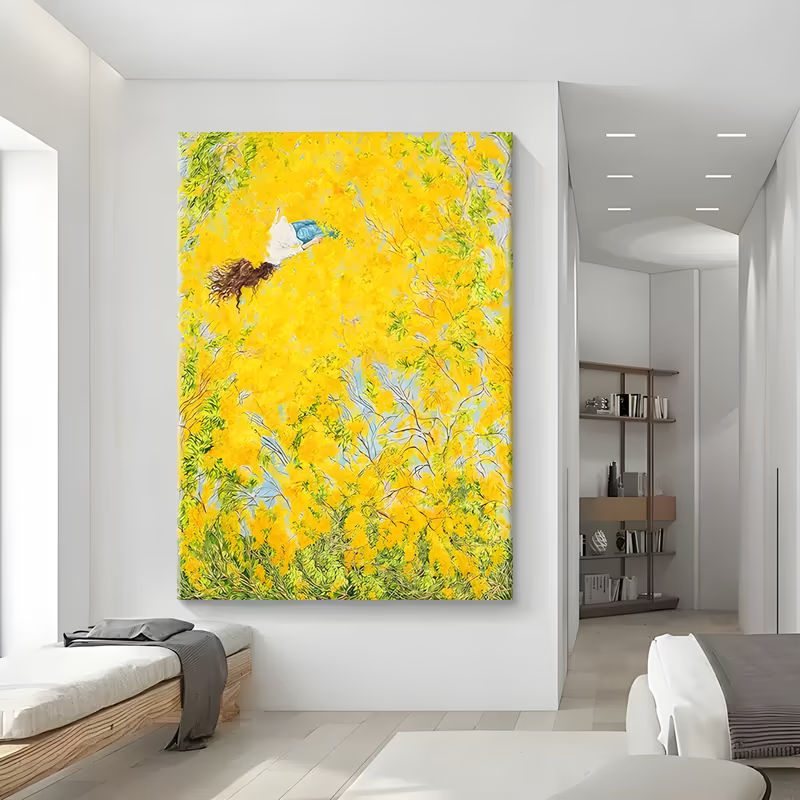
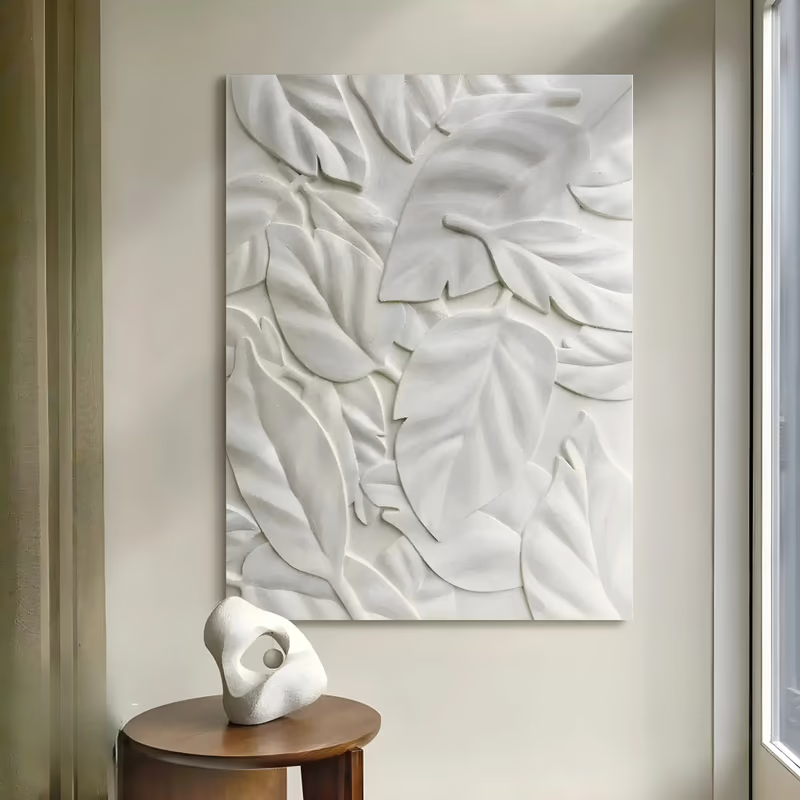
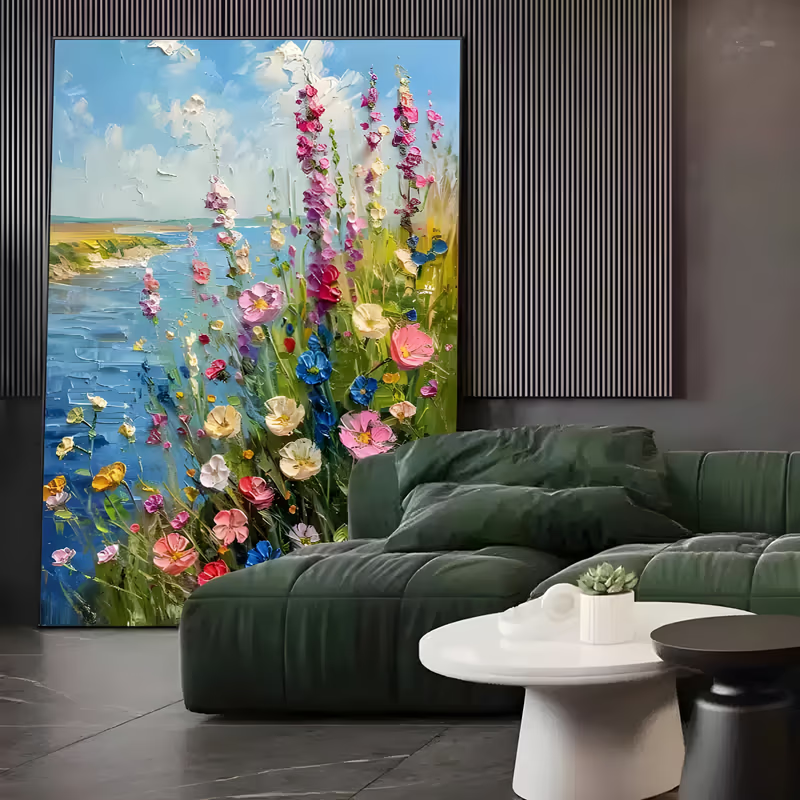
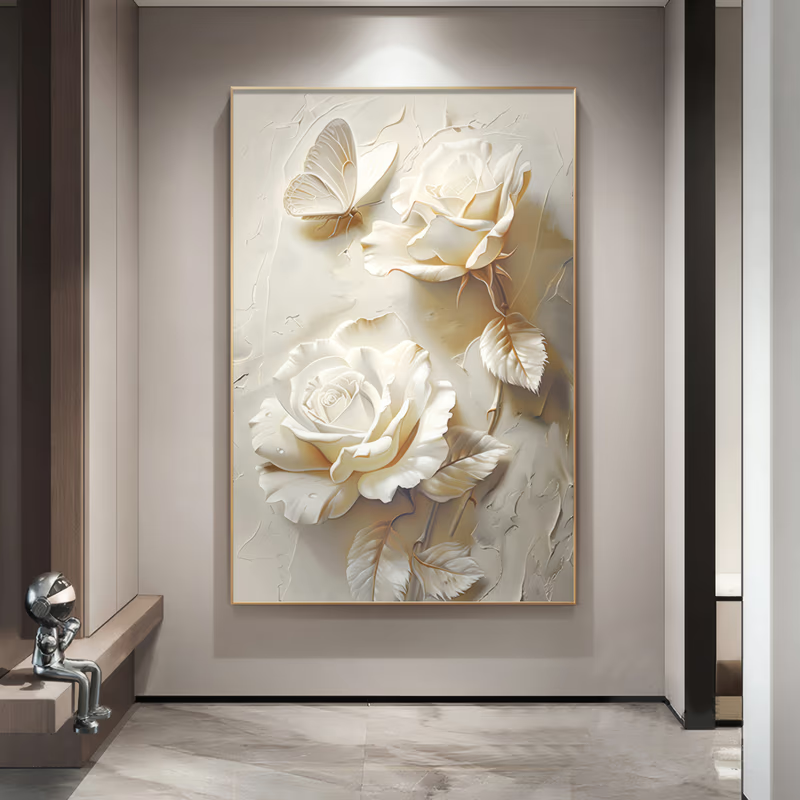
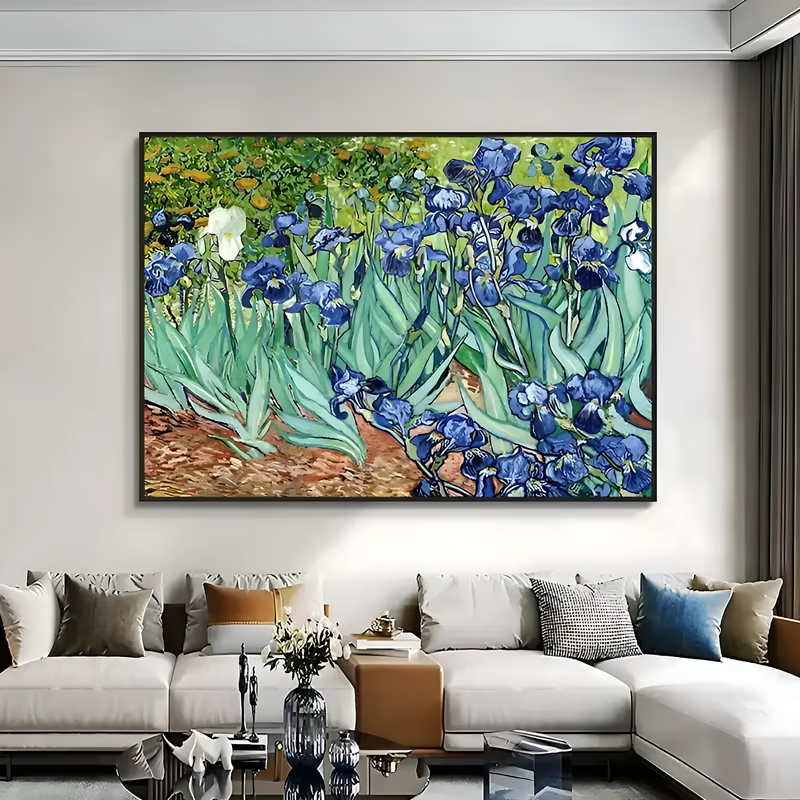
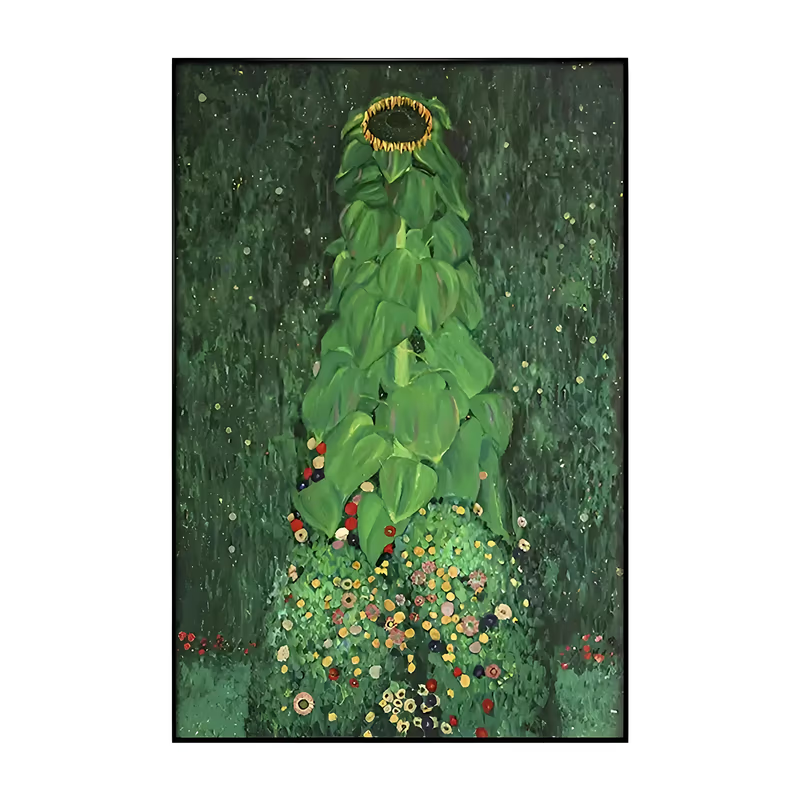
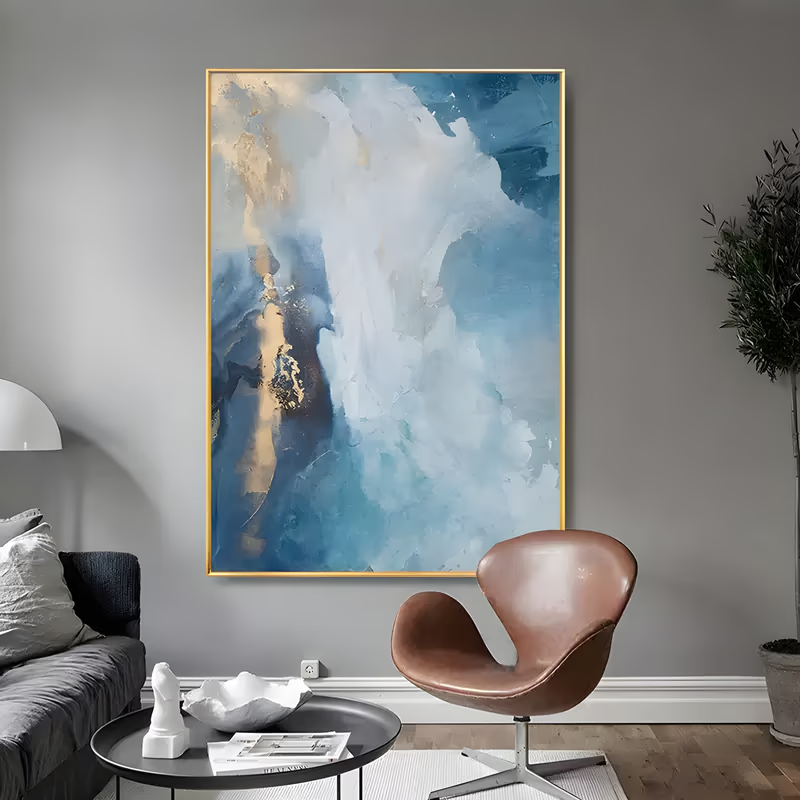
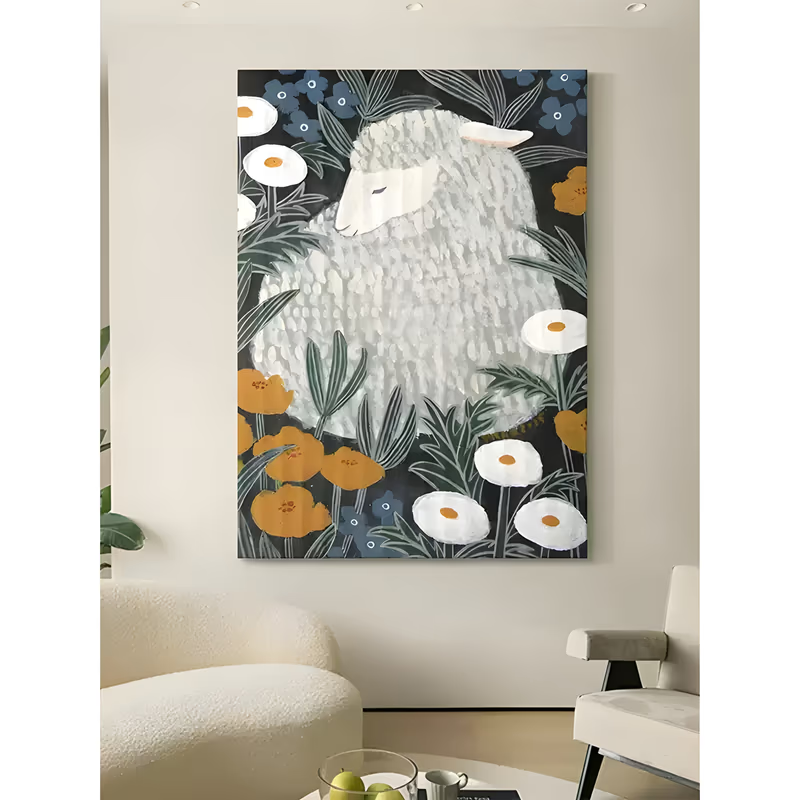
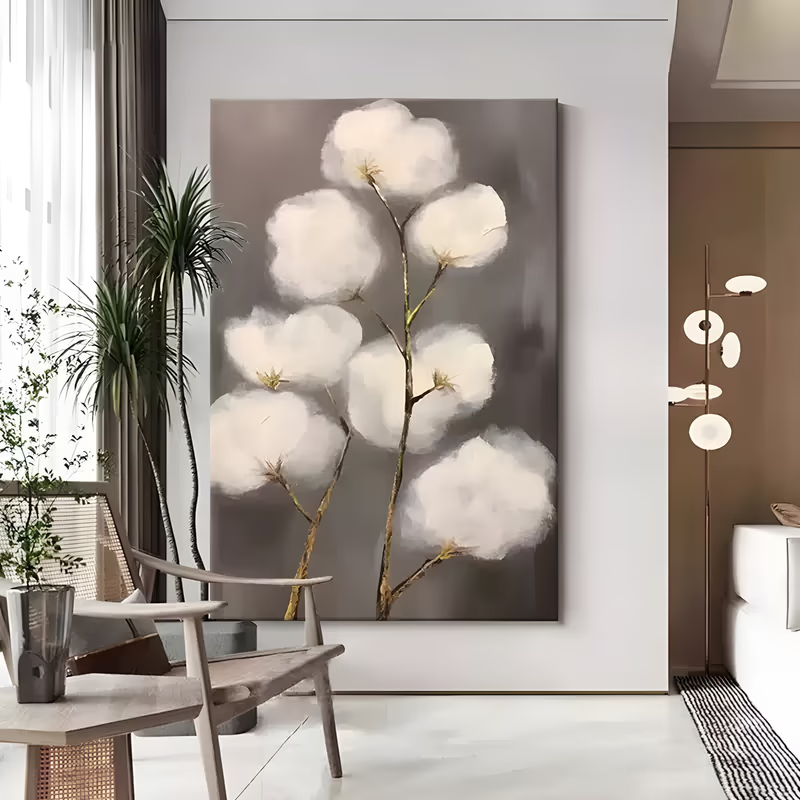
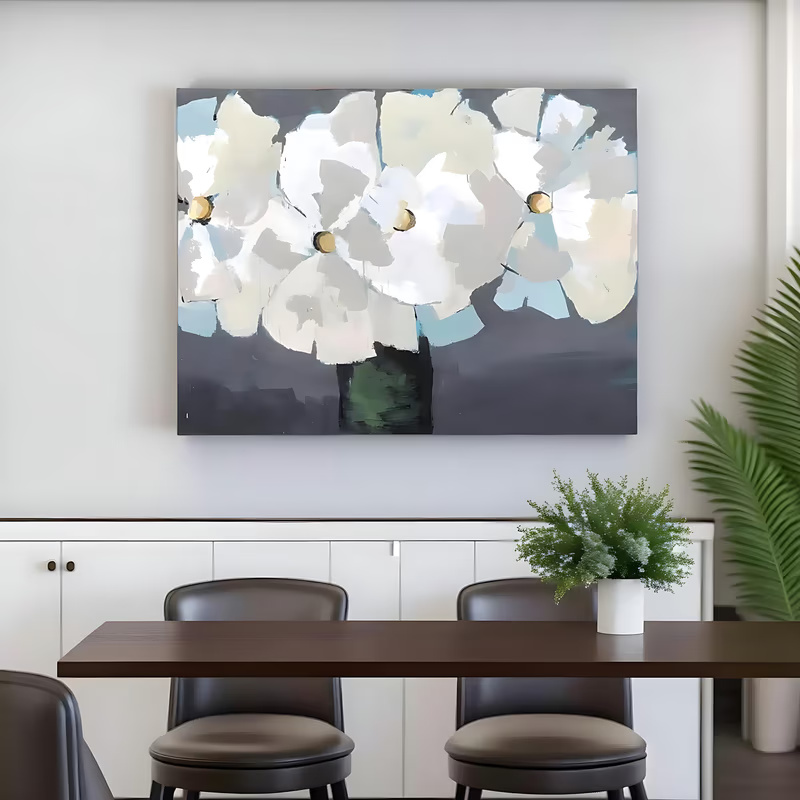
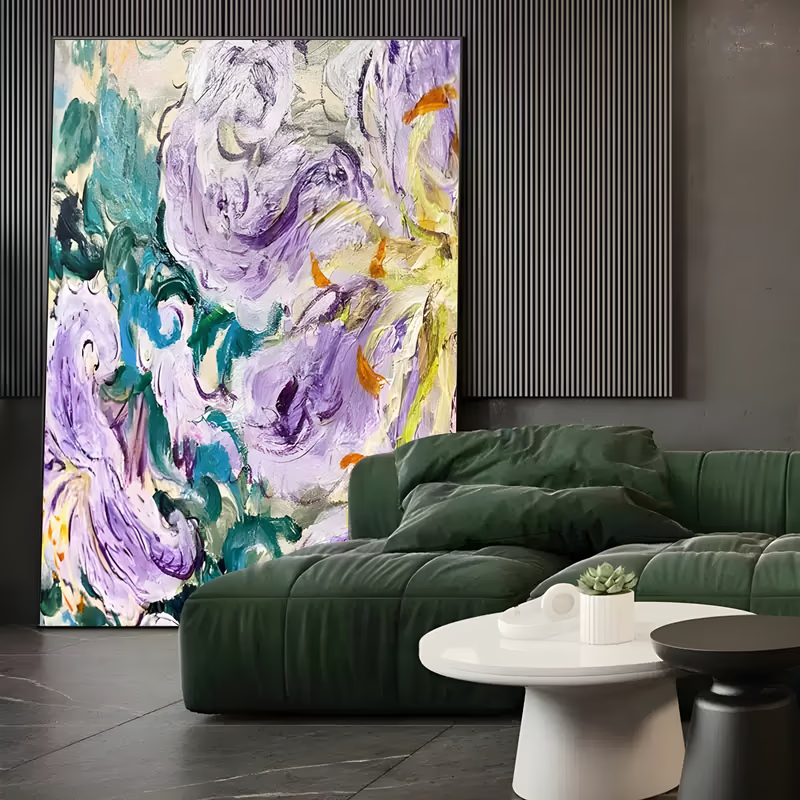
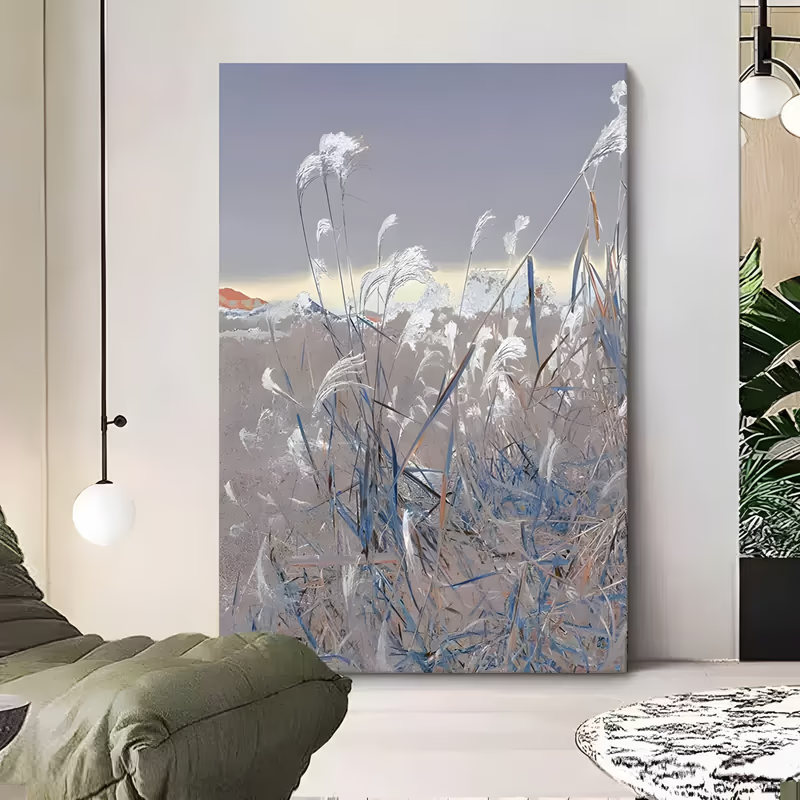
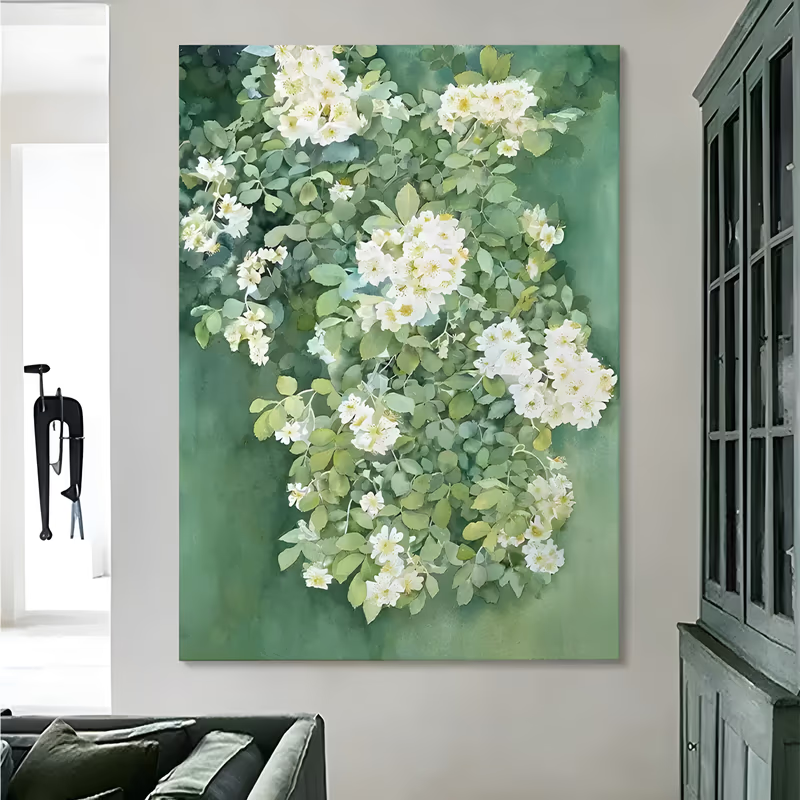
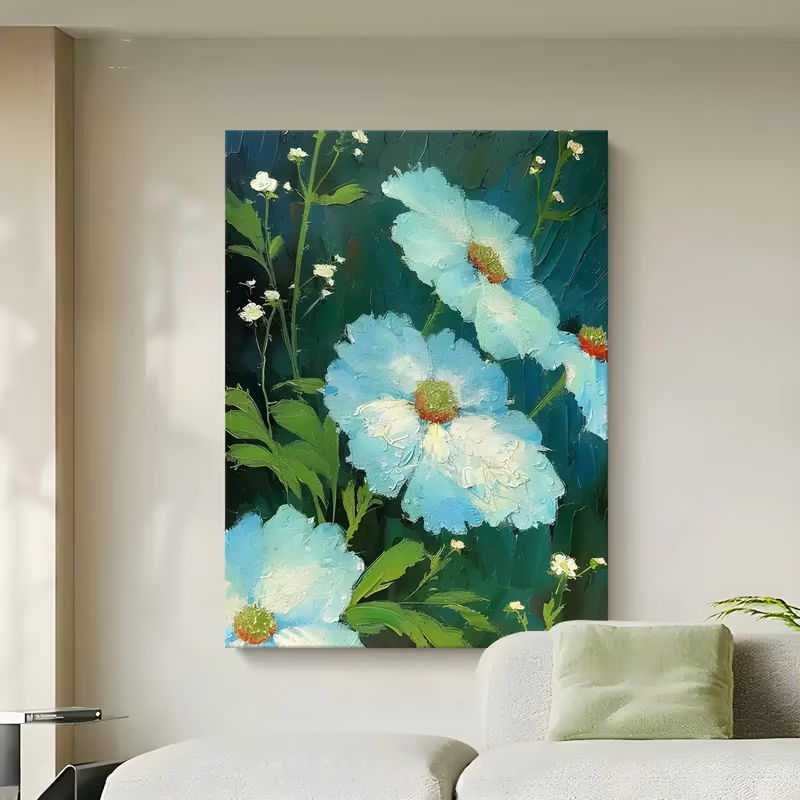
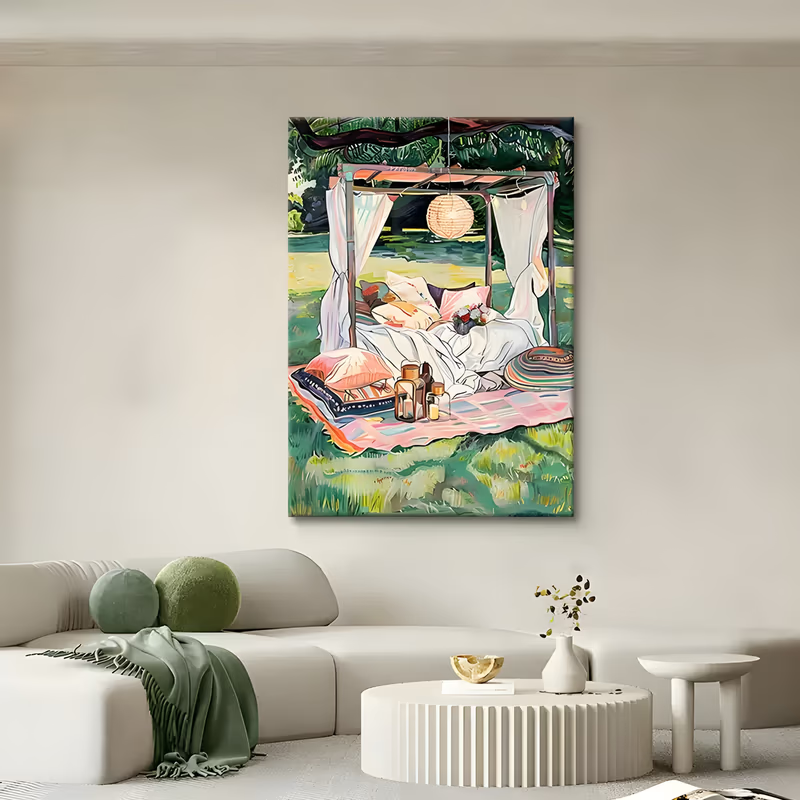
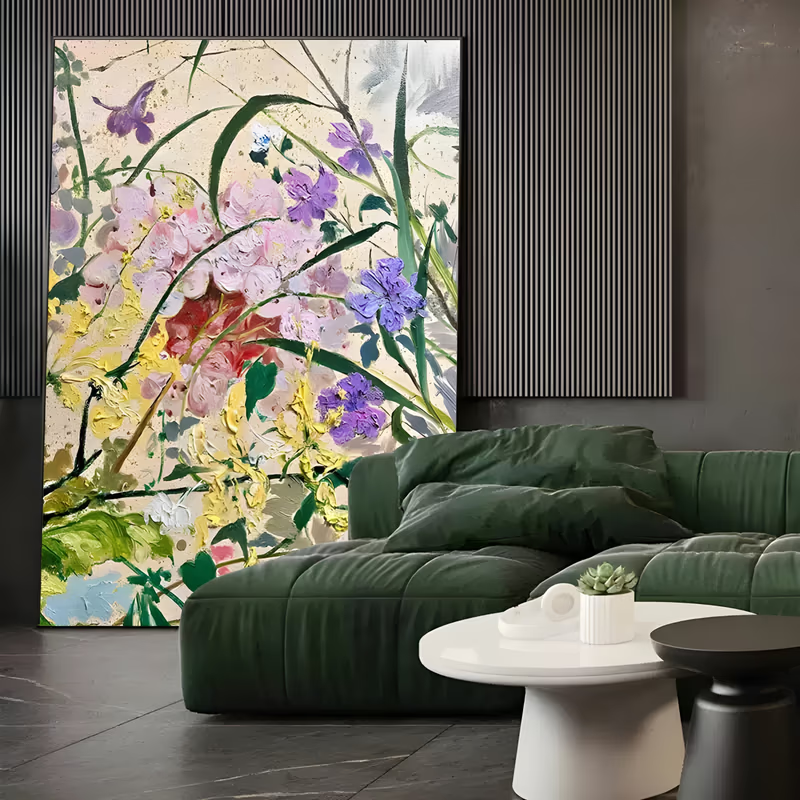
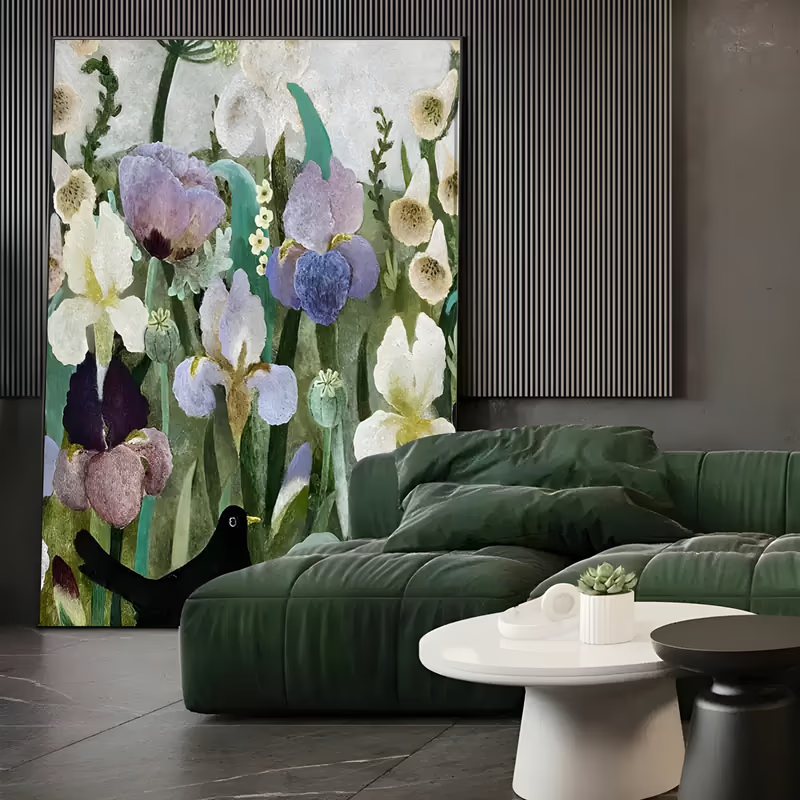
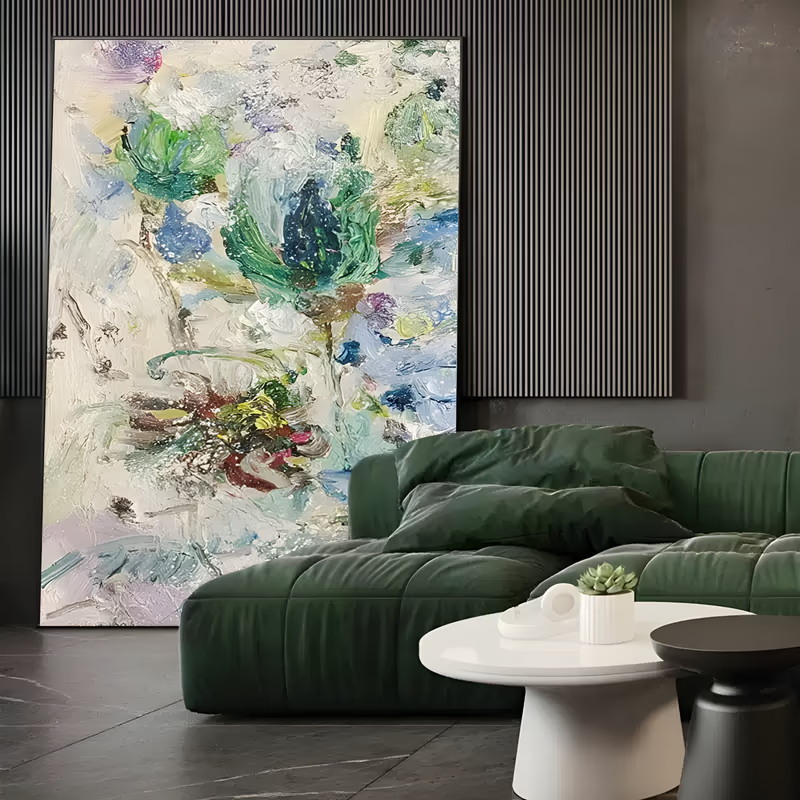
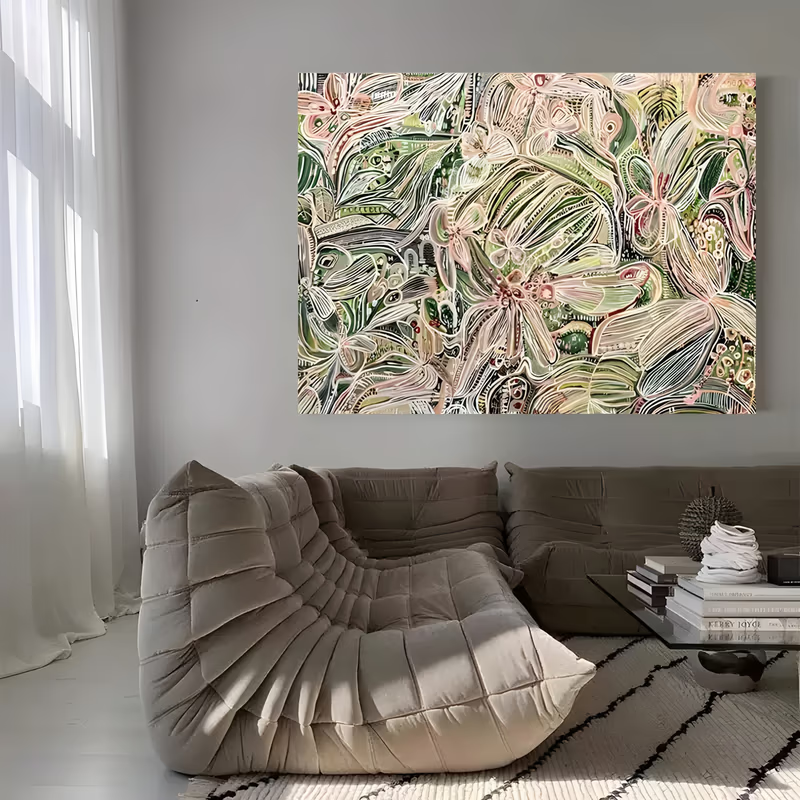
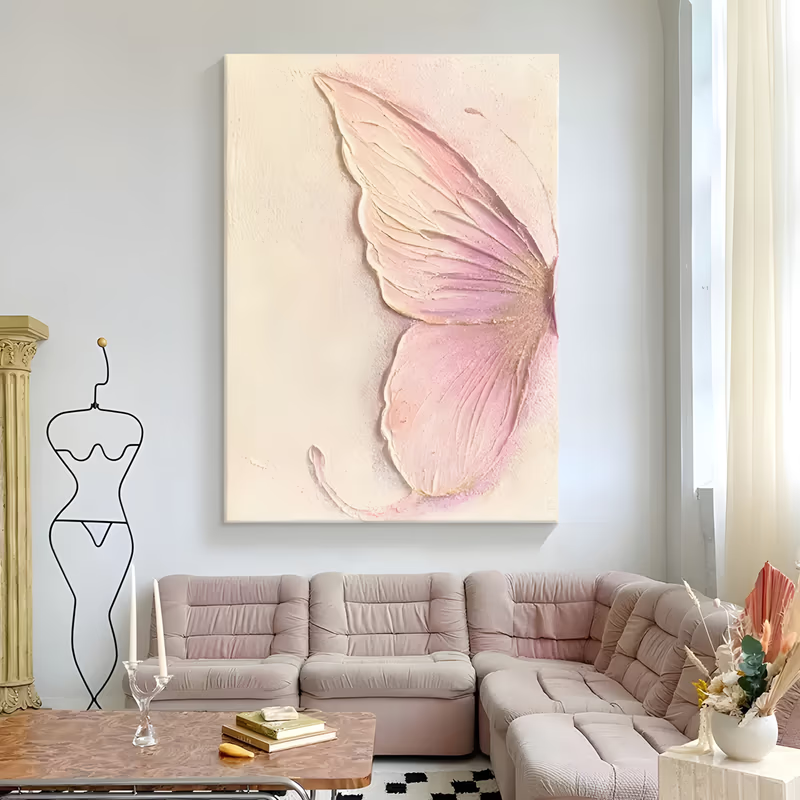
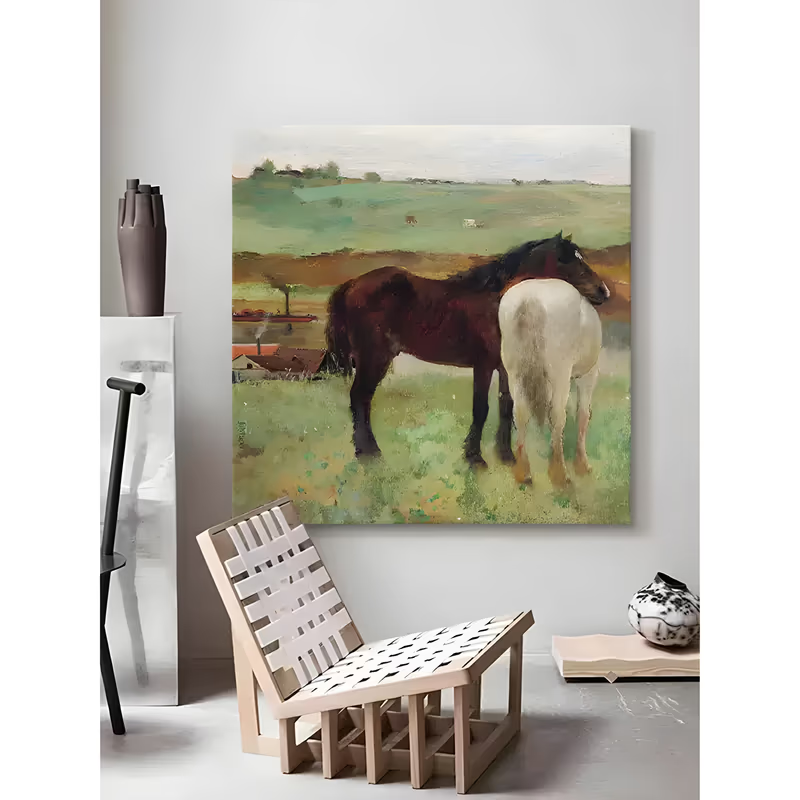
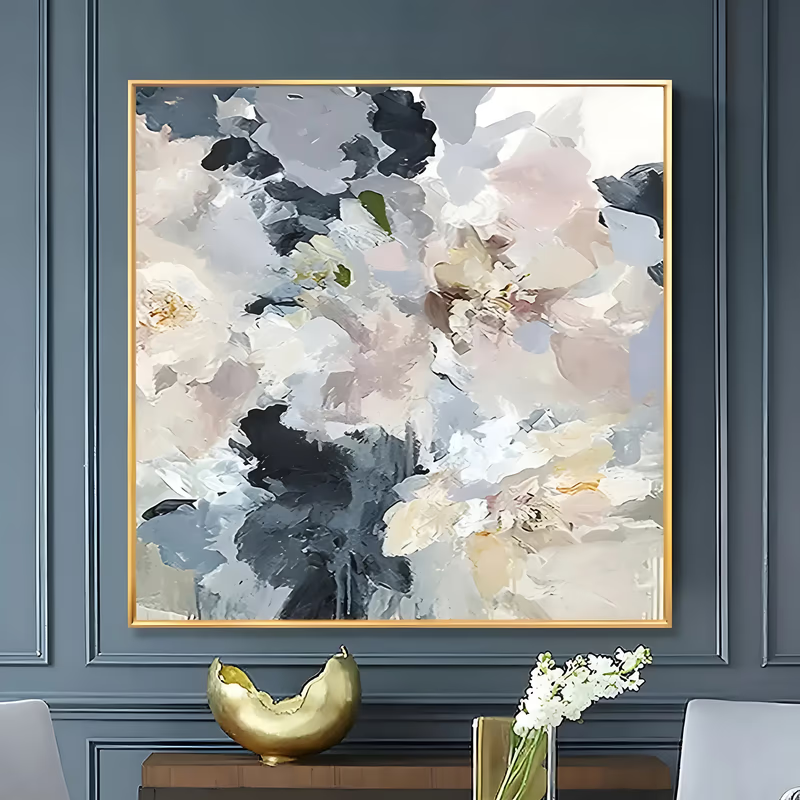
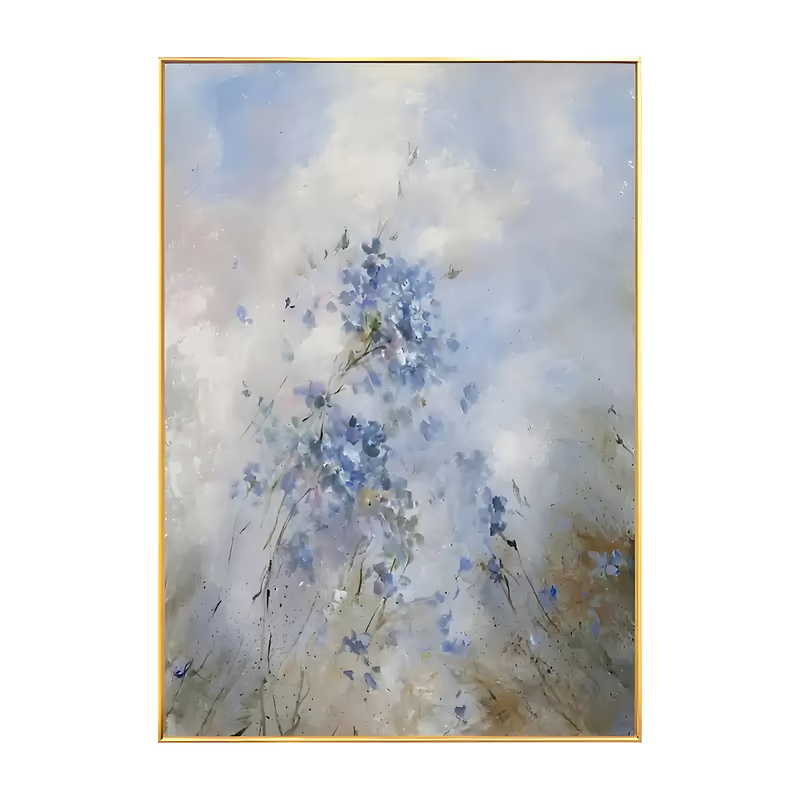
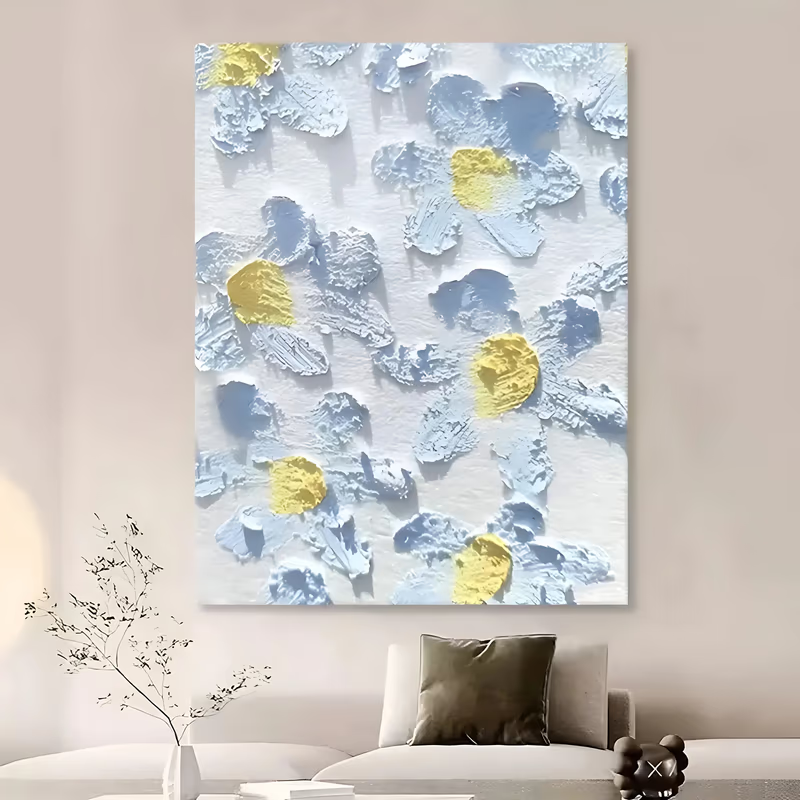
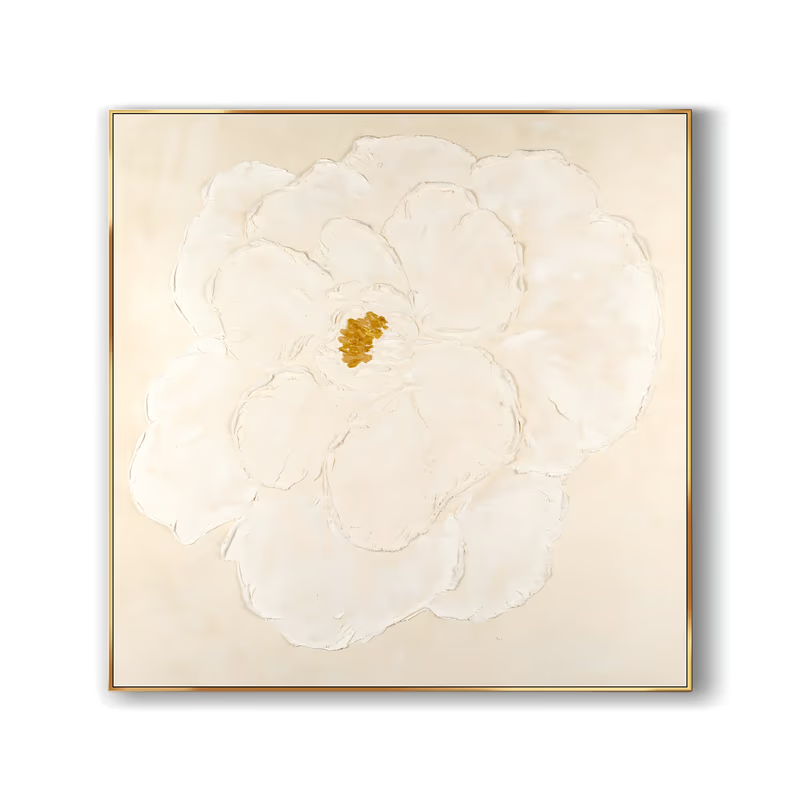
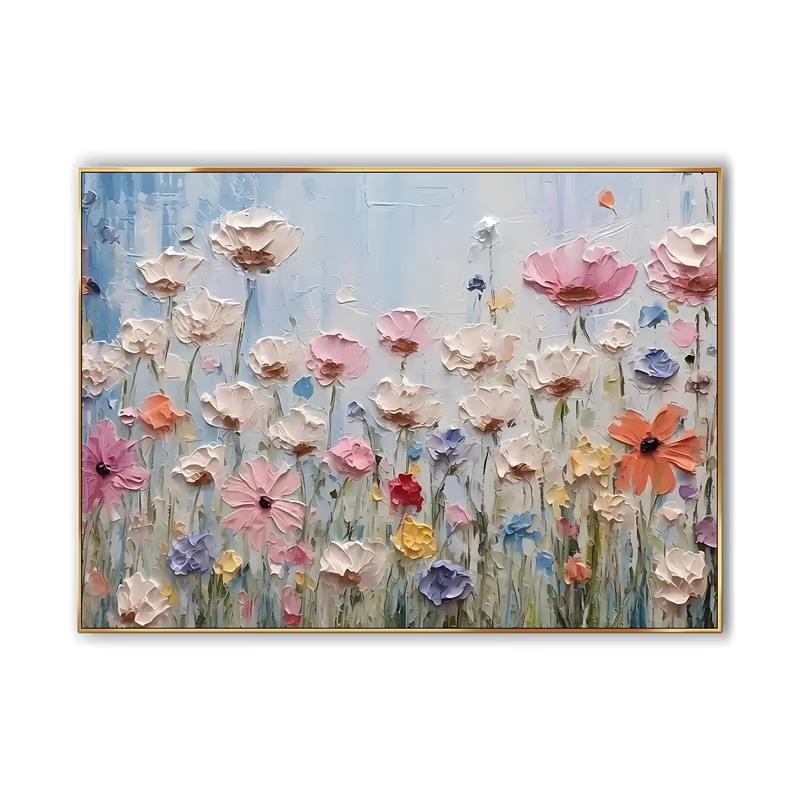
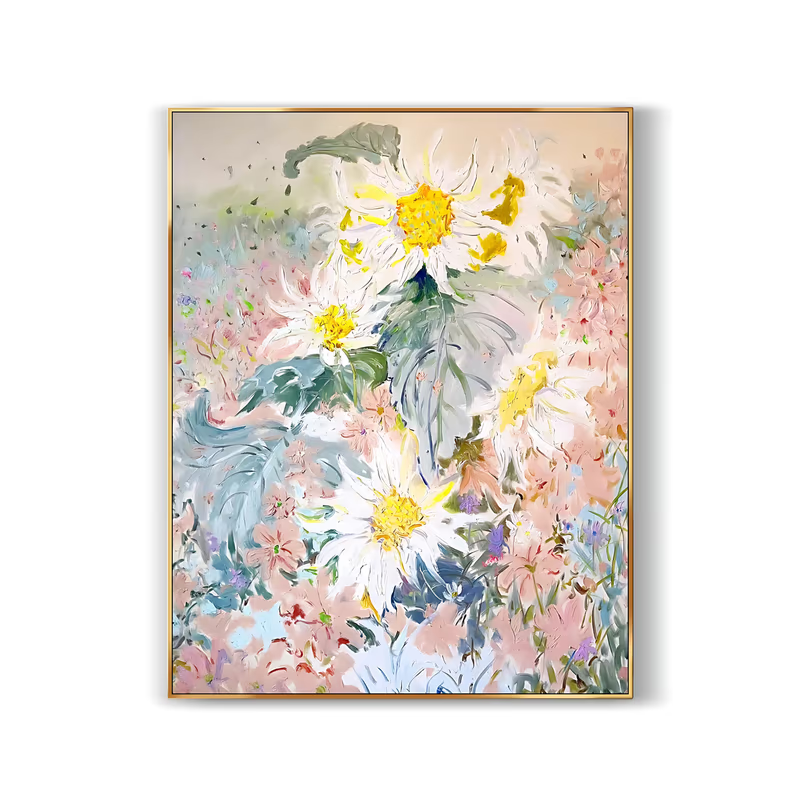
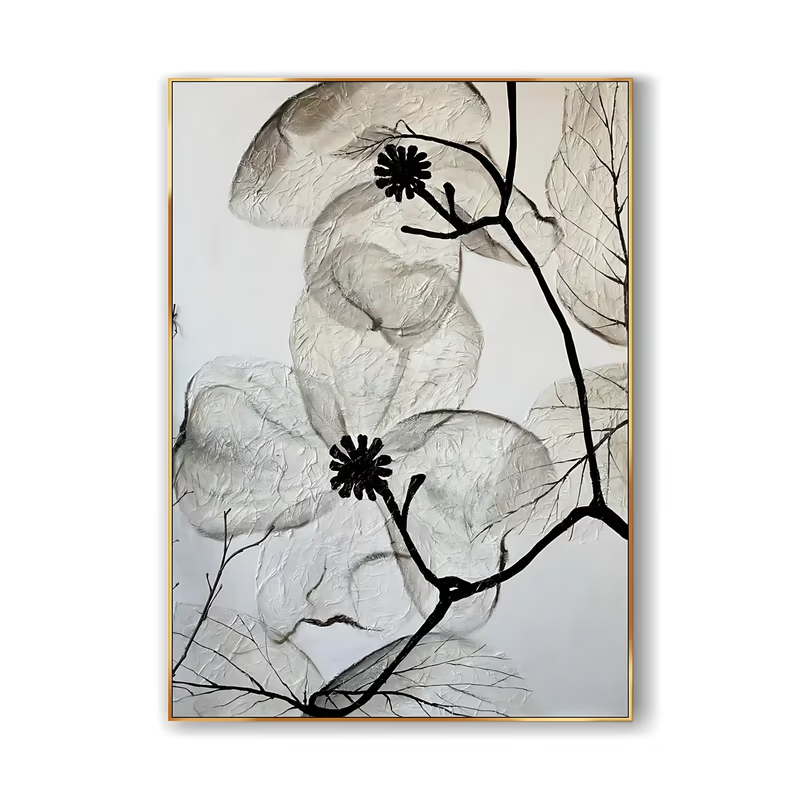
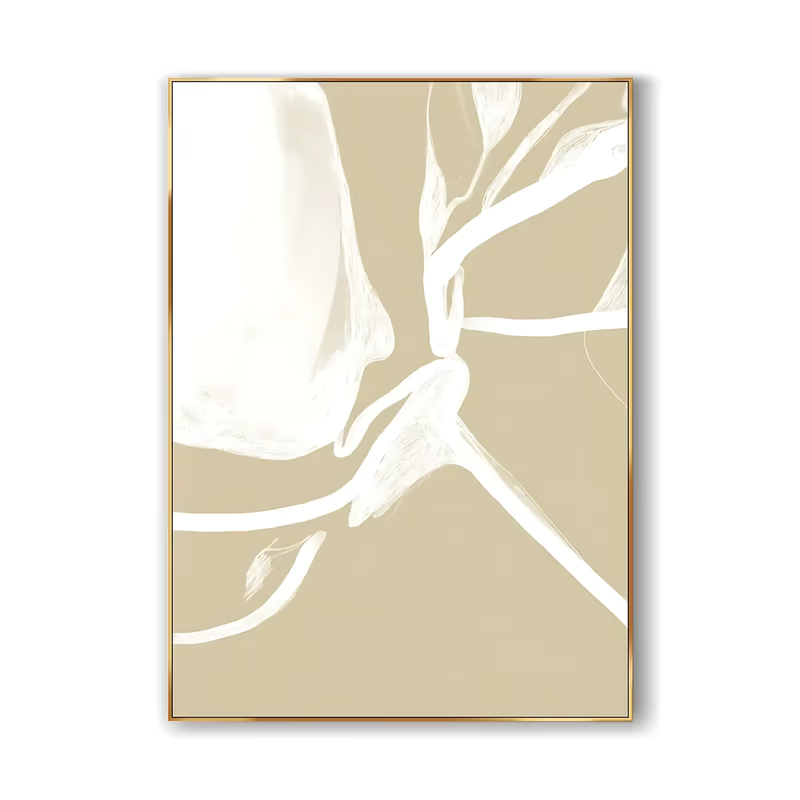
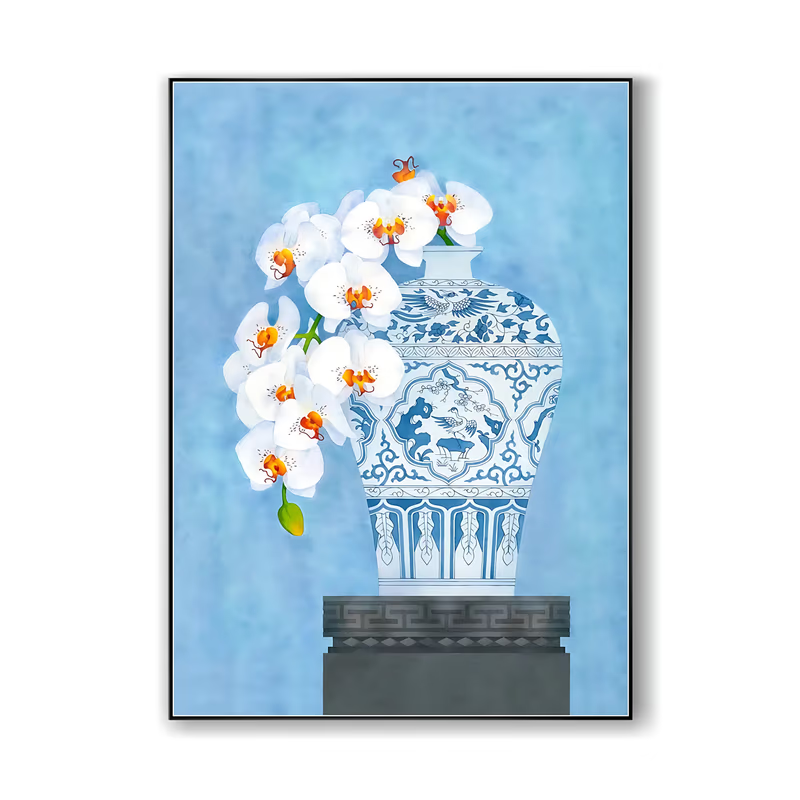
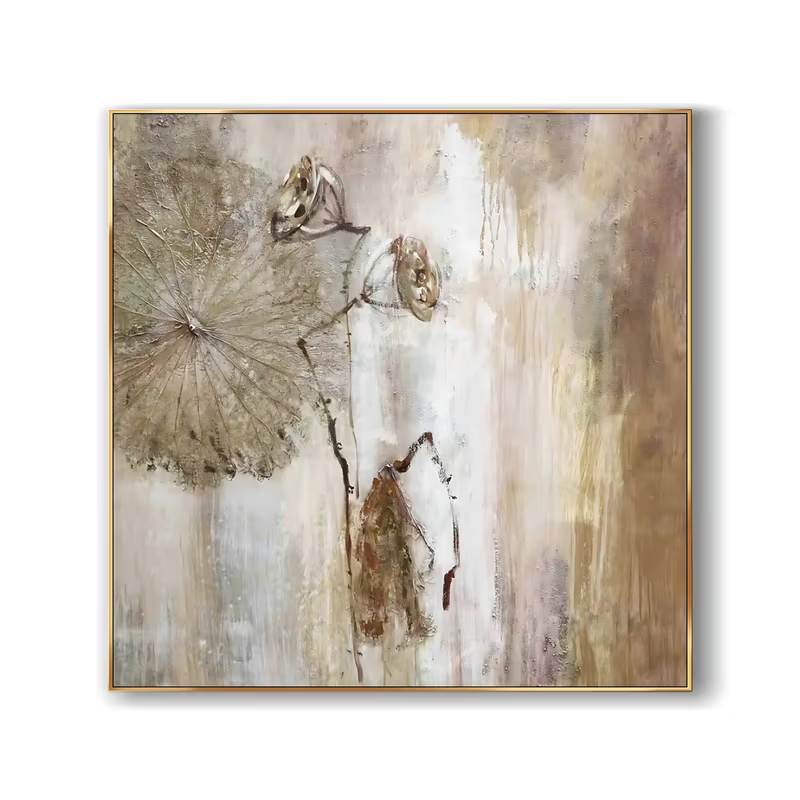
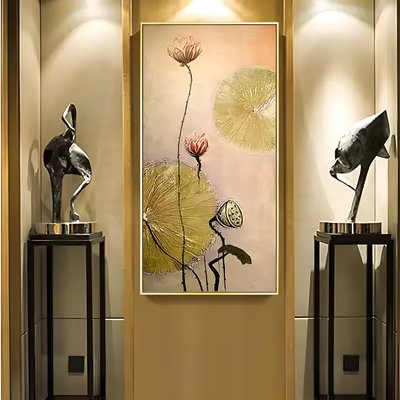
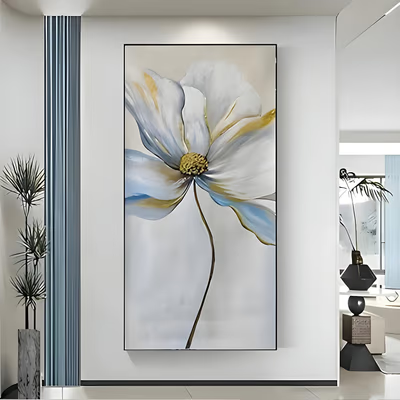
One white bloom against blue and gold, a blossom branch in relief across sage, sculpted peach petals on cream plaster. With one subject and generous space around it, a flower painting becomes contemplative rather than decorative, which suits bedrooms and quiet hotel rooms.
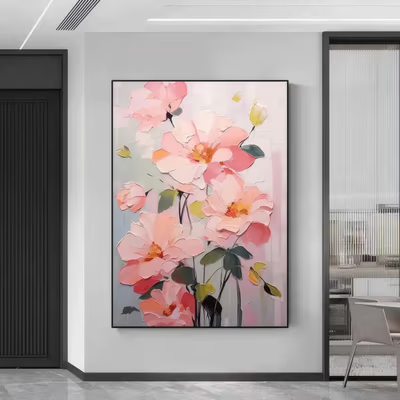
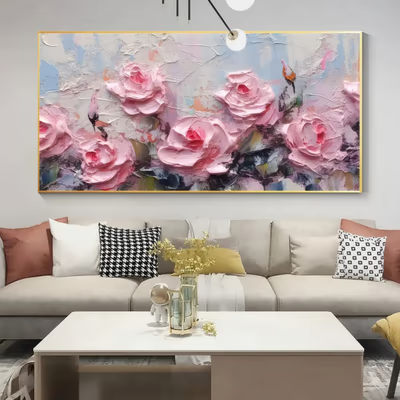
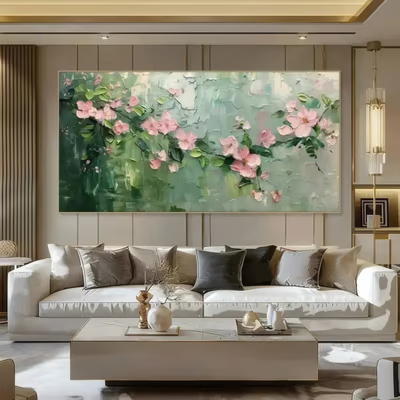
Minimal and wabi-sabi abstracts
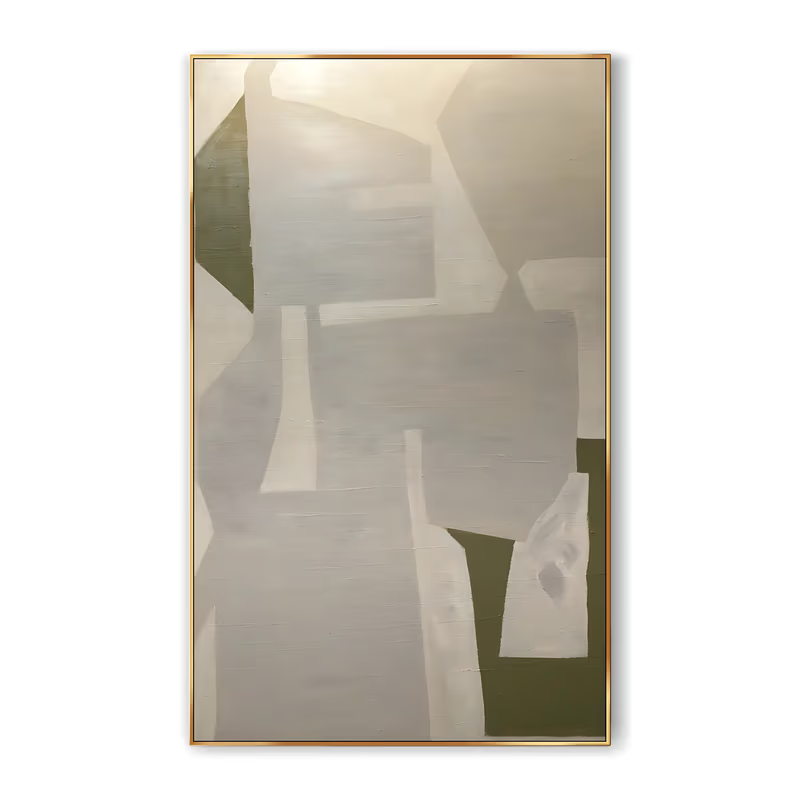
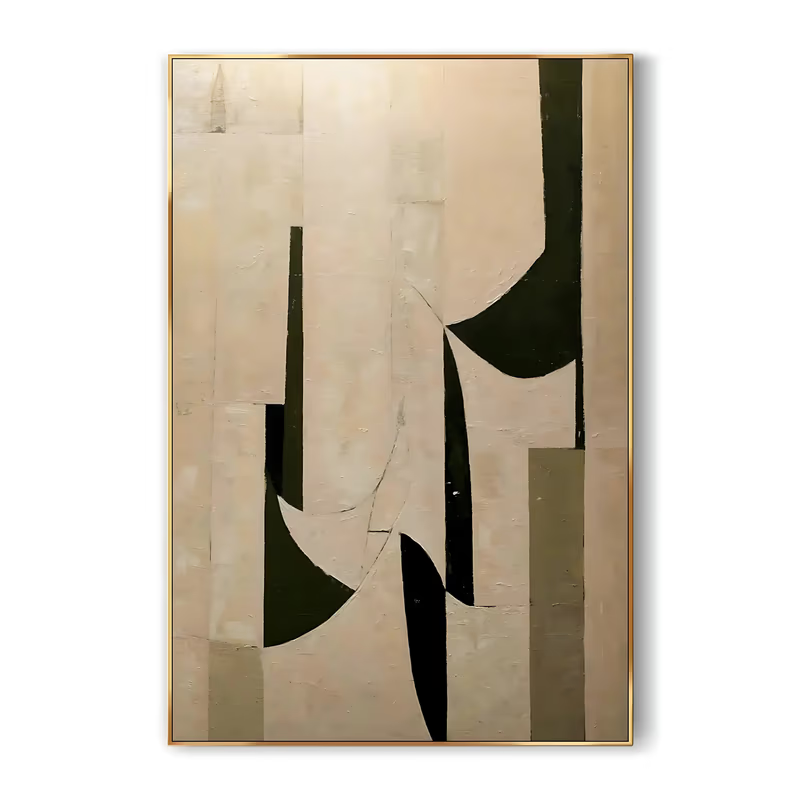
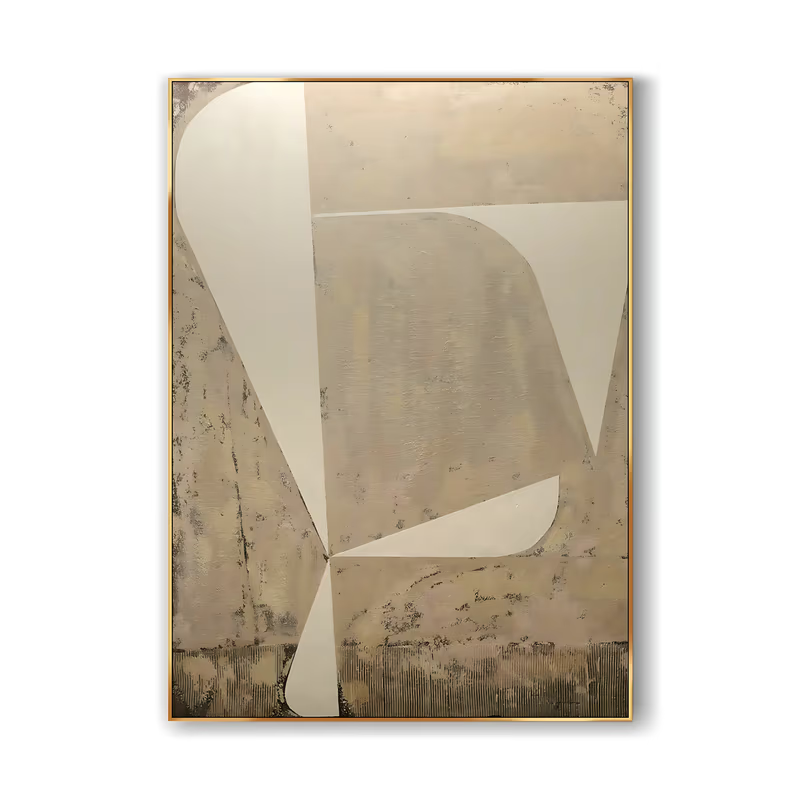
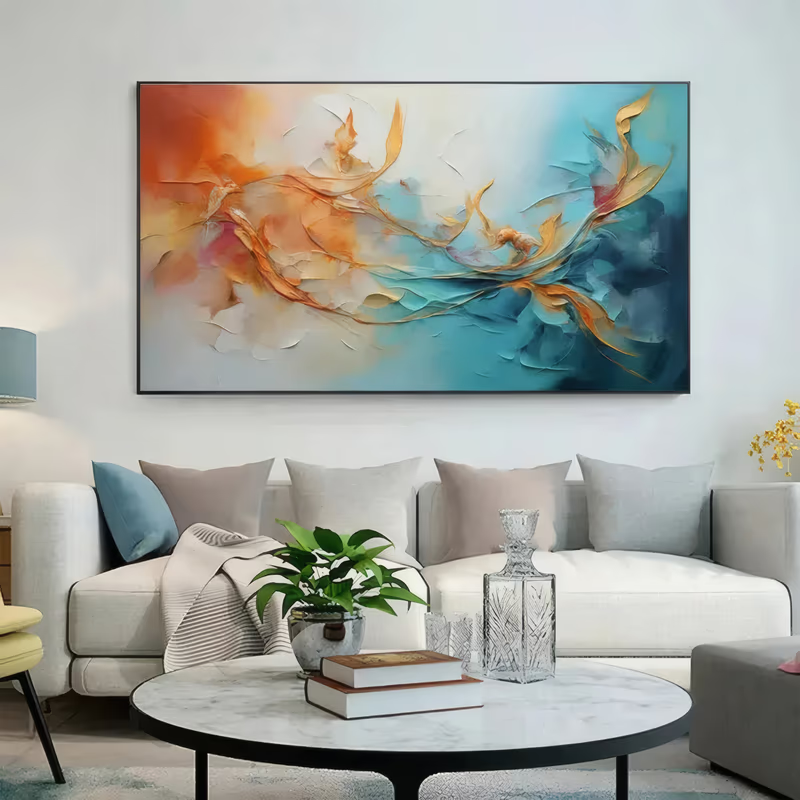
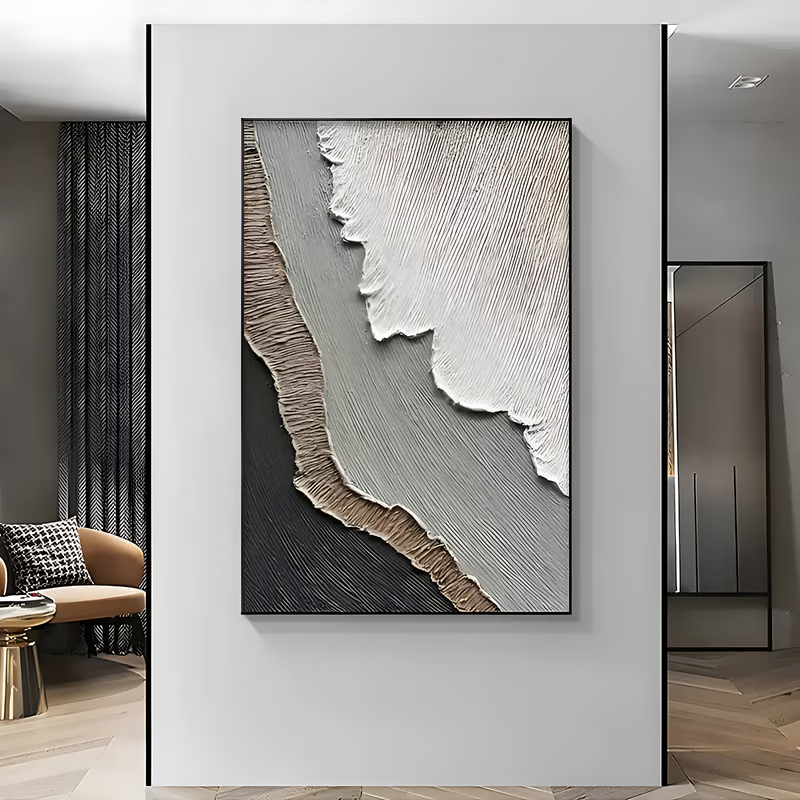
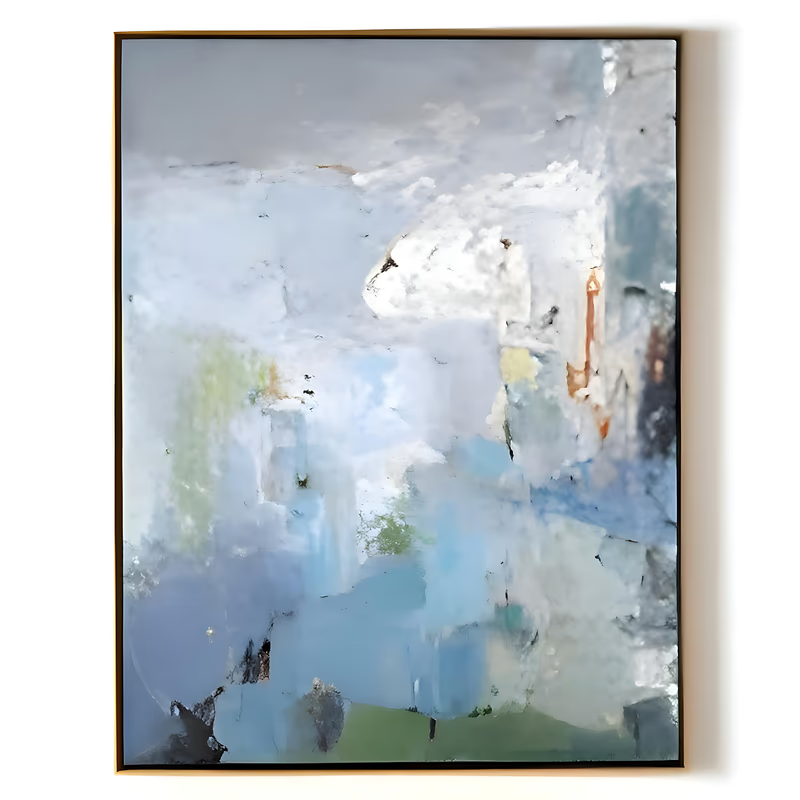
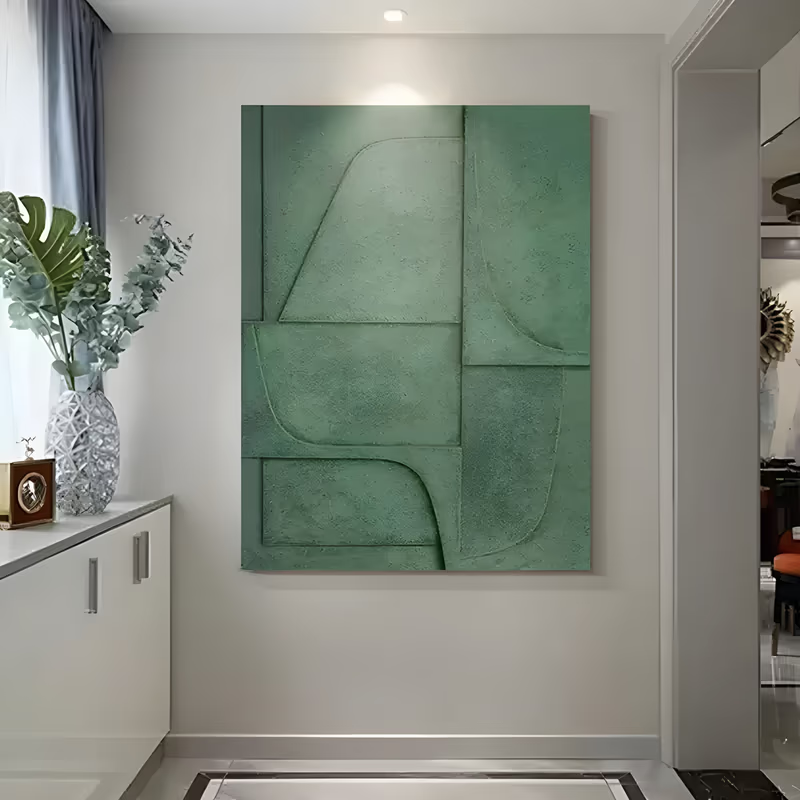
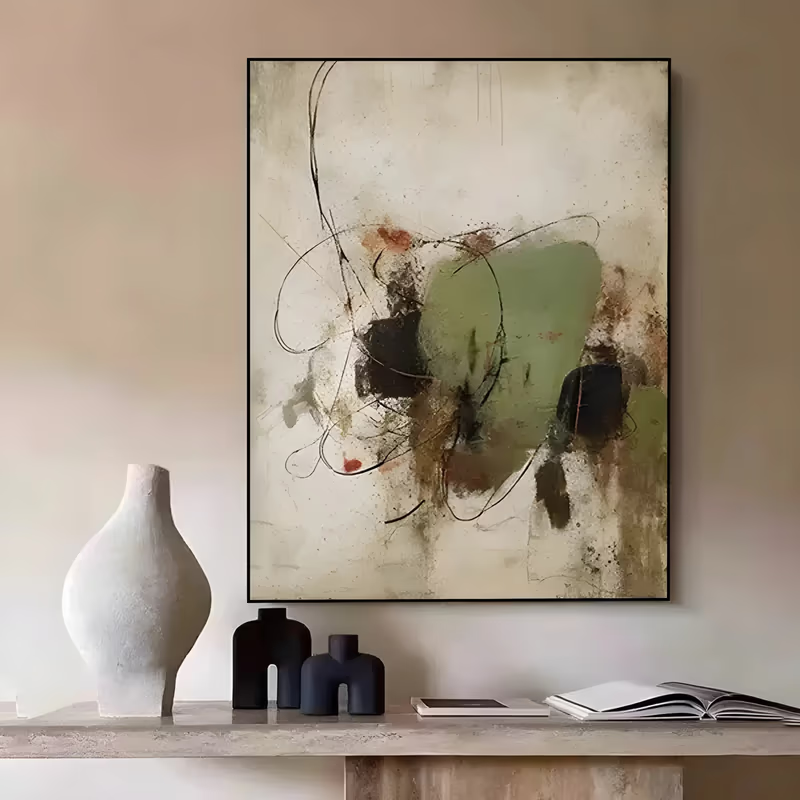
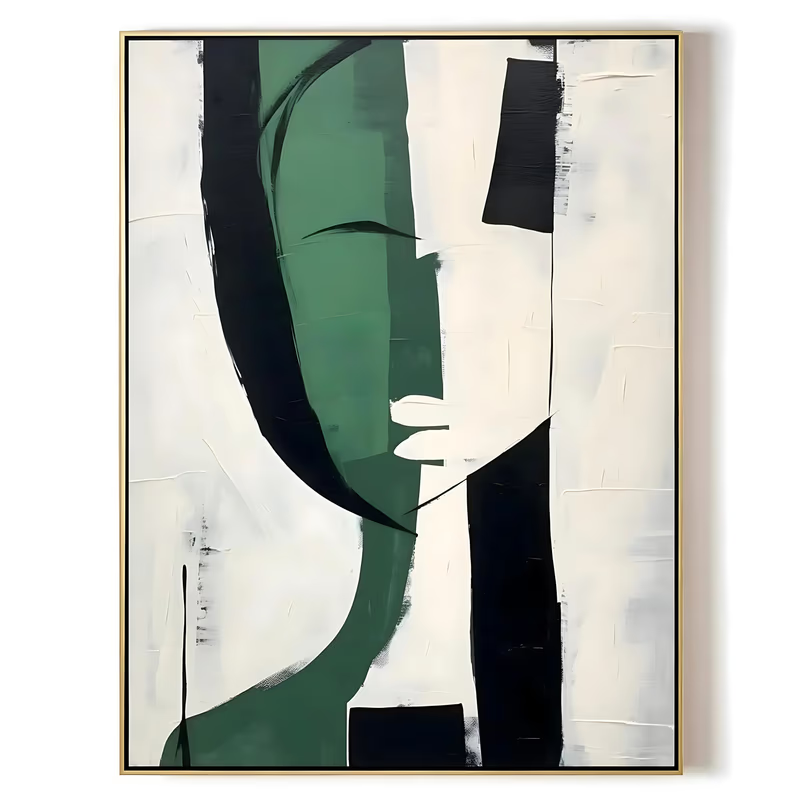
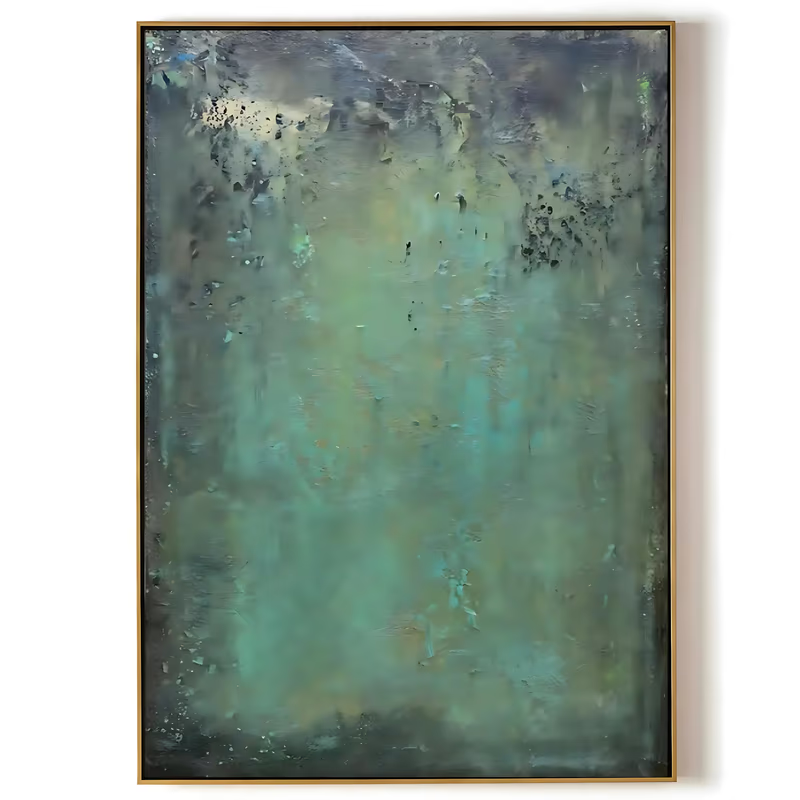
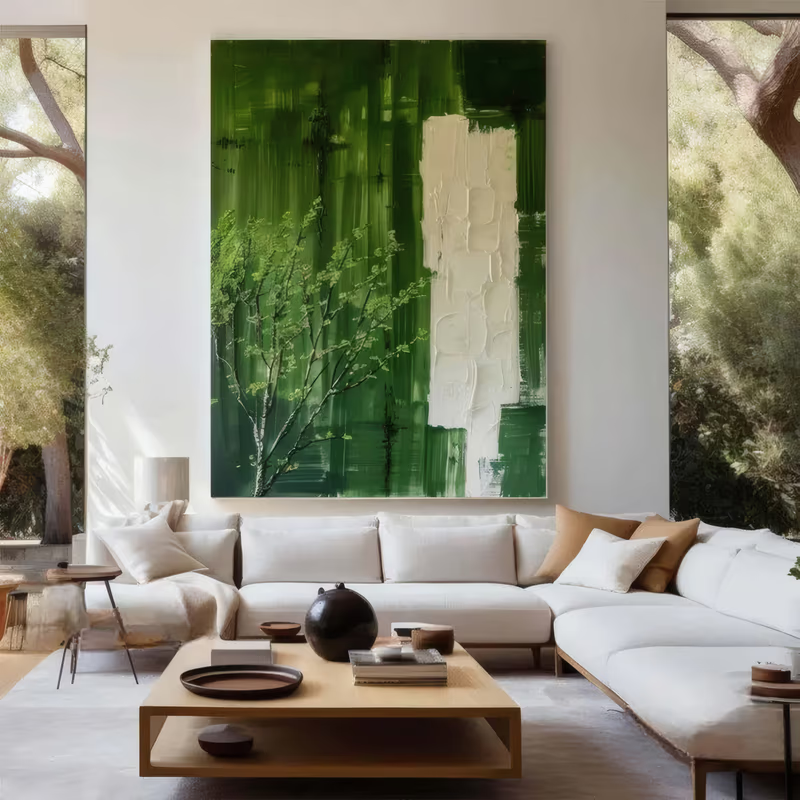
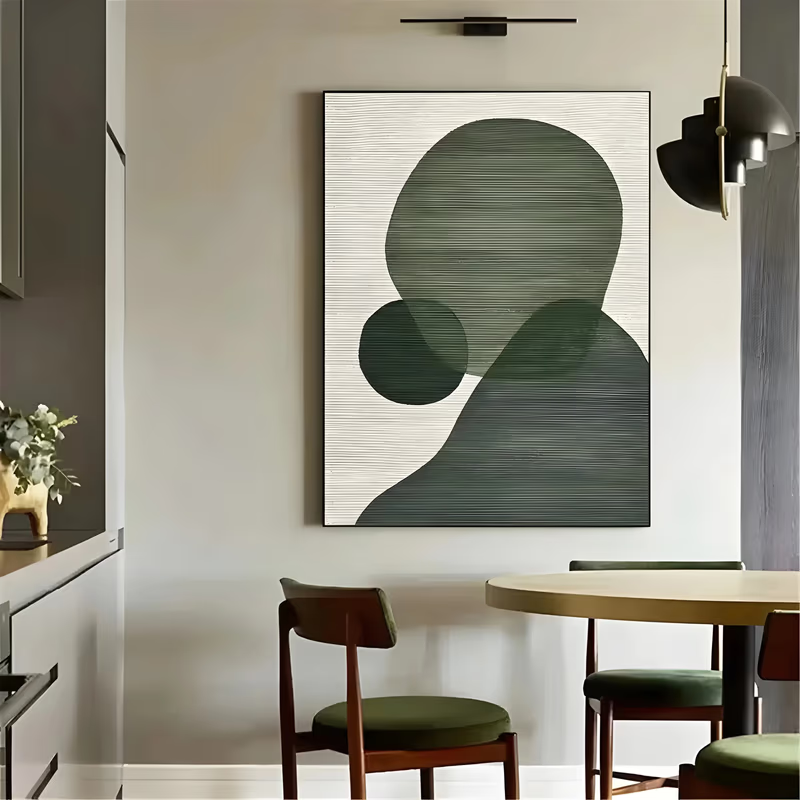
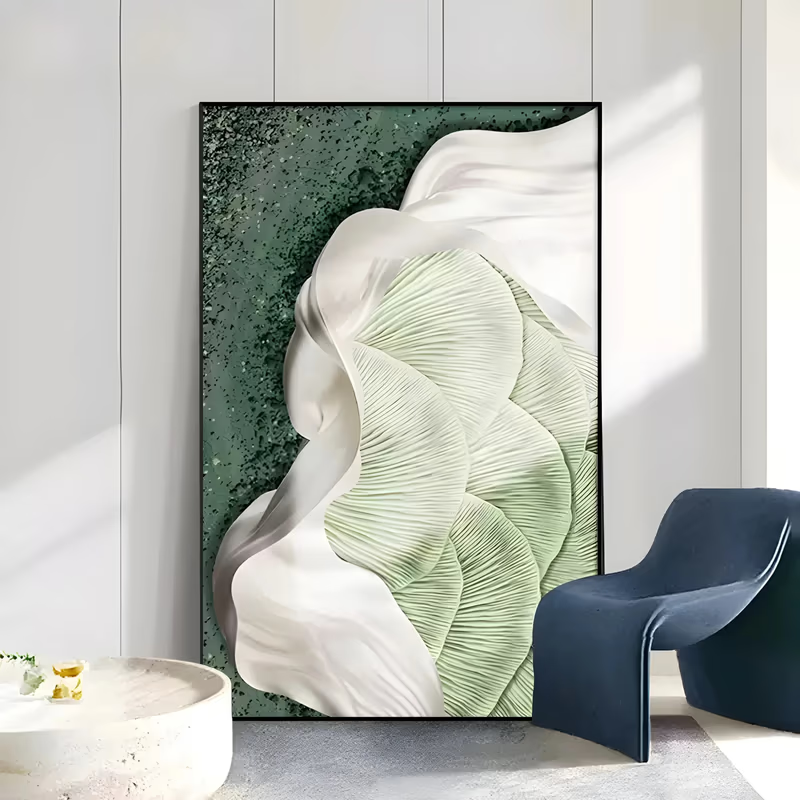
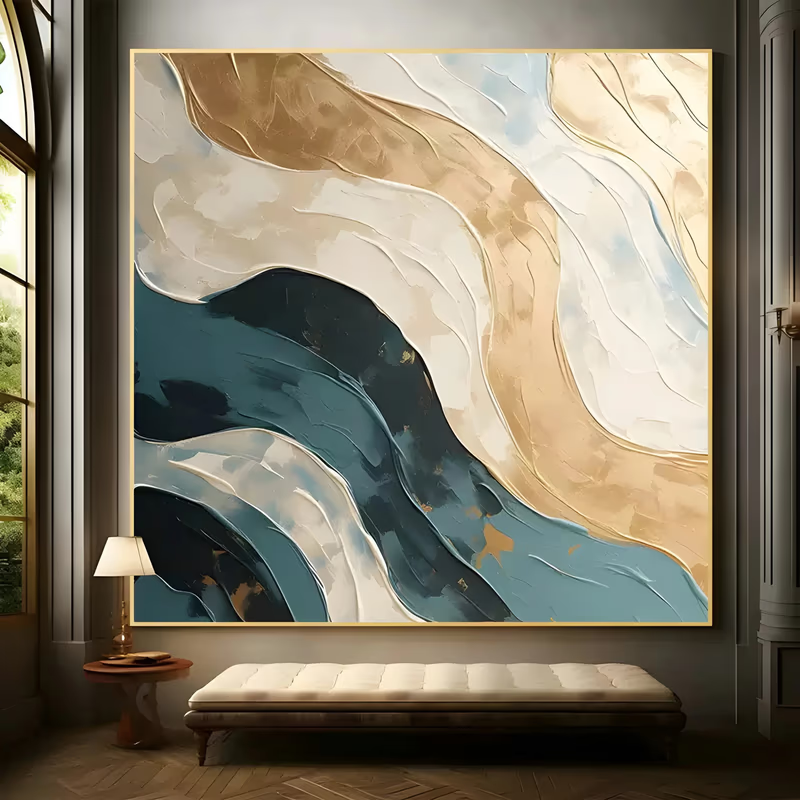
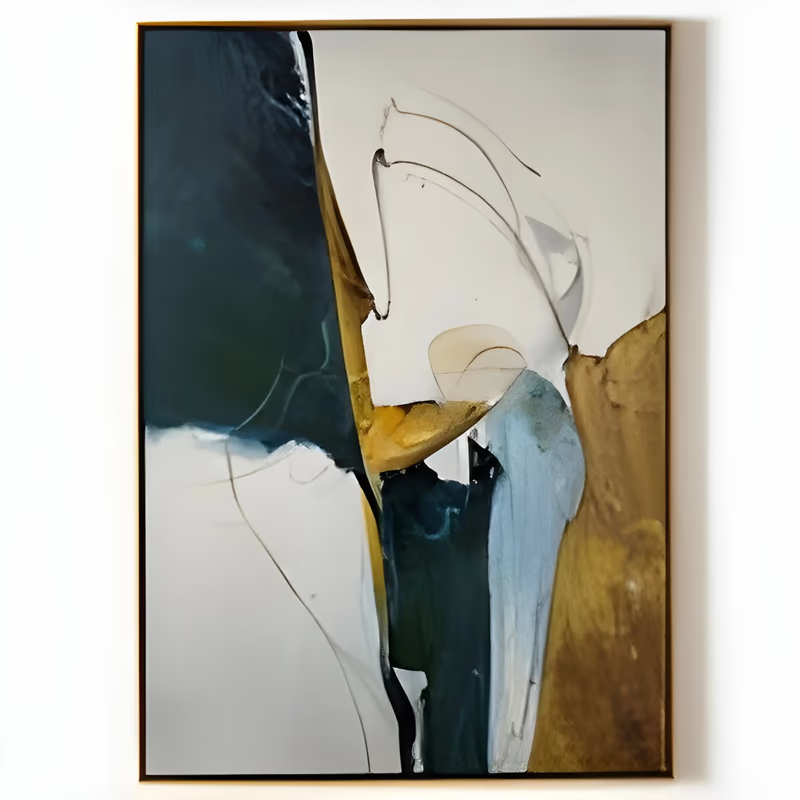
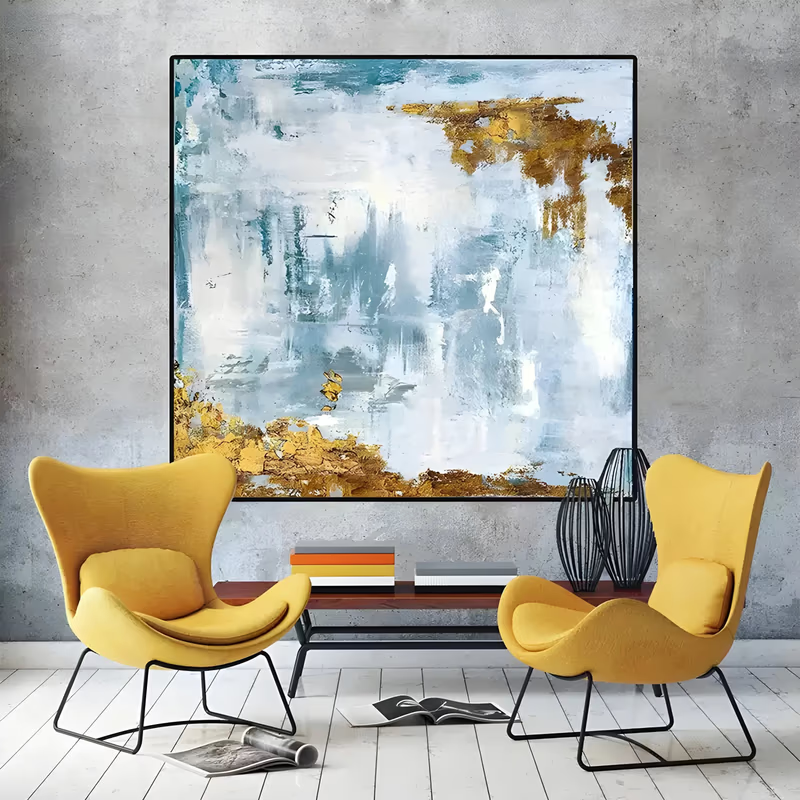
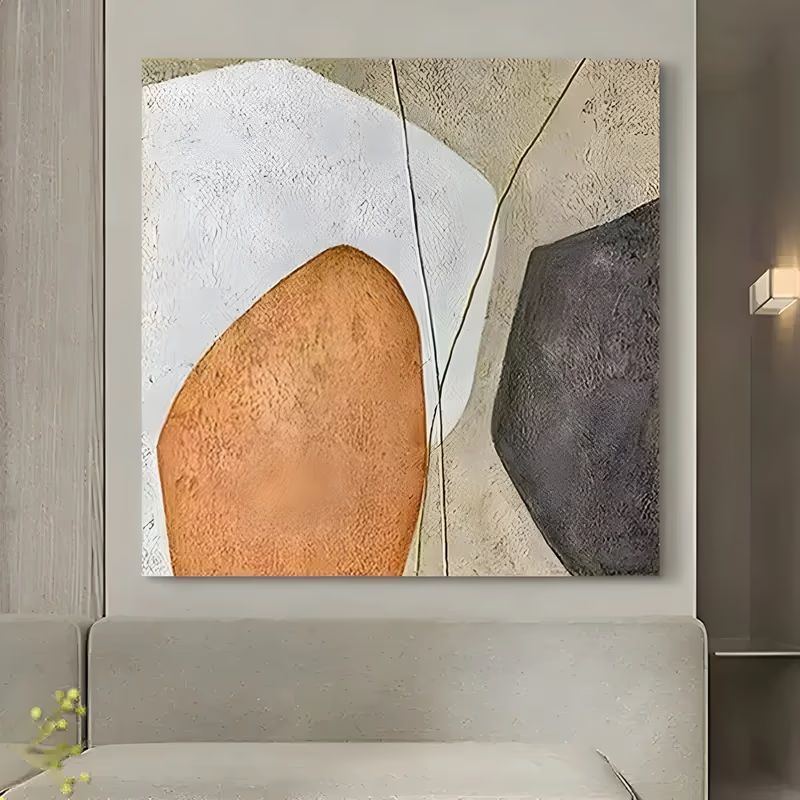
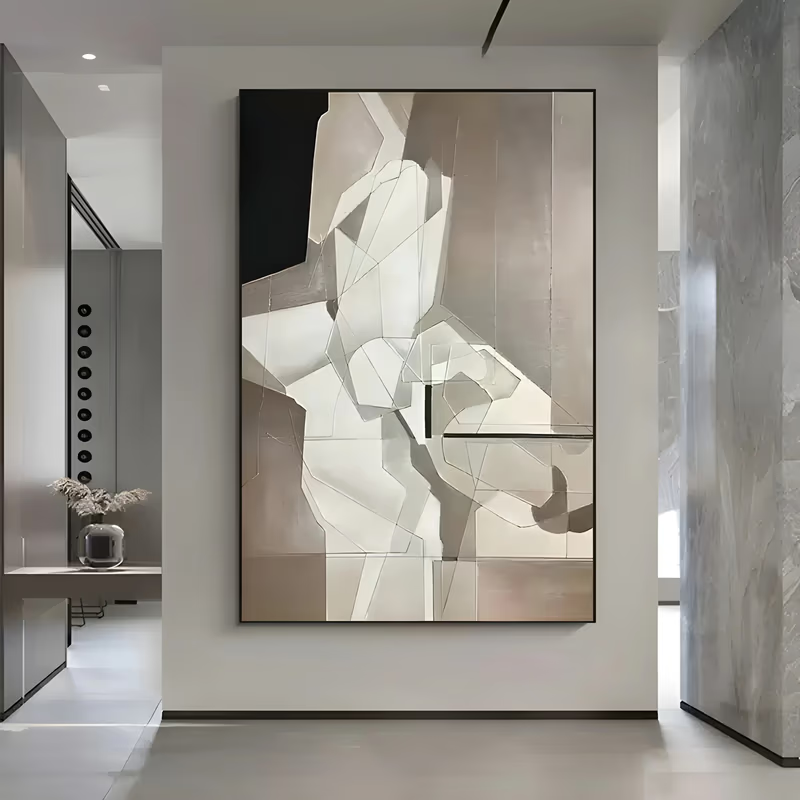
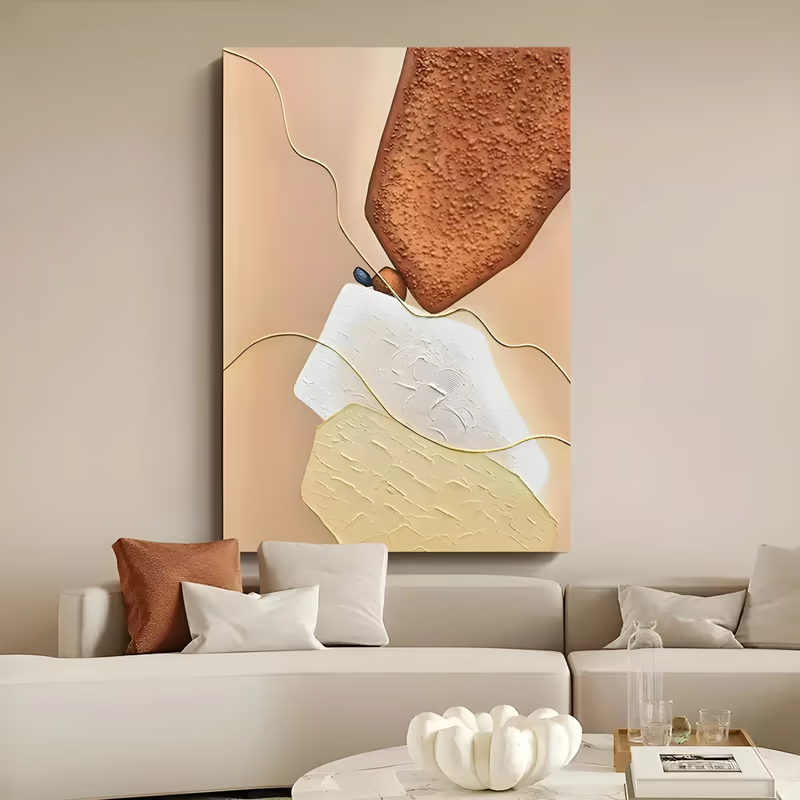
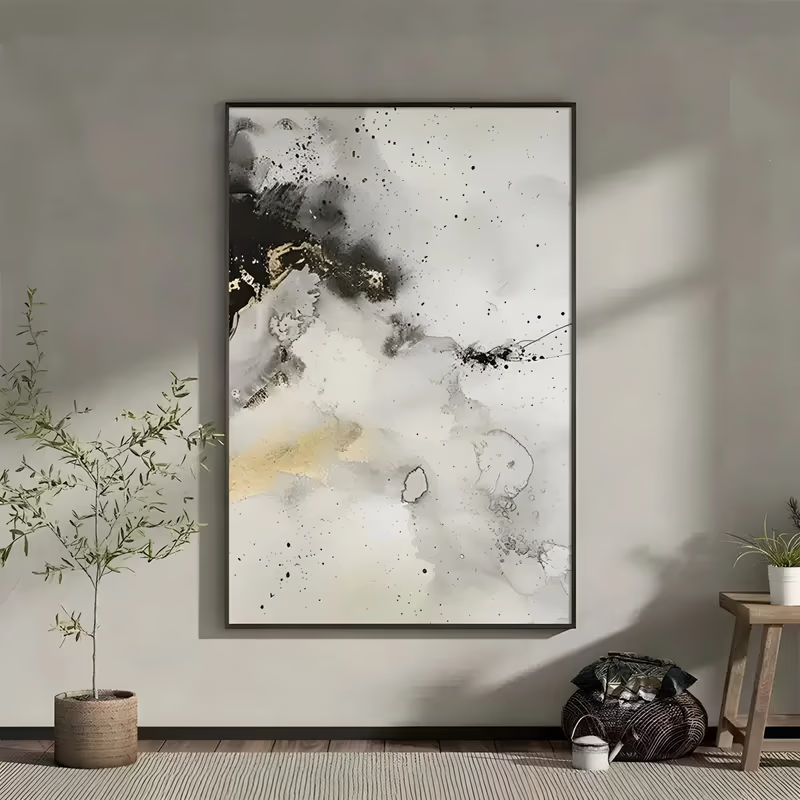
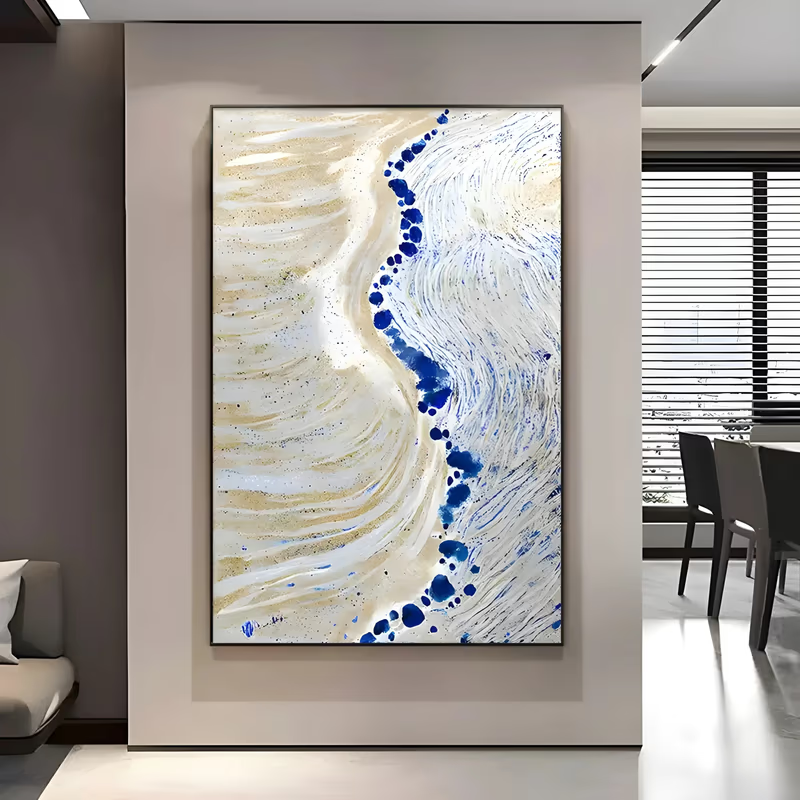
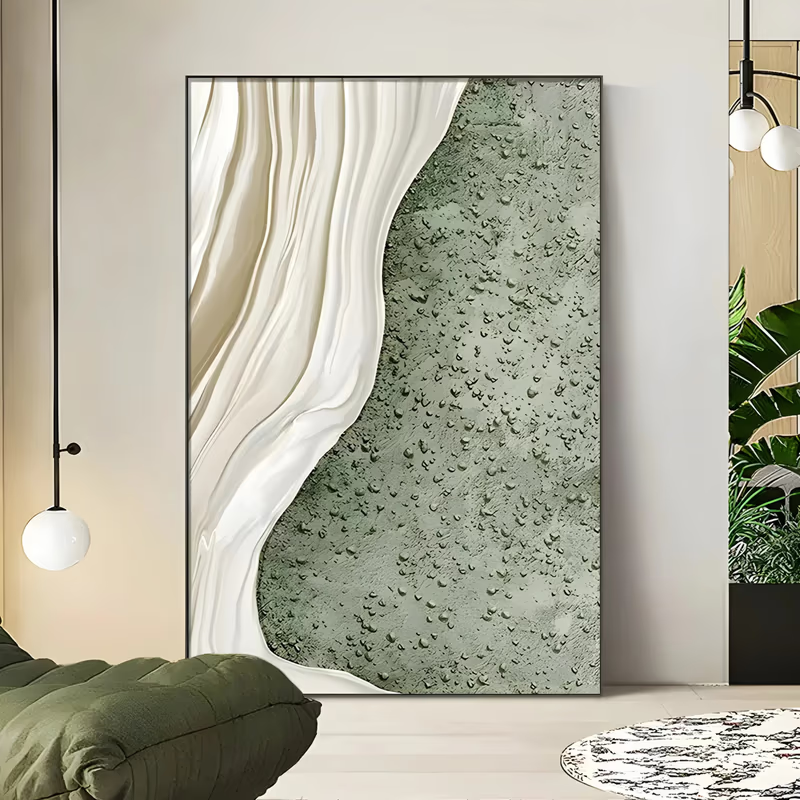
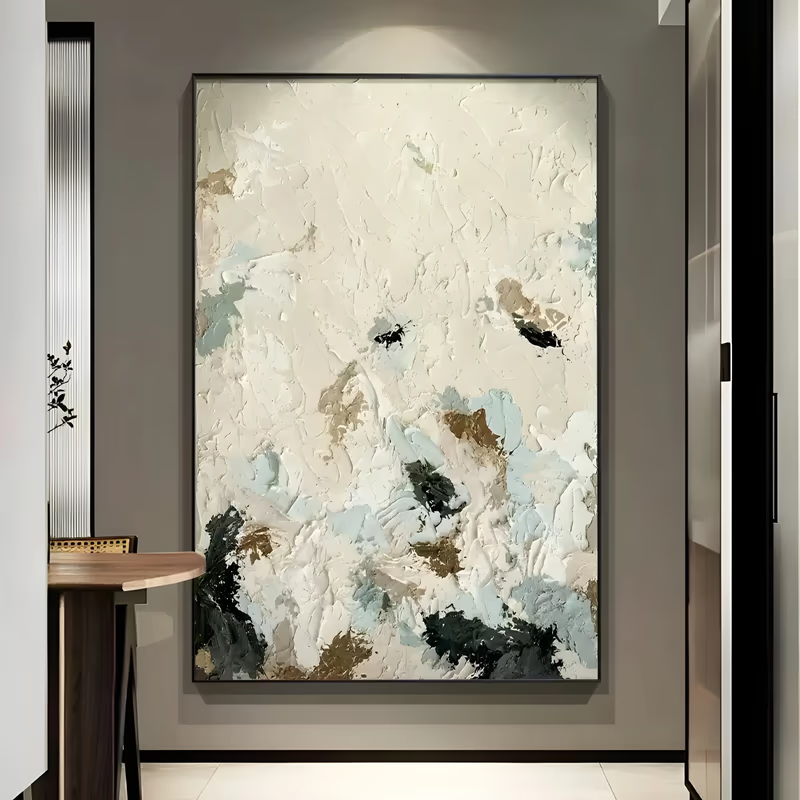
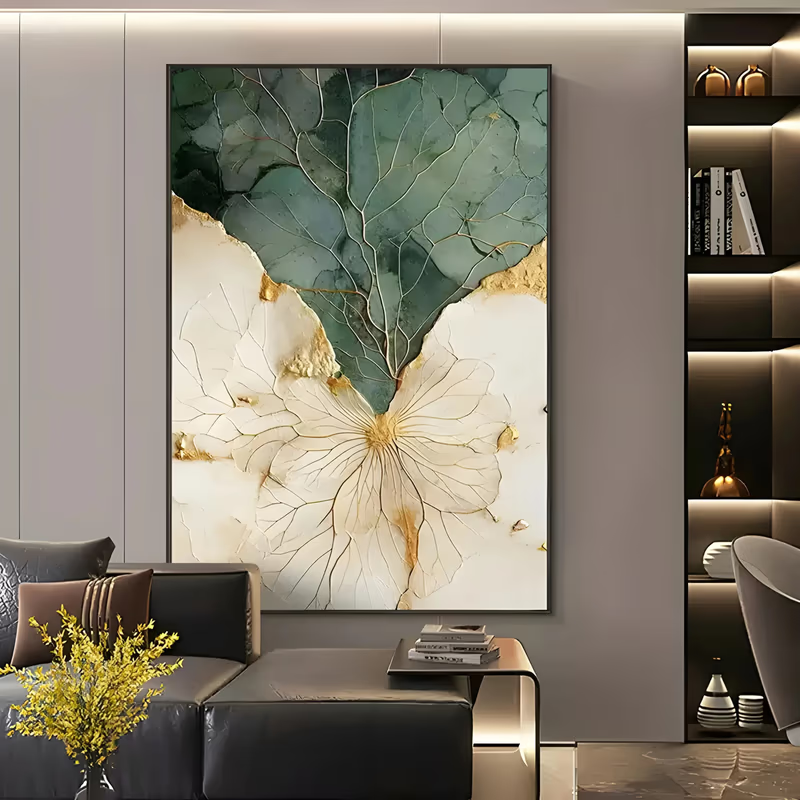
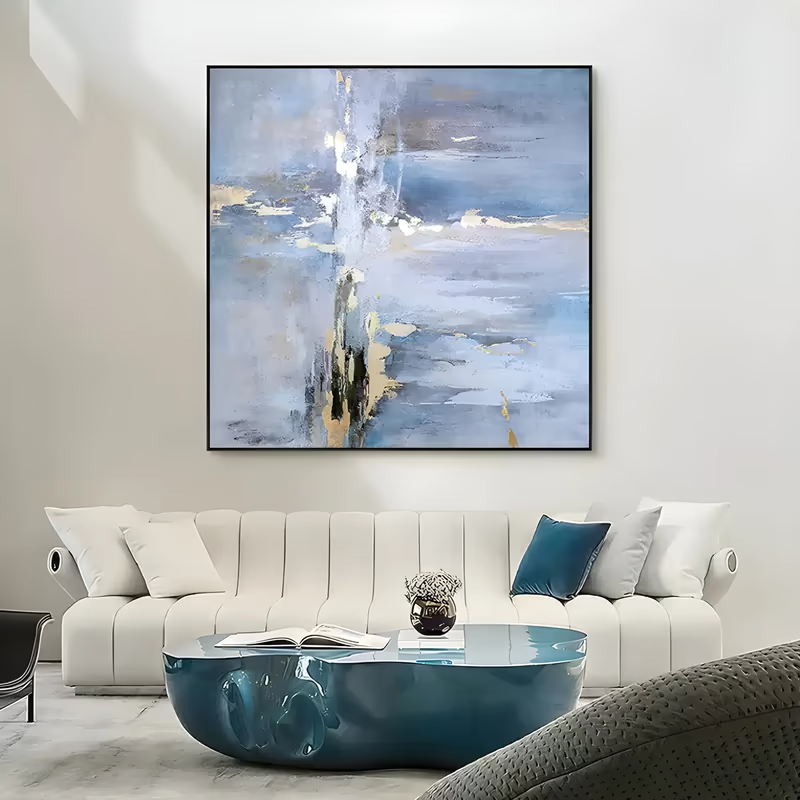
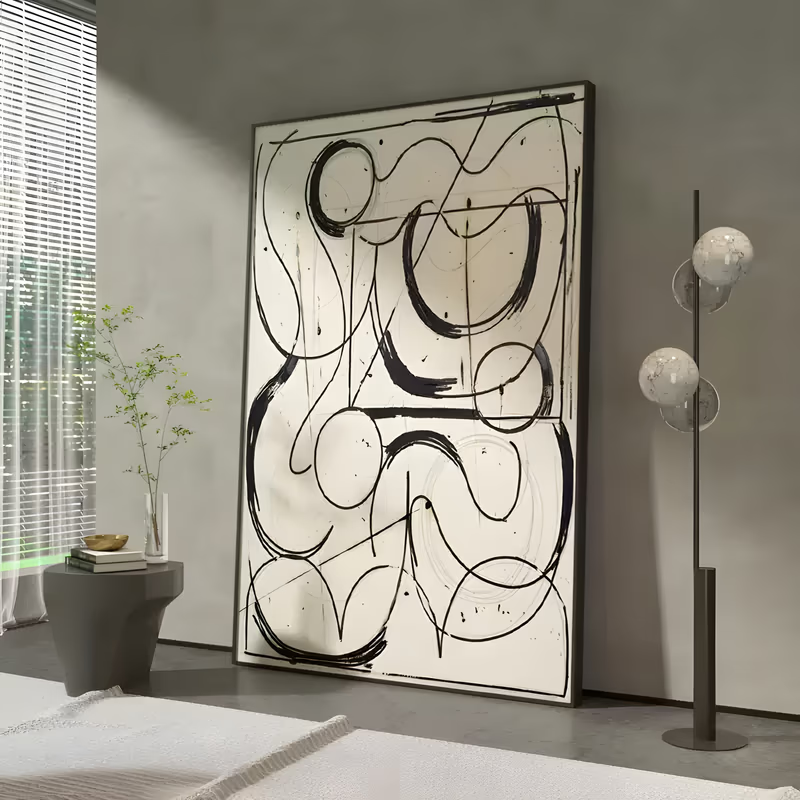
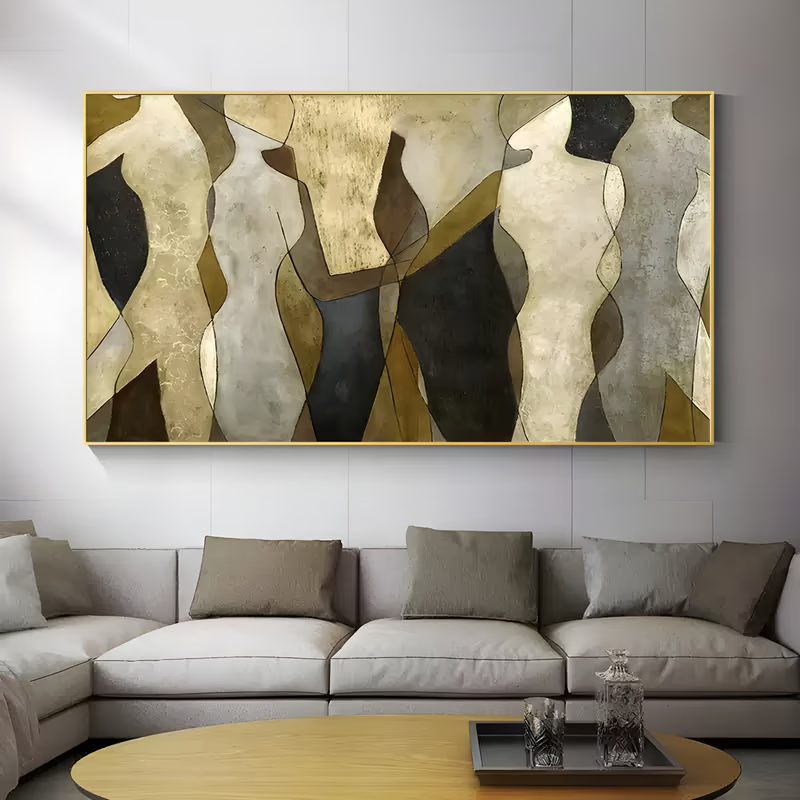
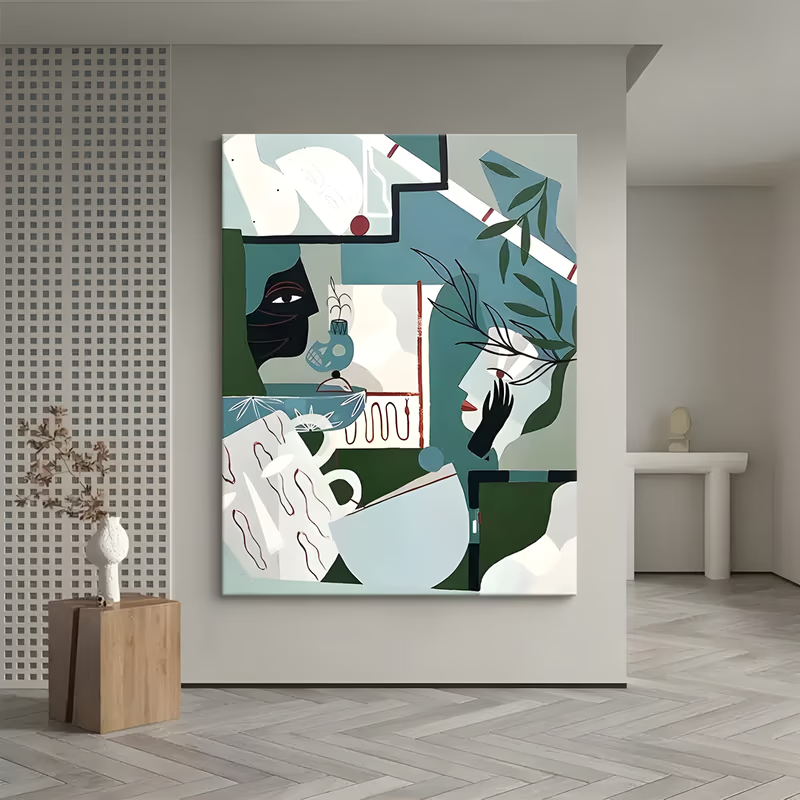
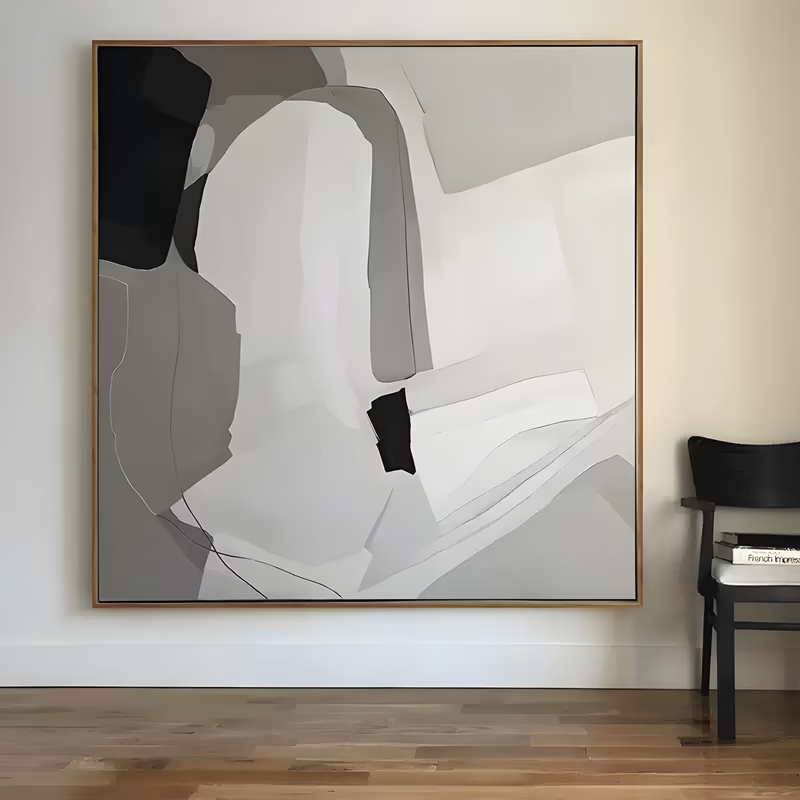
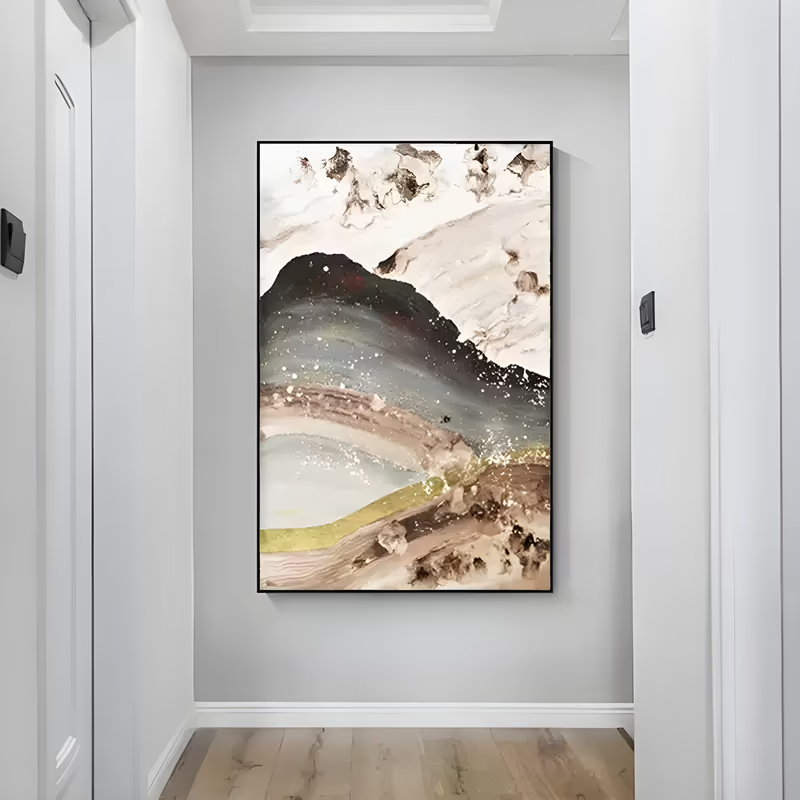
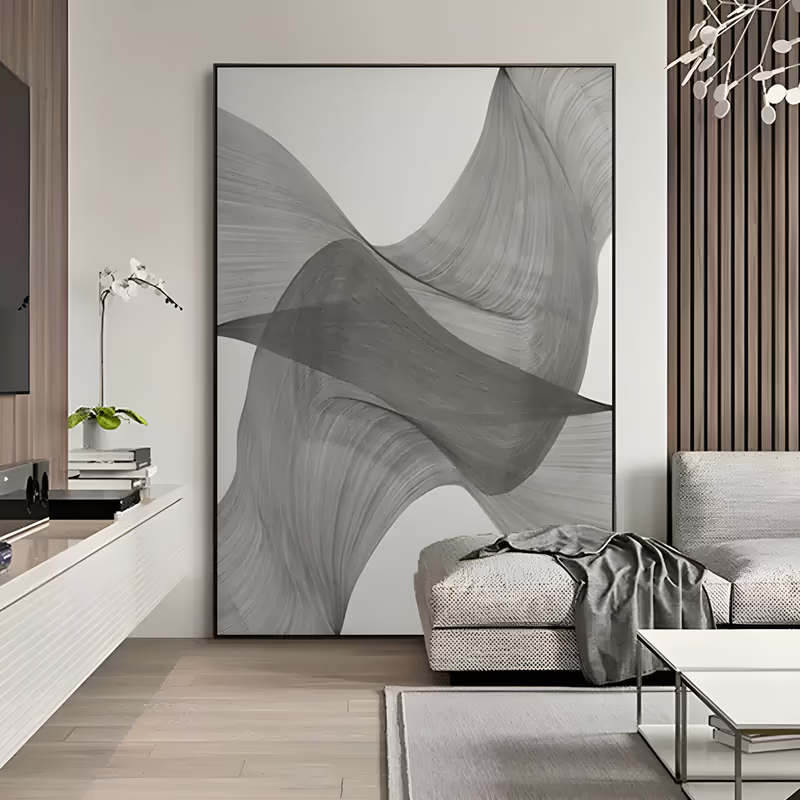
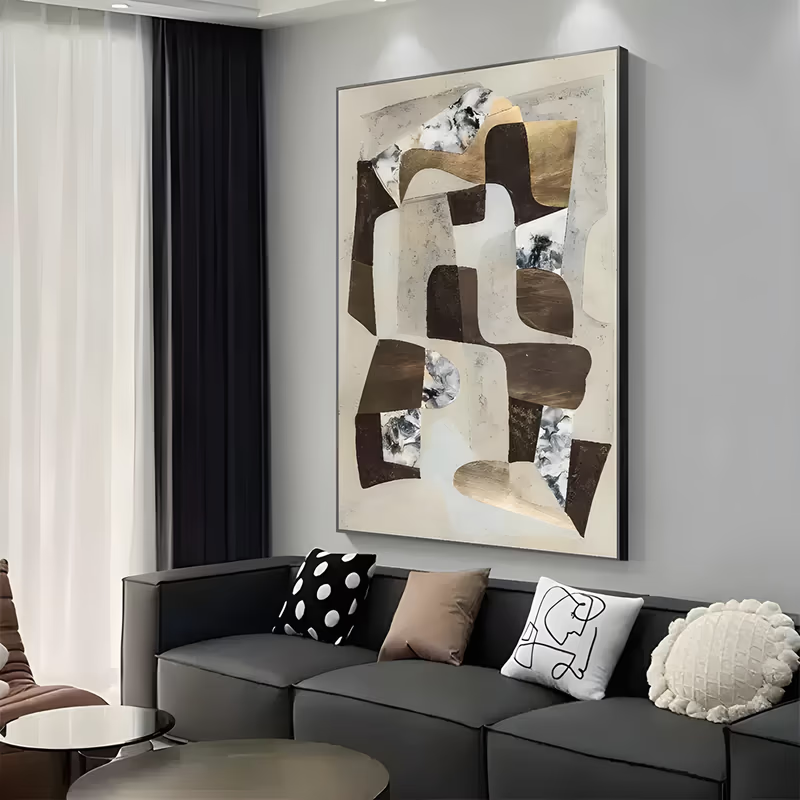
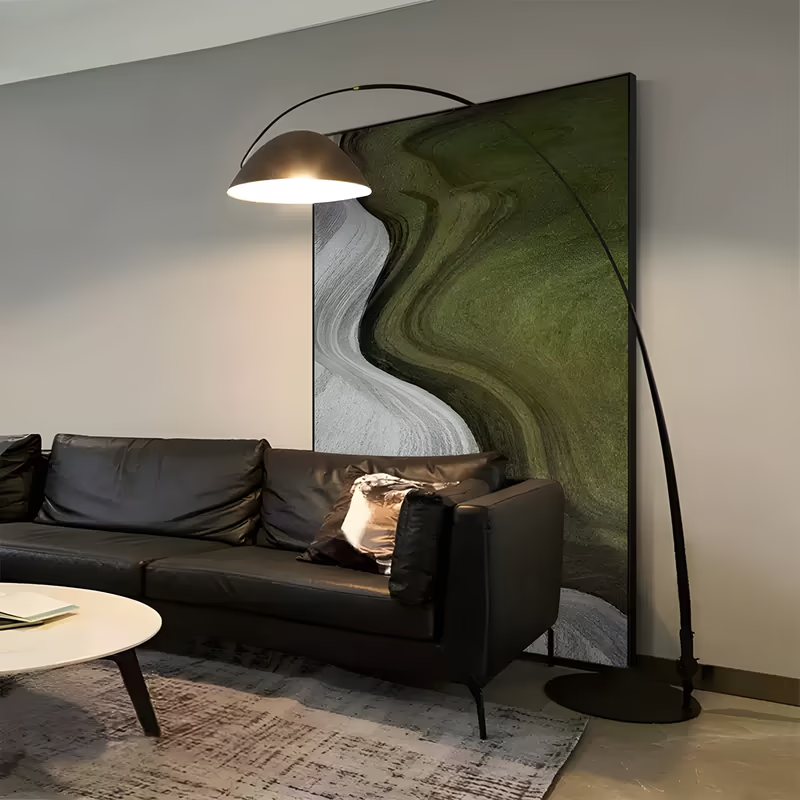
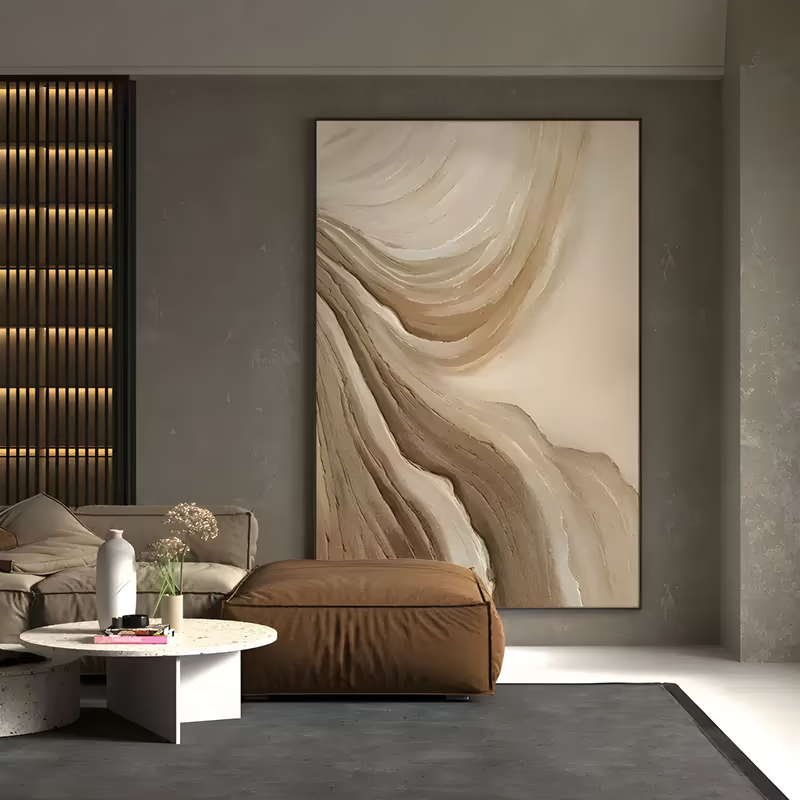
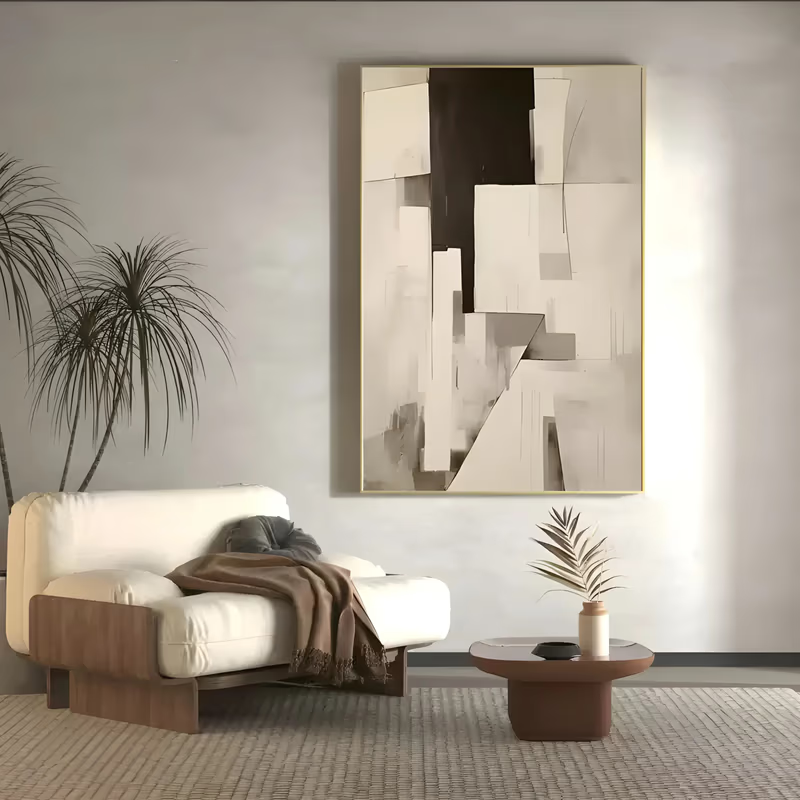
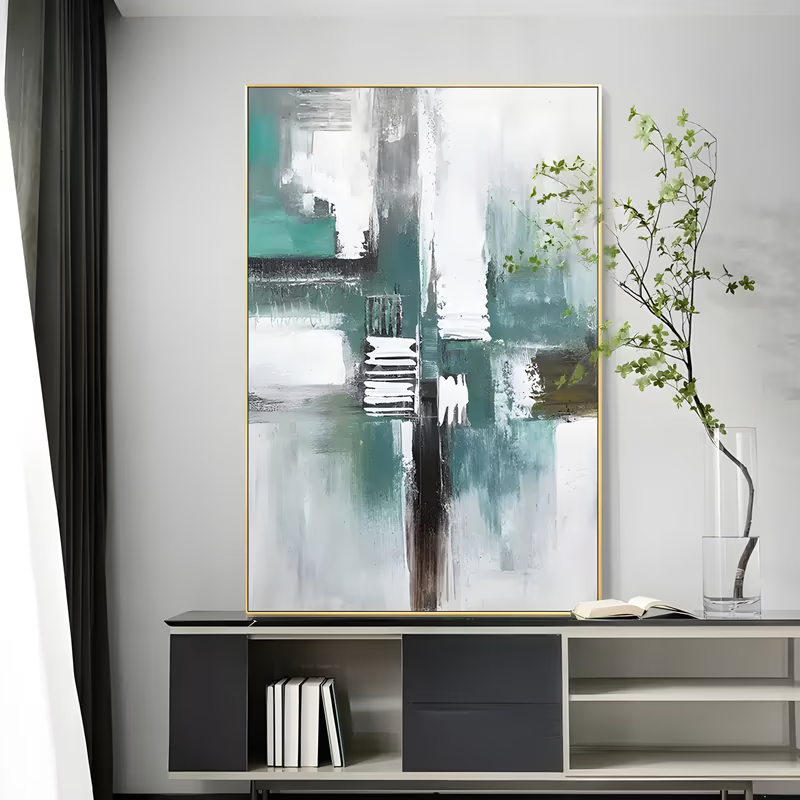
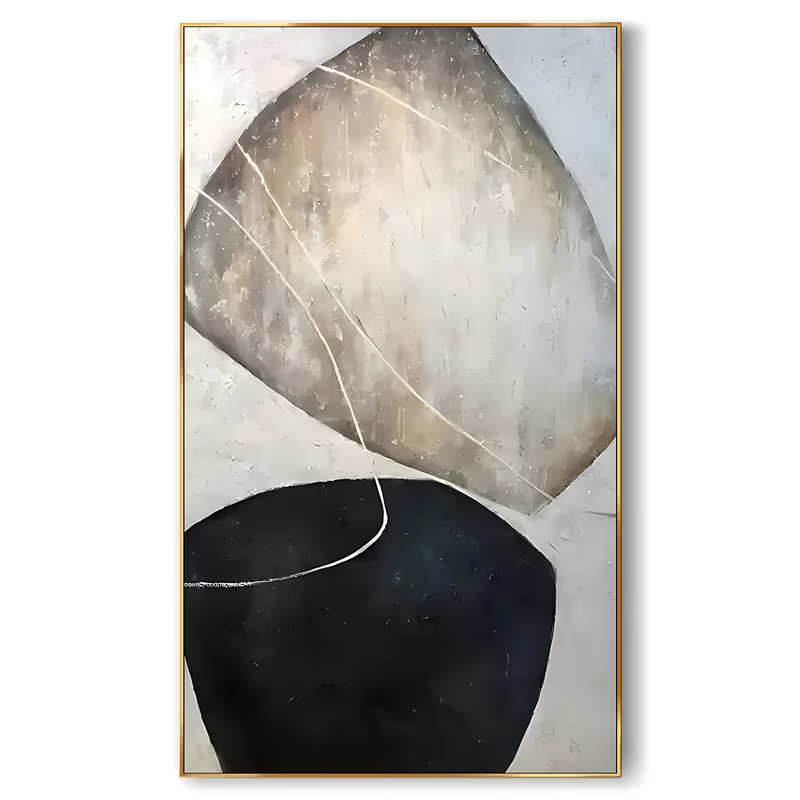
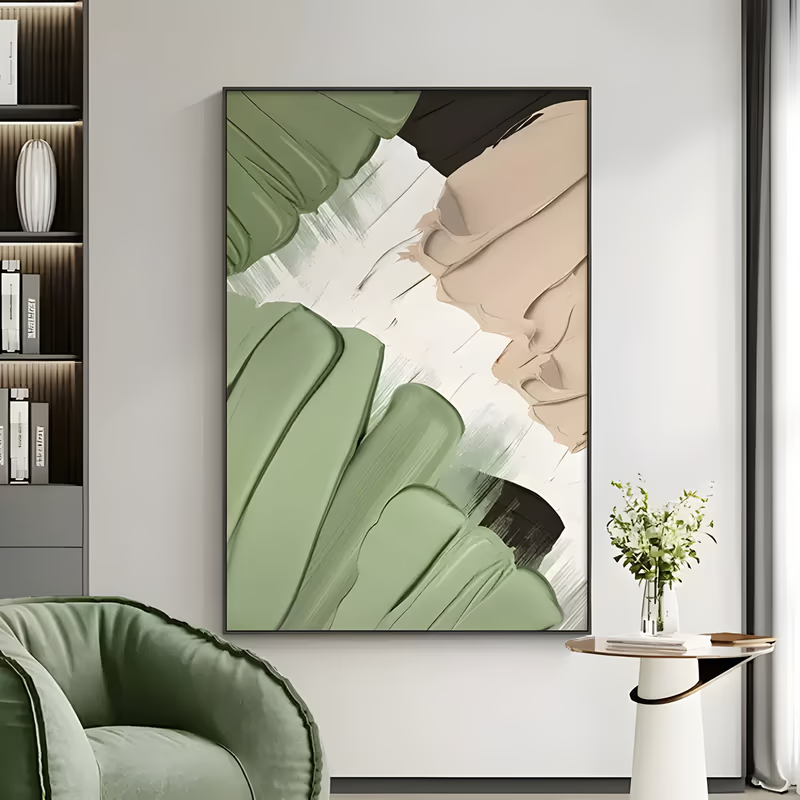
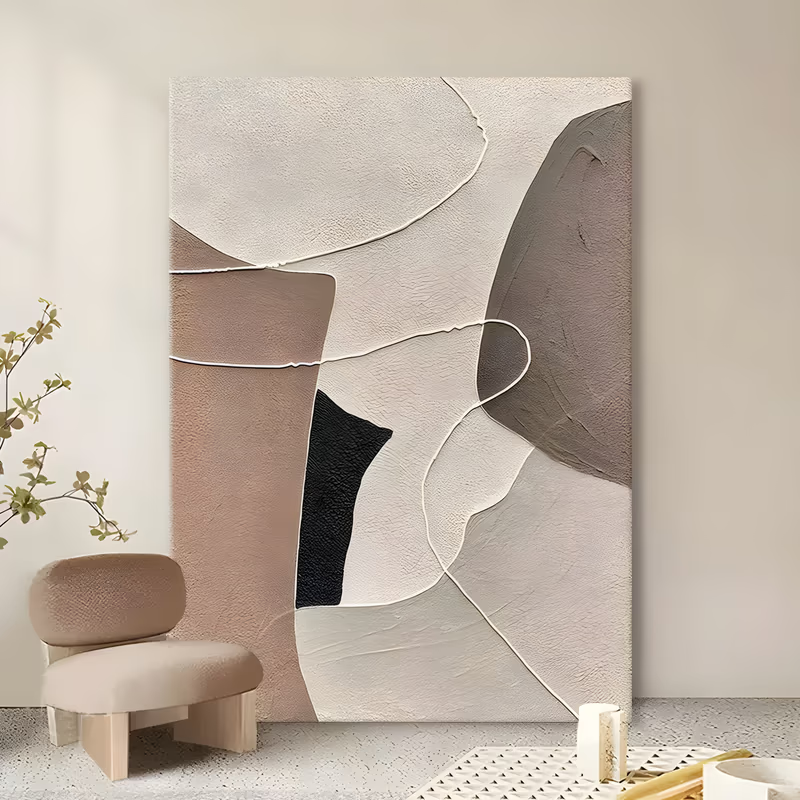
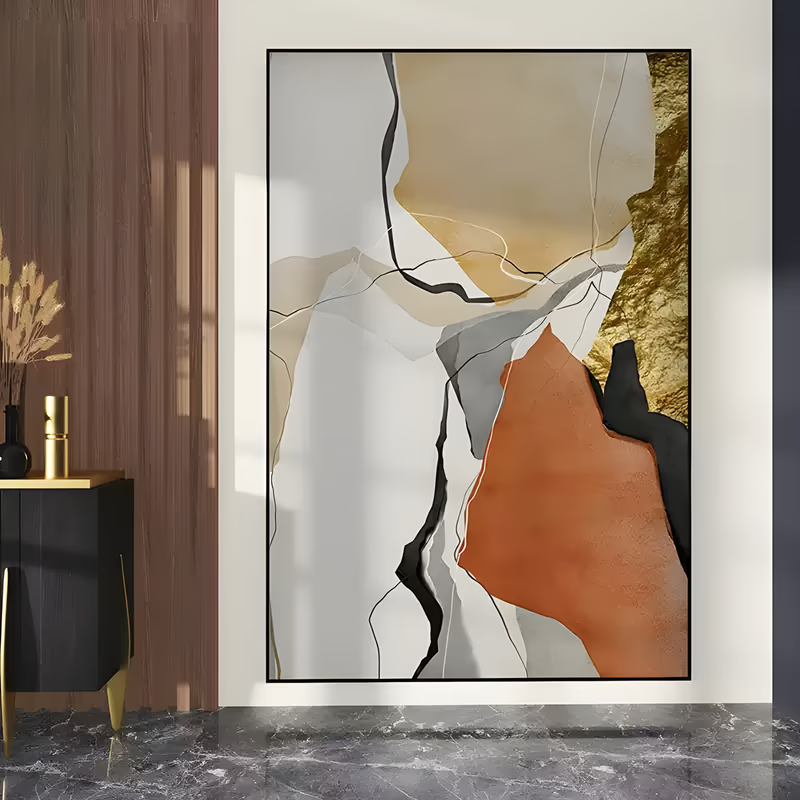
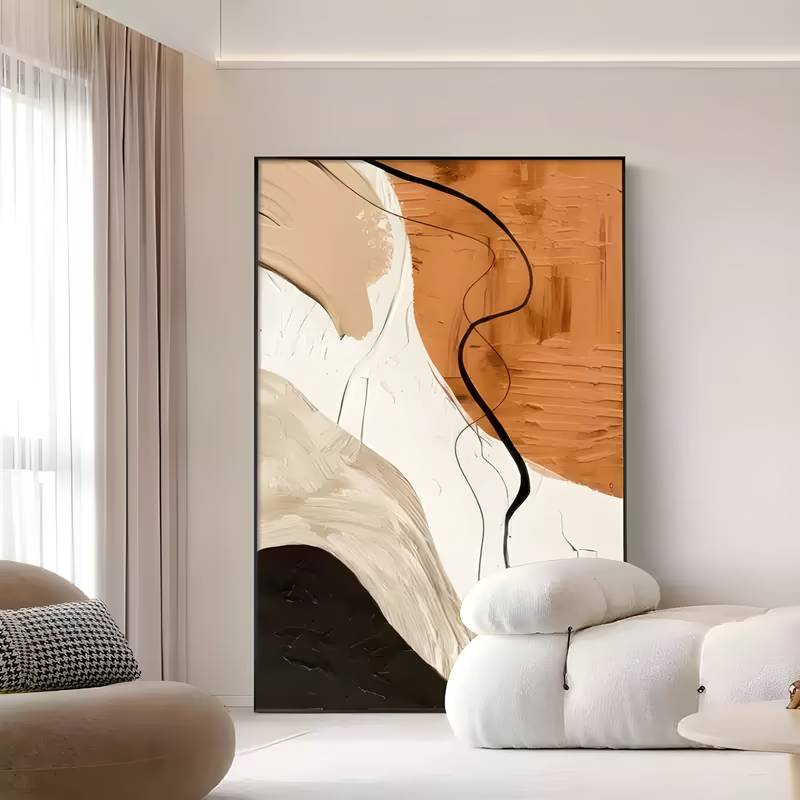
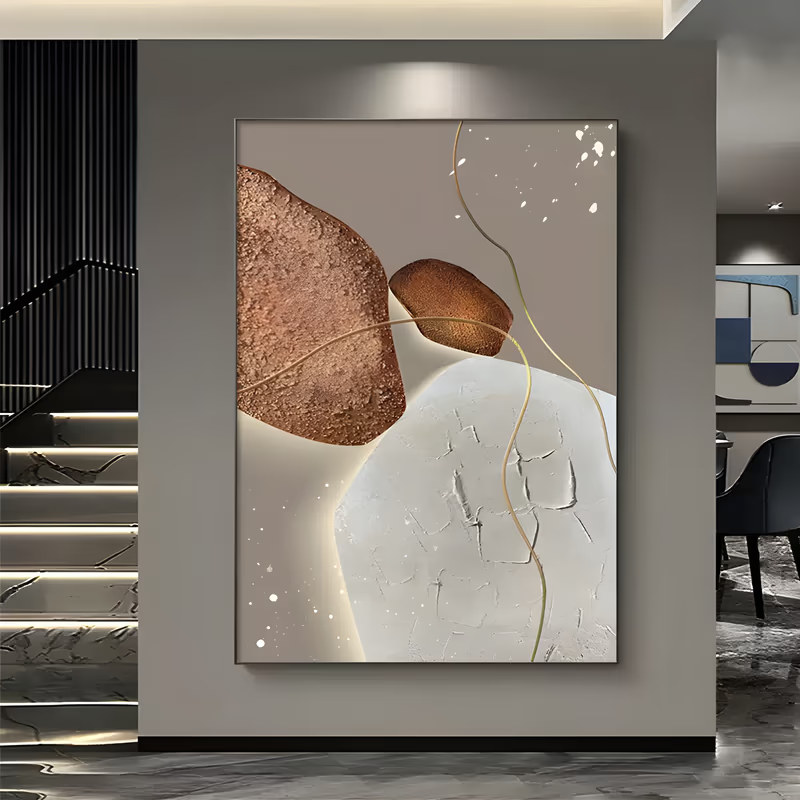
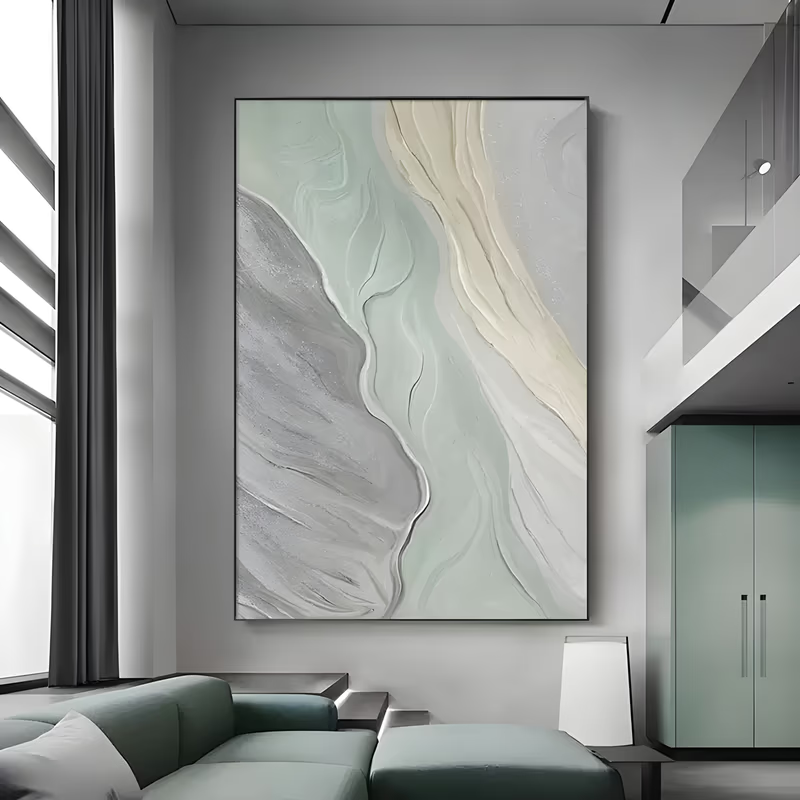
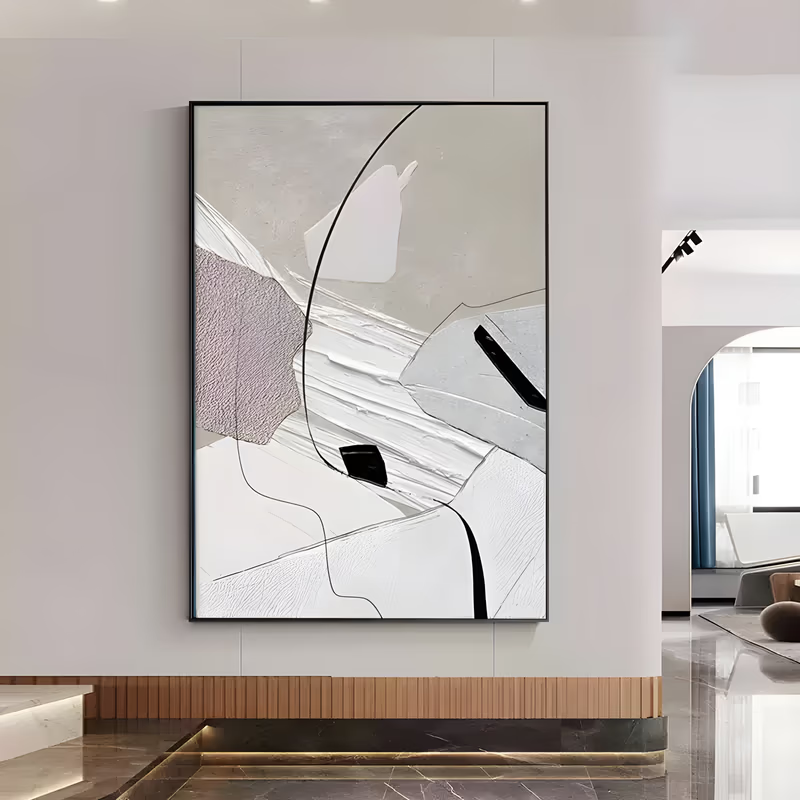
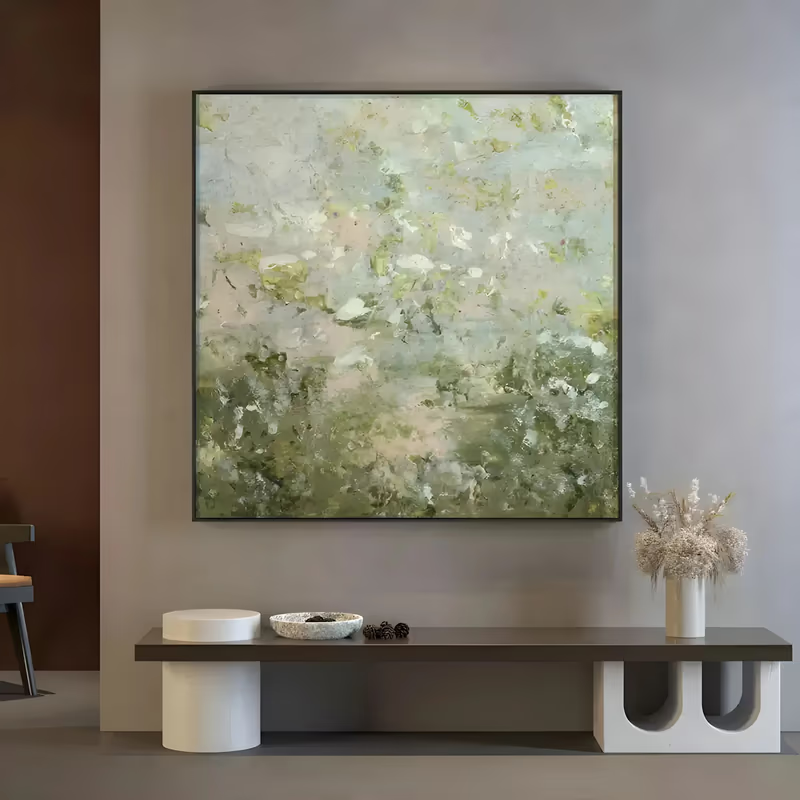
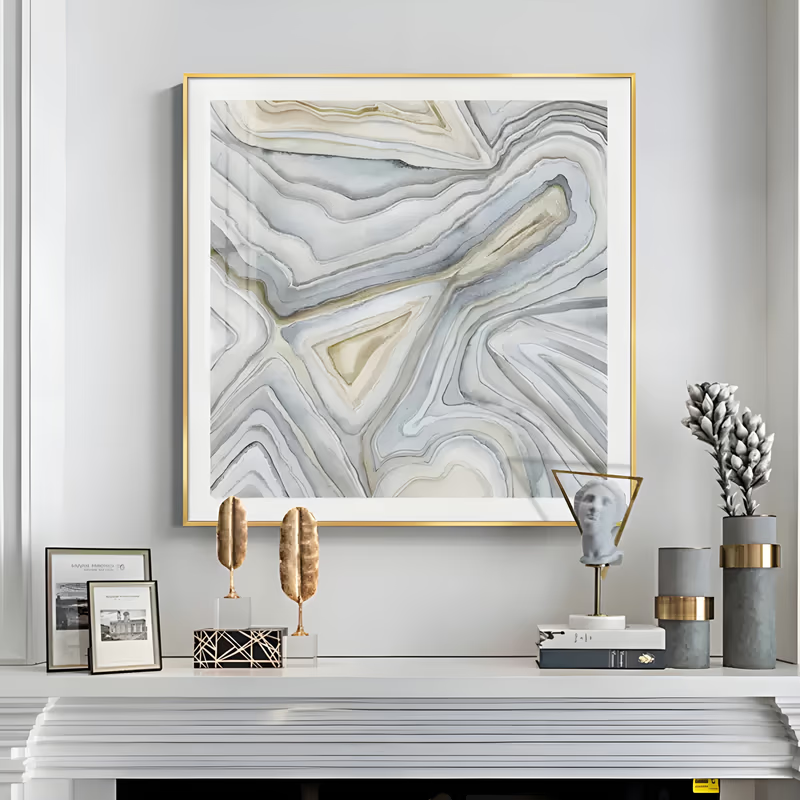
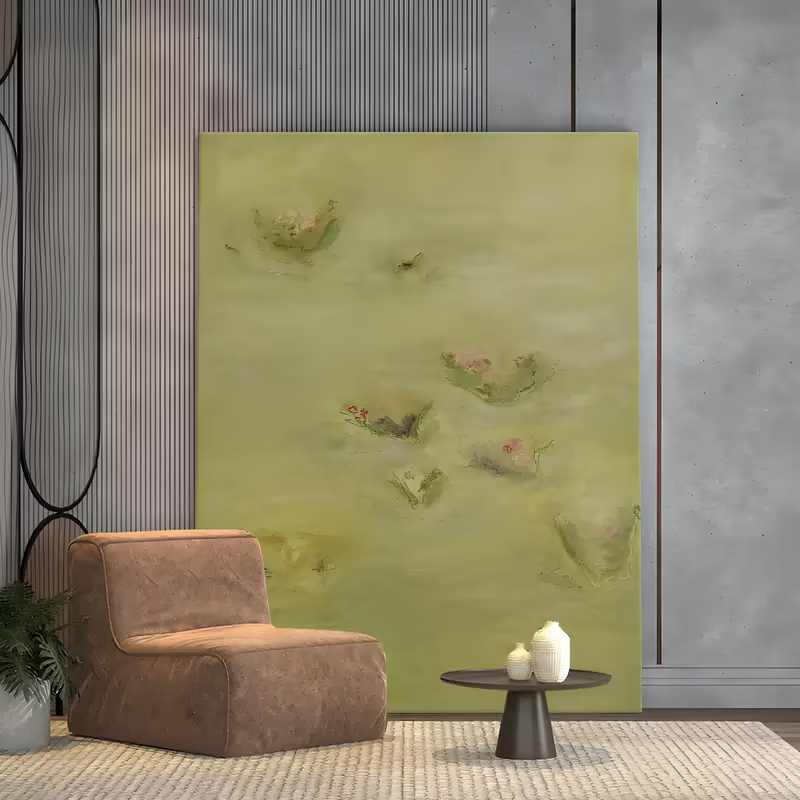
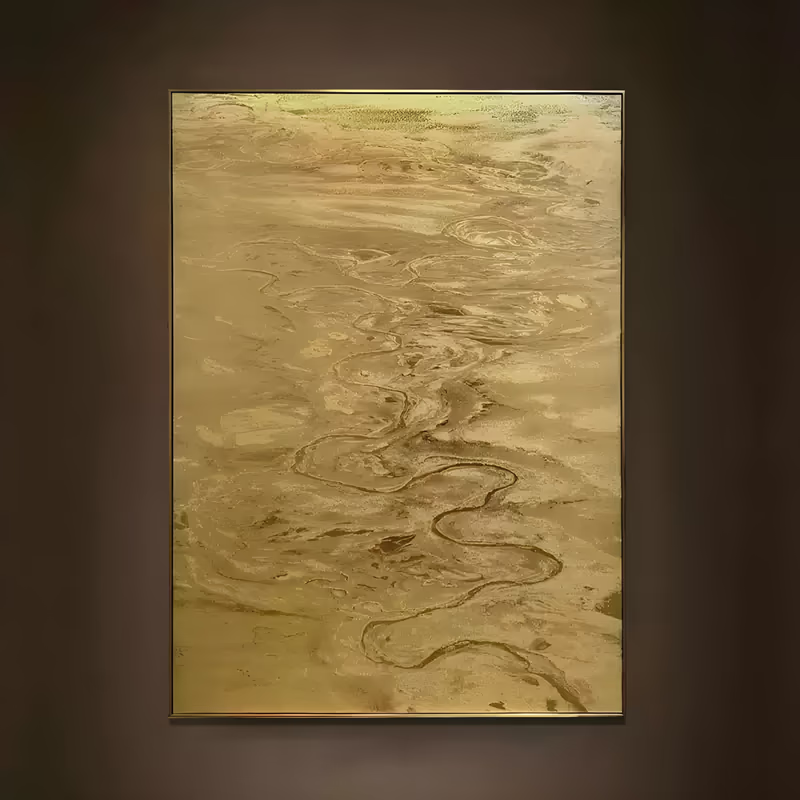
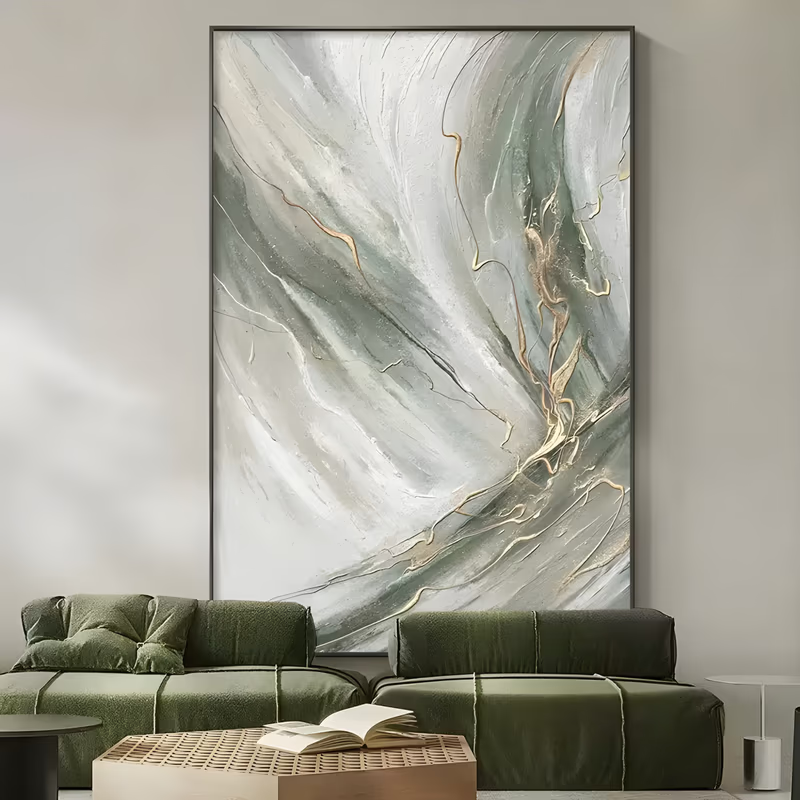
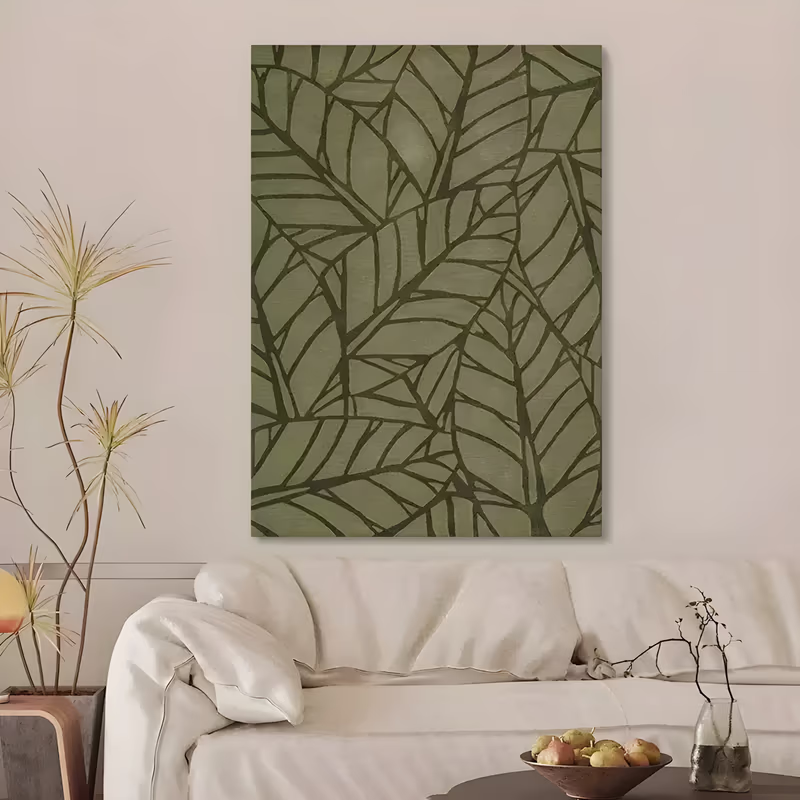
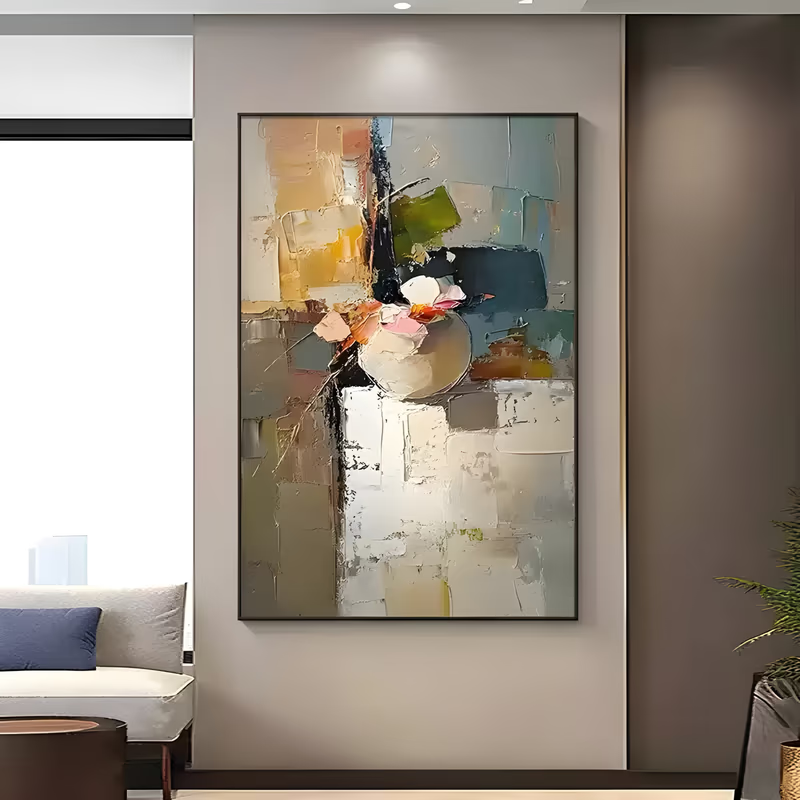
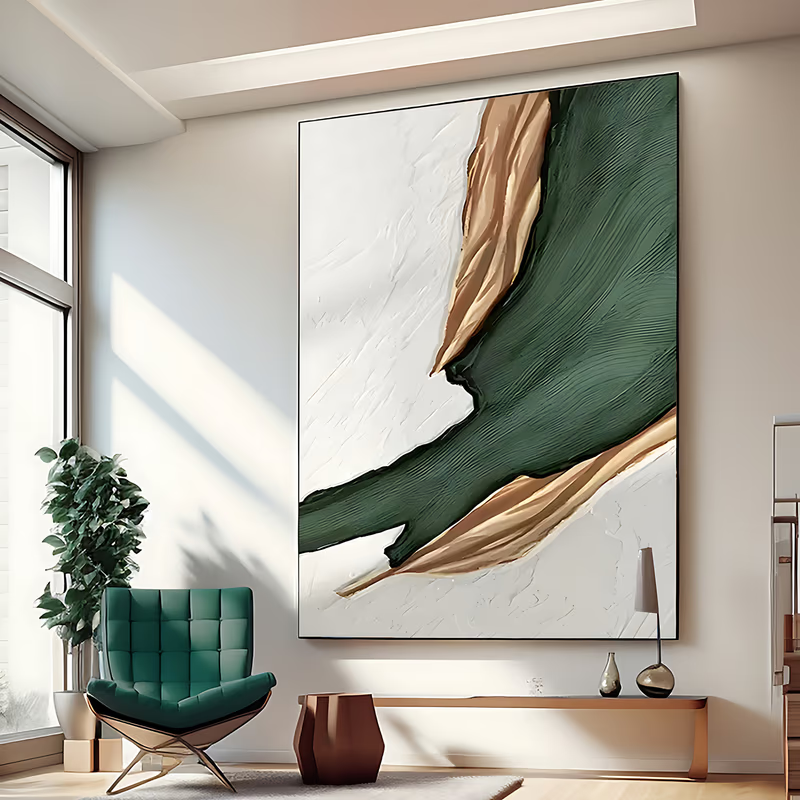
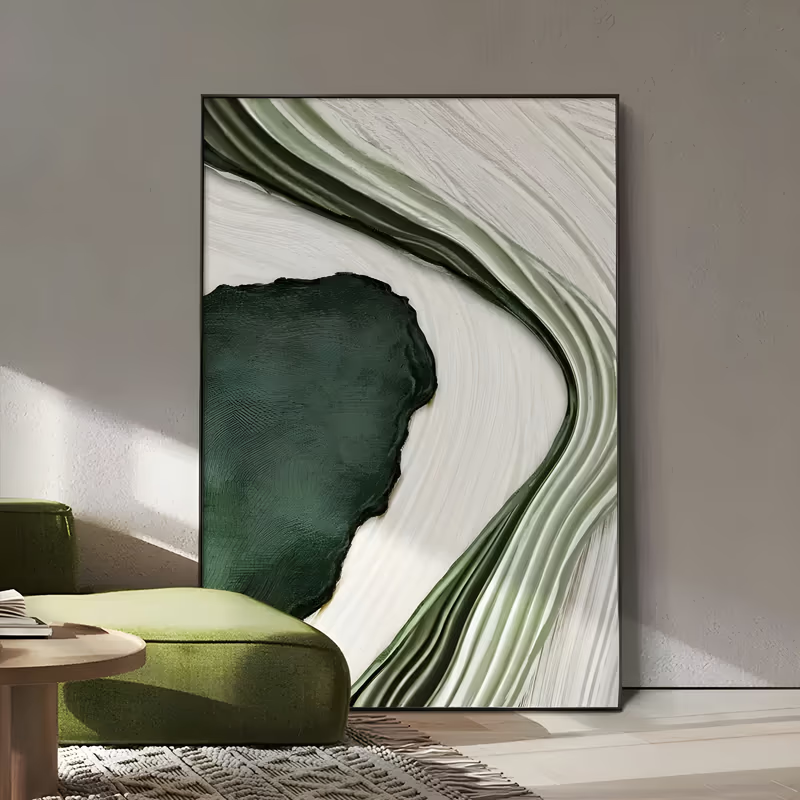
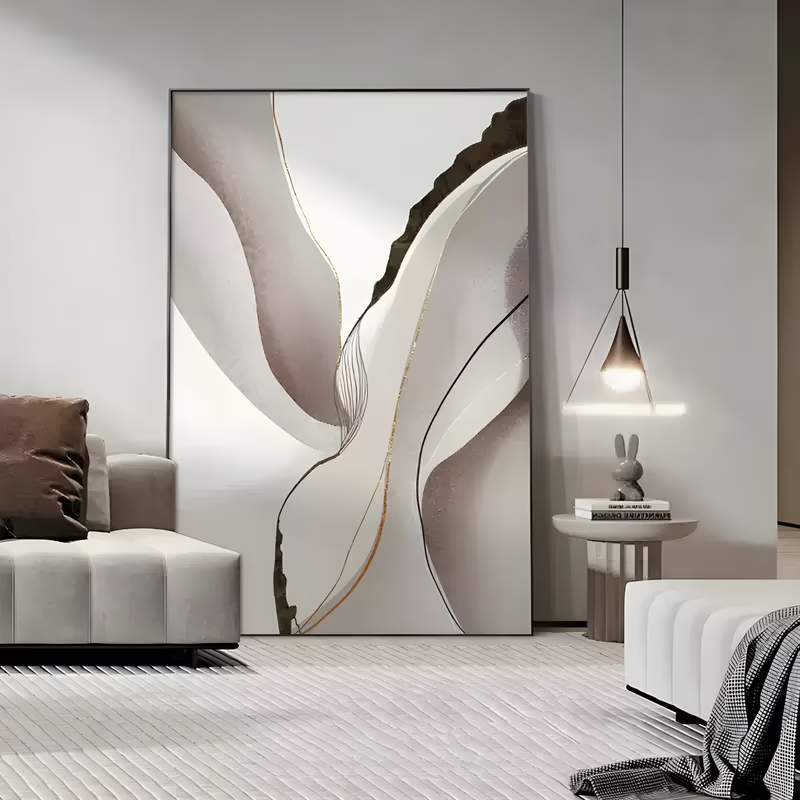
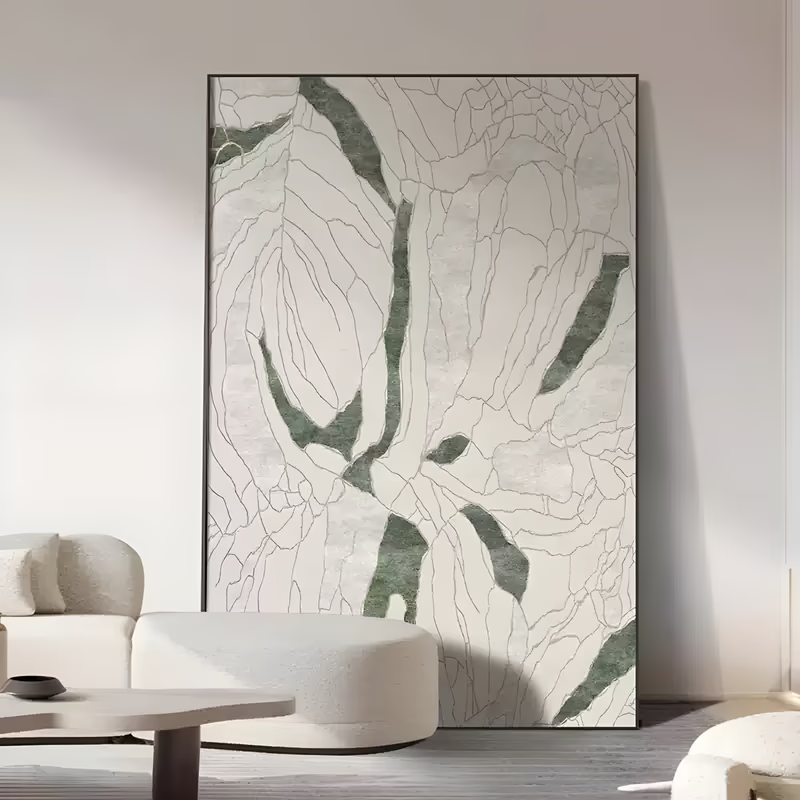
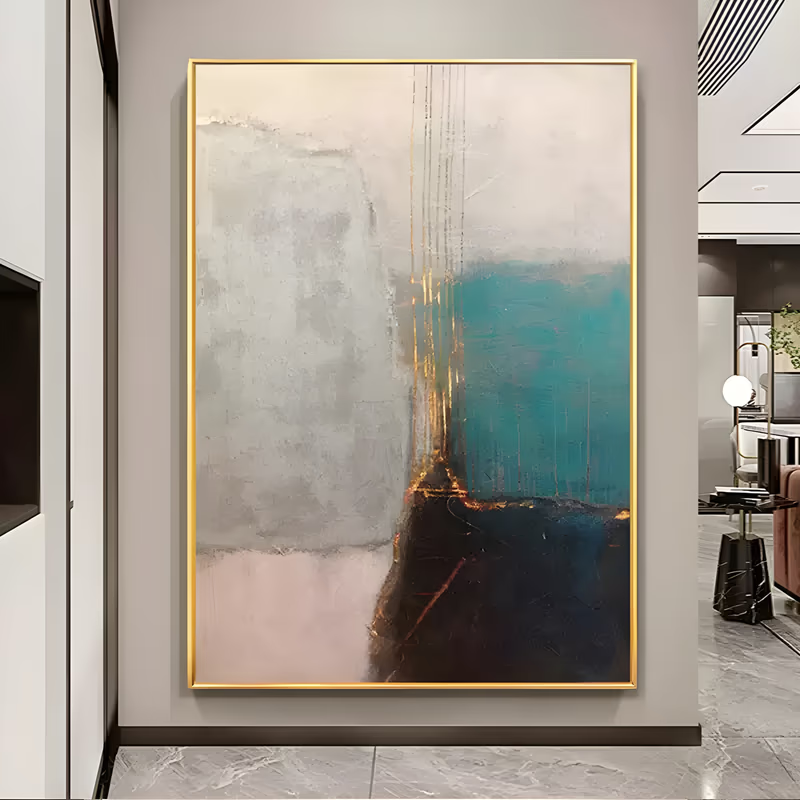
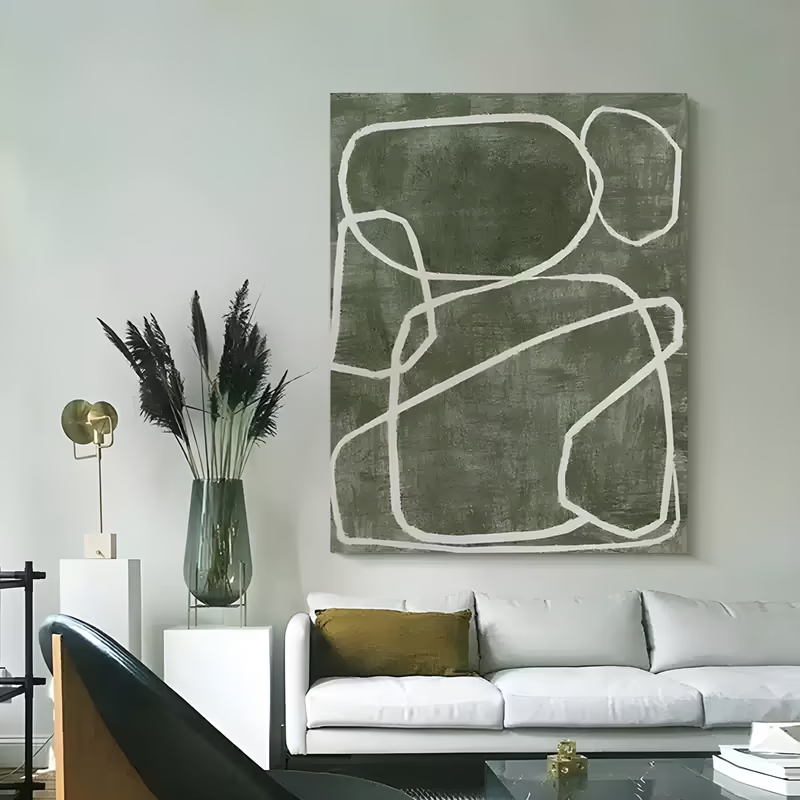
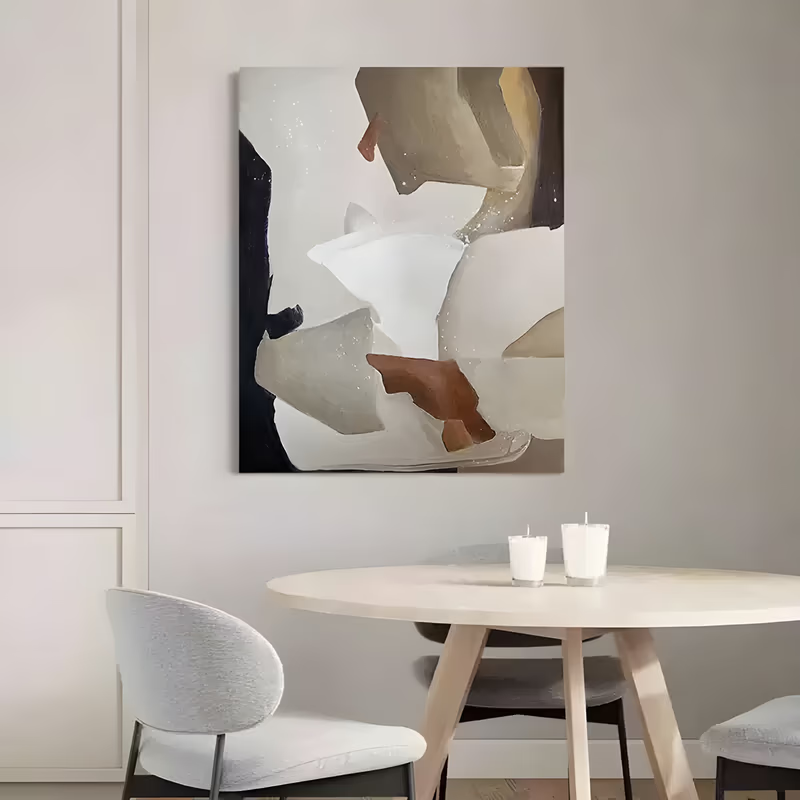
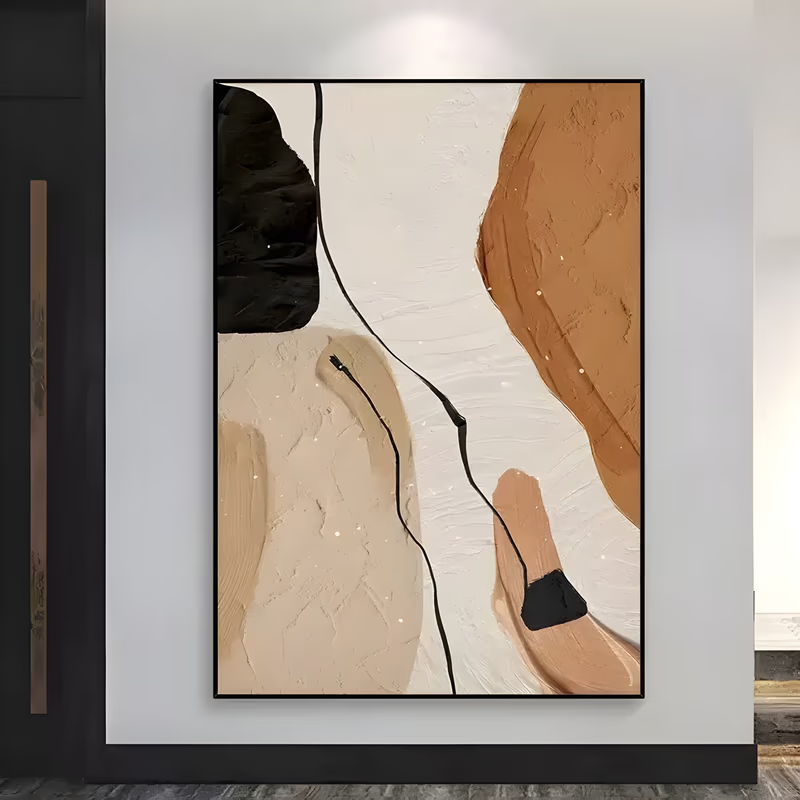
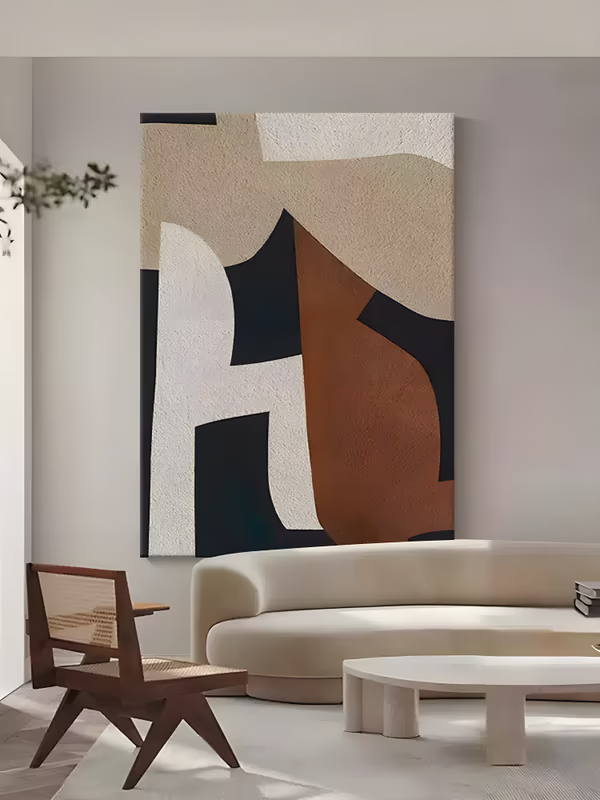
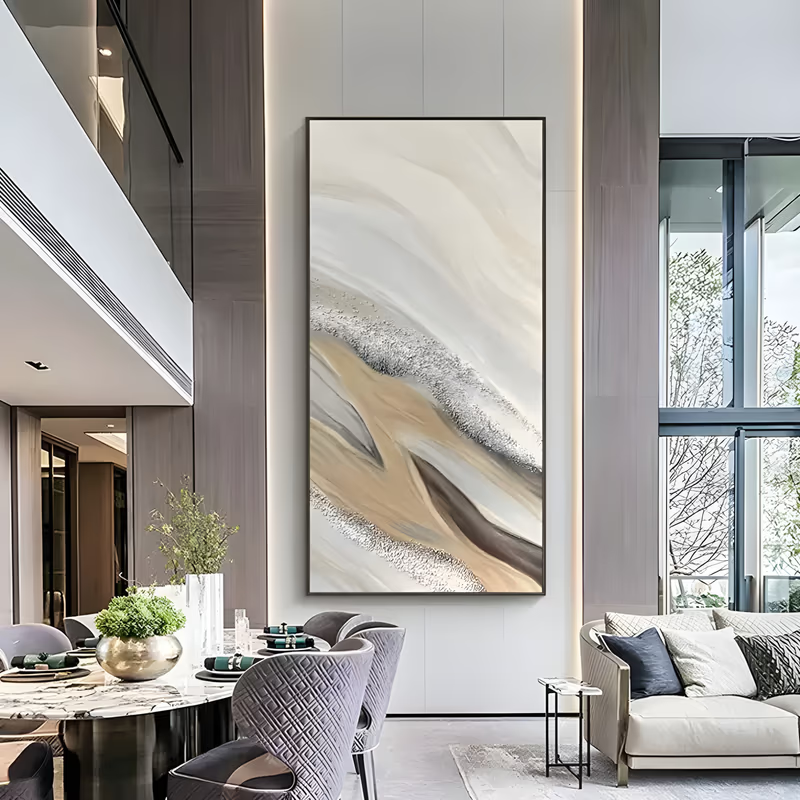
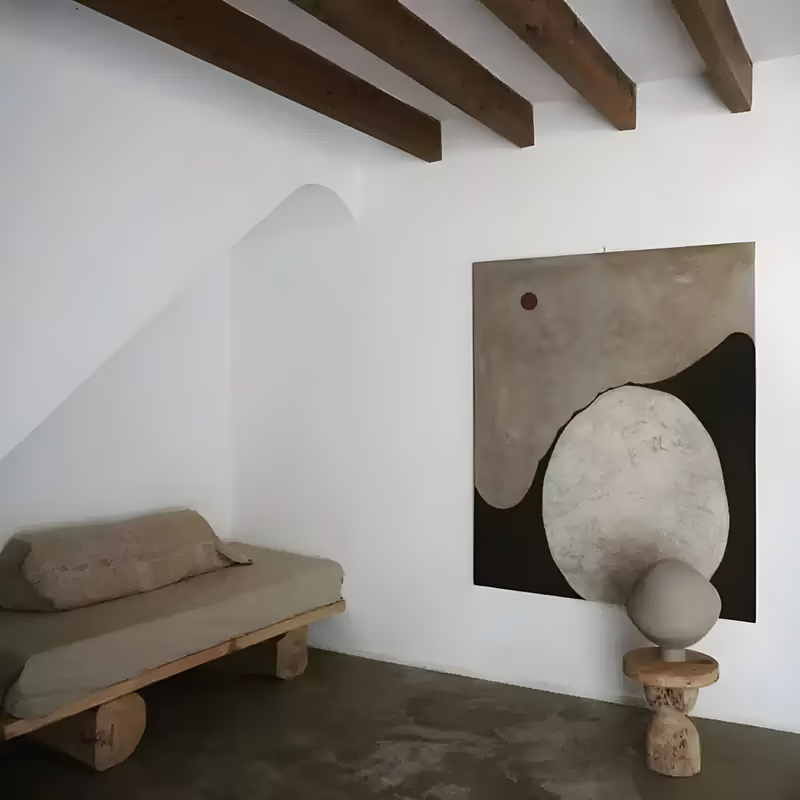
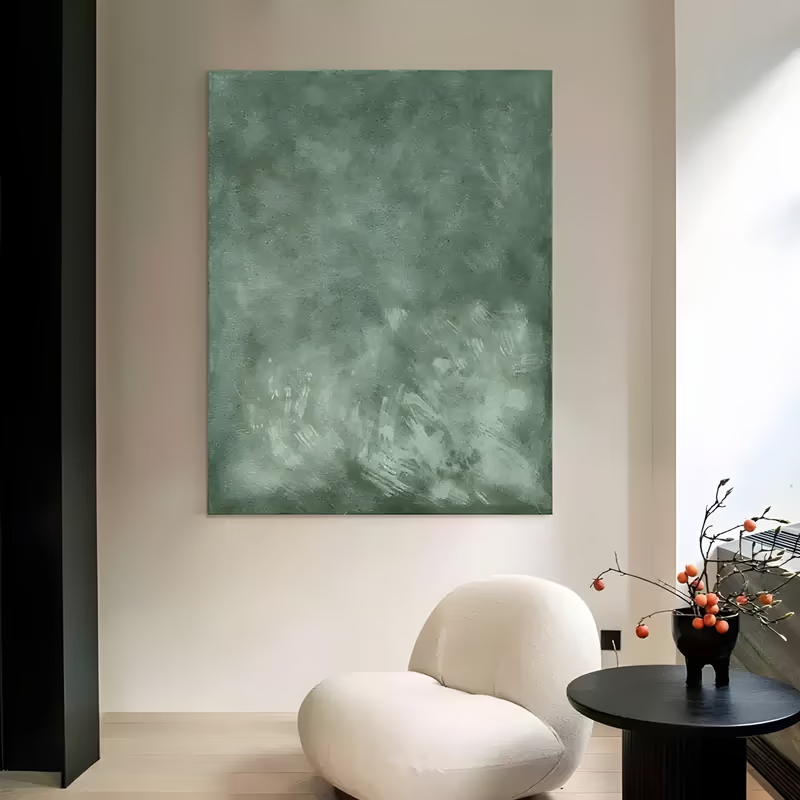
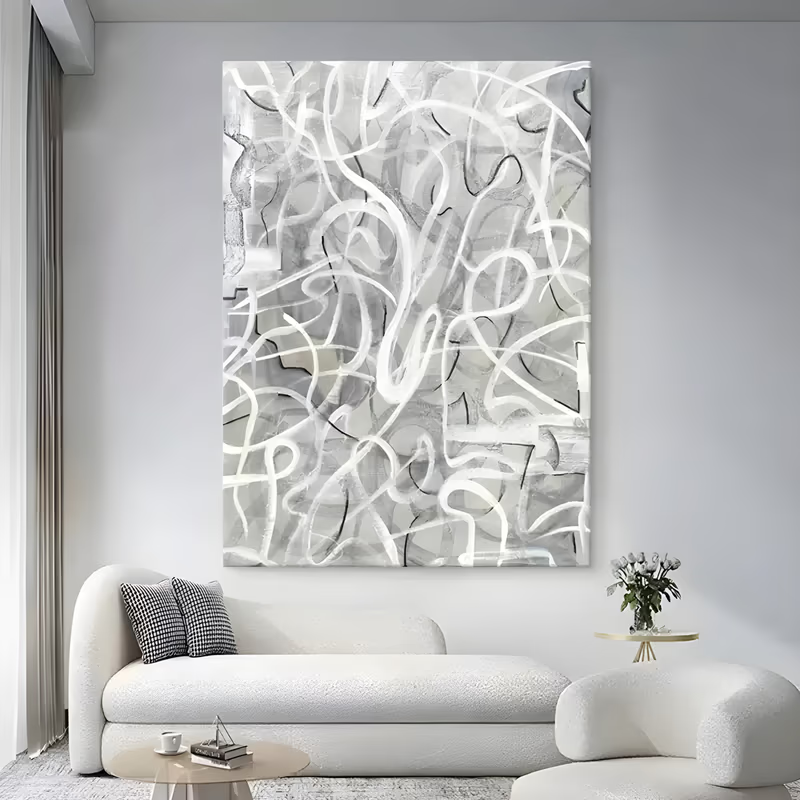
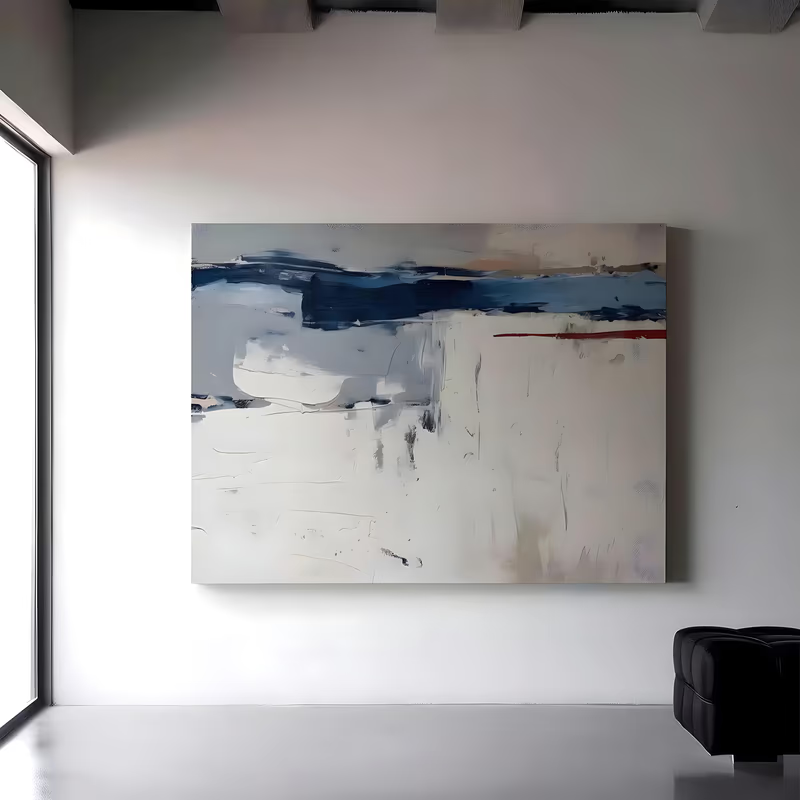
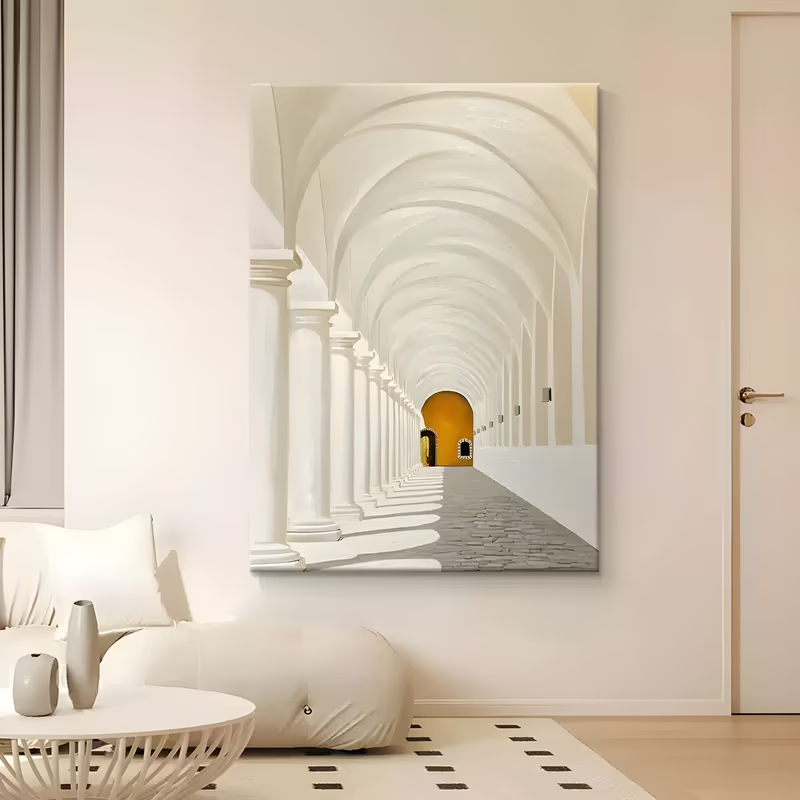
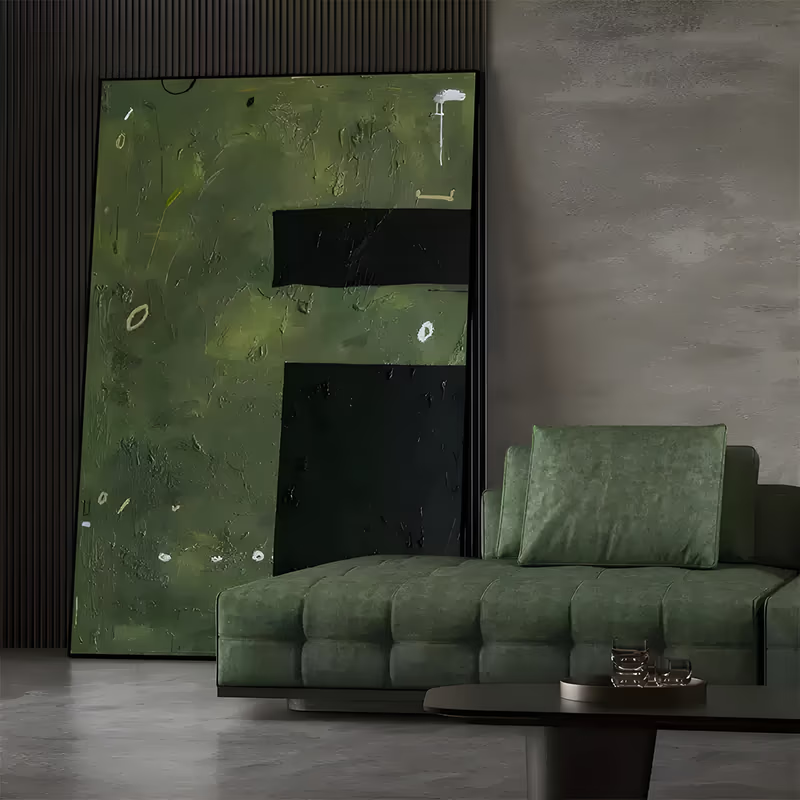
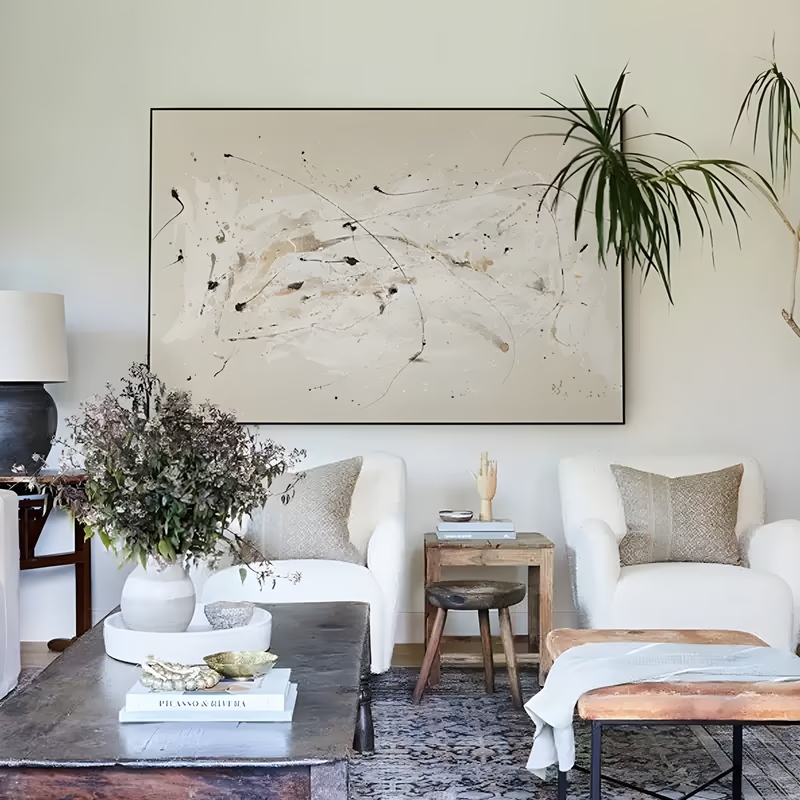
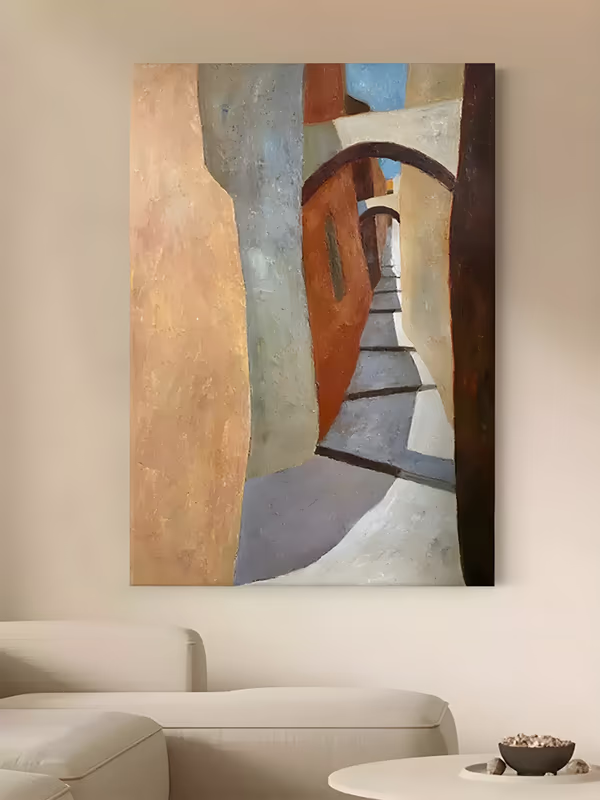
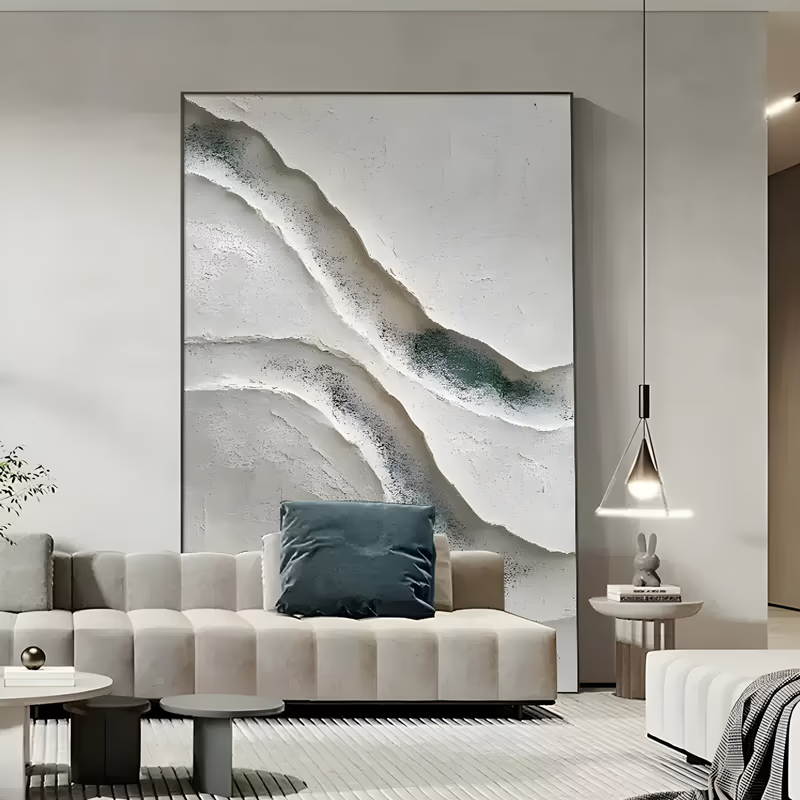
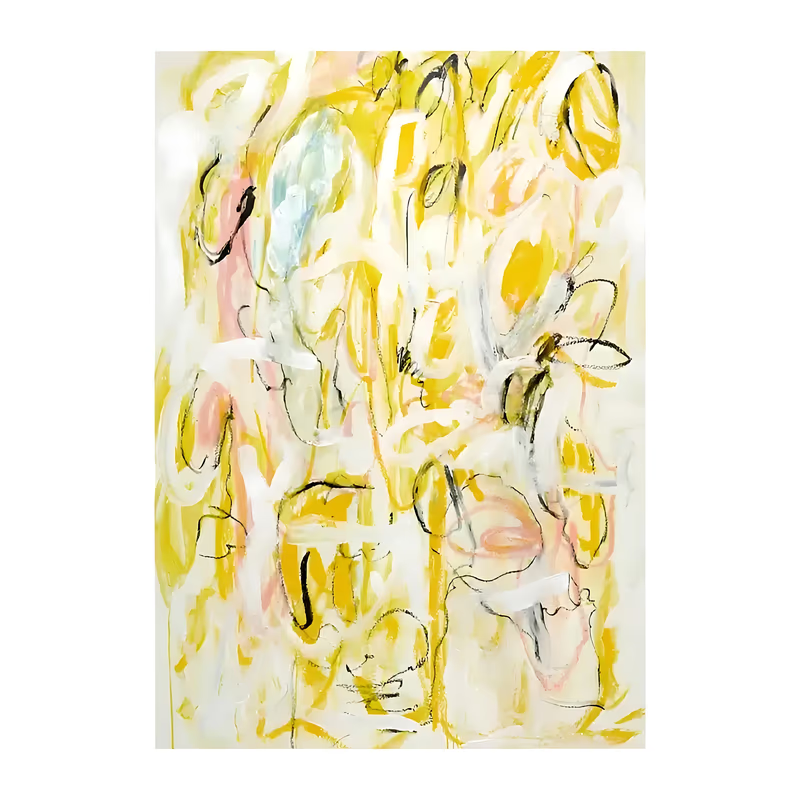
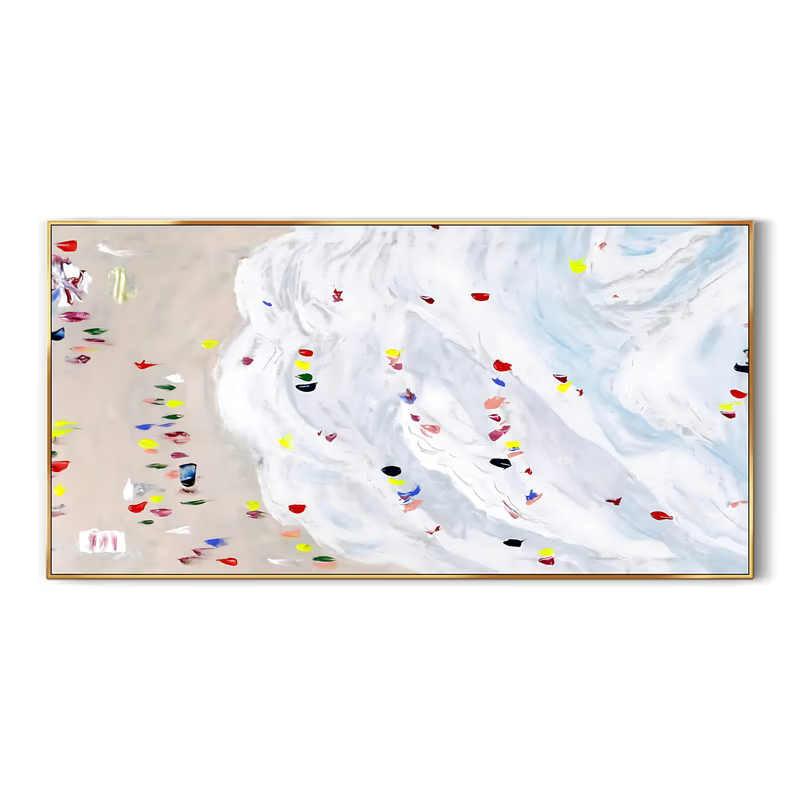
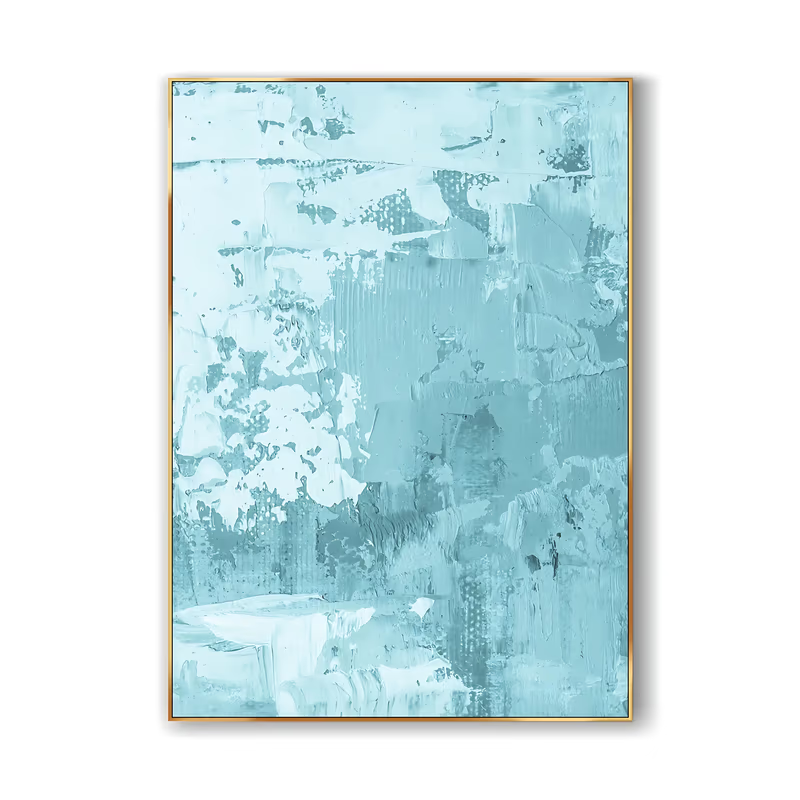
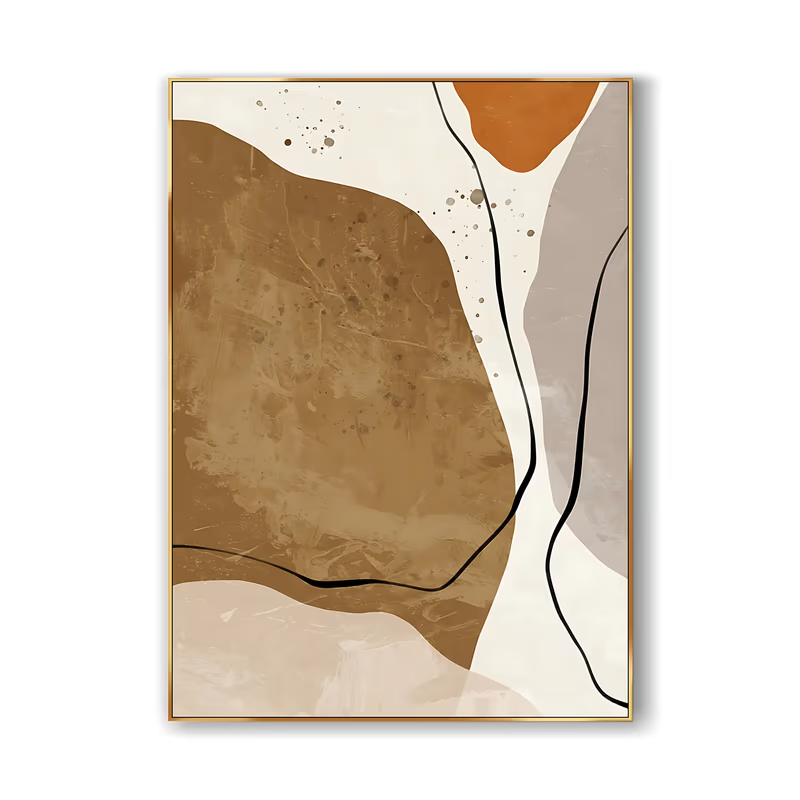
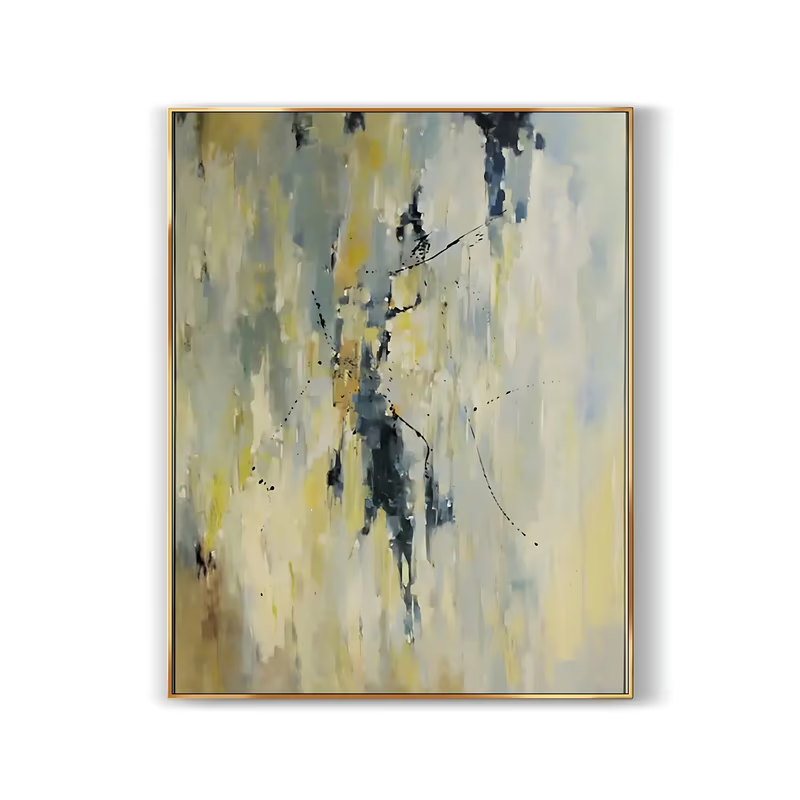
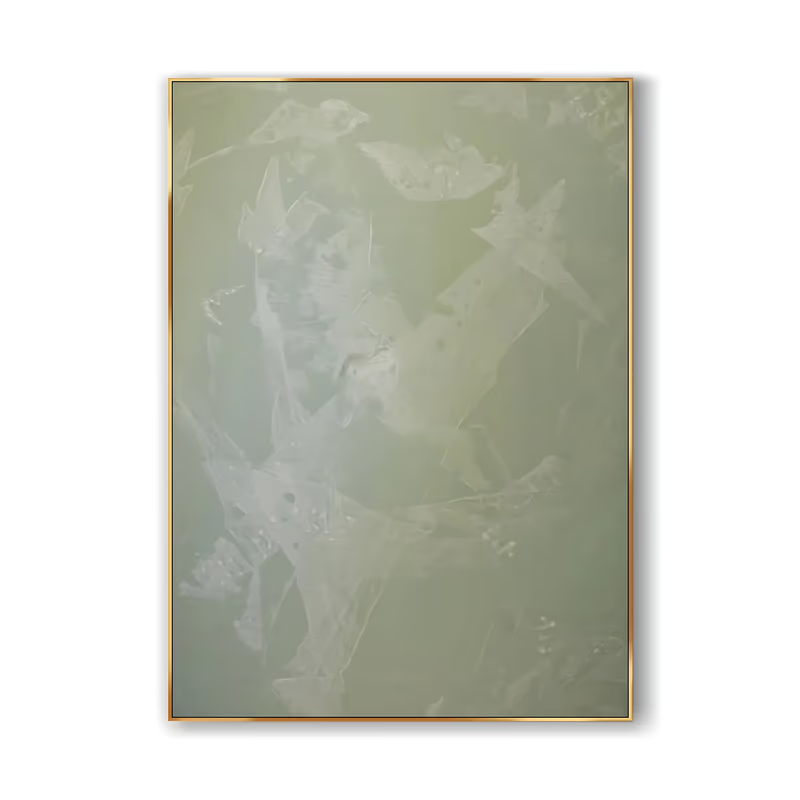
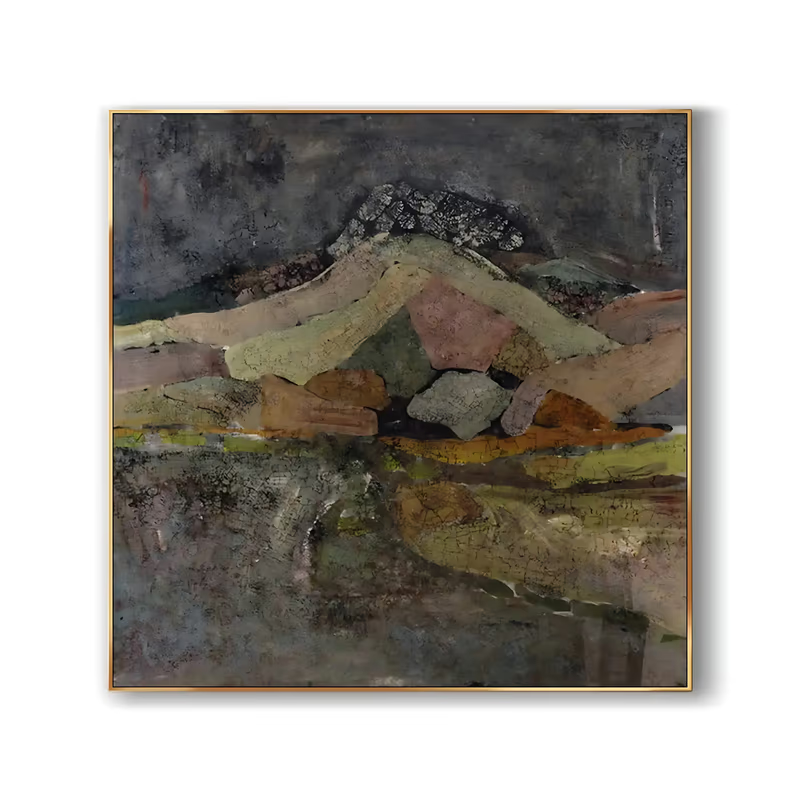
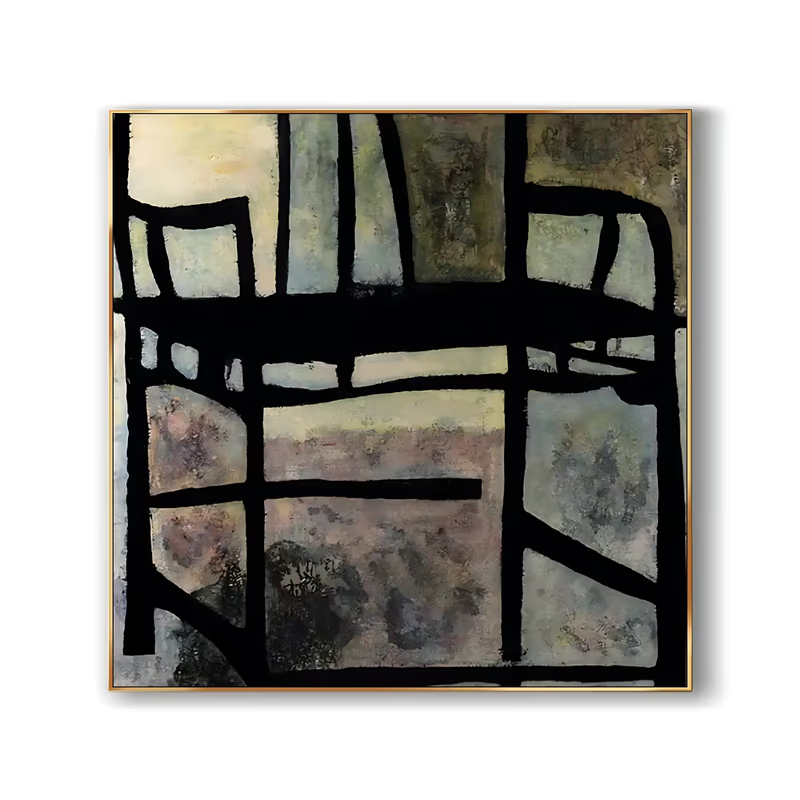
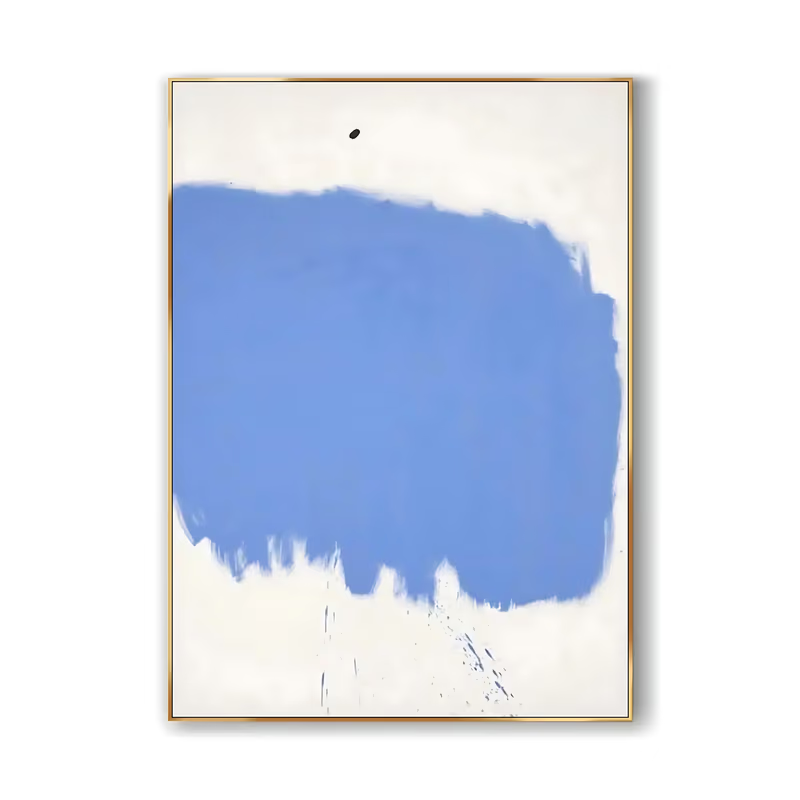
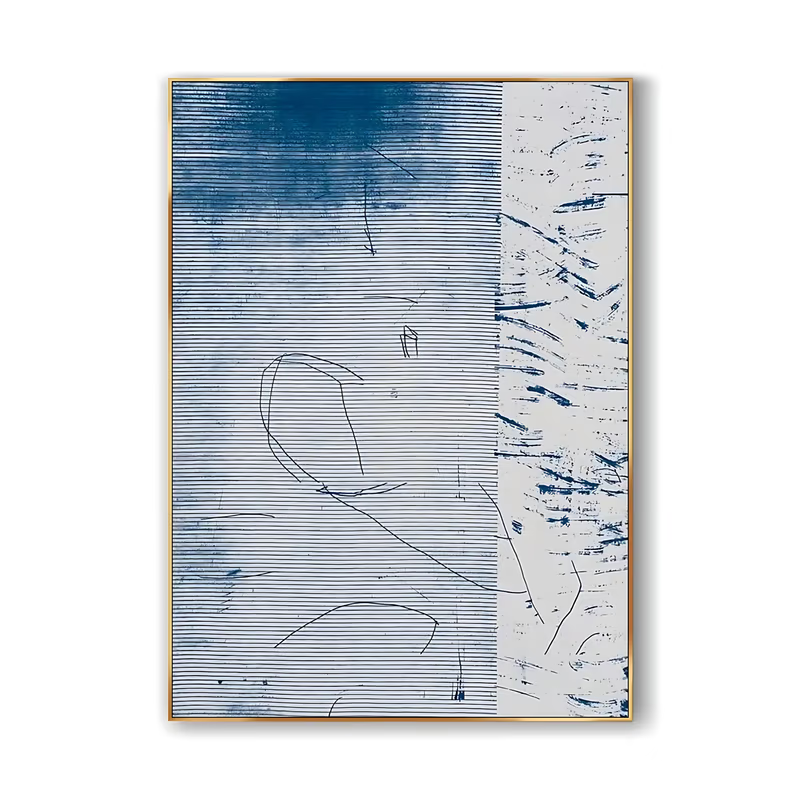
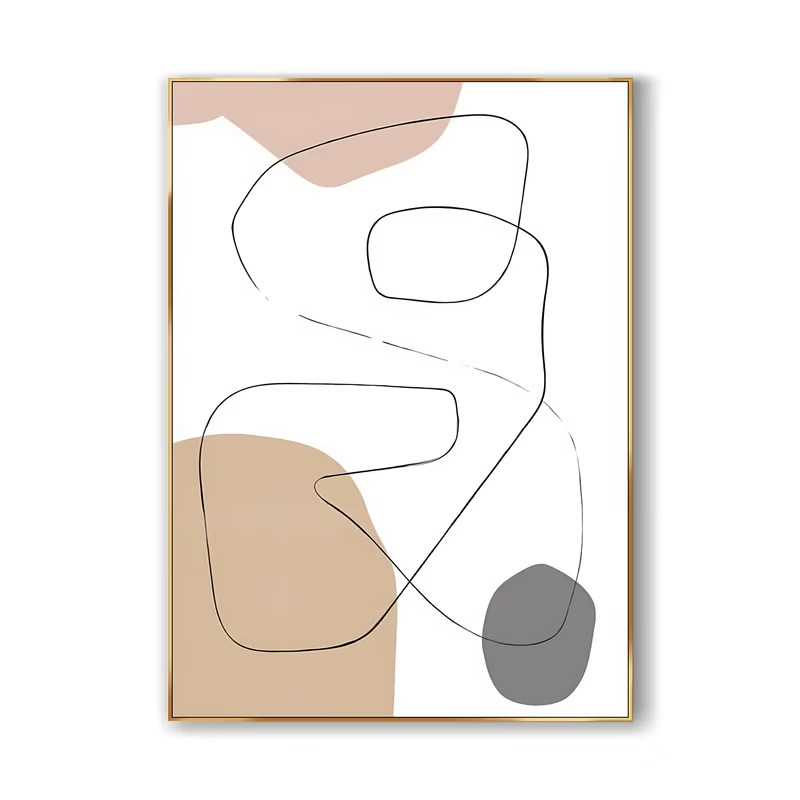
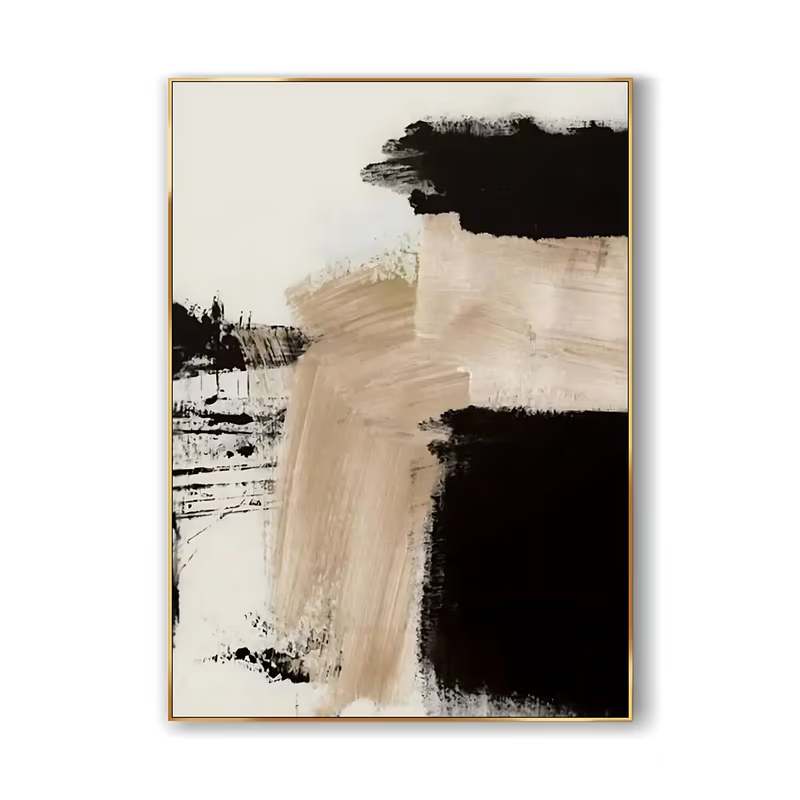
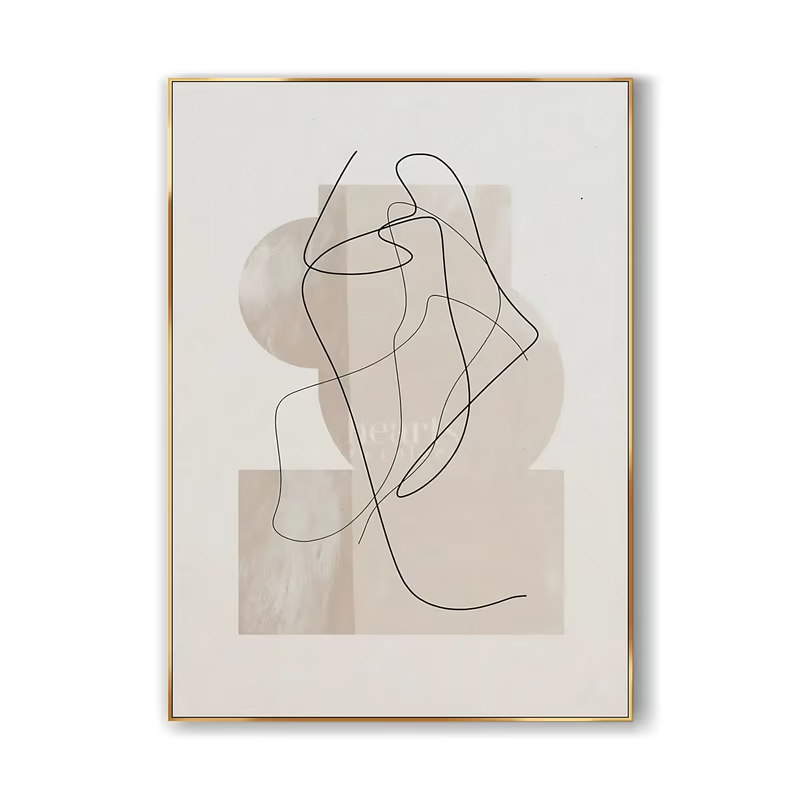
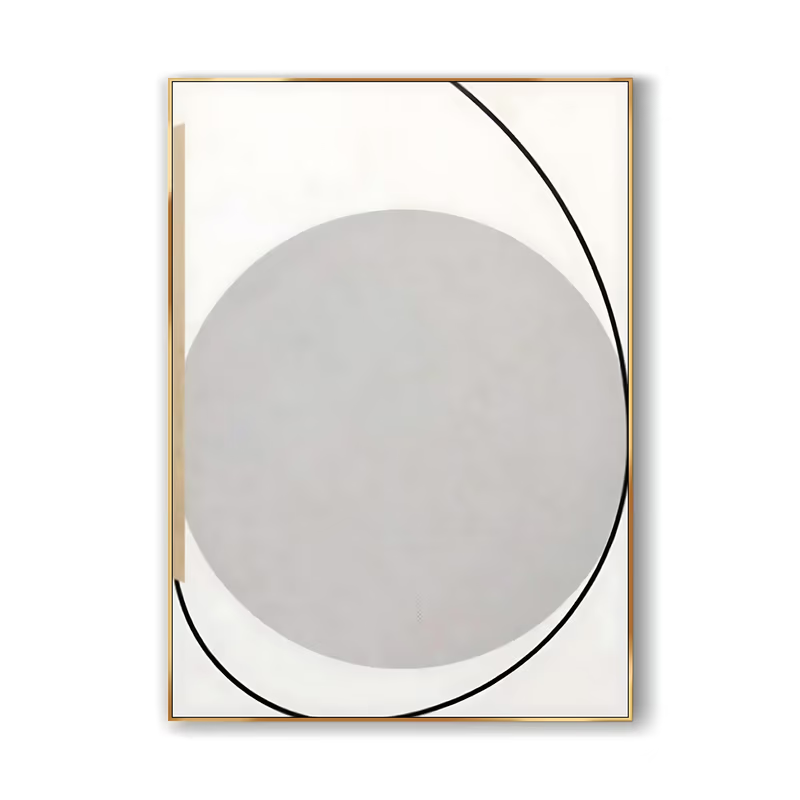
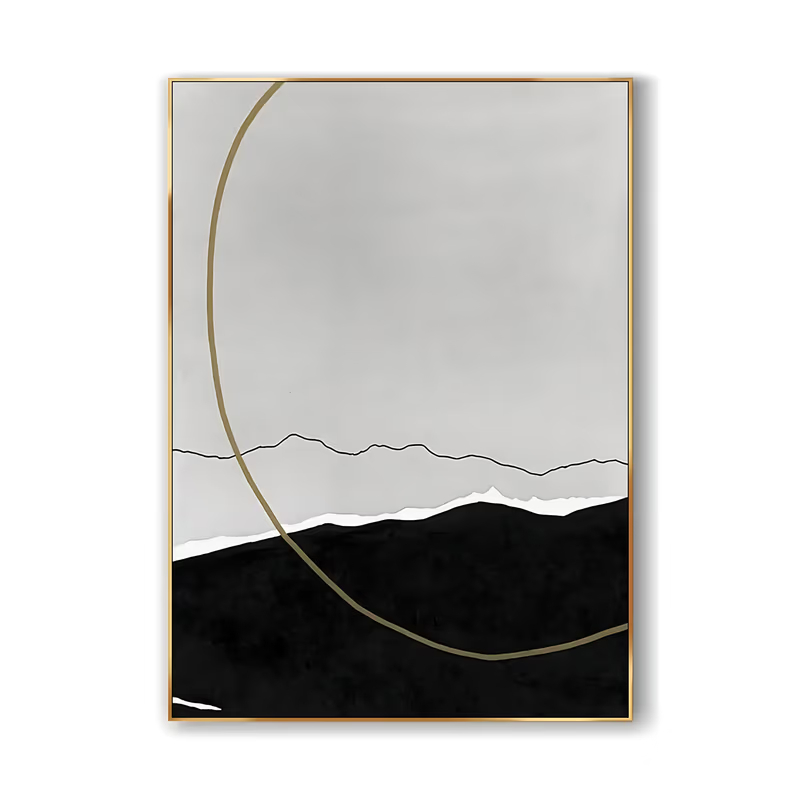
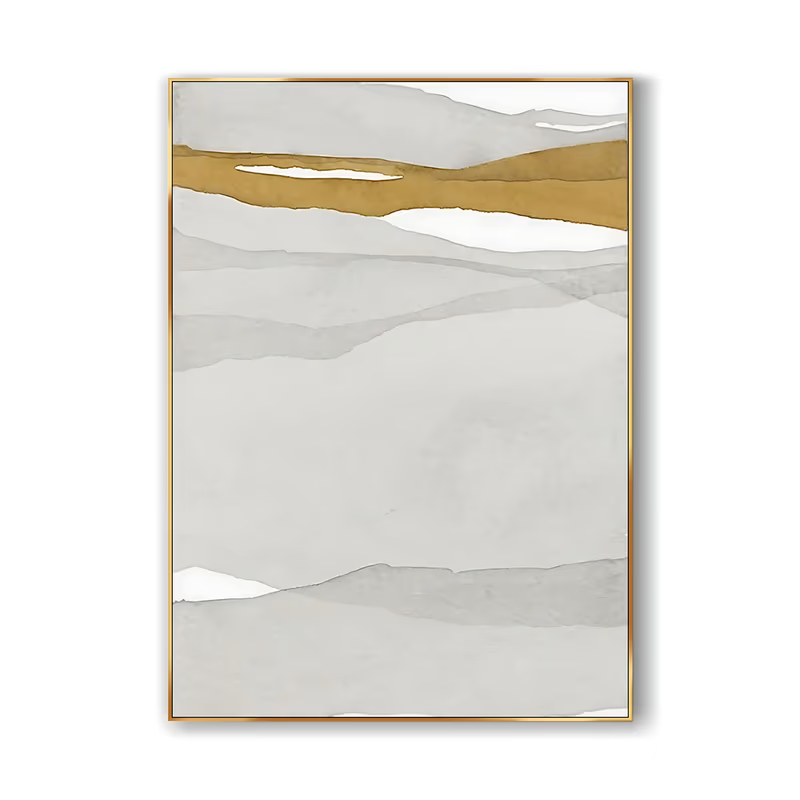
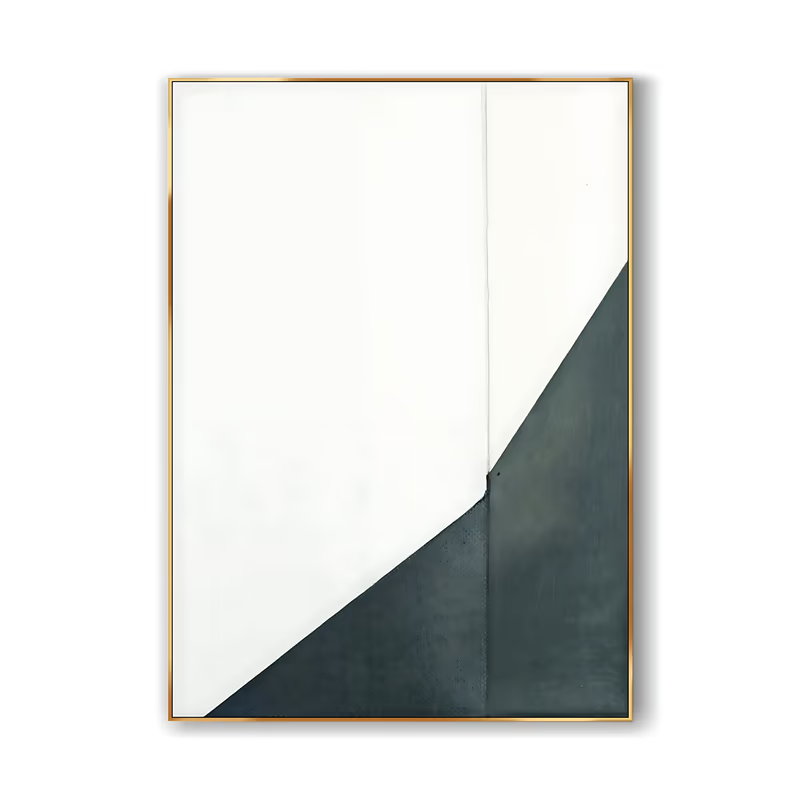
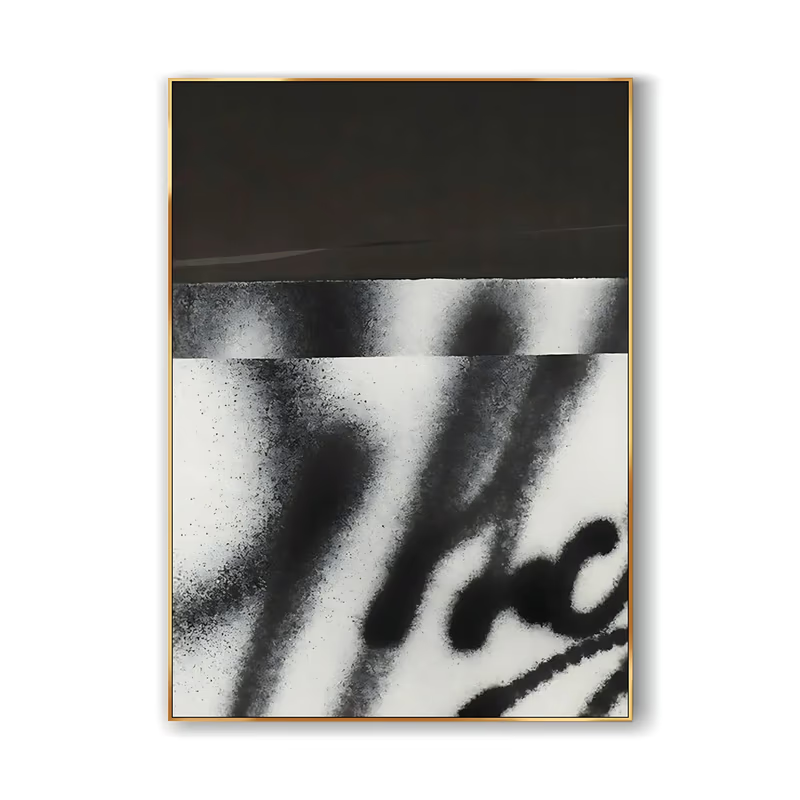
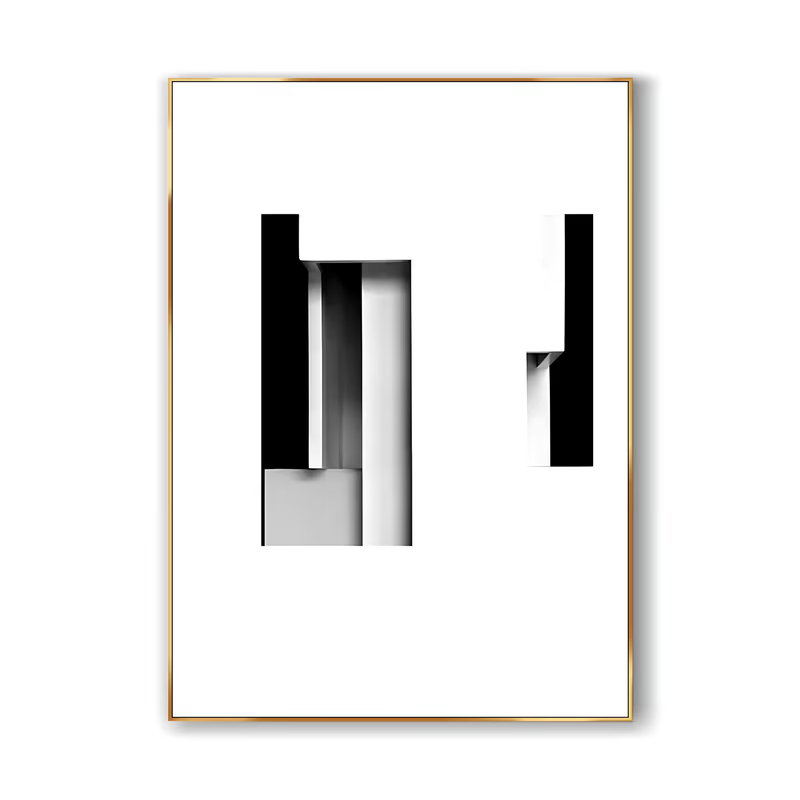
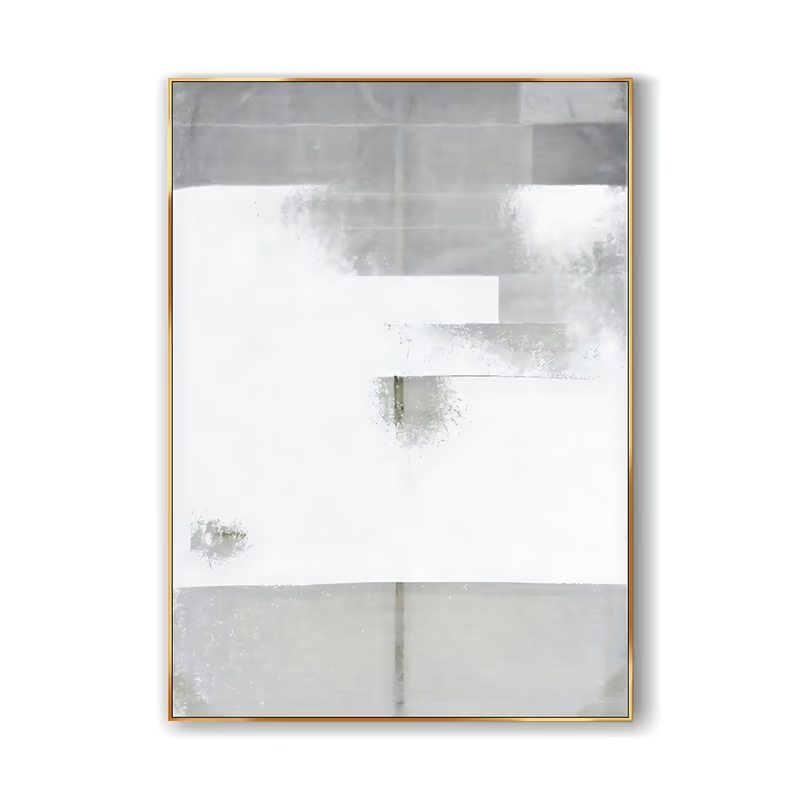
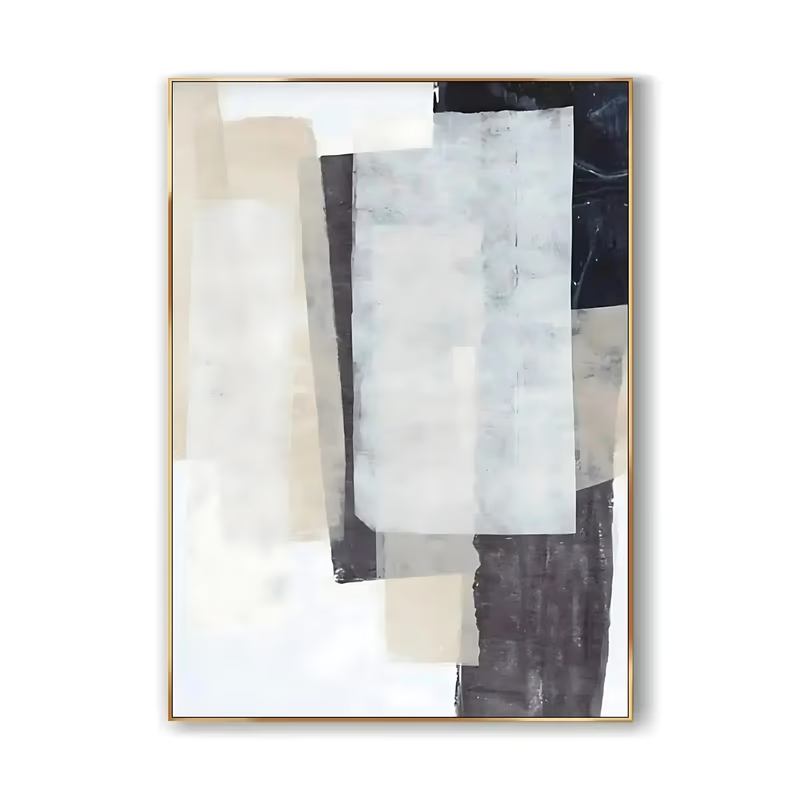
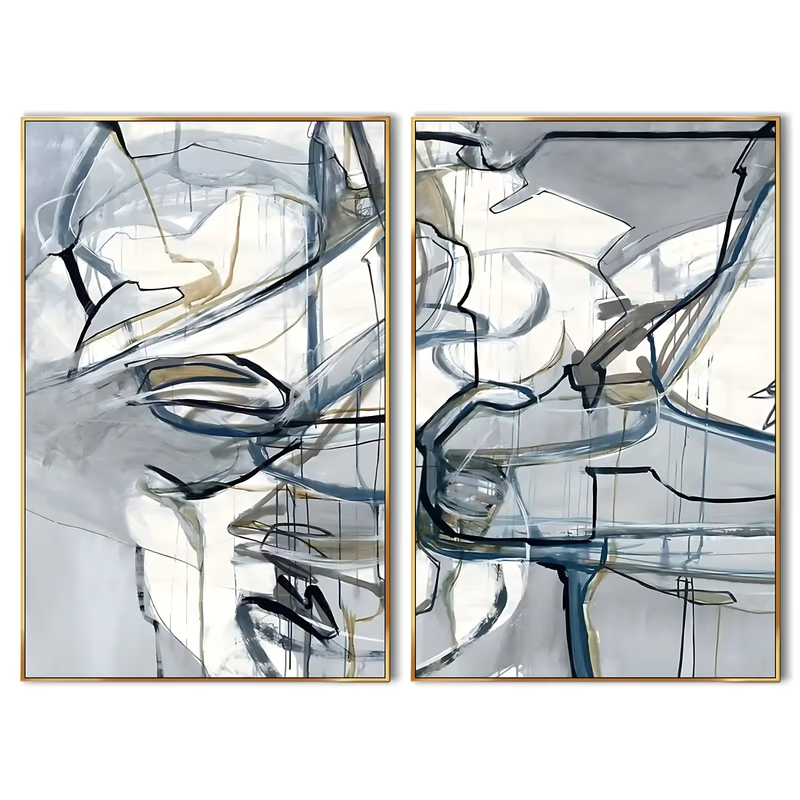
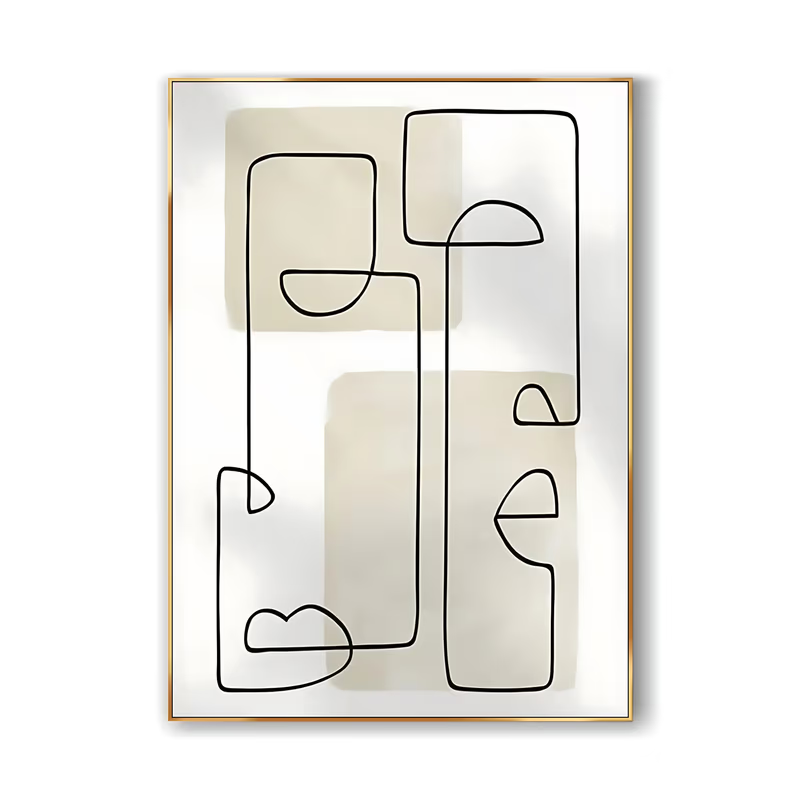
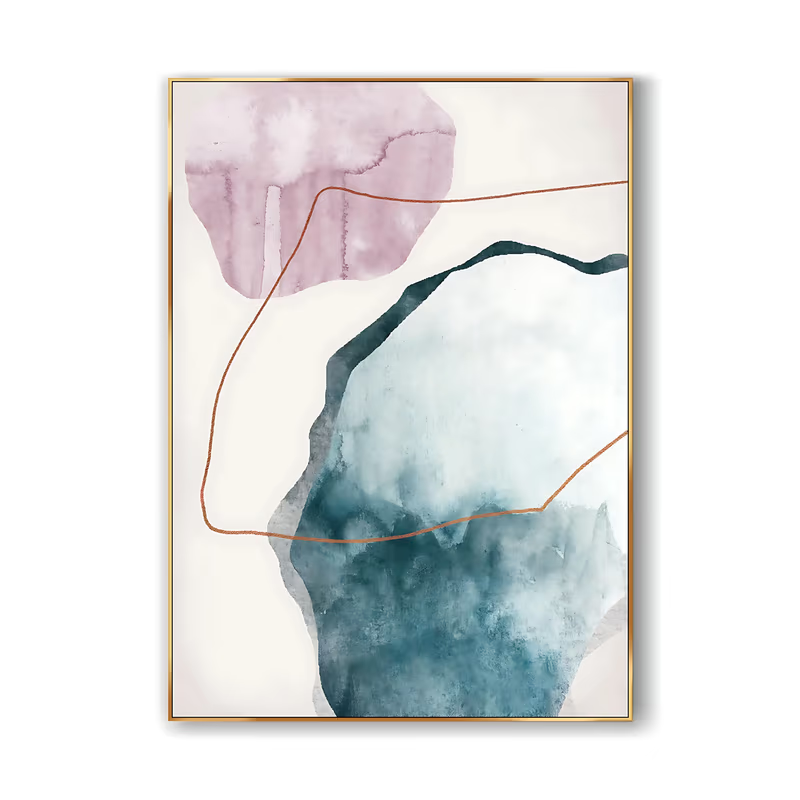
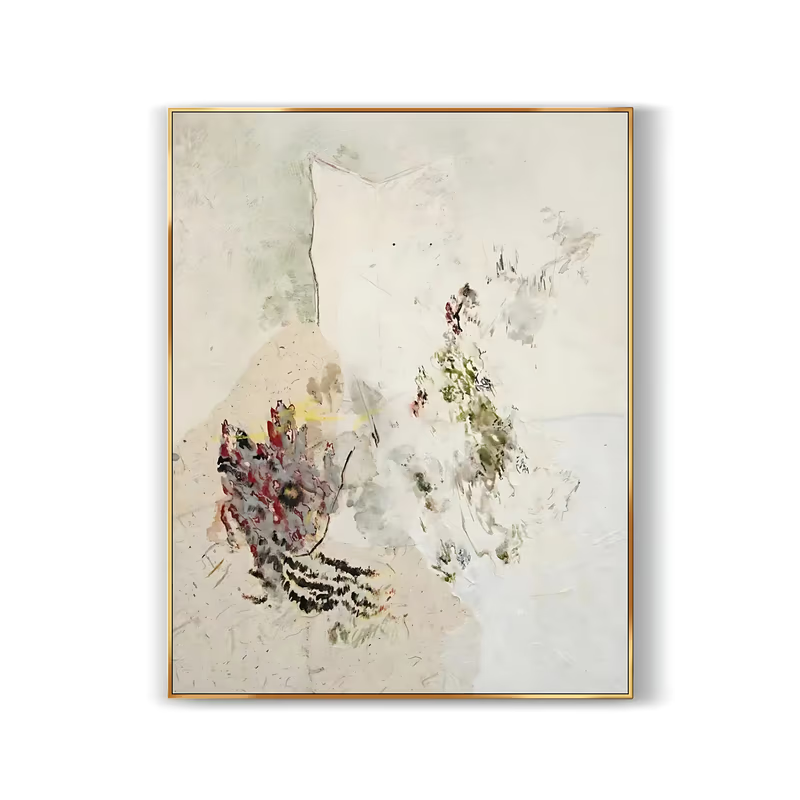
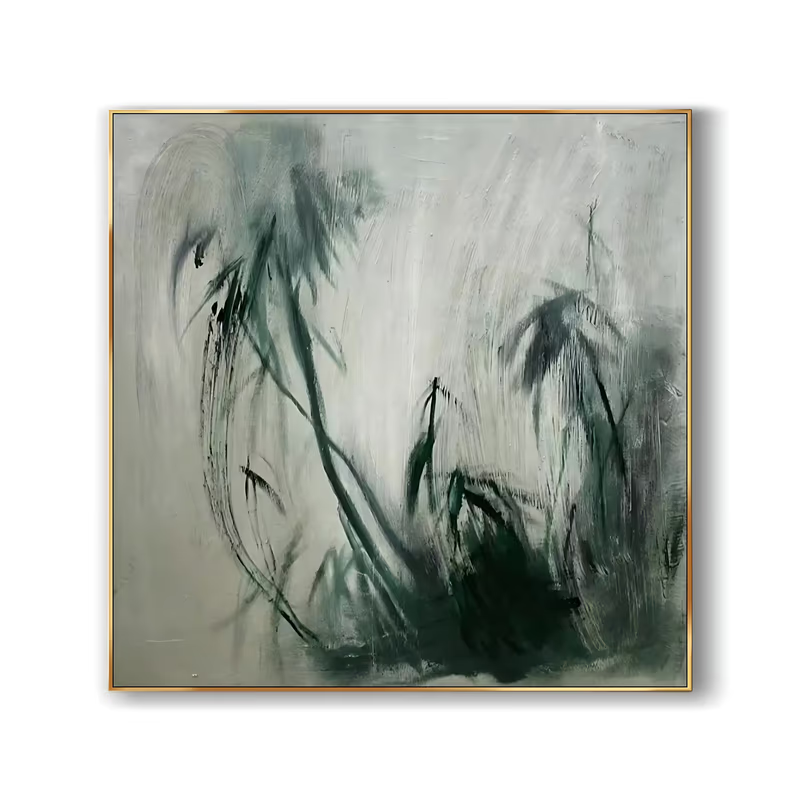
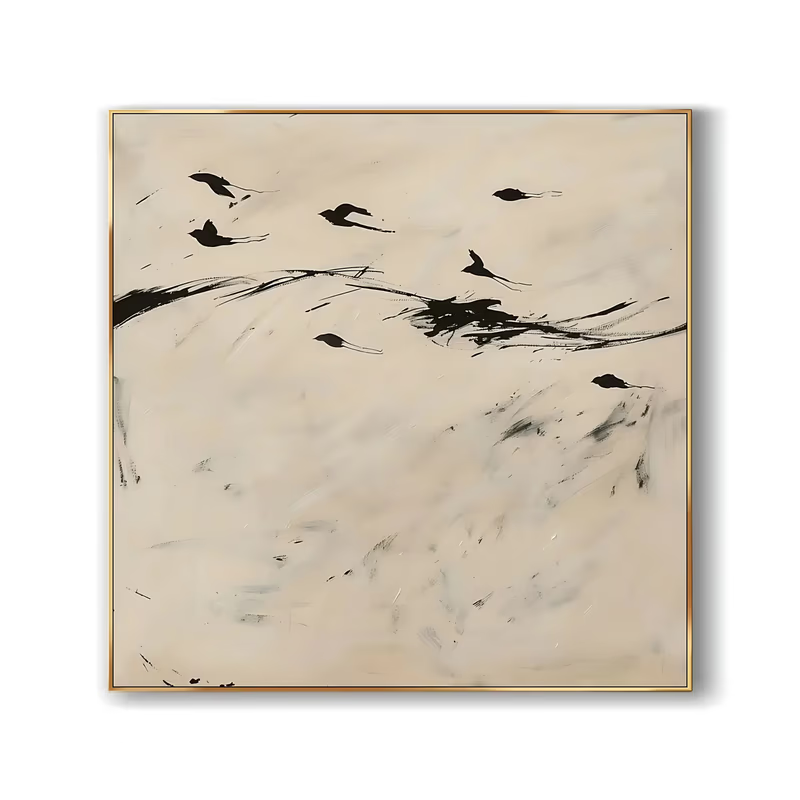
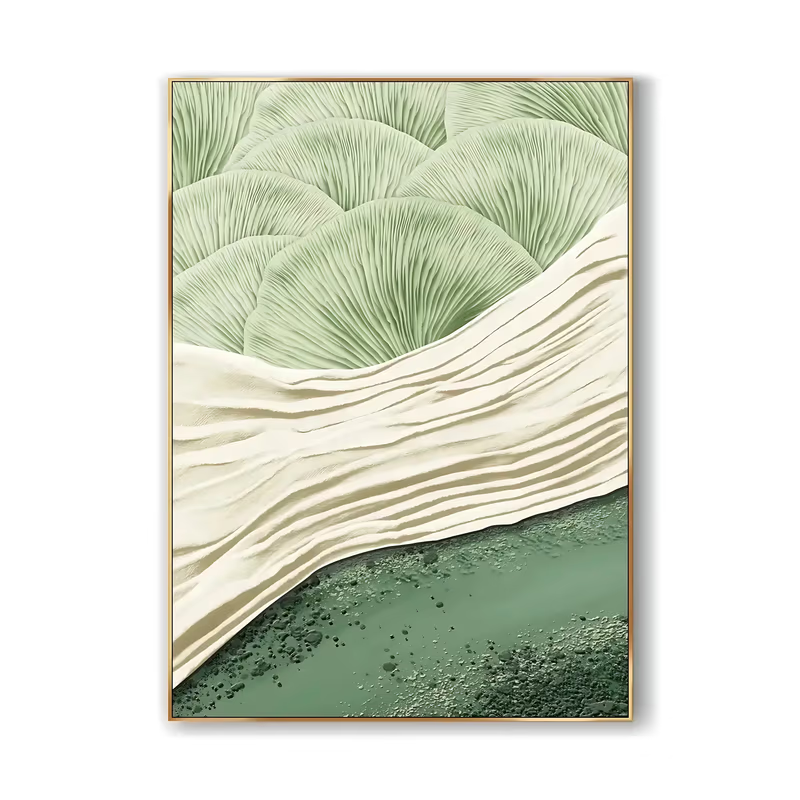
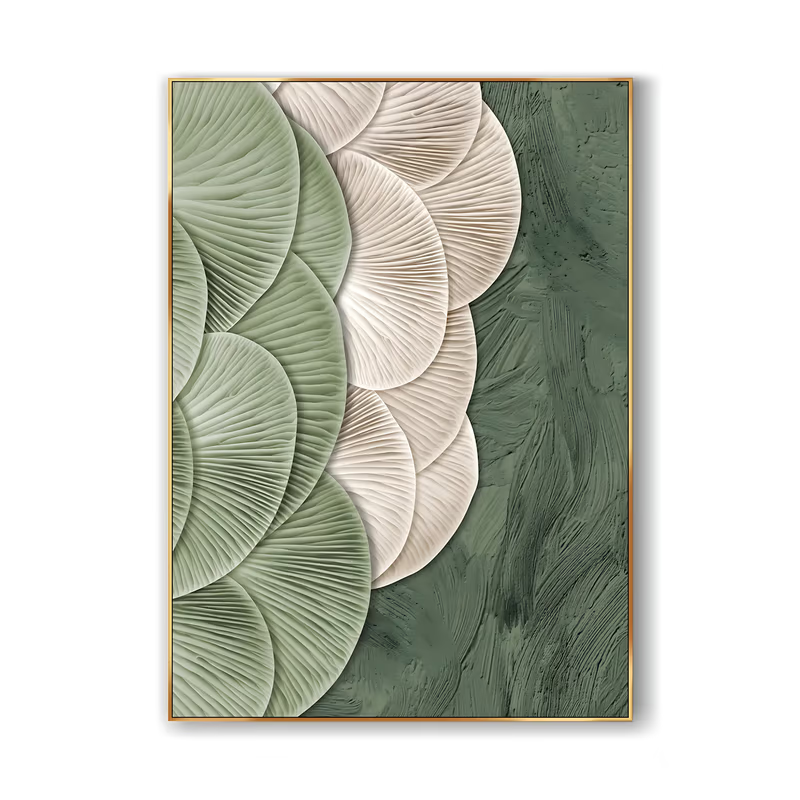
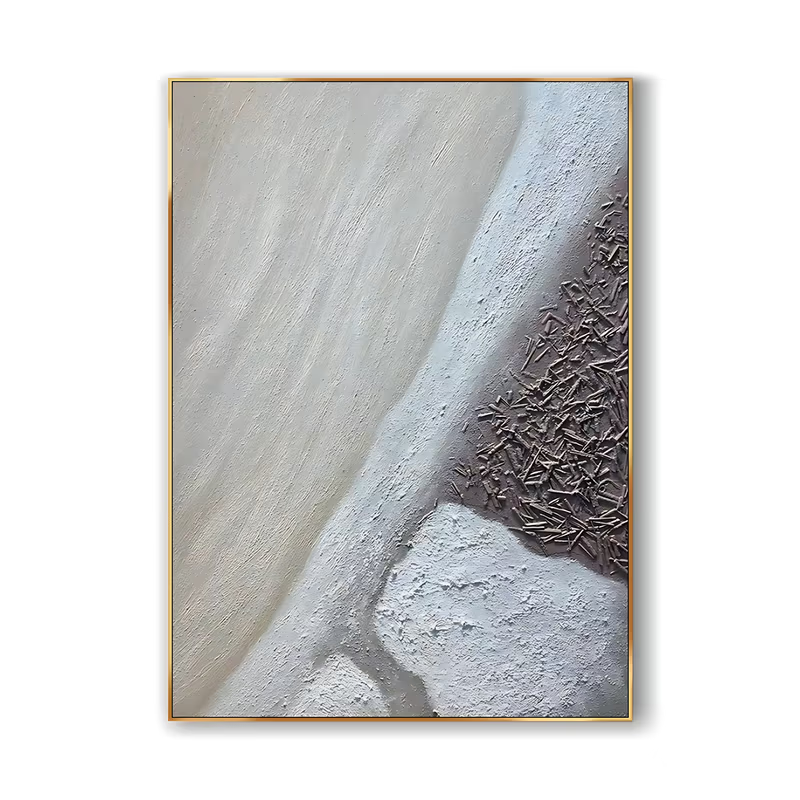
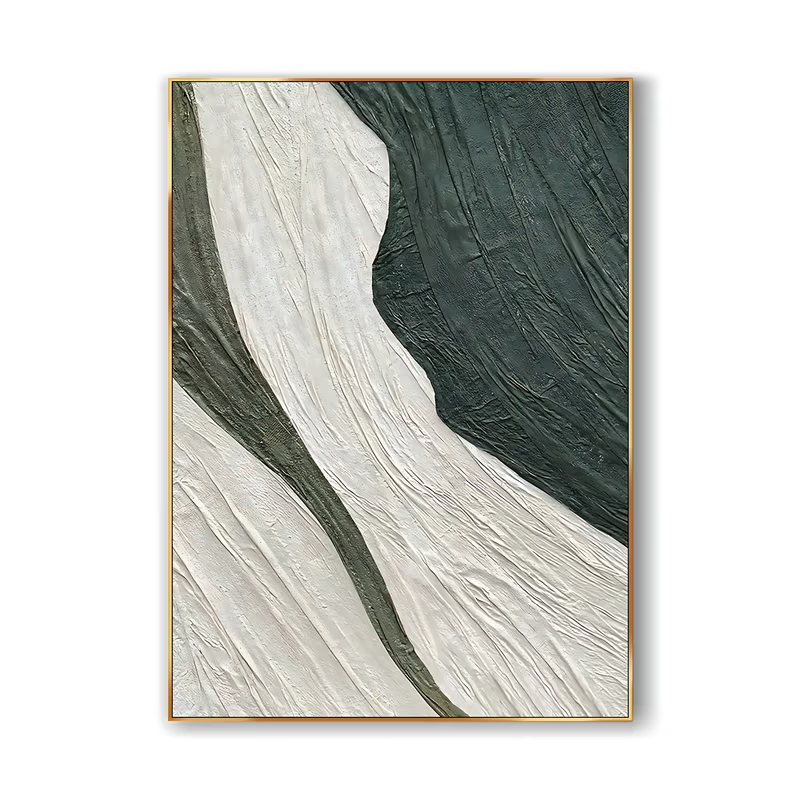
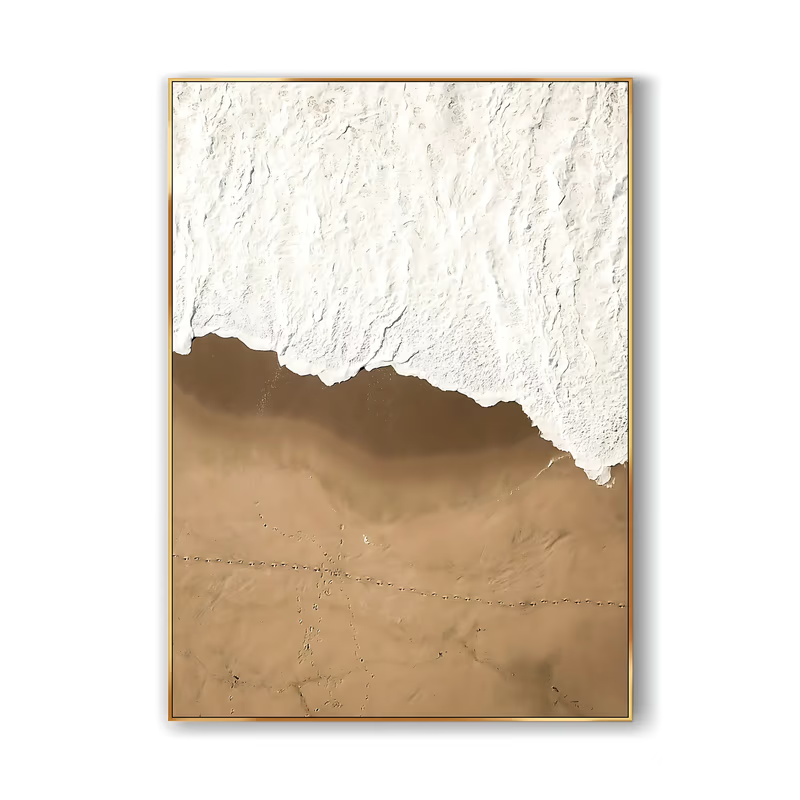
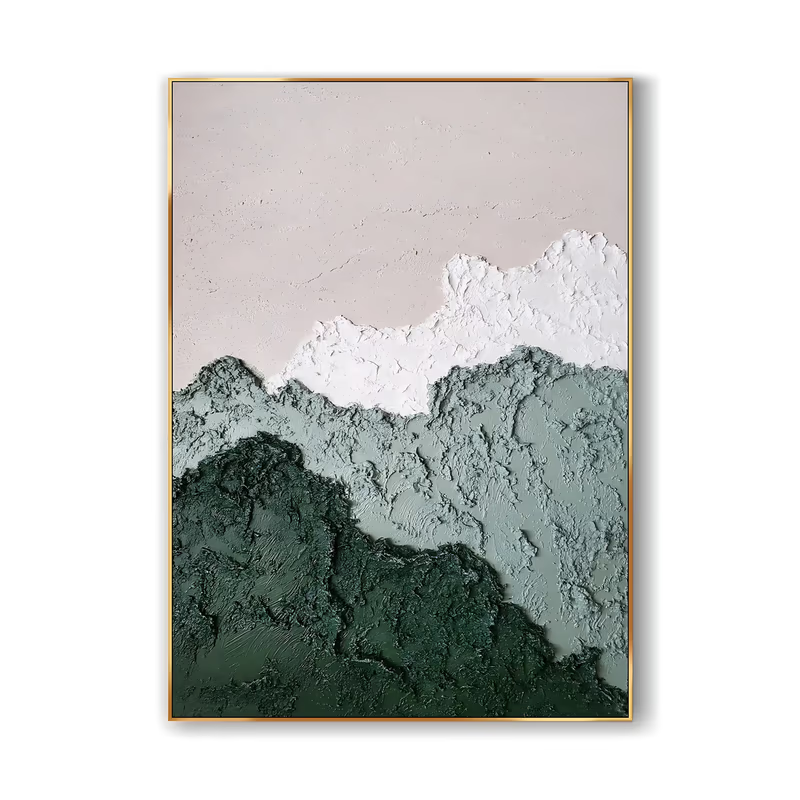
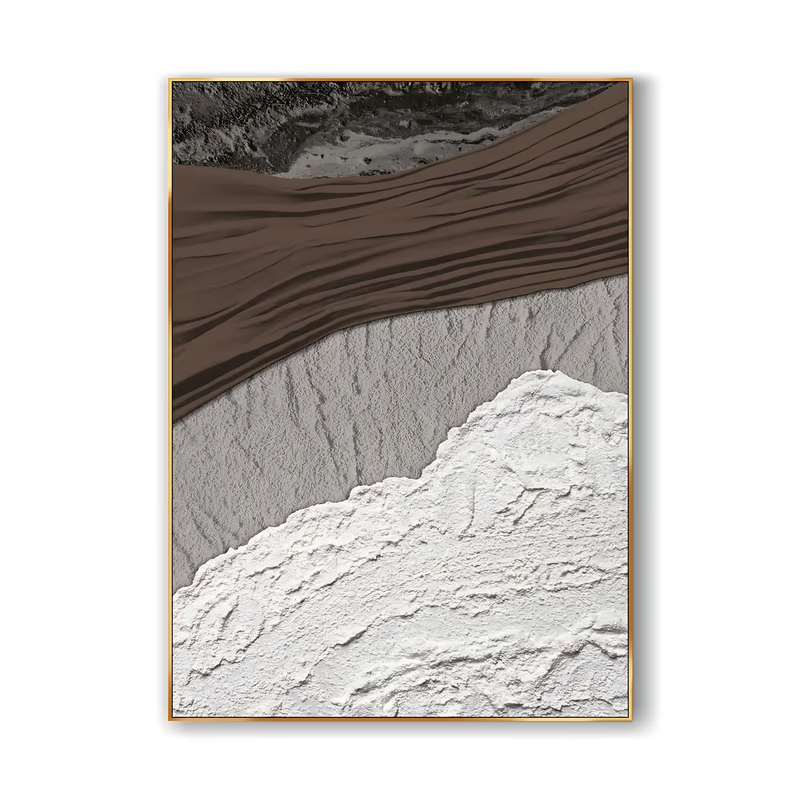
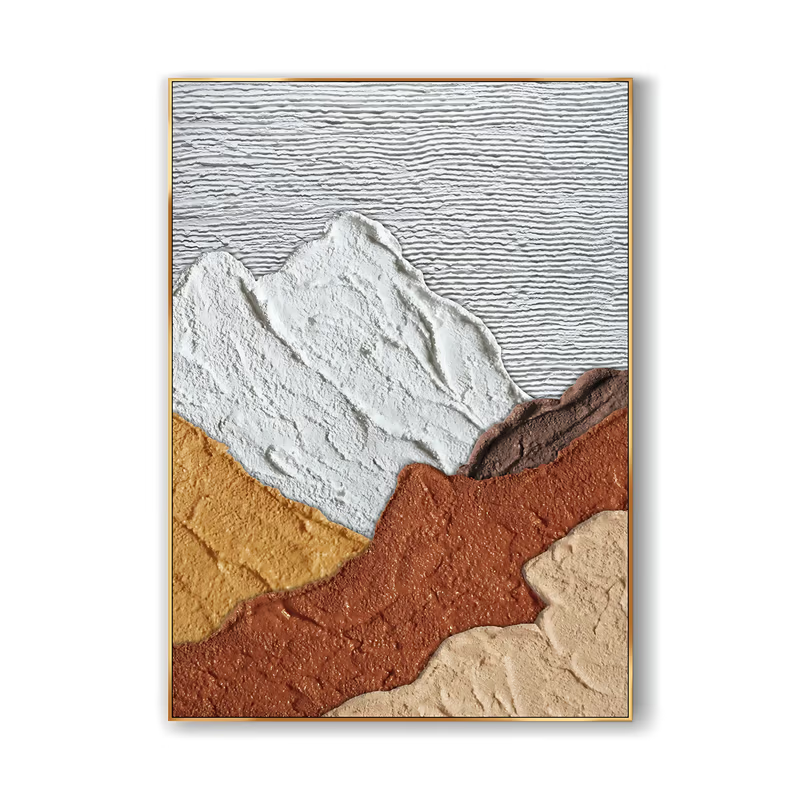
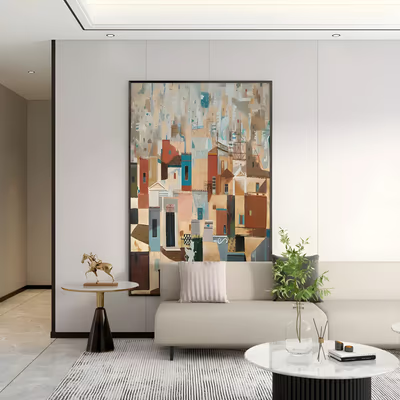
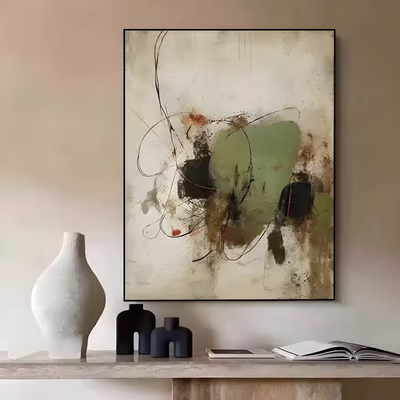
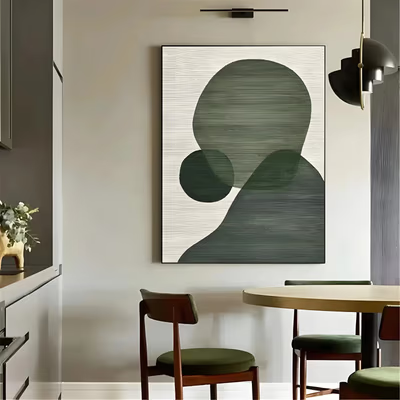
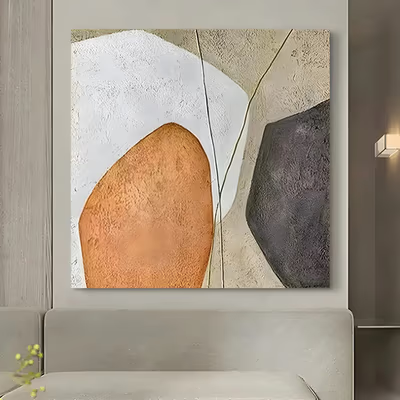
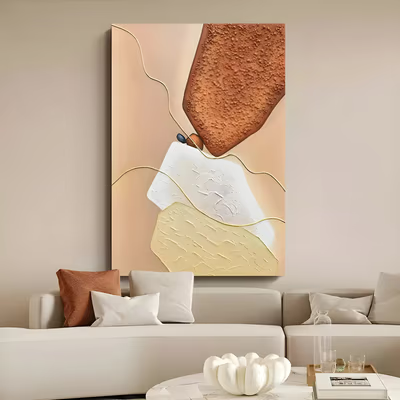
Greige and olive overlapping planes, a sage patch with a looping ink line, weathered teal patina, cream woven plaster. These carry stillness through restraint and surface, and they suit Japandi, Scandinavian and minimal interiors. See wabi-sabi wall art.
Does peaceful wall art have to be pale and neutral?
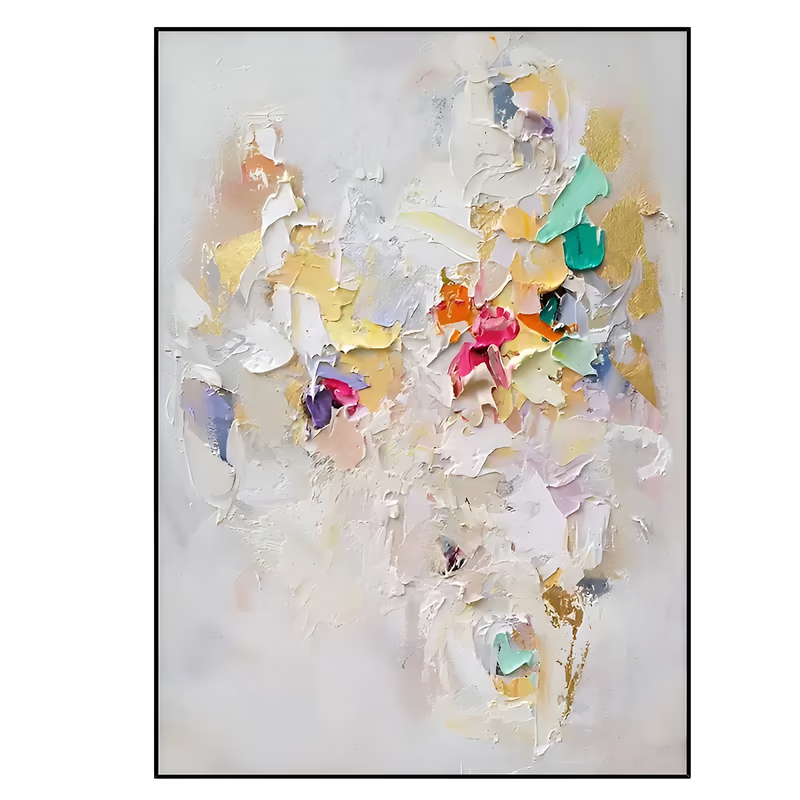
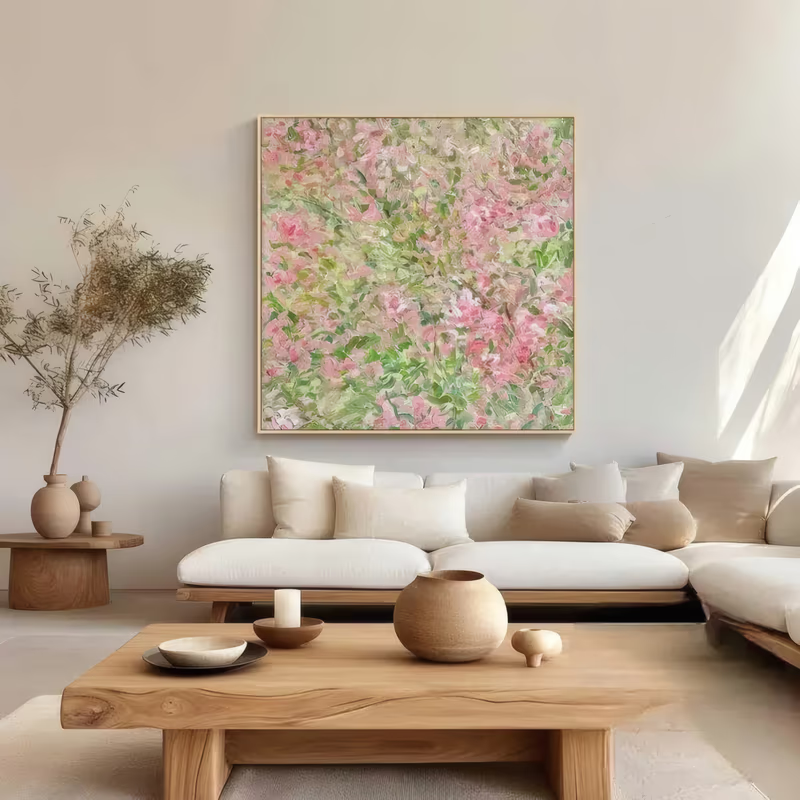
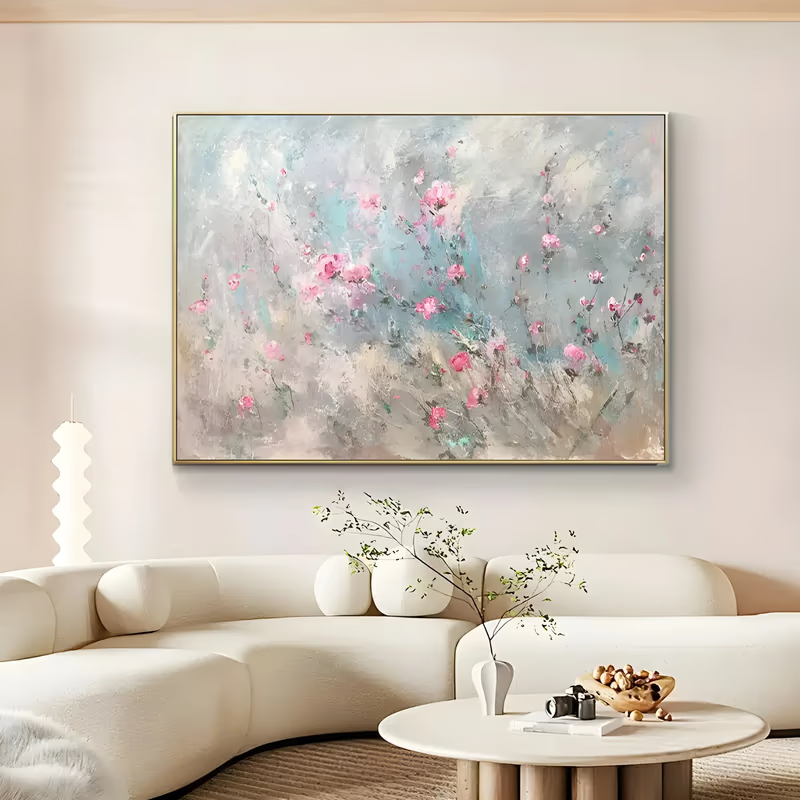
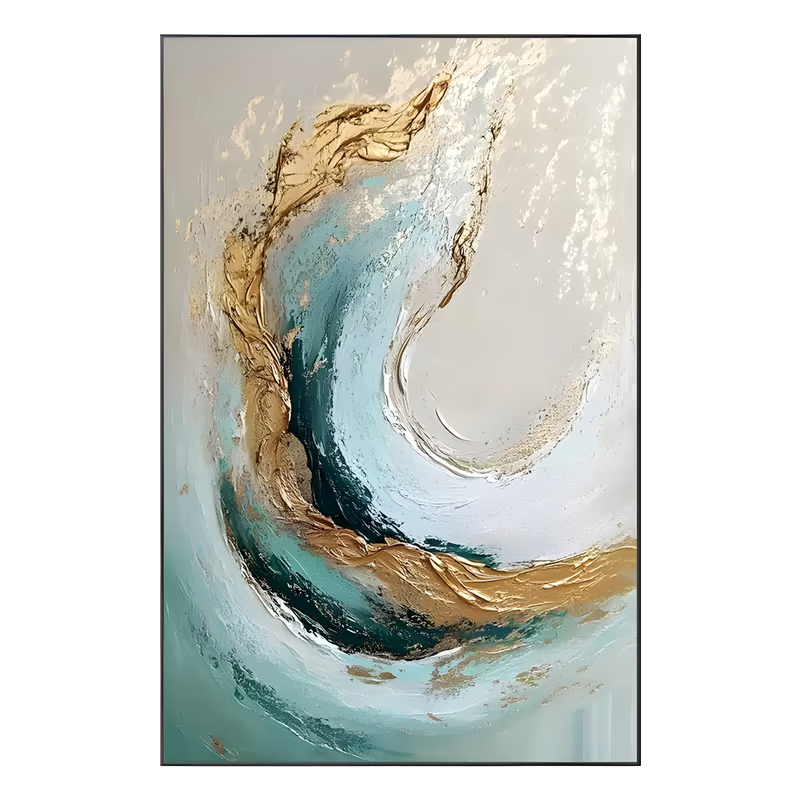
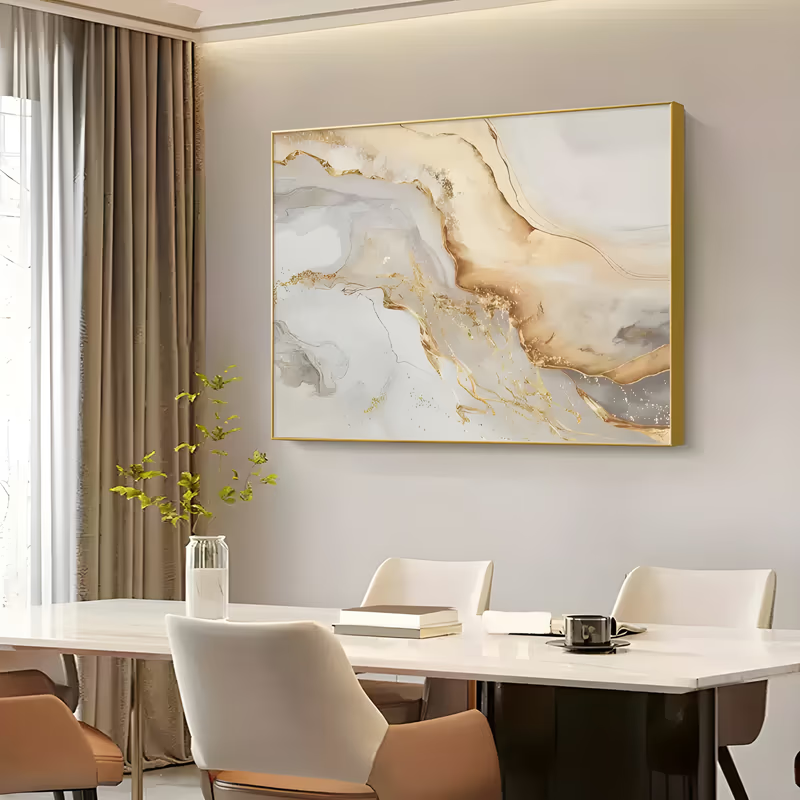
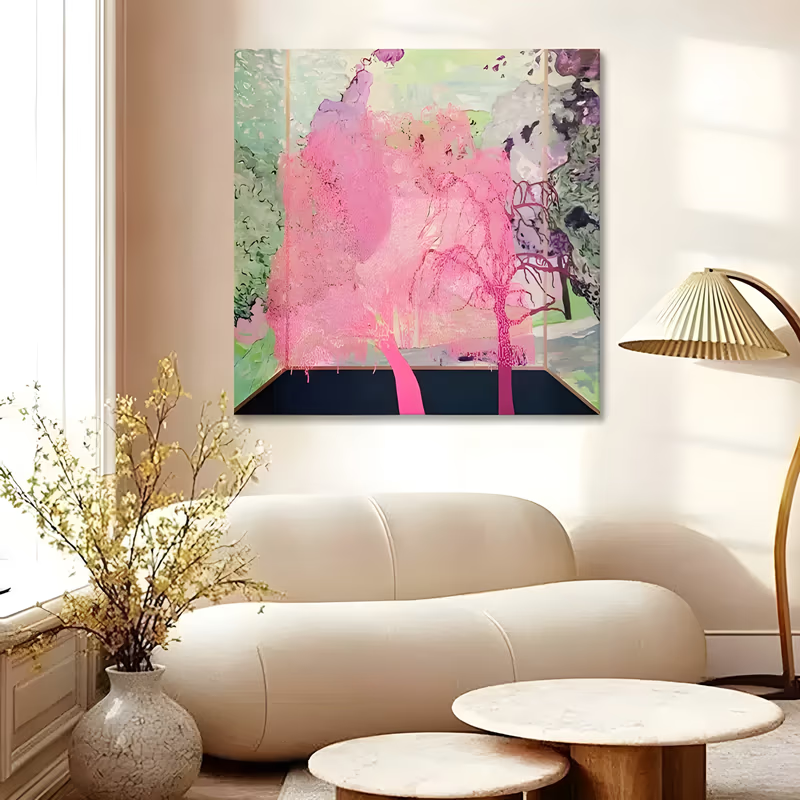
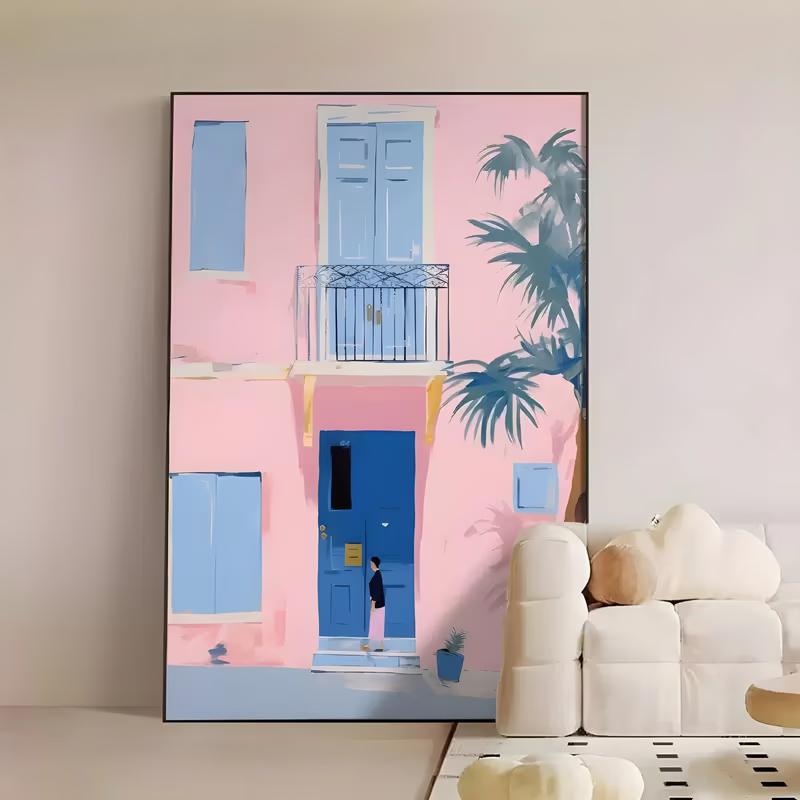
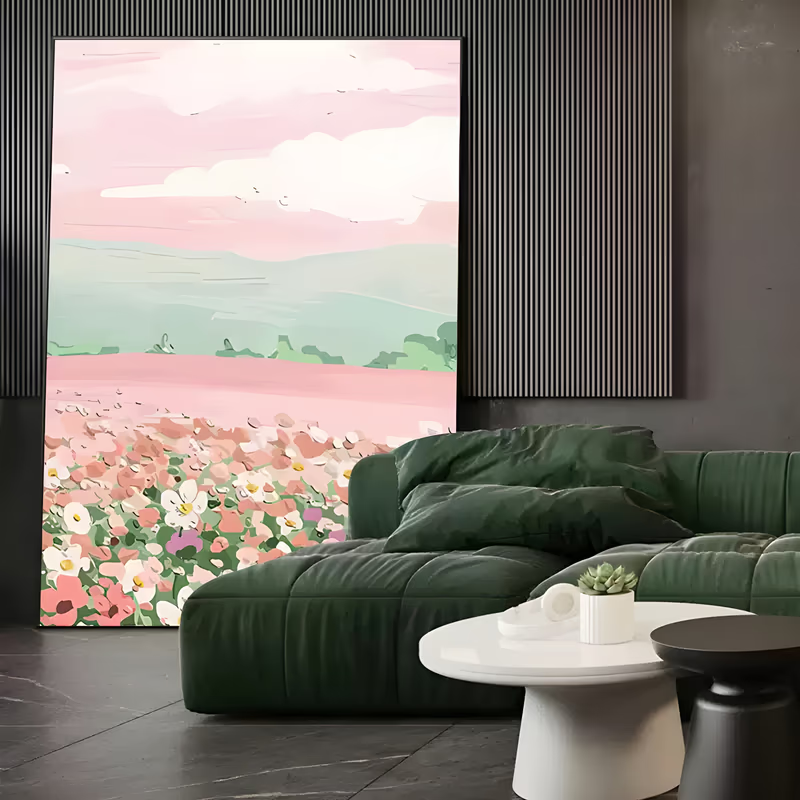
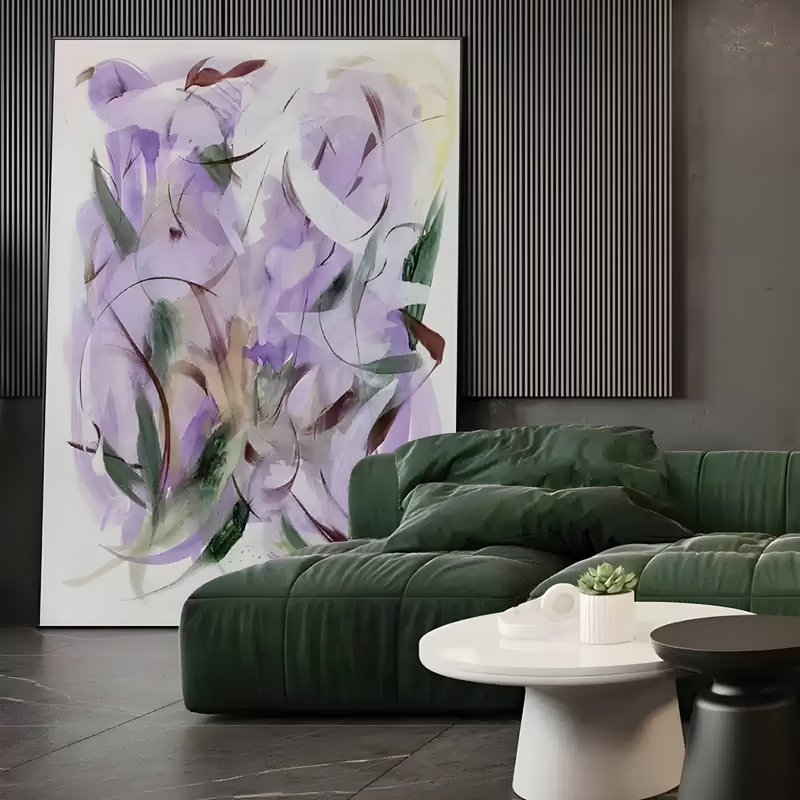
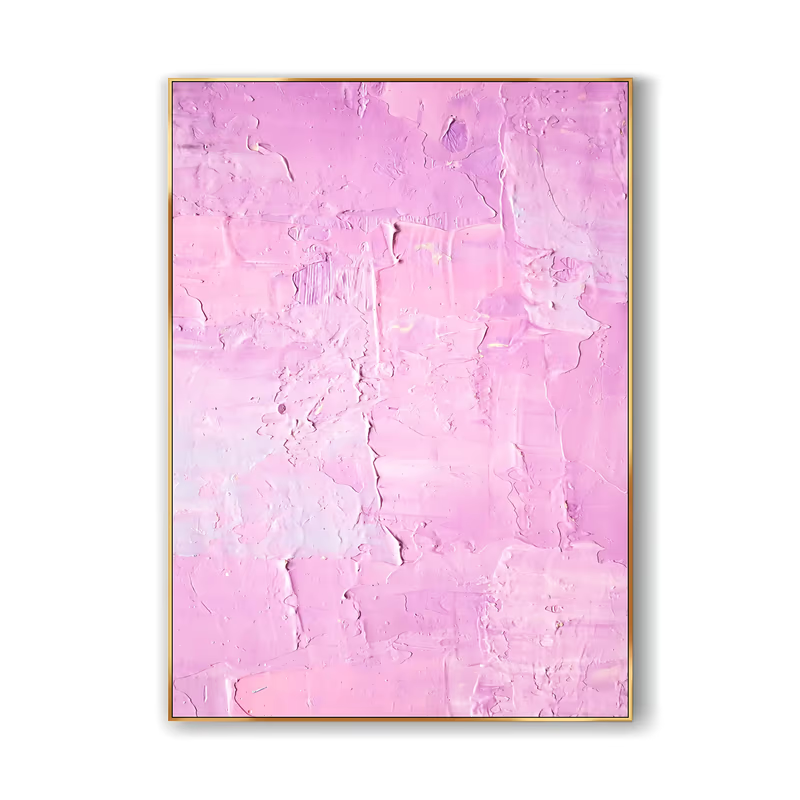
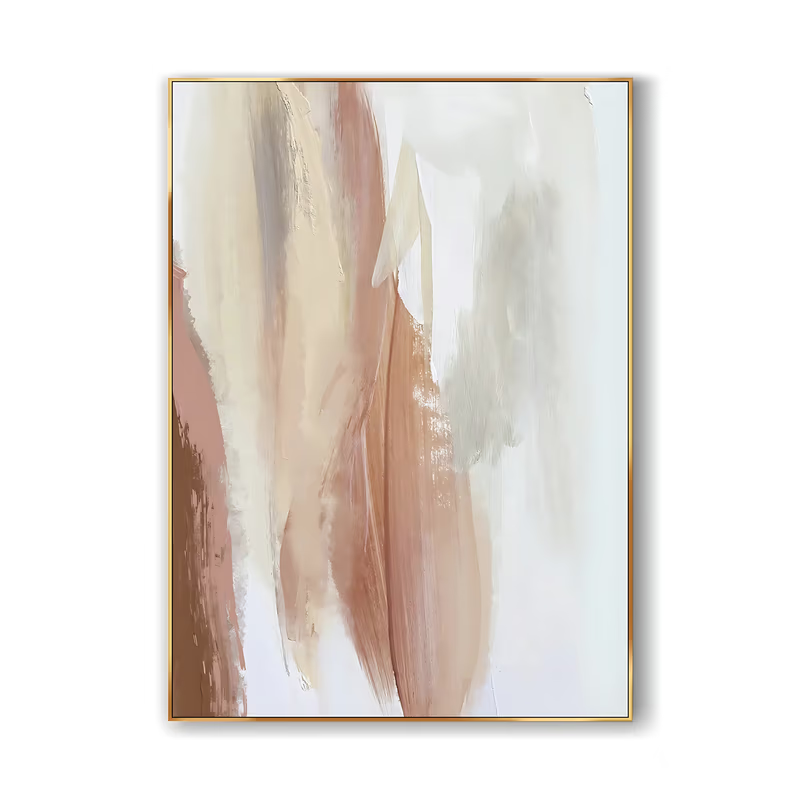
No: a serene painting can be golden, deep blue or even softly pink, as long as its colours are related and its scene is still.
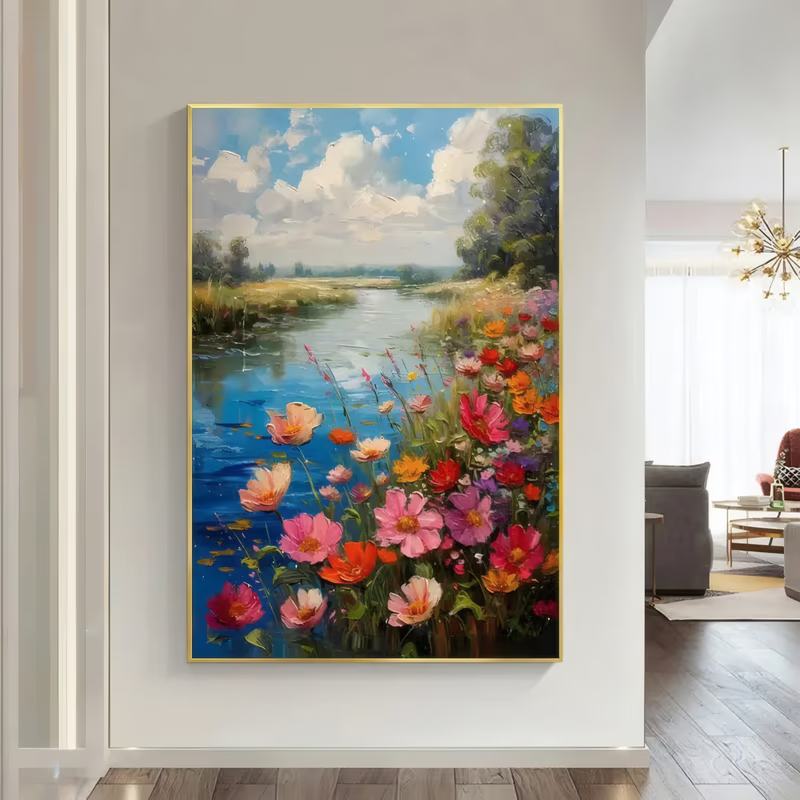
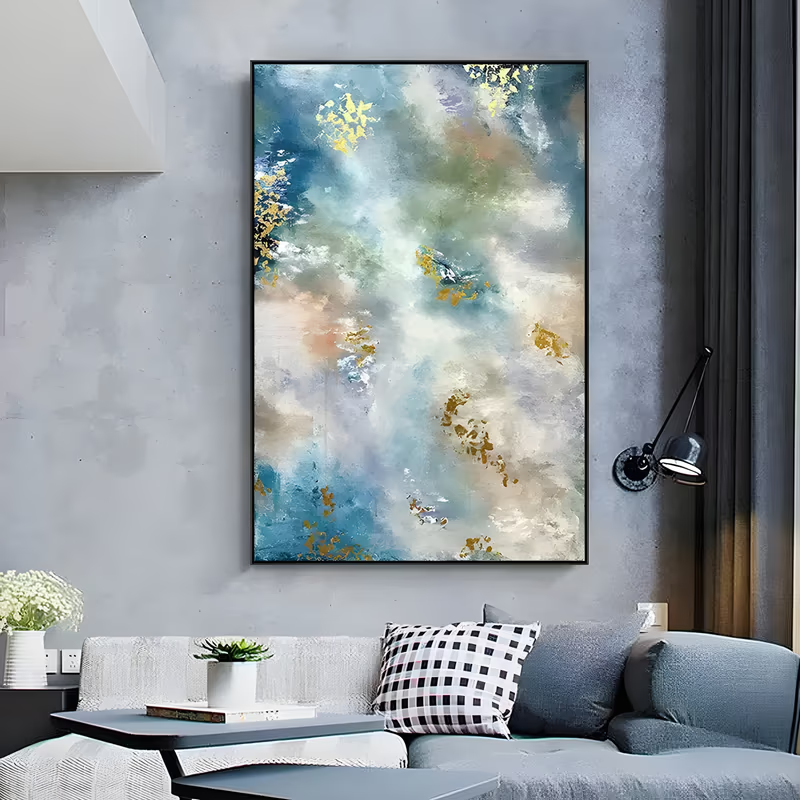
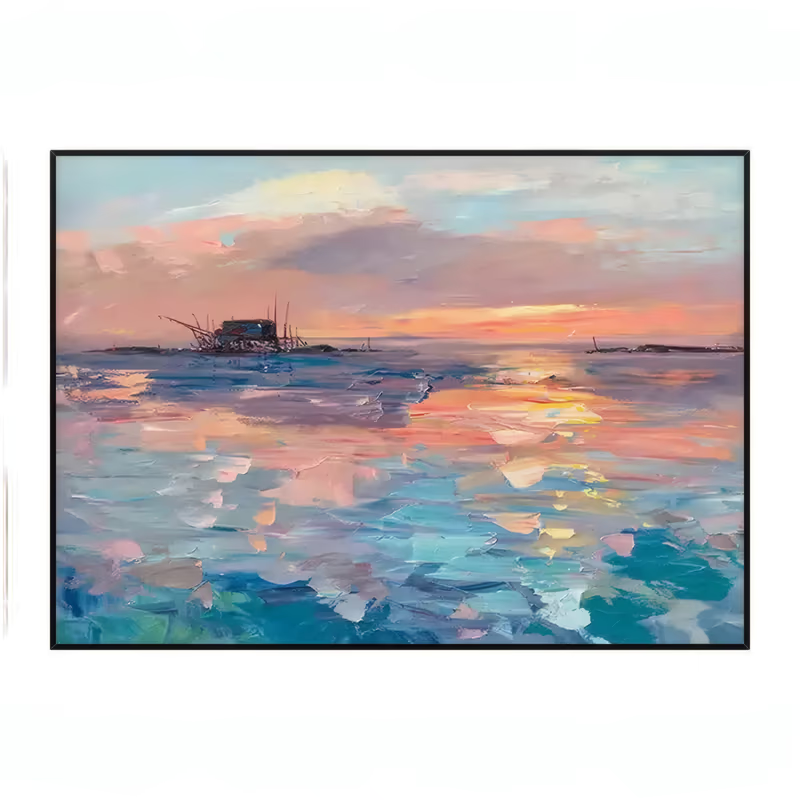
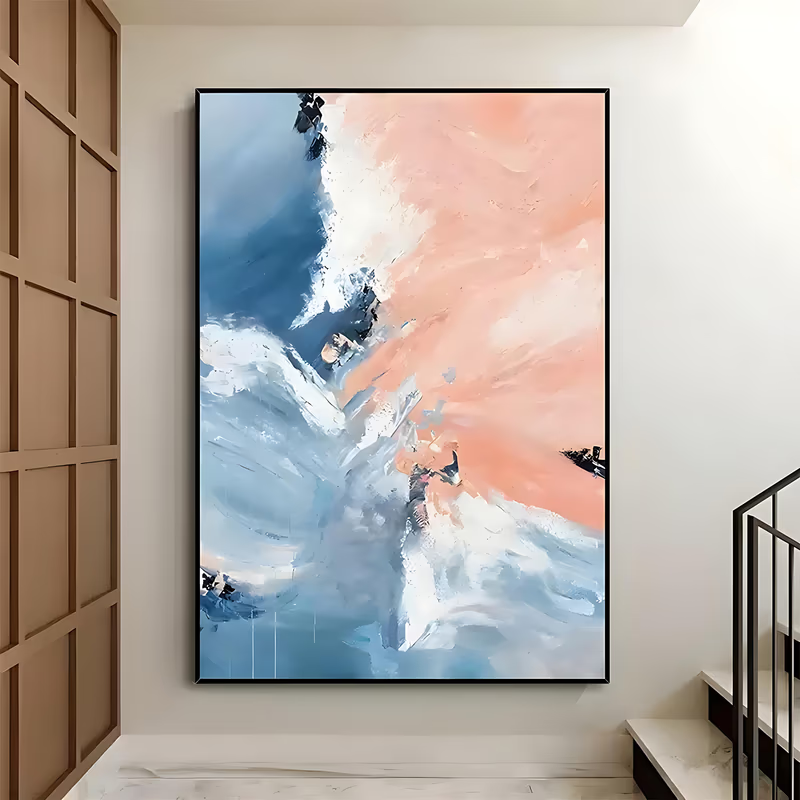
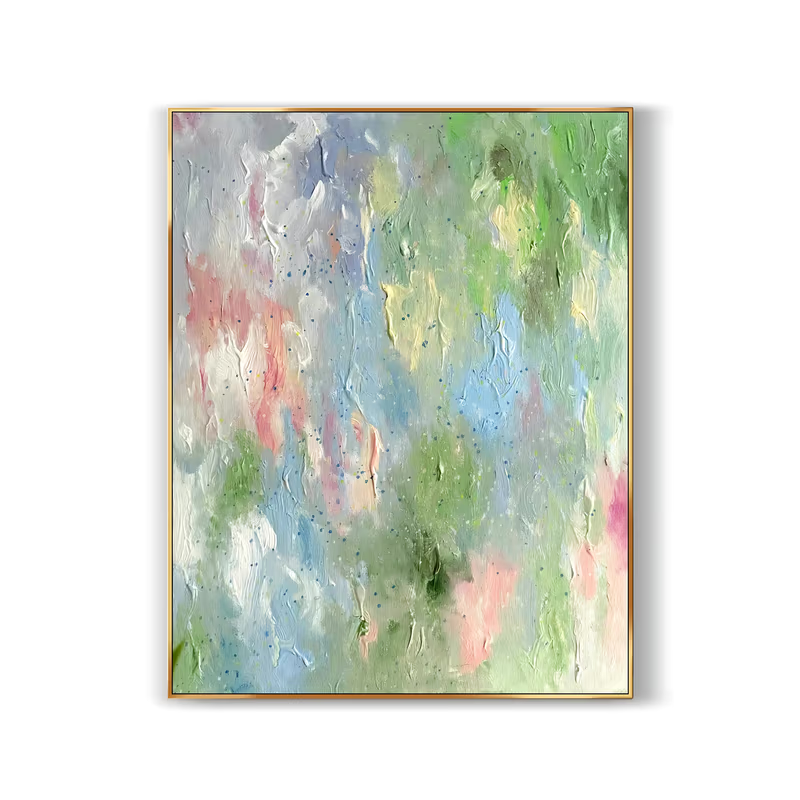
Harmony matters more than paleness. Paintings built from neighbouring colours, such as blue into teal into green, or gold into peach into rose, feel unified and quiet, while two strong opposites fighting across the canvas feel restless. That is why a sunset over a still lake can be both rich and tranquil.
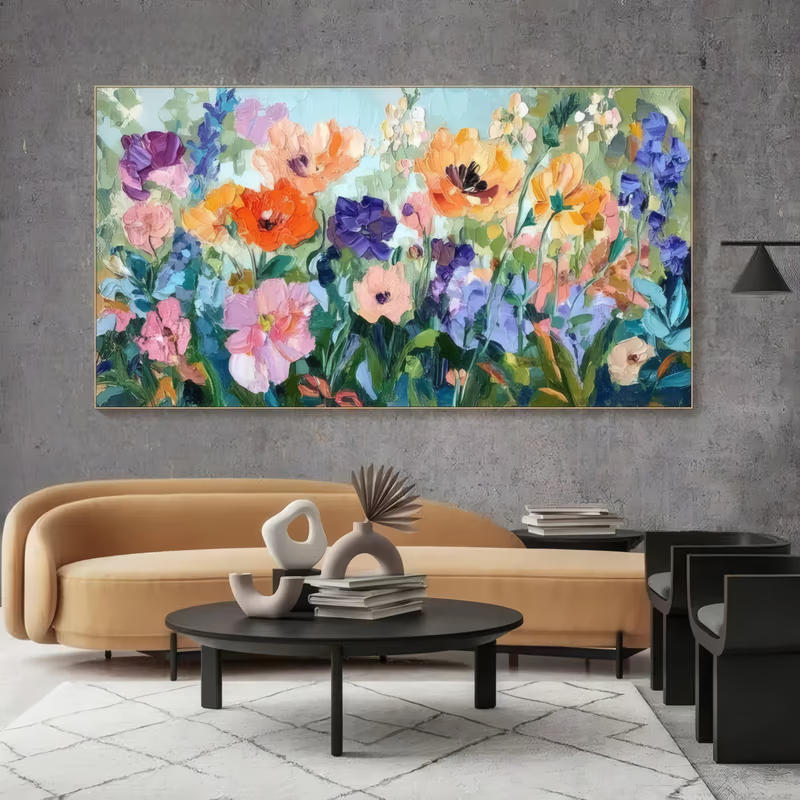
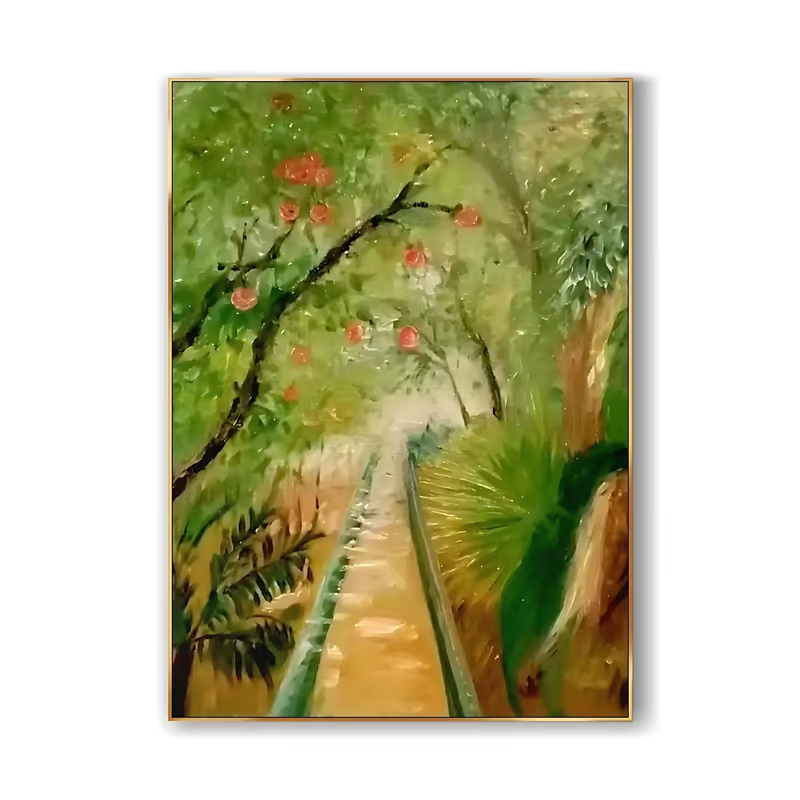
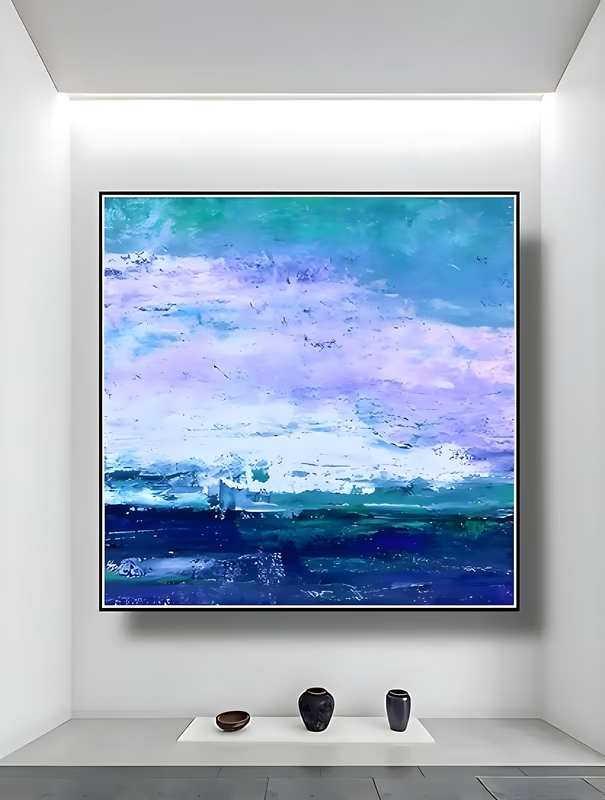
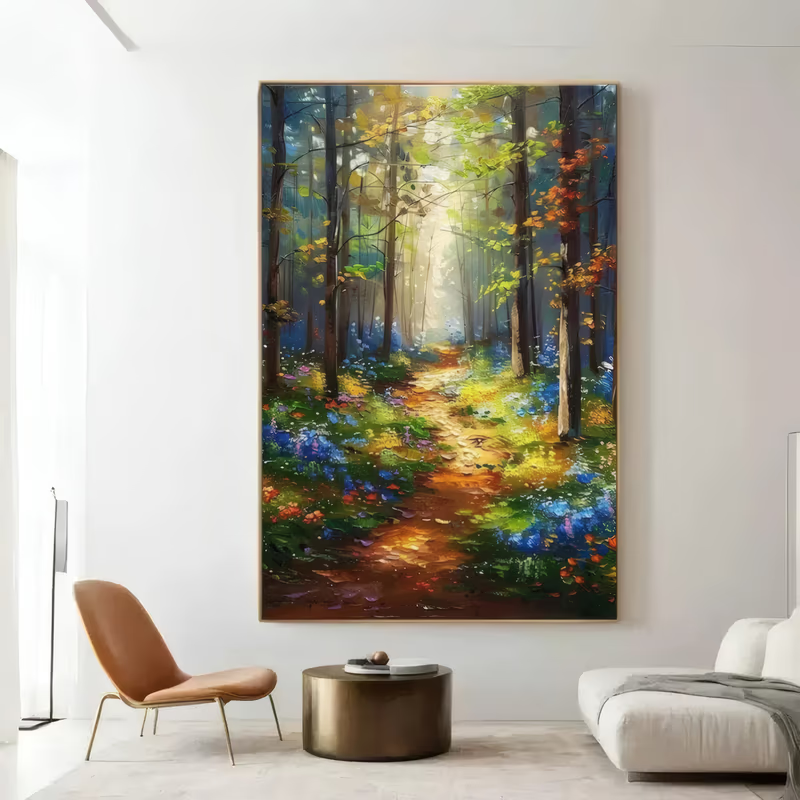
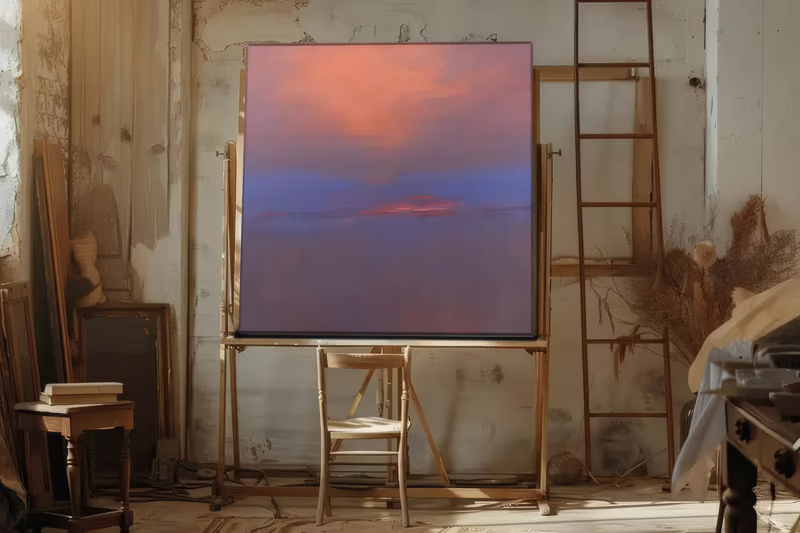
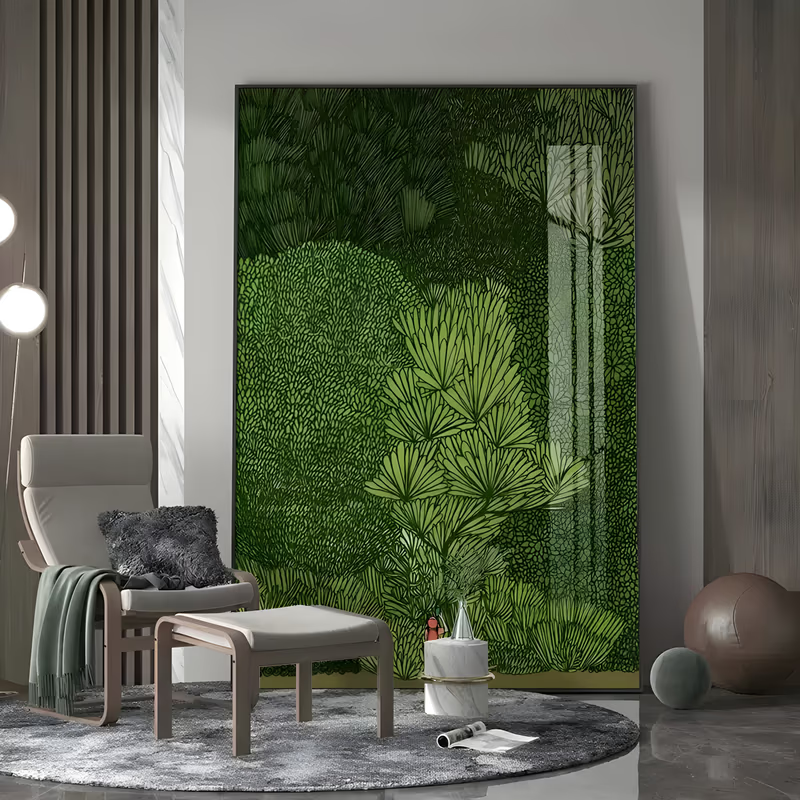
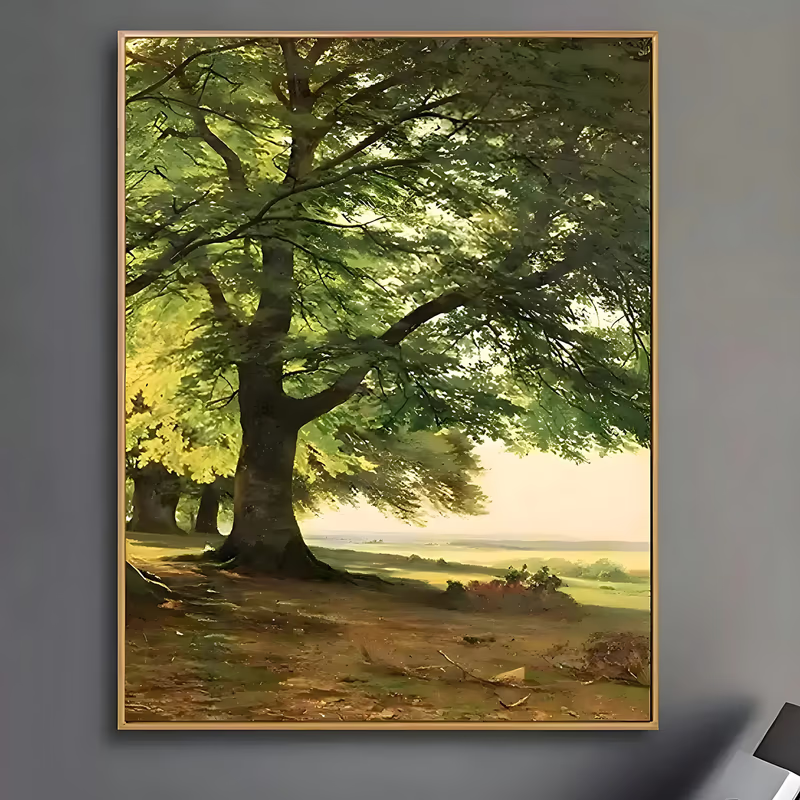
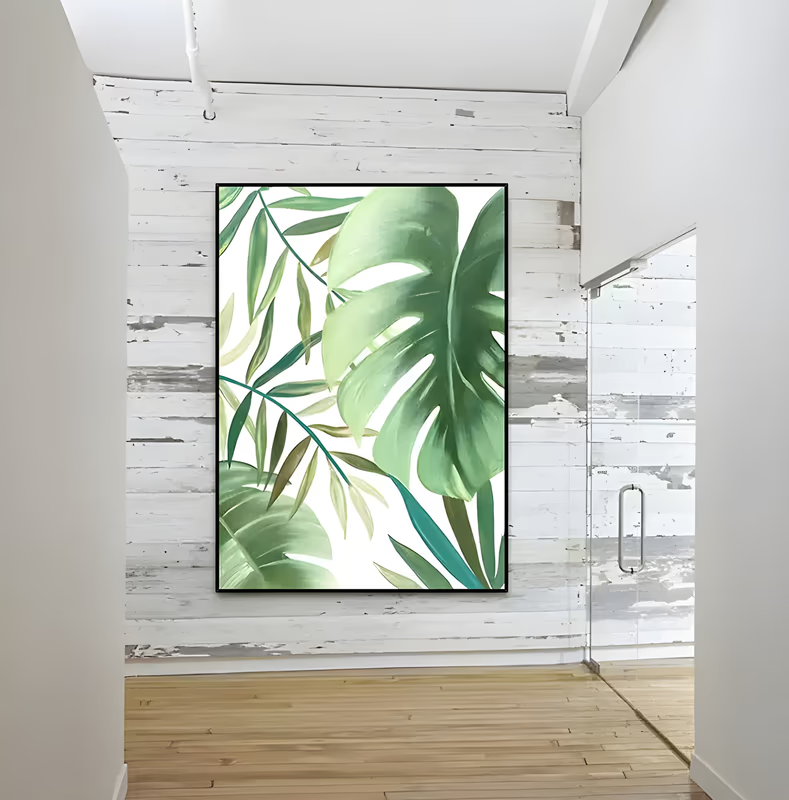
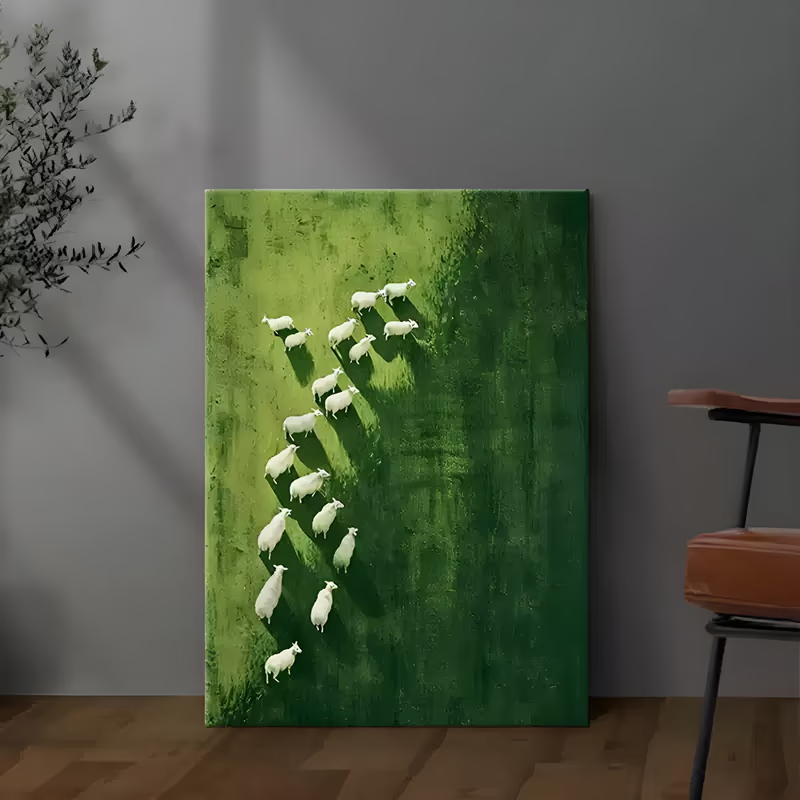
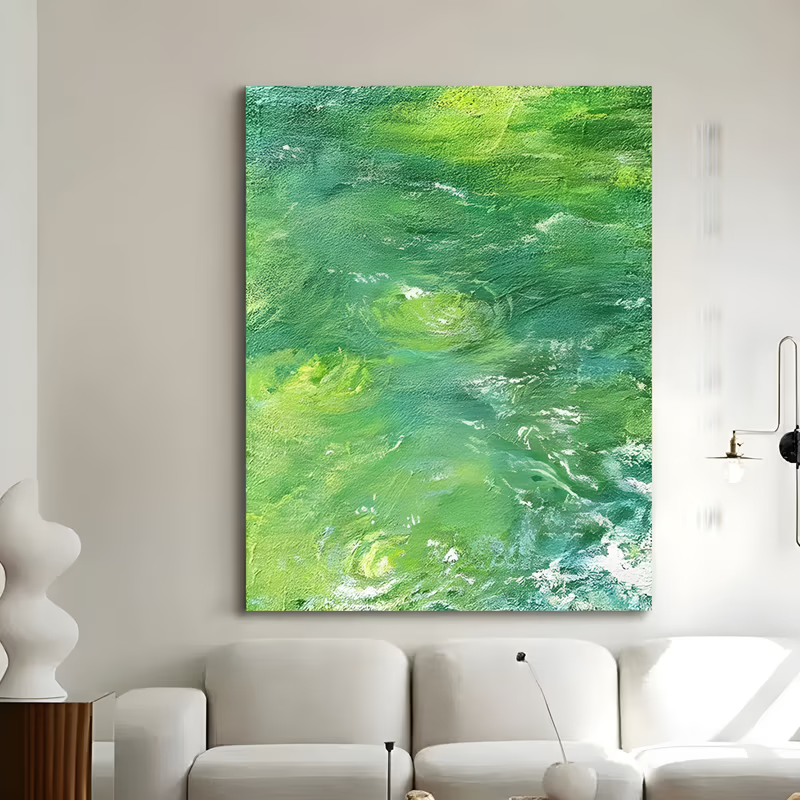
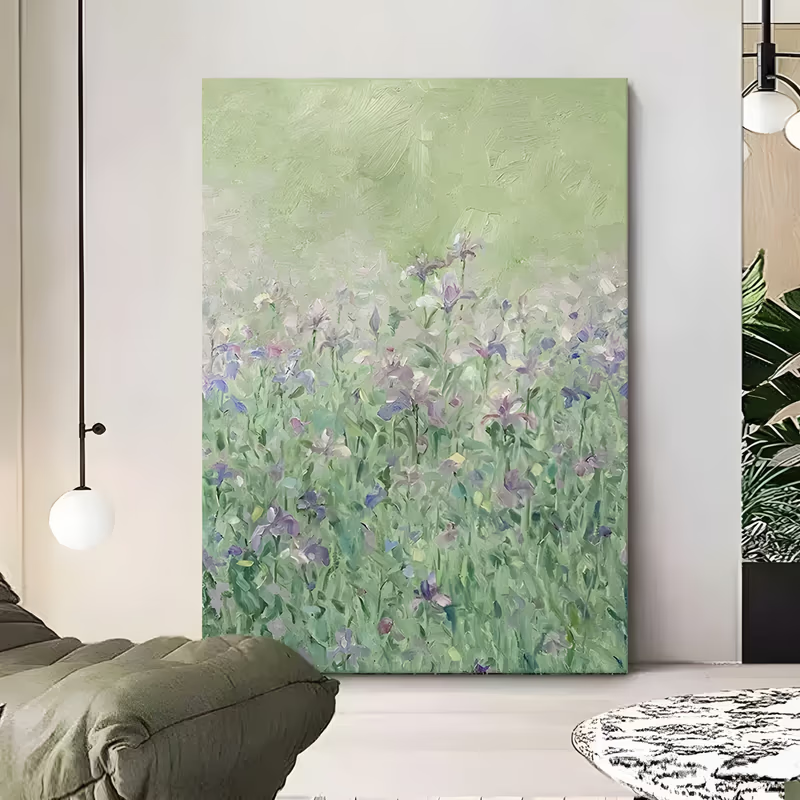
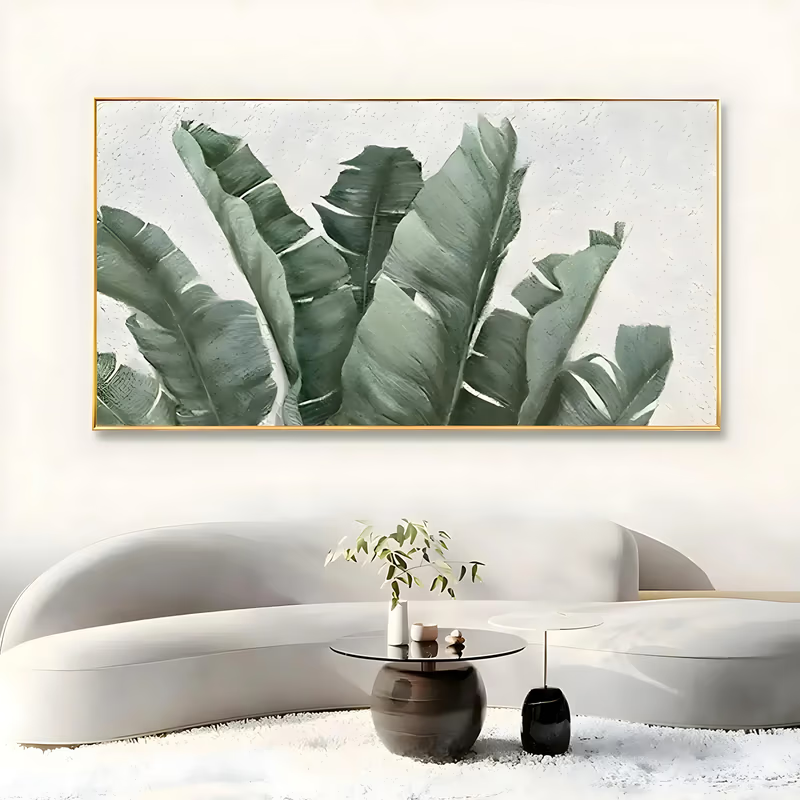
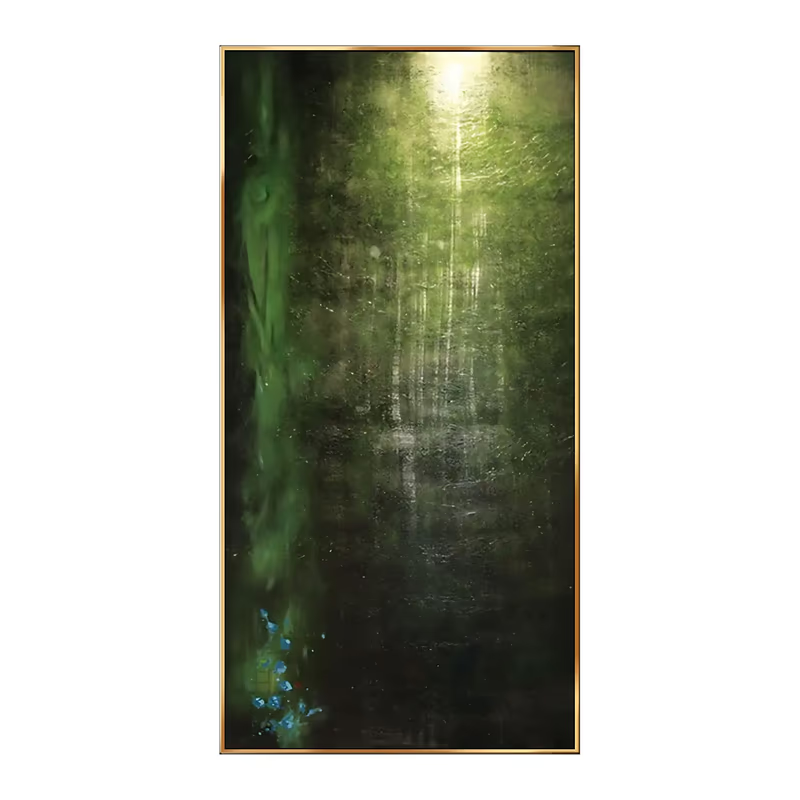
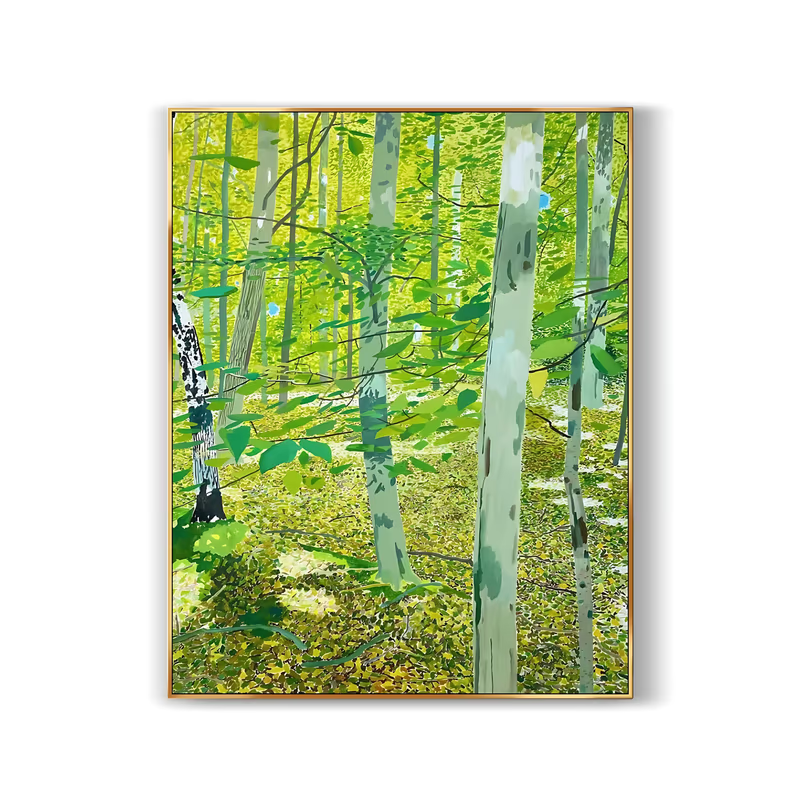
Match the depth of the painting to the room's light. In a bright room, pale skies, snow scenes and white, cream and beige work best. In a room used mainly in the evening, a deeper painting such as a night lake or a dusky horizon in blue and purple stays peaceful and does not glare under lamps. Green-led landscapes and botanicals in green sit between the two and suit rooms with timber and plants.
Many works here are also tagged calming or uplifting: the first for quieter palettes, the second for brighter morning light.
Which rooms and businesses need peaceful wall art?
Peaceful wall art belongs in rooms built for stillness: bedrooms, reading corners, meditation and yoga rooms, hotel suites, spa lounges, senior living lounges and quiet rooms at work.
Bedrooms and reading corners
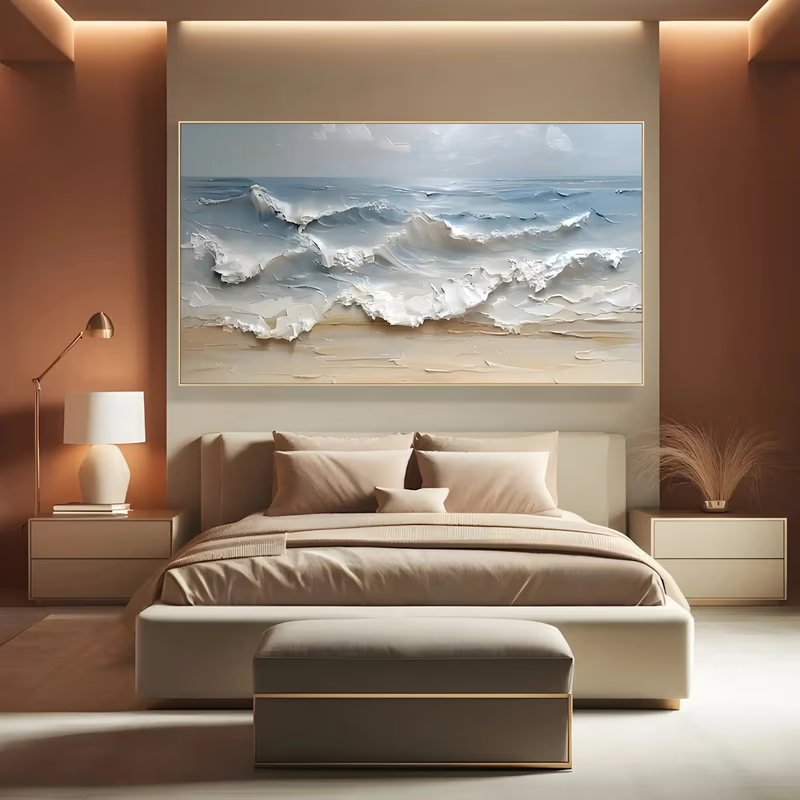
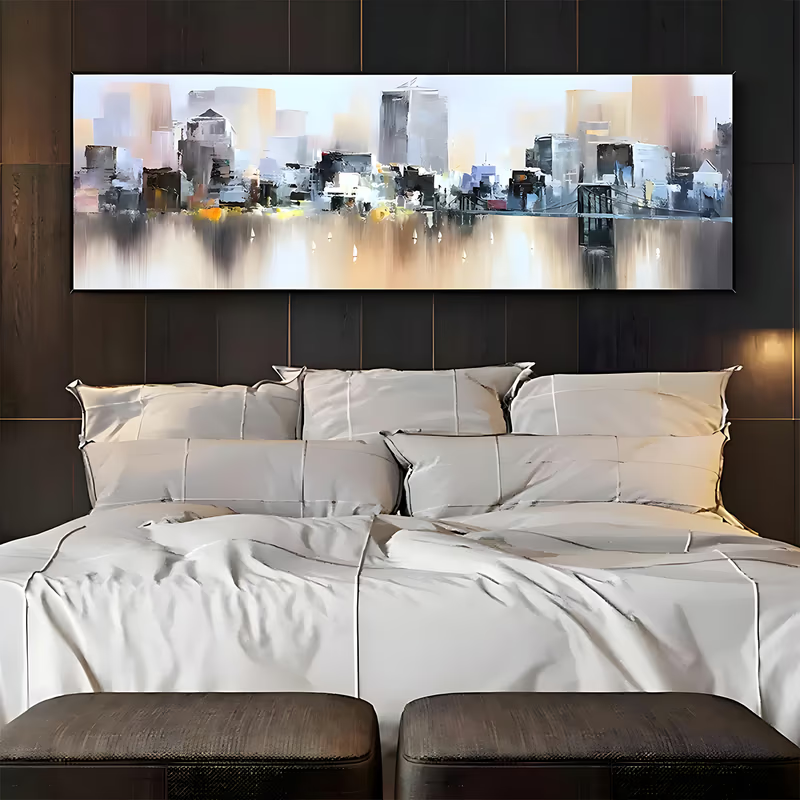
A long view opposite the bed or beside a reading chair gives the room a place to rest the mind. Peaceful art for bedrooms and living rooms.
Meditation, yoga and prayer rooms
One painting, hung where you face during practice, is enough. Mist, water and a single subject suit the purpose better than symbols or quotations.
Hotel suites and resort rooms
A serene horizon gives a guest room the feeling of a view even when the window faces a wall. See resorts and beach hotels and peaceful art for hotel rooms.
Spa relaxation lounges
Guests rest for longer here than in treatment rooms, so a wide, still landscape works well. See spas and wellness centres.
Senior living and care settings
Recognisable, quiet scenes such as lakes, gardens and gentle hills are easy to enjoy every day. See senior living communities.
Offices and boardrooms
A tranquil landscape in a boardroom lowers the temperature of a long meeting. Peaceful art for meeting rooms.
How much empty wall does a peaceful painting need?
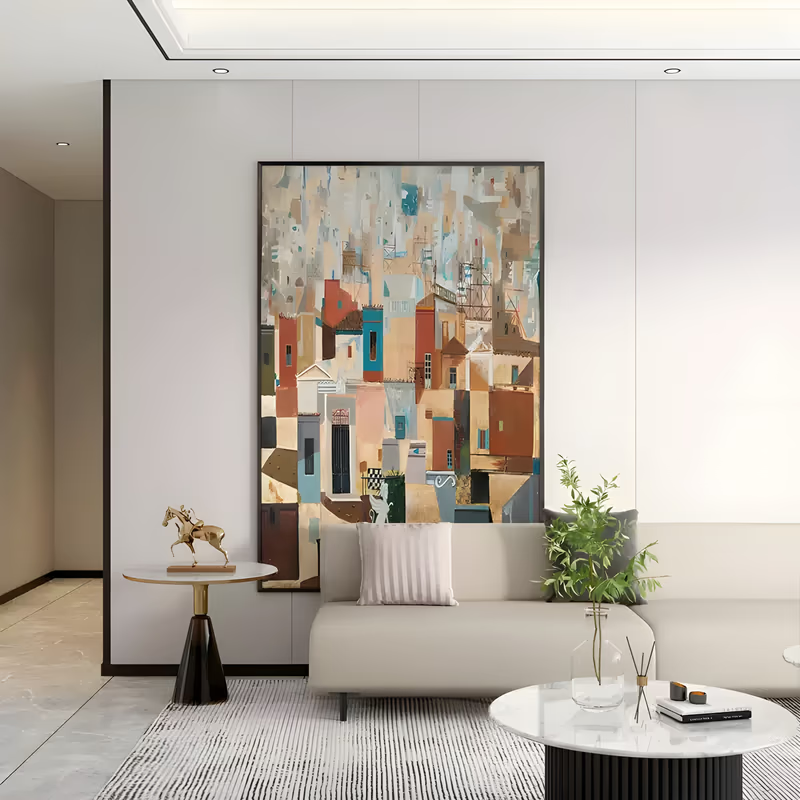
Leave clear wall on every side of a peaceful painting, roughly a third of its width or more, and keep shelves, other frames and busy objects out of that zone.
Stillness in the painting is easily undone by clutter around it. A tranquil canvas framed by a bookcase, a television and three photographs becomes one more item in a crowd. Give it a wall to itself, or at least a clear field: on a 3 m (10 ft) wall, a canvas around 150–180 cm (60–70 in) wide with open wall either side reads as calm and deliberate.
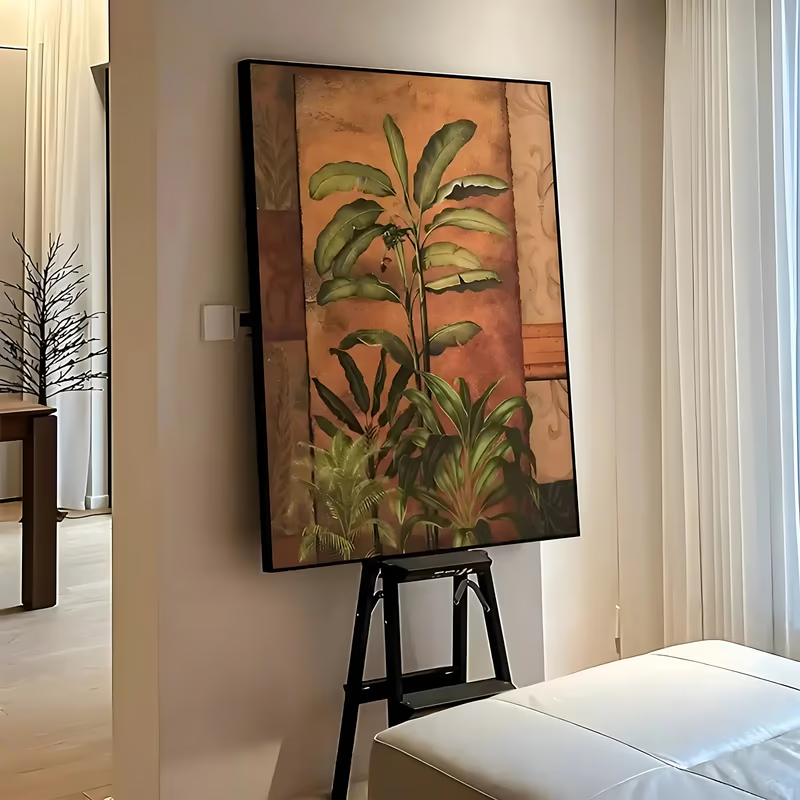
Keep the furniture below it low and simple: a bench, a console or a bed with a plain headboard. Choose a slim frame or none, so the edge of the painting does not draw a hard line. If the room needs more art, put it on another wall rather than beside the peaceful piece.
What size should peaceful wall art be, and how high should it hang?
Choose a wide format for horizons and still water, size it to about two-thirds of the furniture or 60–70% of a bare wall, and set its centre at the eye level of the person who will look at it most.
Horizons want width. A panoramic or horizontal canvas lets a sky and a shoreline stretch out, which is where the sense of space comes from; a vertical piece suits mist rising up a mountain, a hanging branch or a single bloom.
Height depends on the viewer. For standing rooms and hallways, the usual centre line is 145–152 cm (57–60 in) from the floor. In a meditation room used on cushions, bring it down to around 110–120 cm (43–47 in); in a lounge with low armchairs, somewhere between the two. Viewing distance matters too: a painting seen from across a large lounge can be bigger and simpler, while one beside a reading chair can be smaller and more detailed. Every piece is made to order, so ask for the exact size the wall needs.
How is a peaceful painting made to order and approved?
Tell us the room, the light and the size, and the composition is redrawn to your proportions and approved stage by stage before it ships.
Every peaceful painting is hand-painted in acrylic on canvas for your order, with oil paint available on request. A busy catalogue scene can be simplified, with more sky, fewer boats or a wider stretch of water, and its palette can be matched to a paint code or fabric. Because the composition is redrawn rather than stretched, a horizon still sits at the right height when the format changes. You can also commission a tranquil view from your own photograph through a custom painting.
Progress photos or video arrive at each stage, and work continues only after you approve; a final photograph is approved before dispatch. Canvases ship rolled, stretched ready to hang, or framed in gold, silver, black, white or wood, while deep plaster relief travels stretched or framed. Painting takes about 10 days, then the canvas travels 5–7 days door to door by DHL, FedEx or UPS; we arrange the route and confirm the shipping cost with you before it ships. Request a quote.