Floral art guide · Updated
How to choose floral wall art that suits the room
Key takeaways
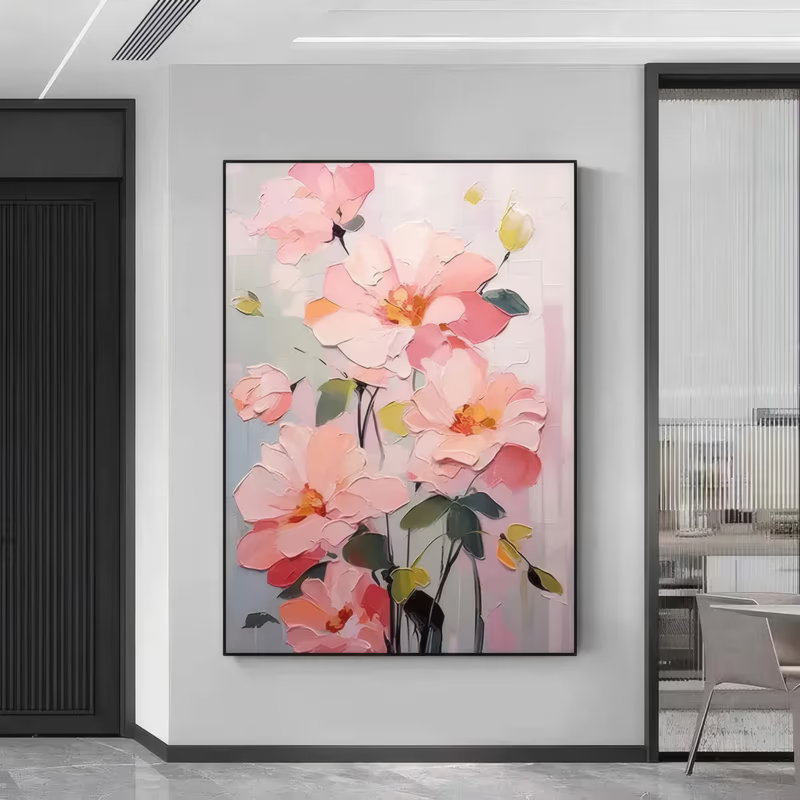
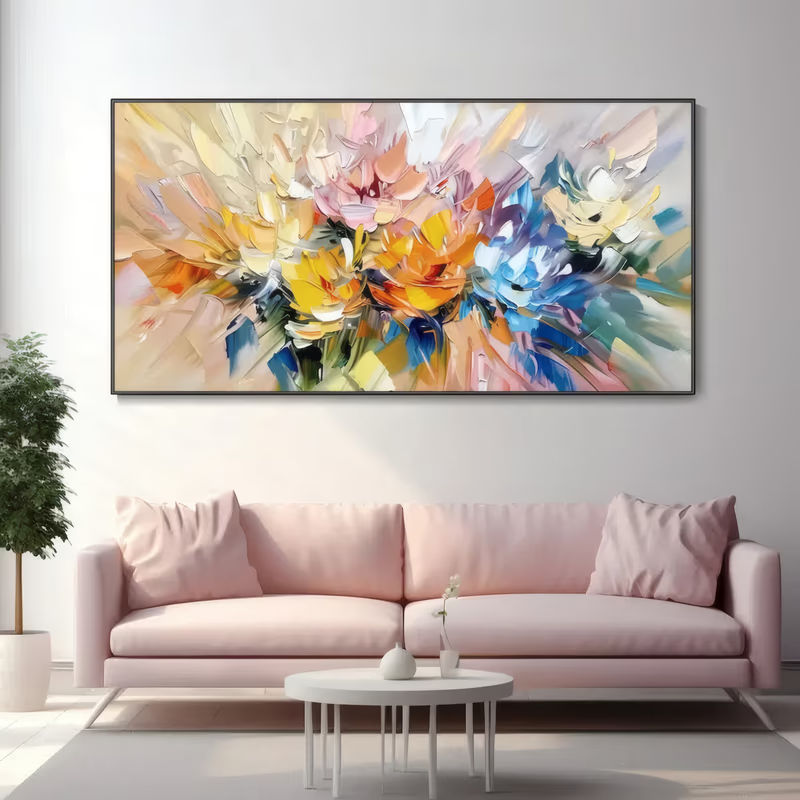
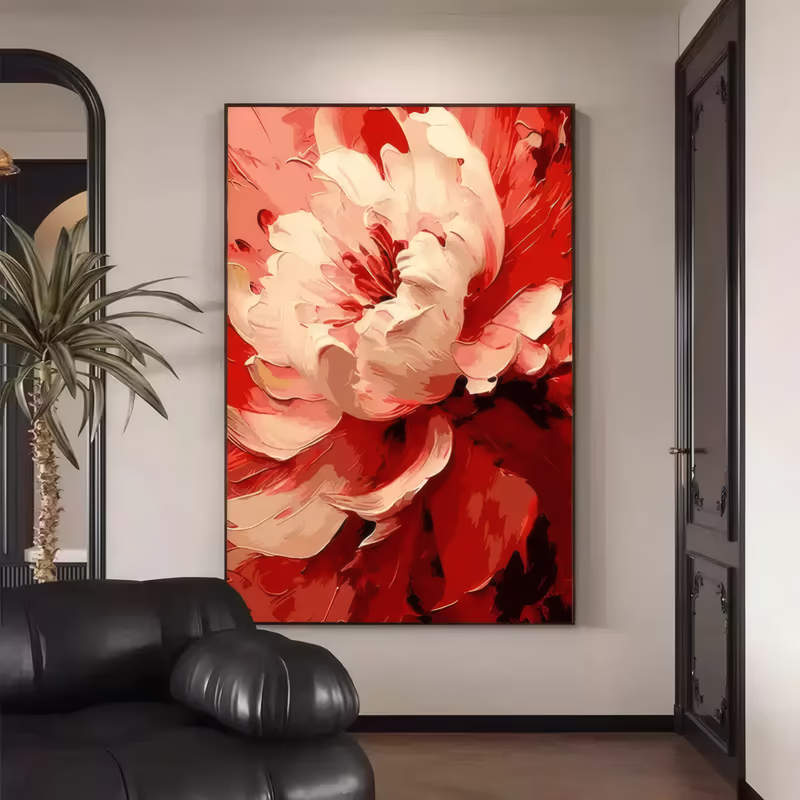
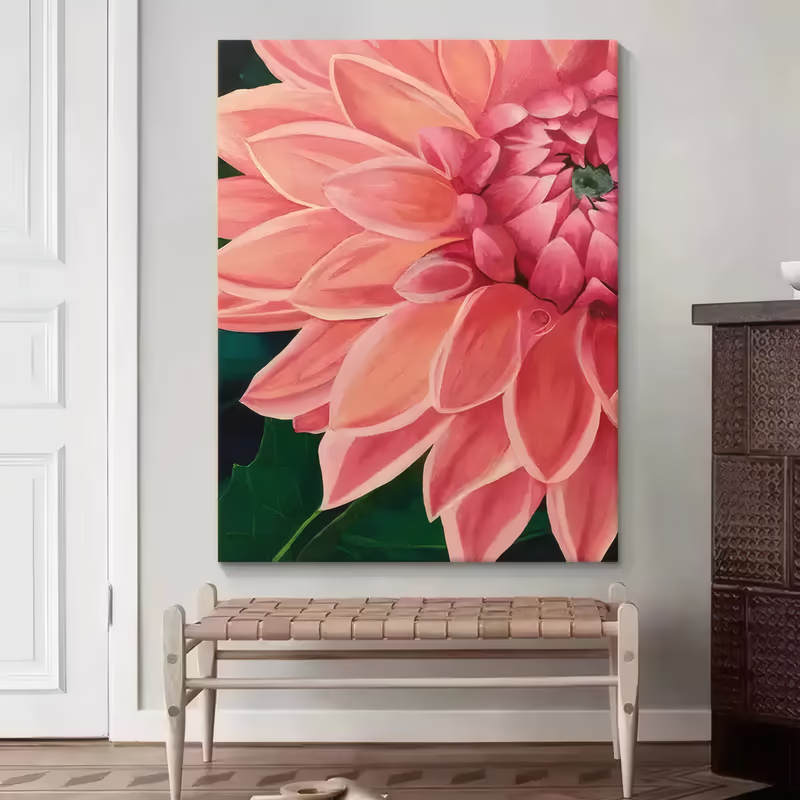
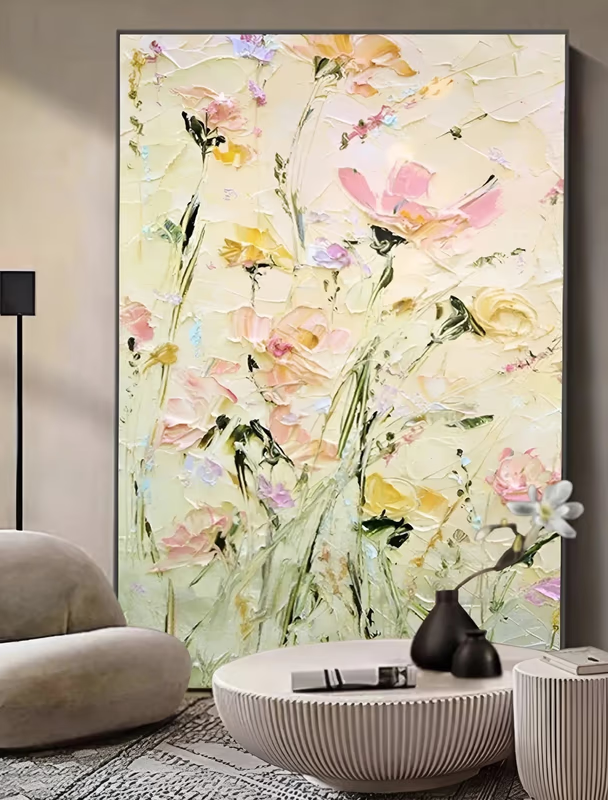
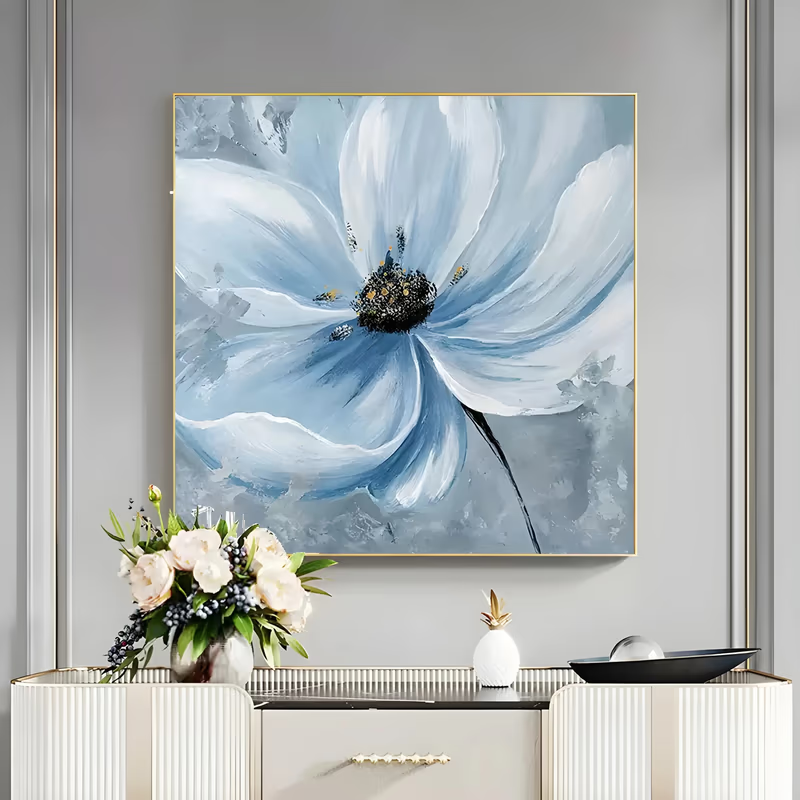
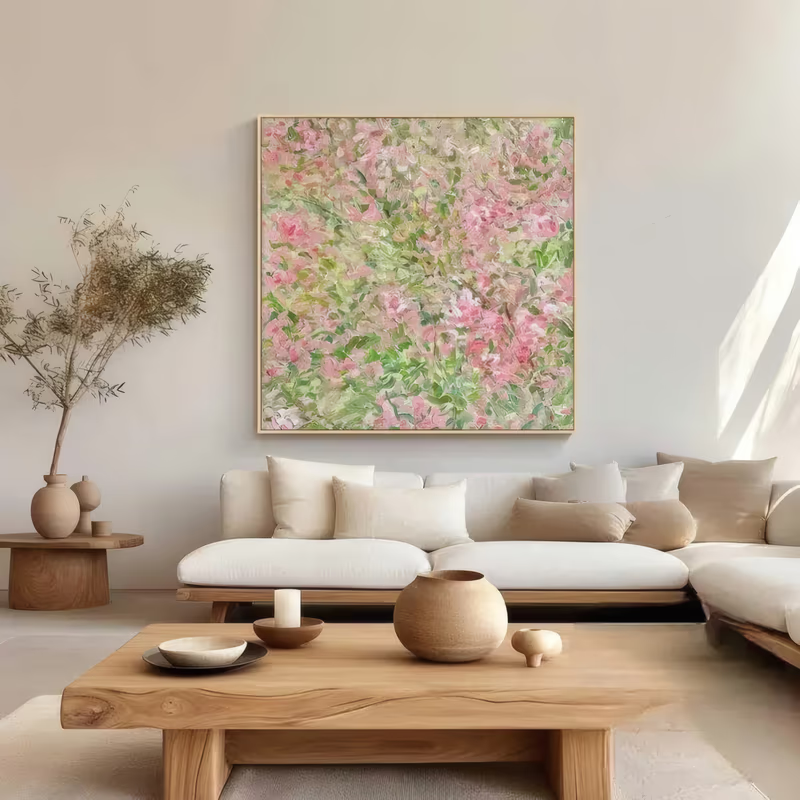
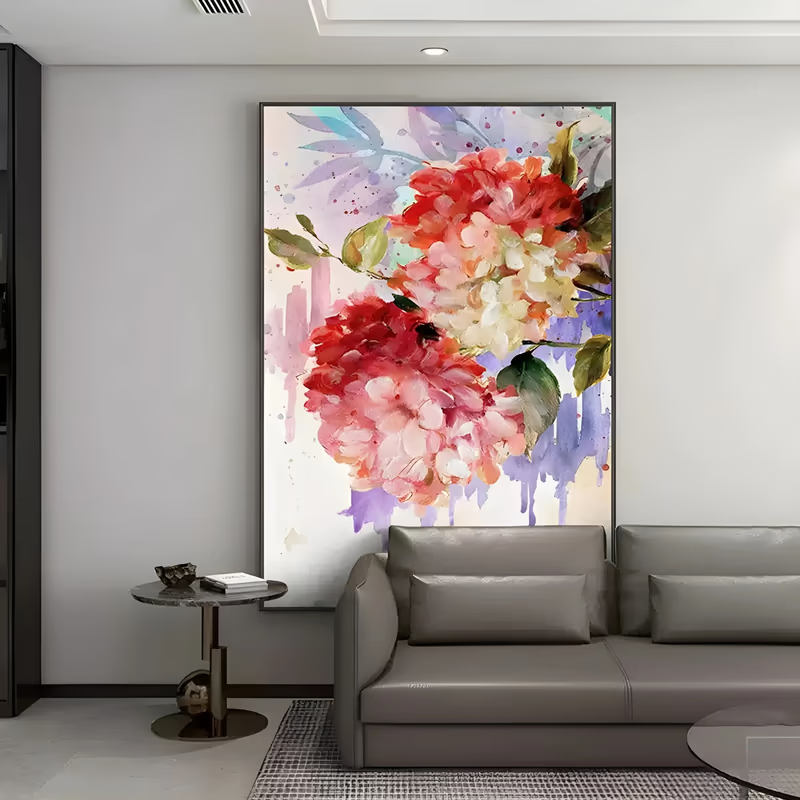
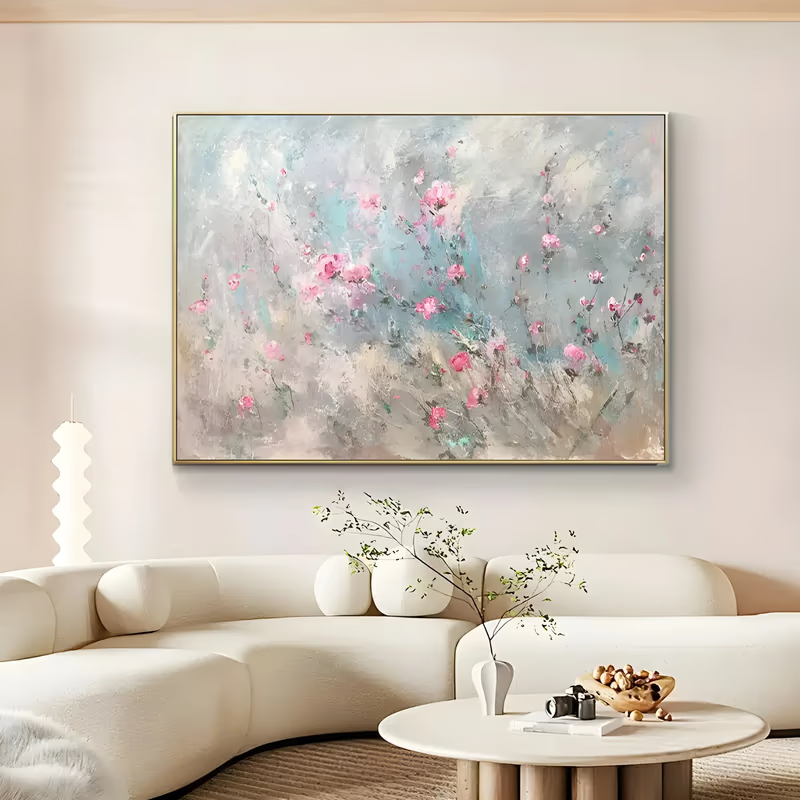
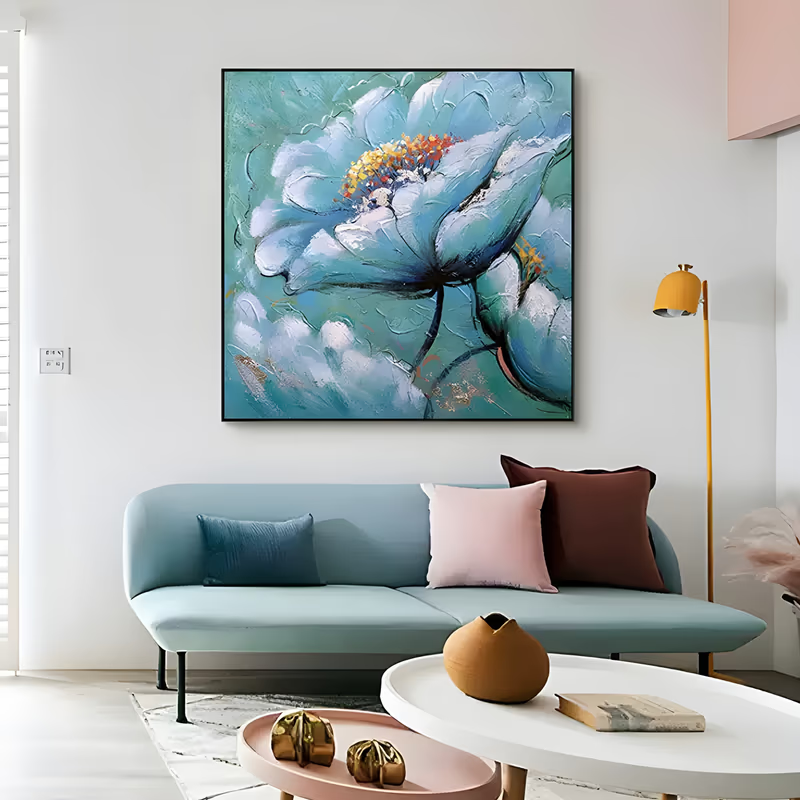
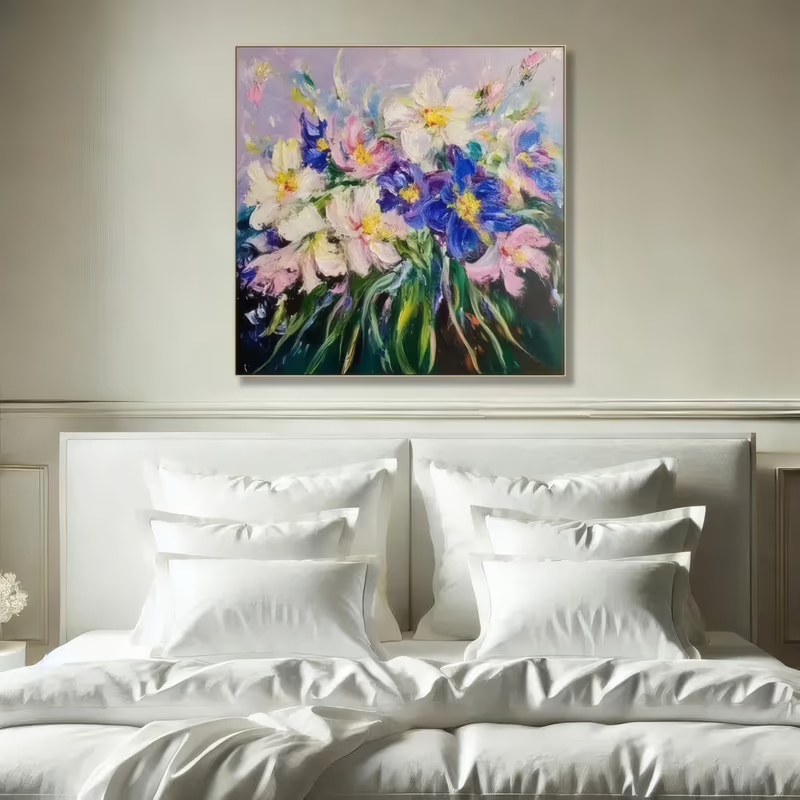
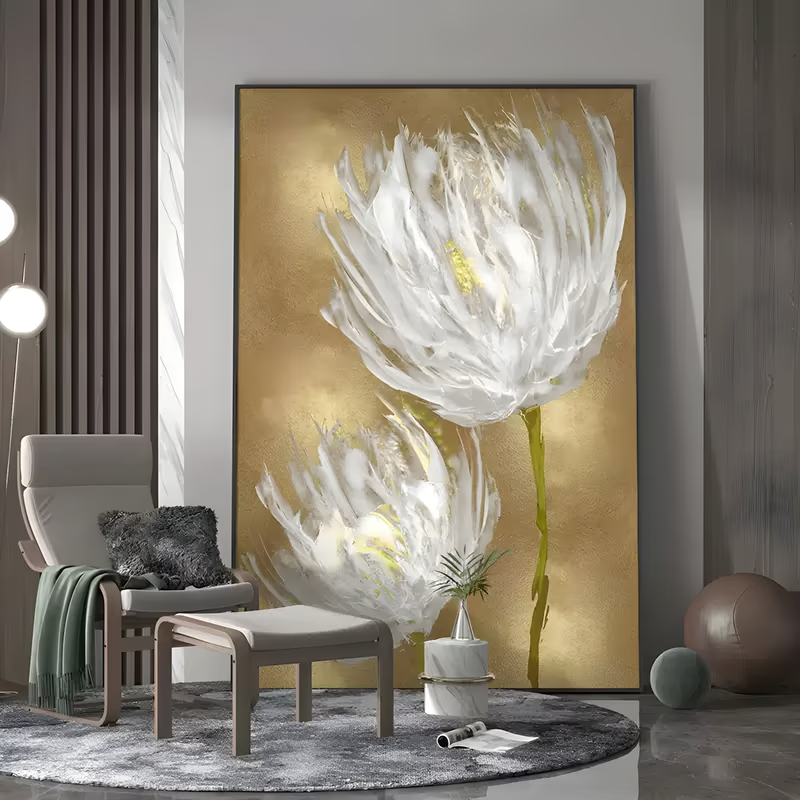
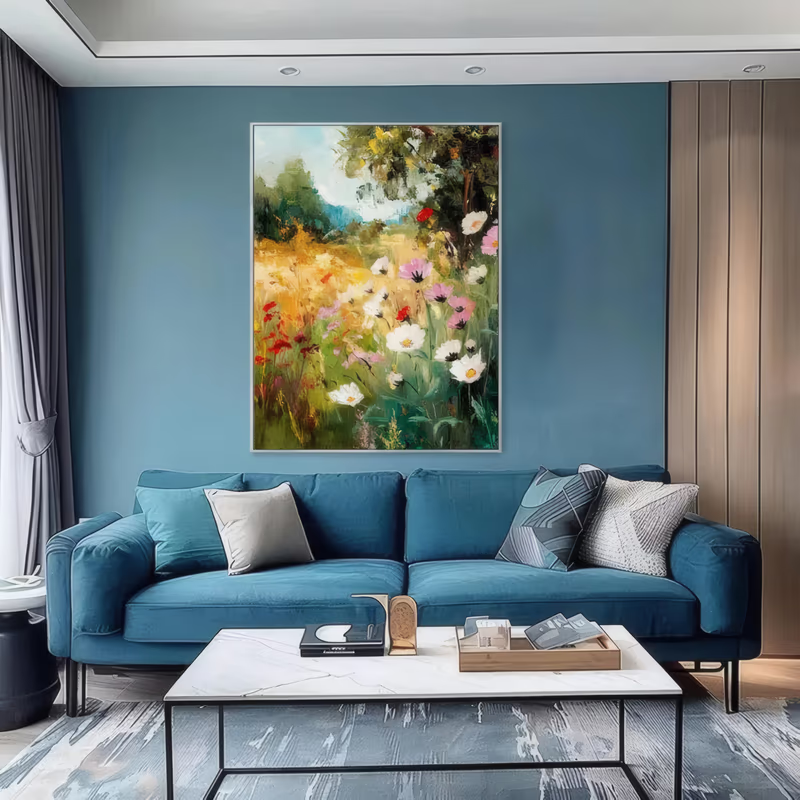
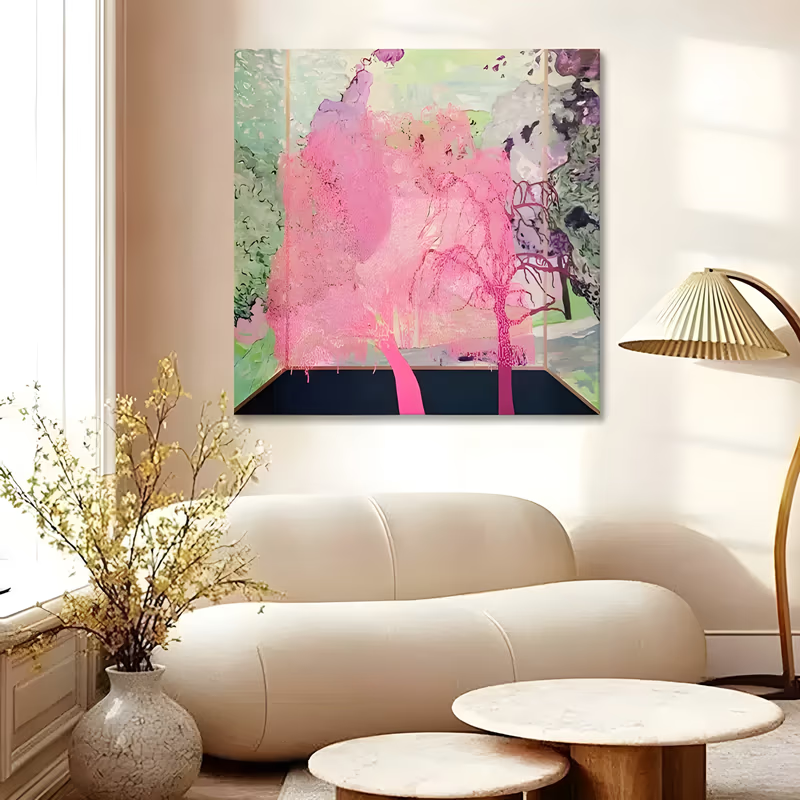
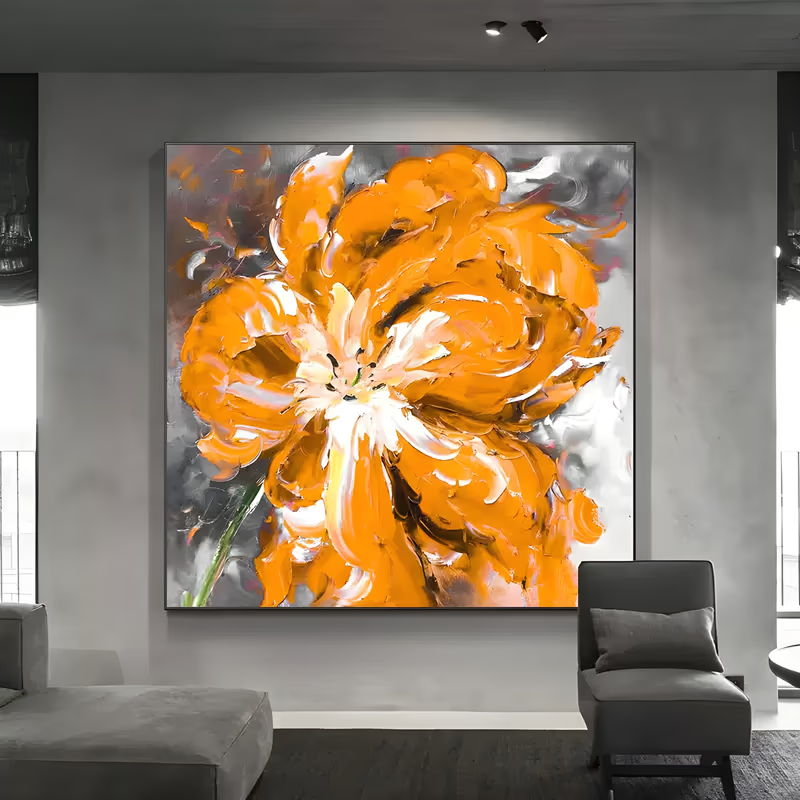
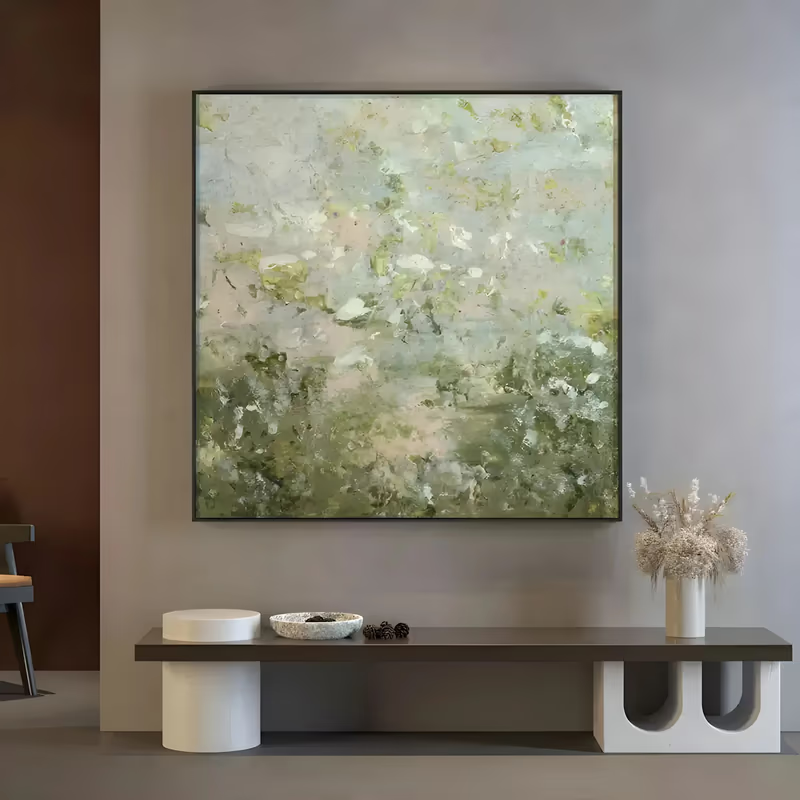
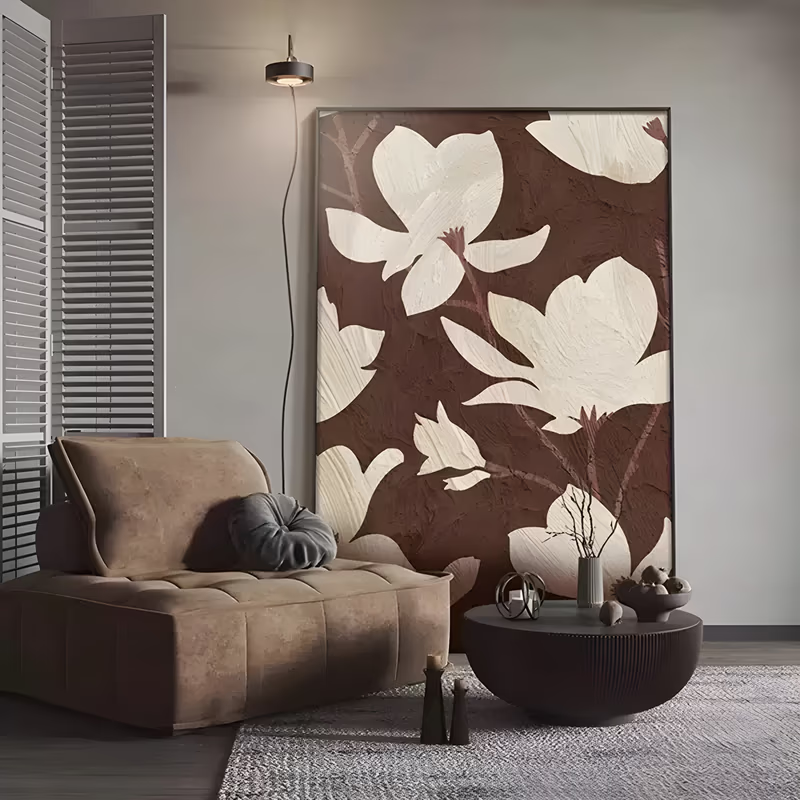
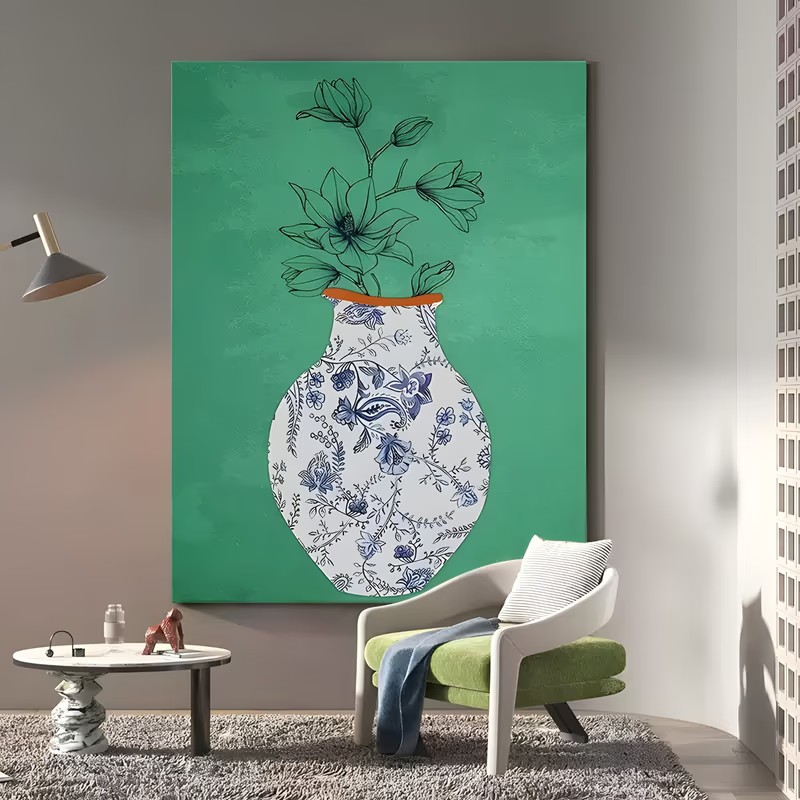
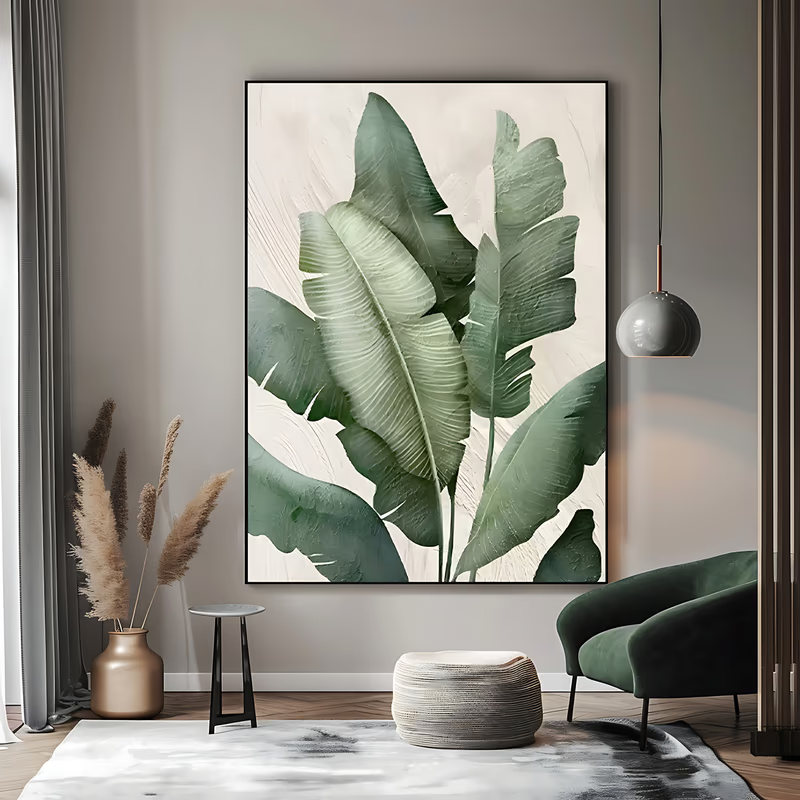
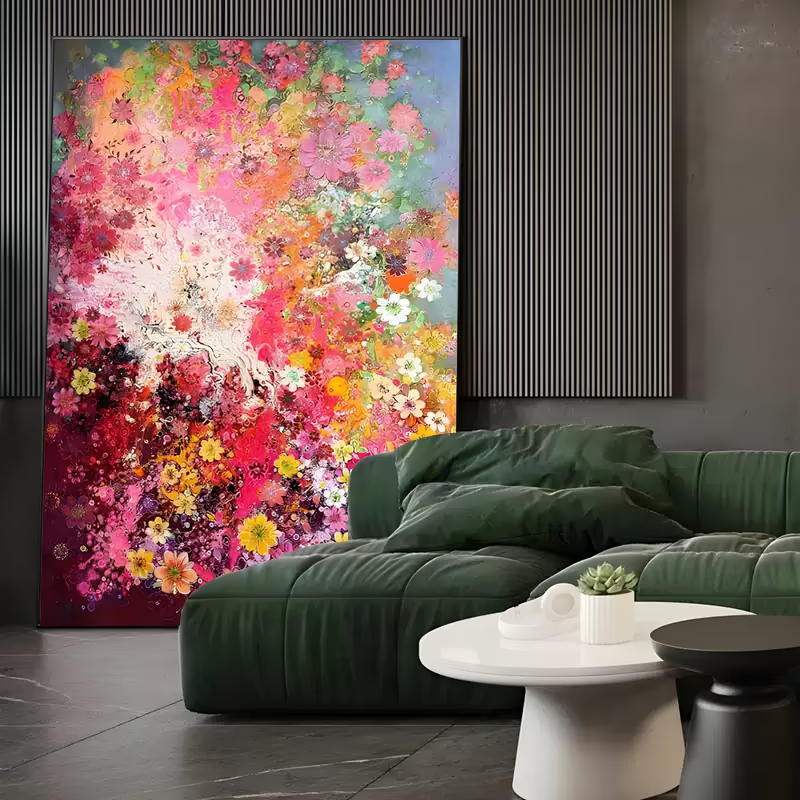
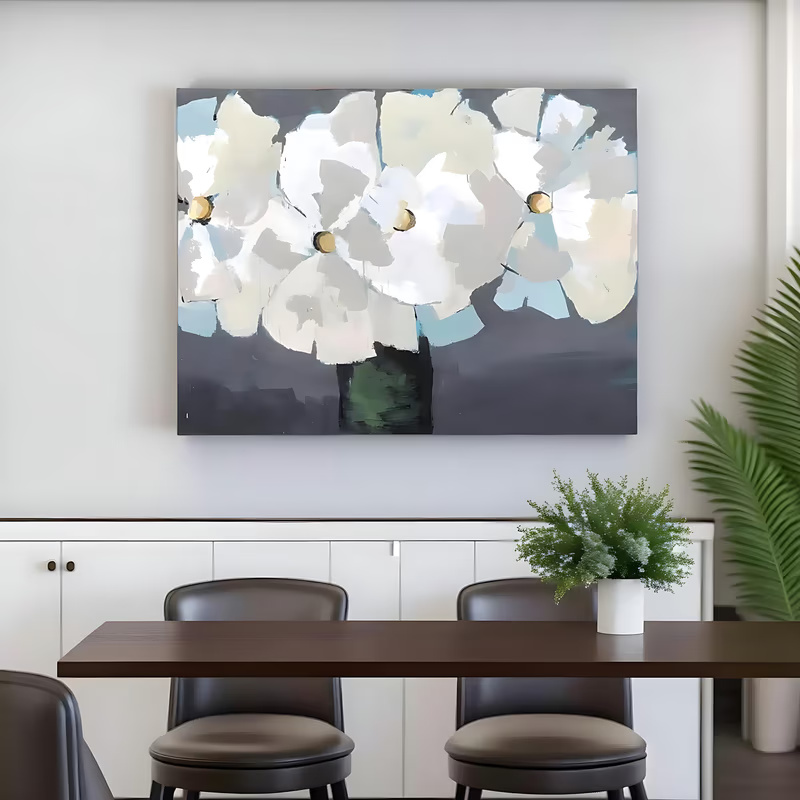
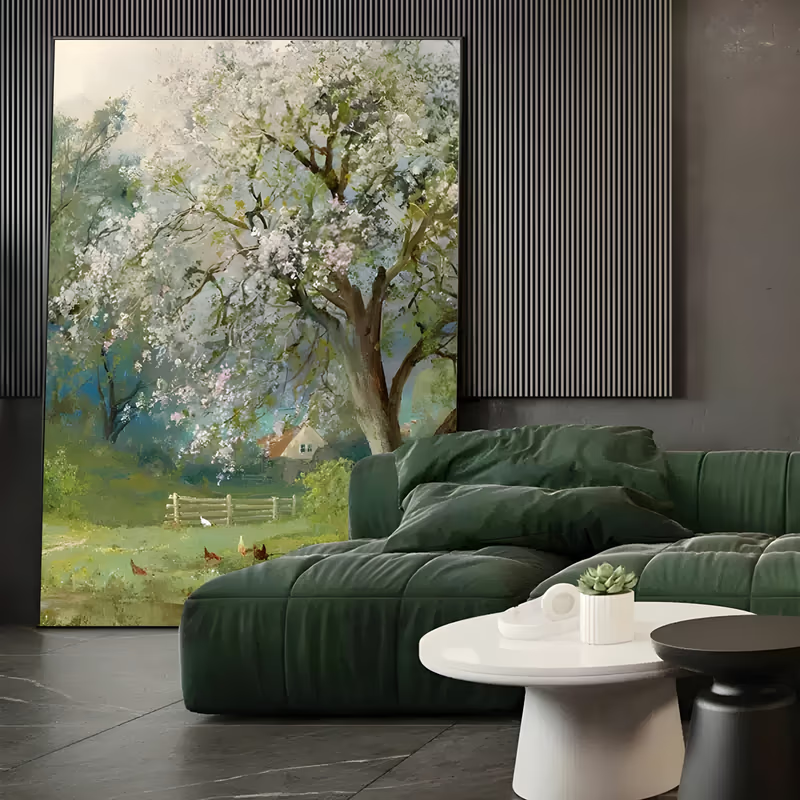
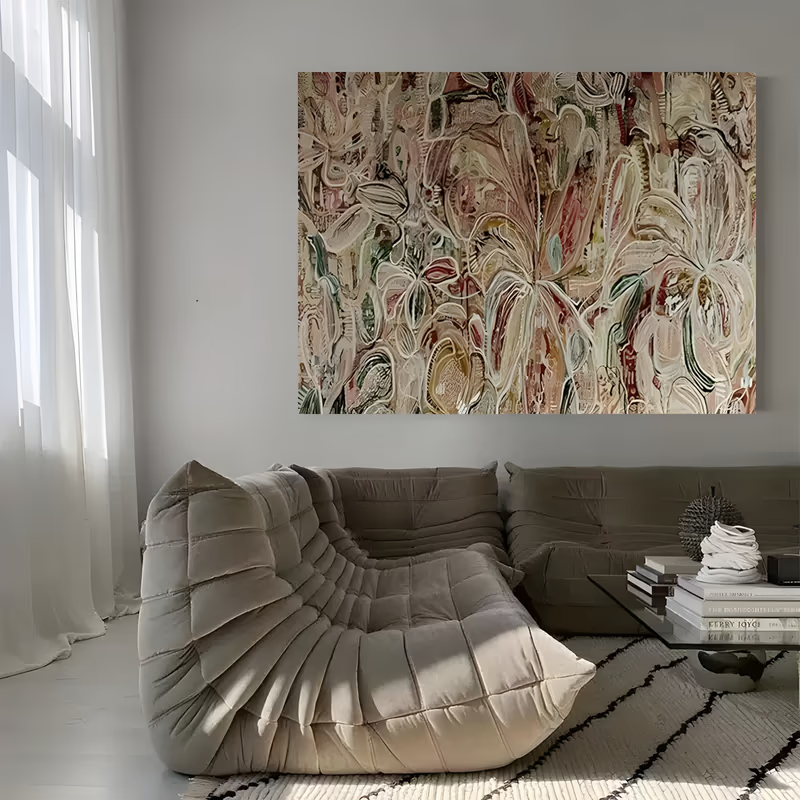
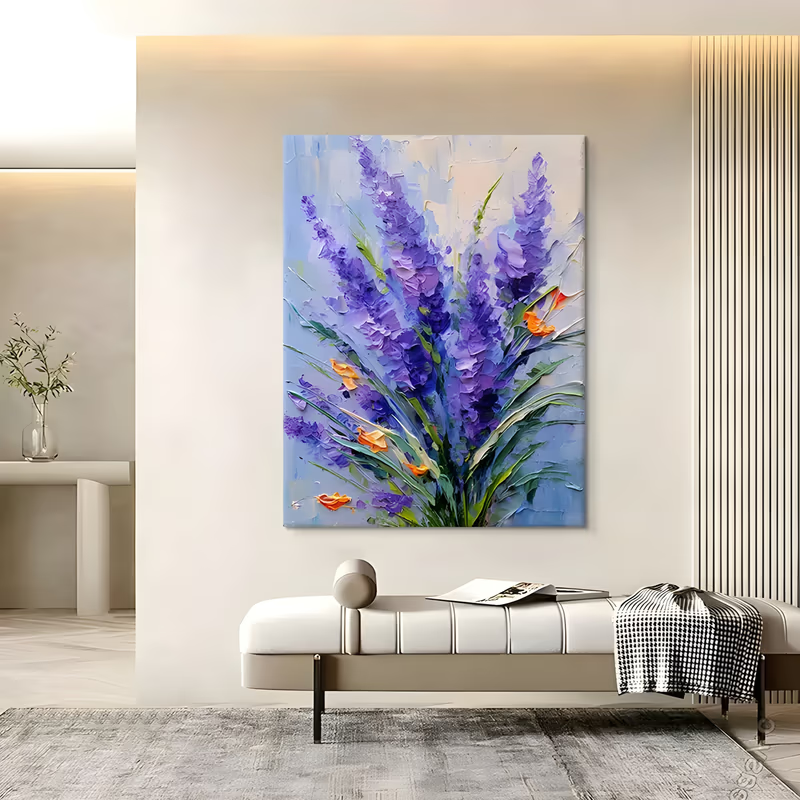
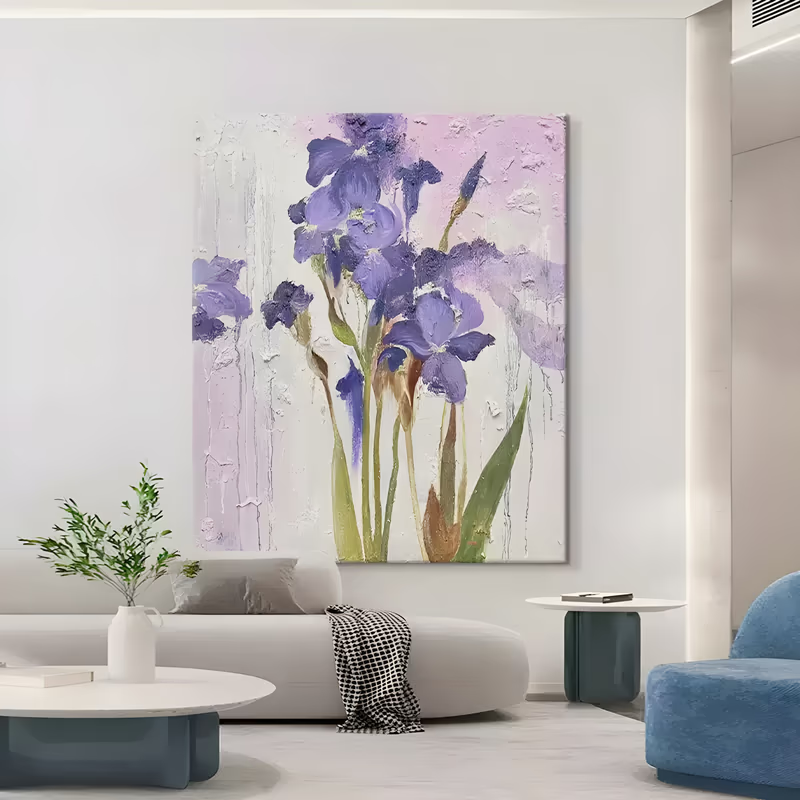
- Choose the crop before the flower: one oversized bloom feels modern, a branch feels calm, a meadow feels open, and a vase of flowers feels domestic.
- Execution dates a floral, not flowers: a confident scale, a clear background and a simple frame keep flower paintings current.
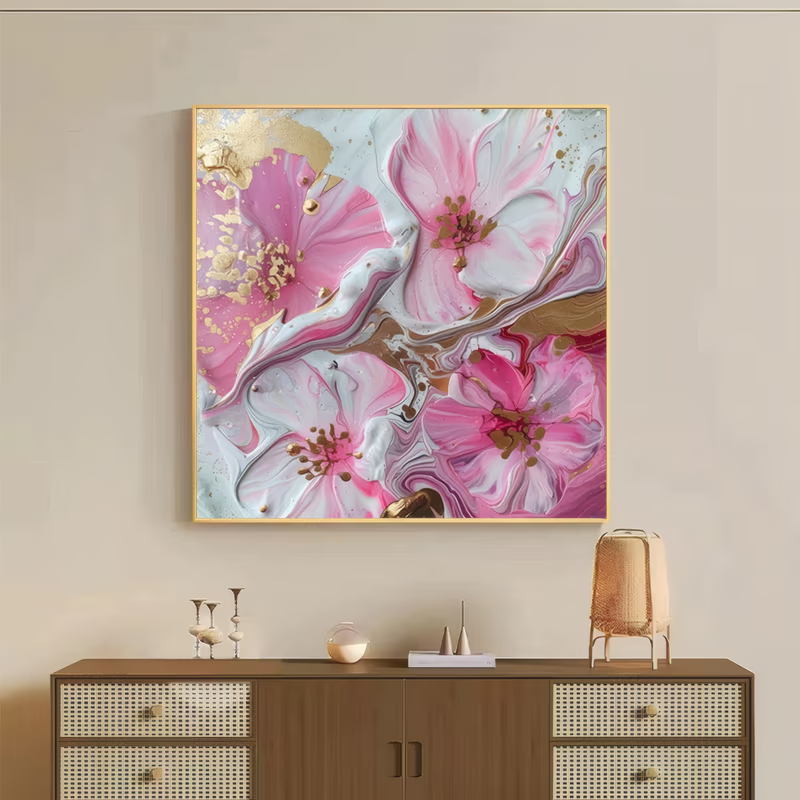
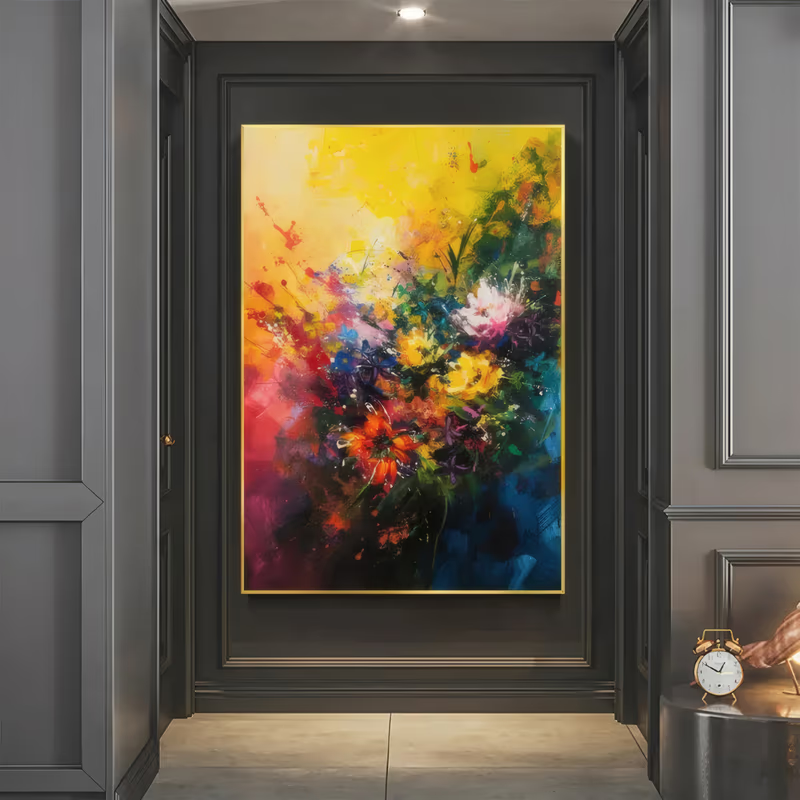
- Match saturation to the room: soft, low-contrast flowers for sleeping and bathing; saturated reds, oranges and yellows where people eat and talk.
- Let the flowers be the only pattern: pair a floral canvas with plain upholstery, linen, wood and one or two colours lifted from the petals.
Why does floral wall art work in so many rooms?
Flowers are the one subject almost everyone reads as welcoming, so floral wall art softens a room without demanding attention or a particular taste.
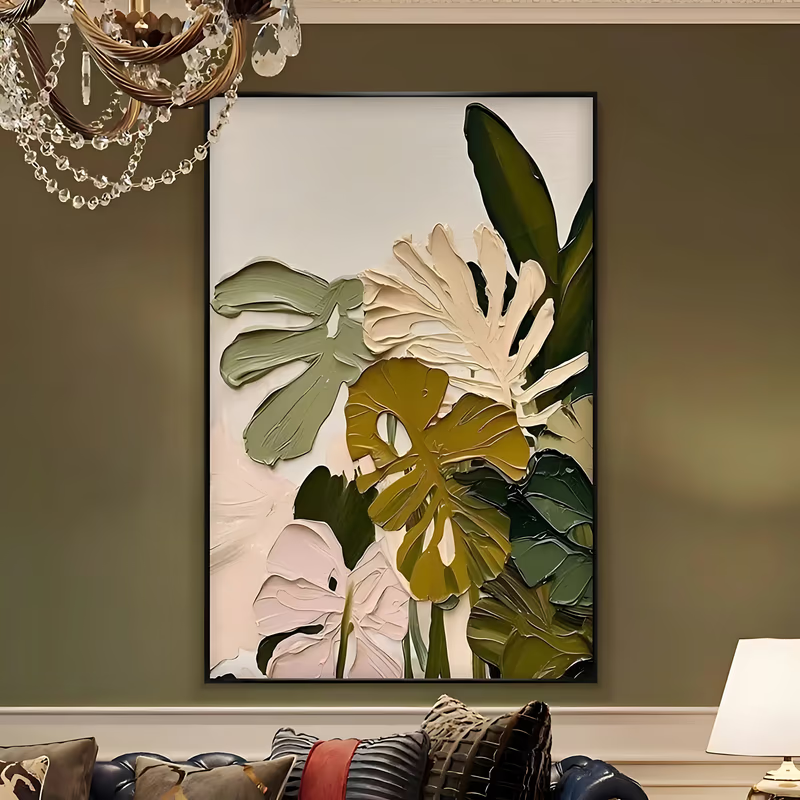
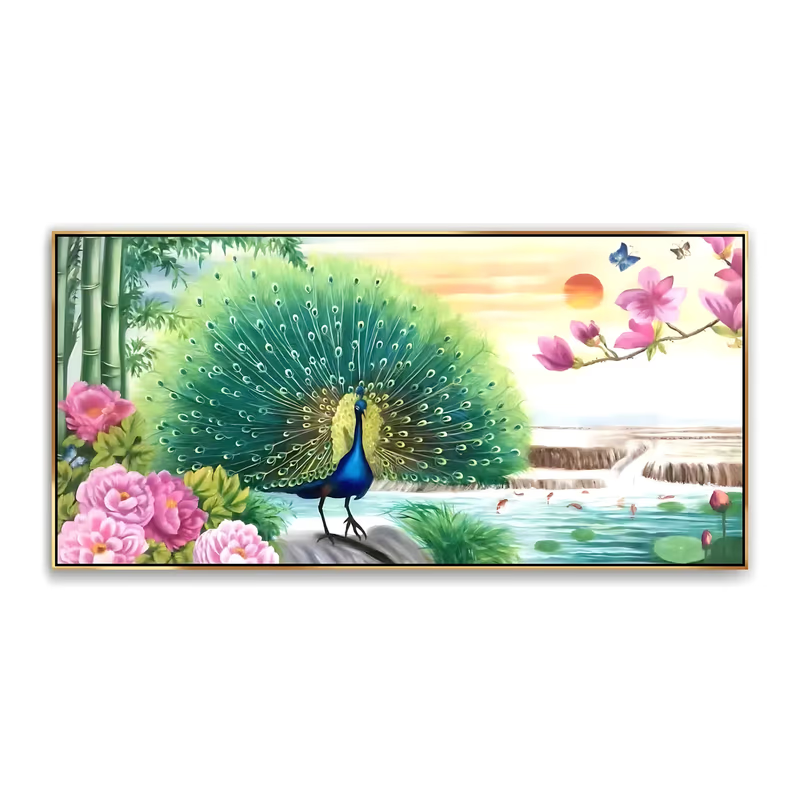
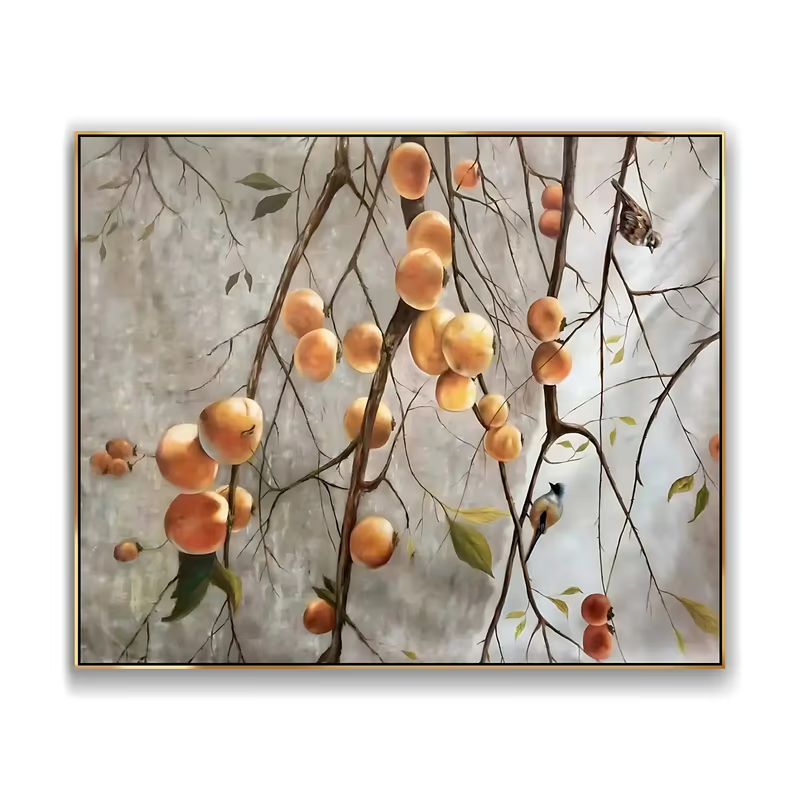
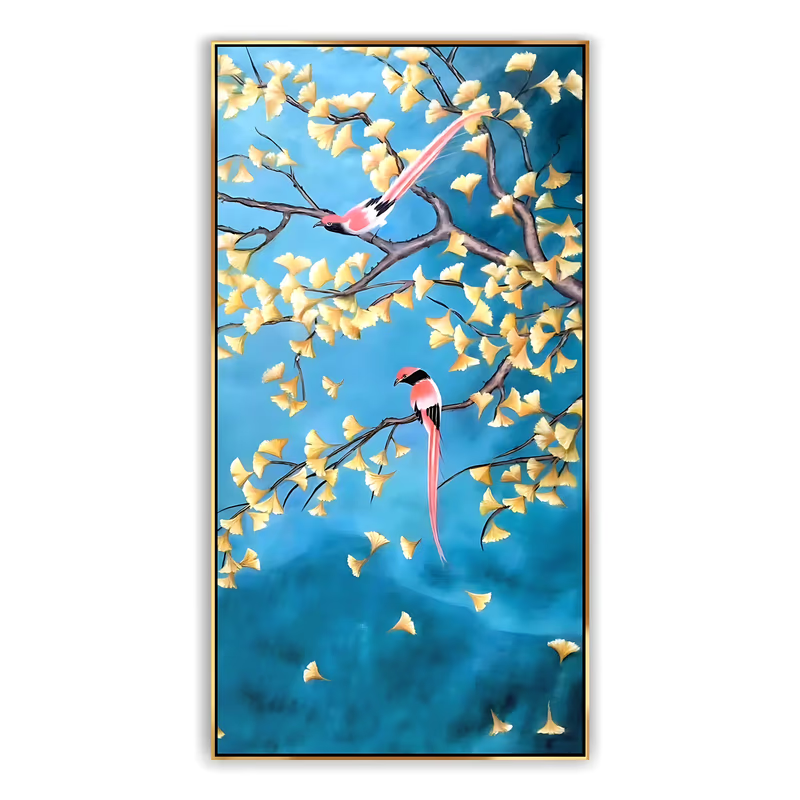
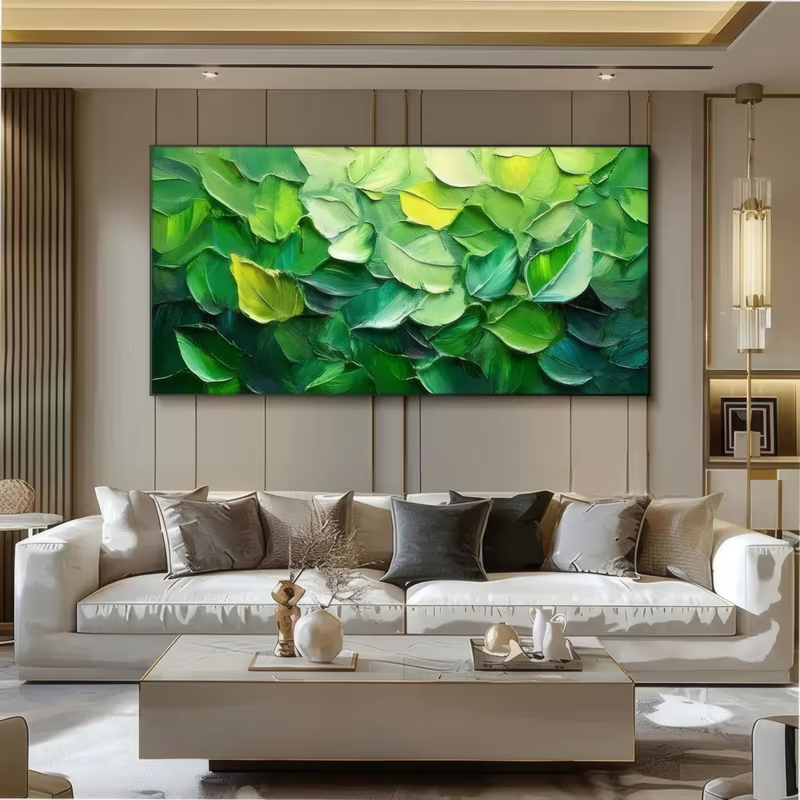
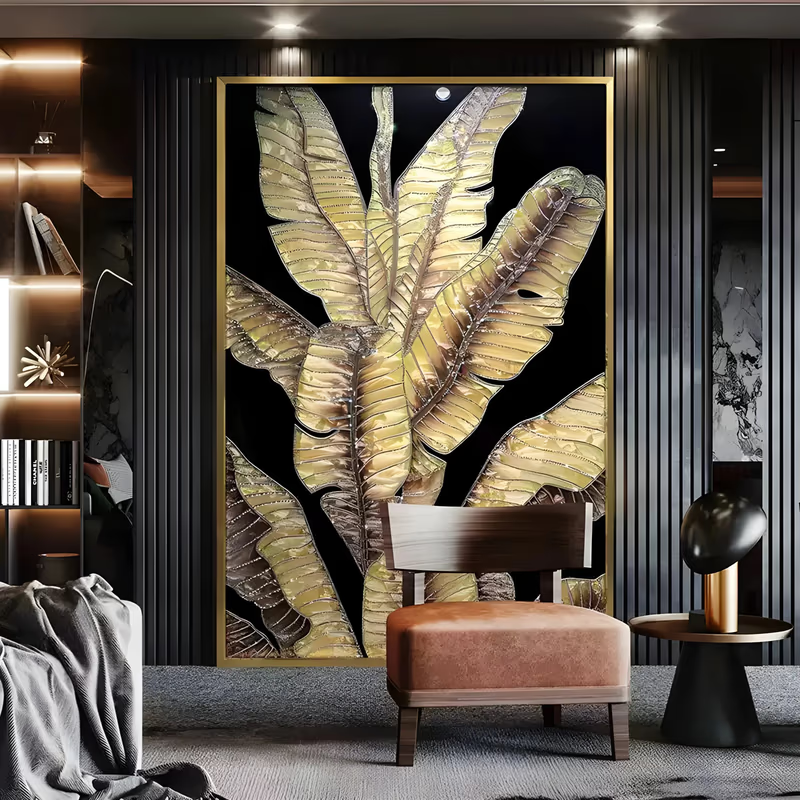
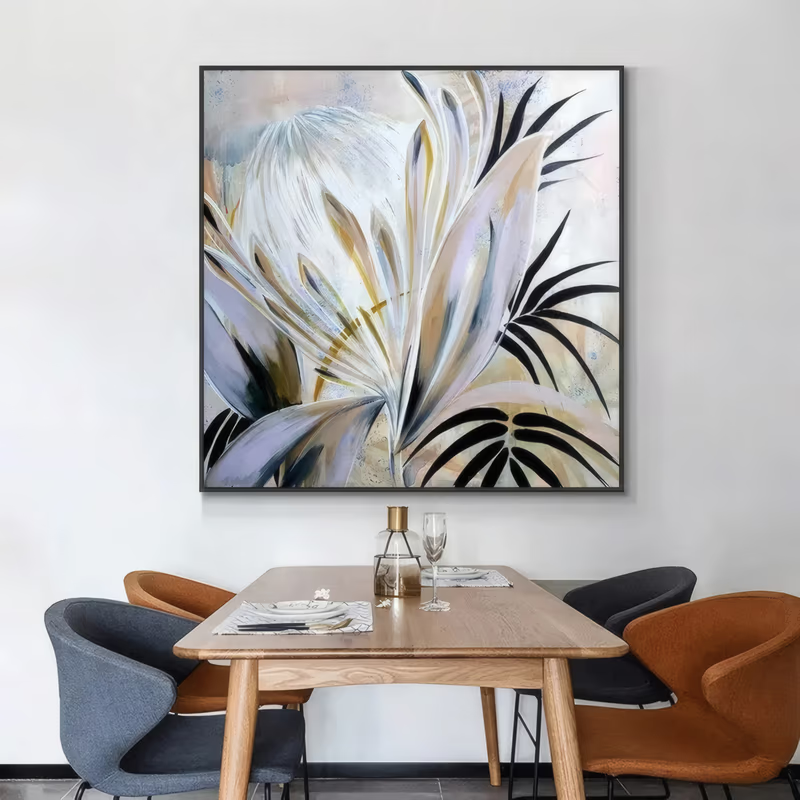
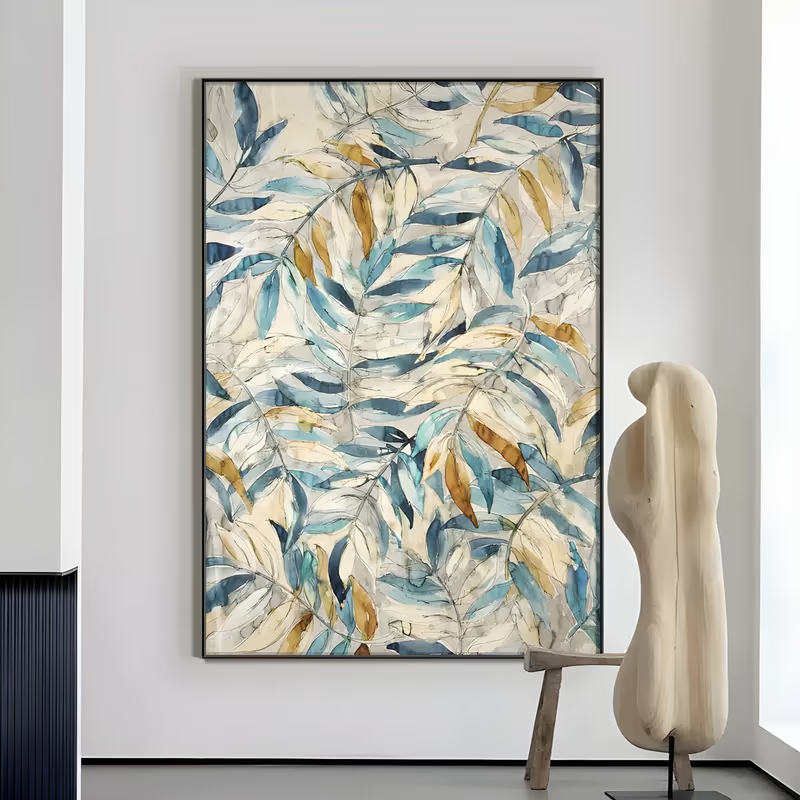
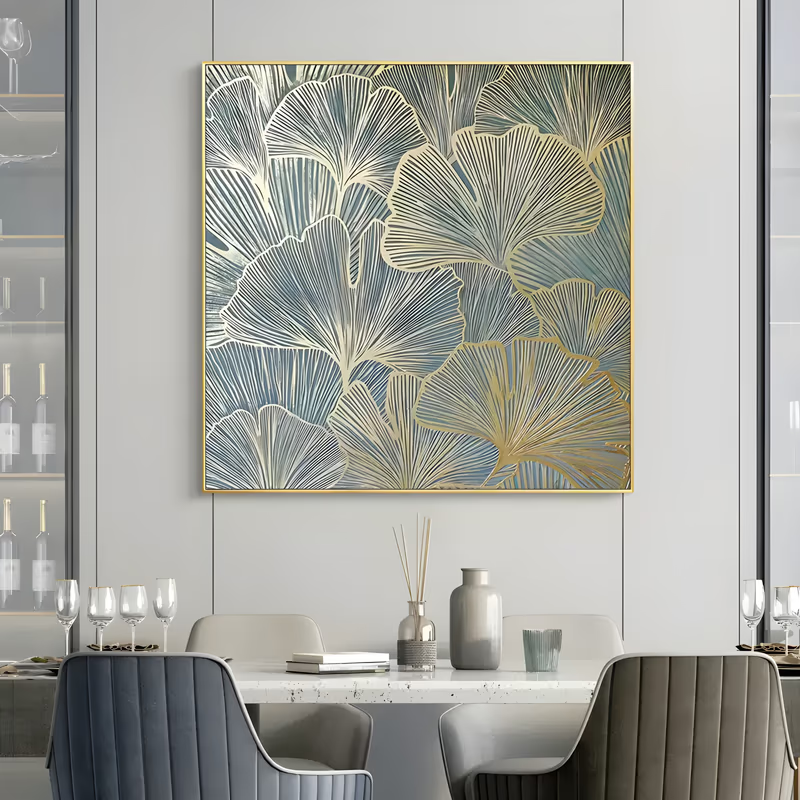
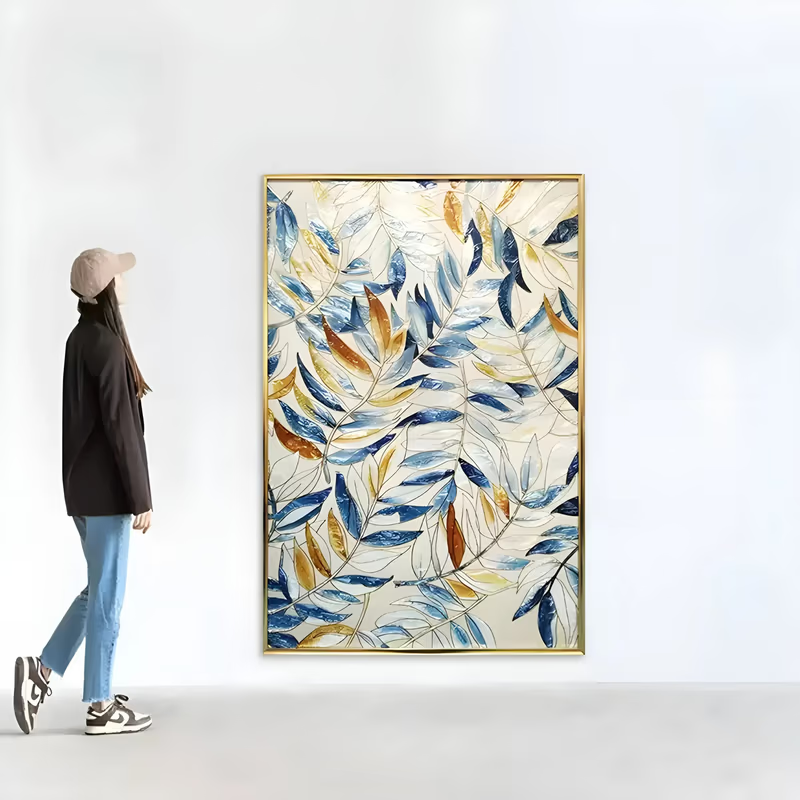
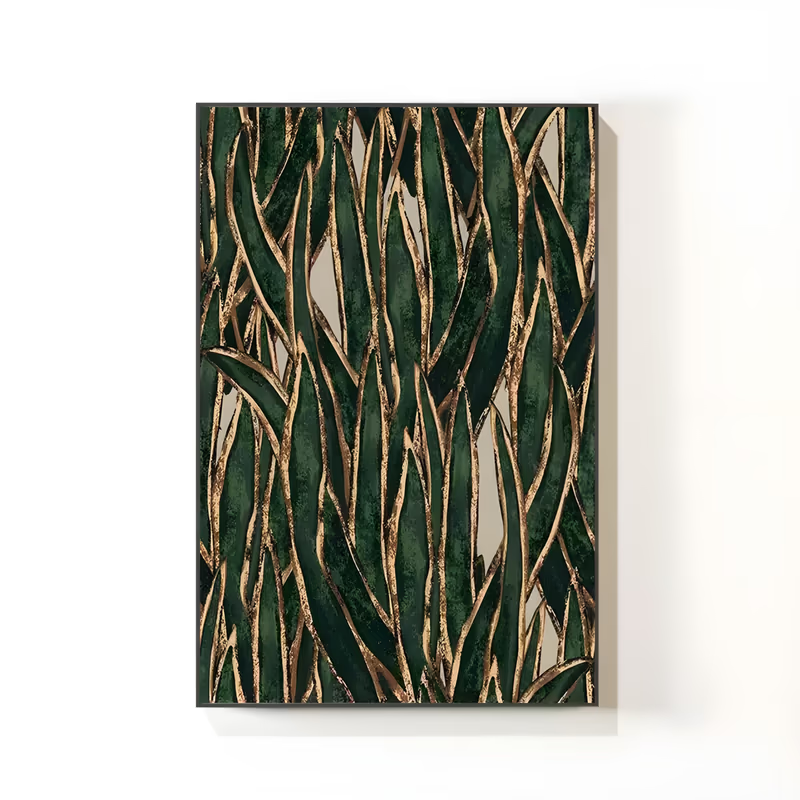
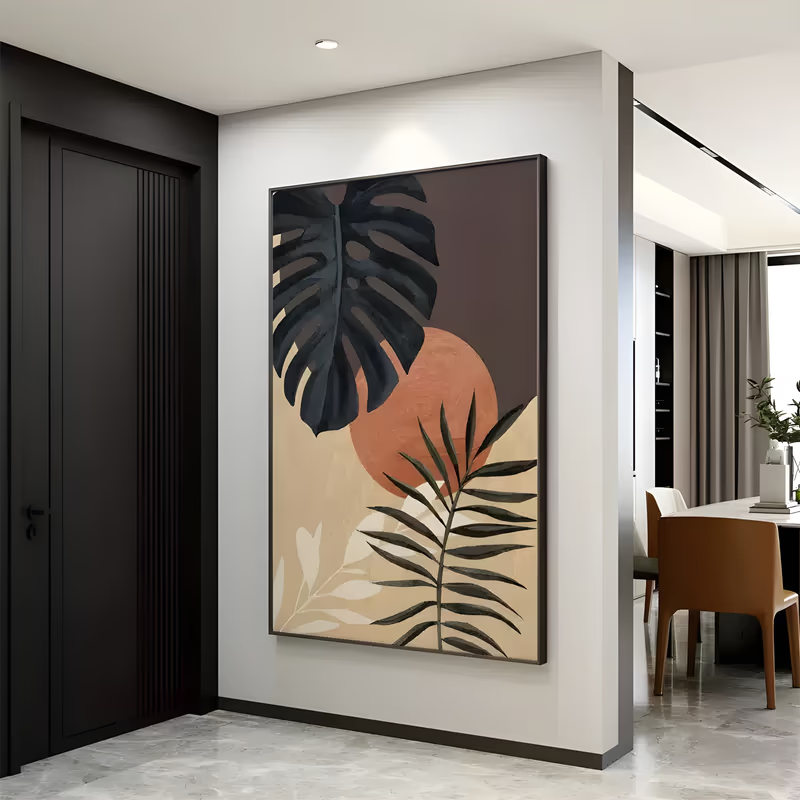
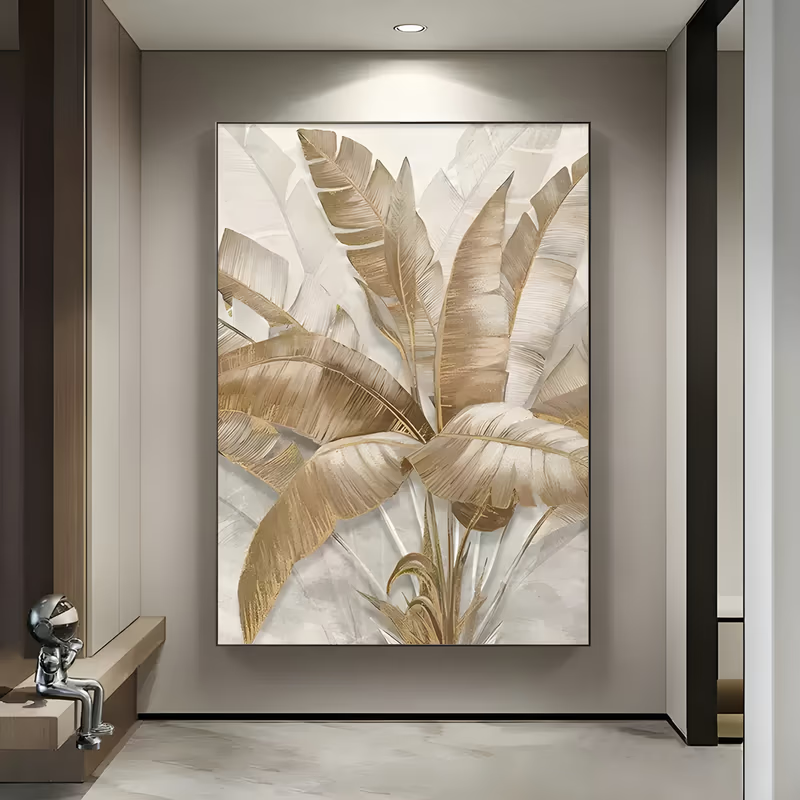
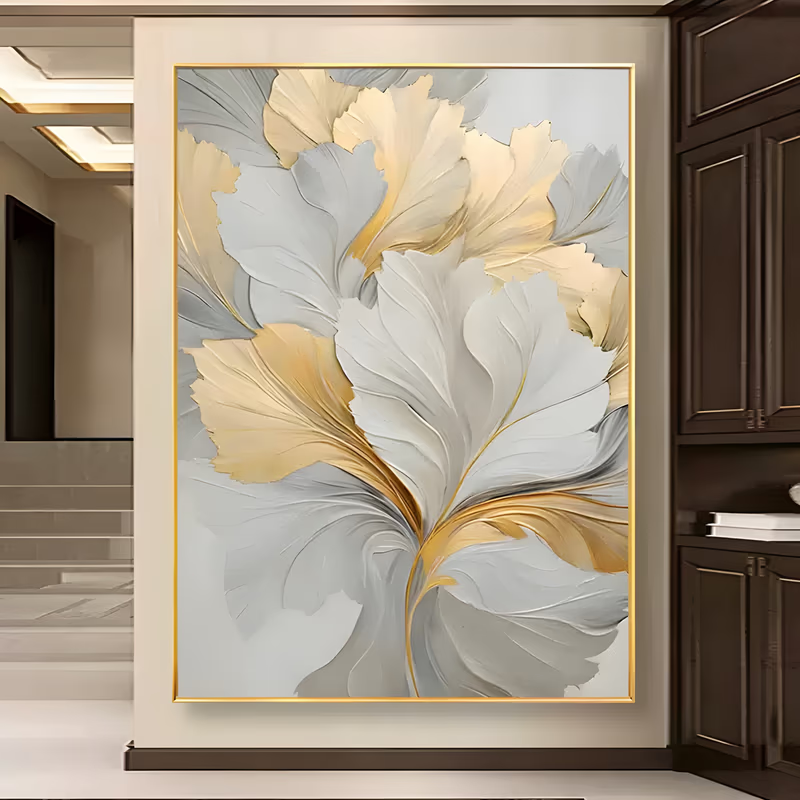
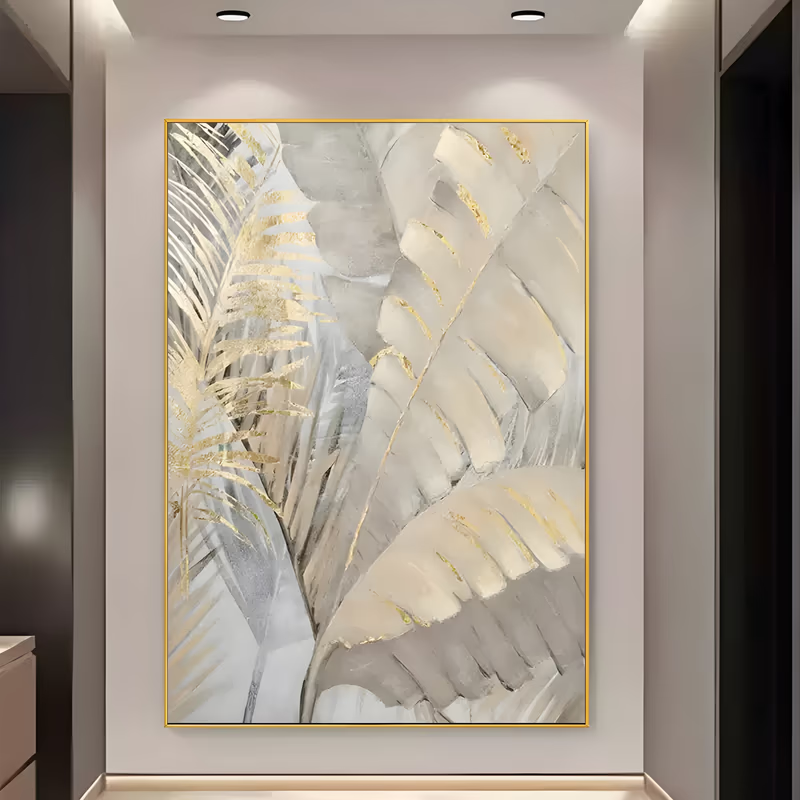
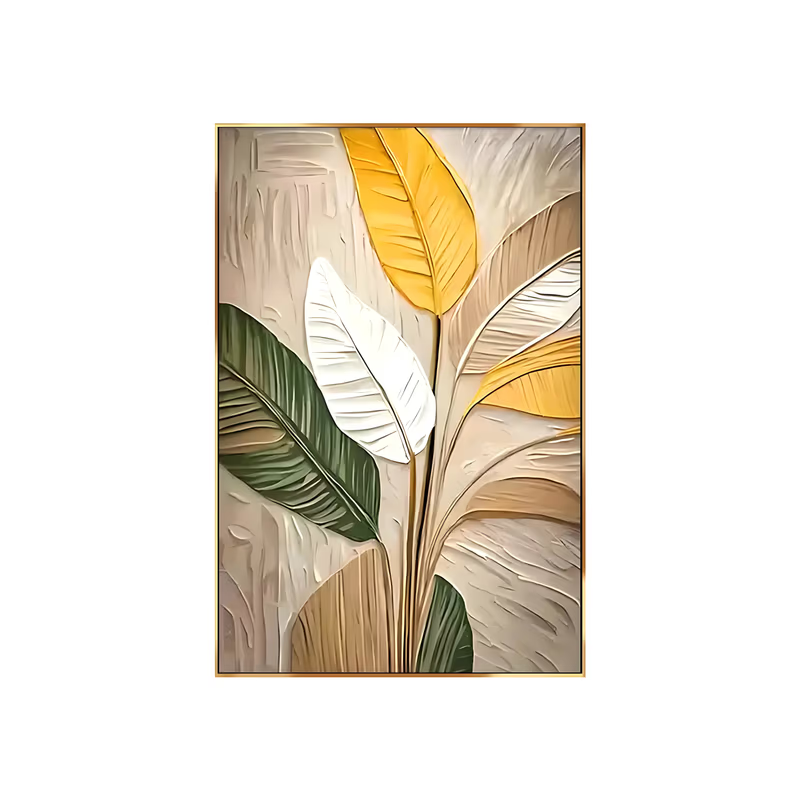
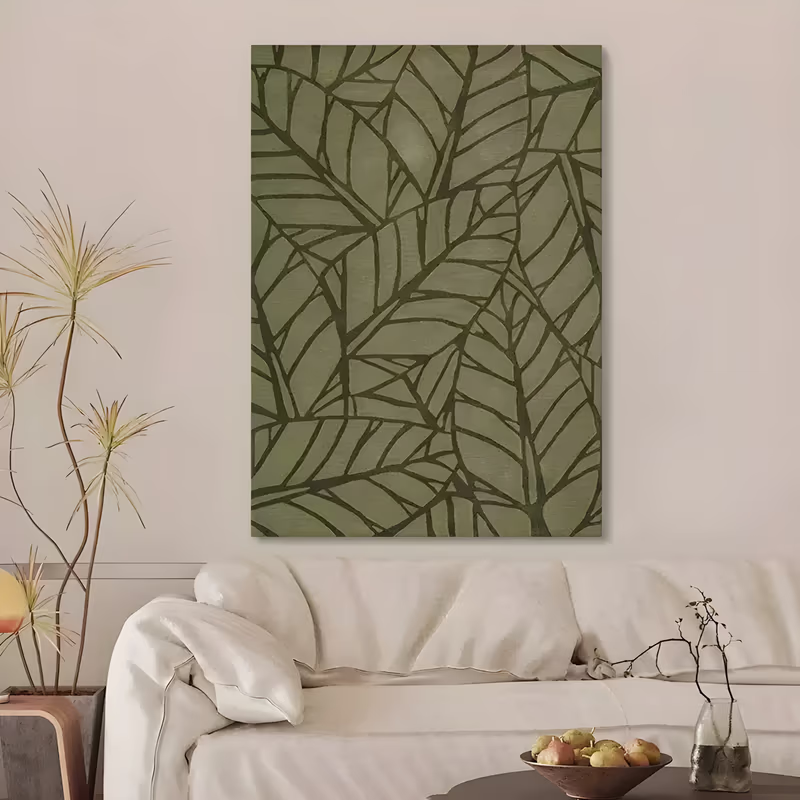
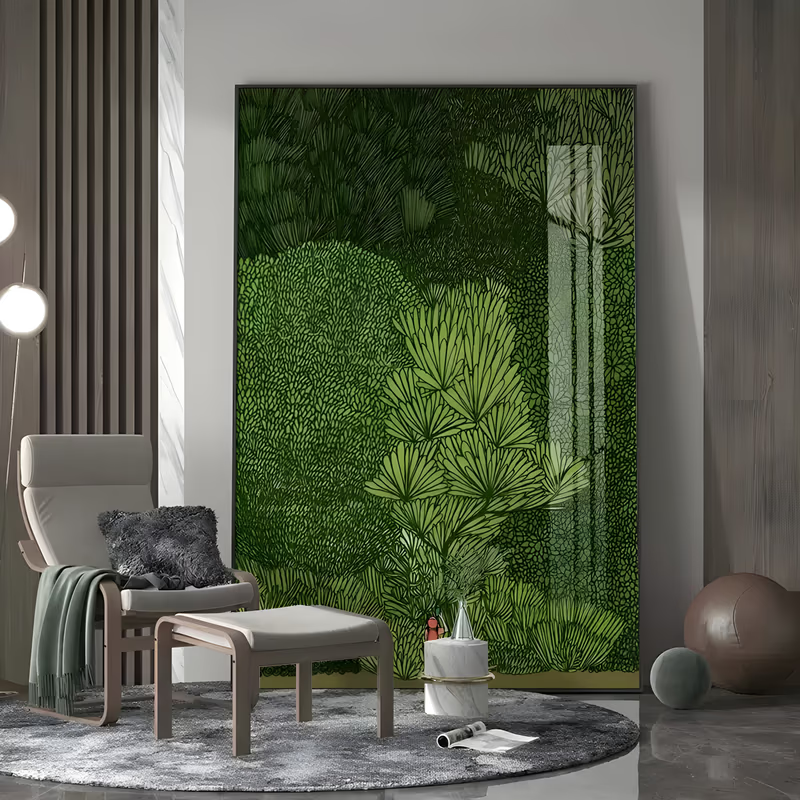
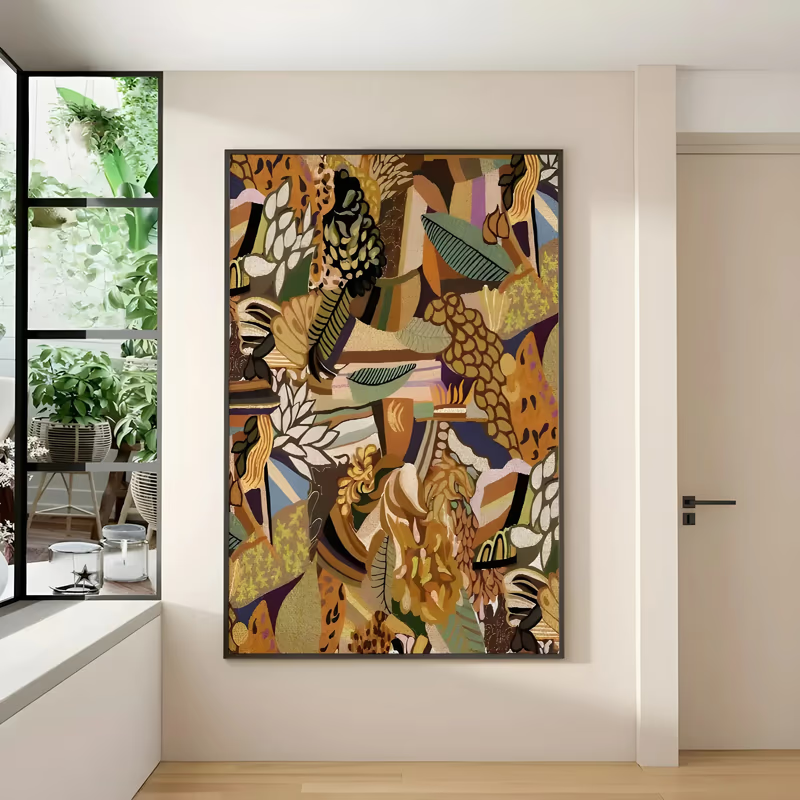
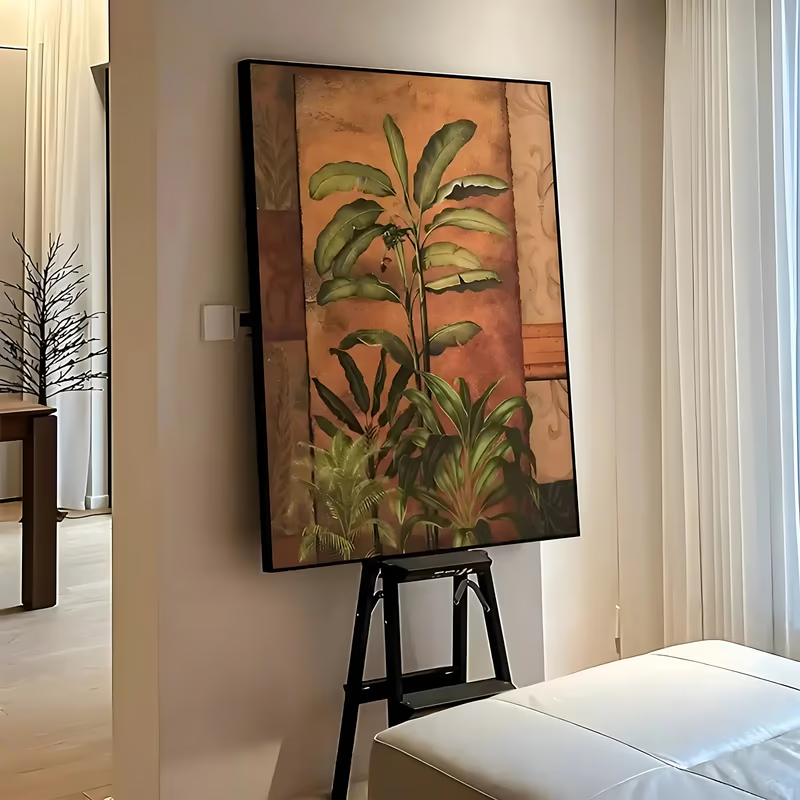
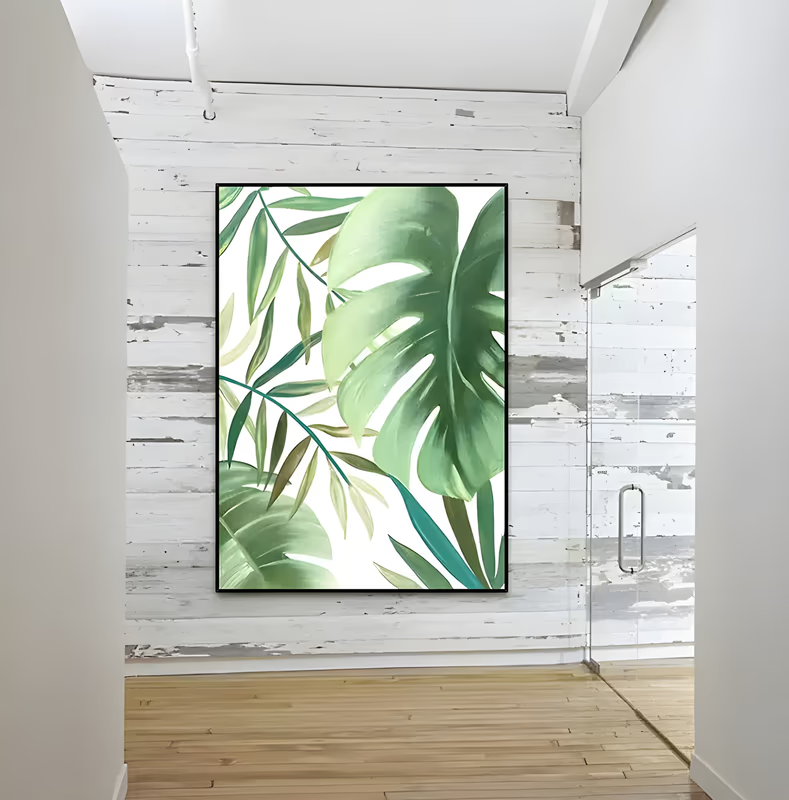
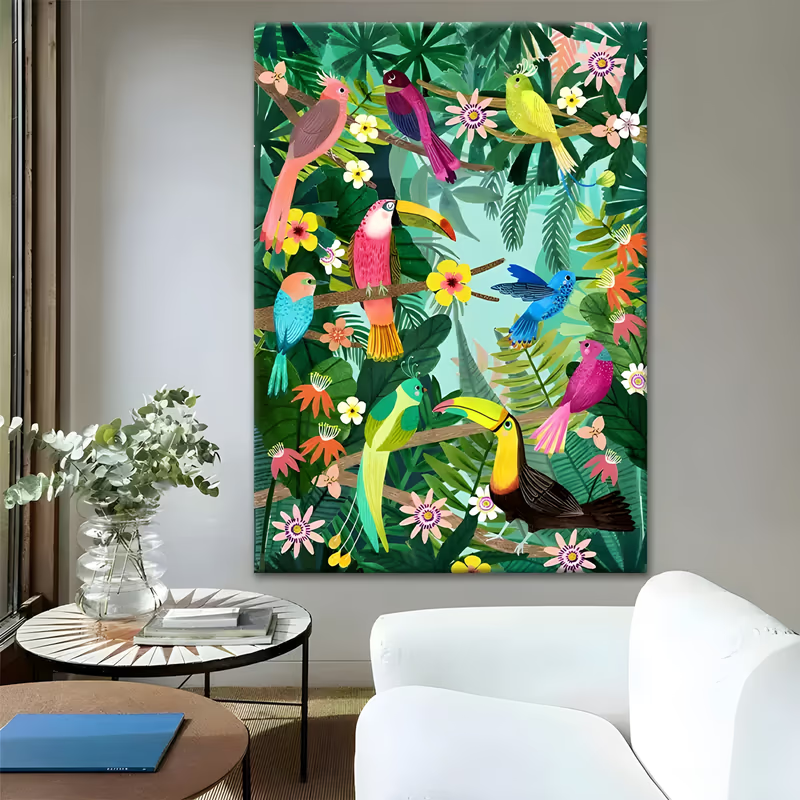
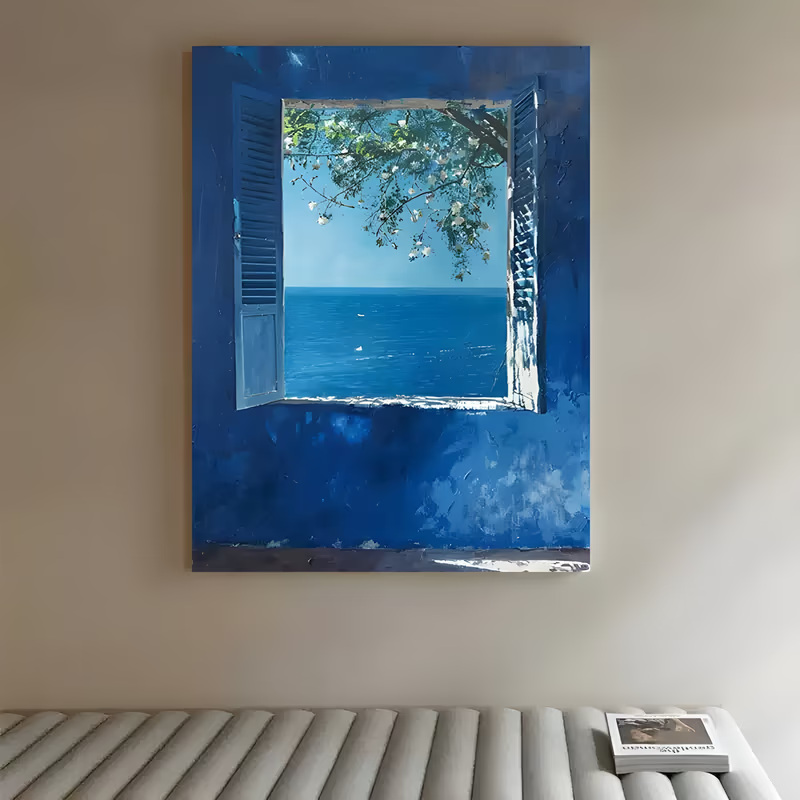
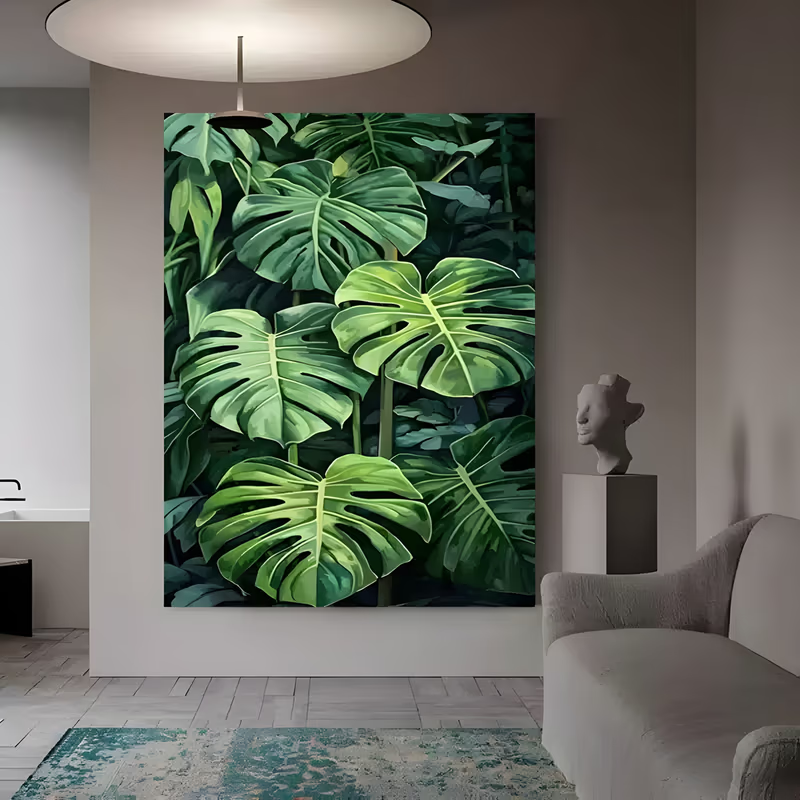
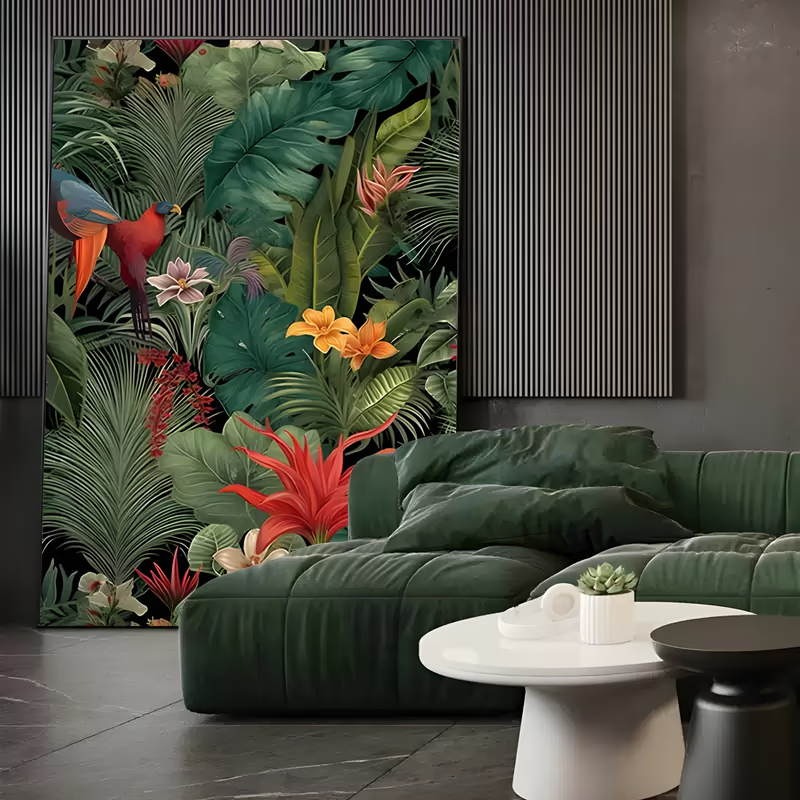
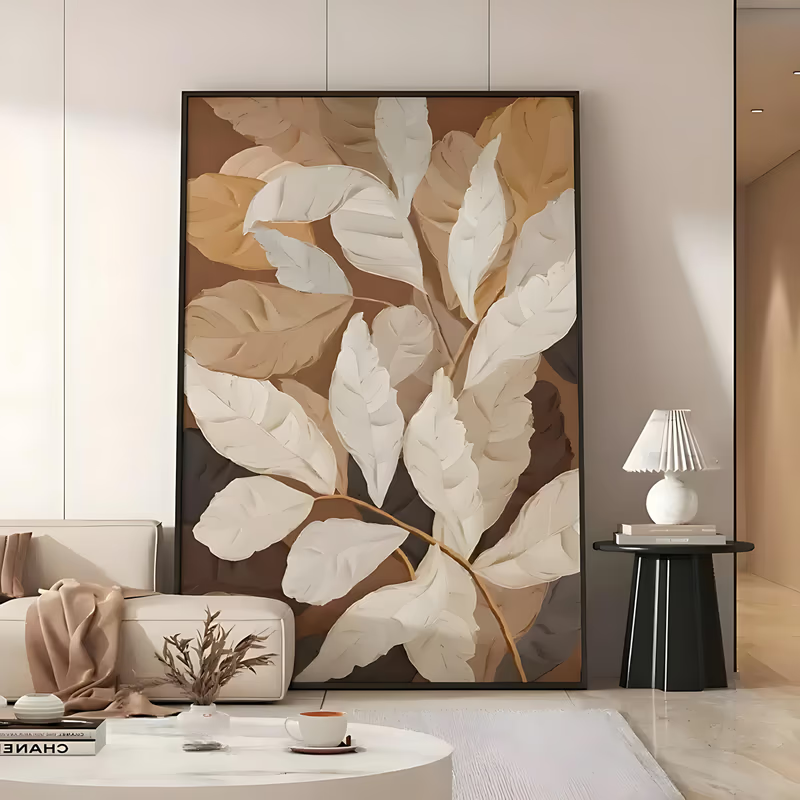
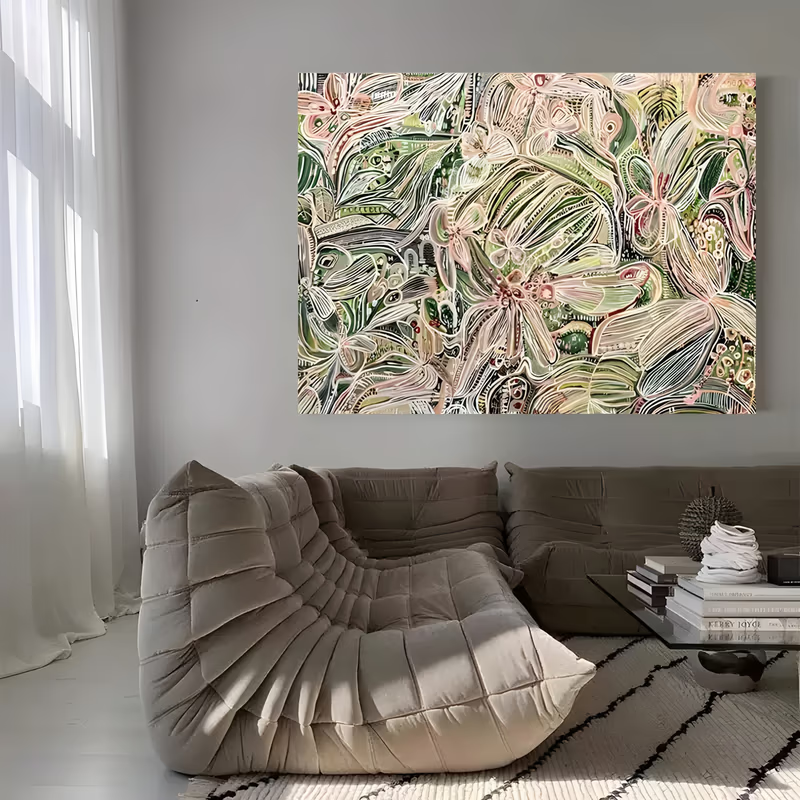
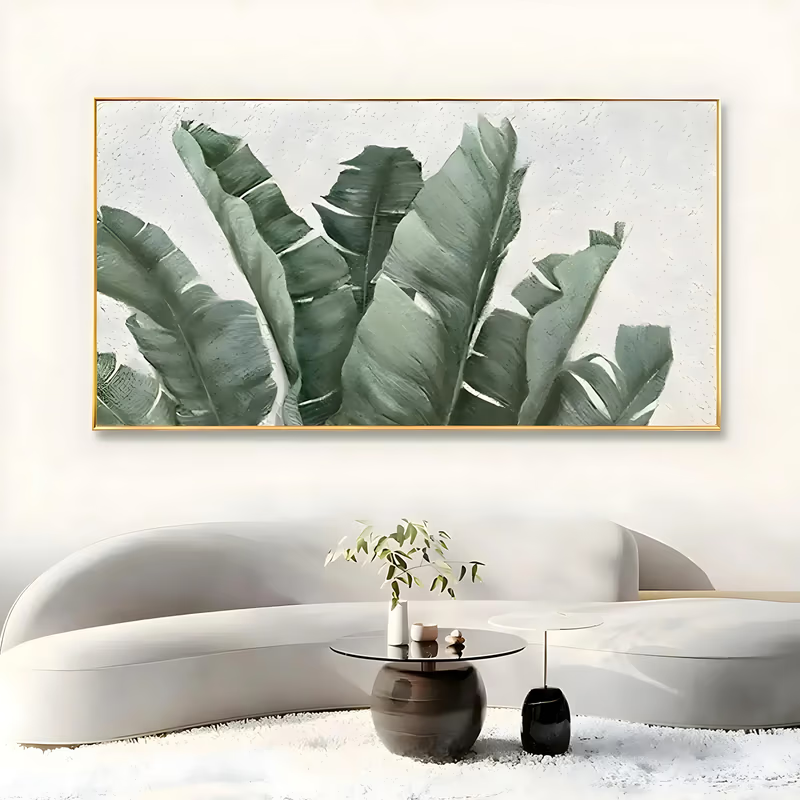
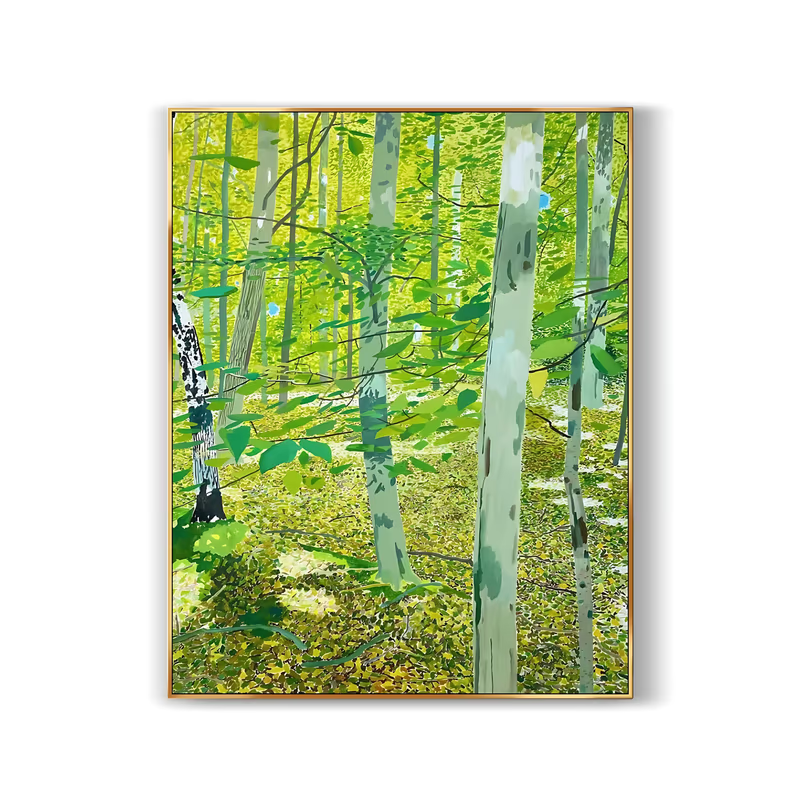
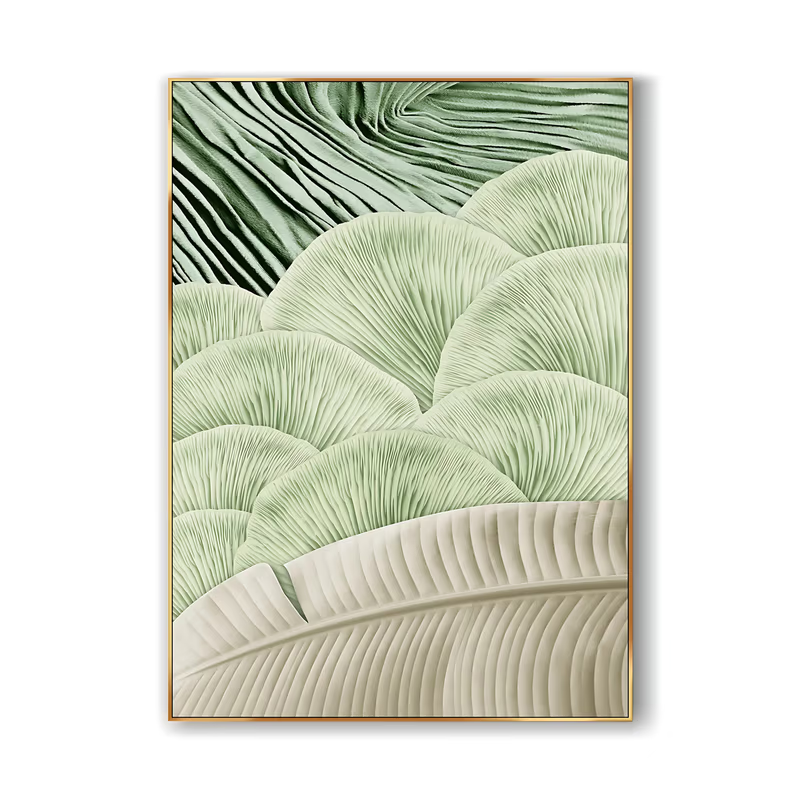
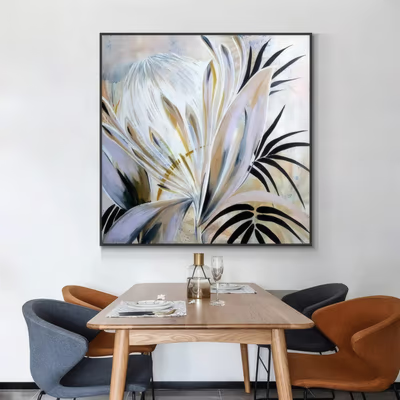
A landscape asks you to imagine a place and a portrait asks you to meet someone; a flower painting asks nothing. That ease is why florals are specified so often for guest rooms, spas, restaurants and show homes, where the art must please people the designer will never meet. Flowers also carry colour naturally, so a floral canvas can bring pink, coral or blue into a neutral room in a way that looks grown rather than chosen. Botanical subjects, such as palm fronds, monstera, ginkgo and olive leaves, do the same job in green for rooms that should feel cooler and calmer.
How do you choose floral wall art that does not look dated?
Choose a confident crop and scale, a clean or dark background, and a simple frame or none: what dates a flower painting is fussy execution, never the flowers themselves.
| Composition | How it reads | Best used |
|---|---|---|
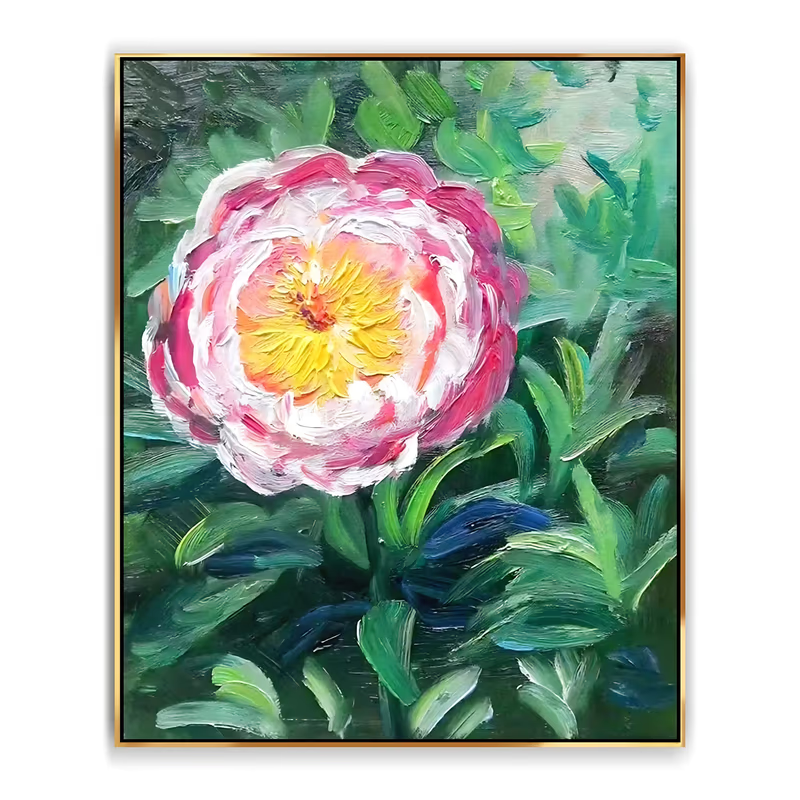
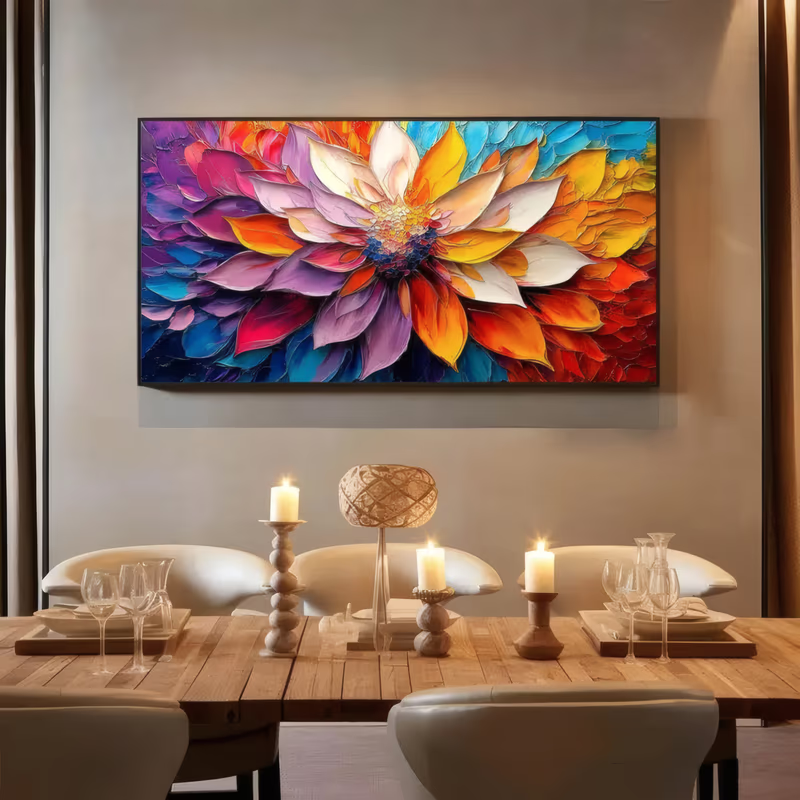
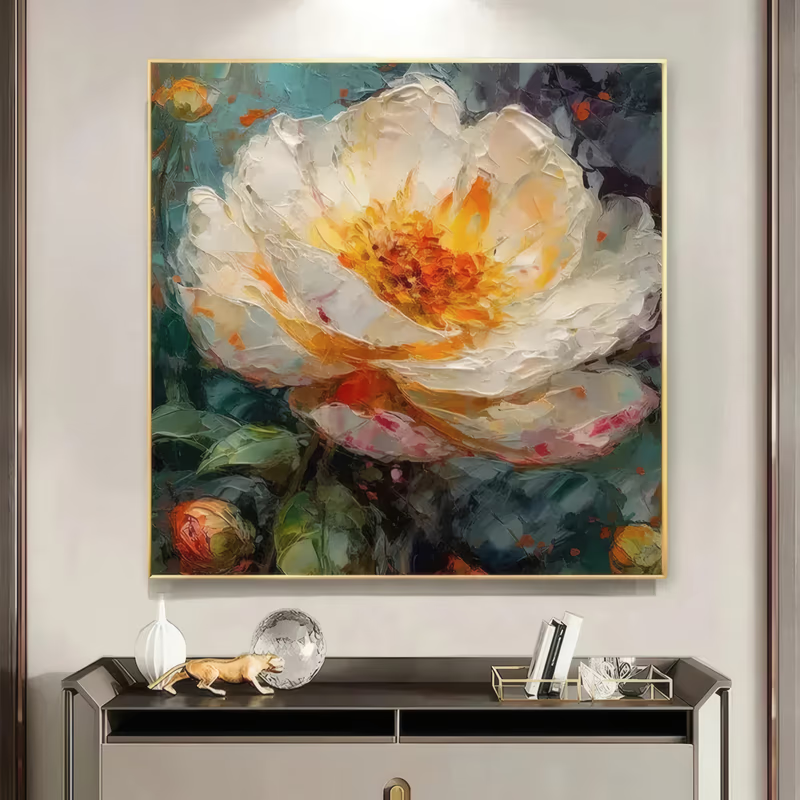
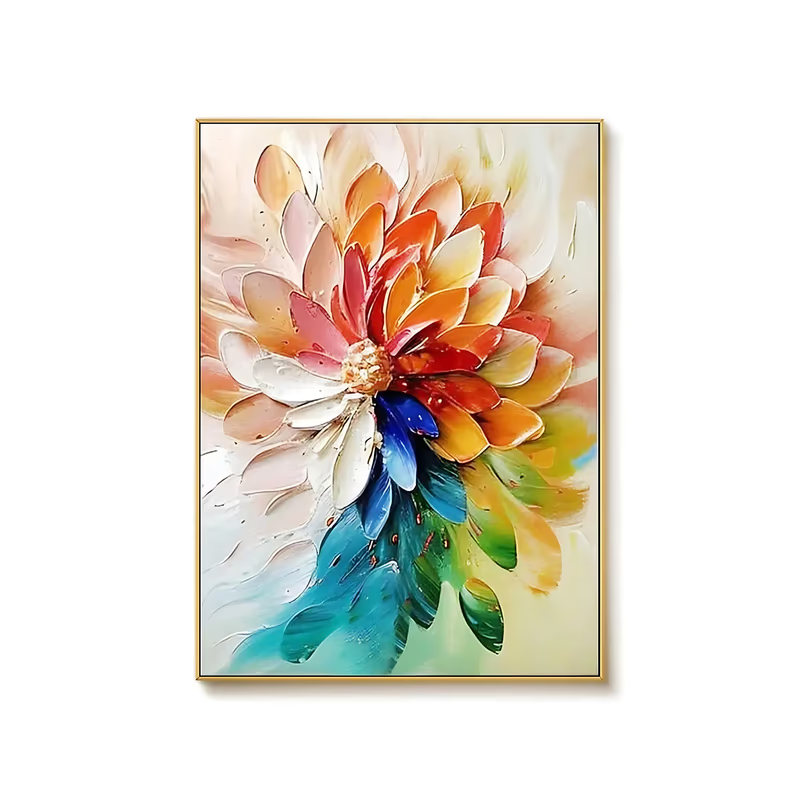
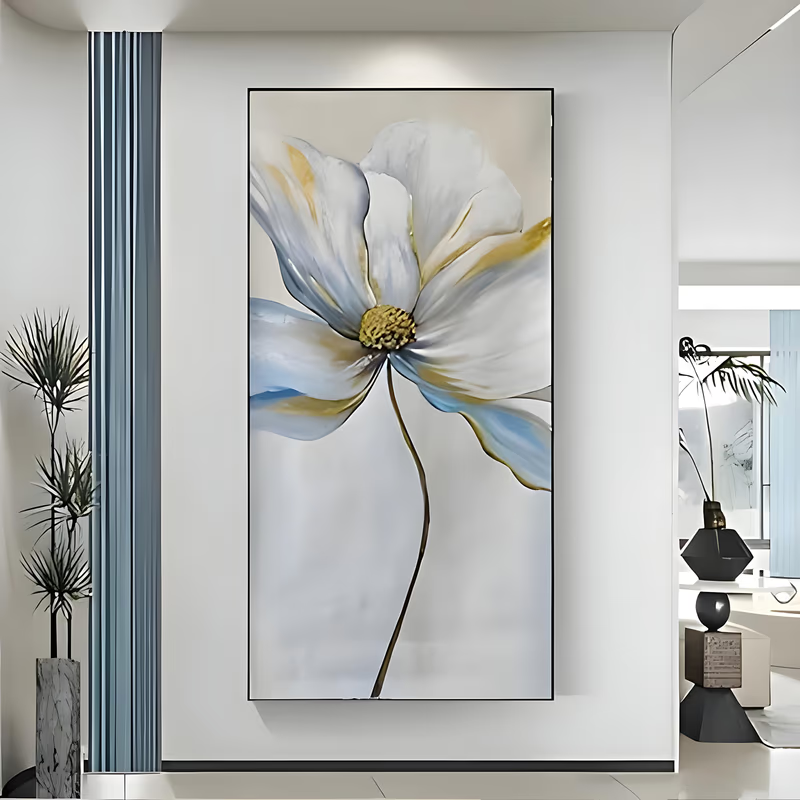
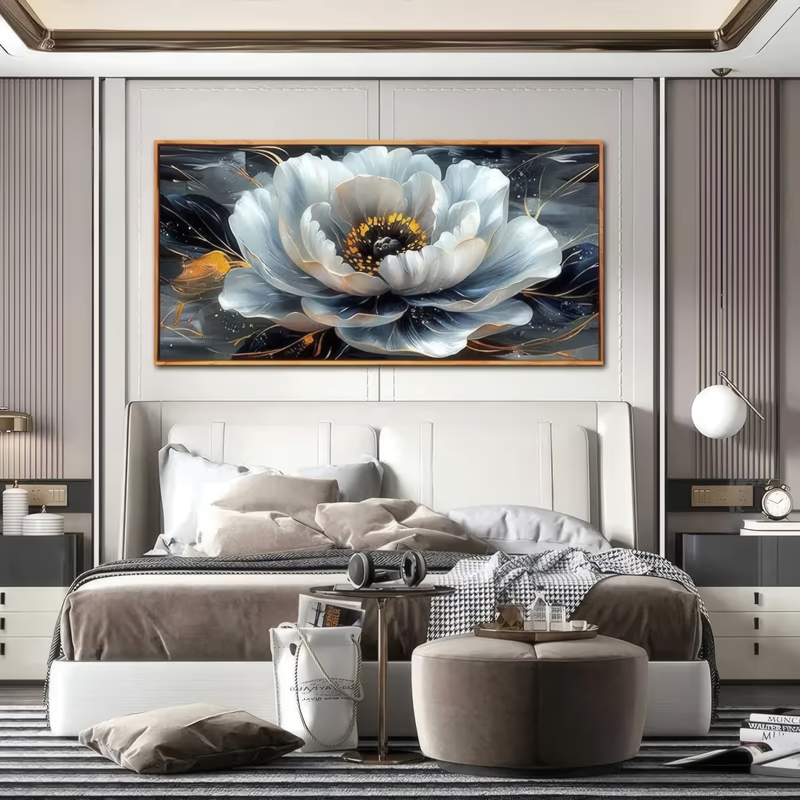
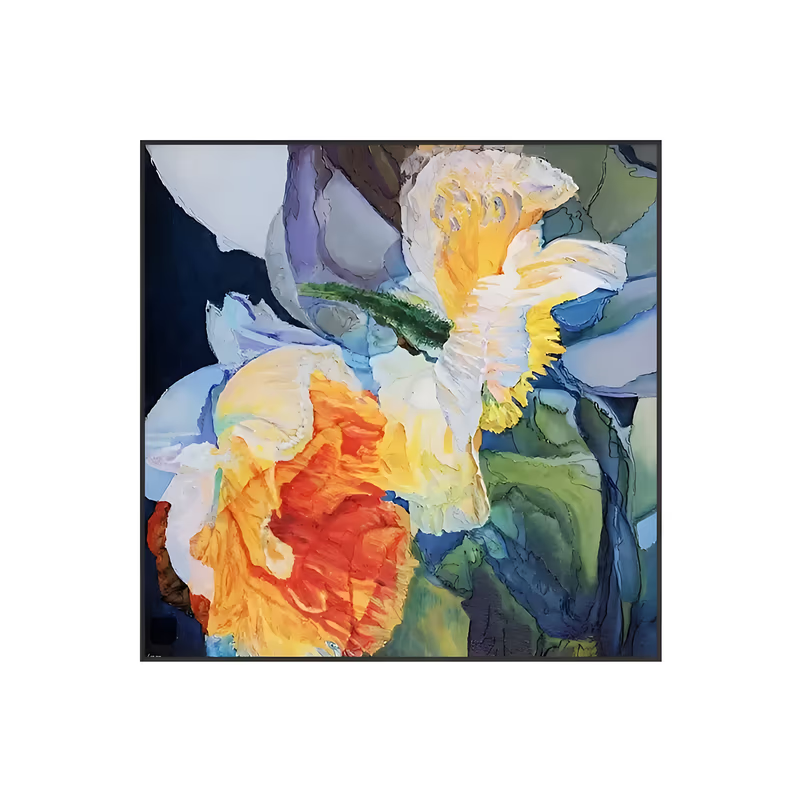
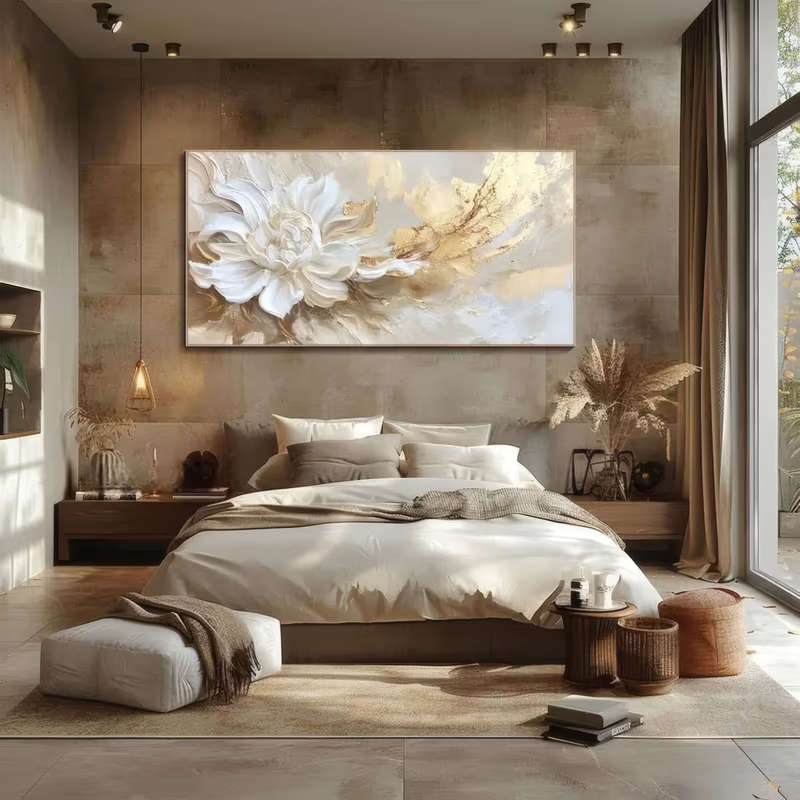
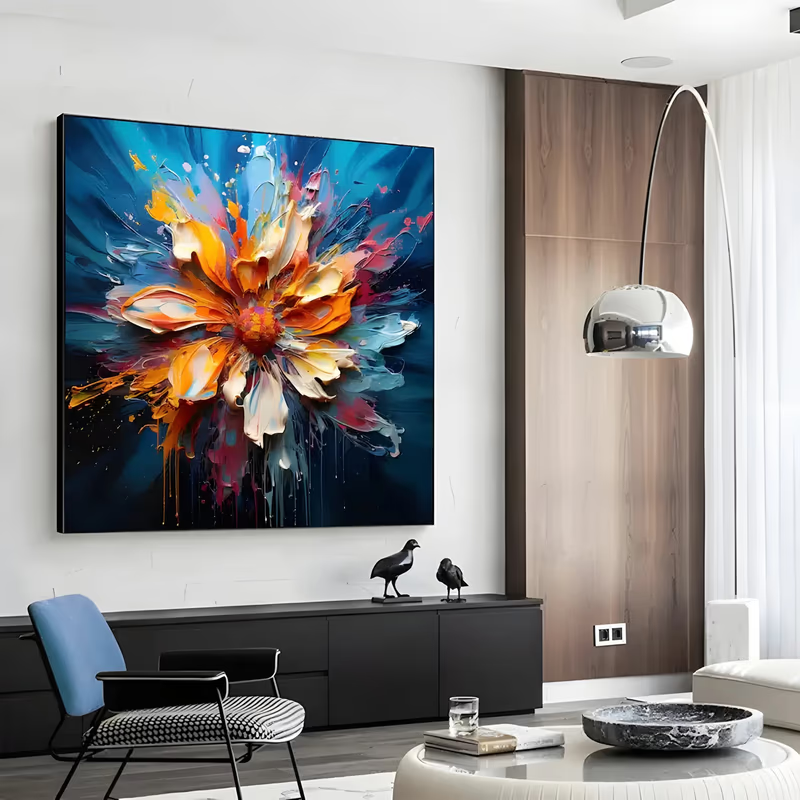
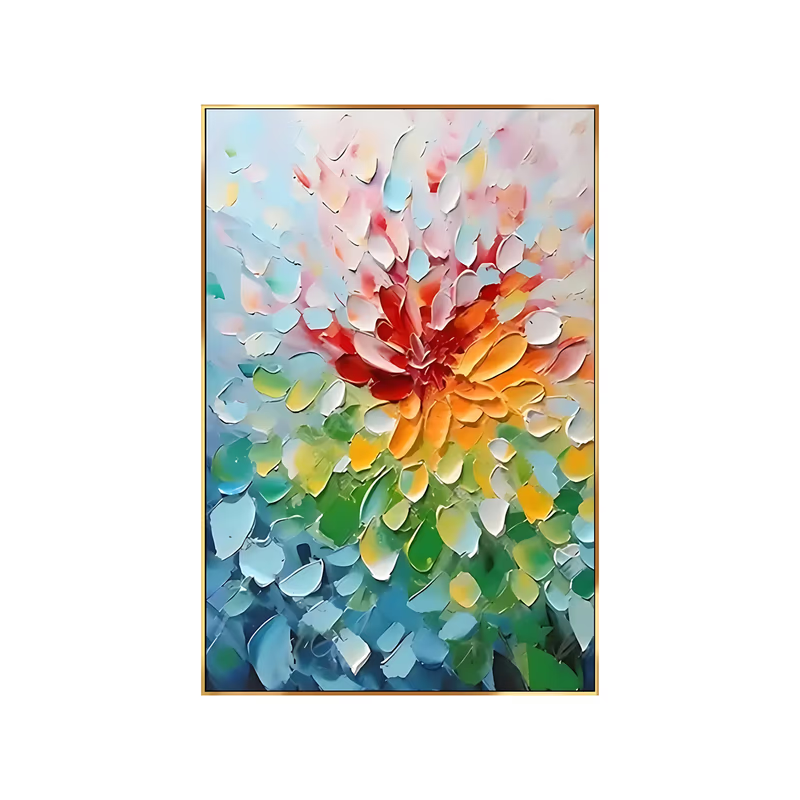
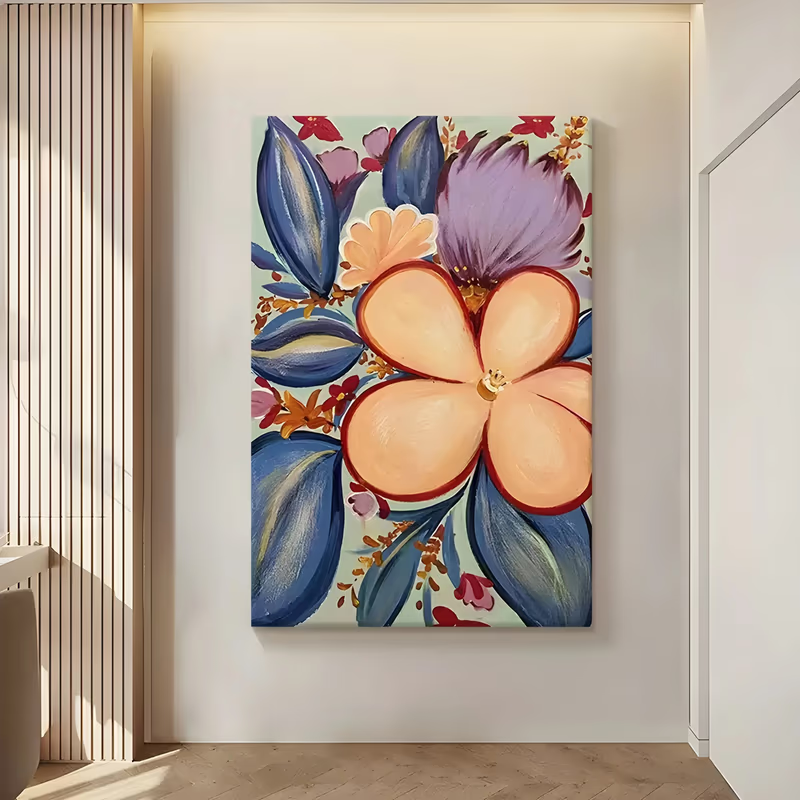
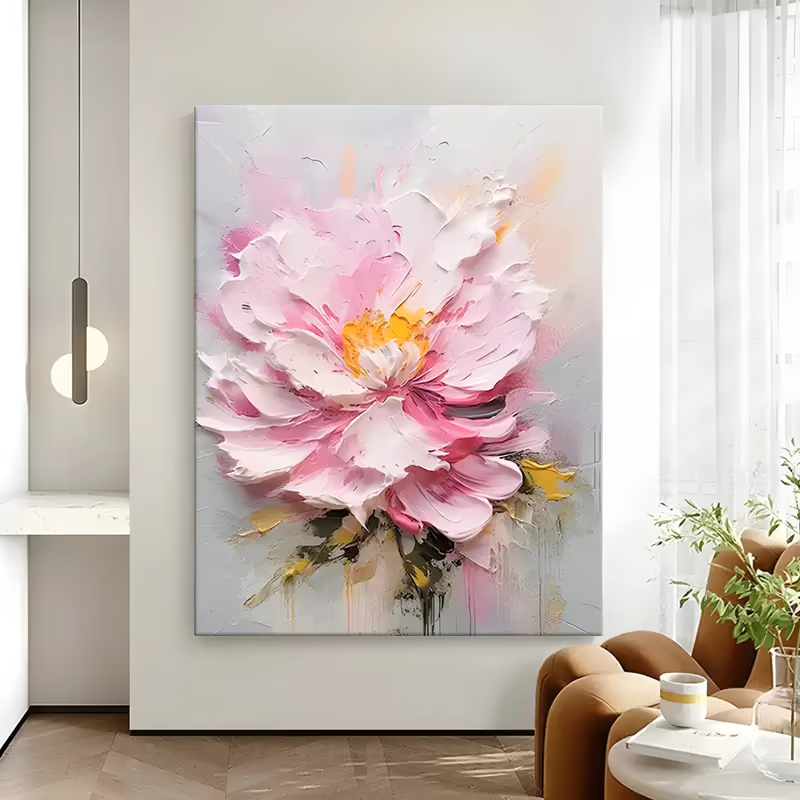
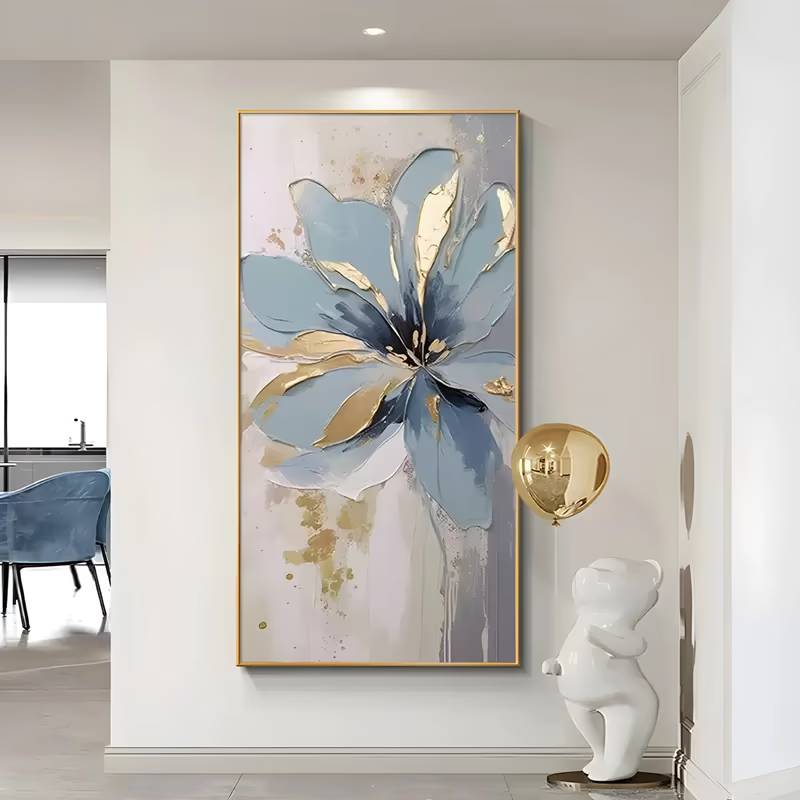
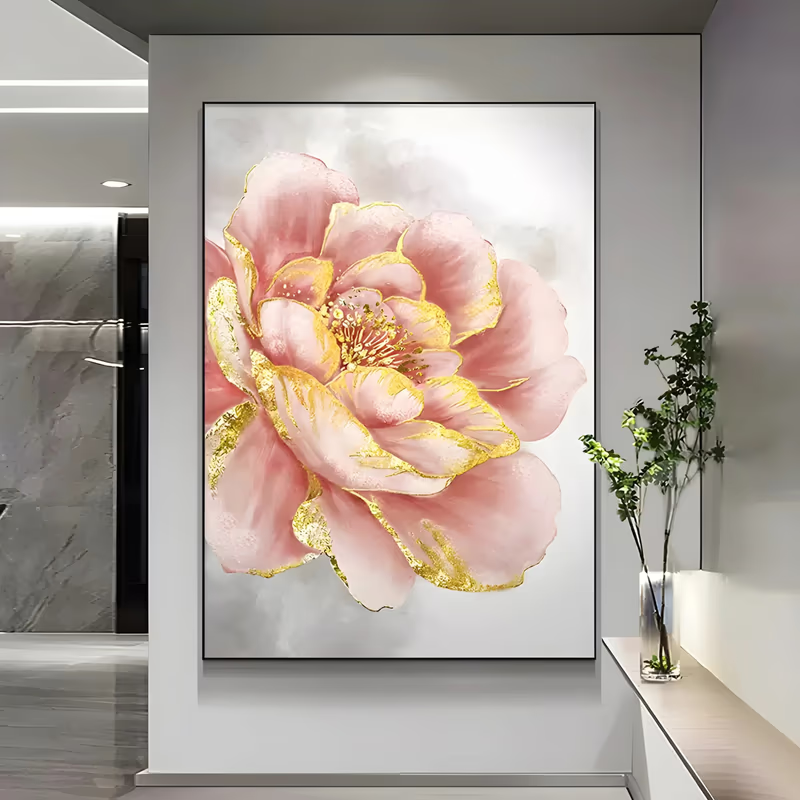
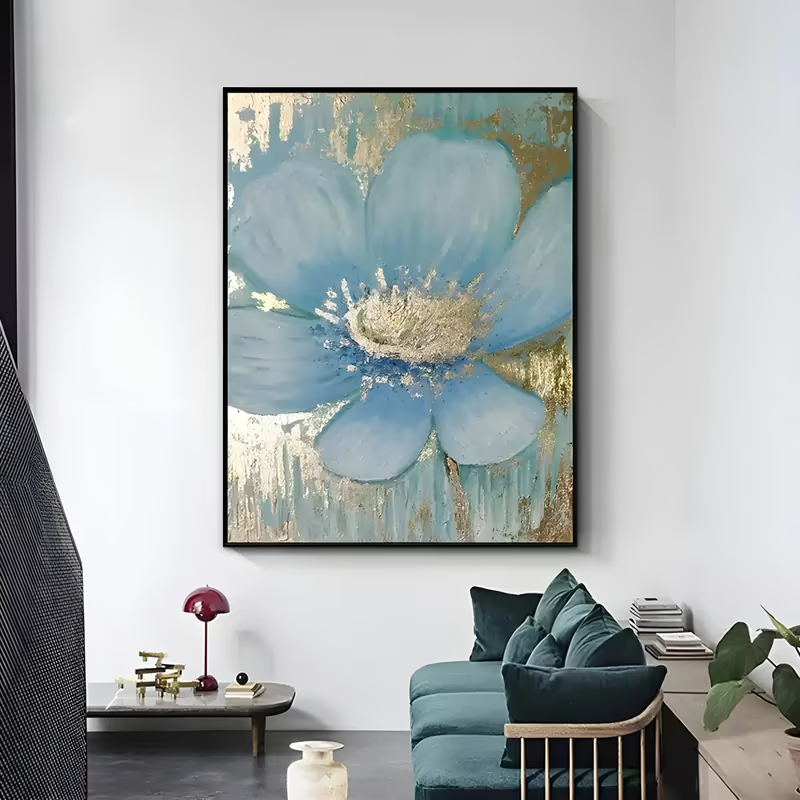
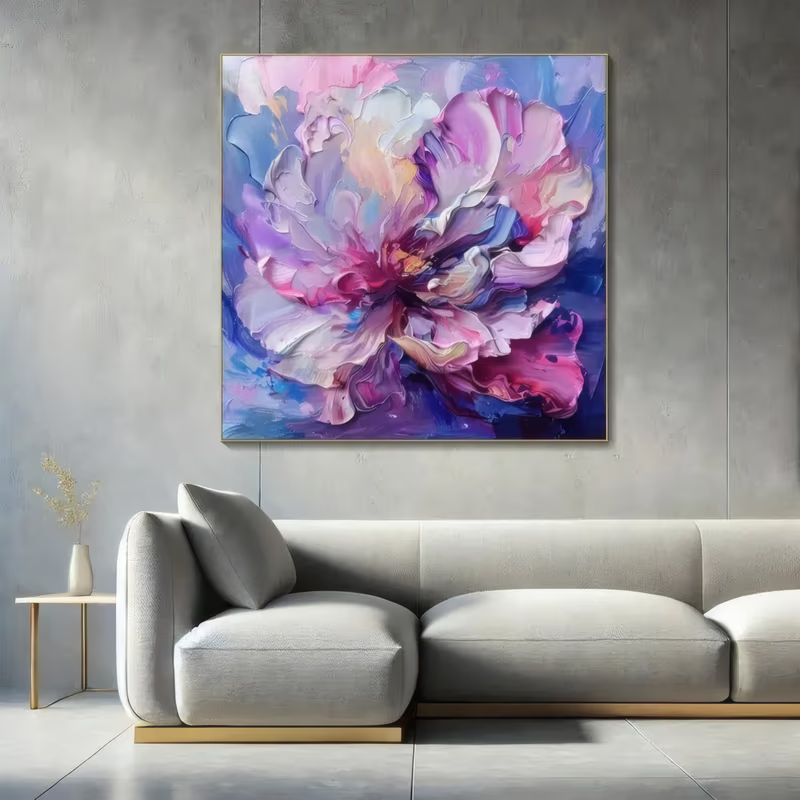
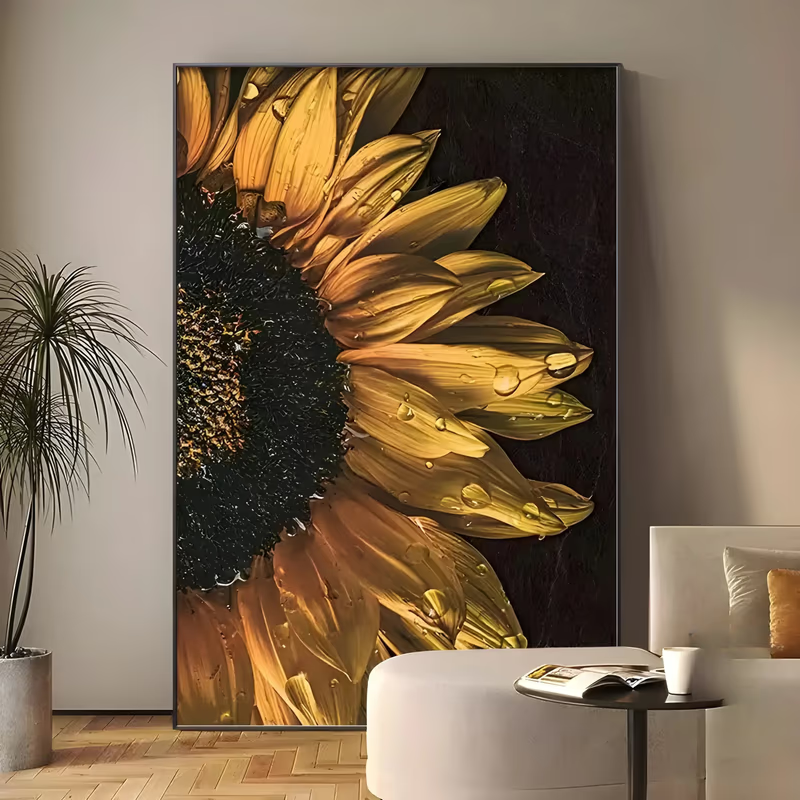
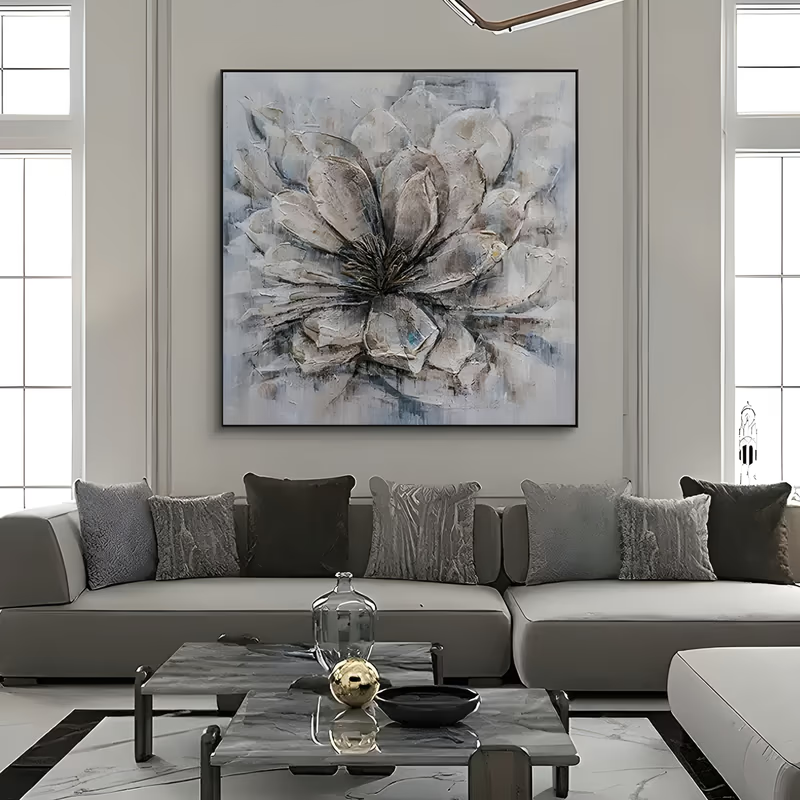
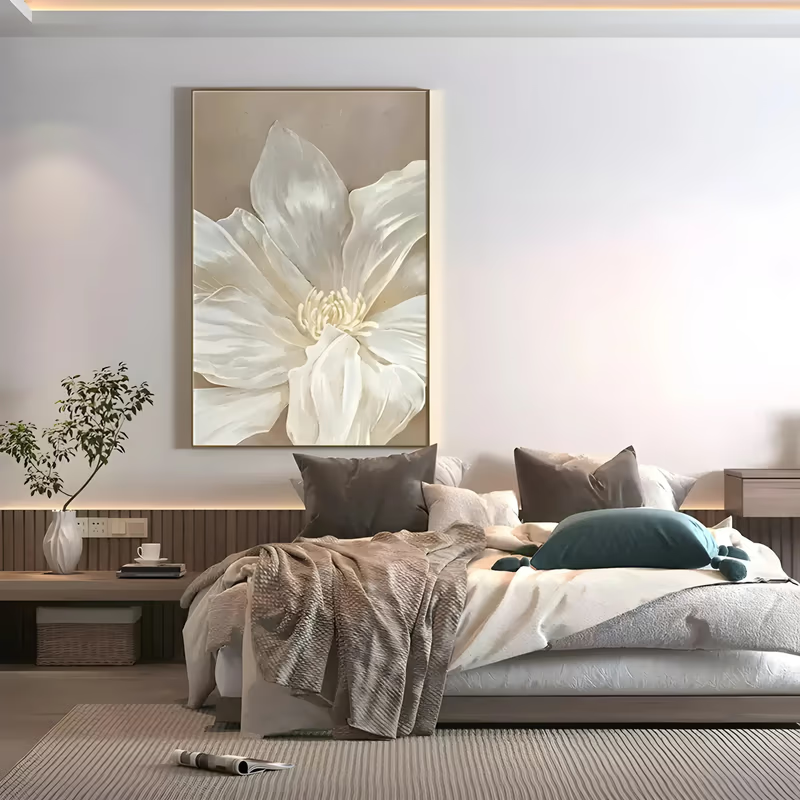
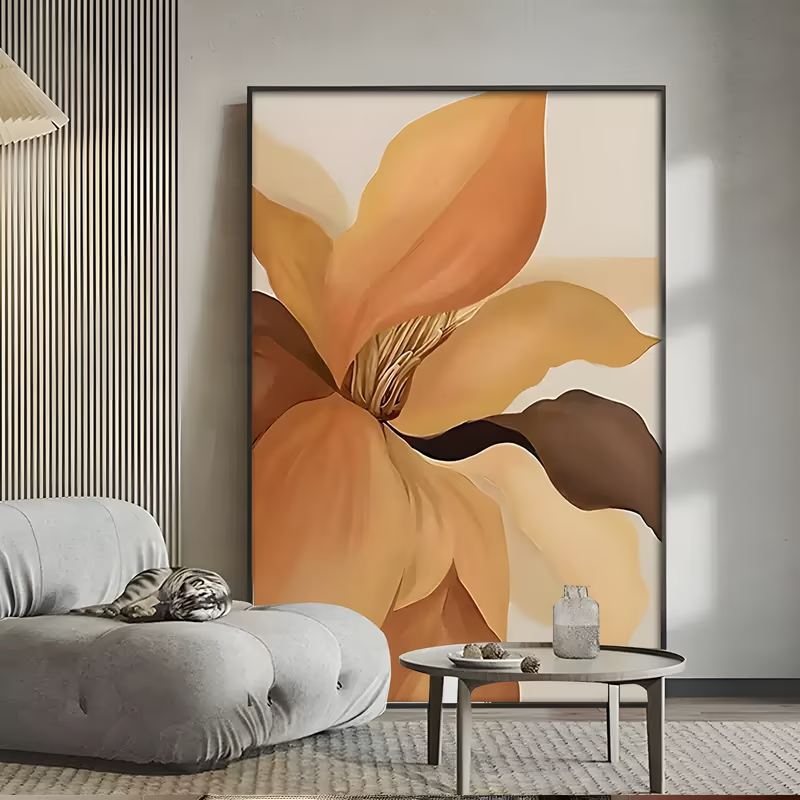
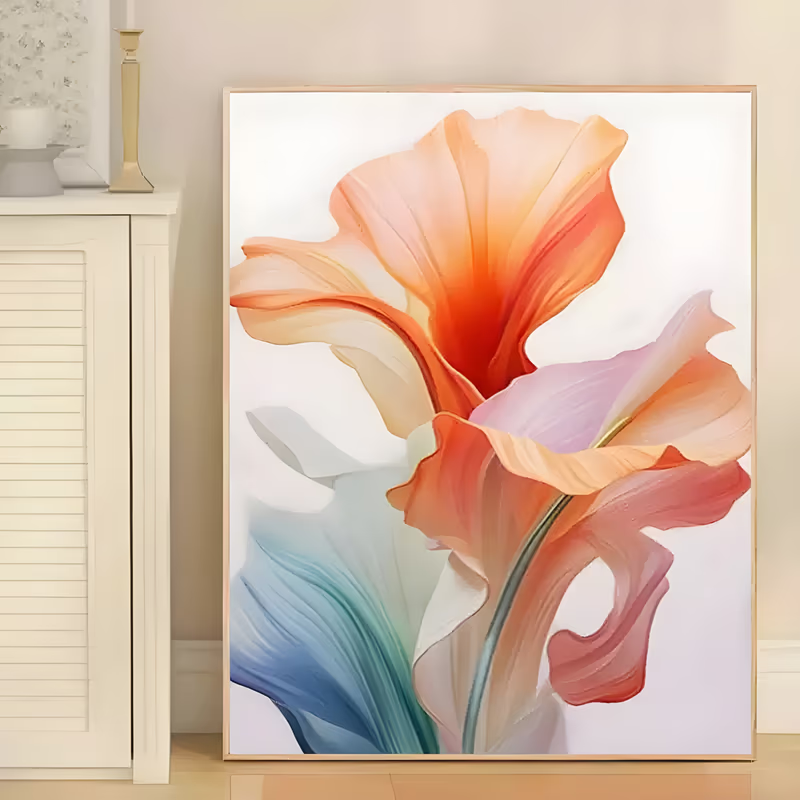
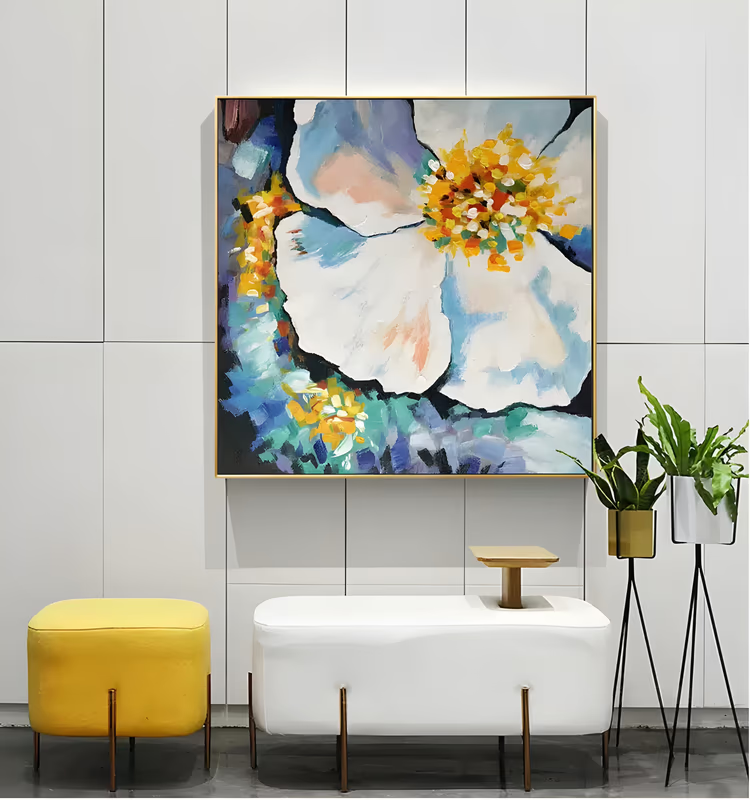
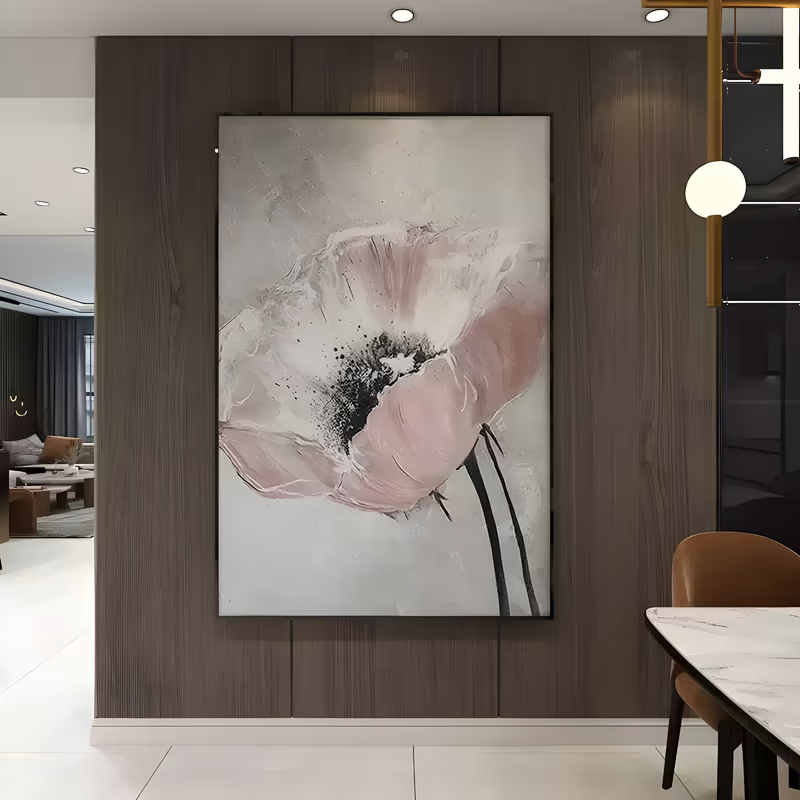
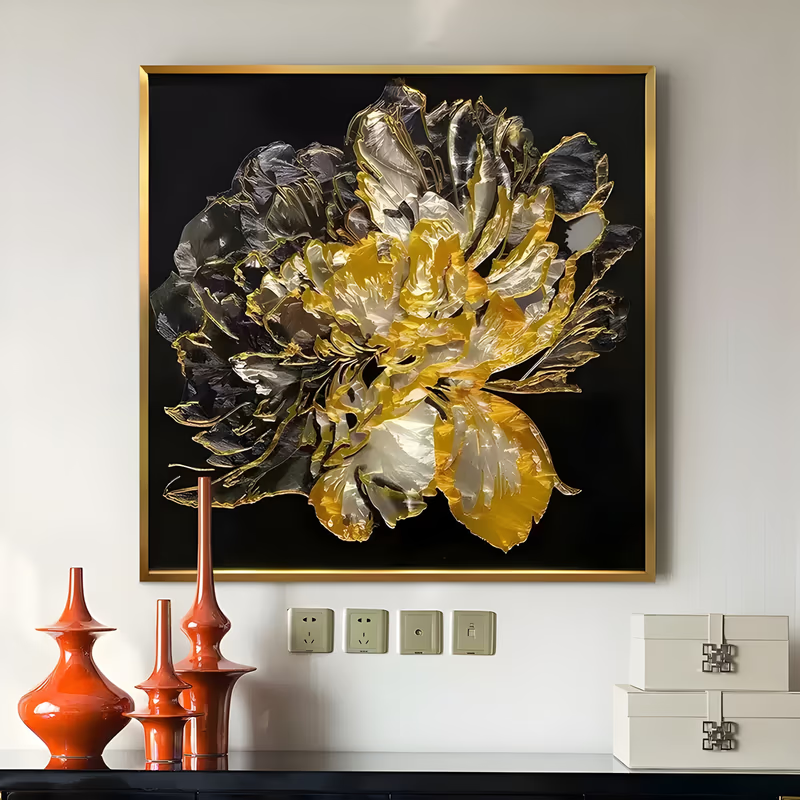
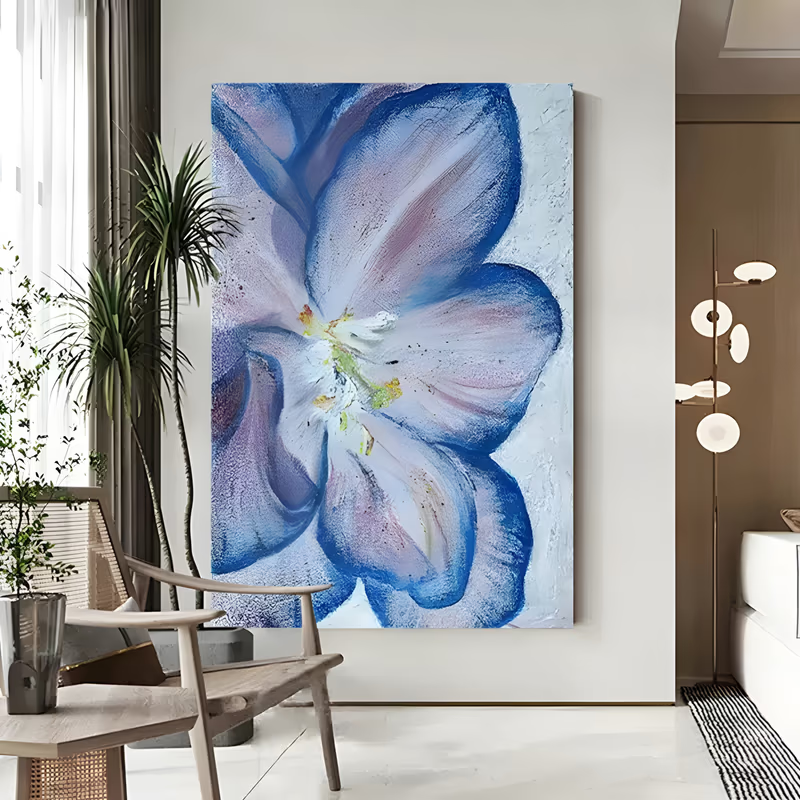
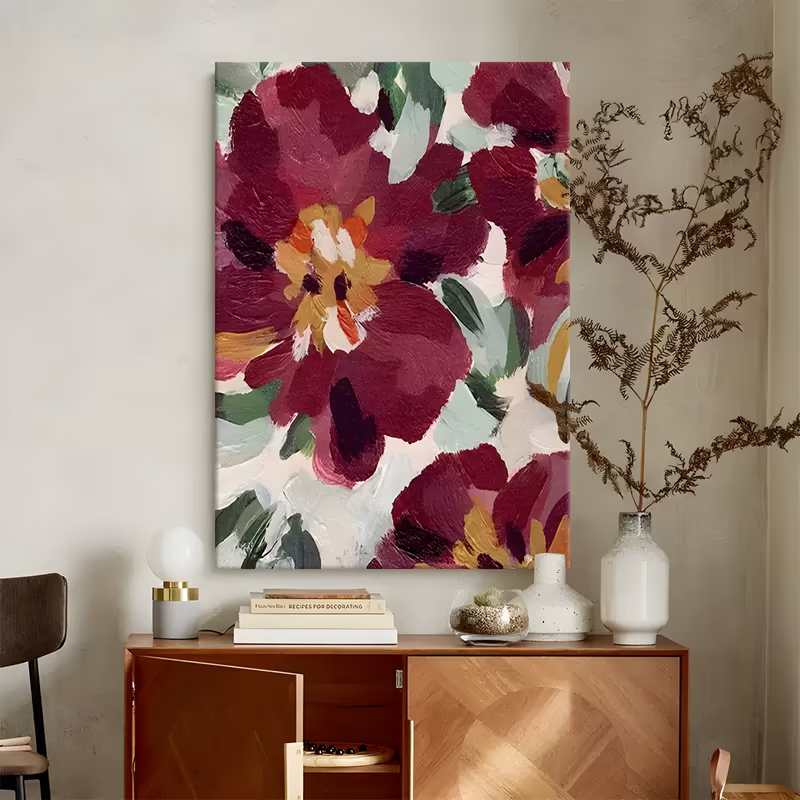
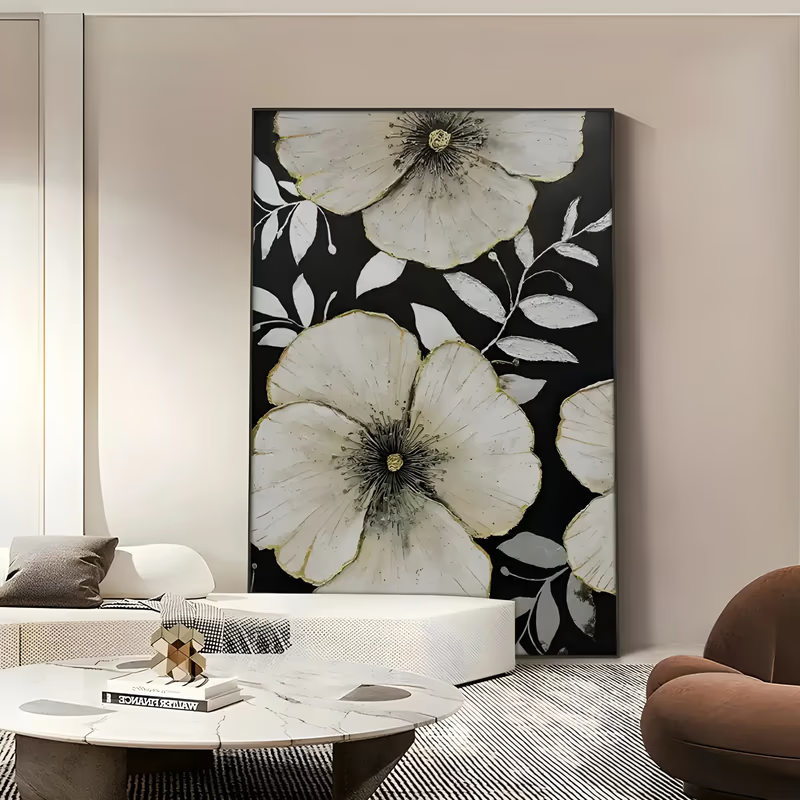
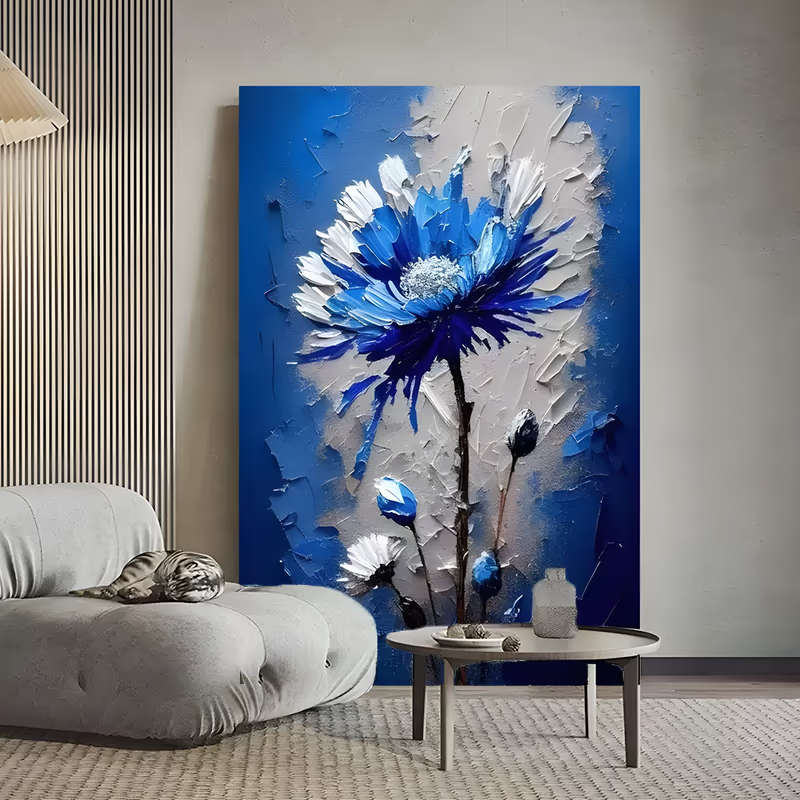
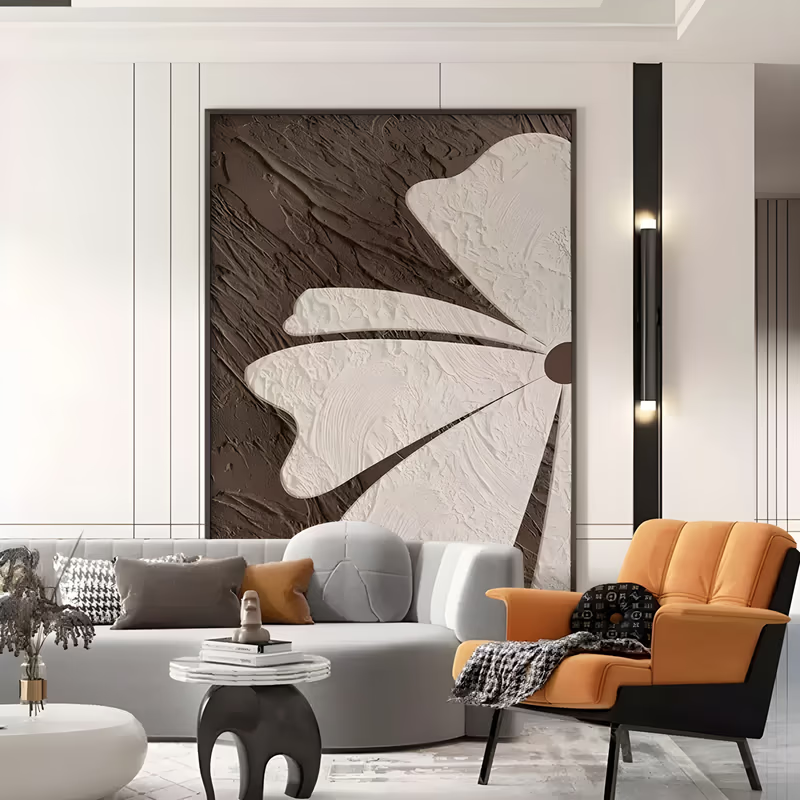
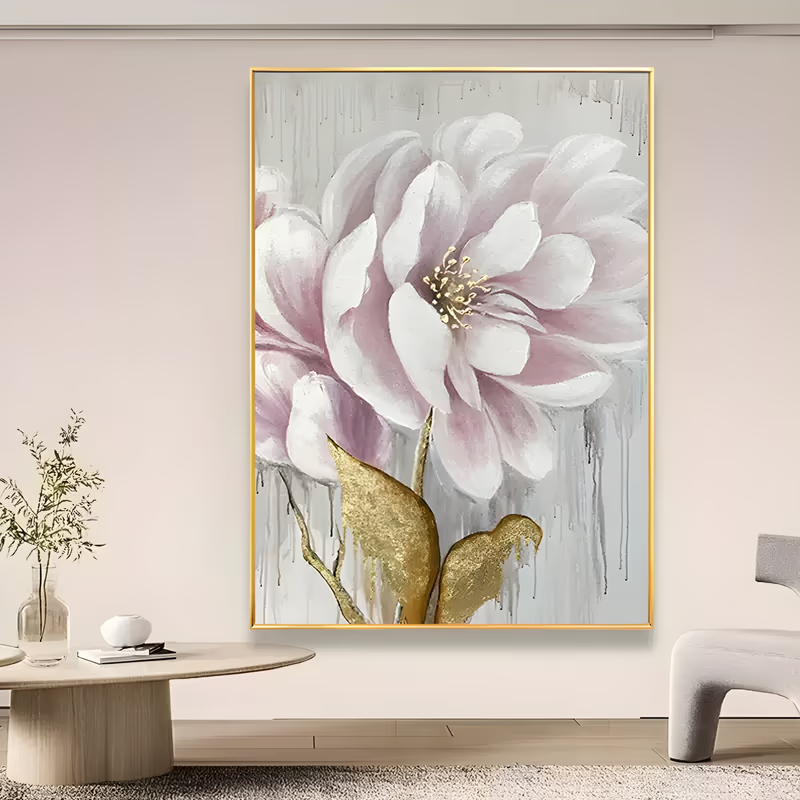
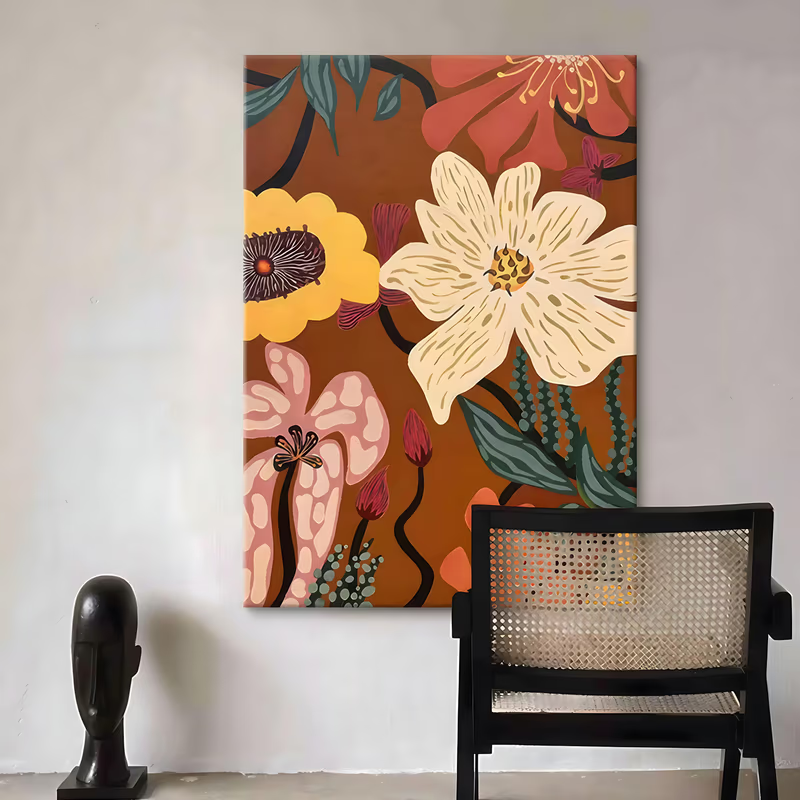
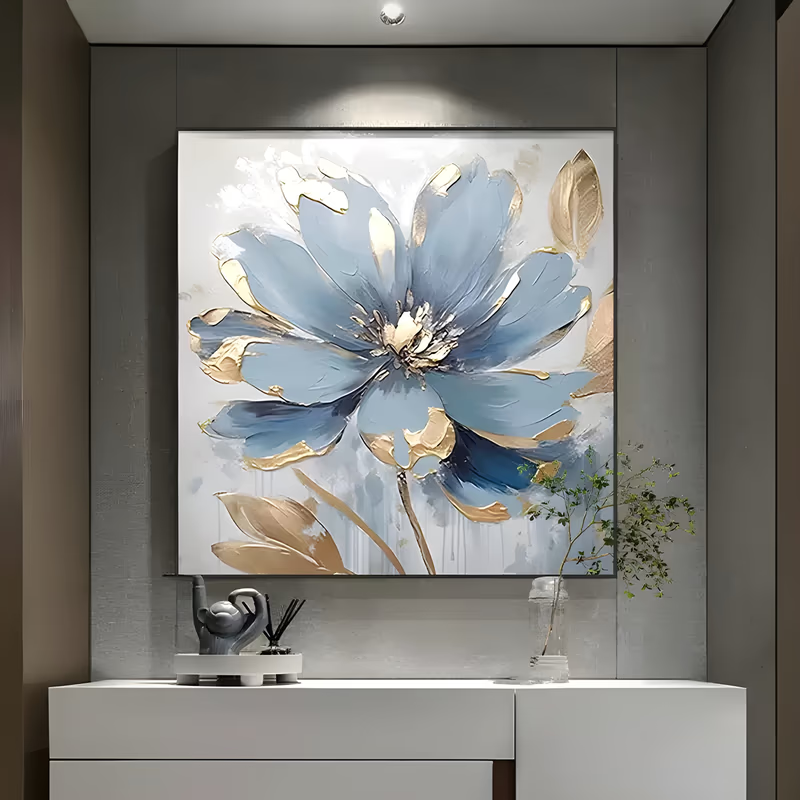
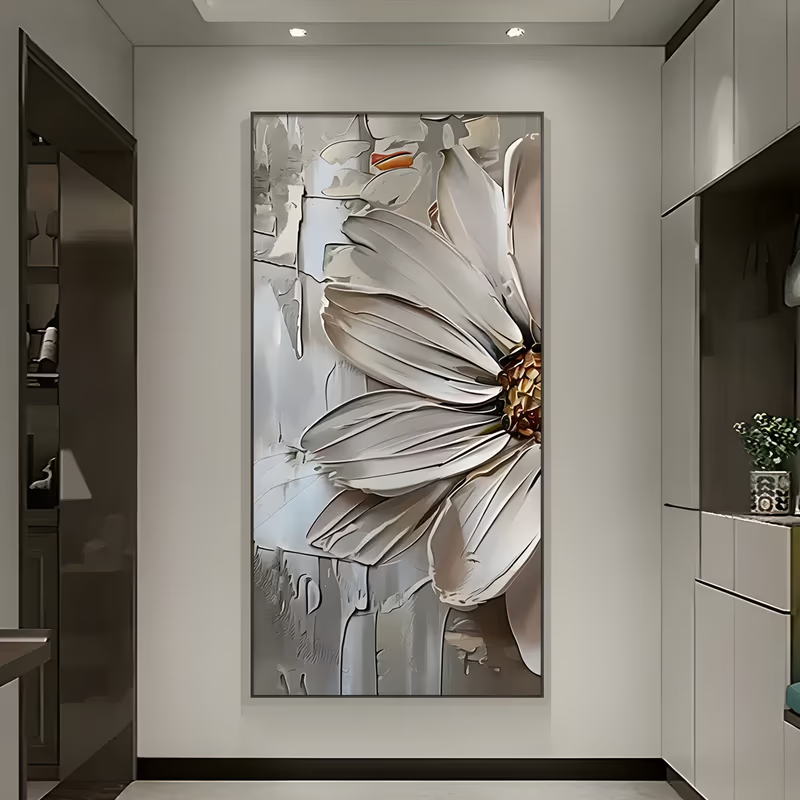
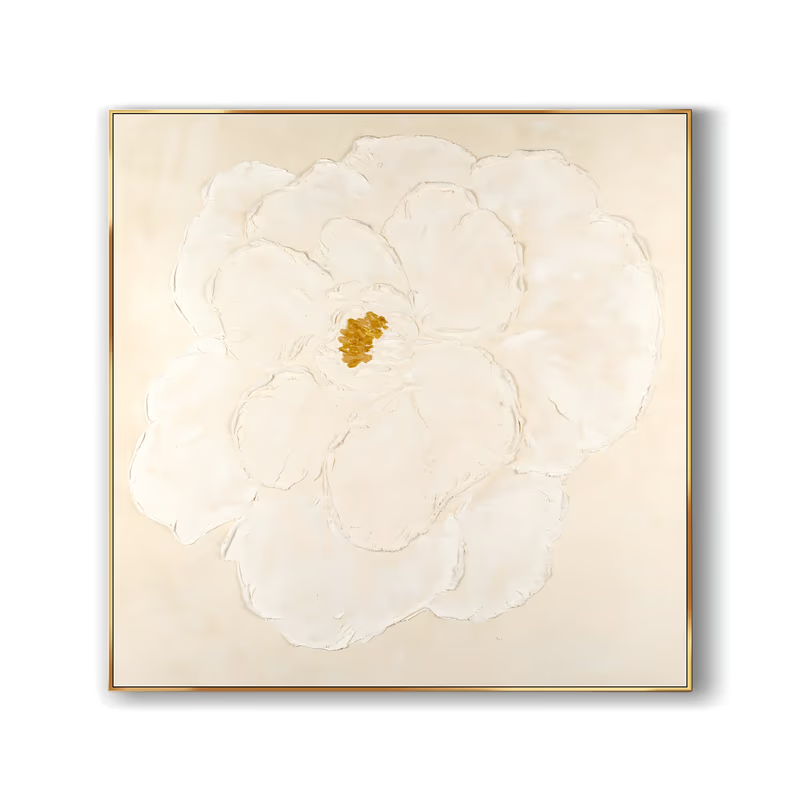
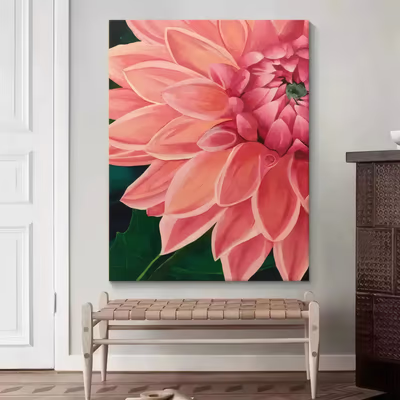
| One oversized bloom, cropped close | Graphic and contemporary; the petals become shapes | Over a bed or sofa, hotel headboard walls, modern living rooms |
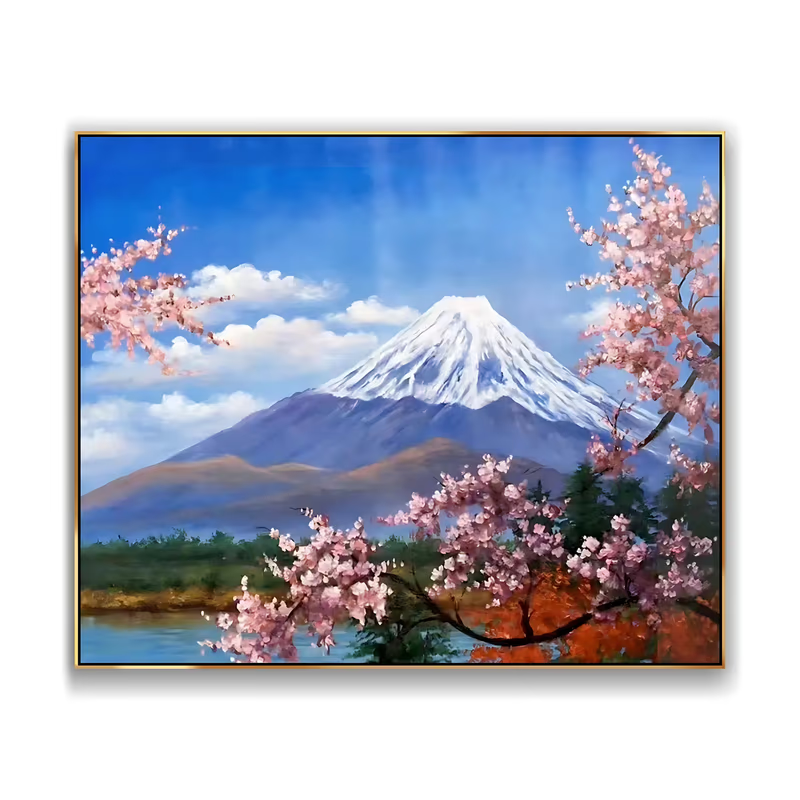
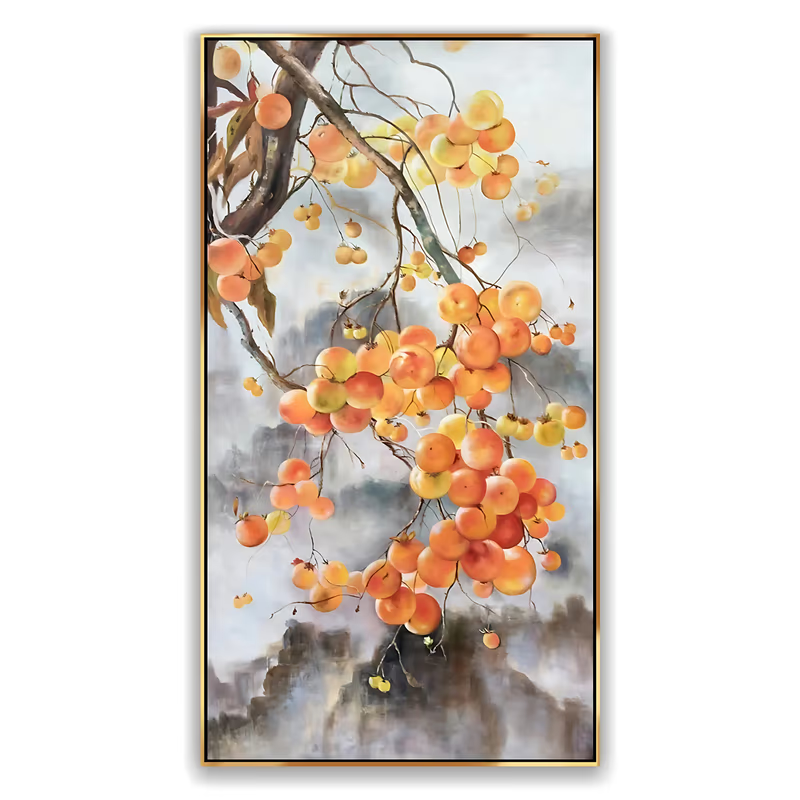
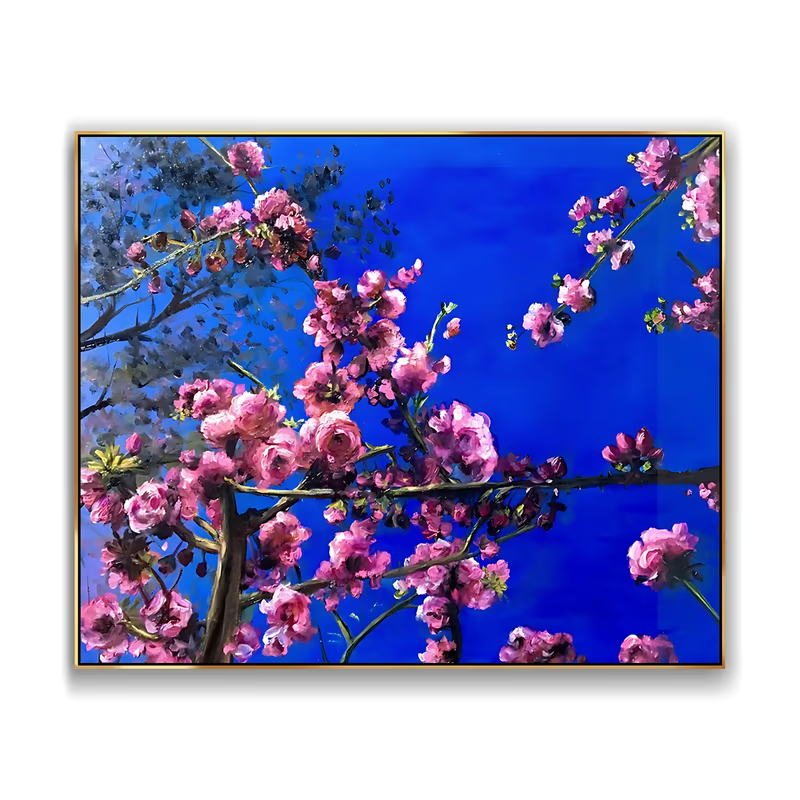
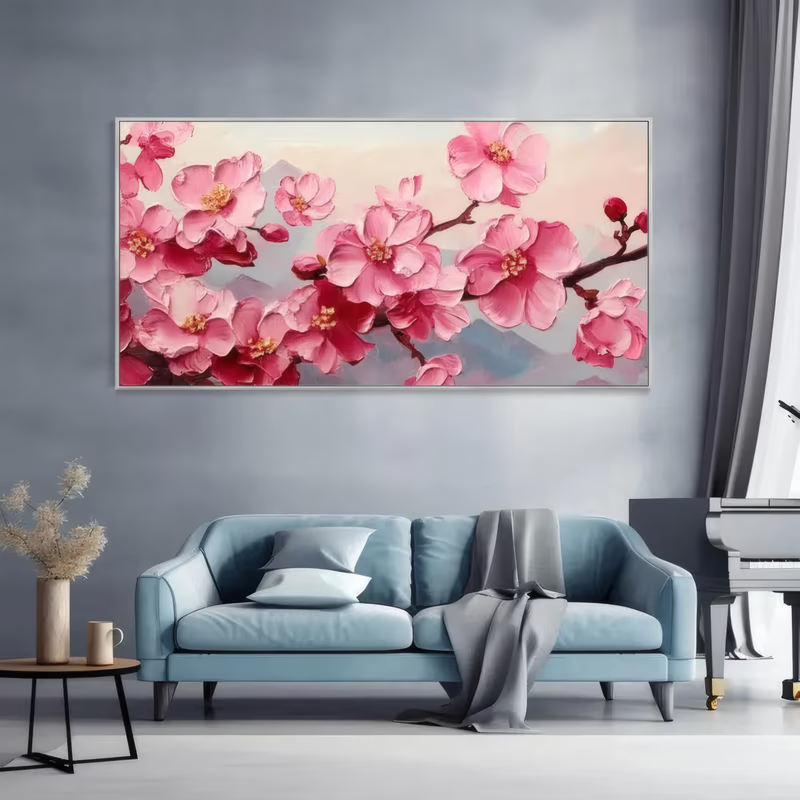
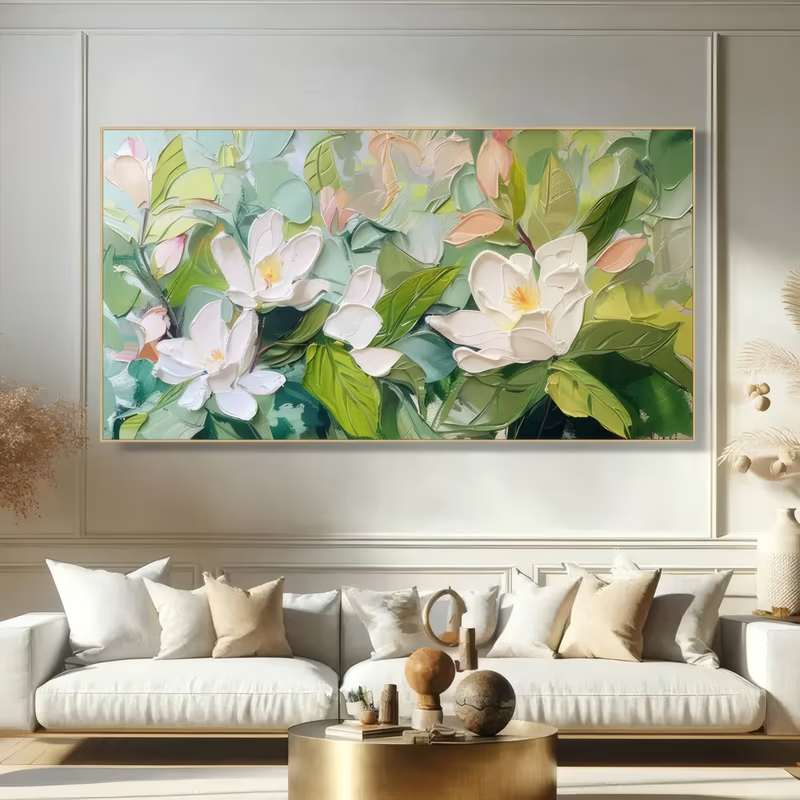
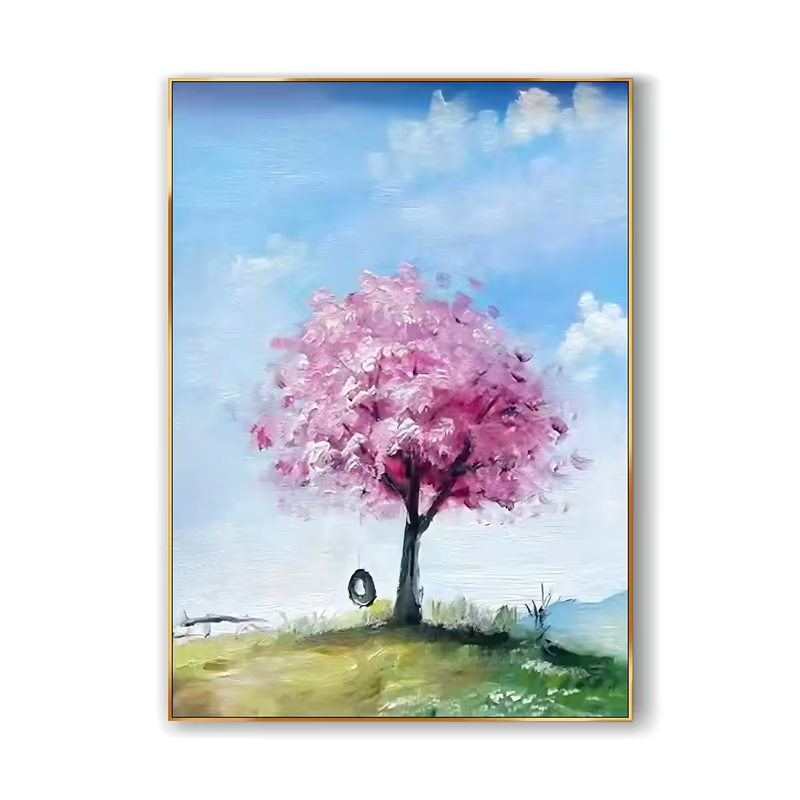
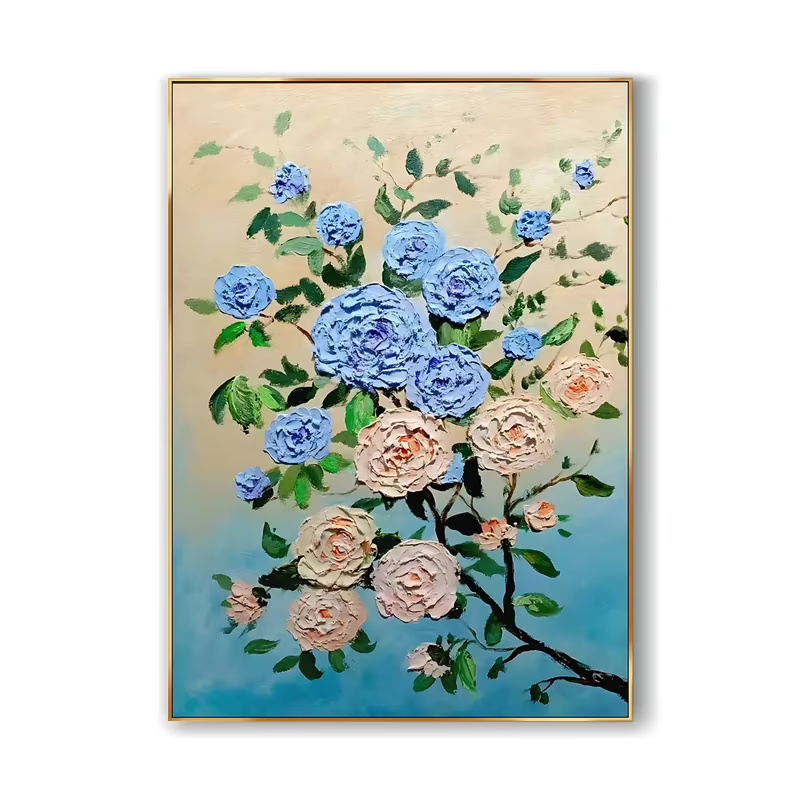
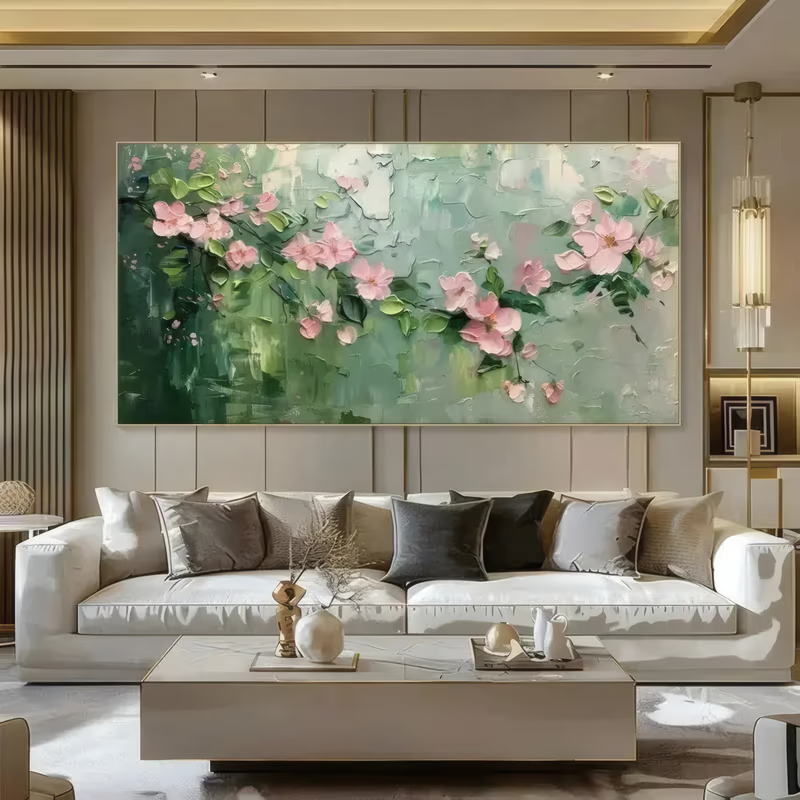
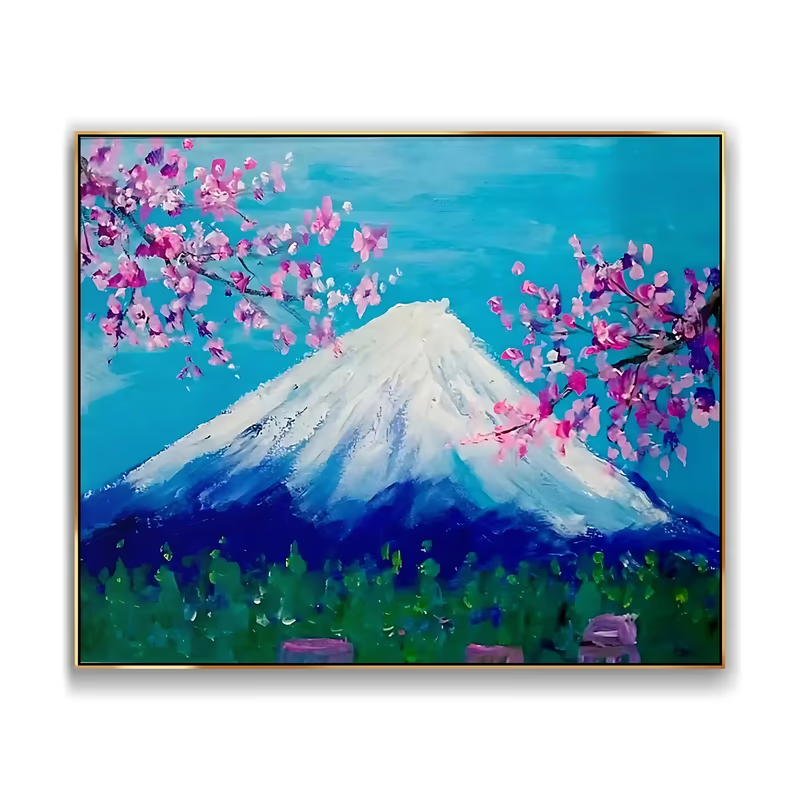
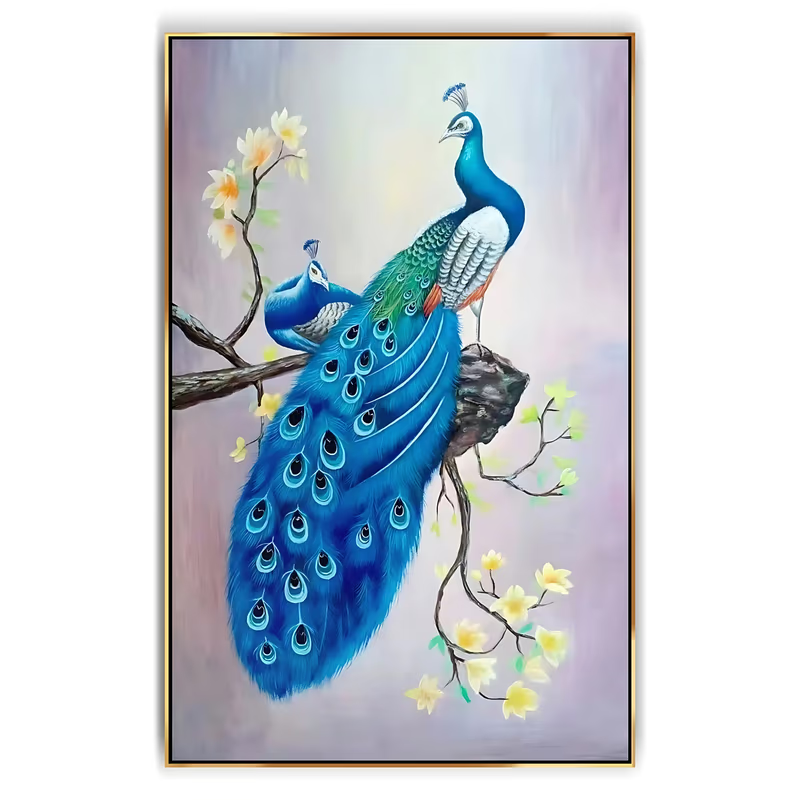
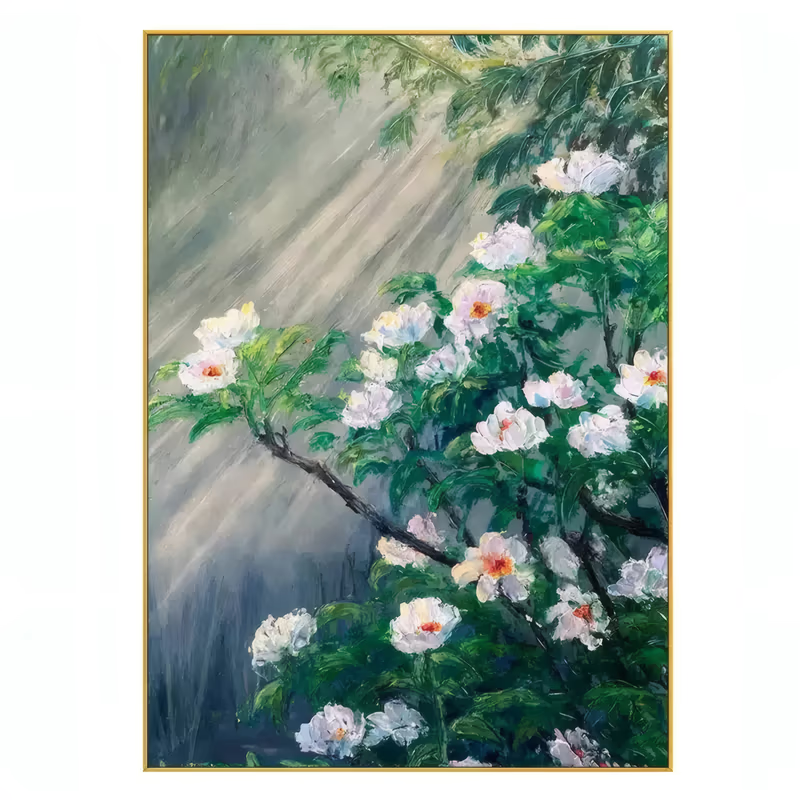
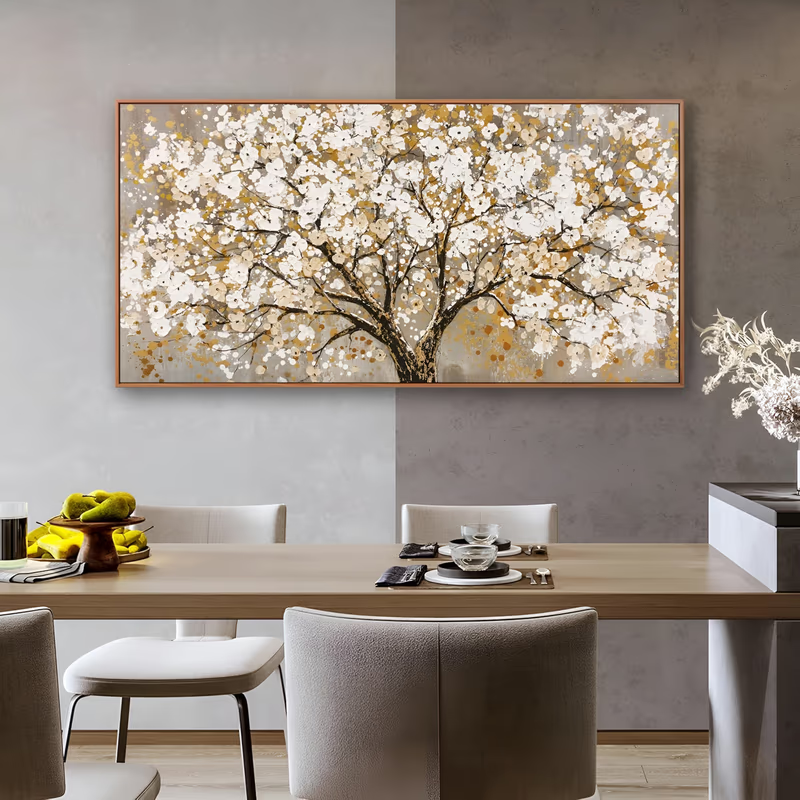
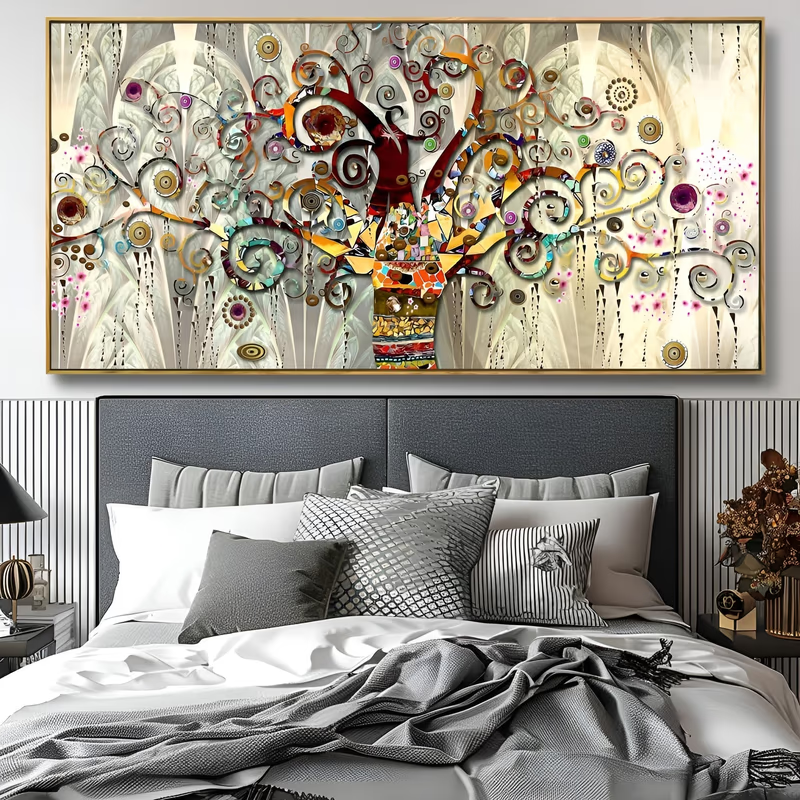
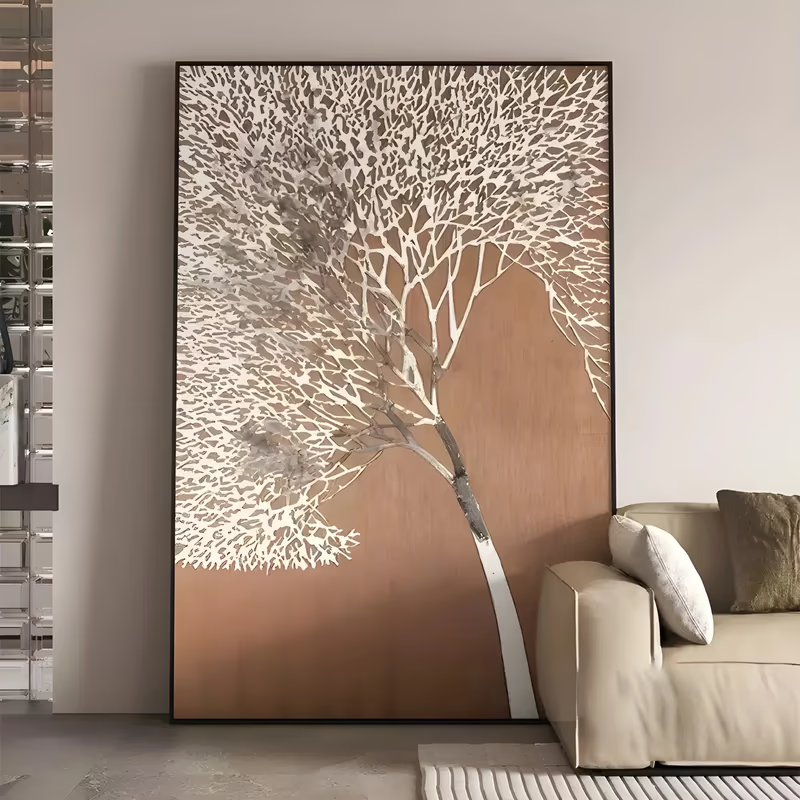
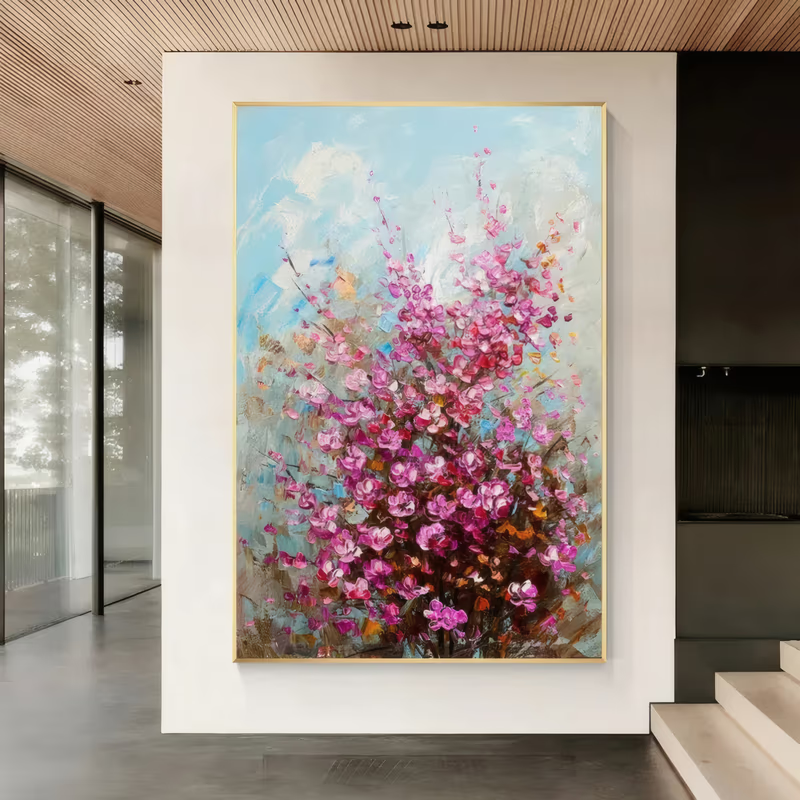
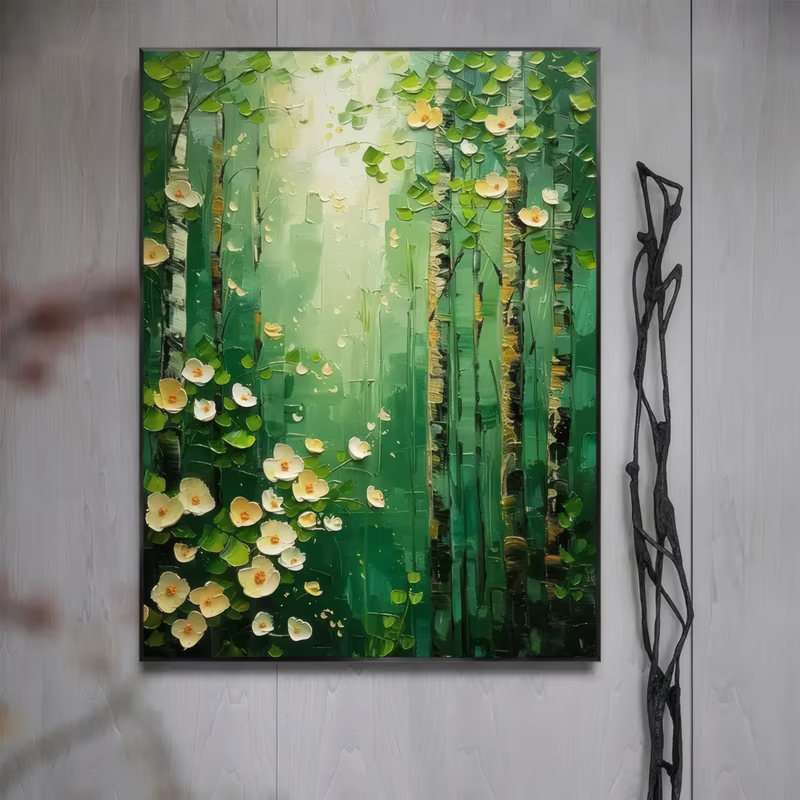
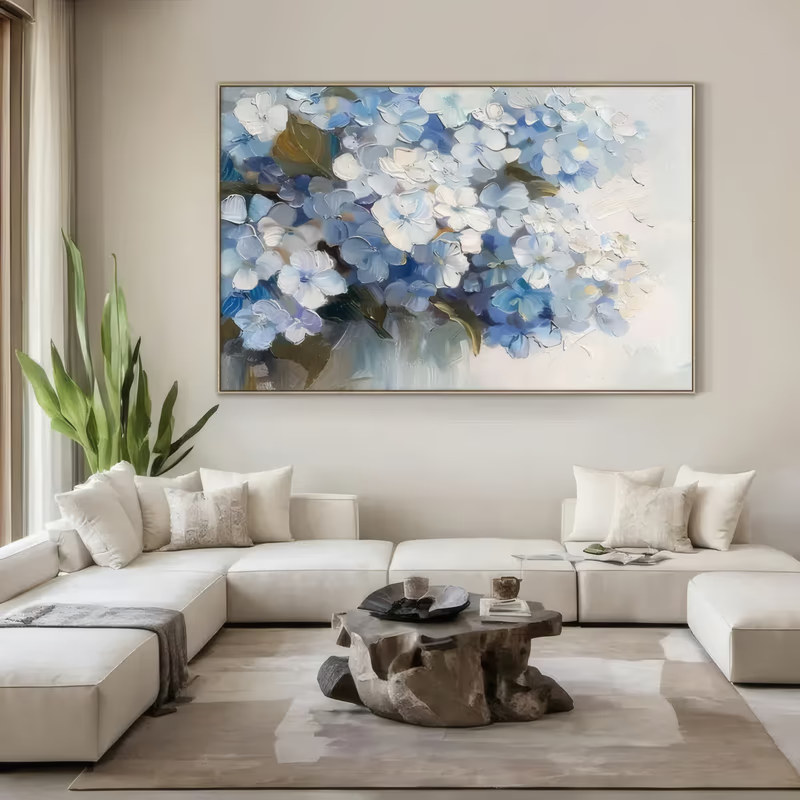
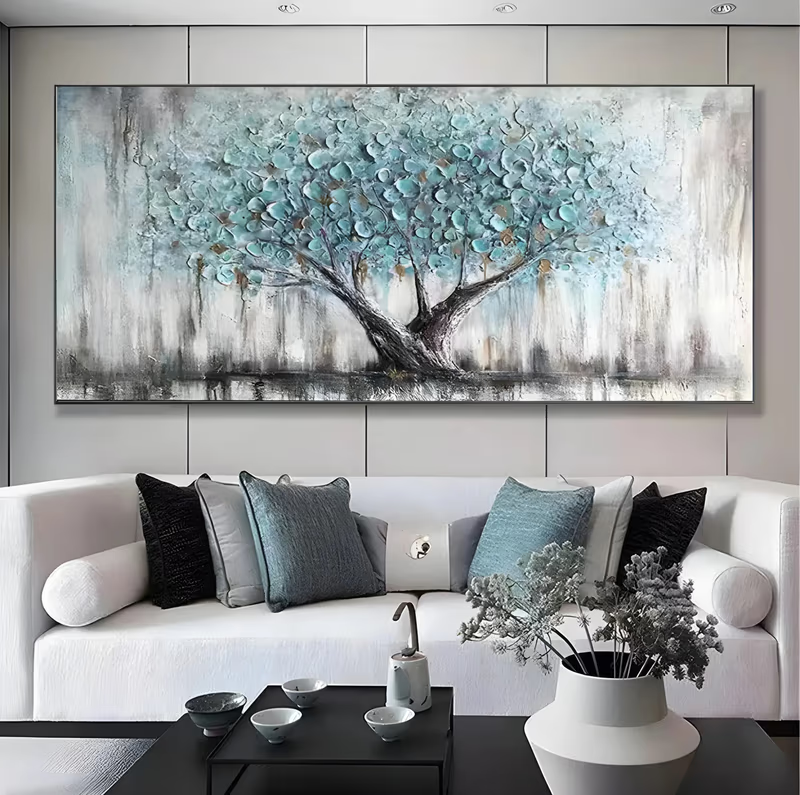
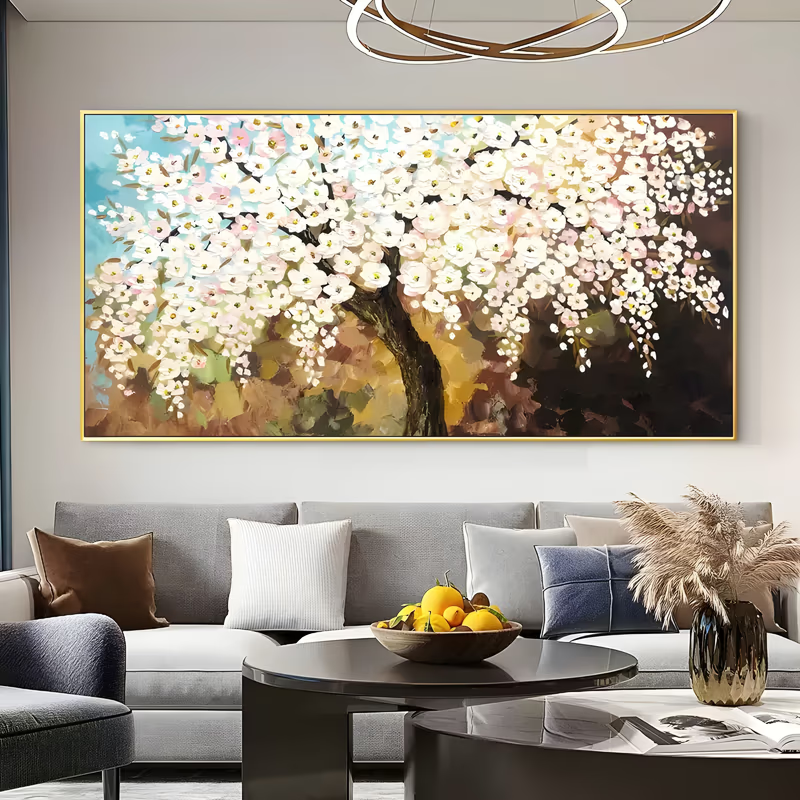
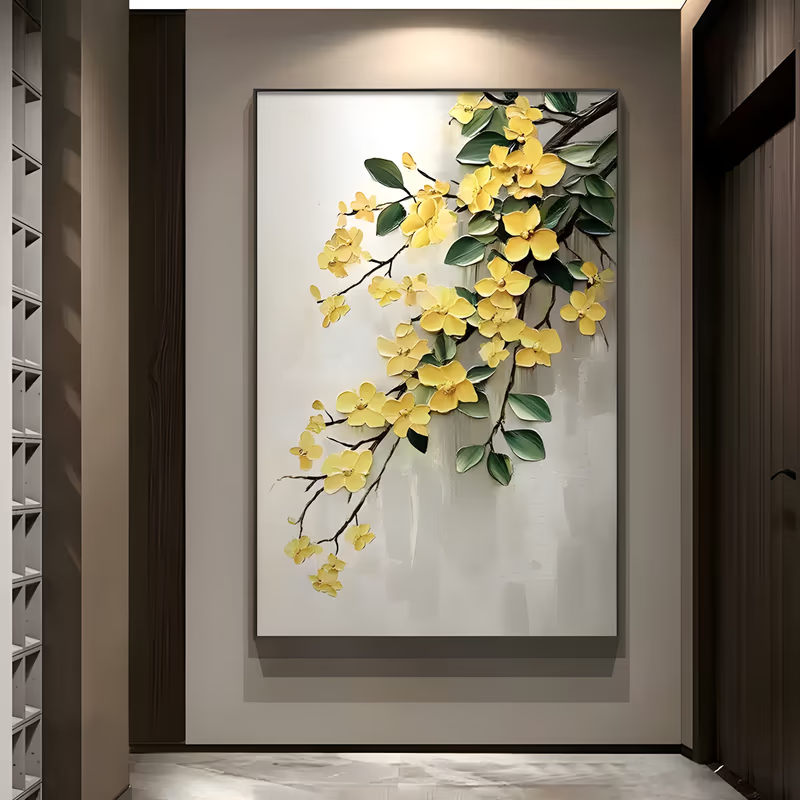
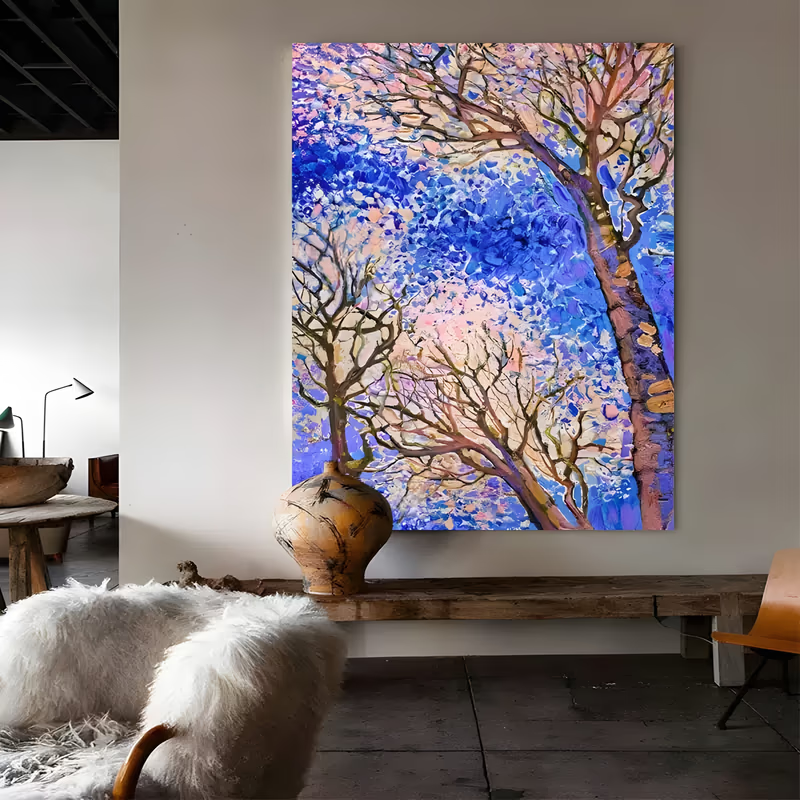
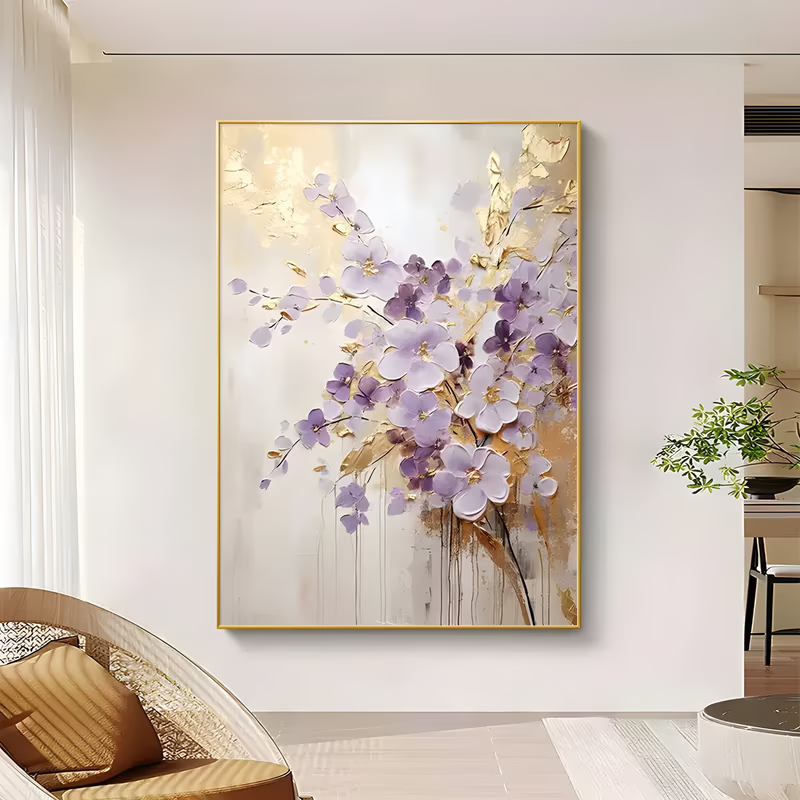
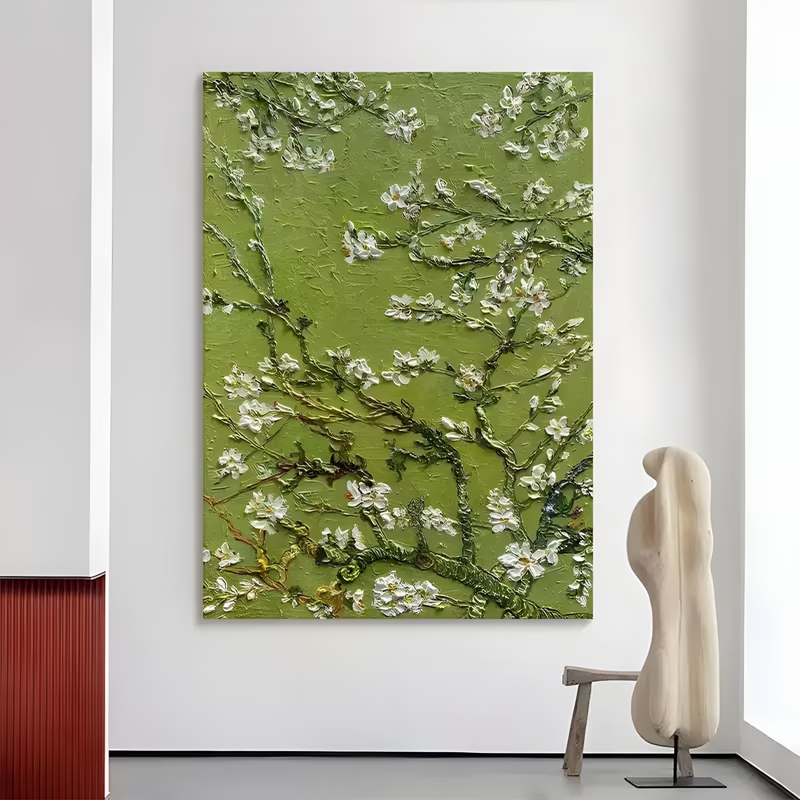
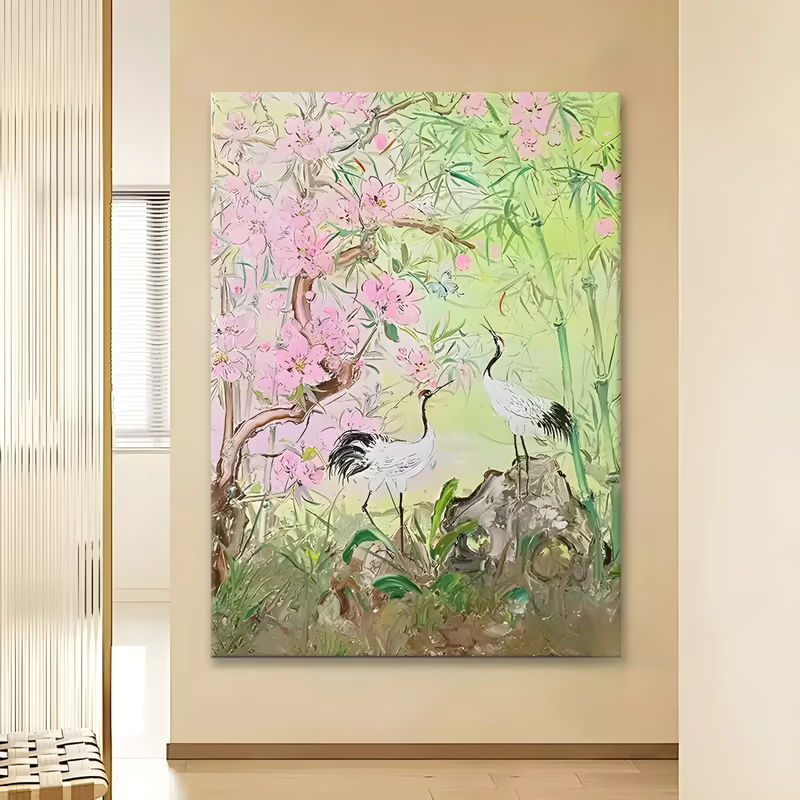
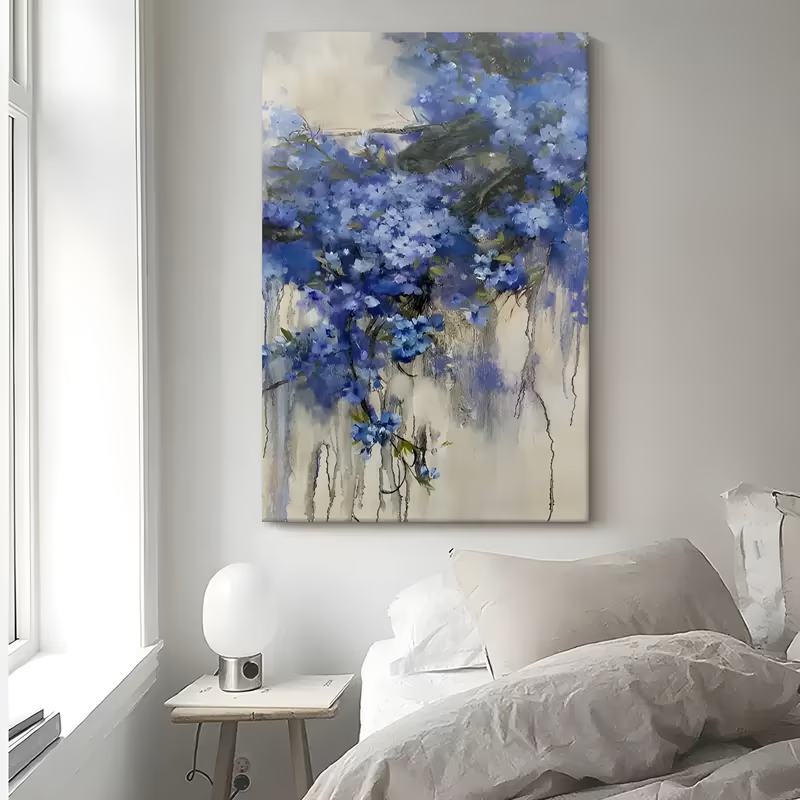
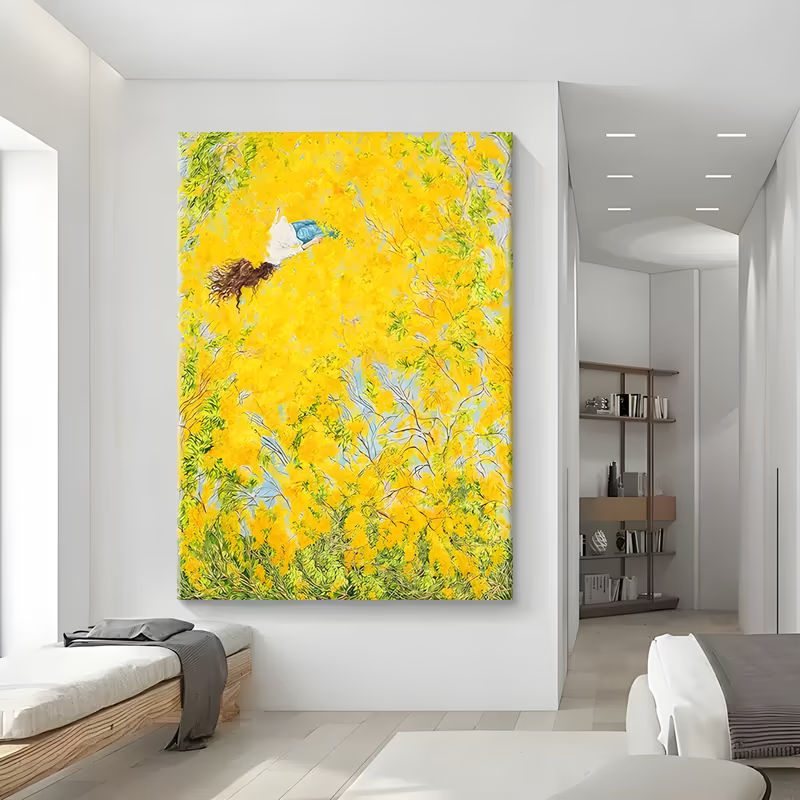
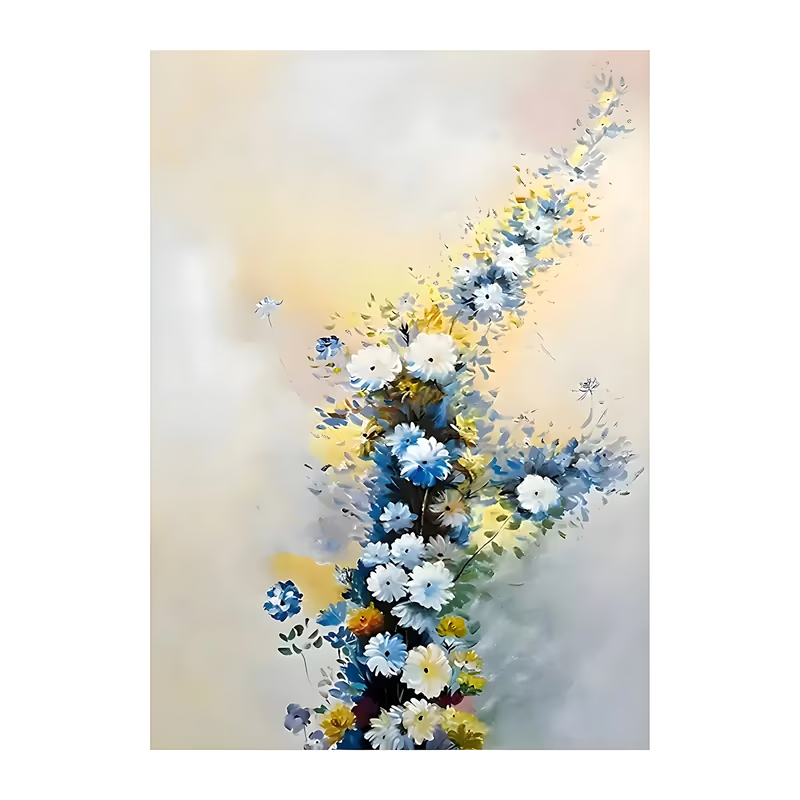
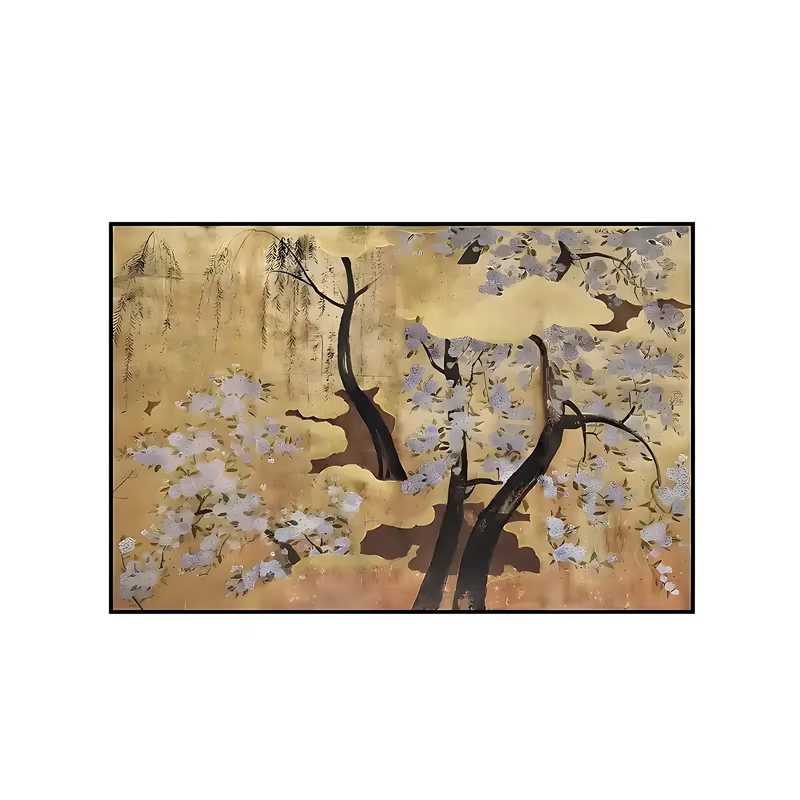
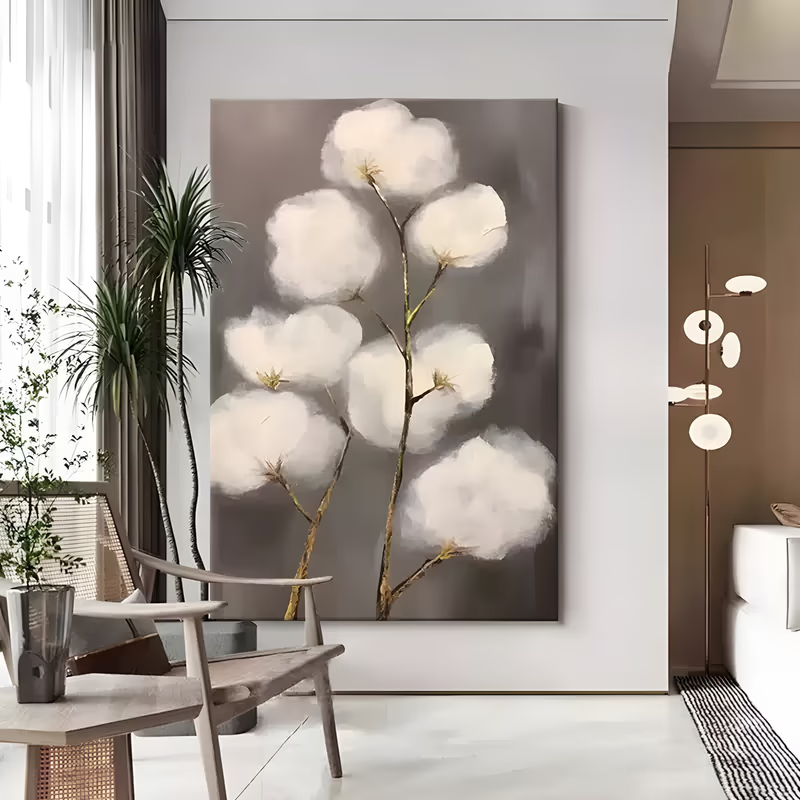
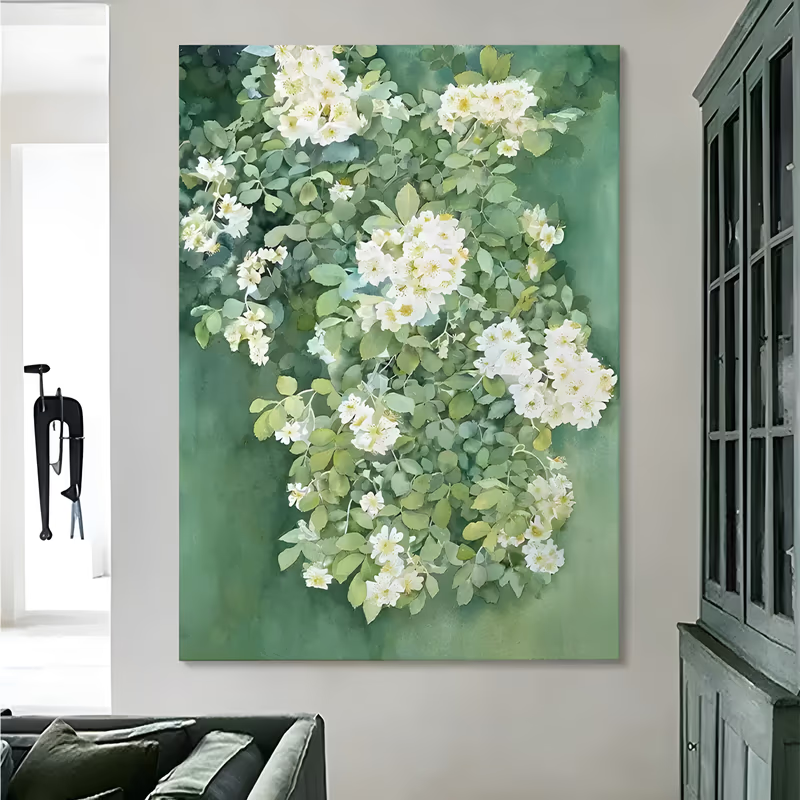
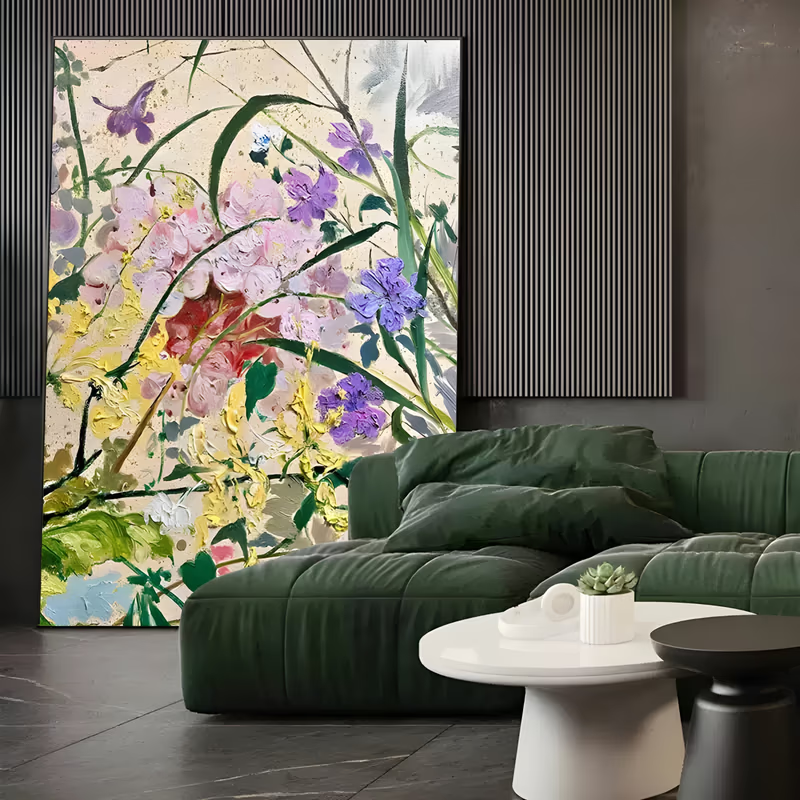
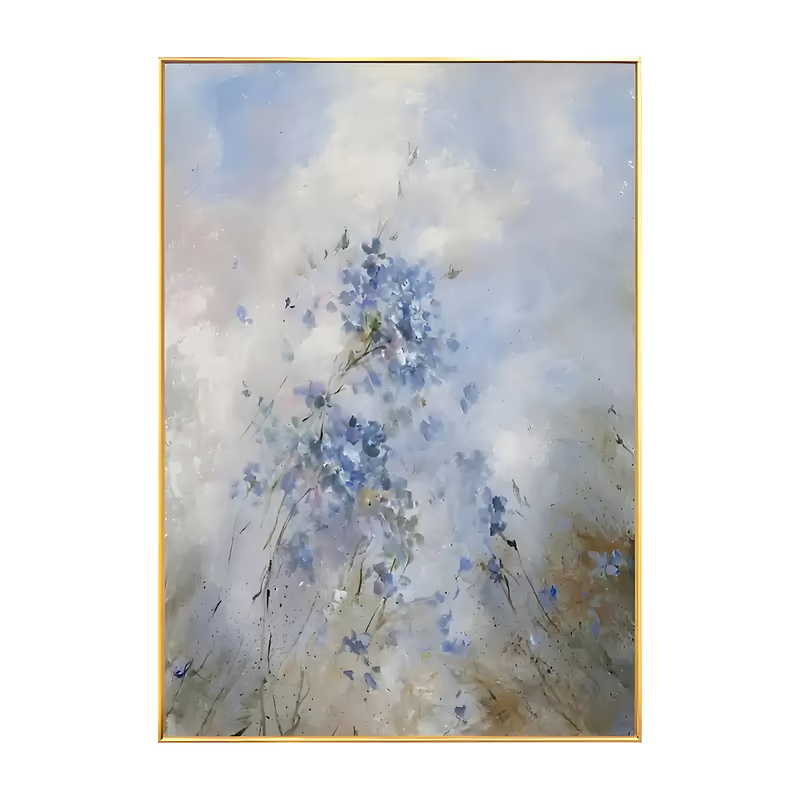
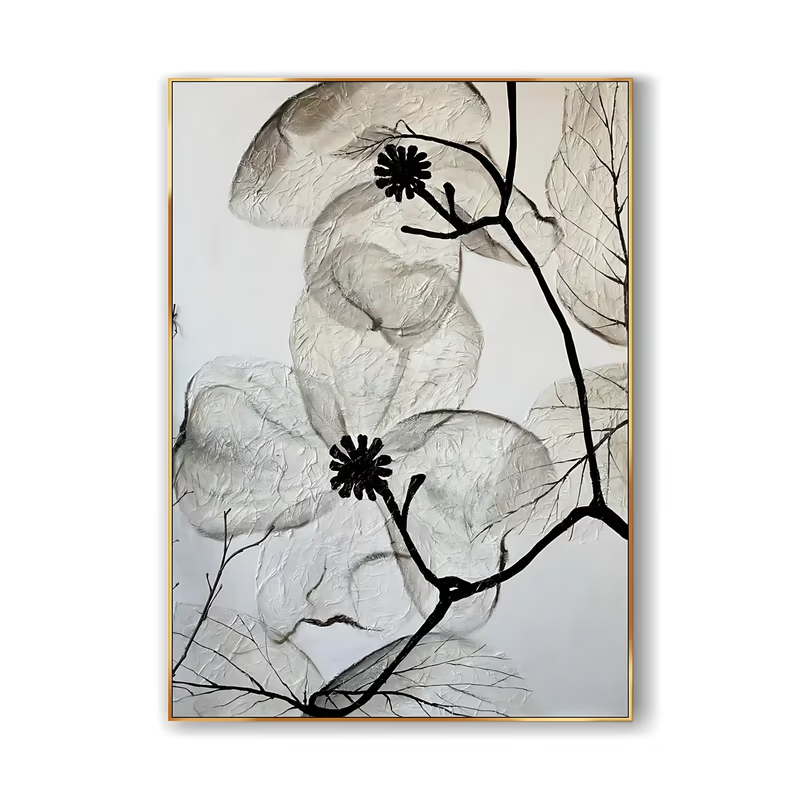
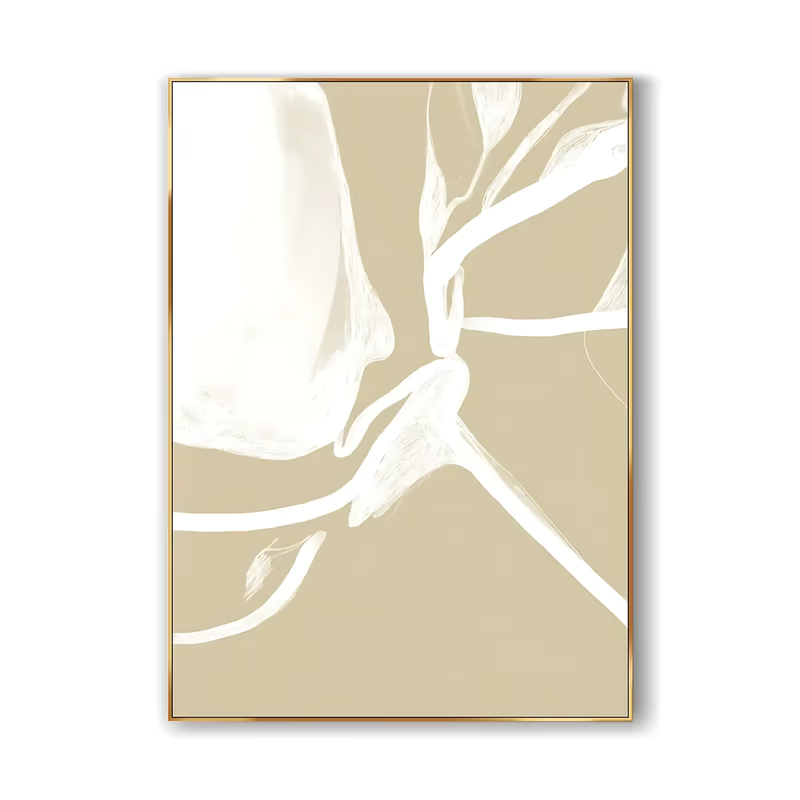
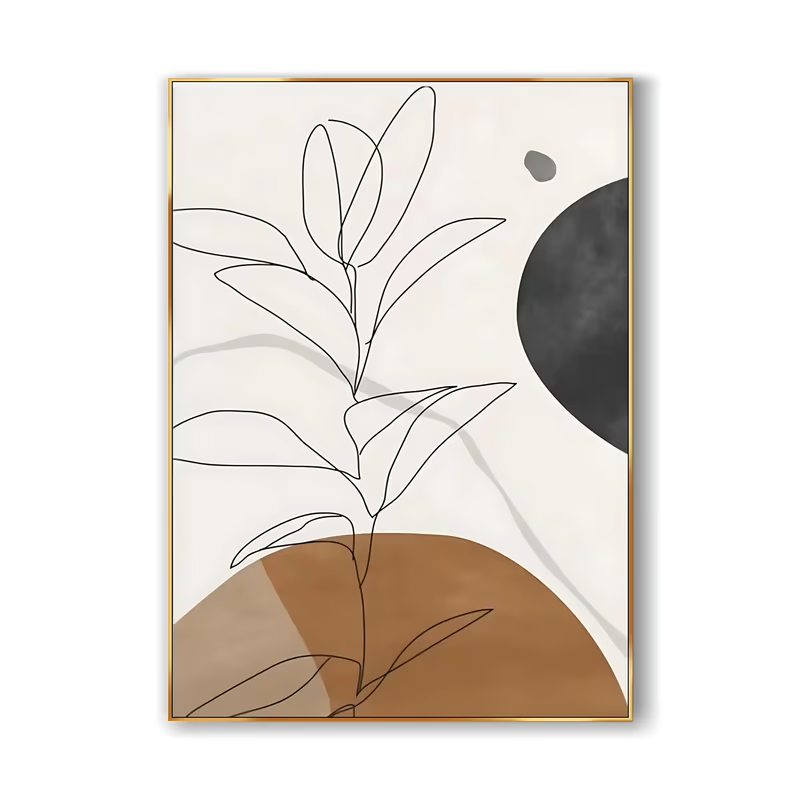
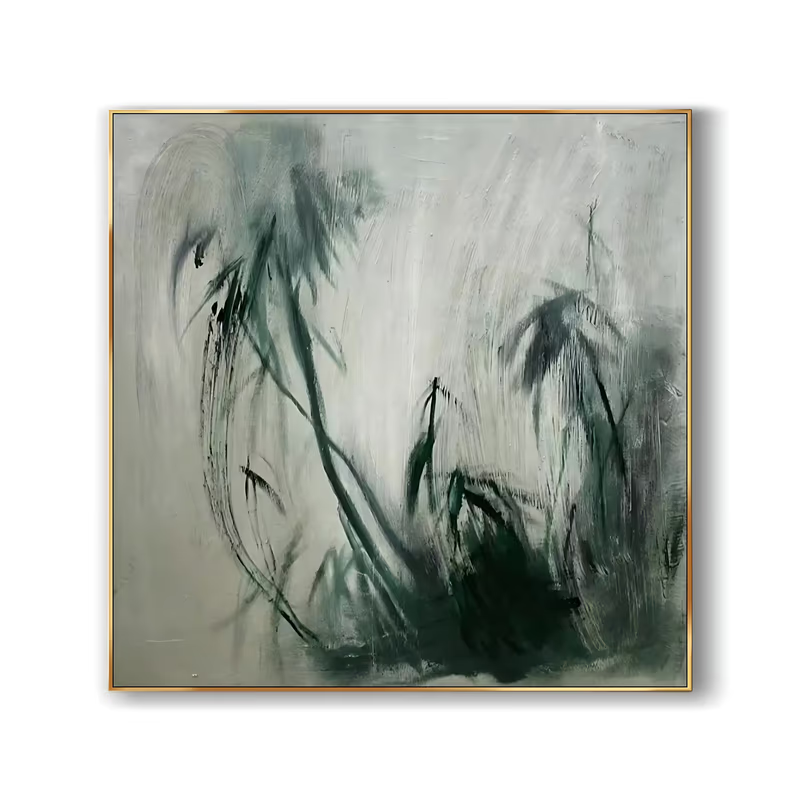
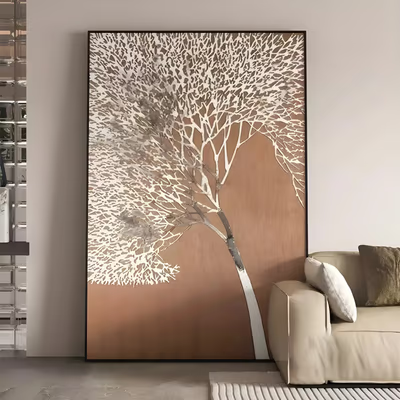
| Blossom or leaf branch across the canvas | Airy, calm, slightly Asian in feeling; lots of open ground | Bedrooms, spas, corridors, Japandi interiors |
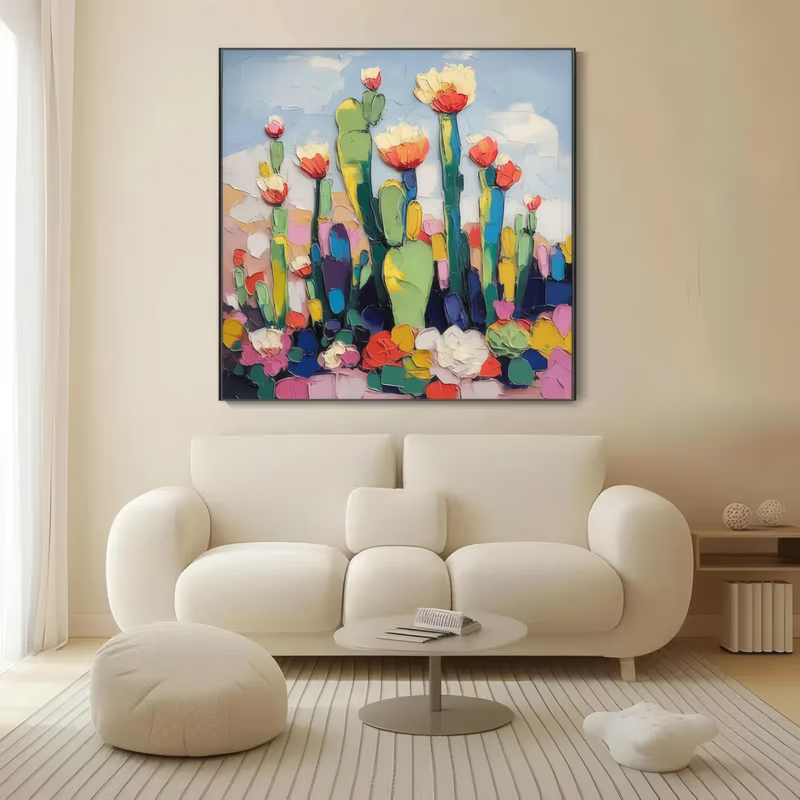
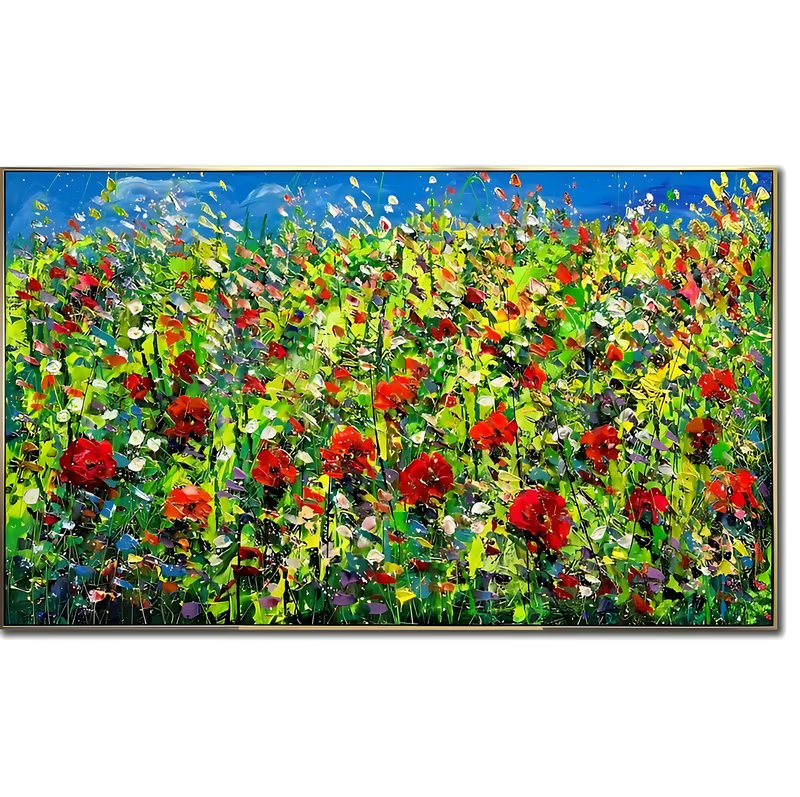
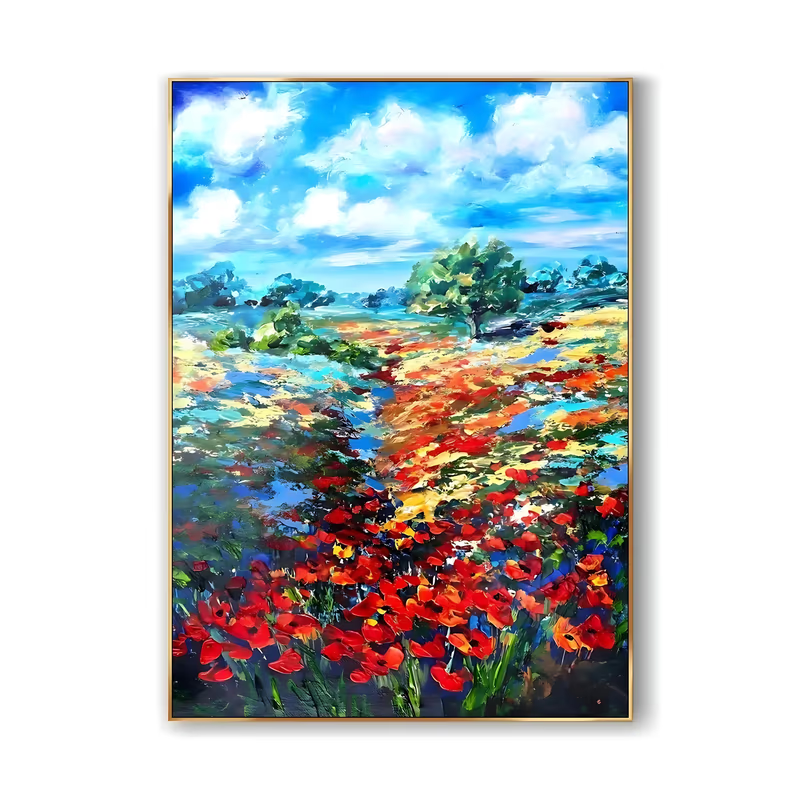
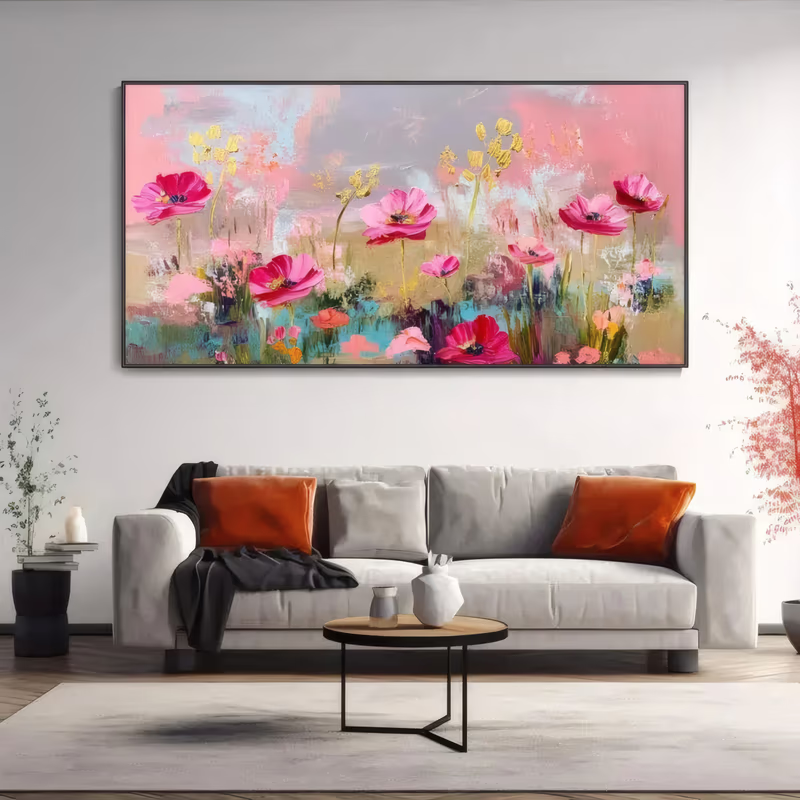
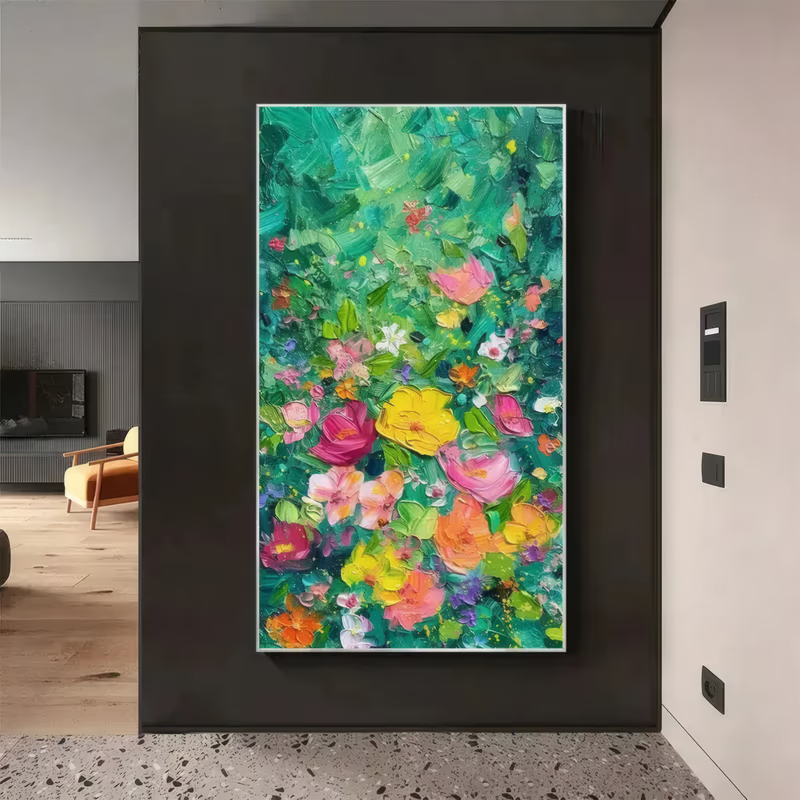
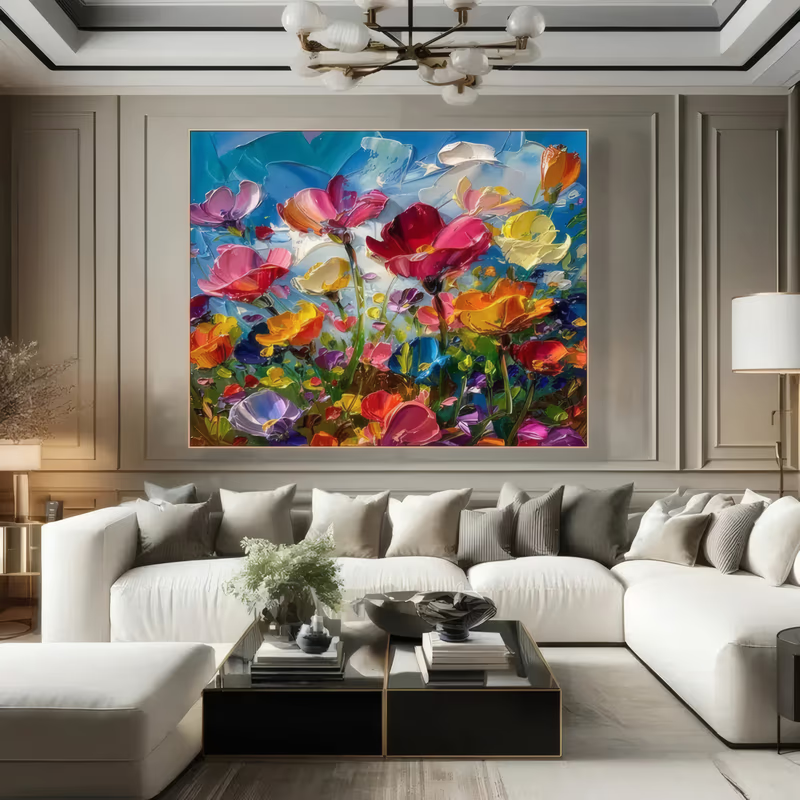
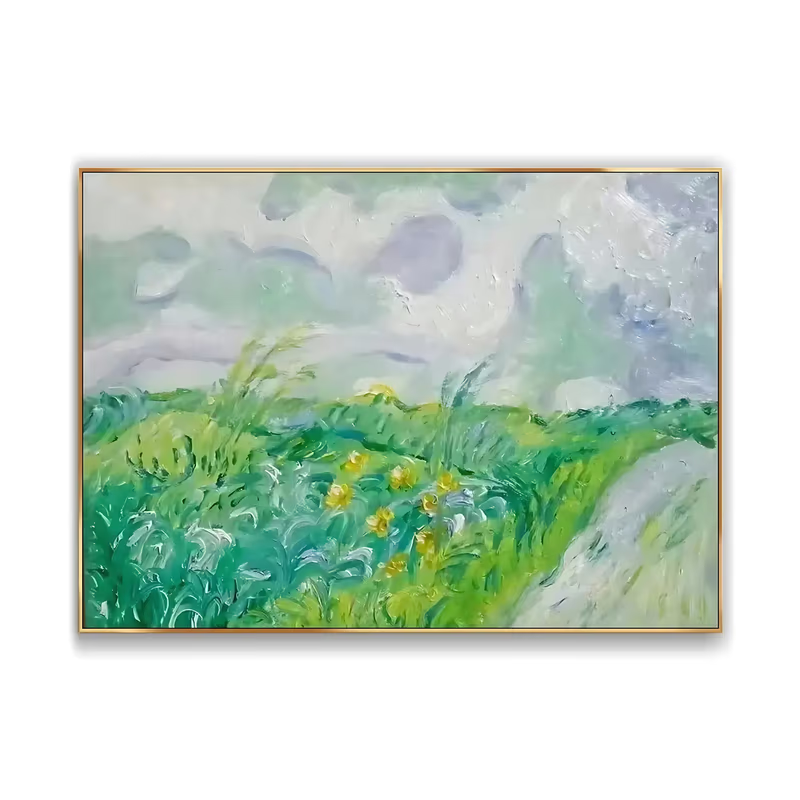
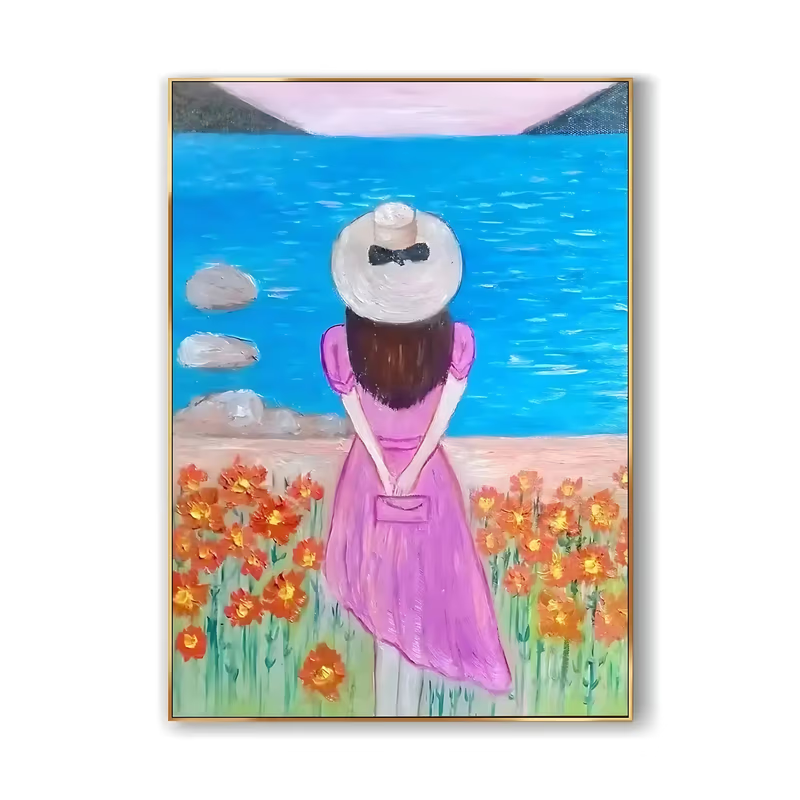
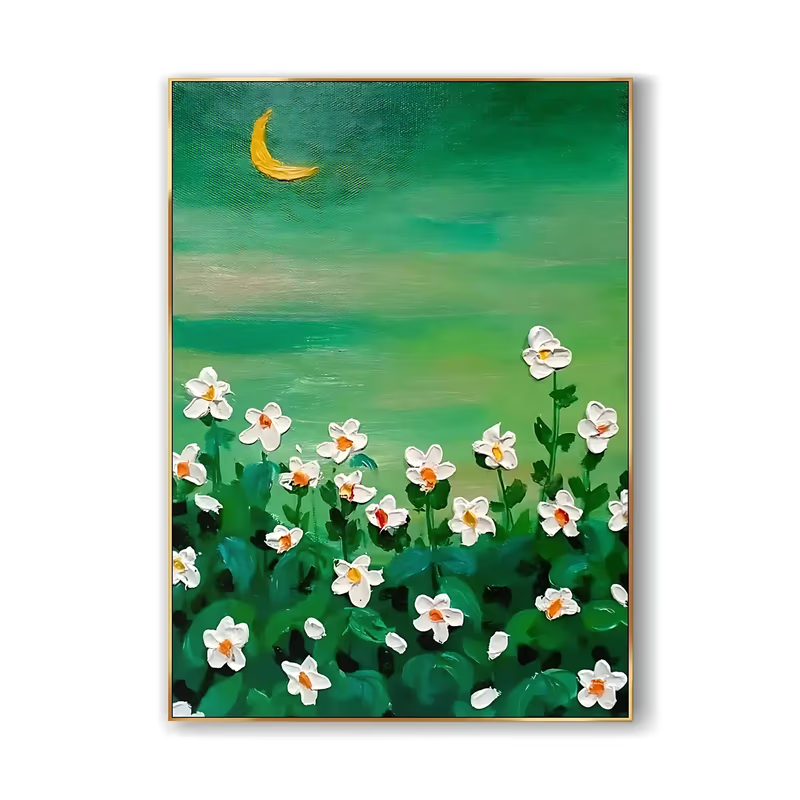
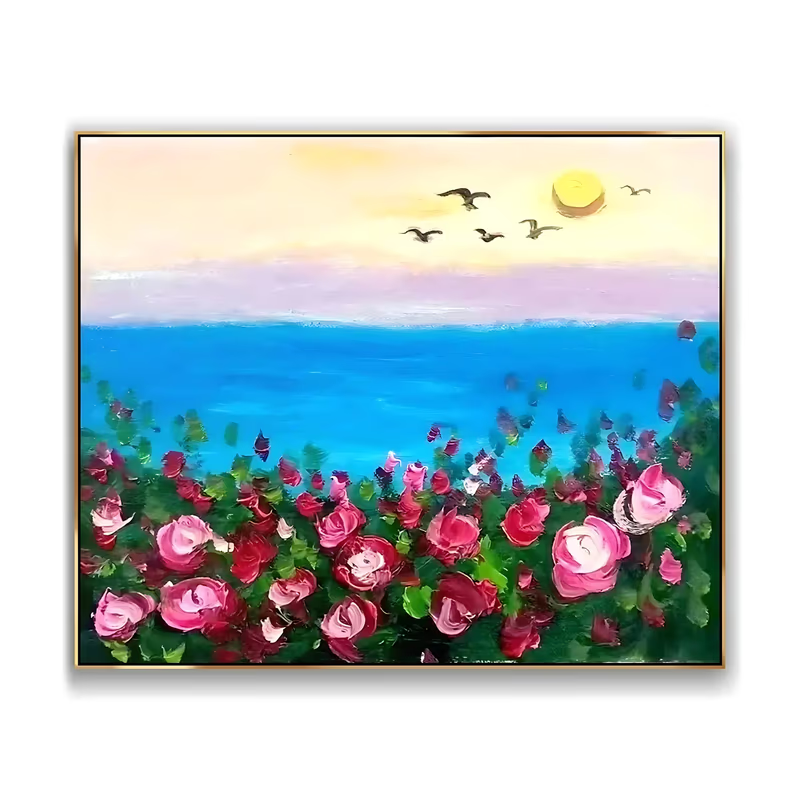
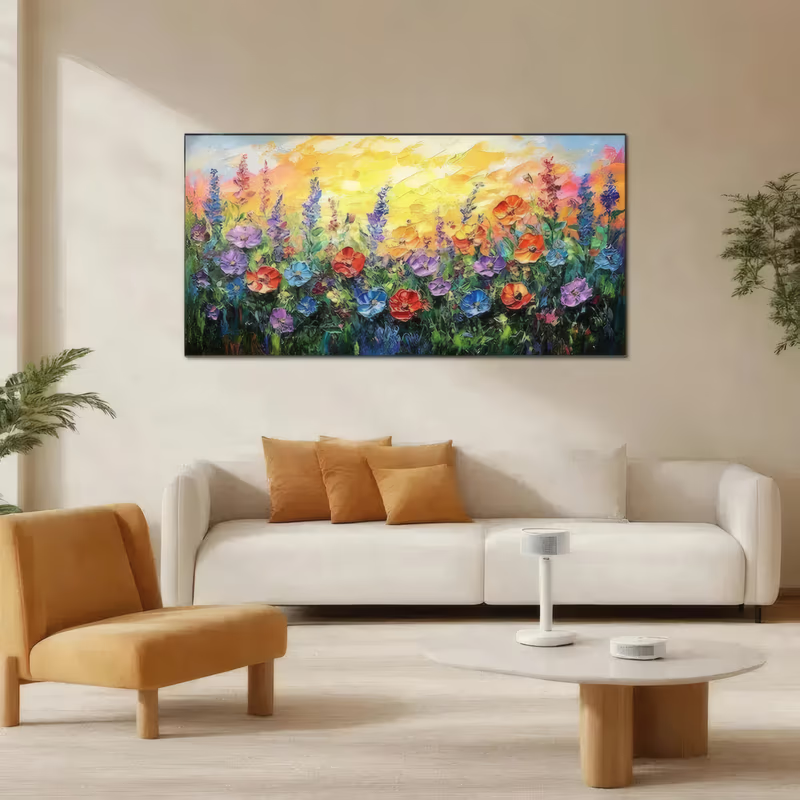
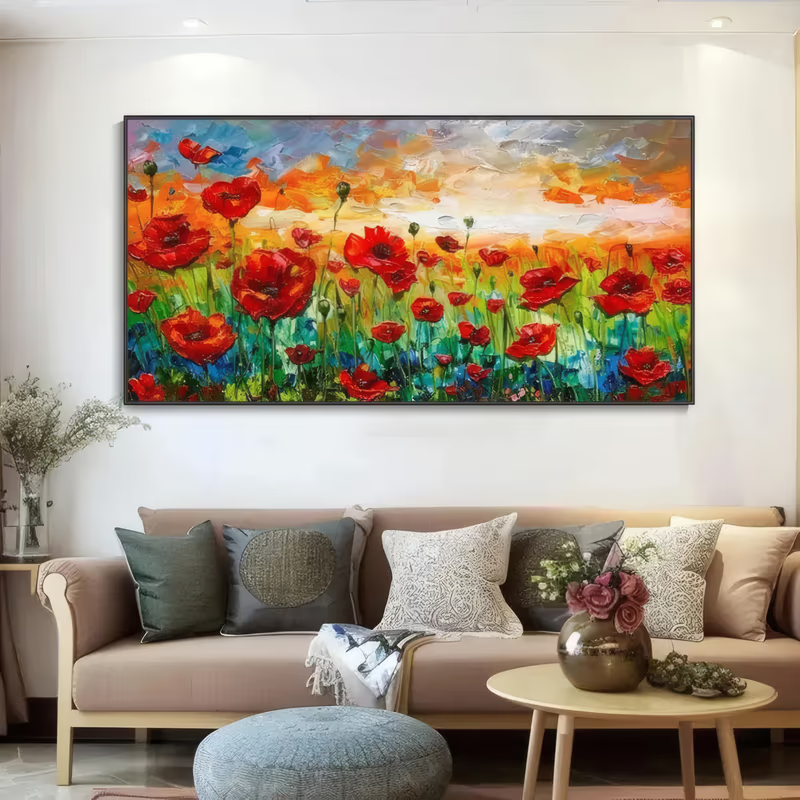
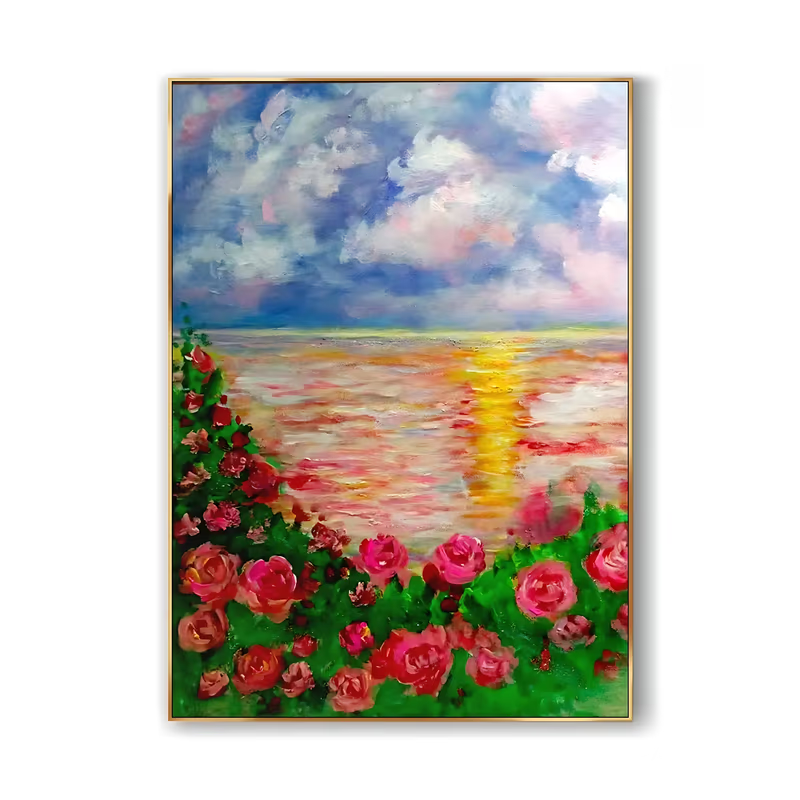
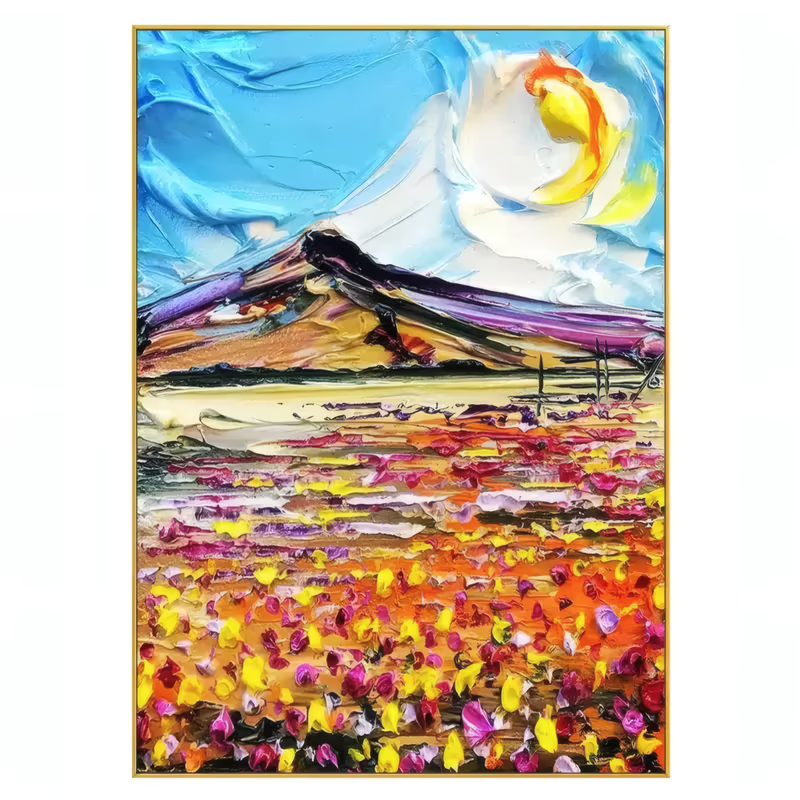
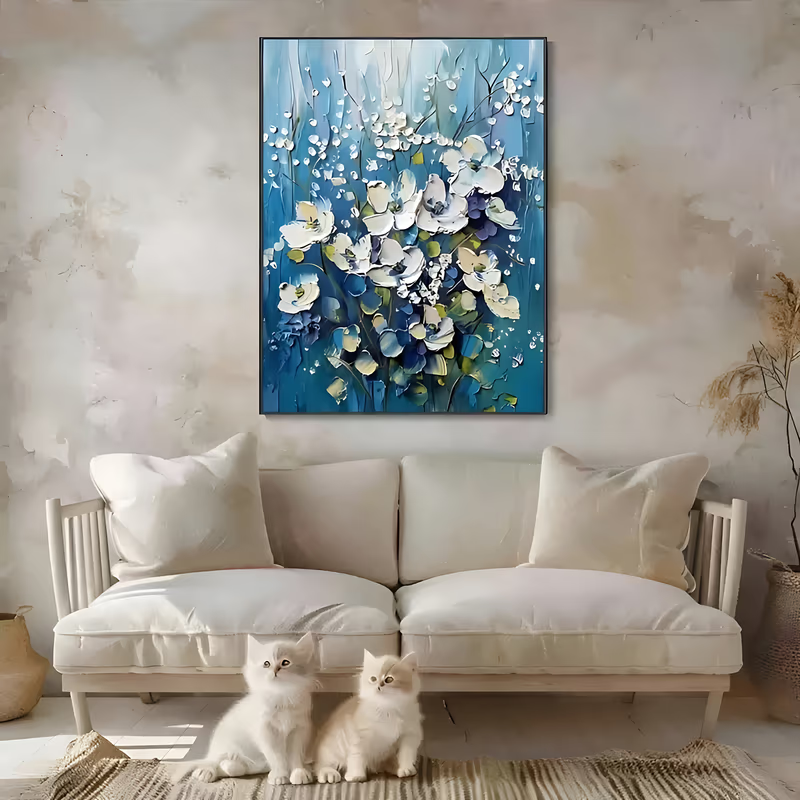
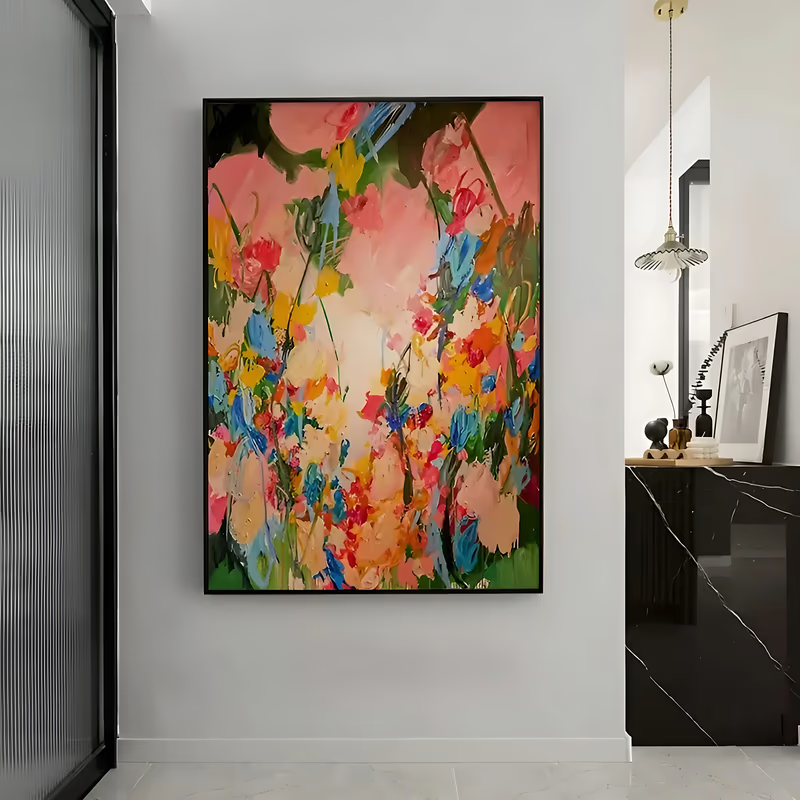
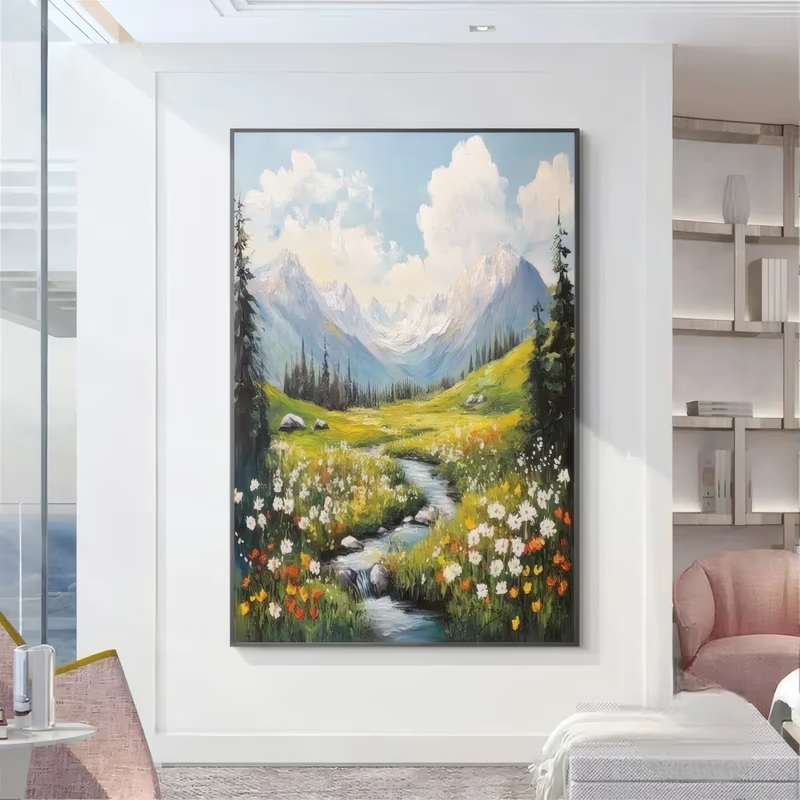
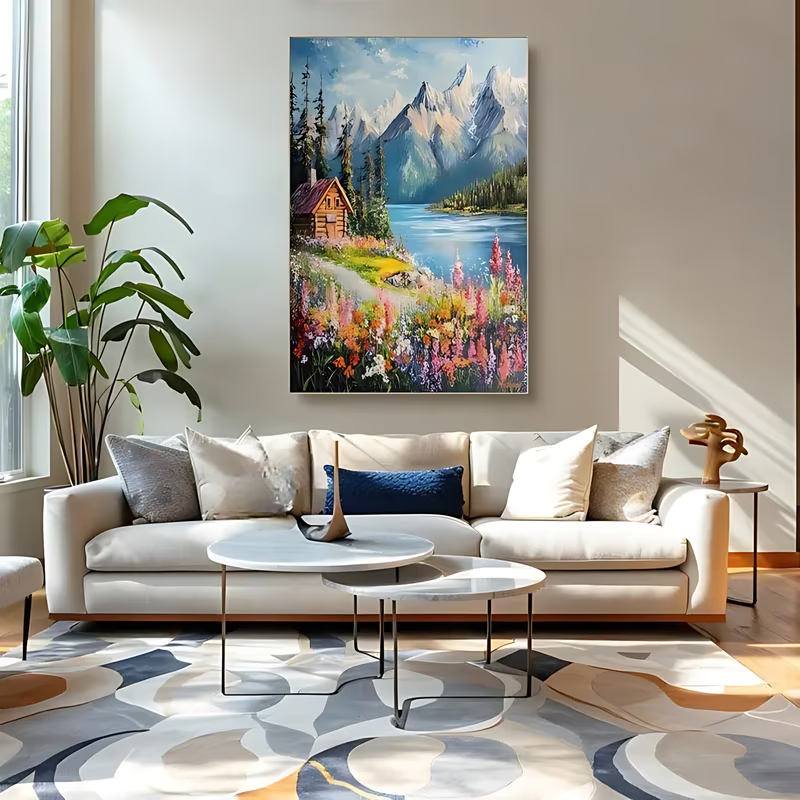
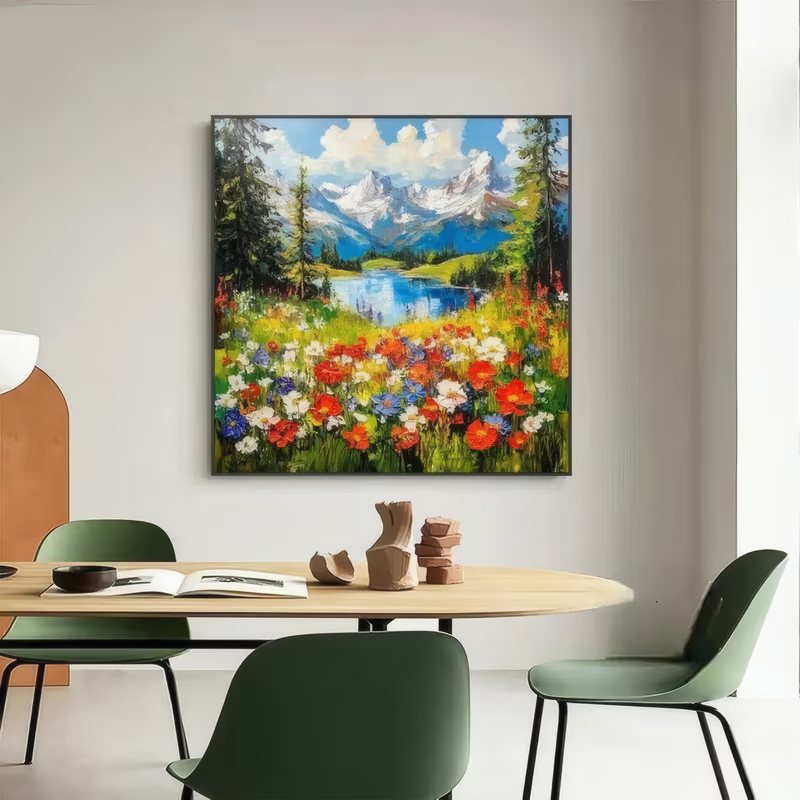
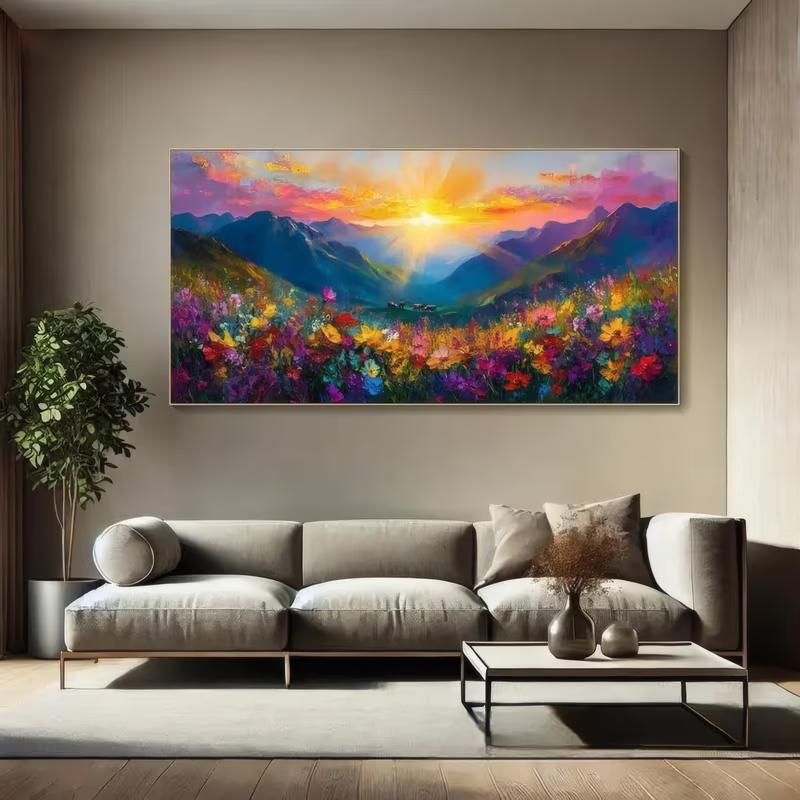
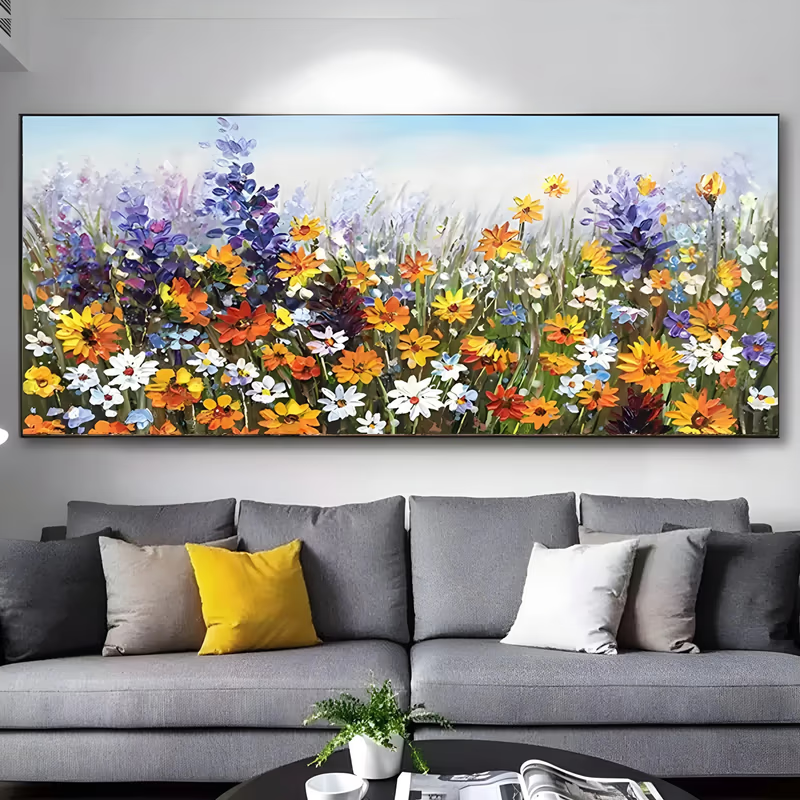
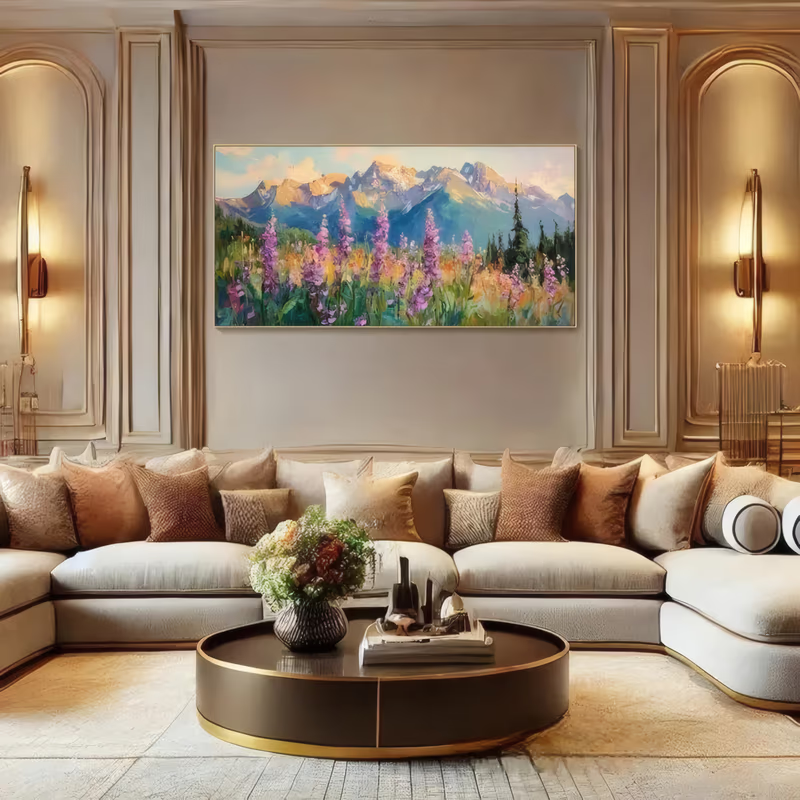
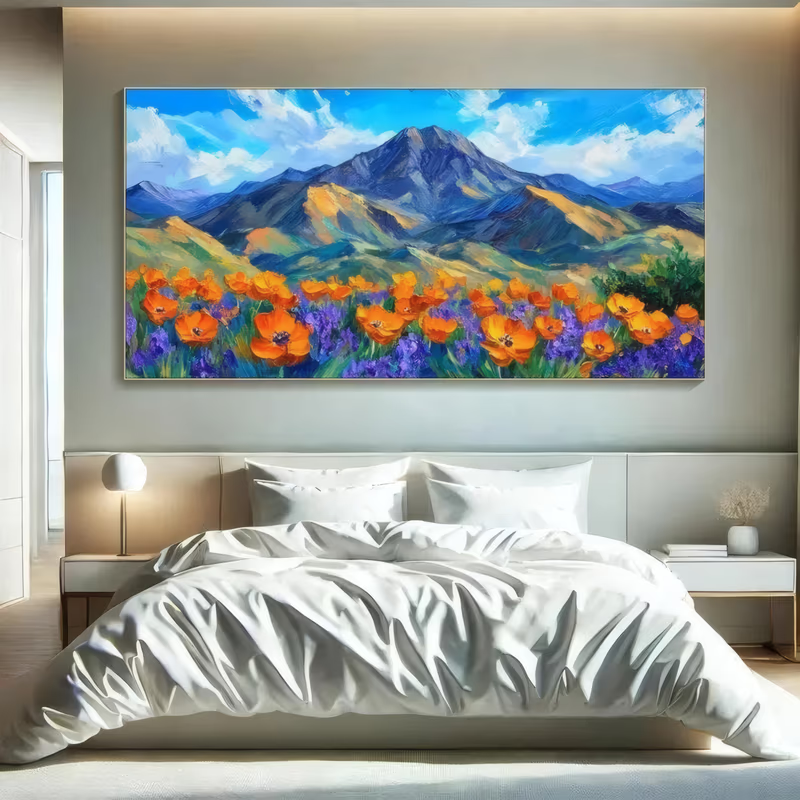
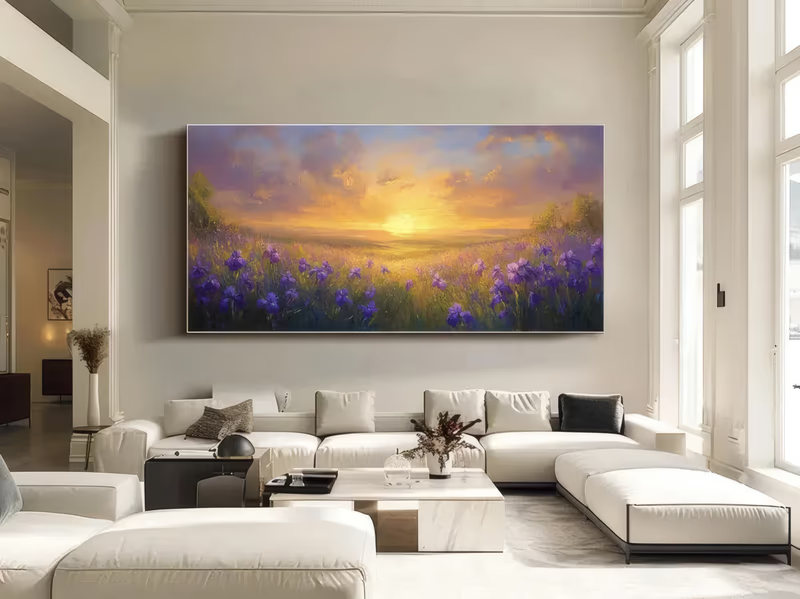
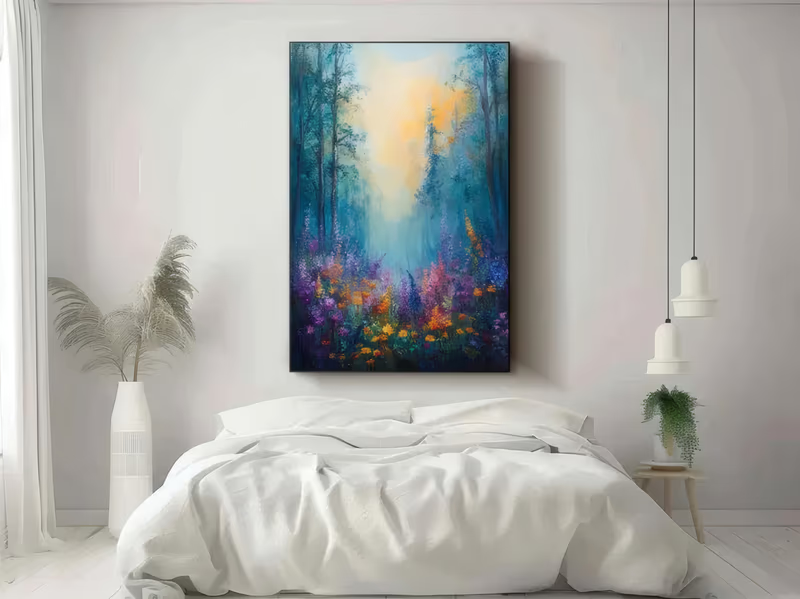
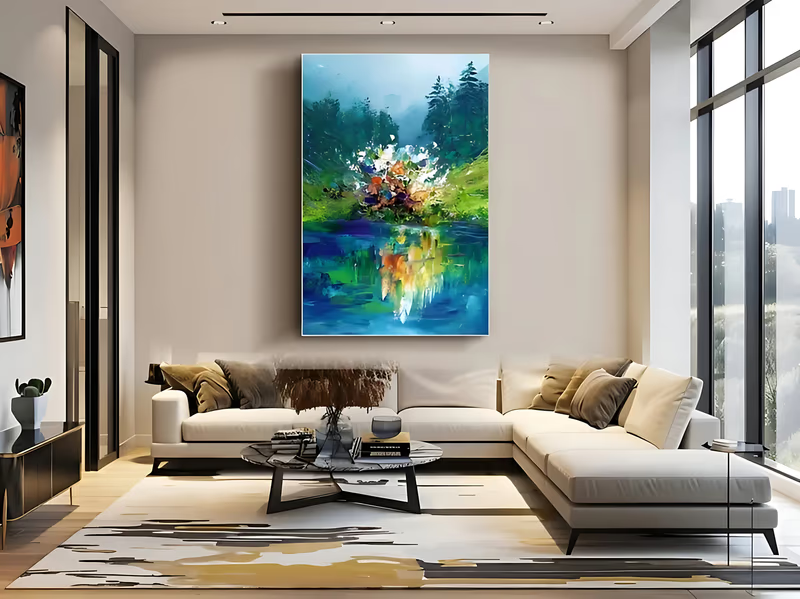
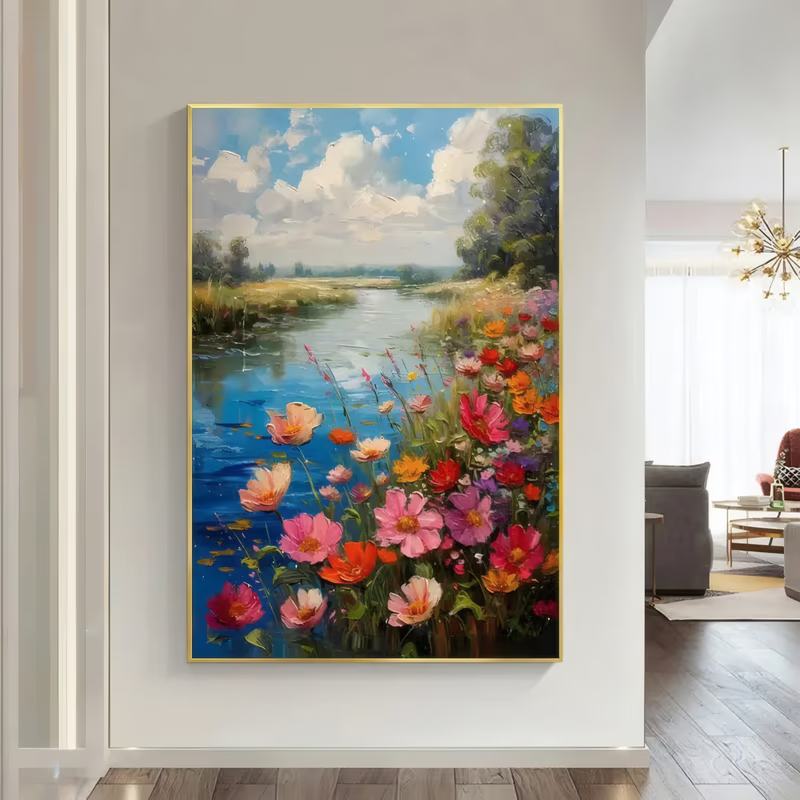
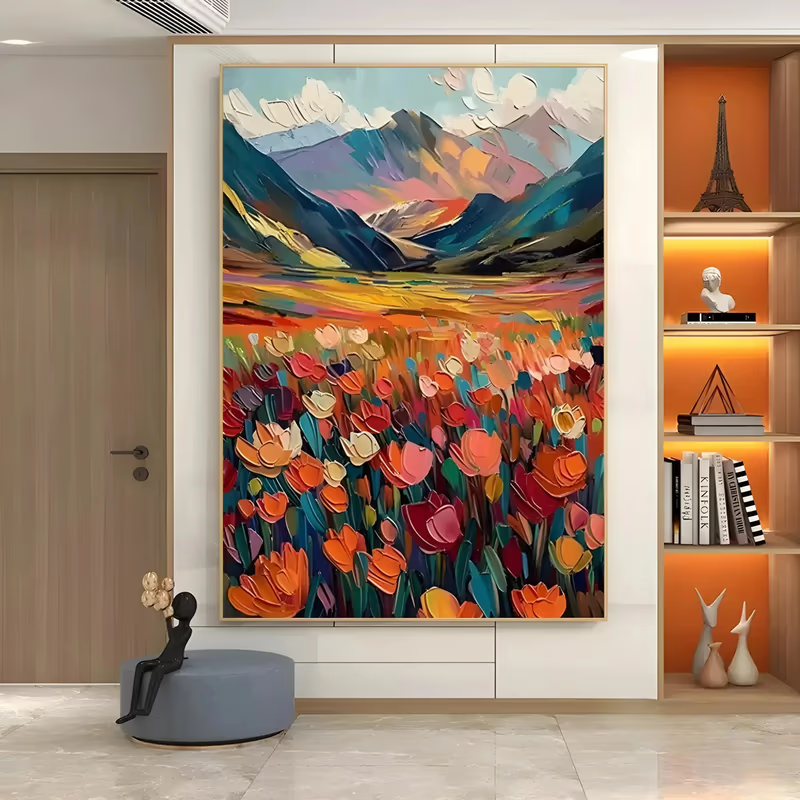
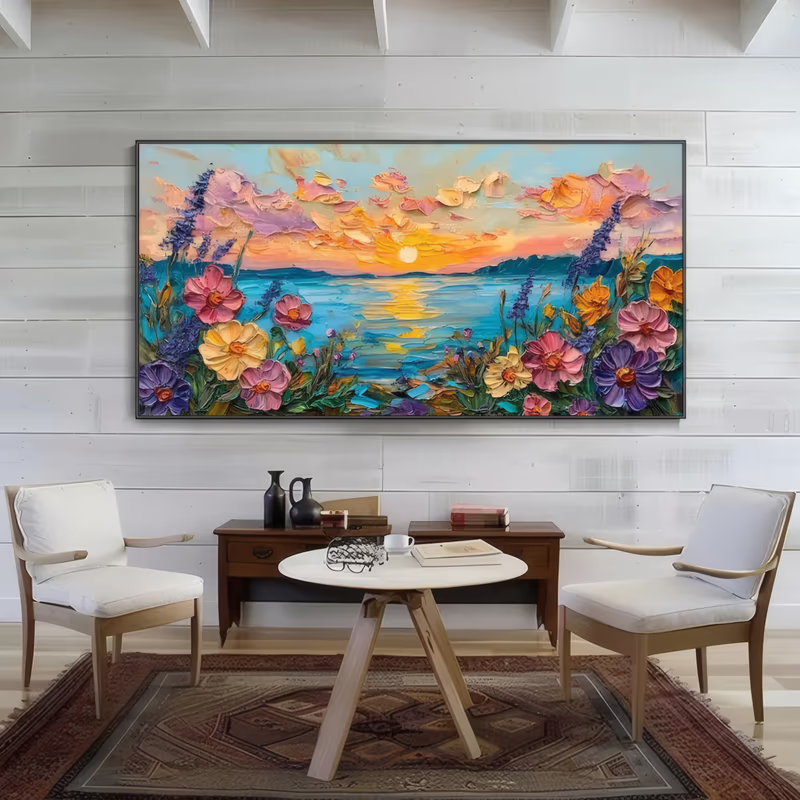
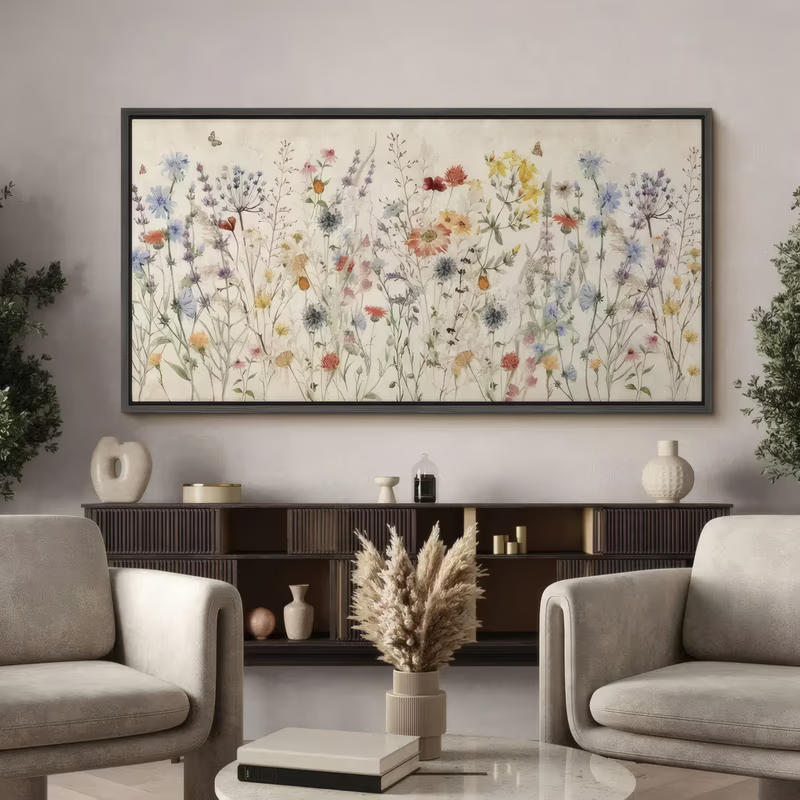
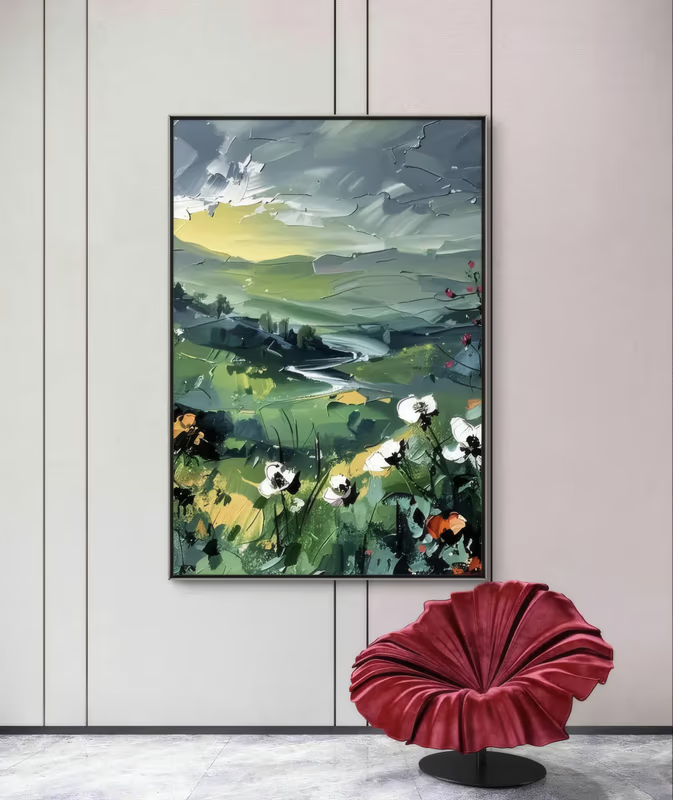
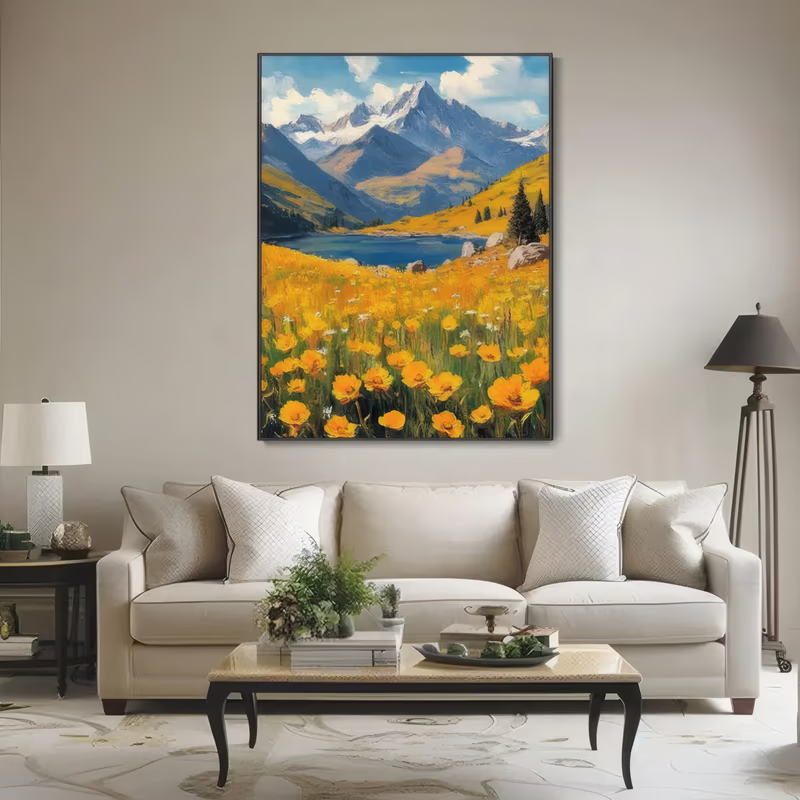
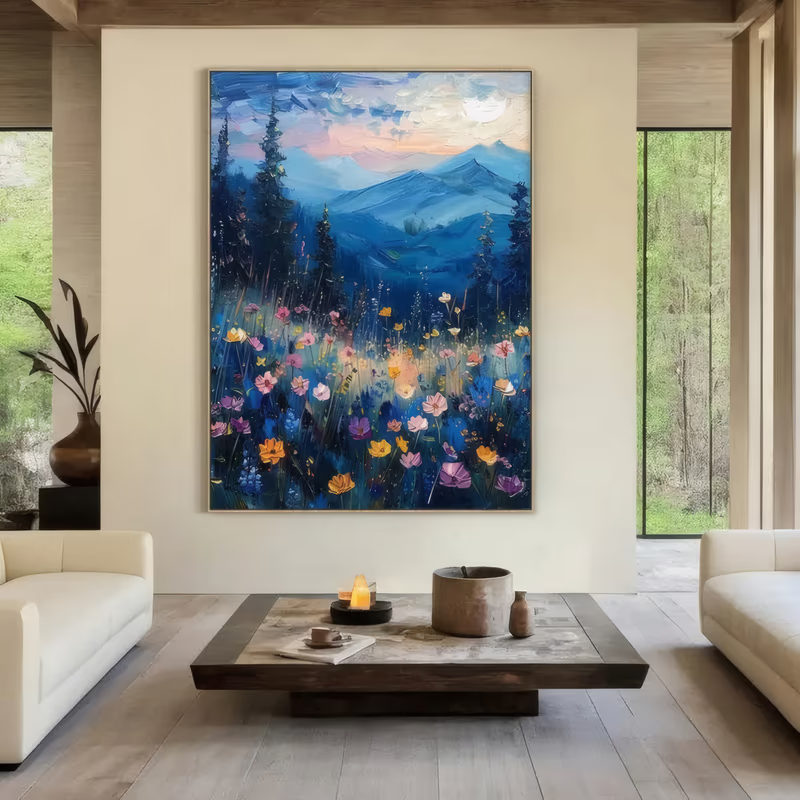
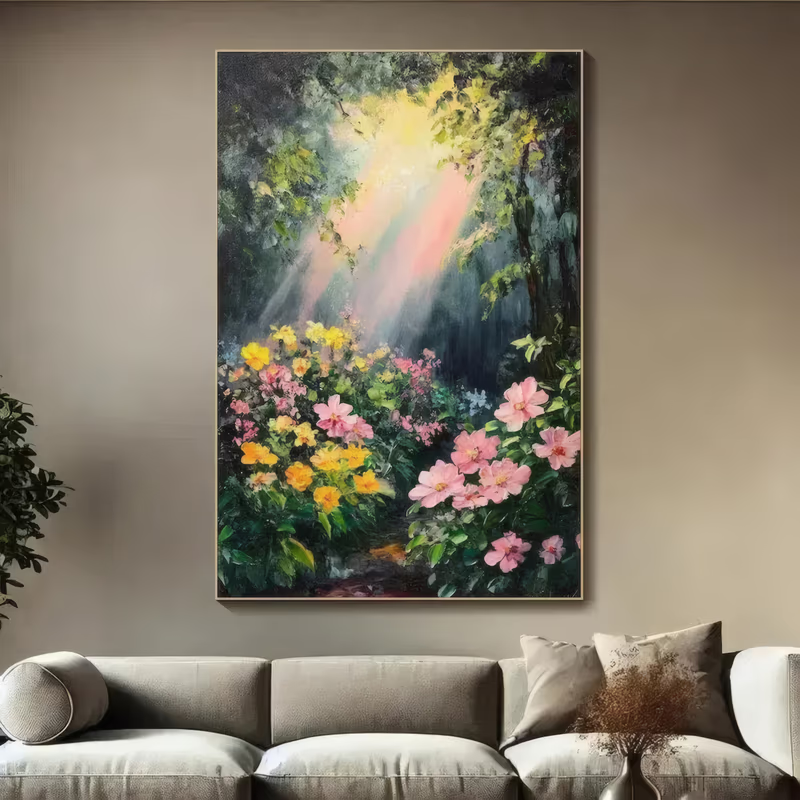
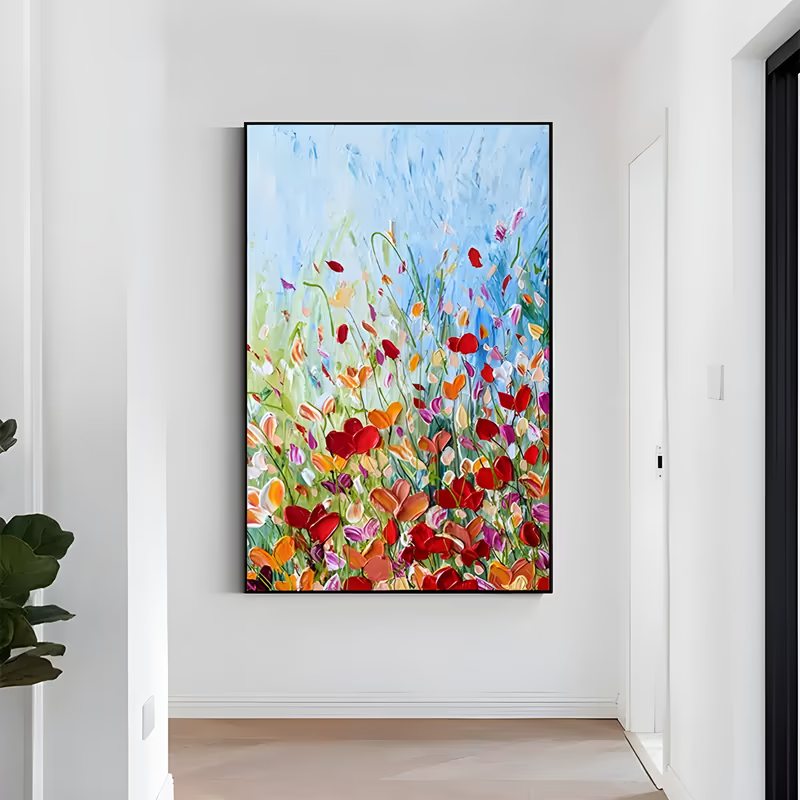
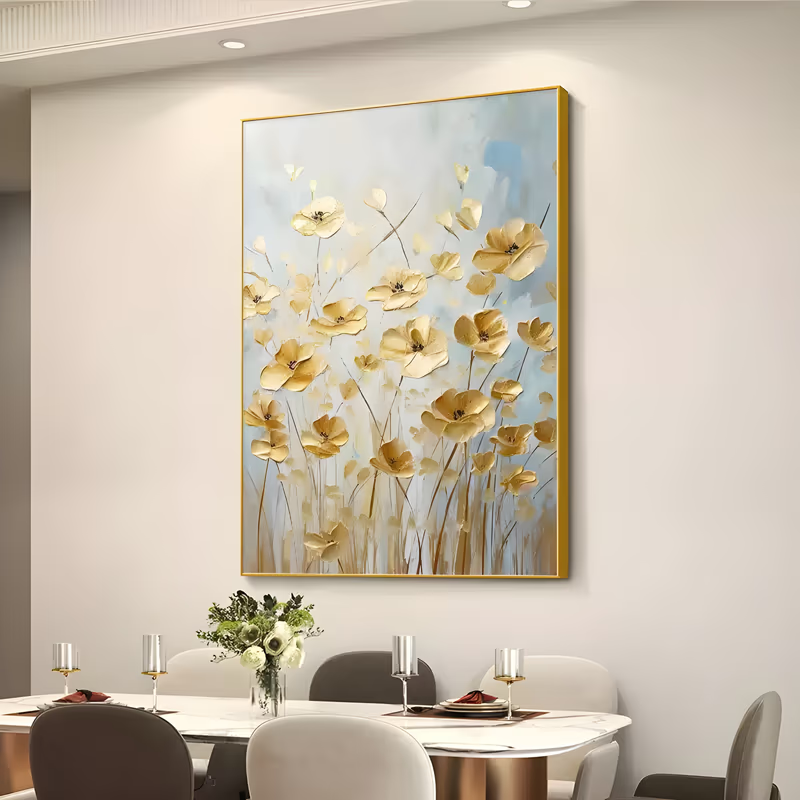
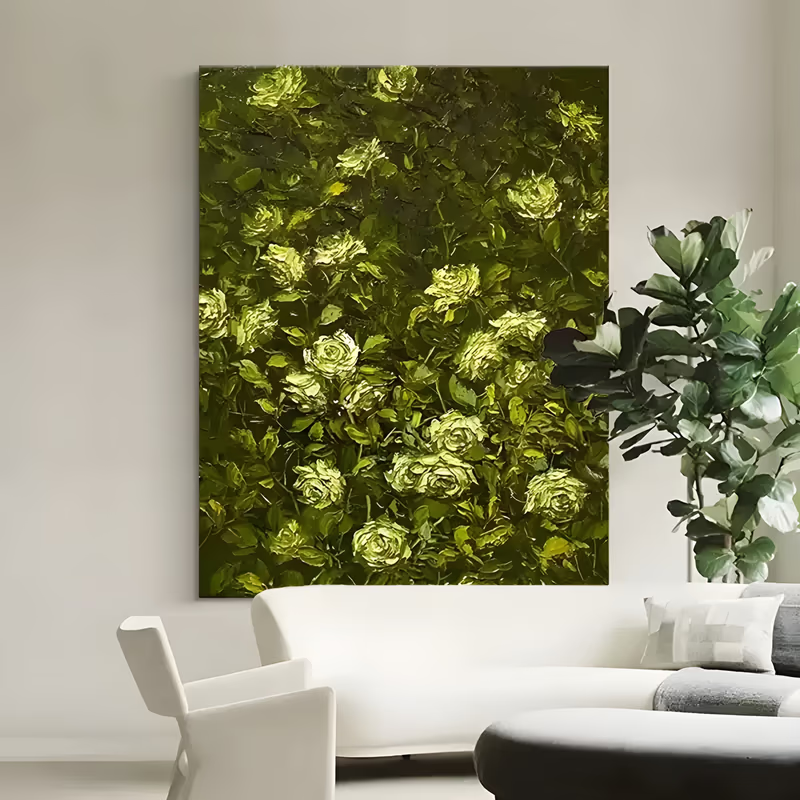
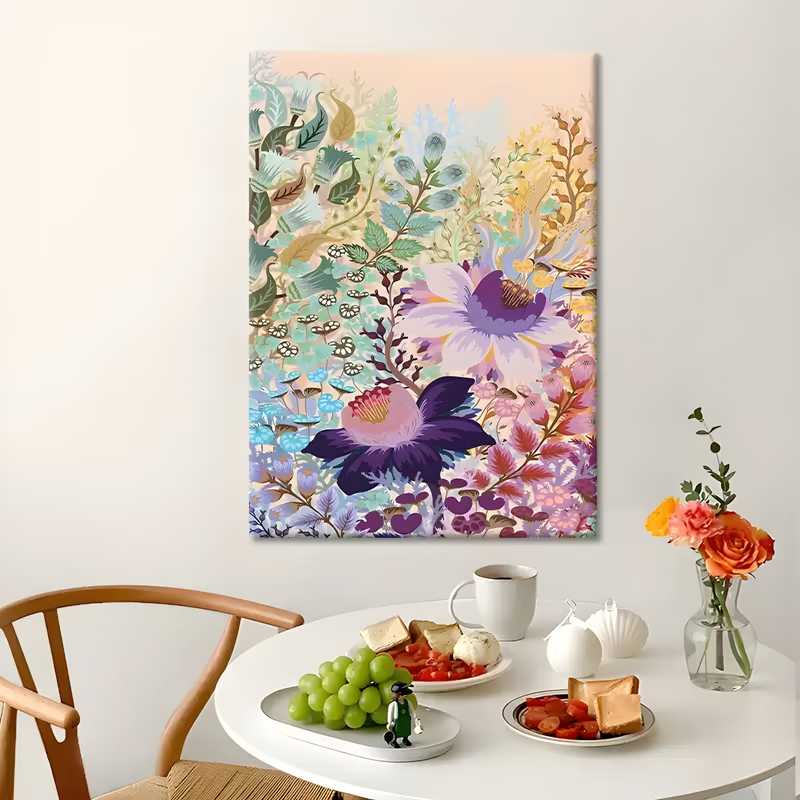
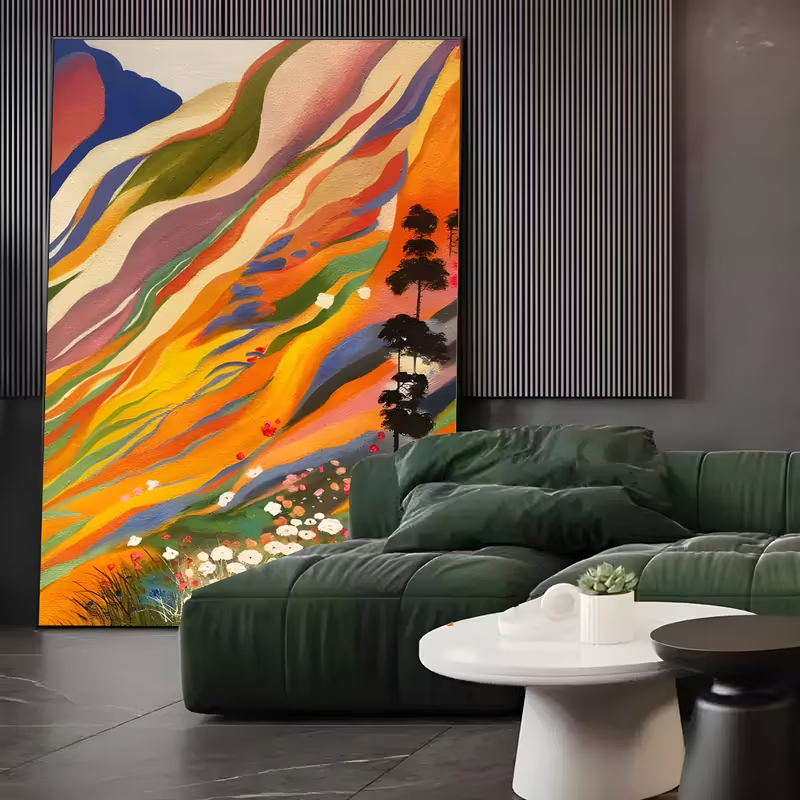
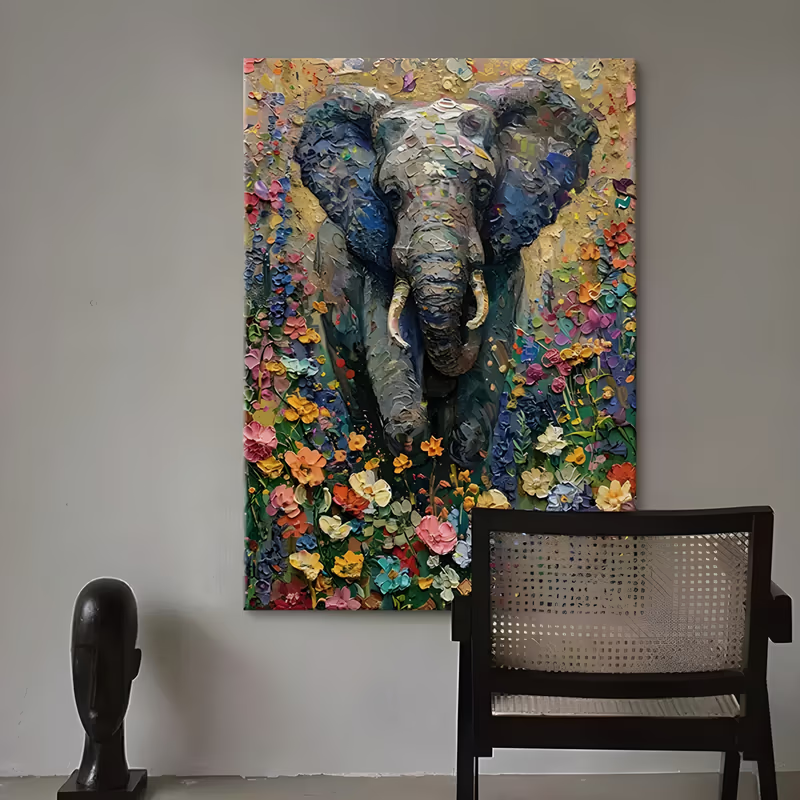
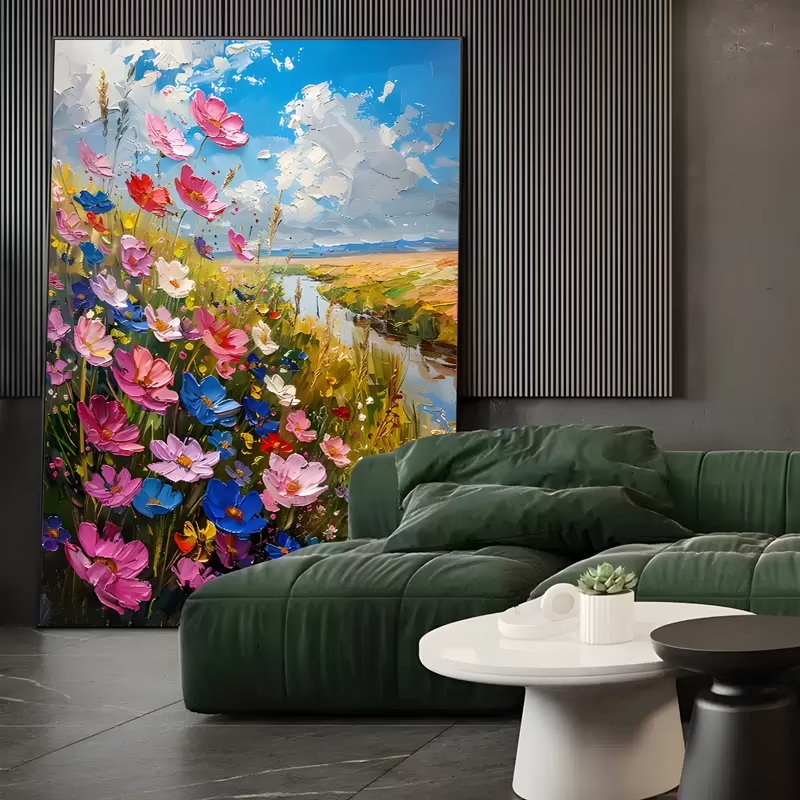
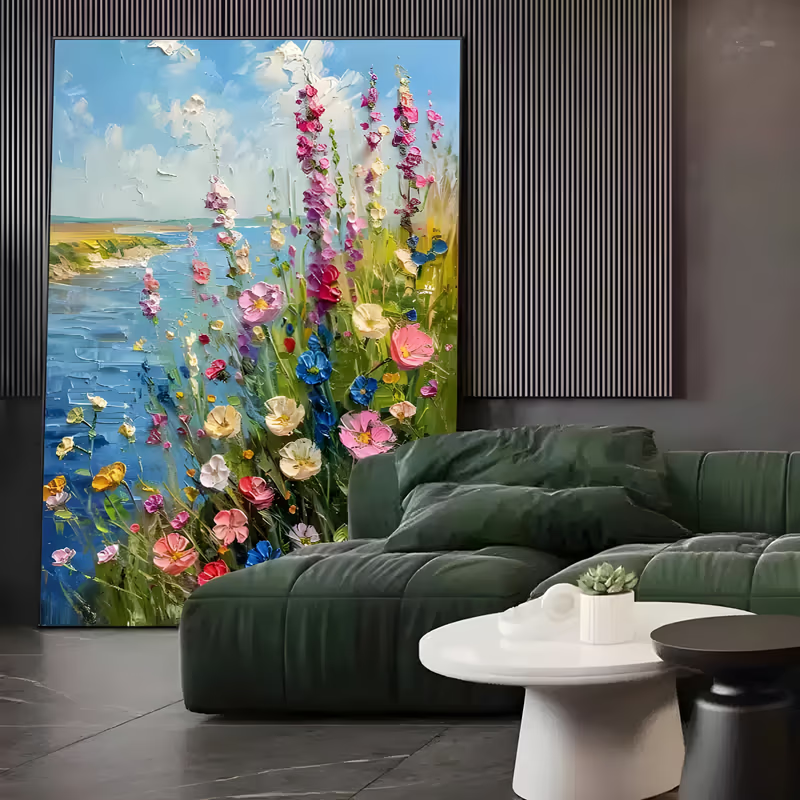
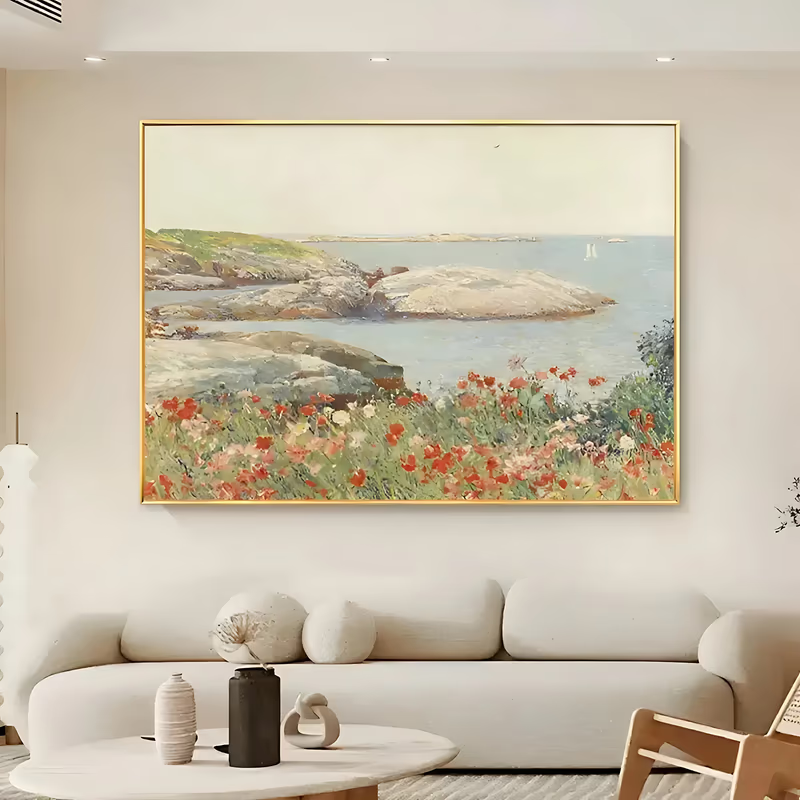
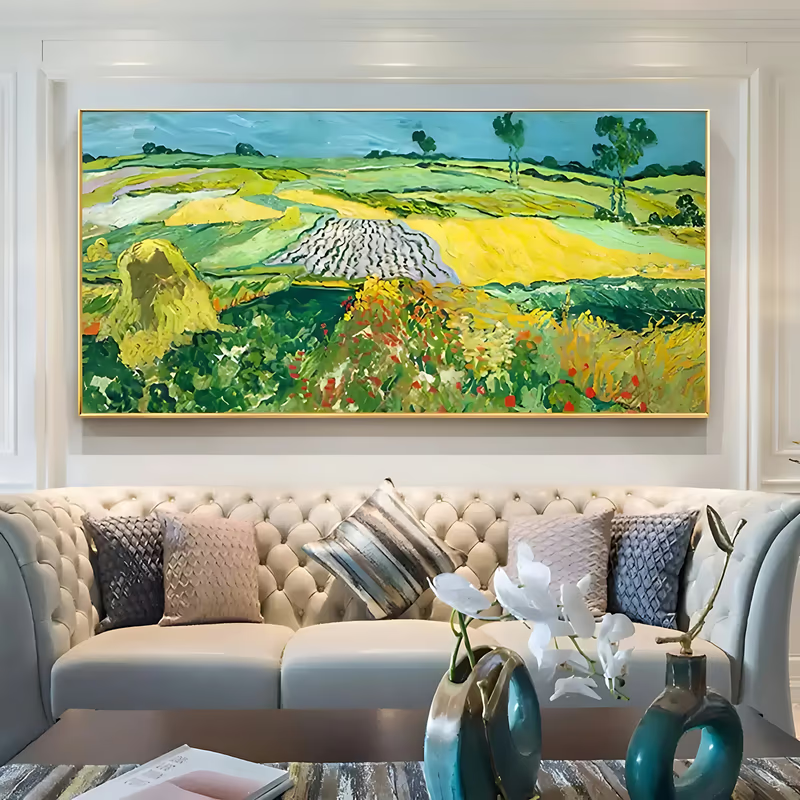
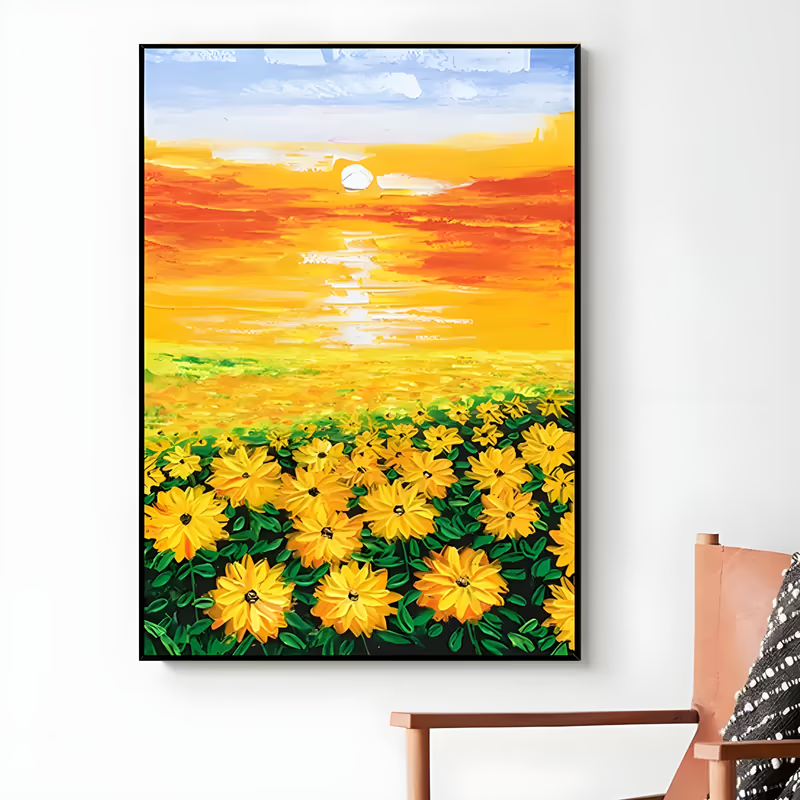
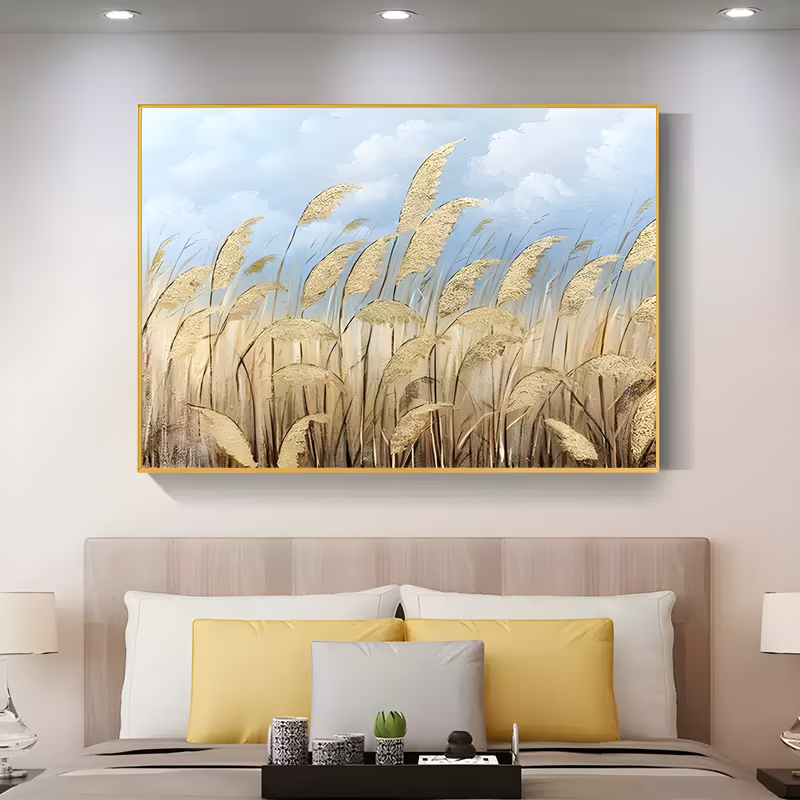
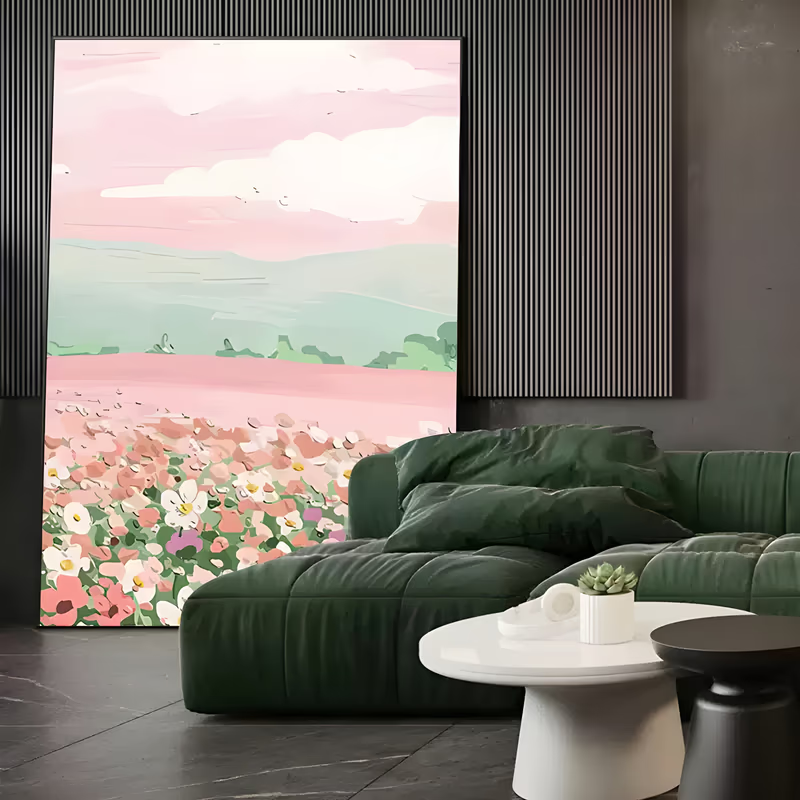
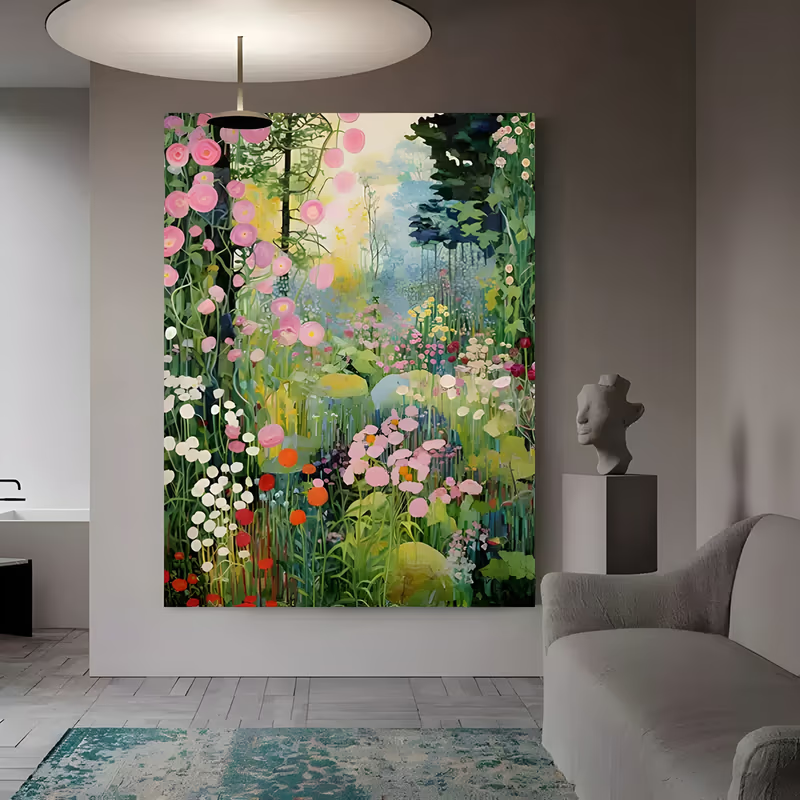
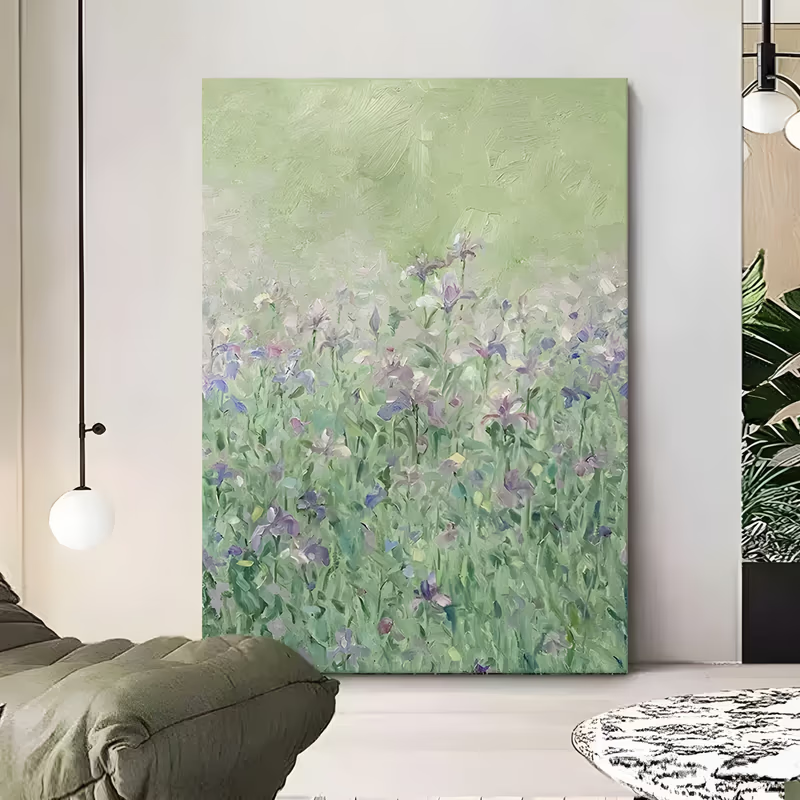
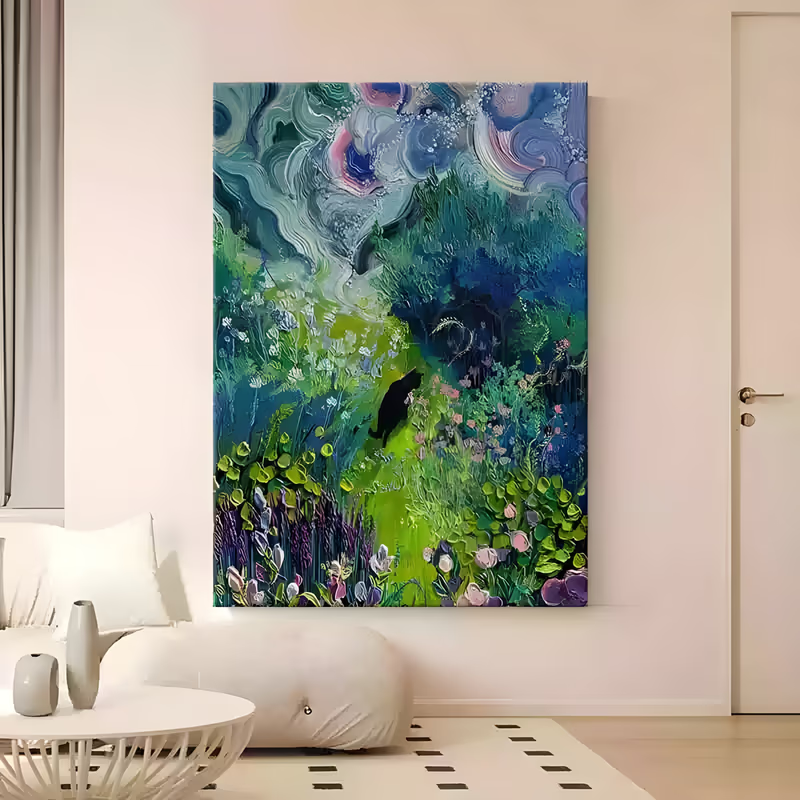
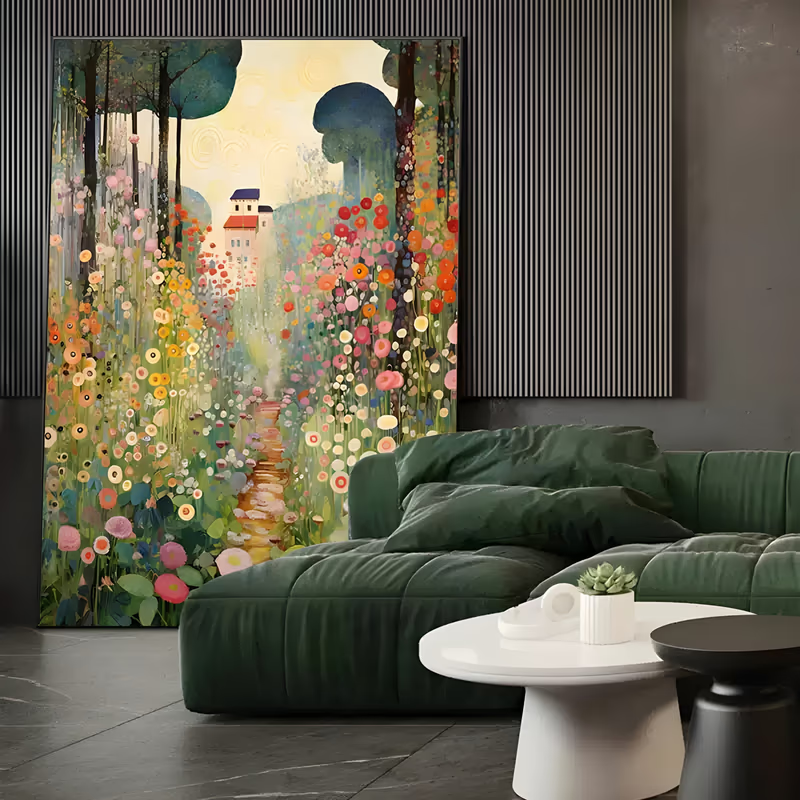
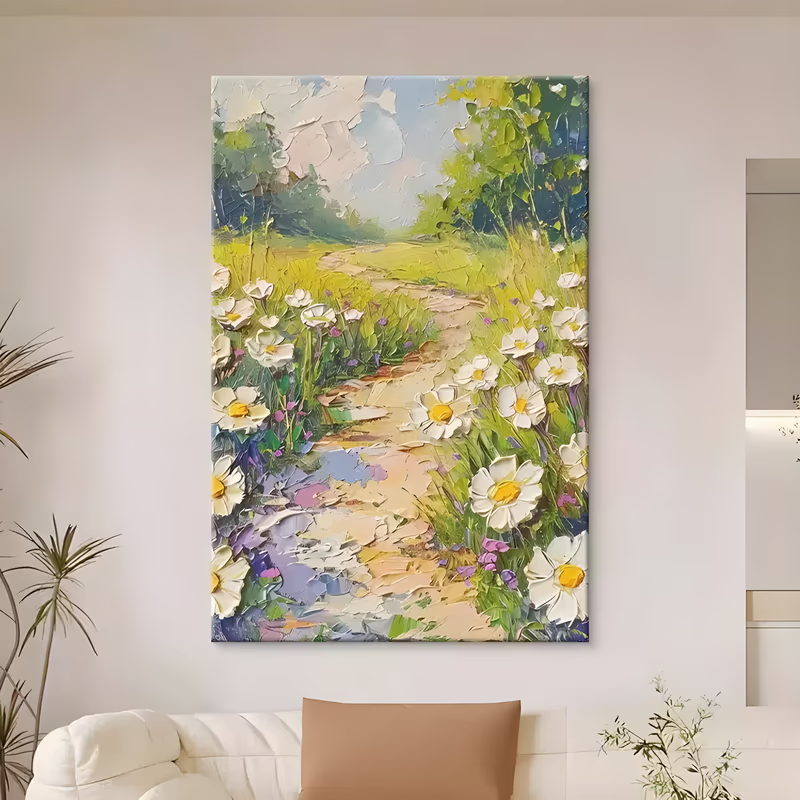
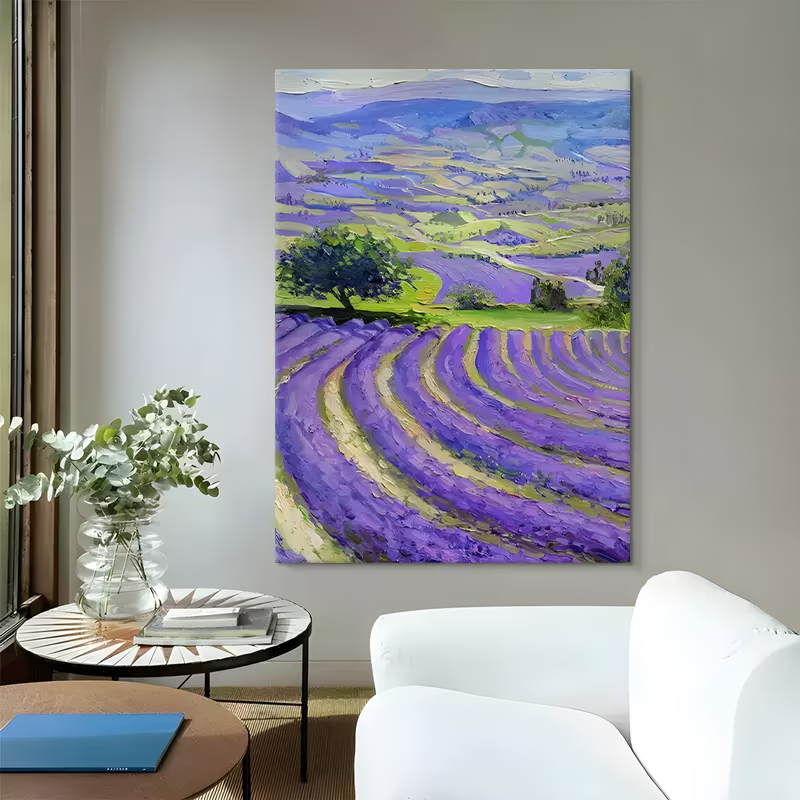
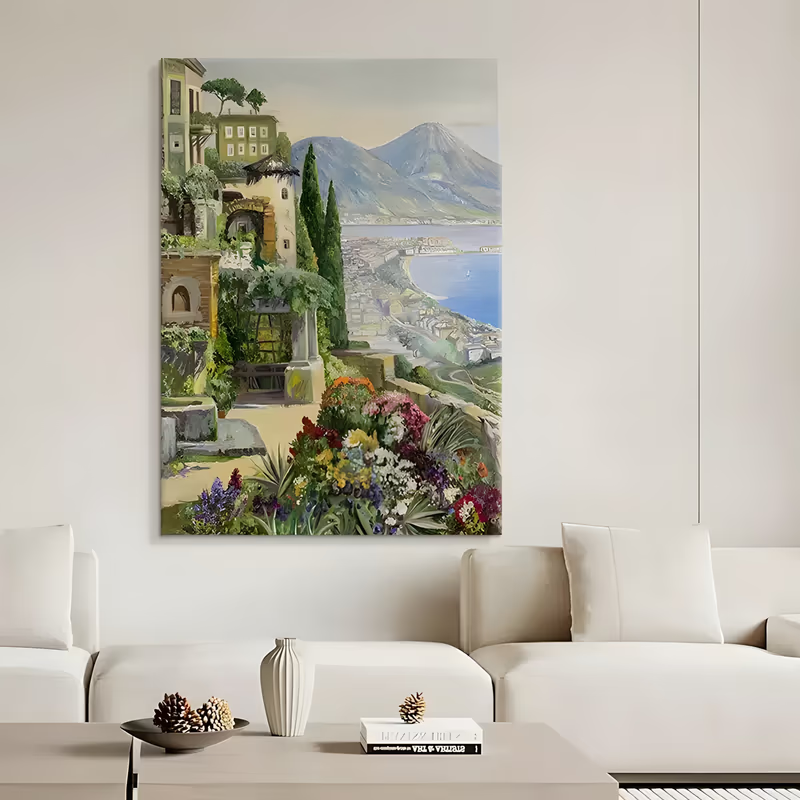
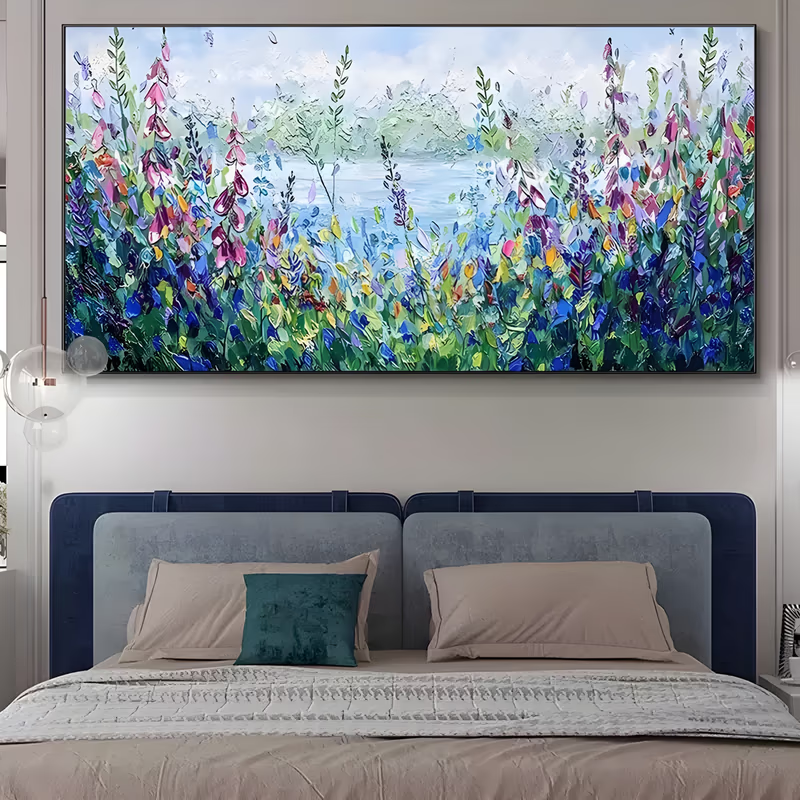
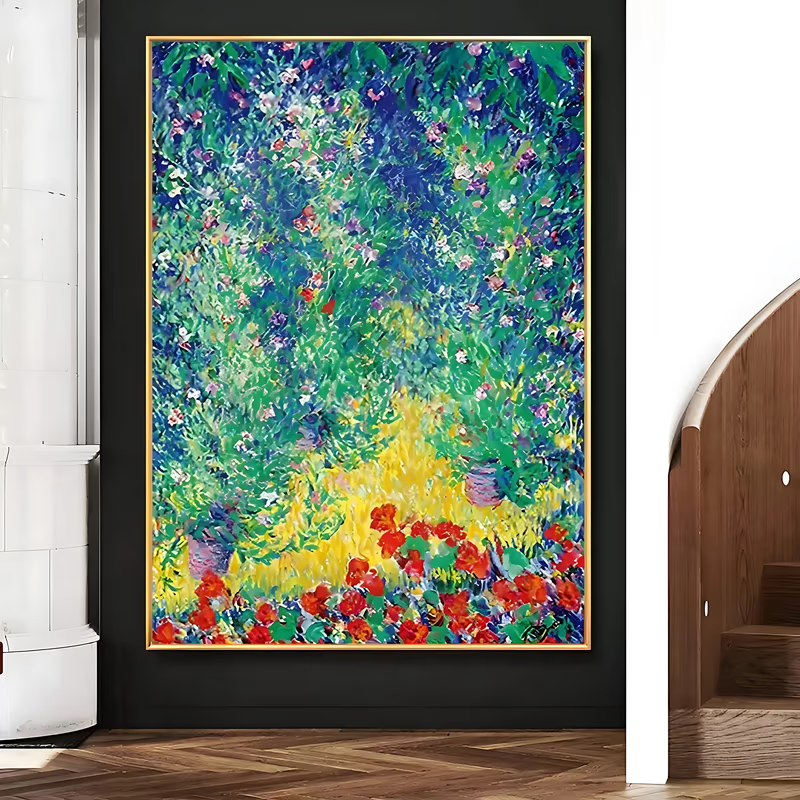
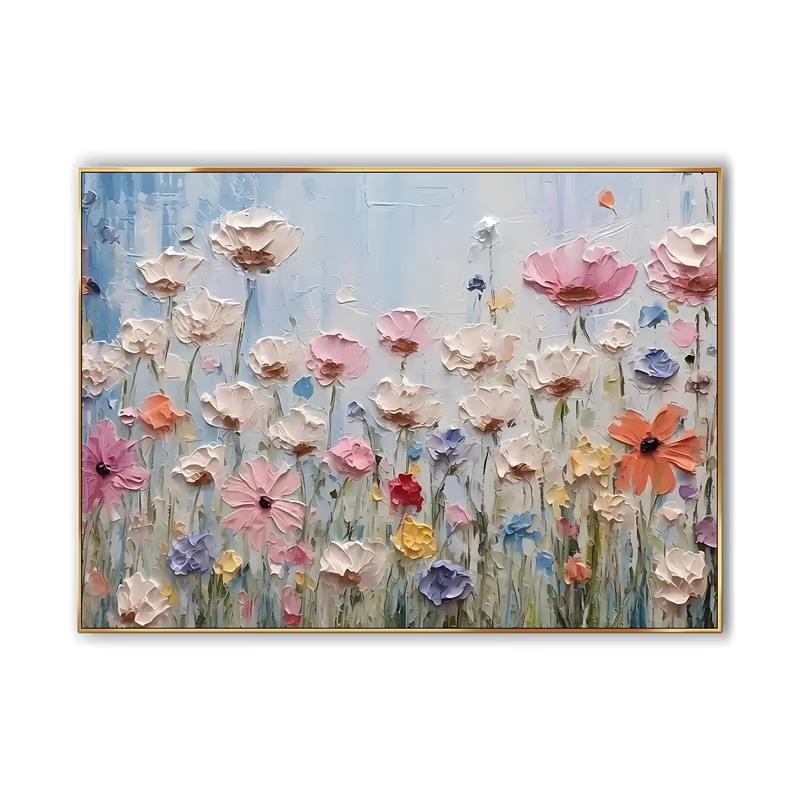
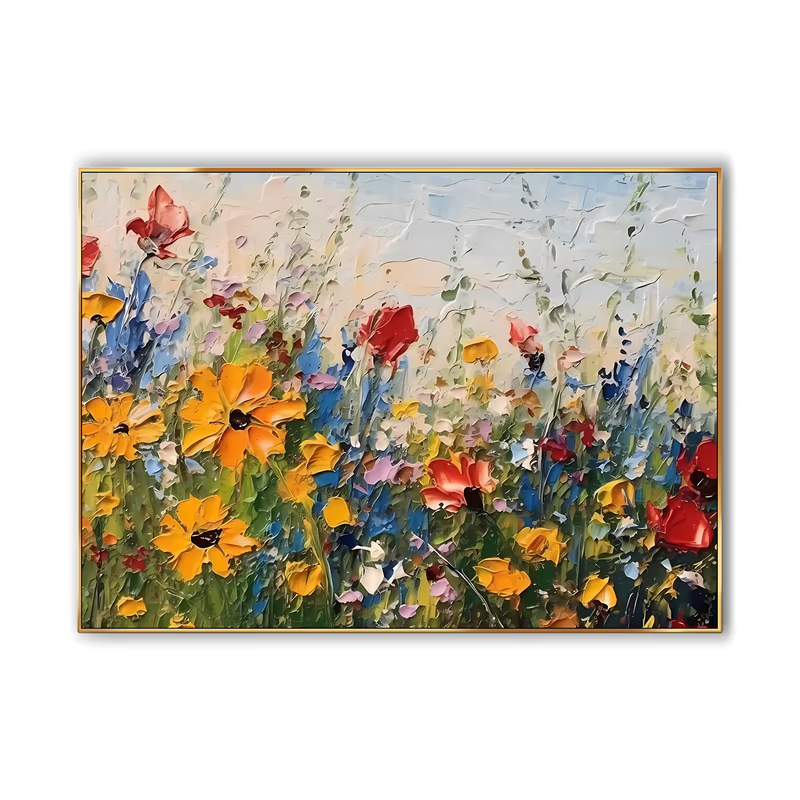
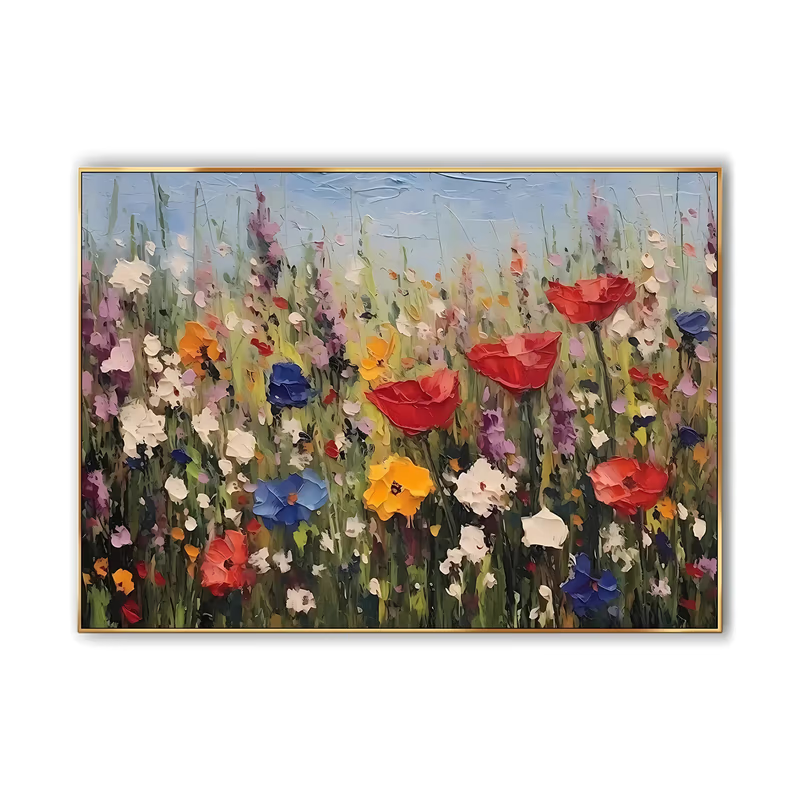
| Meadow or flower field | Open and seasonal; nearly a landscape | Living rooms, dining rooms, country houses |
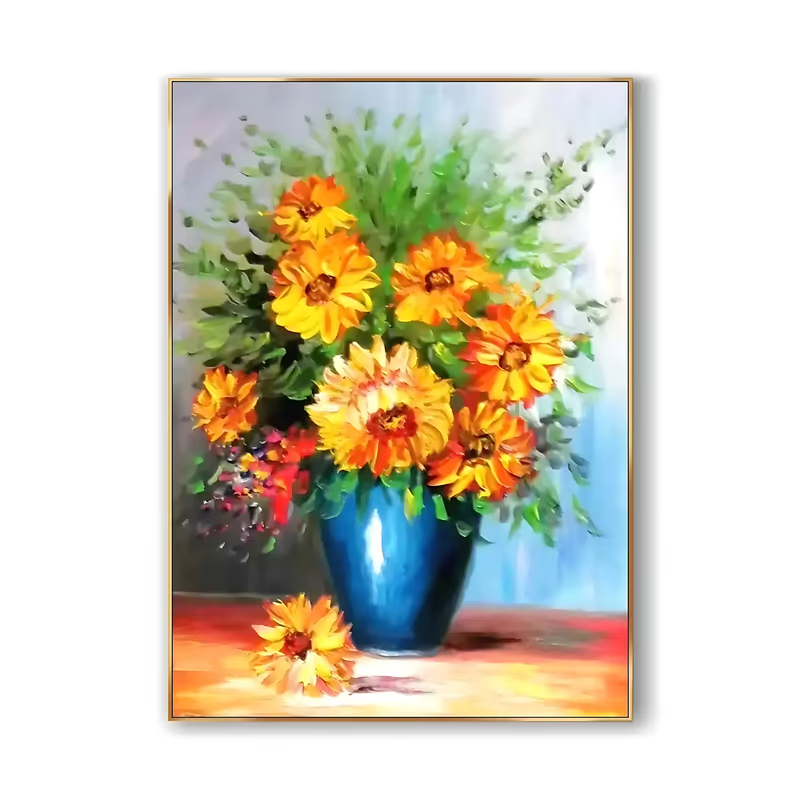
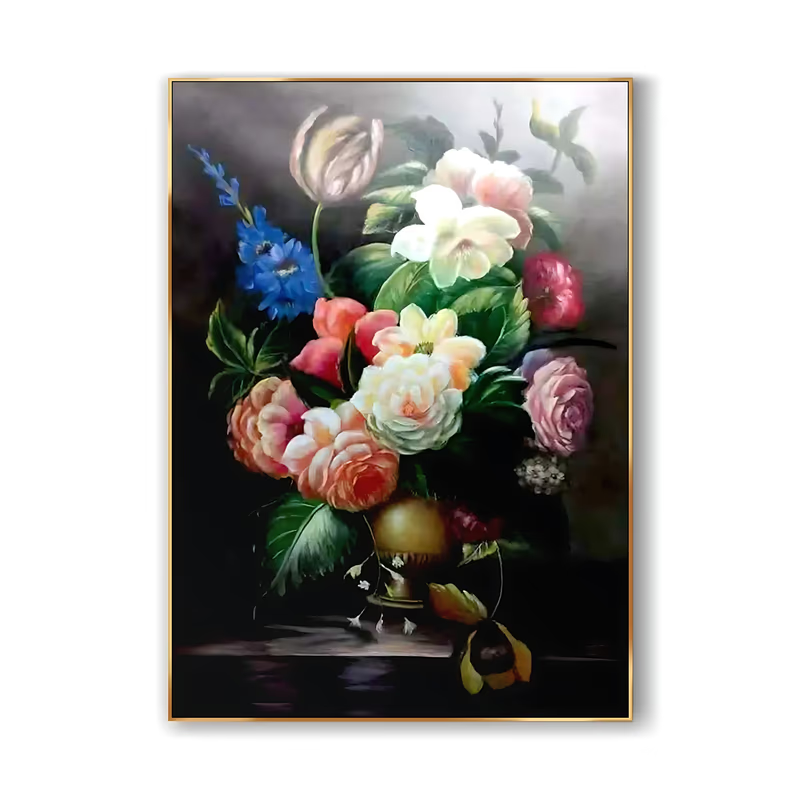
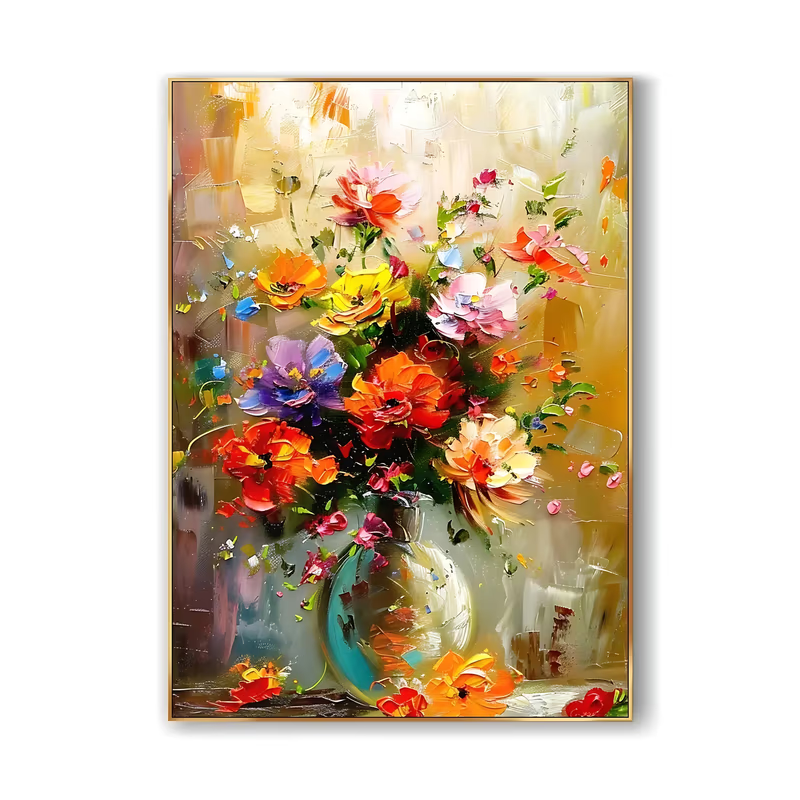
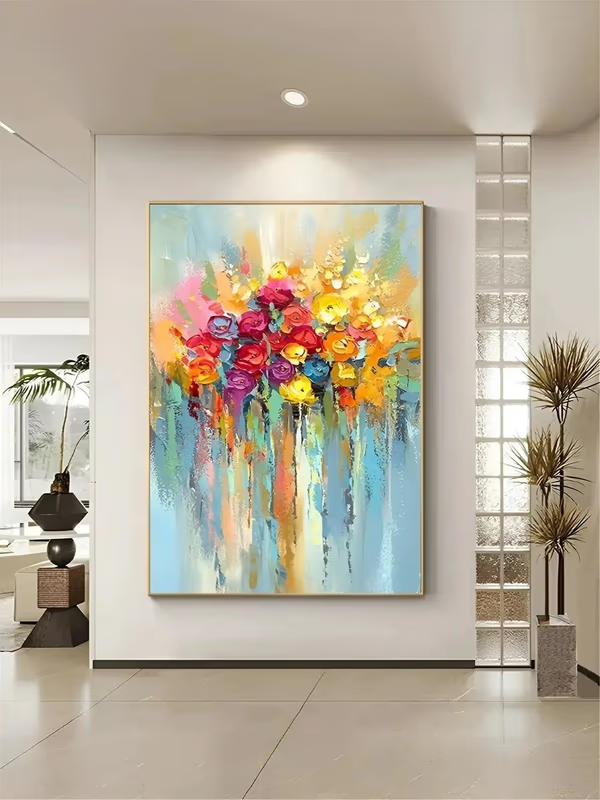
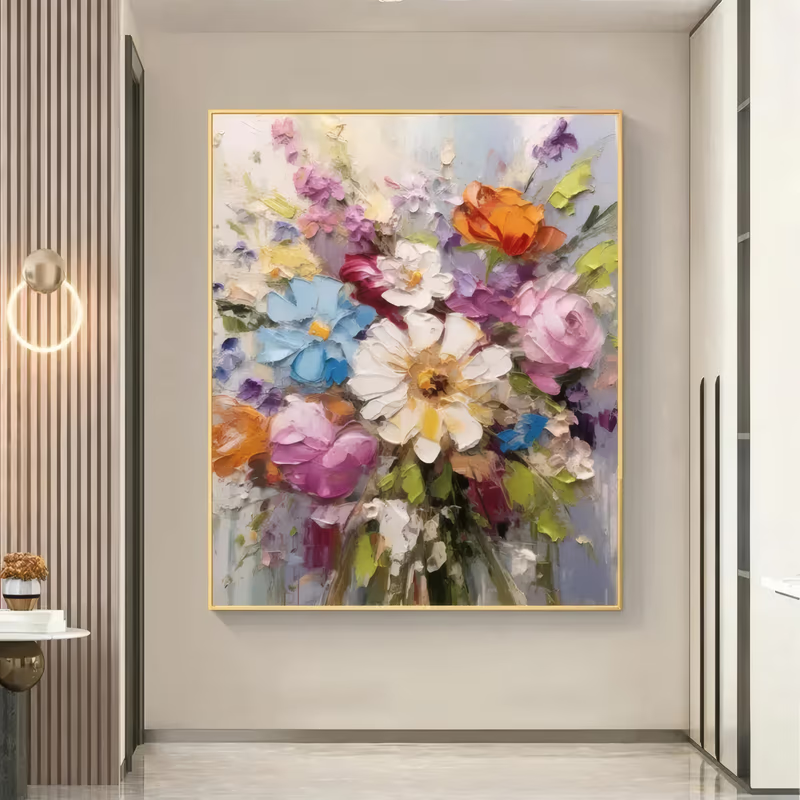
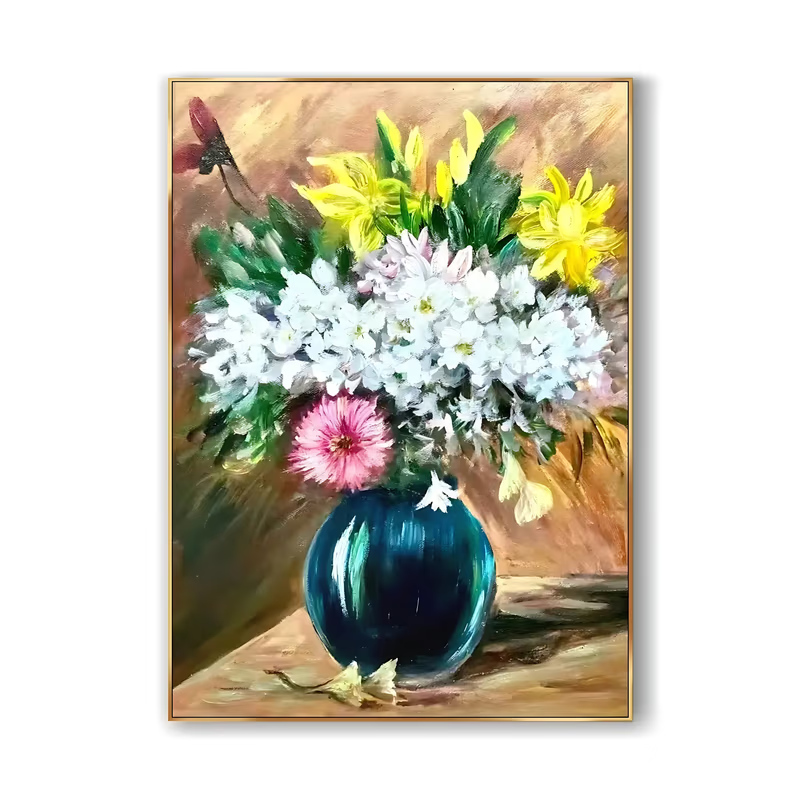
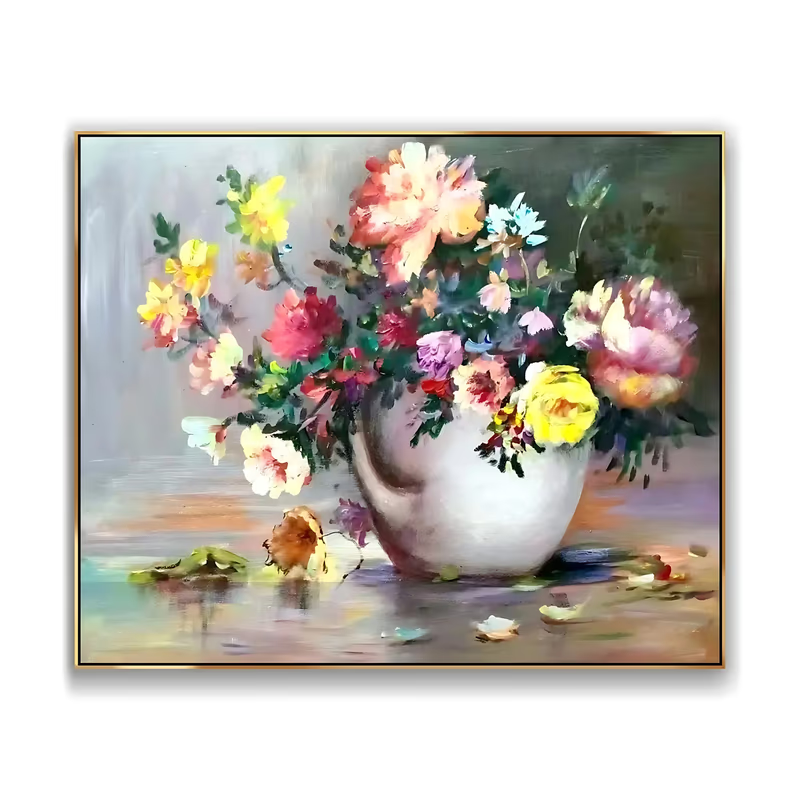
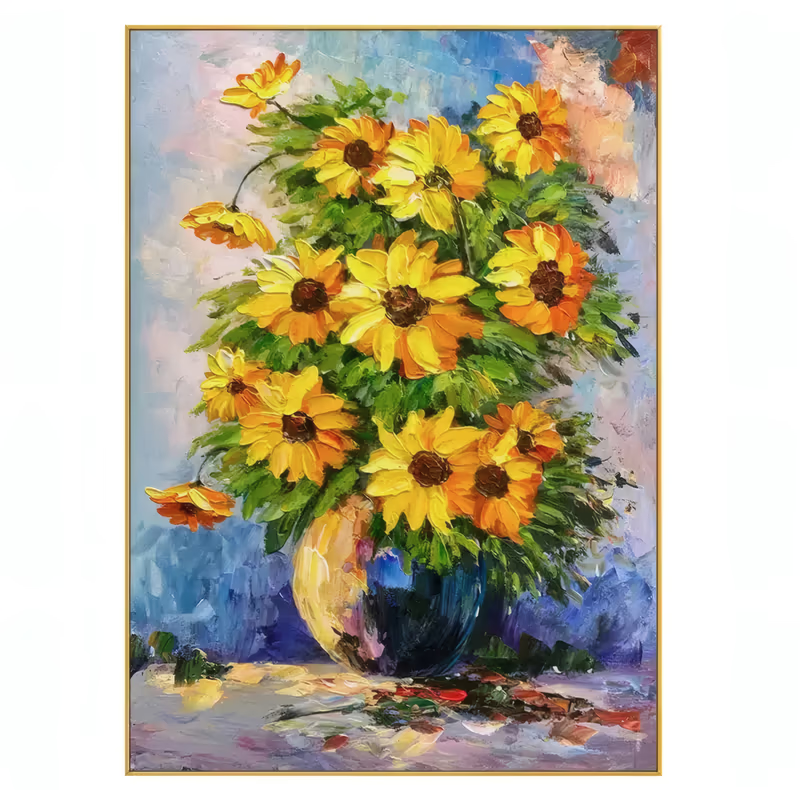
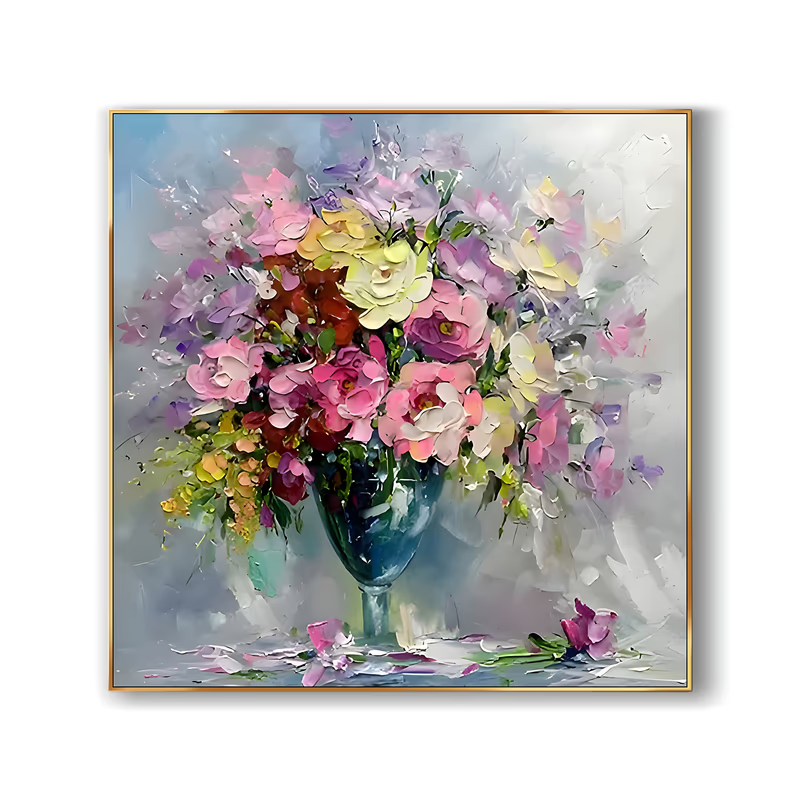
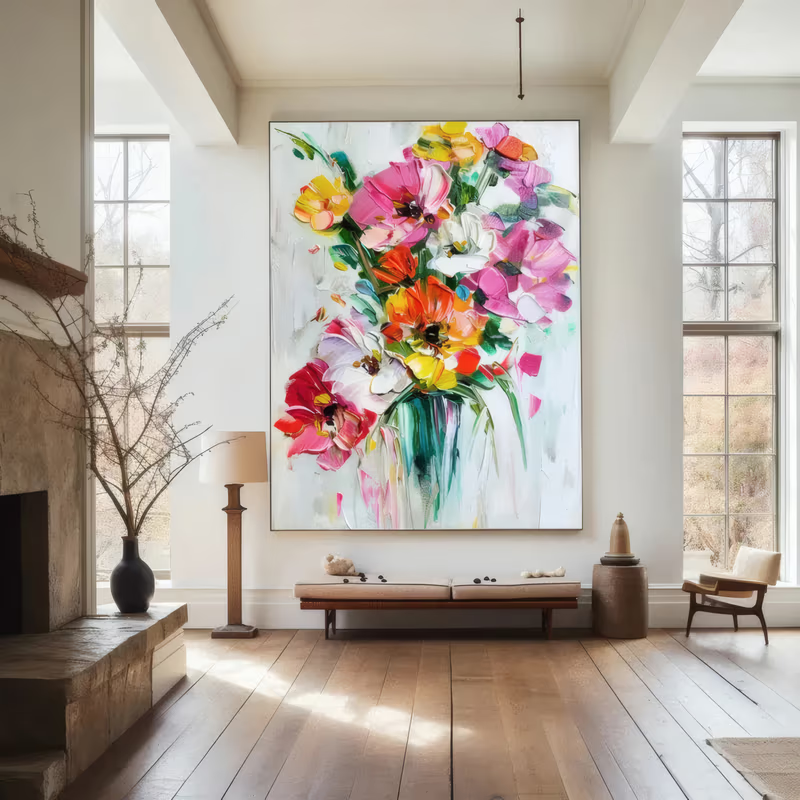
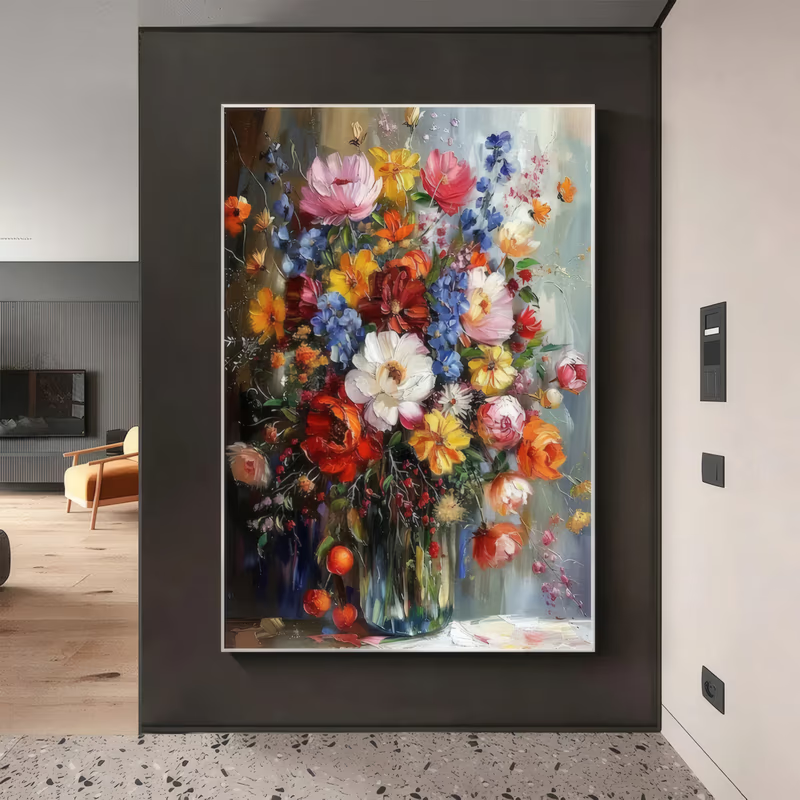
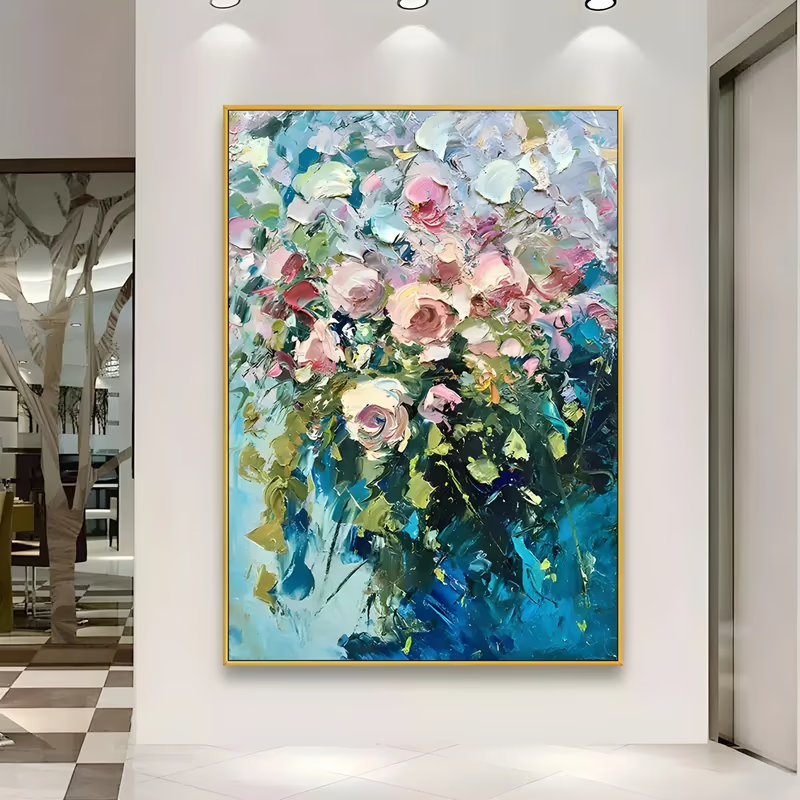
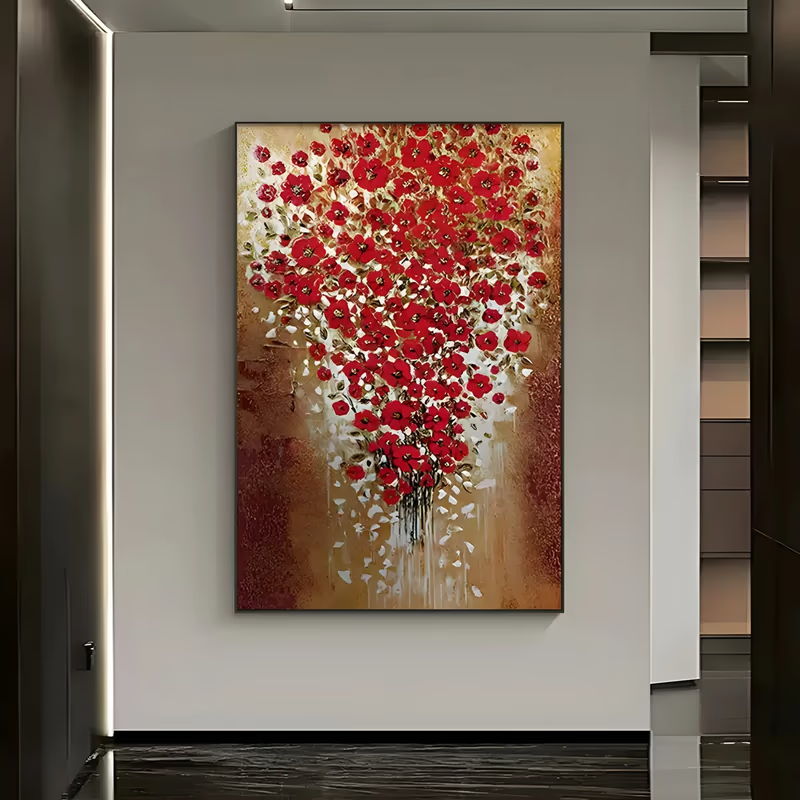
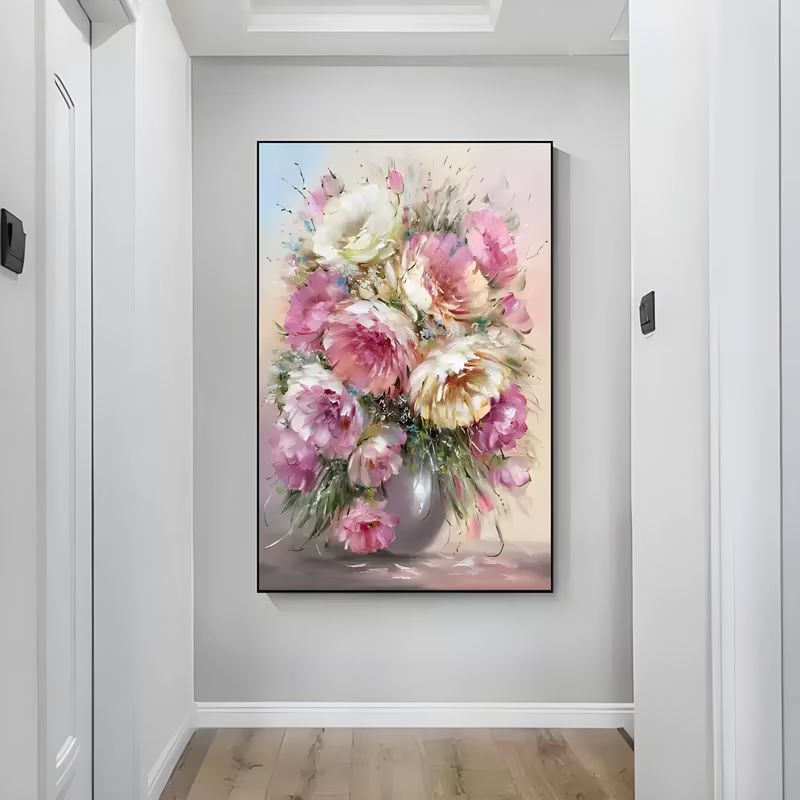
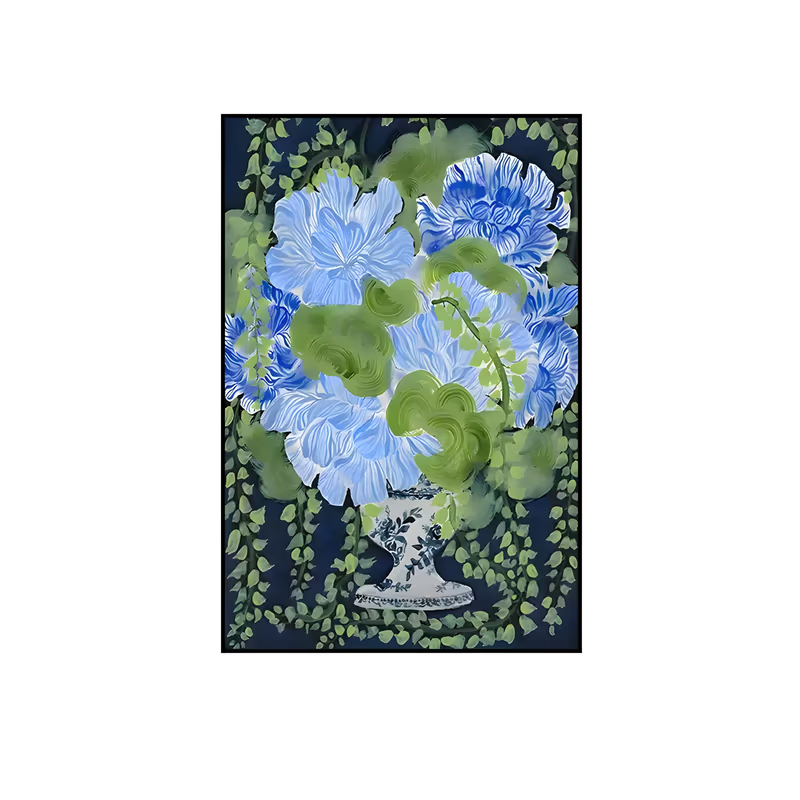
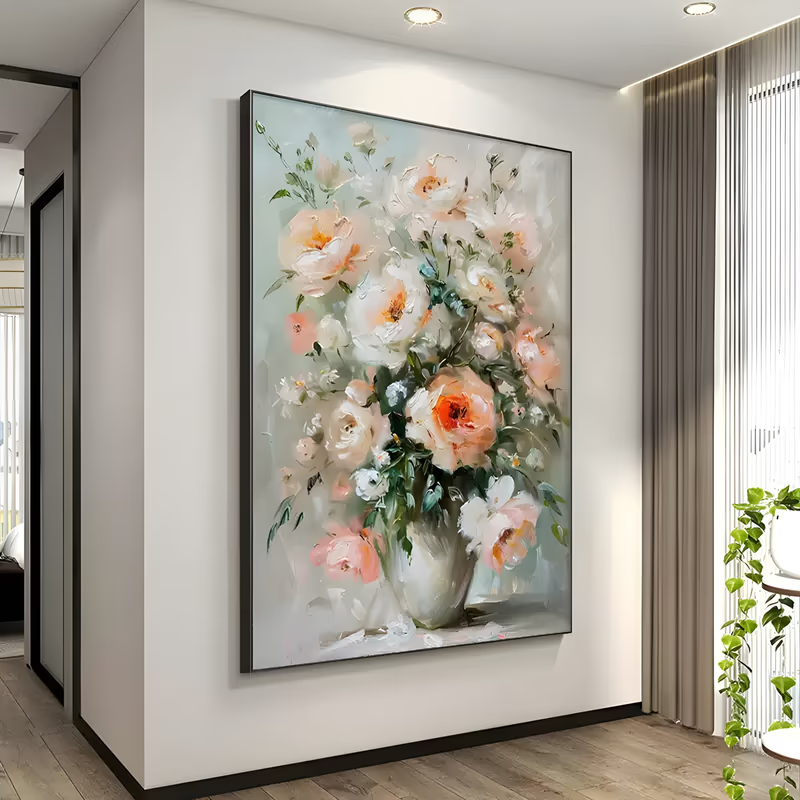
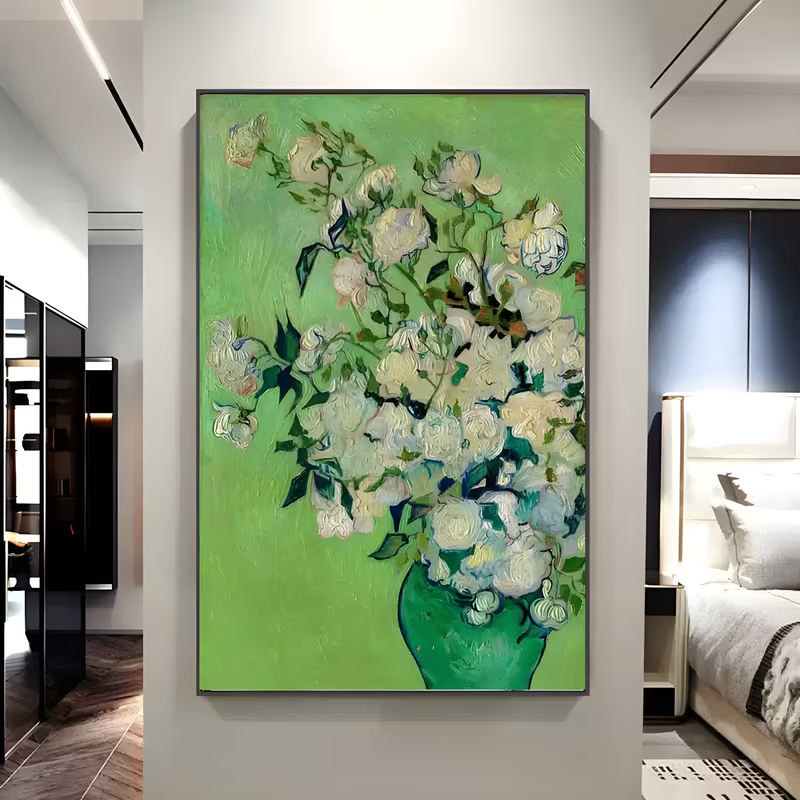
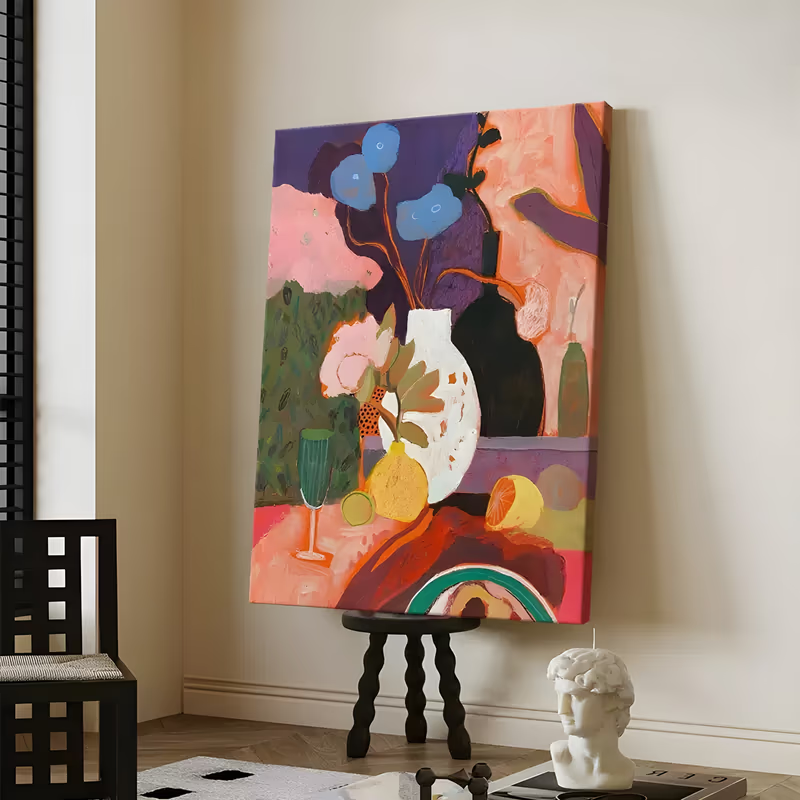
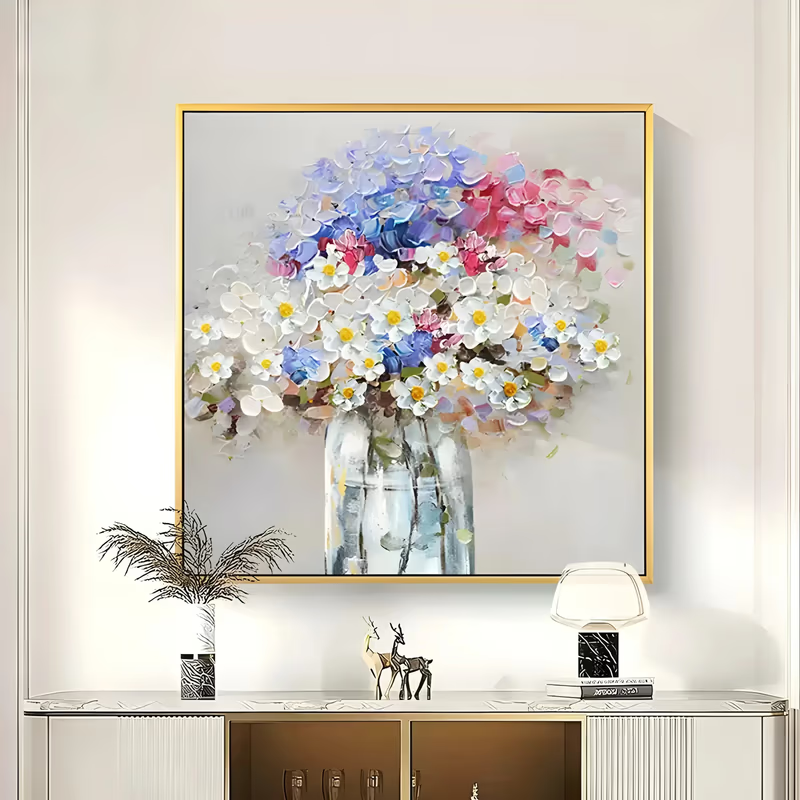
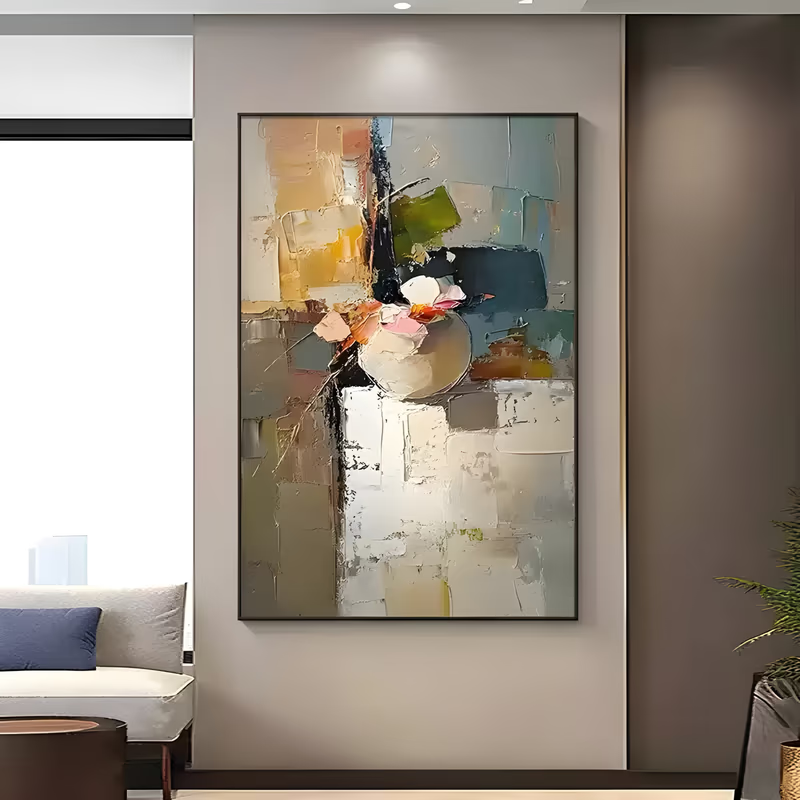
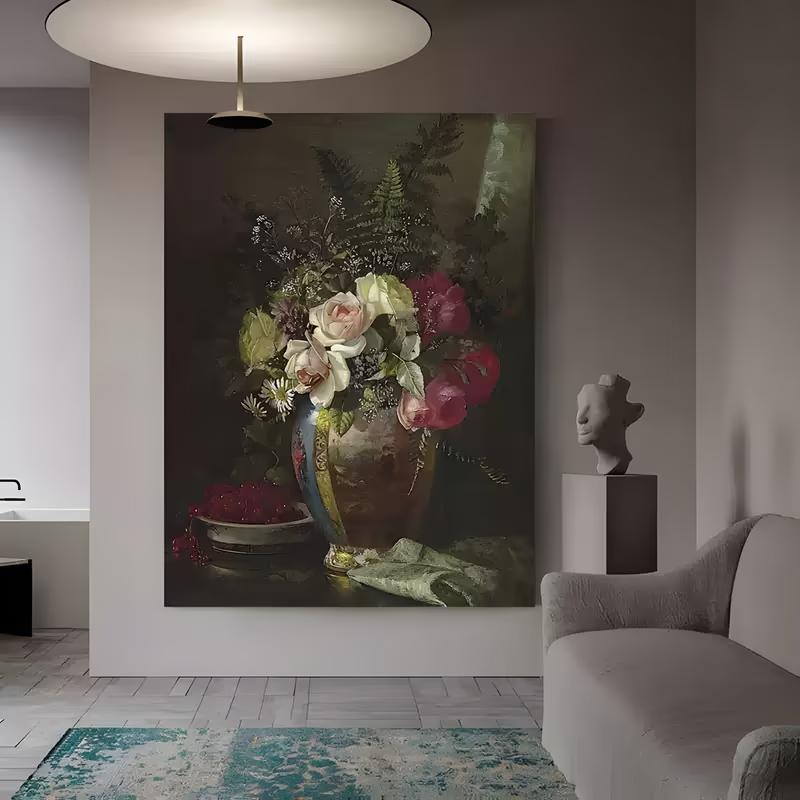
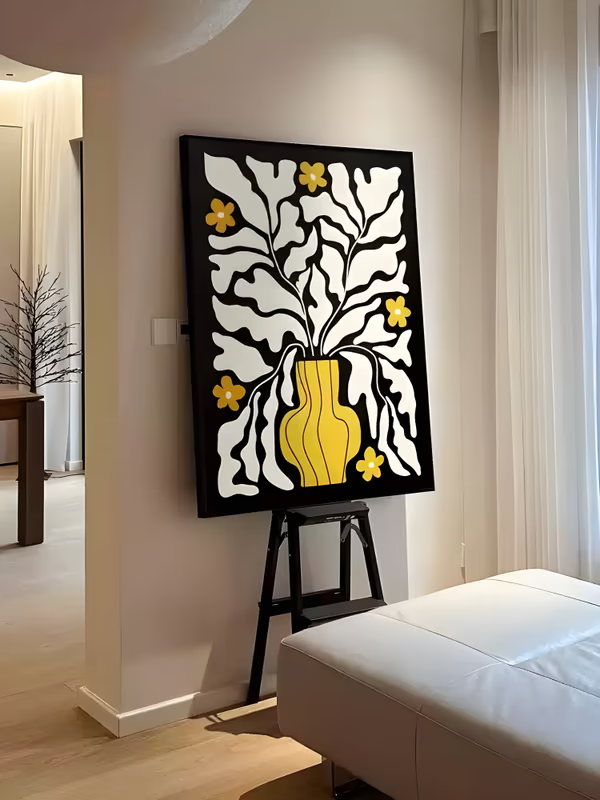
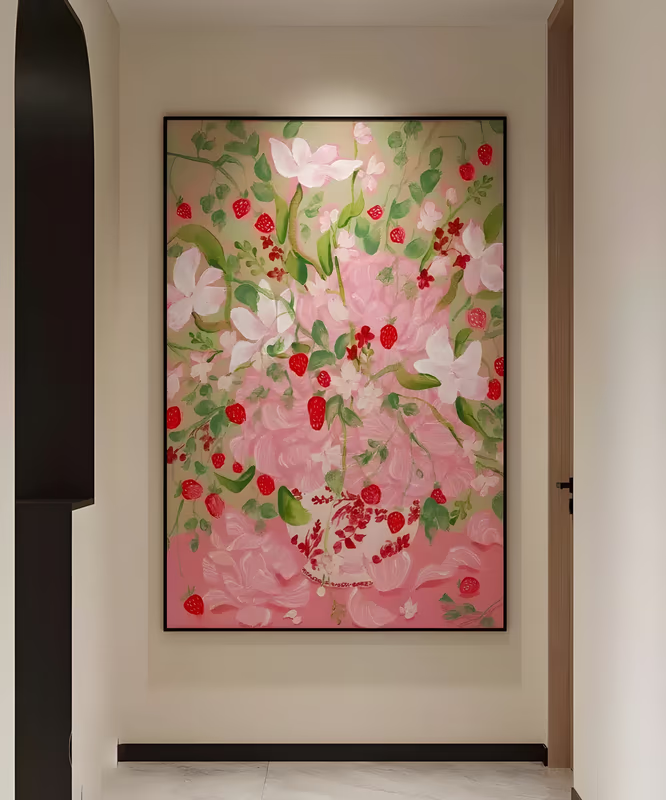
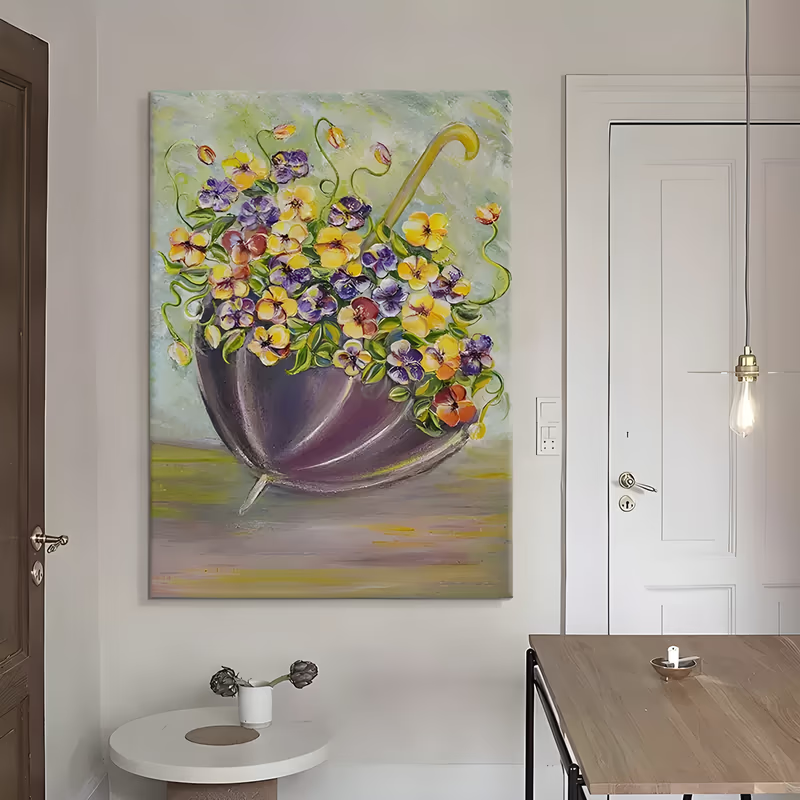
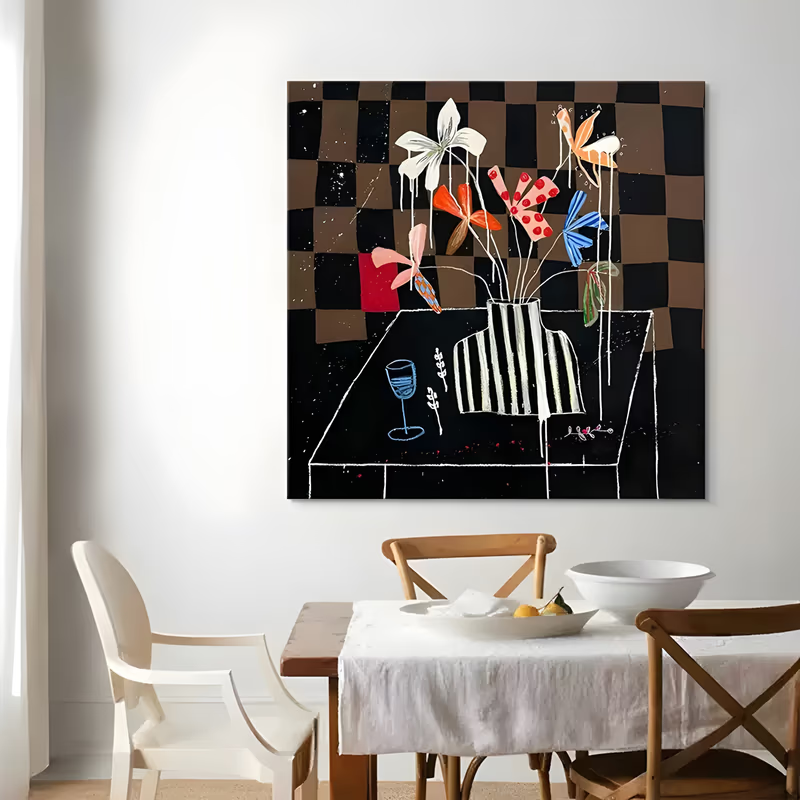
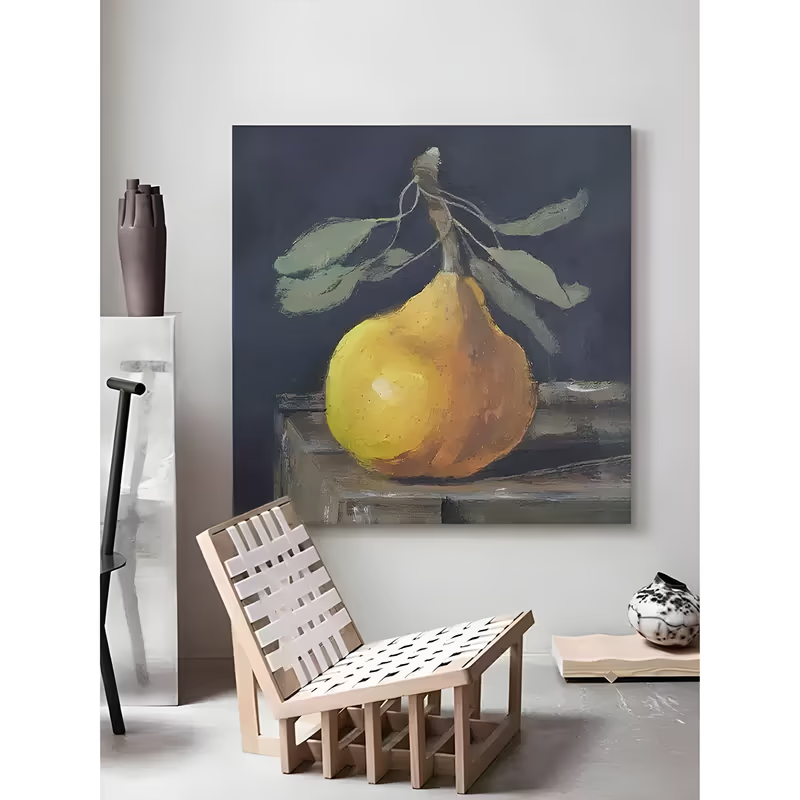
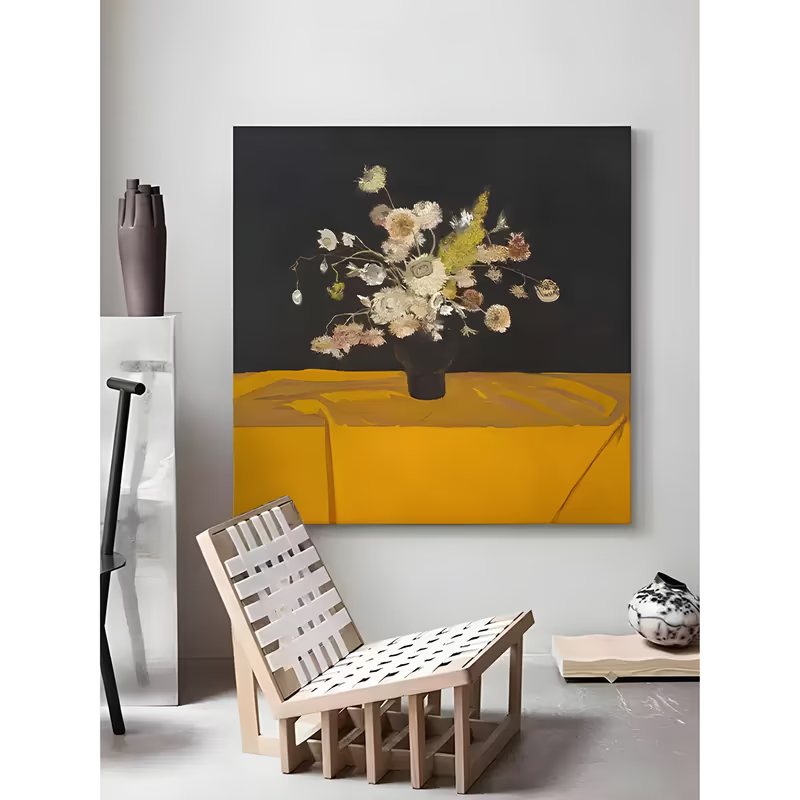
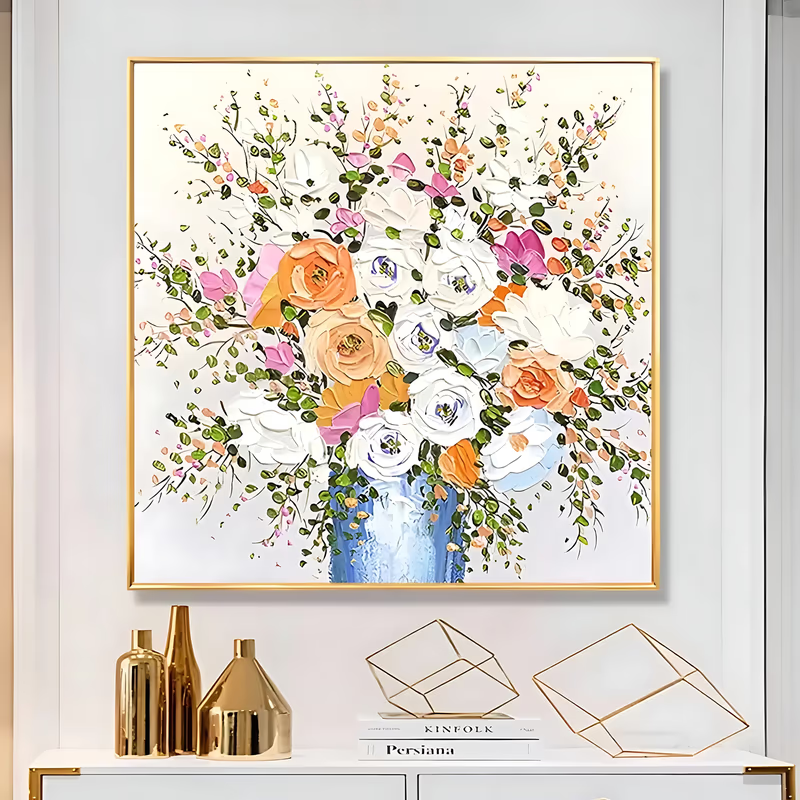
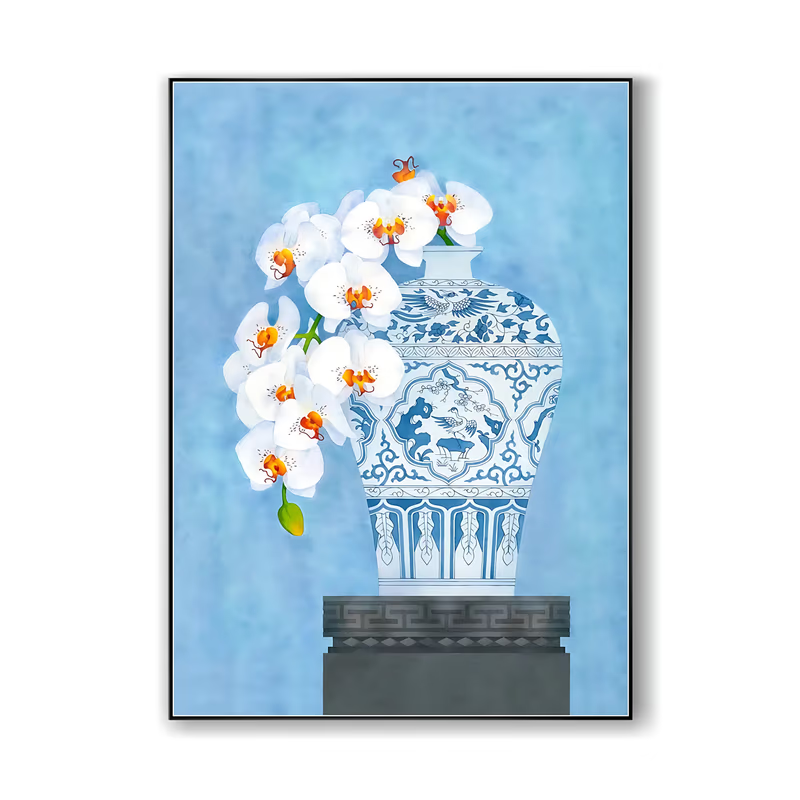
| Bouquet in a vase | Domestic and traditional; a still life | Dining rooms, kitchens, entrance consoles |
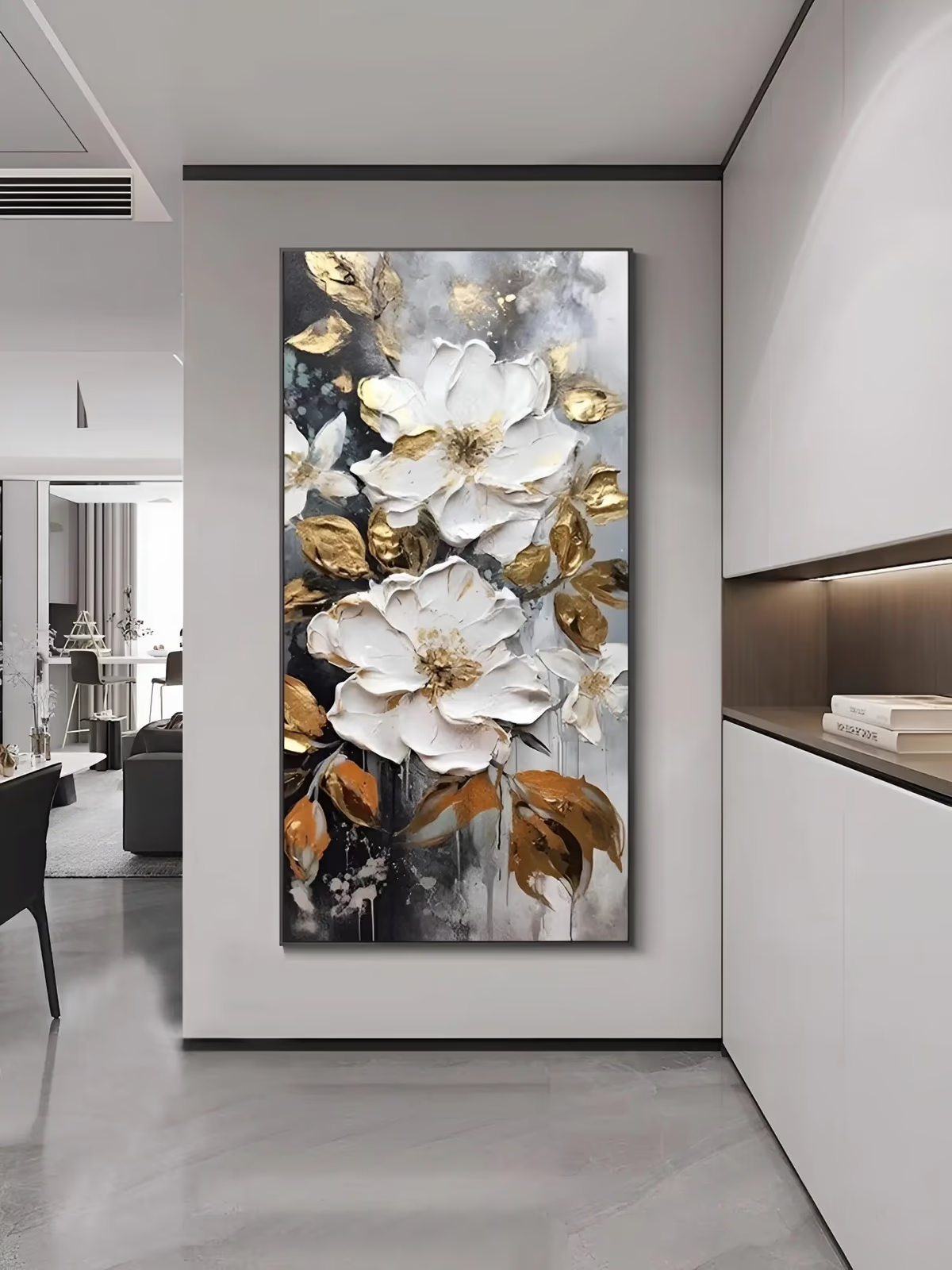
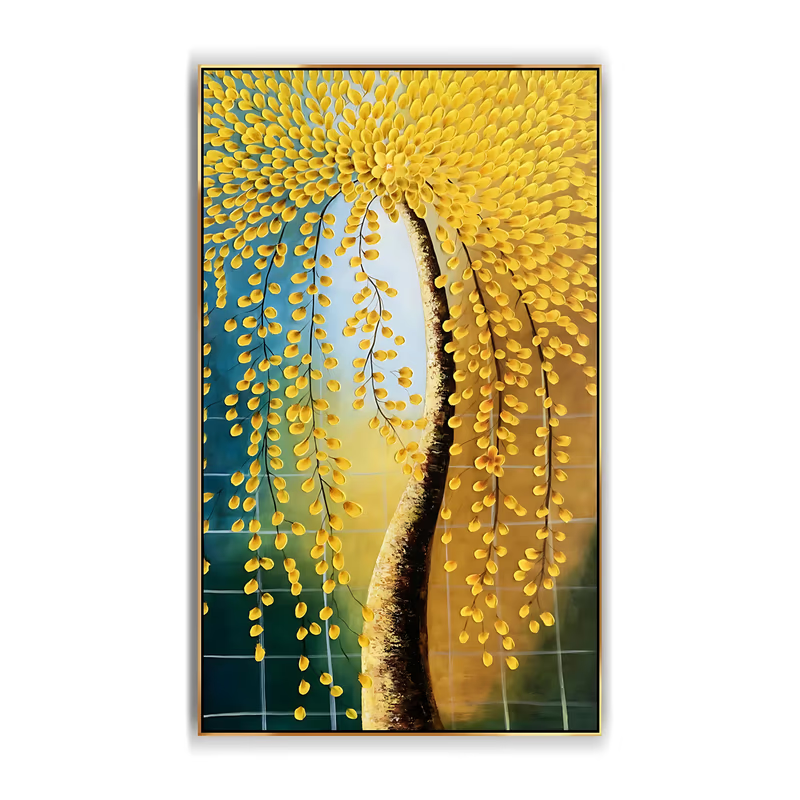
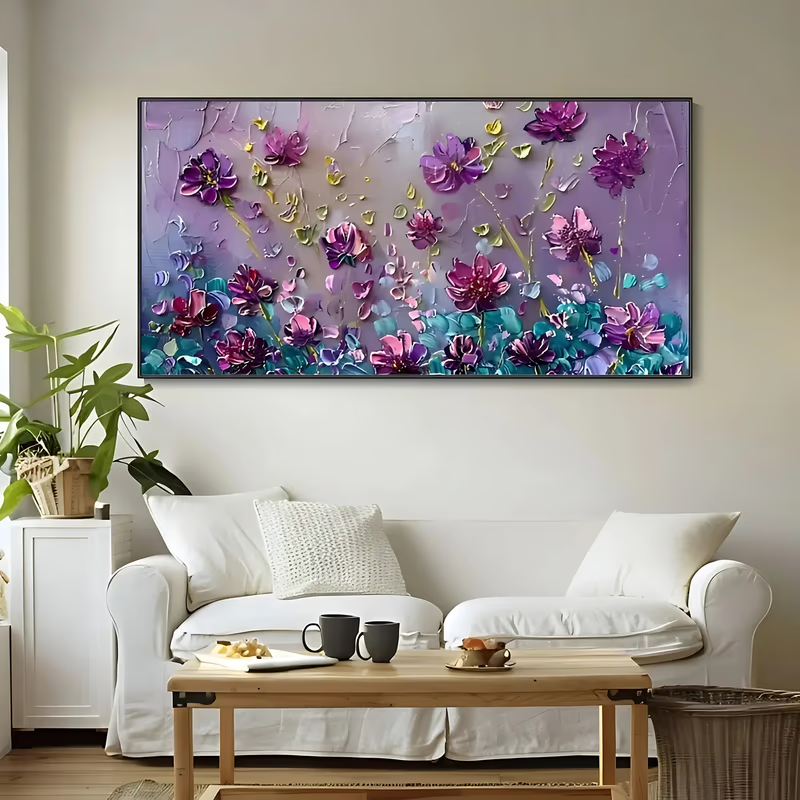
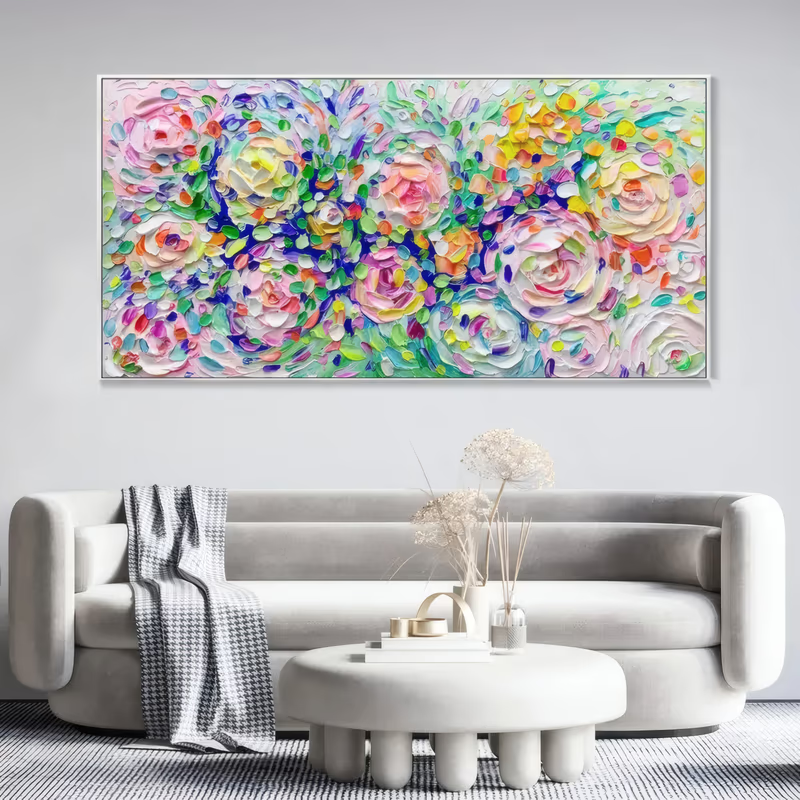
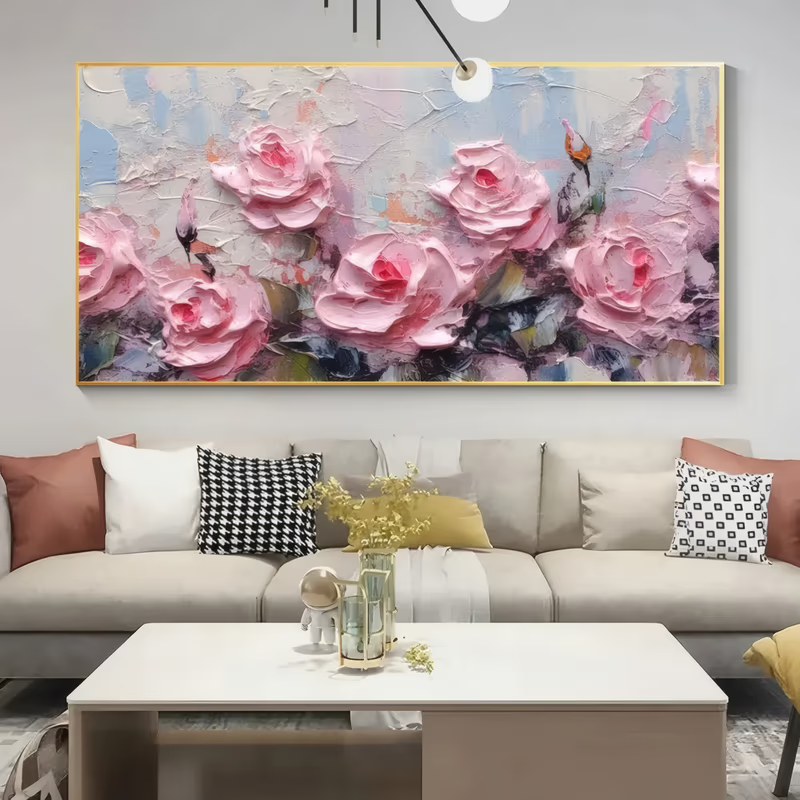
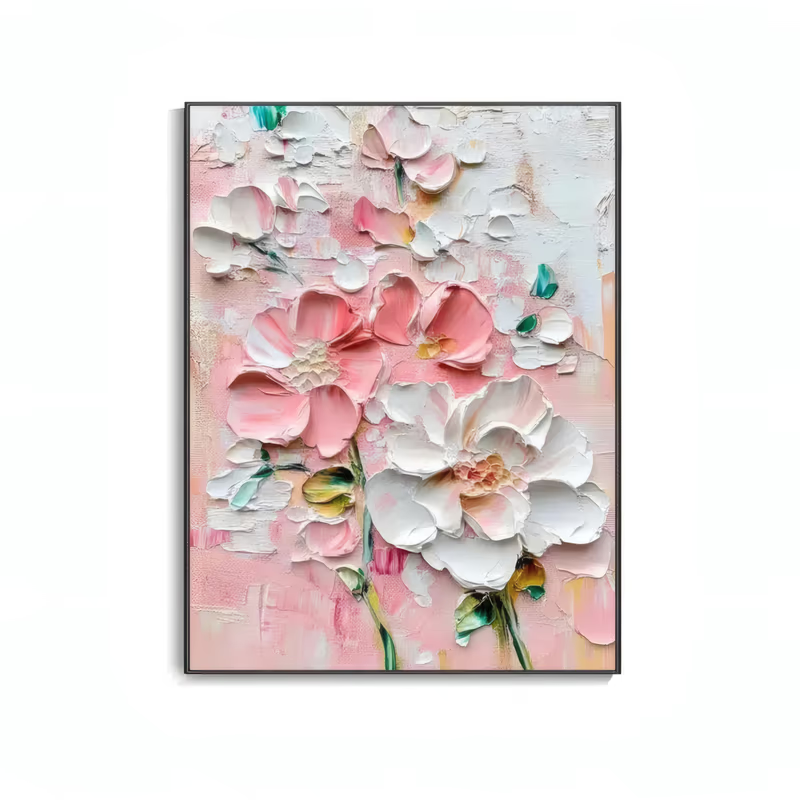
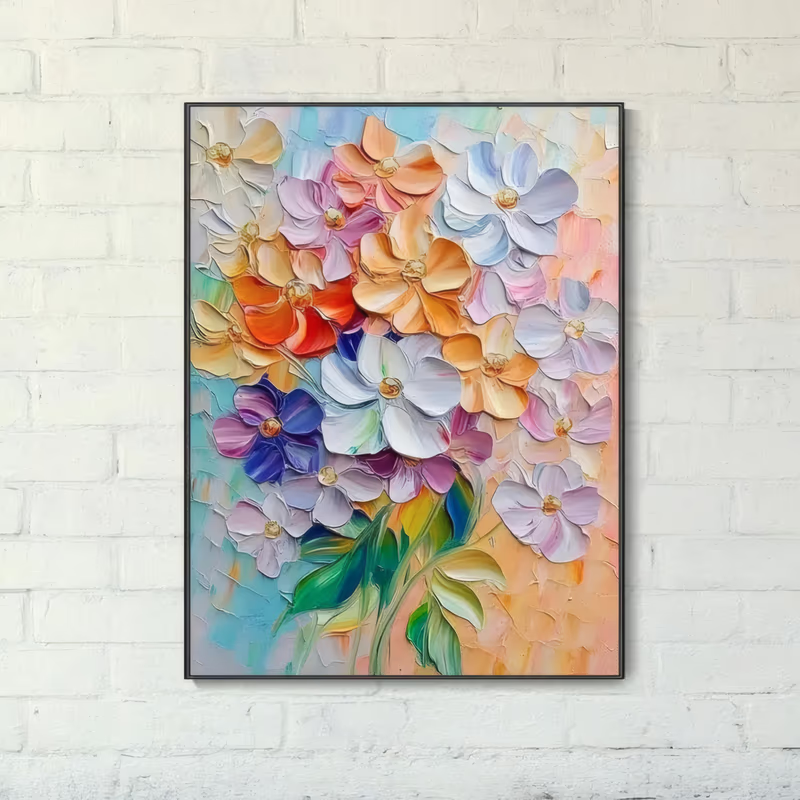
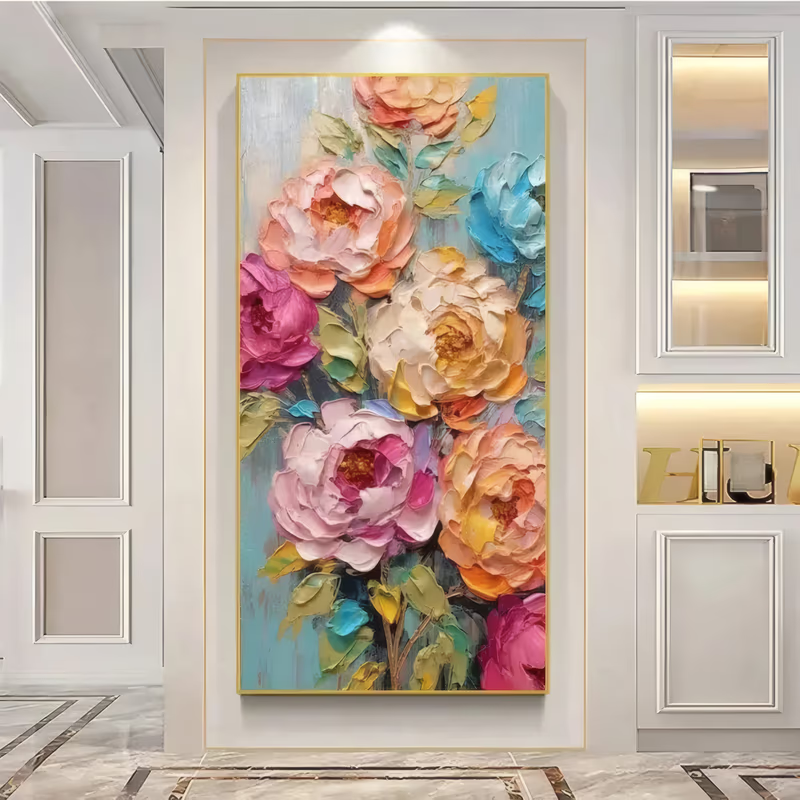
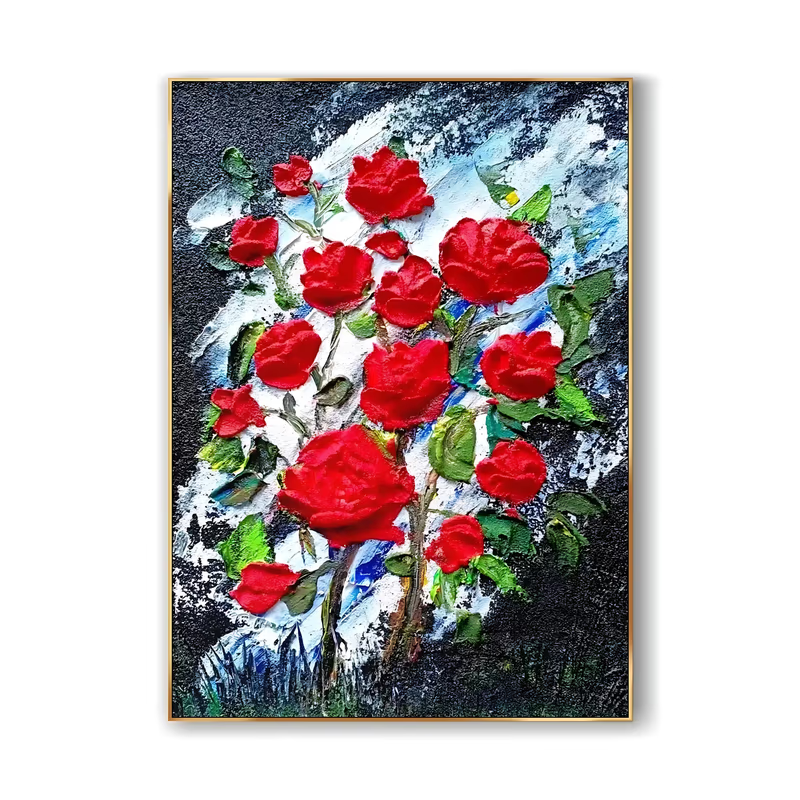
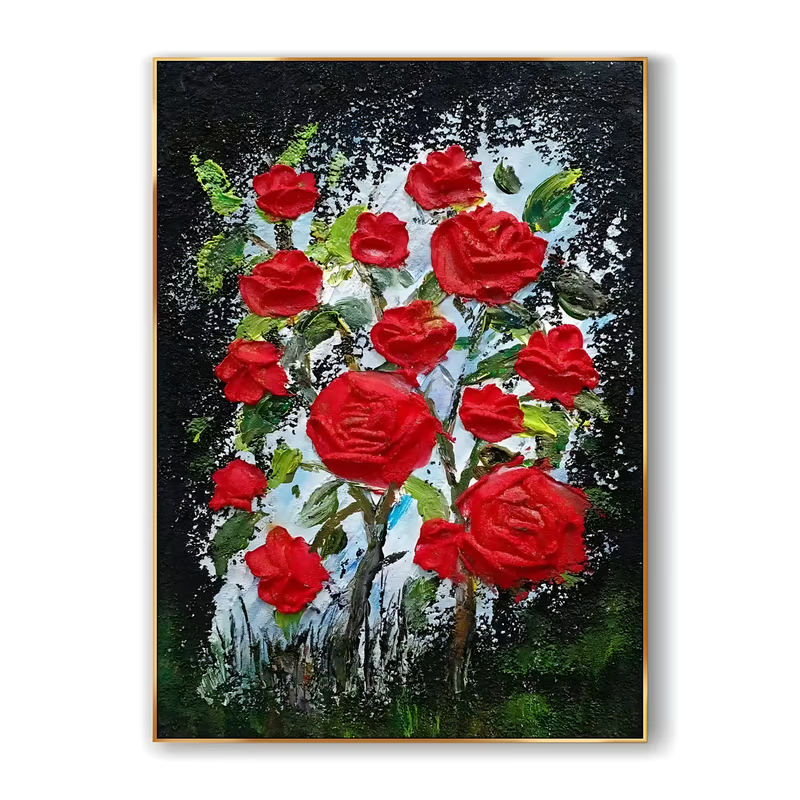
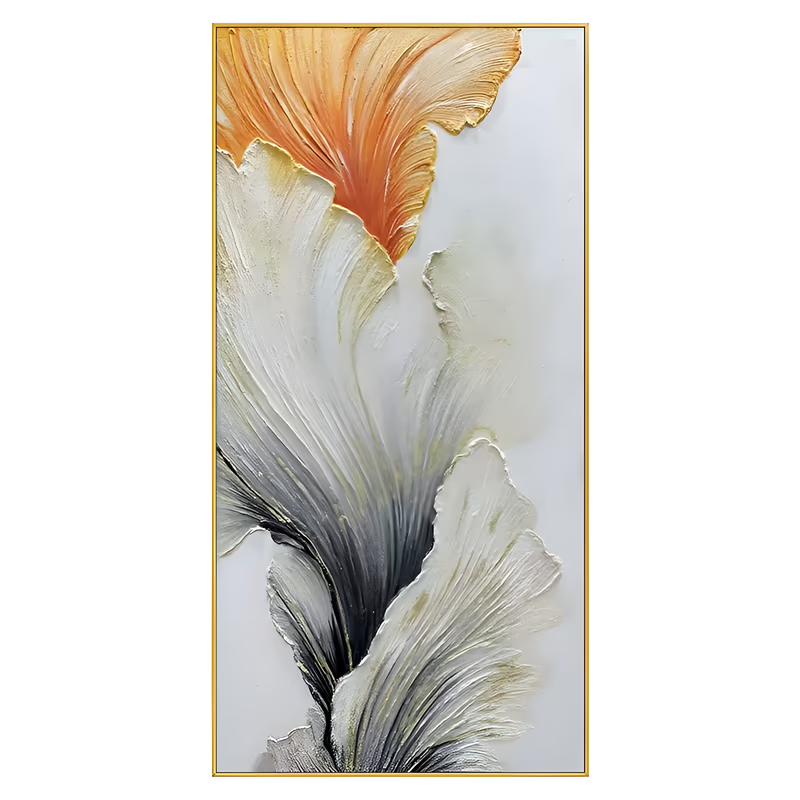
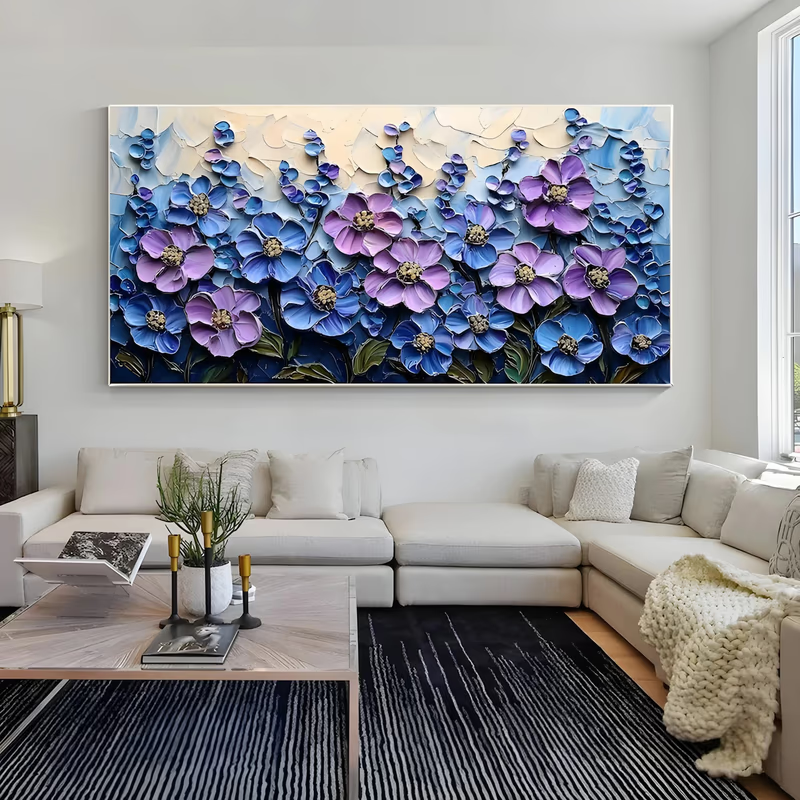
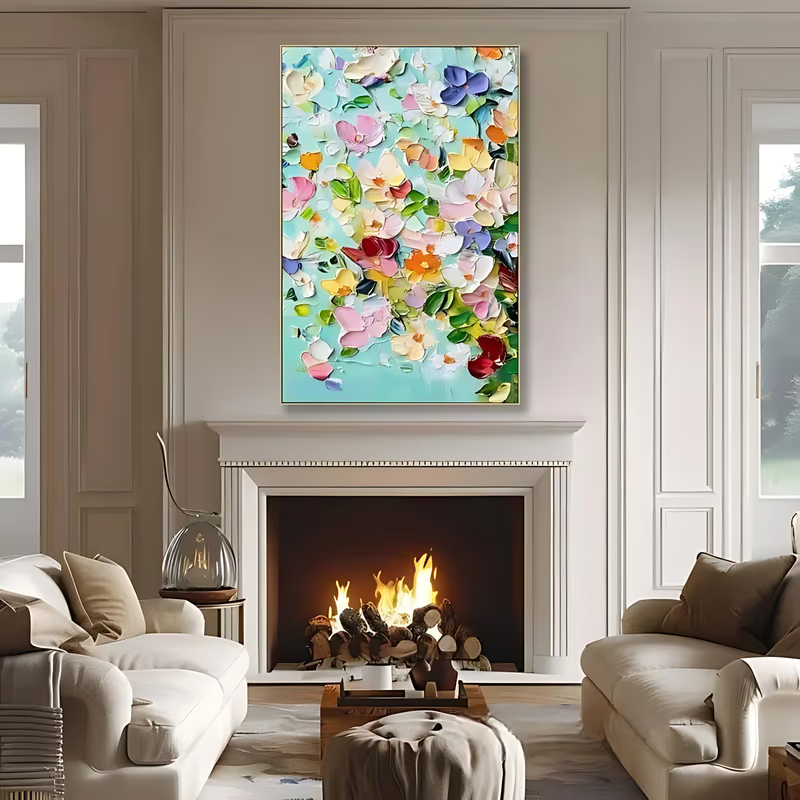
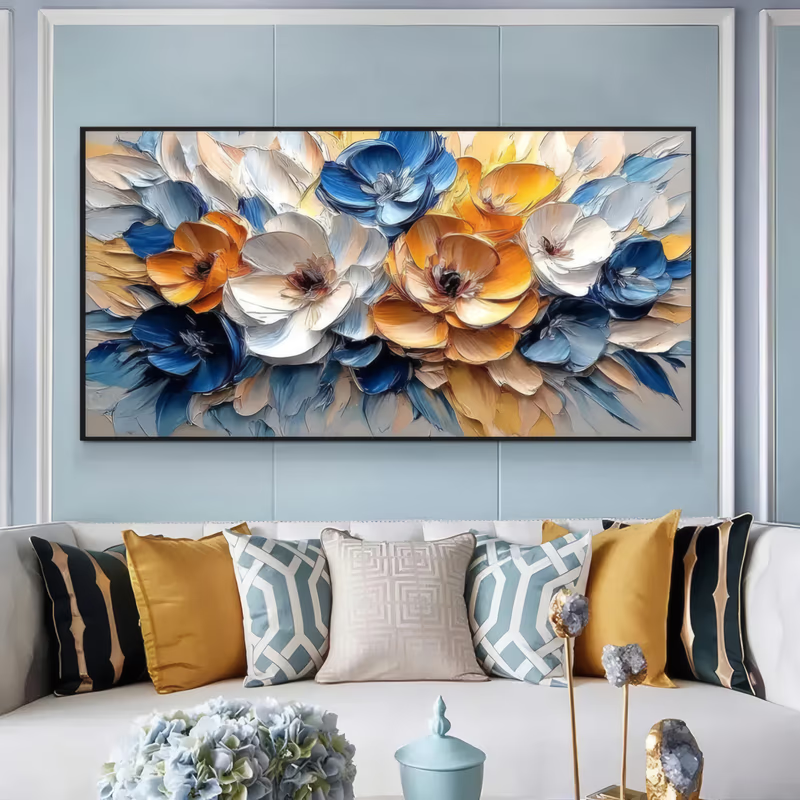
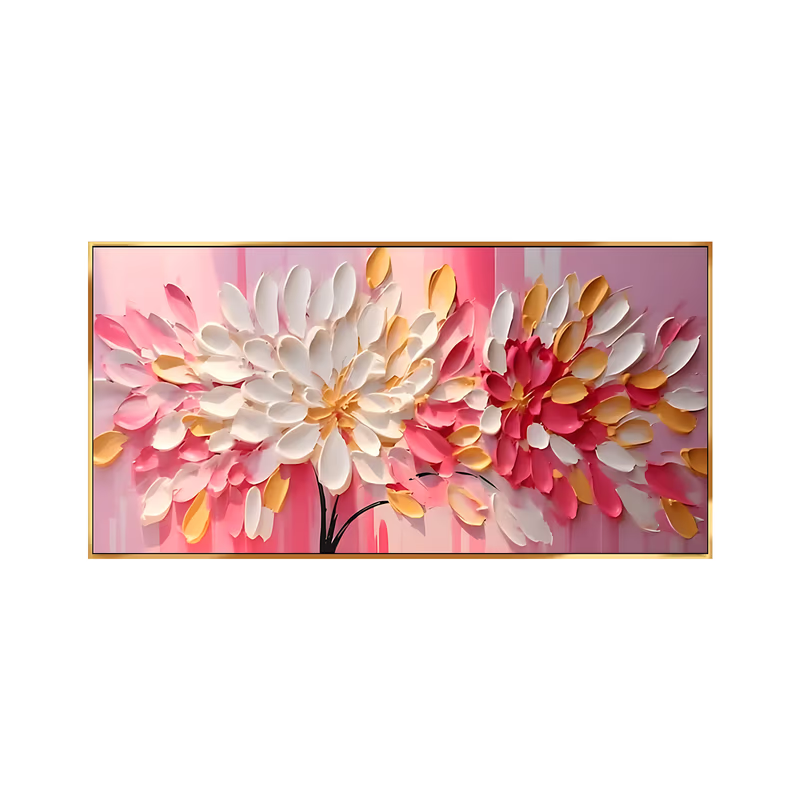
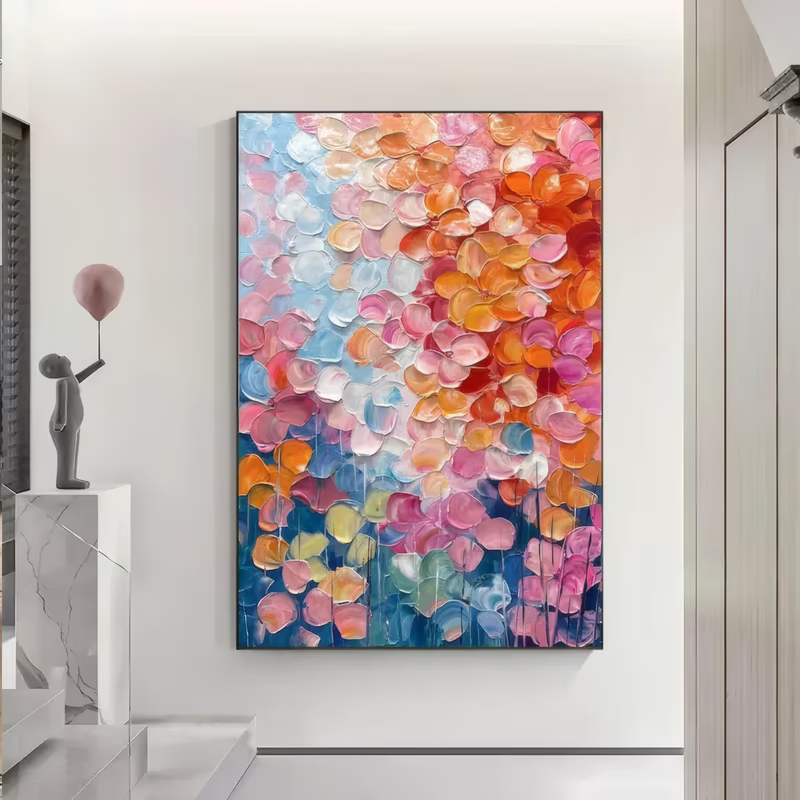
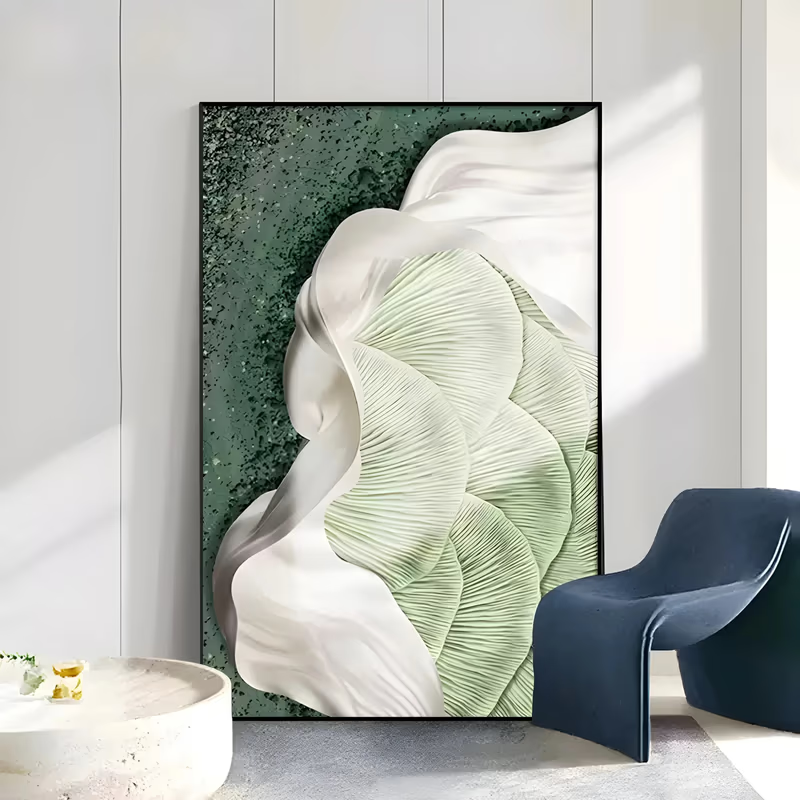
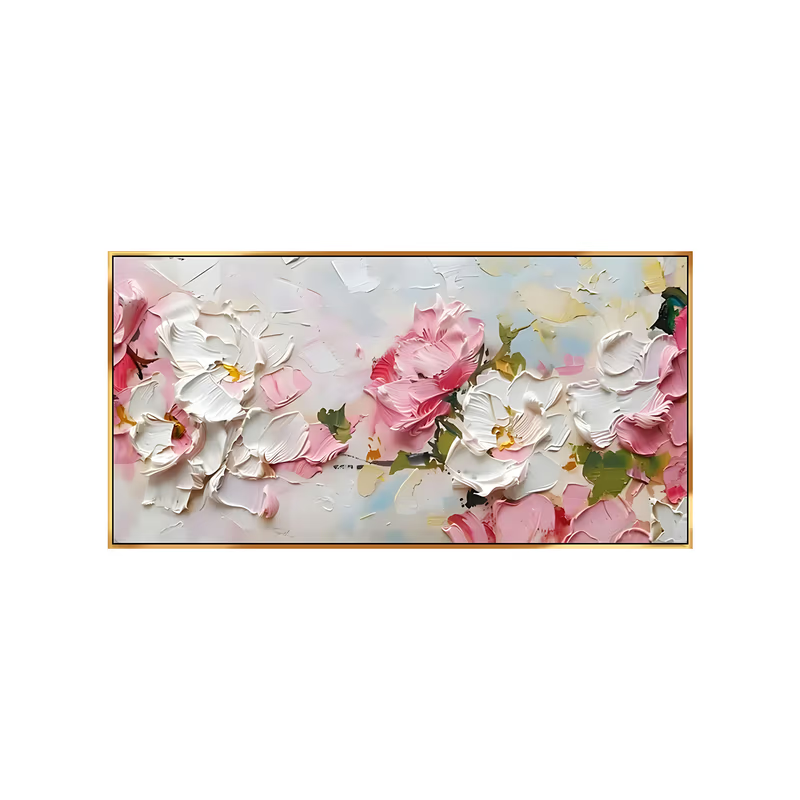
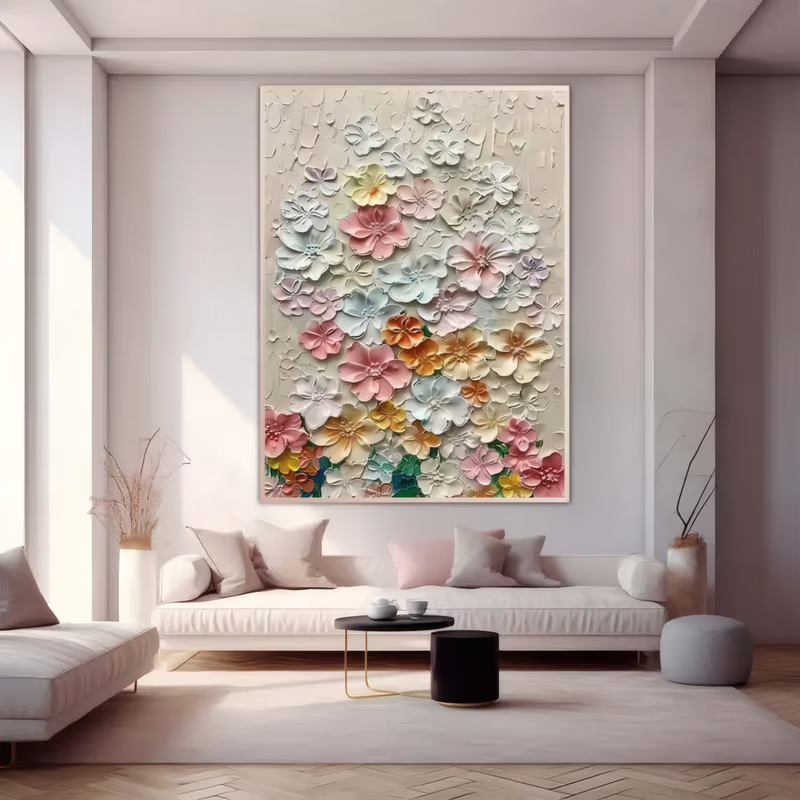
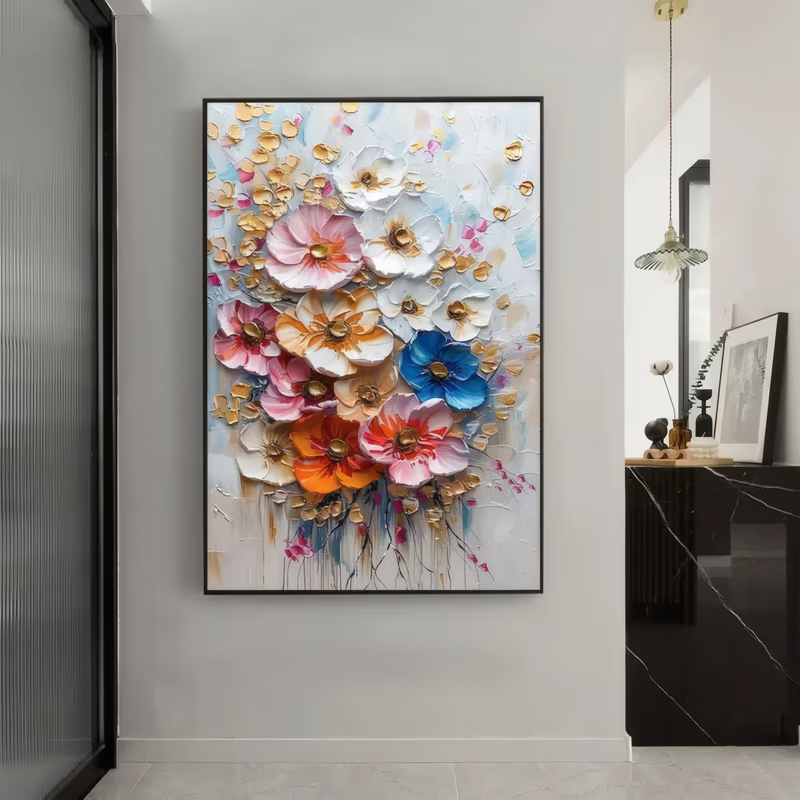
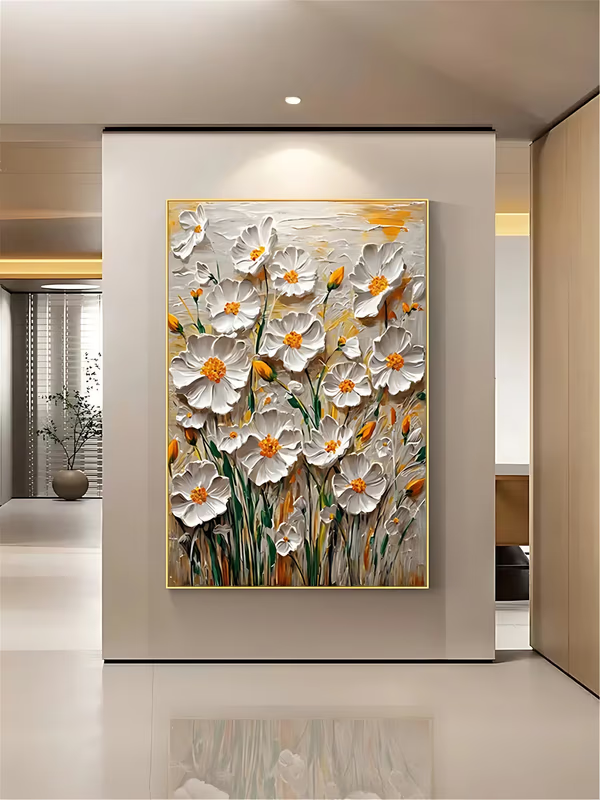
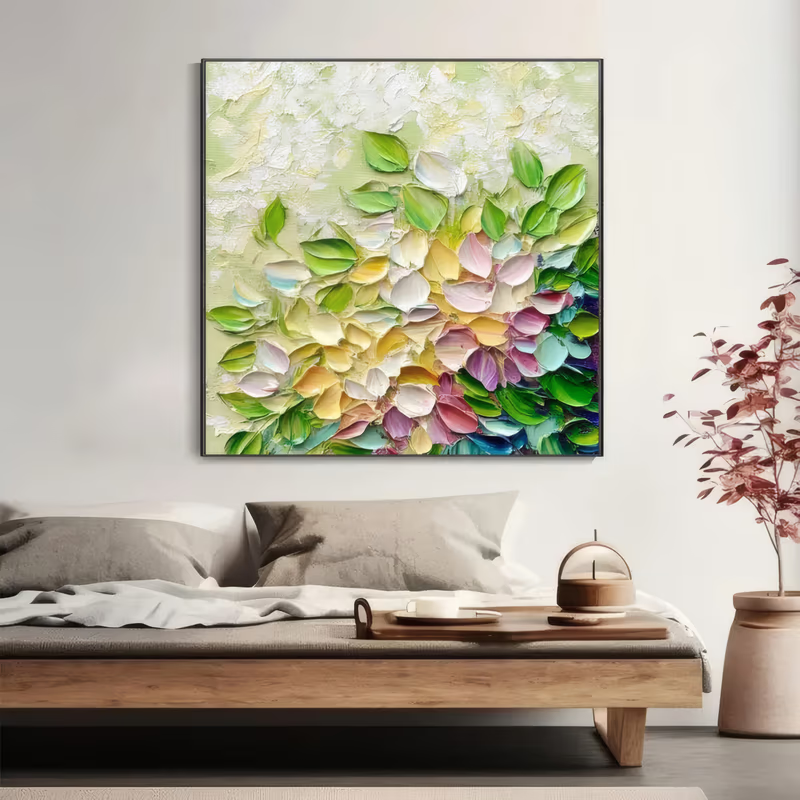
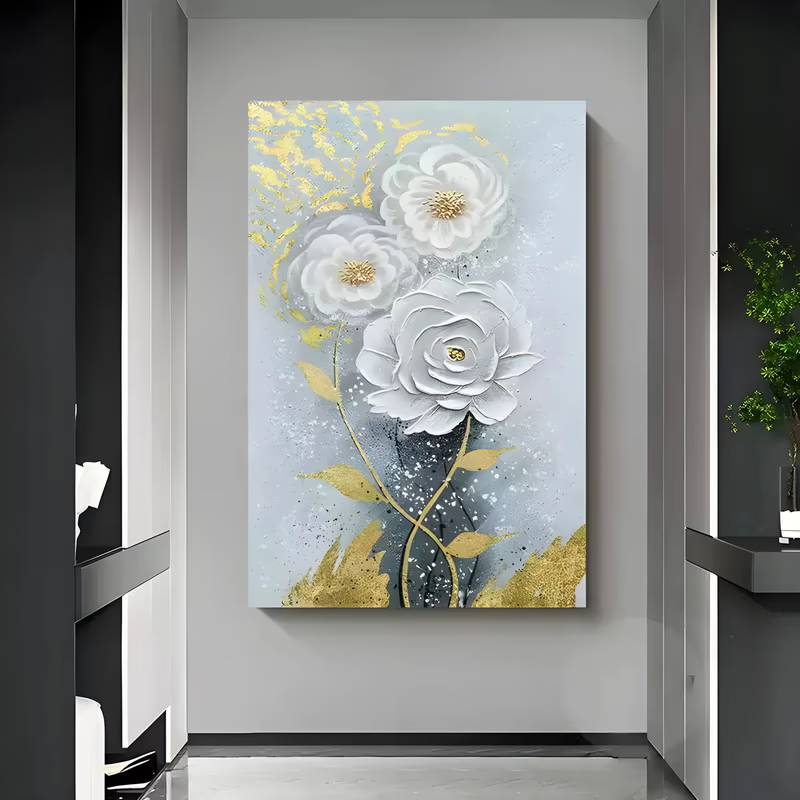
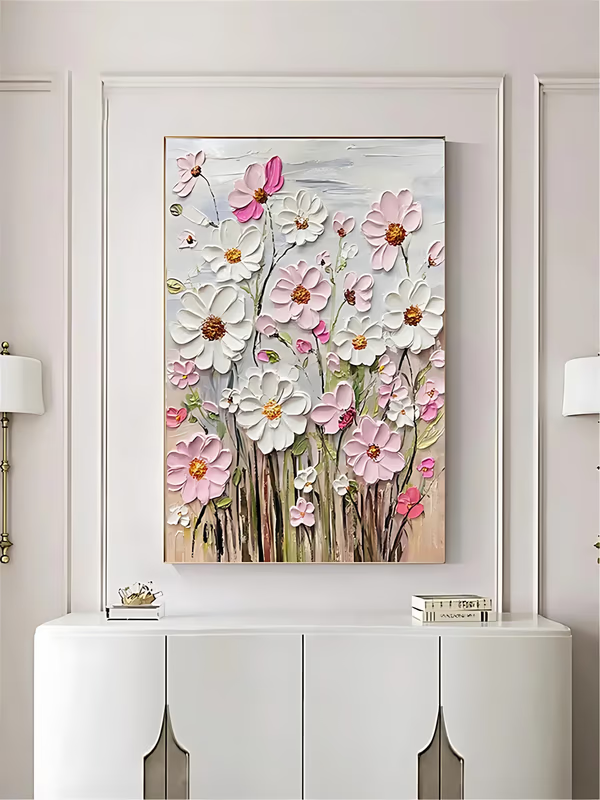
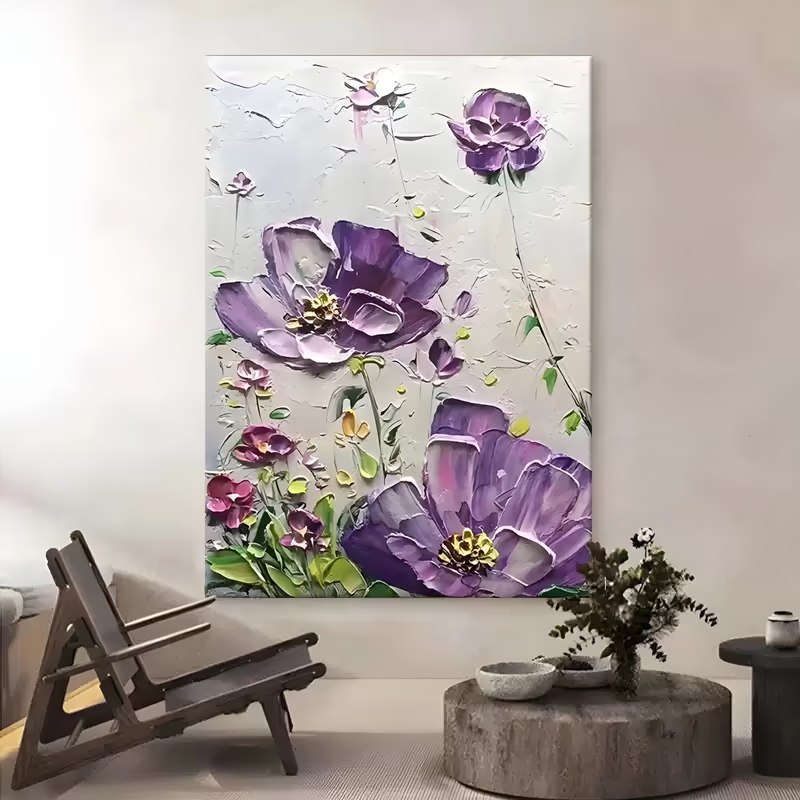
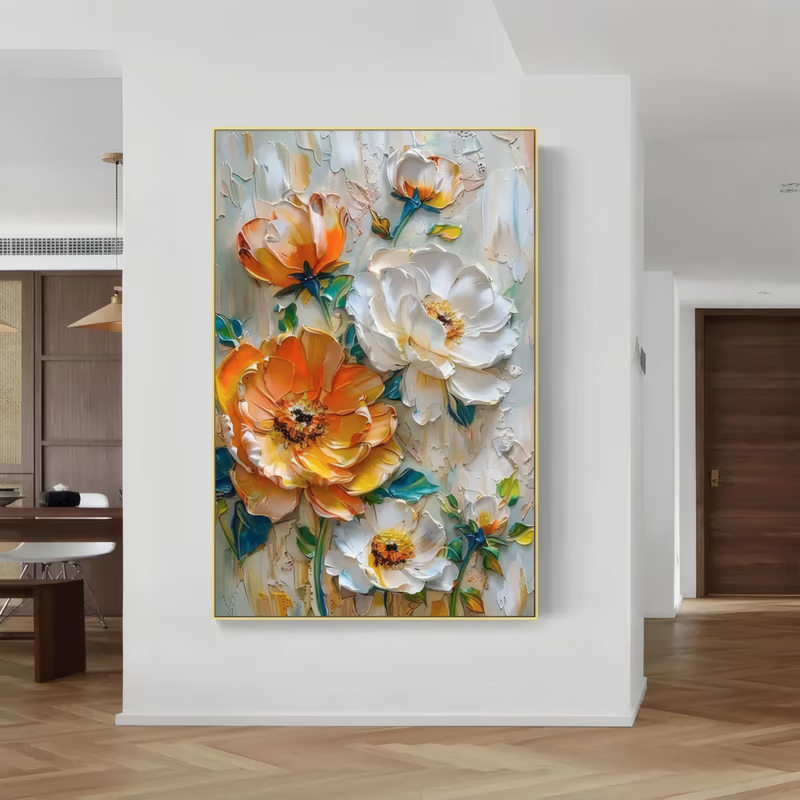
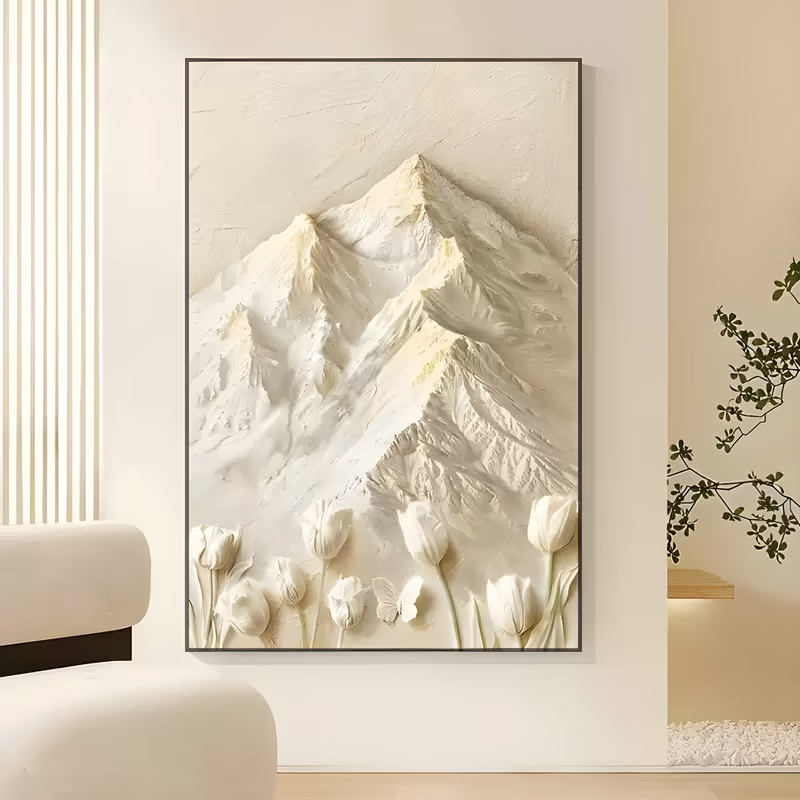
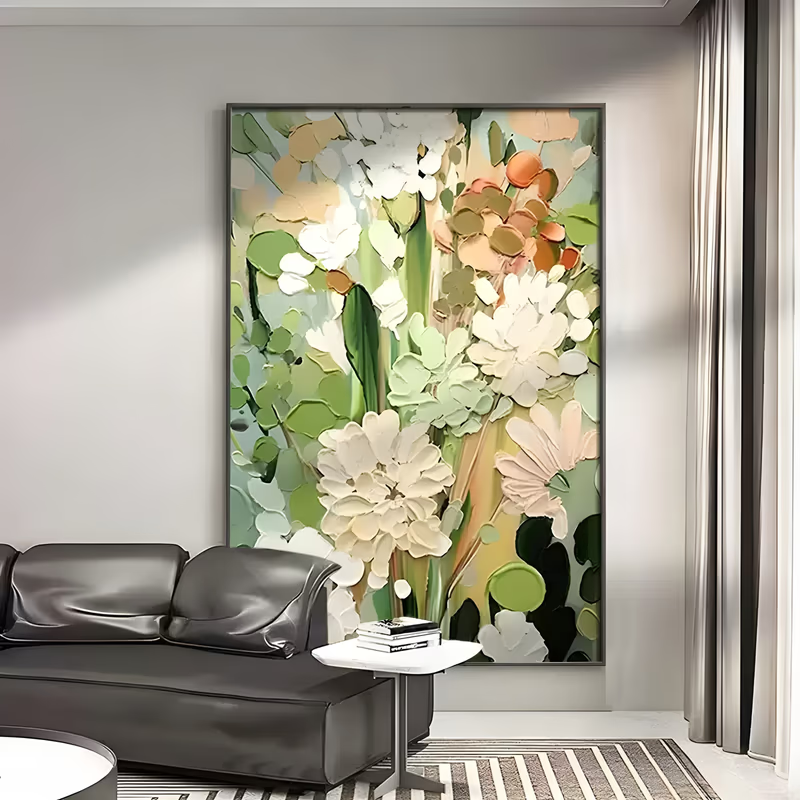
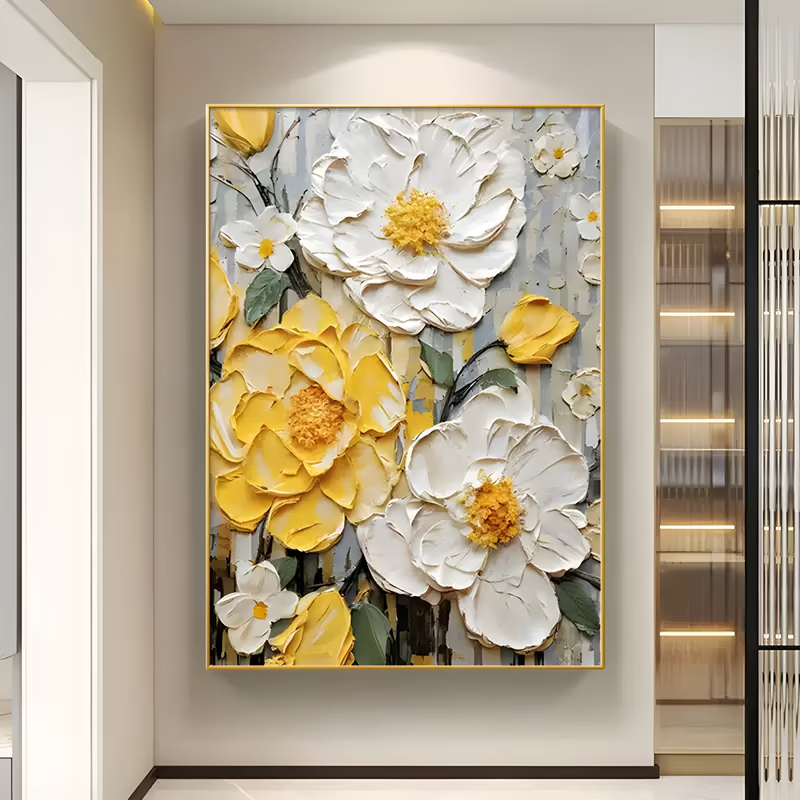
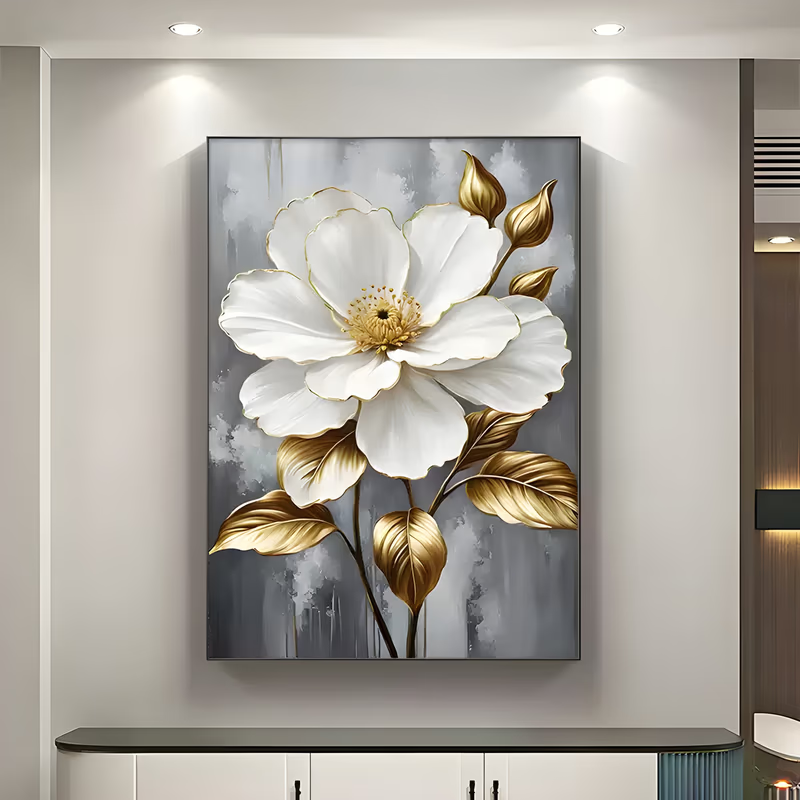
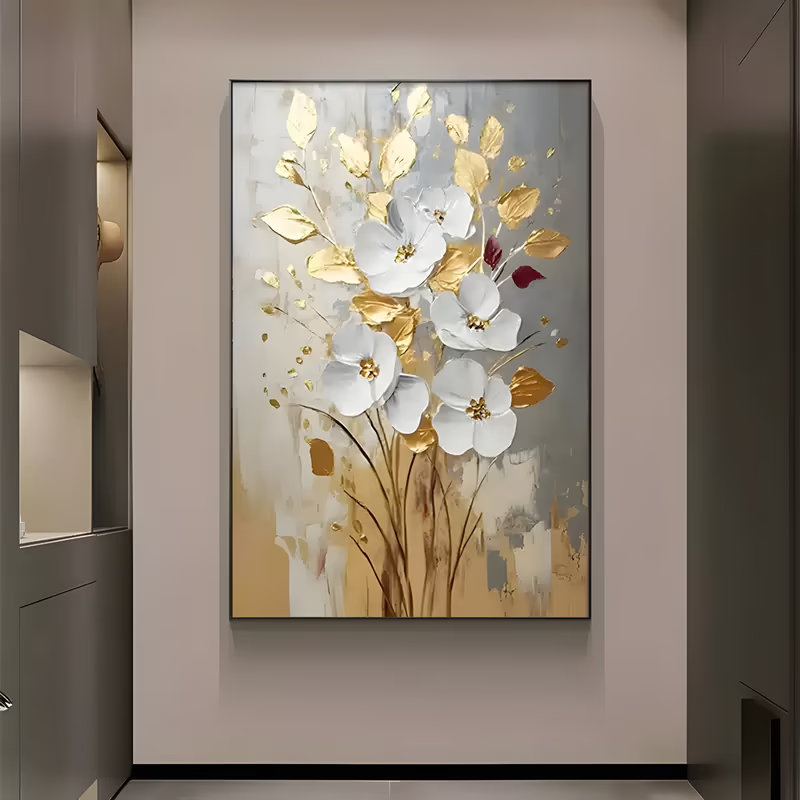
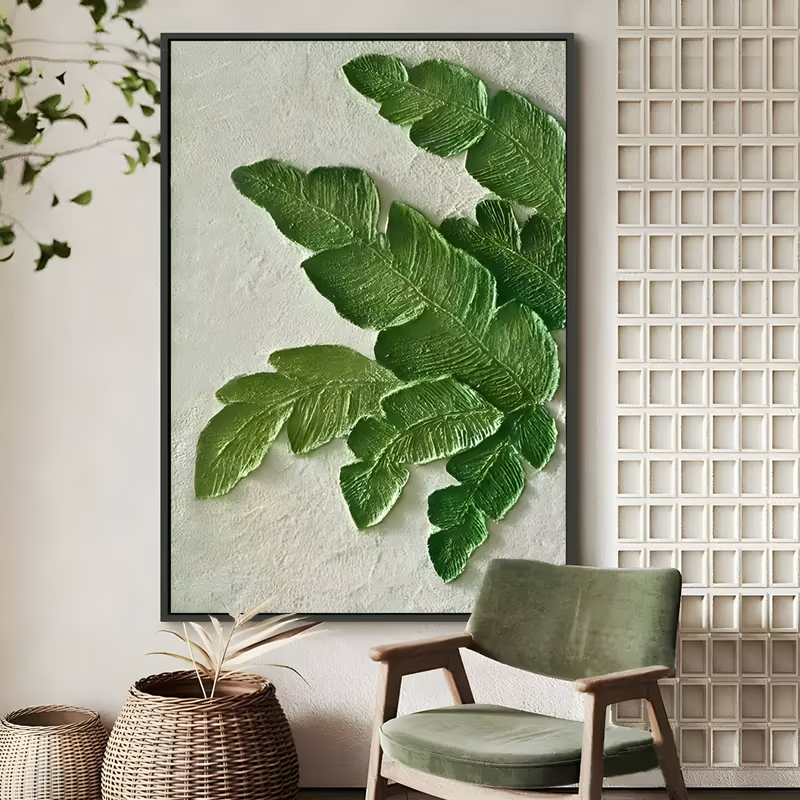
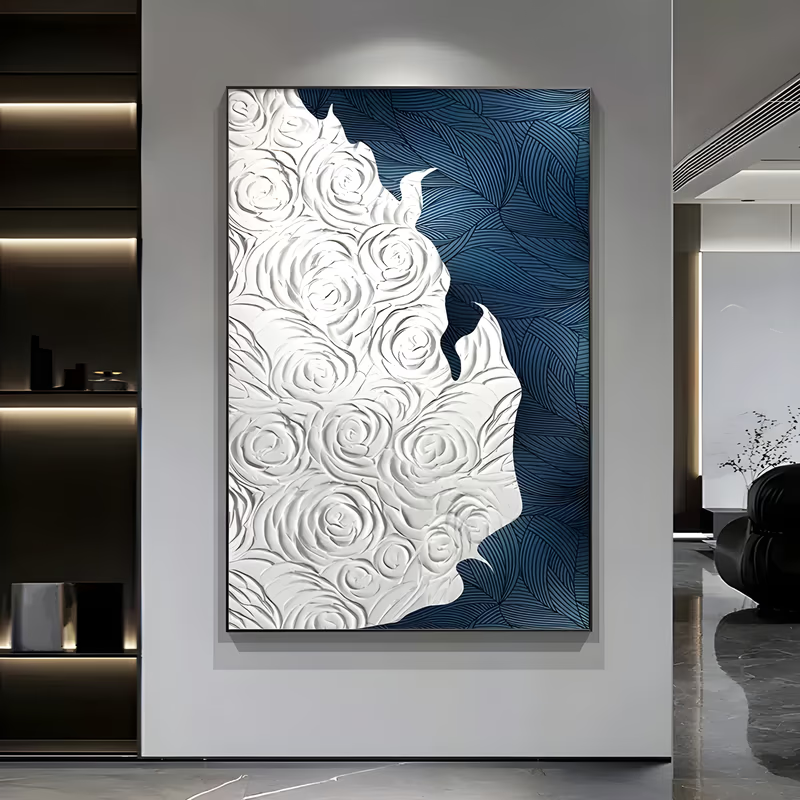
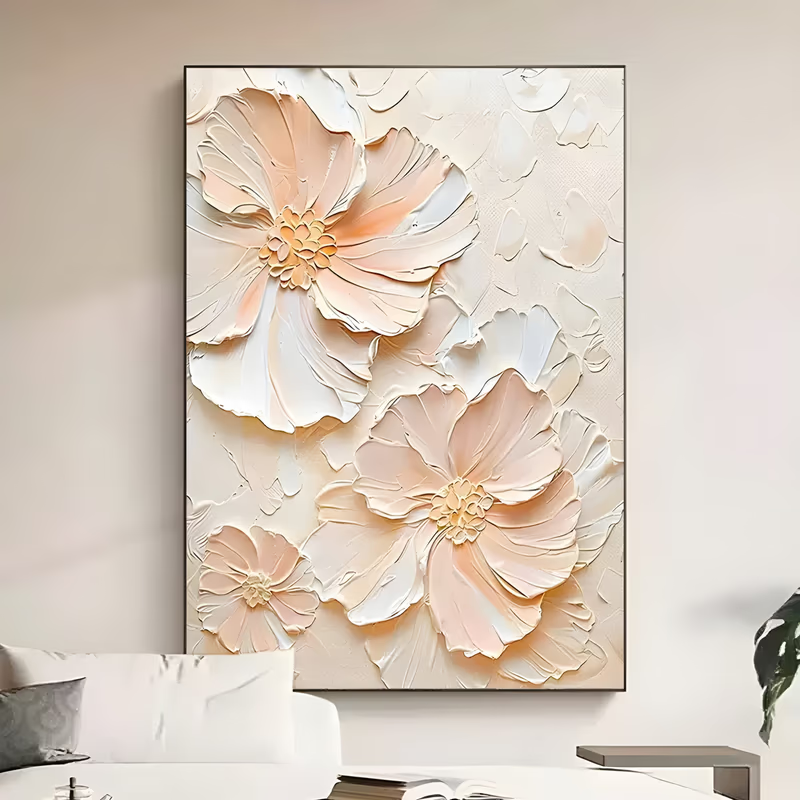
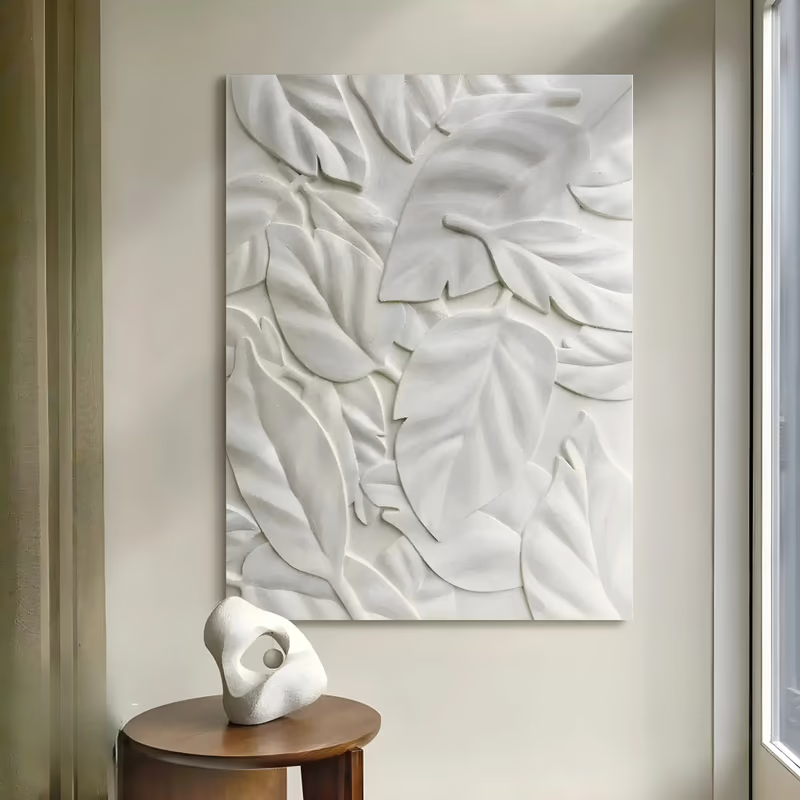
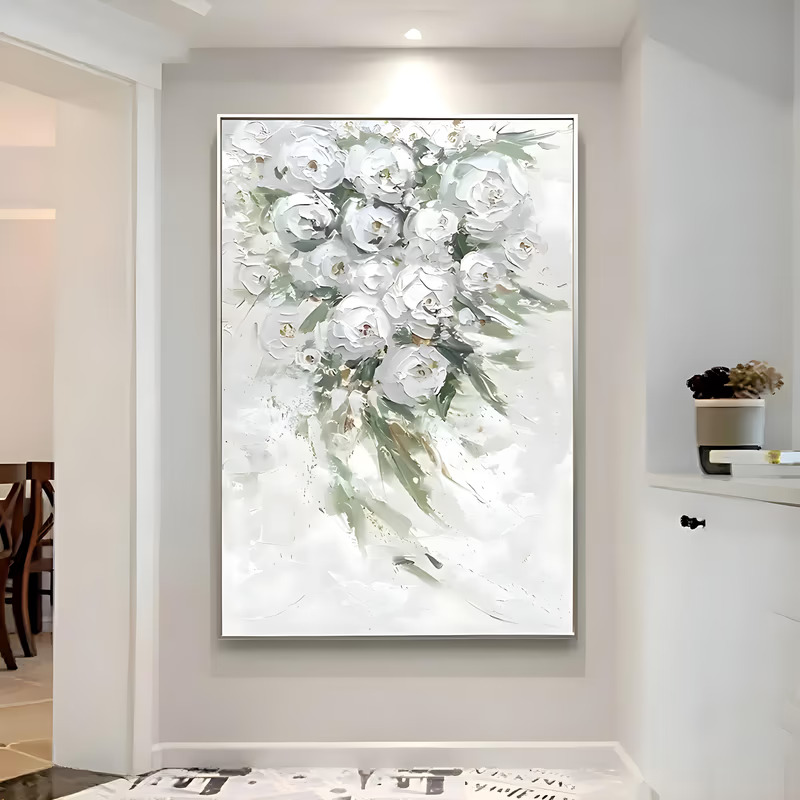
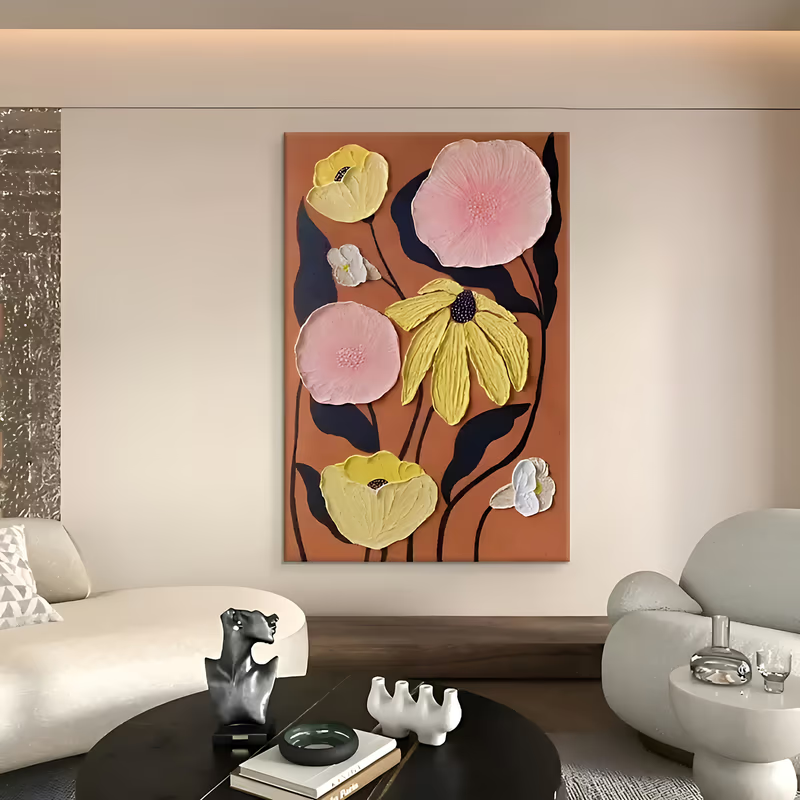
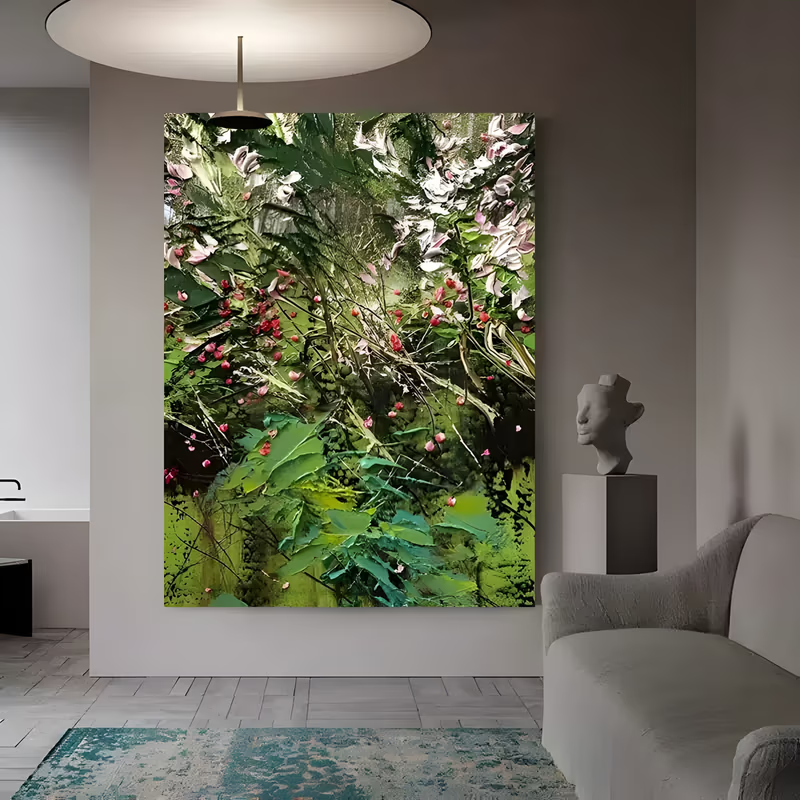
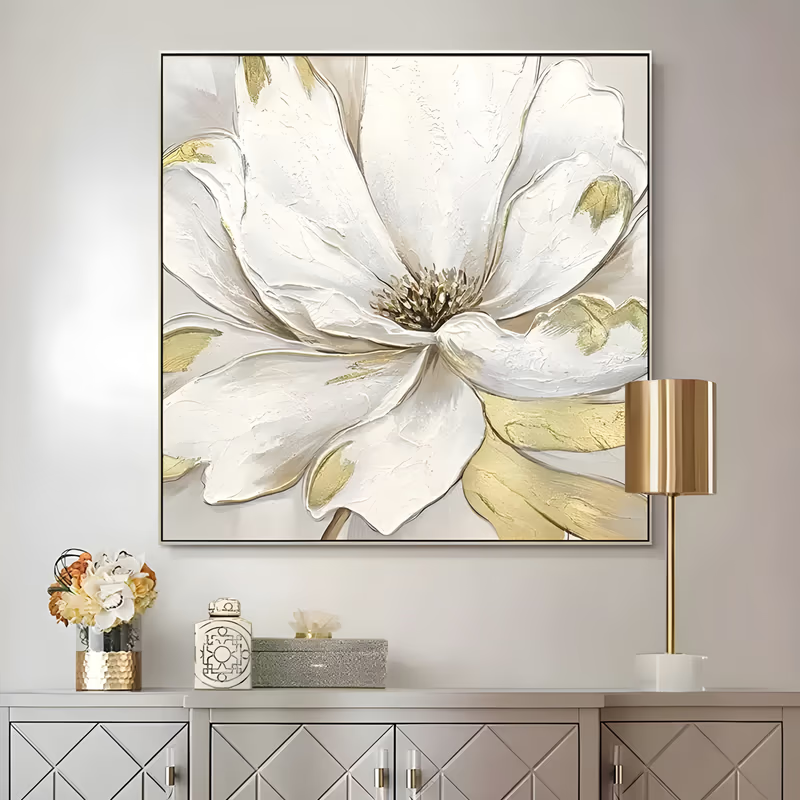
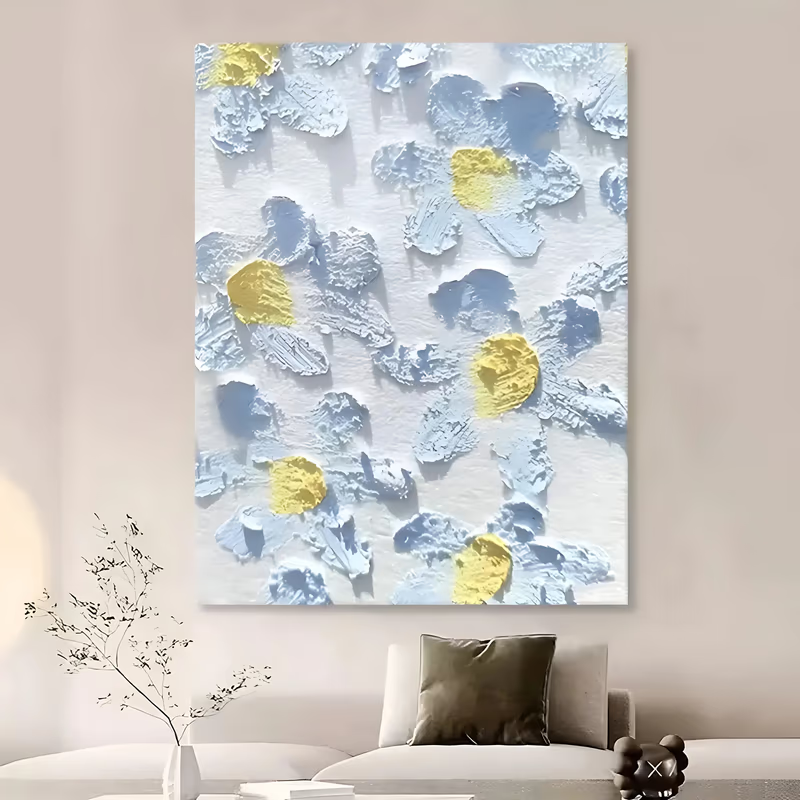
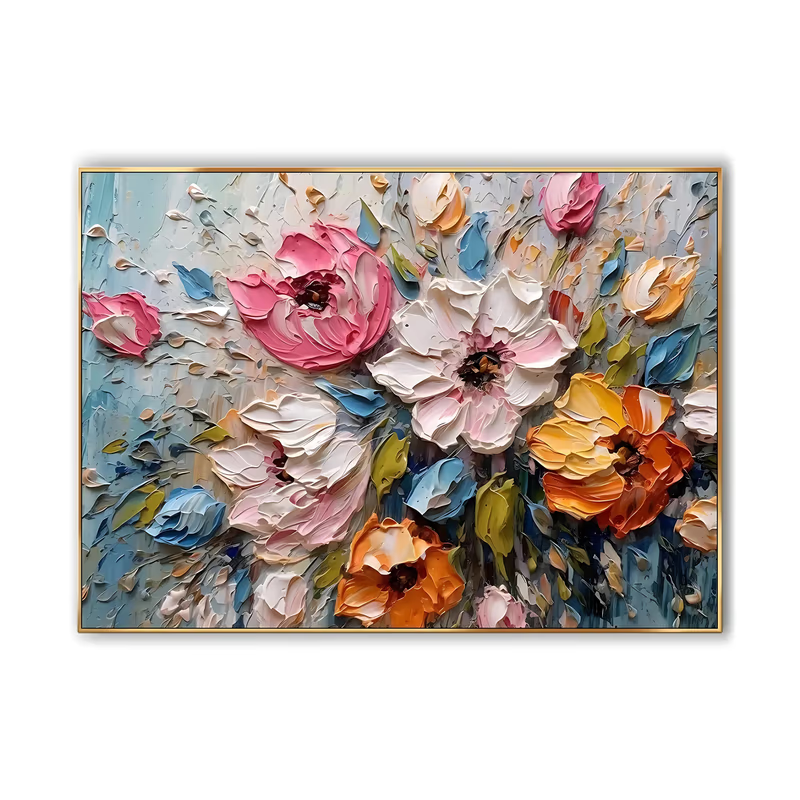
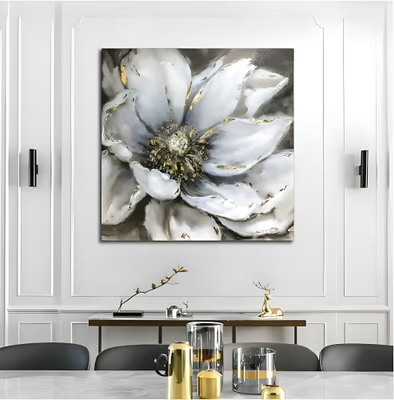
| Sculpted relief flowers | Tactile and architectural; almost a wall sculpture | Lobbies, feature walls, minimalist rooms |
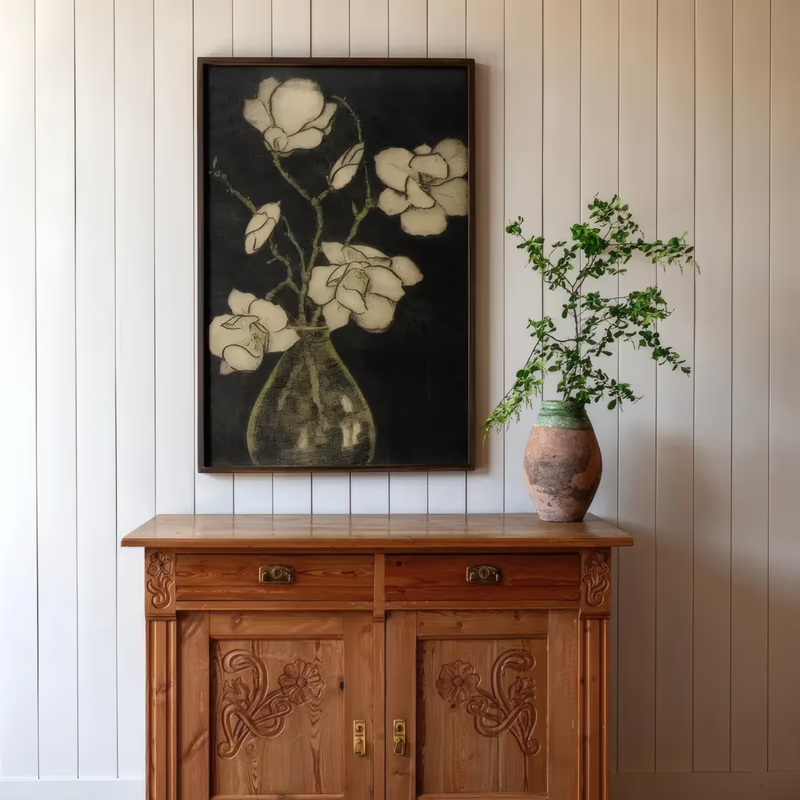
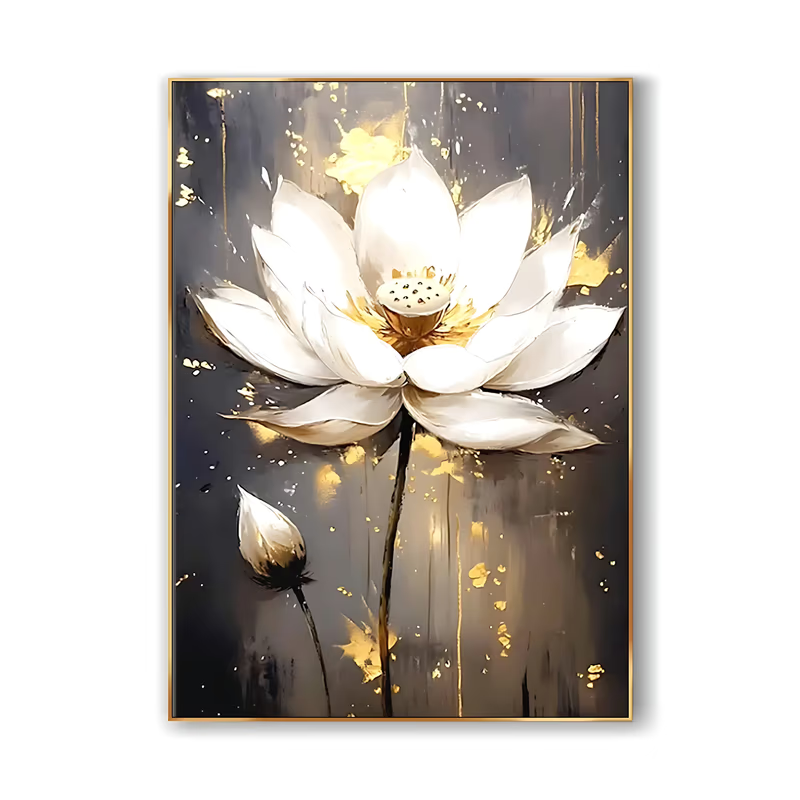
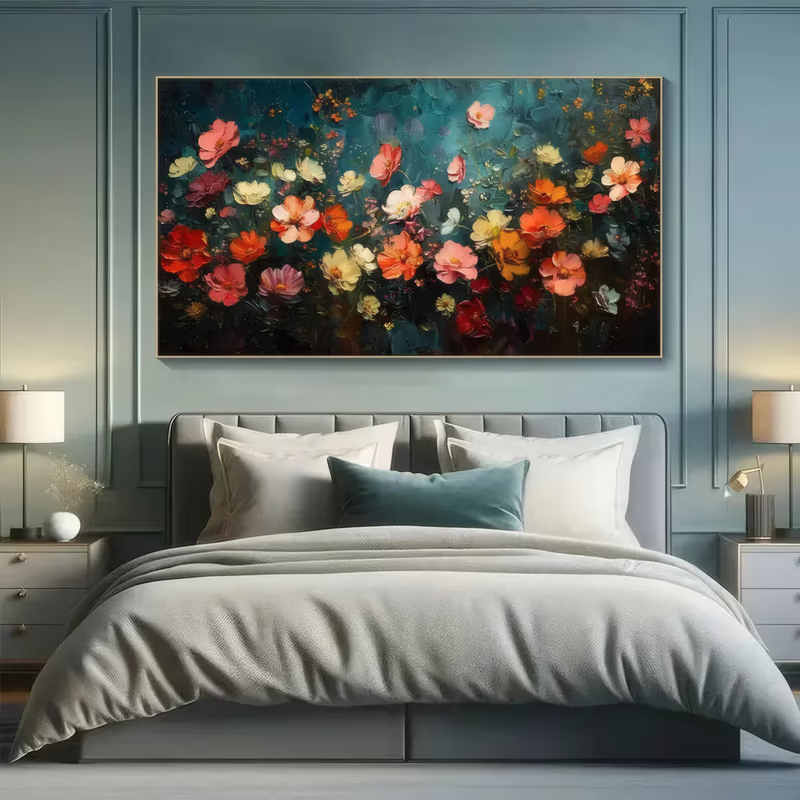
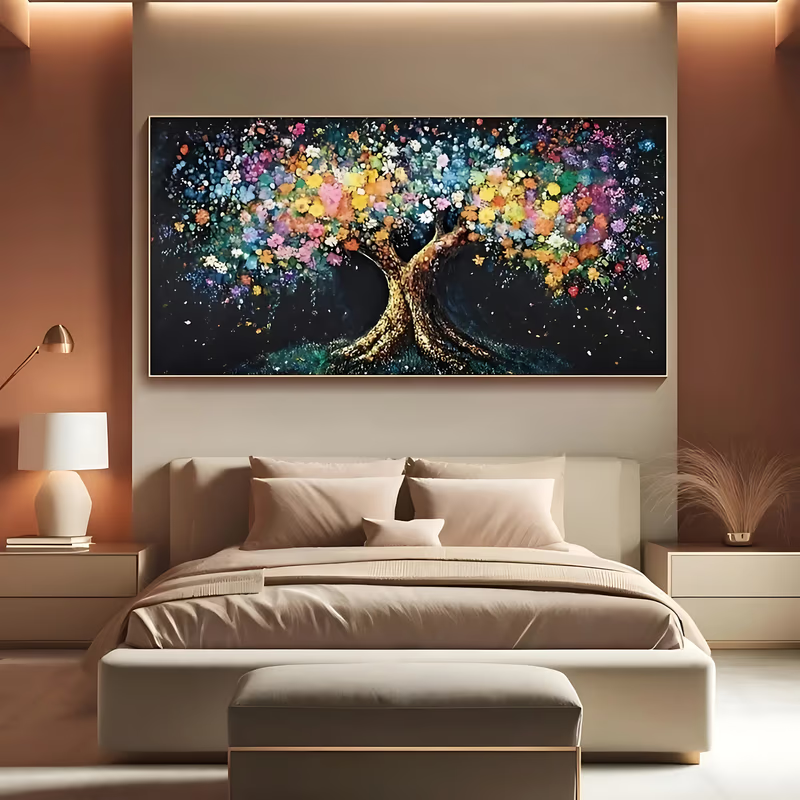
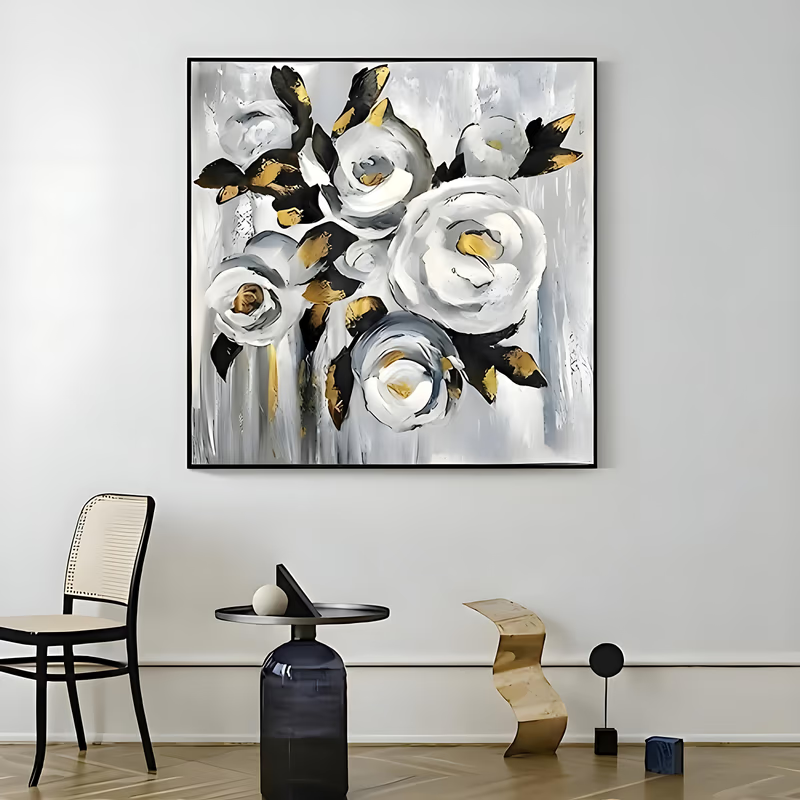
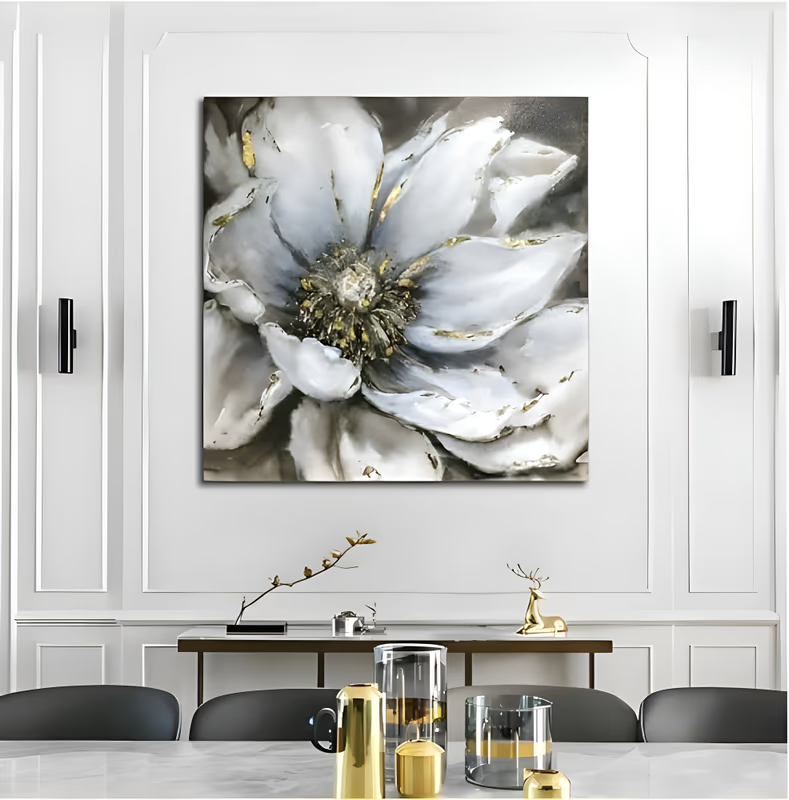
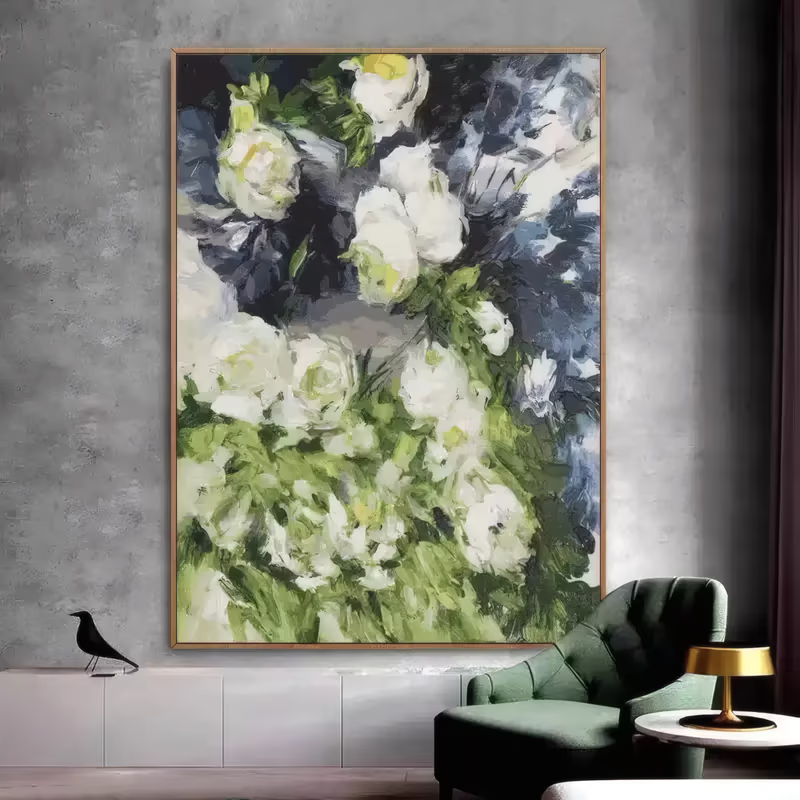
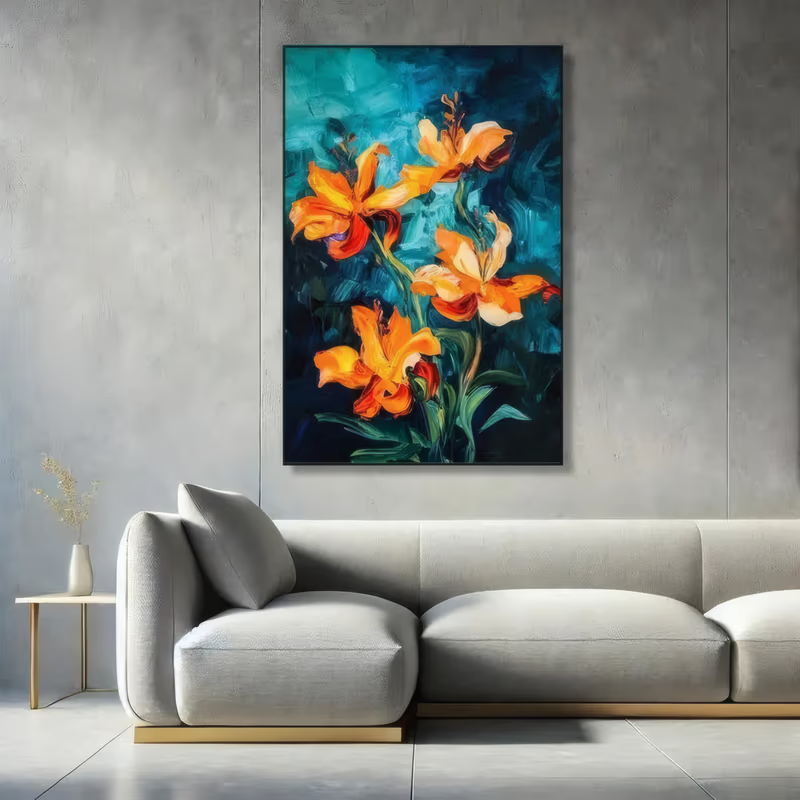
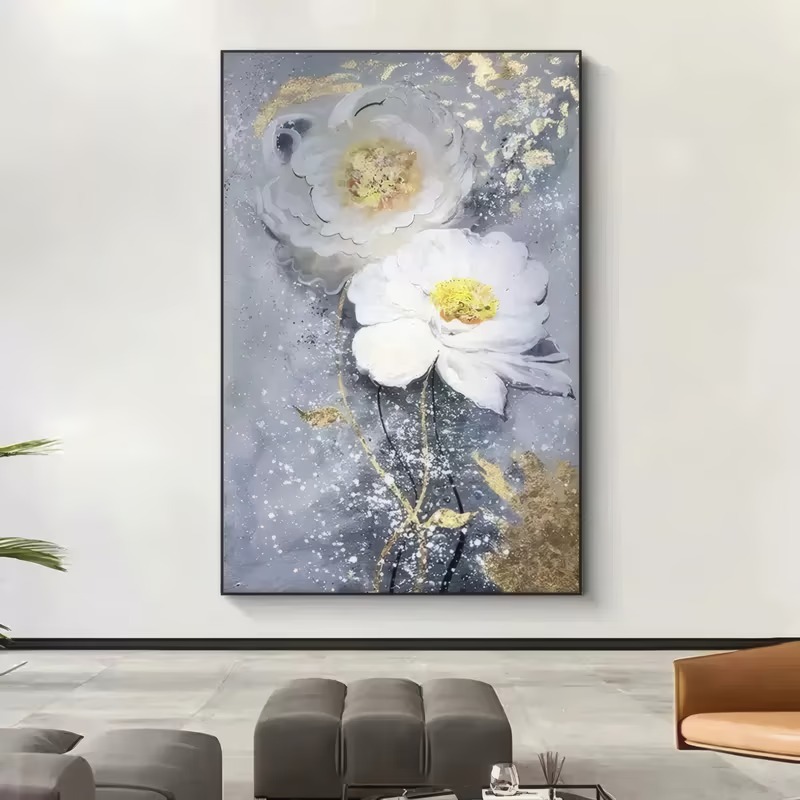
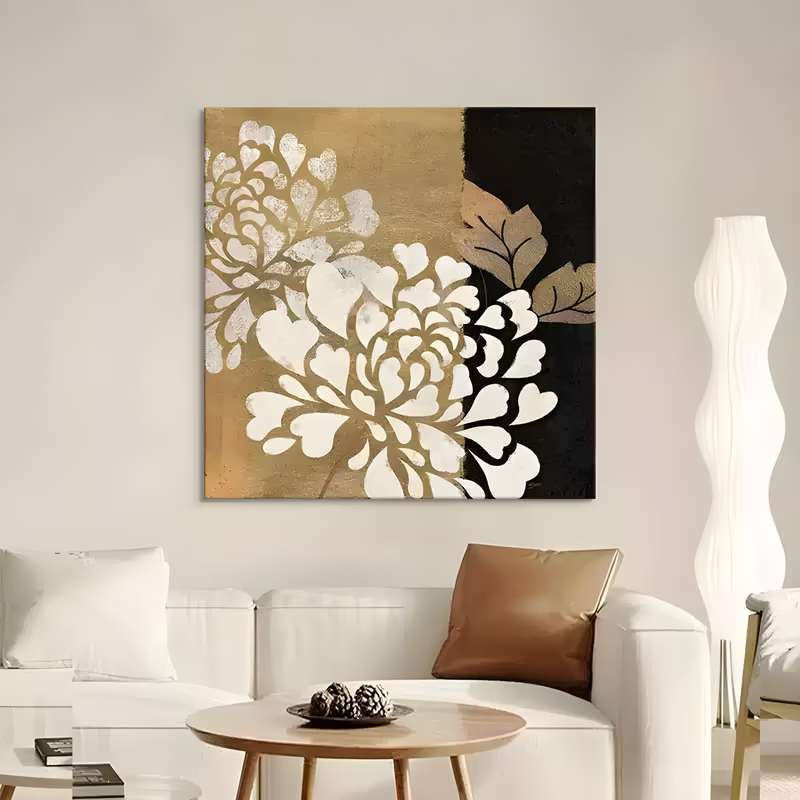
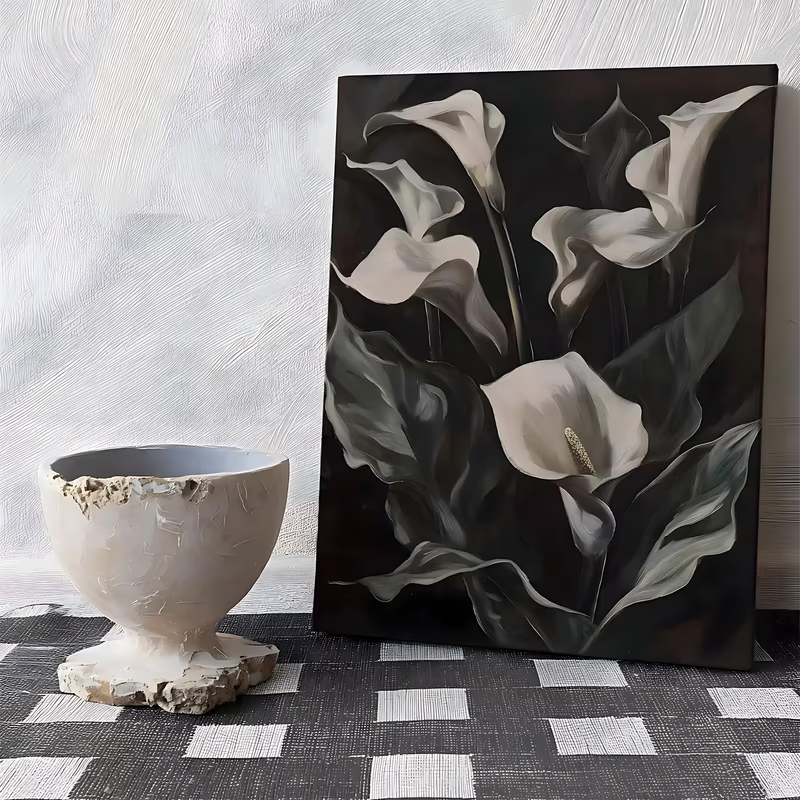
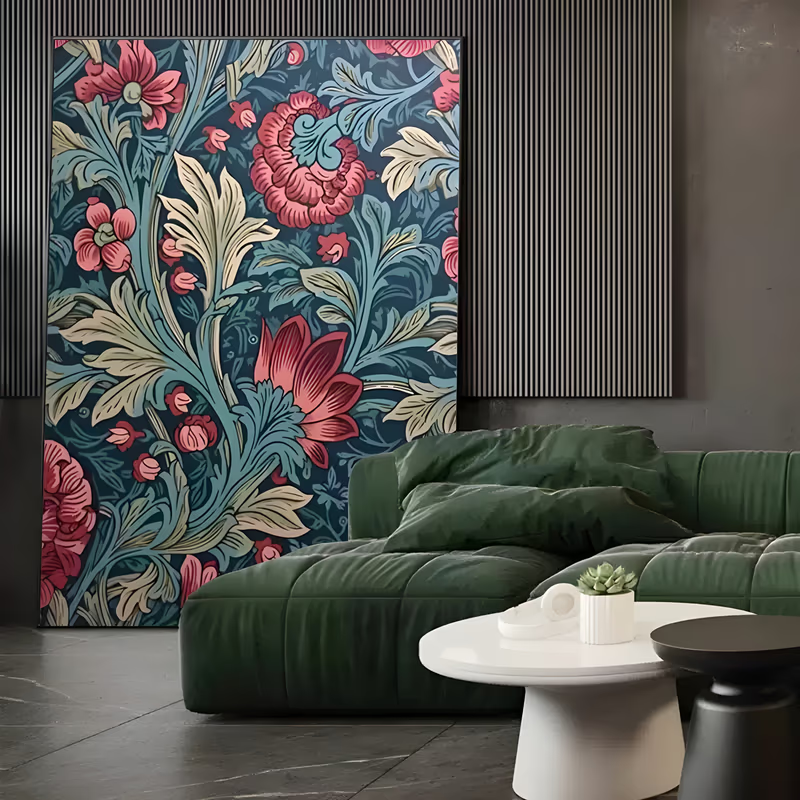
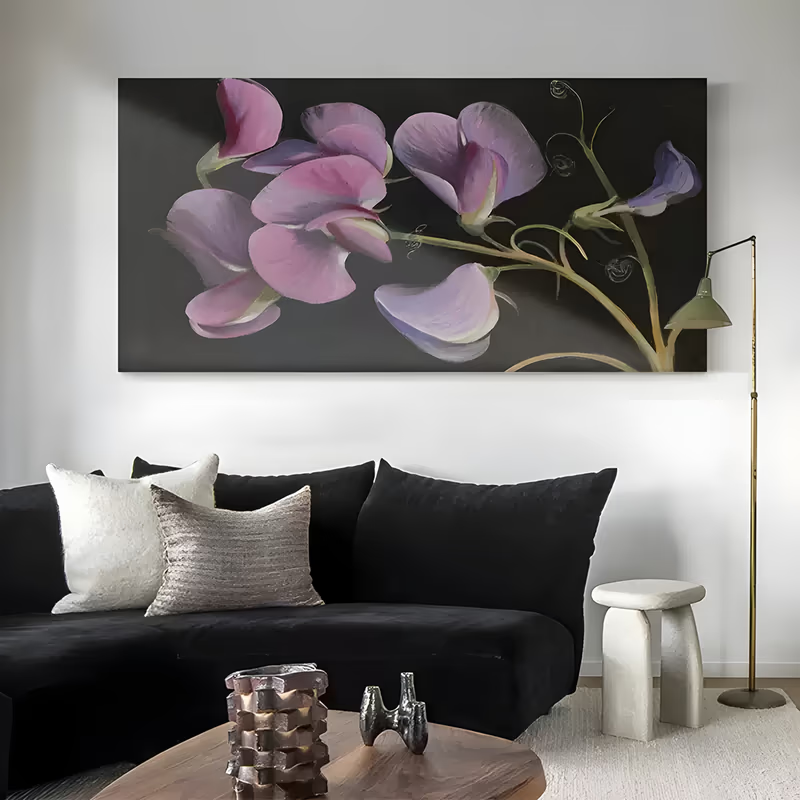
Background colour matters as much as the flowers. White peonies on navy, calla lilies on black or a single magnolia on charcoal read as sophisticated; the same flowers on a busy multicoloured ground read as cottage. If a room is already patterned, choose a single species on a plain field. Arrangements in vases have their own page: see still life paintings.
What kinds of flower paintings are there?
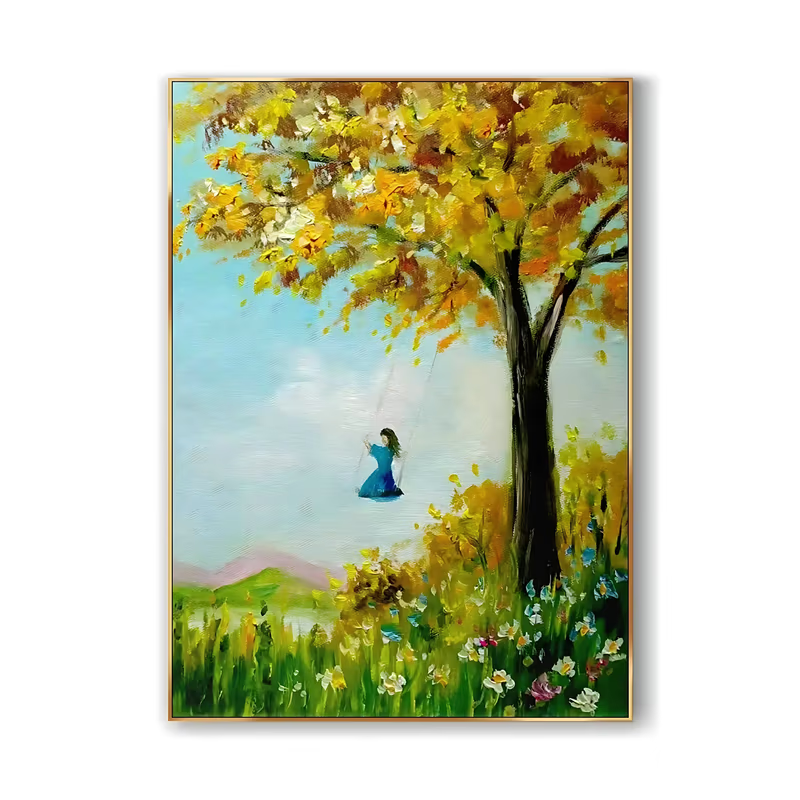
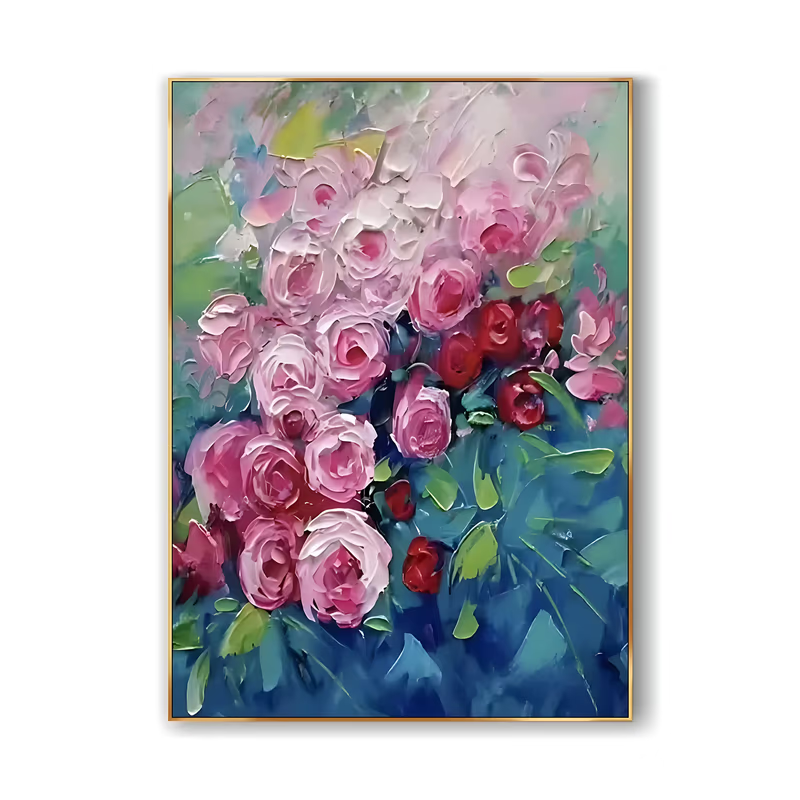
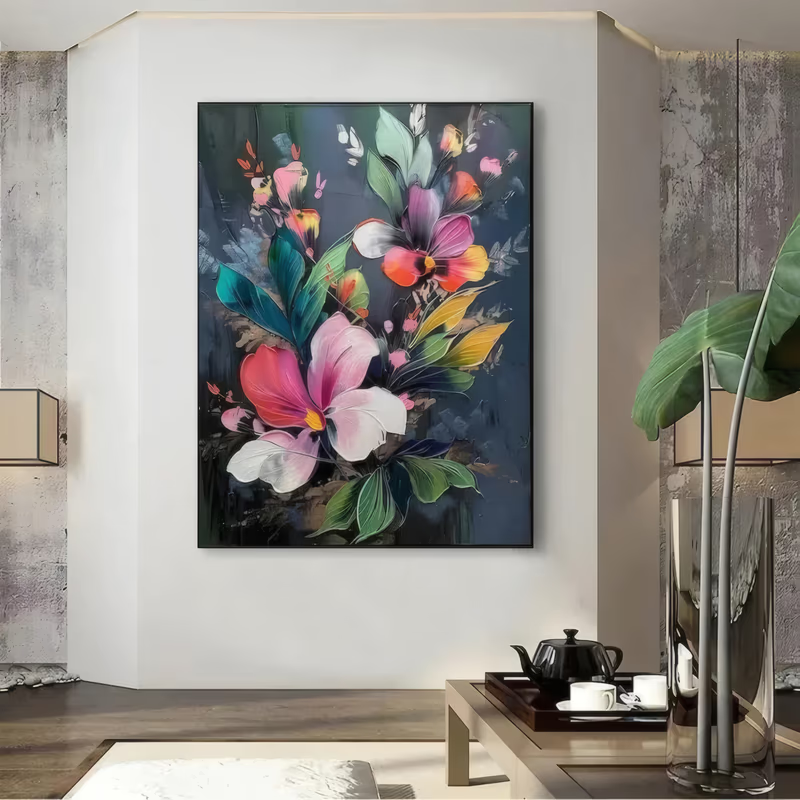
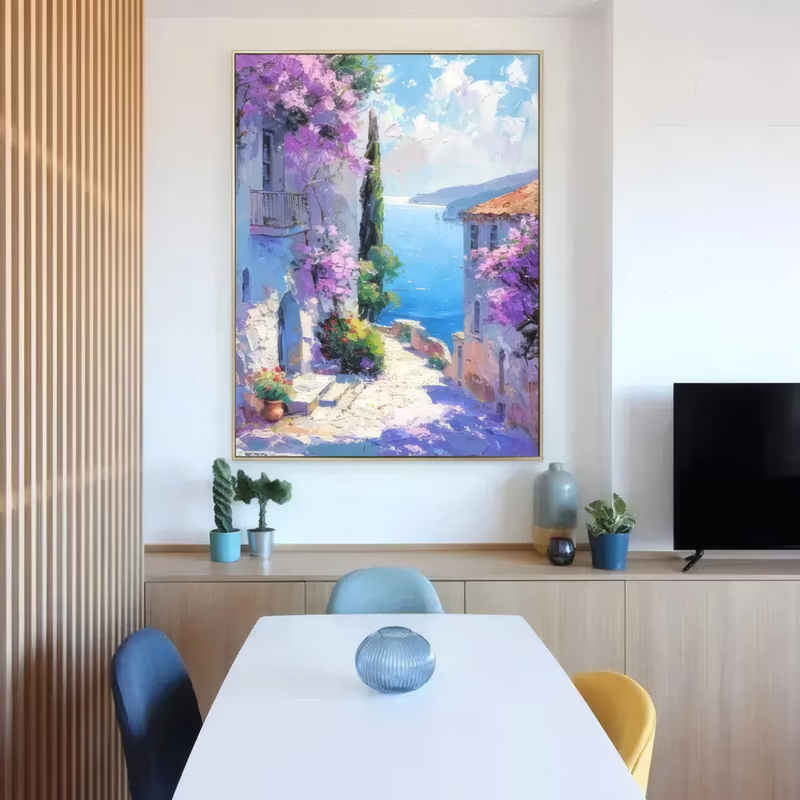
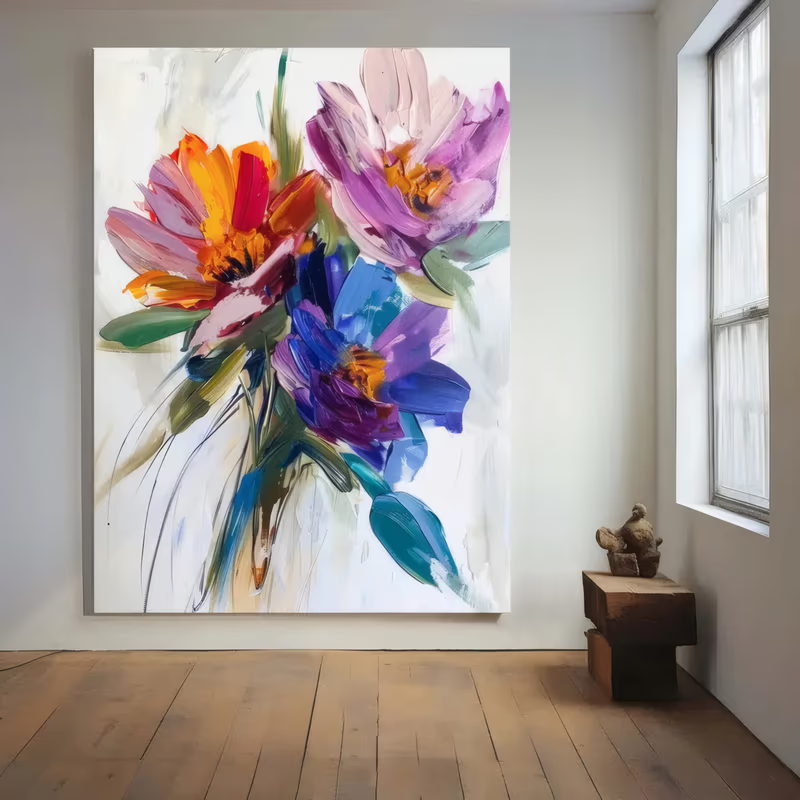
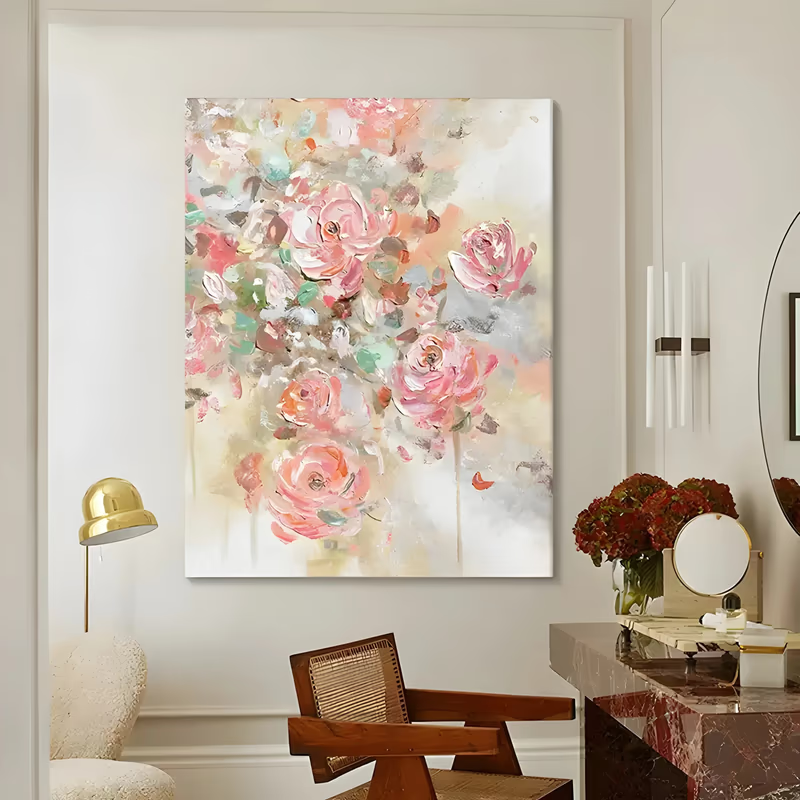
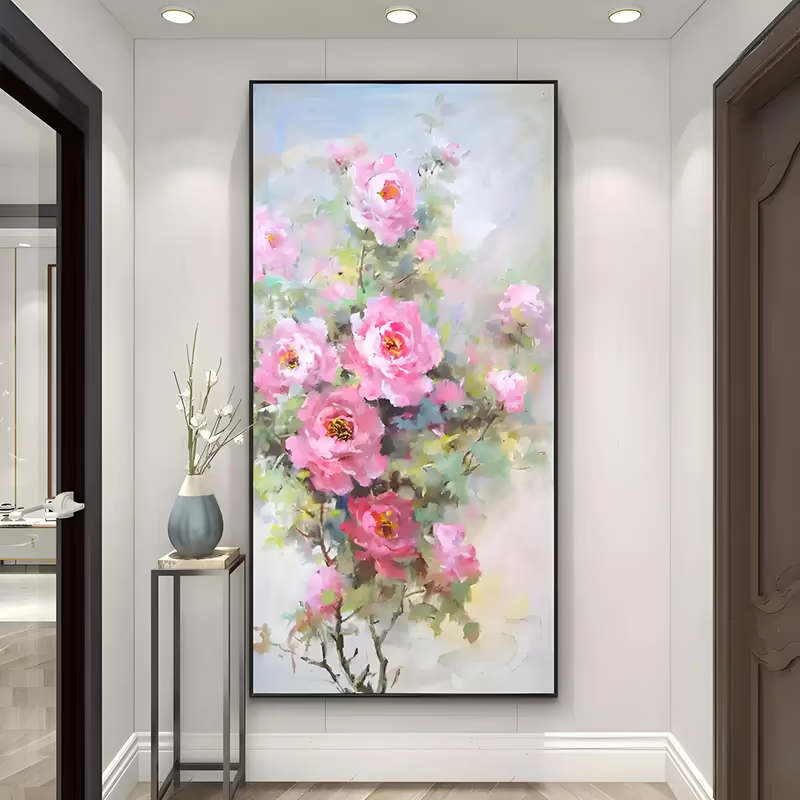
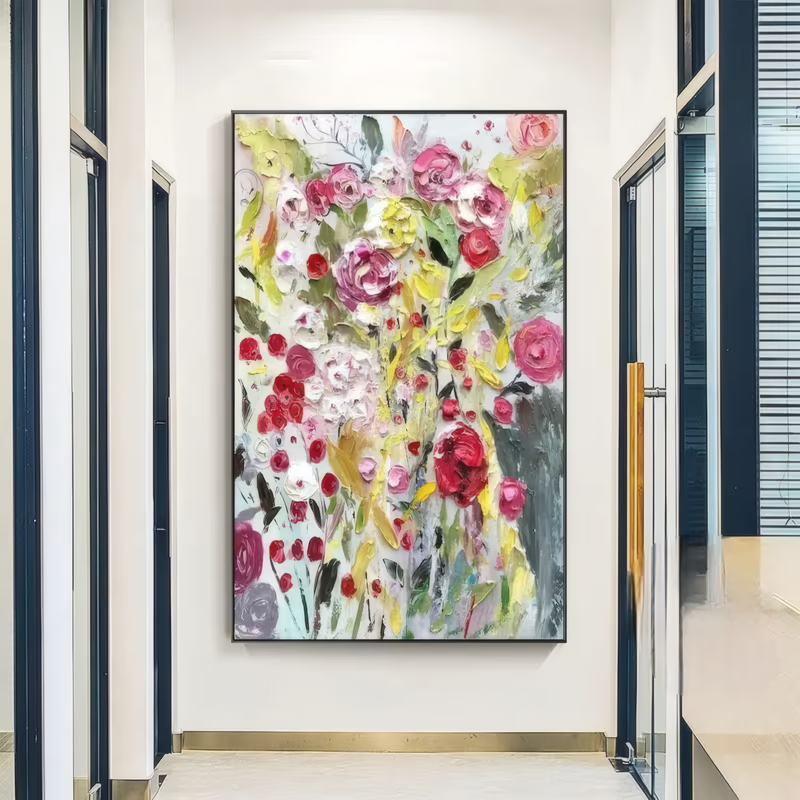
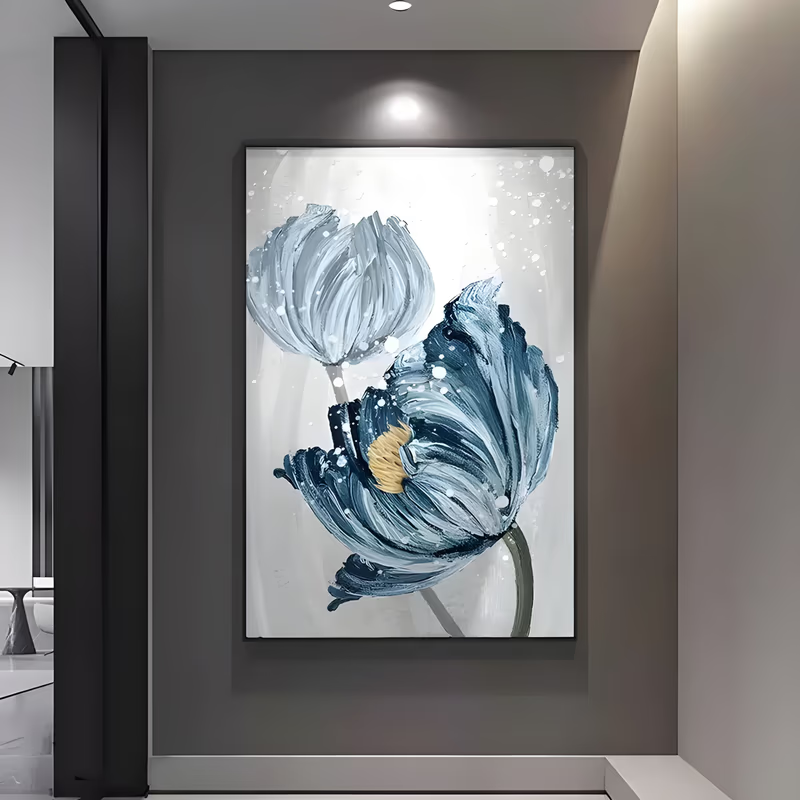
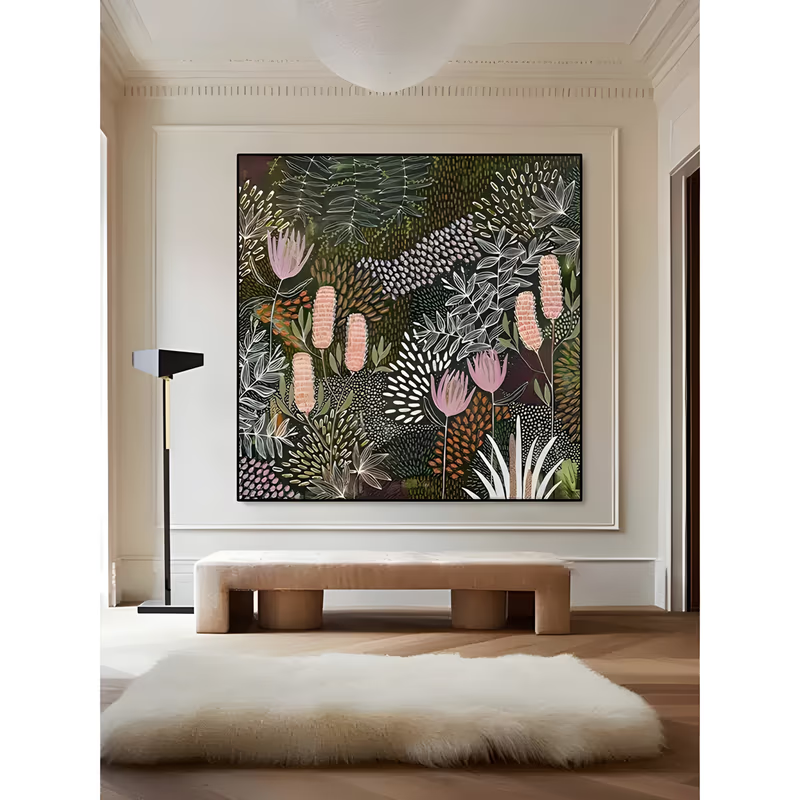
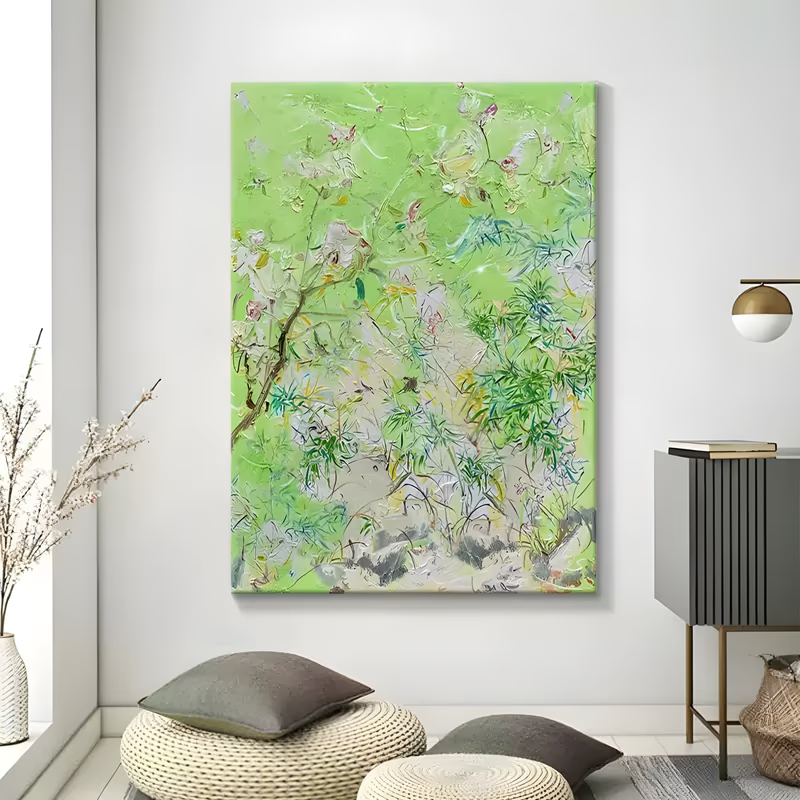
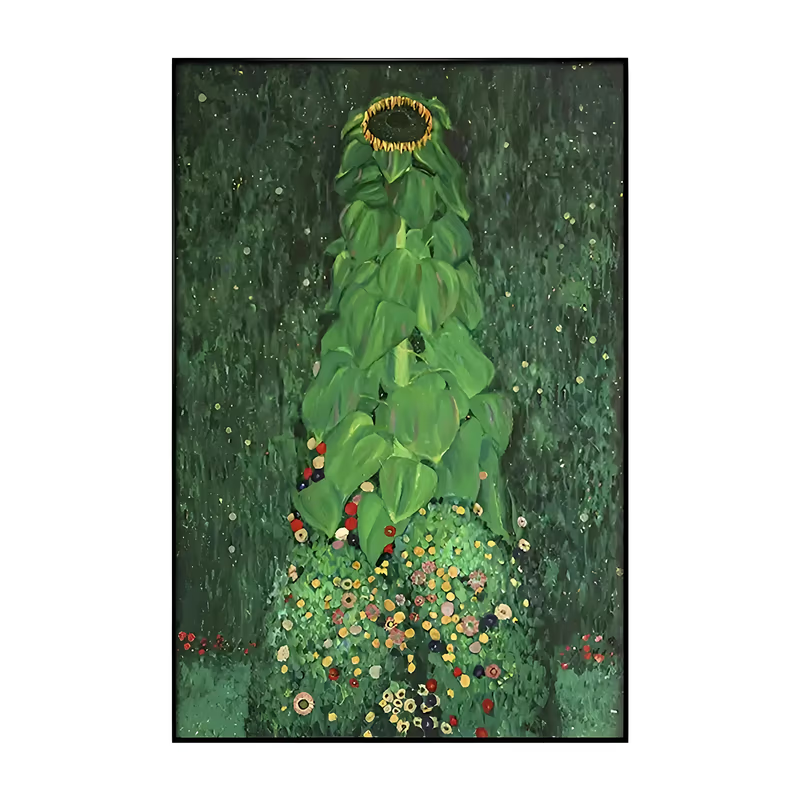
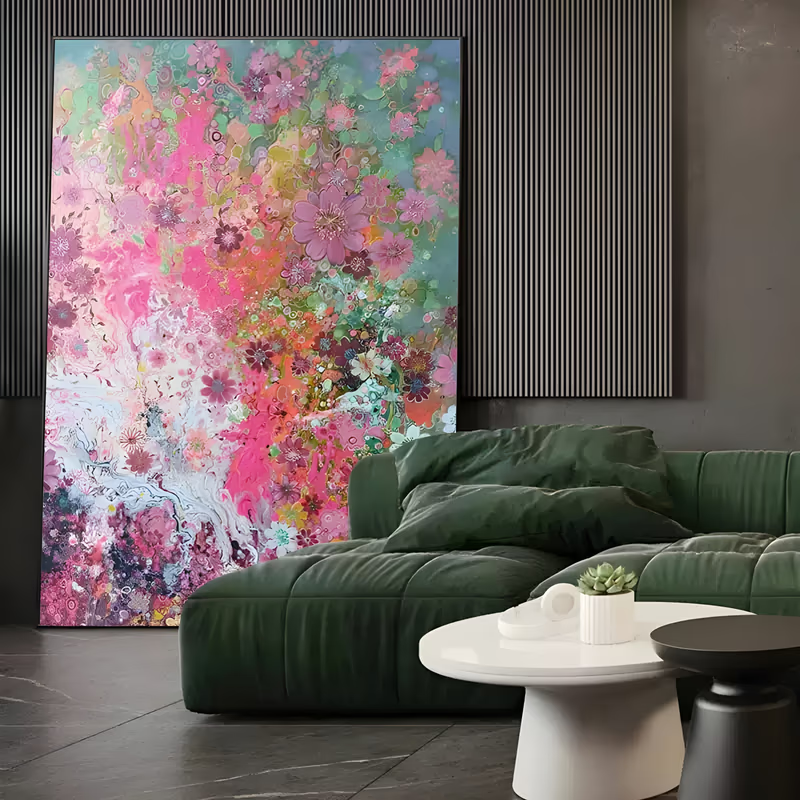
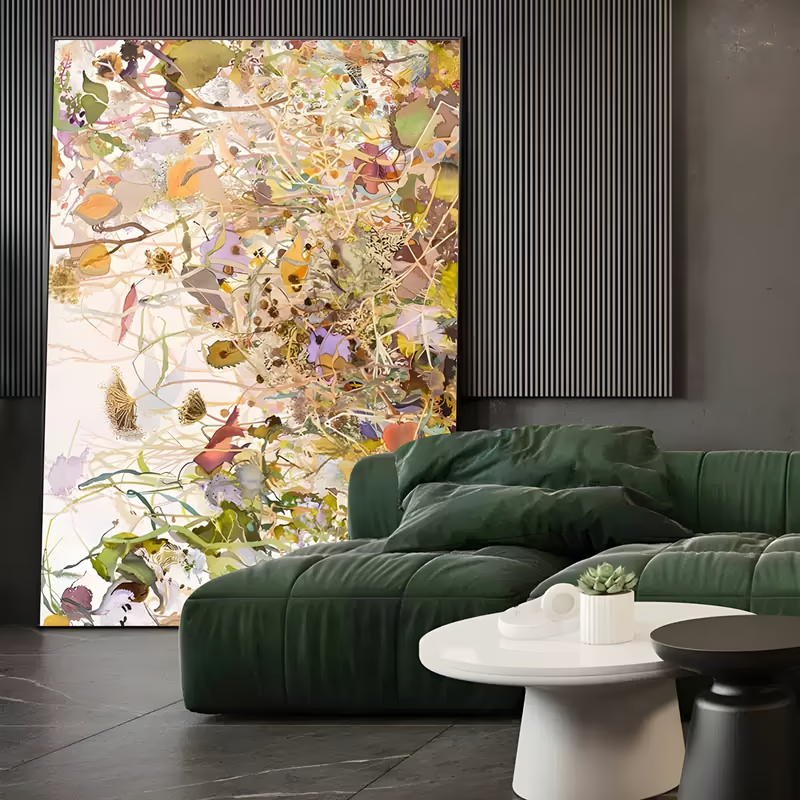
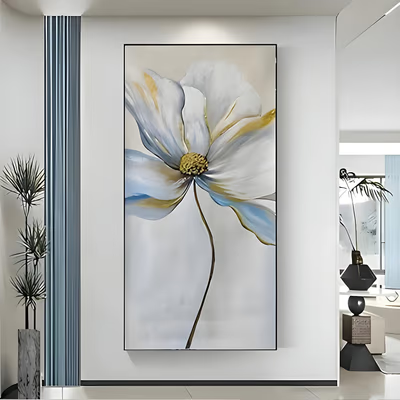
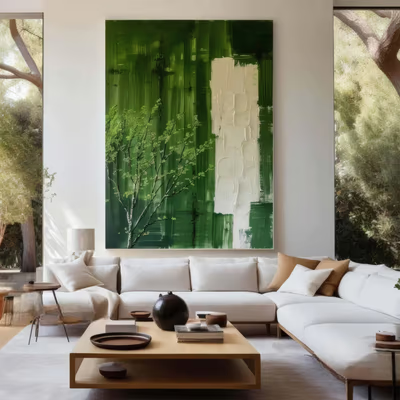
Flower paintings here come in four techniques: sculpted plaster relief, bright palette-knife colour, realistic blooms on dark grounds, and quiet minimal or wabi-sabi botanicals.
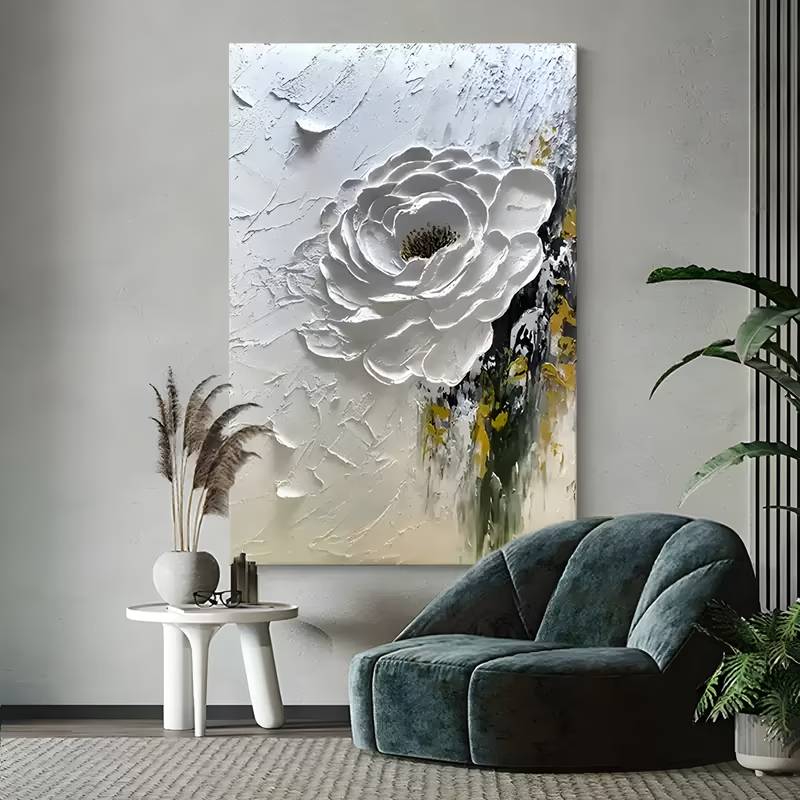
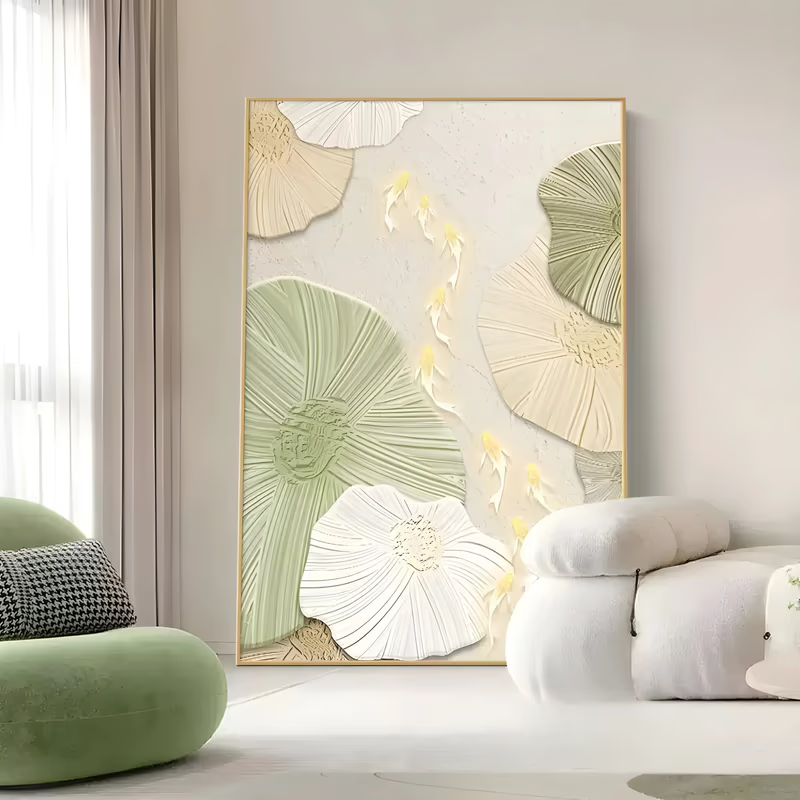
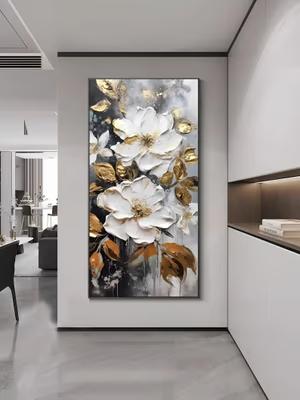
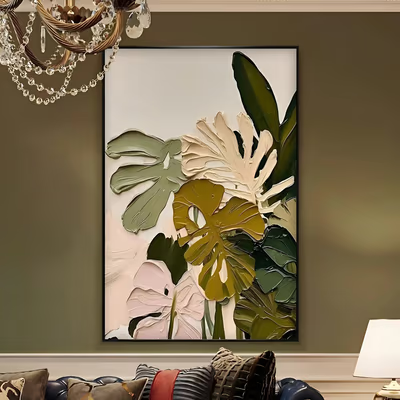
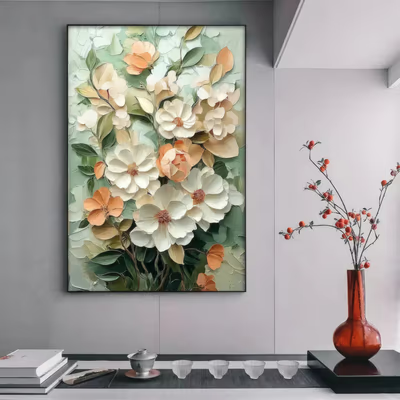
Sculpted 3D flowers
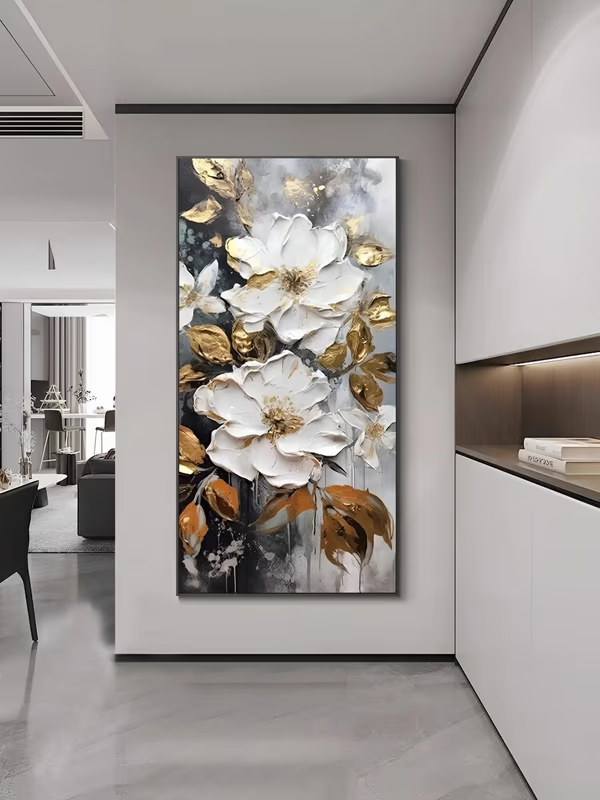
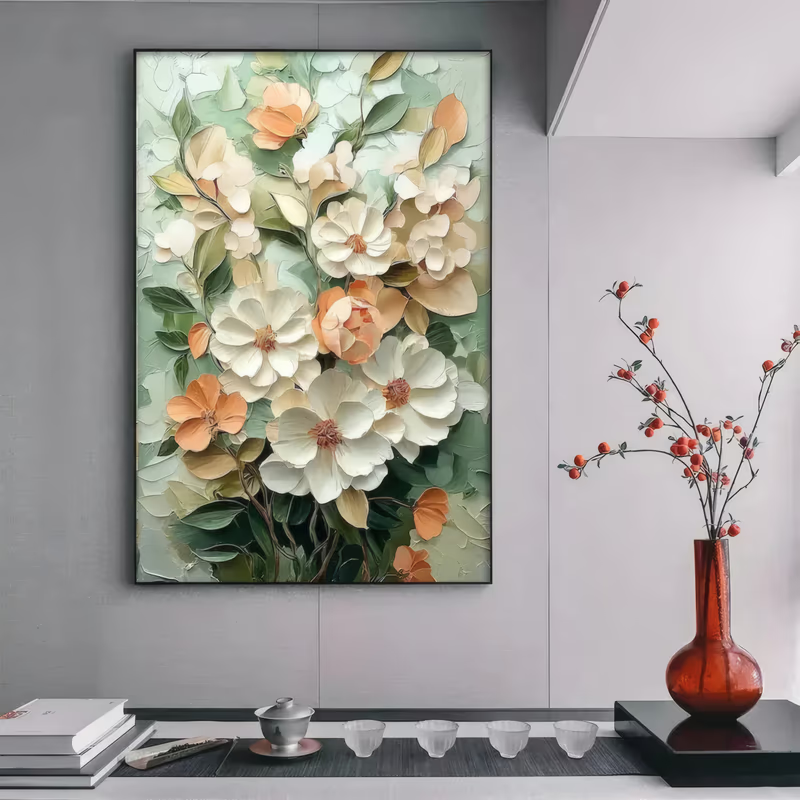
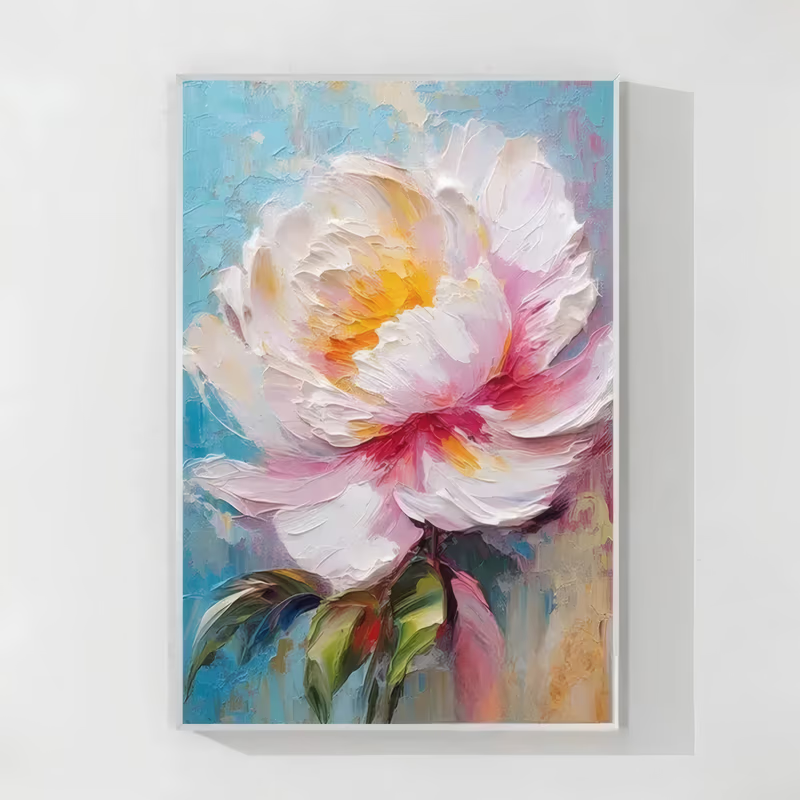
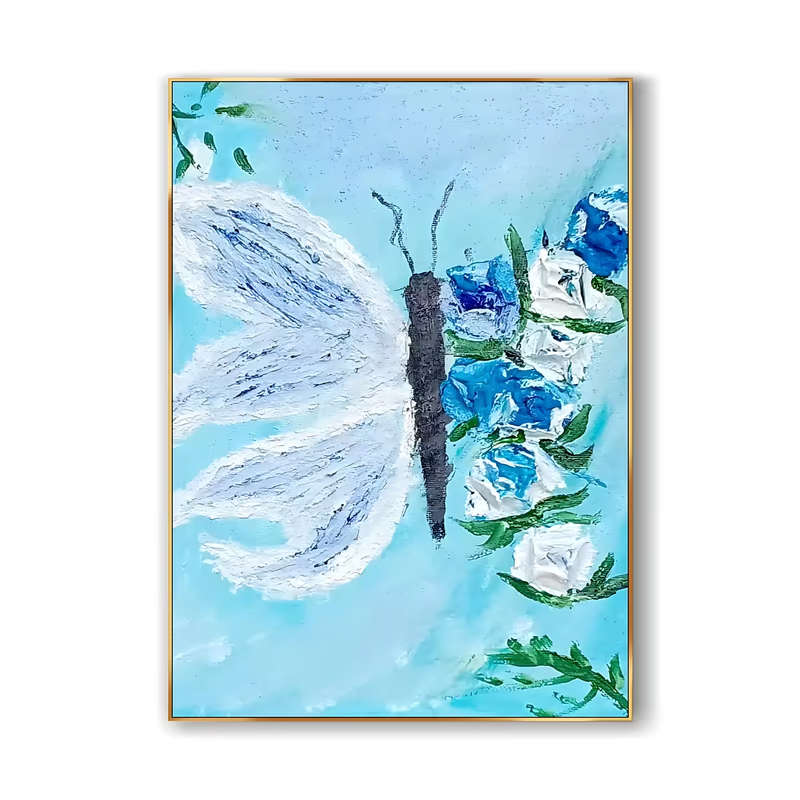
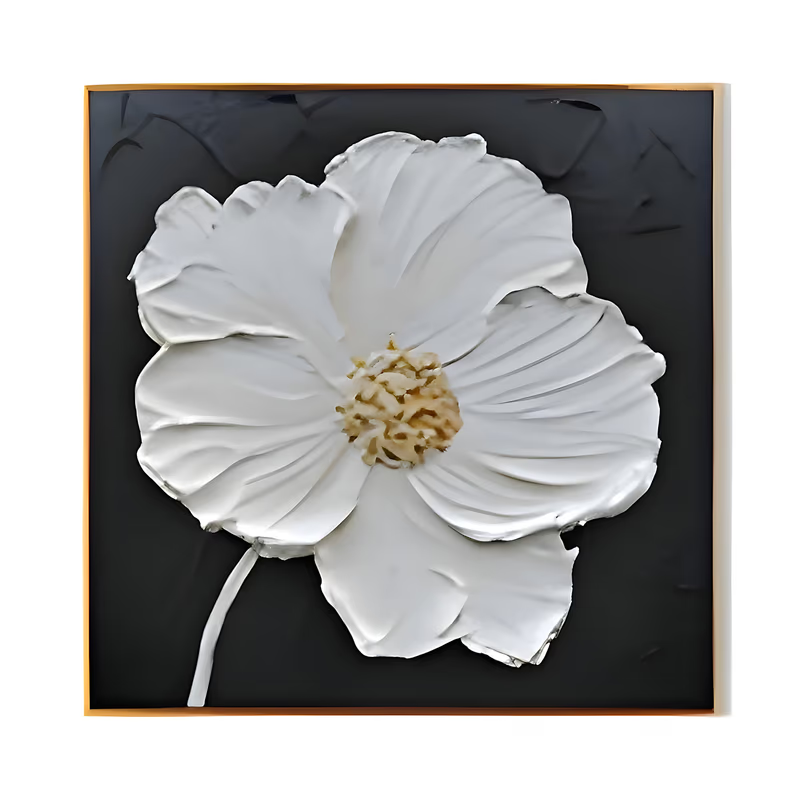
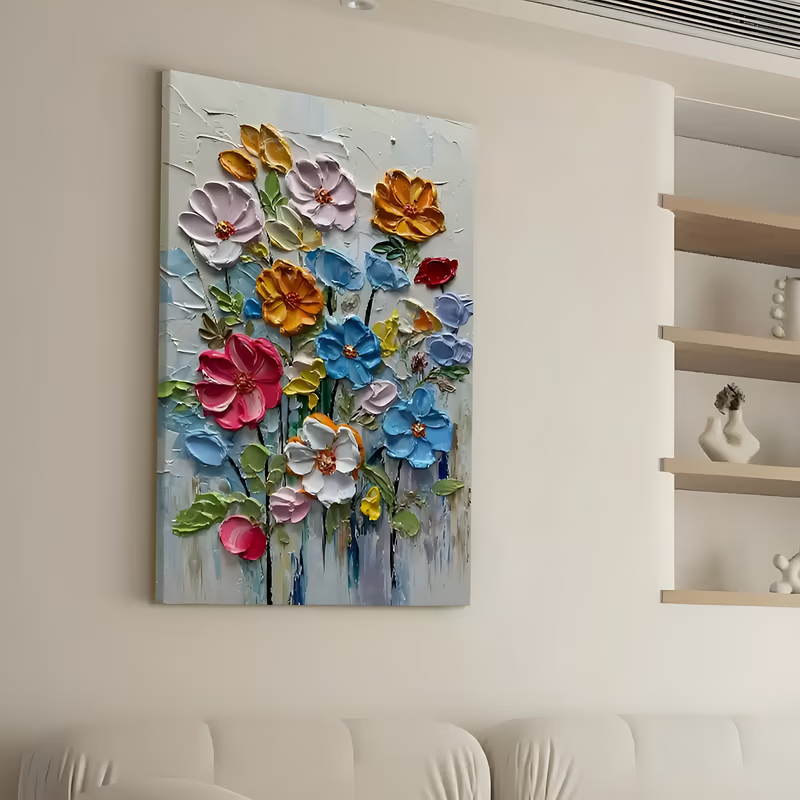
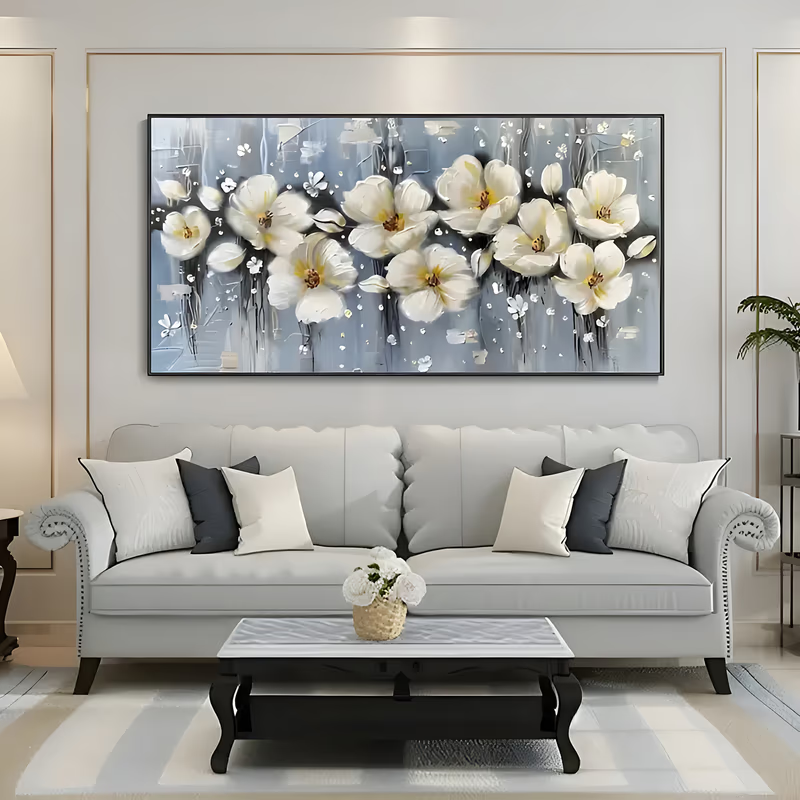
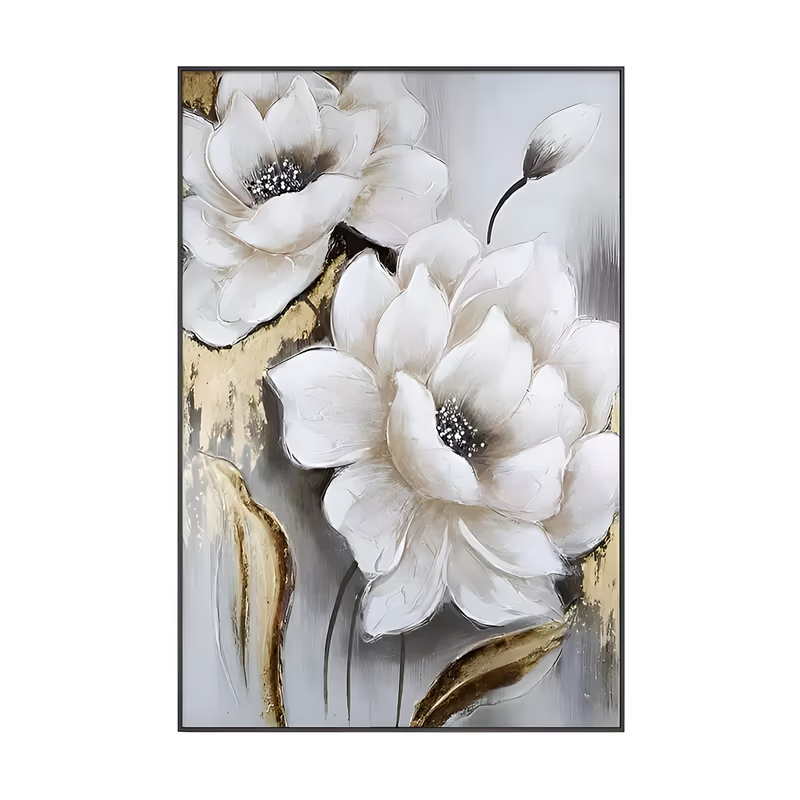
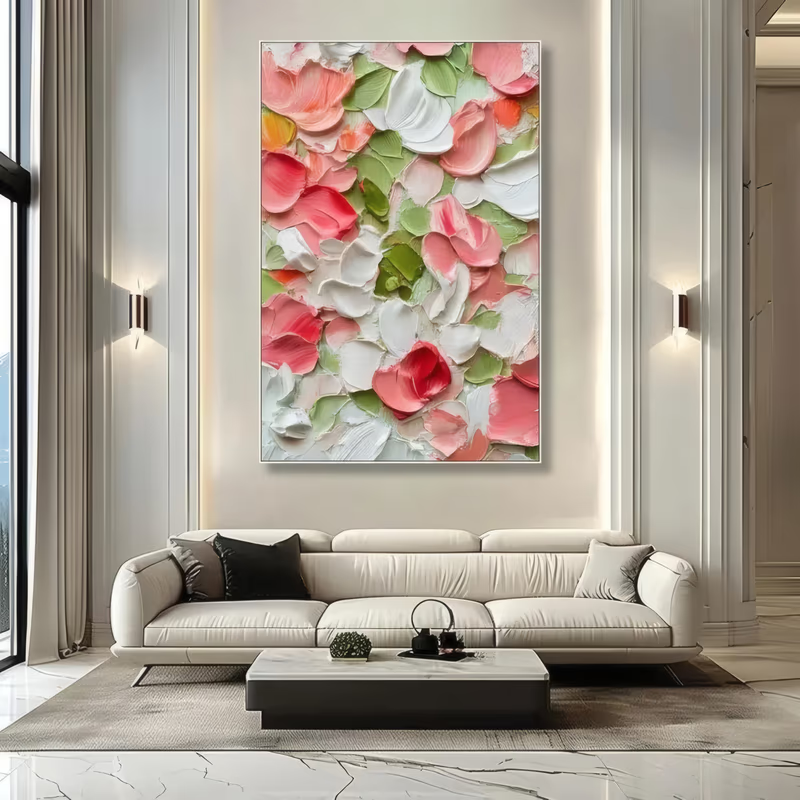
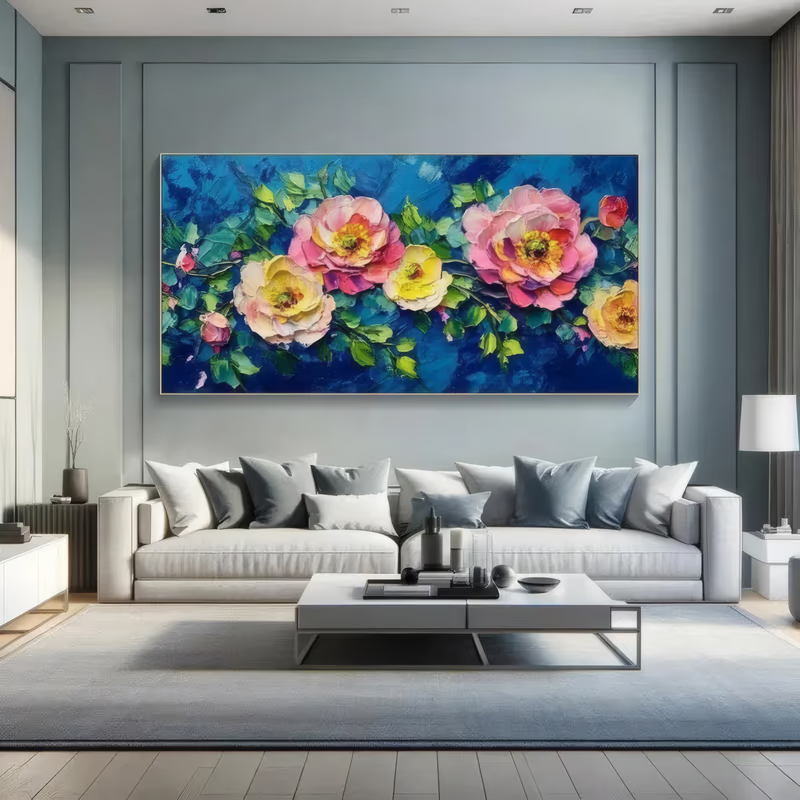
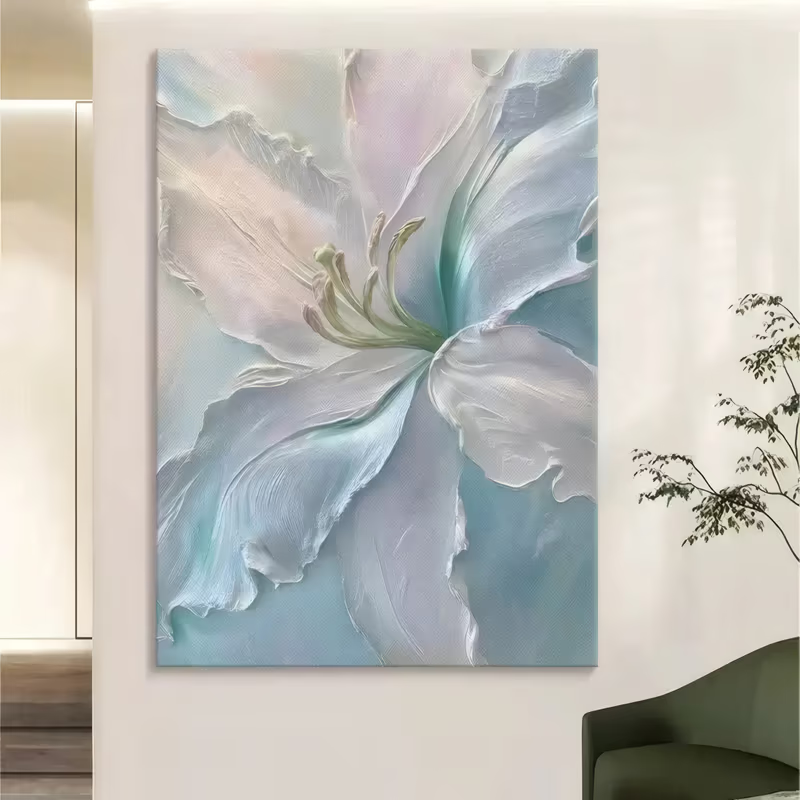
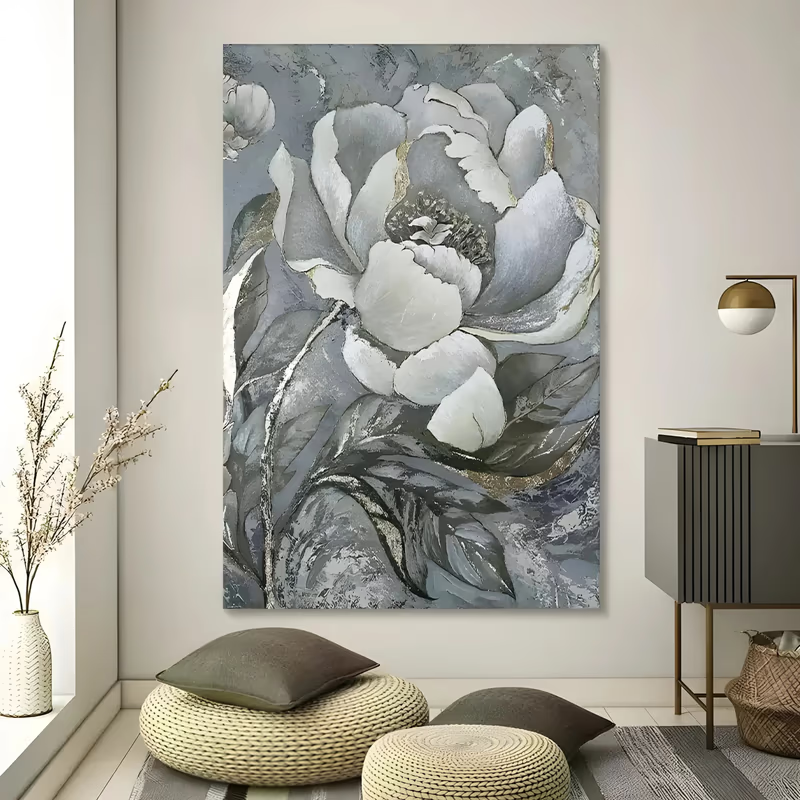
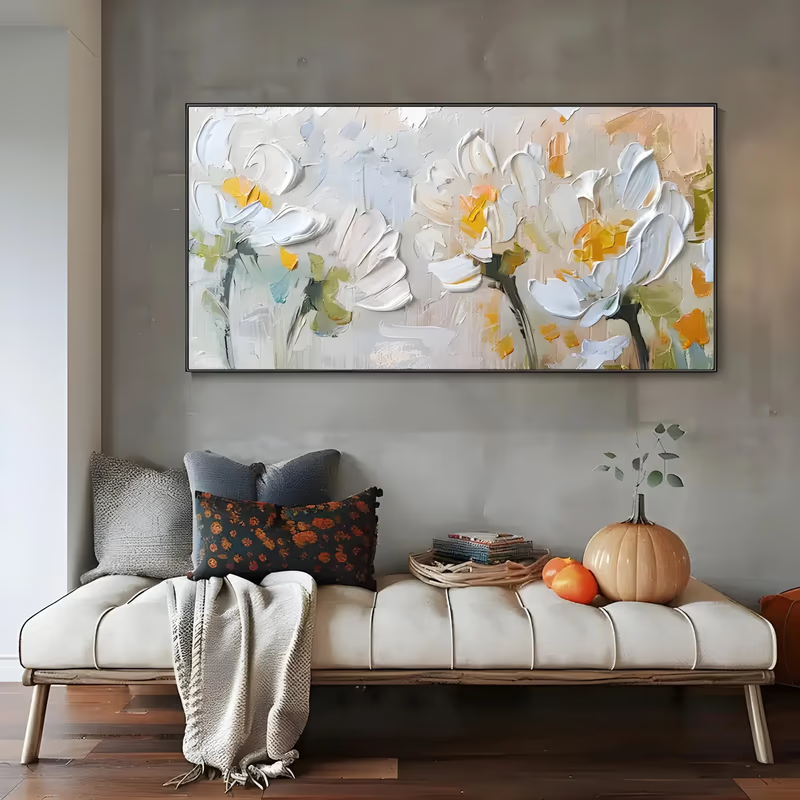
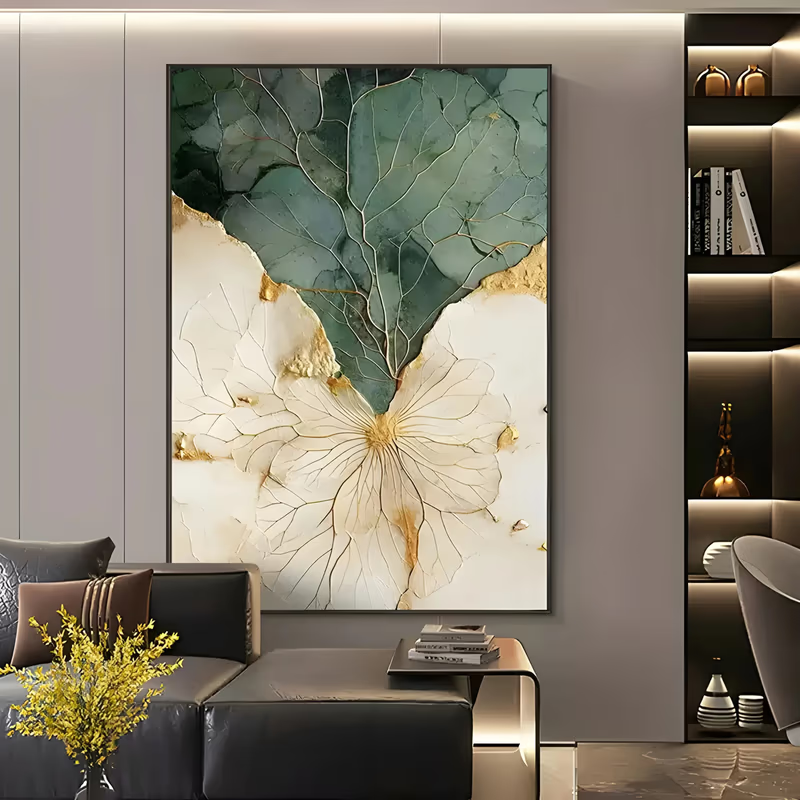
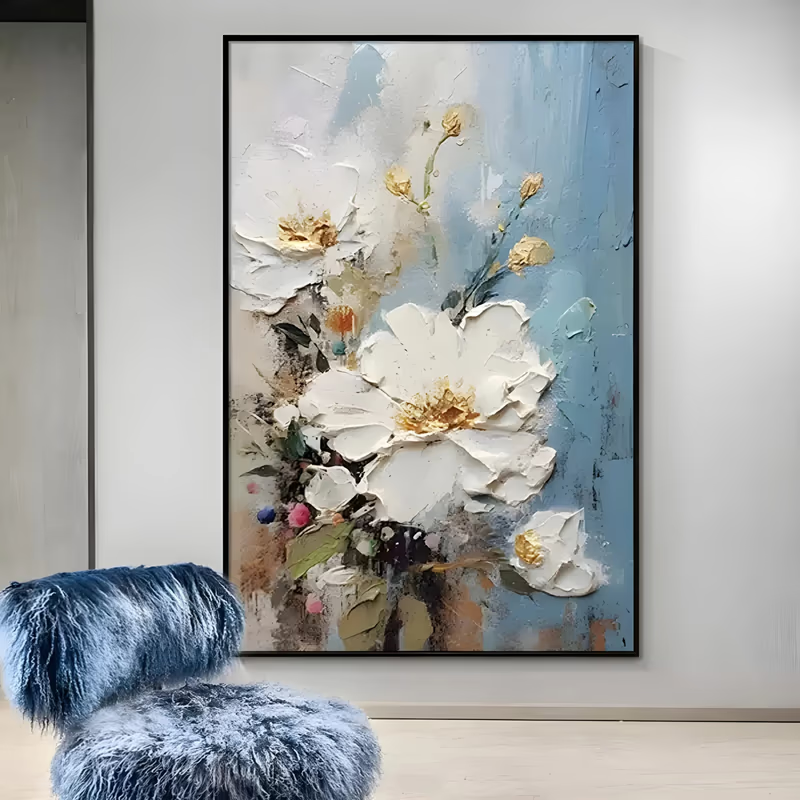
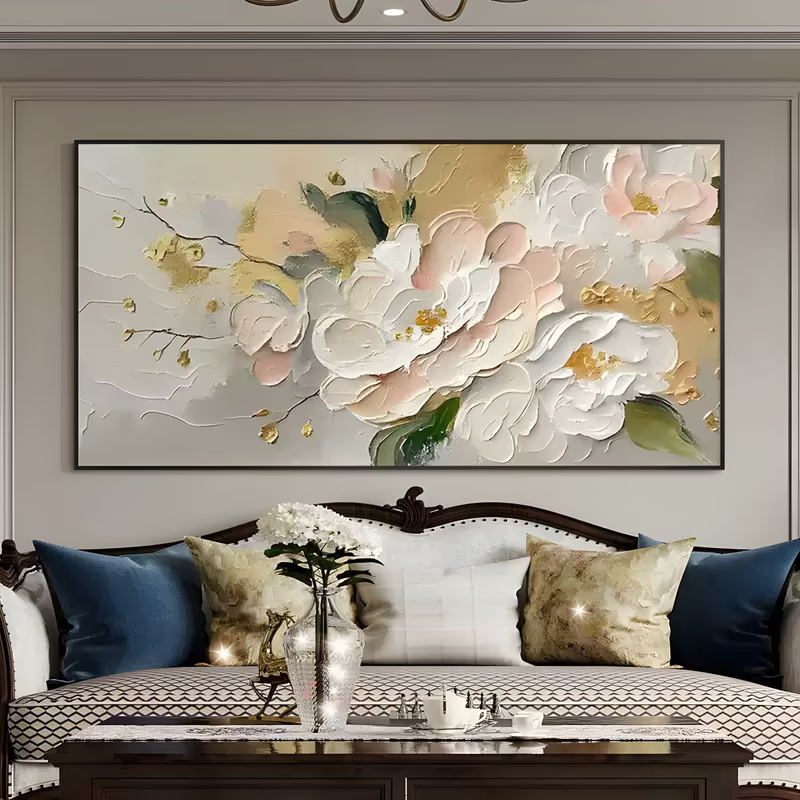
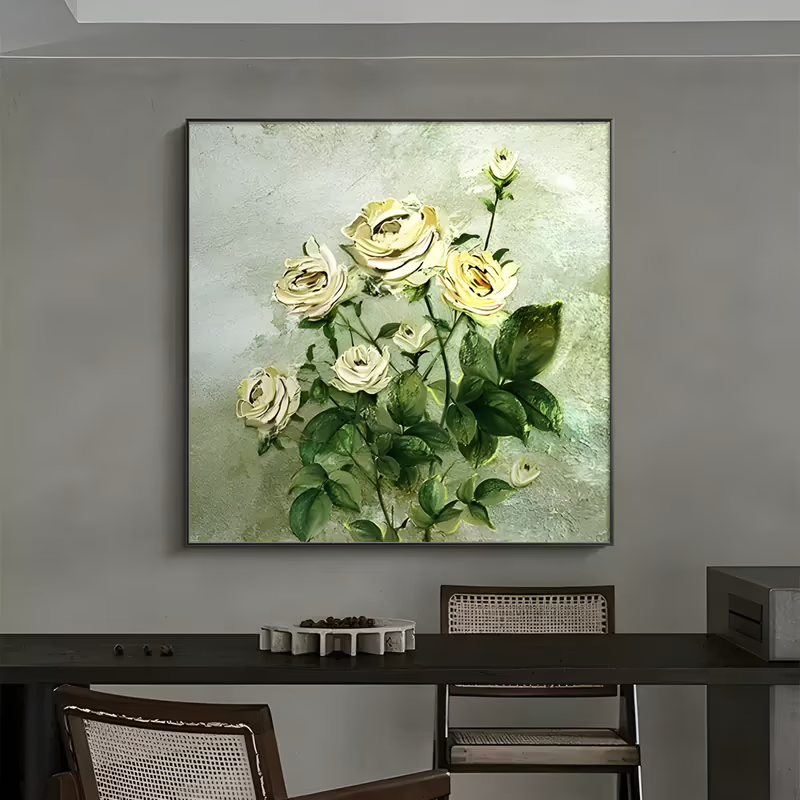
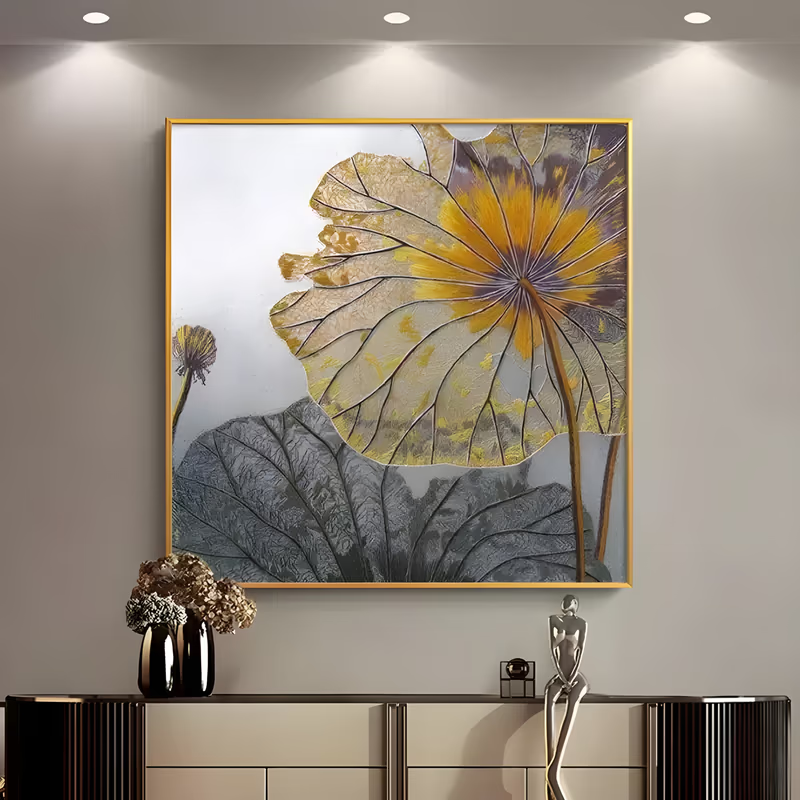
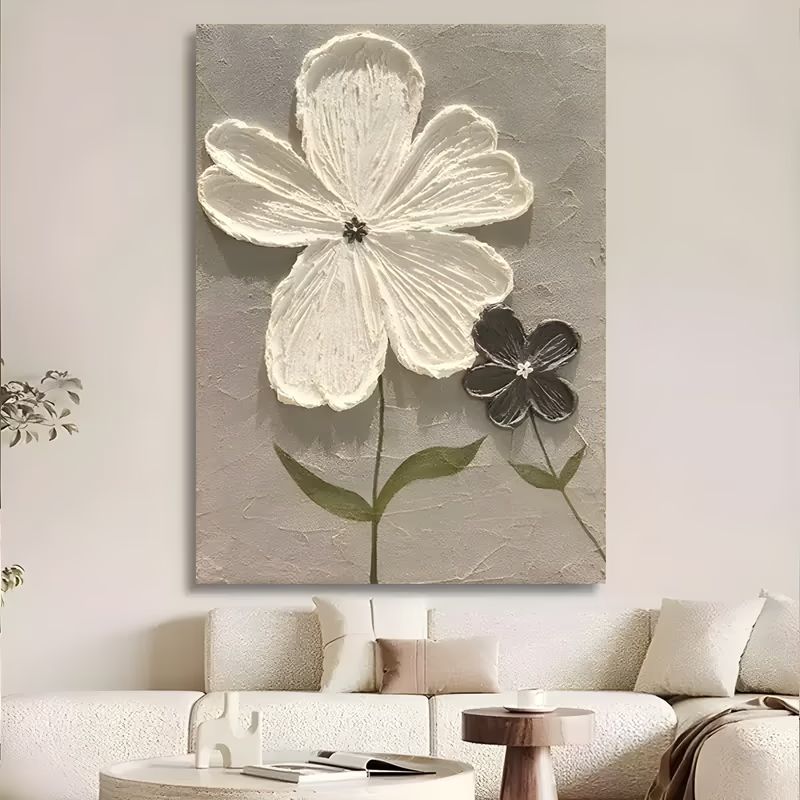
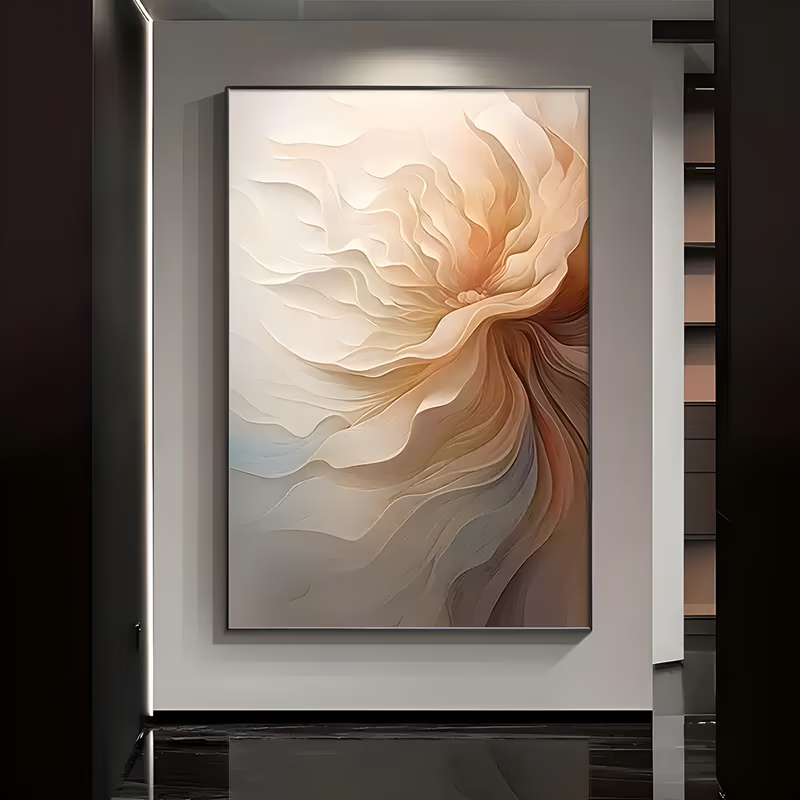
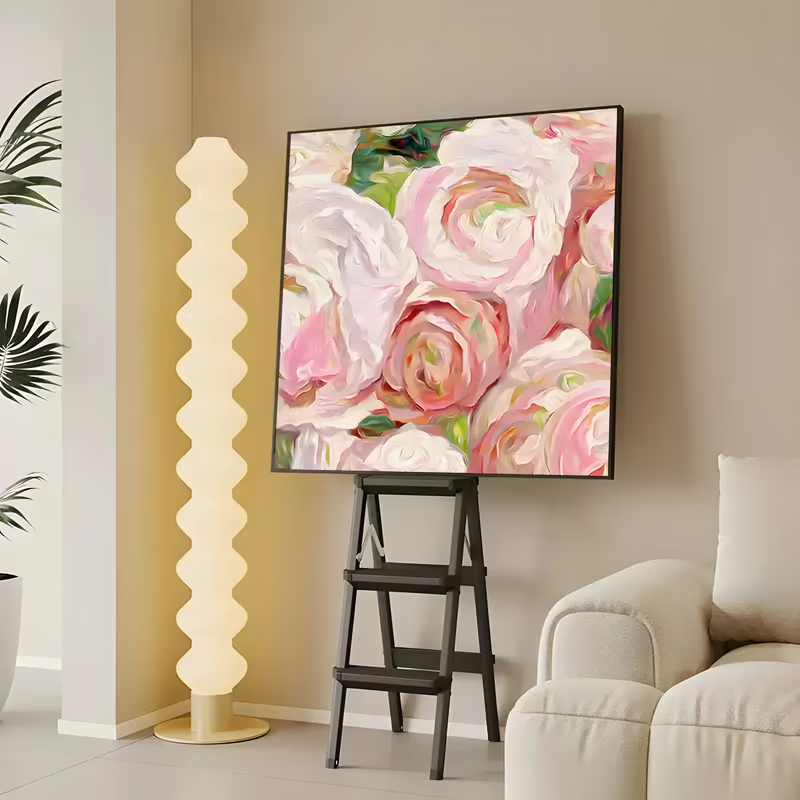
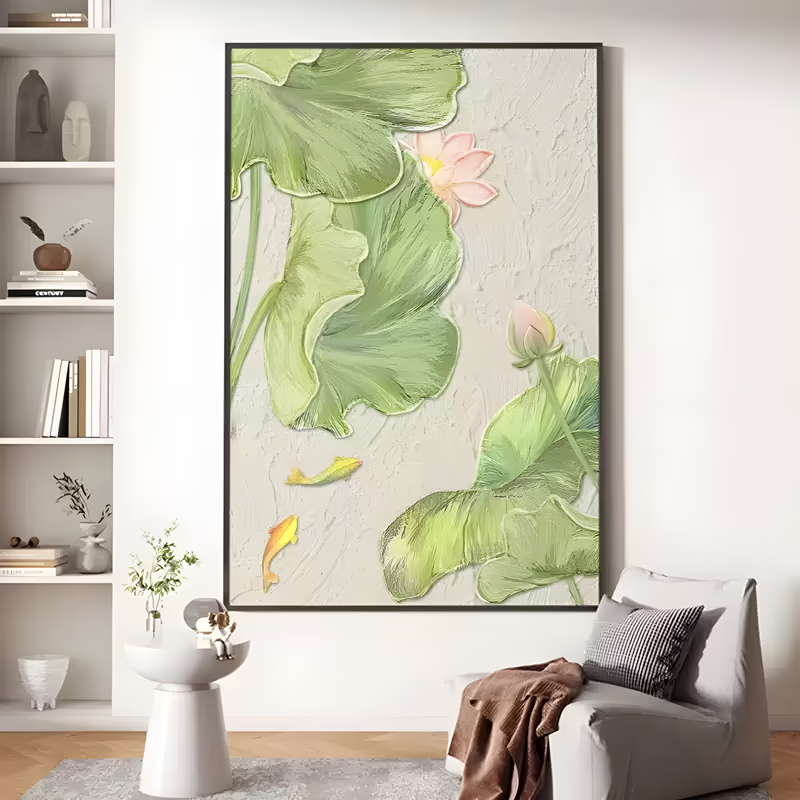
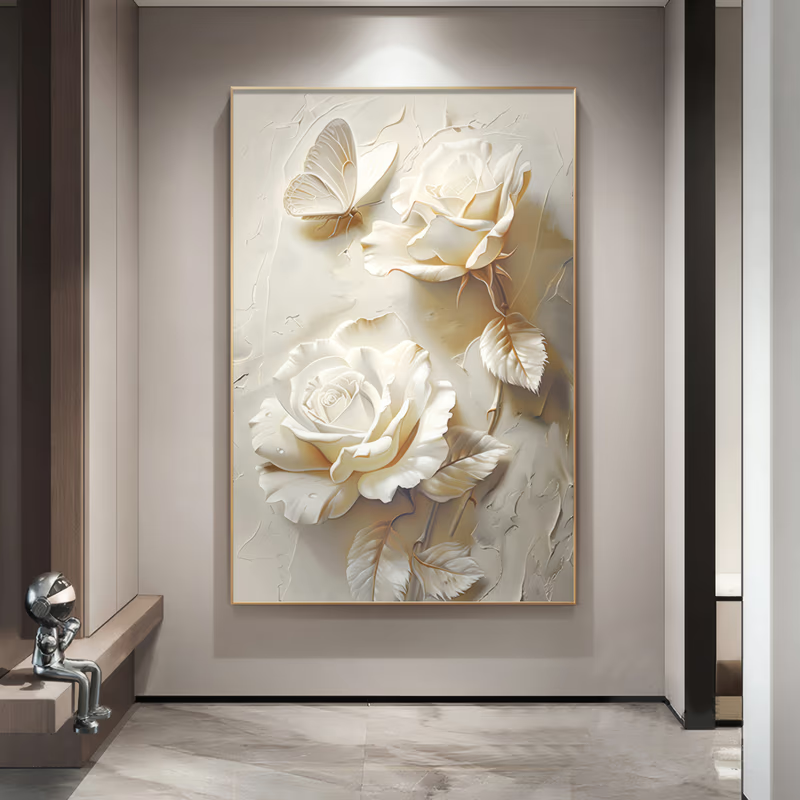
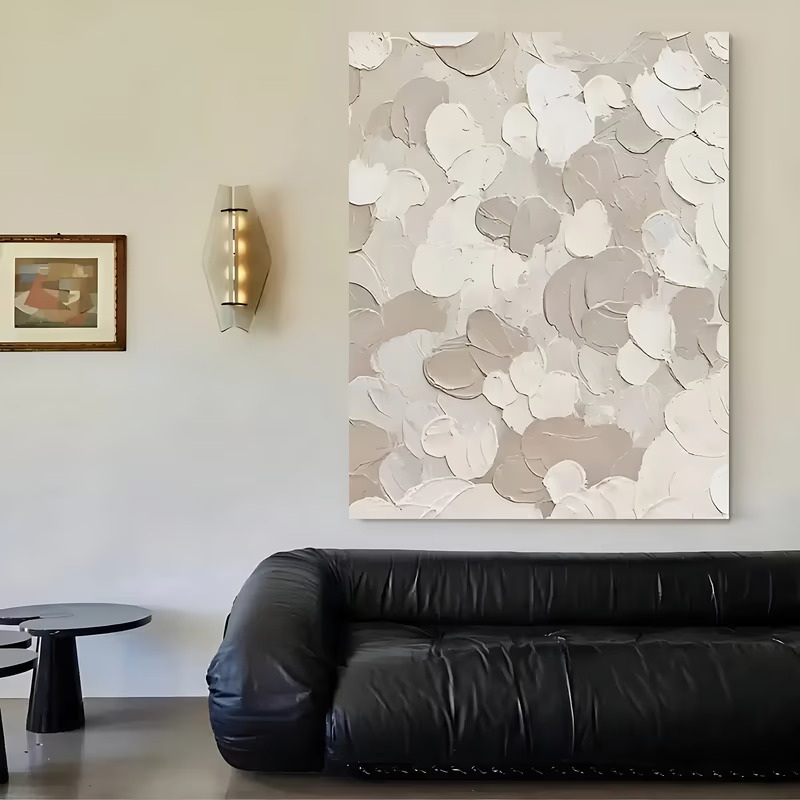
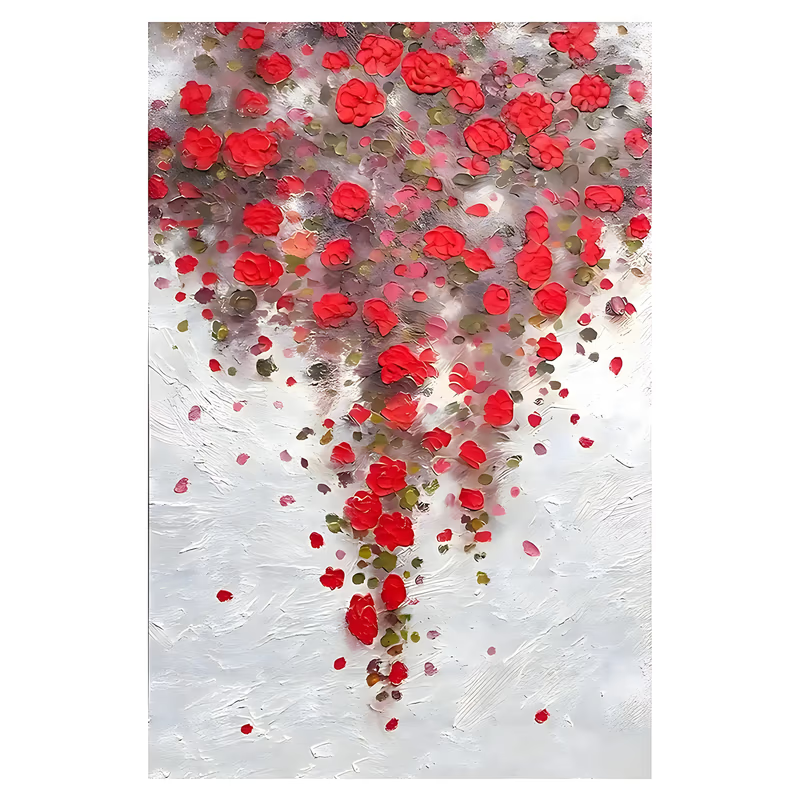
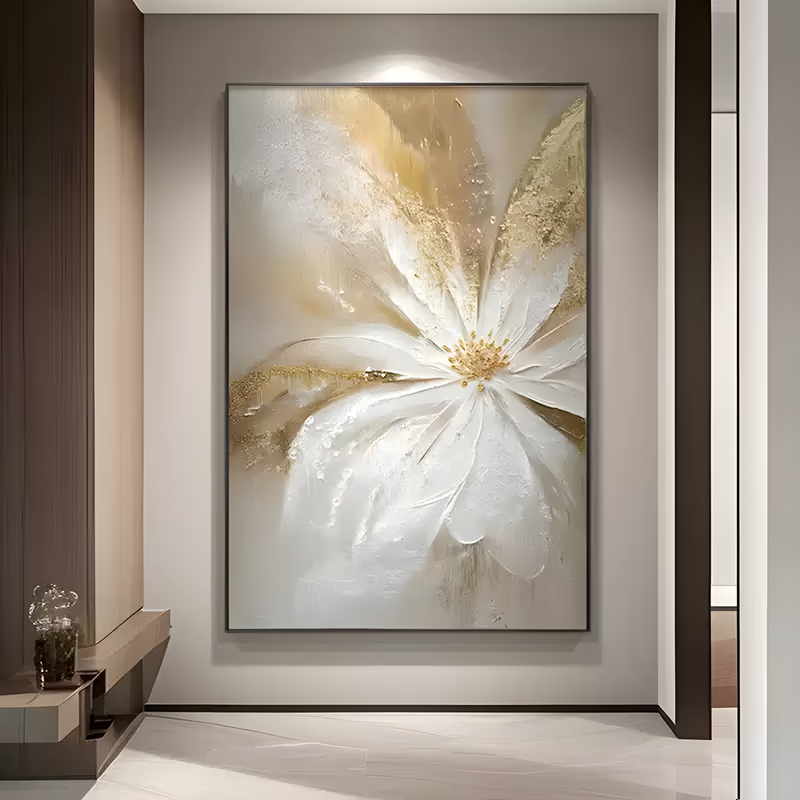
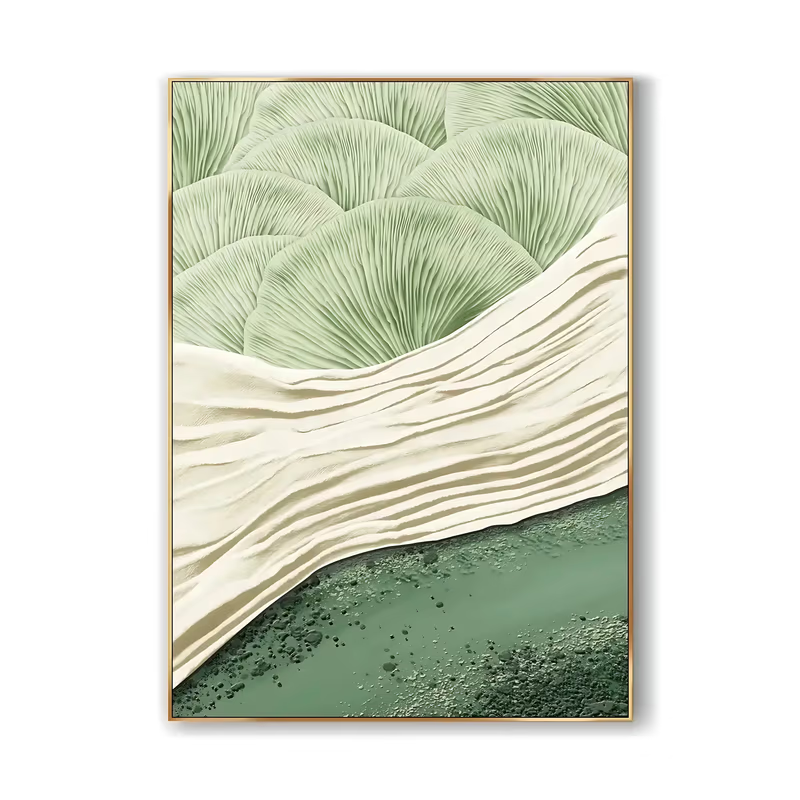
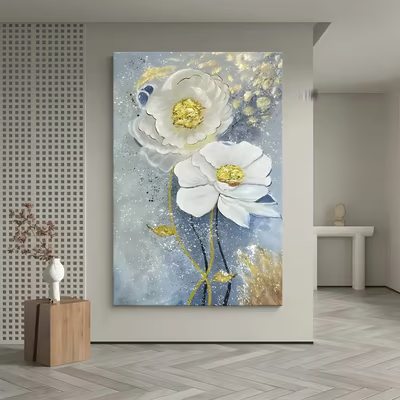
Petals are built up in plaster or heavy acrylic paste so roses, peonies and lotus leaves physically stand off the canvas, often white or ivory on a soft ground. They suit rooms where colour should stay calm but the wall still needs a focal point. More in textured and plaster art.
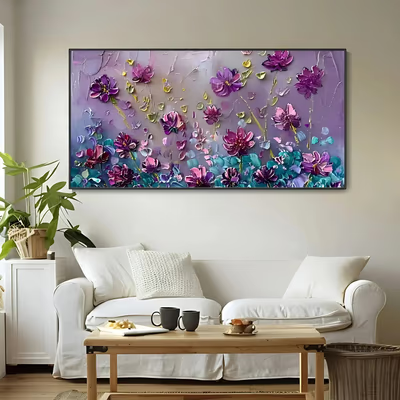
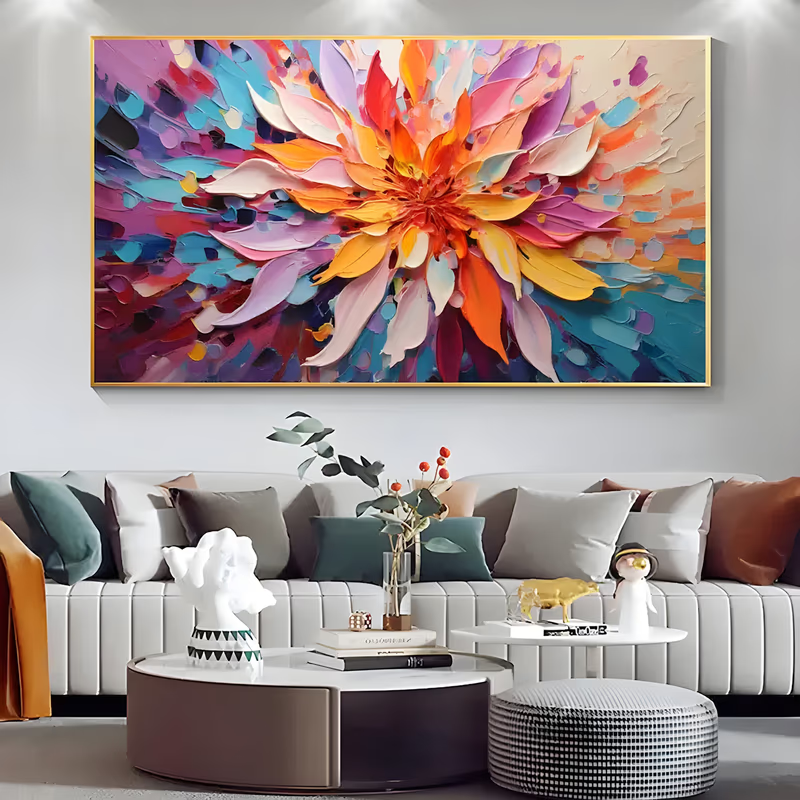
Palette-knife colour
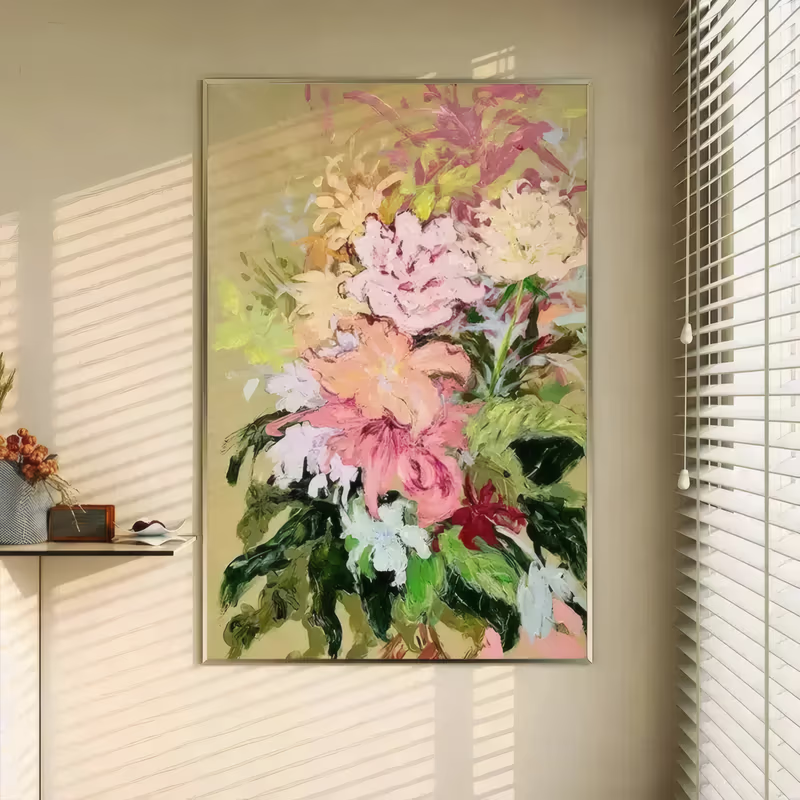
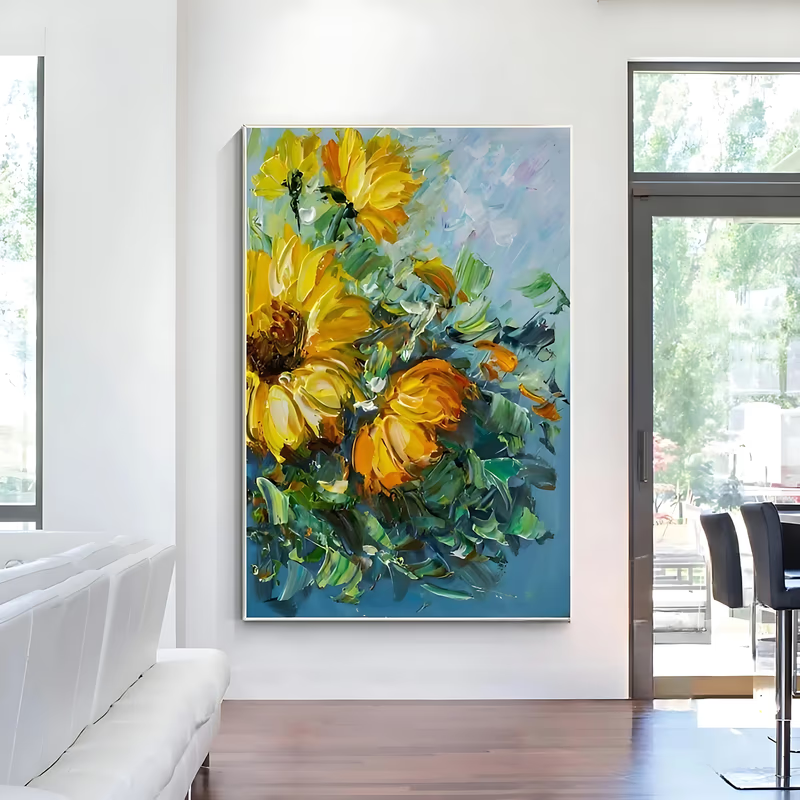
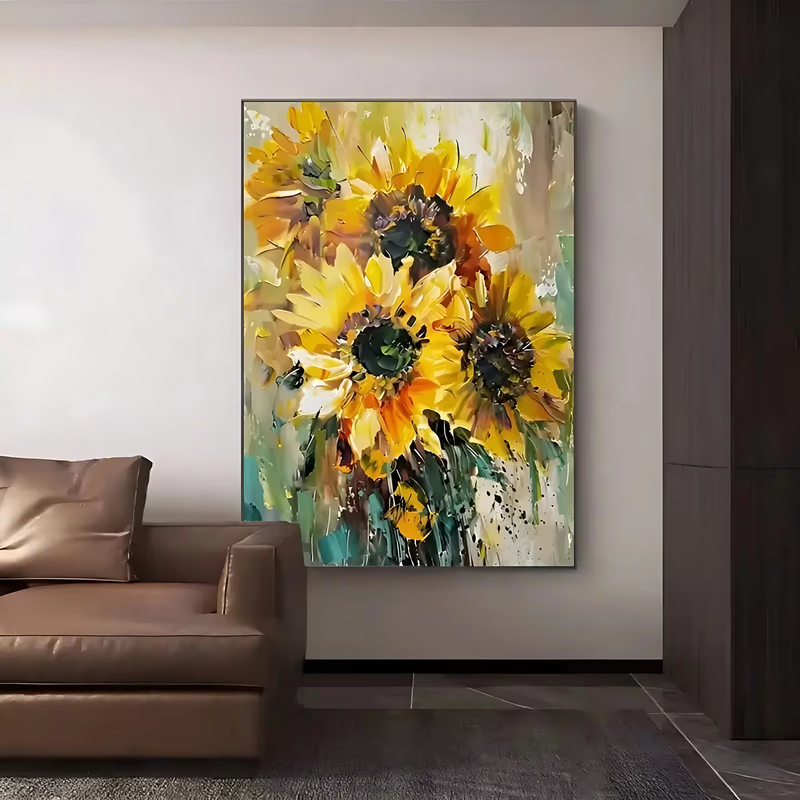
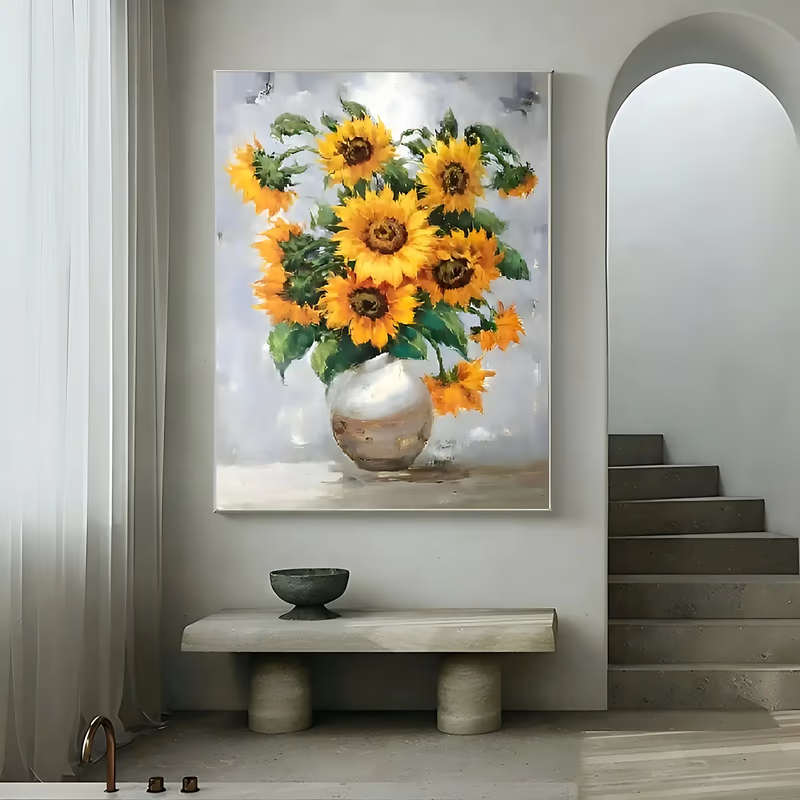
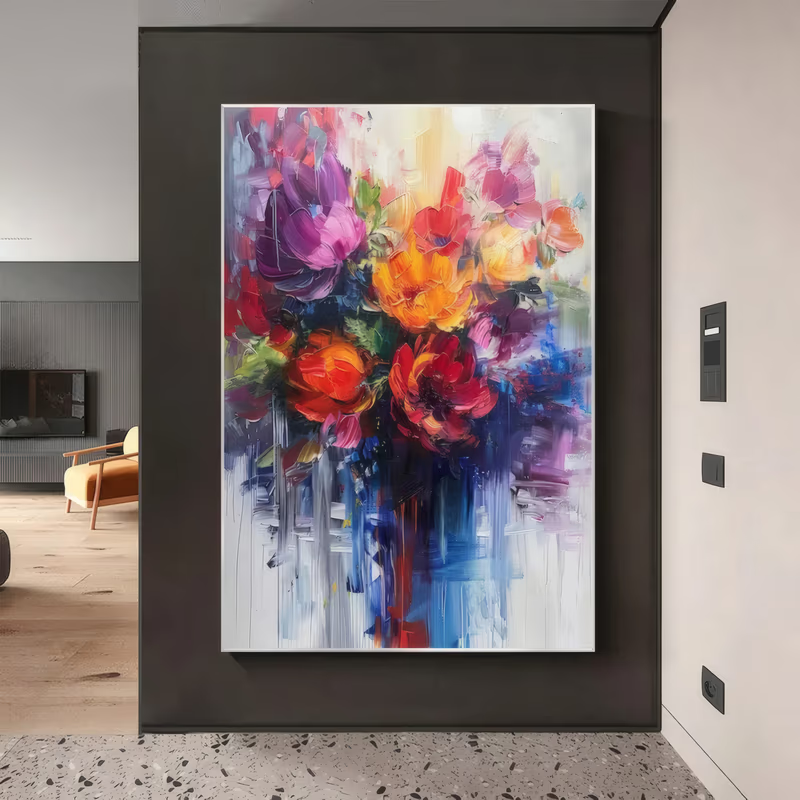
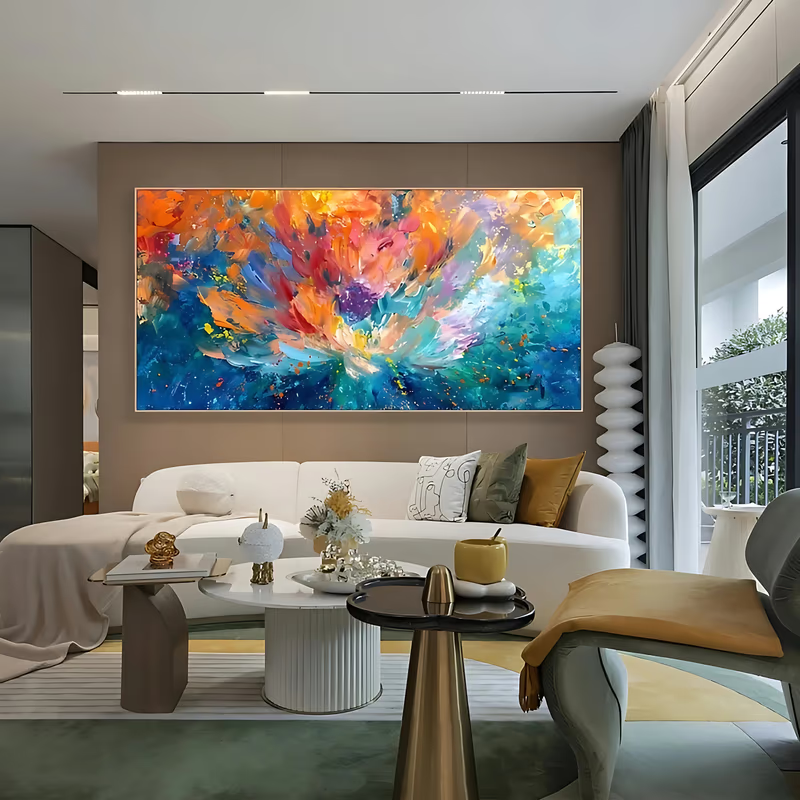
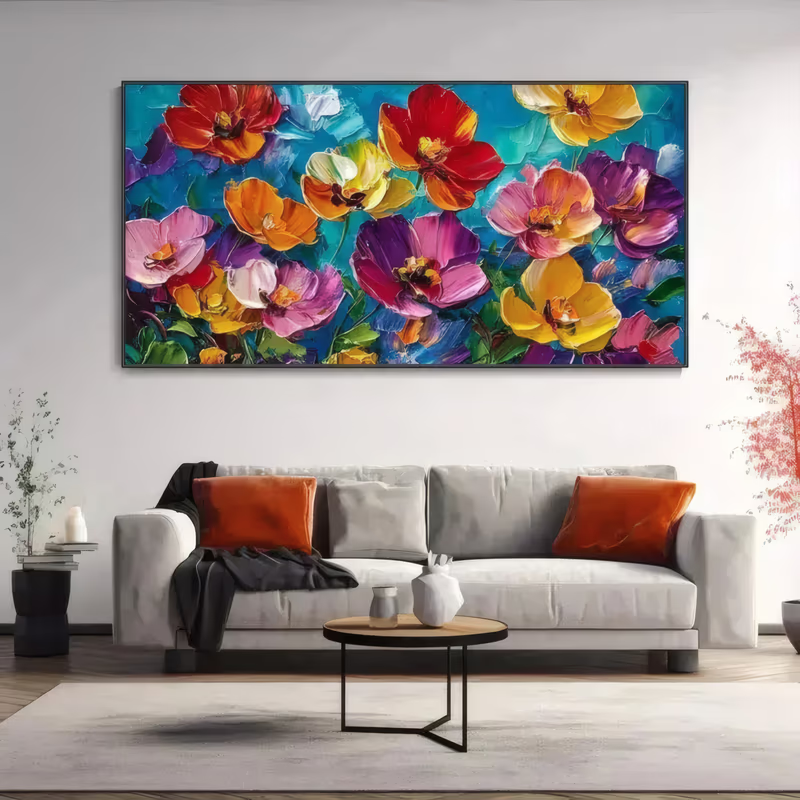
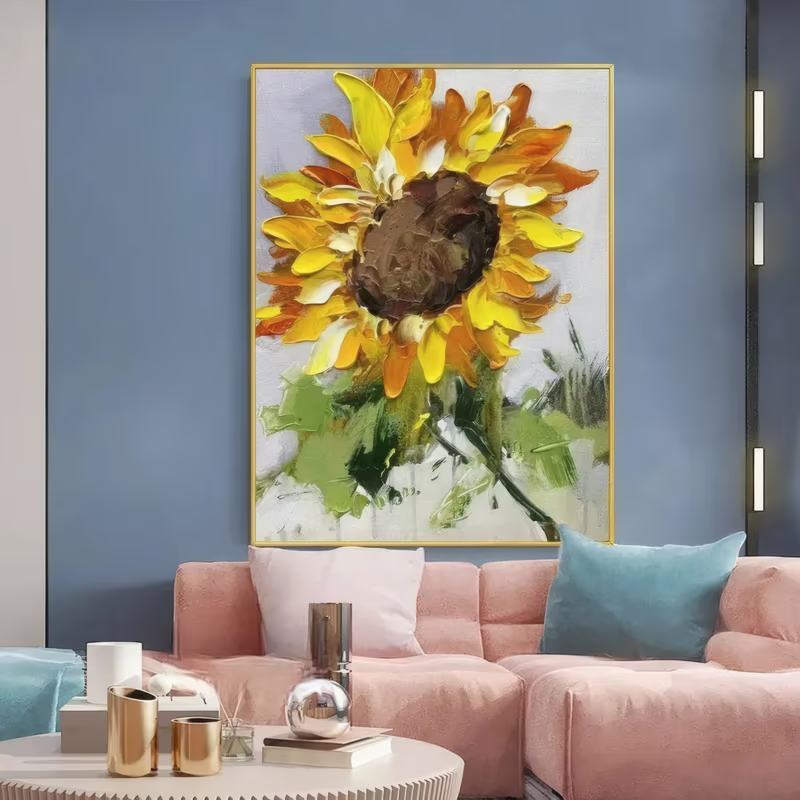
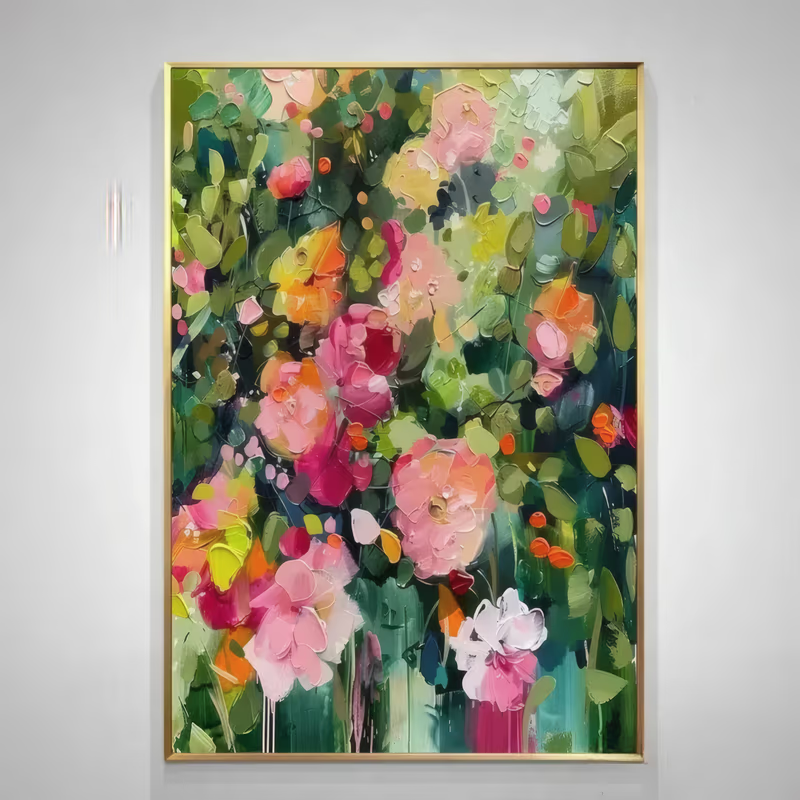
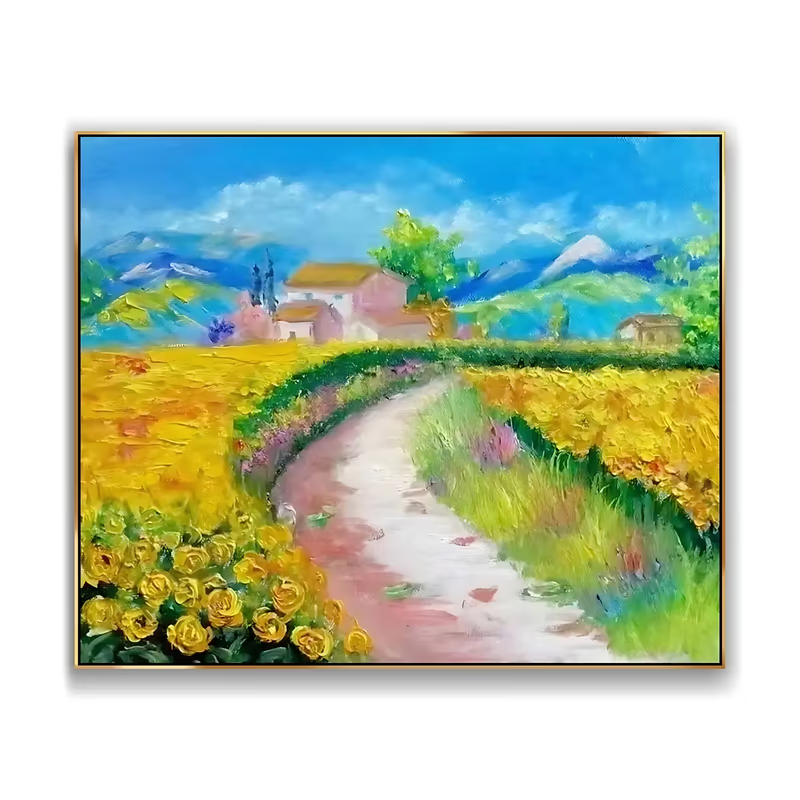
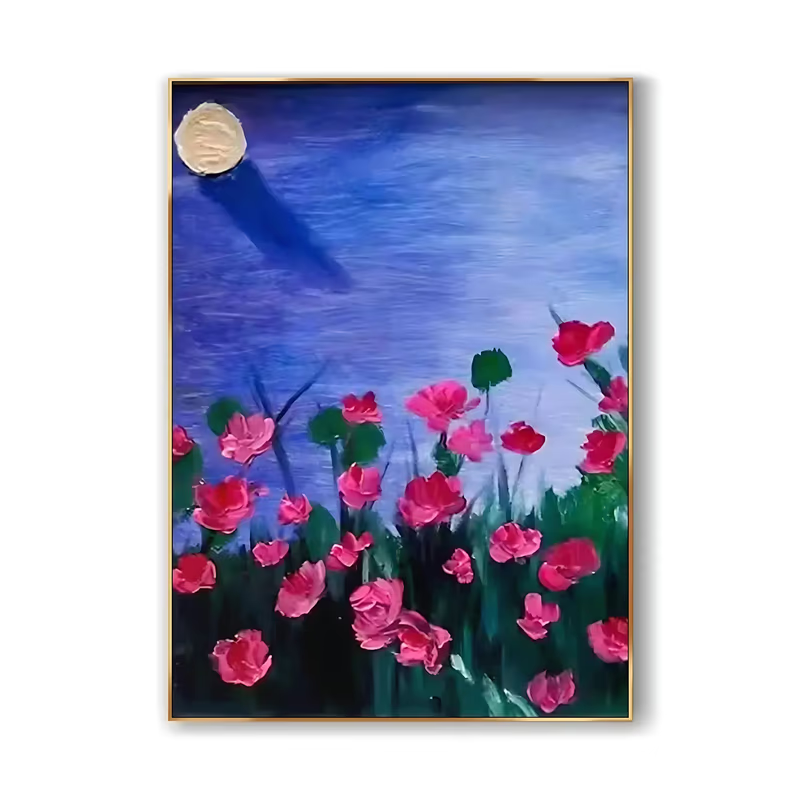
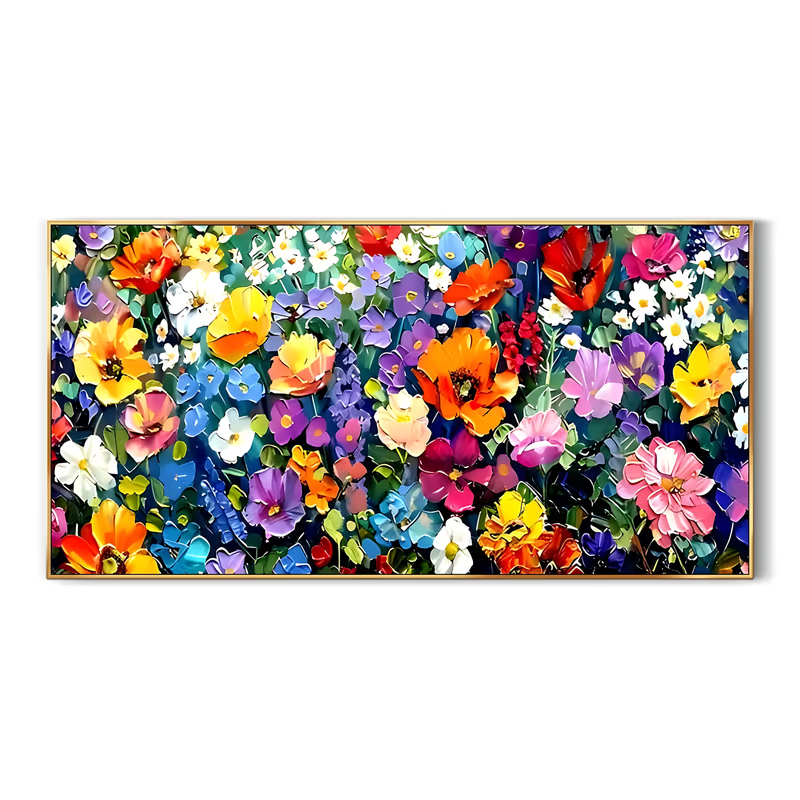
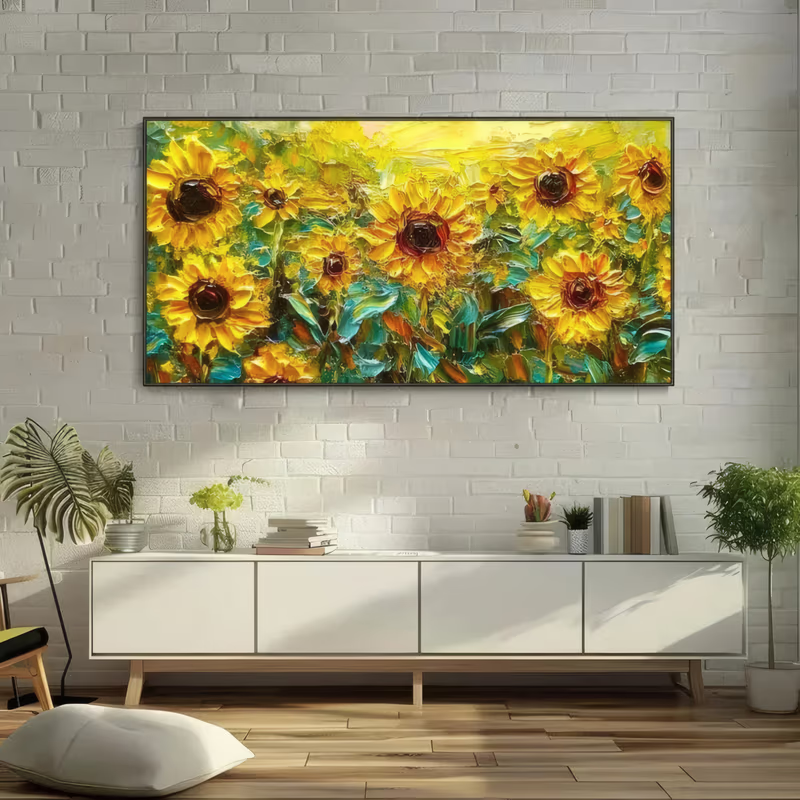
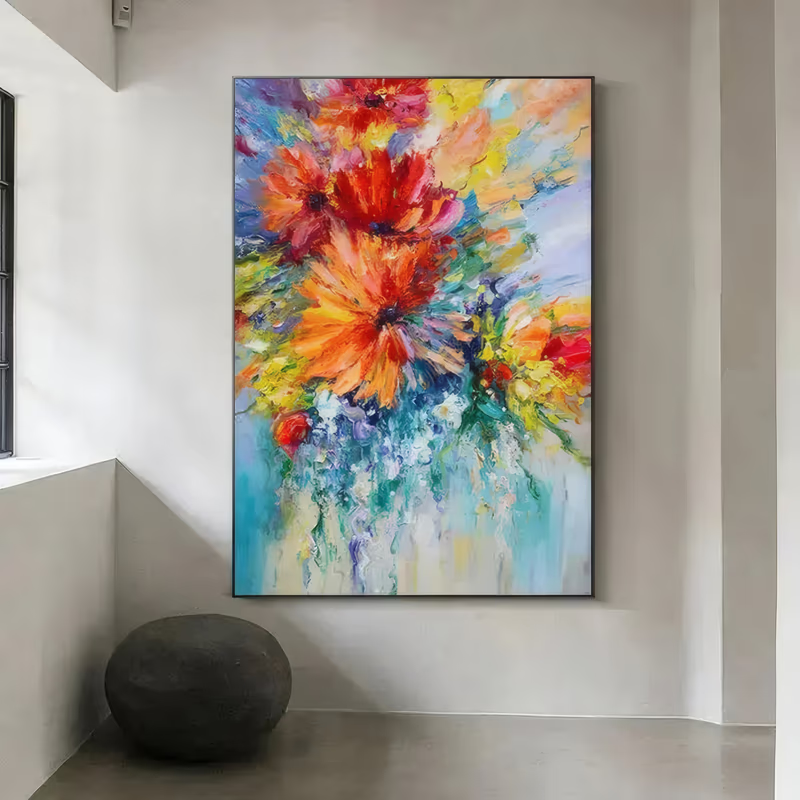
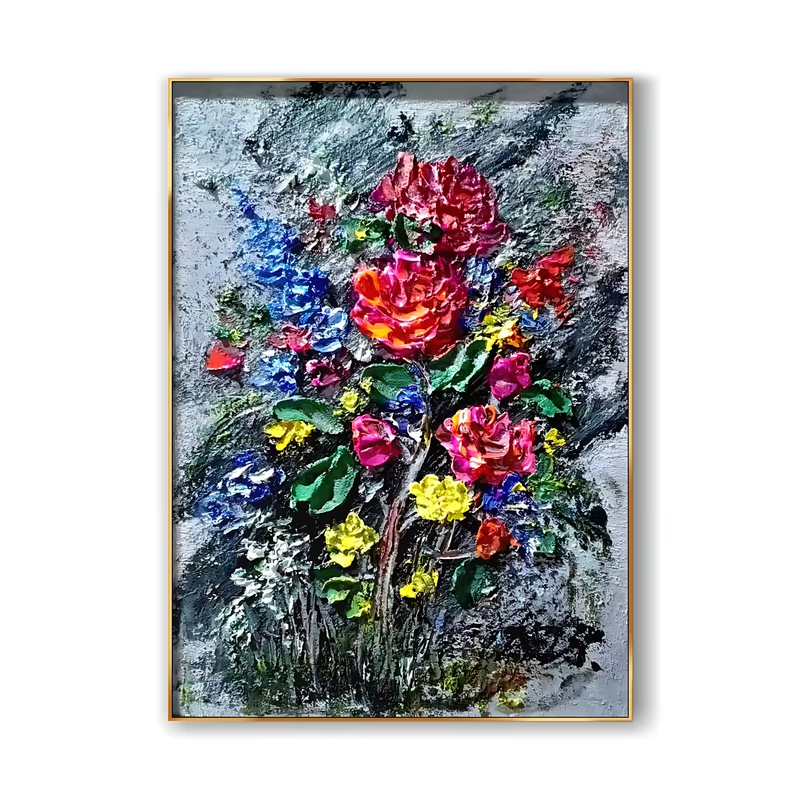
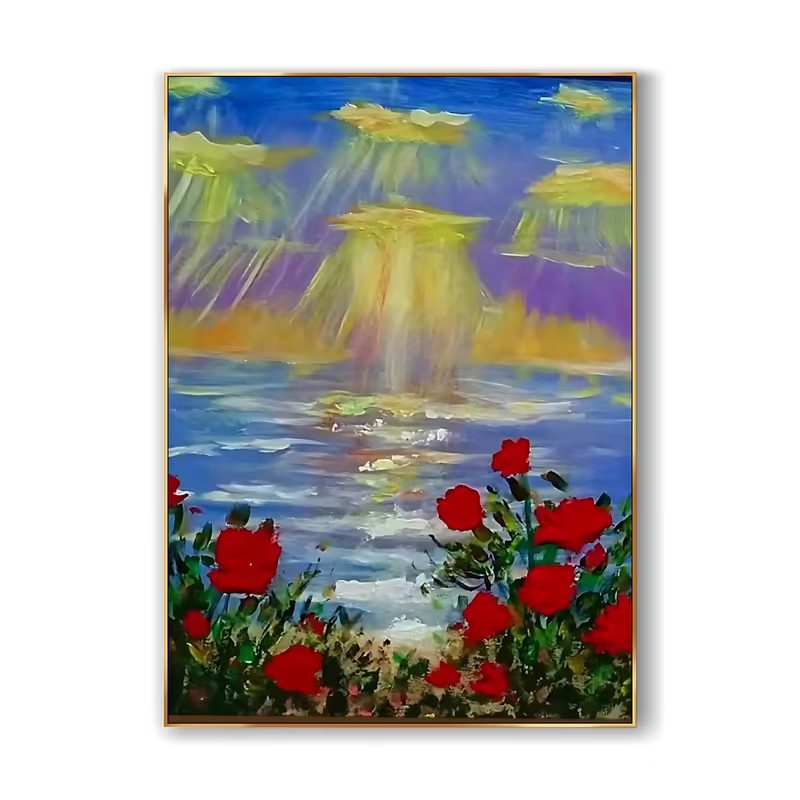
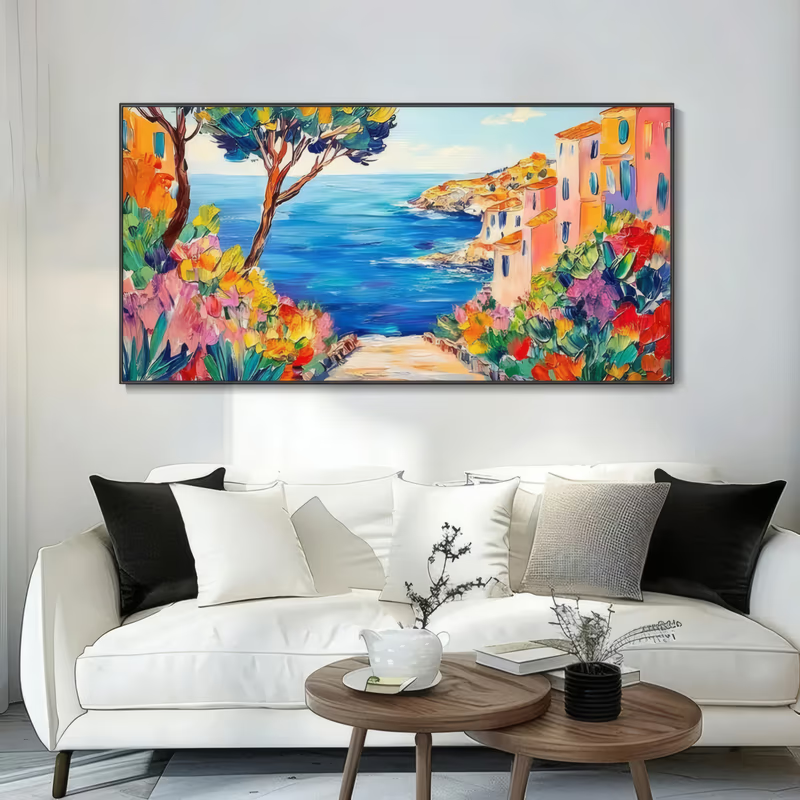
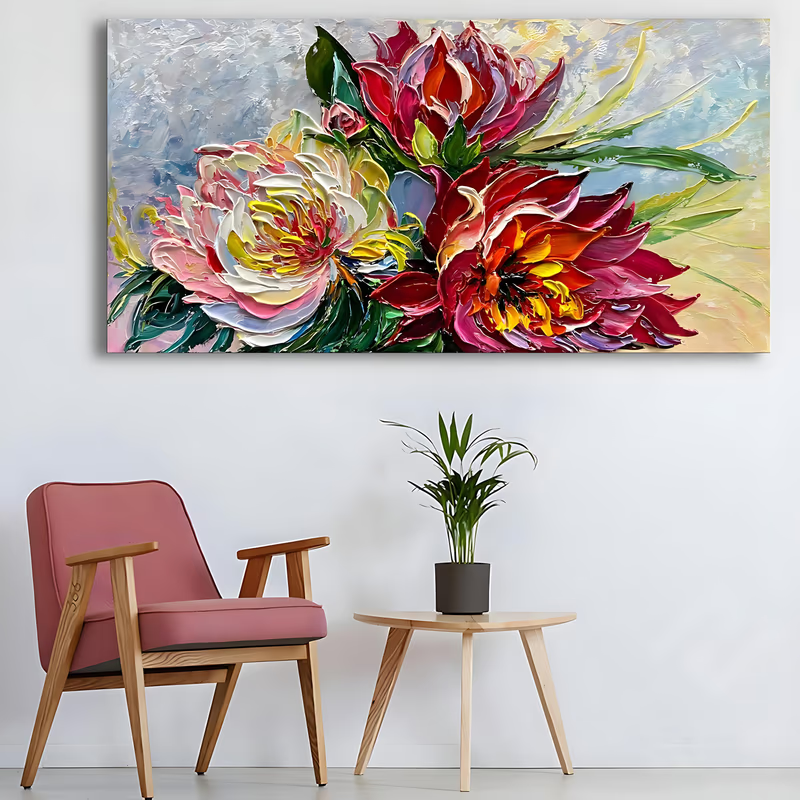
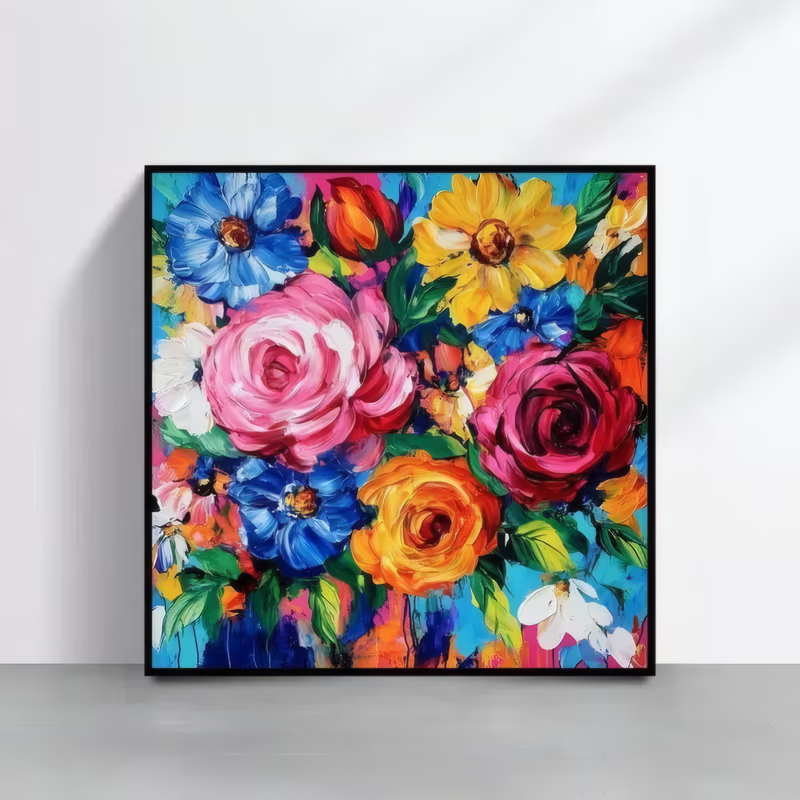
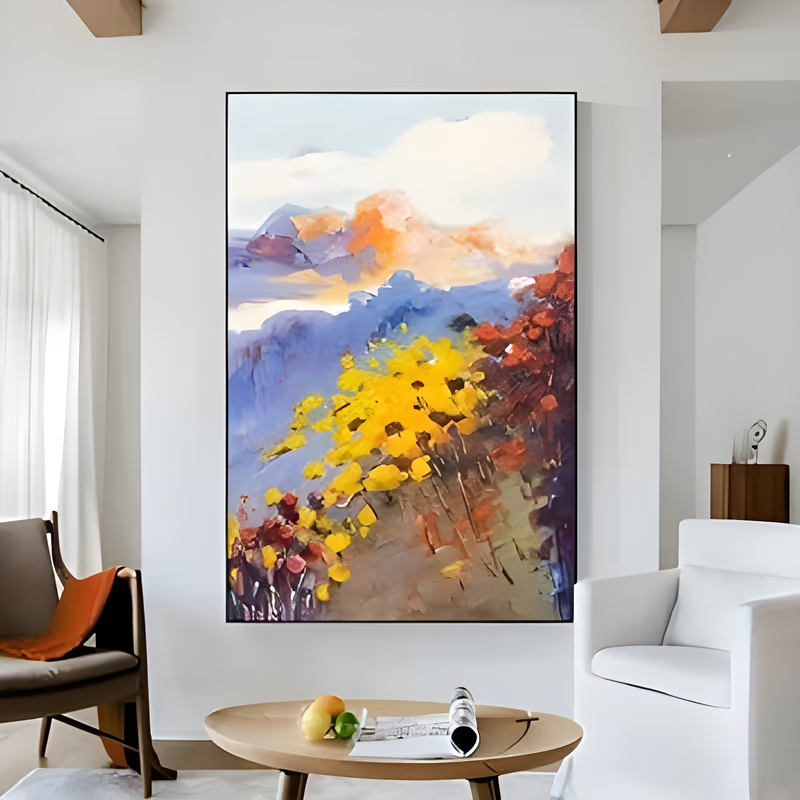
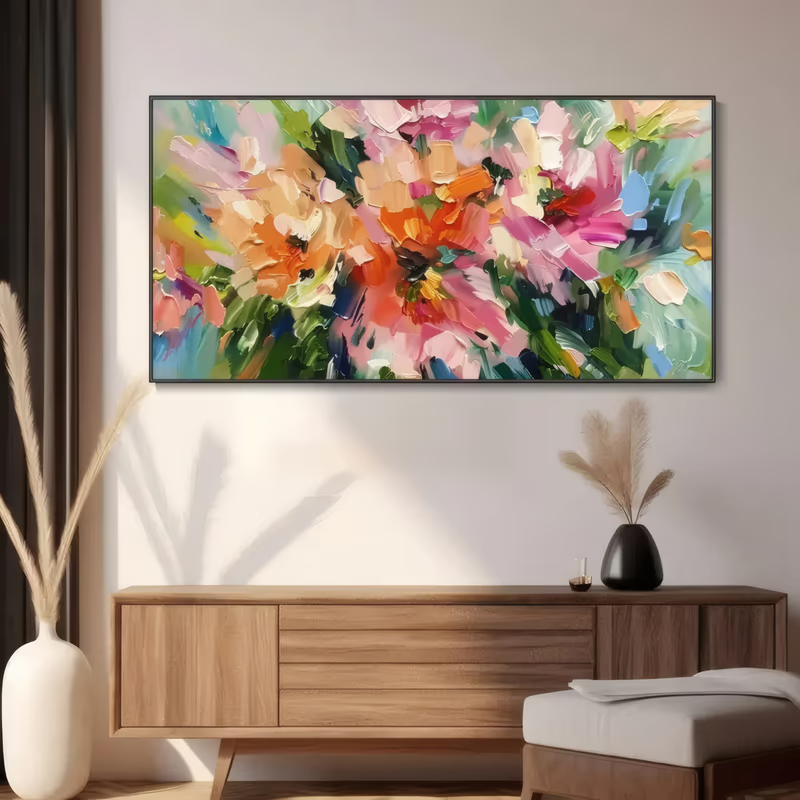
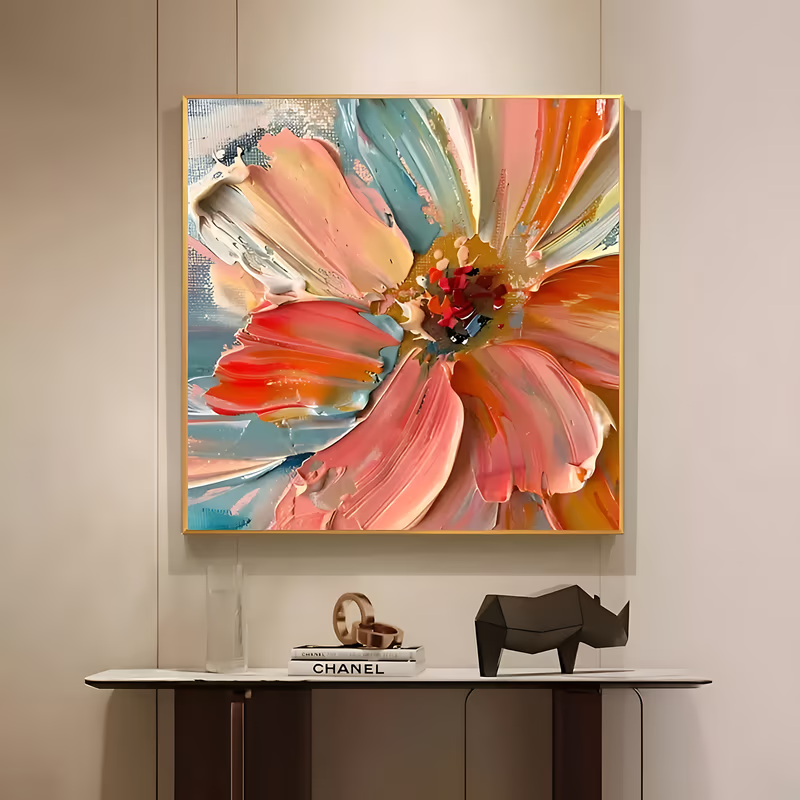
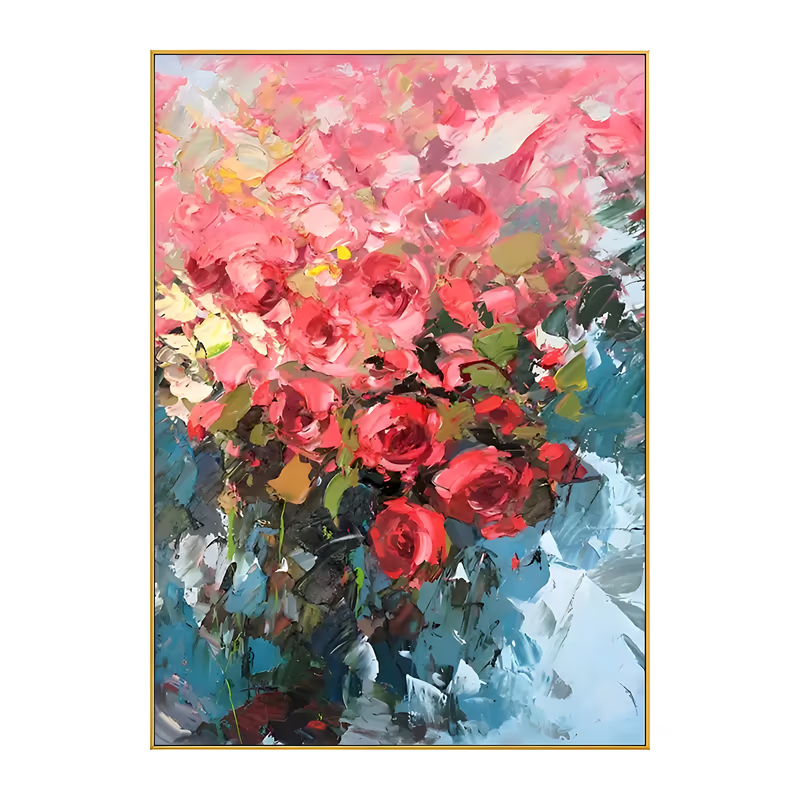
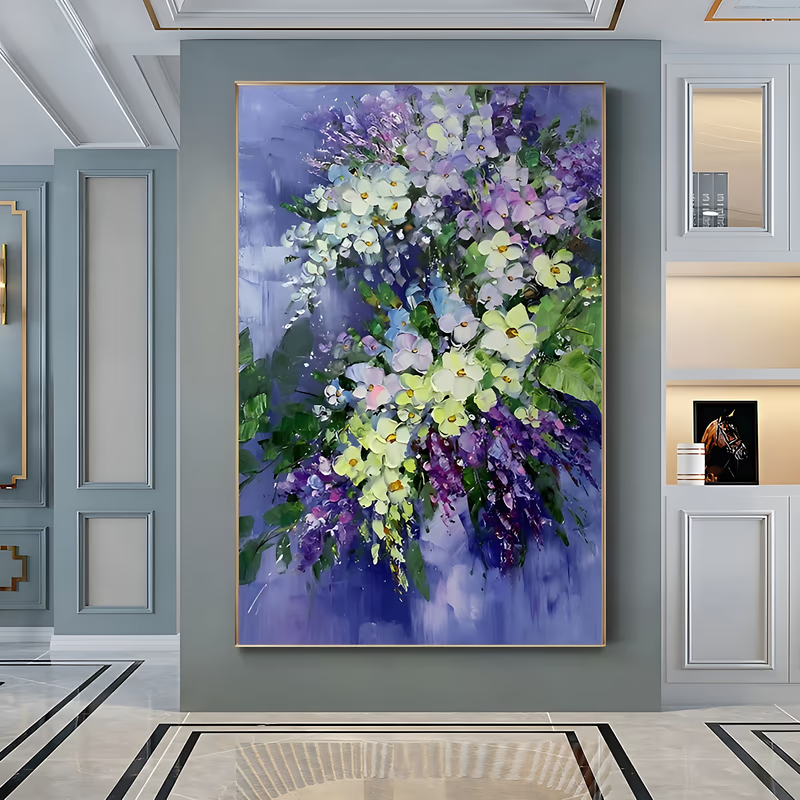
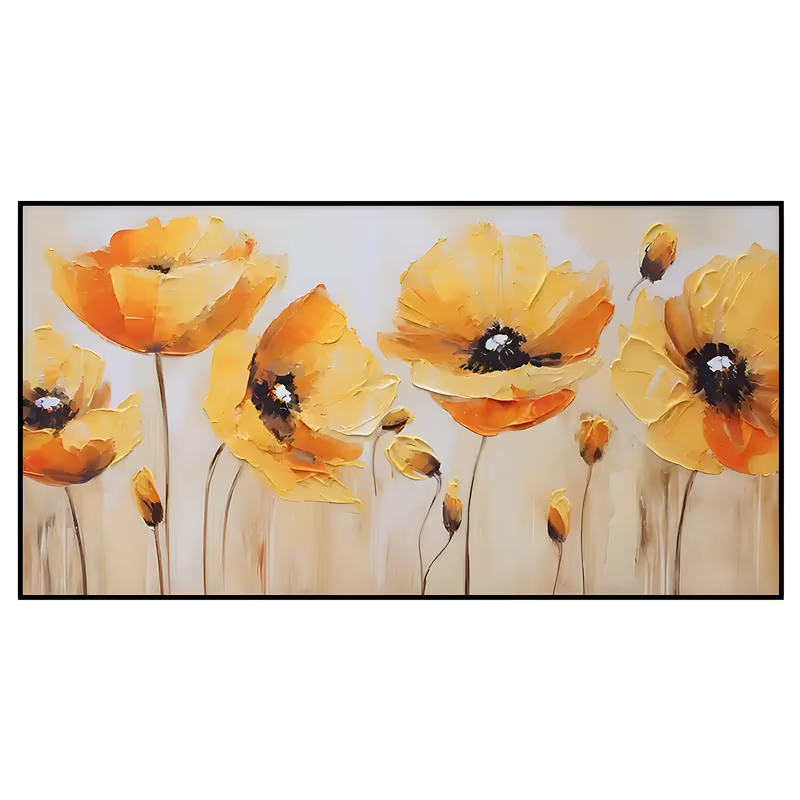
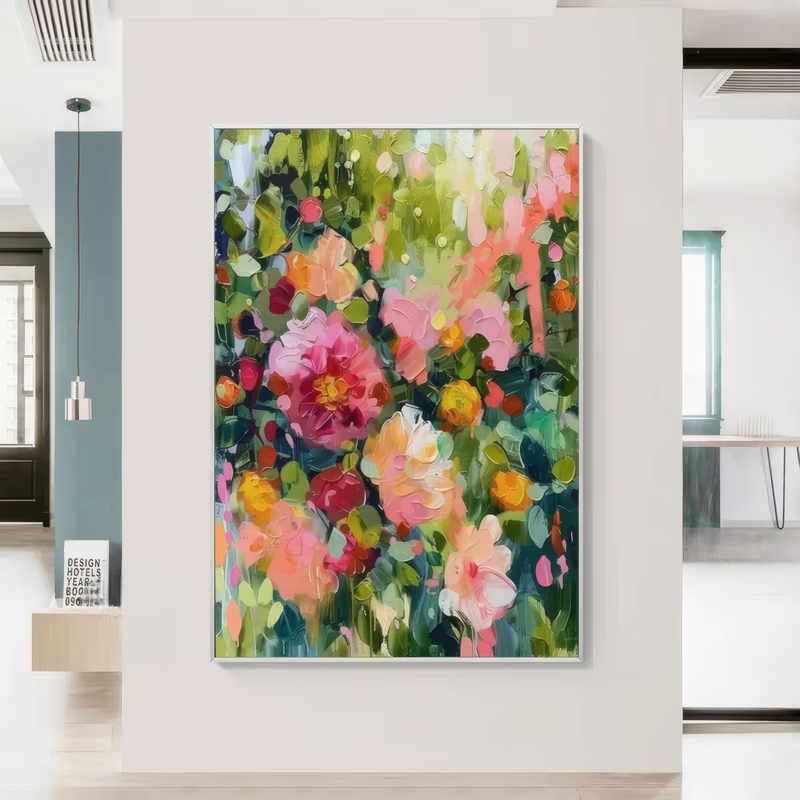
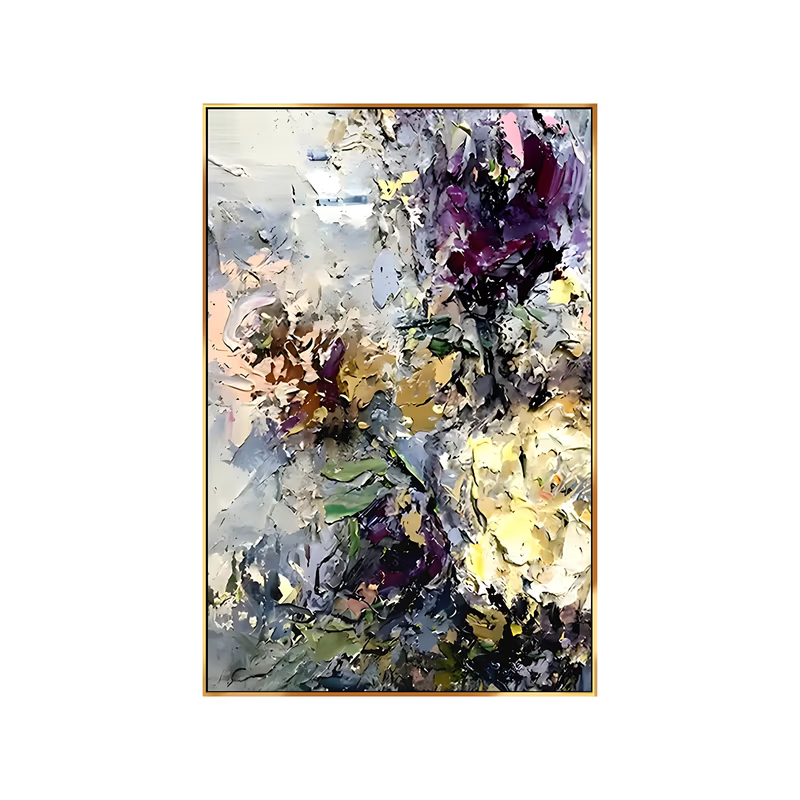
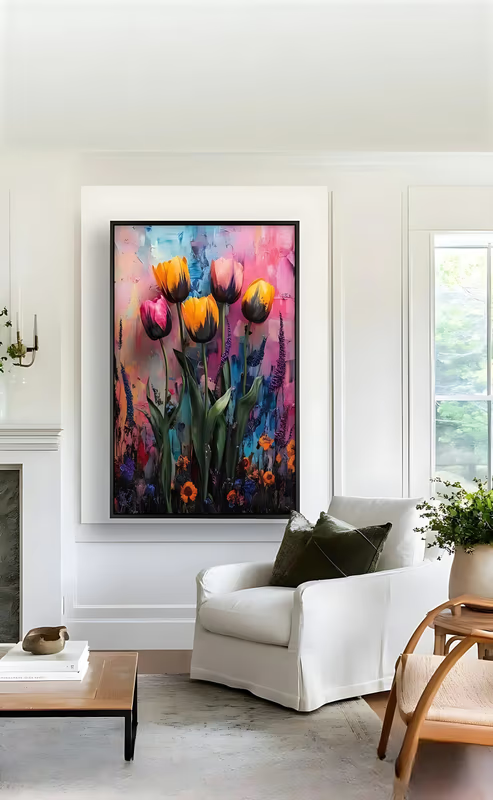
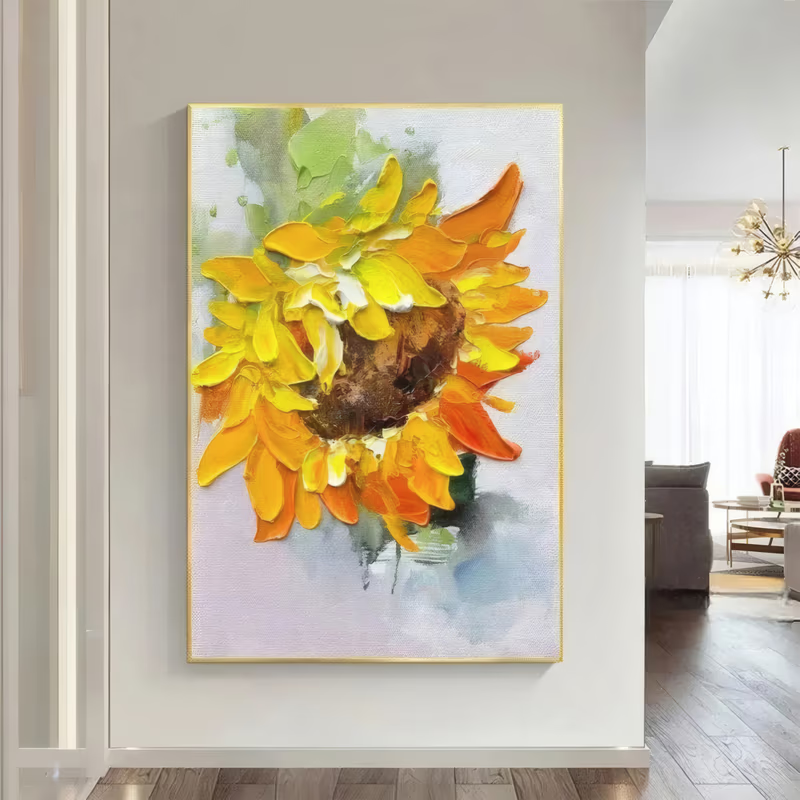
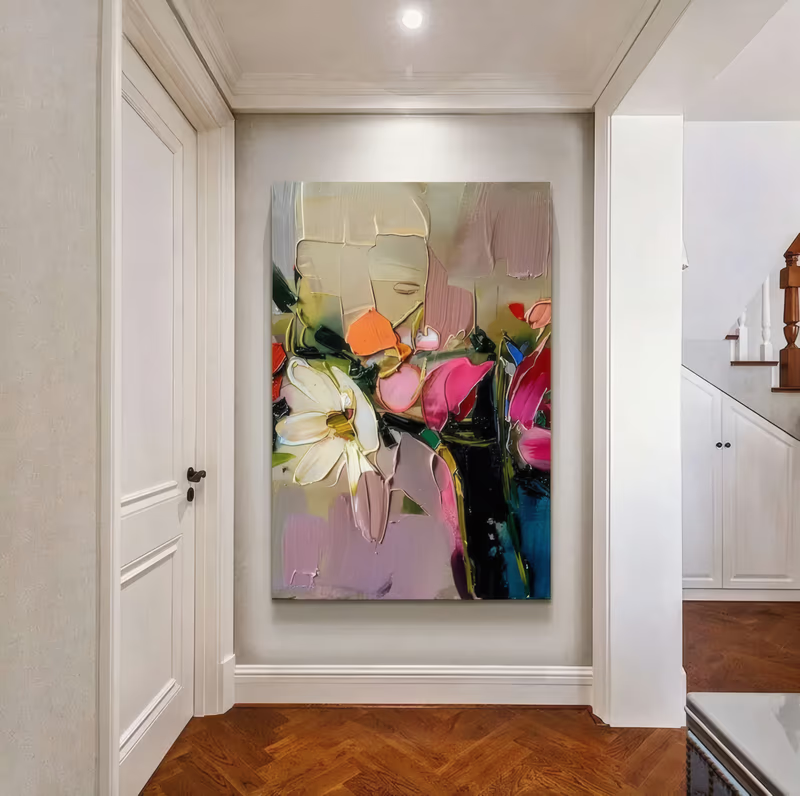
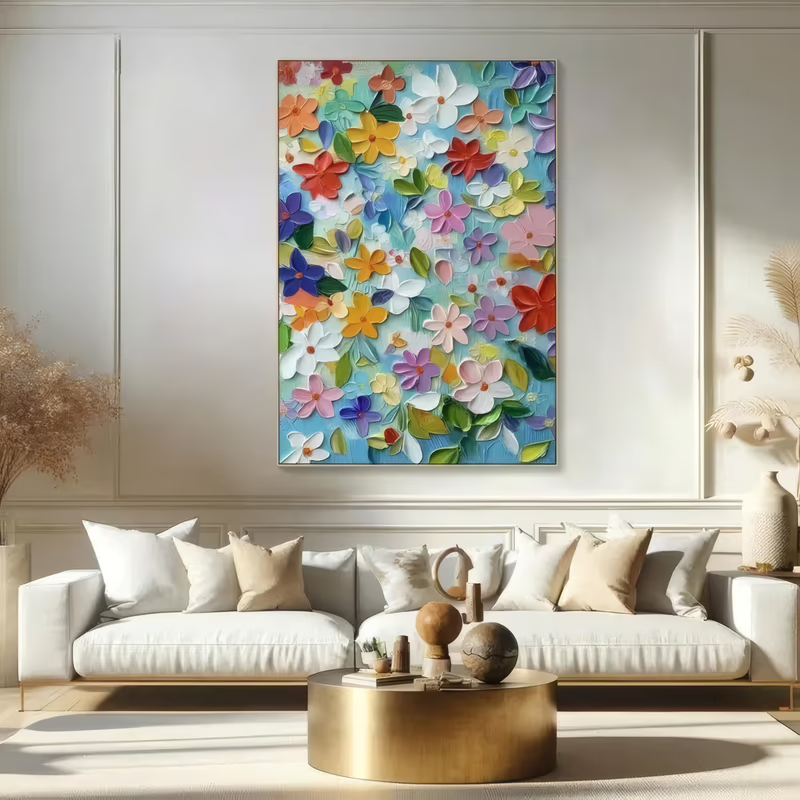
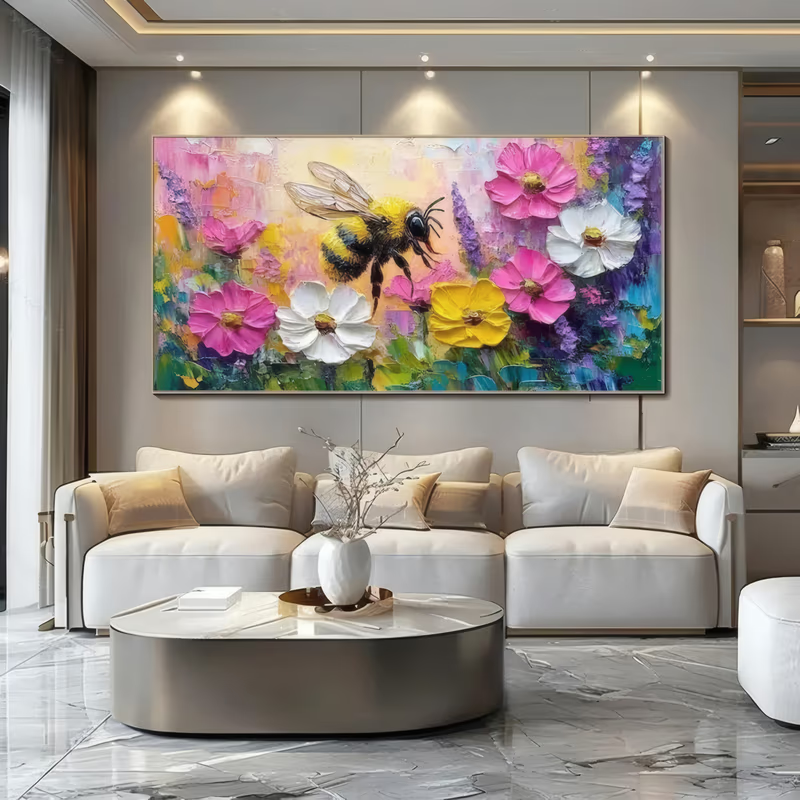
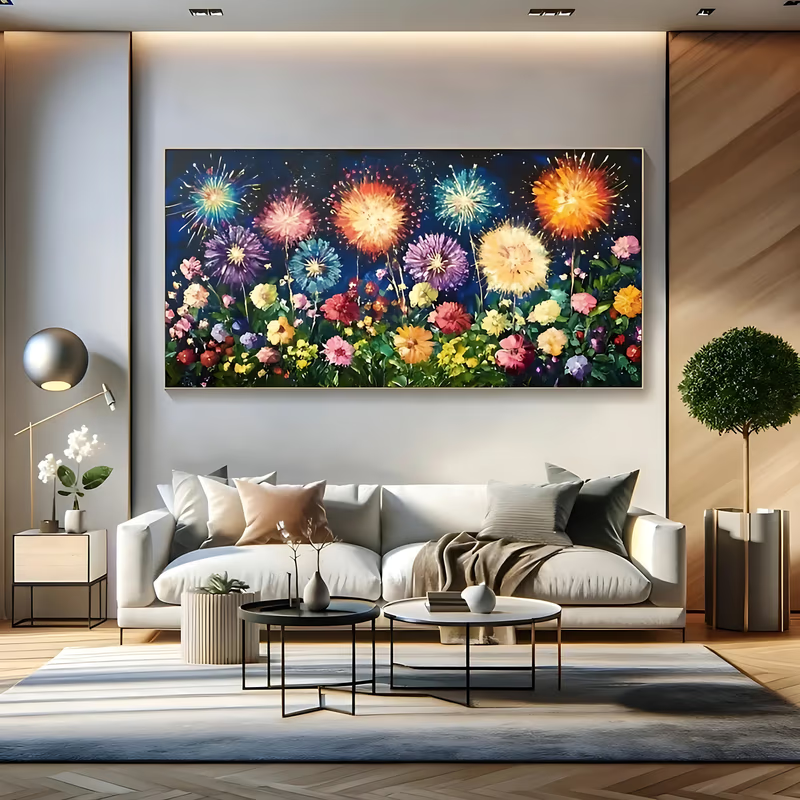
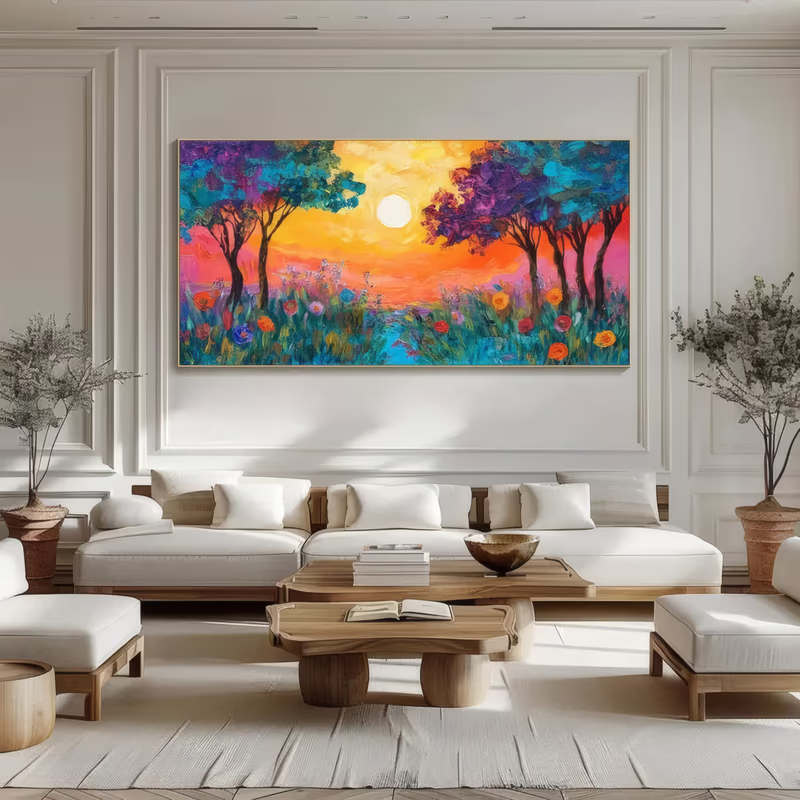
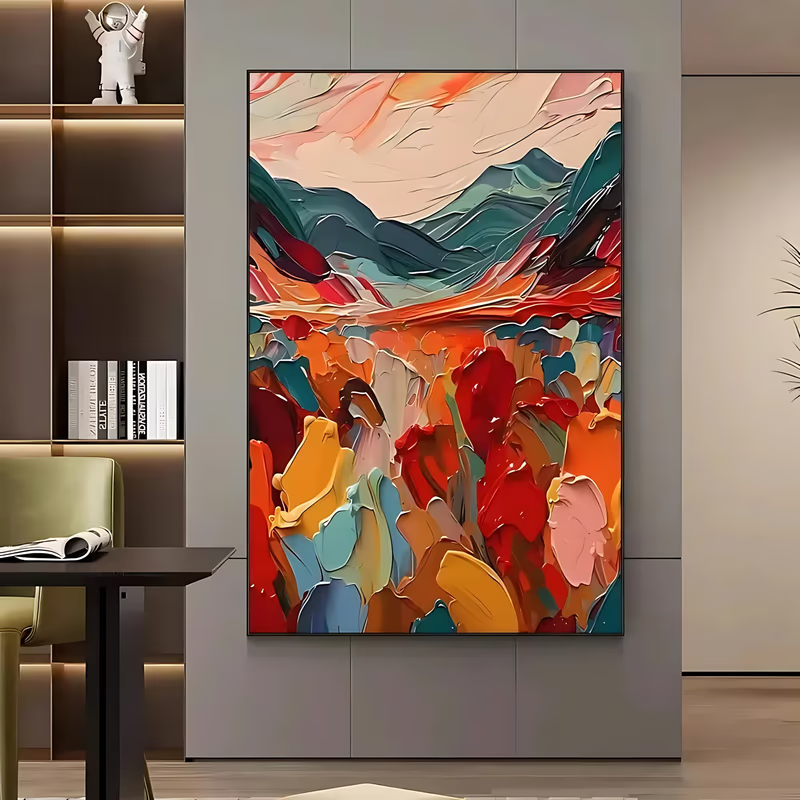
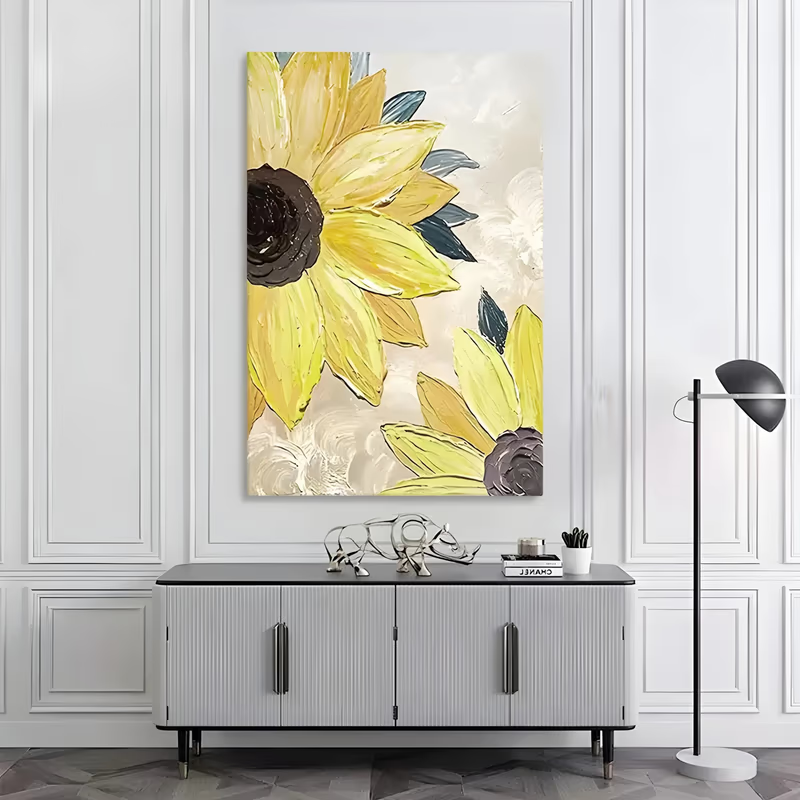
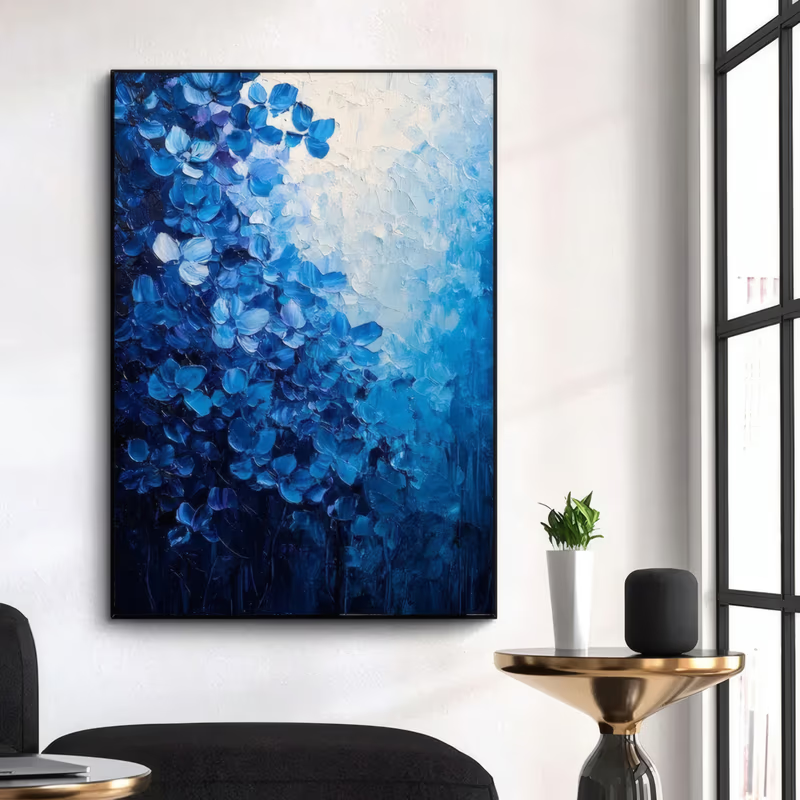
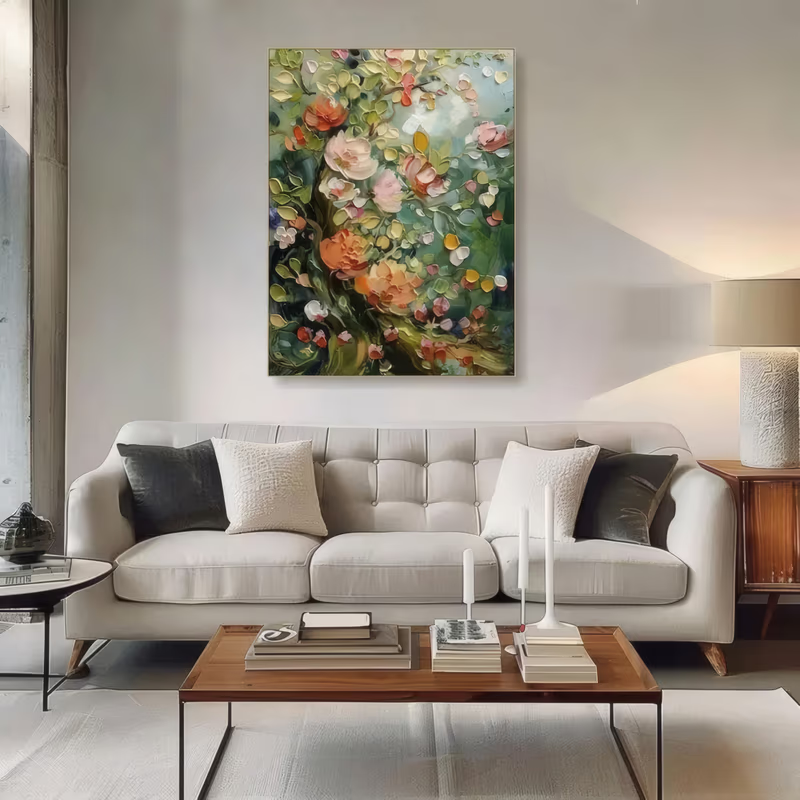
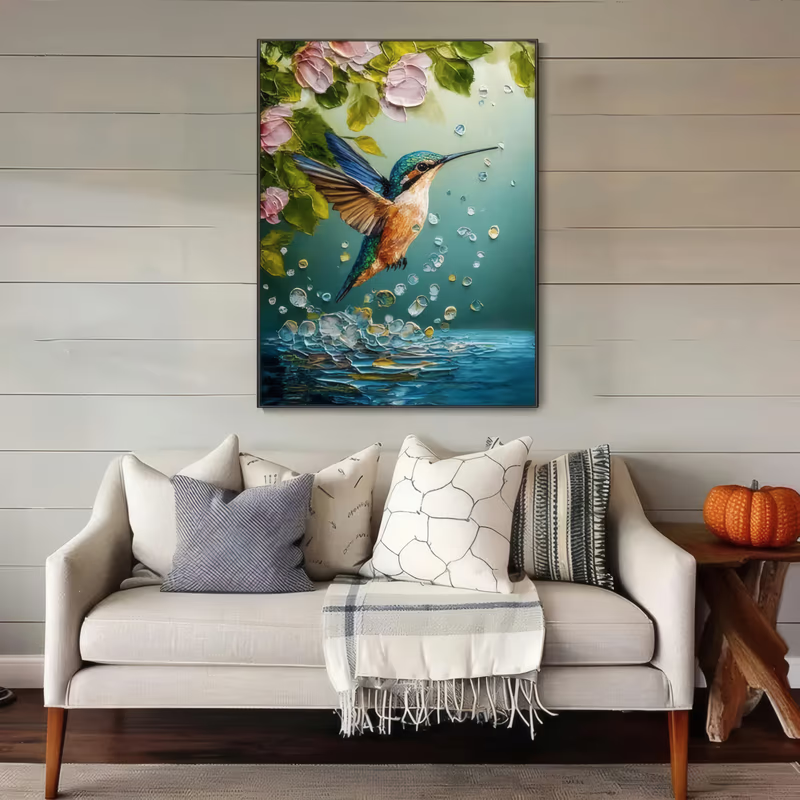
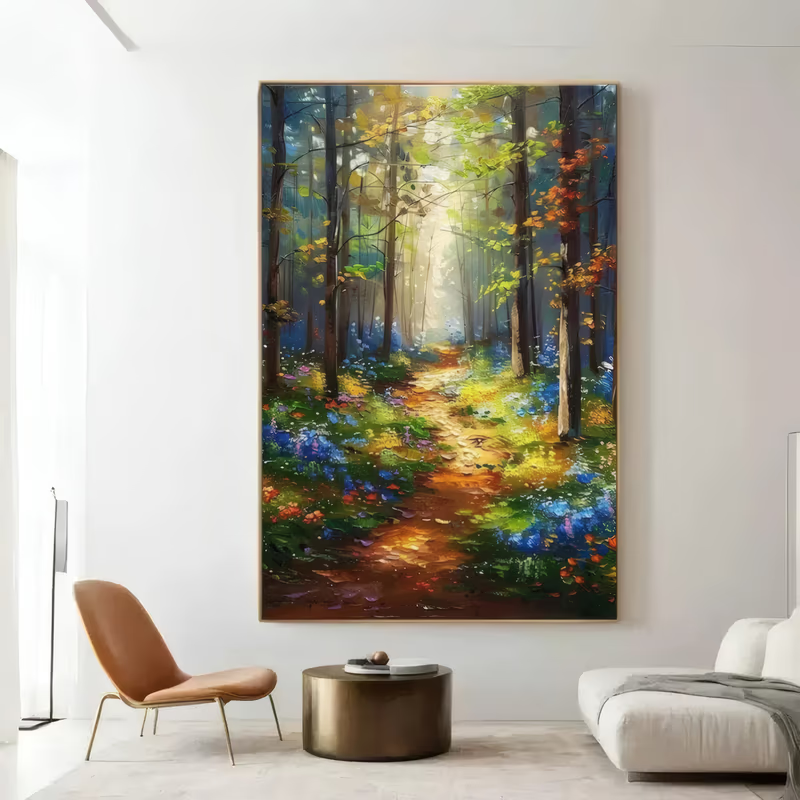
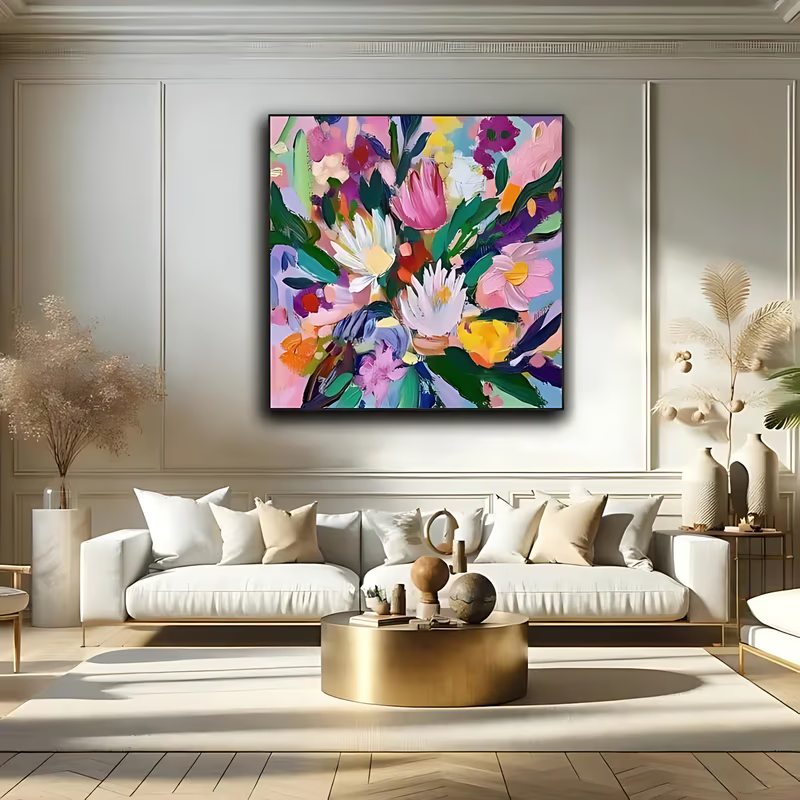
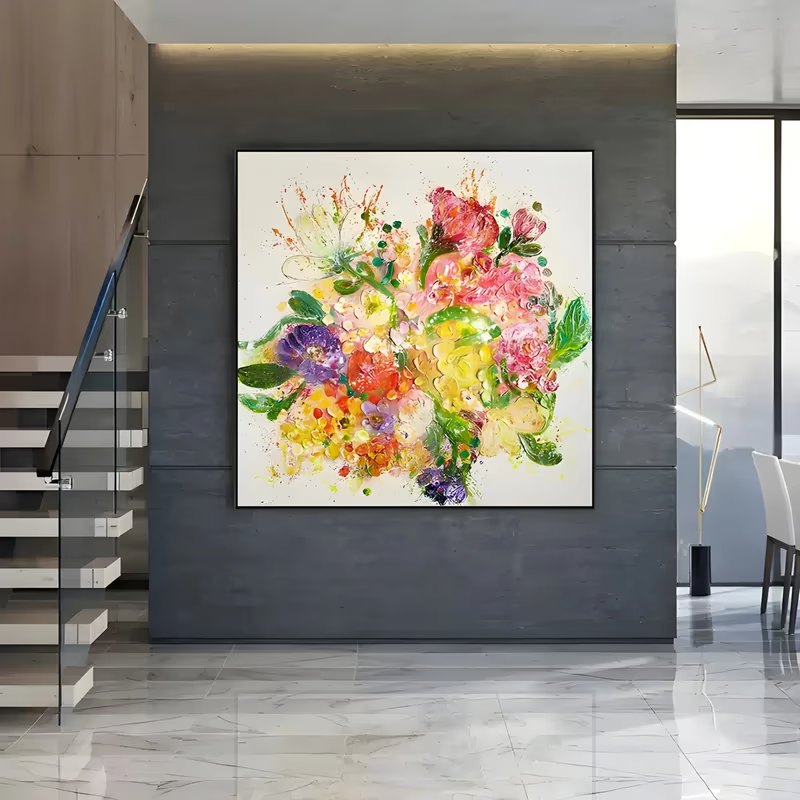
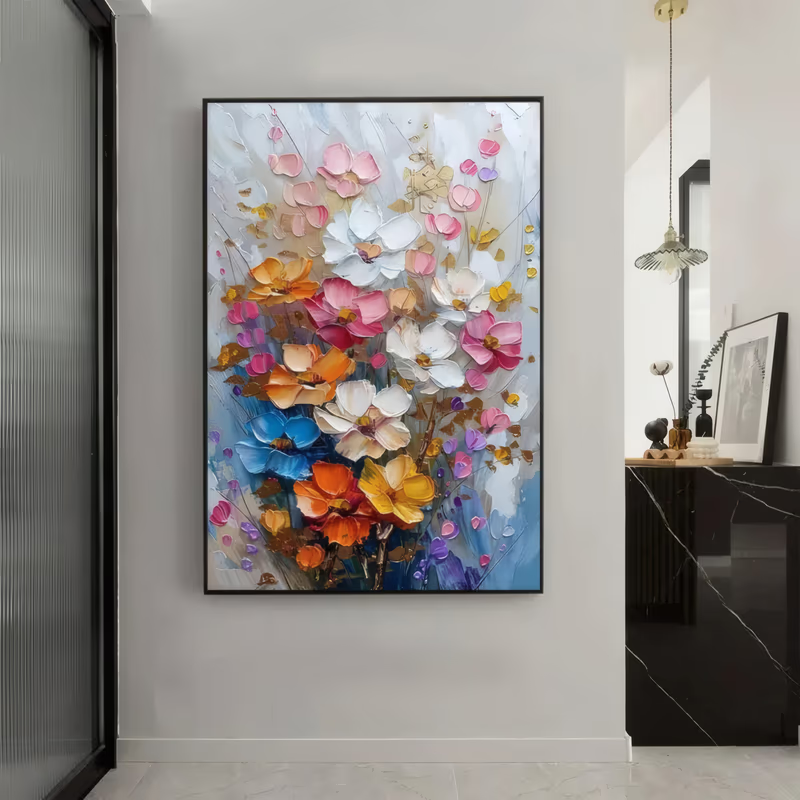
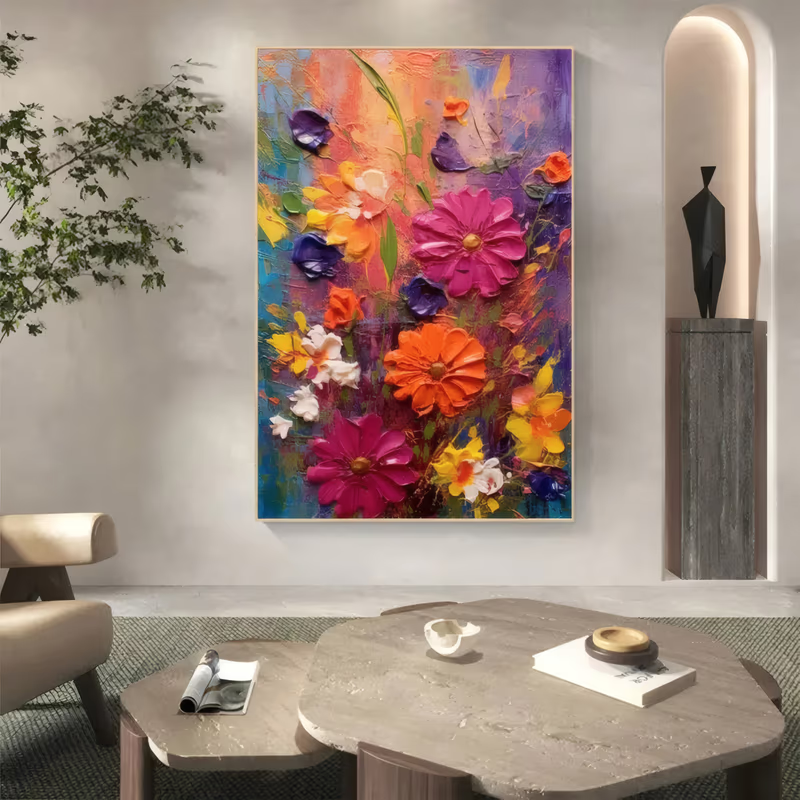
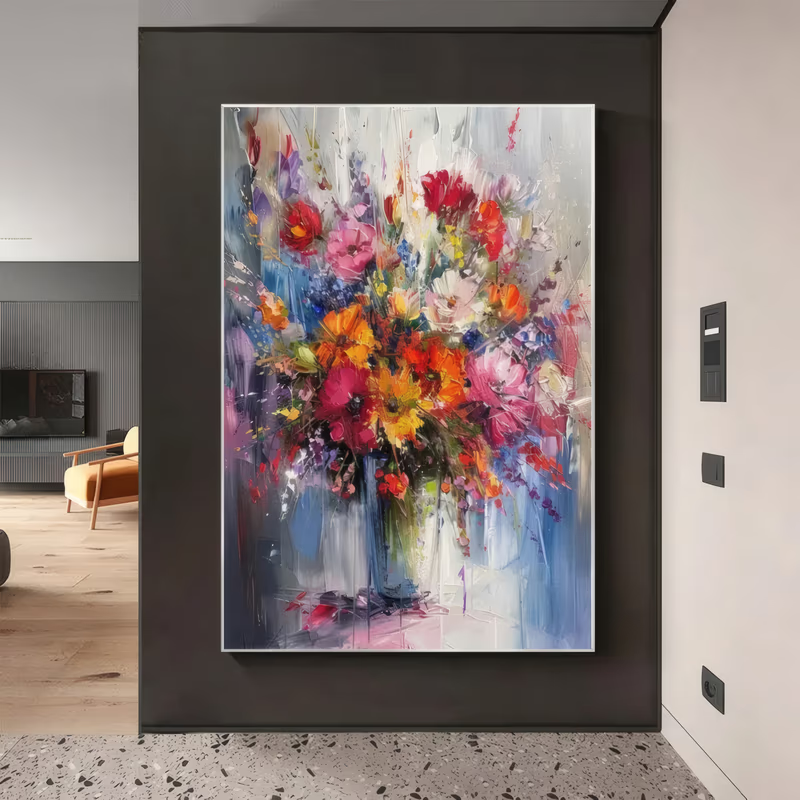
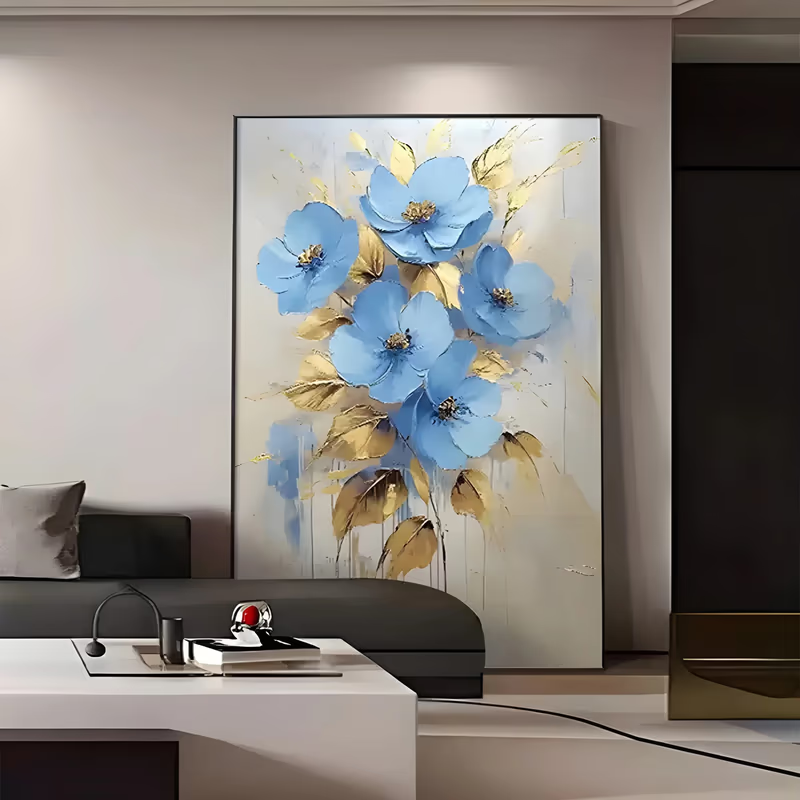
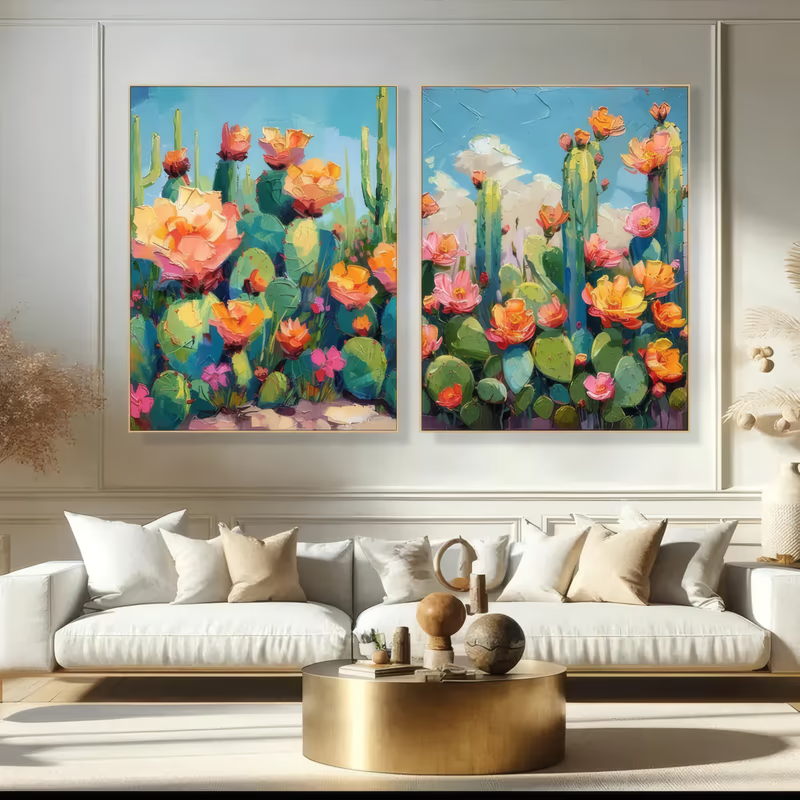
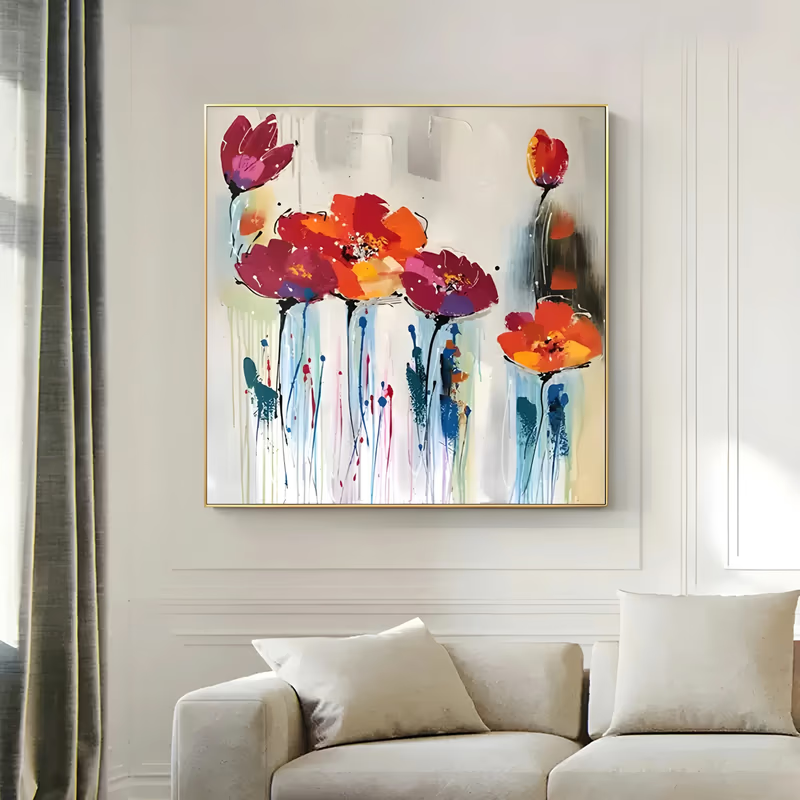
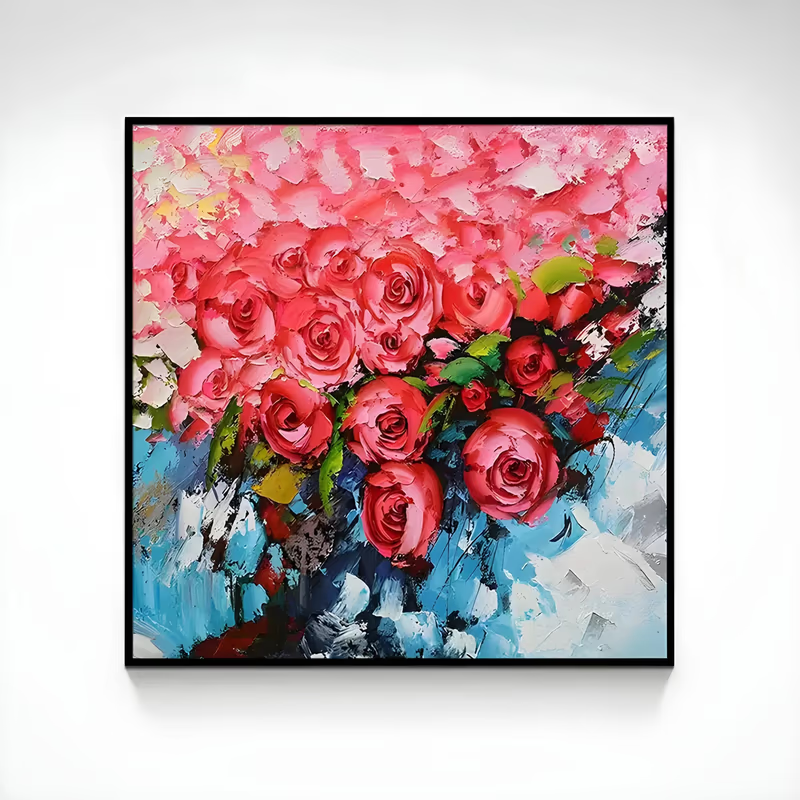
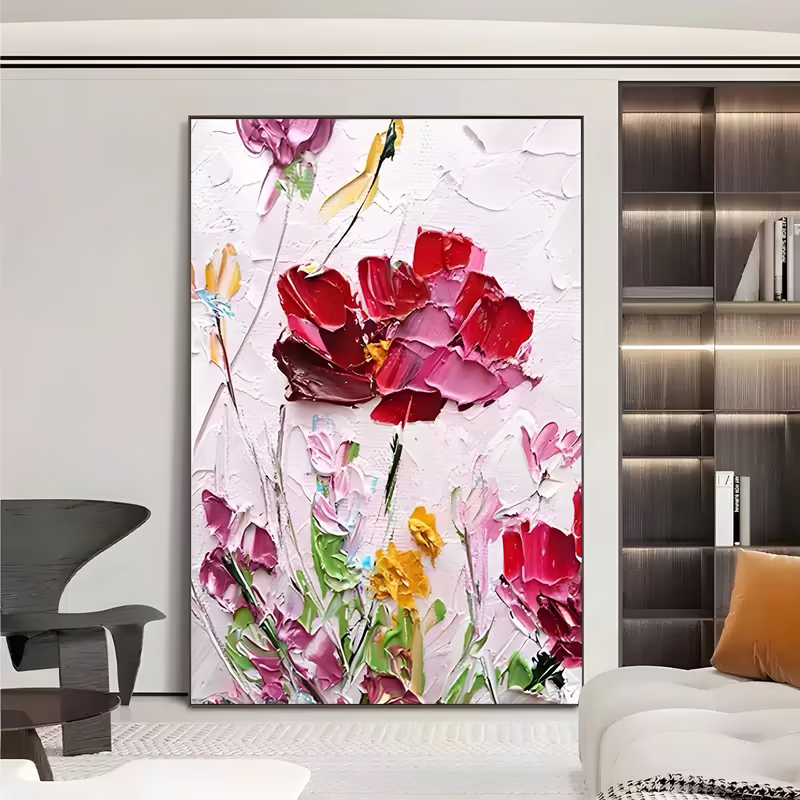
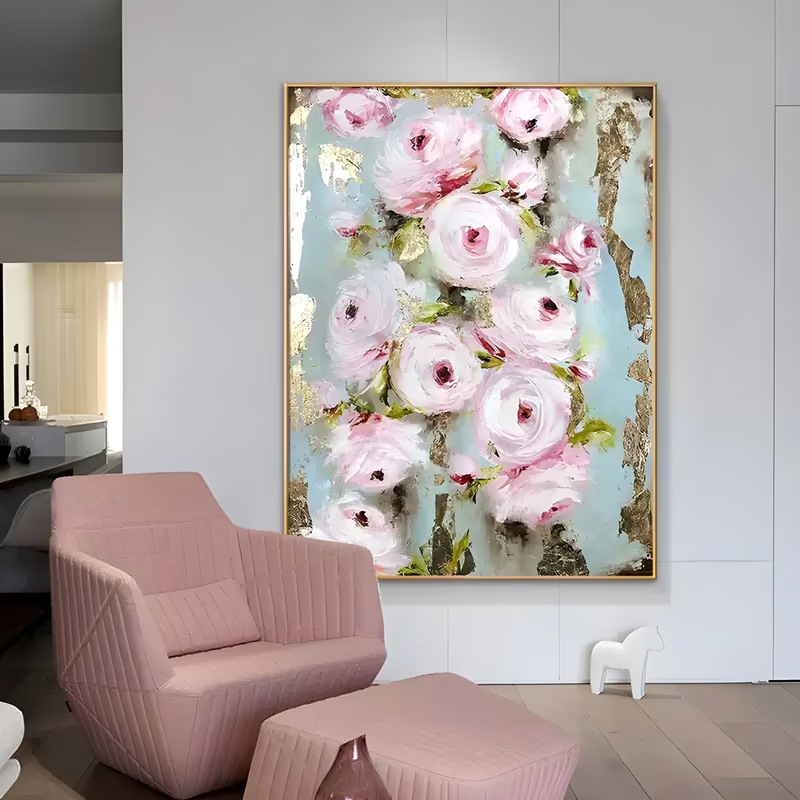
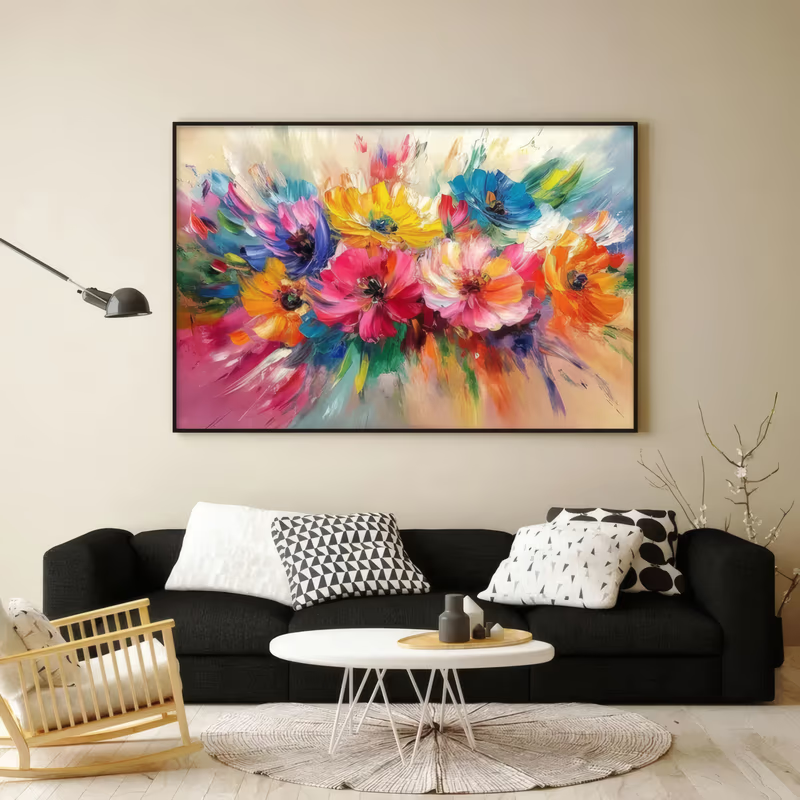
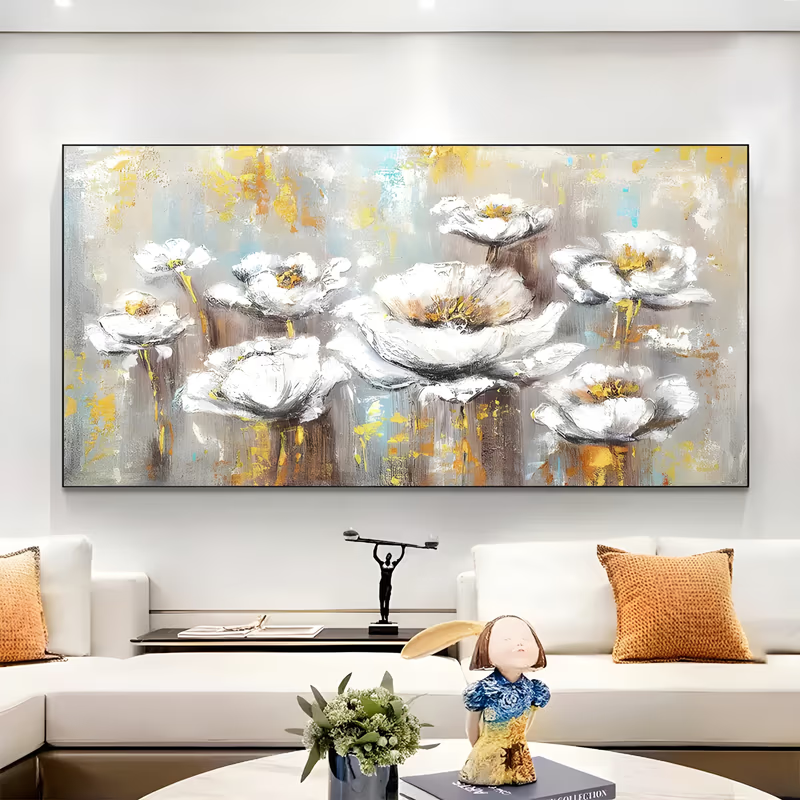
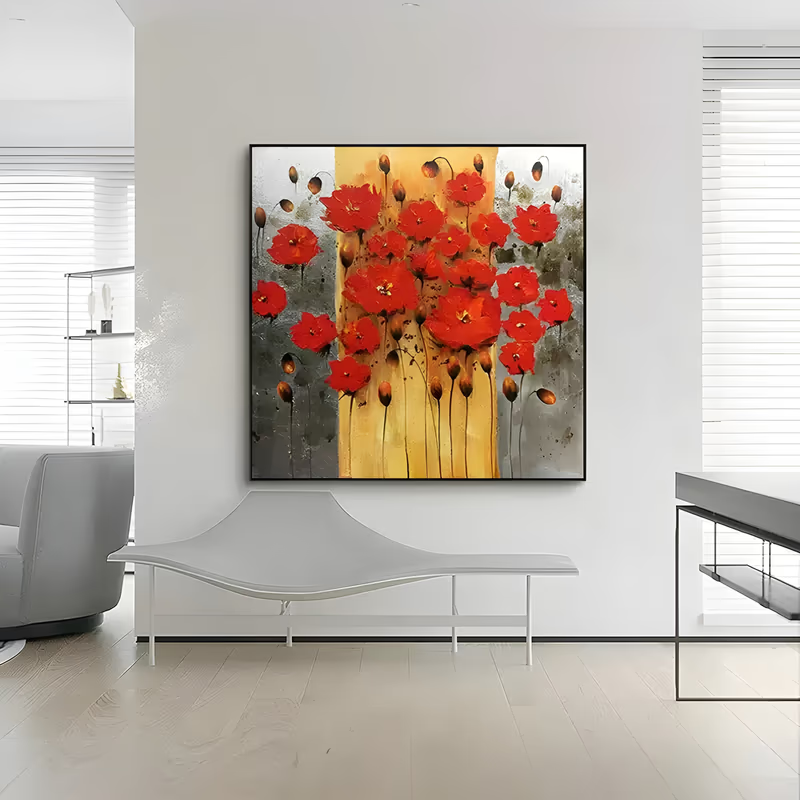
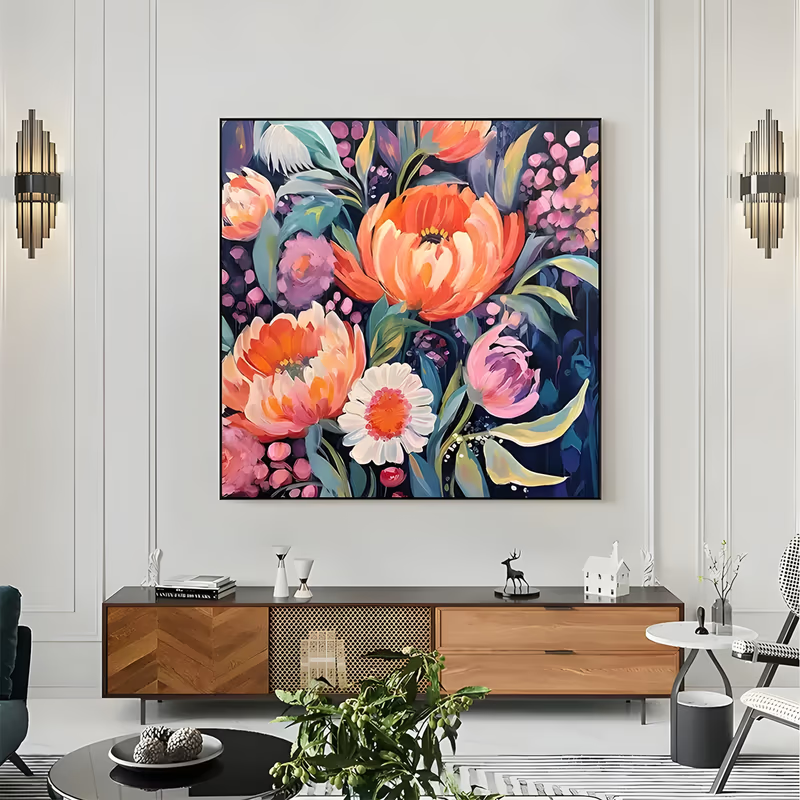
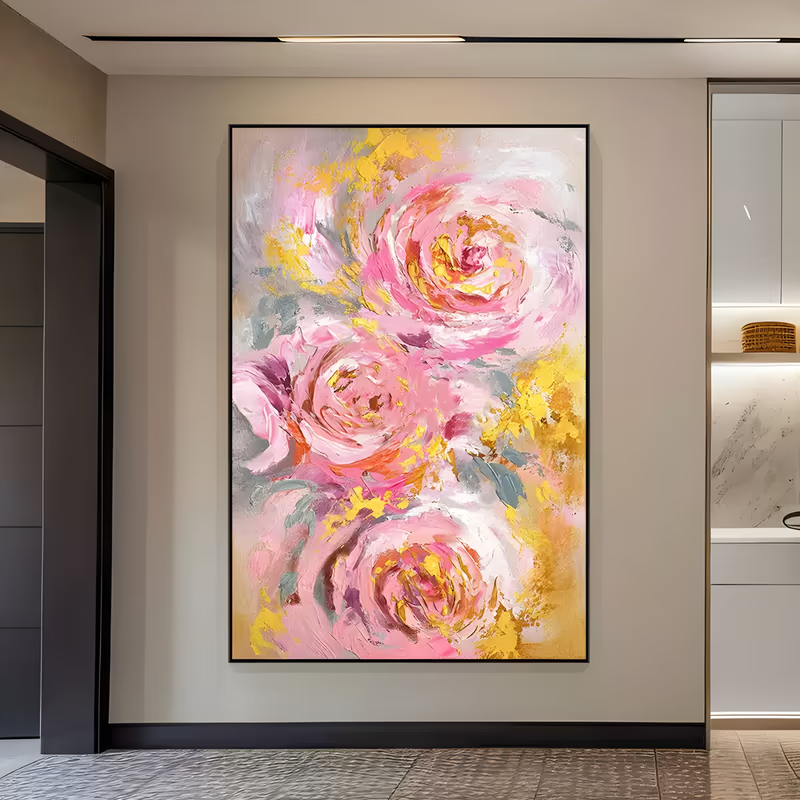
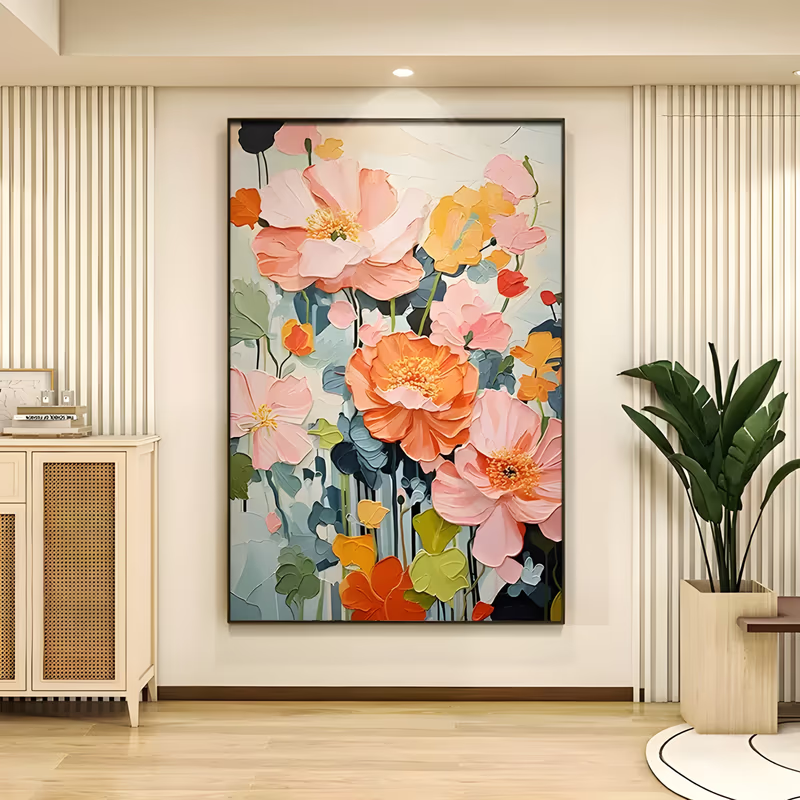
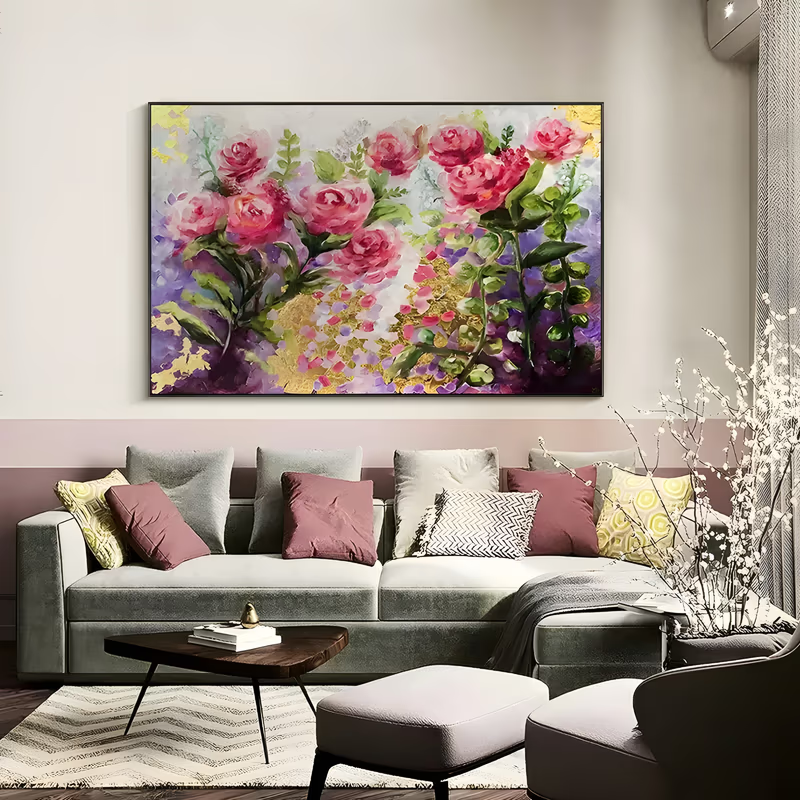
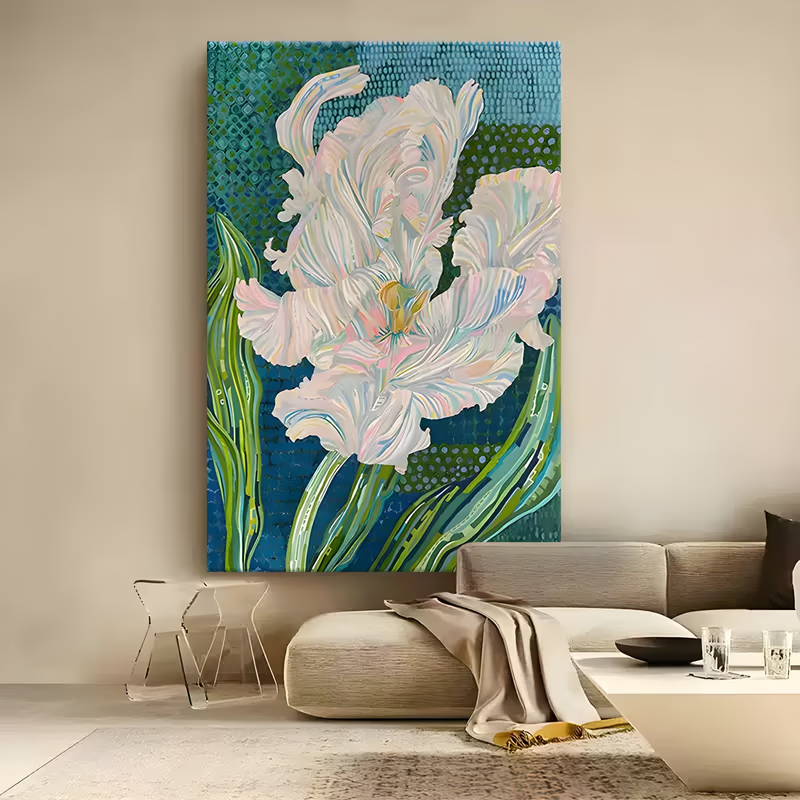
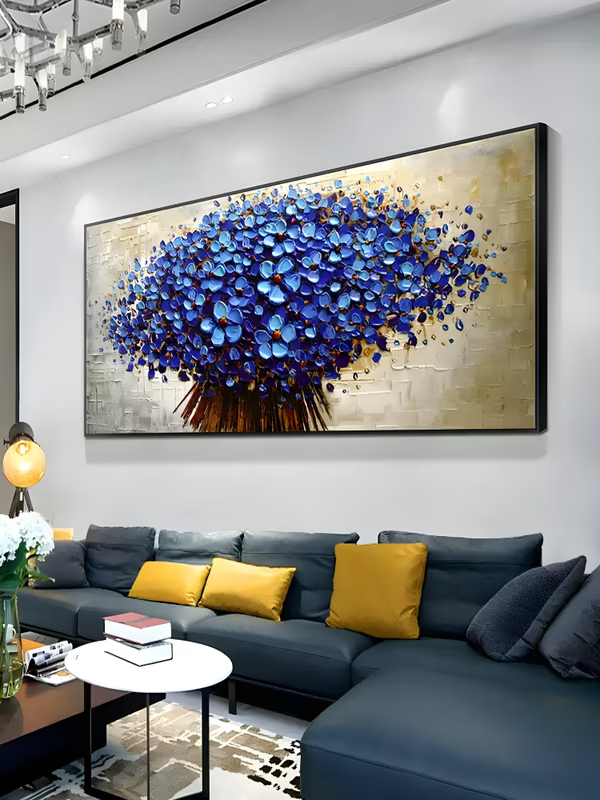
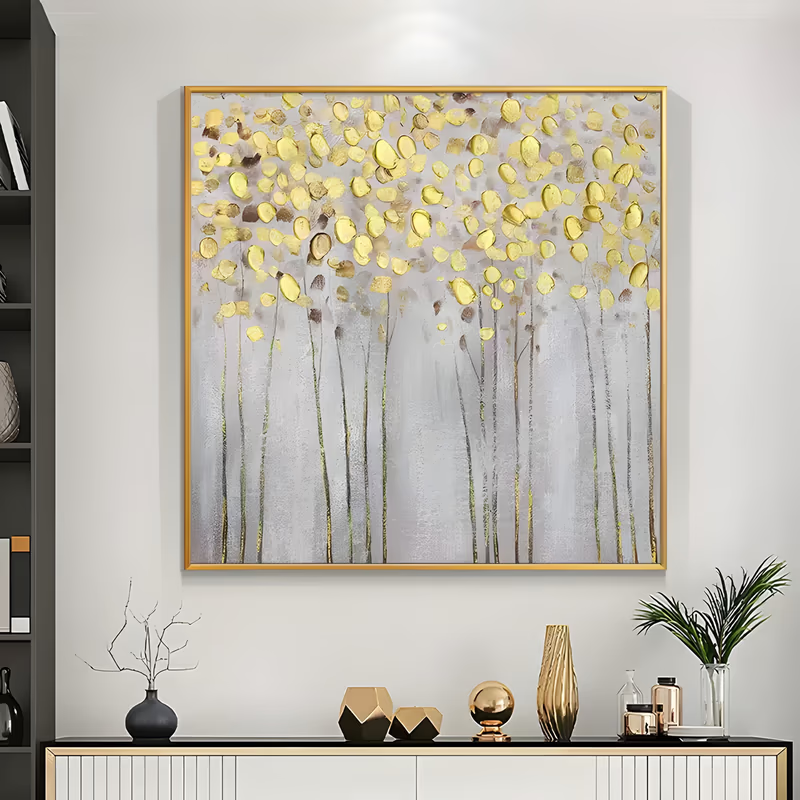
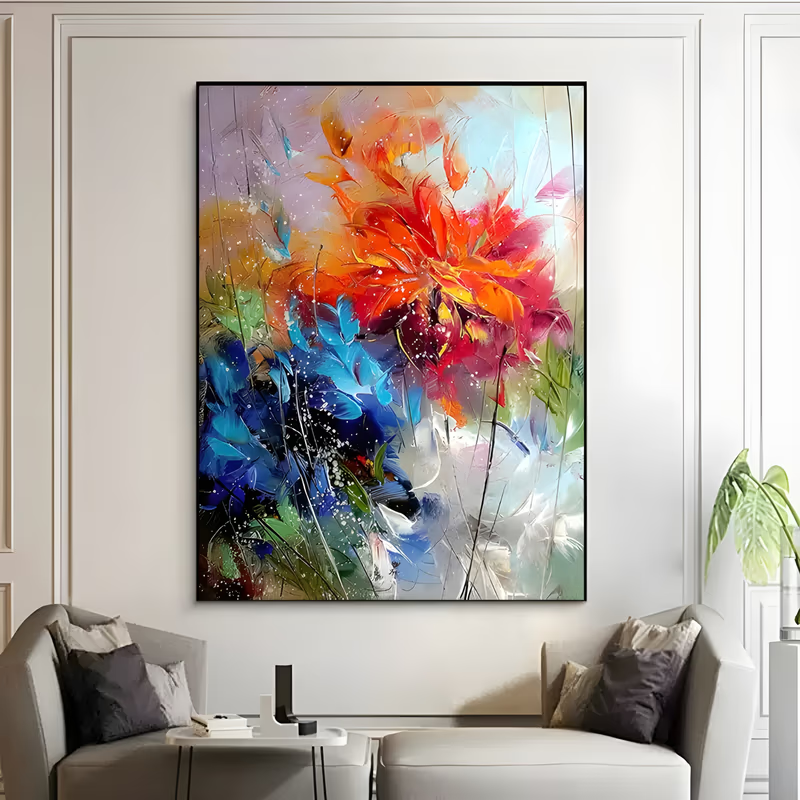
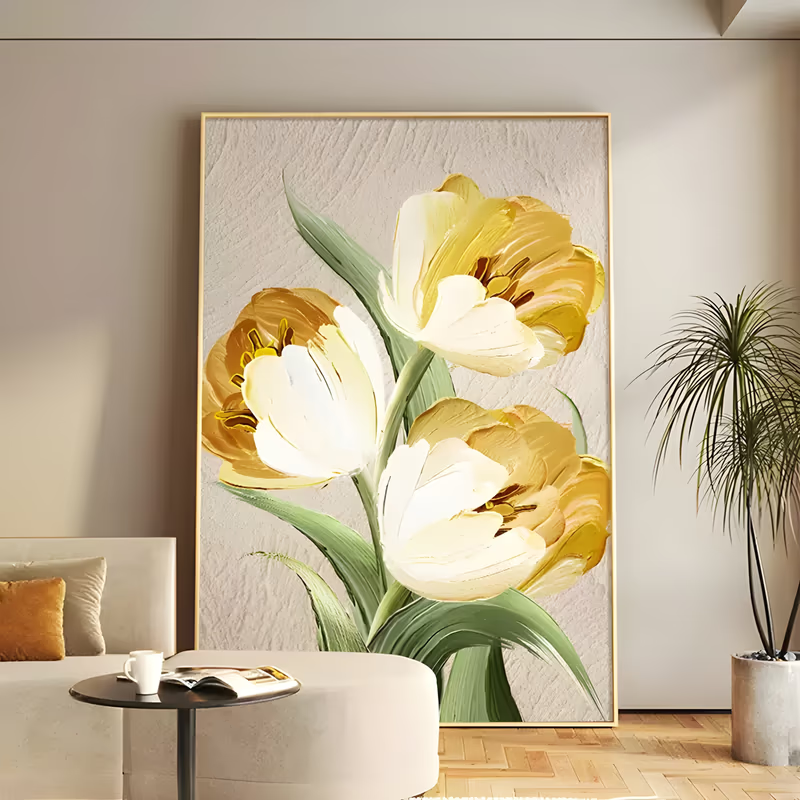
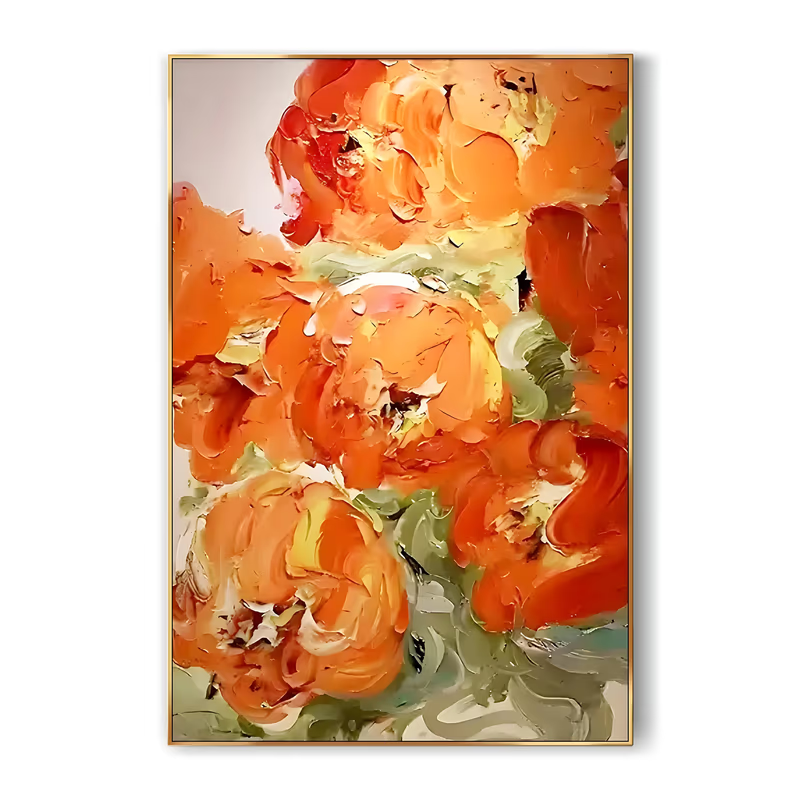
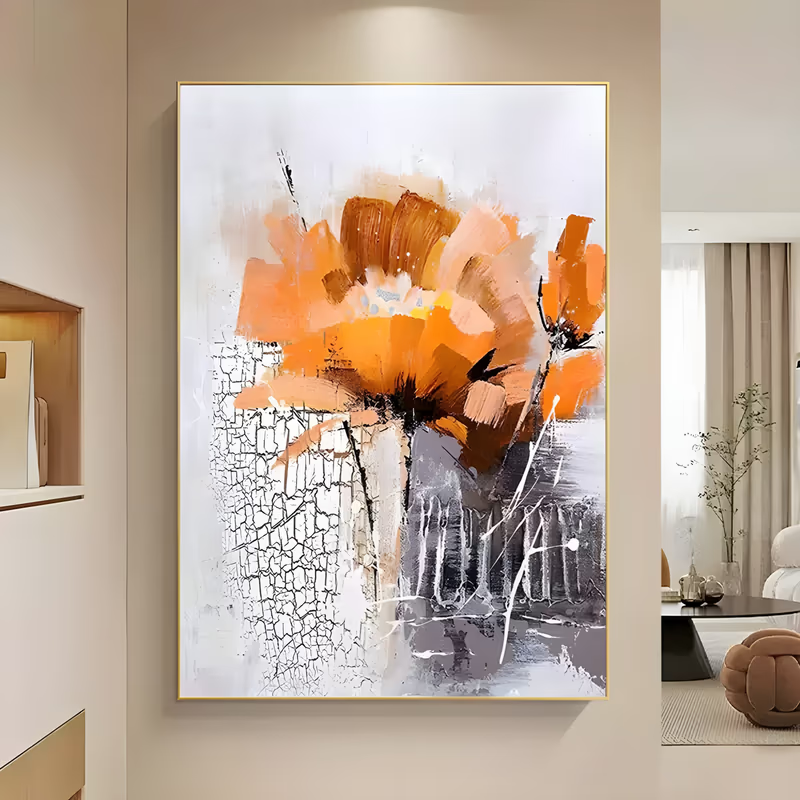
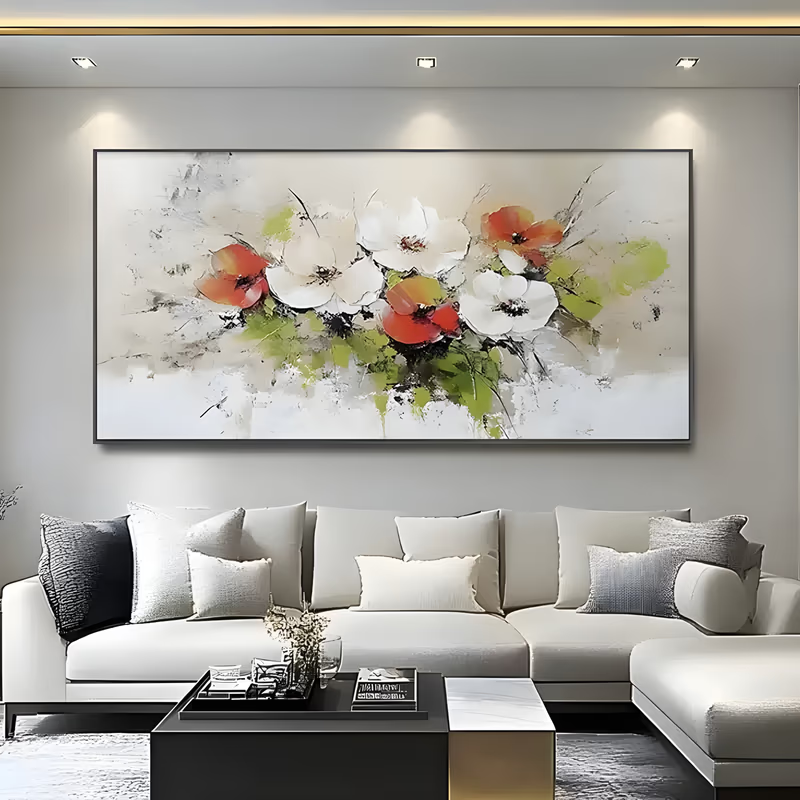
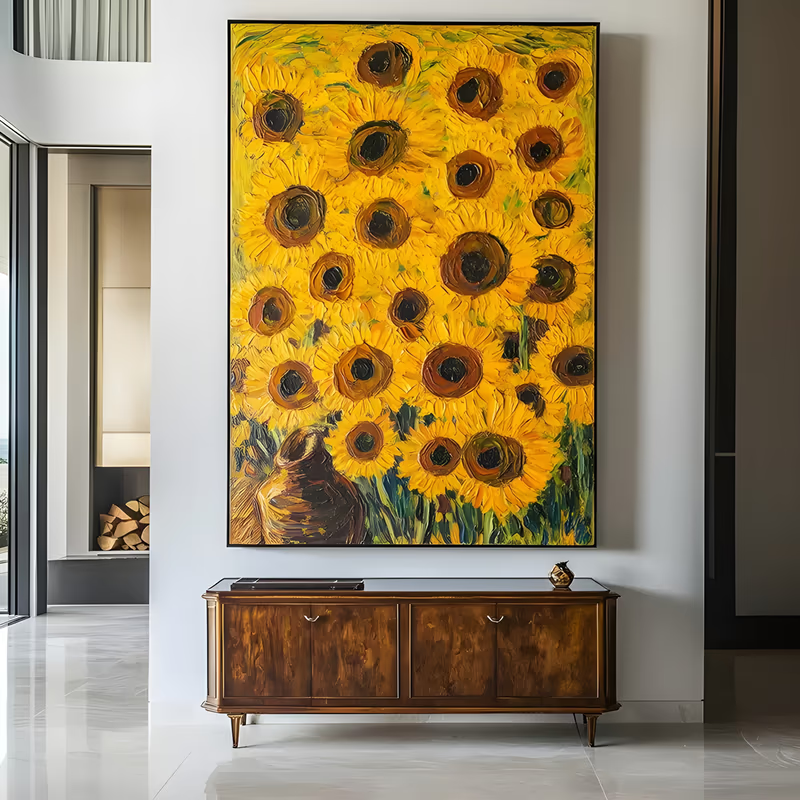
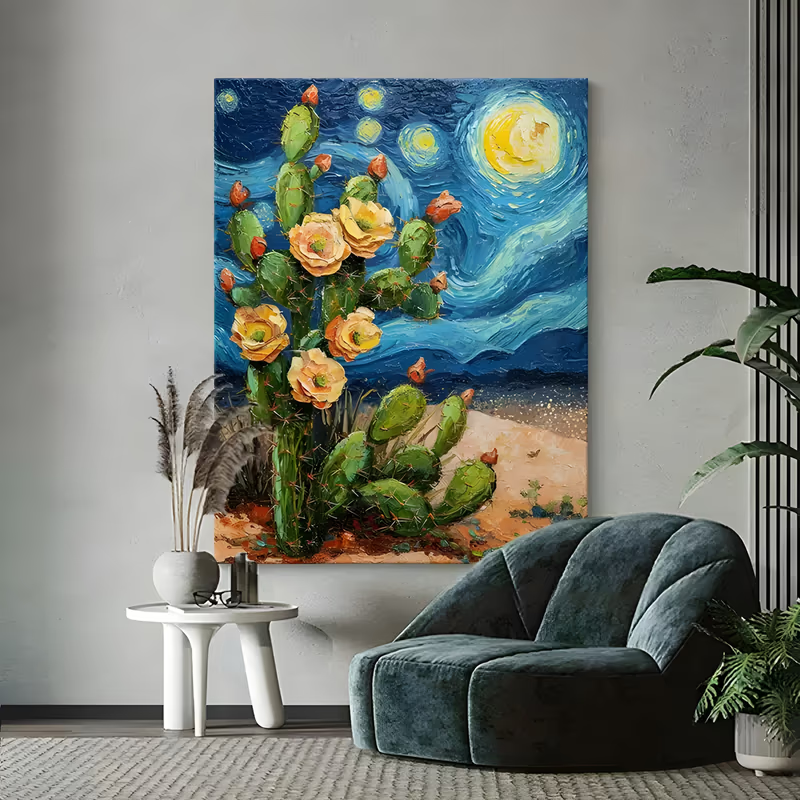
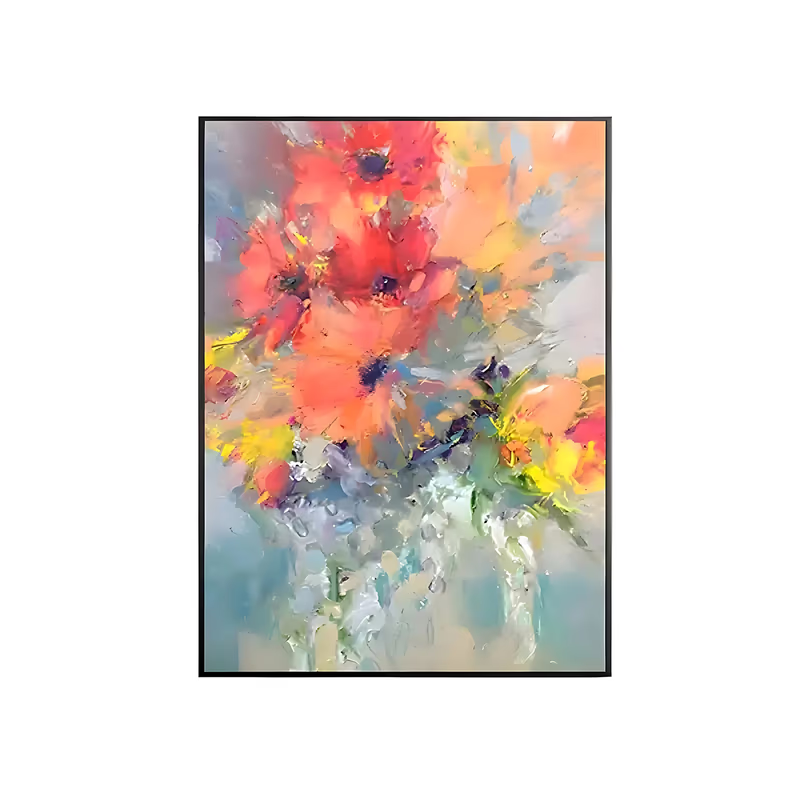
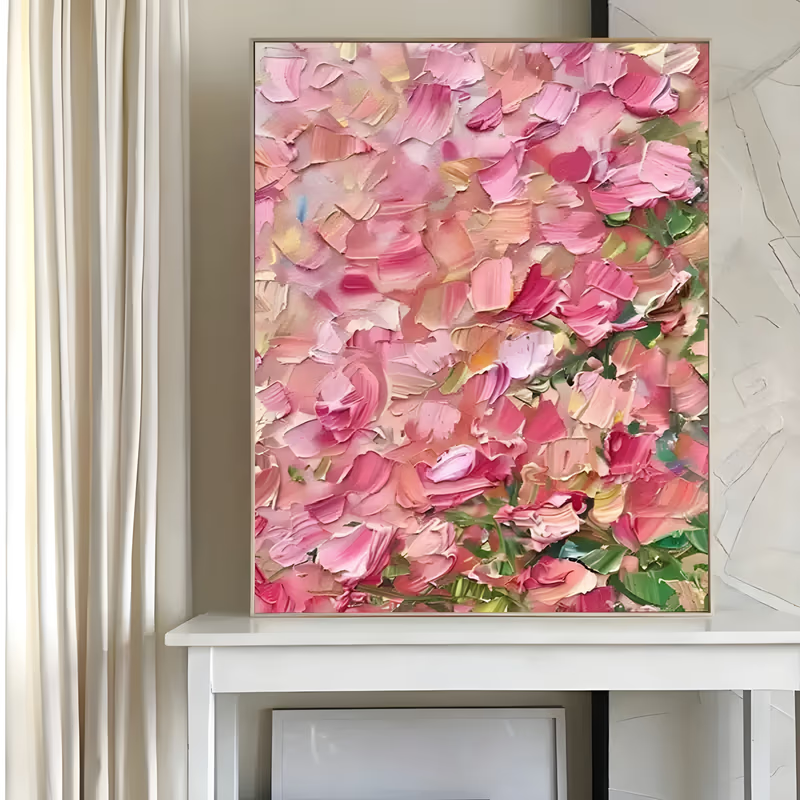
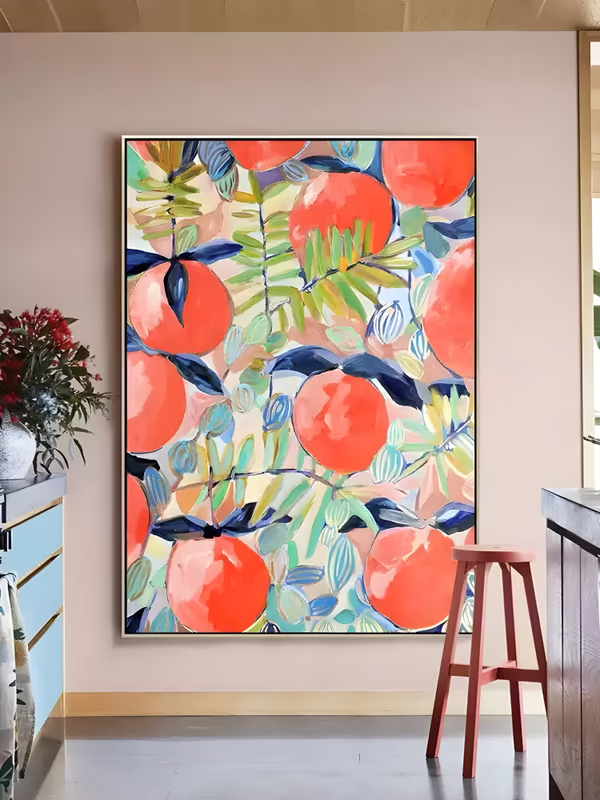
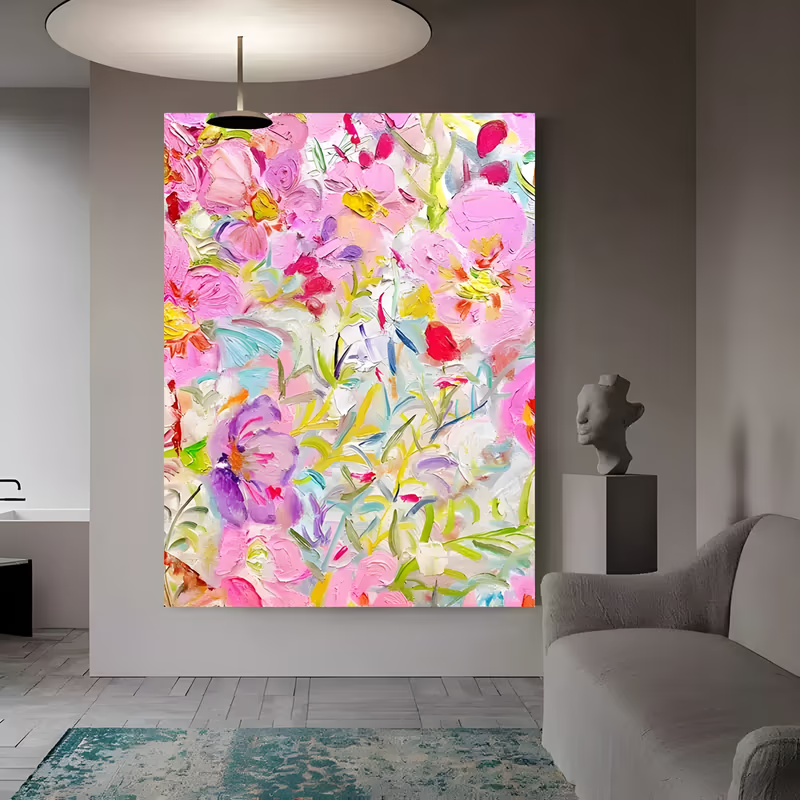
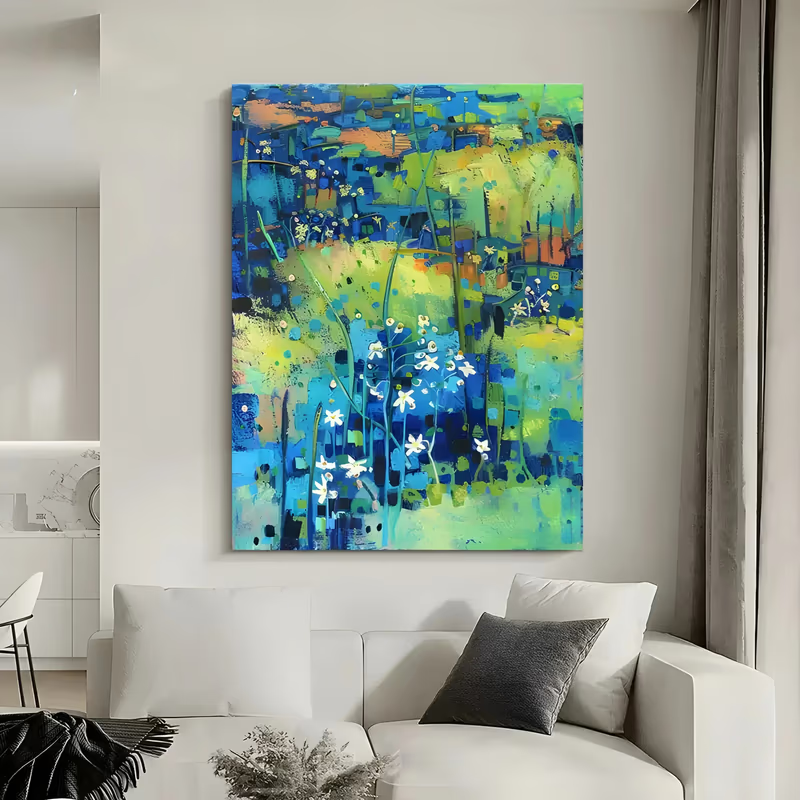
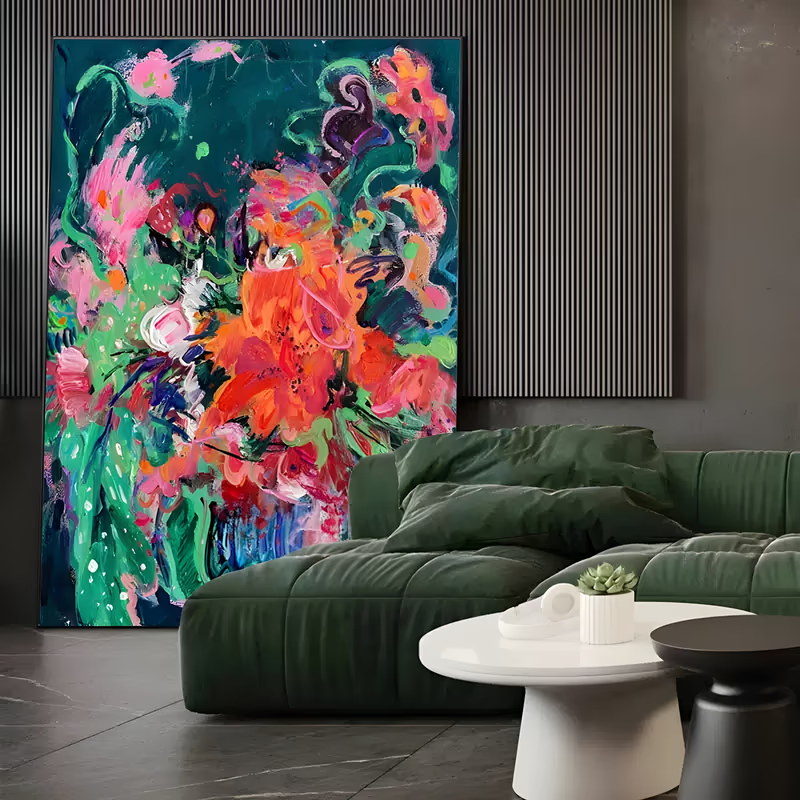
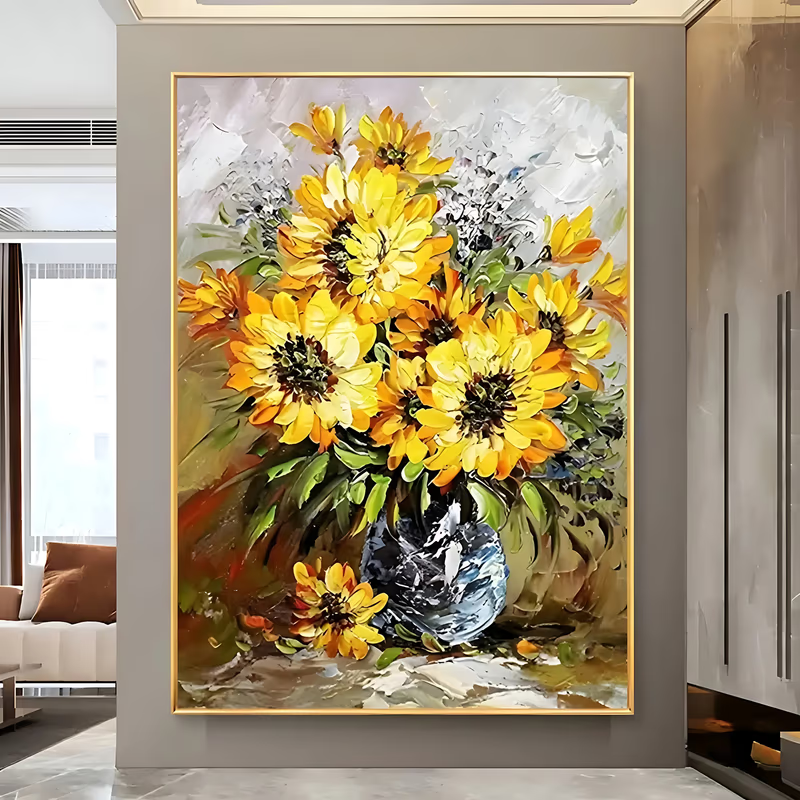
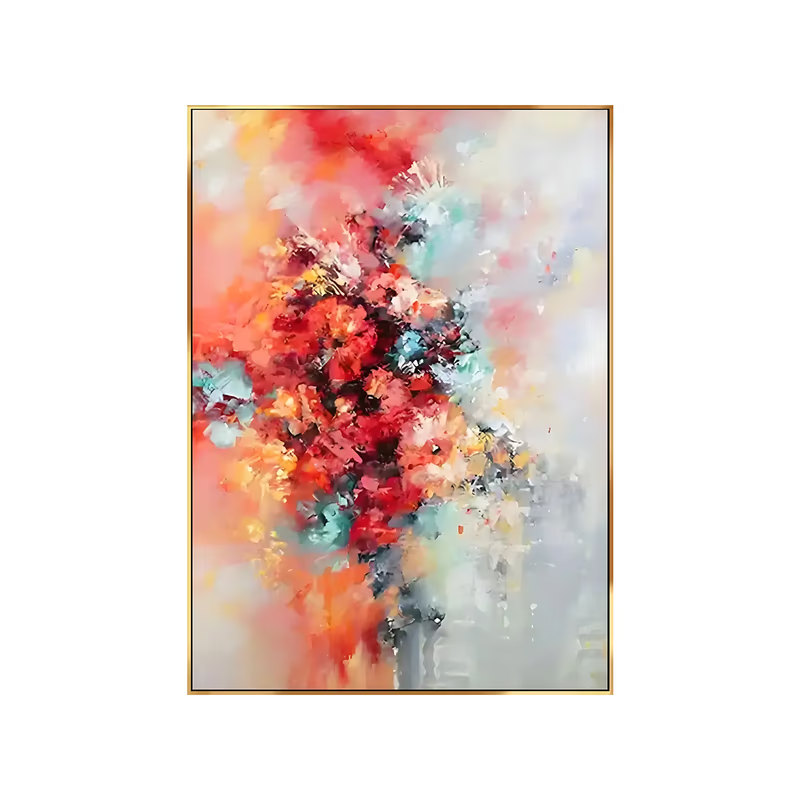
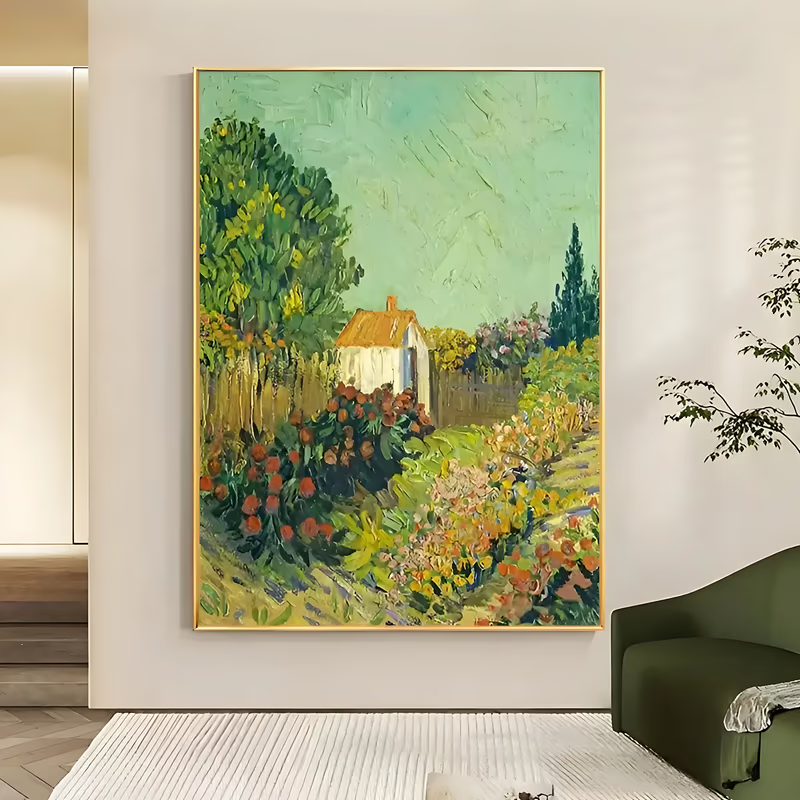
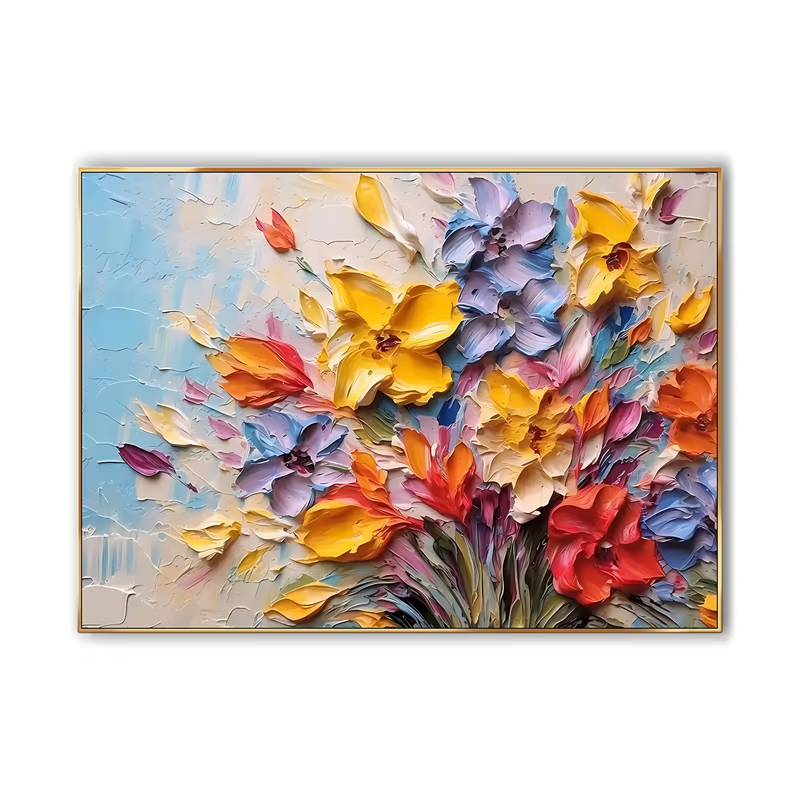
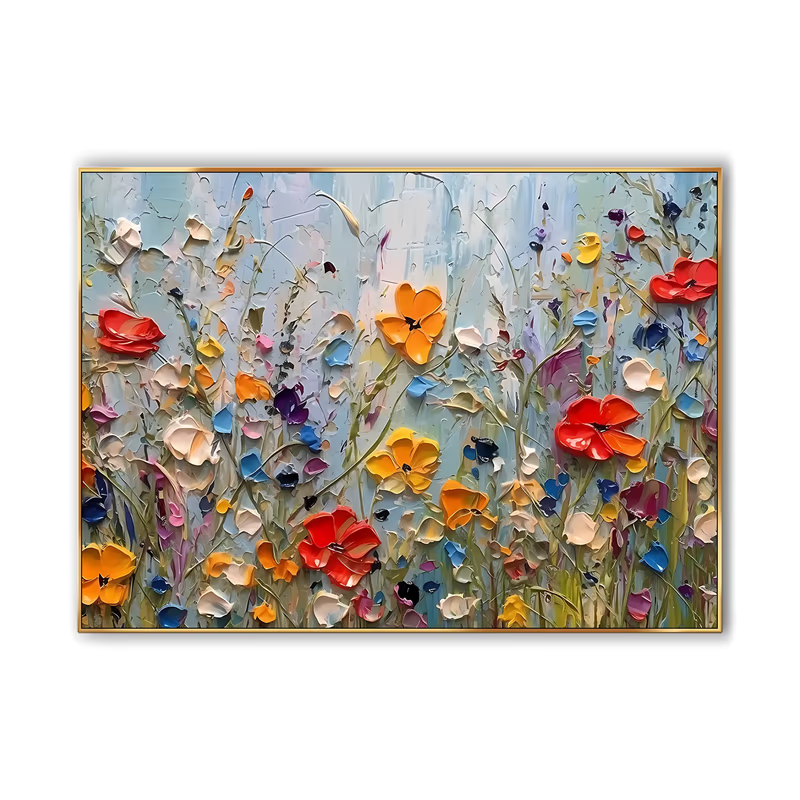
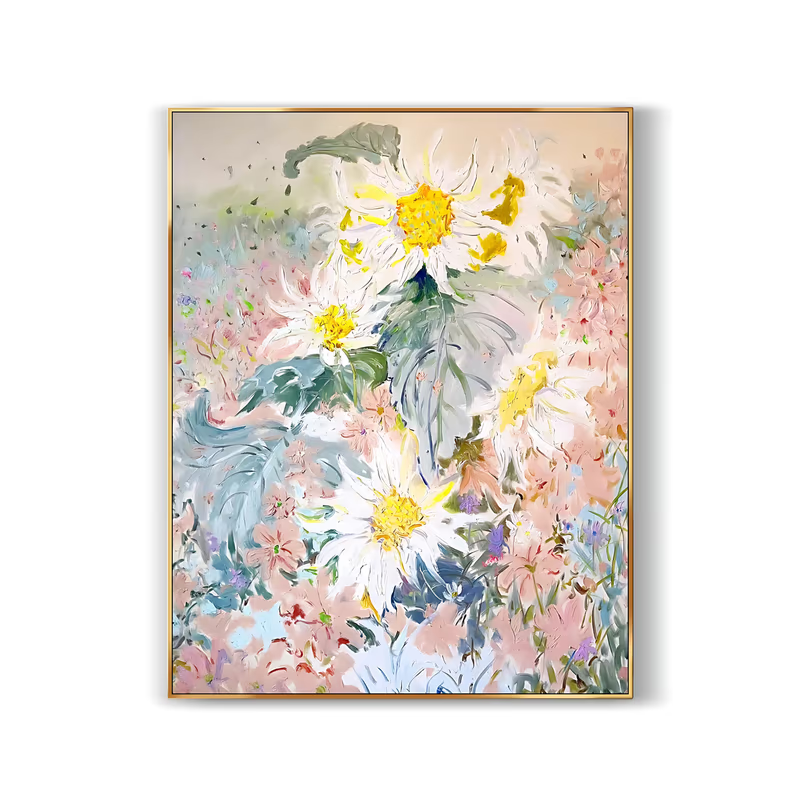
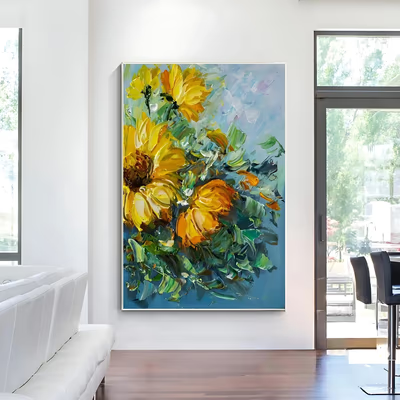
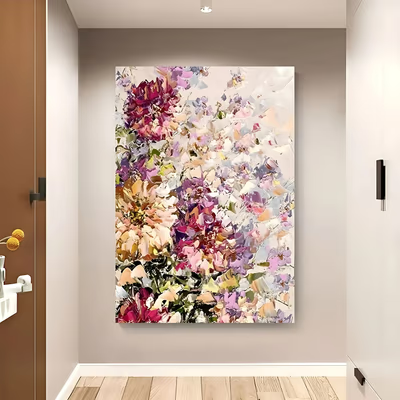
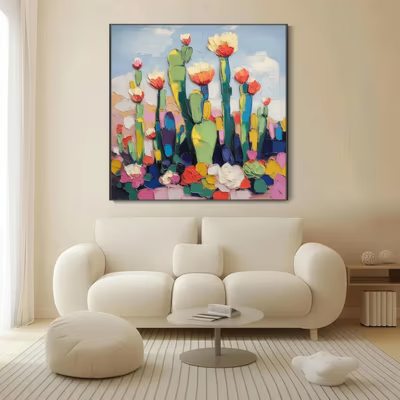
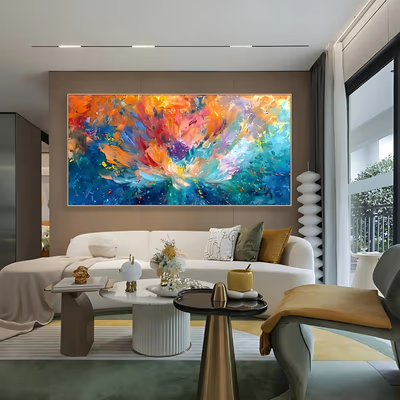
Thick strokes of saturated paint make poppies, sunflowers, tulips and wildflowers look freshly laid on. These are the happiest florals in the range and the most forgiving in large rooms, restaurants and family spaces.
Realistic blooms
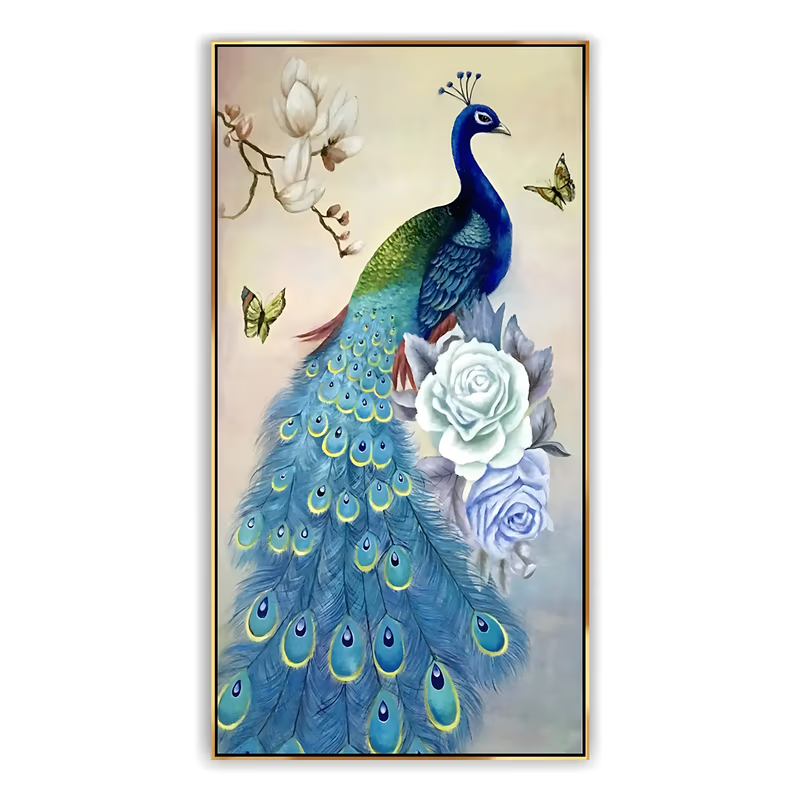
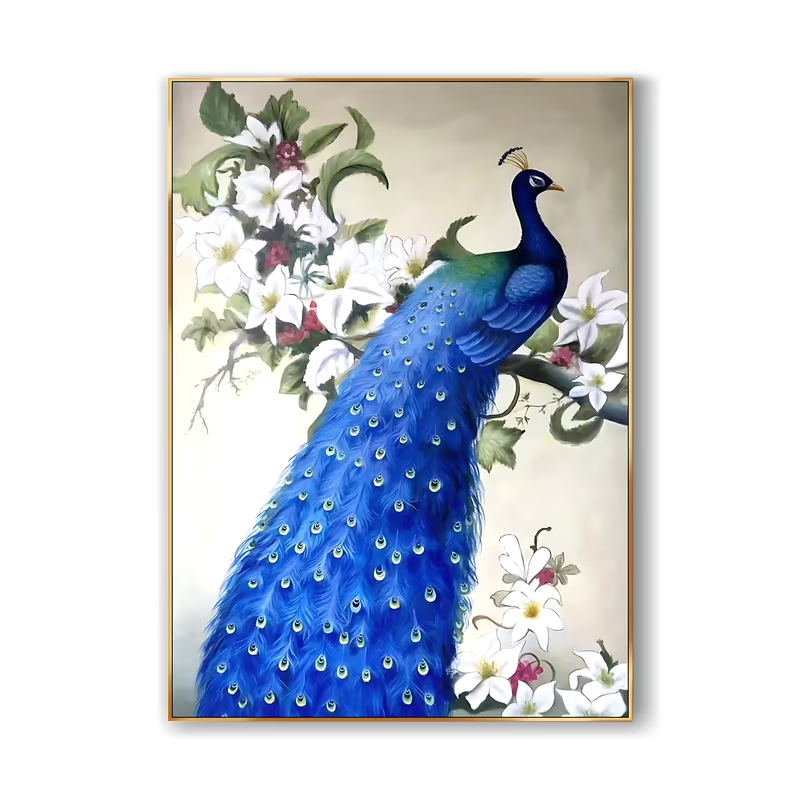
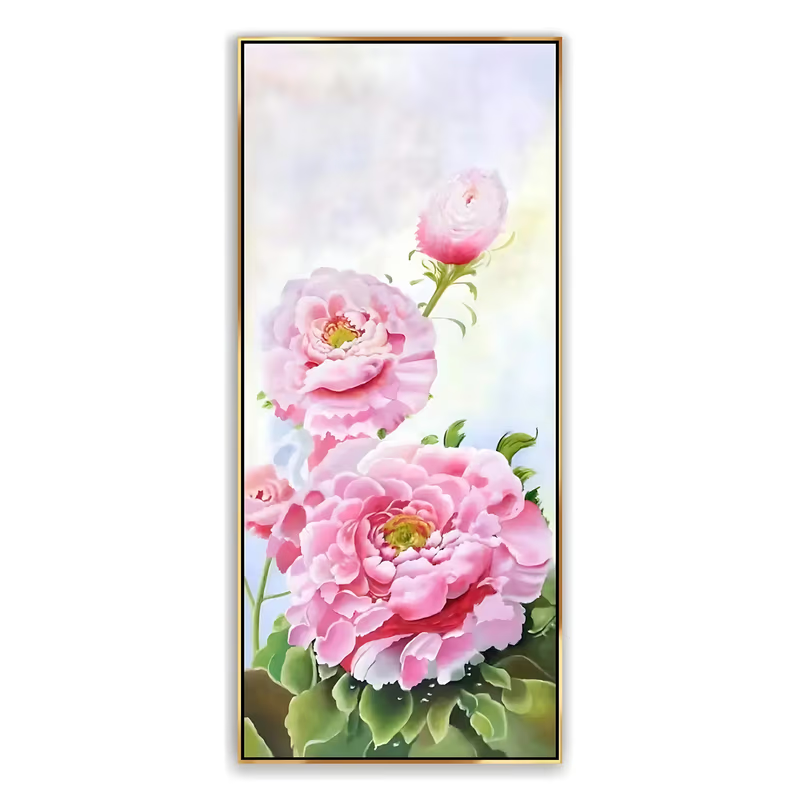
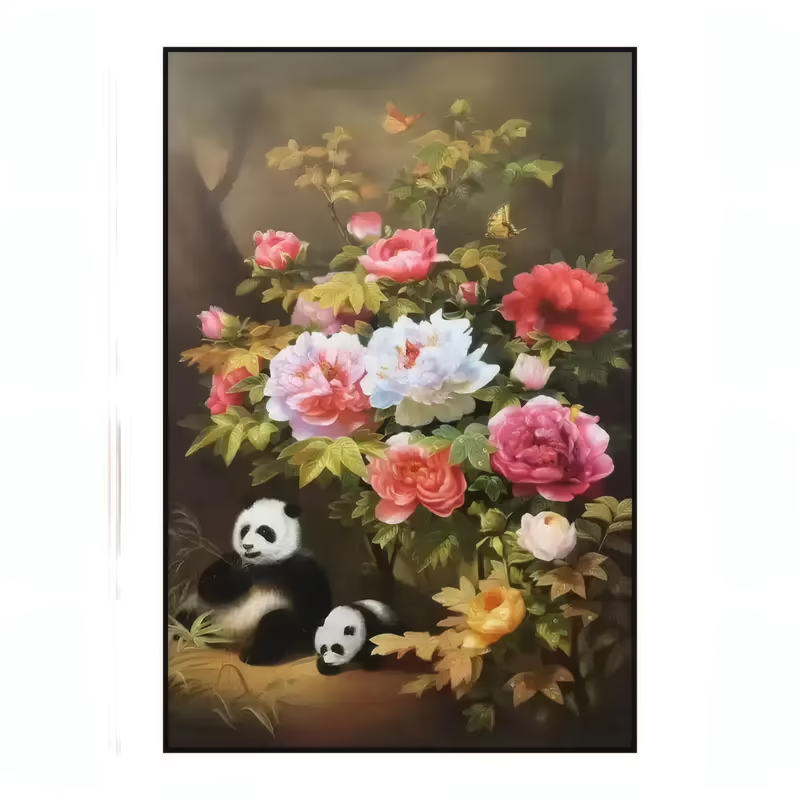
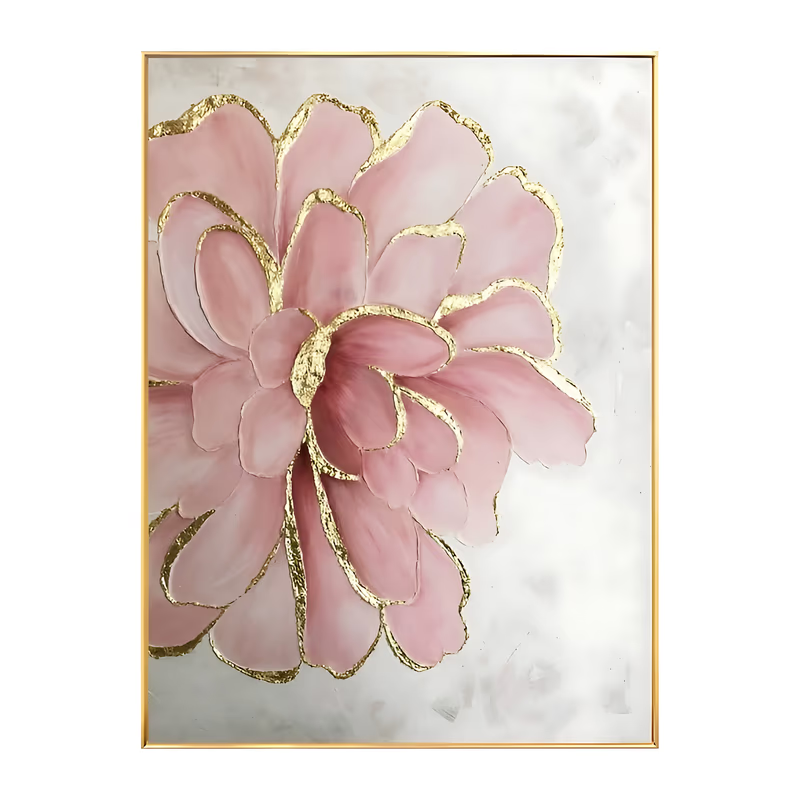
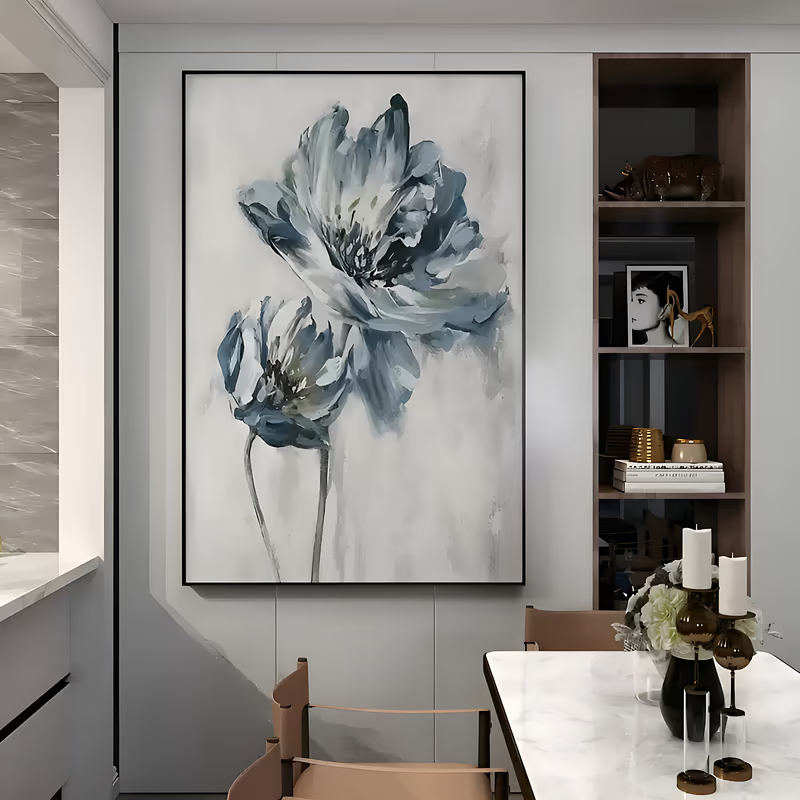
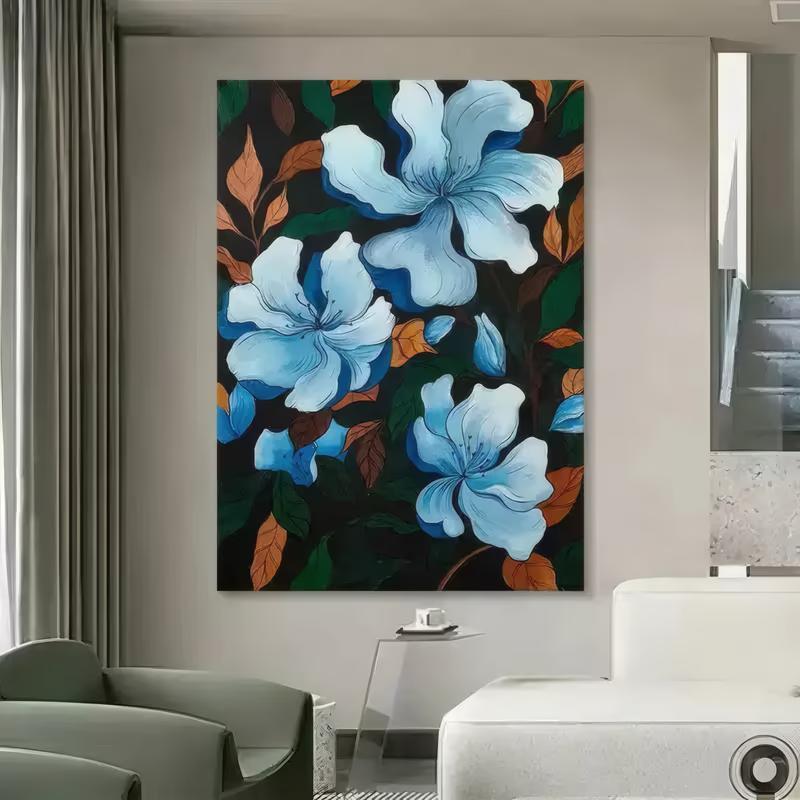
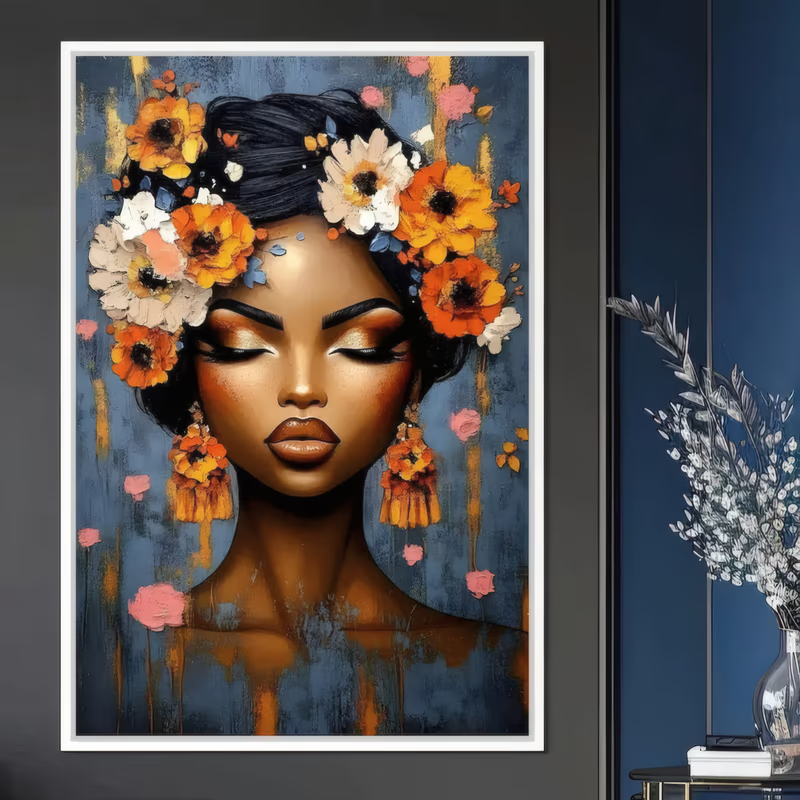
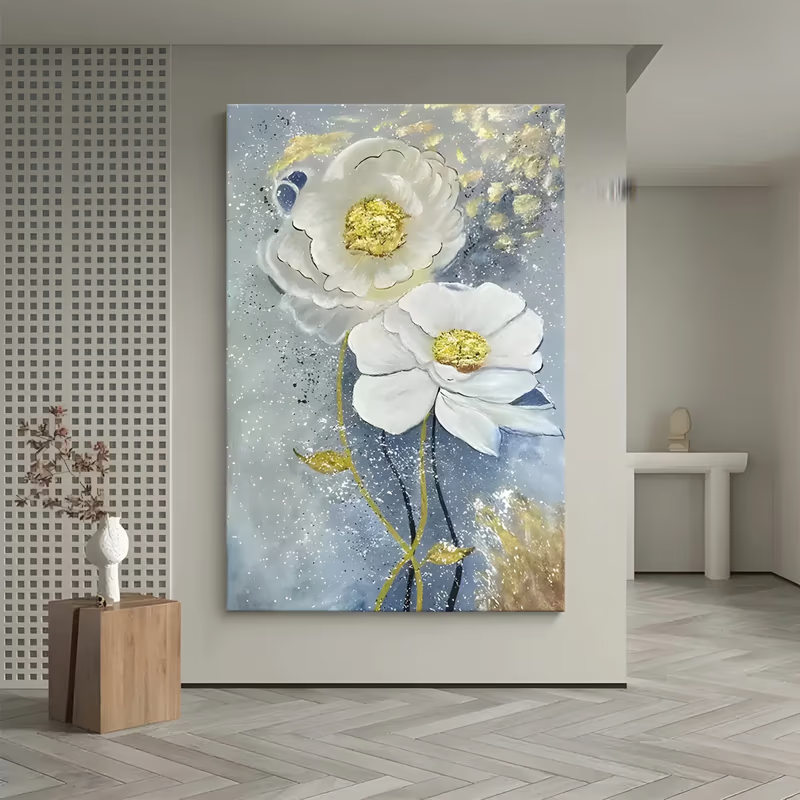
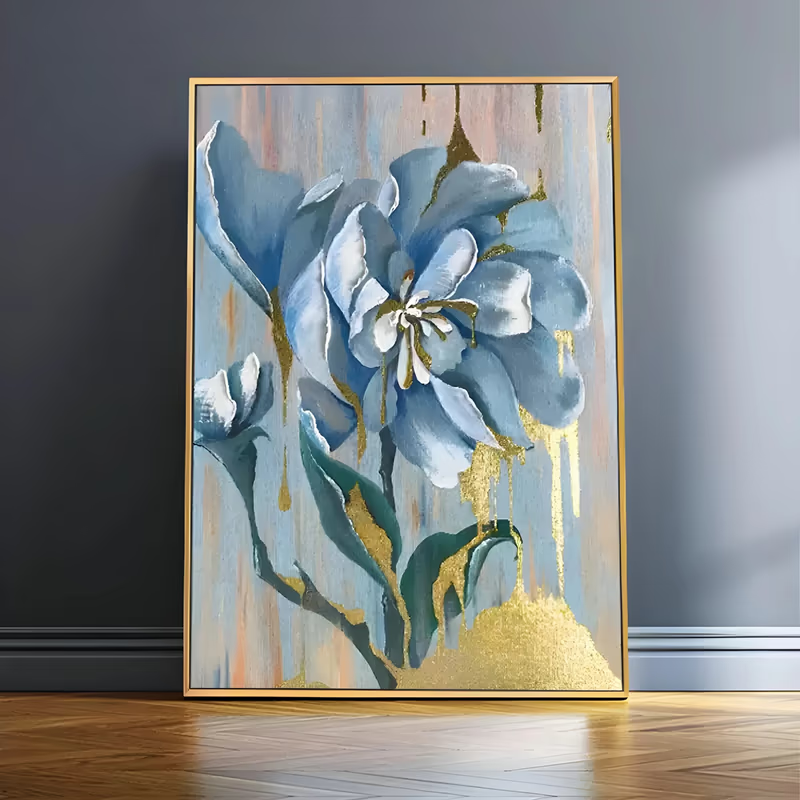
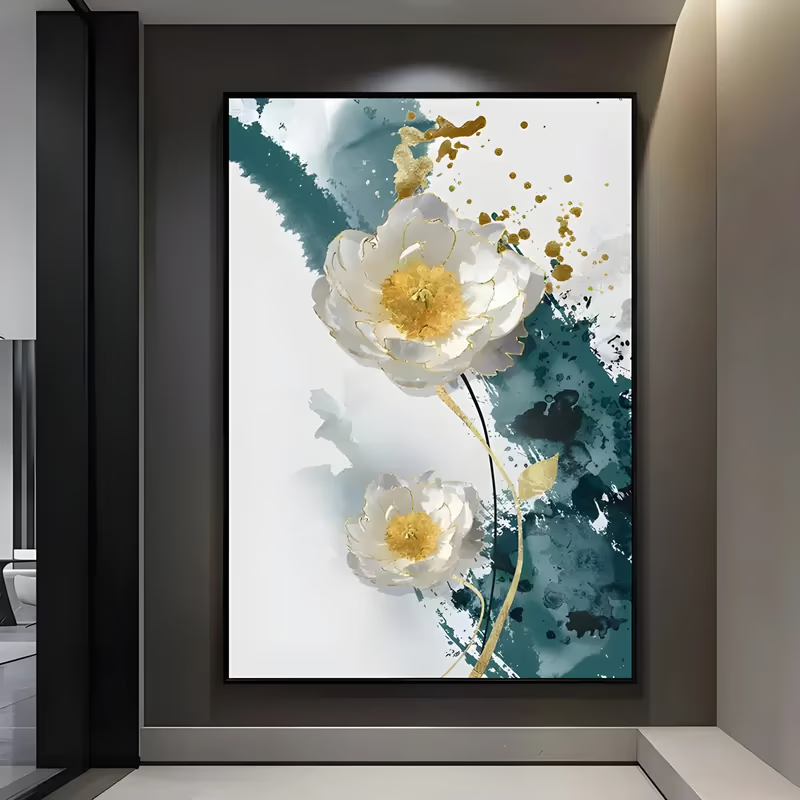
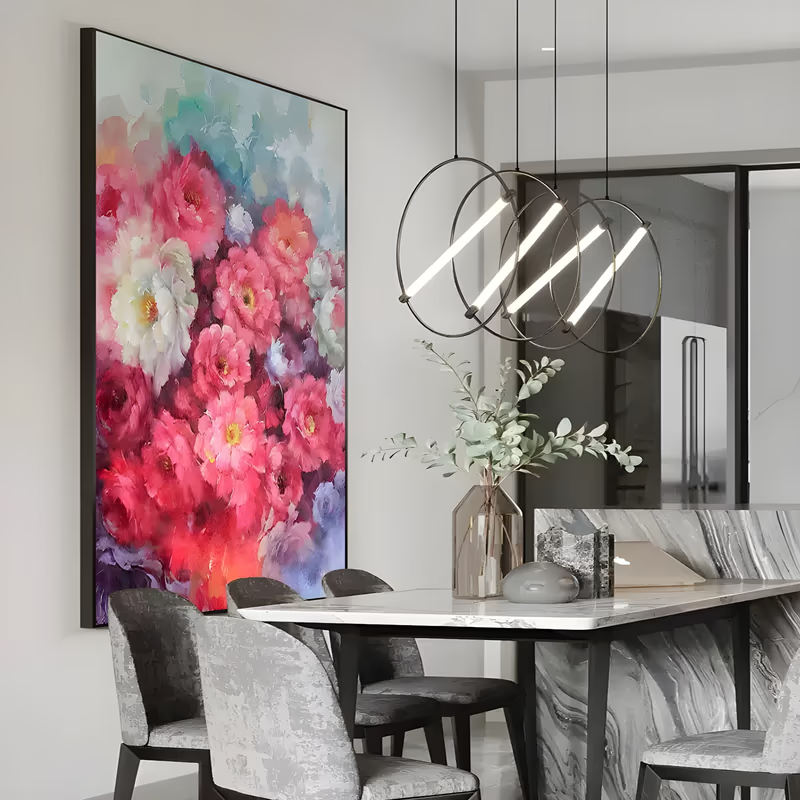
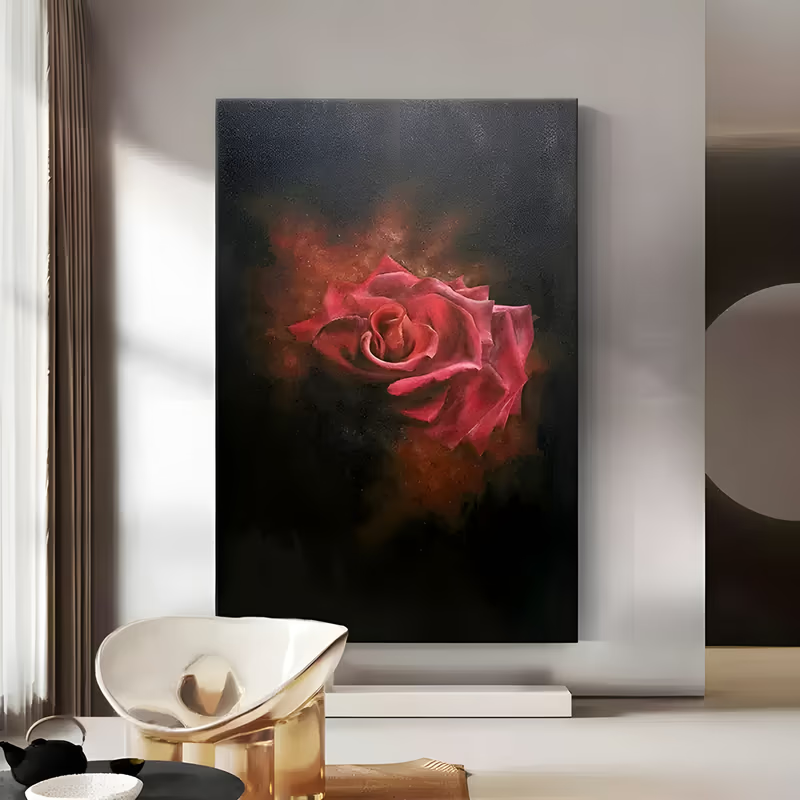
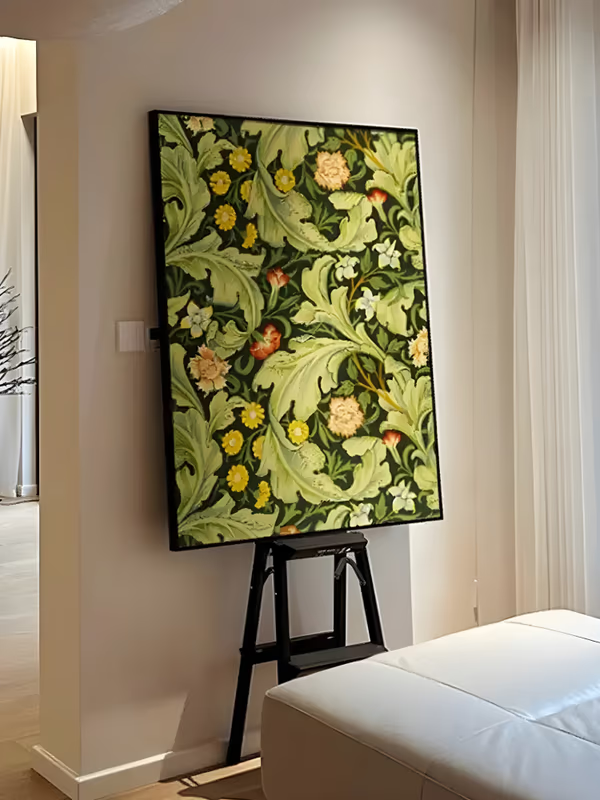
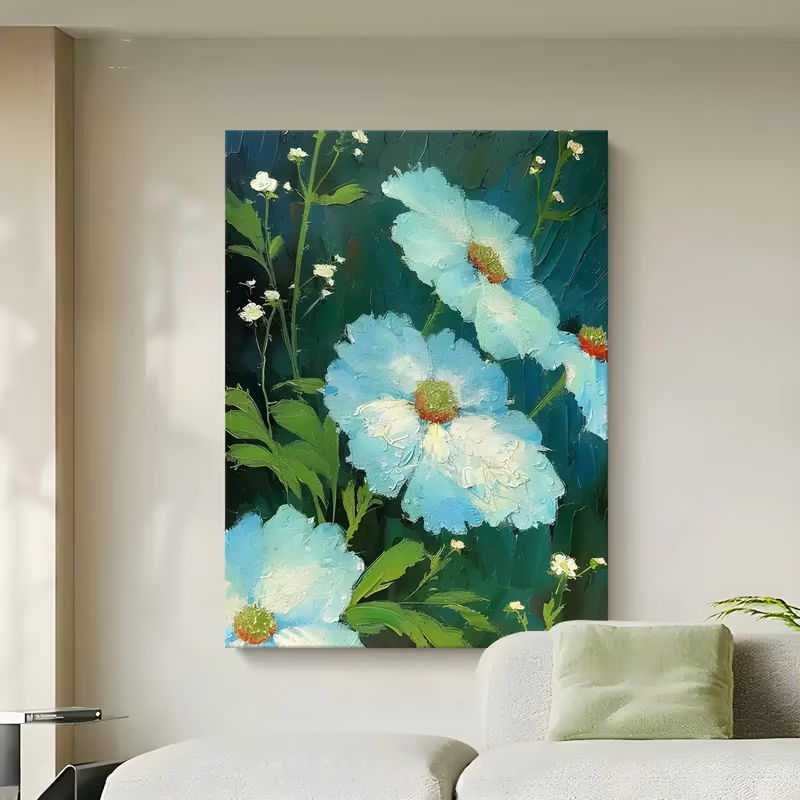
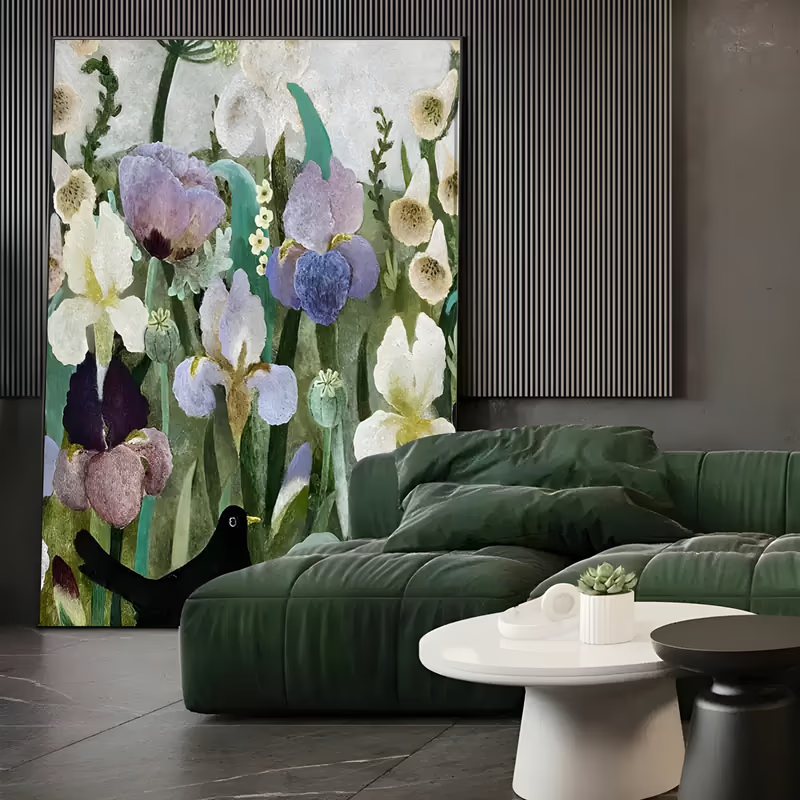
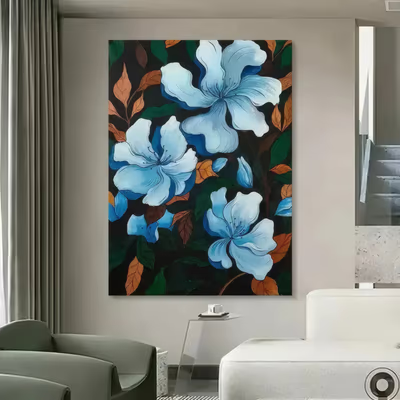
Hyperreal peonies, roses, calla lilies and blossom branches, often set against black, navy or deep green. Close detail gives a luxurious, almost botanical-illustration quality that suits hotel suites, lounges and formal dining rooms.
Minimal and wabi-sabi botanicals
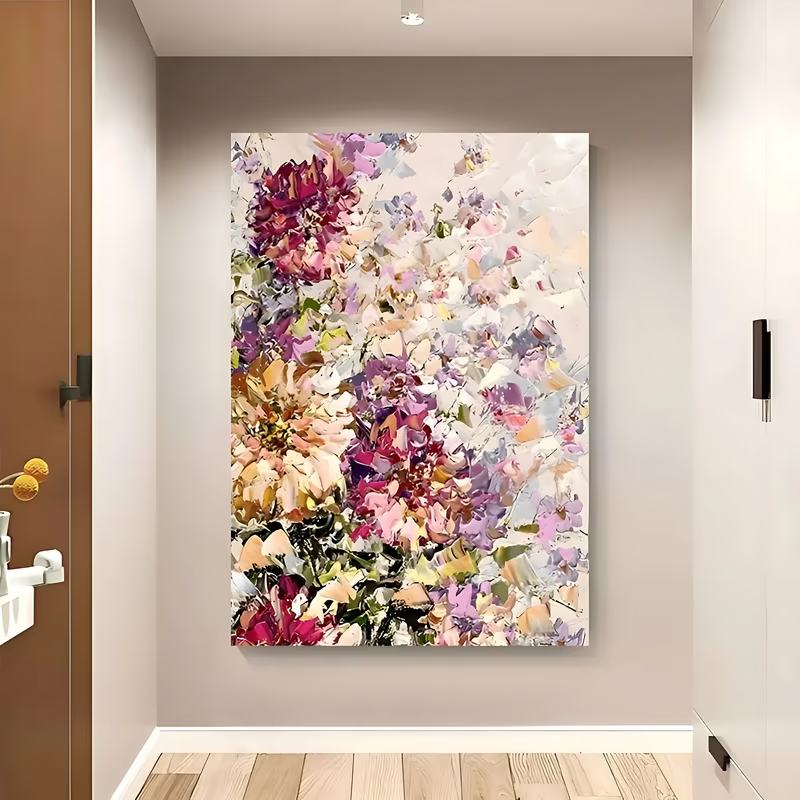
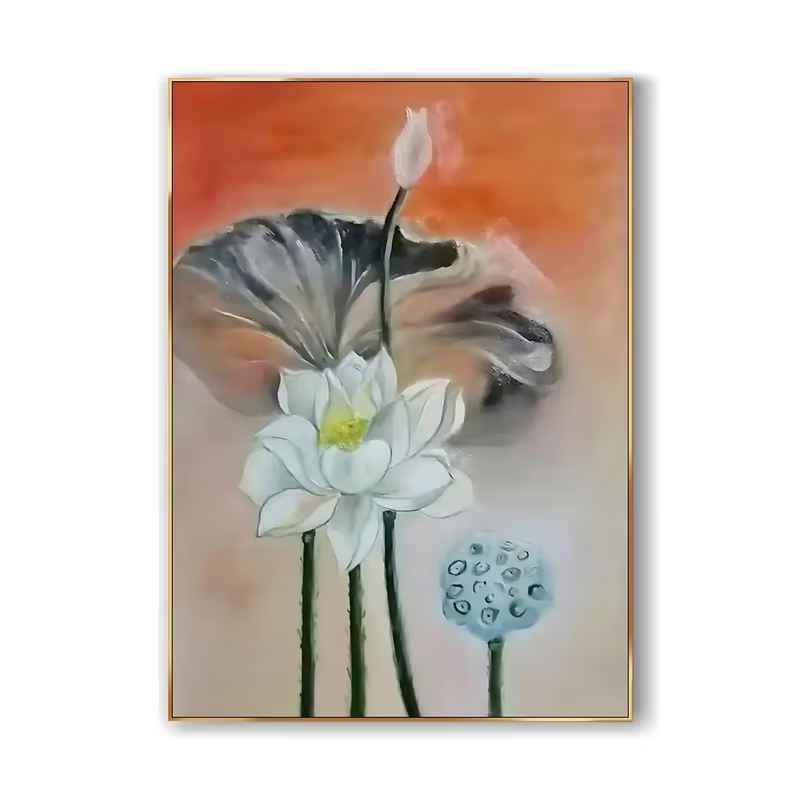
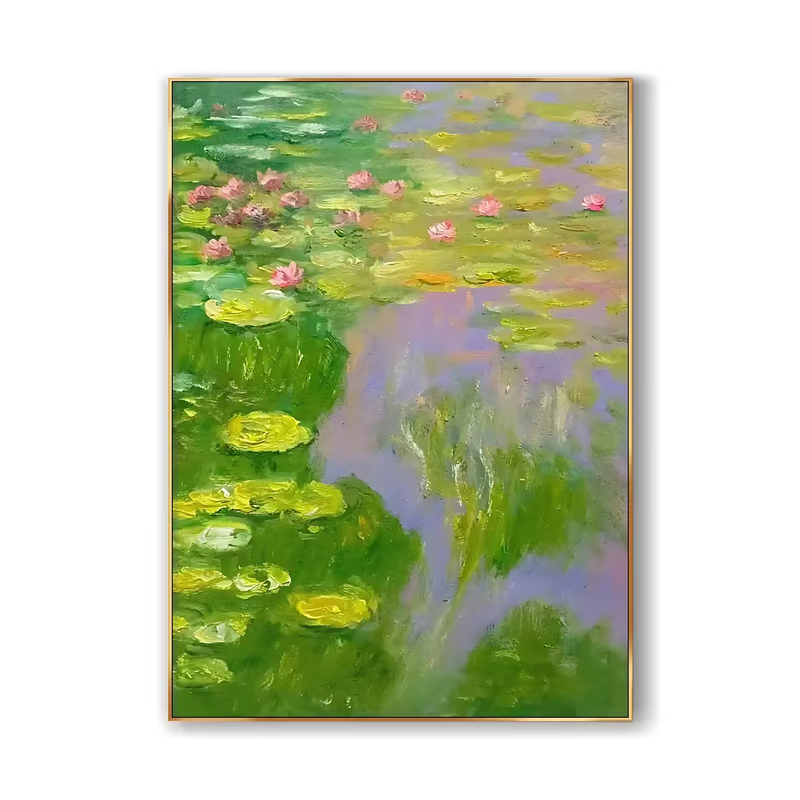
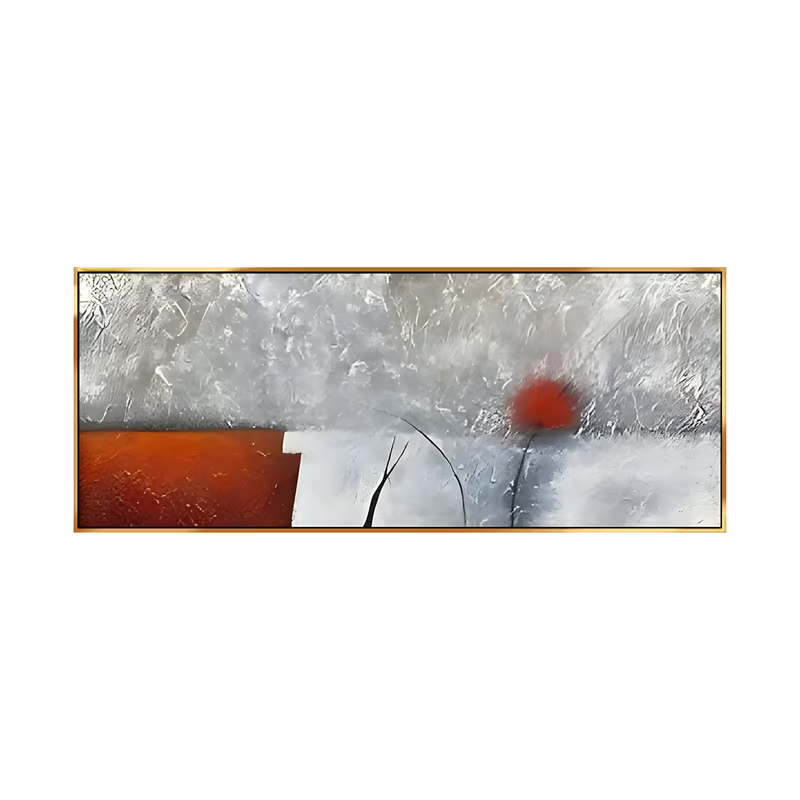
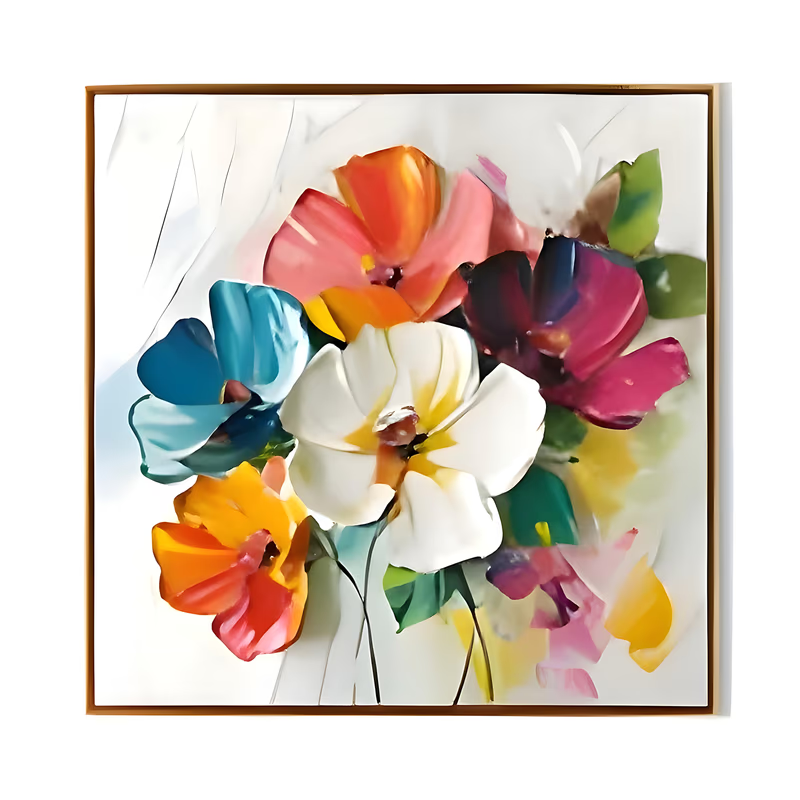
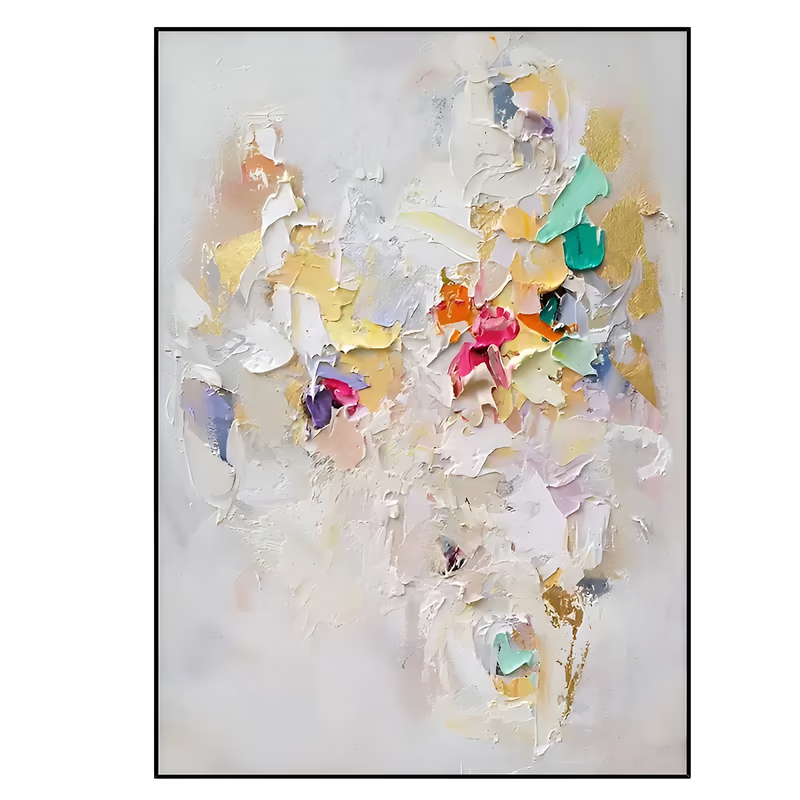
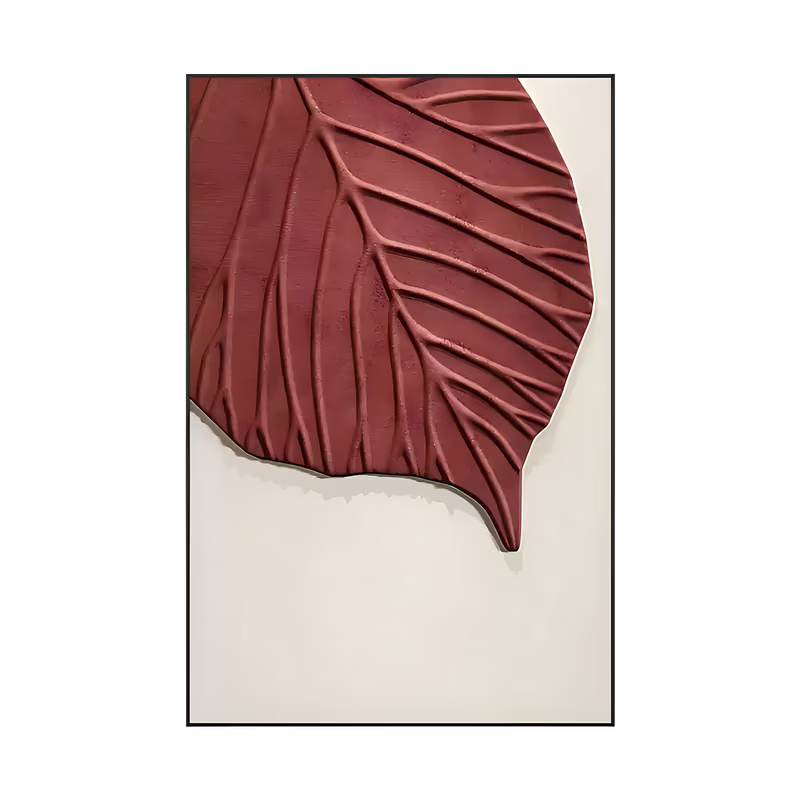
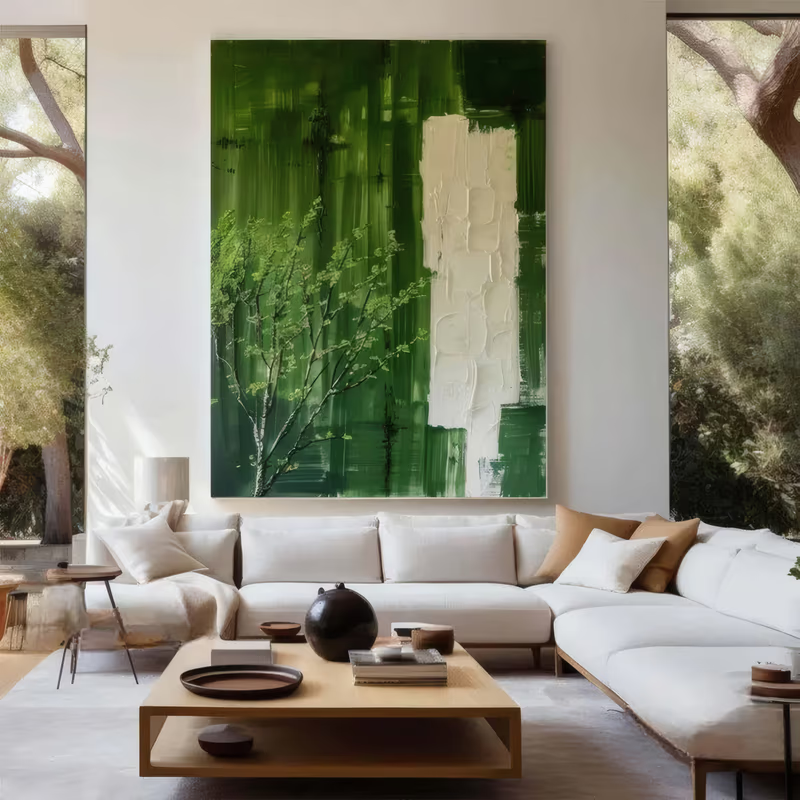
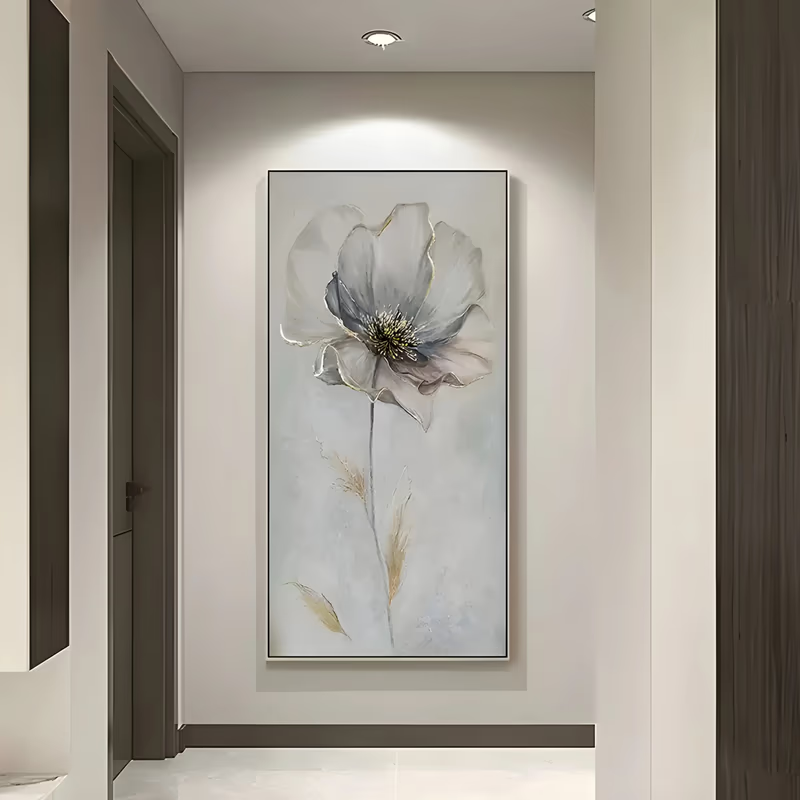
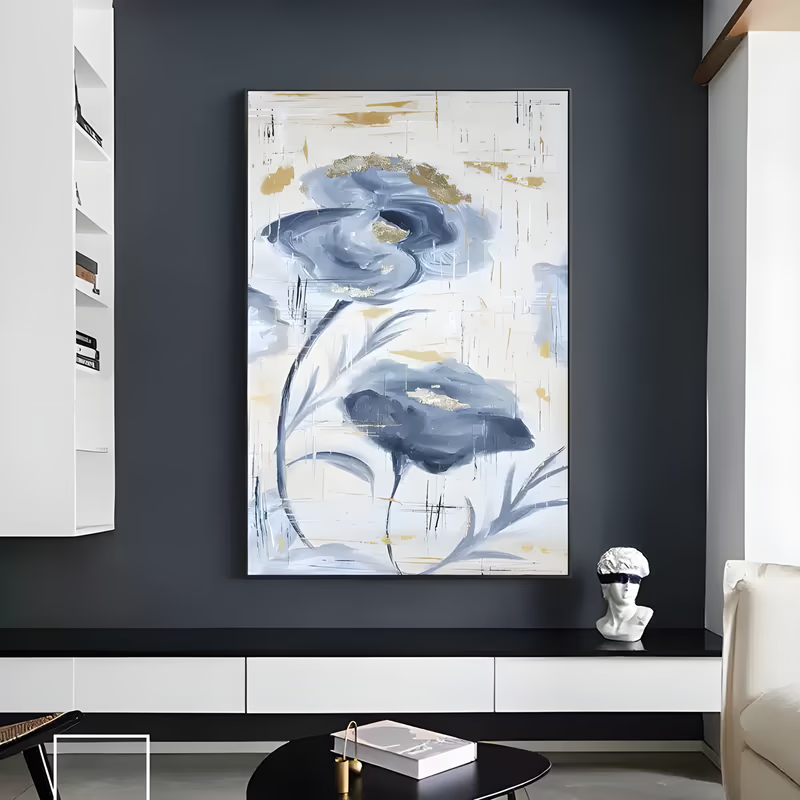
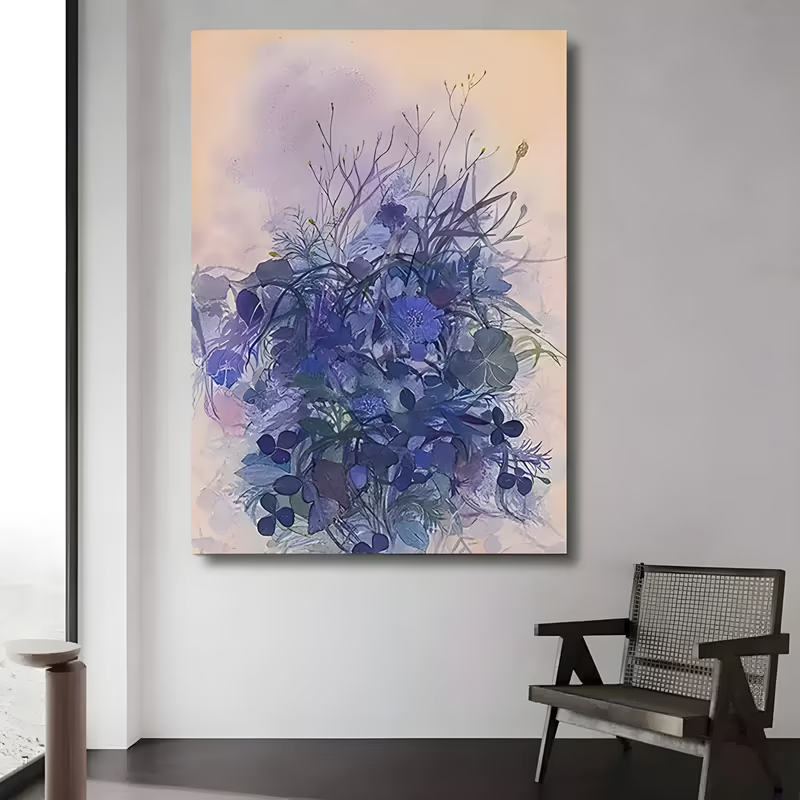
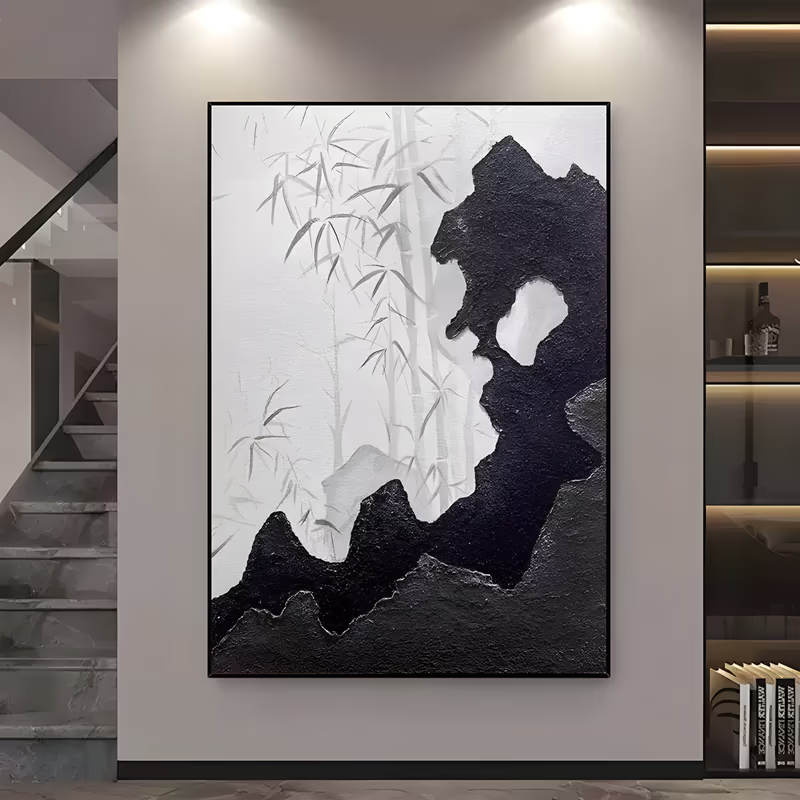
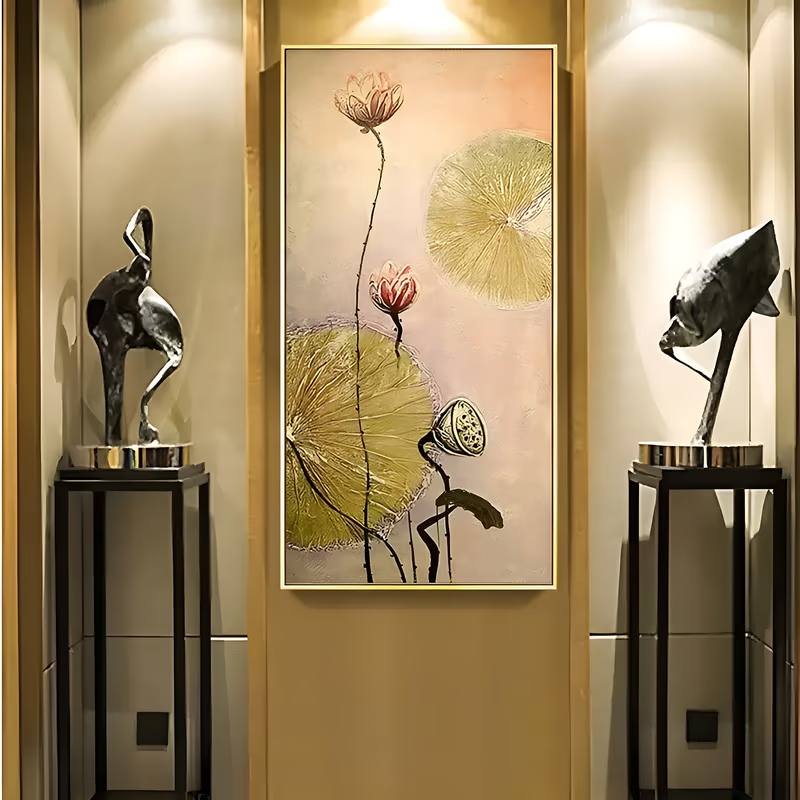
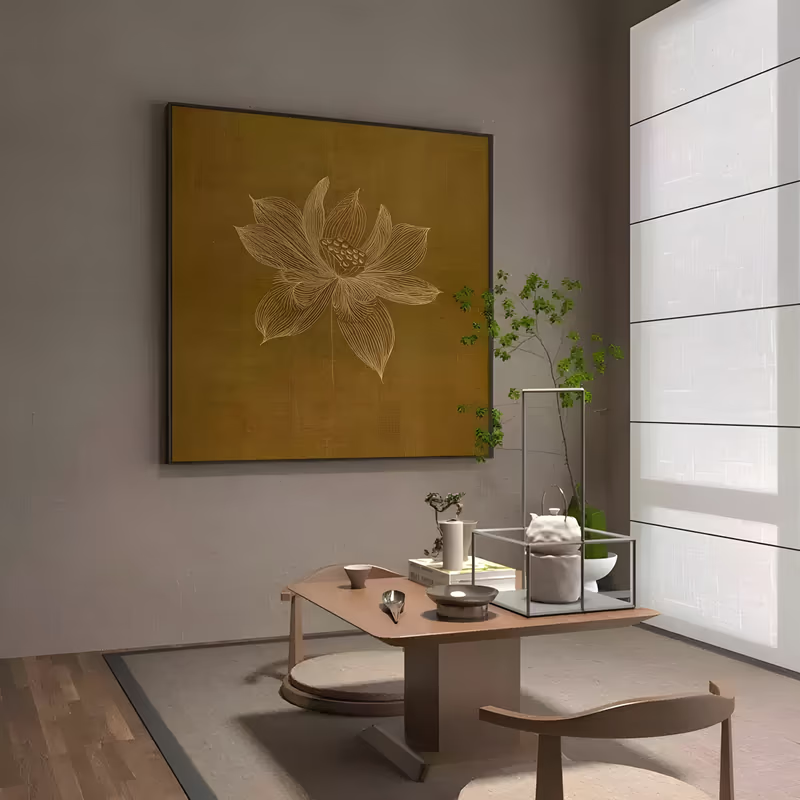
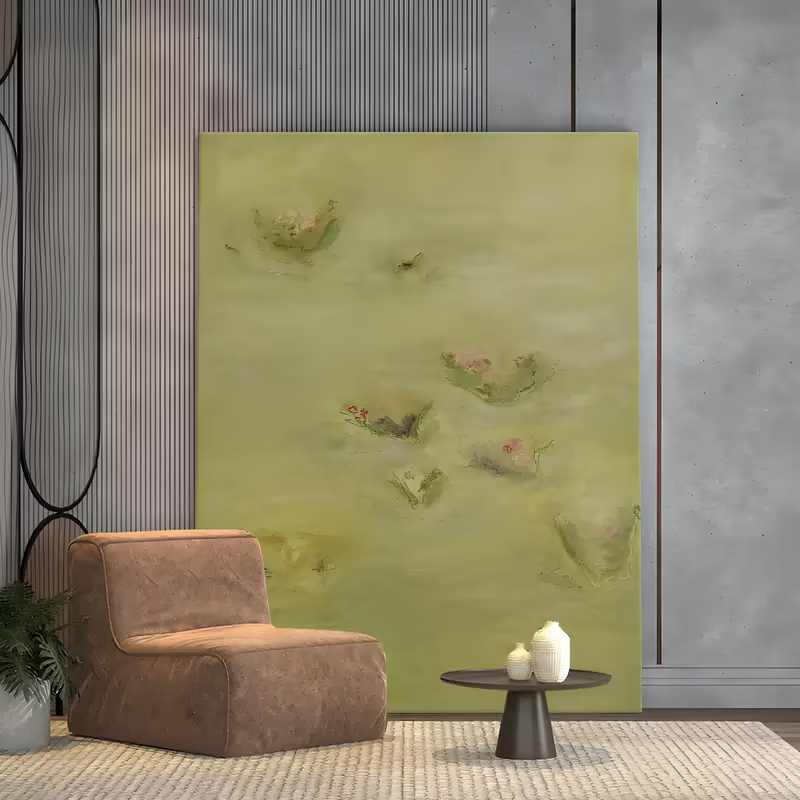
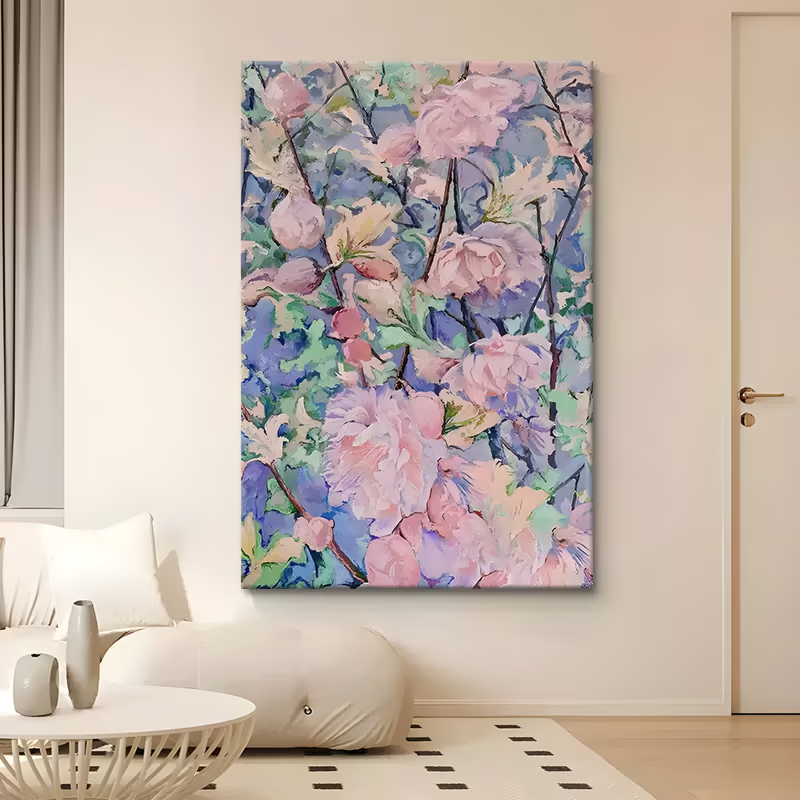
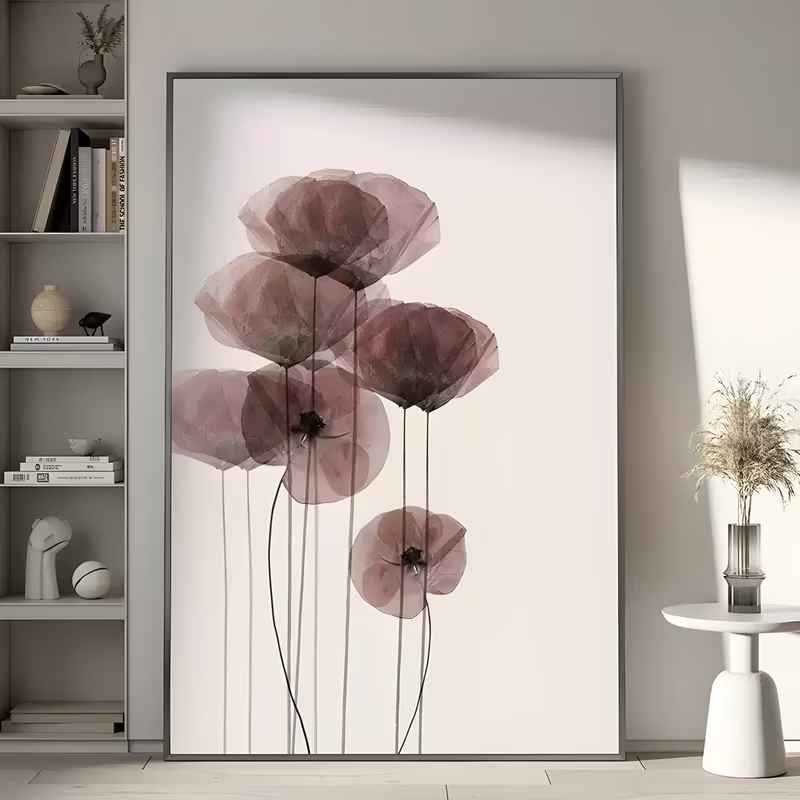
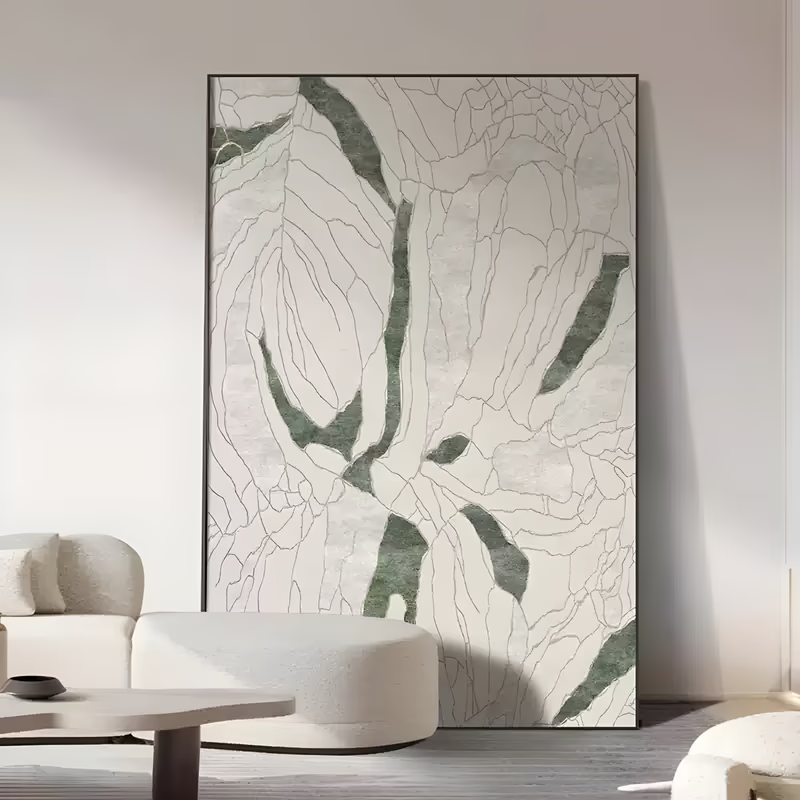
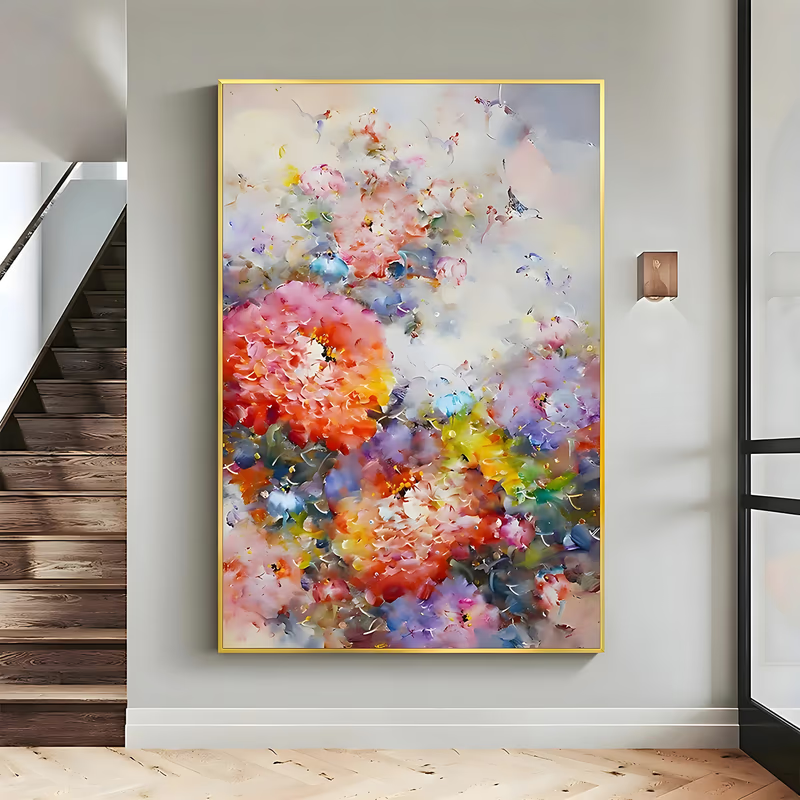
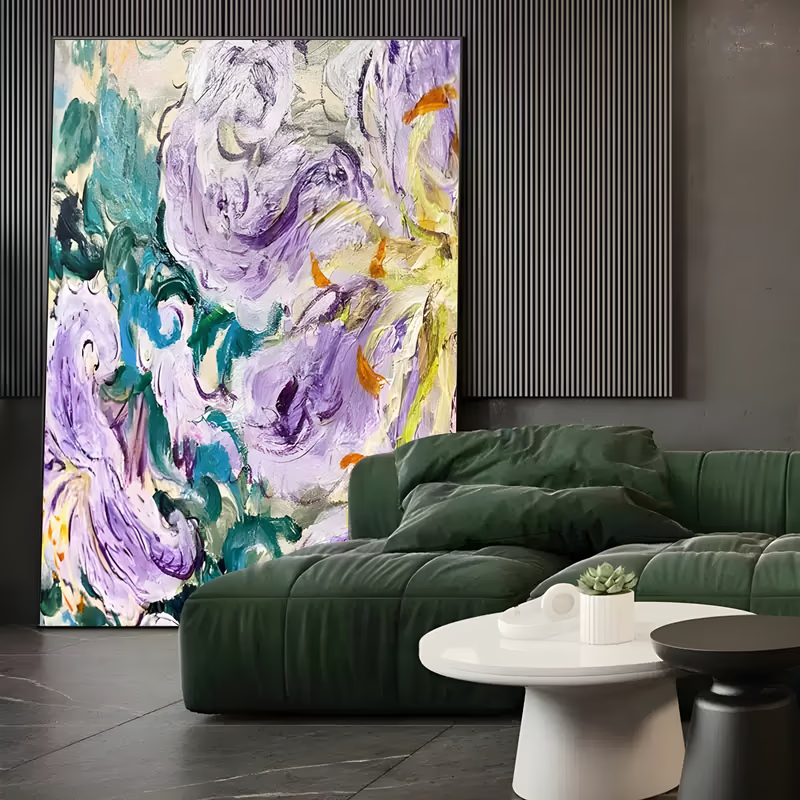
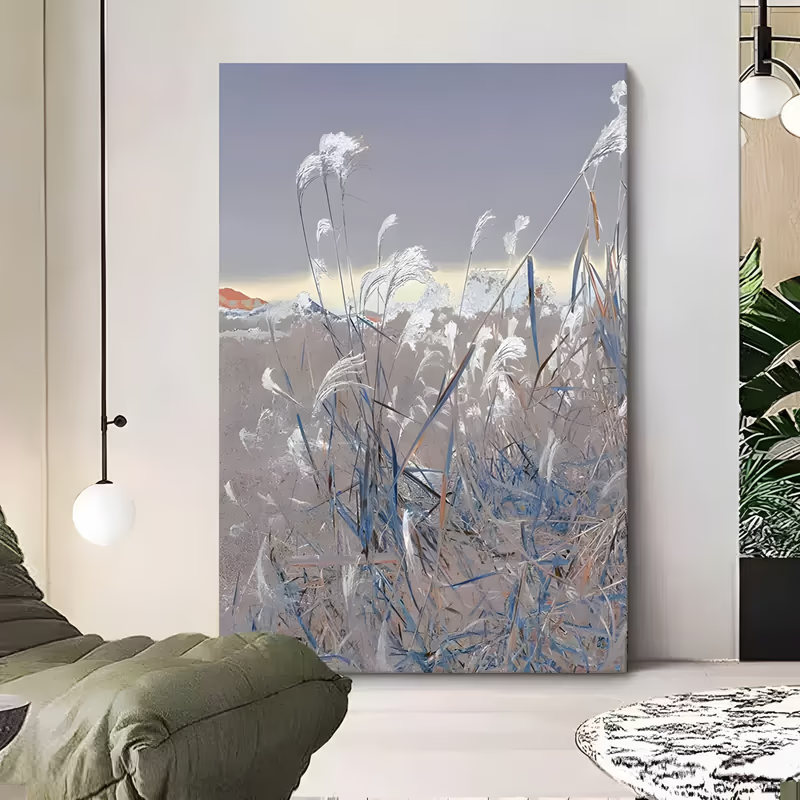
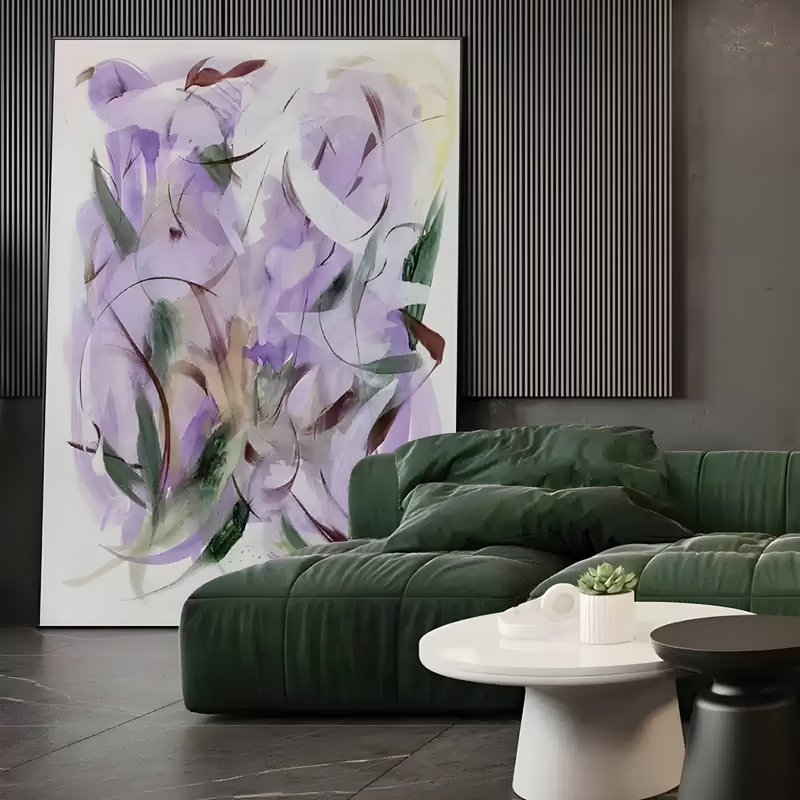
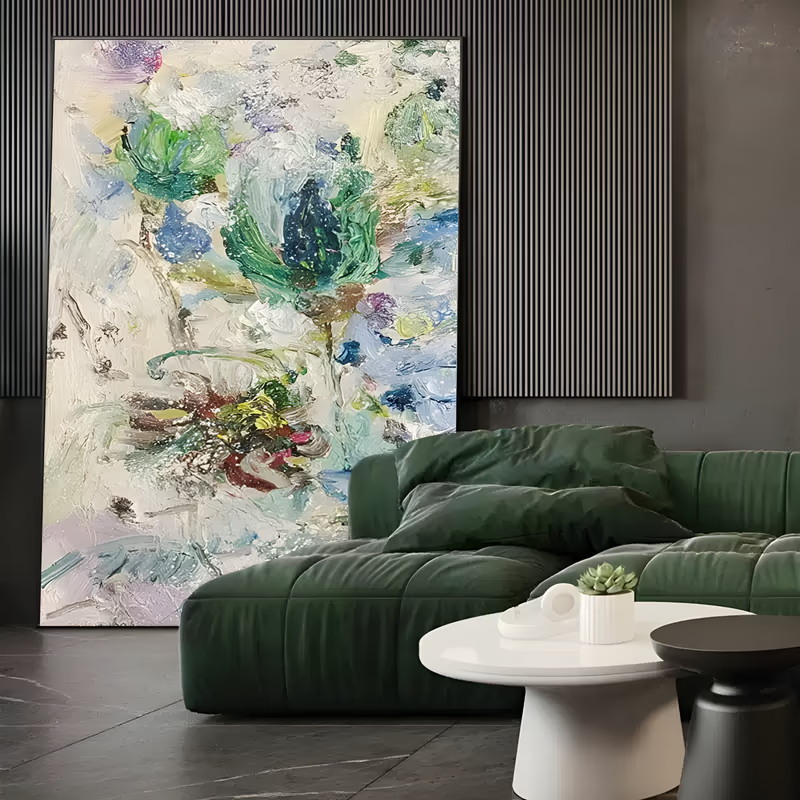
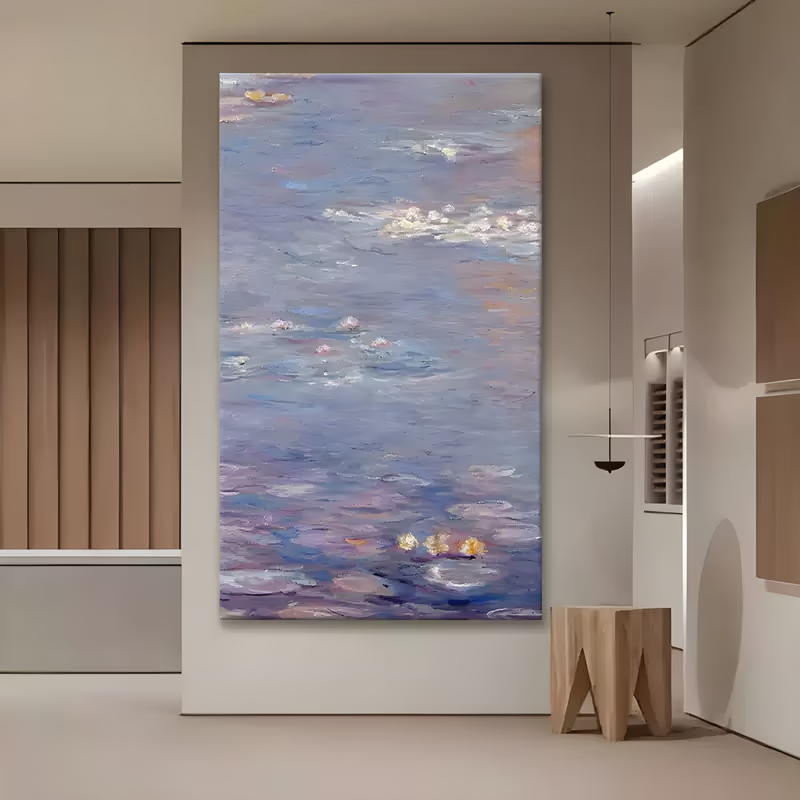
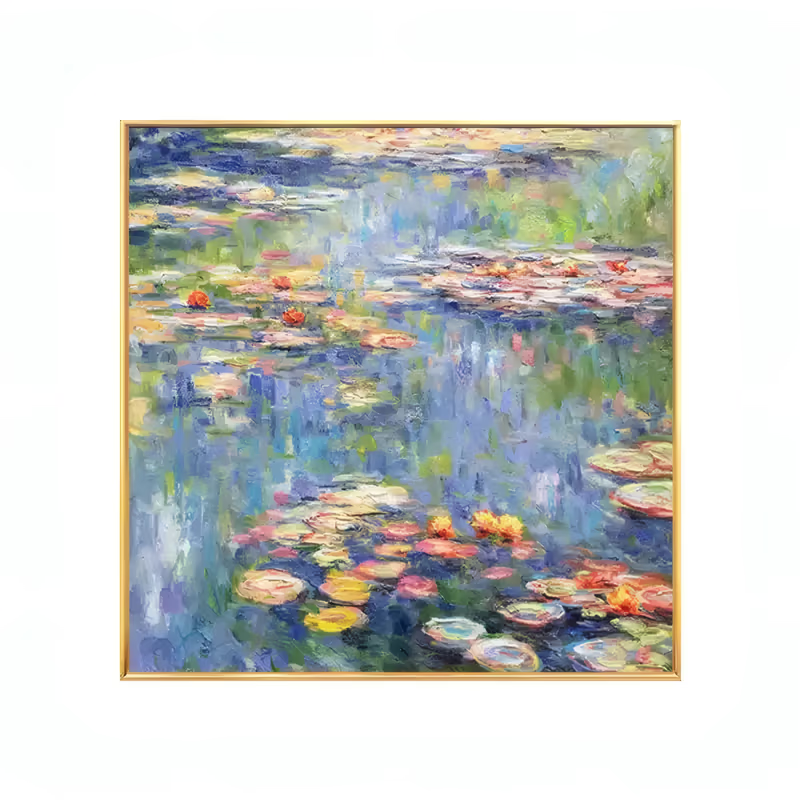
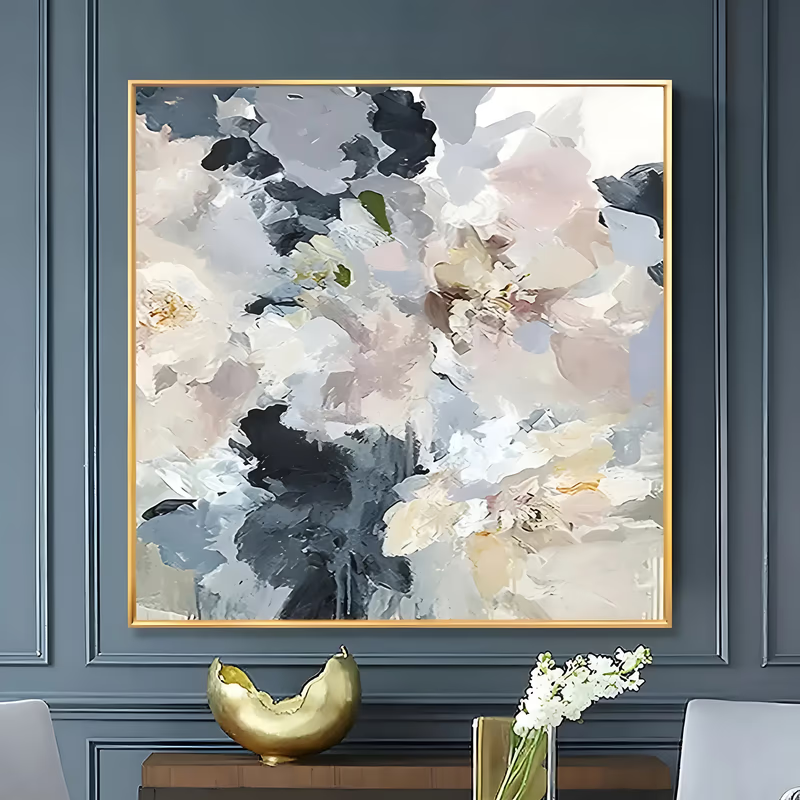
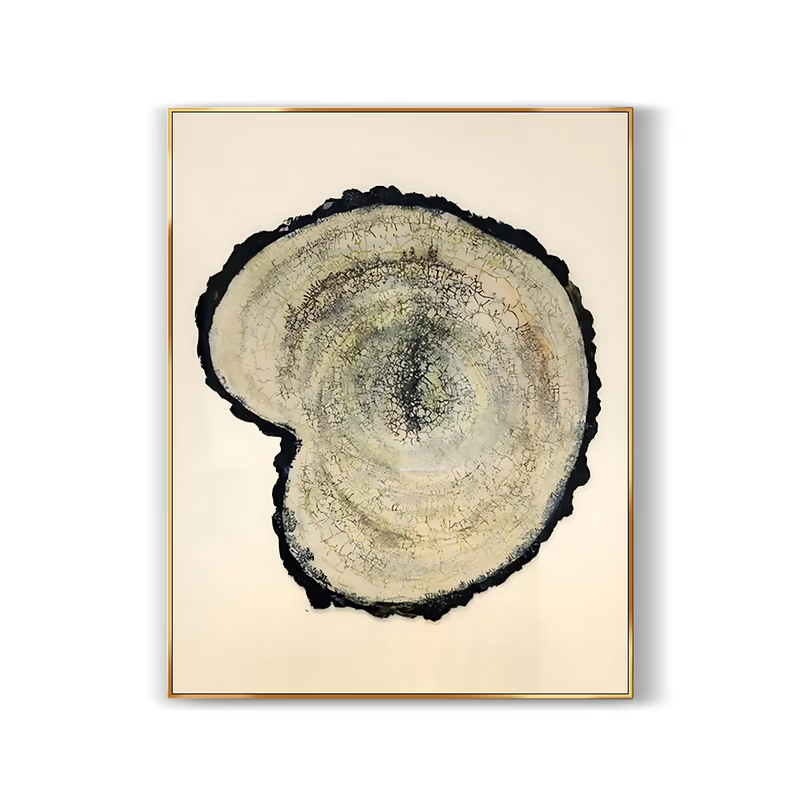
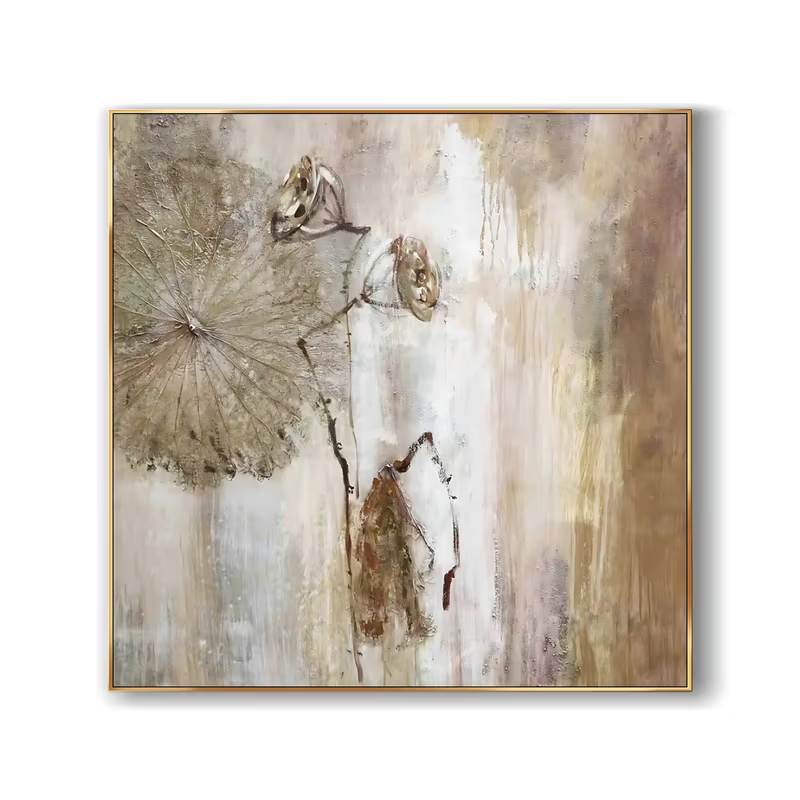
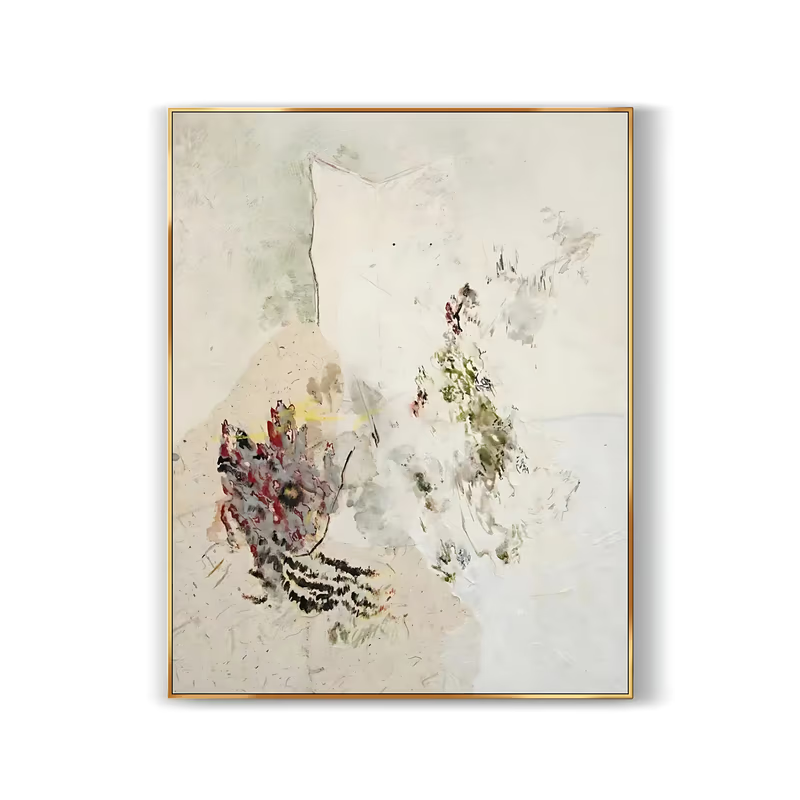
A single stem, a seed pod, a withered lotus leaf or a few pale petals on an empty ground. Muted and meditative, they belong in Japandi bedrooms, spa treatment rooms and quiet offices. Loose impressionist florals sit between these and the bright knife work.
Which flower painting suits which room?
Choose the flower by the feeling the room needs: soft peonies and magnolia for rest, sunflowers and poppies for energy, lotus and orchids for calm, palms and leaves for freshness.
| Flower or plant | Traditional associations | Rooms it suits |
|---|---|---|
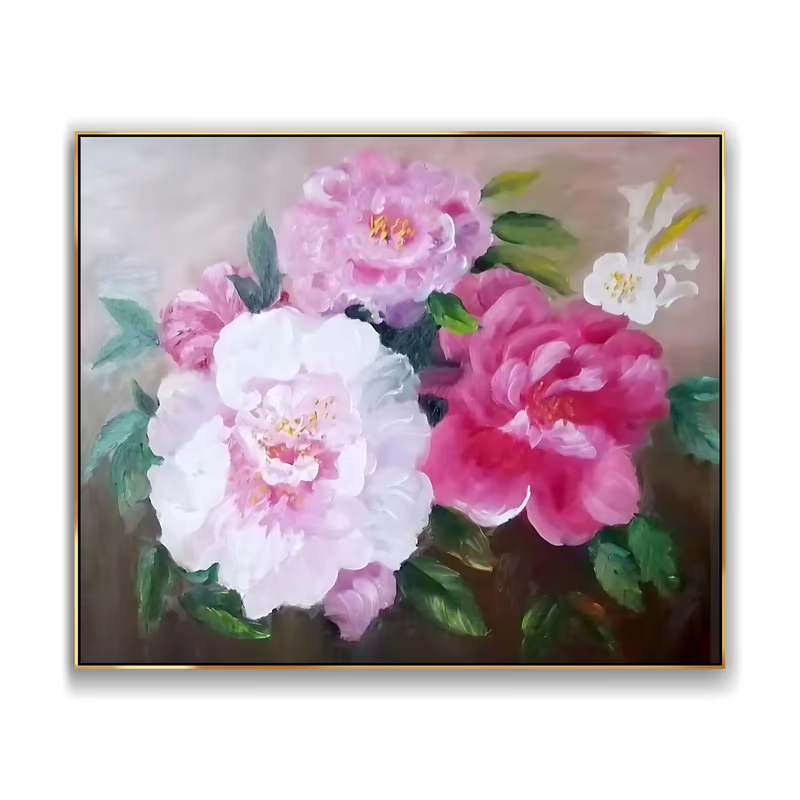
| Peony | Prosperity and romance in Chinese tradition; lush and generous | Bedrooms, dining rooms, bridal suites, hotel lounges |
| Rose | Love (red), purity (white), friendship (yellow) in the Western language of flowers | Bedrooms, dressing rooms, restaurants |
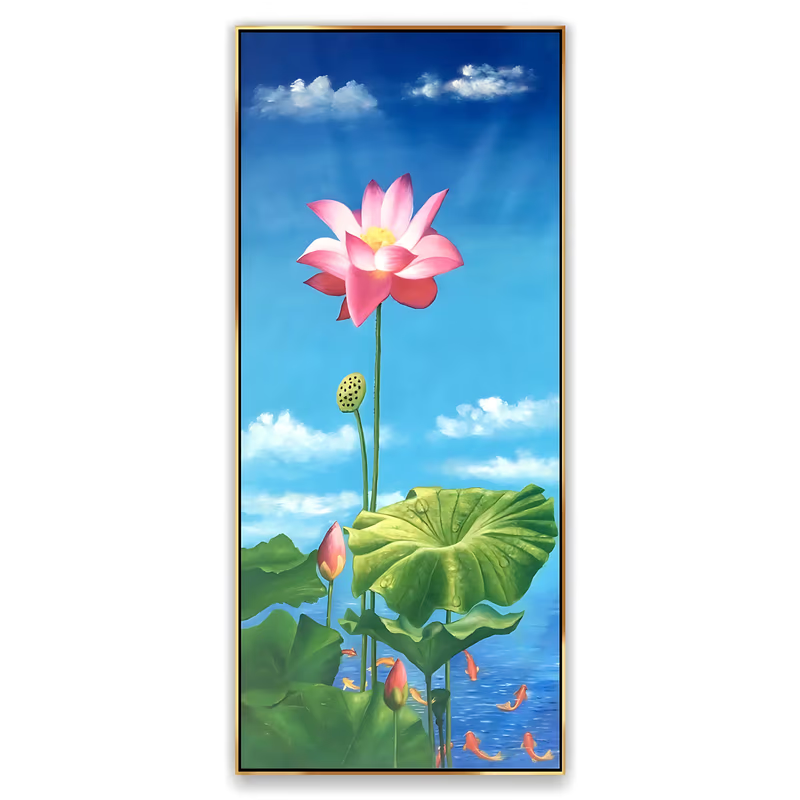
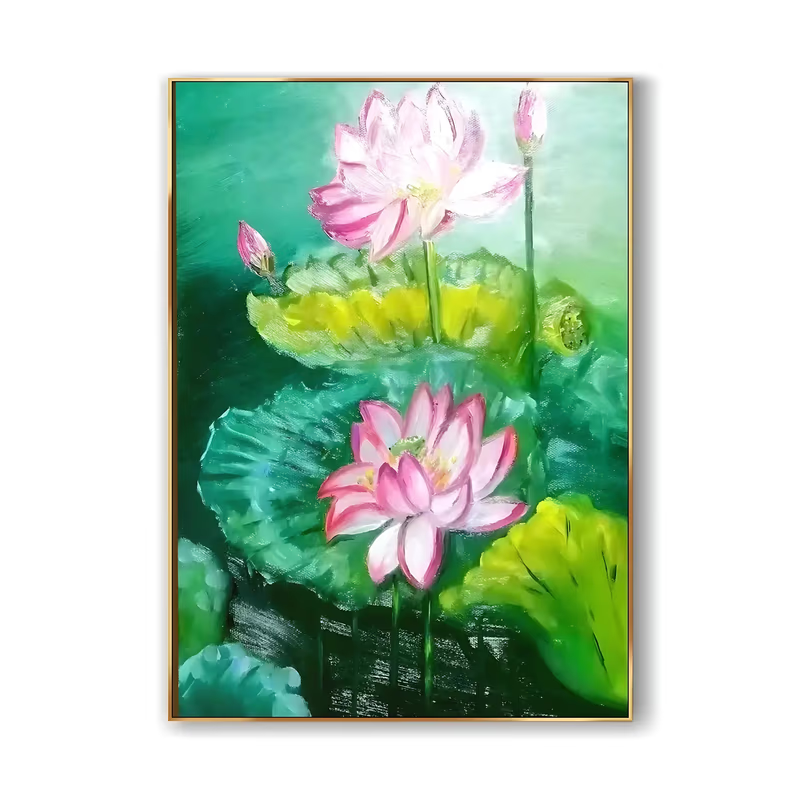
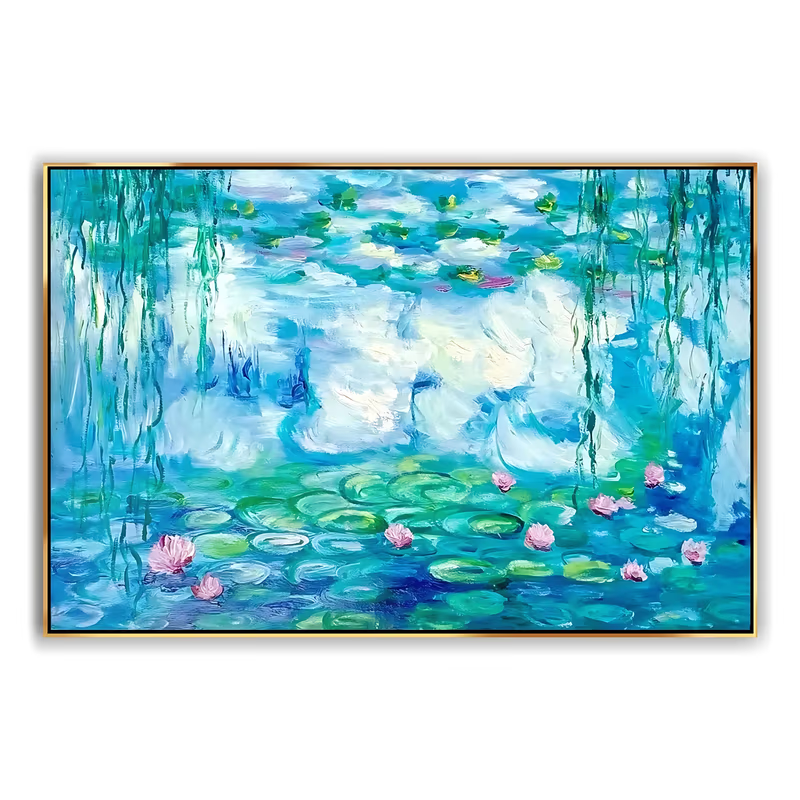
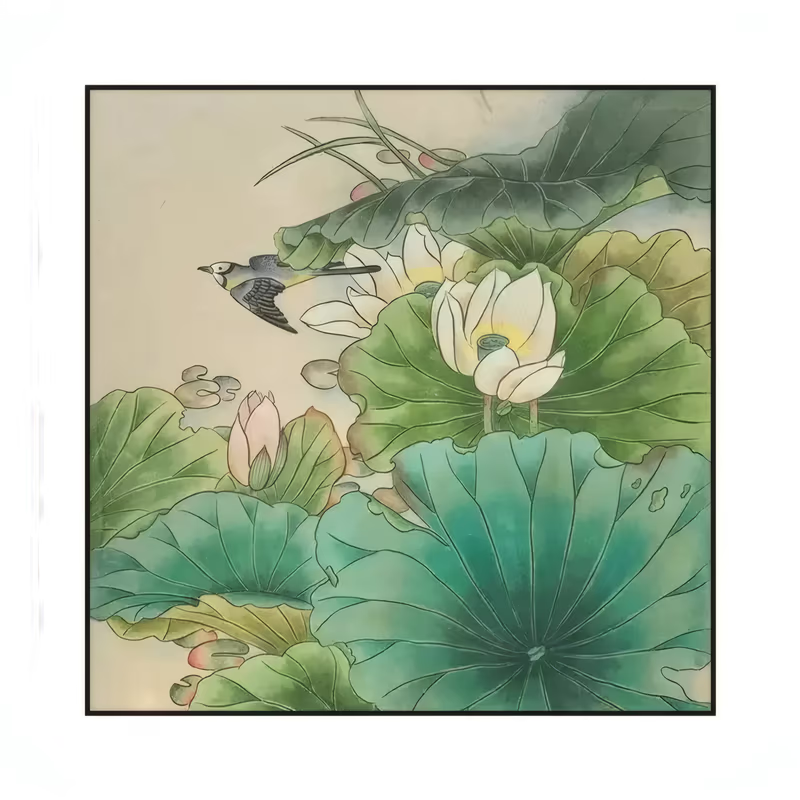
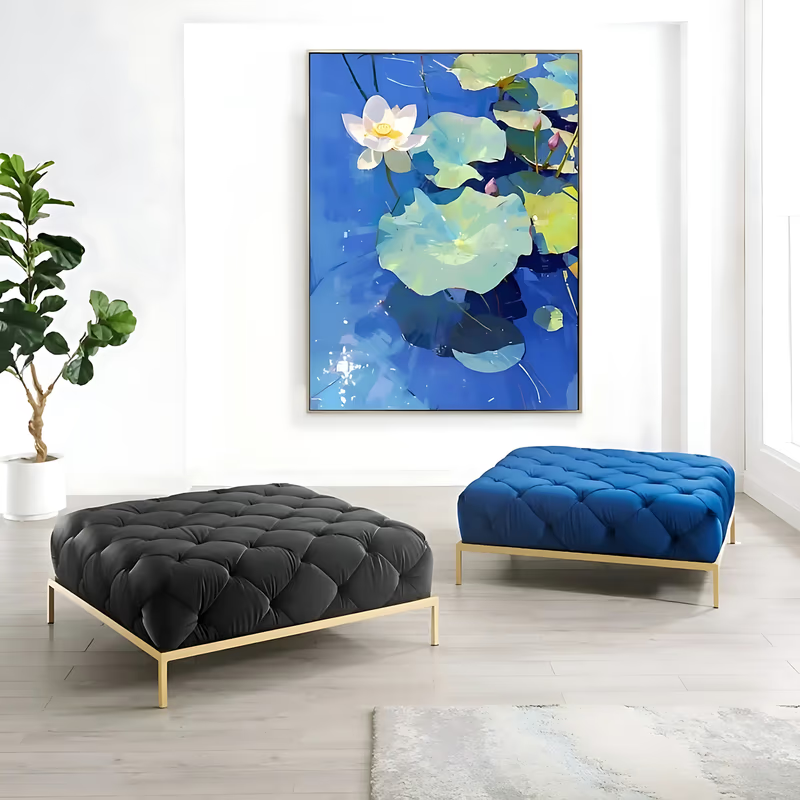
| Lotus and water lily | Purity and renewal in Buddhist and Hindu tradition | Spas, yoga rooms, bathrooms, meditation spaces |
| Cherry blossom and magnolia | Spring, new beginnings, the passing moment | Bedrooms, corridors, Japandi living rooms |
| Sunflower and poppy | Warmth, summer and loyalty; poppies also remembrance | Kitchens, breakfast rooms, cafés, family rooms |
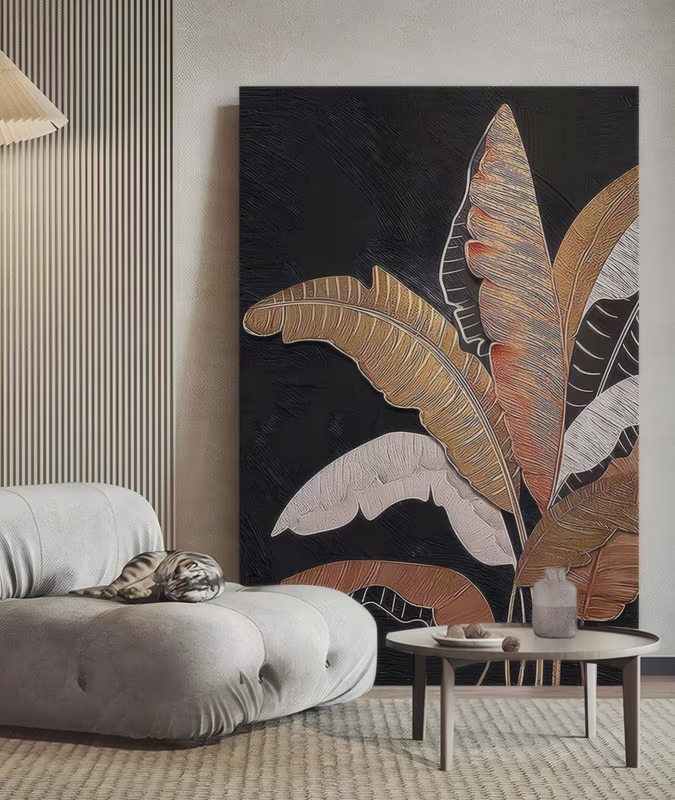
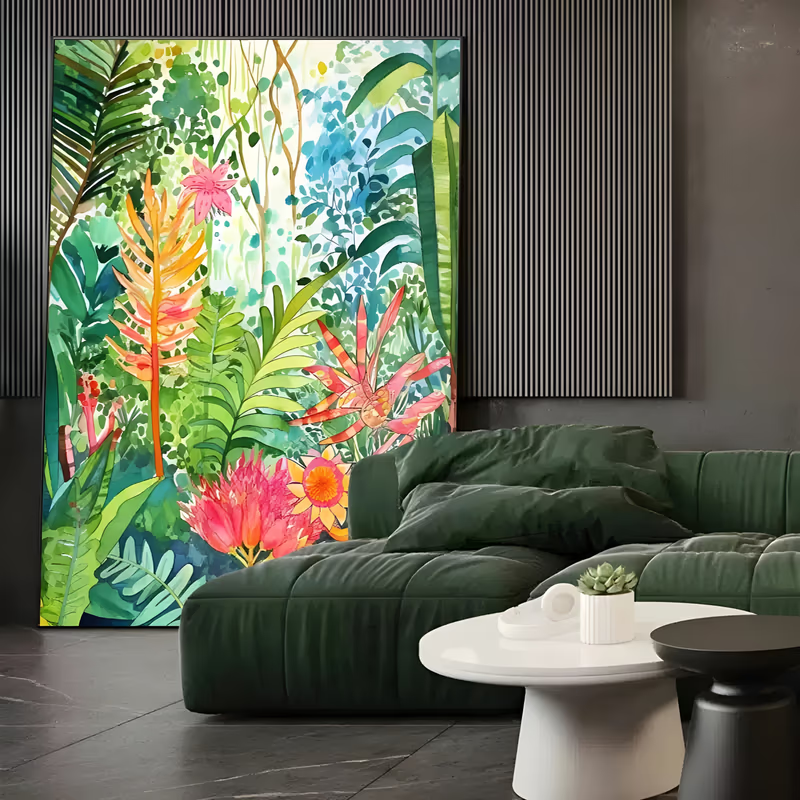
| Palm, monstera and banana leaf | Tropical ease and holiday | Resort rooms, pool bars, bathrooms, sunrooms |
Saturation counts as much as species. Before sleep, soft pinks, creams and pale greens rest the eye better than vivid red or orange. Where people eat and talk, warm and saturated flowers suit the mood. Filter by romantic, peaceful or uplifting florals, or by room: bedroom, dining room, spa and bathroom.
What goes with floral wall art in a modern interior?
Plain surfaces, natural materials and a couple of colours borrowed from the petals let floral art look modern; another floral pattern beside it rarely does.
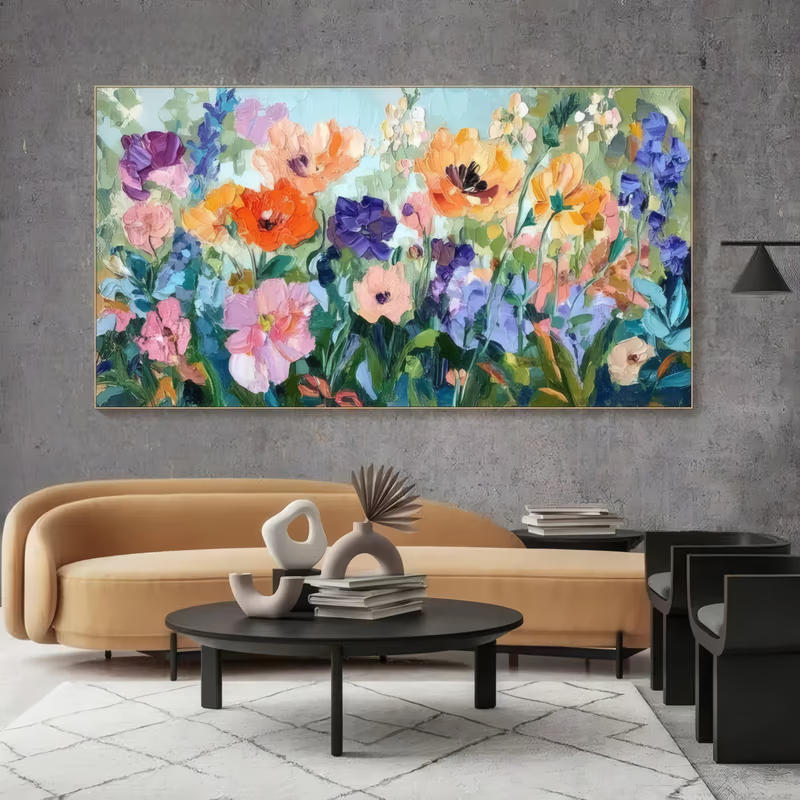
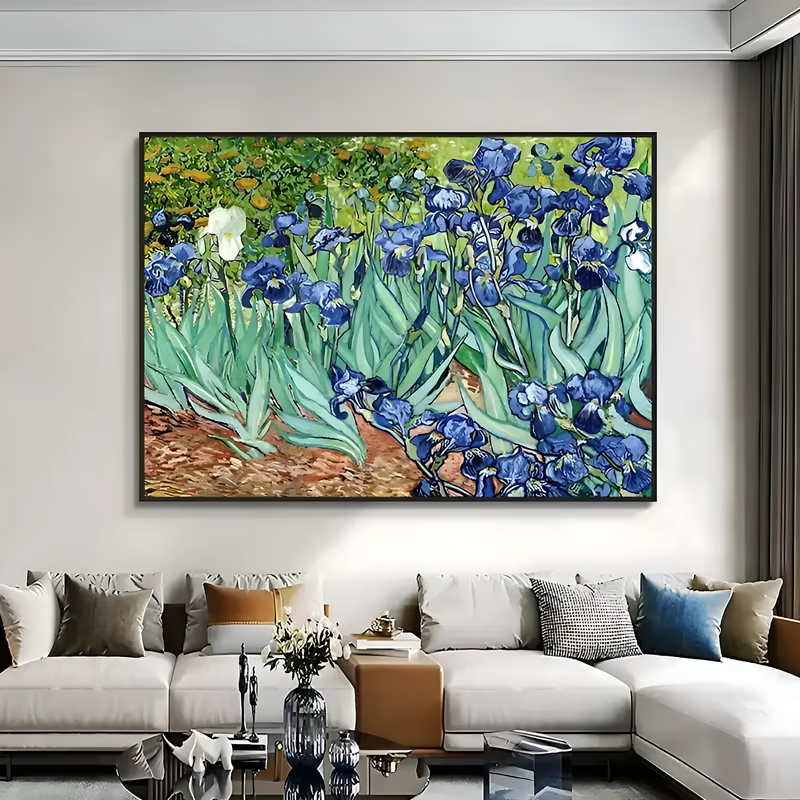
Use the painting as the room's only floral. Plain linen, bouclé, oak, stone and matte metal let the flowers lead. Take one colour from the blooms and one from the leaves or background into cushions, a rug or a lamp, and keep the walls quieter than the canvas. A dark-ground floral loves warm brass and walnut; a pale relief floral looks best with limewash, travertine and light timber. In a masculine or minimal room, choose a single dark-ground bloom, a leaf study or a sculpted white flower: the subject softens the space while the restraint keeps it sharp. For colour-led choices, browse pink wall art or green wall art.
How large should floral wall art be, and how do you hang a pair?
Go bigger than feels safe for a single bloom, about two-thirds of the furniture width, and hang pairs as one unit with a gap of 5–8 cm (2–3 in).
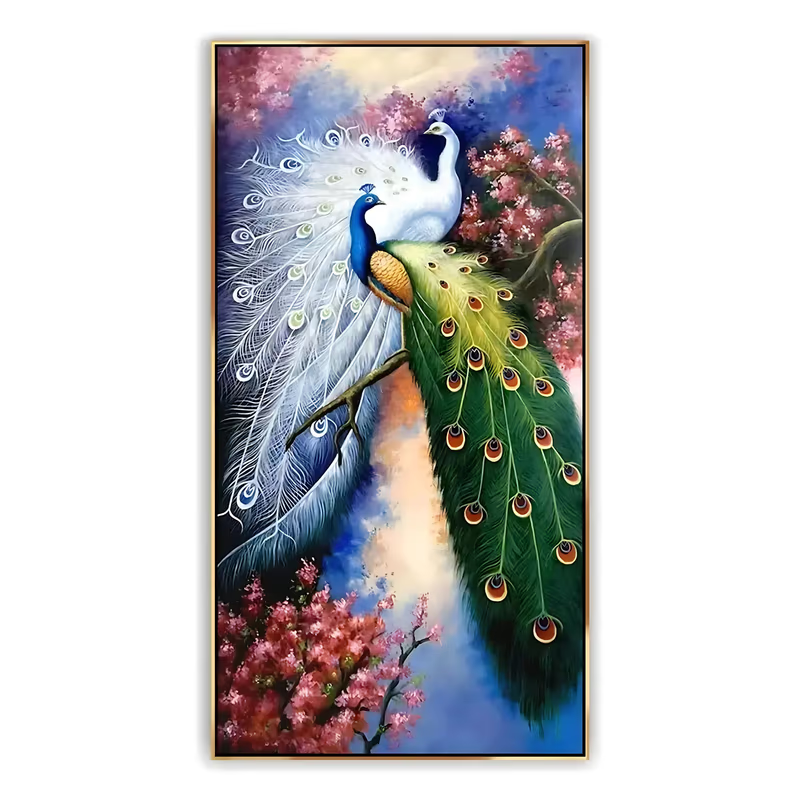
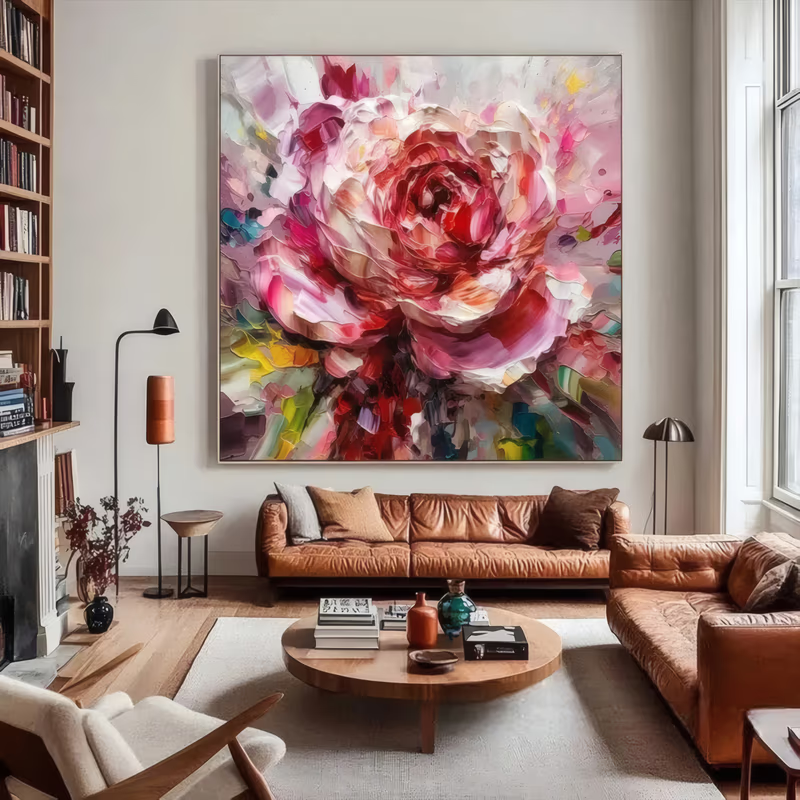
A flower painted larger than life is what makes a floral look current, so an oversized peony or rose over a king bed or a three-seat sofa can run 120–160 cm (47–63 in) wide. Smaller canvases tend to look like afterthoughts unless they are grouped. Vertical florals, which make up much of this range, are made for pairs: two tall stems either side of a bed, a console or a doorway, or a matched diptych over a headboard. For a long wall, a panoramic floral reads like a frieze. Keep the centre of a single canvas, or the shared centre of a pair, roughly at standing eye height, and leave 15–25 cm (6–10 in) above furniture.
How is a floral painting matched to your scheme before it is painted?
Send the fabric, paint code or room photo, and the petals, leaves and background are recoloured to suit before the first stroke.
Because each canvas is painted for its order, a red rose can become blush, a yellow sunflower field can turn ochre, and a white peony can sit on your exact wall green. The painter shows the work in photos or video at each stage, and the next stage starts only once you approve. For a hotel, one floral can be varied across rooms or floors so each piece belongs to the same family. After about 10 days of painting, you approve a final photograph, and the canvas is sent rolled, on stretcher bars ready to hang, or in a gold, silver, black, white or wood frame. 3D plaster and deep relief pieces are the exception: they travel stretched or framed, and are only rolled if you agree to have the texture made thin enough for transport. Request a quote, or see custom work and the guest-room programme page.