


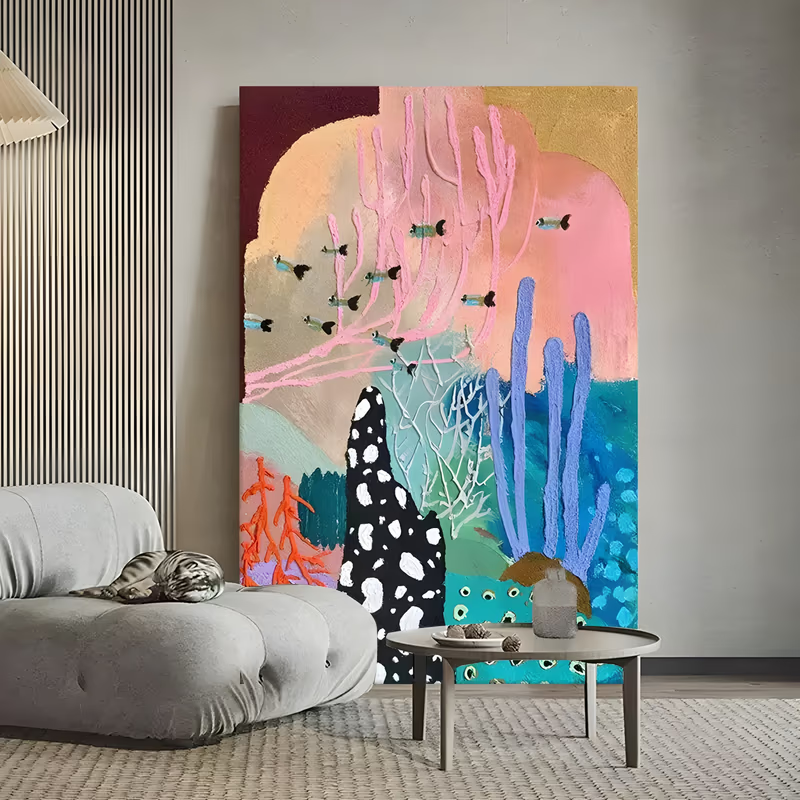

Corridor art guide · Updated
How to plan art for hotel corridors and lift lobbies
Key takeaways
- Corridor art is seen sideways and on the move: choose clear, simple compositions that read at an angle from a metre or two away, in a few seconds.
- Vertical formats fit between doors: keep each canvas to about half the width of the wall section it hangs on, and give the corridor end and the lift lobby the larger pieces.
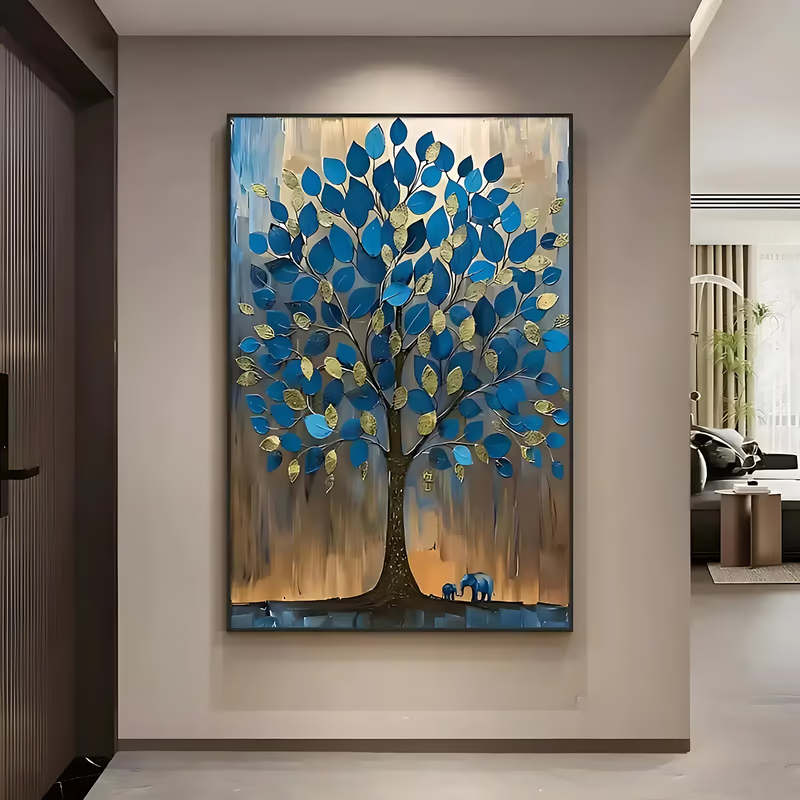
- Hang every piece on one line: centres at 145–152 cm (57–60 in) from the floor along the whole run, each canvas centred on its wall section.
- Related, not repeated: a family of works per floor, or one composition in a different colourway on each floor, keeps a building coherent and helps guests know where they are.
Why does a hotel corridor need art?
Corridors are the longest walk most guests take in a hotel, and art turns that walk from a run of identical doors into part of the stay.
A corridor is where the design of the lobby either carries through to the room or quietly stops. Without art, long runs of wall, carpet and door frames feel institutional, and every floor looks the same. With art, the corridor gains rhythm, a sense of arrival at each lift lobby, and small cues that tell guests which floor they are on. The same applies to apartment buildings, student housing and office floors, where the common corridors are the part of the building residents see every day.
Corridor art does not need to be loud. Guests pass it several times a day, so it should be pleasant on the tenth viewing rather than startling on the first.
What makes corridor art different from art in other spaces?
Corridor art is viewed from close range, at an angle and while walking, on narrow walls between doors, often in lower light, and in many places at once.
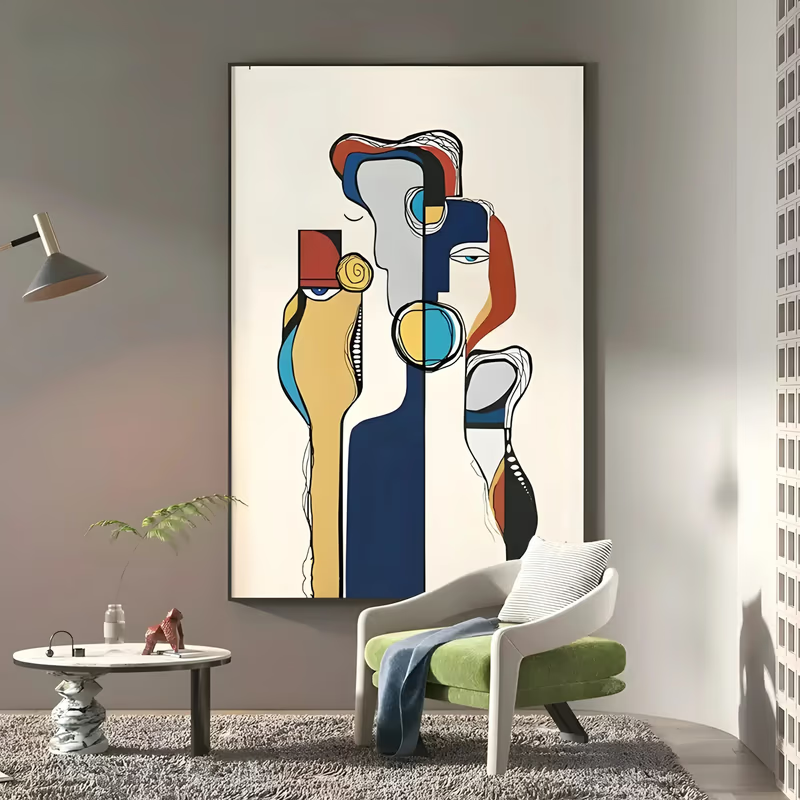
That changes the brief. A painting in a living room is studied from a sofa; a painting in a corridor is glimpsed from the side at a distance of one or two metres. Clear shapes, a strong vertical structure and a confident light-dark pattern read better than fine detail or very subtle colour. And because the same corridor exists on every floor, the art has to work as a set.
| Position | How it is seen | What works | Format |
|---|---|---|---|
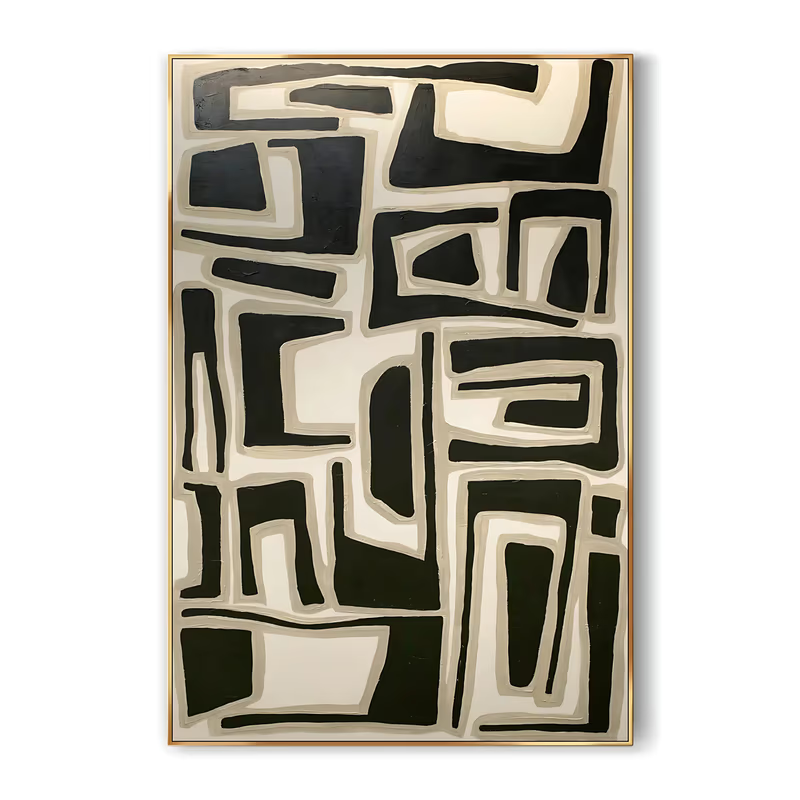
| Walls between room doors | Side-on, in passing, 1–2 m away | Simple compositions with a clear vertical structure | Tall vertical |
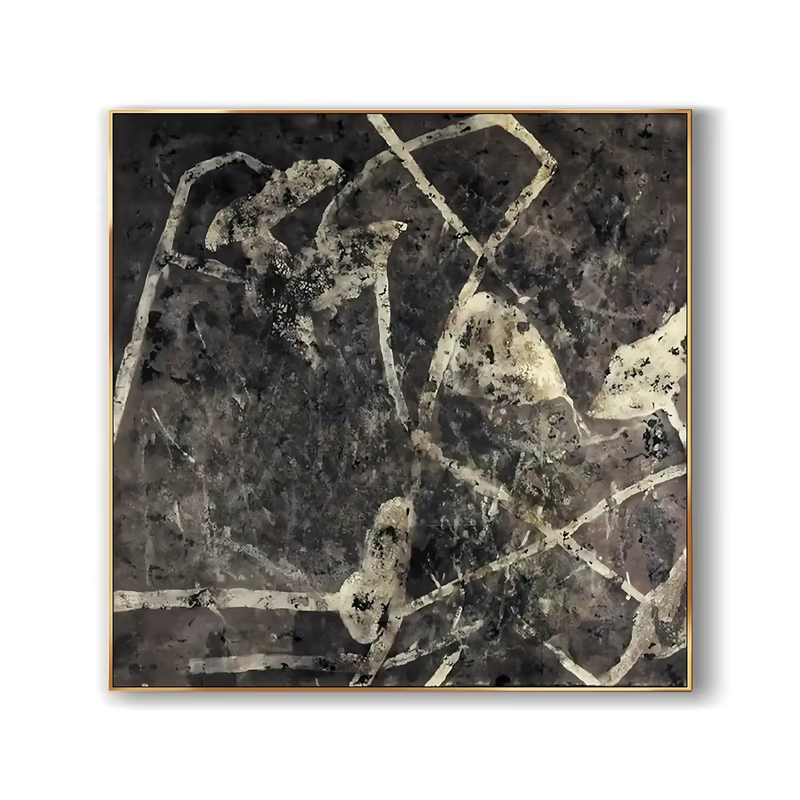
| Corridor end | Head-on, from the whole length of the corridor | One stronger piece that draws people along | Larger vertical or square |
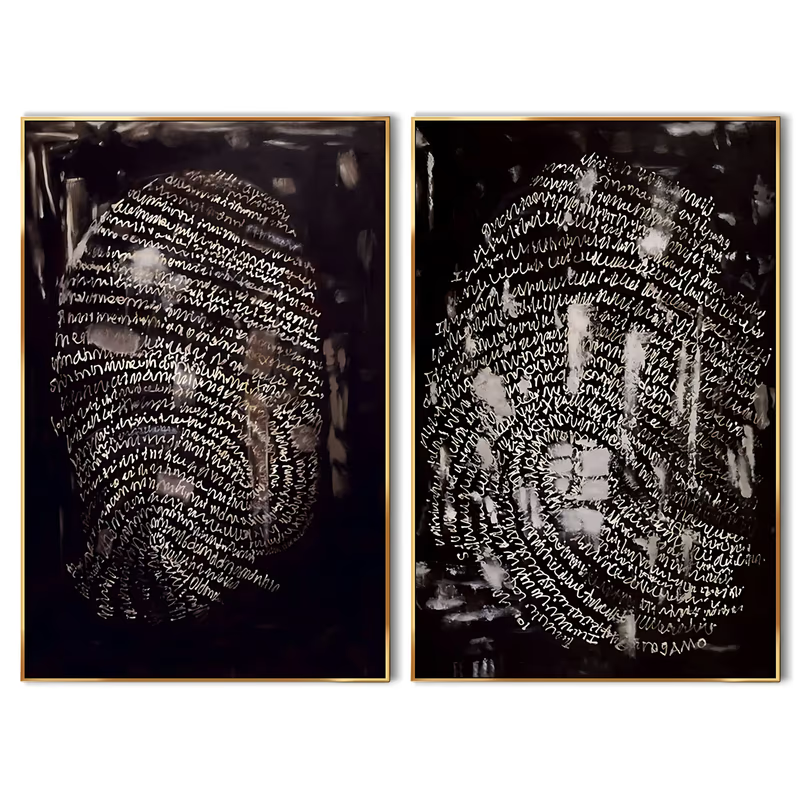
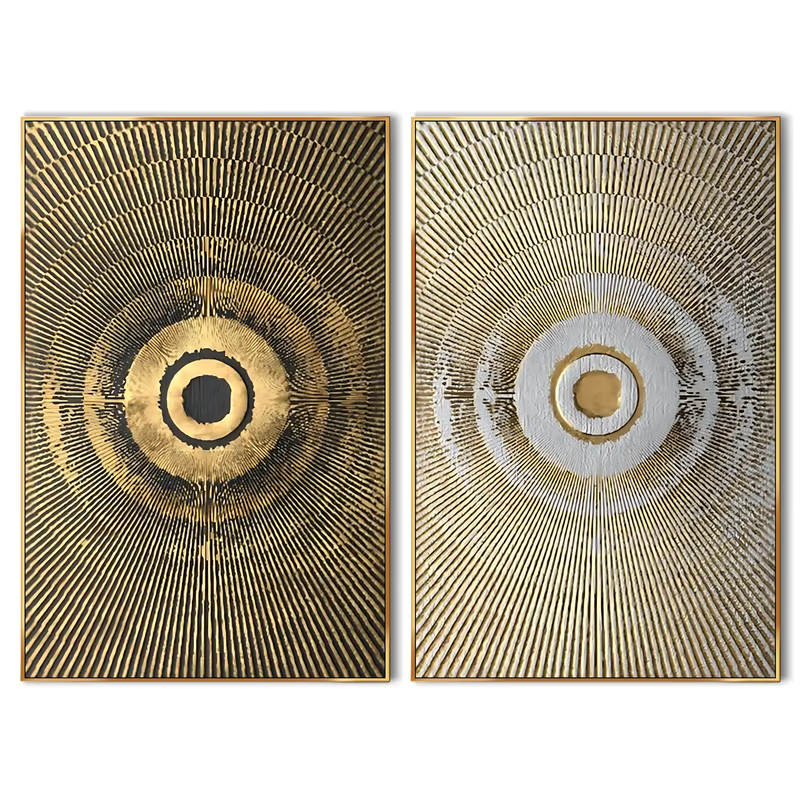
| Lift lobby | Head-on, while waiting for a short time | The floor's defining piece, with more colour or texture | Vertical or a pair |
| Stairwell and landing | From below and above, moving | Bold shapes and tall formats that read from the steps | Tall vertical |
| Apartment and office common corridors | Daily, by the same people | Calm, varied work that rewards repeat viewing | Vertical |
What kinds of corridor art work well?
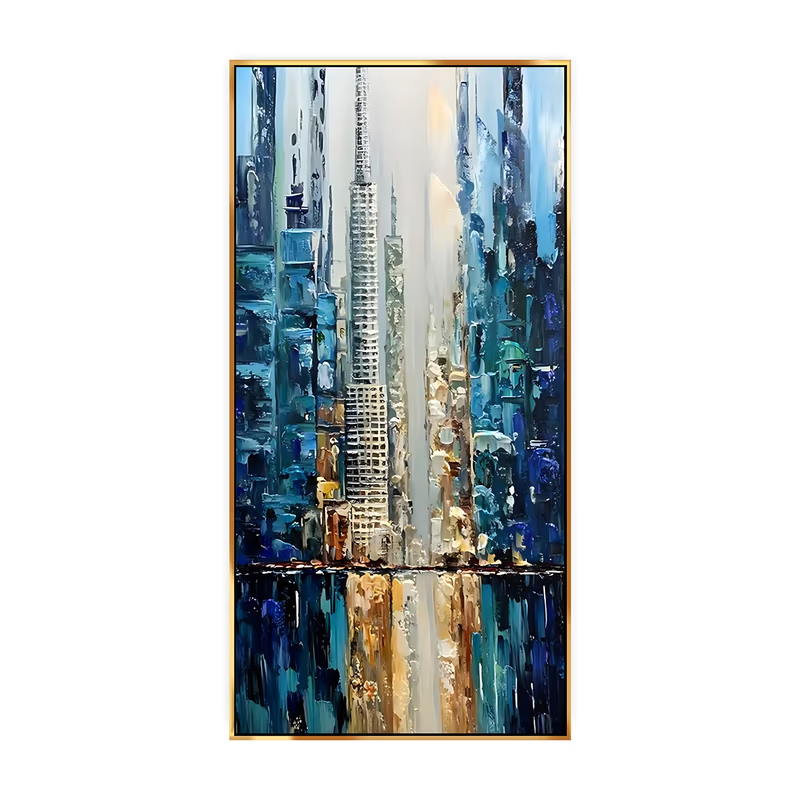
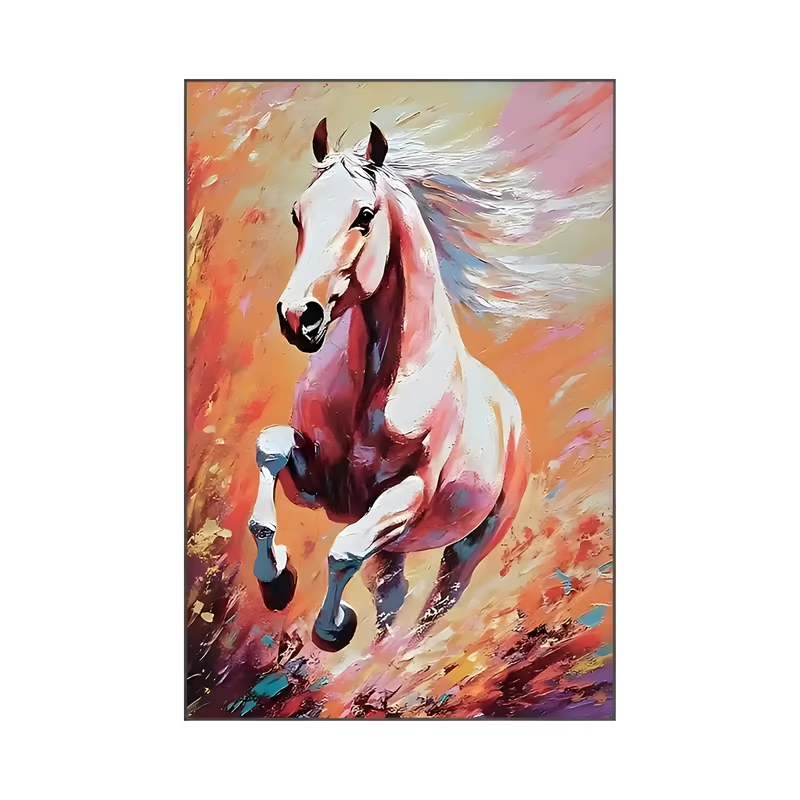
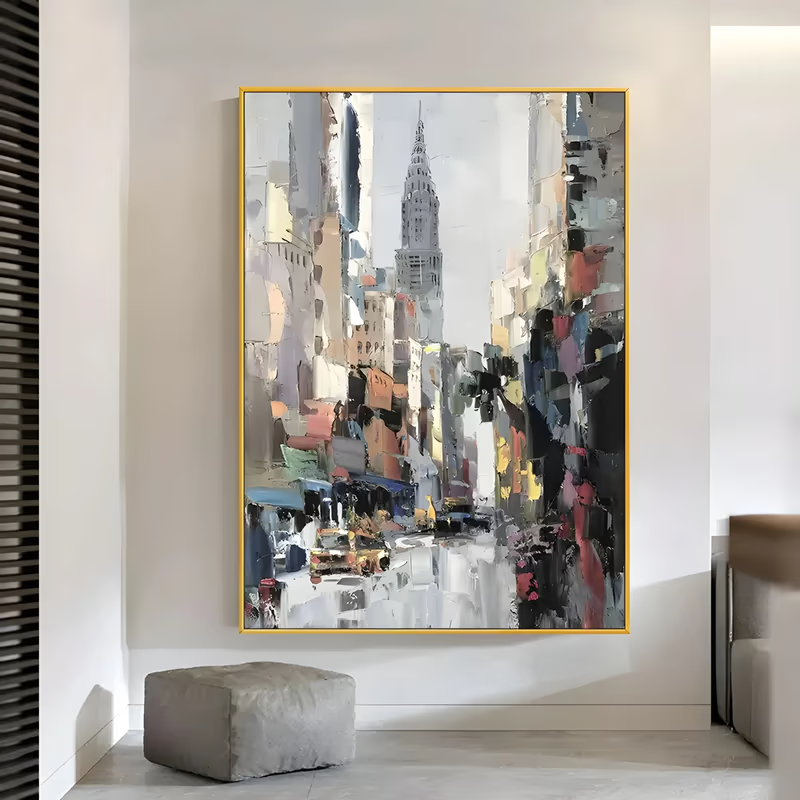
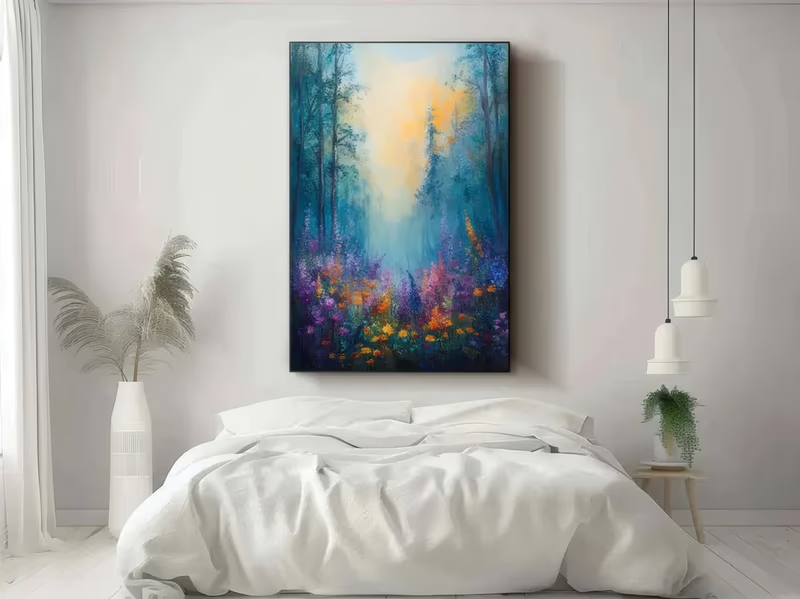
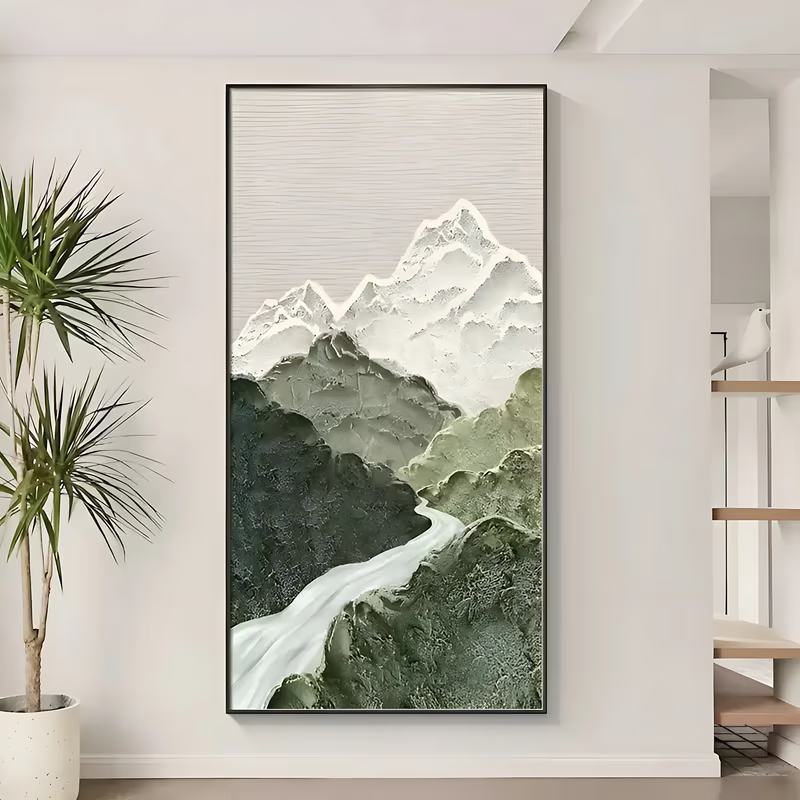
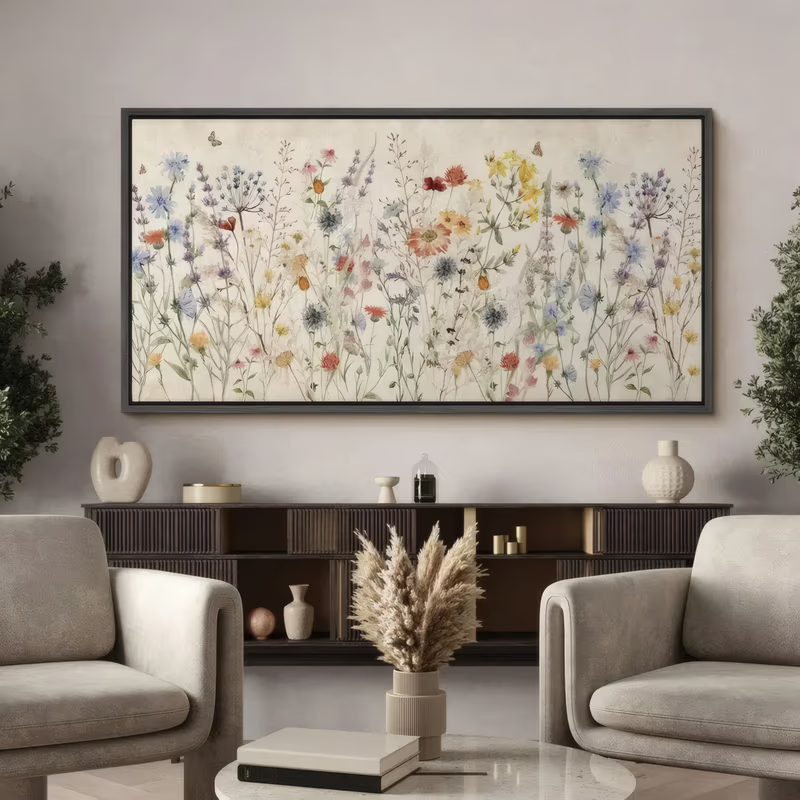
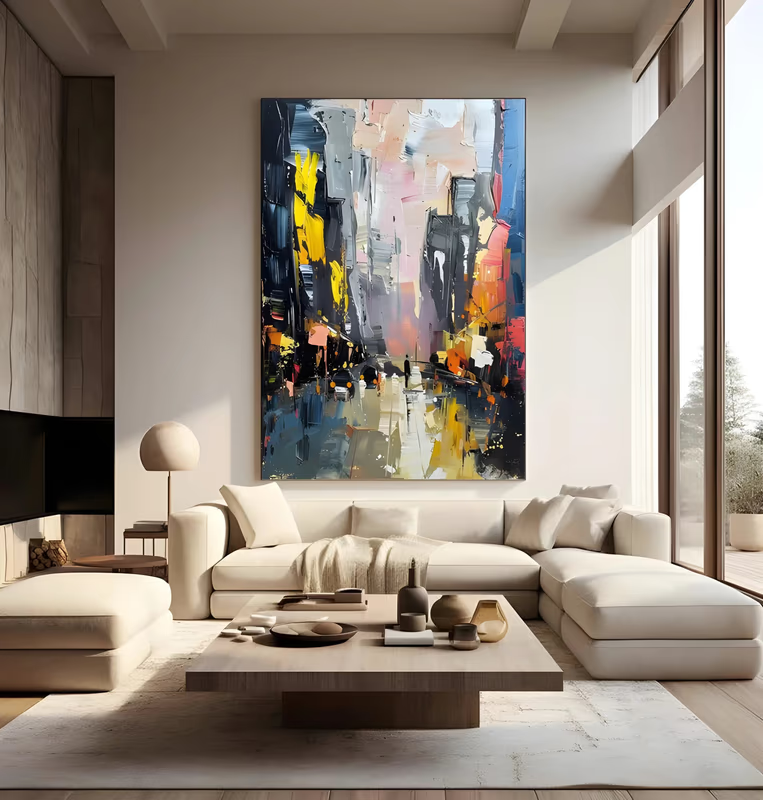
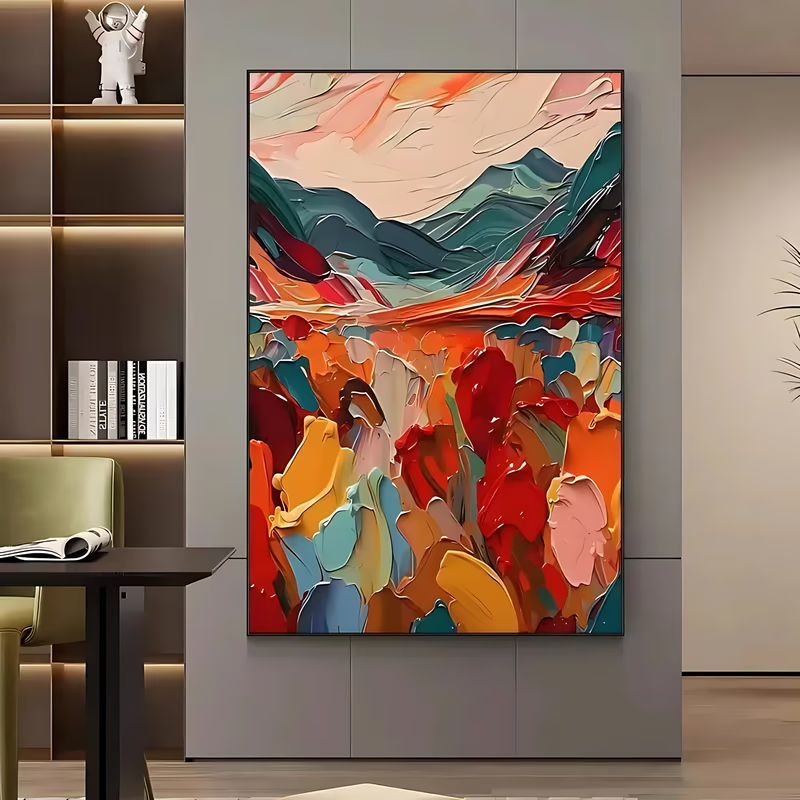
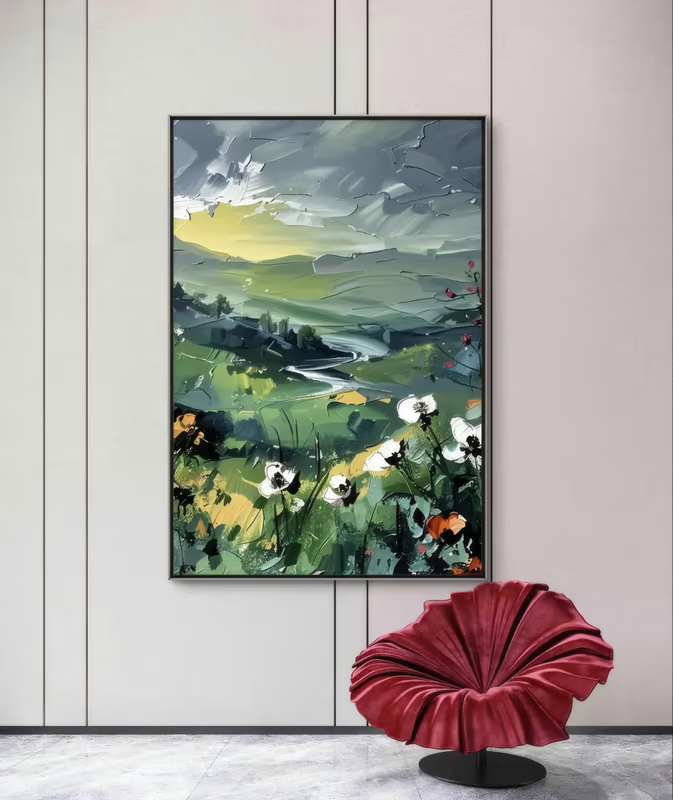
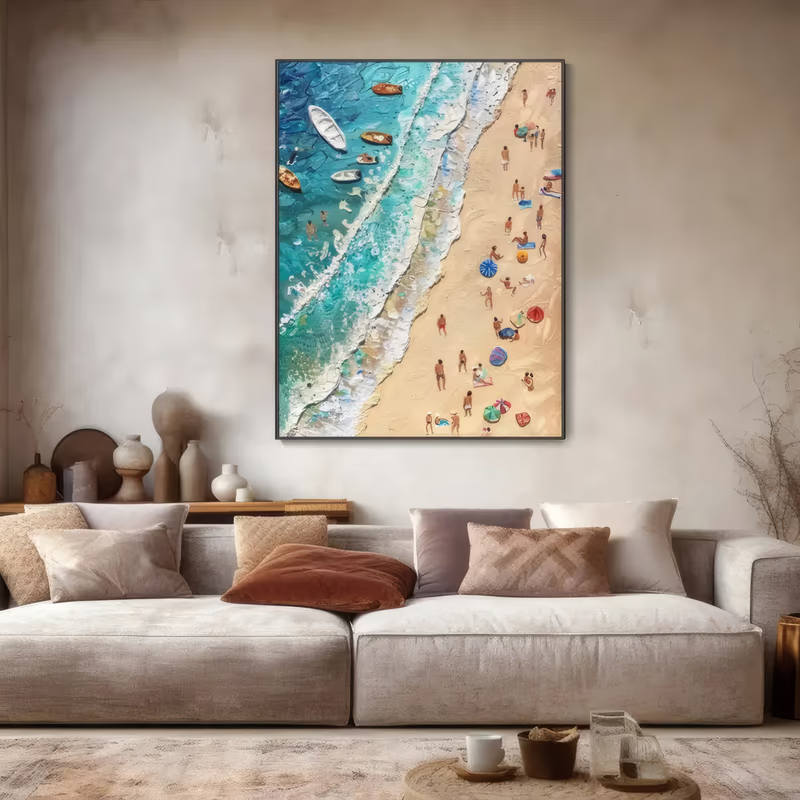
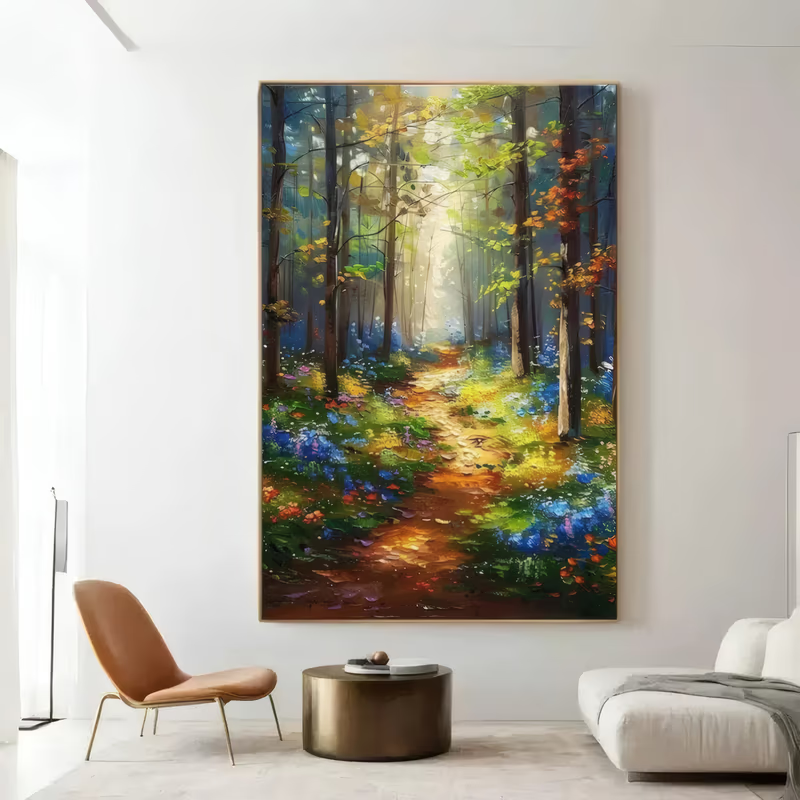
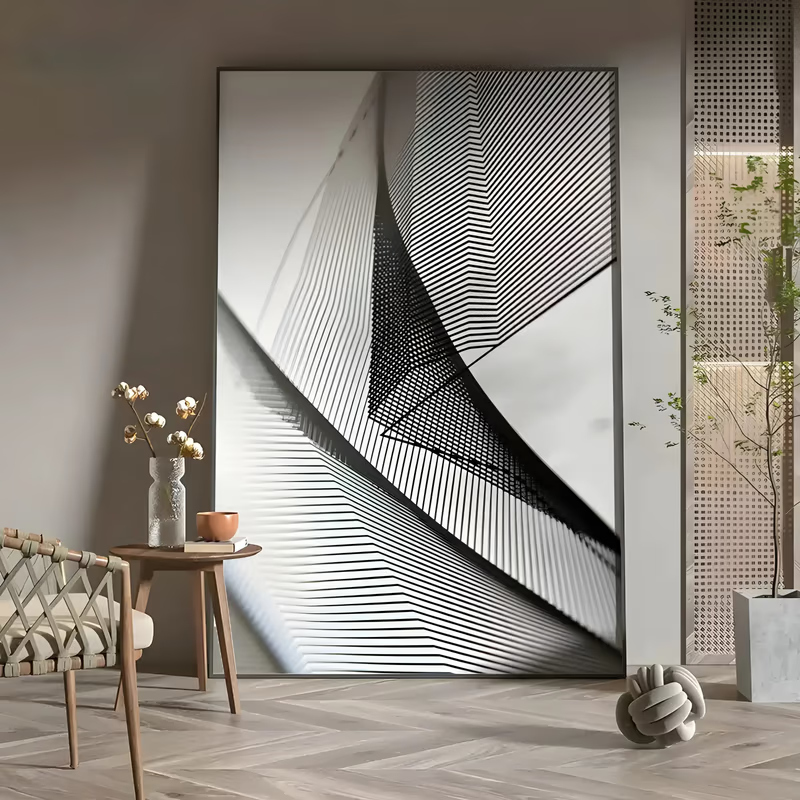
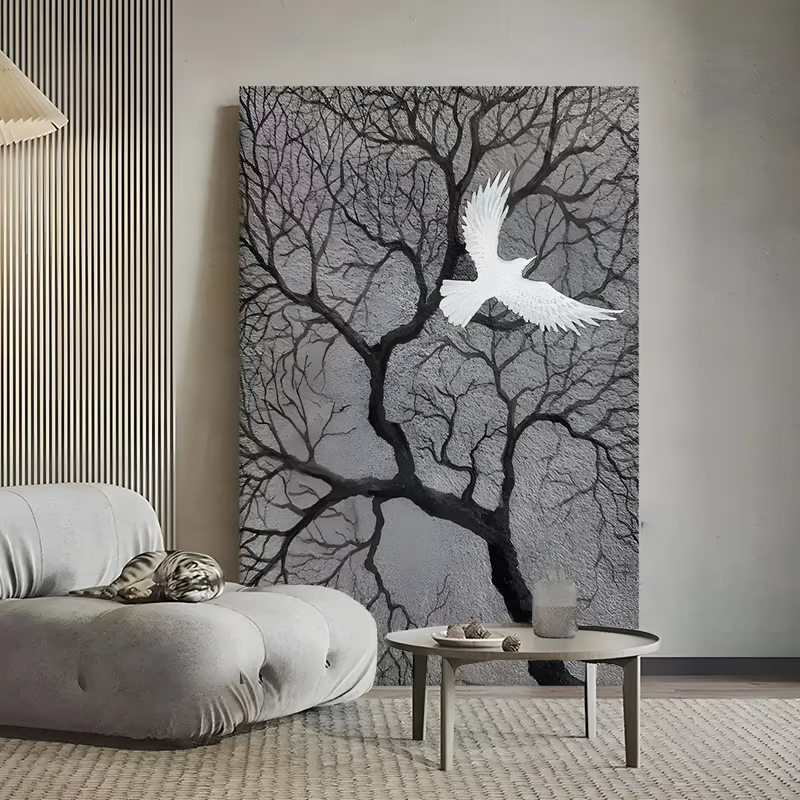
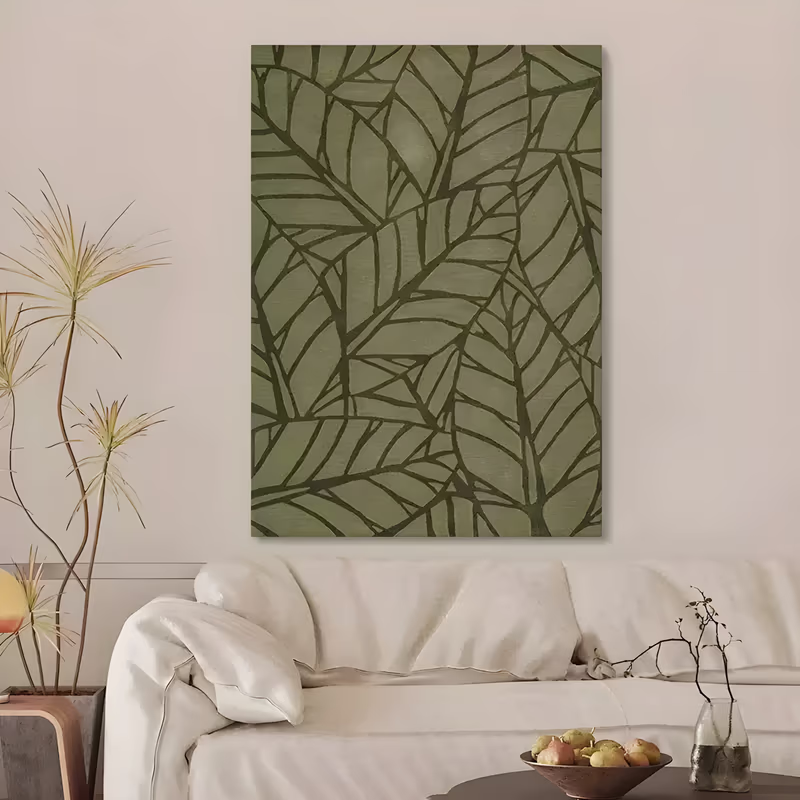
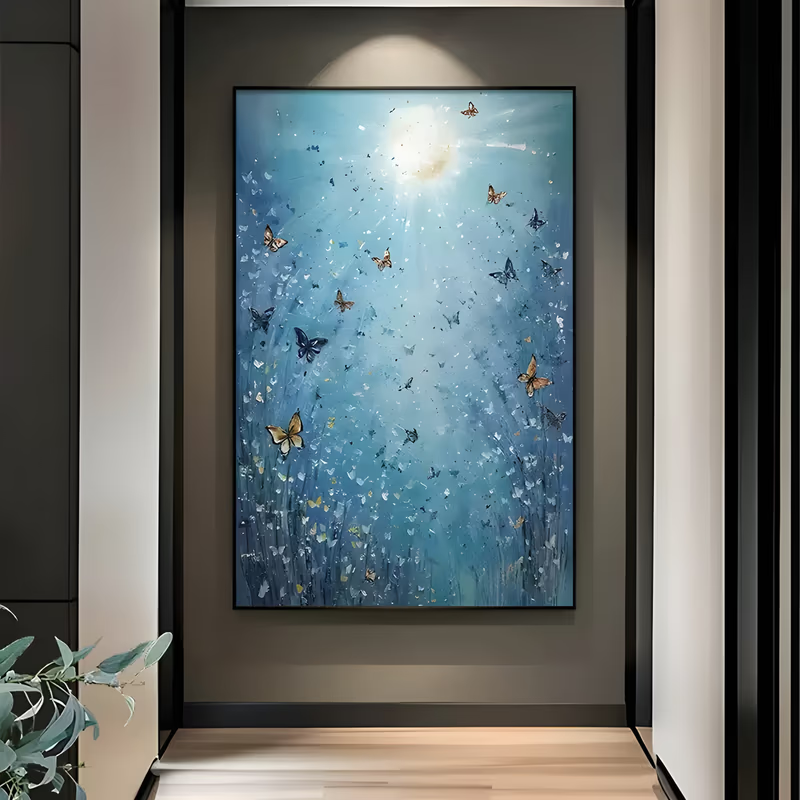
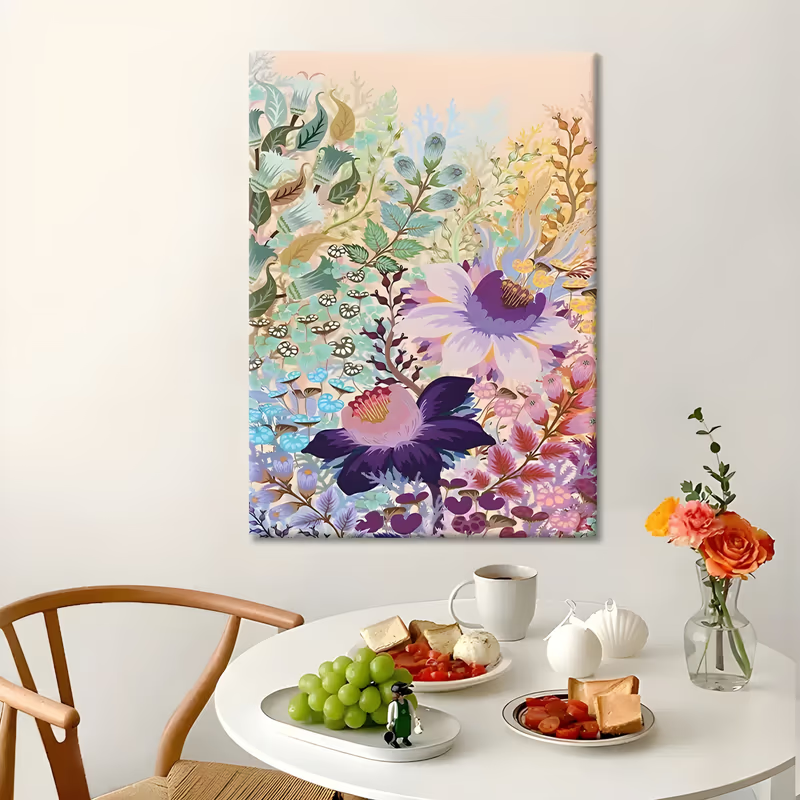
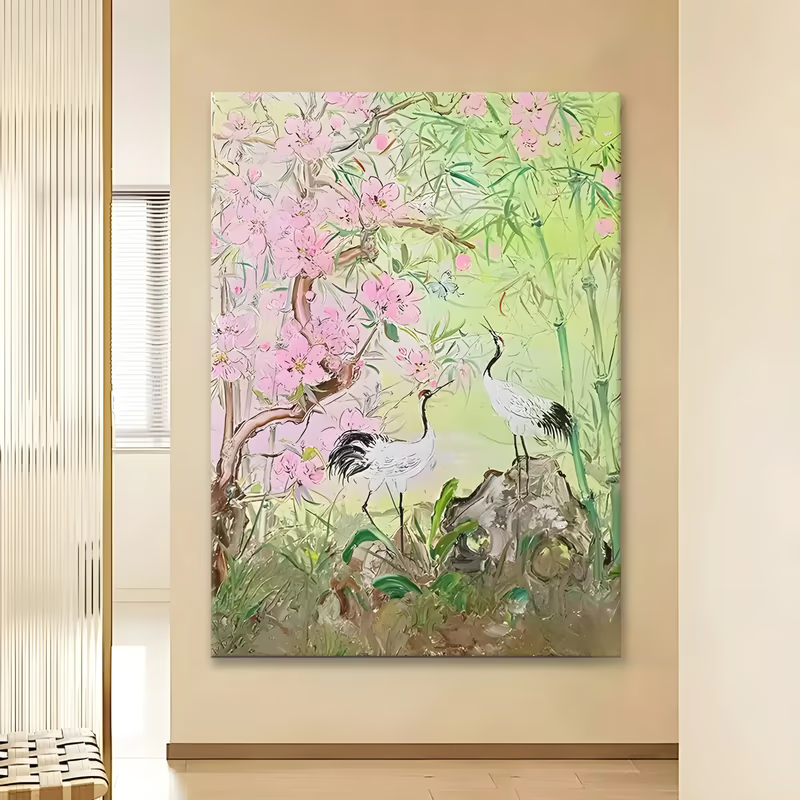
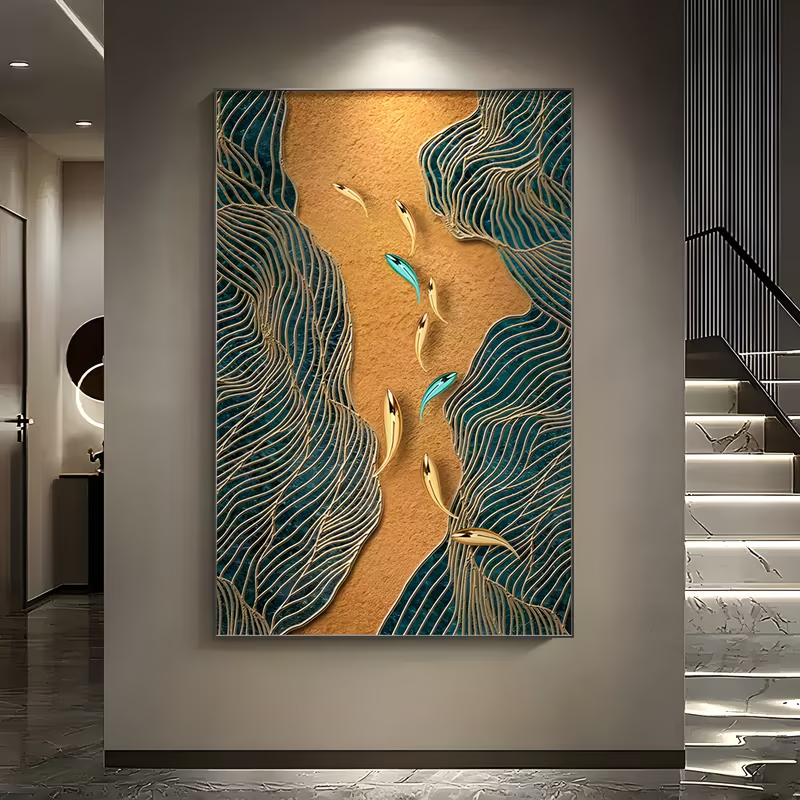
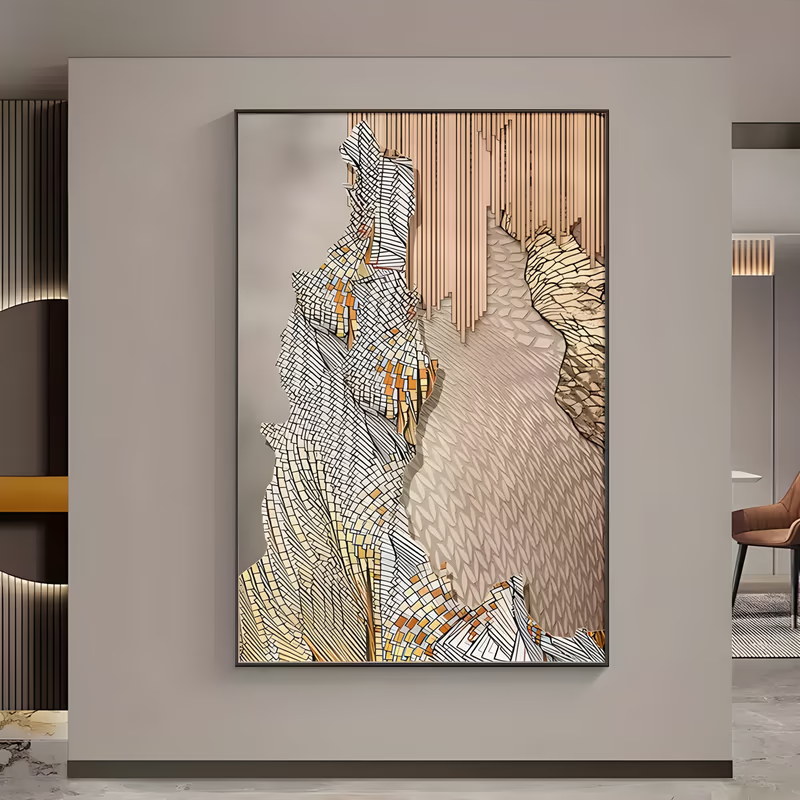
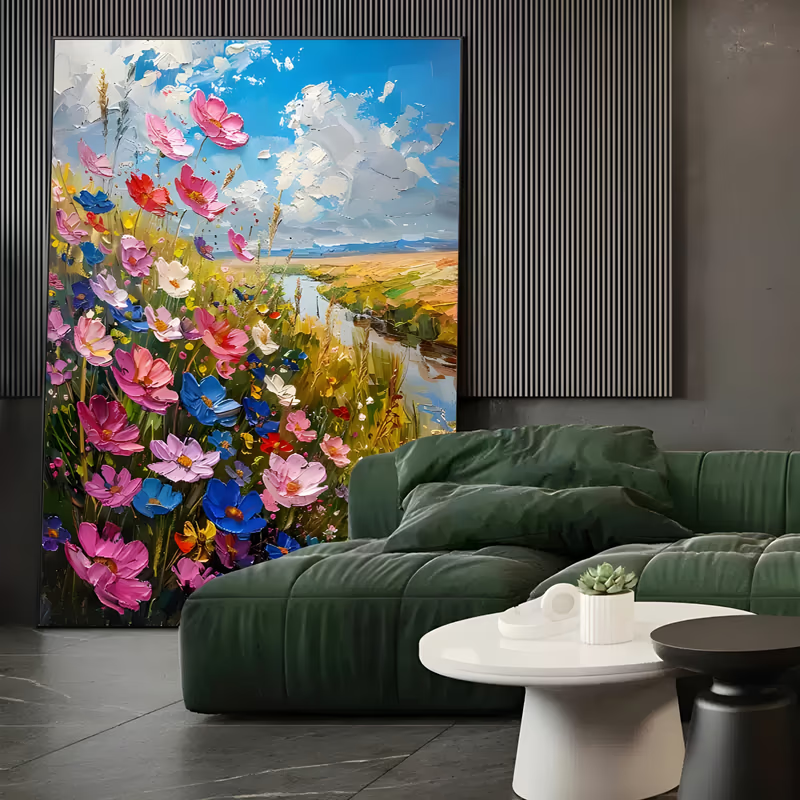
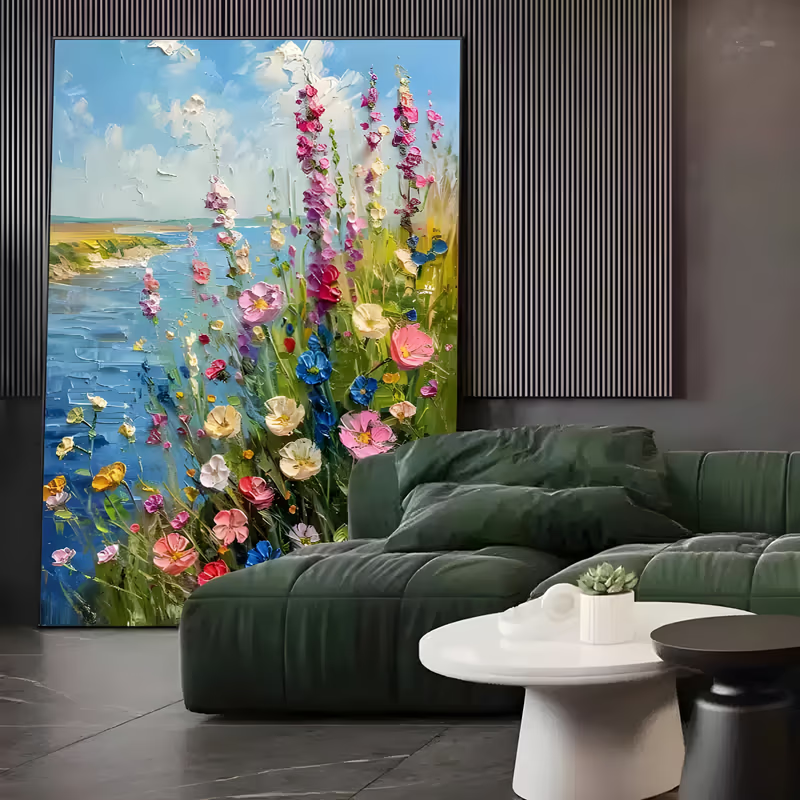
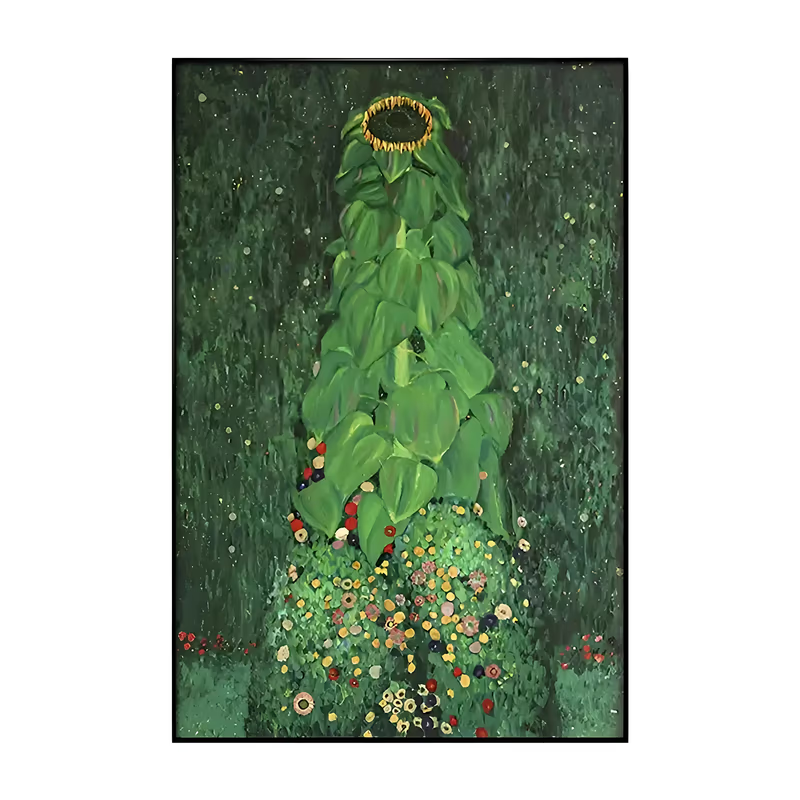
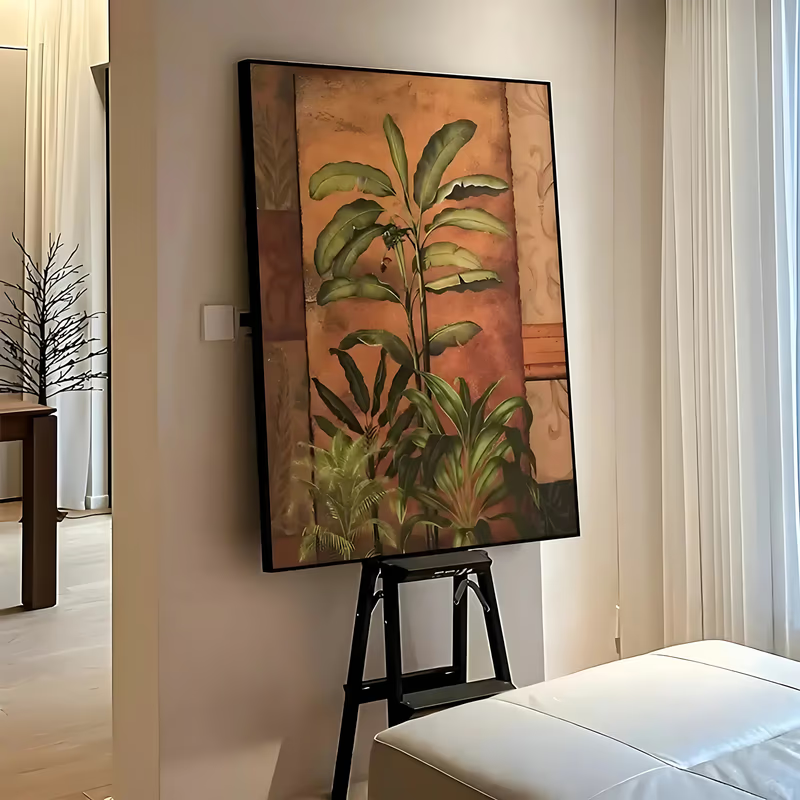
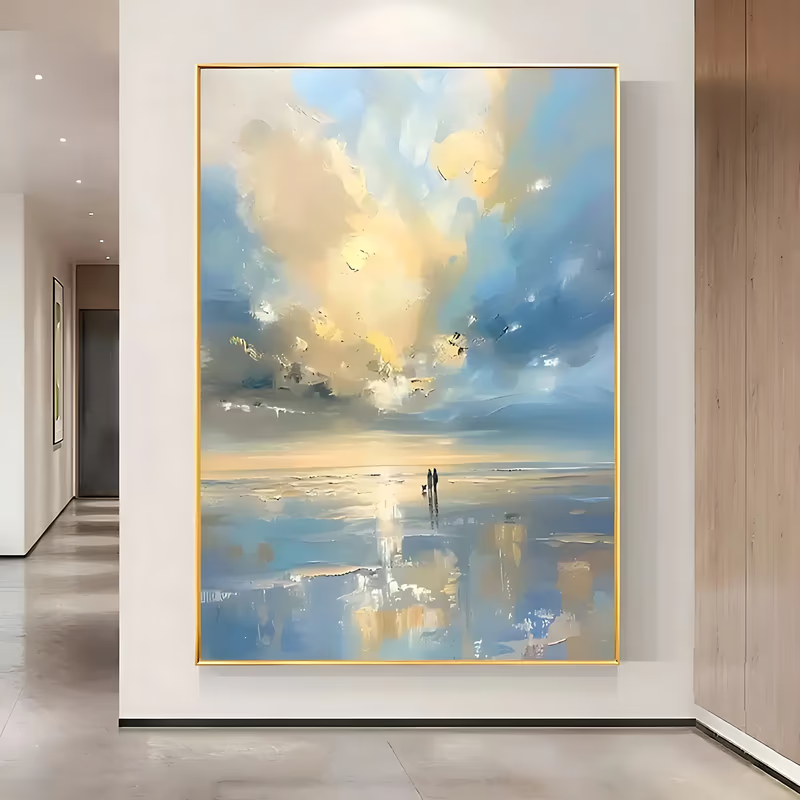
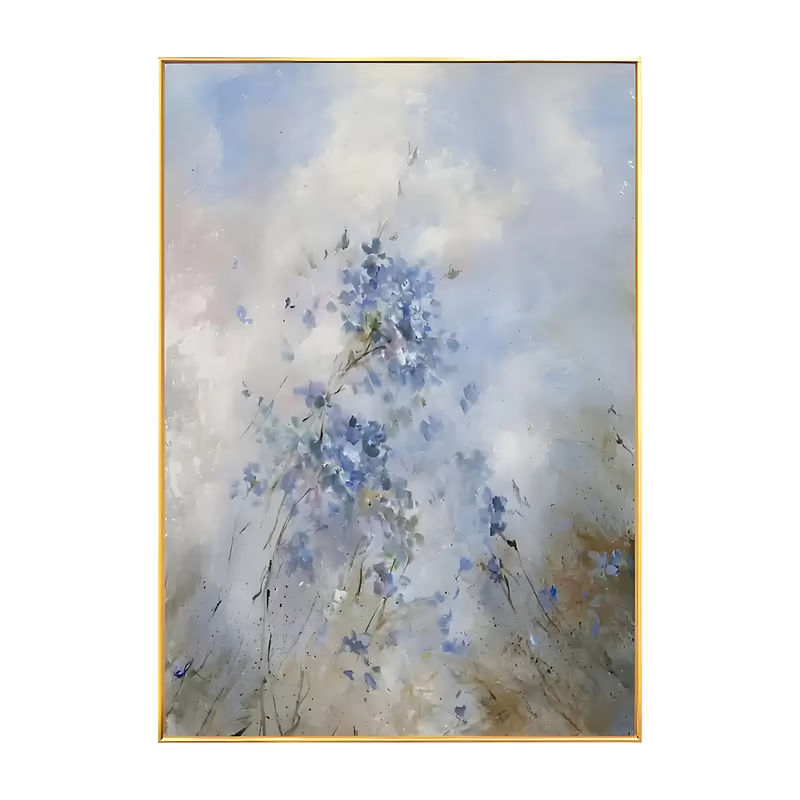
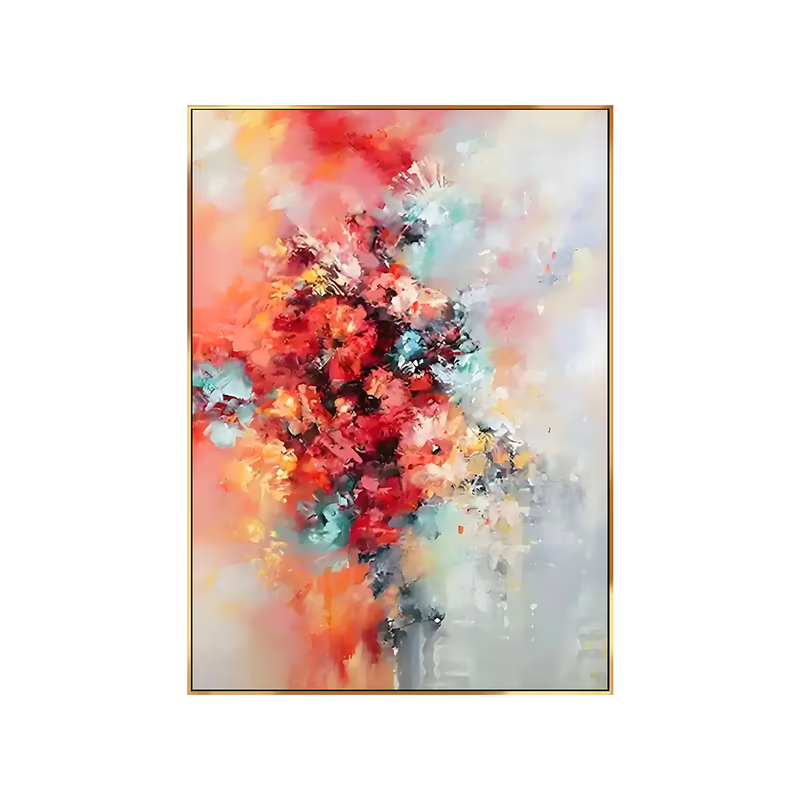
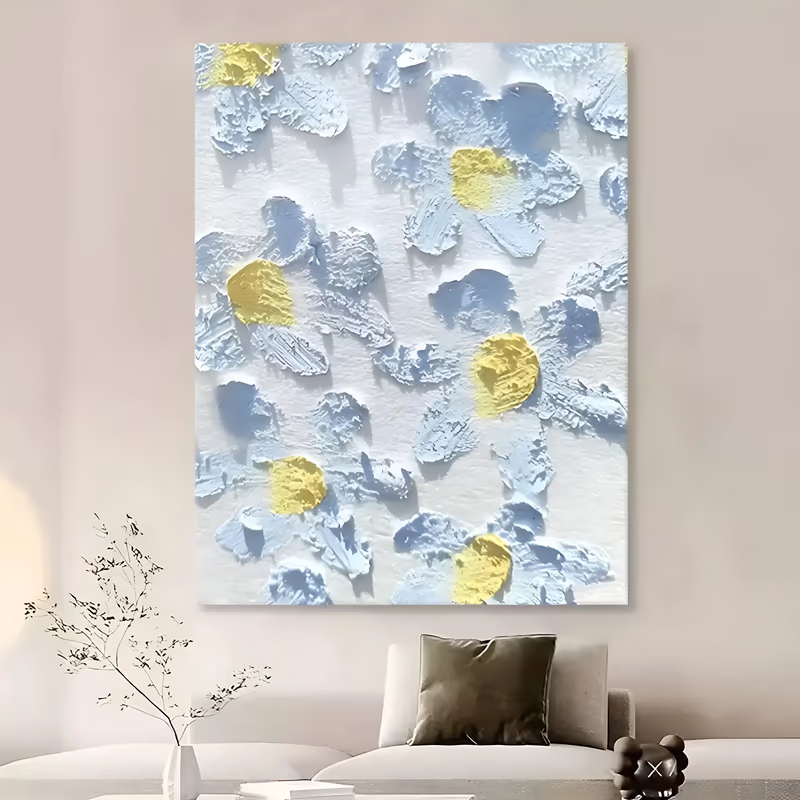
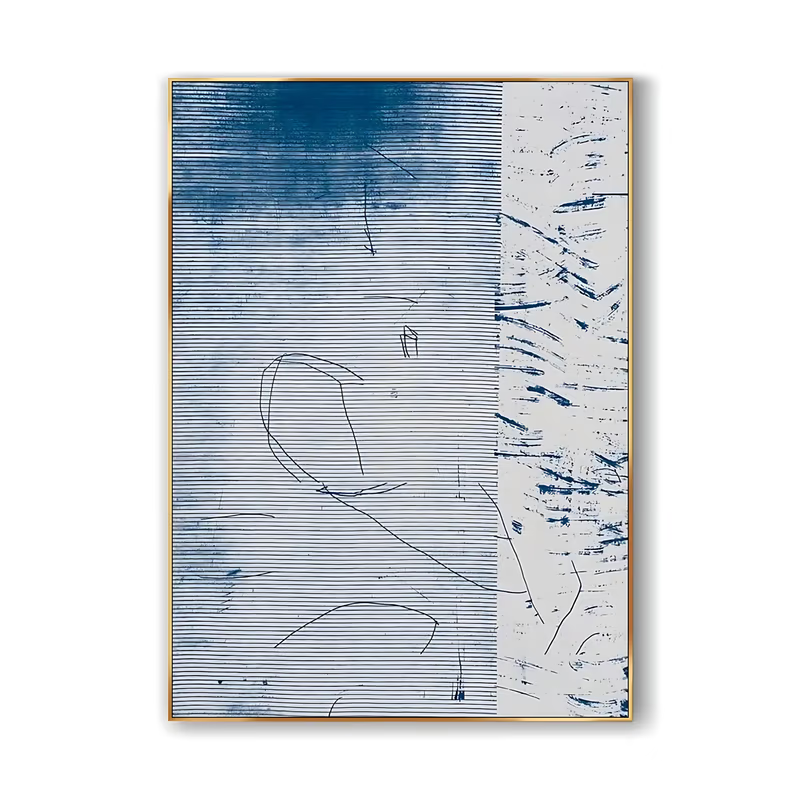
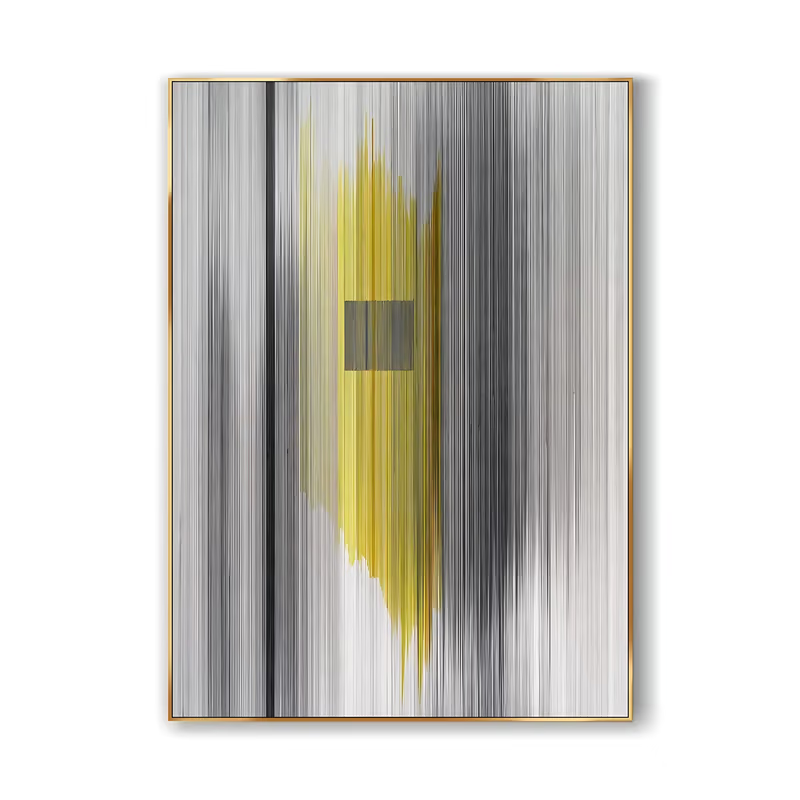
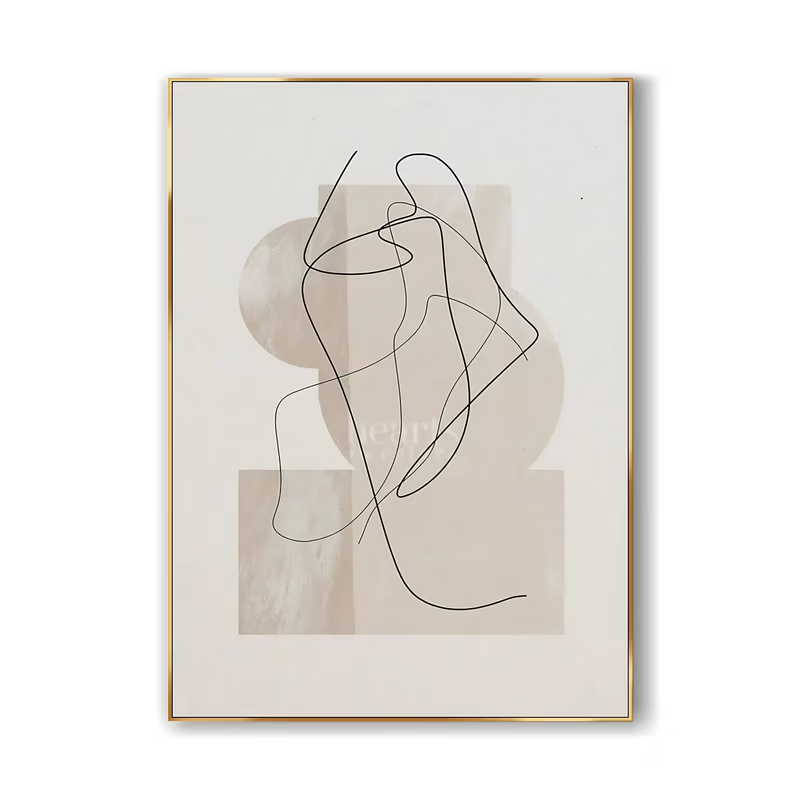
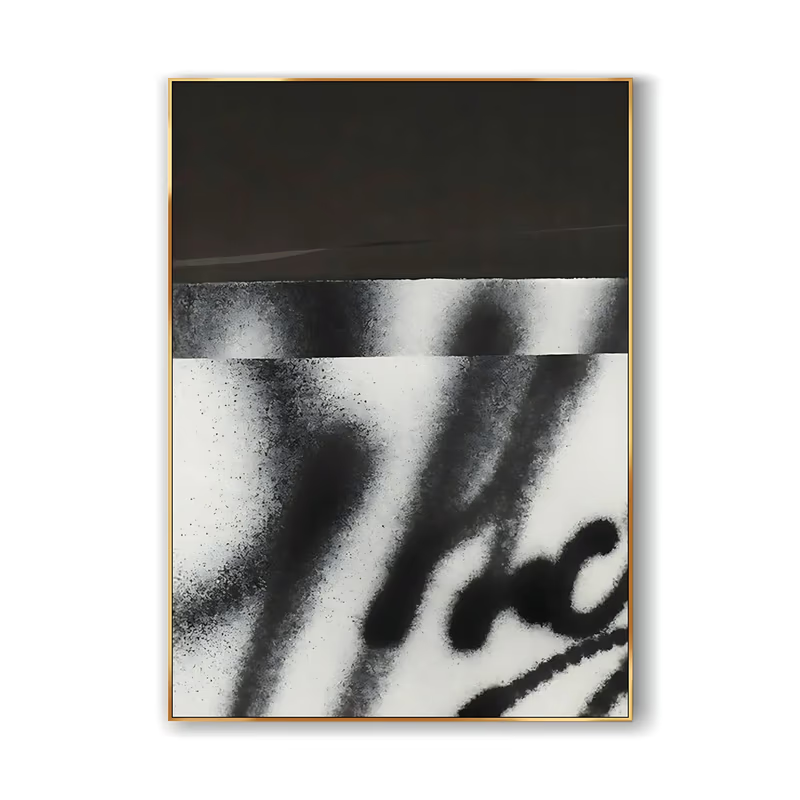
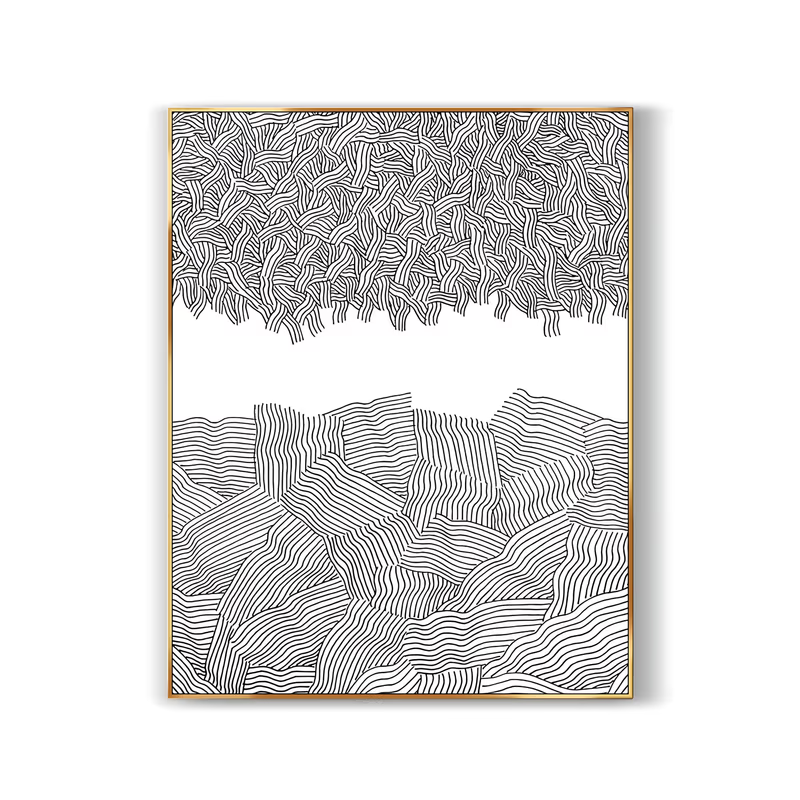
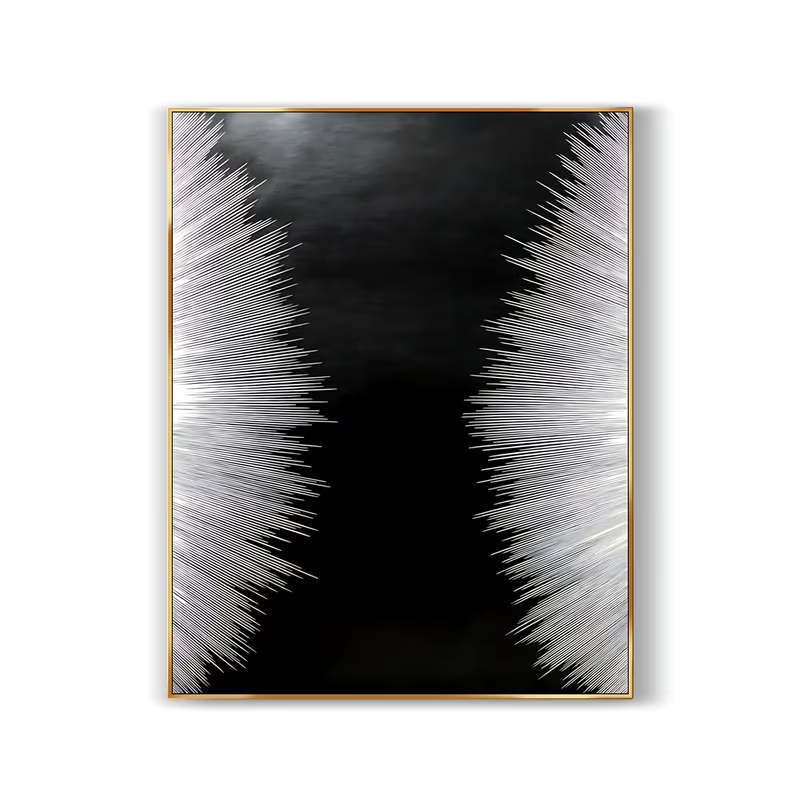
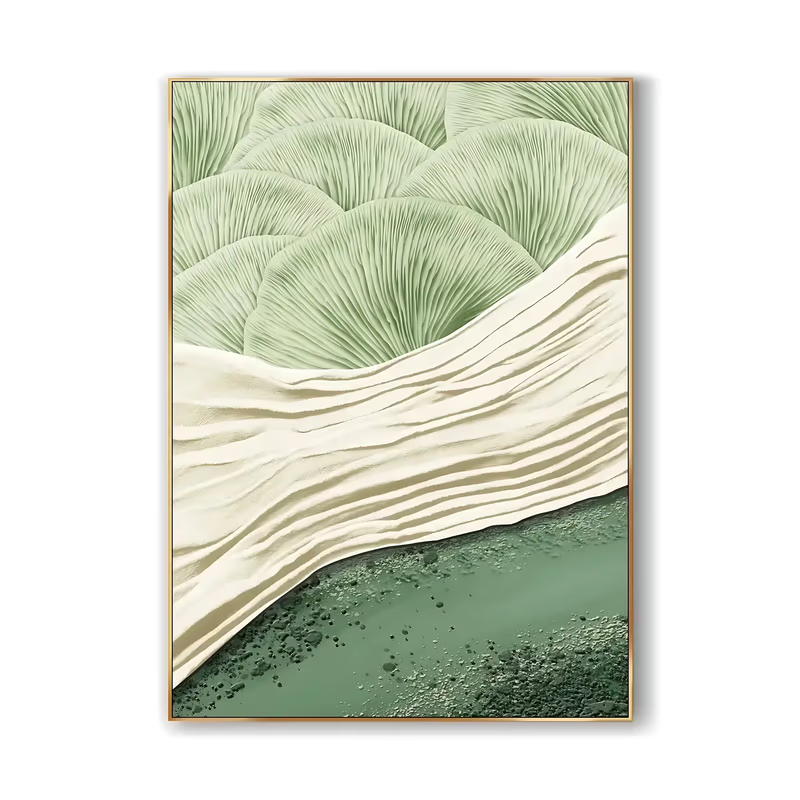
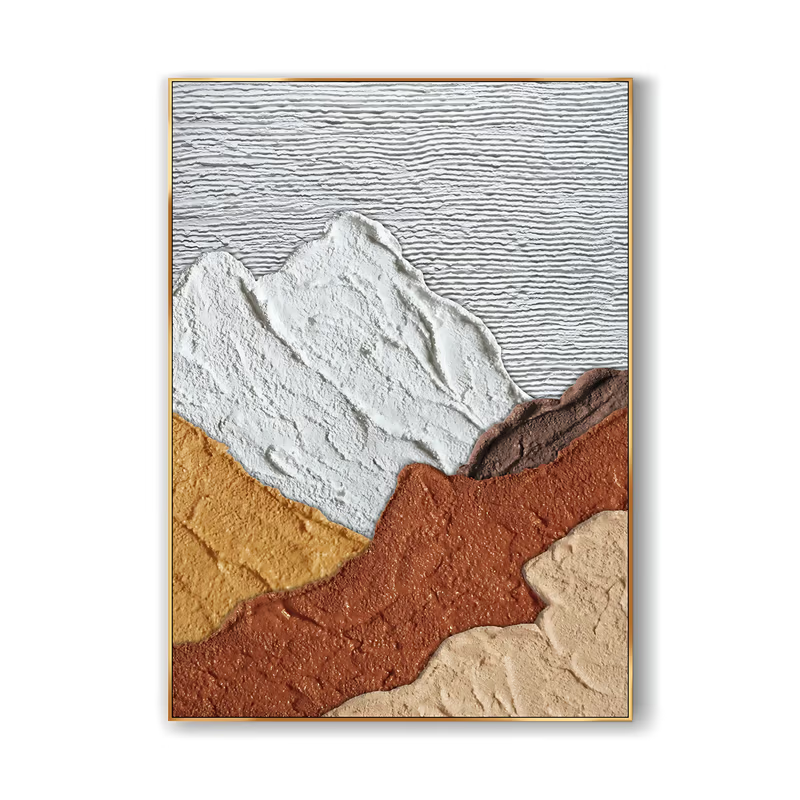
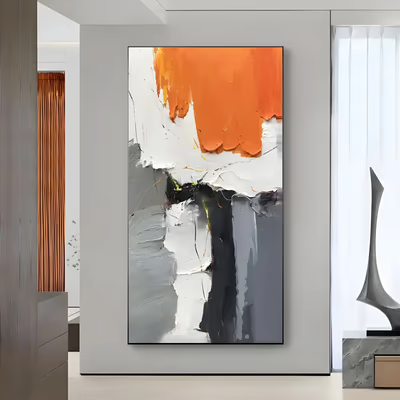
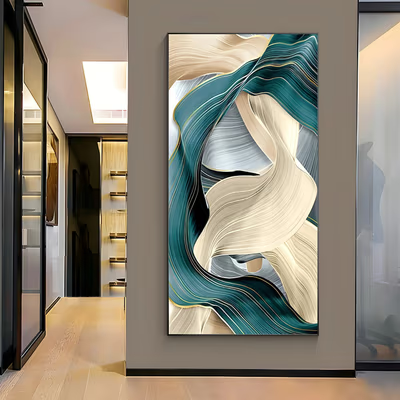
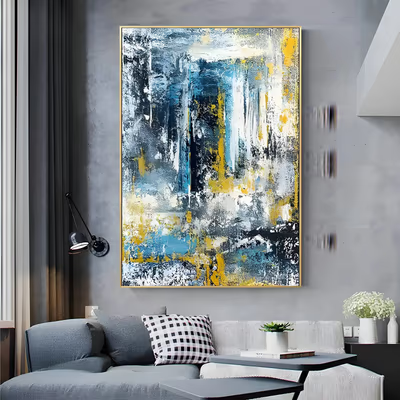
Four kinds suit corridors best: tall landscapes and seascapes, florals and botanicals, quiet minimalist and wabi-sabi work, and flowing vertical abstracts.
Tall landscapes and seascapes for corridors
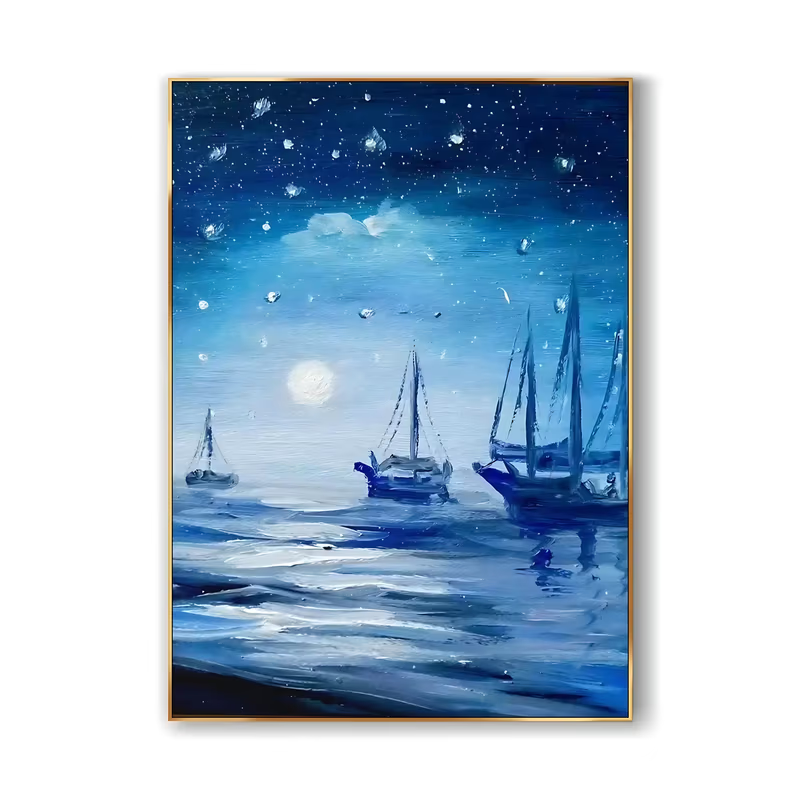
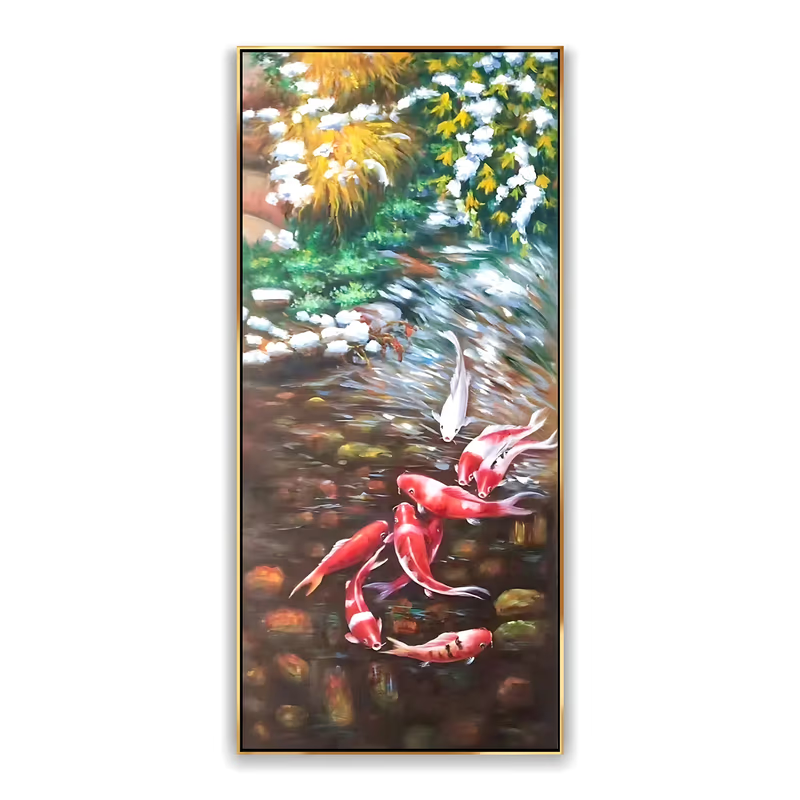
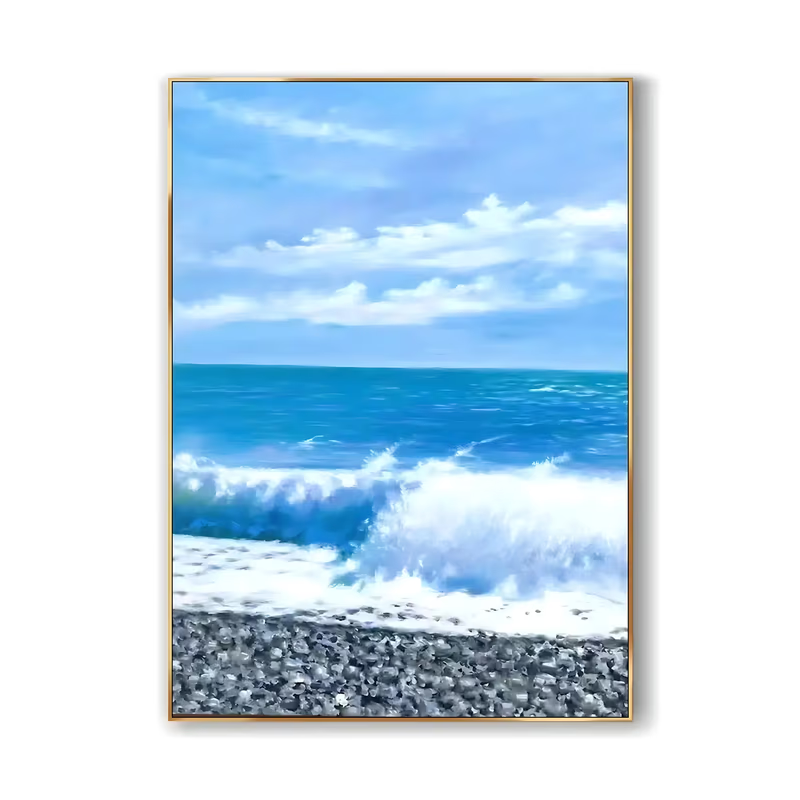
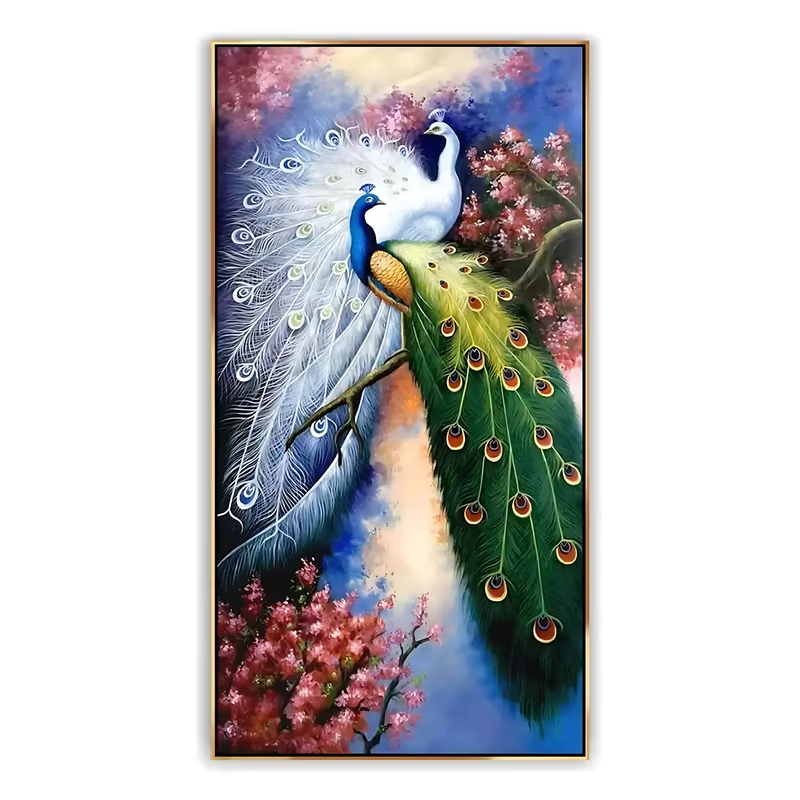
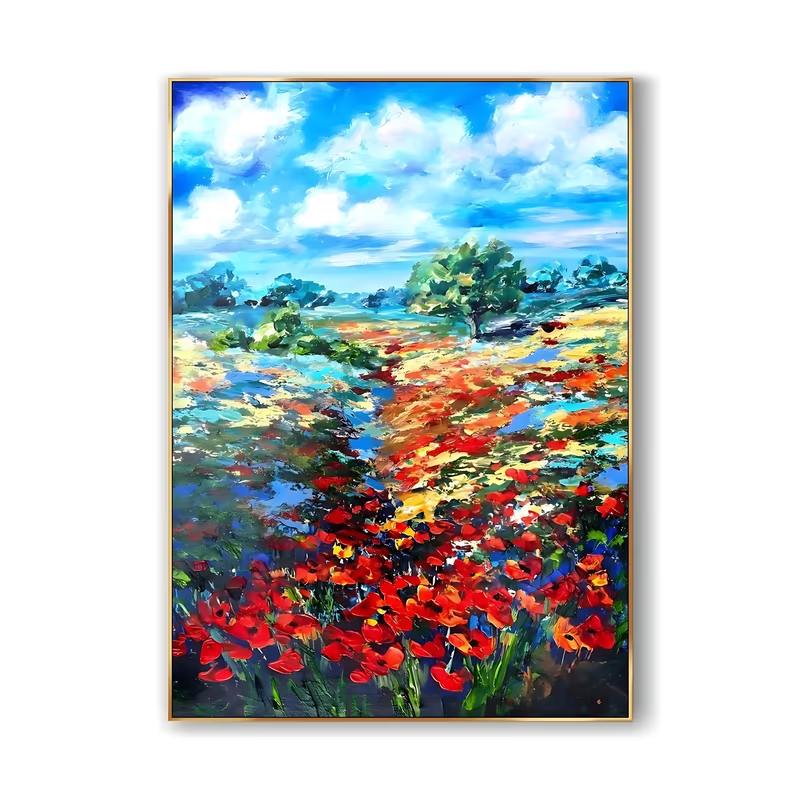
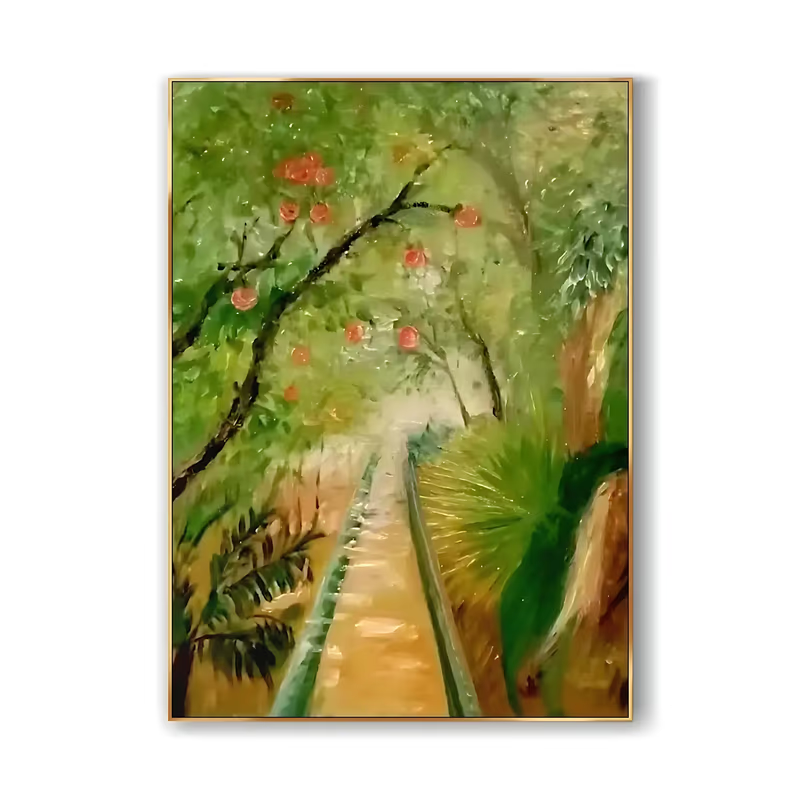
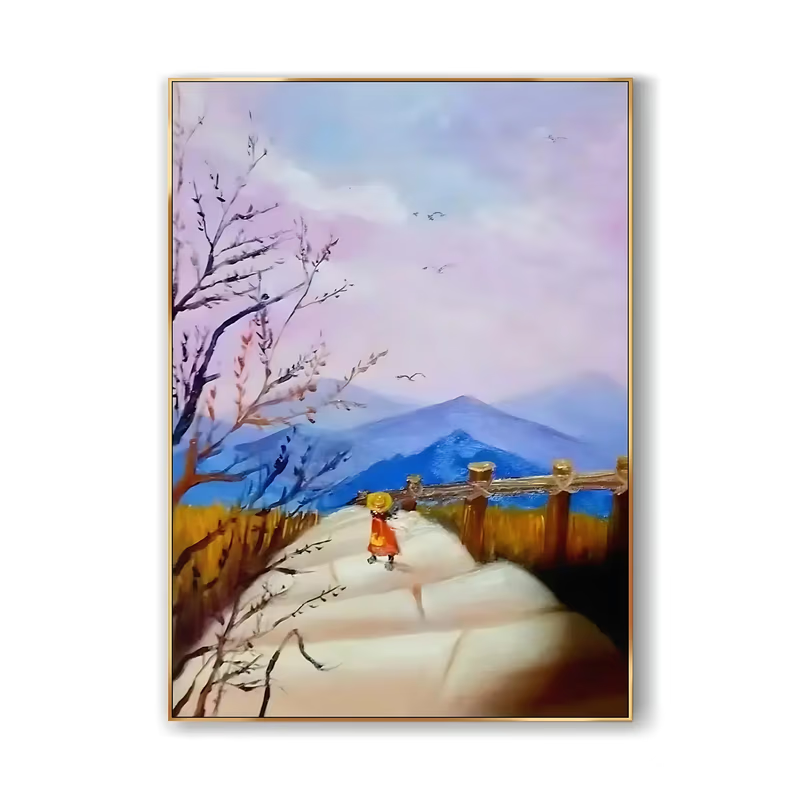
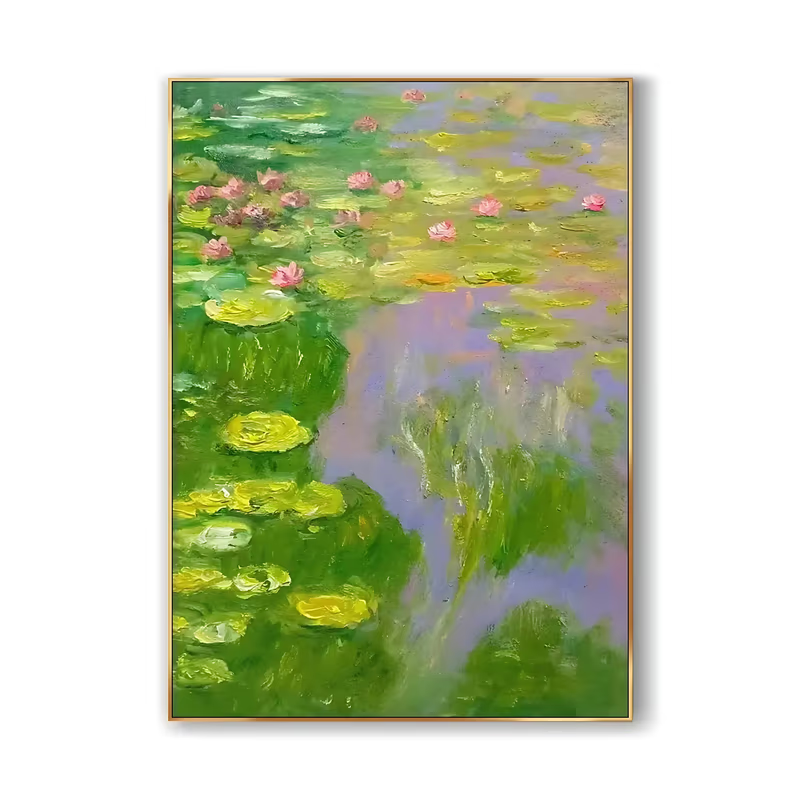
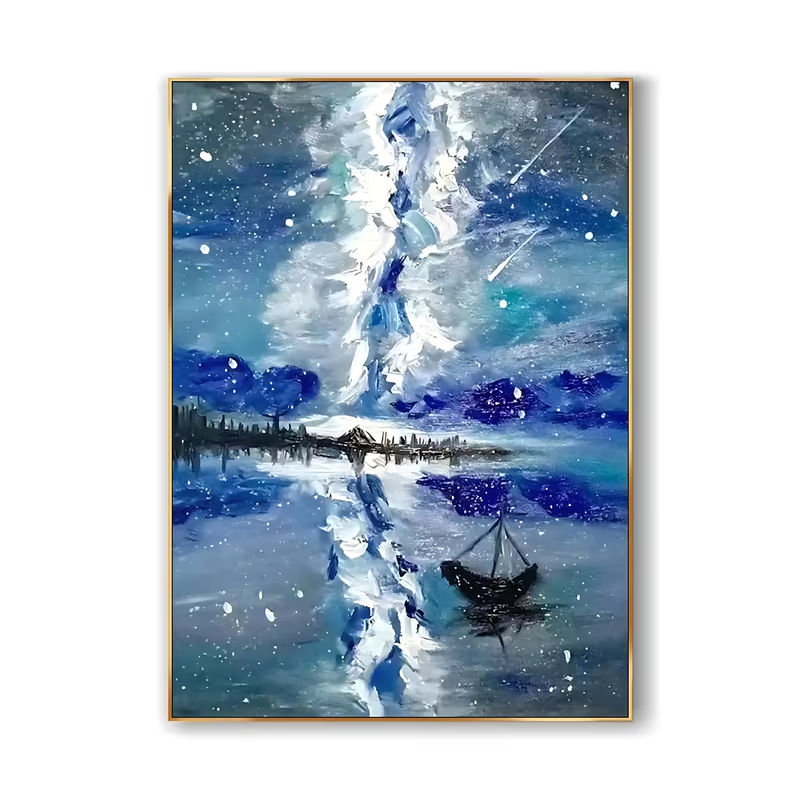
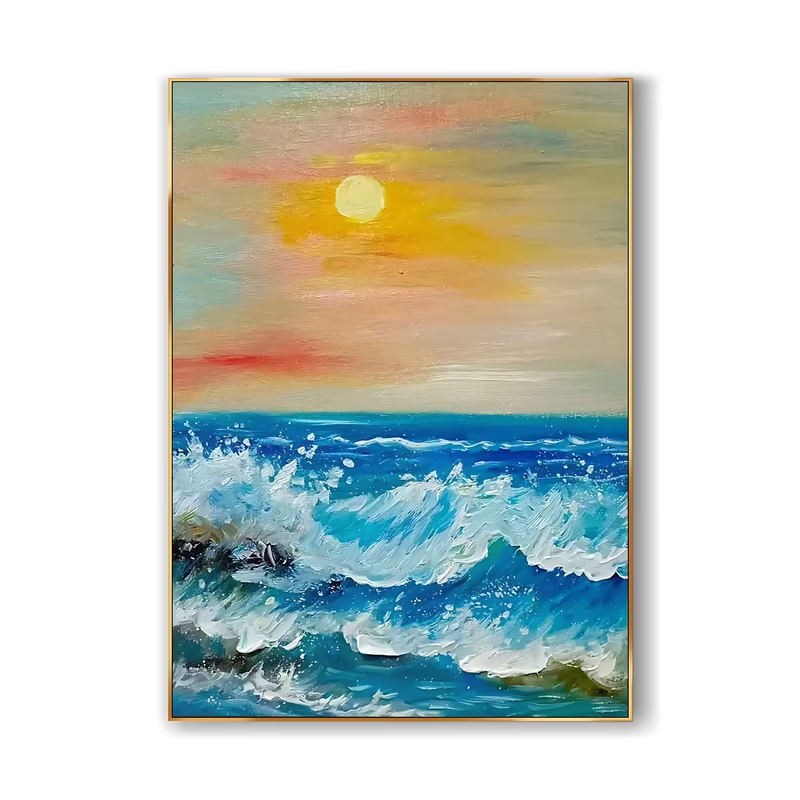
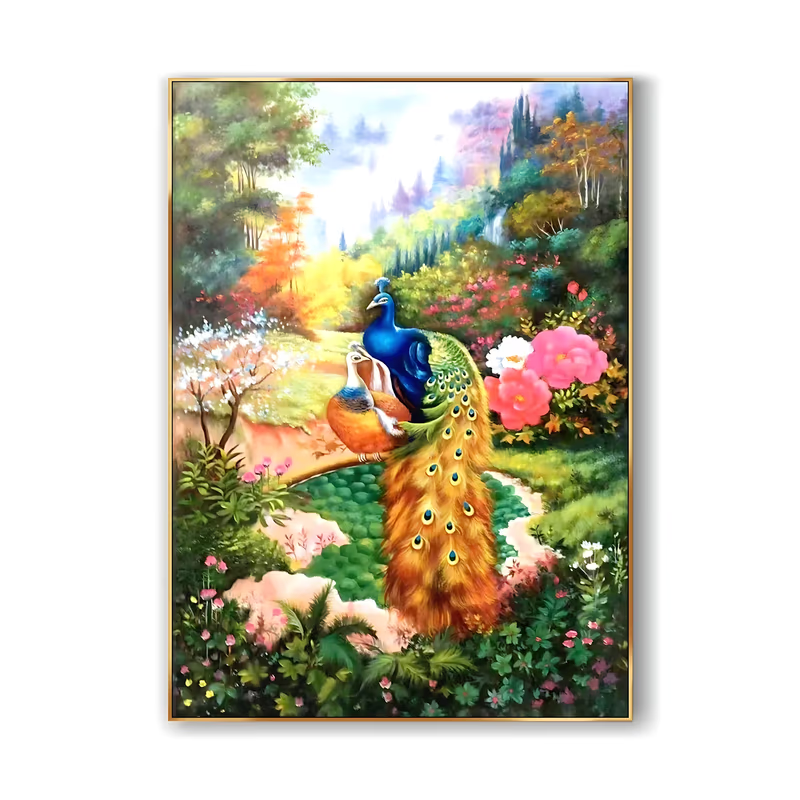
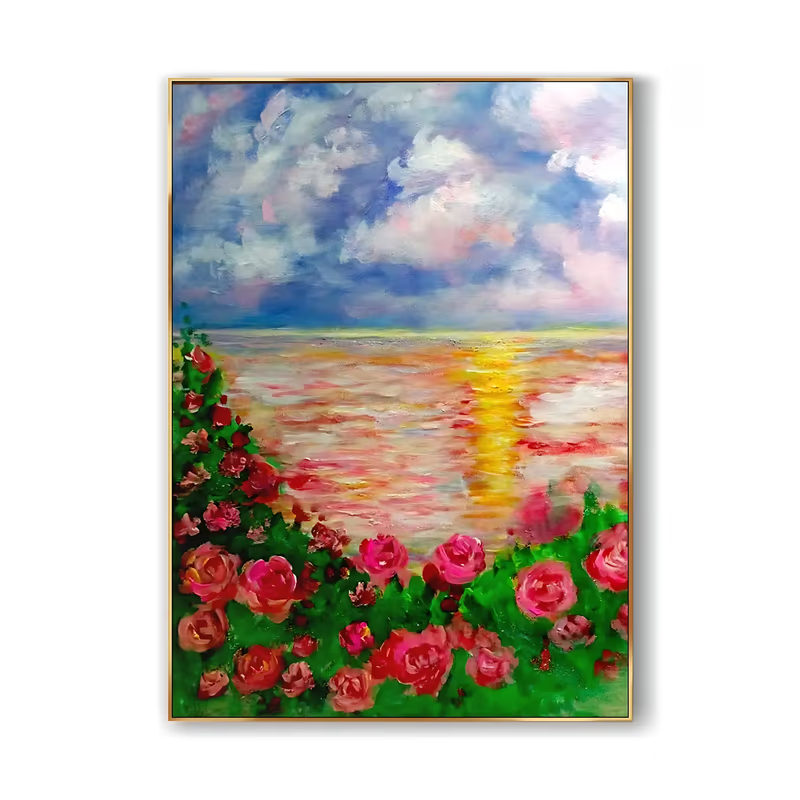
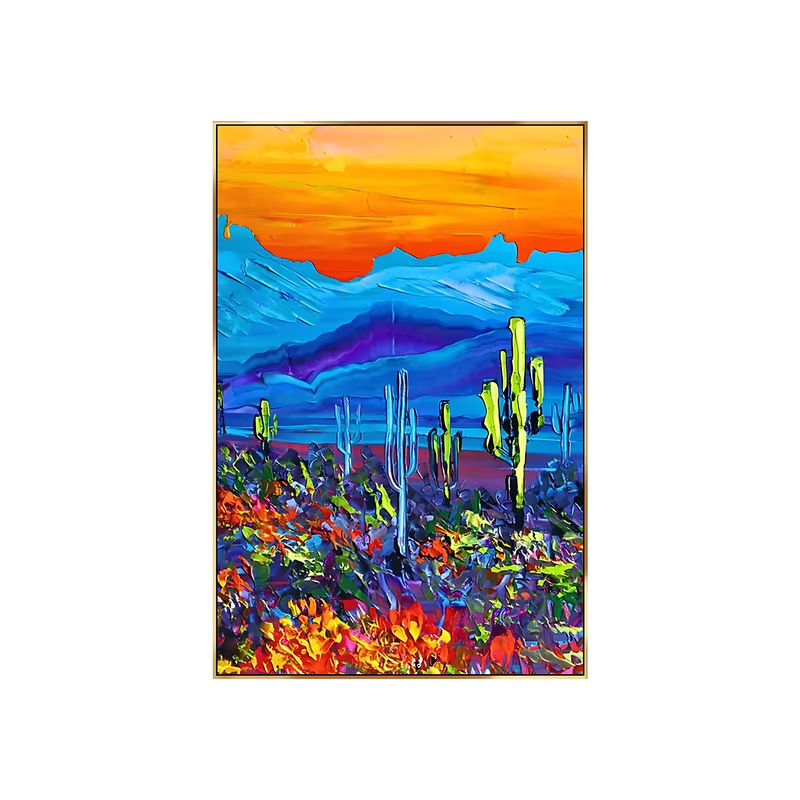
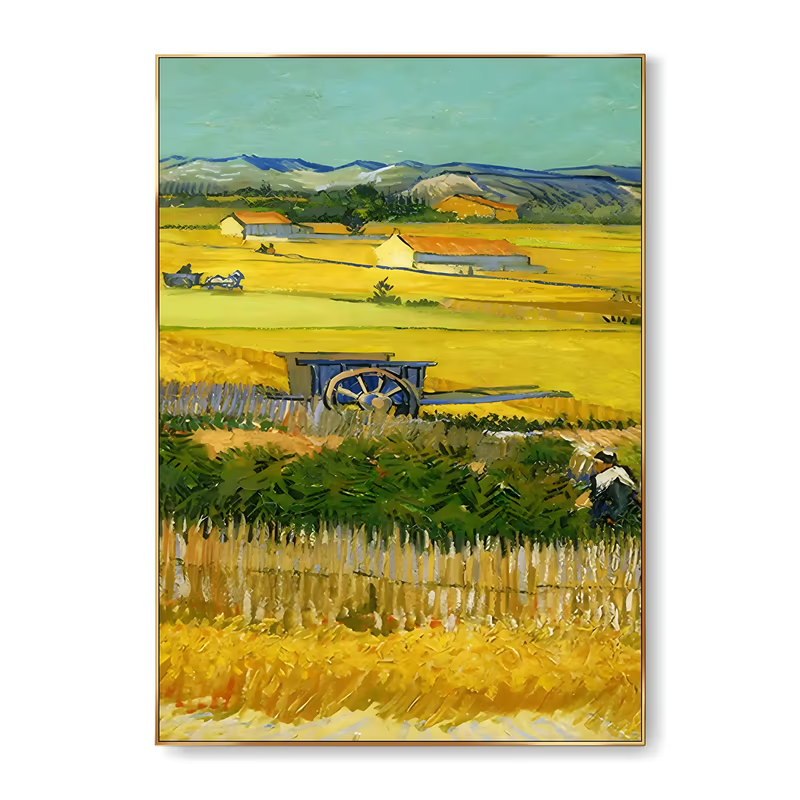
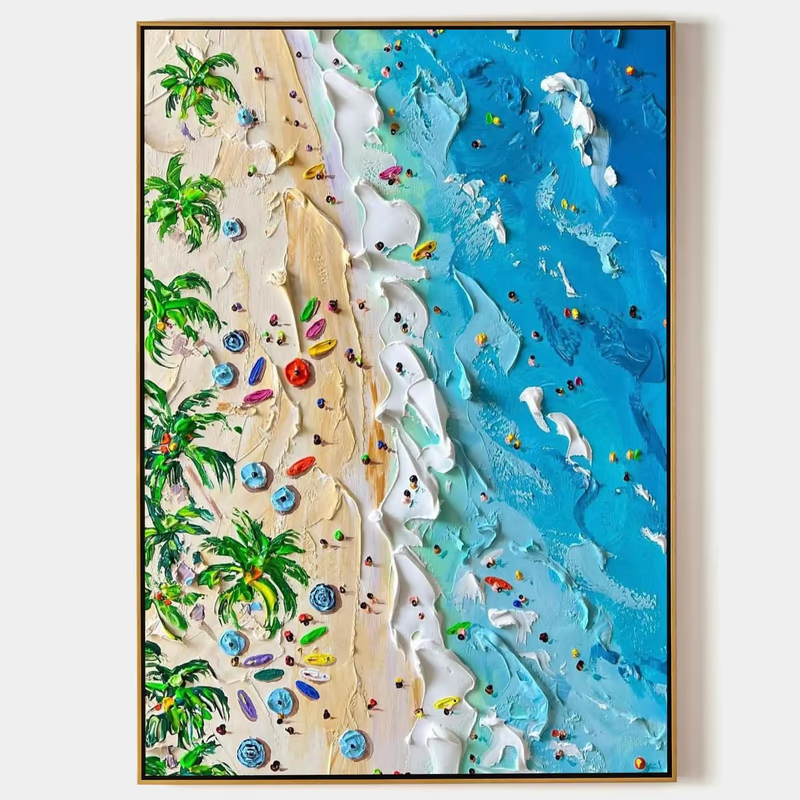
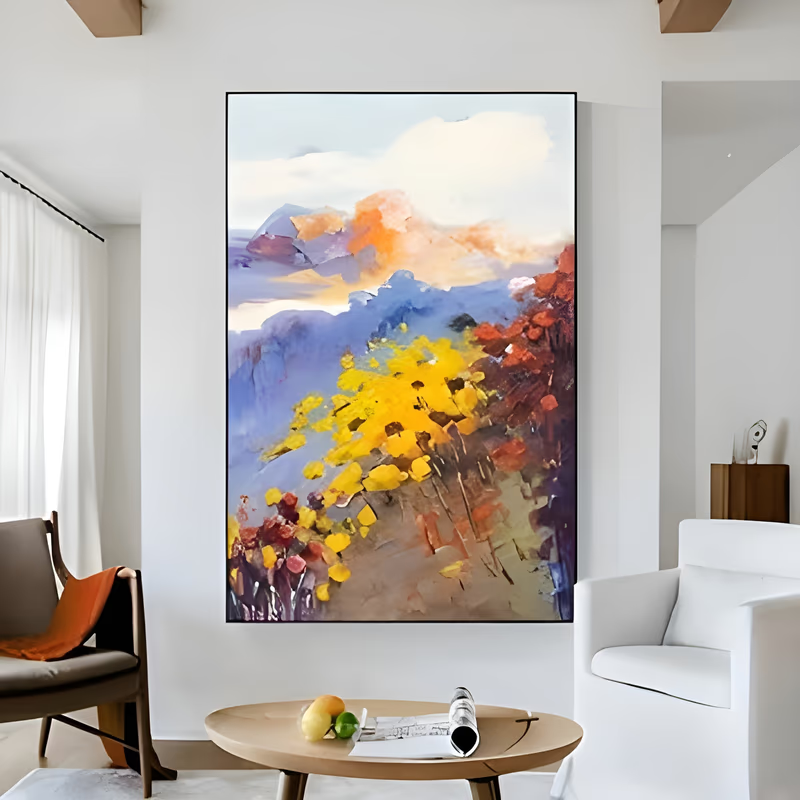
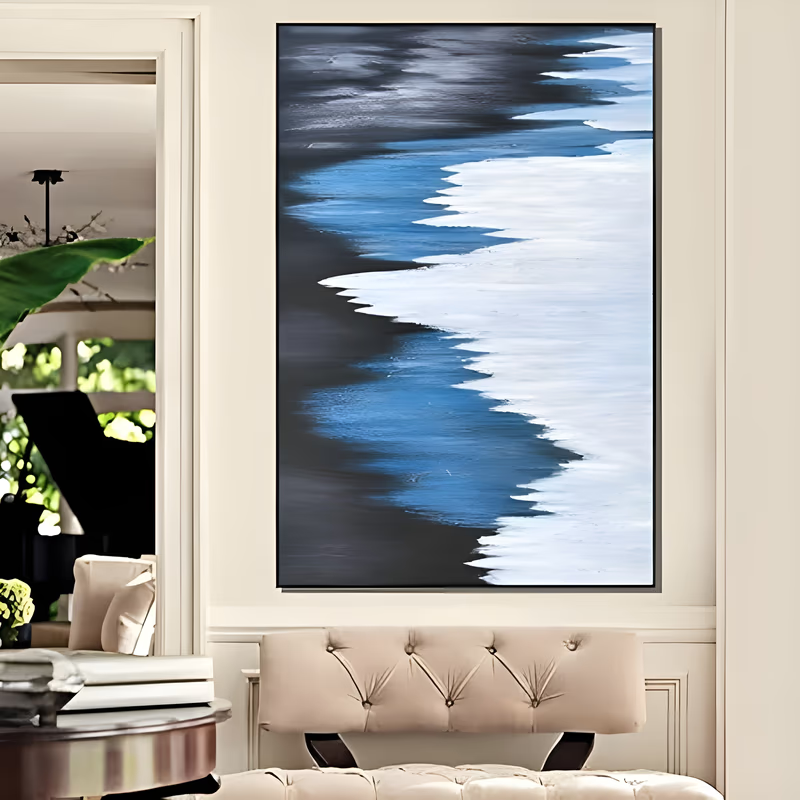
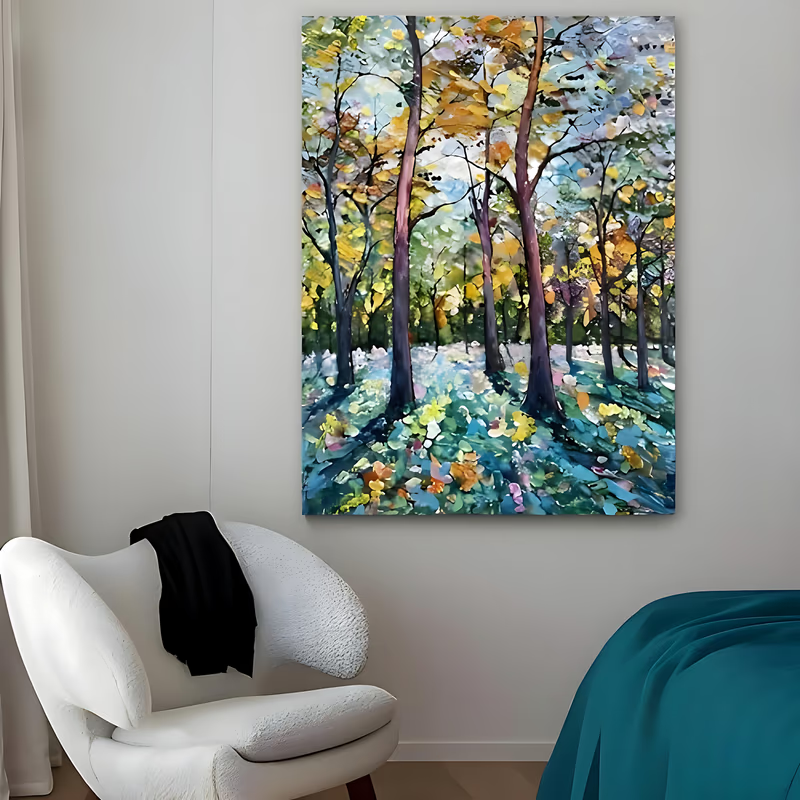
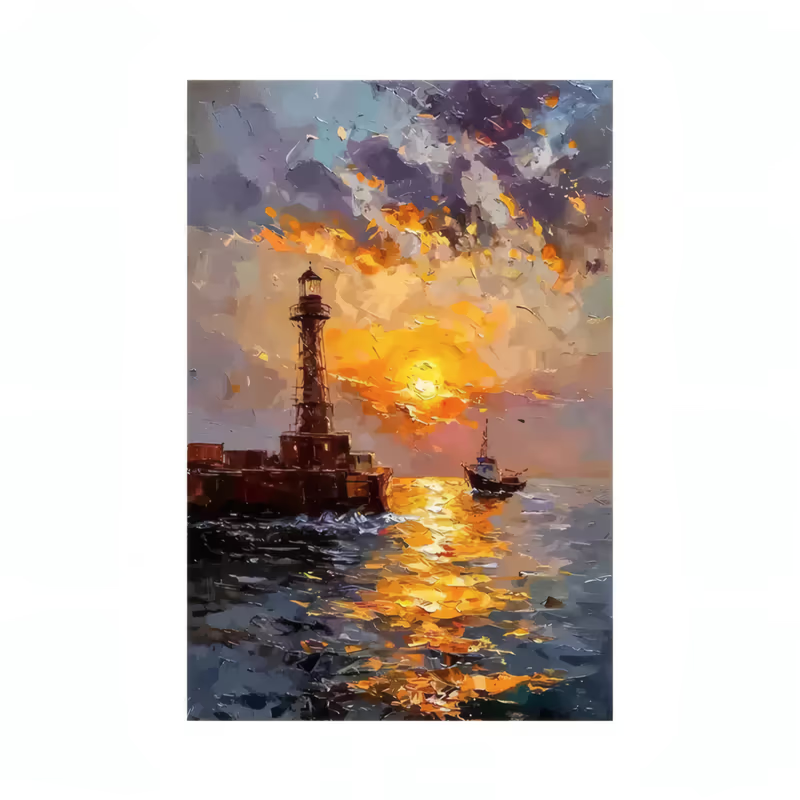
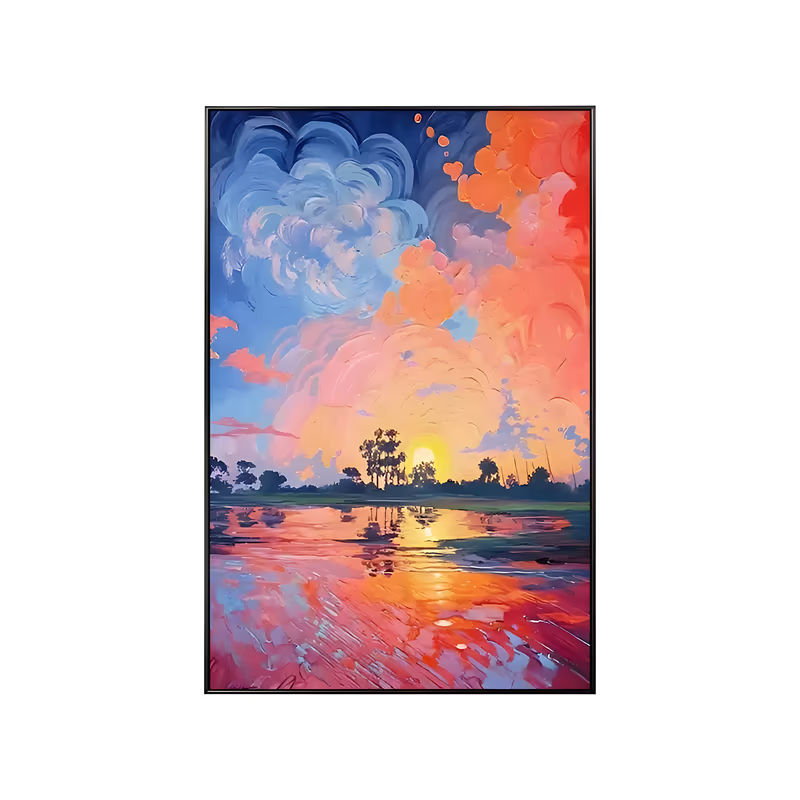
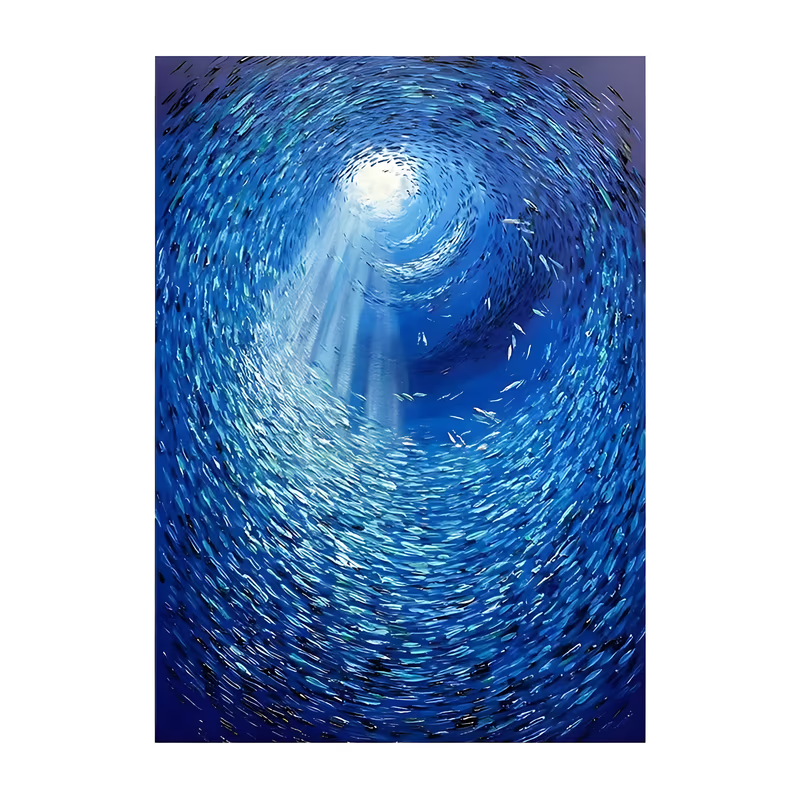
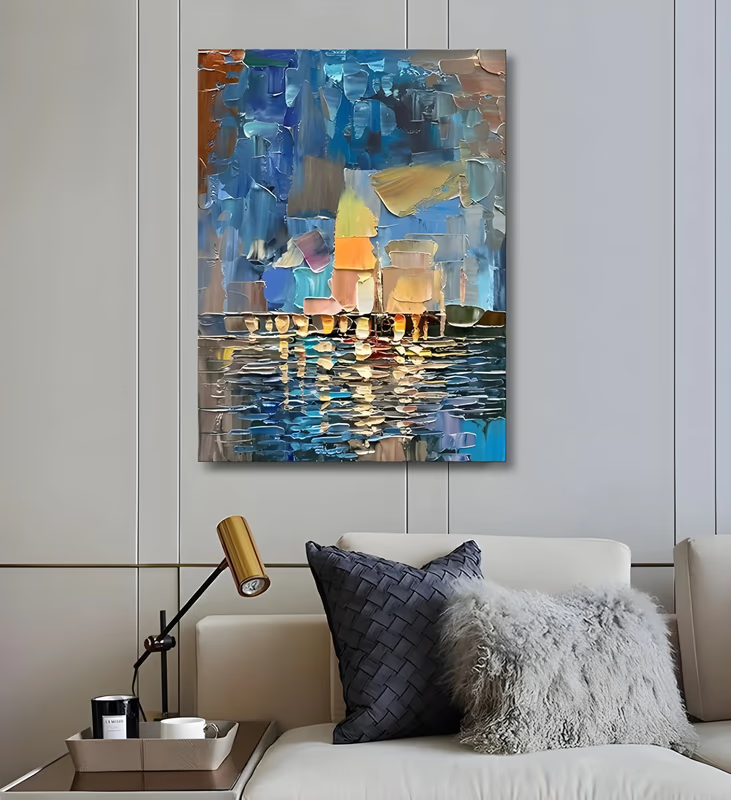
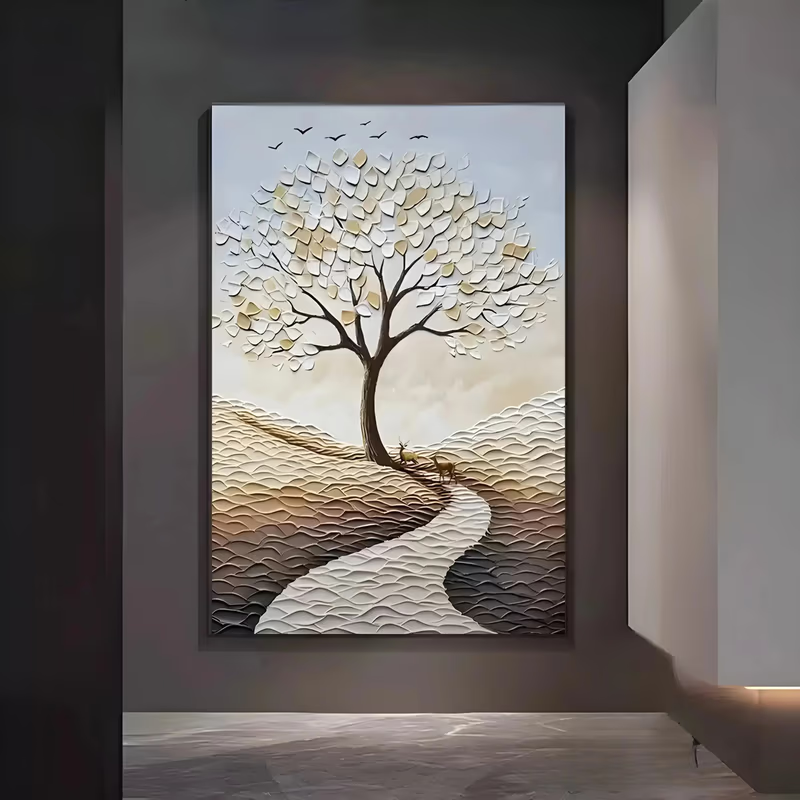
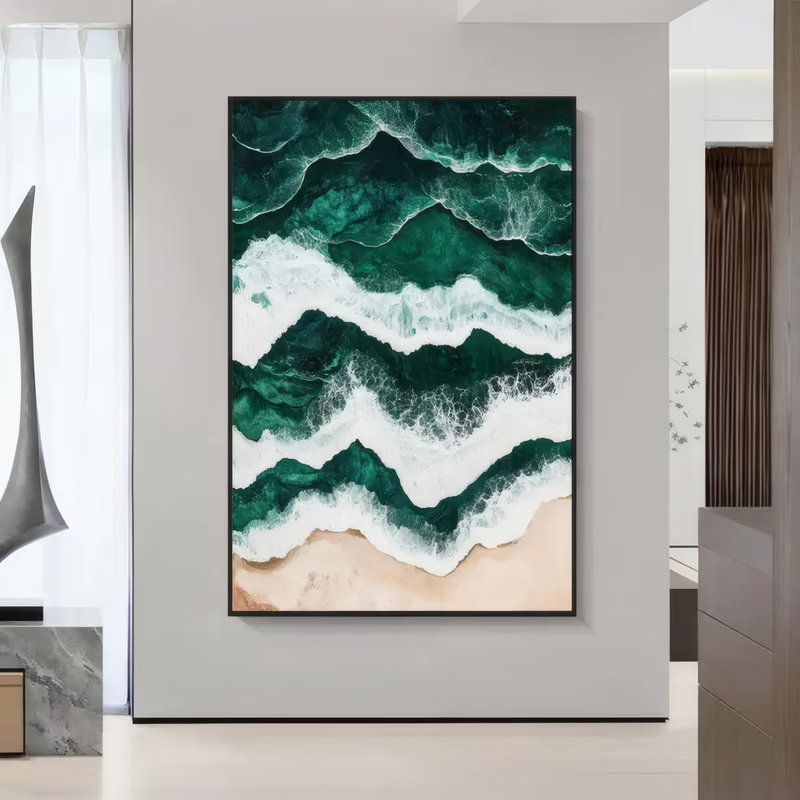
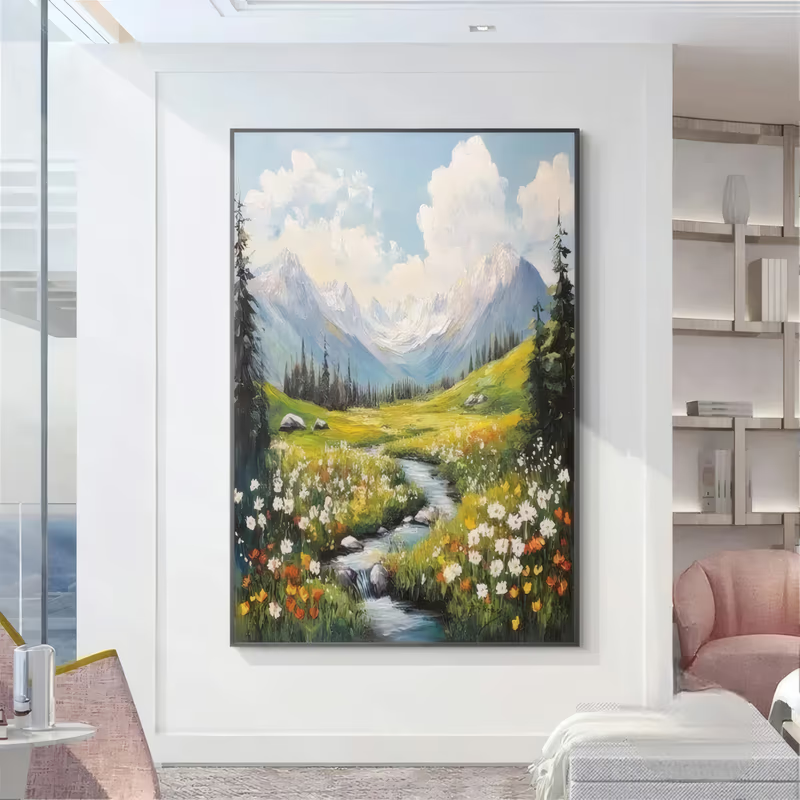
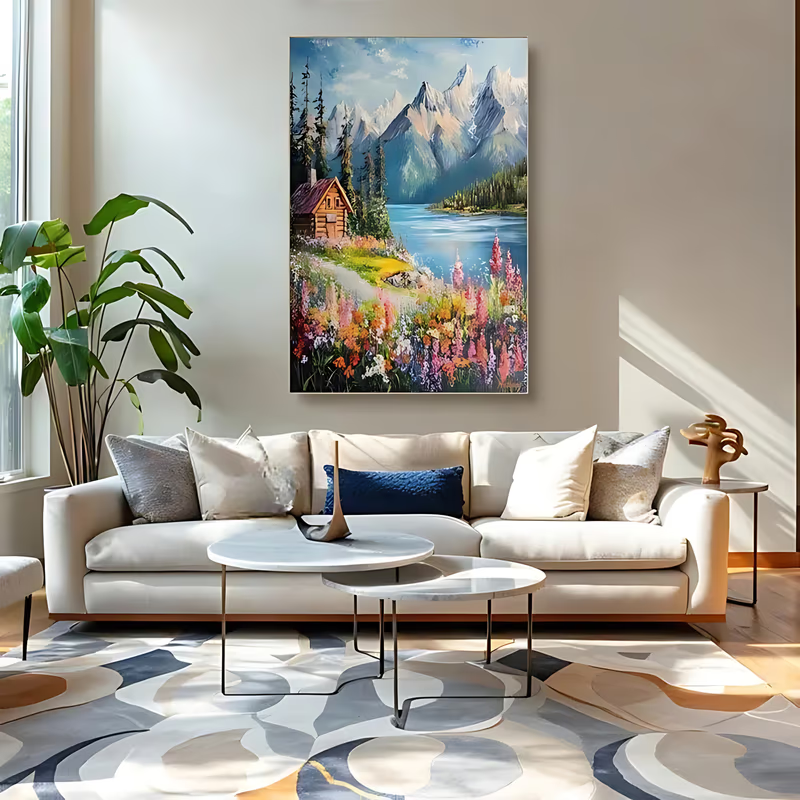
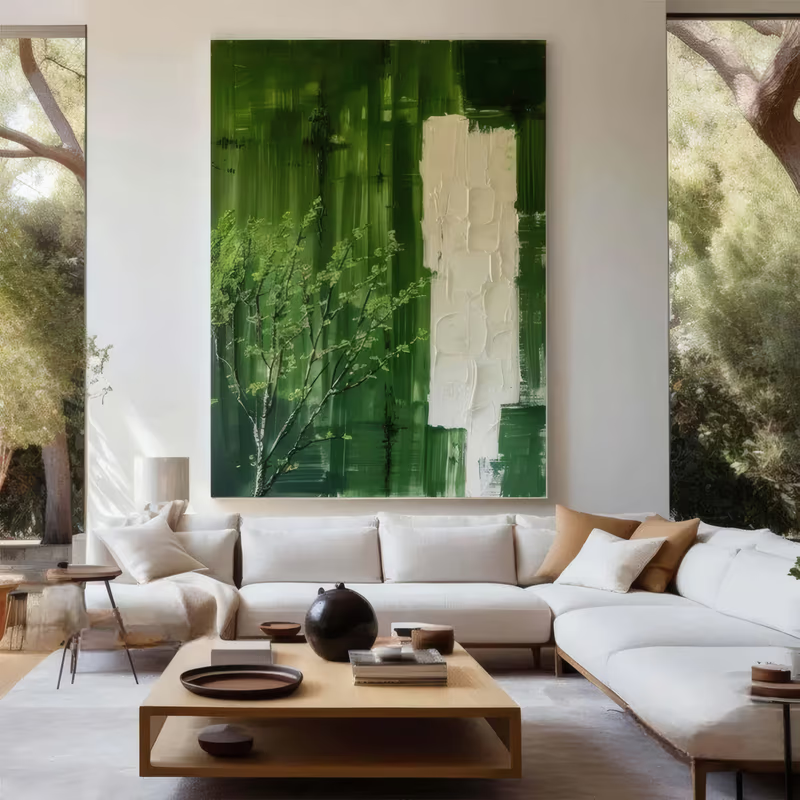
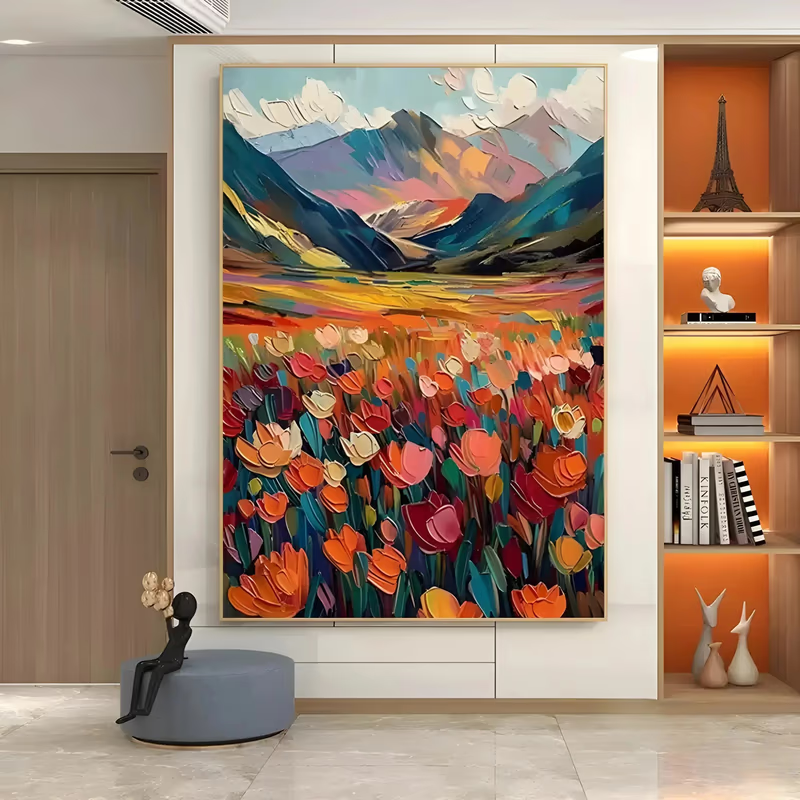
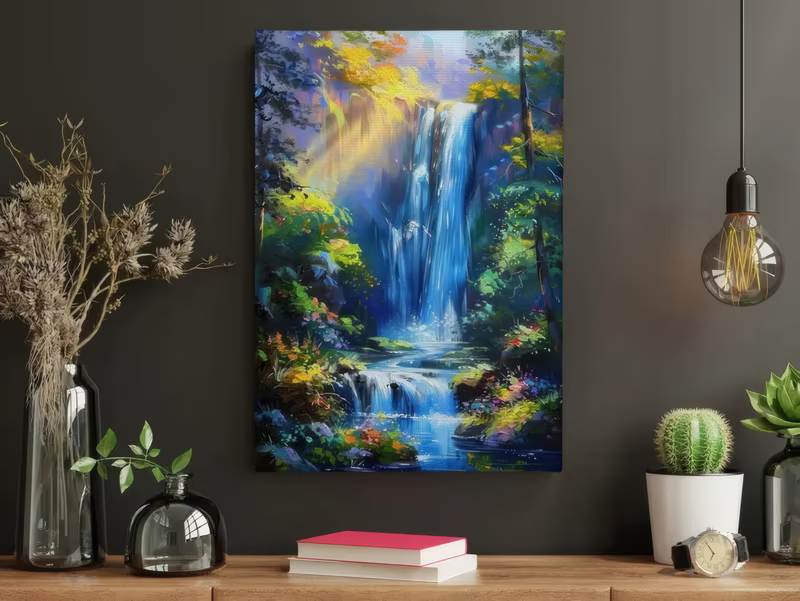
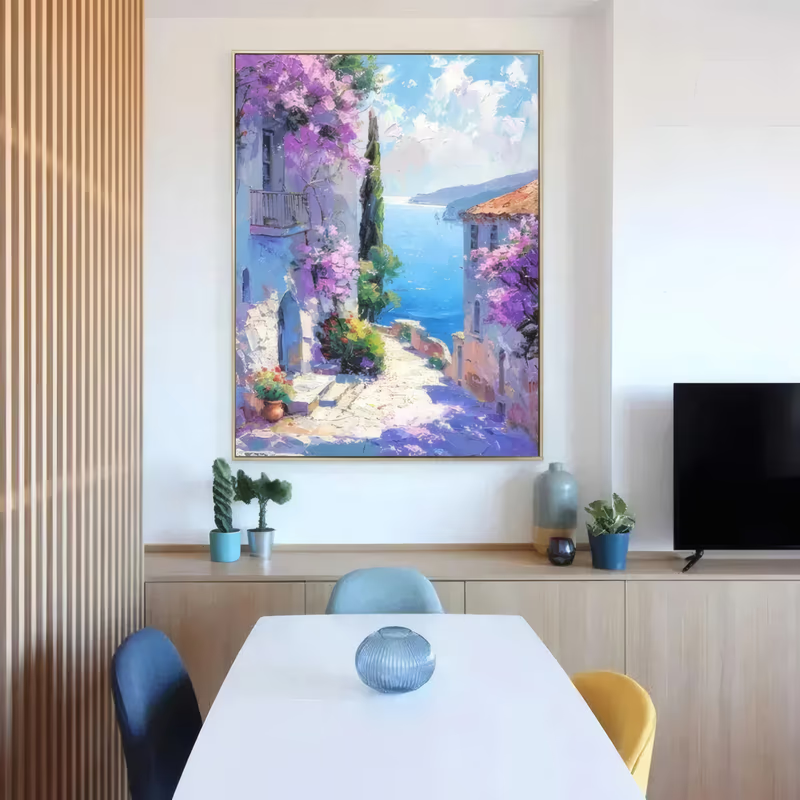
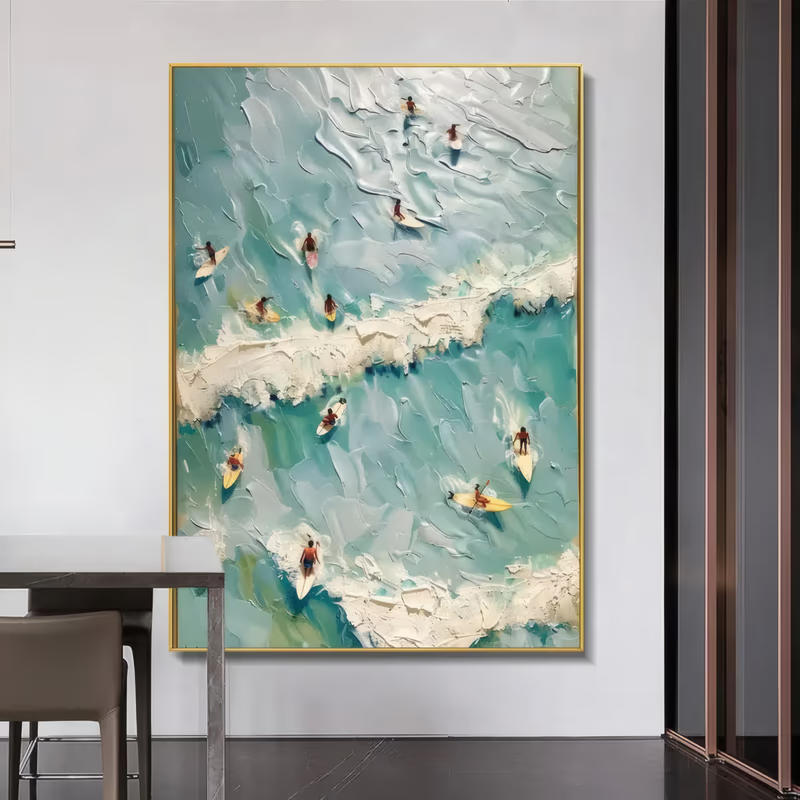
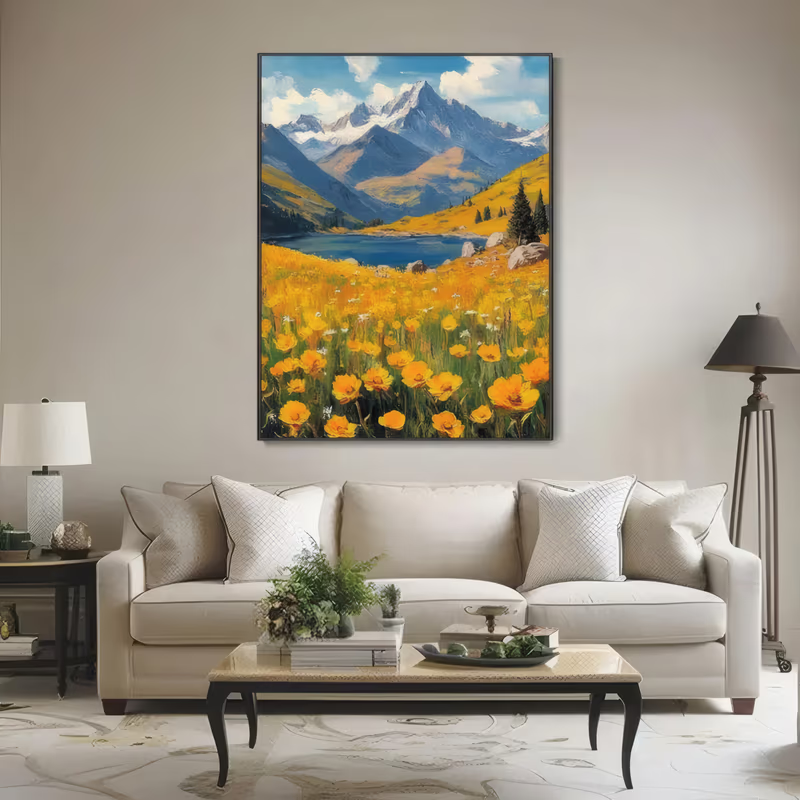
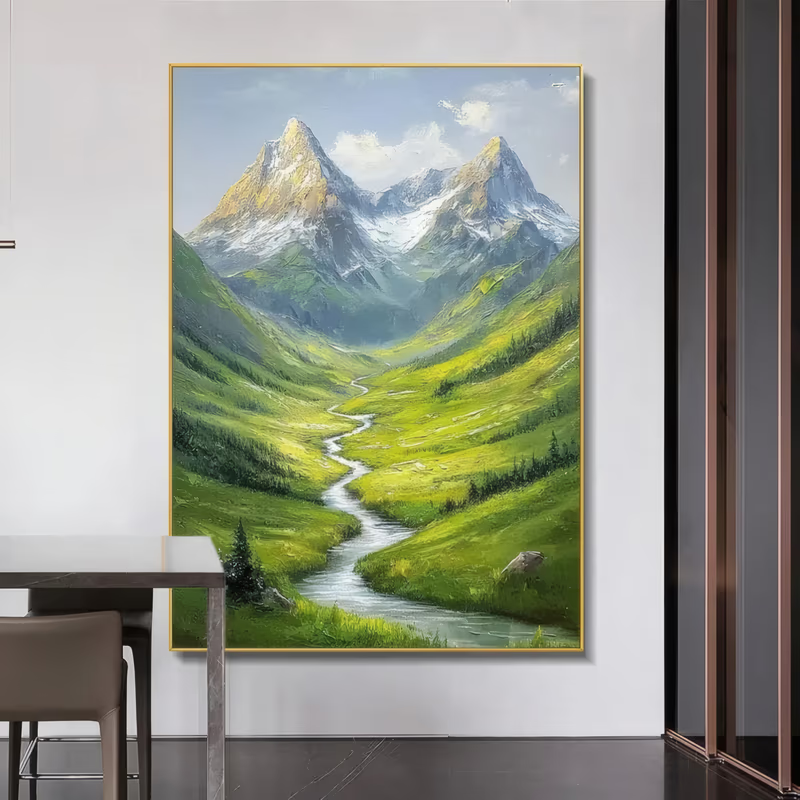
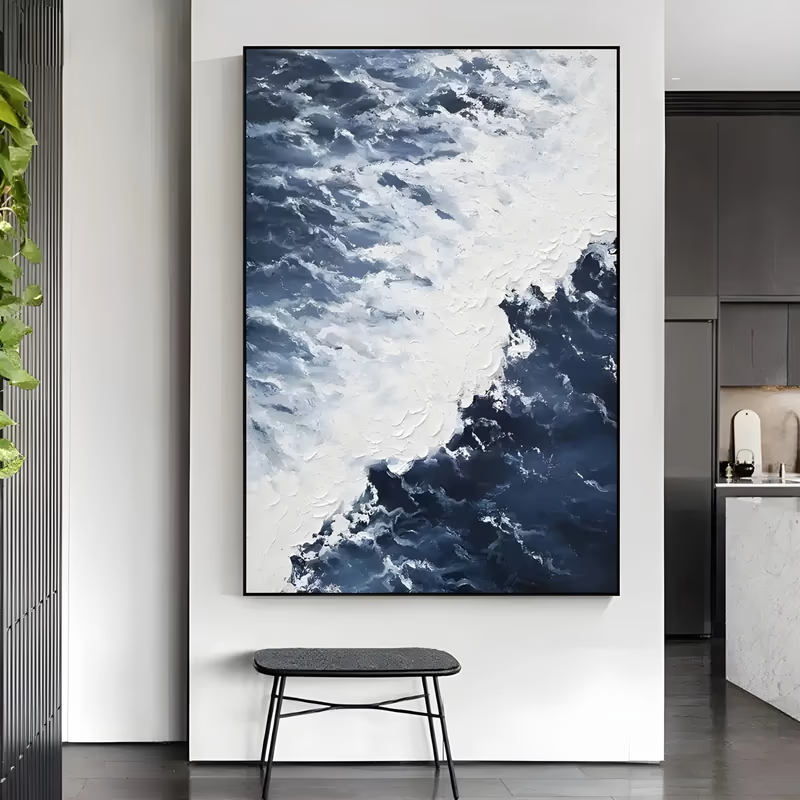
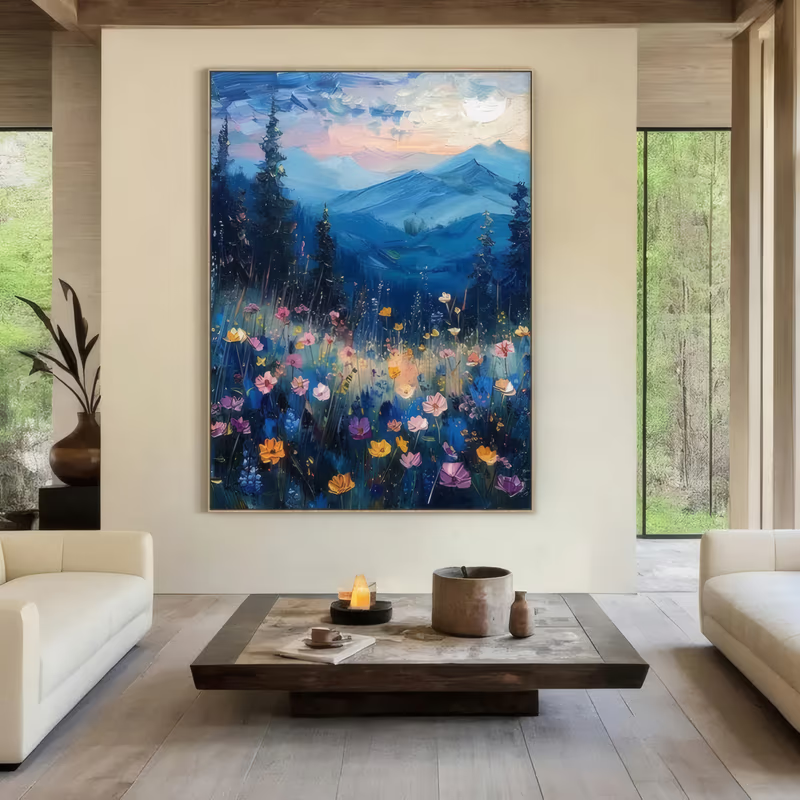
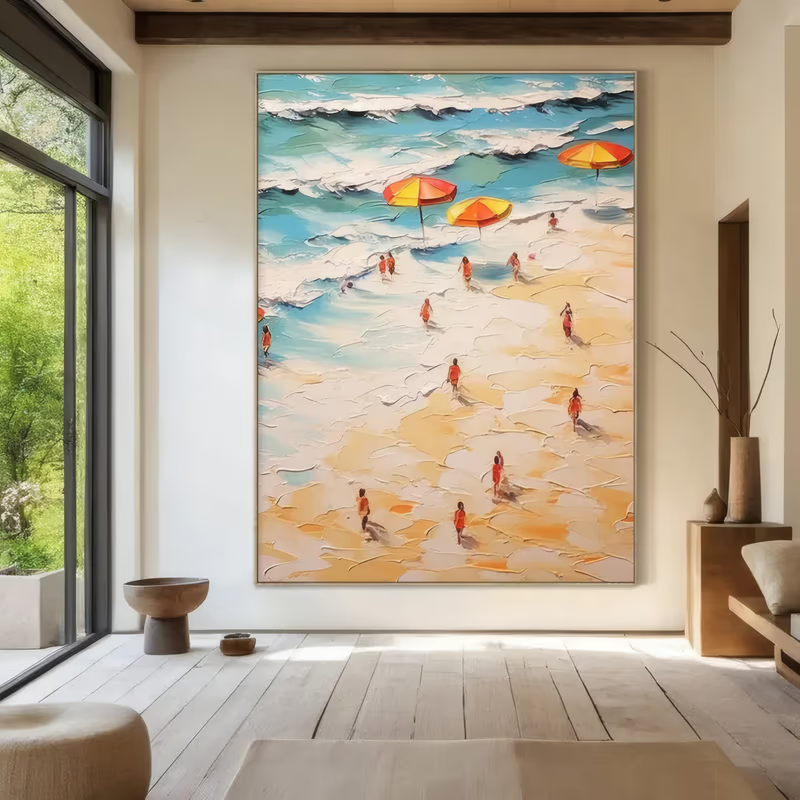
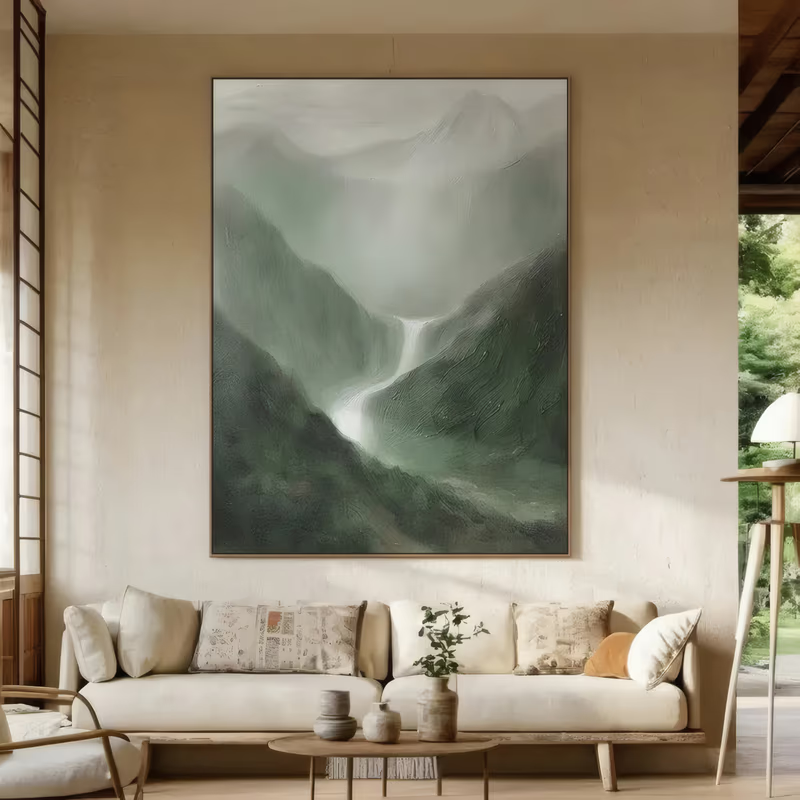
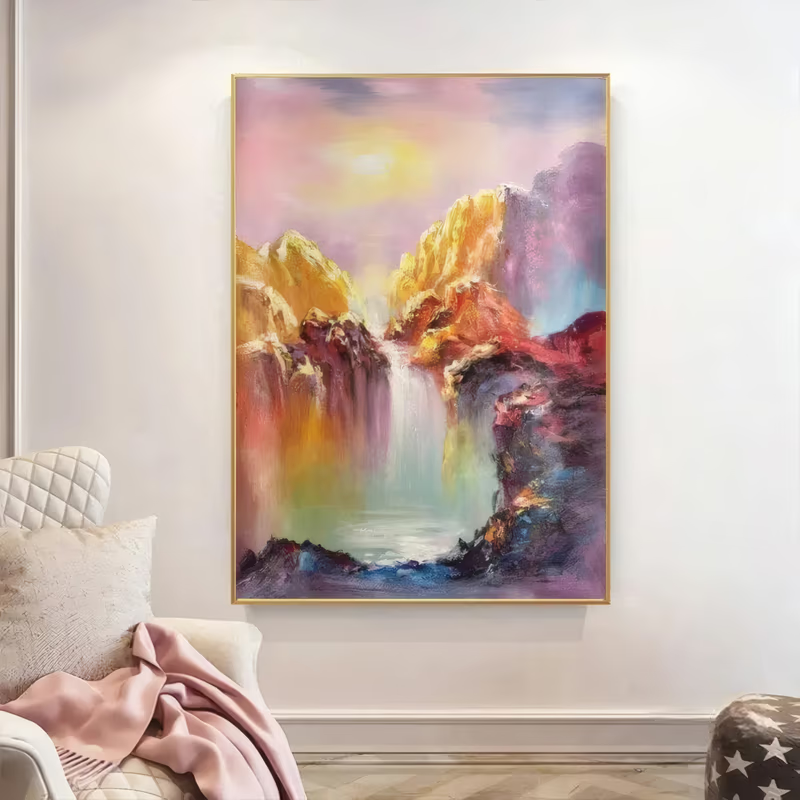
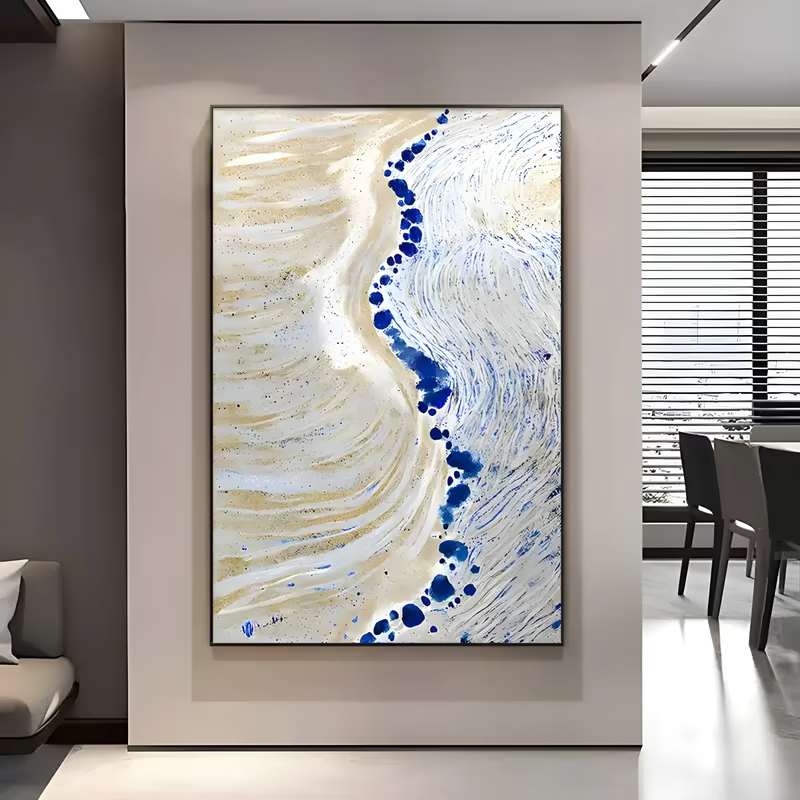
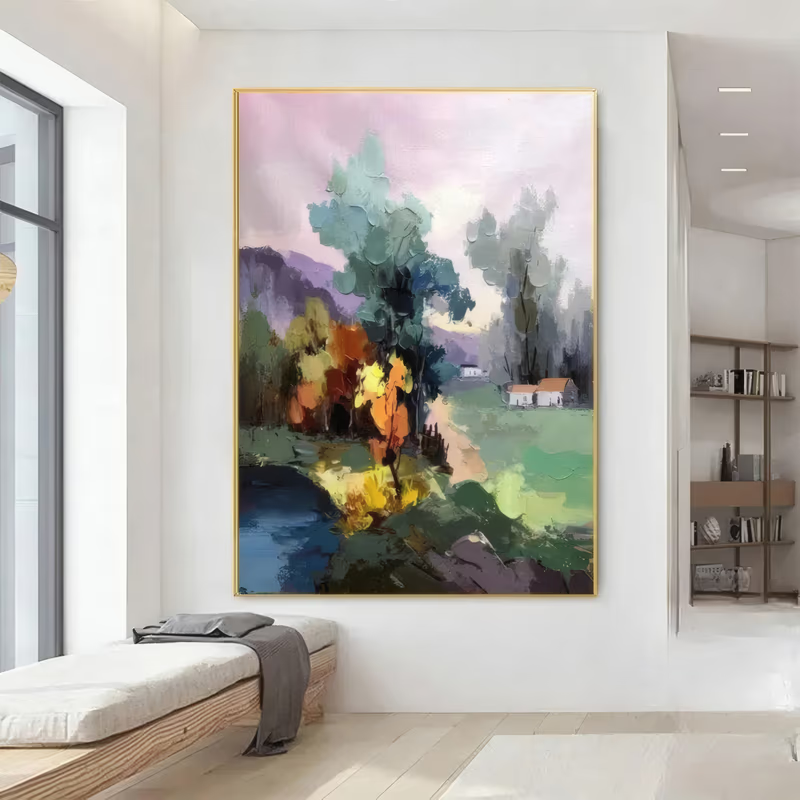
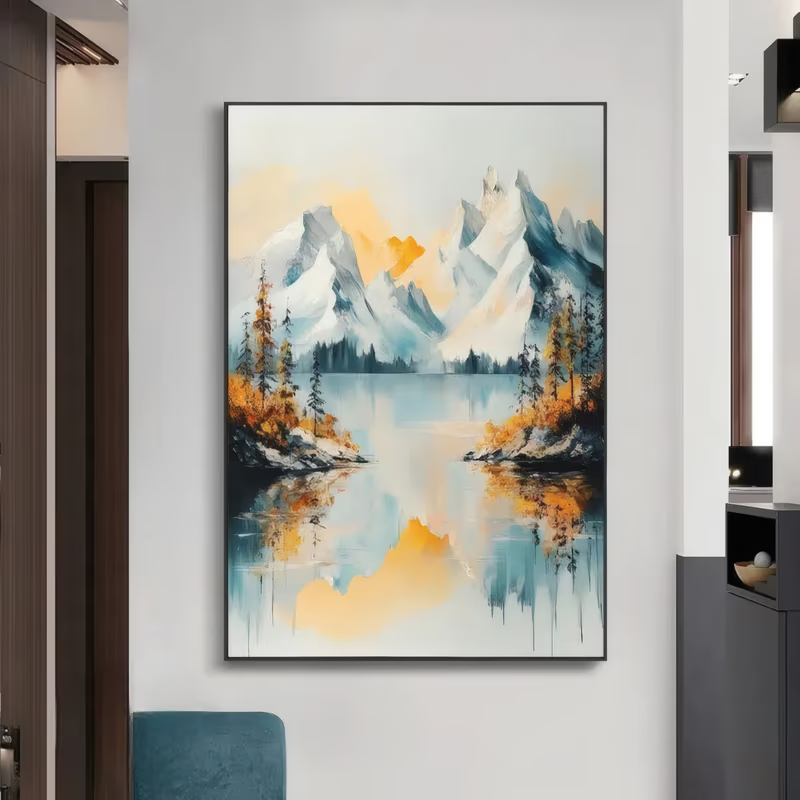
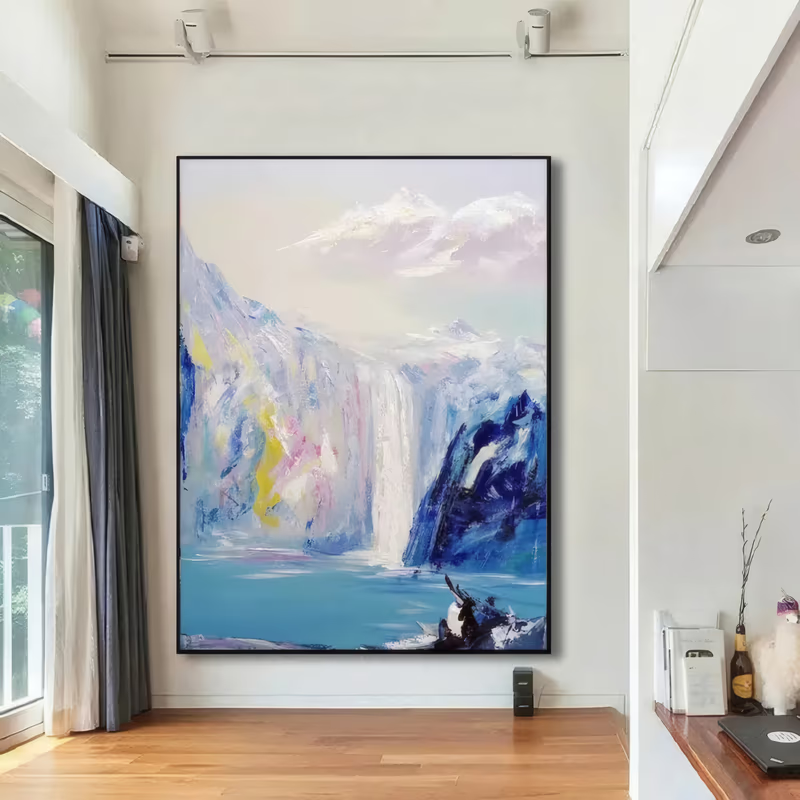
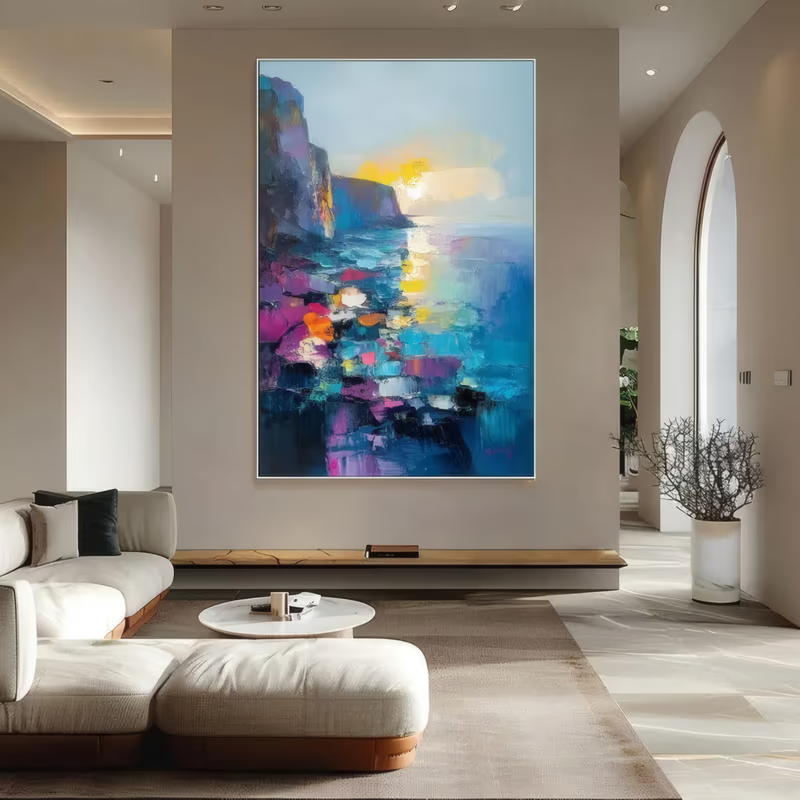
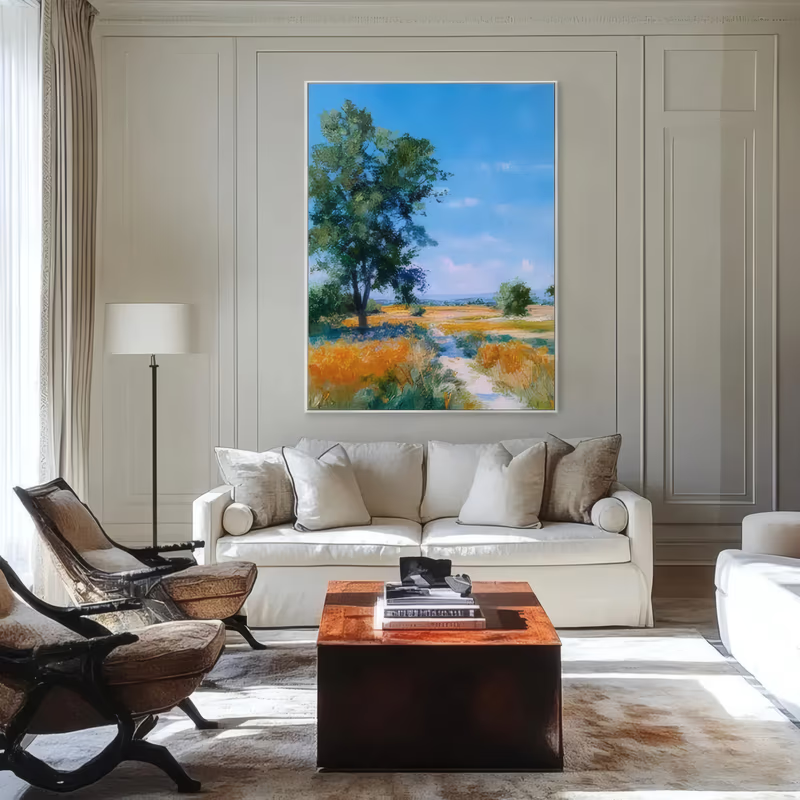
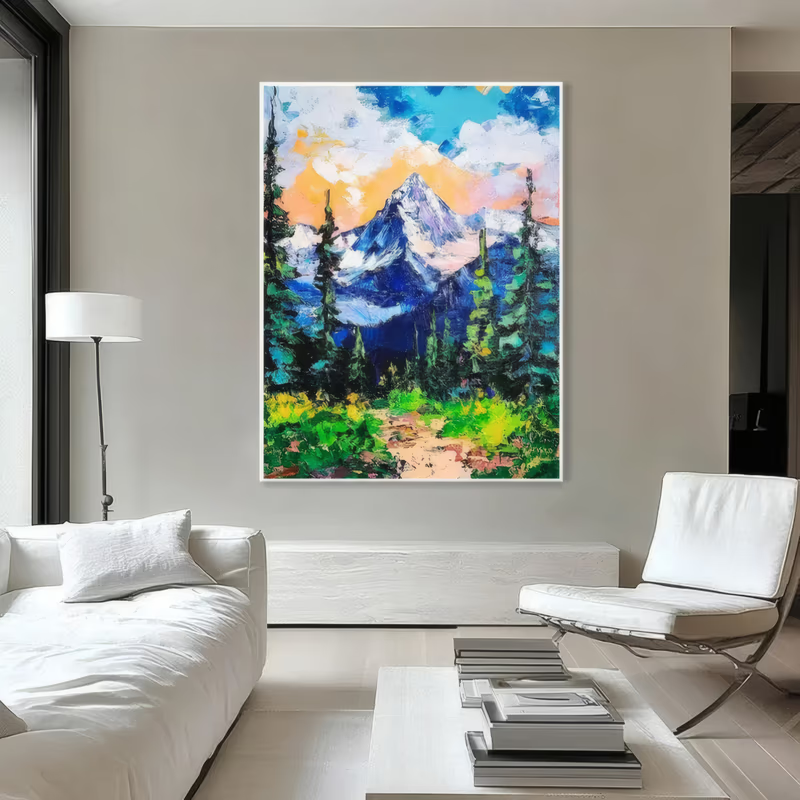
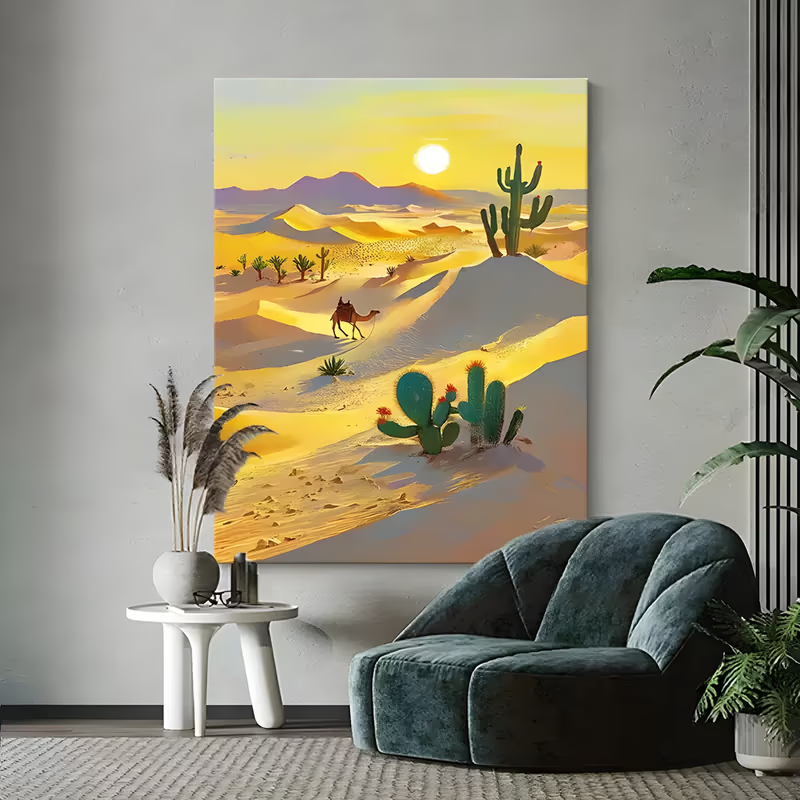
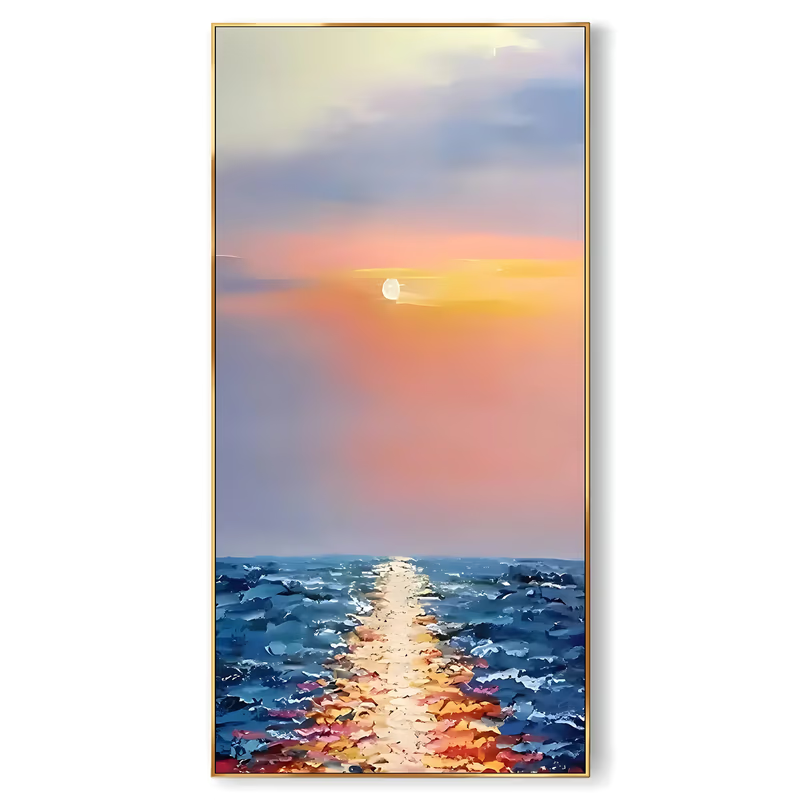
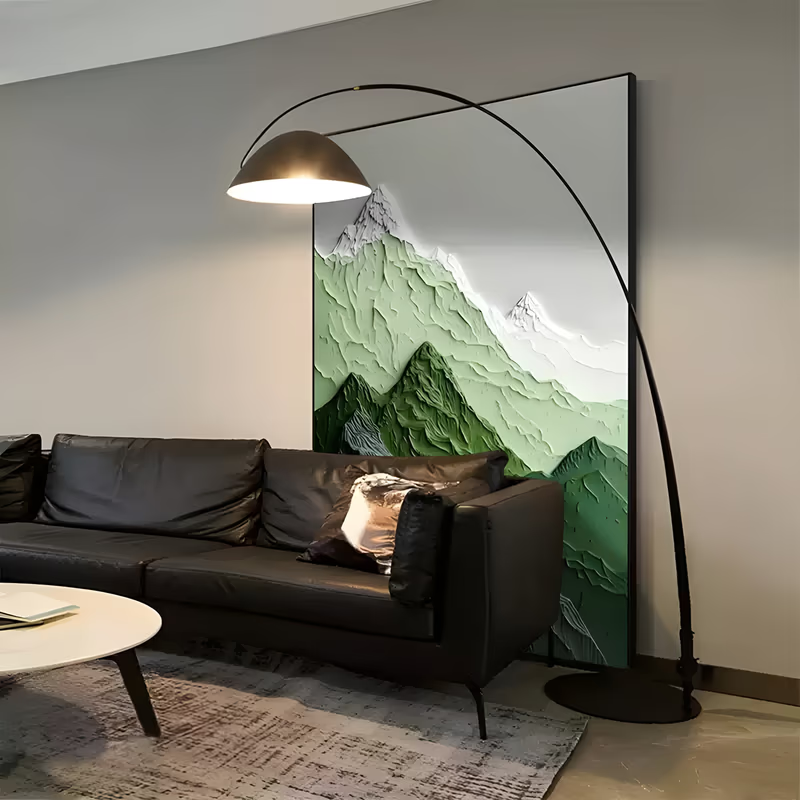
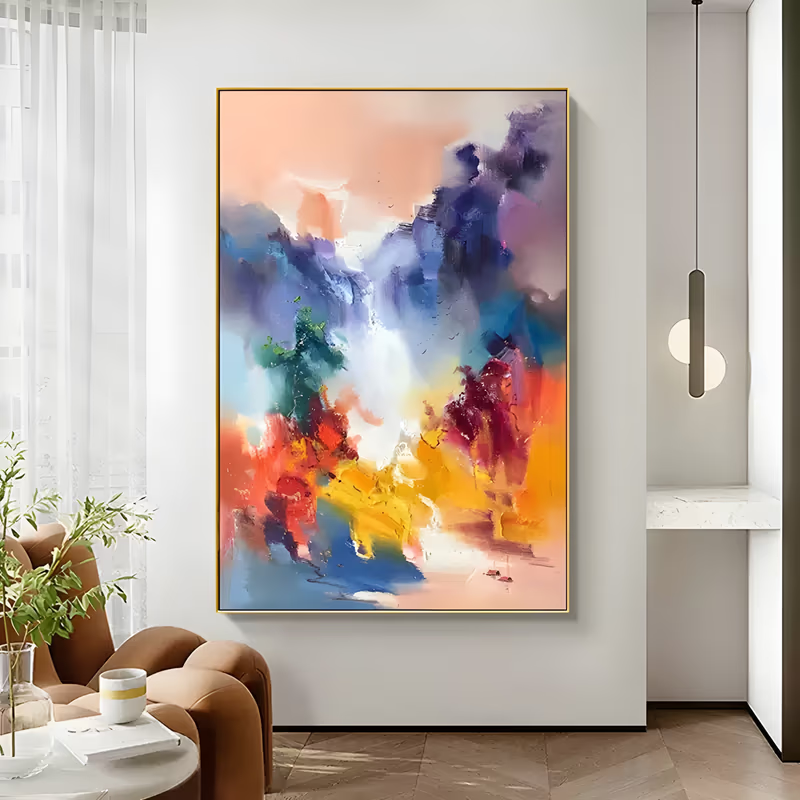
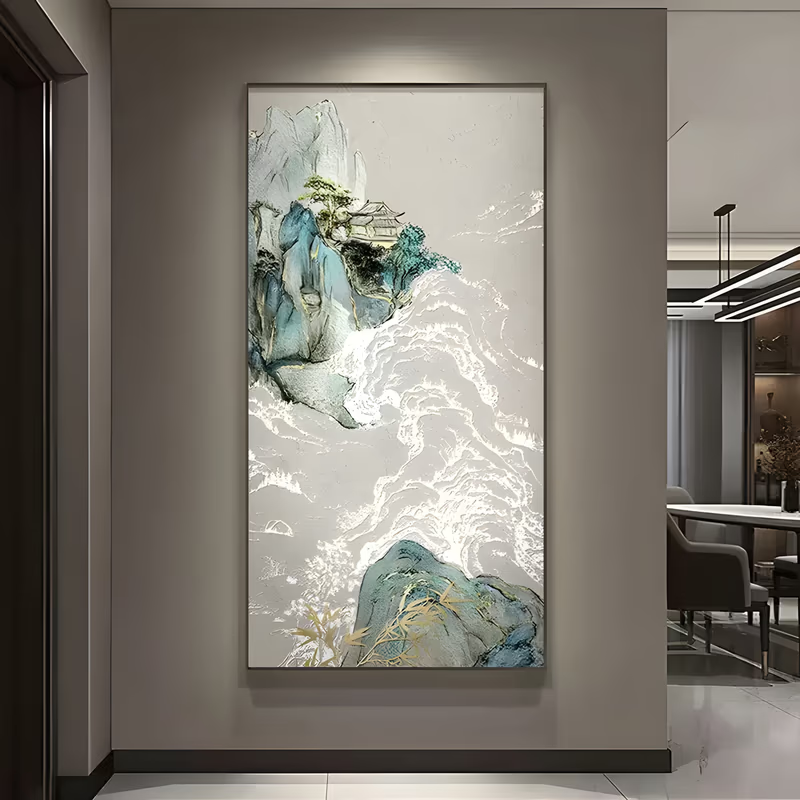
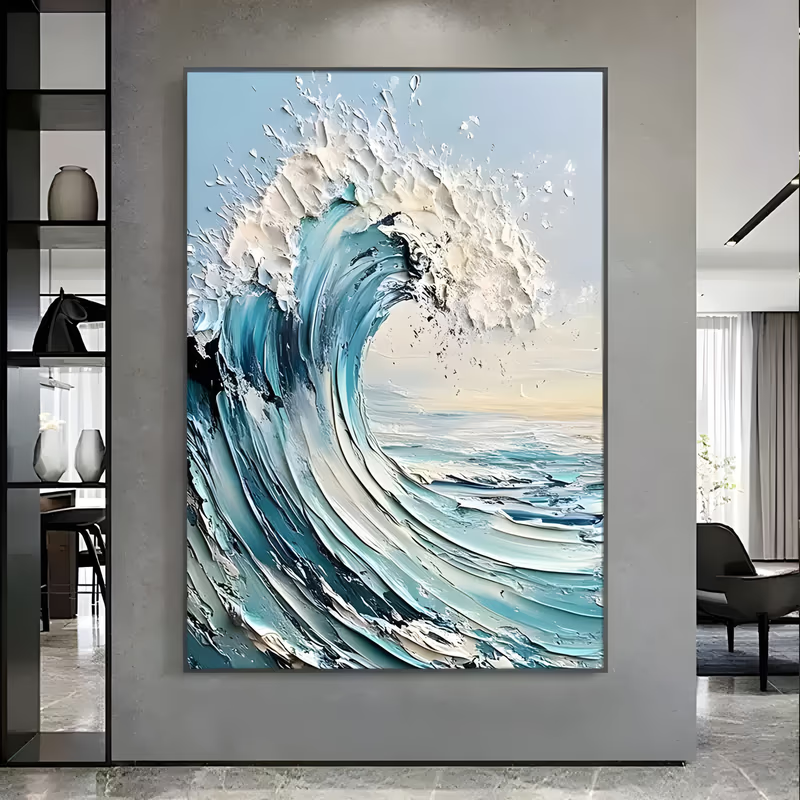
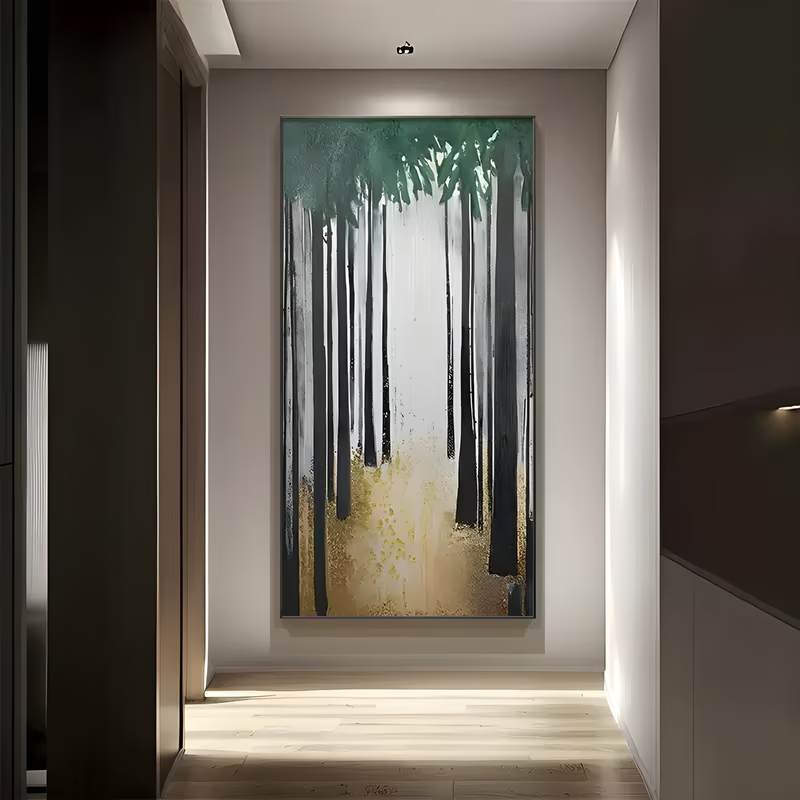
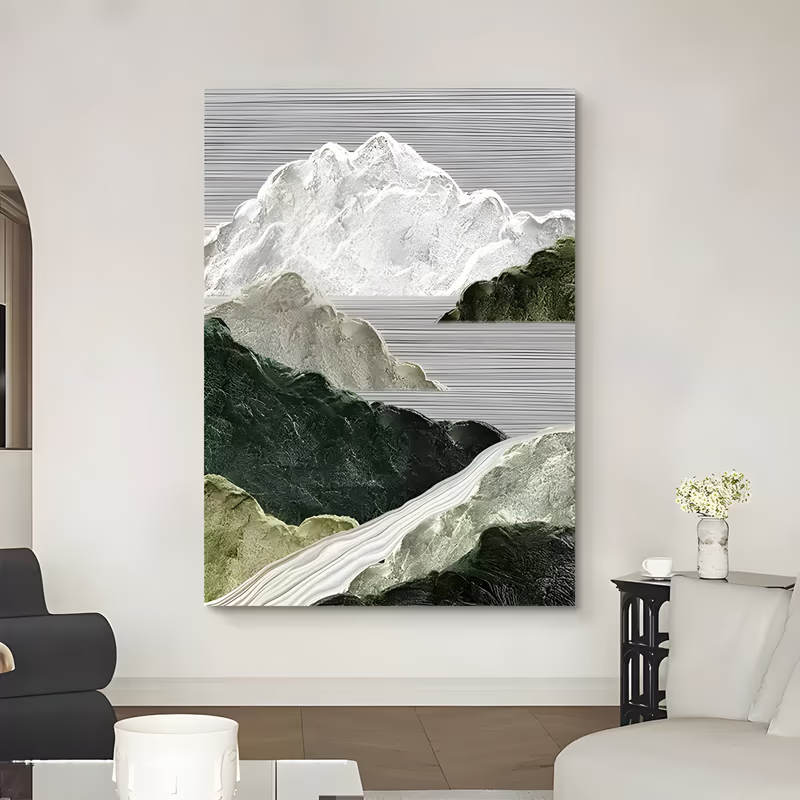
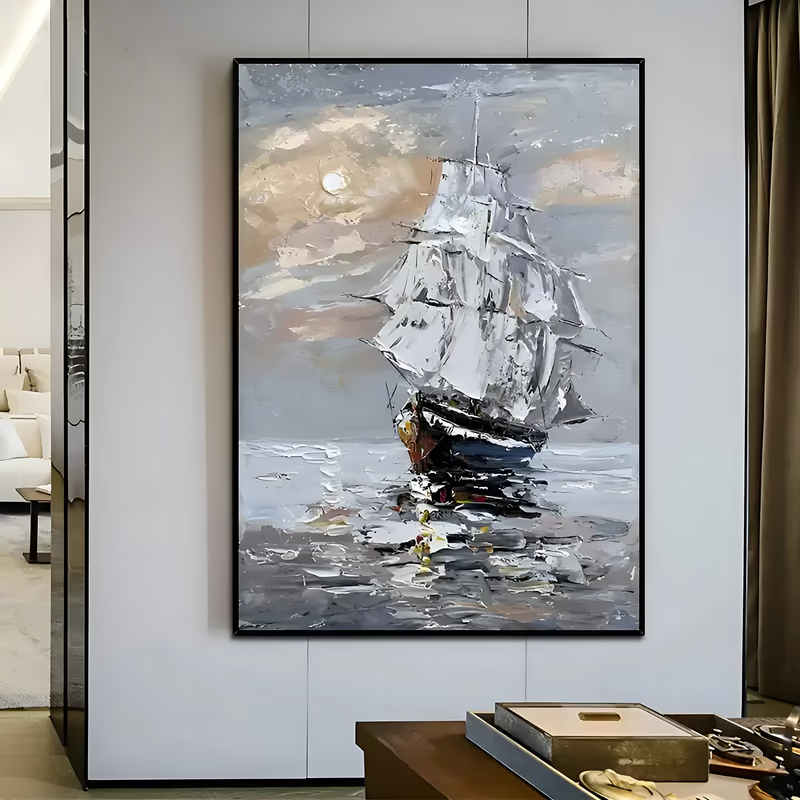
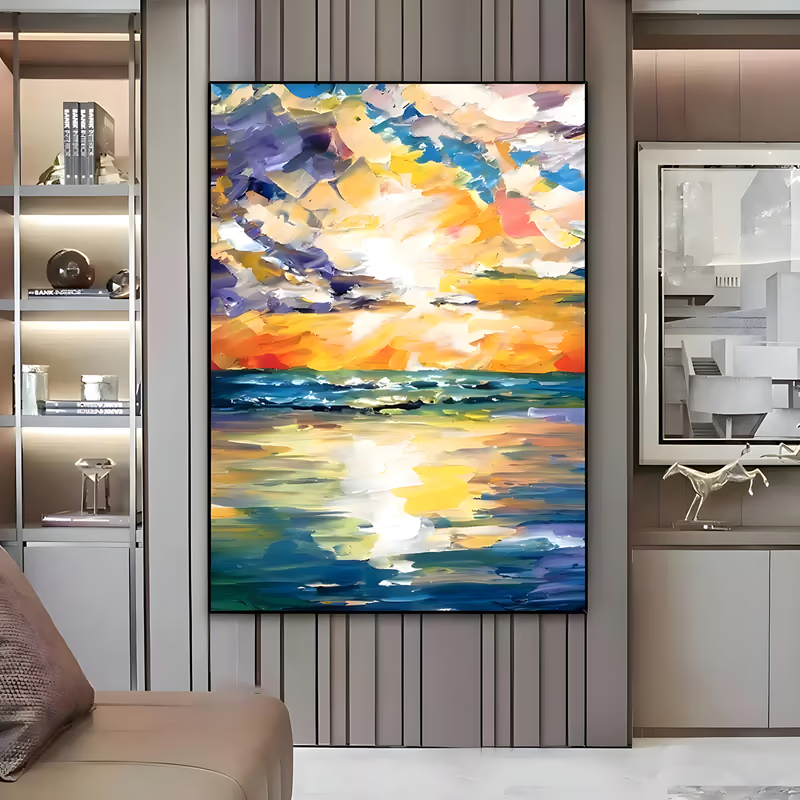
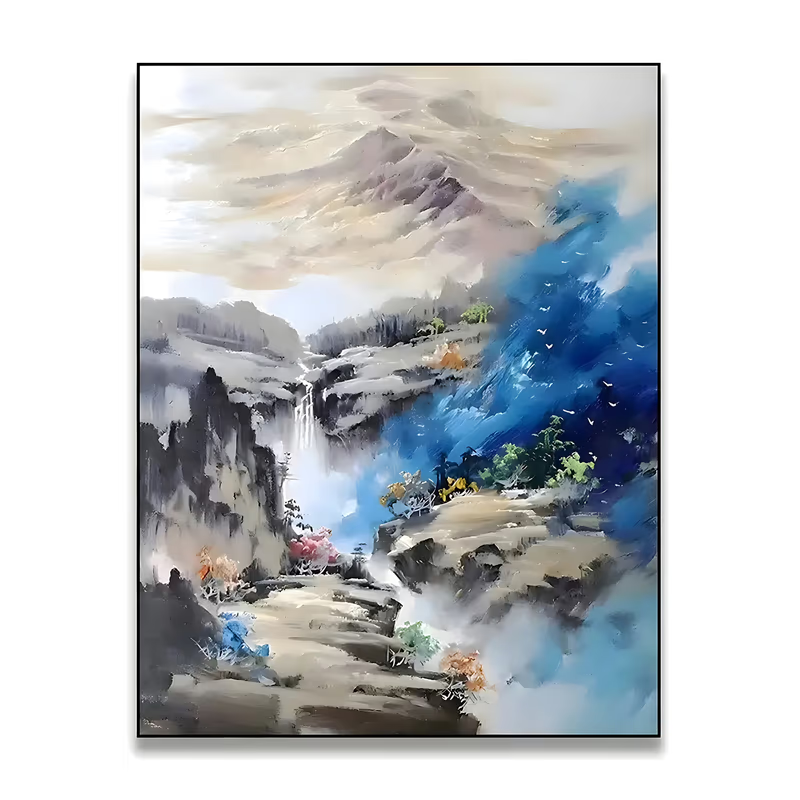
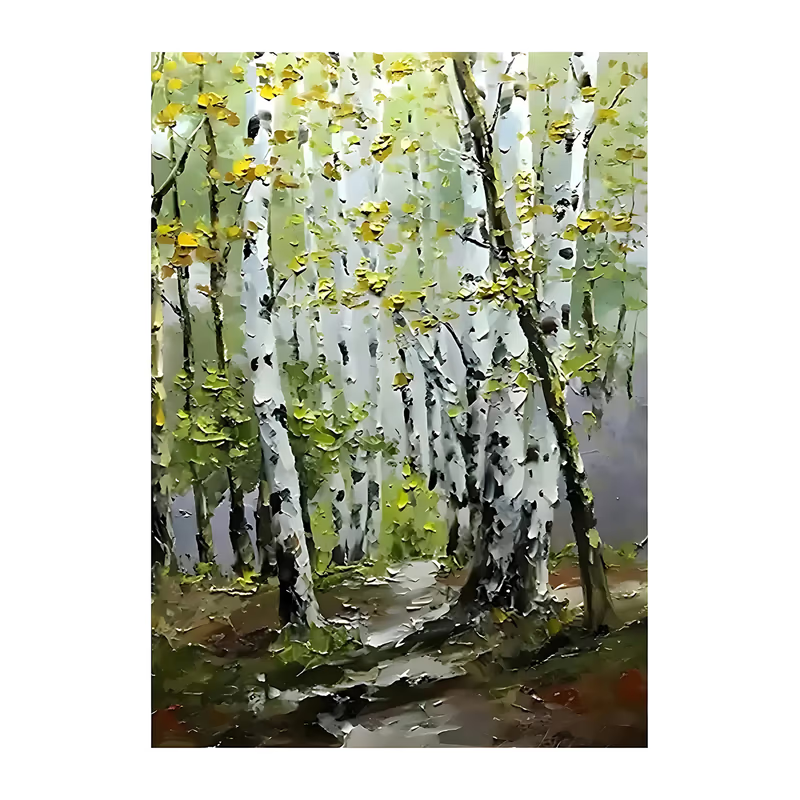
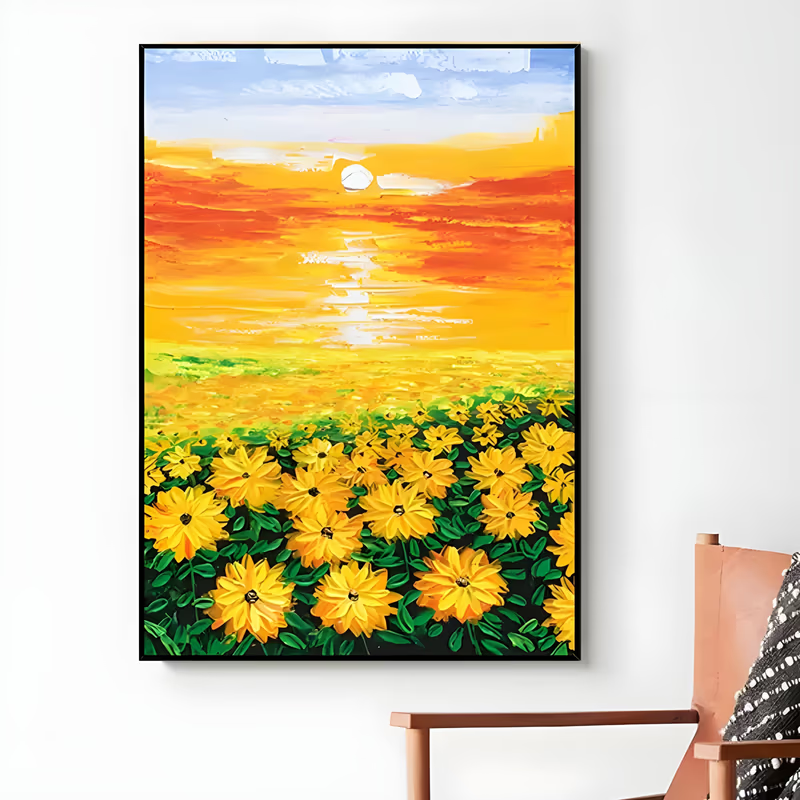
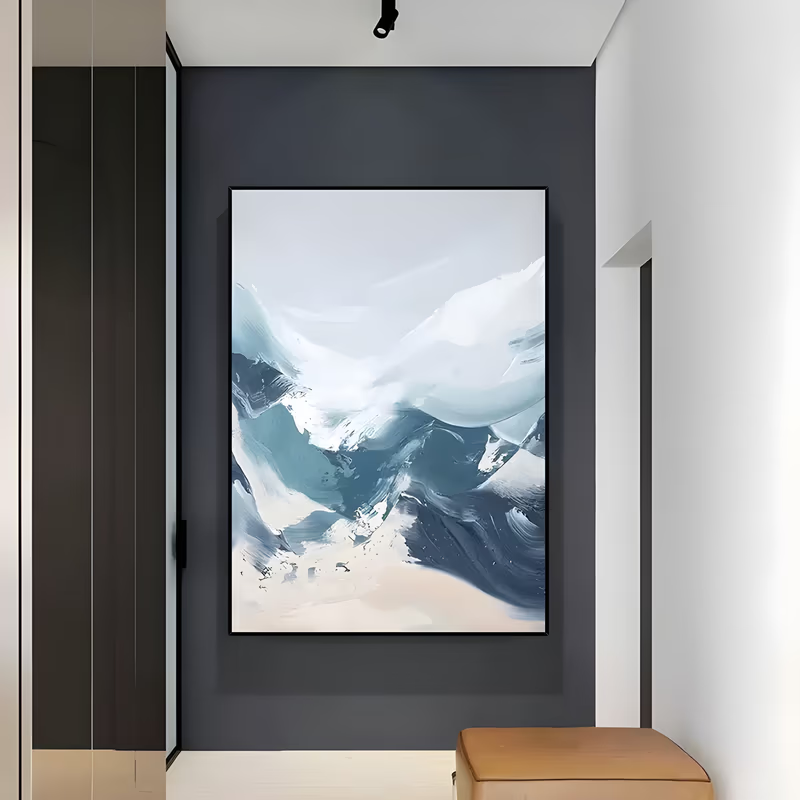
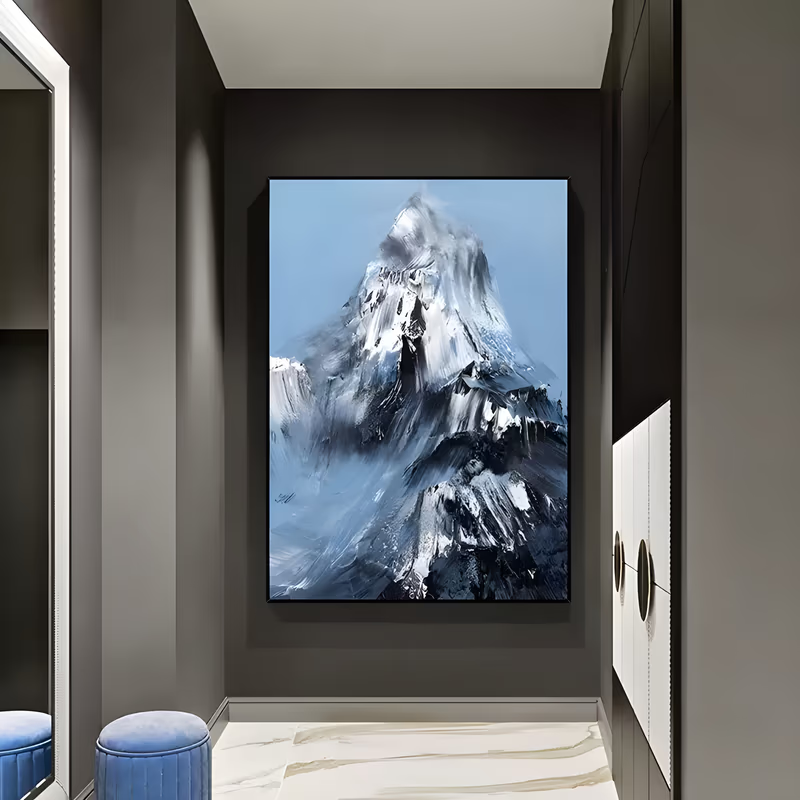
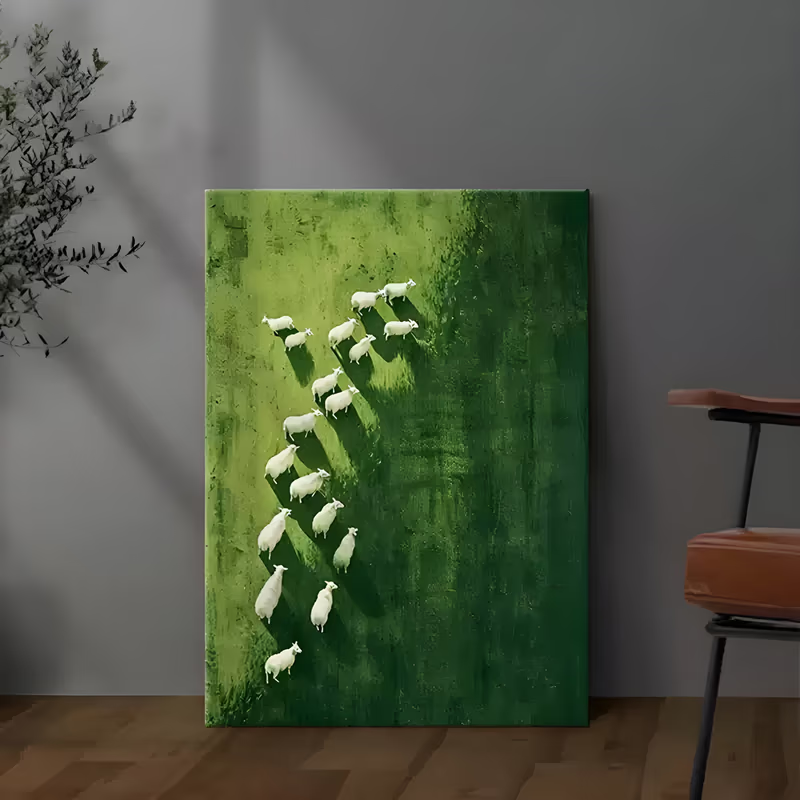
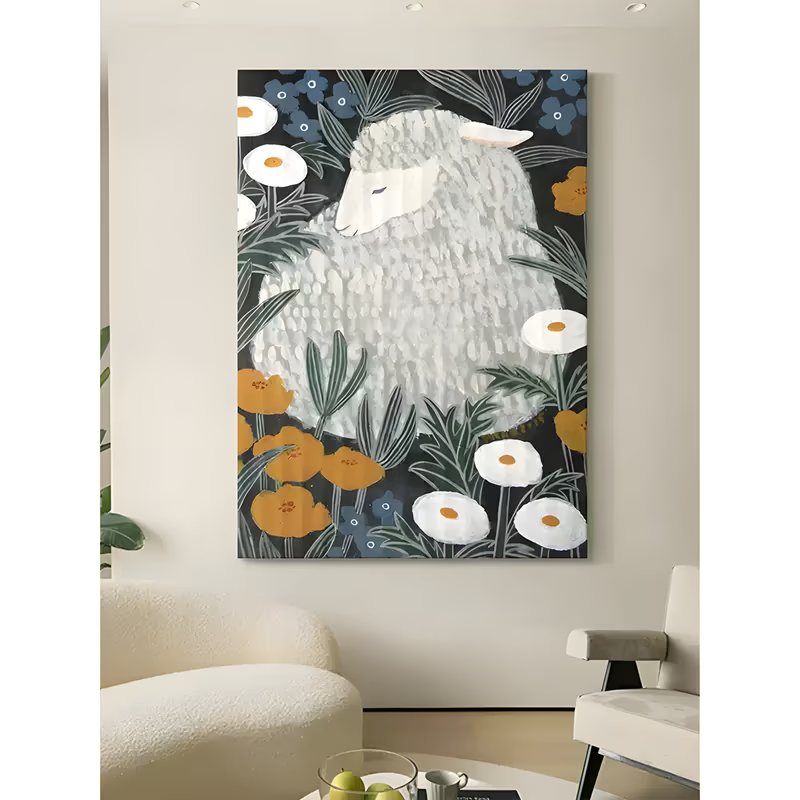
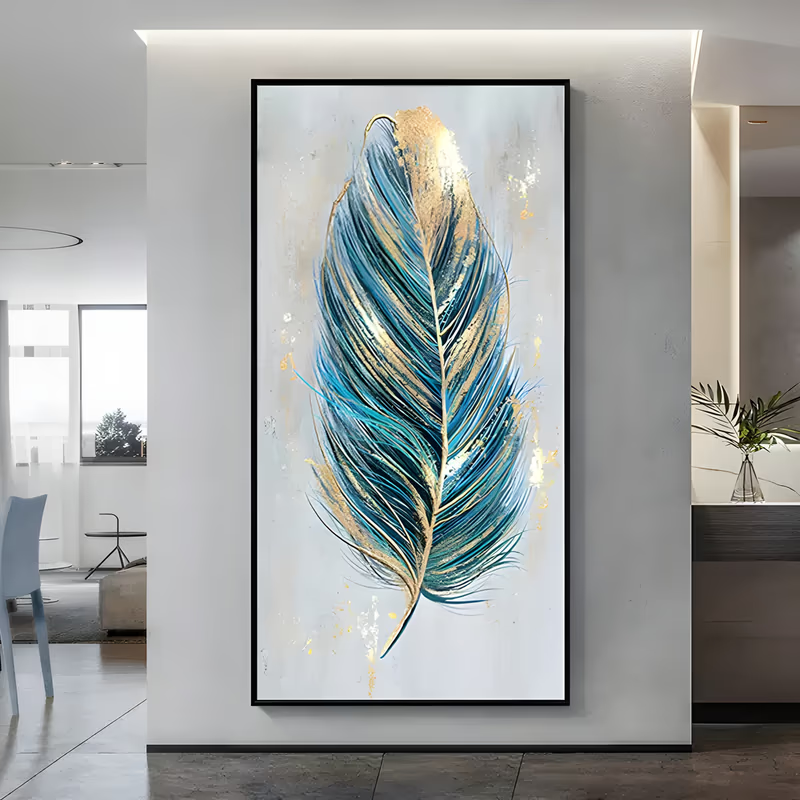
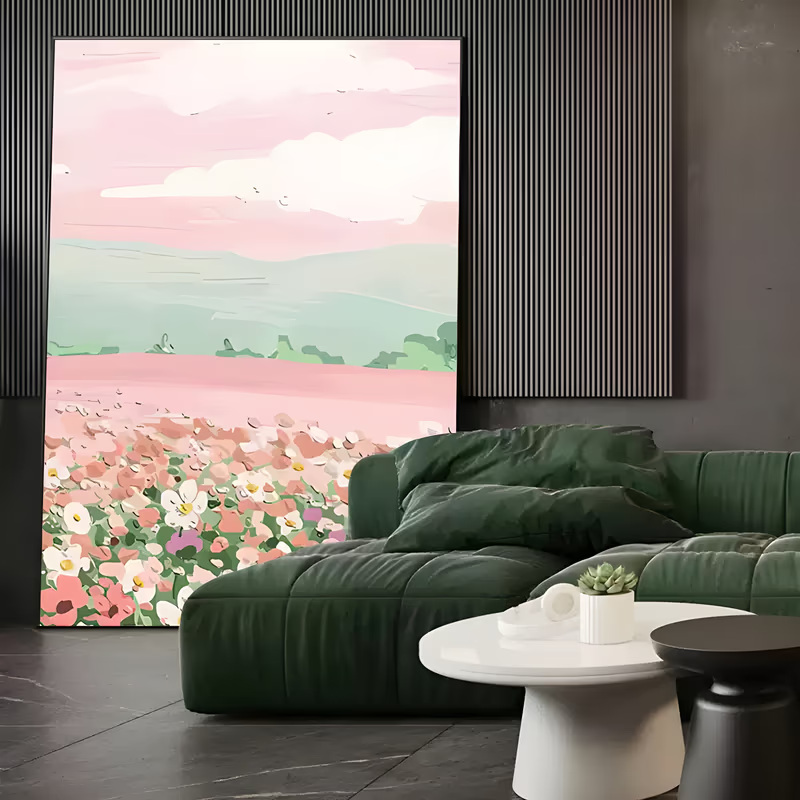
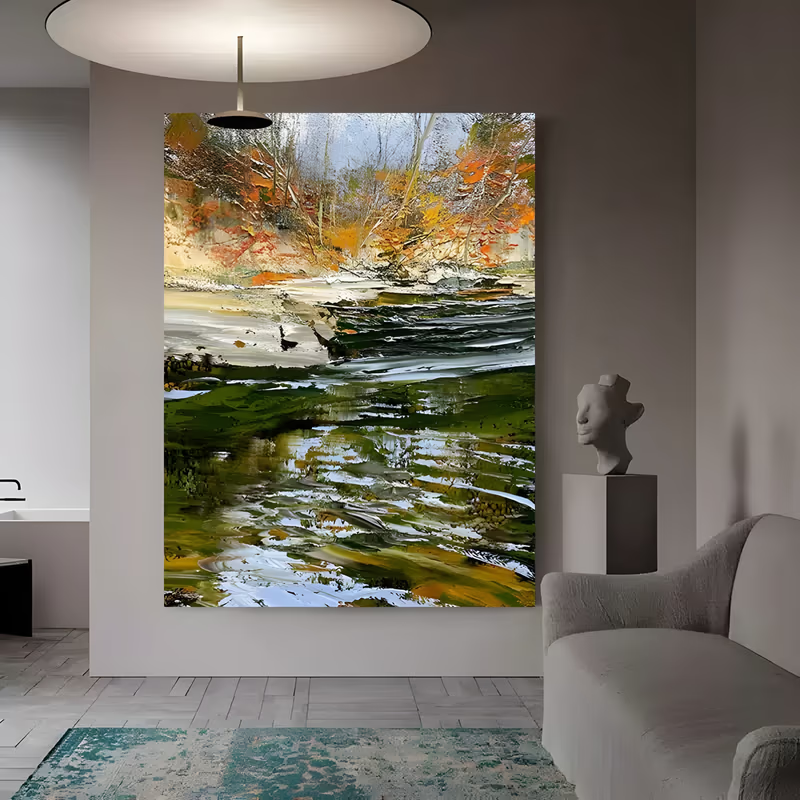
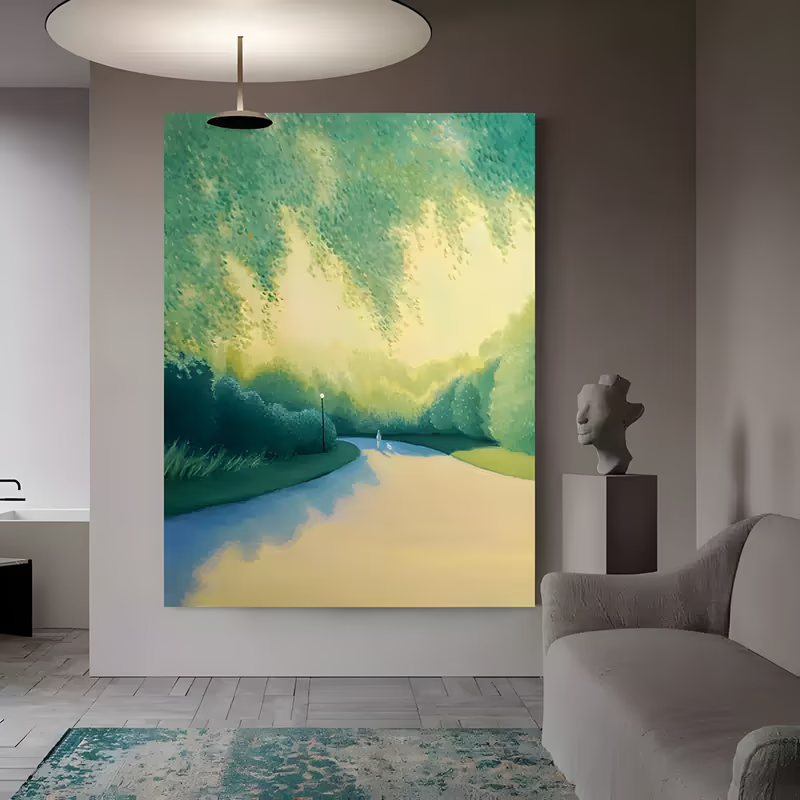
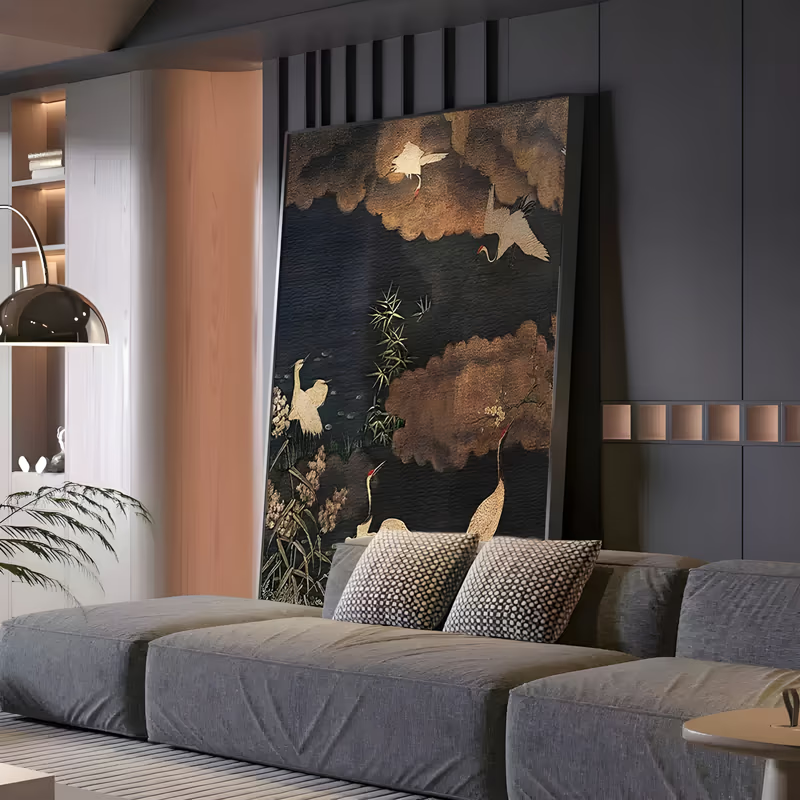
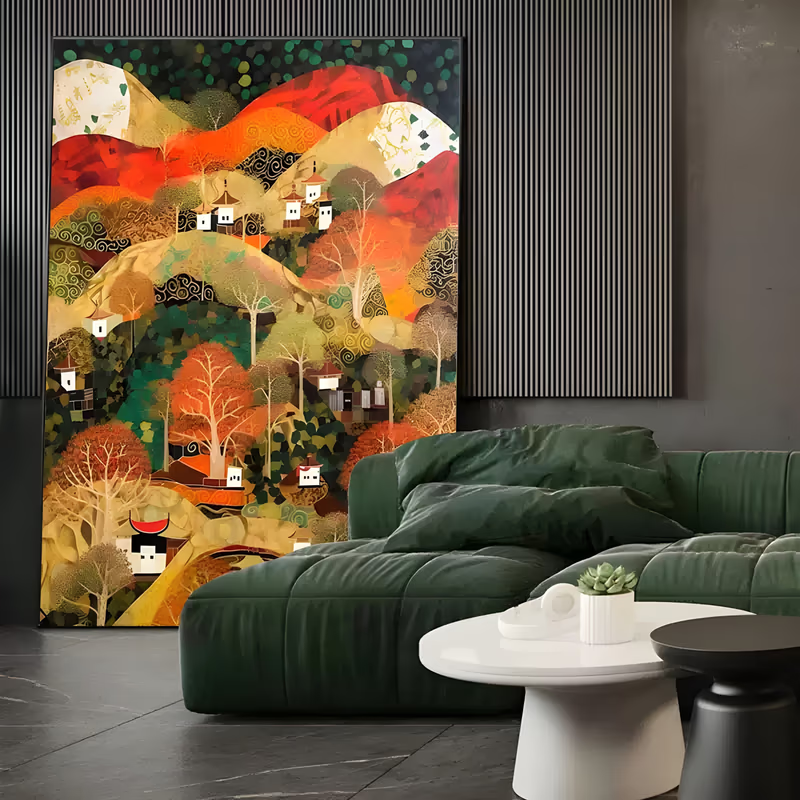
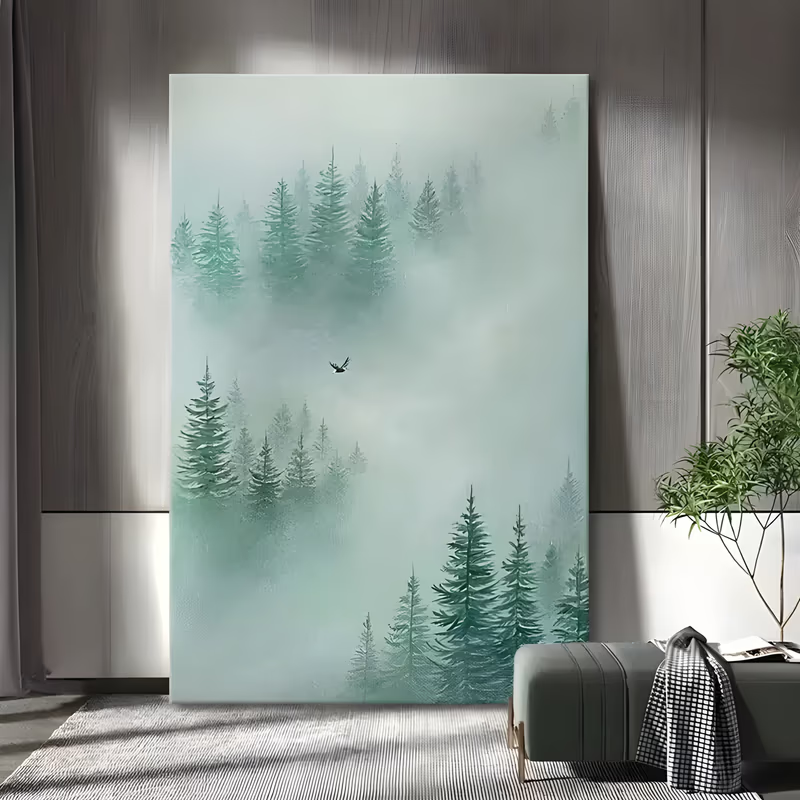
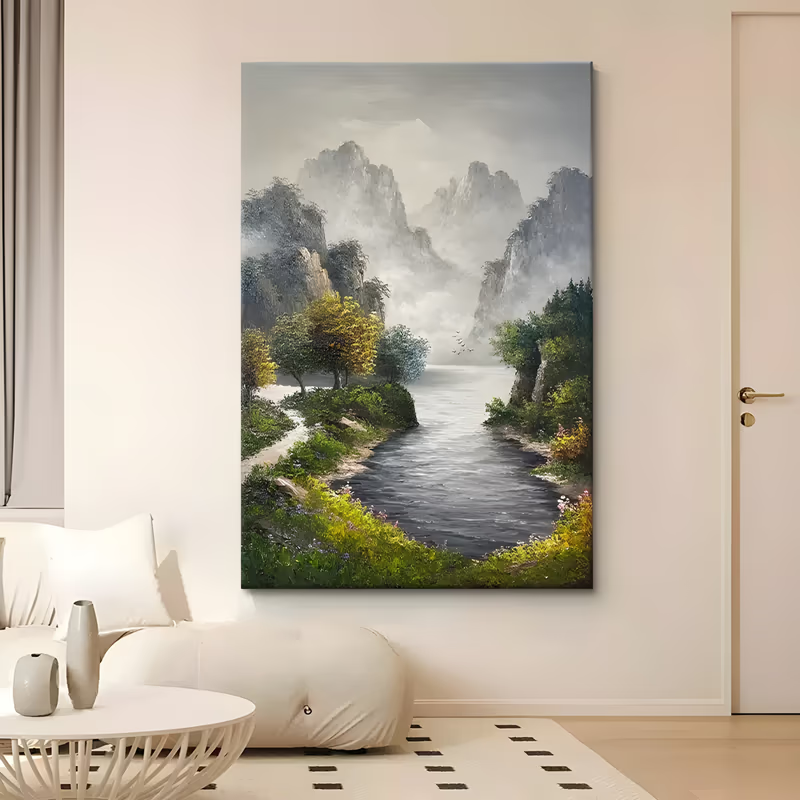
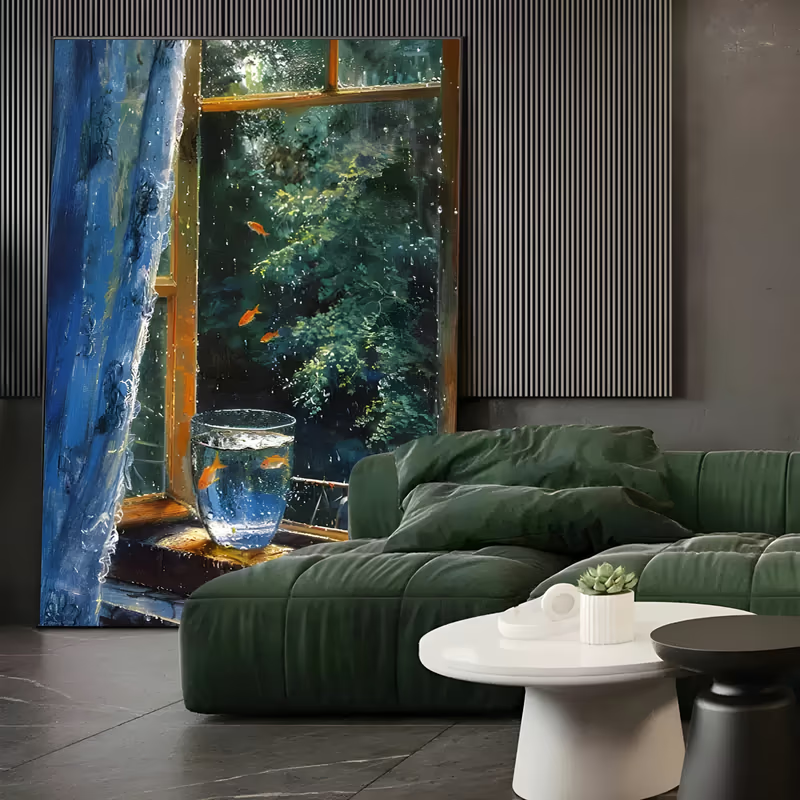
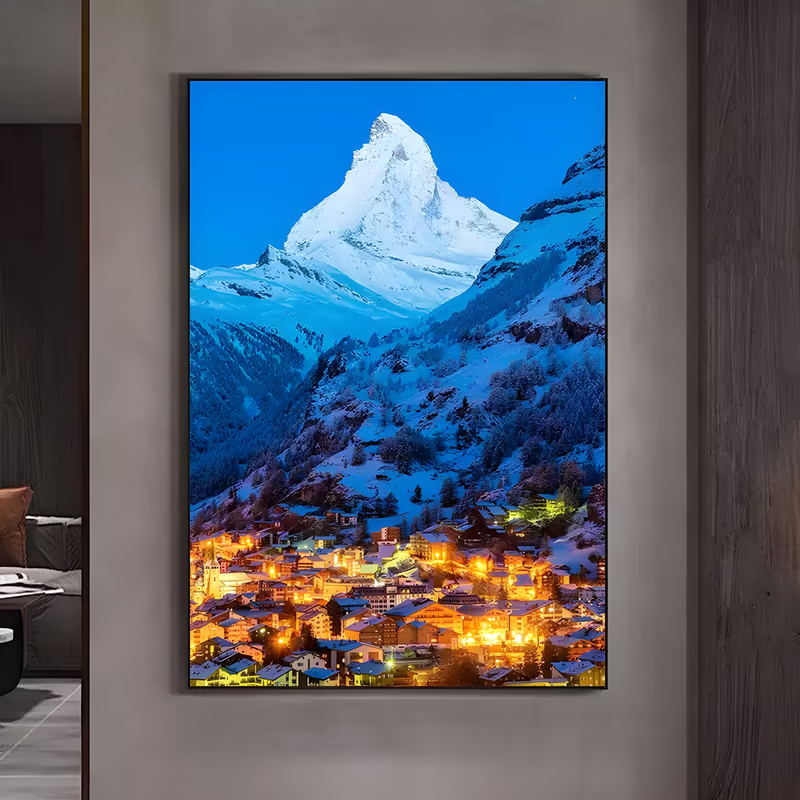
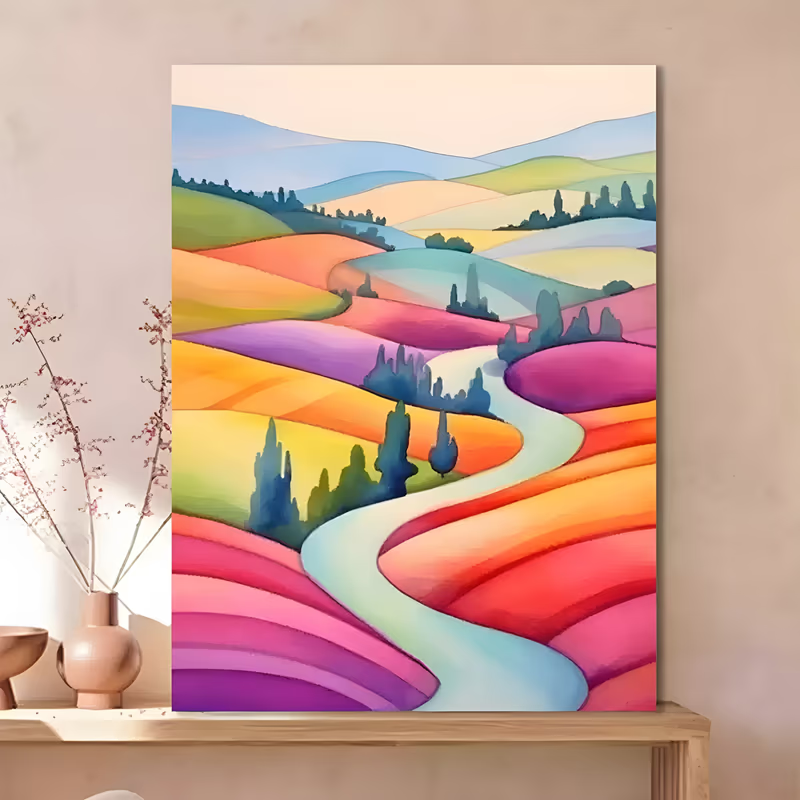
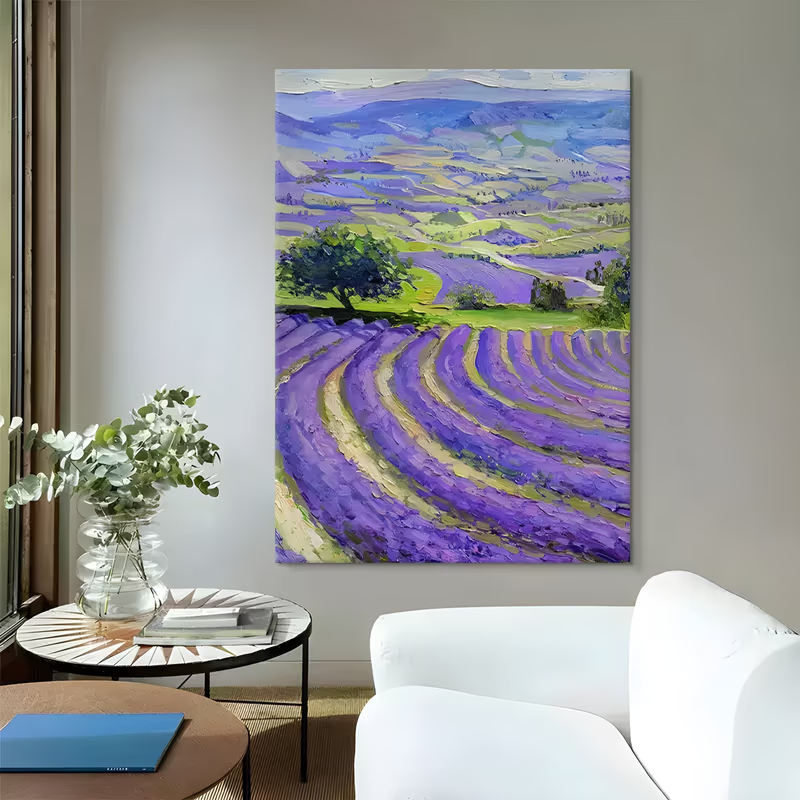
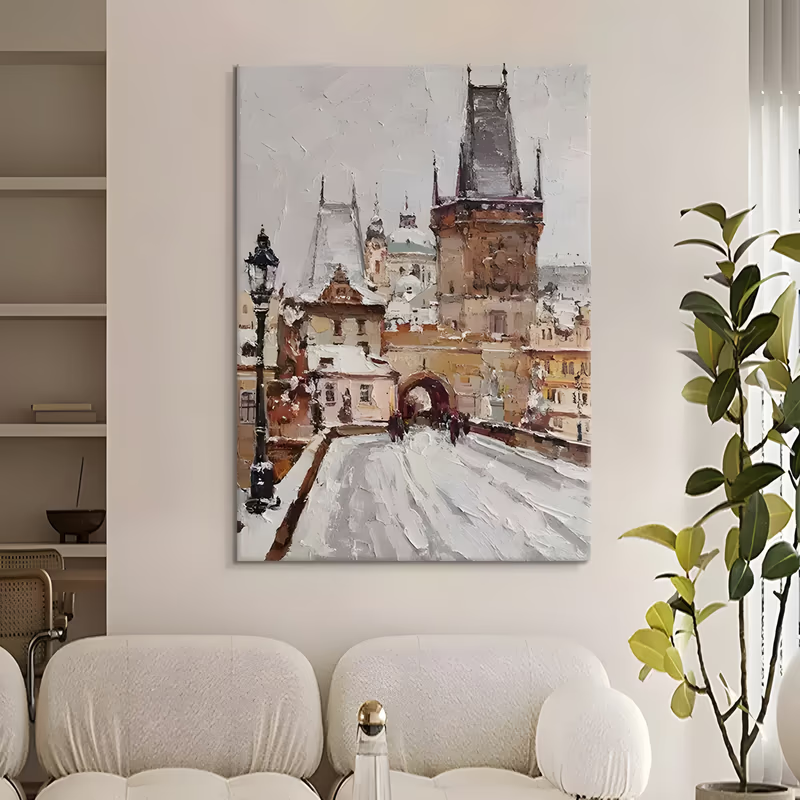
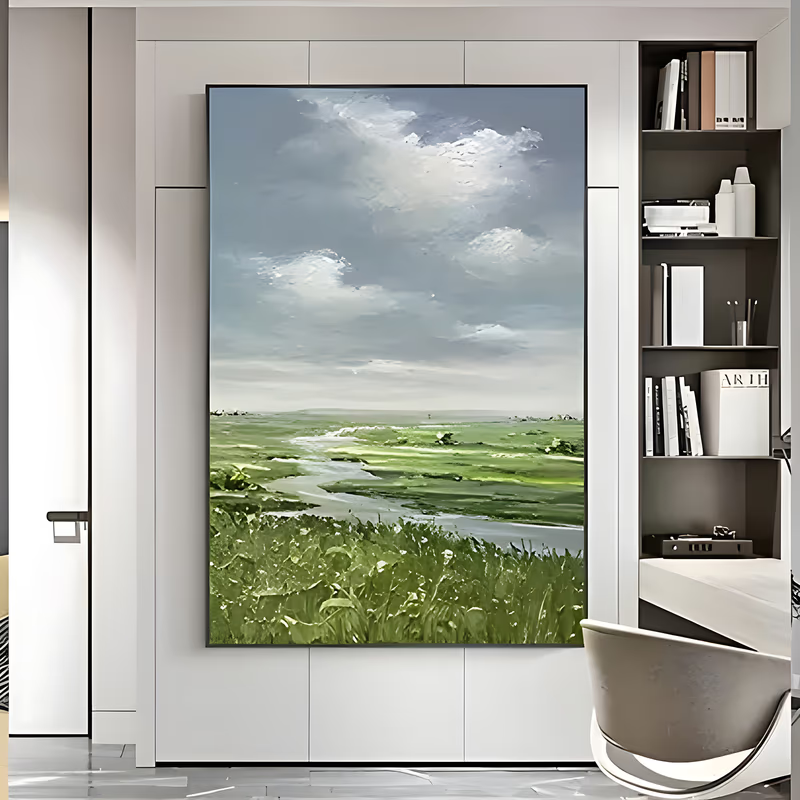
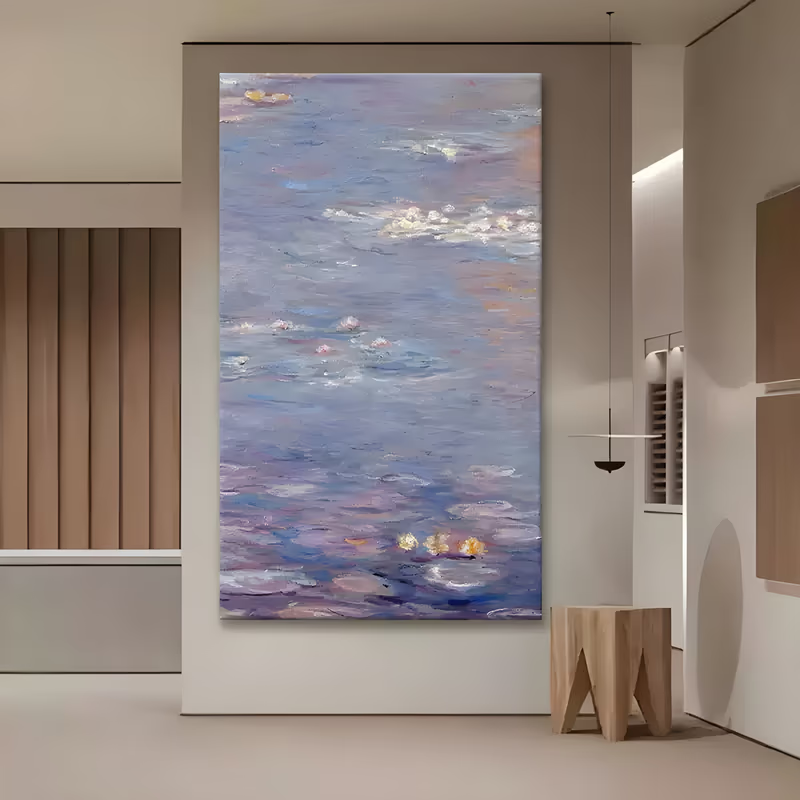
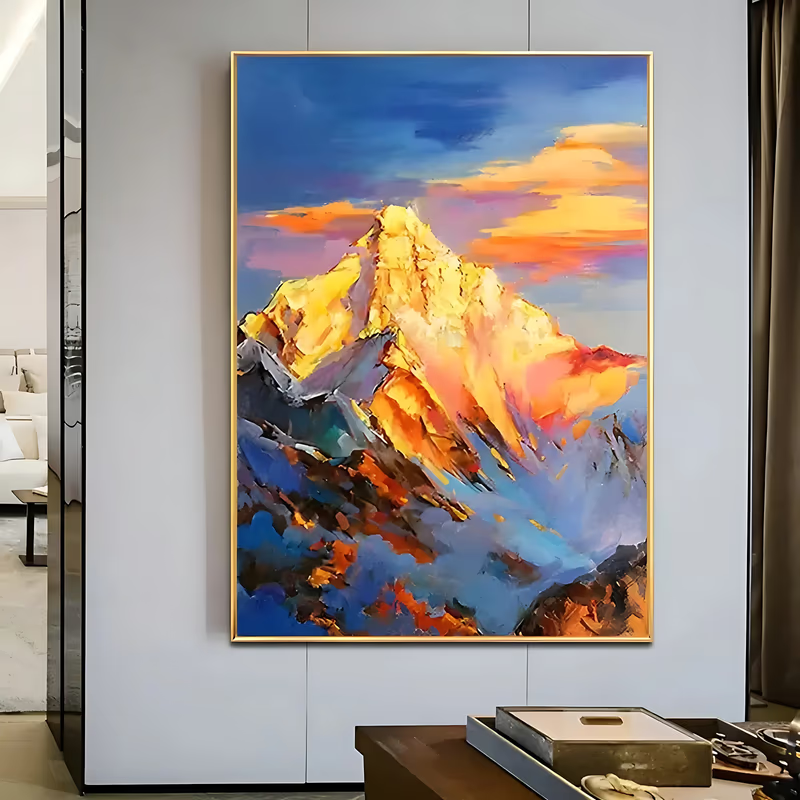
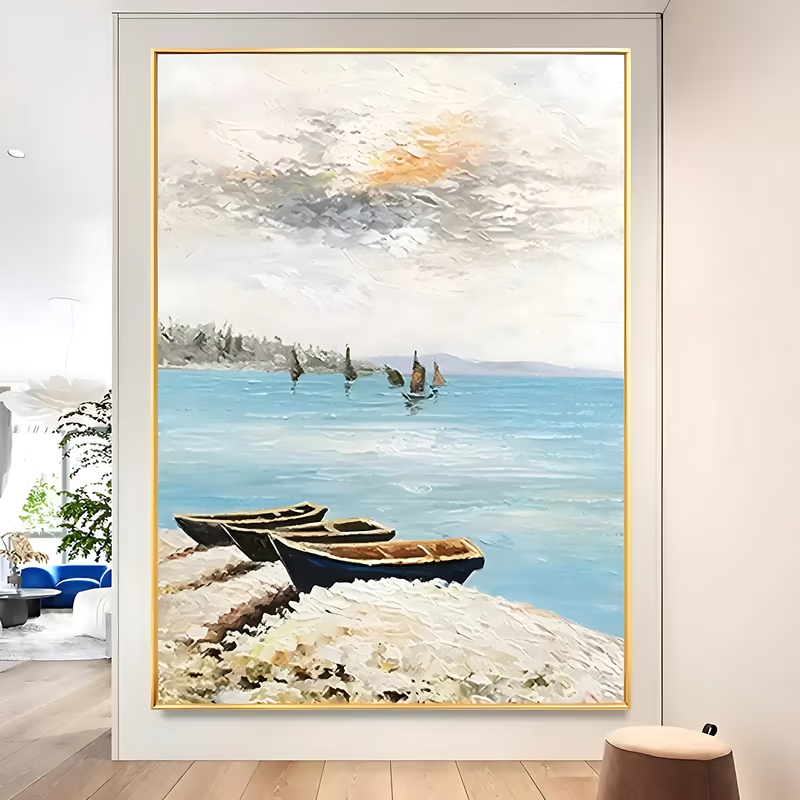
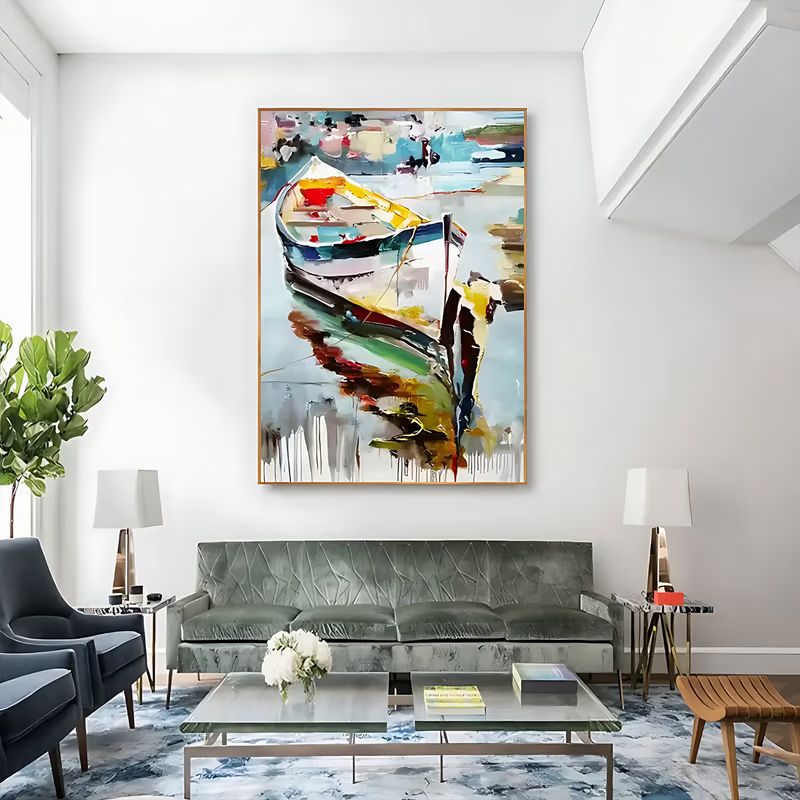
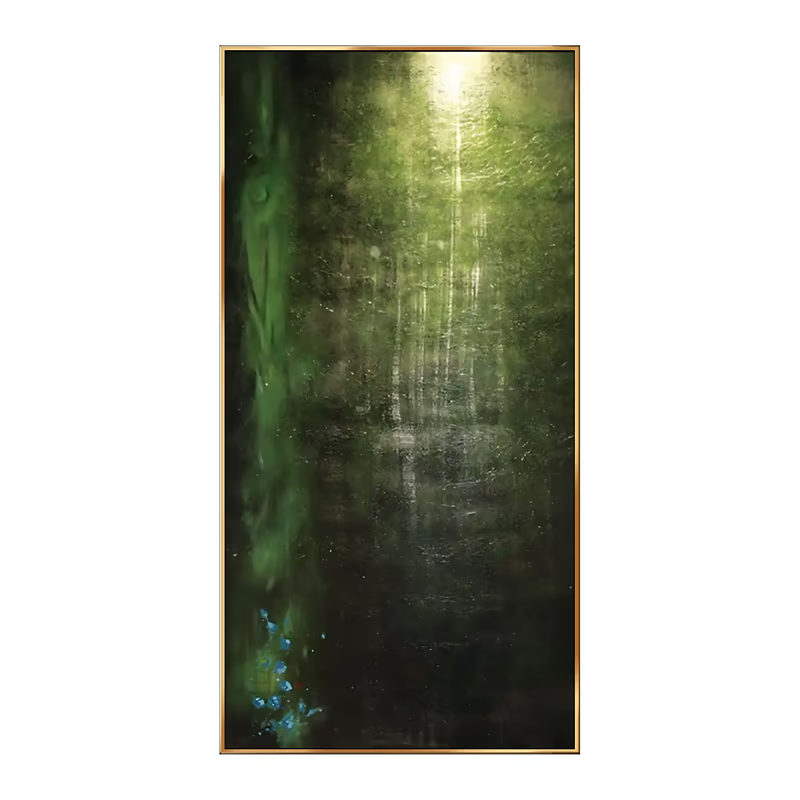
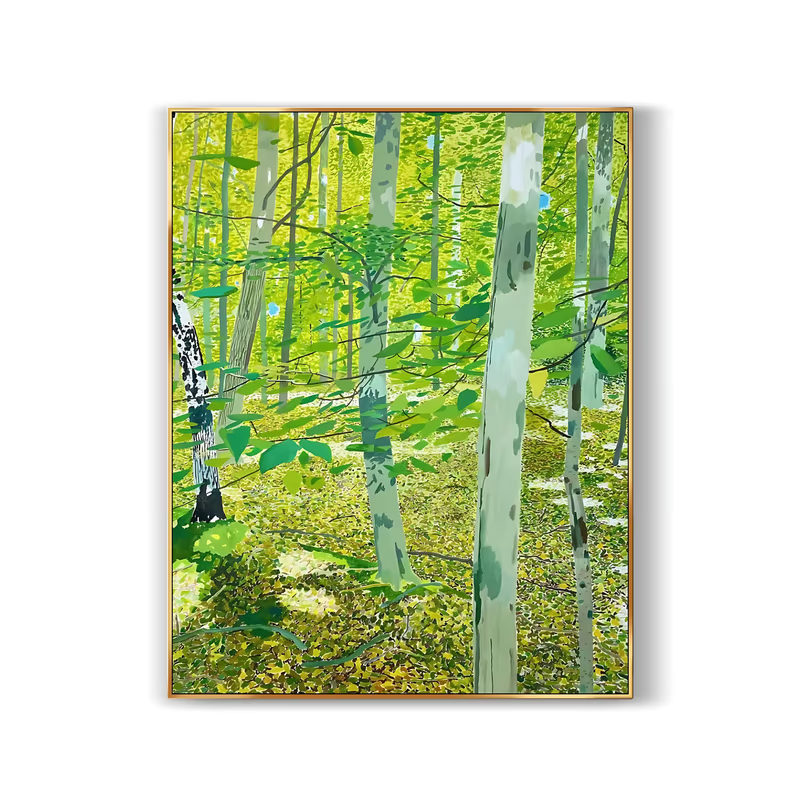
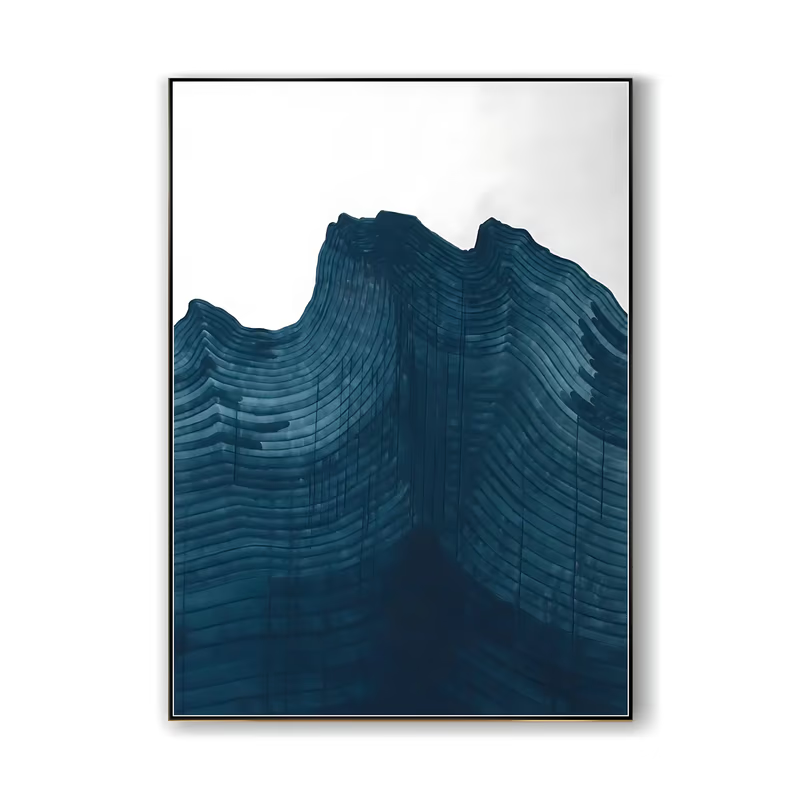
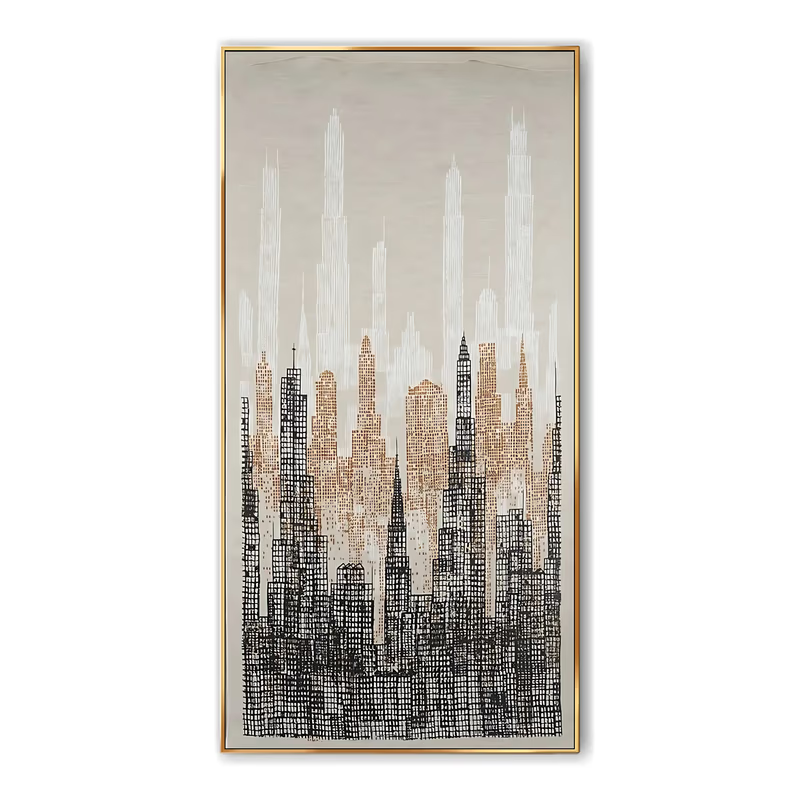
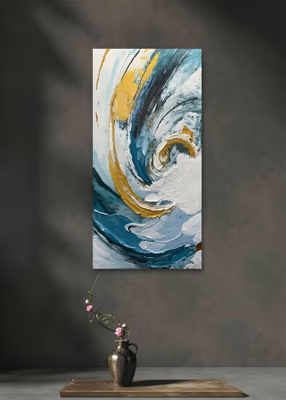
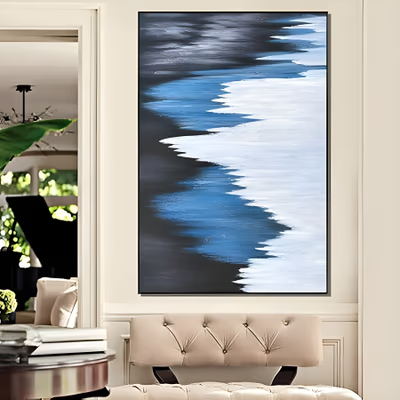
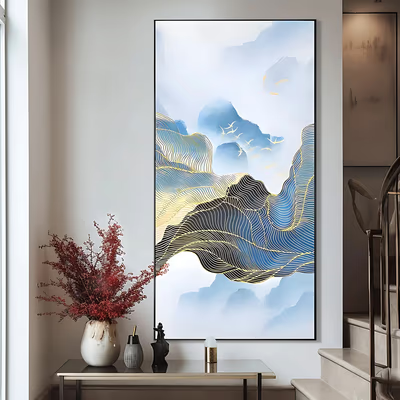
Forests, waterfalls, mountain paths and shorelines composed upright, so the eye travels from foreground to sky as the guest walks past. They open a windowless corridor like a window and suit resort, country and city hotels alike.
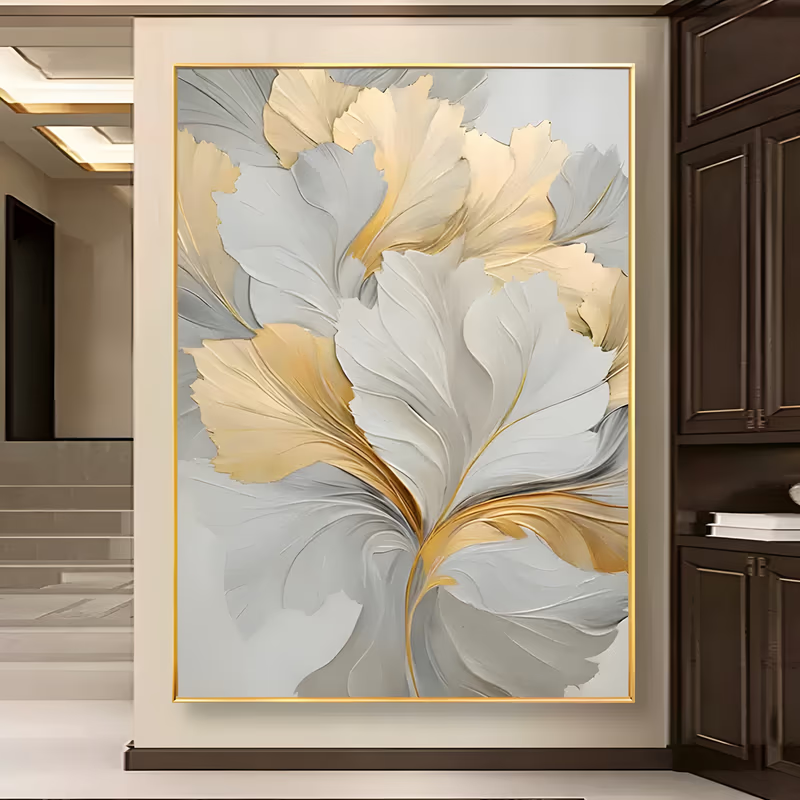
Florals and botanicals
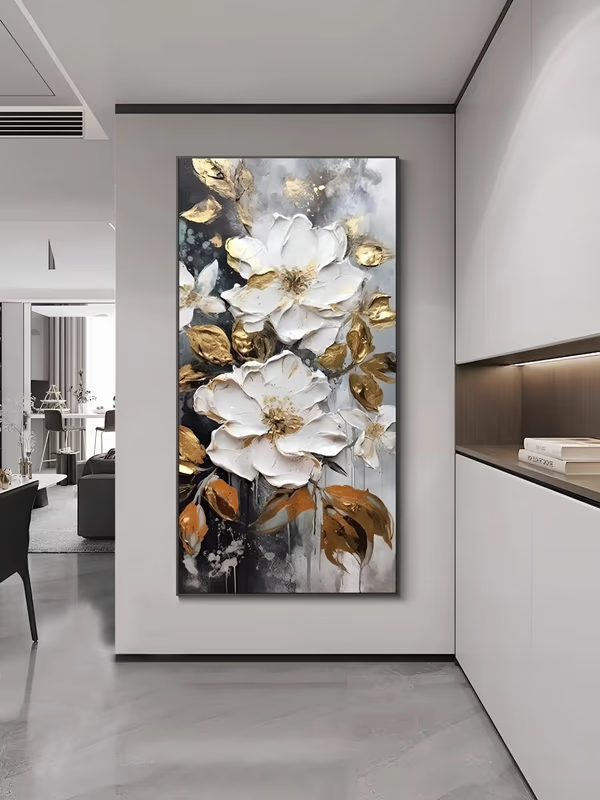
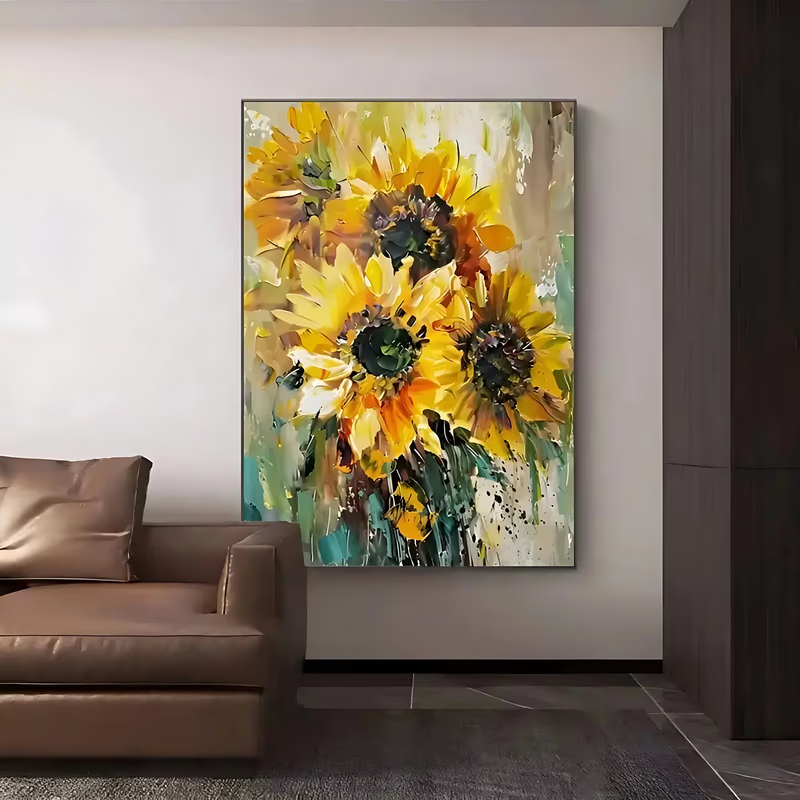
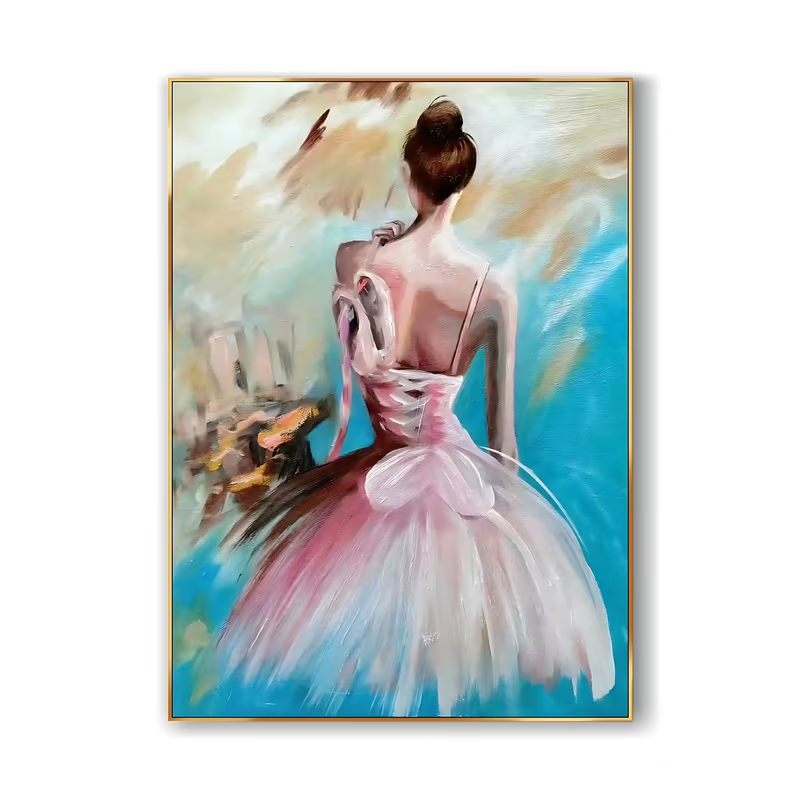
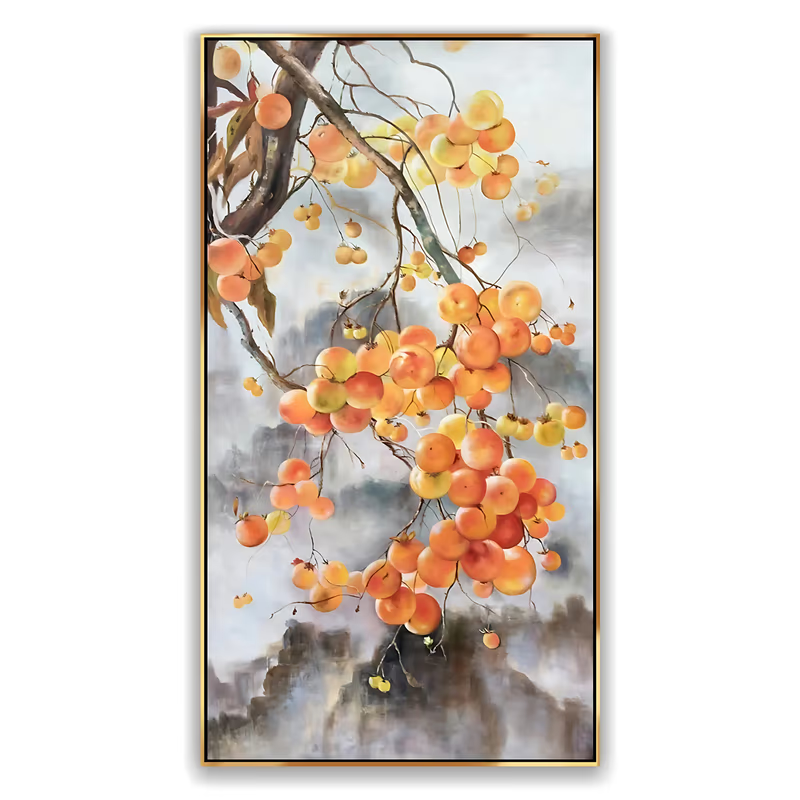
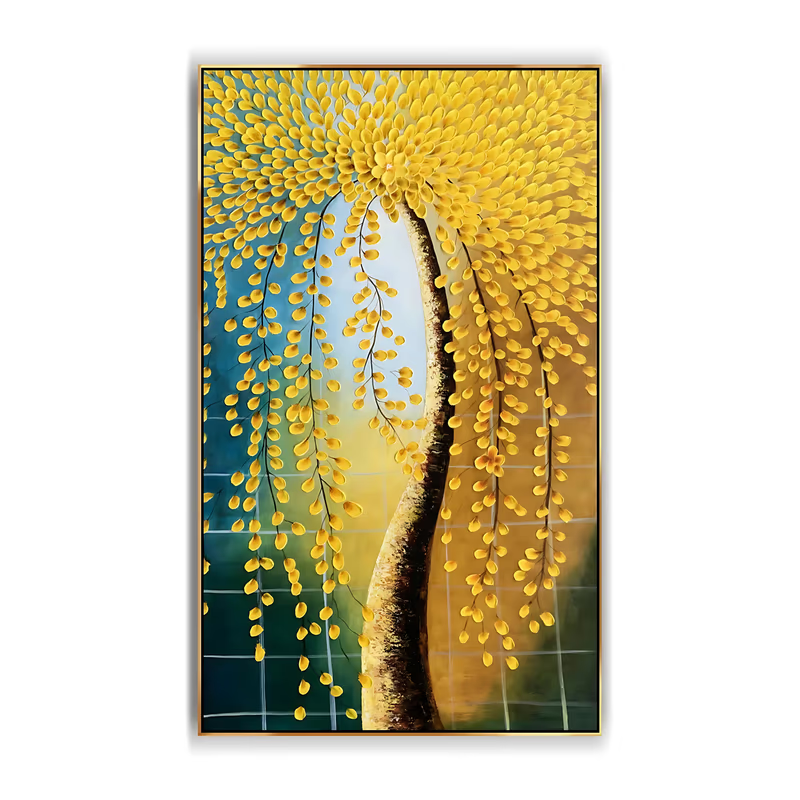
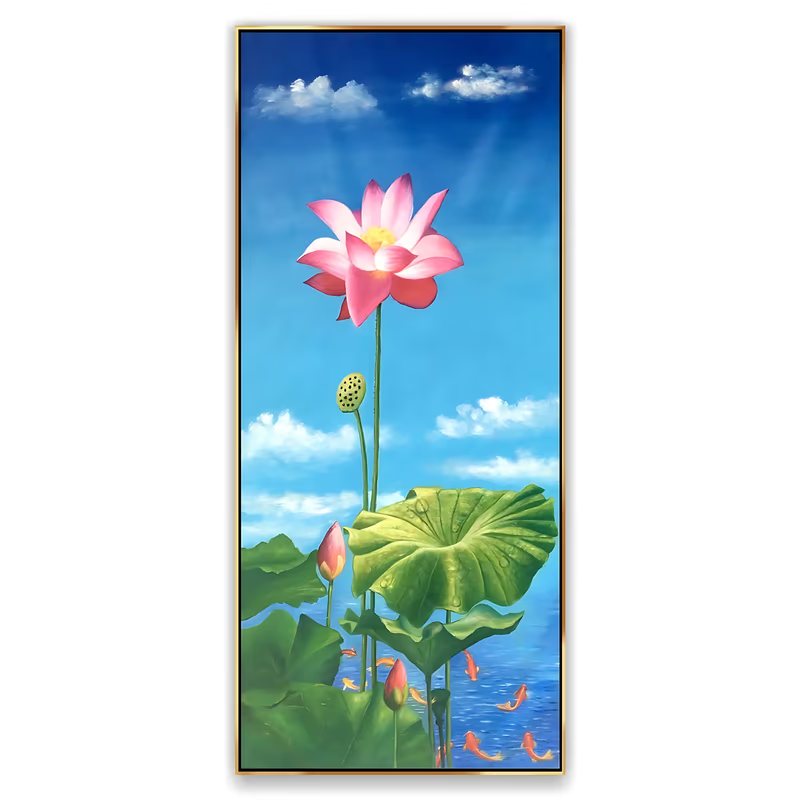
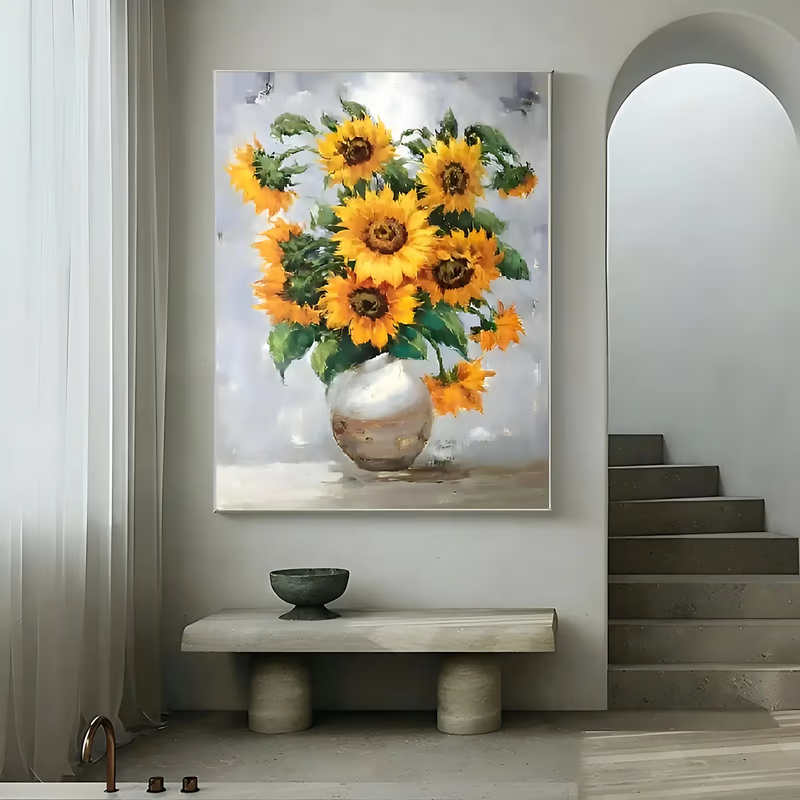
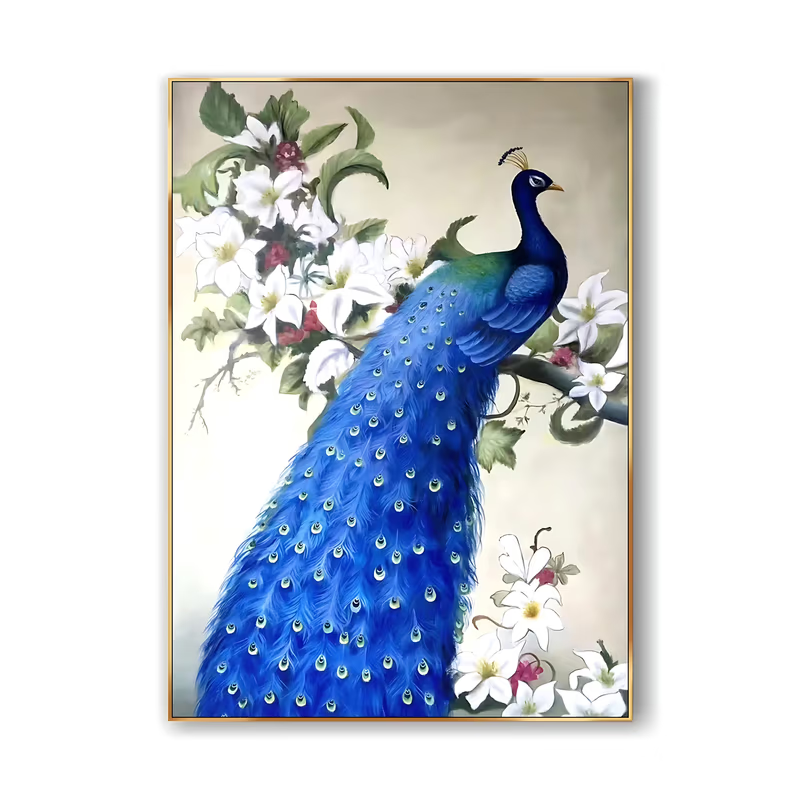
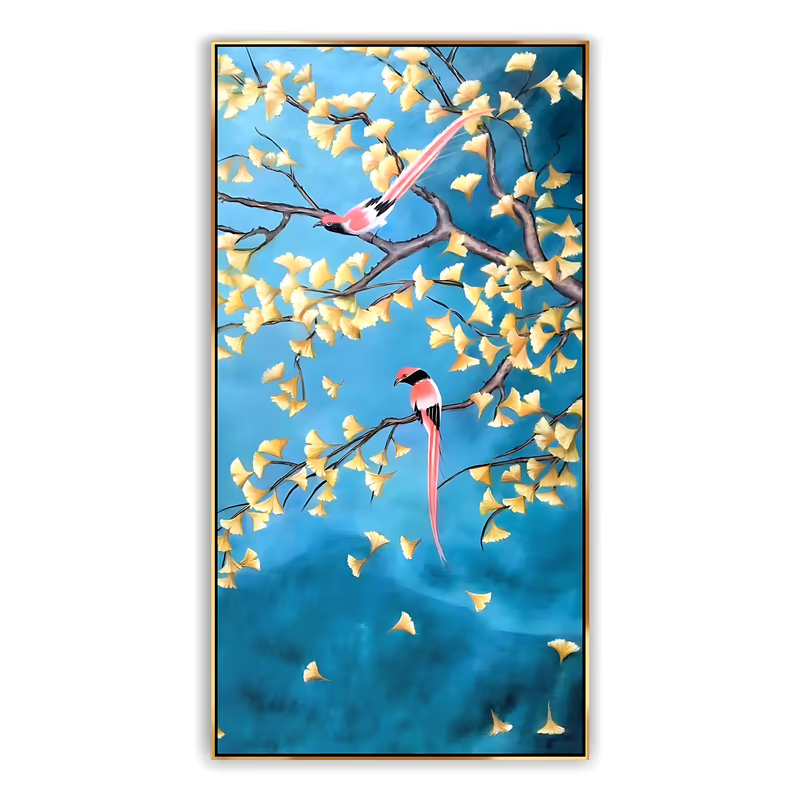
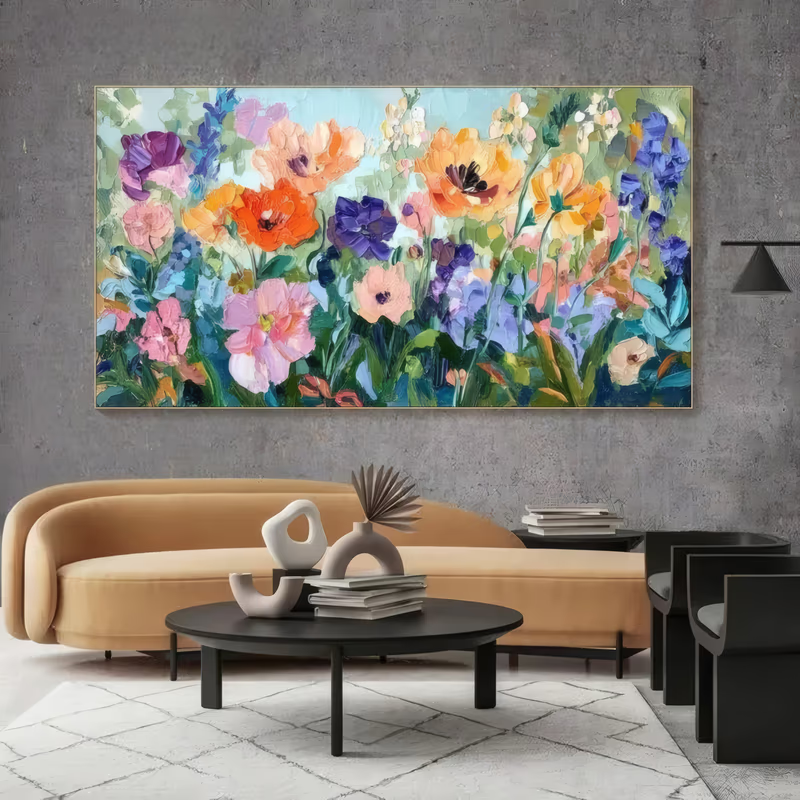
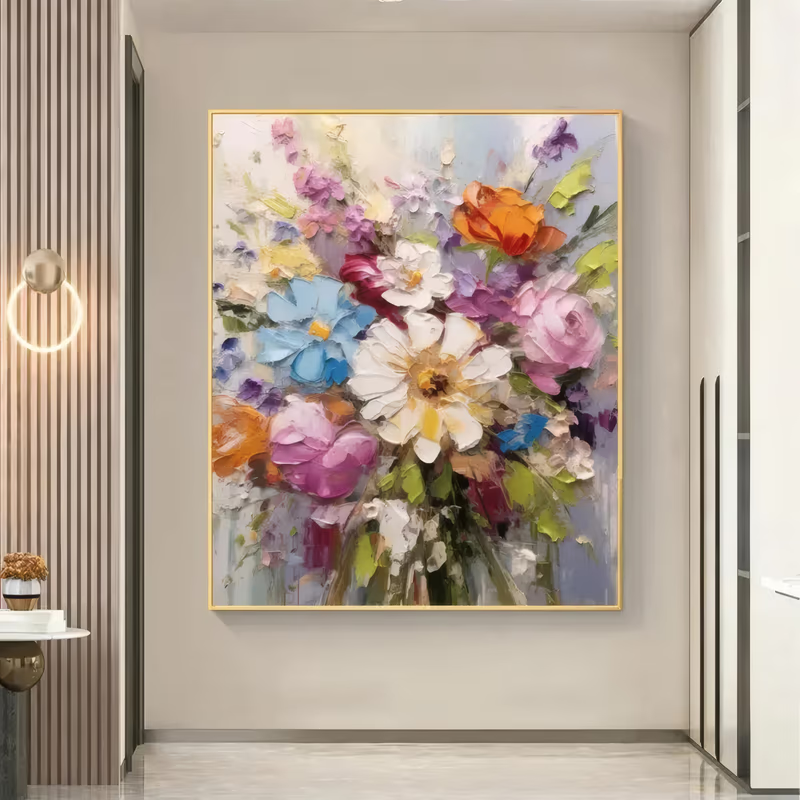
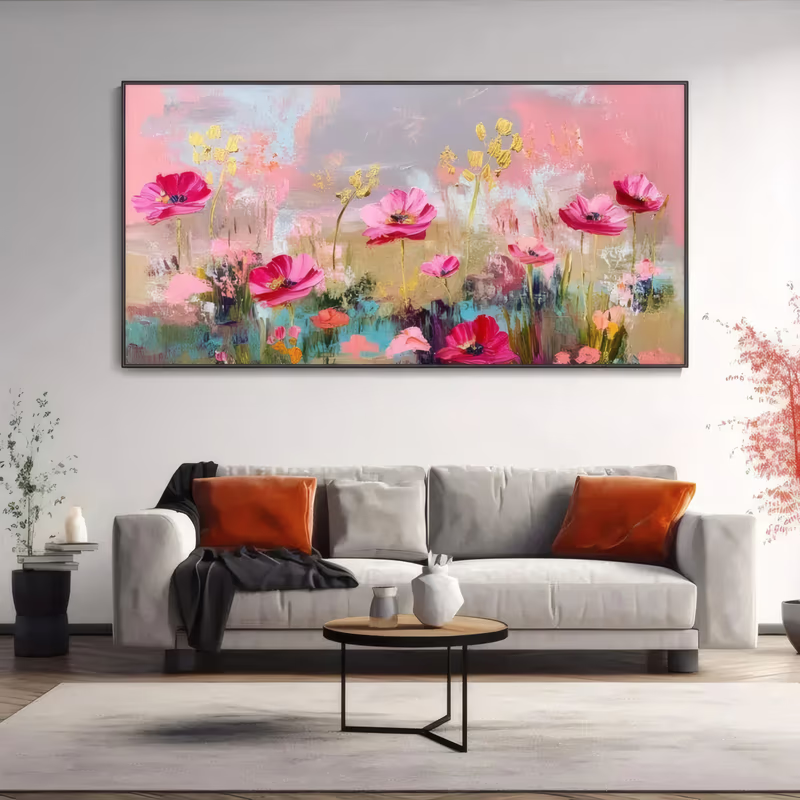
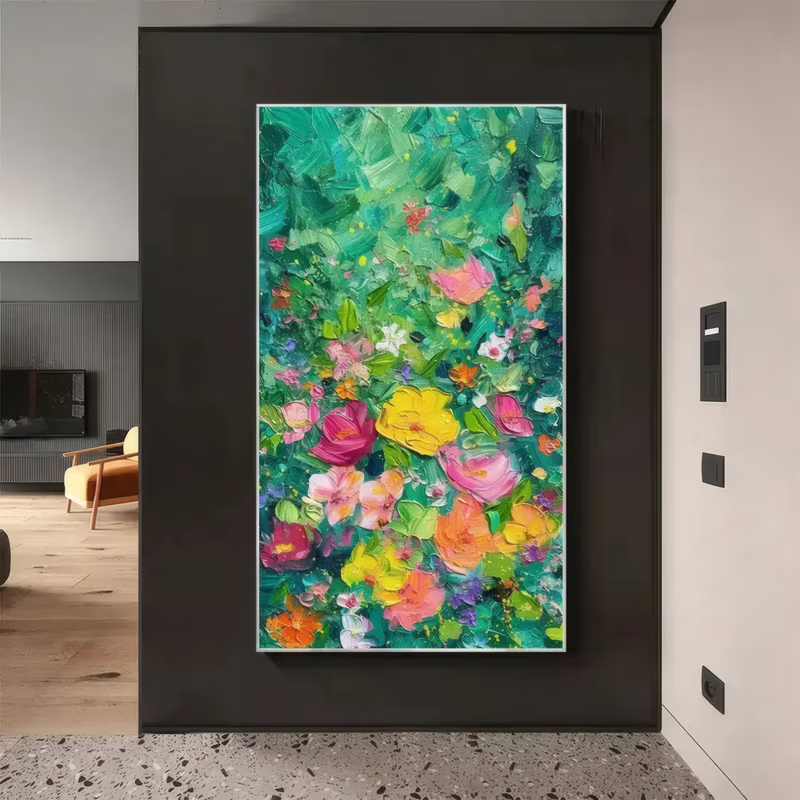
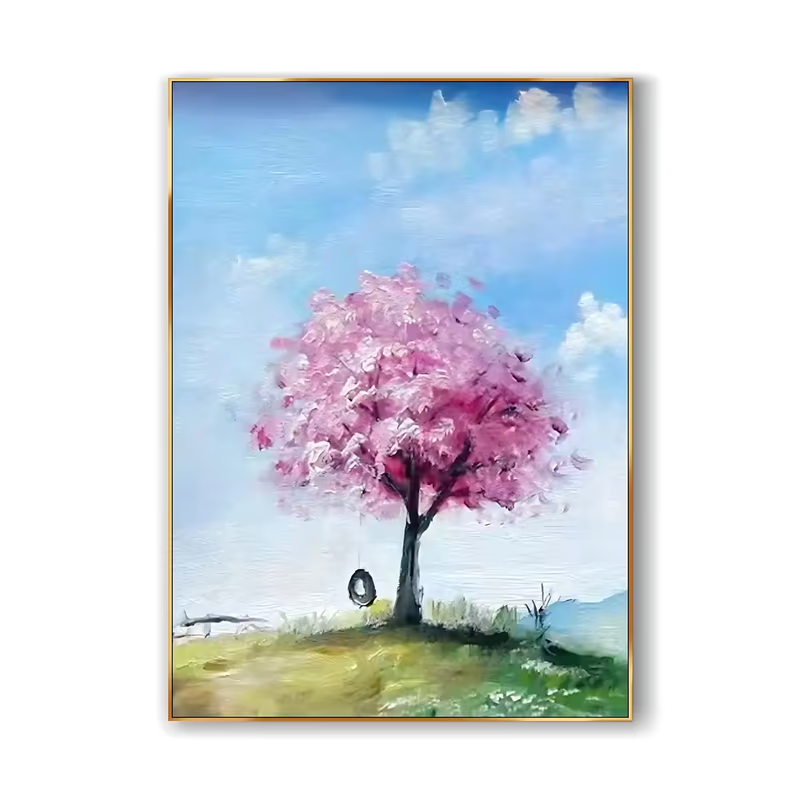
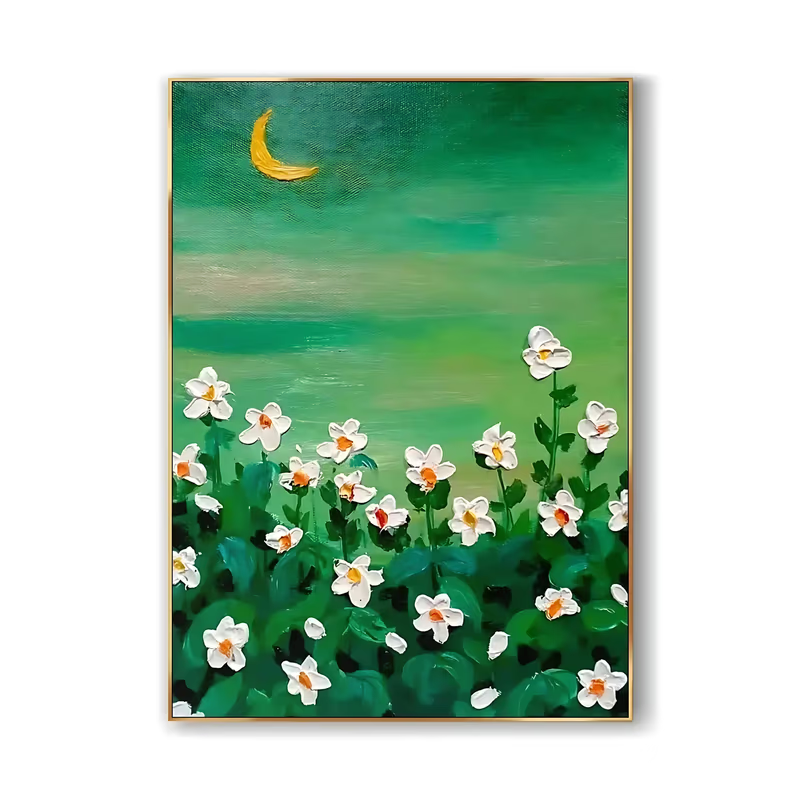
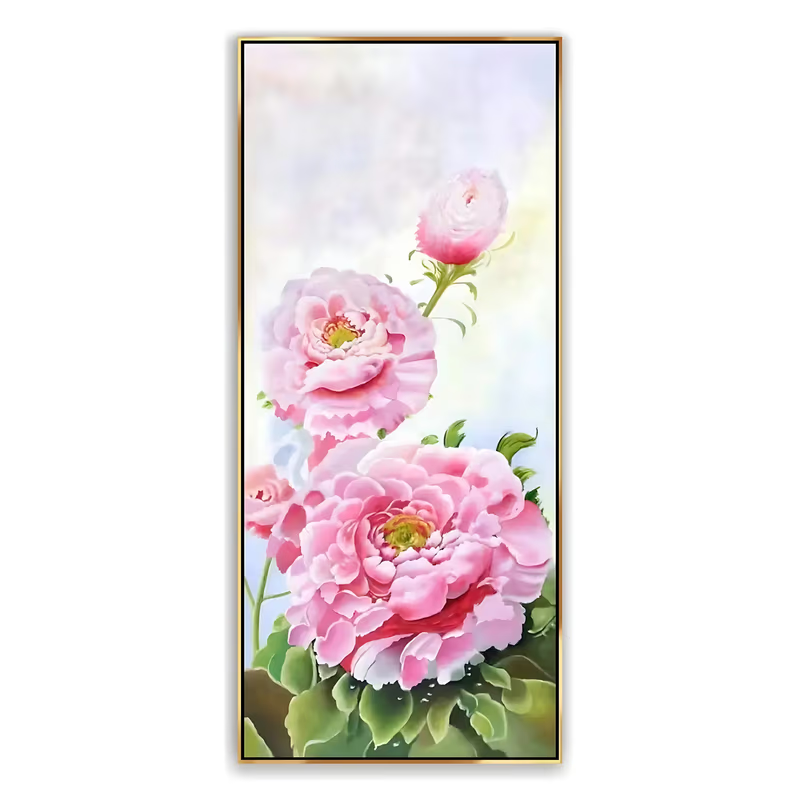
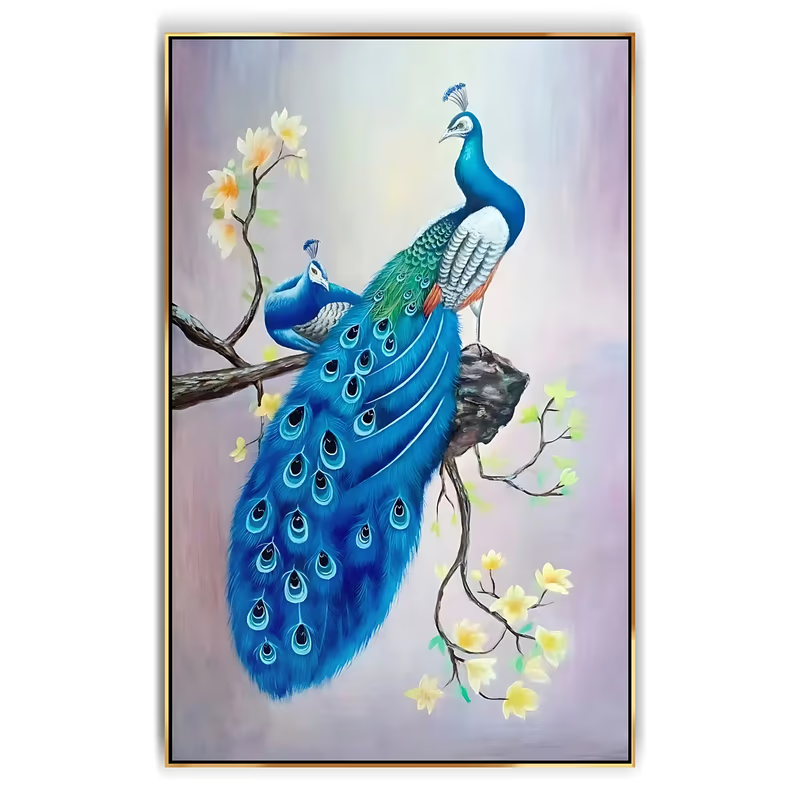
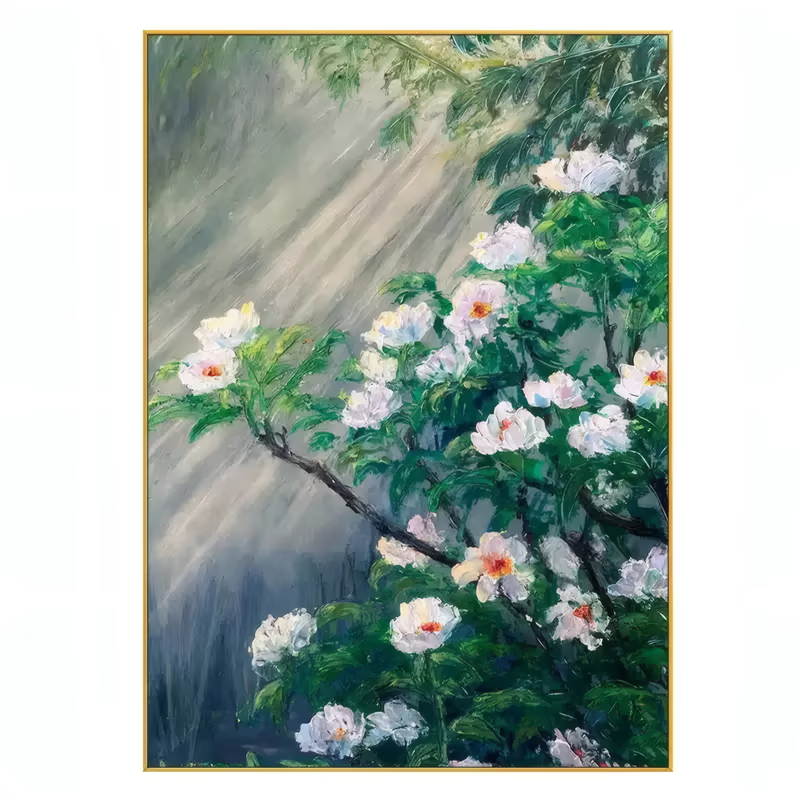
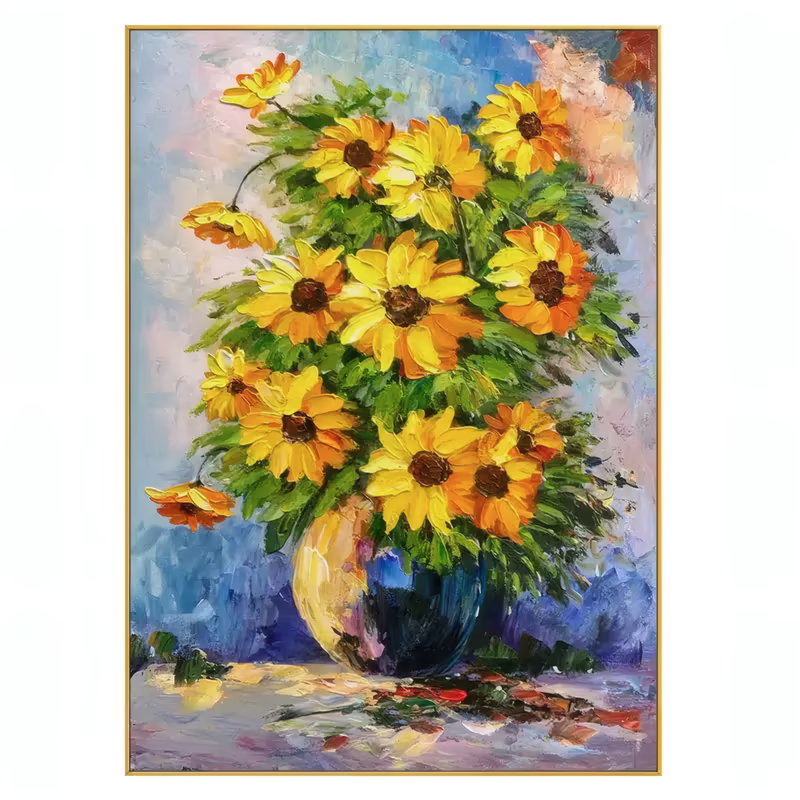
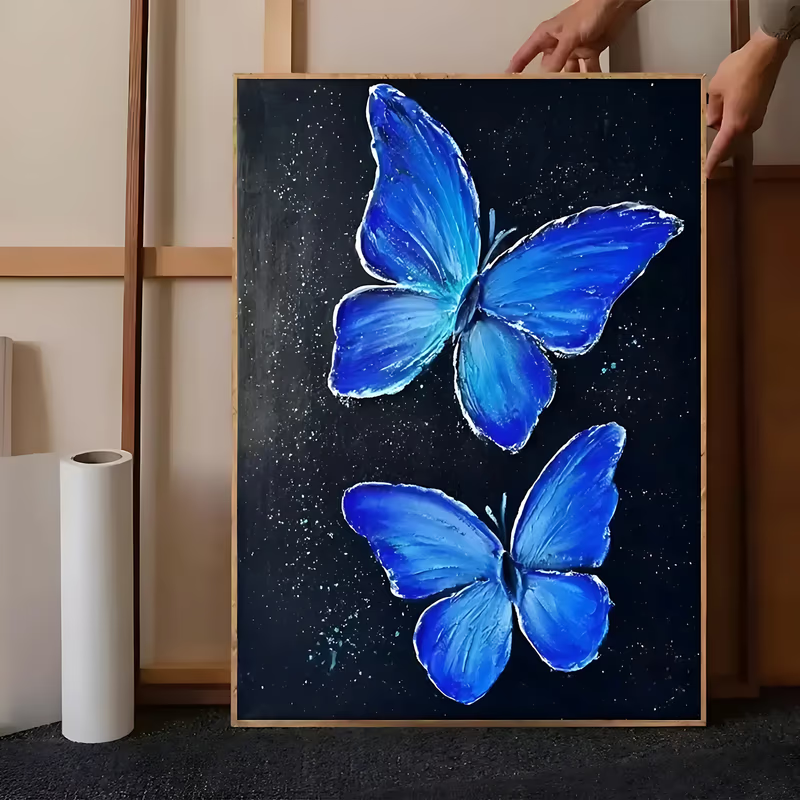
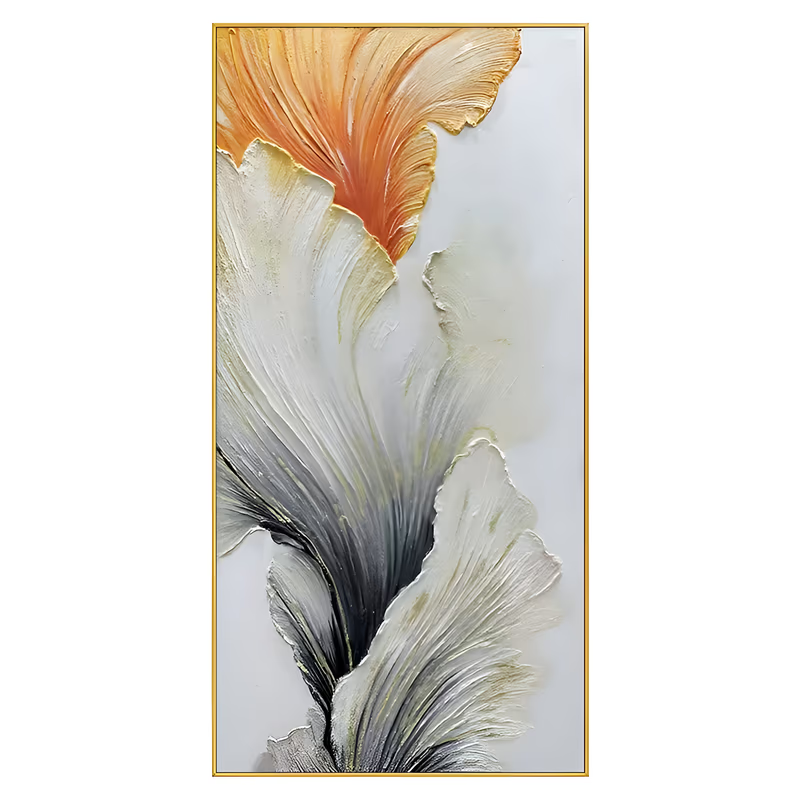
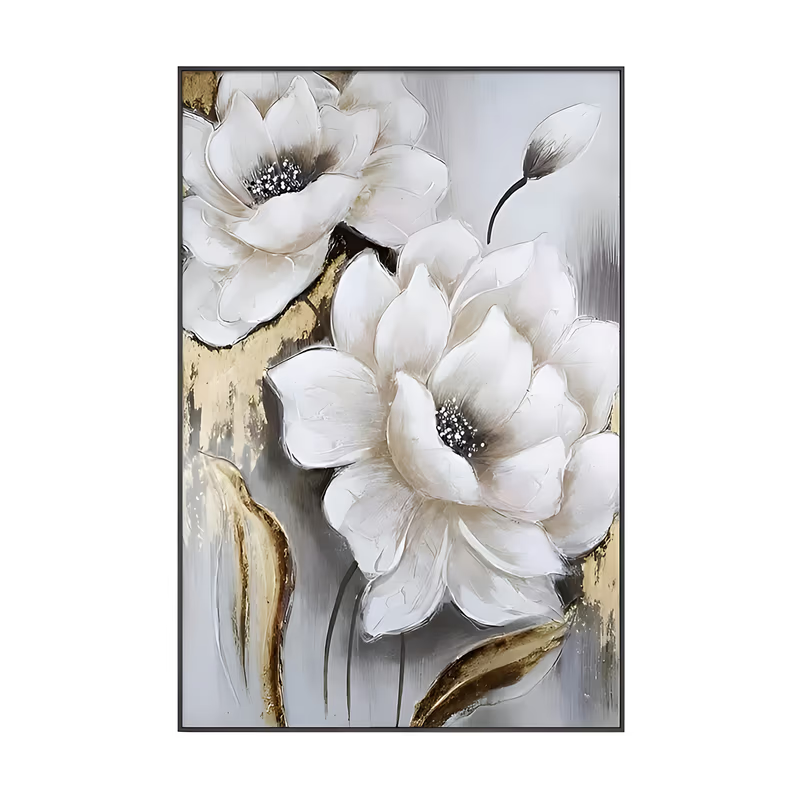
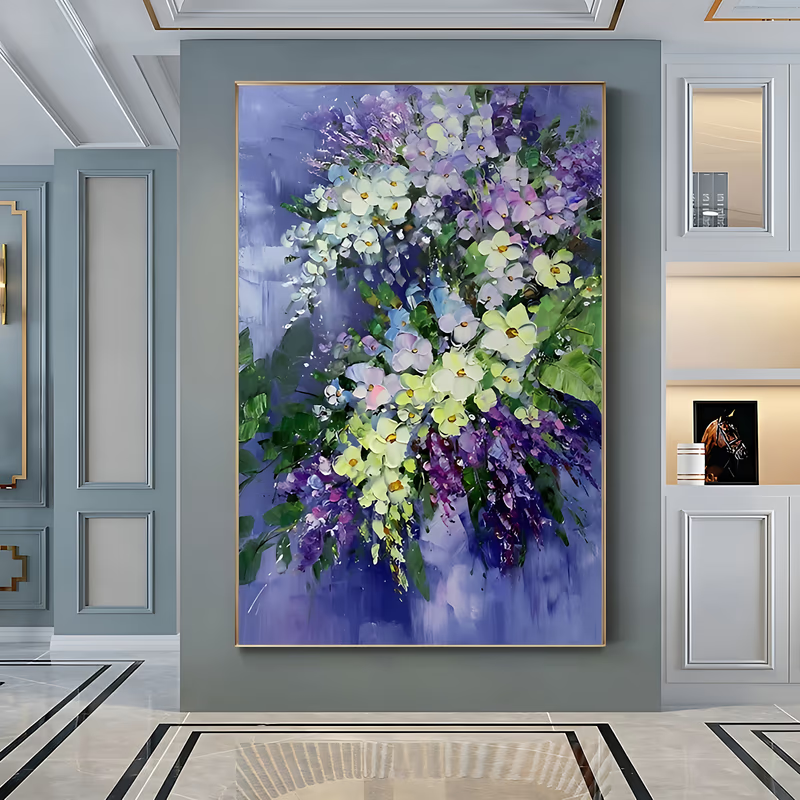
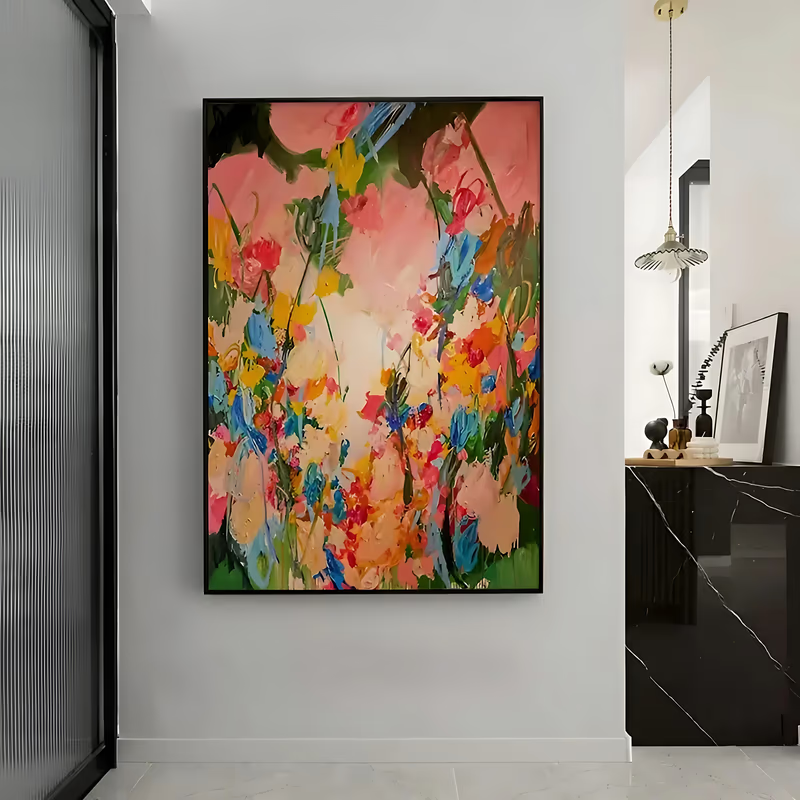
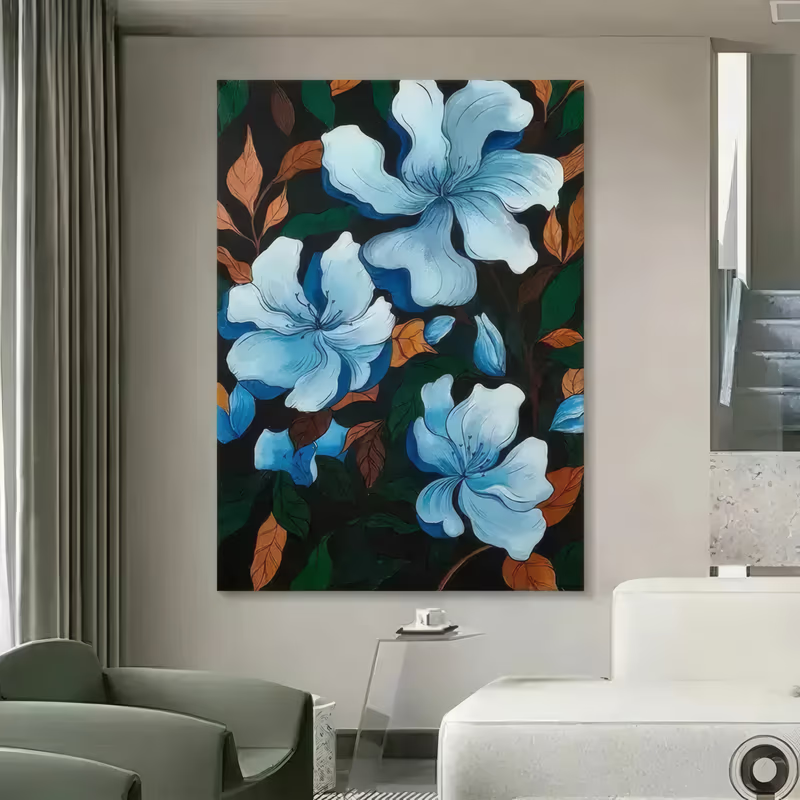
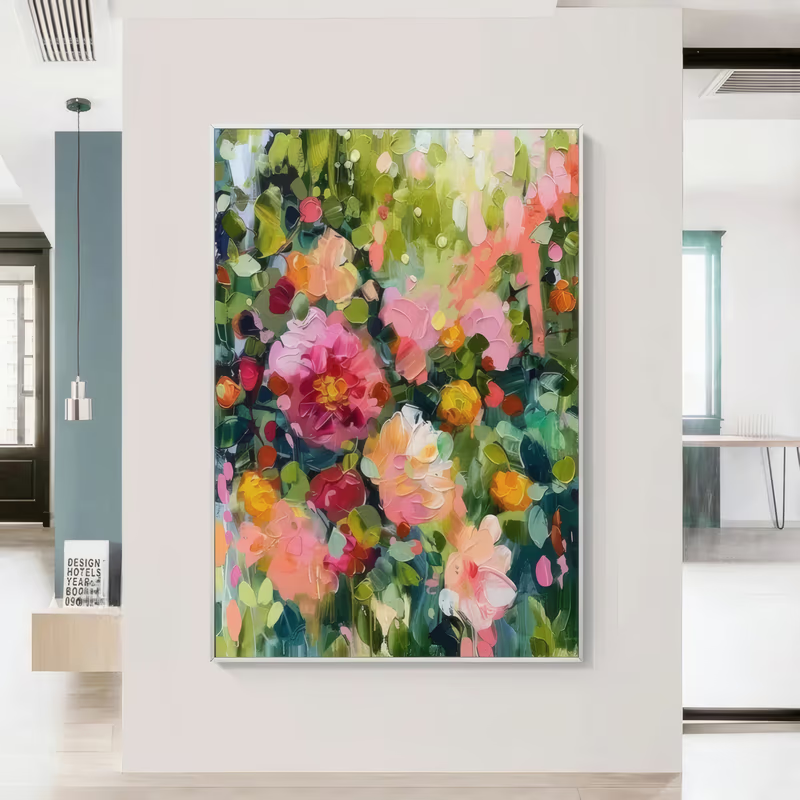
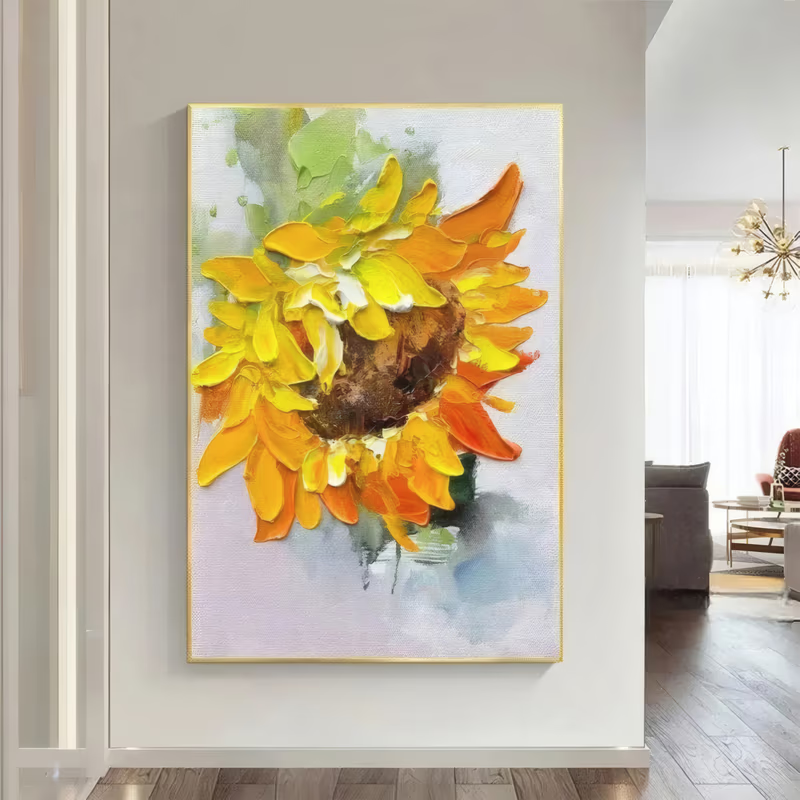
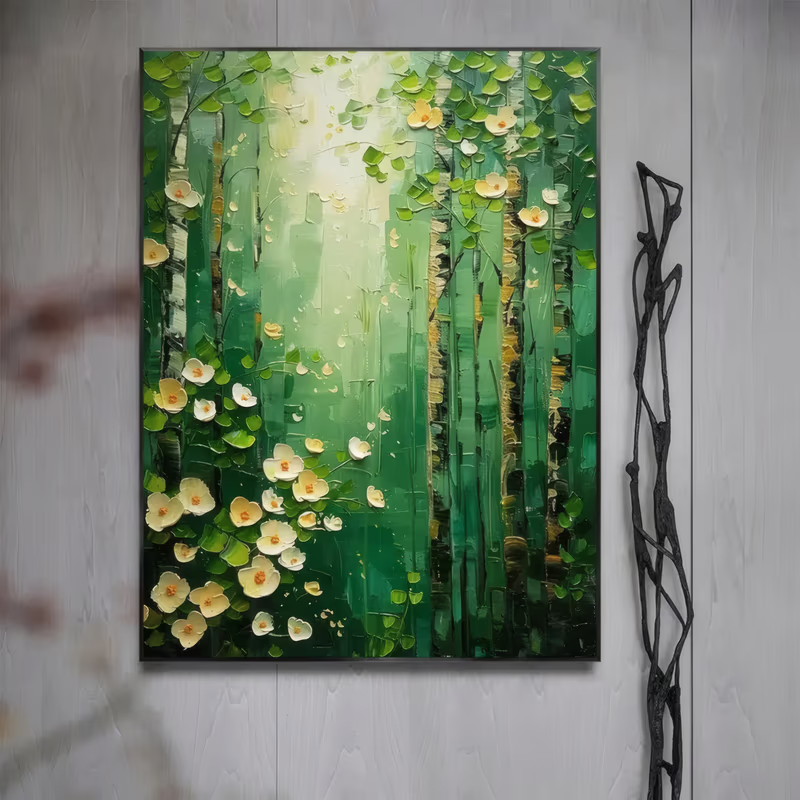
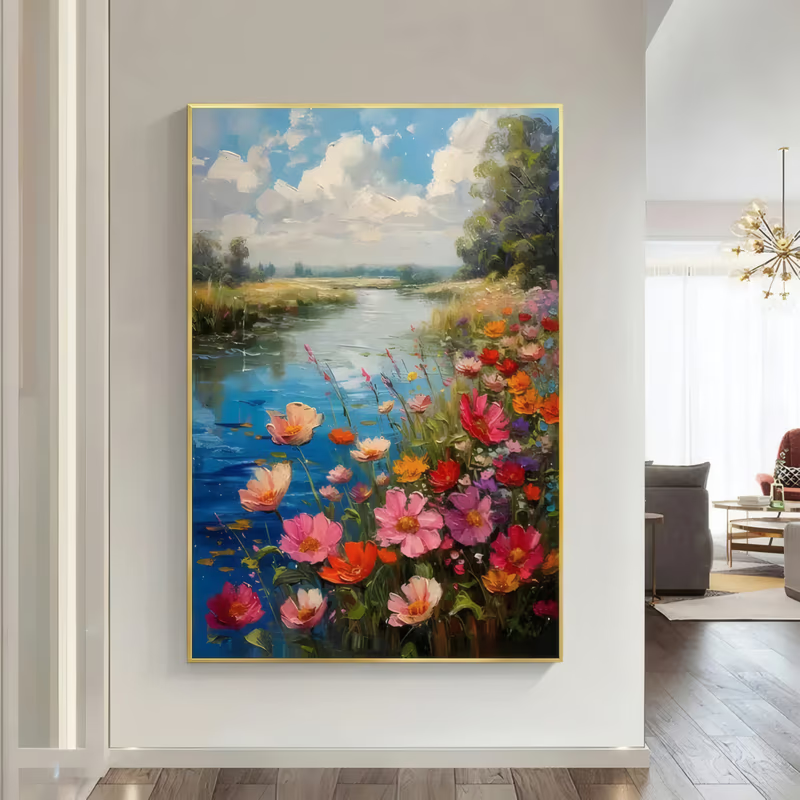
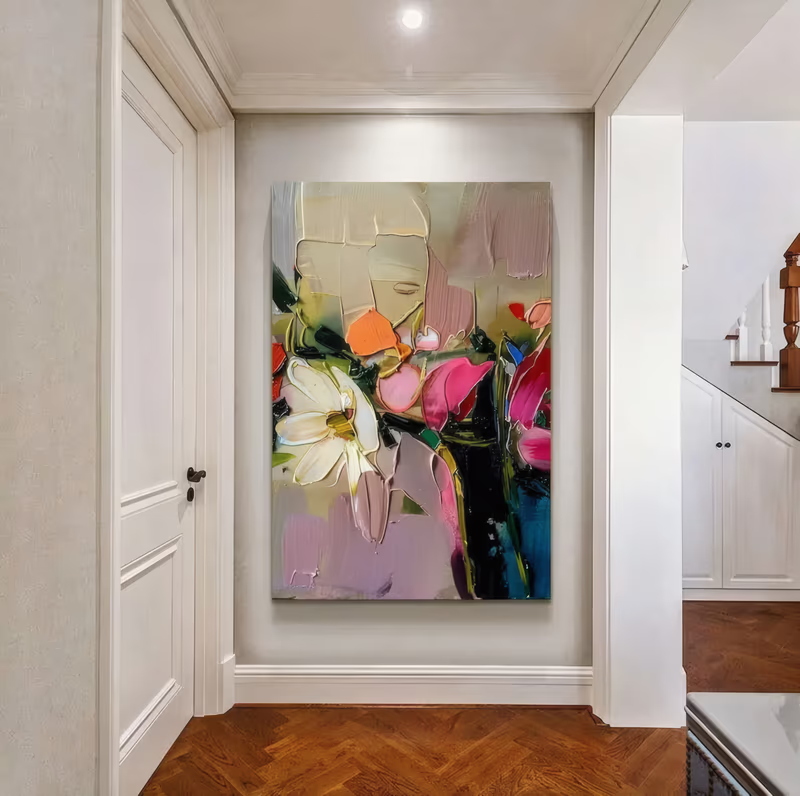
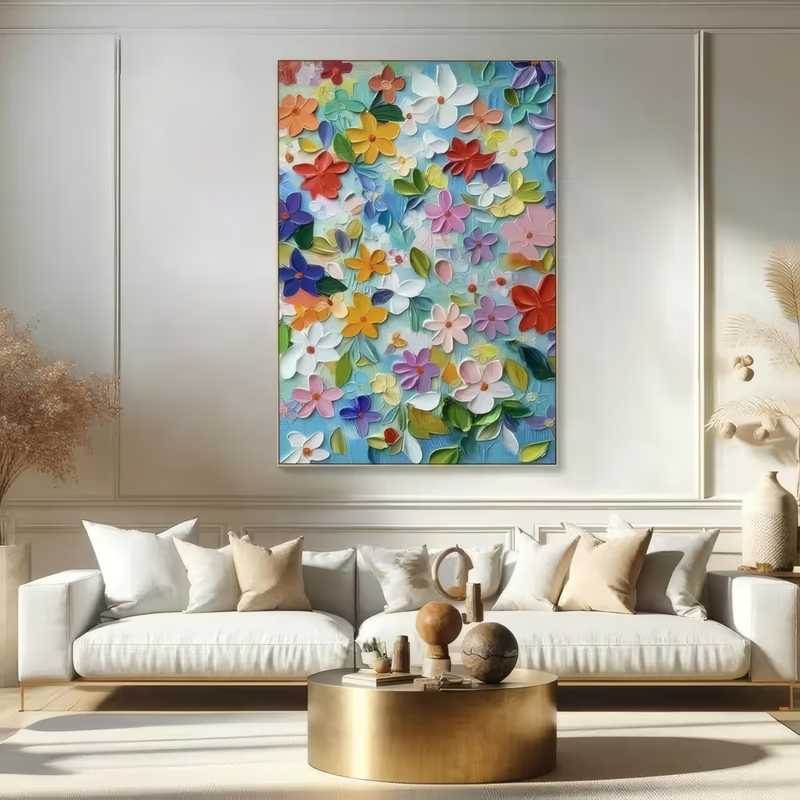
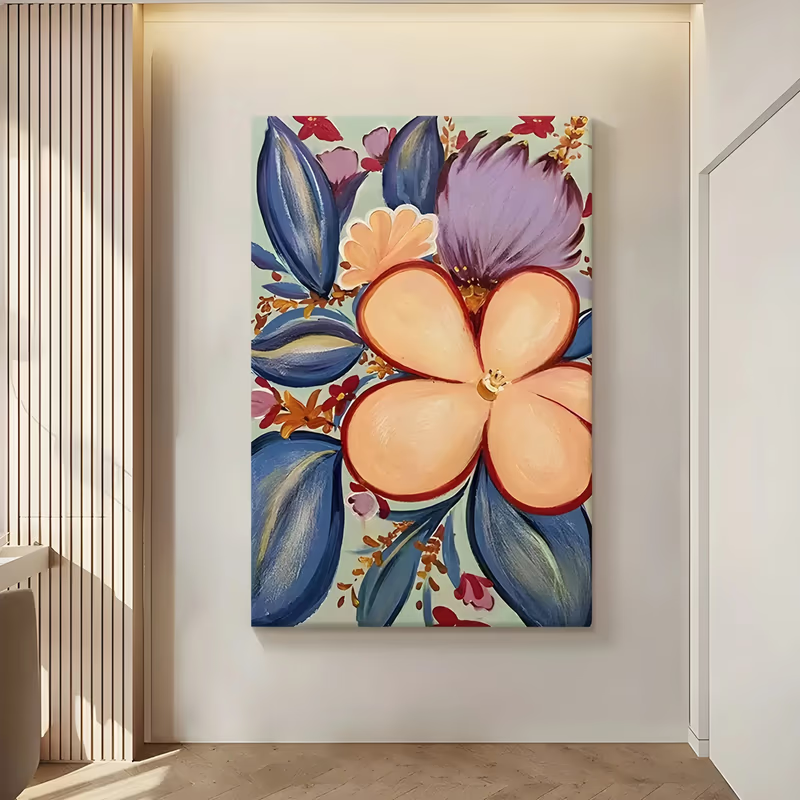
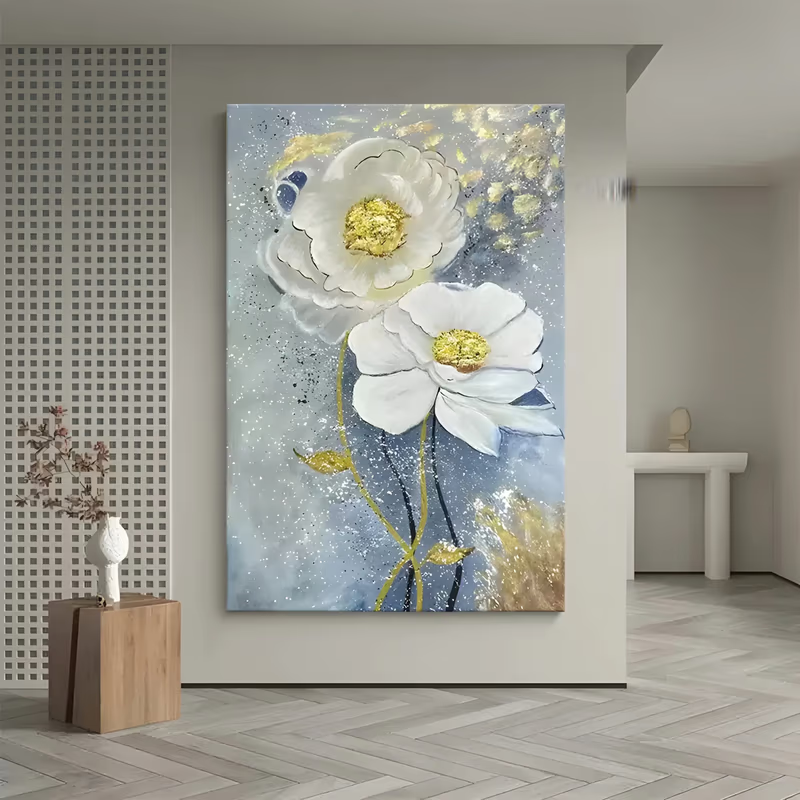
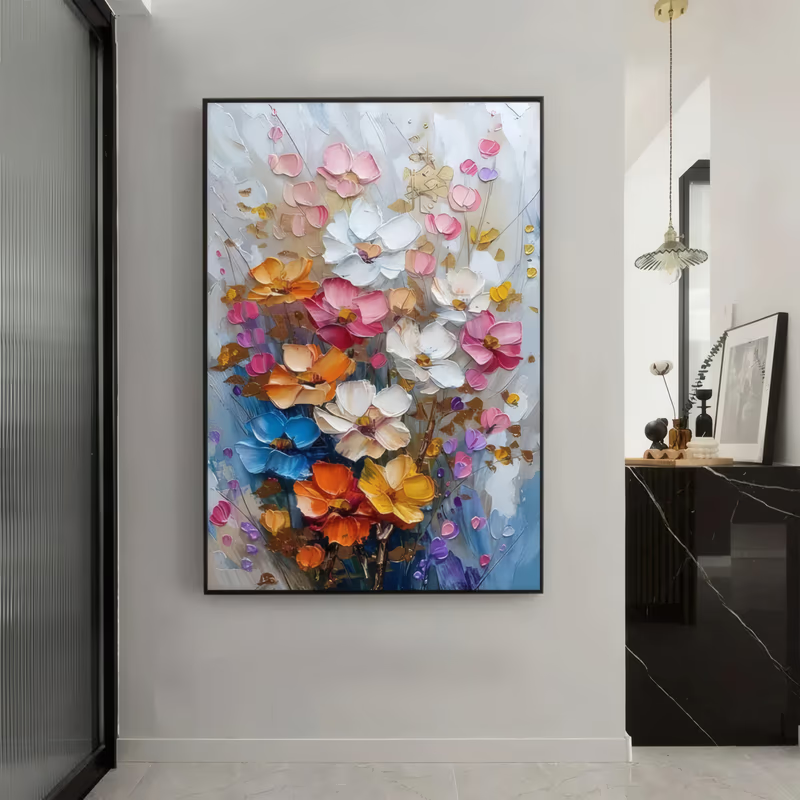
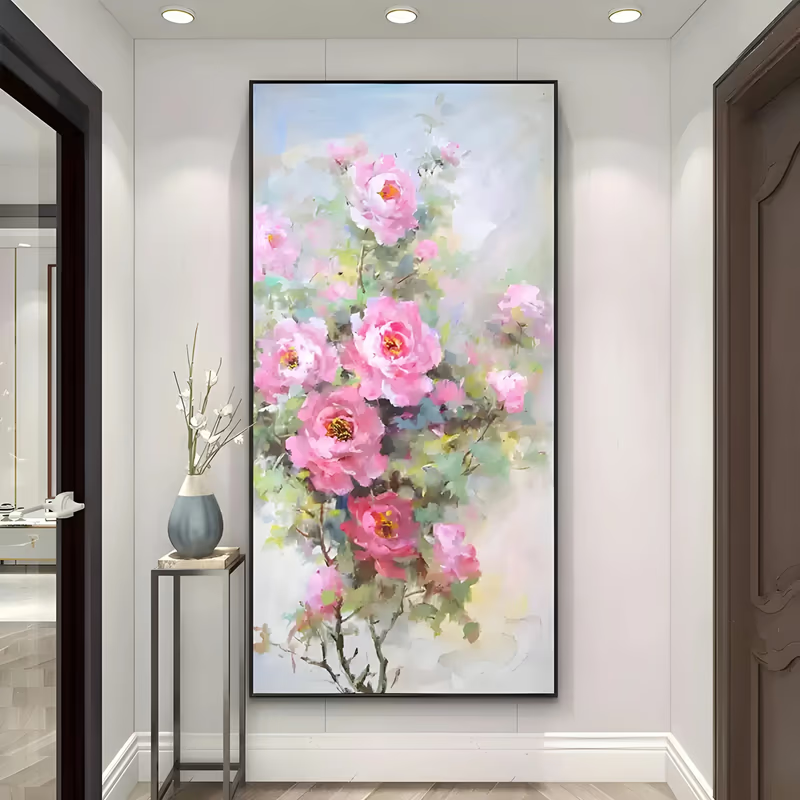
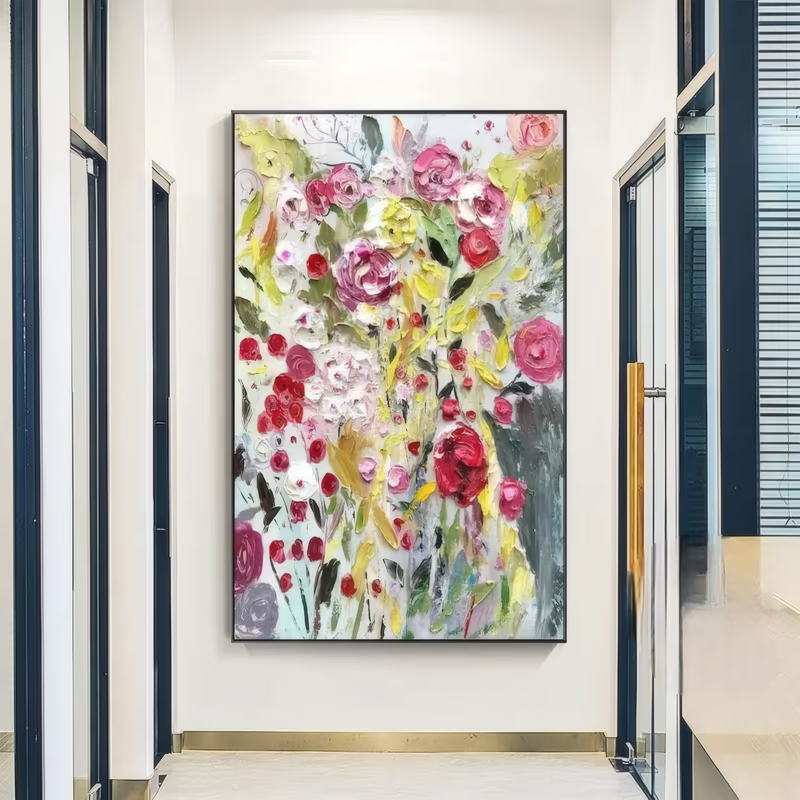
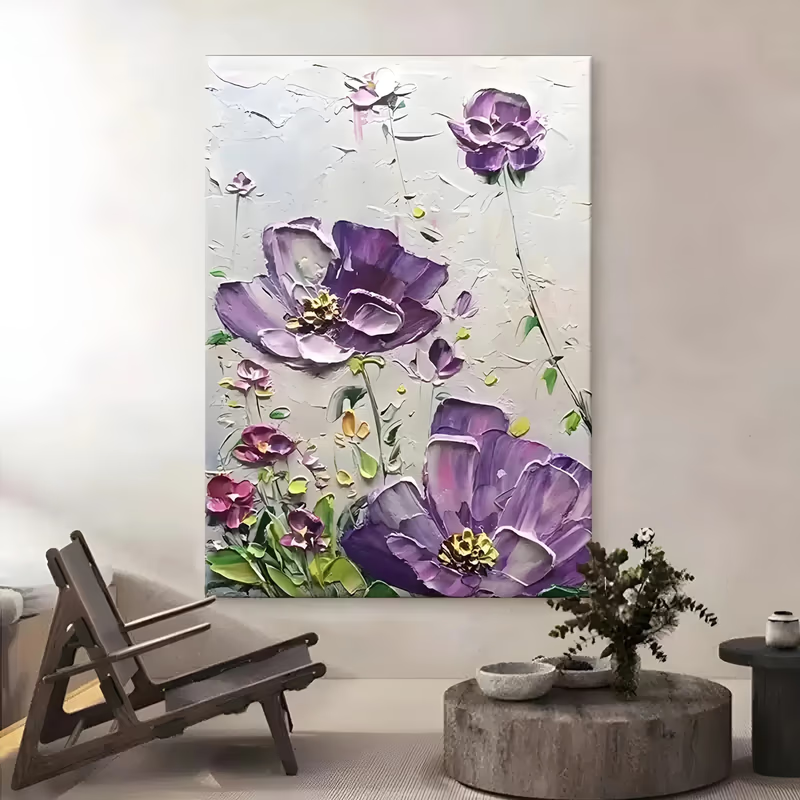
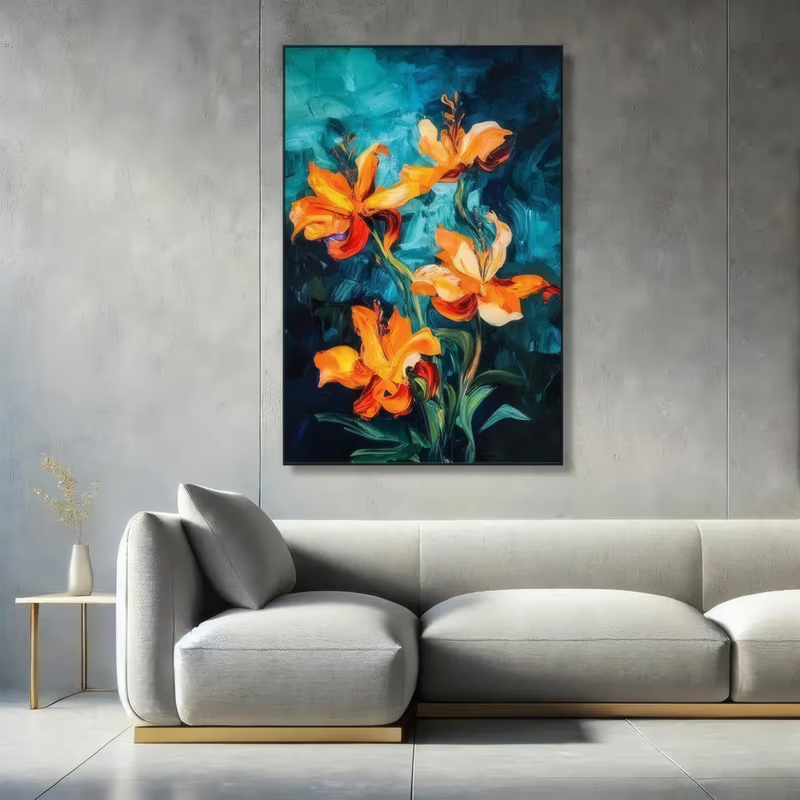
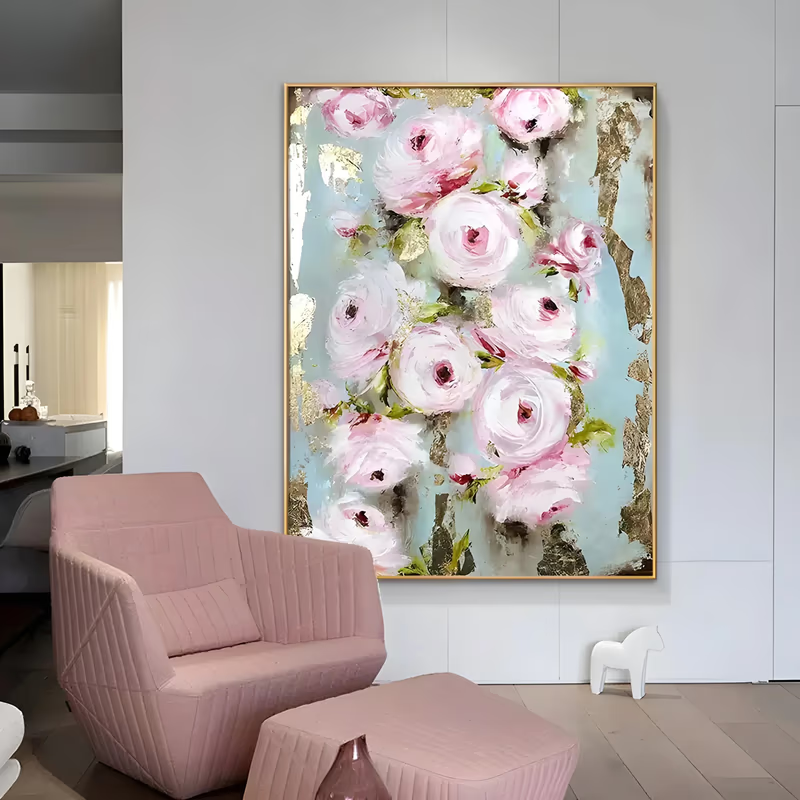
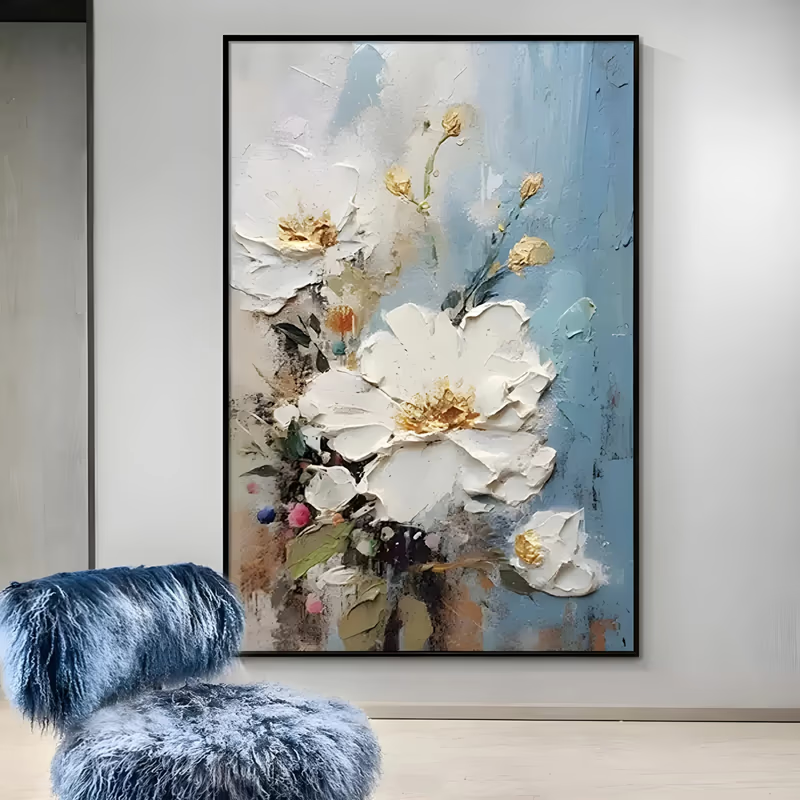
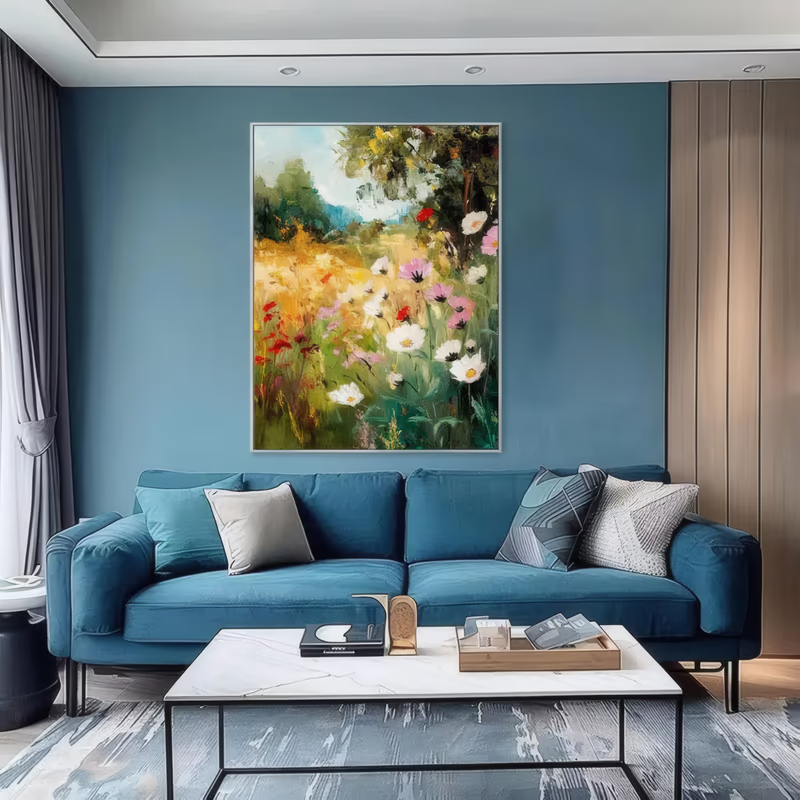
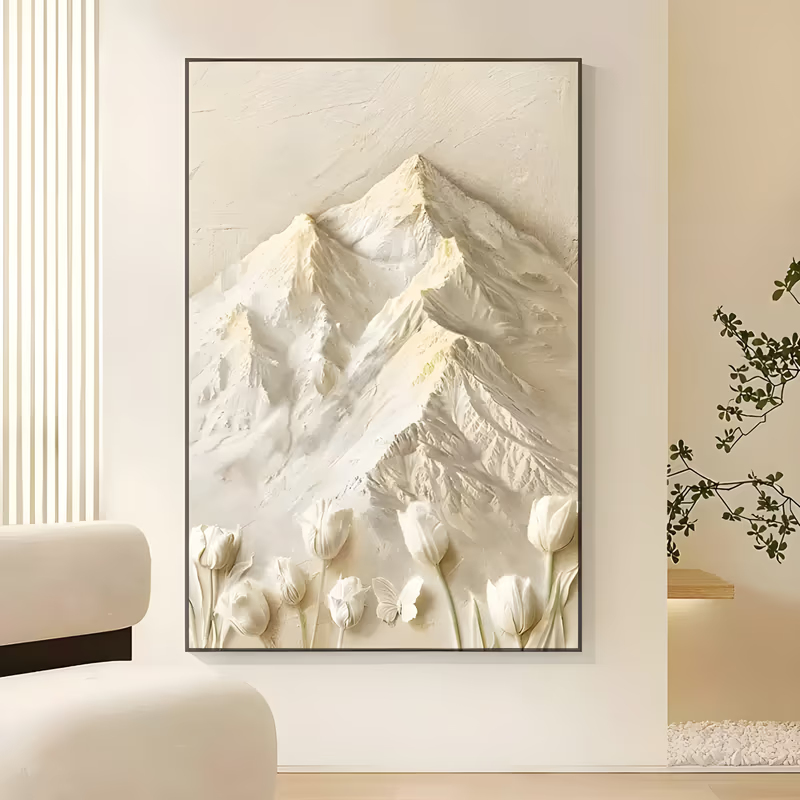
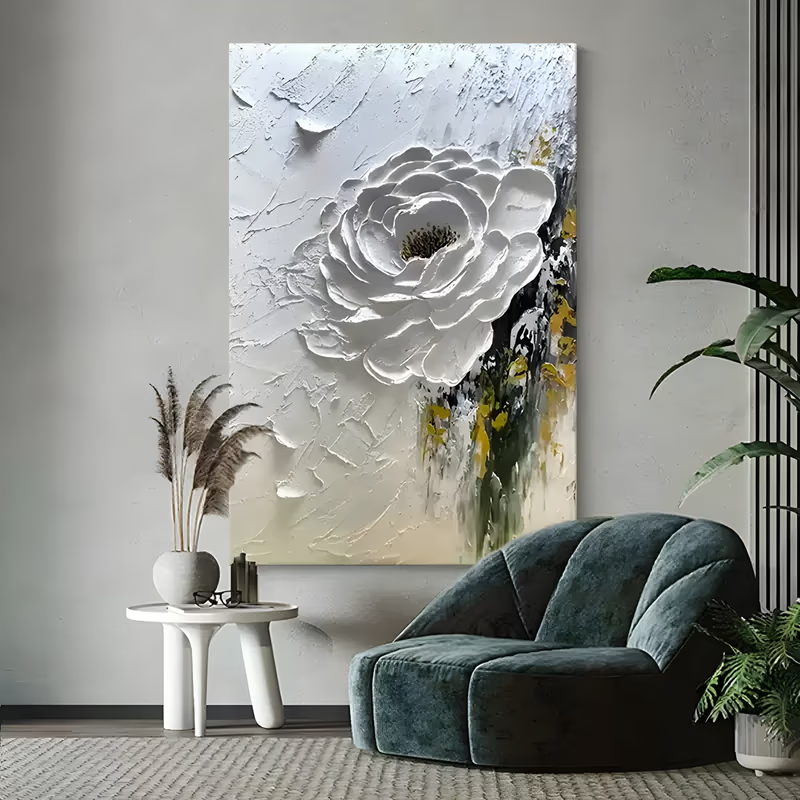
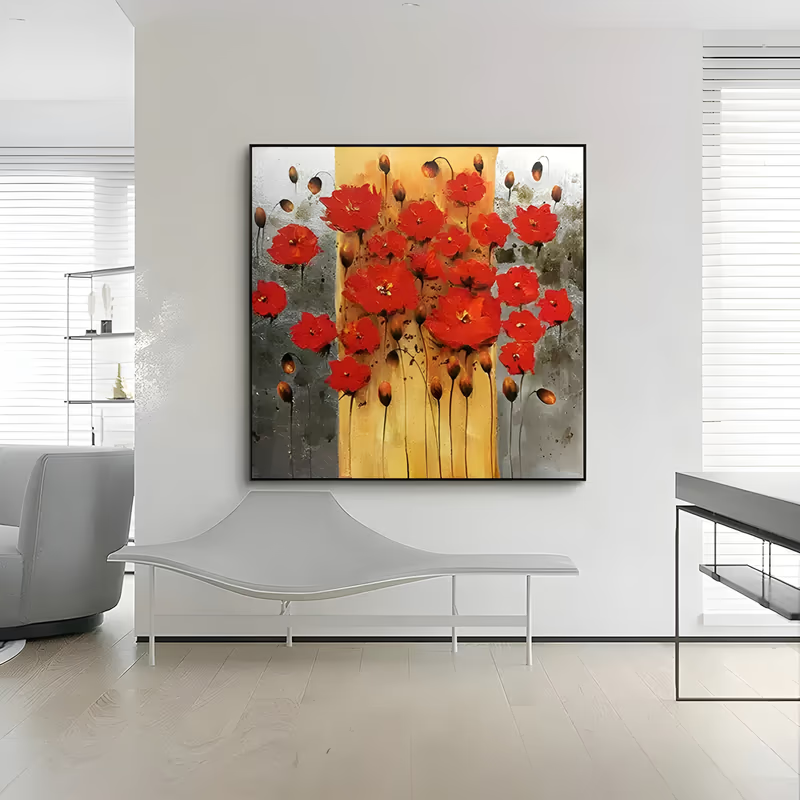
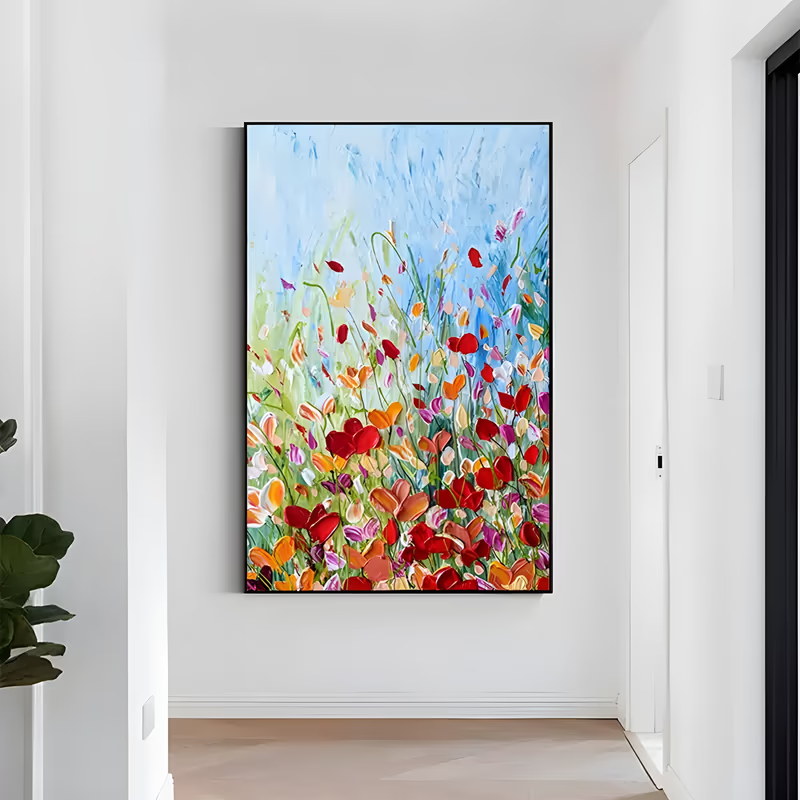
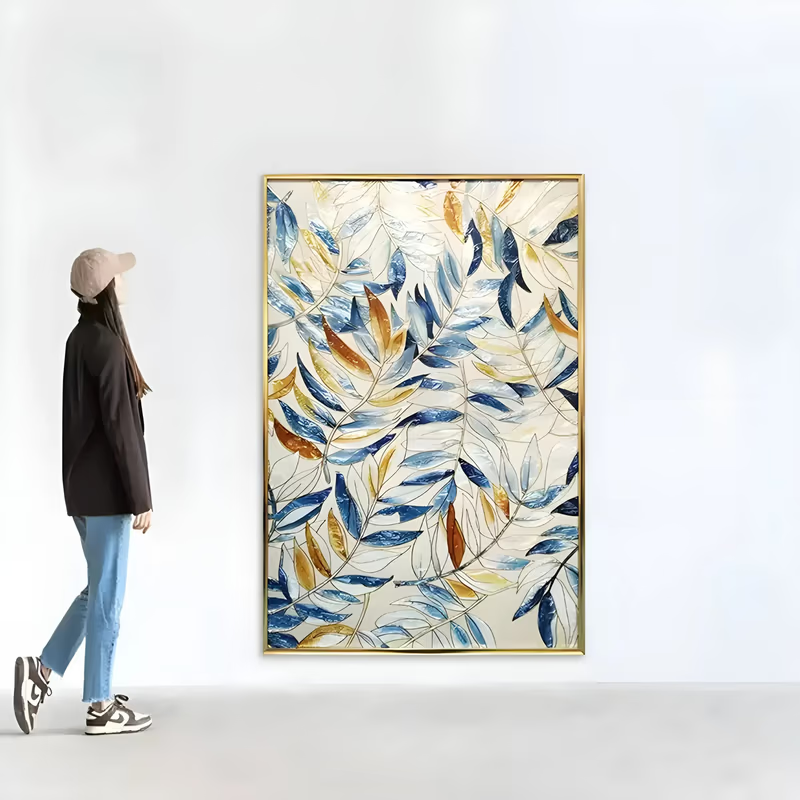
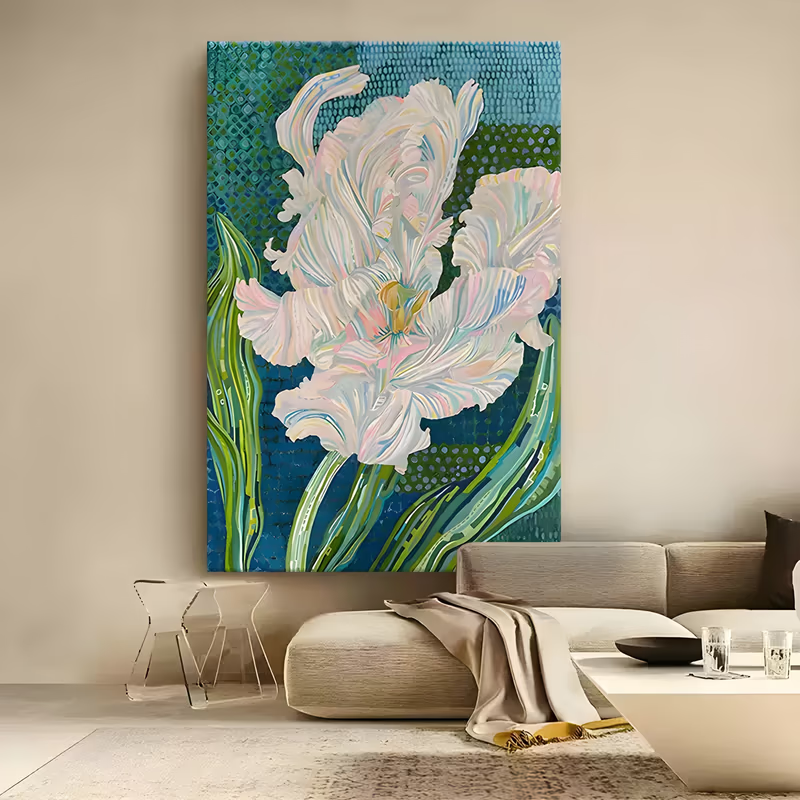
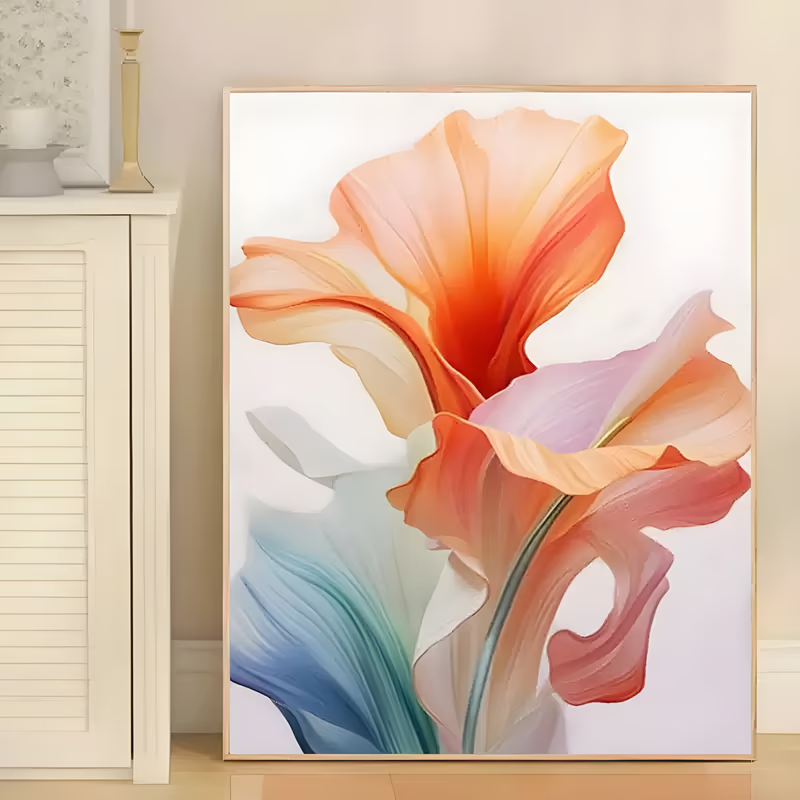
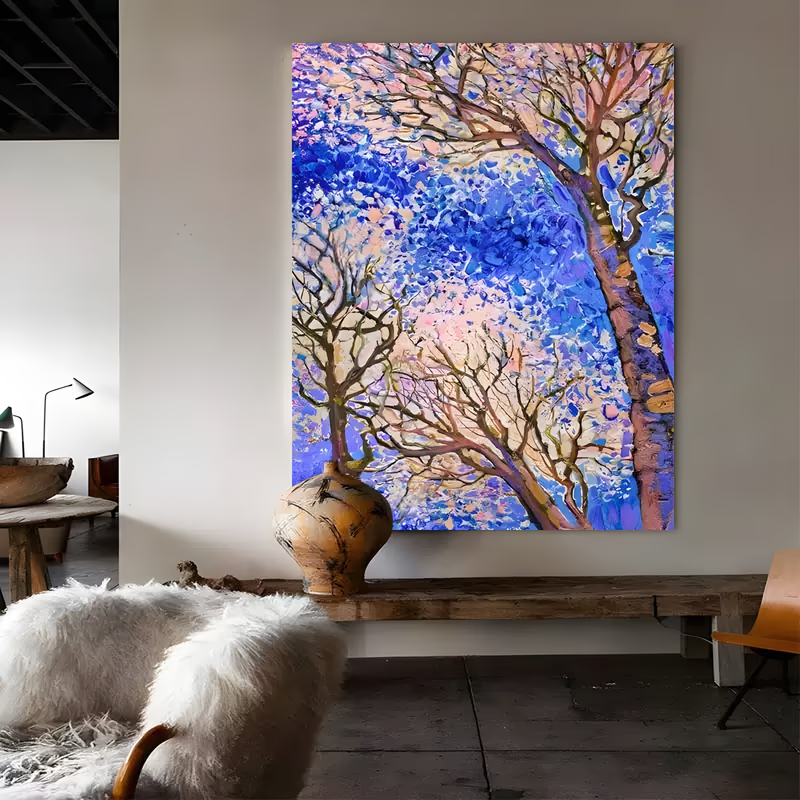
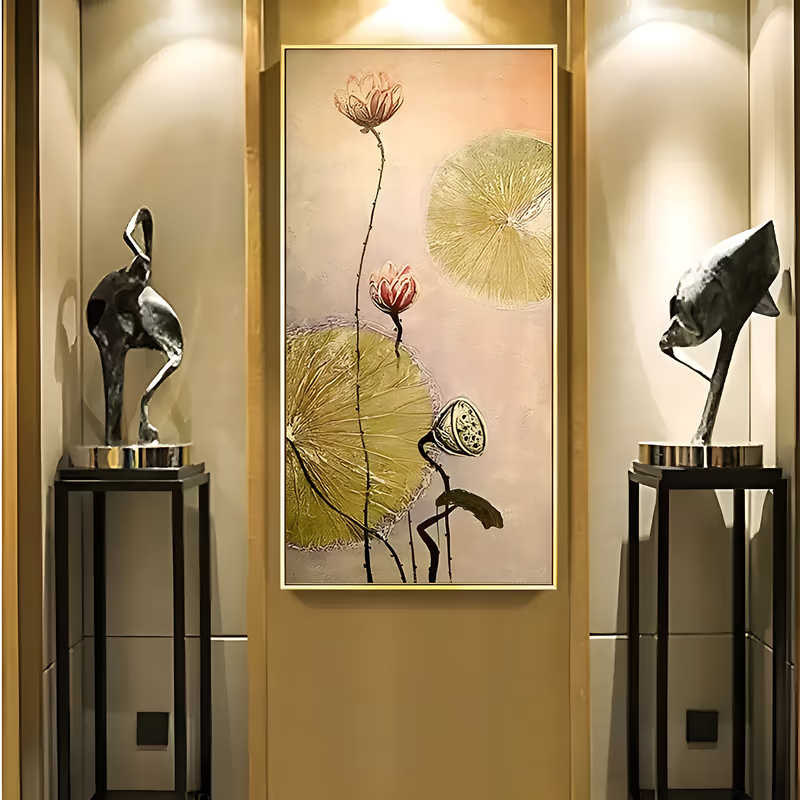
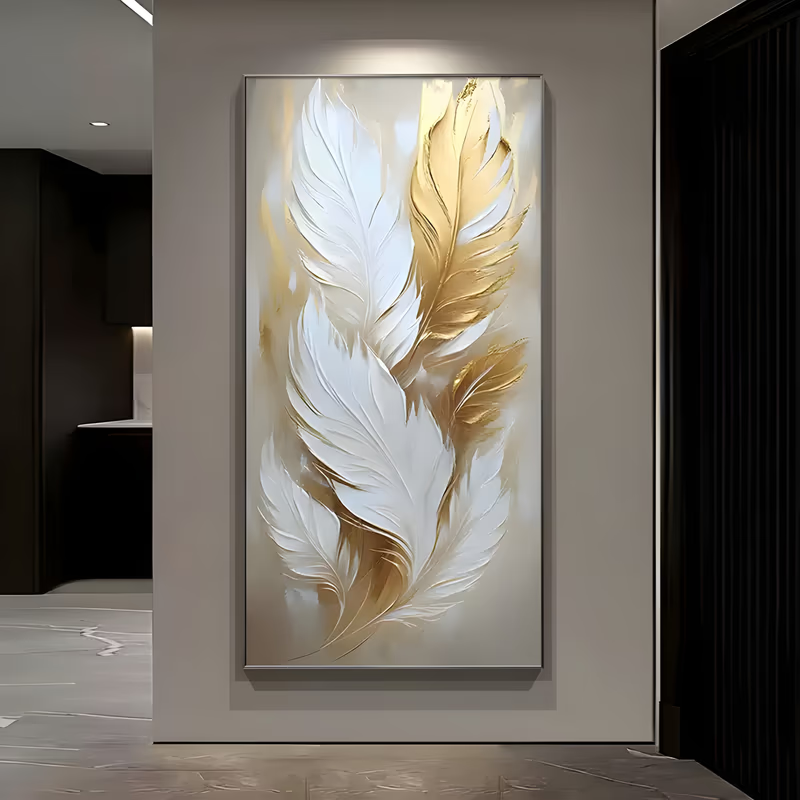
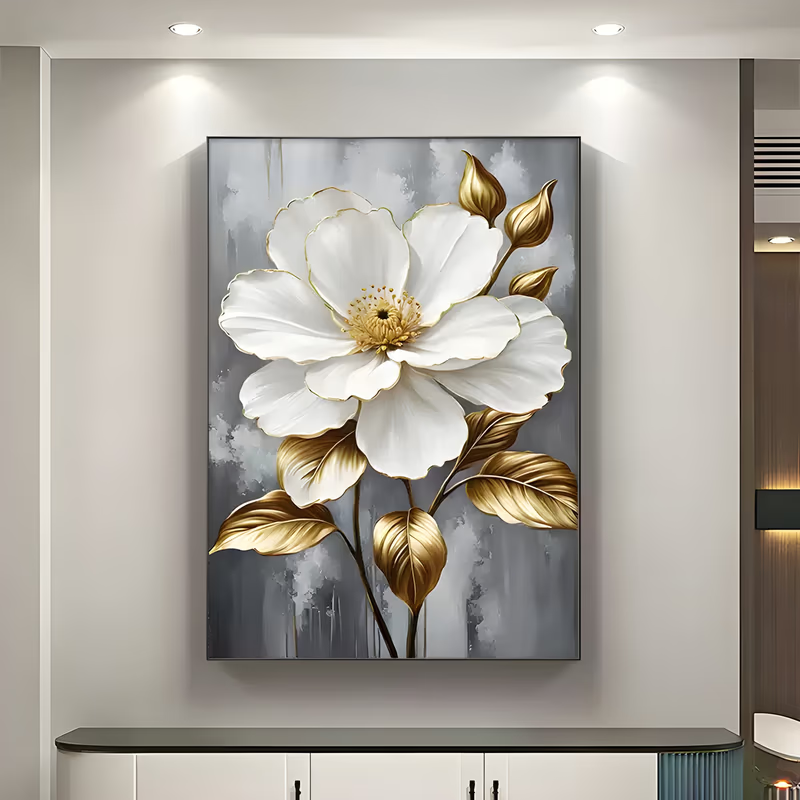
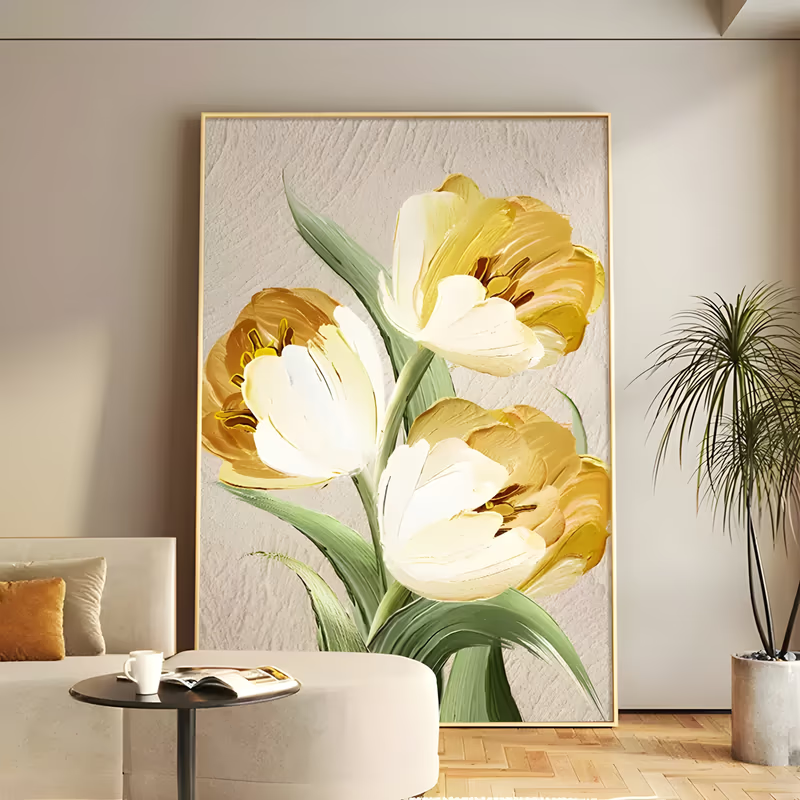
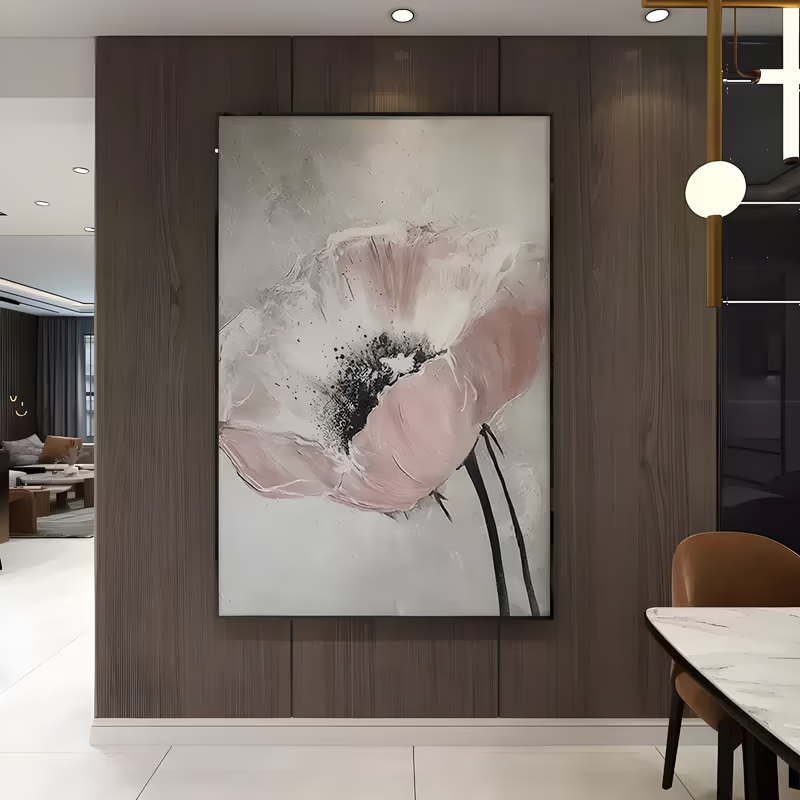
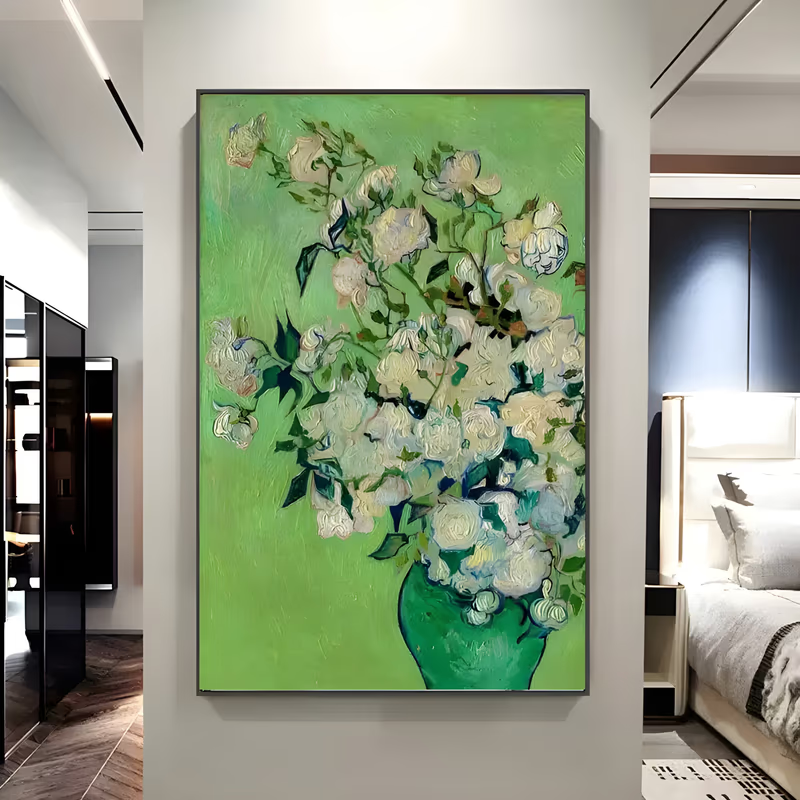
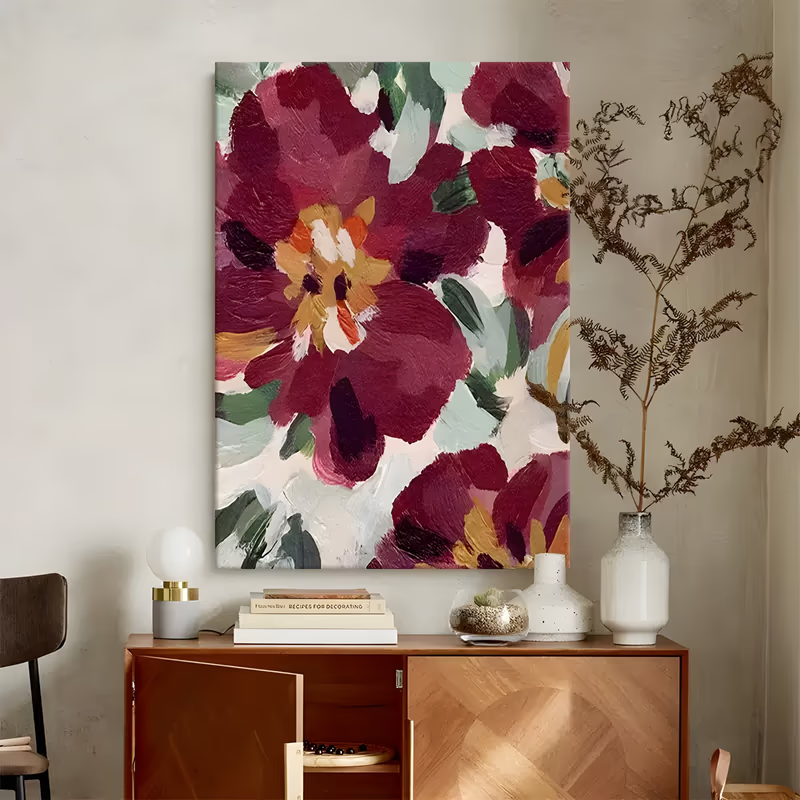
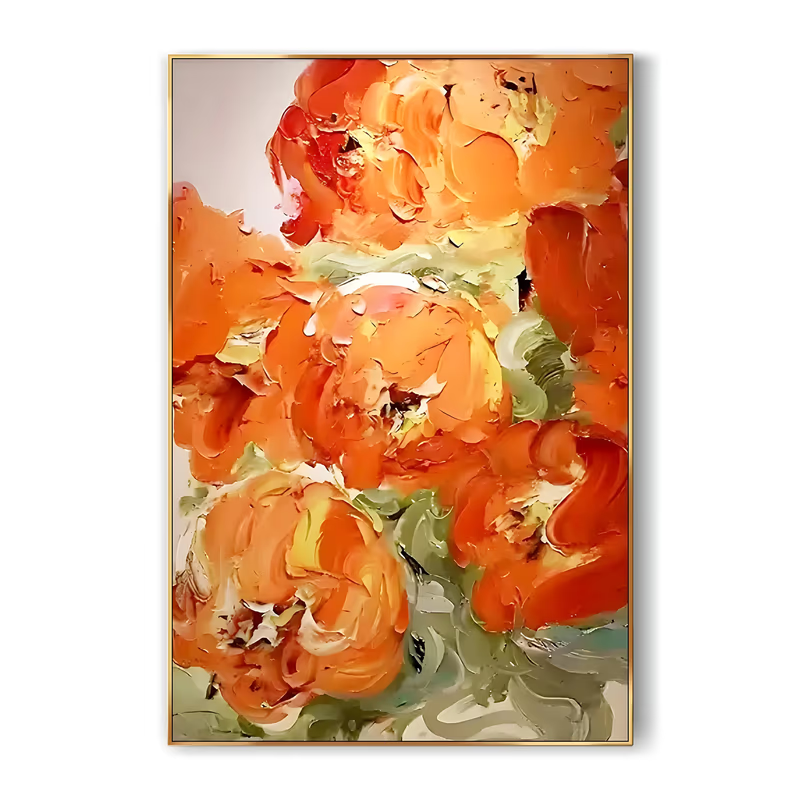
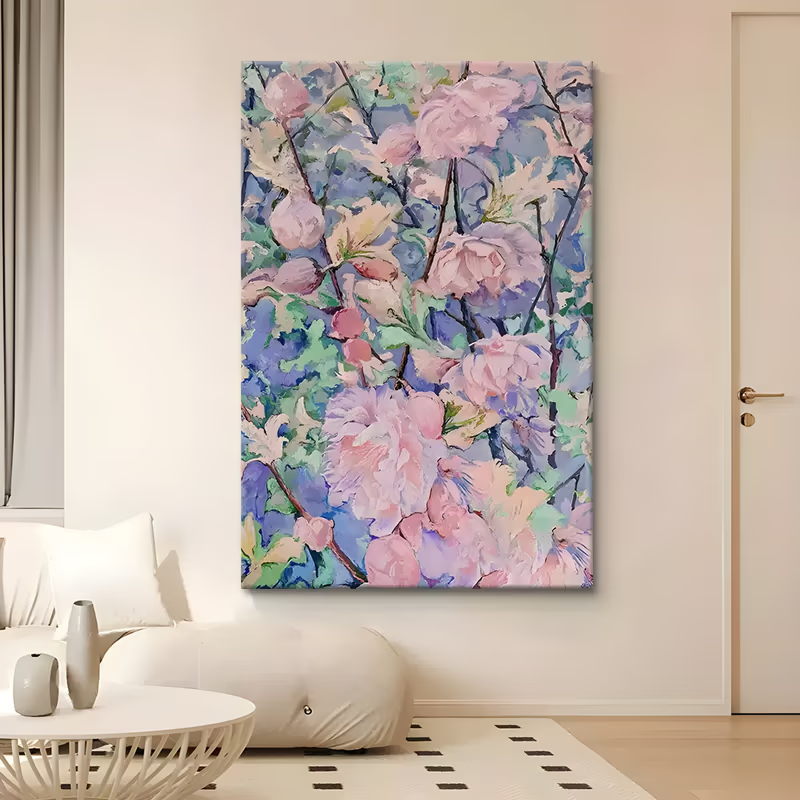
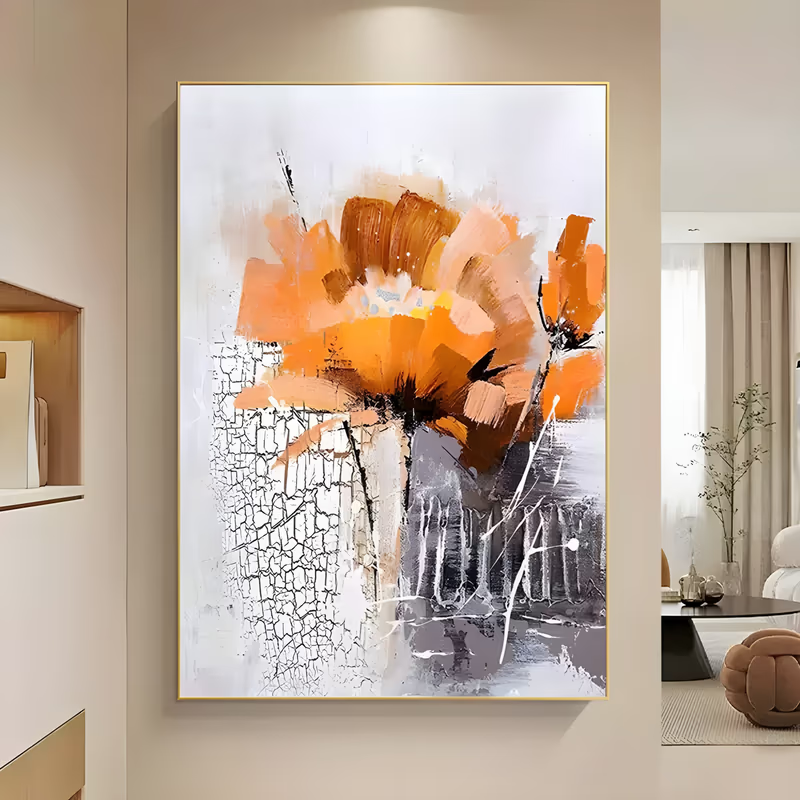
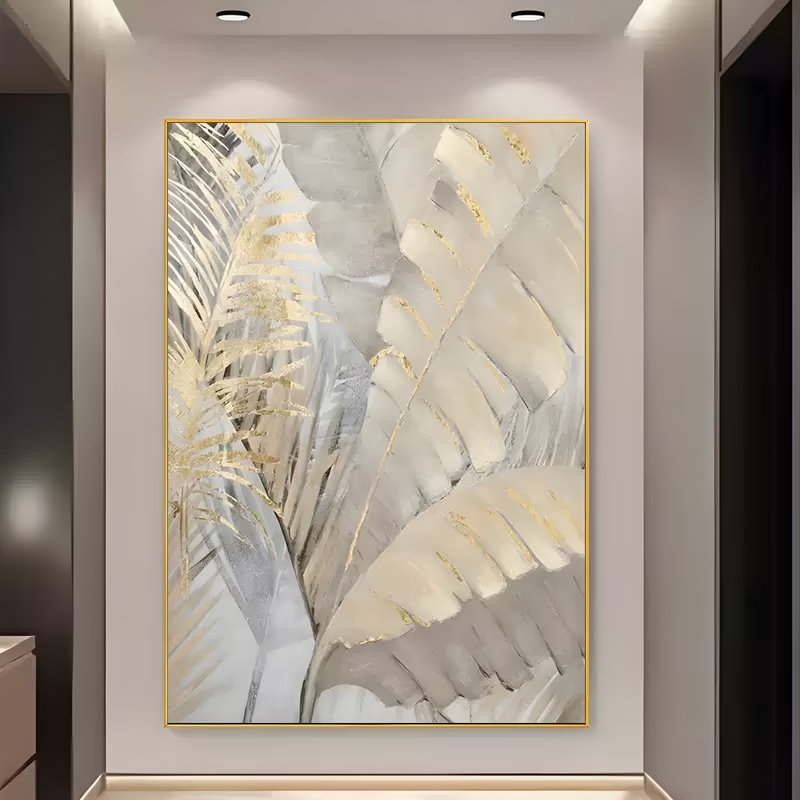
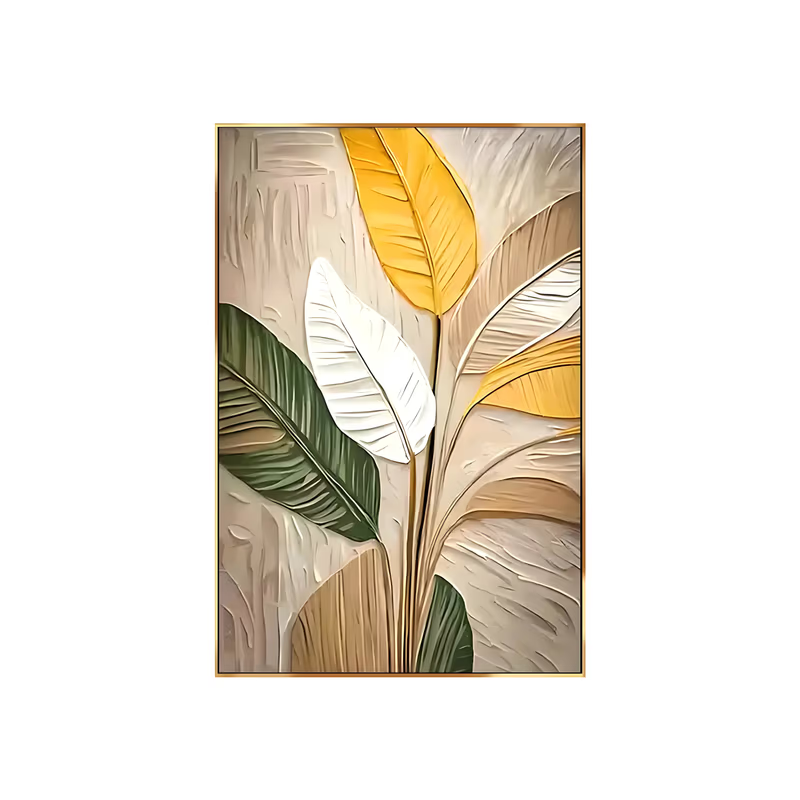
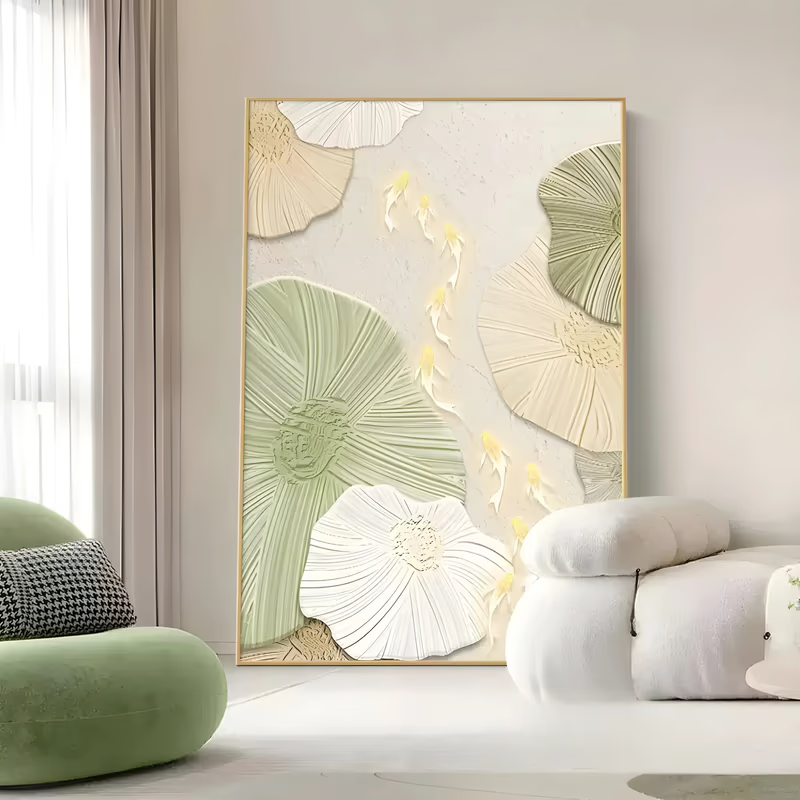
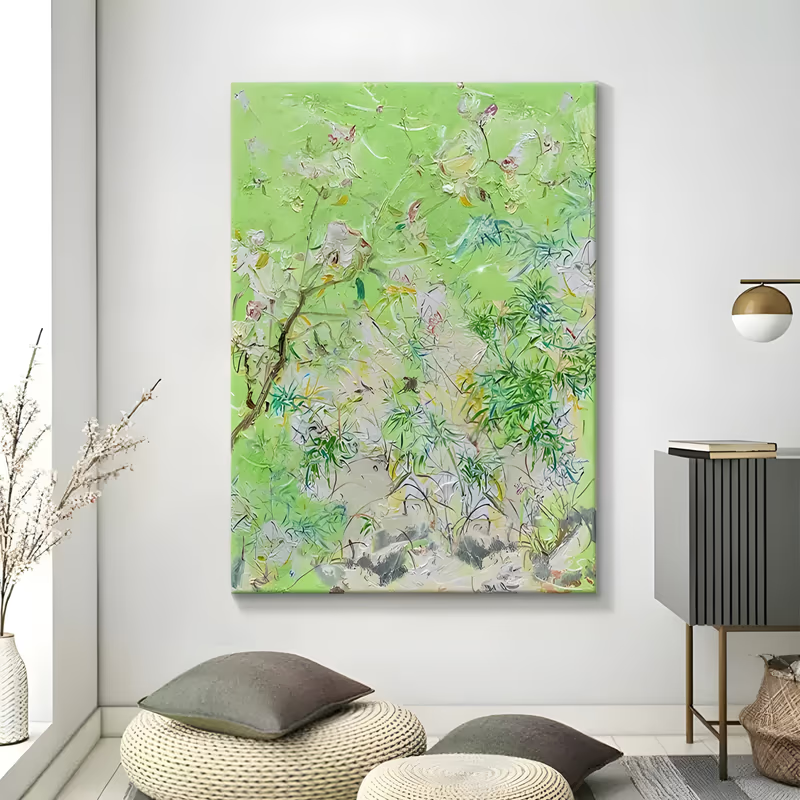
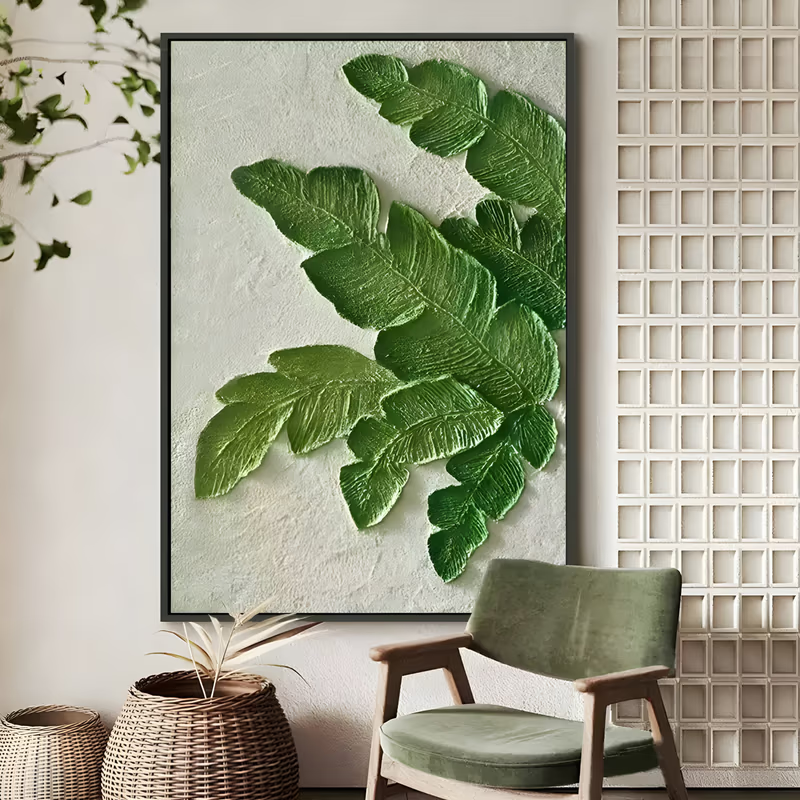
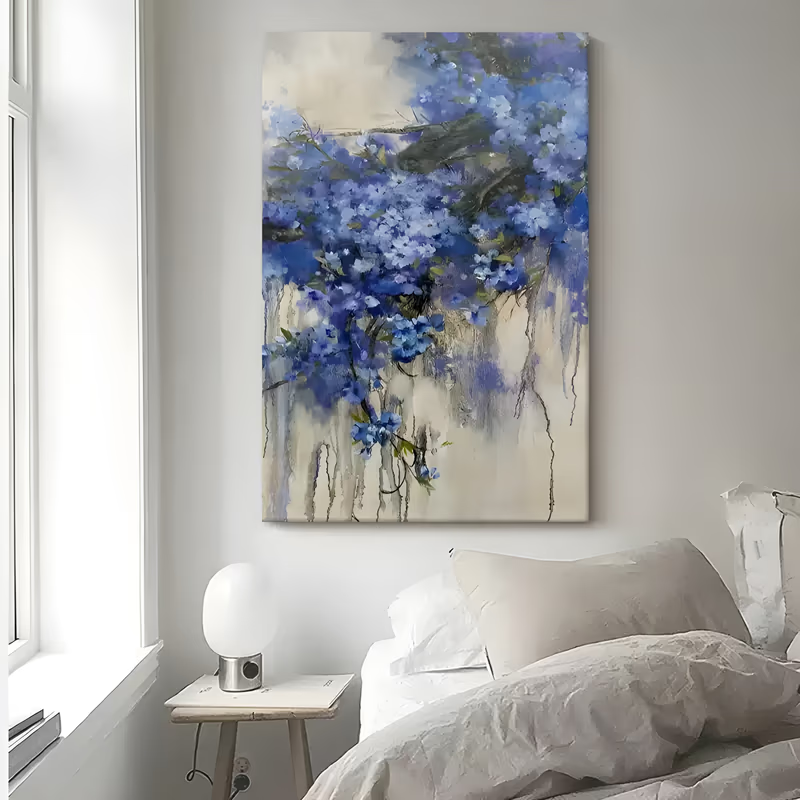
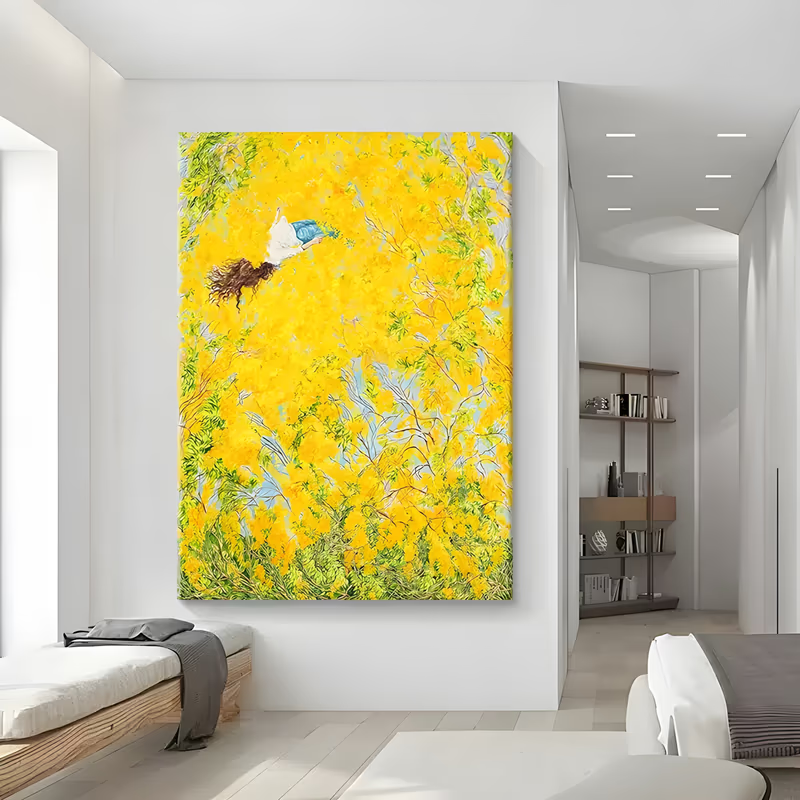
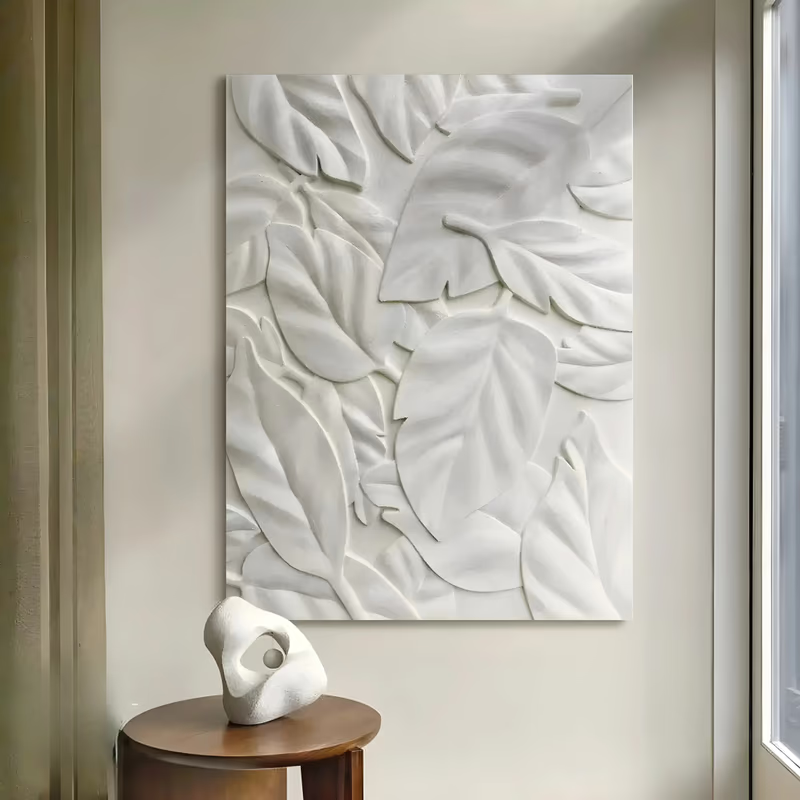
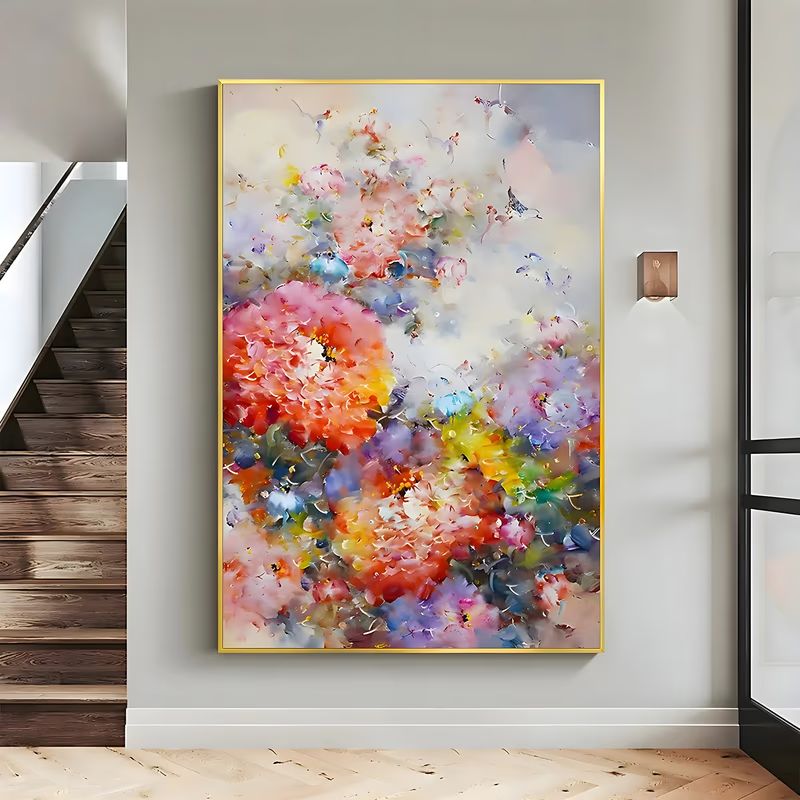
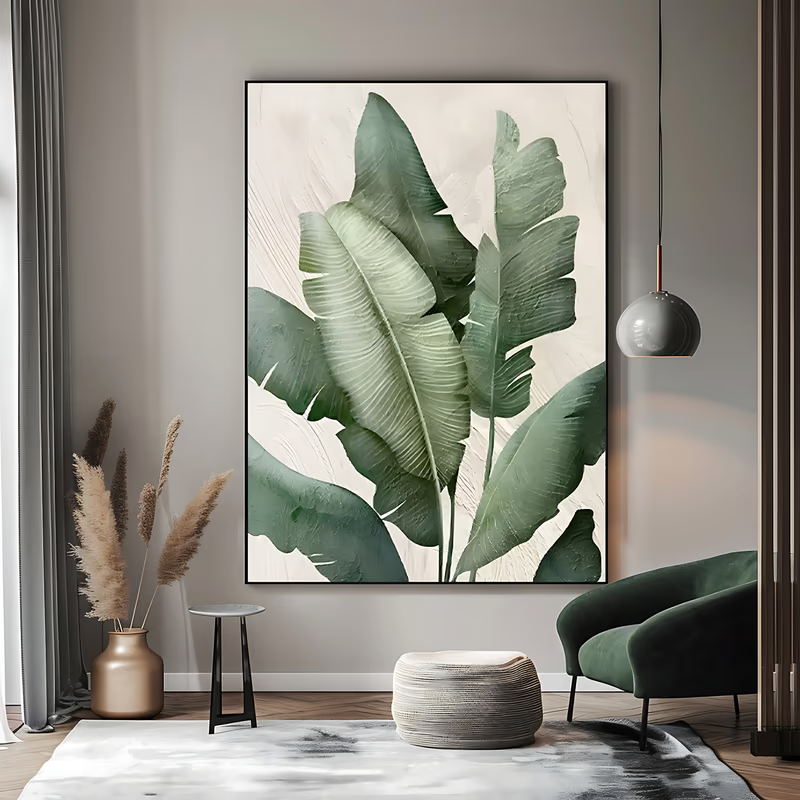
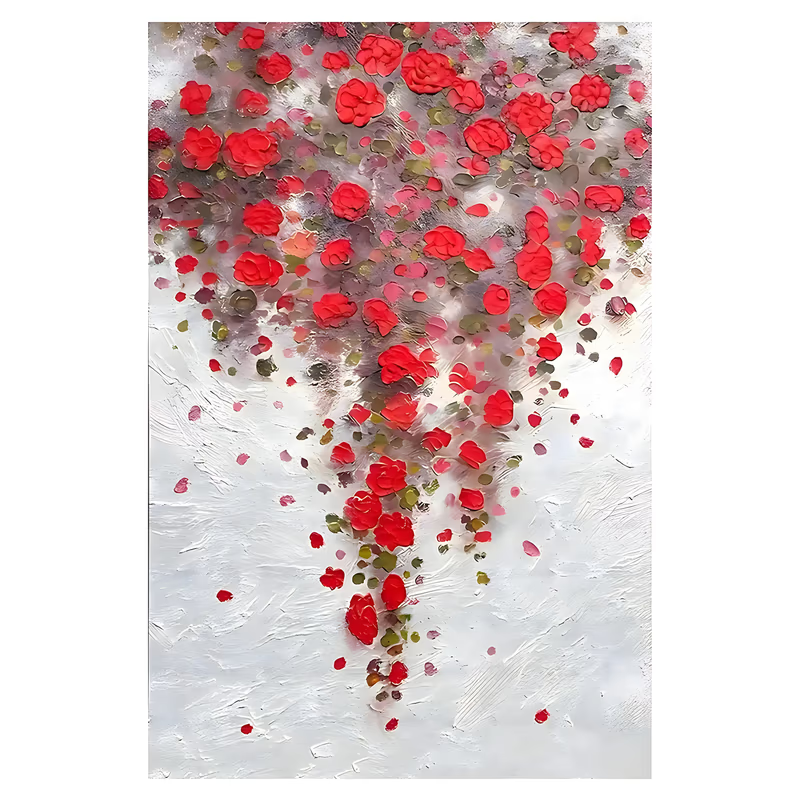
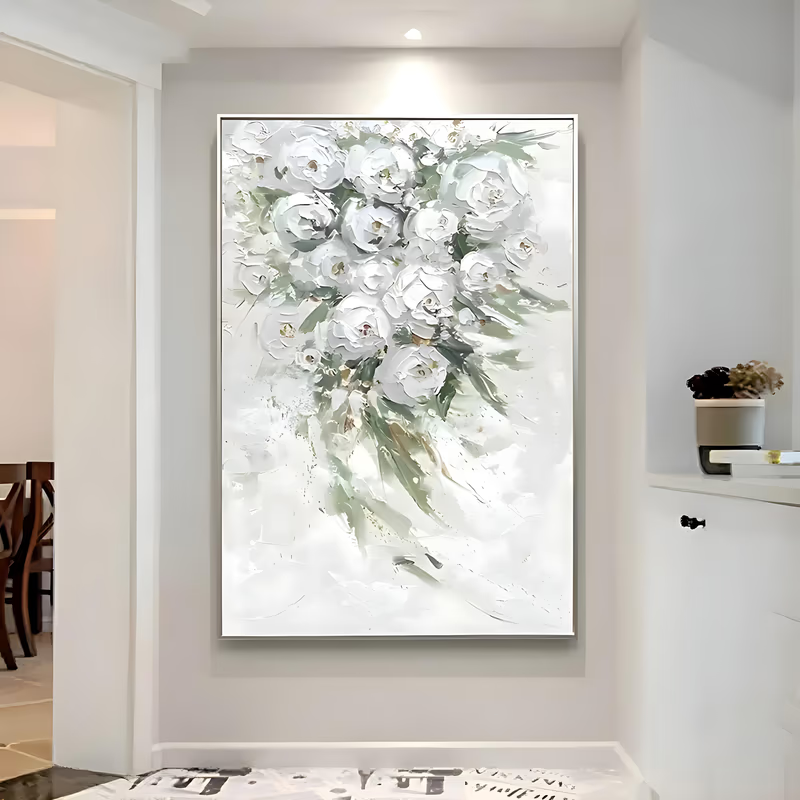
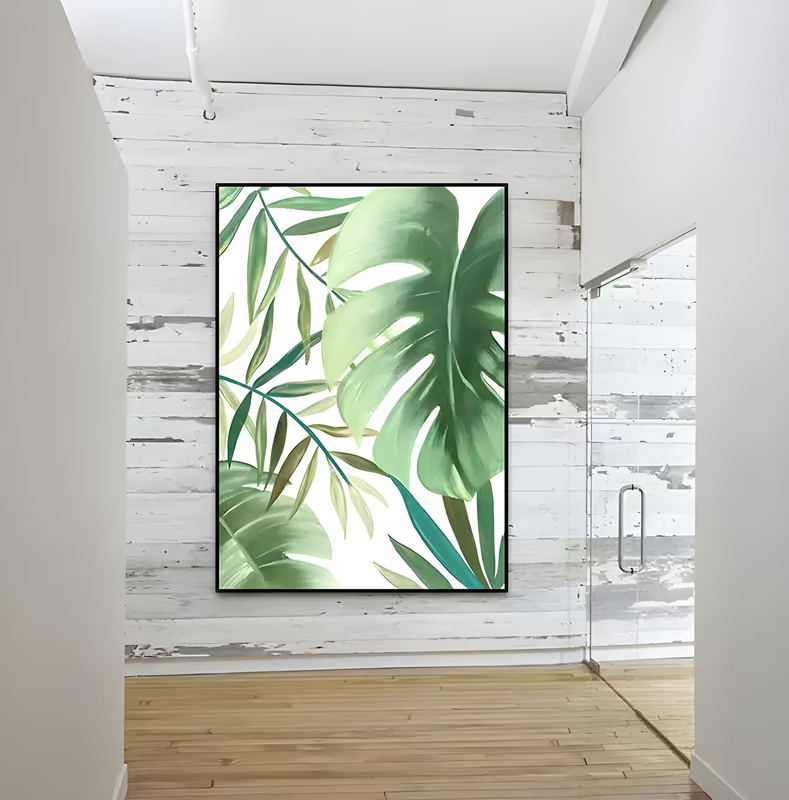
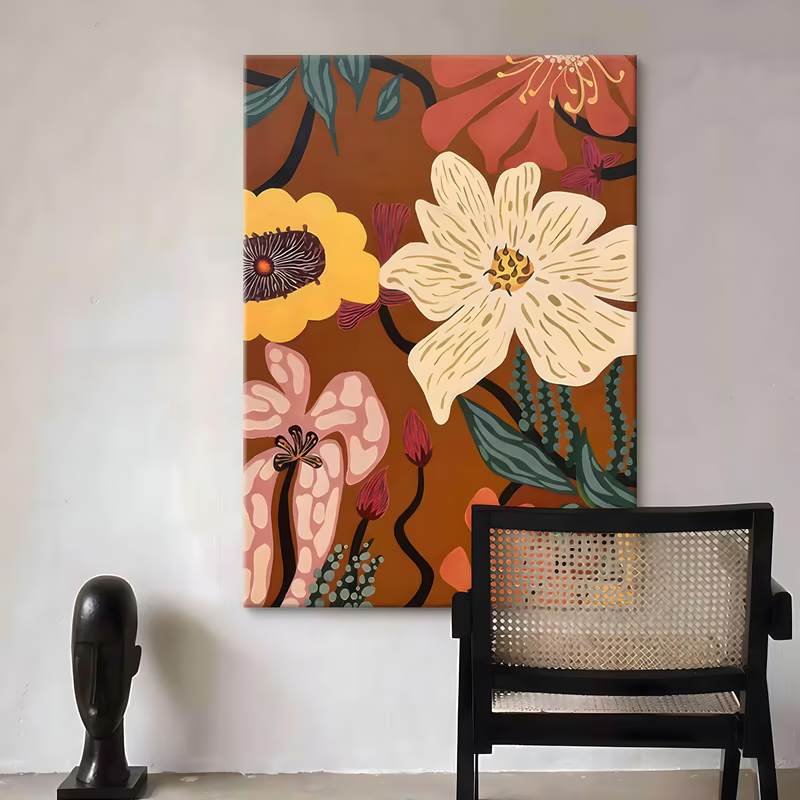
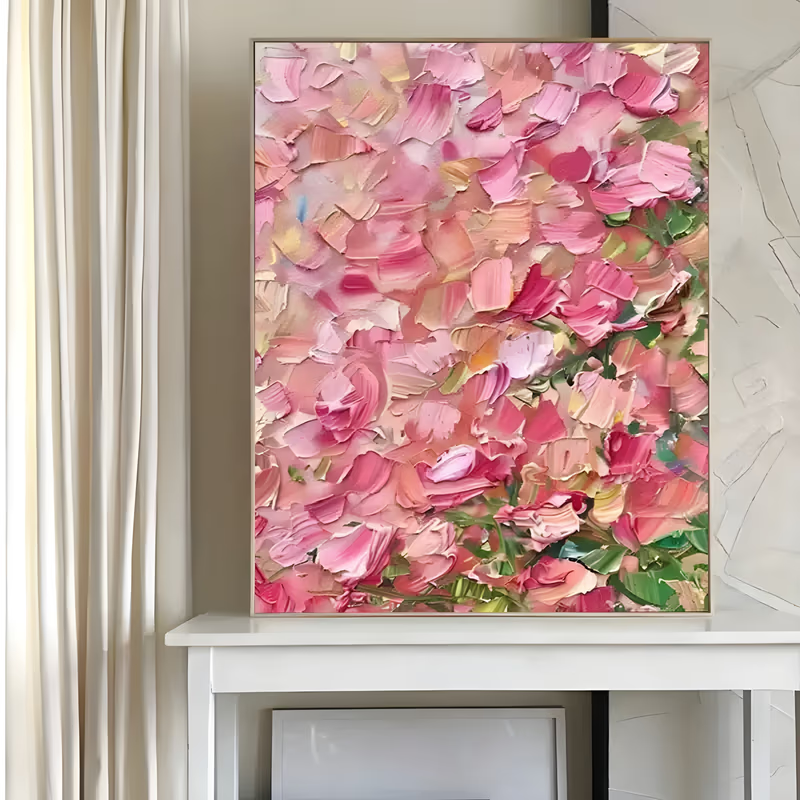
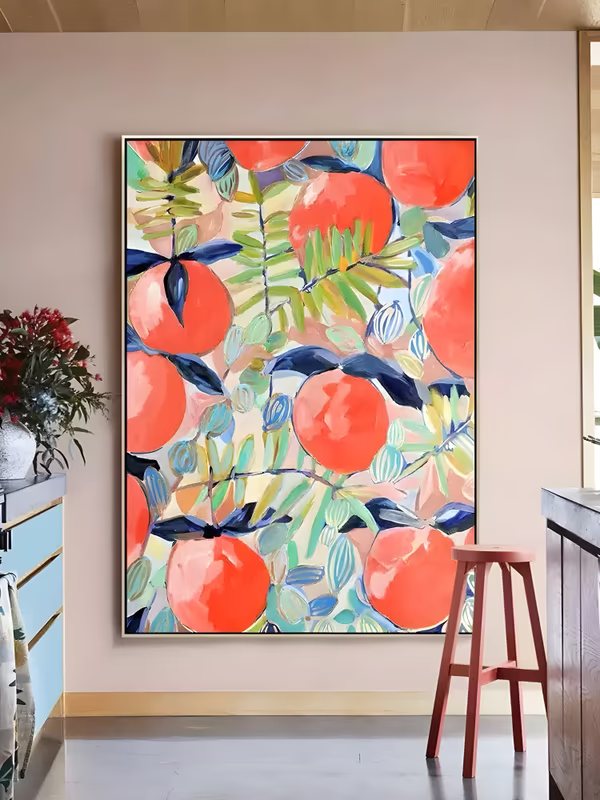
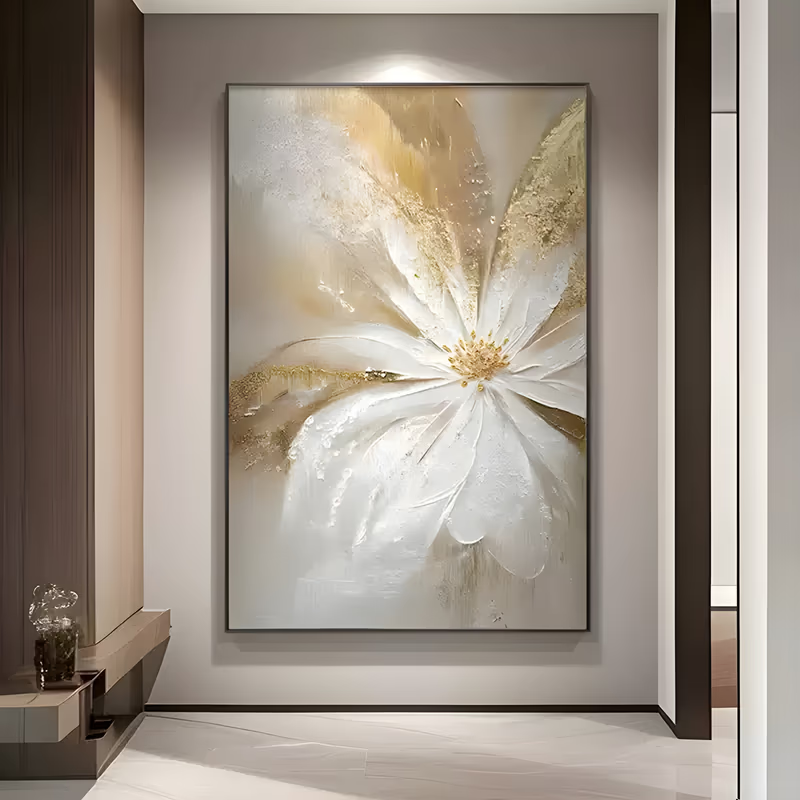
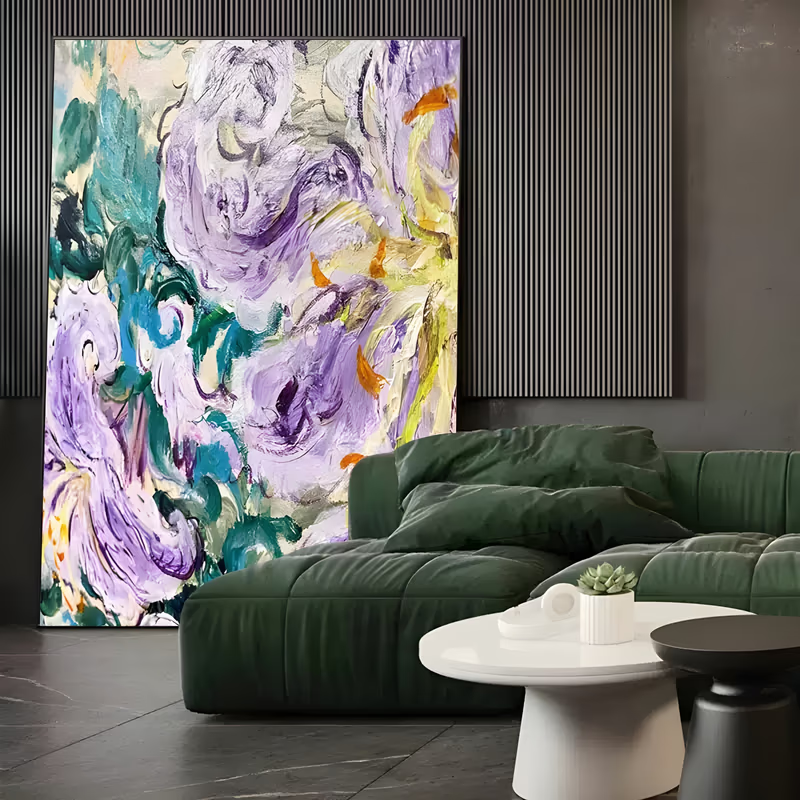
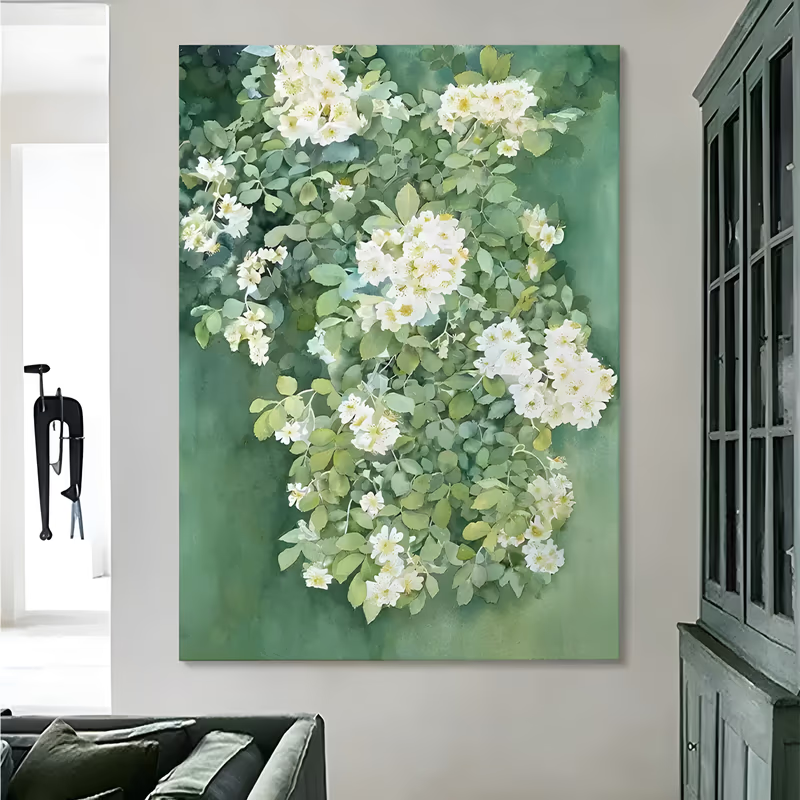
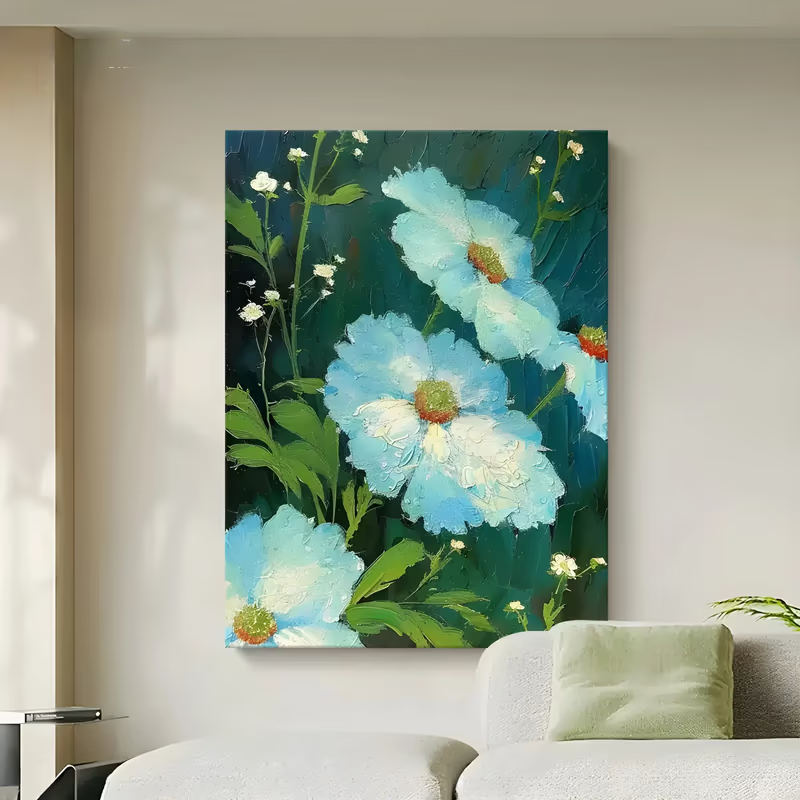
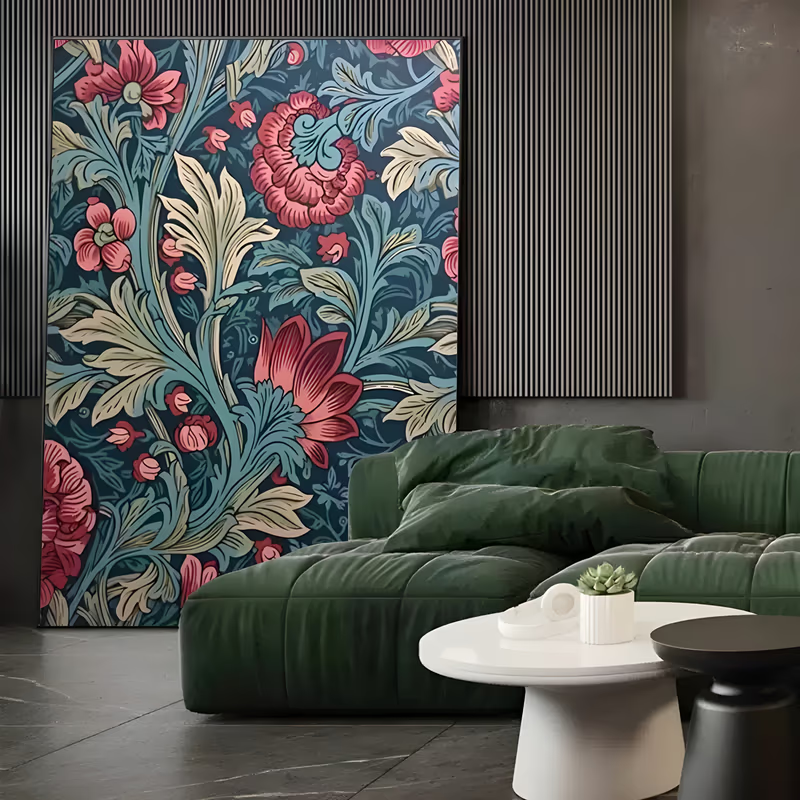
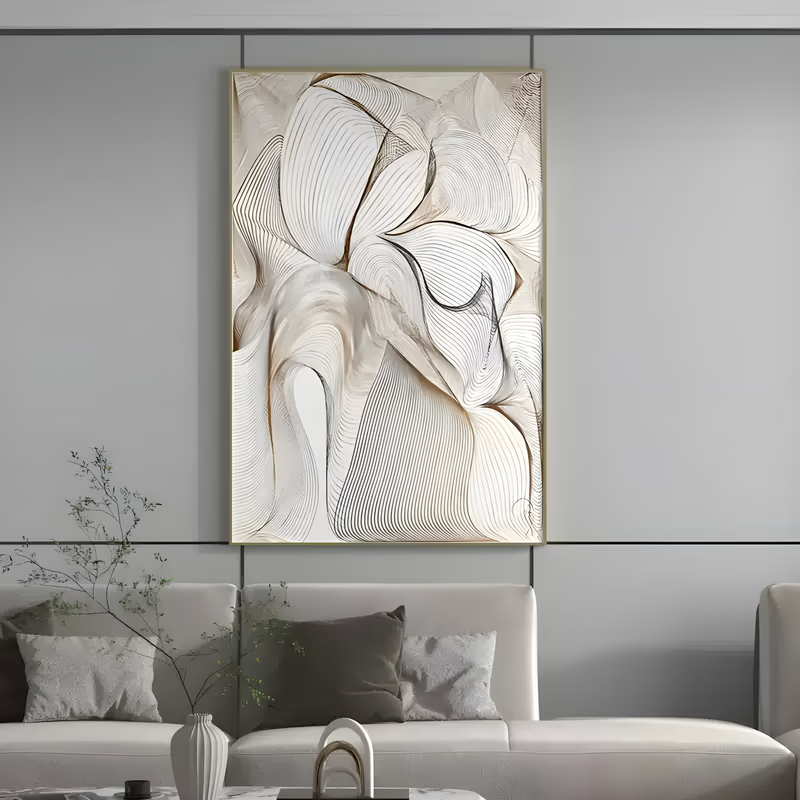
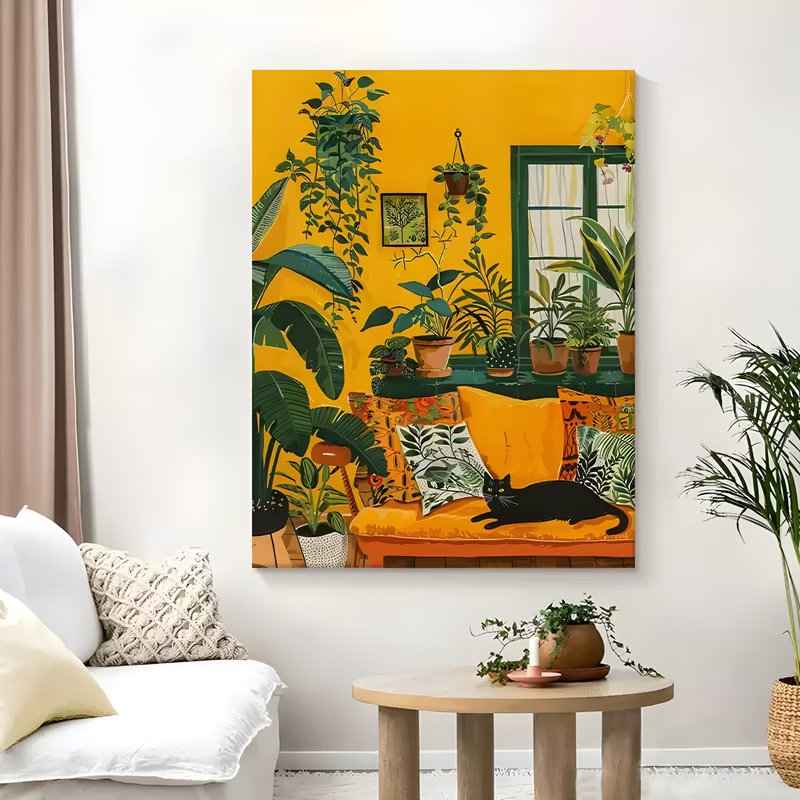
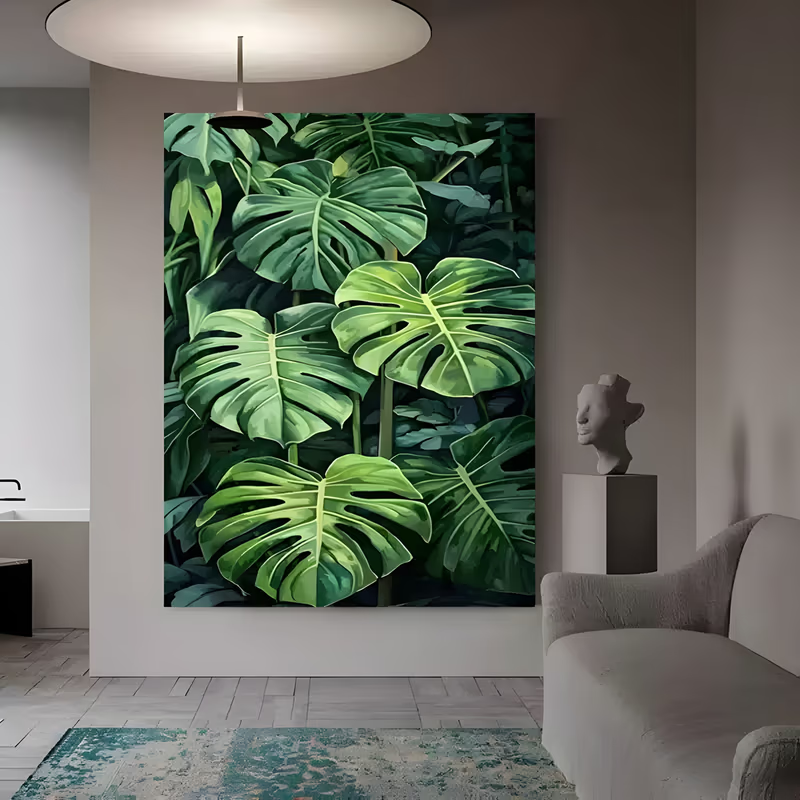
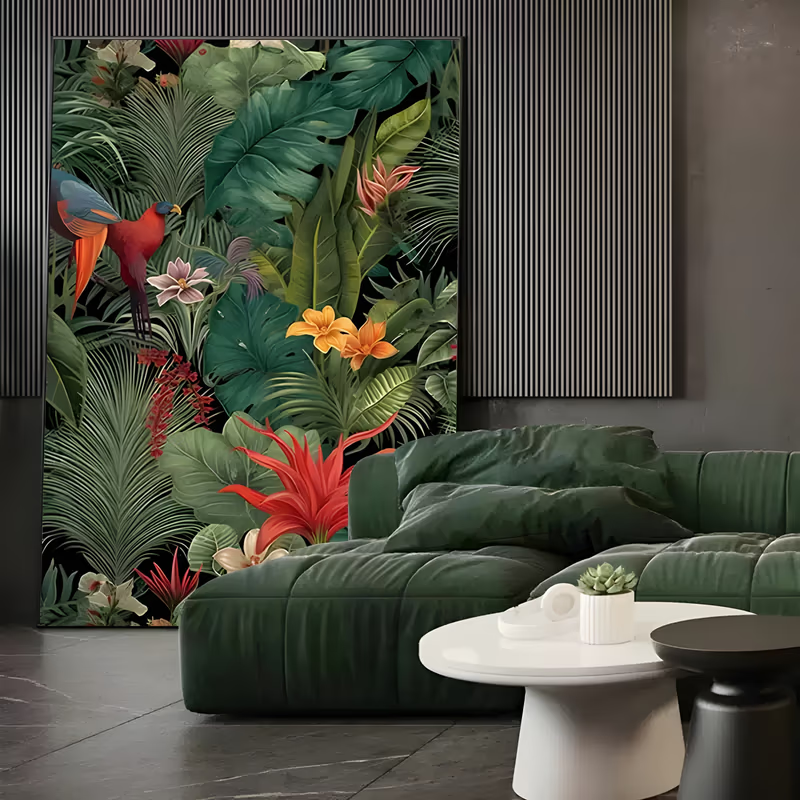
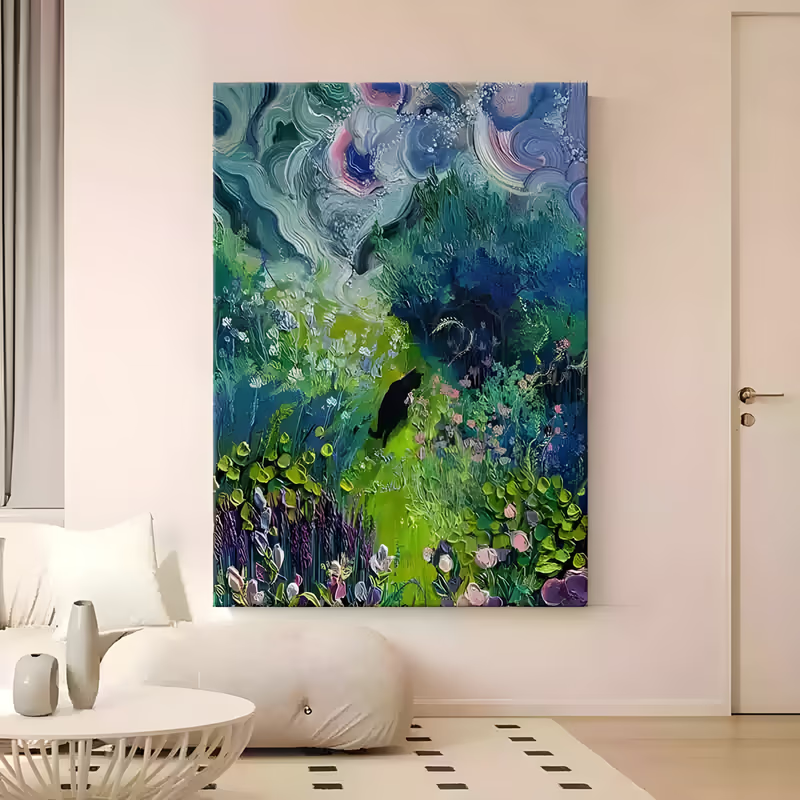
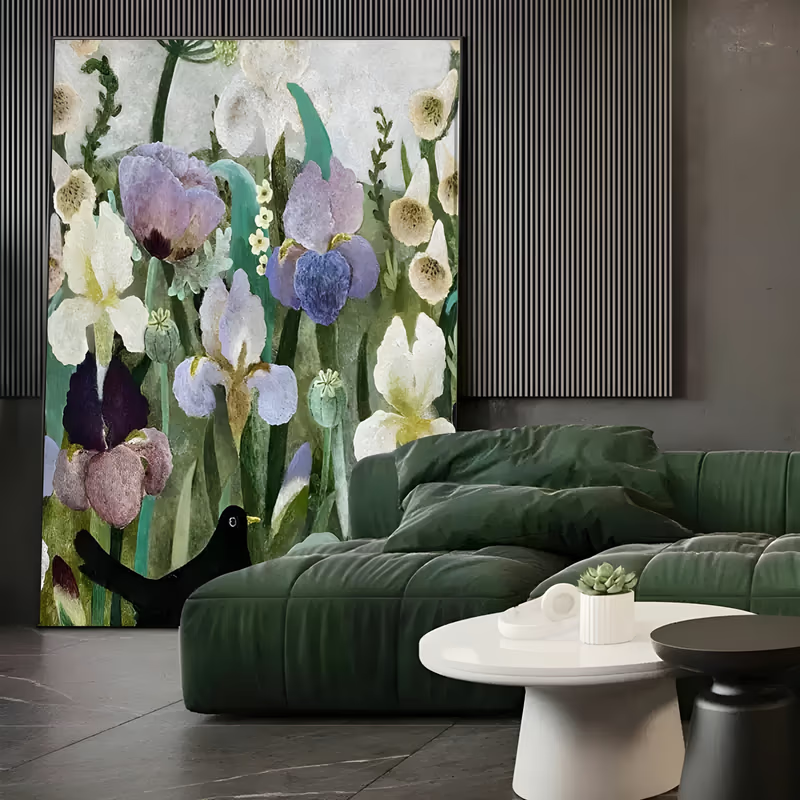
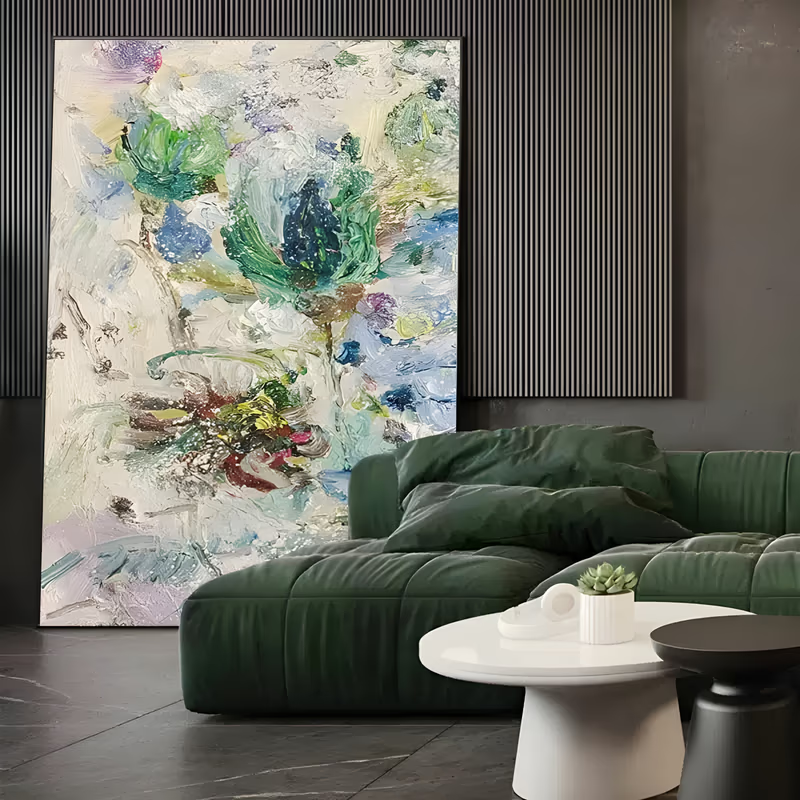
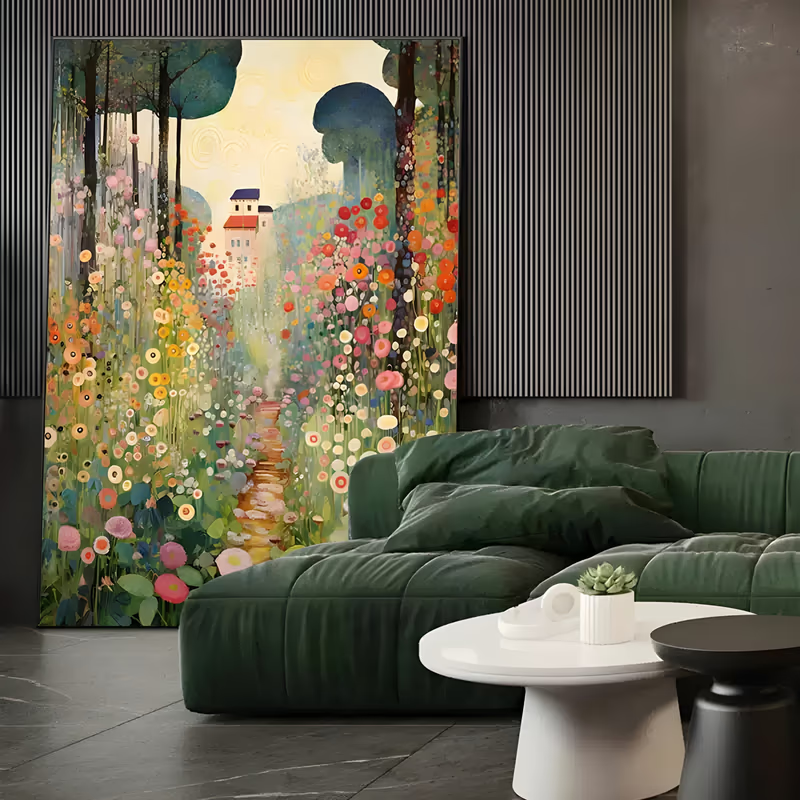
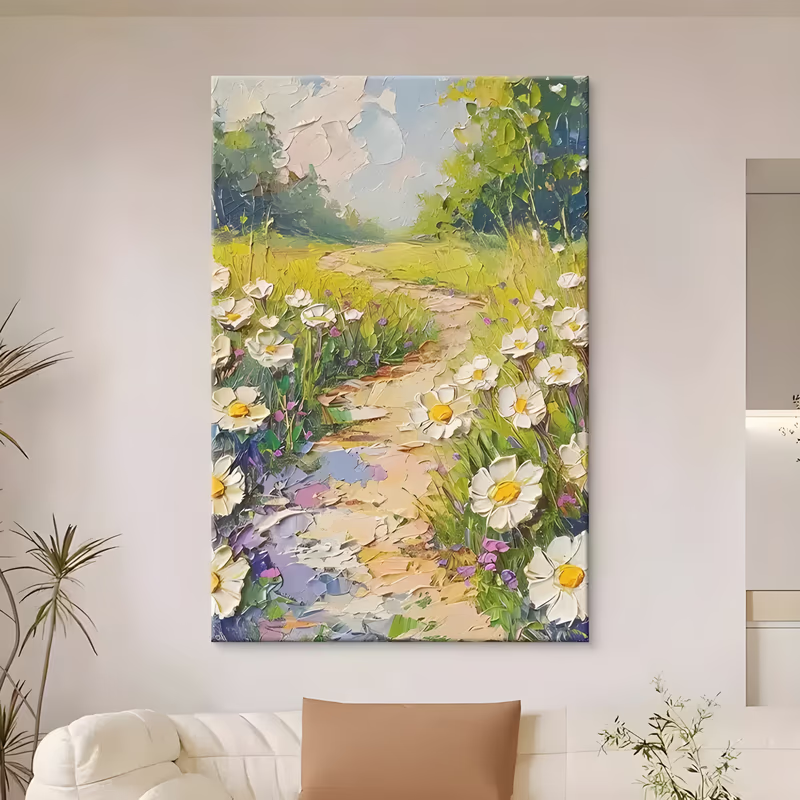
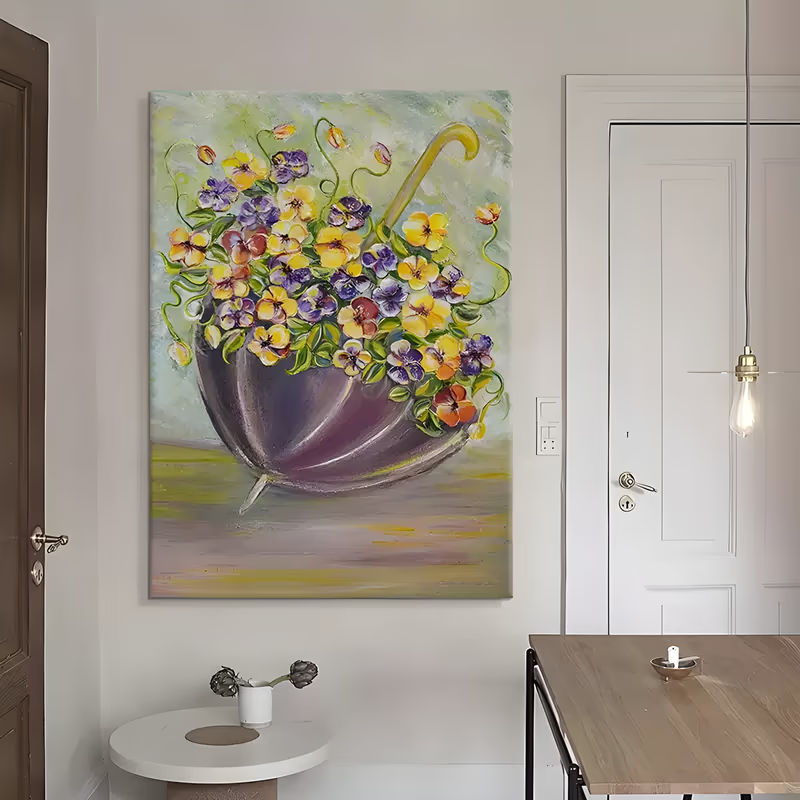
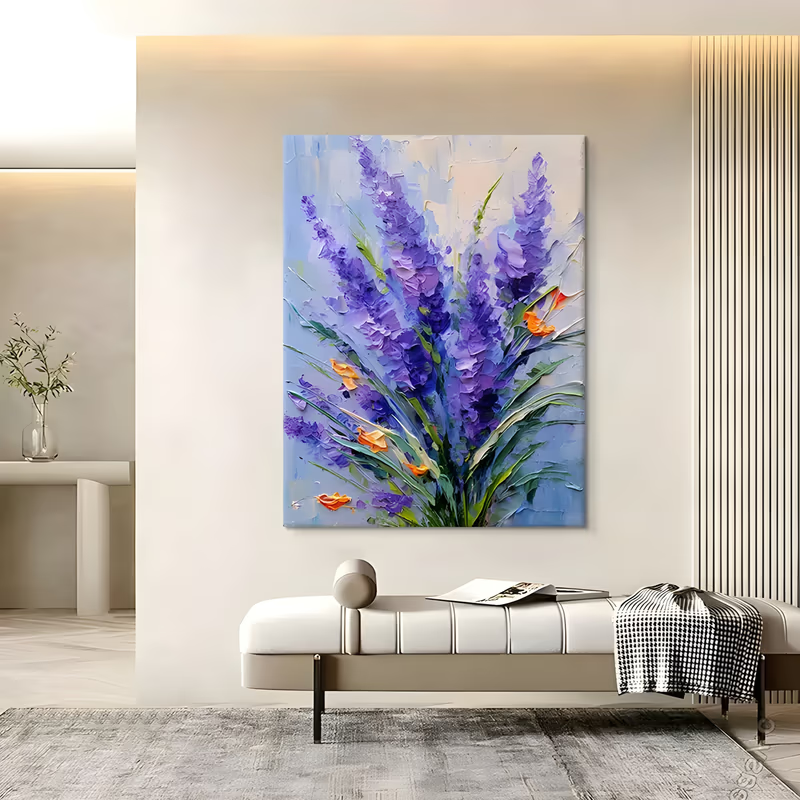
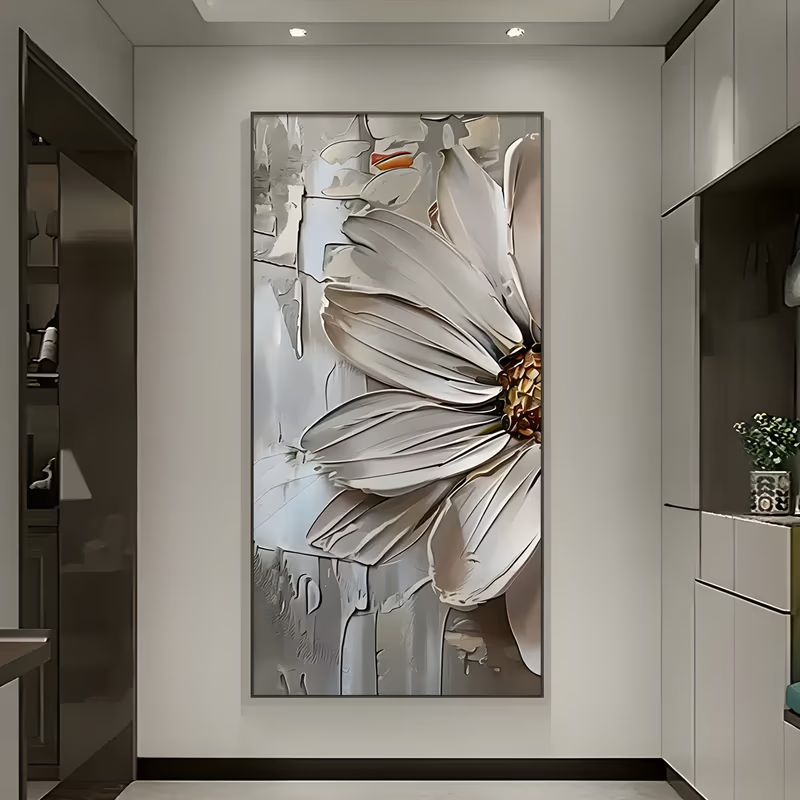
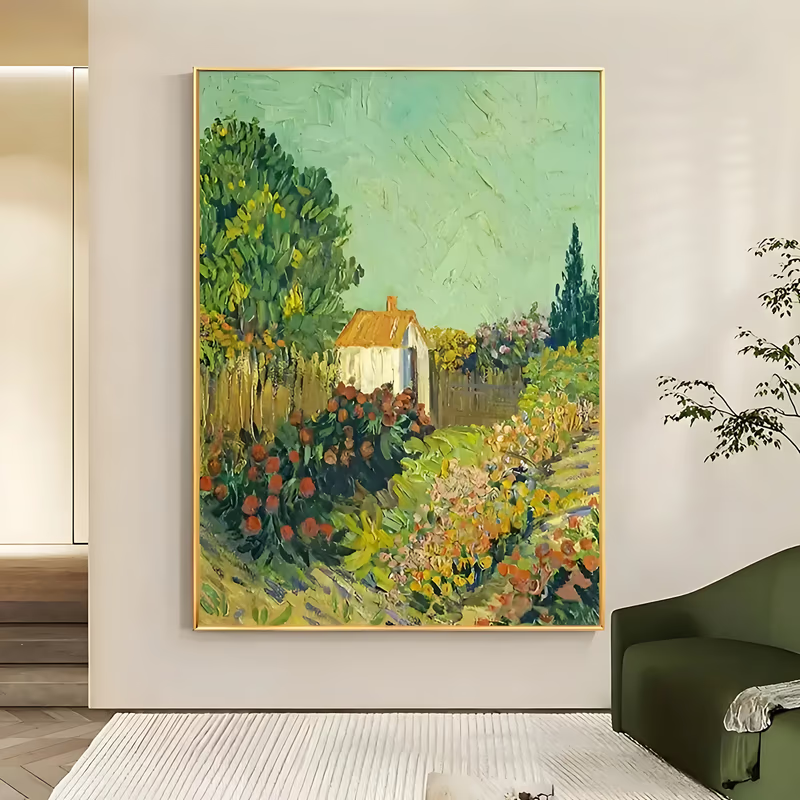
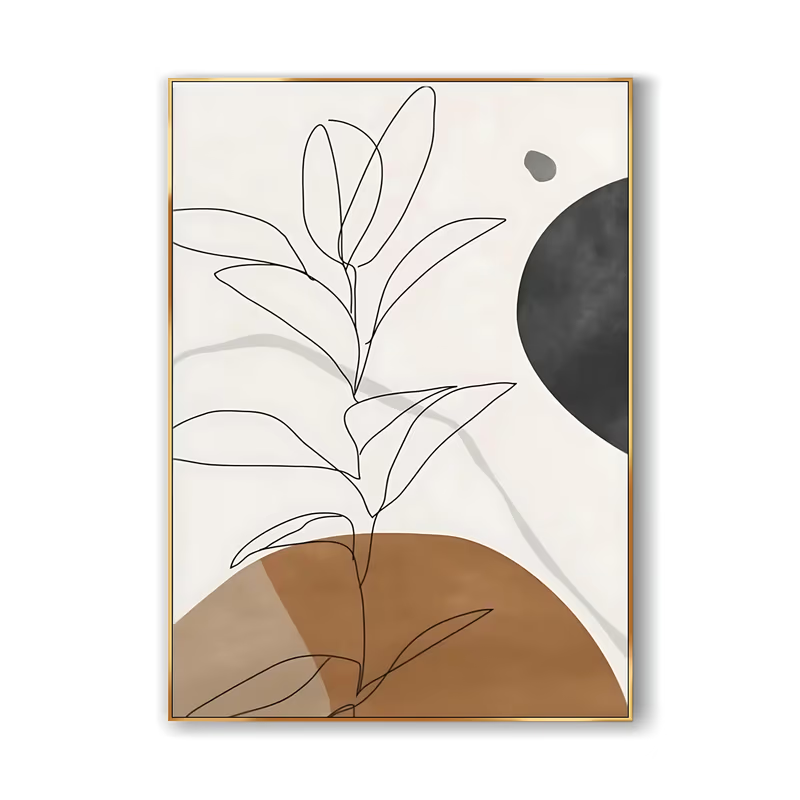
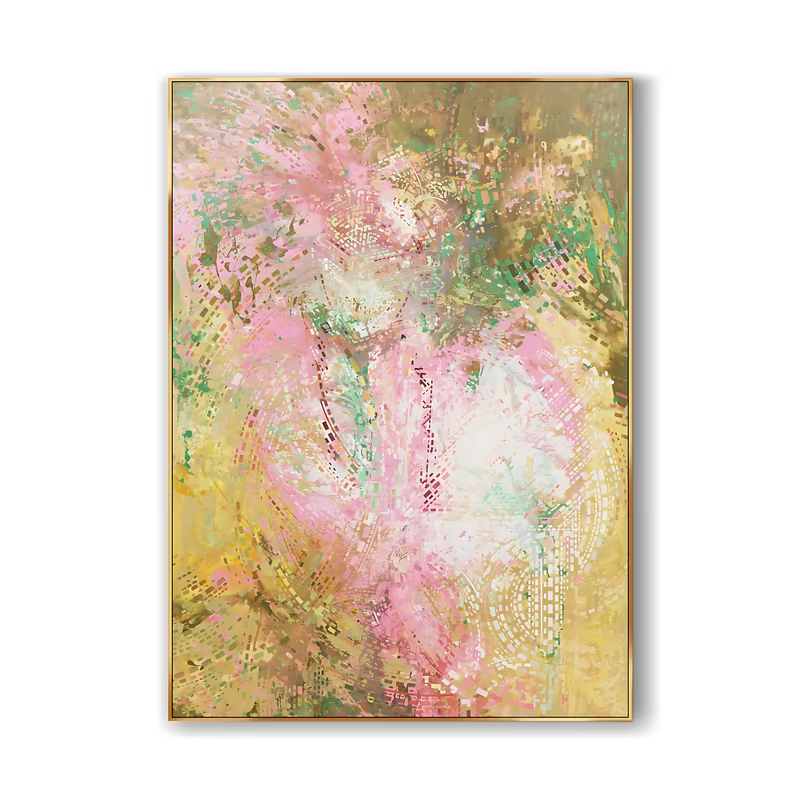
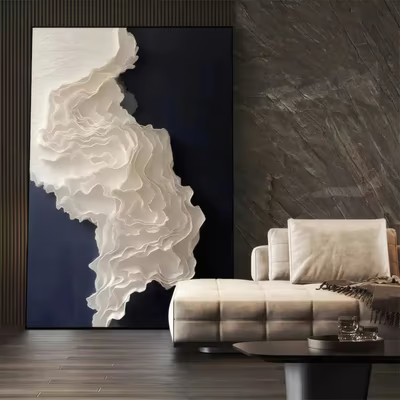
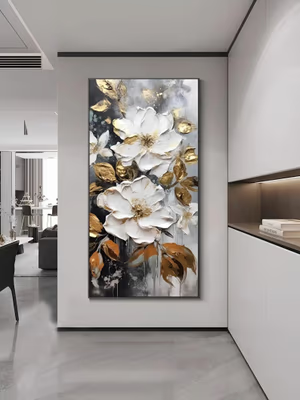
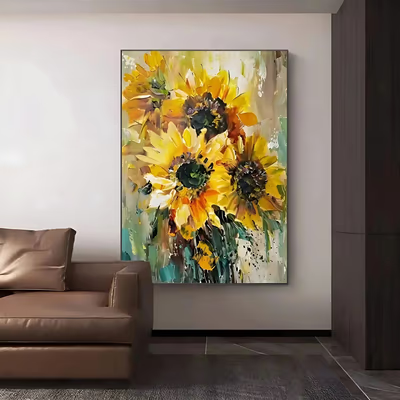
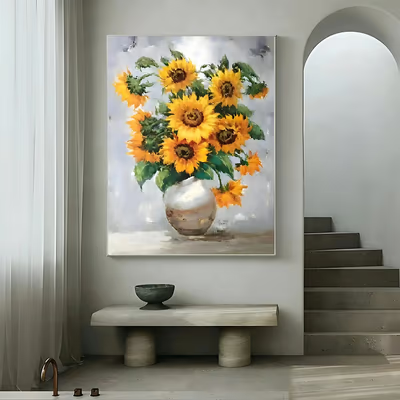
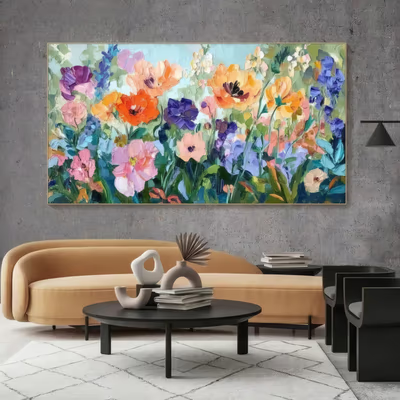
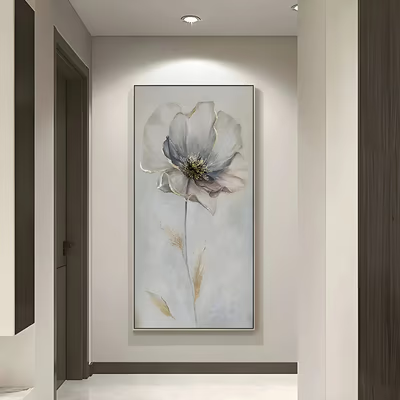
Single stems, blossom branches, ferns and bouquets, from loose impressionist brushwork to sculpted plaster petals. A tall flower study fits a narrow wall naturally, and a set of different blooms gives each floor a theme of its own. Corridor florals.
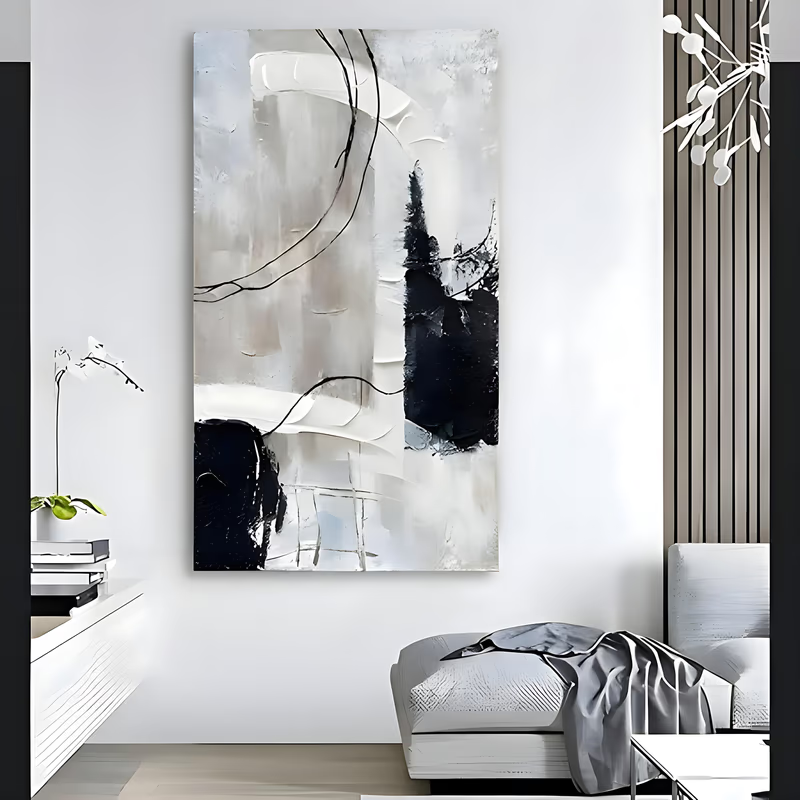
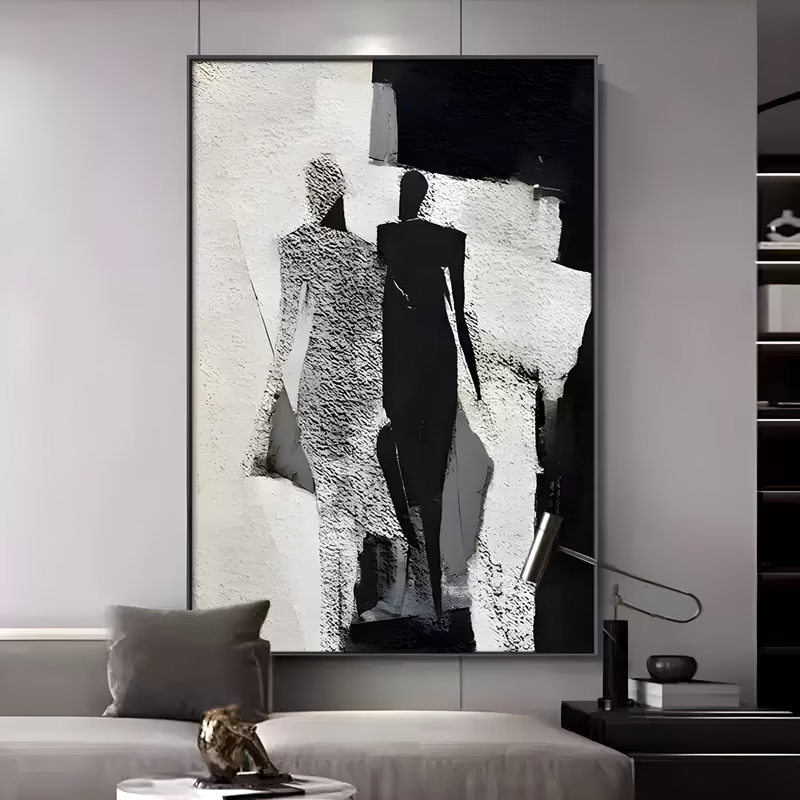
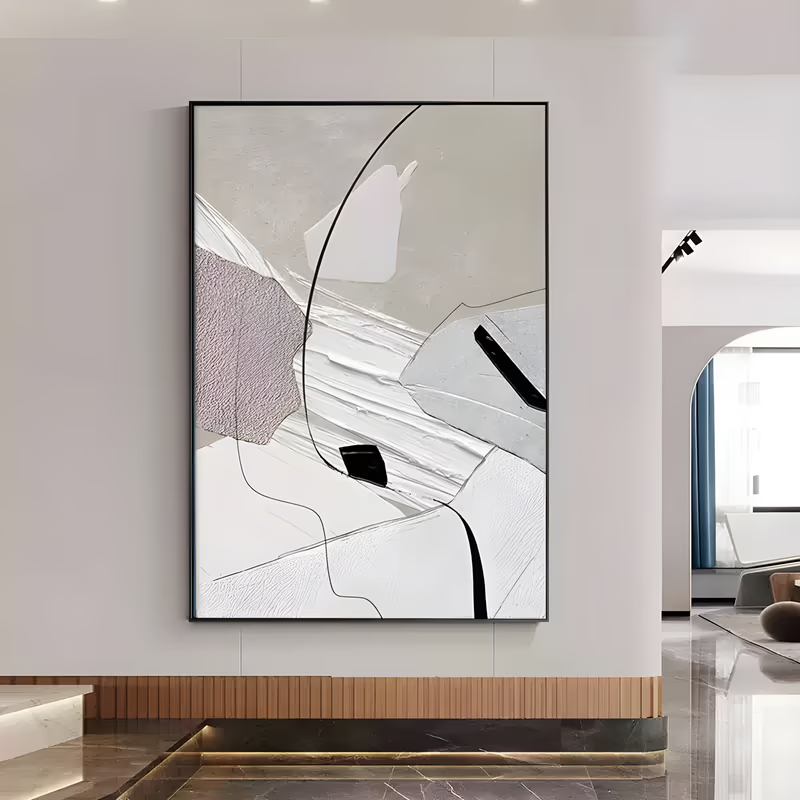
Minimalist and wabi-sabi work
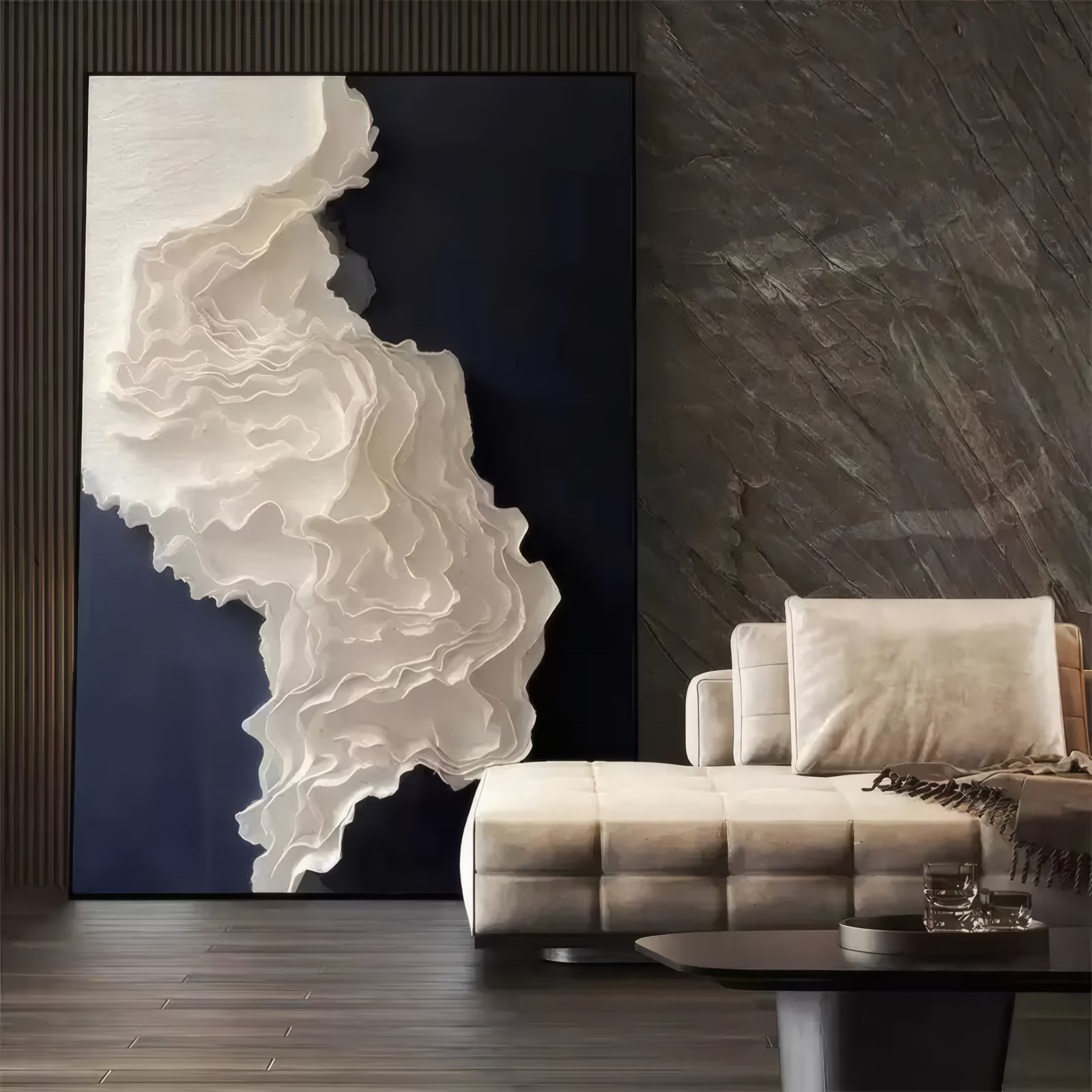
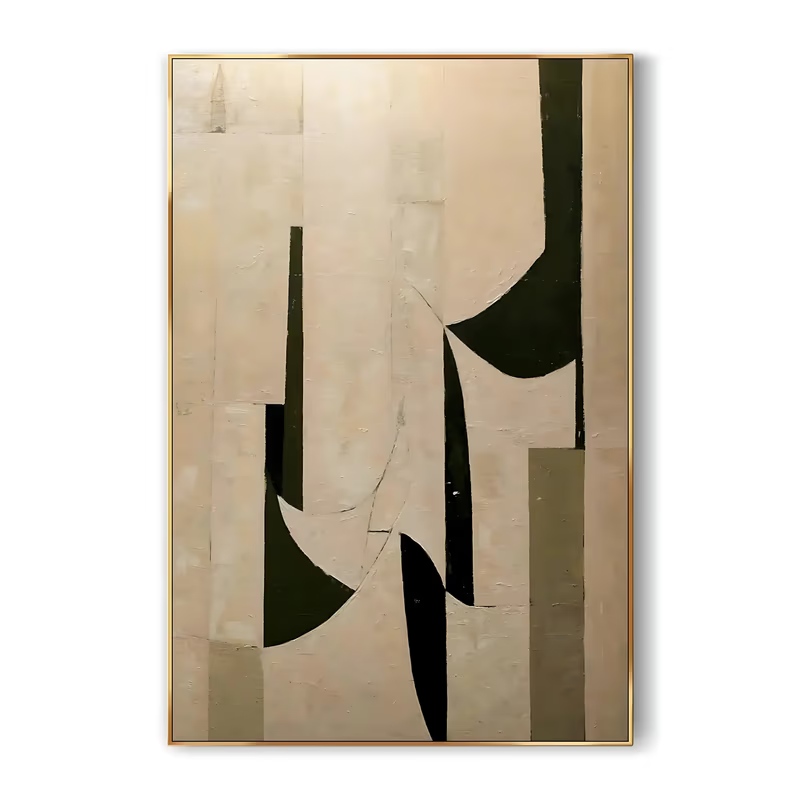
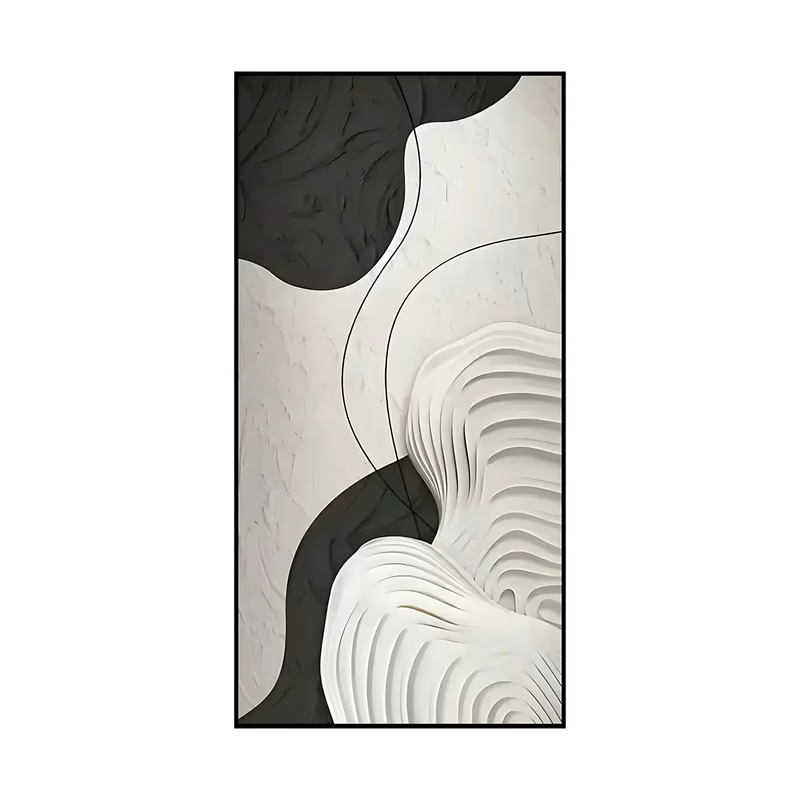
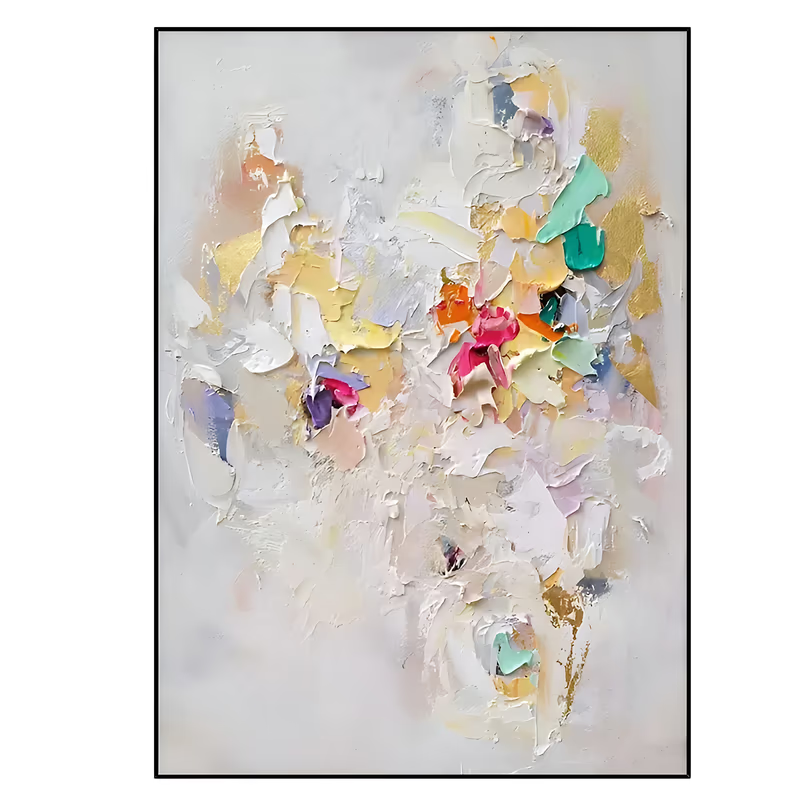
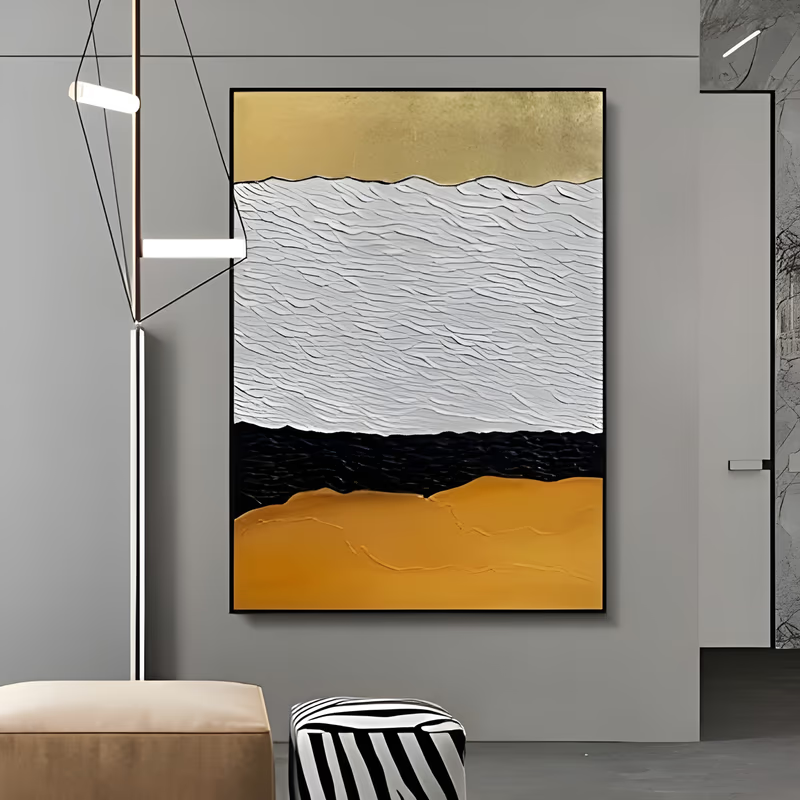
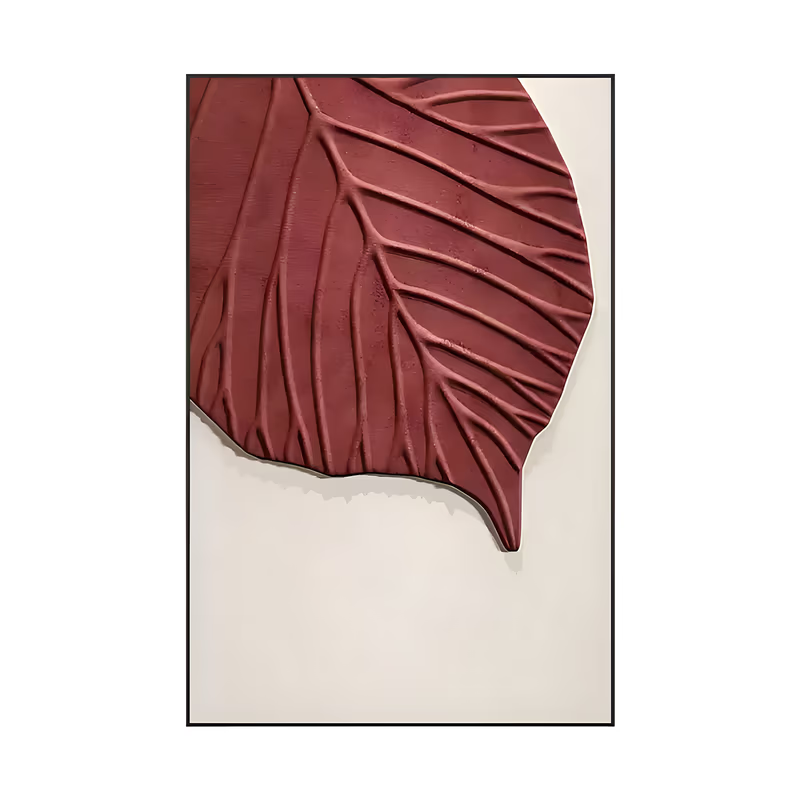
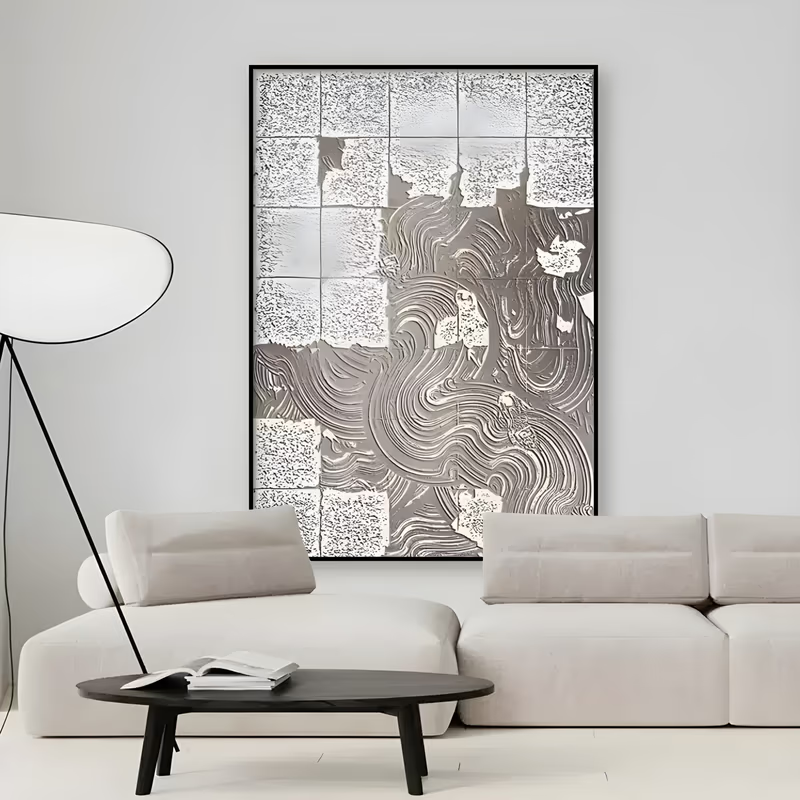
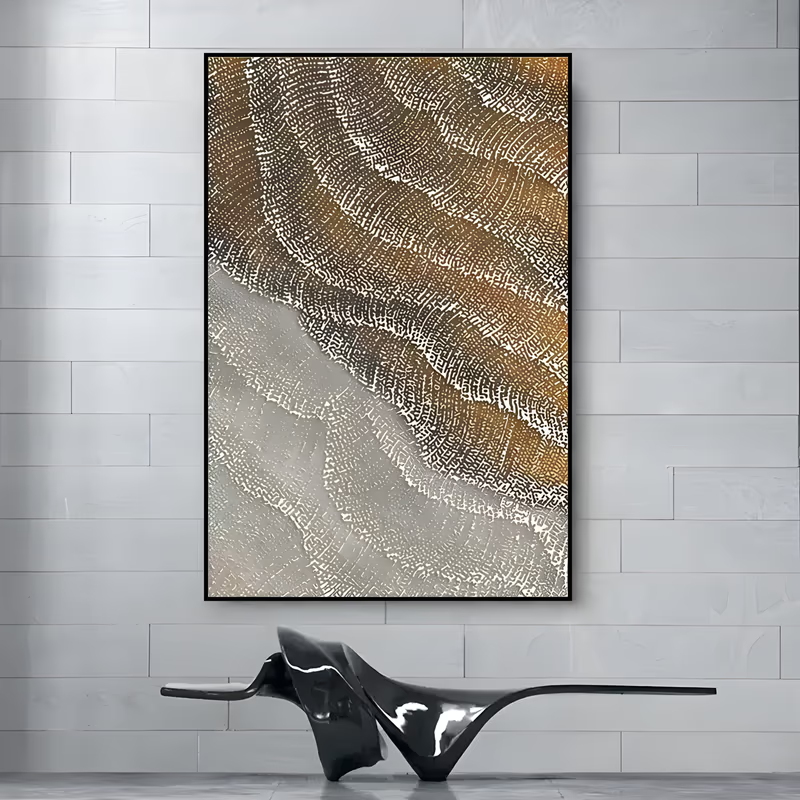
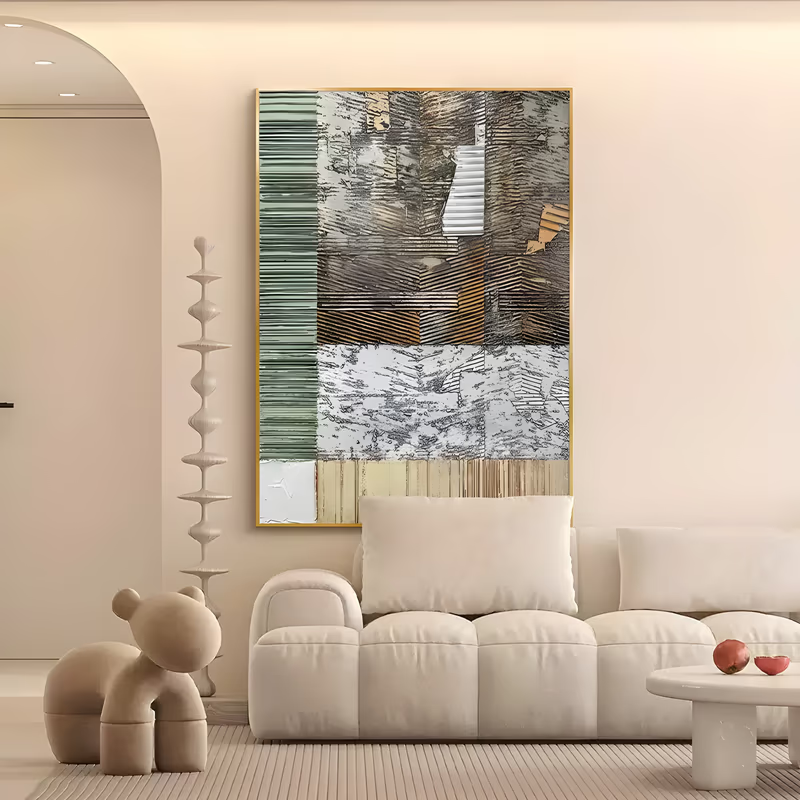
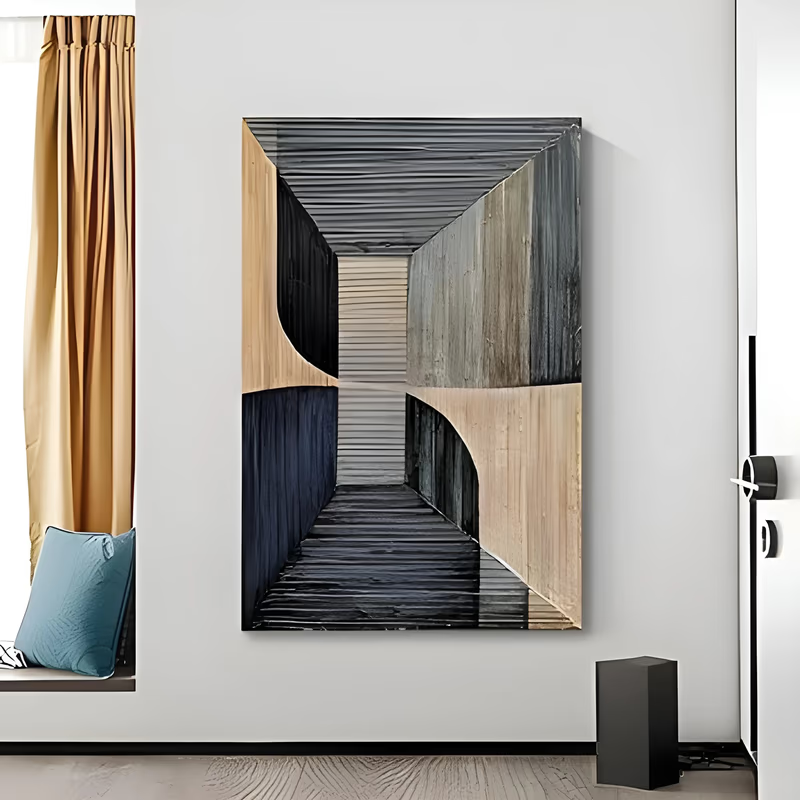
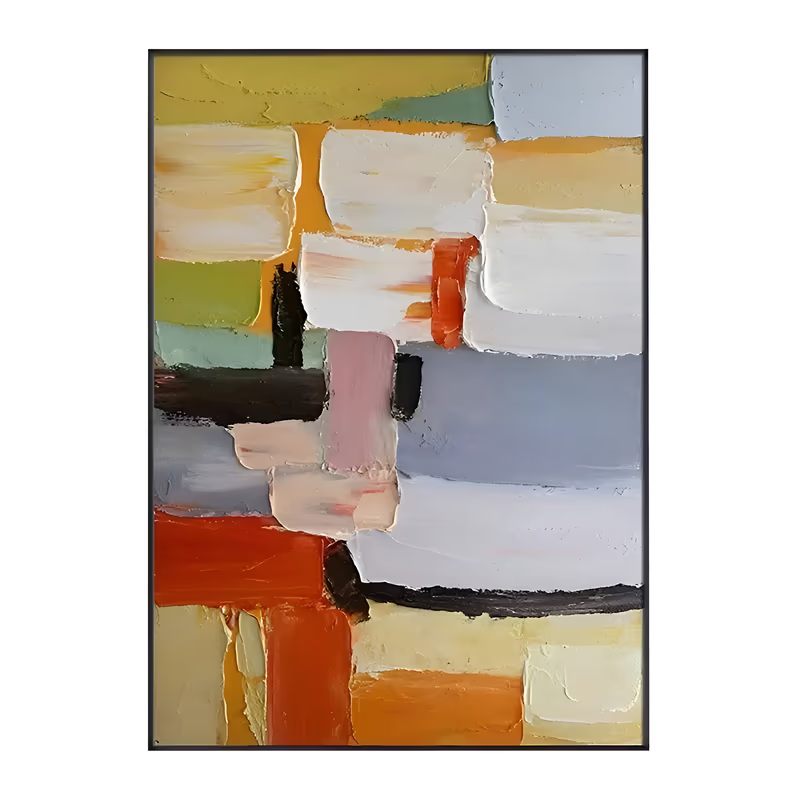
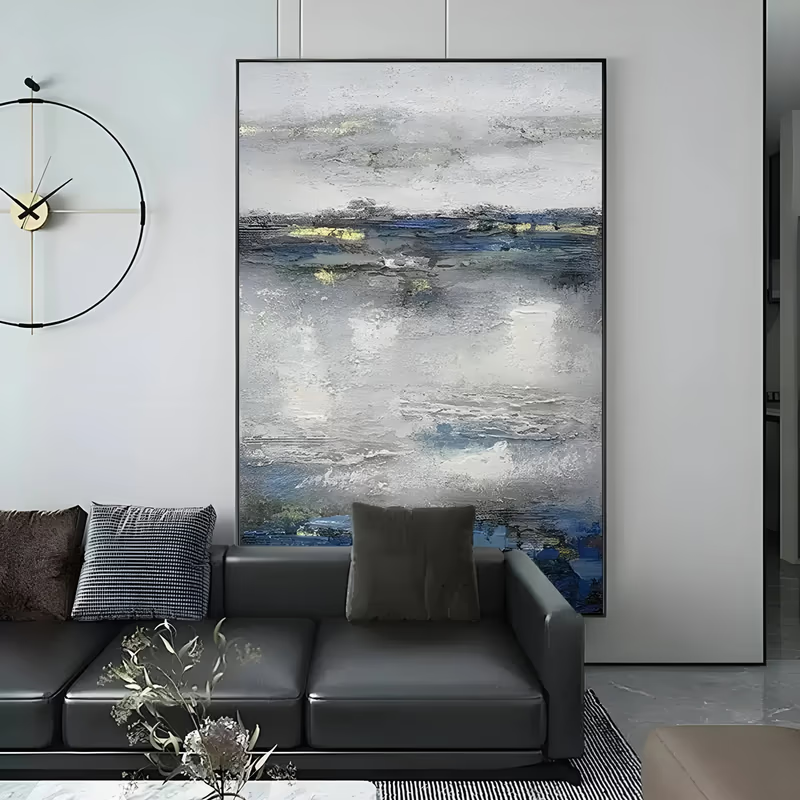
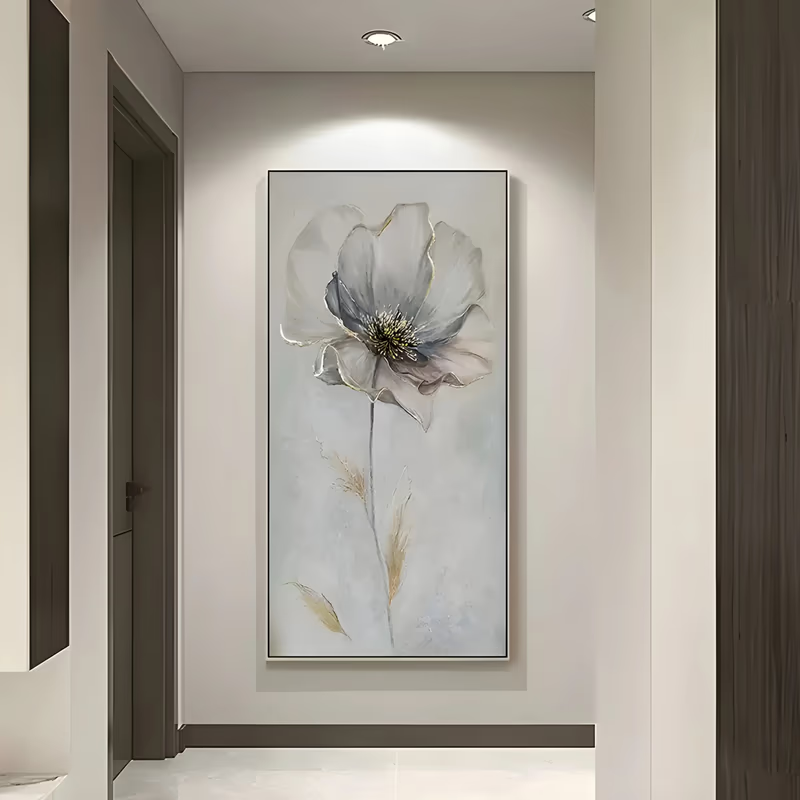
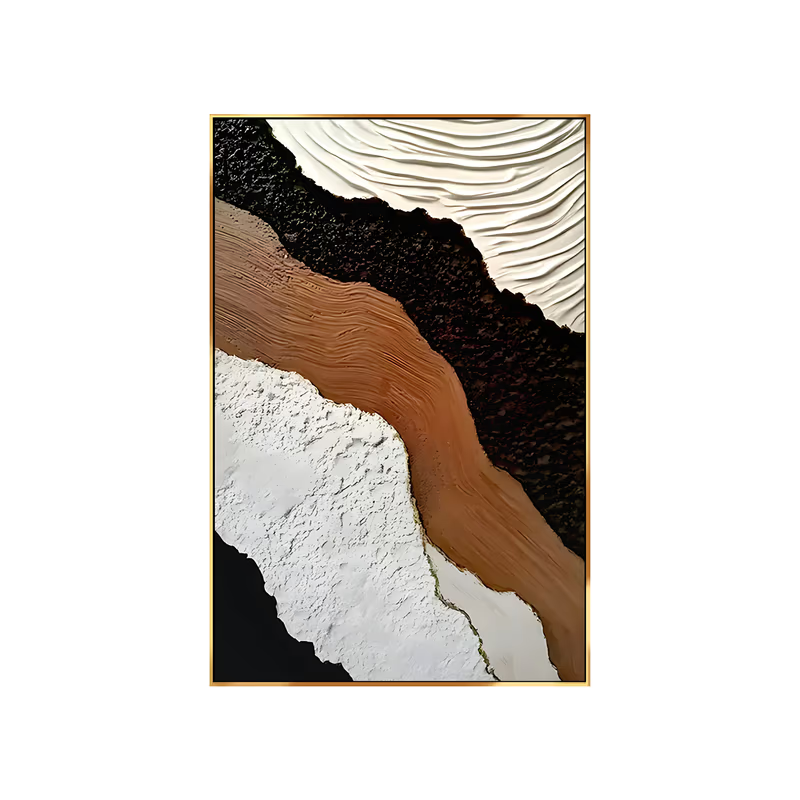
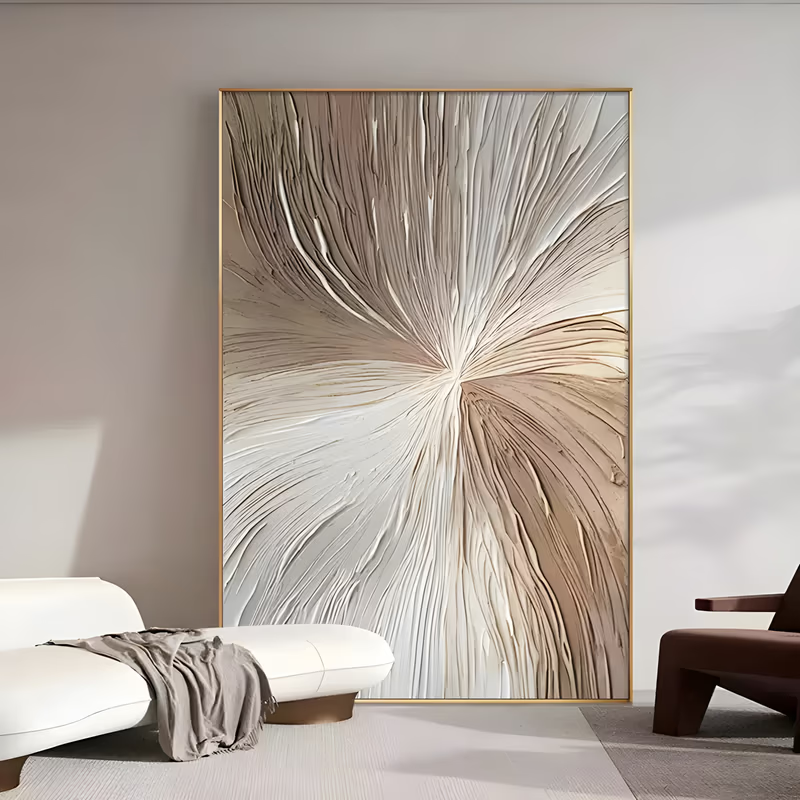
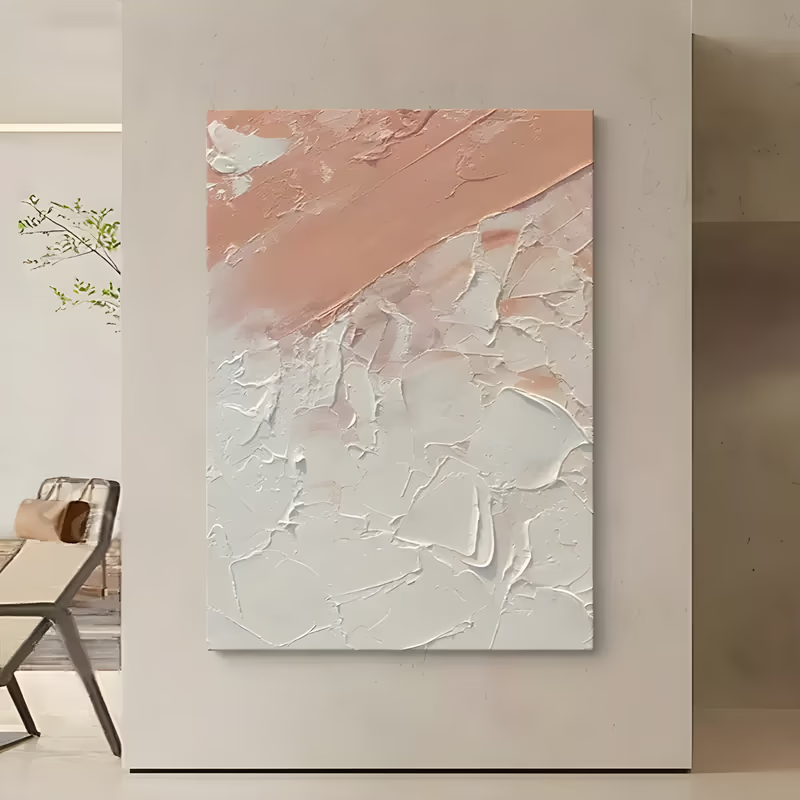
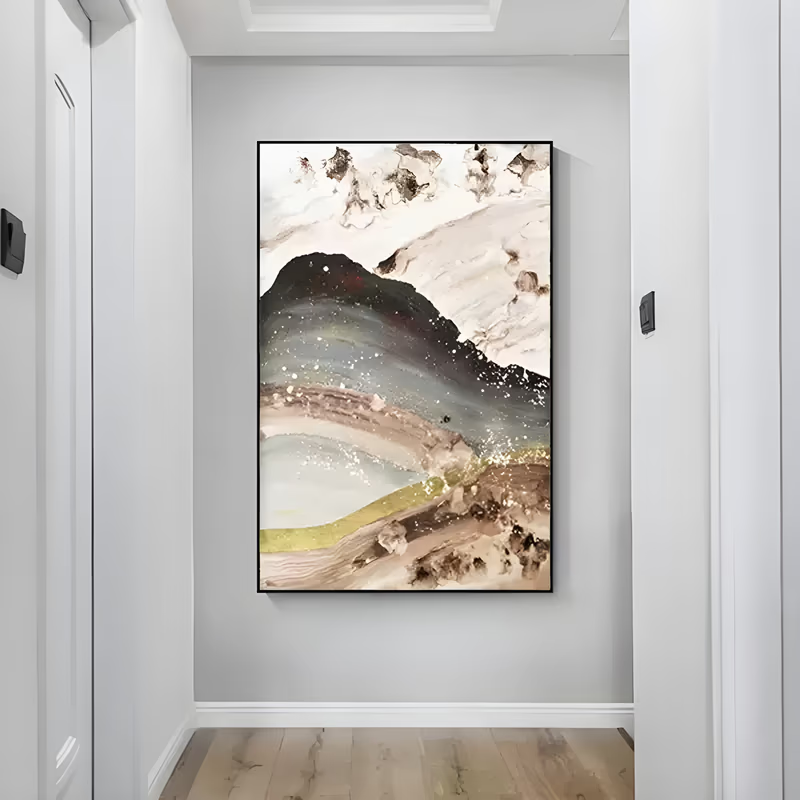
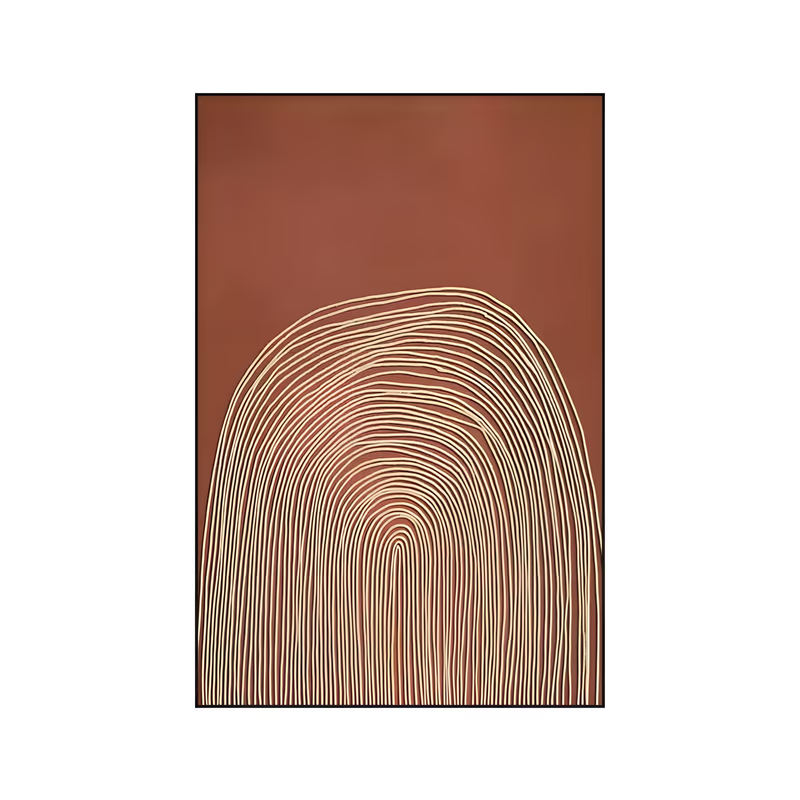
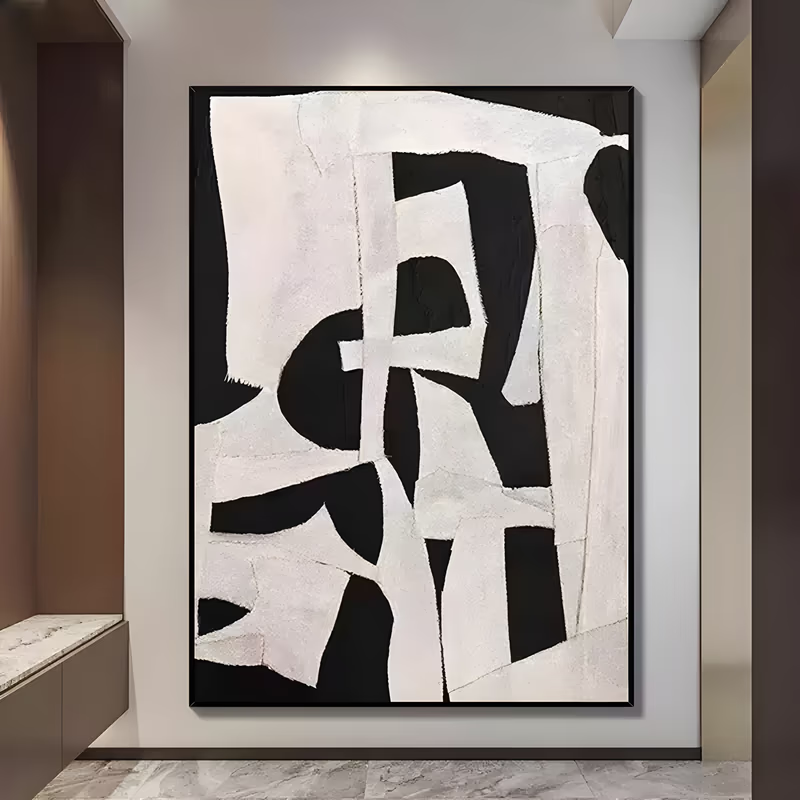
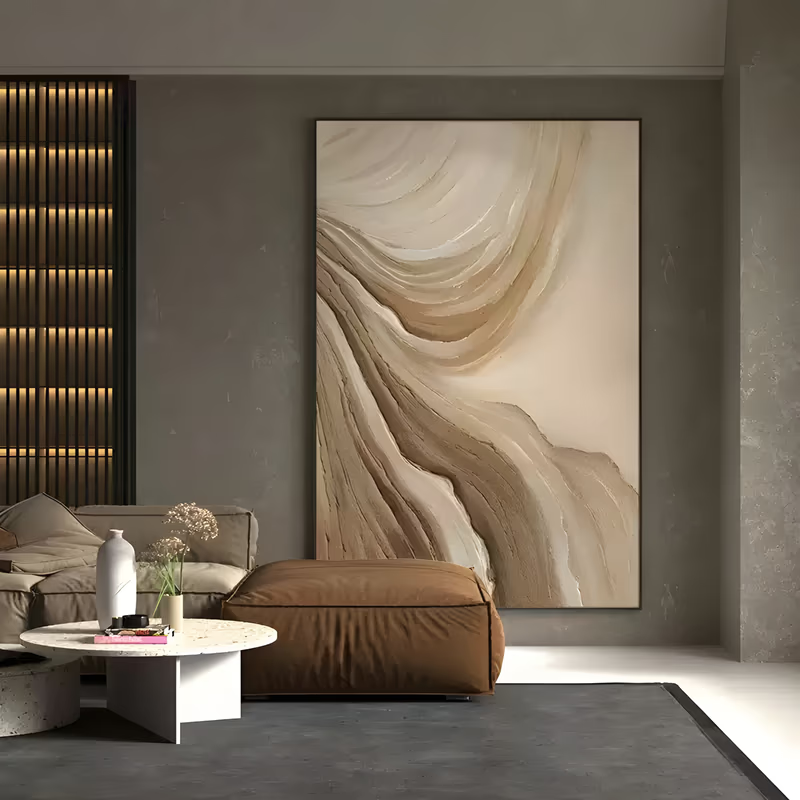
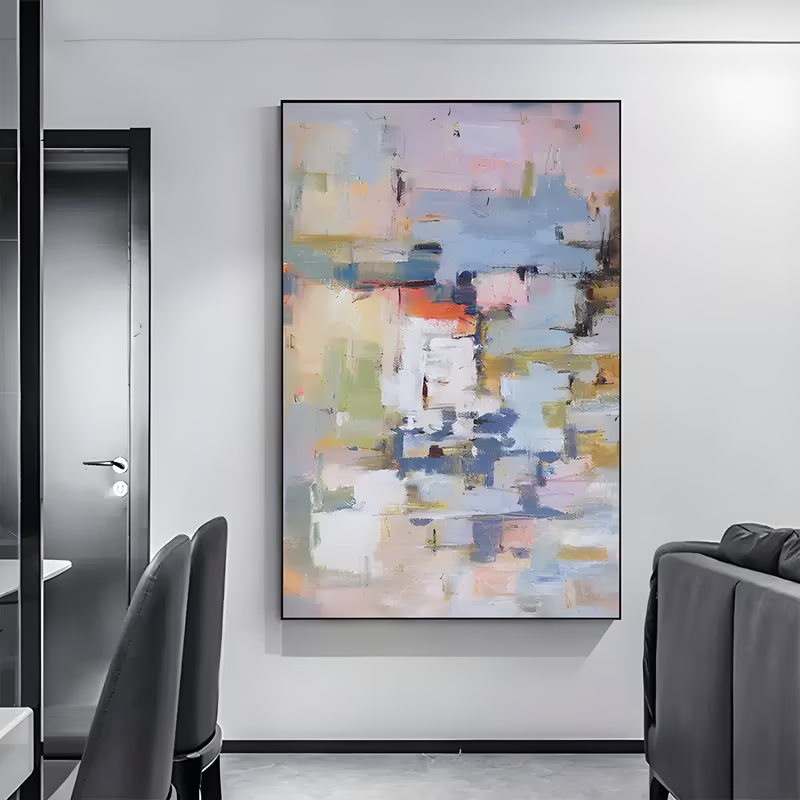
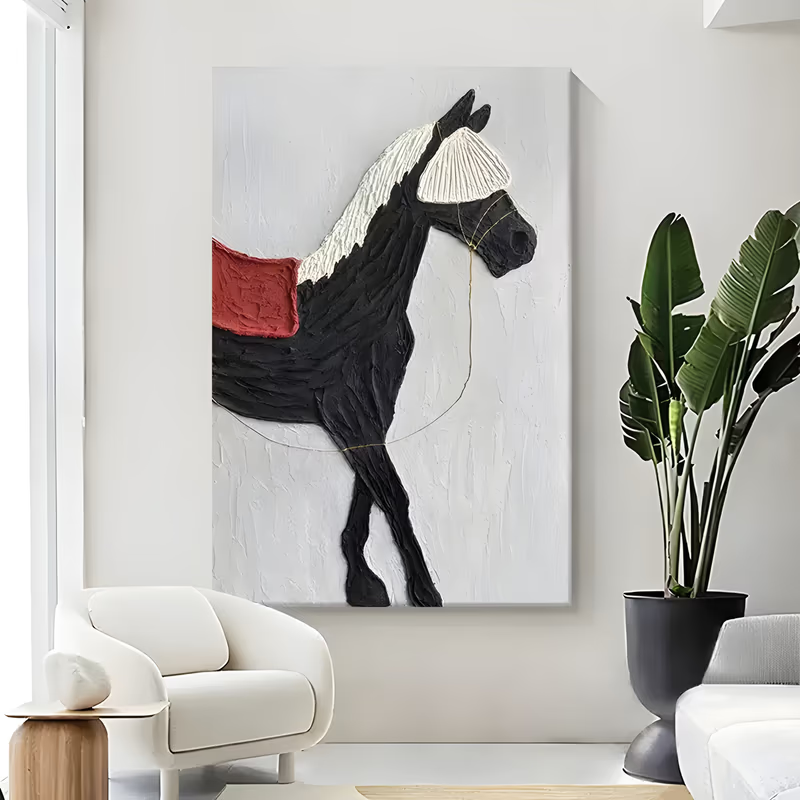
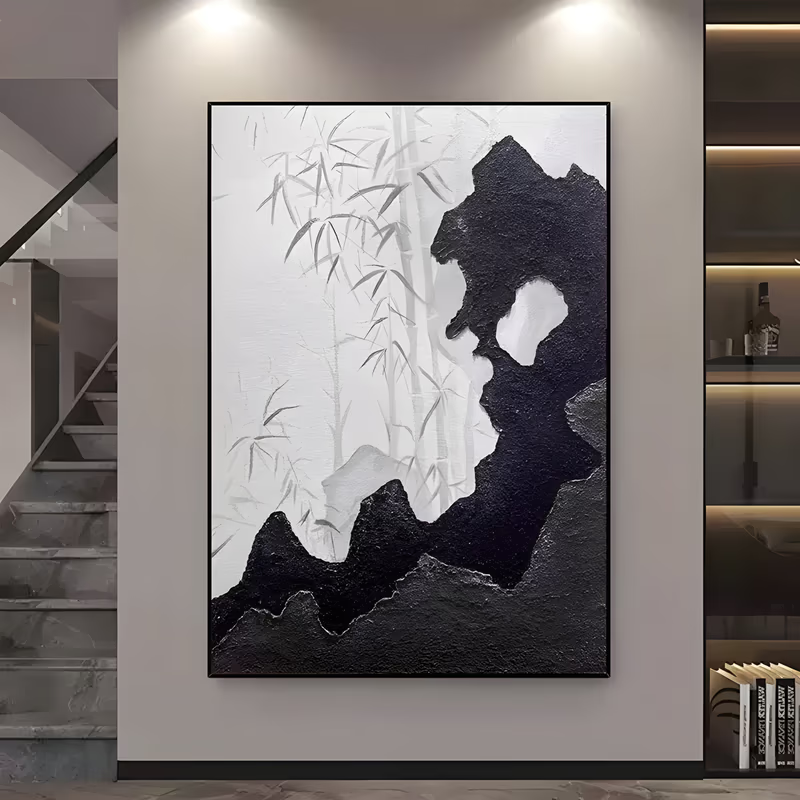
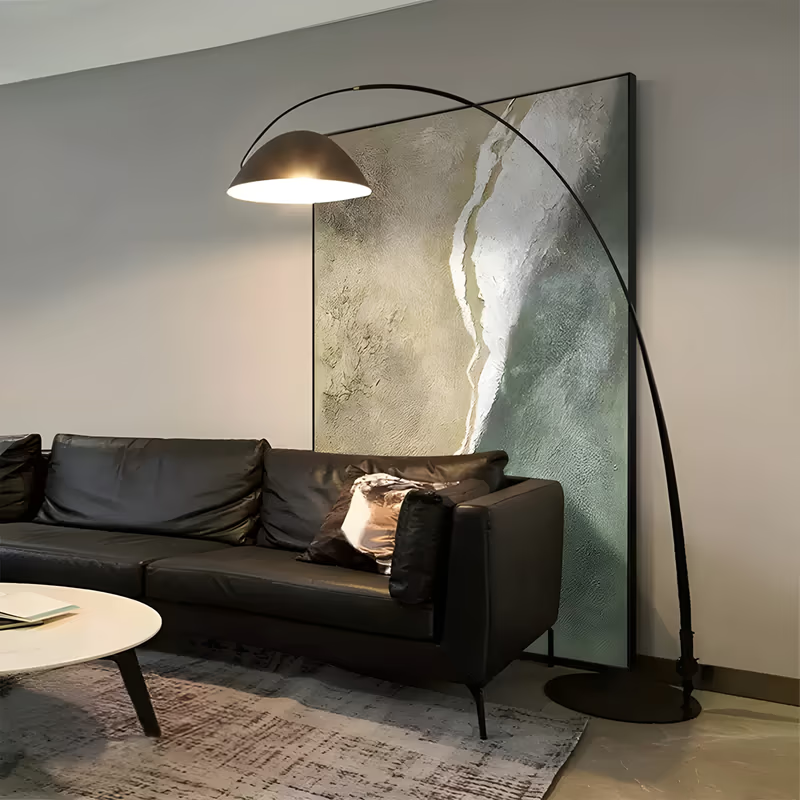
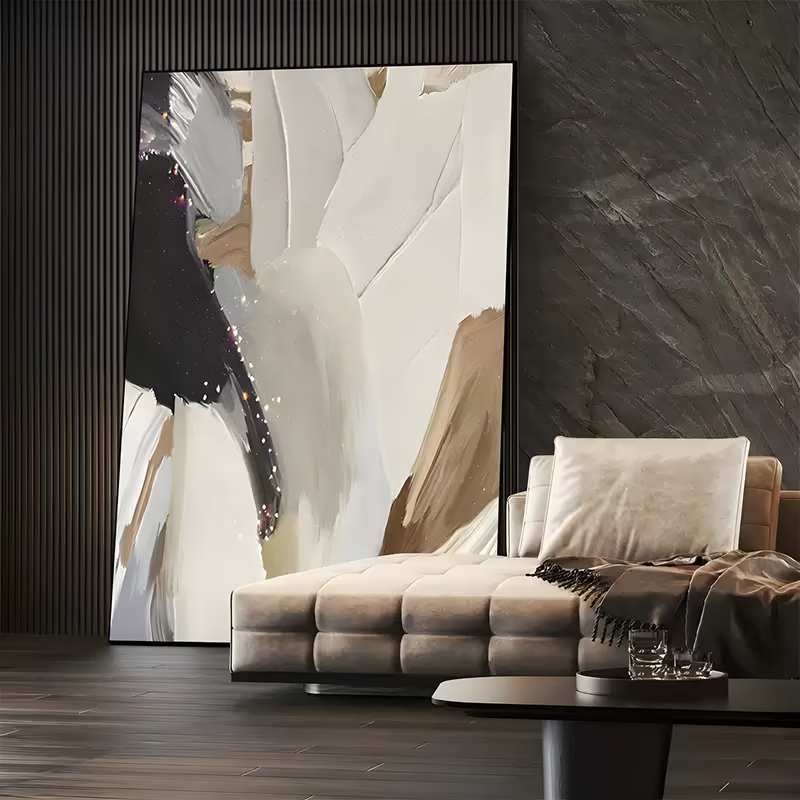
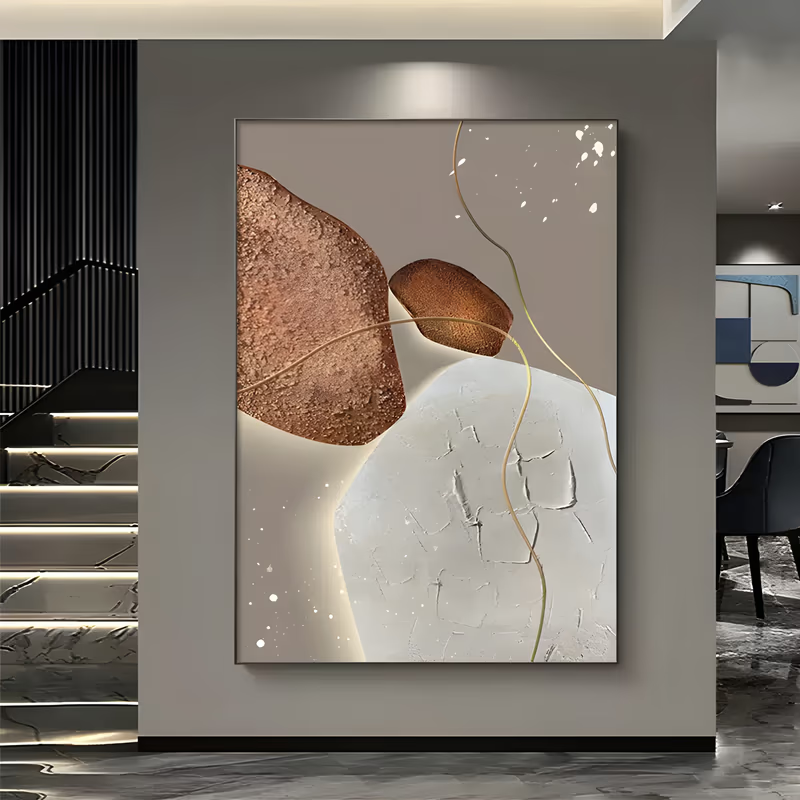
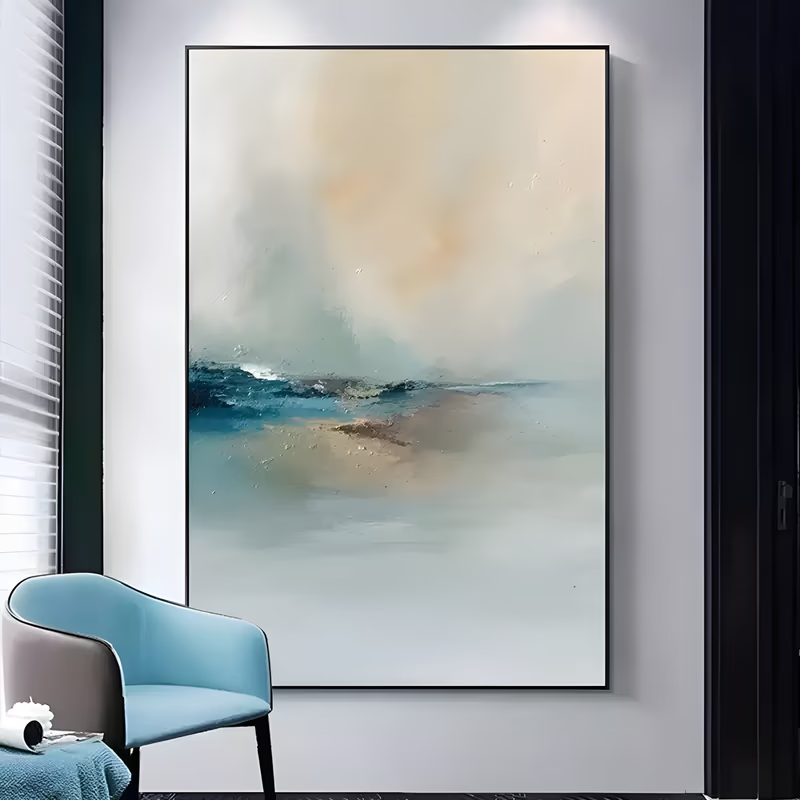
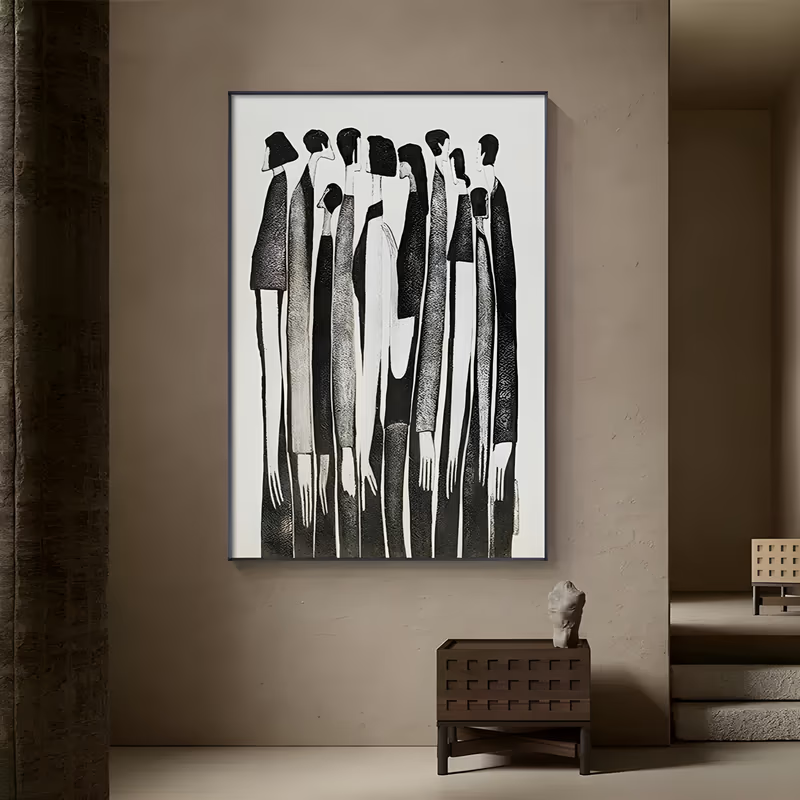
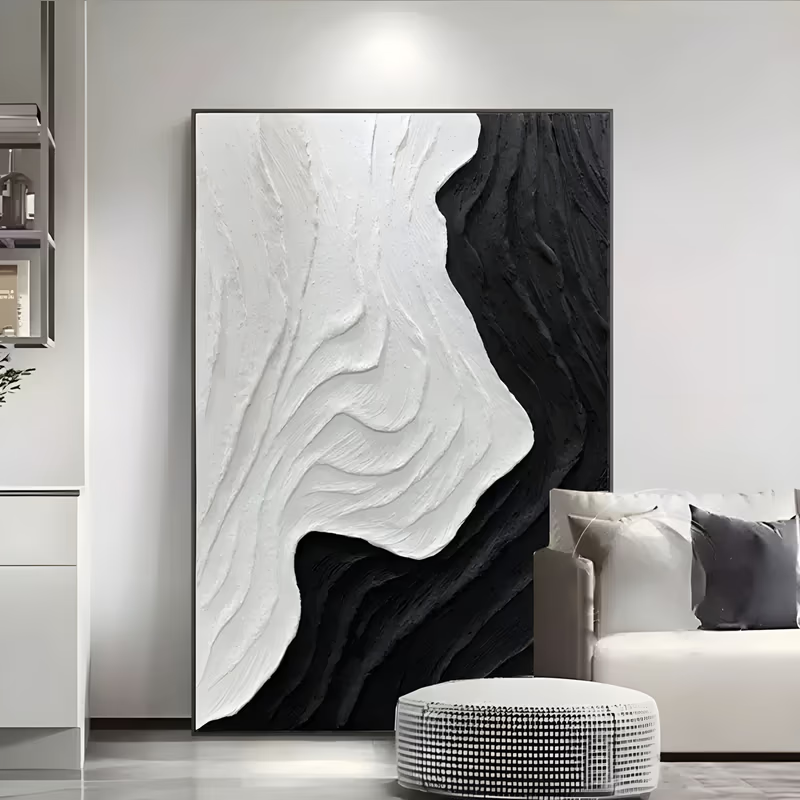
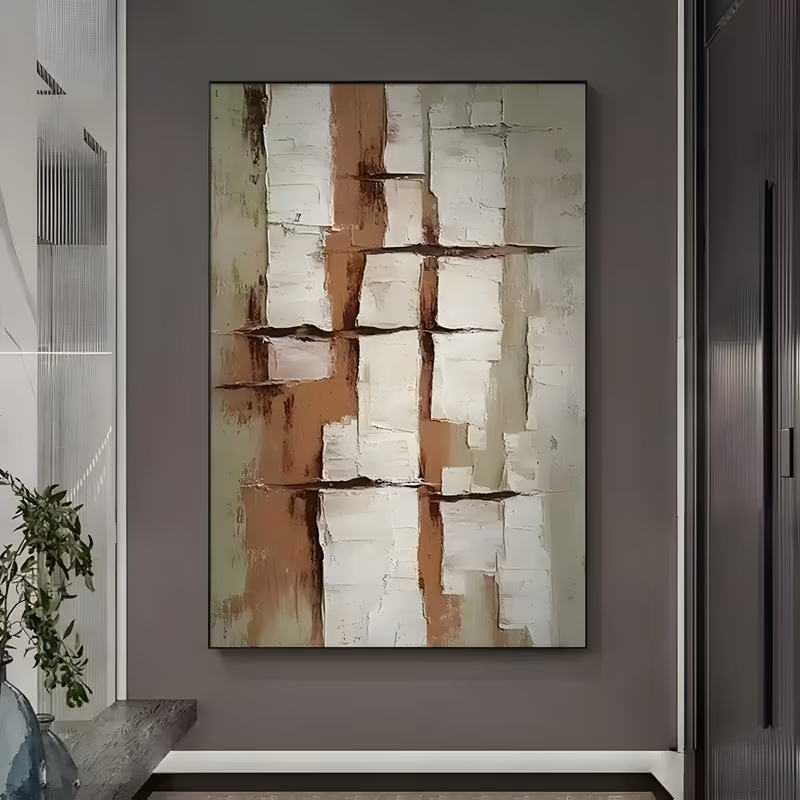
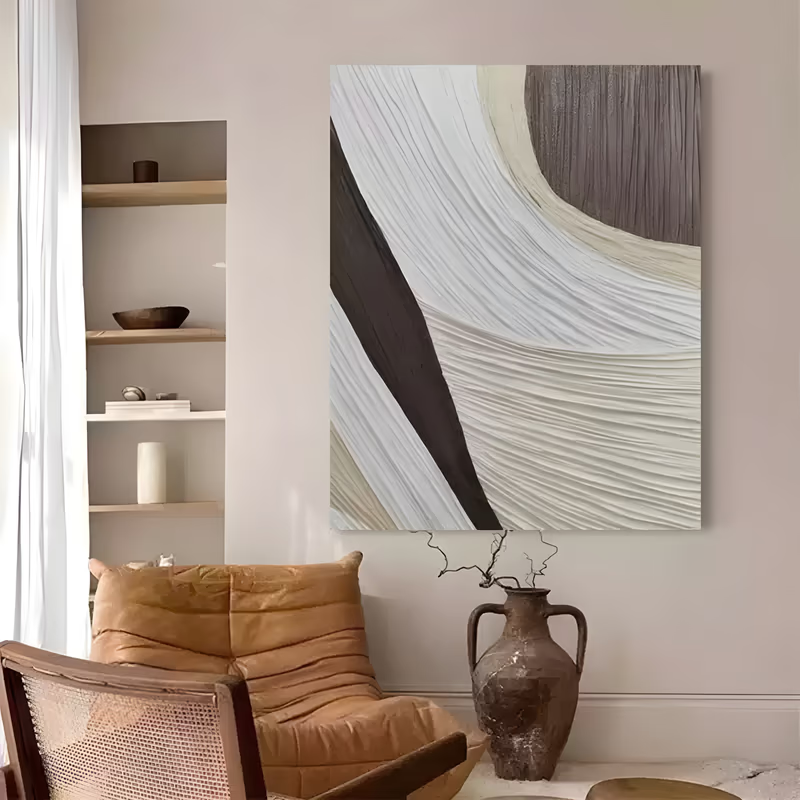
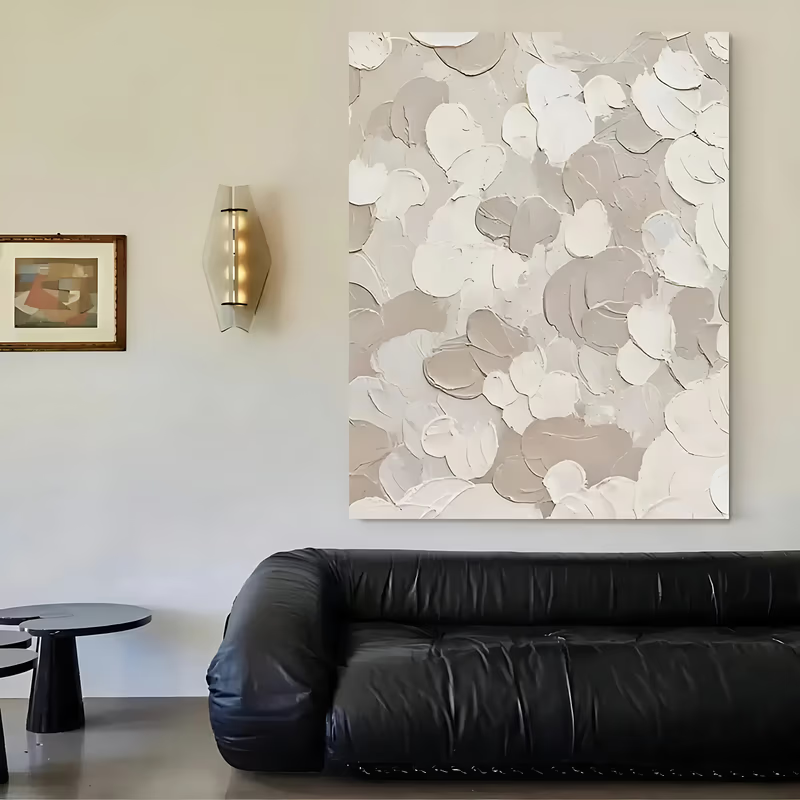
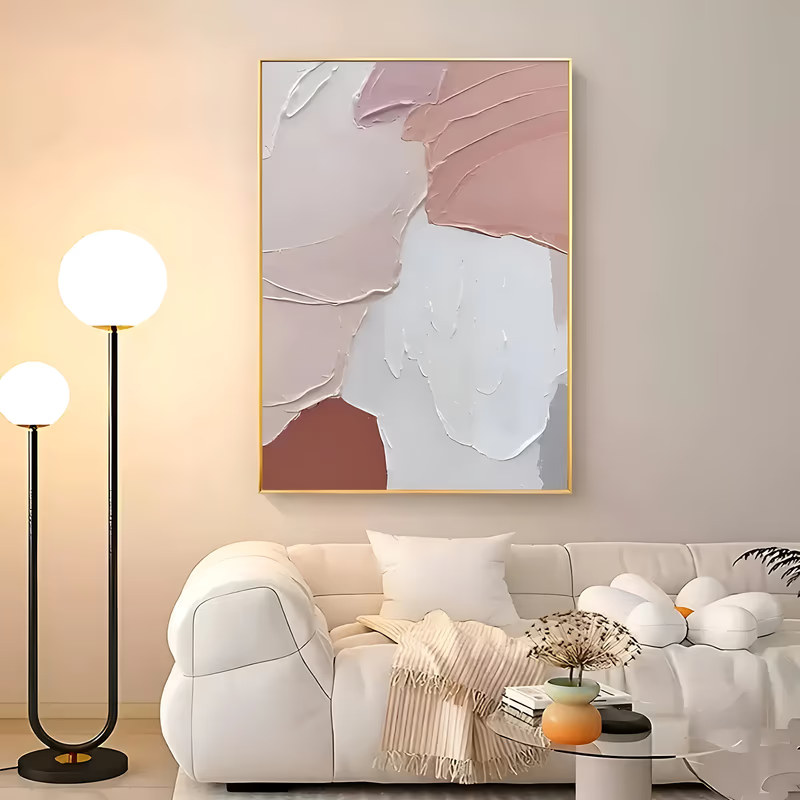
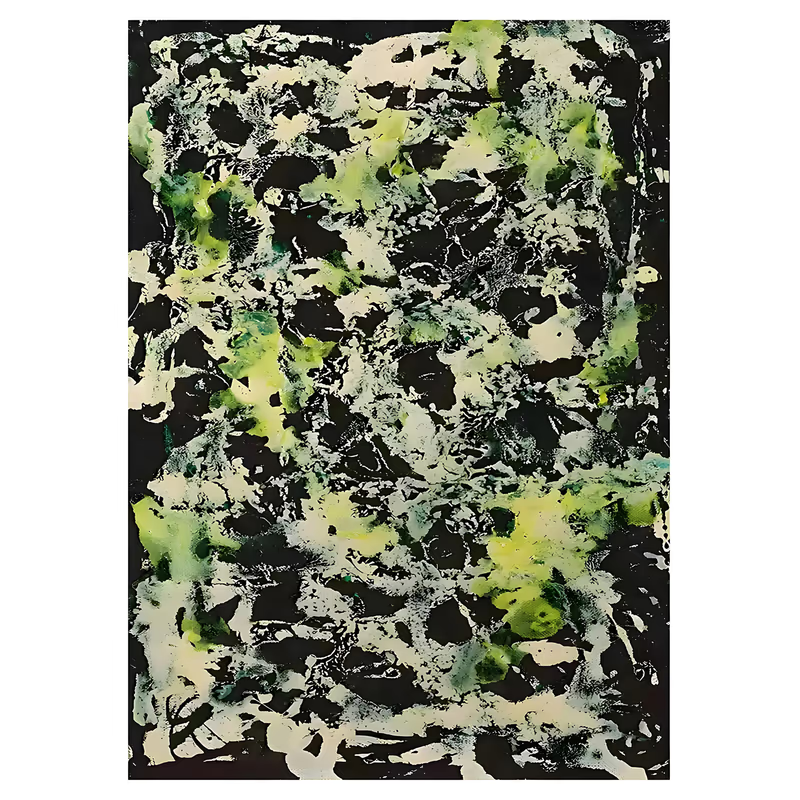
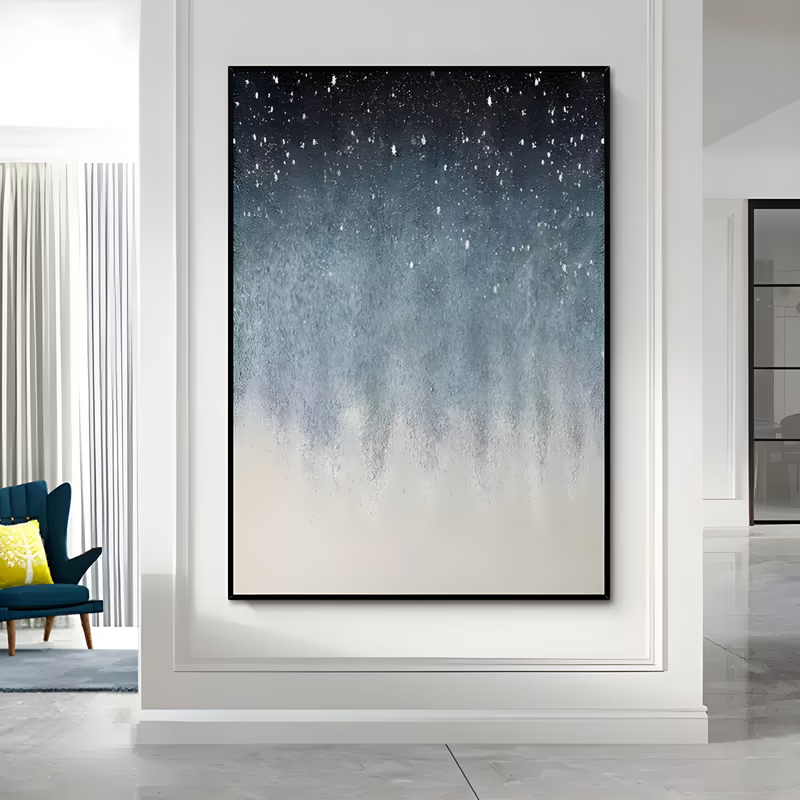
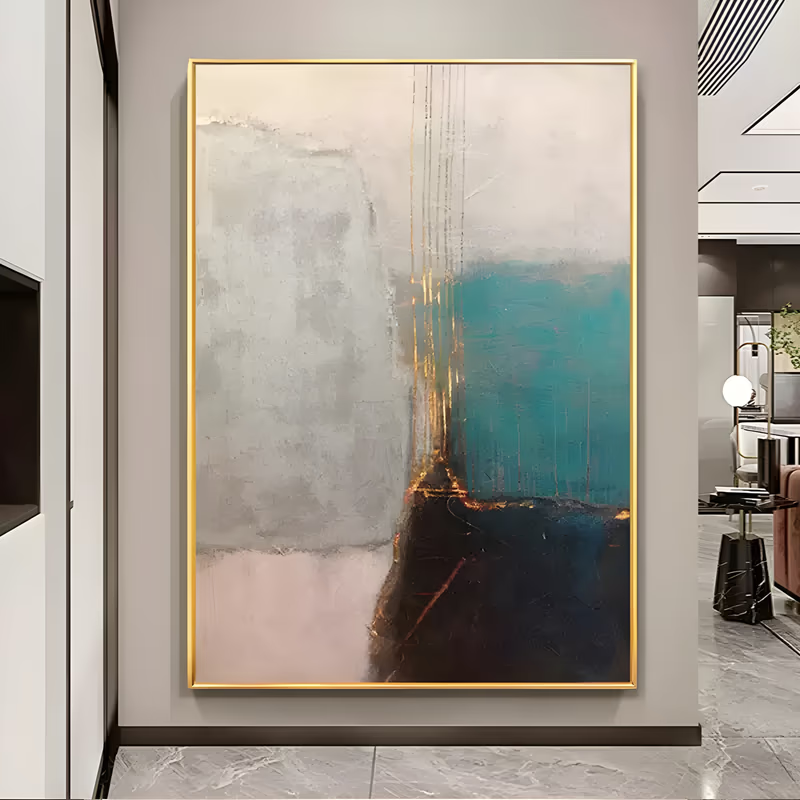
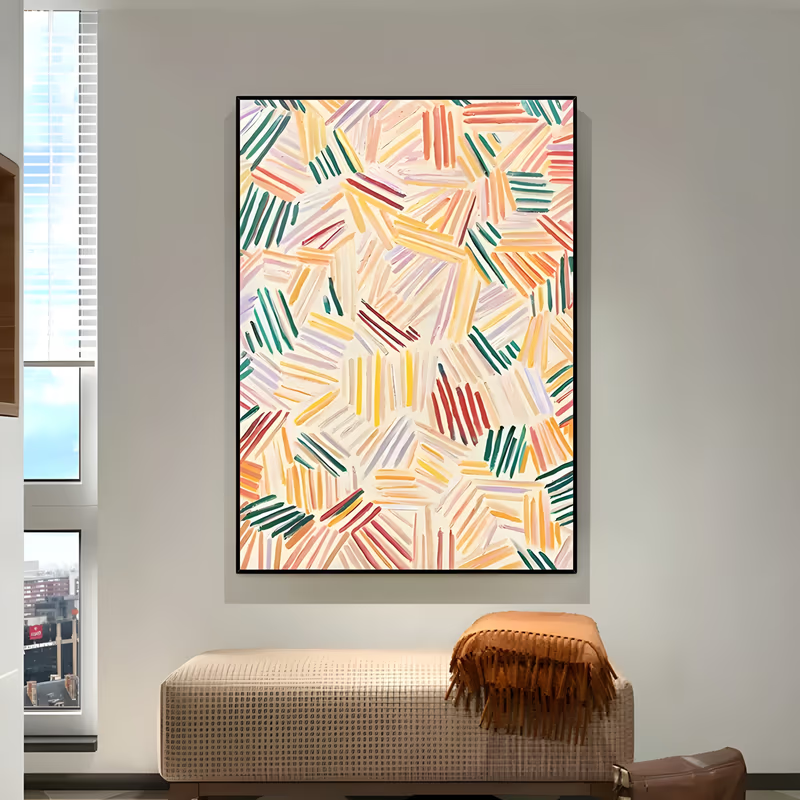
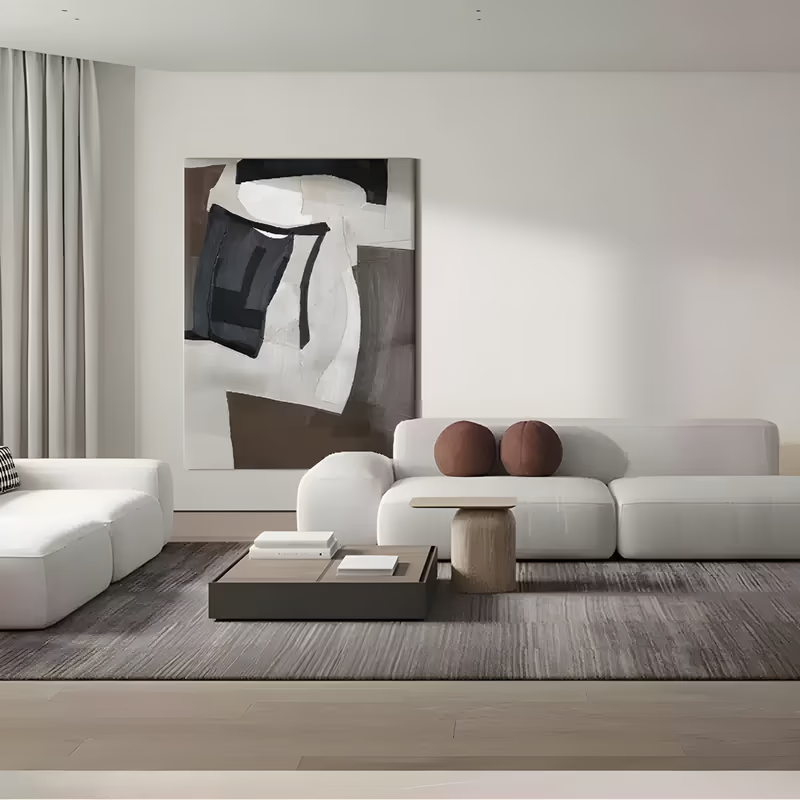
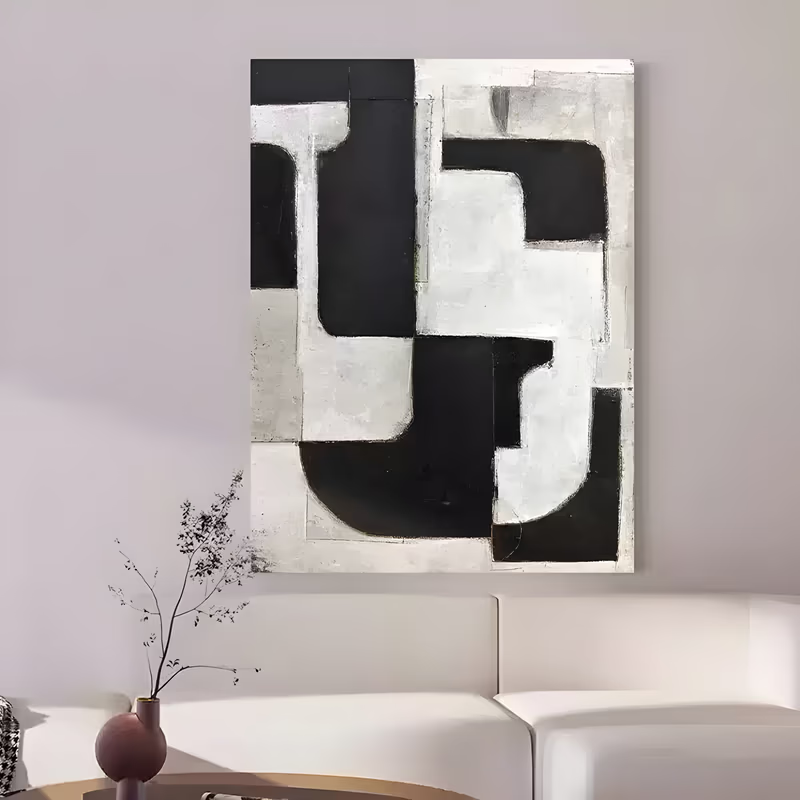
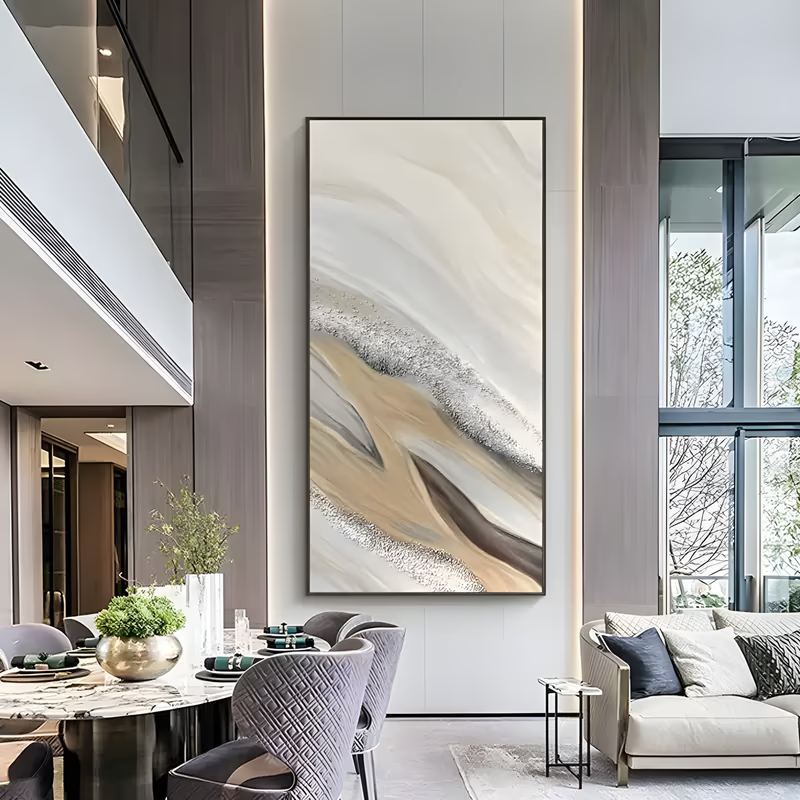
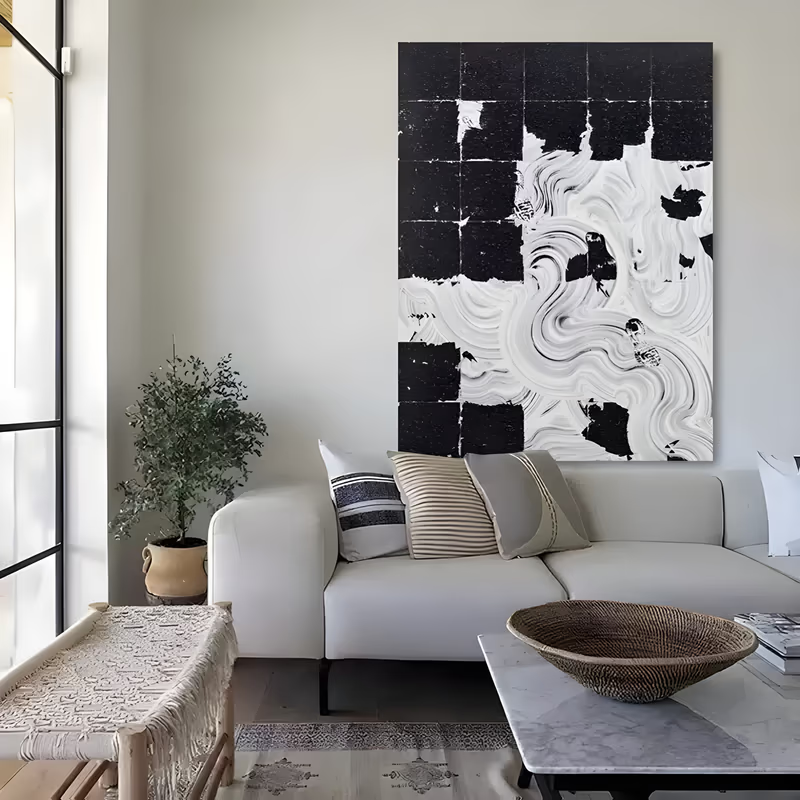
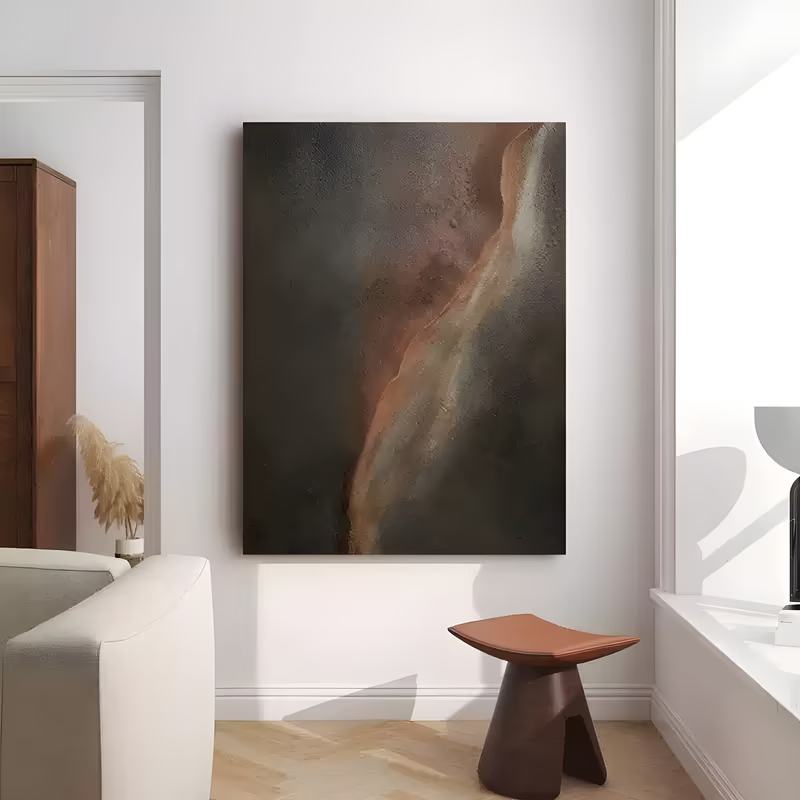
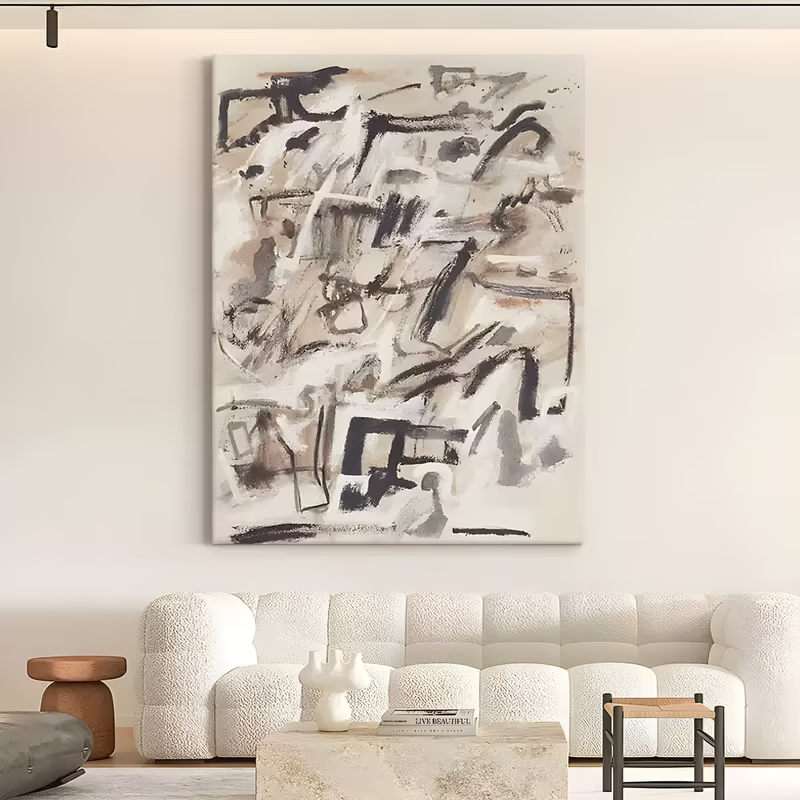
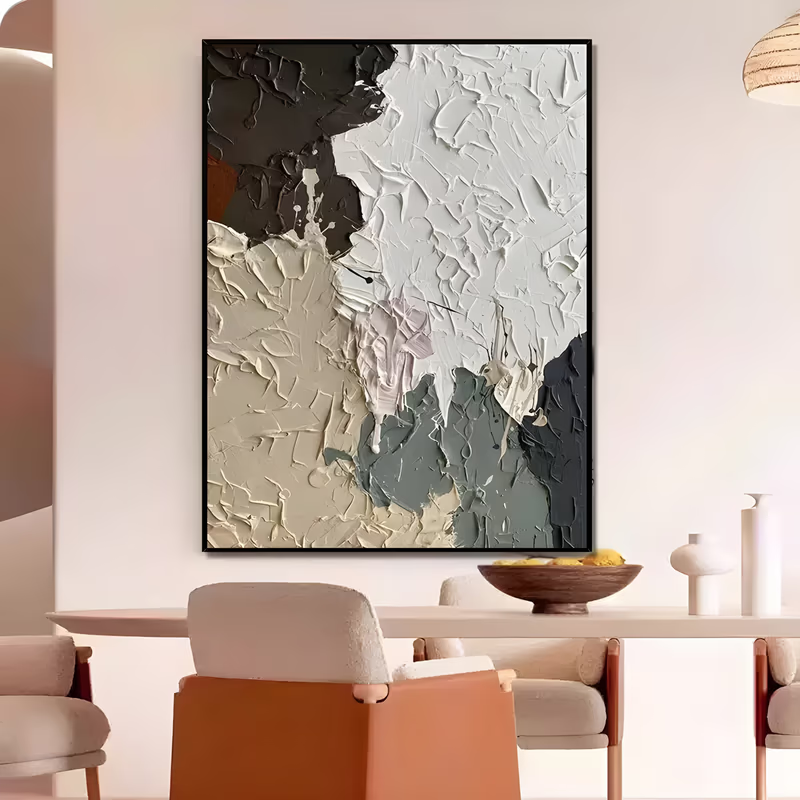
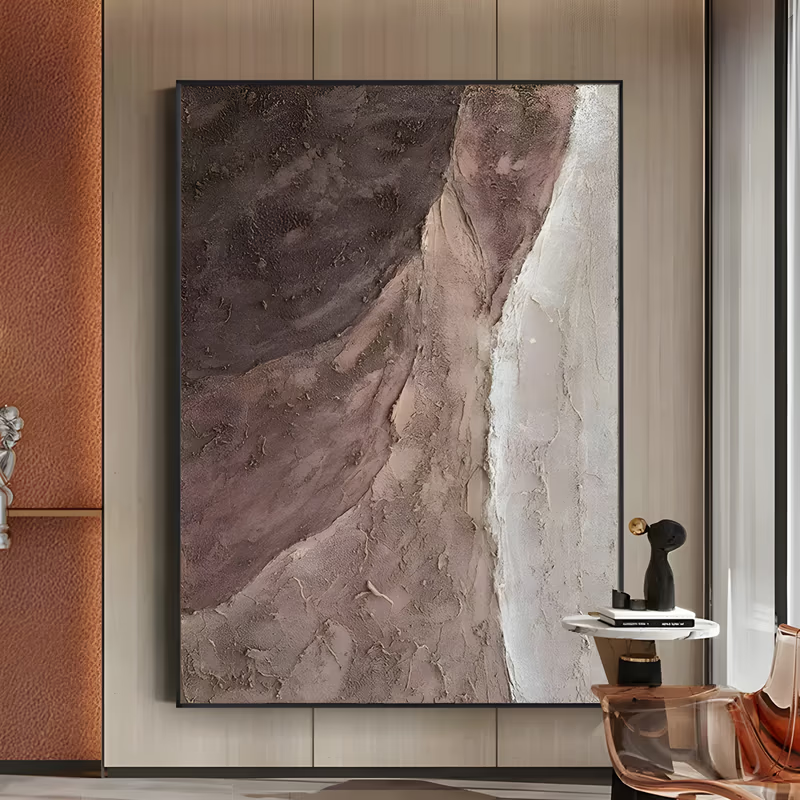
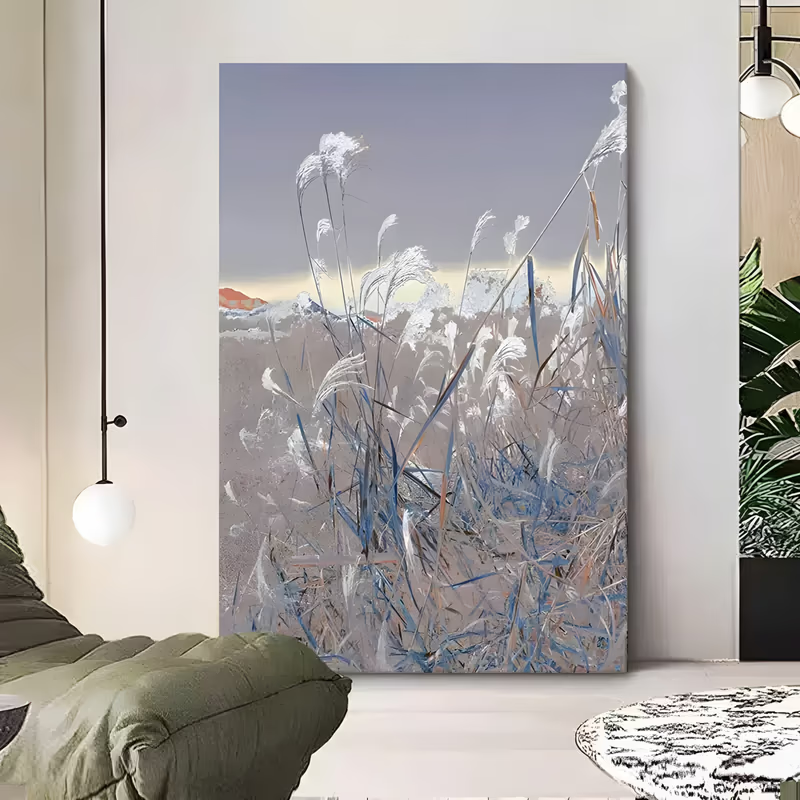
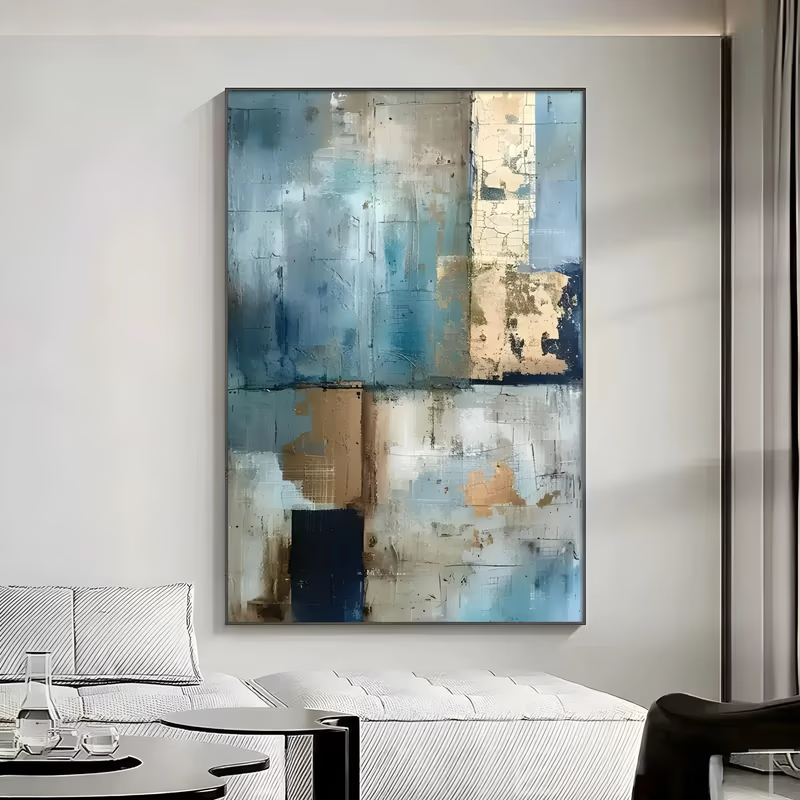
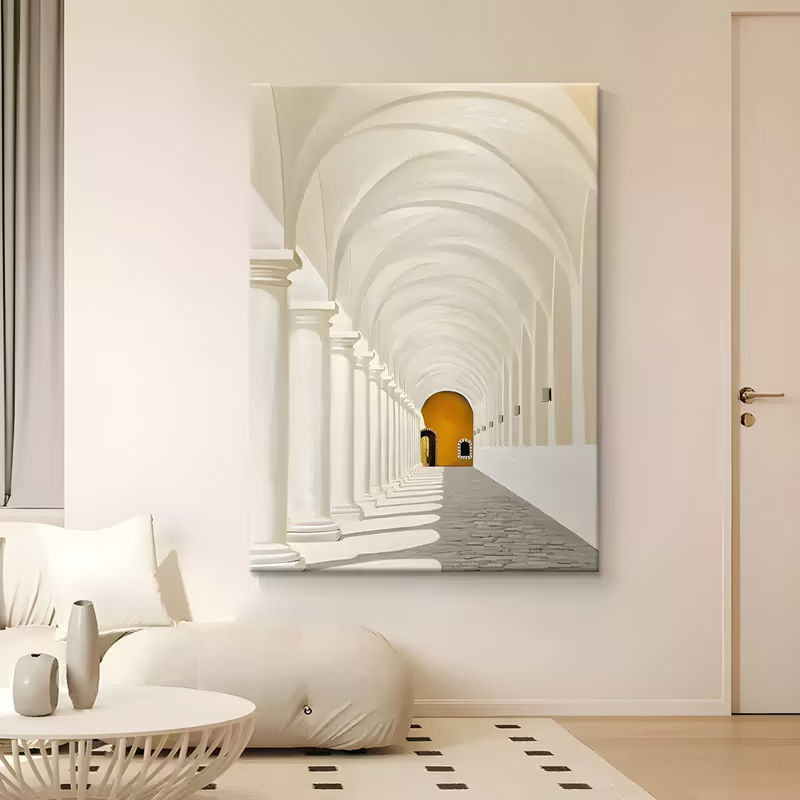
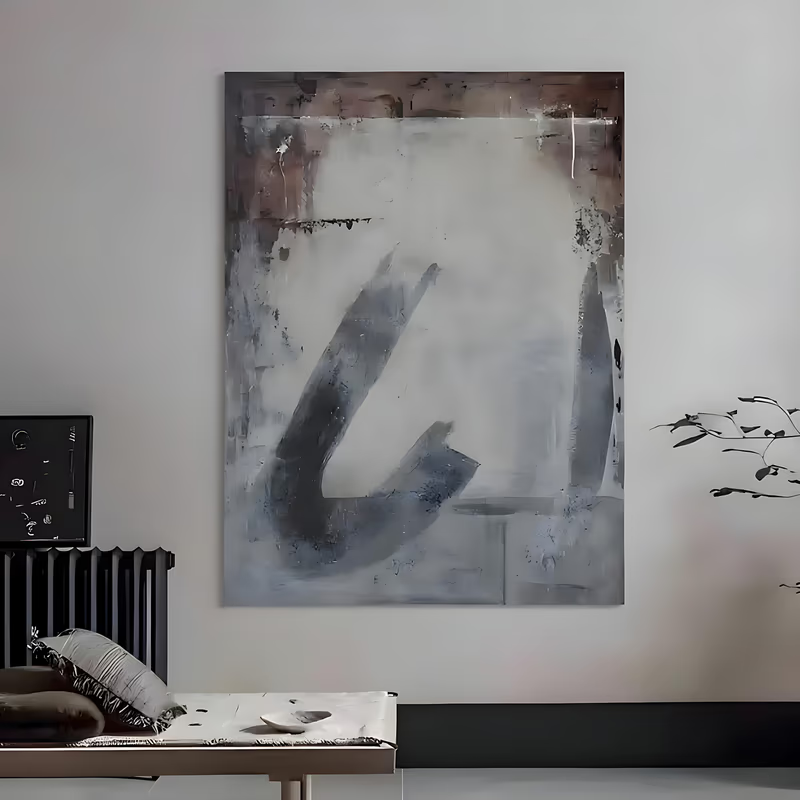
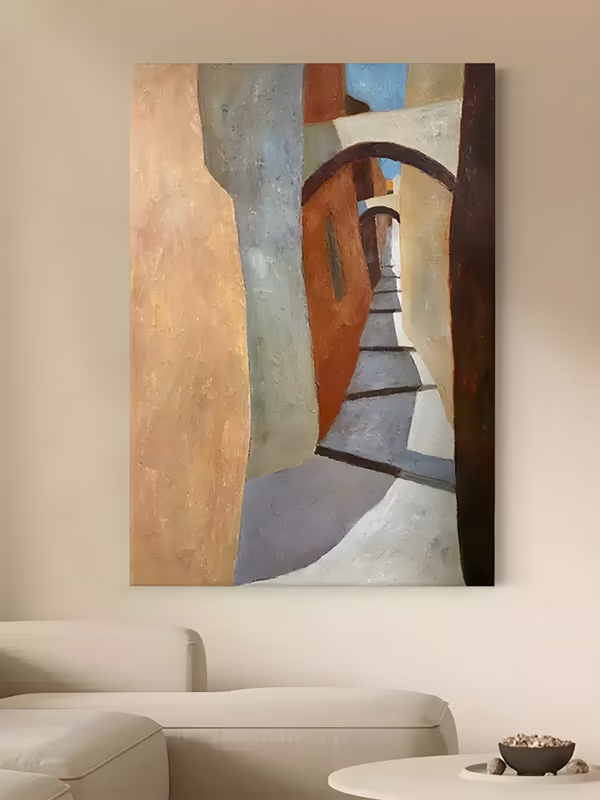
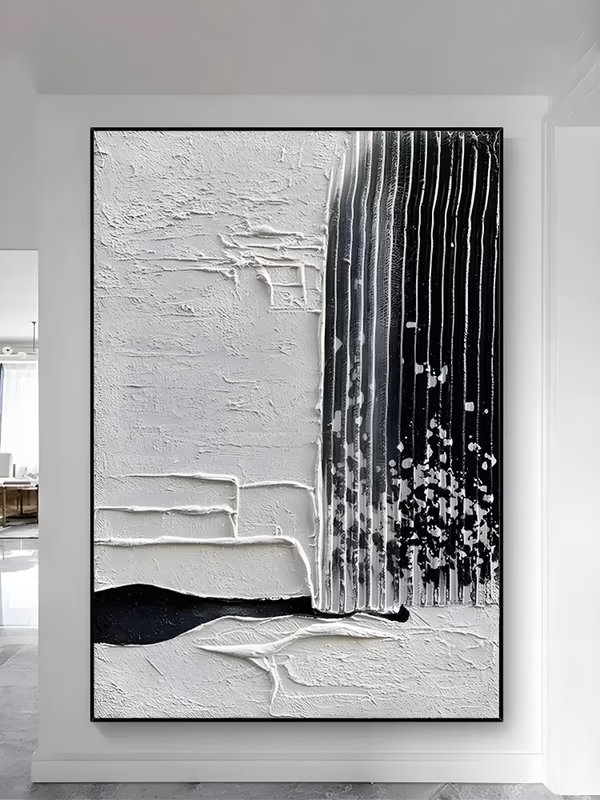
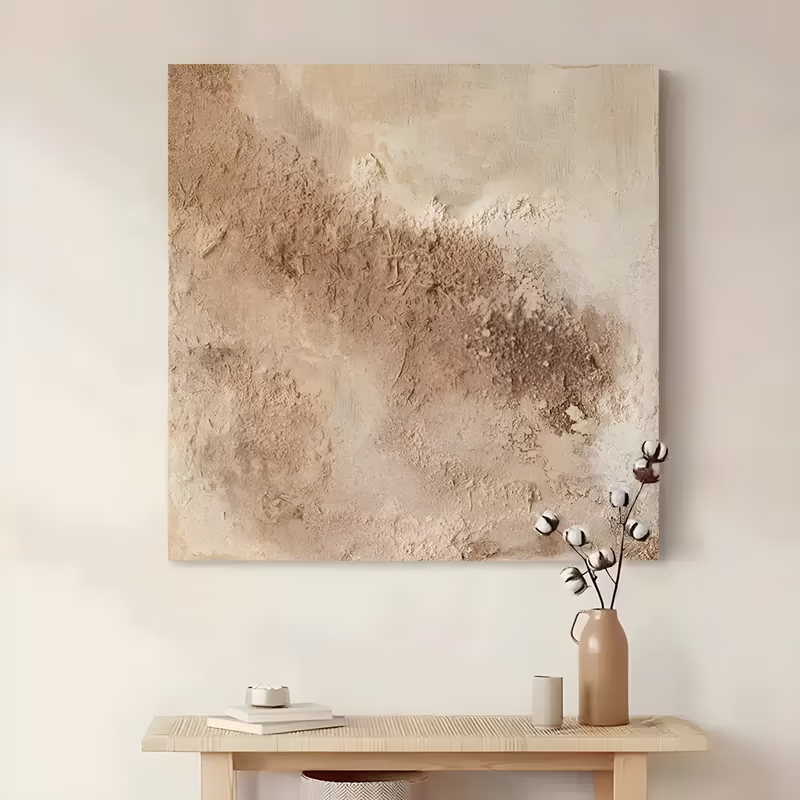
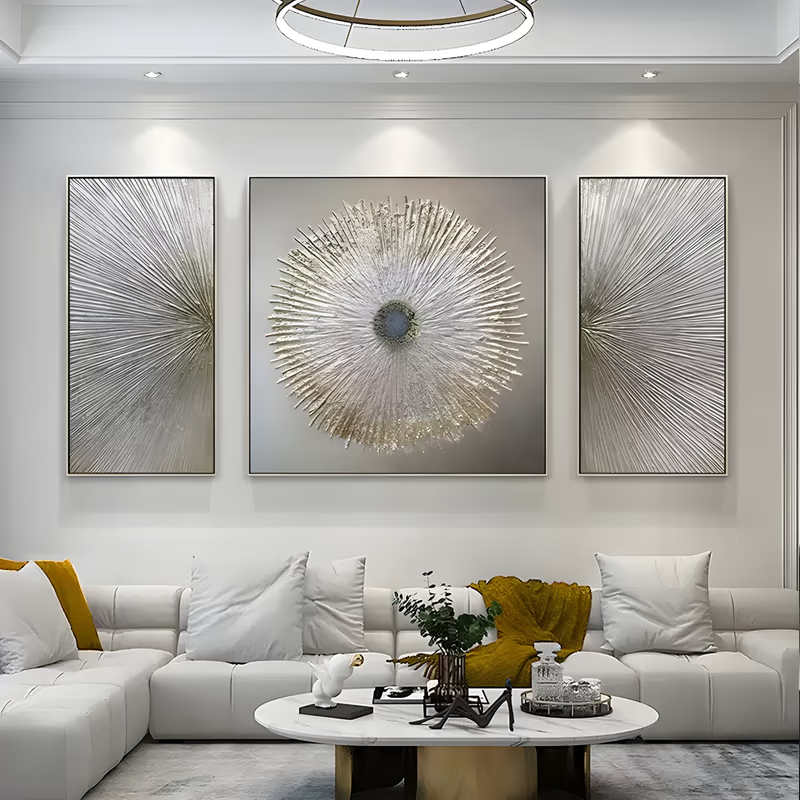
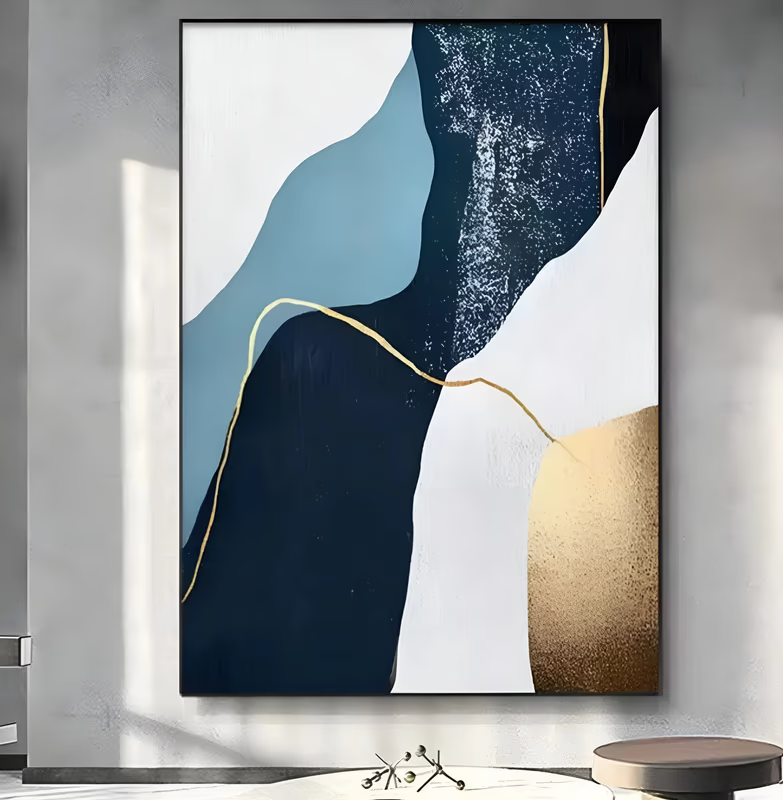
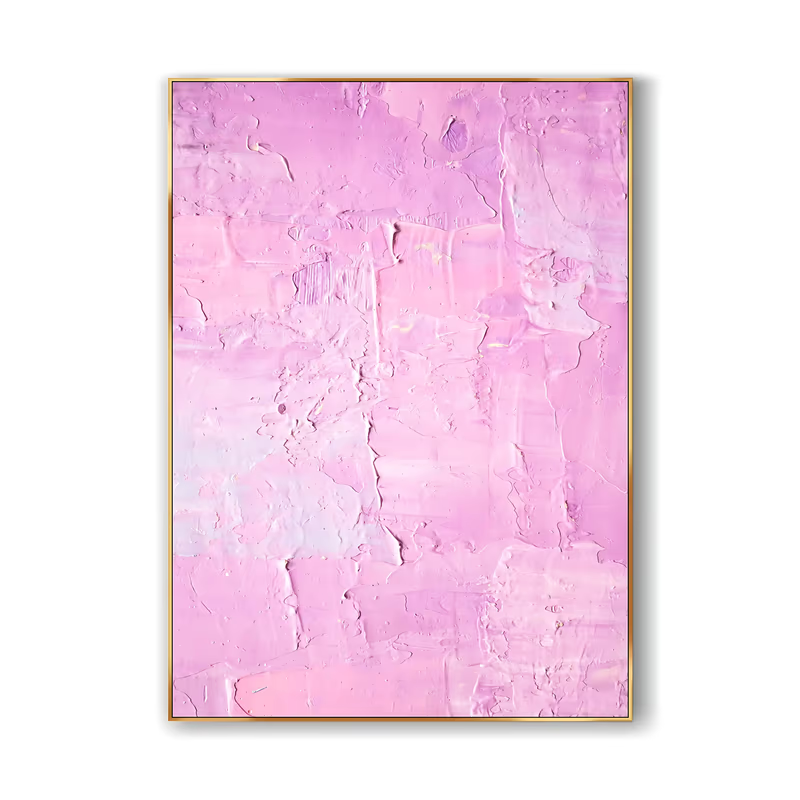
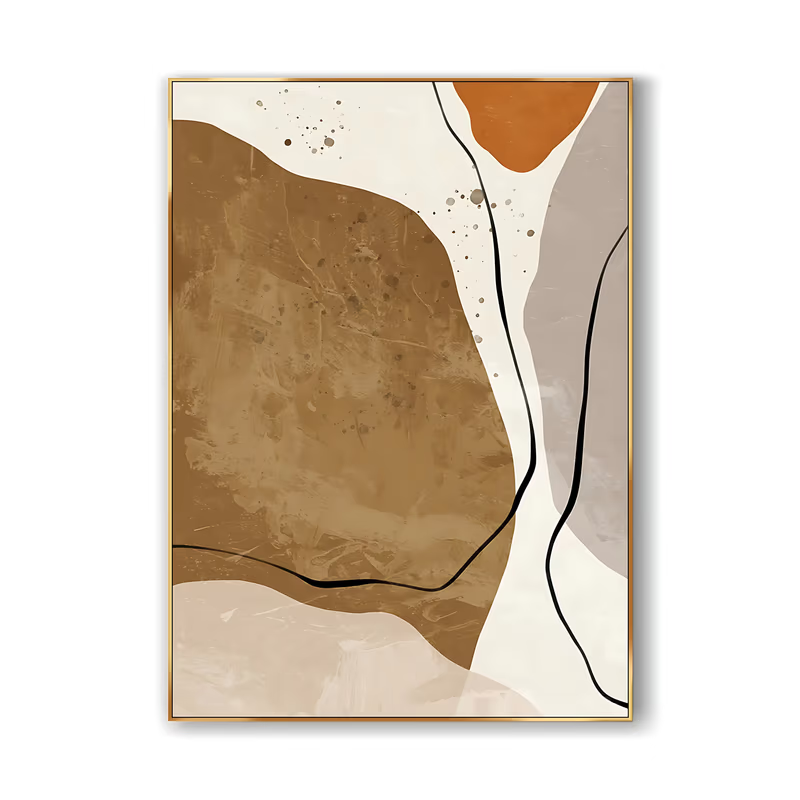
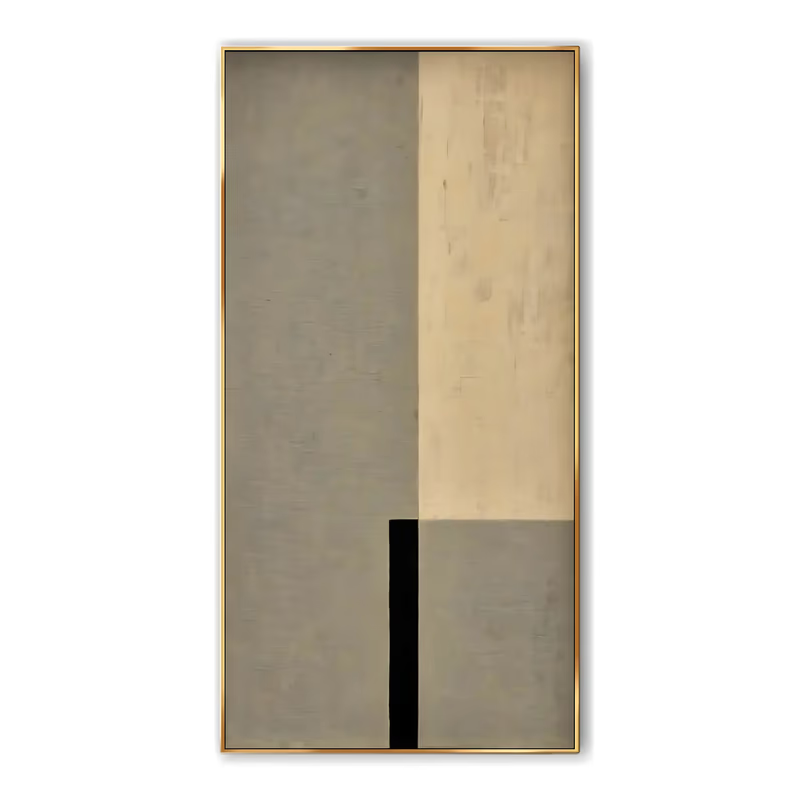
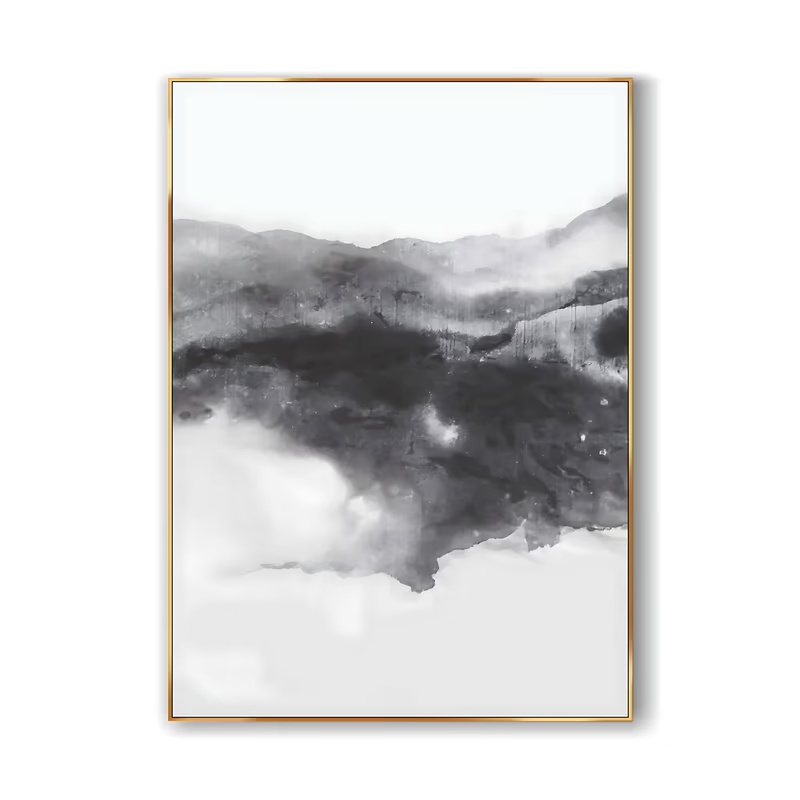
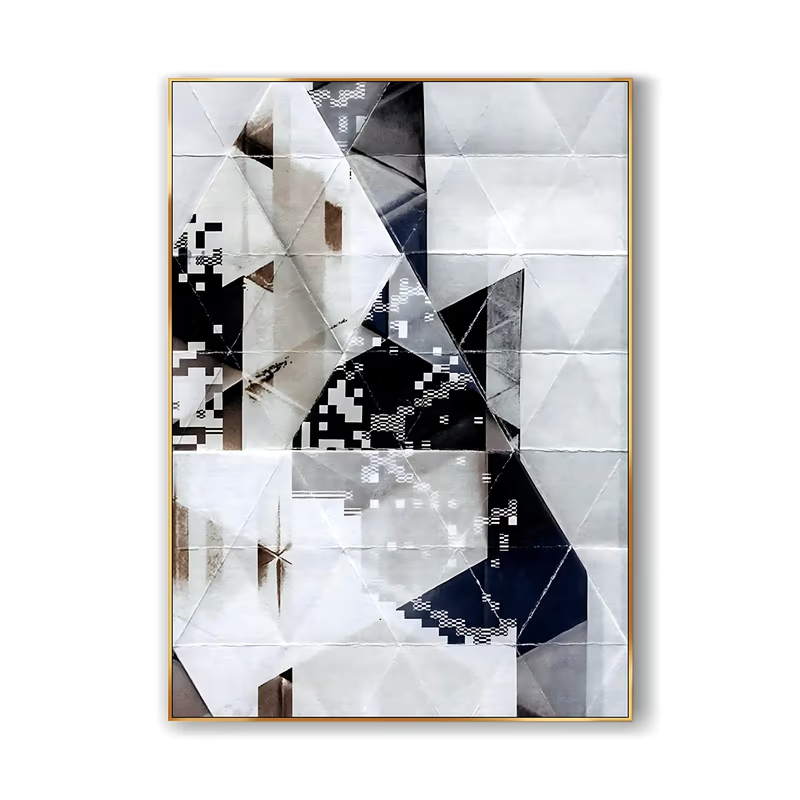
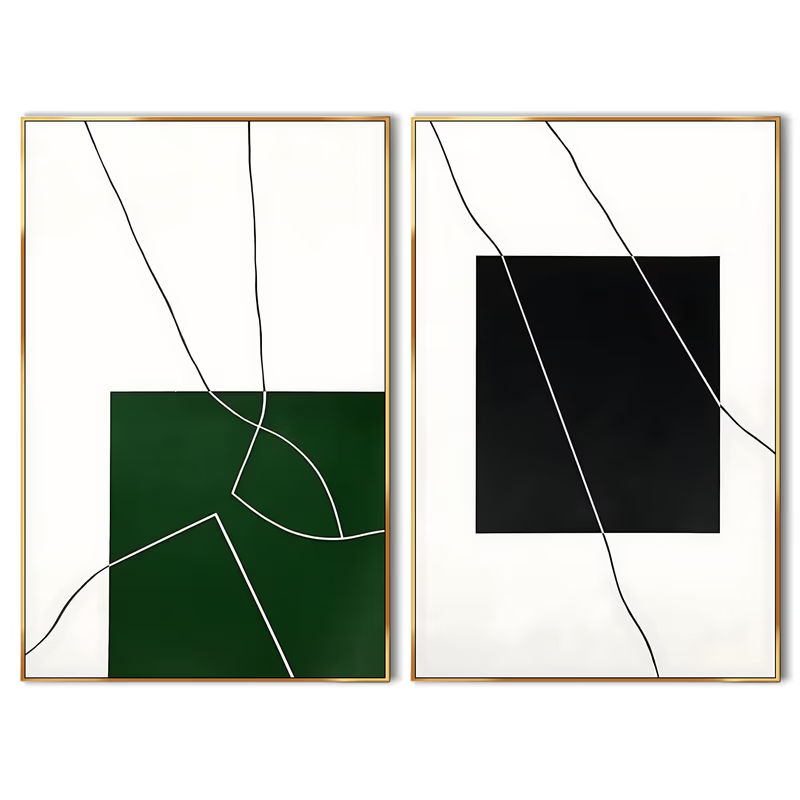
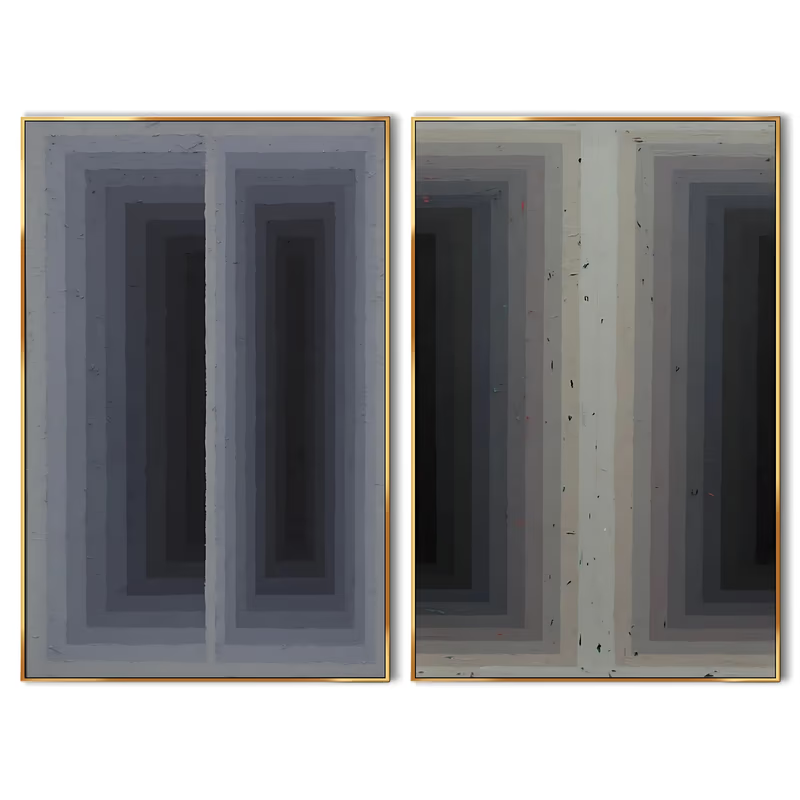
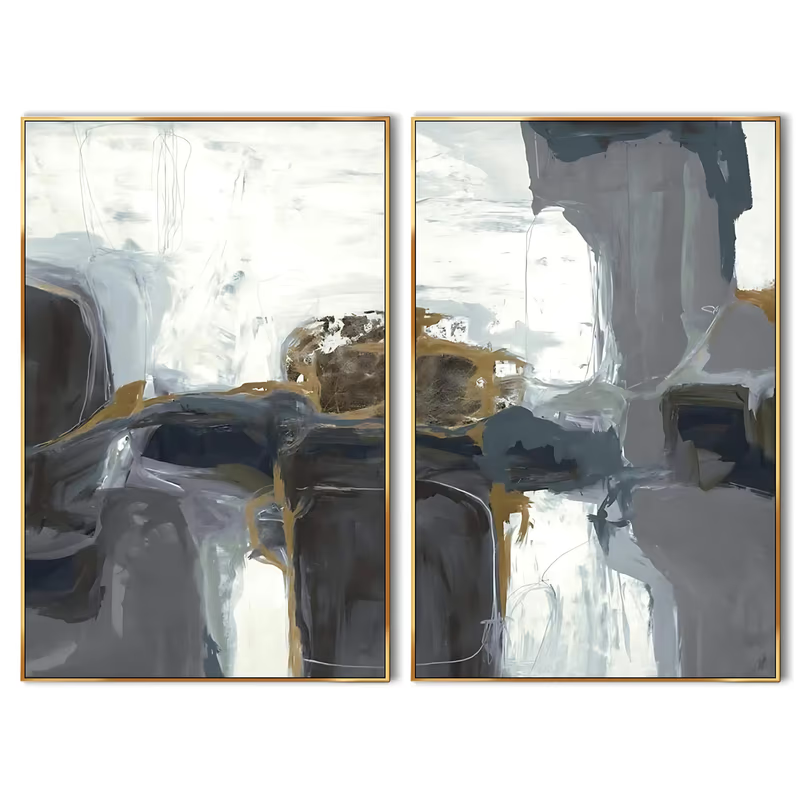
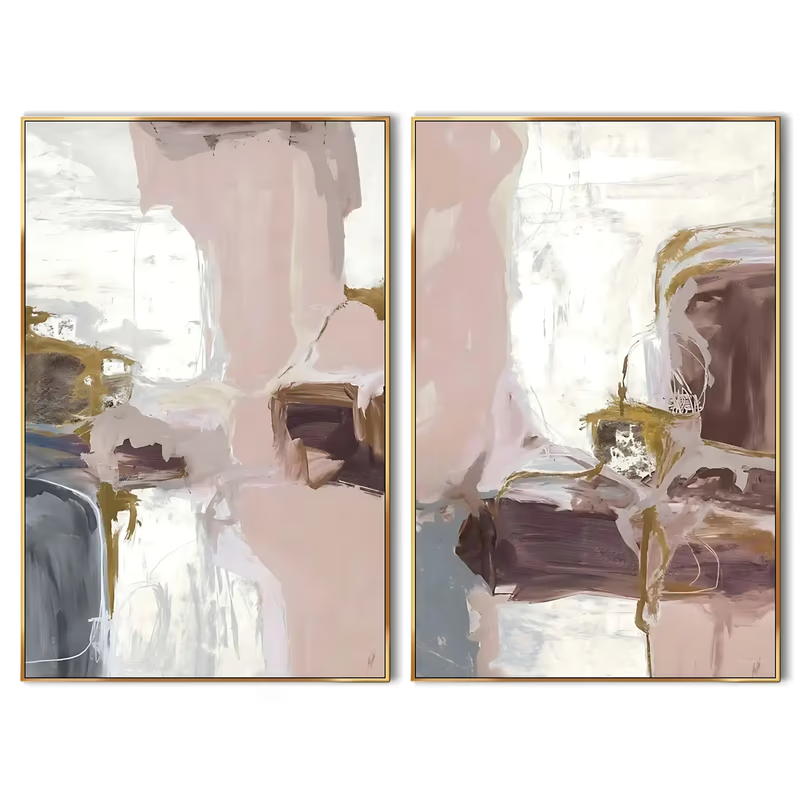
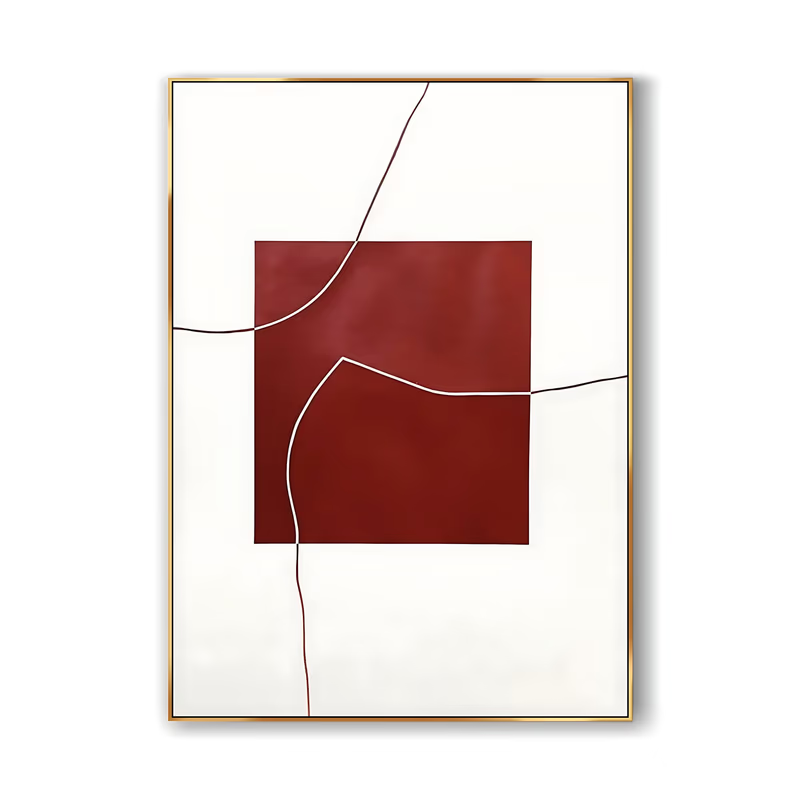
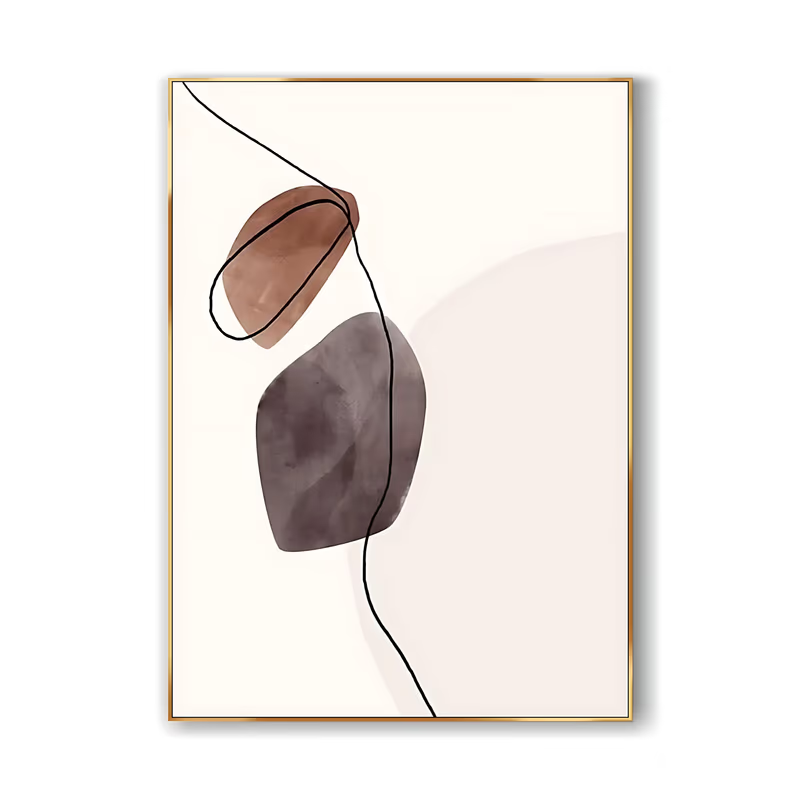
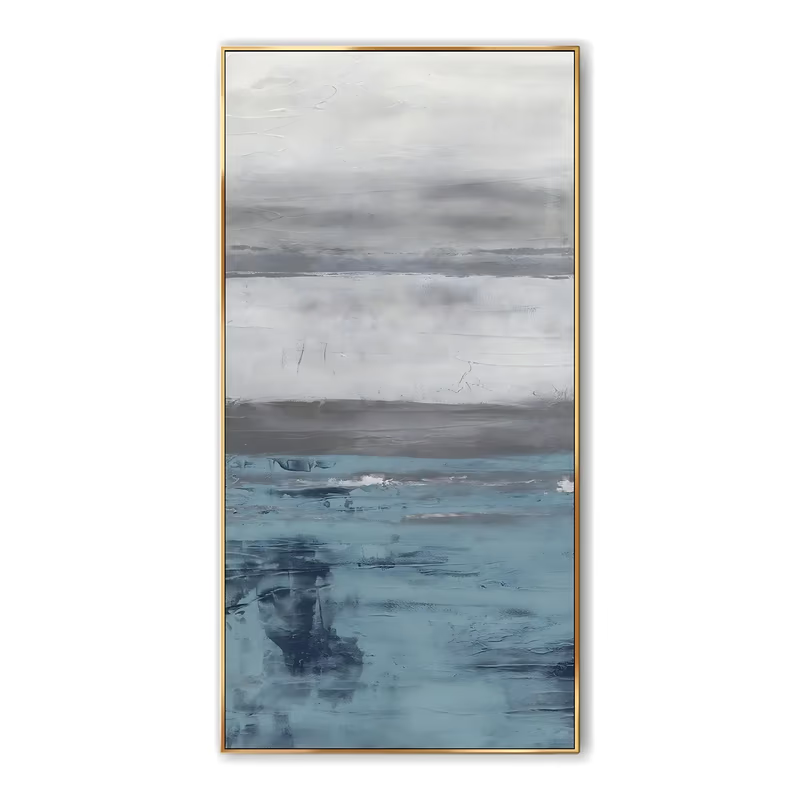
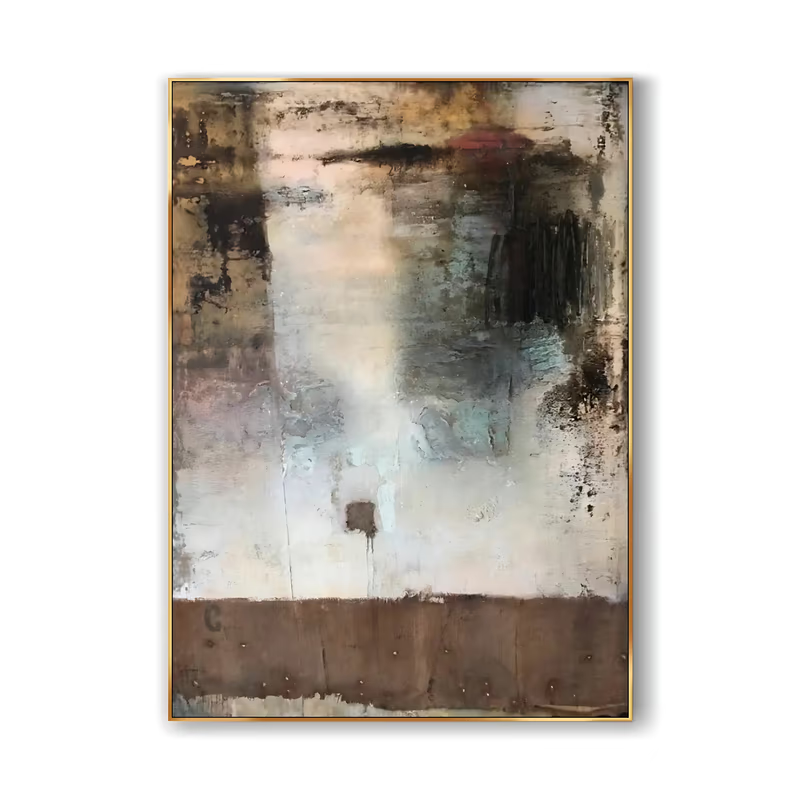
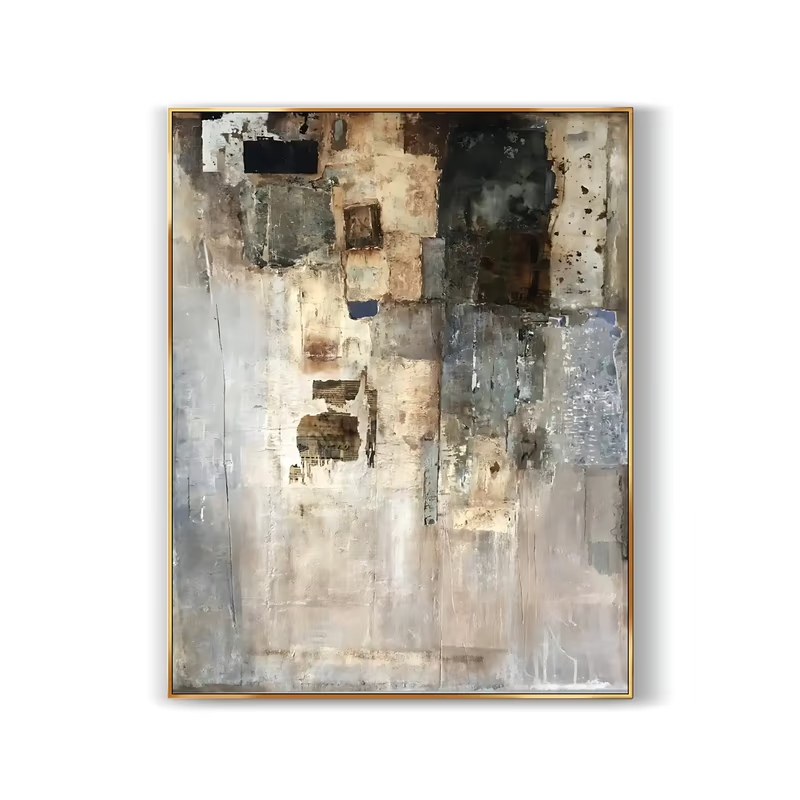
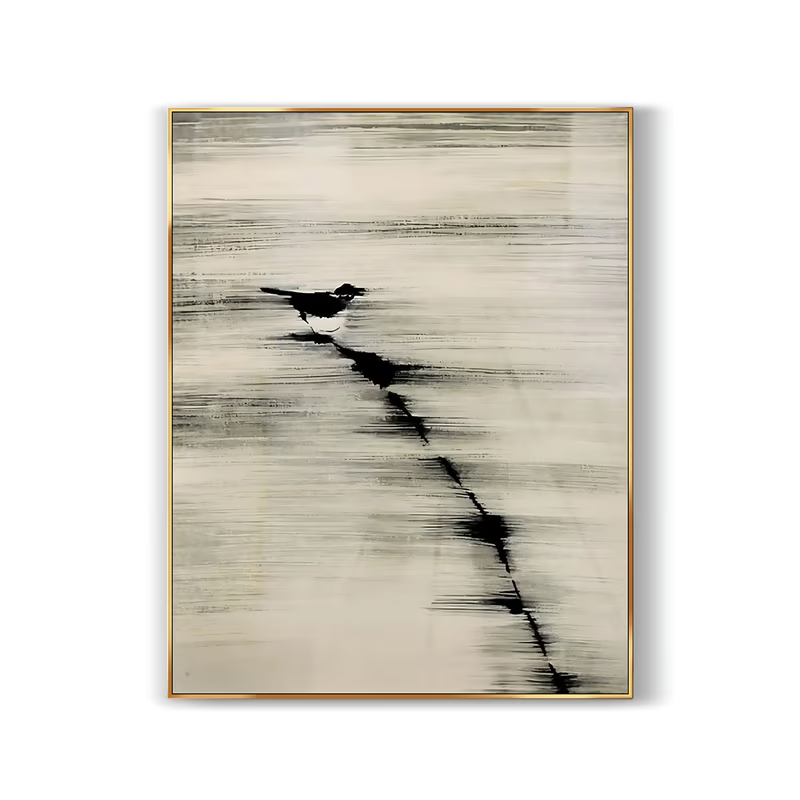
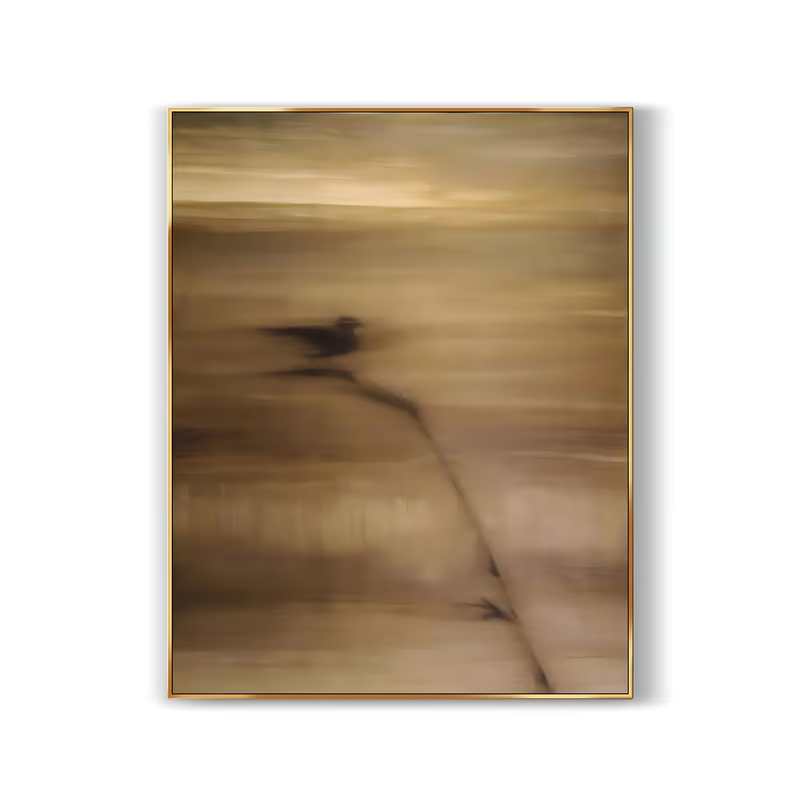
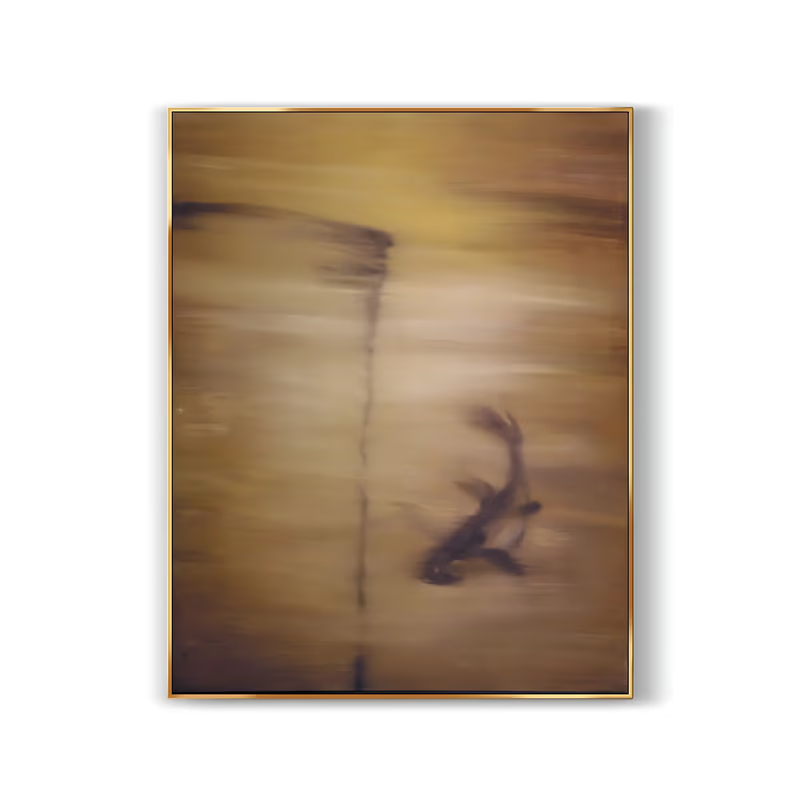
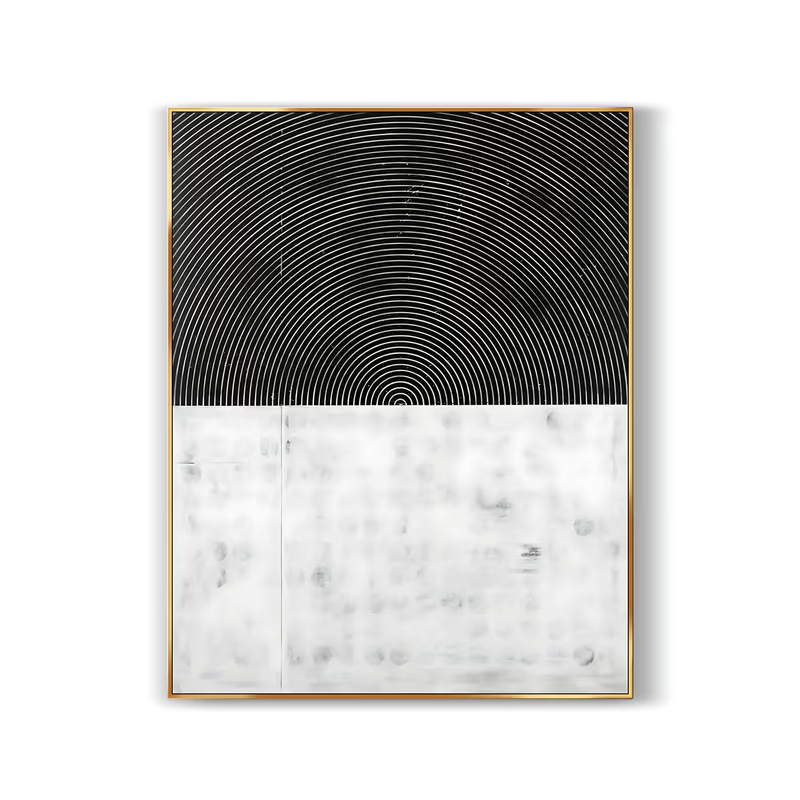
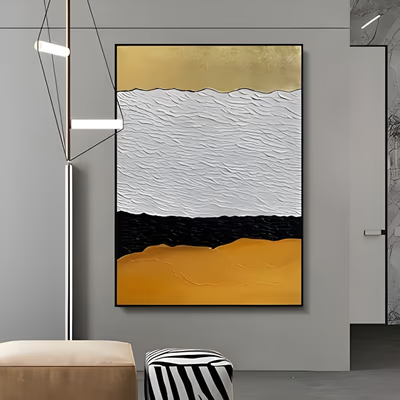
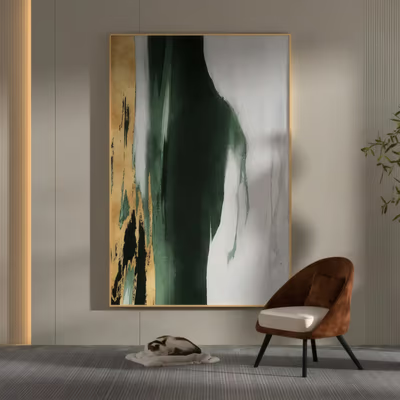
Soft planes of grey, sand and white, weathered surfaces and a single line of colour. Restful and understated, they suit residential buildings, spa floors and hotels where the guest rooms are calm and the corridor should be too. Quiet corridor art.
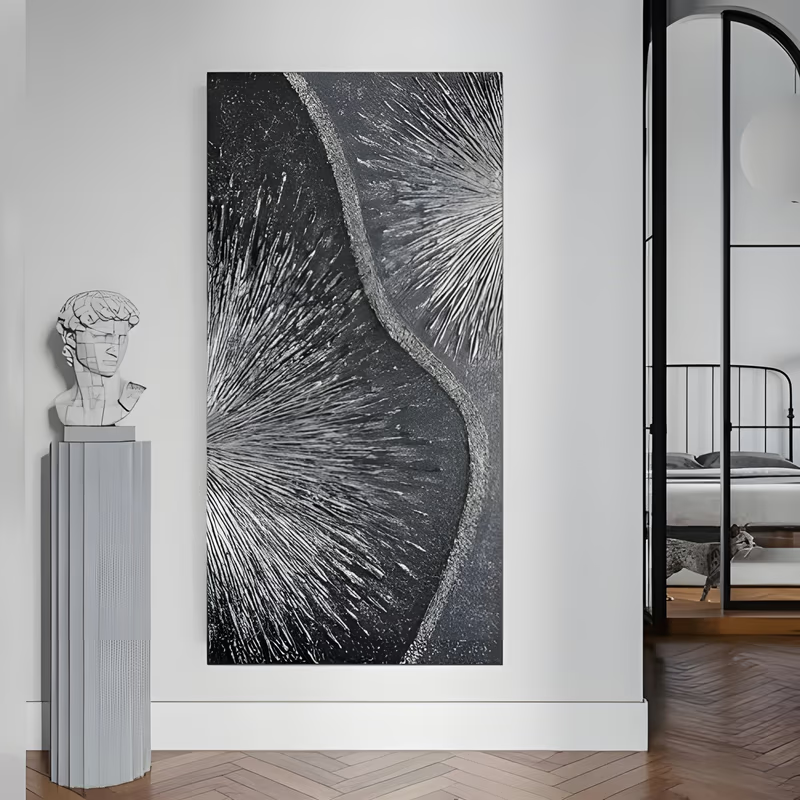
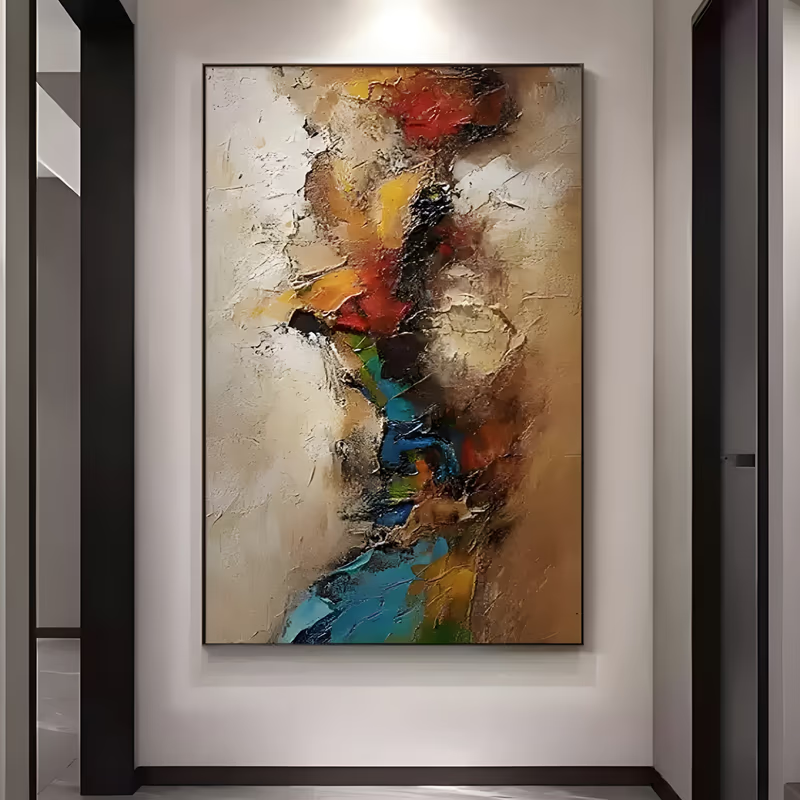
Flowing vertical abstracts
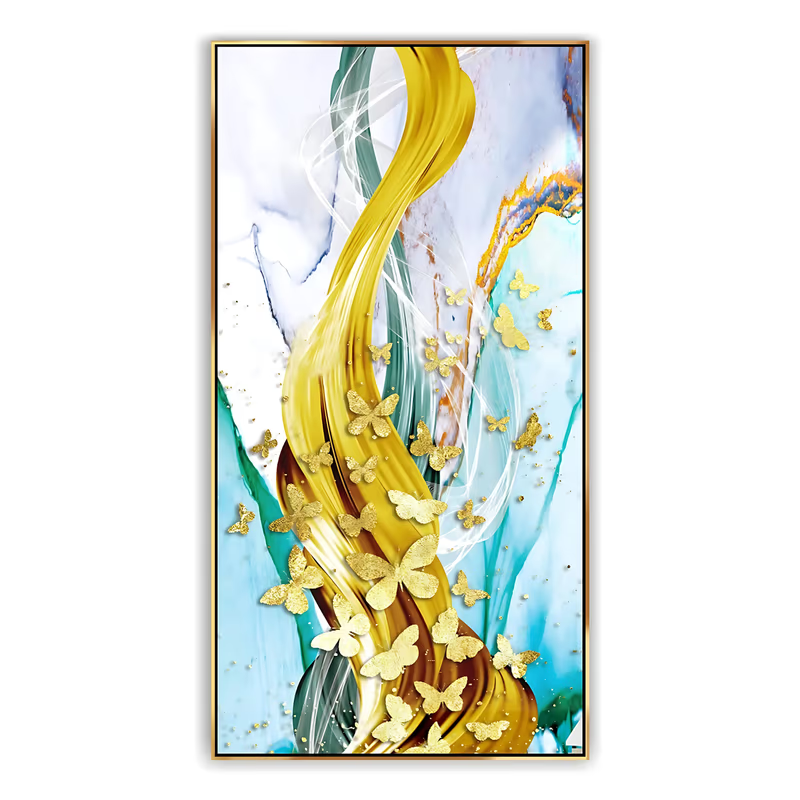
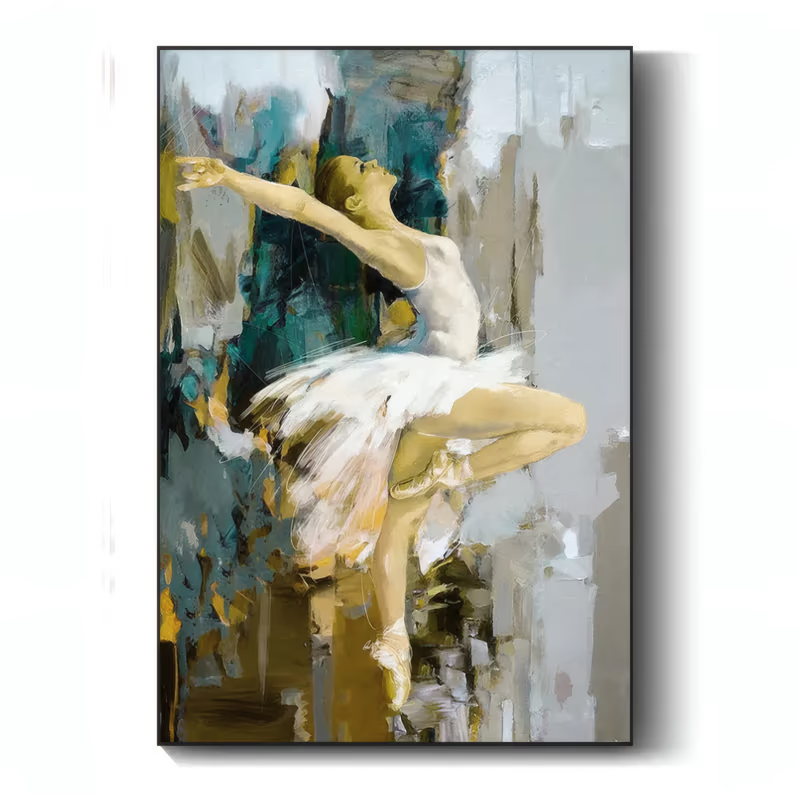
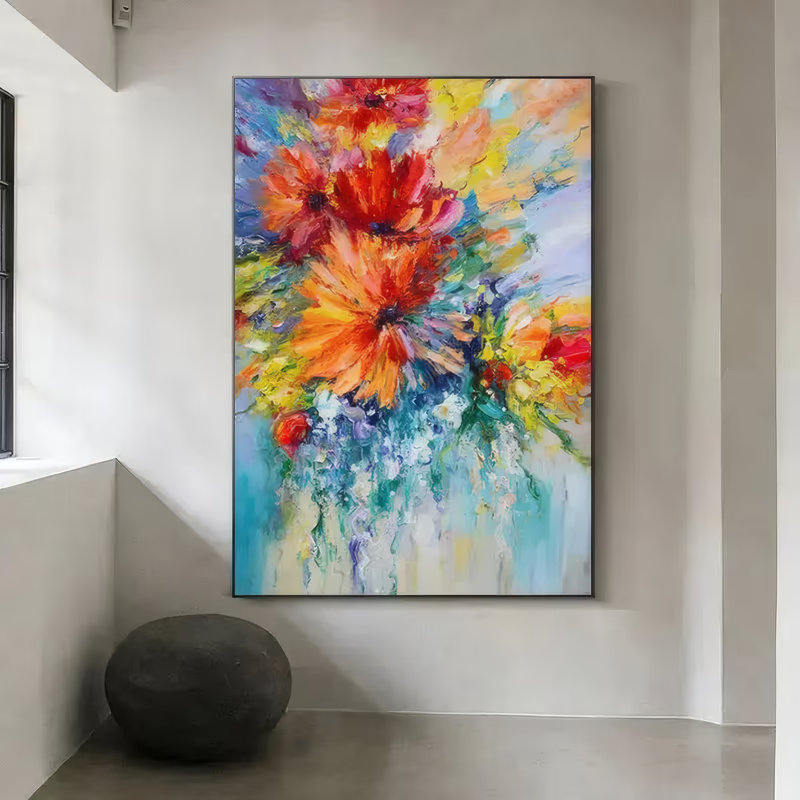
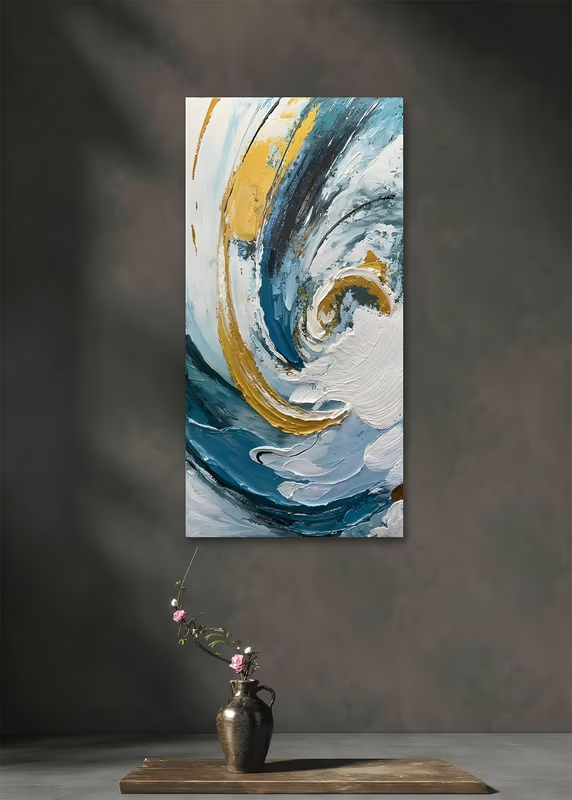
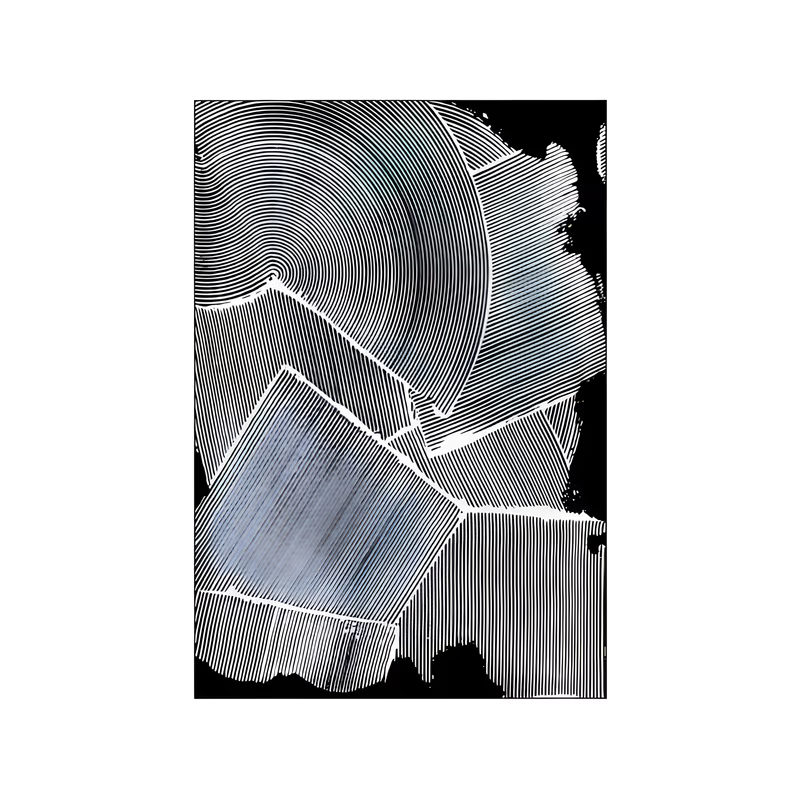
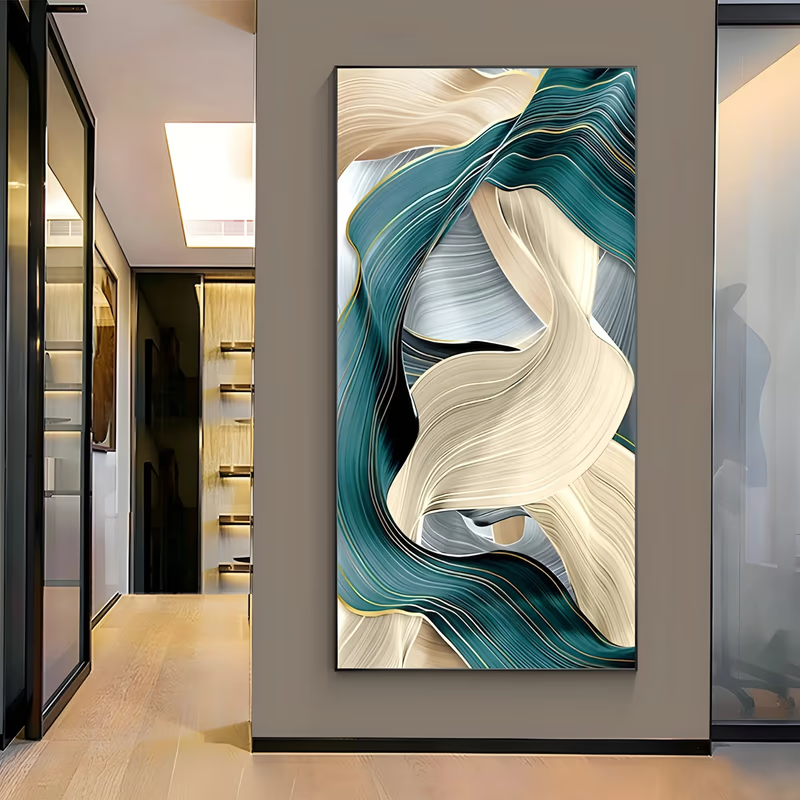
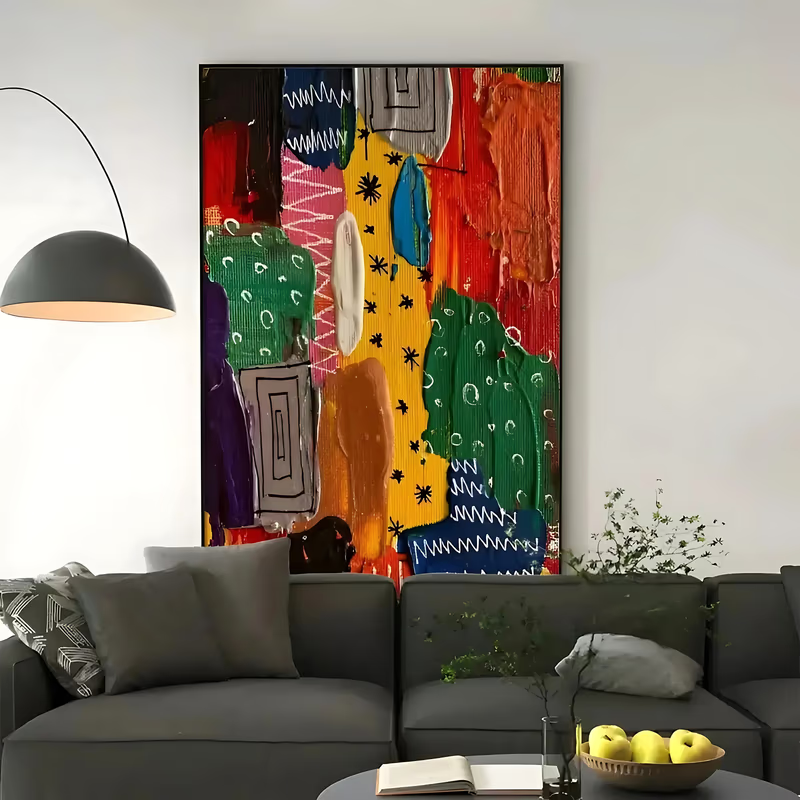
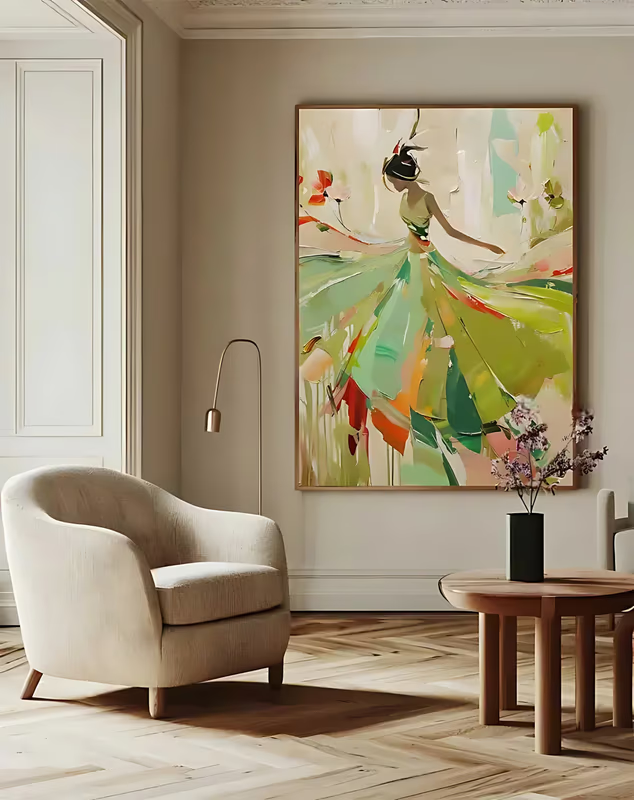
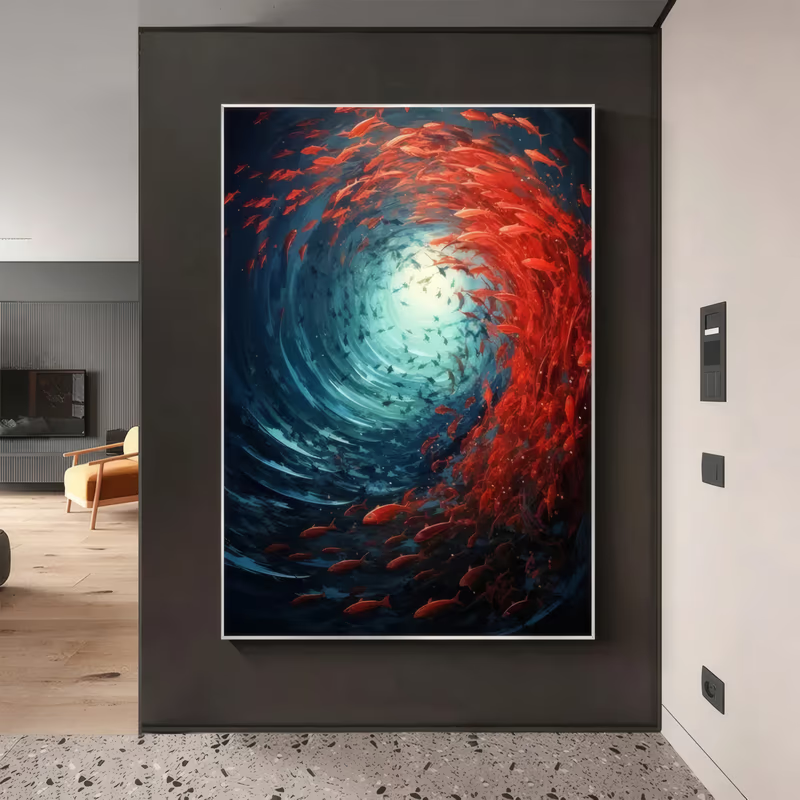
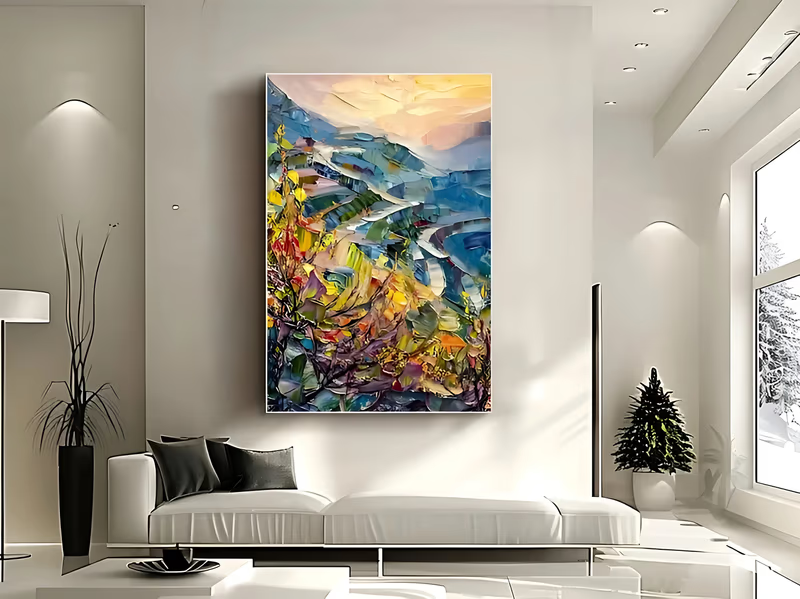
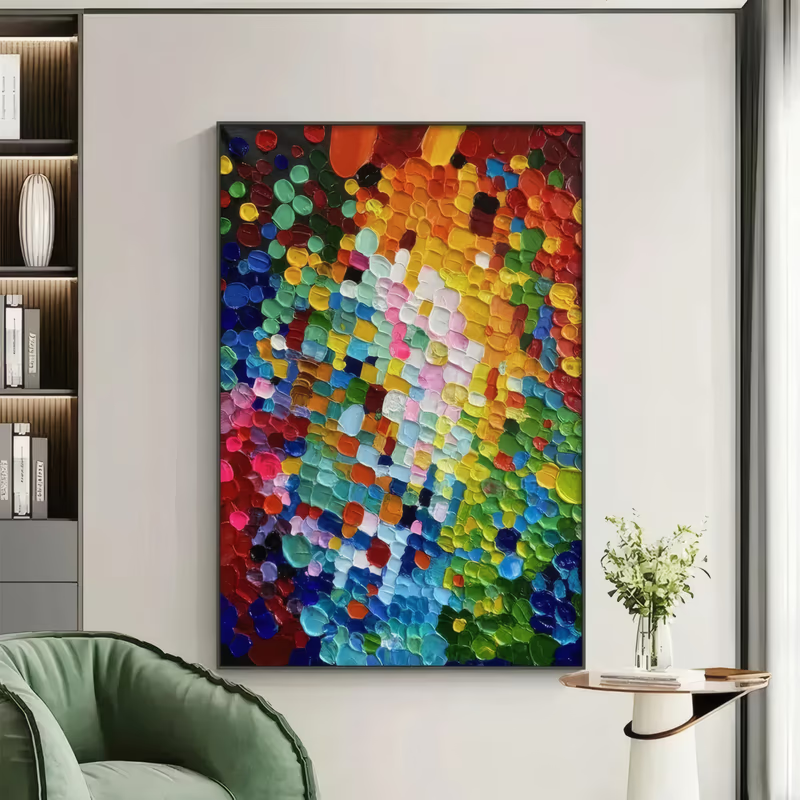
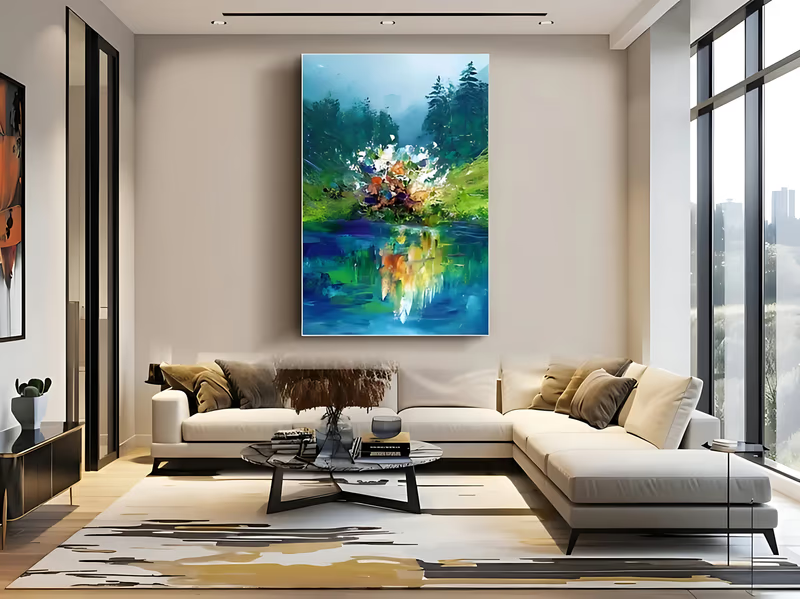
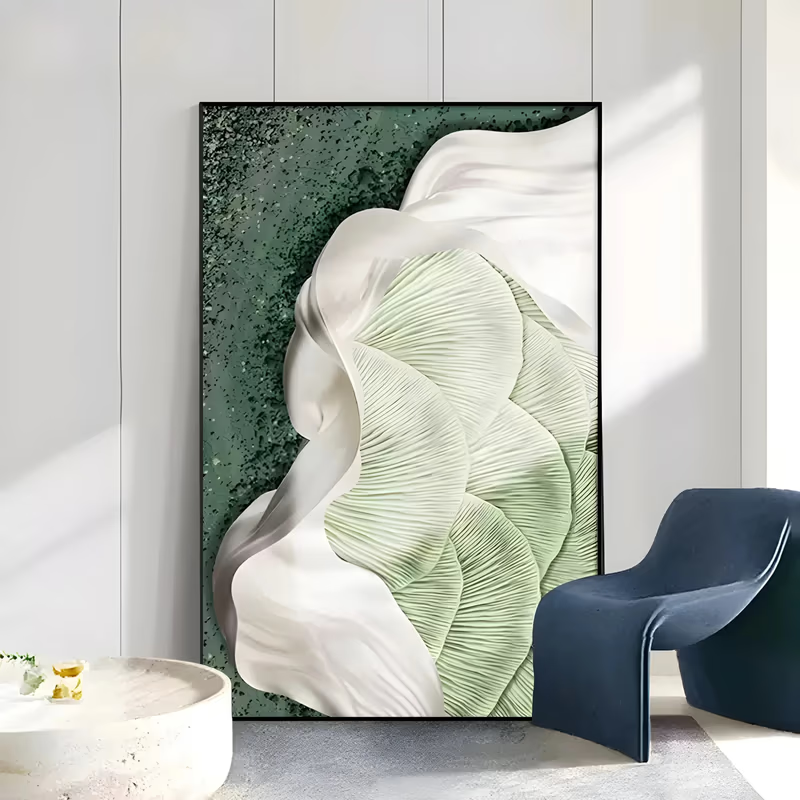
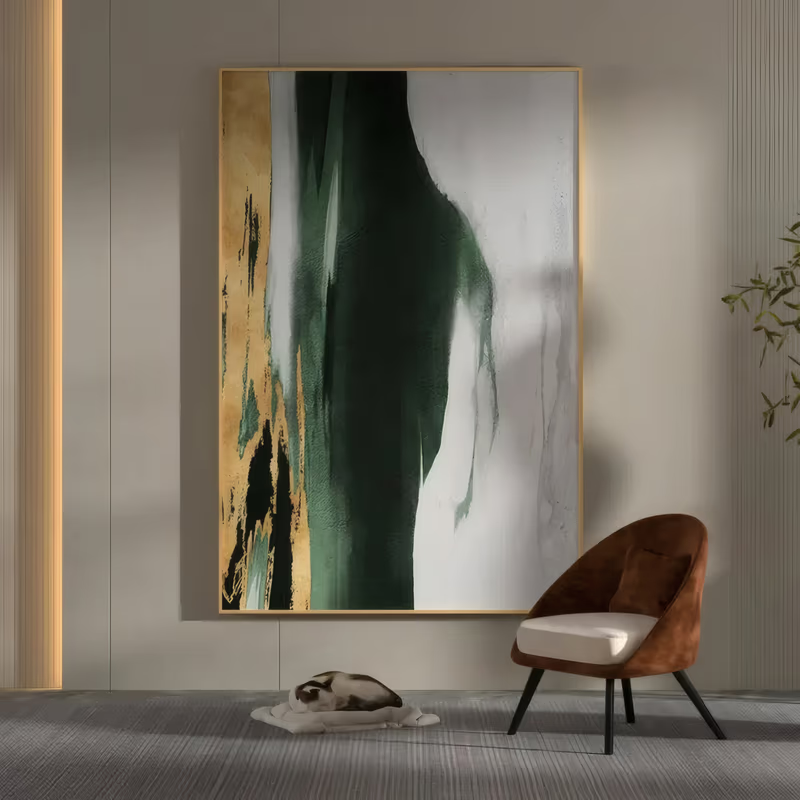
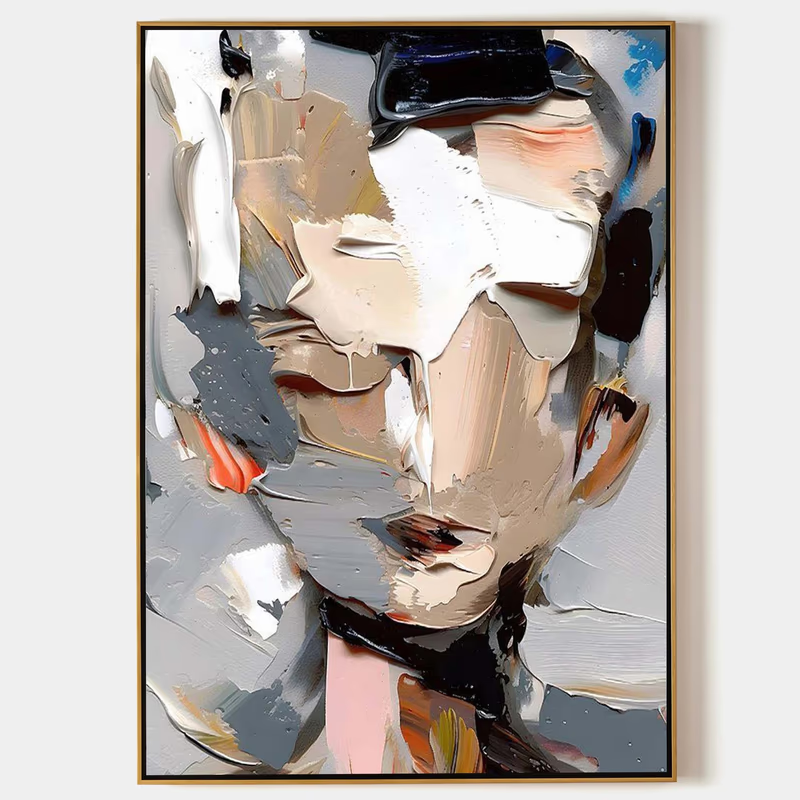
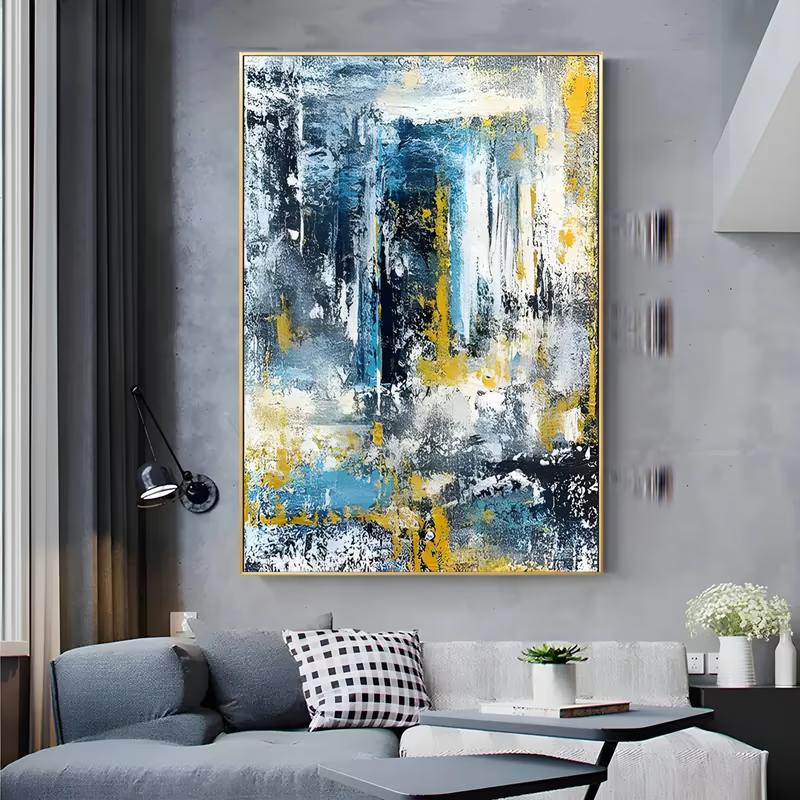
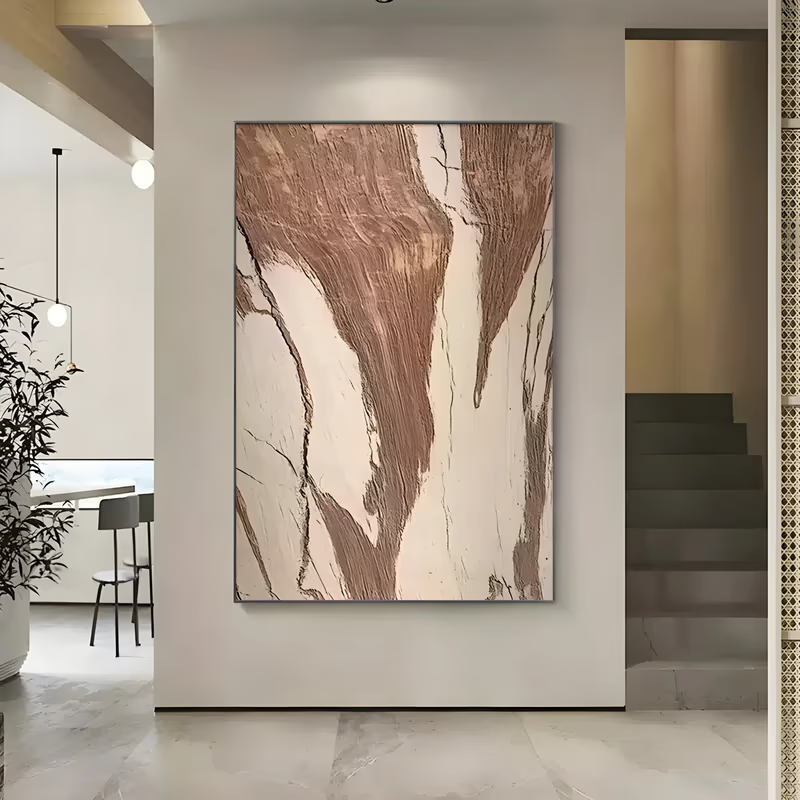
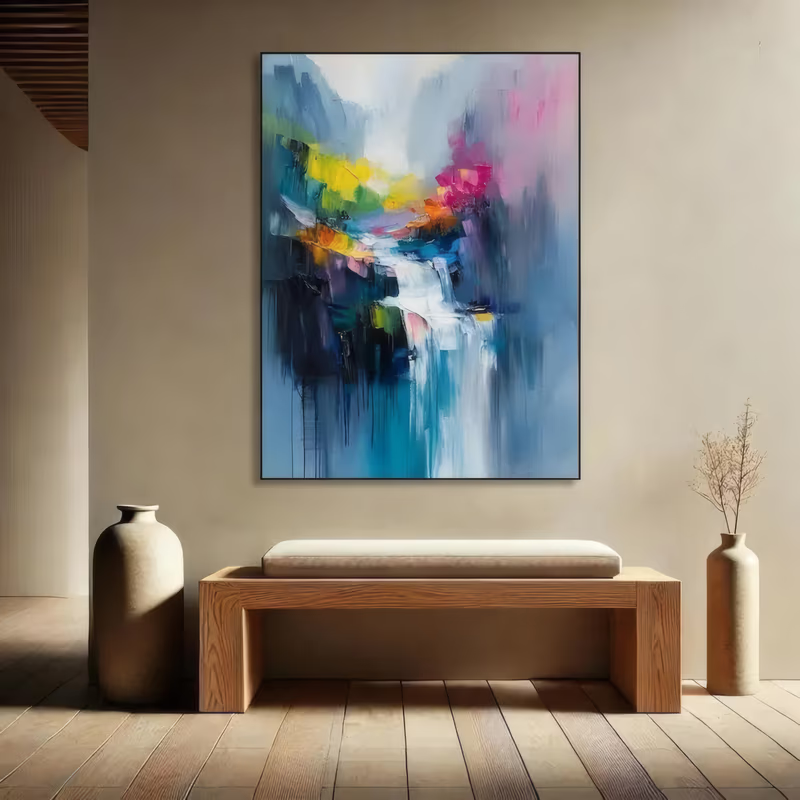
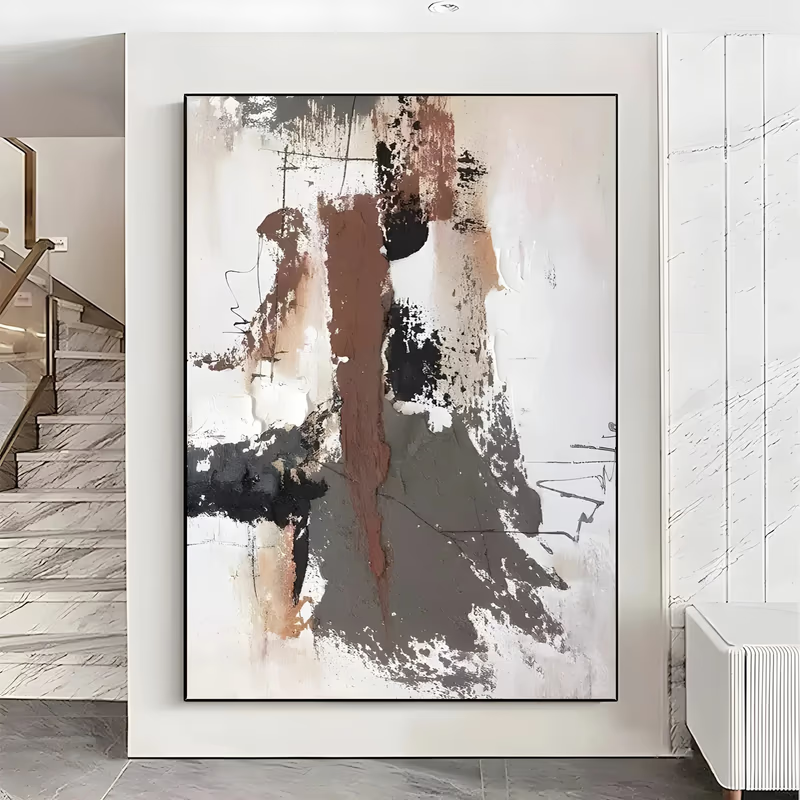
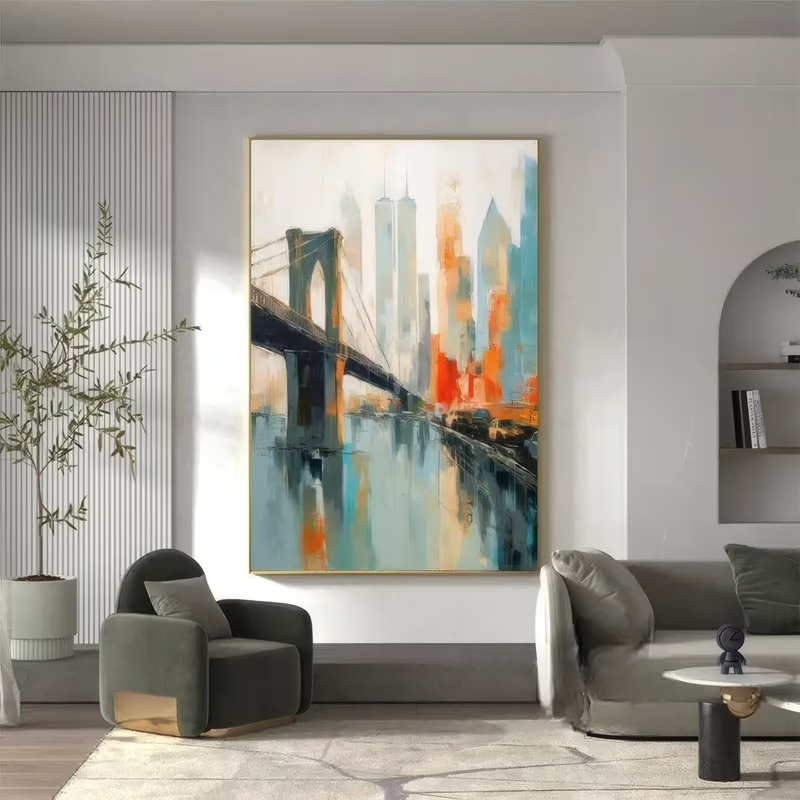
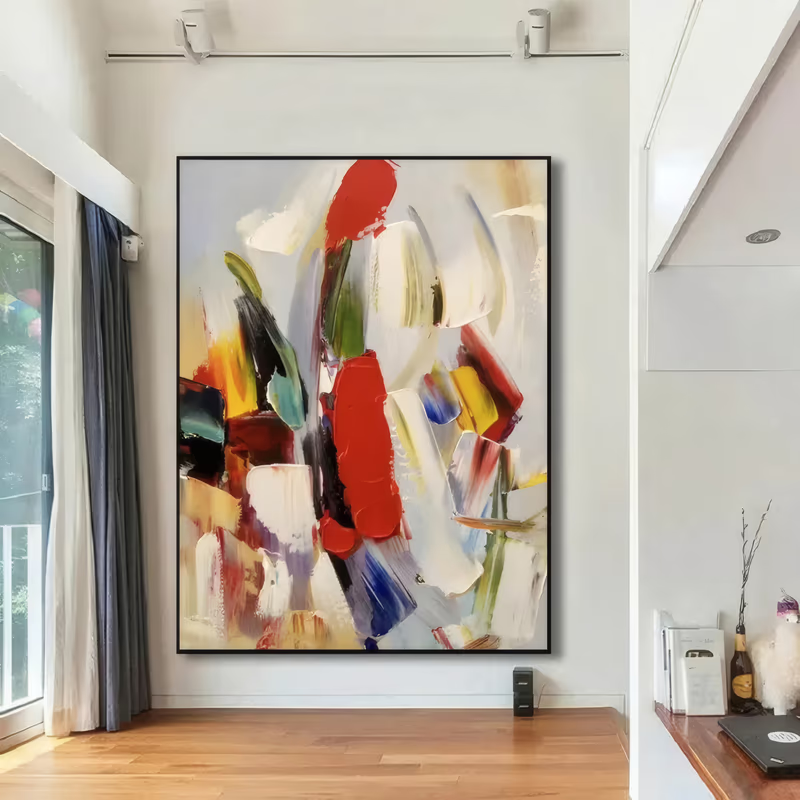
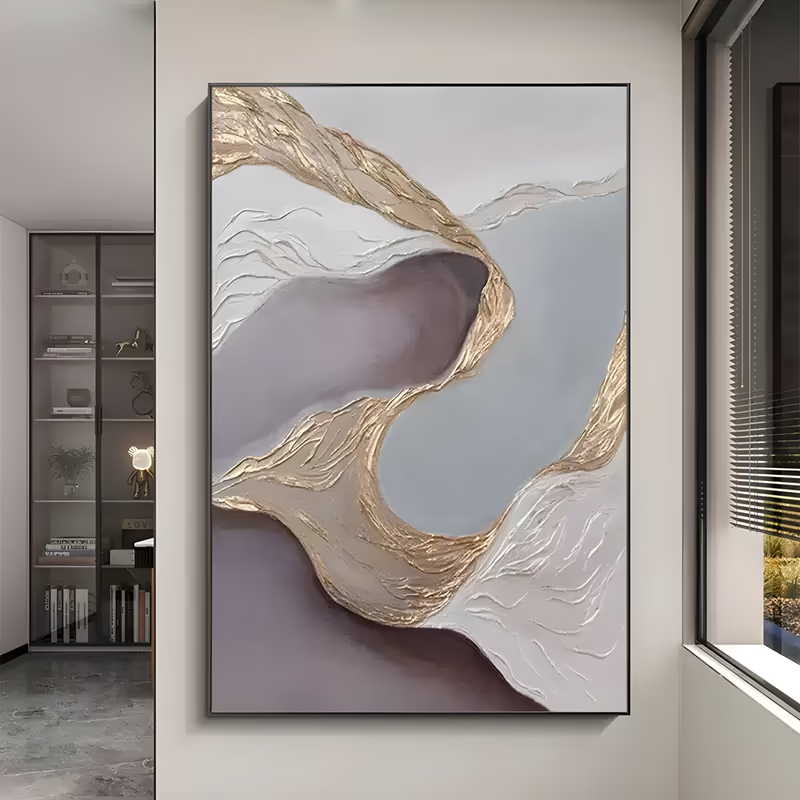
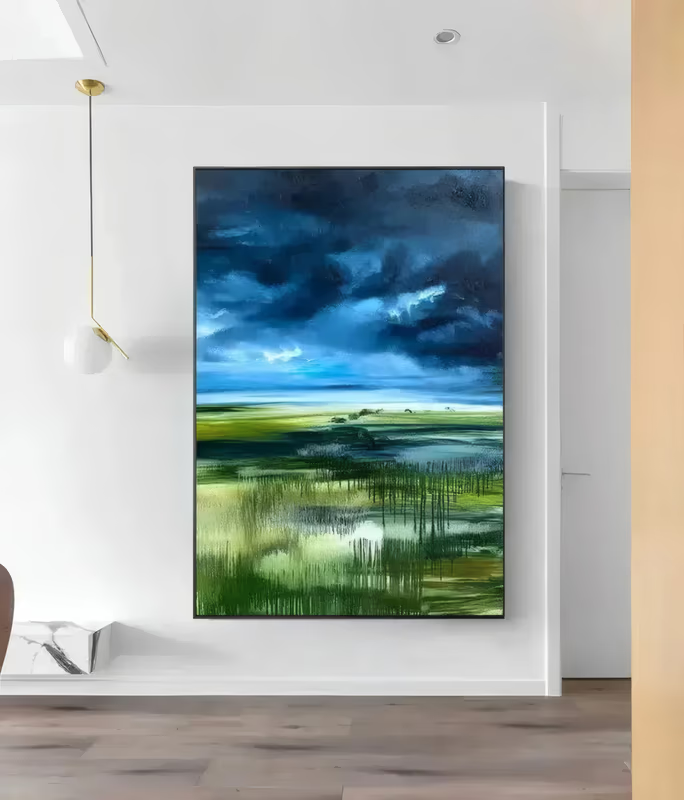
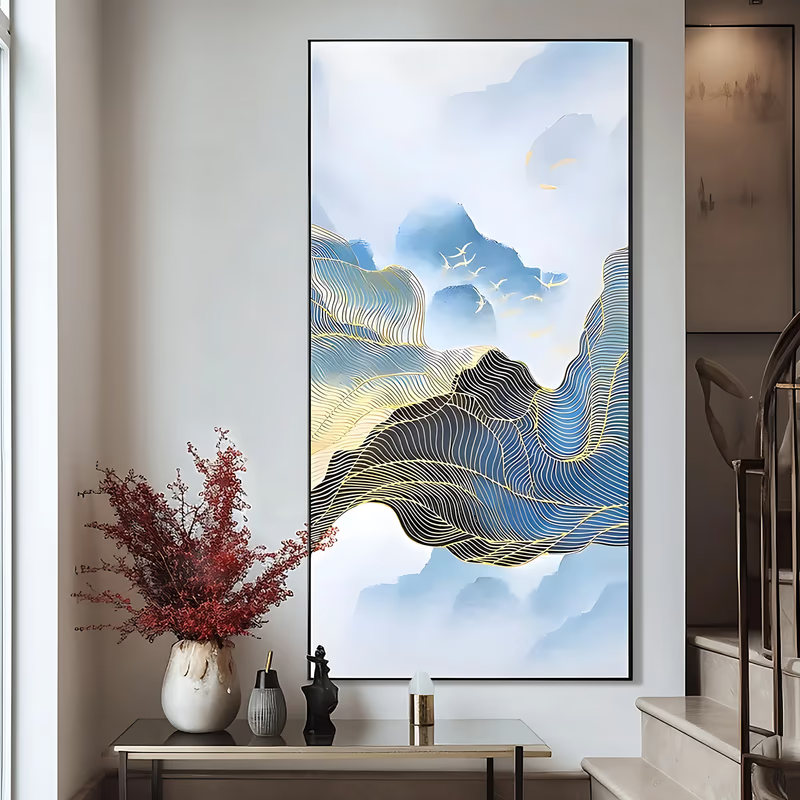
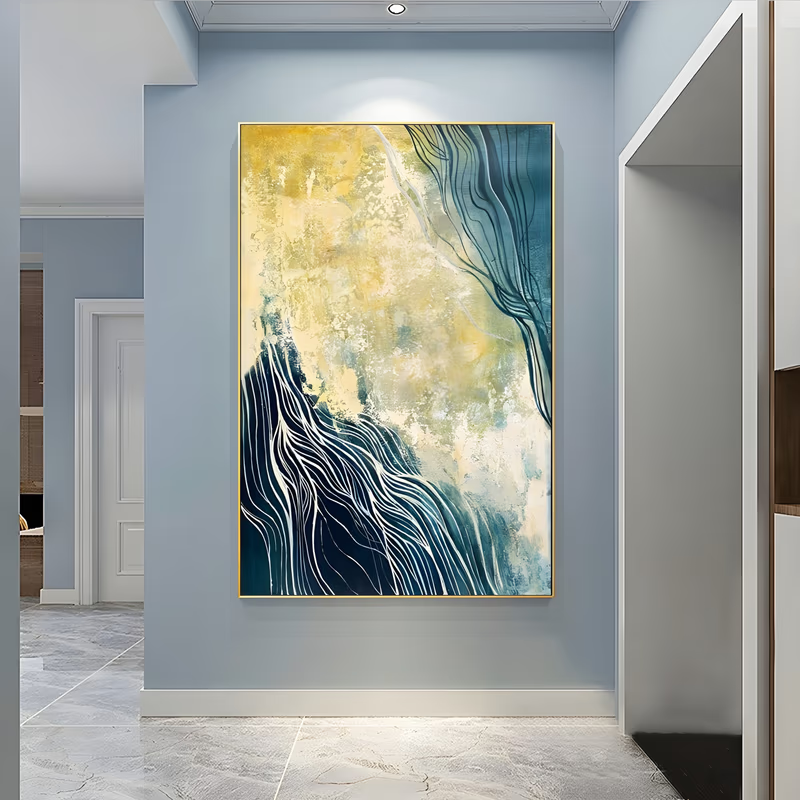
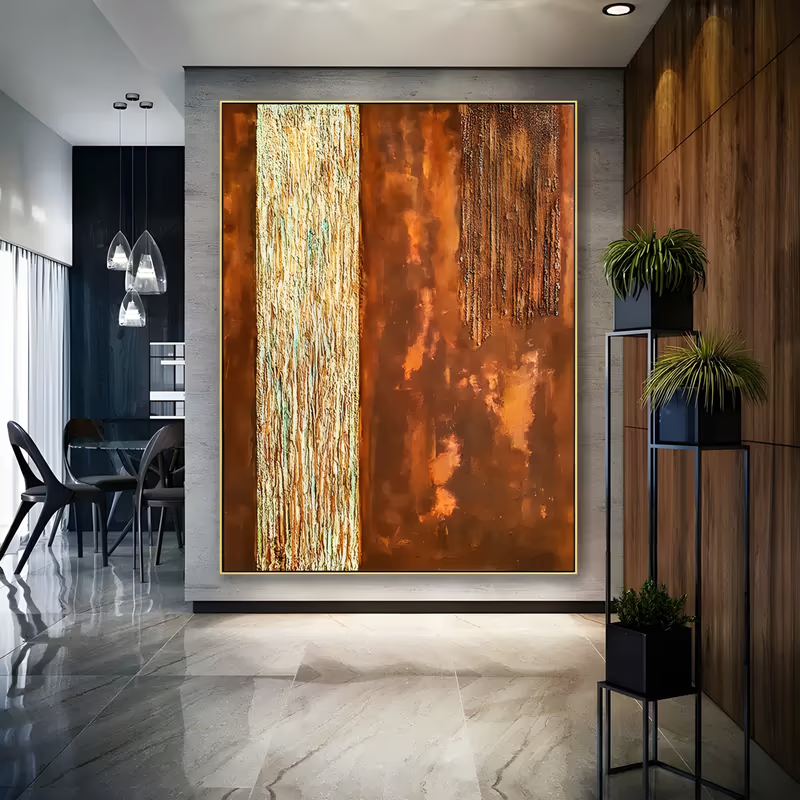
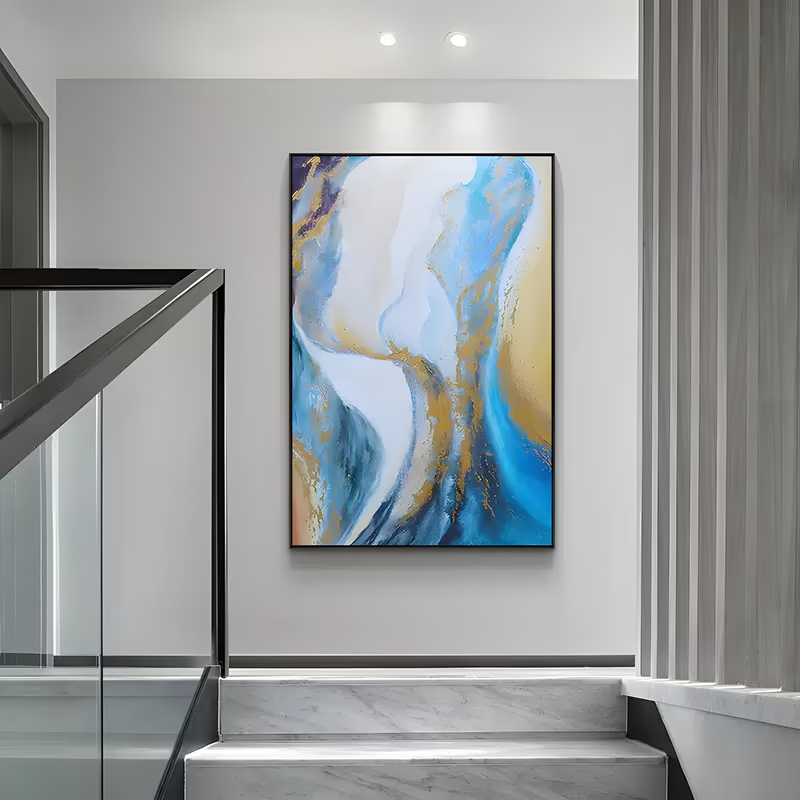
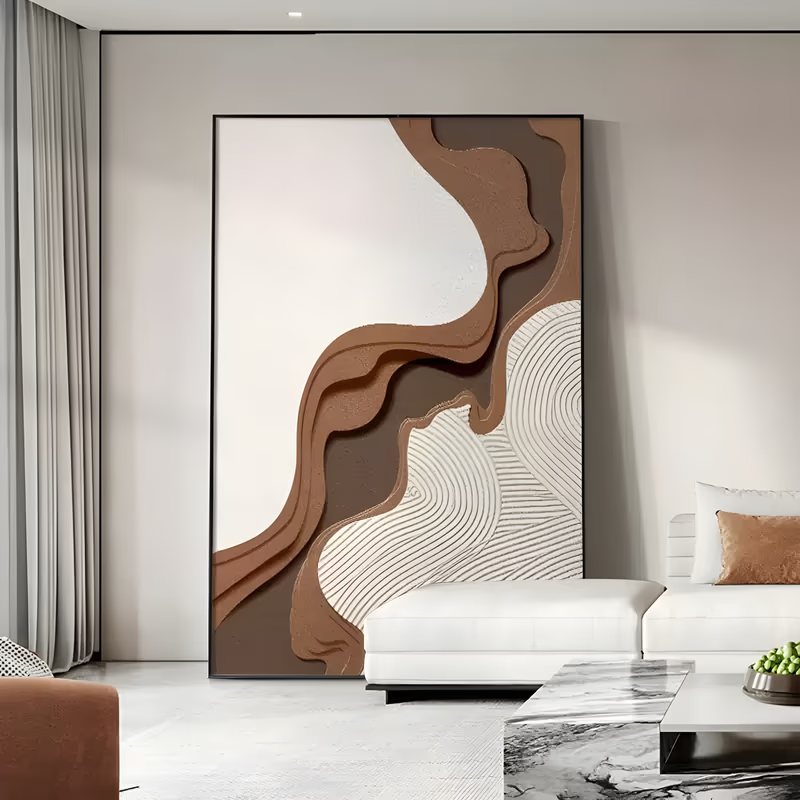
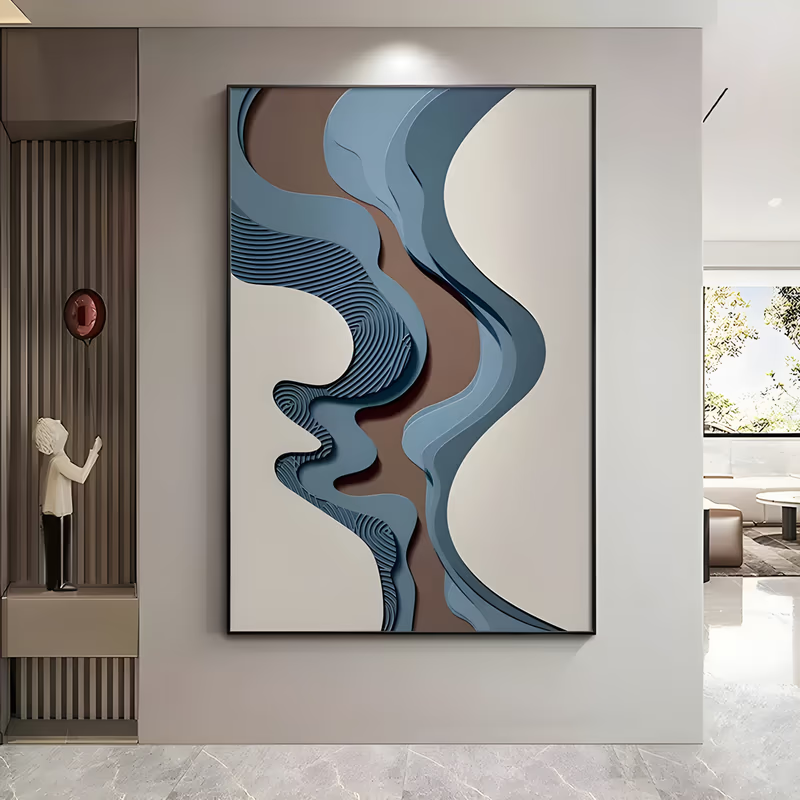
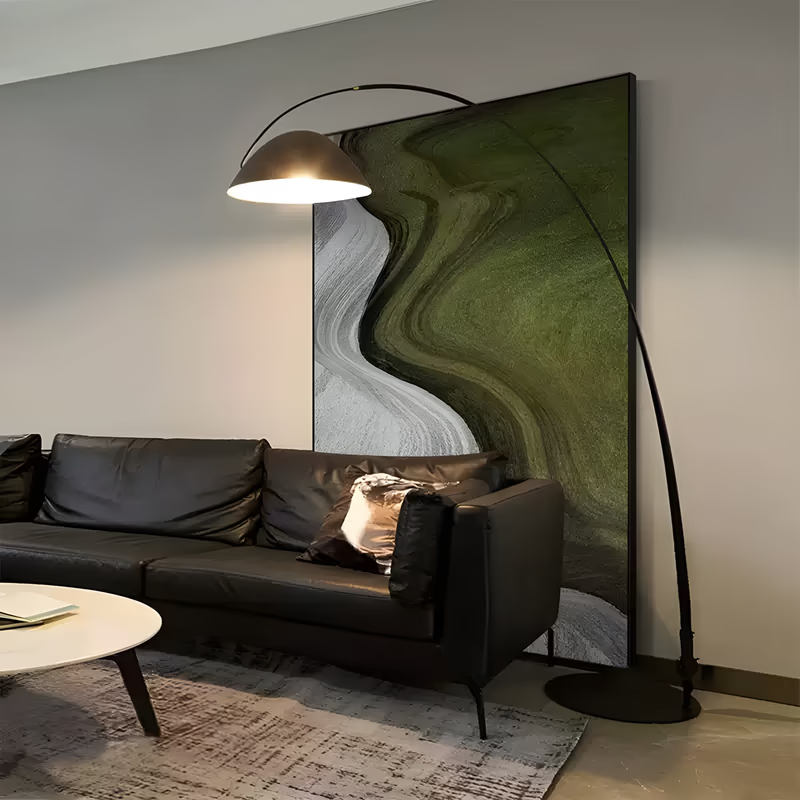
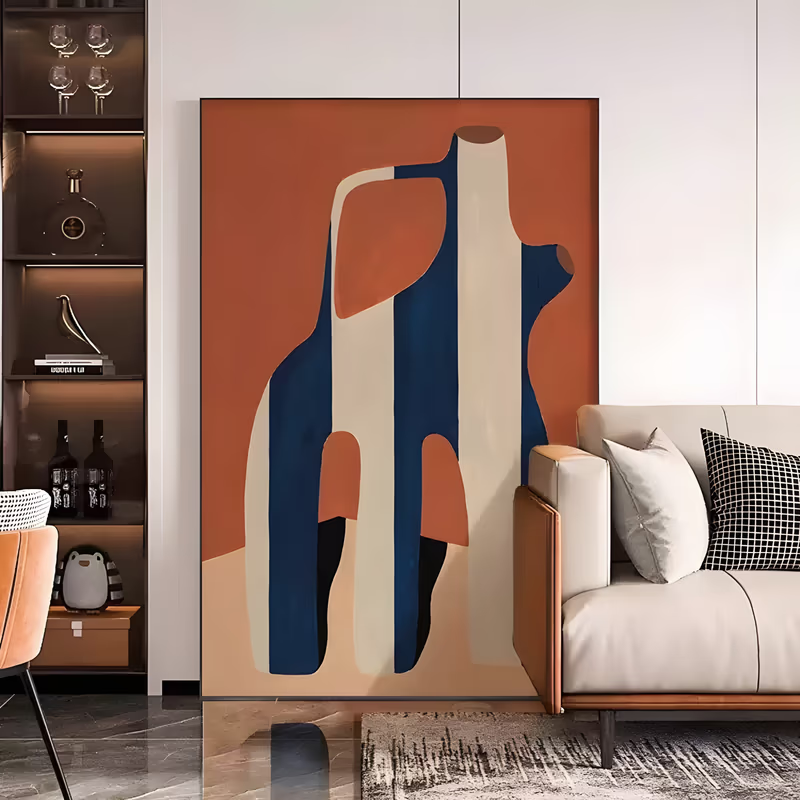
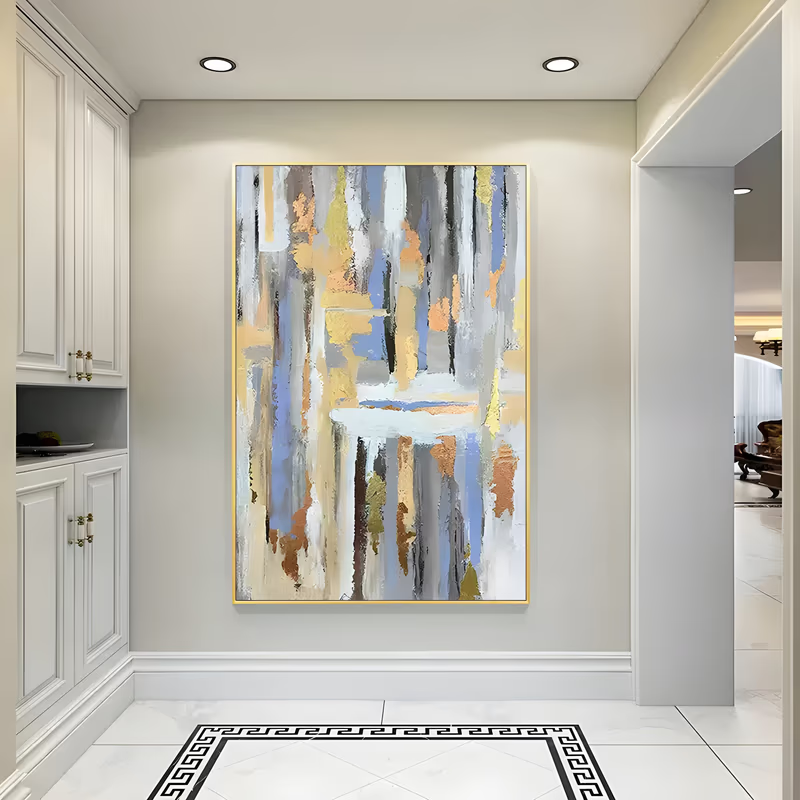
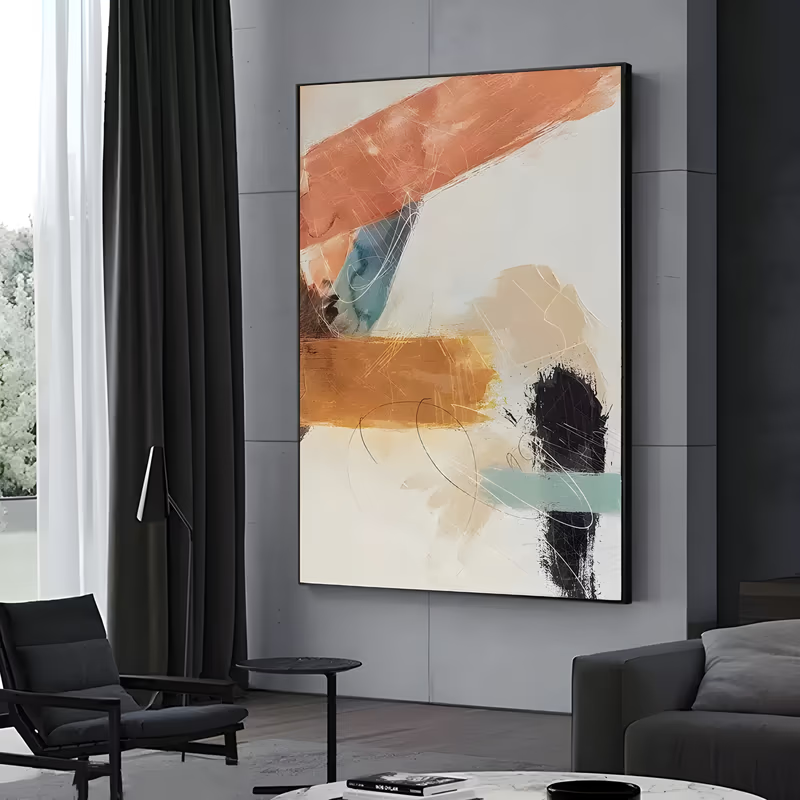
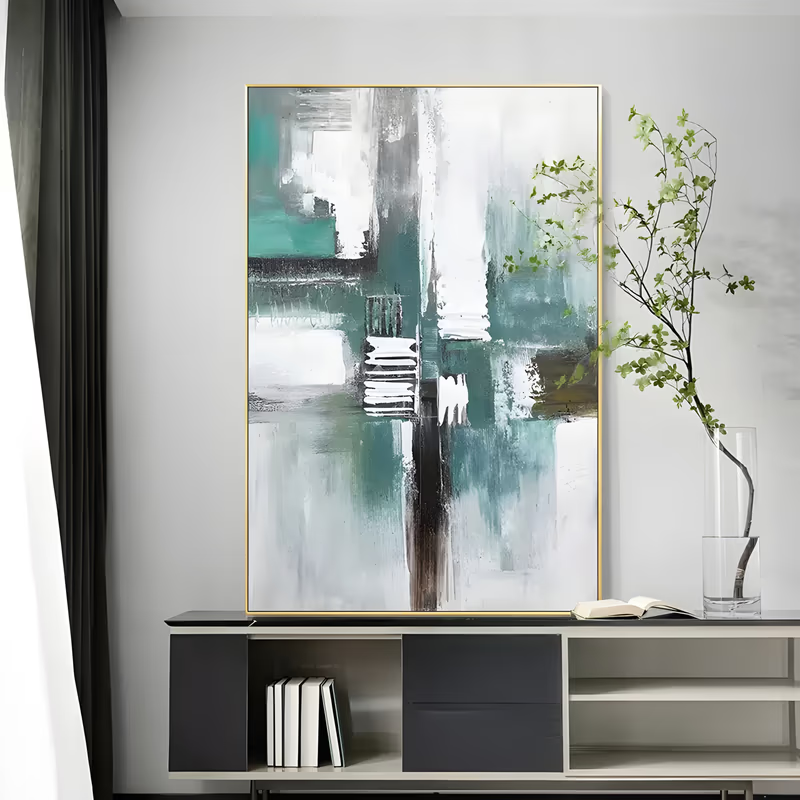
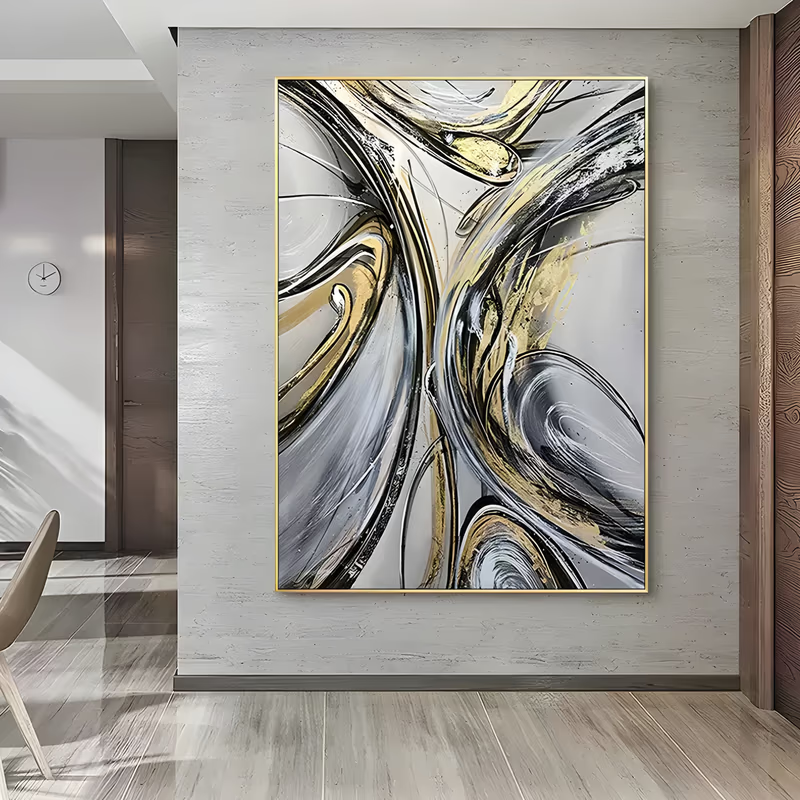
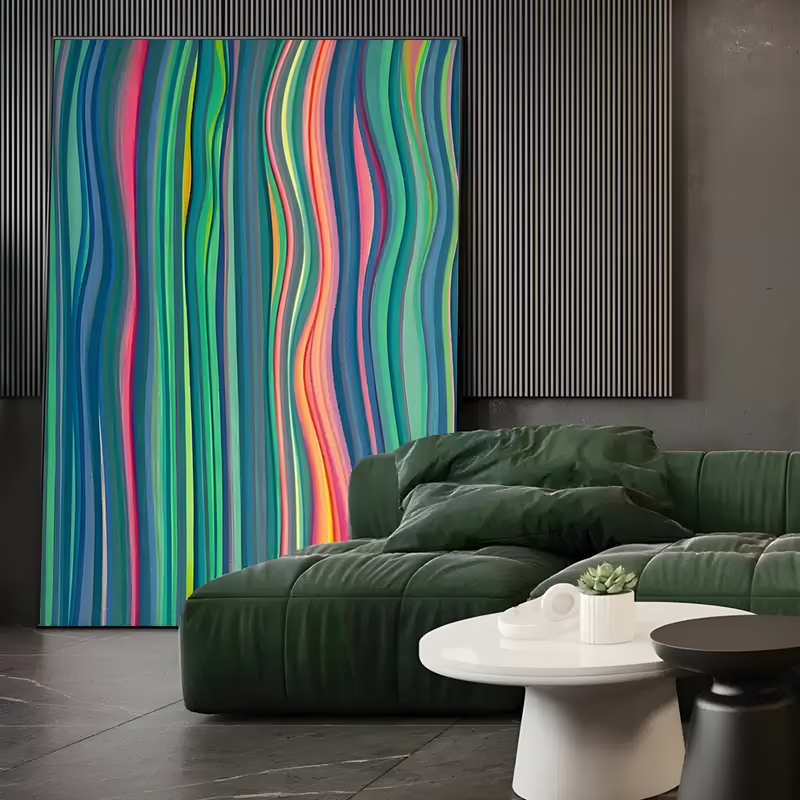
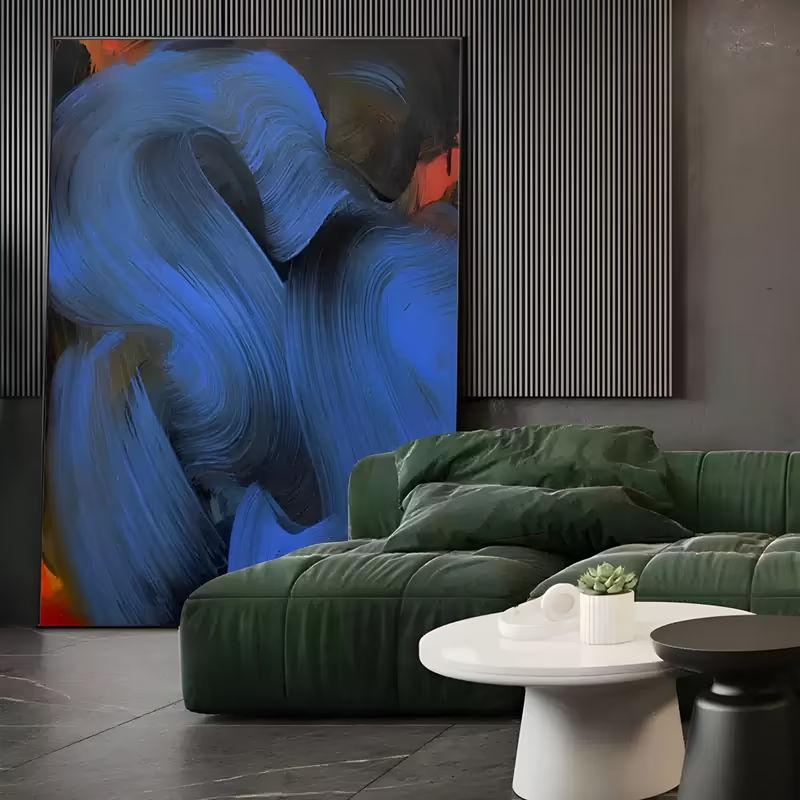
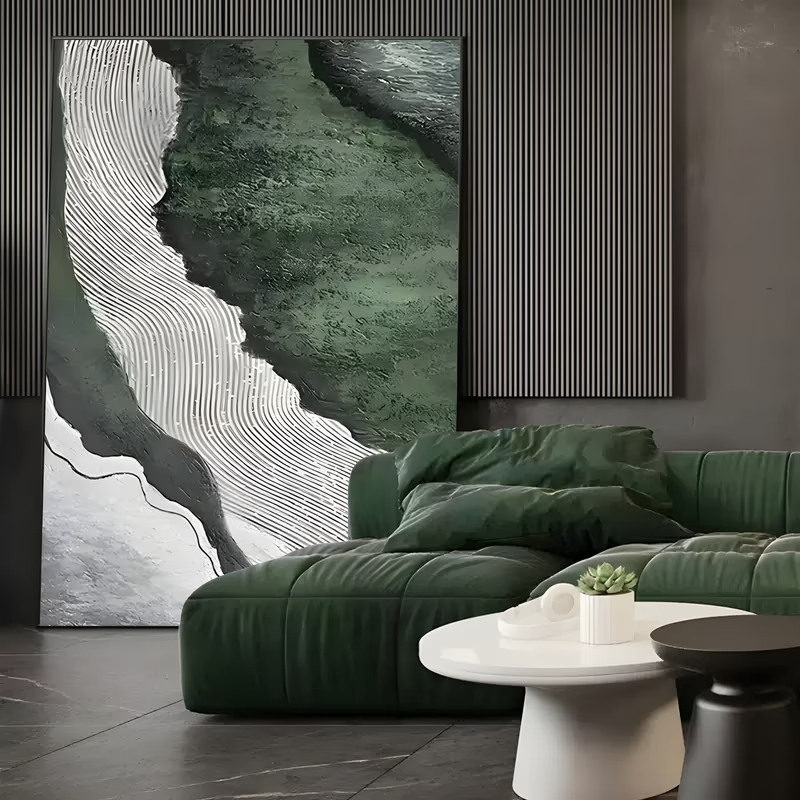
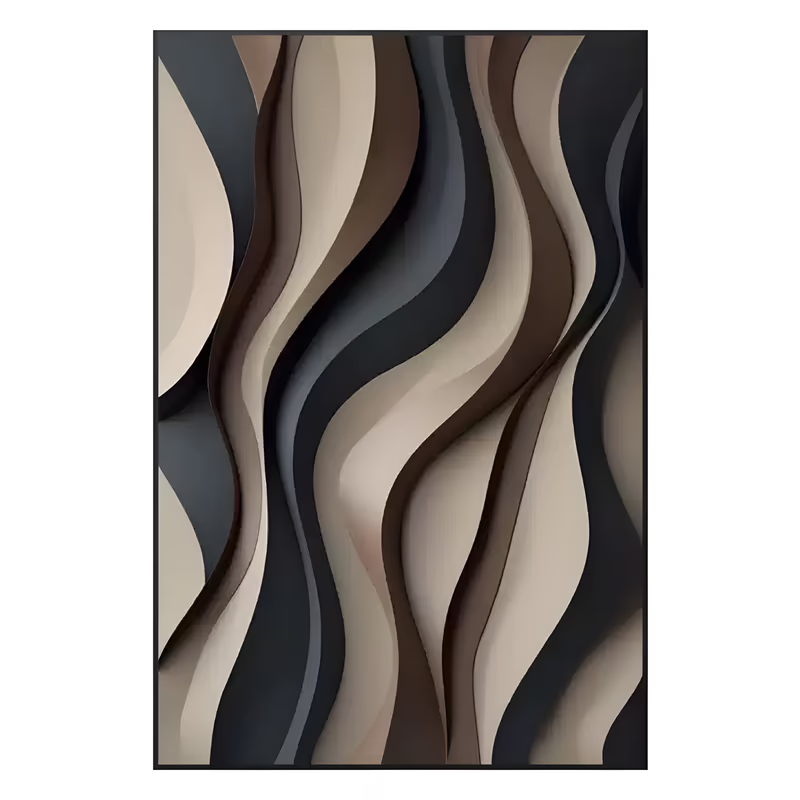
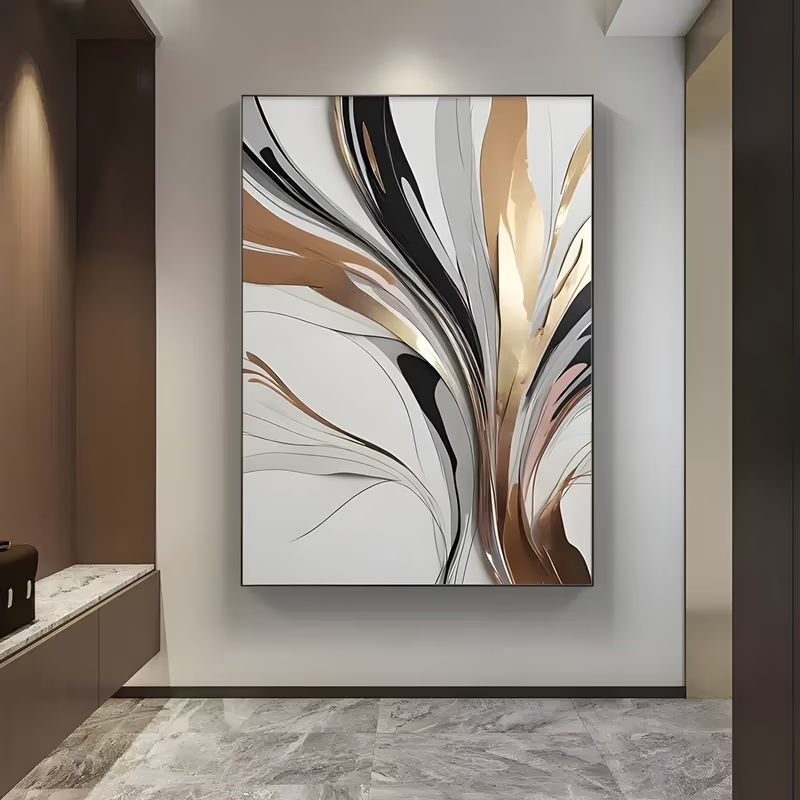
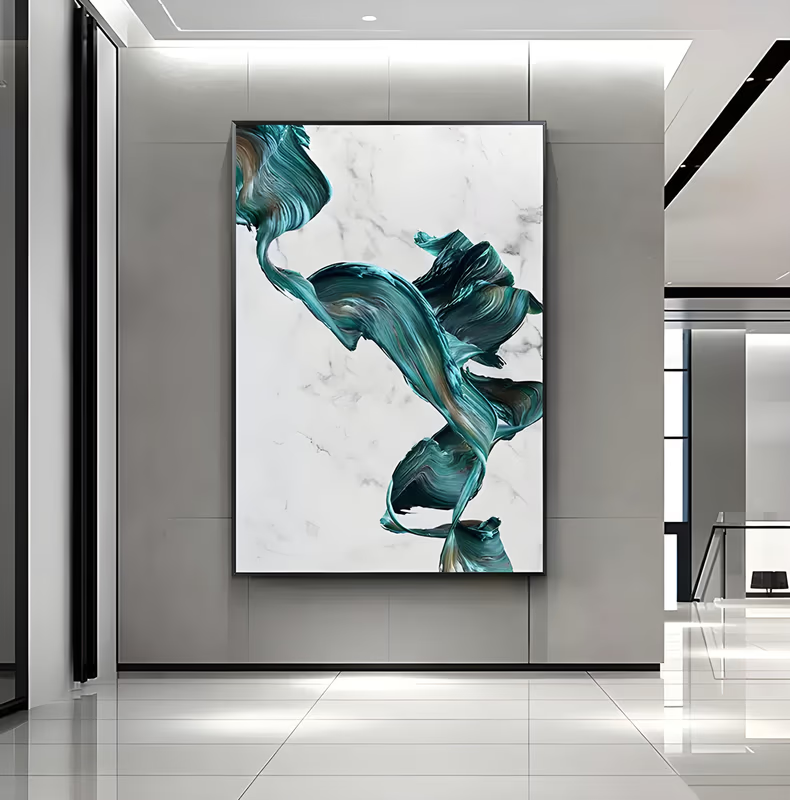
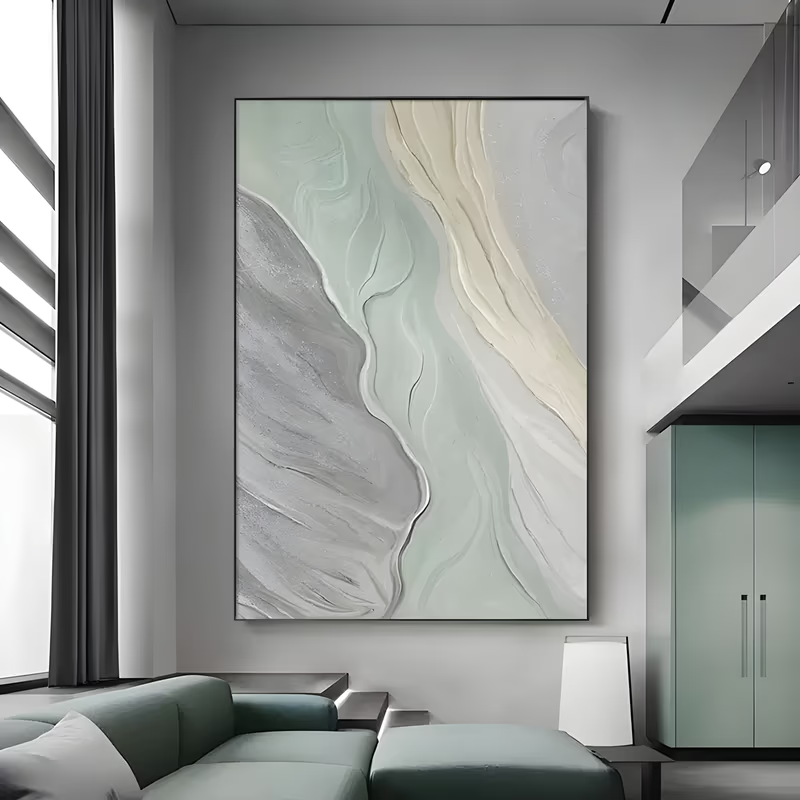
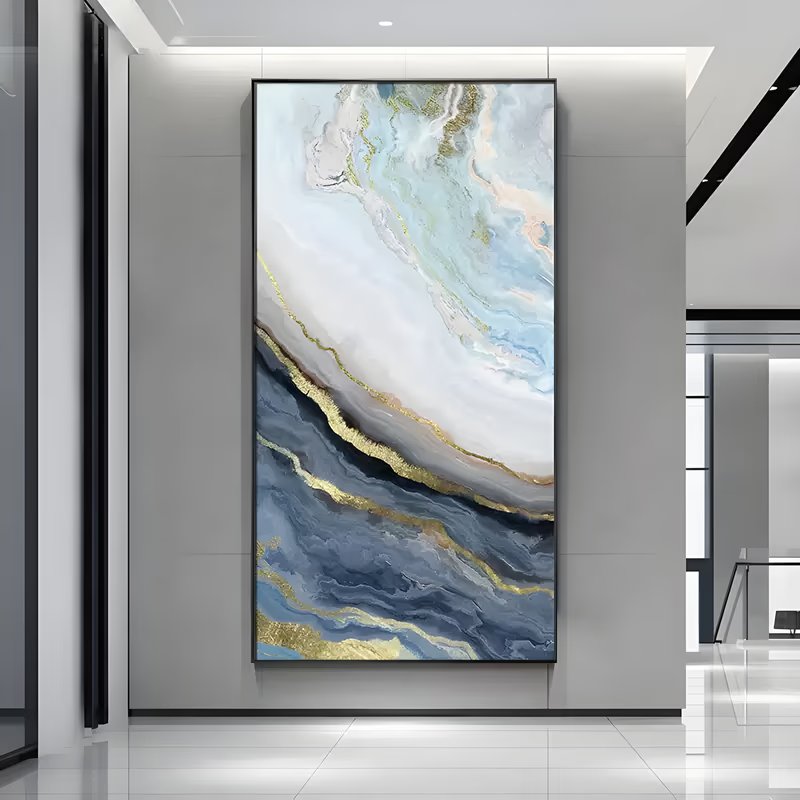
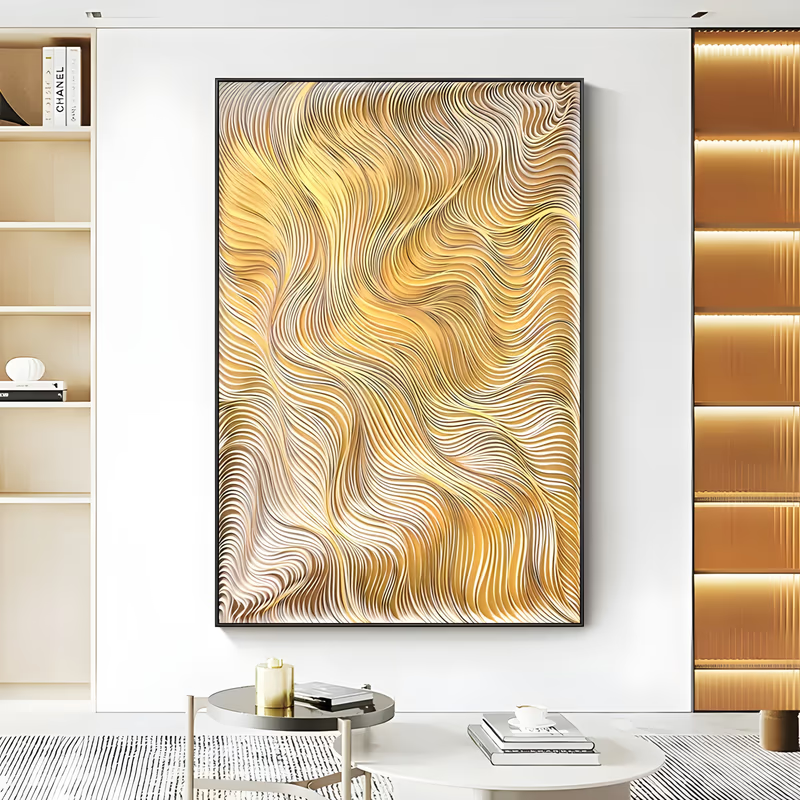
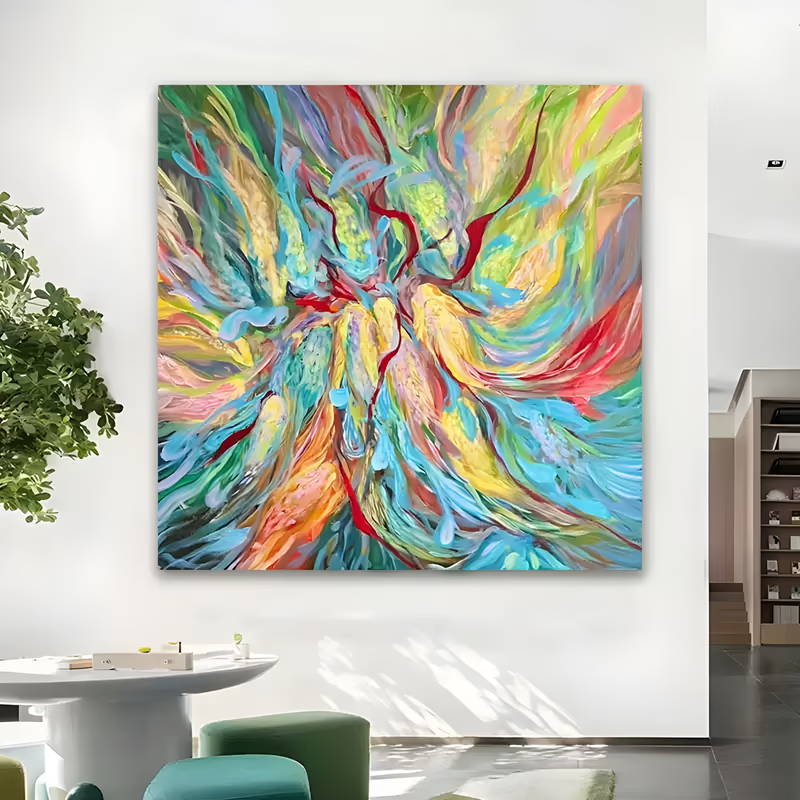
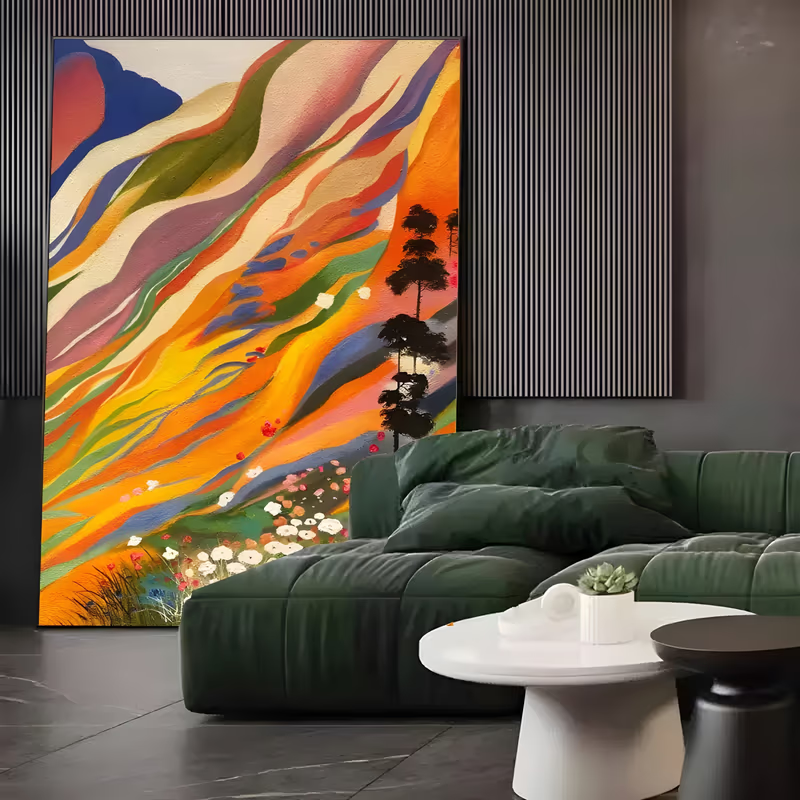
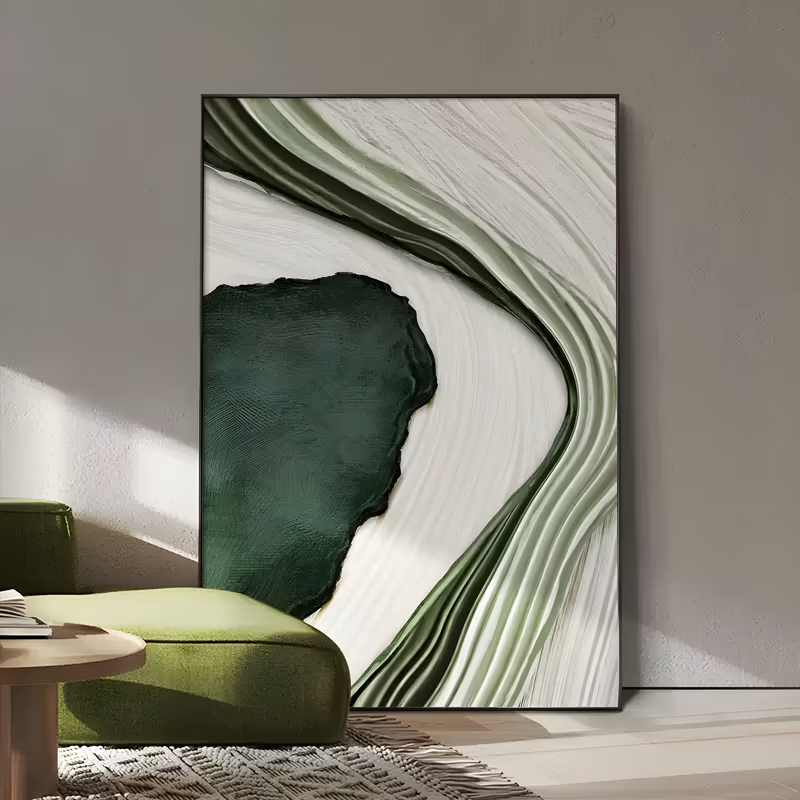
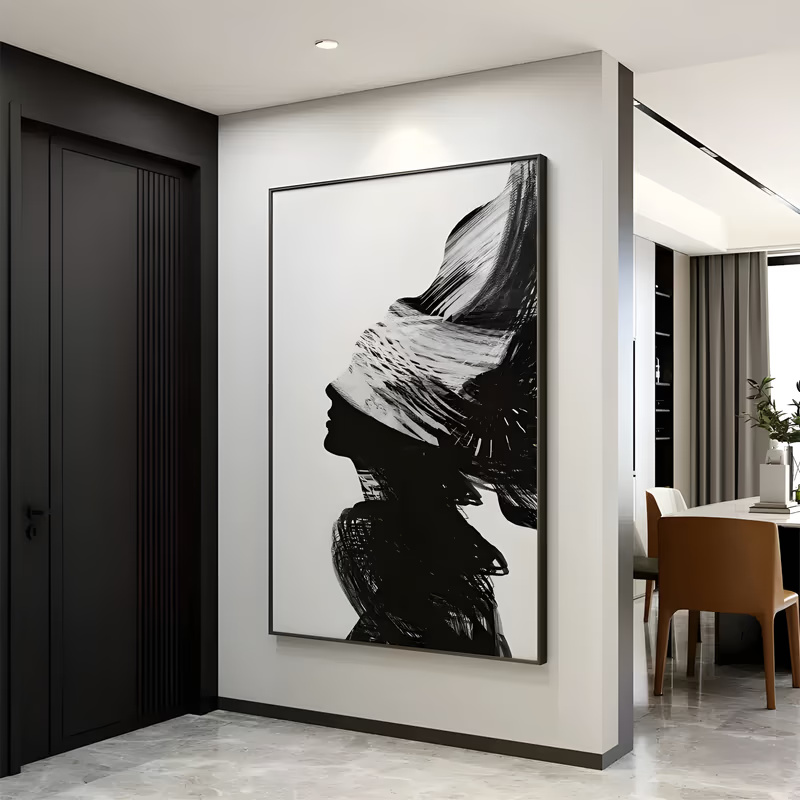
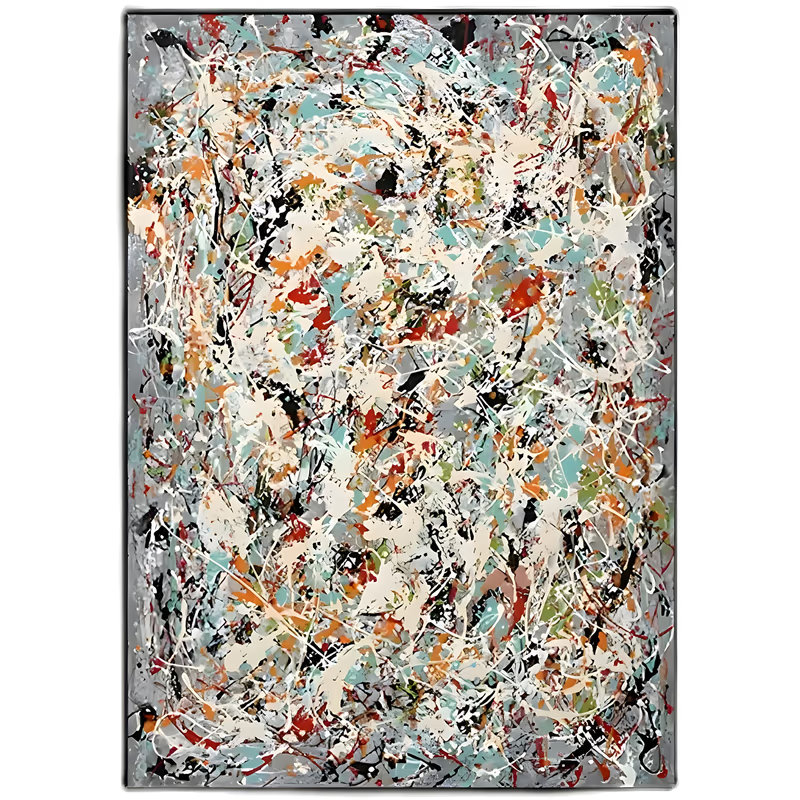
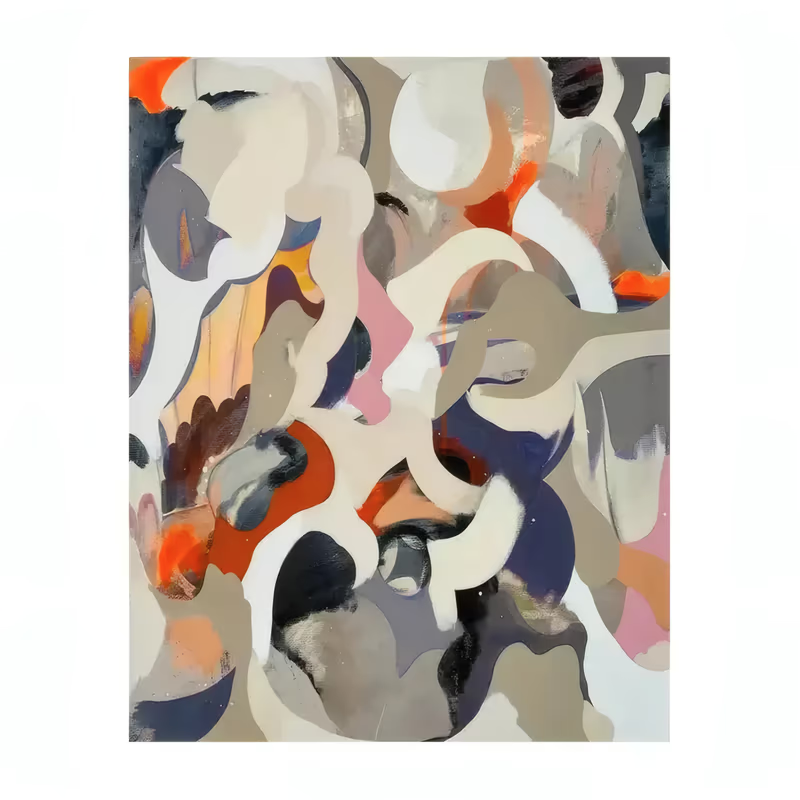
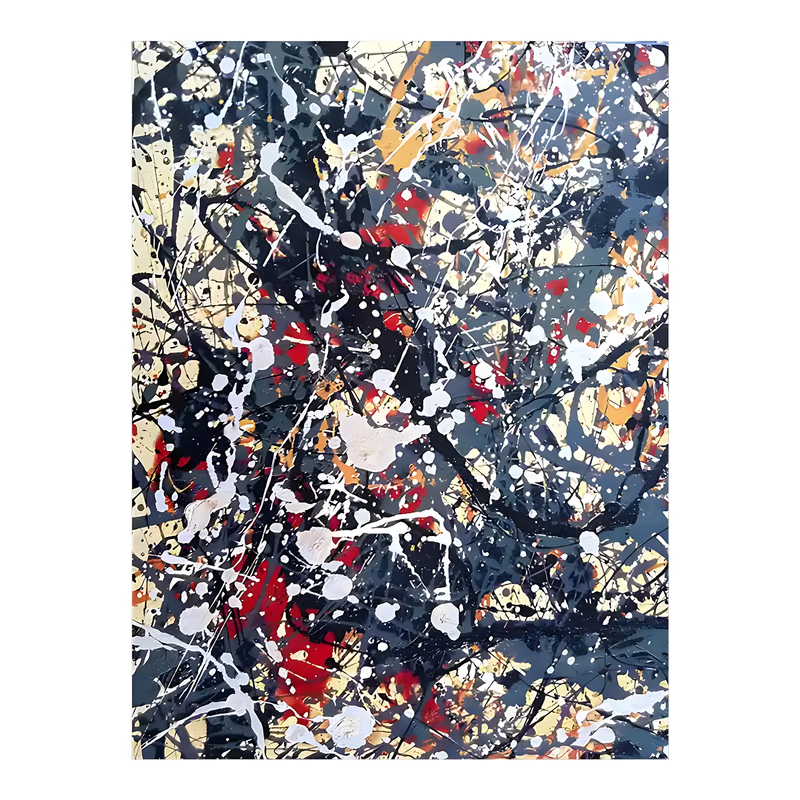
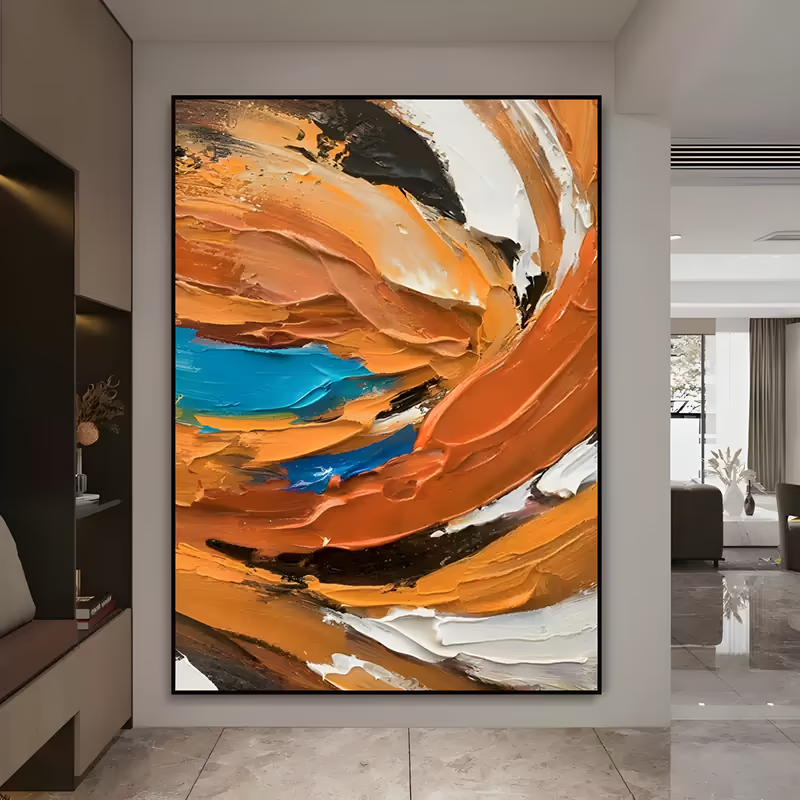
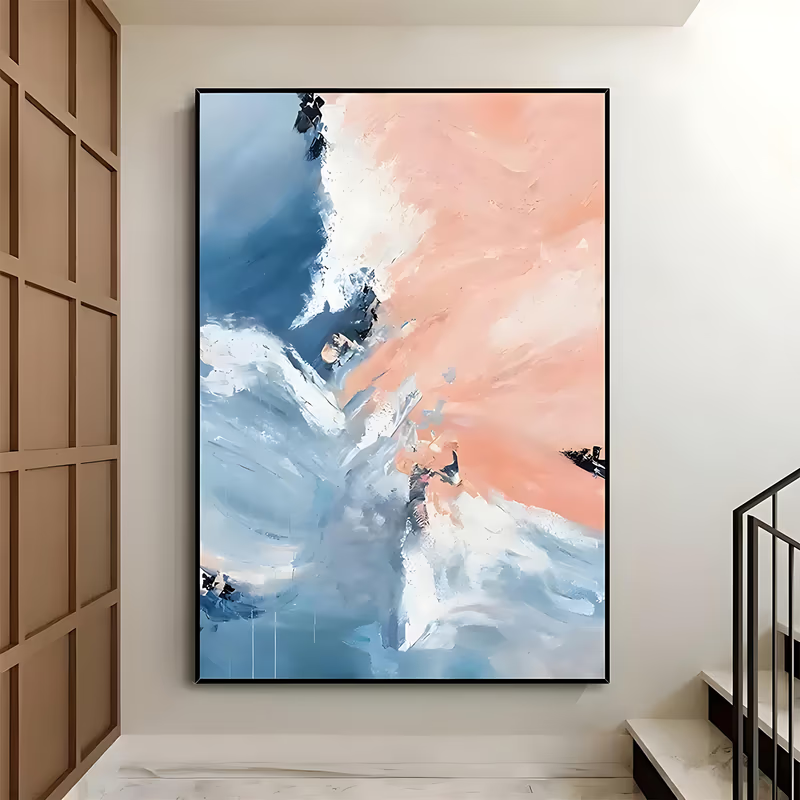
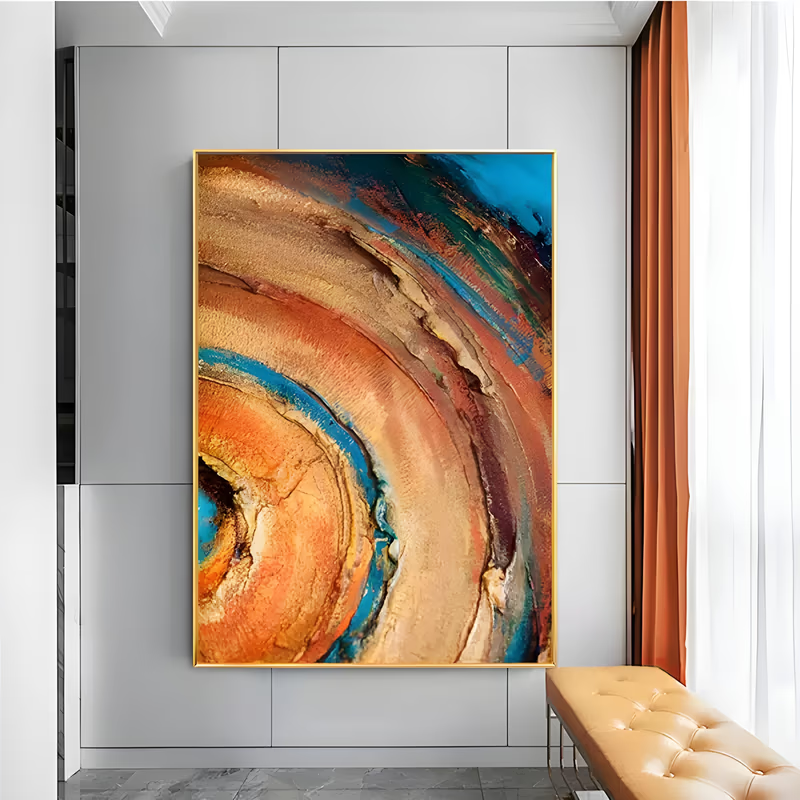
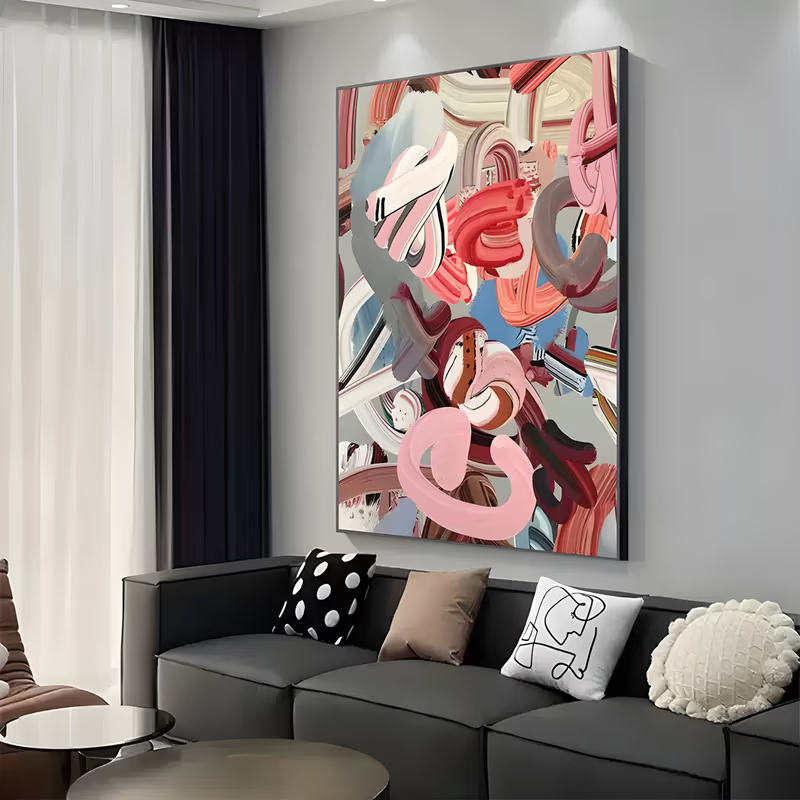
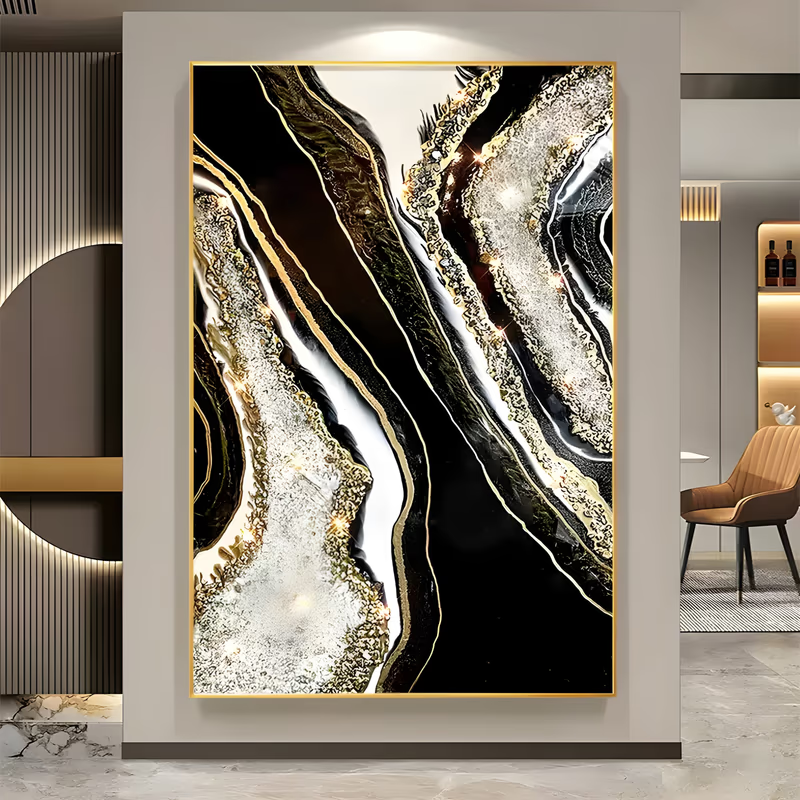
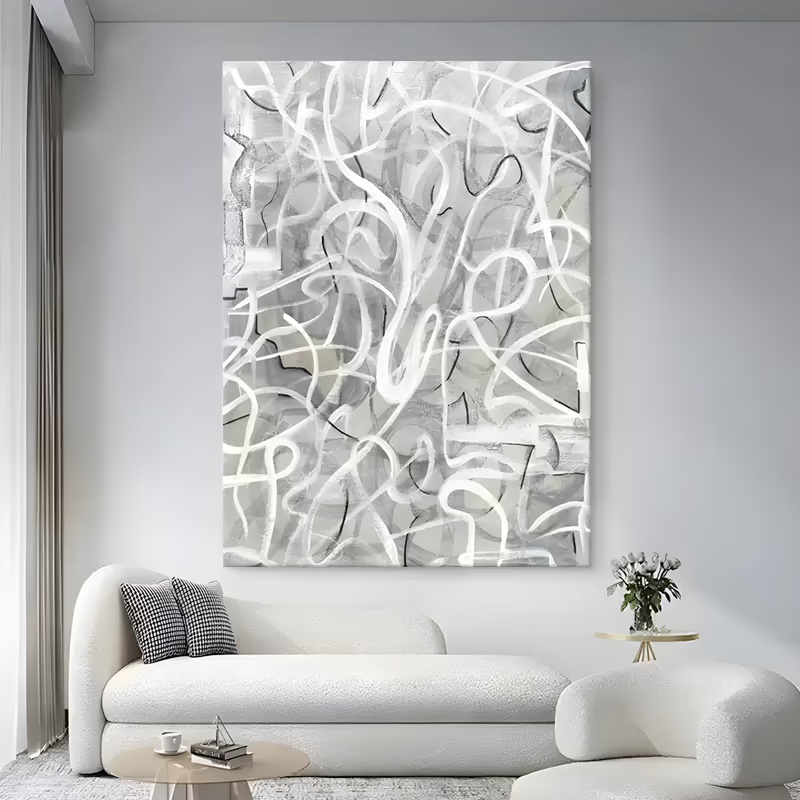
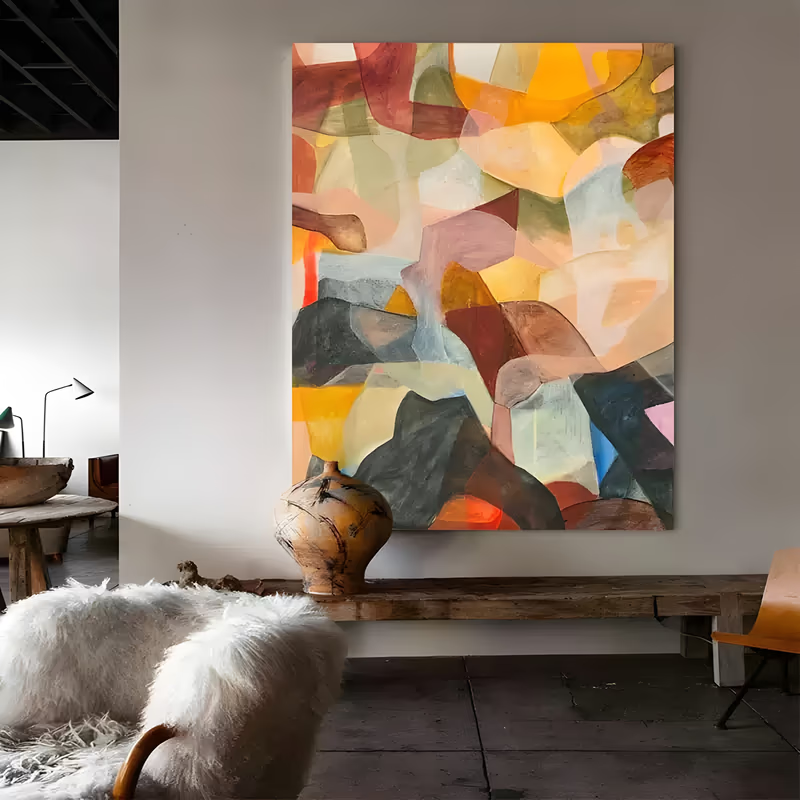
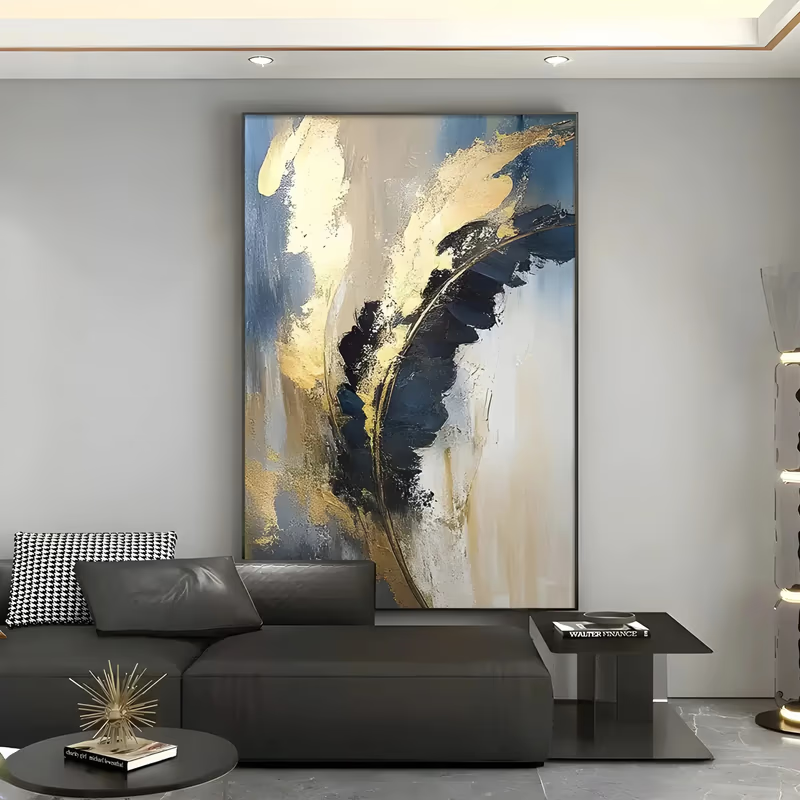
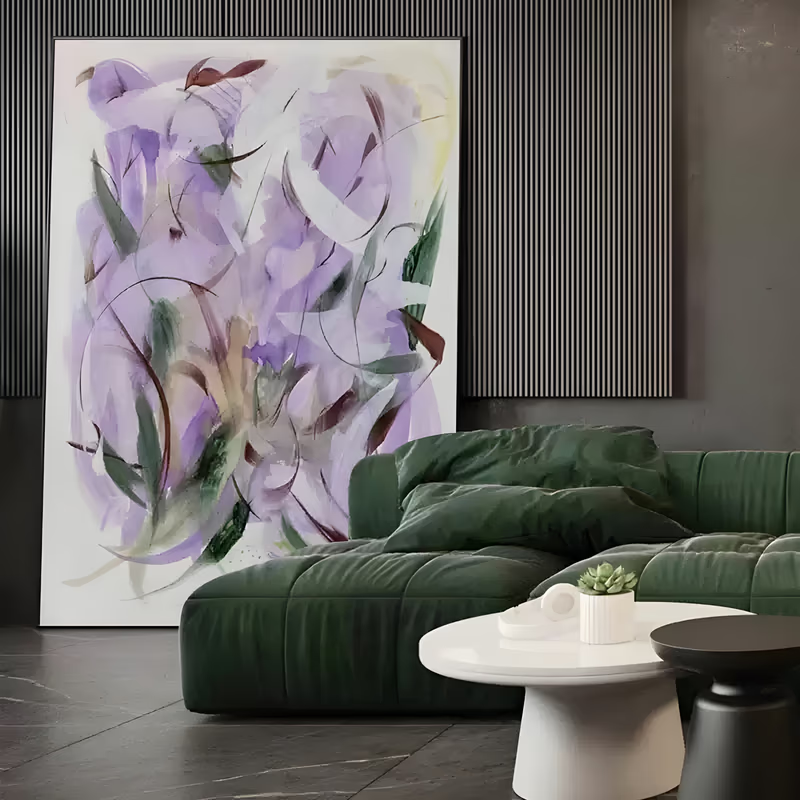
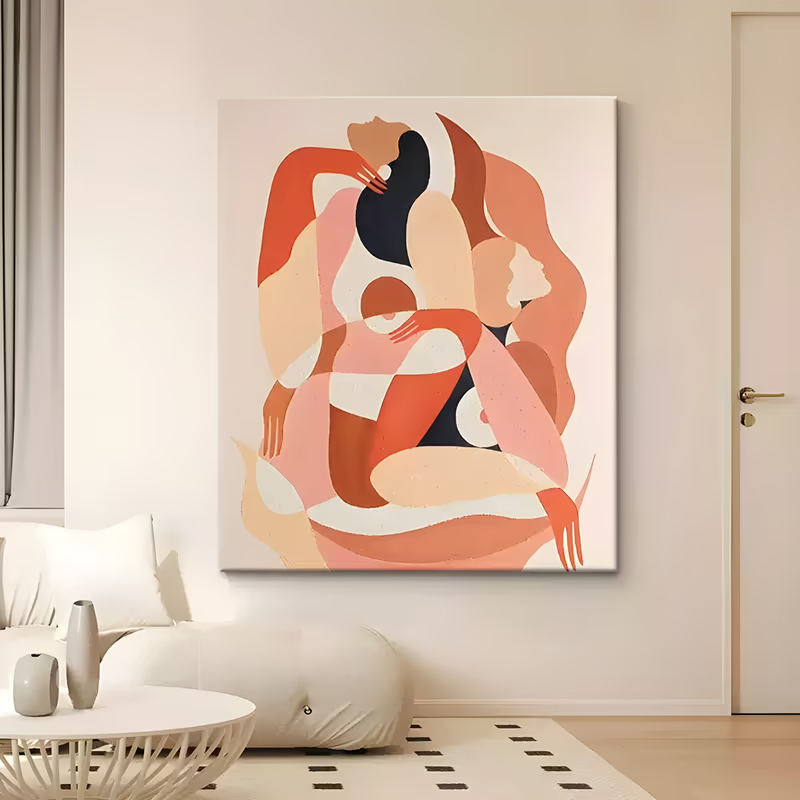
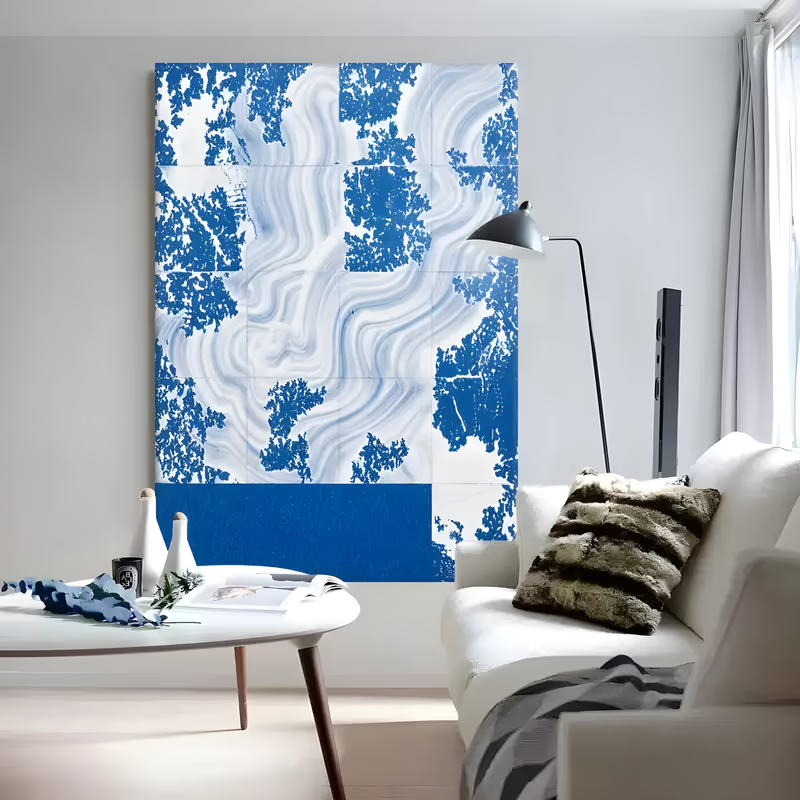
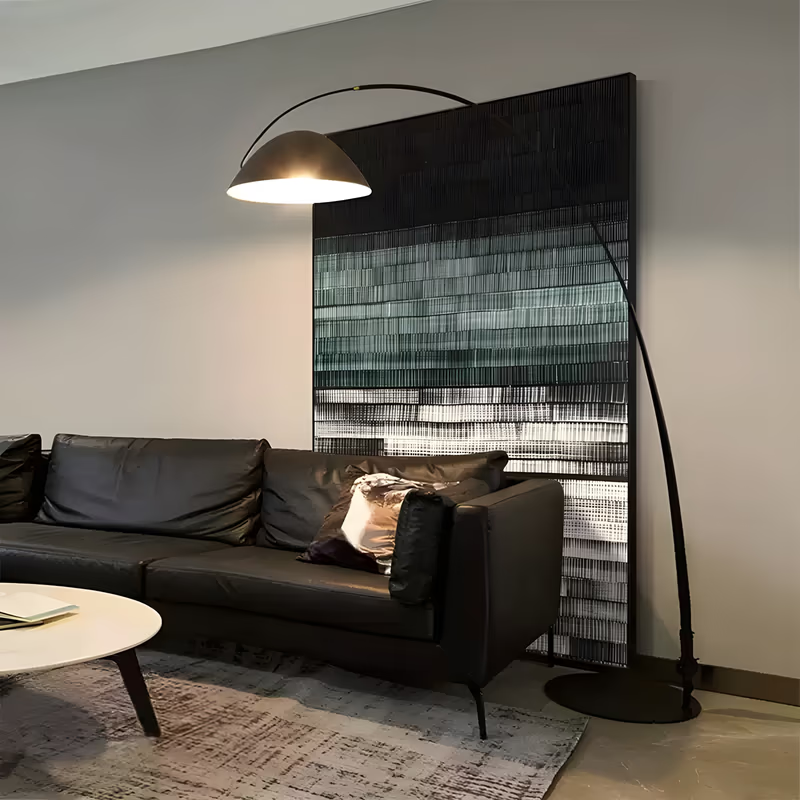
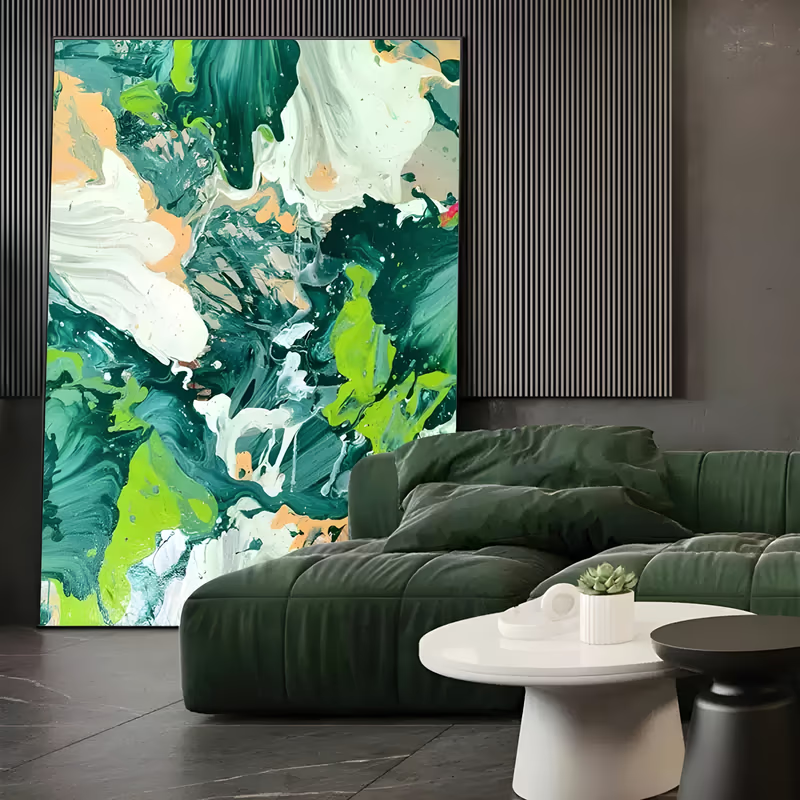
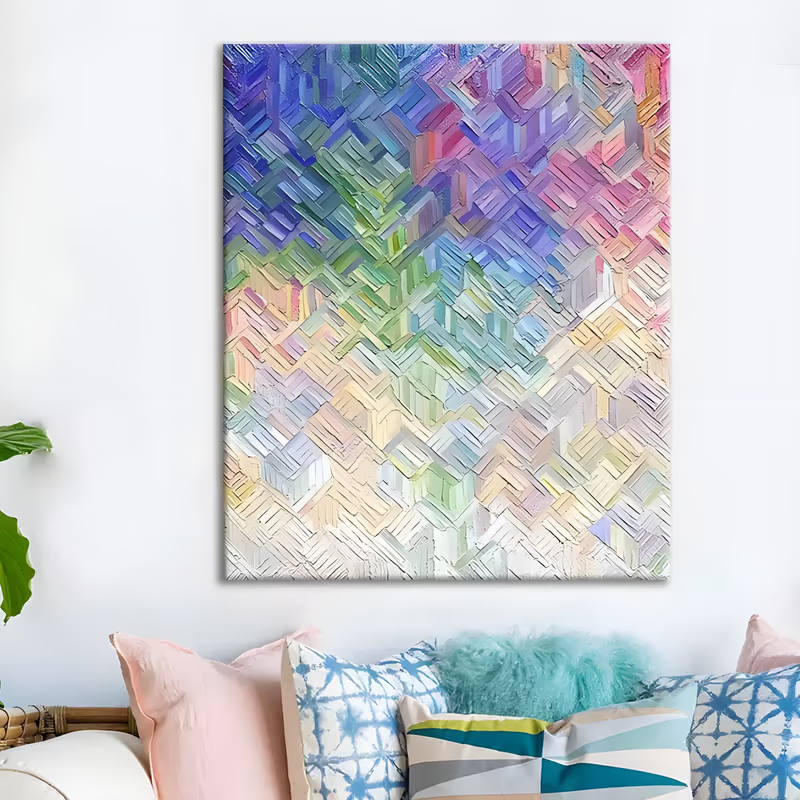
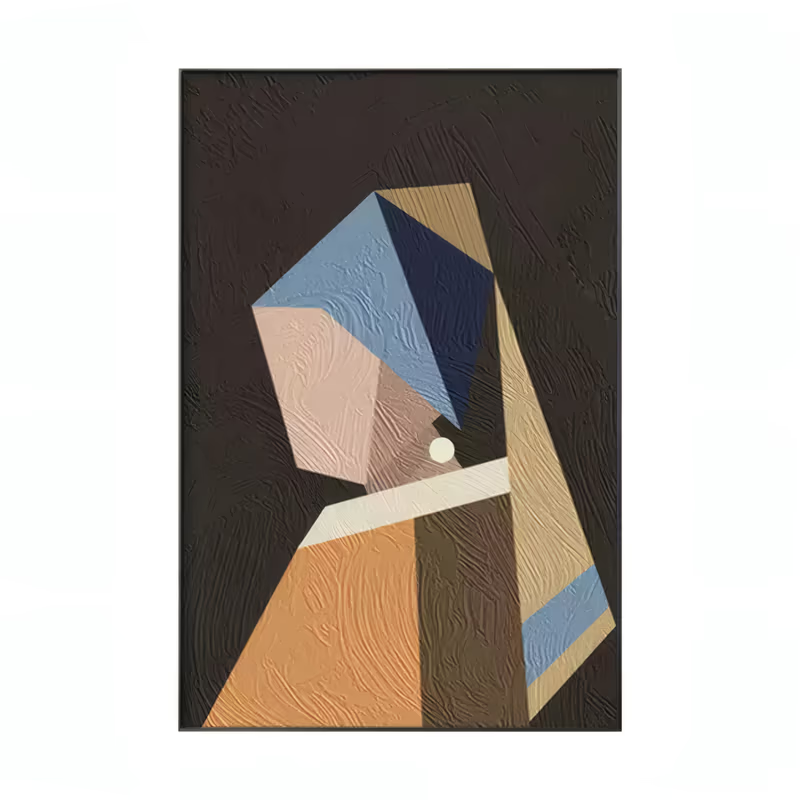
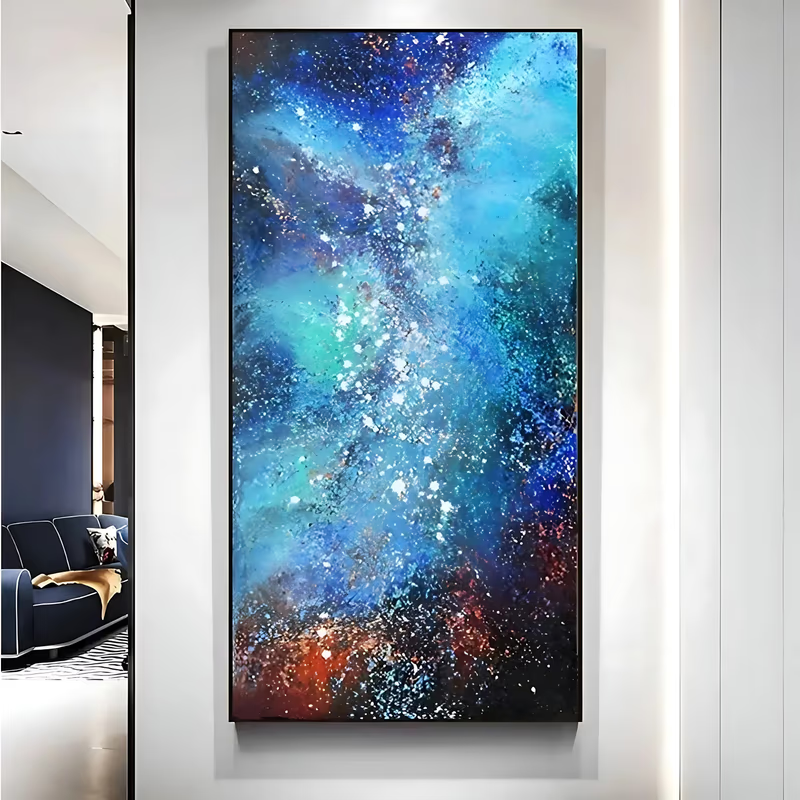
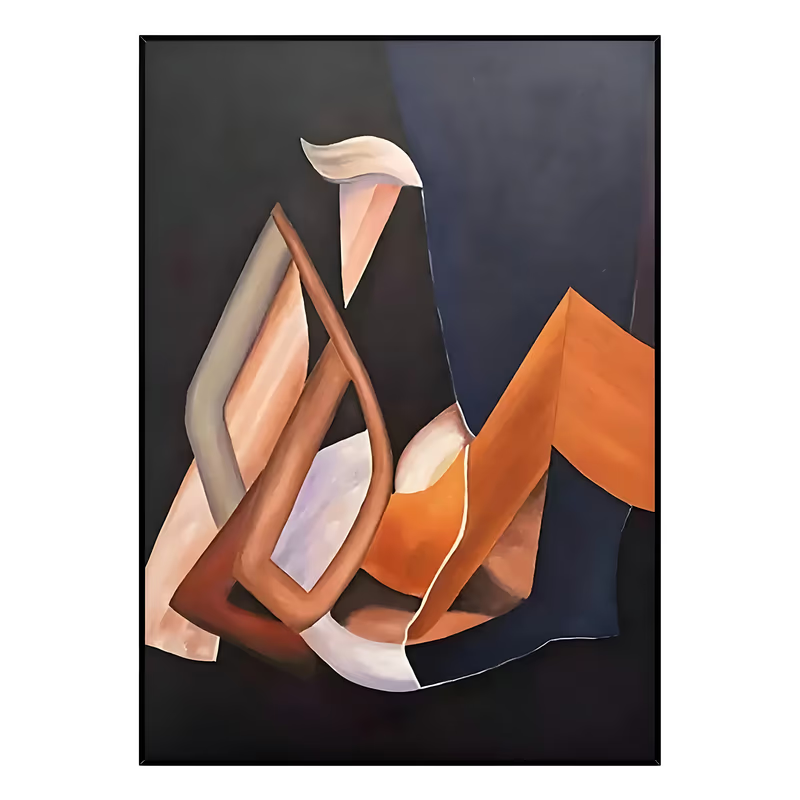
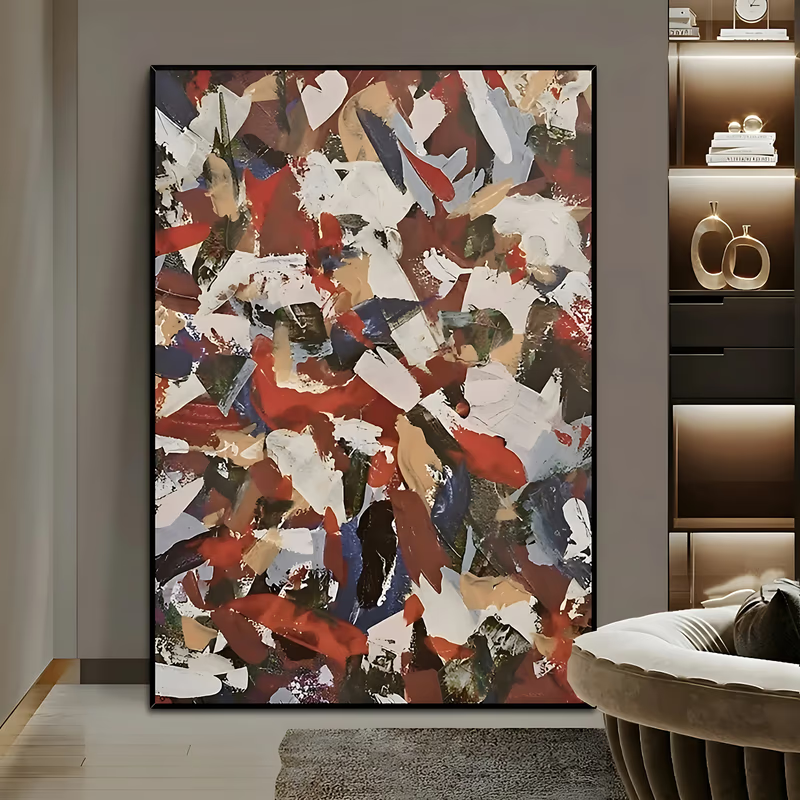
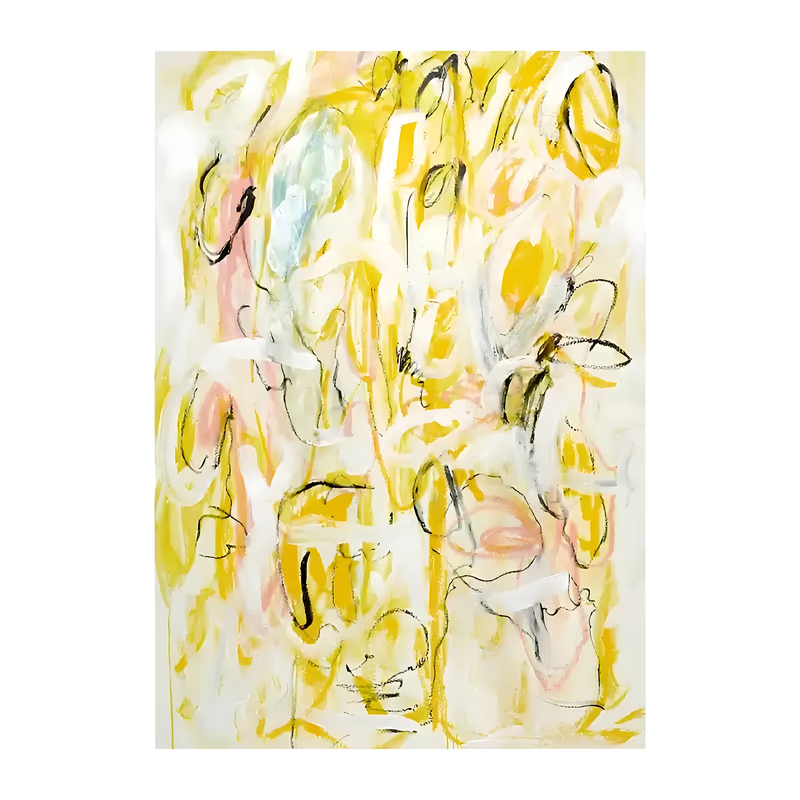
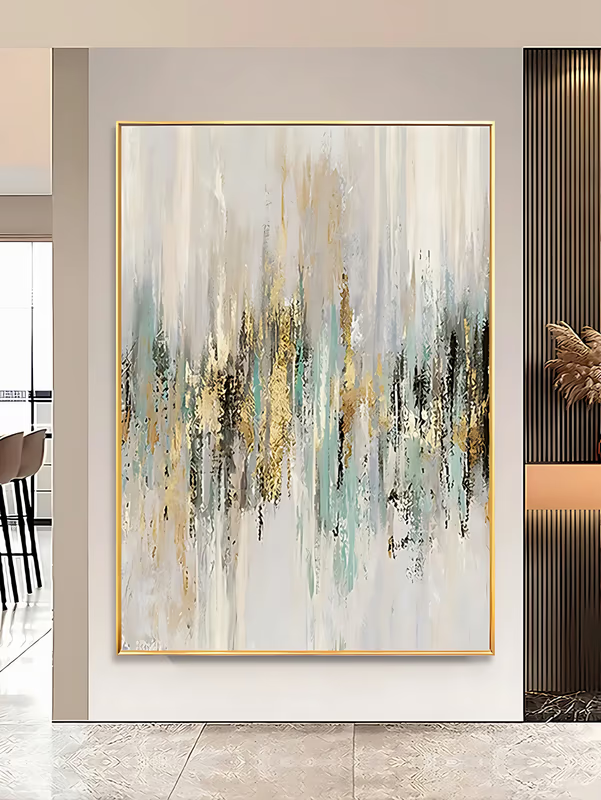
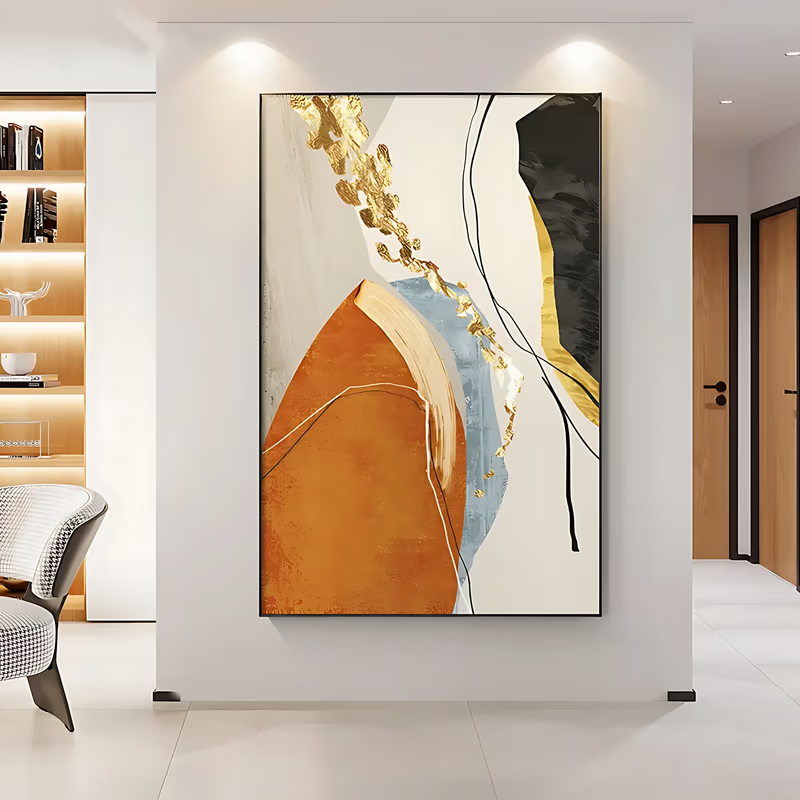
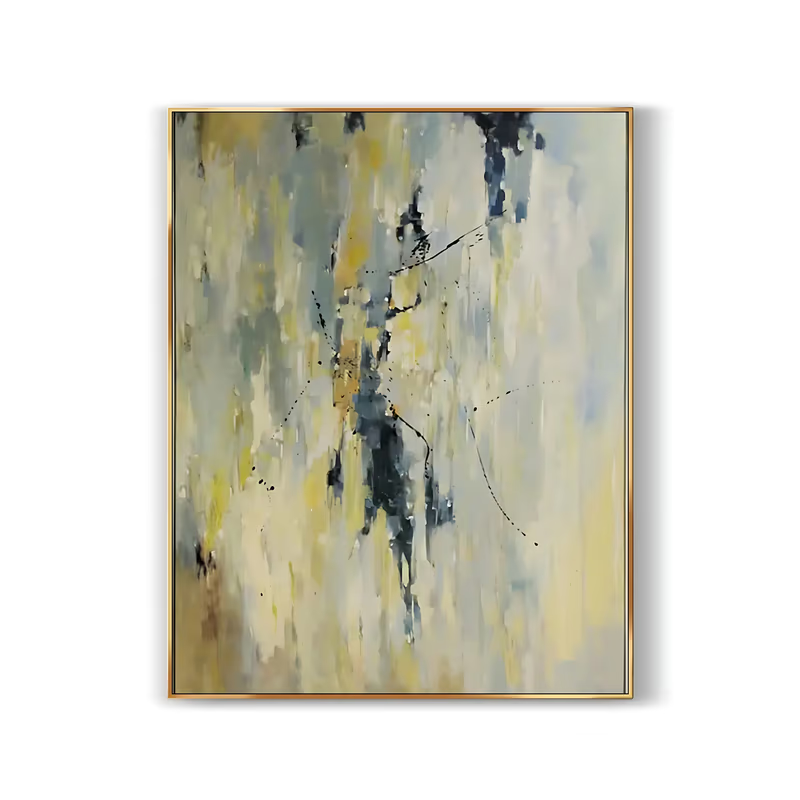
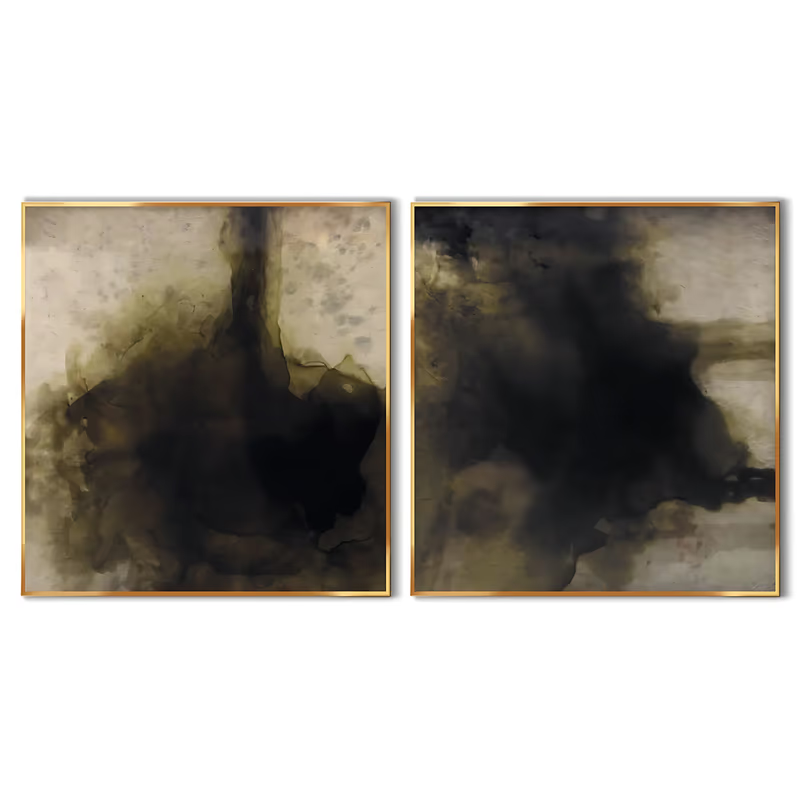
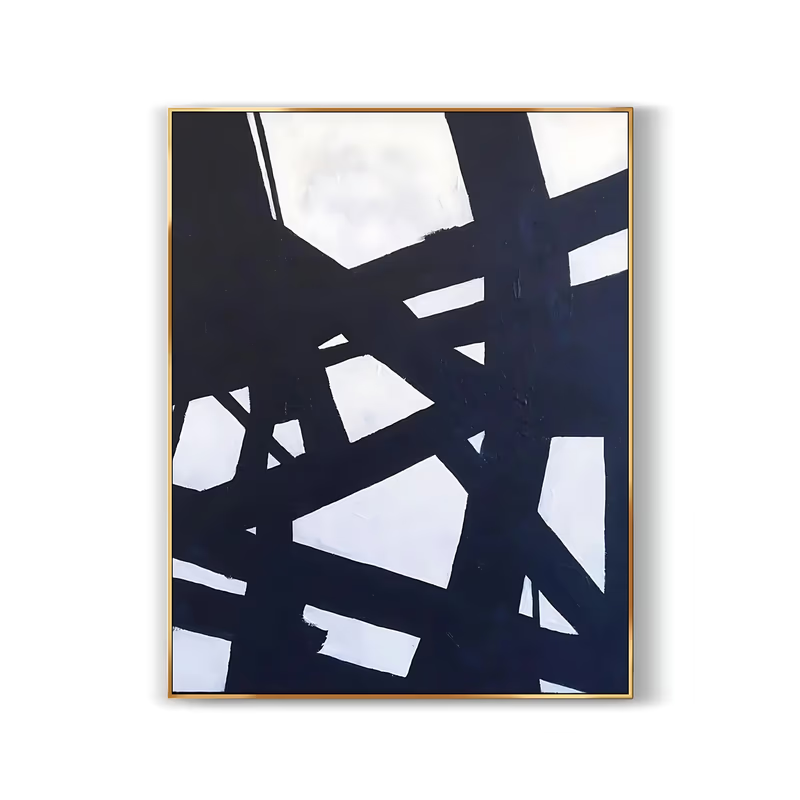
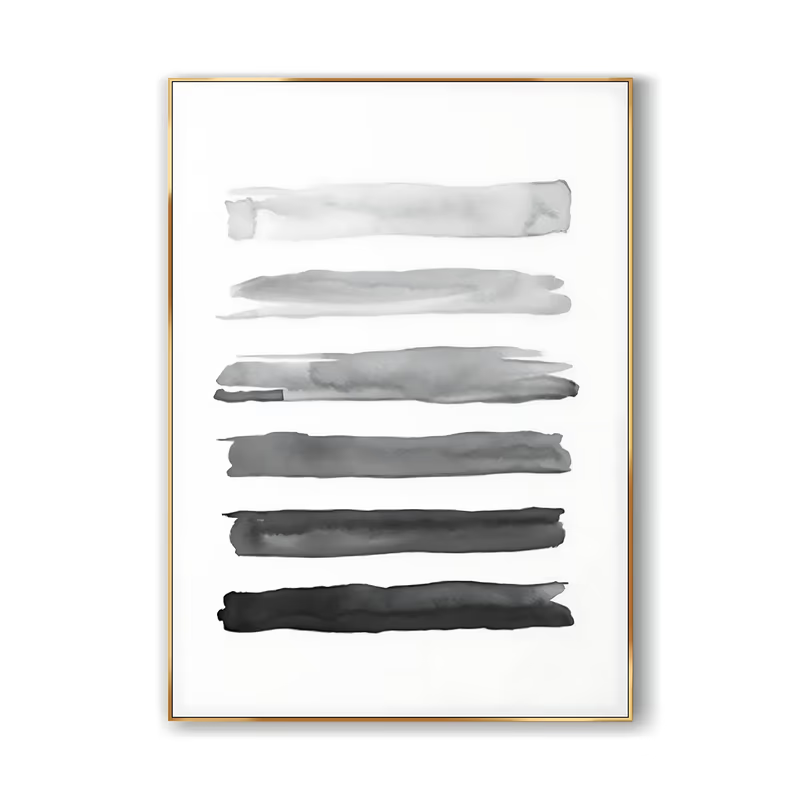
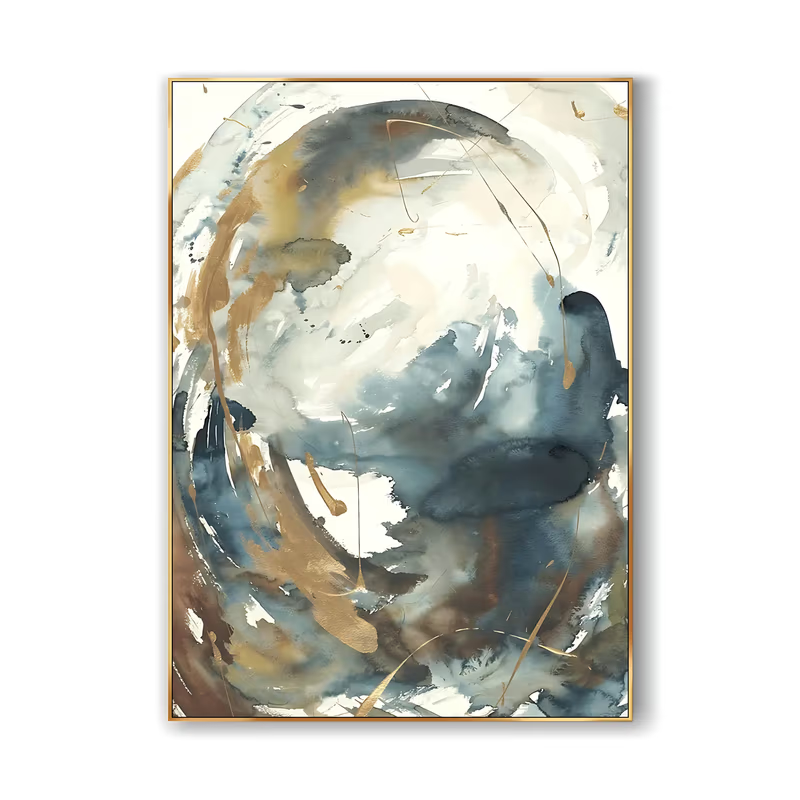
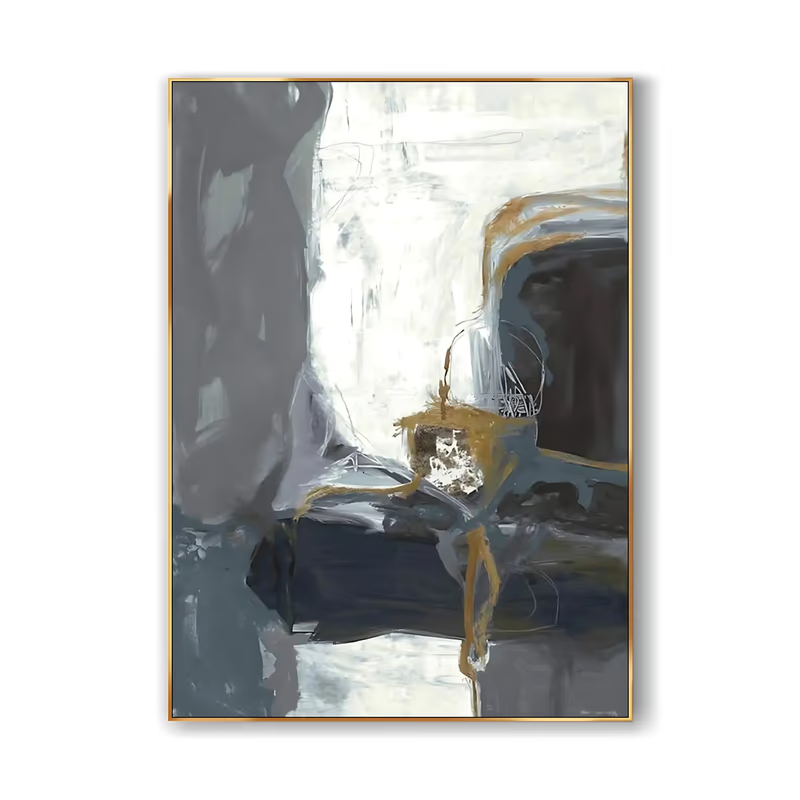
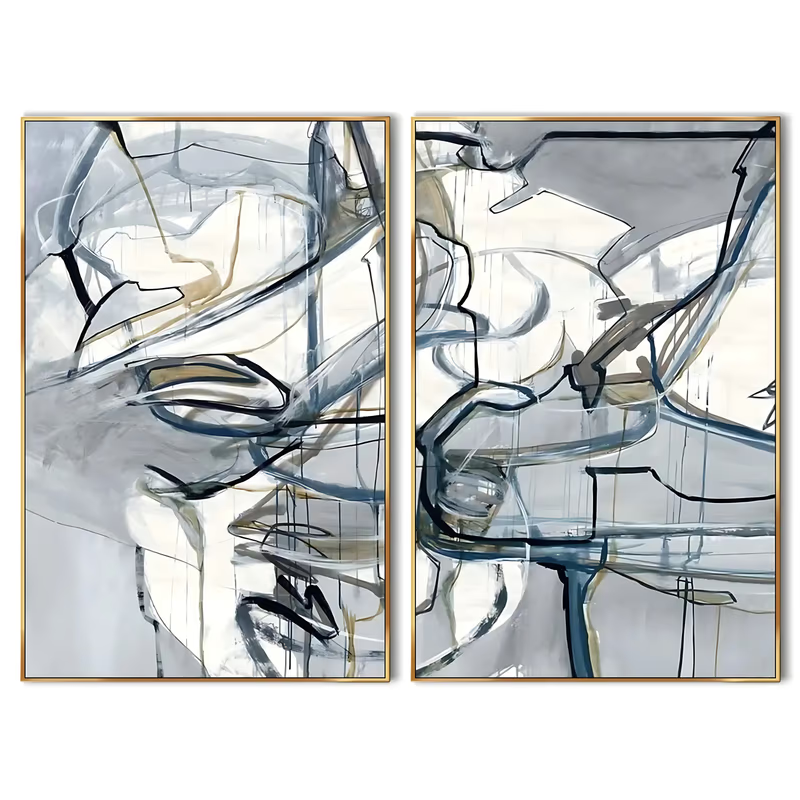
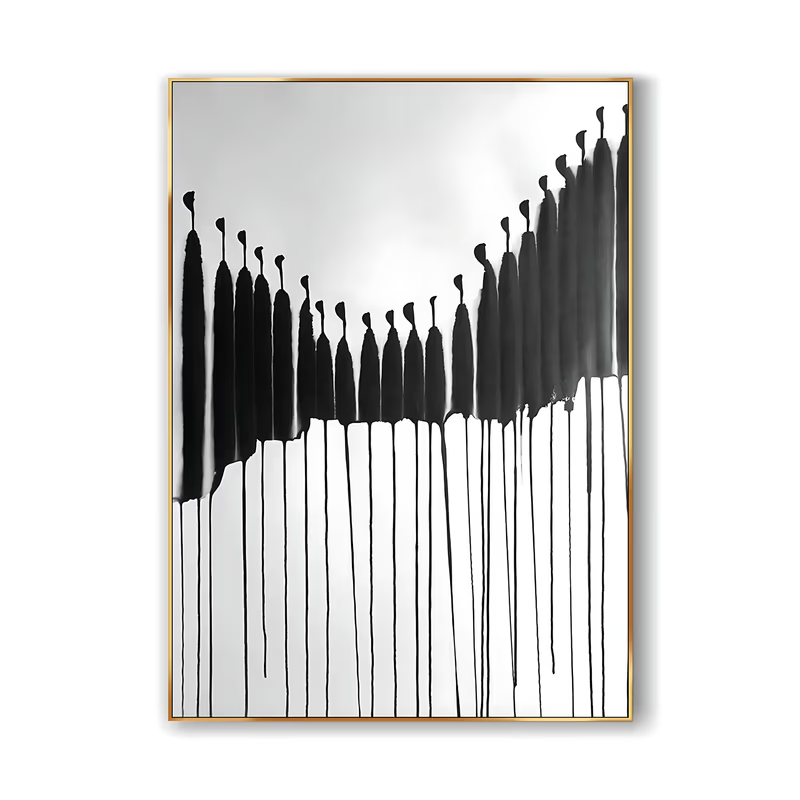
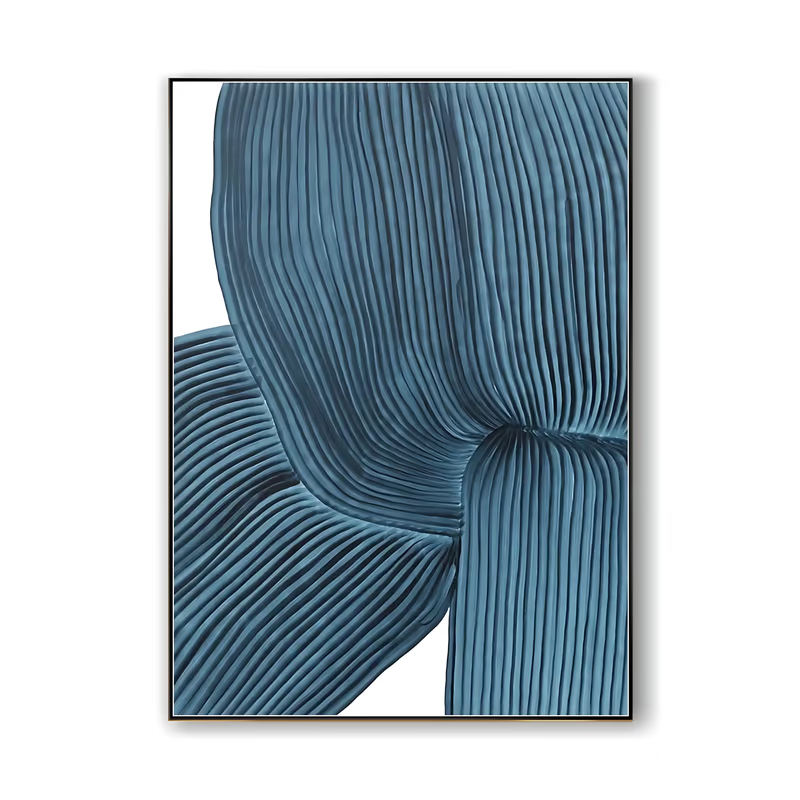
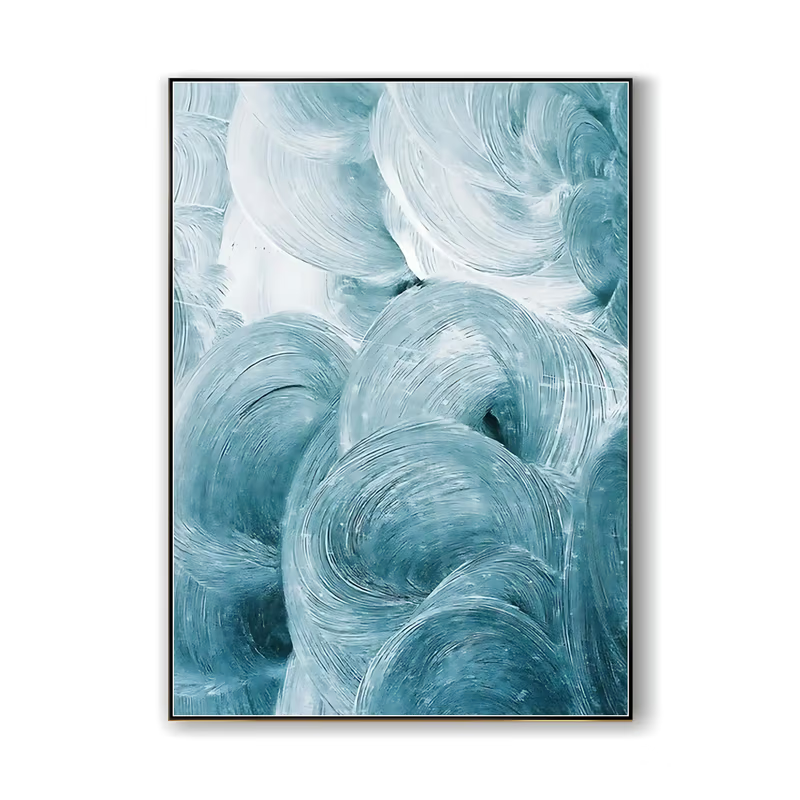
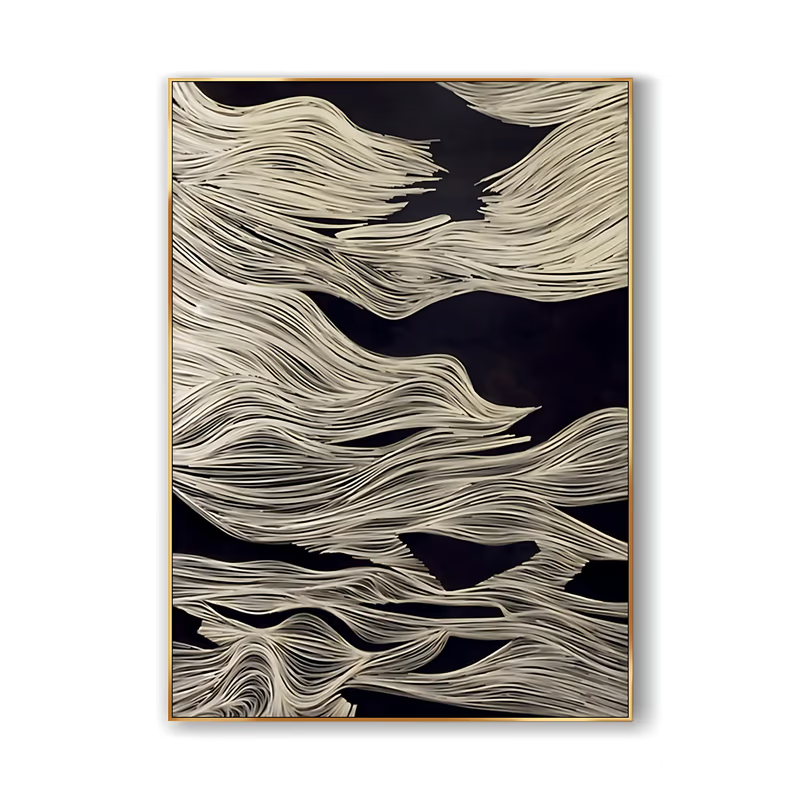
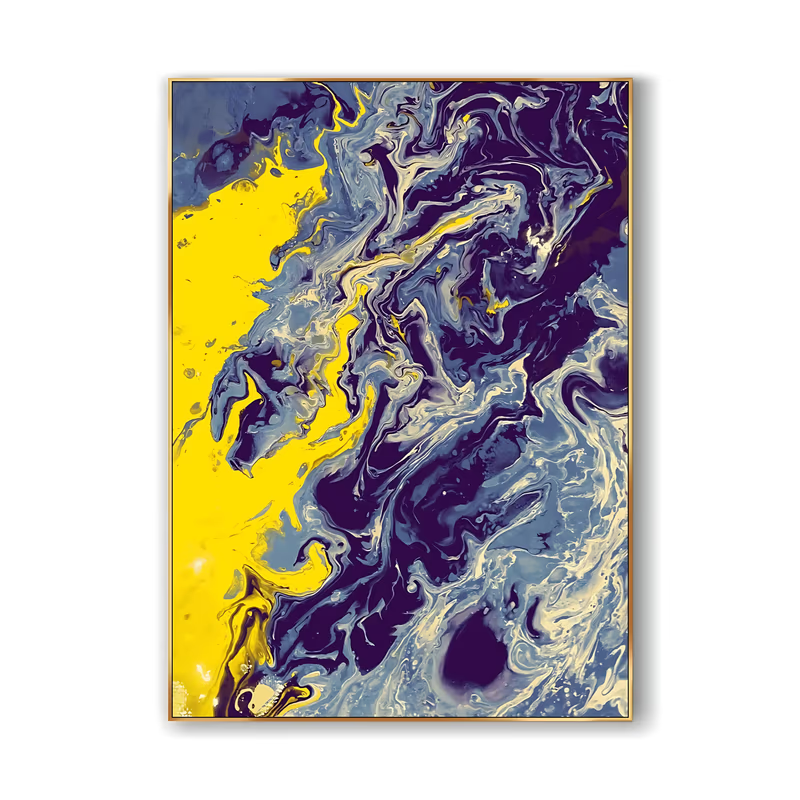
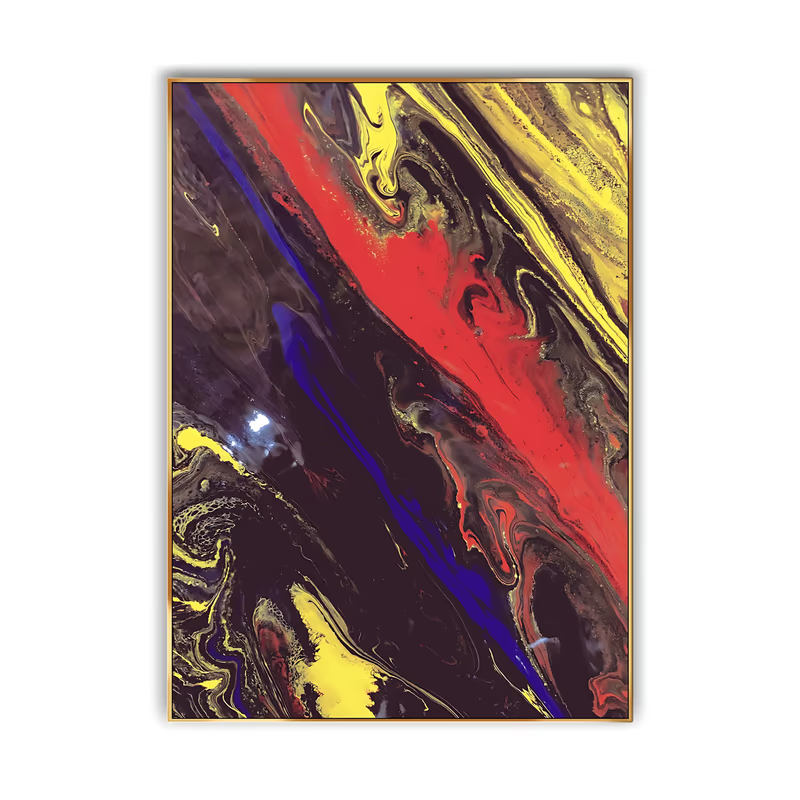
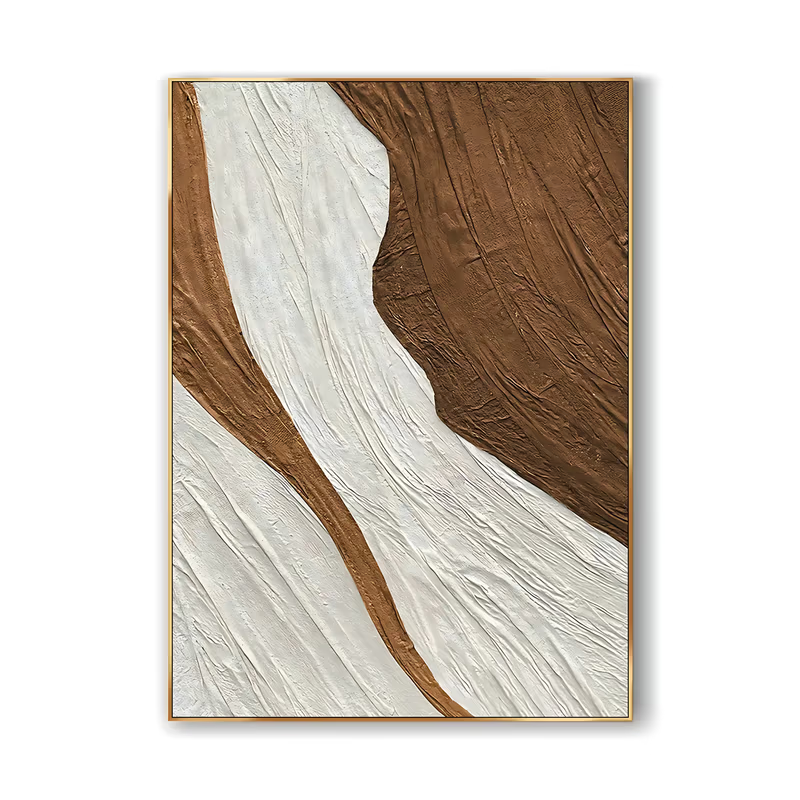
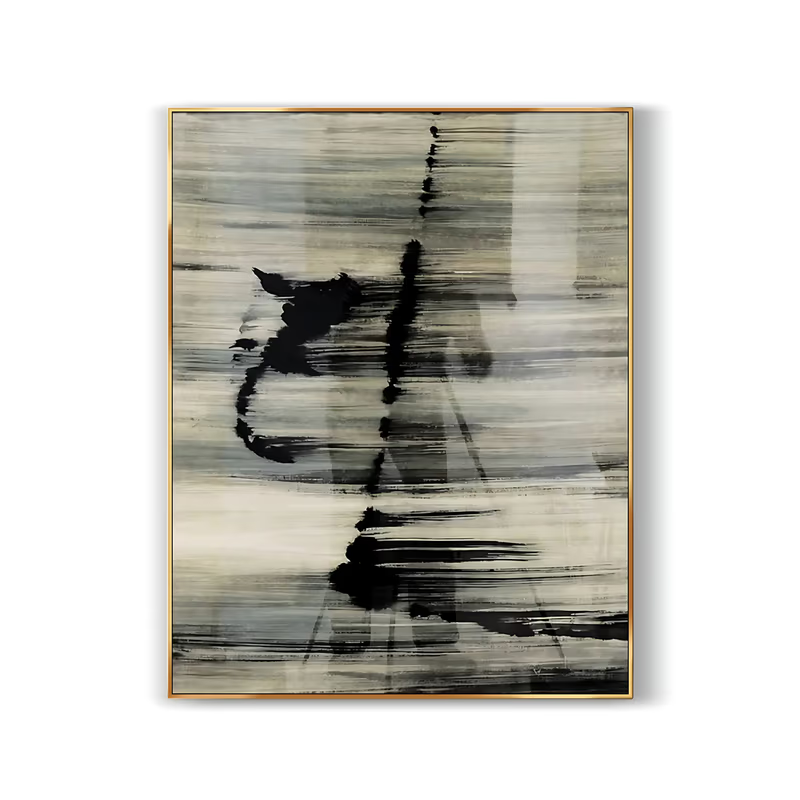
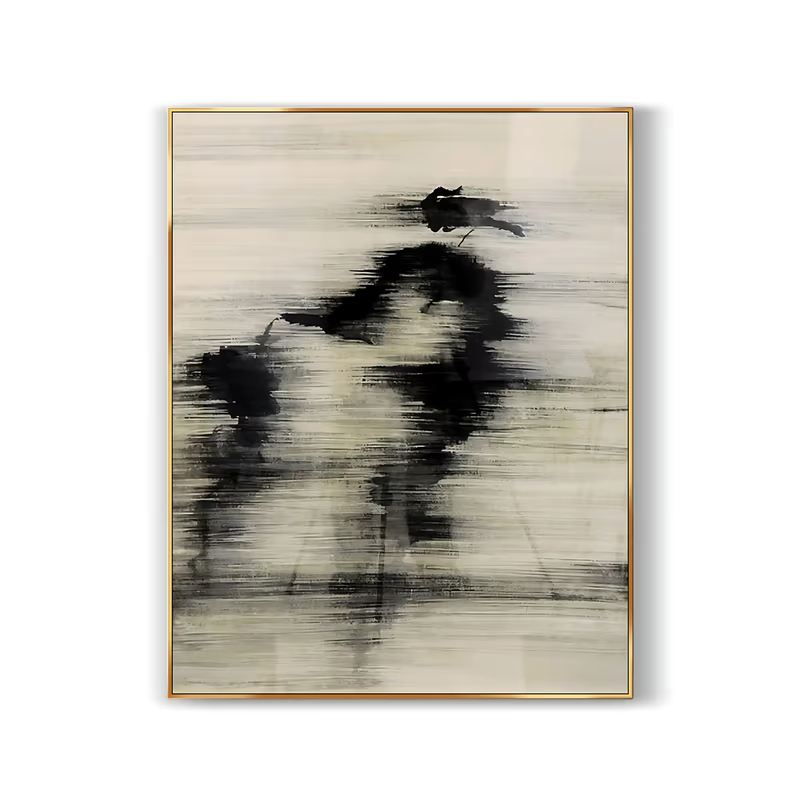
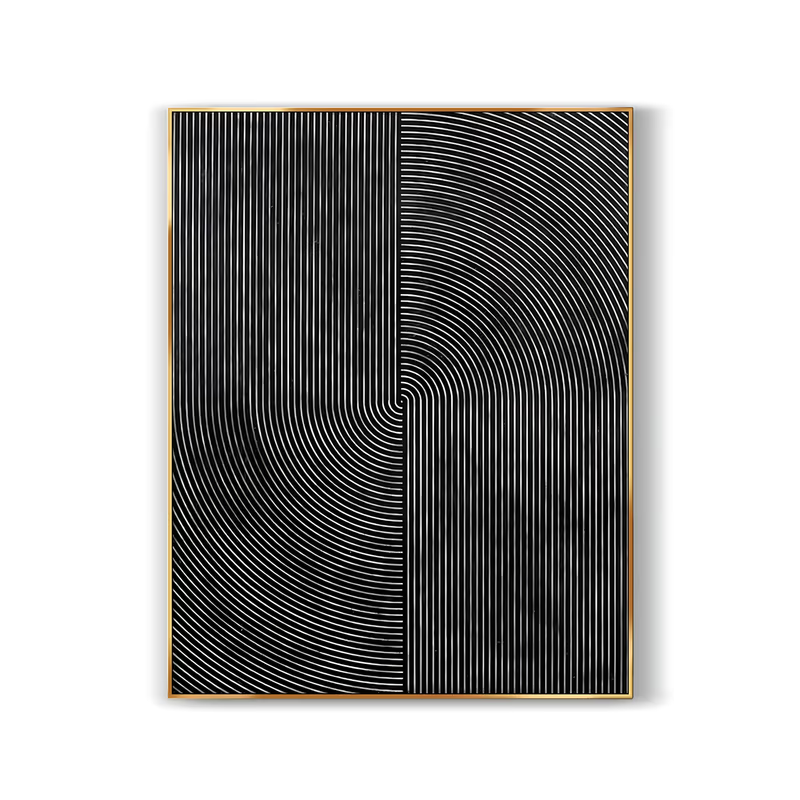
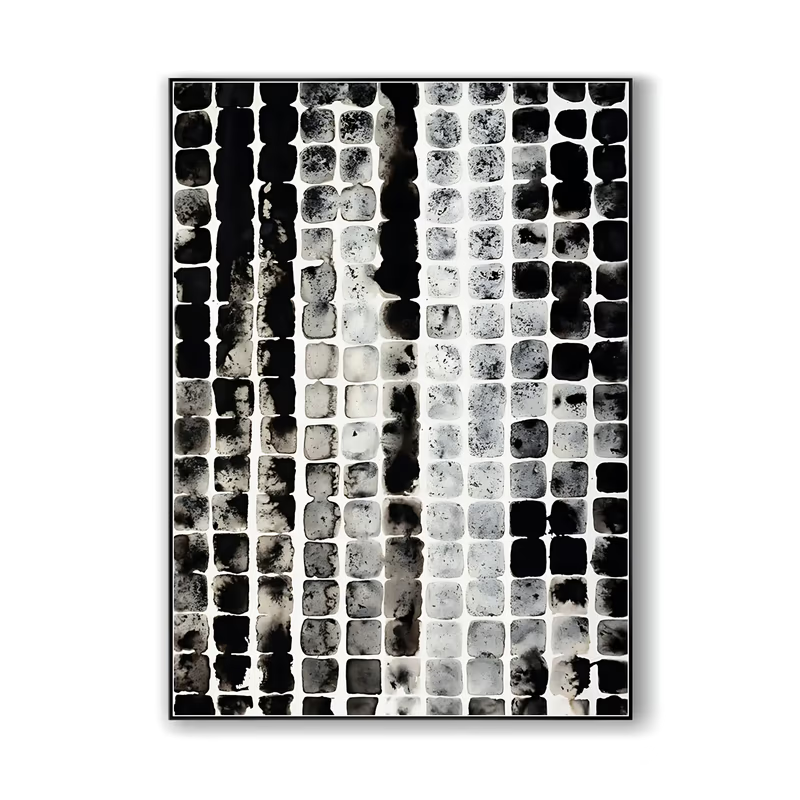
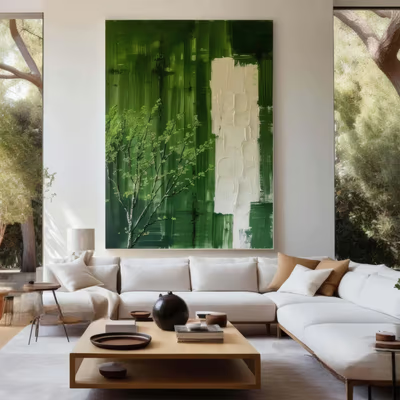
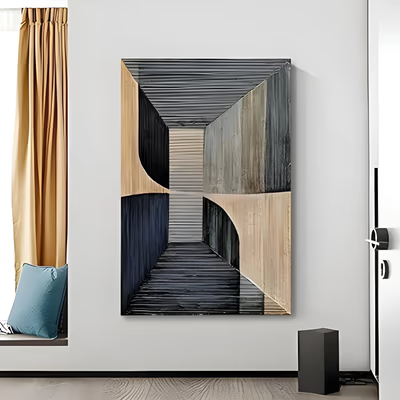
Marbled currents, long brushstrokes and streaks that run top to bottom. The movement in the painting matches the movement of people along the corridor, and an abstract can carry a floor colour without needing a subject. Abstract corridor art.
How do you plan a corridor art series across several floors?
Choose one rule for the whole building, such as one composition recoloured per floor or one family of works per floor, and apply it consistently, so every corridor feels related but no two floors look identical.
Most schemes fall into one of four approaches. The right one depends on the number of floors, how often guests return, and how much the corridors should help with wayfinding.
| Approach | How it works | Strength | Watch for |
|---|---|---|---|
| Same work throughout | One painting repeated on every wall | Simple to specify | Feels mass-produced; gives no sense of floor |
| One composition, a colourway per floor | The same design painted in blues on one floor, greens on the next | Coherent and strong for wayfinding | Choose colourways that all suit the carpet and walls |
| A family per floor | Different works sharing a subject or style on each floor: florals on one, coastlines on another | Variety within order; good for returning guests | Keep sizes consistent so the rhythm holds |
| Every wall different | Individually chosen works throughout | Feels collected, like a private house | Needs a strong palette rule to avoid chaos |
Colour per floor is the easiest wayfinding device: a guest who remembers "the green floor" finds their room more easily. Because every painting is made to order, a single catalogue work can be painted in as many colourways as the building has floors. Corridor works that also suit the rooms are a short step away: corridor art that suits guest rooms, or see hotel room art and lobby art to plan the whole route from the front door to the bed.
How high and how far apart should corridor art hang?
Hang corridor art with all centres on one line at 145–152 cm (57–60 in) from the floor, and centre each canvas on the stretch of wall between two doors rather than spacing pieces by a fixed distance.
A consistent centre line matters more in a corridor than anywhere else, because the eye reads the whole run at once and any step up or down looks like a mistake. Measure each wall section between door frames and keep the canvas to roughly 40–60% of its width, so there is clear wall on both sides. Where sections vary in length, keep the canvas size the same and let the margins change; a row of matching sizes looks calmer than a row of matching gaps.
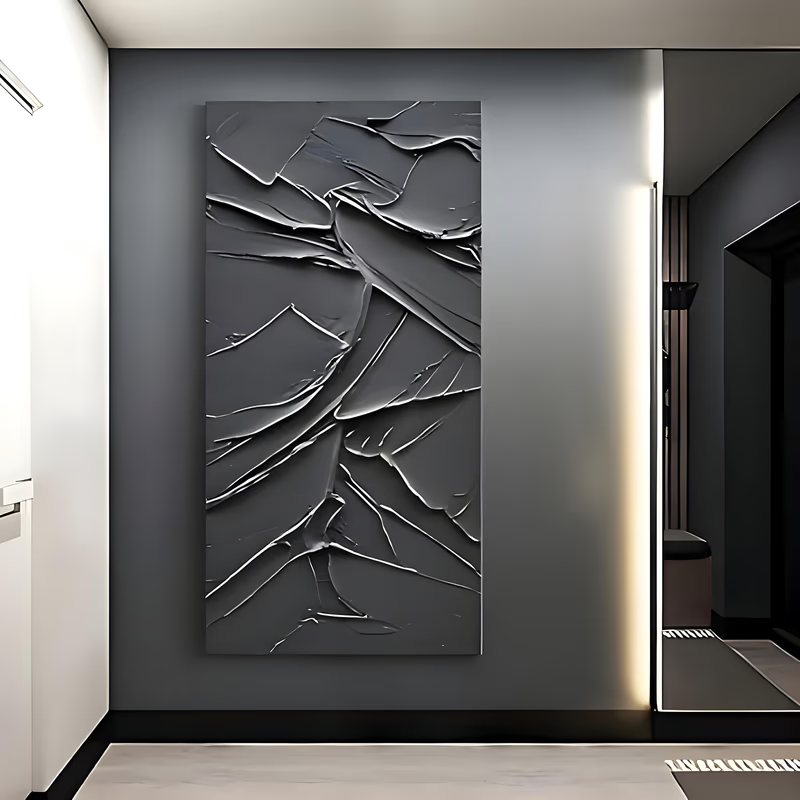
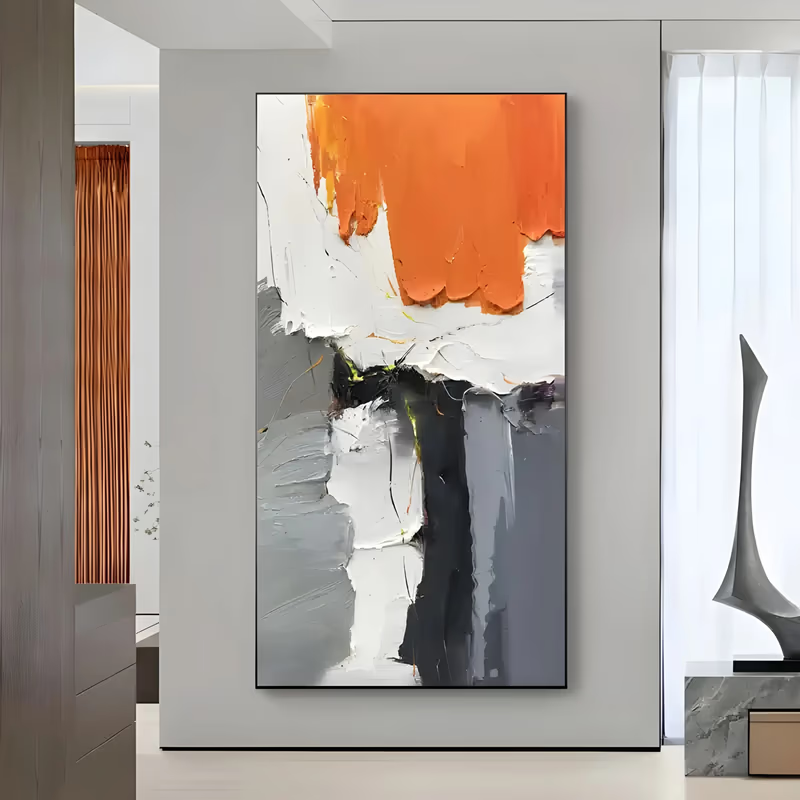
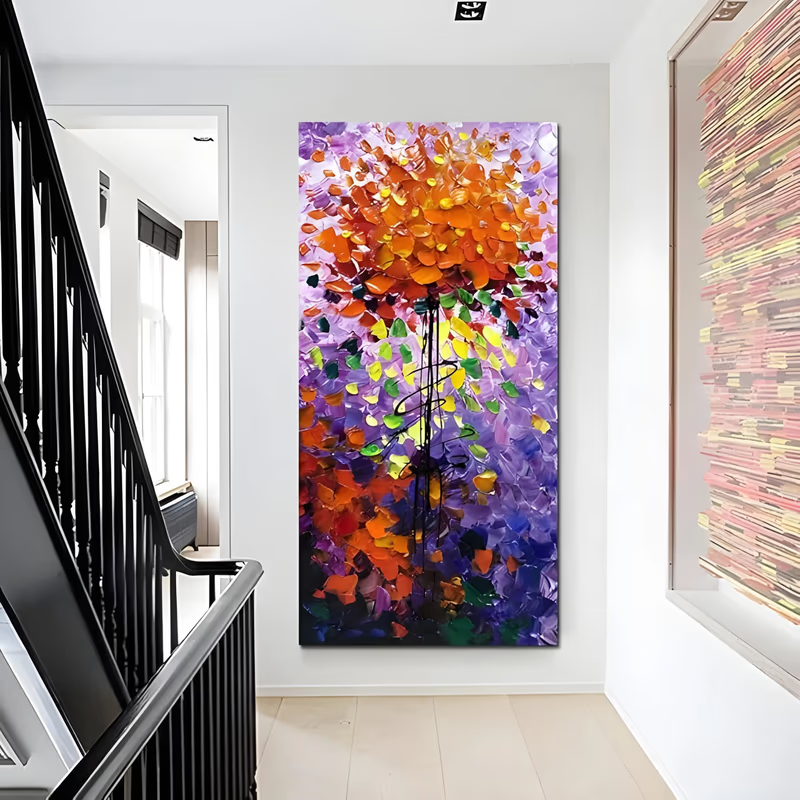
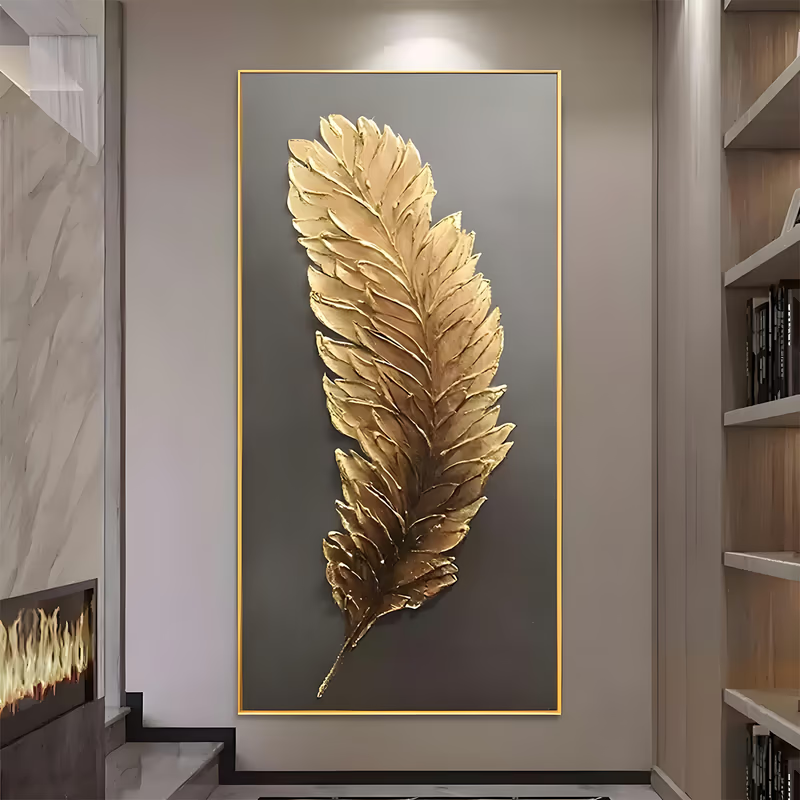
Not every section needs a painting. In a long corridor, art on every second or third wall section, plus a stronger piece at each end, often looks better than a canvas between every pair of doors. In a narrow corridor, keep relief shallow on the walls people brush past, and save deep texture for lift lobbies and corridor ends. A lift-lobby piece can be larger and hung centred on the wall facing the doors. Vertical corridor art.
Which colours and moods suit a hotel corridor?
Mid-tone and light grounds with a clear contrast suit most corridors, because corridor lighting is usually dimmer than in rooms; calm and peaceful moods suit guest floors, and stronger colour suits lift lobbies.
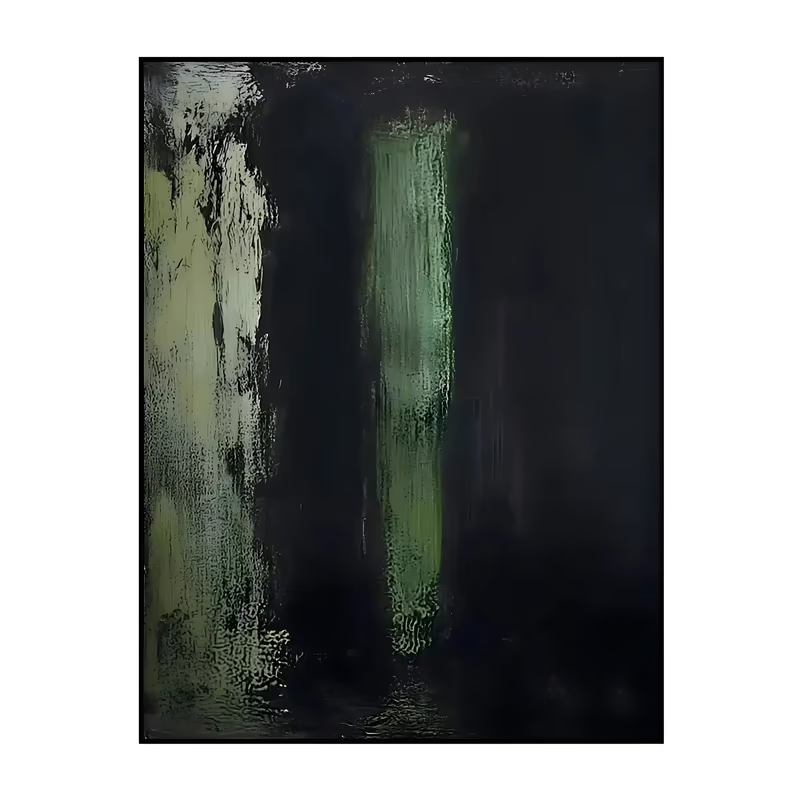
Dark, low-contrast paintings can turn muddy under typical corridor downlights. Pale grounds with a firm line or shape, or mid-tones with crisp highlights, stay legible. Check the carpet first: it is usually the largest pattern in the corridor, and the art should either share one of its colours or sit on a quiet neutral that lets the carpet be. Calming and peaceful corridor art.
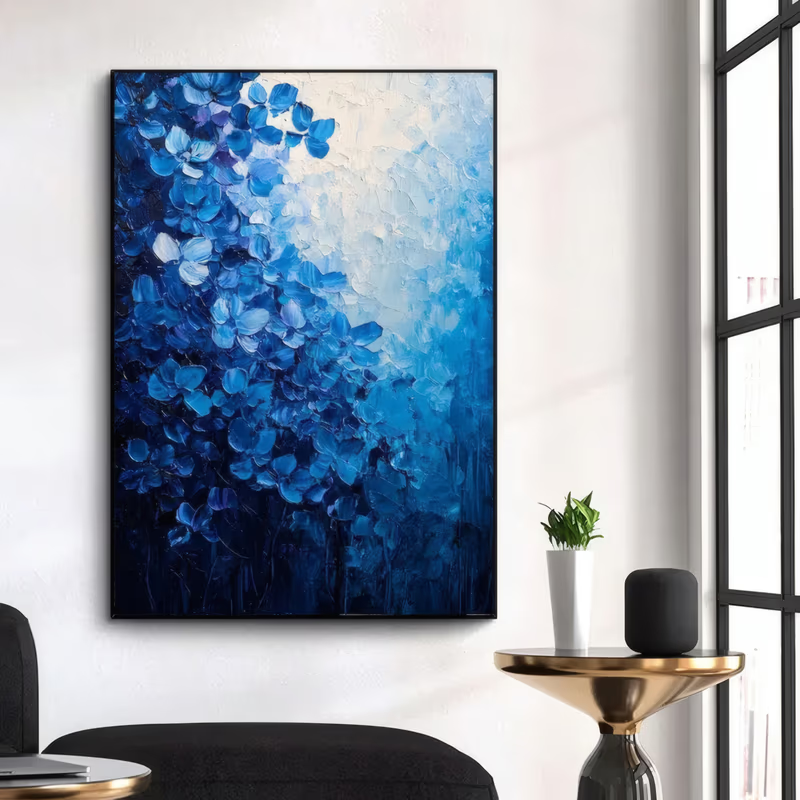
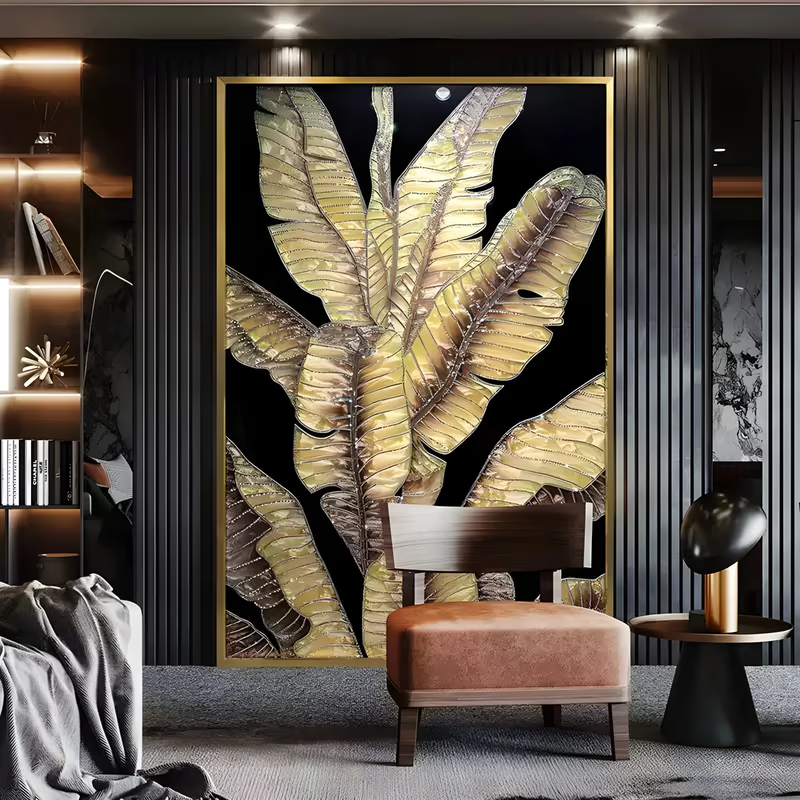
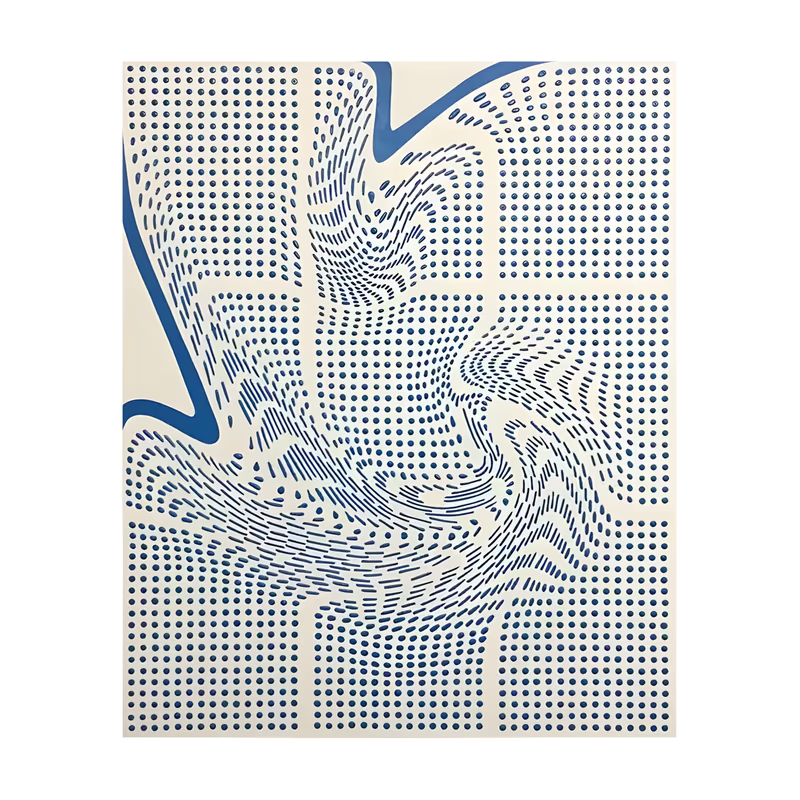
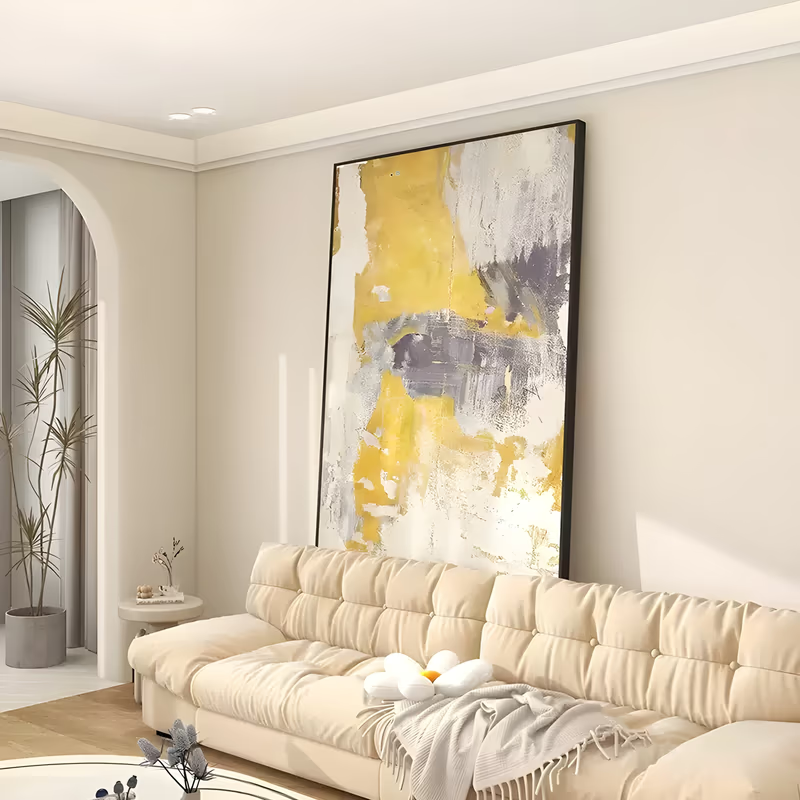
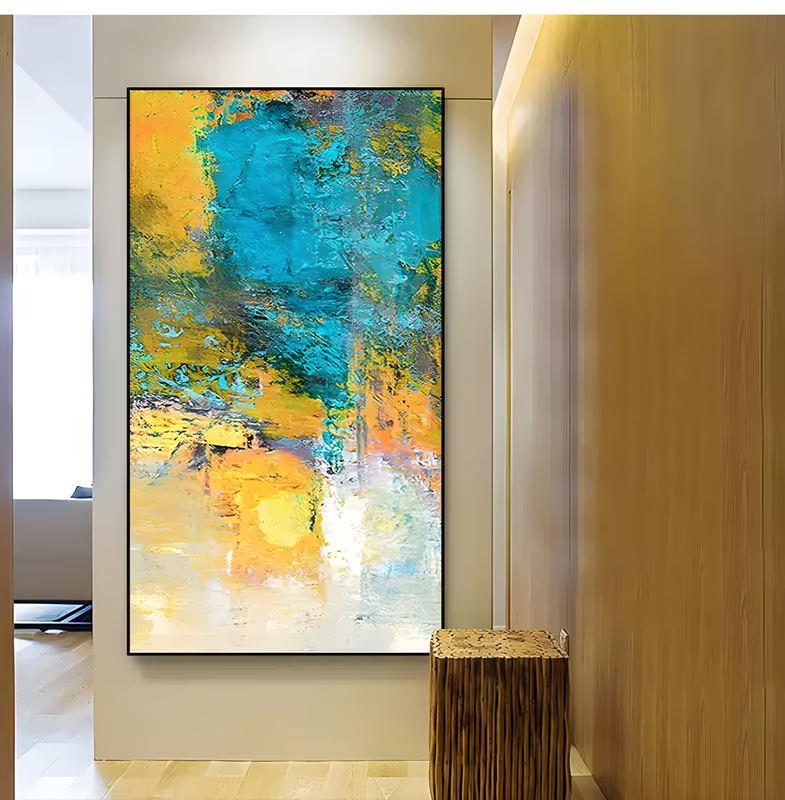
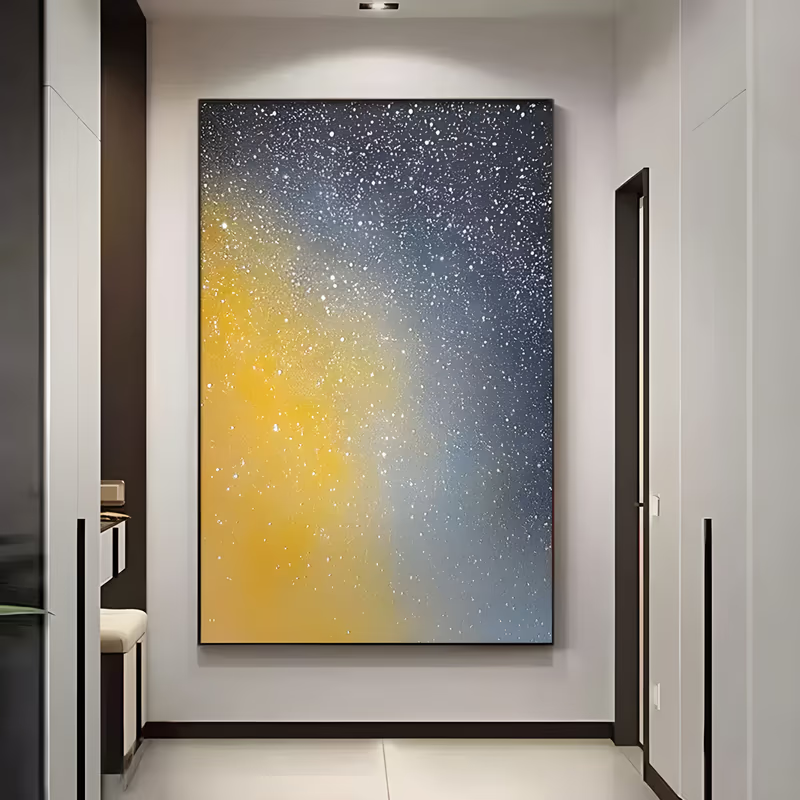
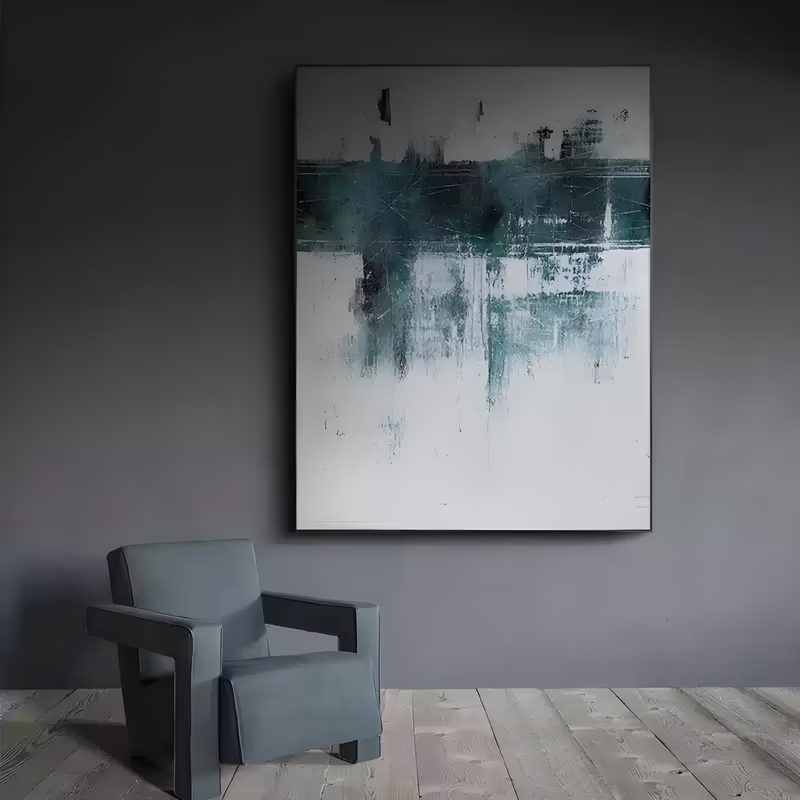
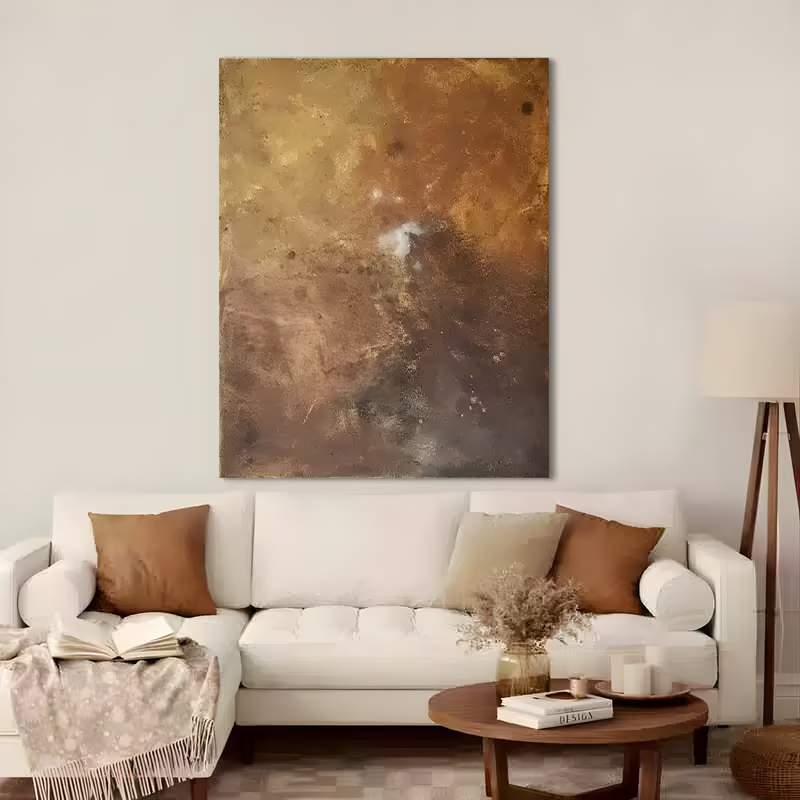
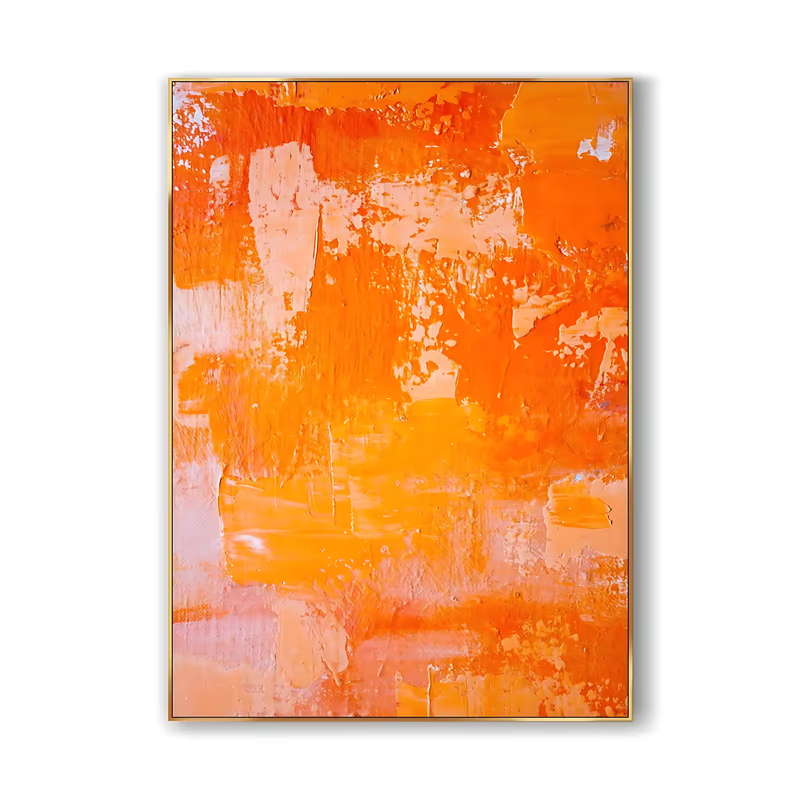
Colour can also mark the floors. A building might run blues on the low floors, greens in the middle and warm golds at the top, each in the same family of works. Blue corridor art, green or gold. For a lift lobby that should feel like a small arrival point, a more uplifting piece works well.
How do you order corridor art for a whole building?
Send a schedule of floors and wall positions with sizes, choose the works and colourways, approve a first piece, and then the series is painted with progress photos for each canvas.
A simple spreadsheet listing each floor, each position and its size is all a quote needs. Every work is hand-painted in acrylic on canvas as standard, oil paint on request, and the palette can be set from a carpet sample, a paint code or the lobby scheme. Many buyers start with one piece to confirm colour and finish before releasing the rest. For every canvas you see photographs or video at each stage, the next stage begins only after approval, and a final photograph is approved before it ships.
Each piece takes about 10 days to paint and 5–7 days in transit by DHL, FedEx or UPS express. A larger order can also travel by air or sea freight: iHomeArt suggests the best route for the building, the transit time follows from it, and the shipping cost is confirmed before anything ships. Canvases can ship rolled to save space, stretched and ready to hang, or framed in gold, silver, black, white or wood. Volume pricing starts at 10 pieces, and every enquiry is quoted within one business day. For multi-floor schemes see corridor and lift-lobby series, art for build-to-rent and multifamily buildings and office lobbies and common areas, or request a quote.