
Entryway art guide · Updated
How to choose wall art for an entryway, hallway and stairs
Key takeaways
- Plan for the view from the door: the wall you see as the front door opens deserves the strongest painting in the hall; the side walls play supporting parts.
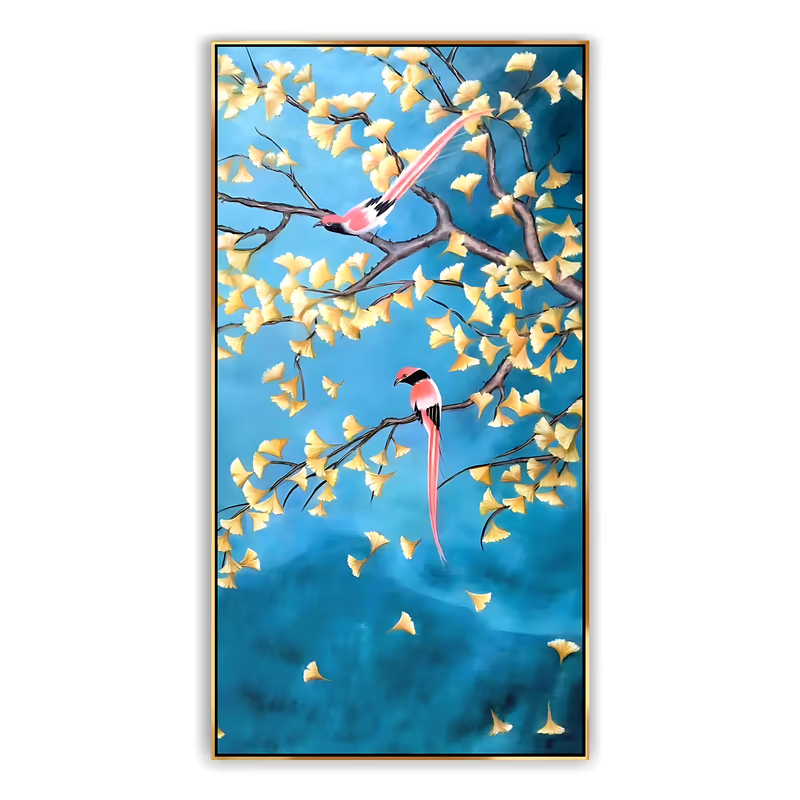
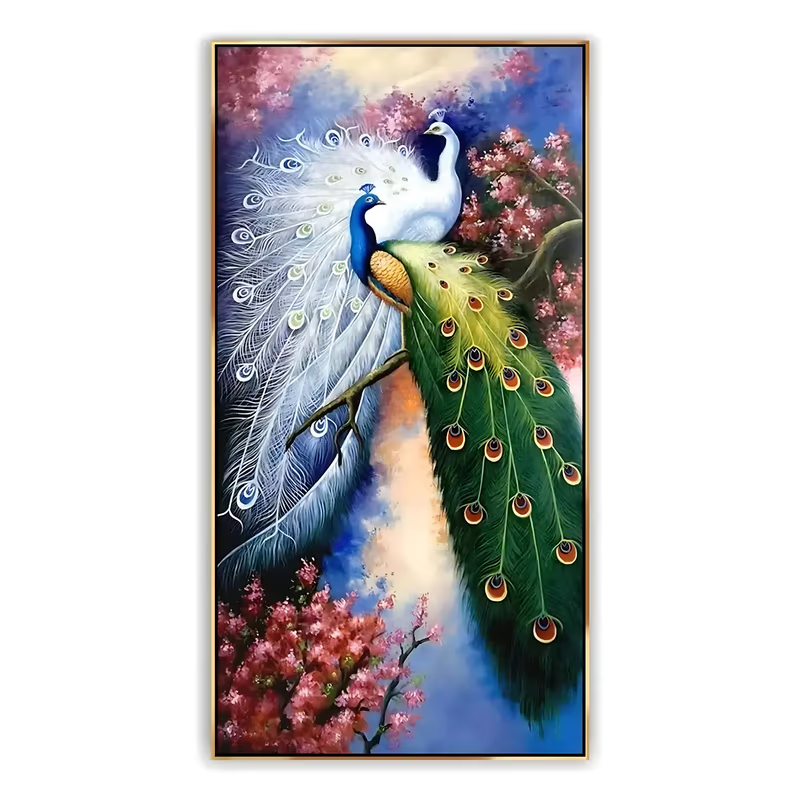
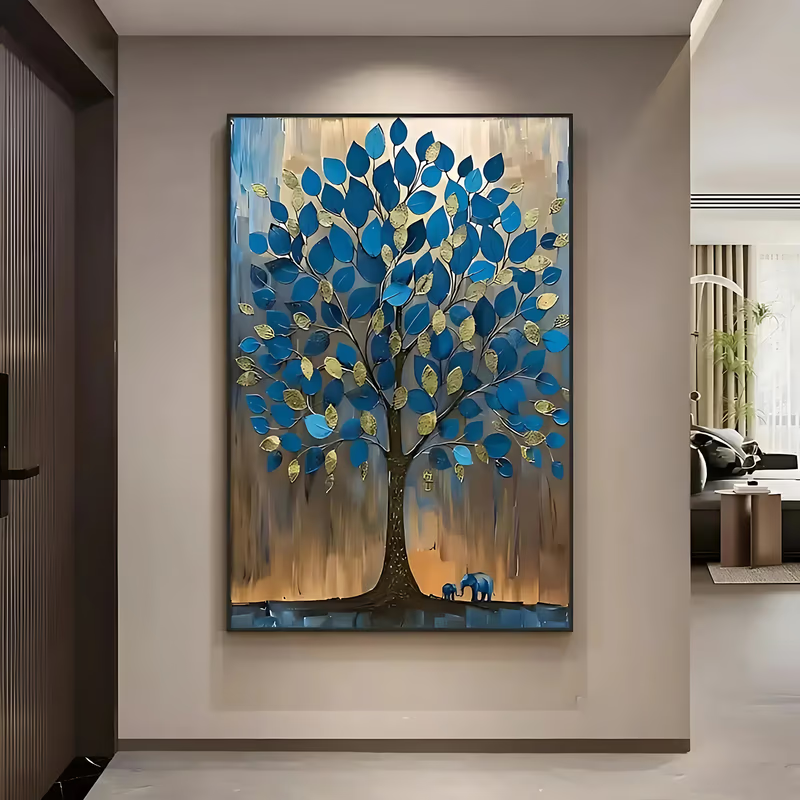
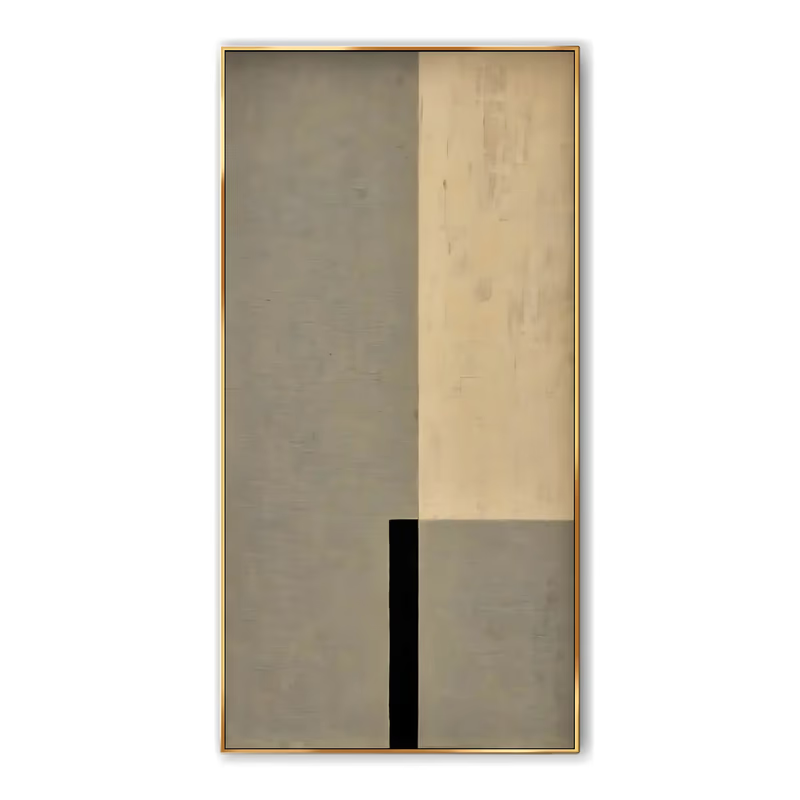
- Narrow walls want tall canvases: a vertical piece suits the slot between doors and is read comfortably from arm's length.
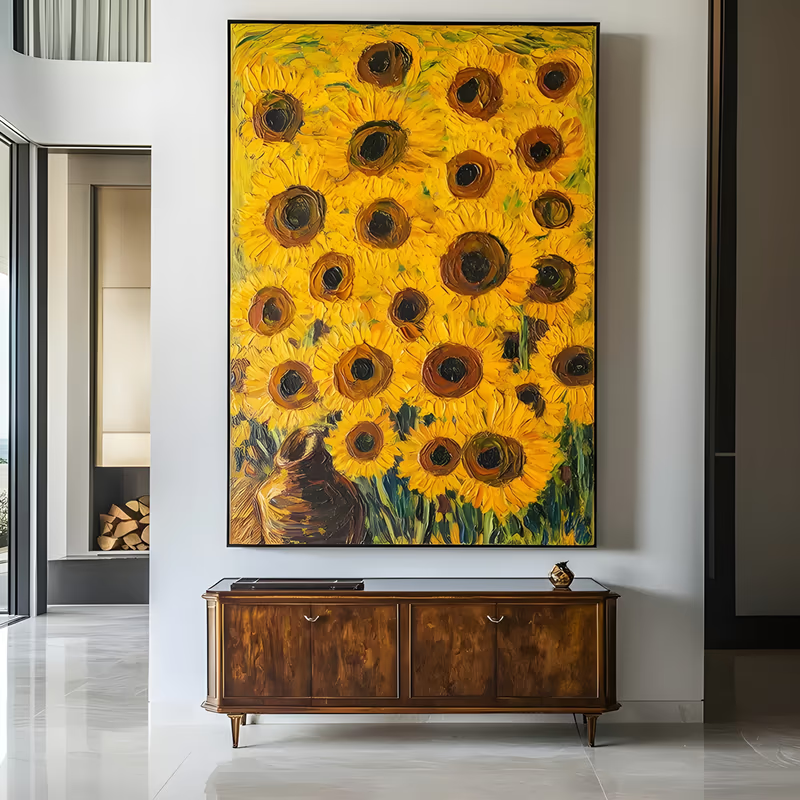
- Above a console, go two-thirds: art about two-thirds to three-quarters the width of the table, its lower edge 15–25 cm (6–10 in) above the top.
- On stairs, follow the pitch: keep each canvas centred about 145–152 cm (57–60 in) above the tread beneath it, so the line climbs with the handrail.
What wall art makes a good first impression in an entryway?
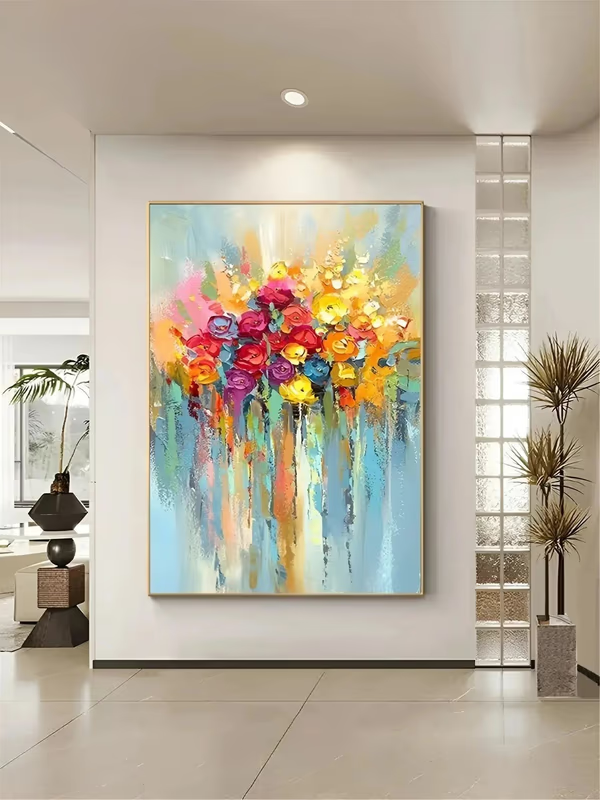
One confident painting on the wall that faces the front door makes the best first impression, because it is the first thing anyone sees and it sets the tone for the whole house.
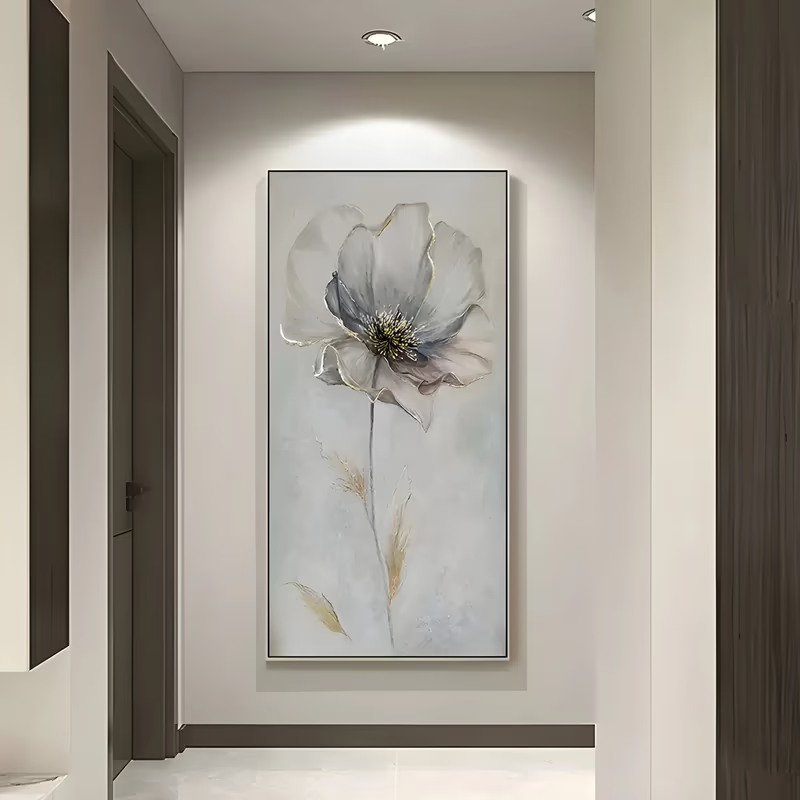
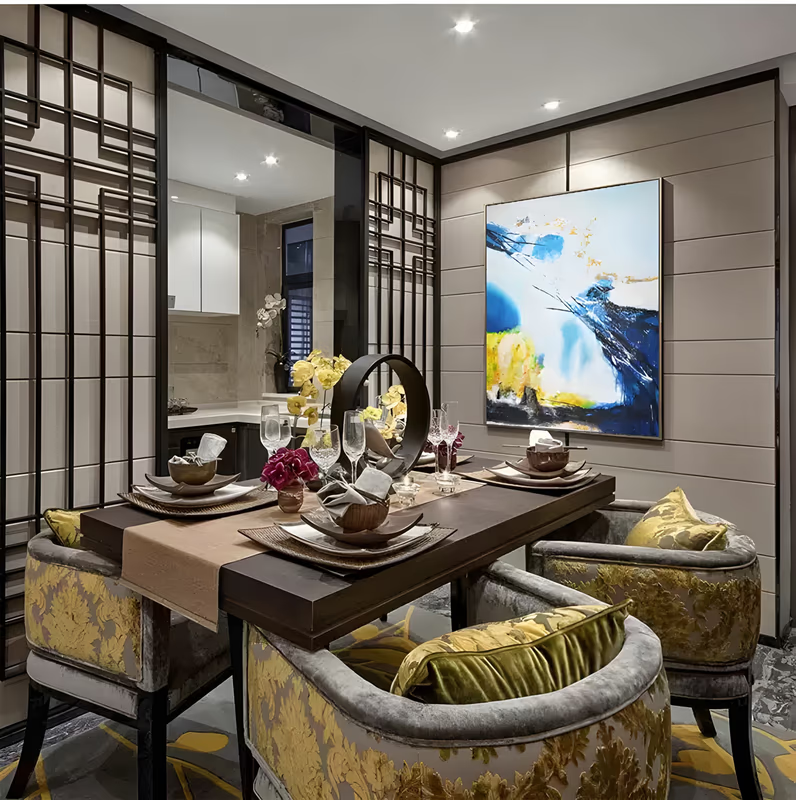
An entrance is seen in a few seconds, often in passing, so a subject that reads at a glance works better than fine detail: a bold bloom, a clear horizon, a strong abstract shape. Before choosing, stand outside with the door open and notice which wall your eye lands on. That is the focal wall. The others have quieter jobs.
| Wall in the hall | How it is seen | What works there |
|---|---|---|
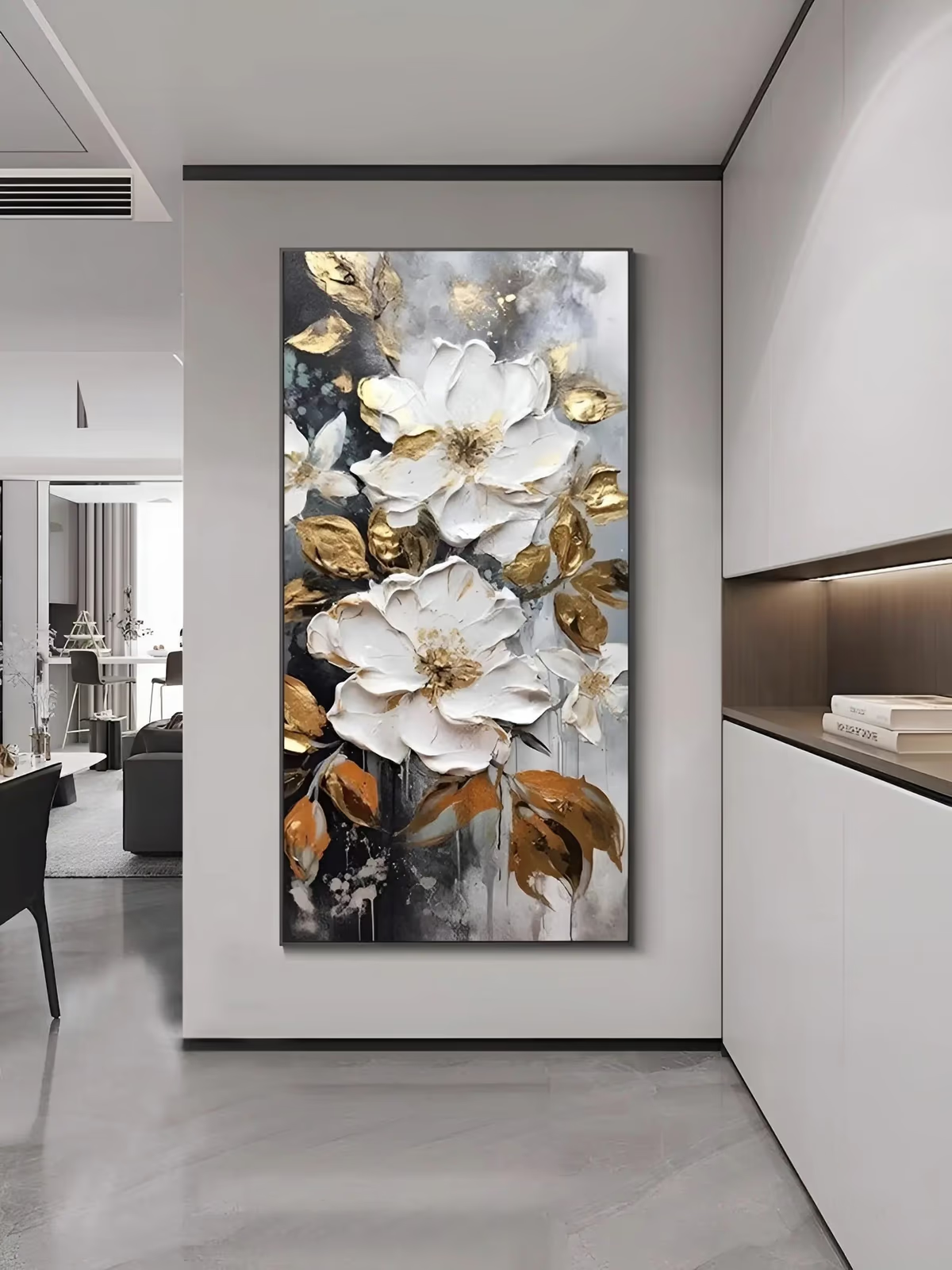
| Facing the front door | Head-on, from the threshold, as the door opens | The statement piece: the largest canvas, strongest colour or texture |
| Above a console or bench | Close up, while dropping keys or taking off shoes | A piece sized to the furniture; detail rewards a second look |
| Side walls of a passage | At an angle, from about one step away | Tall, slim canvases or a row with equal gaps |
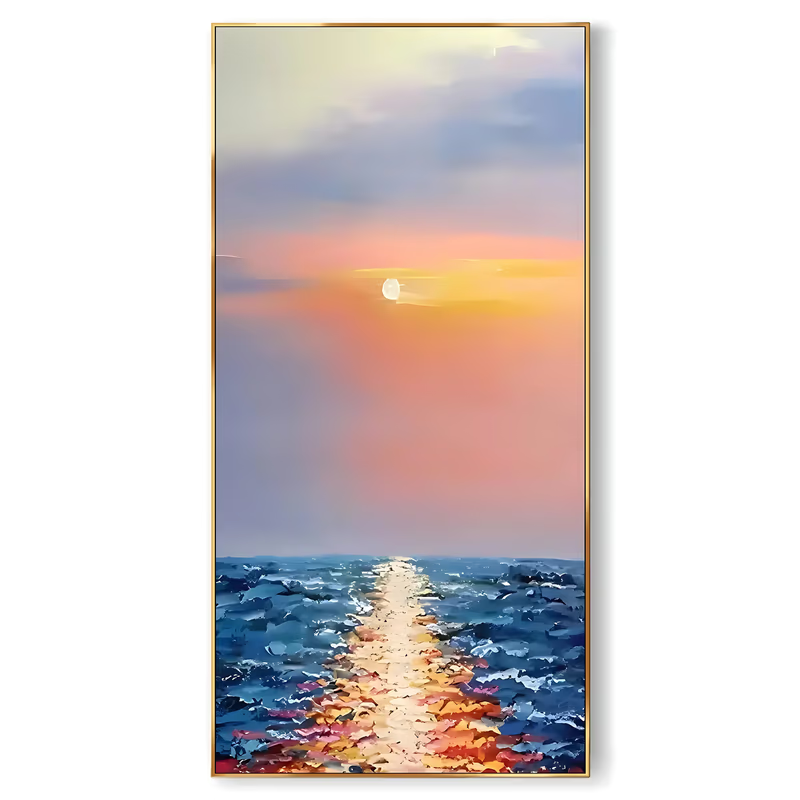
| End of a long hallway | From the far end, getting closer | A painting with depth, such as a landscape or a lit horizon, to draw people through |
| Staircase and landing | While climbing, from below and above | One large piece on the tall wall, or a series along the stair line |
Because guests take in an entryway together with the rooms beyond it, the focal piece also introduces the home's palette. Picking it up again in the living room makes the house feel considered from the threshold onwards.
What size should entryway wall art be?
Size entryway art to whatever sits beneath it: about two-thirds to three-quarters of a console's width, or, on a bare wall, enough to fill the clear space between doors and switches with a margin either side.
Above a console, chest or bench
For a 120 cm (47 in) console, a canvas 80–90 cm wide looks settled. Hang it with its lower edge 15–25 cm above the tabletop, so a lamp or a bowl can stand in front without hiding it. A taller lamp on one side balances a slightly narrower painting.
On a bare foyer wall
Measure only the usable area, between door frames, light switches, radiators and coat hooks, then let the painting take roughly 60–70% of that width. If you are torn between two sizes in an entrance, the larger usually looks right; undersized art is the common mistake here.
Height of the room
Under a standard ceiling of about 2.4 m (8 ft), a canvas 60–90 cm (24–36 in) tall sits comfortably. A double-height foyer or stairwell takes a far bigger piece, 120 cm (48 in) tall or more, which is easiest to get when the canvas is painted to measure. See oversized and custom sizes.
What hallway wall art works on a narrow wall?
On a narrow hallway wall, choose tall, slim canvases with a light ground, hung on one side only, so the passage stays open and easy to walk through.
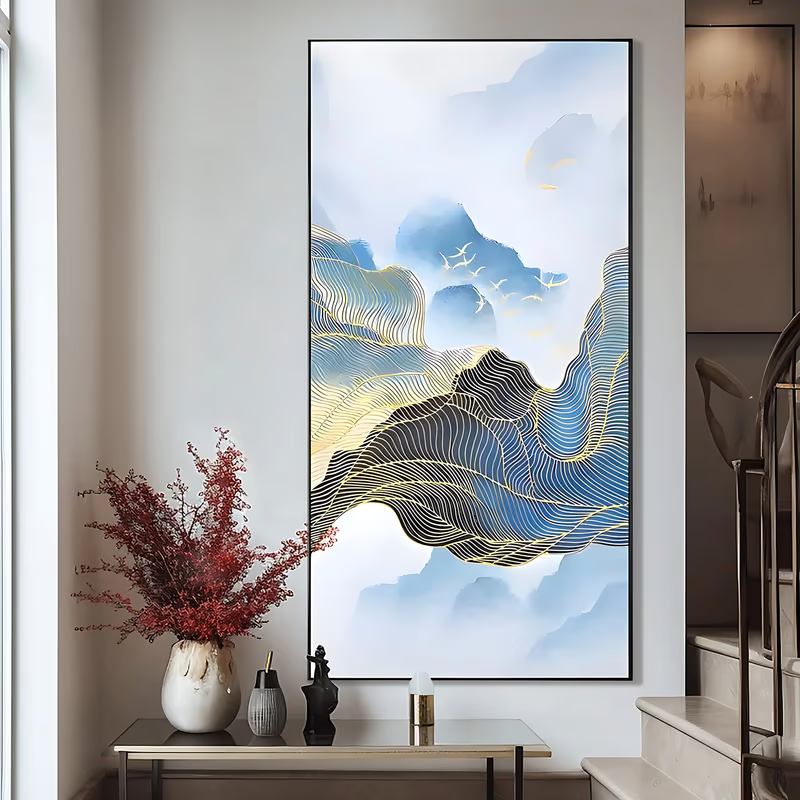
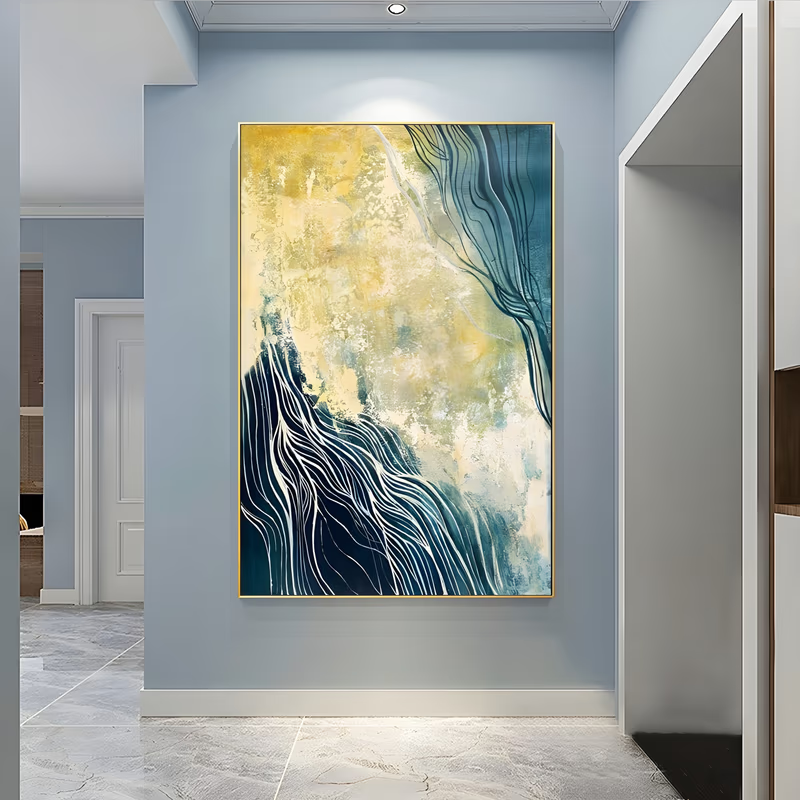
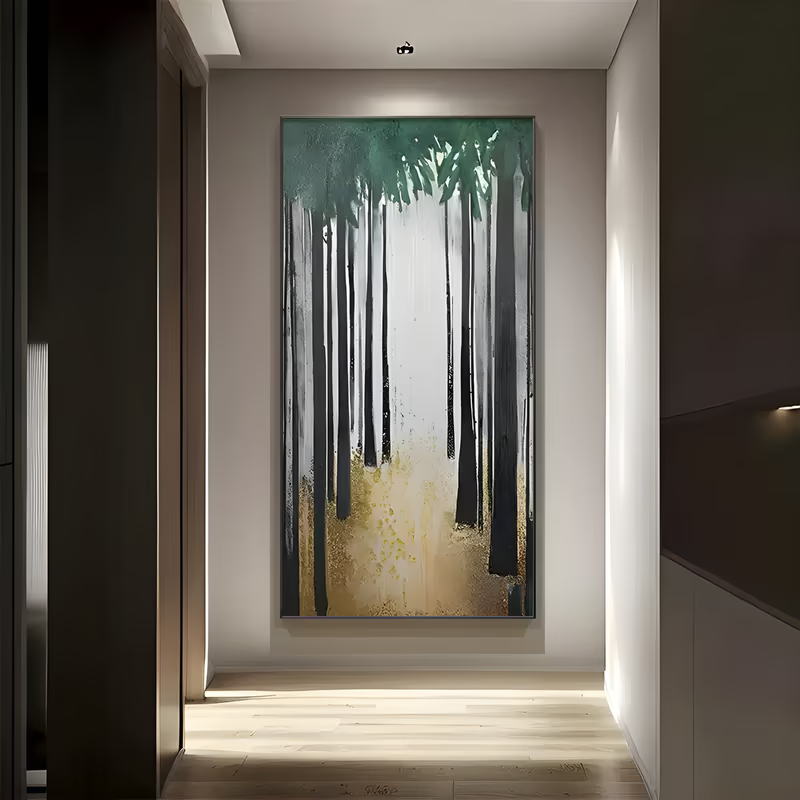
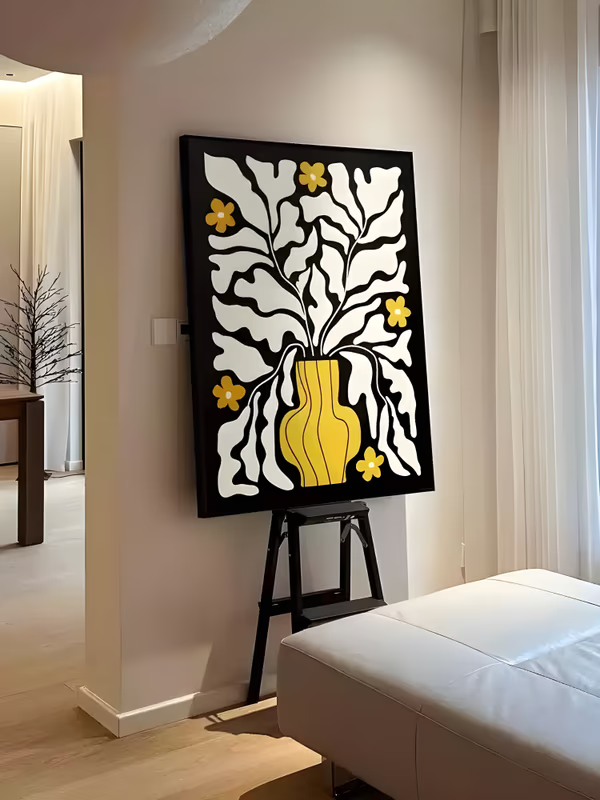
In a corridor 90–110 cm wide, you never stand back from the wall. Paintings are seen obliquely and at close range, which favours clear shapes and colour over tiny detail, and vertical formats that sit between door frames. Browse vertical hallway art.
- Dress one wall, not both. Art on both sides of a tight hall closes it in; leave the opposite wall plain or use a mirror there.
- Hang a row, evenly spaced. Three or four tall pieces with identical gaps, 8–10 cm apart if grouped or centred between doors if not, lead the eye along the hall.
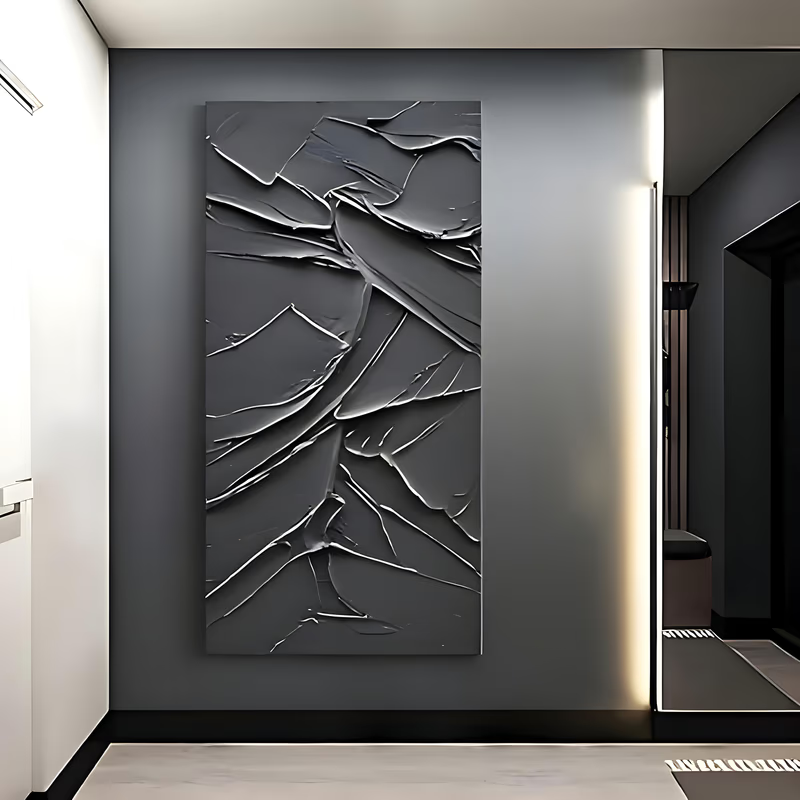
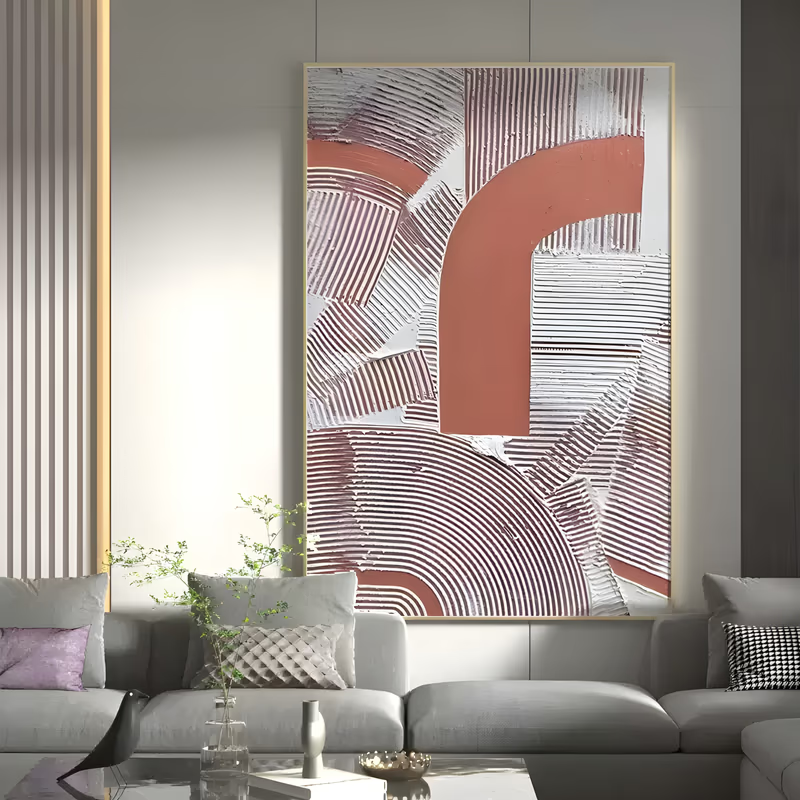
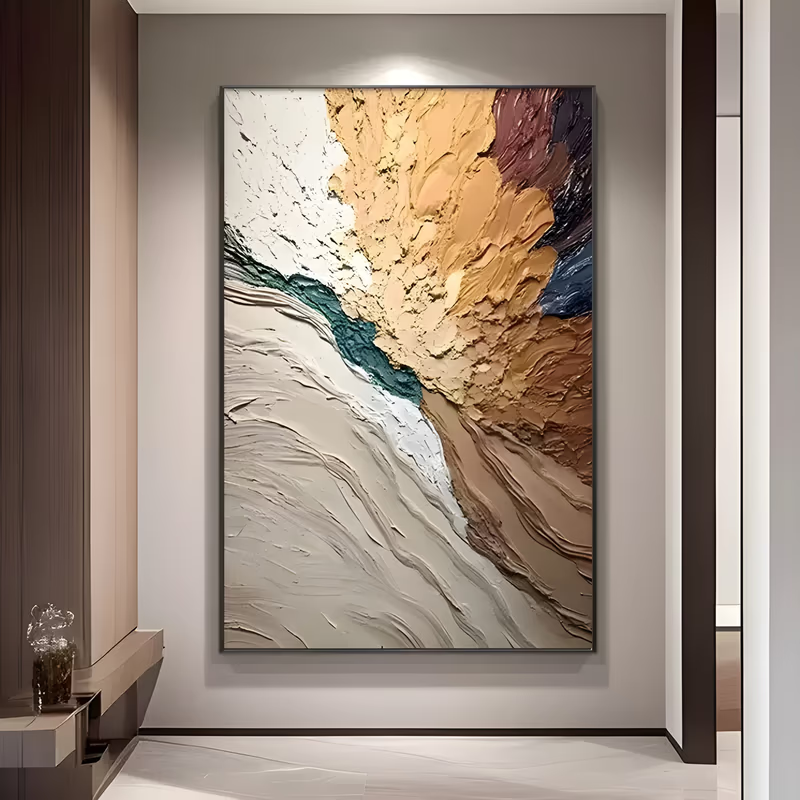
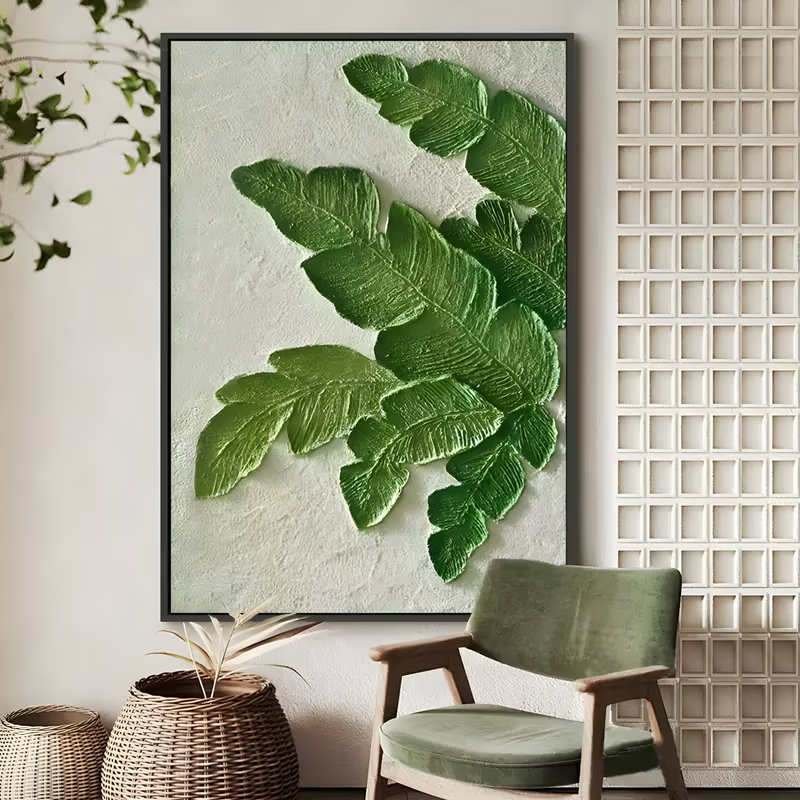
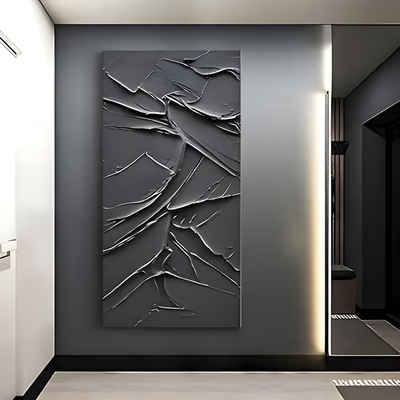
- Keep projection low where people pass. Deep frames and high plaster relief get knocked in a tight passage; save the most sculptural pieces for an end wall or a landing.
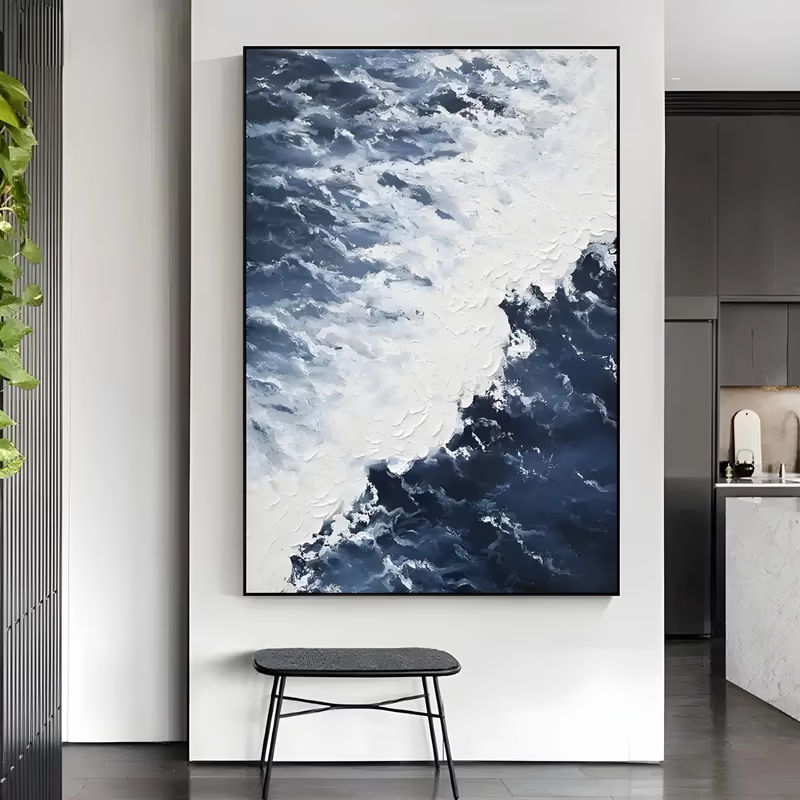
- Give the far end a destination. A landscape or seascape with a deep horizon at the end of a hall makes it read shorter and more inviting.
Fix each piece at two points, or with a cleat for heavier canvases, so it stays level when doors slam and bags brush past.
What kinds of entryway wall art are there?
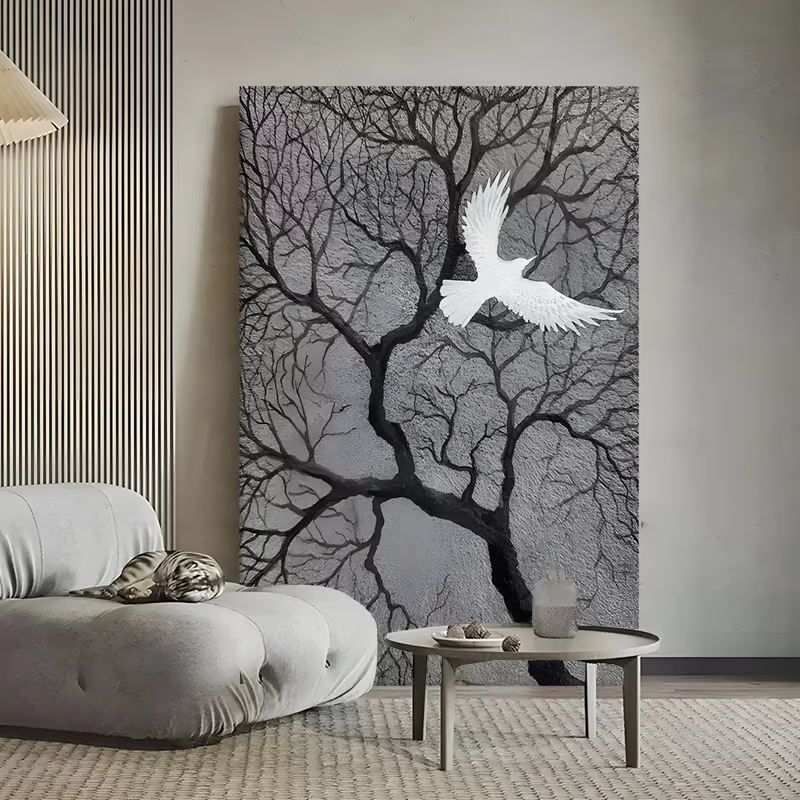
Entryway wall art falls into four main kinds: welcoming florals, landscapes that add depth, bold abstracts and relief, and animal or figure studies with personality.
Florals and botanicals
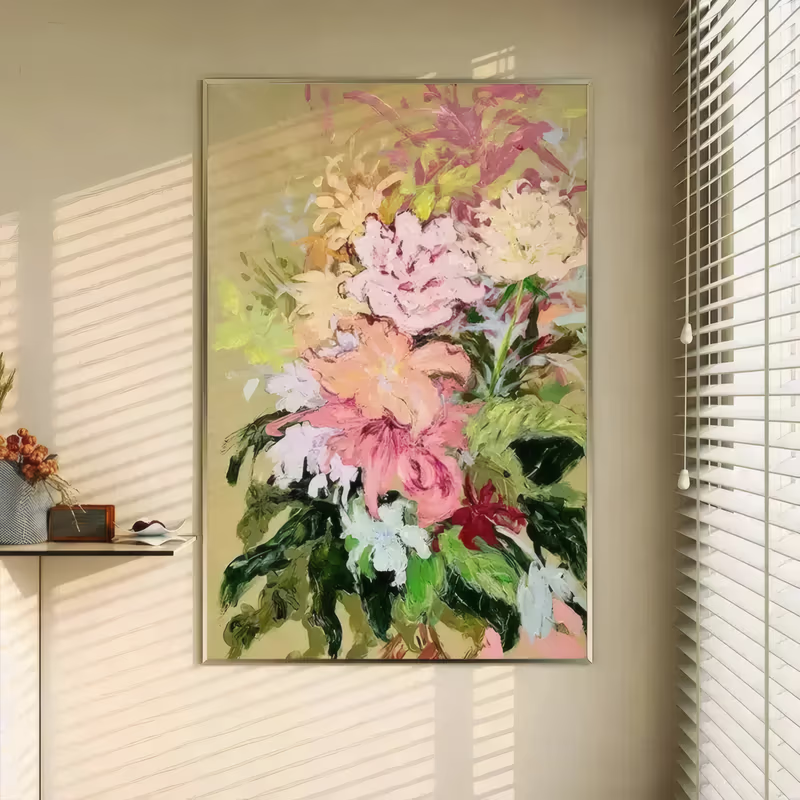
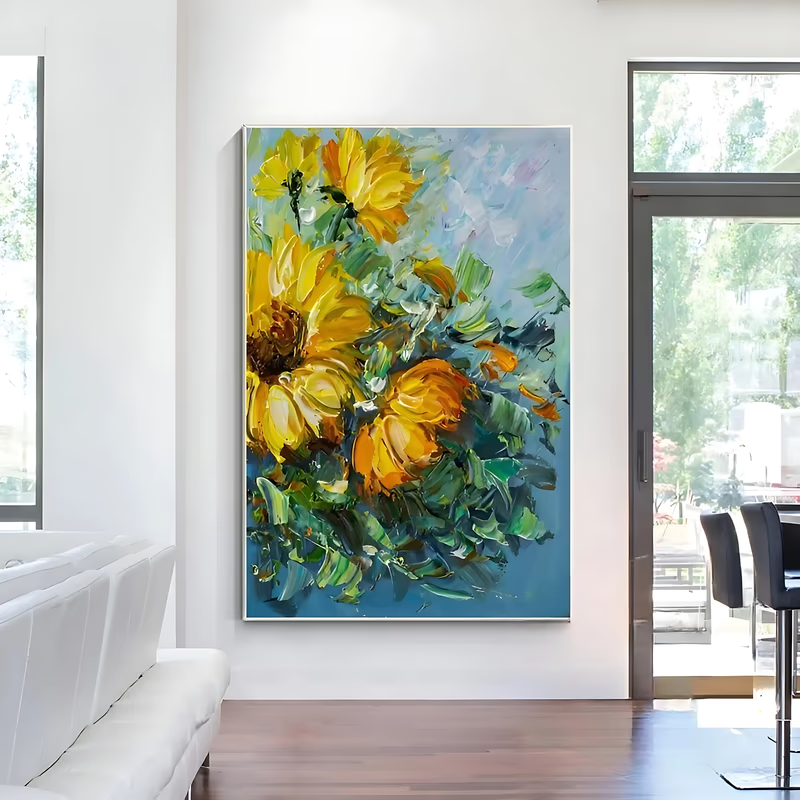
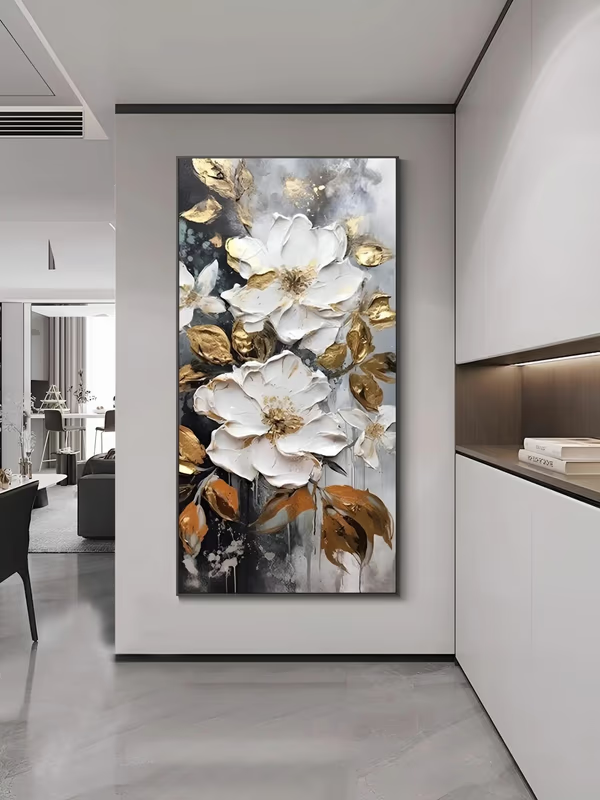
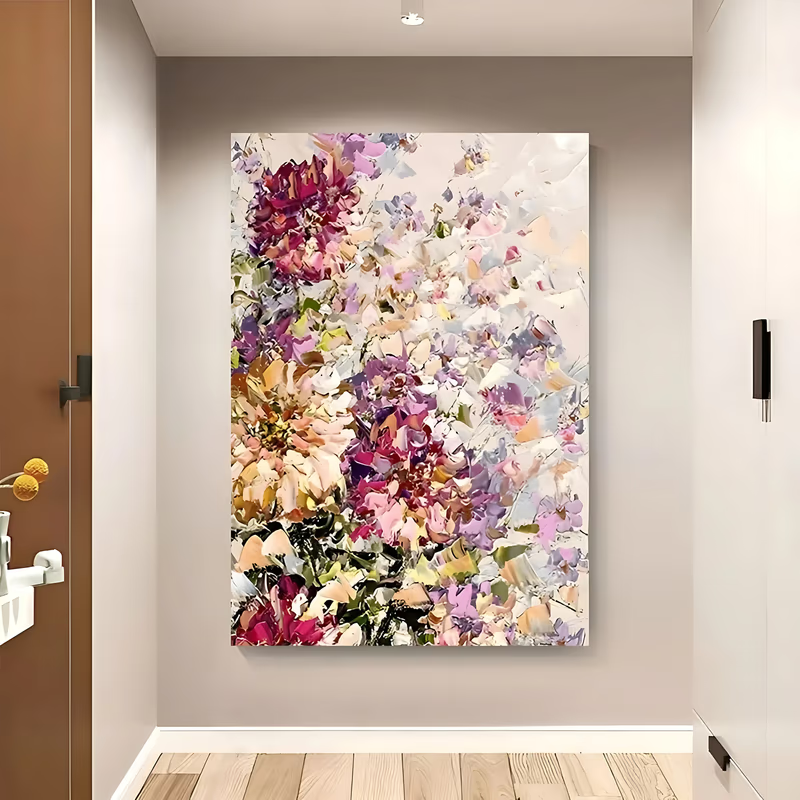
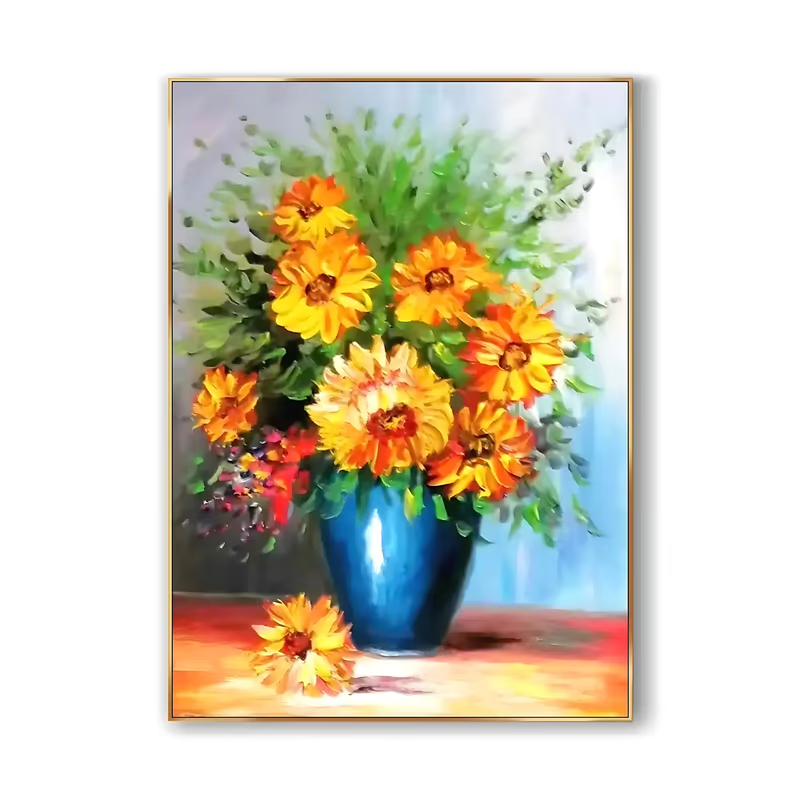
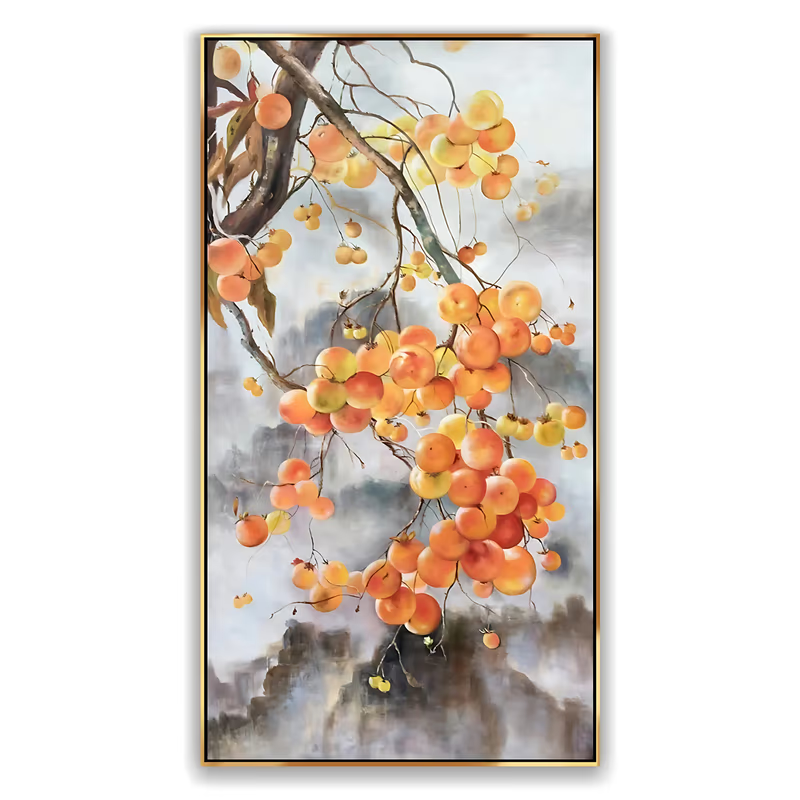
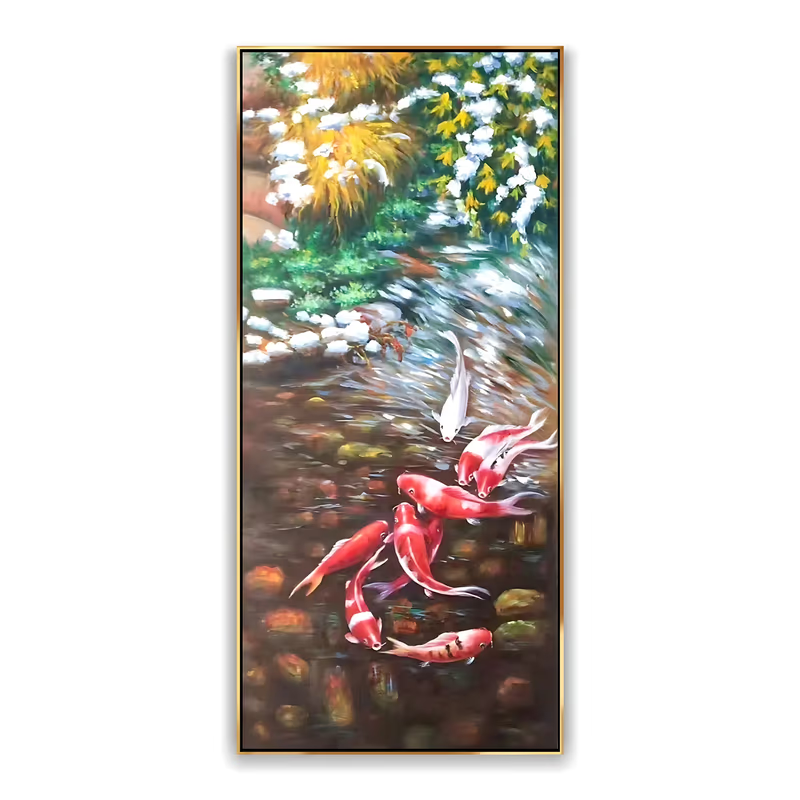
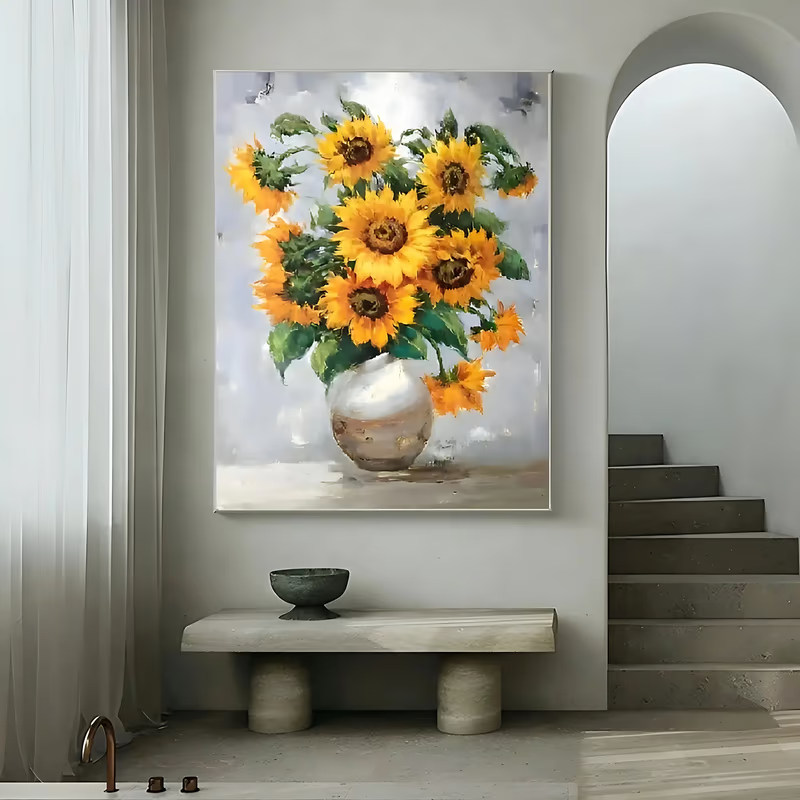
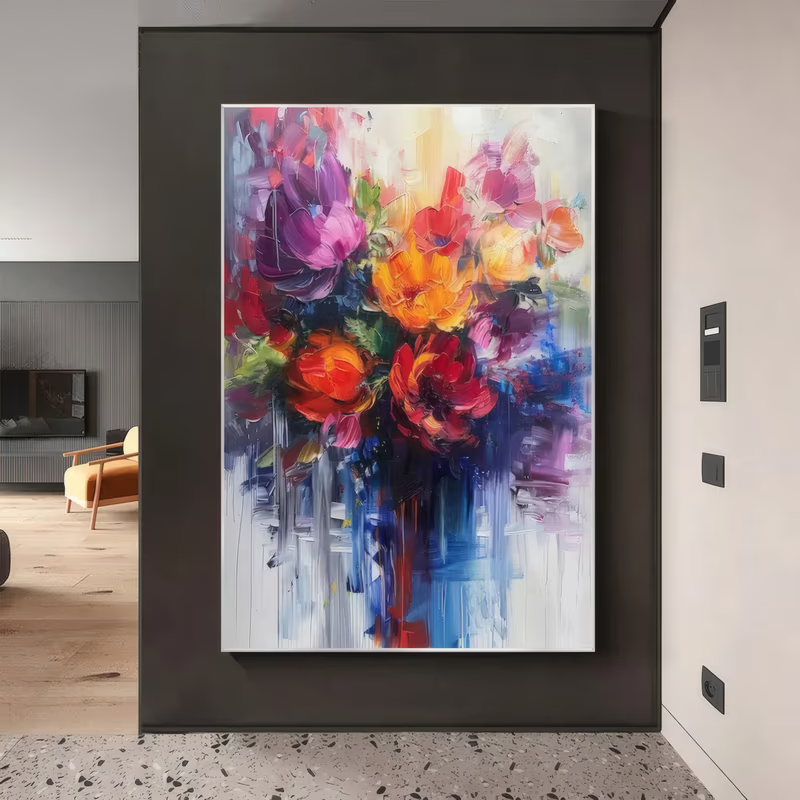
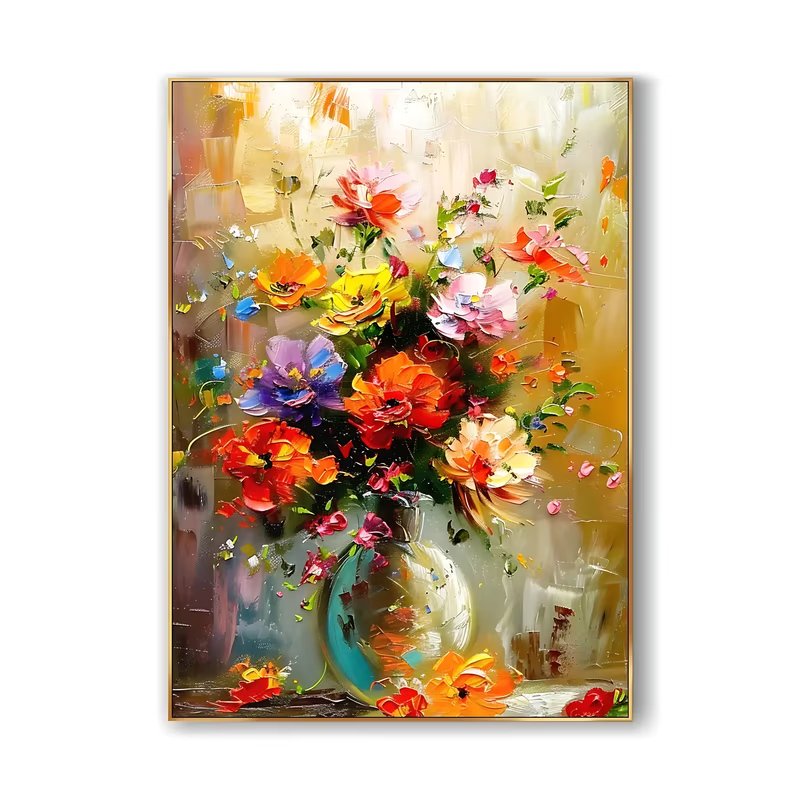
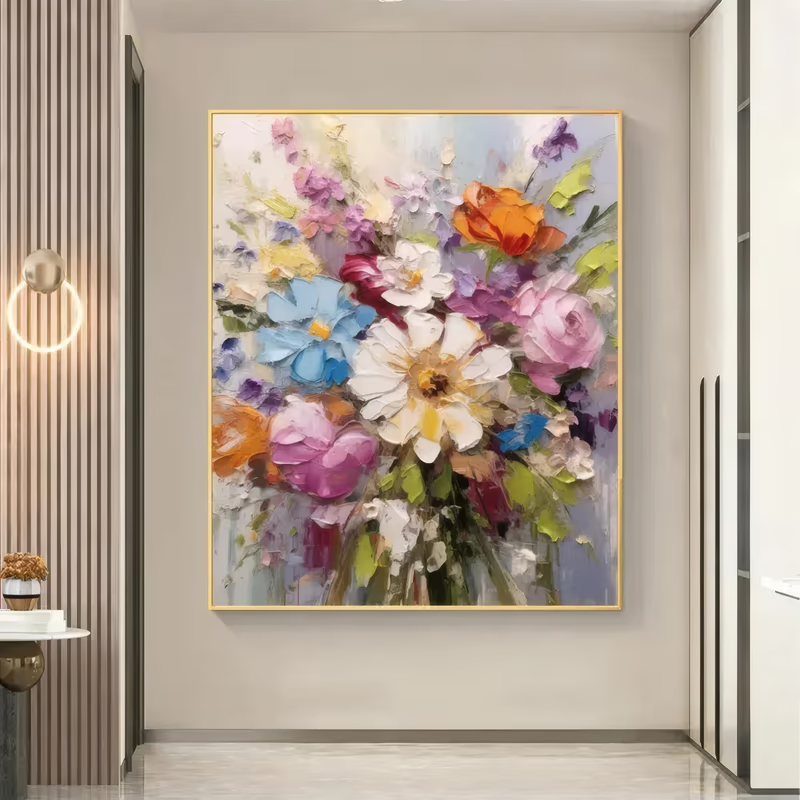
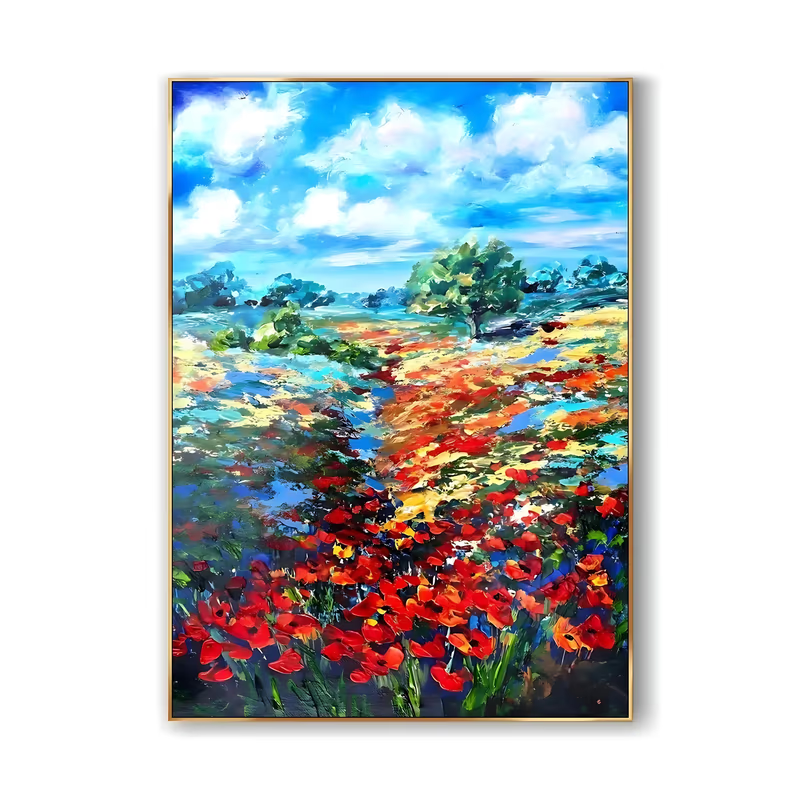
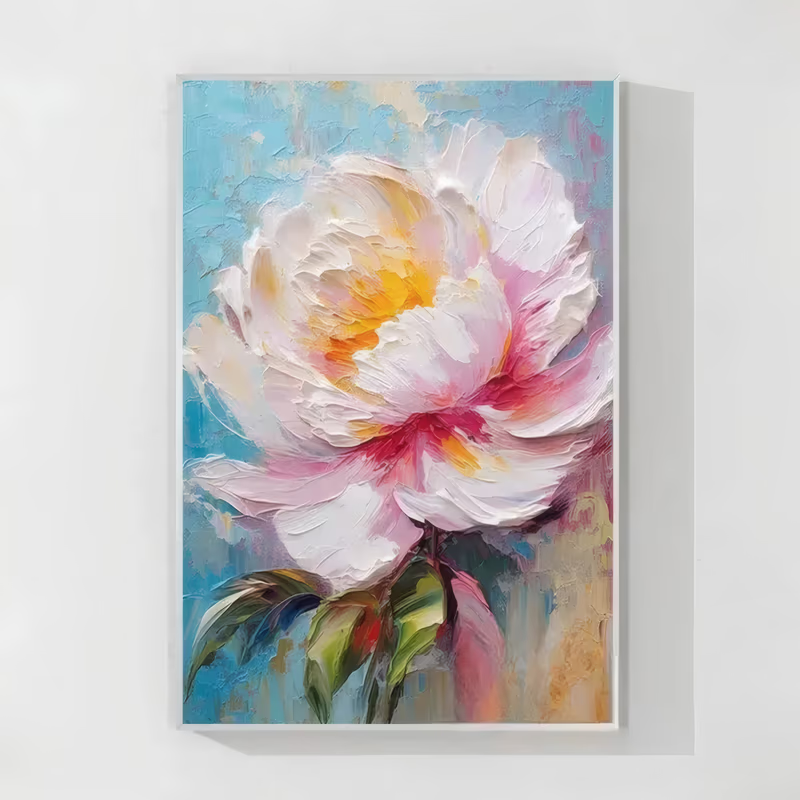
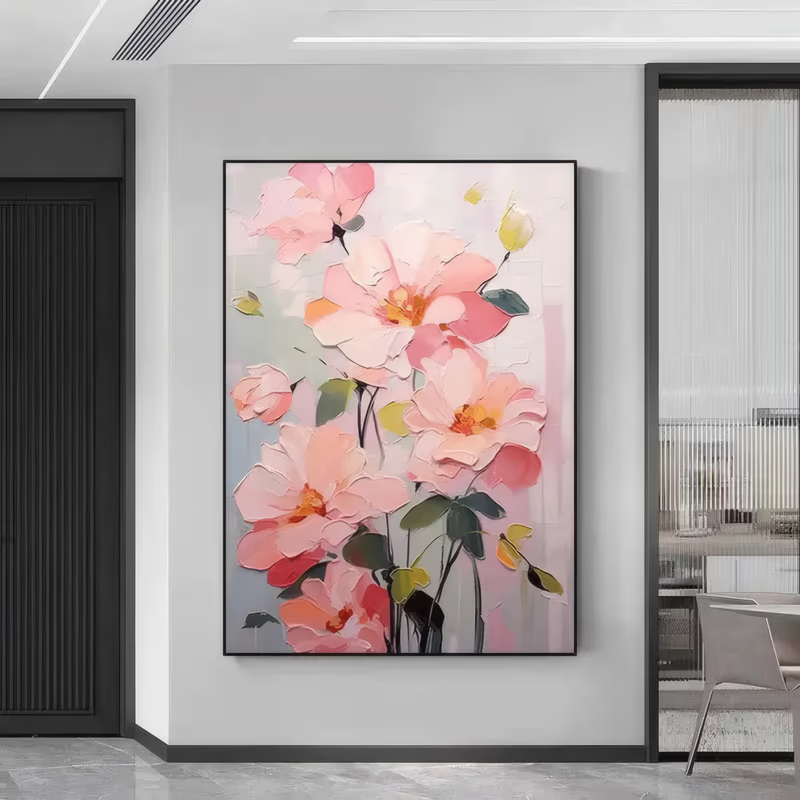
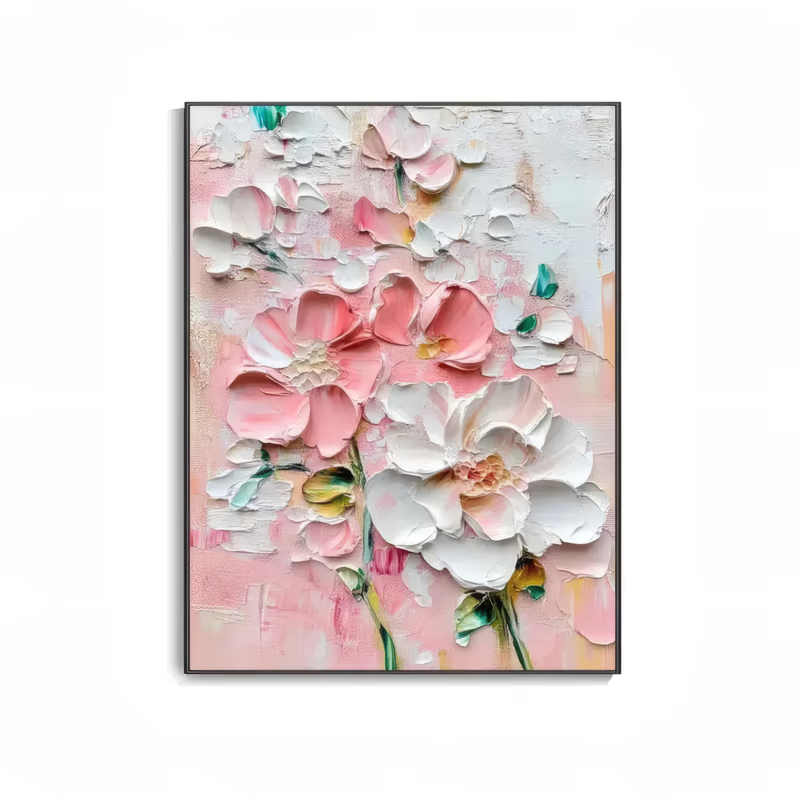
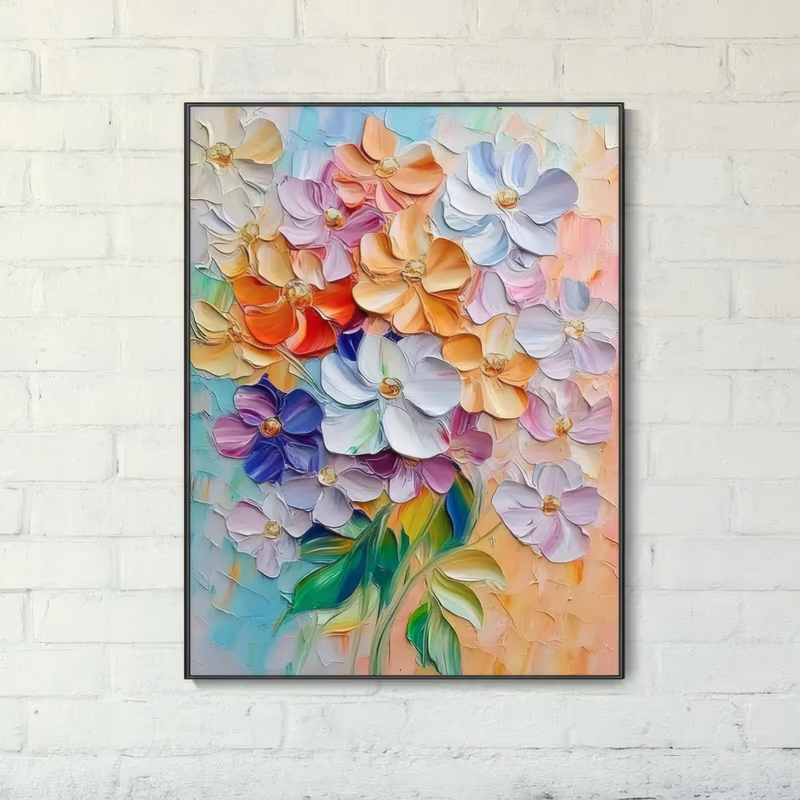
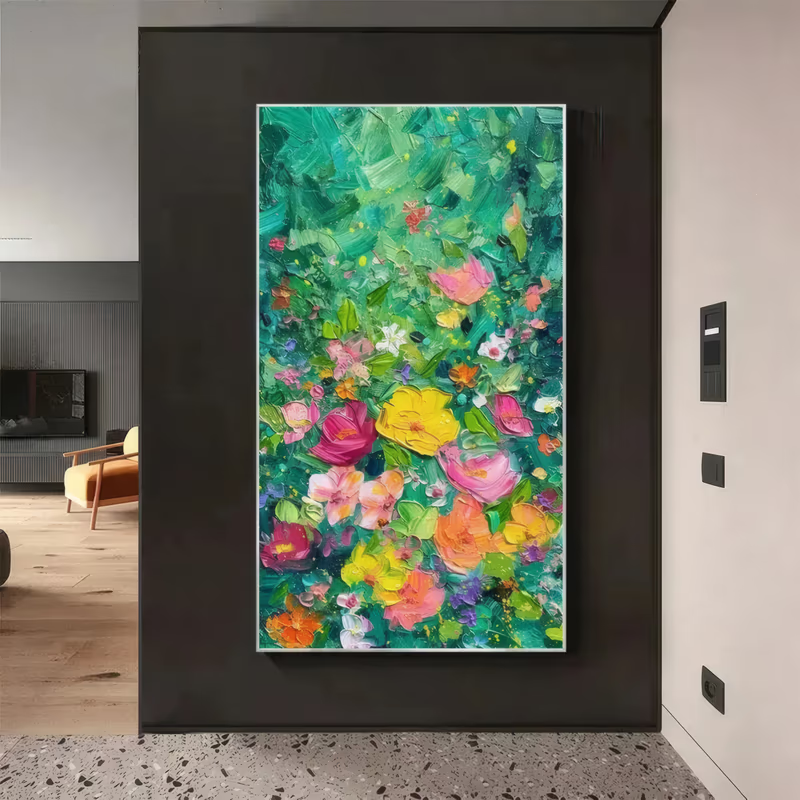
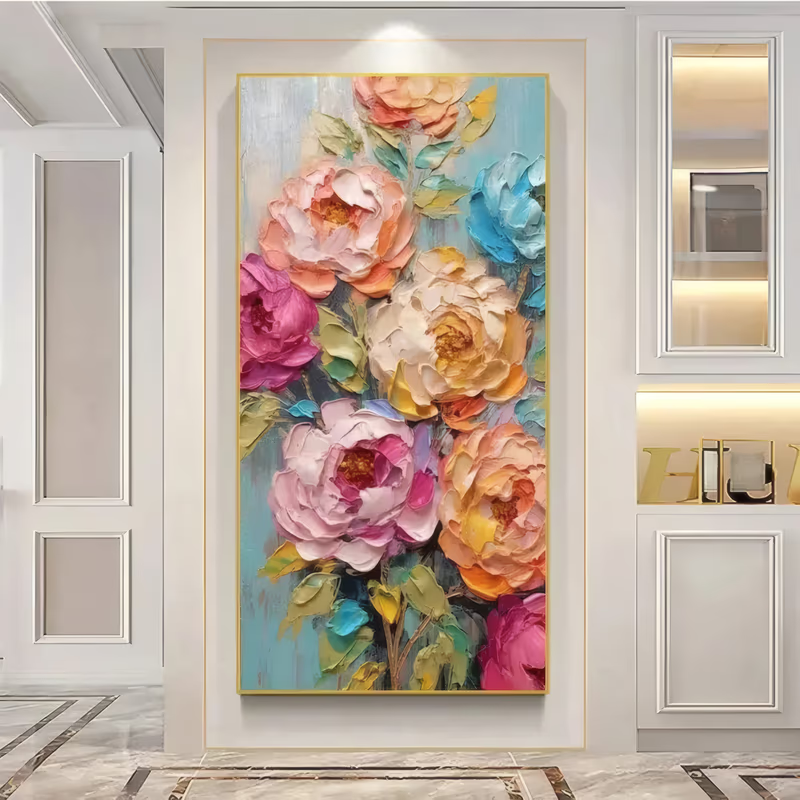
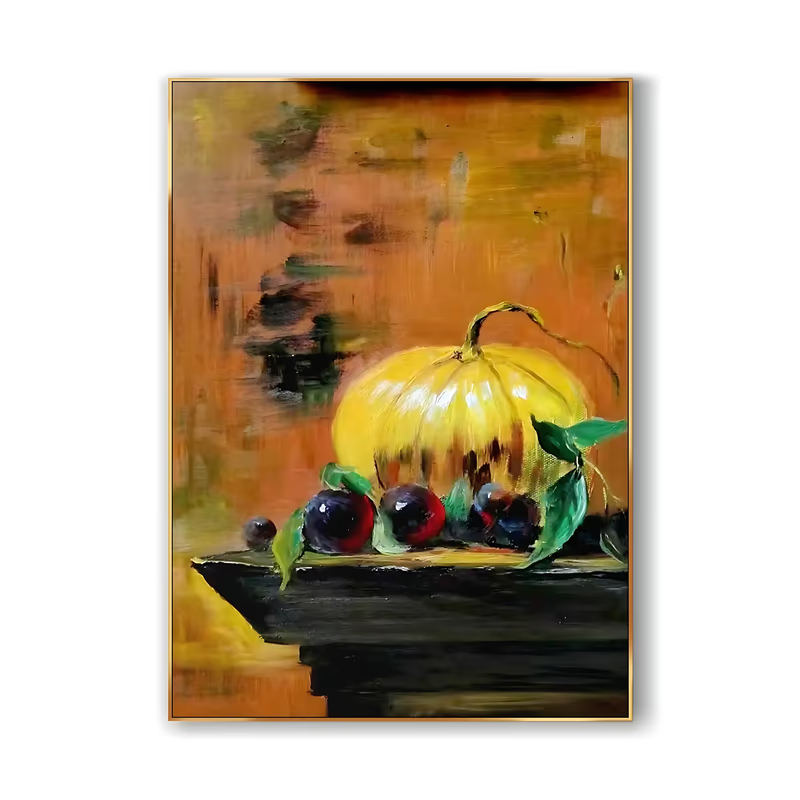
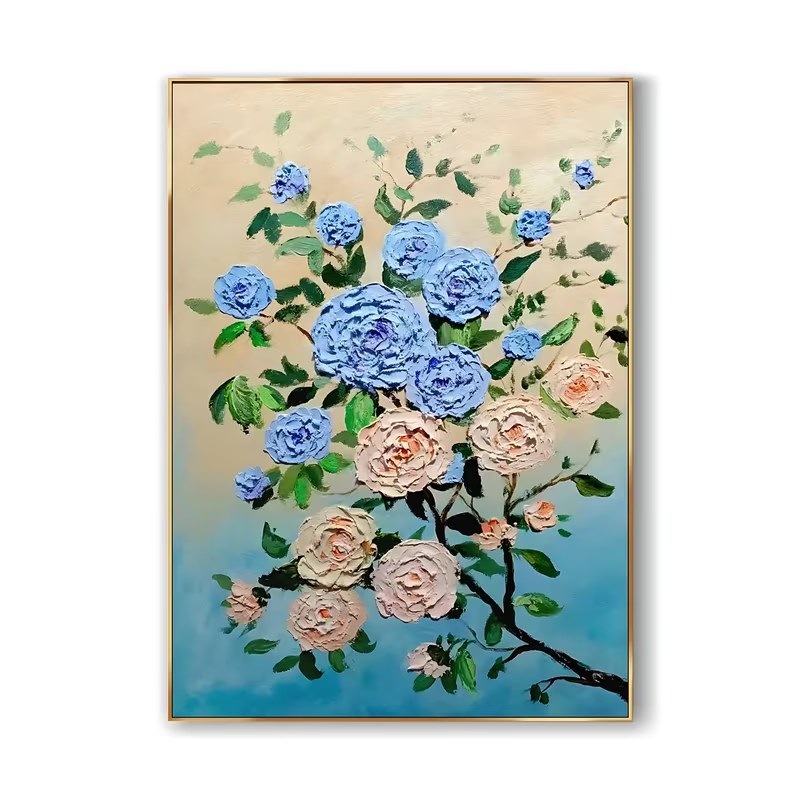
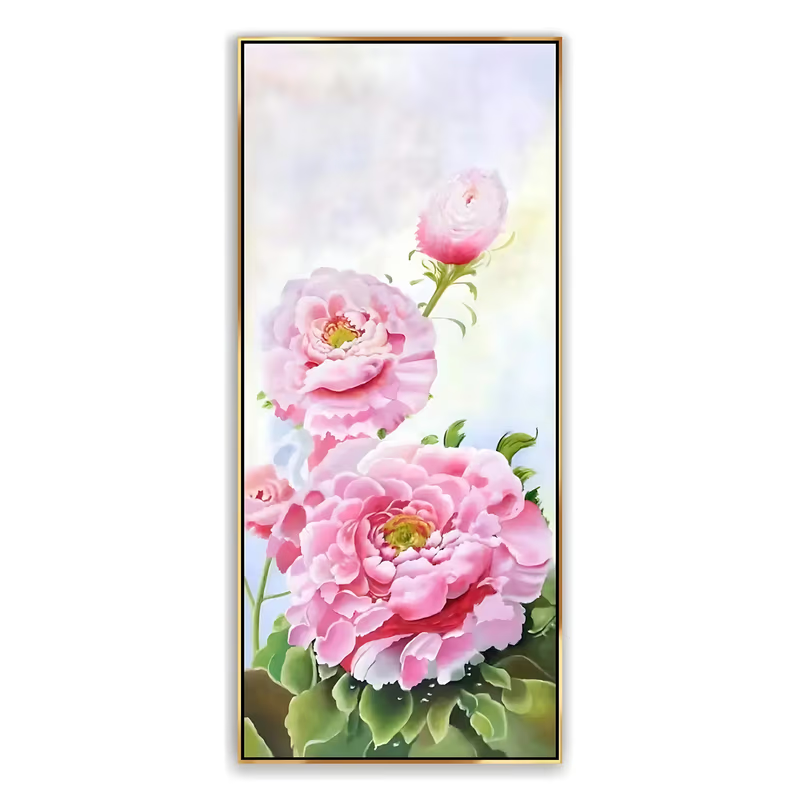
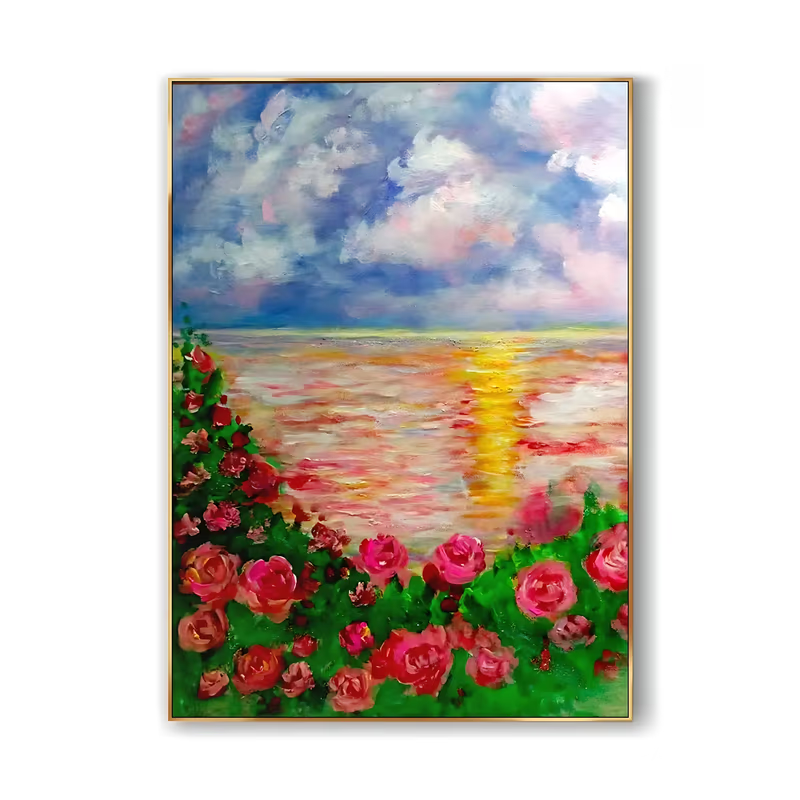
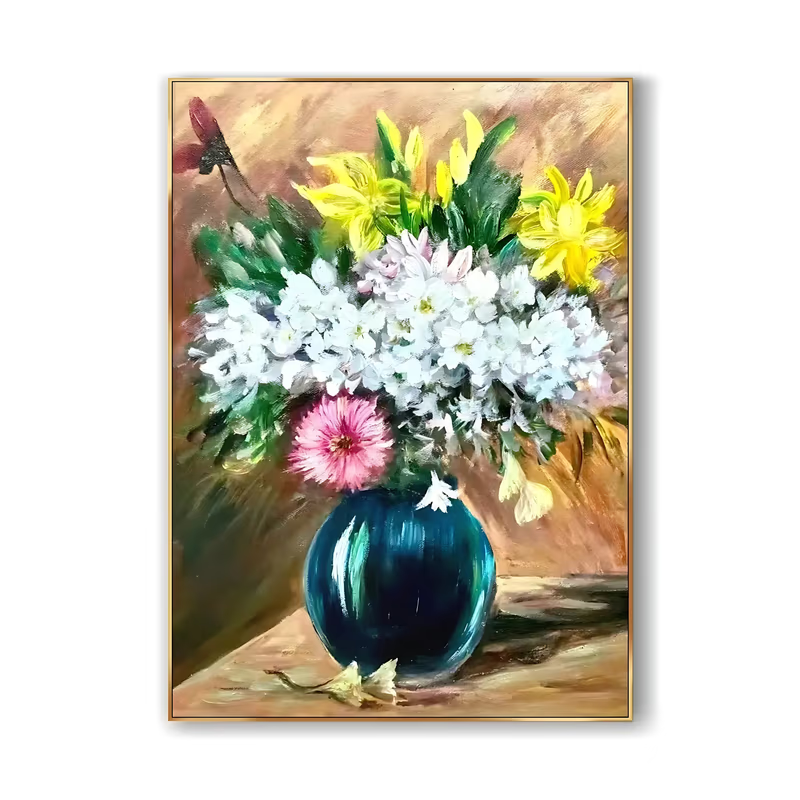
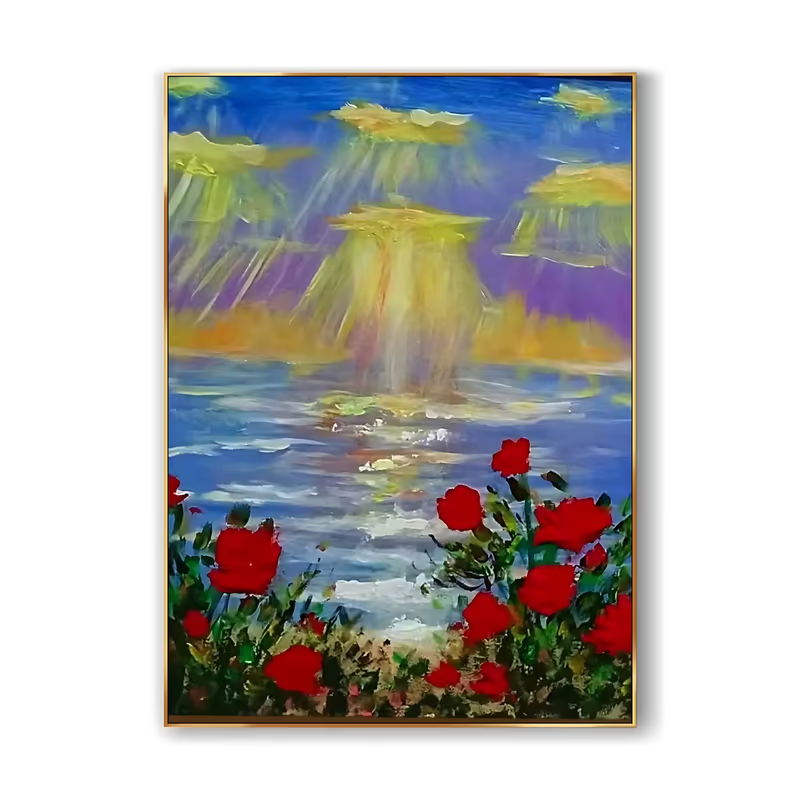
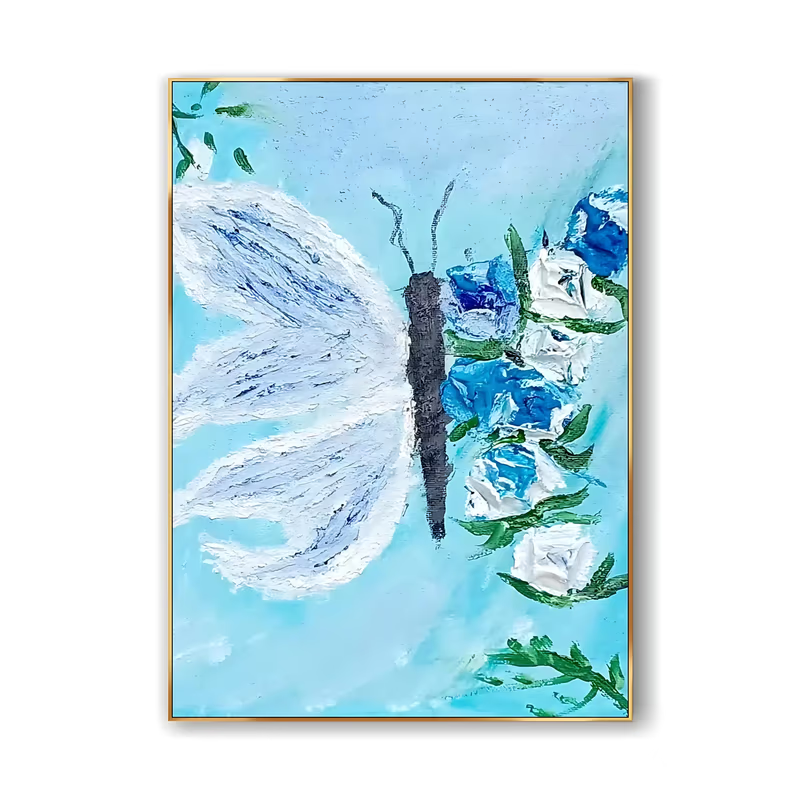
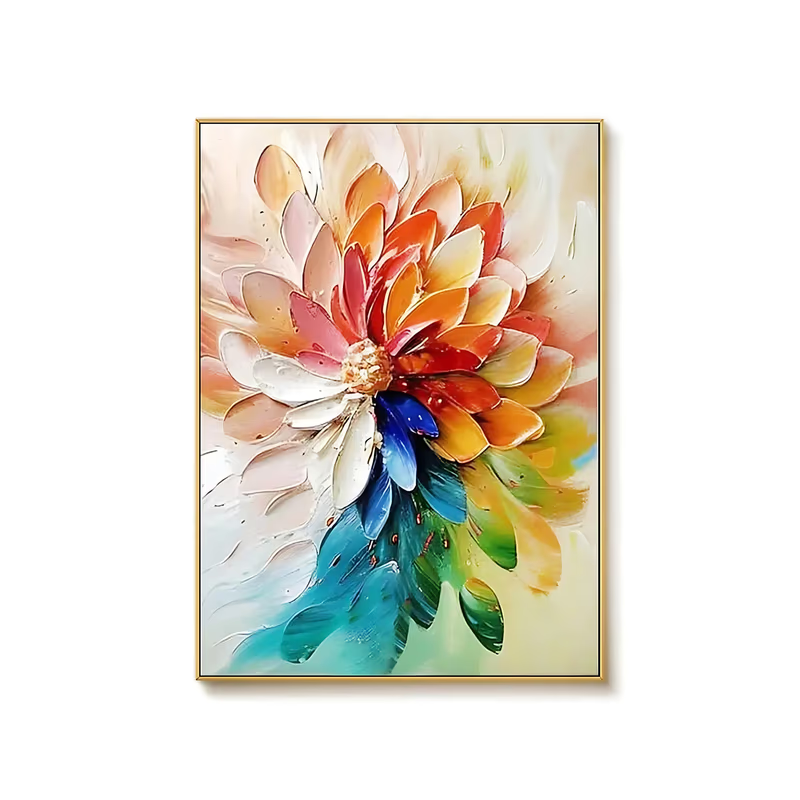
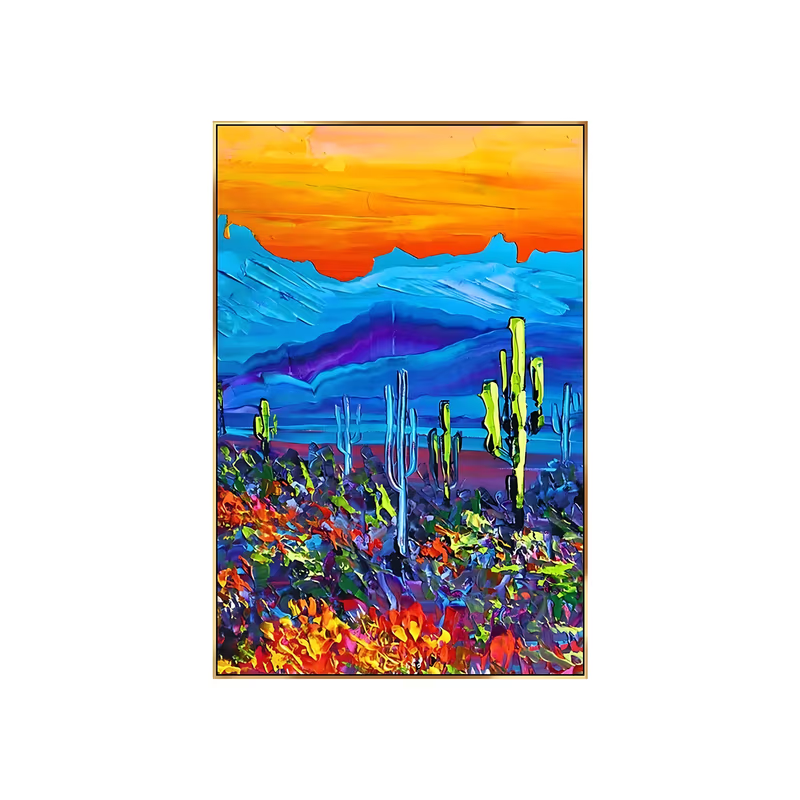
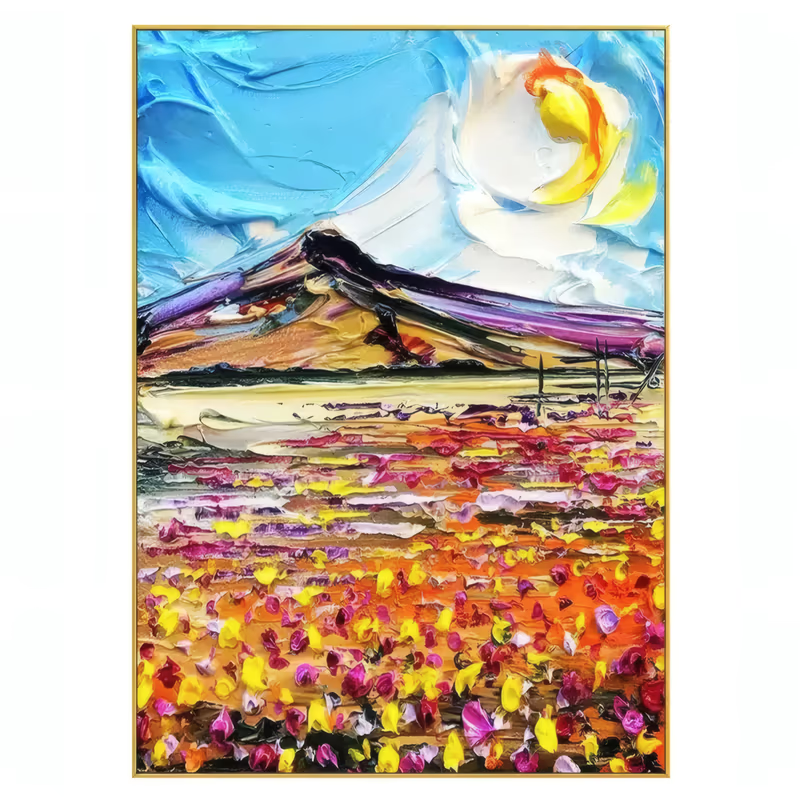
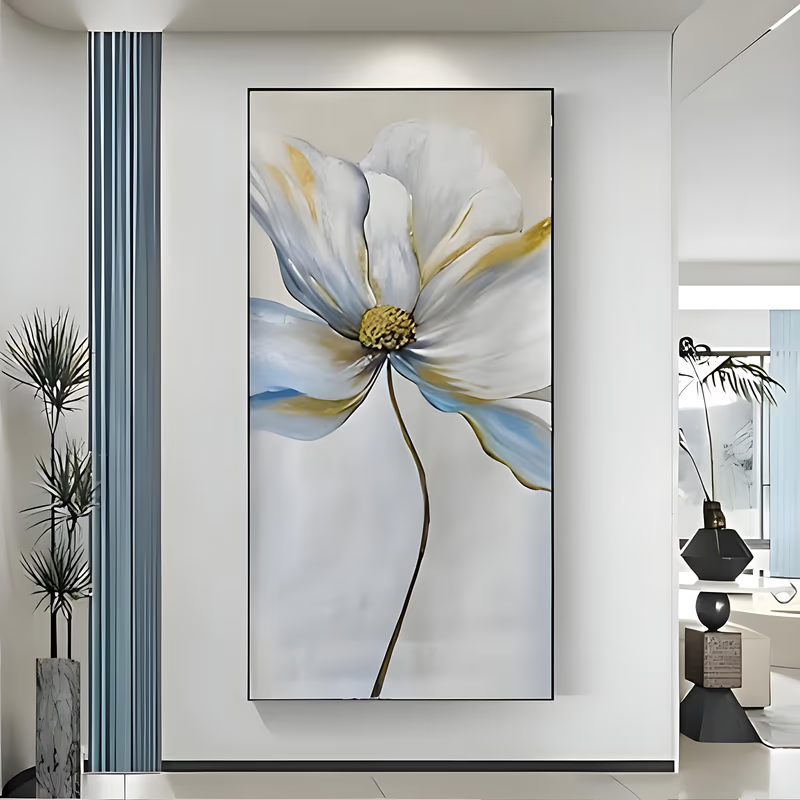
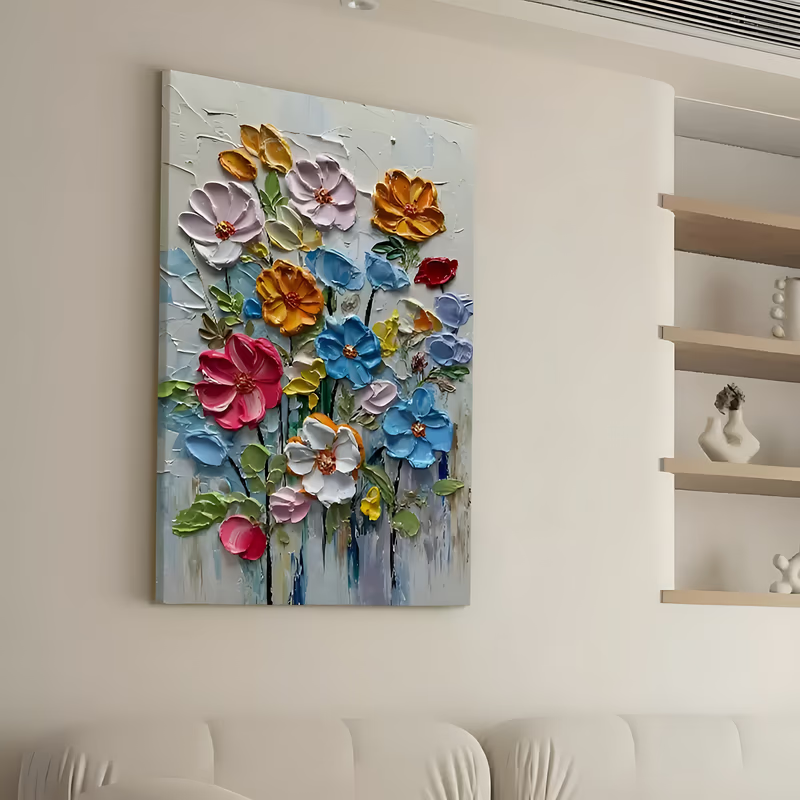
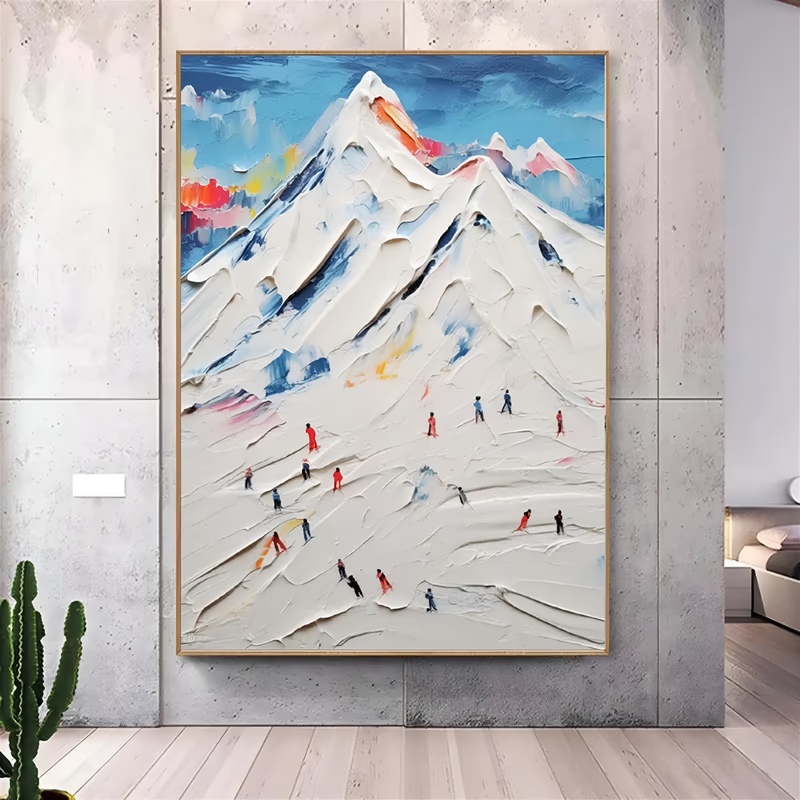
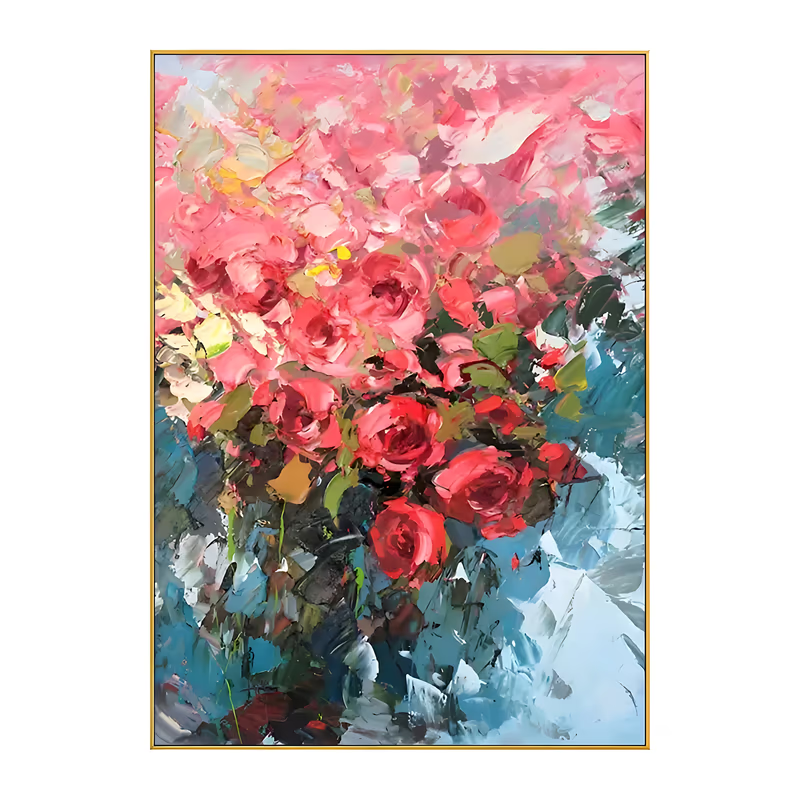
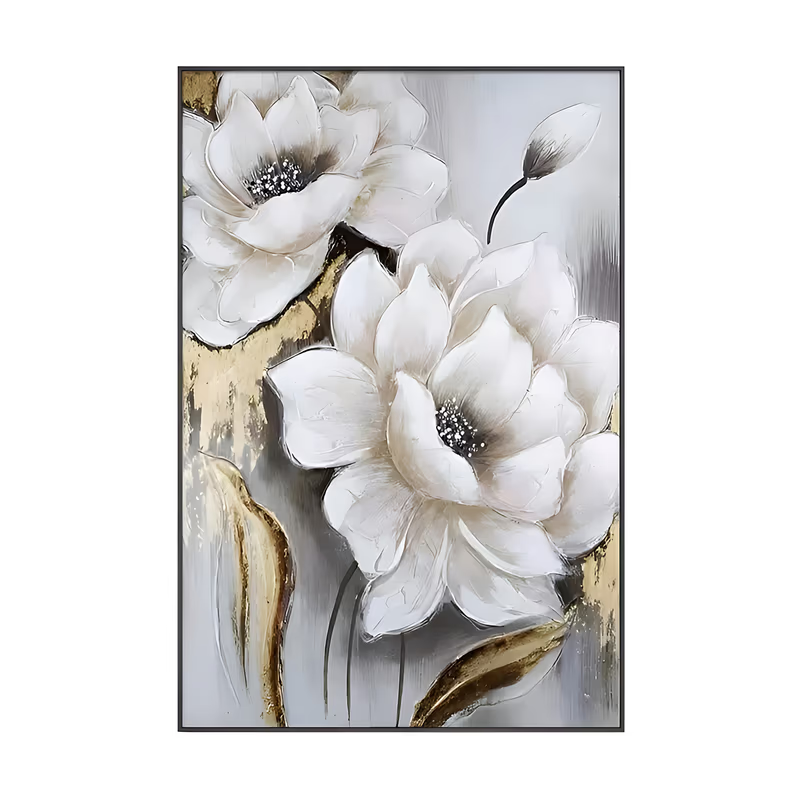
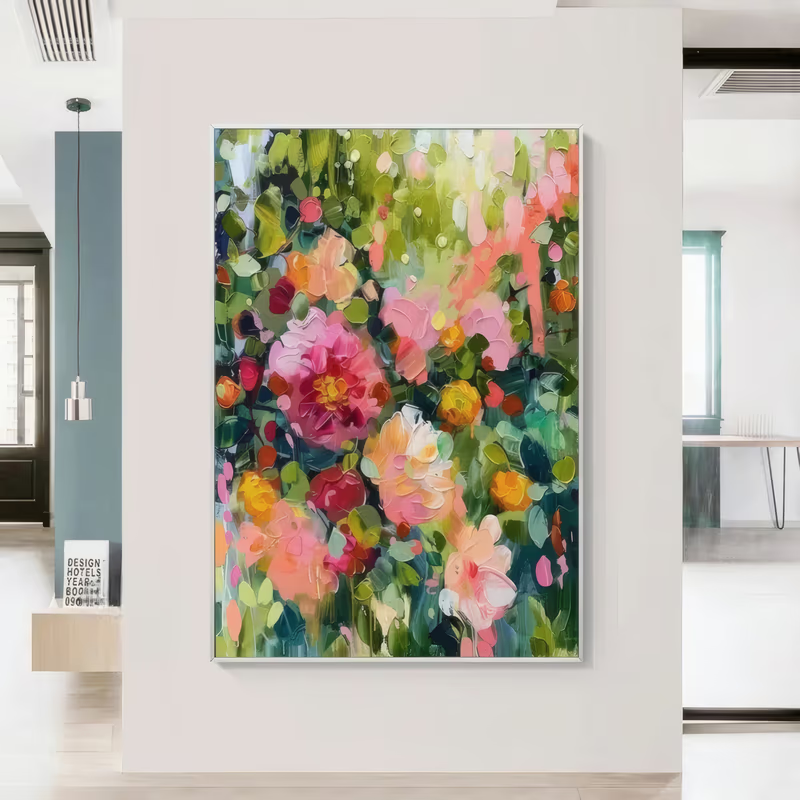
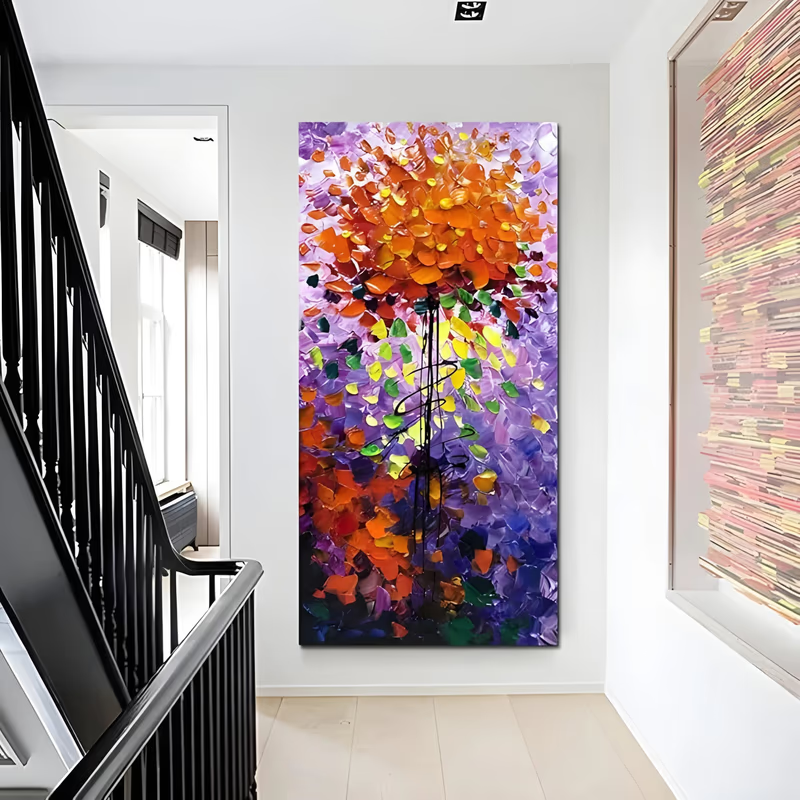
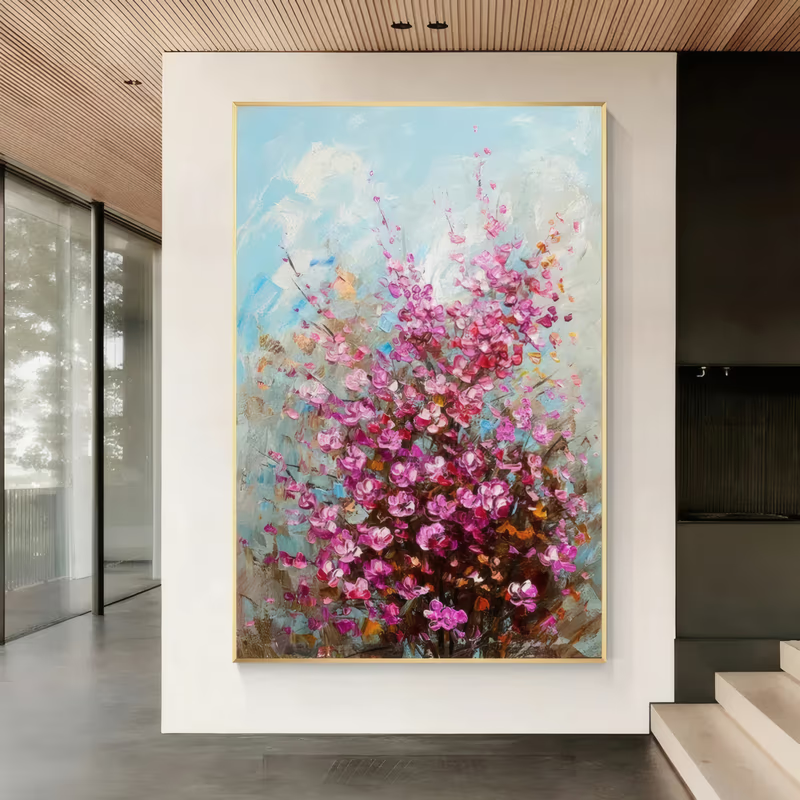
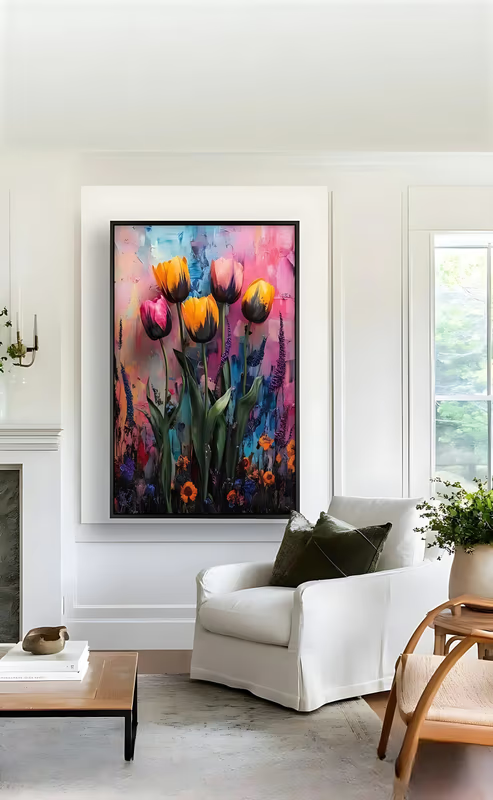
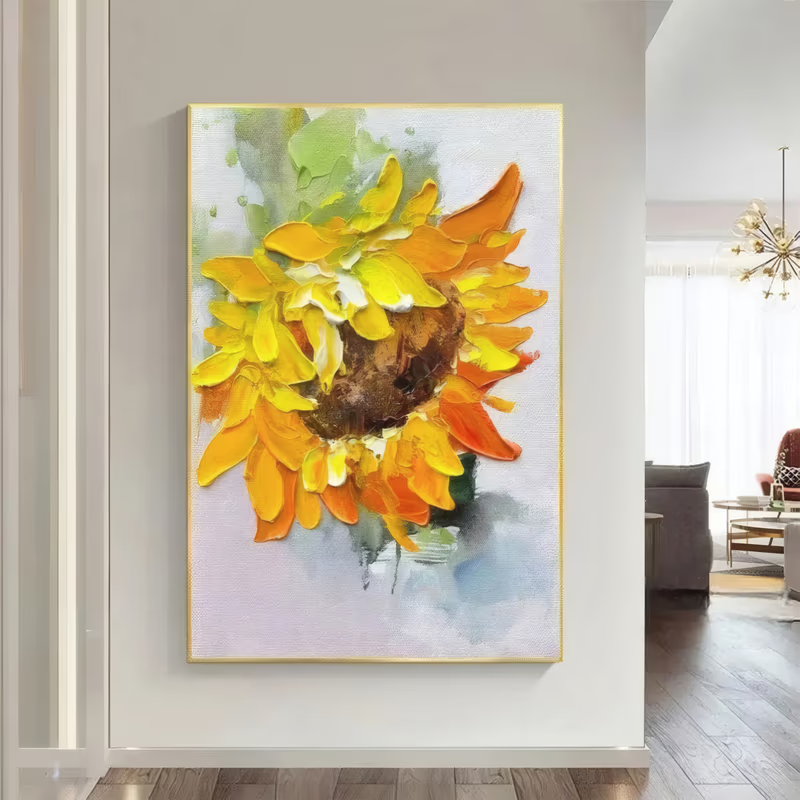
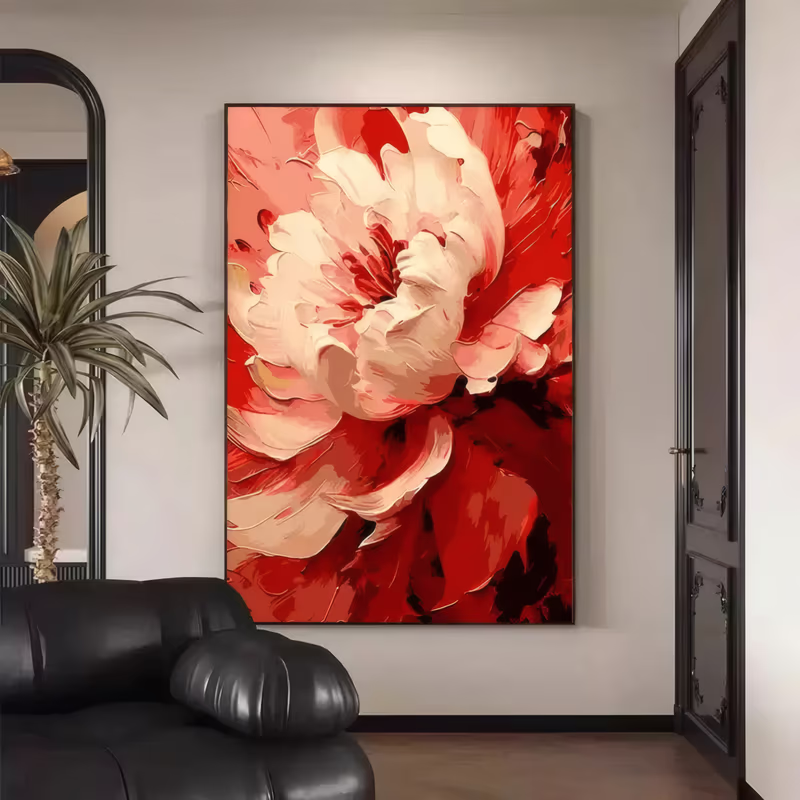
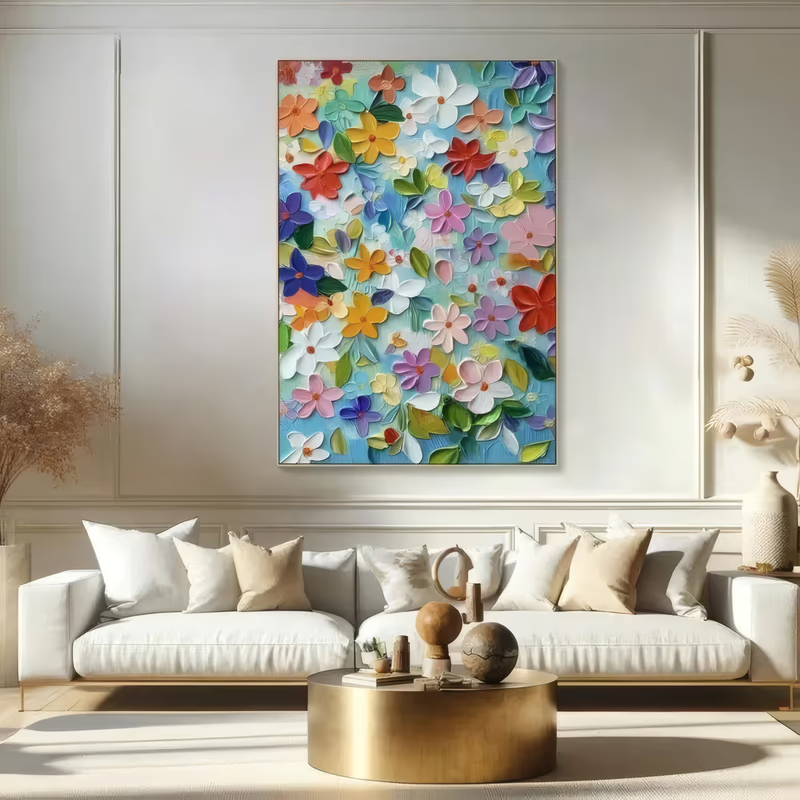
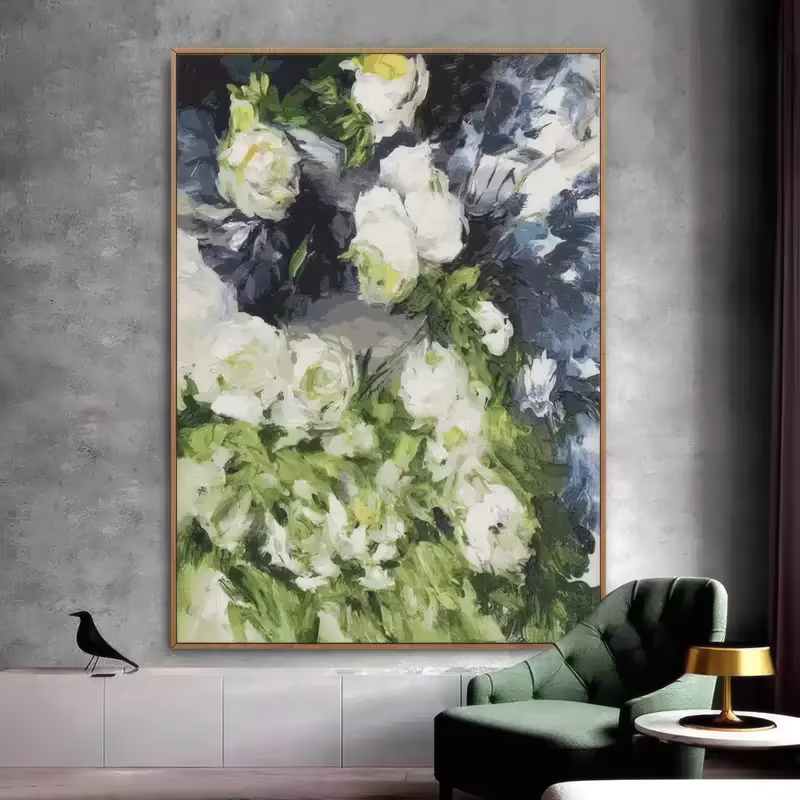
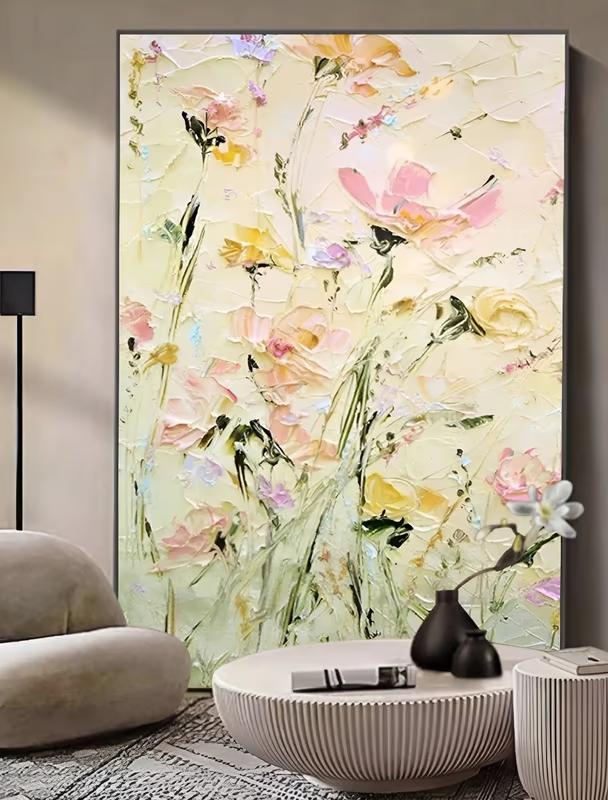
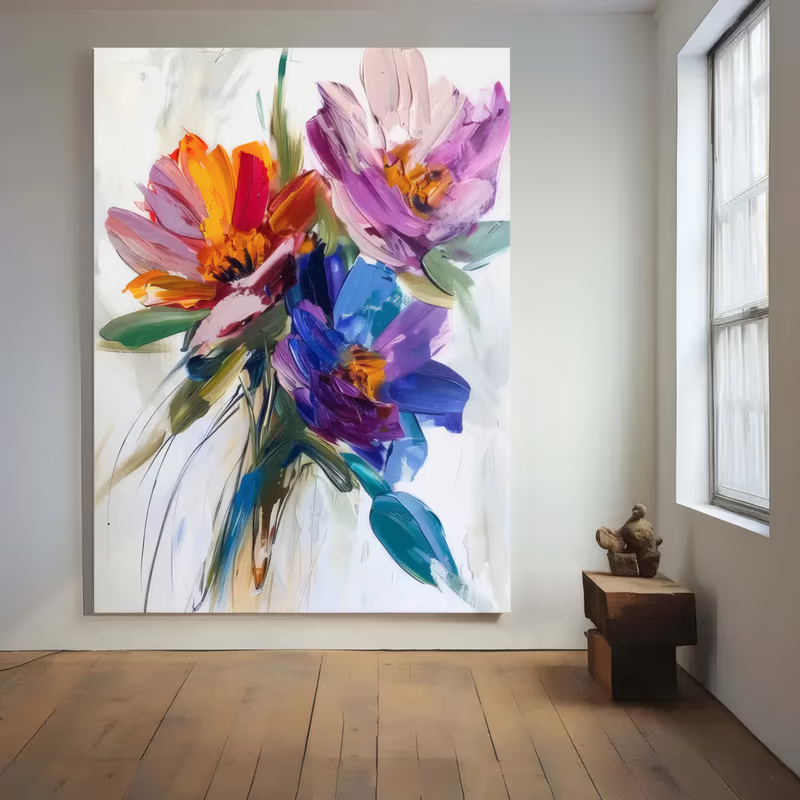
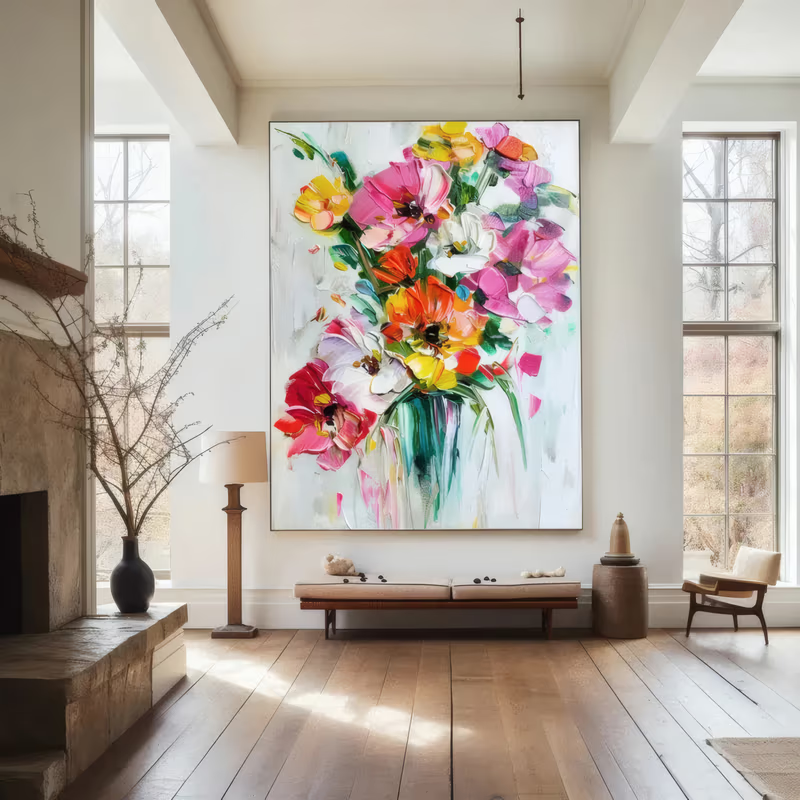
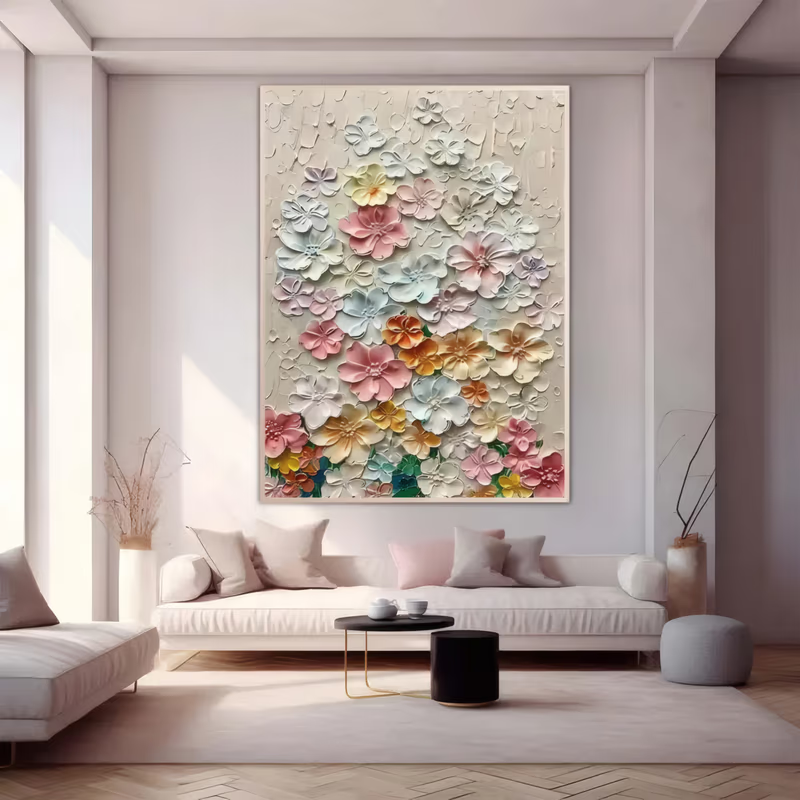
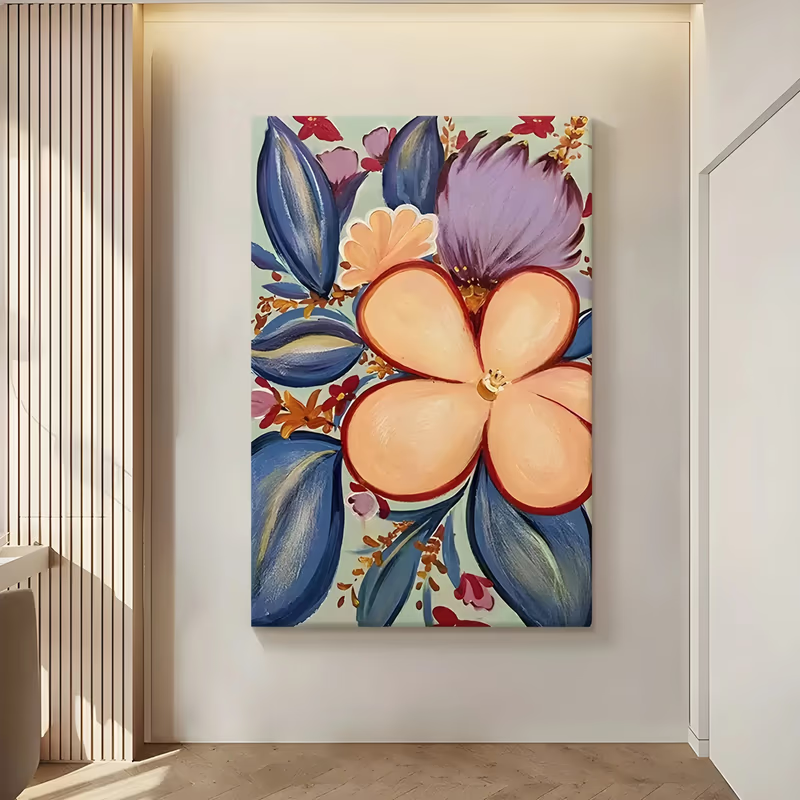
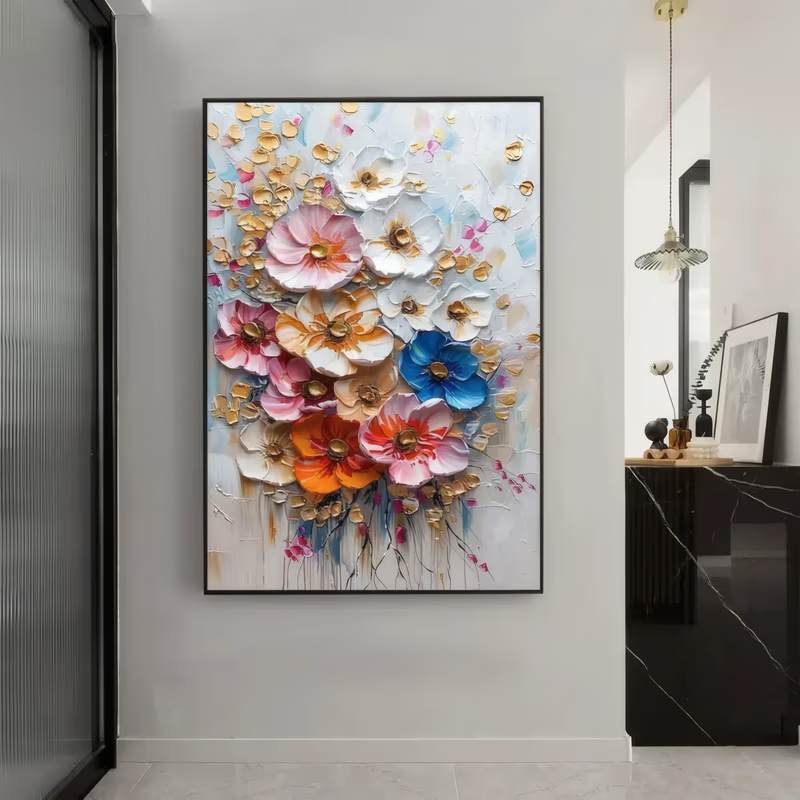
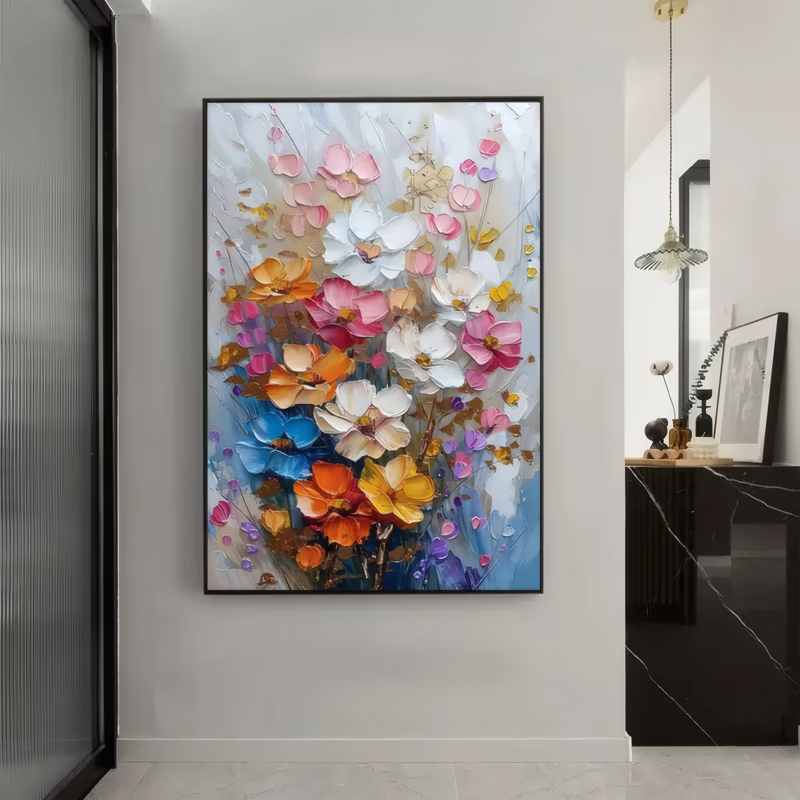
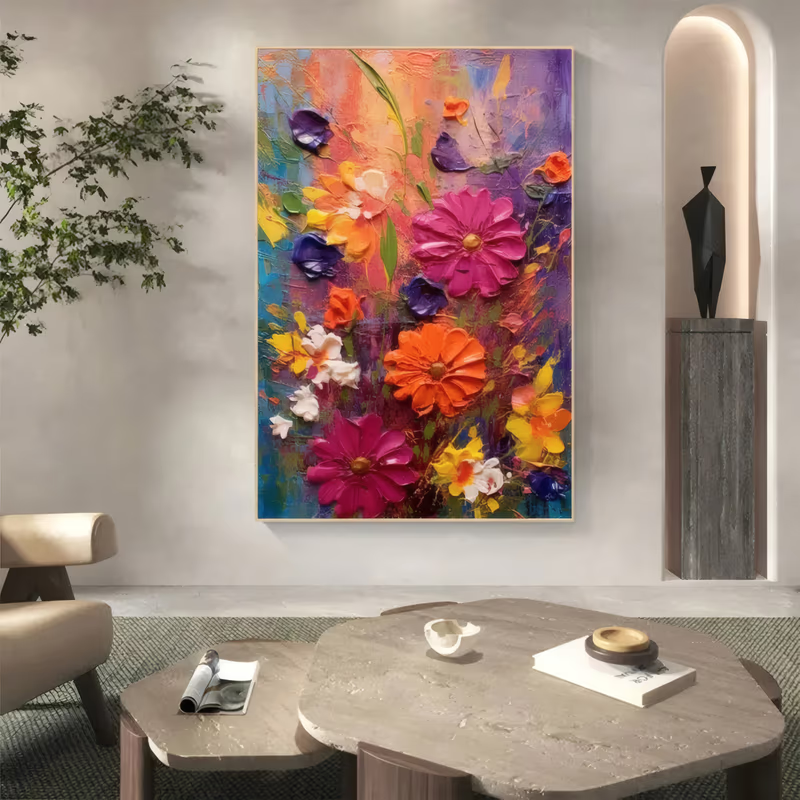
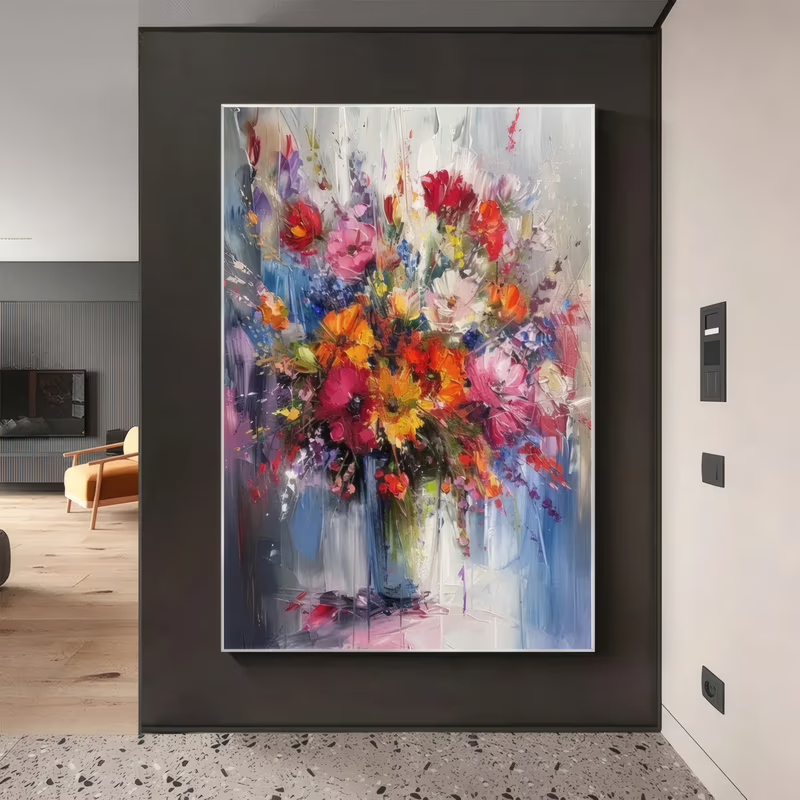
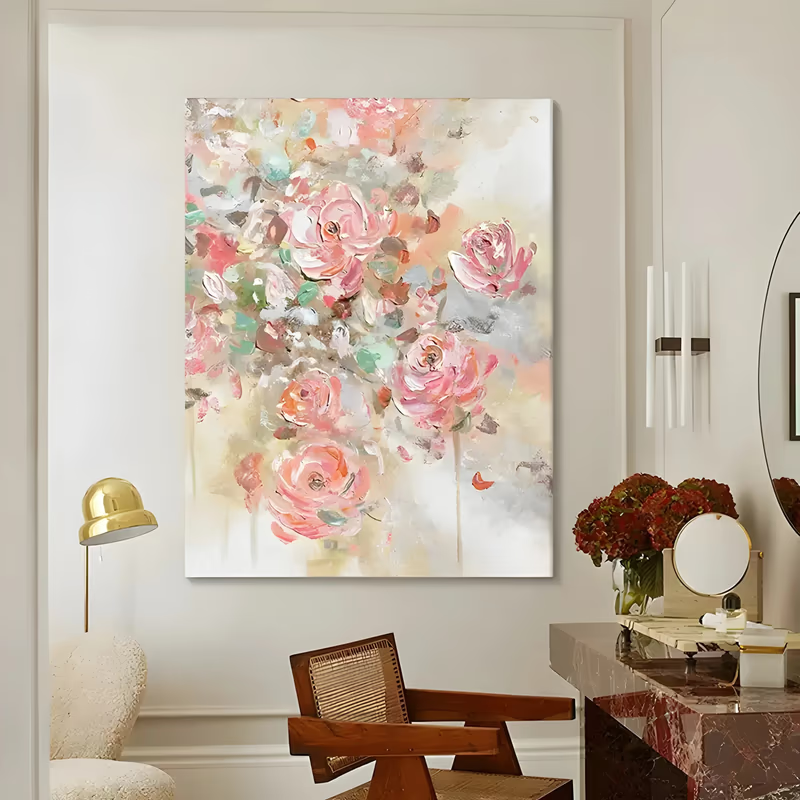
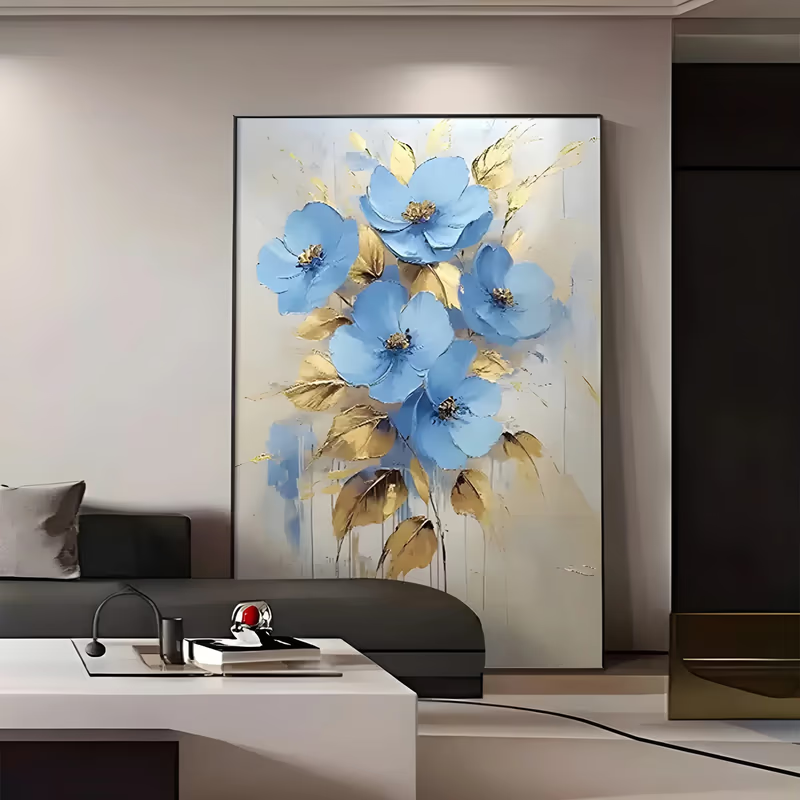
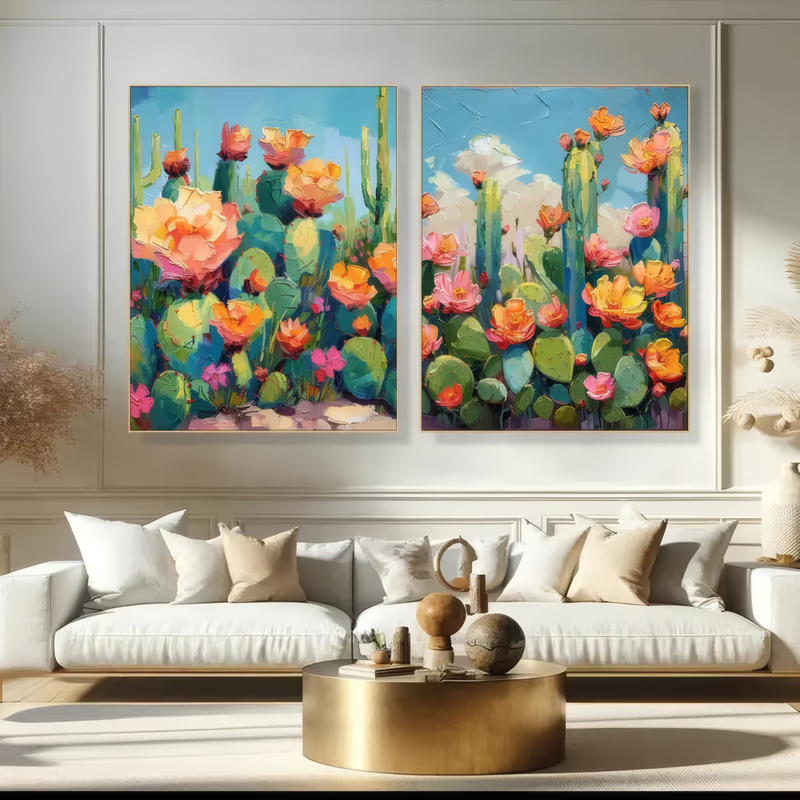
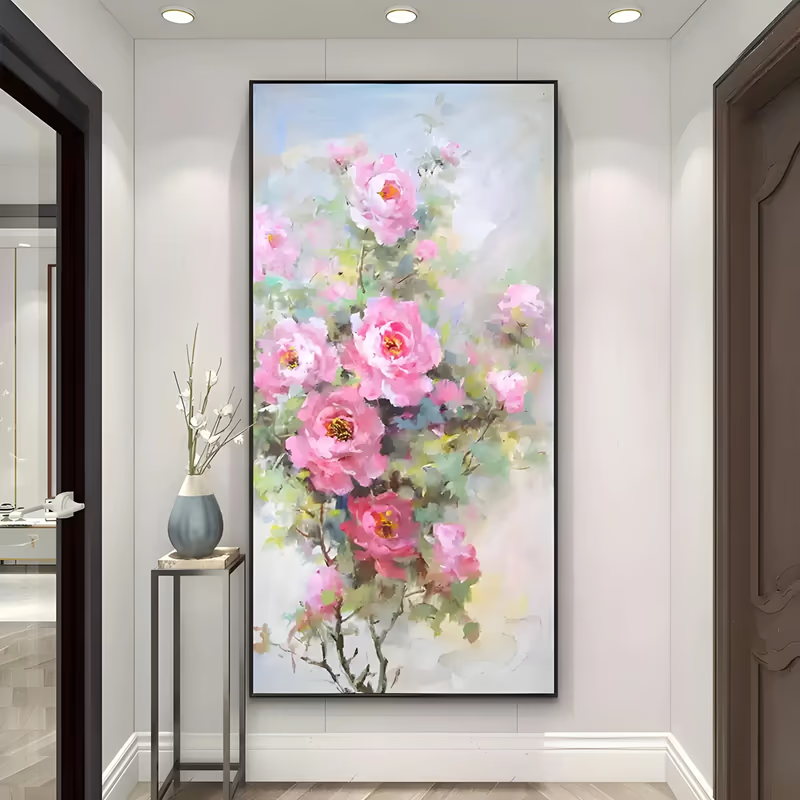
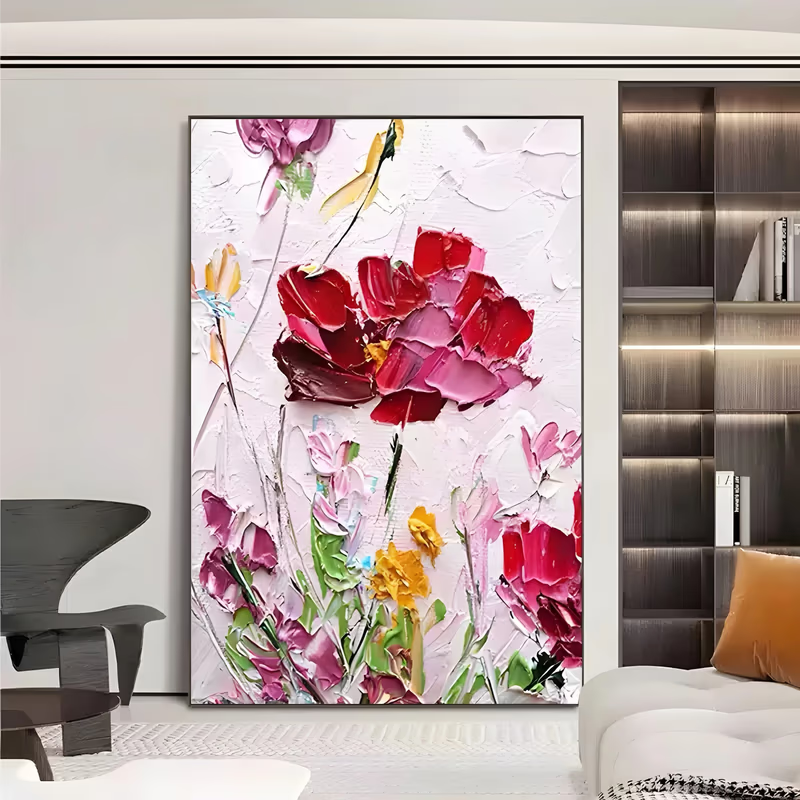
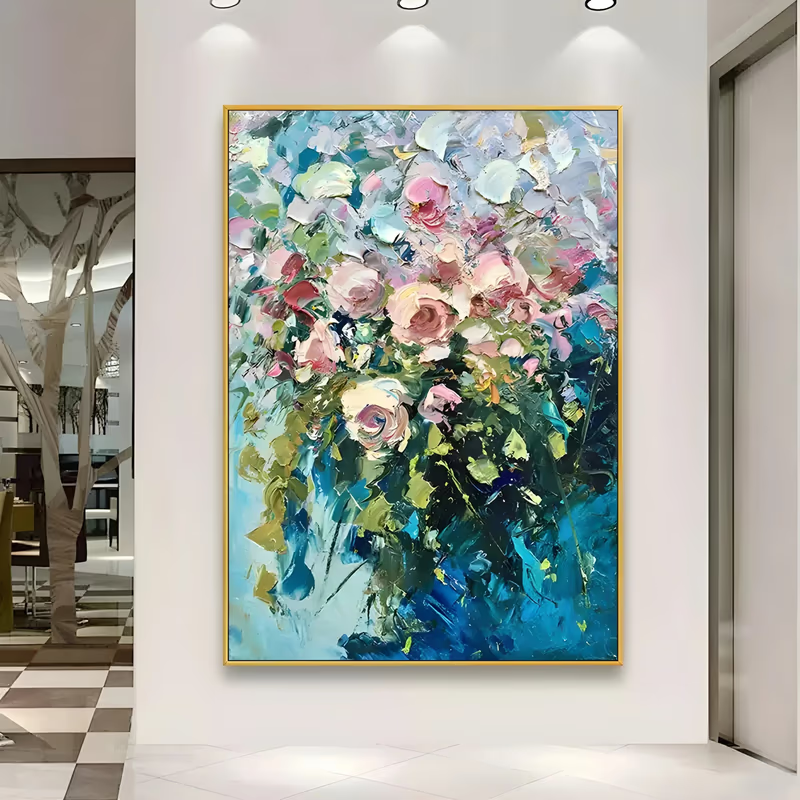
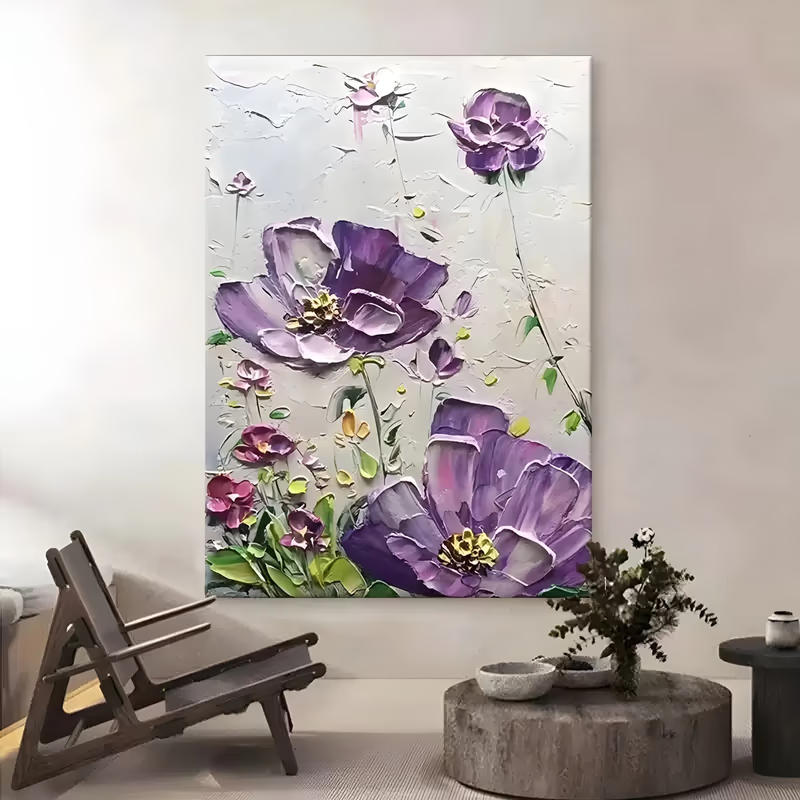
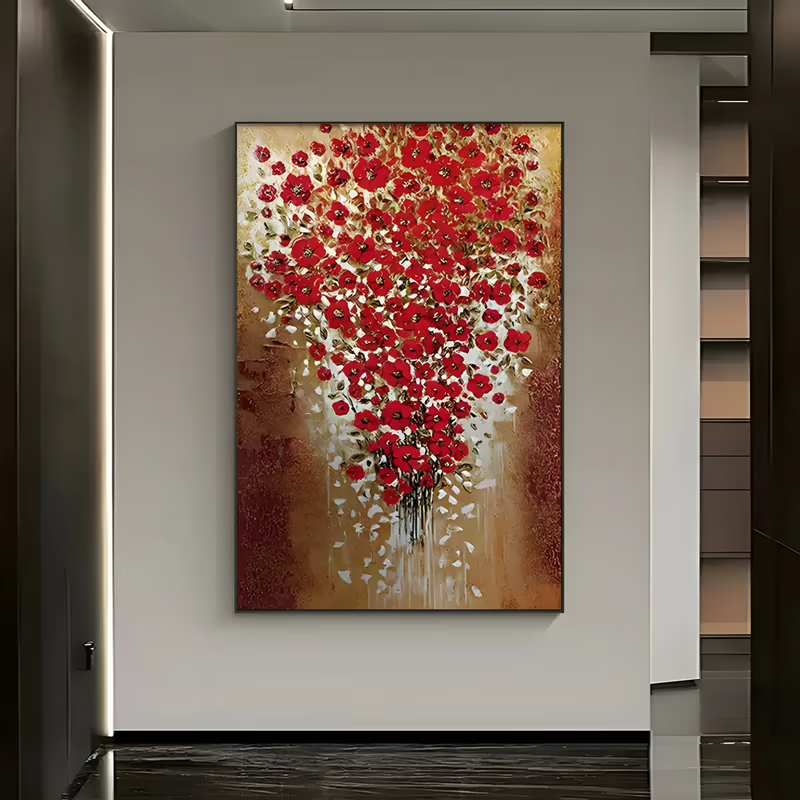
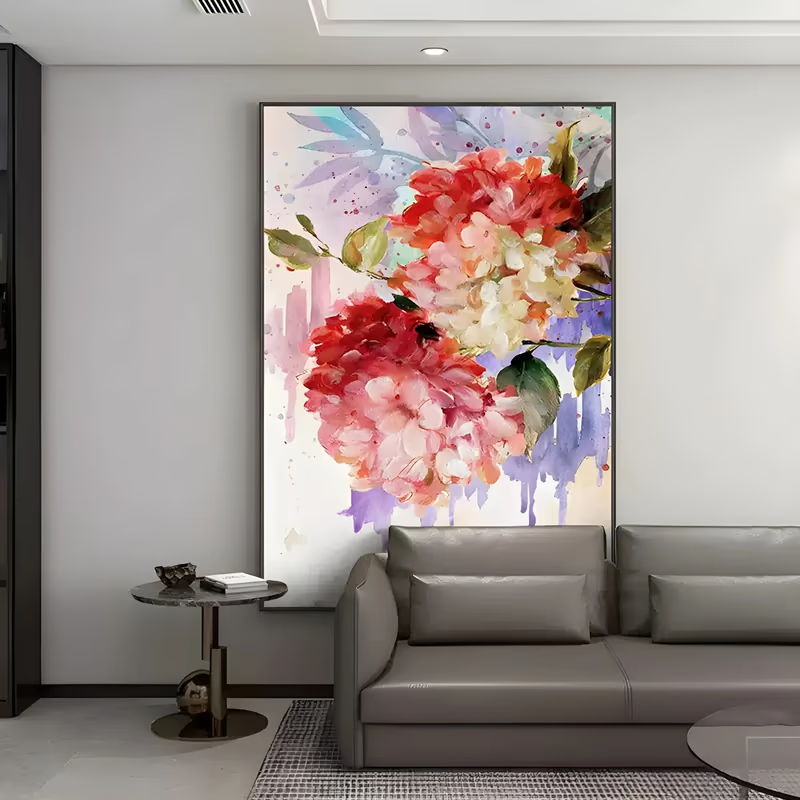
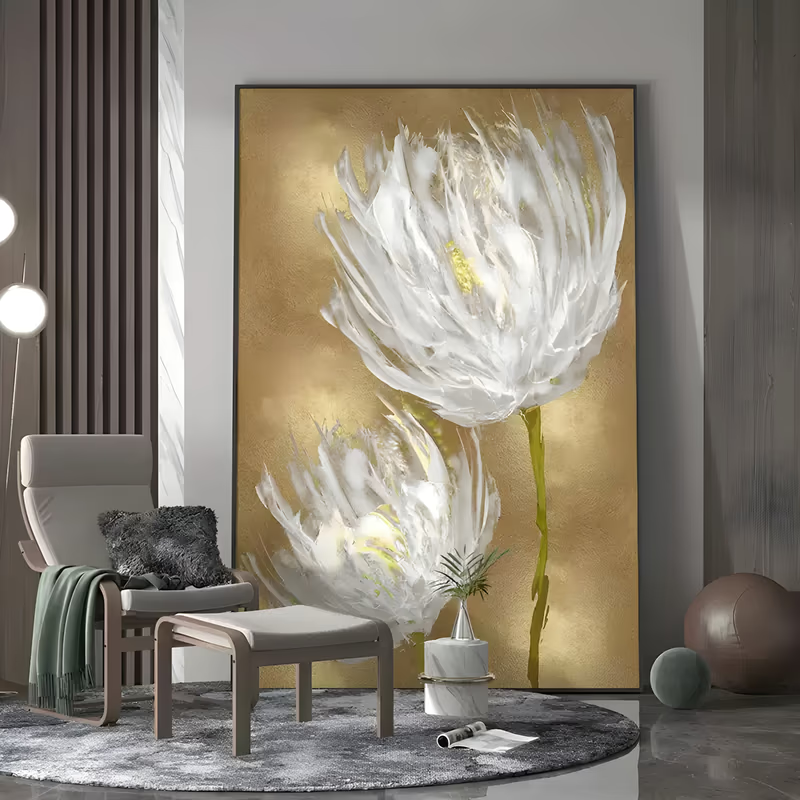
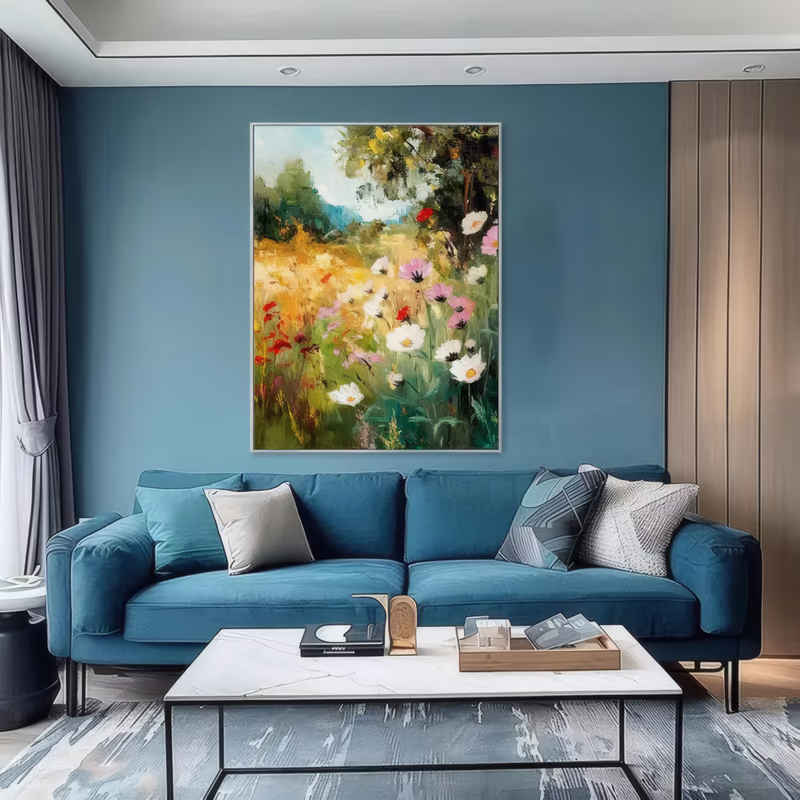
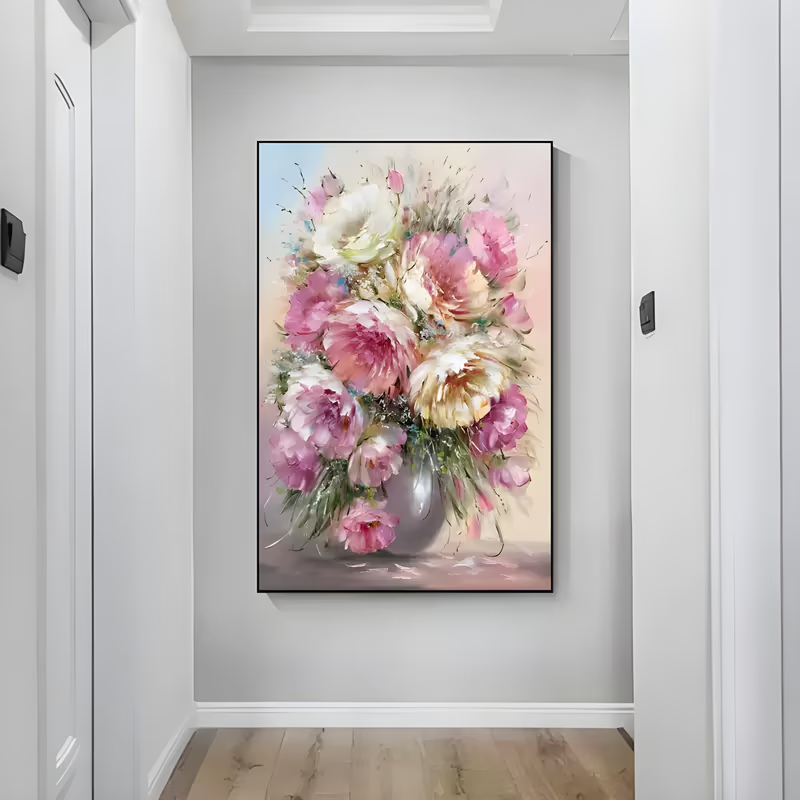
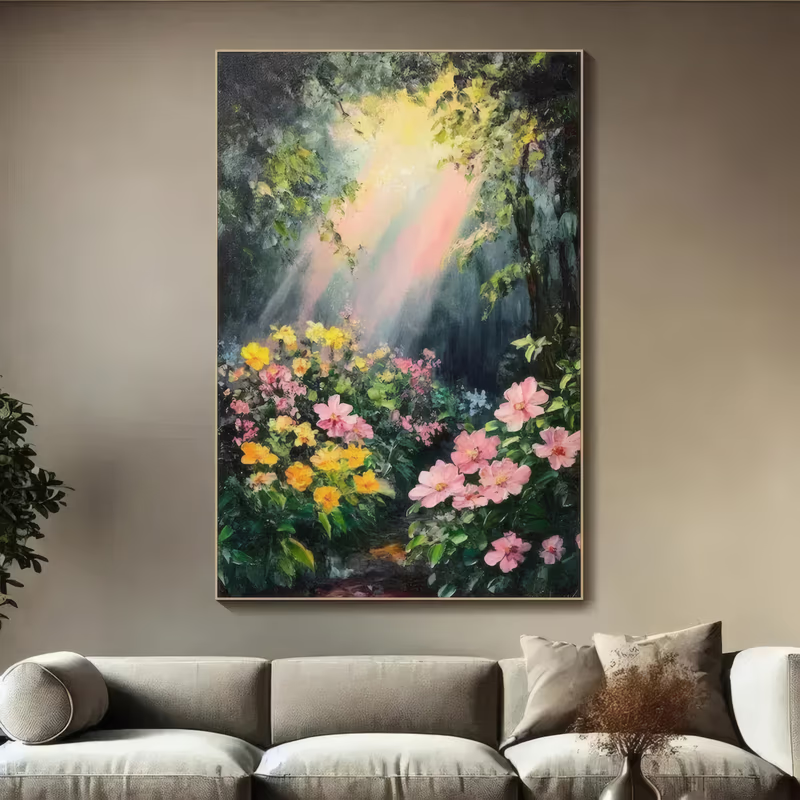
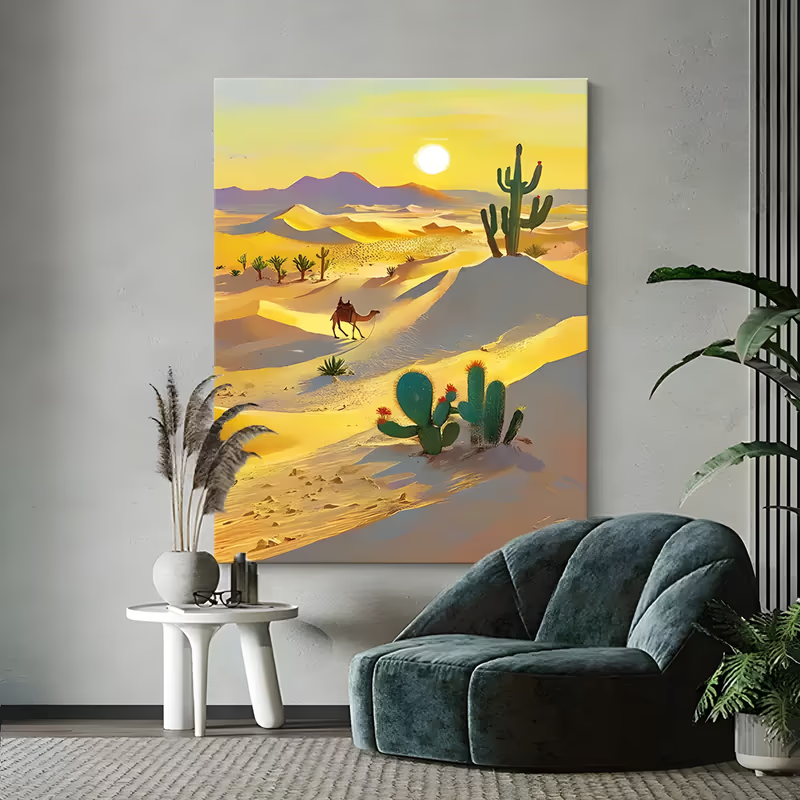
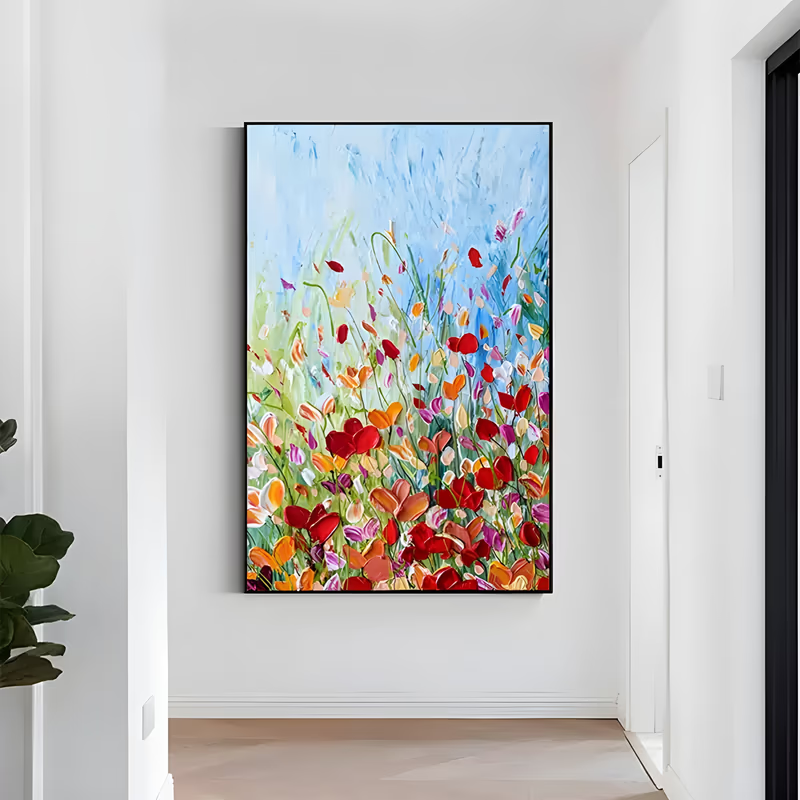
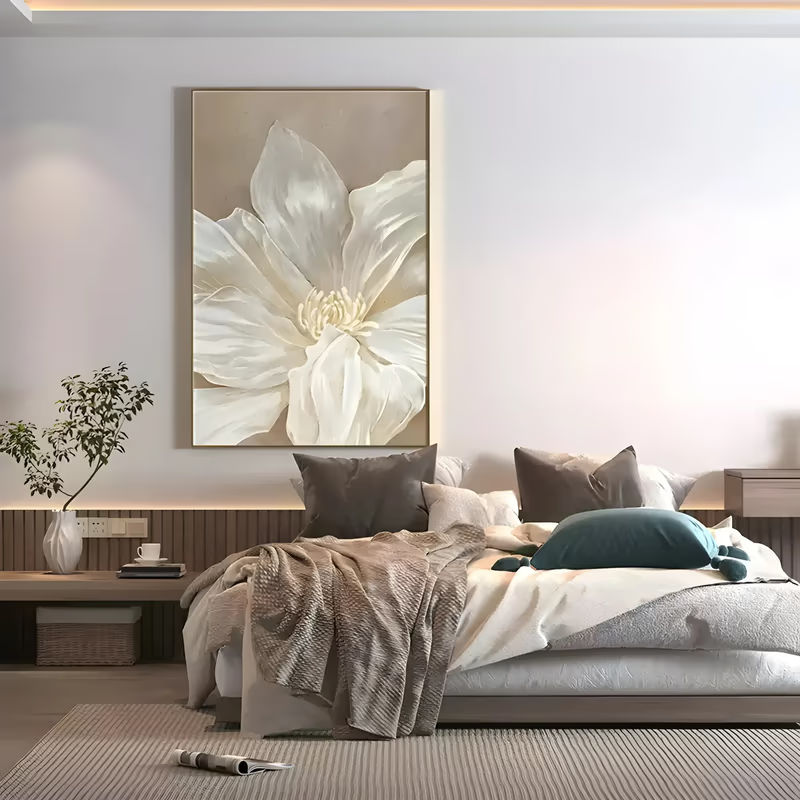
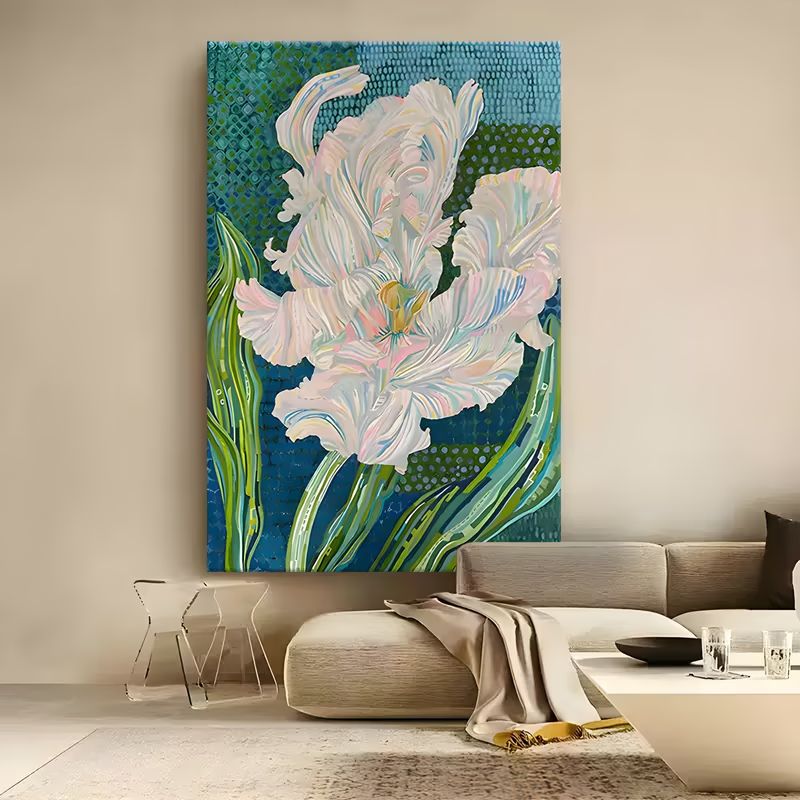
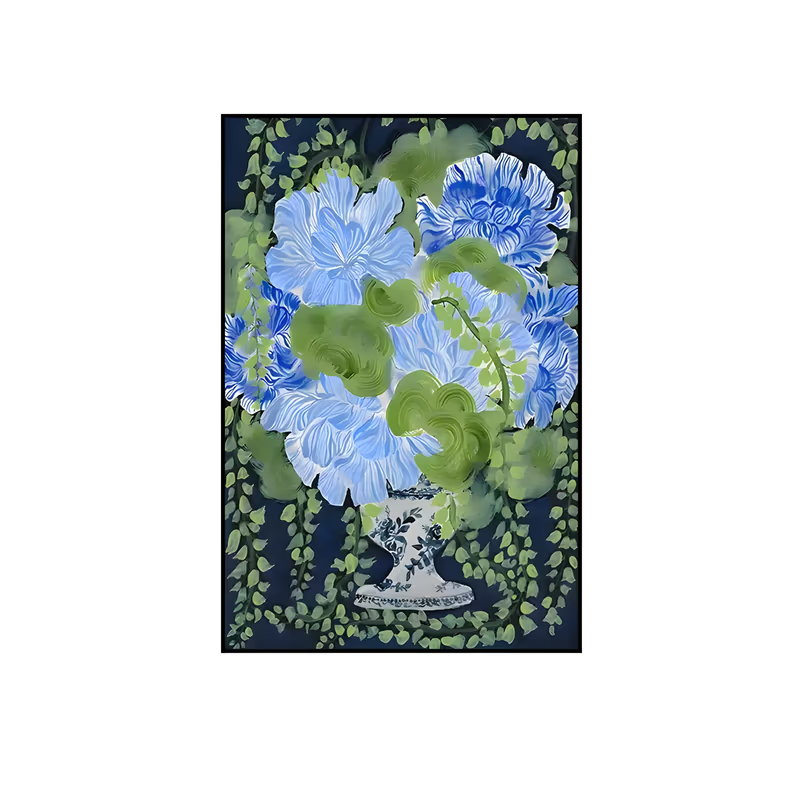
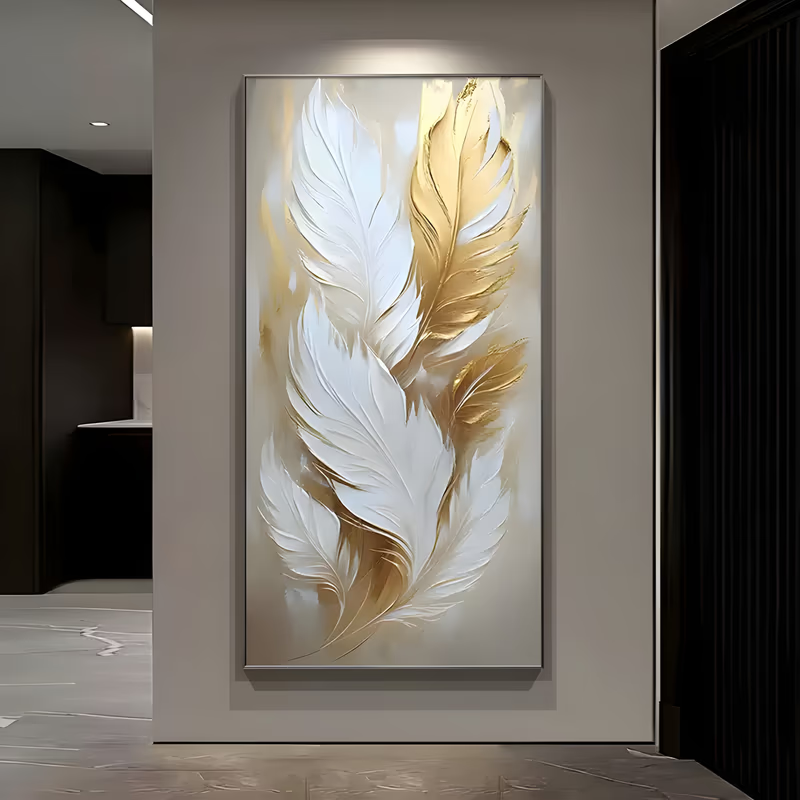
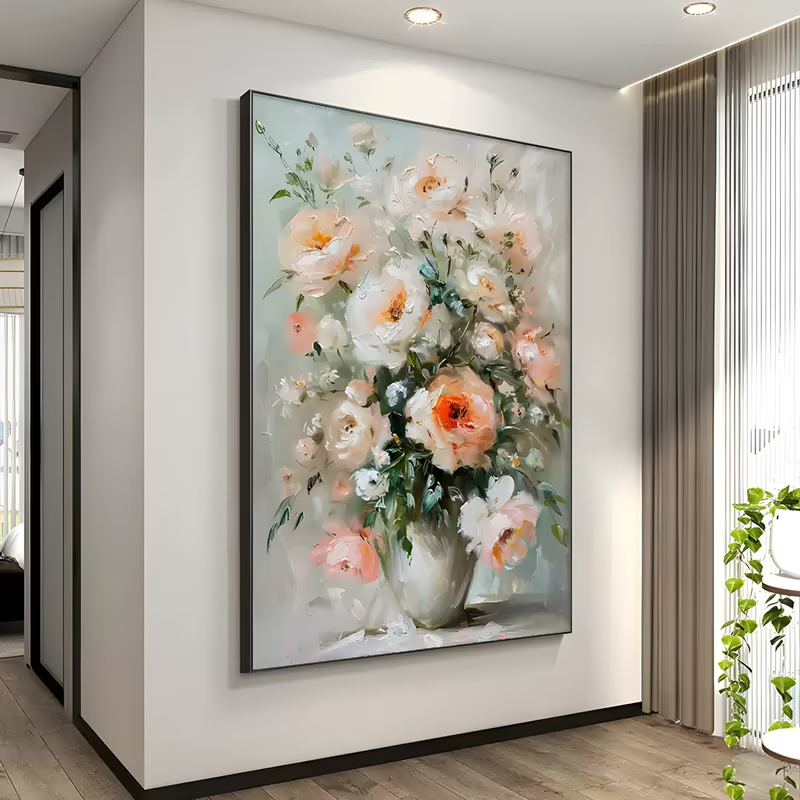
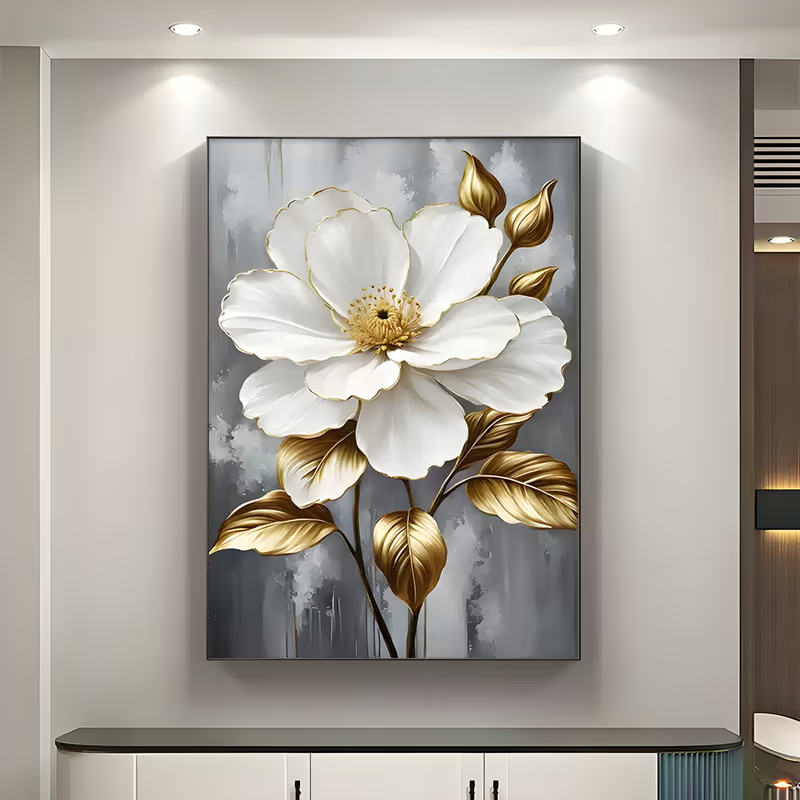
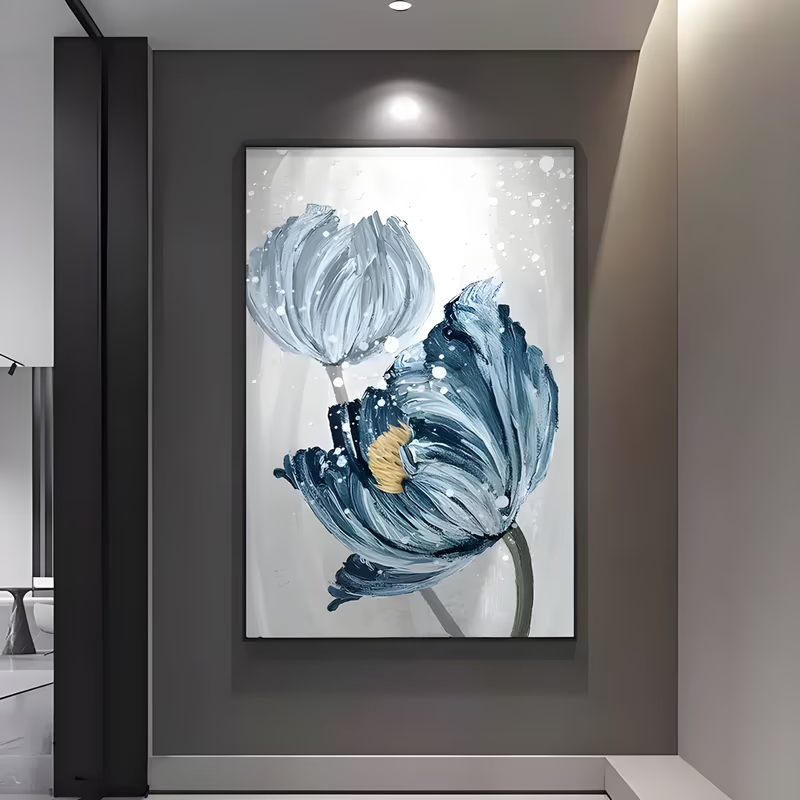
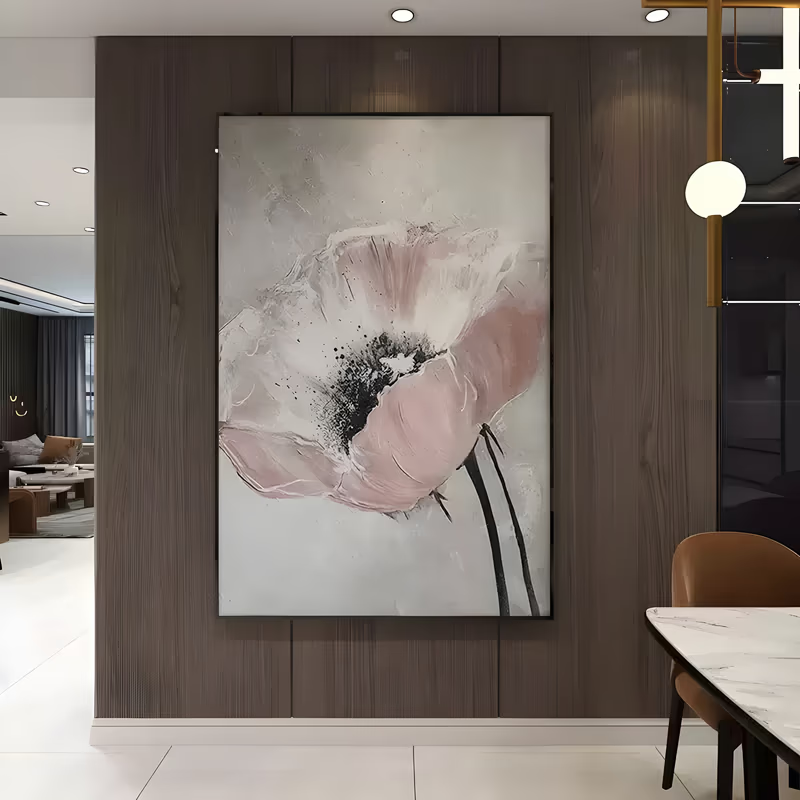
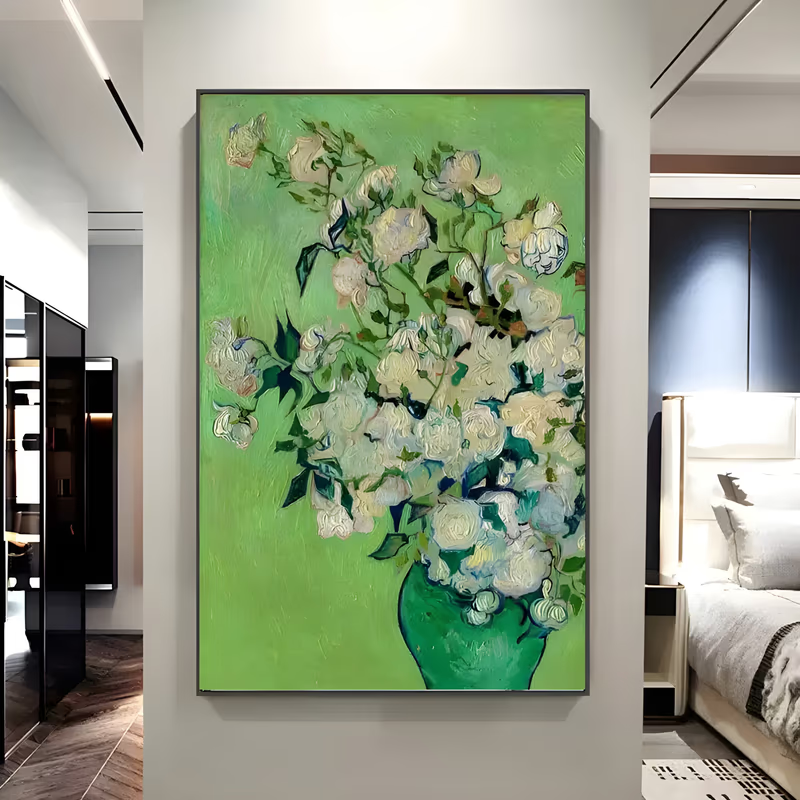
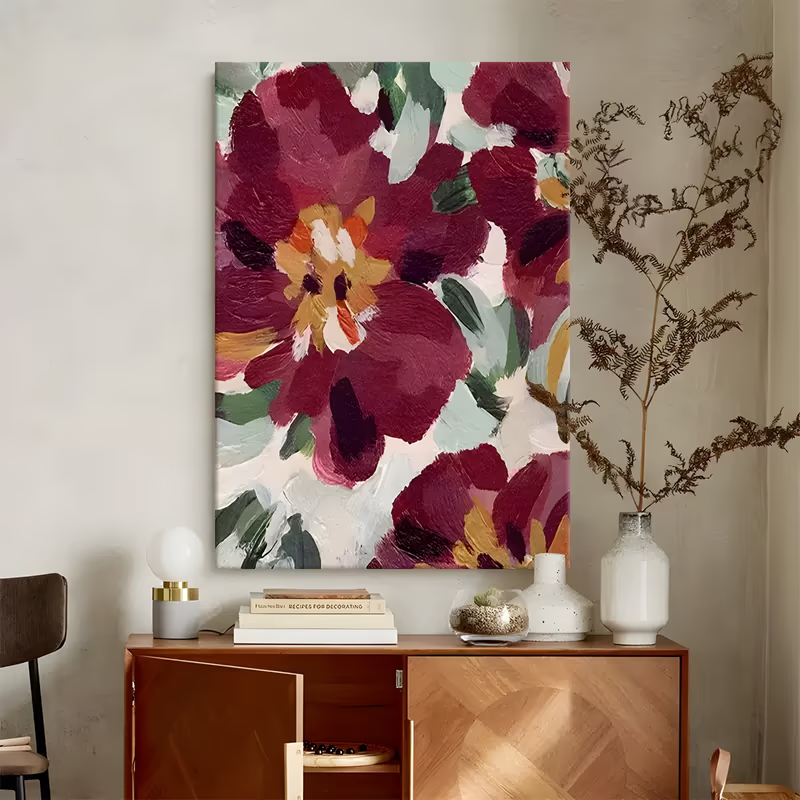
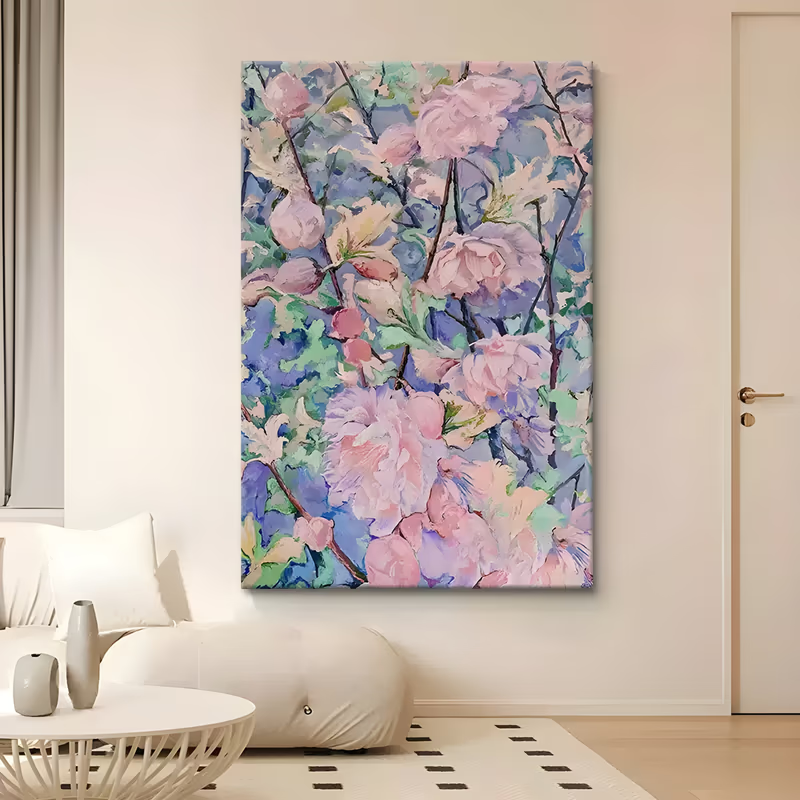
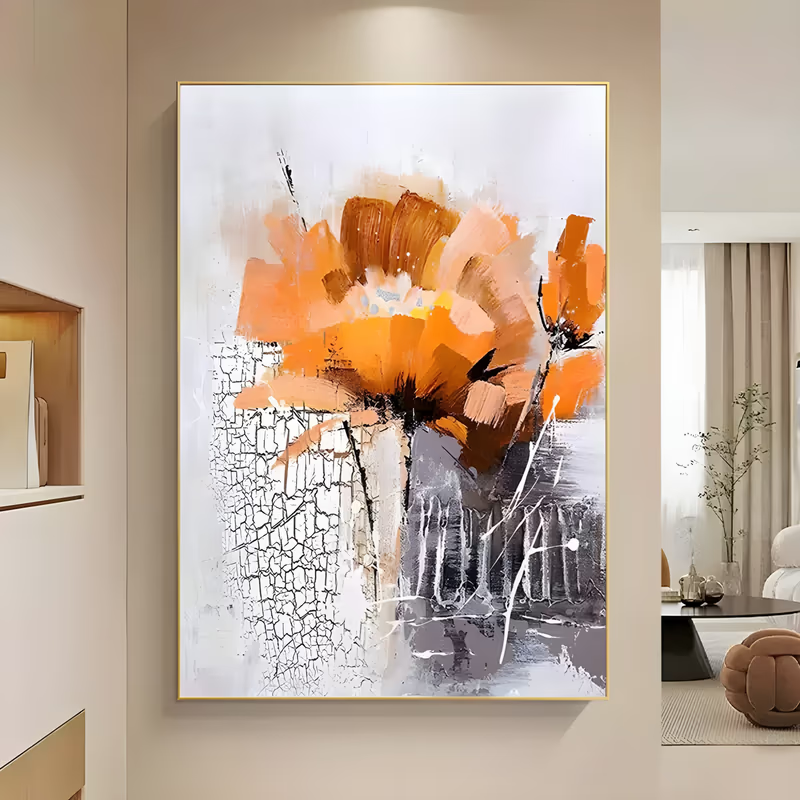
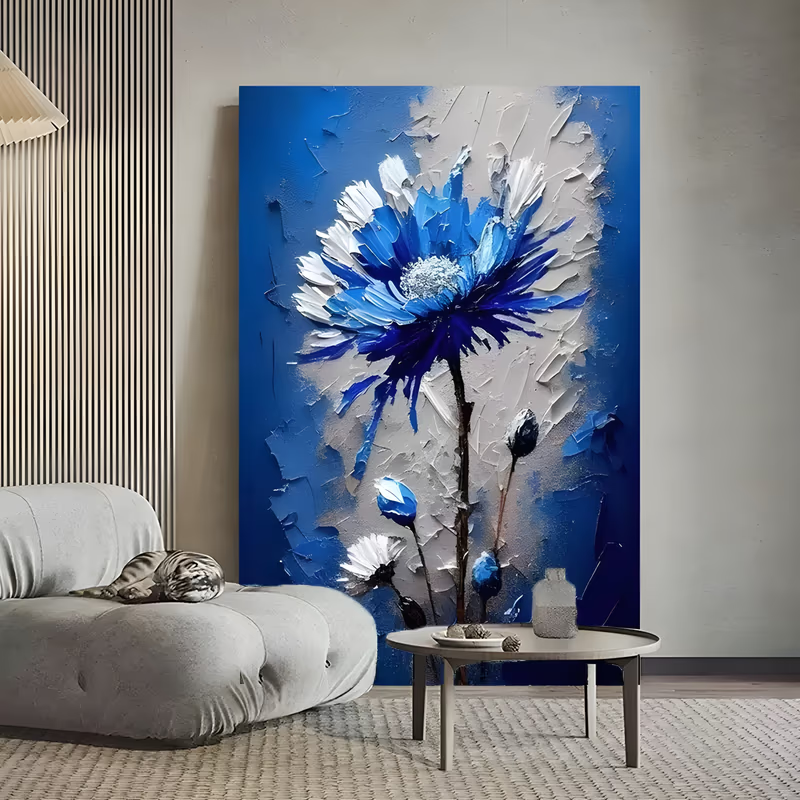
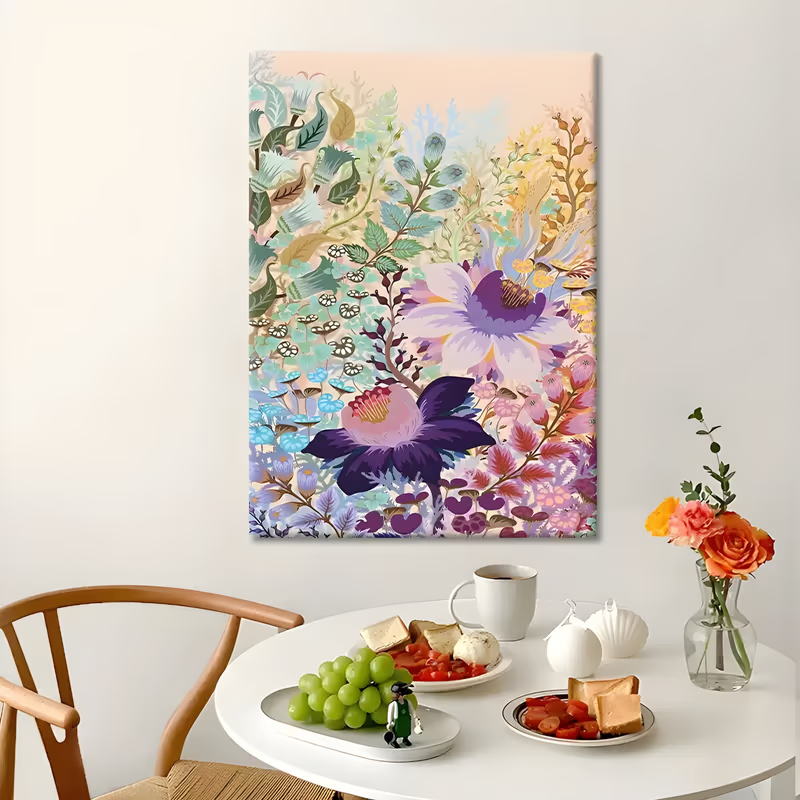
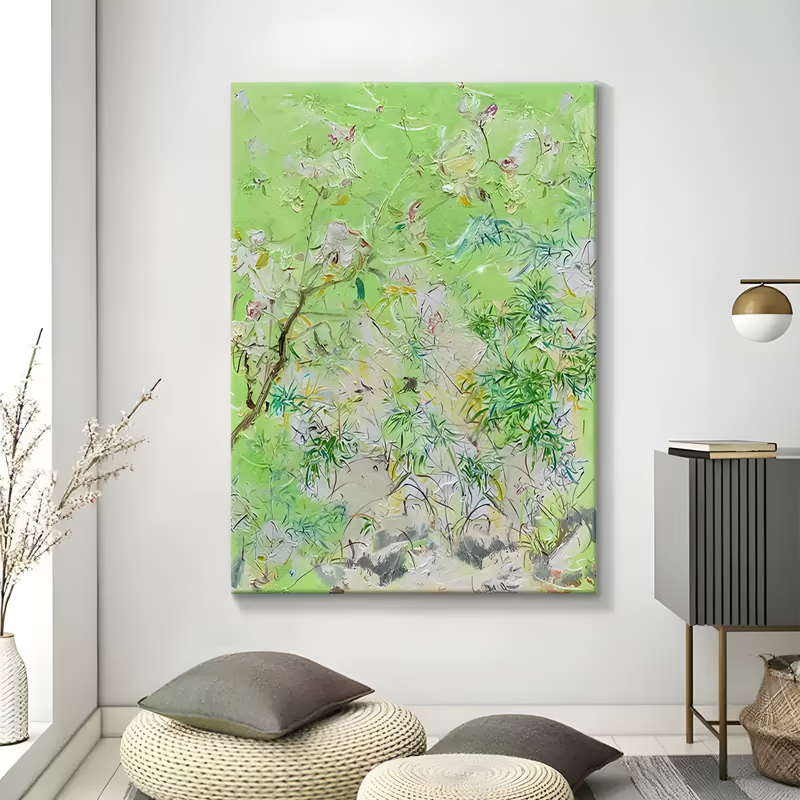
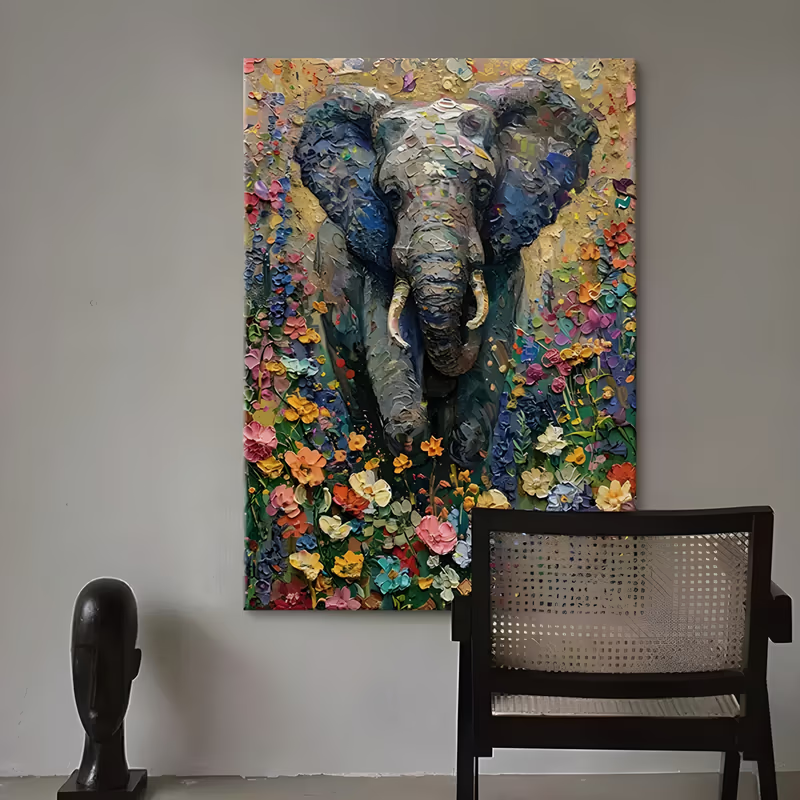
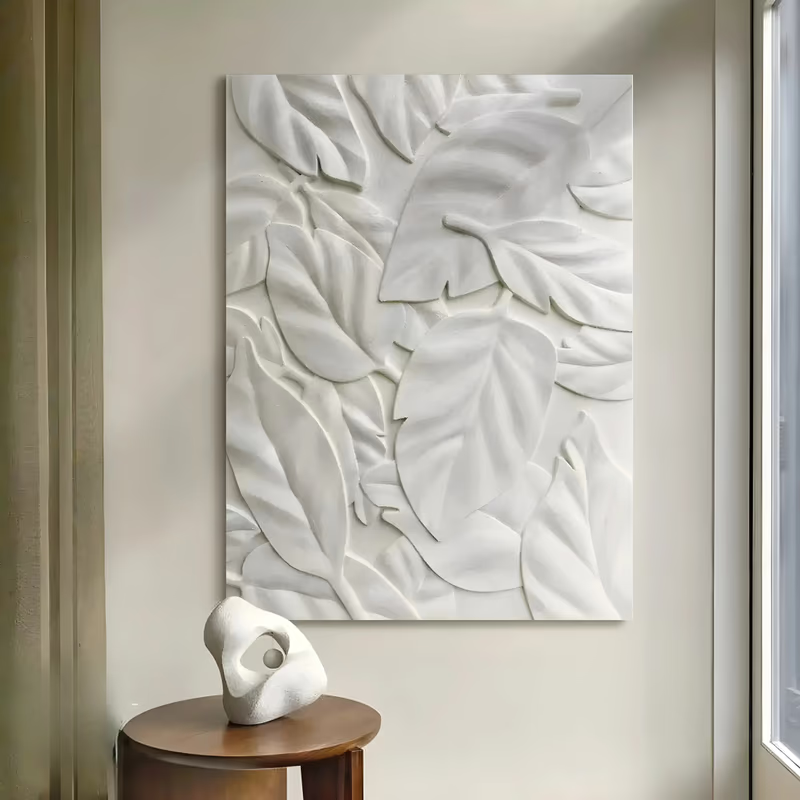
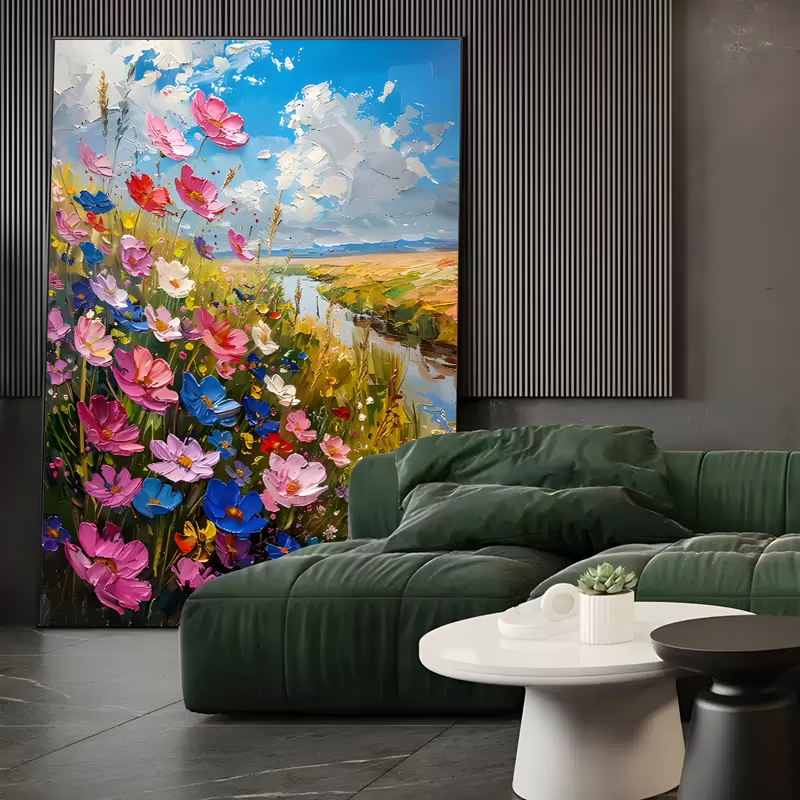
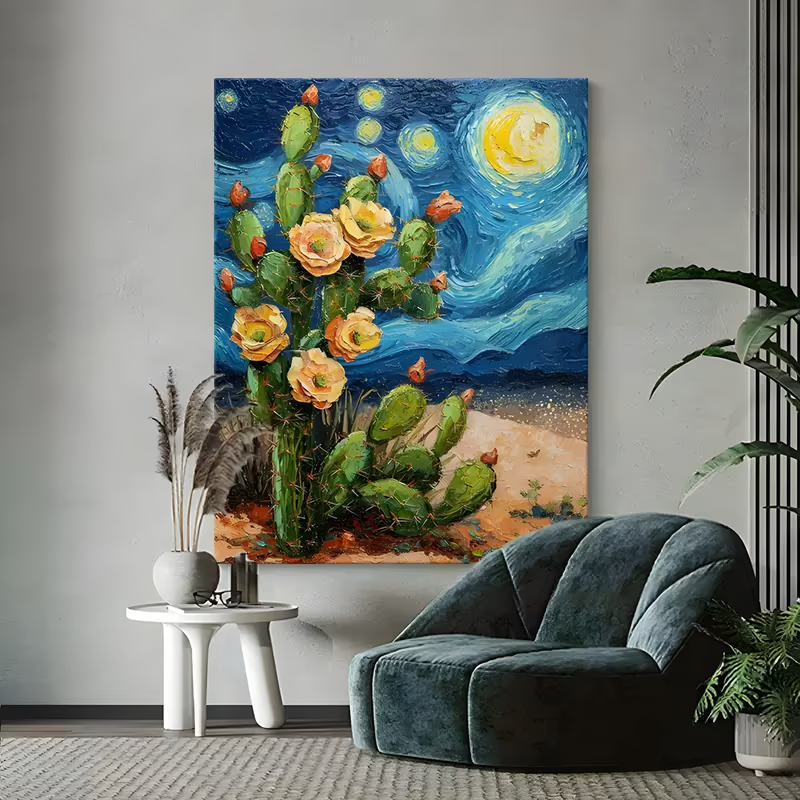
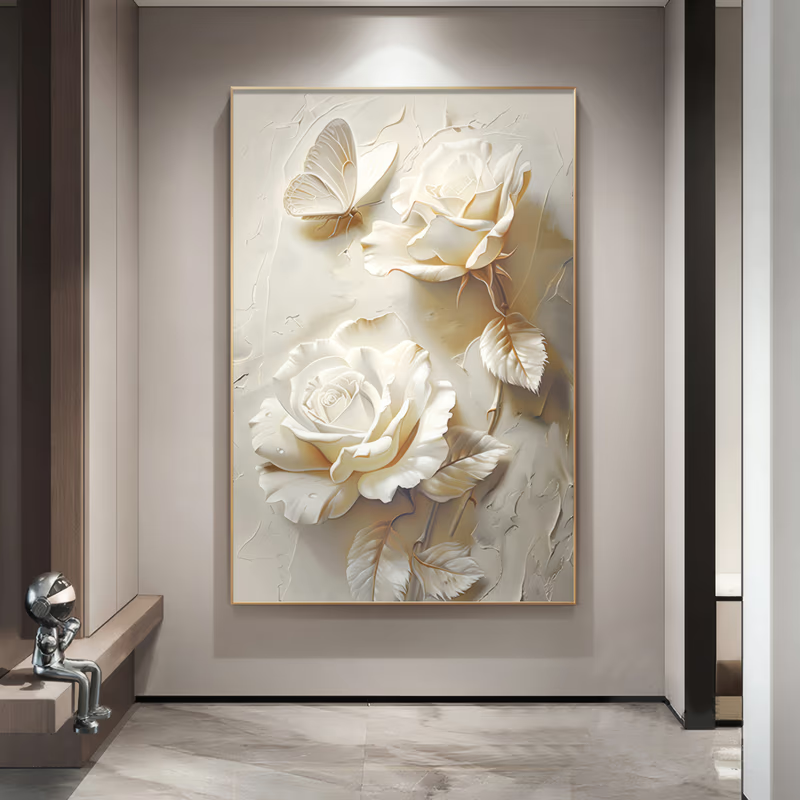
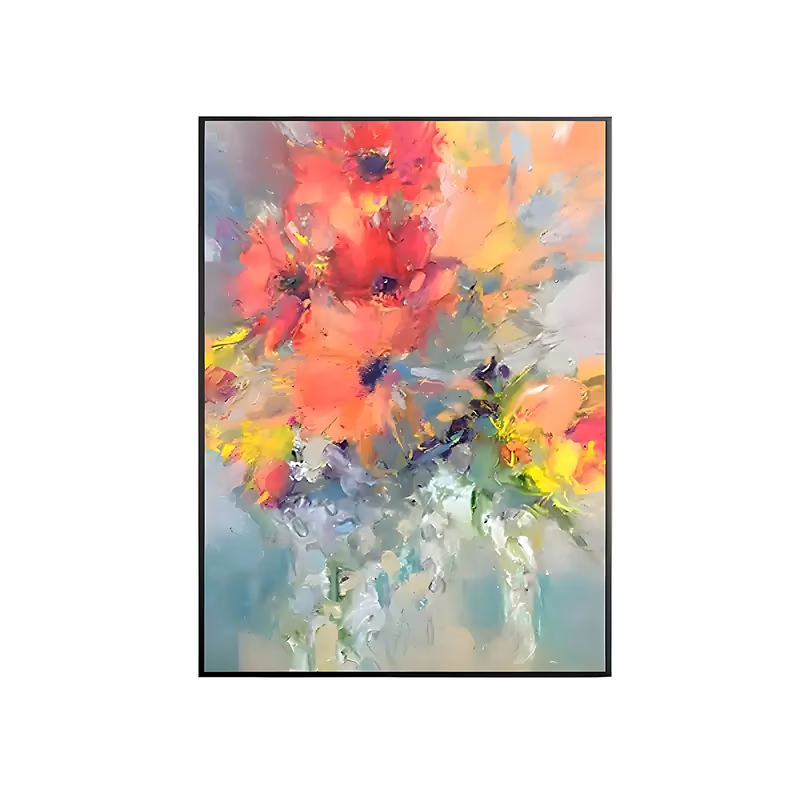
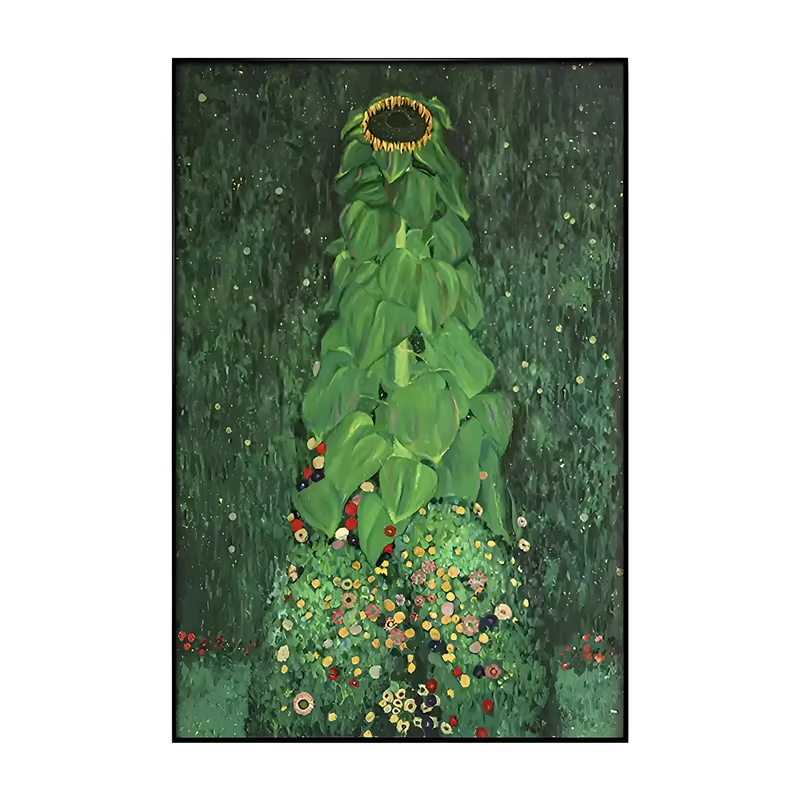
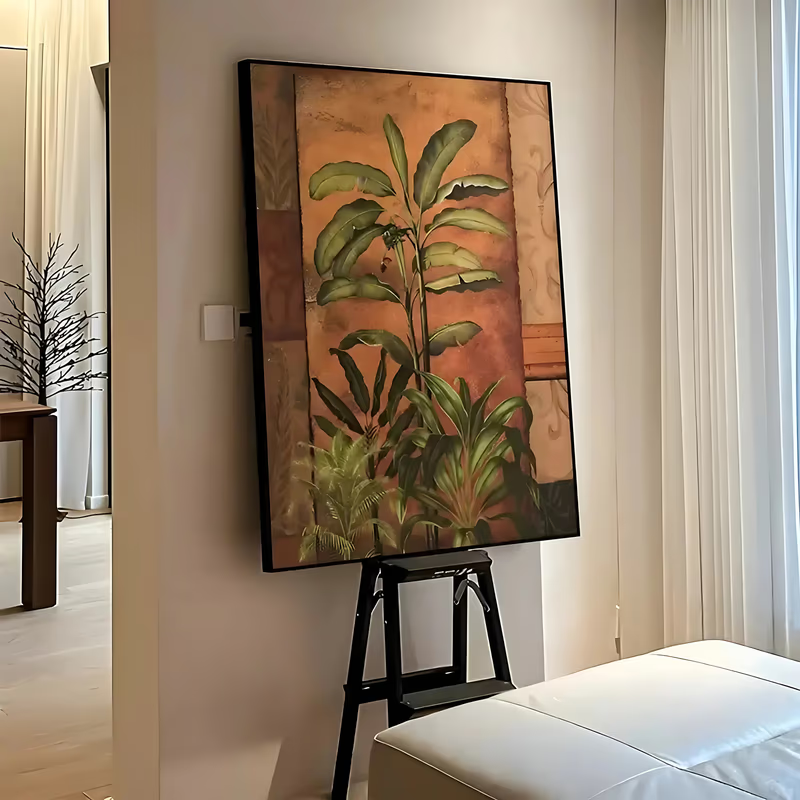
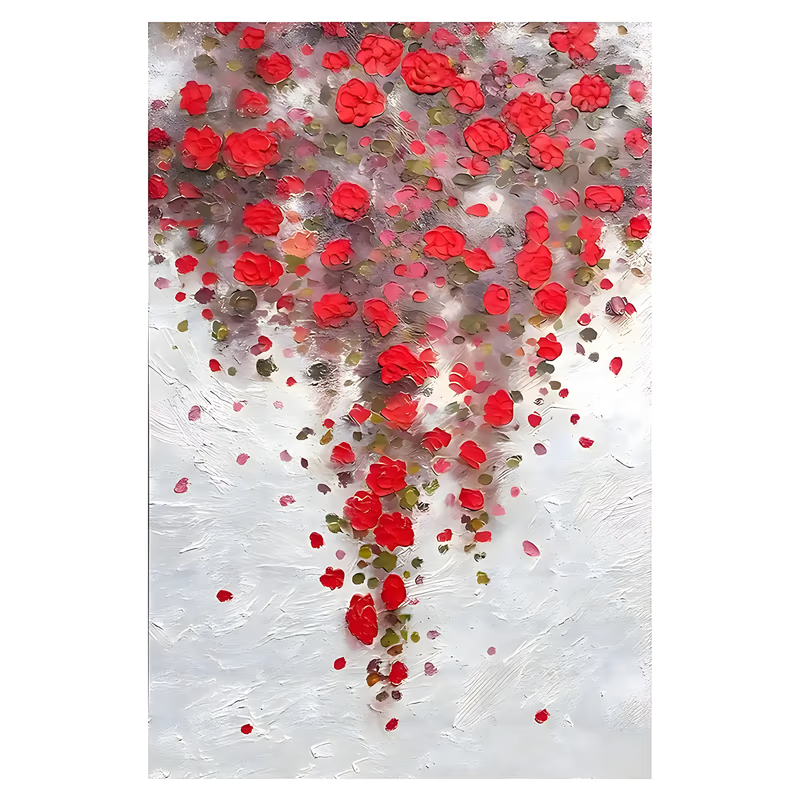
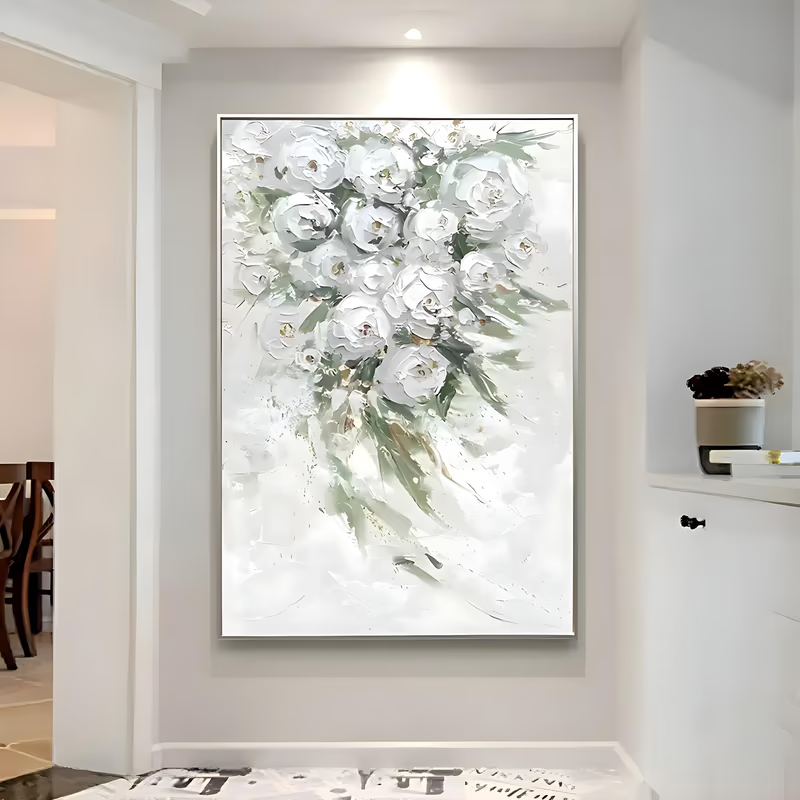
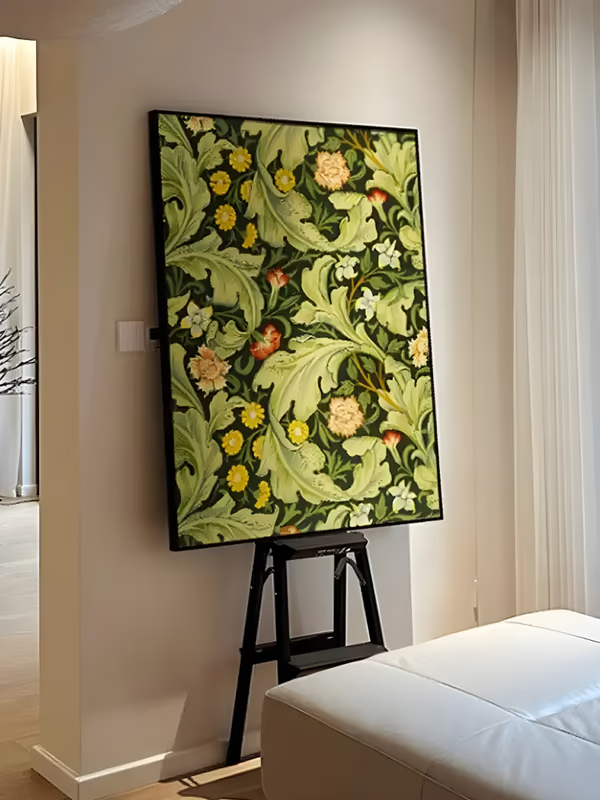
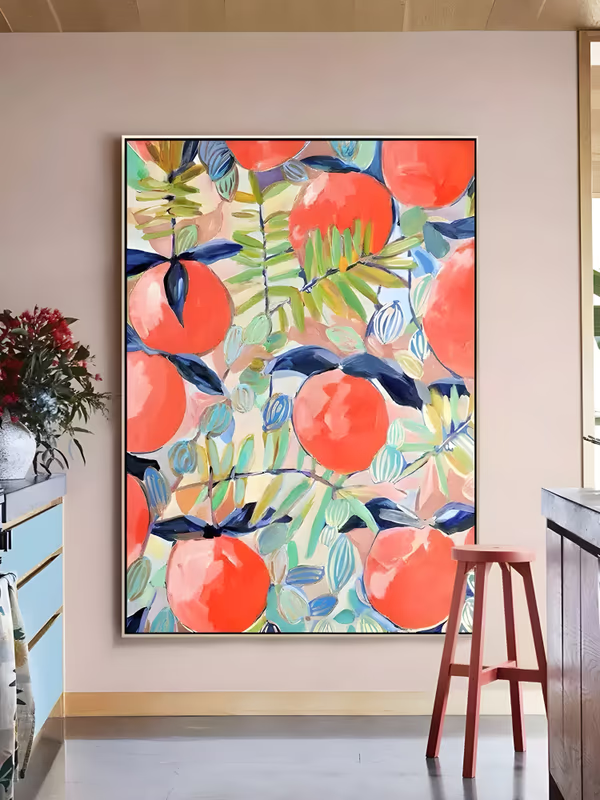
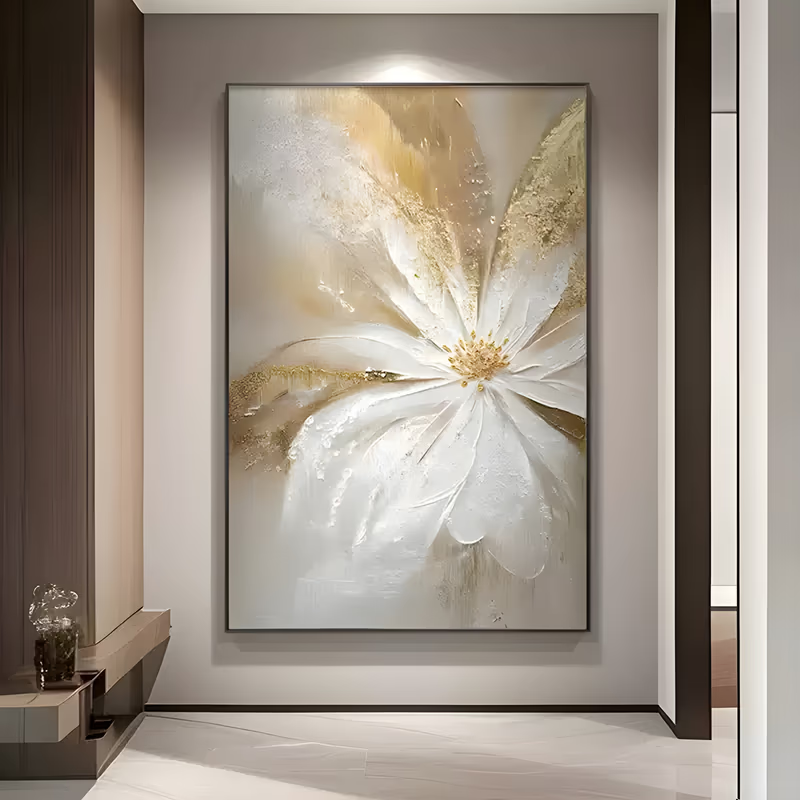
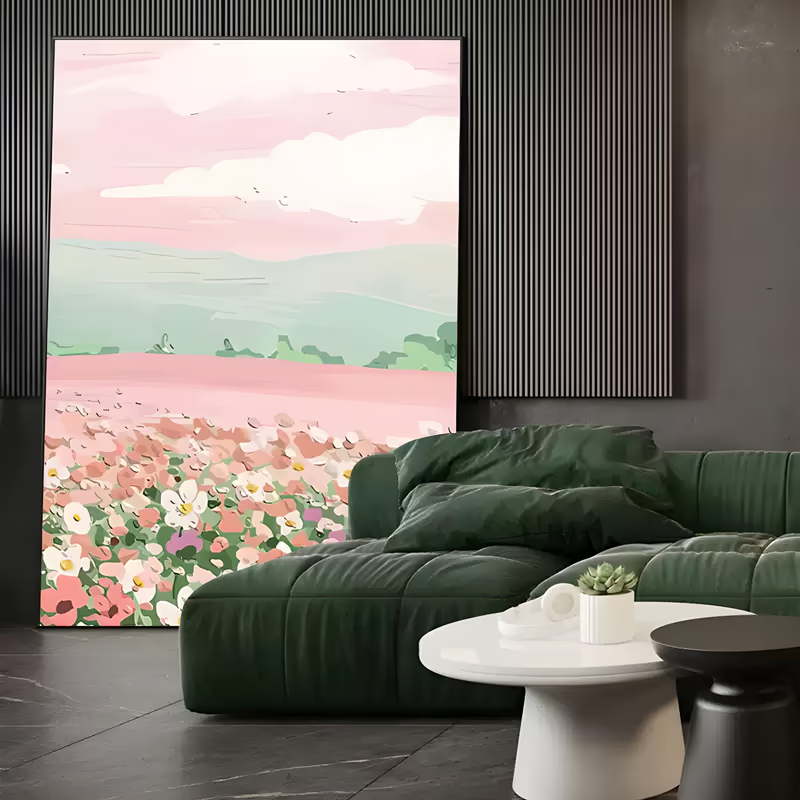
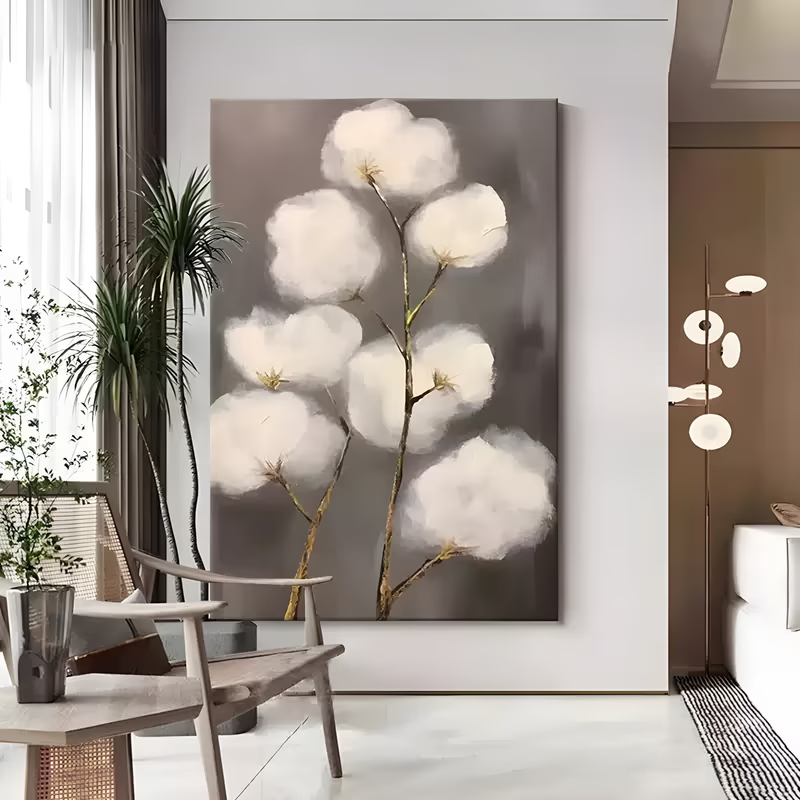
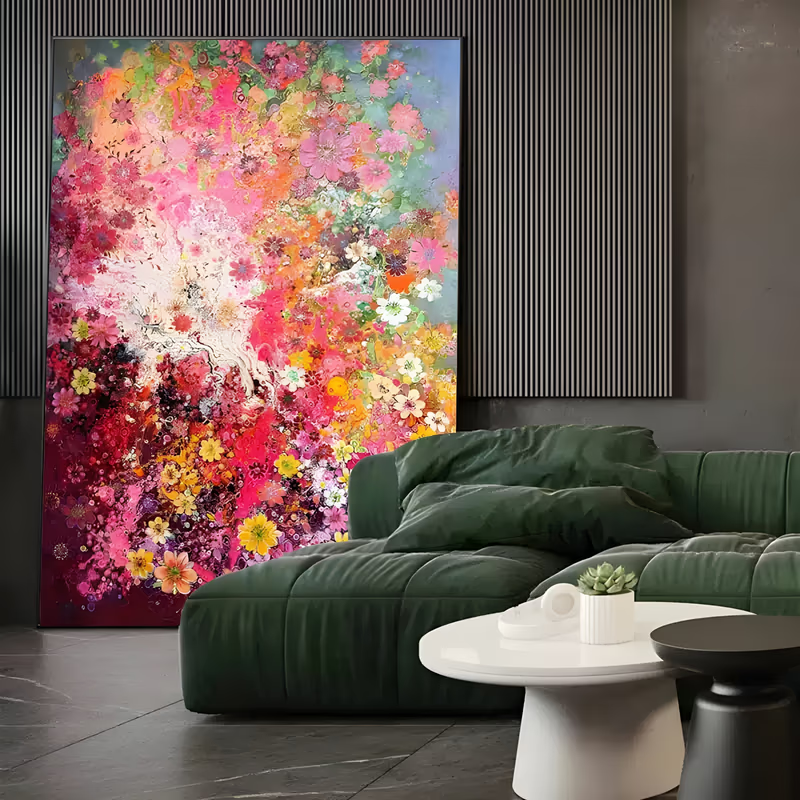
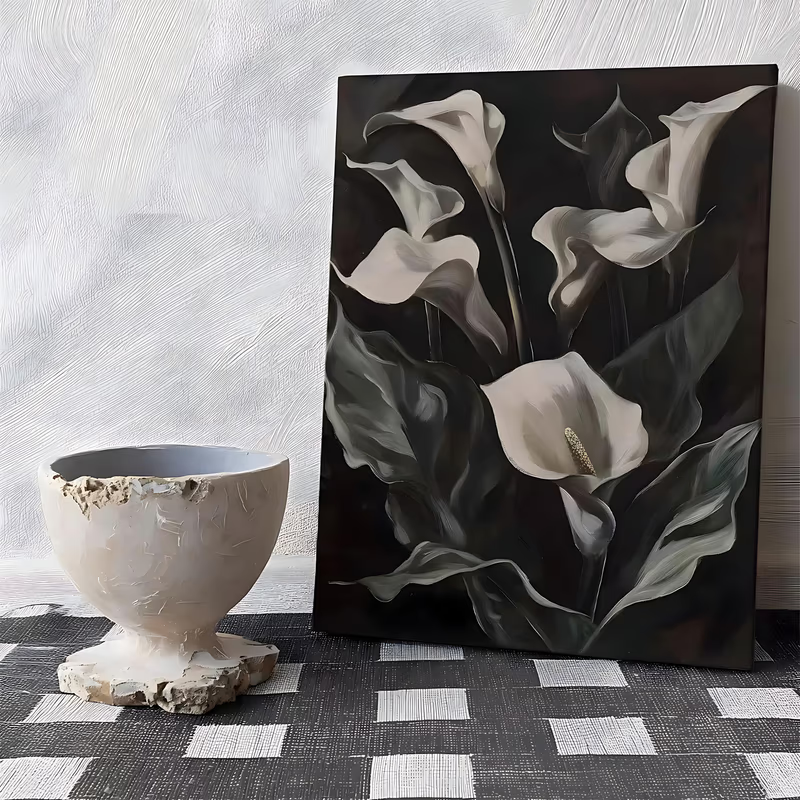
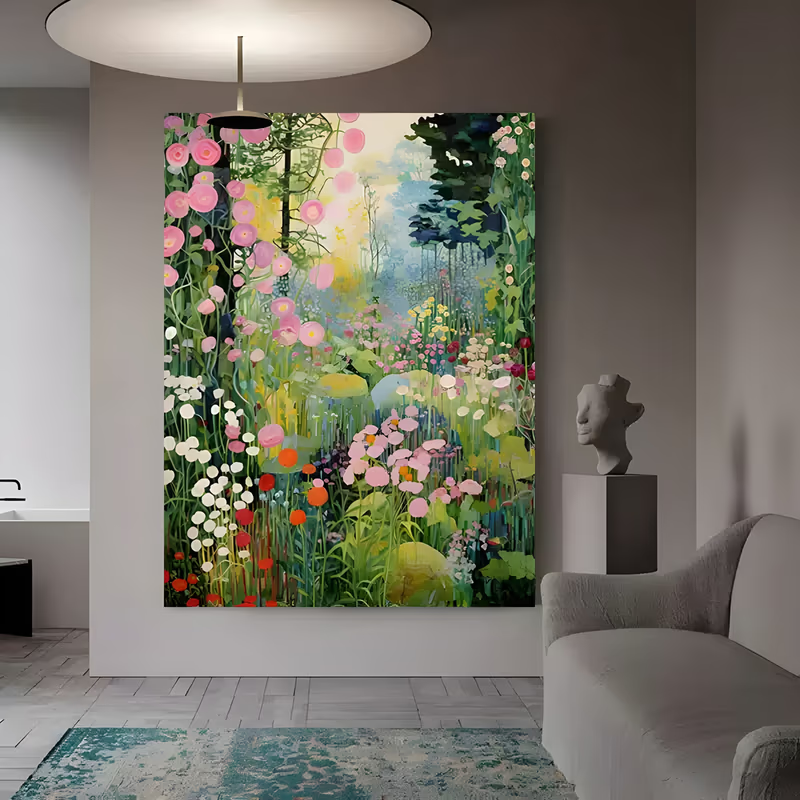
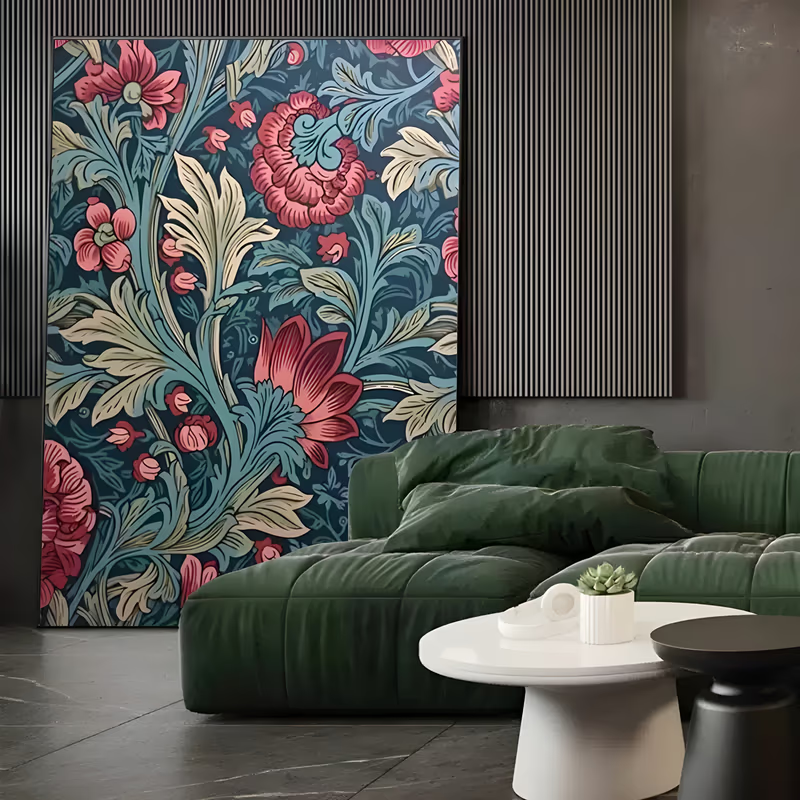
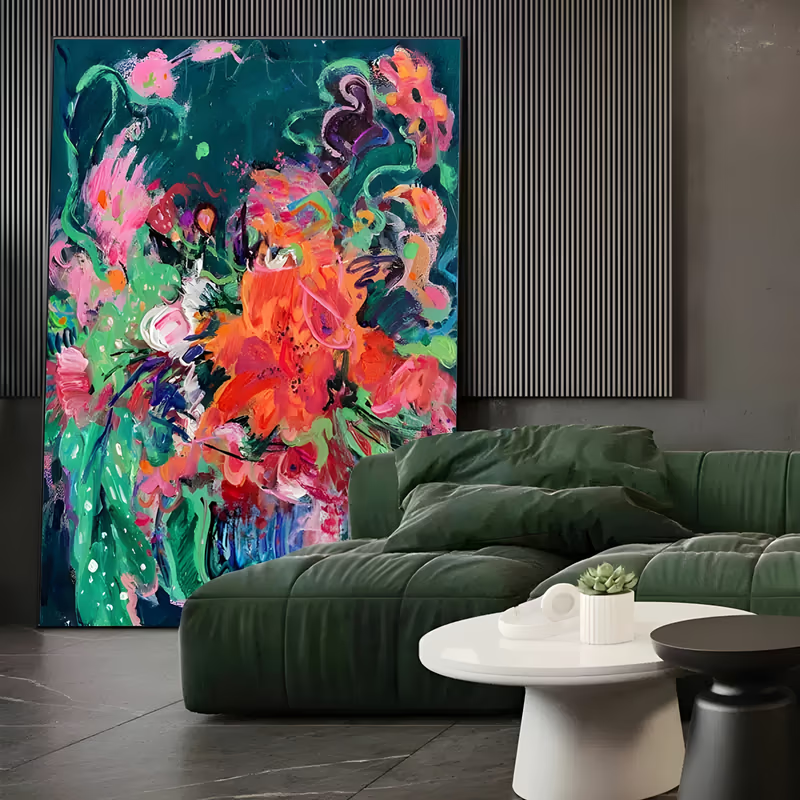
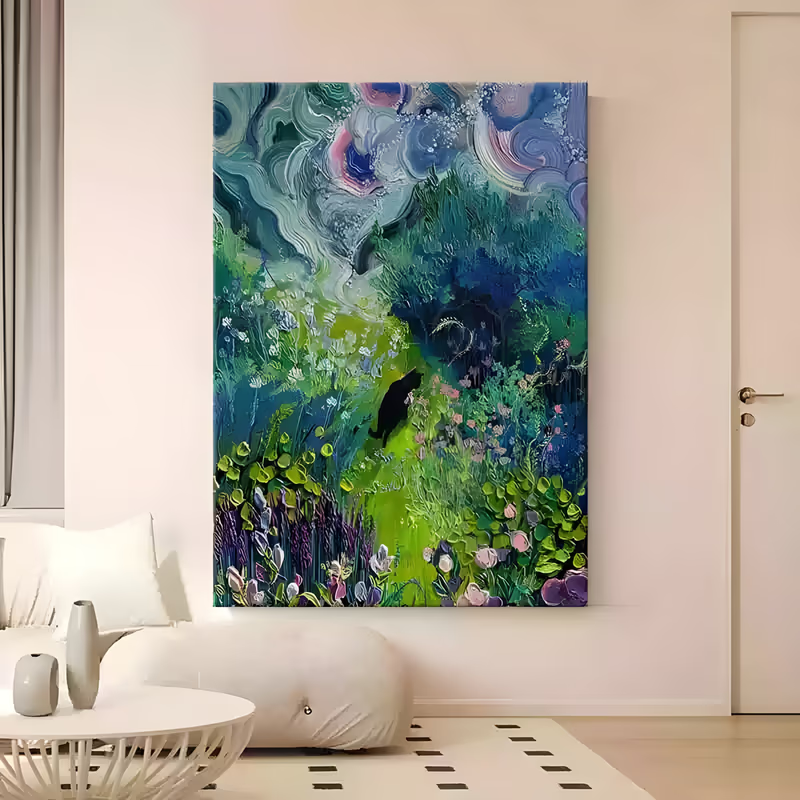
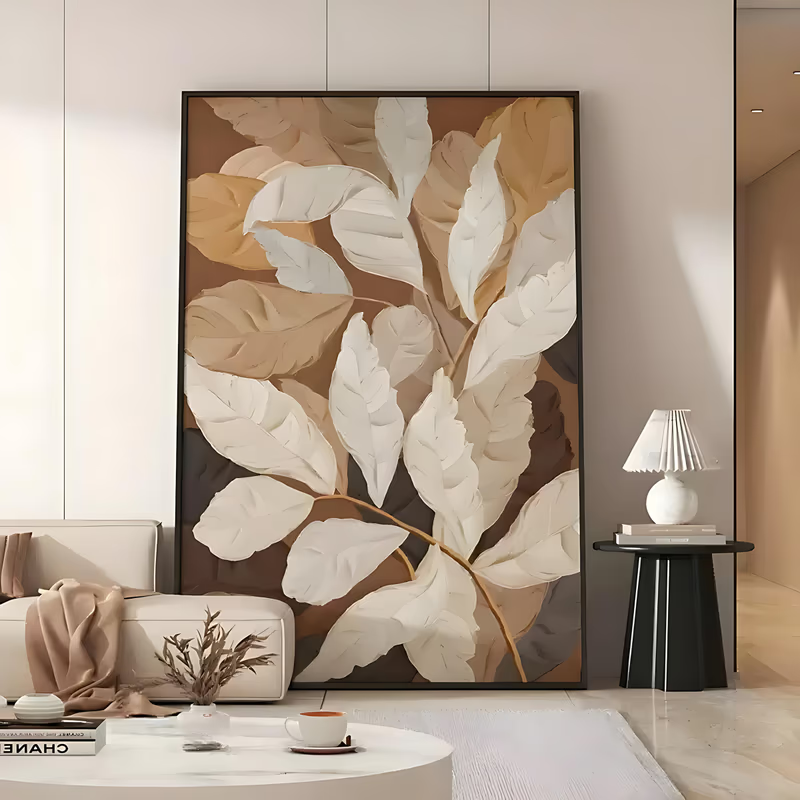
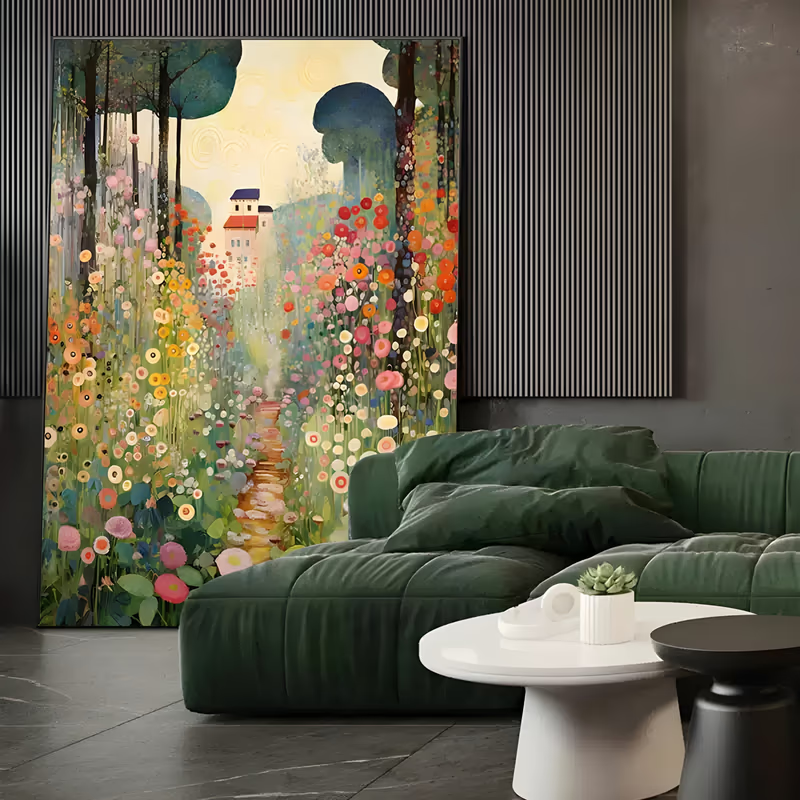
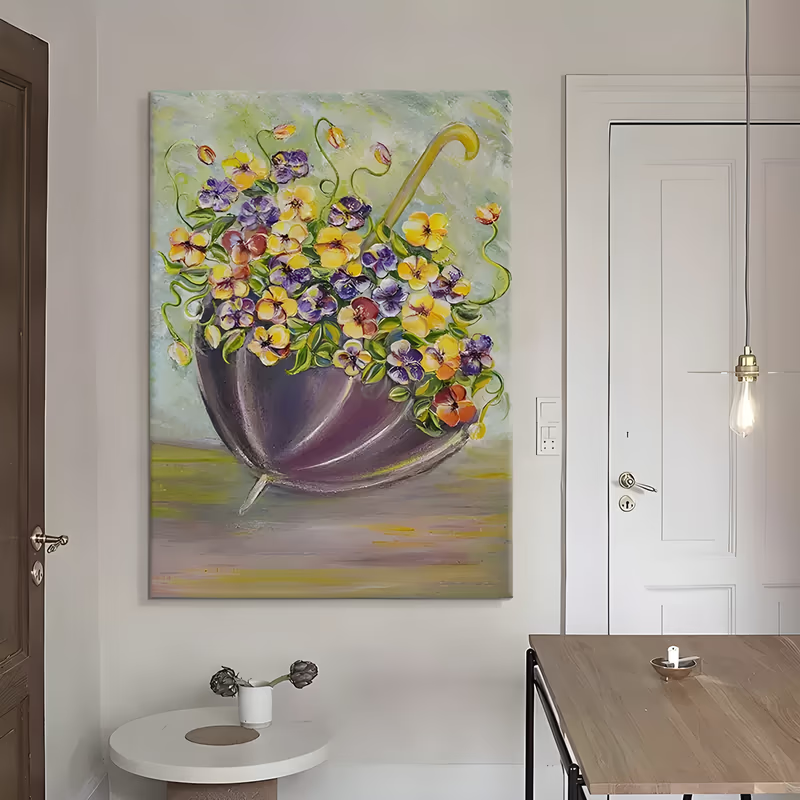
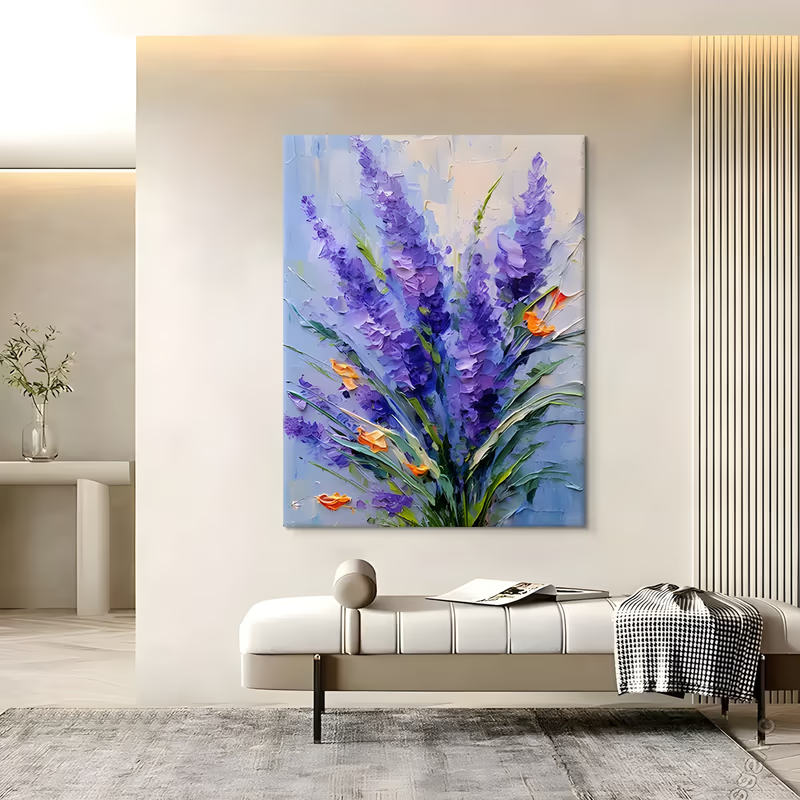
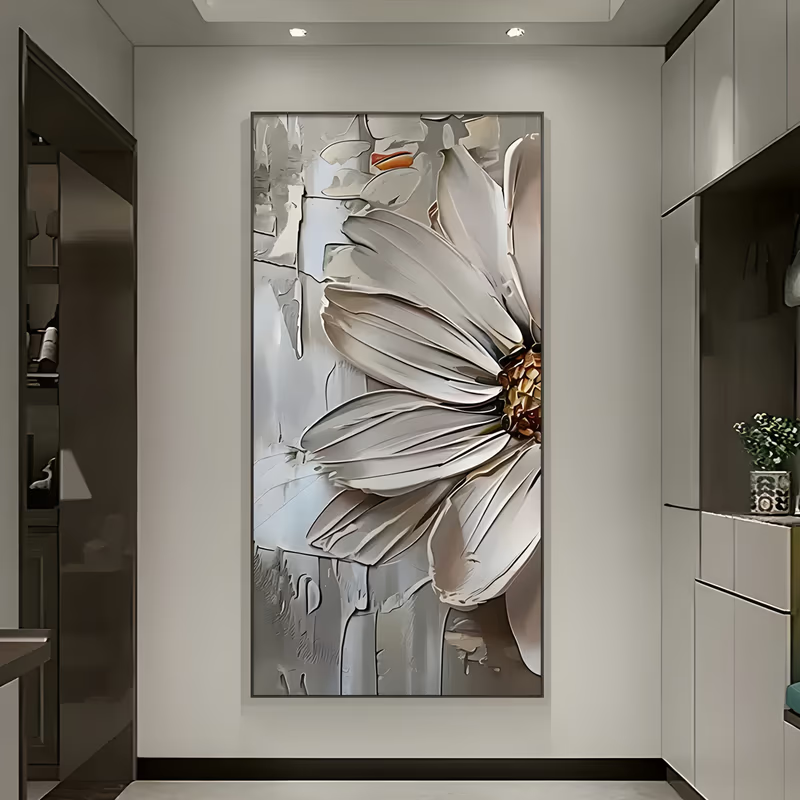
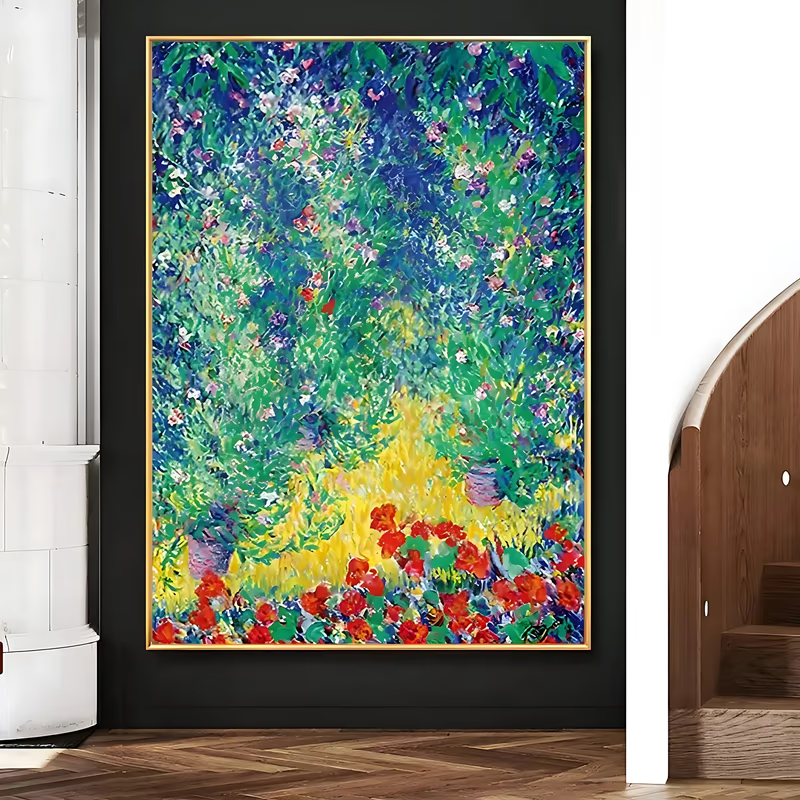
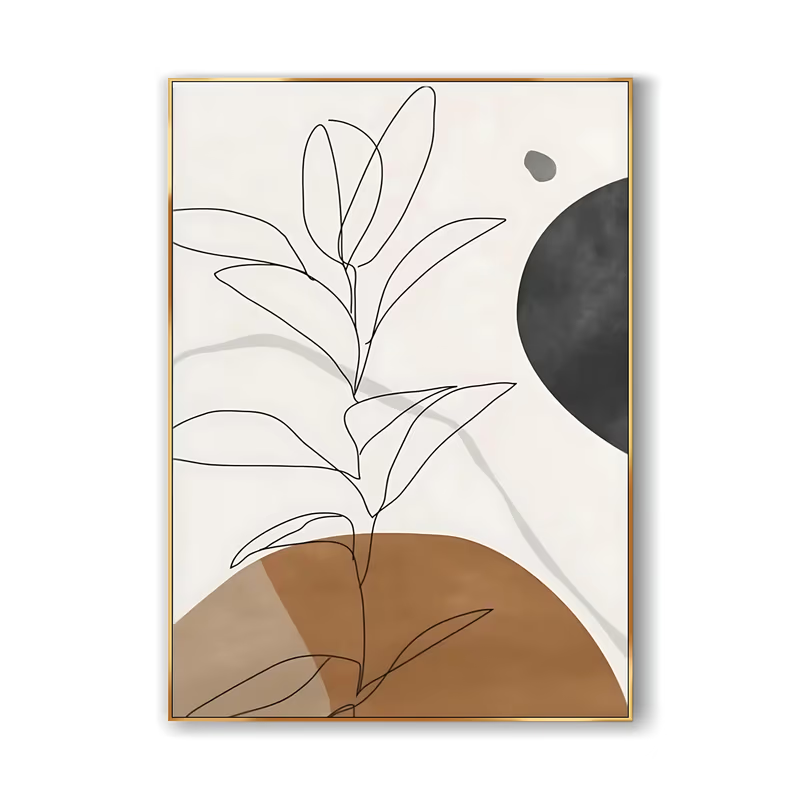
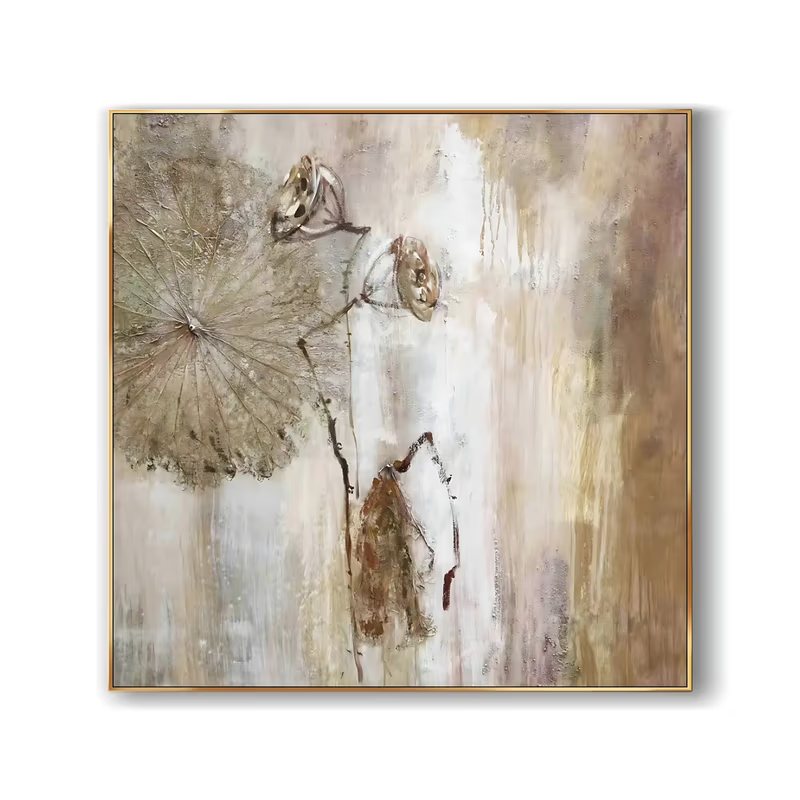
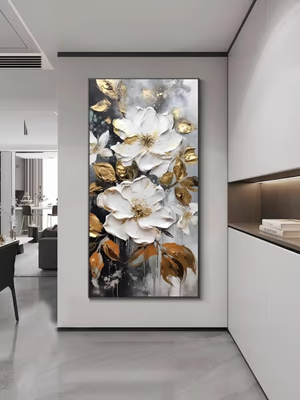
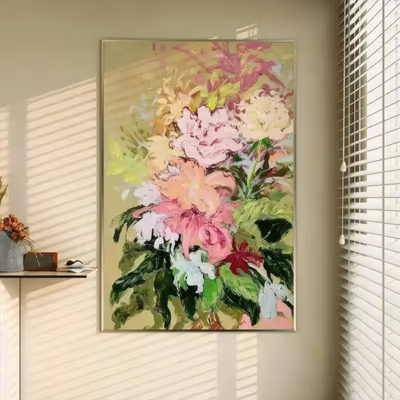
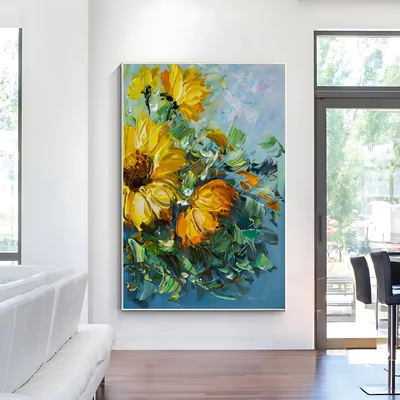
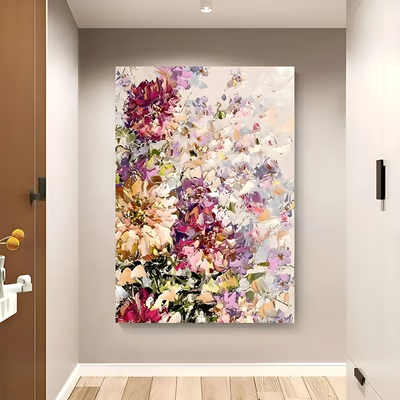
Peony bouquets, sculpted white blooms, poppies, cactus flowers, persimmon branches. Flowers are the classic welcome: warm, legible from the doorway and easy to live with. Knife-painted petals catch the light from a fanlight or a pendant. Floral entryway art.
Landscapes, seascapes and city views
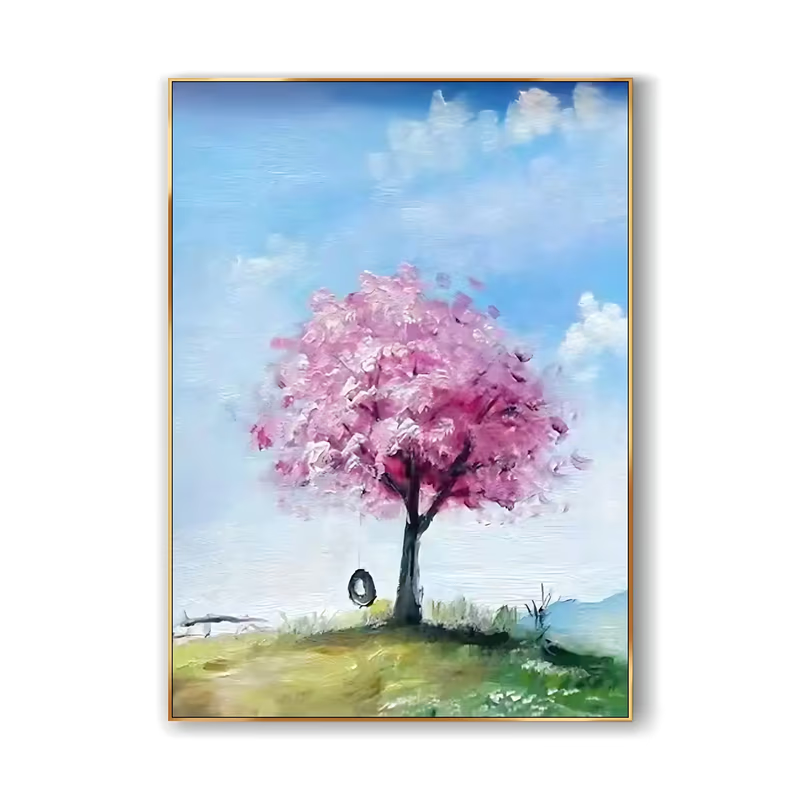
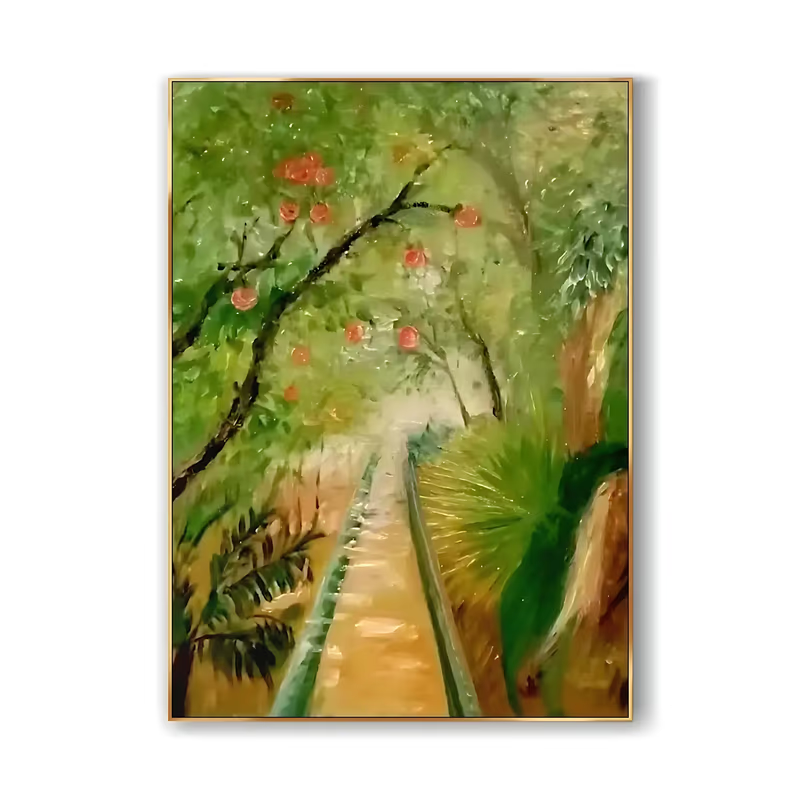
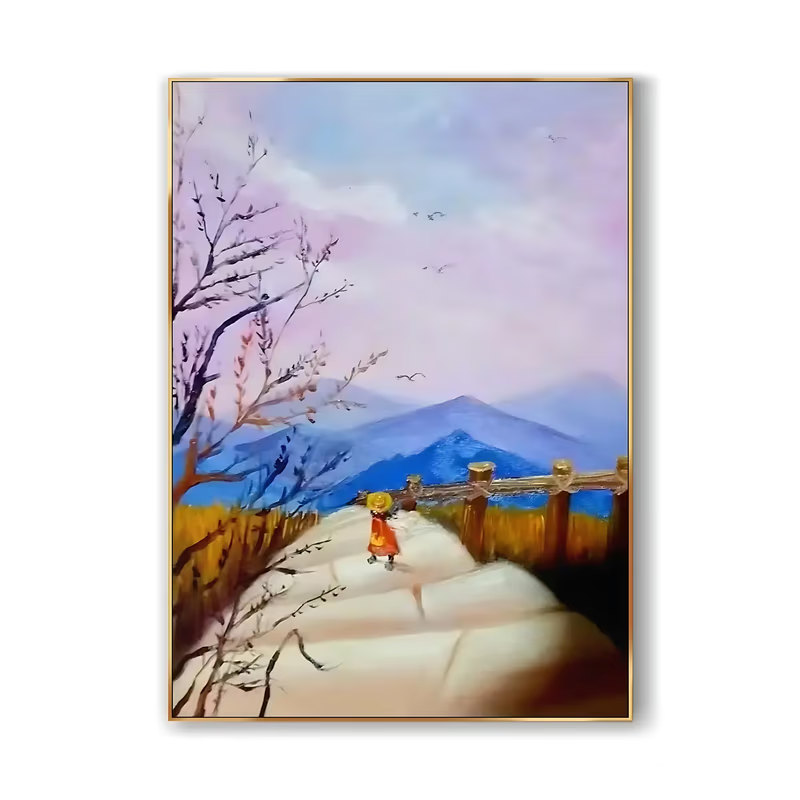
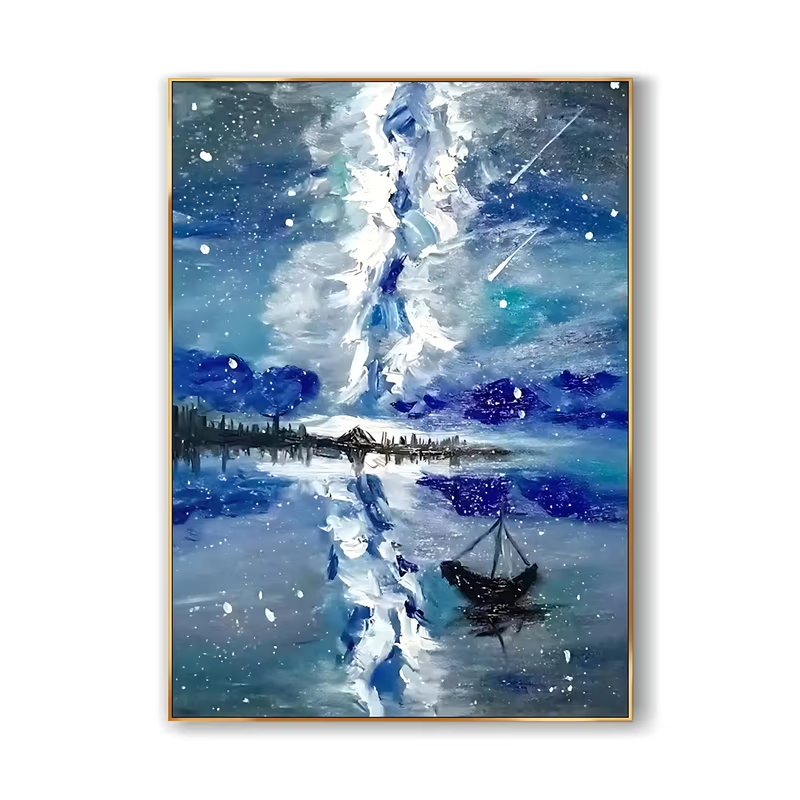
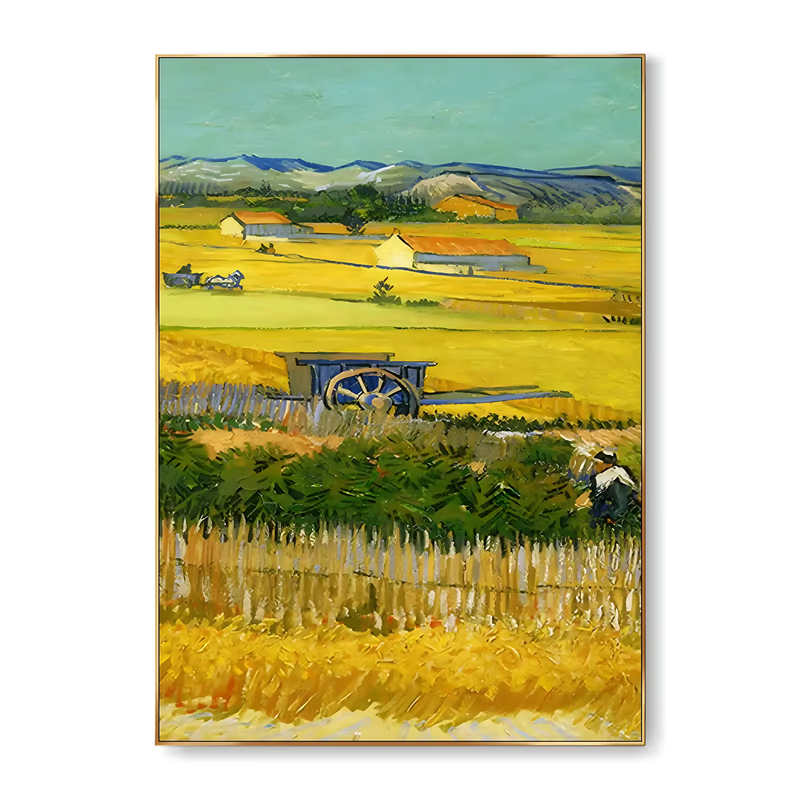
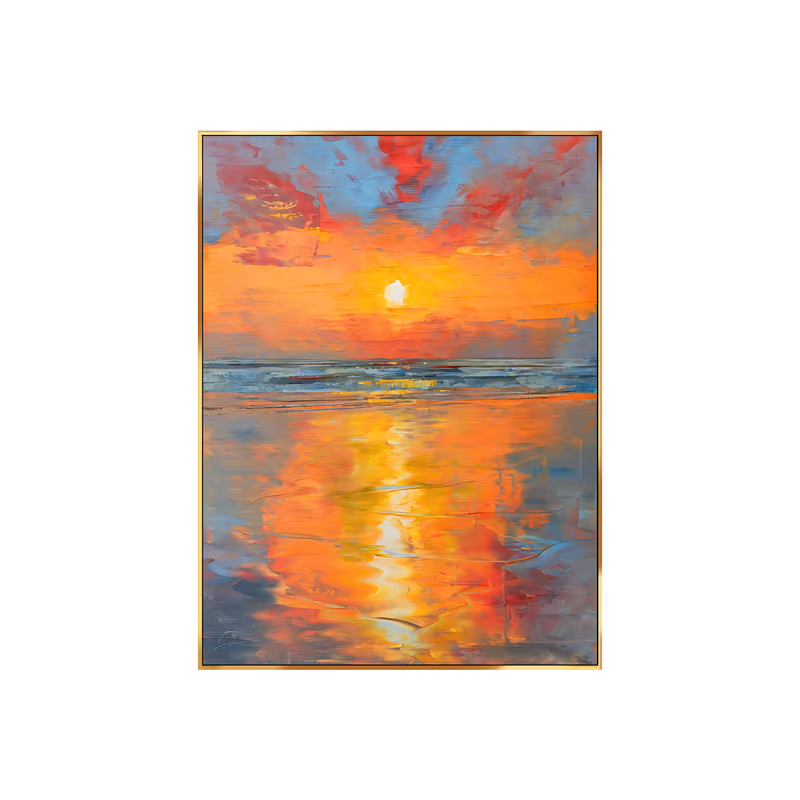
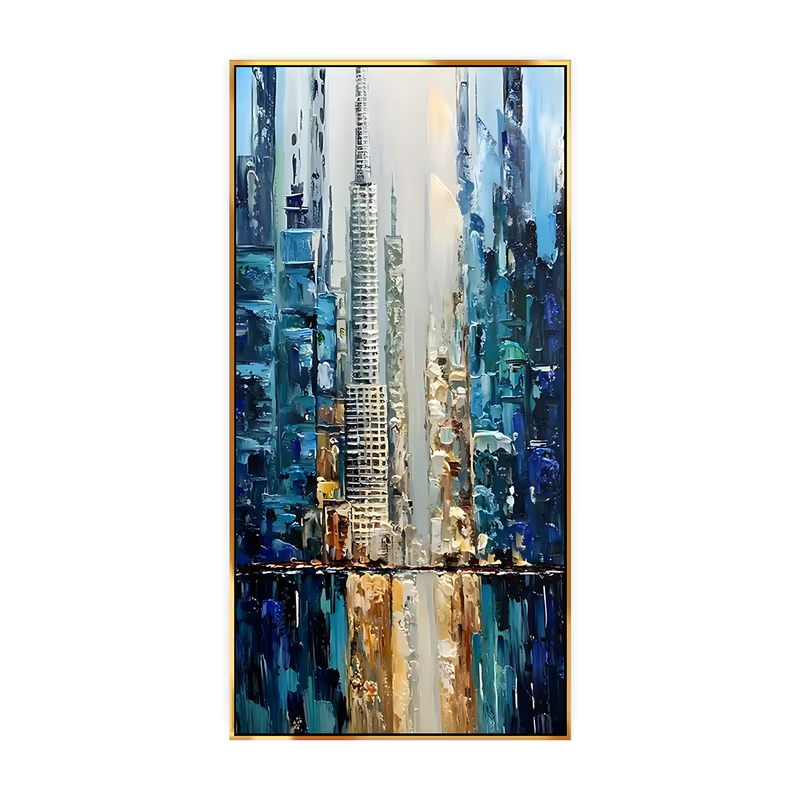
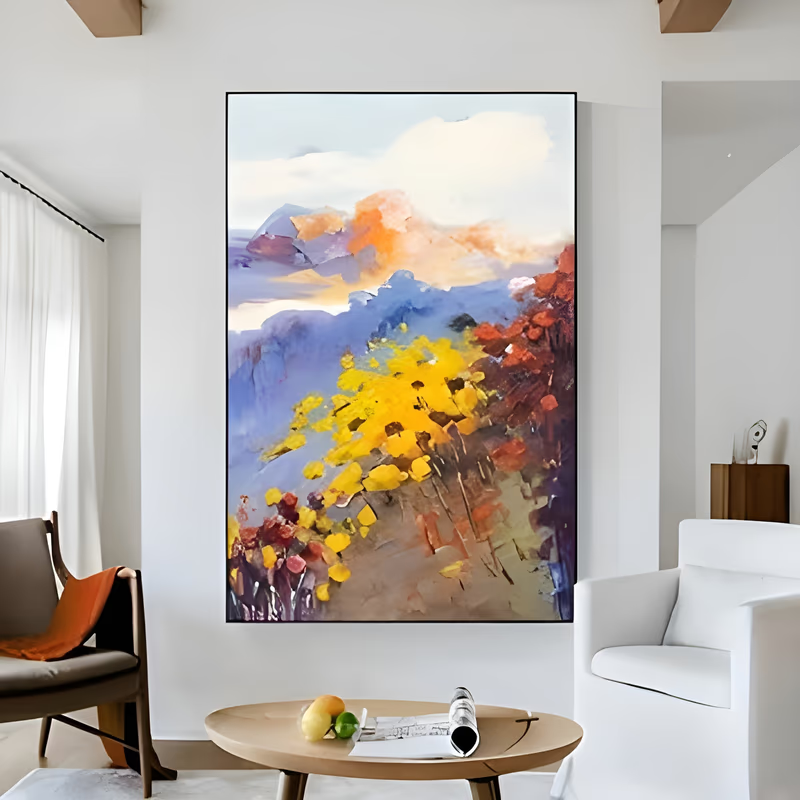
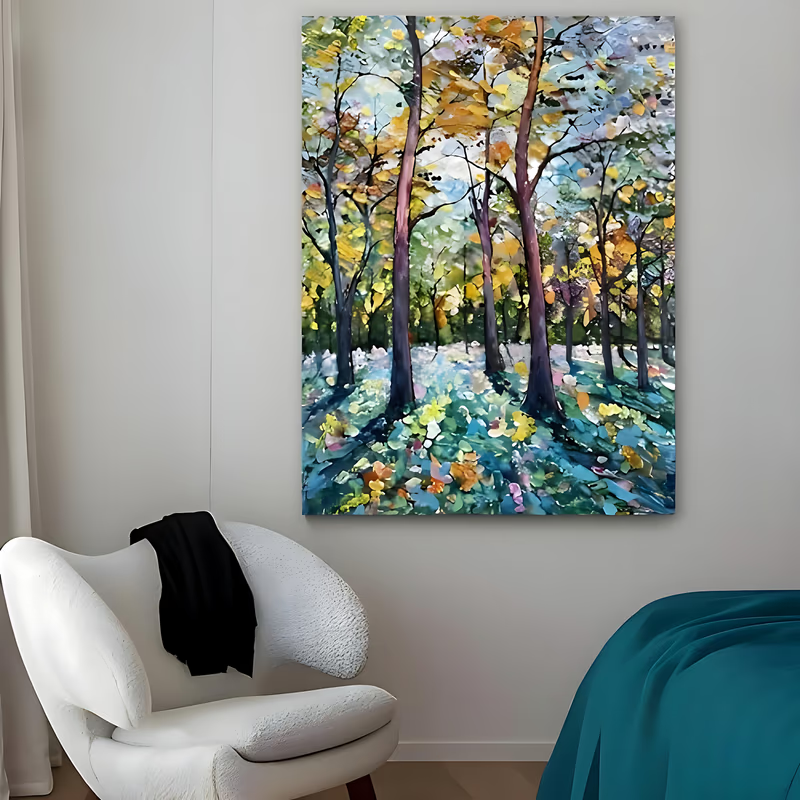
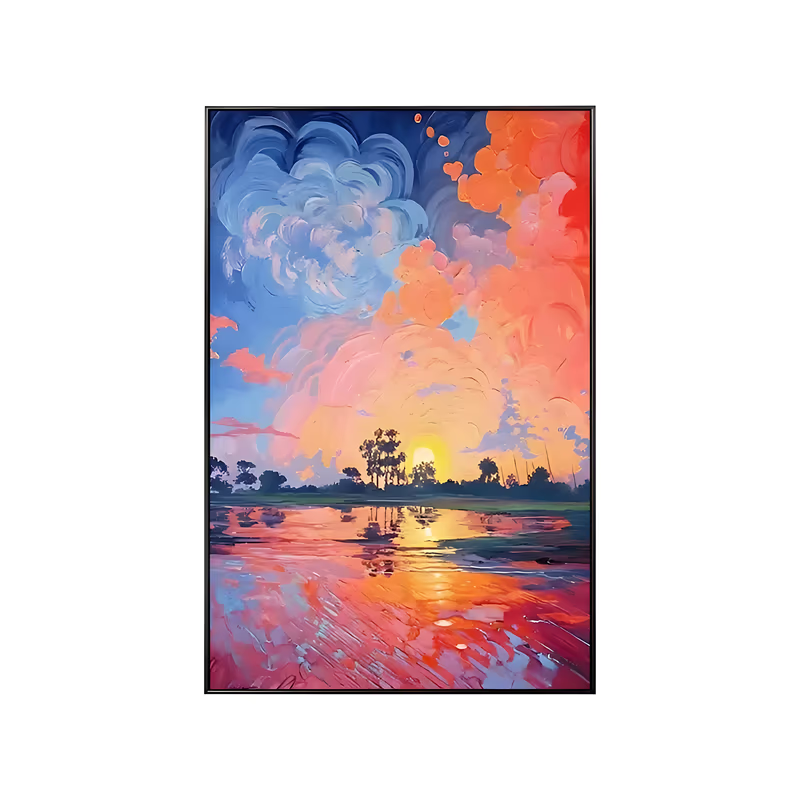
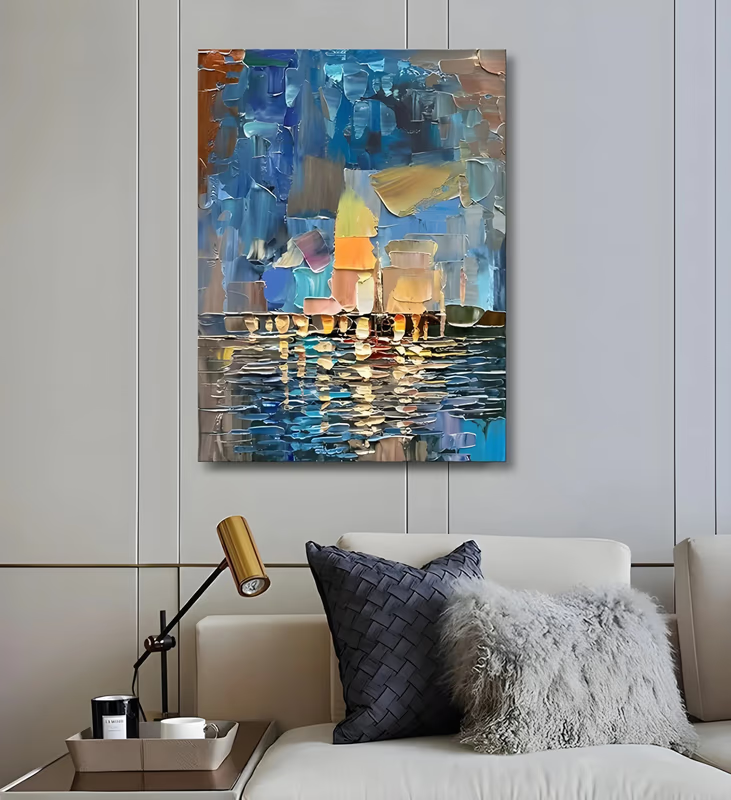
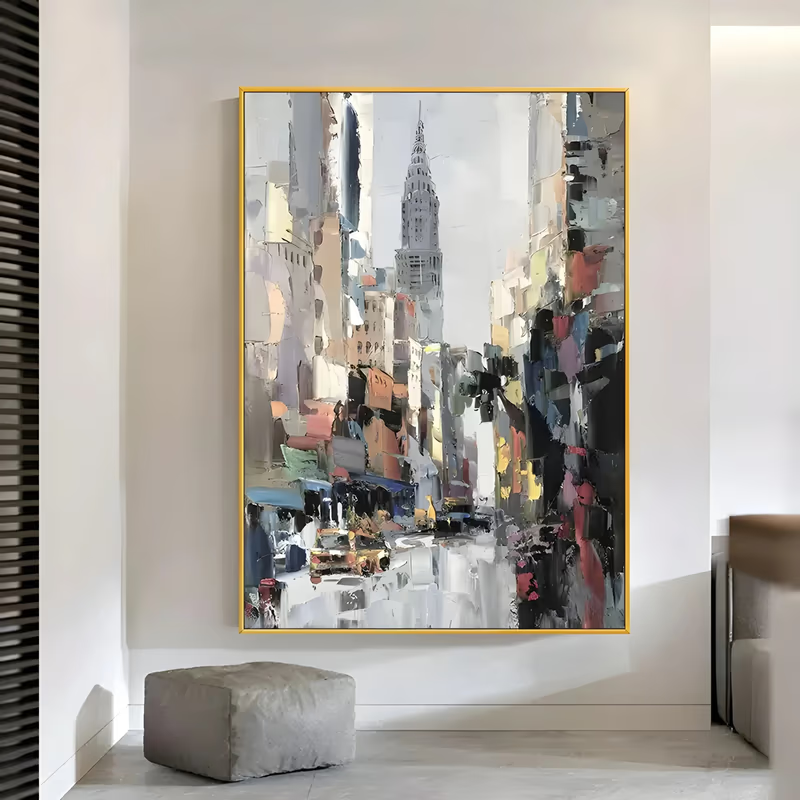
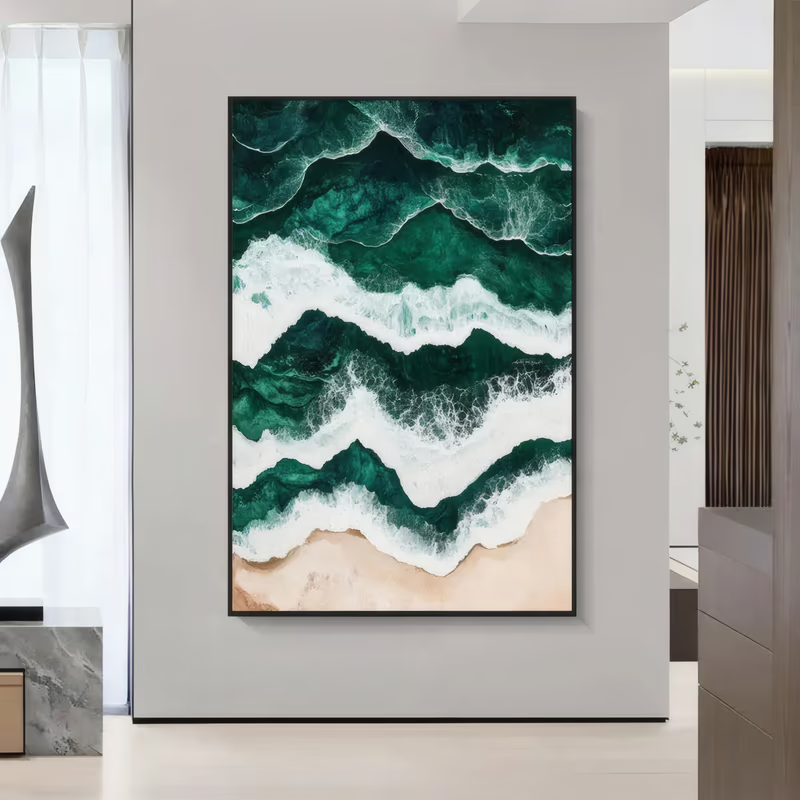
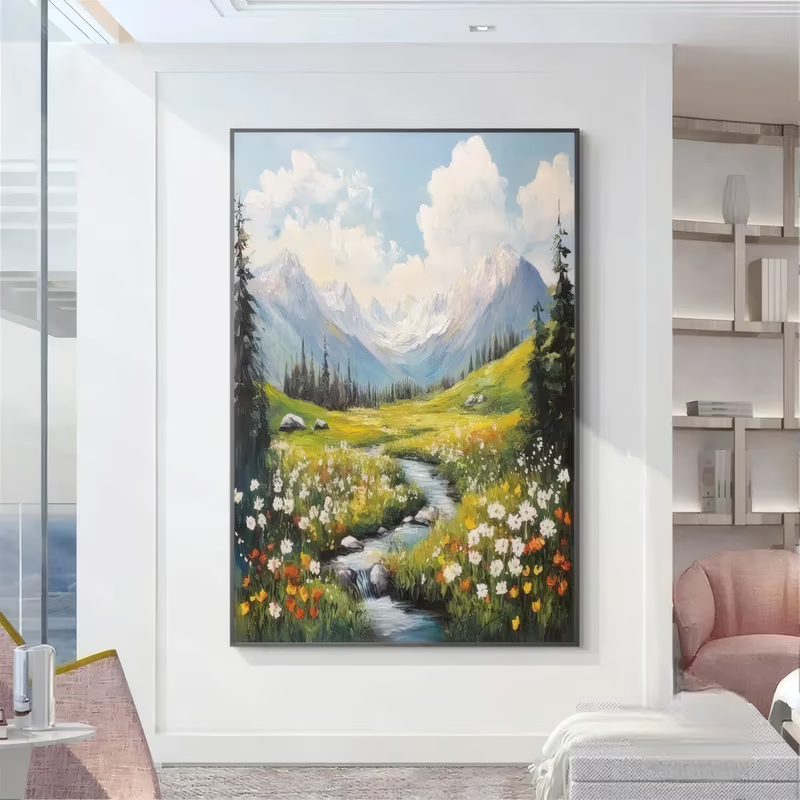
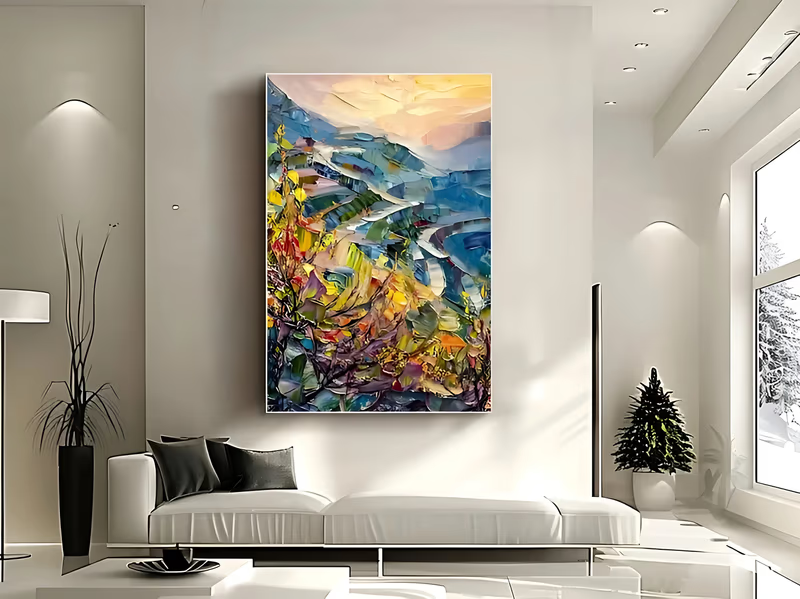
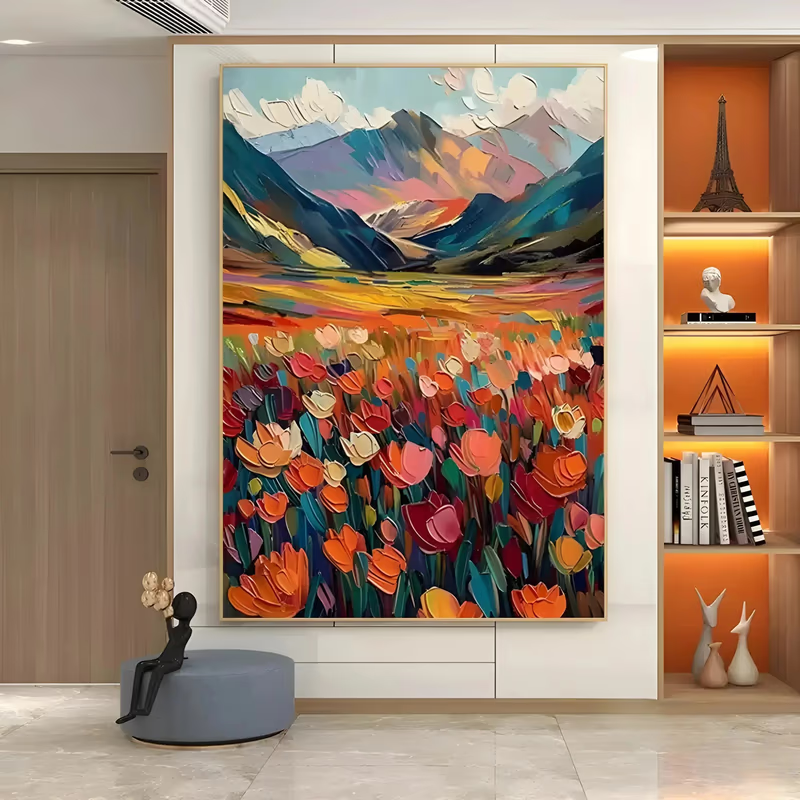
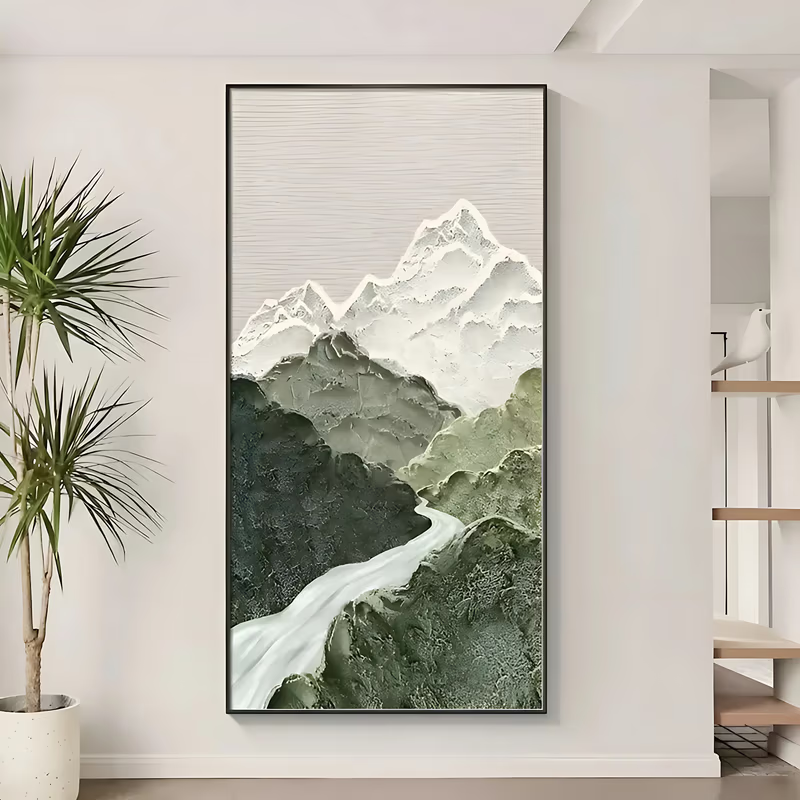
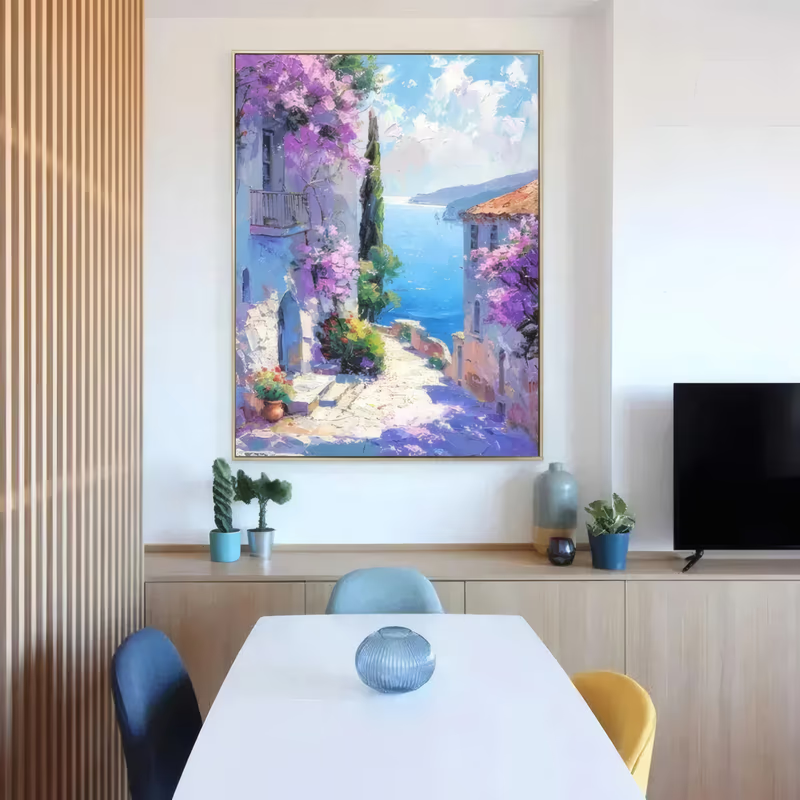
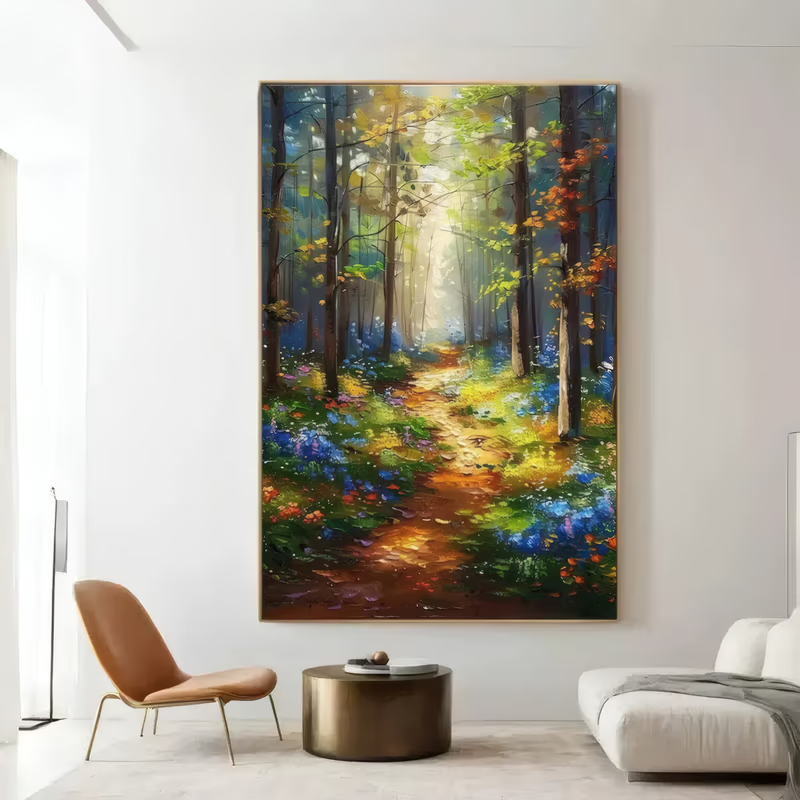
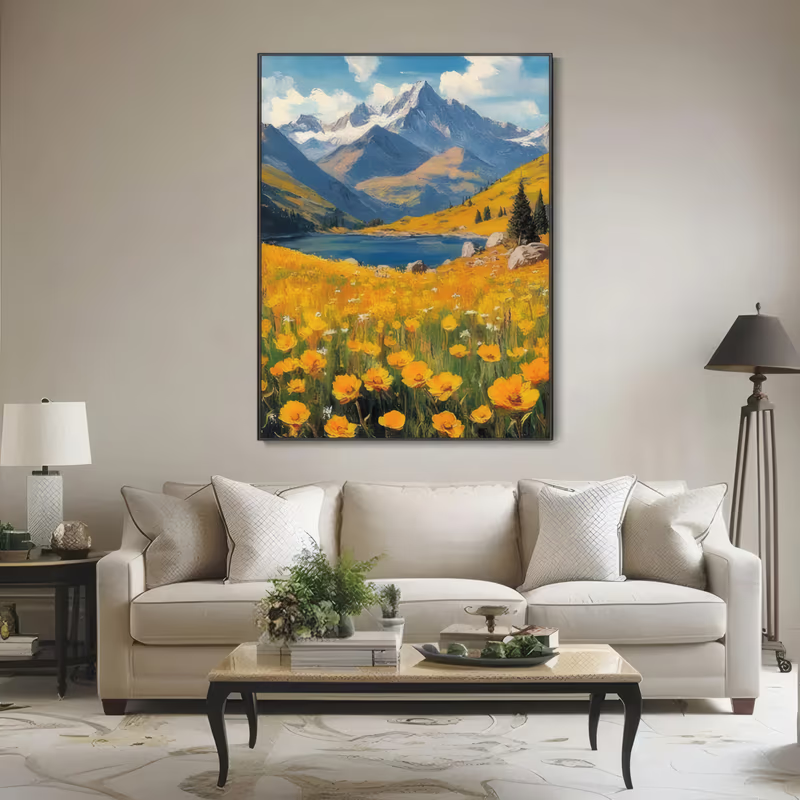
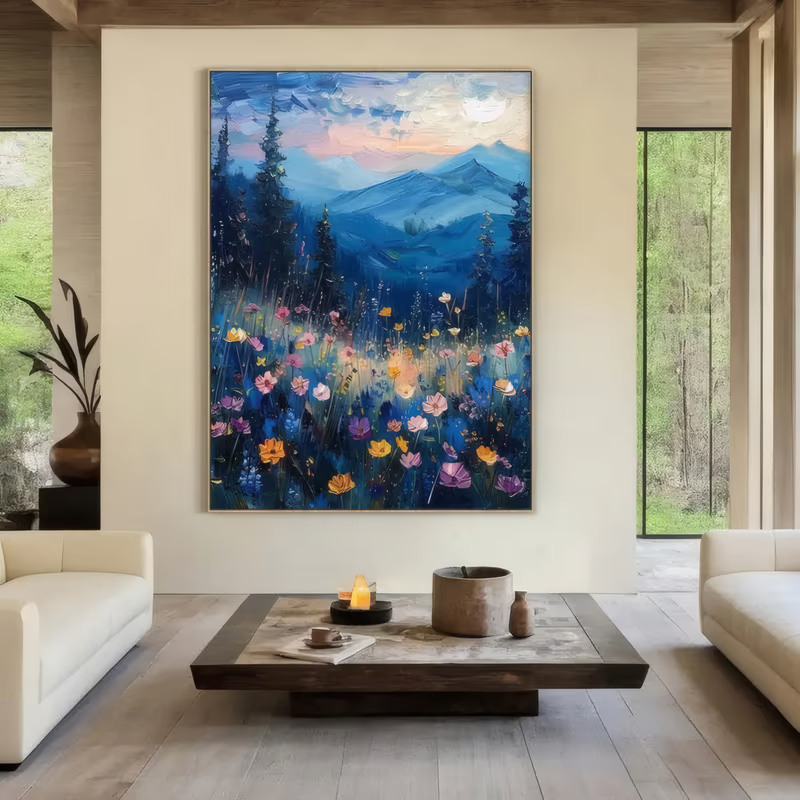
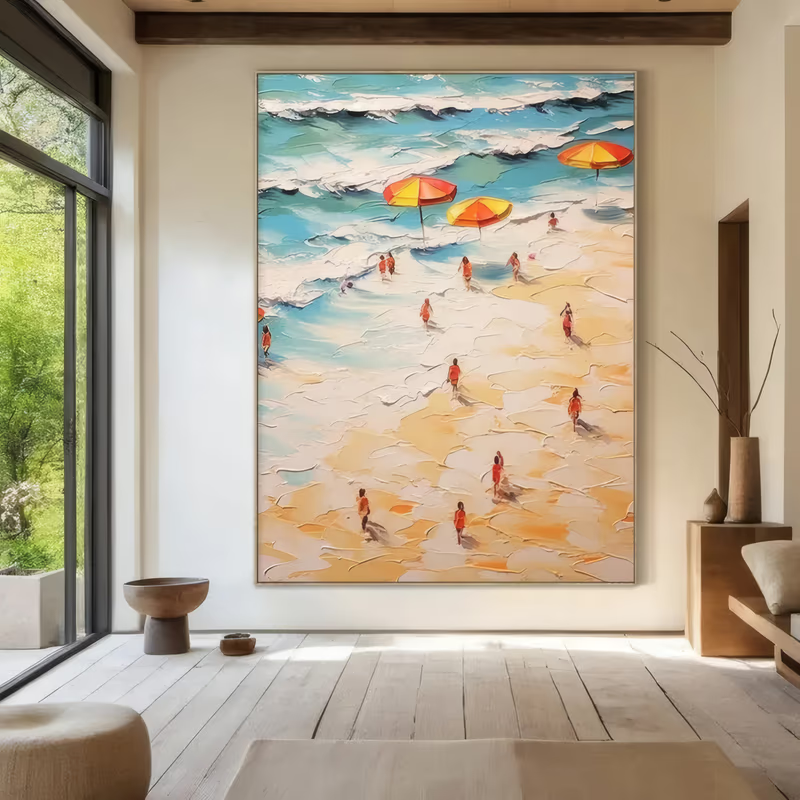
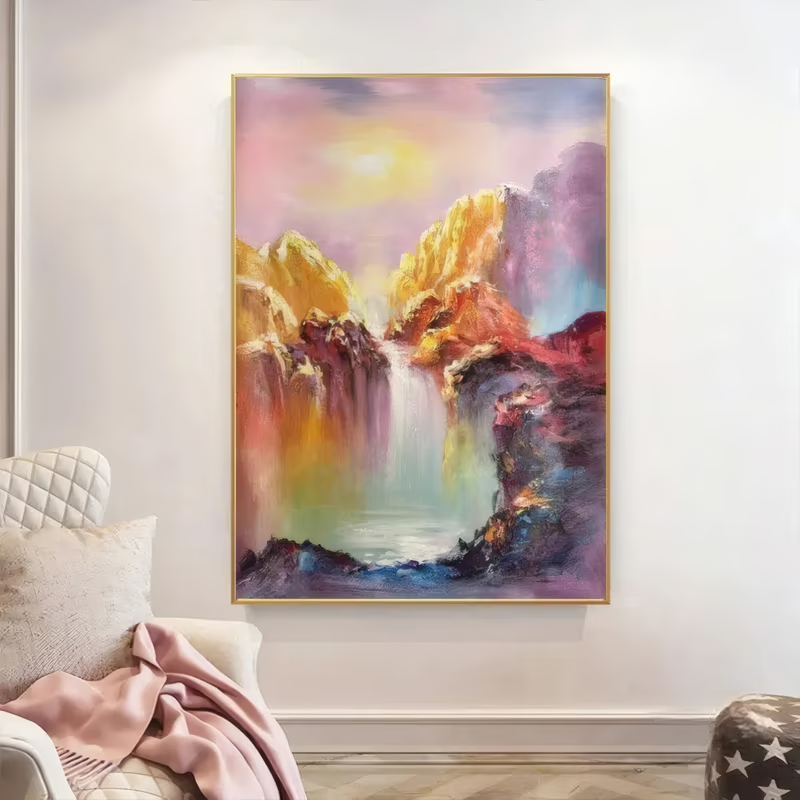
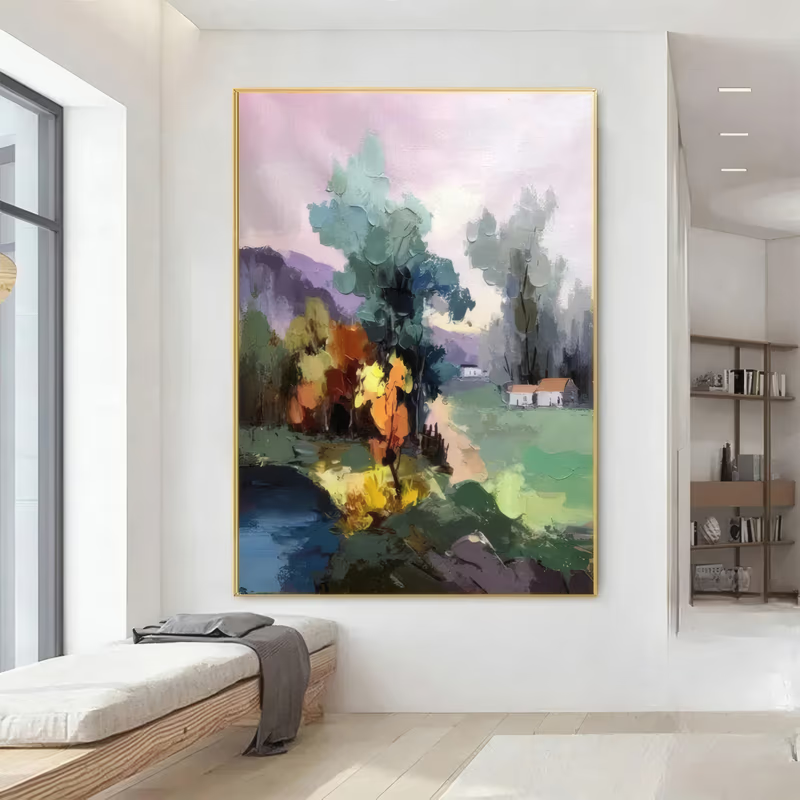
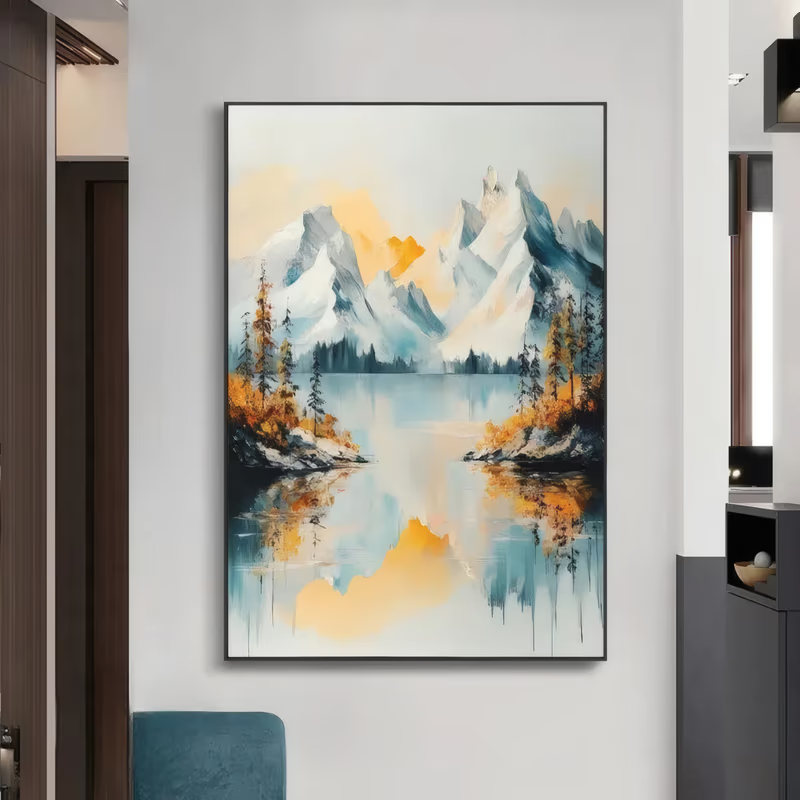
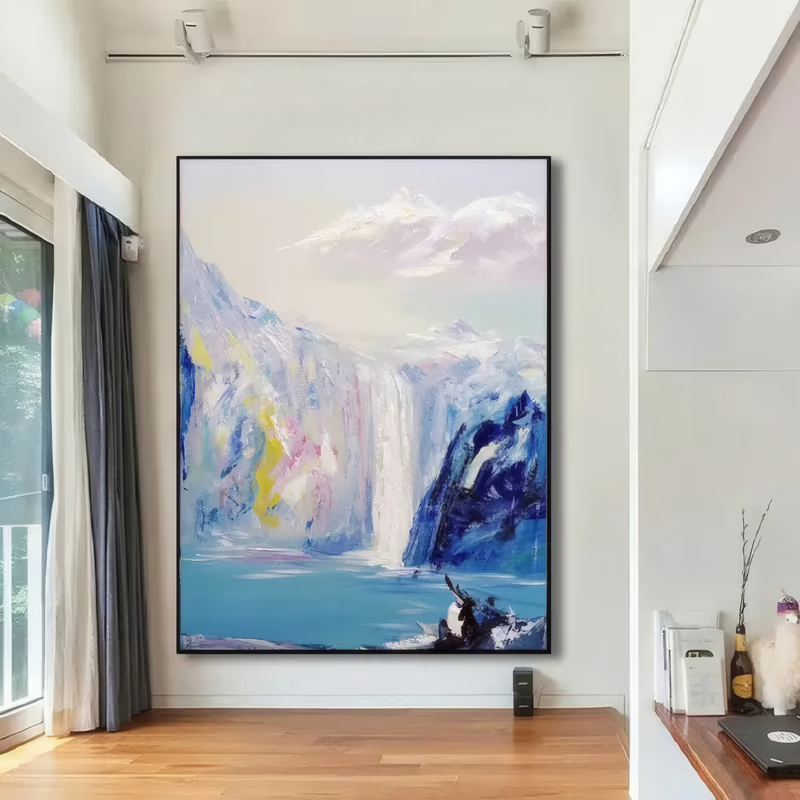
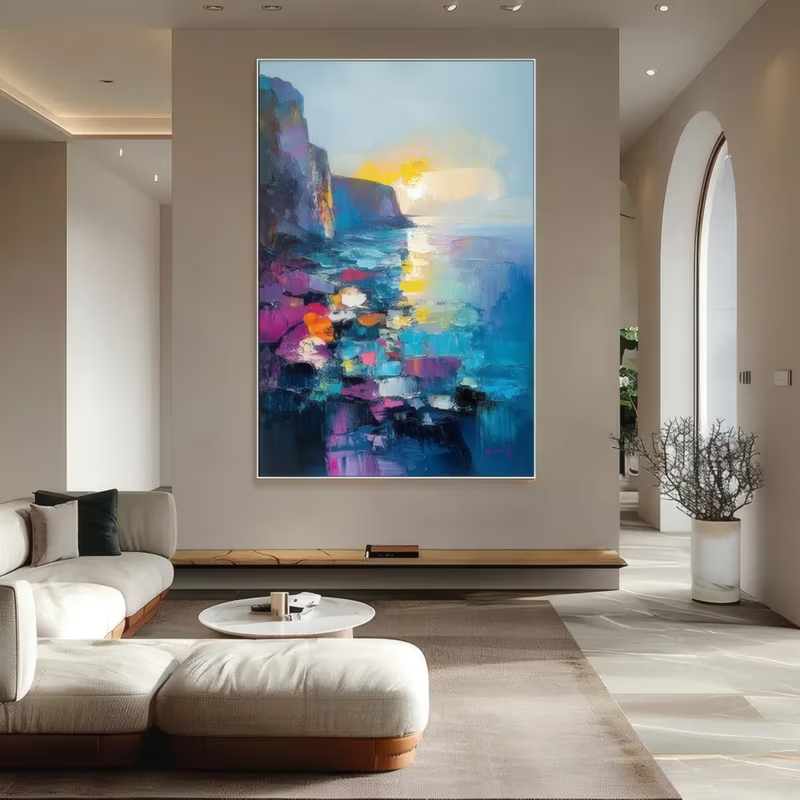
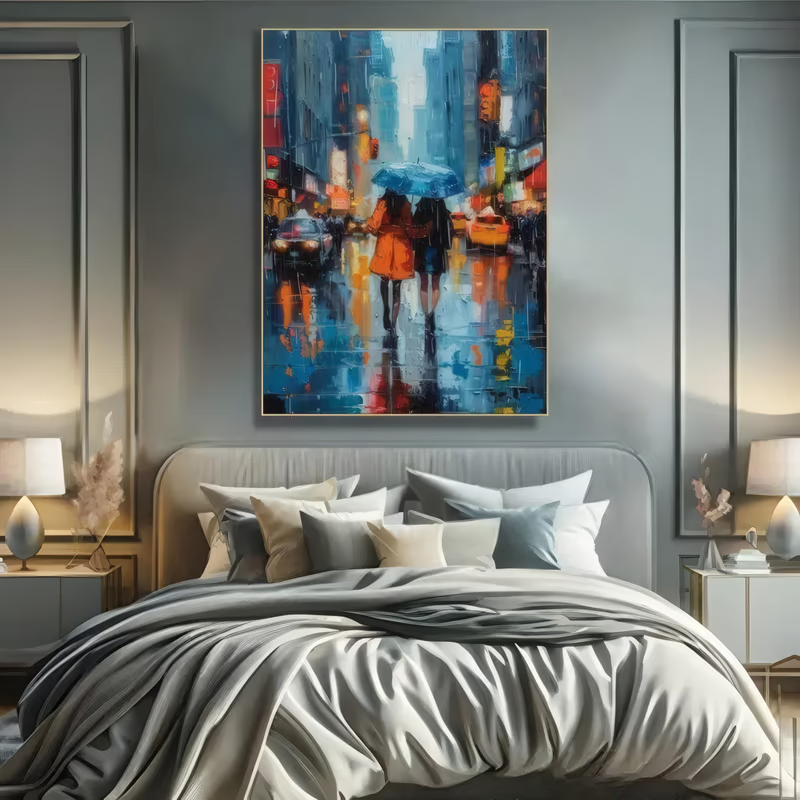
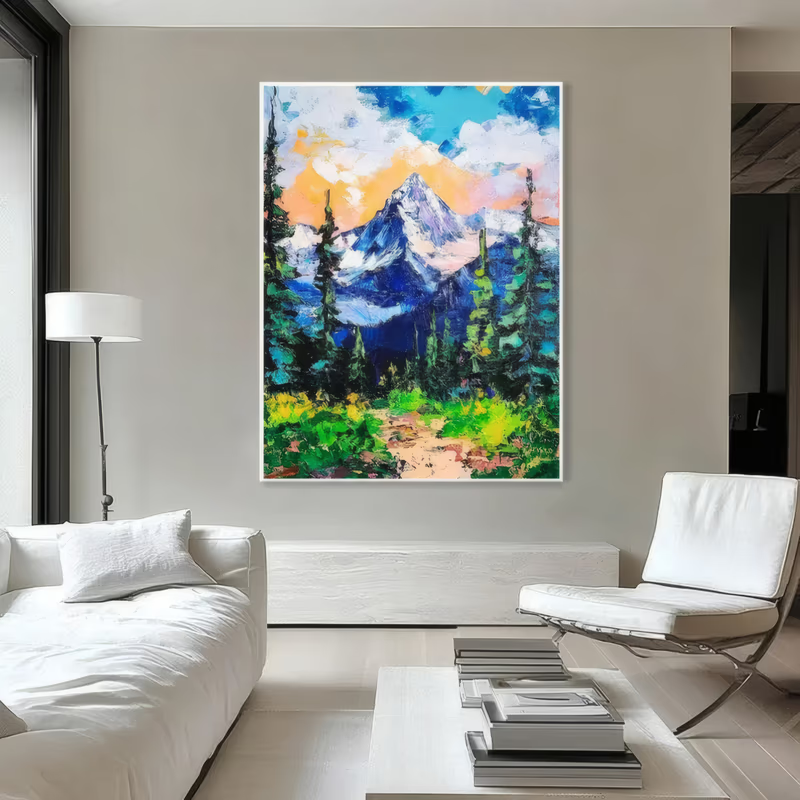
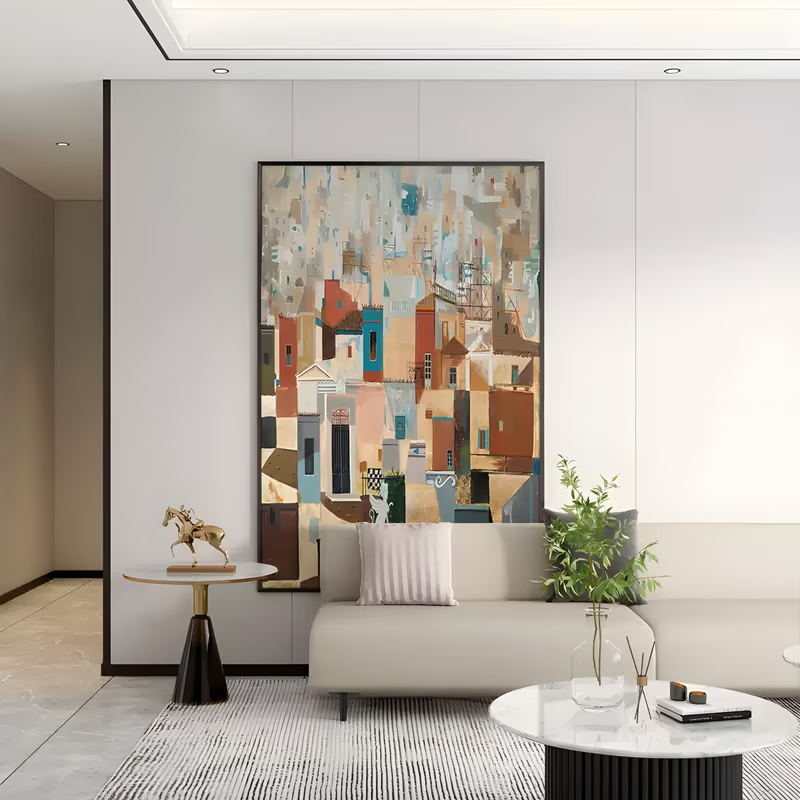
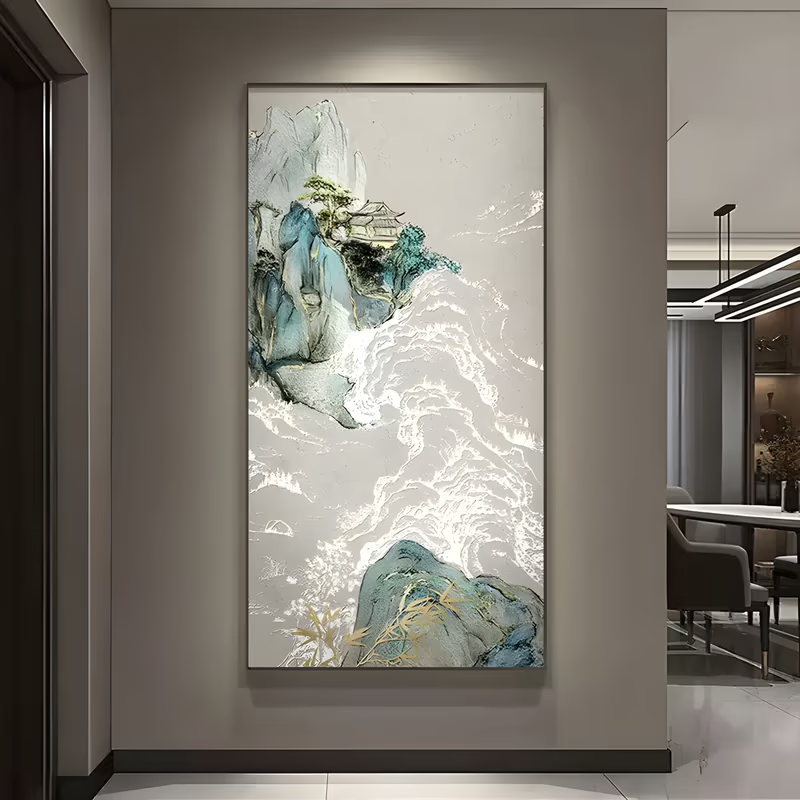
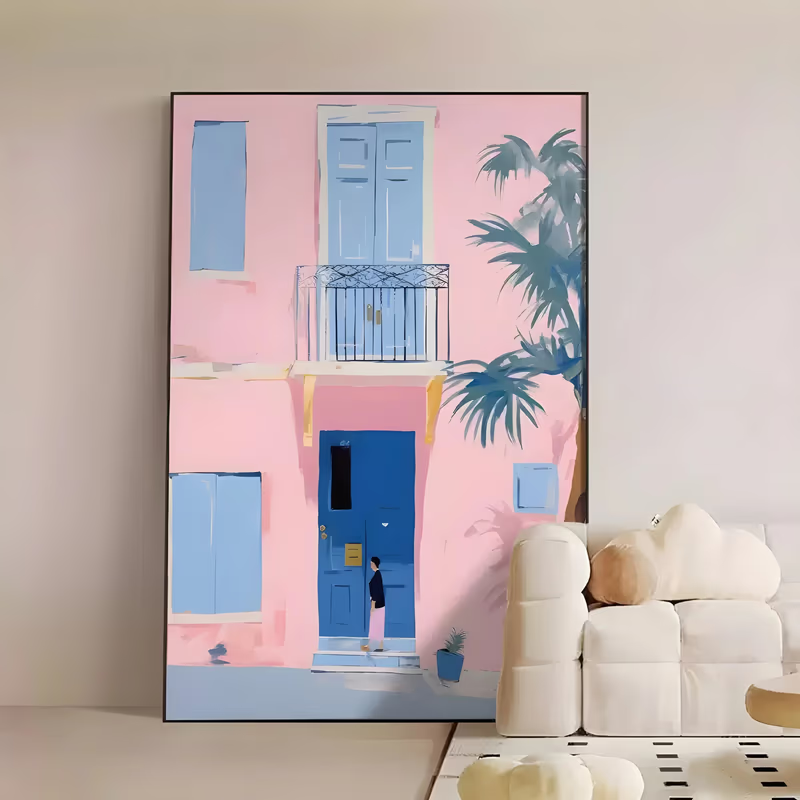
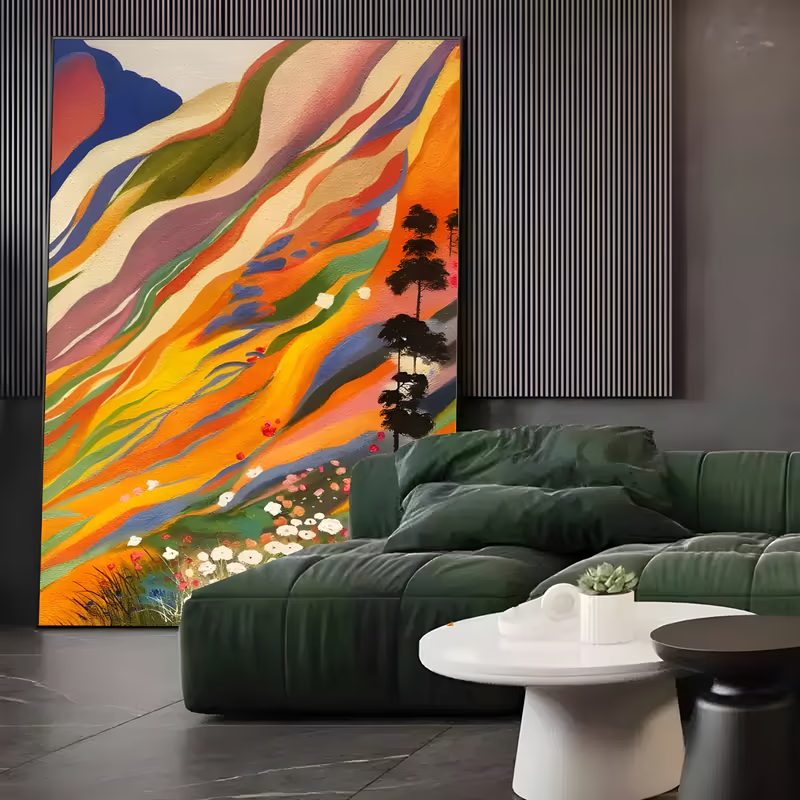
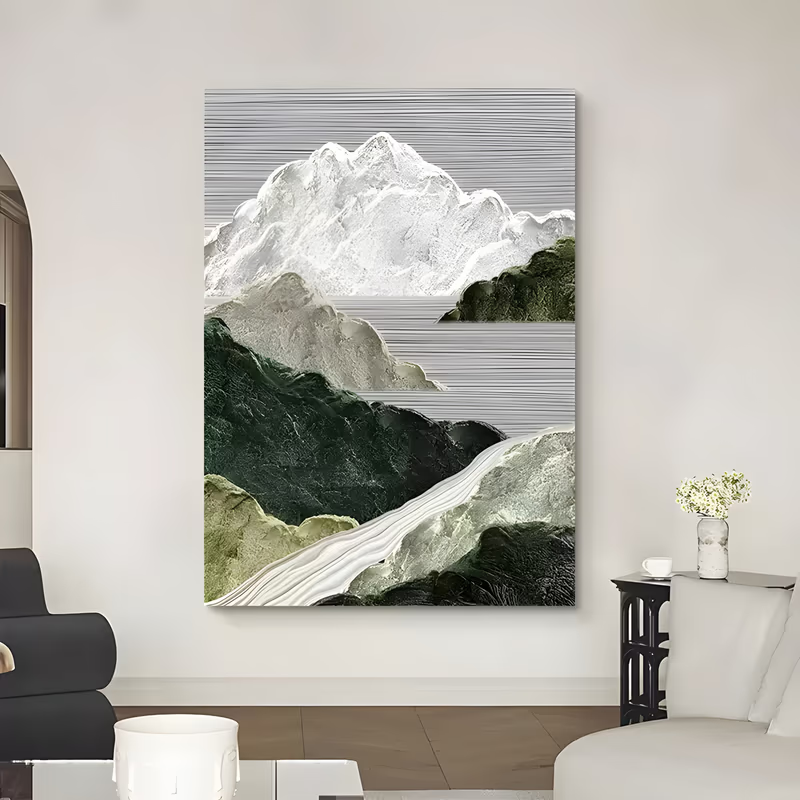
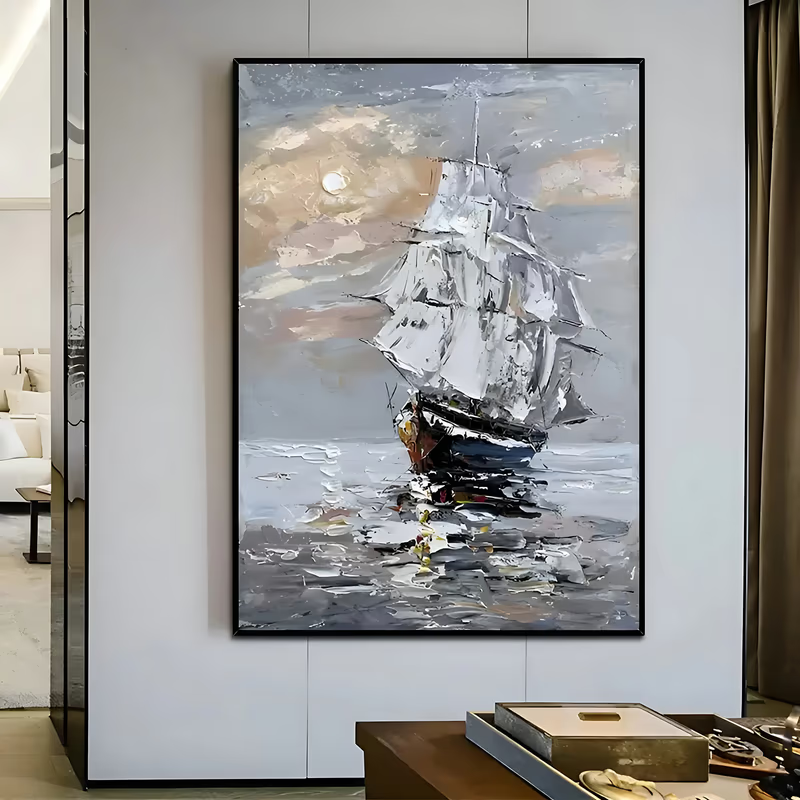
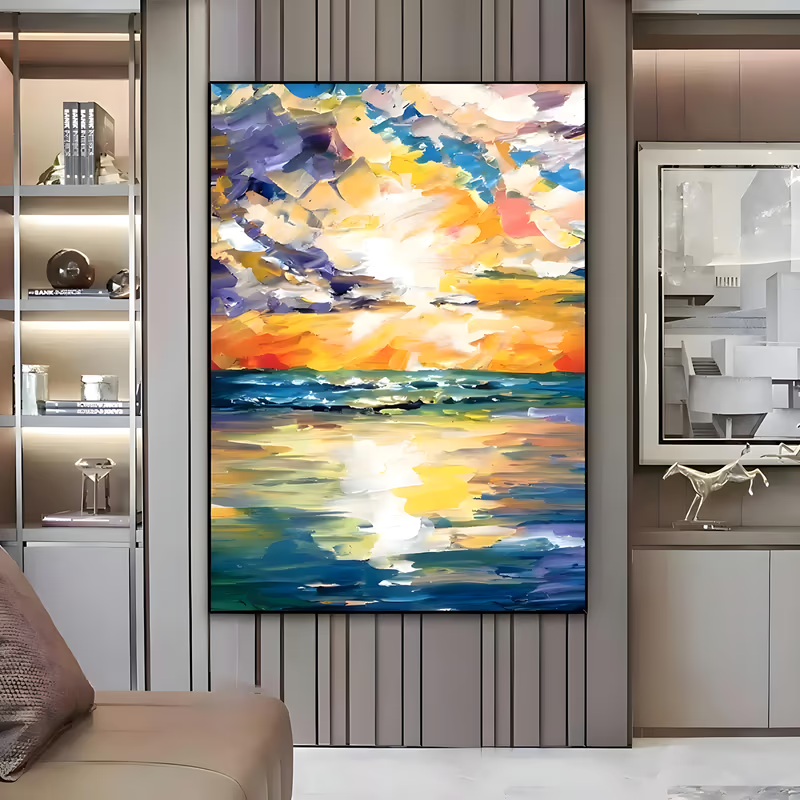
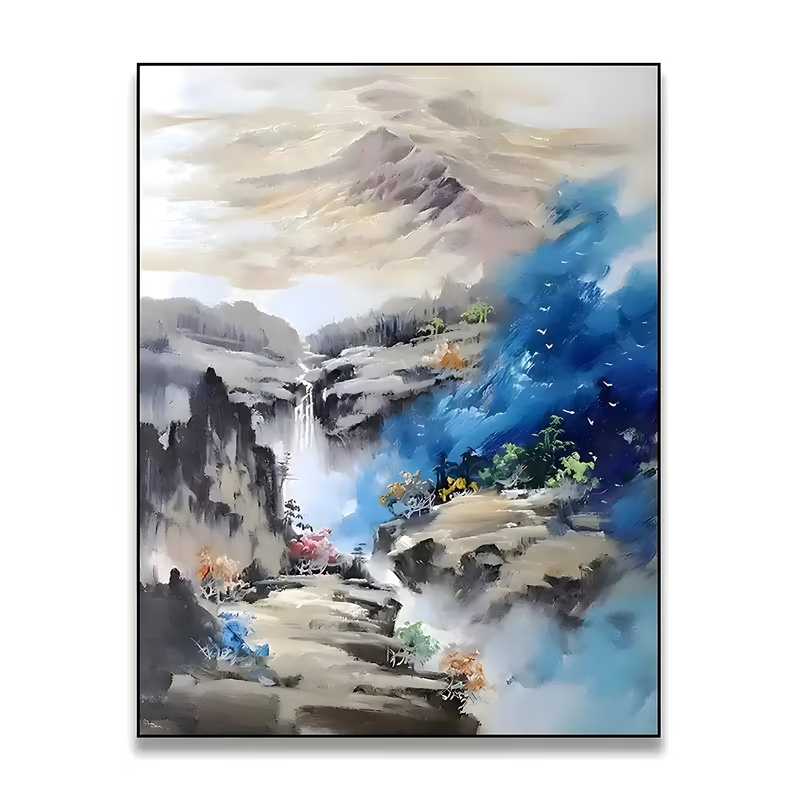
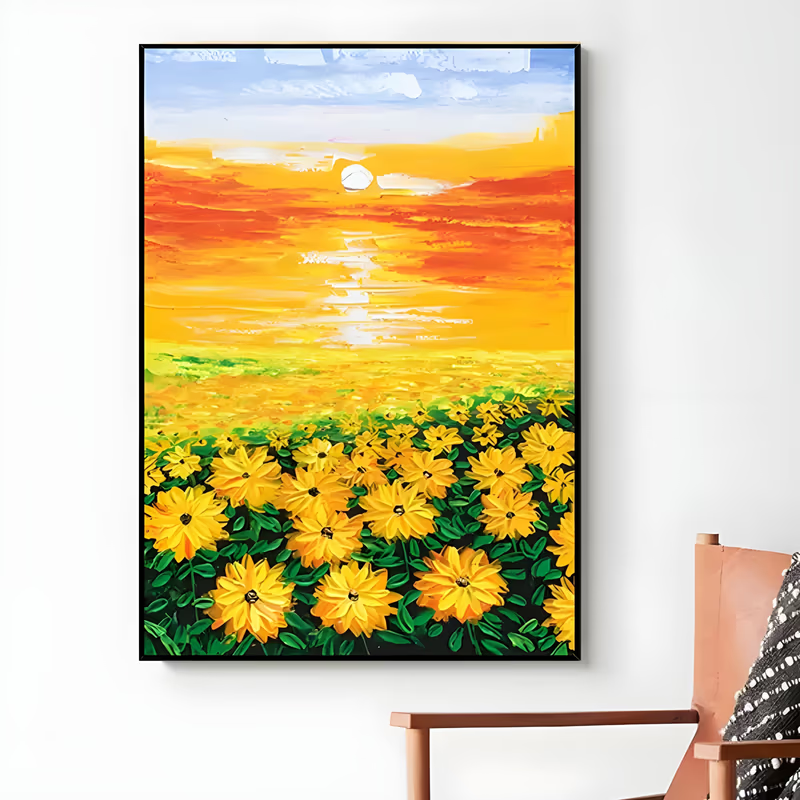
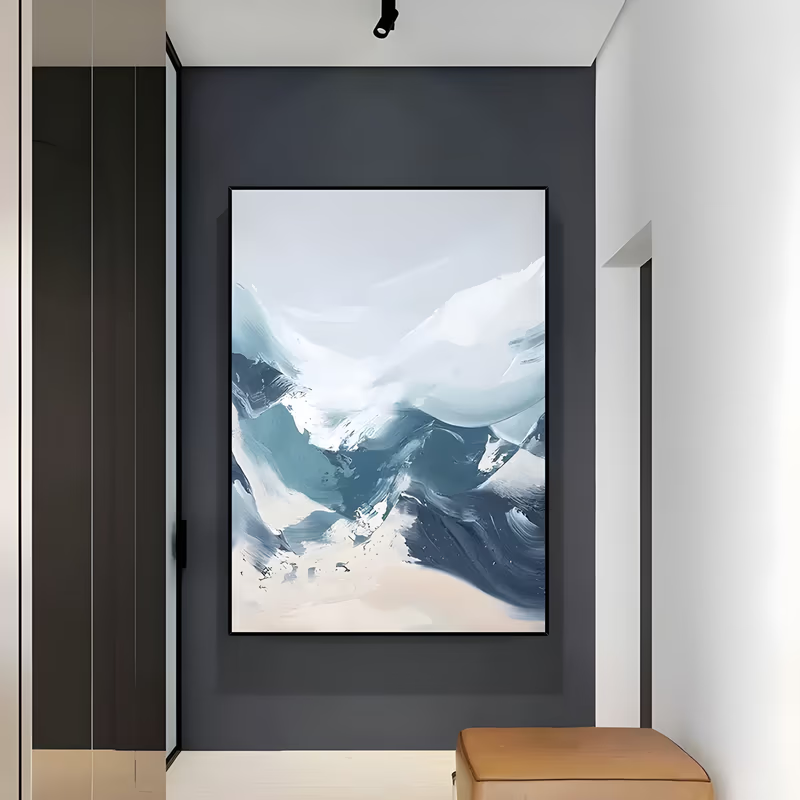
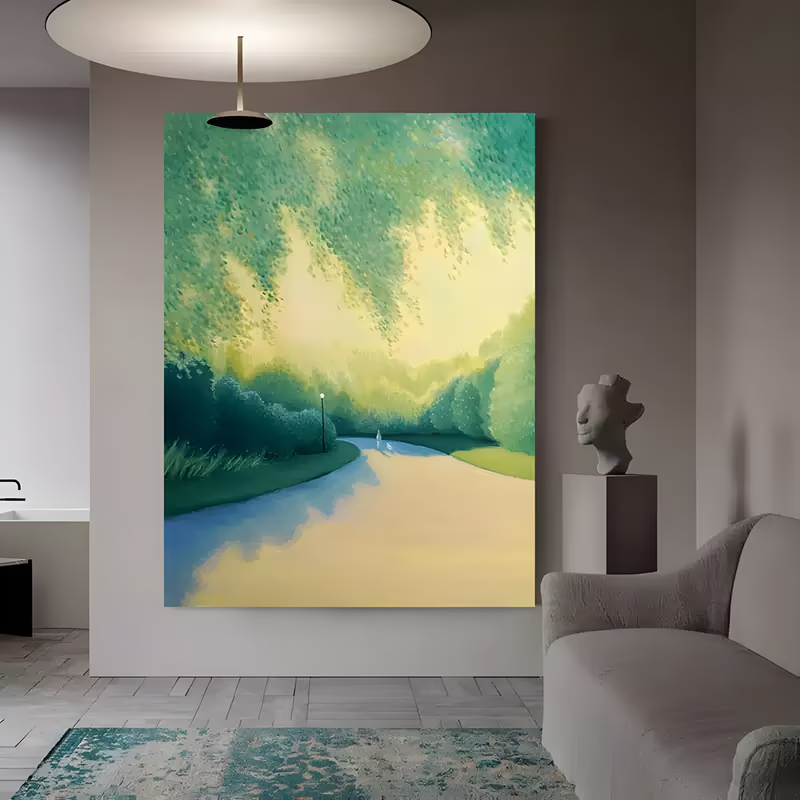
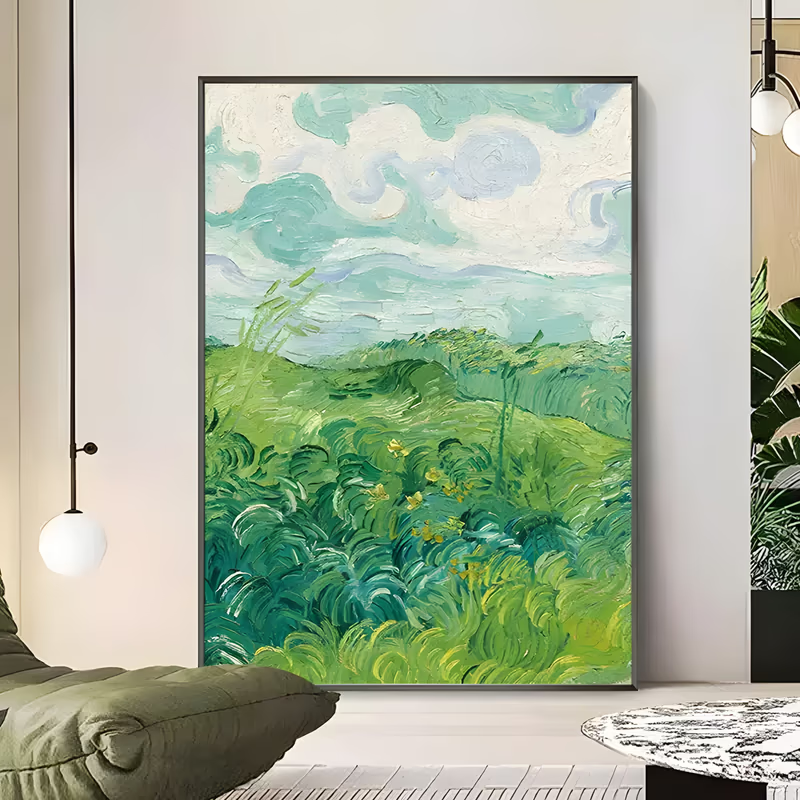
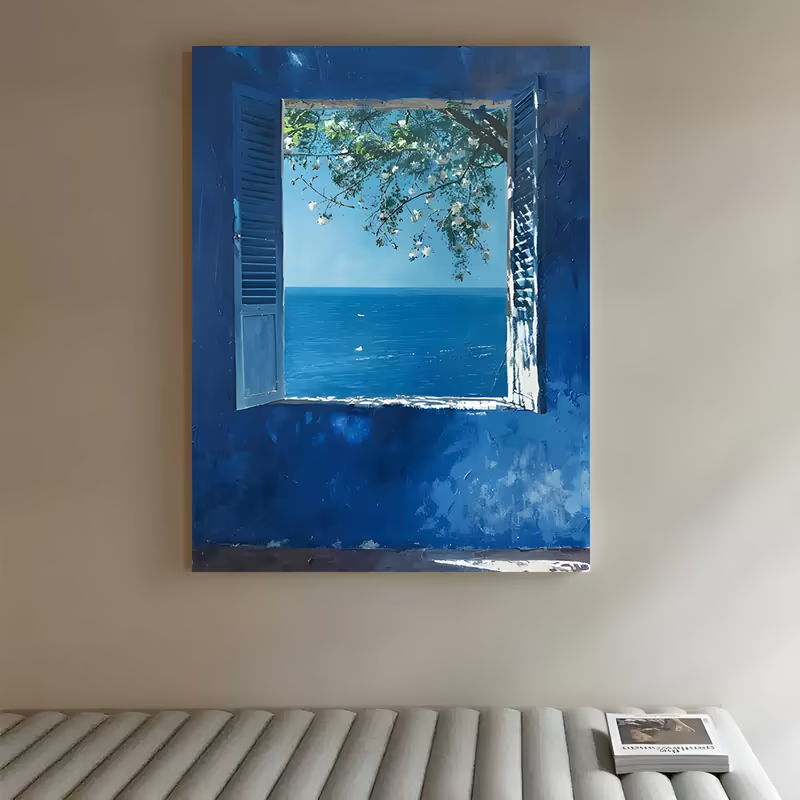
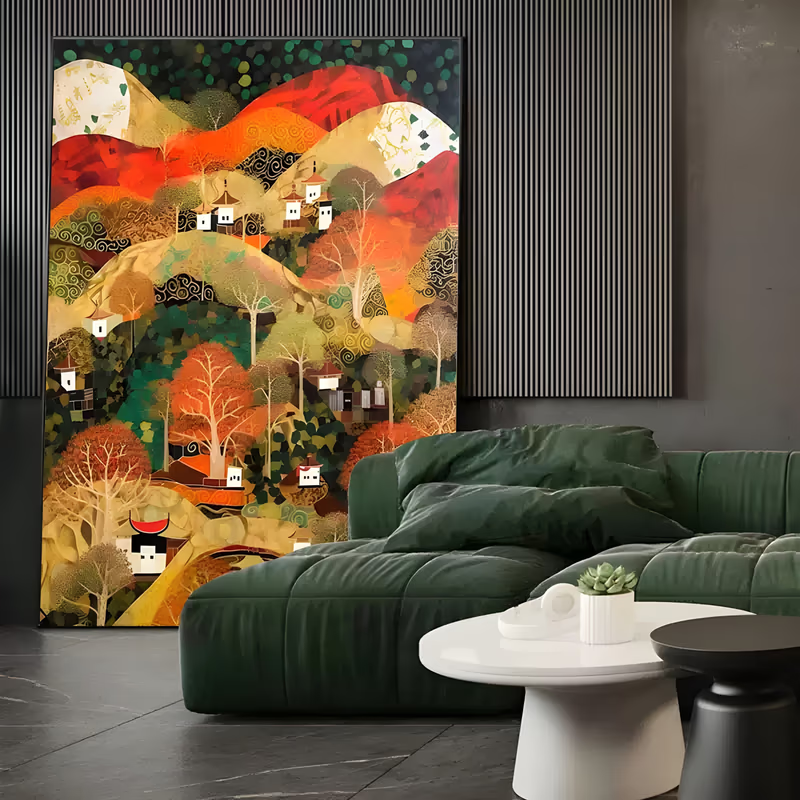
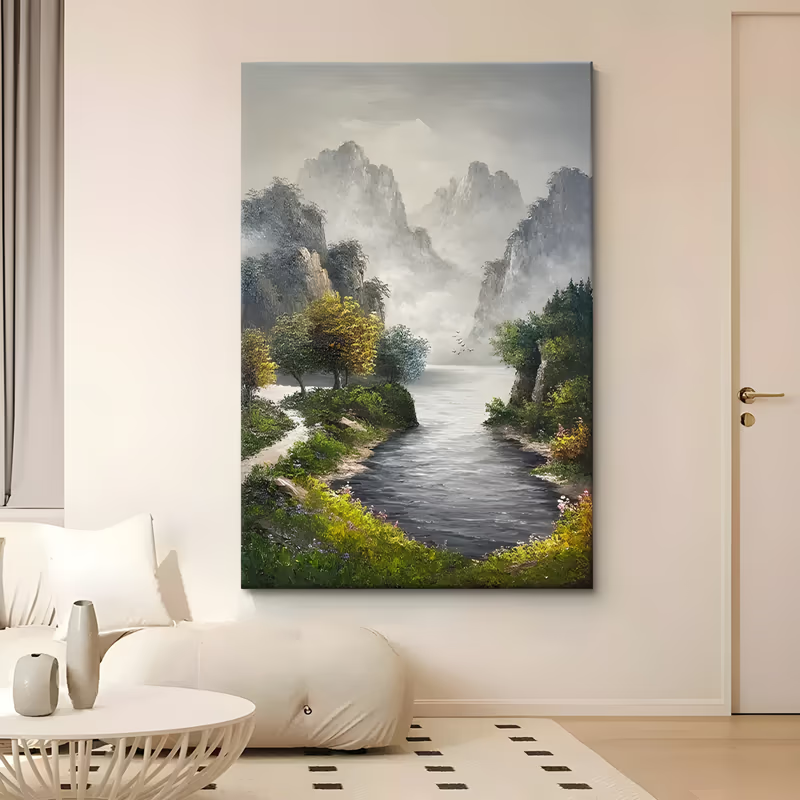
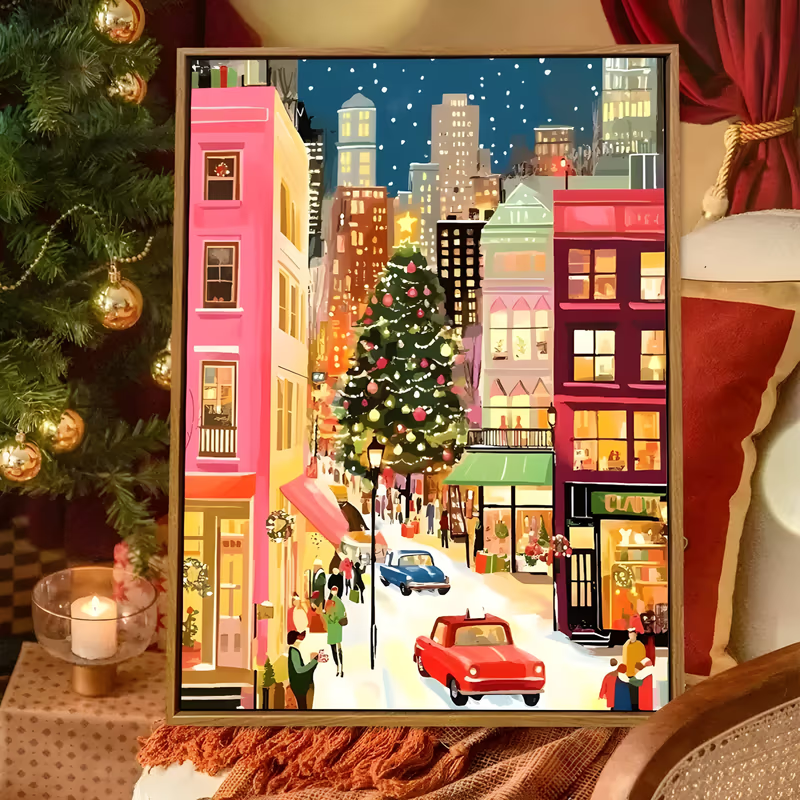
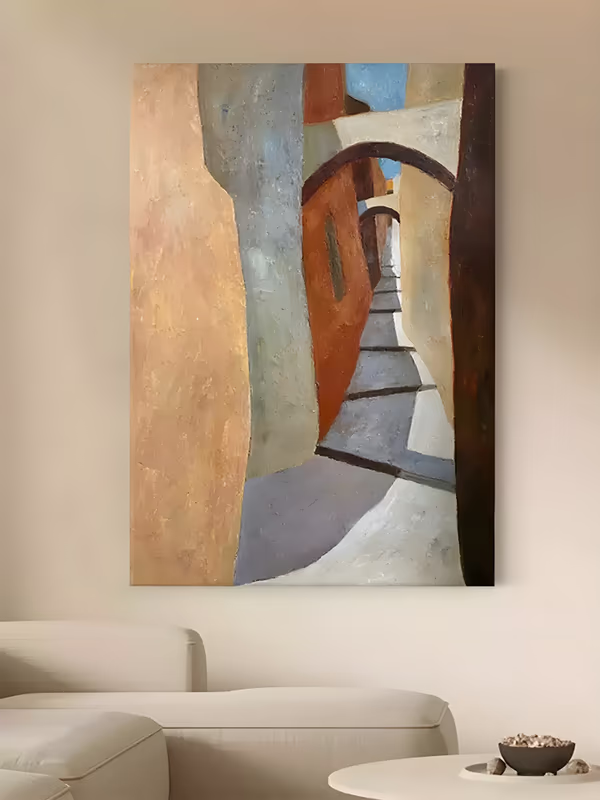
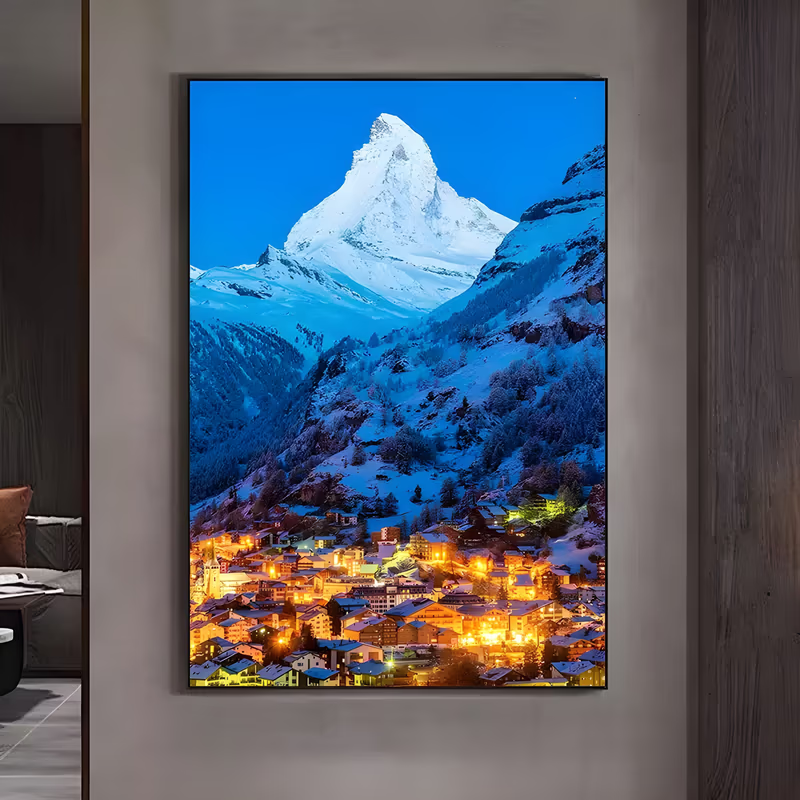
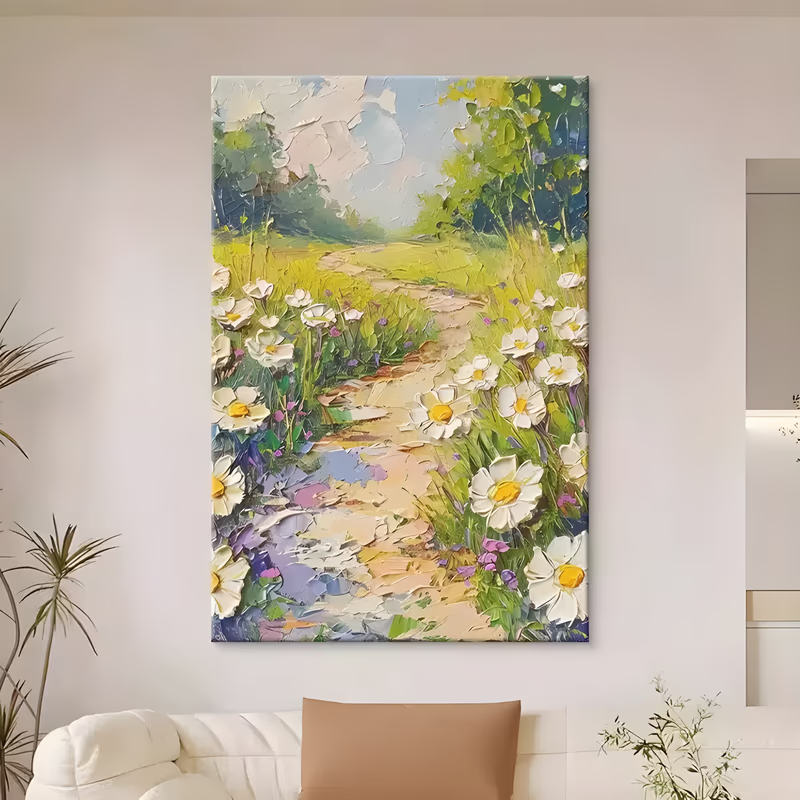
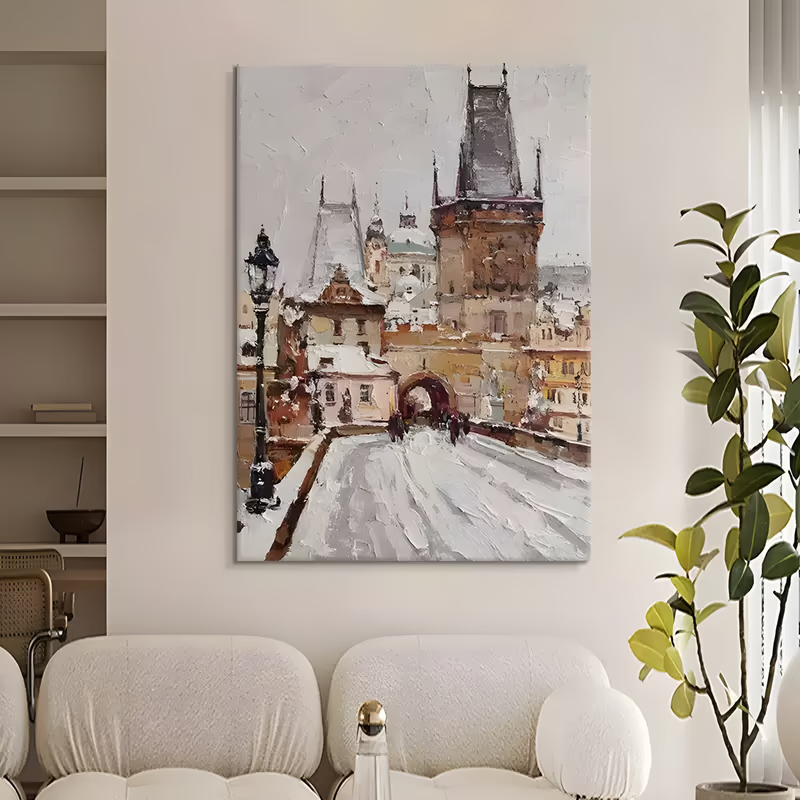
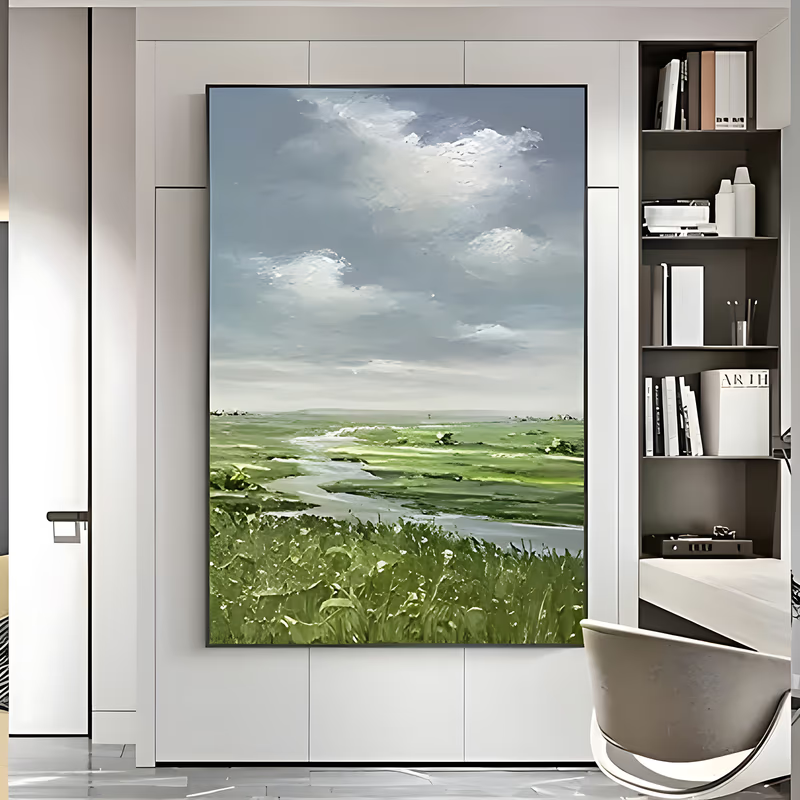
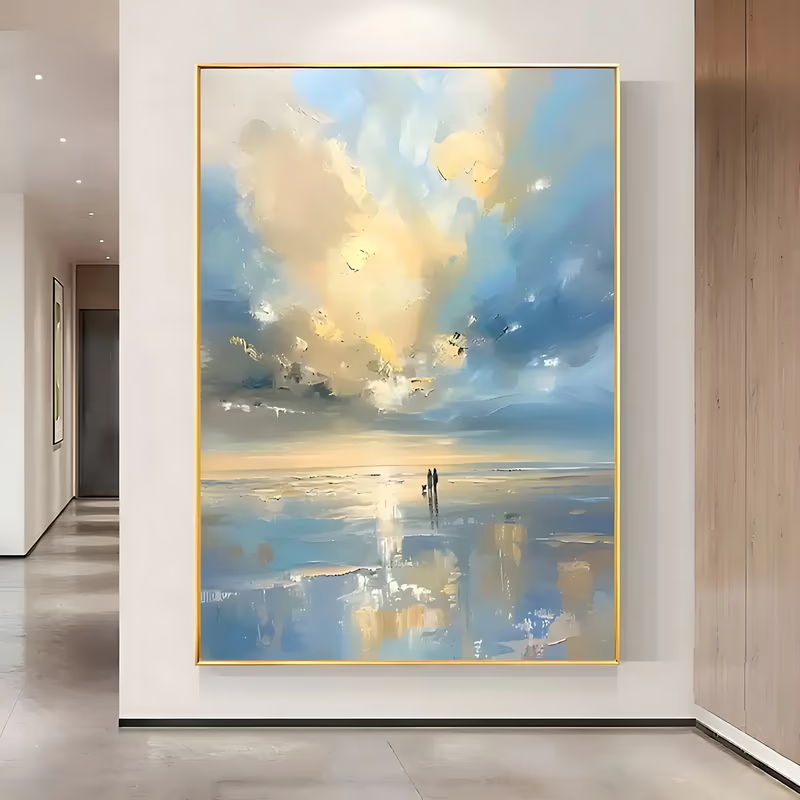
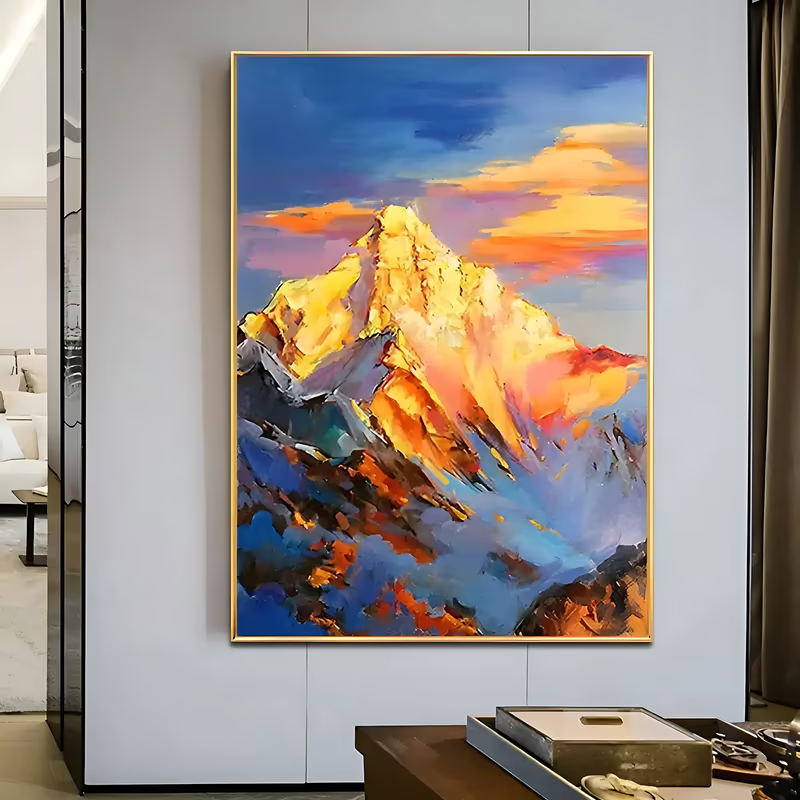
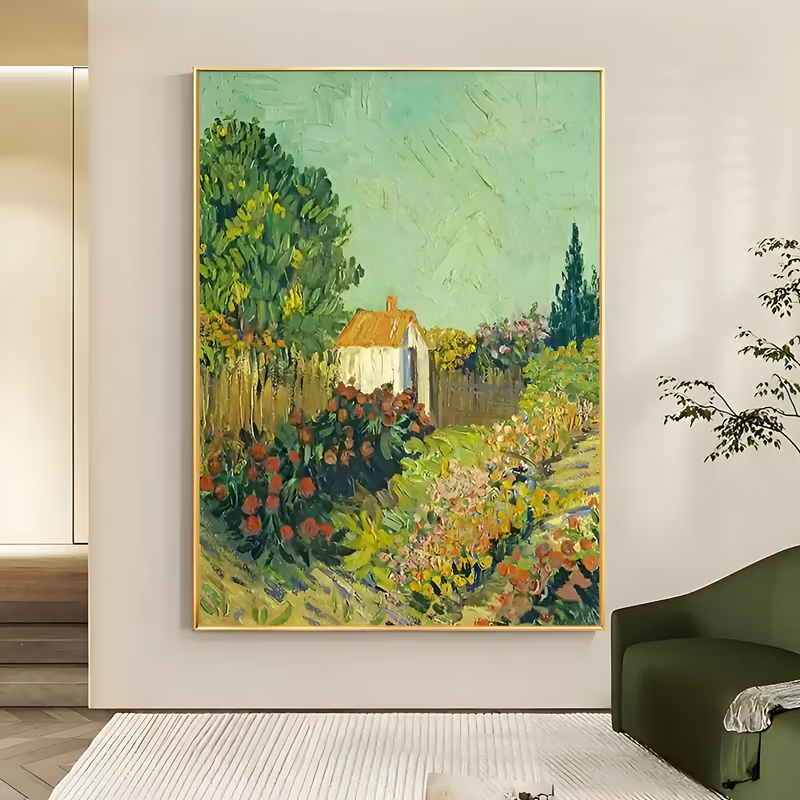
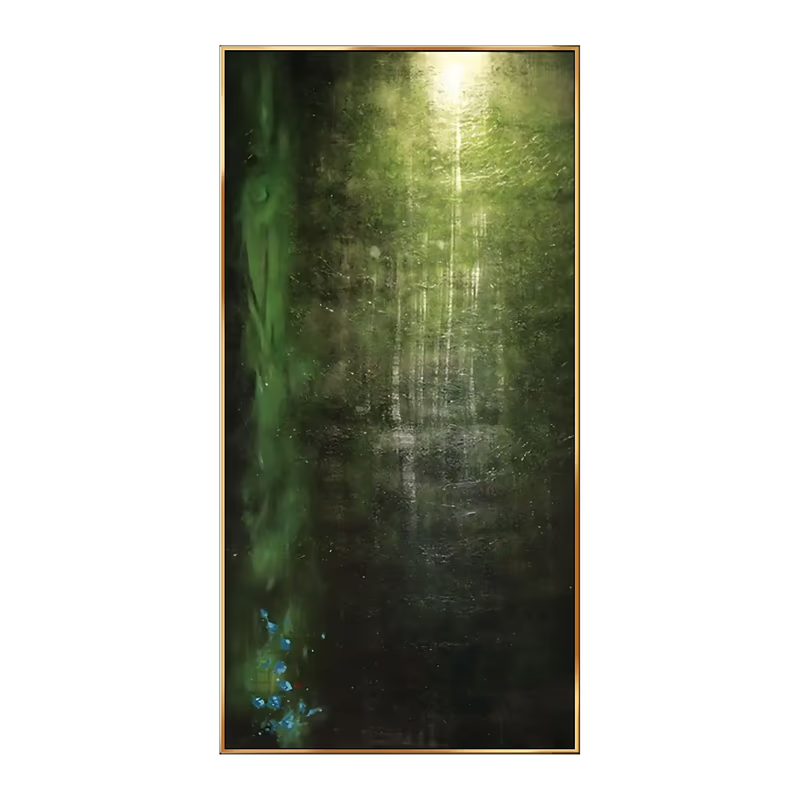
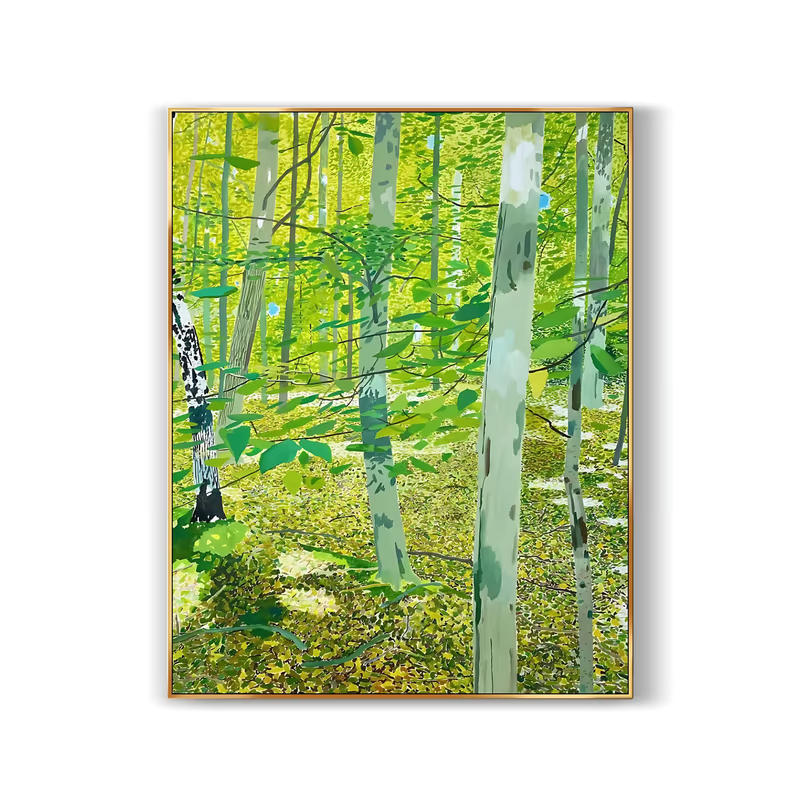
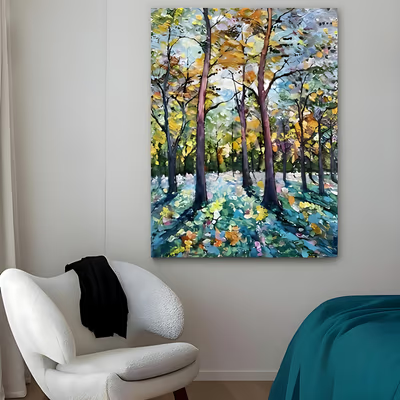
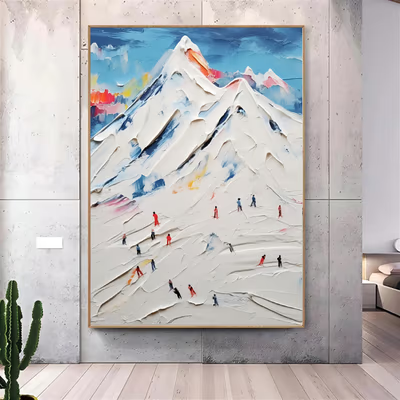
Misty mountains, autumn paths, sunset seas, village streets. A painted view works like a window in a hall that has none, and its horizon gives a short passage somewhere to lead. Hallway landscapes.
Abstract and plaster relief
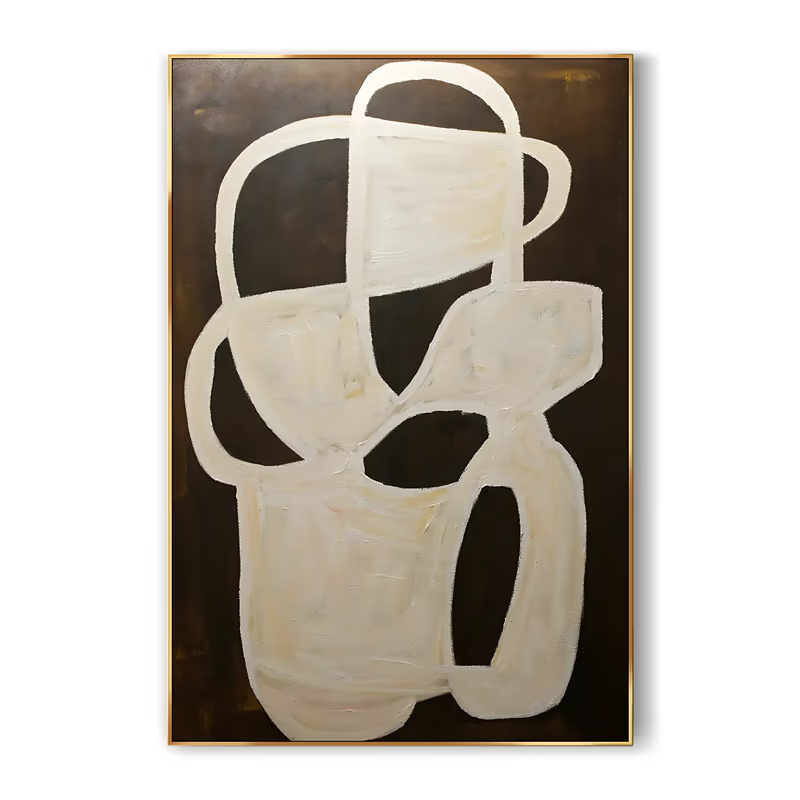
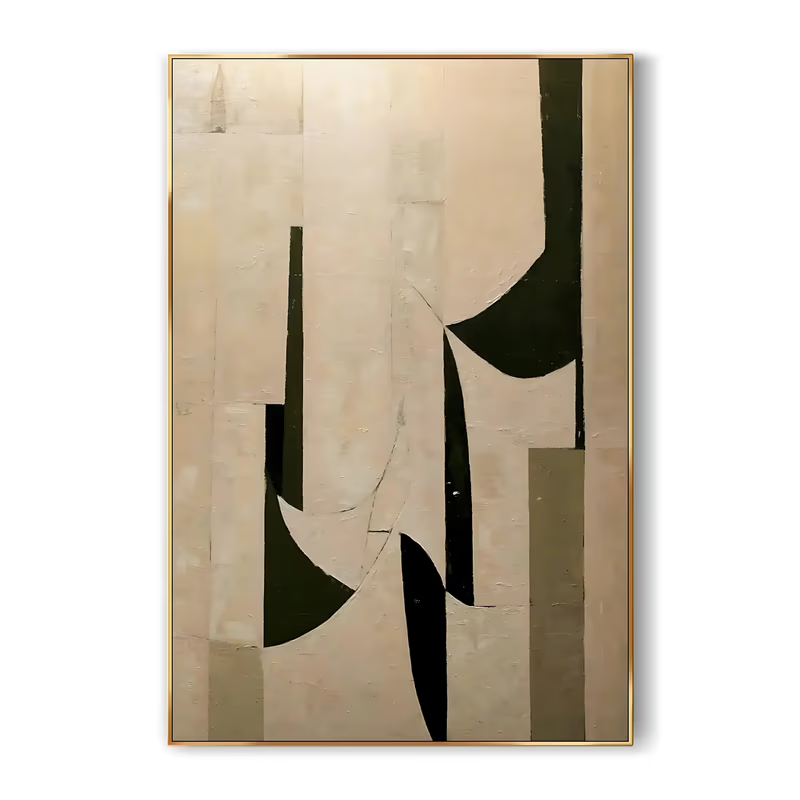
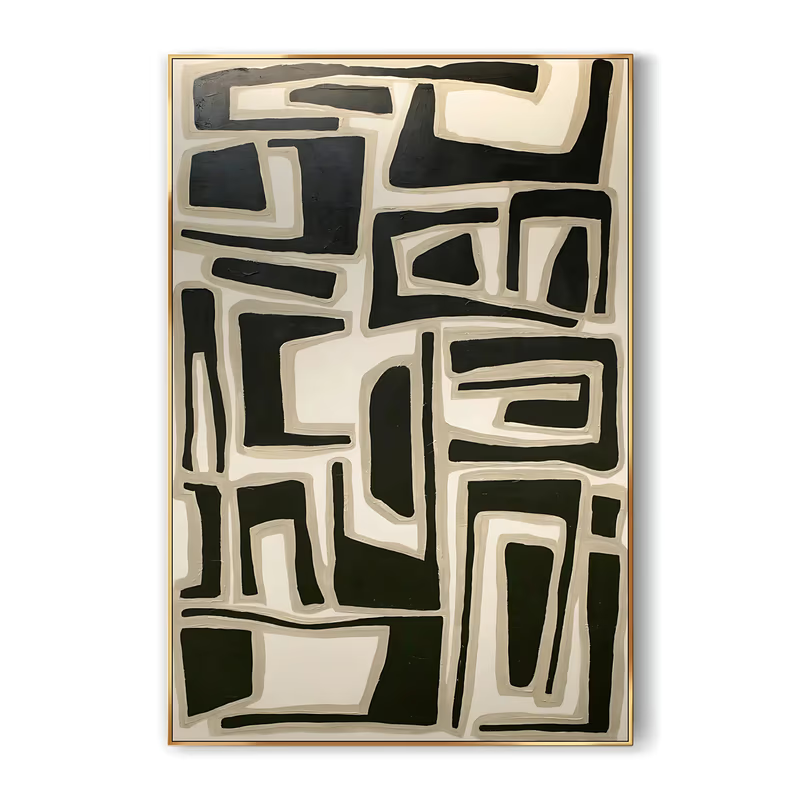
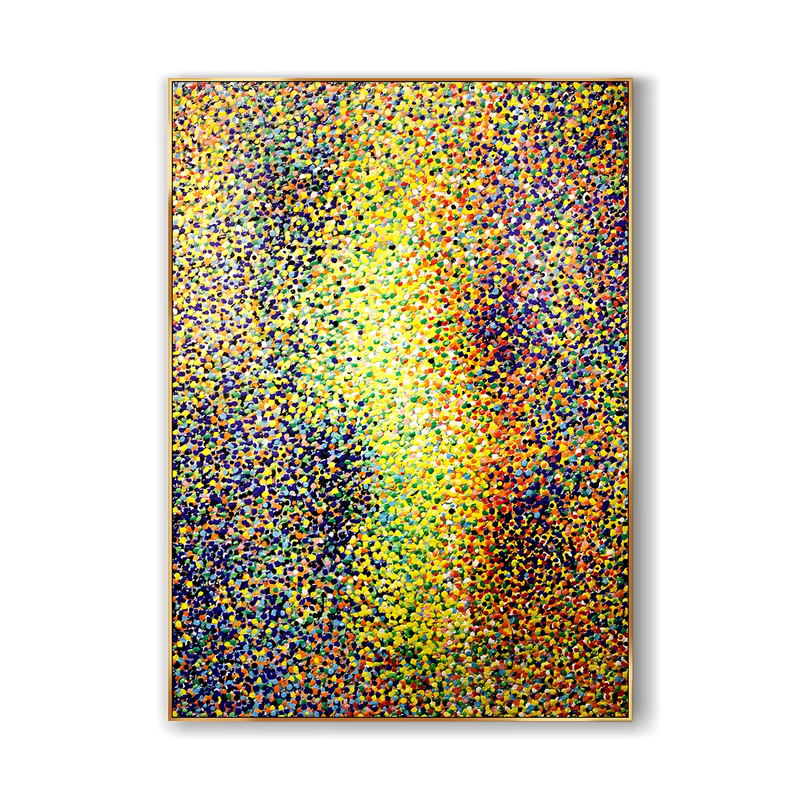
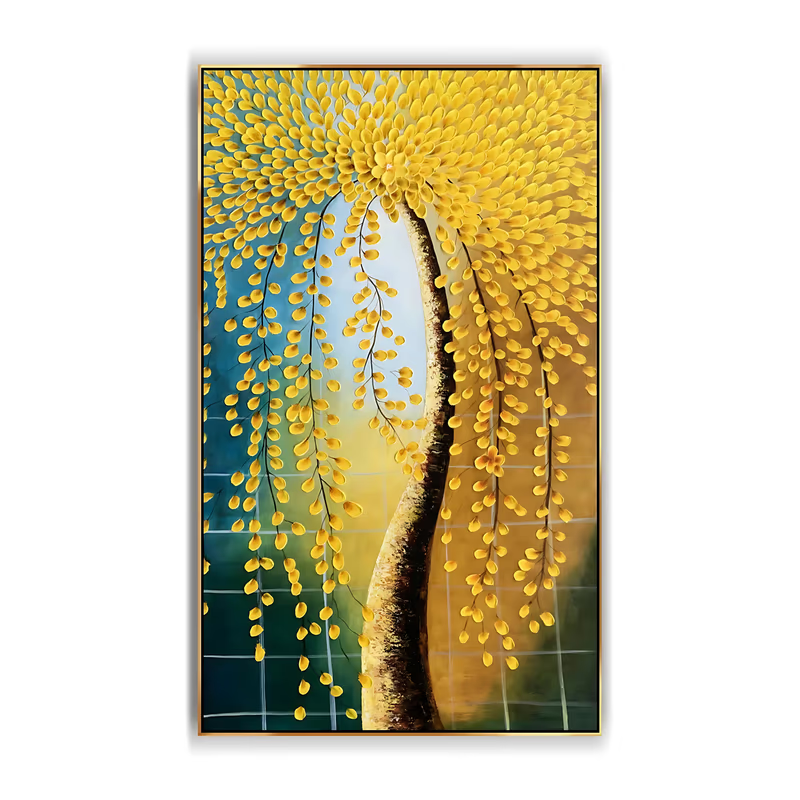
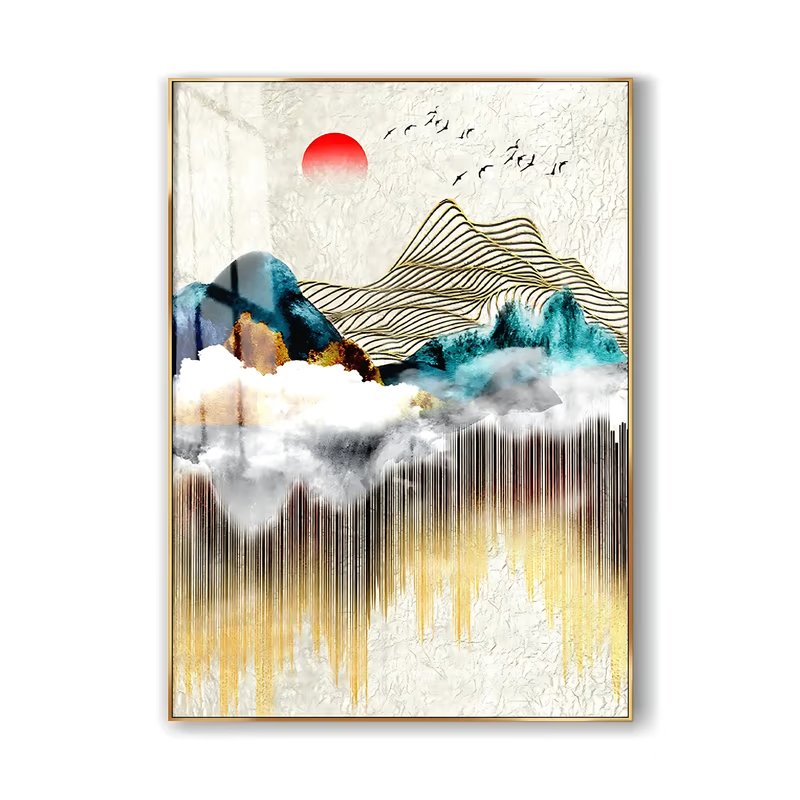
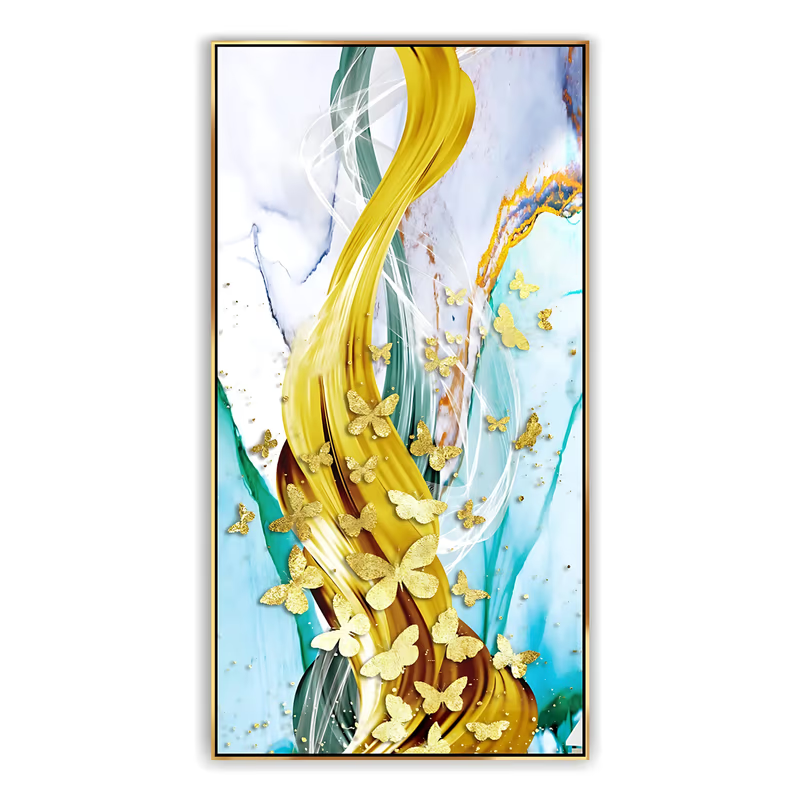
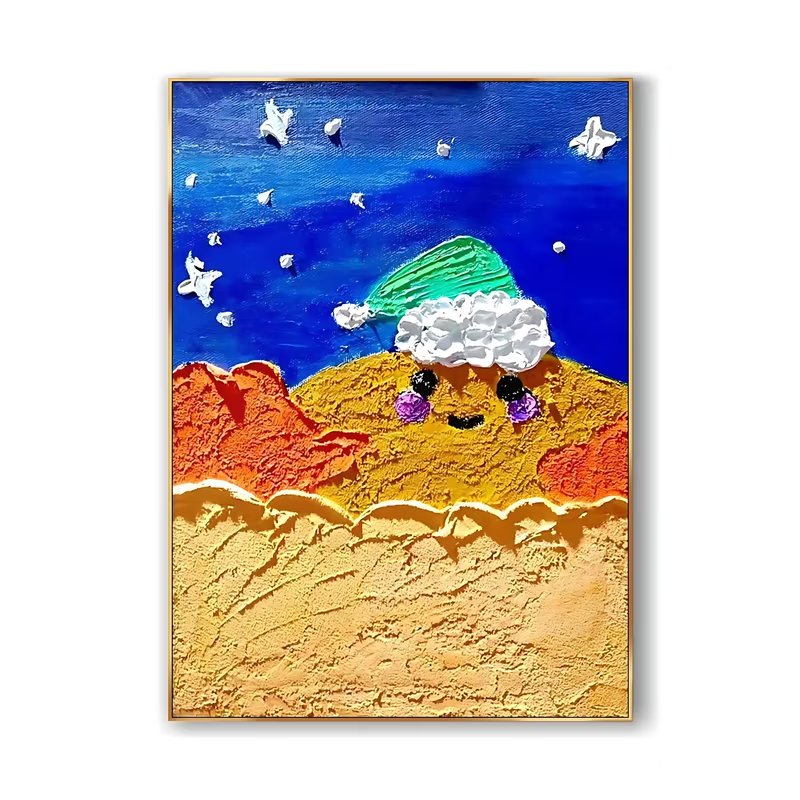
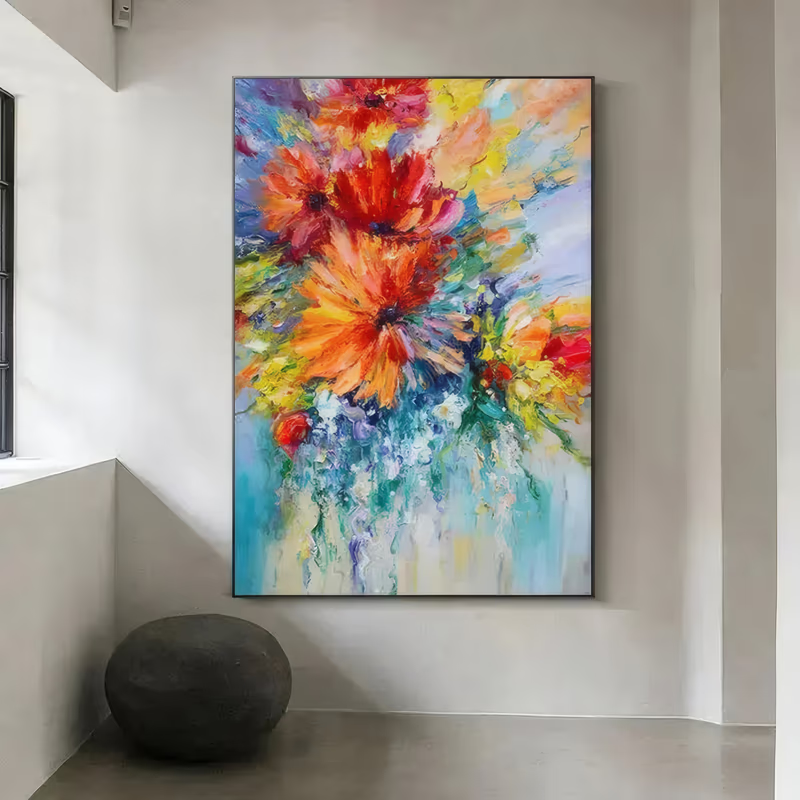
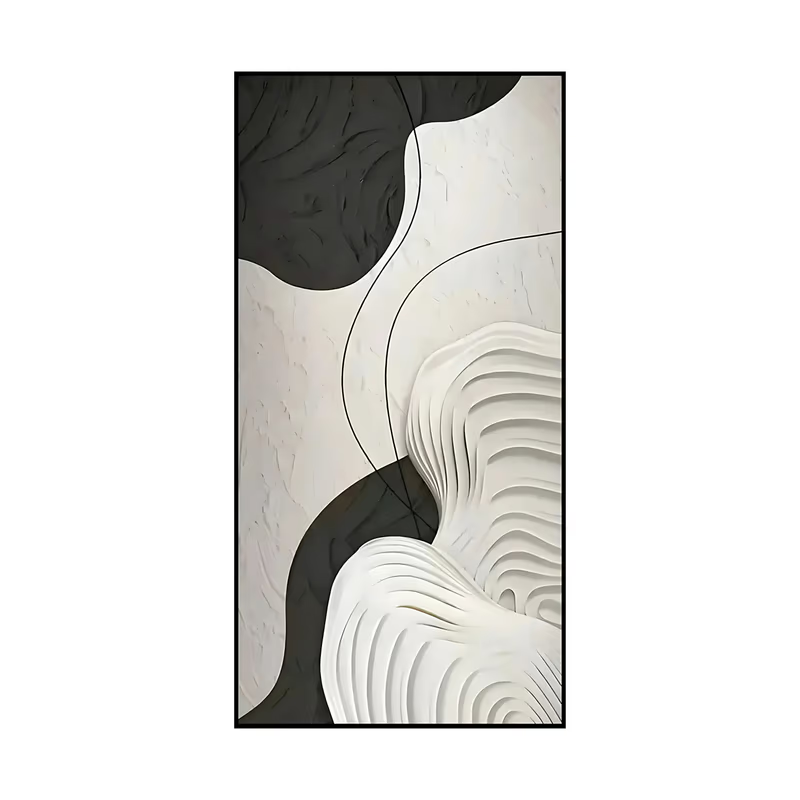
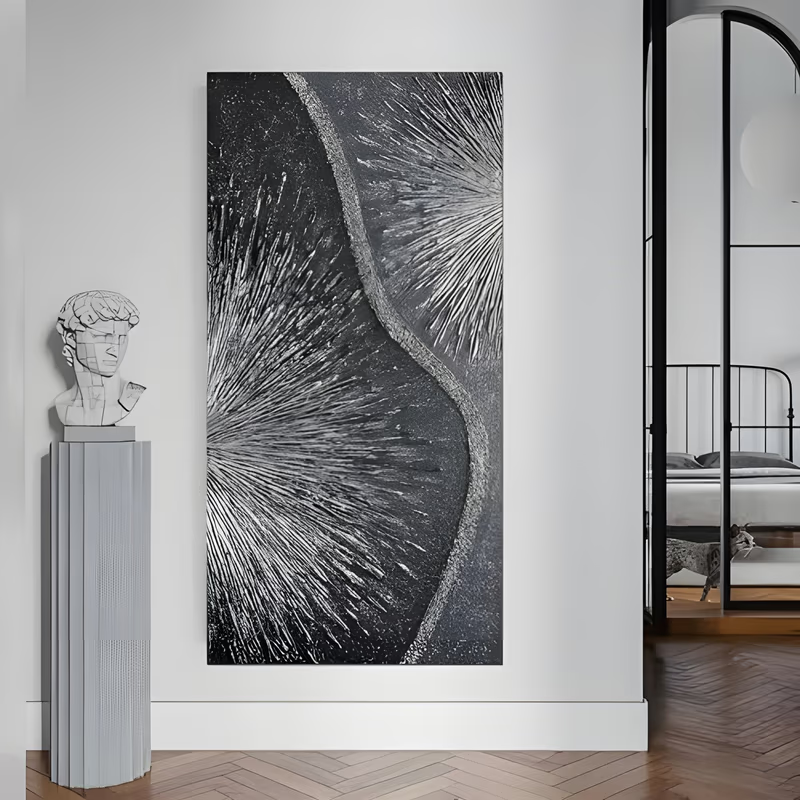
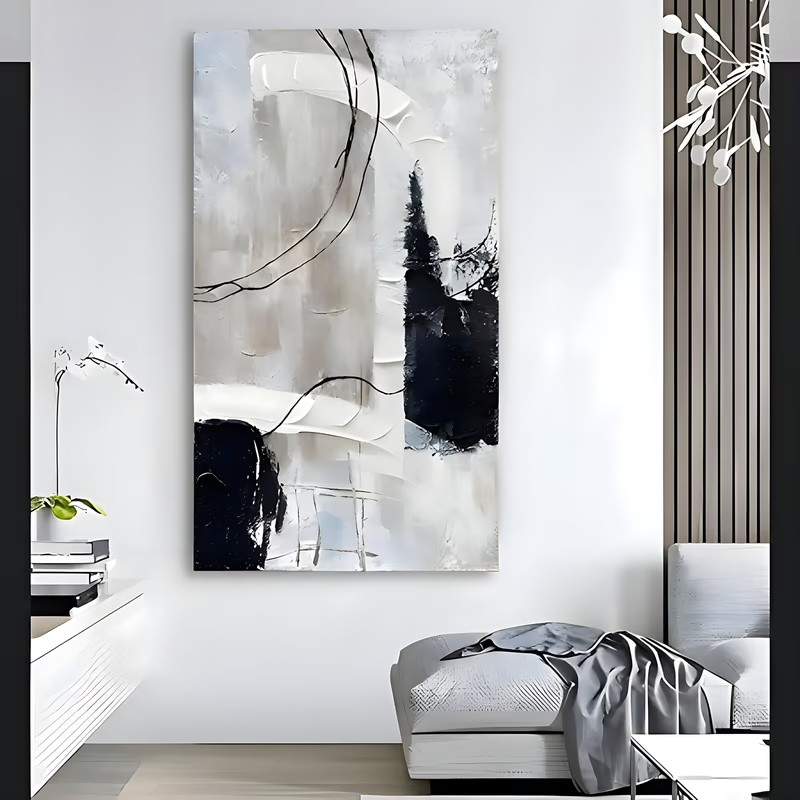
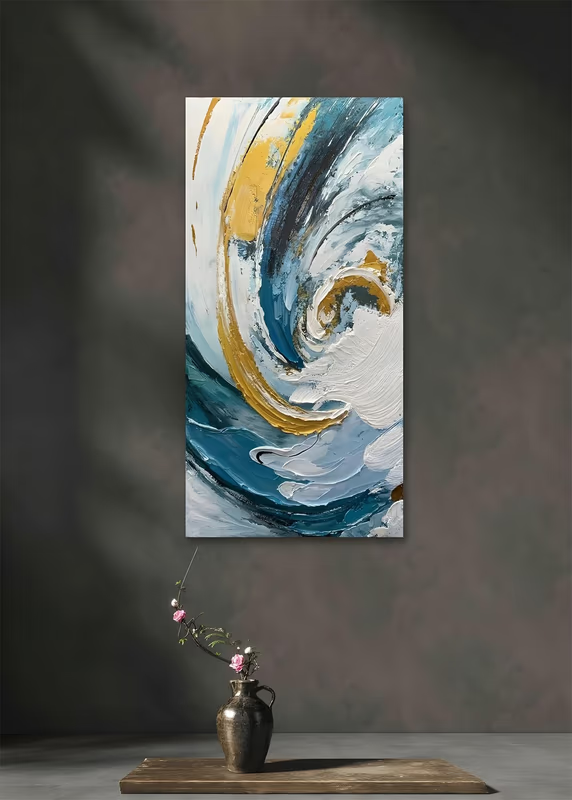
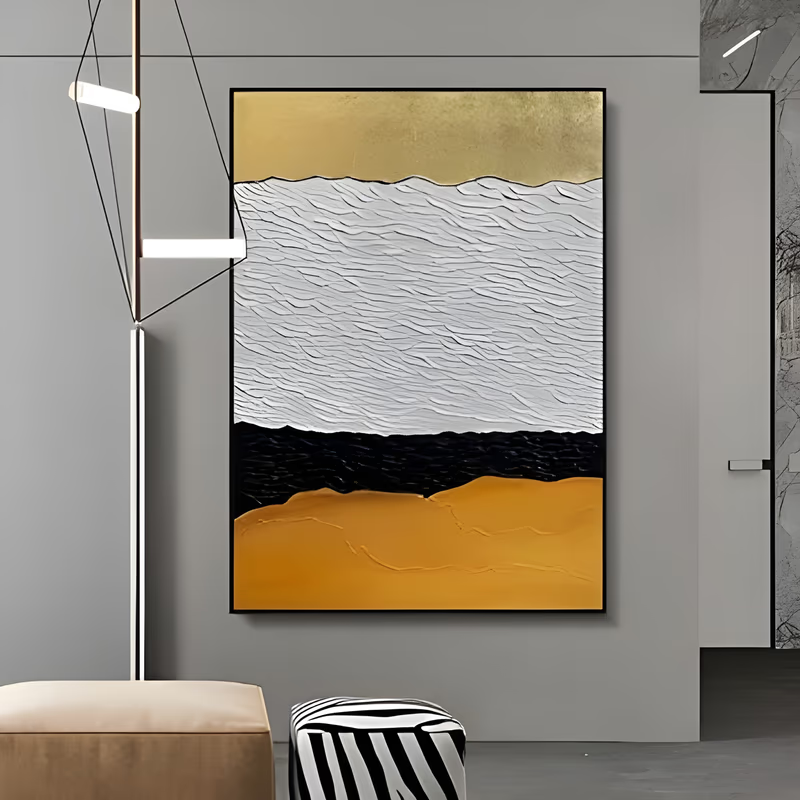
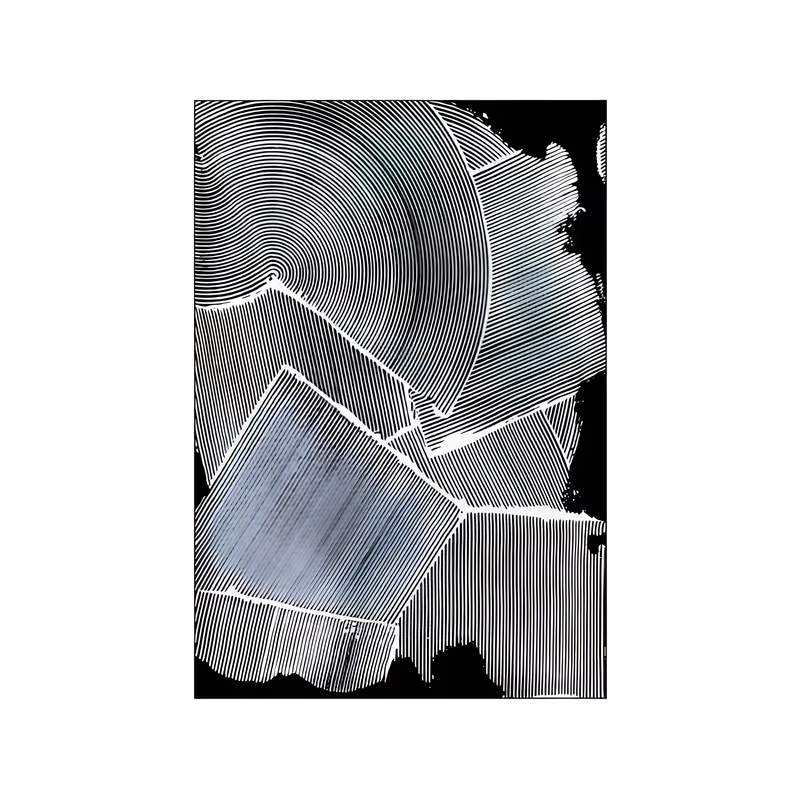
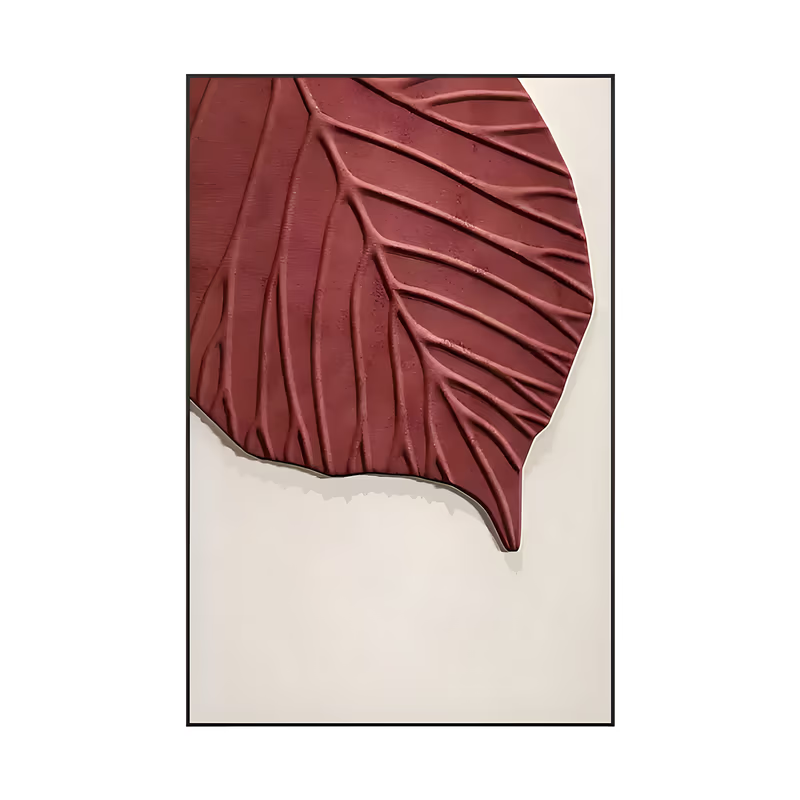
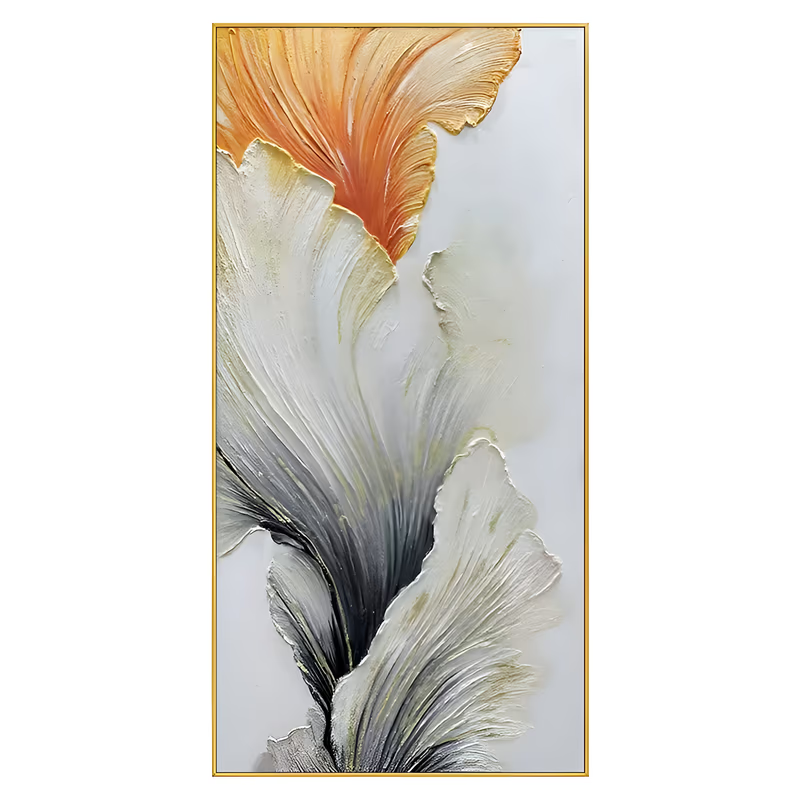
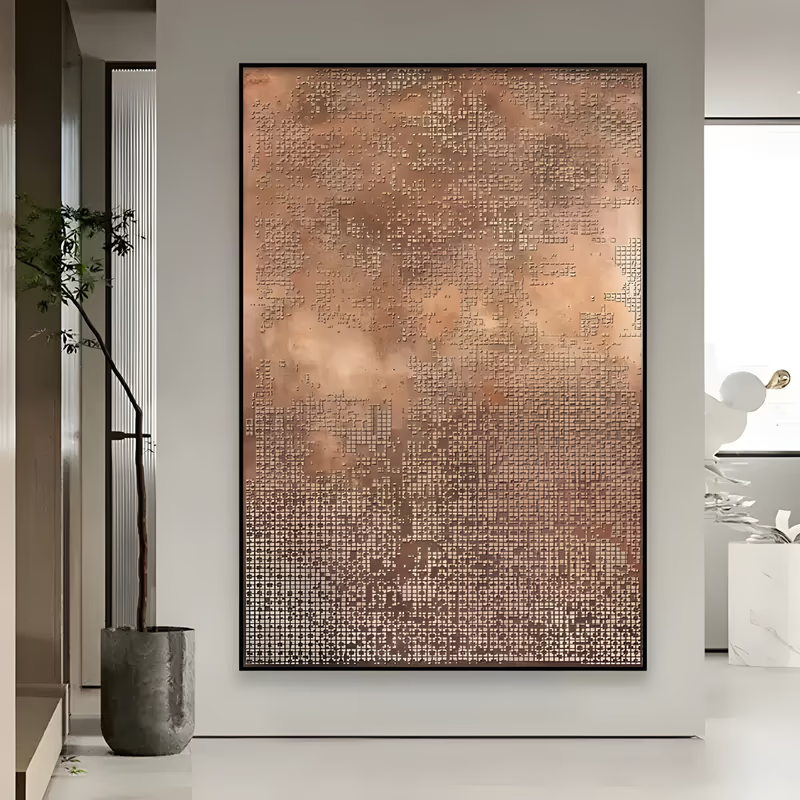
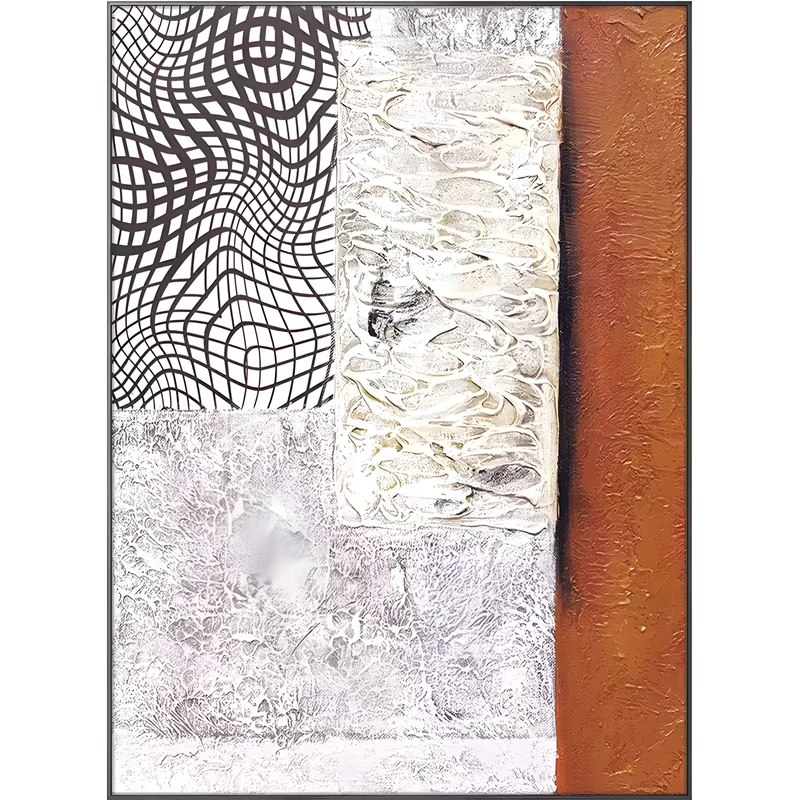
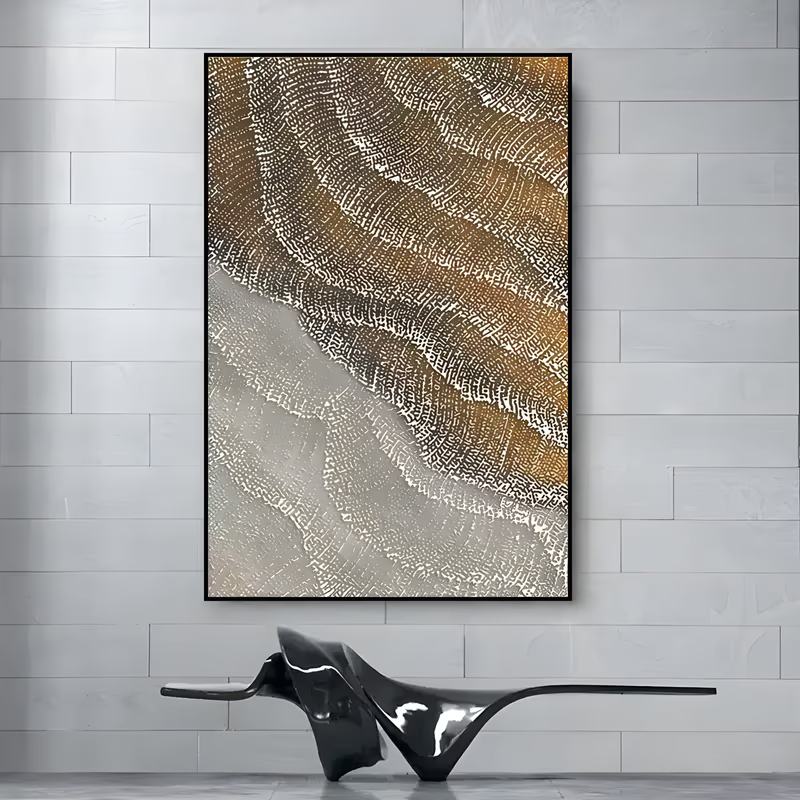
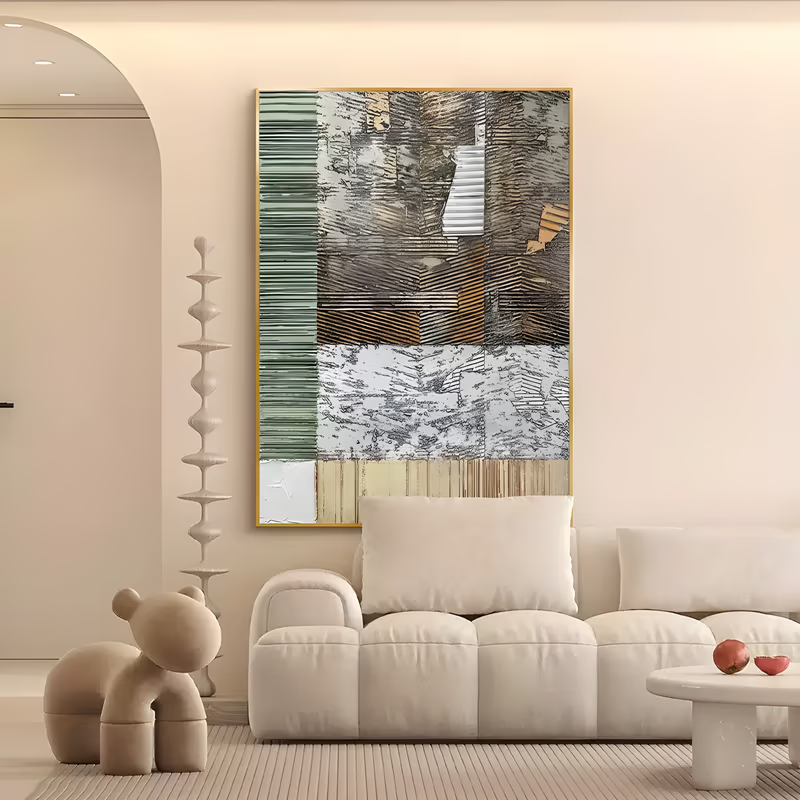
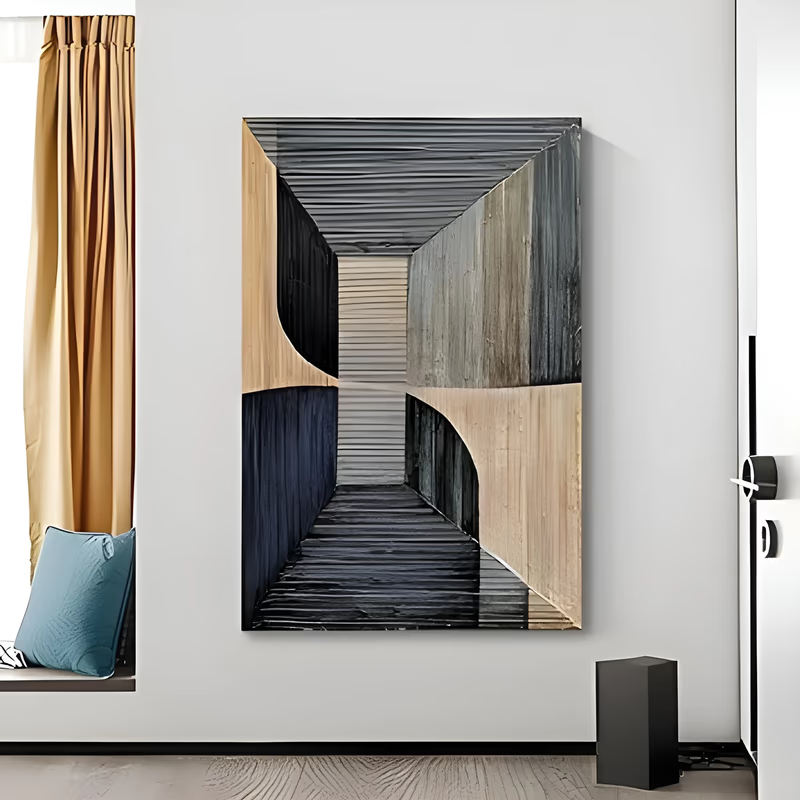
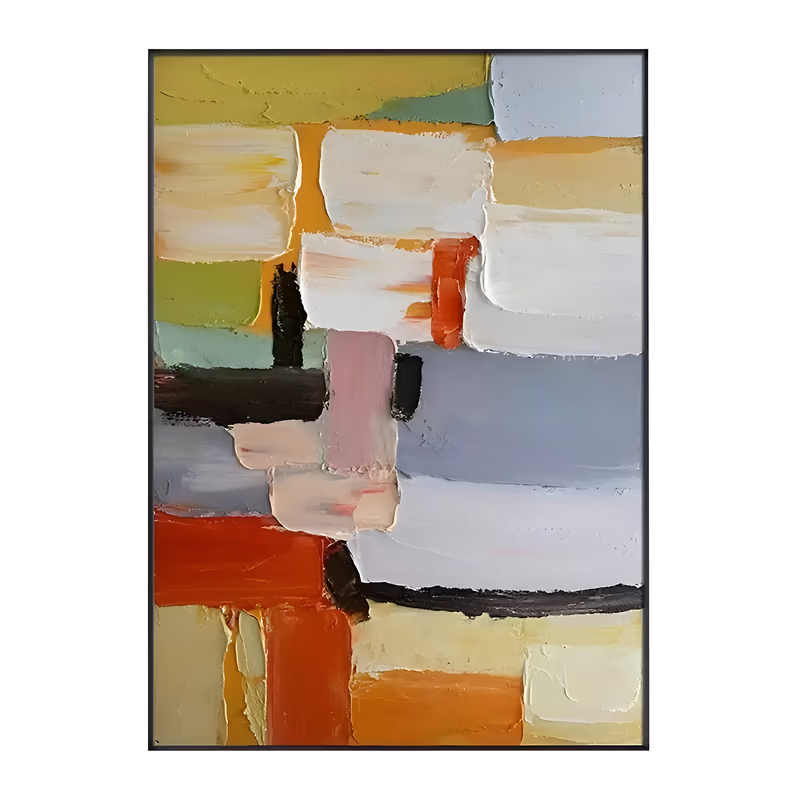
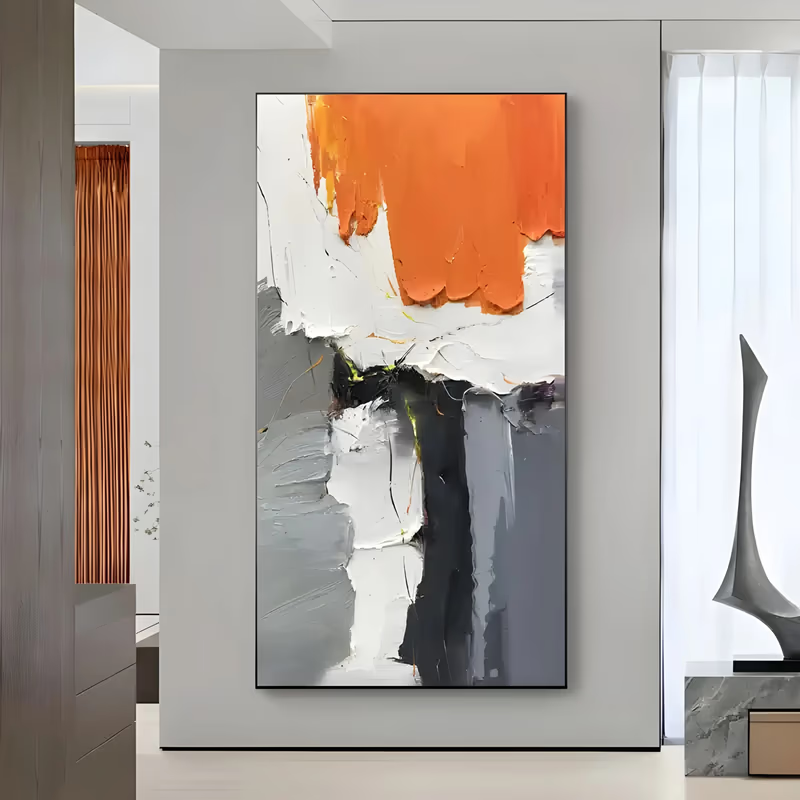
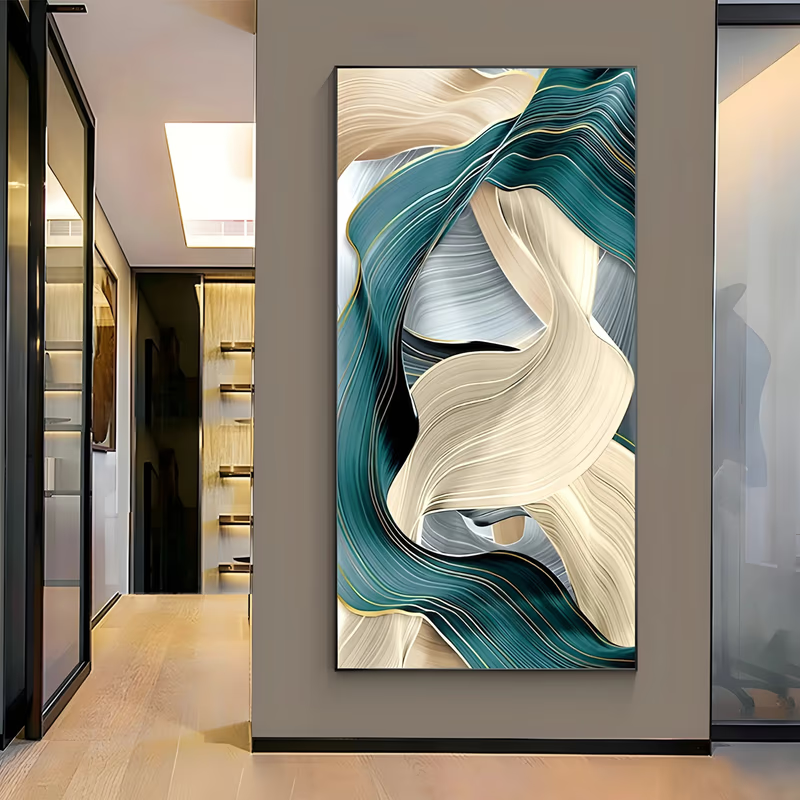
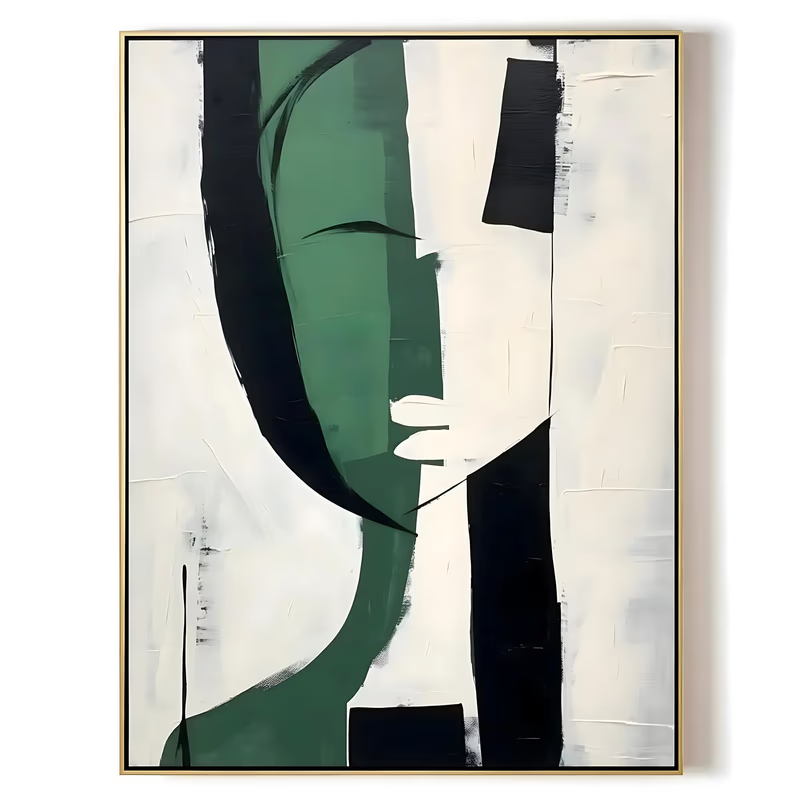
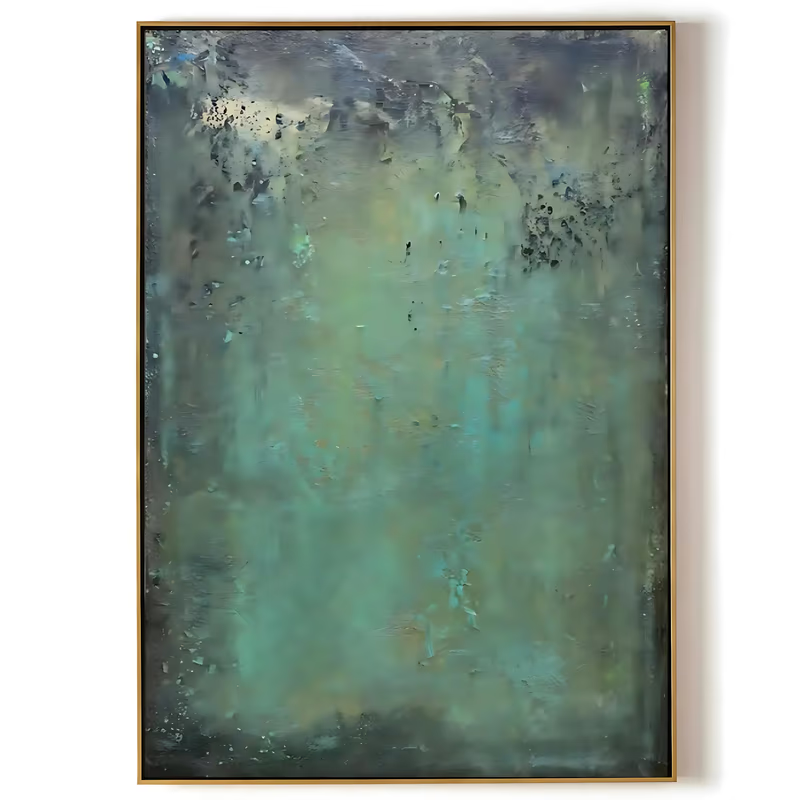
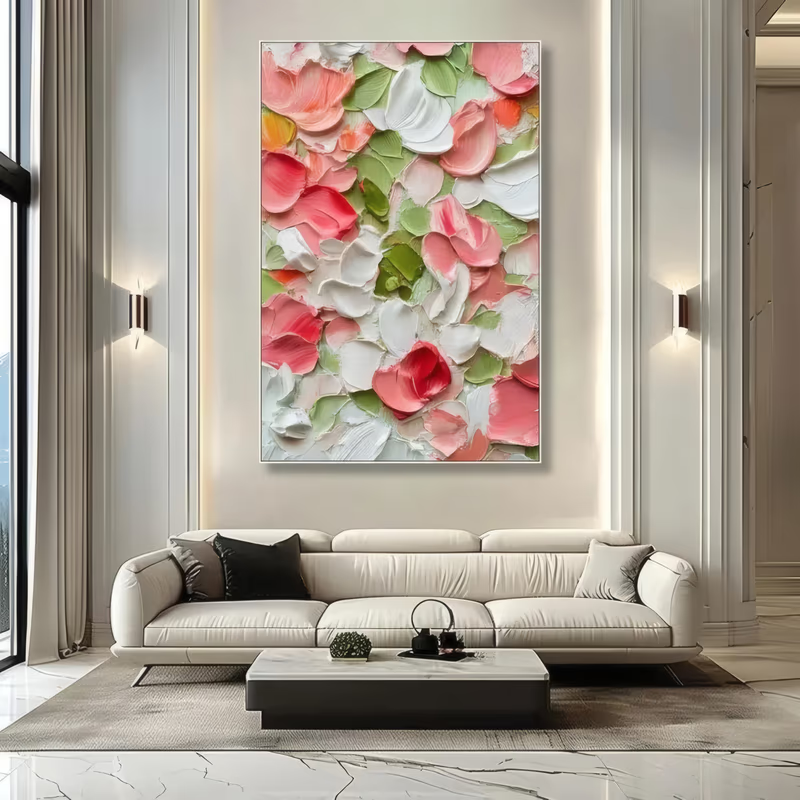
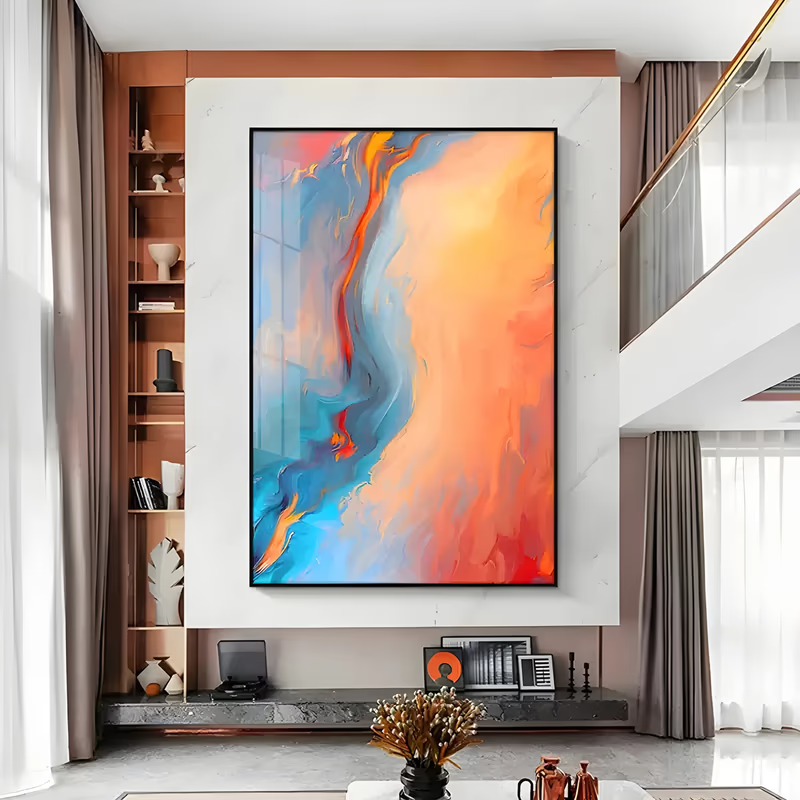
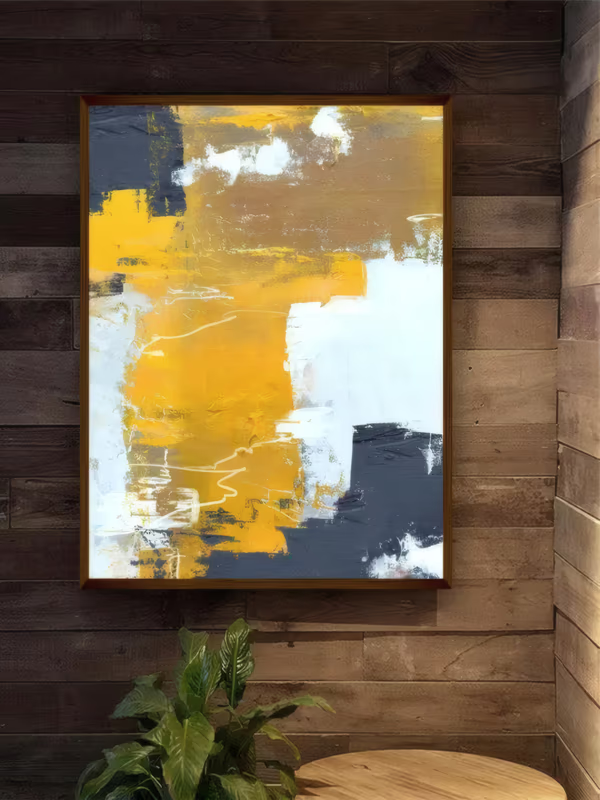
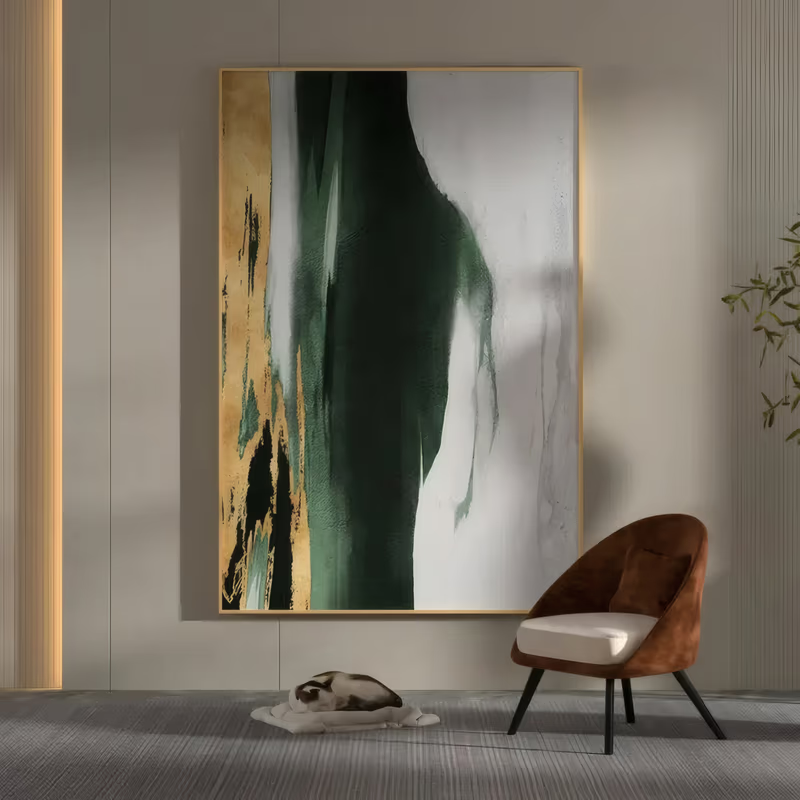
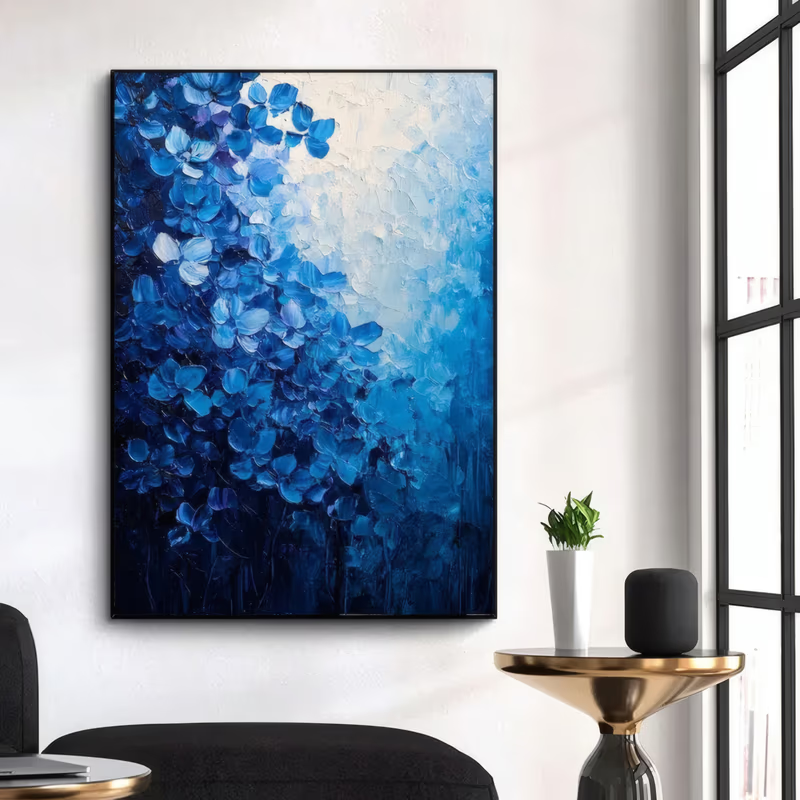
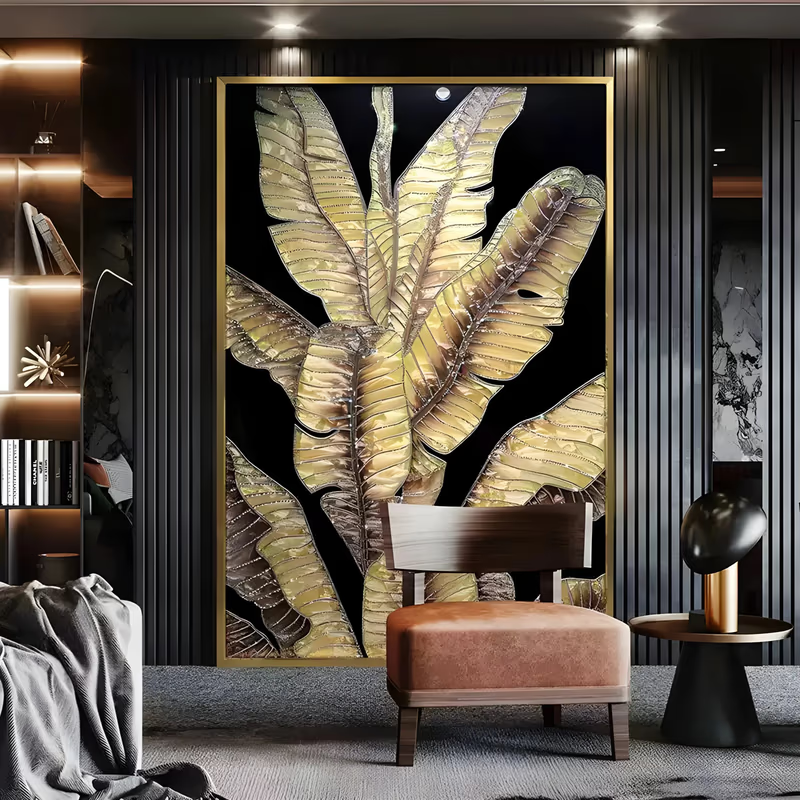
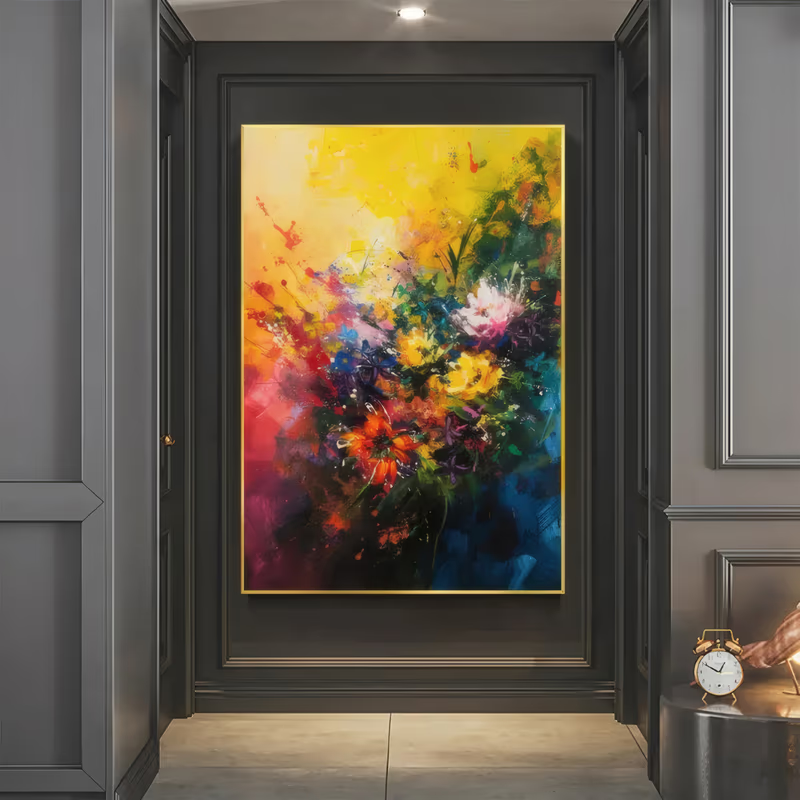
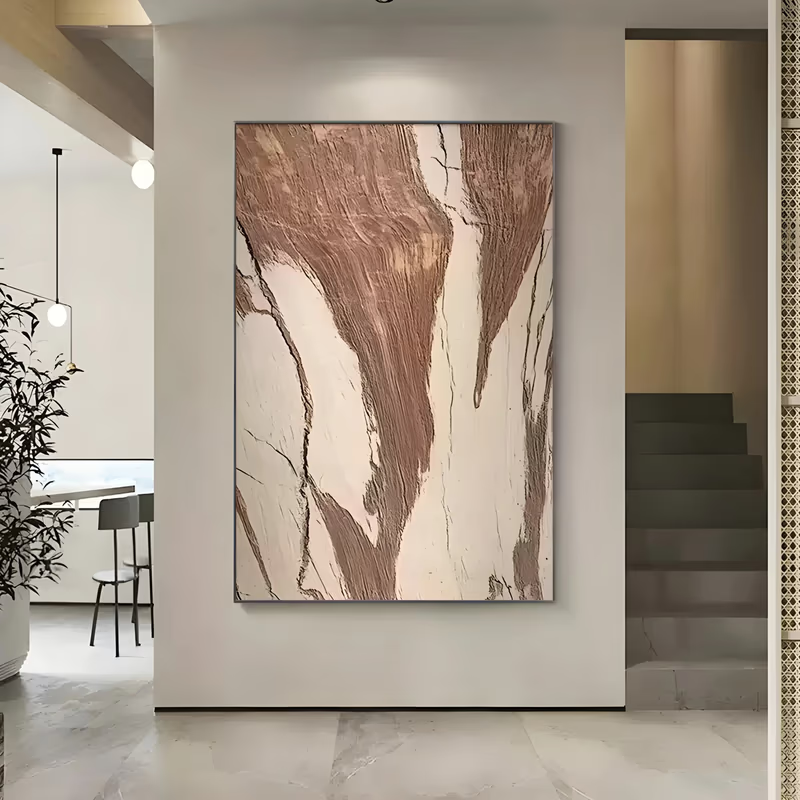
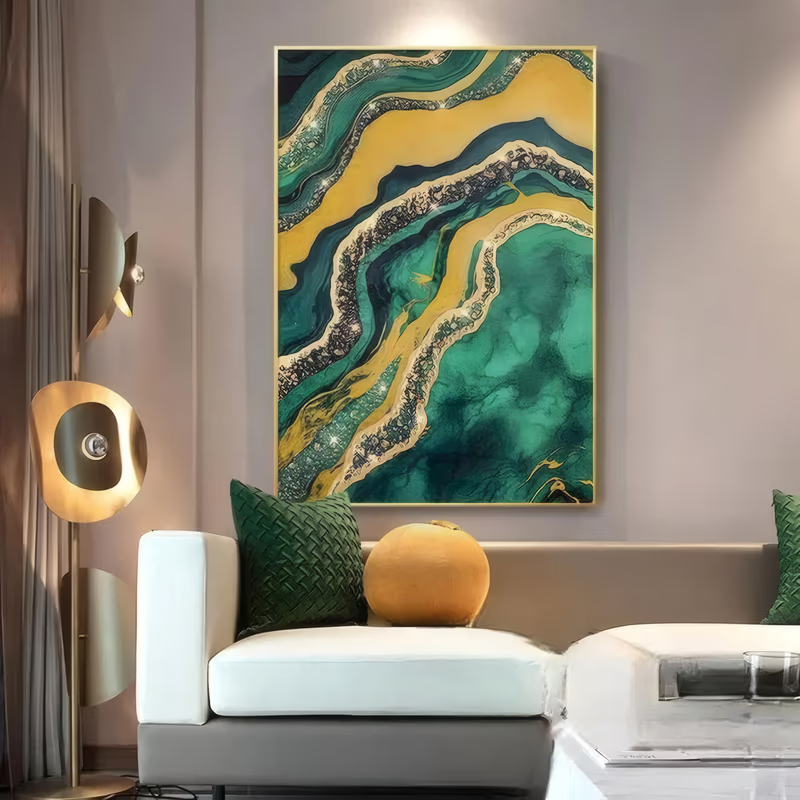
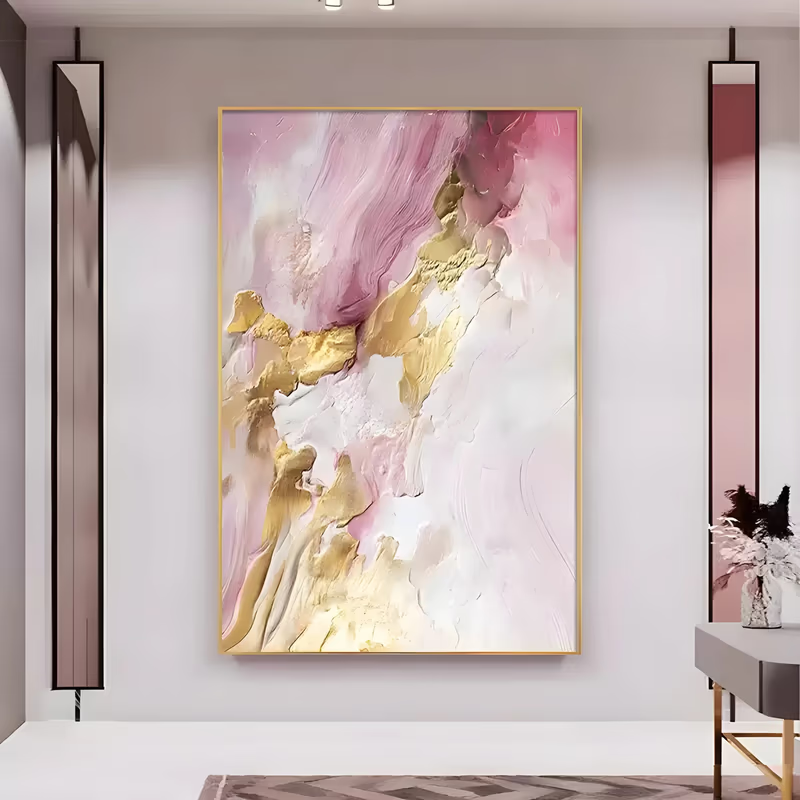
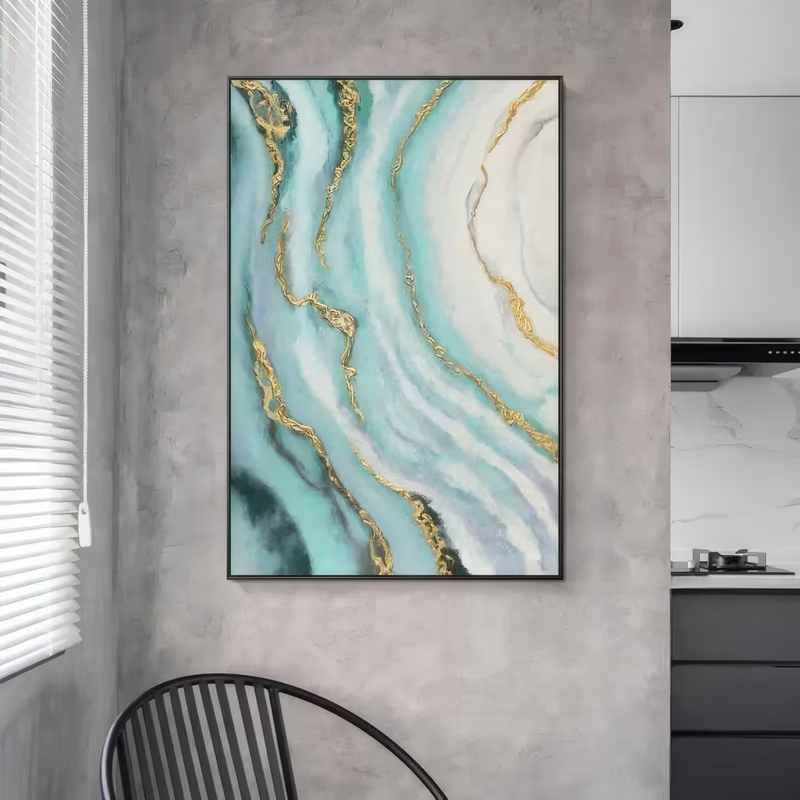
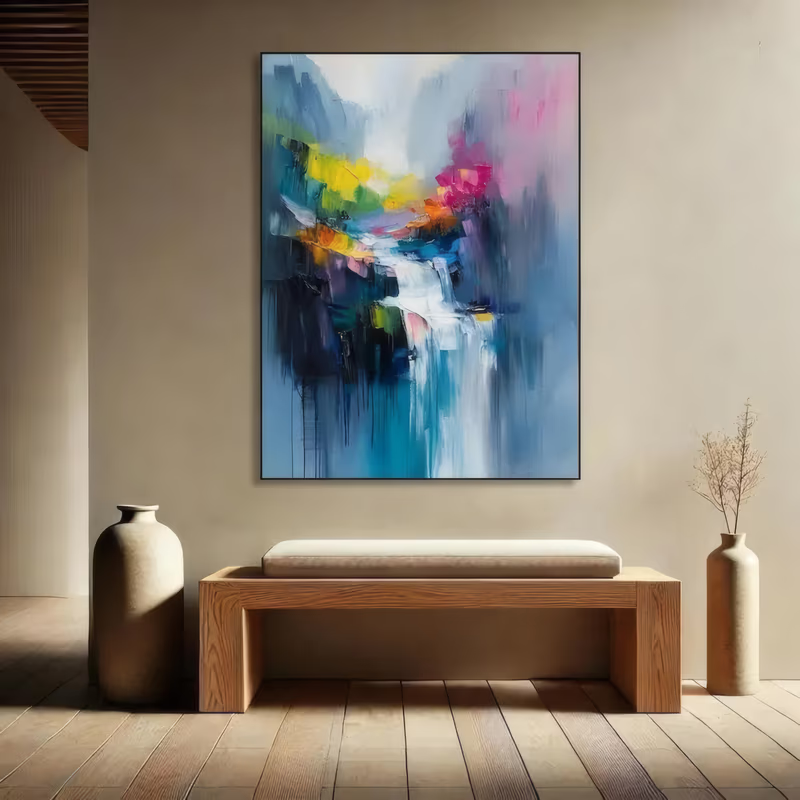
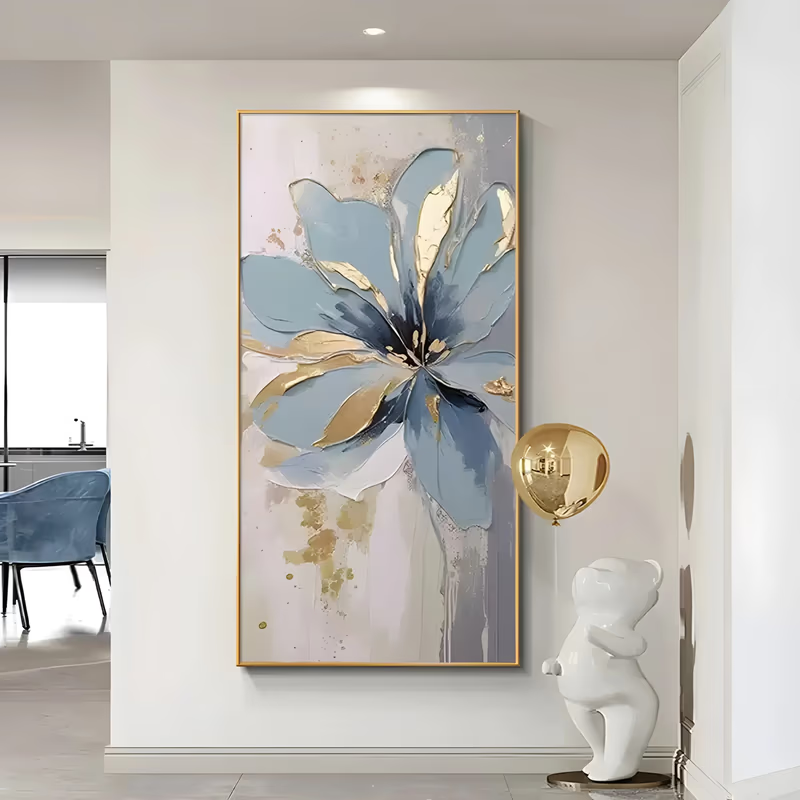
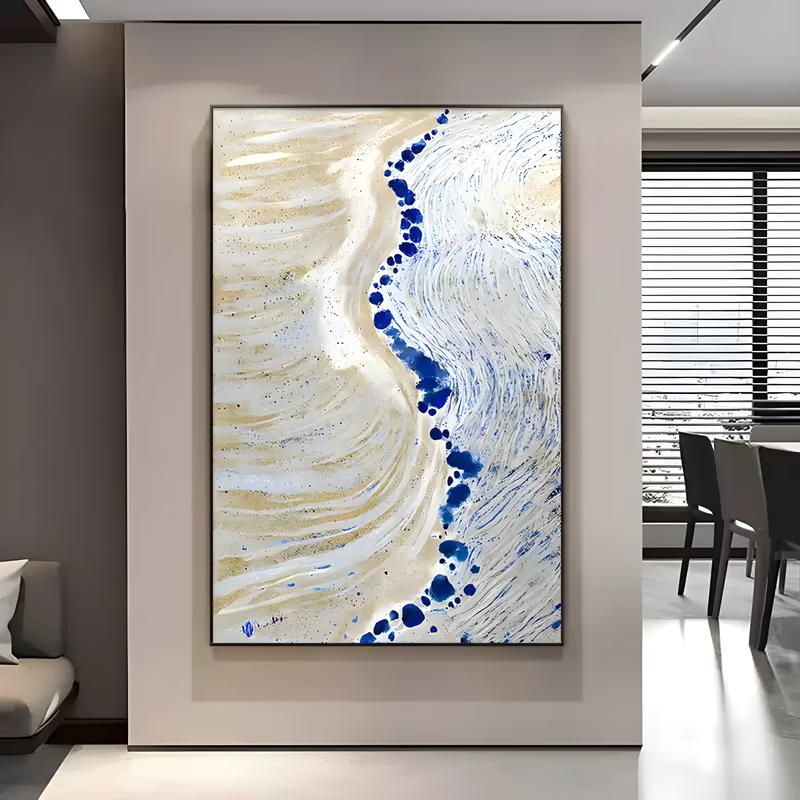
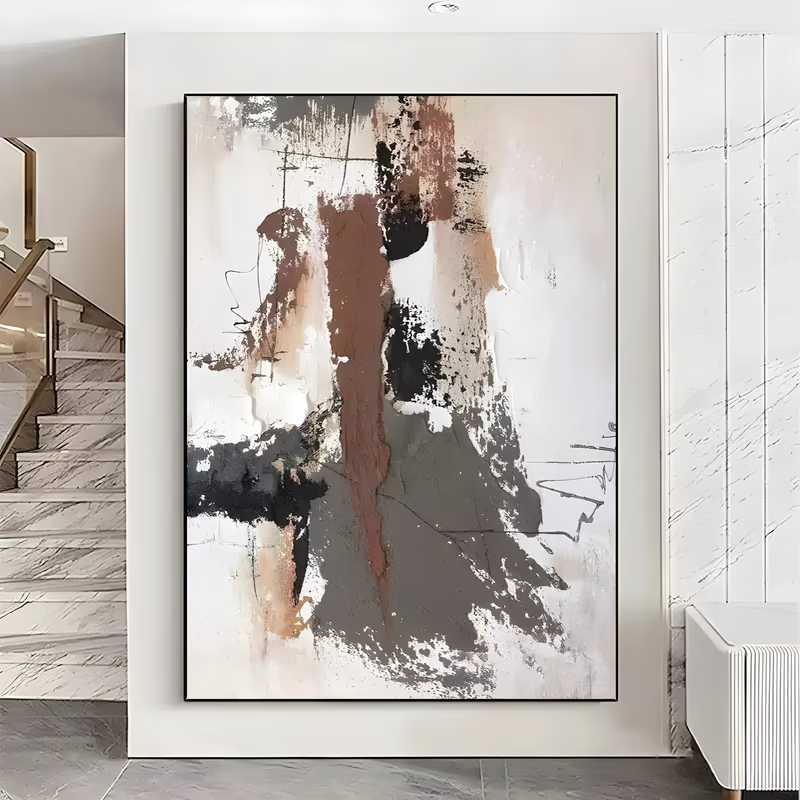
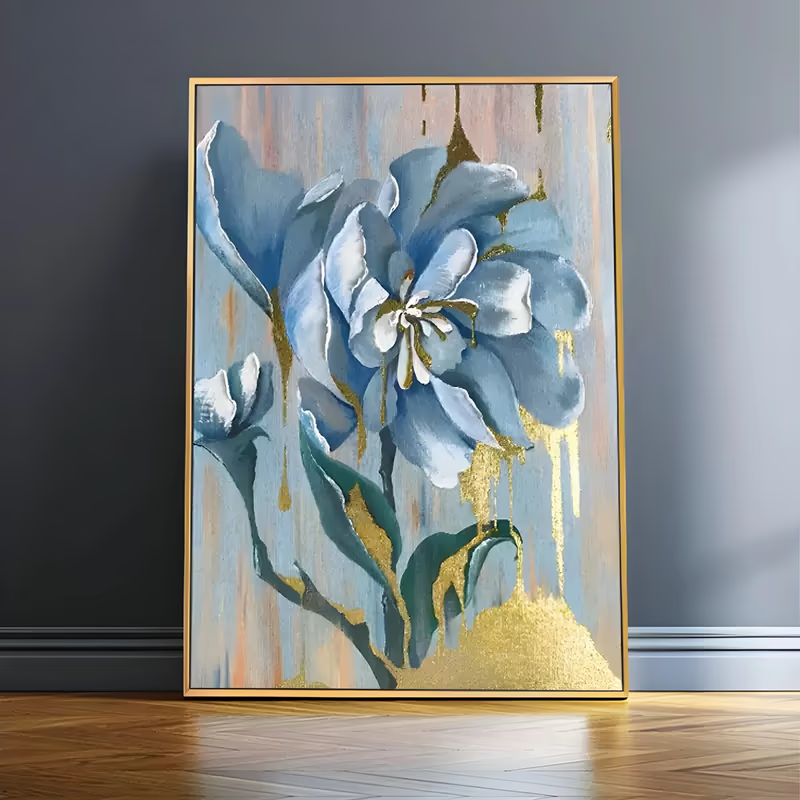
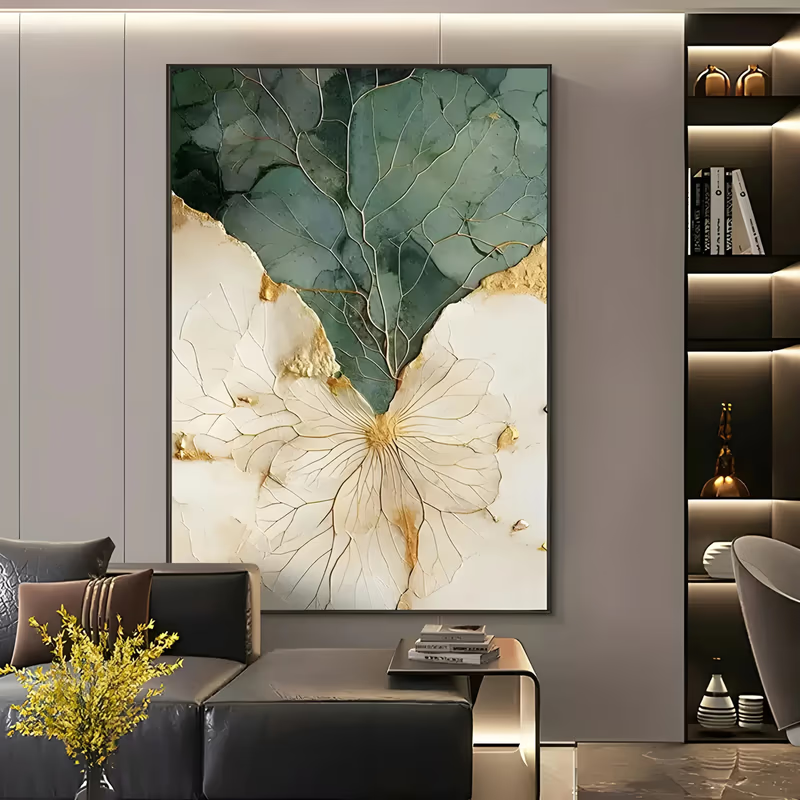
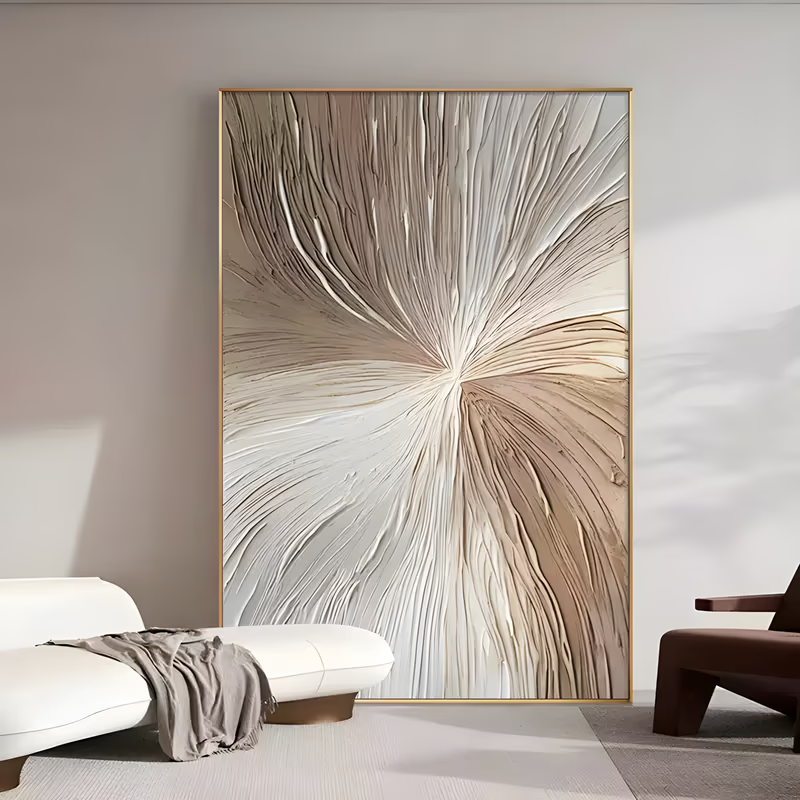
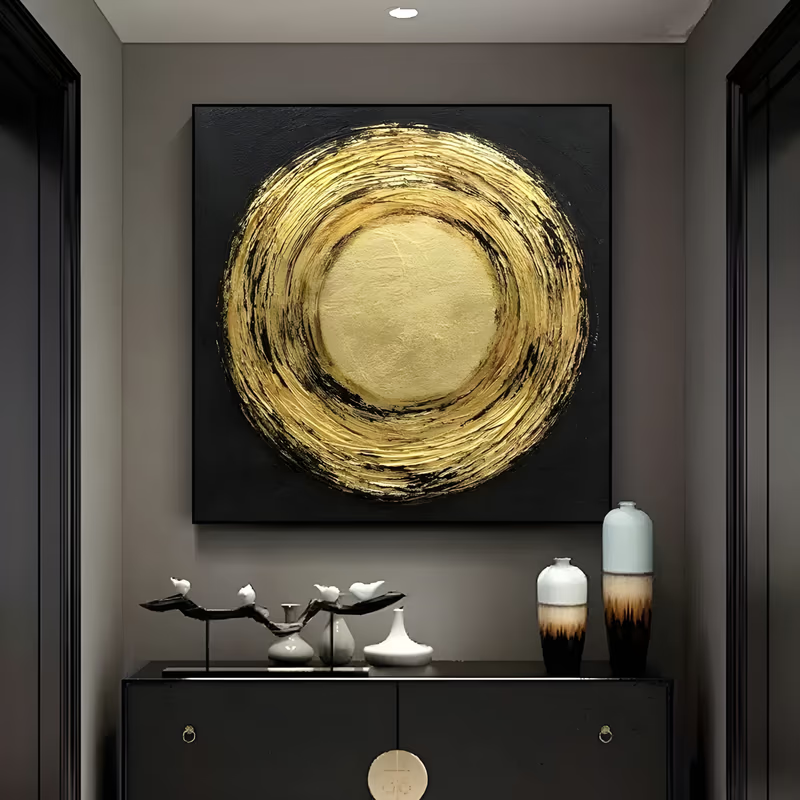
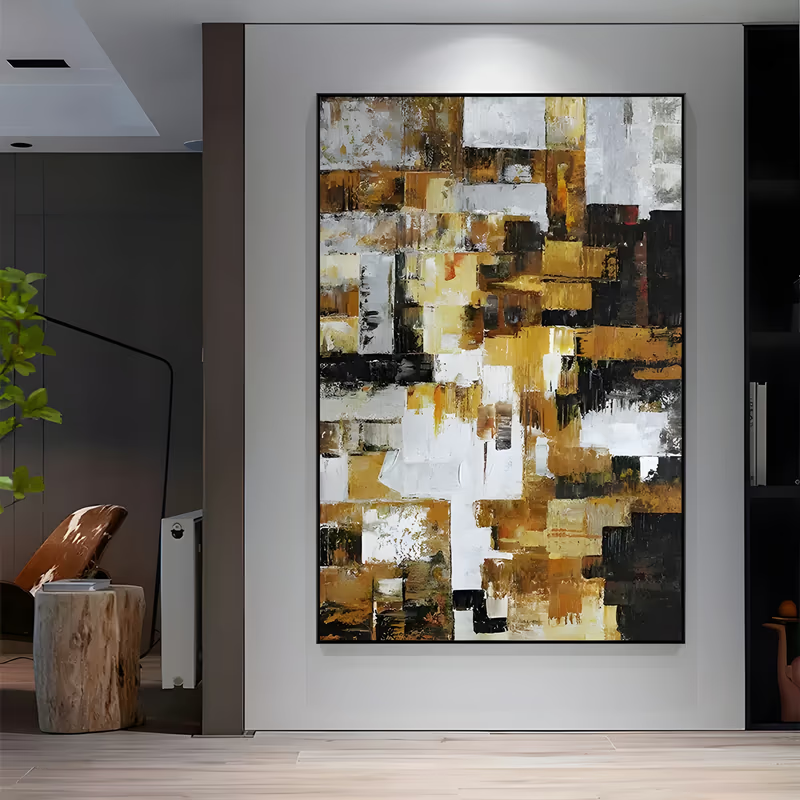
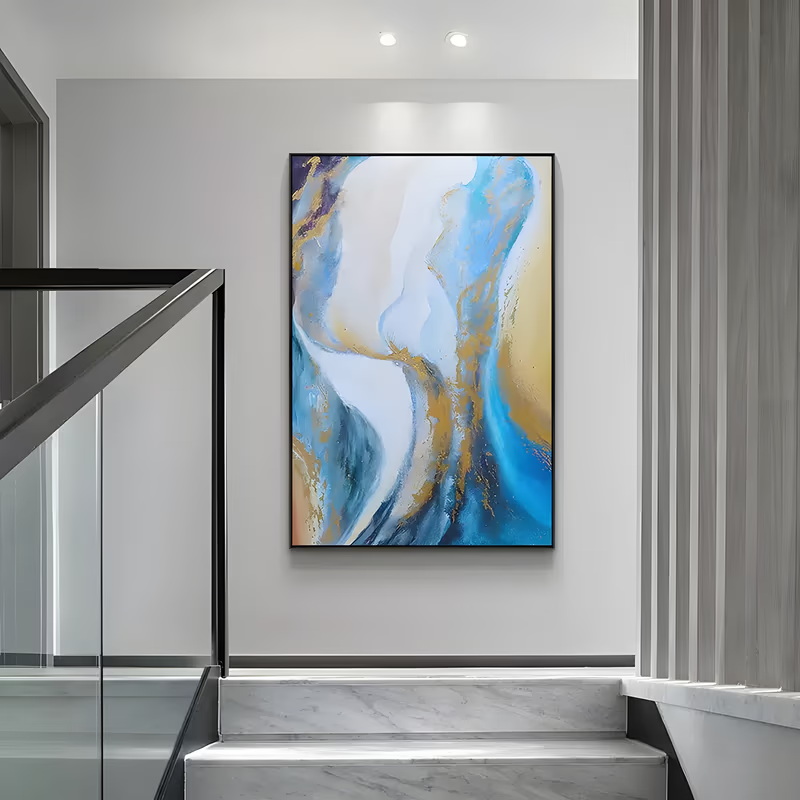
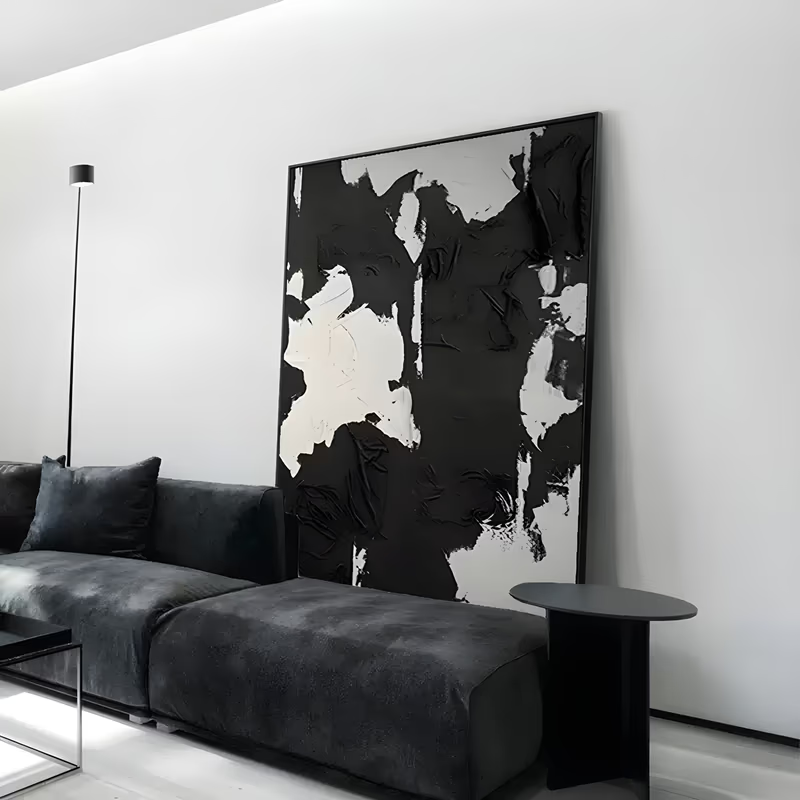
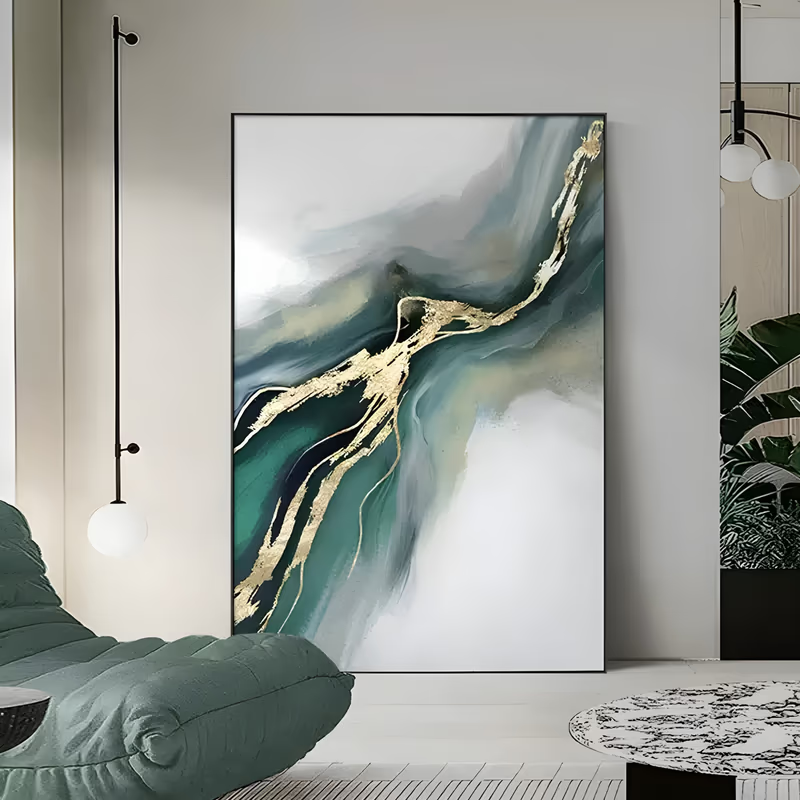
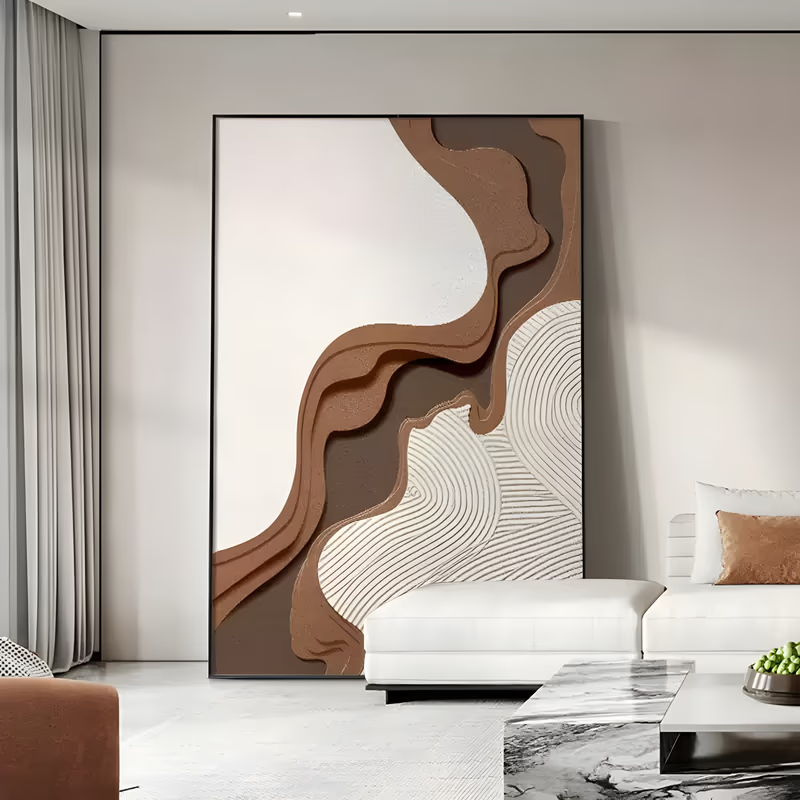
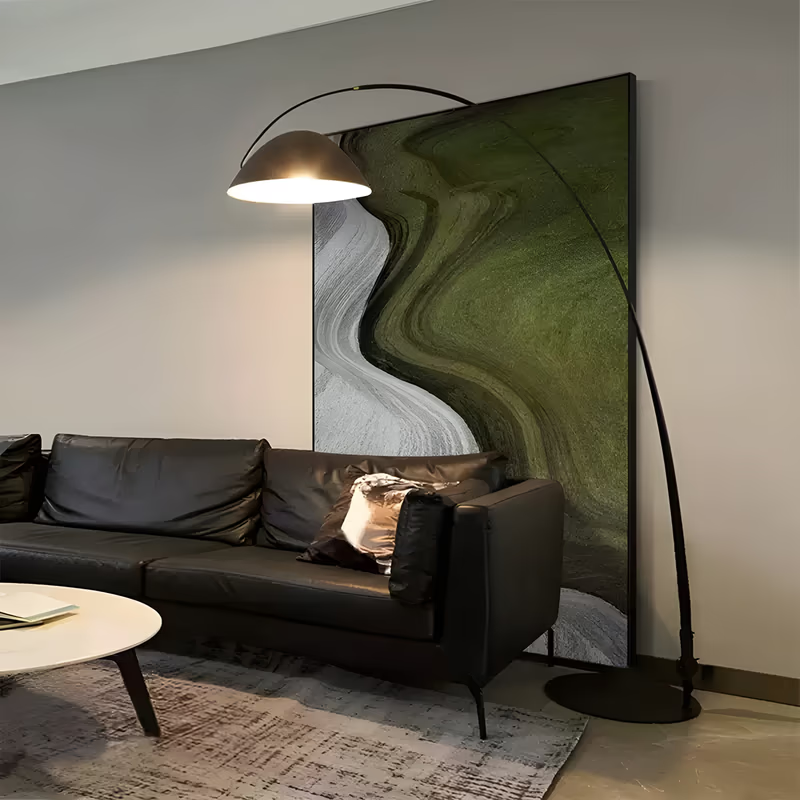
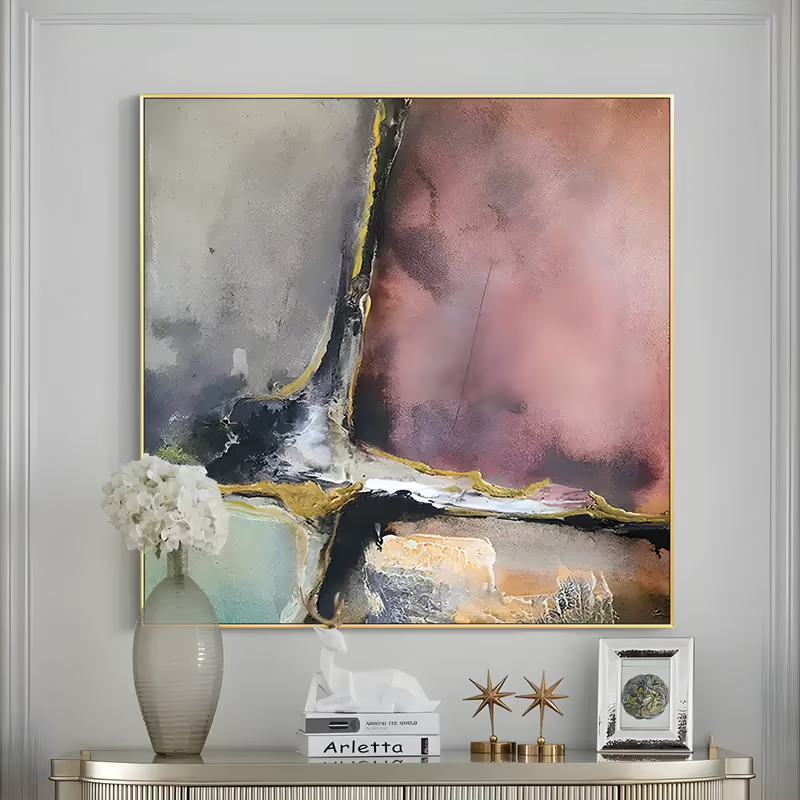
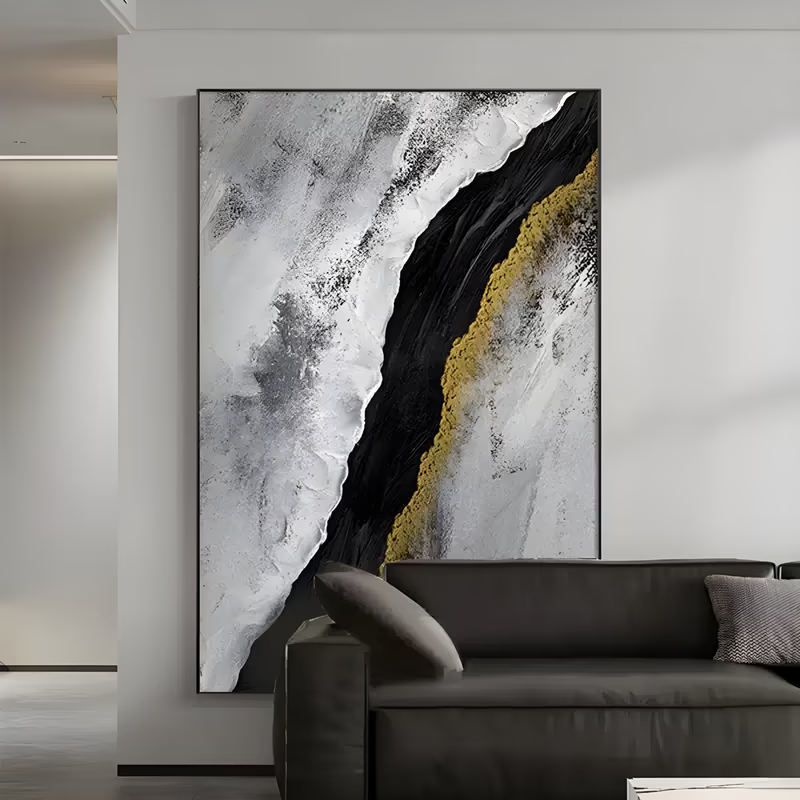
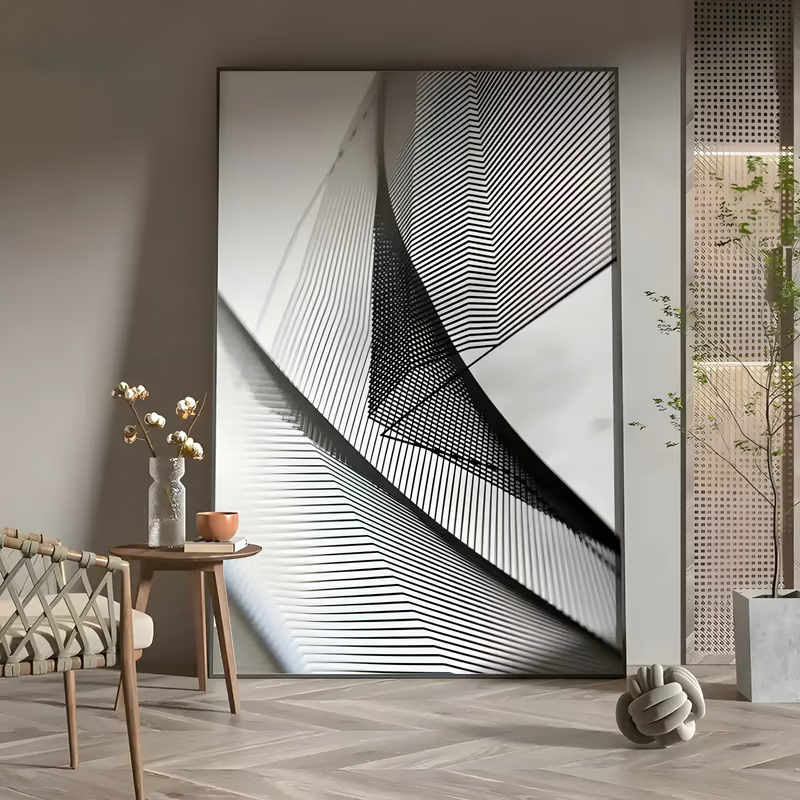
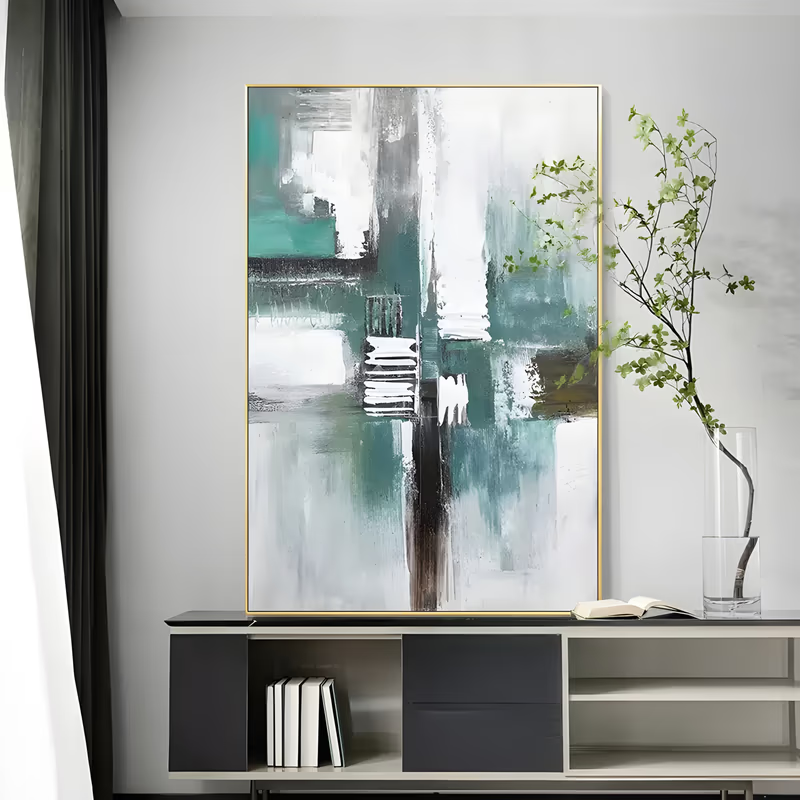
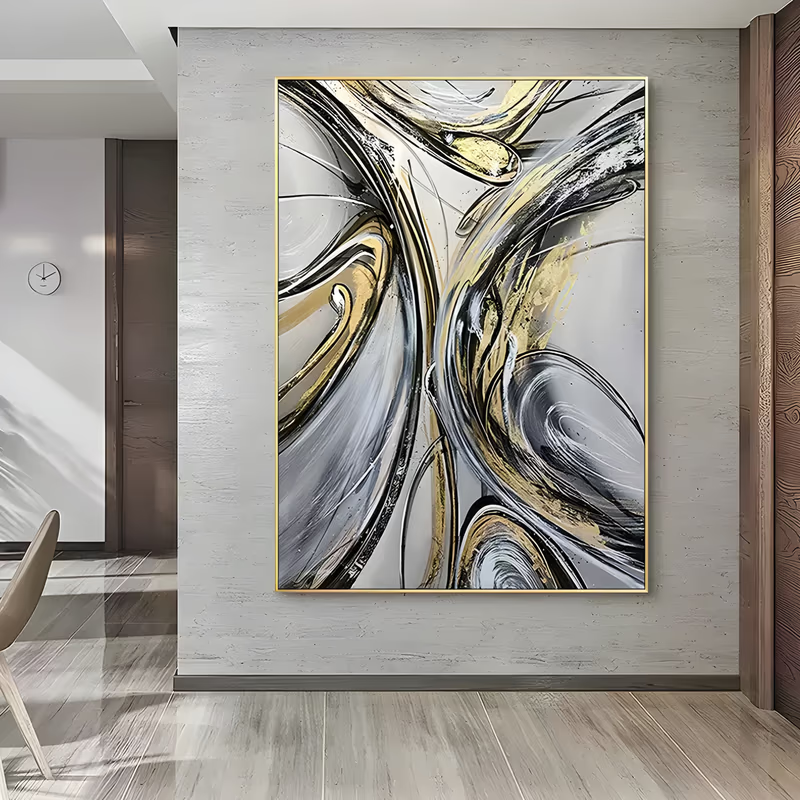
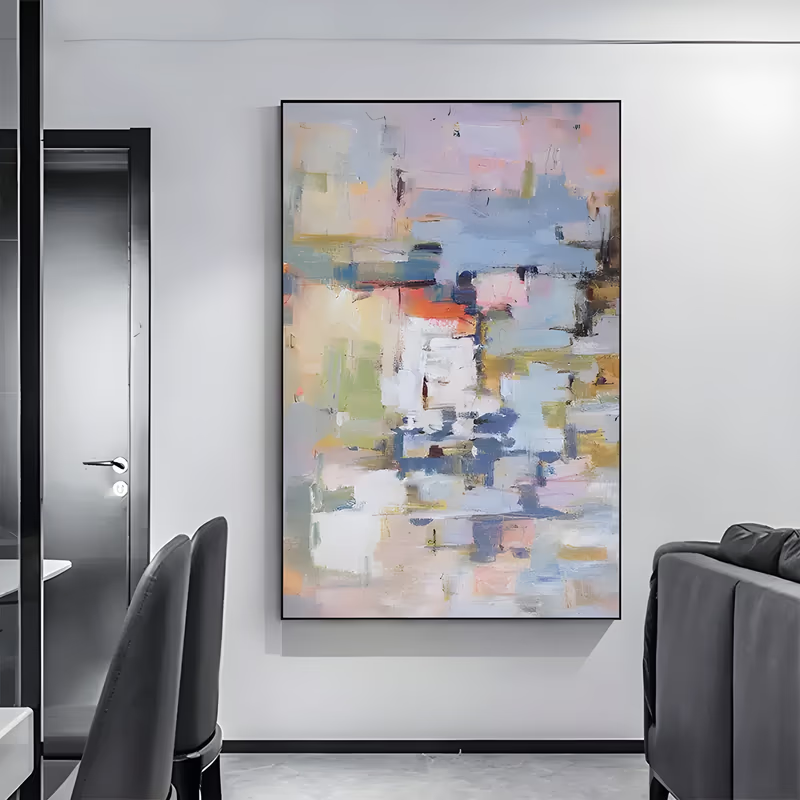
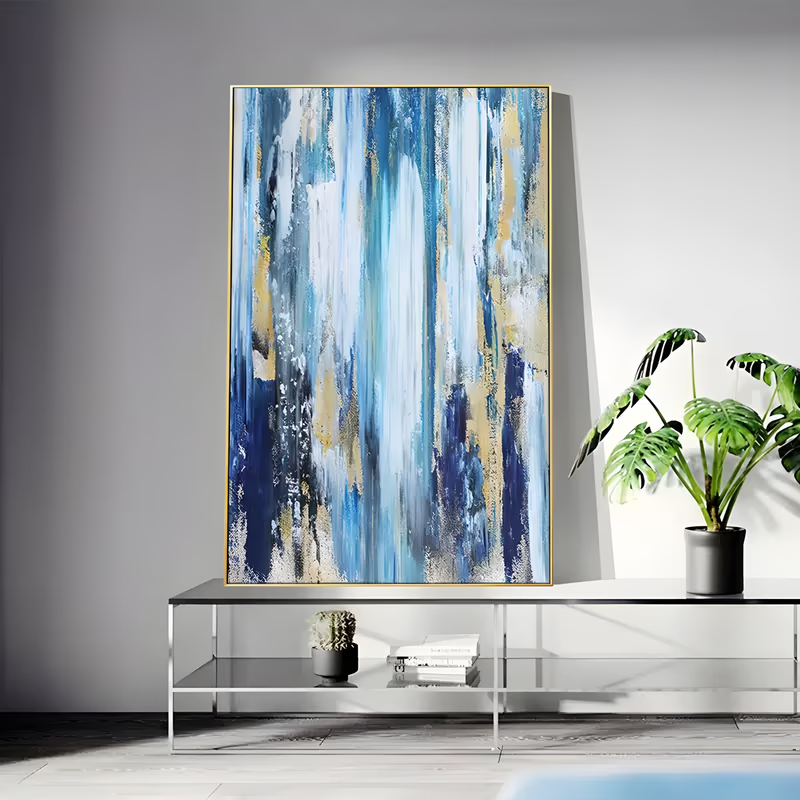
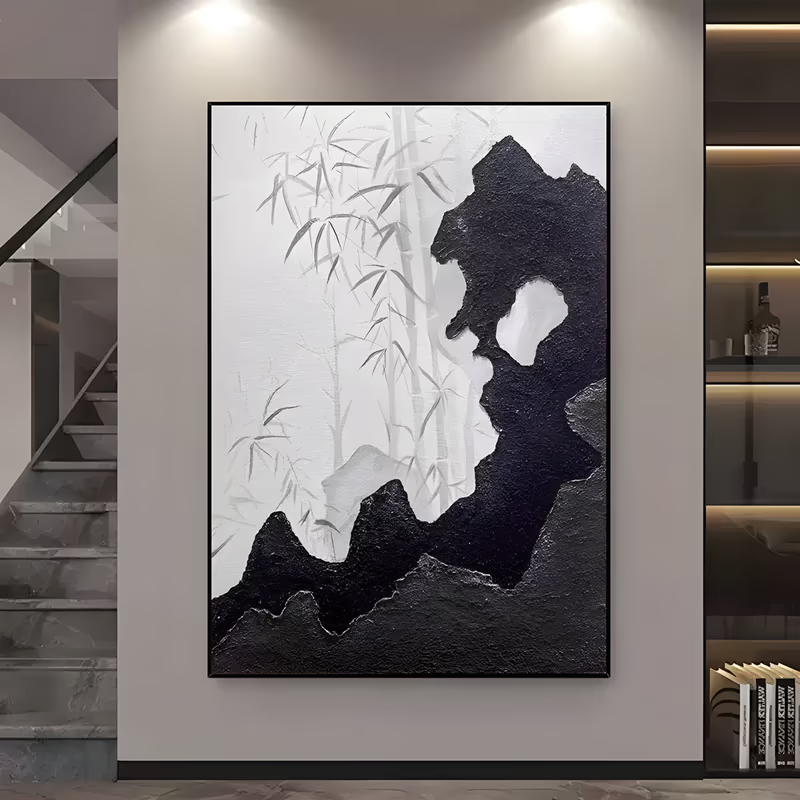
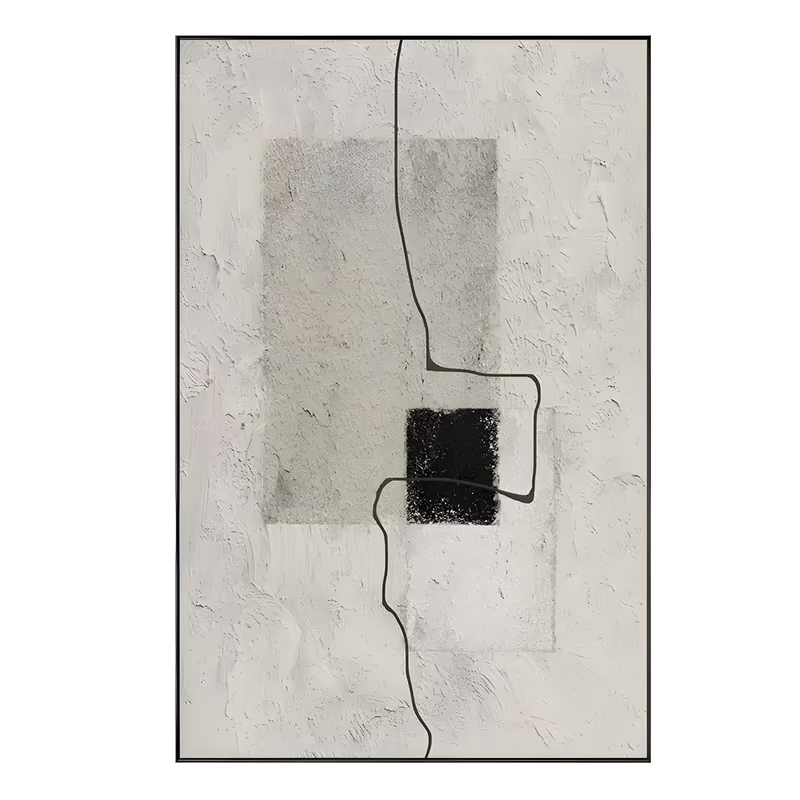
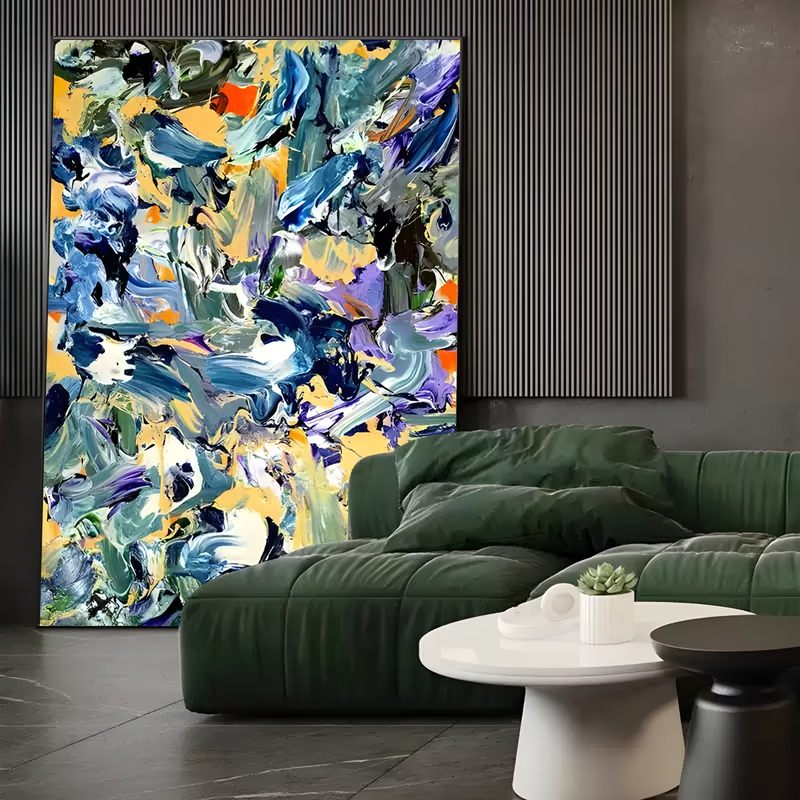
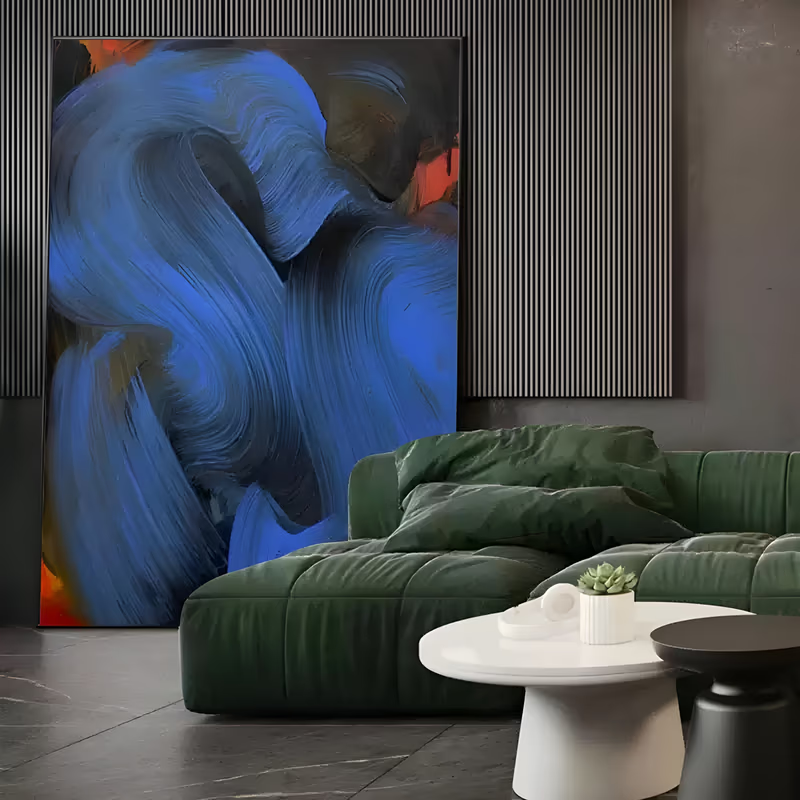
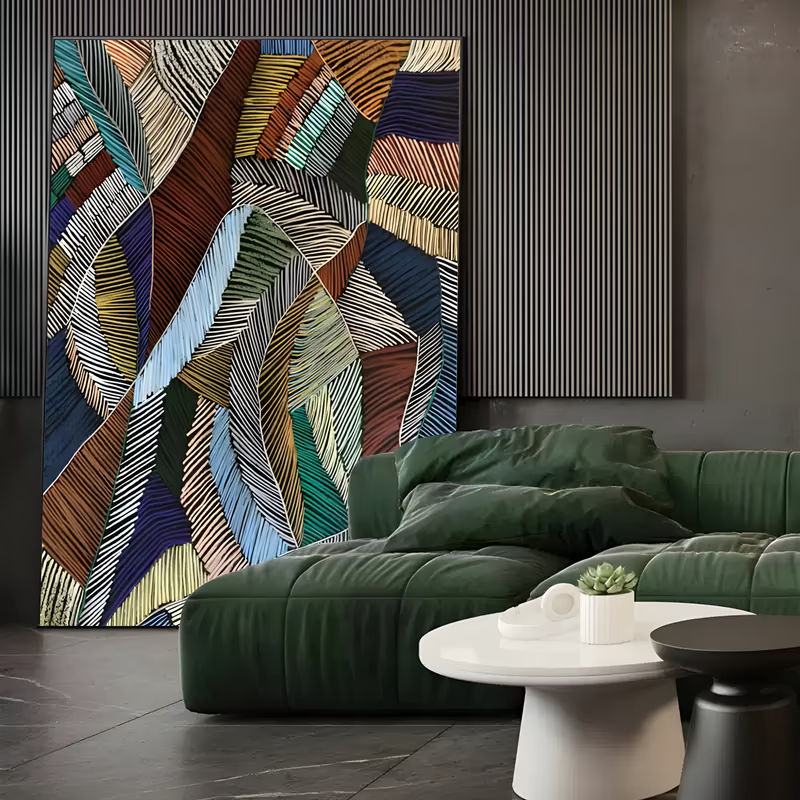
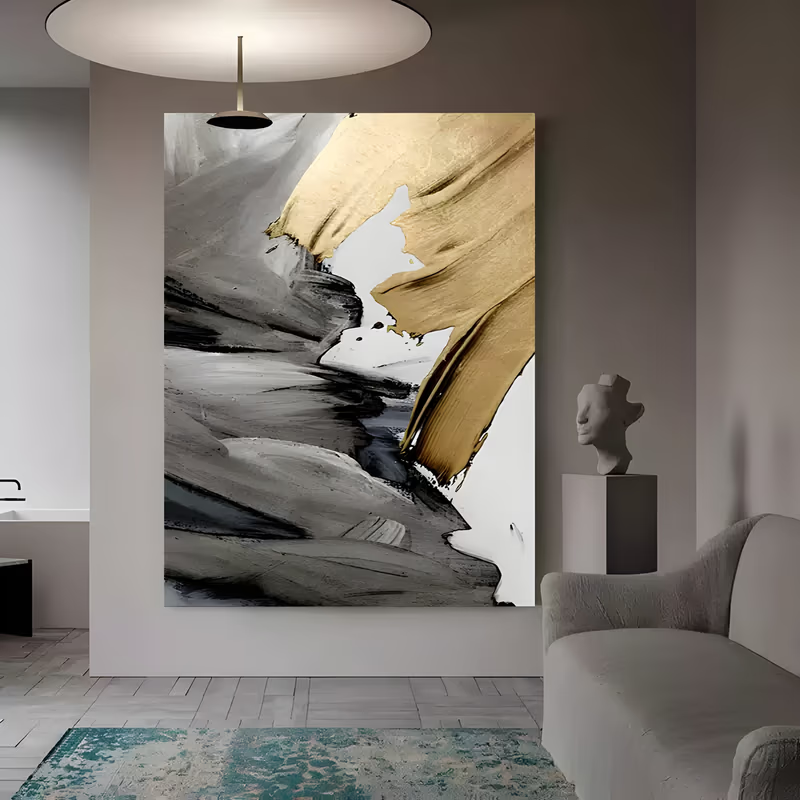
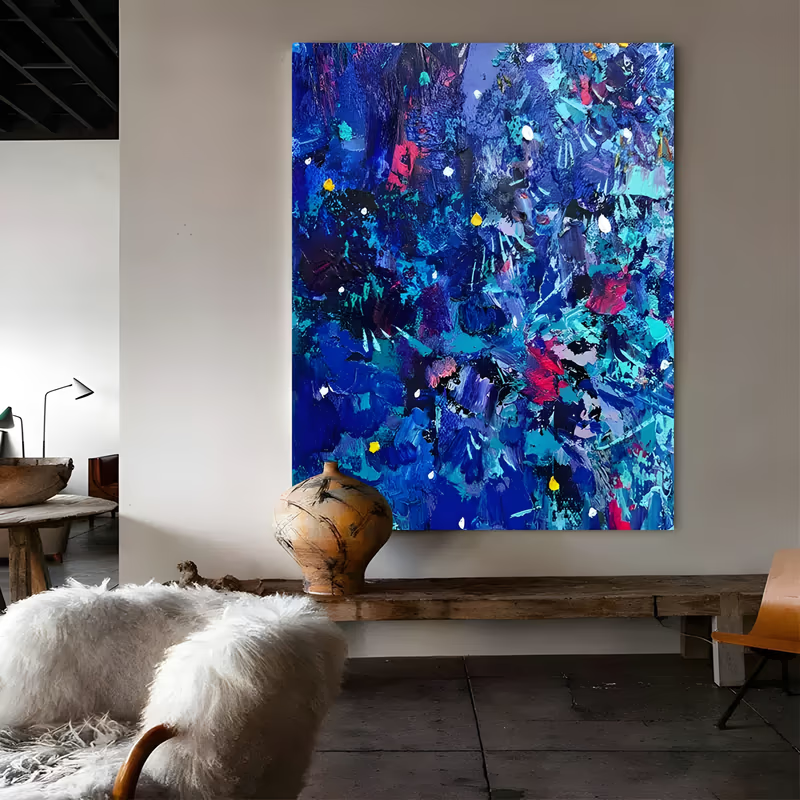
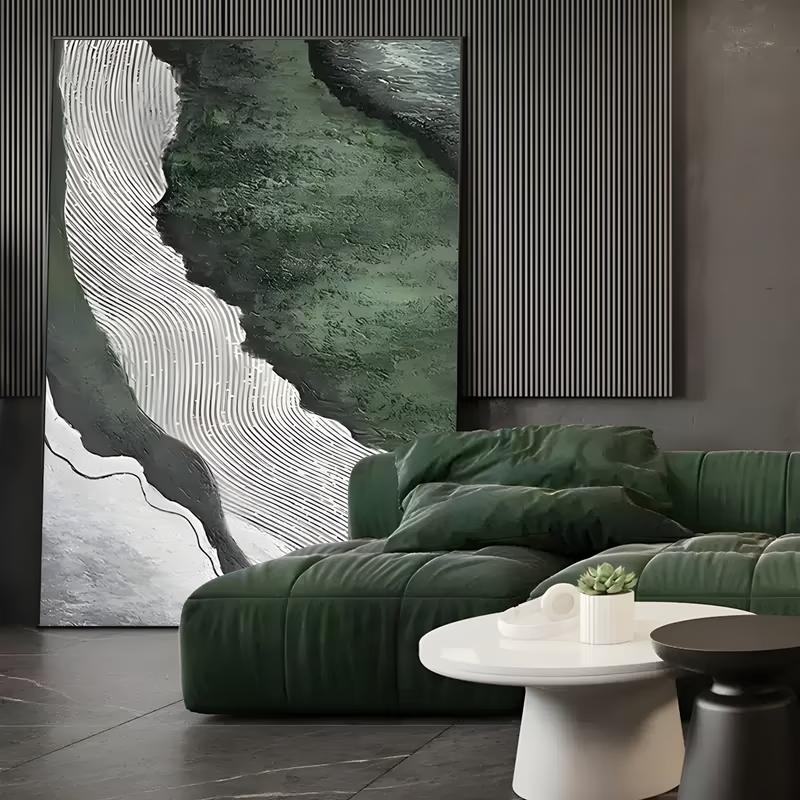
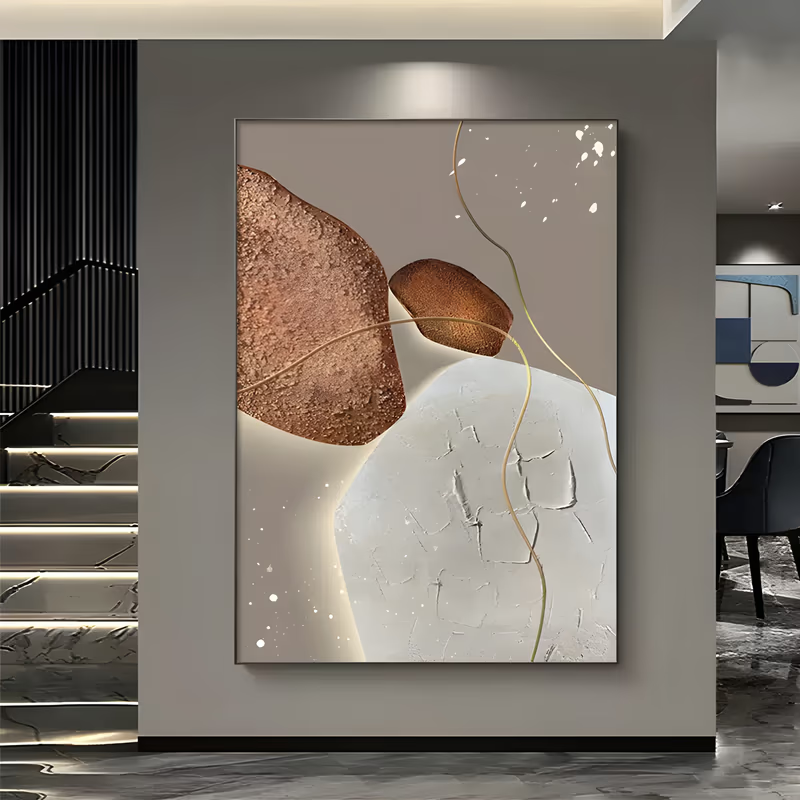
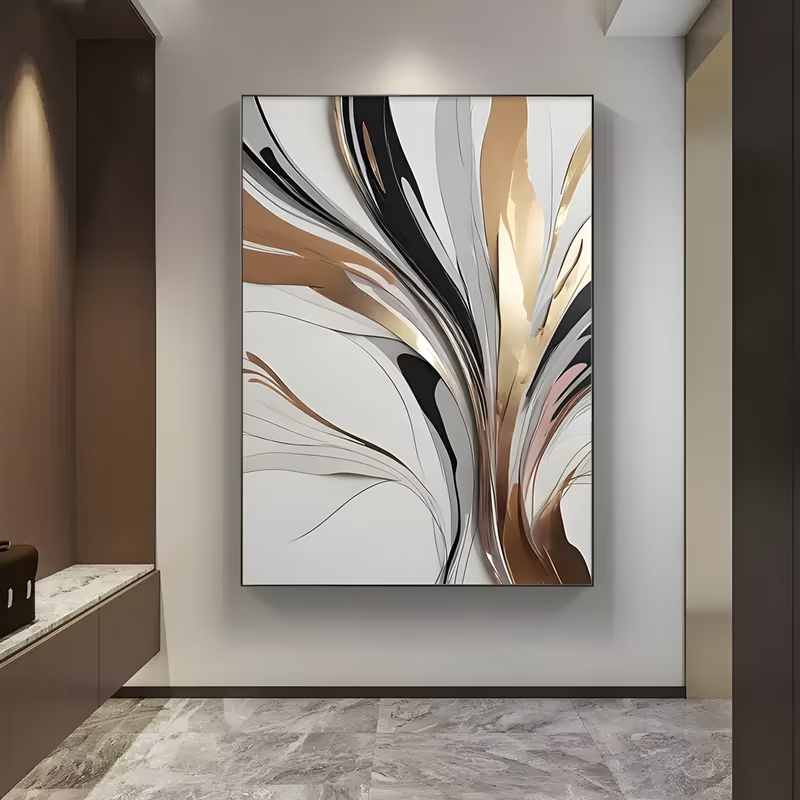
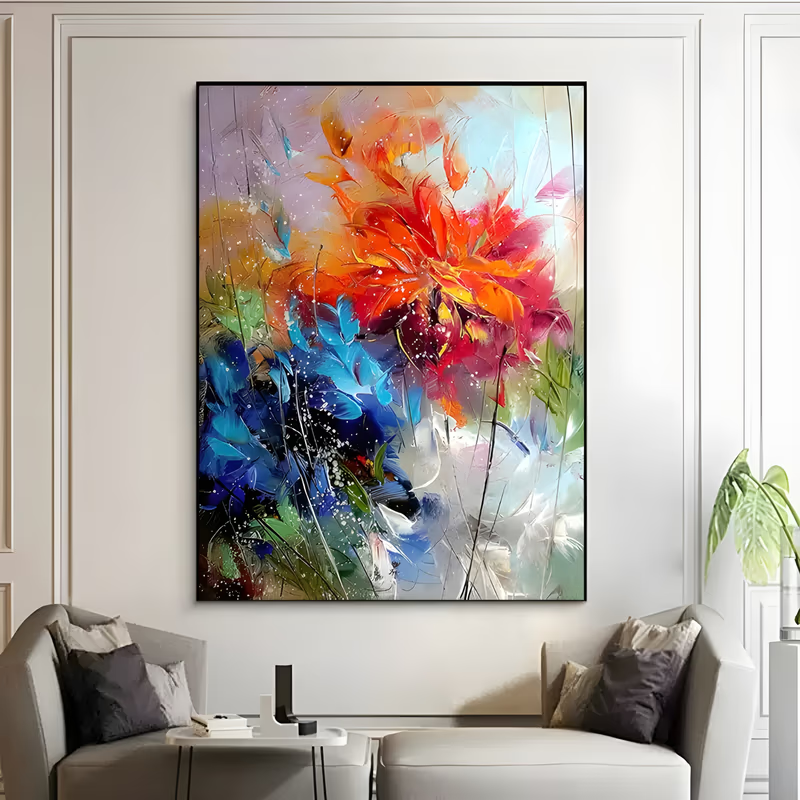
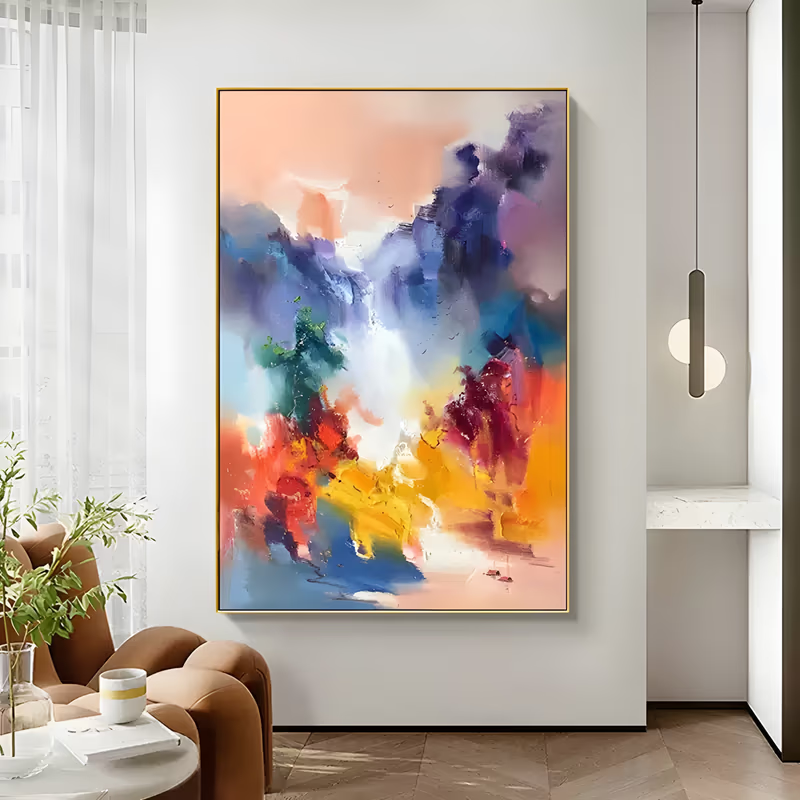
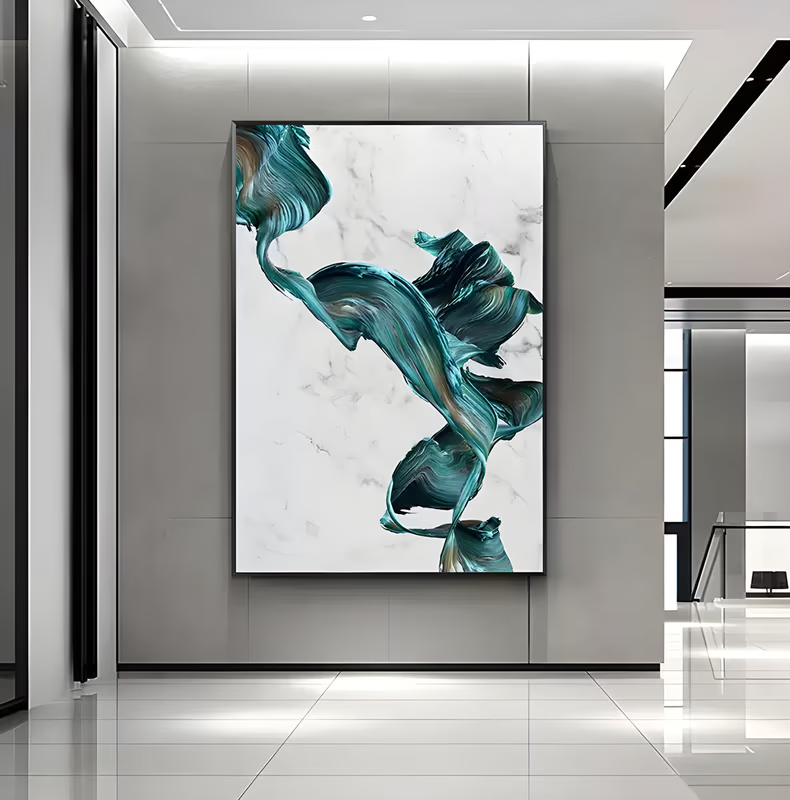
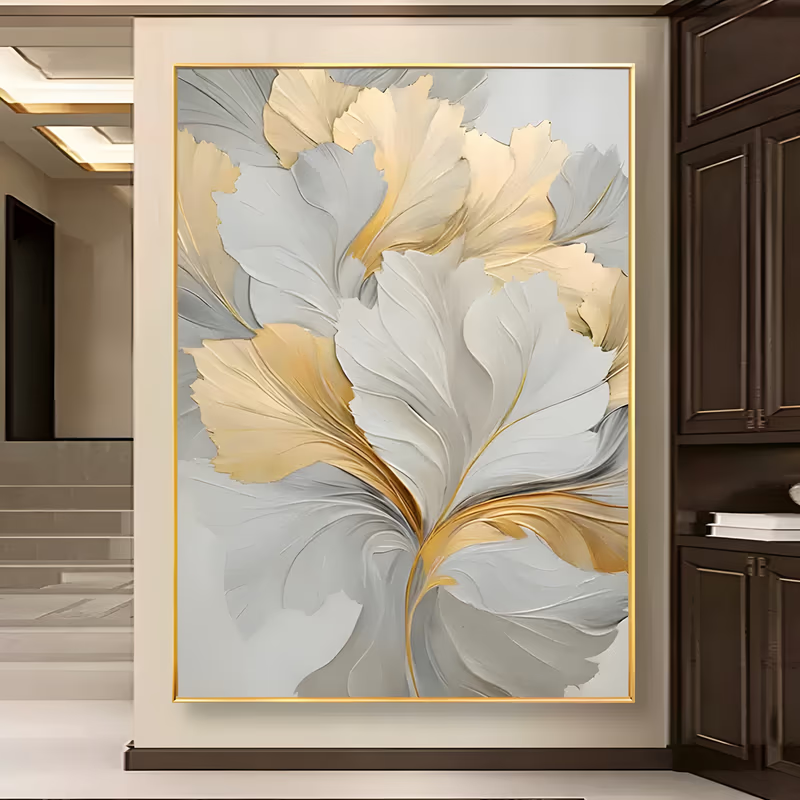
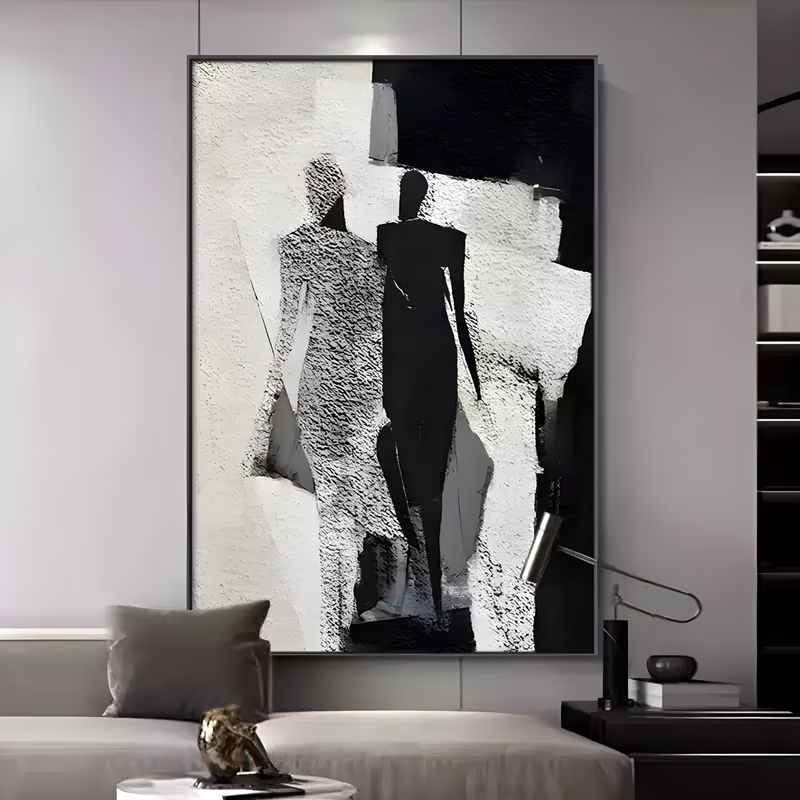
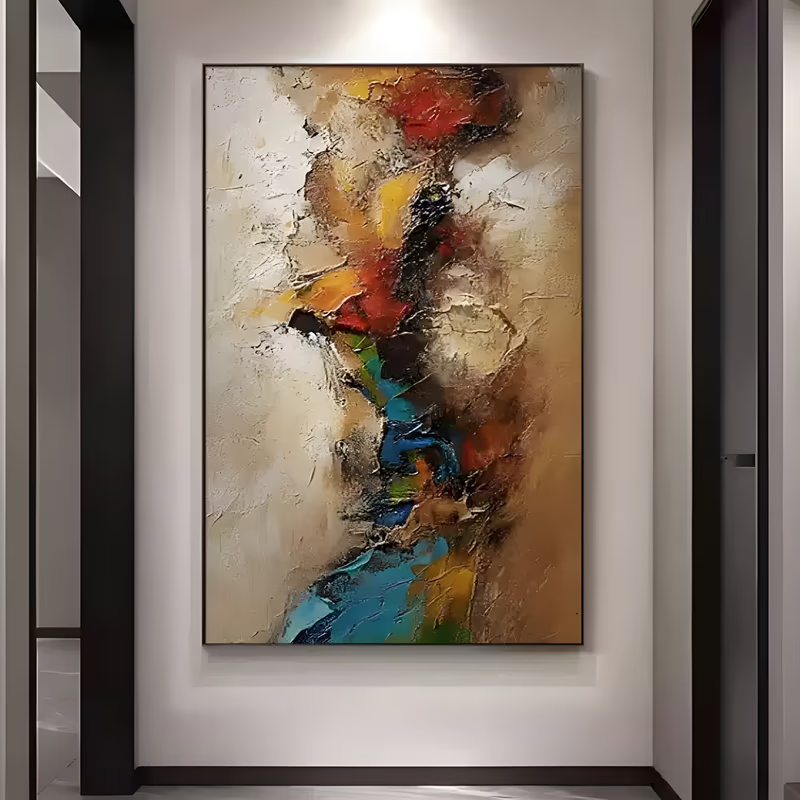
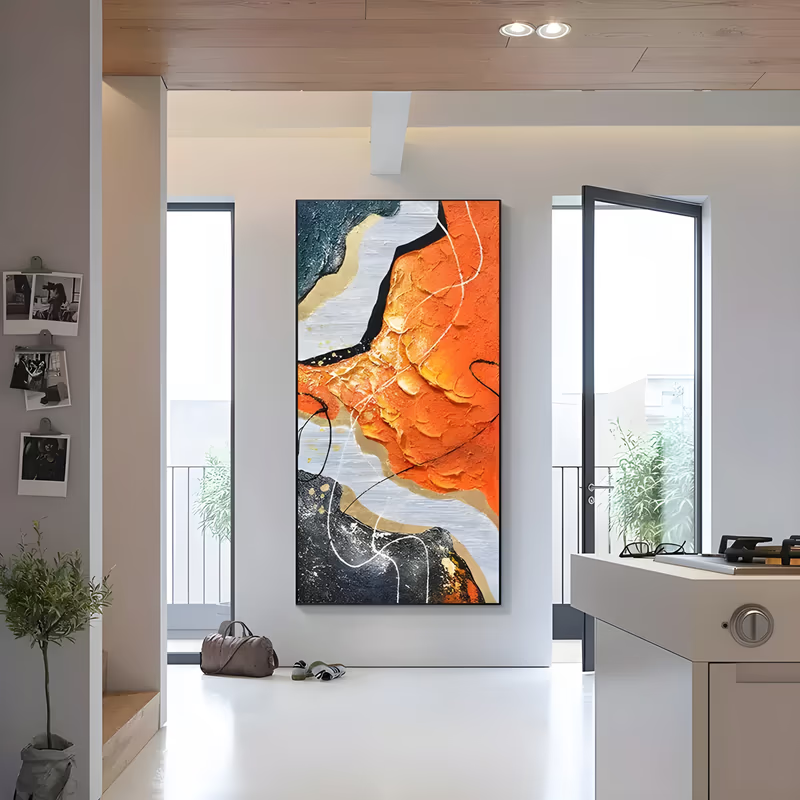
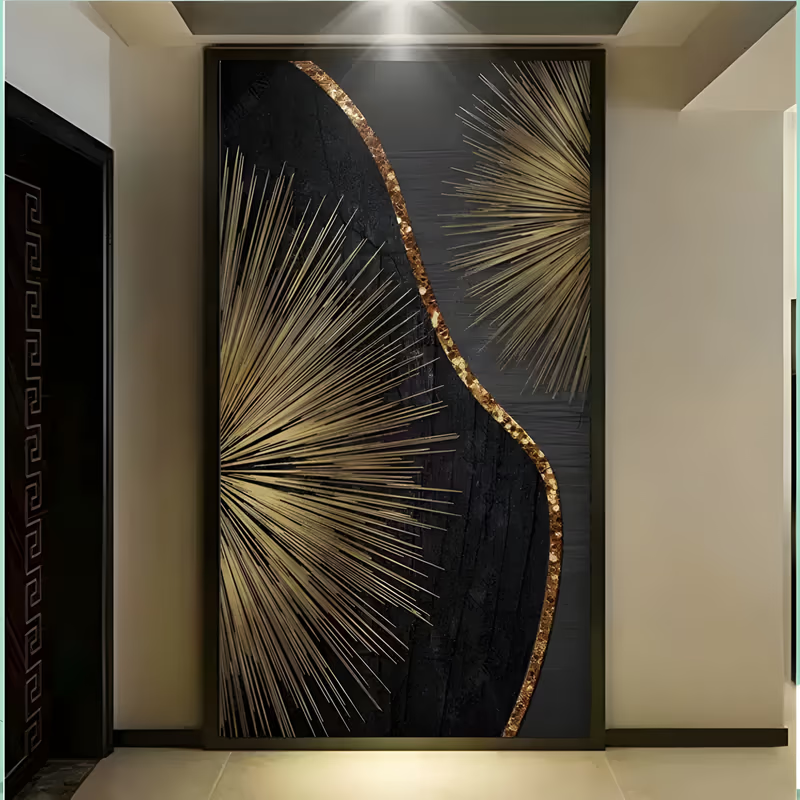
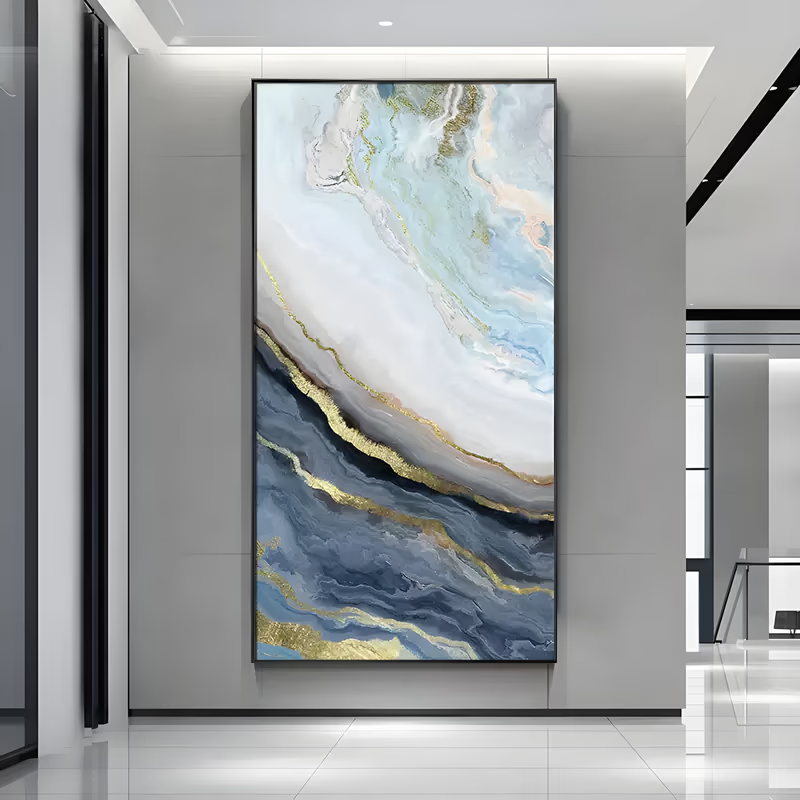
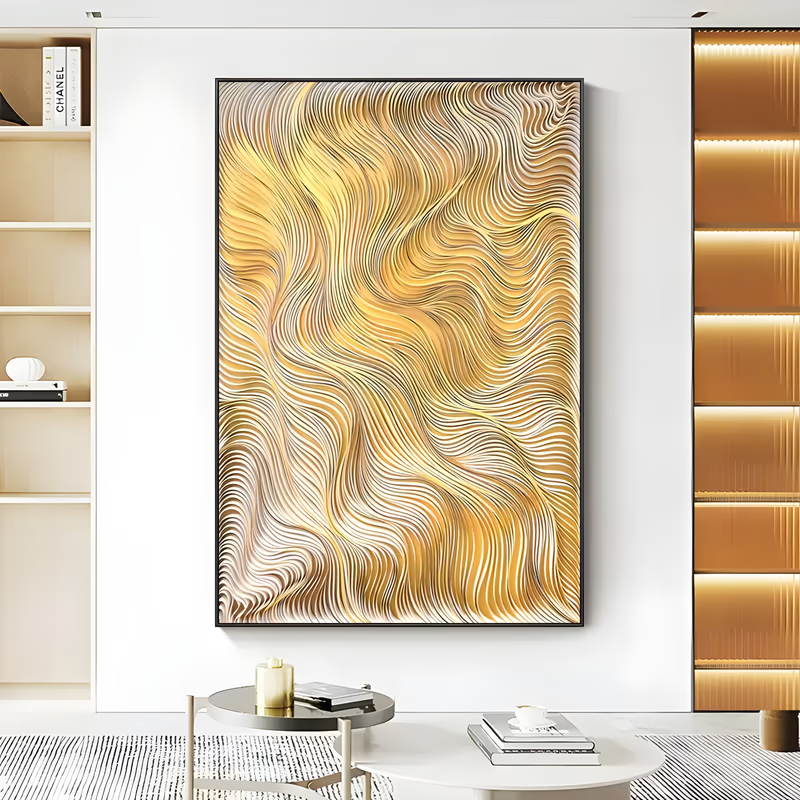
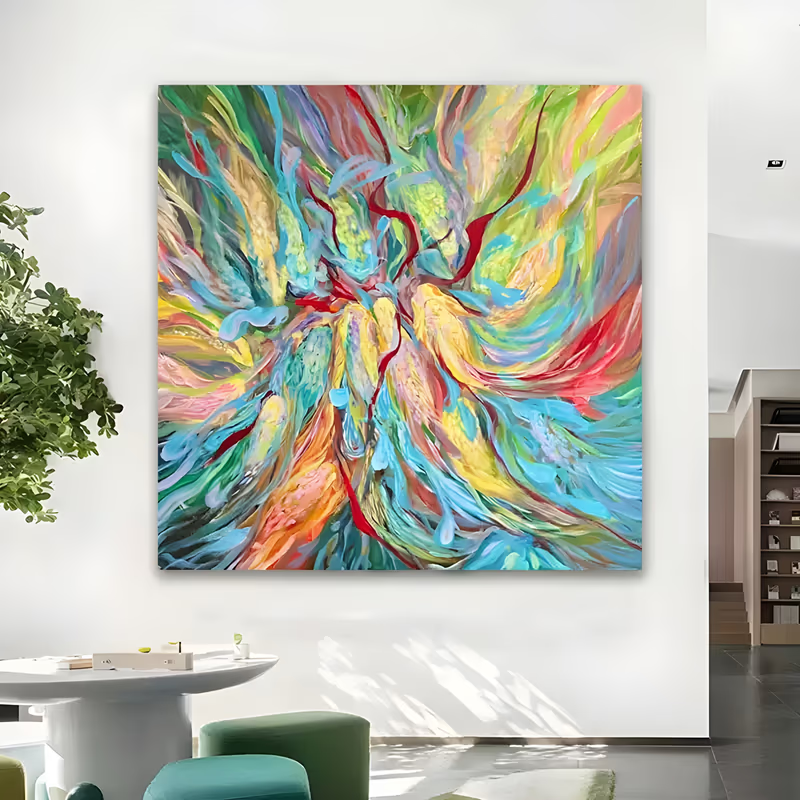
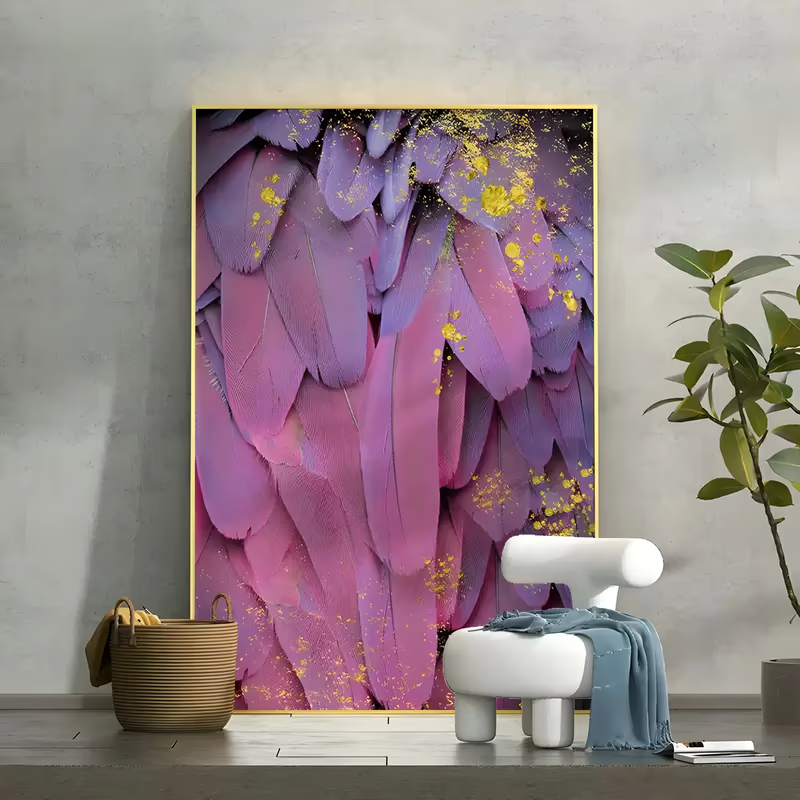
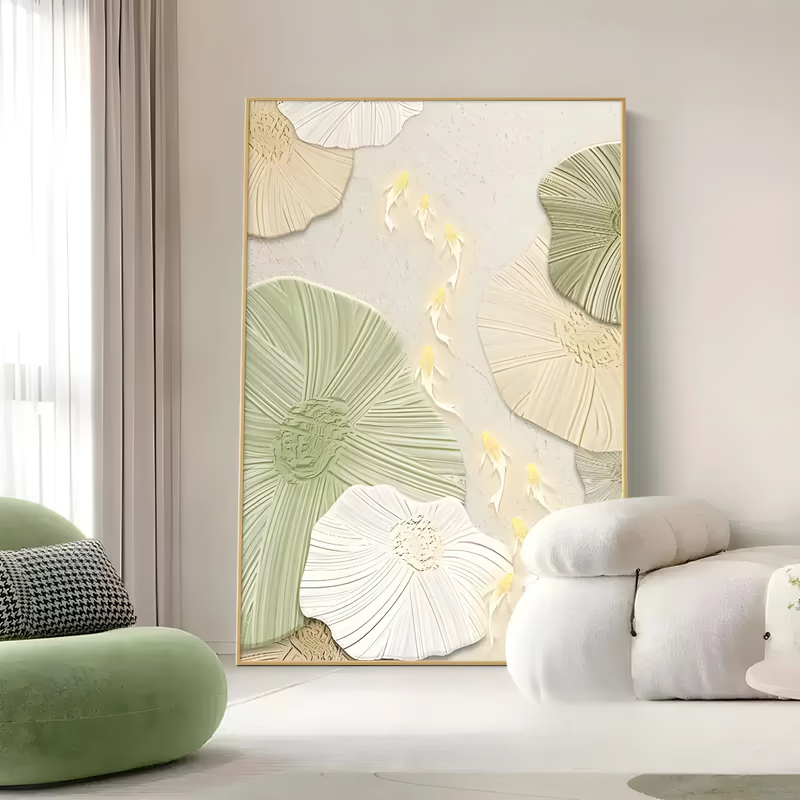
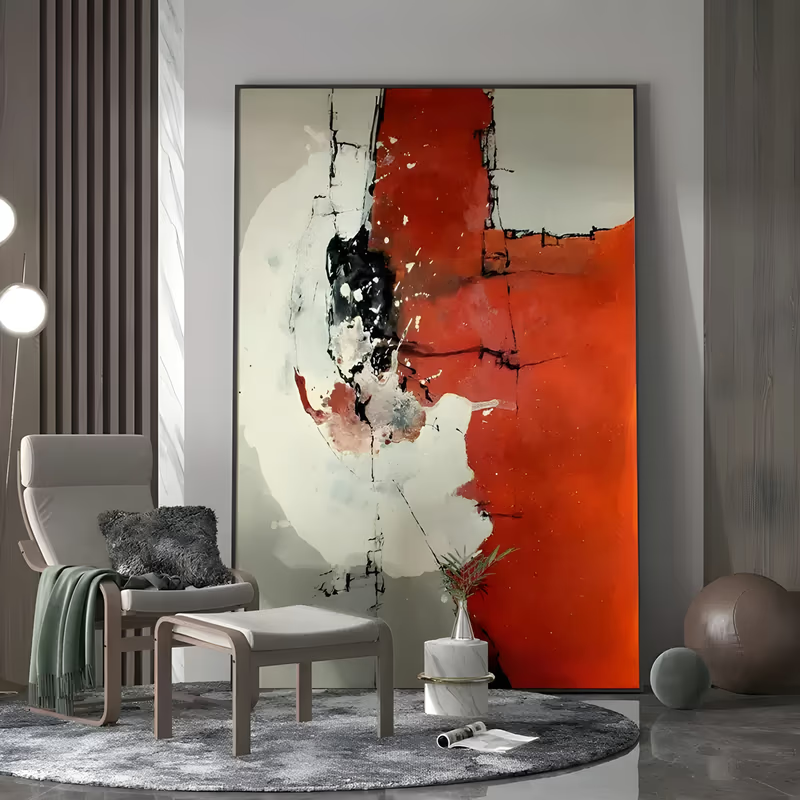
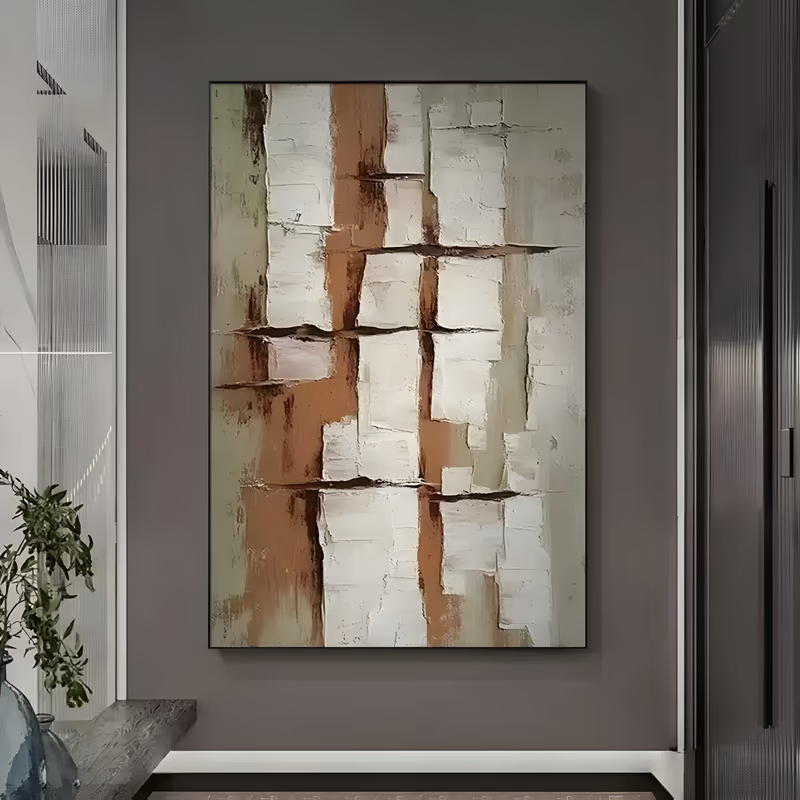
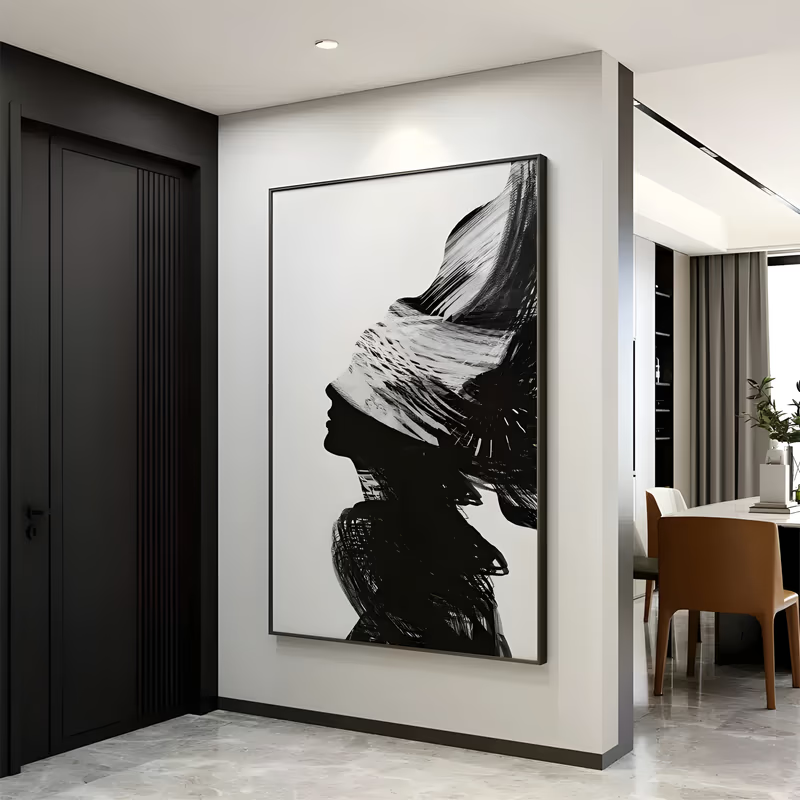
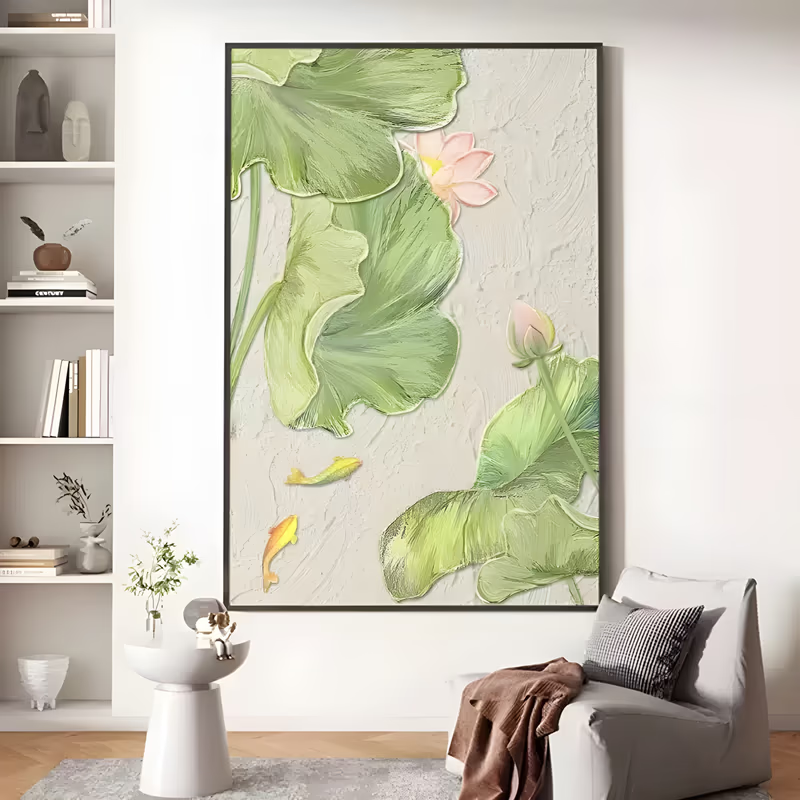
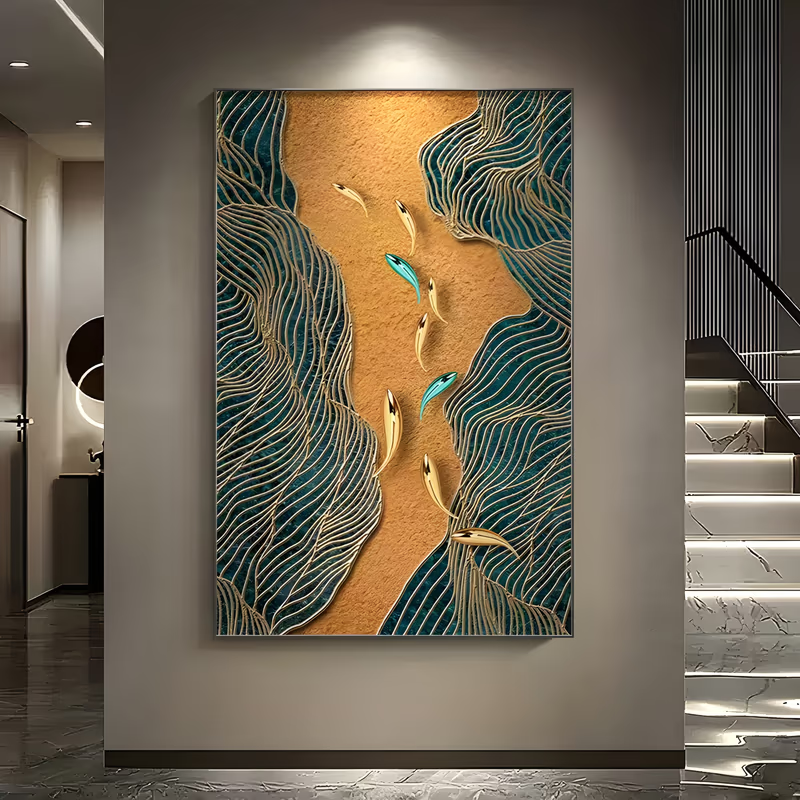
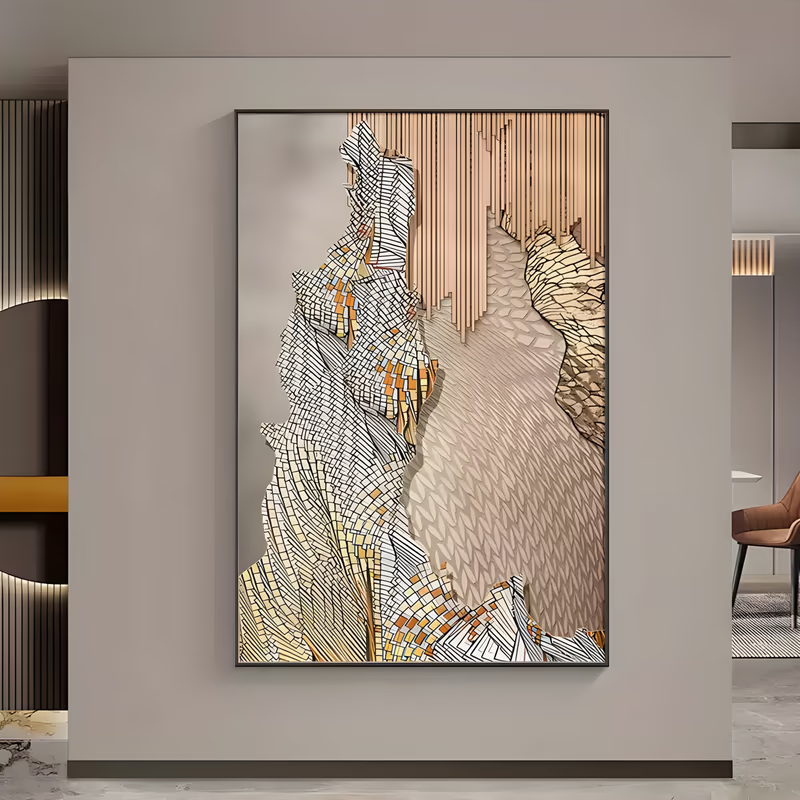
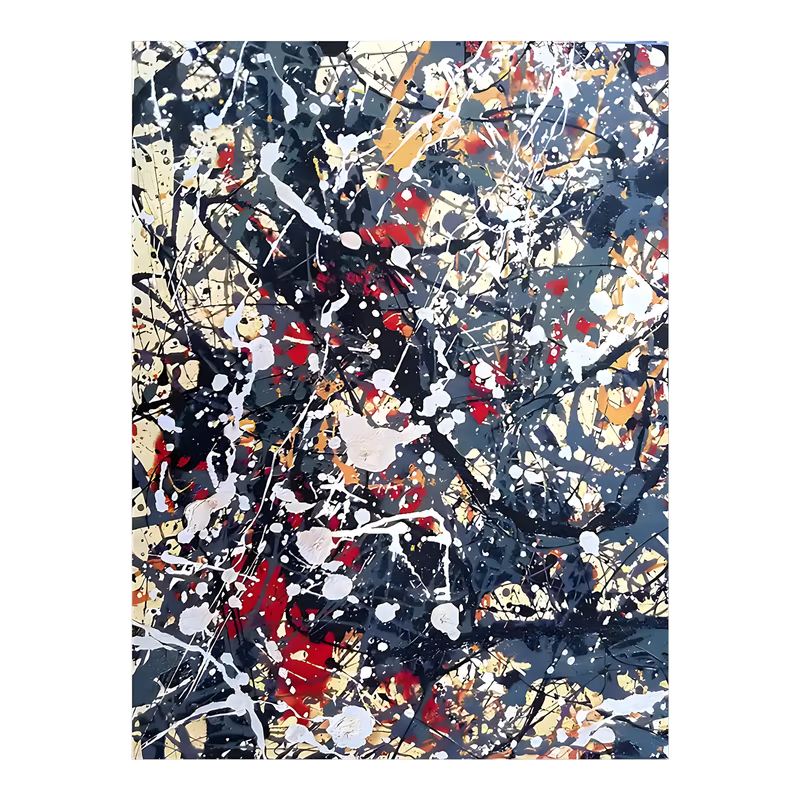
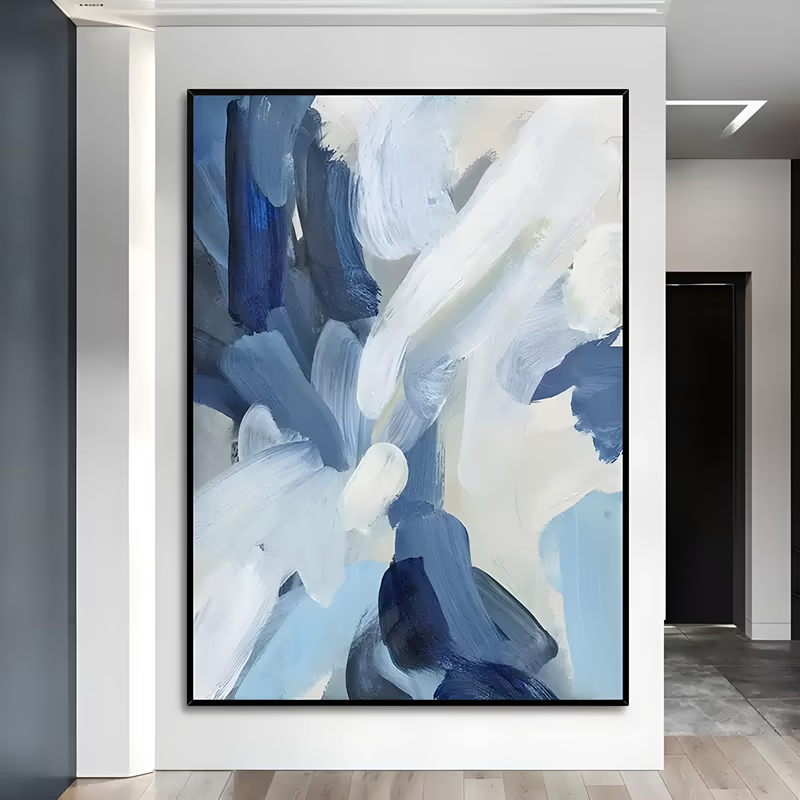
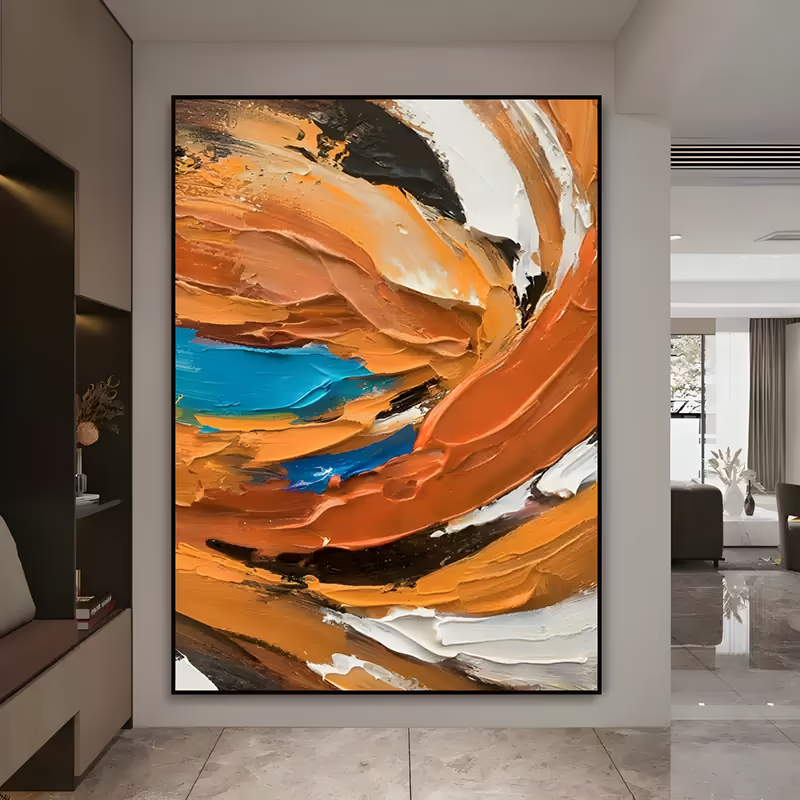
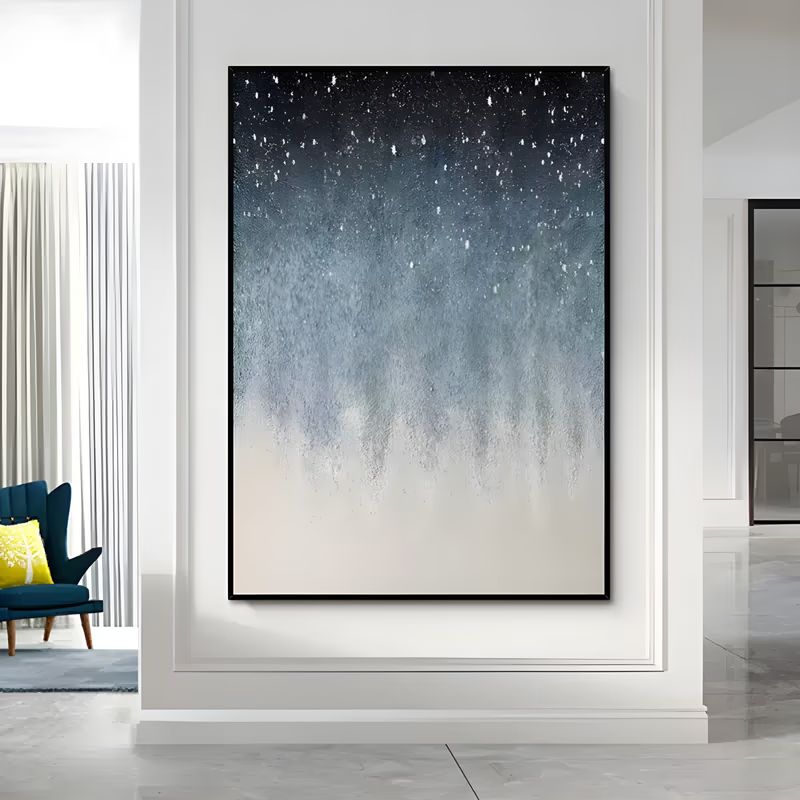
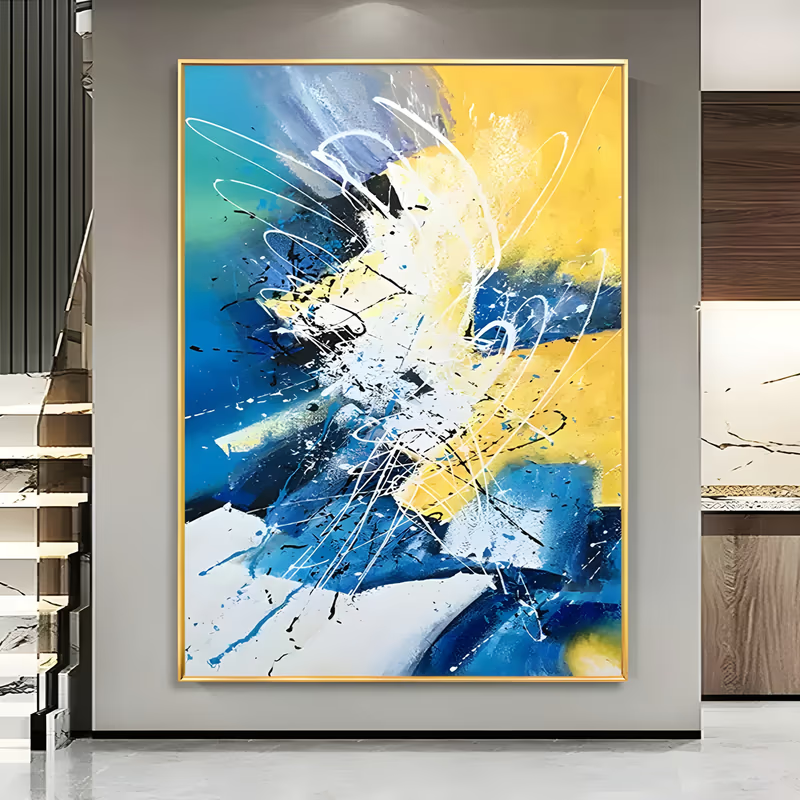
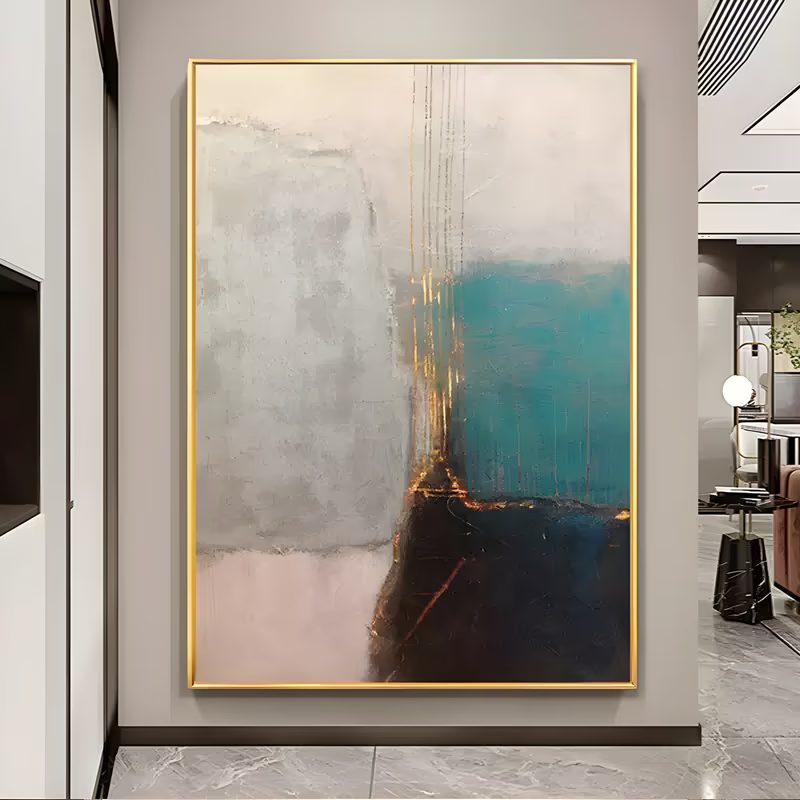
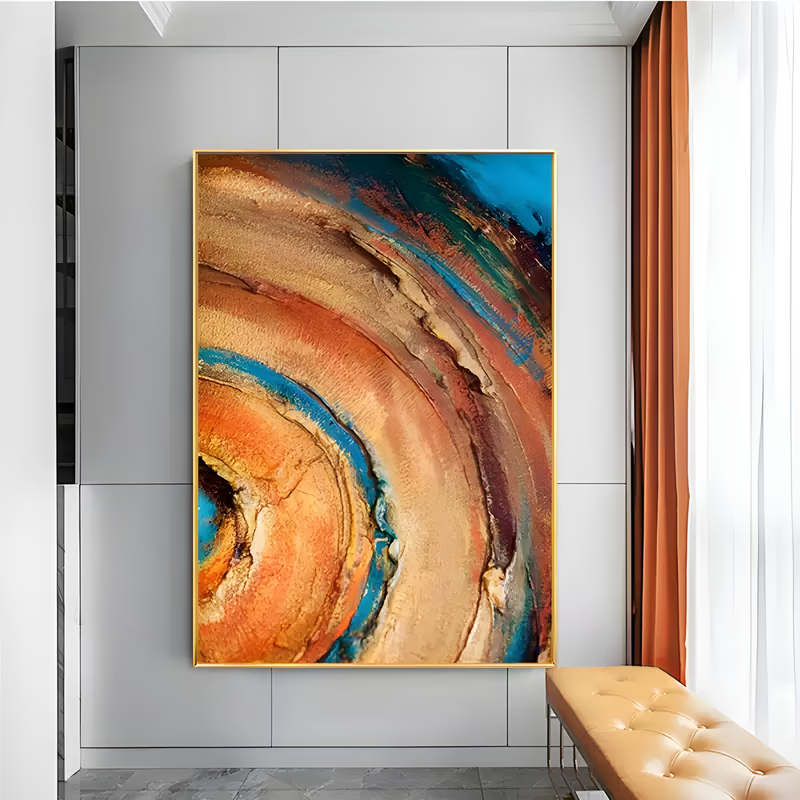
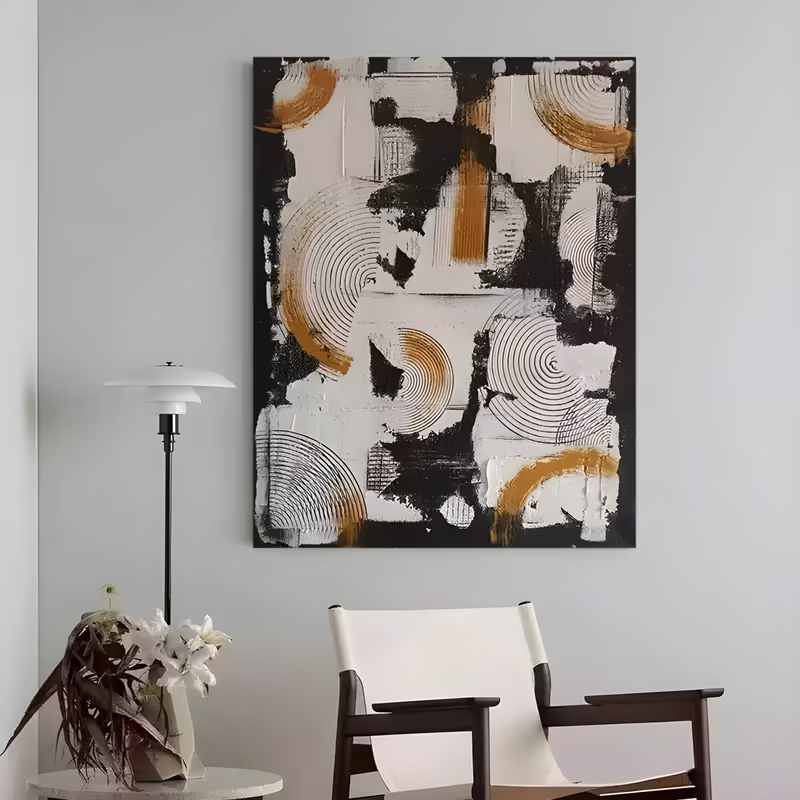
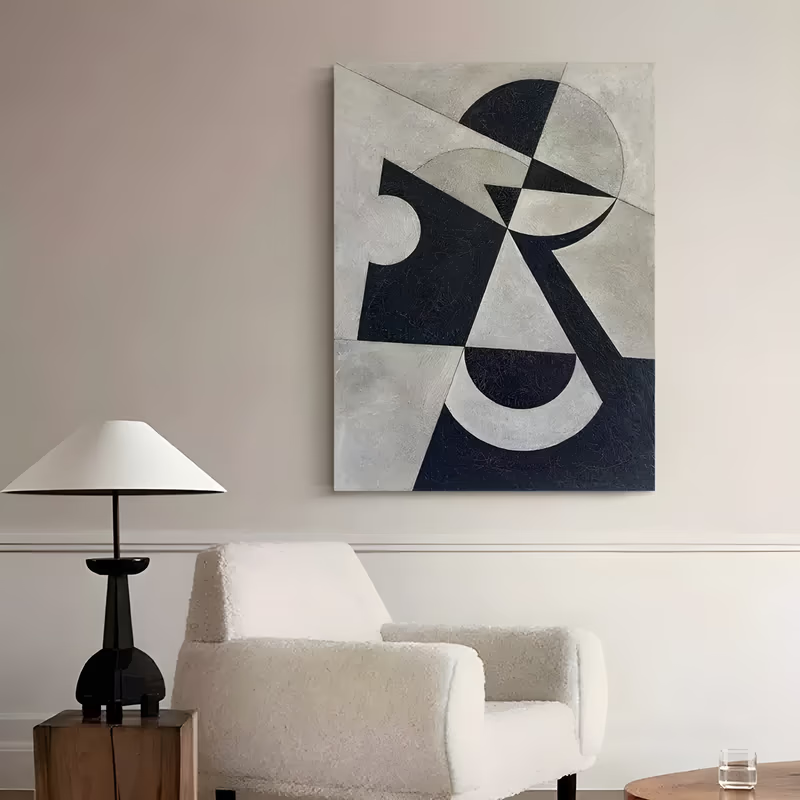
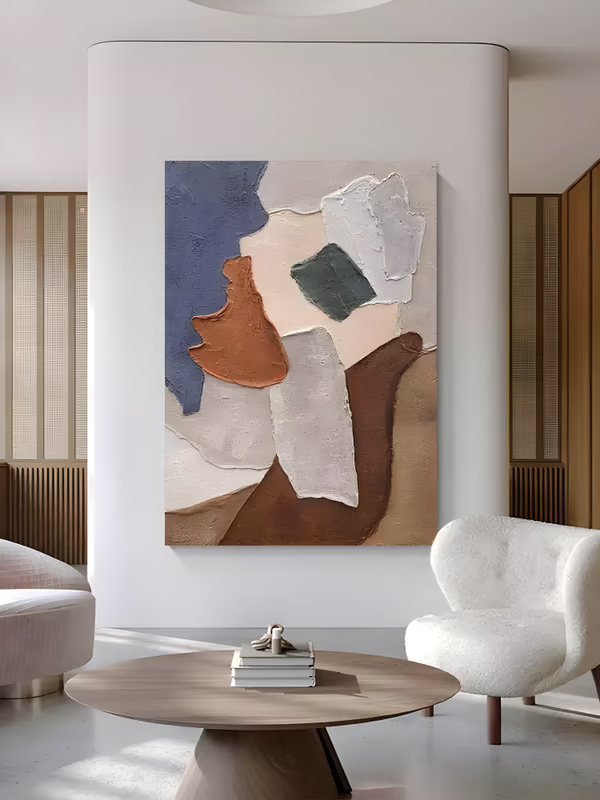
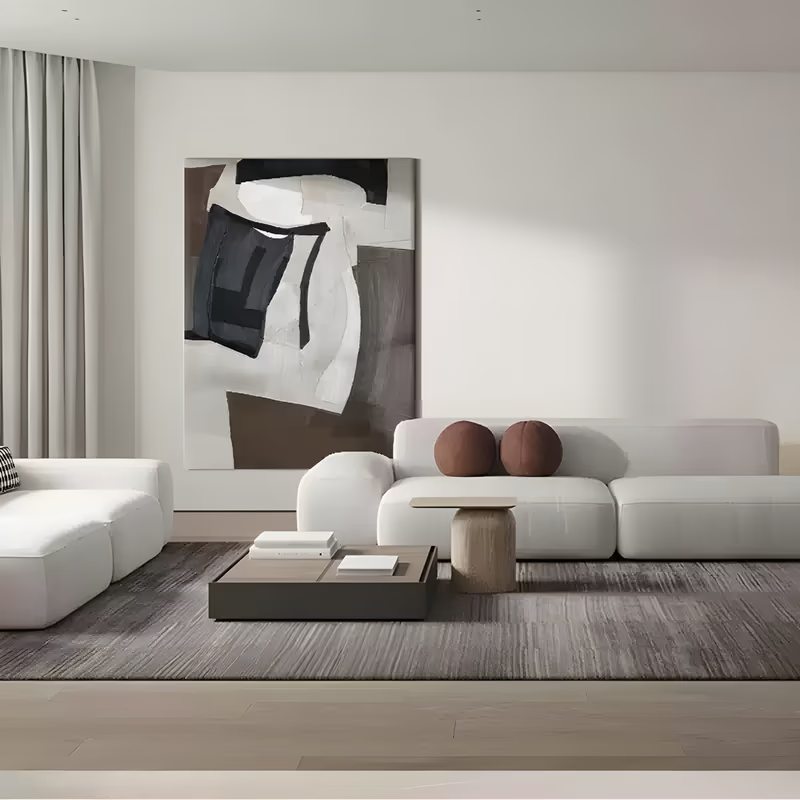
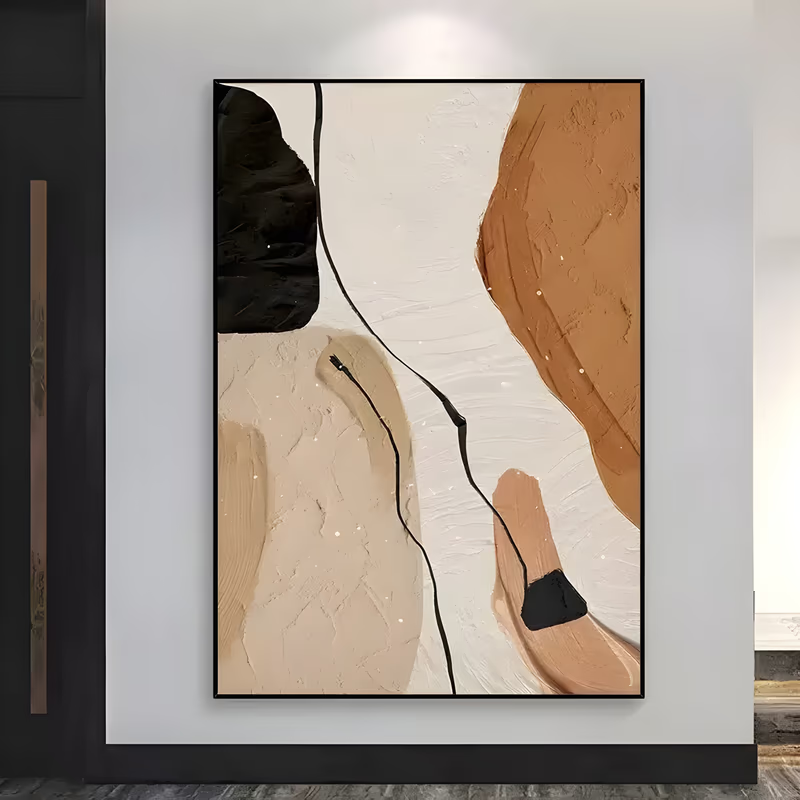
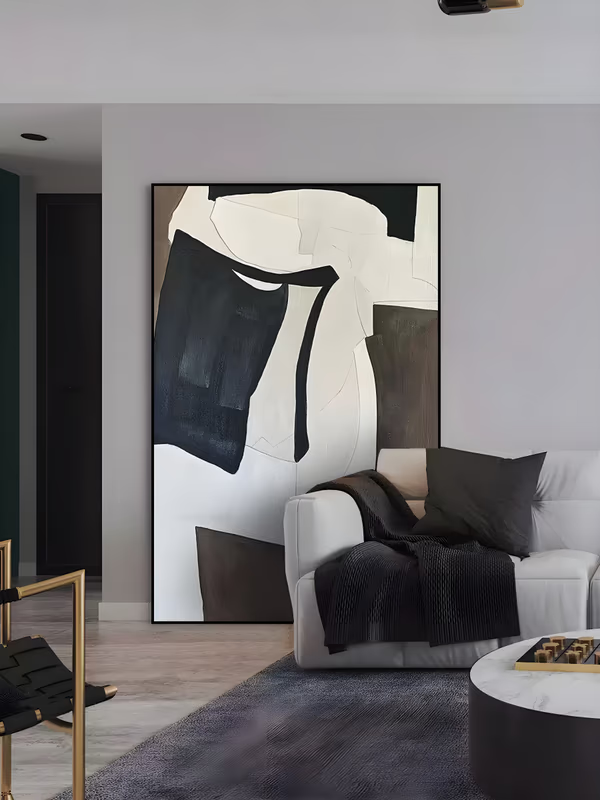
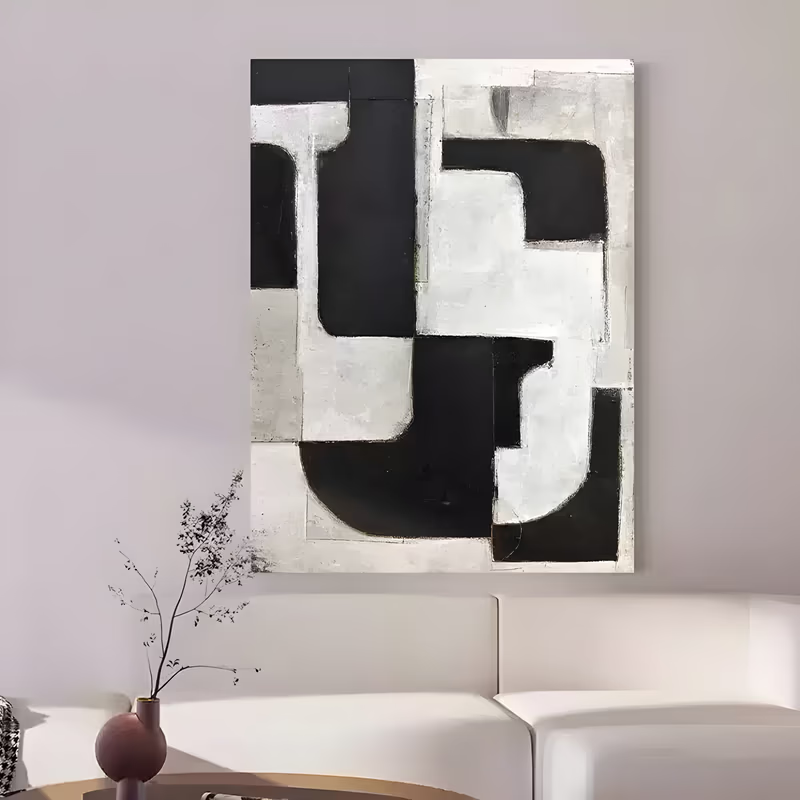
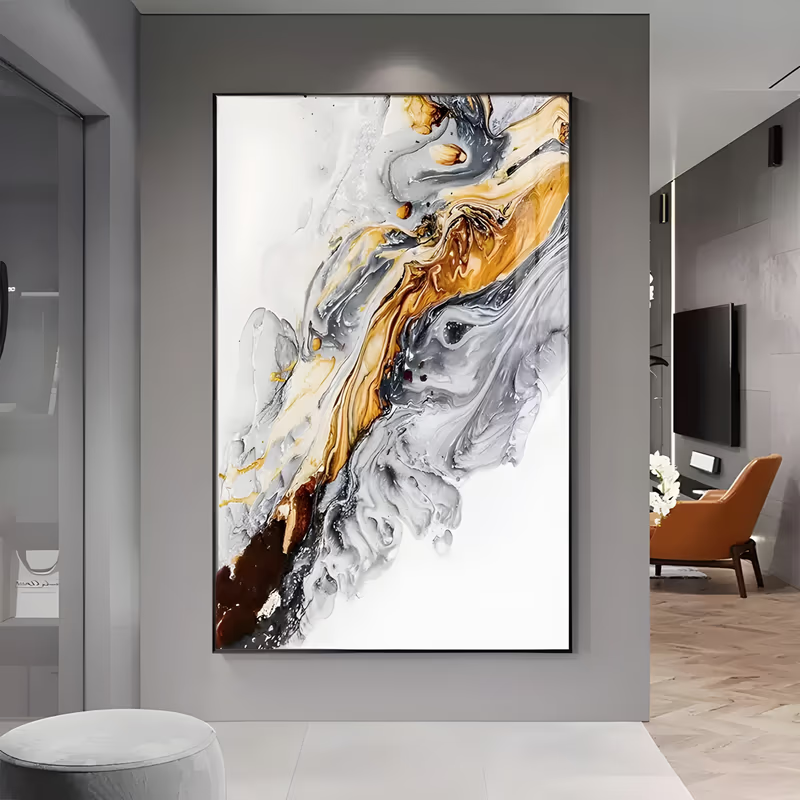
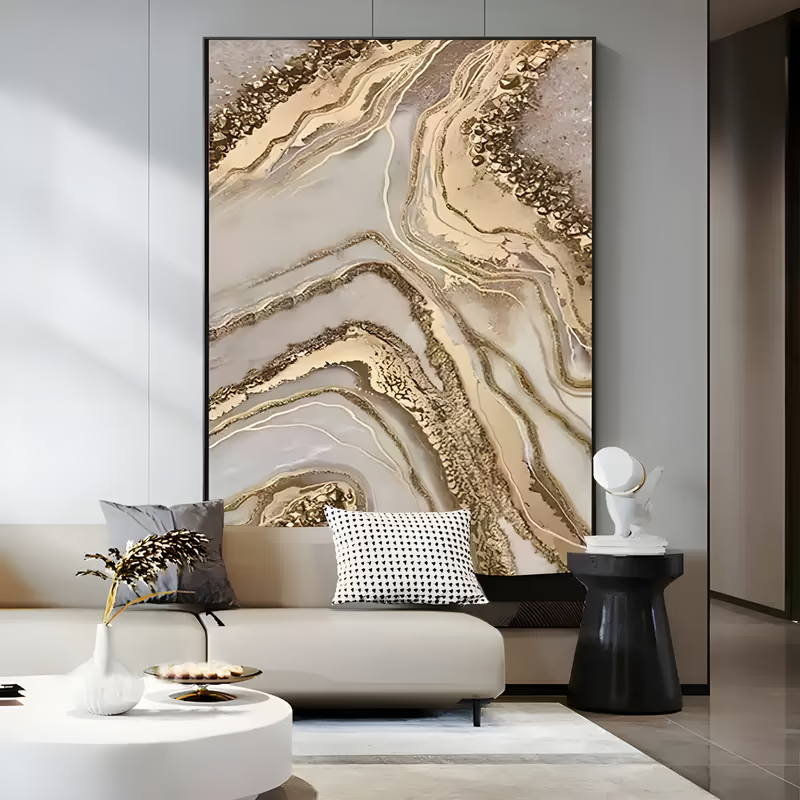
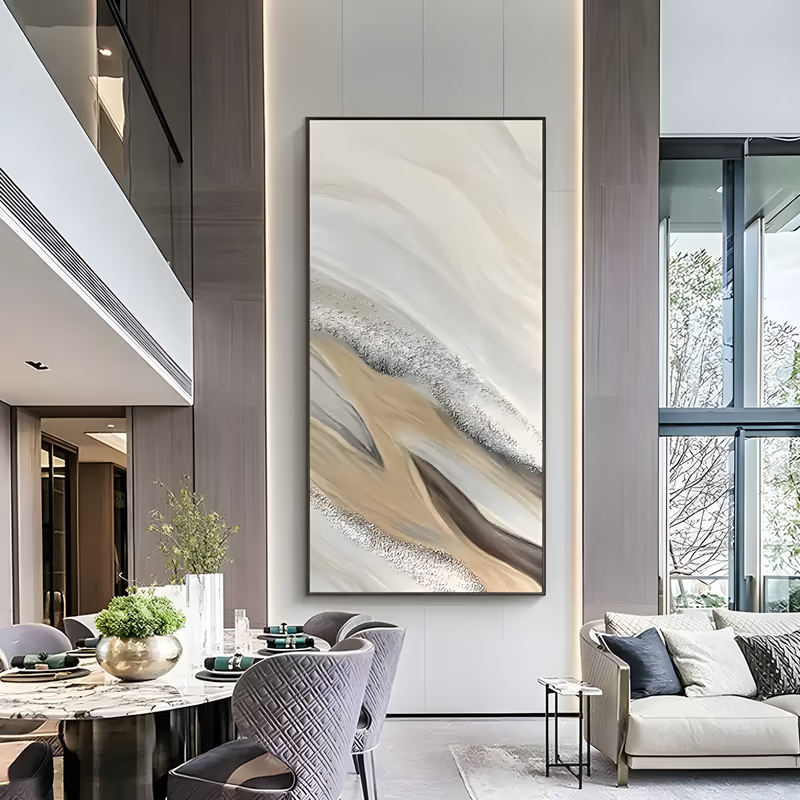
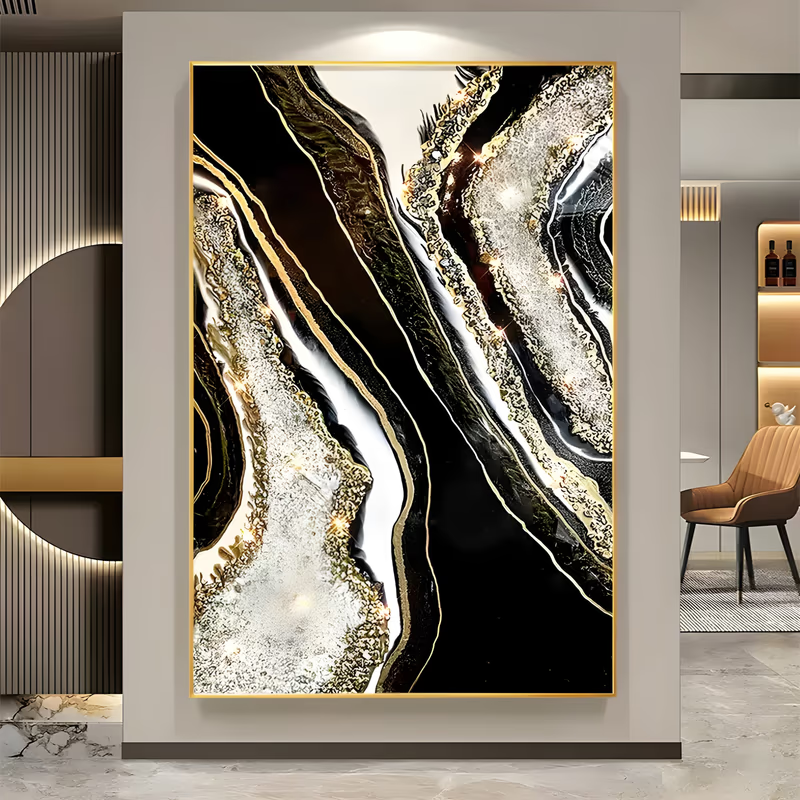
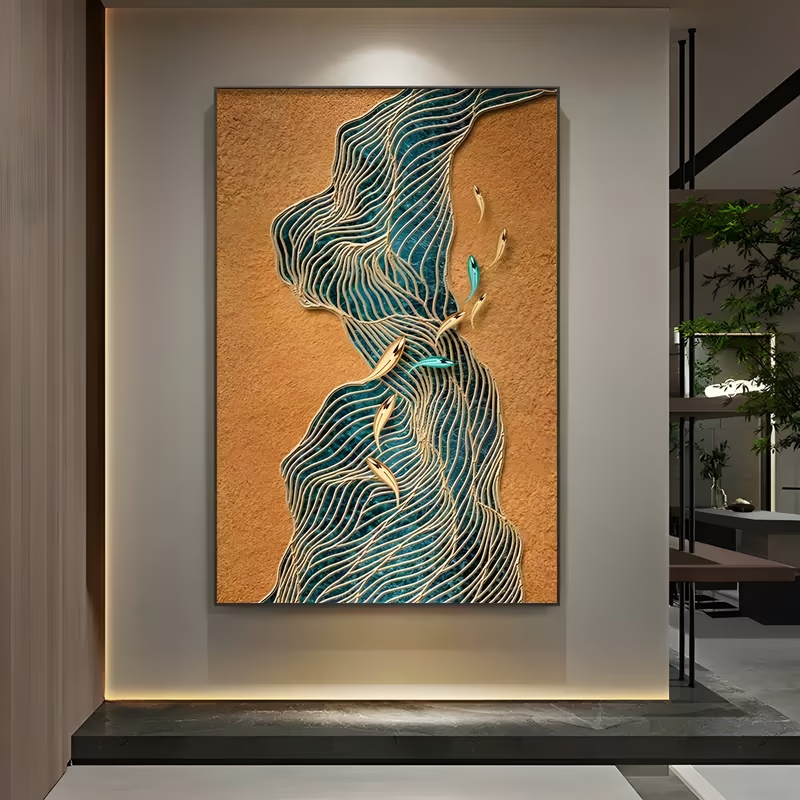
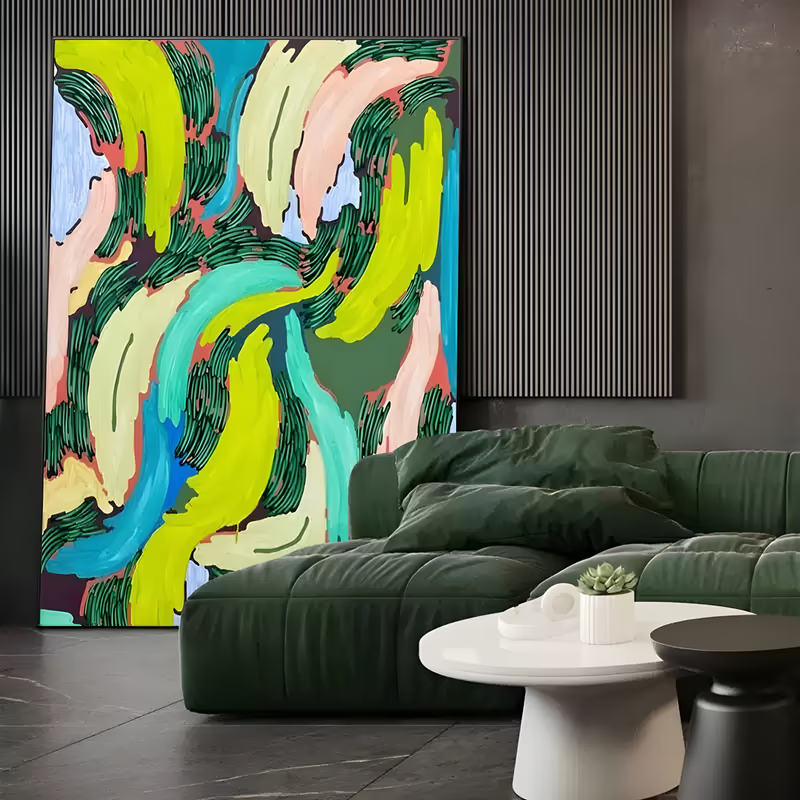
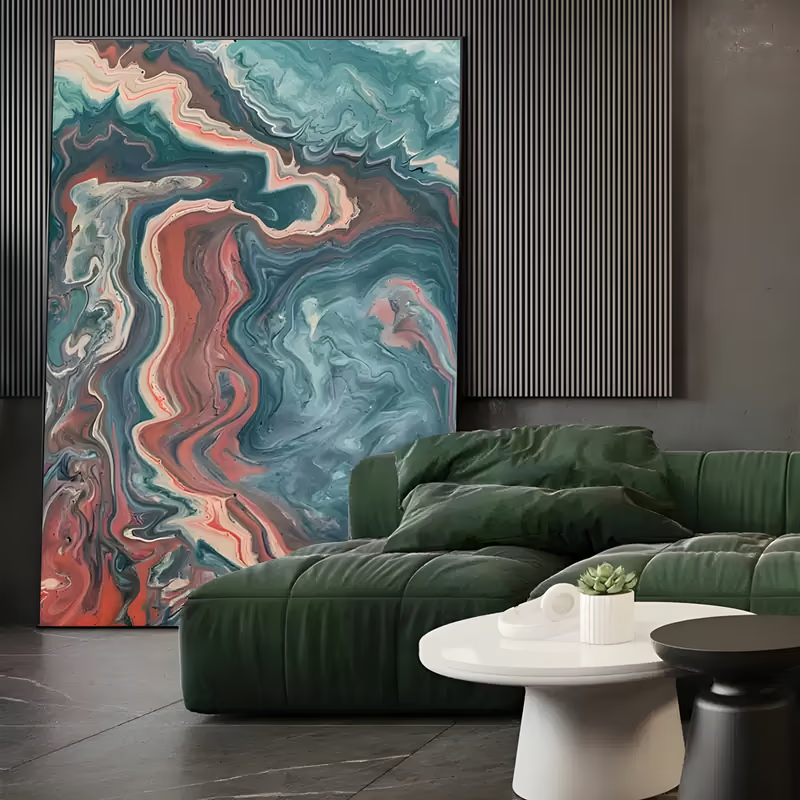
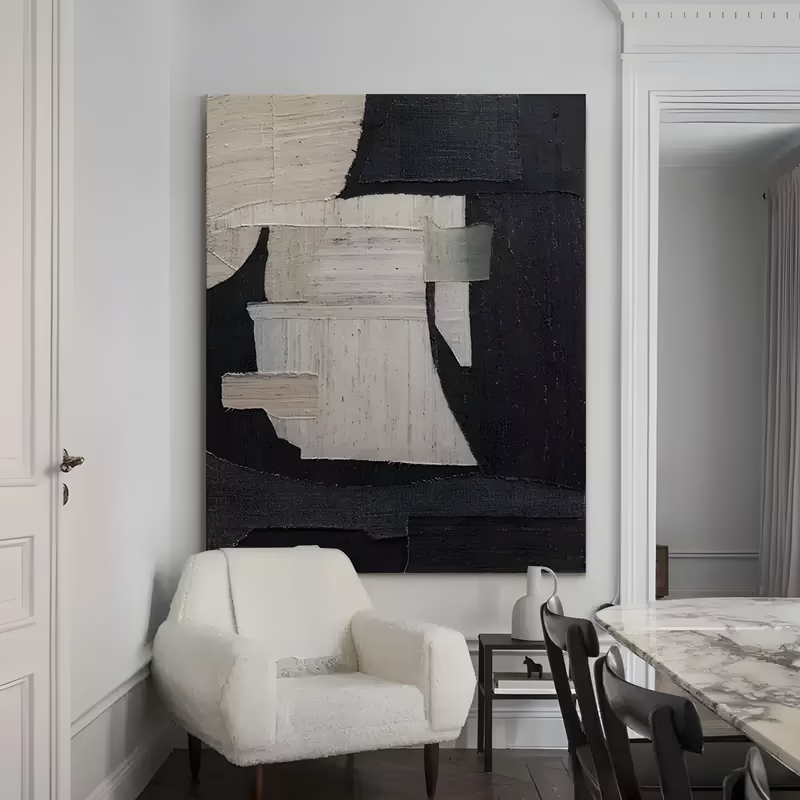
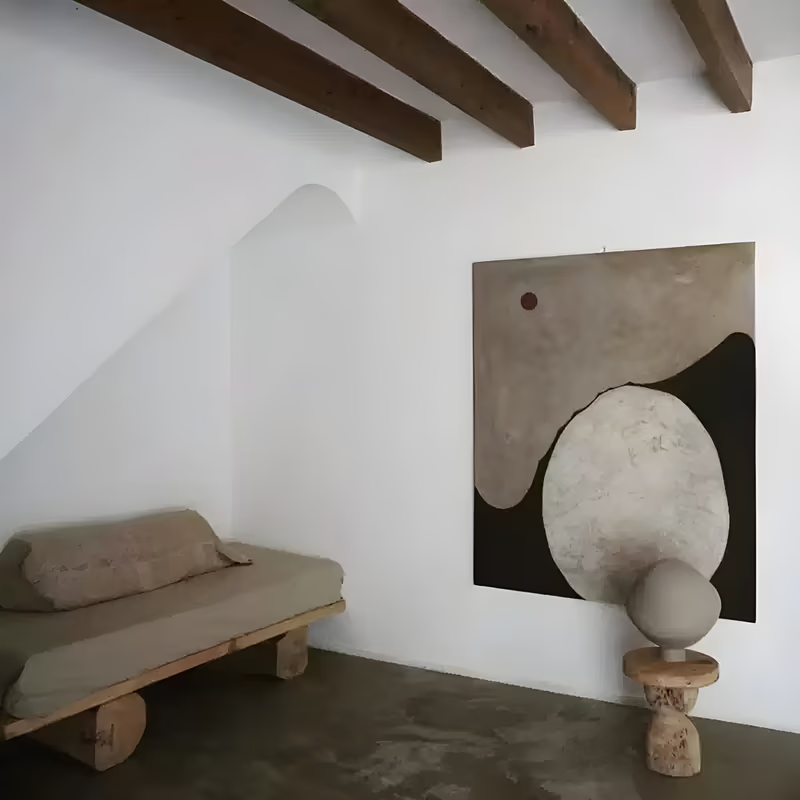
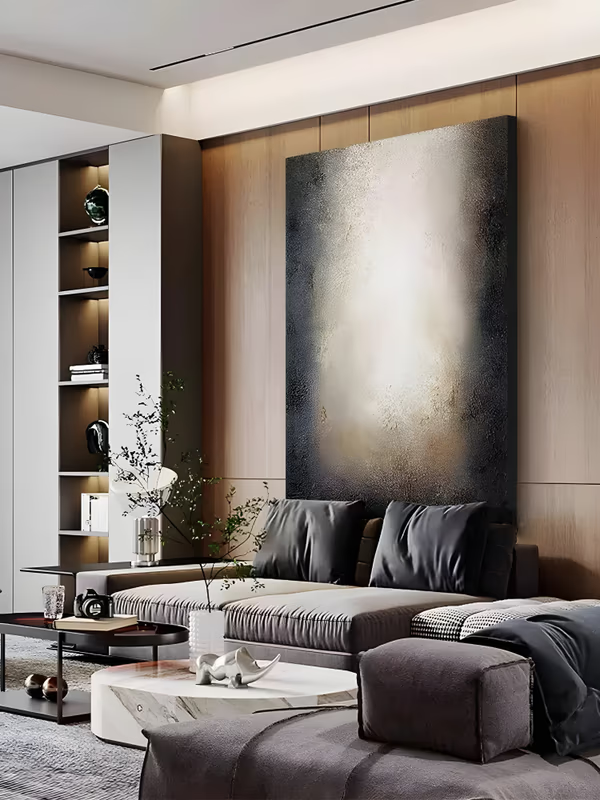
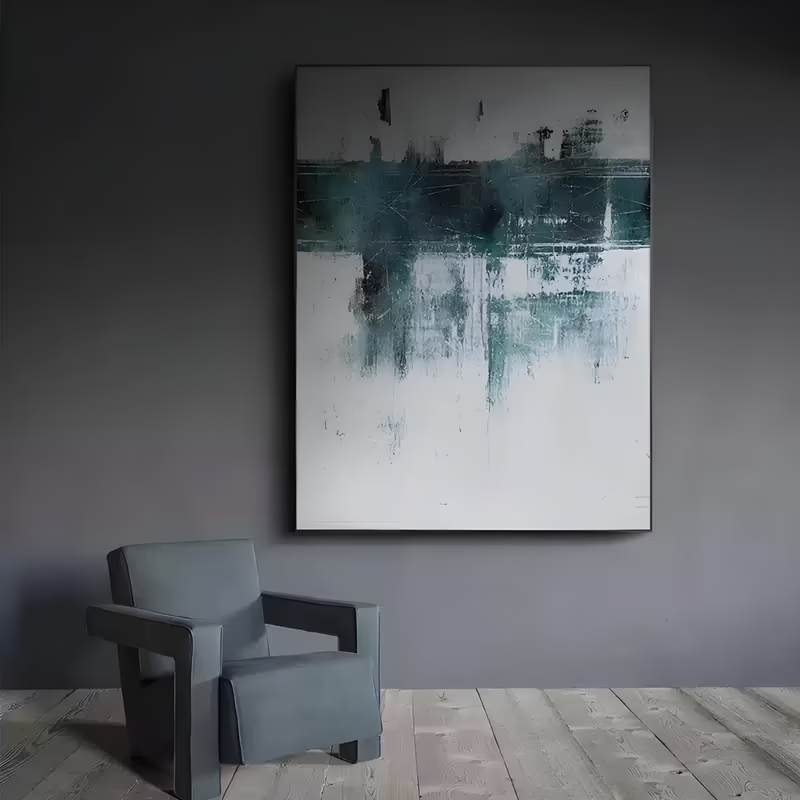
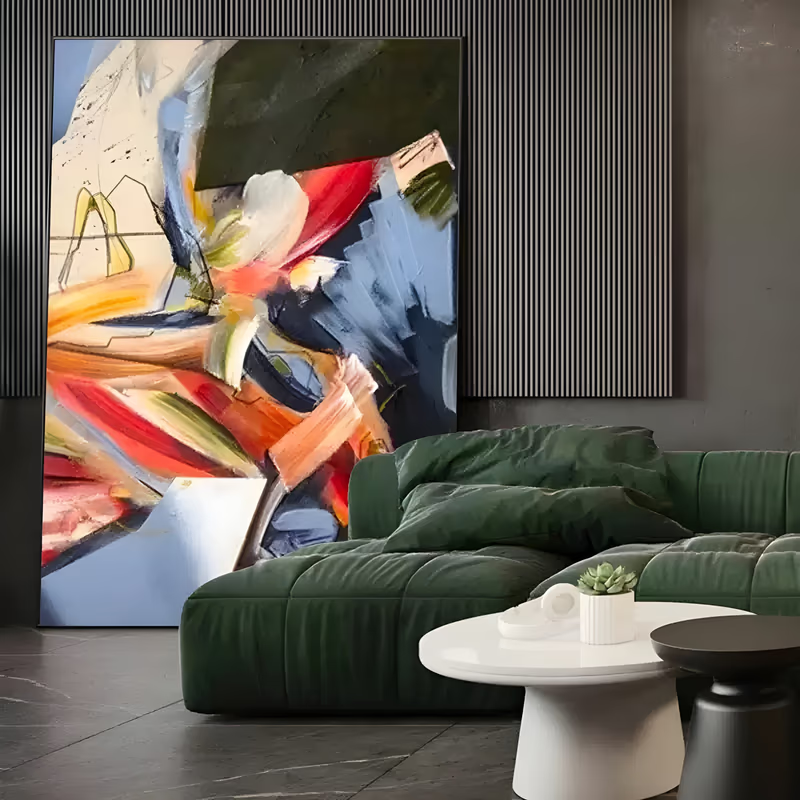
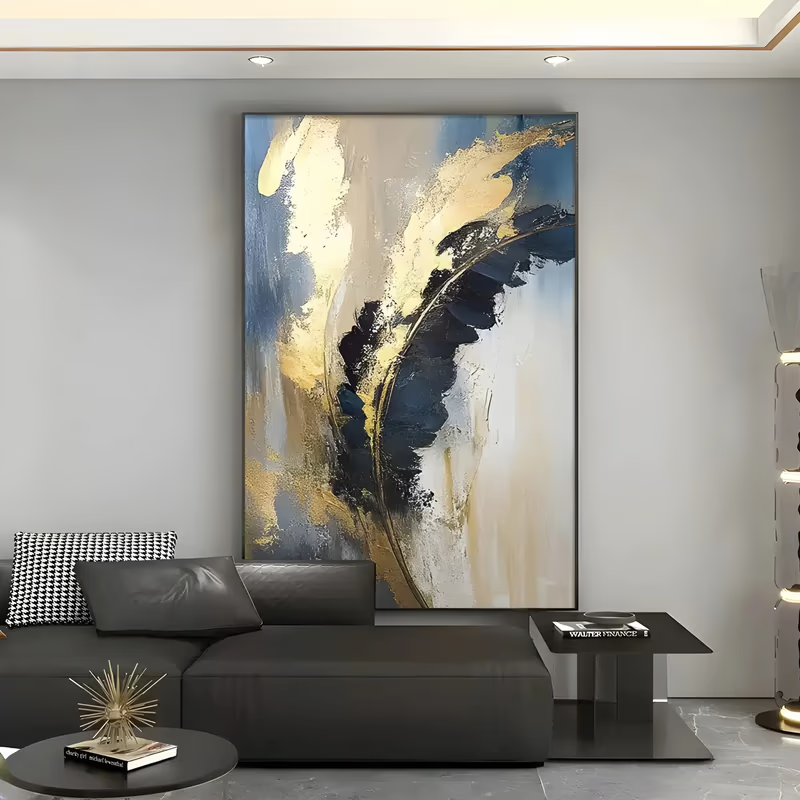
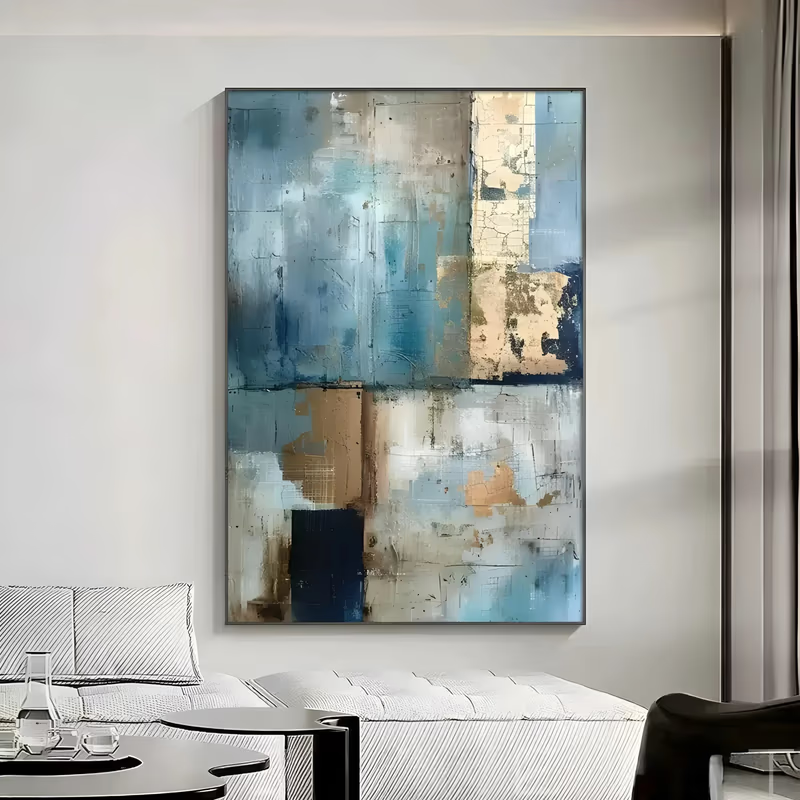
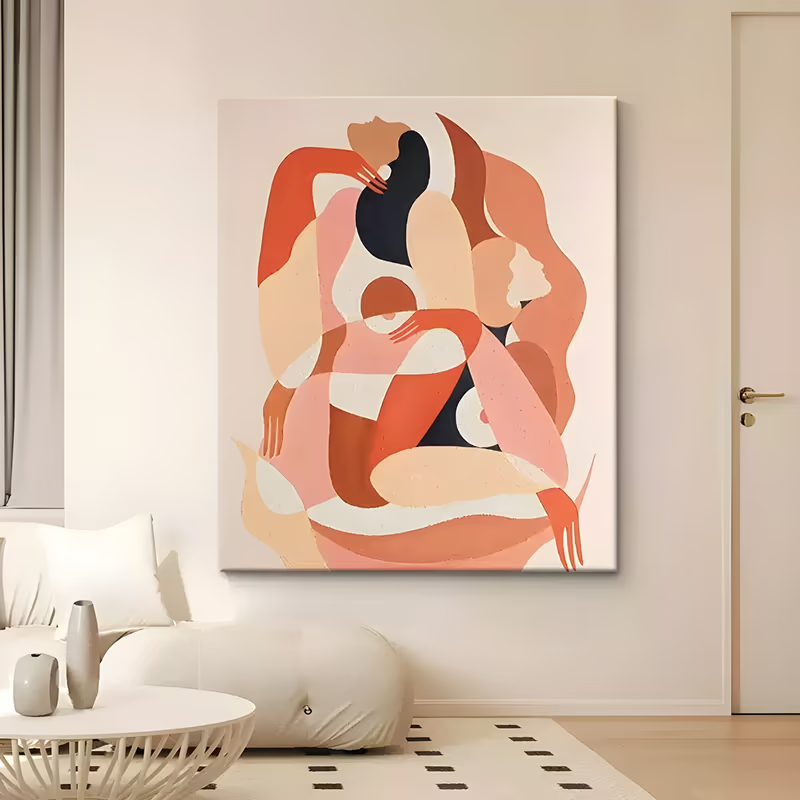
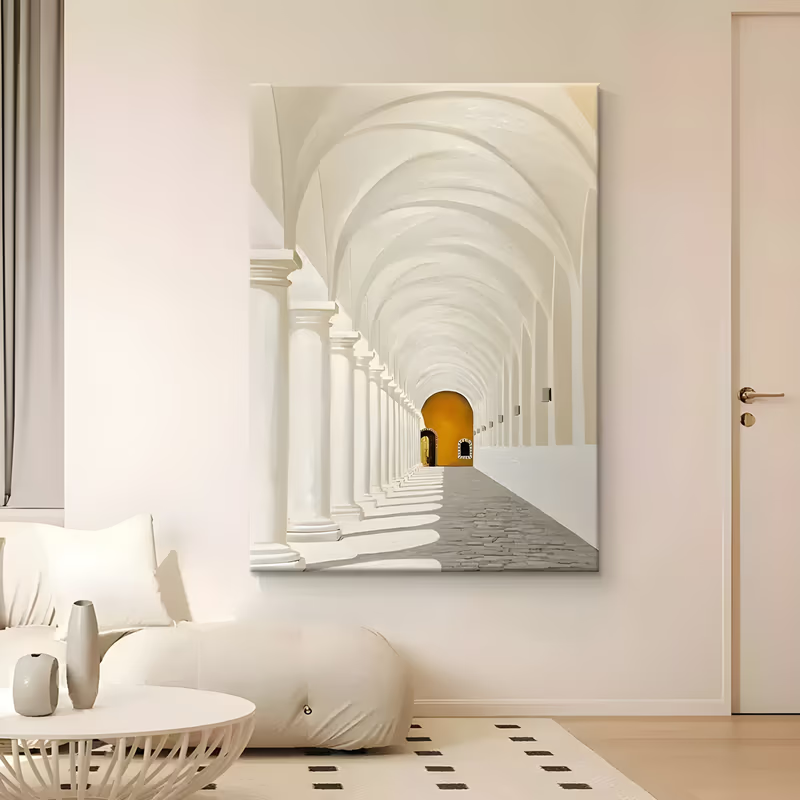
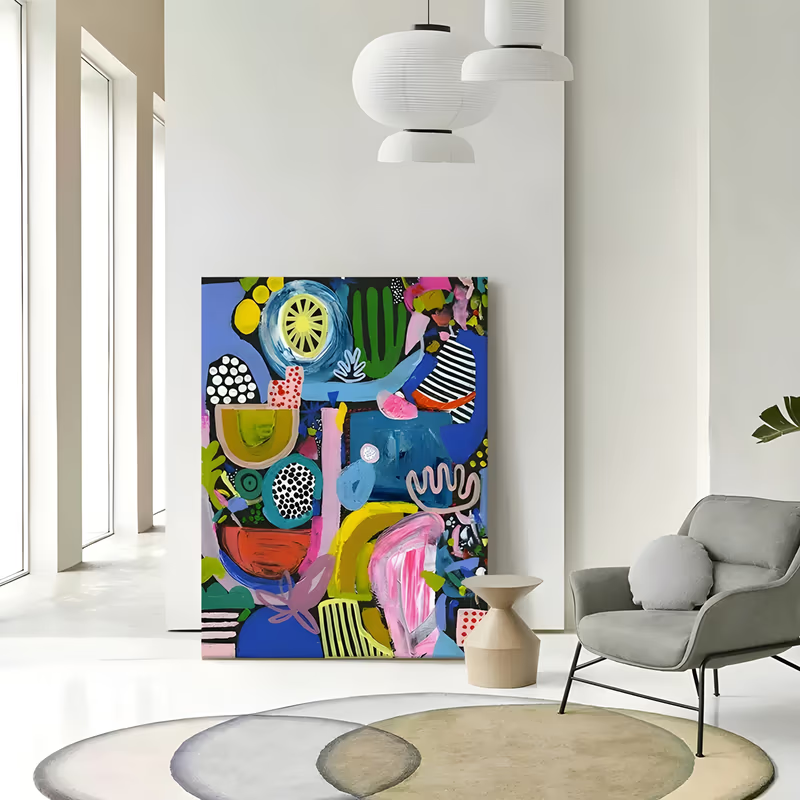
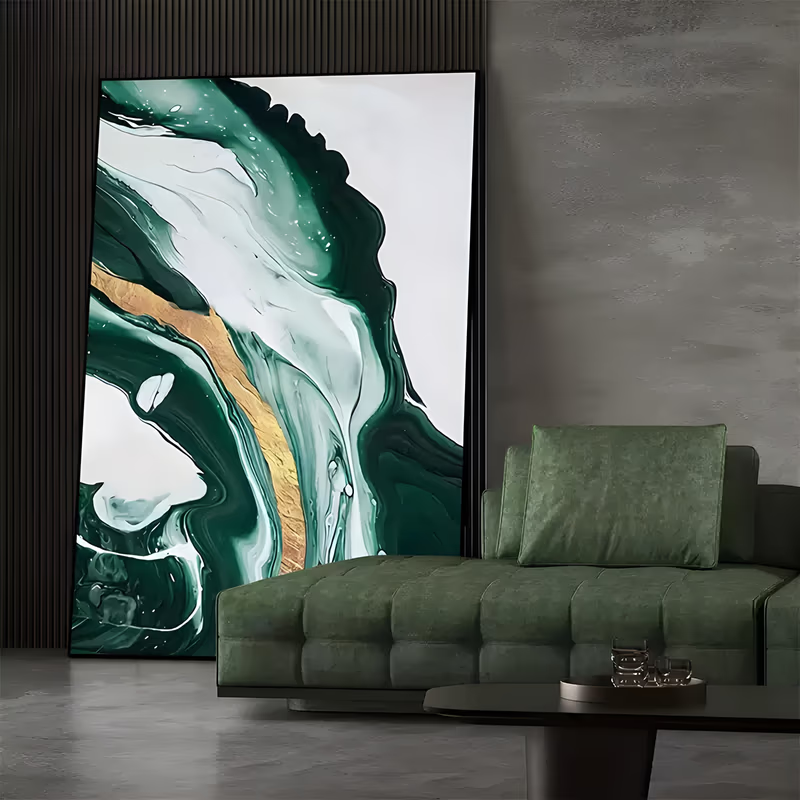
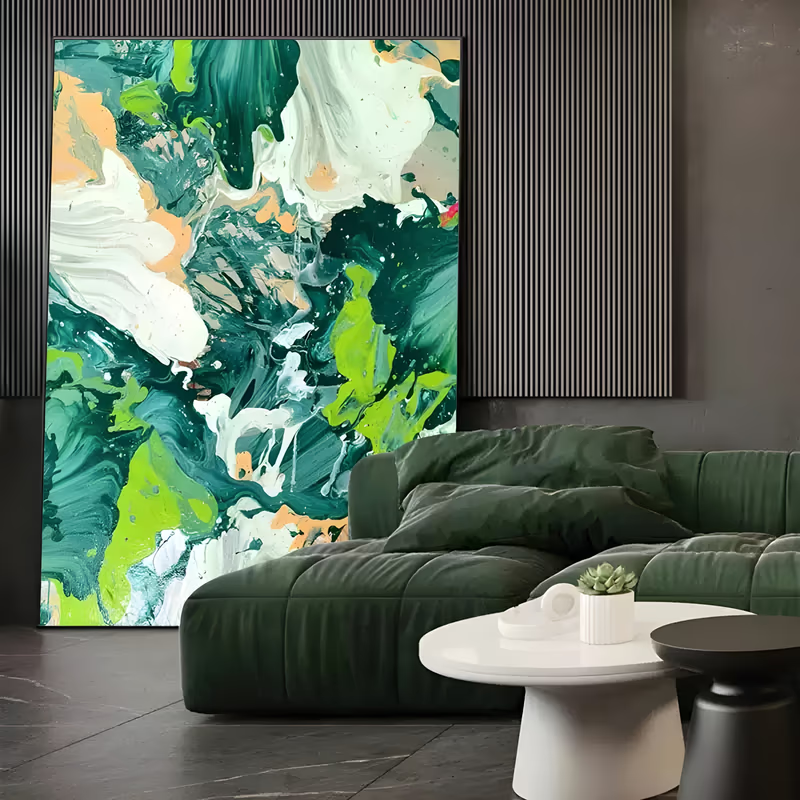
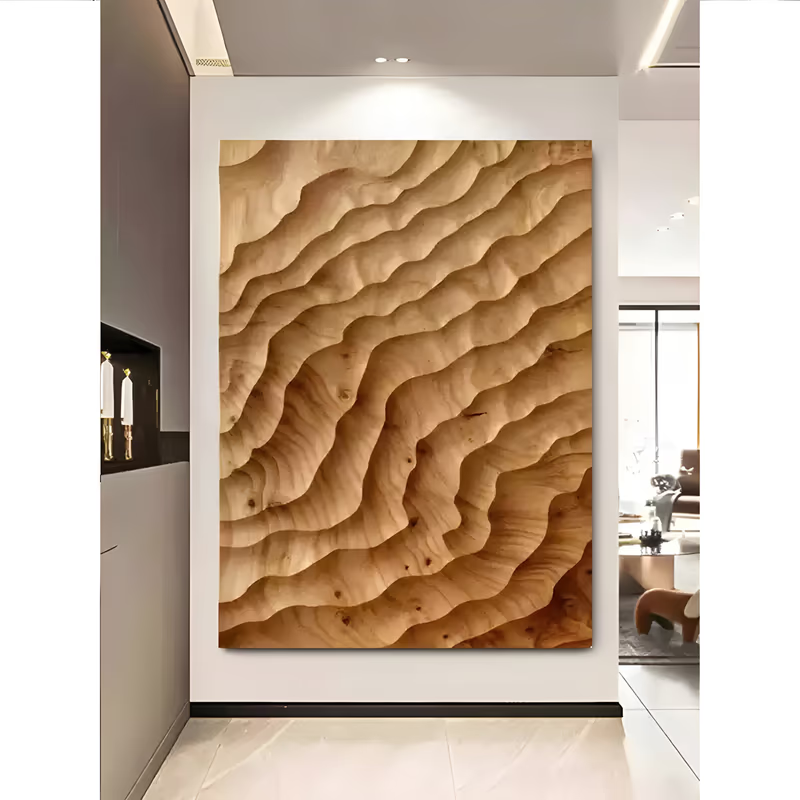
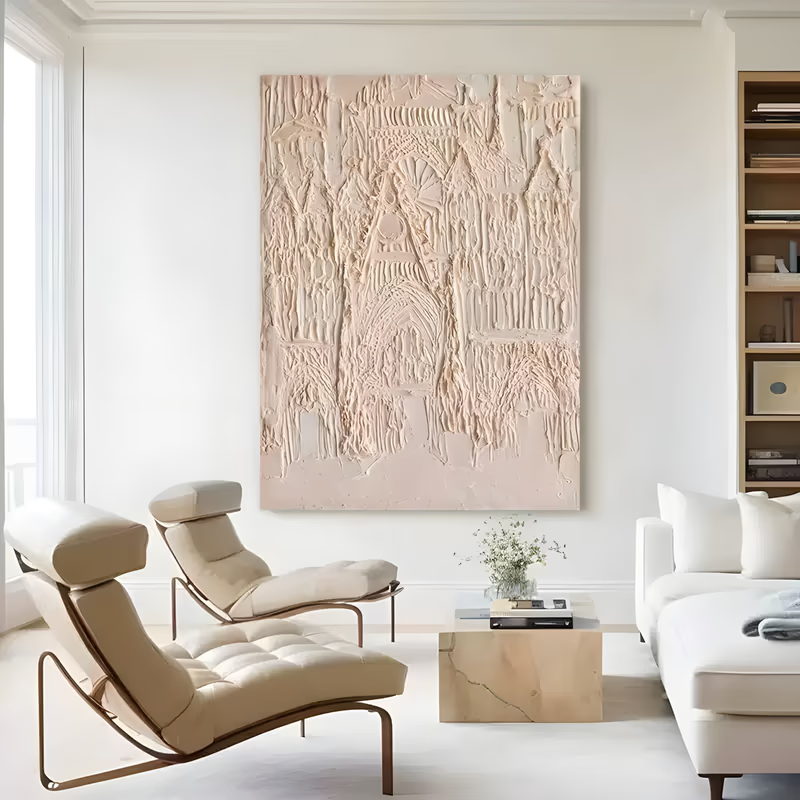
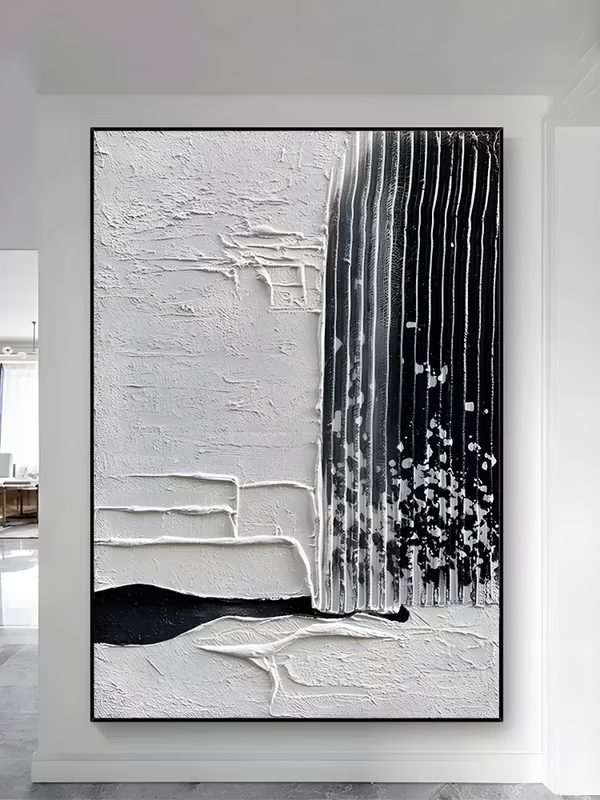
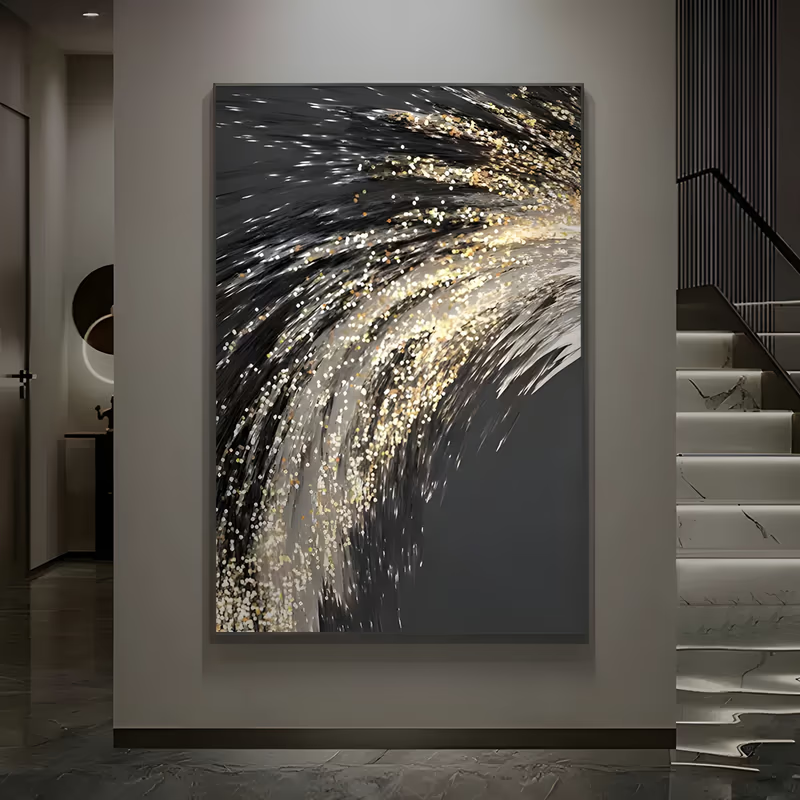
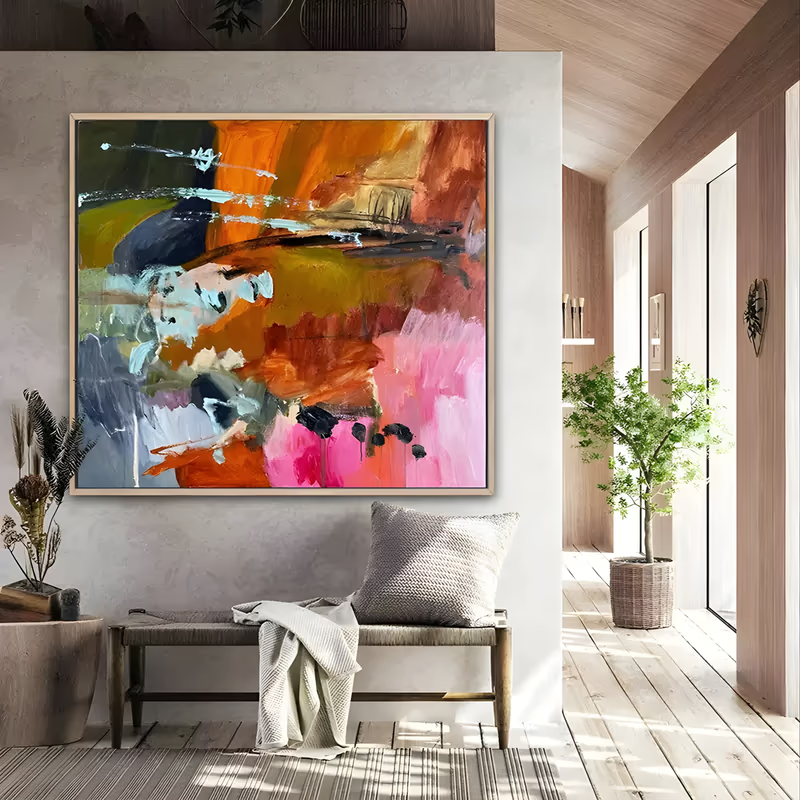
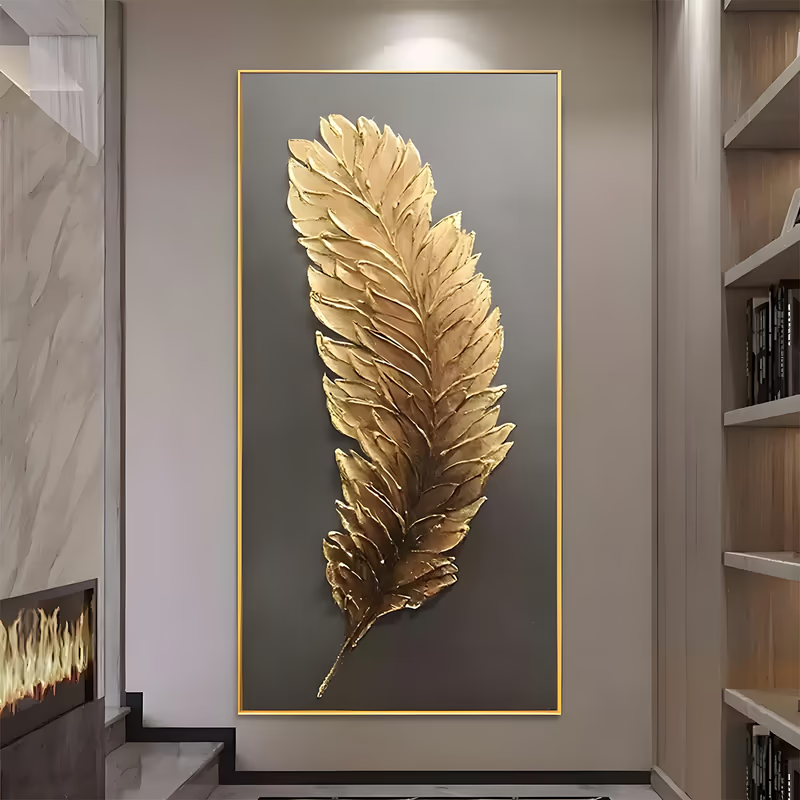
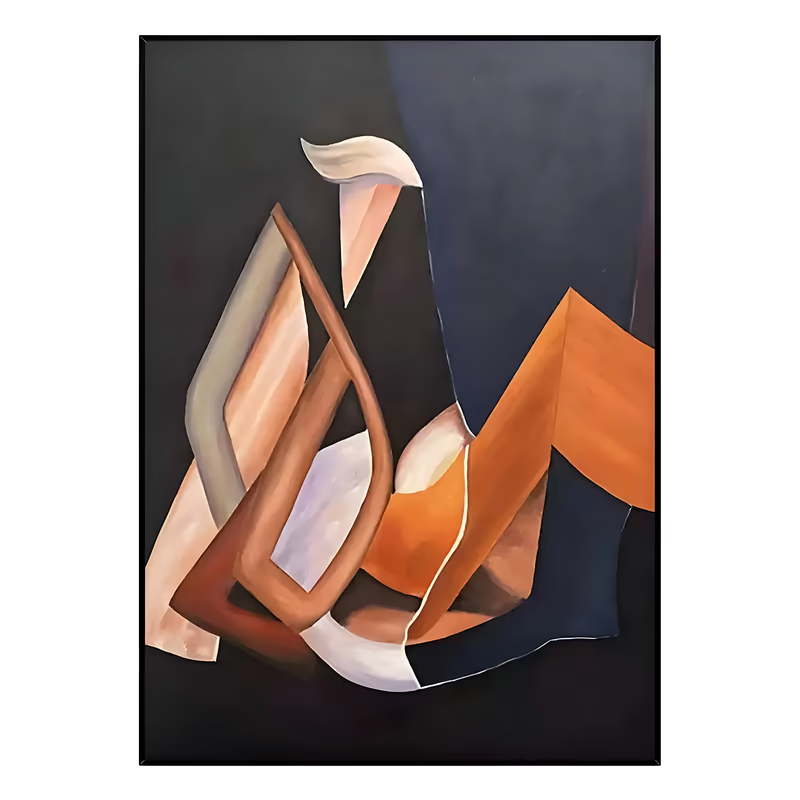
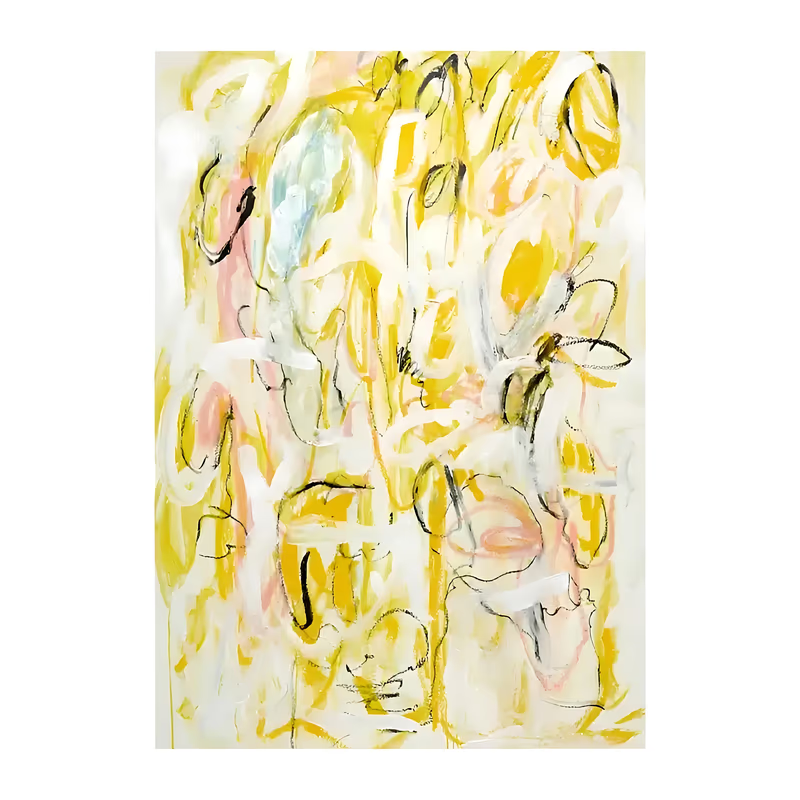
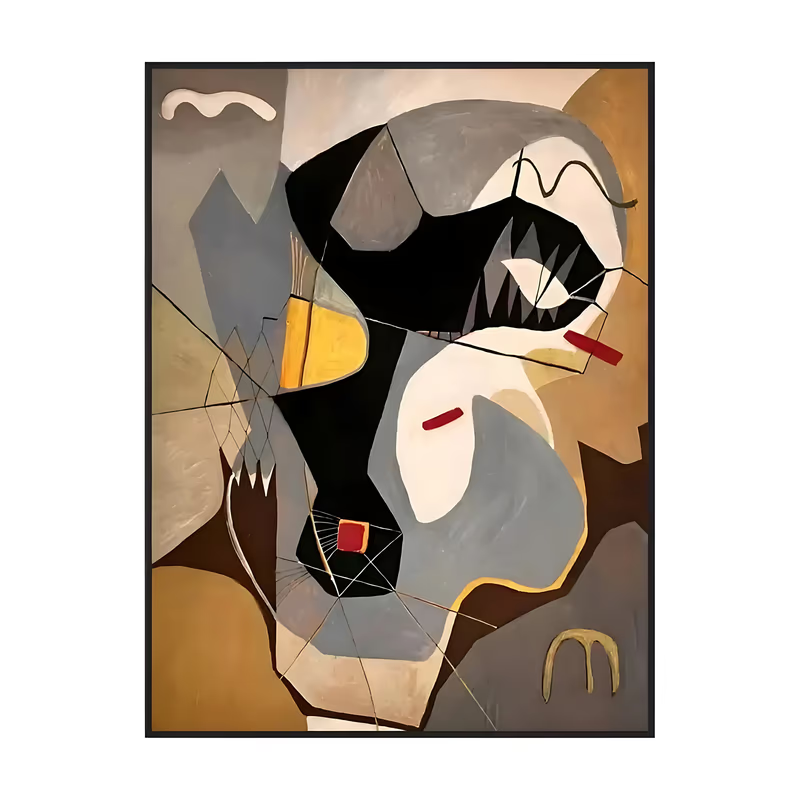
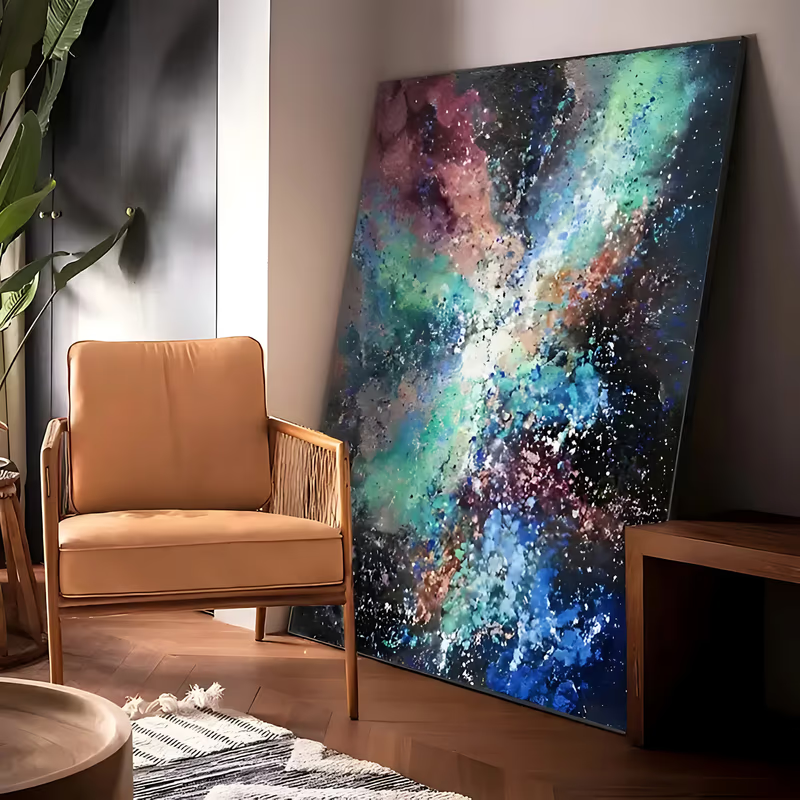
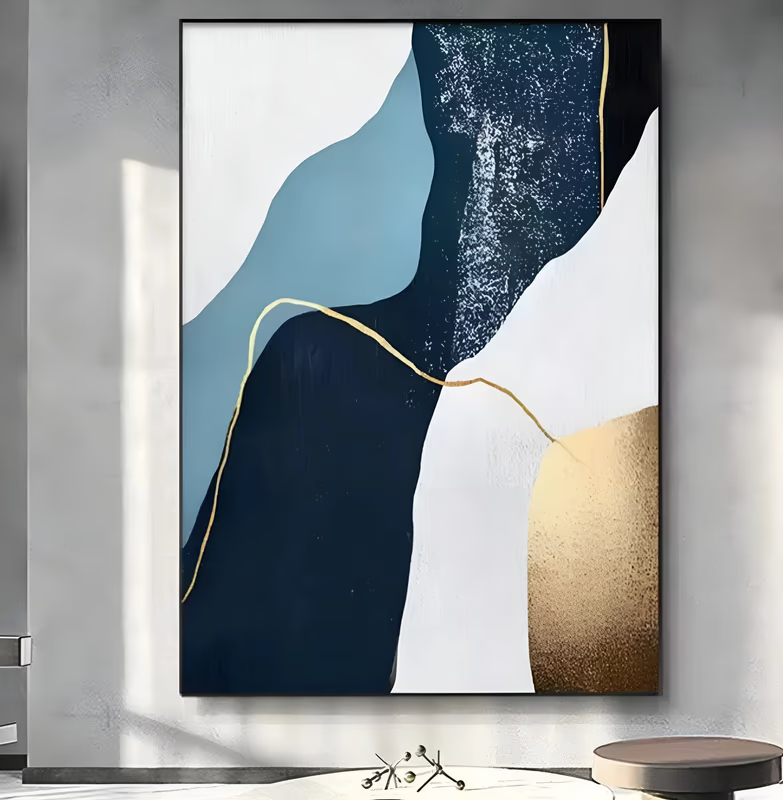
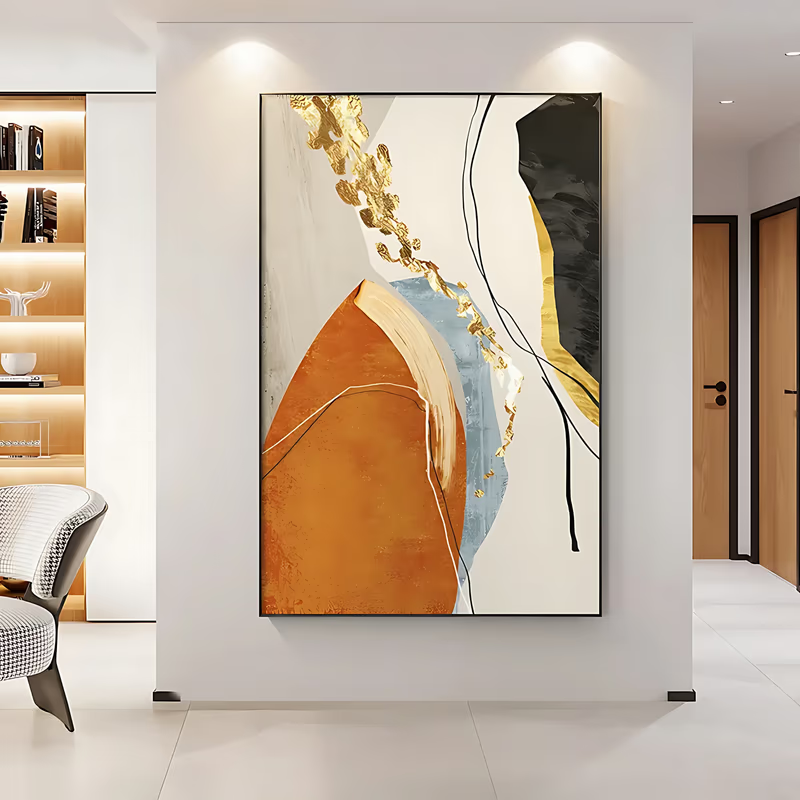
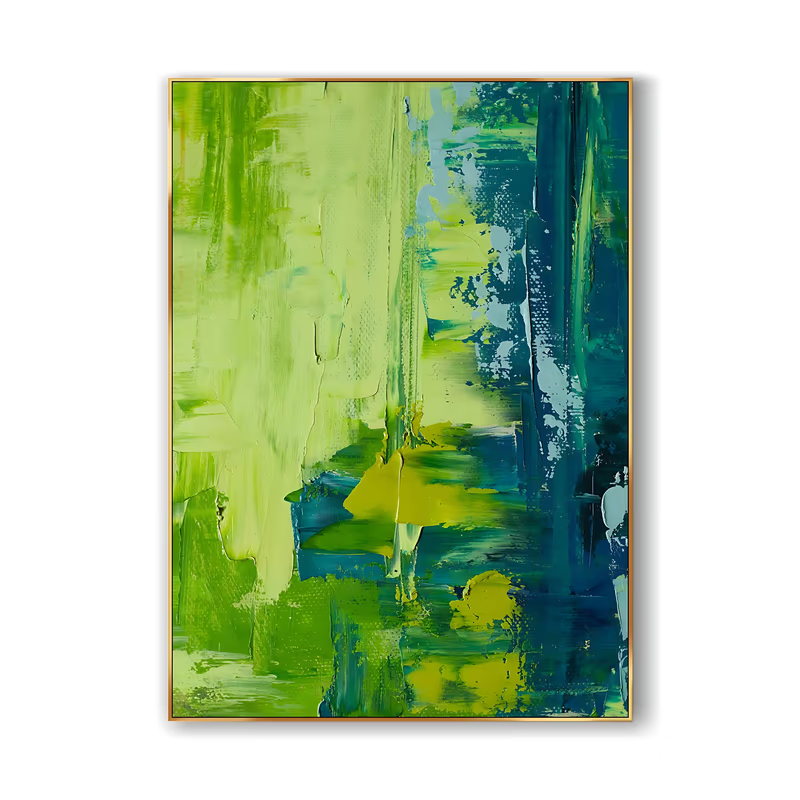
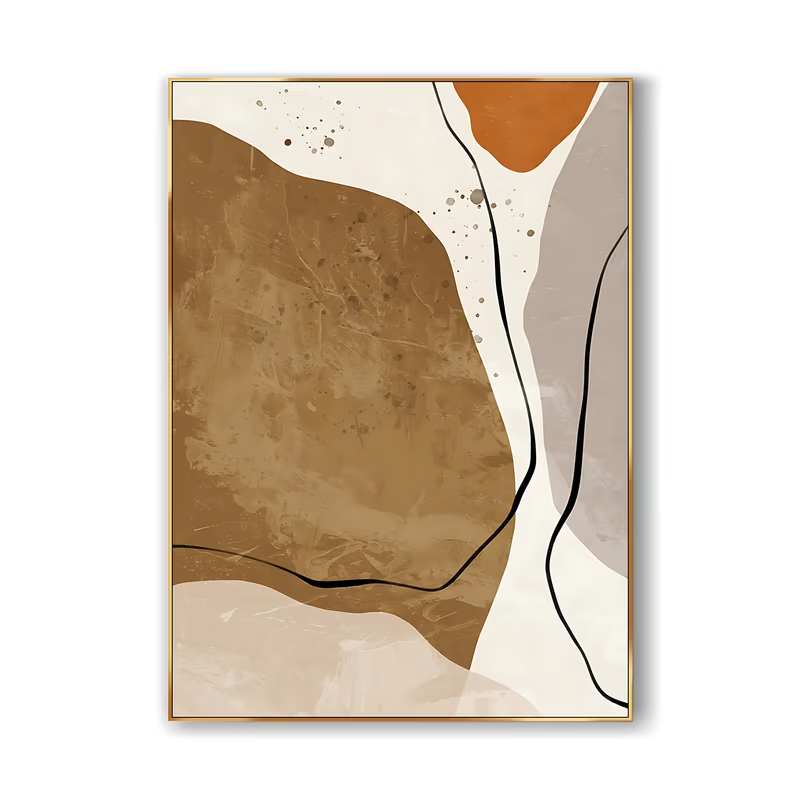
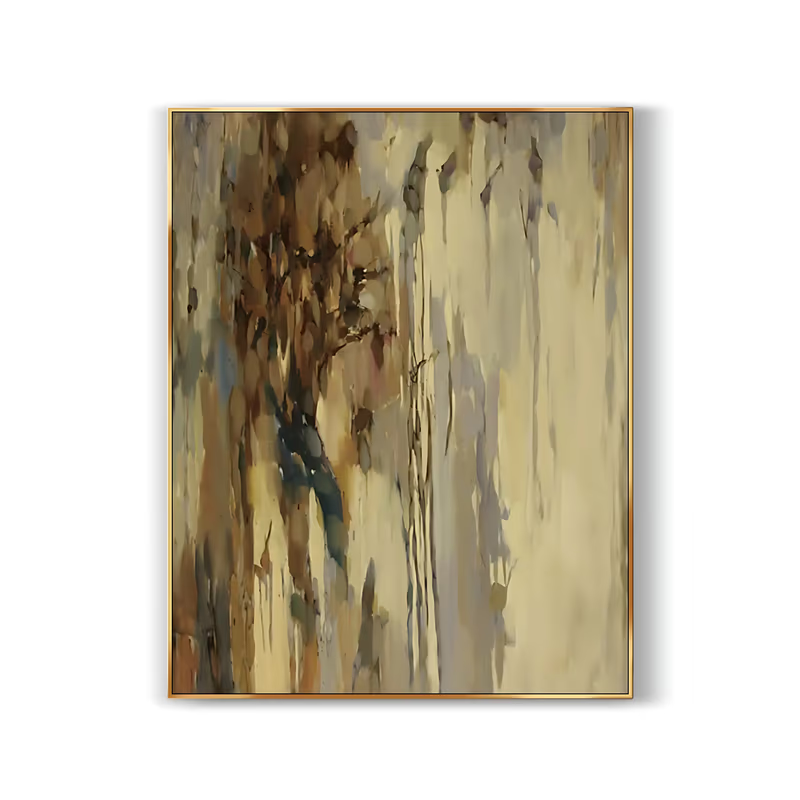
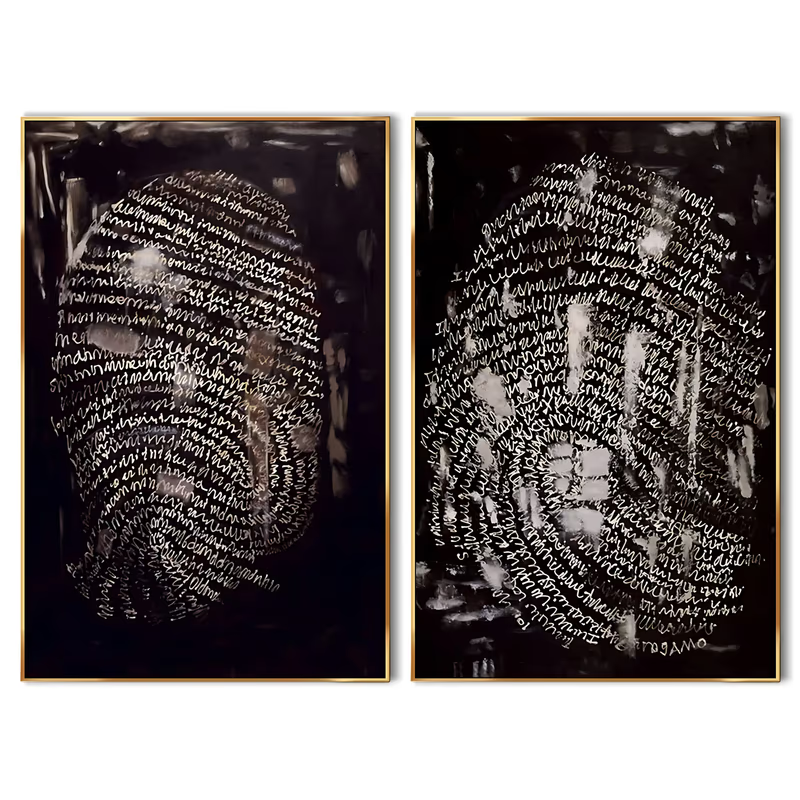
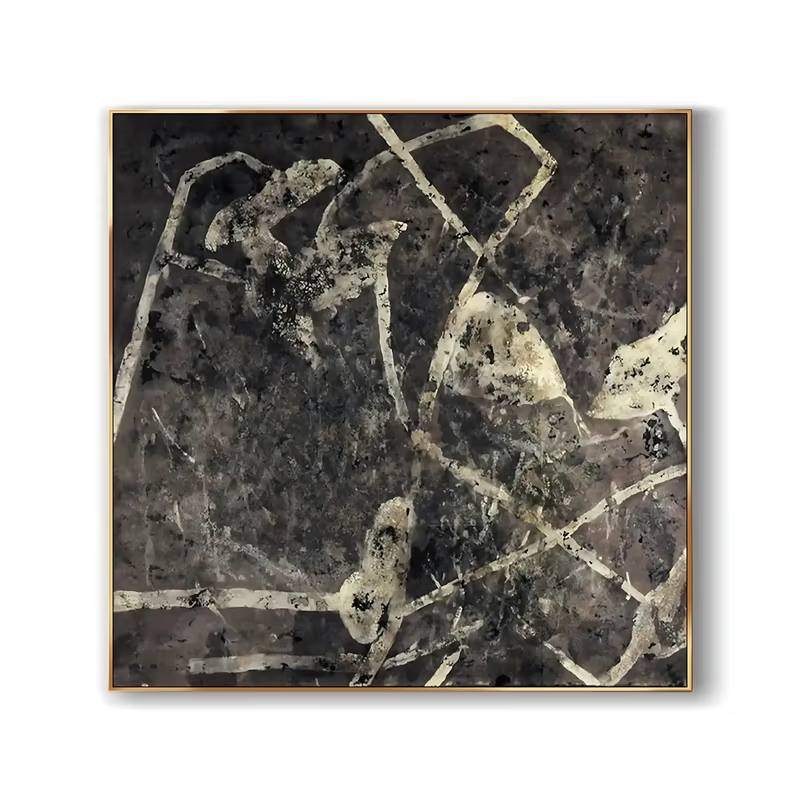
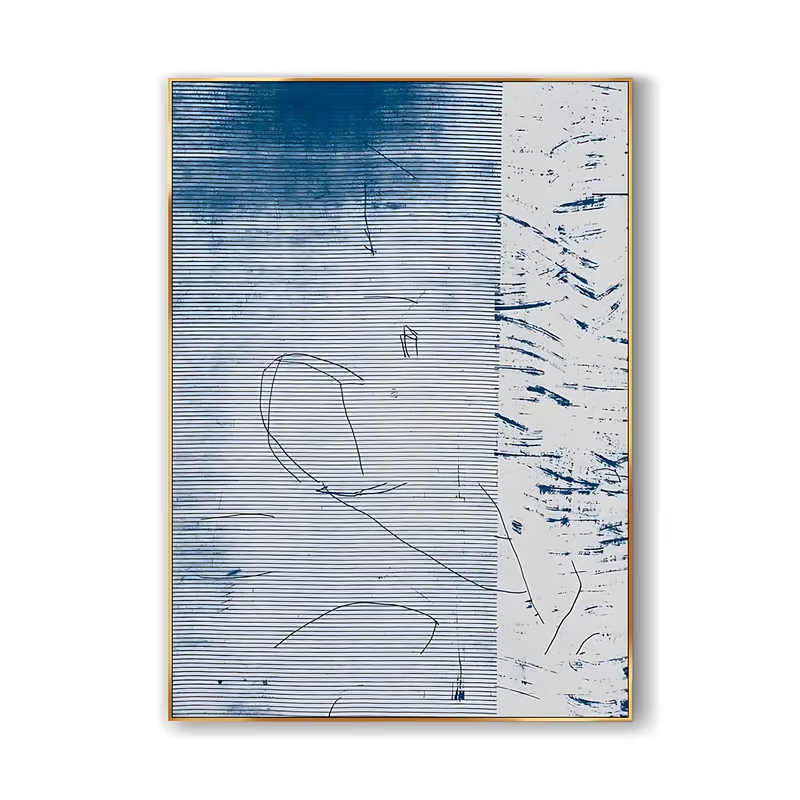
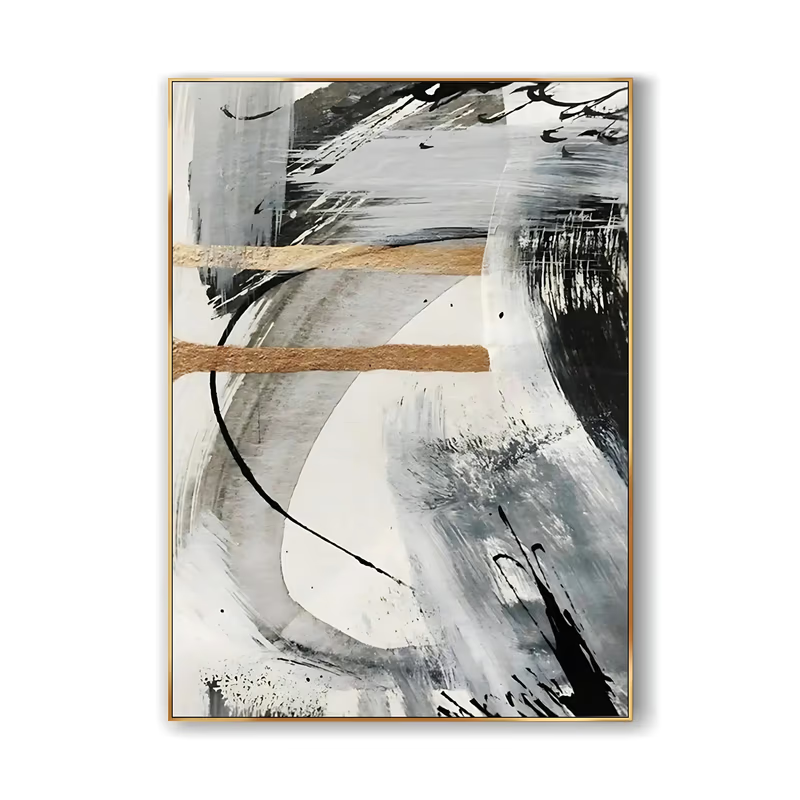
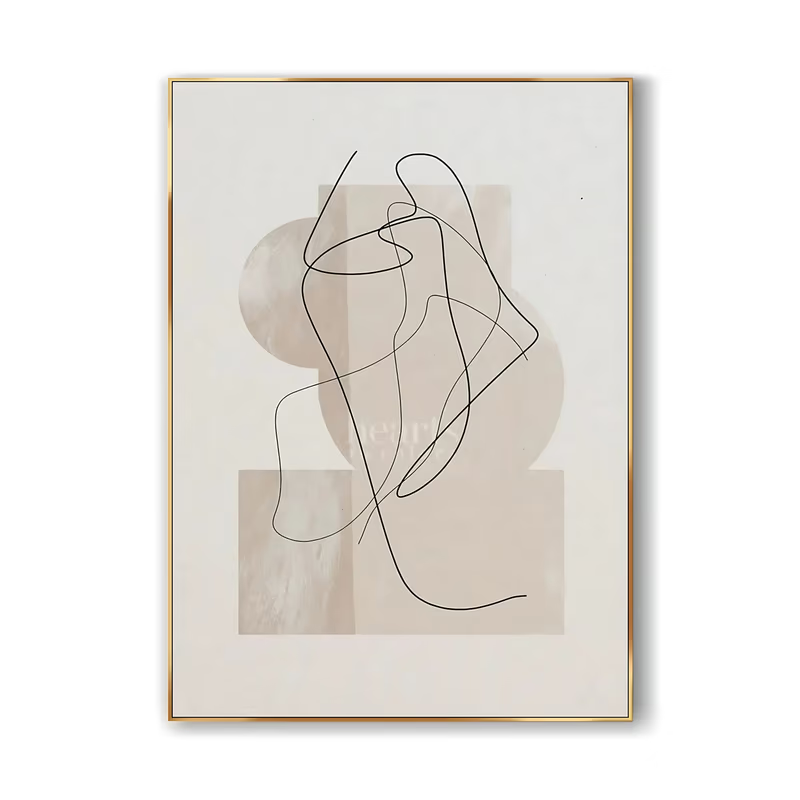
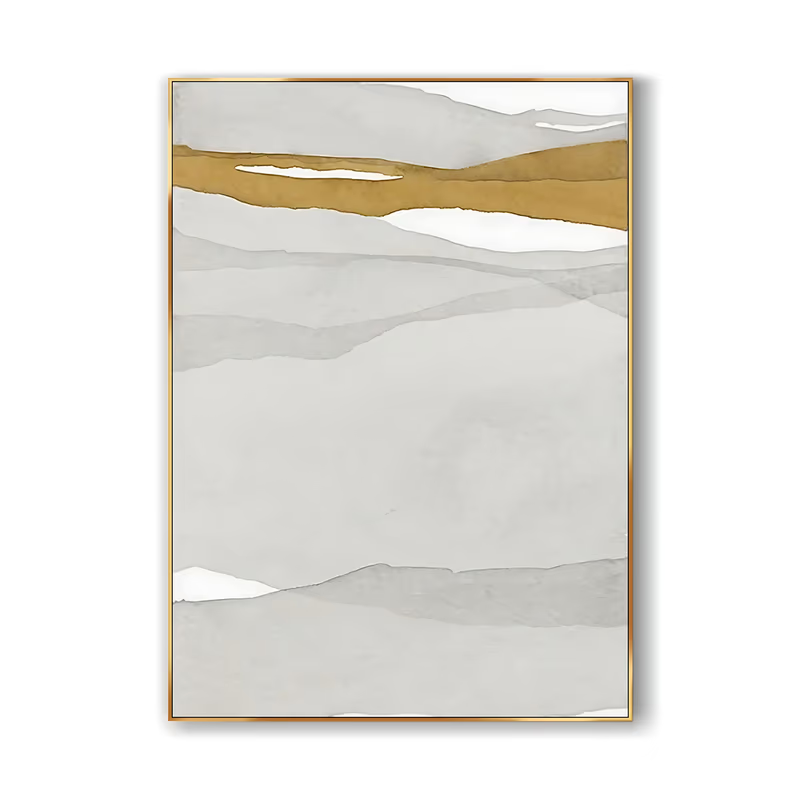
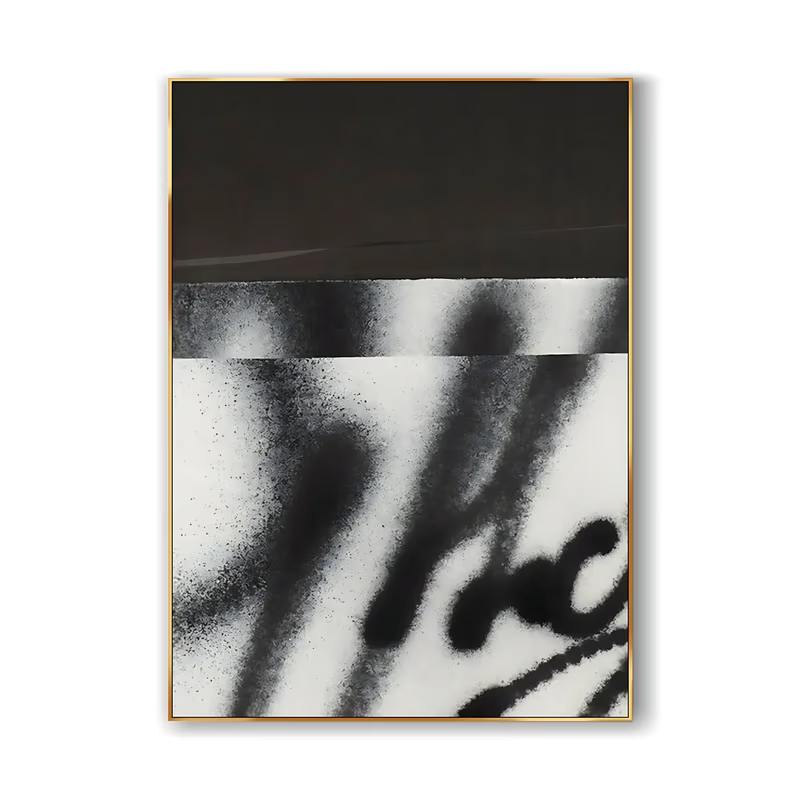
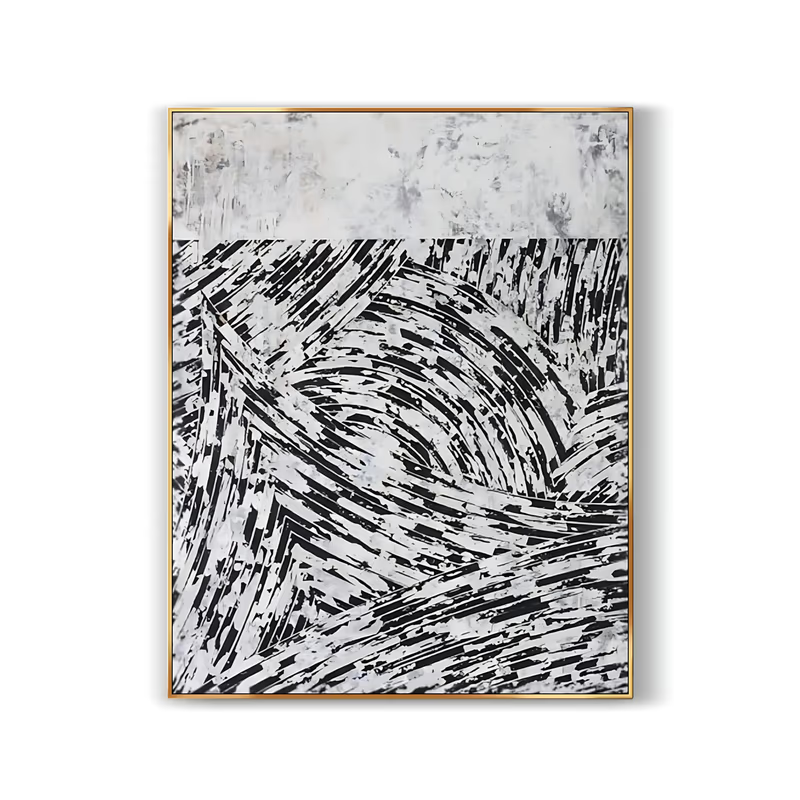
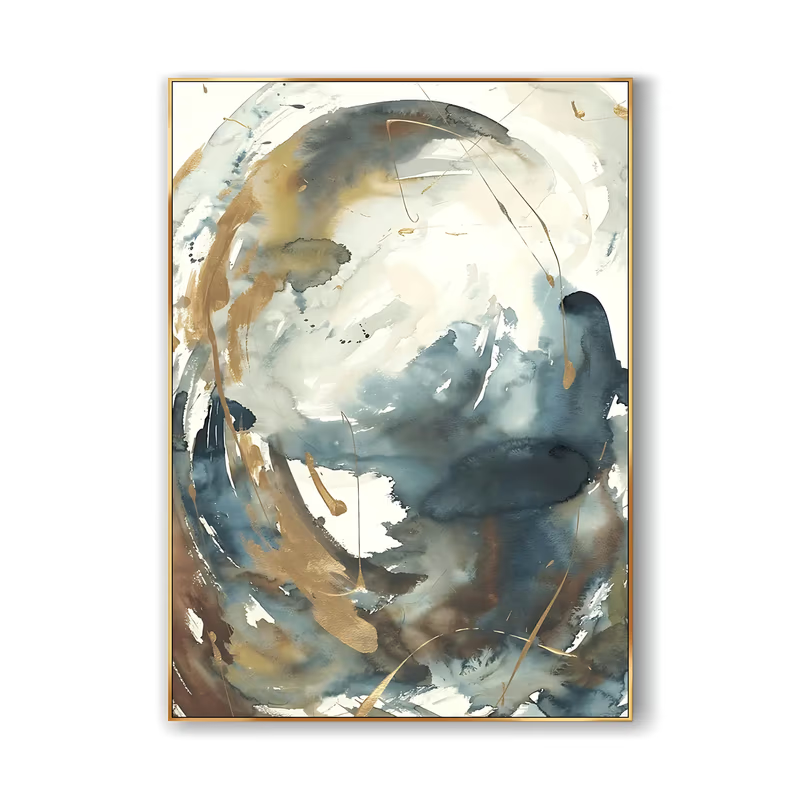
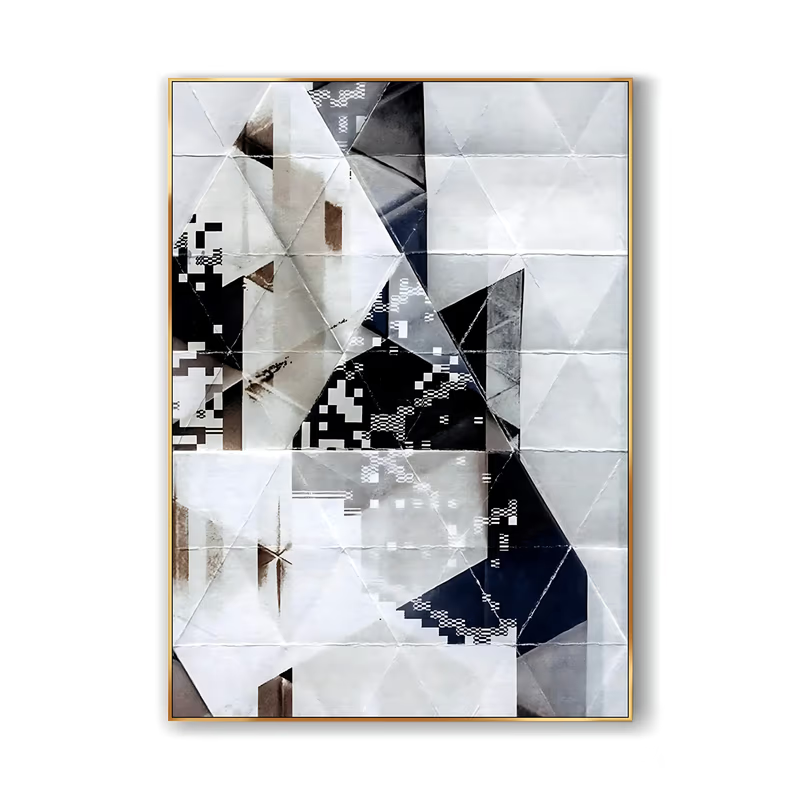
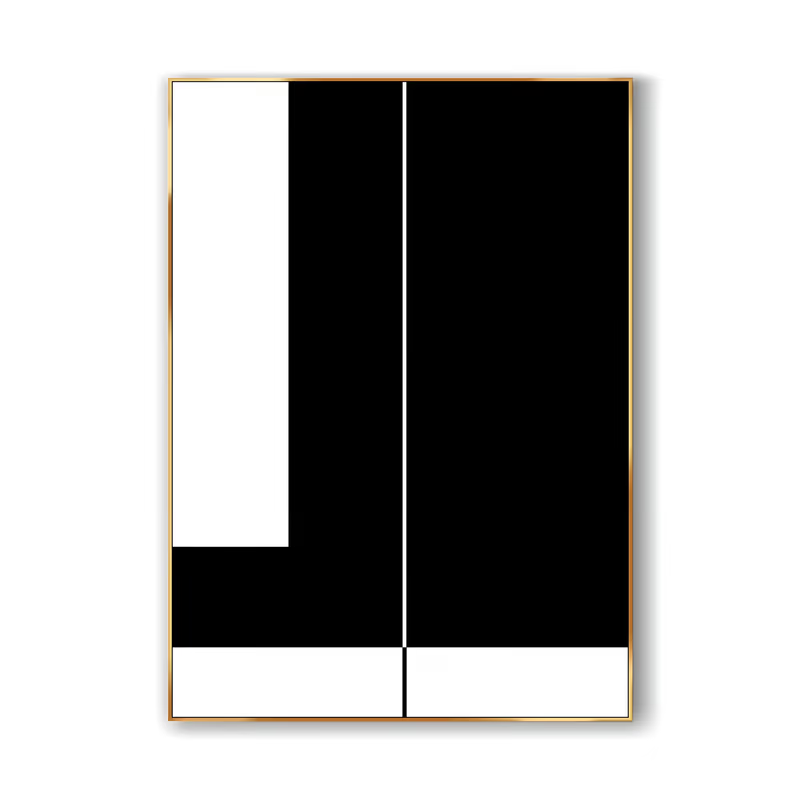
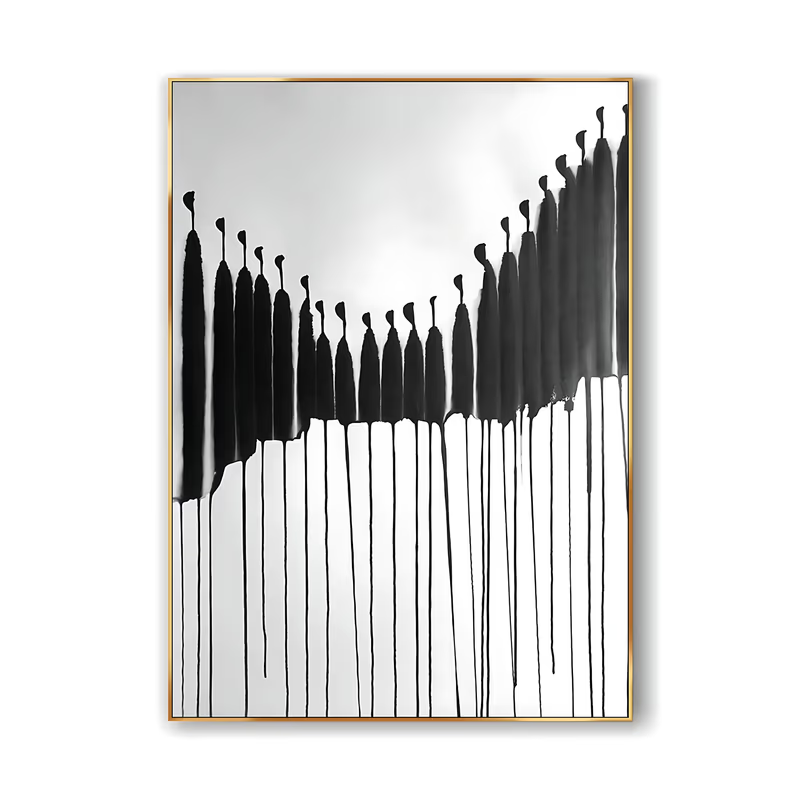
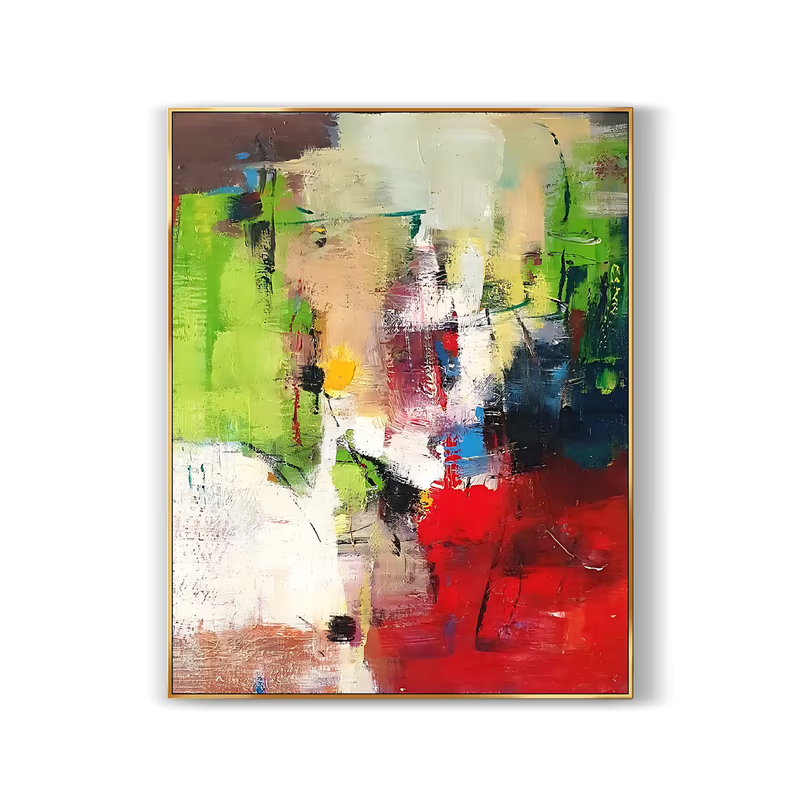
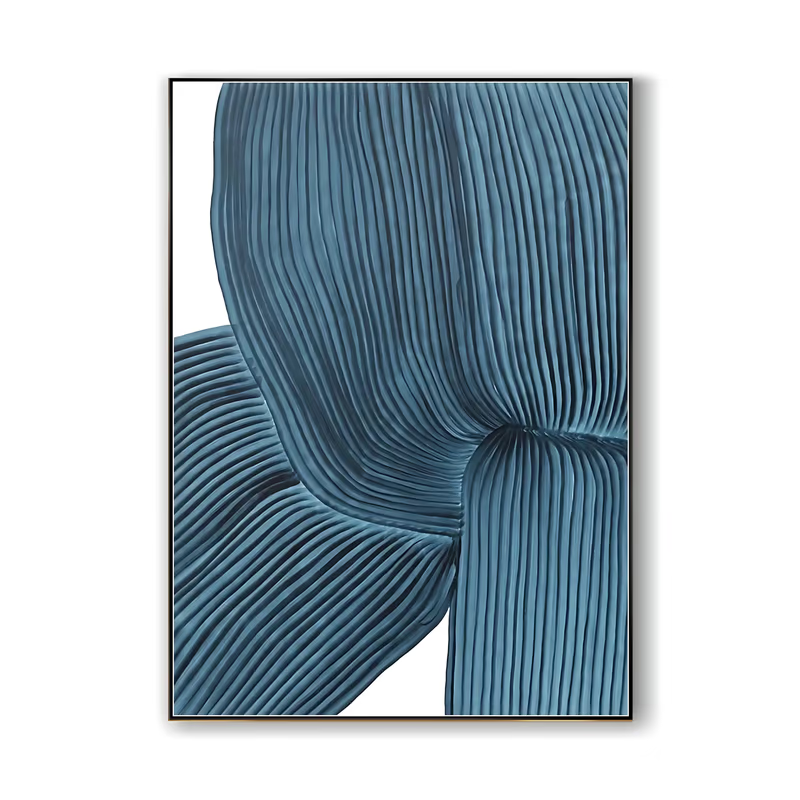
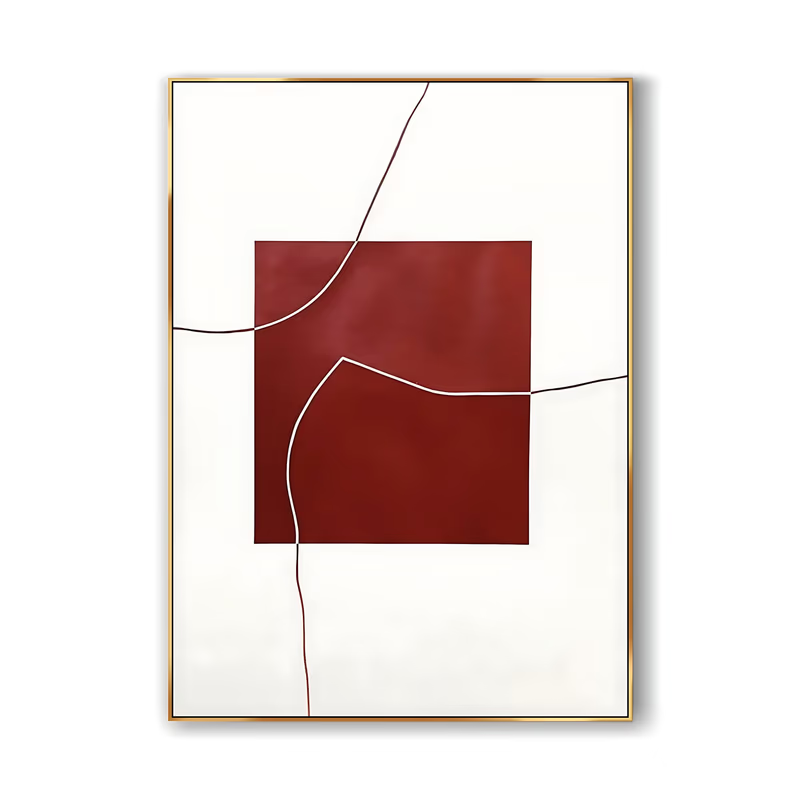
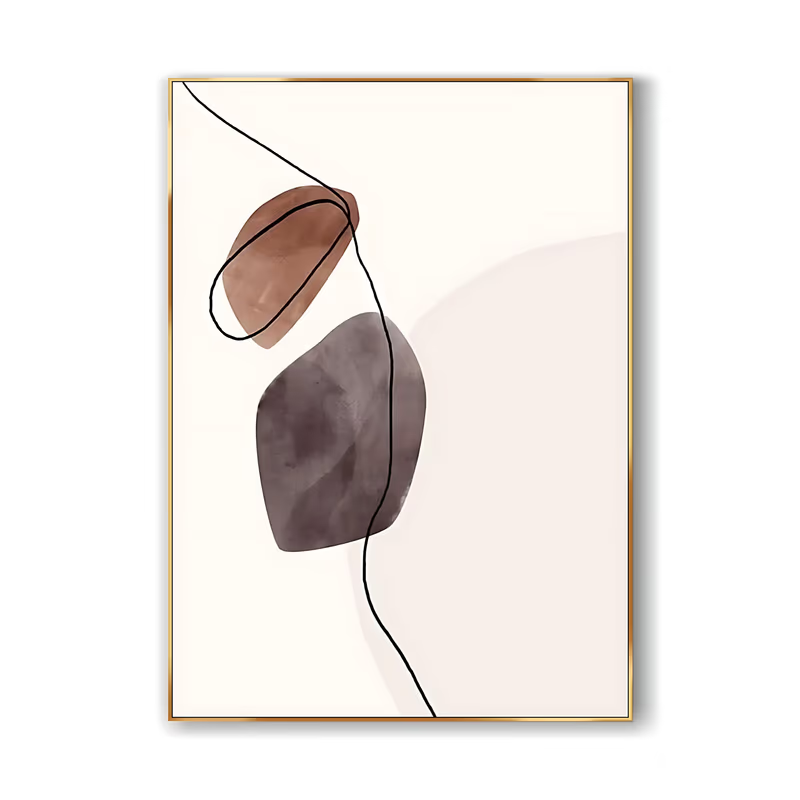
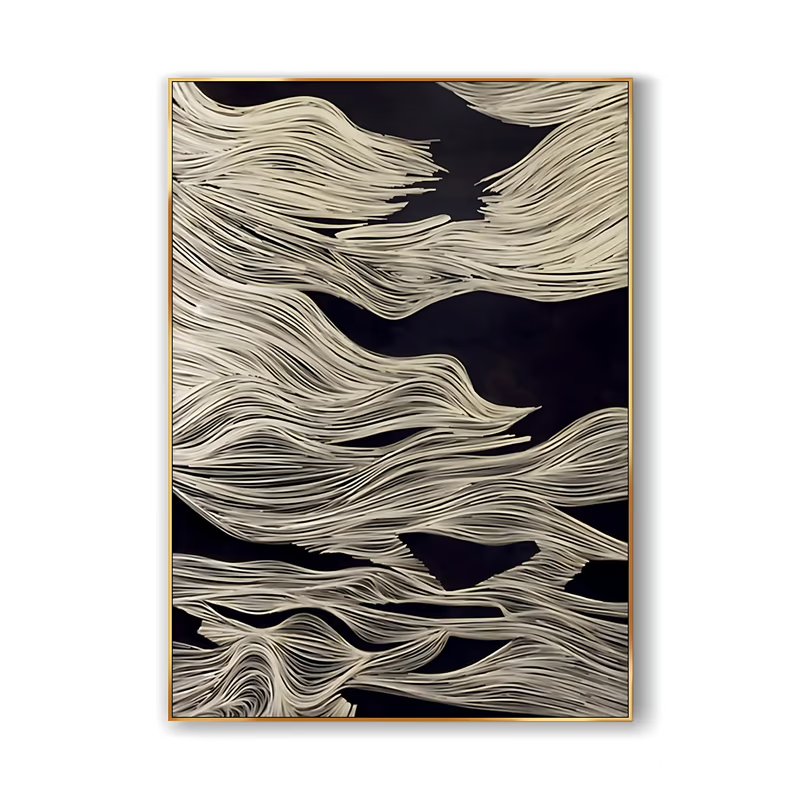
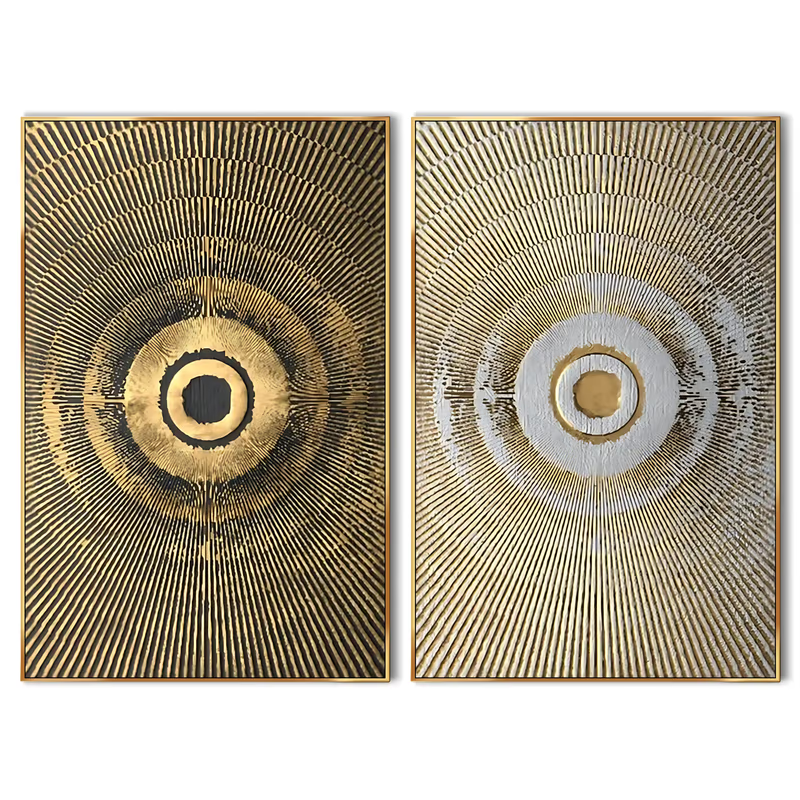
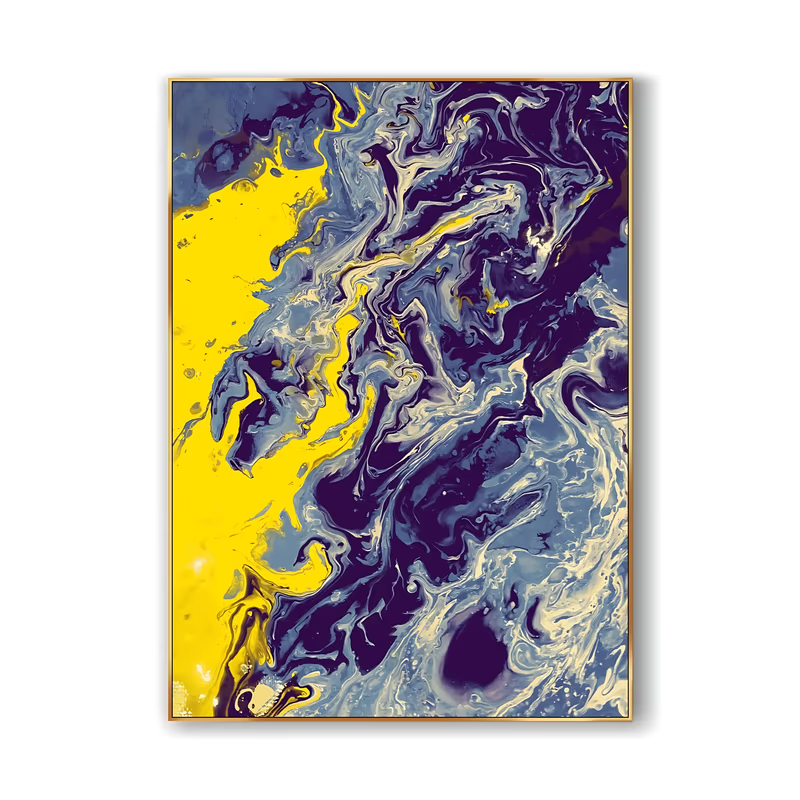
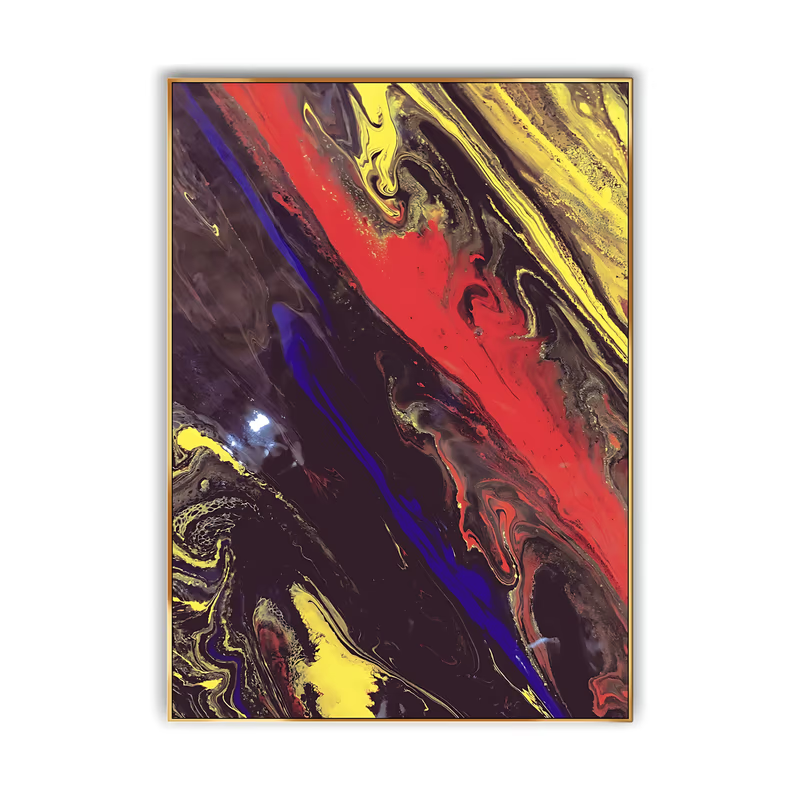
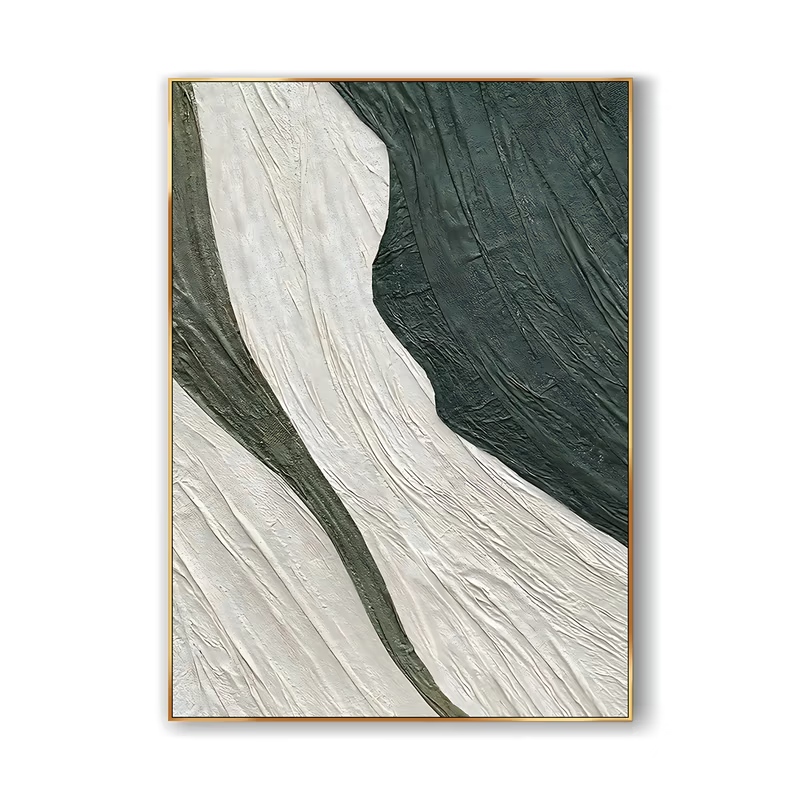
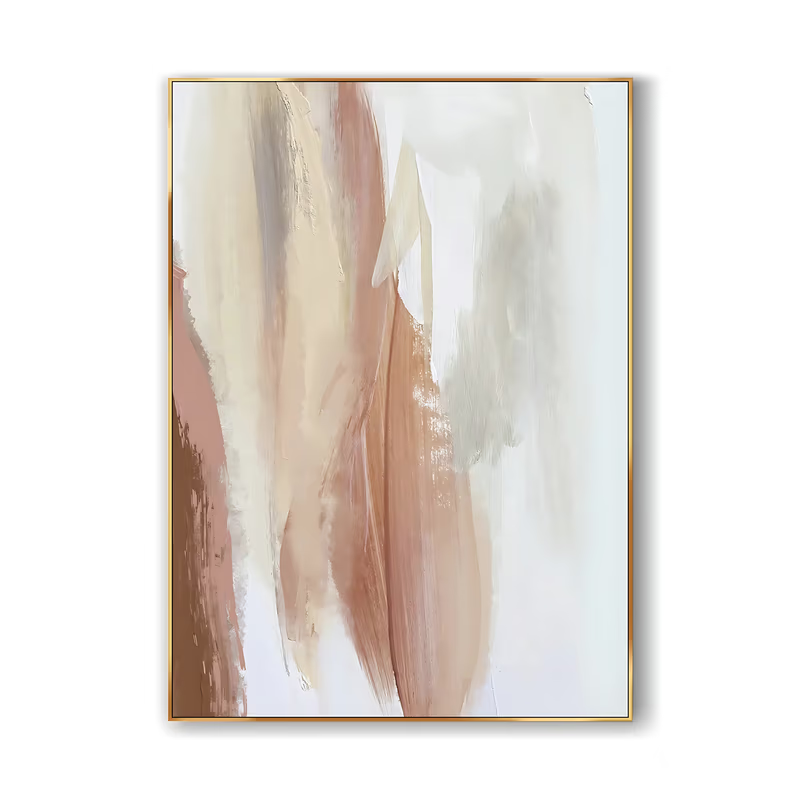
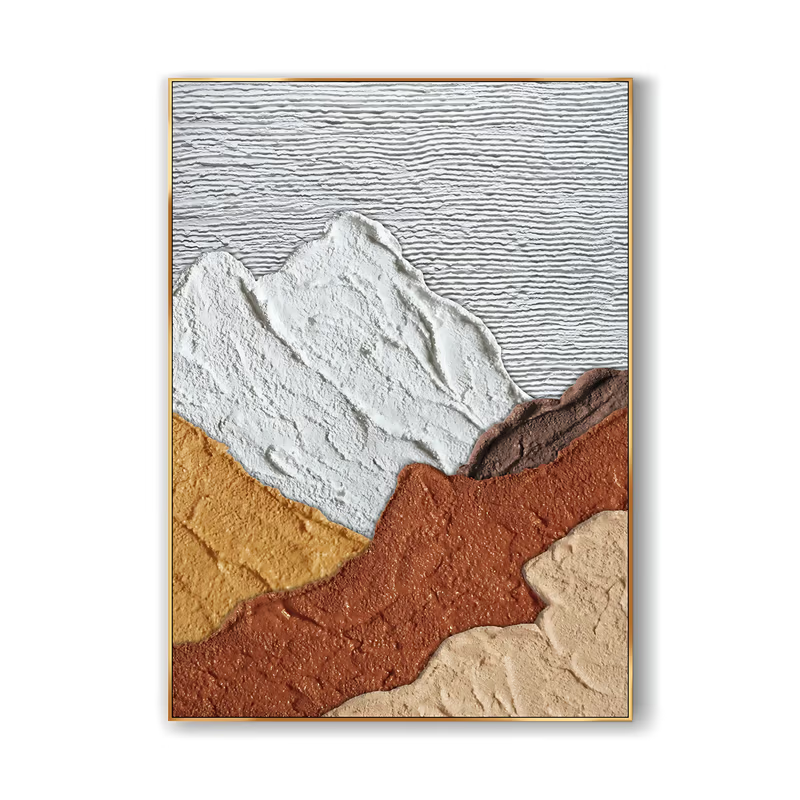
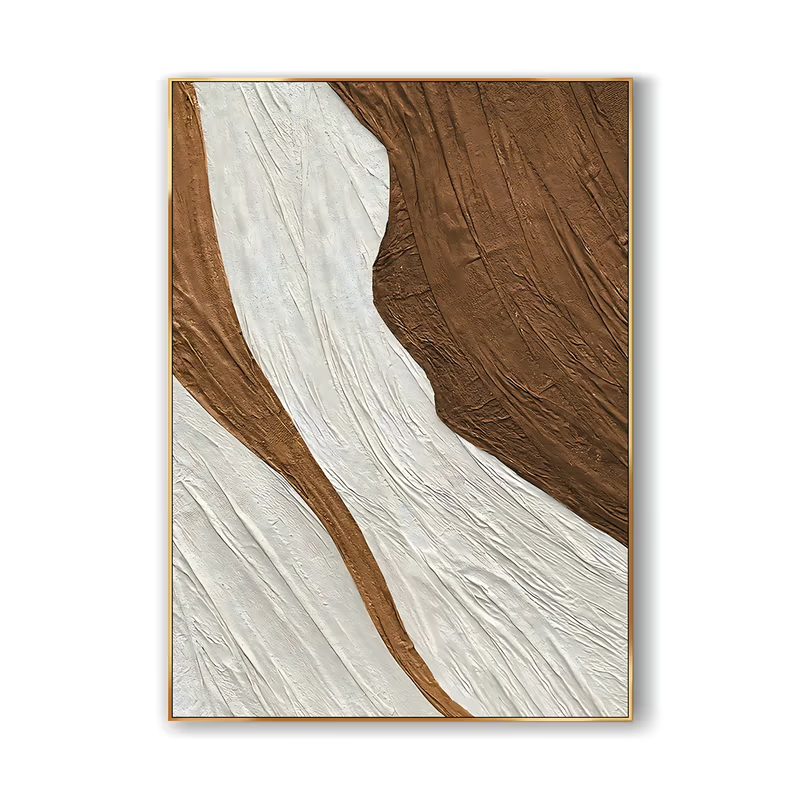
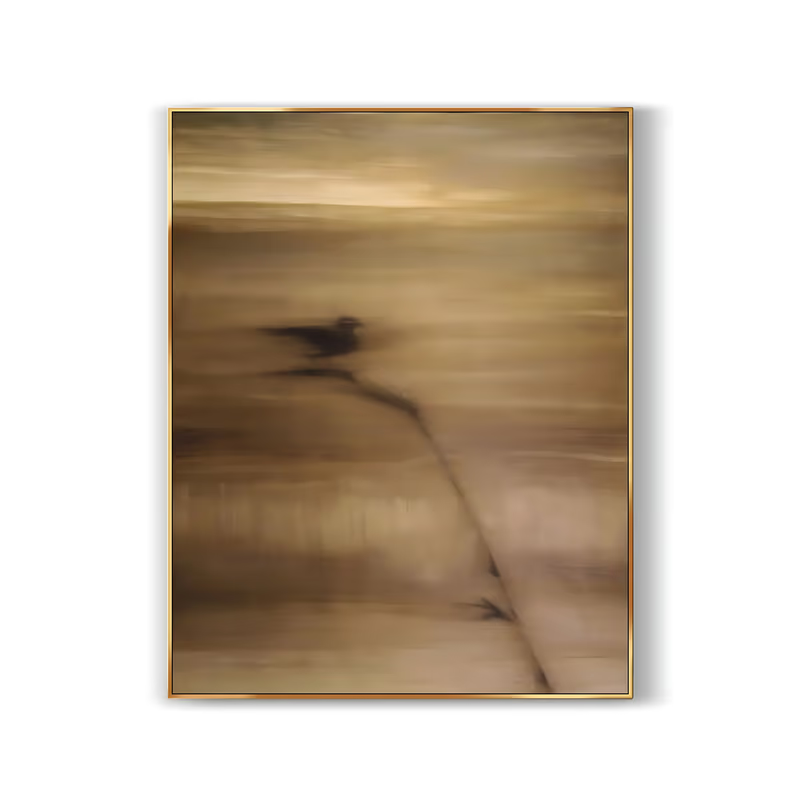
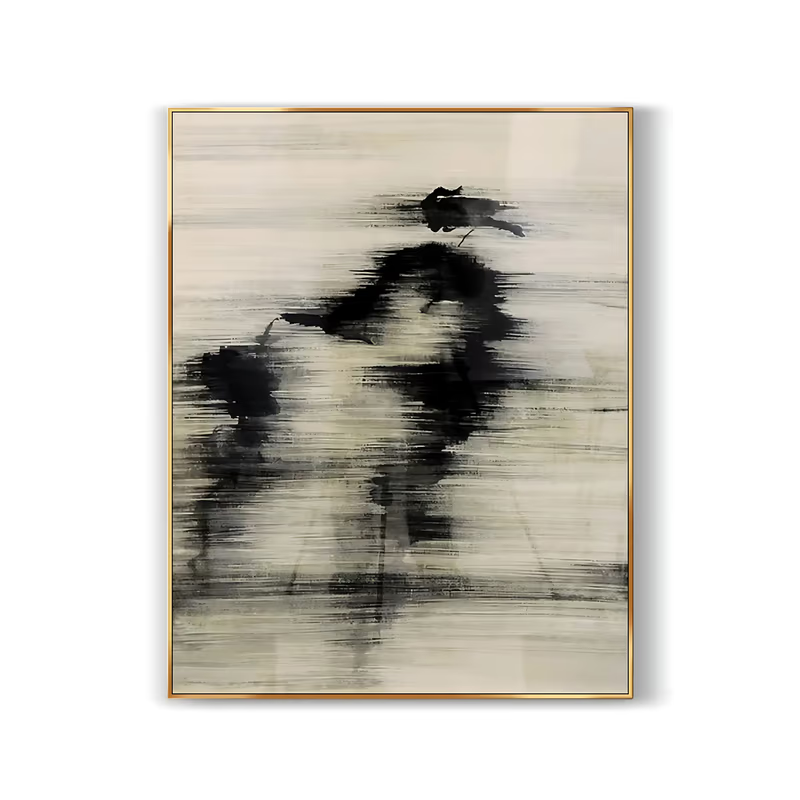
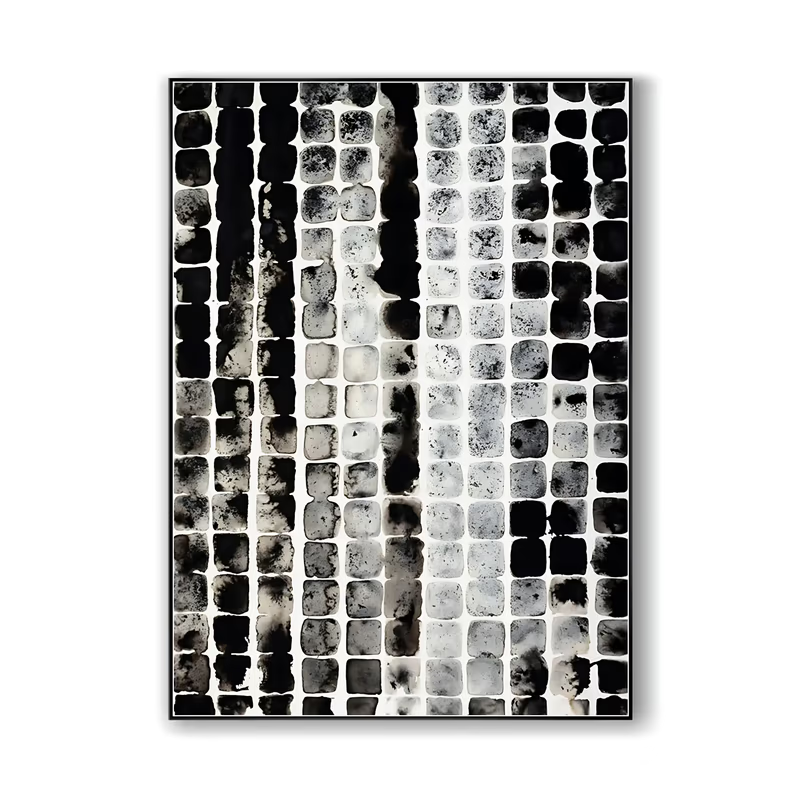
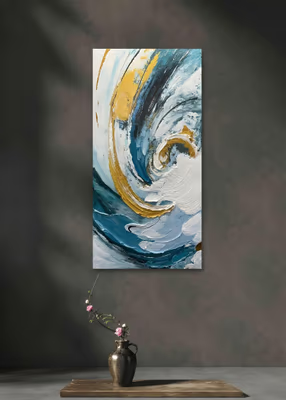
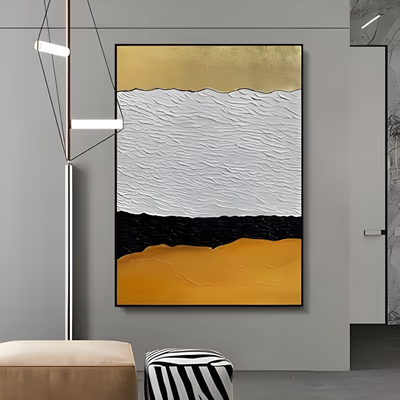
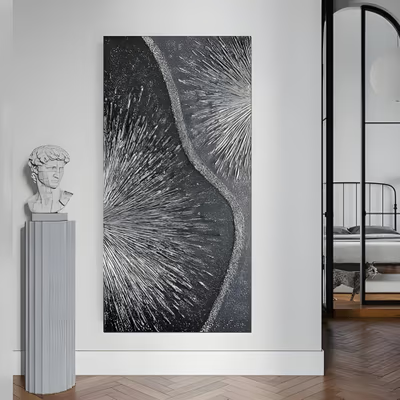
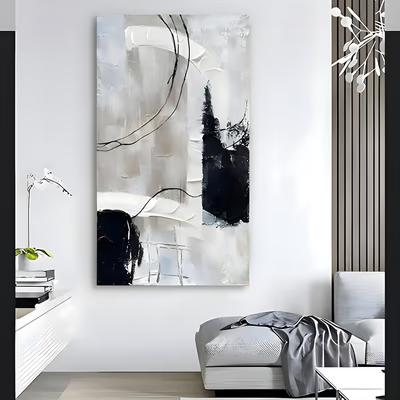
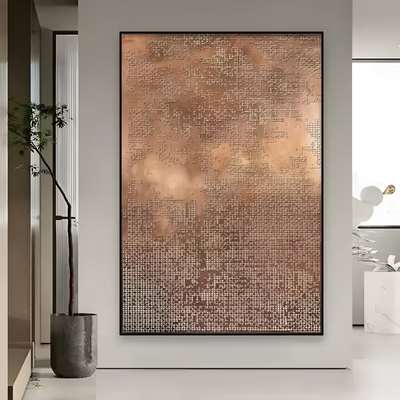
Colour fields, gold-leaf sweeps, white impasto with ink lines, trowelled plaster. The strongest choice for a modern foyer facing the door, where one shape and one colour have to carry the space from across the room. Abstract and textured foyer art.
Animals and figures
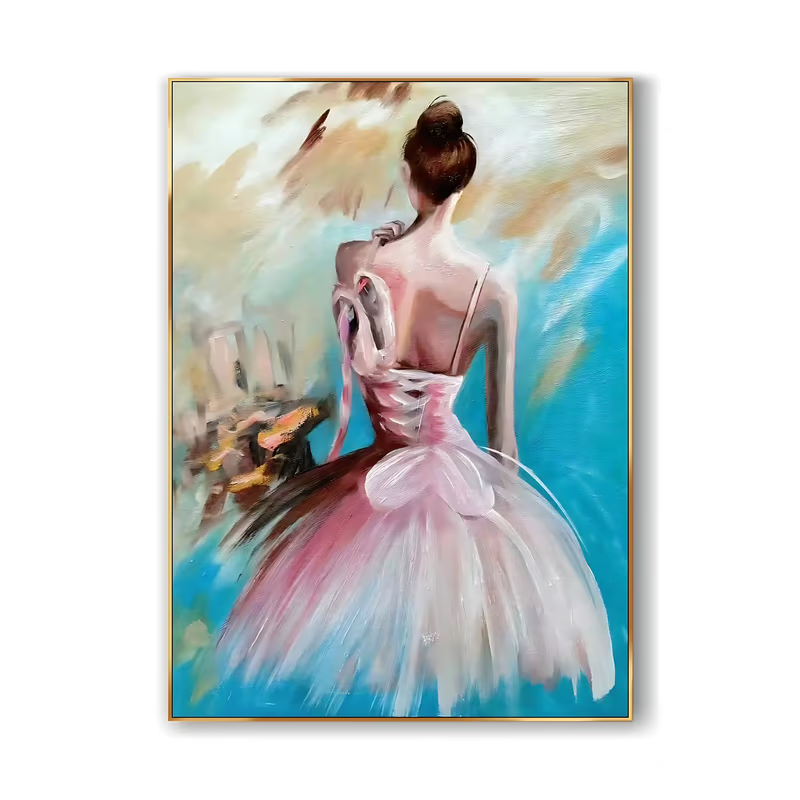
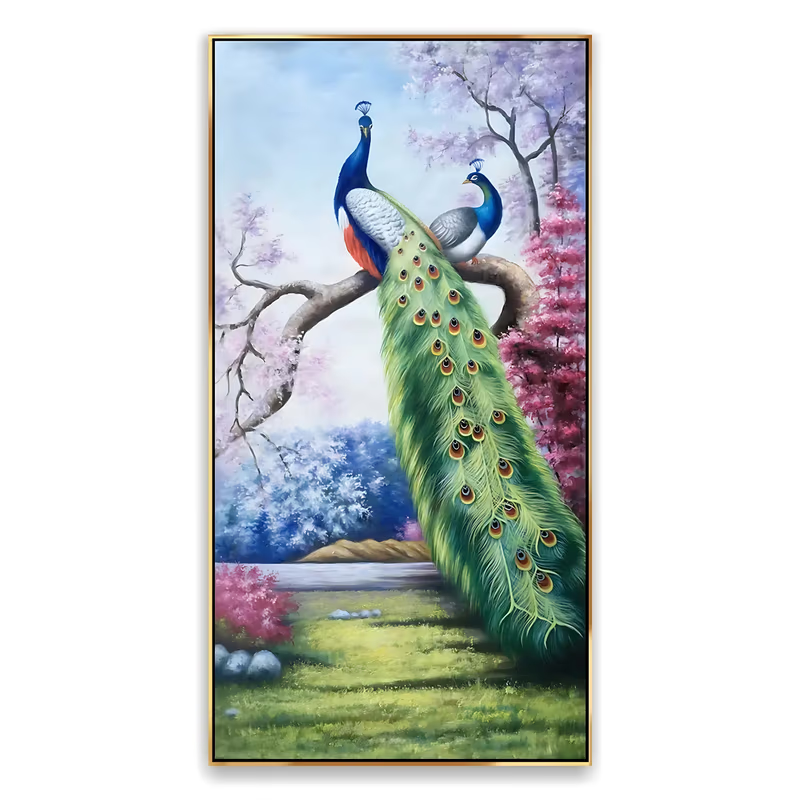
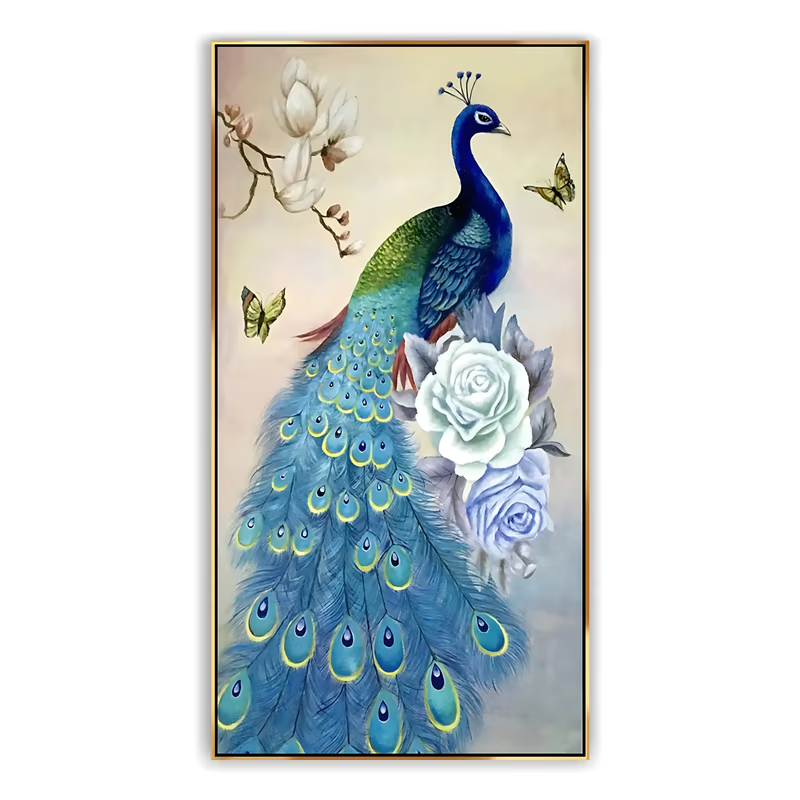
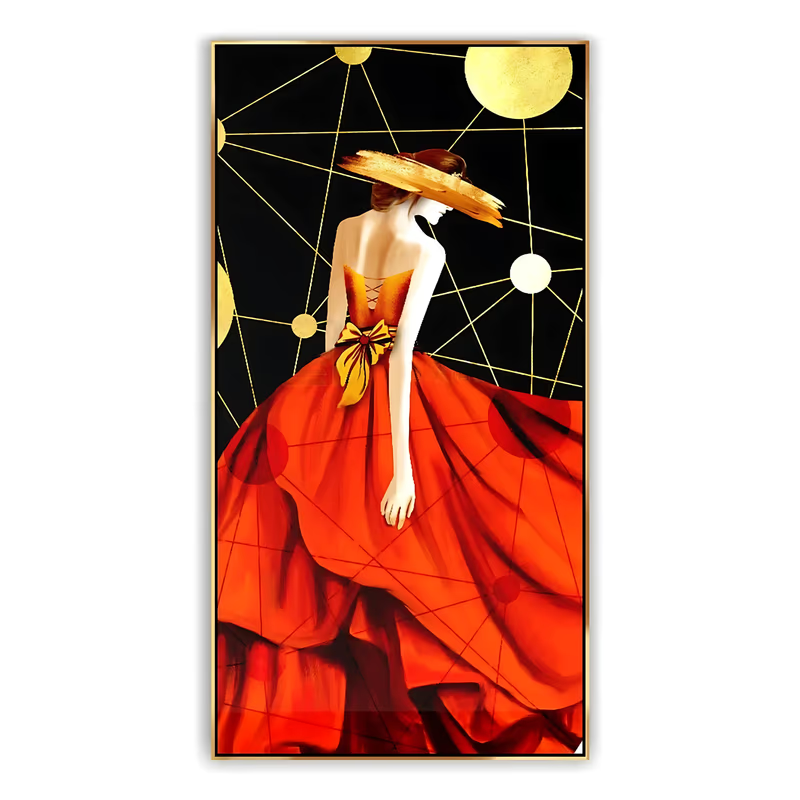
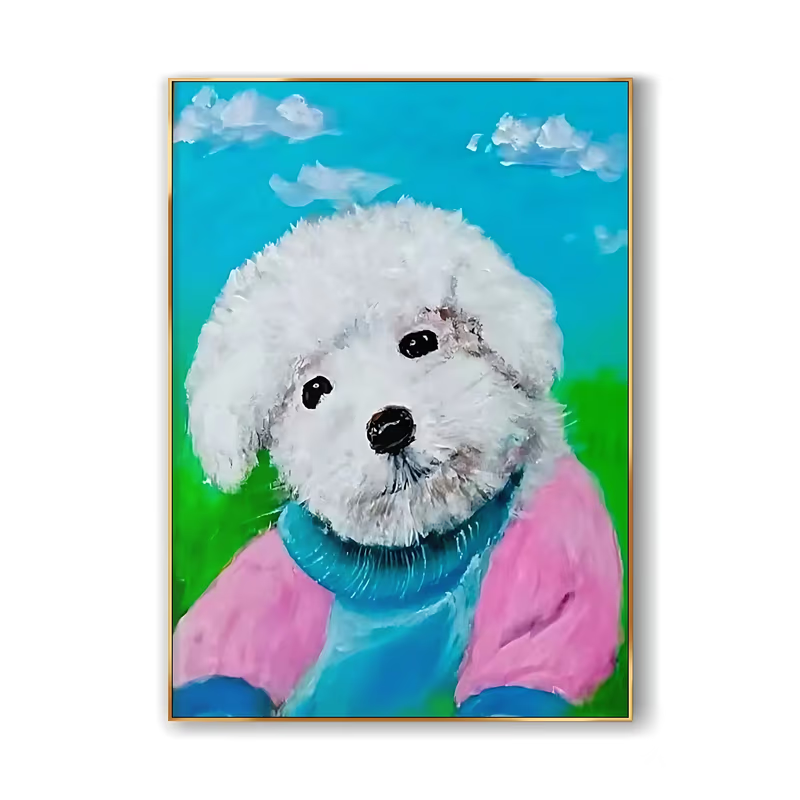
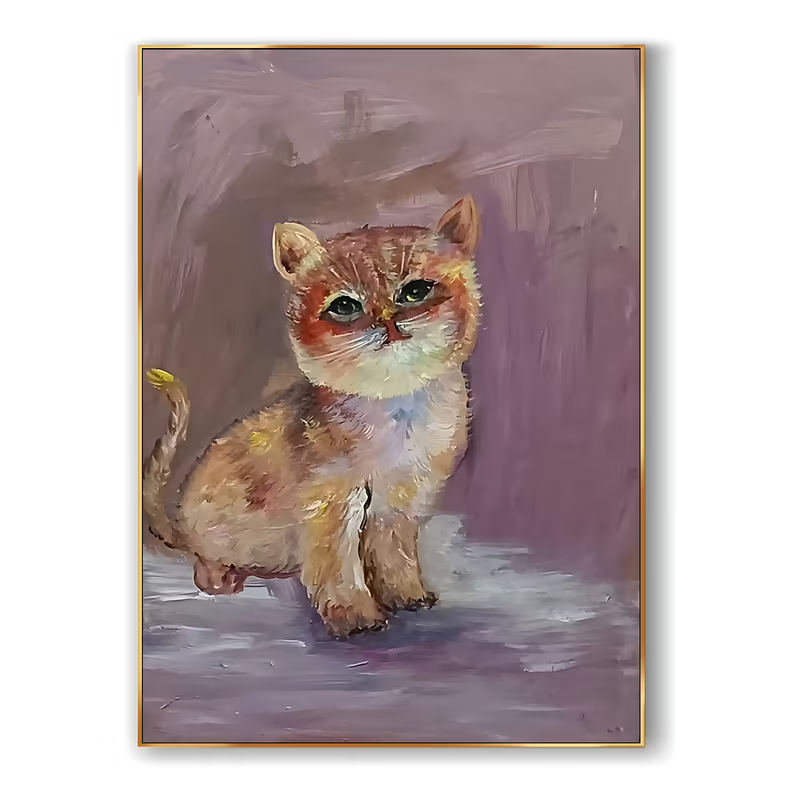
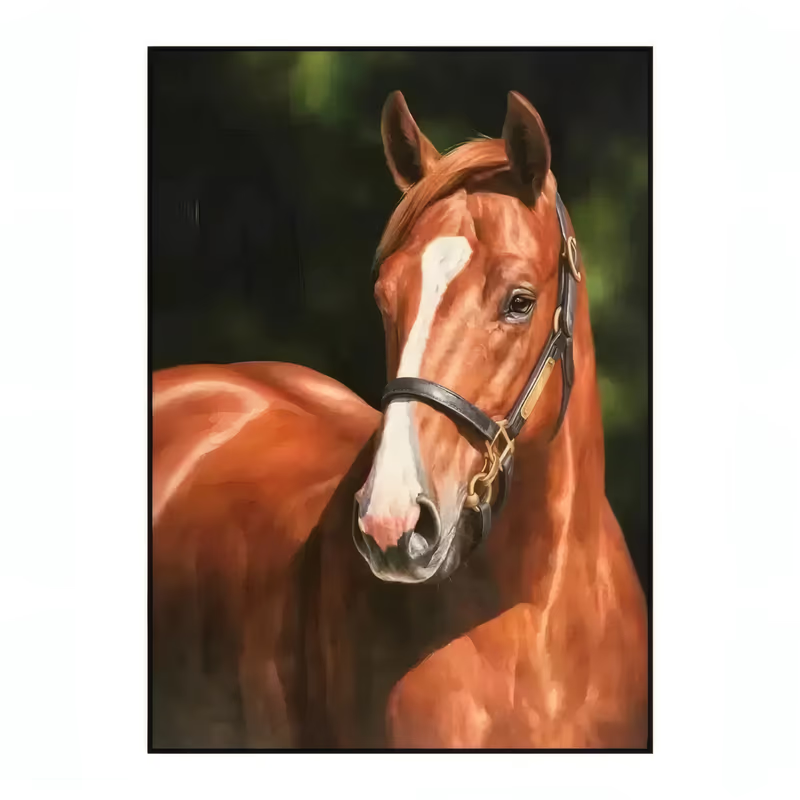
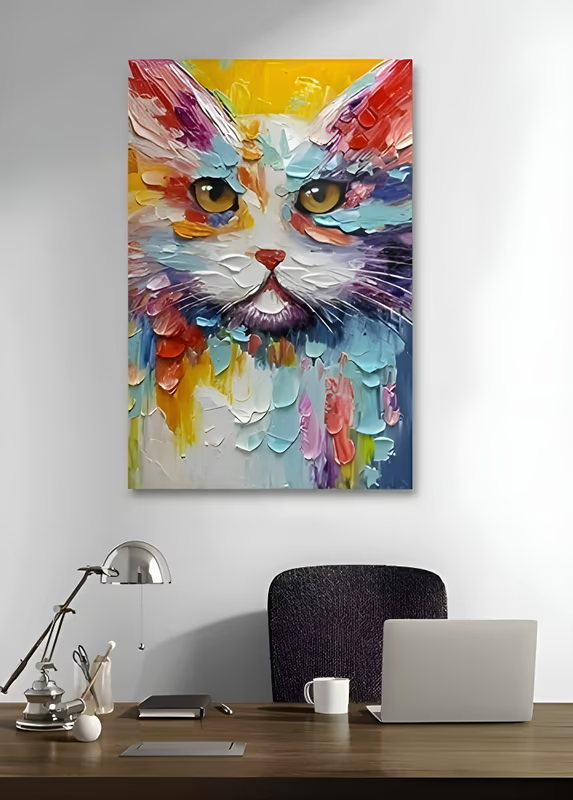
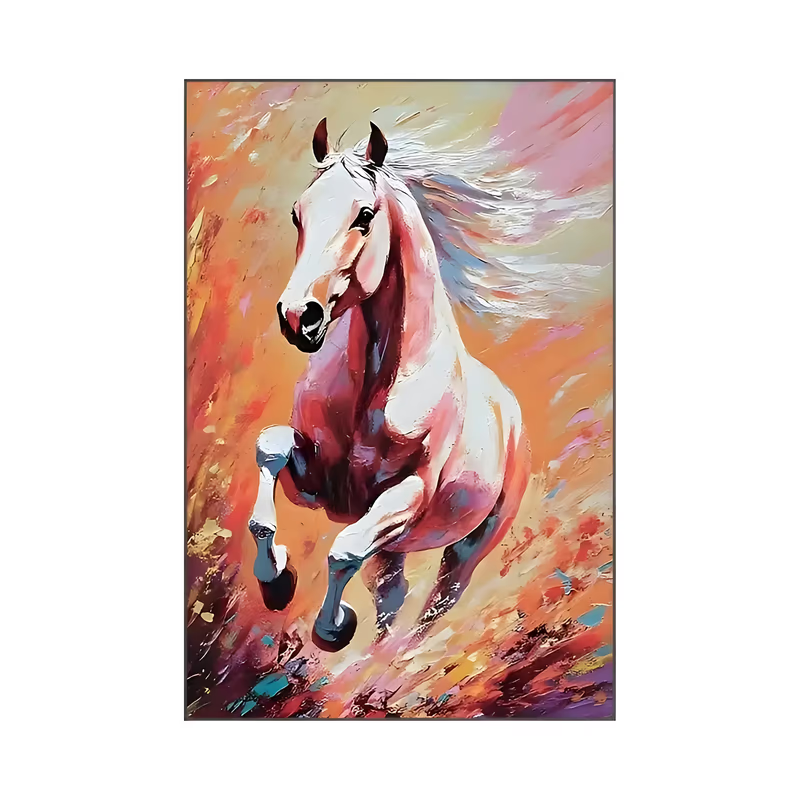
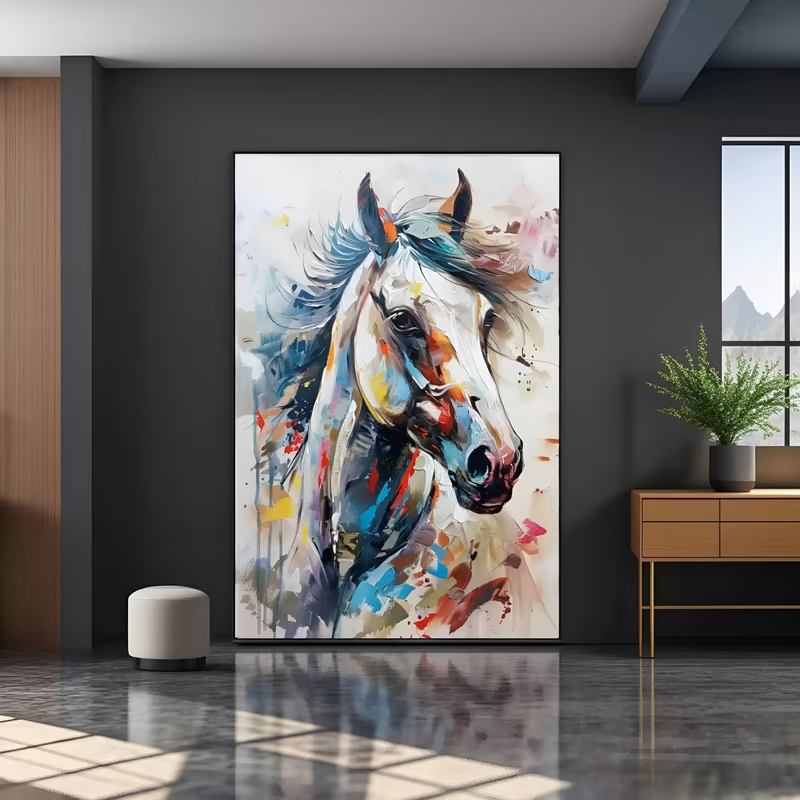
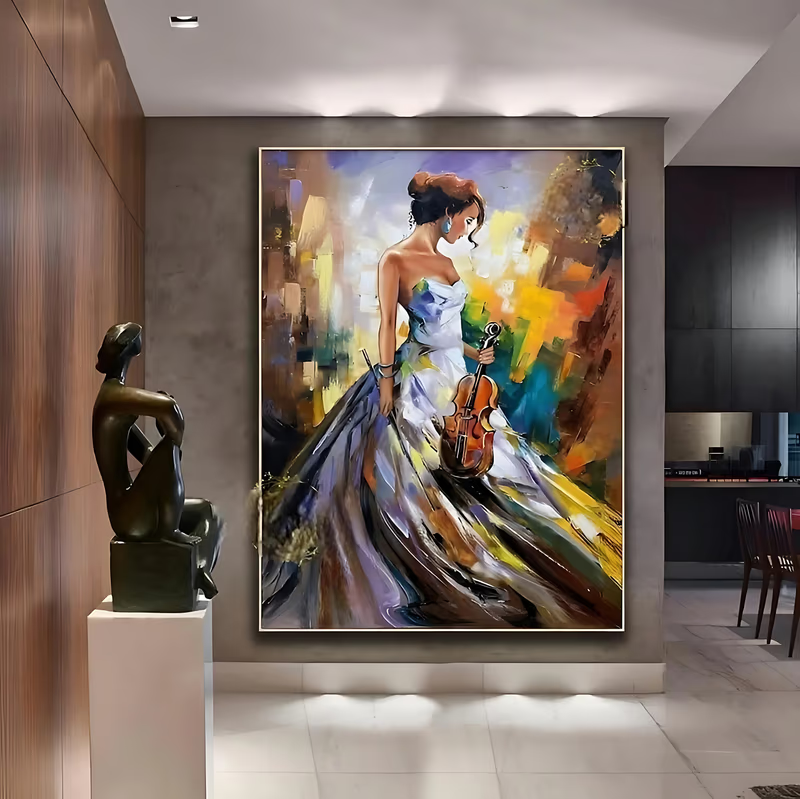
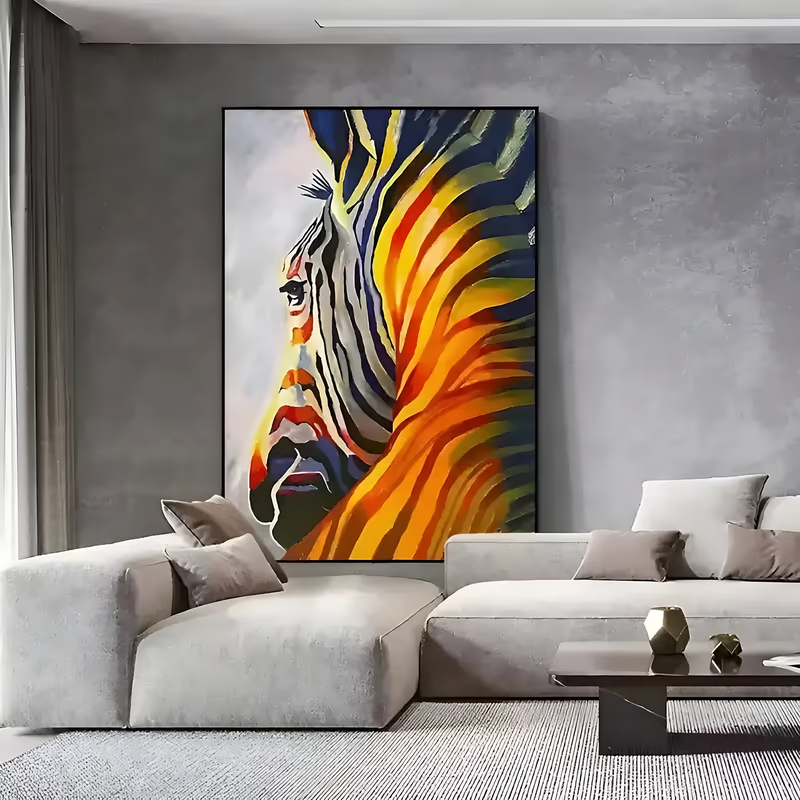
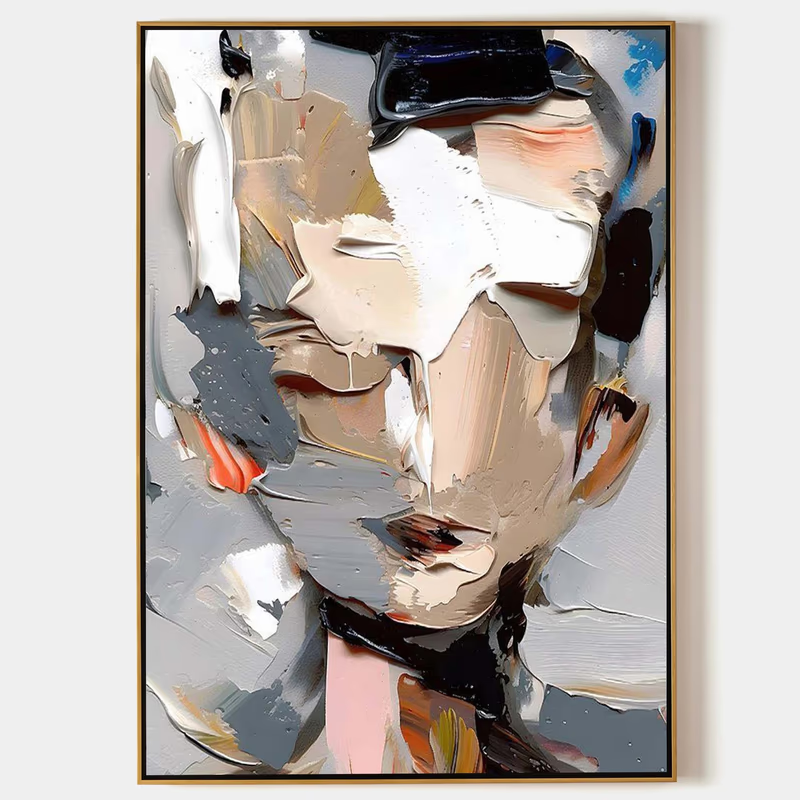
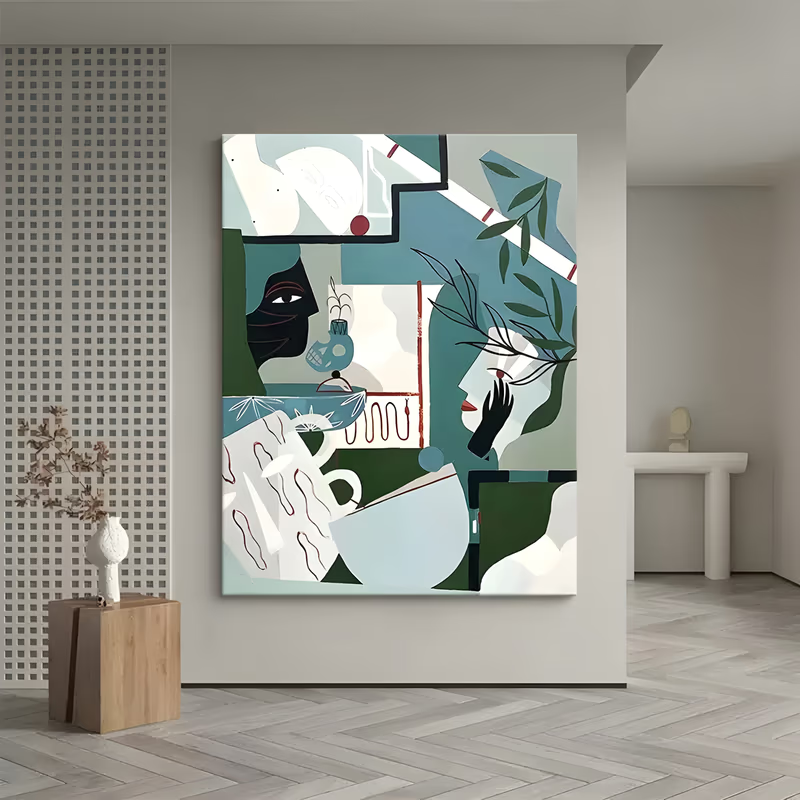
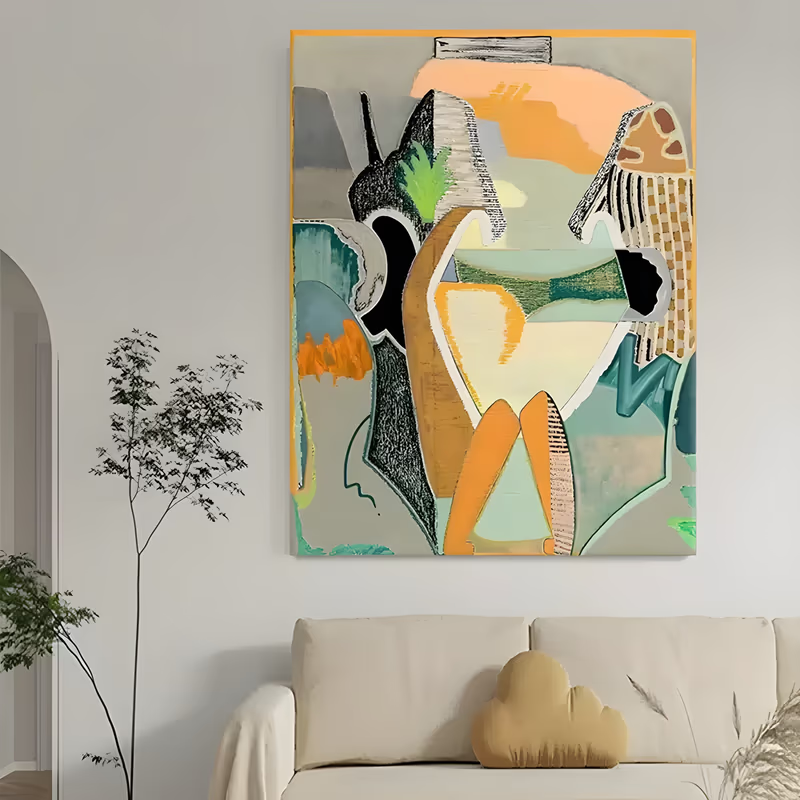
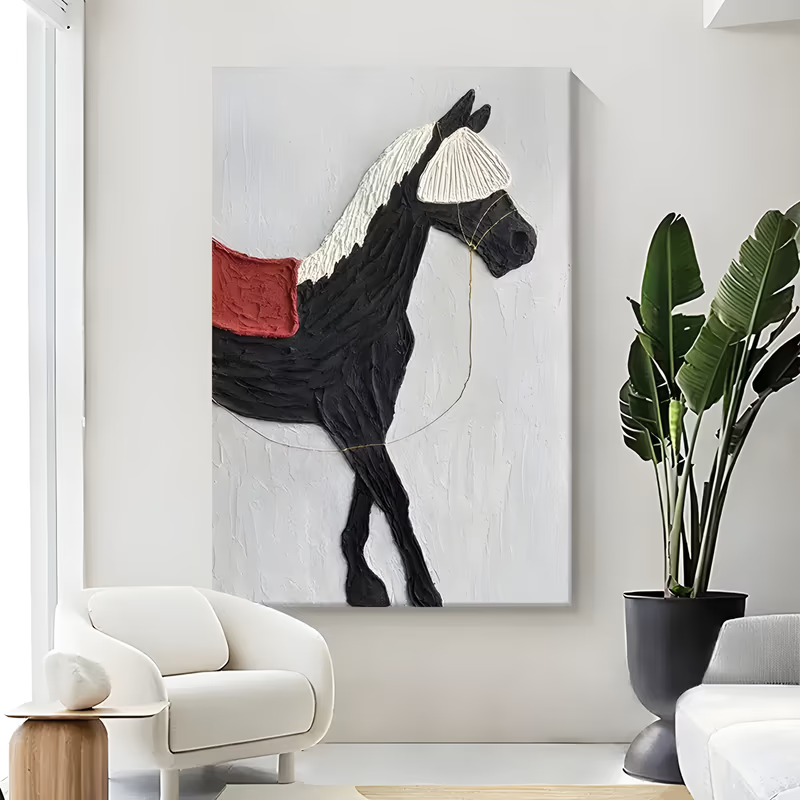
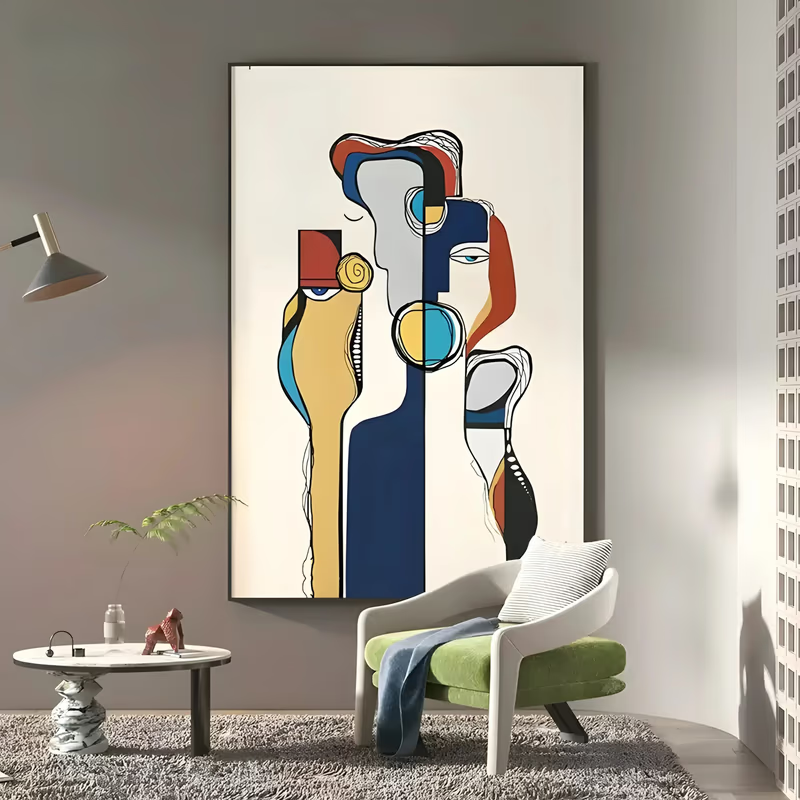
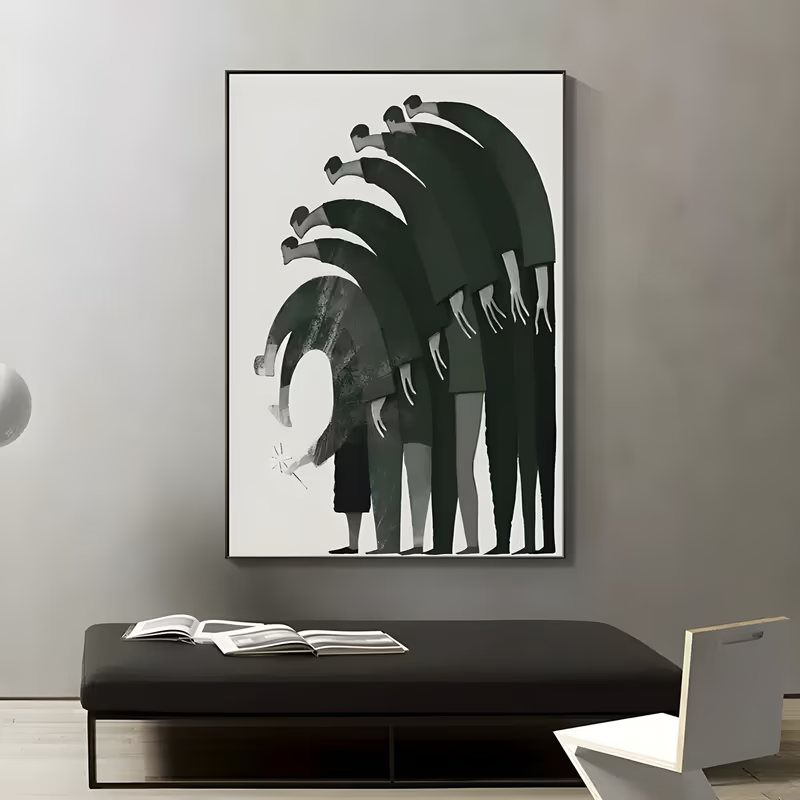
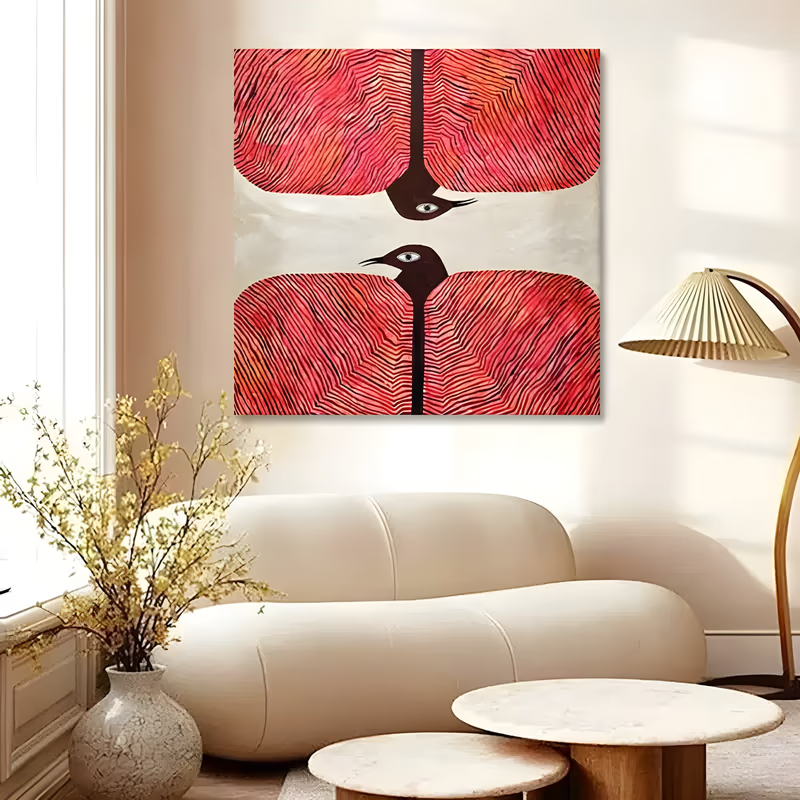
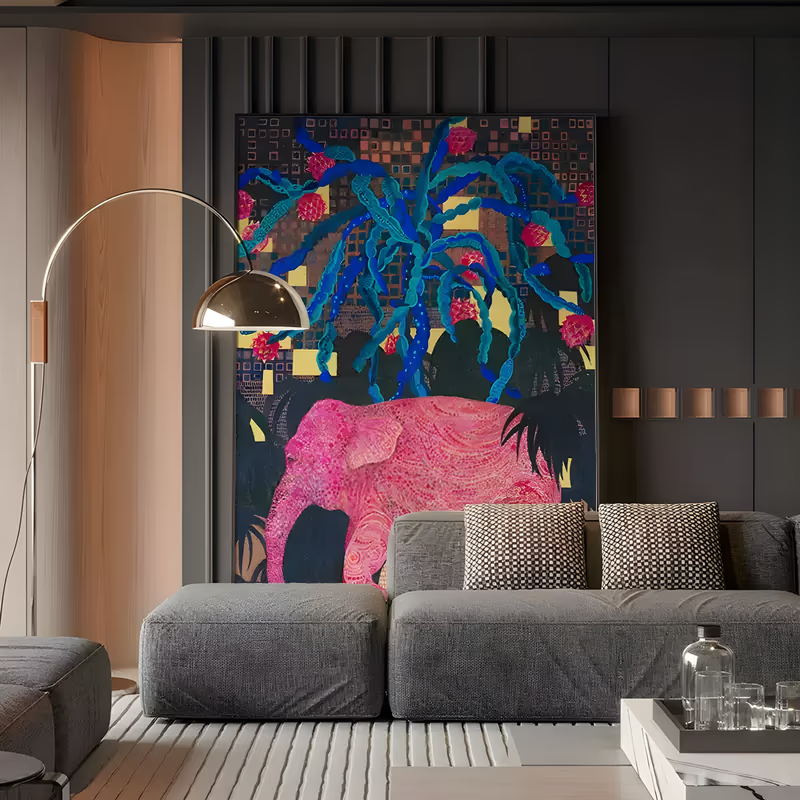
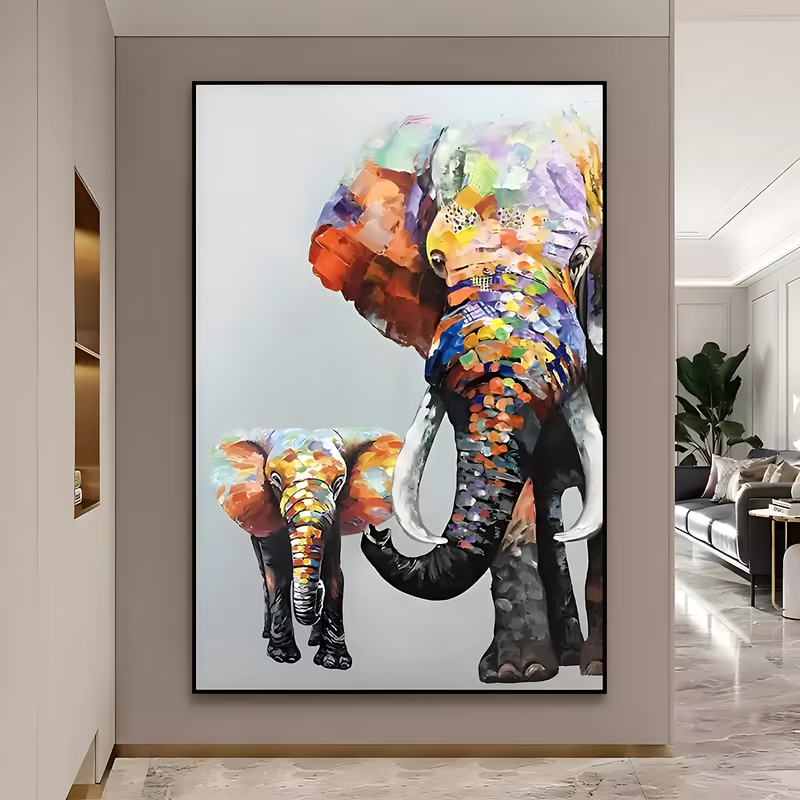
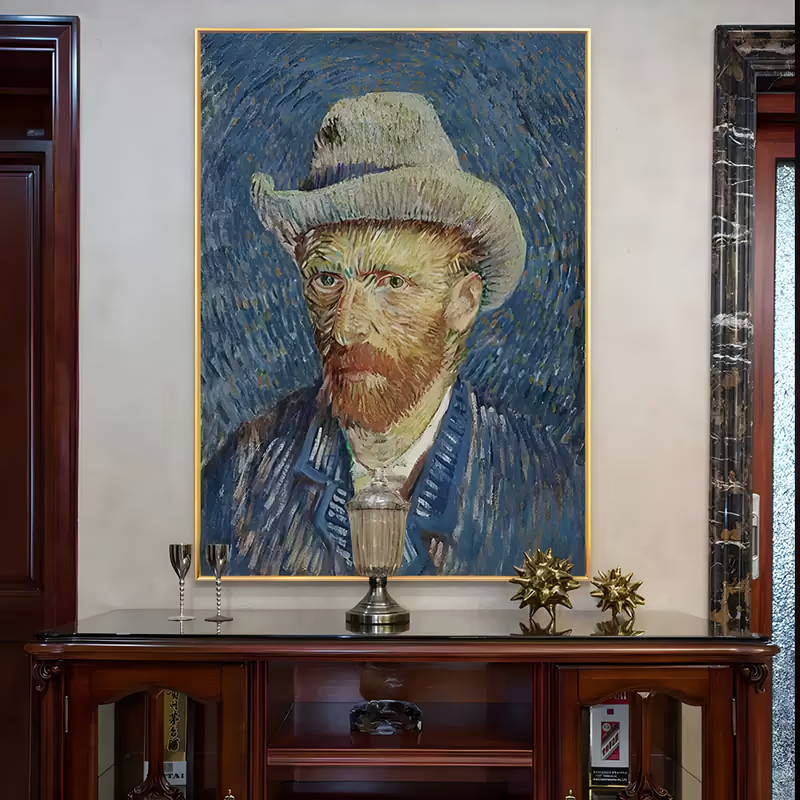
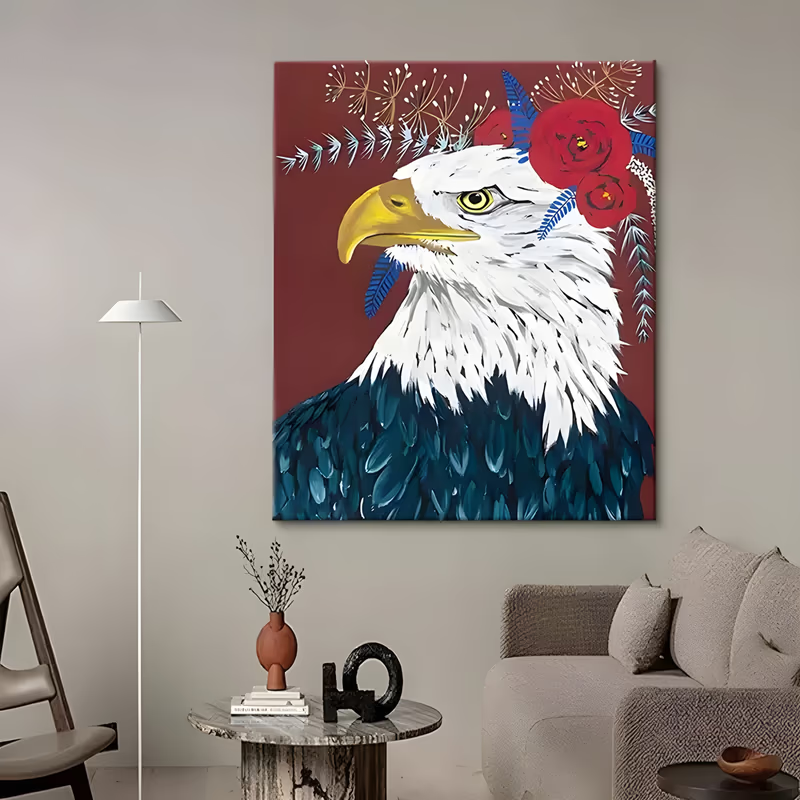
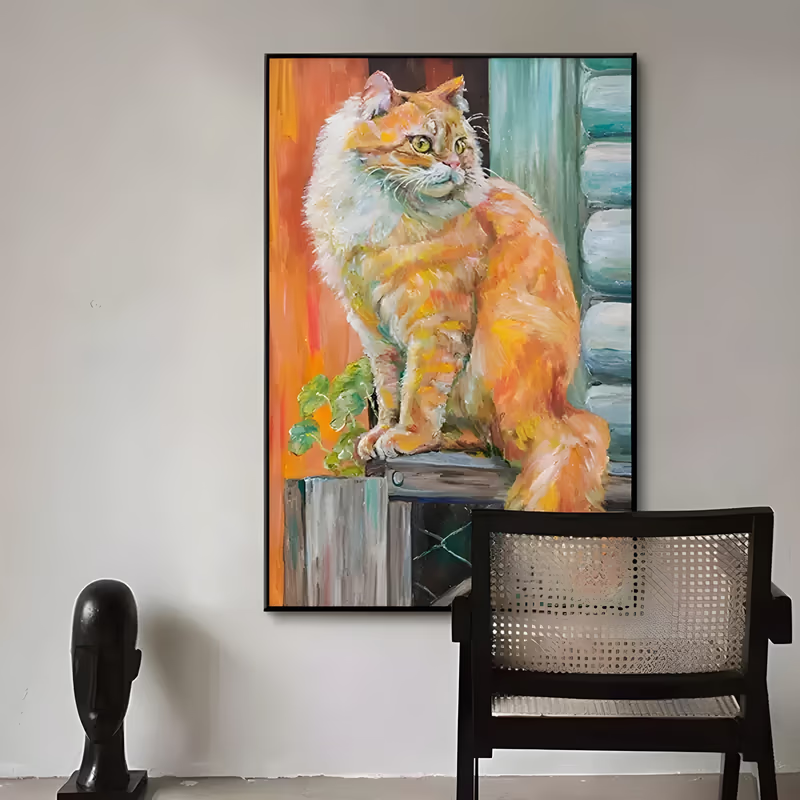
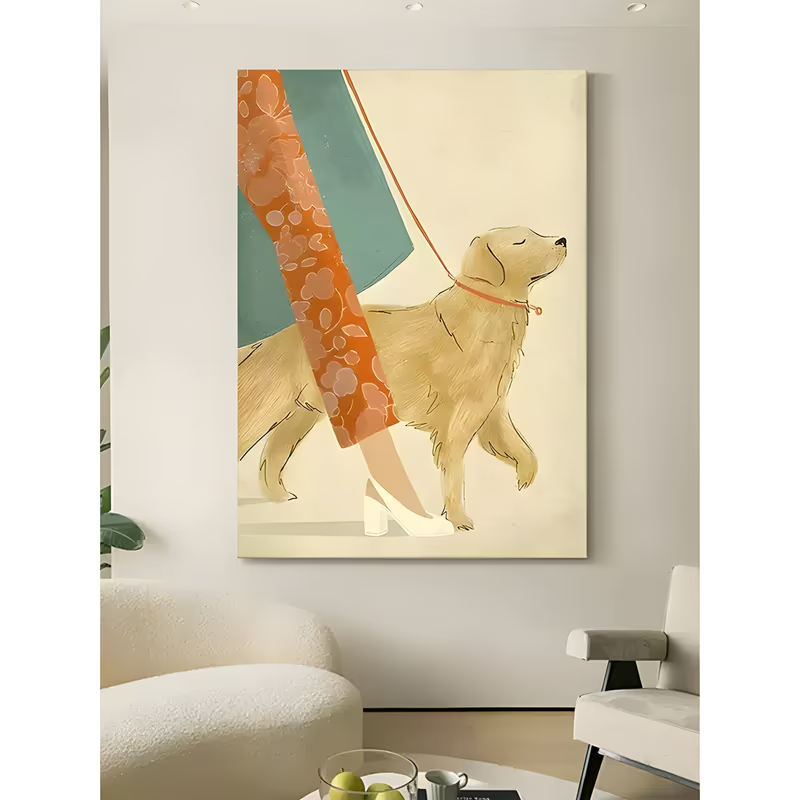
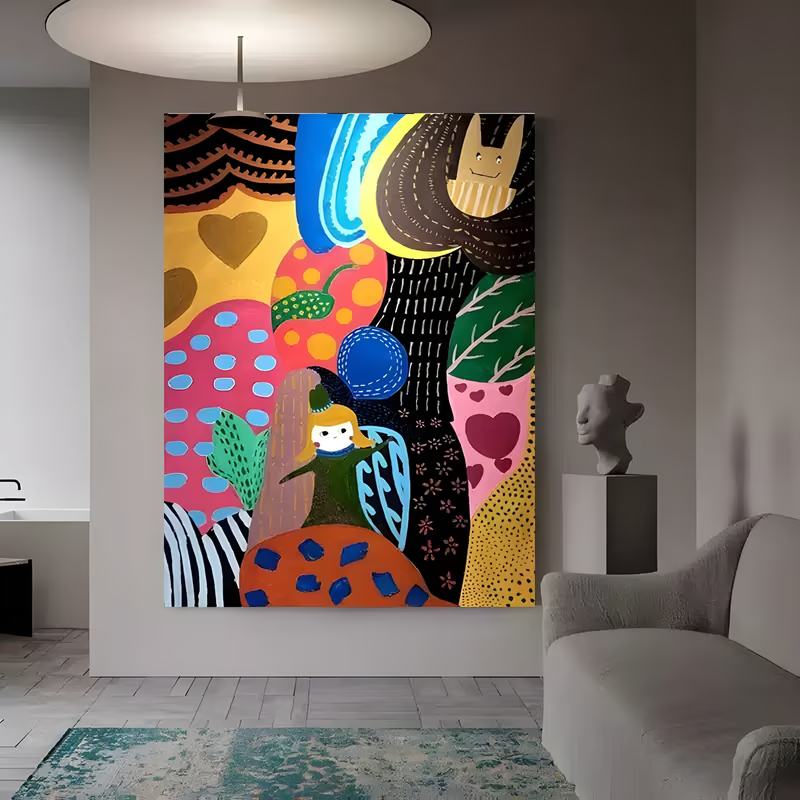
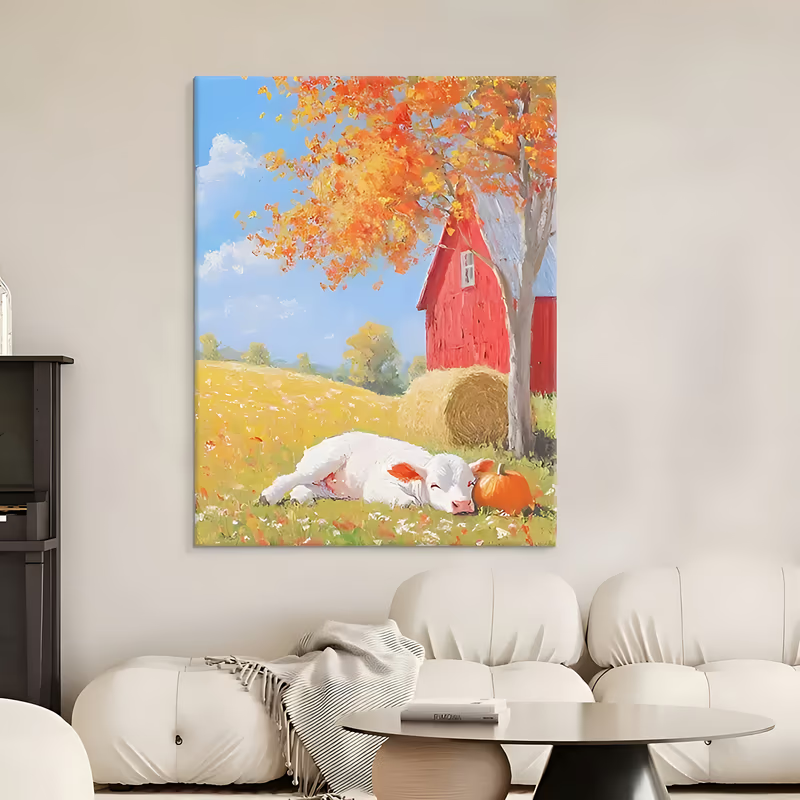
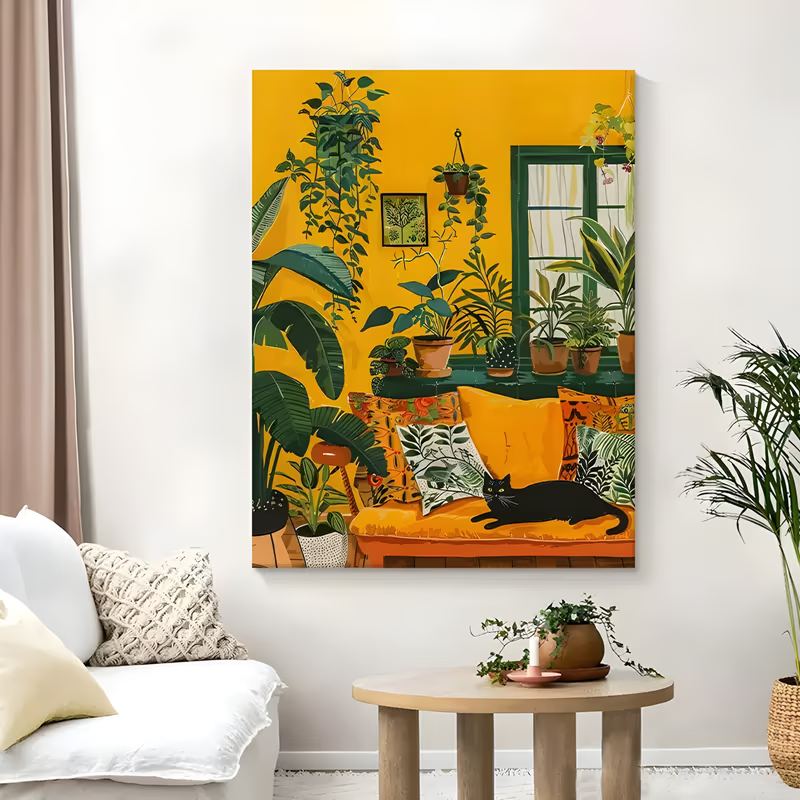
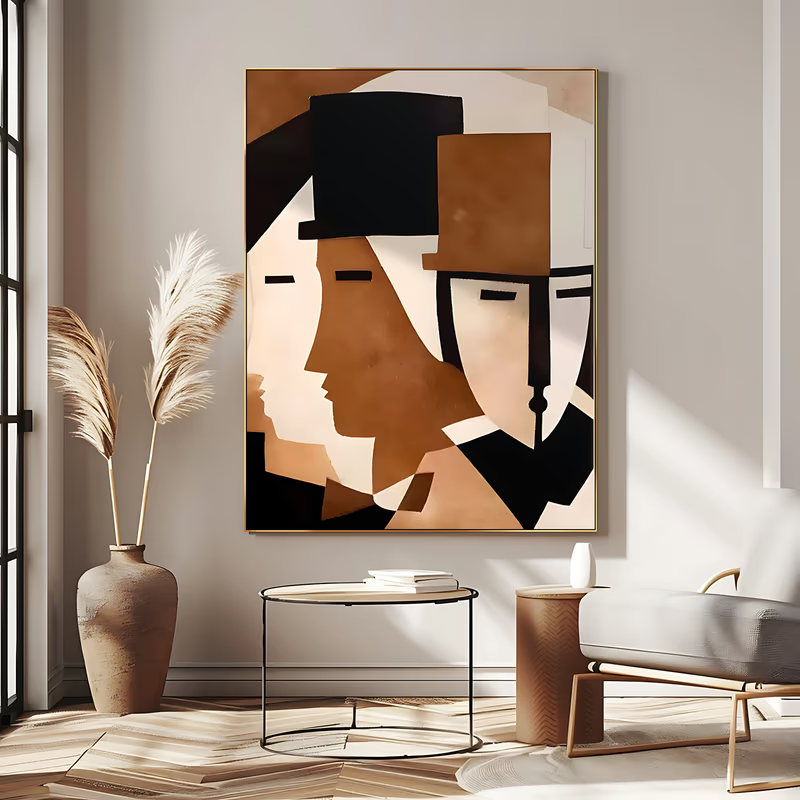
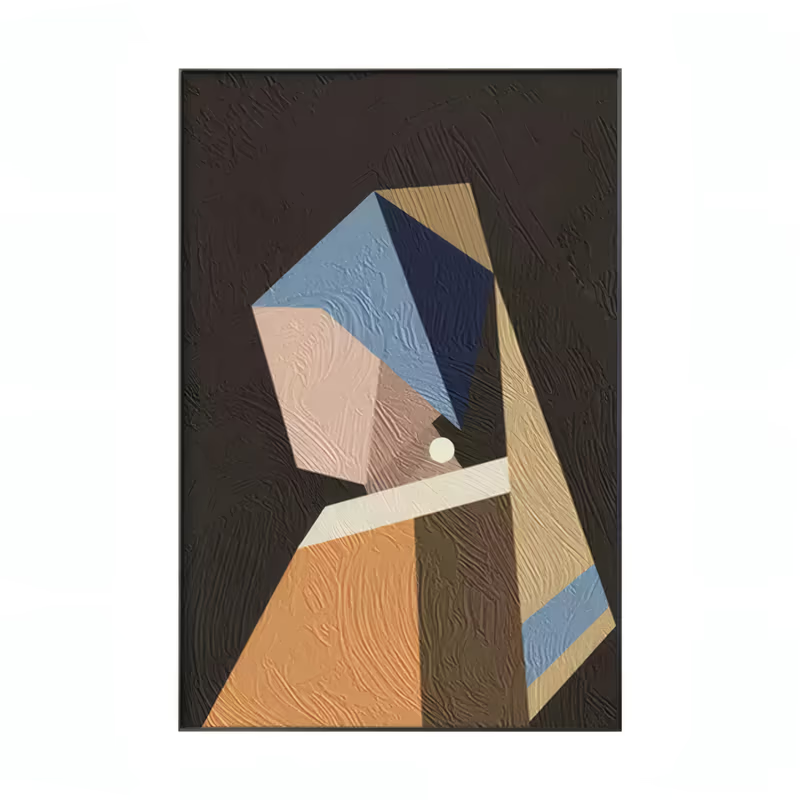
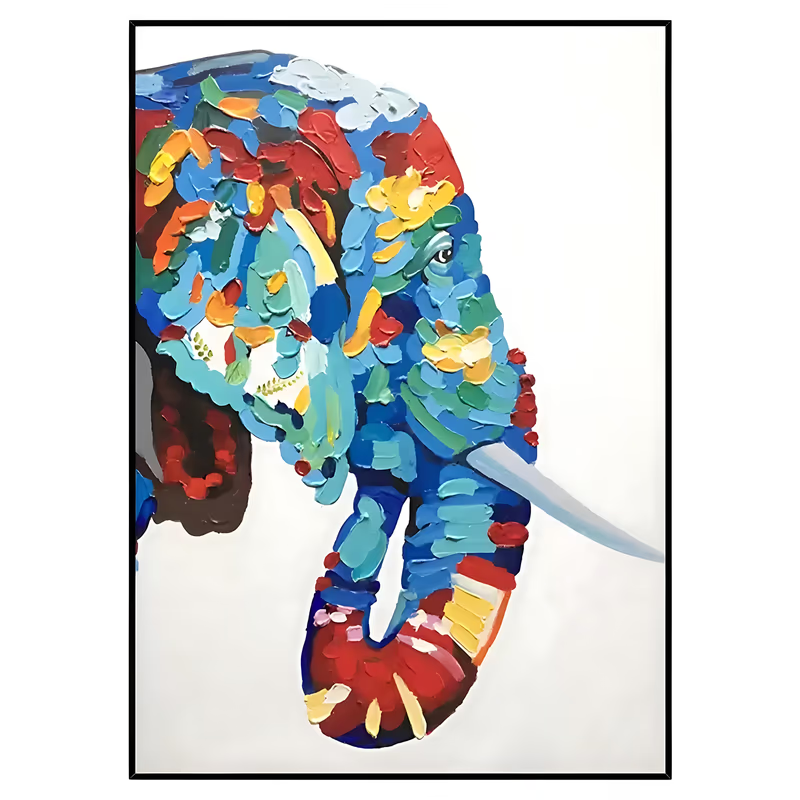
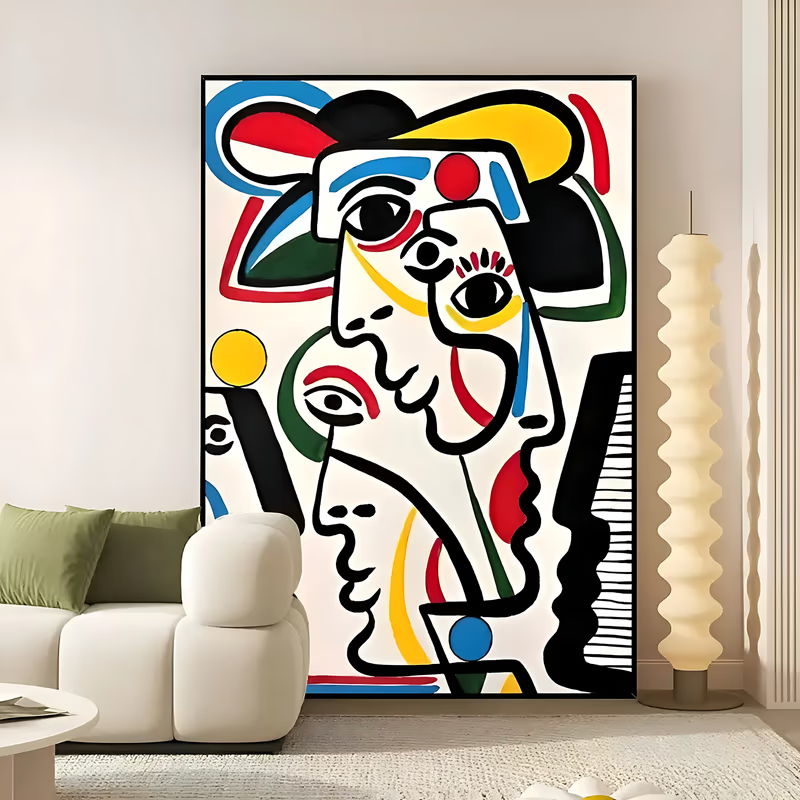
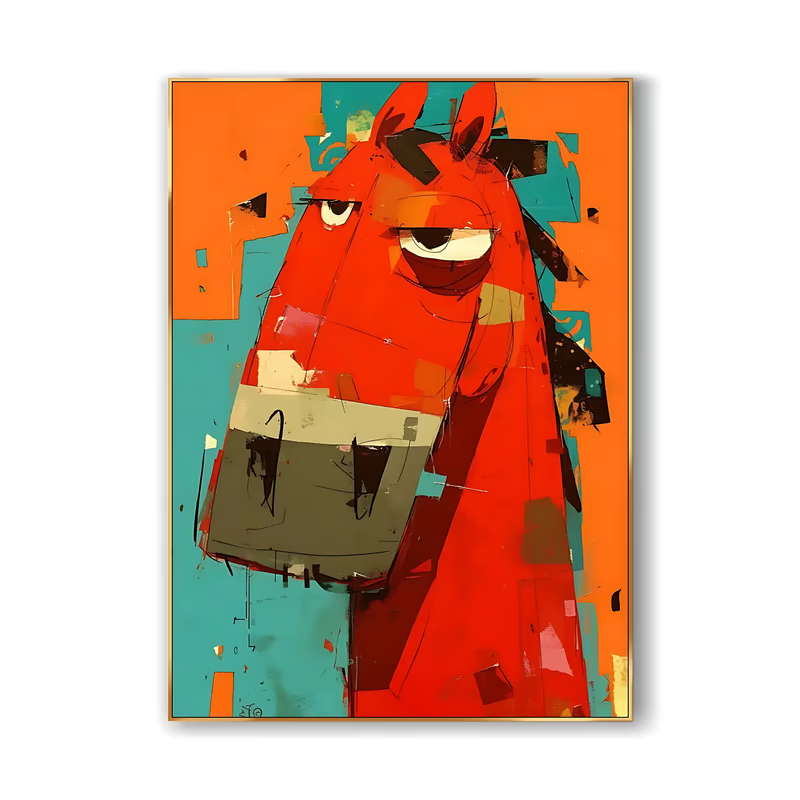
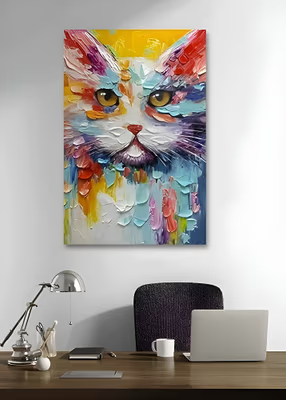
Horses, big cats, a cat on an orange sofa, cubist portraits. A character piece gives a hall a sense of the people who live there, and suits a bench nook or the turn of a stair where it surprises. Animal and figure art.
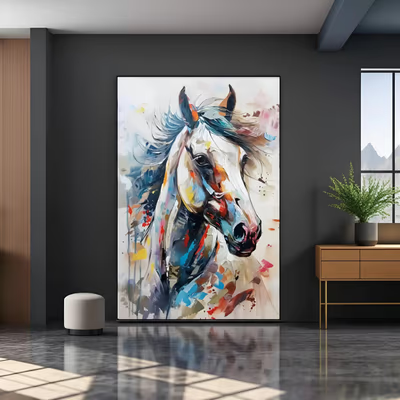
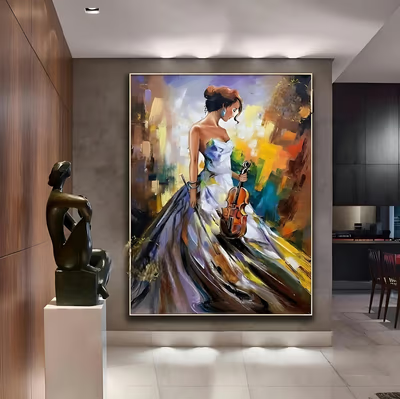
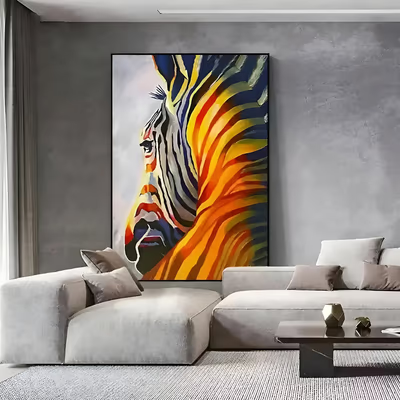
How do you hang art on a staircase wall?
Draw an imaginary line parallel to the handrail, about 145–152 cm (57–60 in) above the nose of each tread, and centre every canvas on it, so the arrangement climbs with the stairs.
Mark the line with low-tack tape before drilling. Larger canvases sit with their centres on the line; smaller ones can touch it with a corner. Start with the lowest piece and work upwards, keeping the gaps between frames equal when measured along the diagonal.
A staircase gives you two very different options. The first is a single large painting on the tall wall of a stairwell or landing, which anyone coming down sees in full: a strong choice for a double-height hall, painted to the exact height of the wall. The second is a stepped series of three to five canvases along the stair, ideally related in palette or subject so the sequence reads as one idea. Check the result from the bottom step, the landing and the top before you call it done, and keep every piece clear of the handrail, light switches and sconces.
On stairs more than anywhere, fix each canvas at two points. People carry laundry and luggage past it every day.
Which colours make an entryway or hallway feel bigger and brighter?
Light grounds, warm whites, soft gold and clear blues make a dark entryway or hallway feel larger, while one deep, saturated painting can make a bright, plain hall feel intentional.
Most halls get little daylight and rely on a ceiling light or a single lamp. Paintings with a pale or luminous ground bounce that light back; very dark canvases can disappear in a gloomy passage unless they are lit.
| Your hall | Palette that helps | Browse |
|---|---|---|
| Dark, no window | White, cream and pale gold grounds; sunlit landscapes | White, gold |
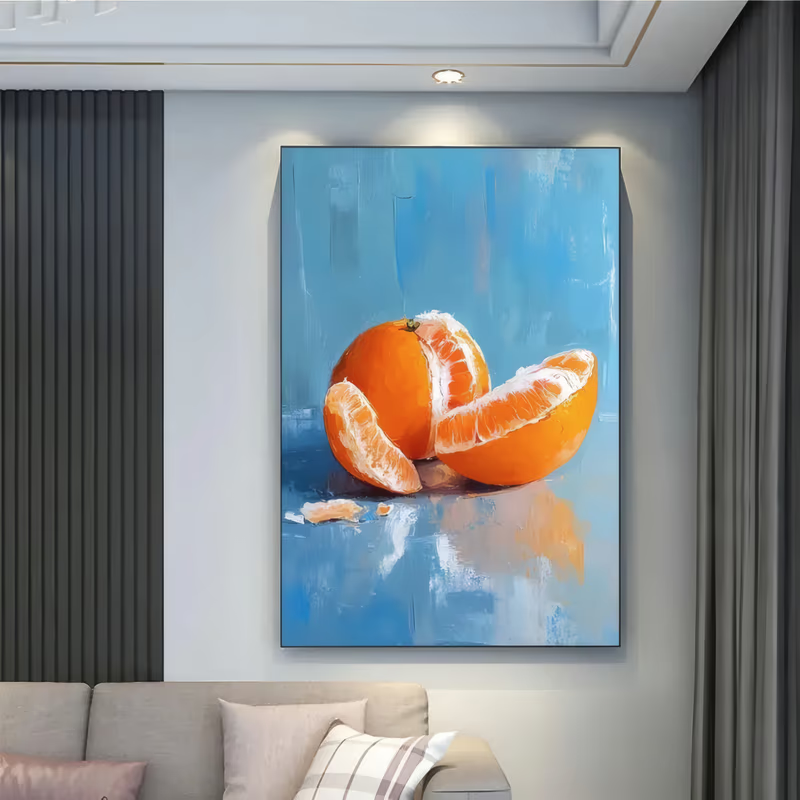
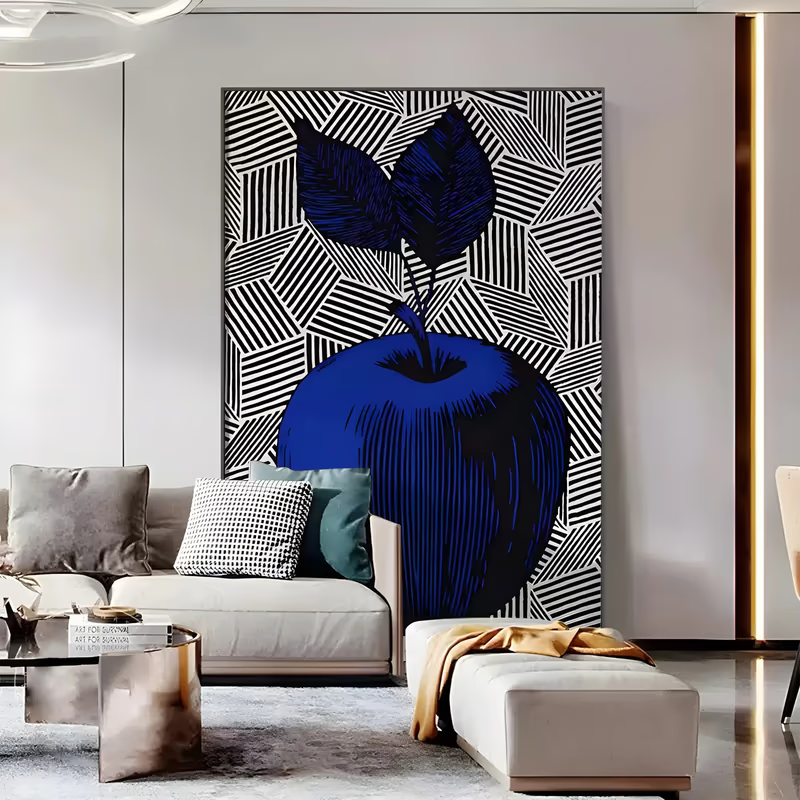
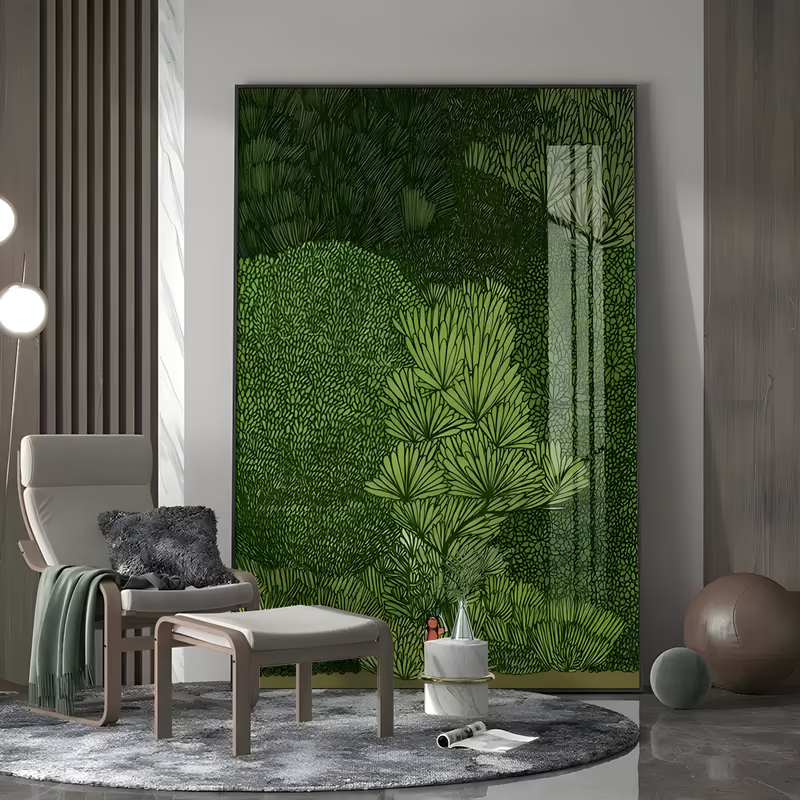
| Bright, white-painted | One strong accent: cobalt, emerald, orange or black | Blue, green, black |
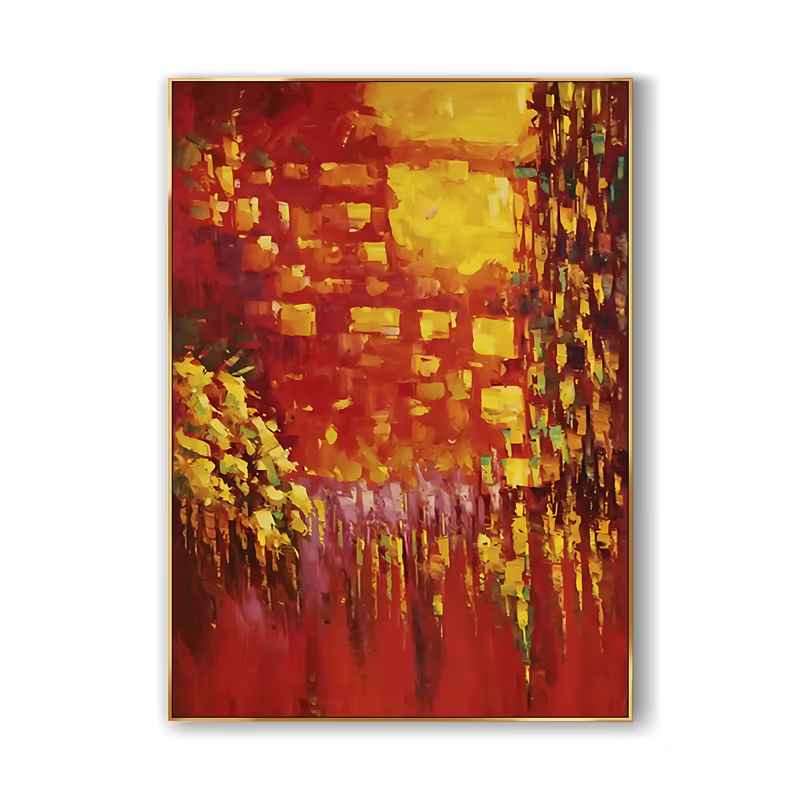
| Dark-painted (navy, green, charcoal) | Gold leaf, cream relief, glowing sunsets that stand out from the wall | Cream, orange |
| Warm wood, terracotta floors | Earth tones, terracotta and olive | Terracotta, brown |
An entrance is also a hinge between rooms. Borrow one colour from the room seen beyond it, the living room's sofa or the dining room's chairs, and the eye travels from hall to room without a jolt. For palettes in more depth, see gold wall art or white wall art.
How do you order entryway art made to fit the space?
Send the clear width and height of the wall, a photo of the hall from the front door and any colours you want it to pick up, and the painting is drawn to those exact proportions.
Entrances are full of awkward sizes: a 40 cm strip between two doors, a wall that rises with the stairs, an arch above a console. Because each canvas is made to order, the composition is redrawn for the shape rather than stretched or cropped, and the palette can follow a paint code, a runner or a floor tile. Progress photos or video arrive at each stage; painting moves on only when you approve, and a final photograph is yours to approve before it ships.
A finished piece travels rolled, stretched and ready to hang, or framed in gold, silver, black, white or wood. It takes about 10 days to paint and arrives 5–7 days after dispatch by DHL, FedEx or UPS express, which iHomeArt books on the best route to your door. Designers furnishing whole houses or show homes can order one piece or many; see villas and whole-house projects, show homes and residential interior designers, or start with a quote.