
Landscape painting guide · Updated
How to choose a landscape painting for your wall
Key takeaways
- A landscape adds depth: it is the one subject that pushes a wall back, so it suits small rooms, windowless rooms and walls that face a blank view.
- Terrain sets the mood: mountains steady a room, forests shelter it, water calms it, meadows open it and dunes warm it.
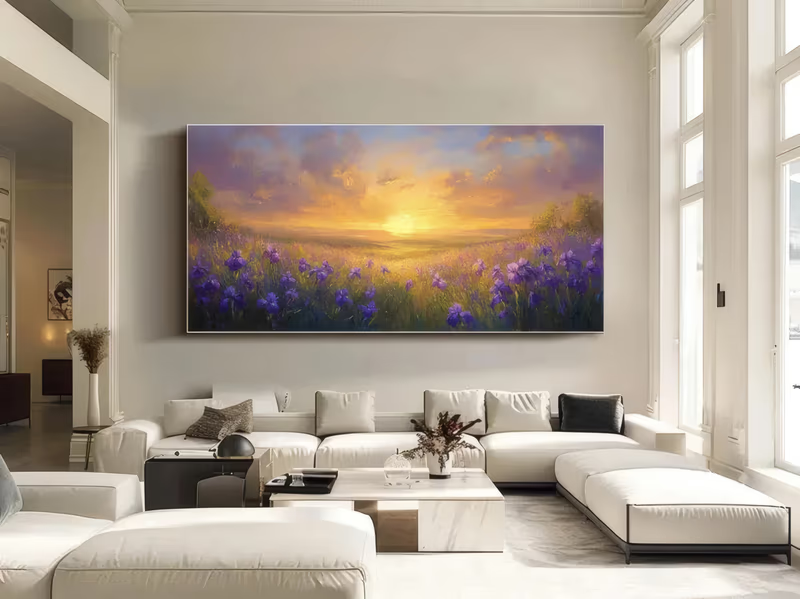
- Match the painted light to the room's light: warm sunsets and golden fields for dim or north-facing rooms; cool mist and snow for bright, sunny ones.
- Width follows the view: horizontal and panoramic landscapes open long walls; tall ones fit piers, stairs and the space between windows.
What does a landscape painting do for a room?
A landscape painting gives a room a view: the eye travels into the distance, so the wall seems to recede and the space feels larger and calmer.
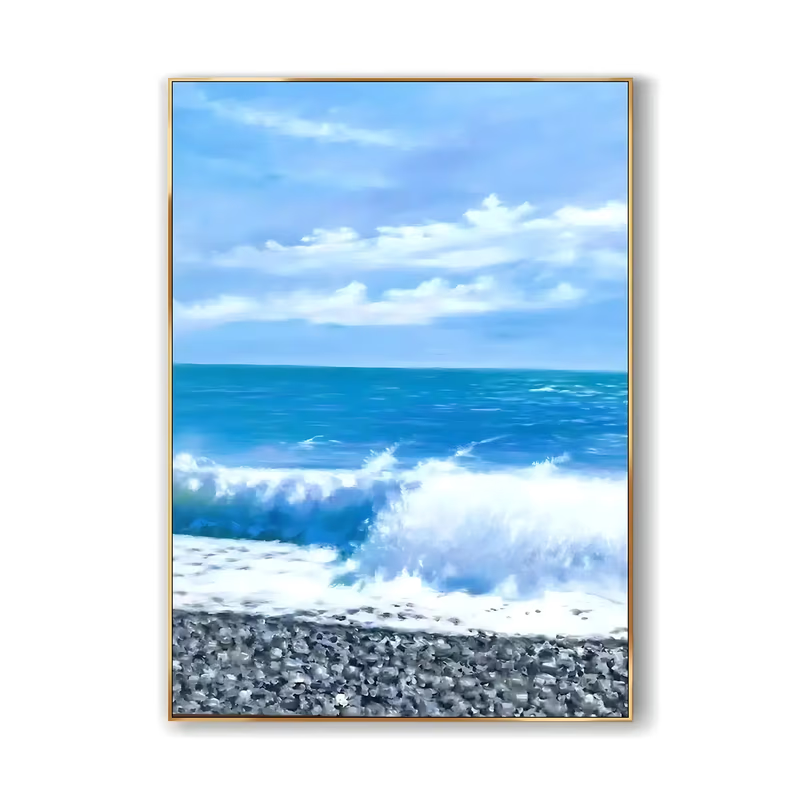
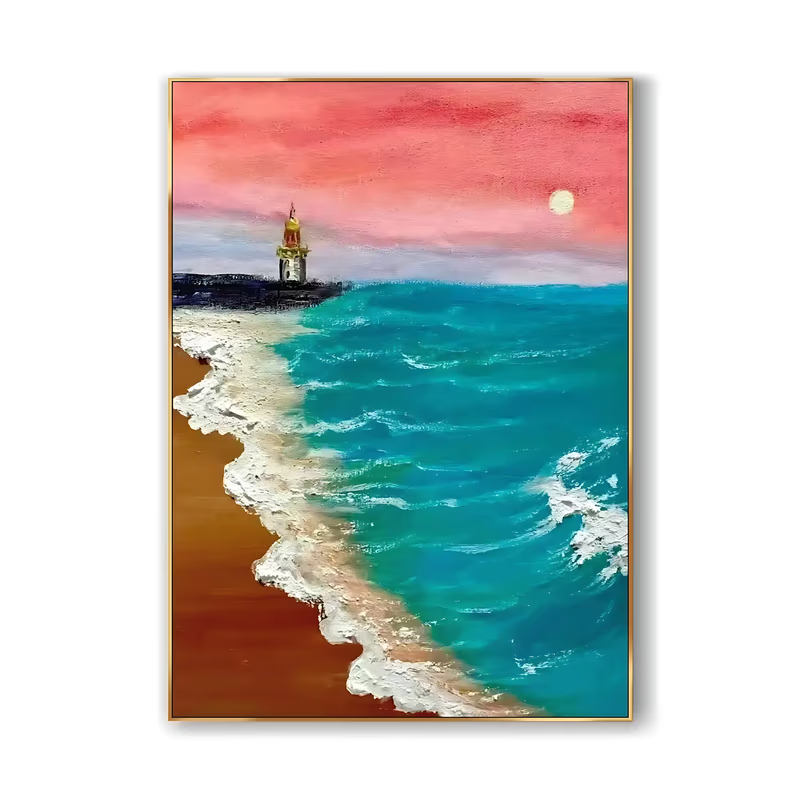
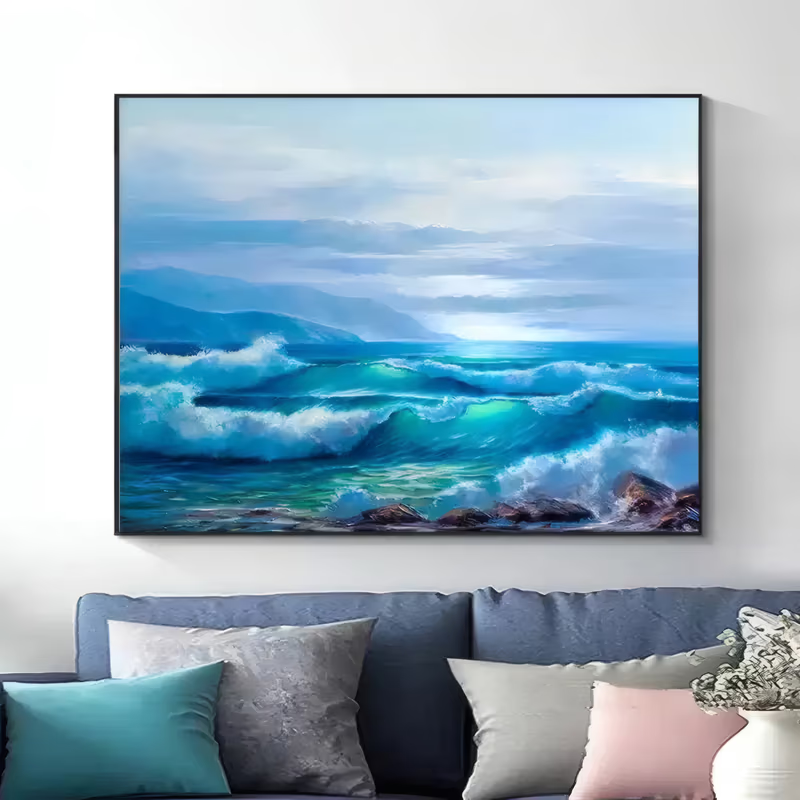
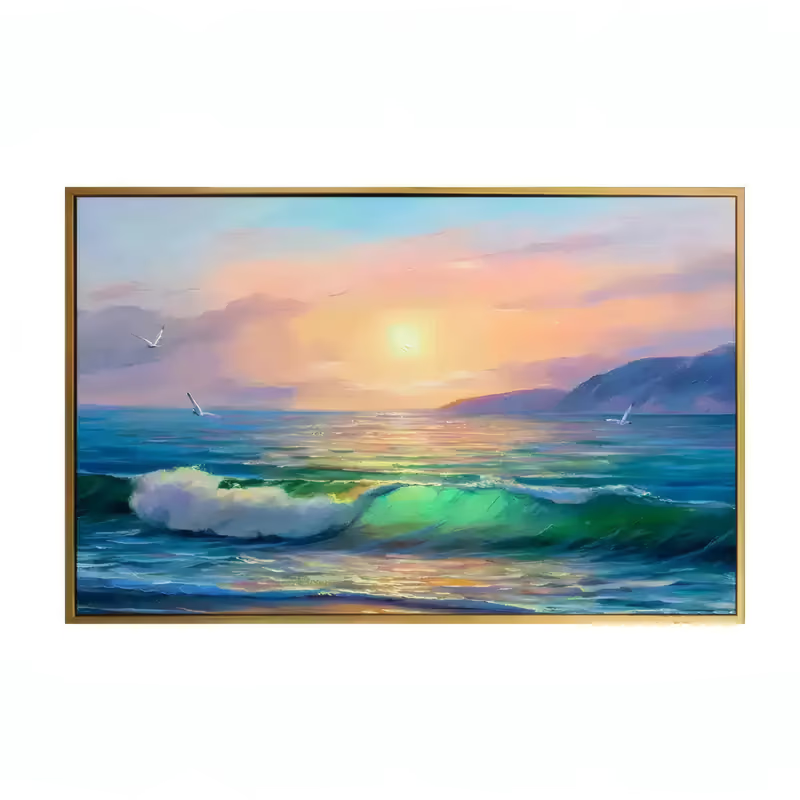
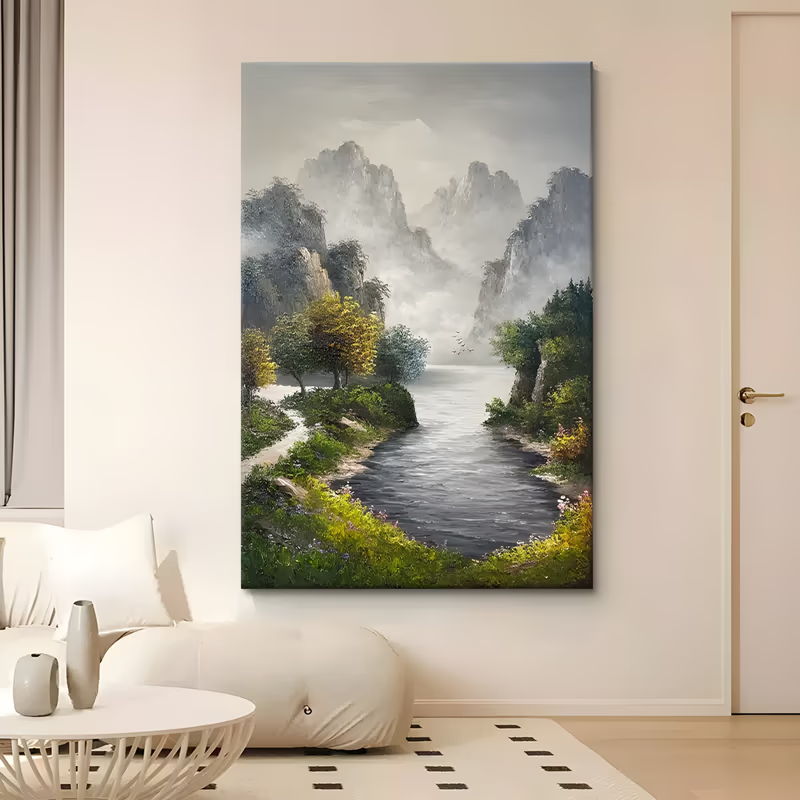
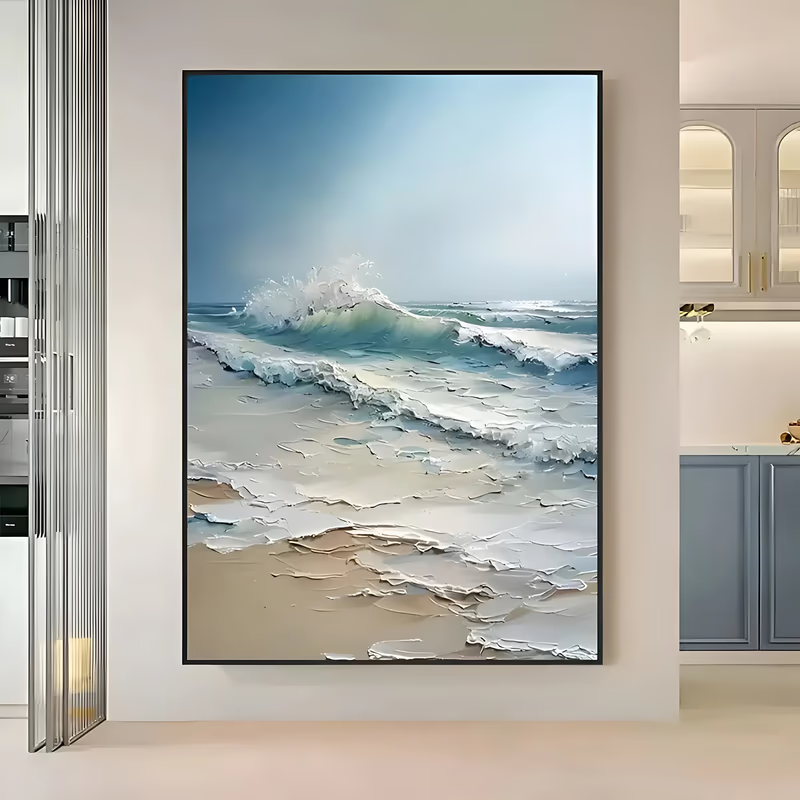
Most art sits on the surface of the wall. A landscape with a foreground, a middle ground and a far horizon opens a hole in it, which is why landscapes have hung in houses for centuries and why they still work in rooms with no window, poor outlook or low ceilings. The effect is strongest when the painting holds real distance: a path leading away, a river bending into the hills, ridges fading into mist. Abstract and sculpted landscapes keep the layers and the horizon but drop the detail, so they bring the same calm to a contemporary room. Sea views have their own page: see seascape paintings.
Mountains, forests, water or fields: which landscape suits your room?
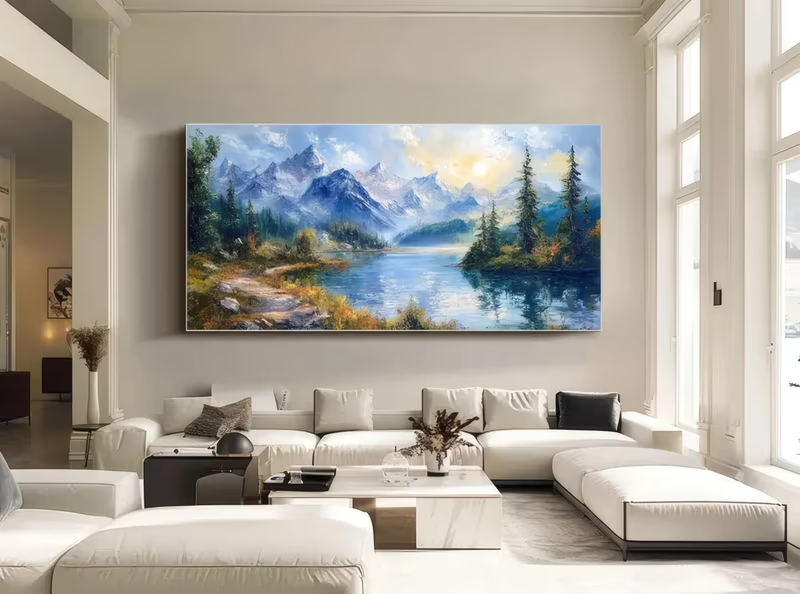
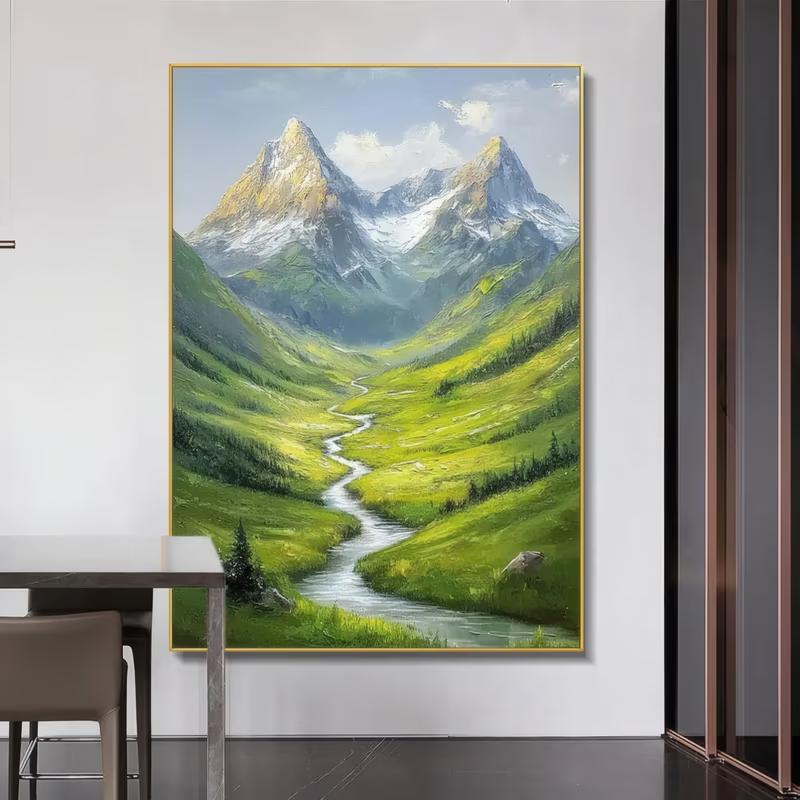
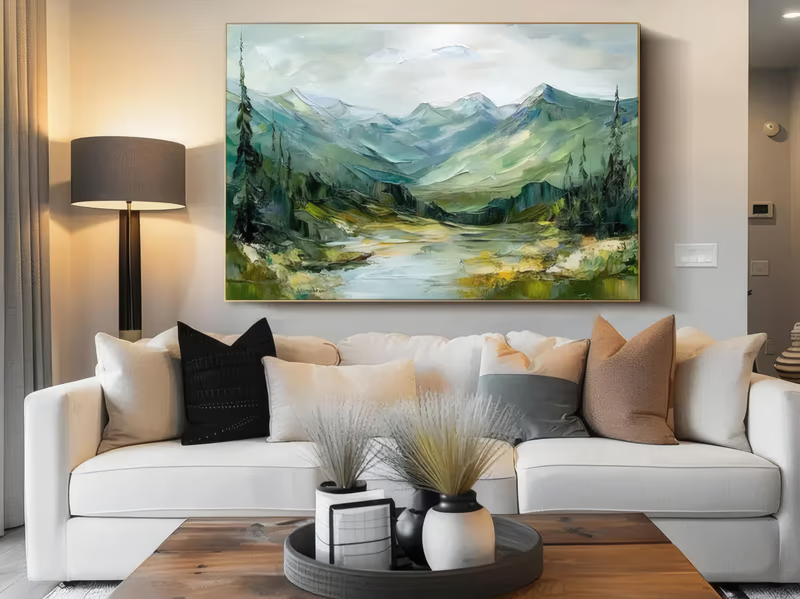
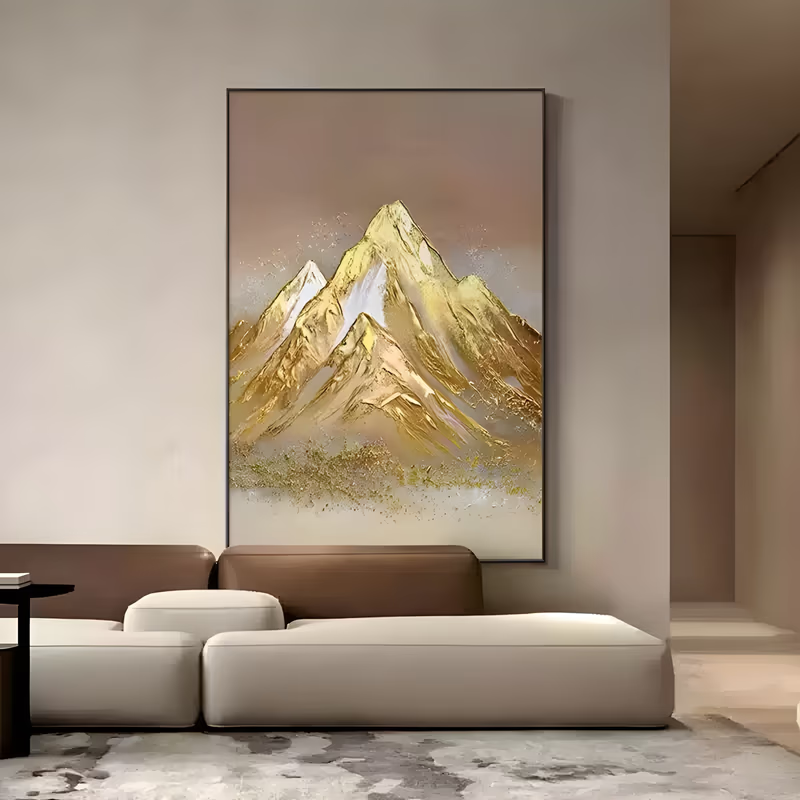
Pick the terrain for the feeling you want: mountains for strength and focus, forests for shelter, lakes and rivers for calm, meadows and villages for warmth, deserts for heat and simplicity.
| Terrain | Feeling it brings | Rooms it suits |
|---|---|---|
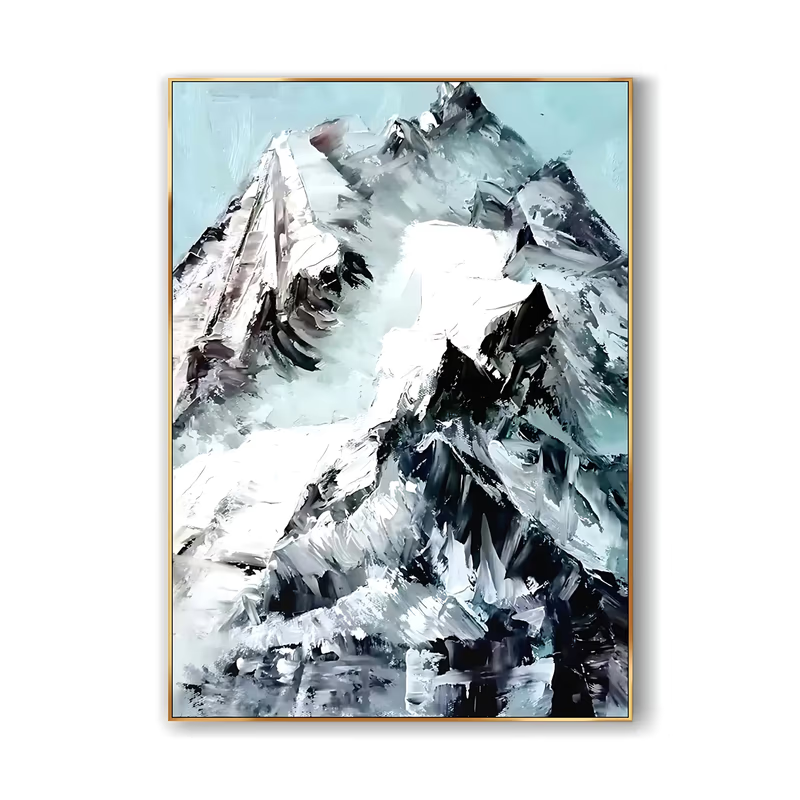
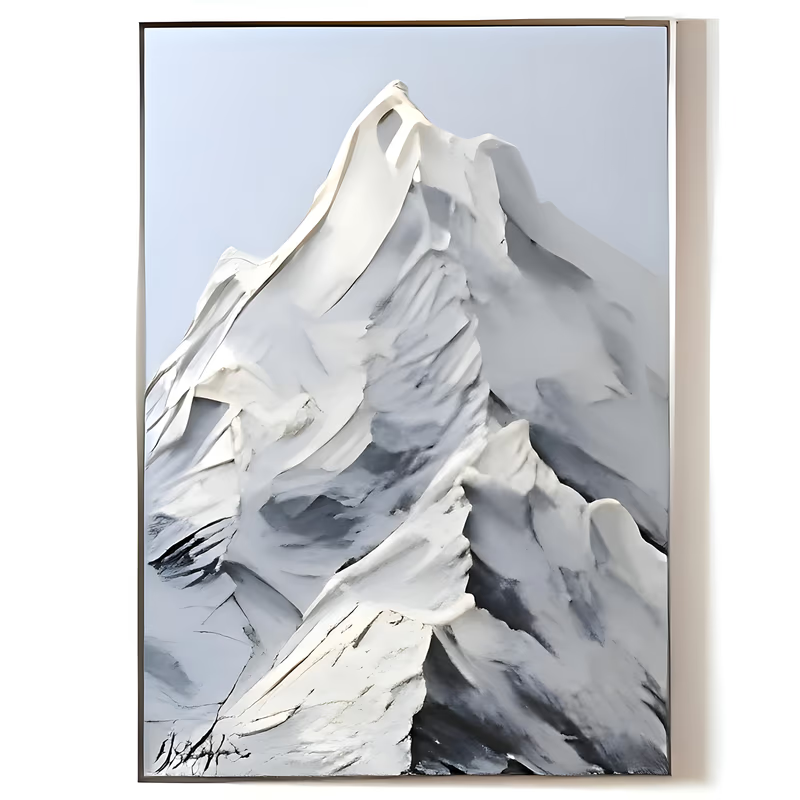
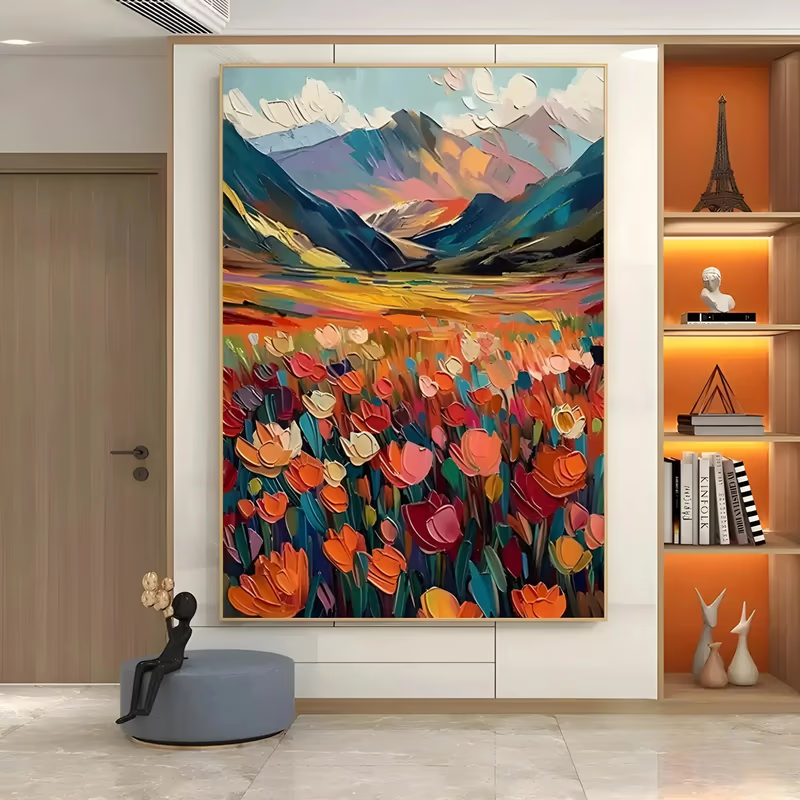
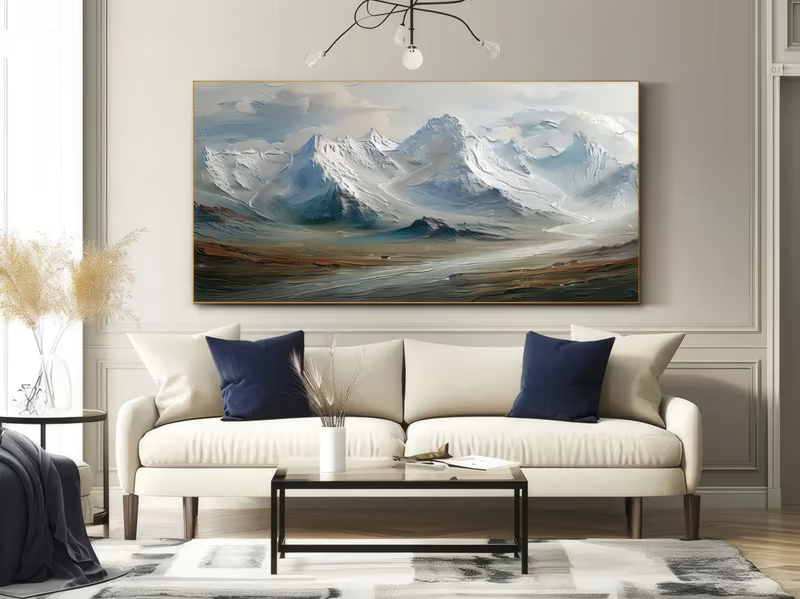
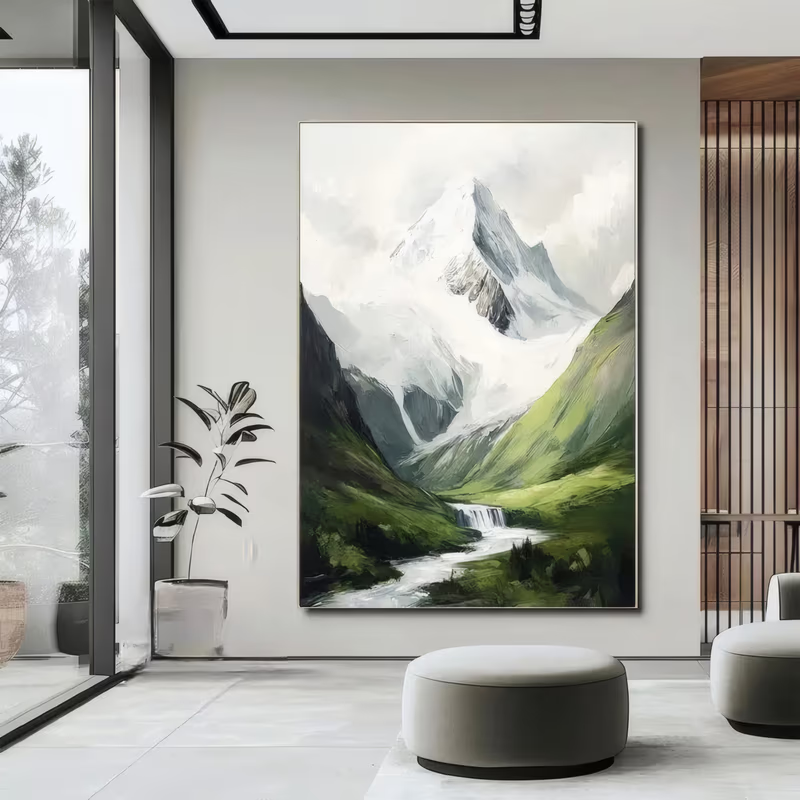
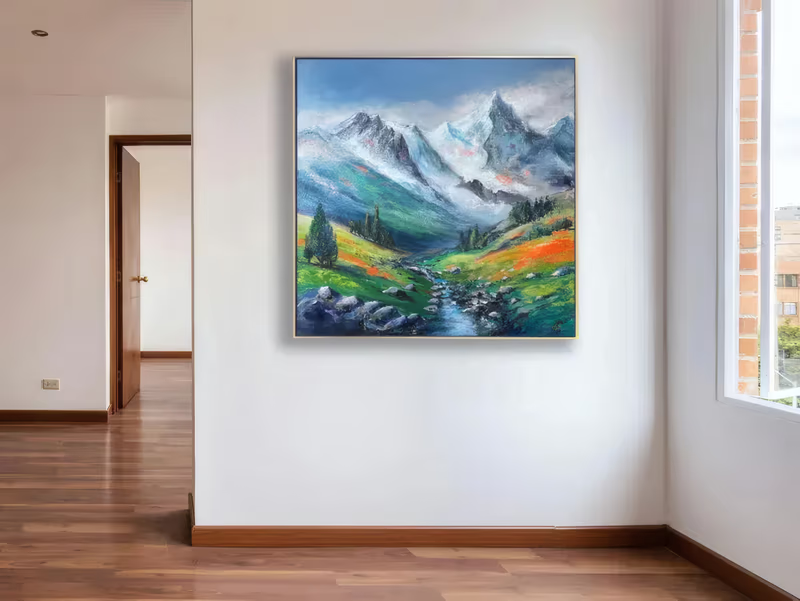
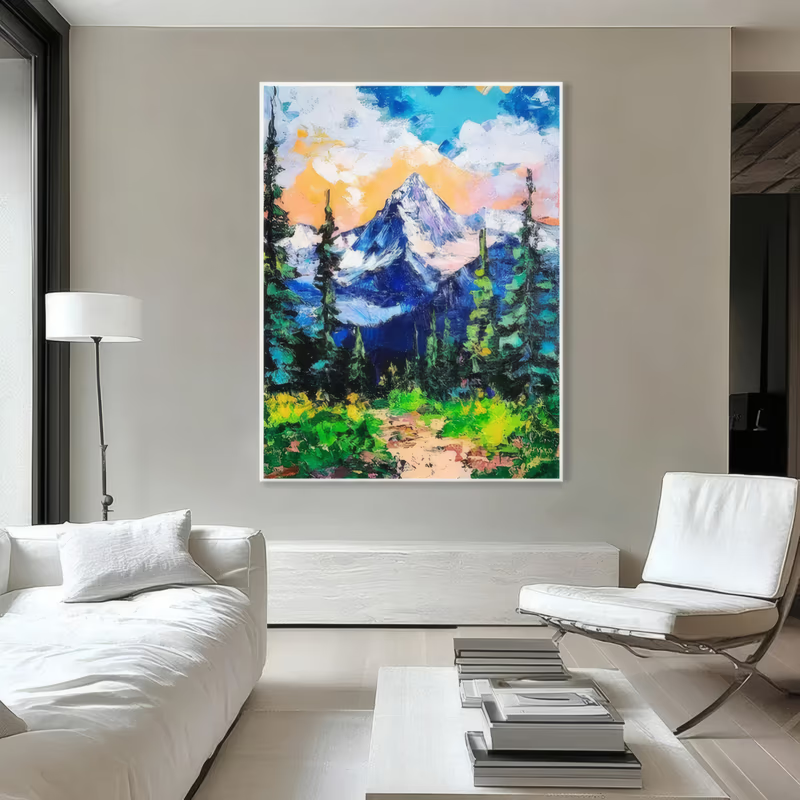
| Mountain ranges and snow peaks | Stable, grand, clear-headed | Studies, boardrooms, living rooms, ski and alpine hotels |
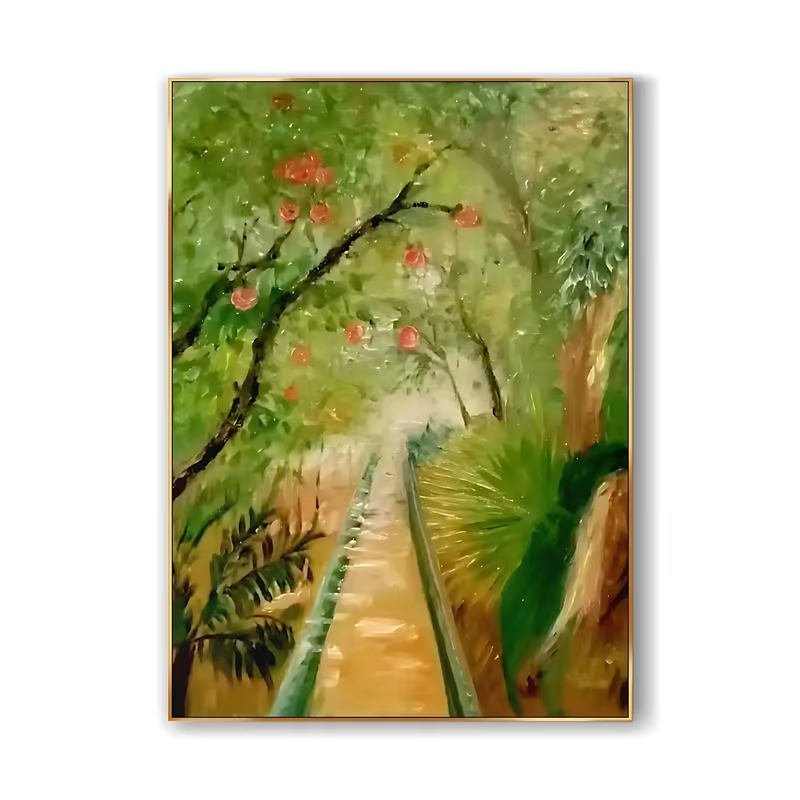
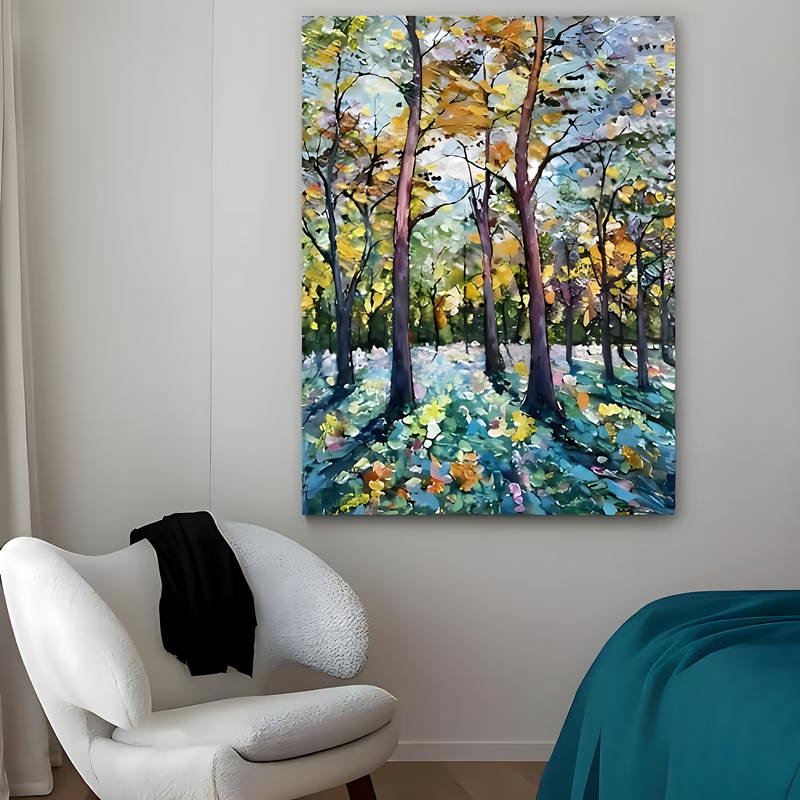
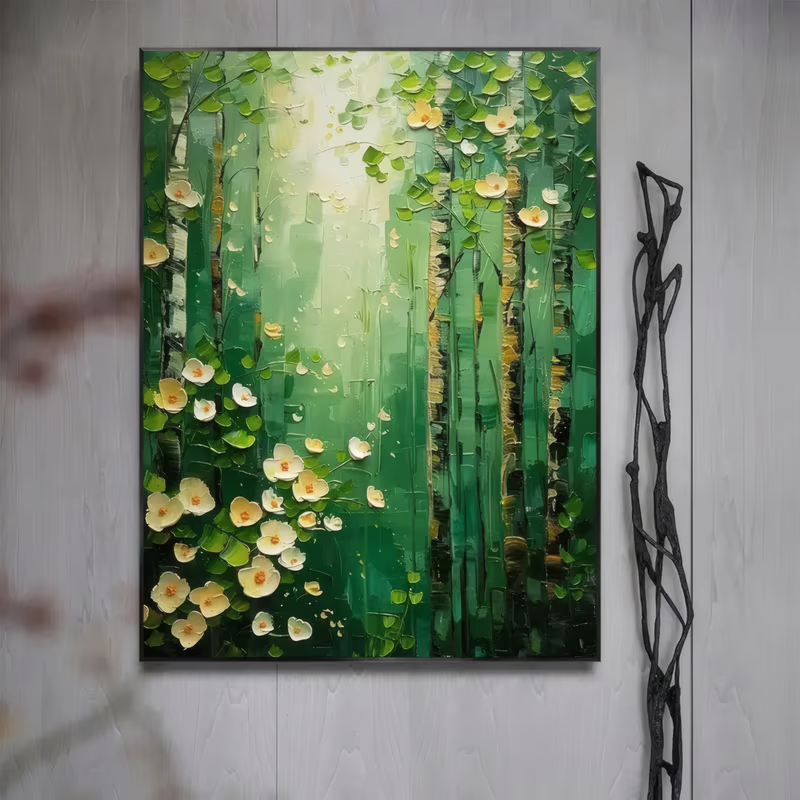
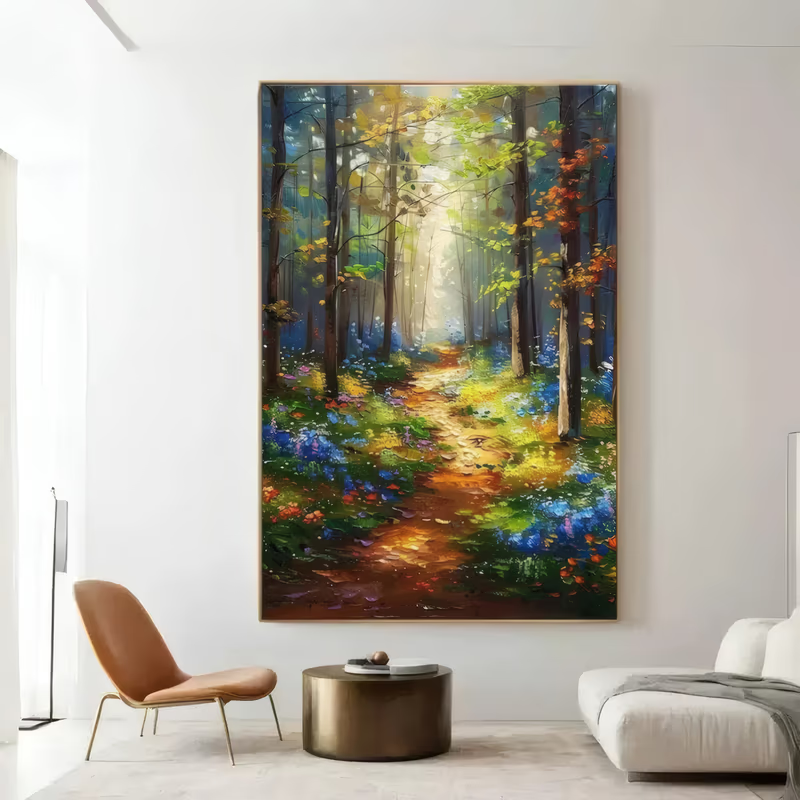
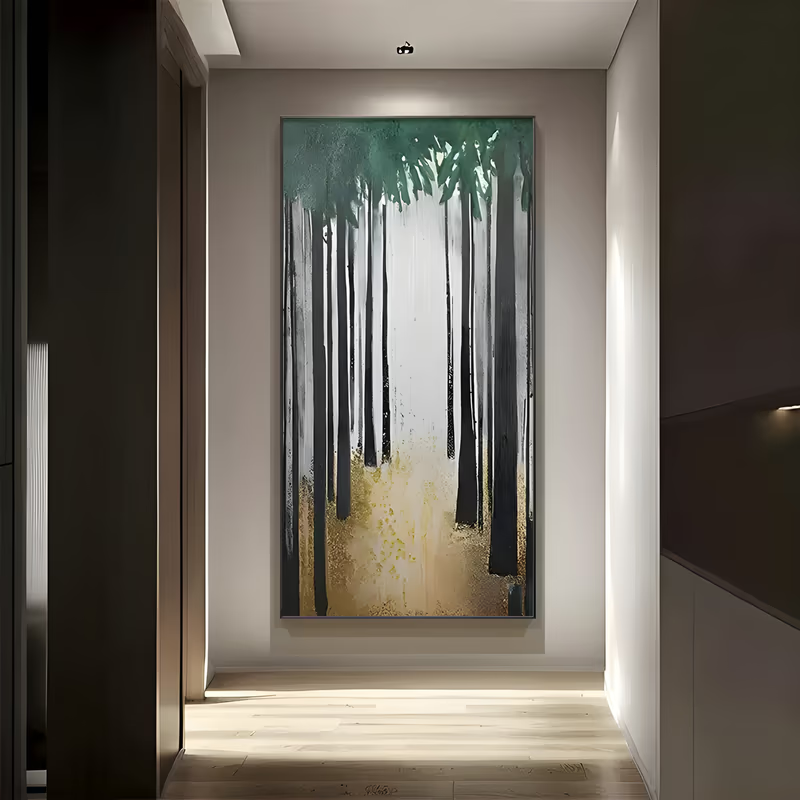
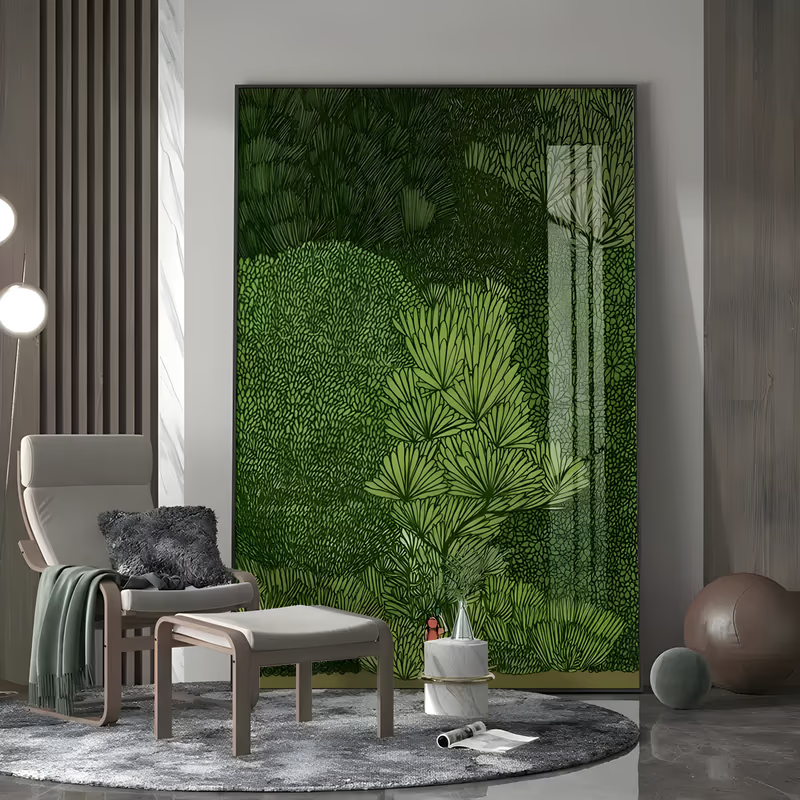
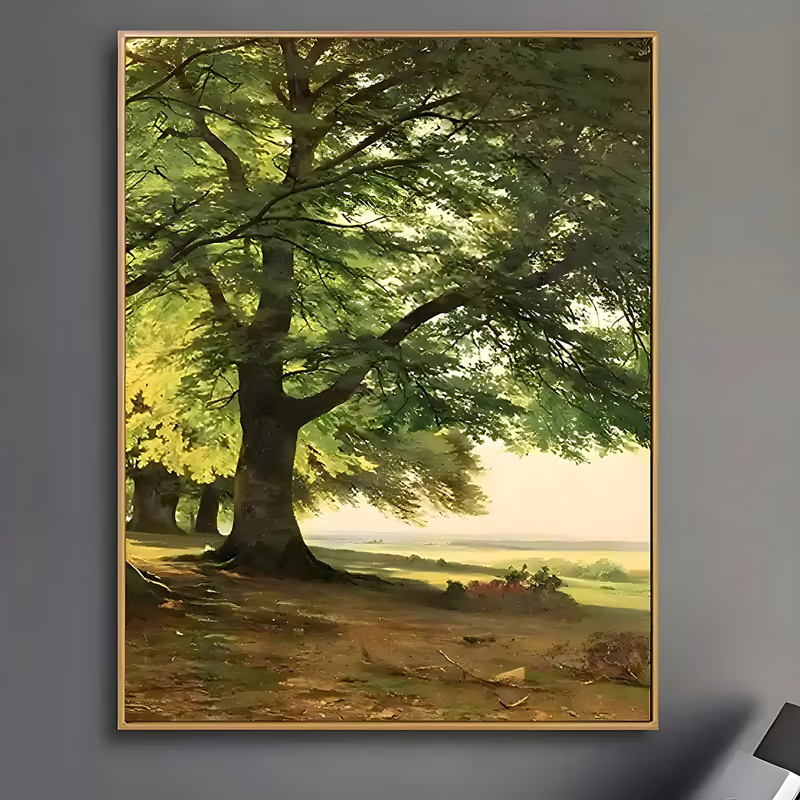
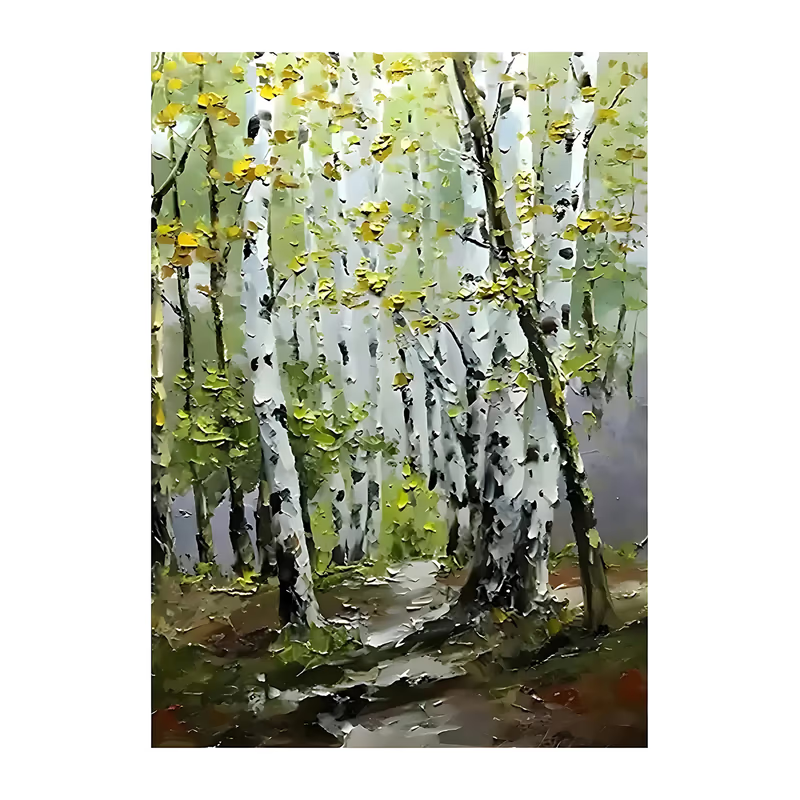
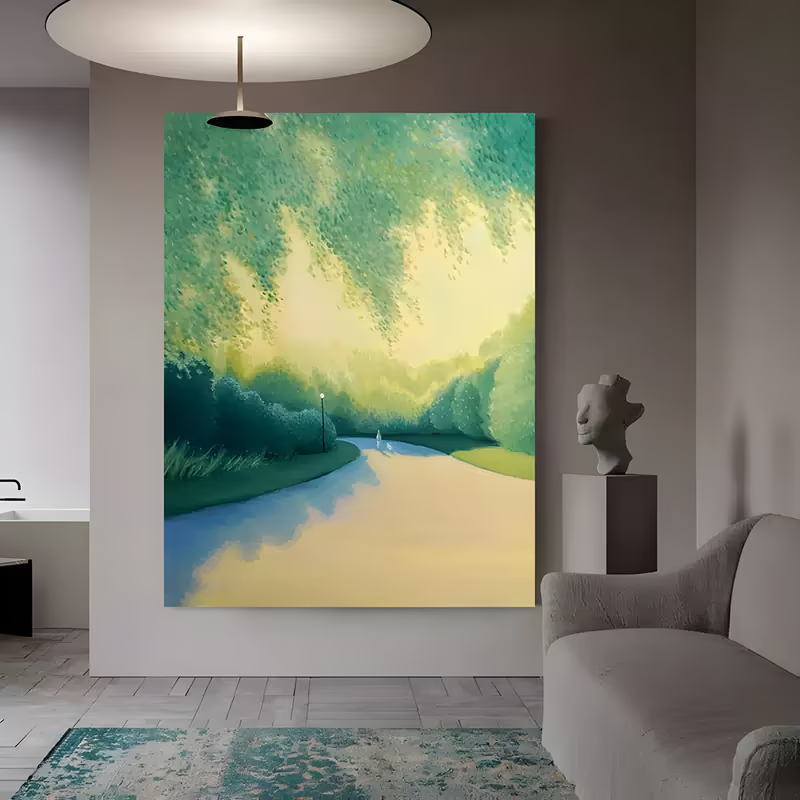
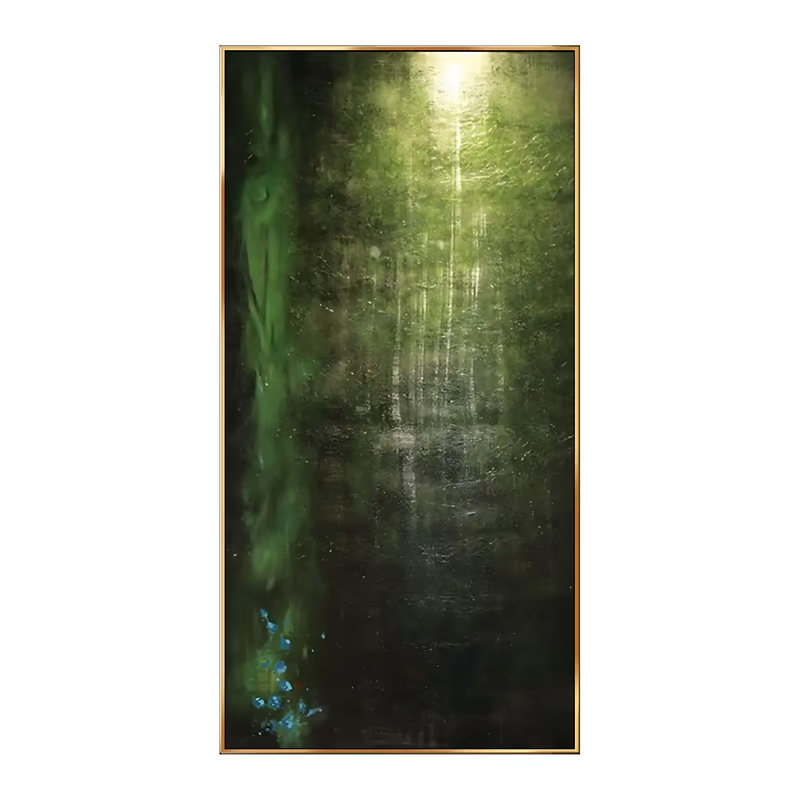
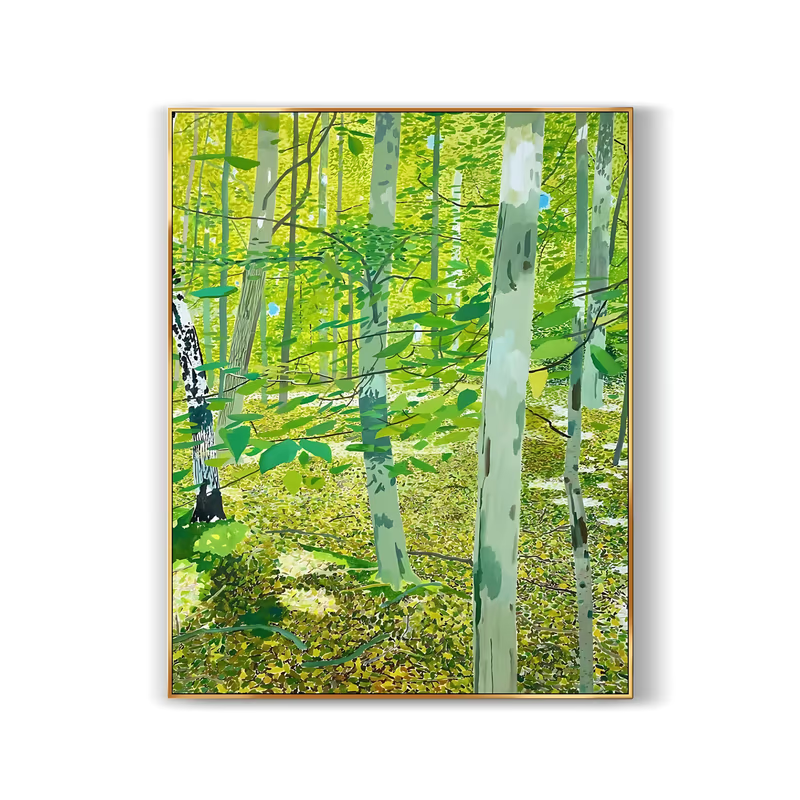
| Forests, trees and woodland paths | Sheltered and quiet; a path invites the eye in | Bedrooms, reading corners, corridors, spas |
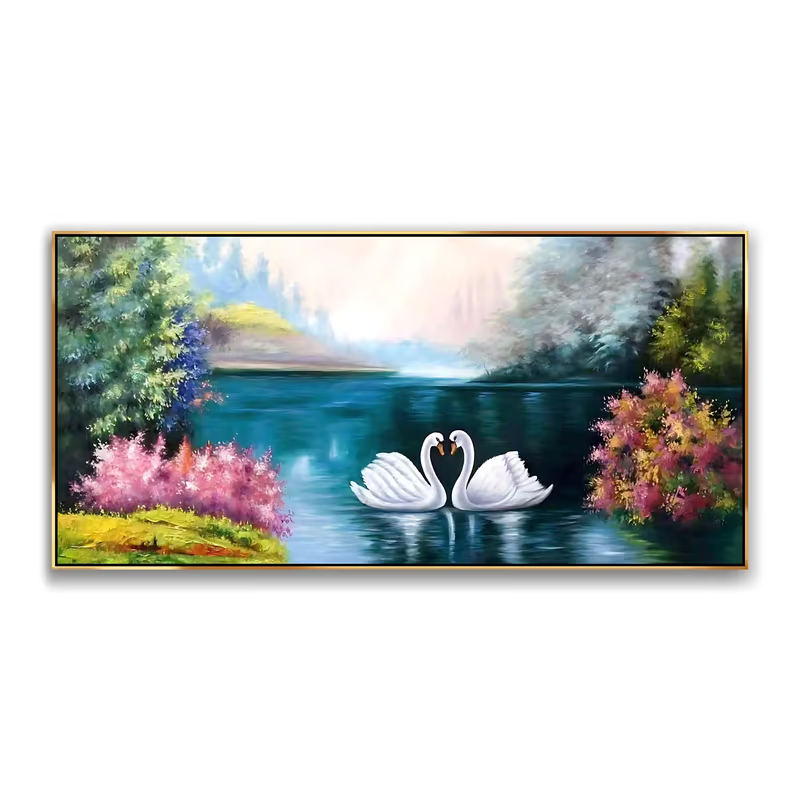
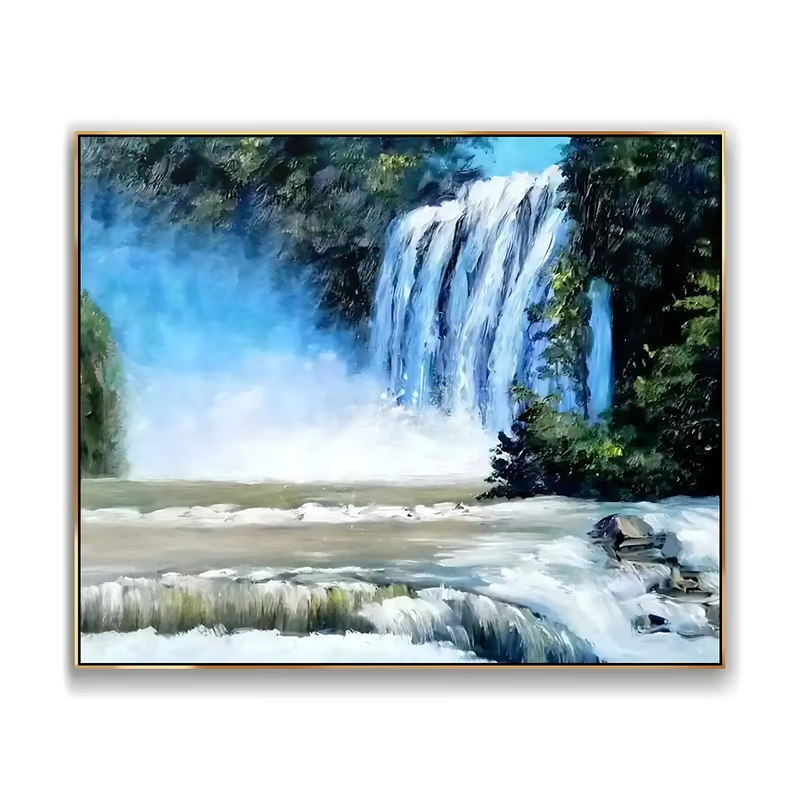
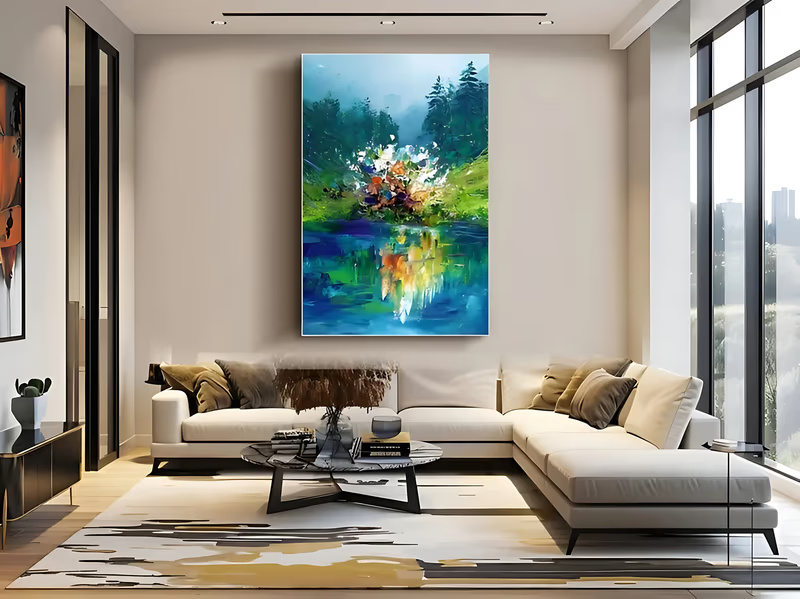
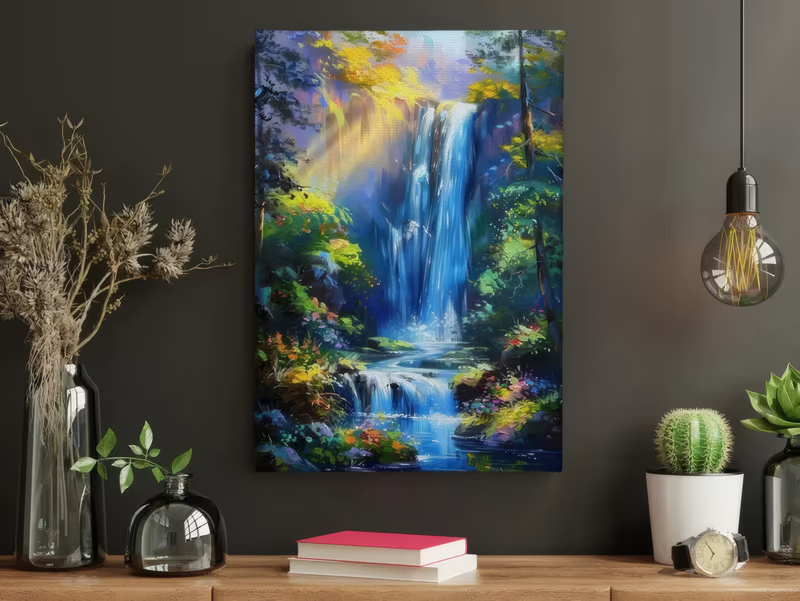
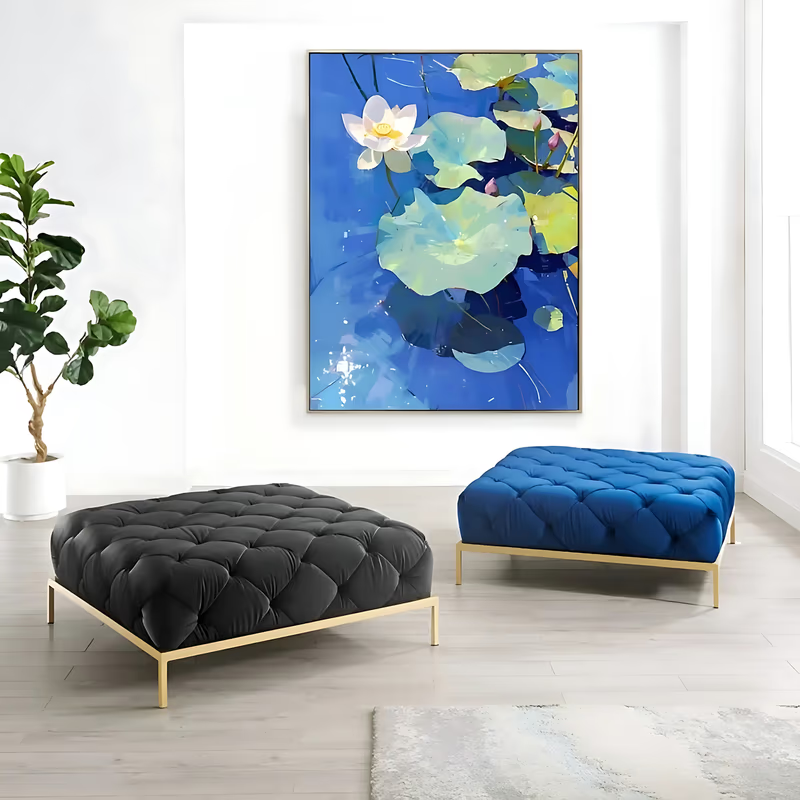
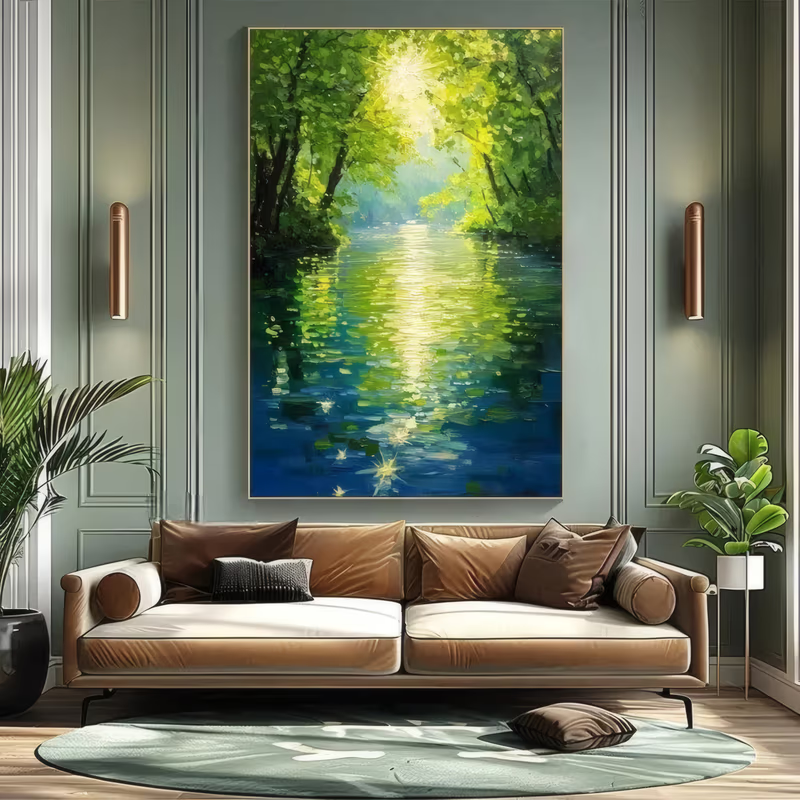
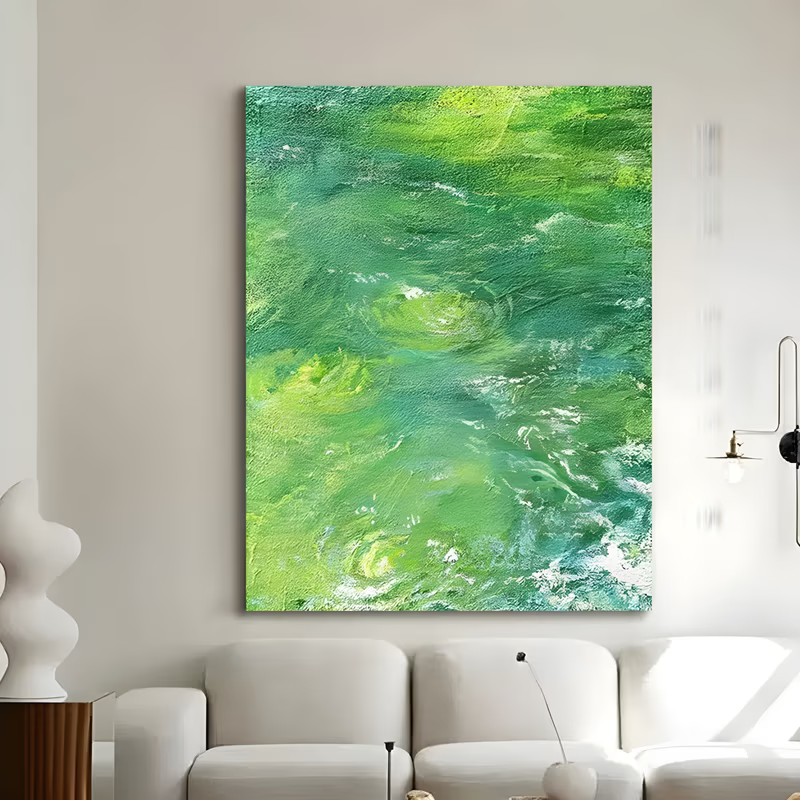
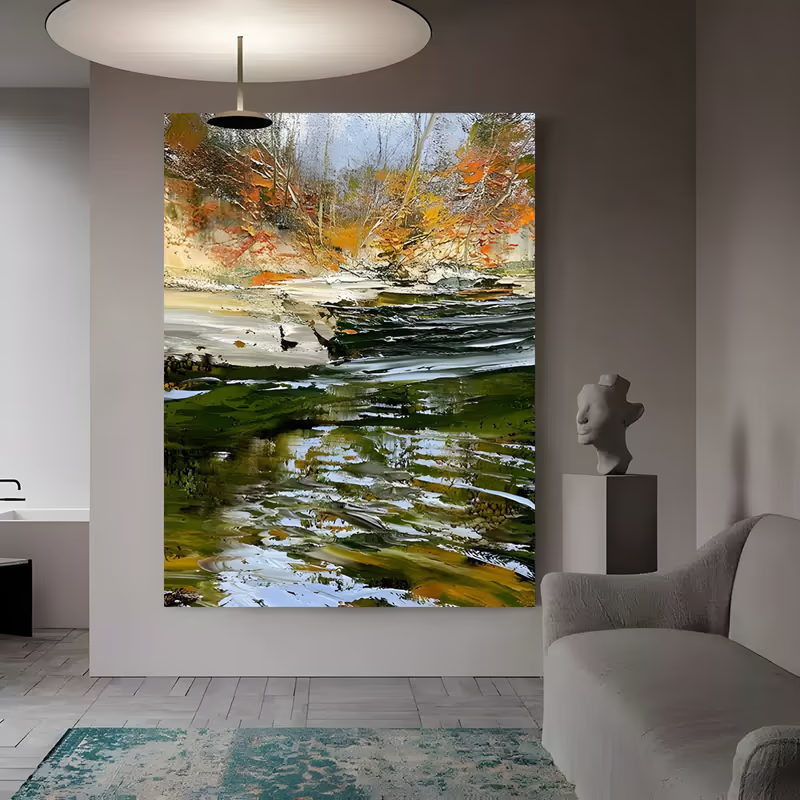
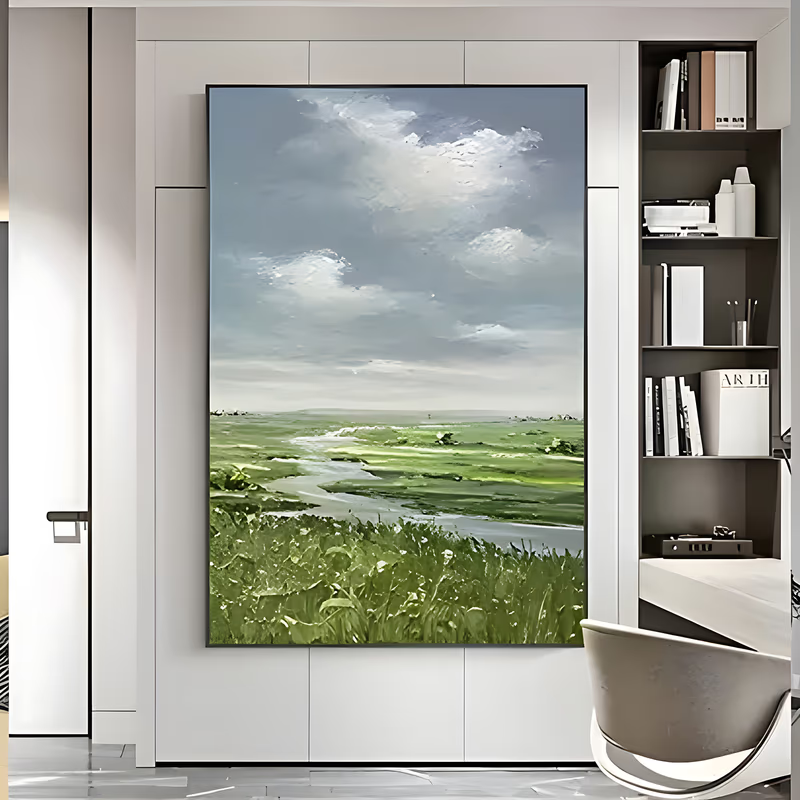
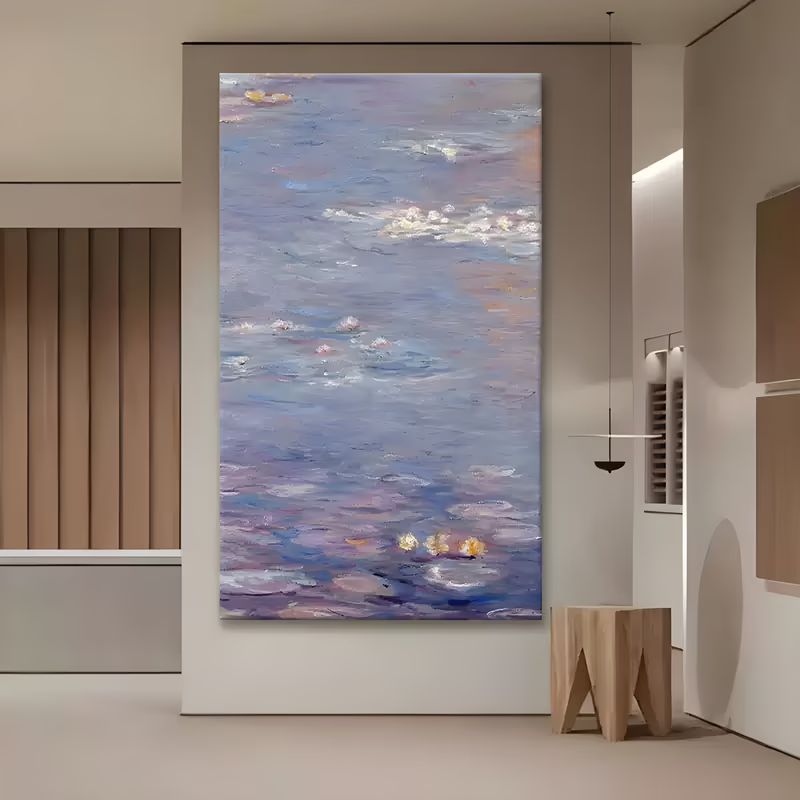
| Lakes, rivers and waterfalls | Calm, reflective, refreshing | Bedrooms, bathrooms, treatment rooms, guest suites |
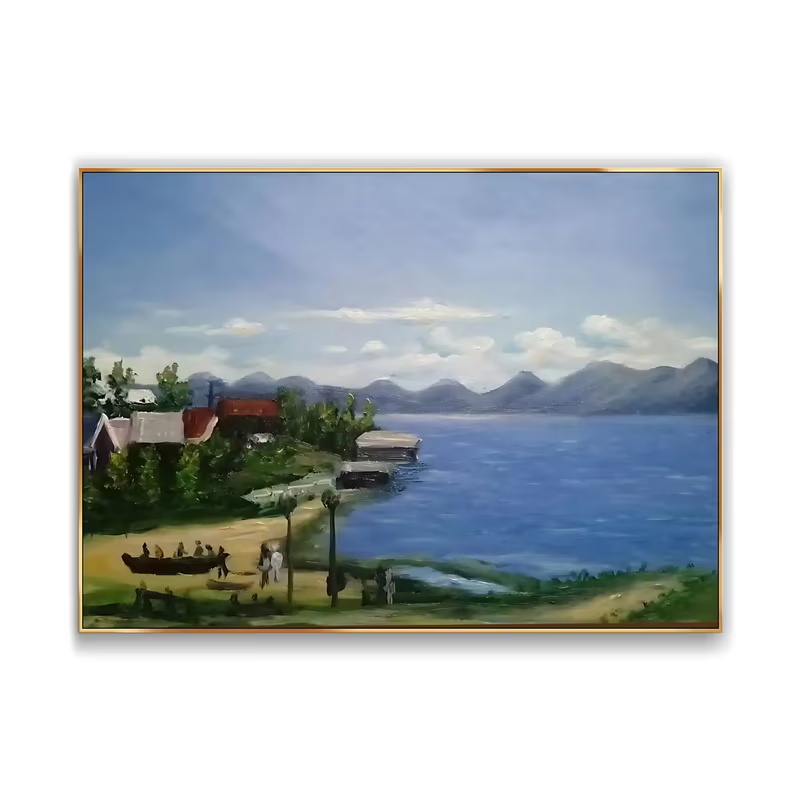
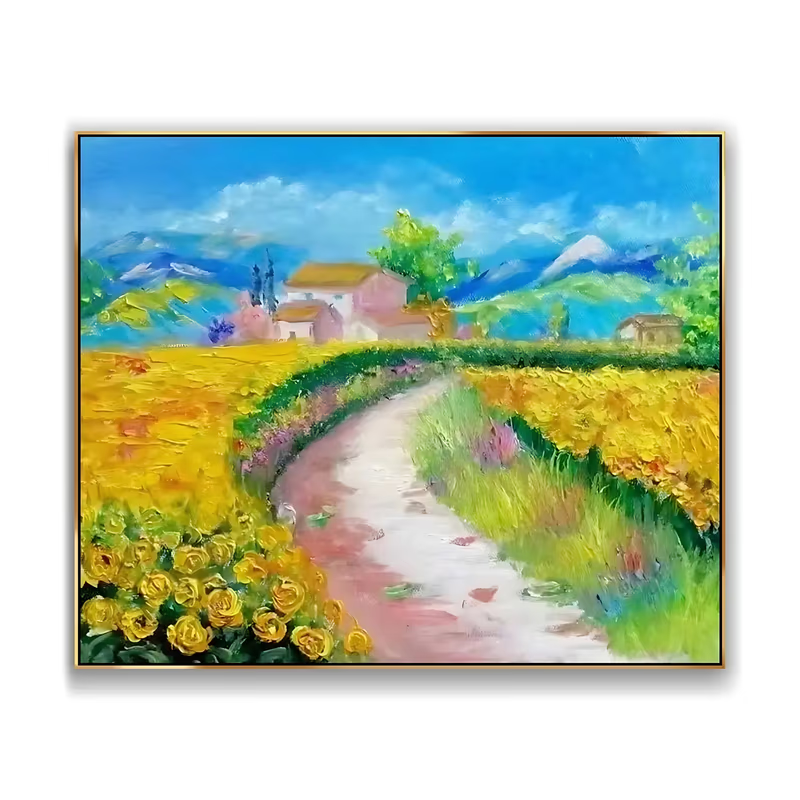
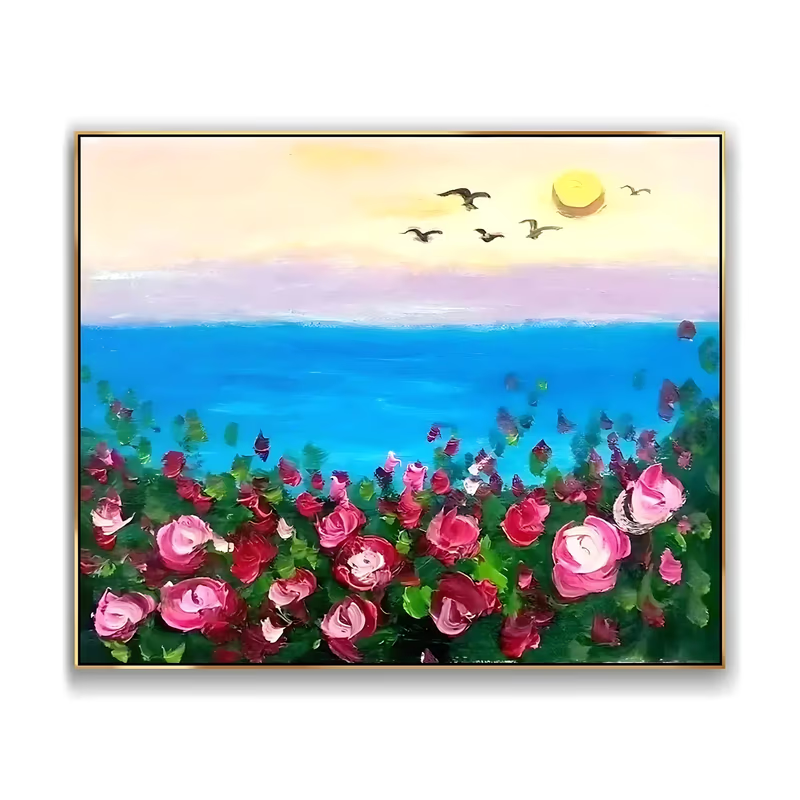
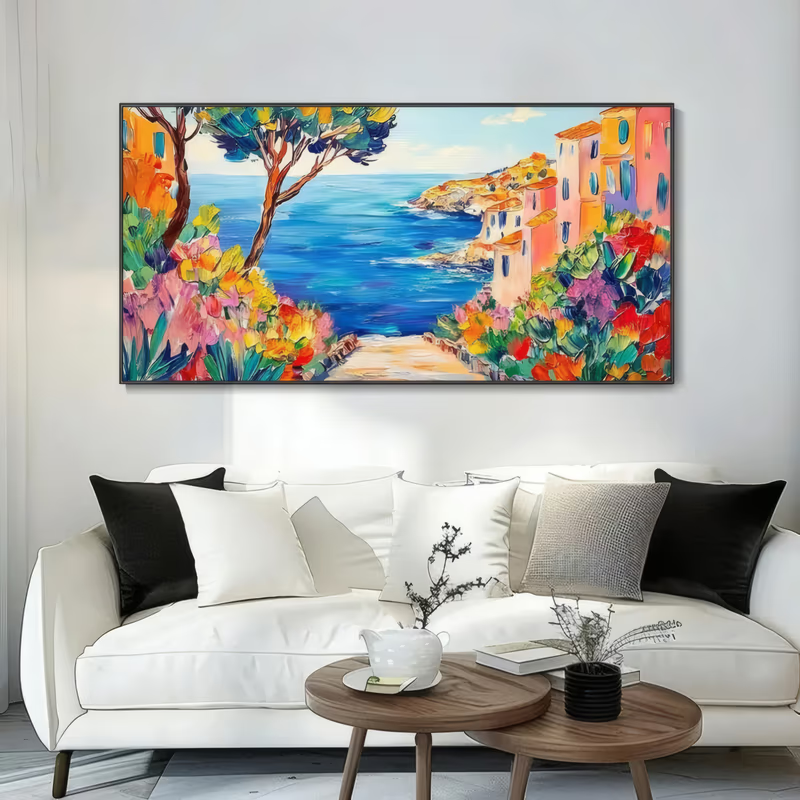
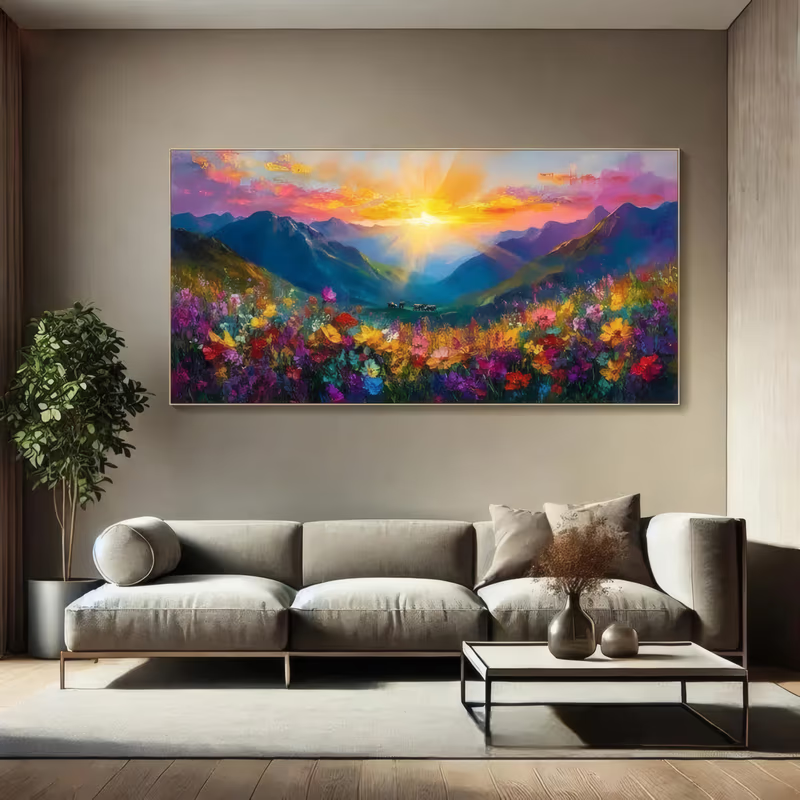
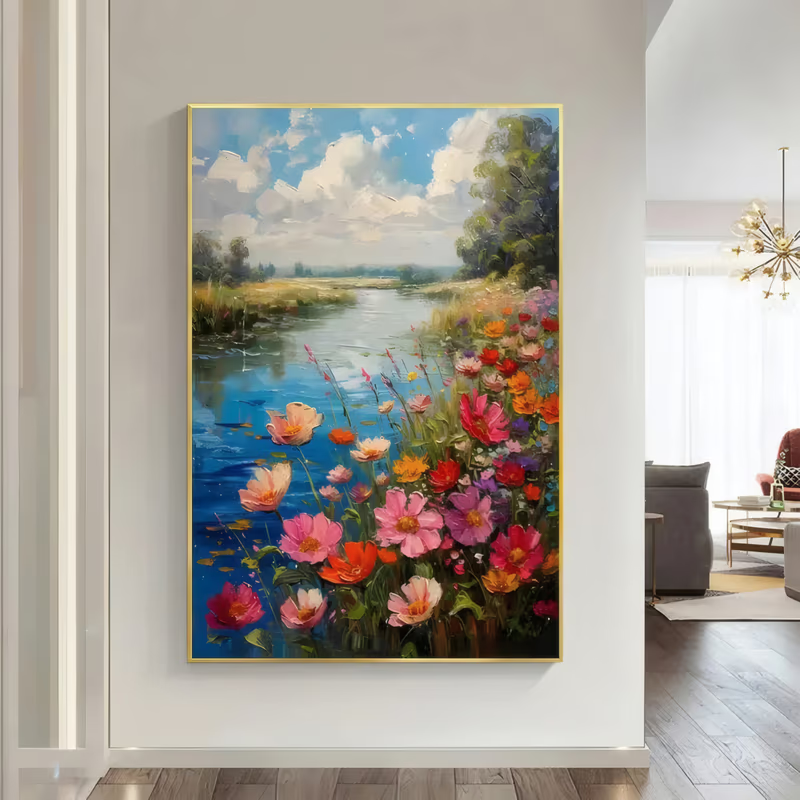
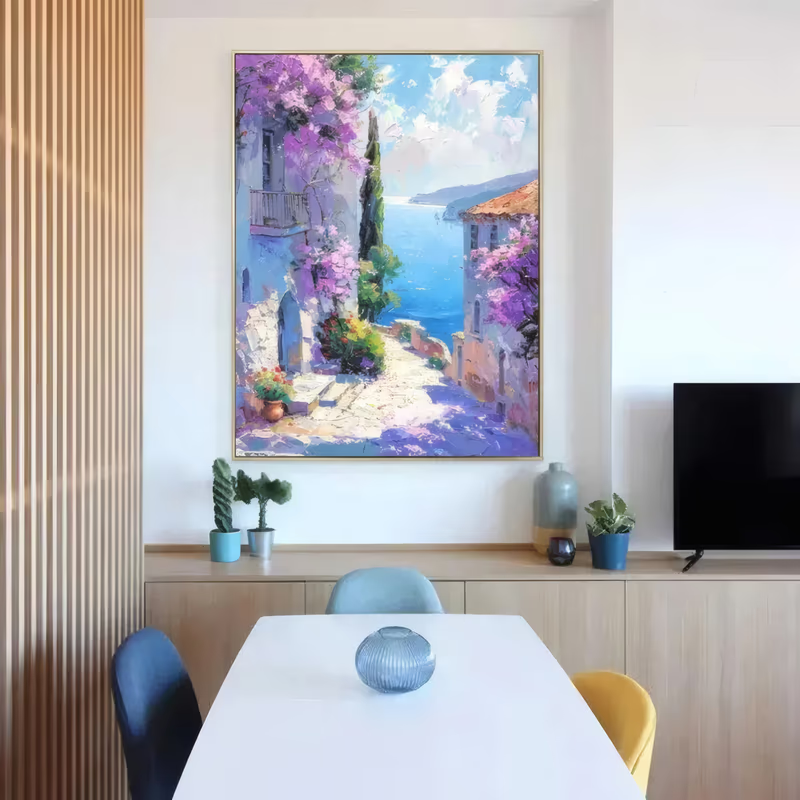
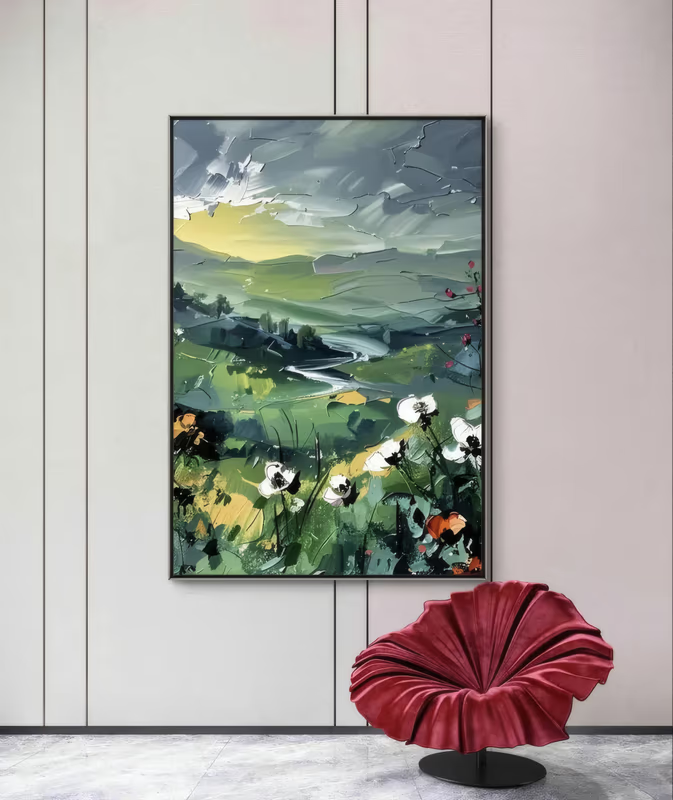
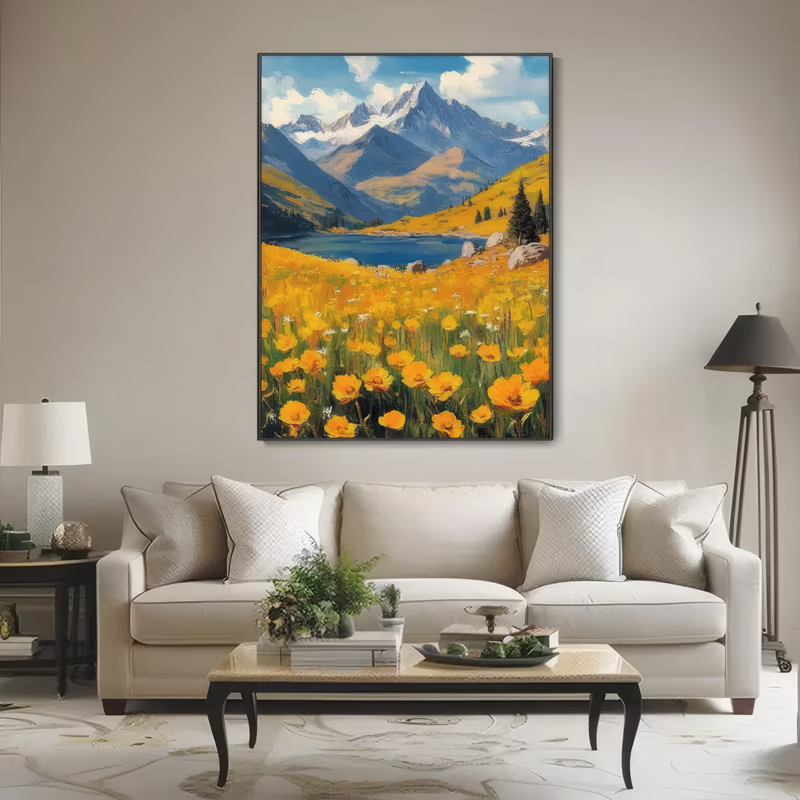
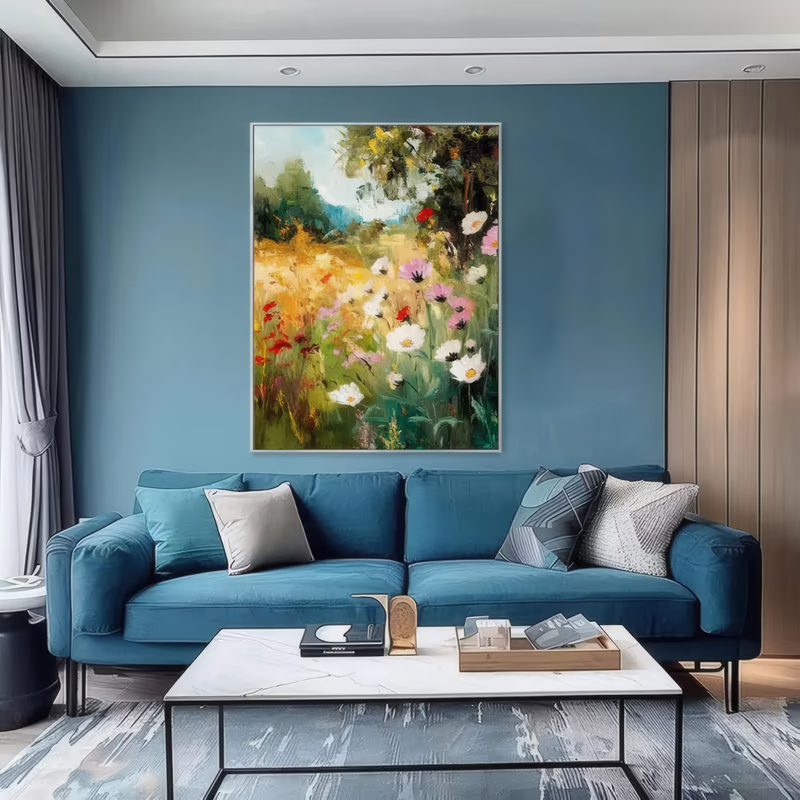
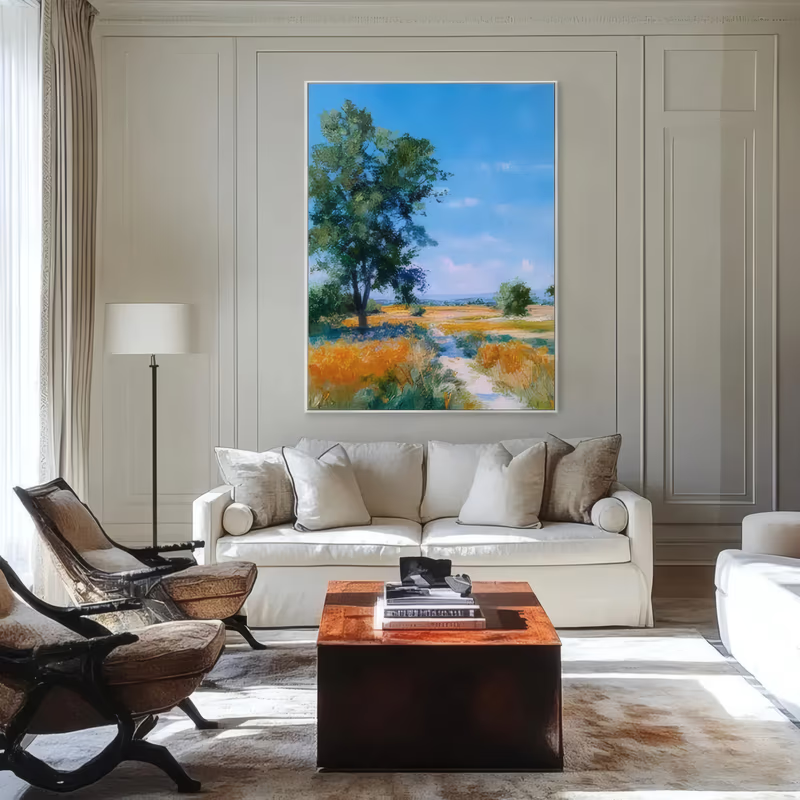
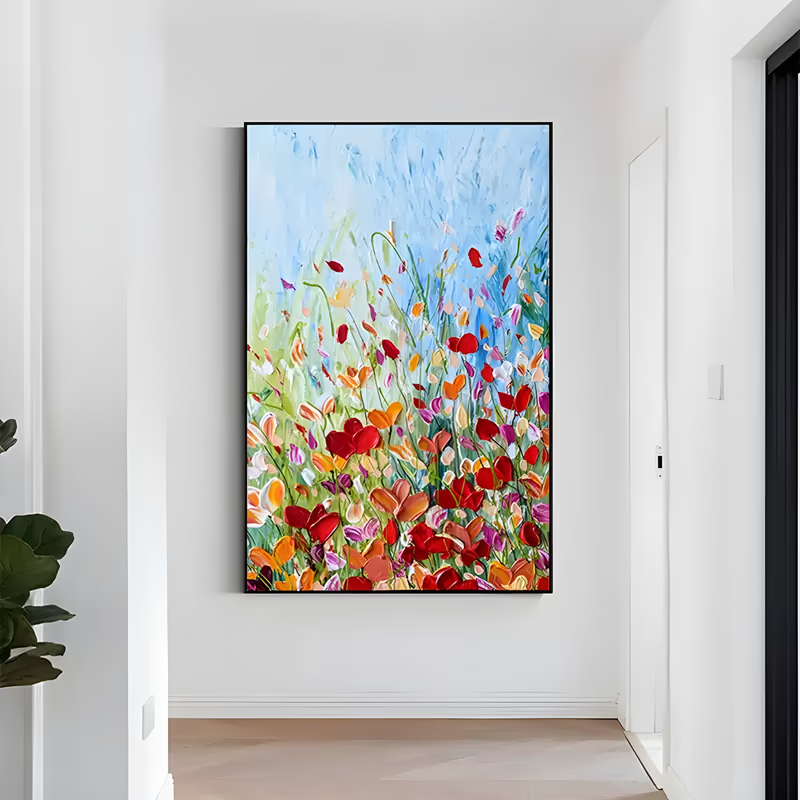
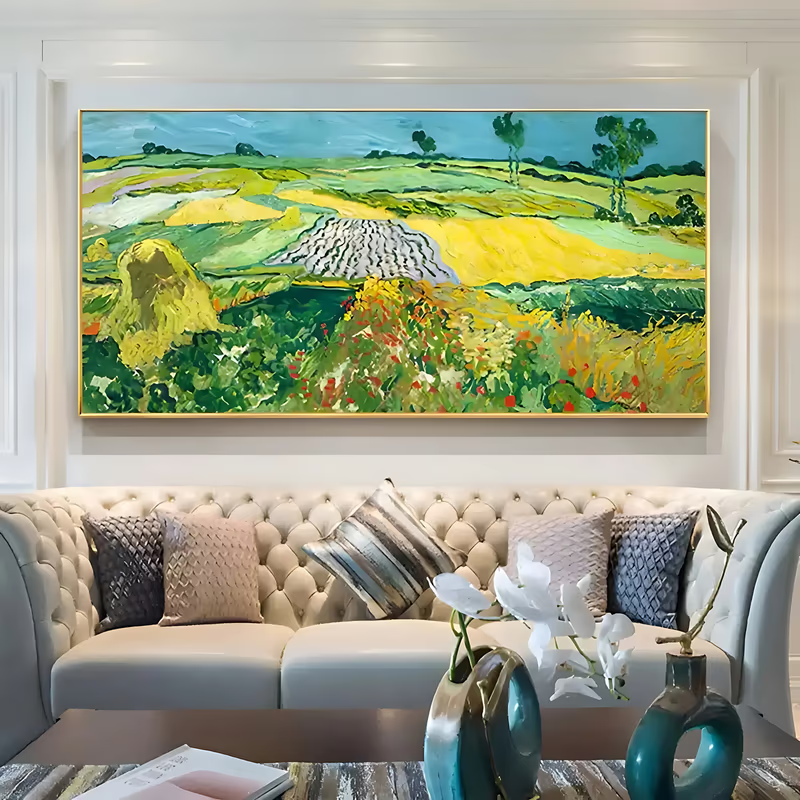
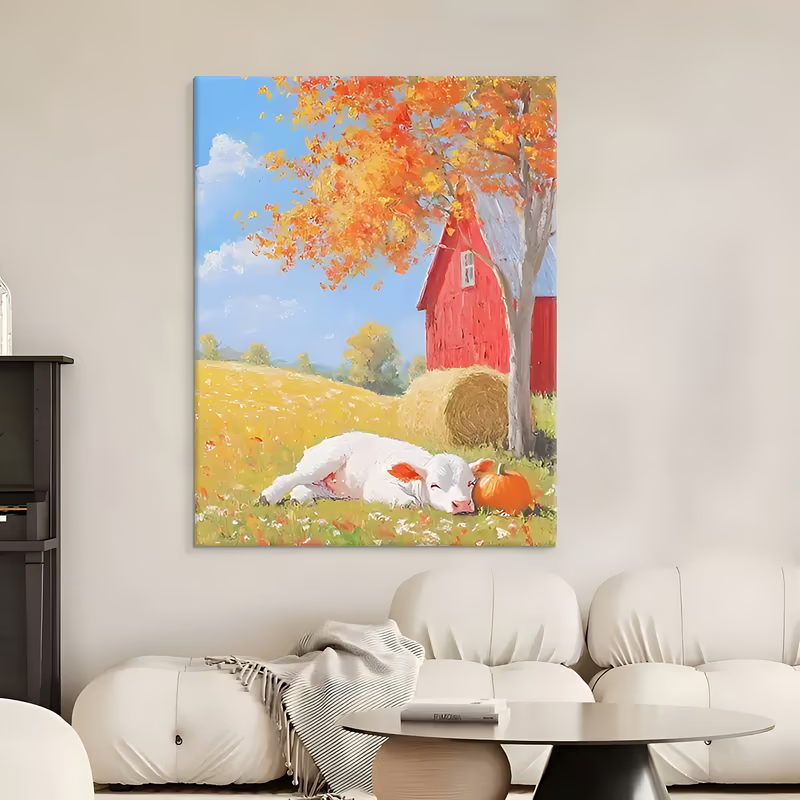
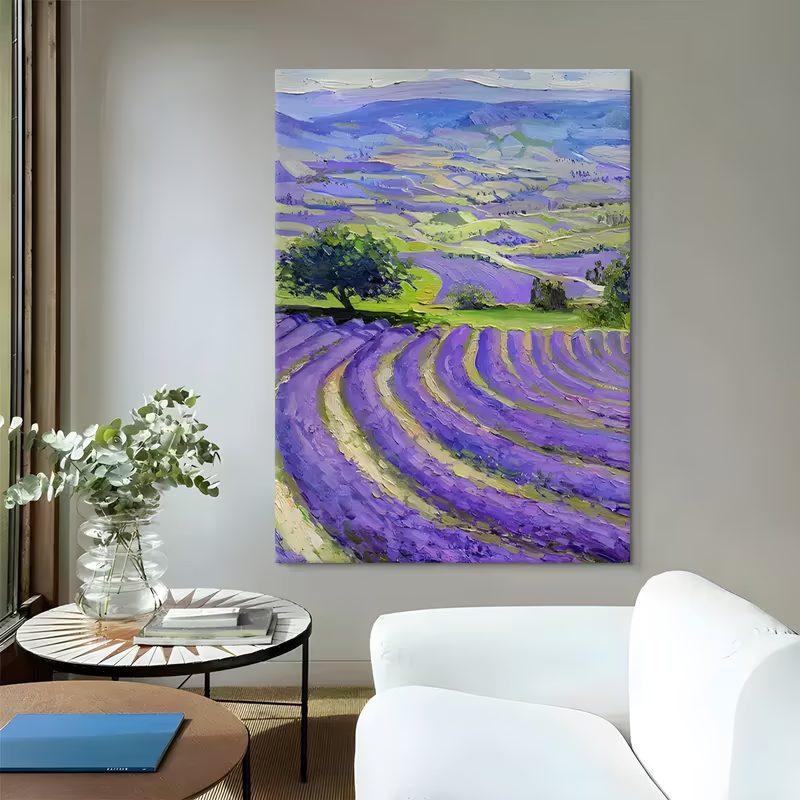
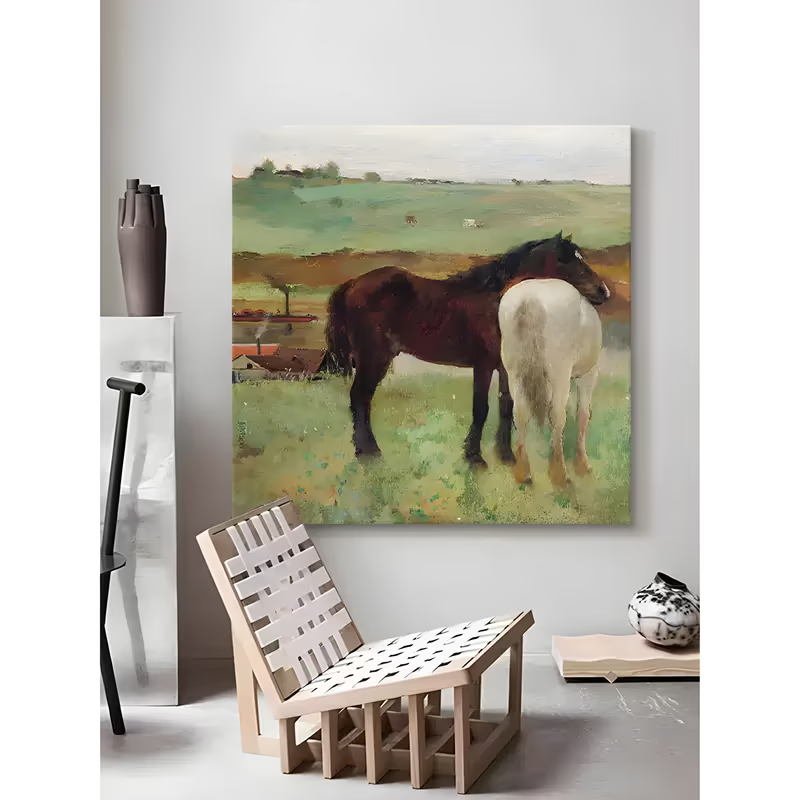
| Meadows, harvest fields and villages | Warm, sunny, lived-in | Kitchens, dining rooms, family rooms, country hotels |
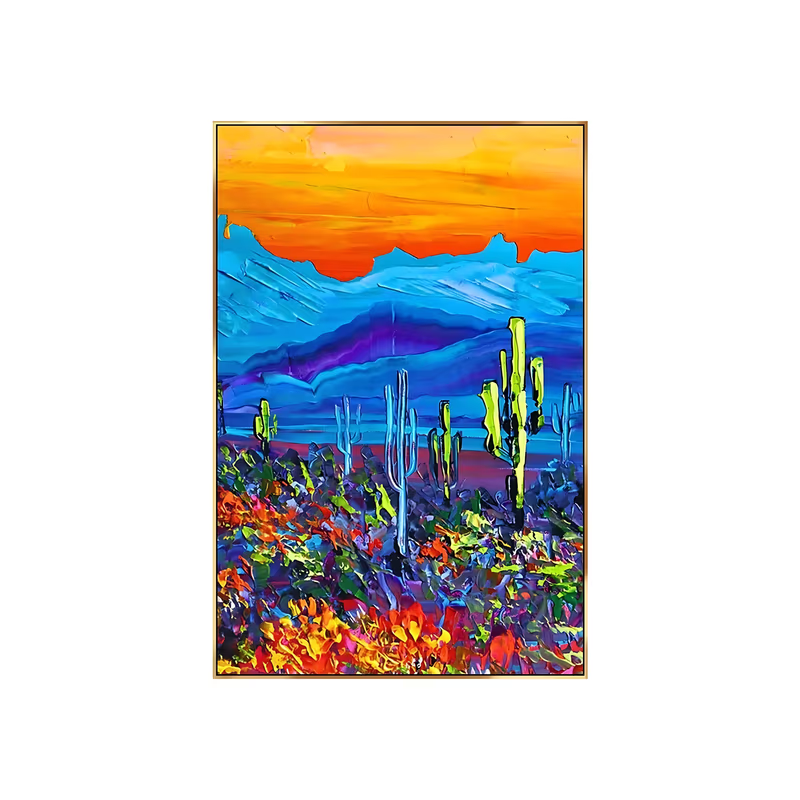
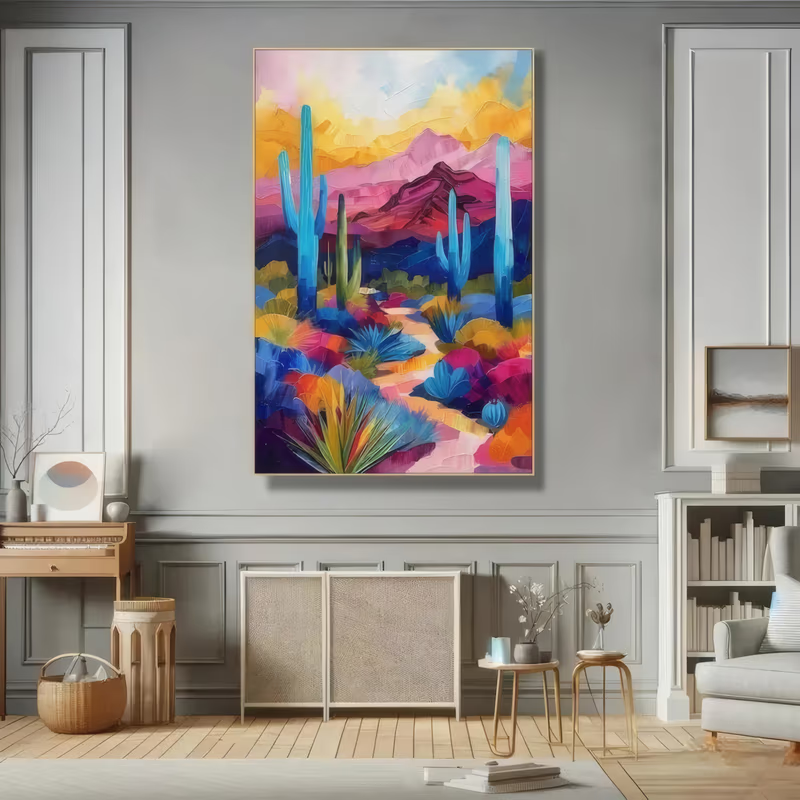
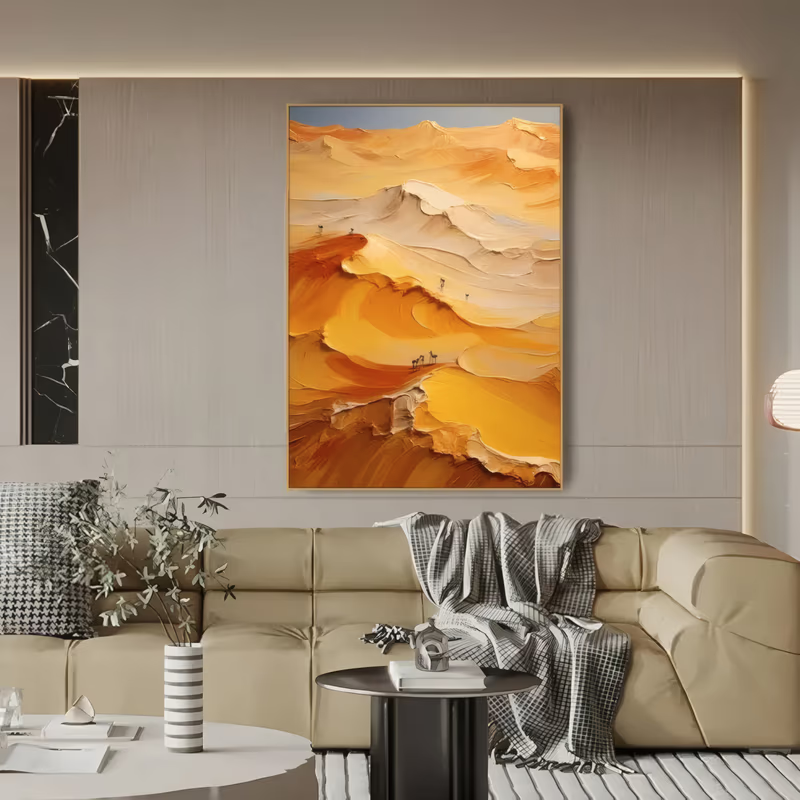
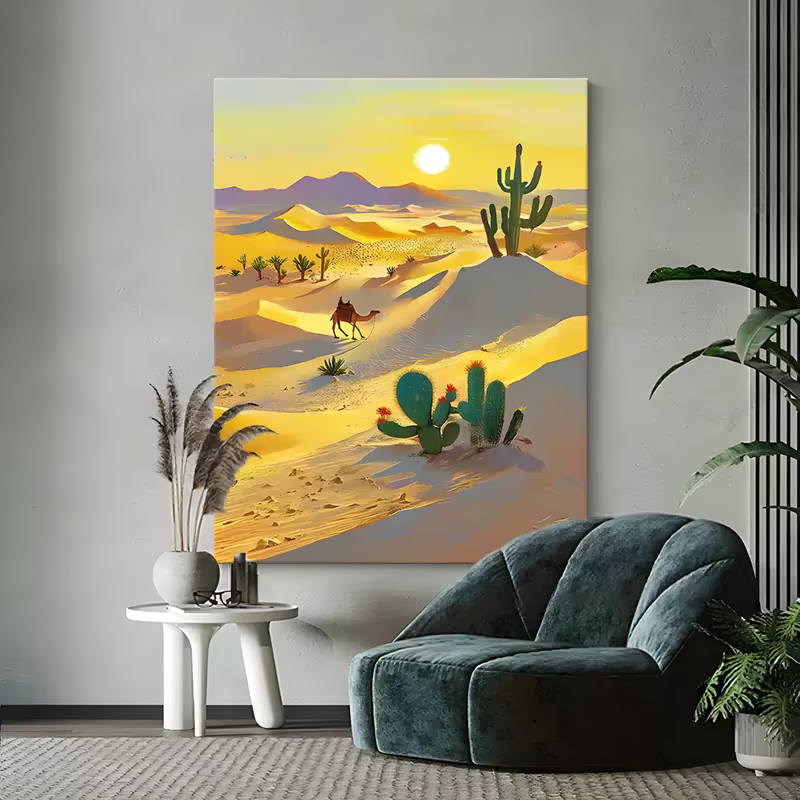
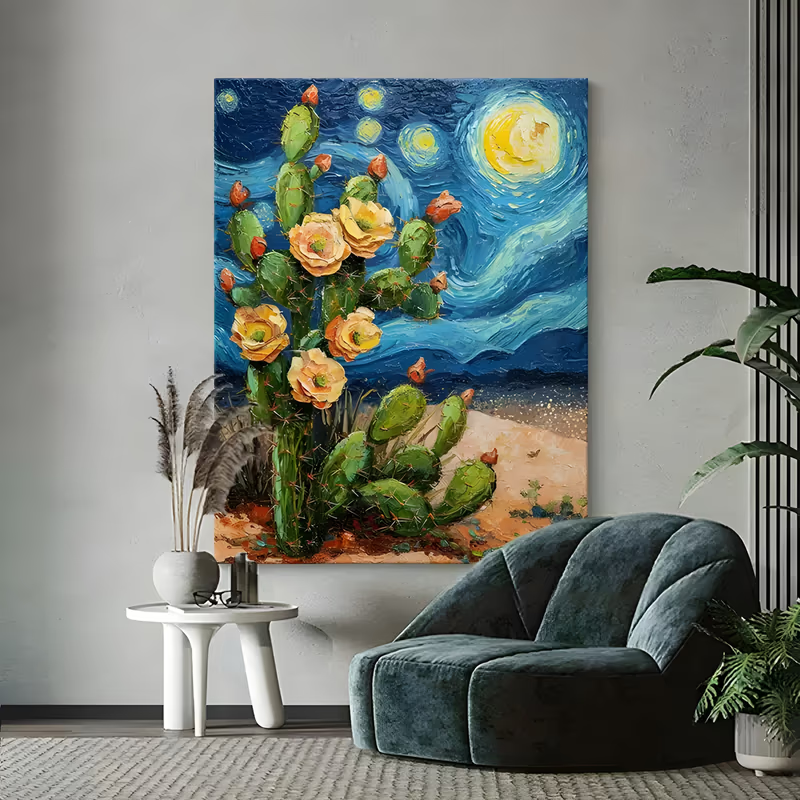
| Deserts and dunes | Warm, spare, sculptural | Minimal interiors, Gulf and desert resorts, lounges |
Feng shui tradition has its own take on the first row: a mountain painting on the wall behind a desk is said to give the person seated there support, while water in a picture belongs in front of you. Even without the tradition, a solid image behind a chair and an open one in the line of sight is sound composition. Browse peaceful landscapes, moody and dramatic ones, or warm, cosy ones.
What kinds of landscape paintings are there?
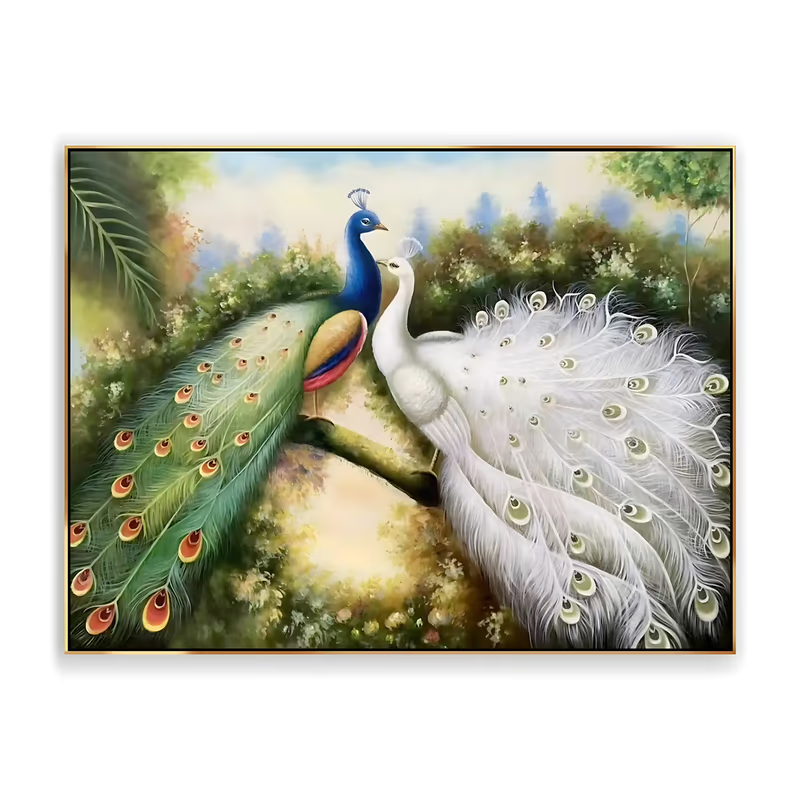
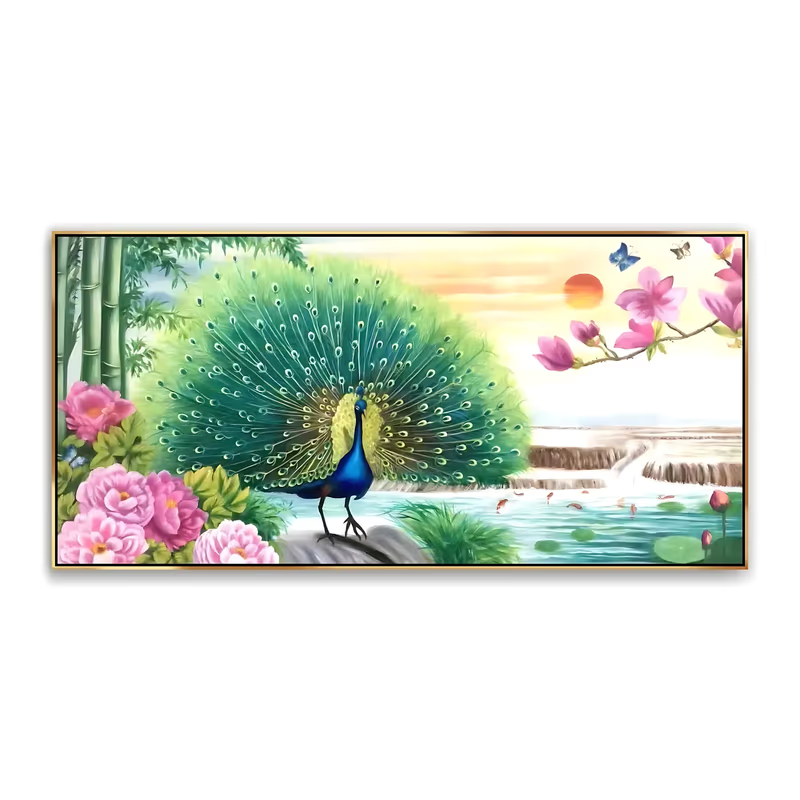
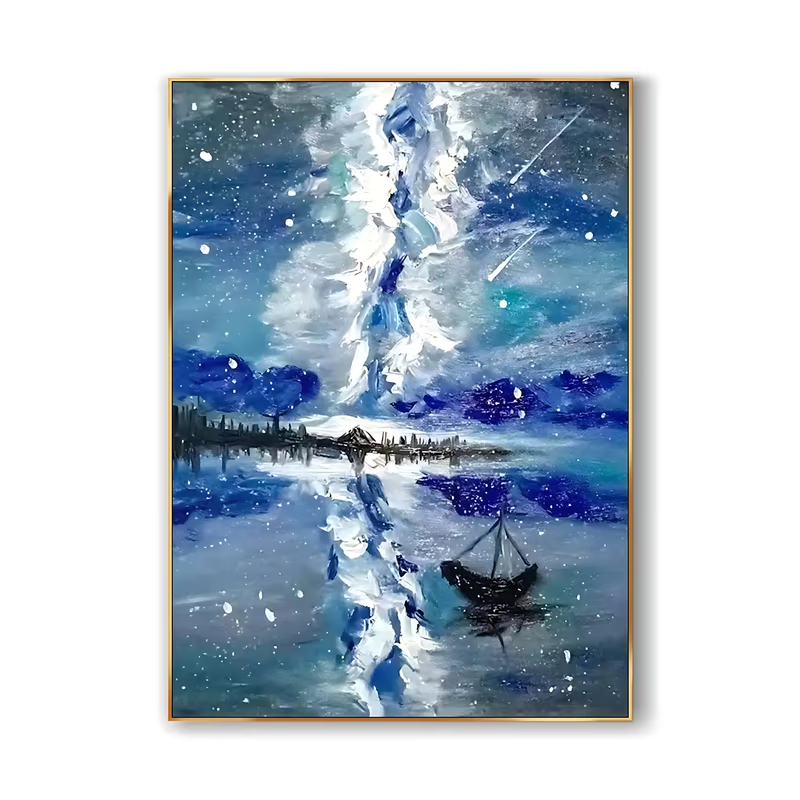
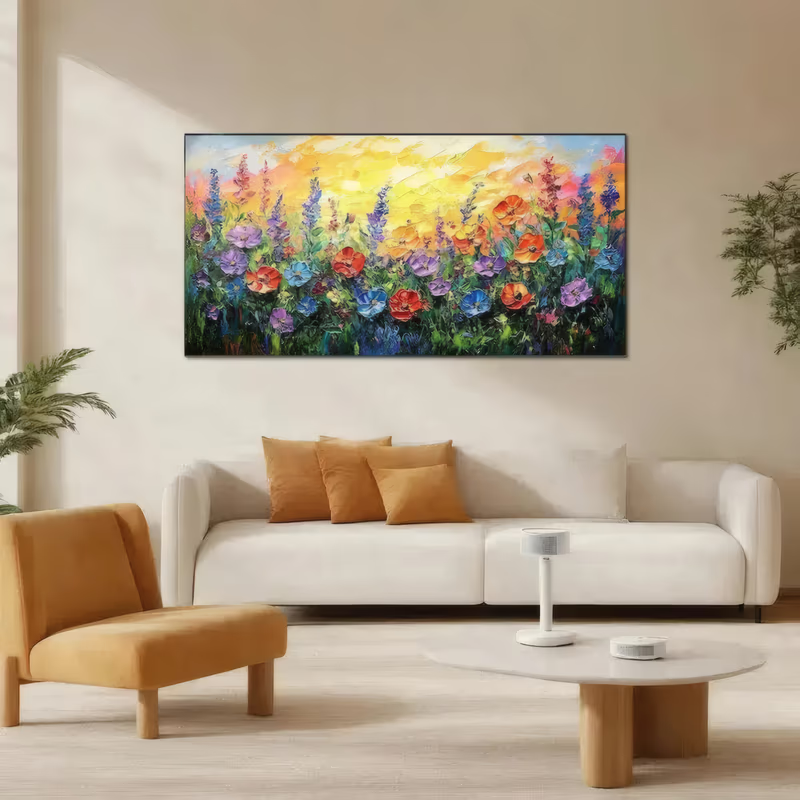
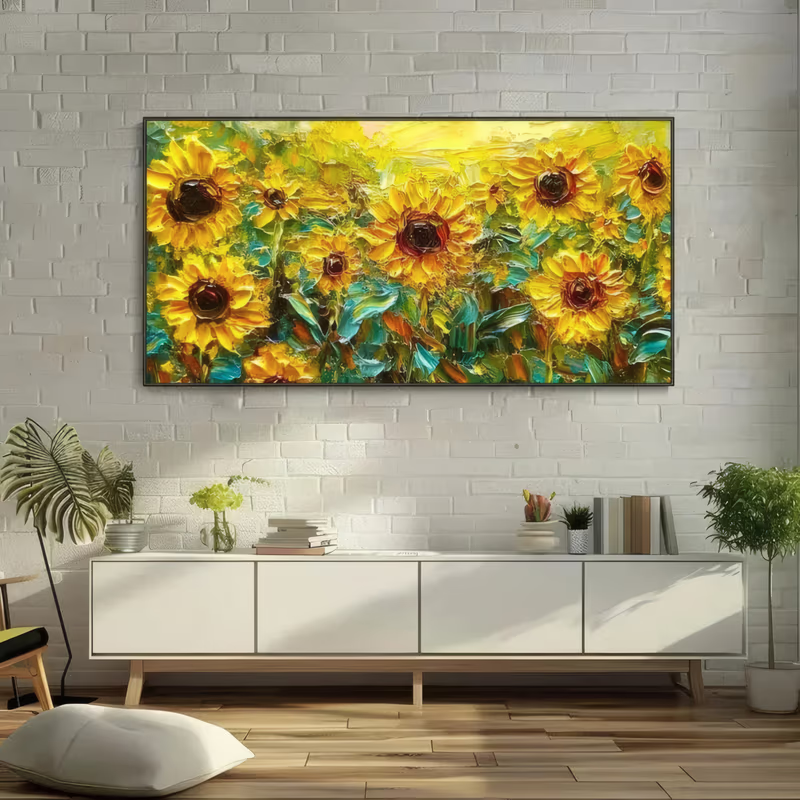
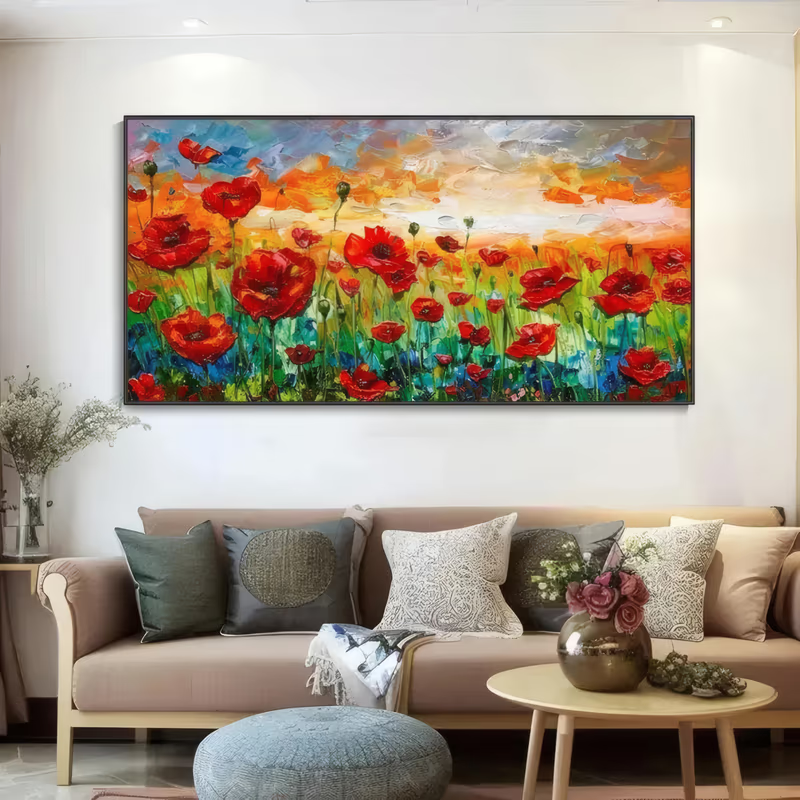
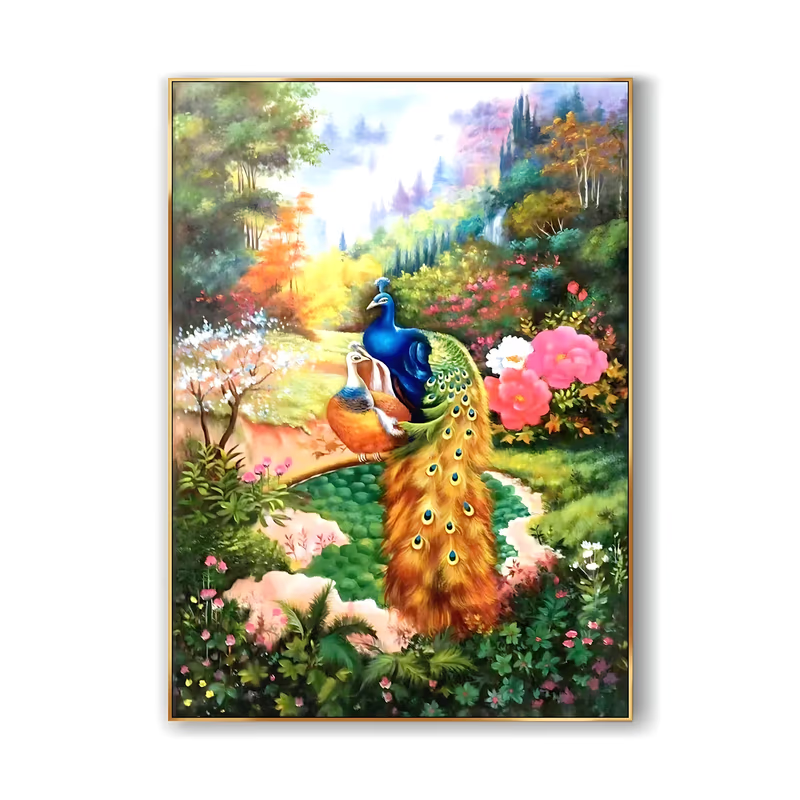
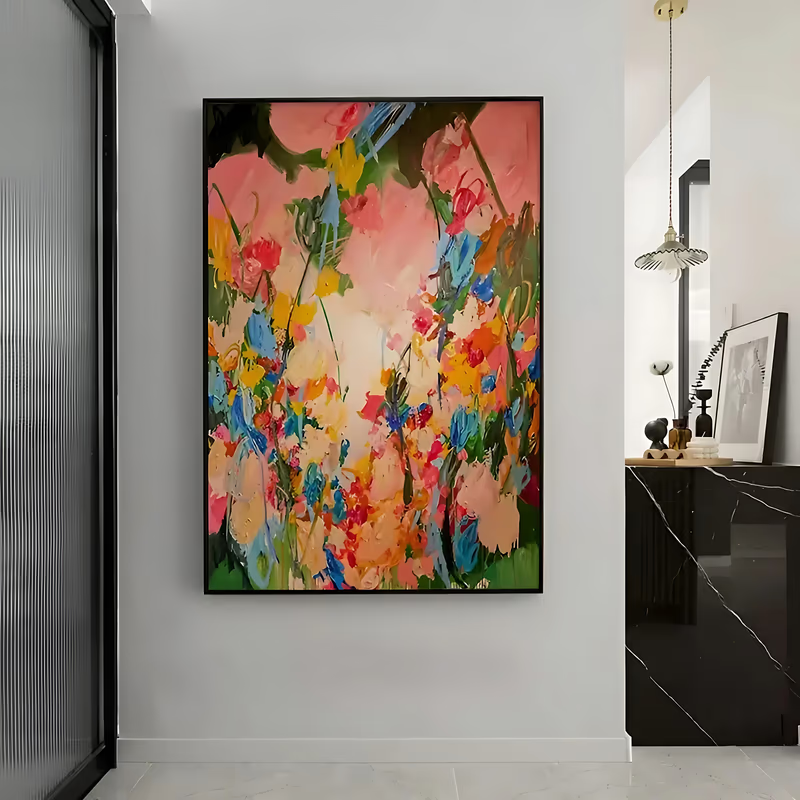
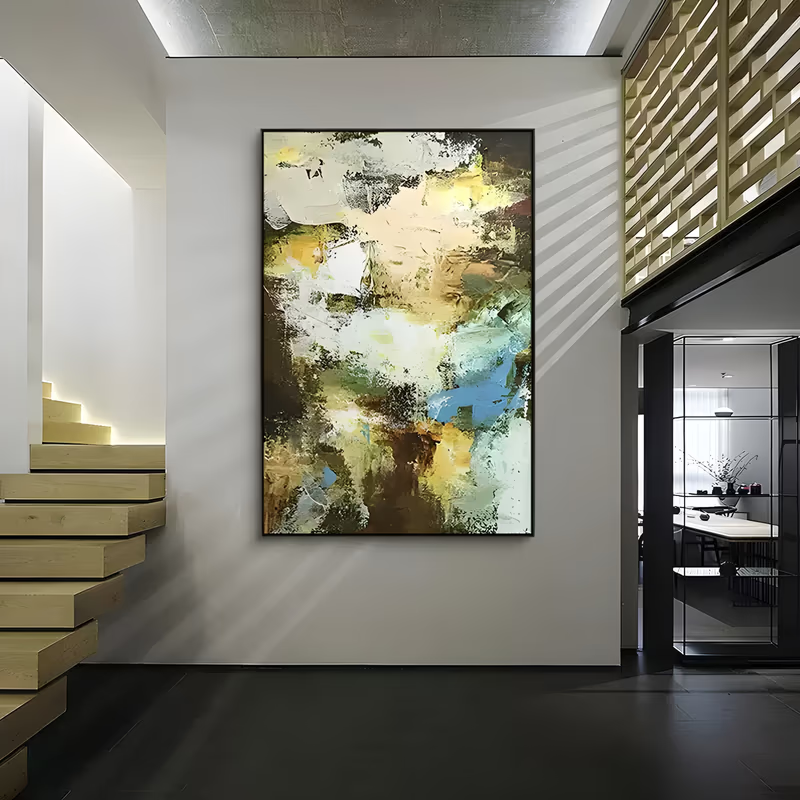
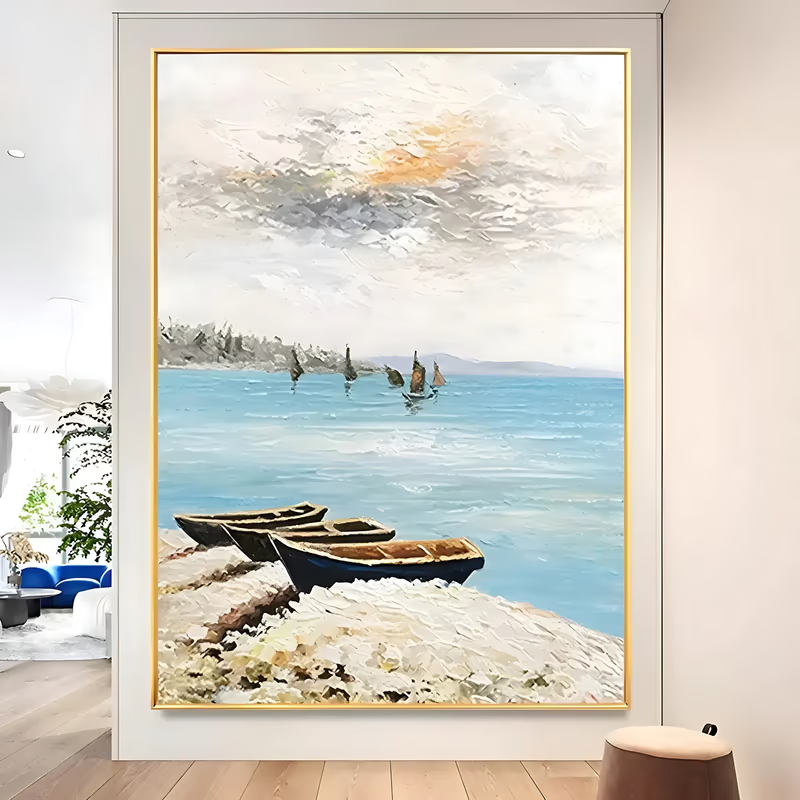
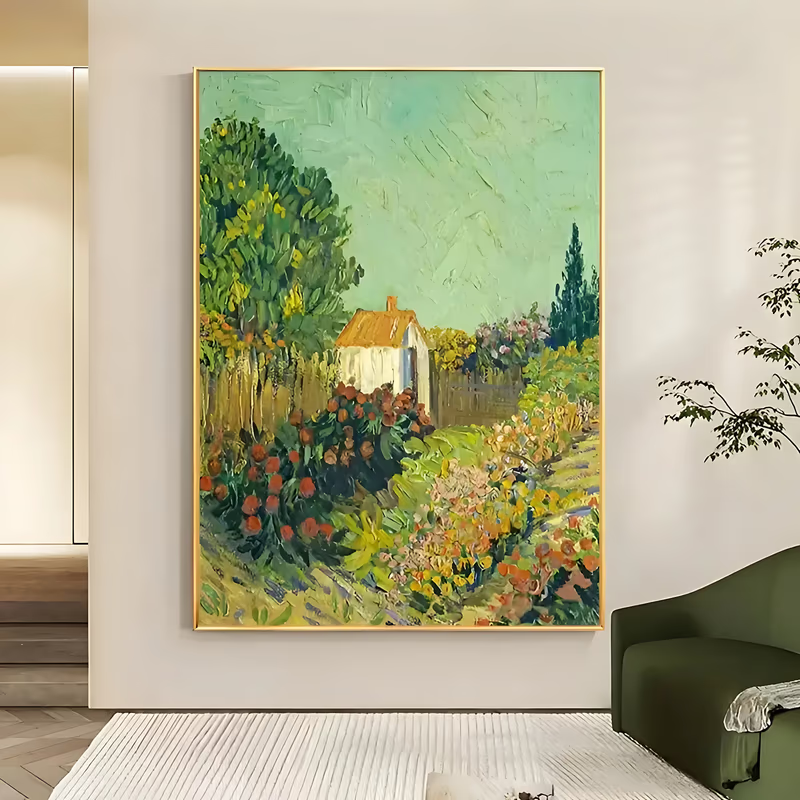
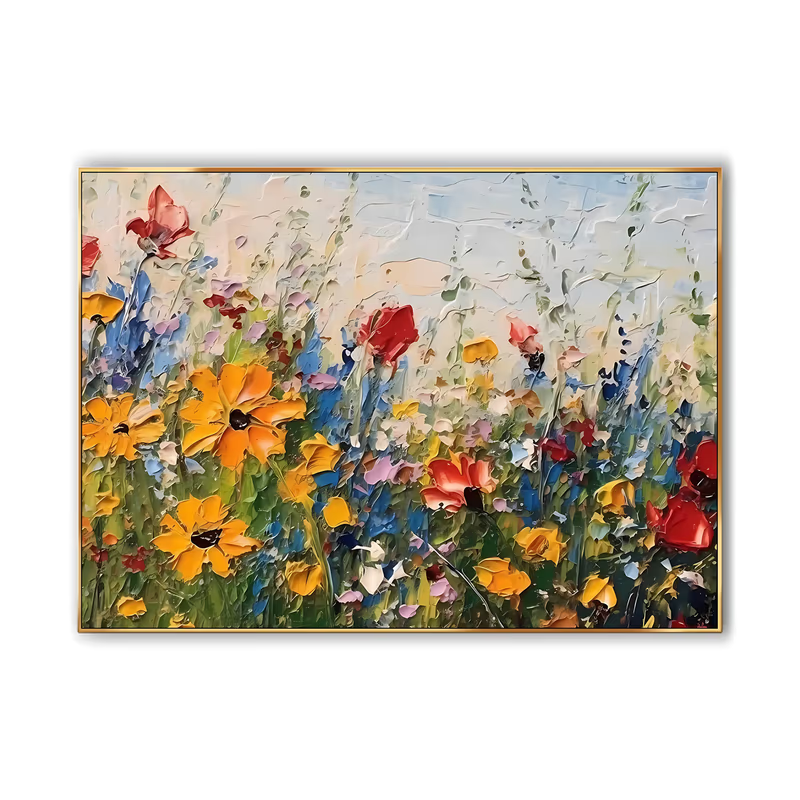
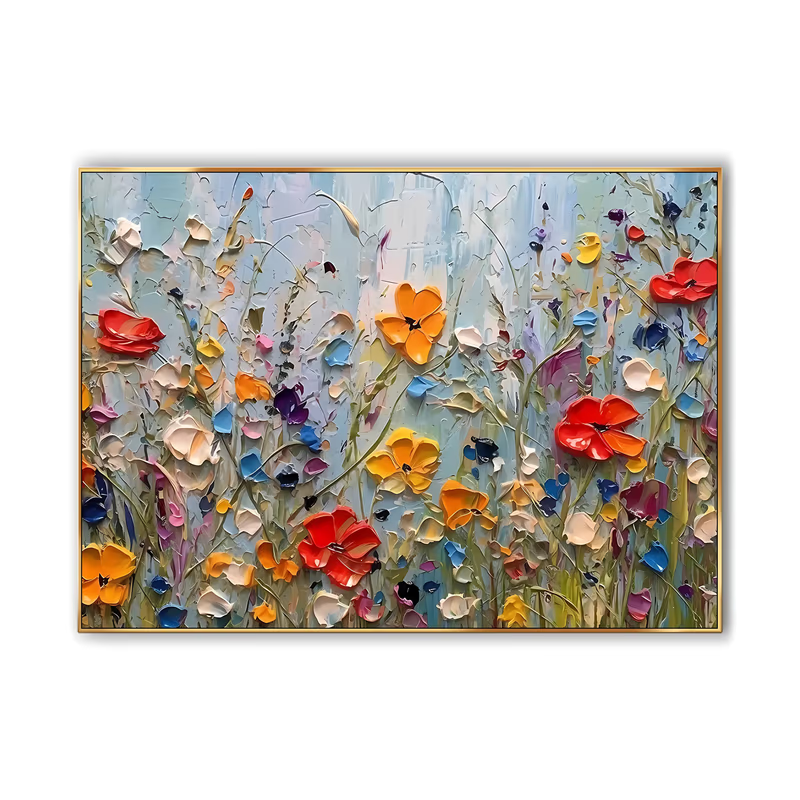
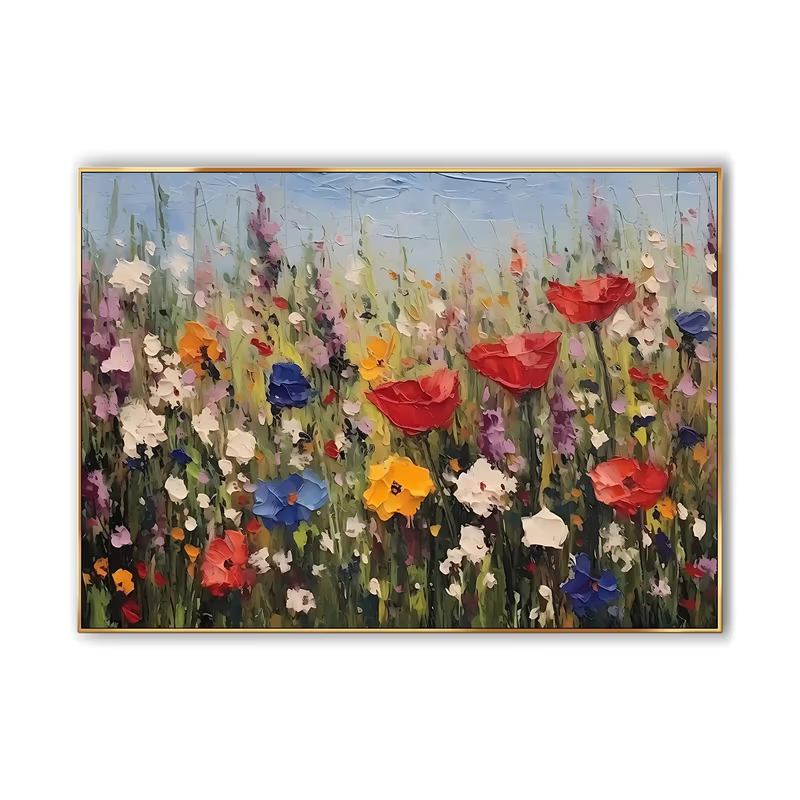
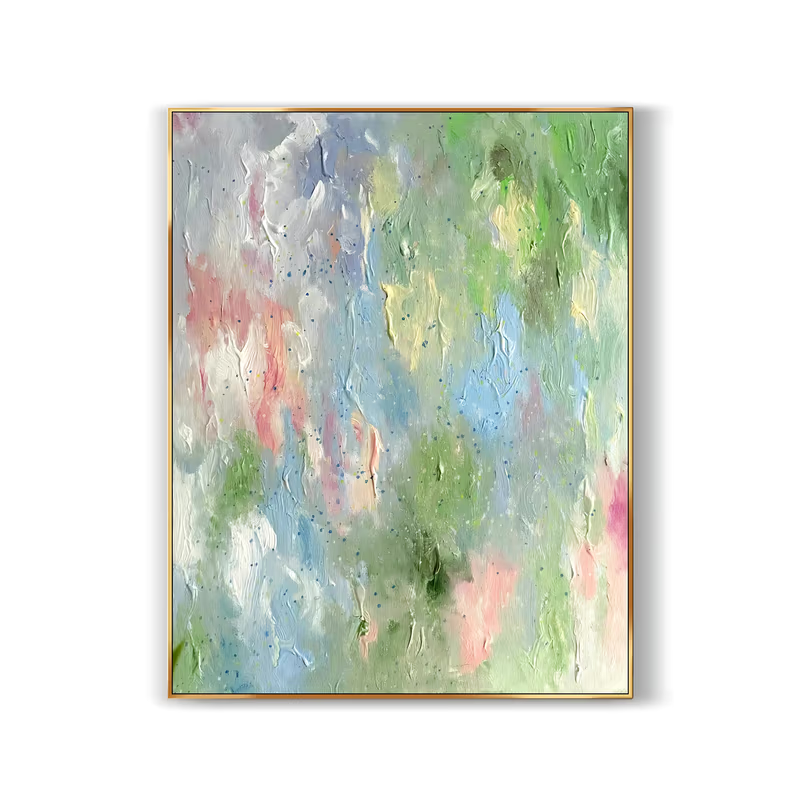
The landscapes here are painted four ways: impressionist colour and light, sculpted plaster relief, abstract and gold-leaf landscapes, and spare minimal or wabi-sabi views.
Impressionist landscapes
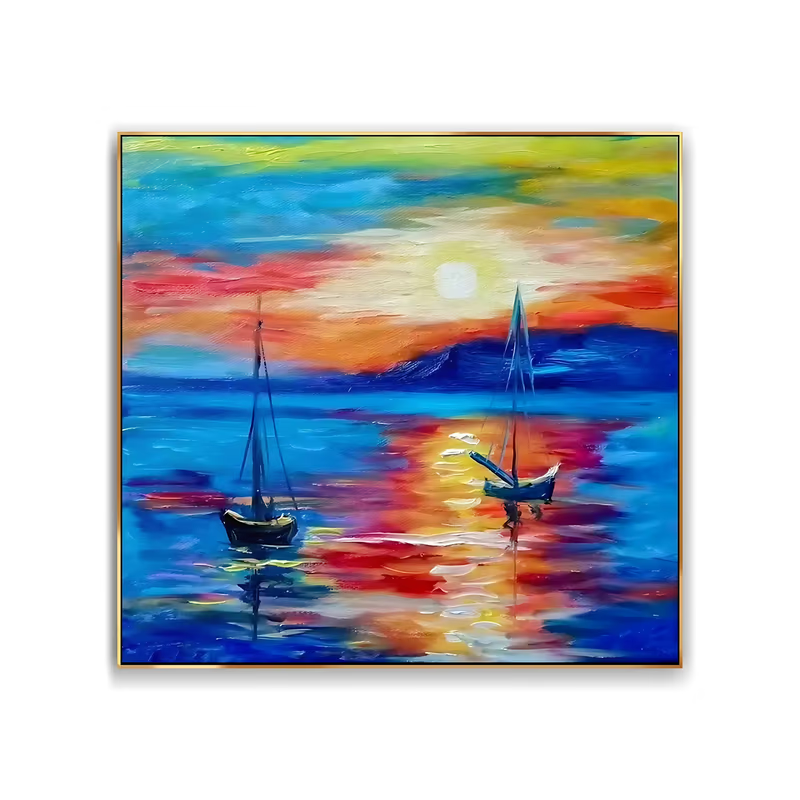
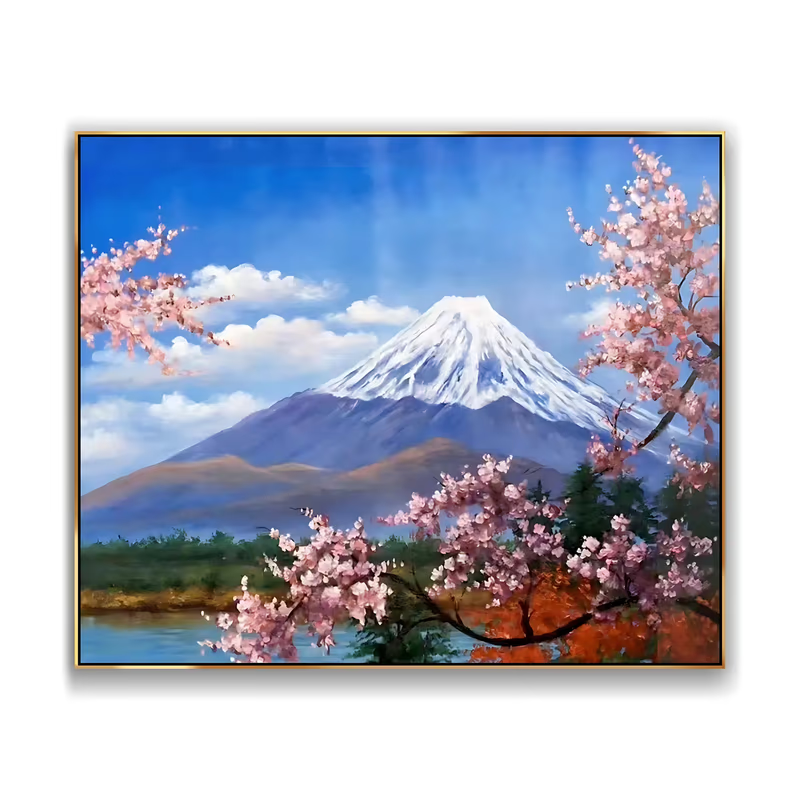
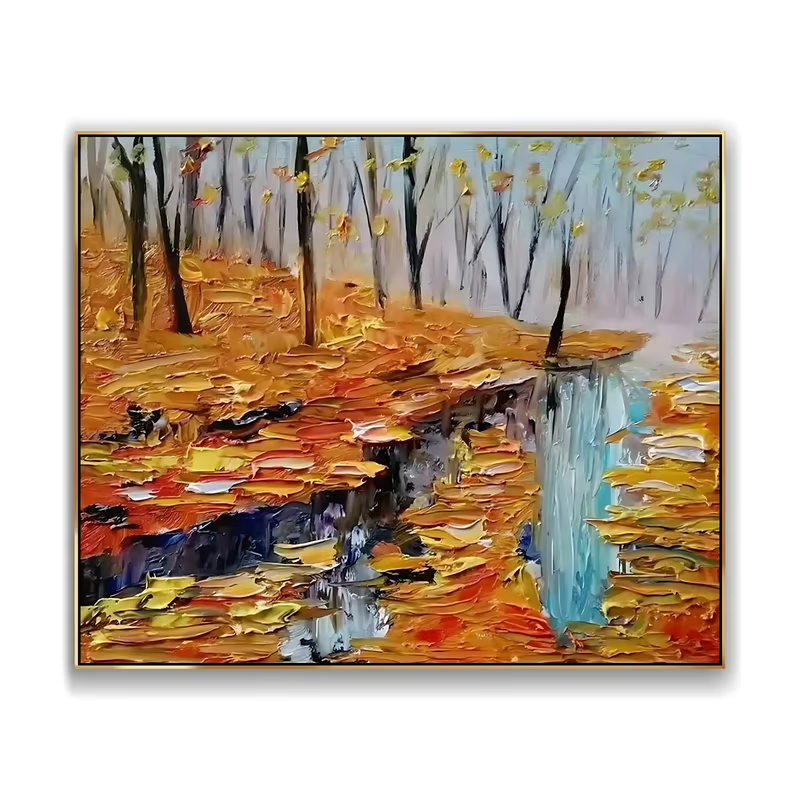
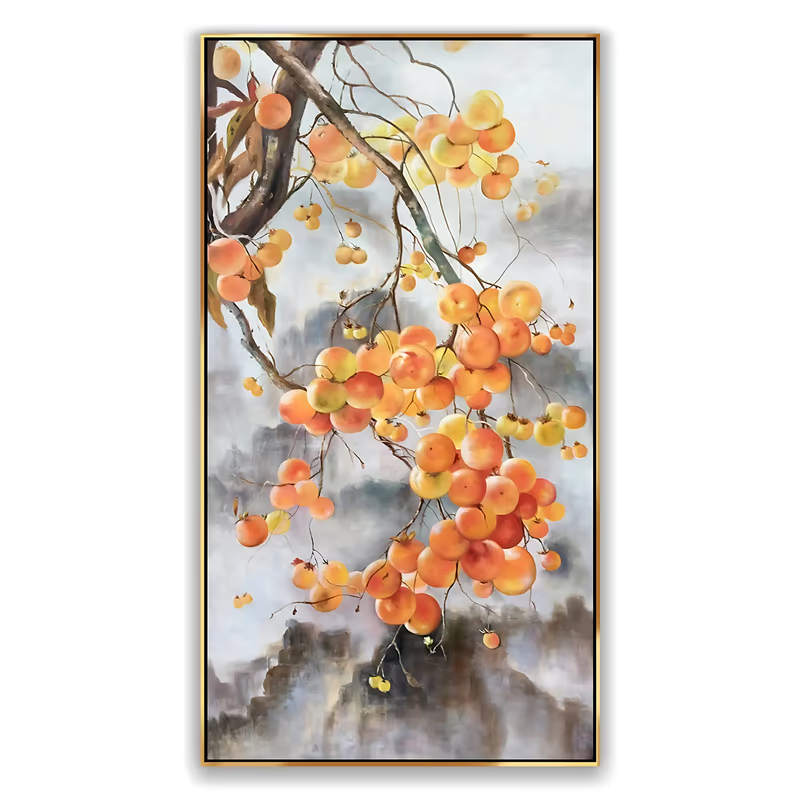
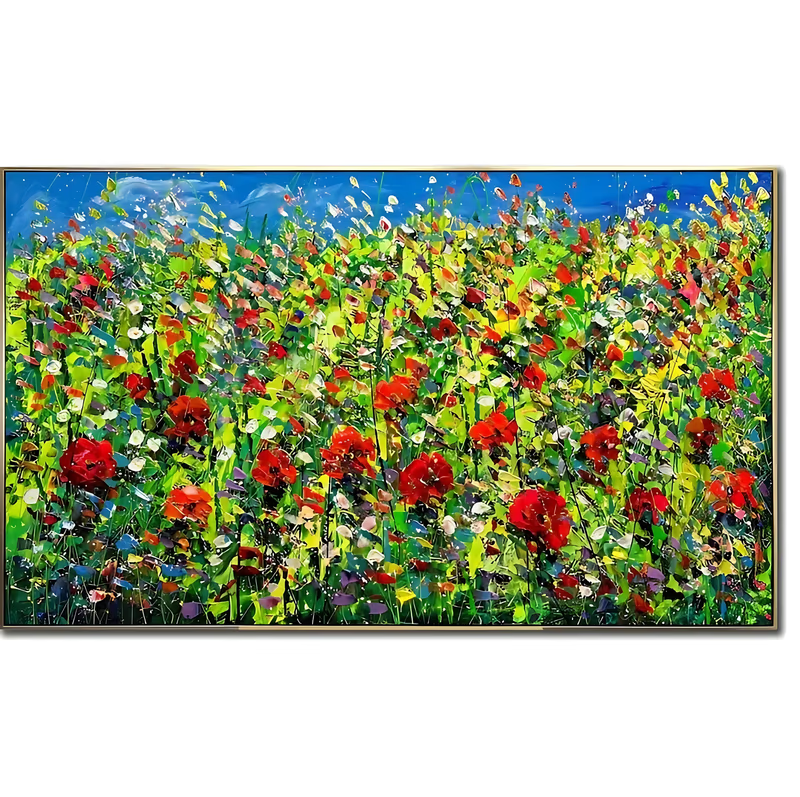
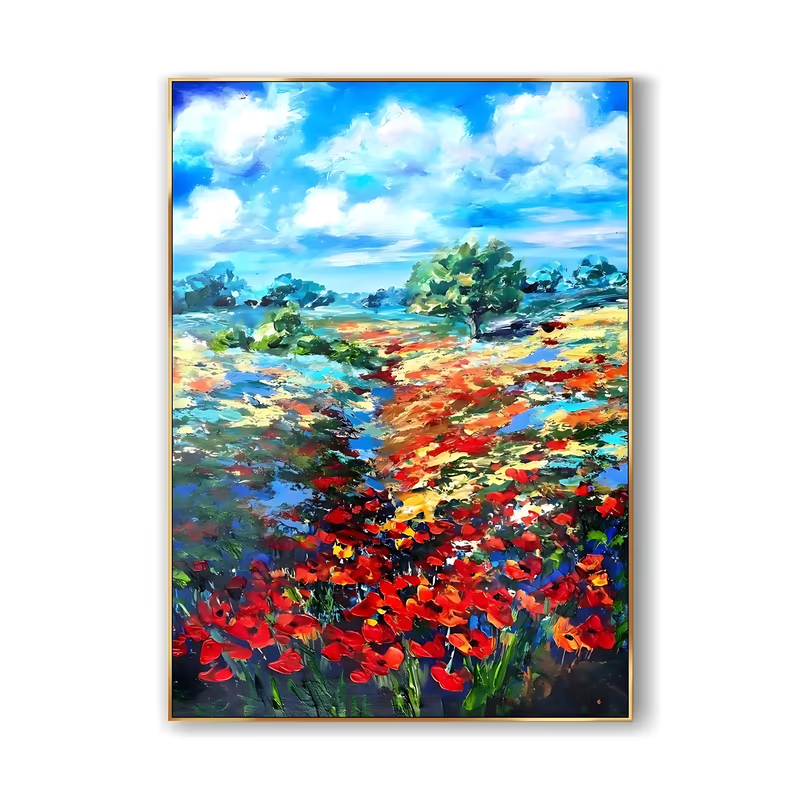
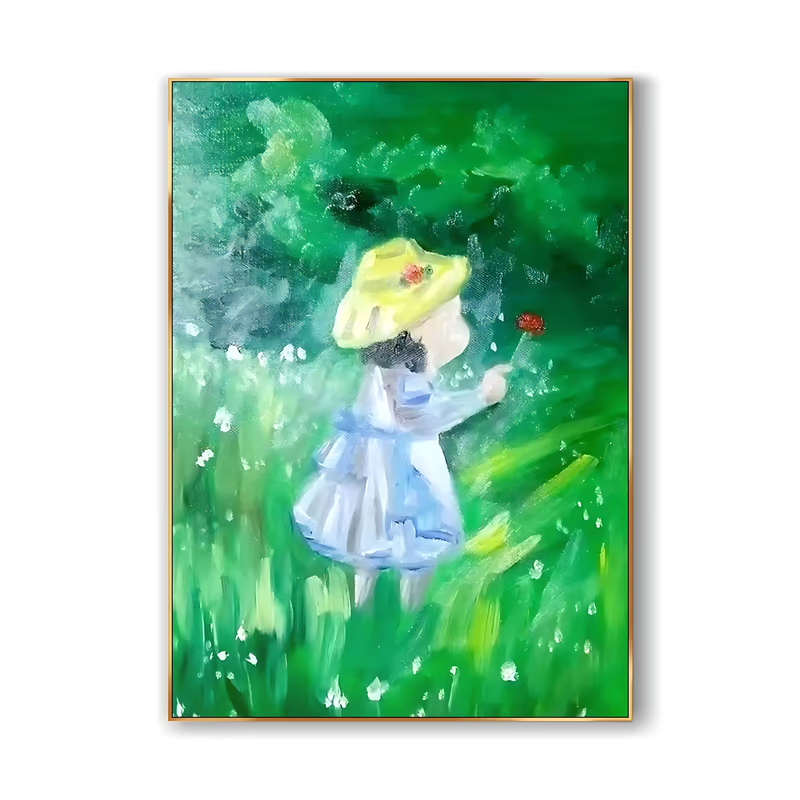
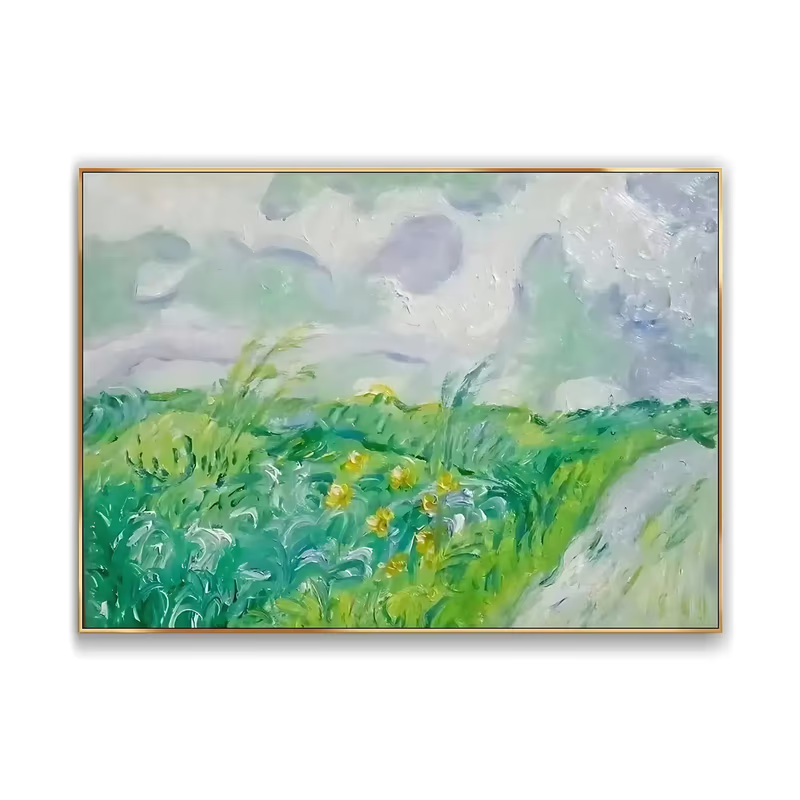
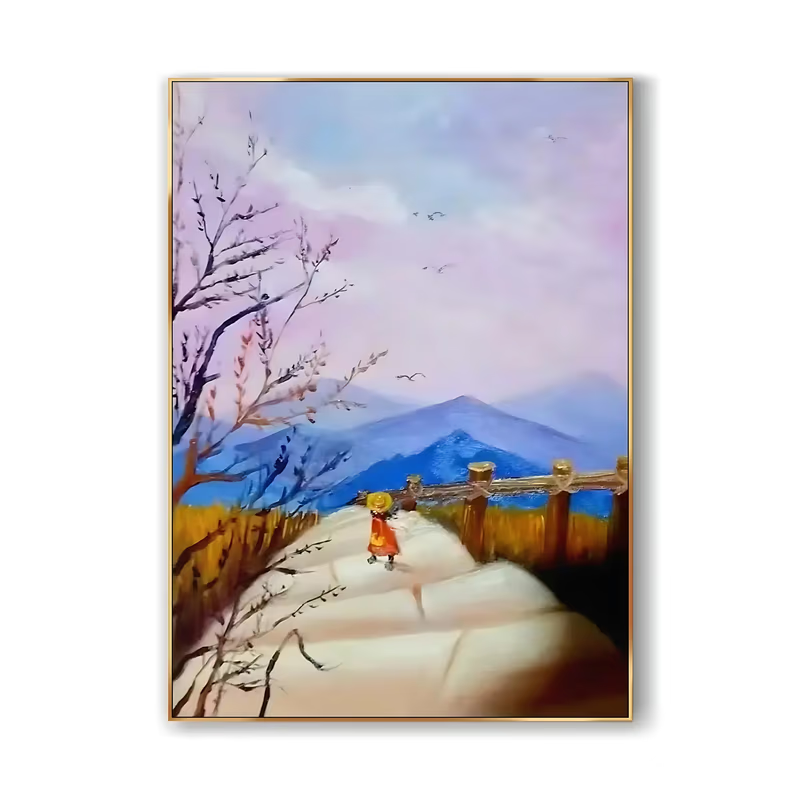
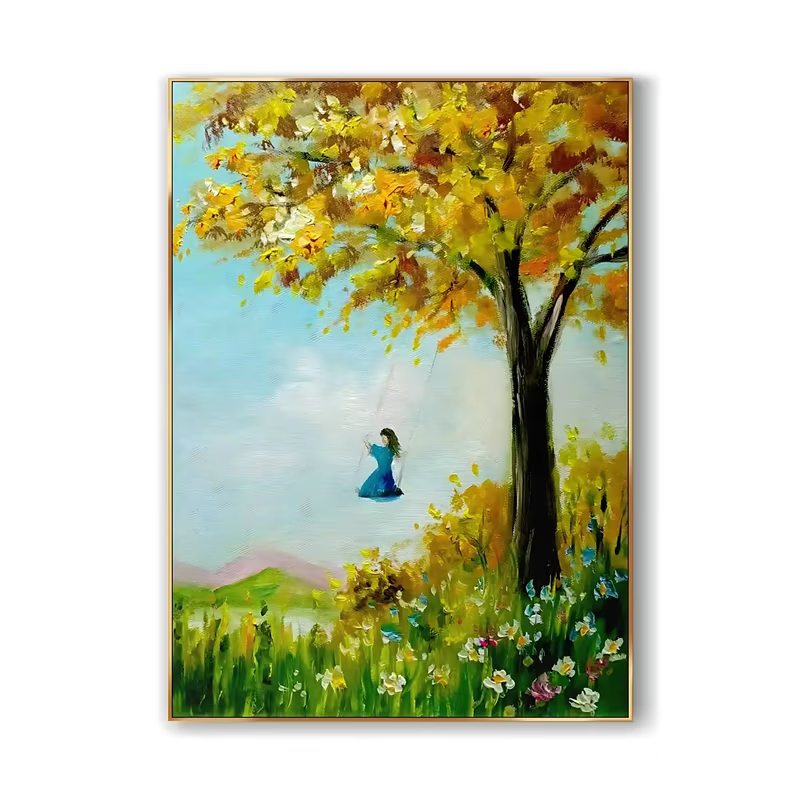
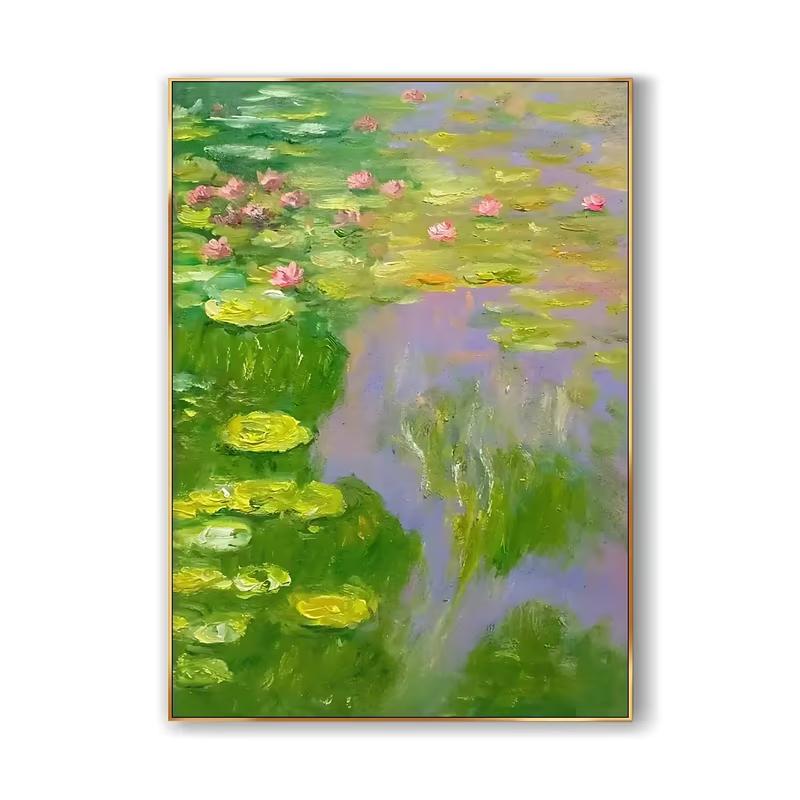
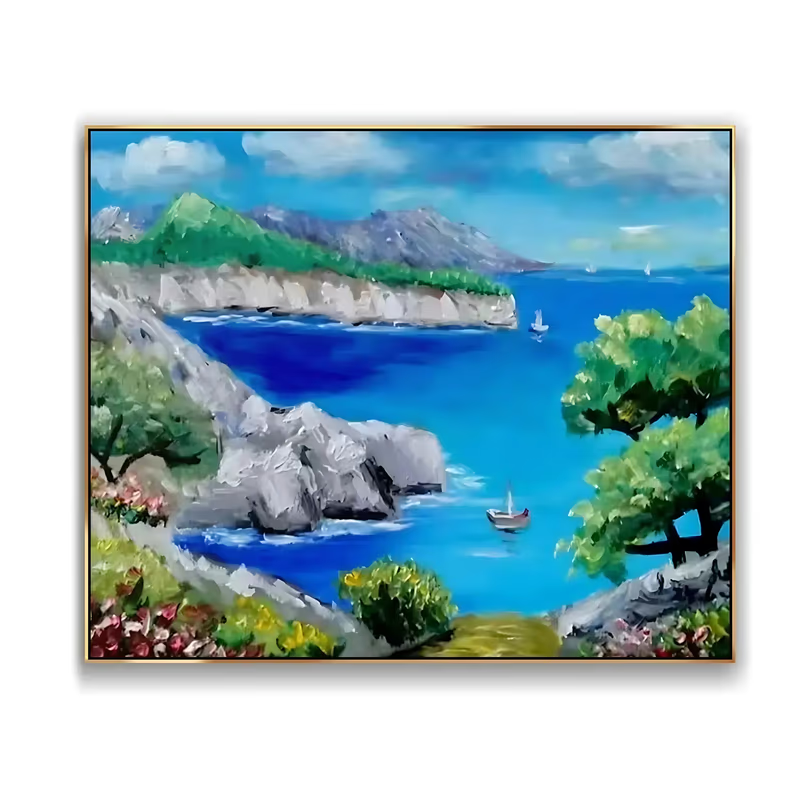
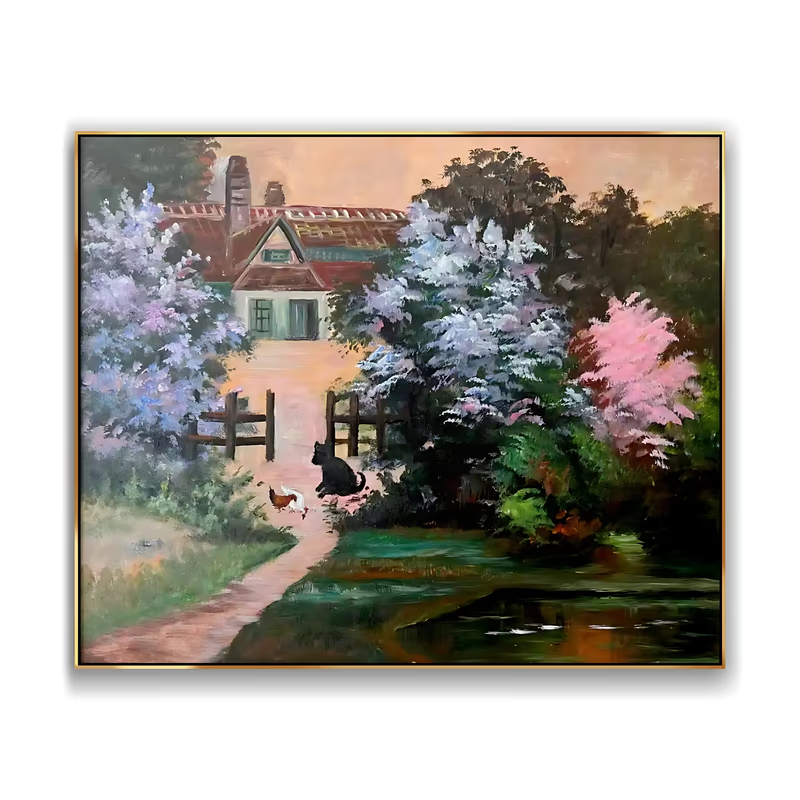
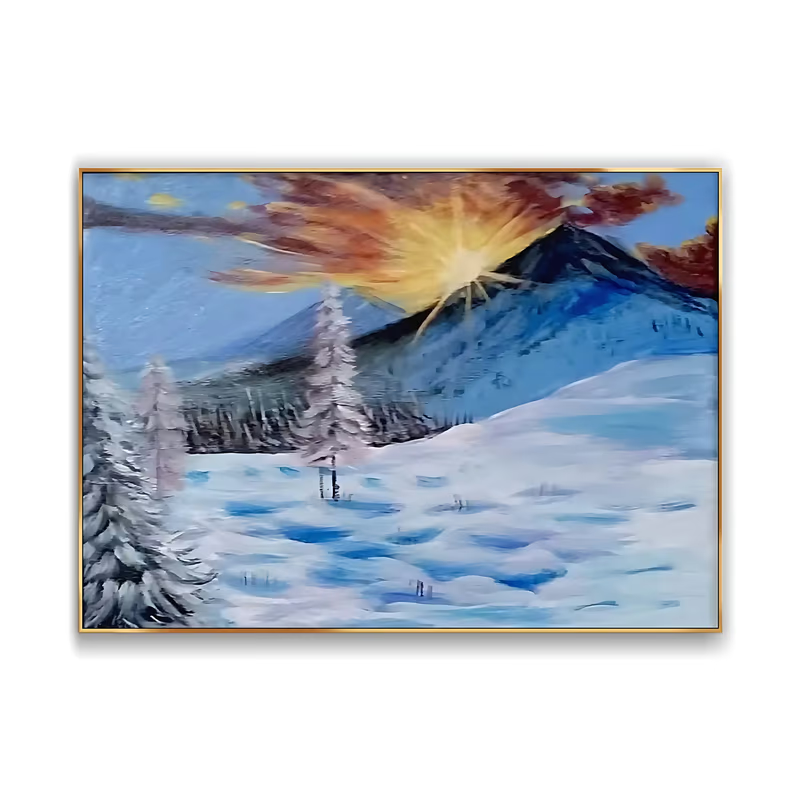
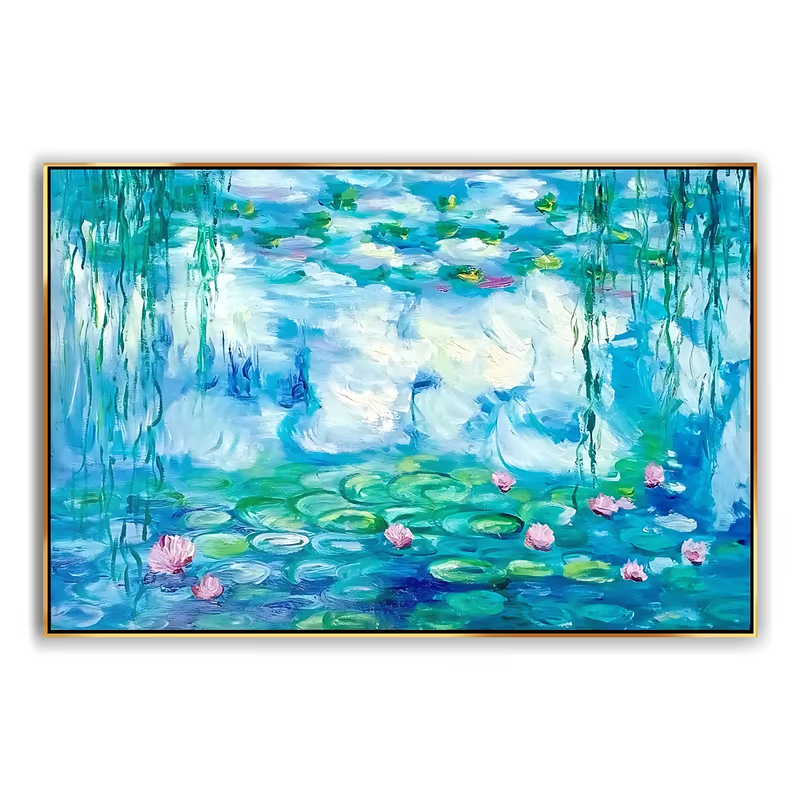
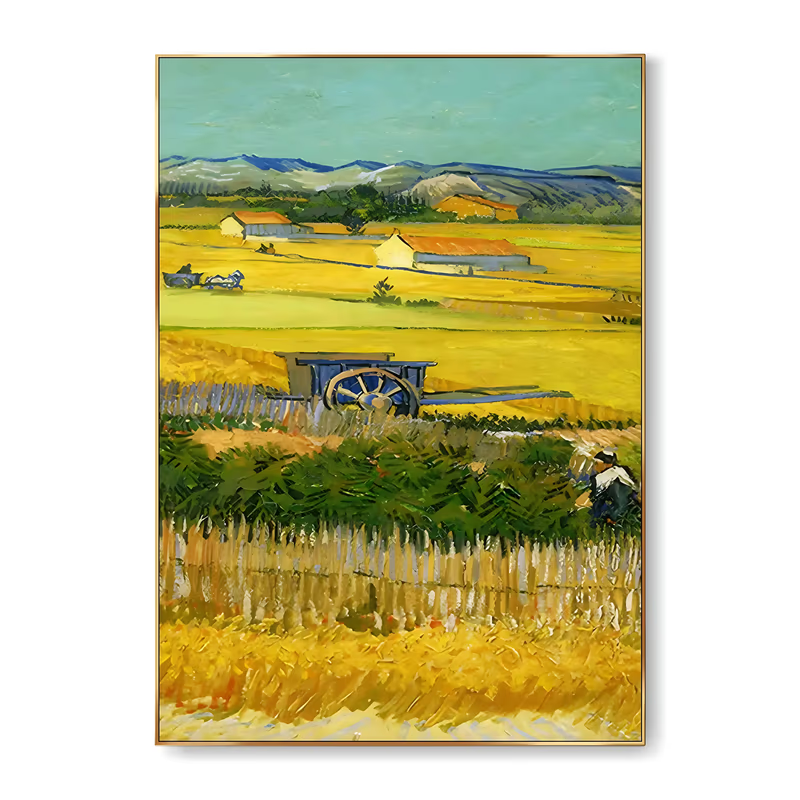
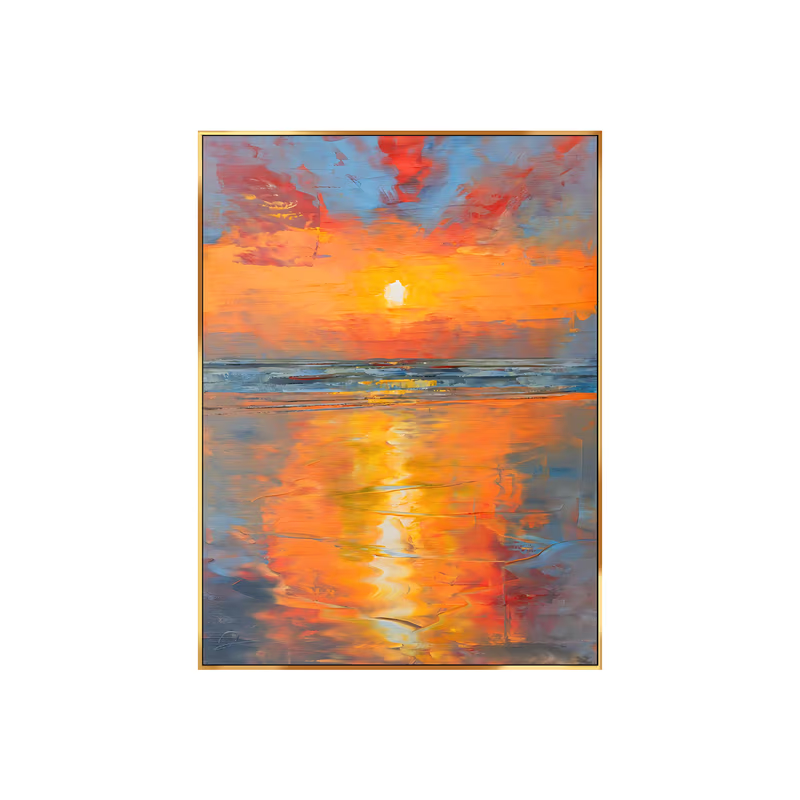
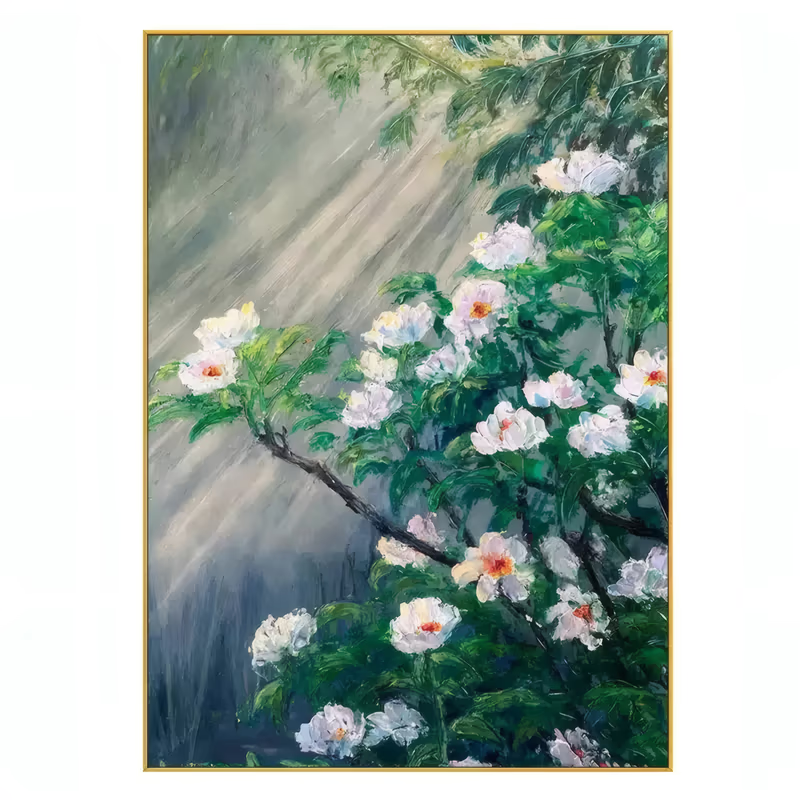
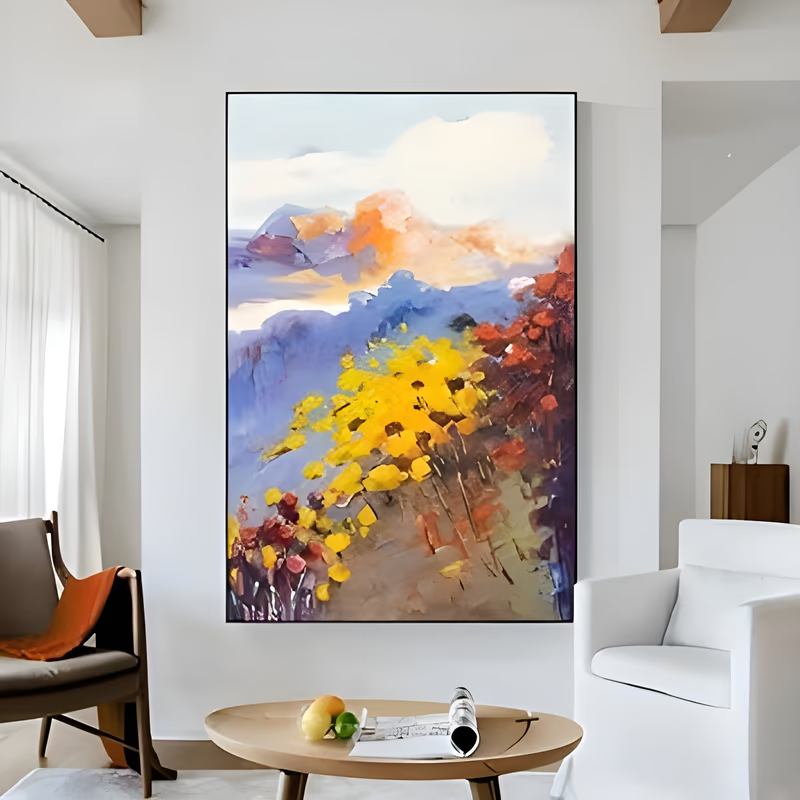
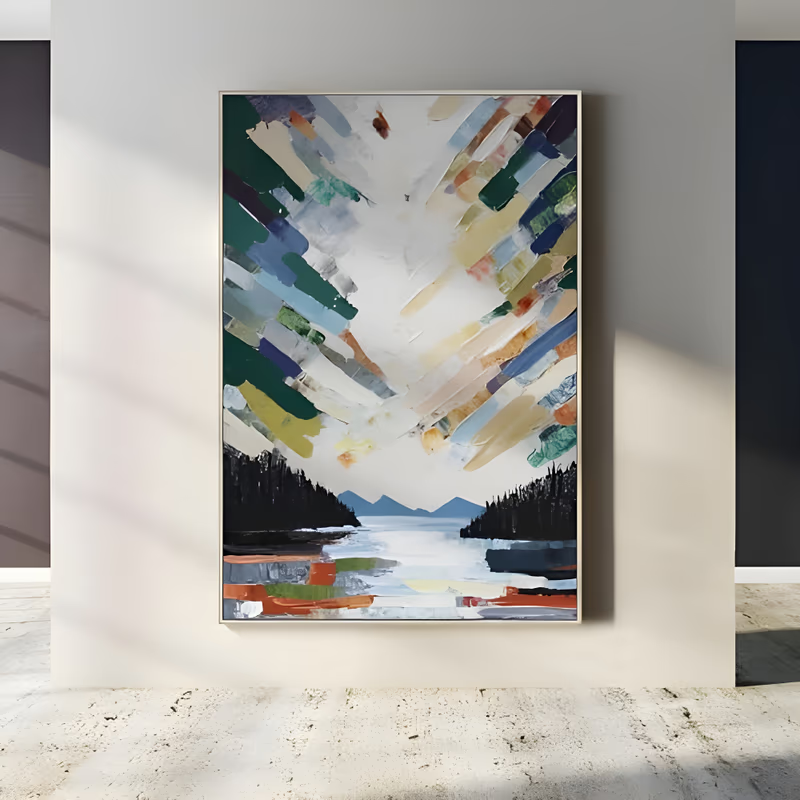
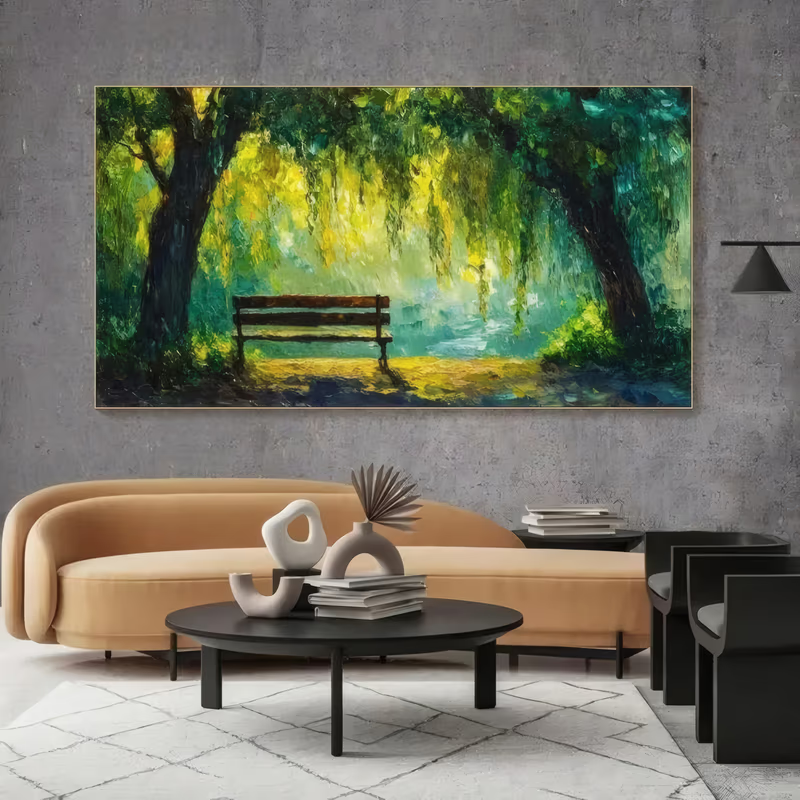
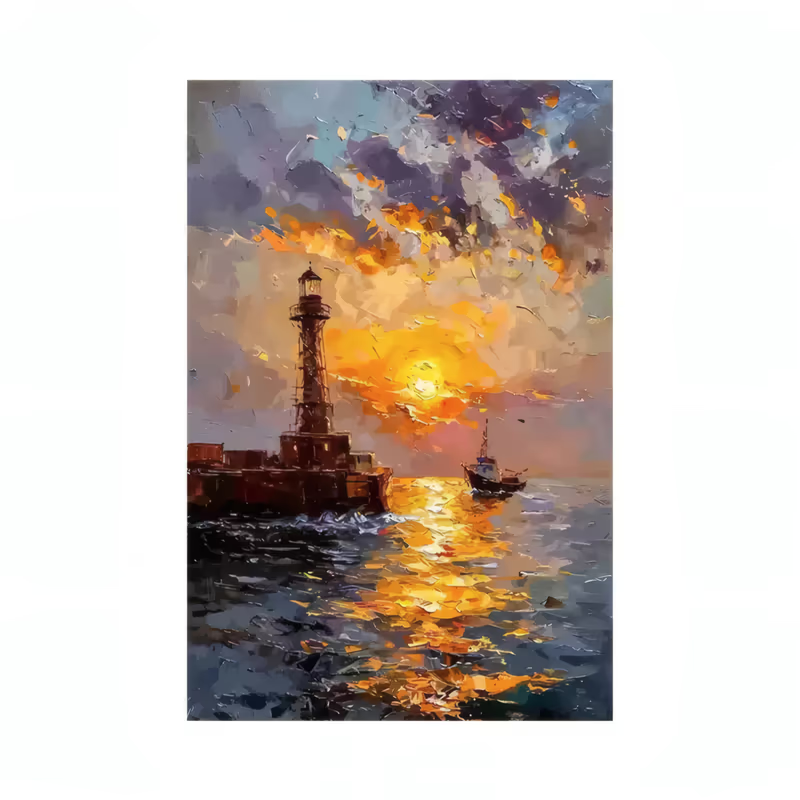
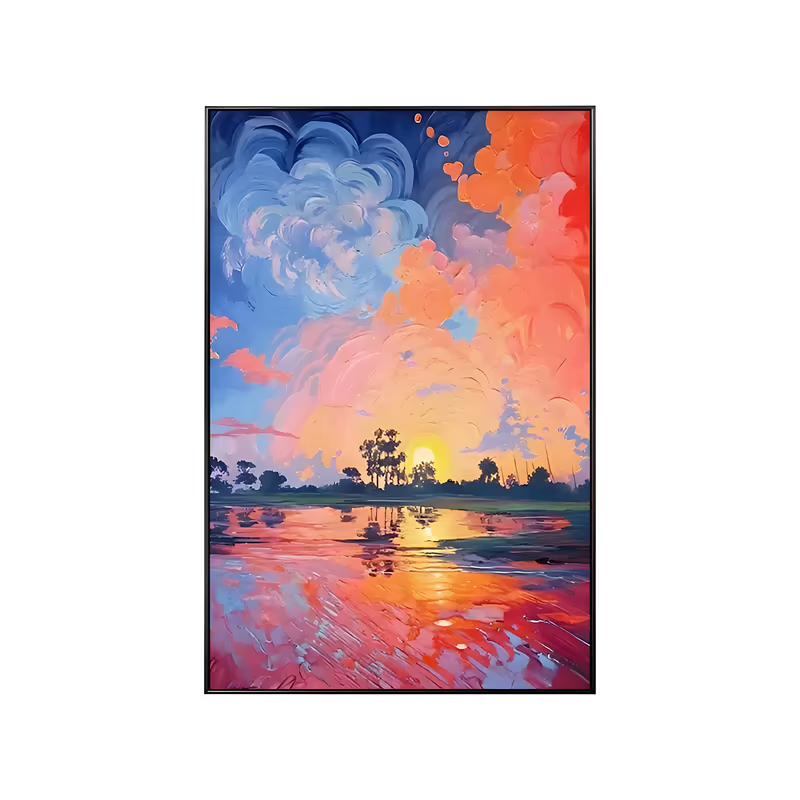
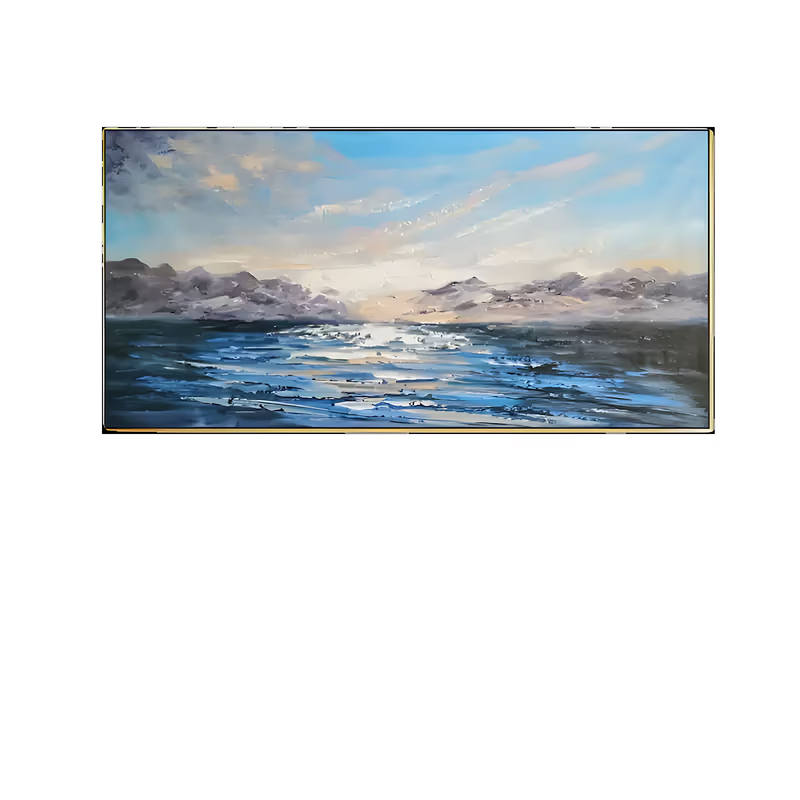
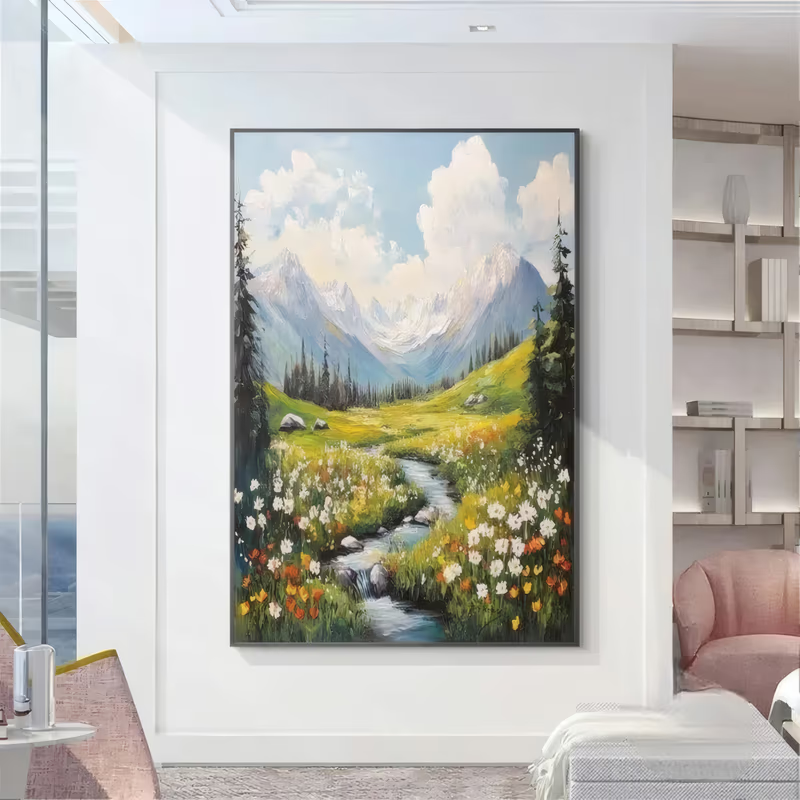
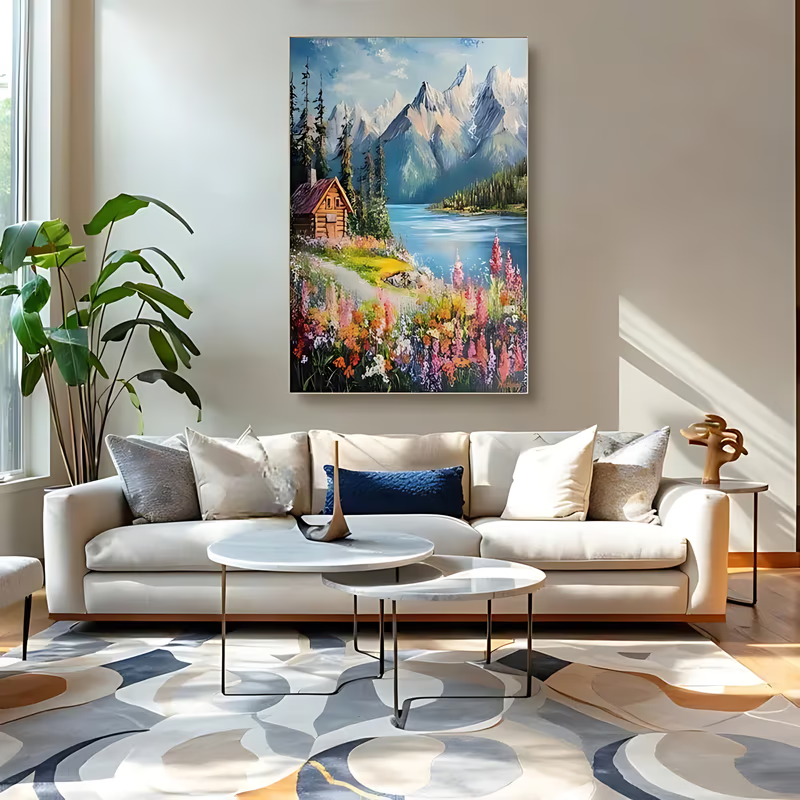
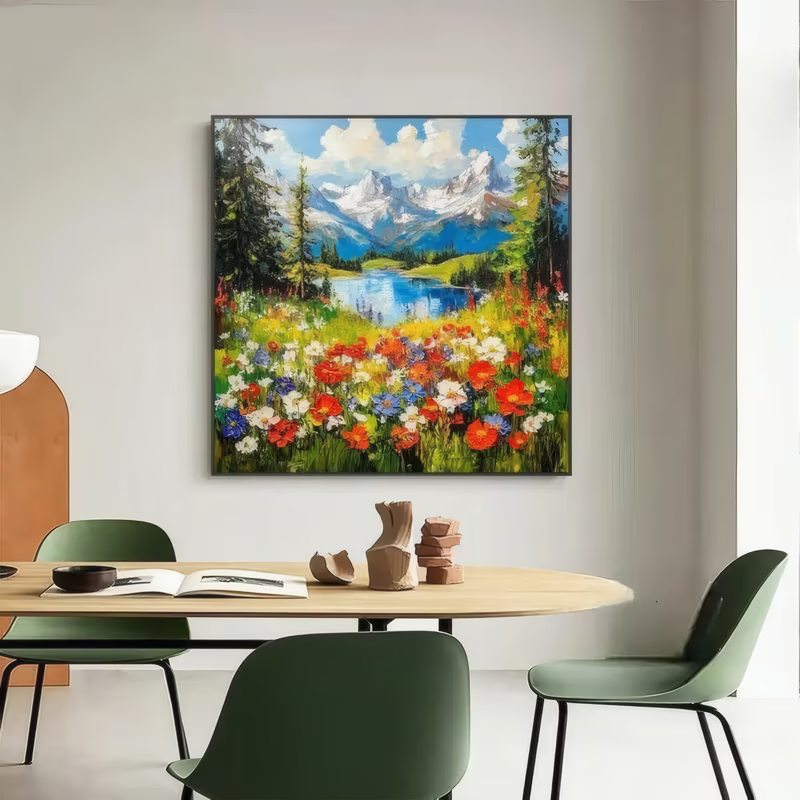
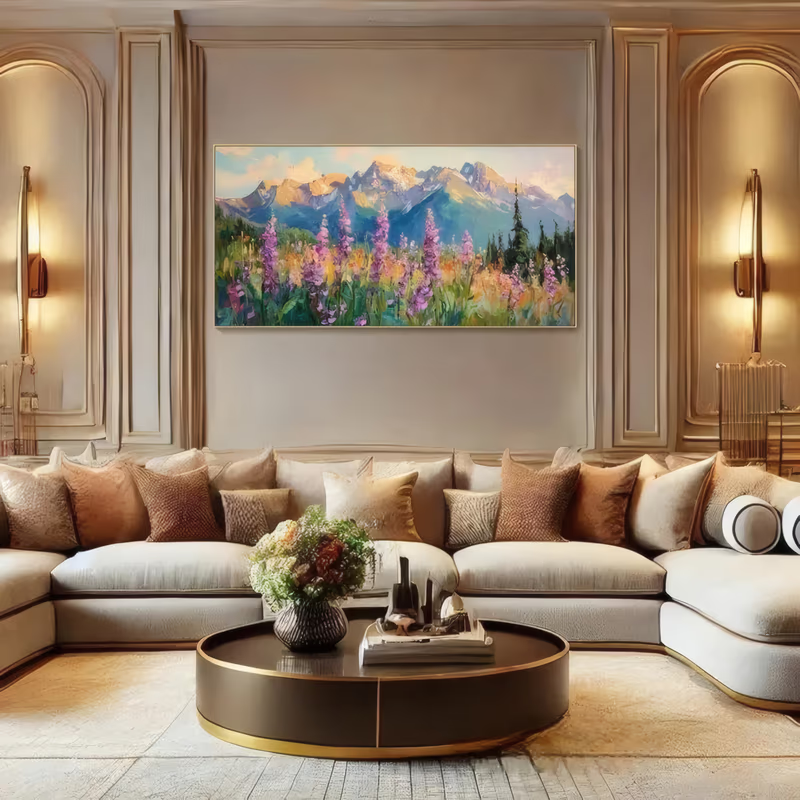
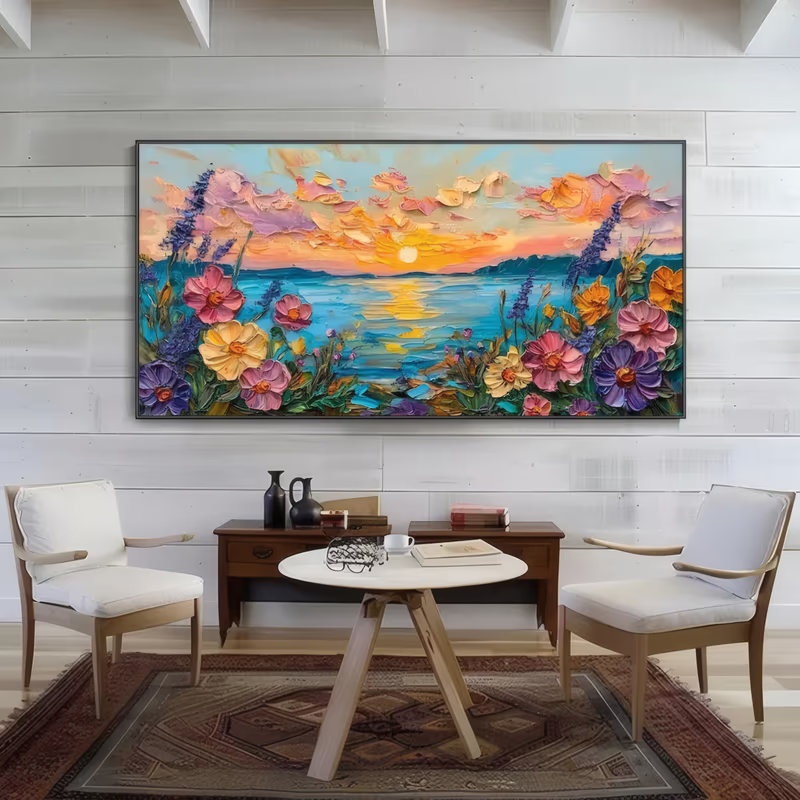
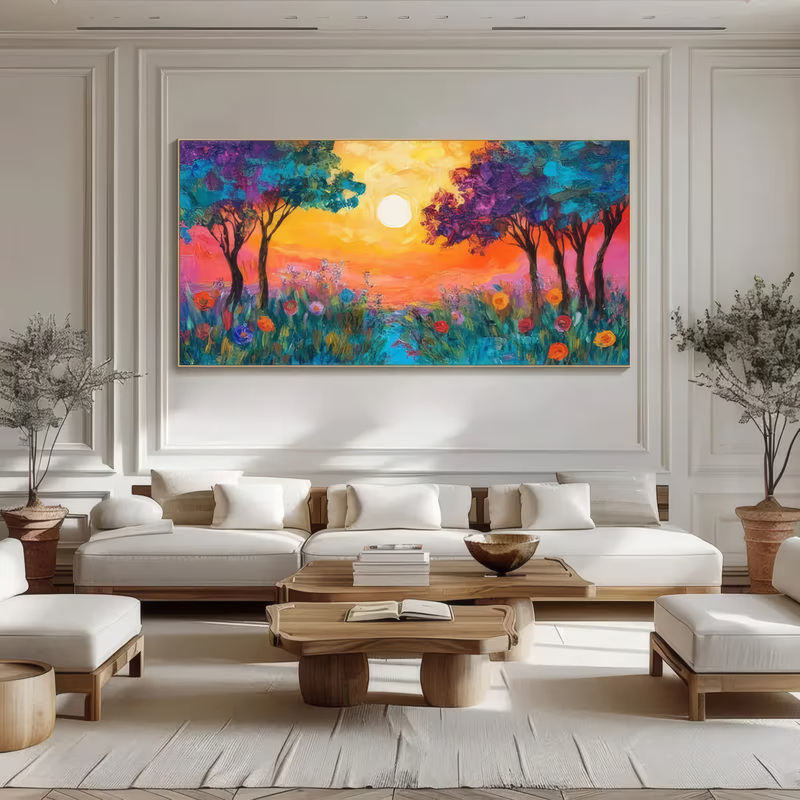
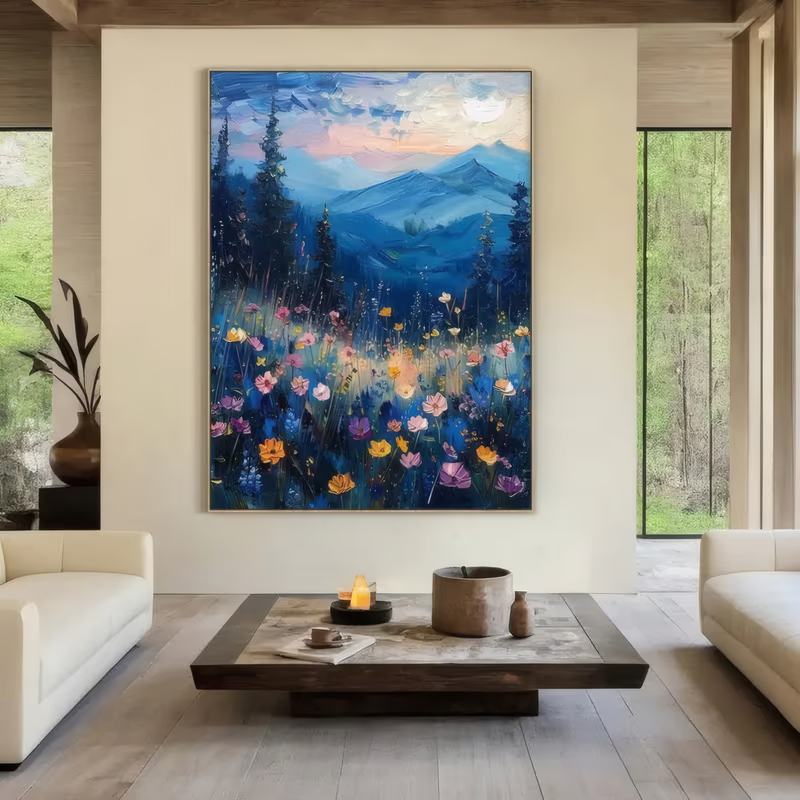
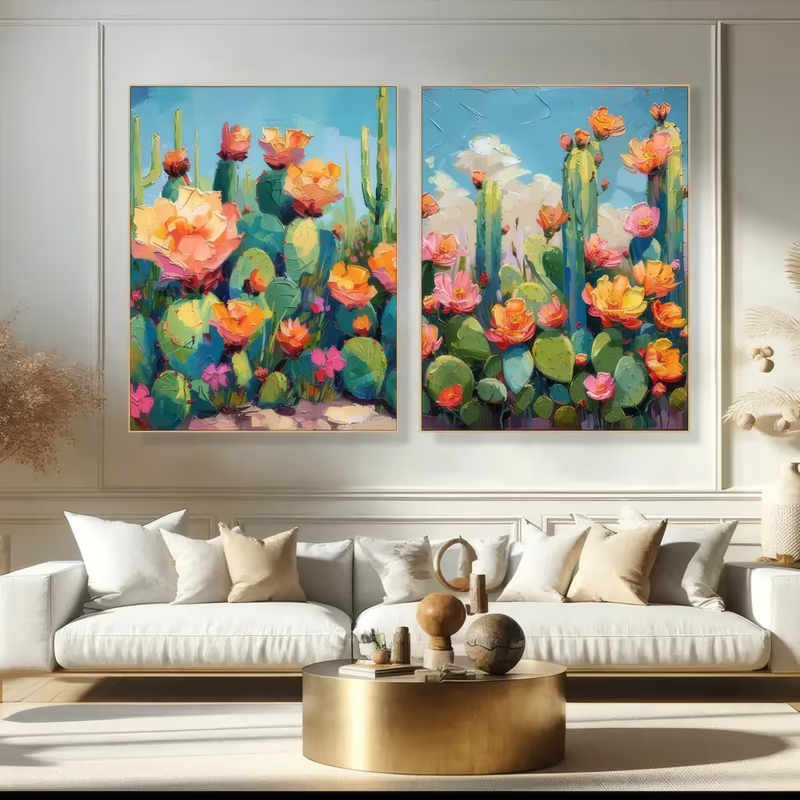
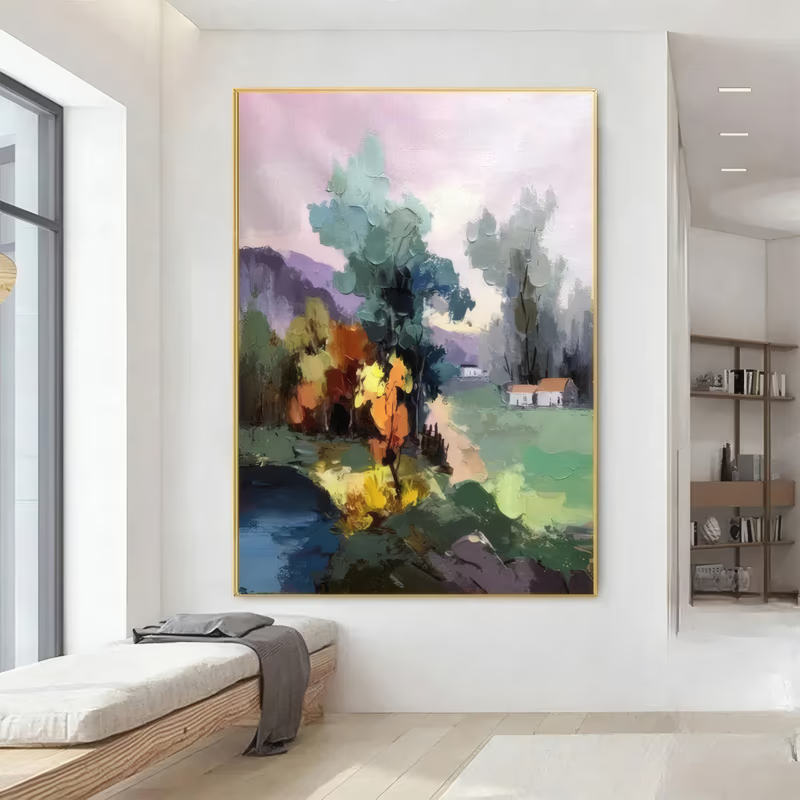
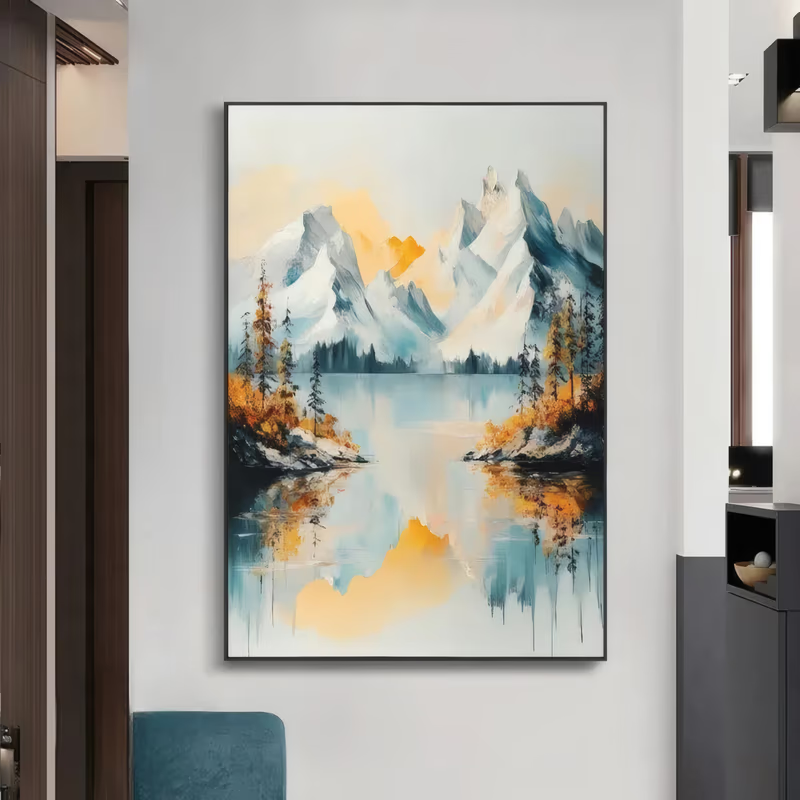
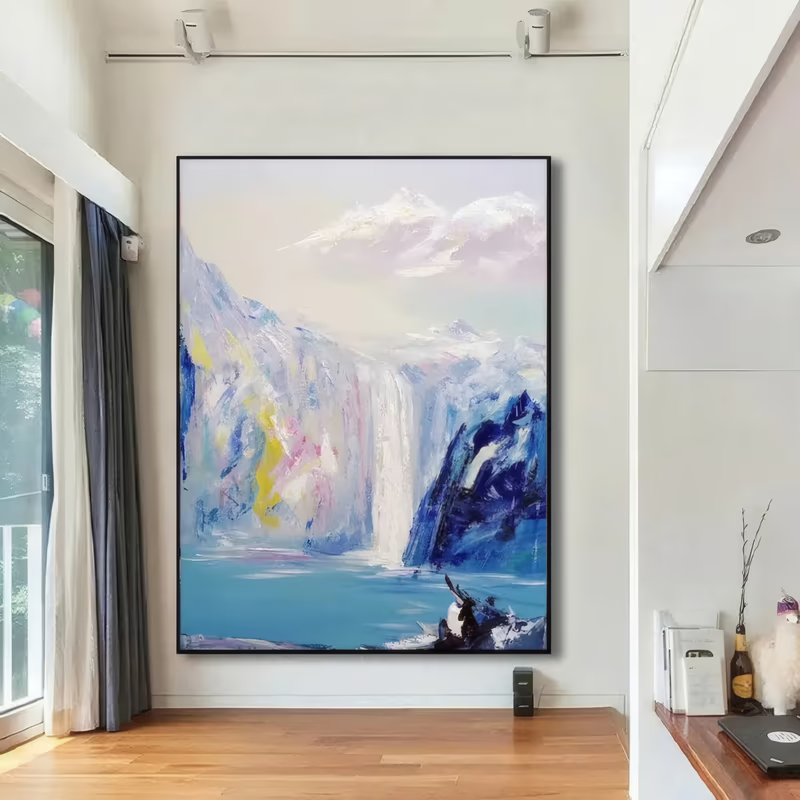
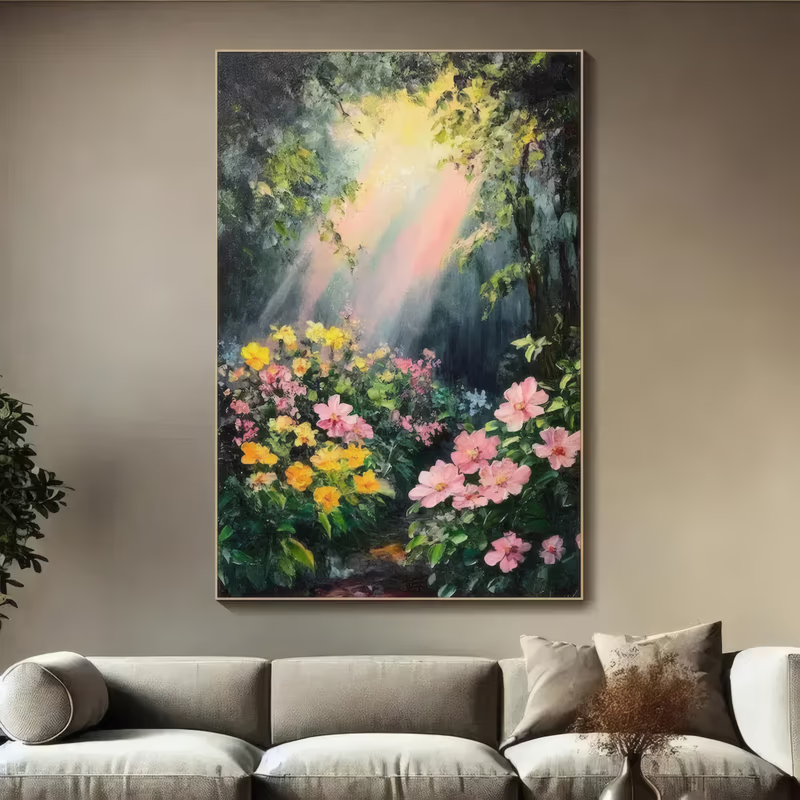
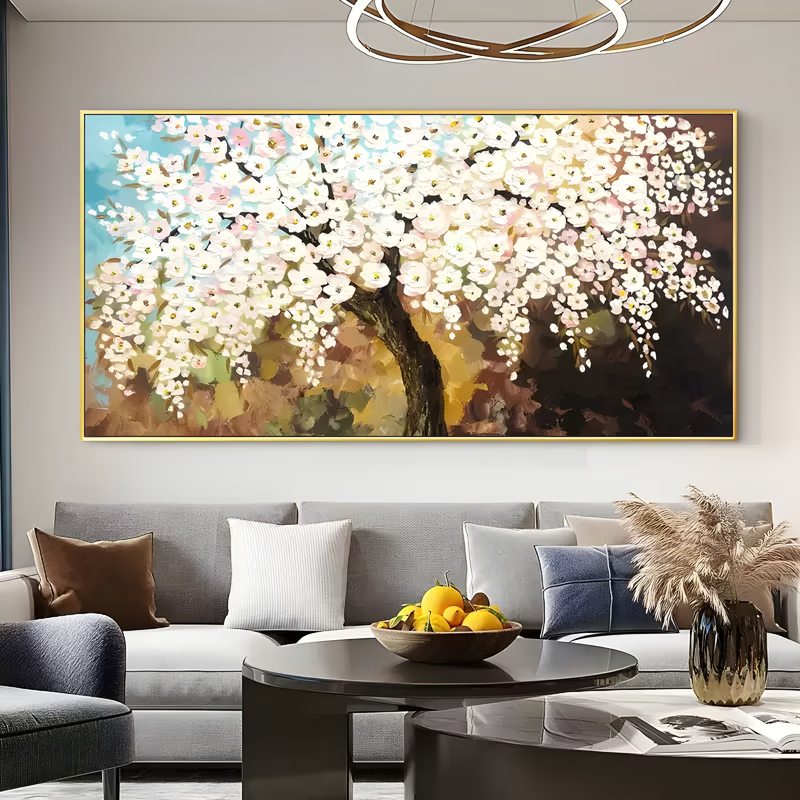
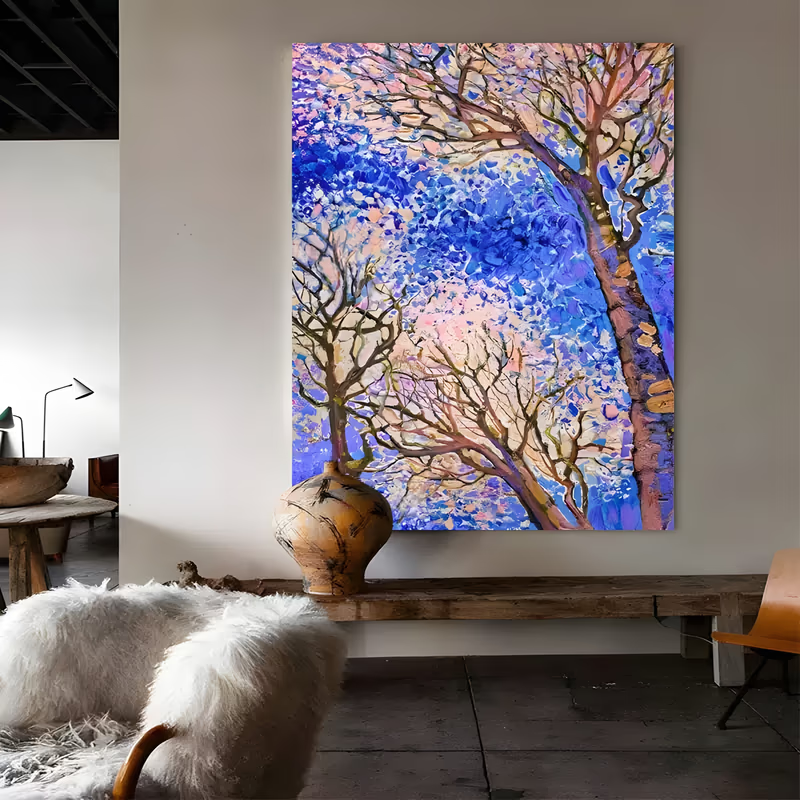
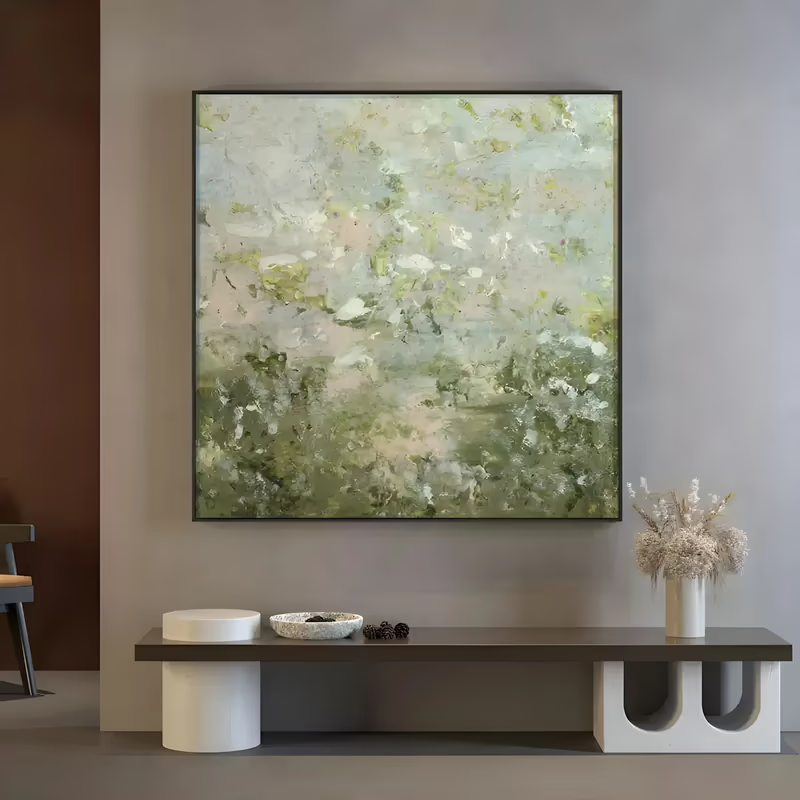
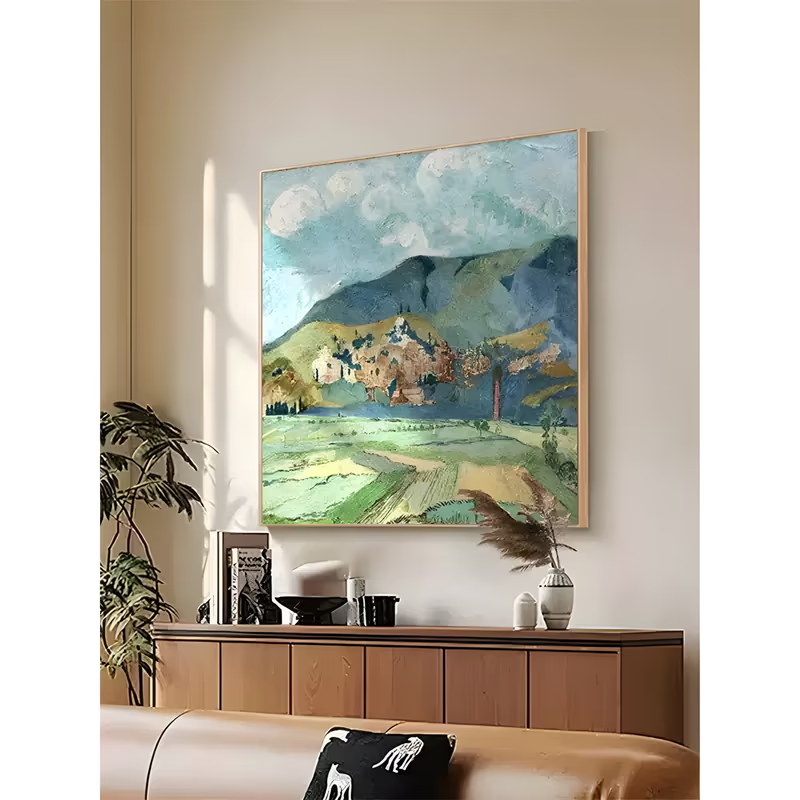
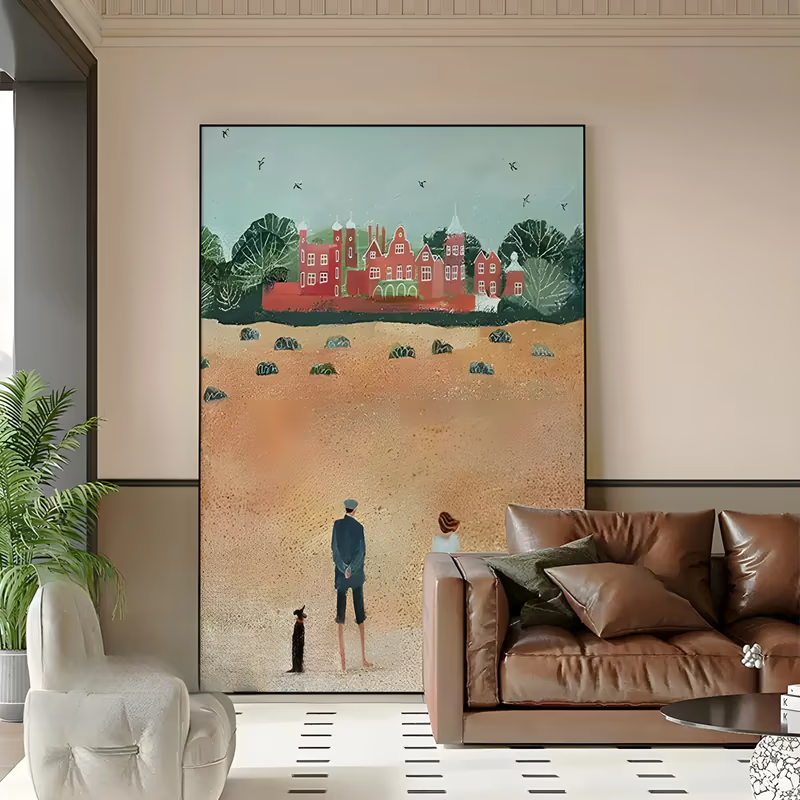
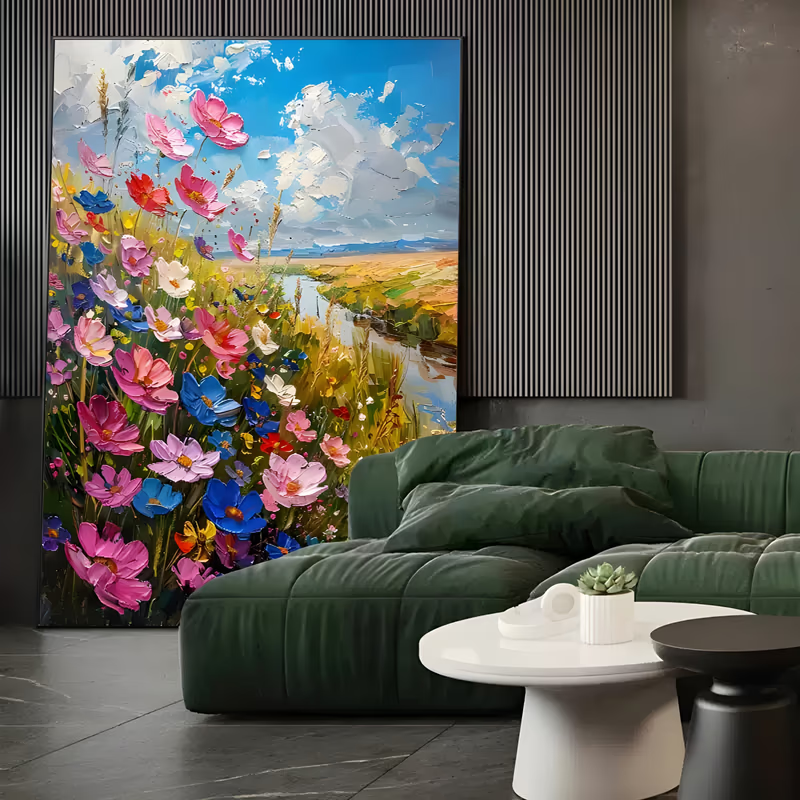
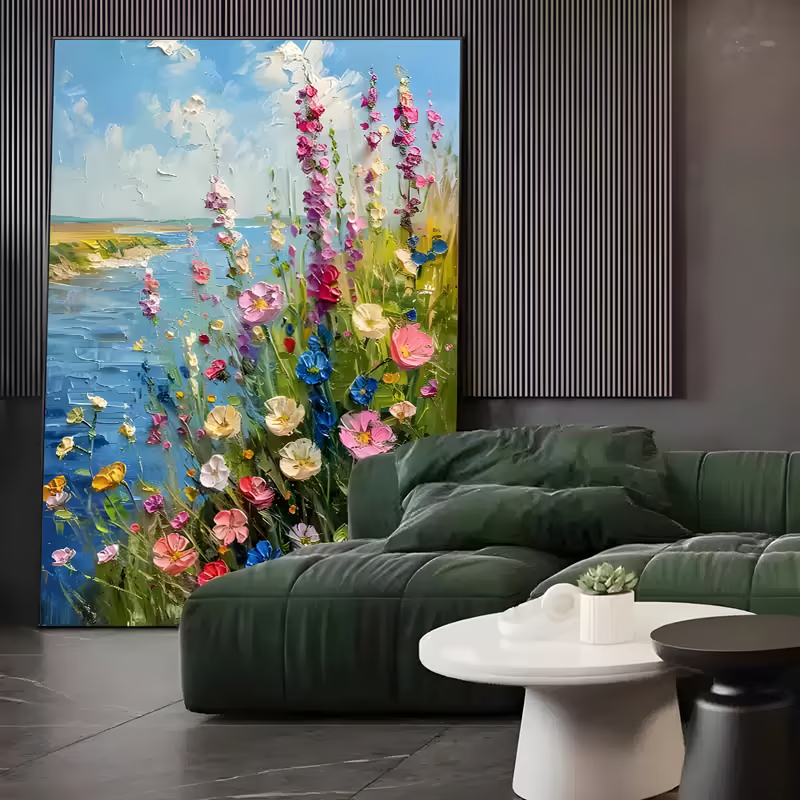
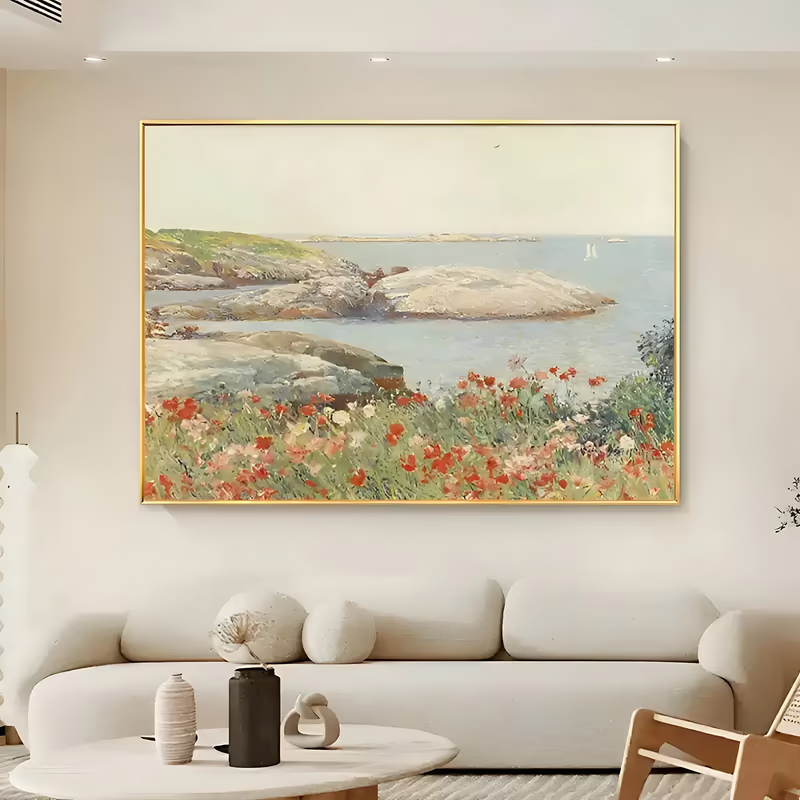
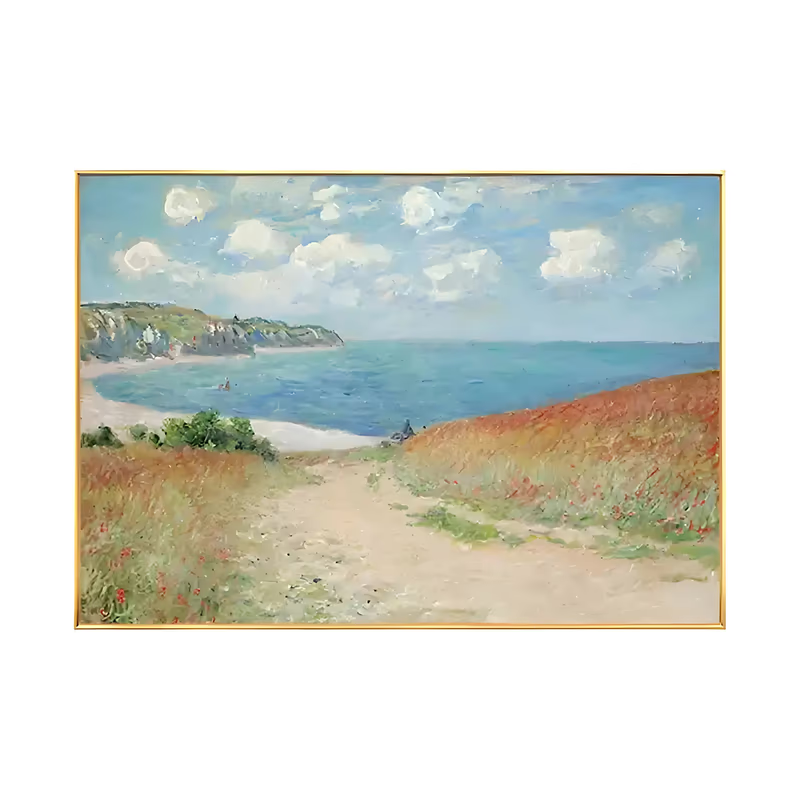
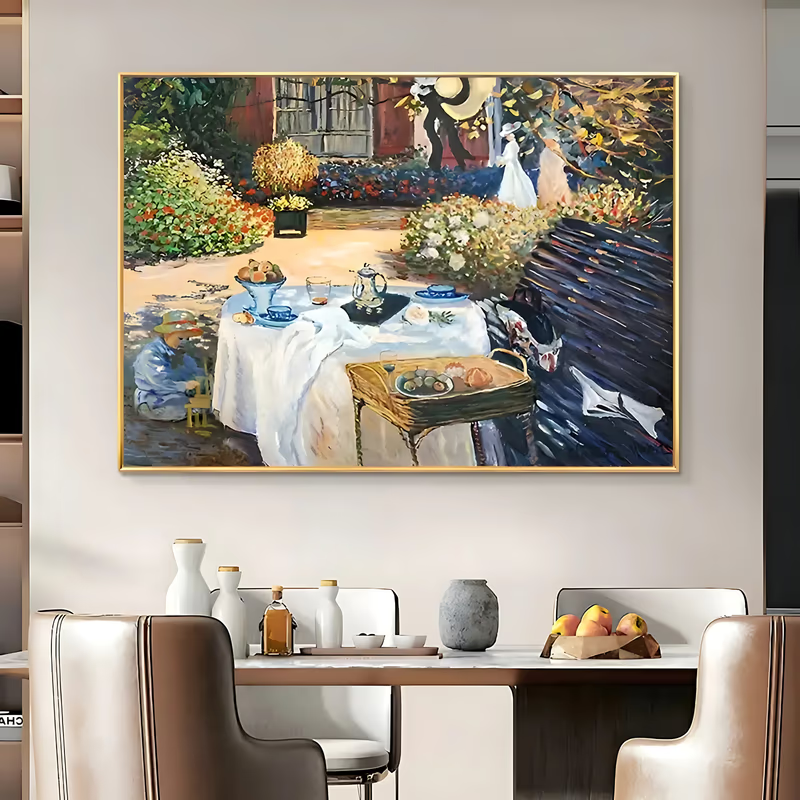
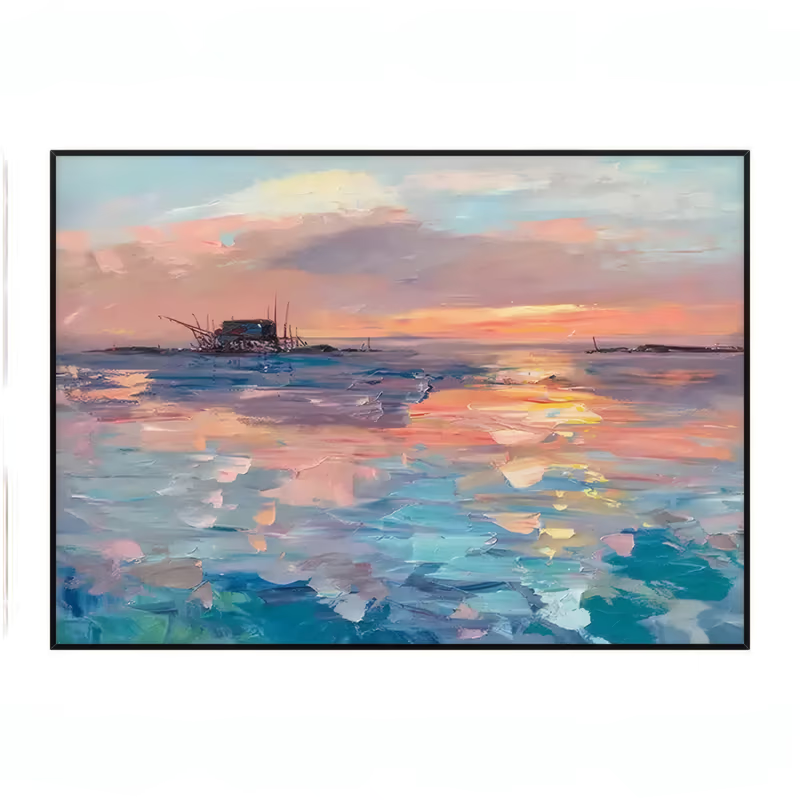
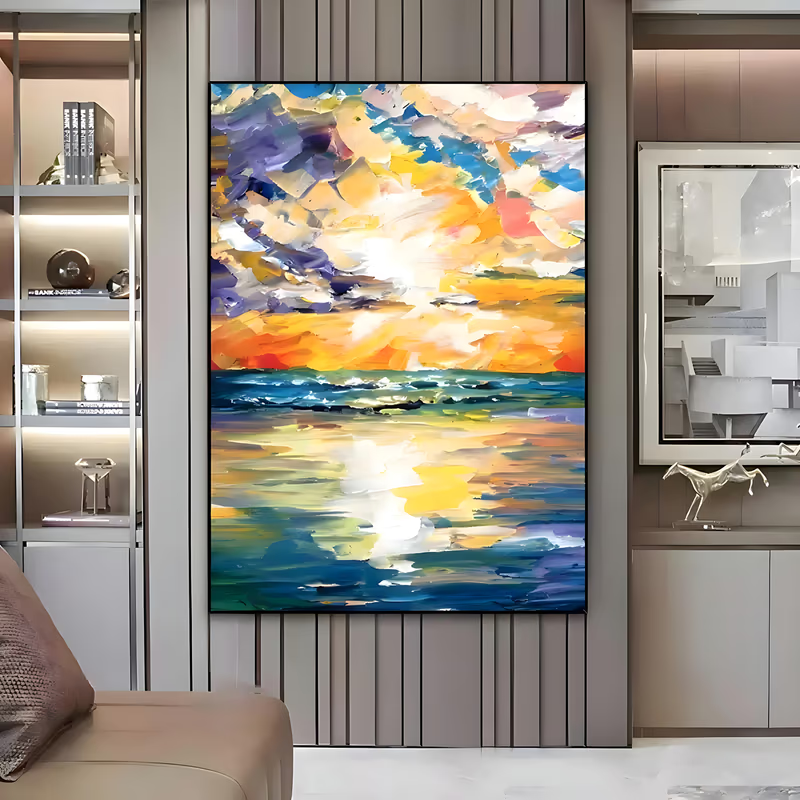
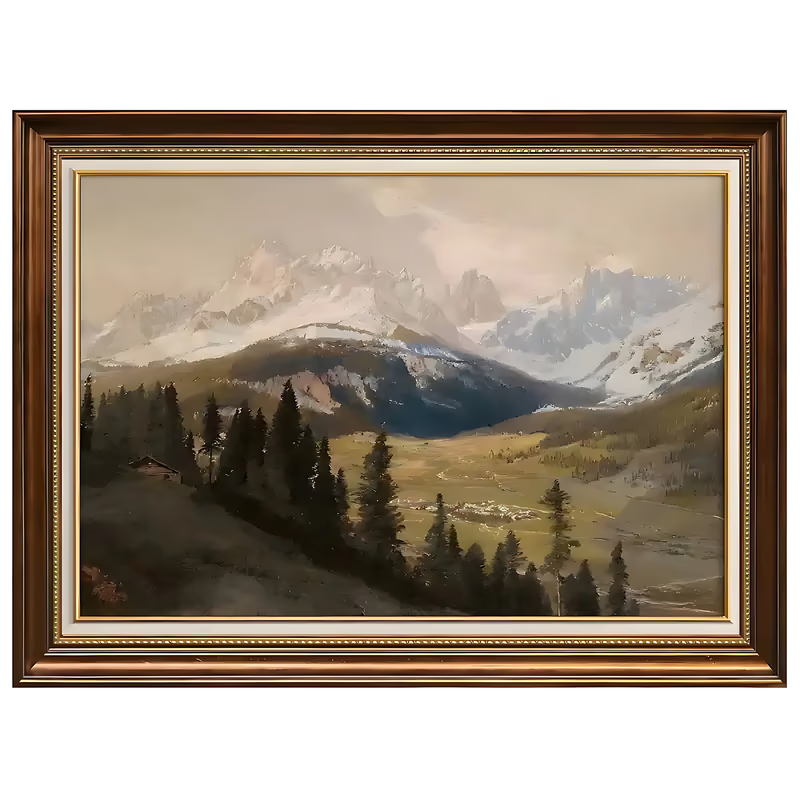
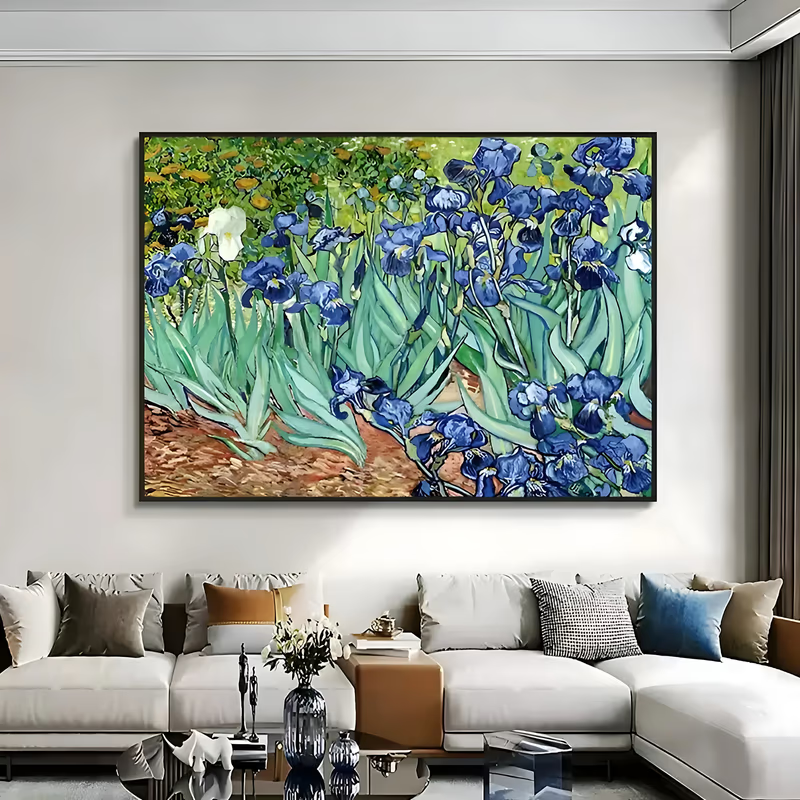
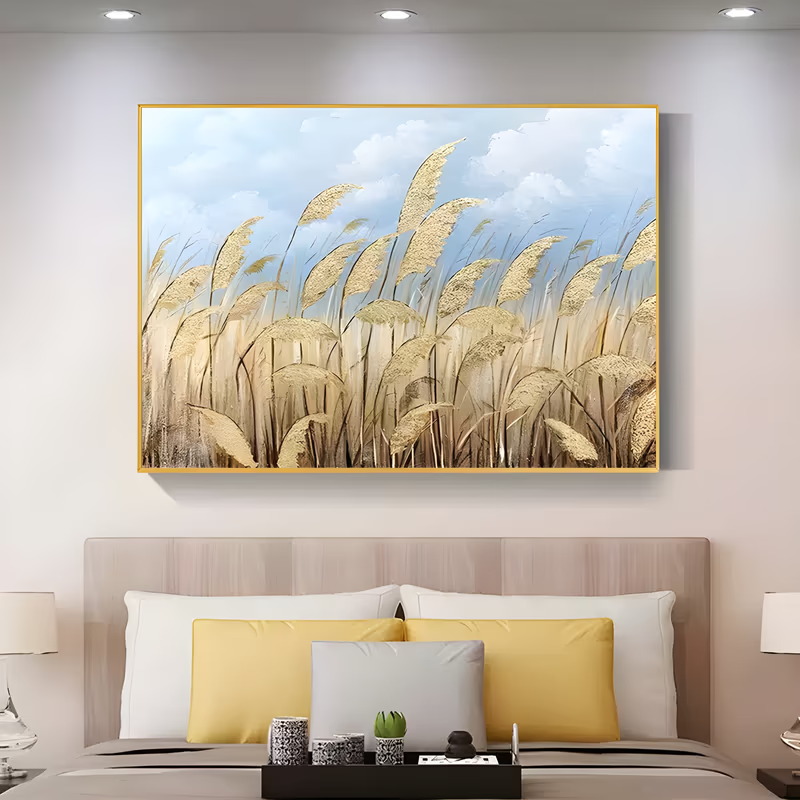
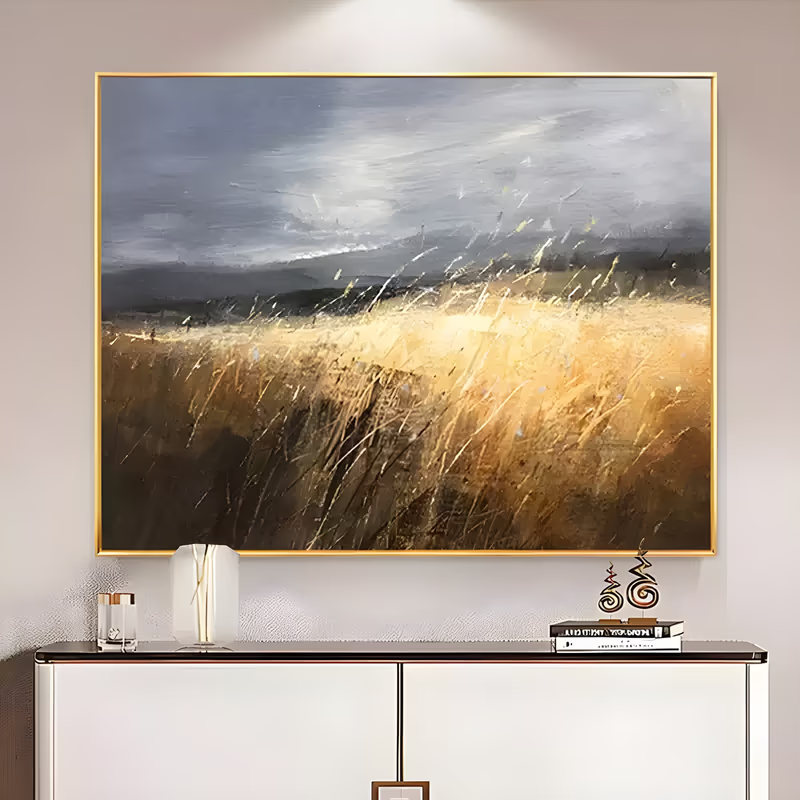
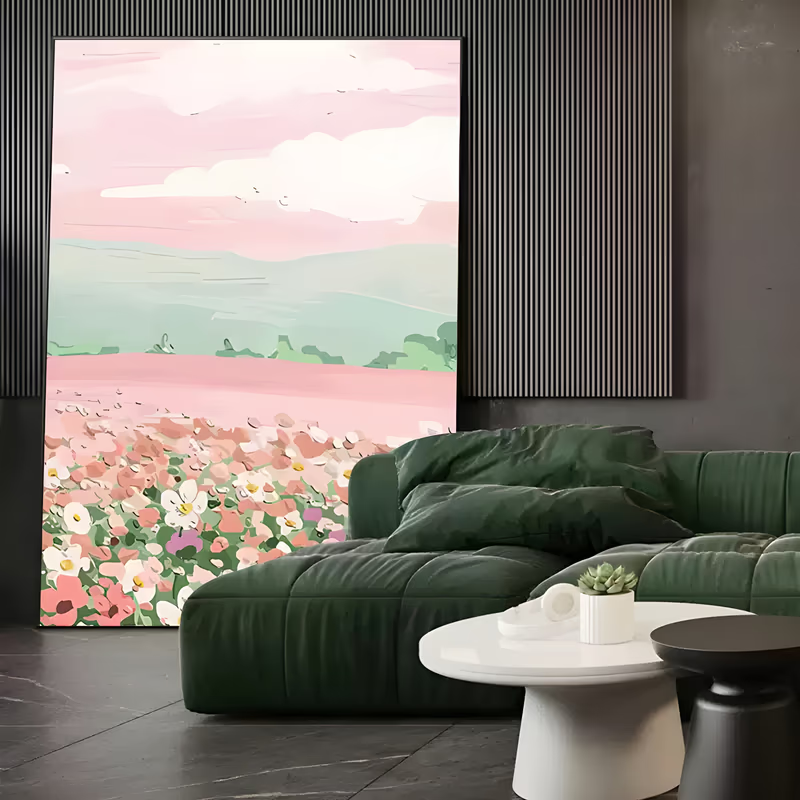
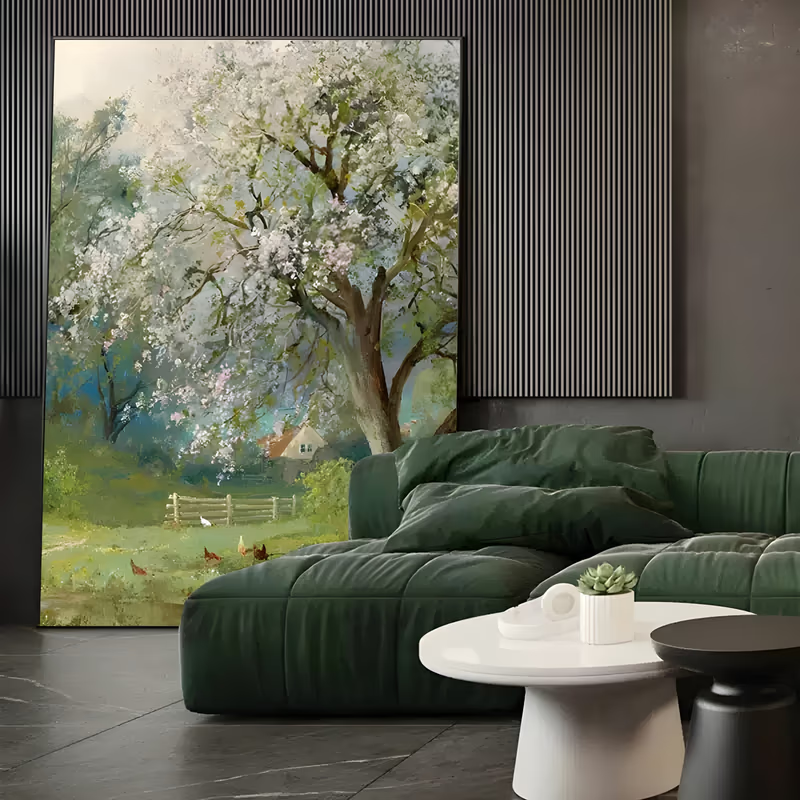
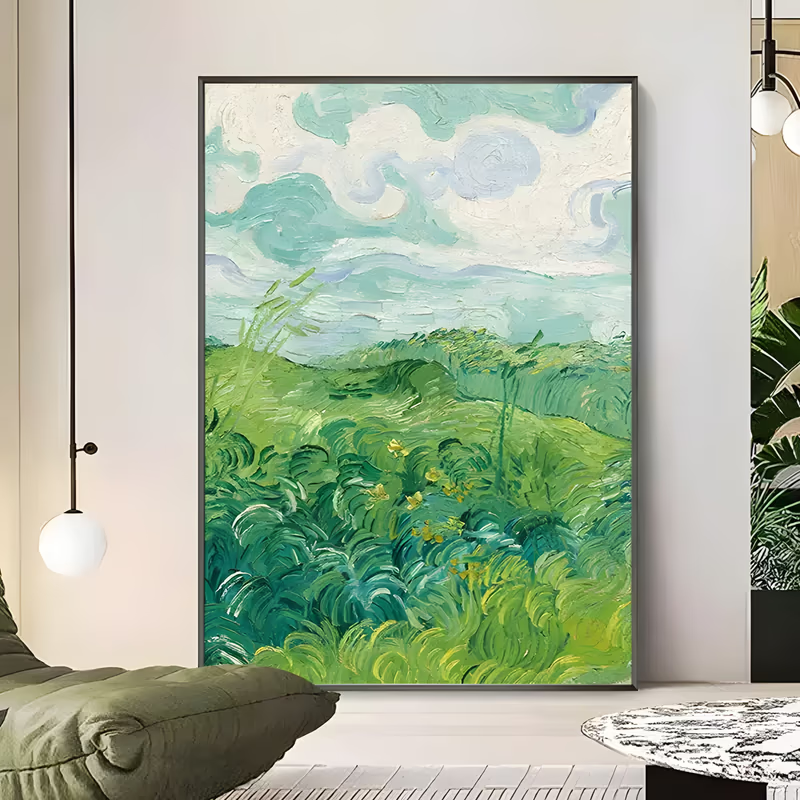
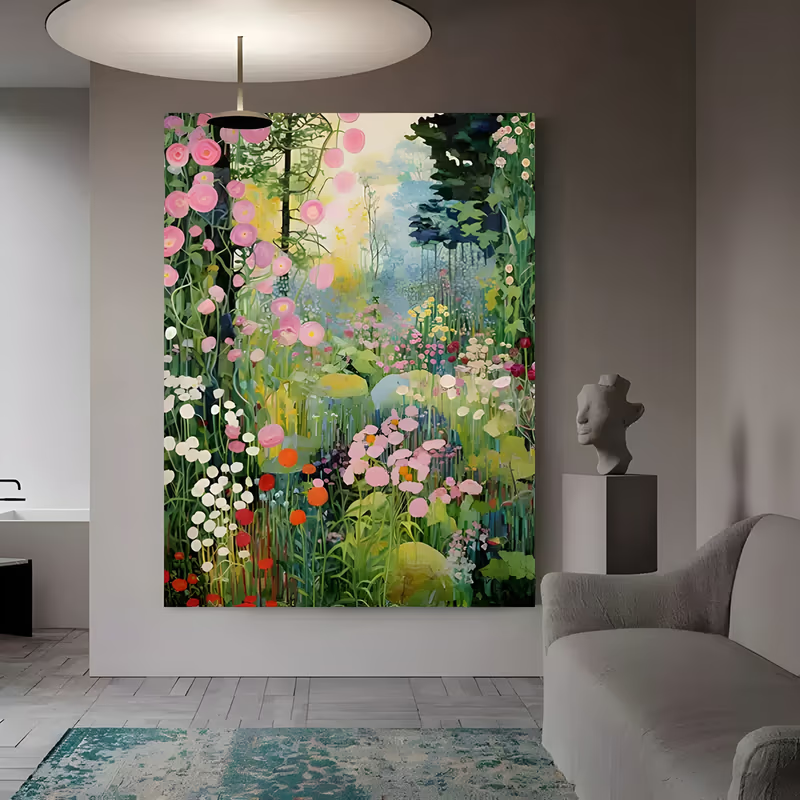
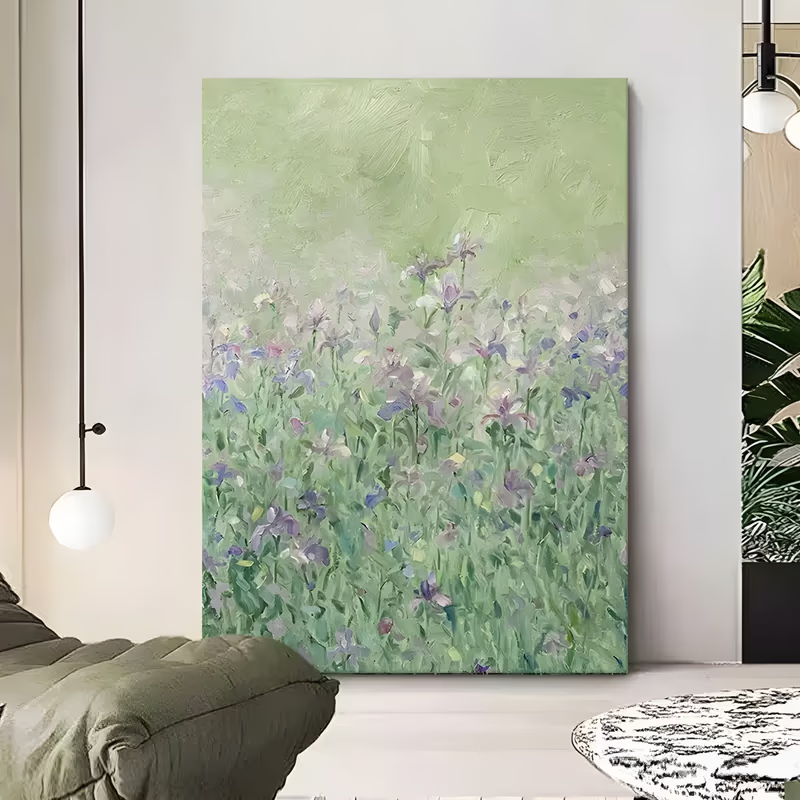
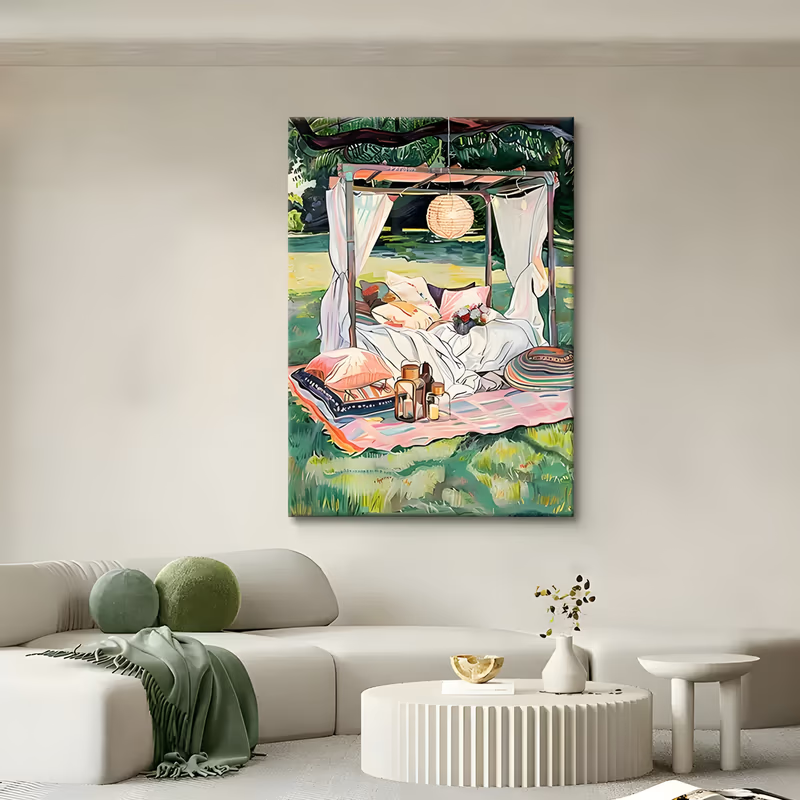
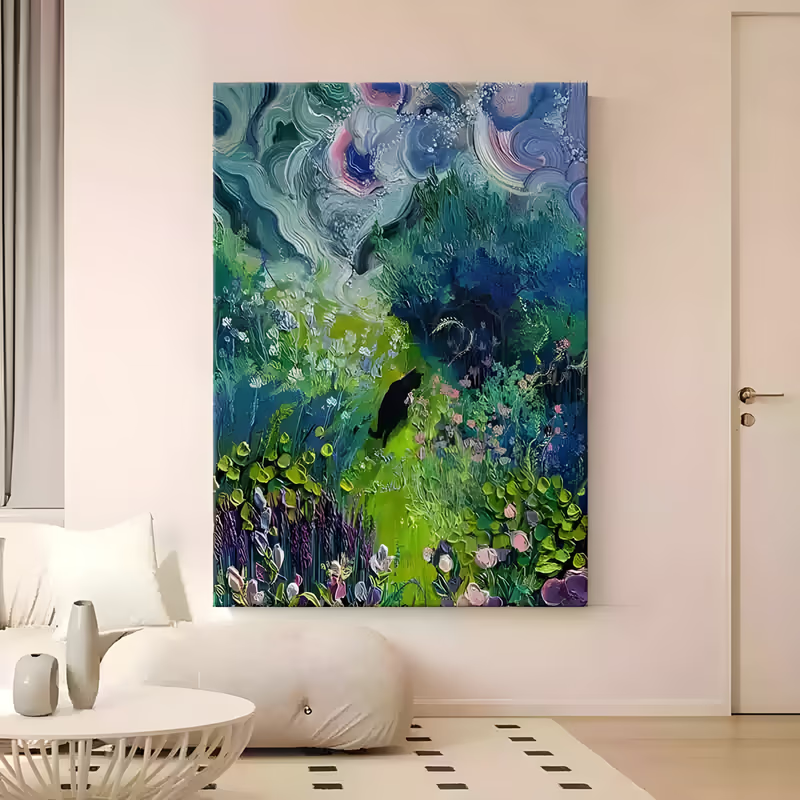
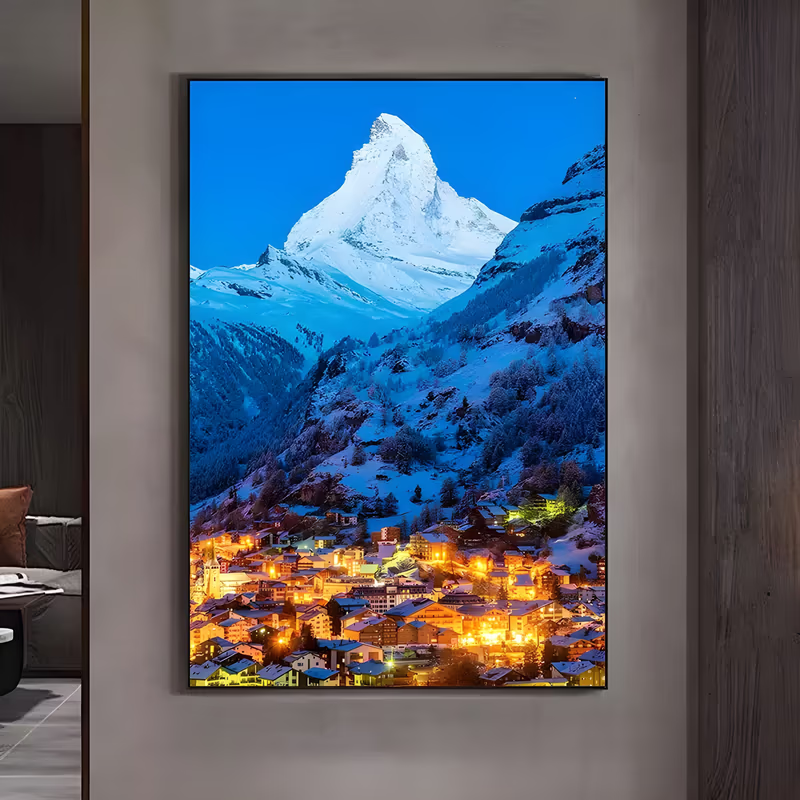
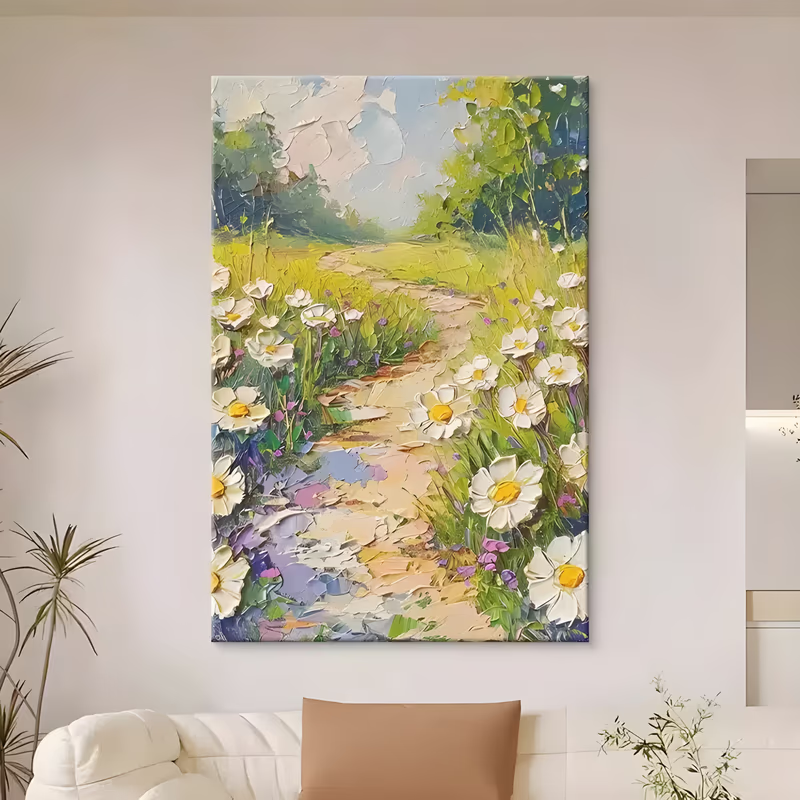
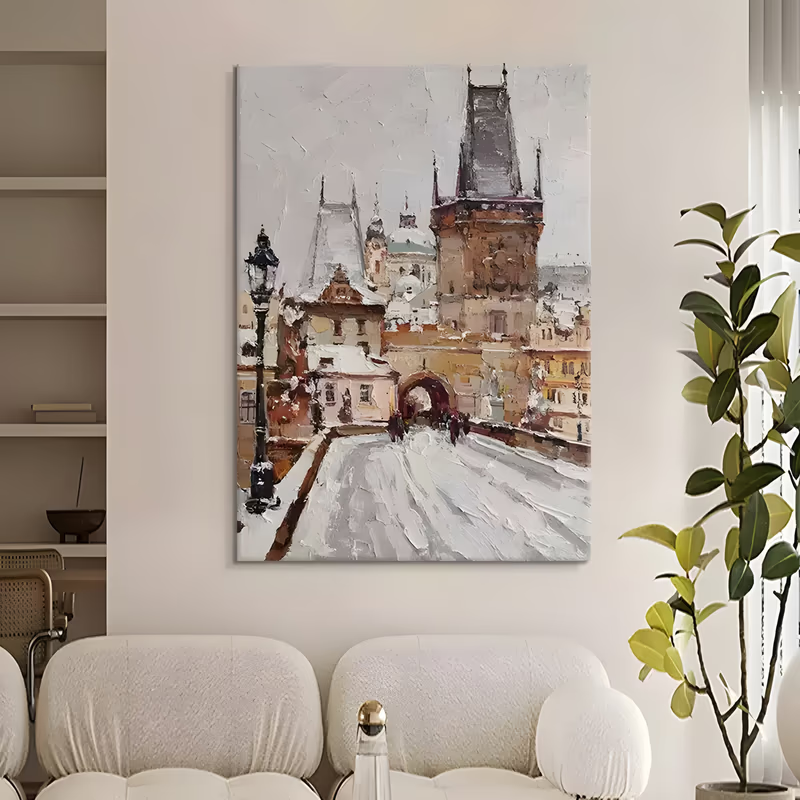
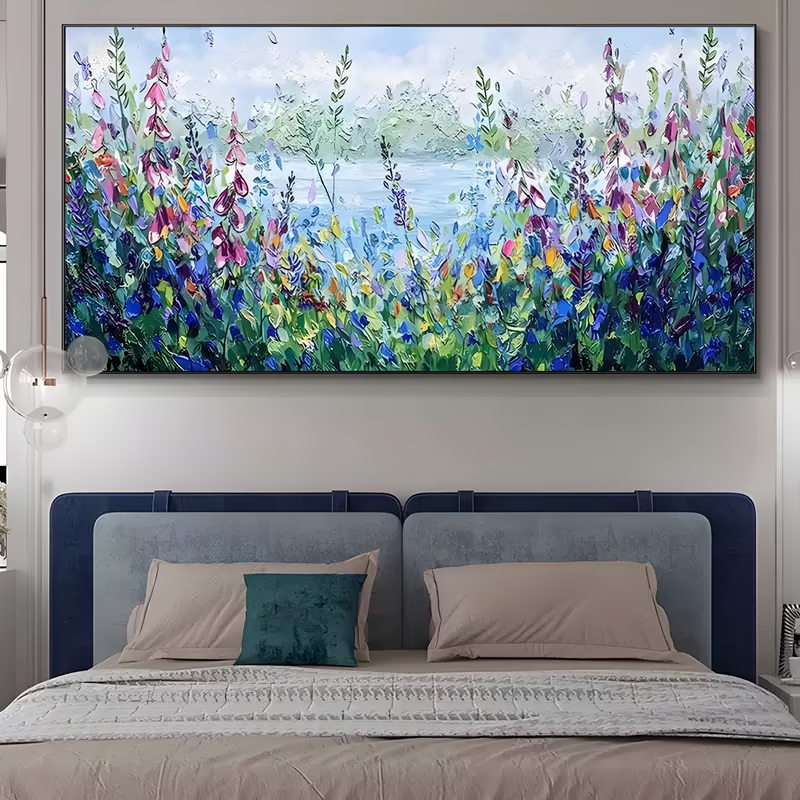
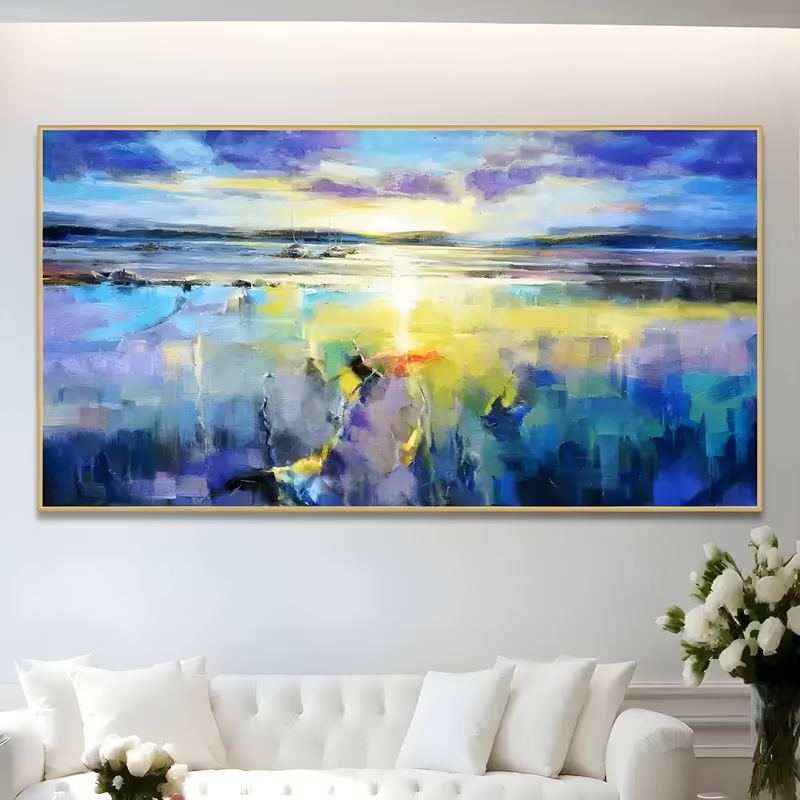
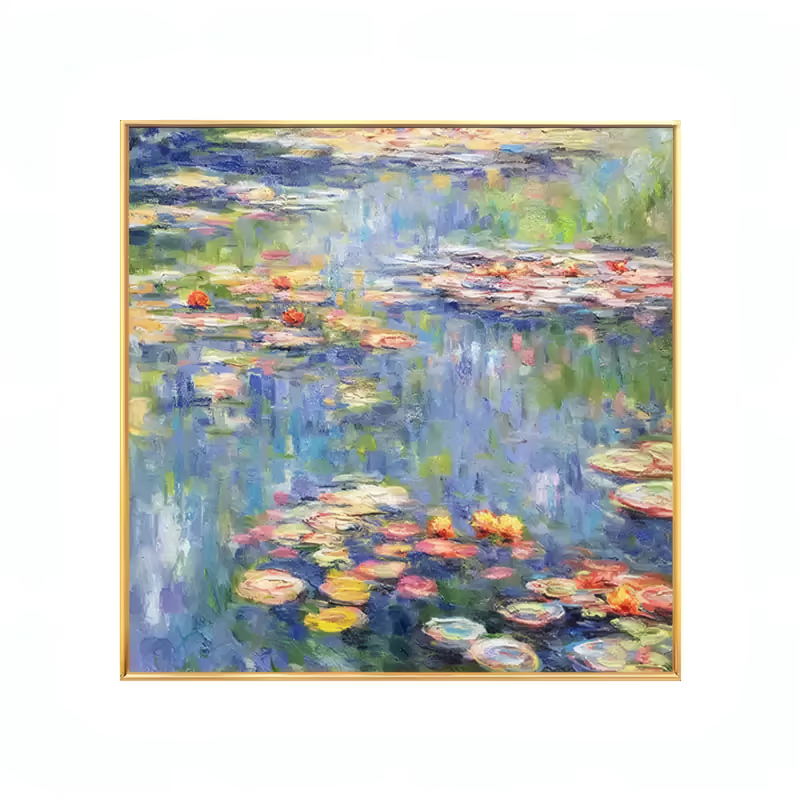
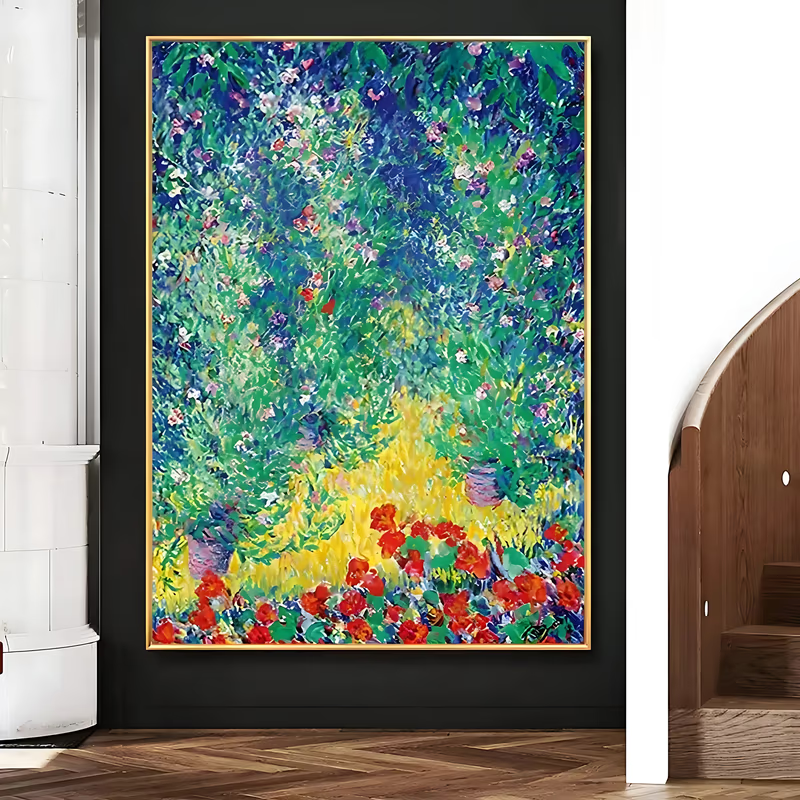
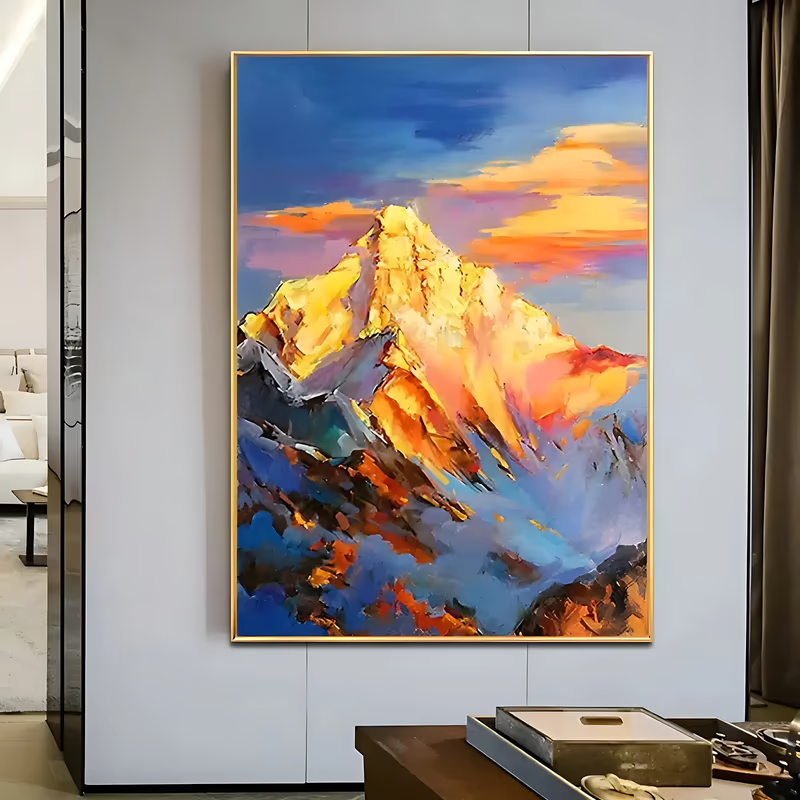
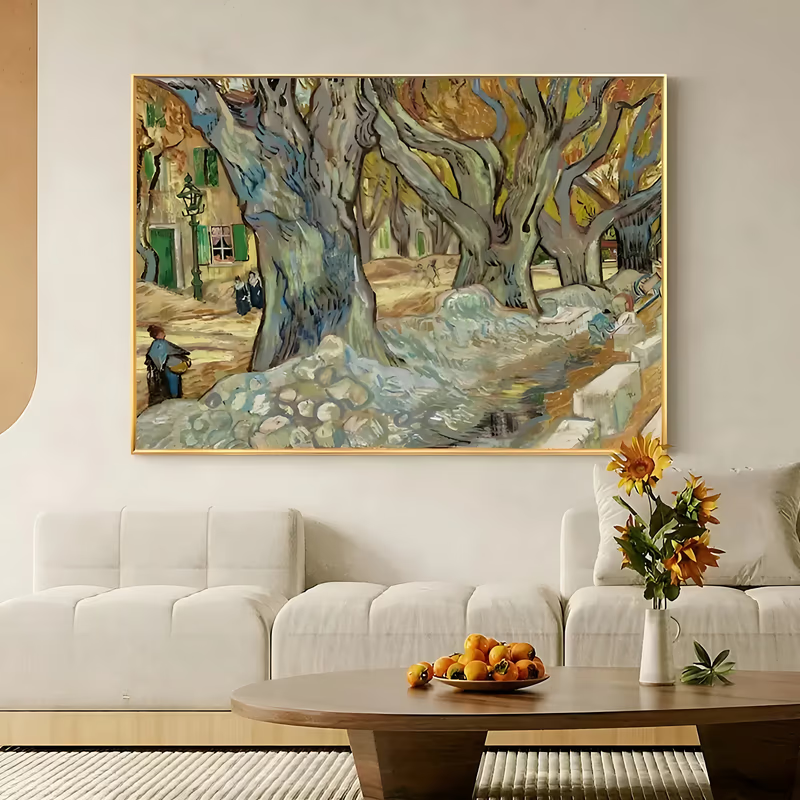
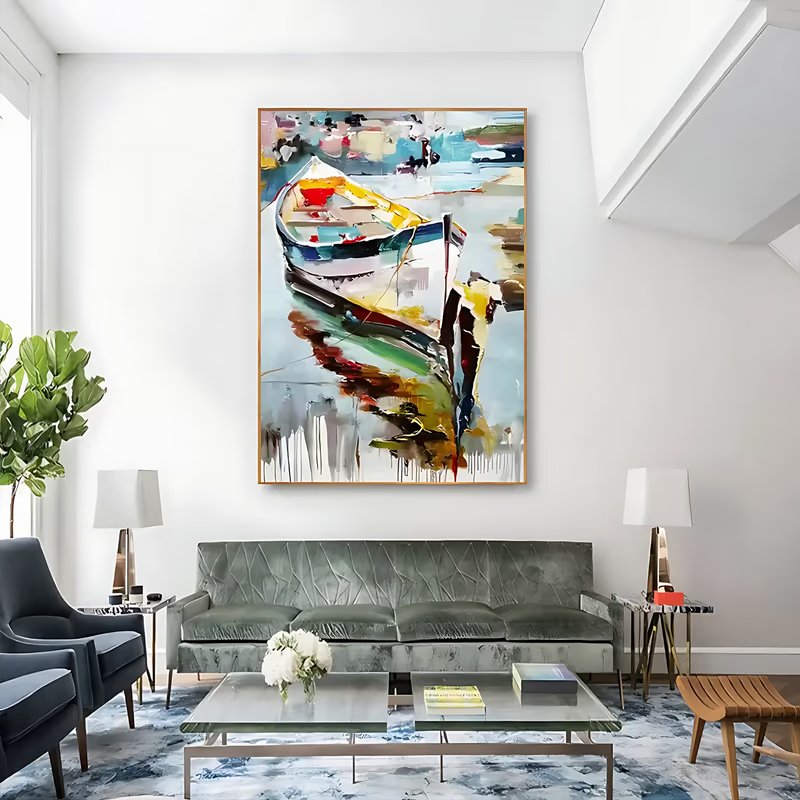
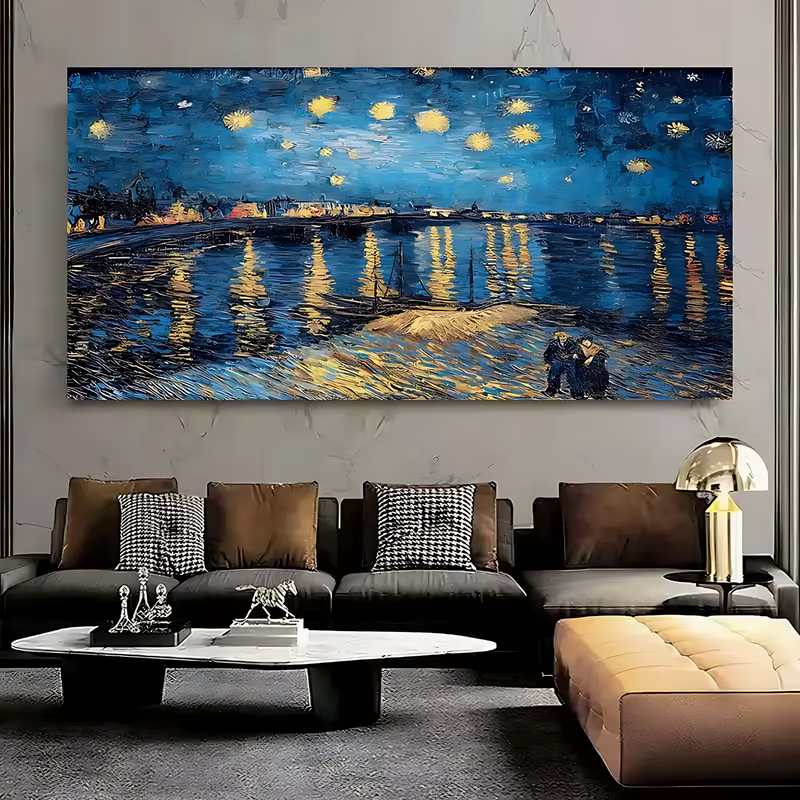
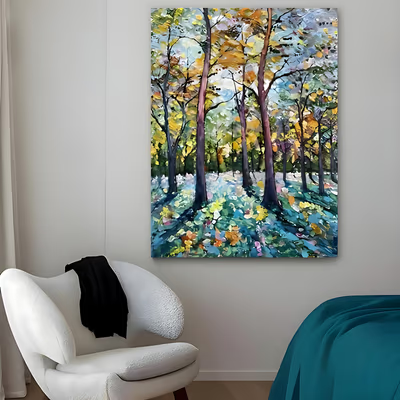
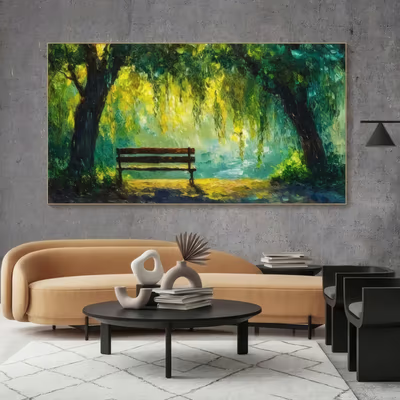
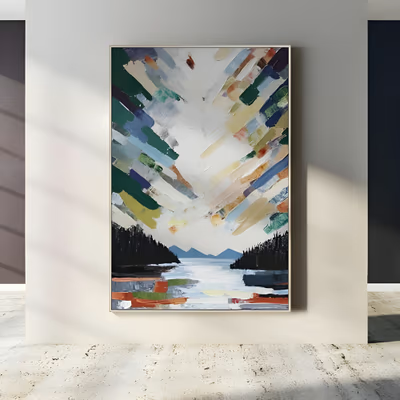
Broken strokes and luminous colour describe how a place feels at a given hour: alpine lakes ringed by pines, golden wheat with a blue cart, autumn paths under umbrellas, snowy peaks at first light. The most traditional of the four, and the easiest to live with. See the impressionist style.
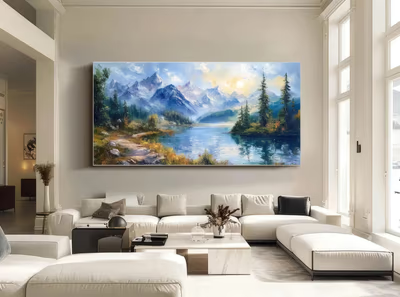
Sculpted relief landscapes
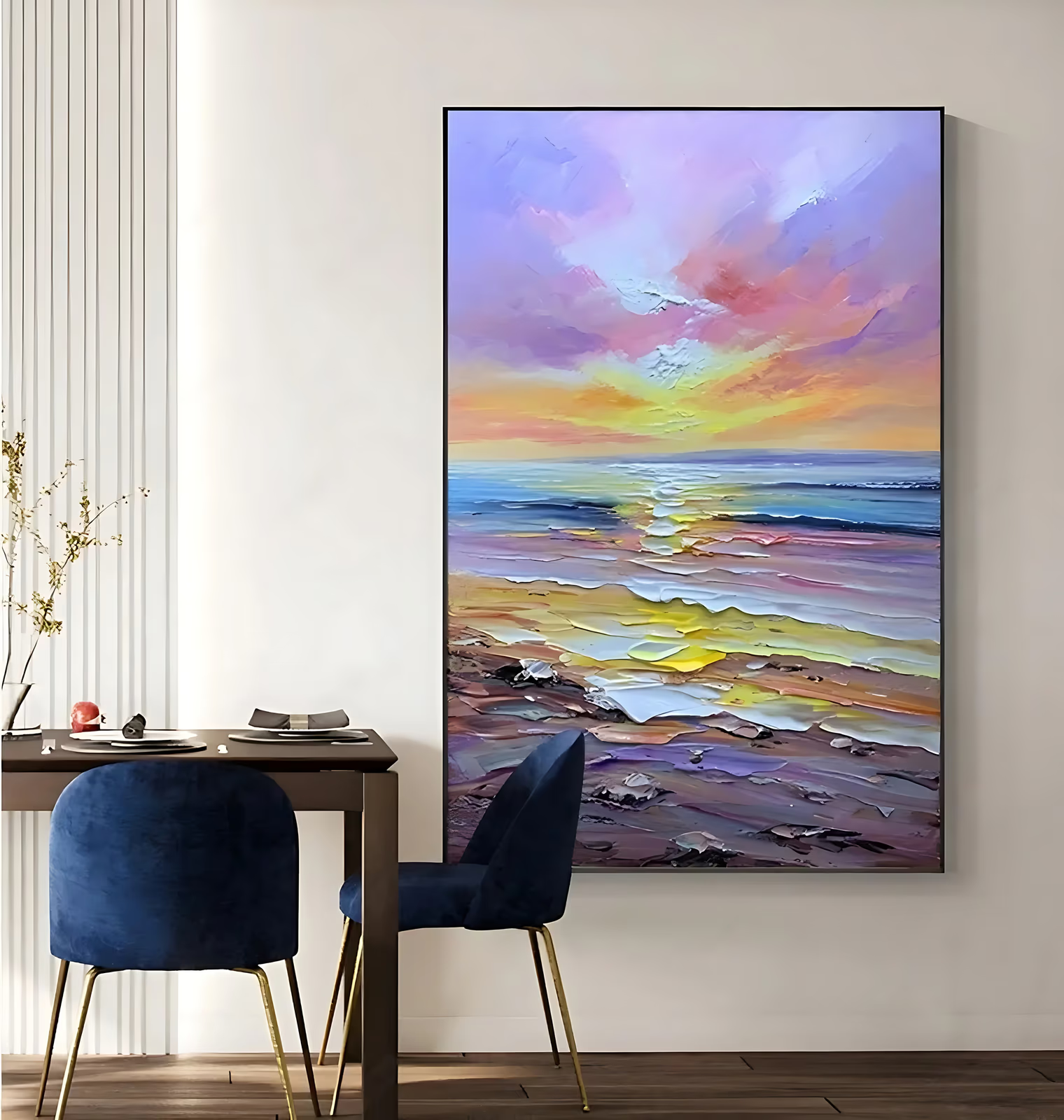
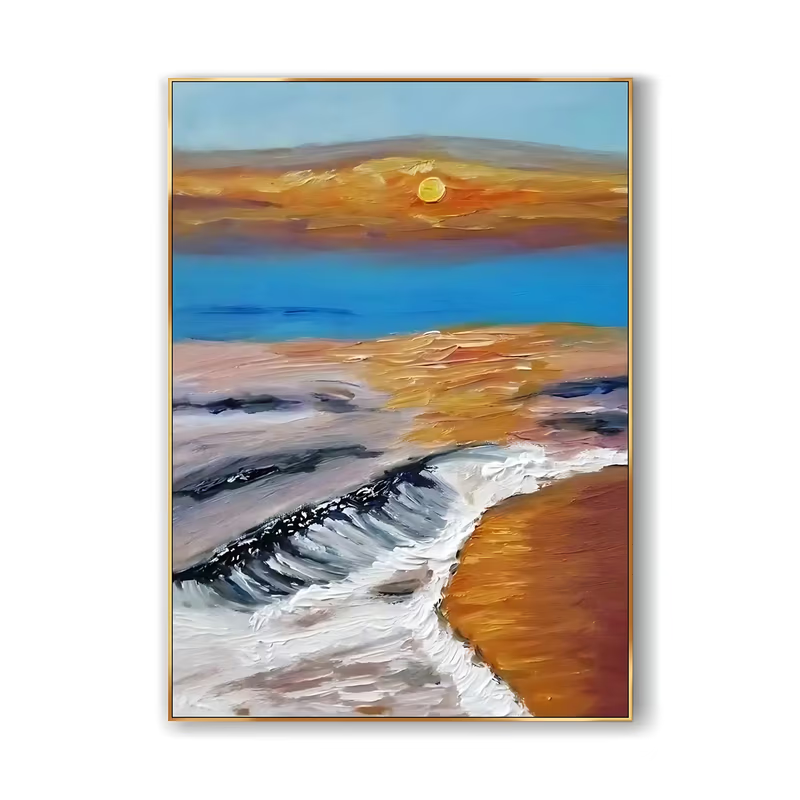
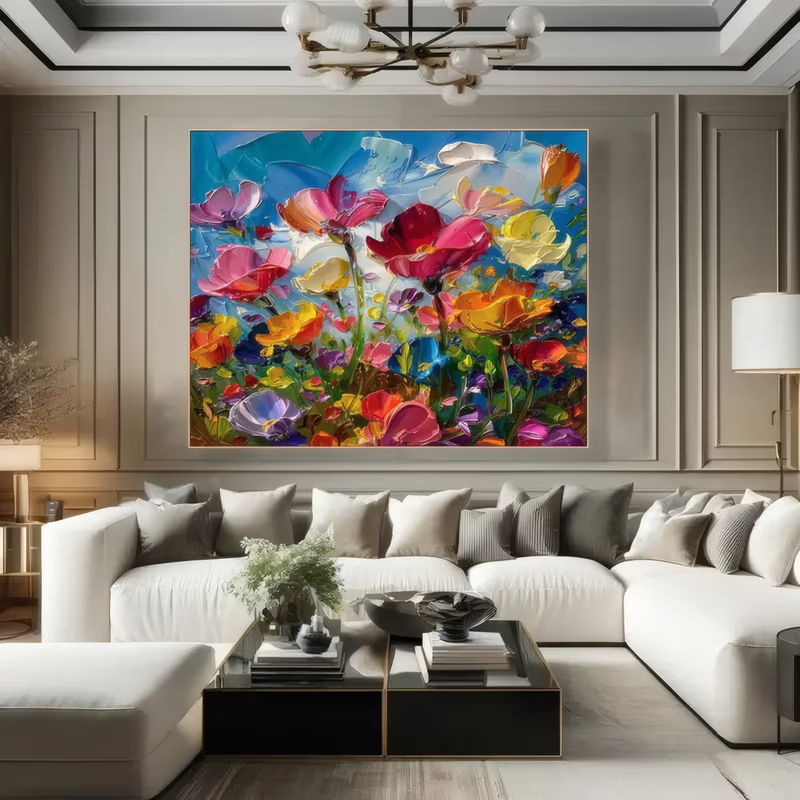
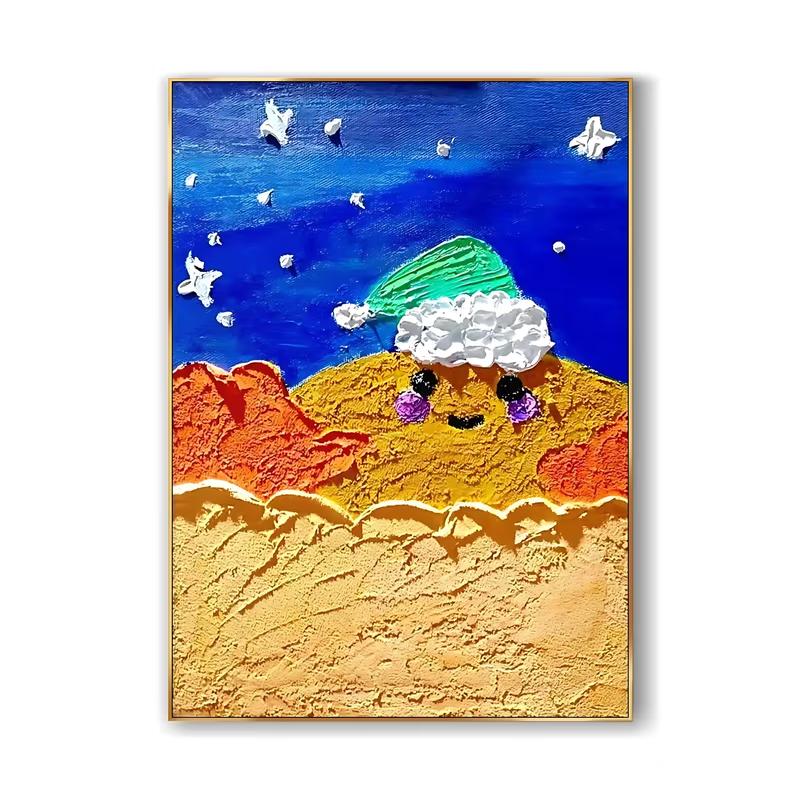
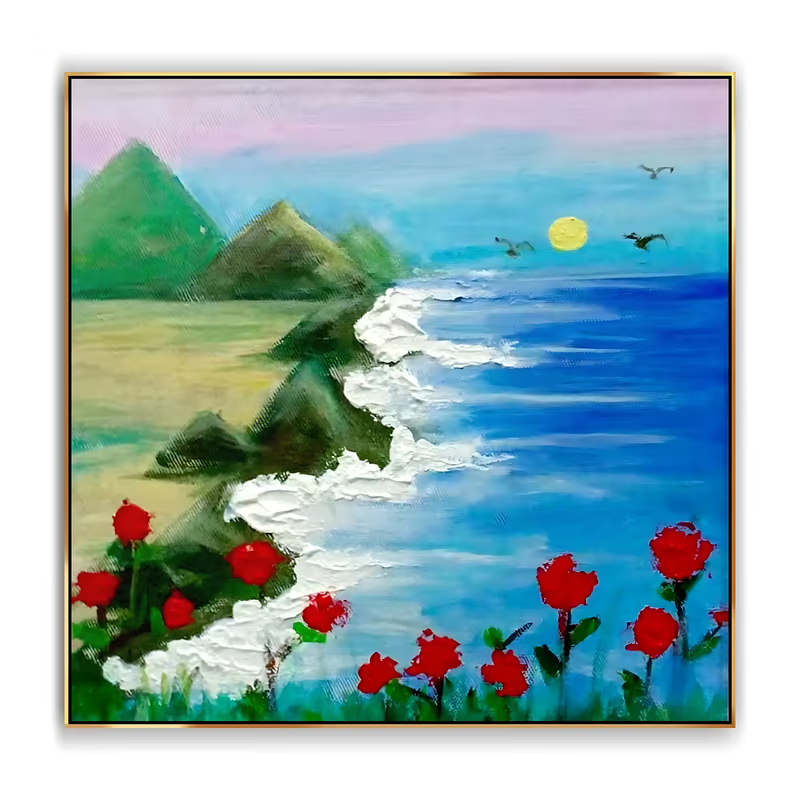
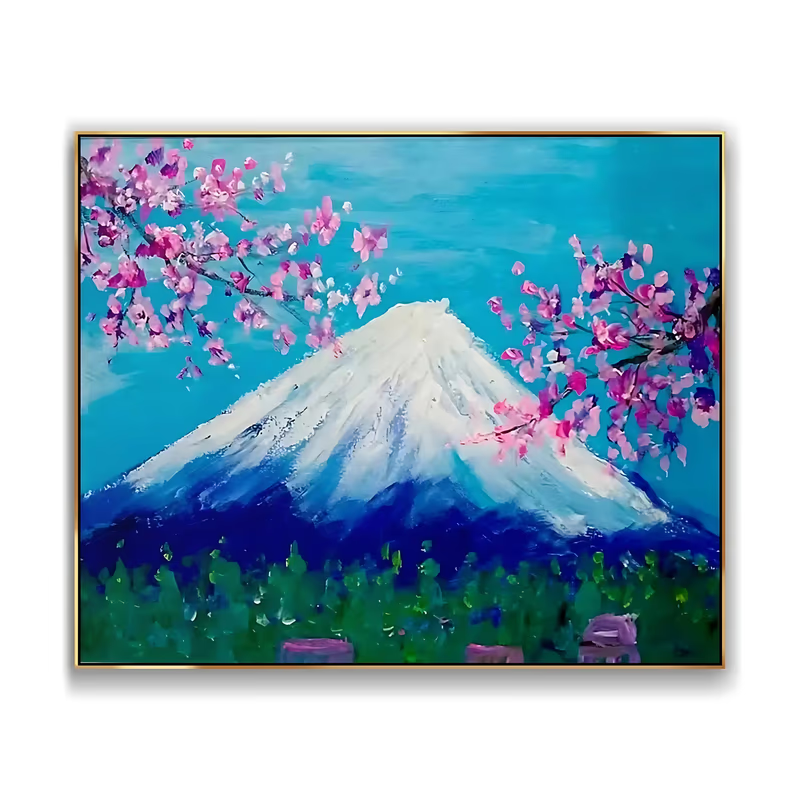
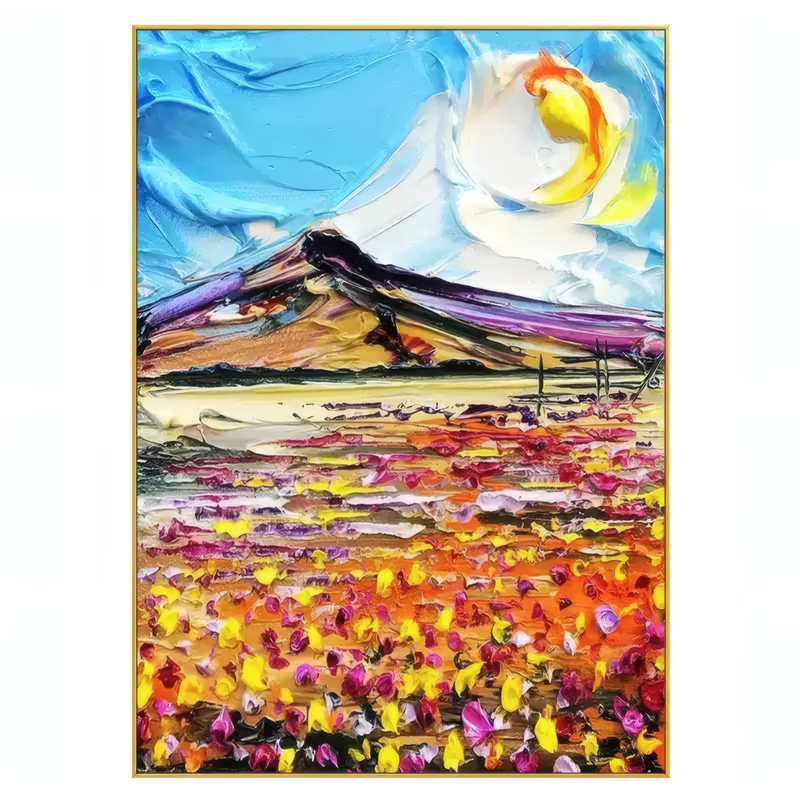
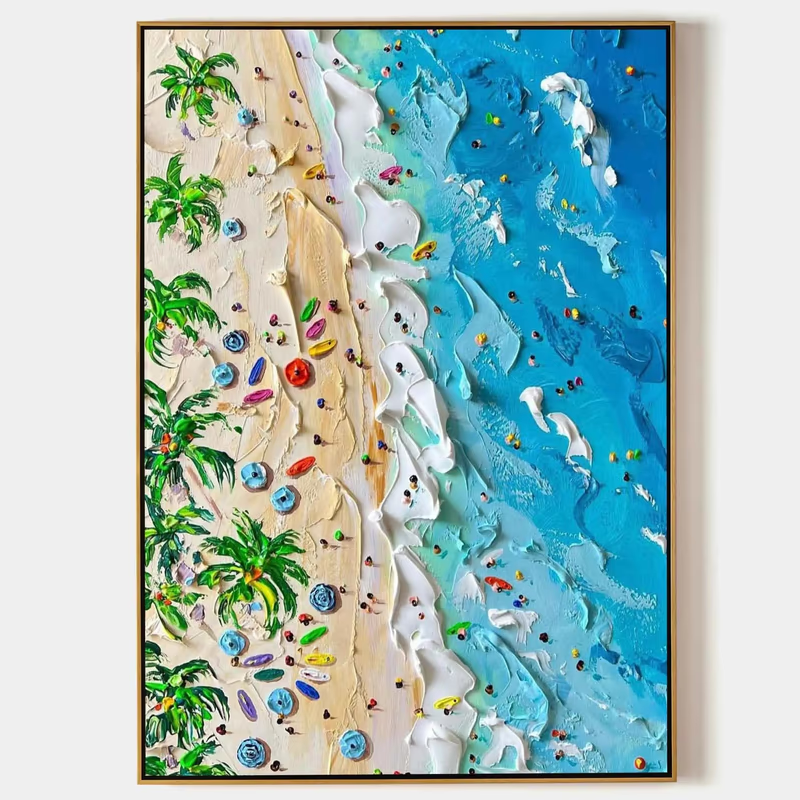
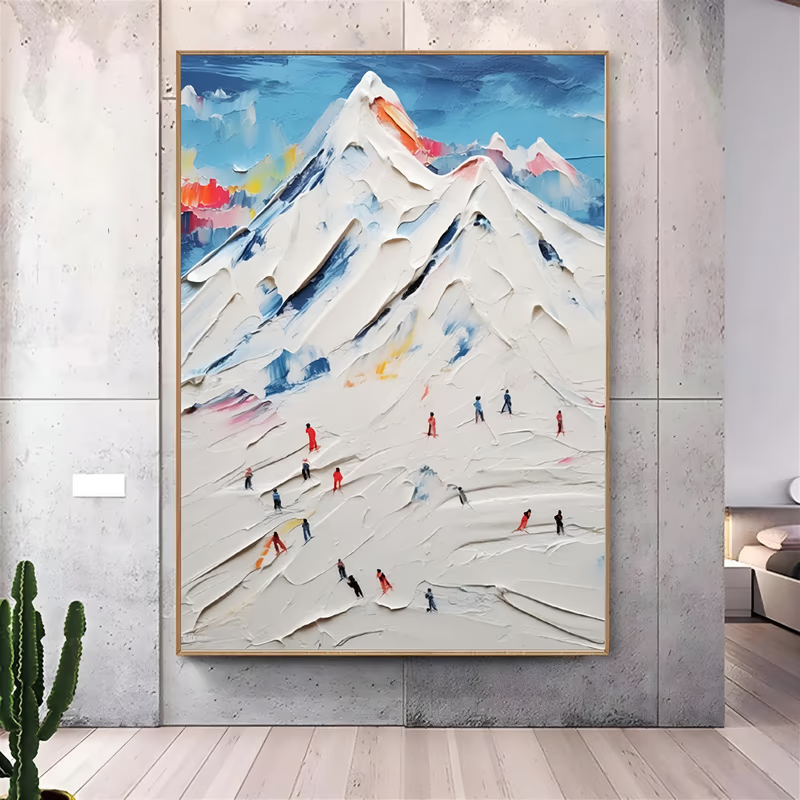
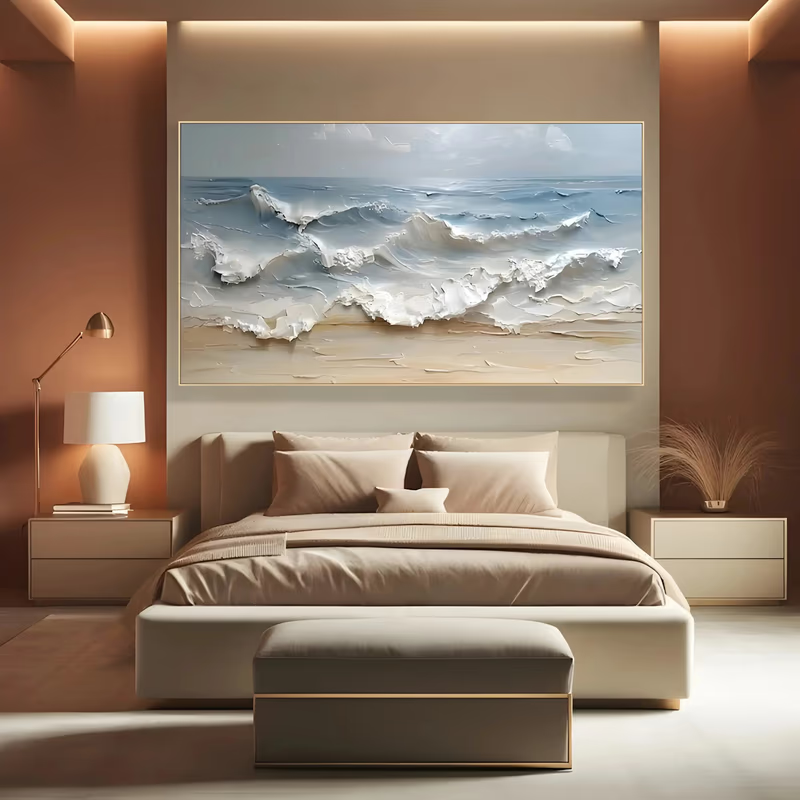
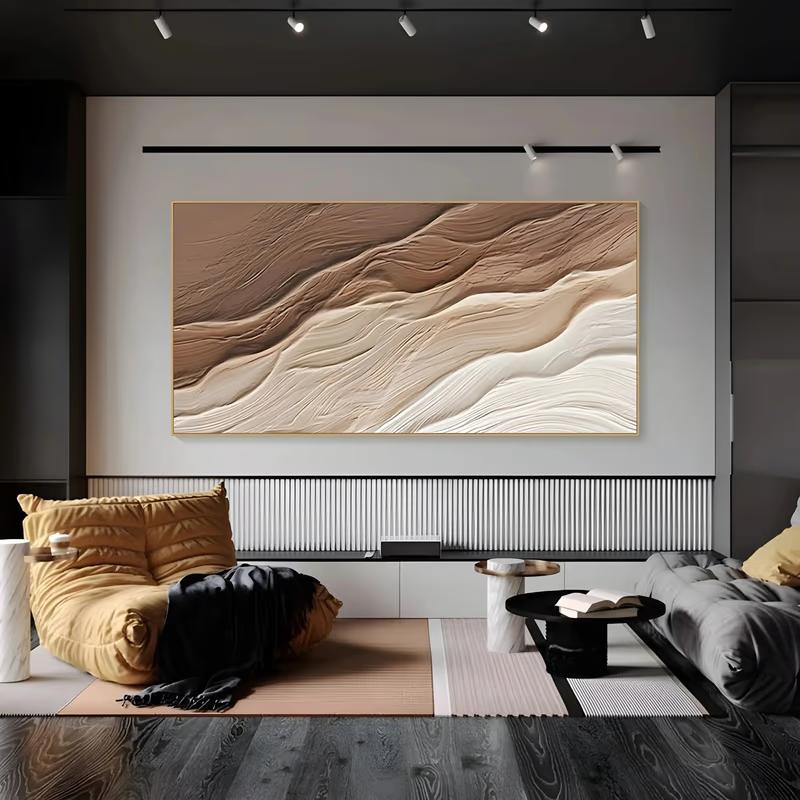
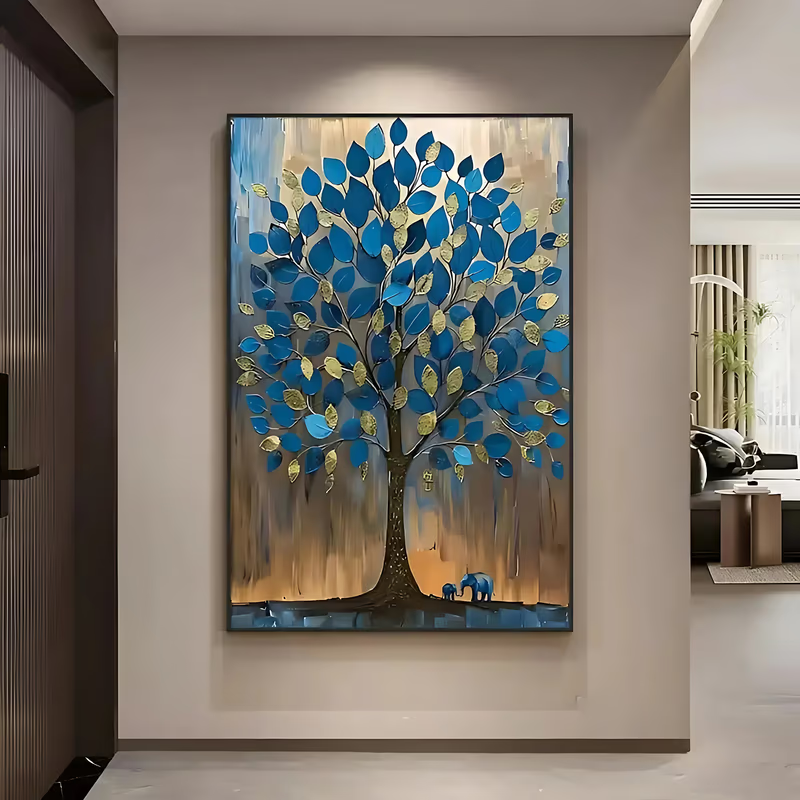
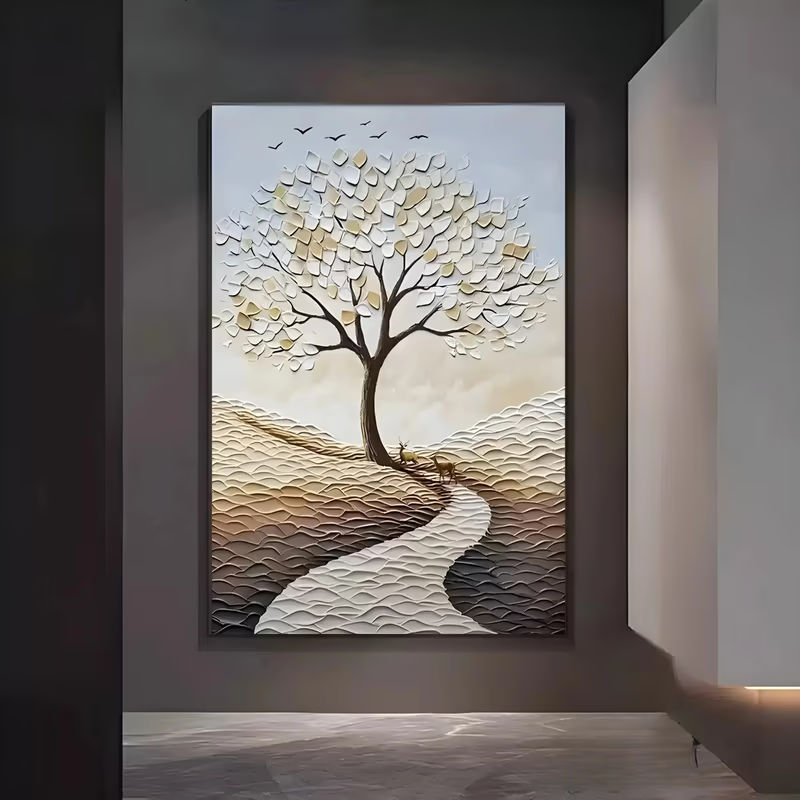
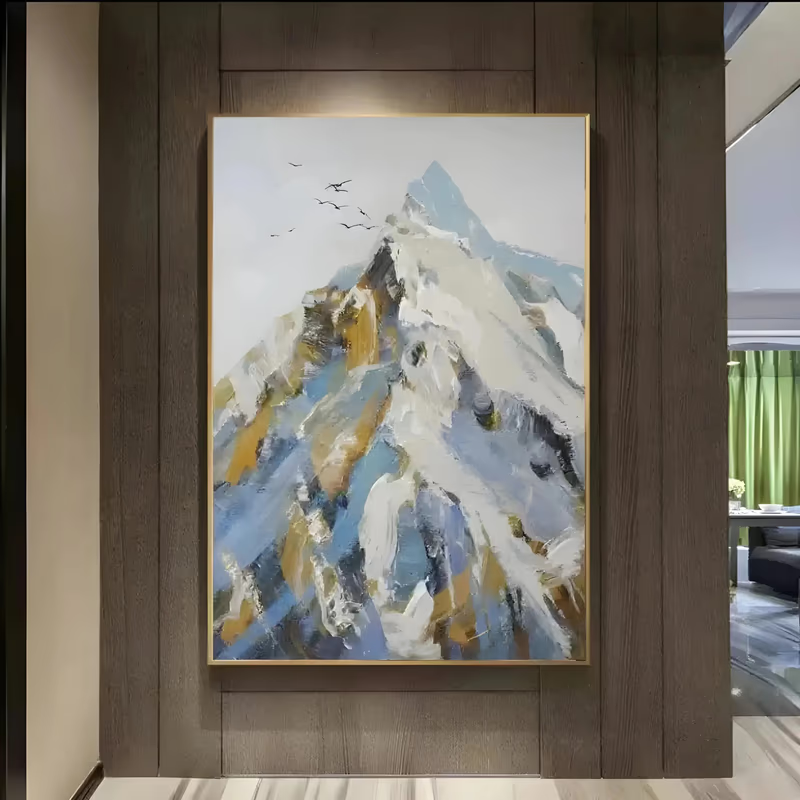
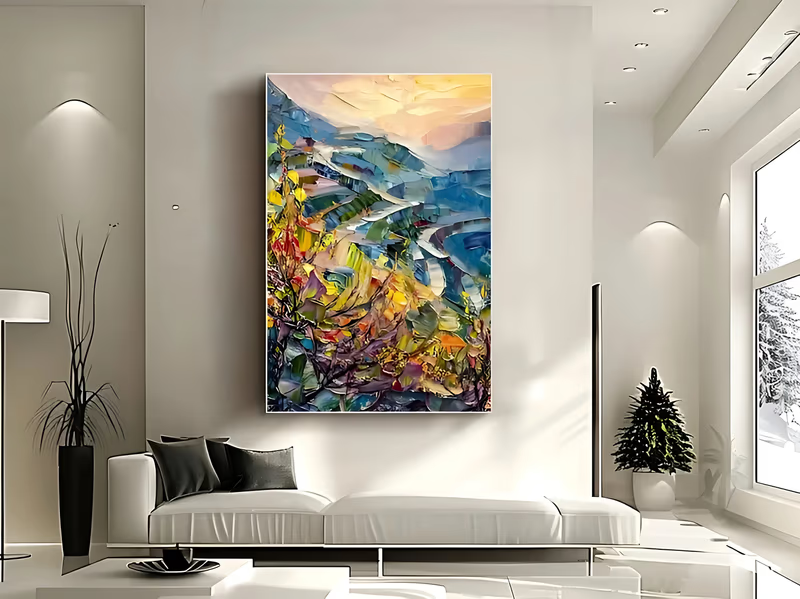
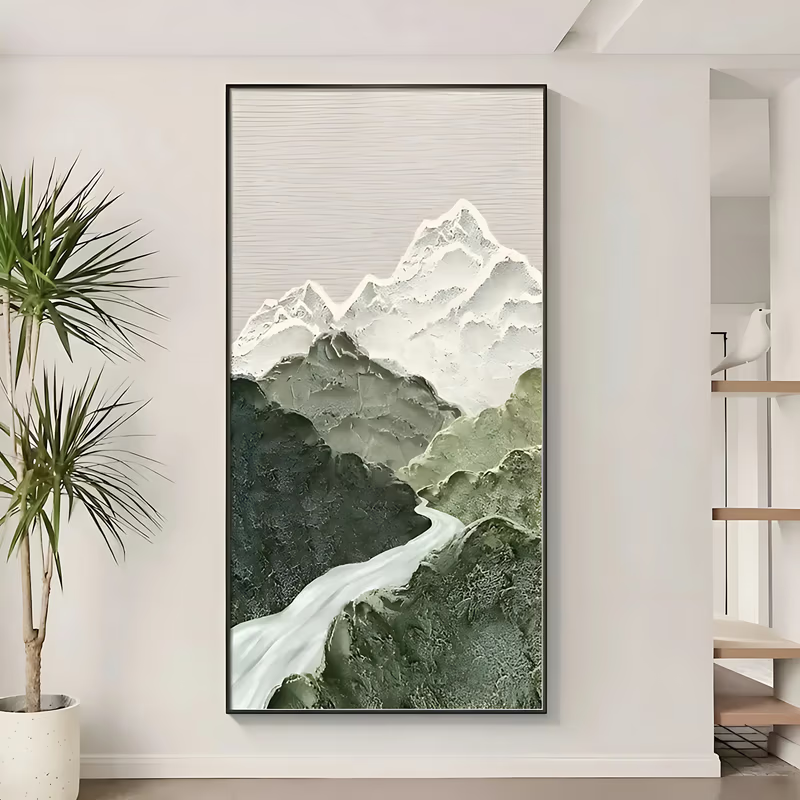
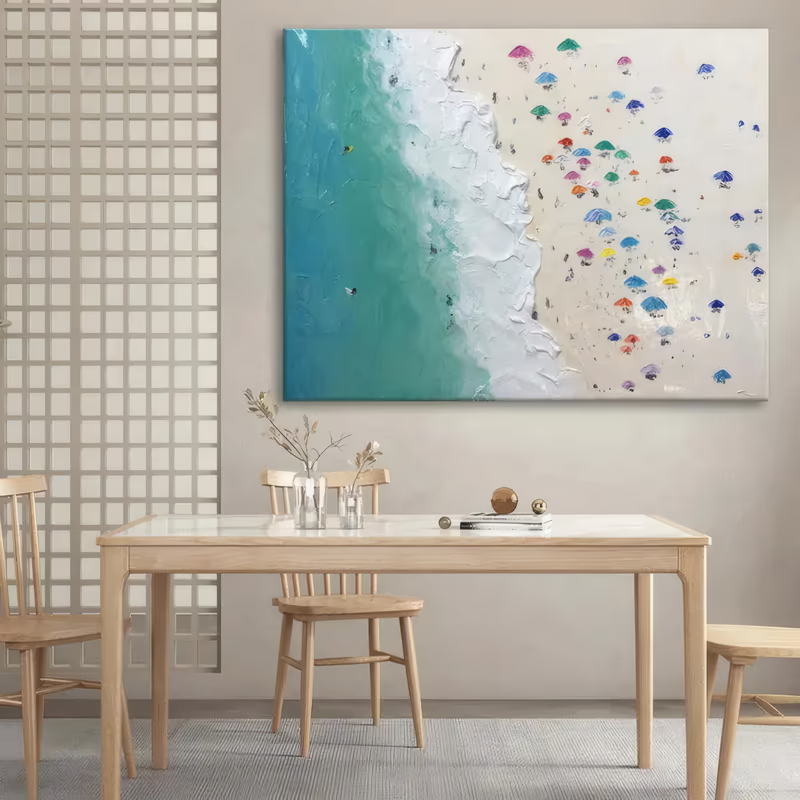
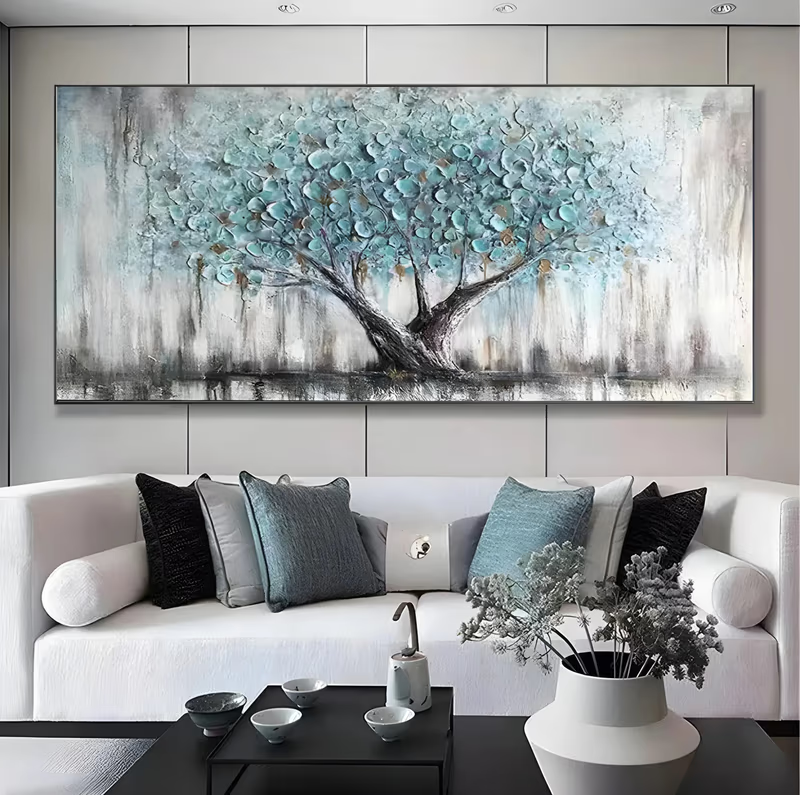
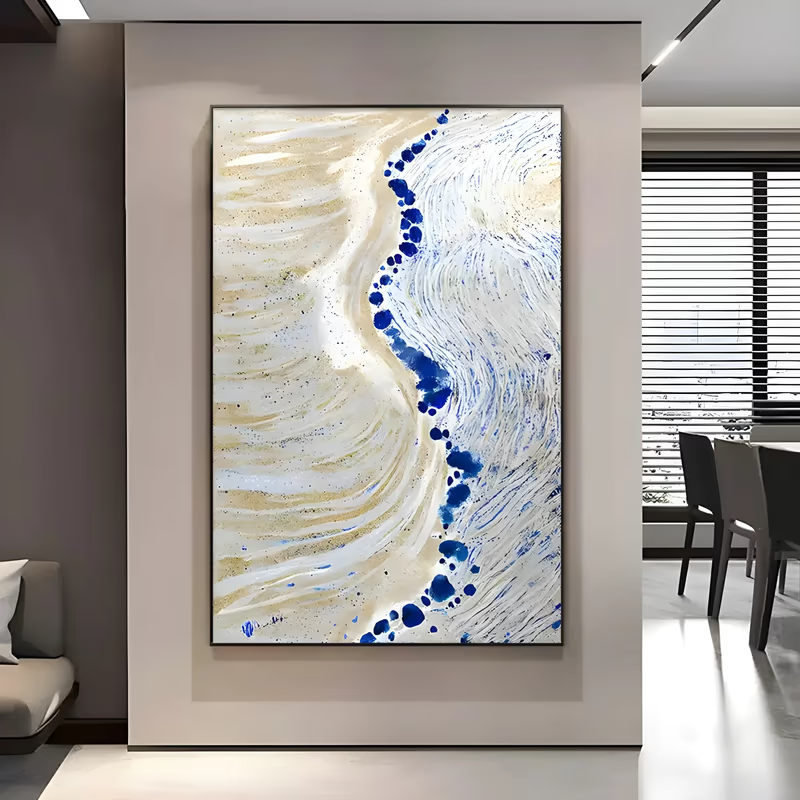
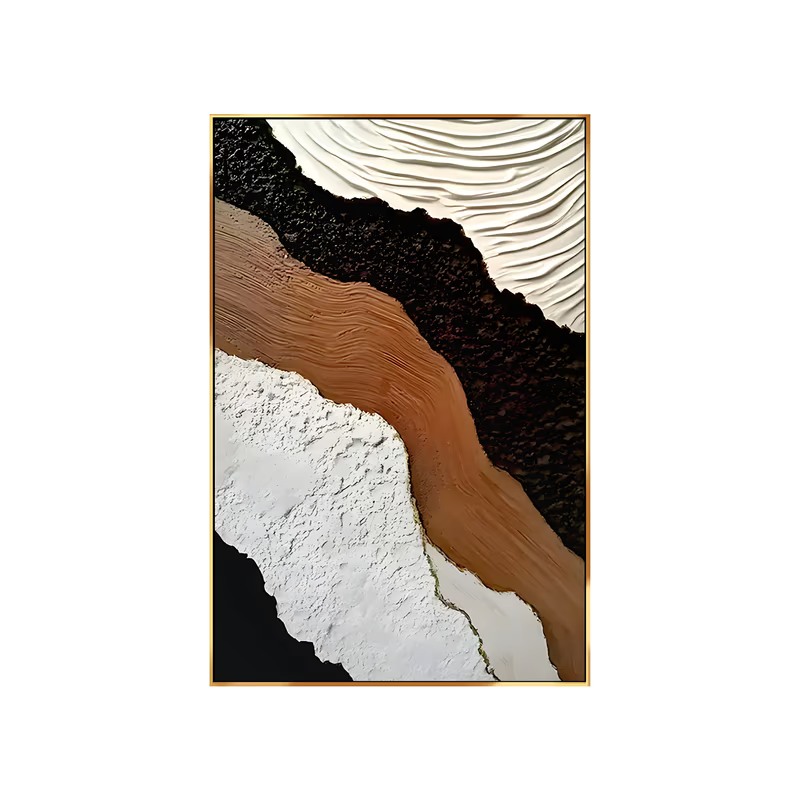
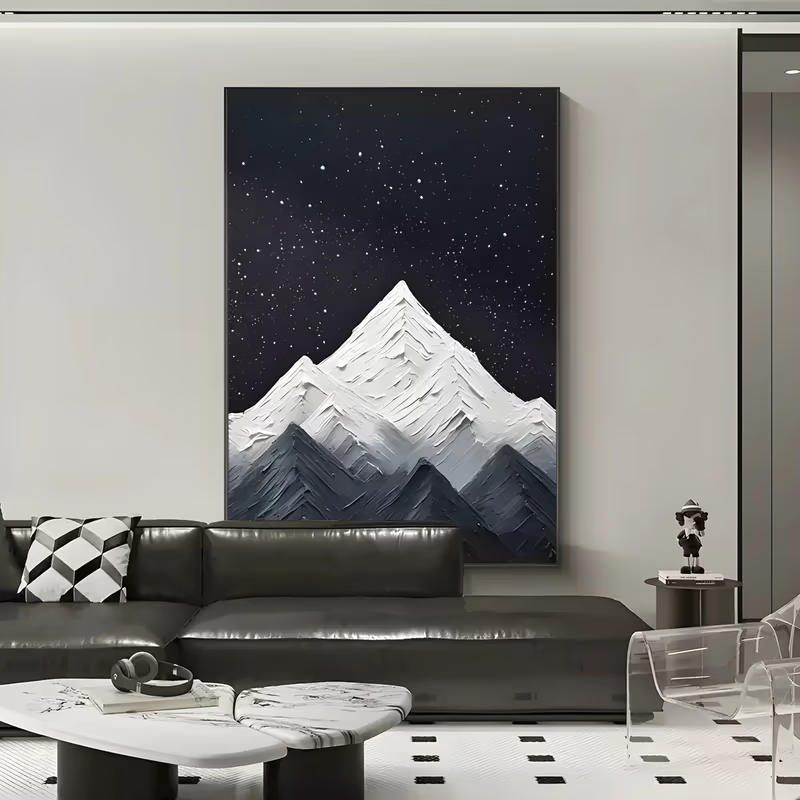
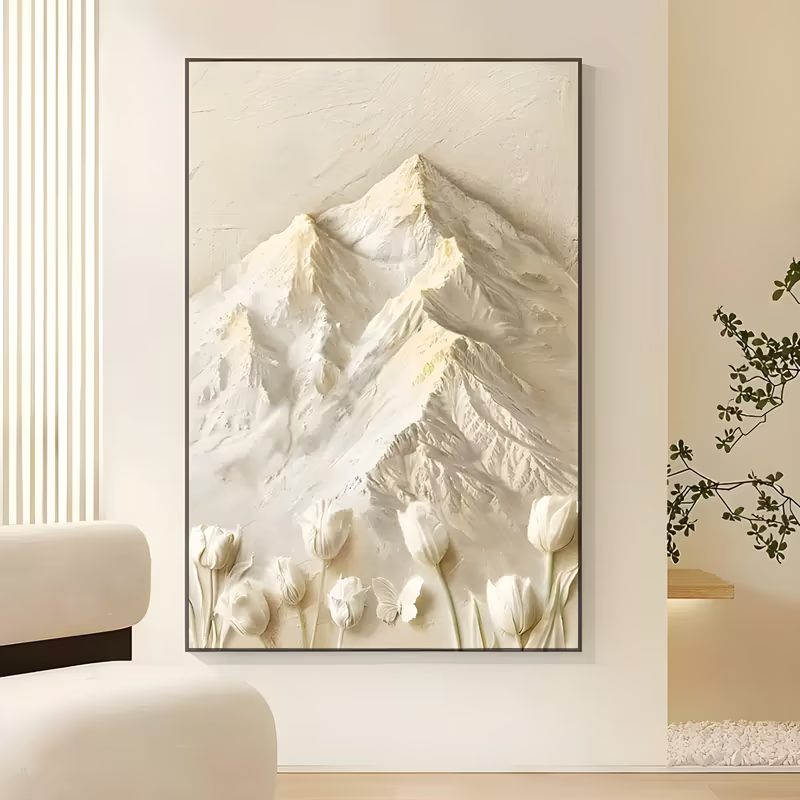
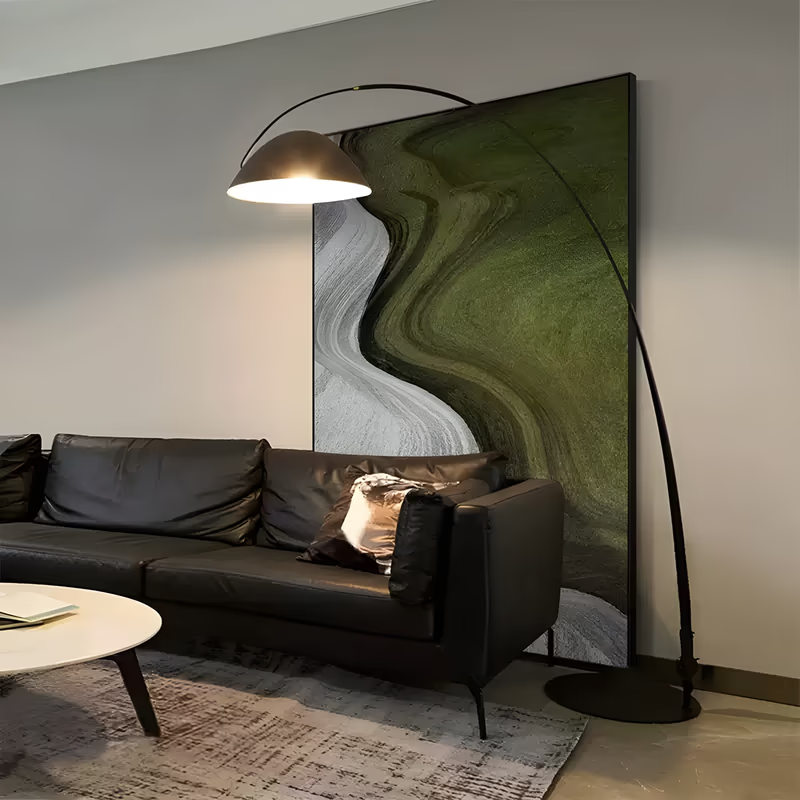
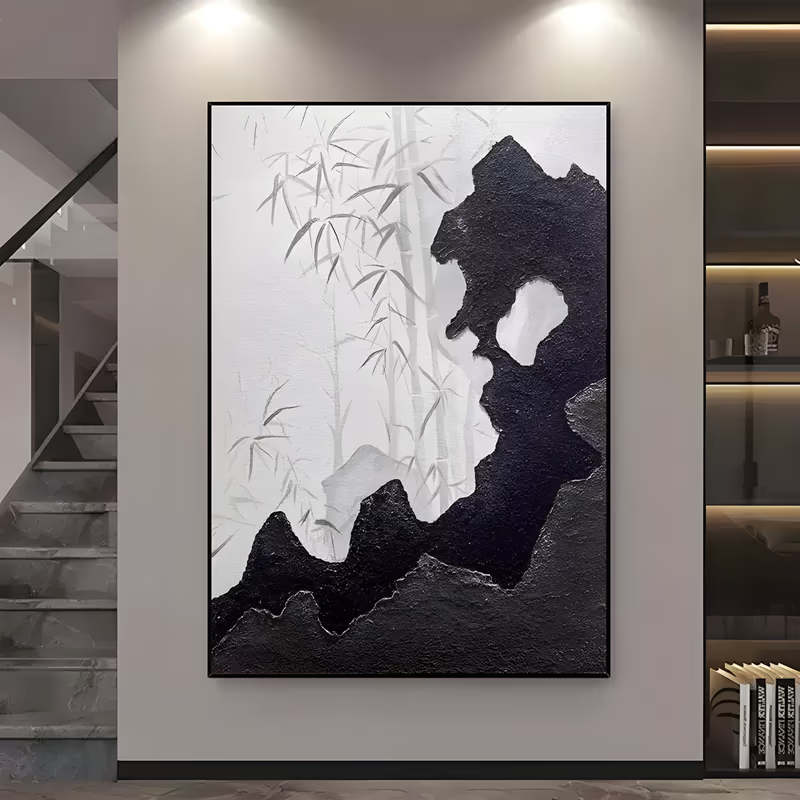
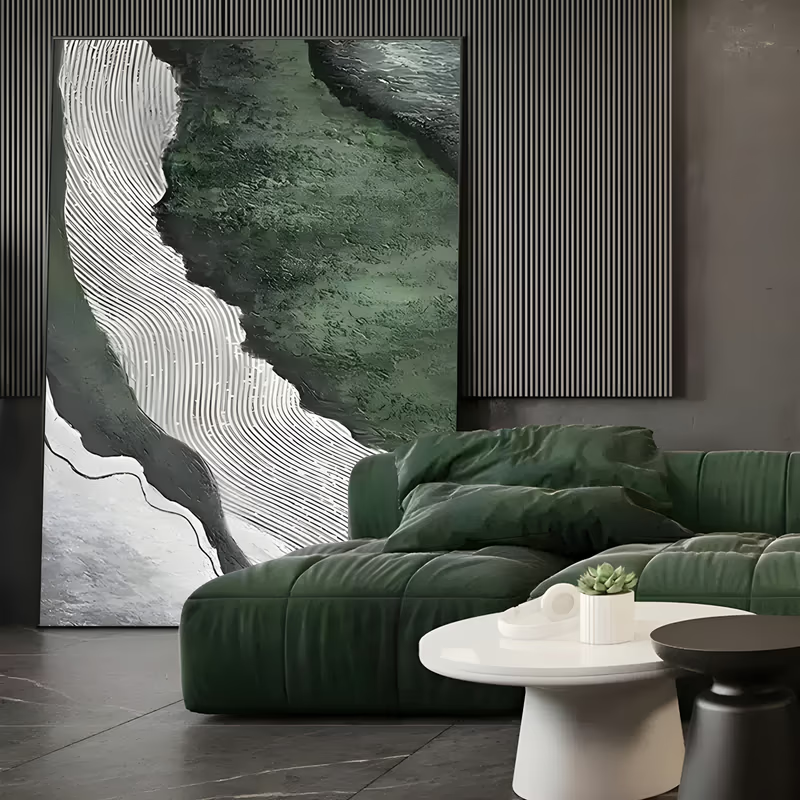
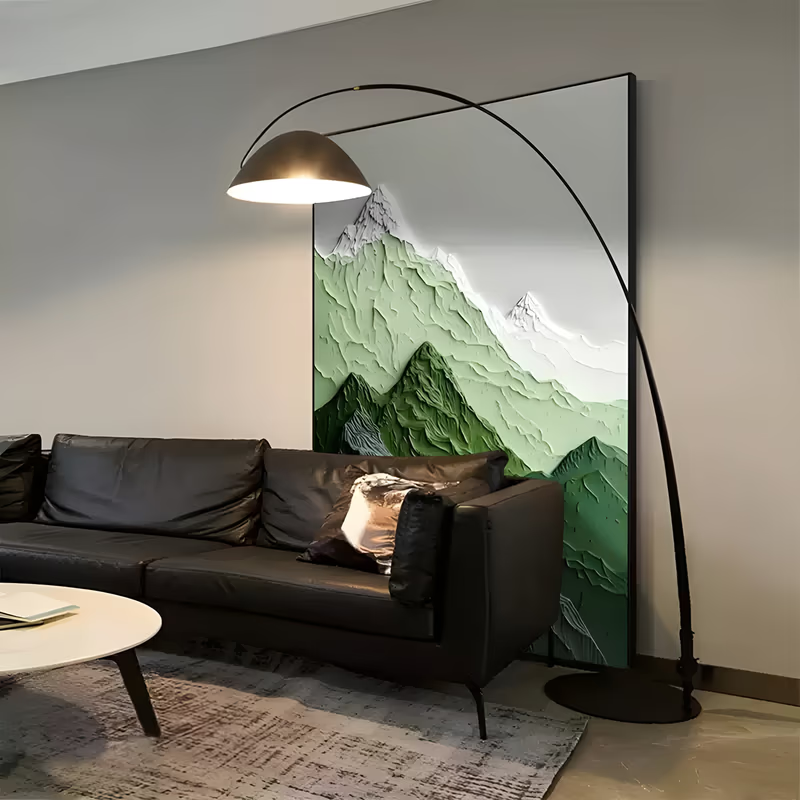
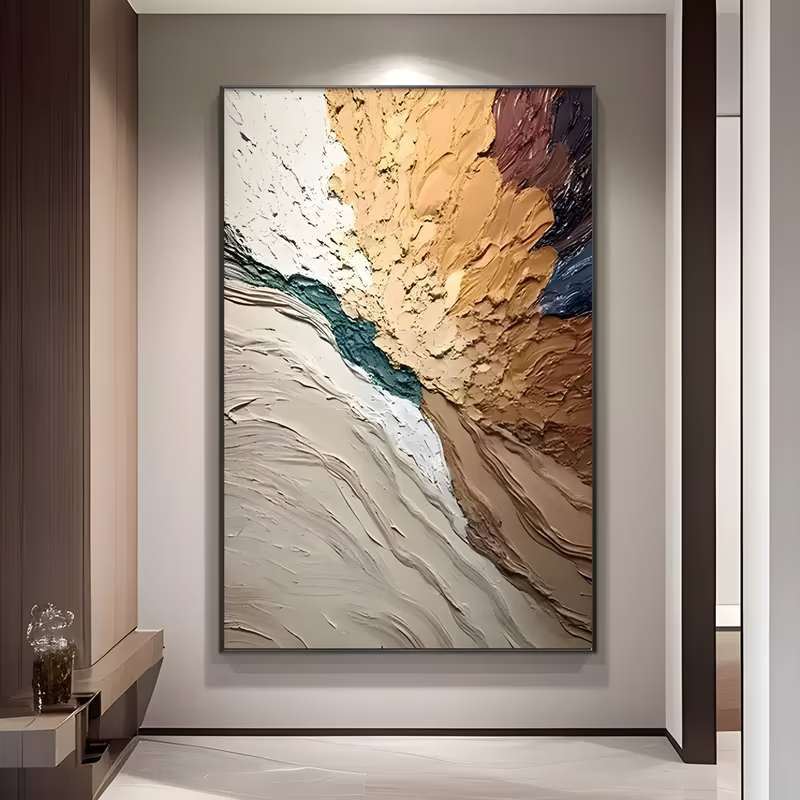
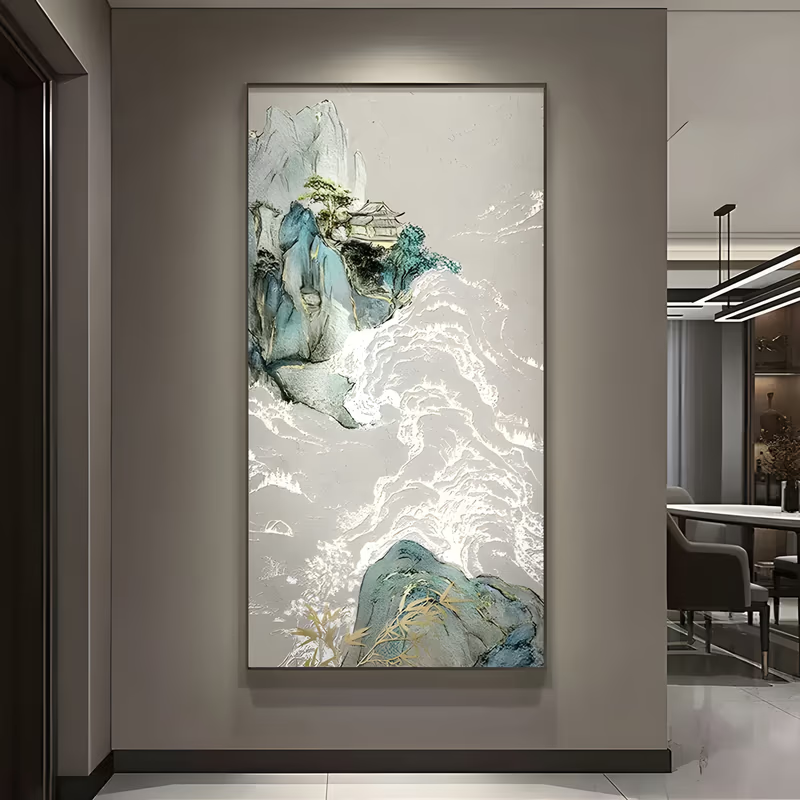
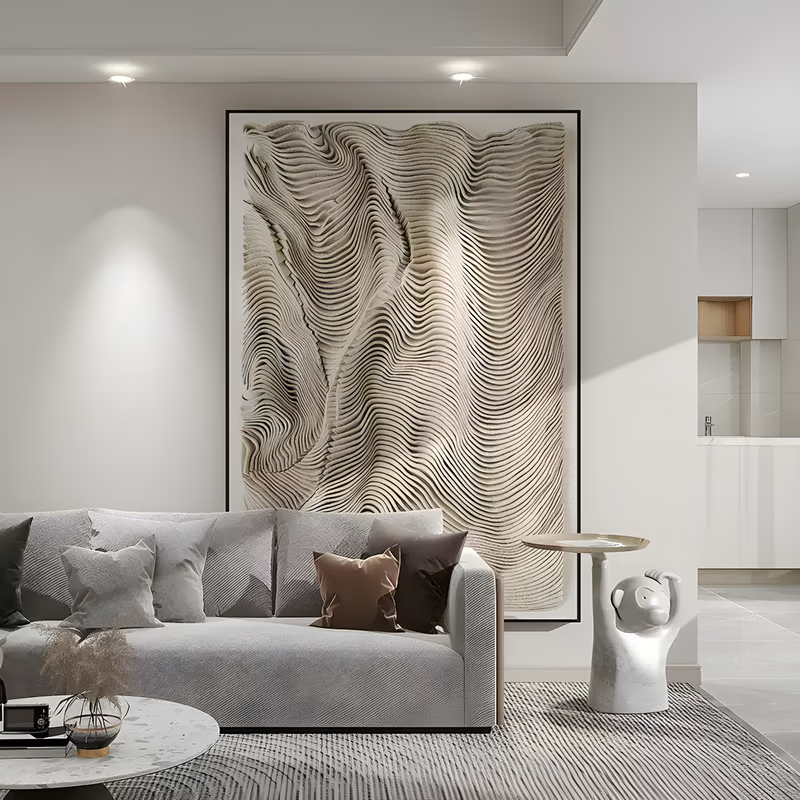
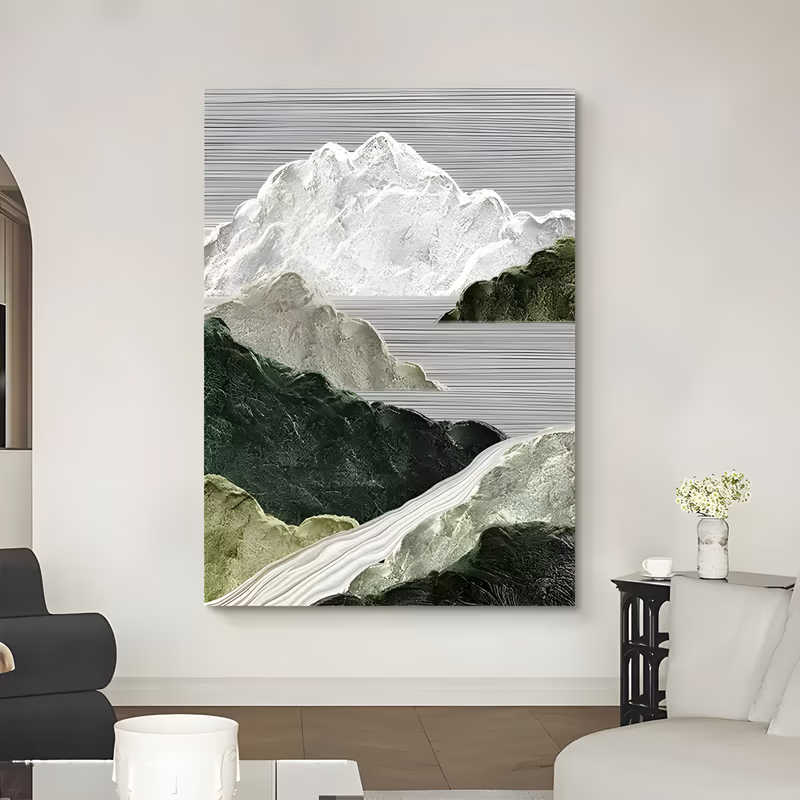
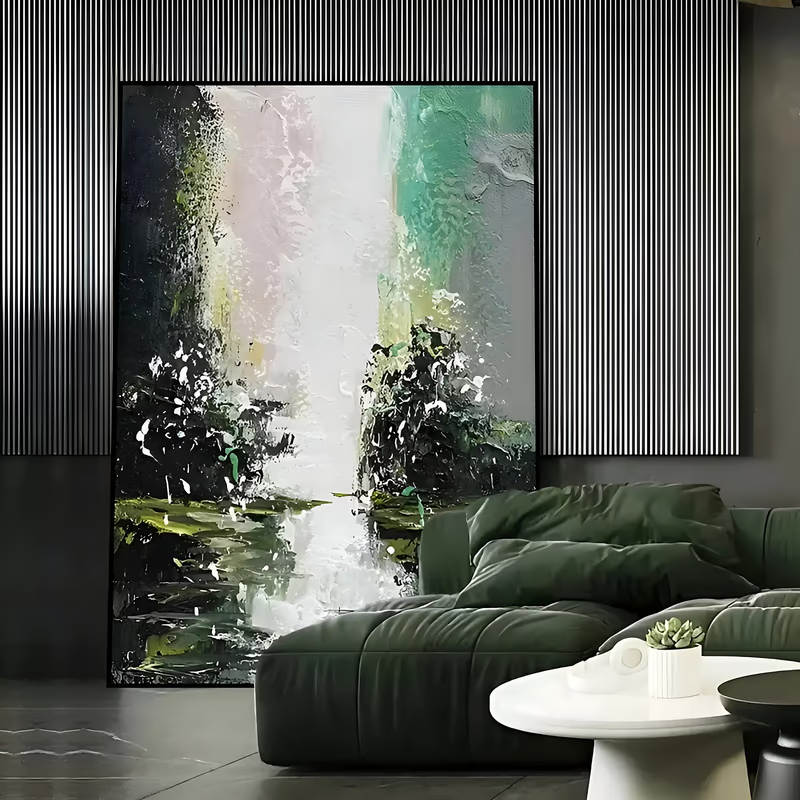
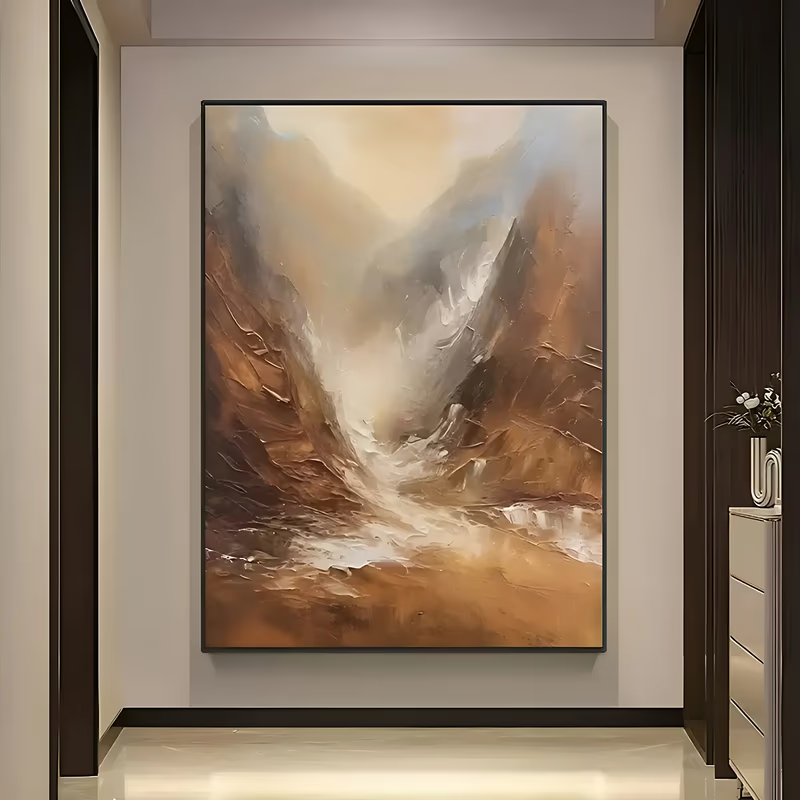
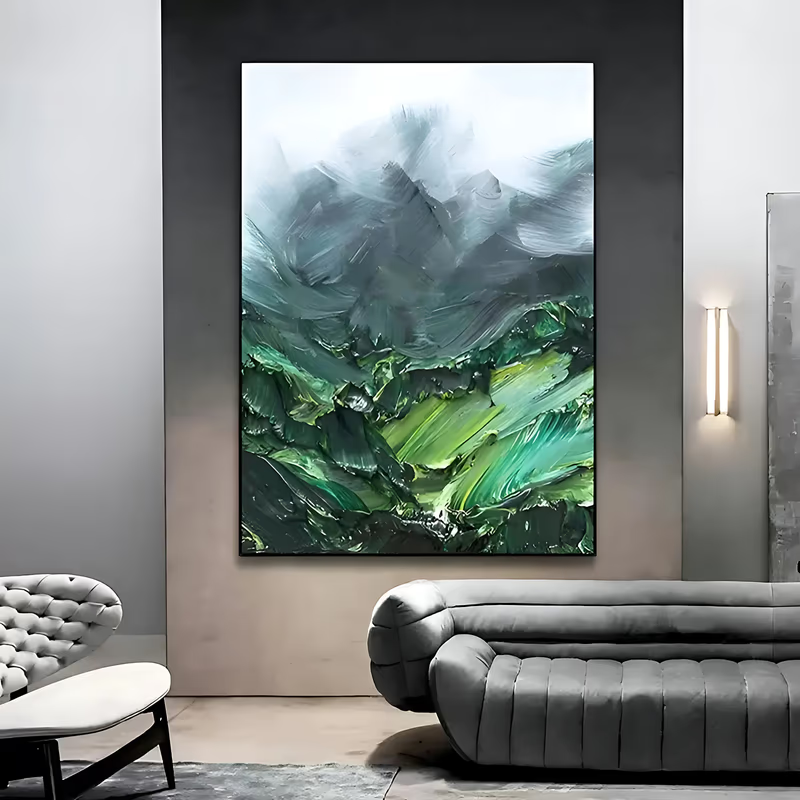
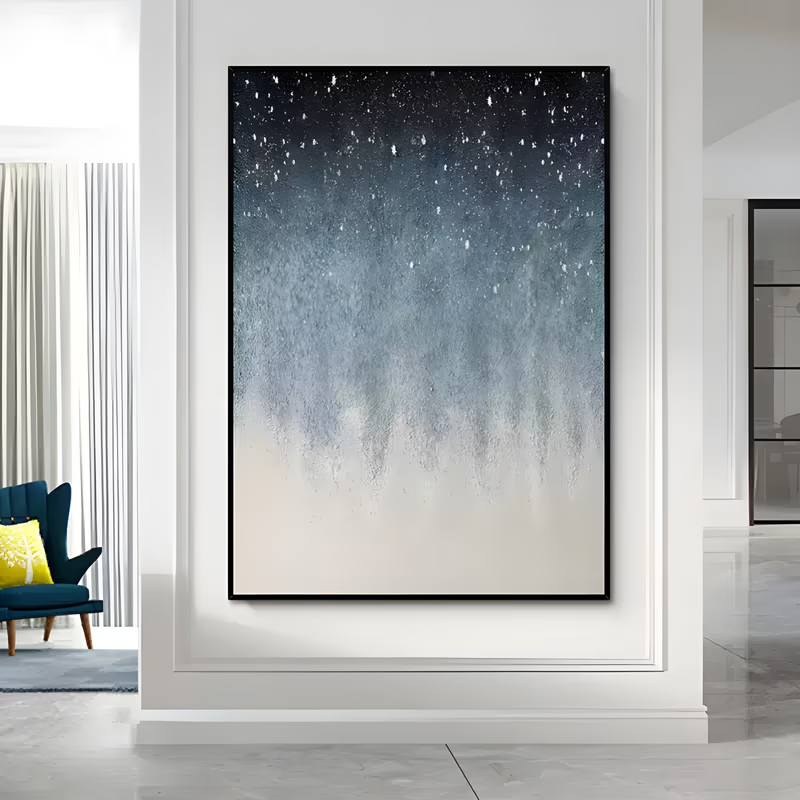
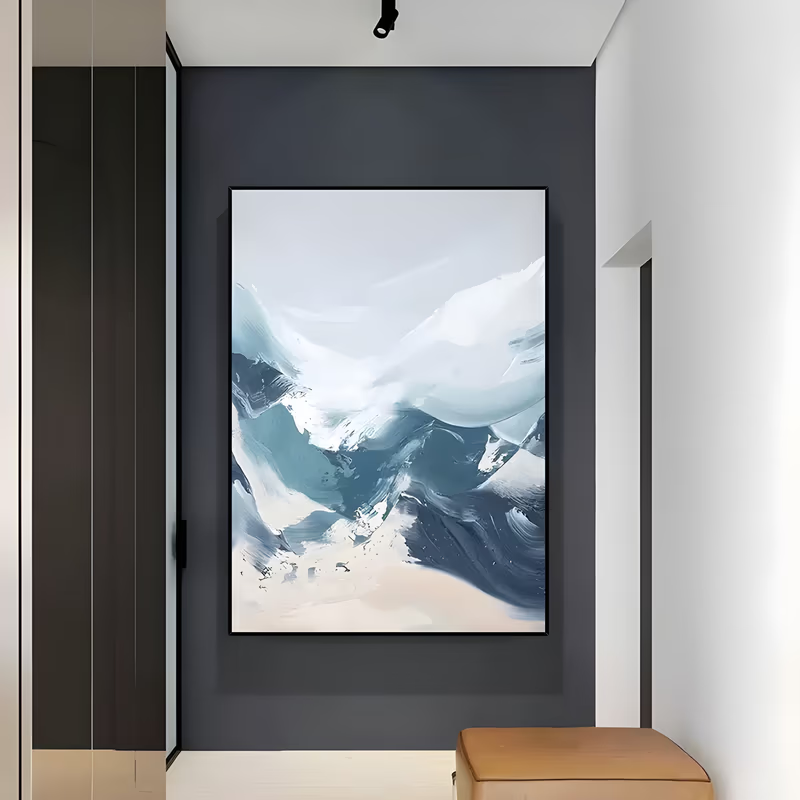
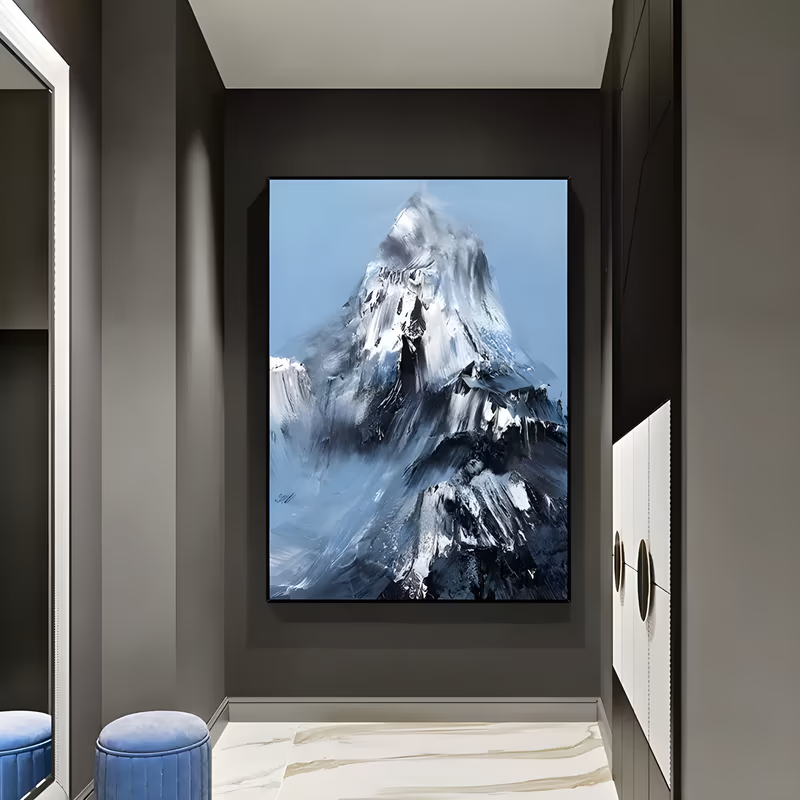
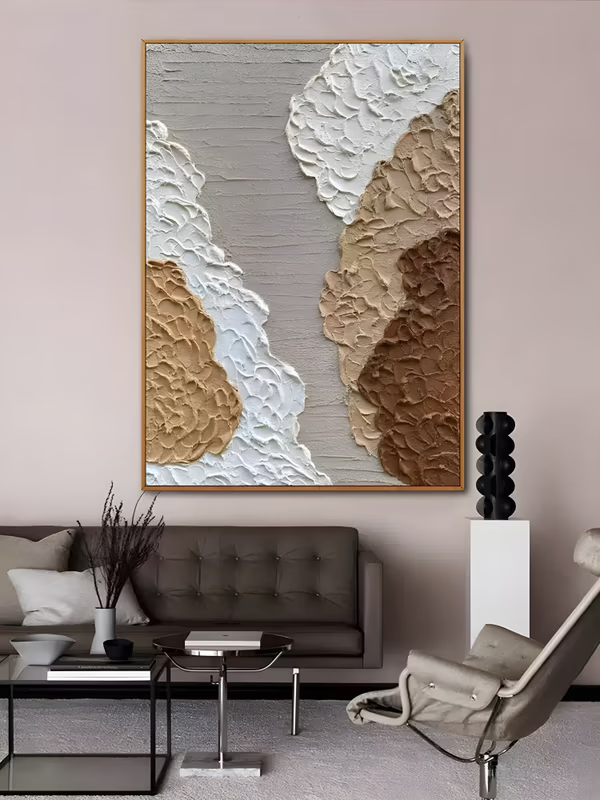
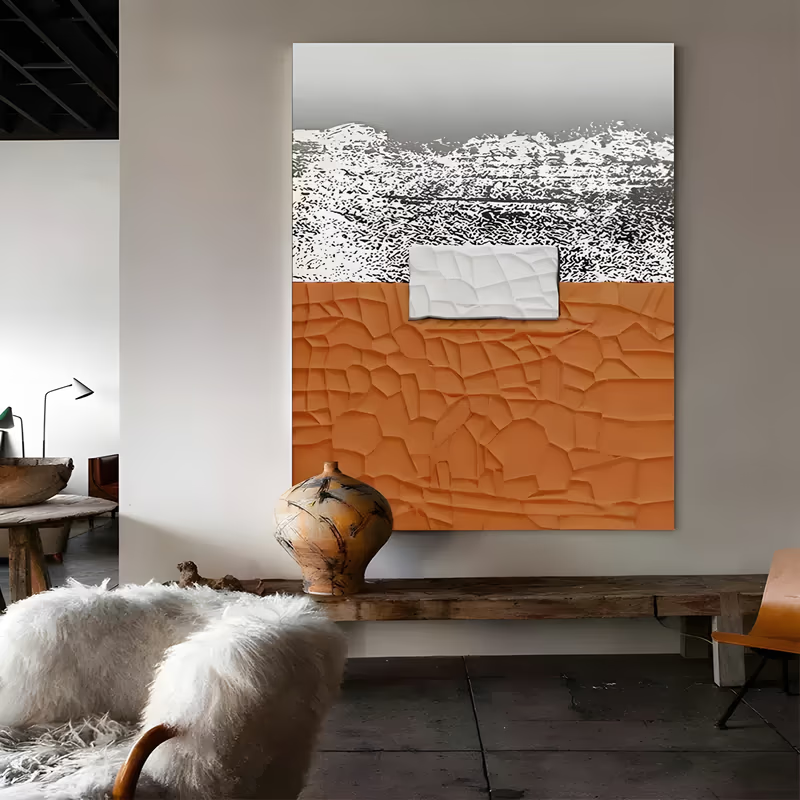
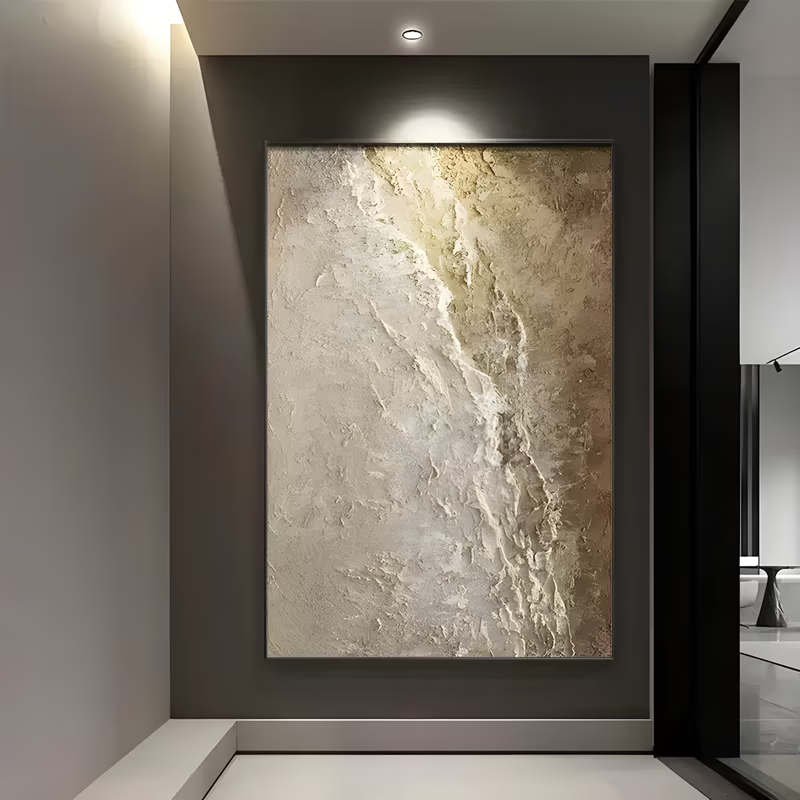
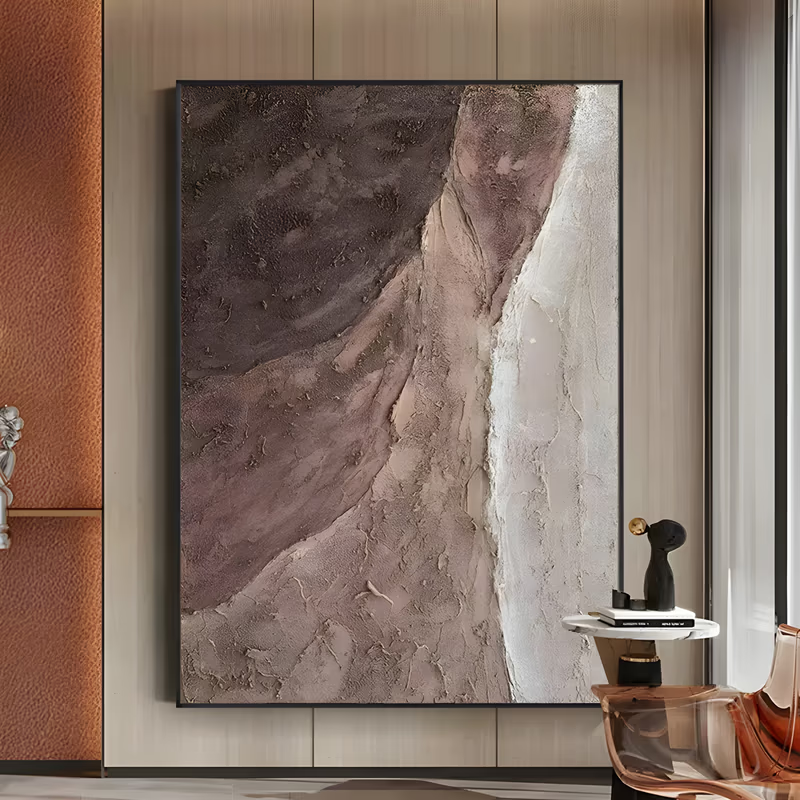
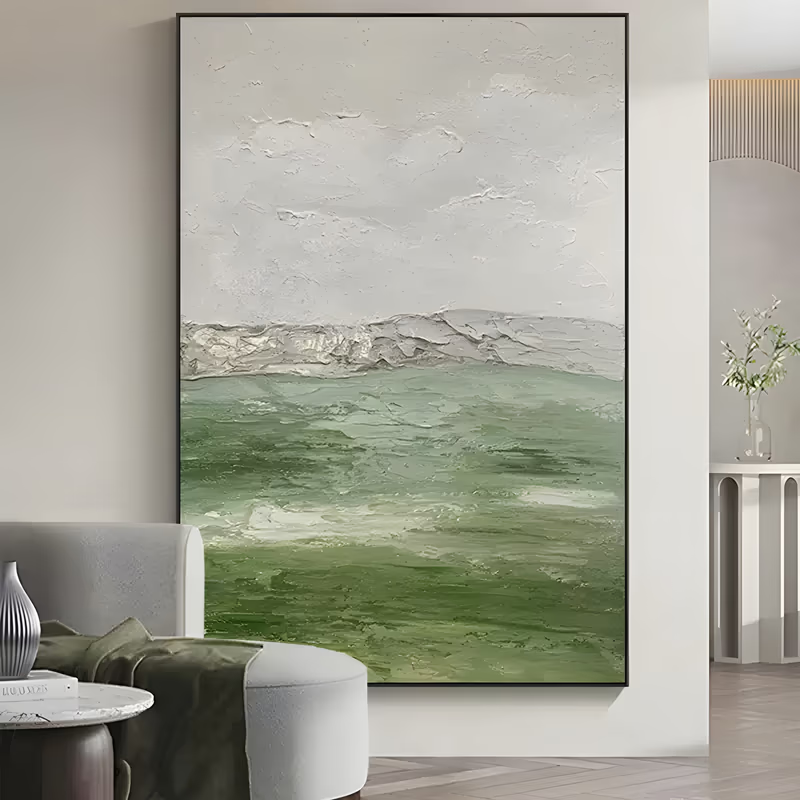
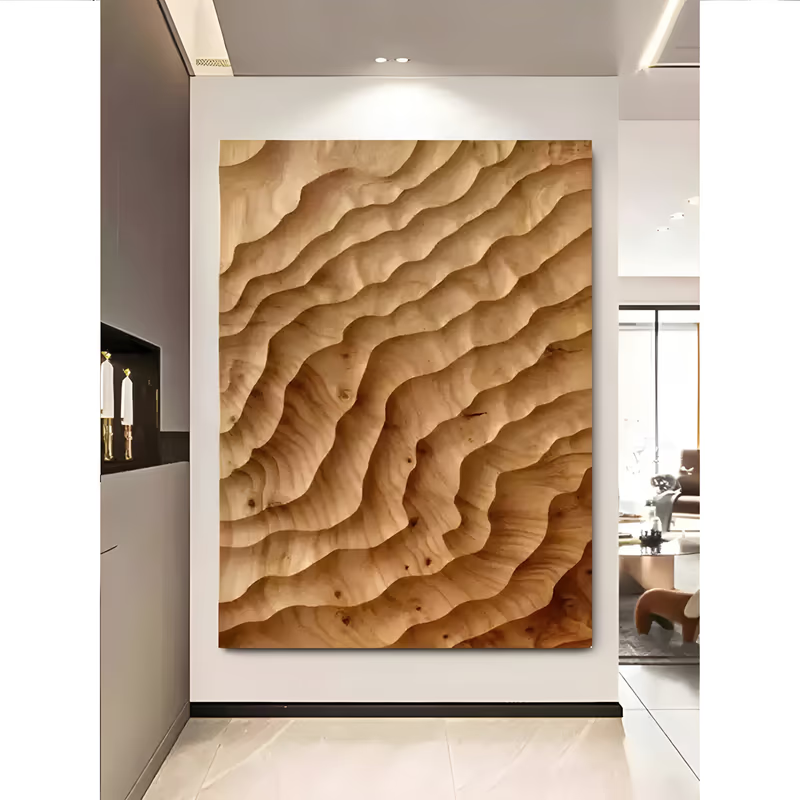
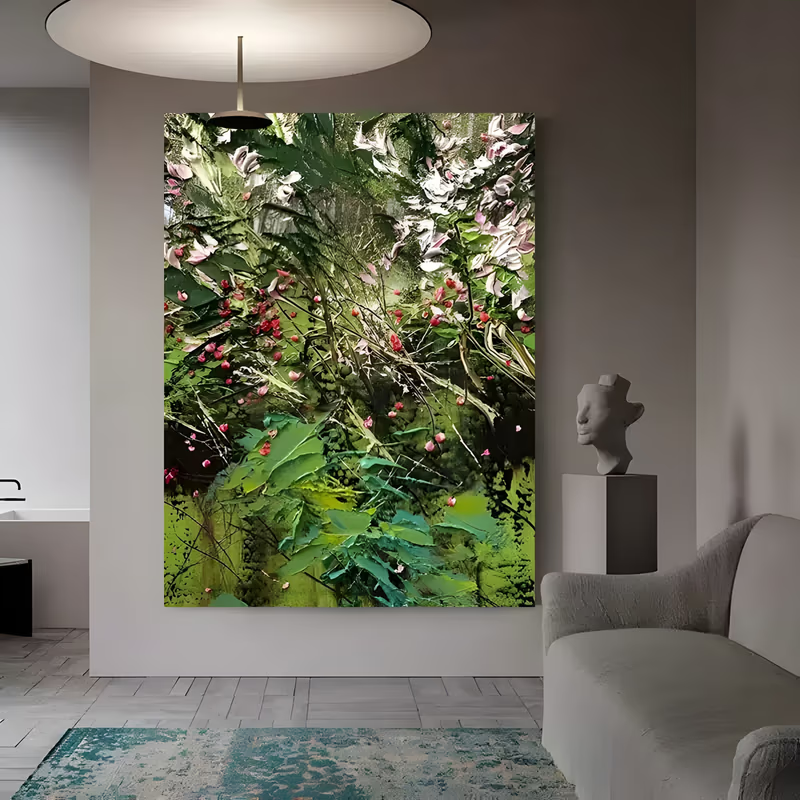
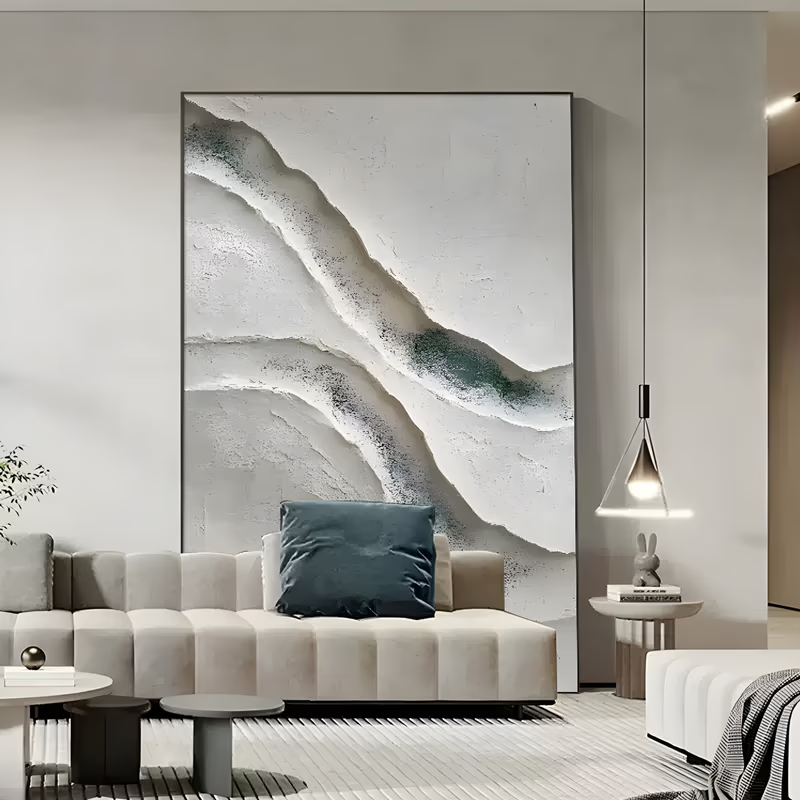
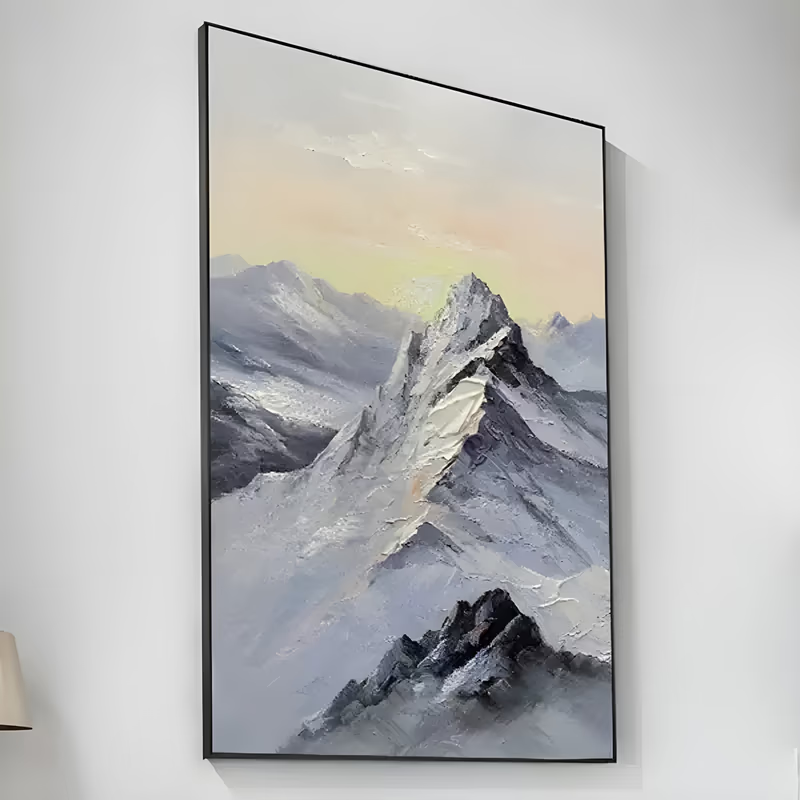
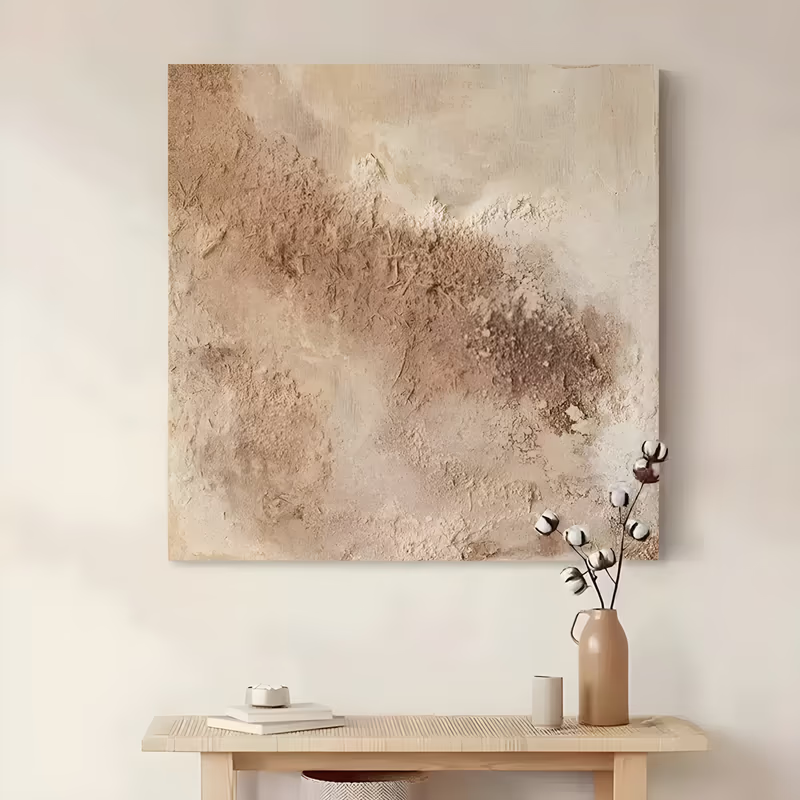
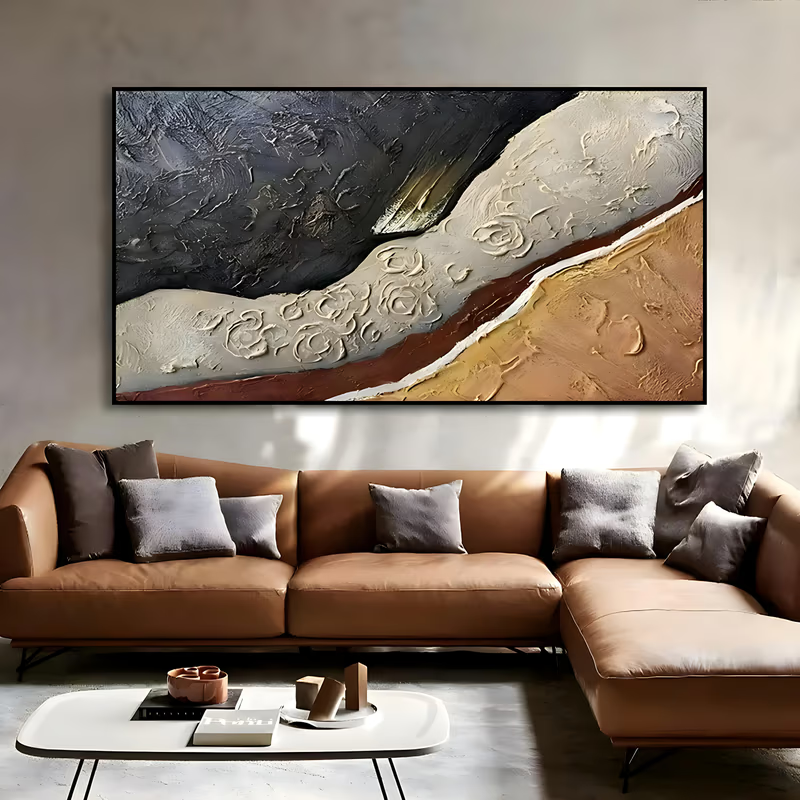
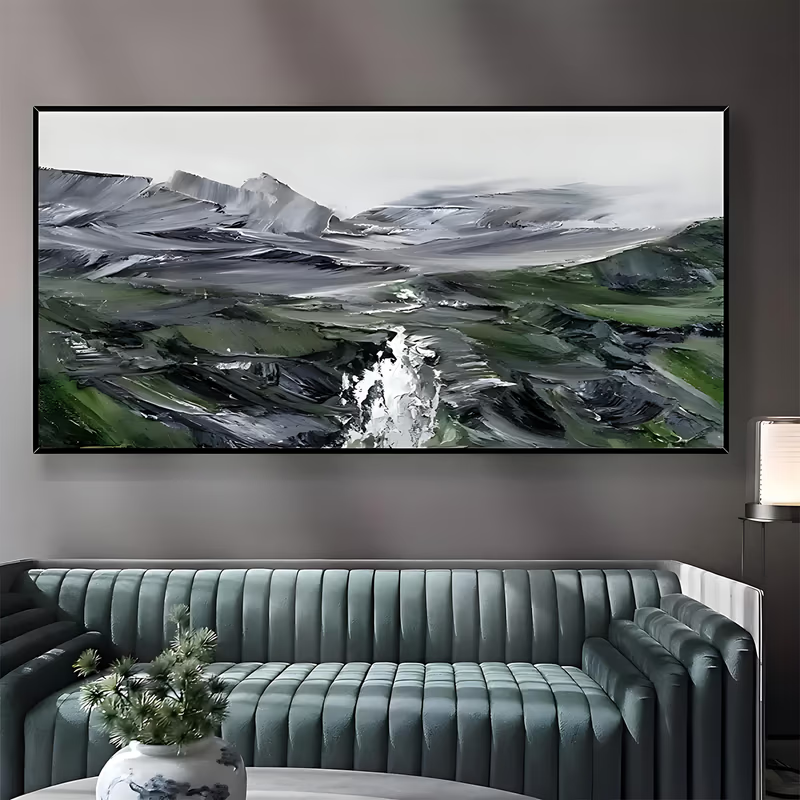
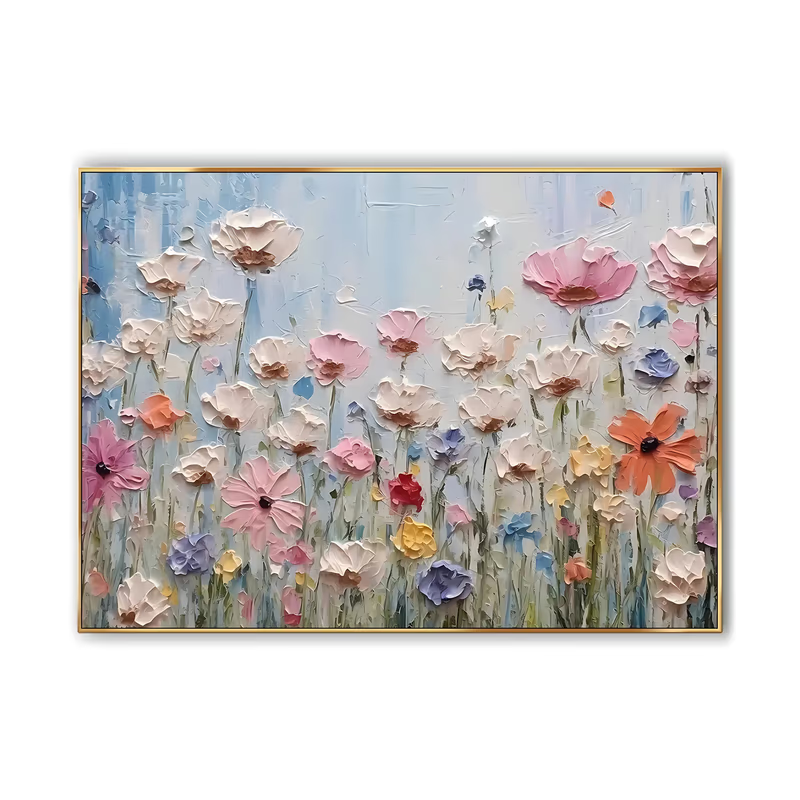
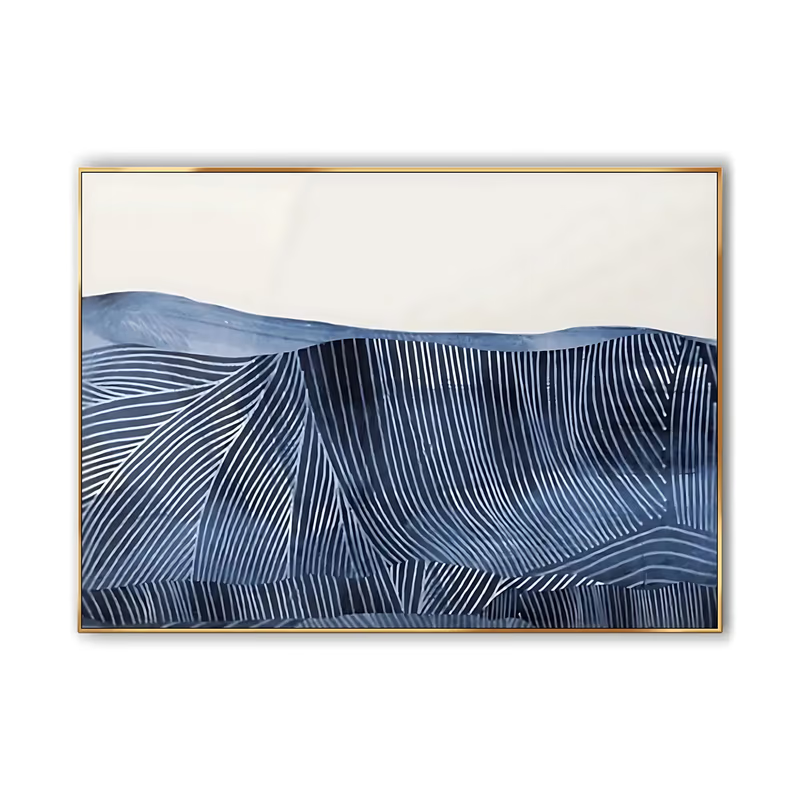
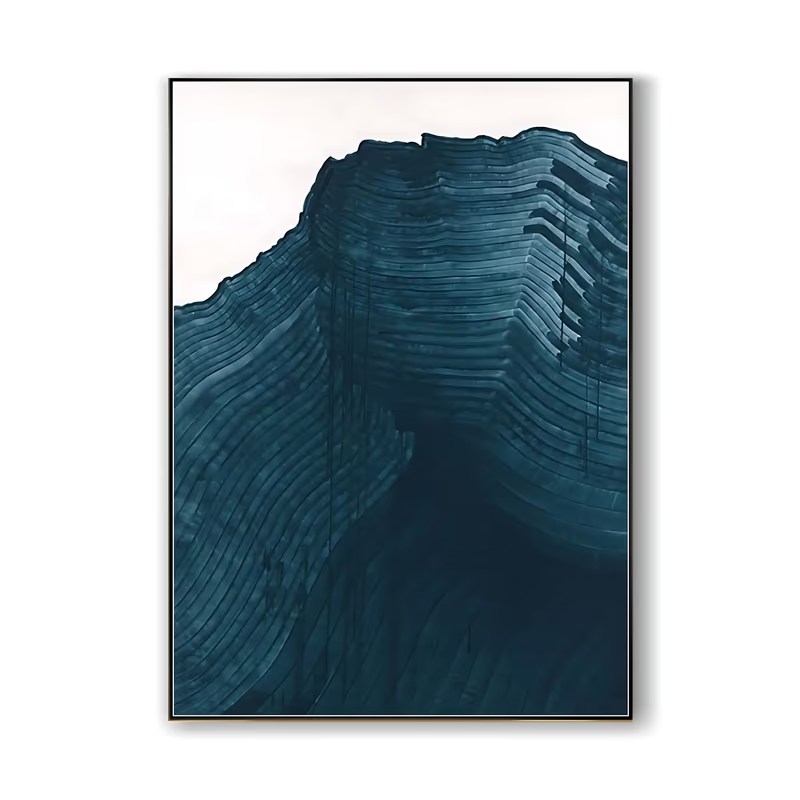
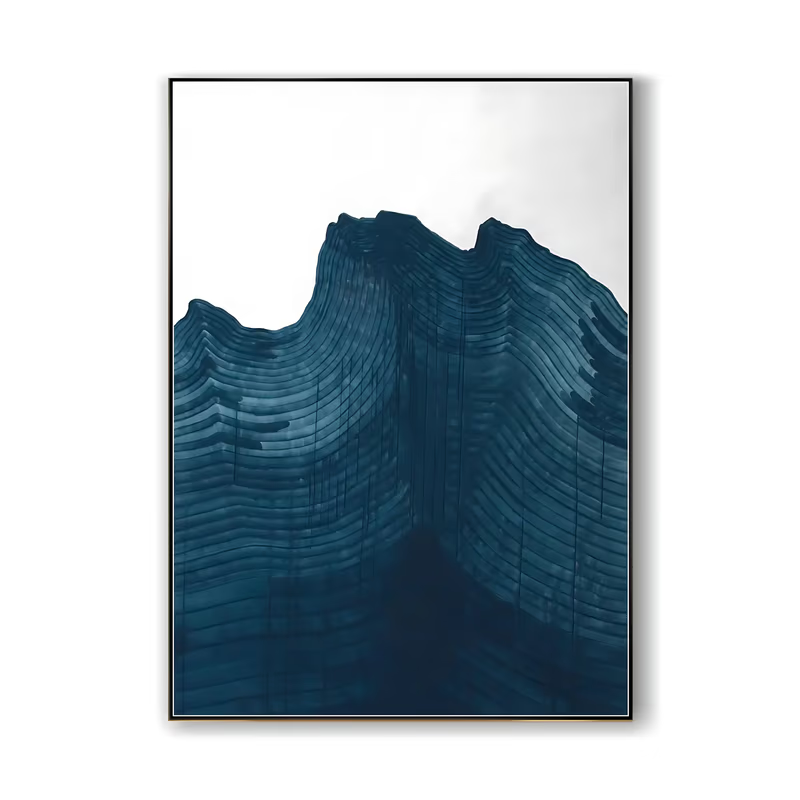
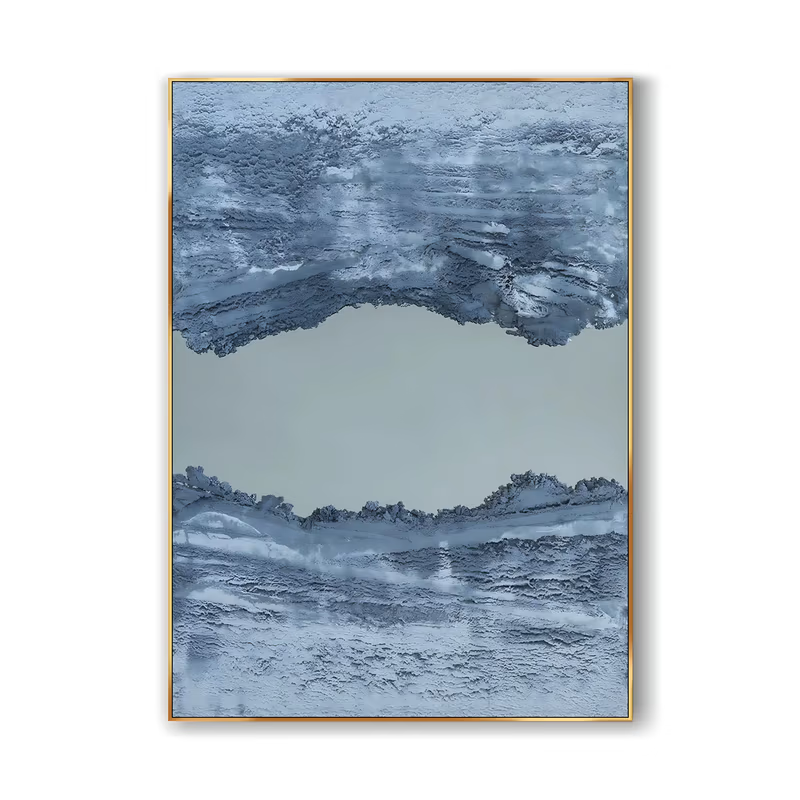
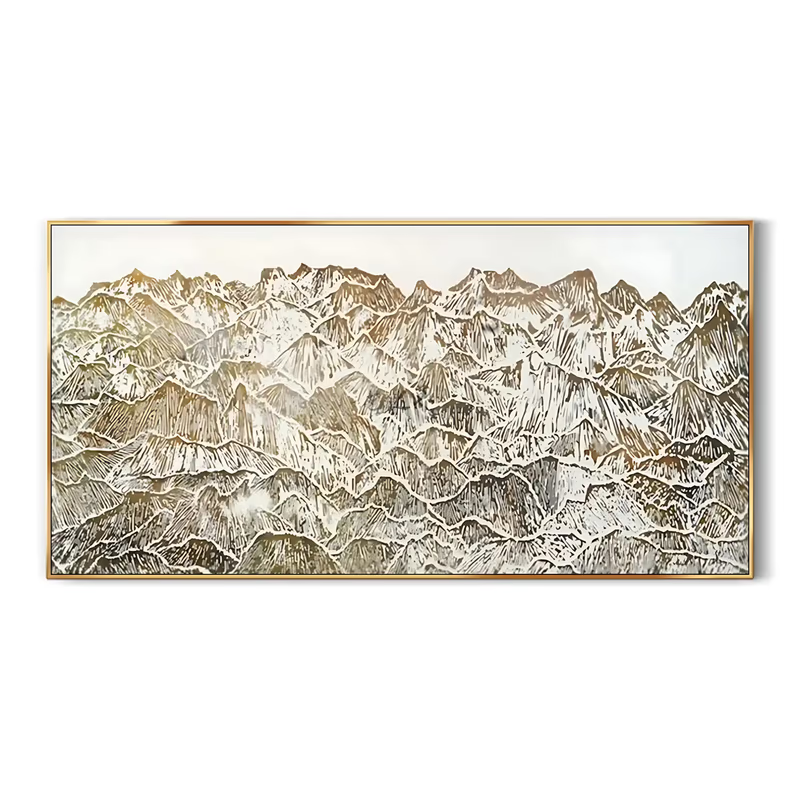
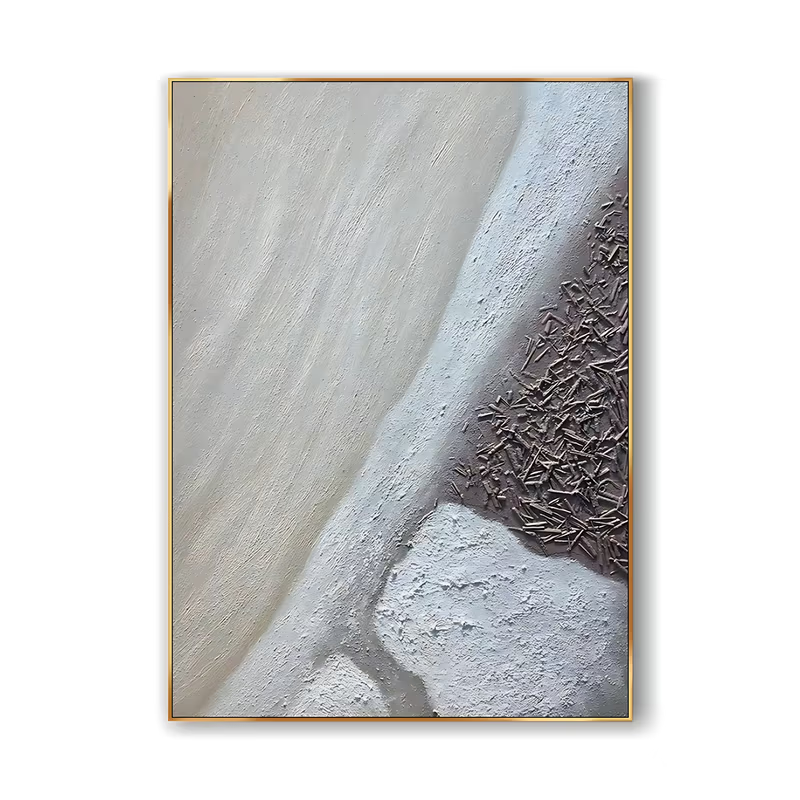
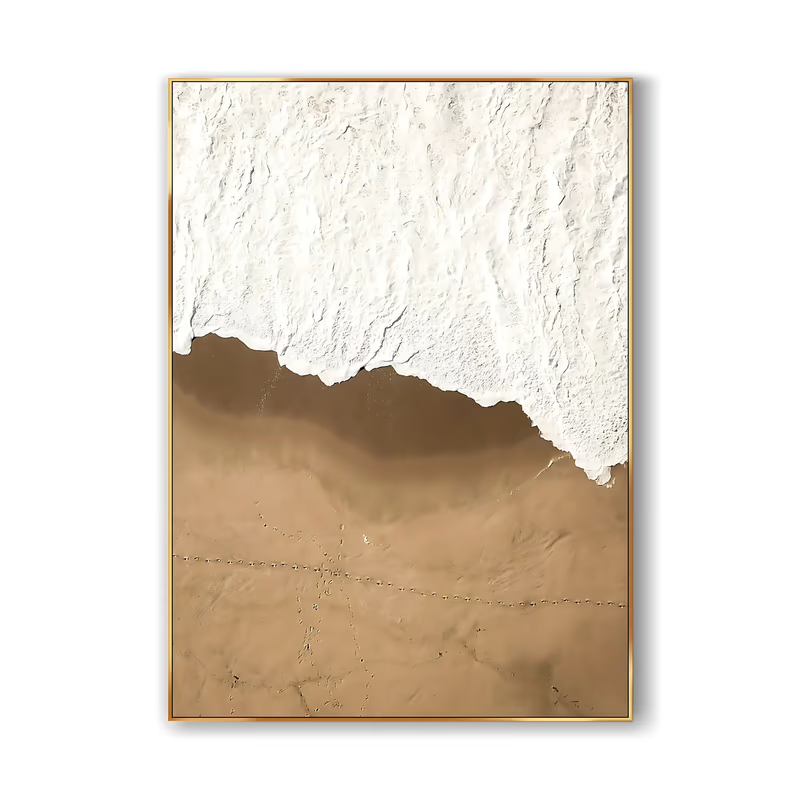
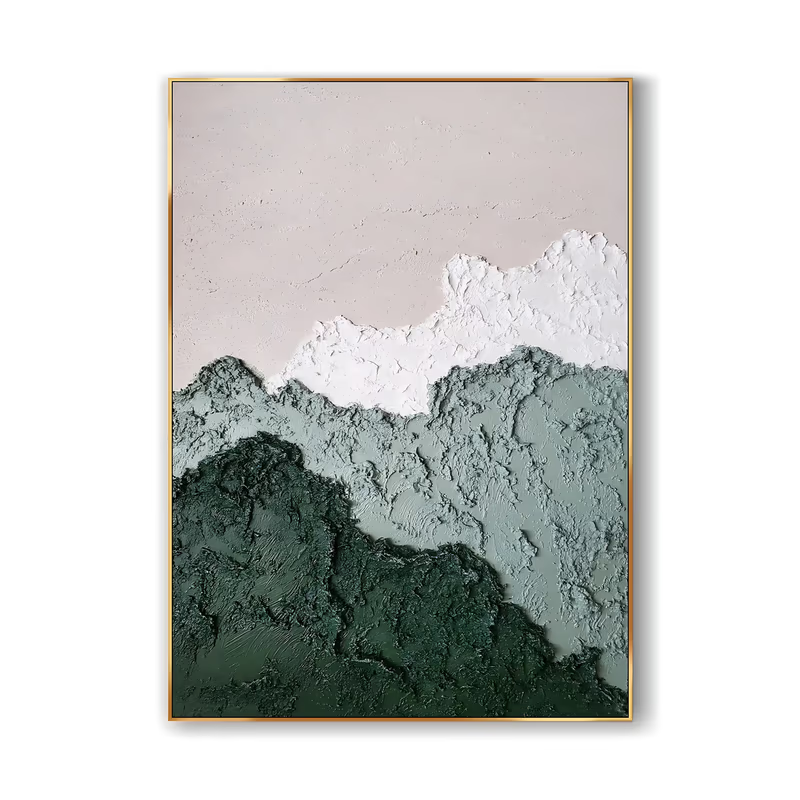
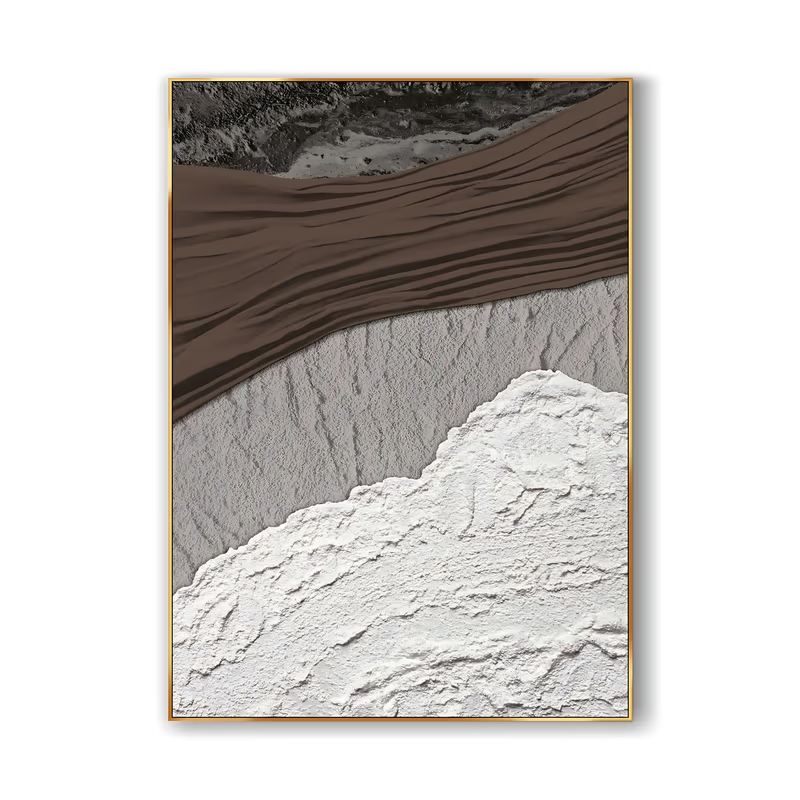
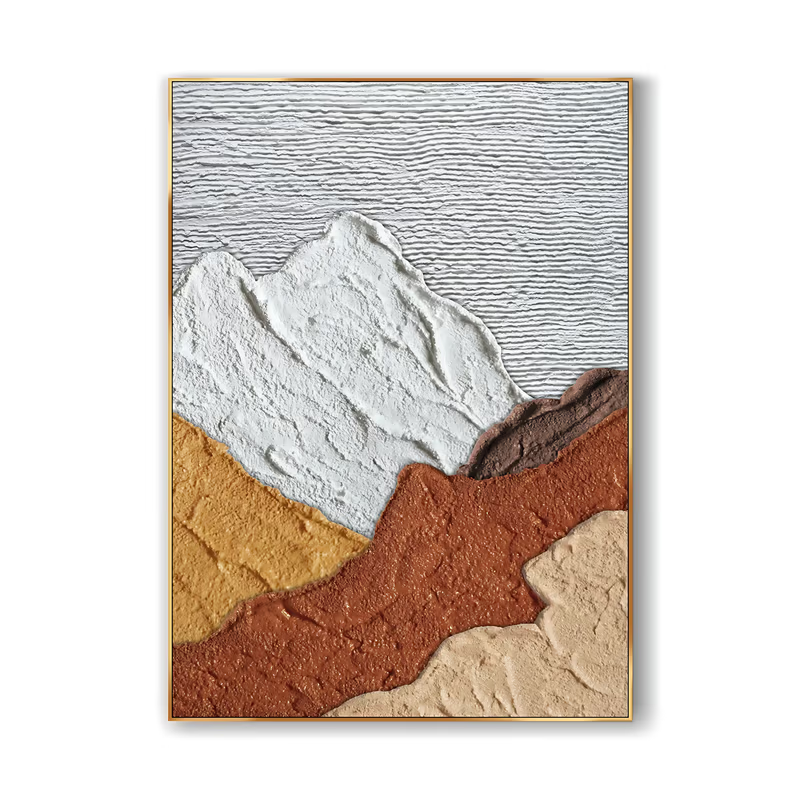
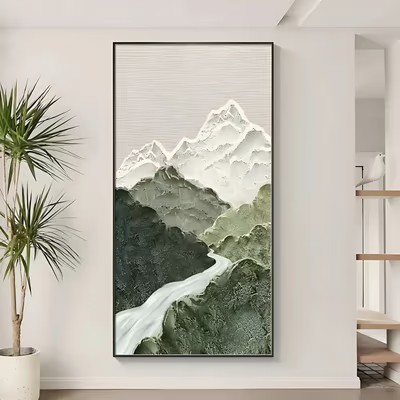
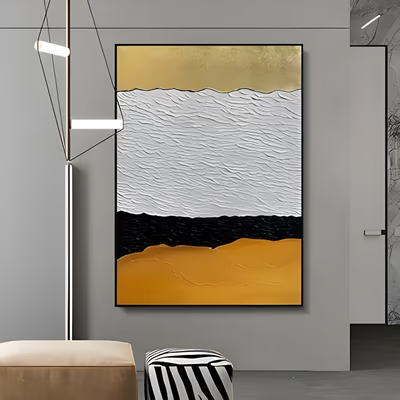
Ridges, snow fields and dune curves are built up in plaster so the mountains are real three-dimensional forms, often in a single colour such as white, sage, teal or terracotta. Side light makes the peaks cast shadows. These suit modern lobbies, offices and minimalist homes.
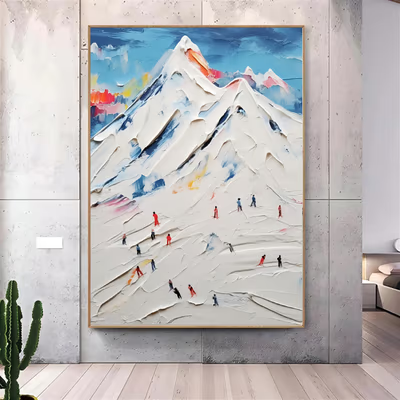
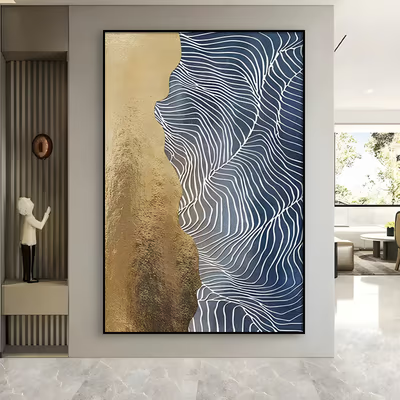
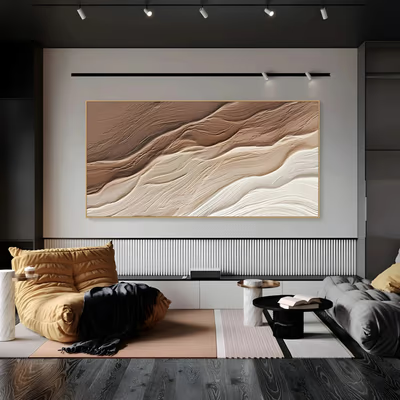
Abstract and gold-leaf landscapes
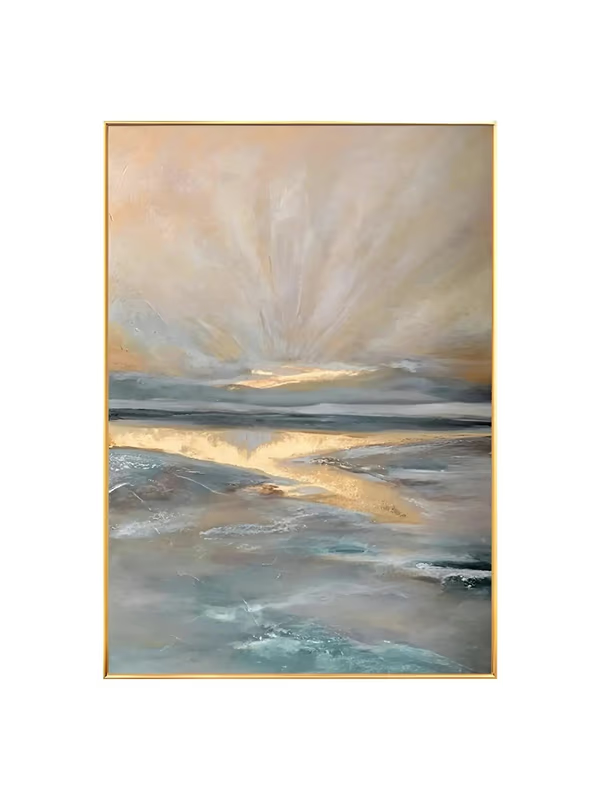
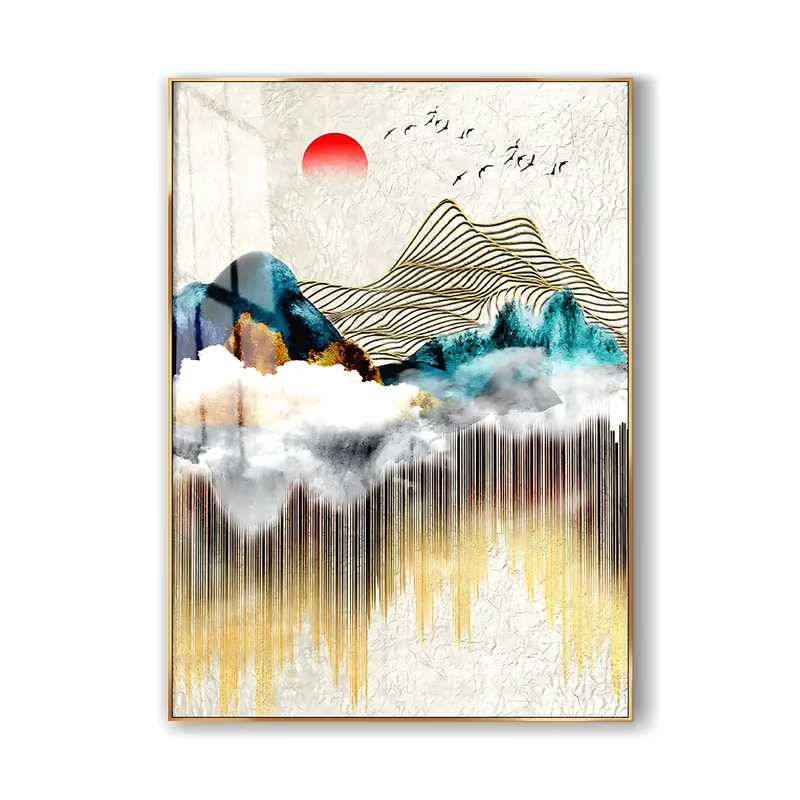
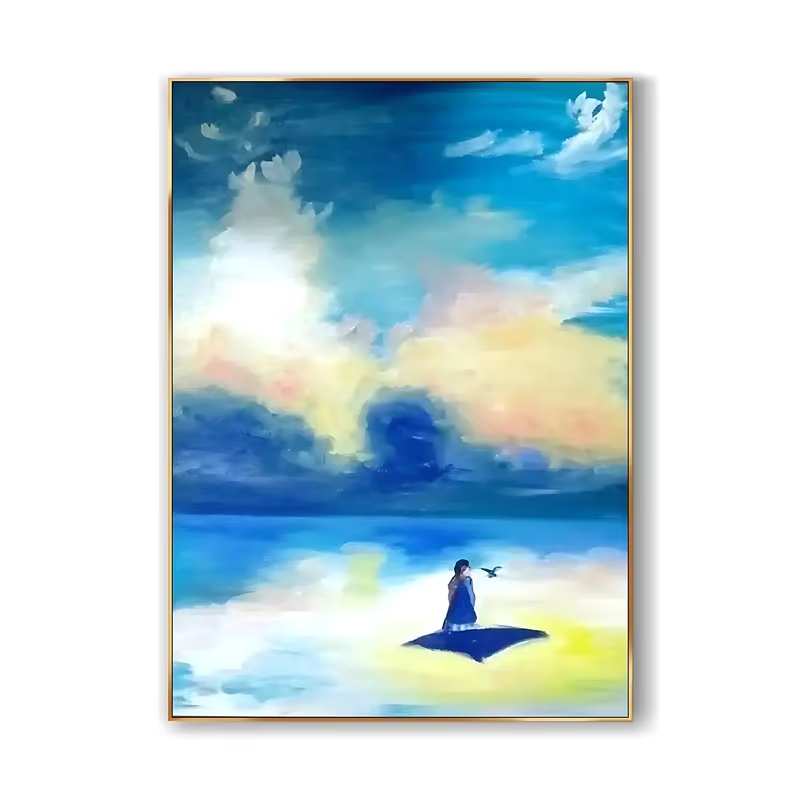
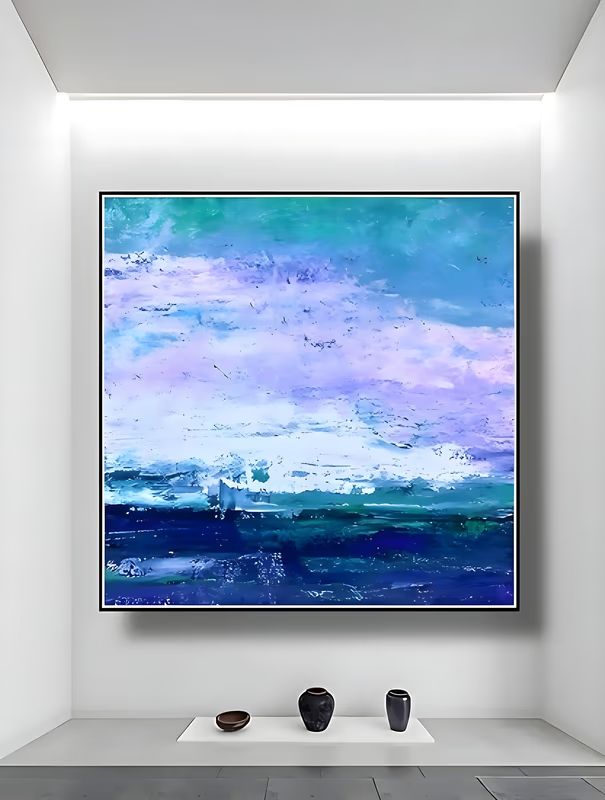
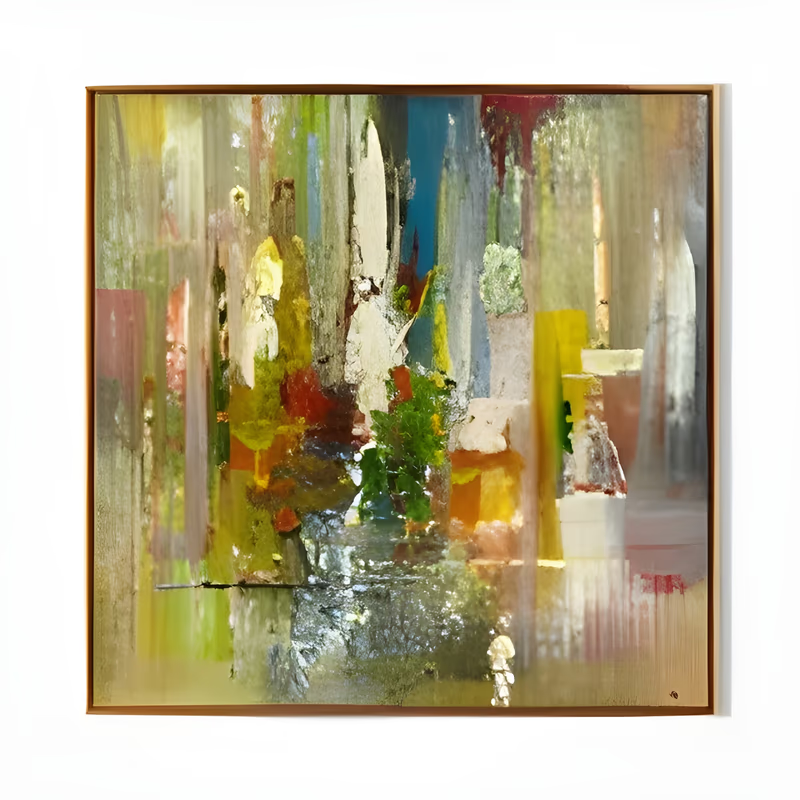
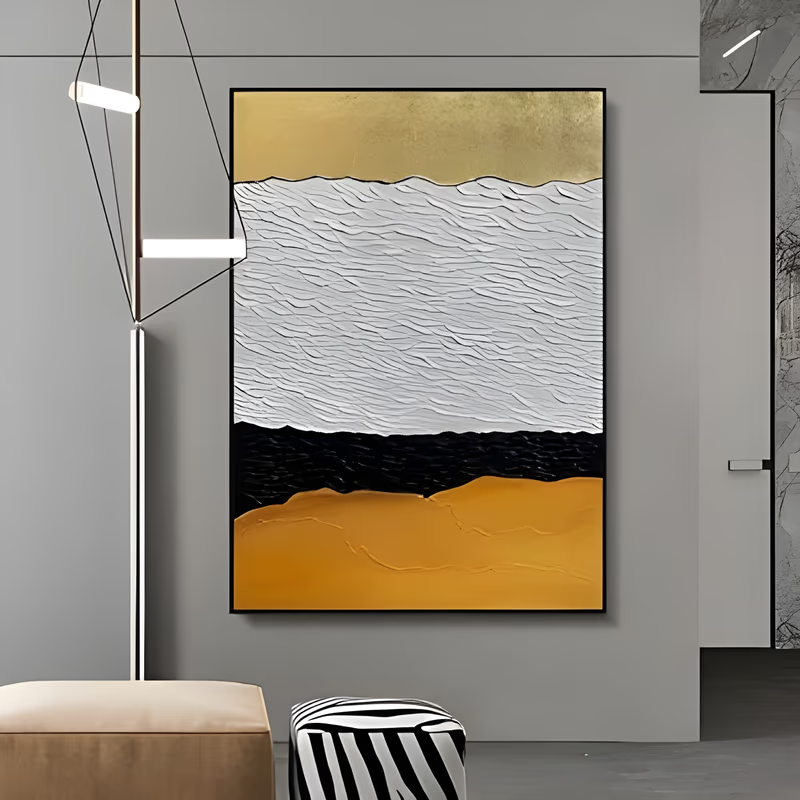
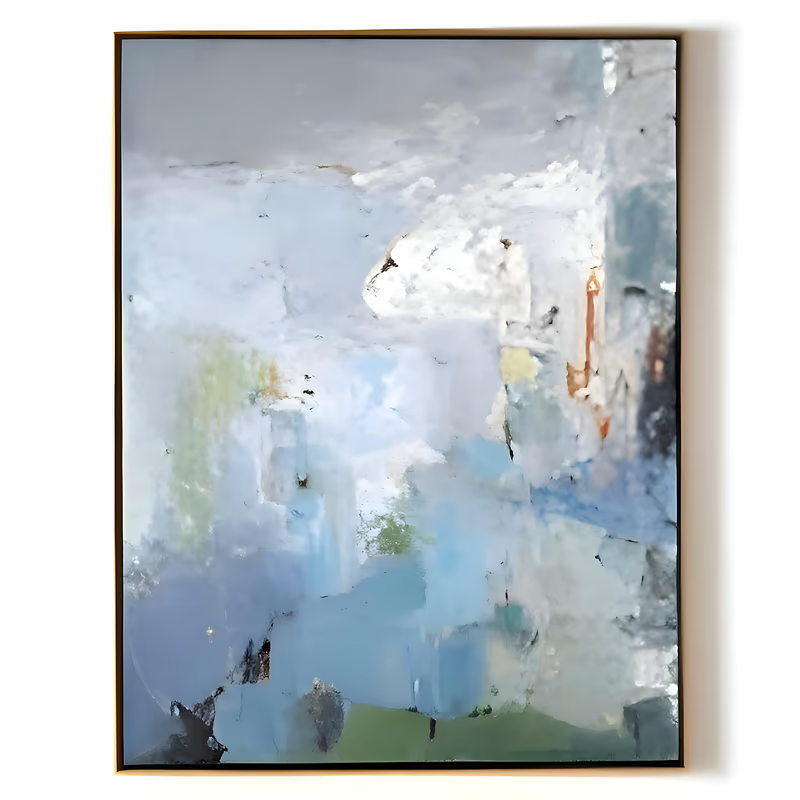
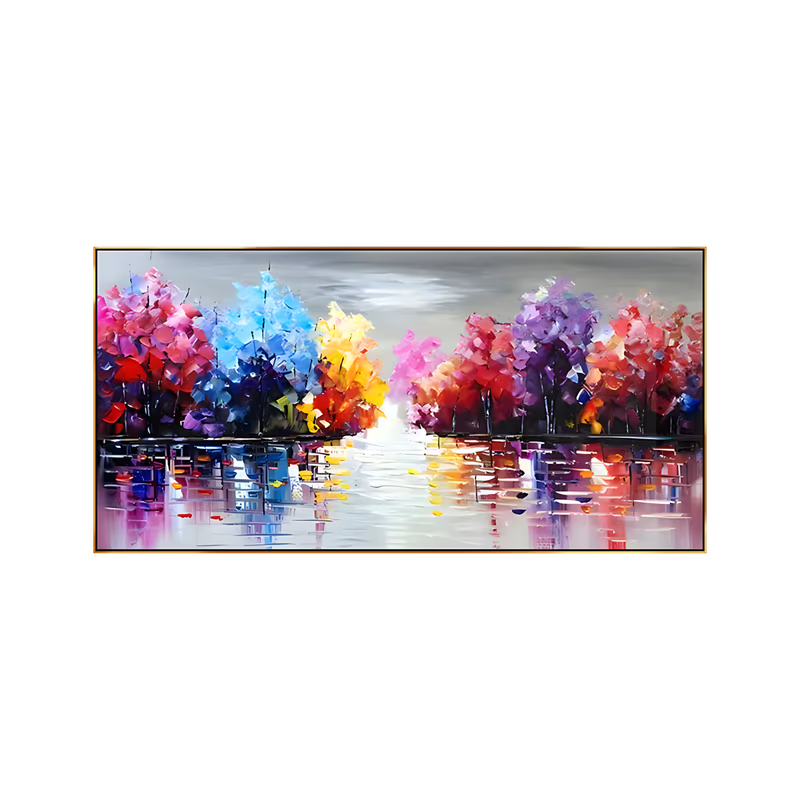
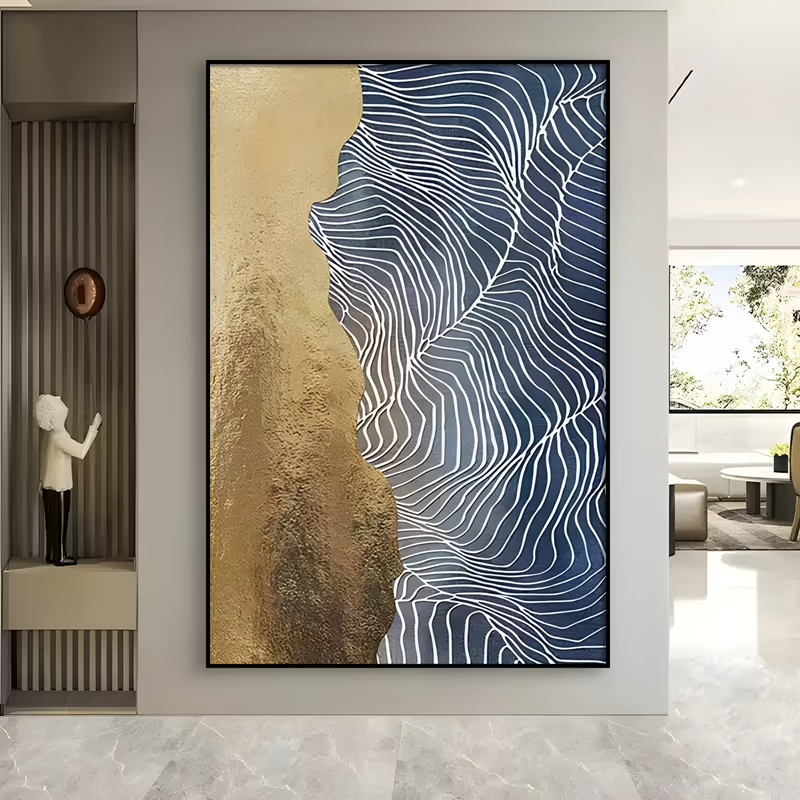
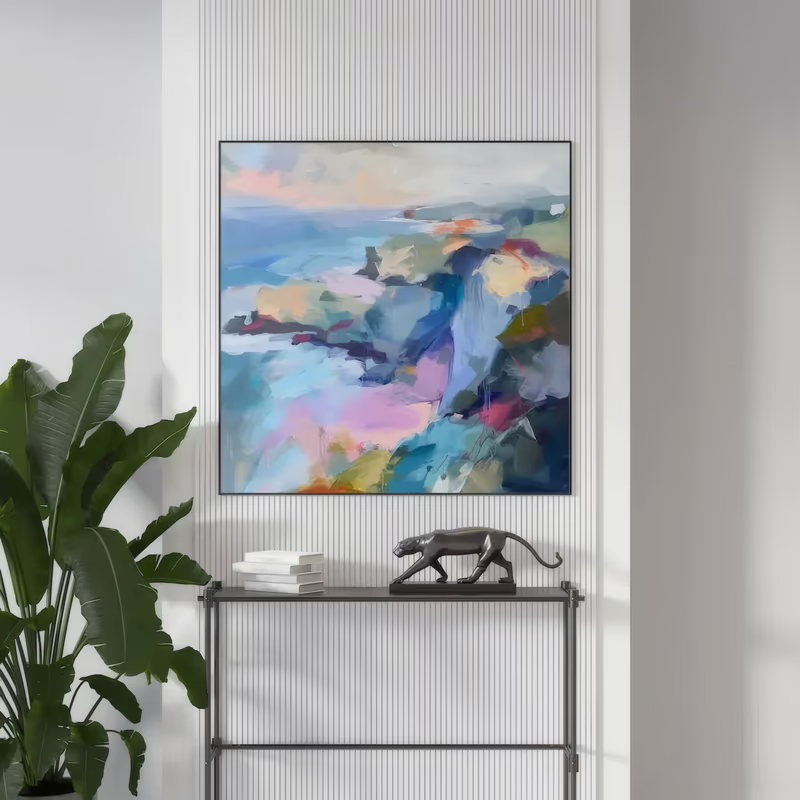
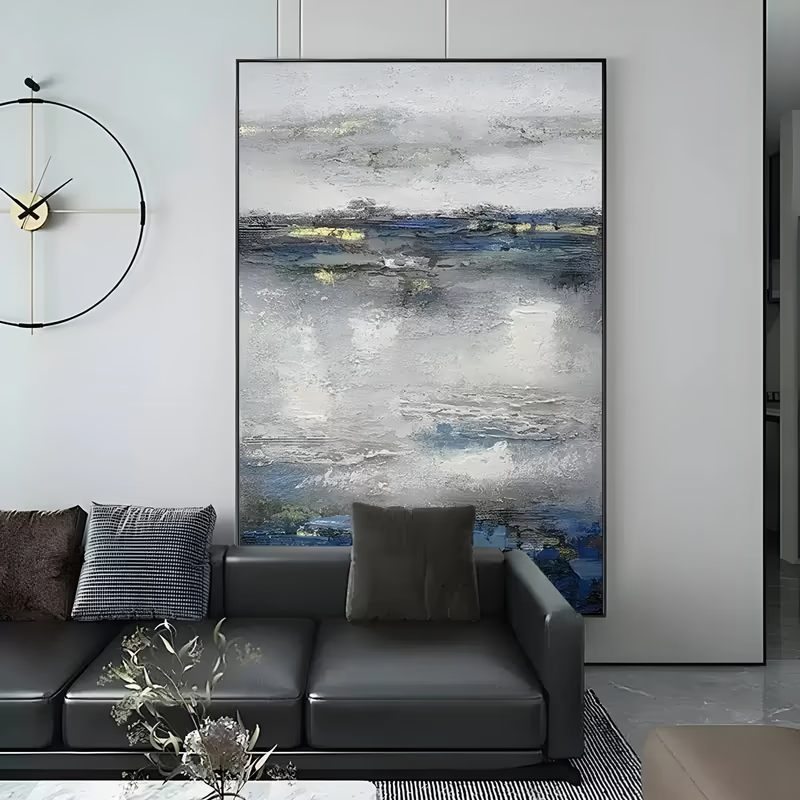
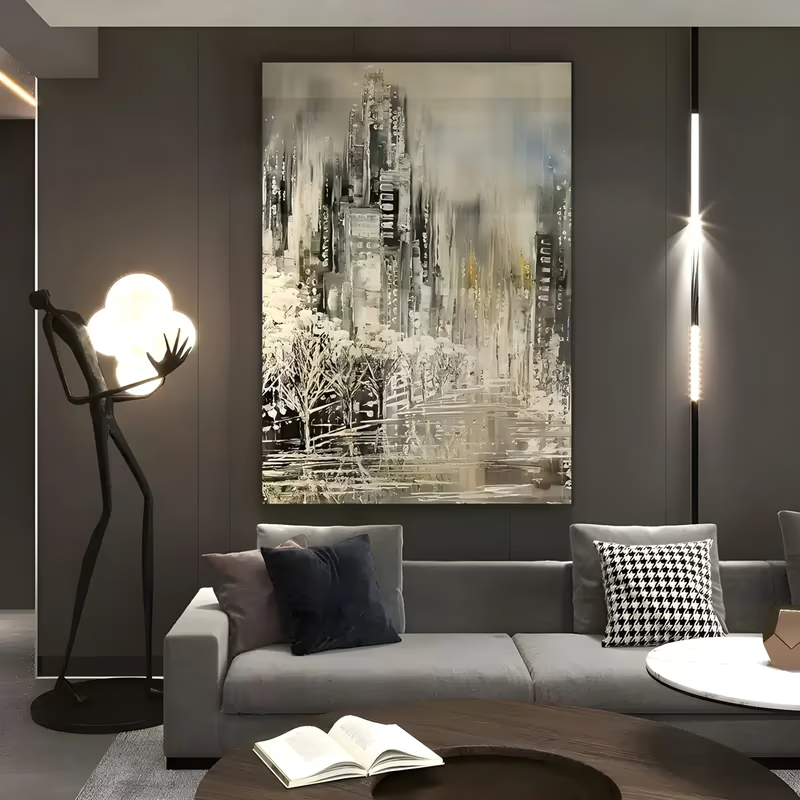
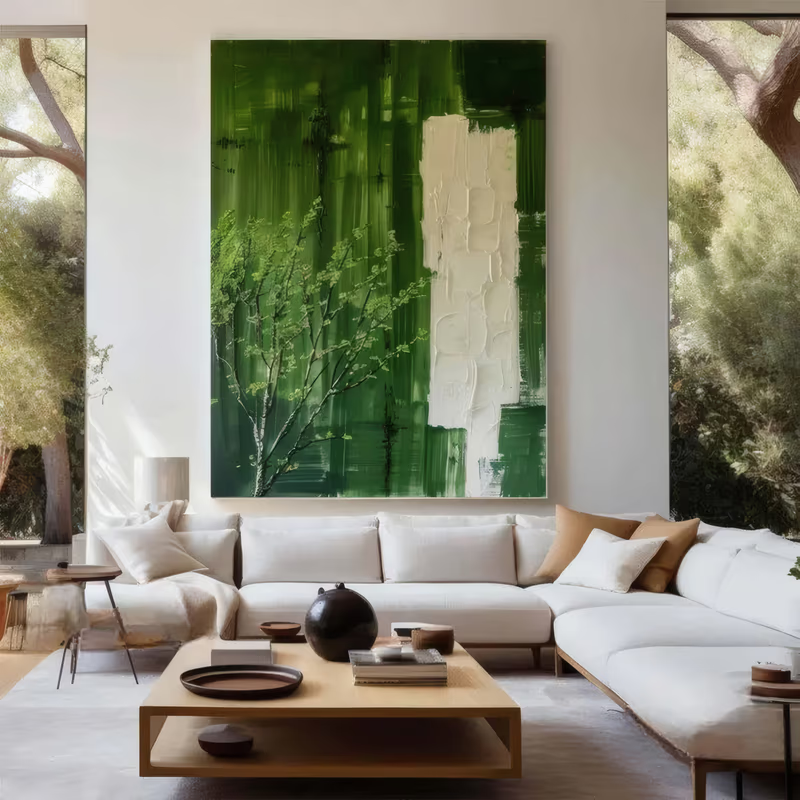
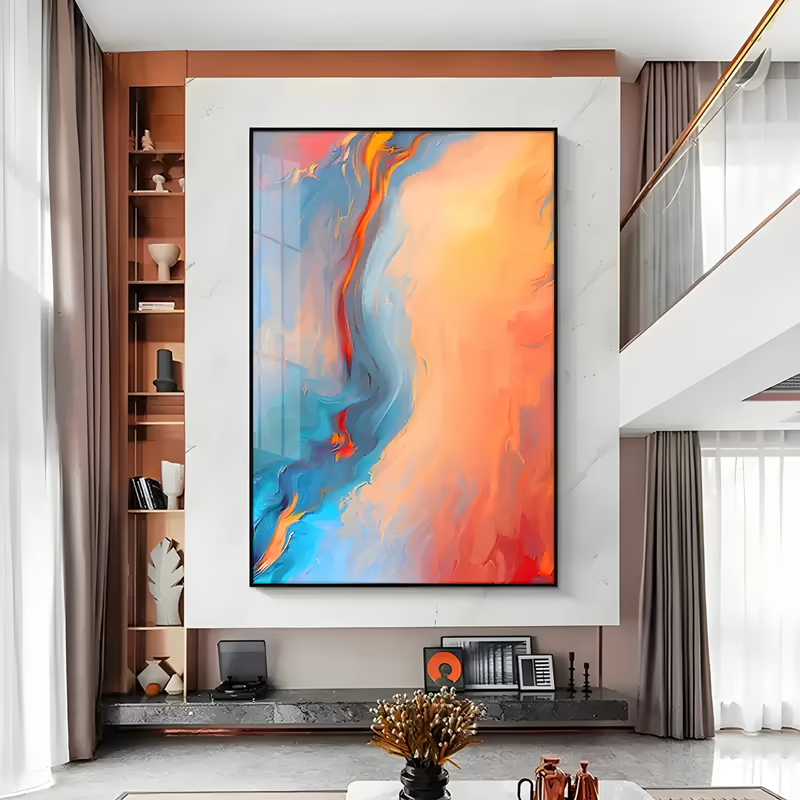
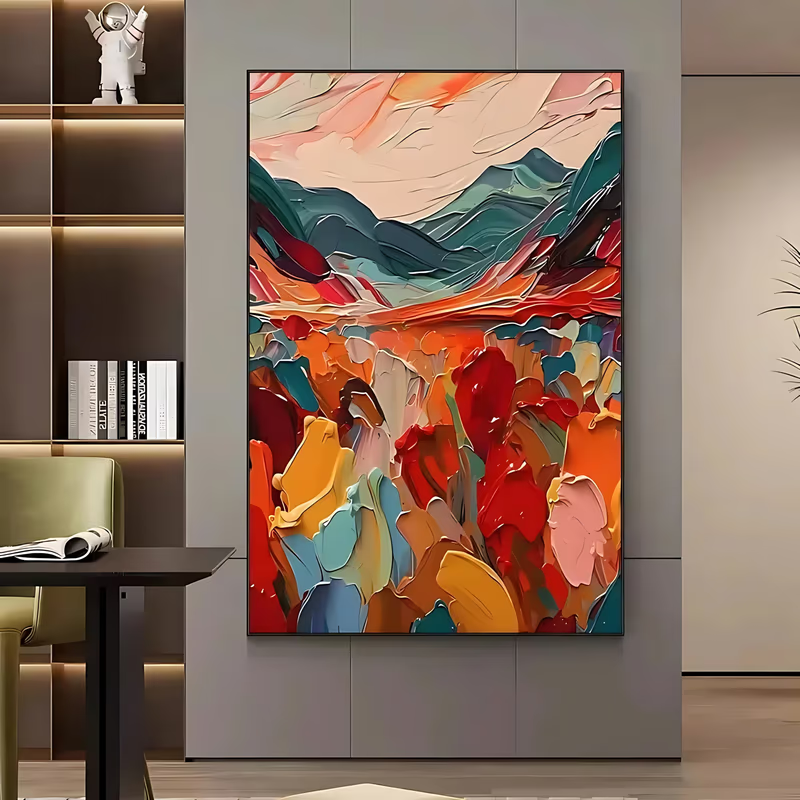
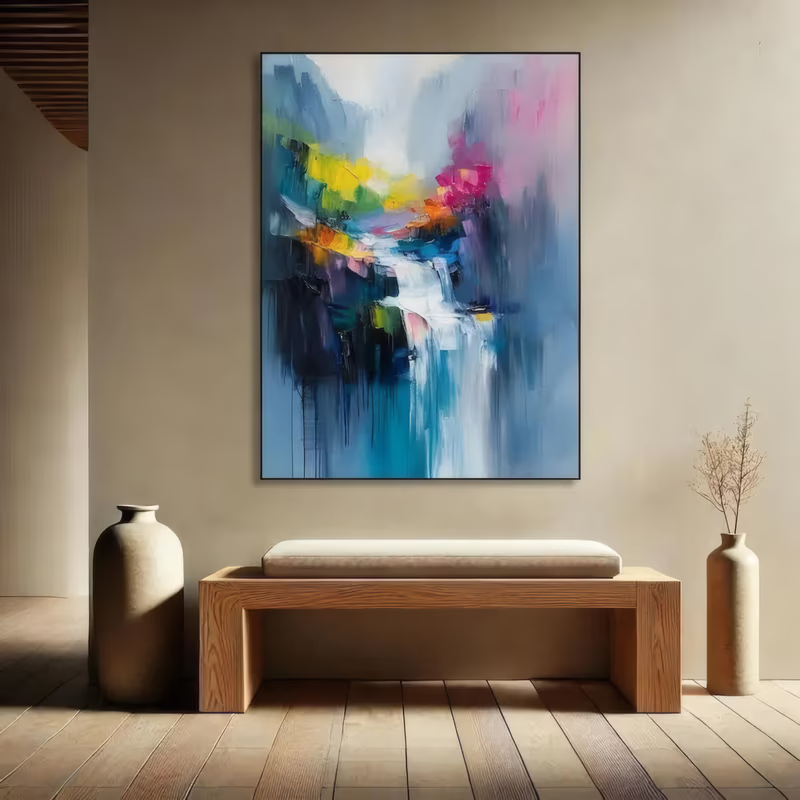
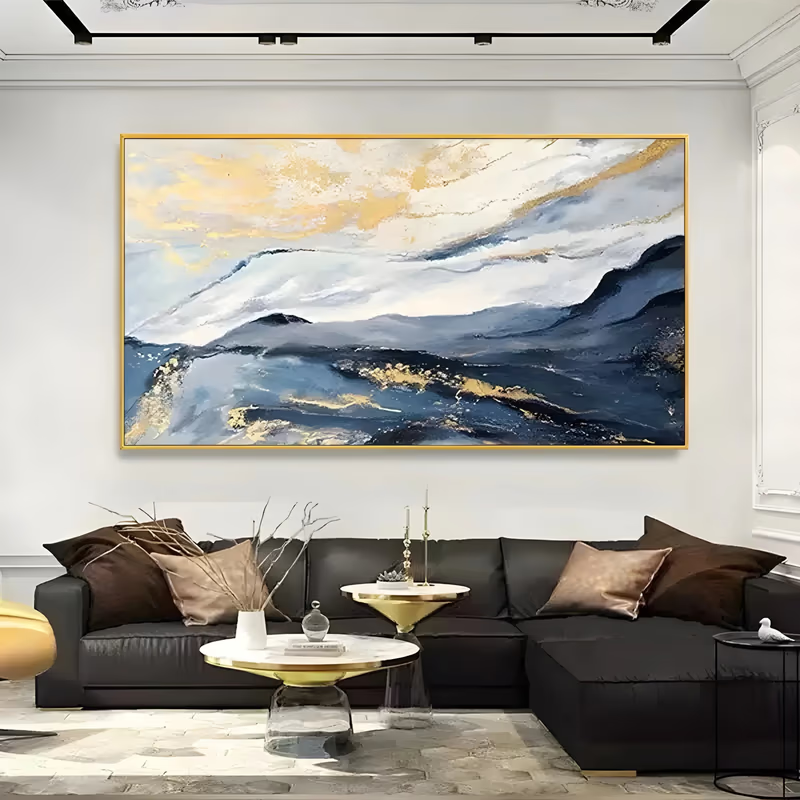
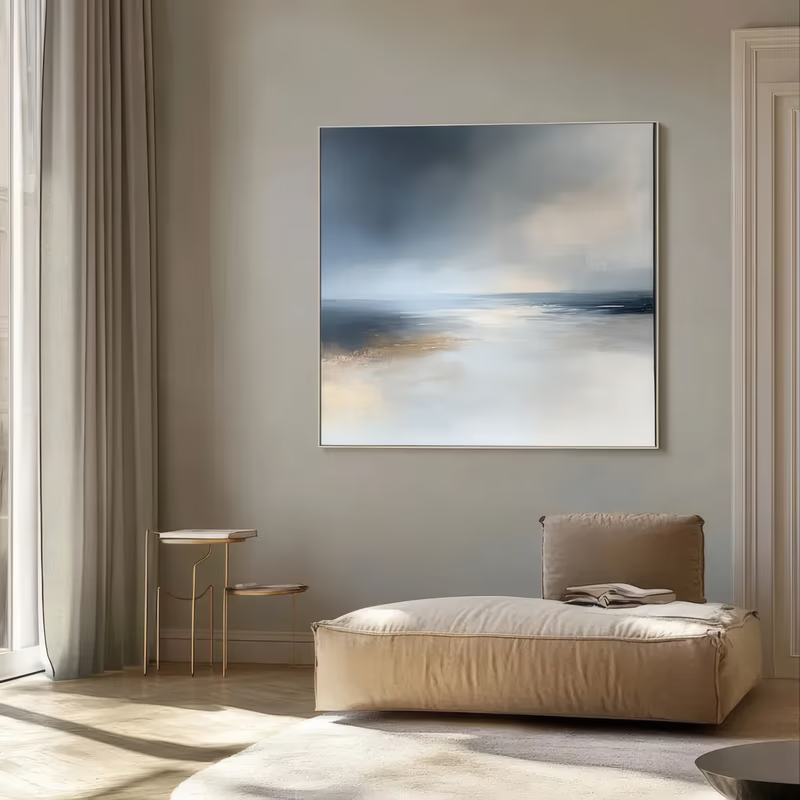
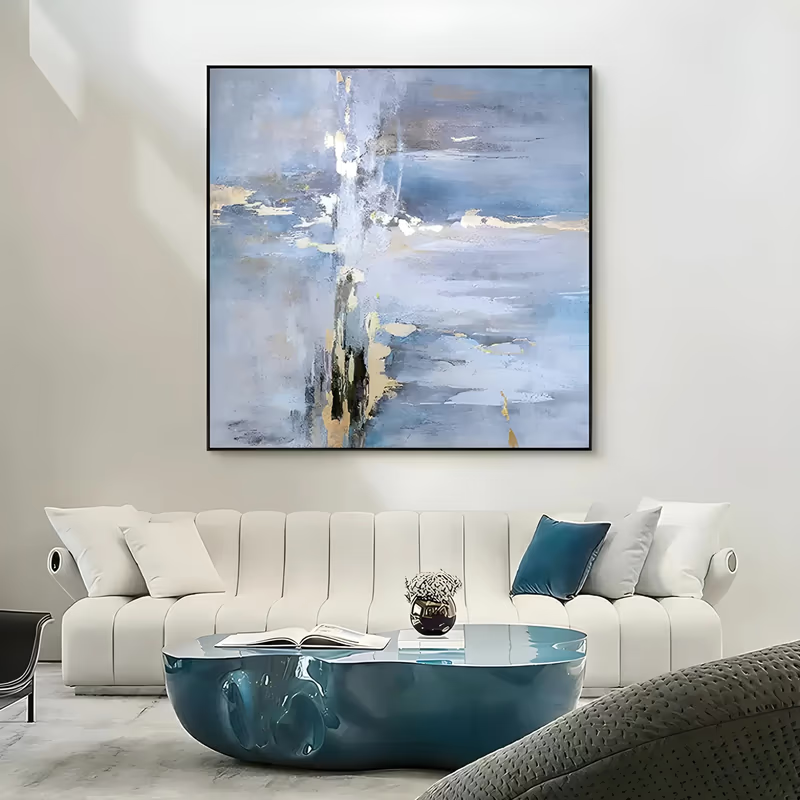
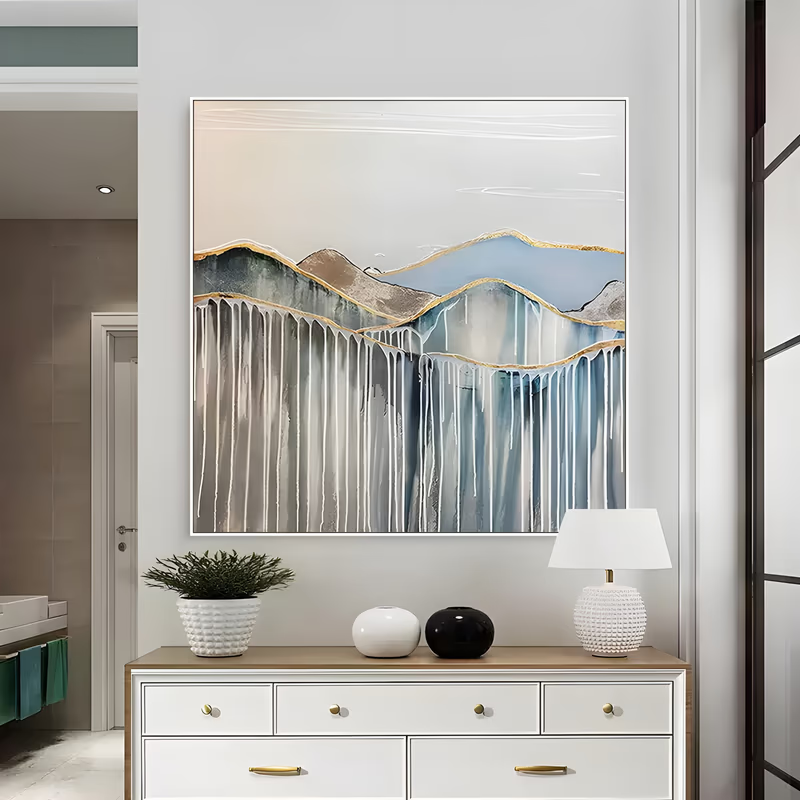
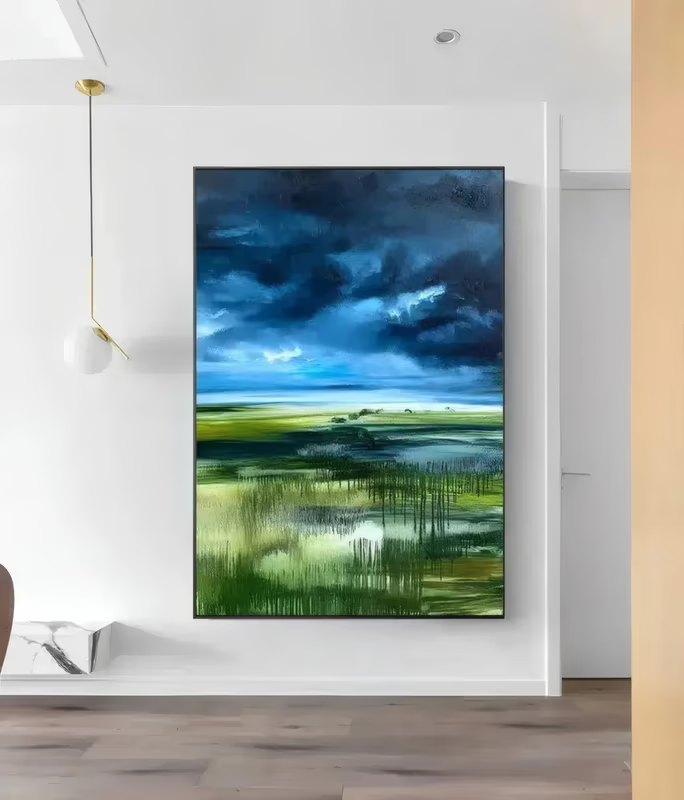
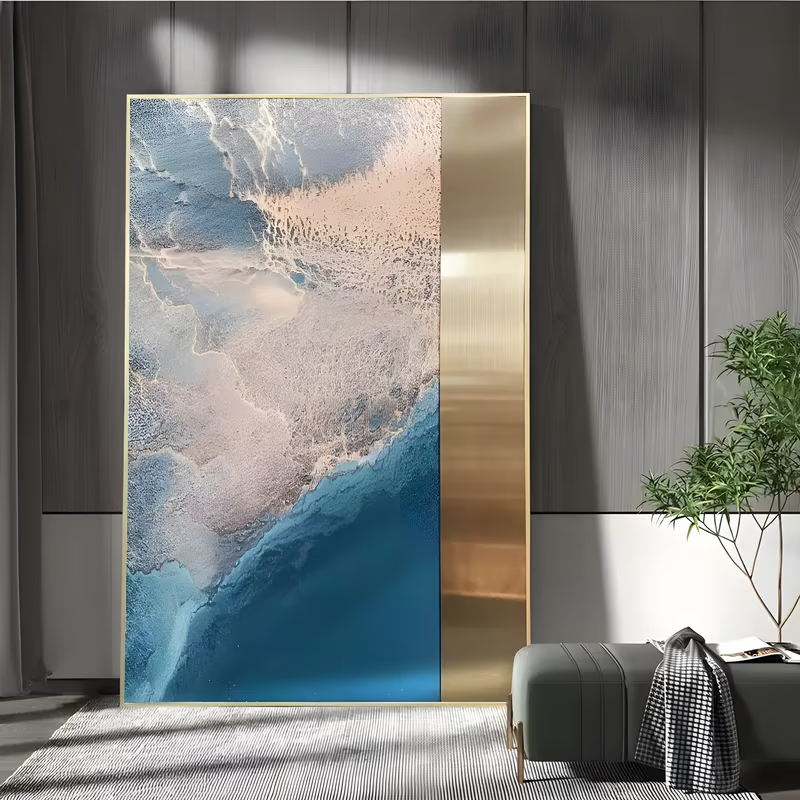
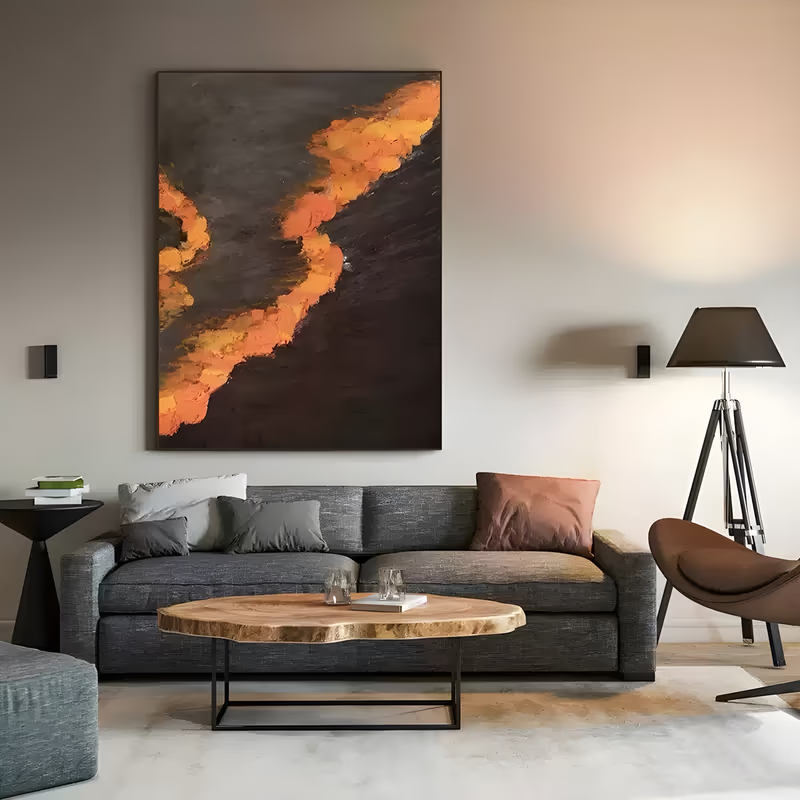
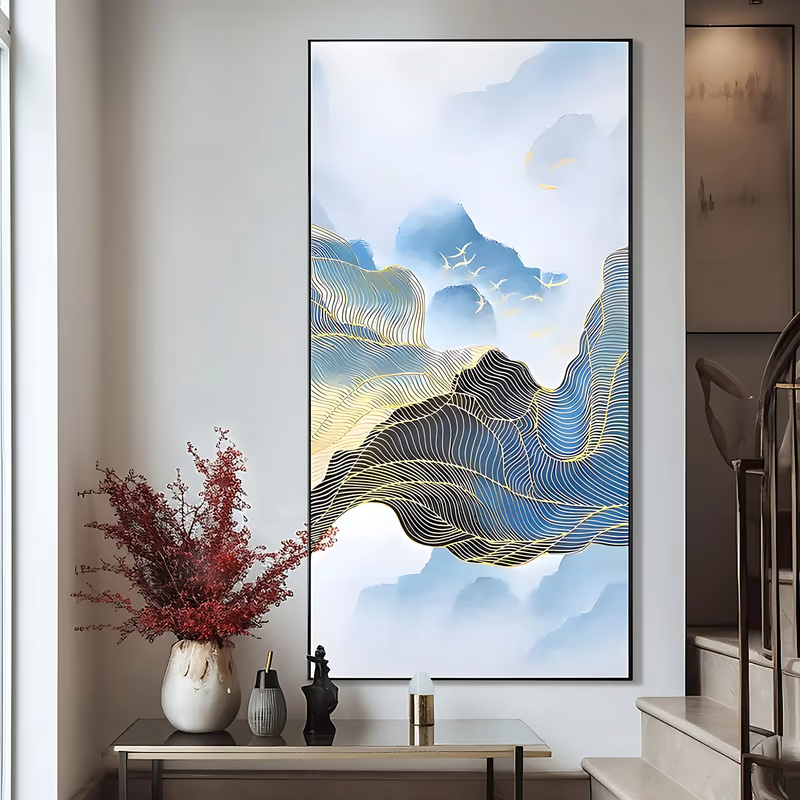
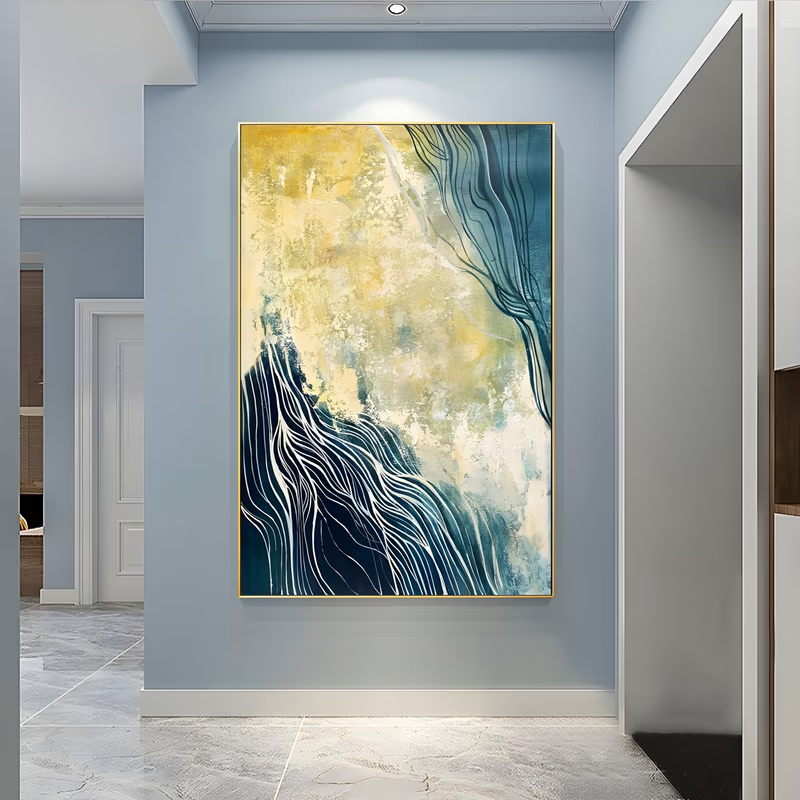
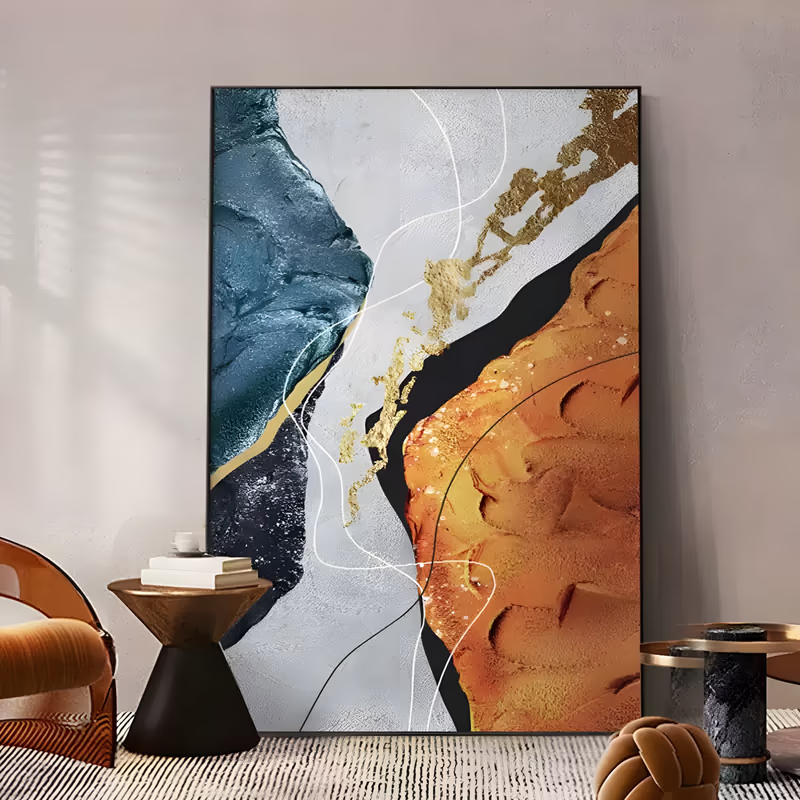
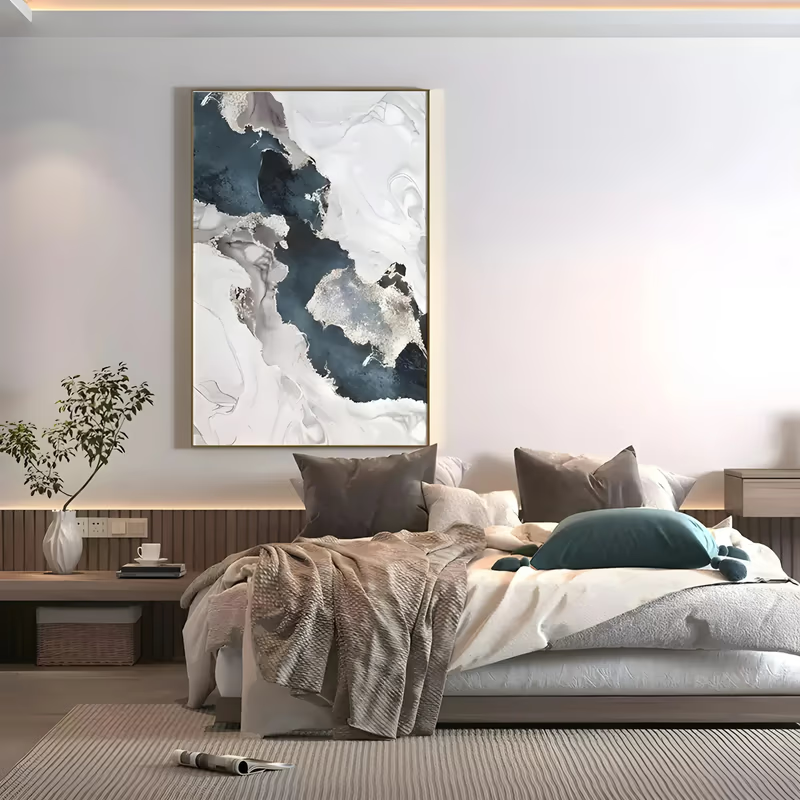
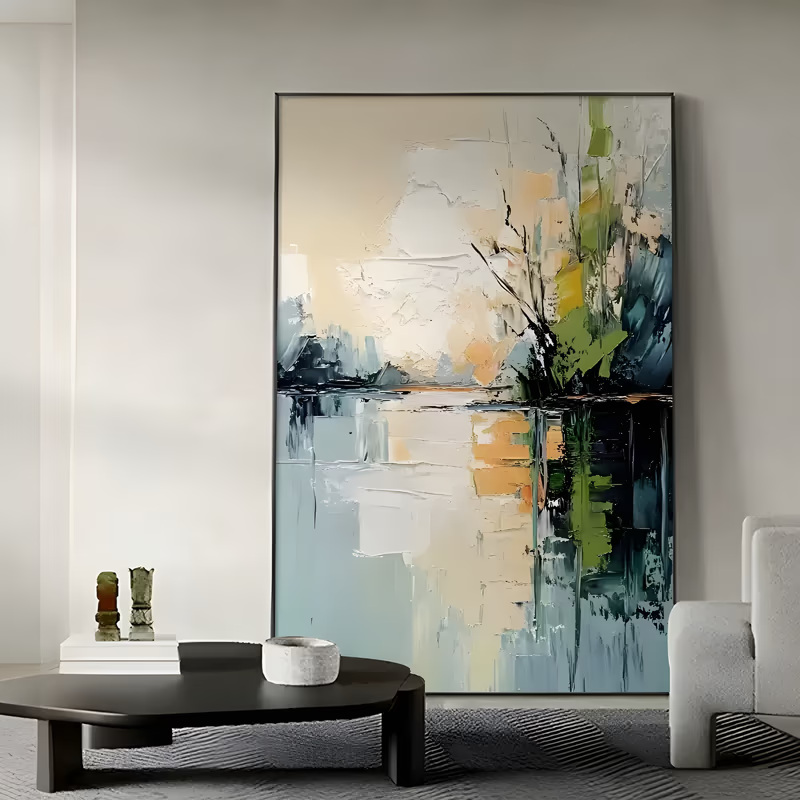
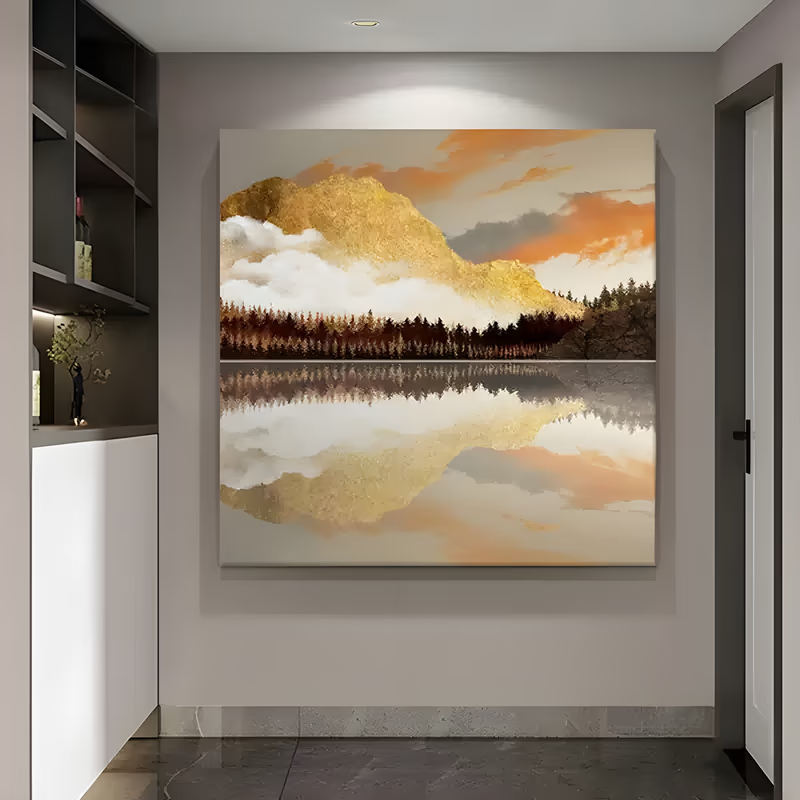
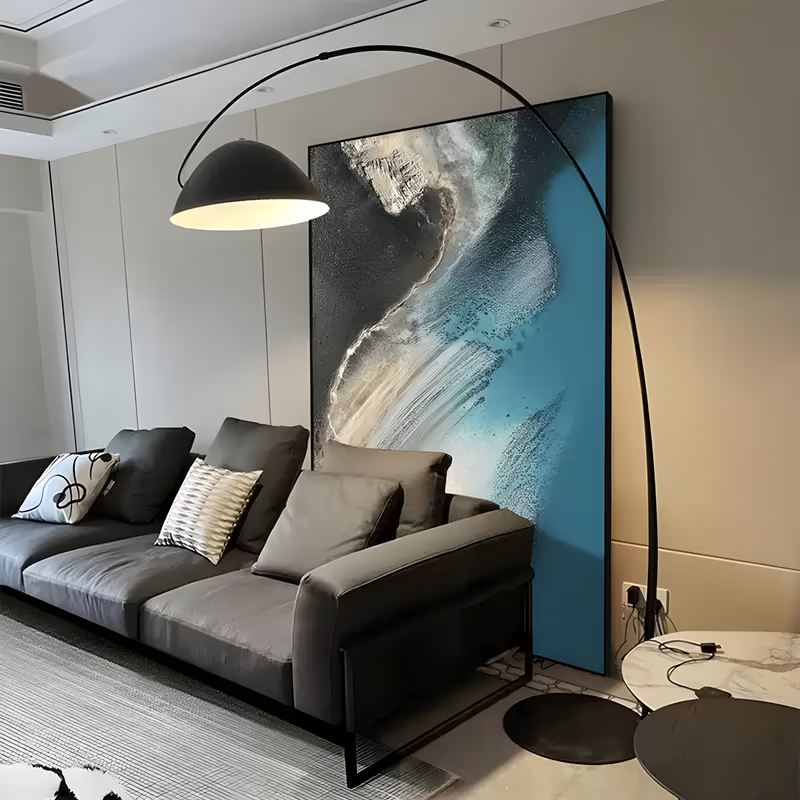
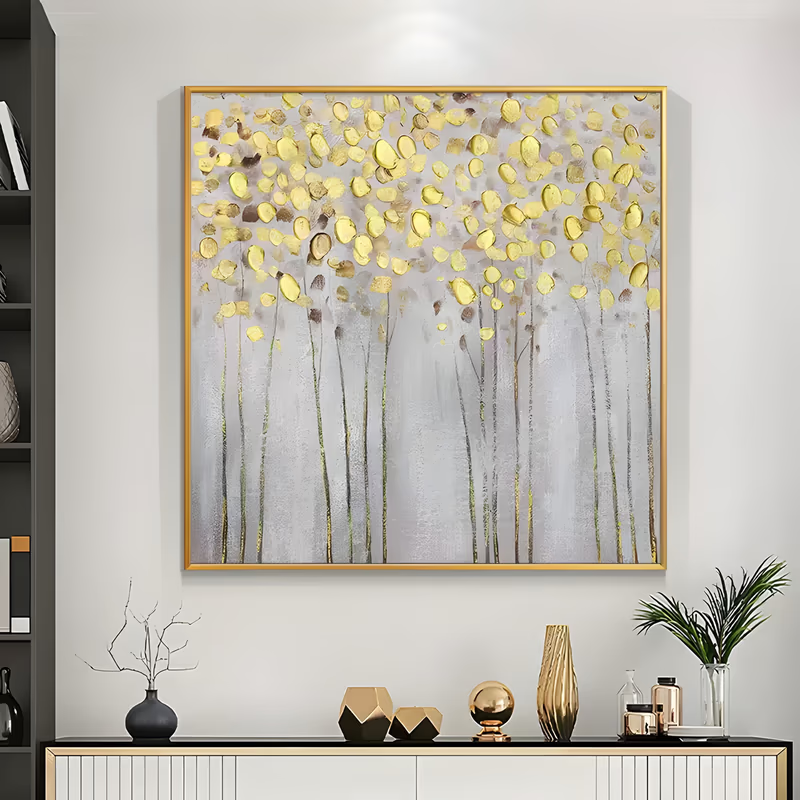
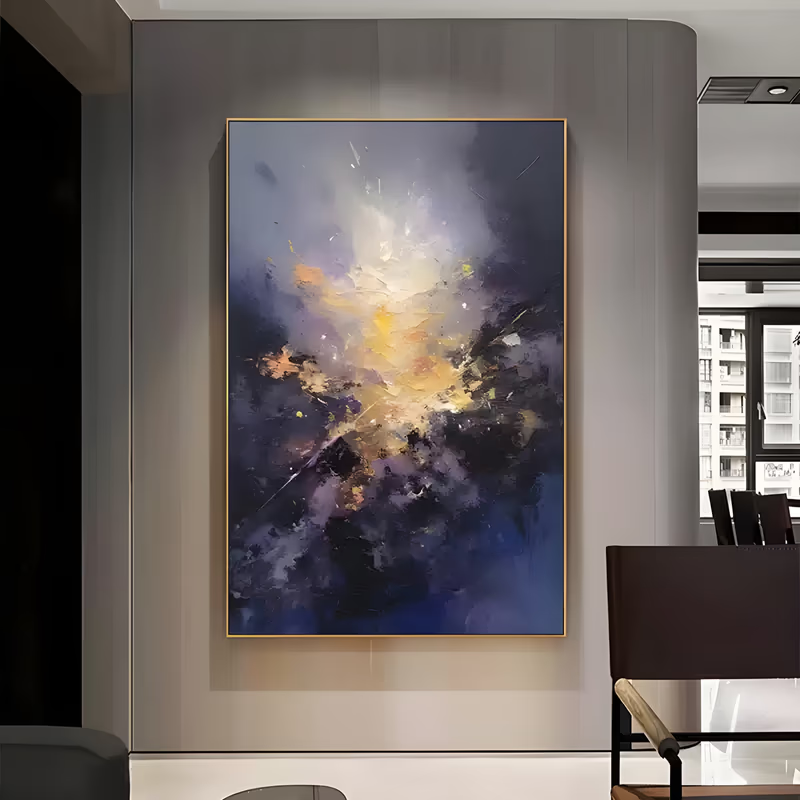
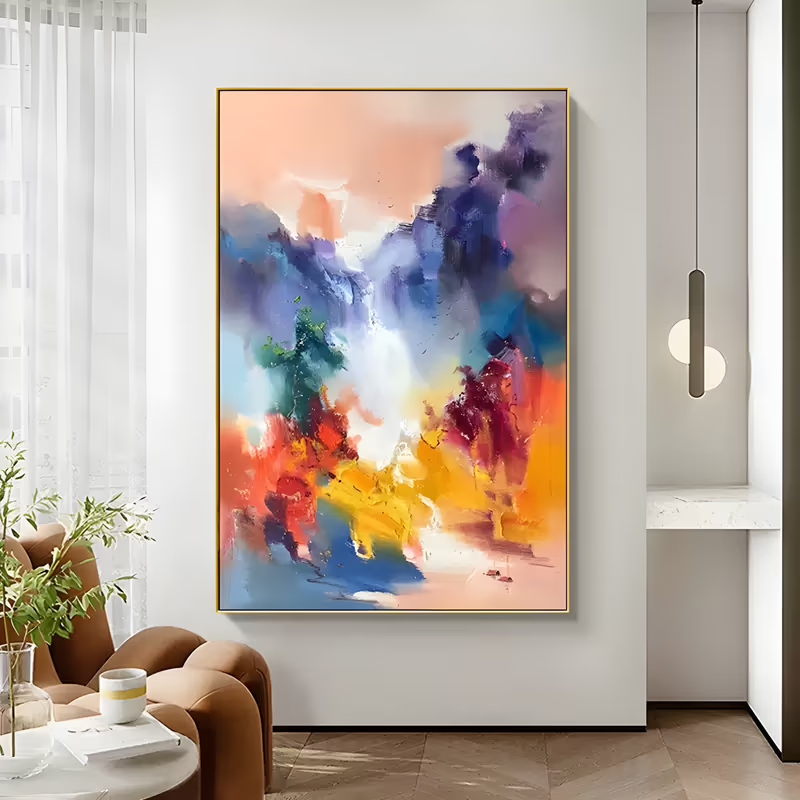
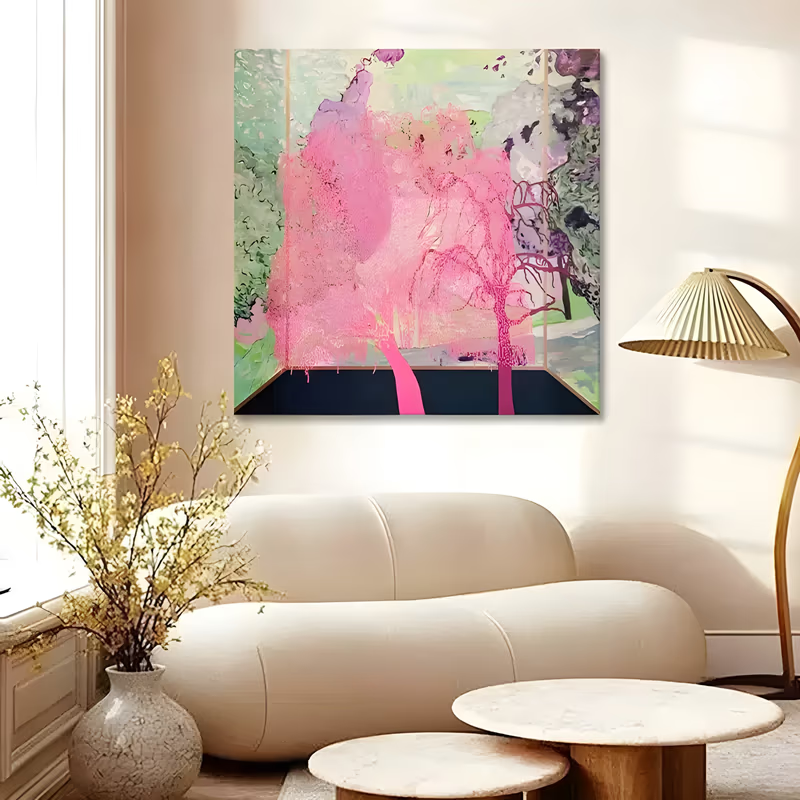
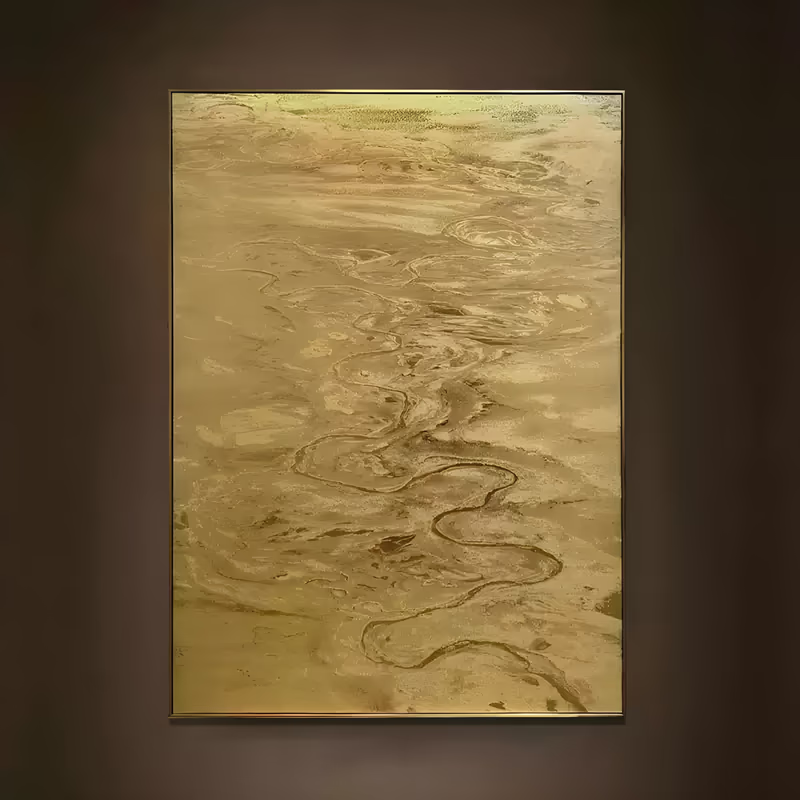
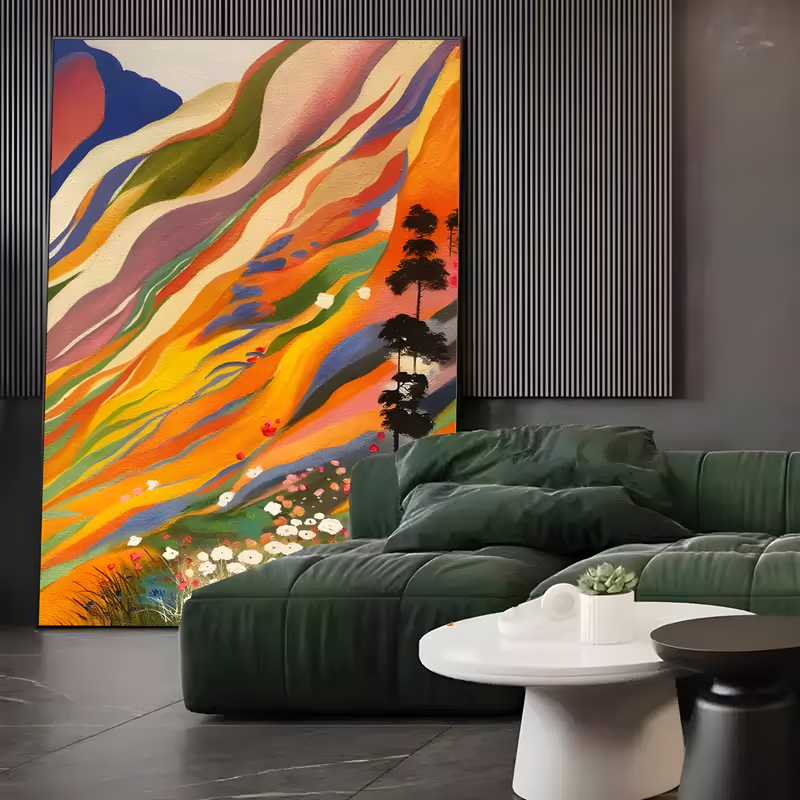
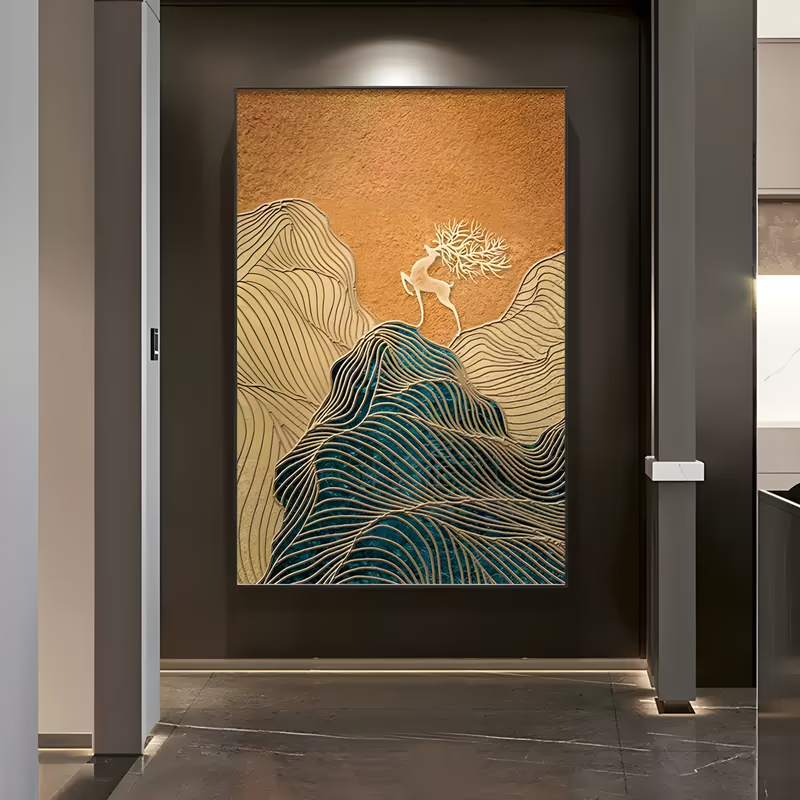
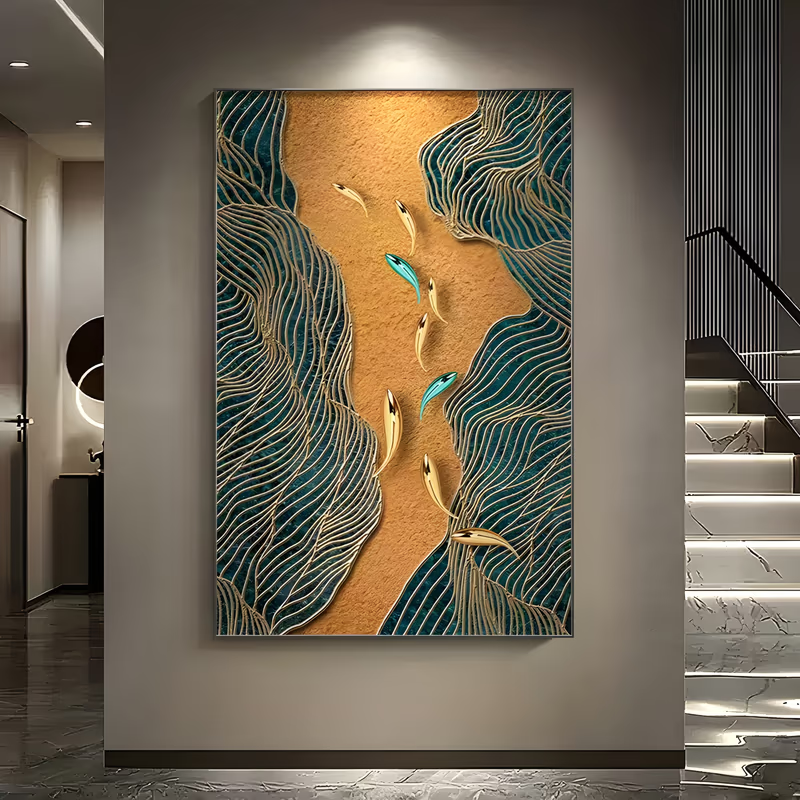
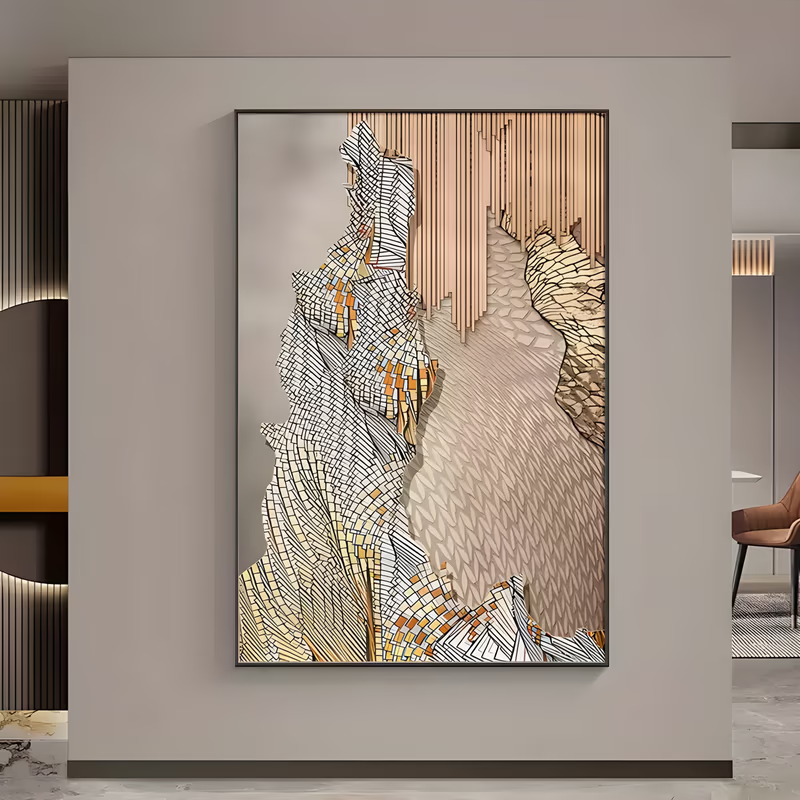
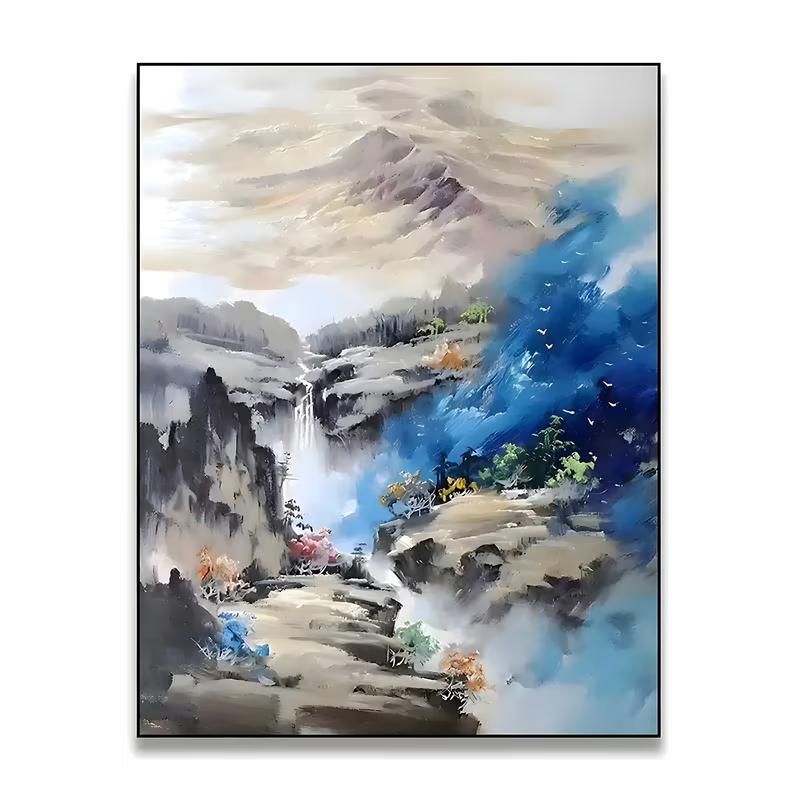
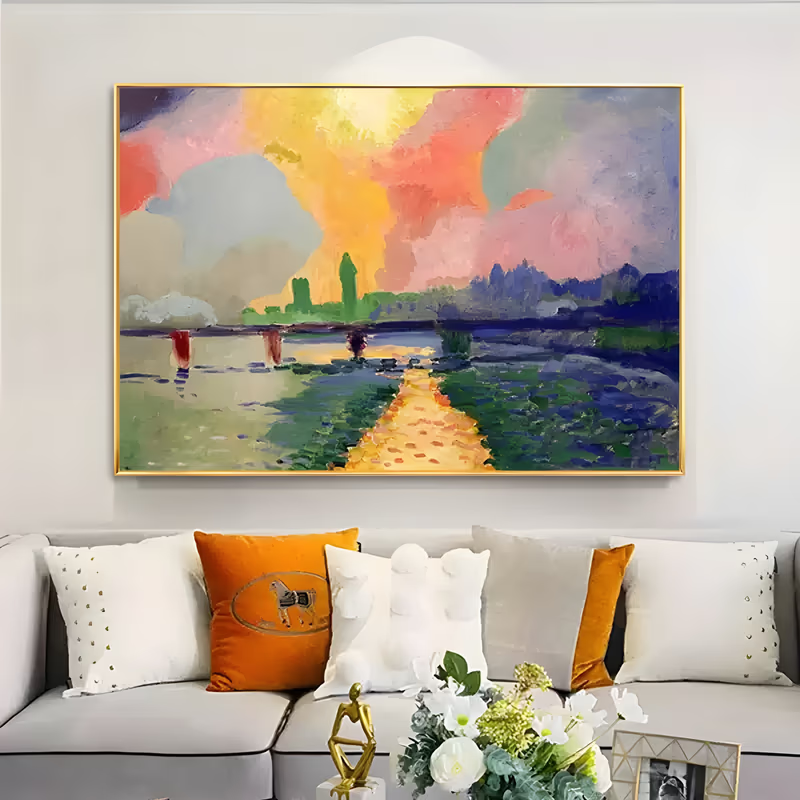
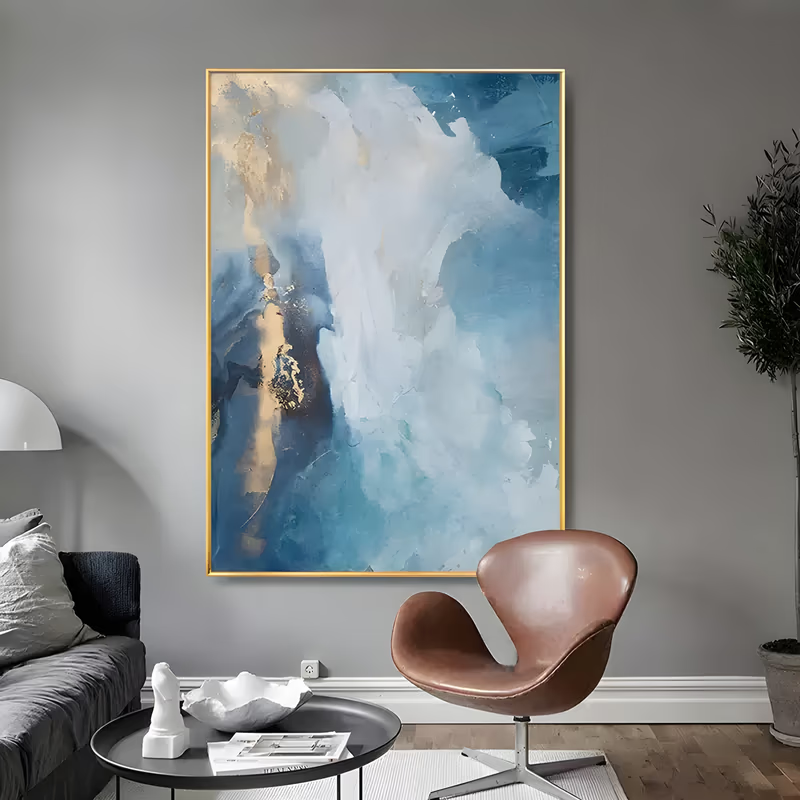
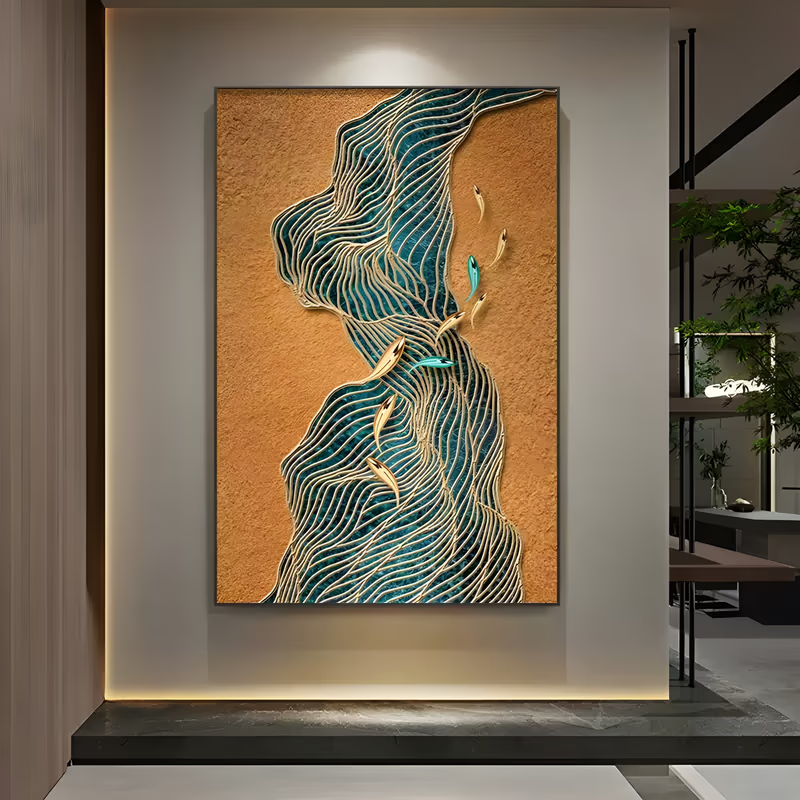
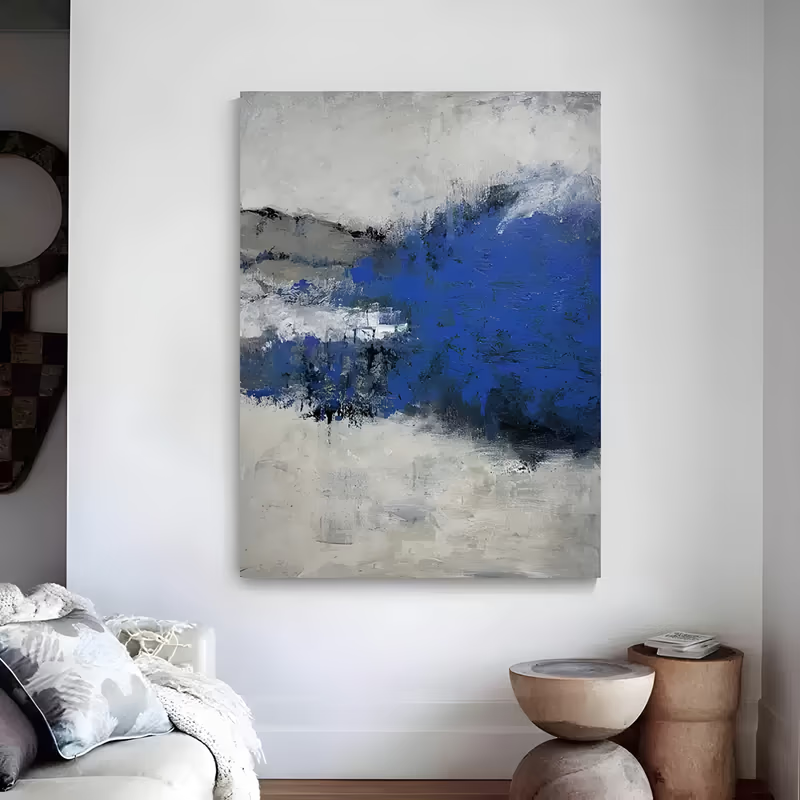
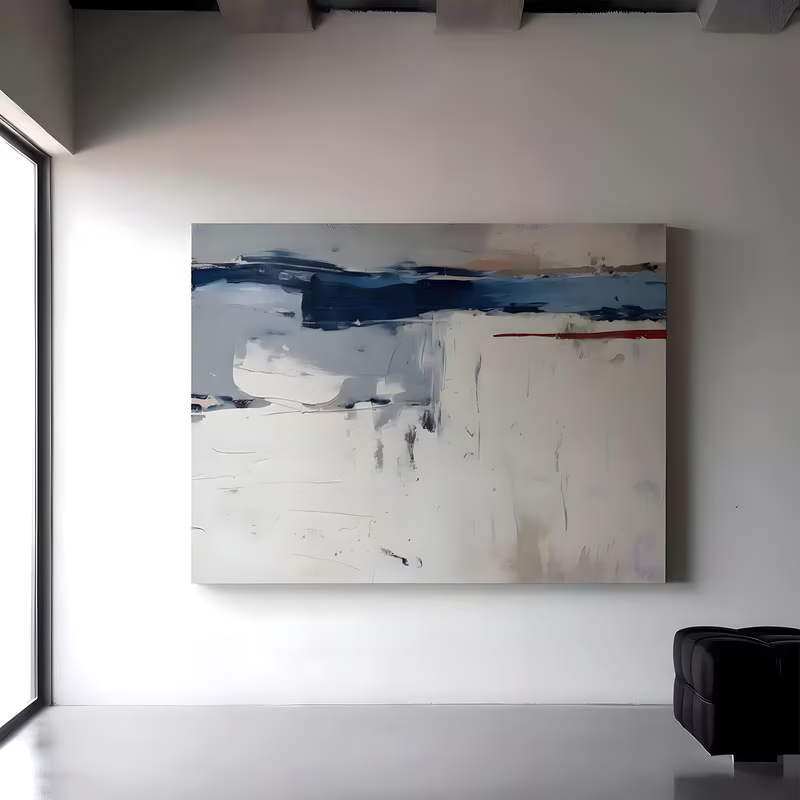
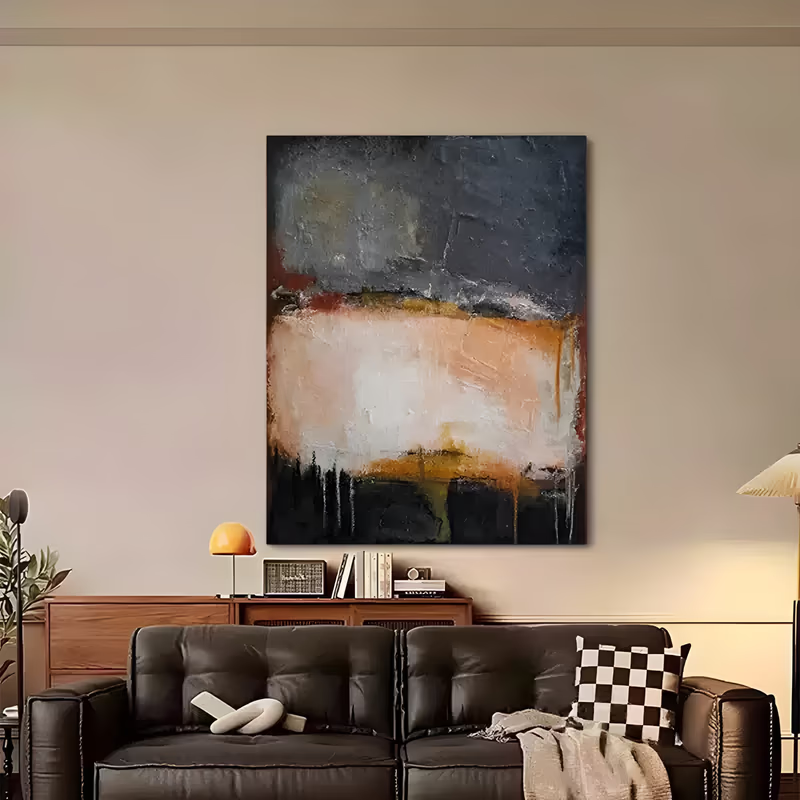
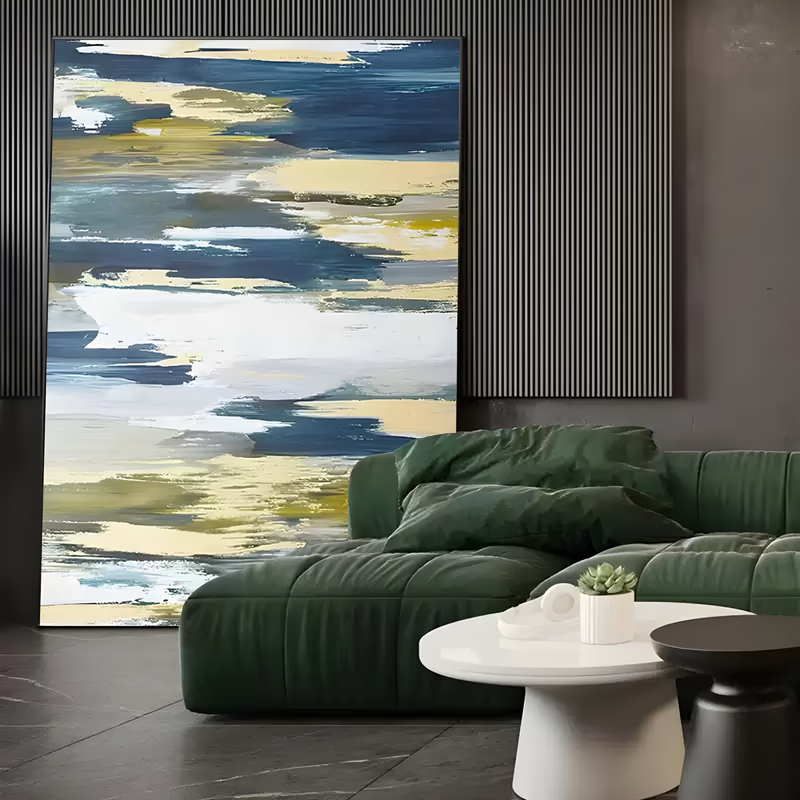
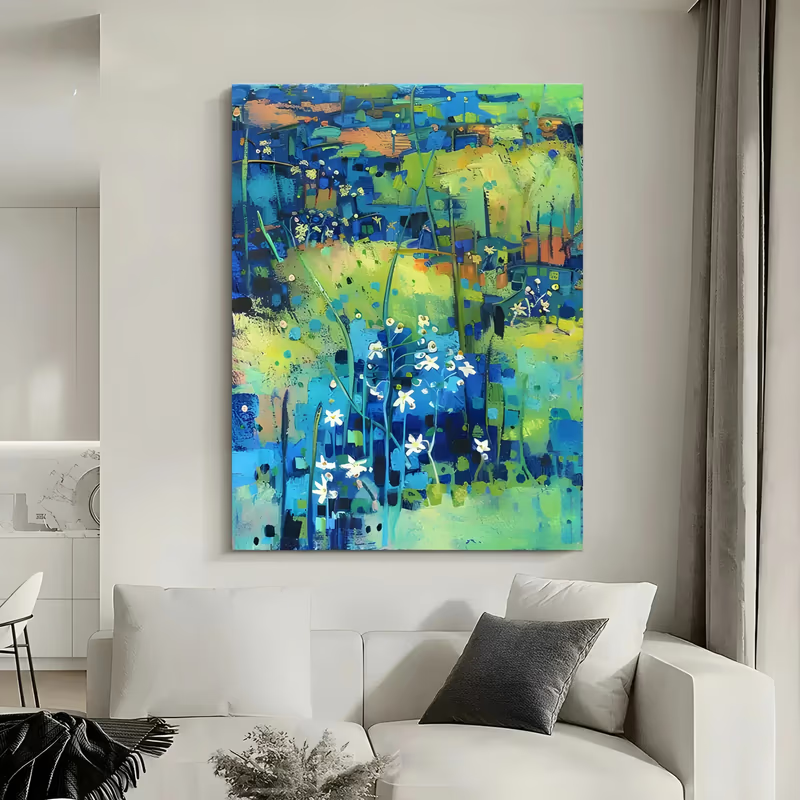
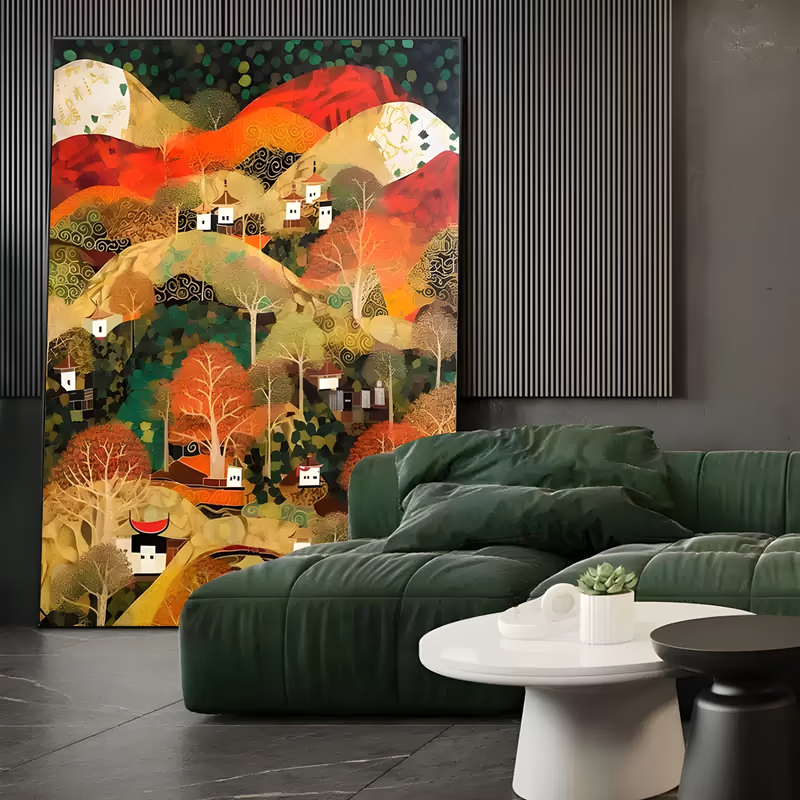
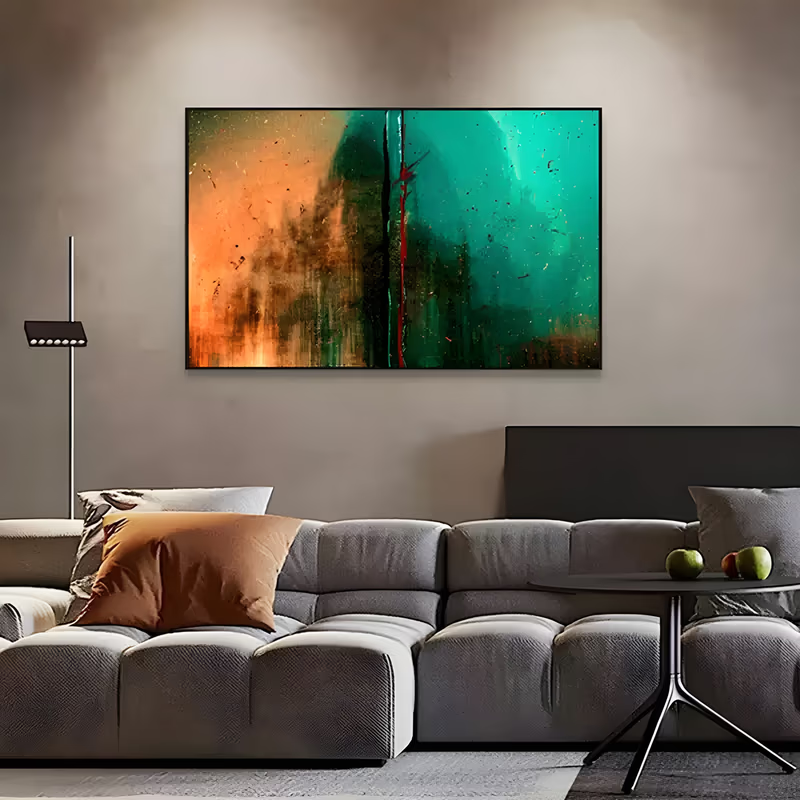
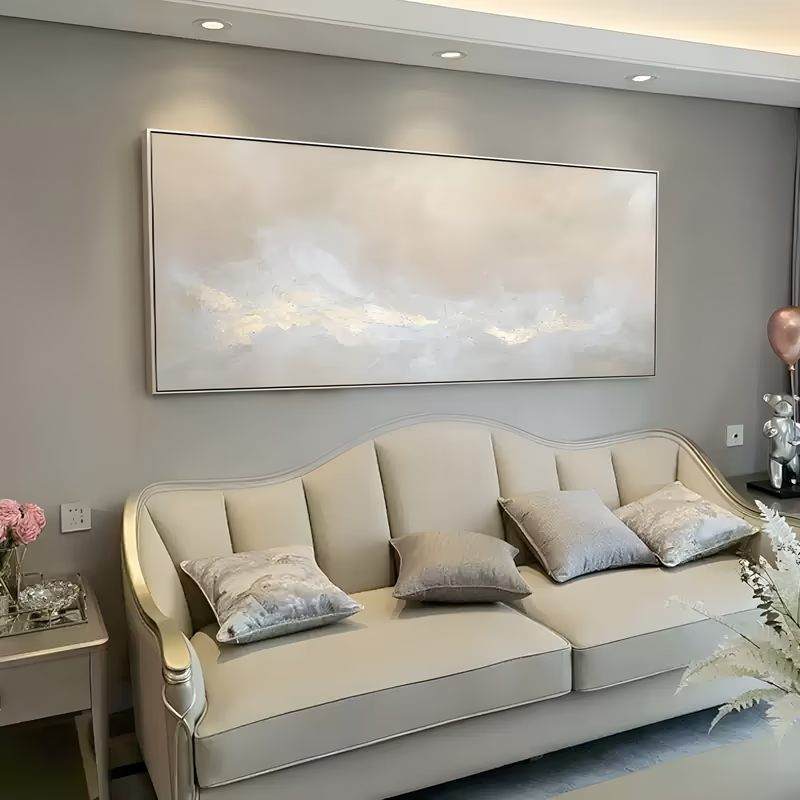
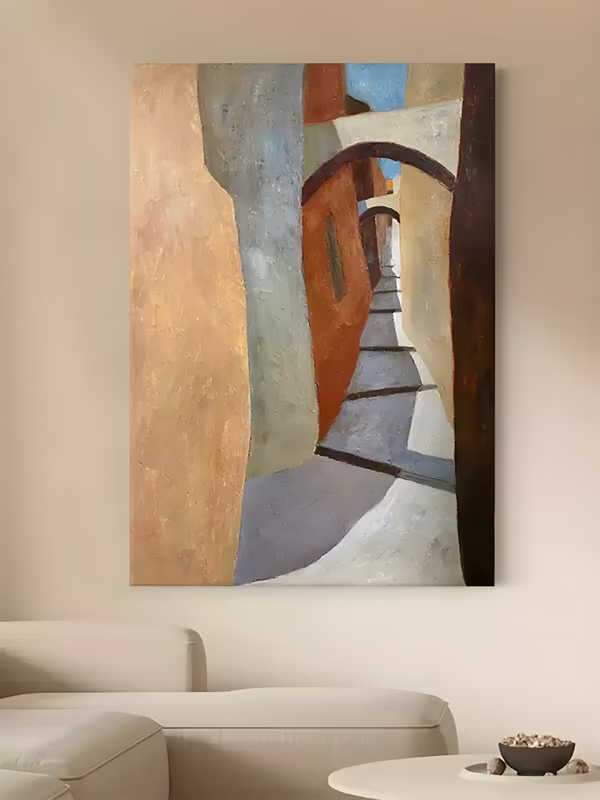
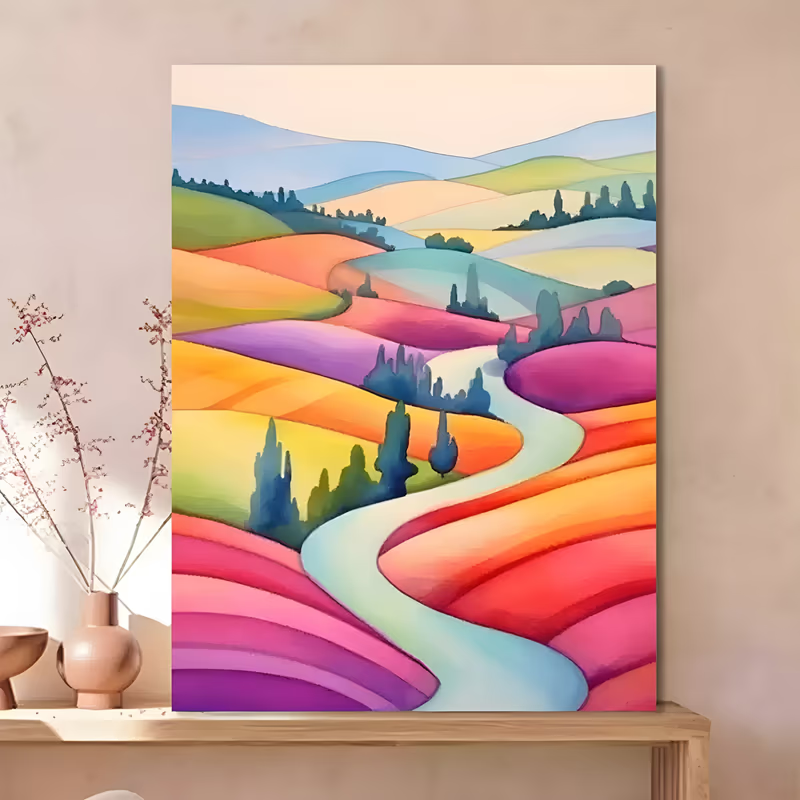
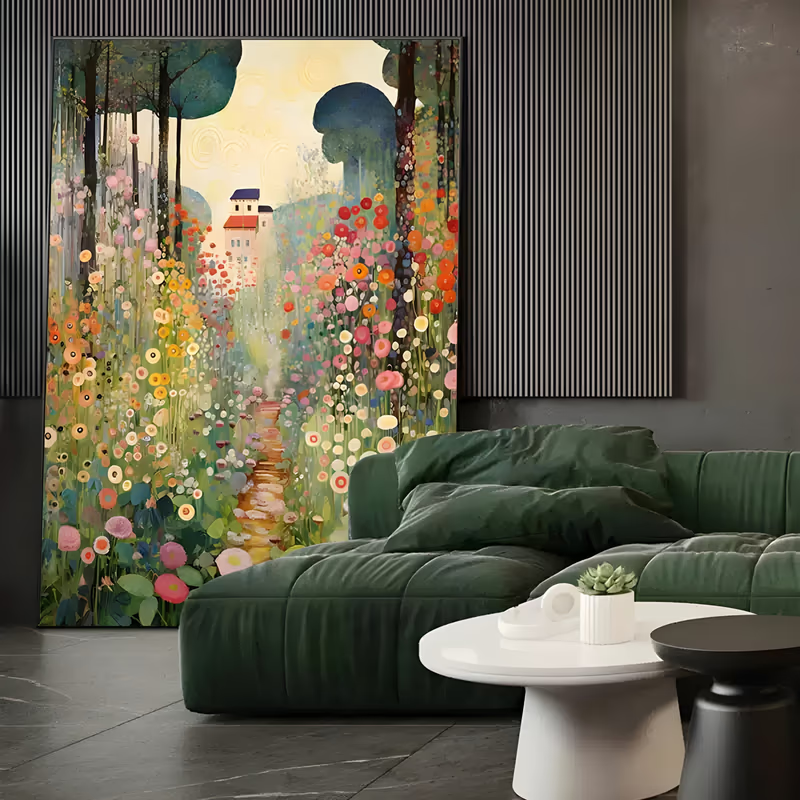
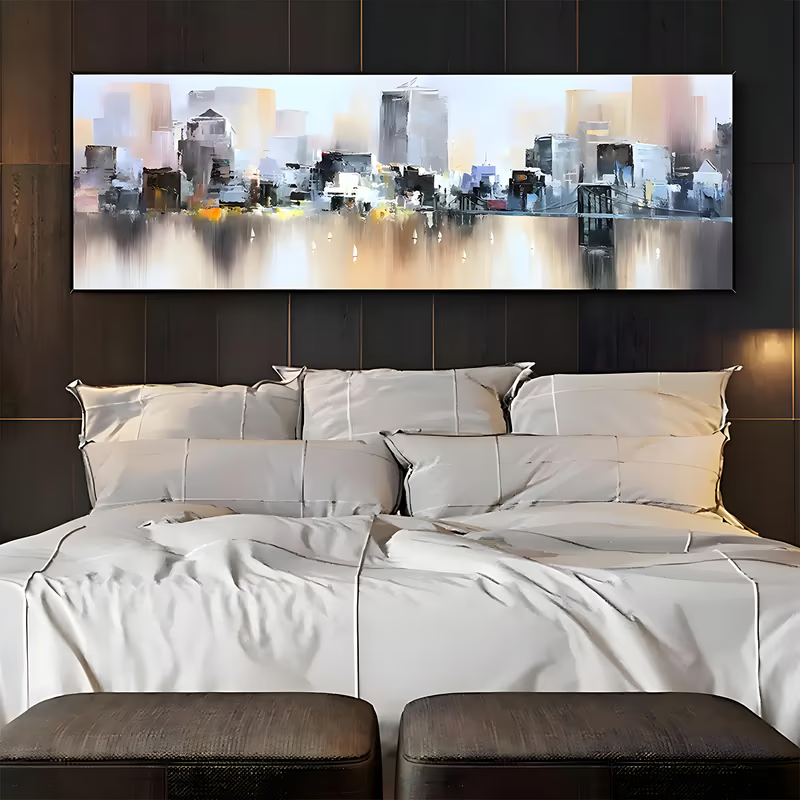
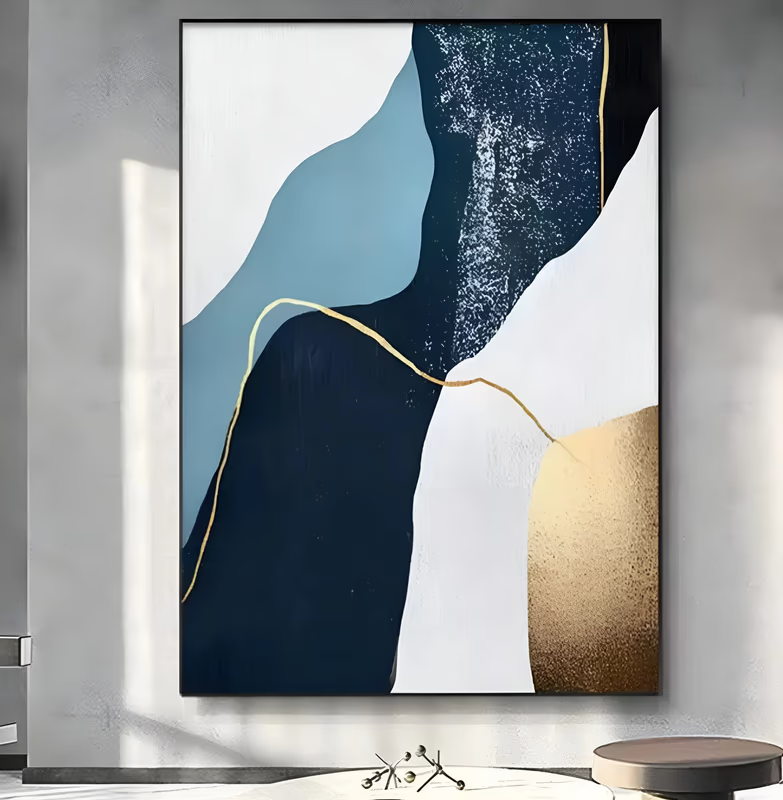
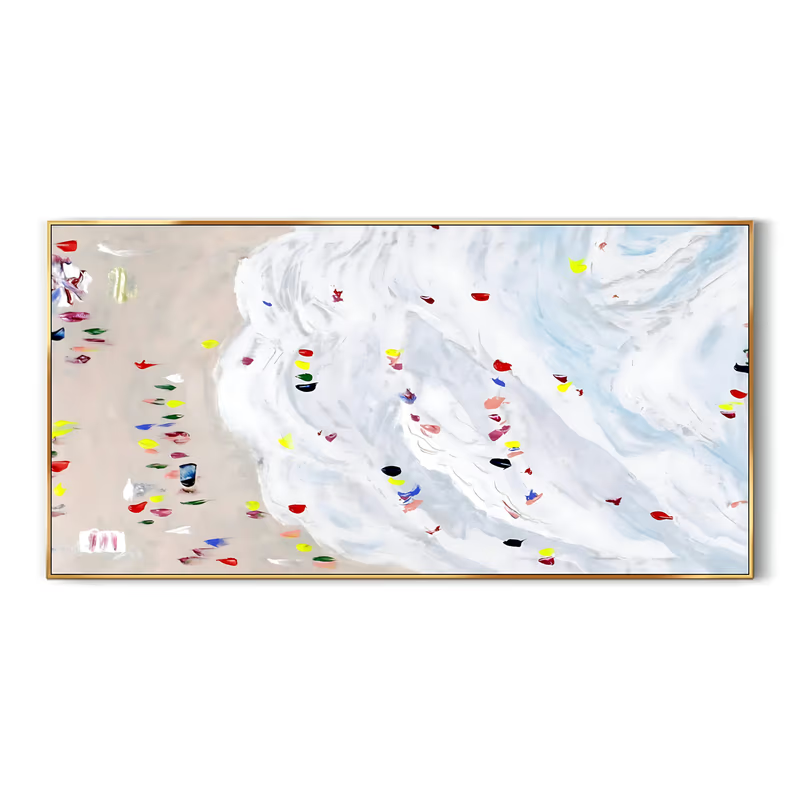
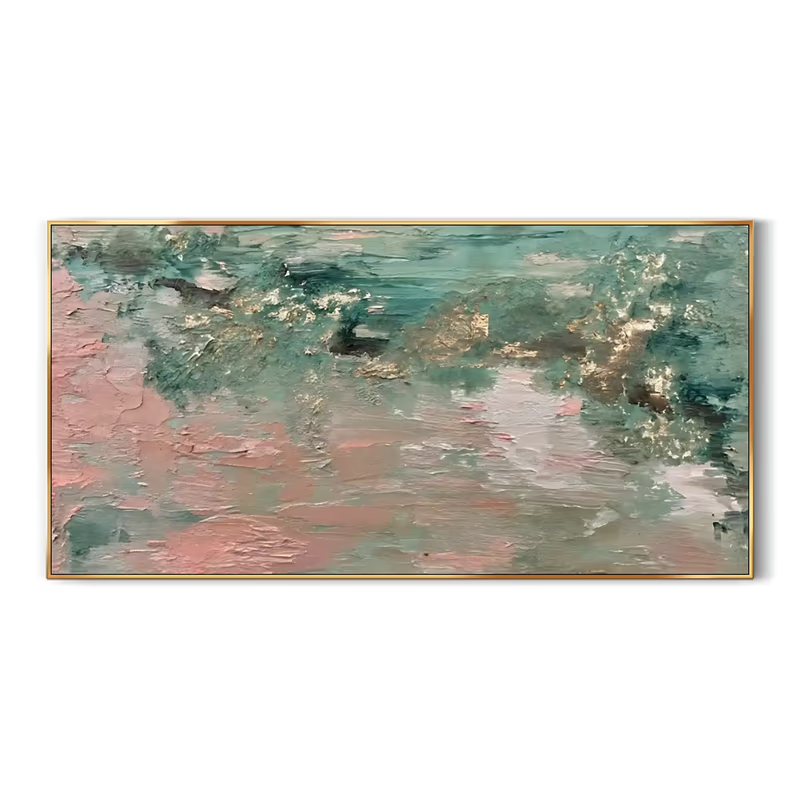
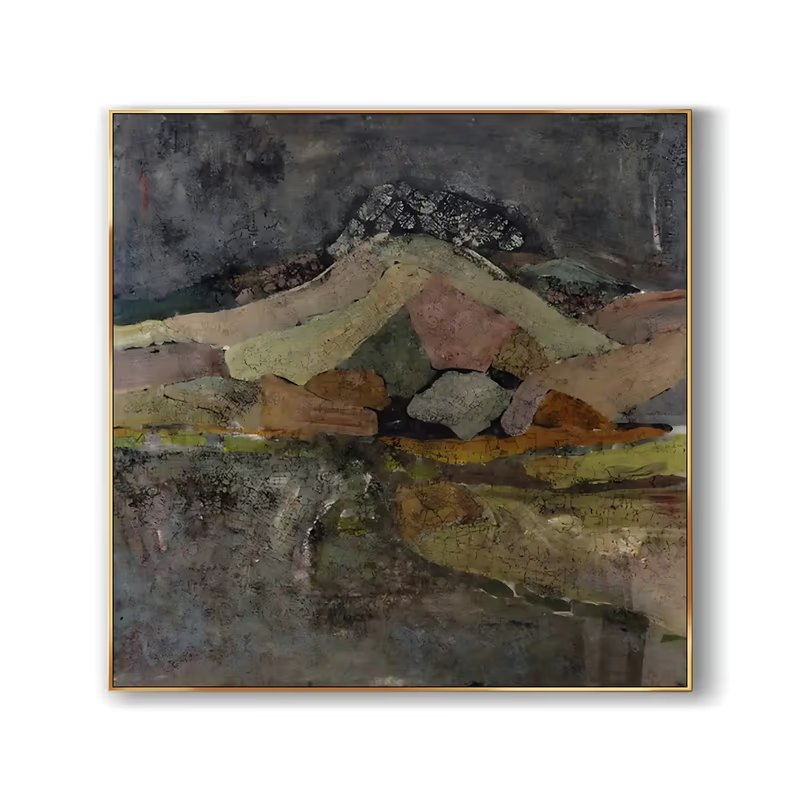
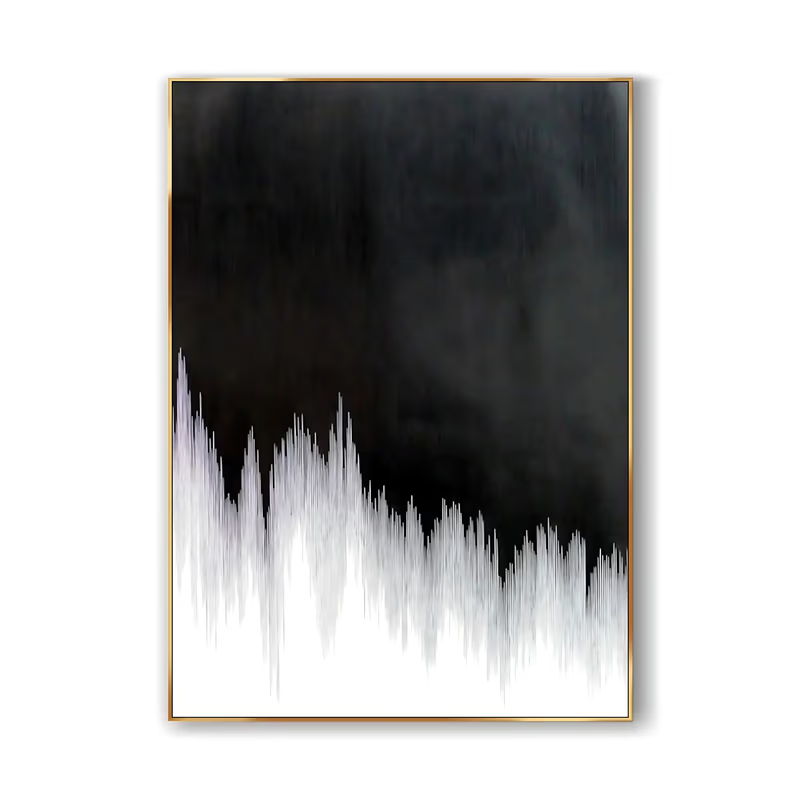
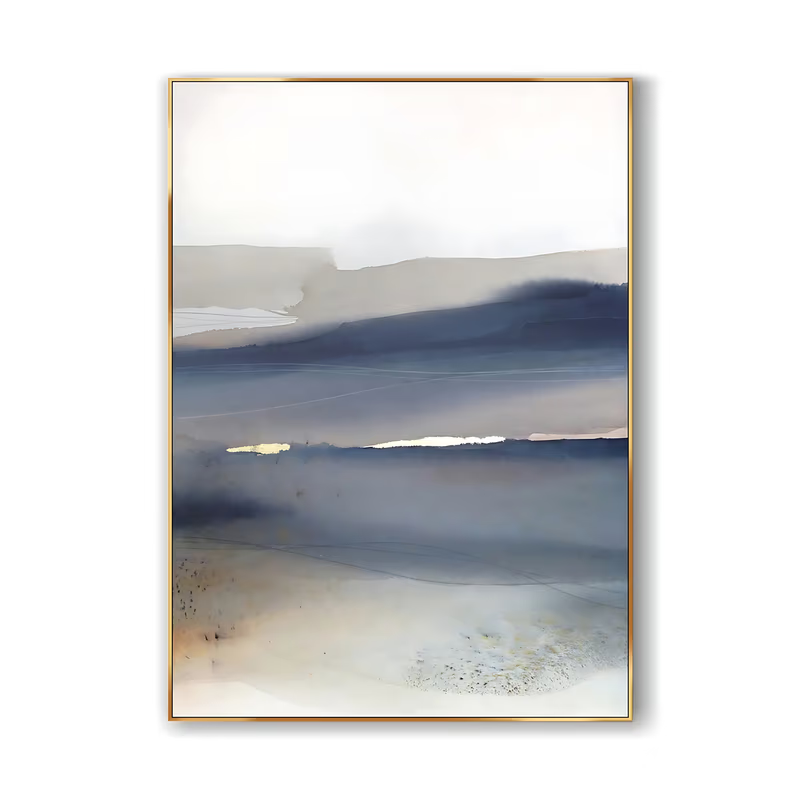
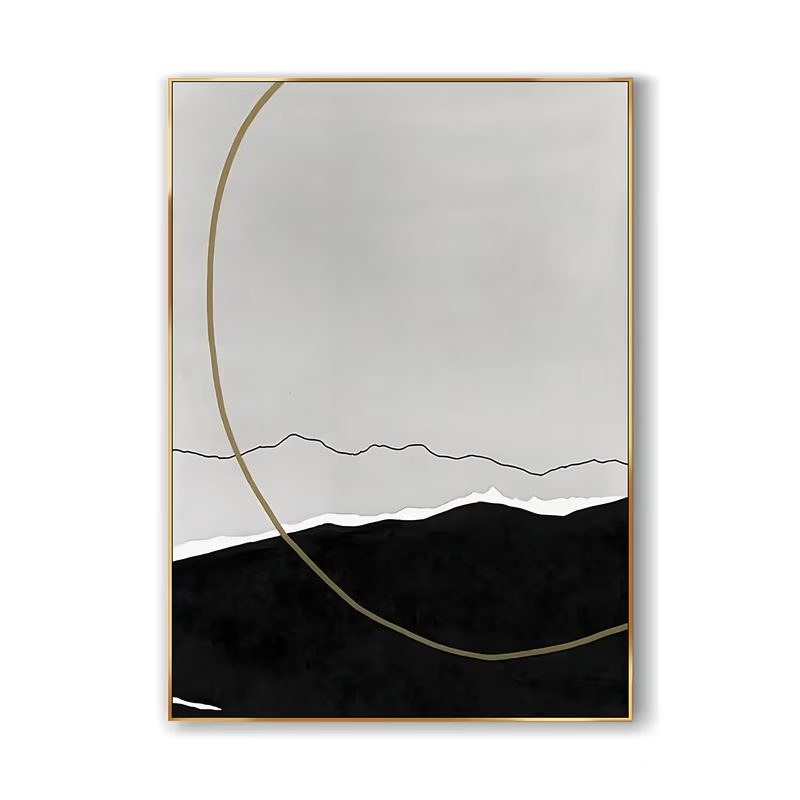
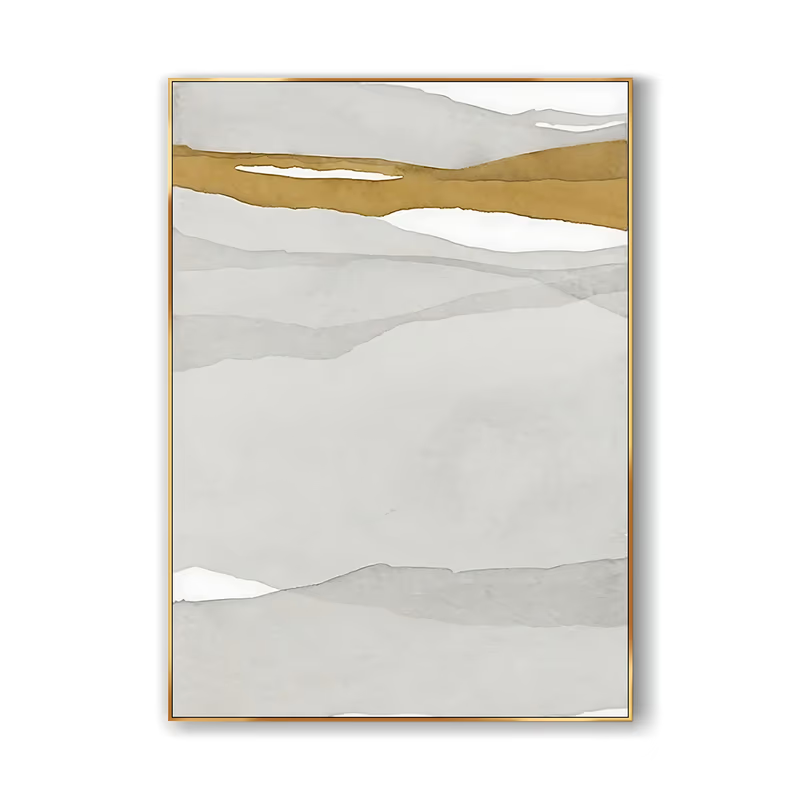
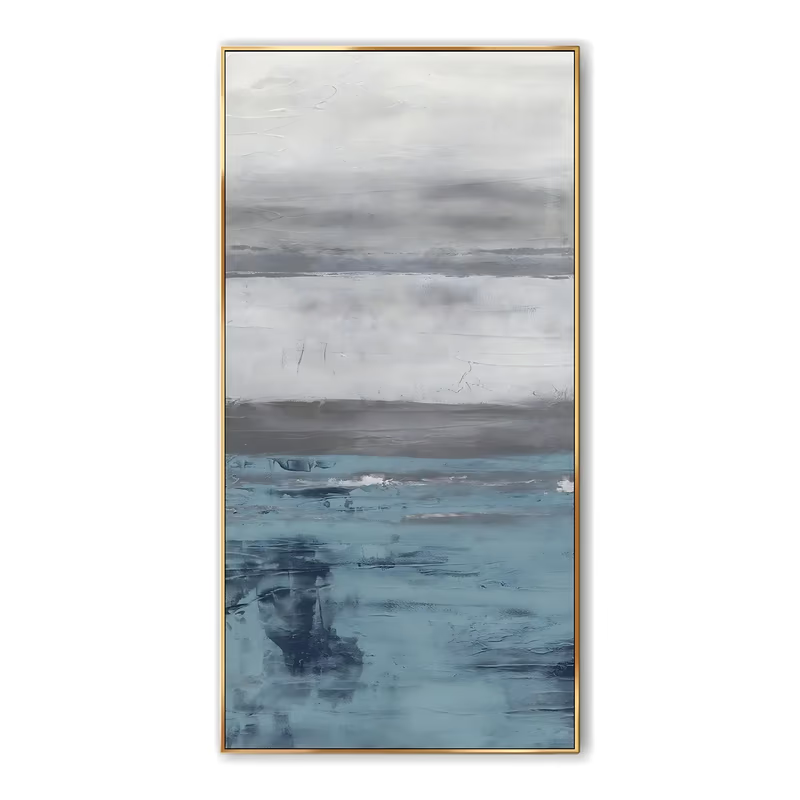
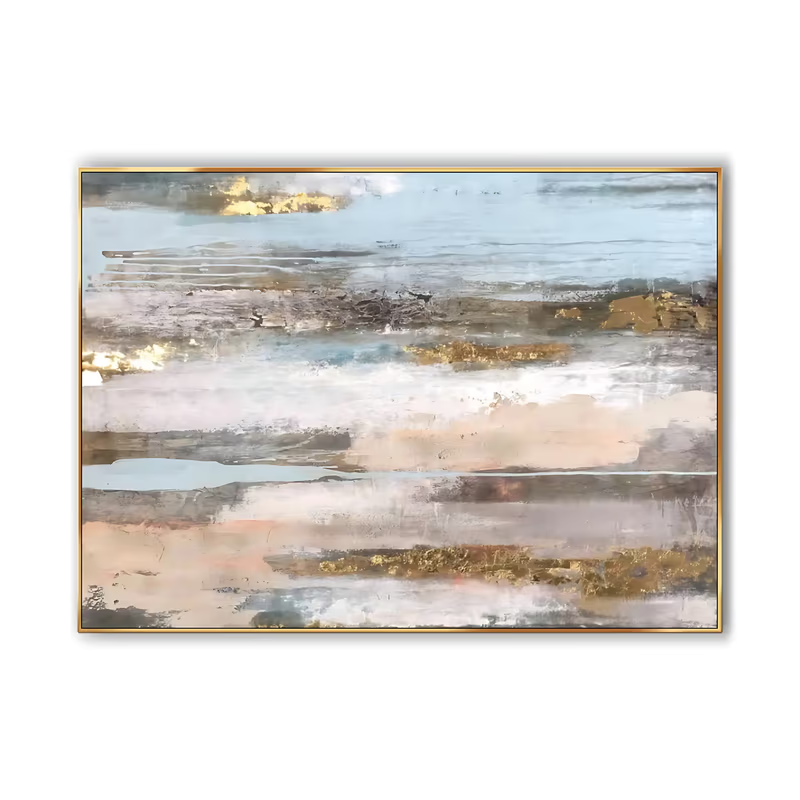
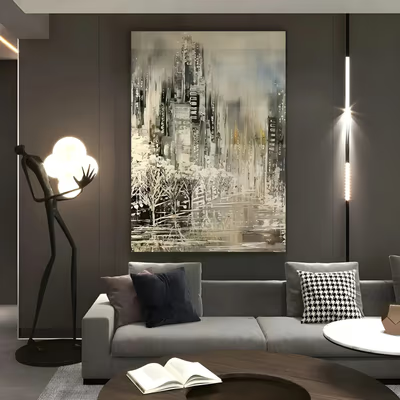
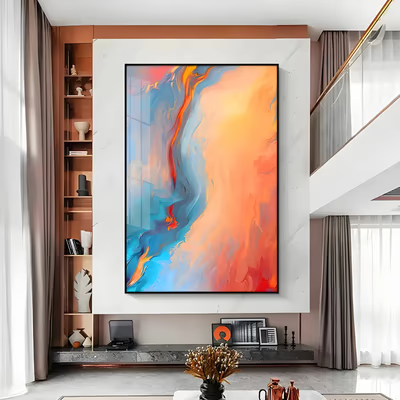
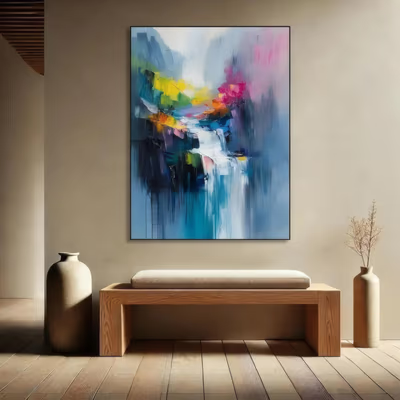
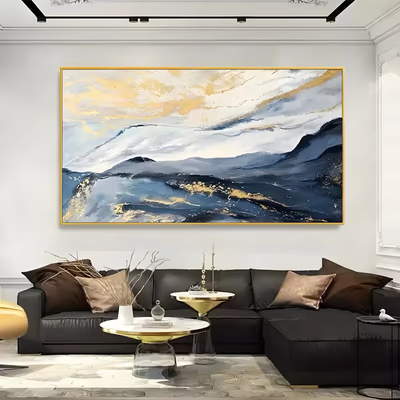
Layered horizon bands, mountain silhouettes in navy and gold, meandering rivers in ochre: the structure of a landscape without its detail. The bridge between scenery and contemporary art, and a safe choice for corporate walls.
Minimal and wabi-sabi landscapes
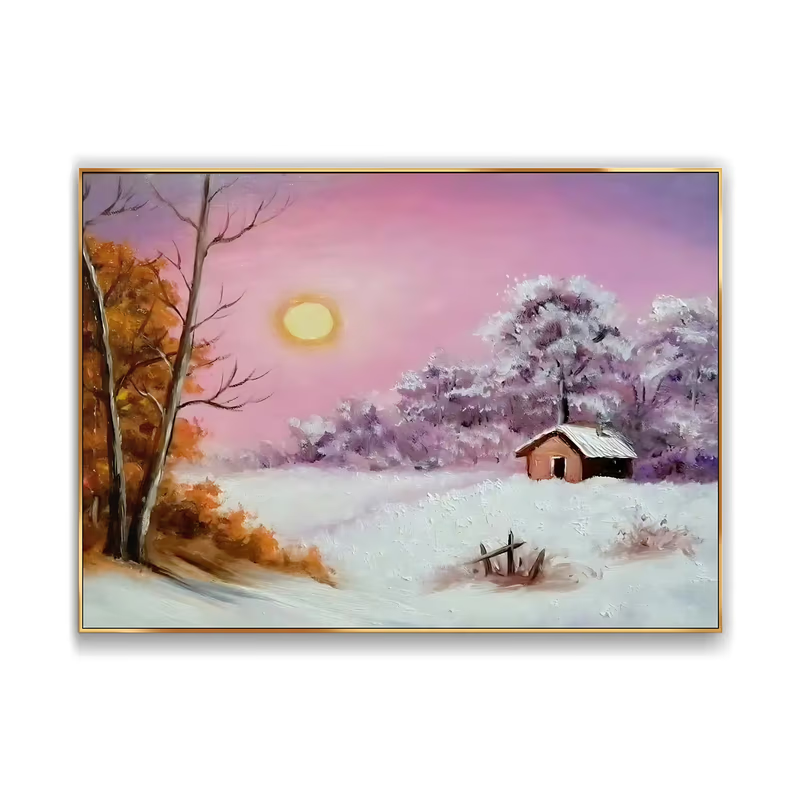
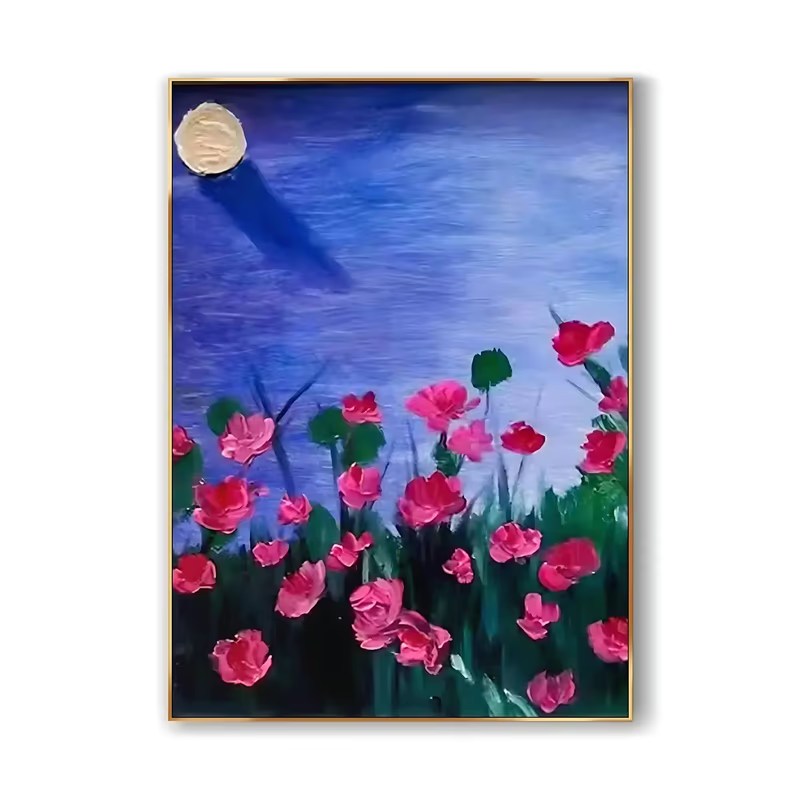
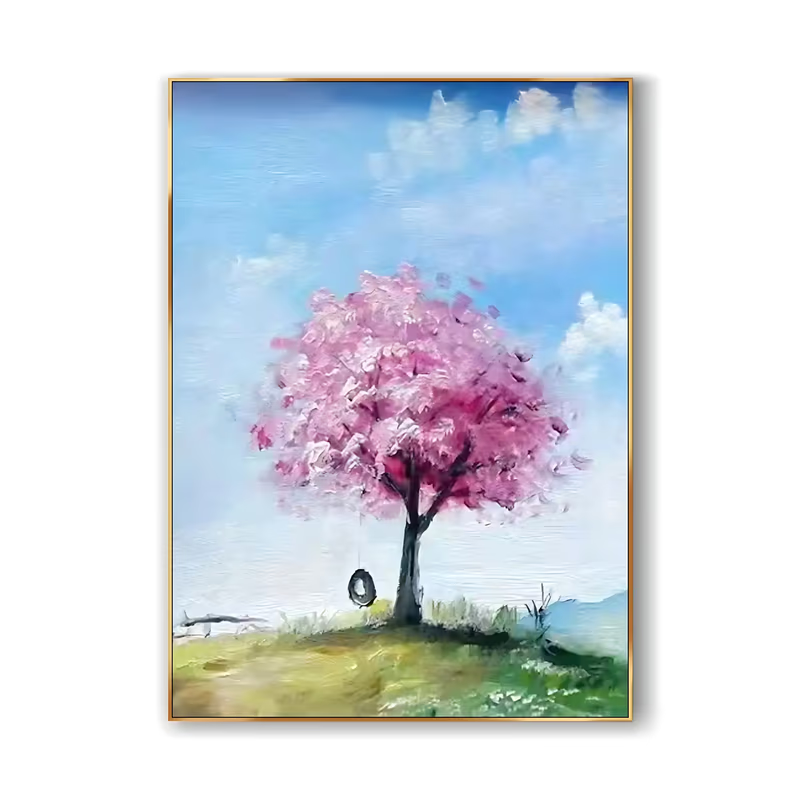
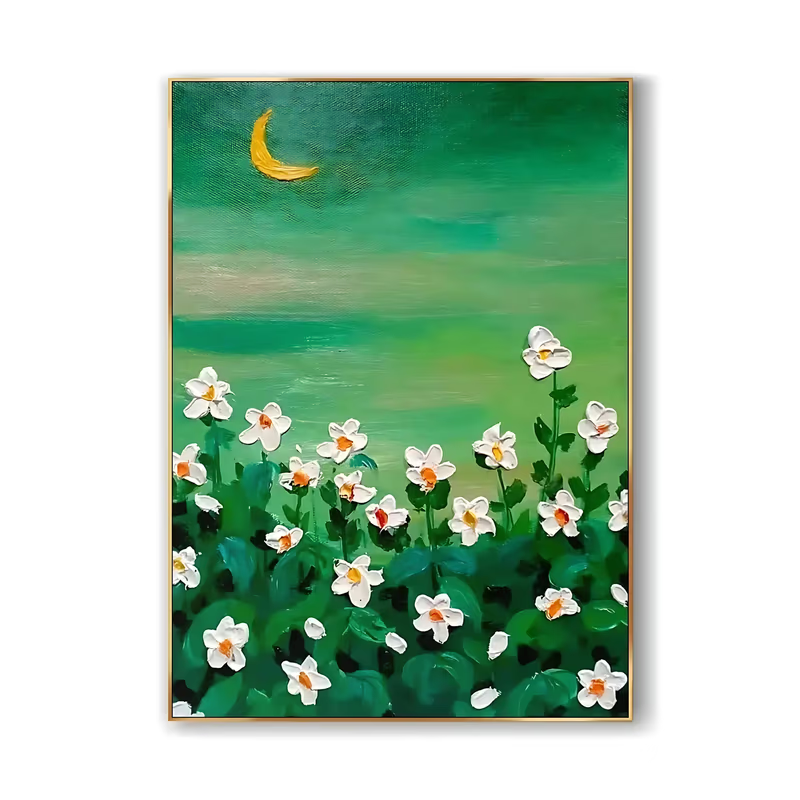
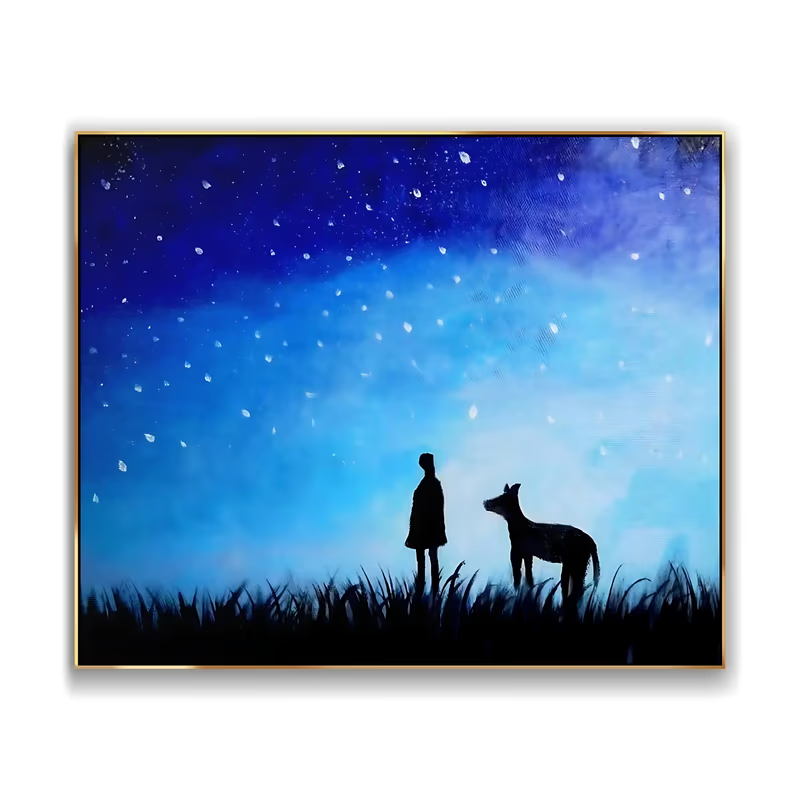
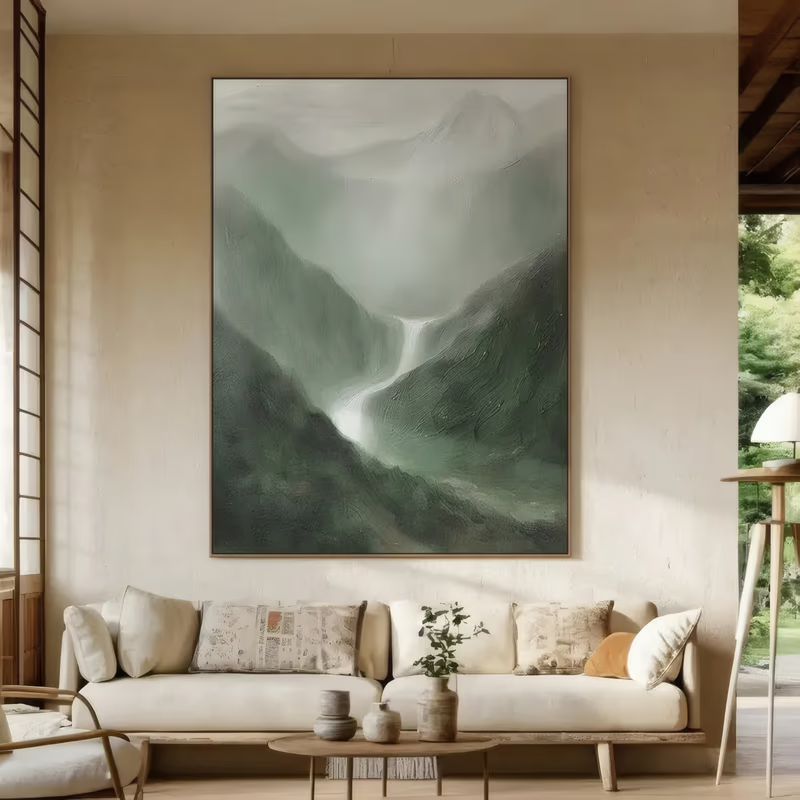
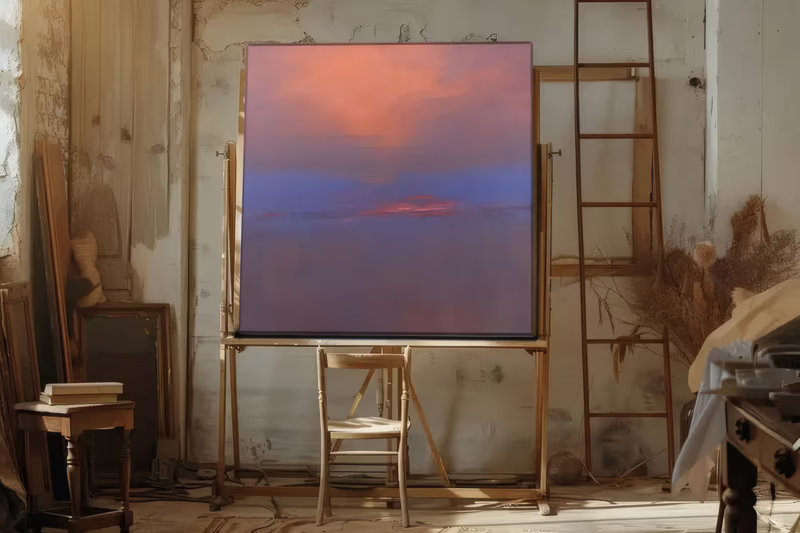
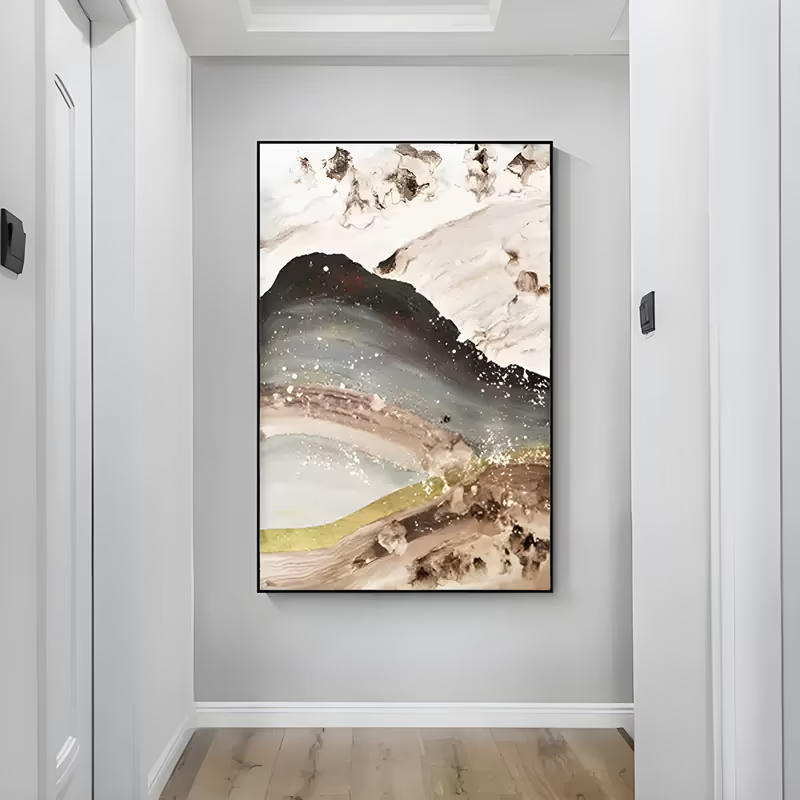
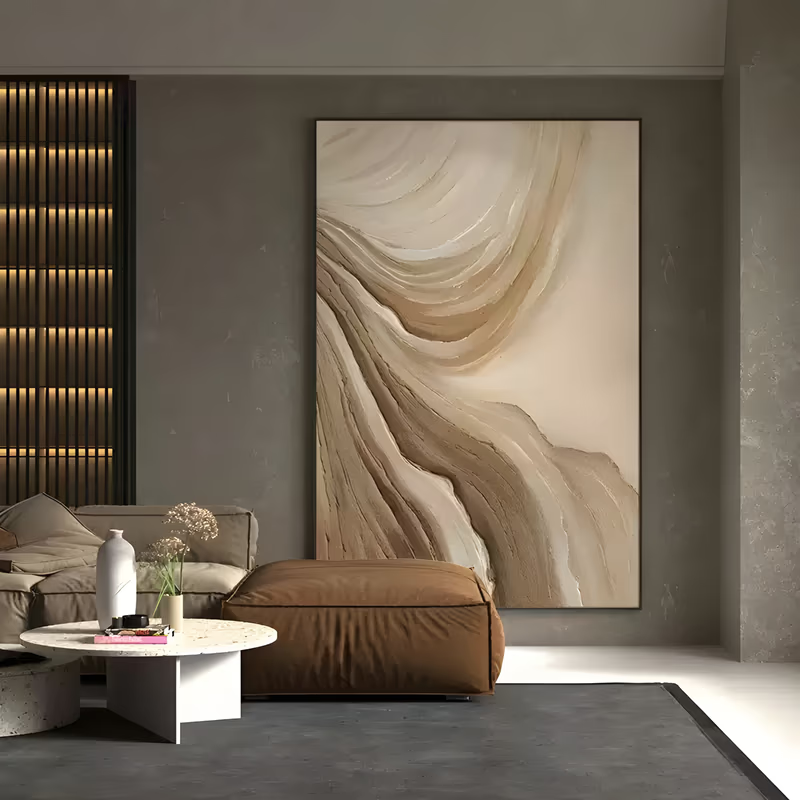
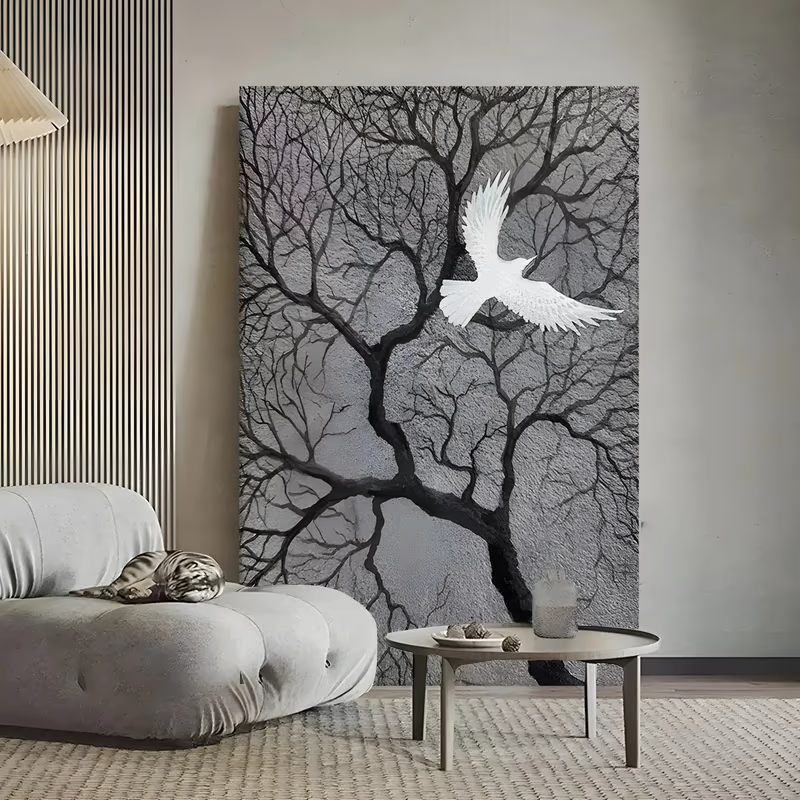
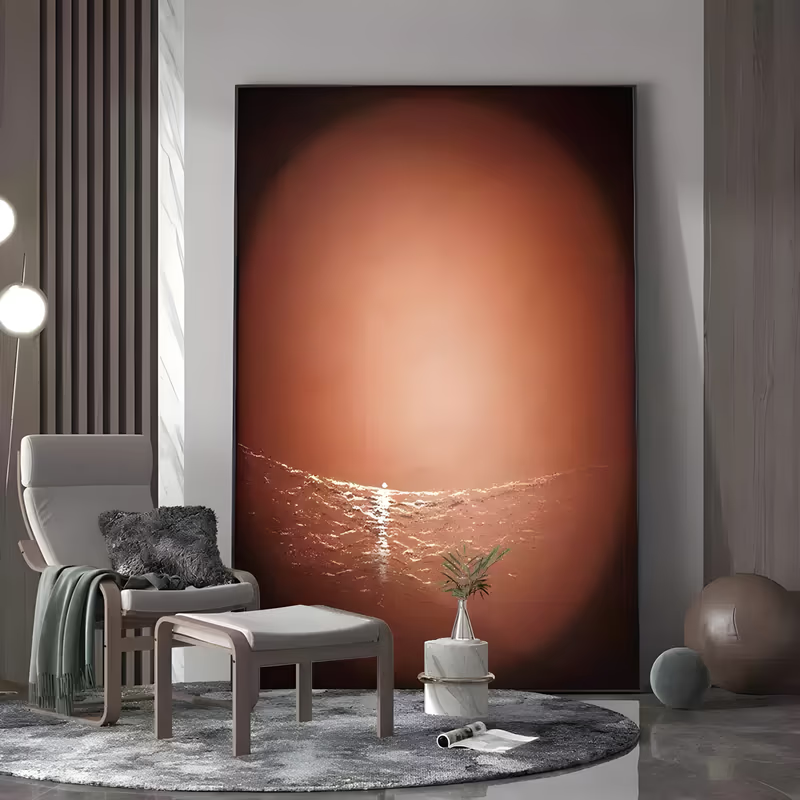
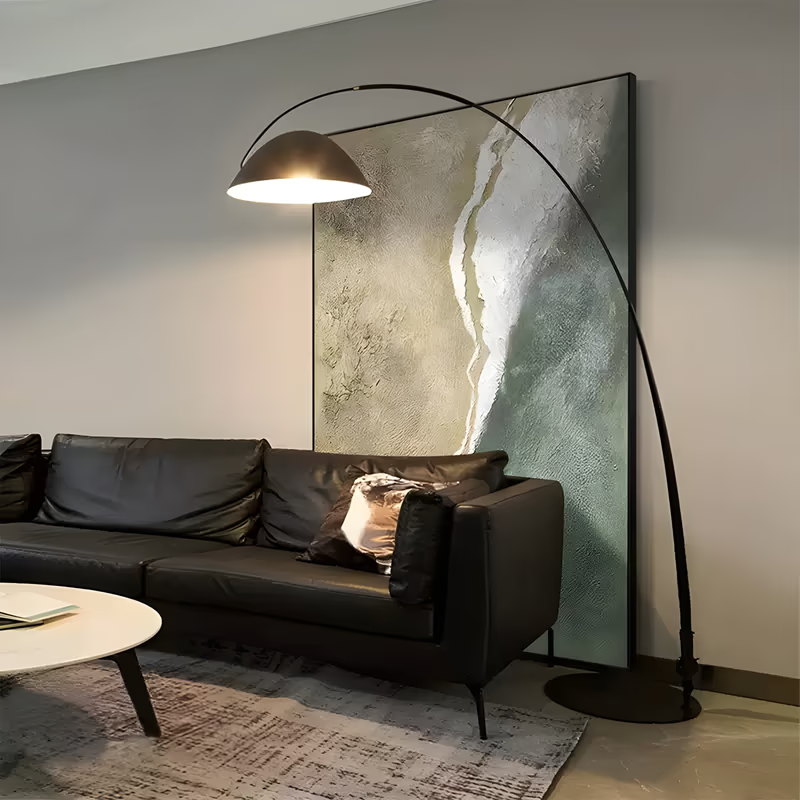
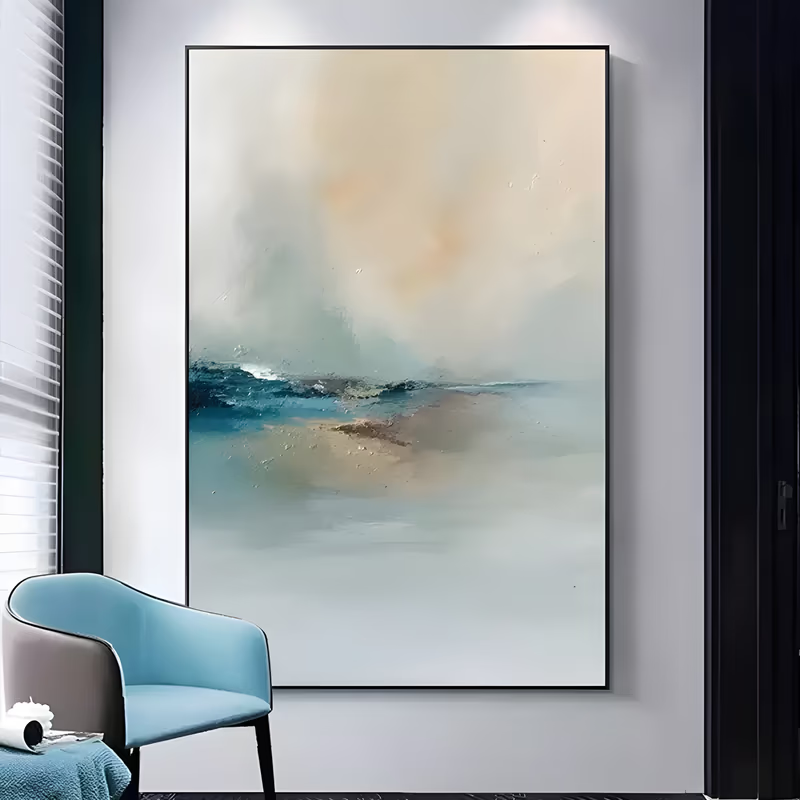
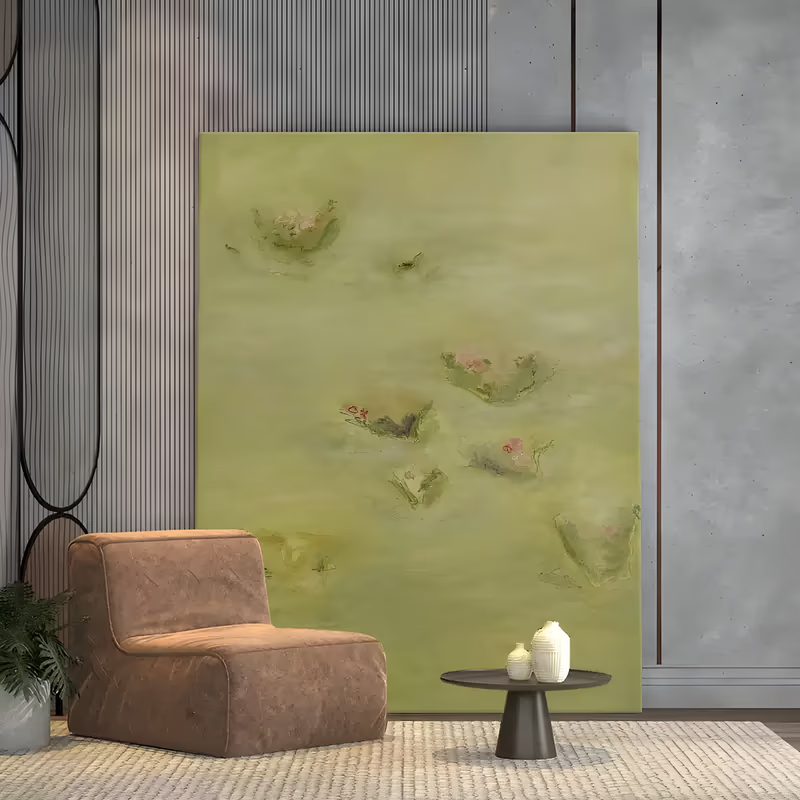
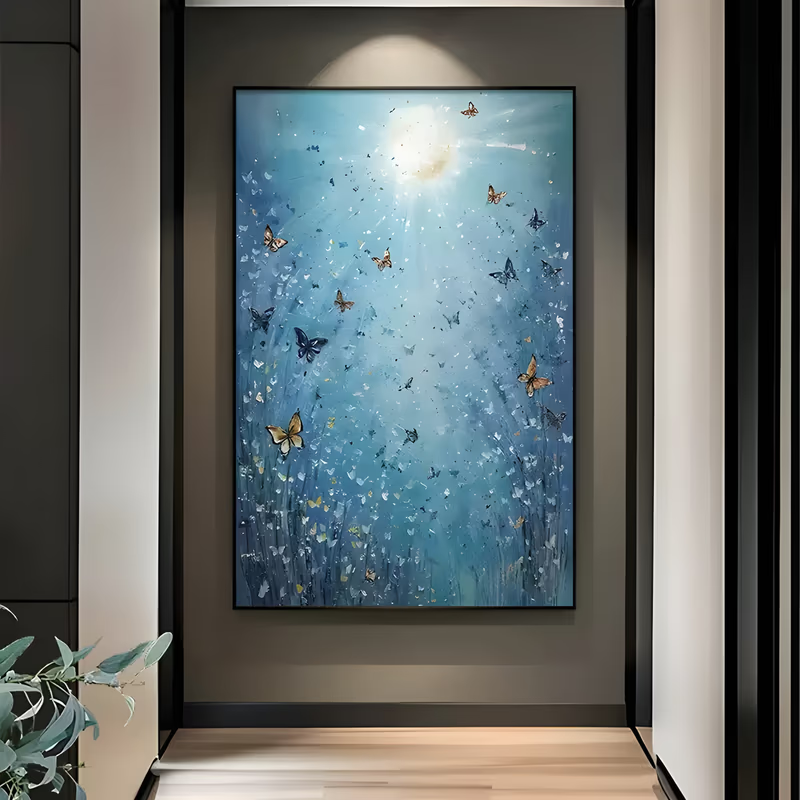
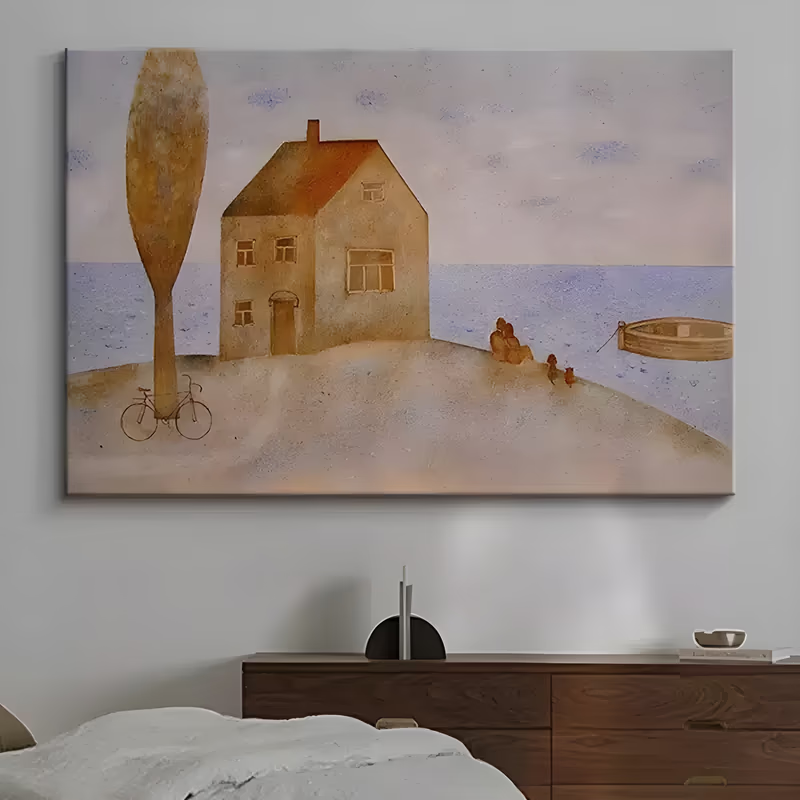
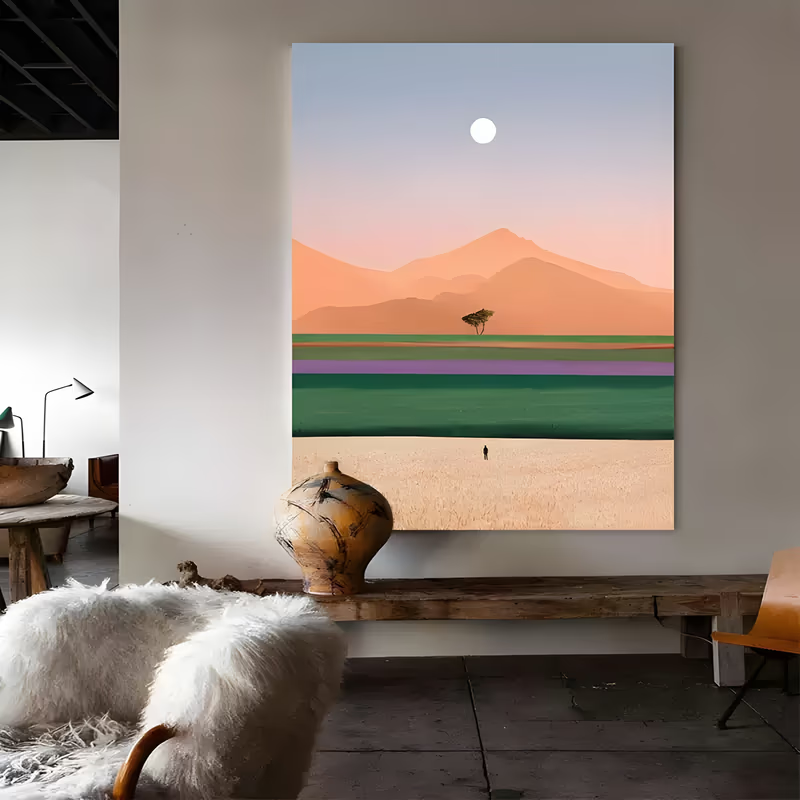
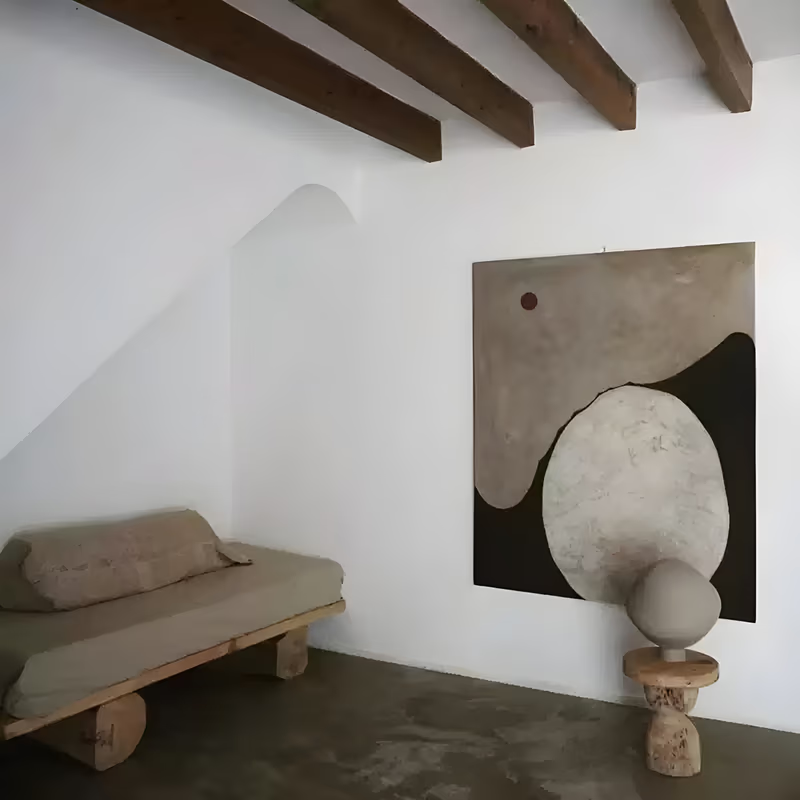
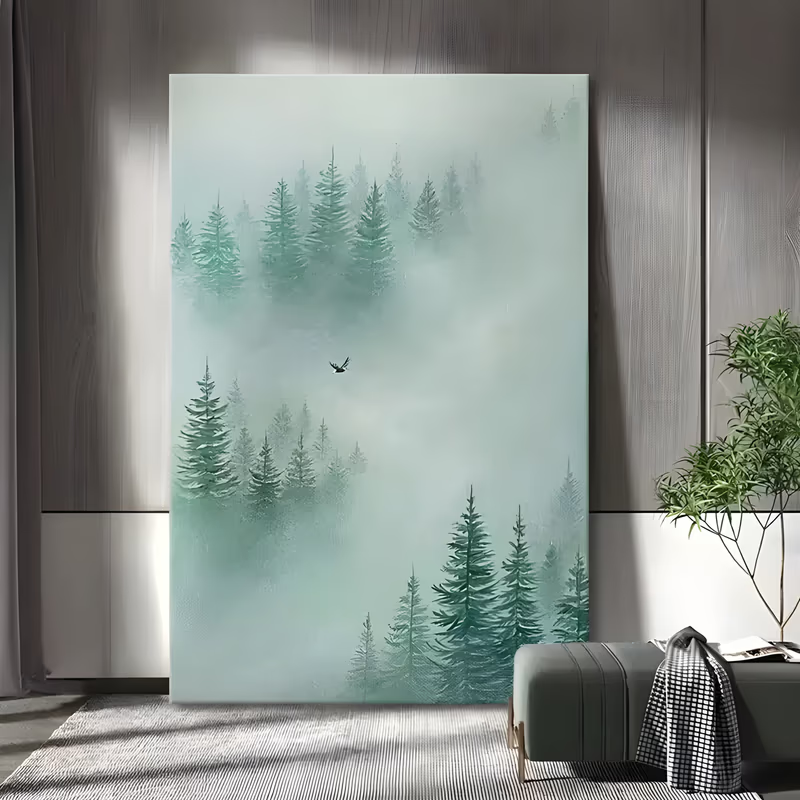
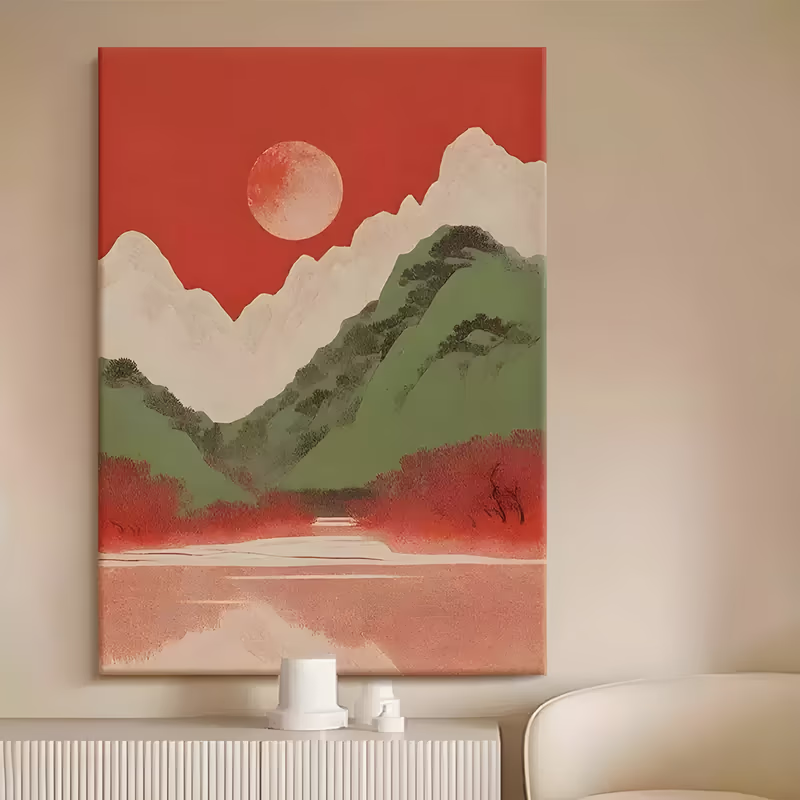
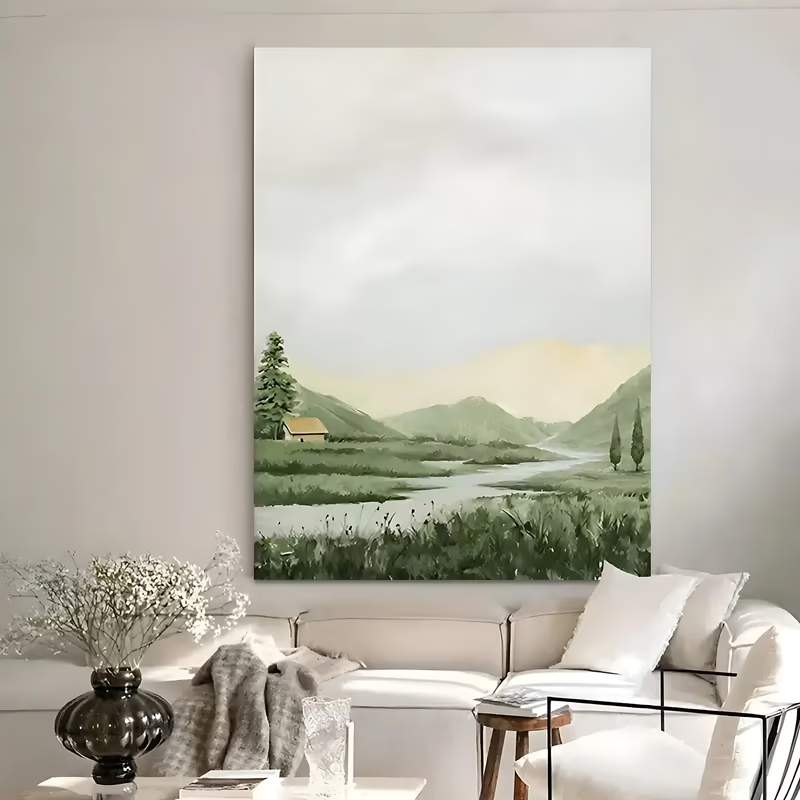
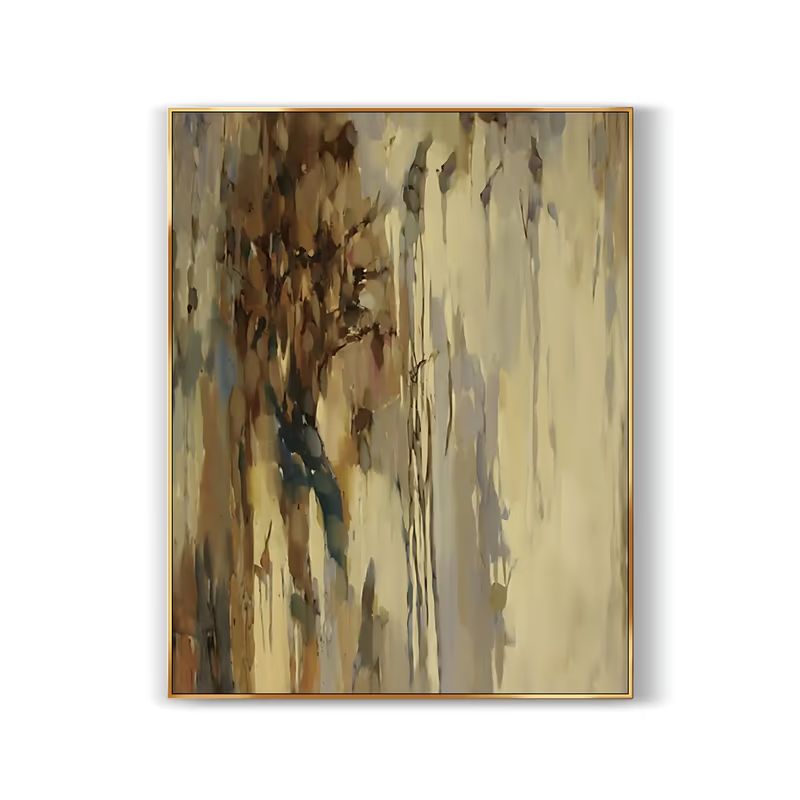
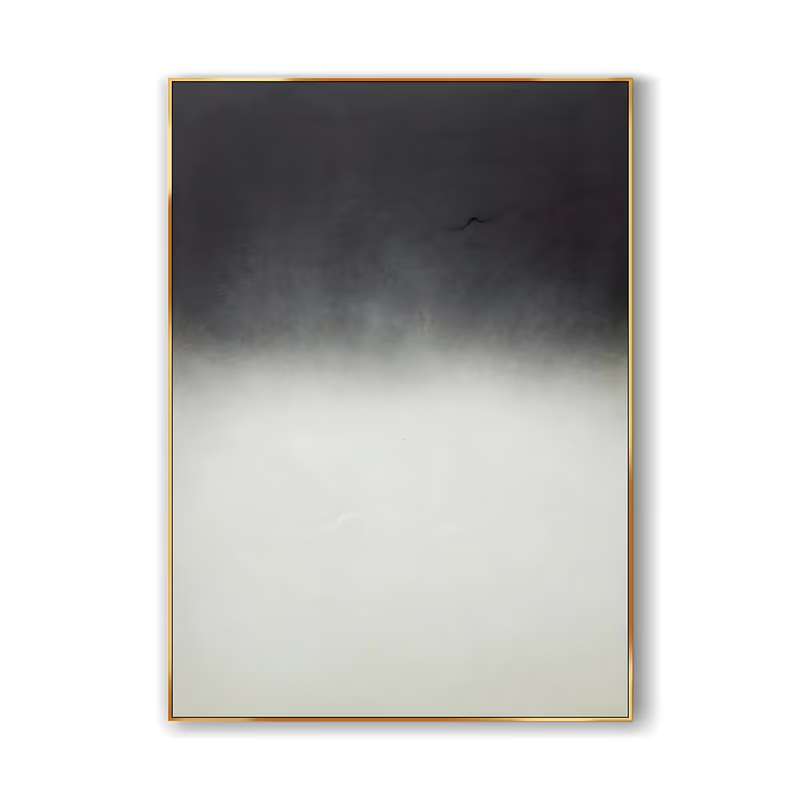
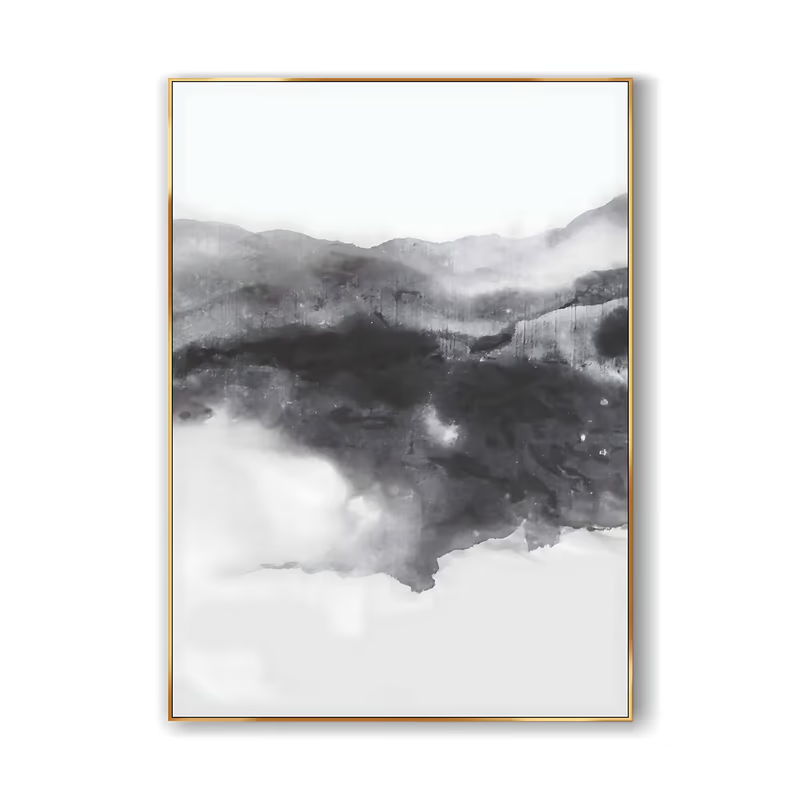
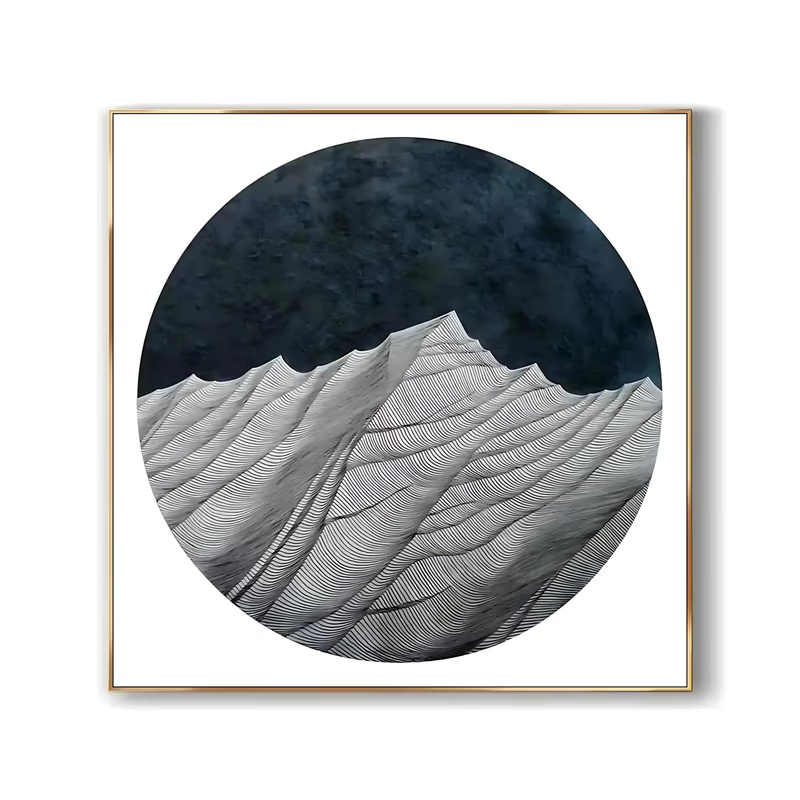
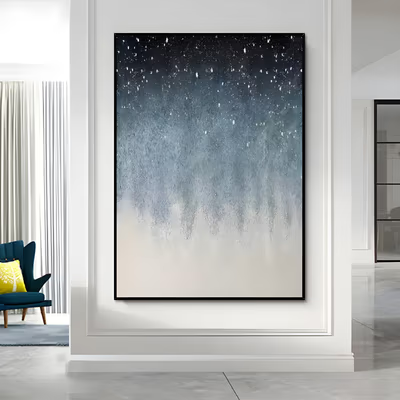
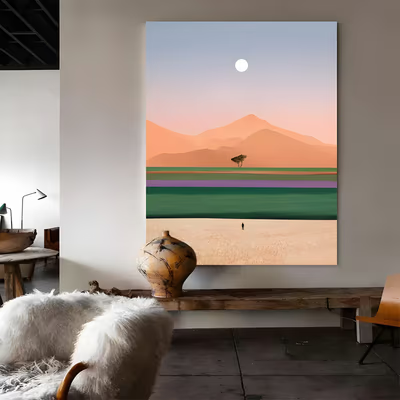
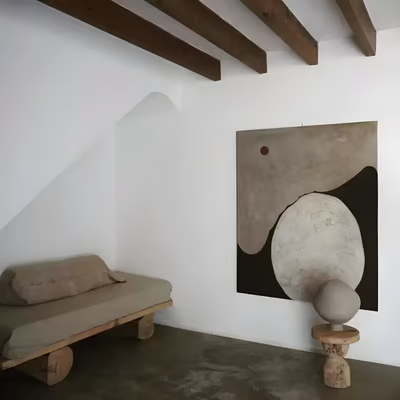
A single ridge line, a lone tree under a pale moon, a misty valley with one cabin, weathered strata in blush and gold. Few elements, wide empty ground and muted colour make these the quietest landscape paintings in the range.
How do light and season in a landscape painting change a room?
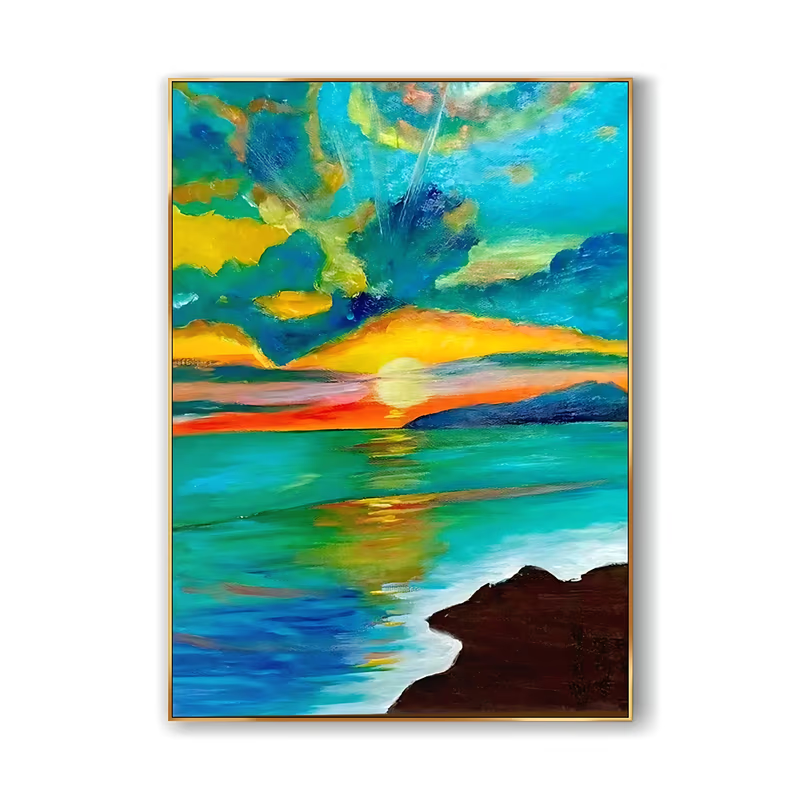
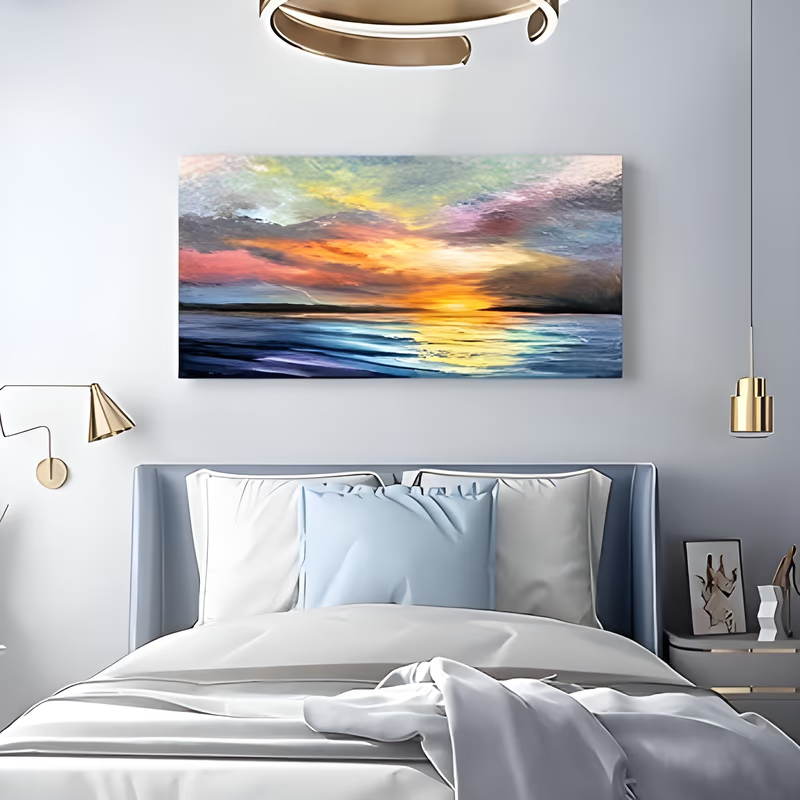
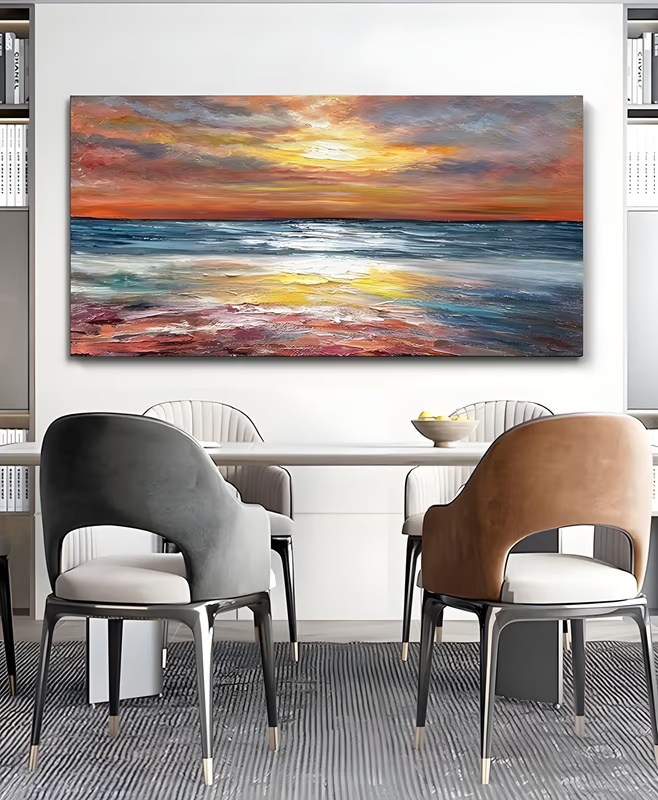
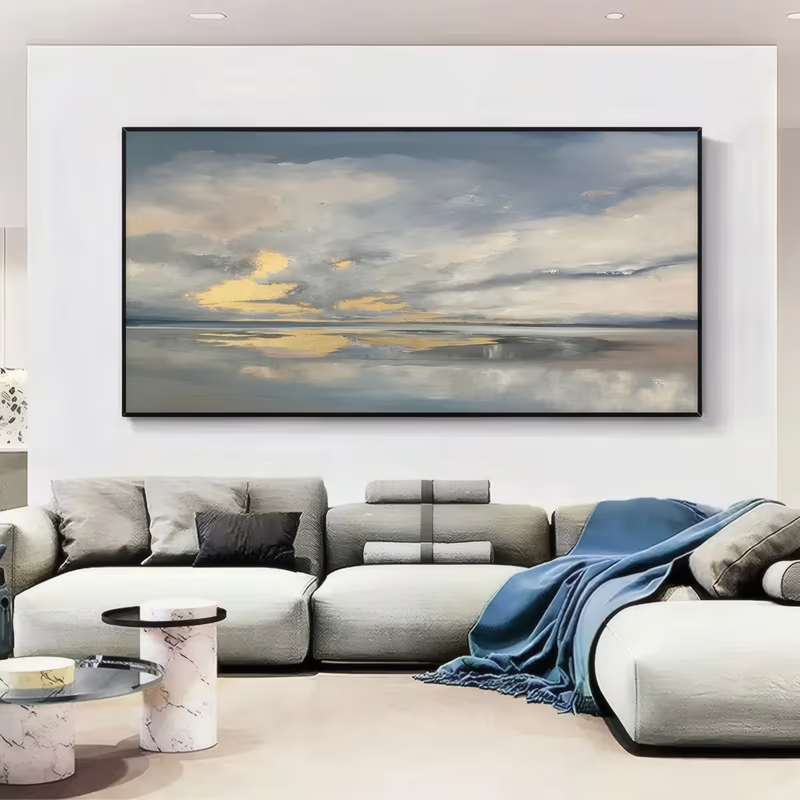
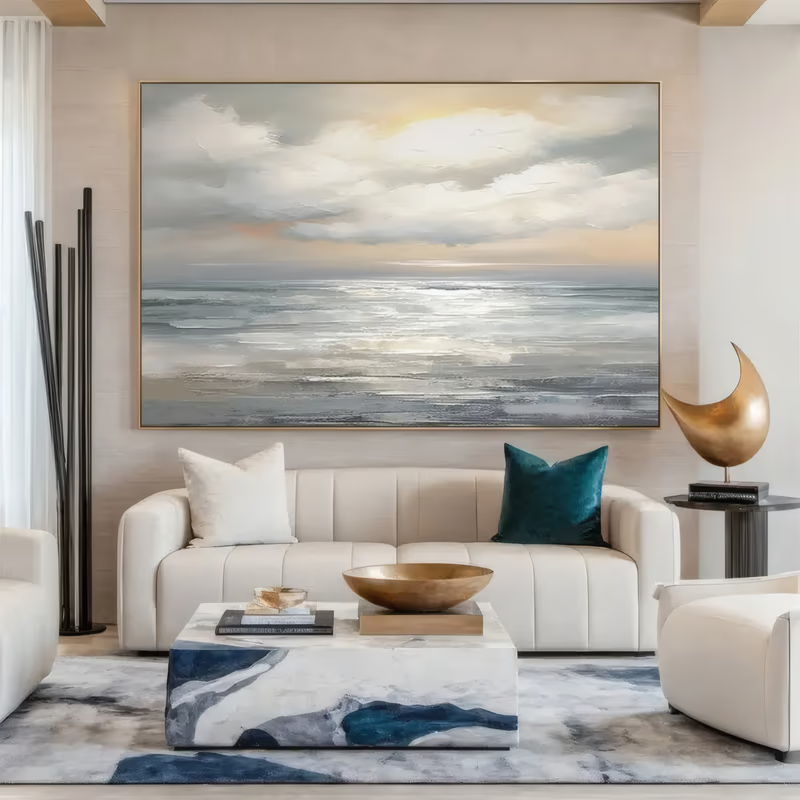
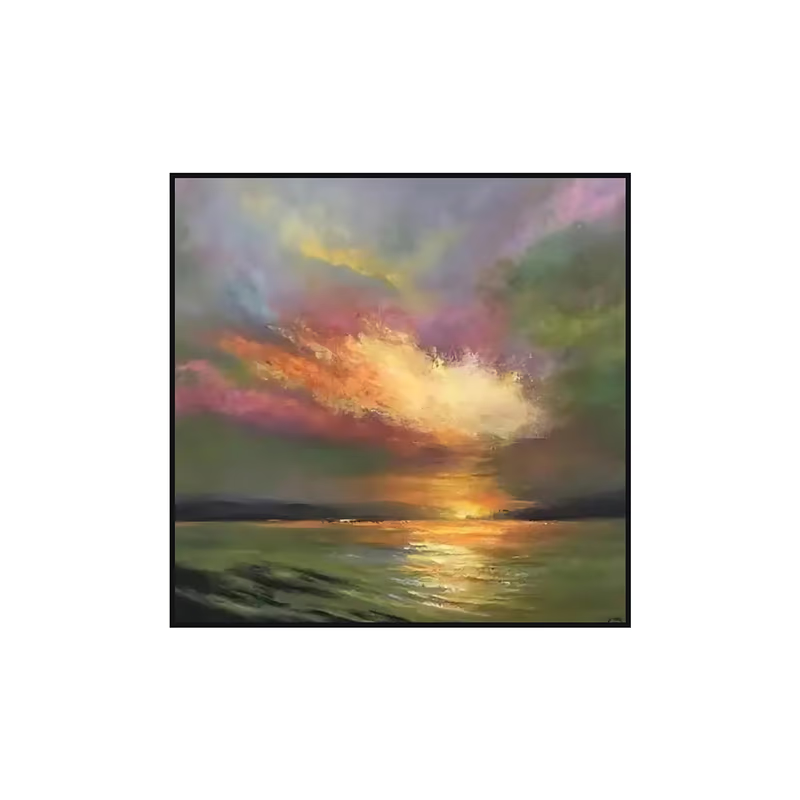
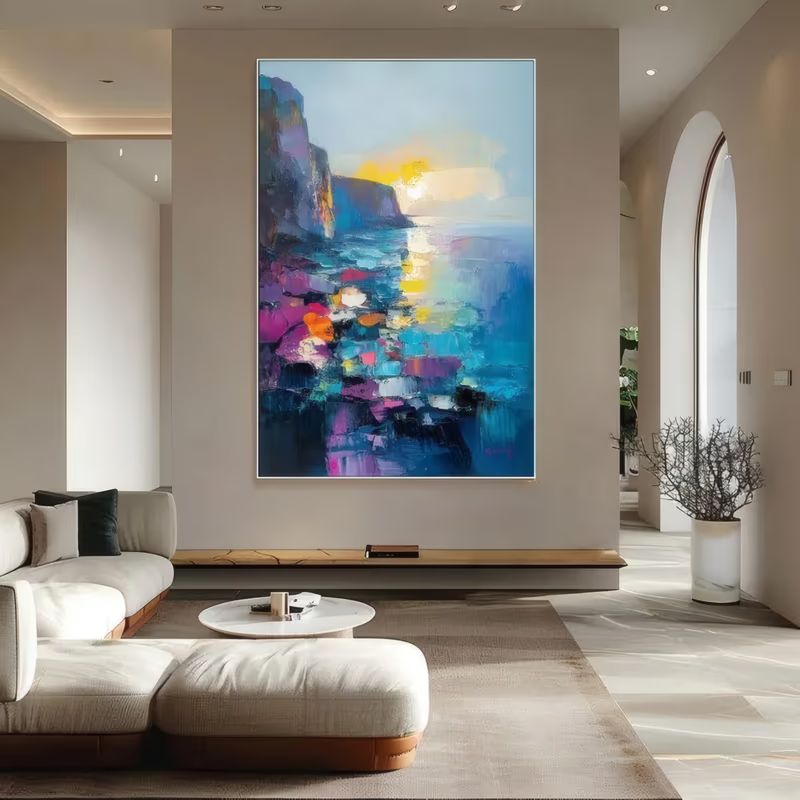
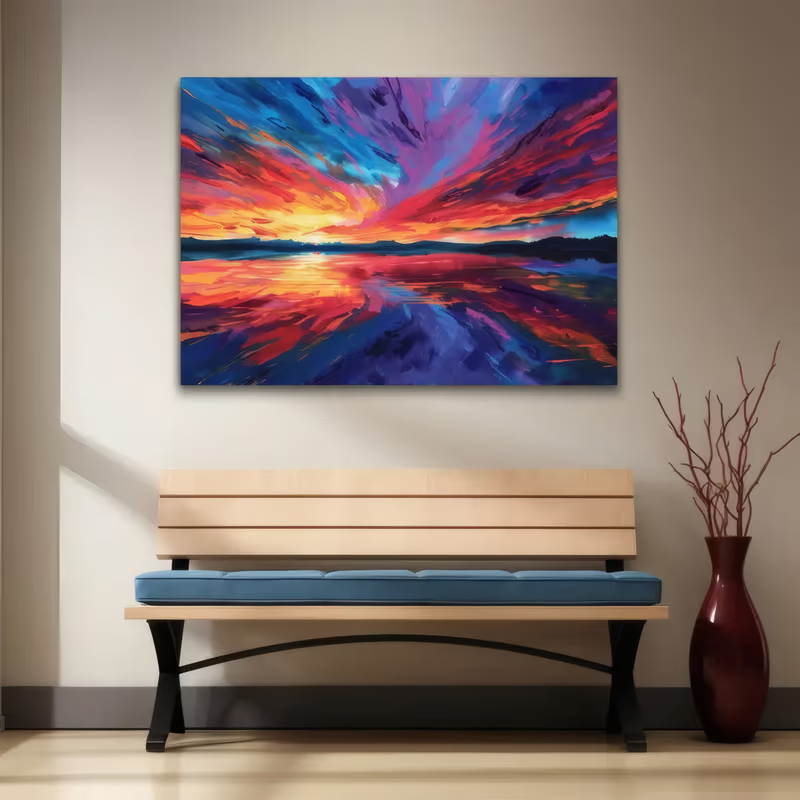
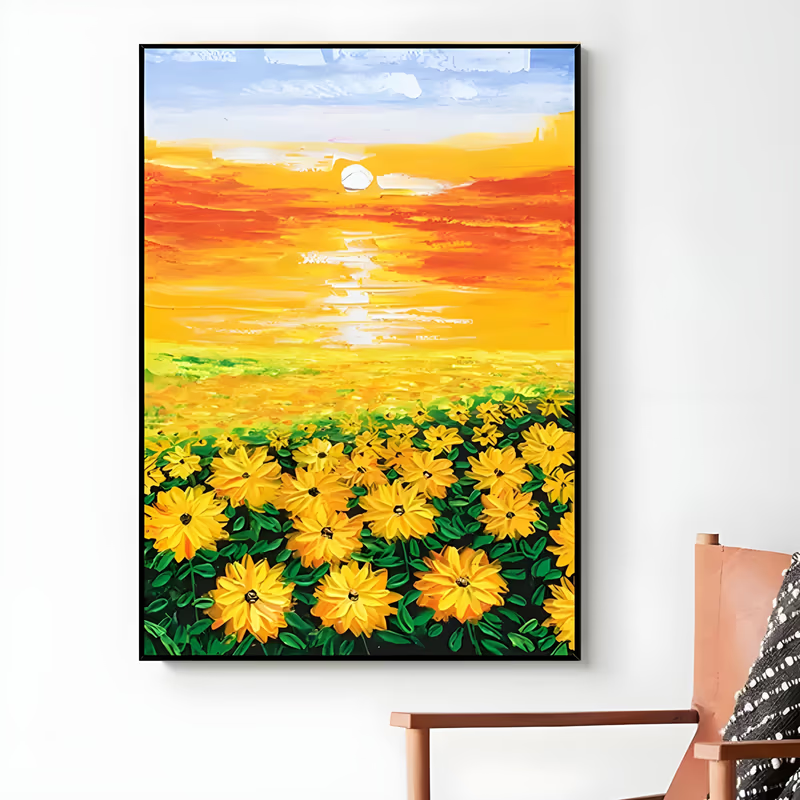
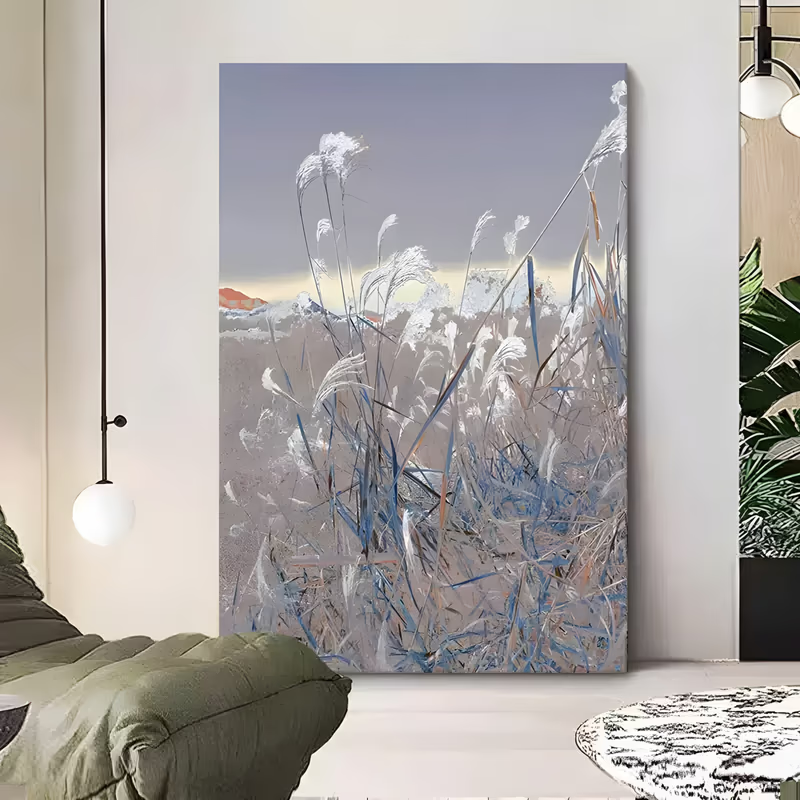
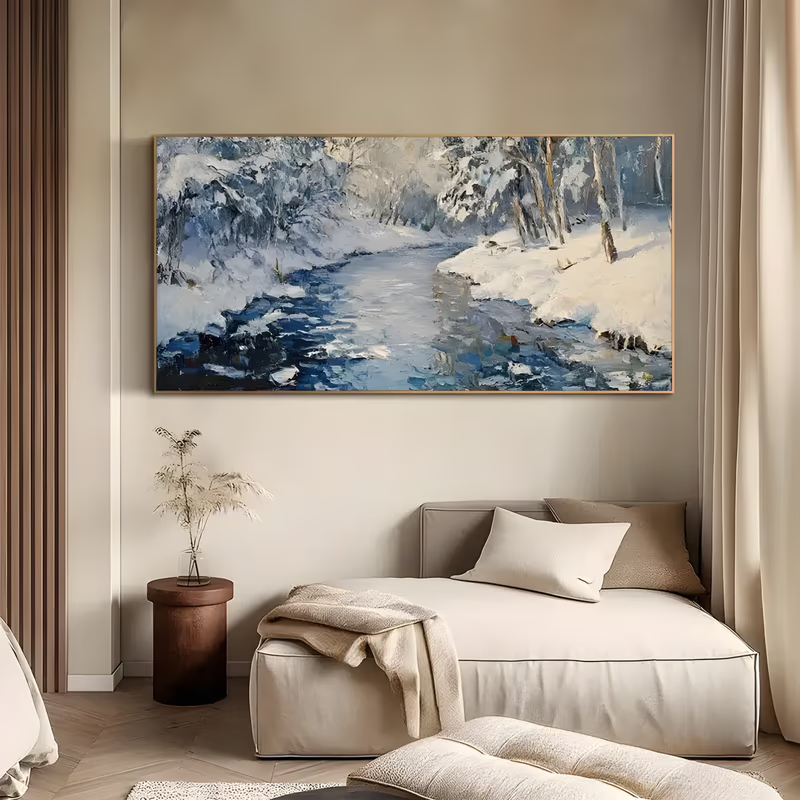
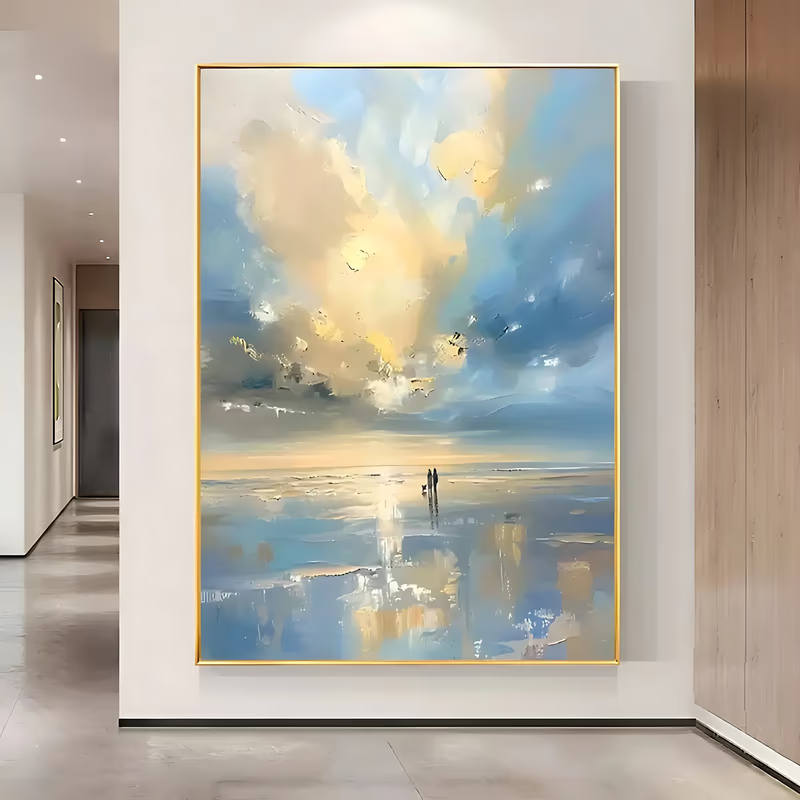
The light painted into a landscape adds to the room's own light, so warm sunsets and golden fields lift dim rooms while mist, snow and blue hour cool down bright ones.
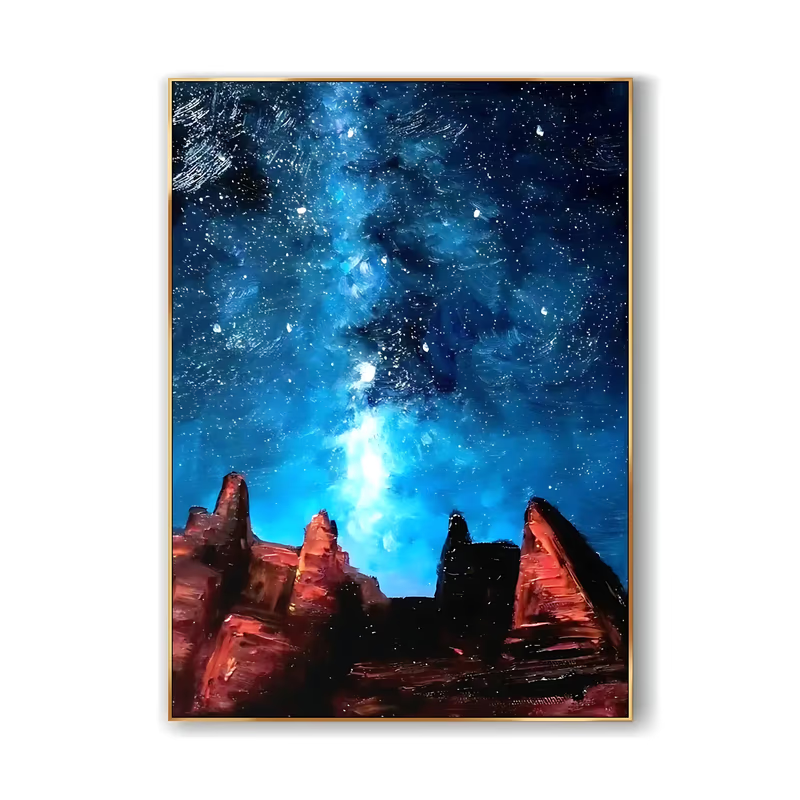
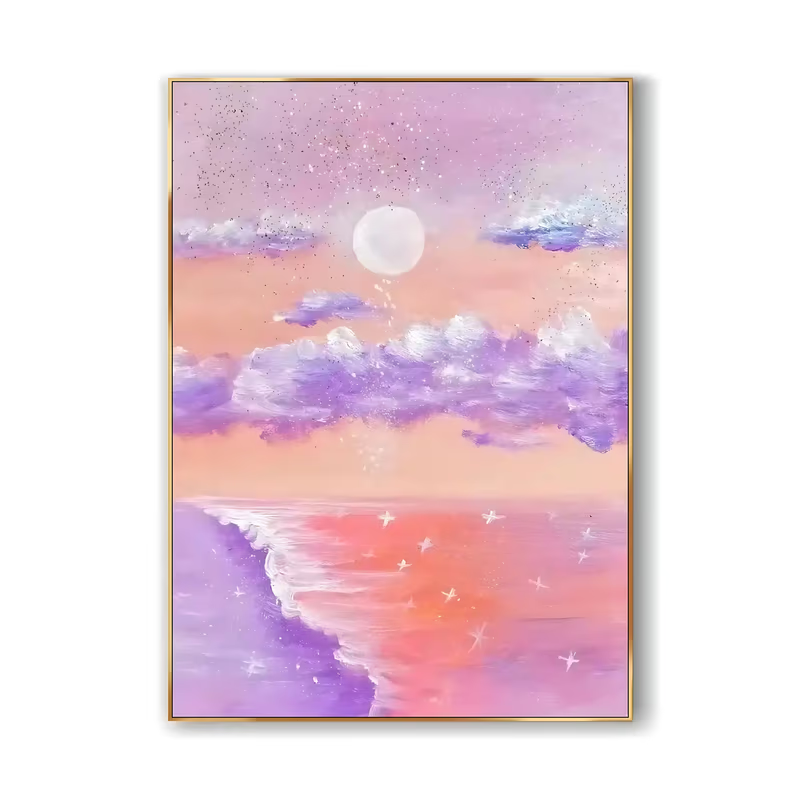
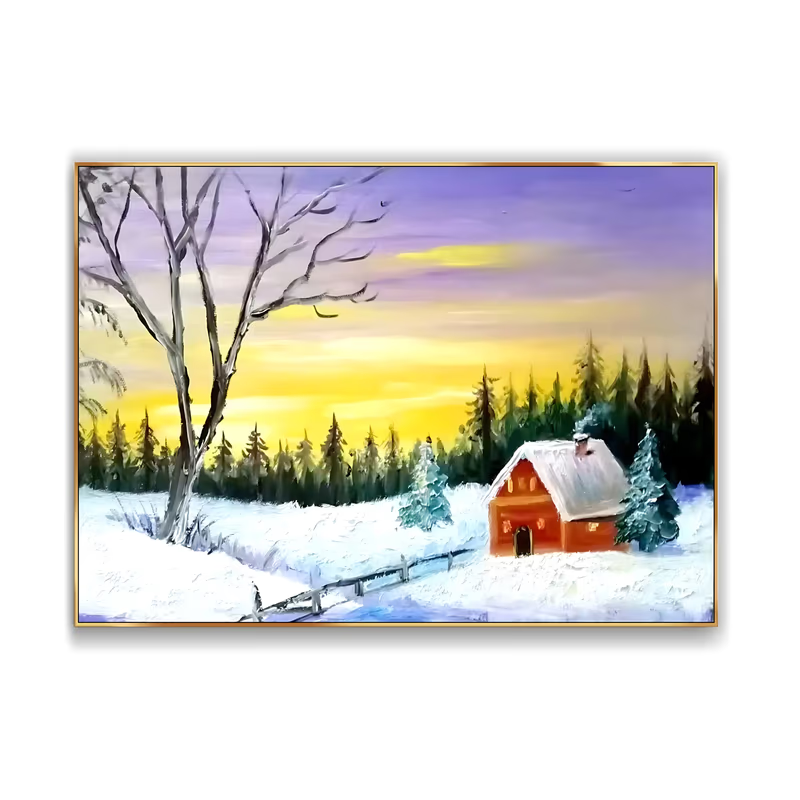
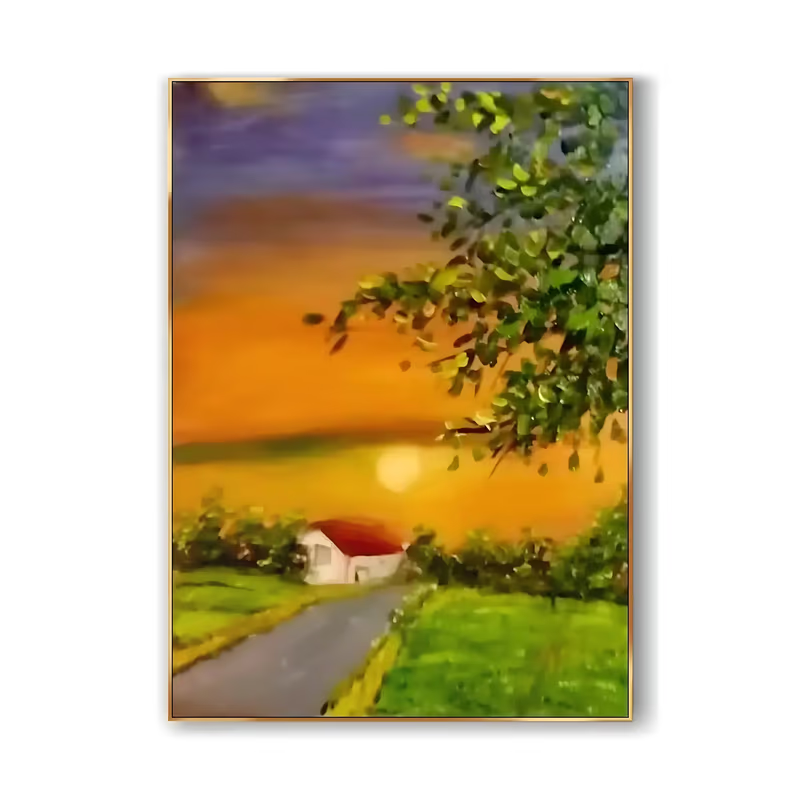
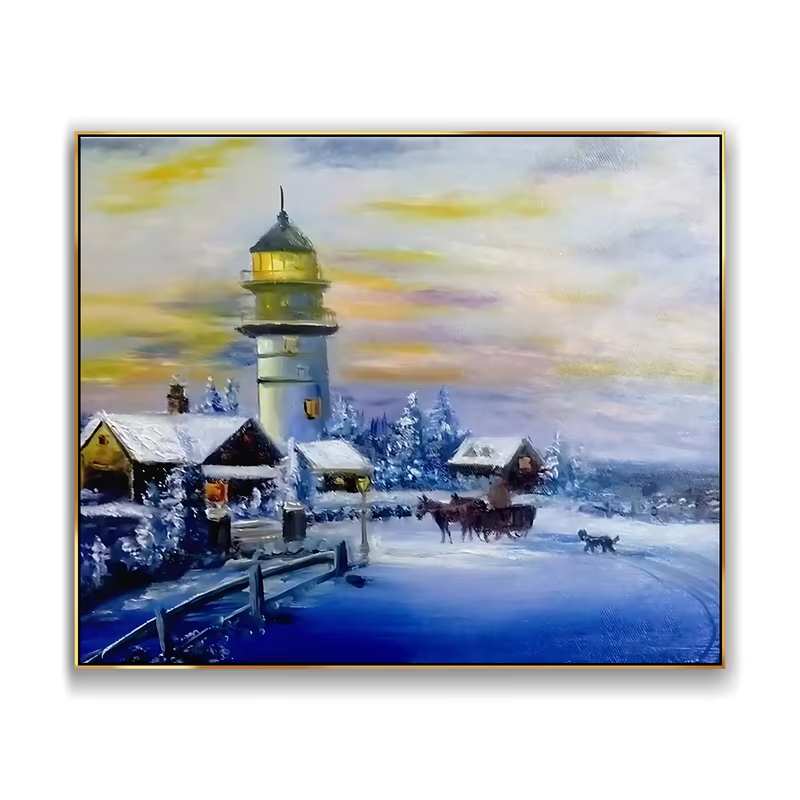
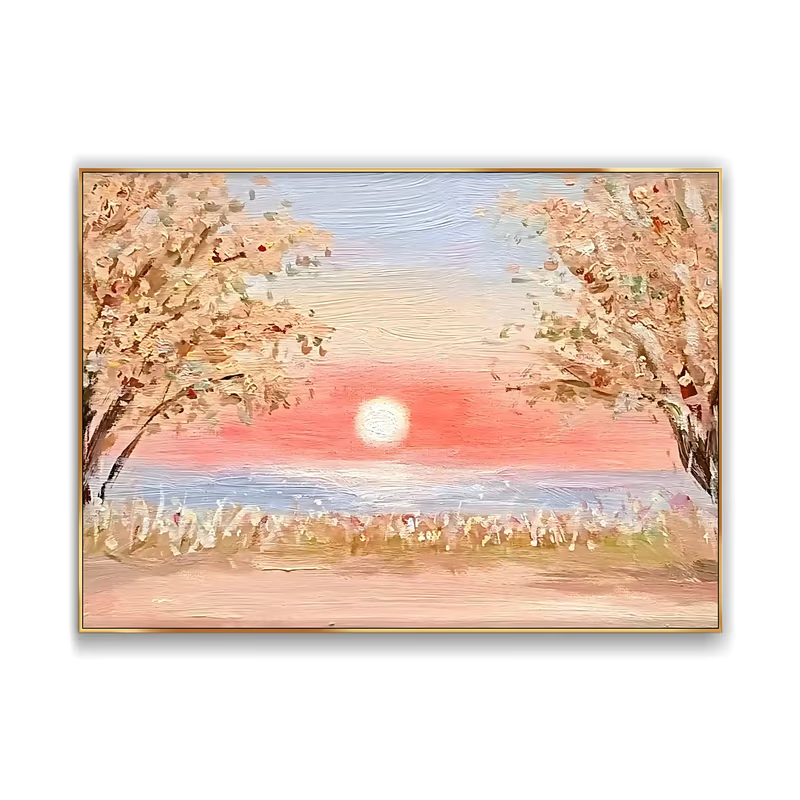
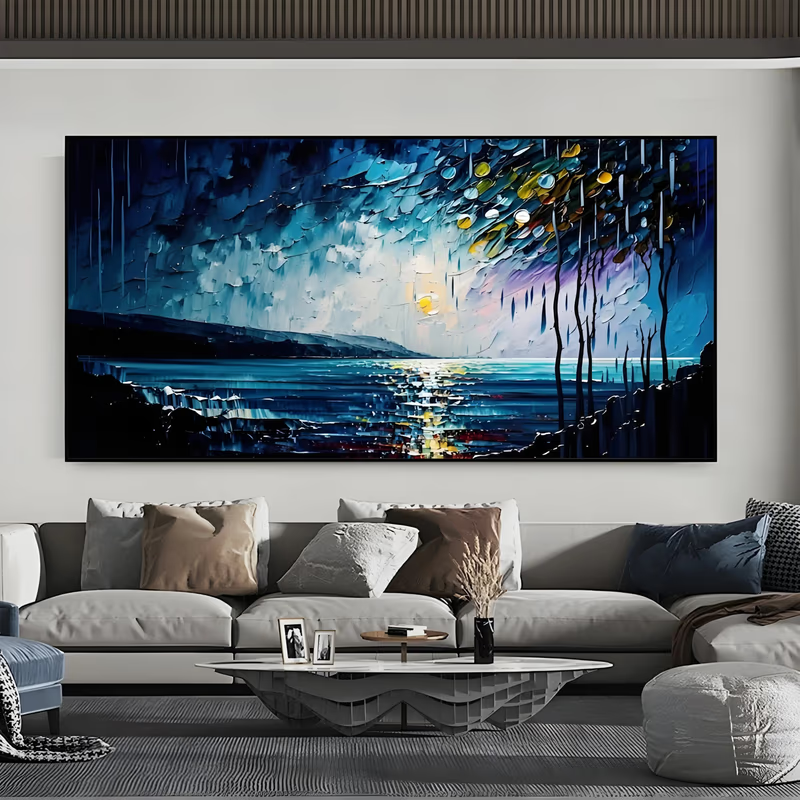
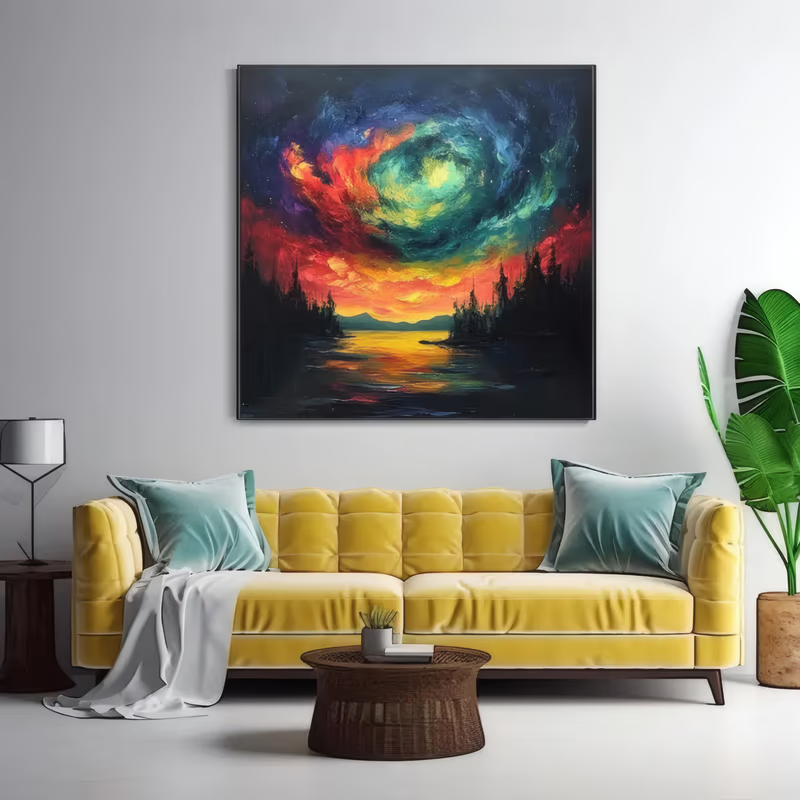
A north-facing room or a windowless corridor looks flat by day; a landscape with low sun, autumn trees or harvest gold gives it warmth that does not depend on the weather. A south-facing living room flooded with light can take a cool one: snow peaks, a grey-blue lake, a green valley in mist. Time of day matters for use, too. Dawn and morning scenes feel fresh and suit kitchens and breakfast rooms; dusk and night skies feel intimate and suit bedrooms, bars and lounges. Season sets the palette: spring greens and blossom, summer meadows, autumn rust and gold, winter whites. Any catalogue landscape can be repainted into another season or hour, which lets a hotel run one view through a building in changing light.
Where should you hang a landscape painting?
Hang a landscape where the room most needs distance: over the sofa, behind a desk, at the end of a corridor or facing the bed.
Living room
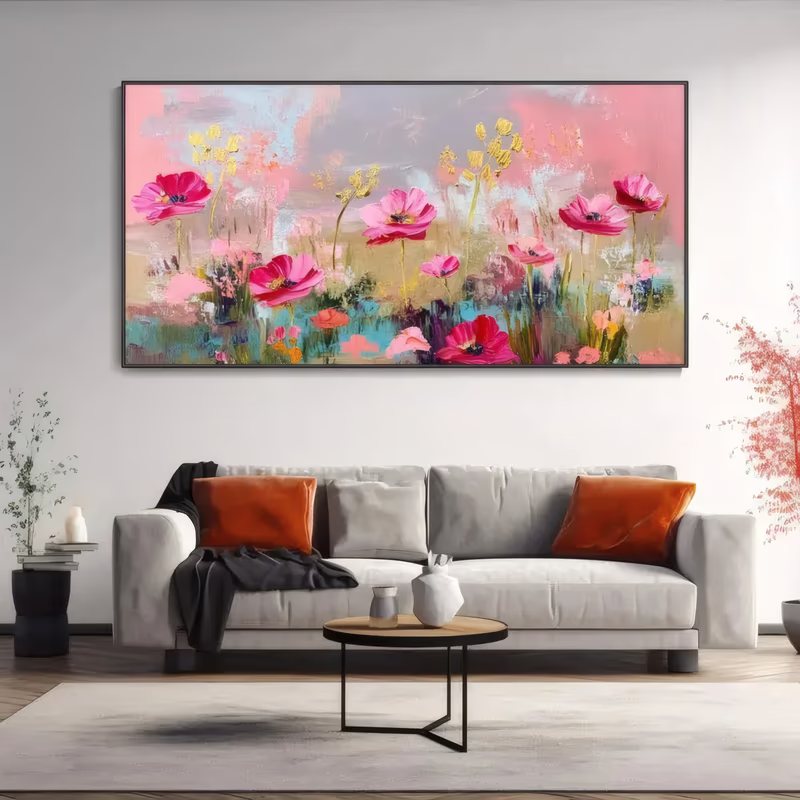
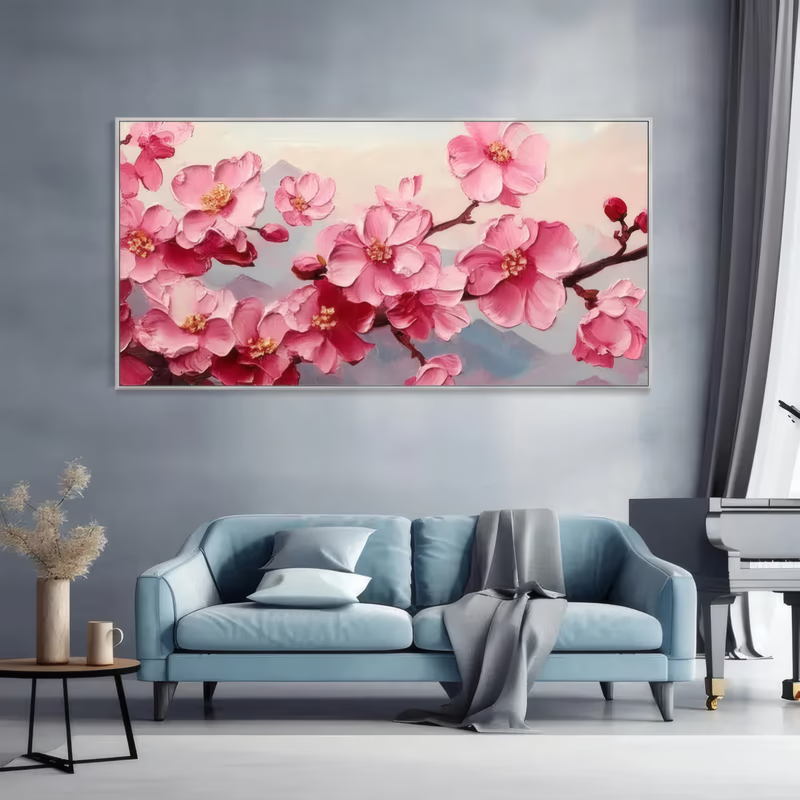
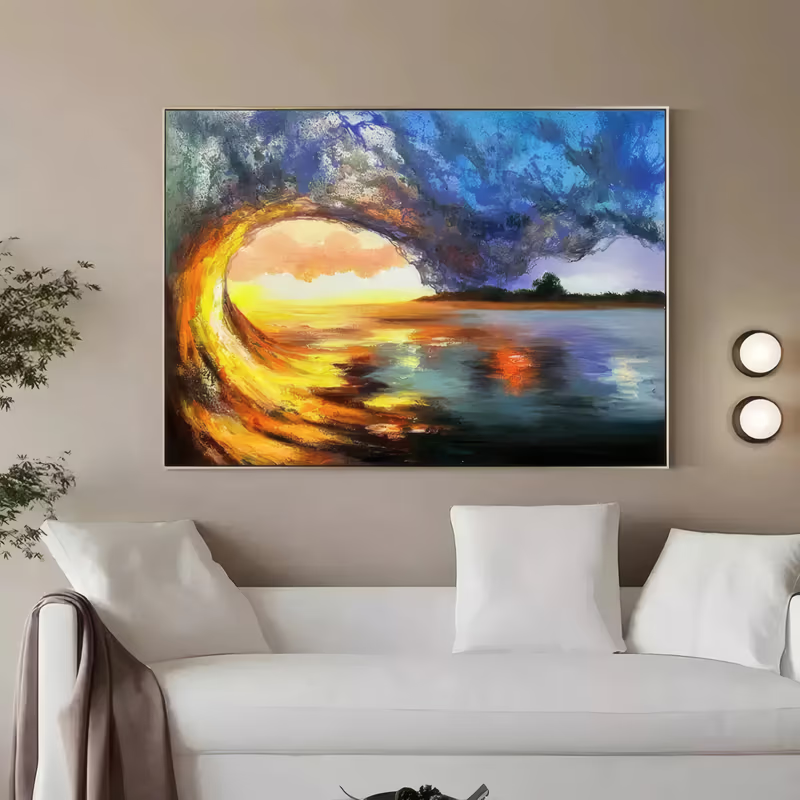
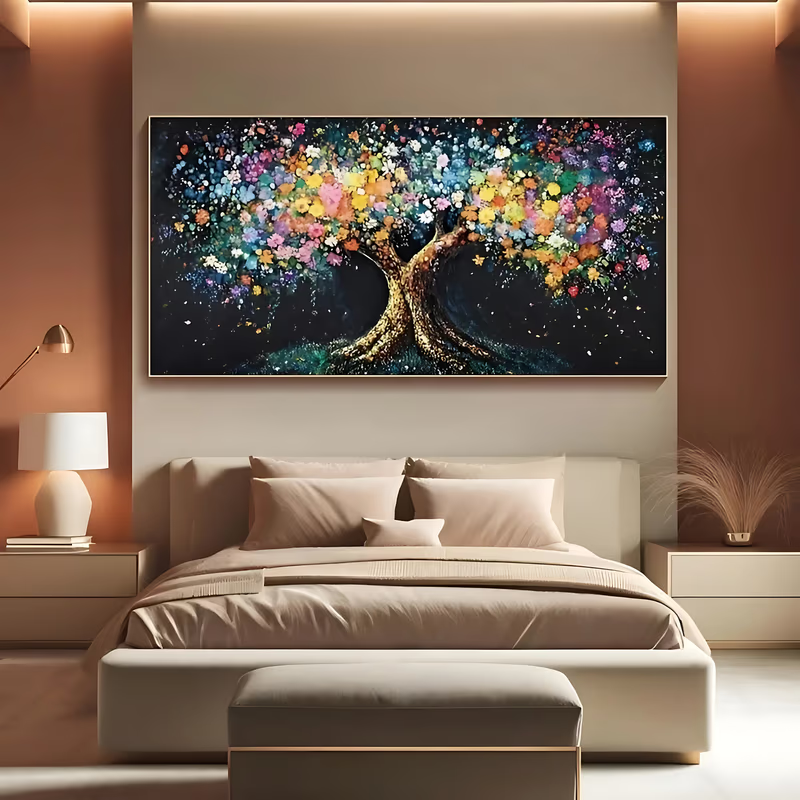
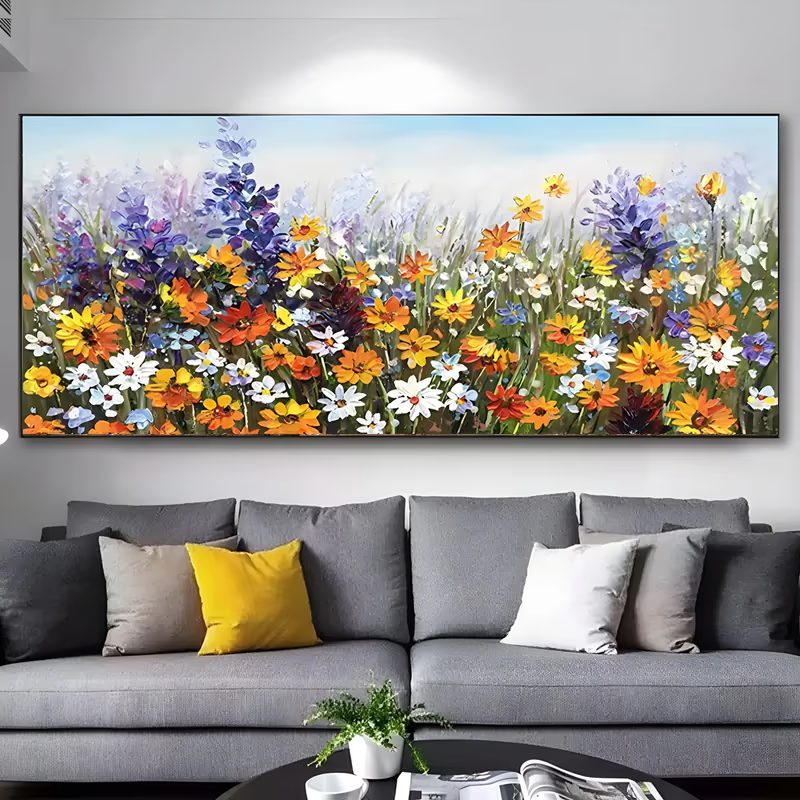
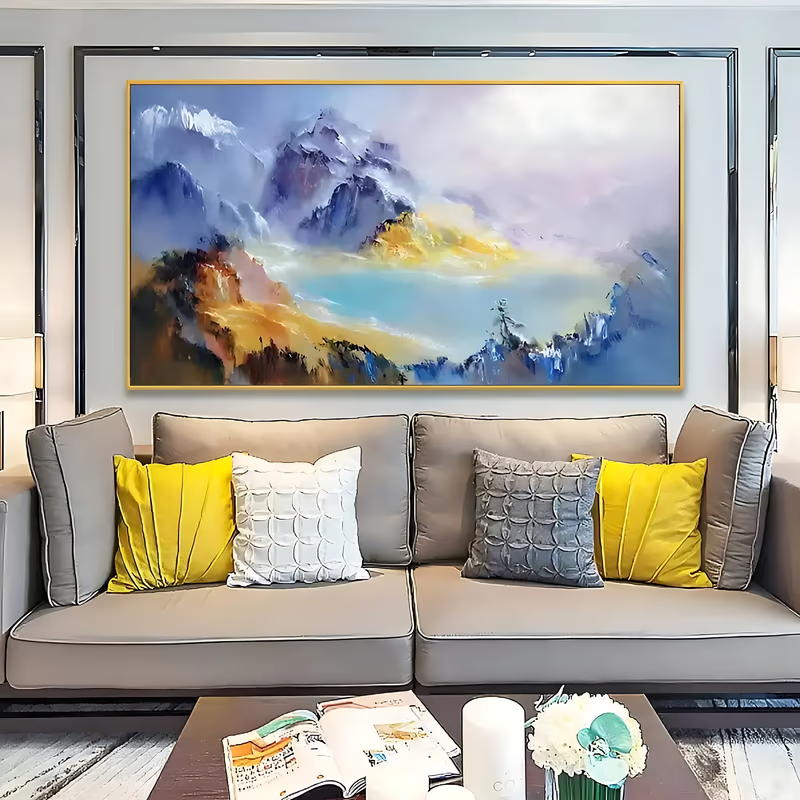
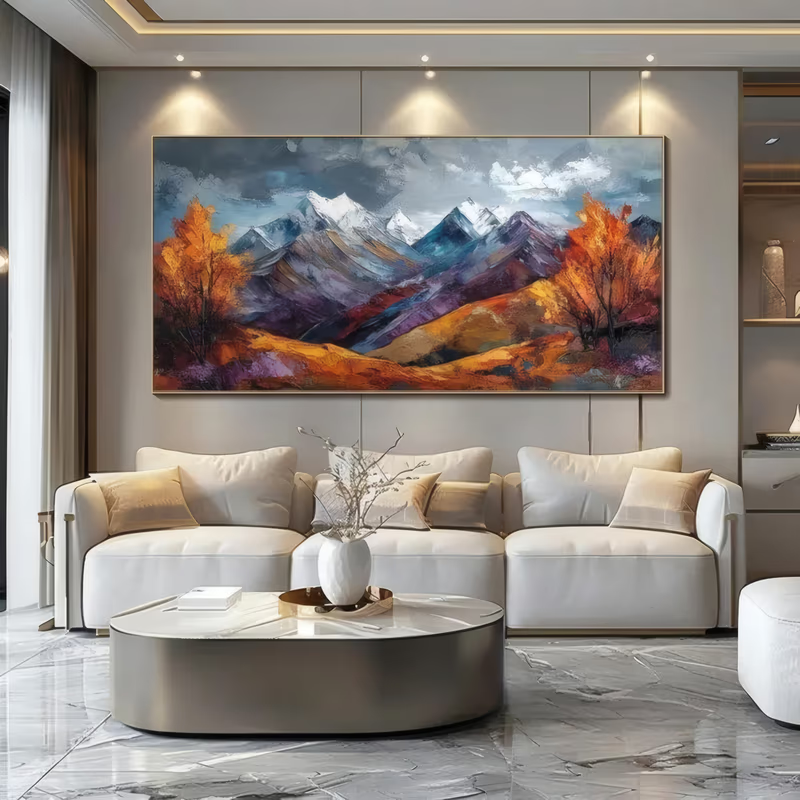
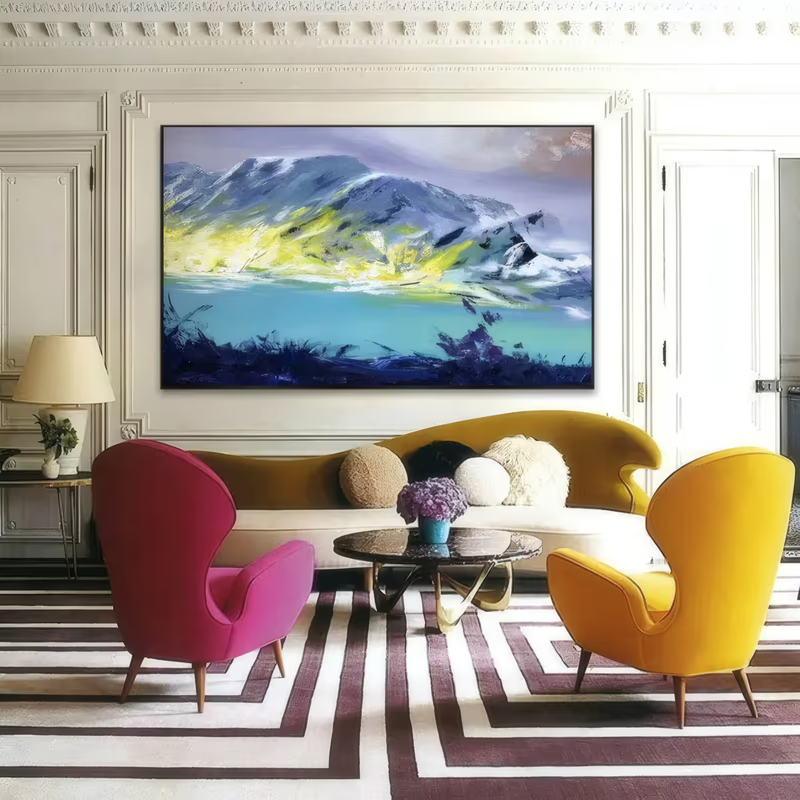
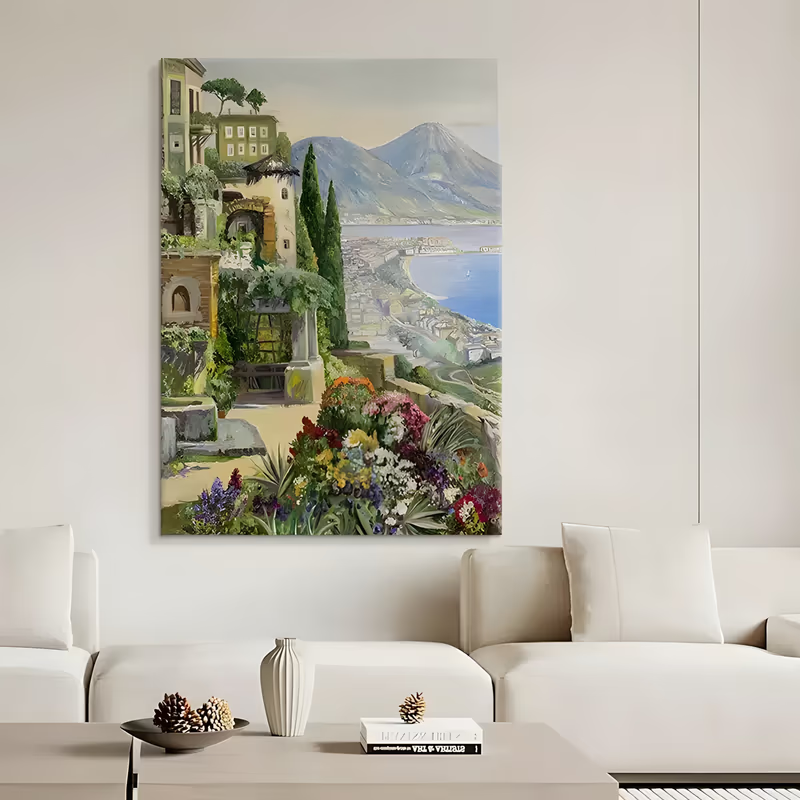
A wide landscape over the sofa or the fireplace becomes the room's view. Landscapes for living rooms.
Bedroom
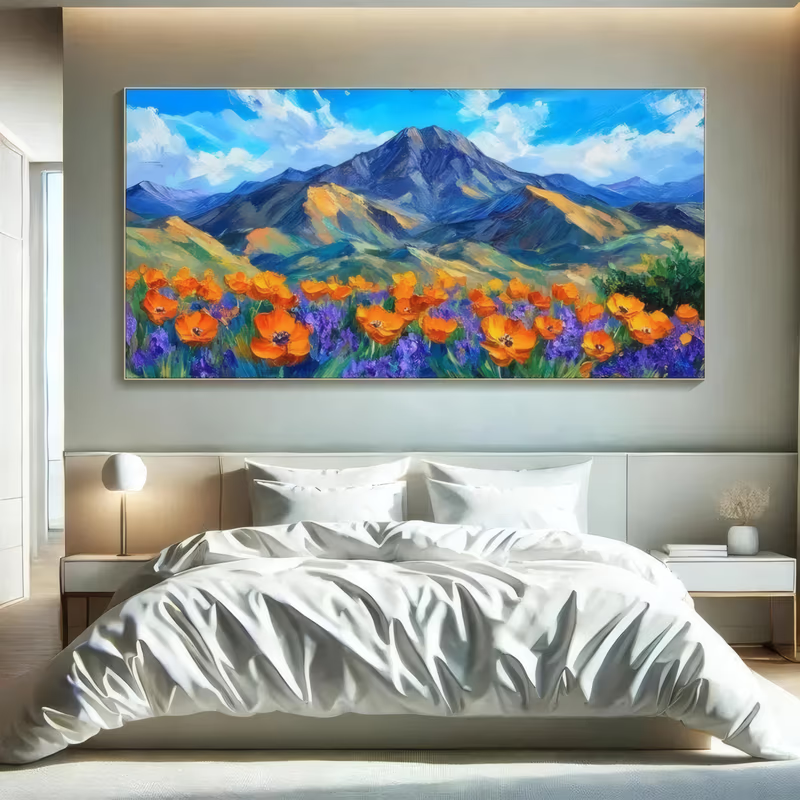
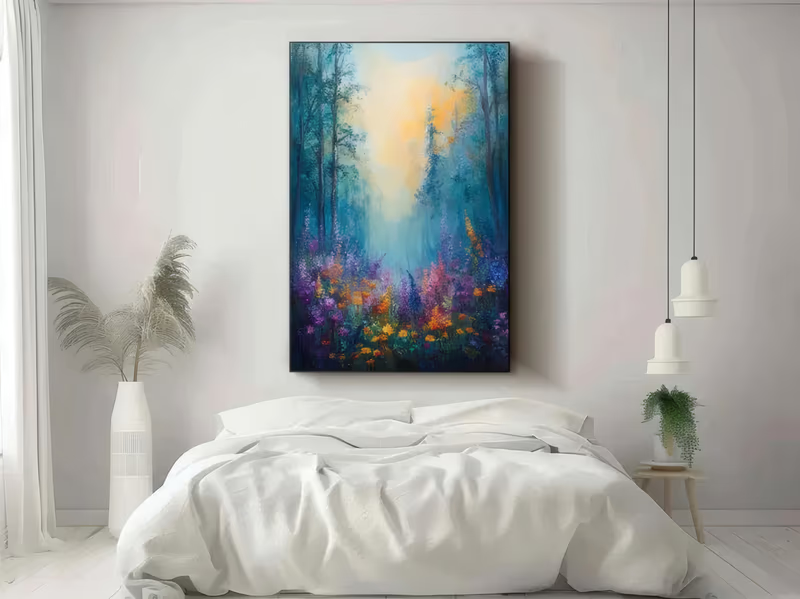
Forest, lake and misty valley scenes in soft colour suit the wall facing the bed as well as the one above it. Landscapes for bedrooms.
Home office and boardroom
A mountain behind the desk or at the head of the table gives a steady backdrop on video calls and in meetings. Landscapes for offices, and see the corporate office buyer page.
Corridors, lobbies and guest rooms
Horizontal and panoramic landscapes read well as people walk past; a sequence of views along a corridor gives each door its own picture. Landscapes for hotels, and the corridor series page.
What size landscape painting do you need, and where should its horizon sit?
Fill 60–75% of the wall, or about two-thirds of the furniture below, and hang the painting so its horizon sits near the eye level of the viewer.
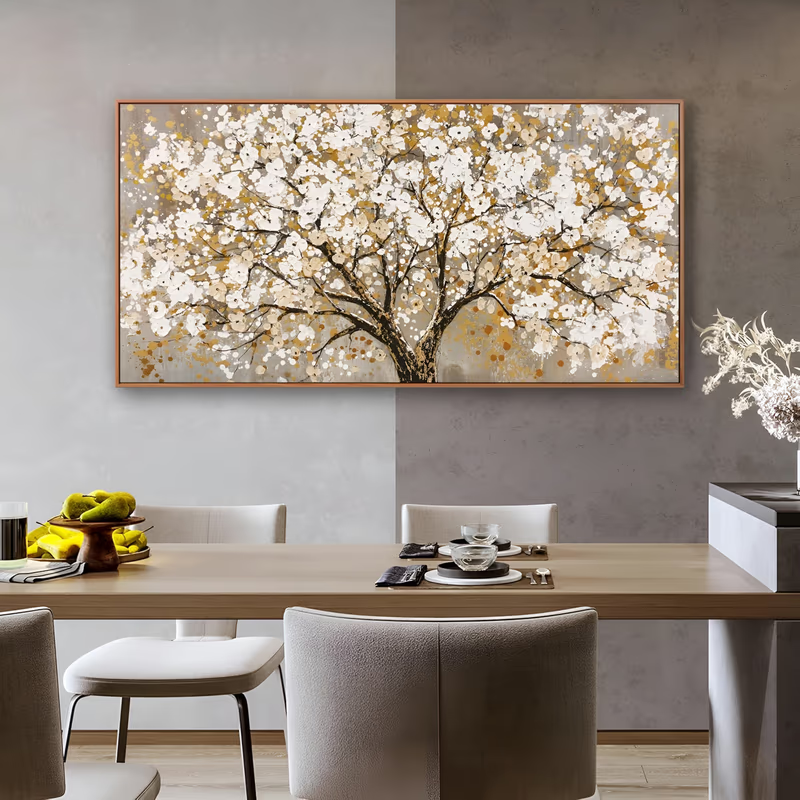
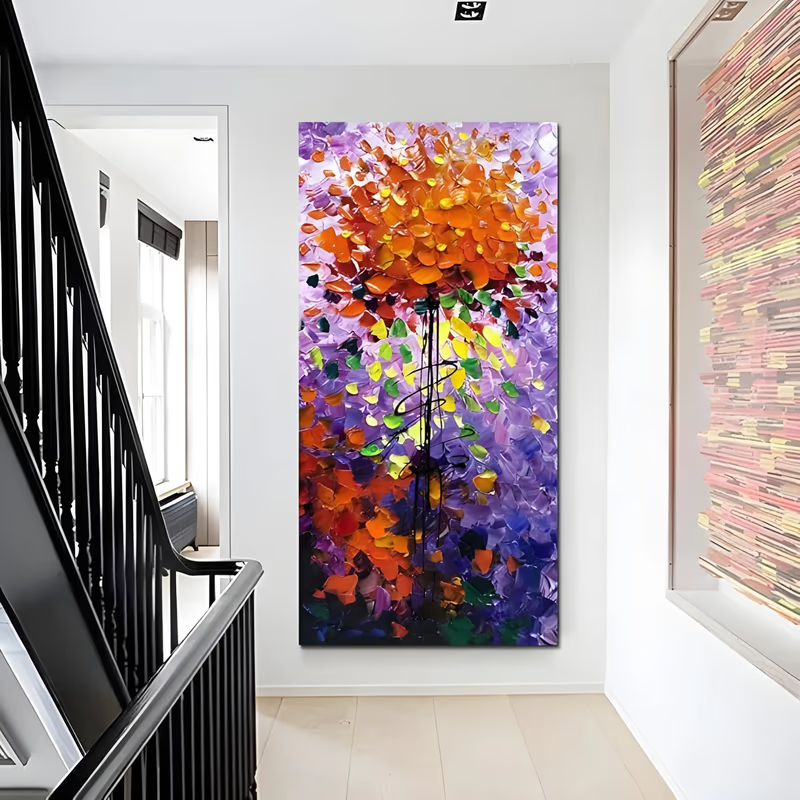
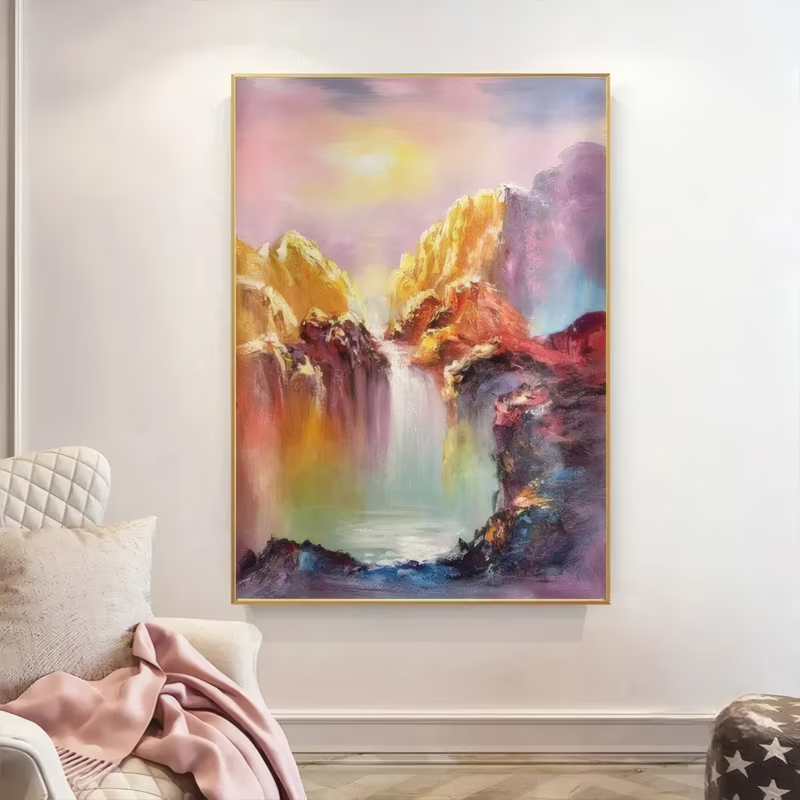
Landscapes need room to breathe; a small one on a big wall looks like a postcard. Over a typical three-seat sofa that usually means 120–150 cm (47–59 in) of width, or a panoramic landscape for a longer run. A vertical landscape, such as a waterfall, a tall pine or a peak, fits a narrow pier between windows or the wall of a stair. The horizon is the line that makes the view convincing. Where people sit, as in a lounge or a dining room, a slightly lower horizon feels natural; in a hallway, where they stand, it can sit around 150–160 cm (59–63 in) from the floor. A high horizon brings the land close and feels intimate; a low one gives most of the canvas to sky and feels open.
How is a landscape painting adjusted and approved before it ships?
You set the size, terrain colours and light at the start, then approve the painting stage by stage from photos, so the finished landscape matches your room.
Send the wall size and a room photo, plus a paint code or a fabric, and the sky, foliage and distance can be warmed, cooled, greened or muted. A summer valley can be repainted in autumn colours, a gold sunset turned to blue hour. The composition is redrawn when the proportions change, so a vertical landscape can become a panoramic one without stretching. You receive photos or video at each stage, painting continues only after you approve, and the final photograph needs your approval before dispatch. Finished canvases leave rolled, stretched ready to hang, or framed in gold, silver, black, white or wood. Request a quote or read about custom sizes and colours.