
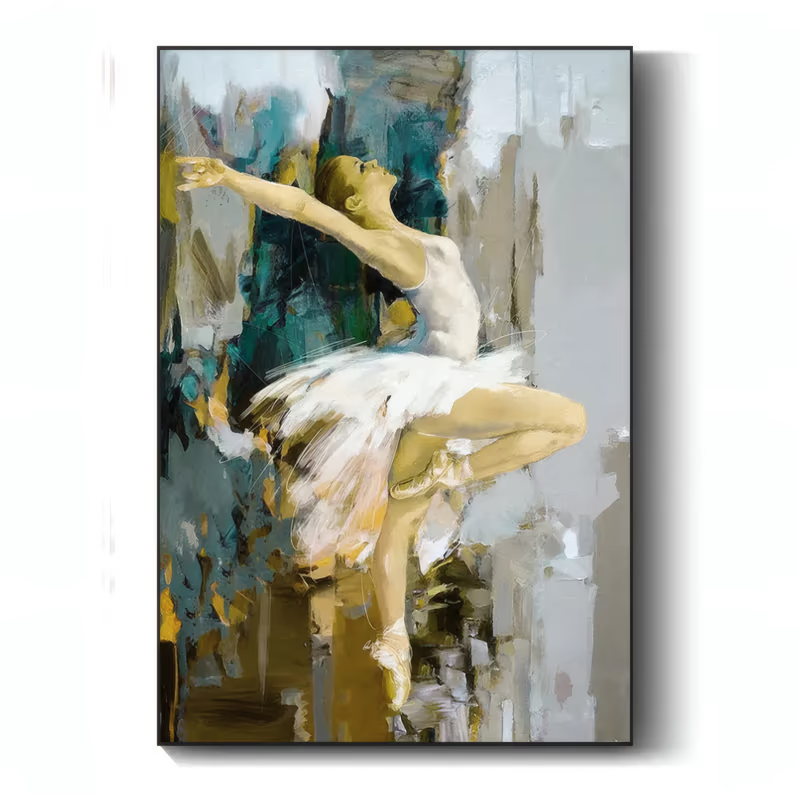
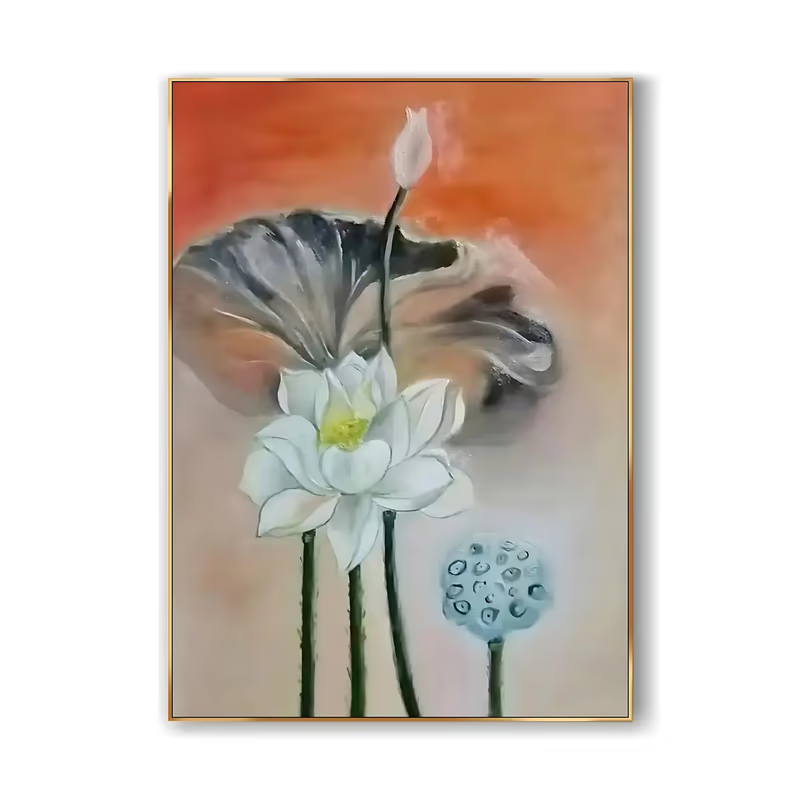
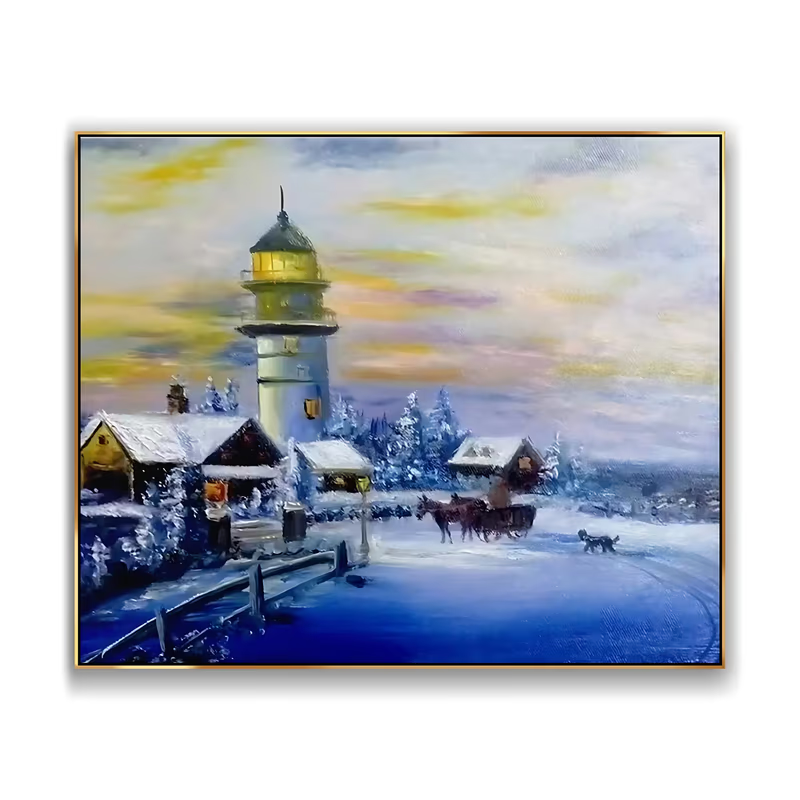
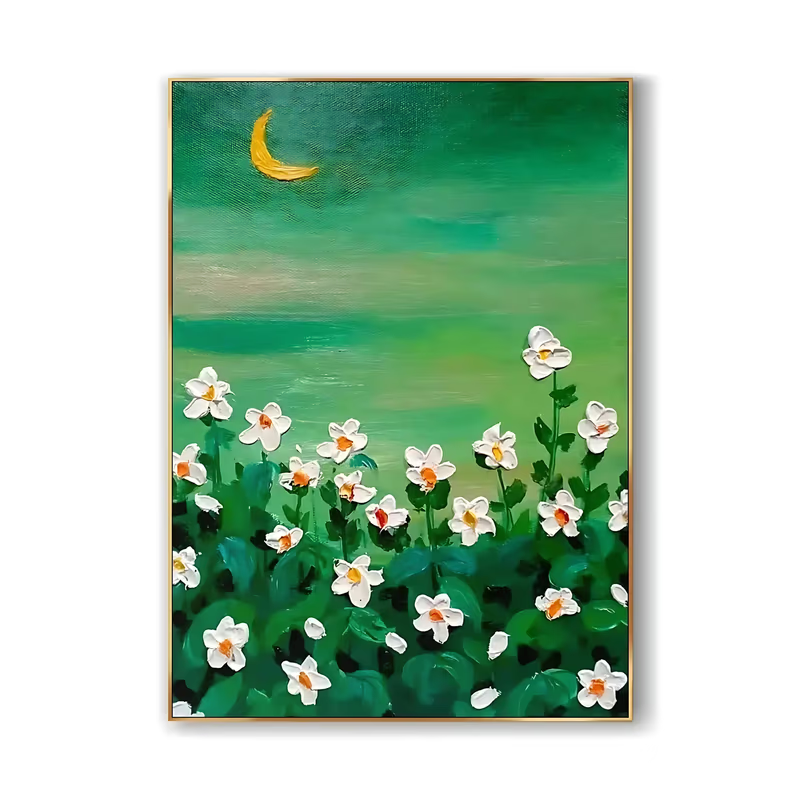

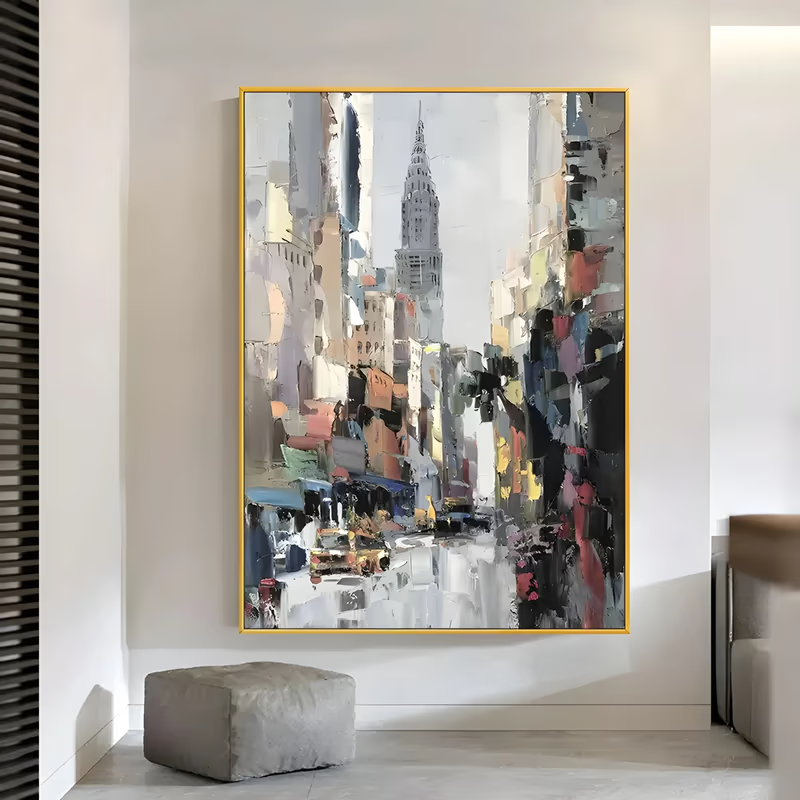
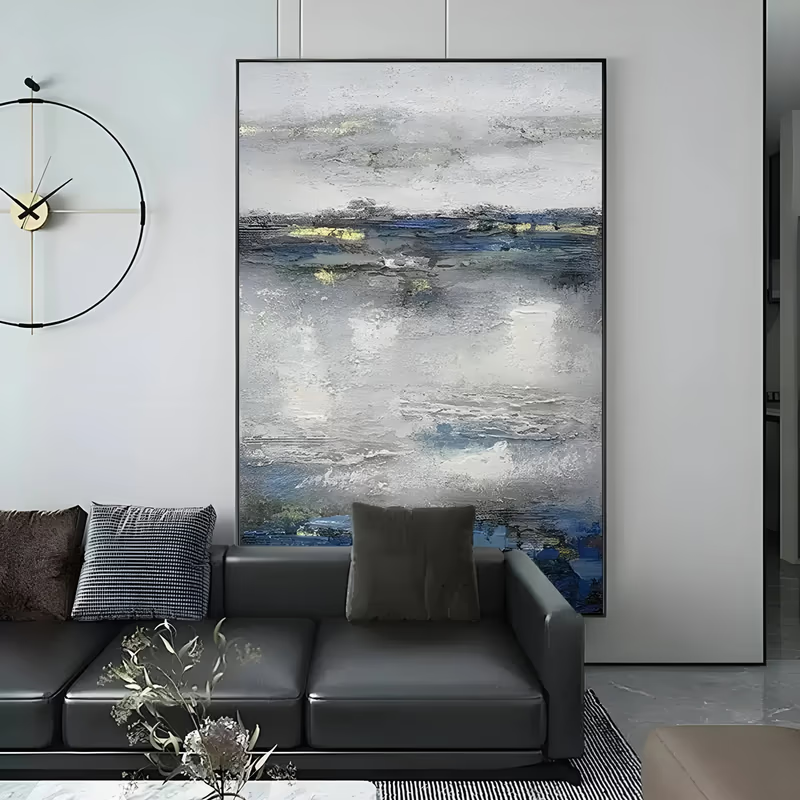
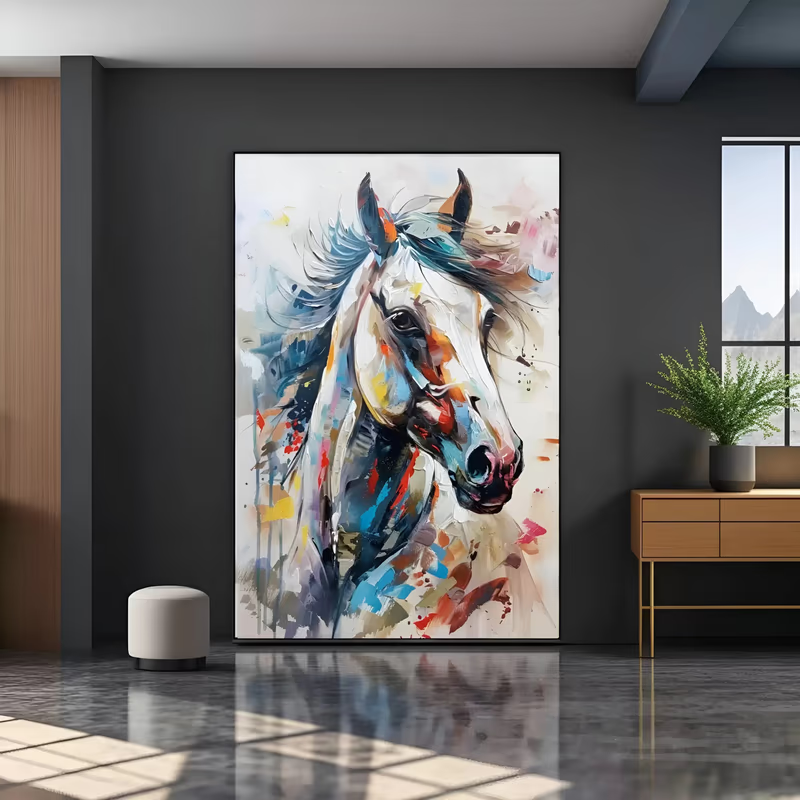
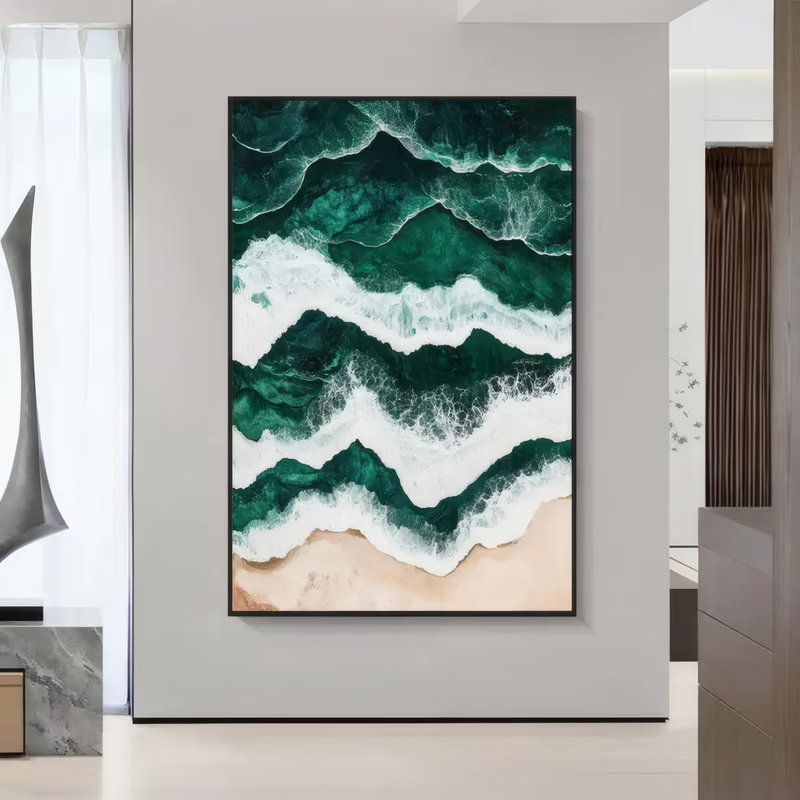
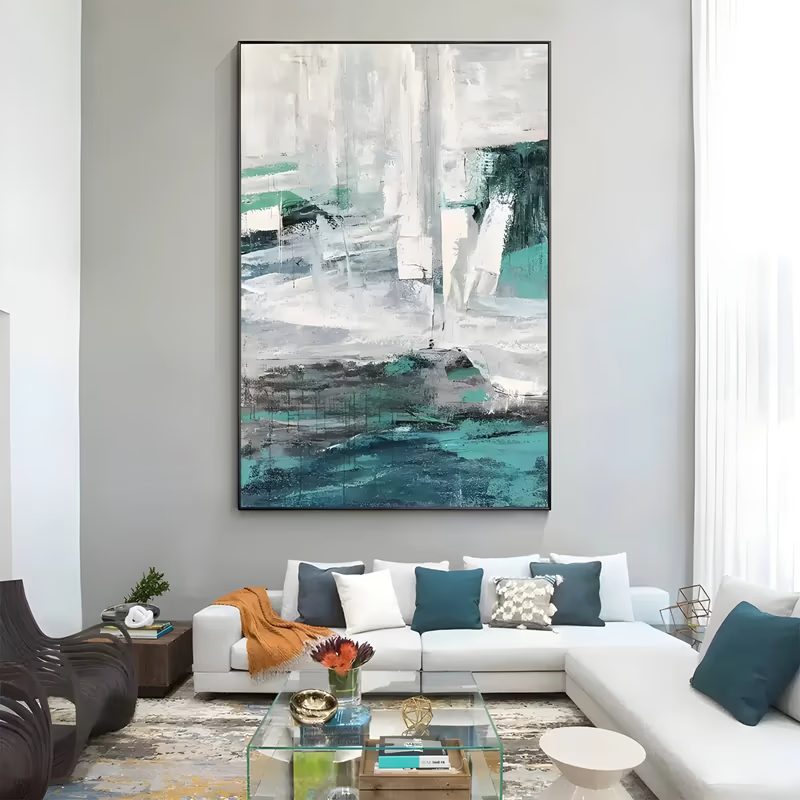
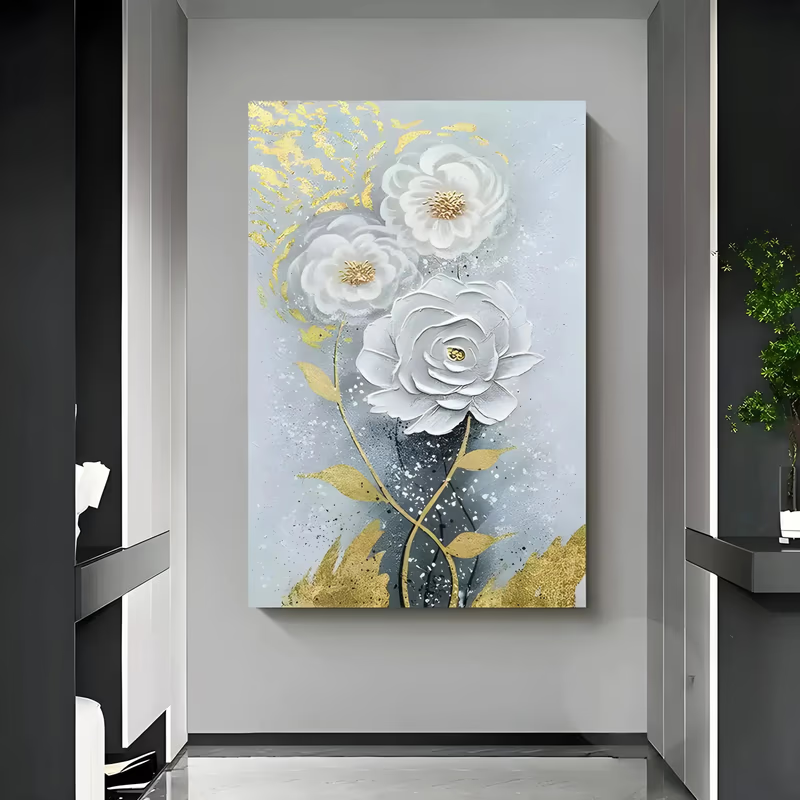
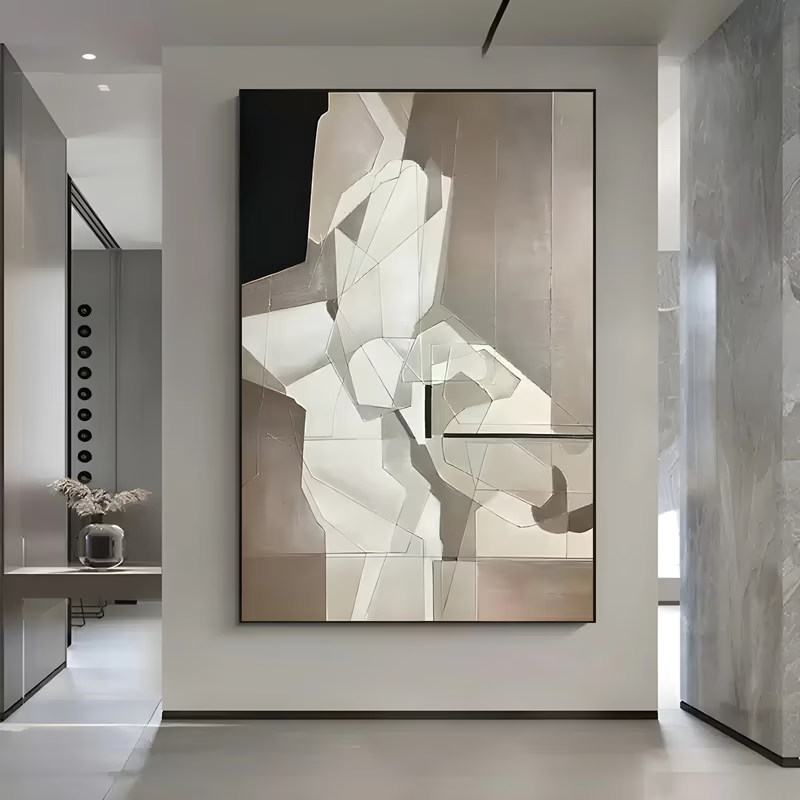
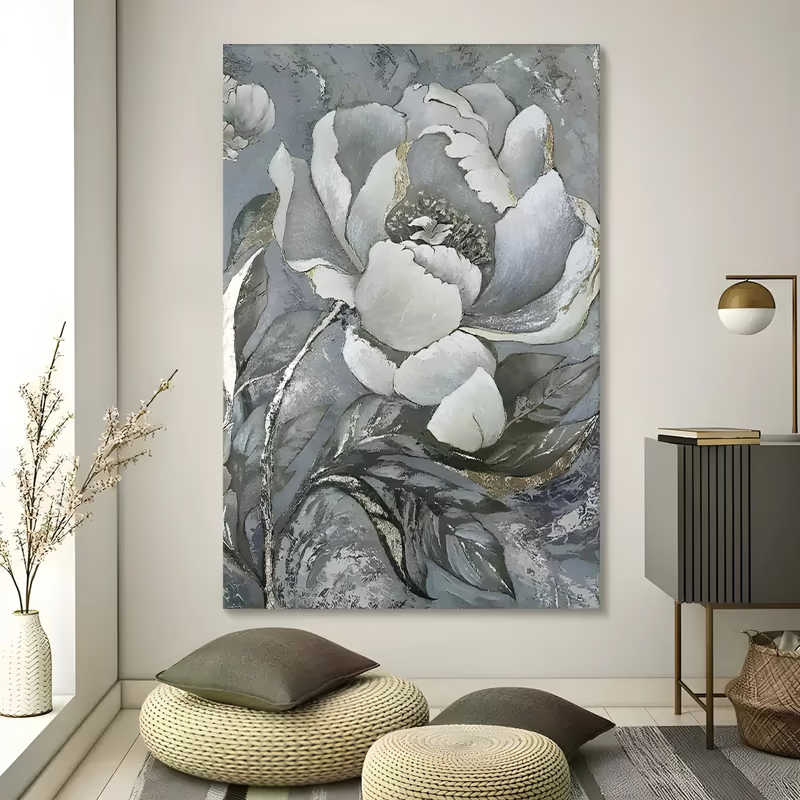
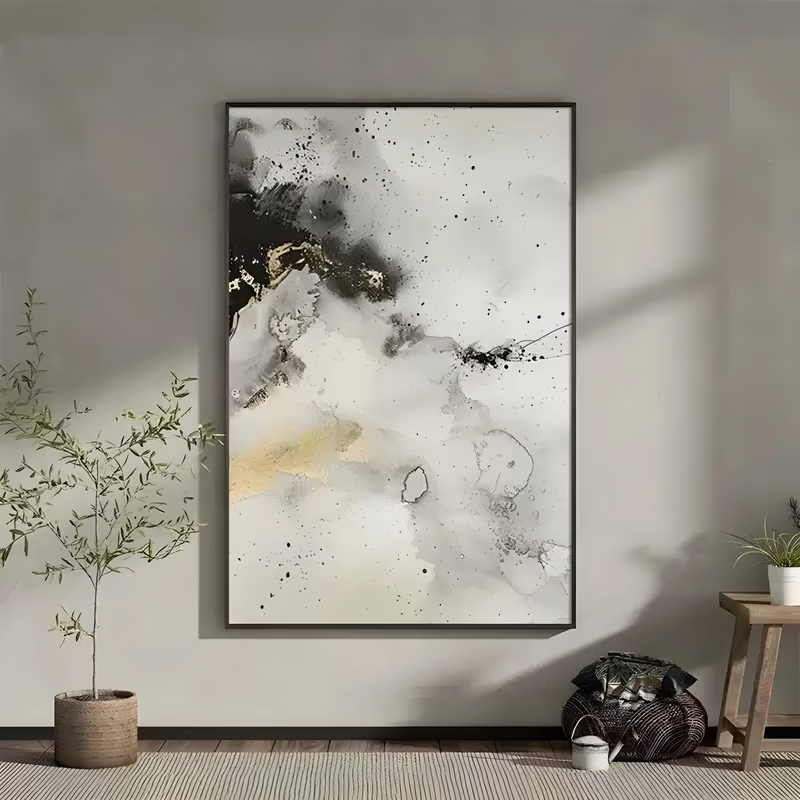
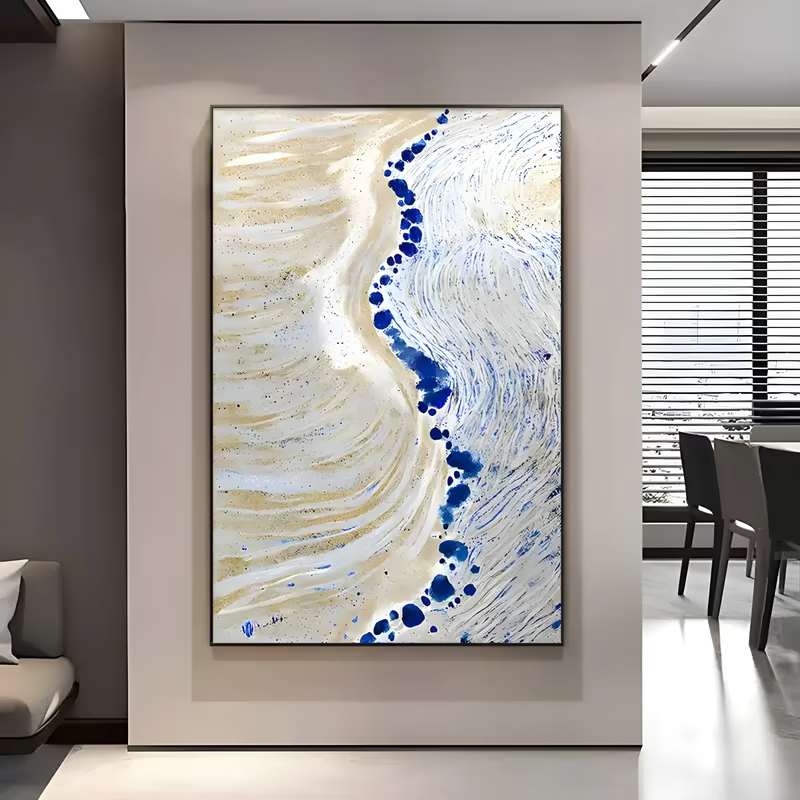
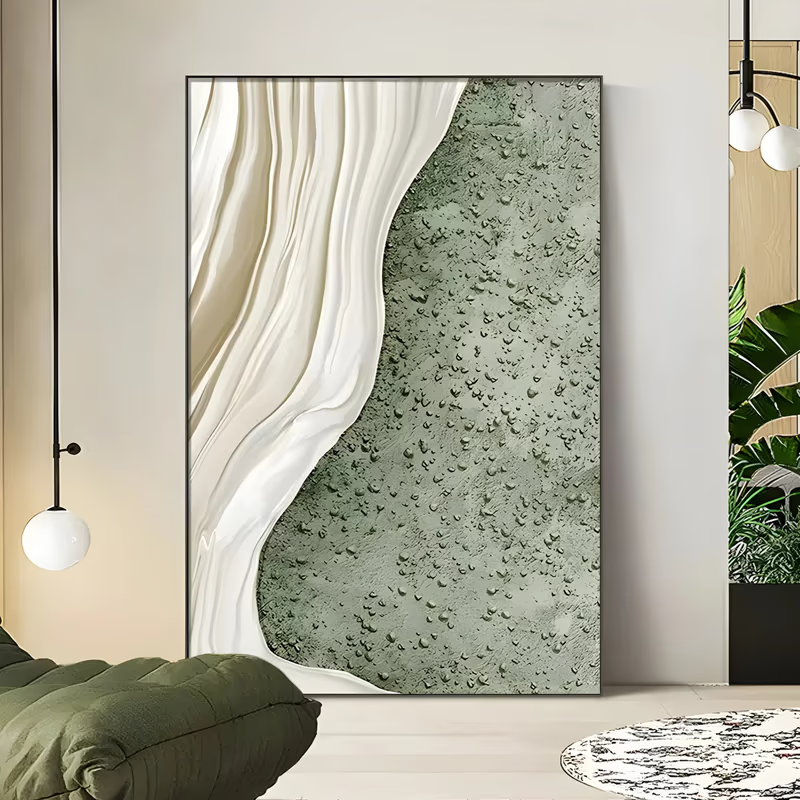
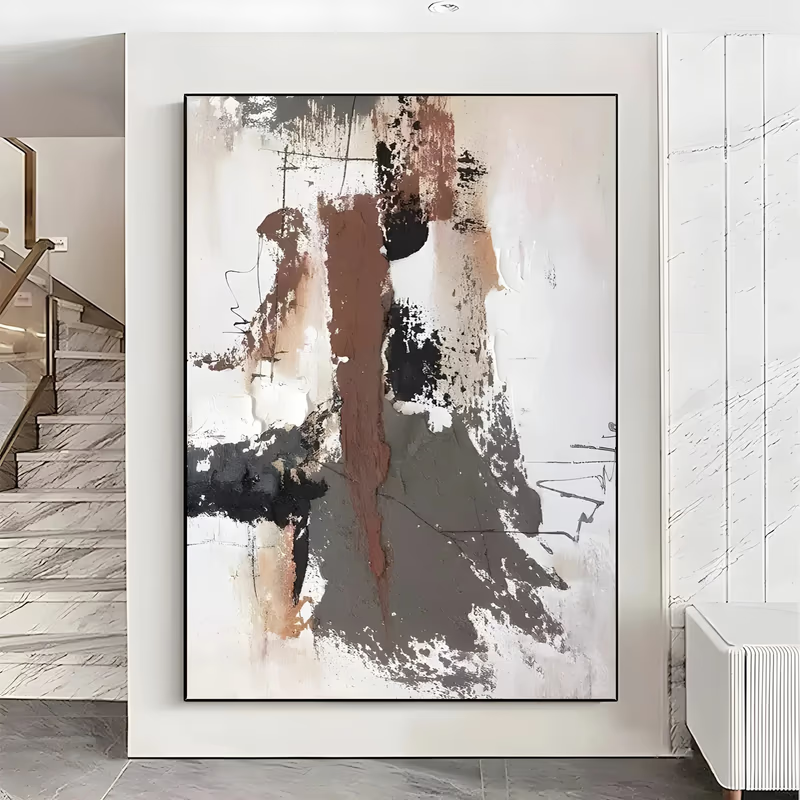

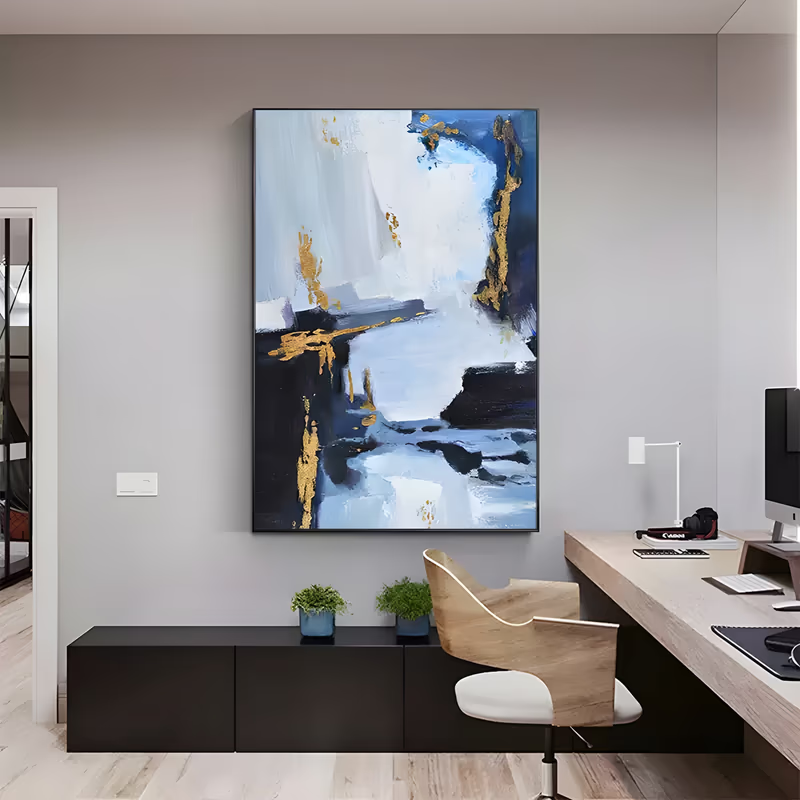
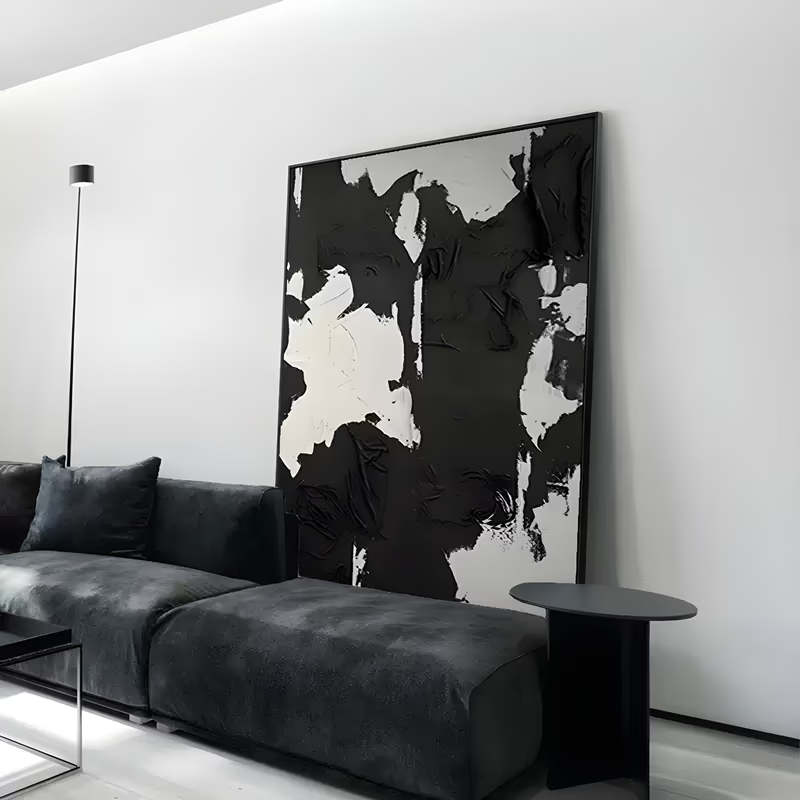
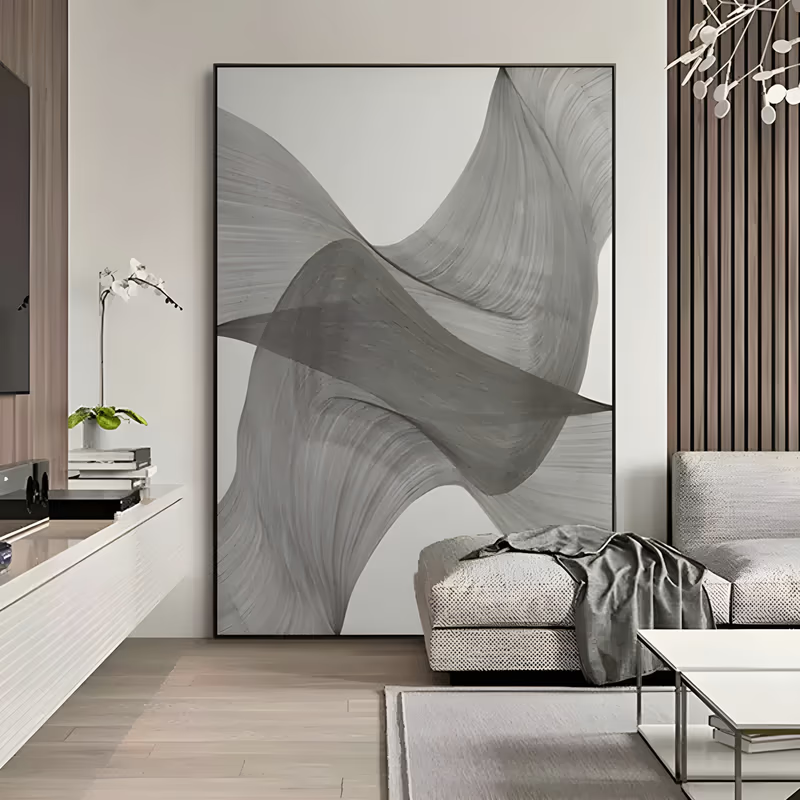
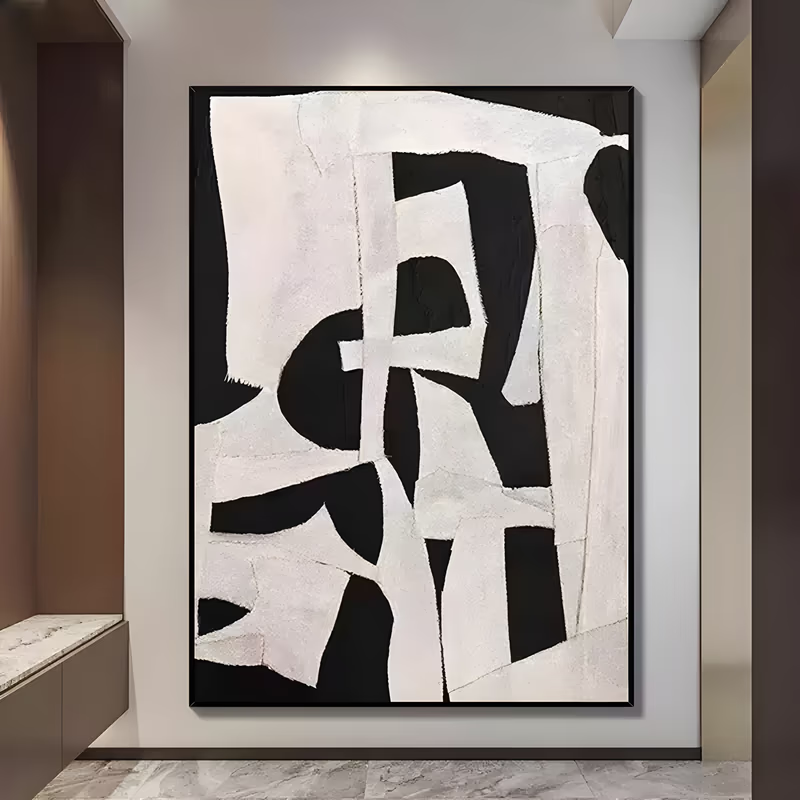
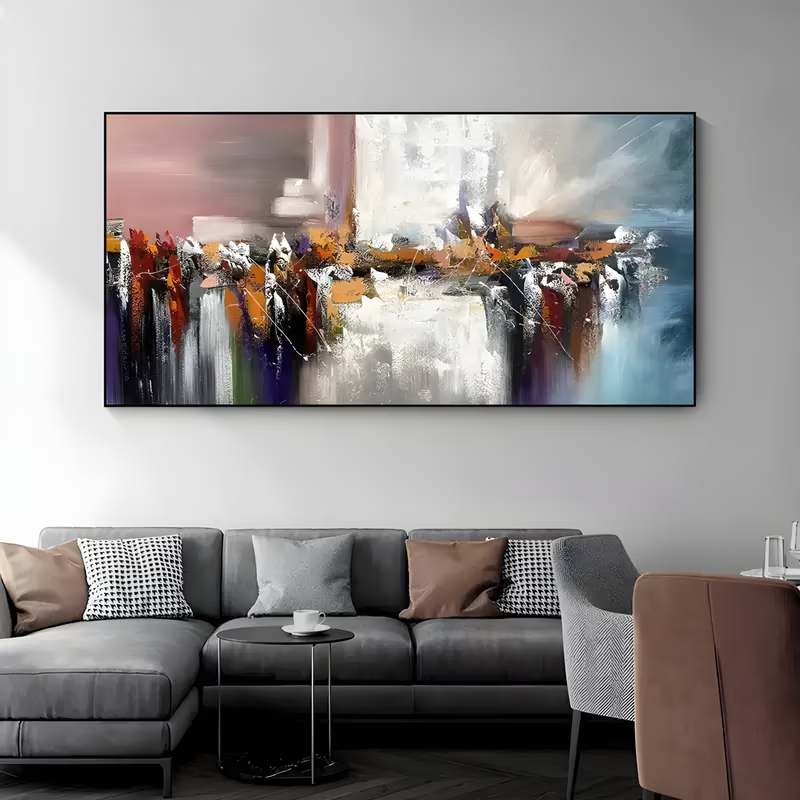
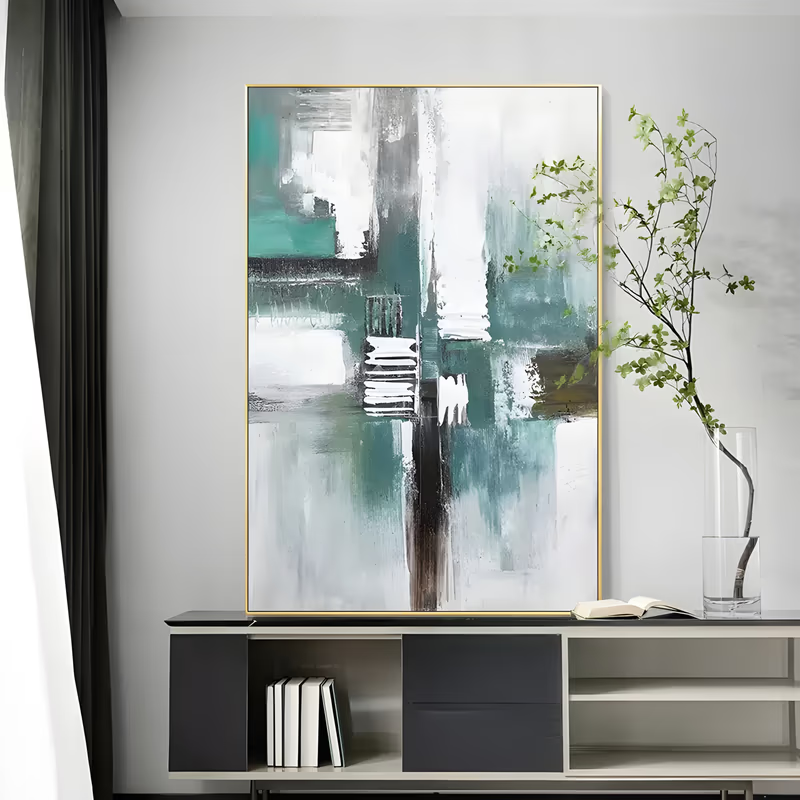
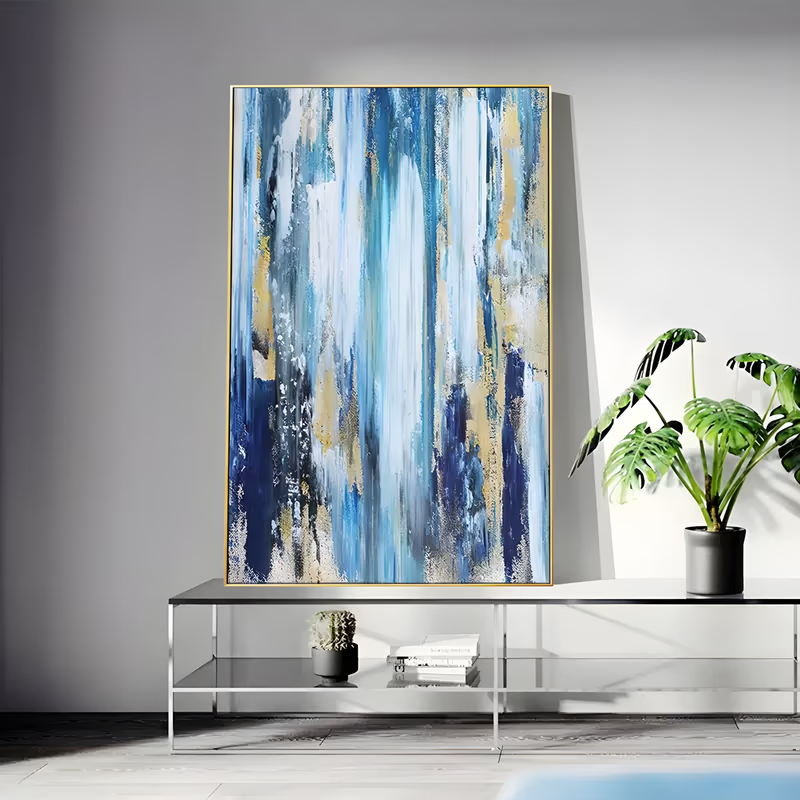
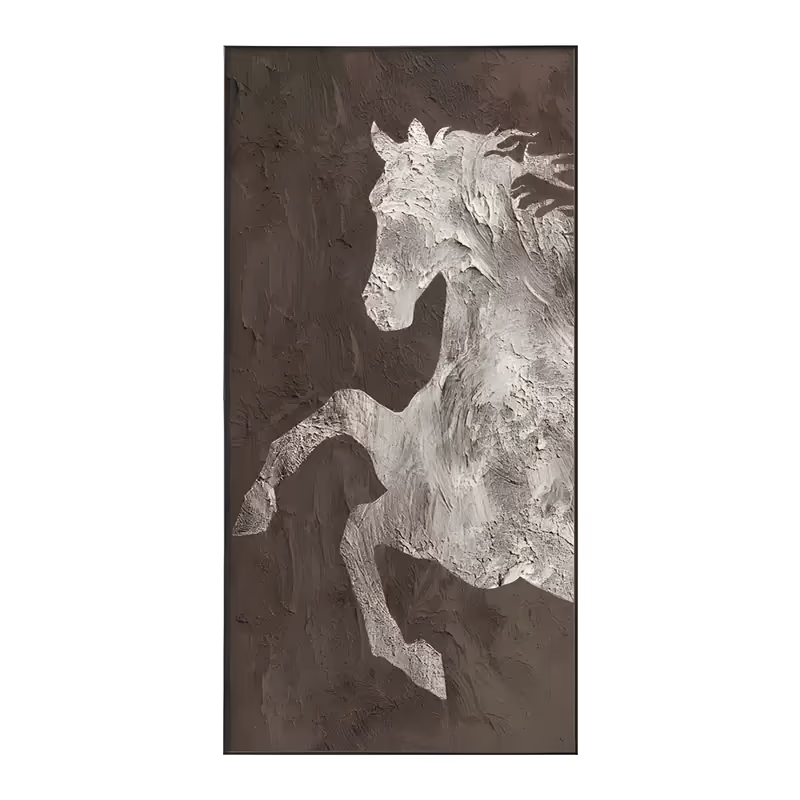
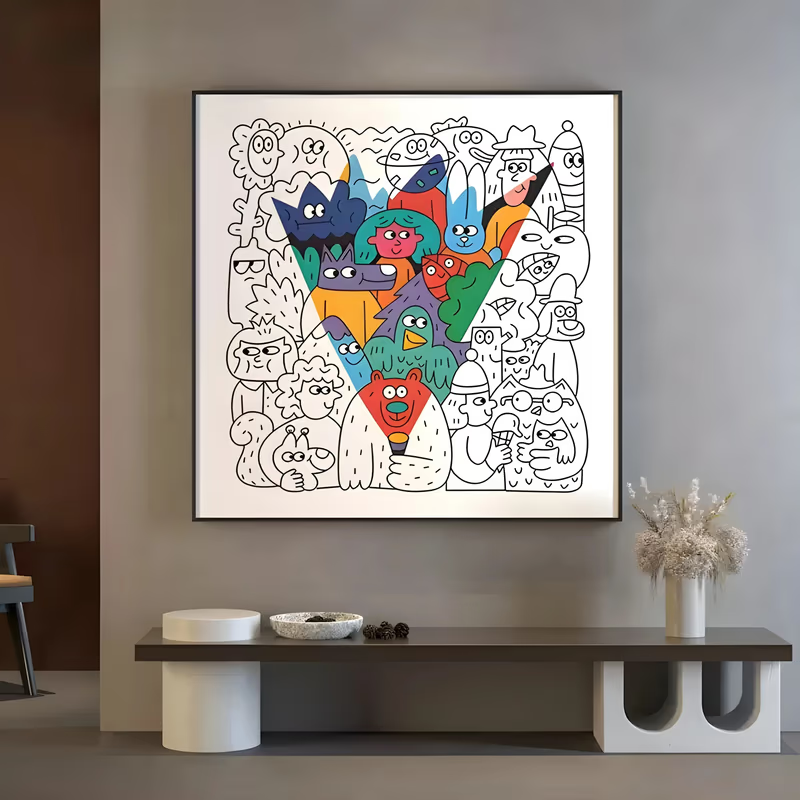
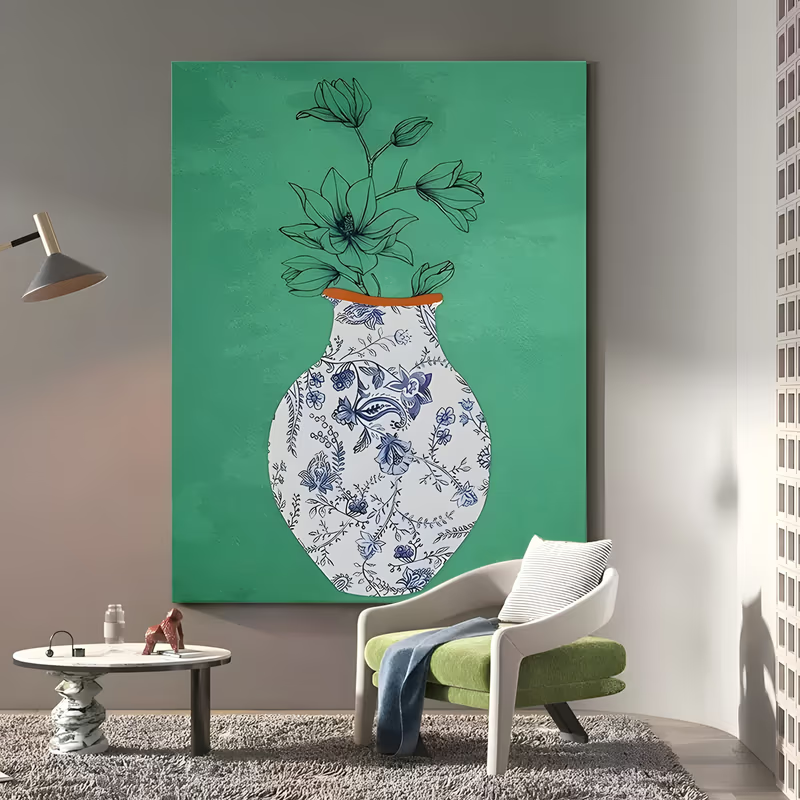
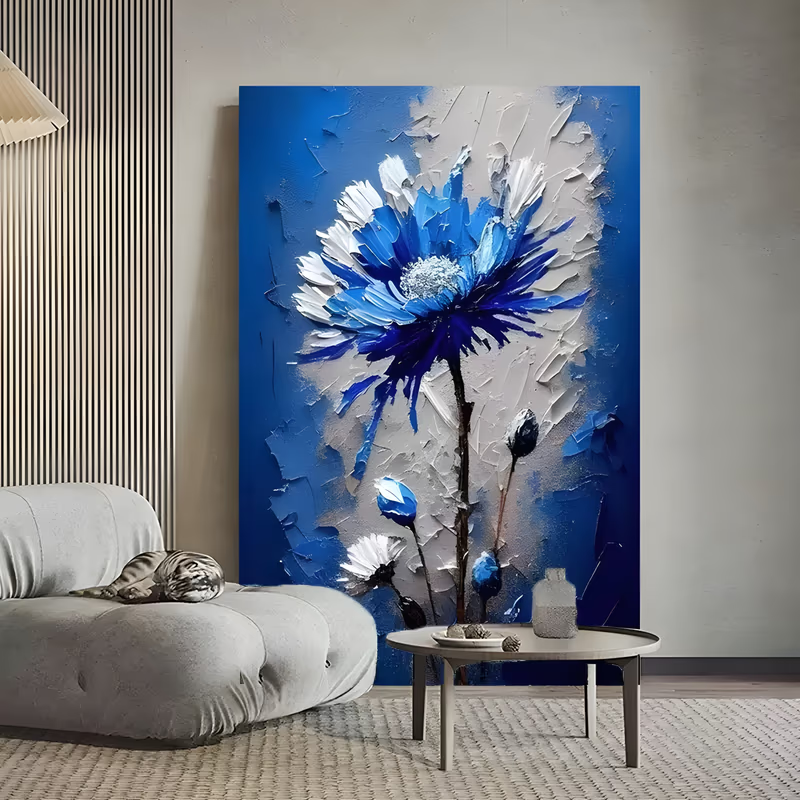
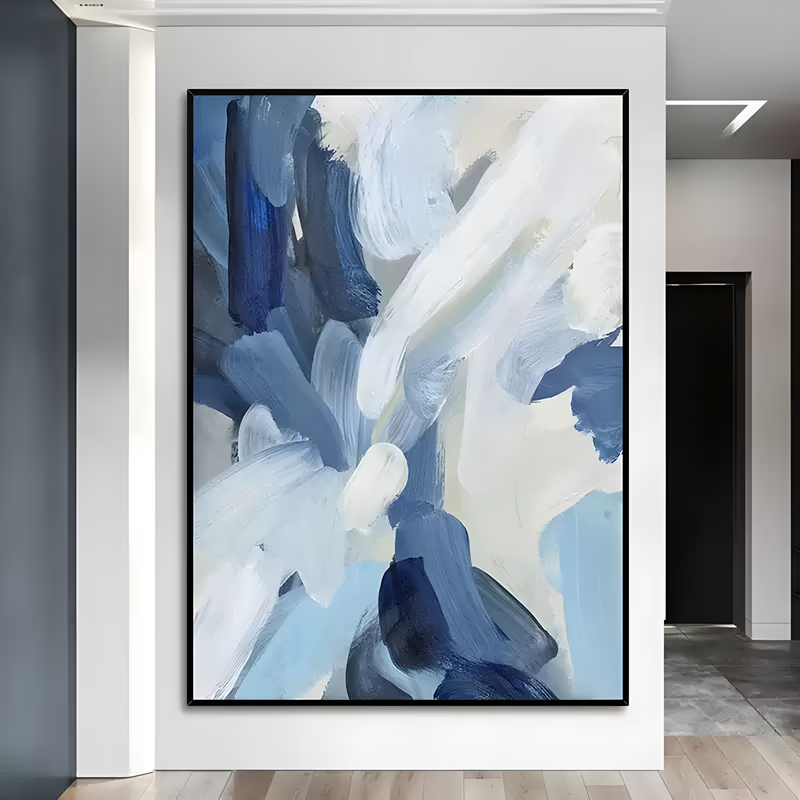
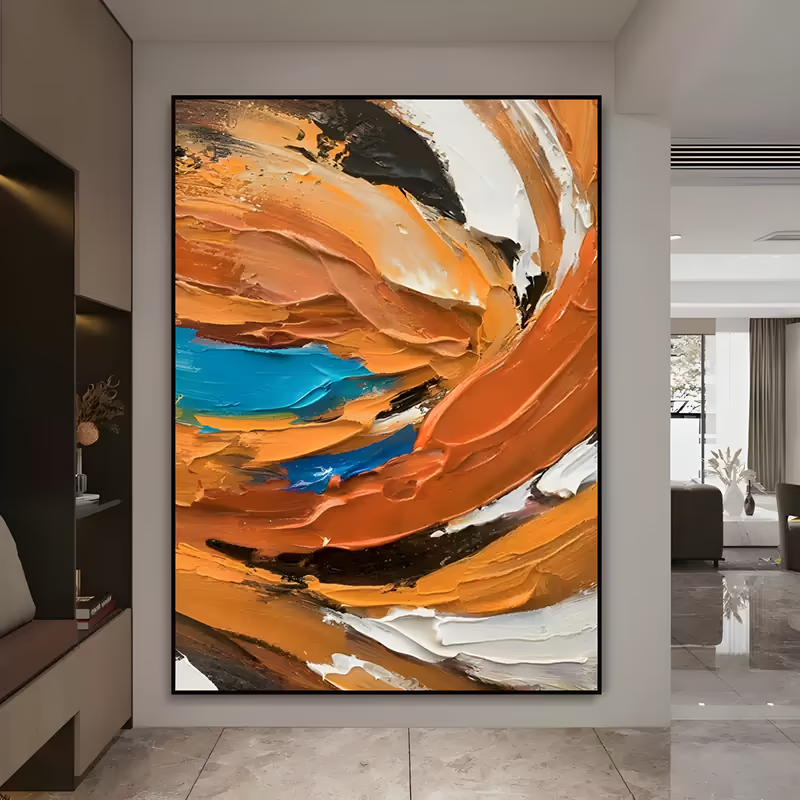
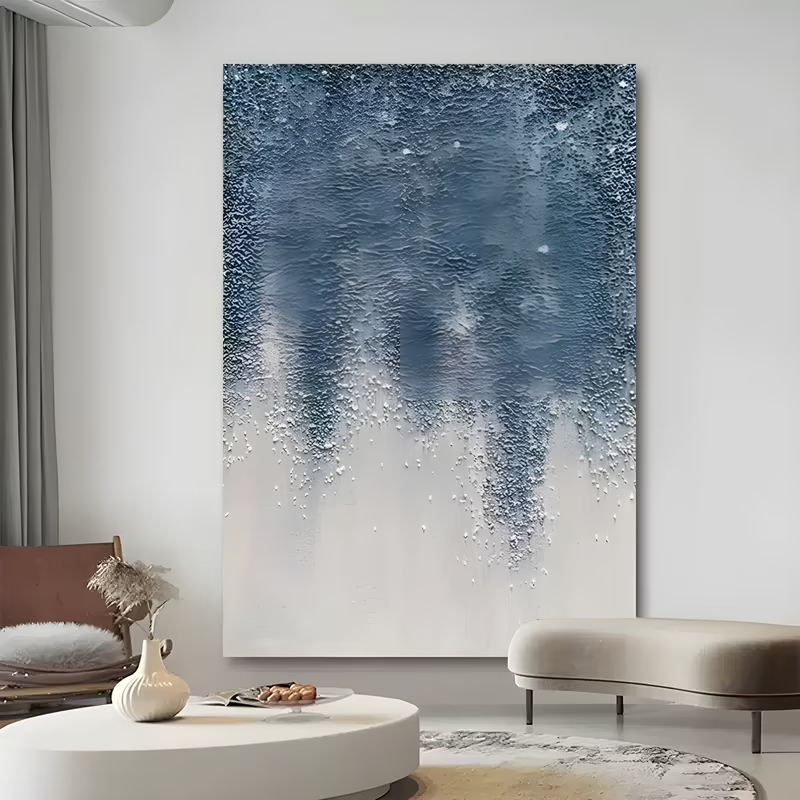
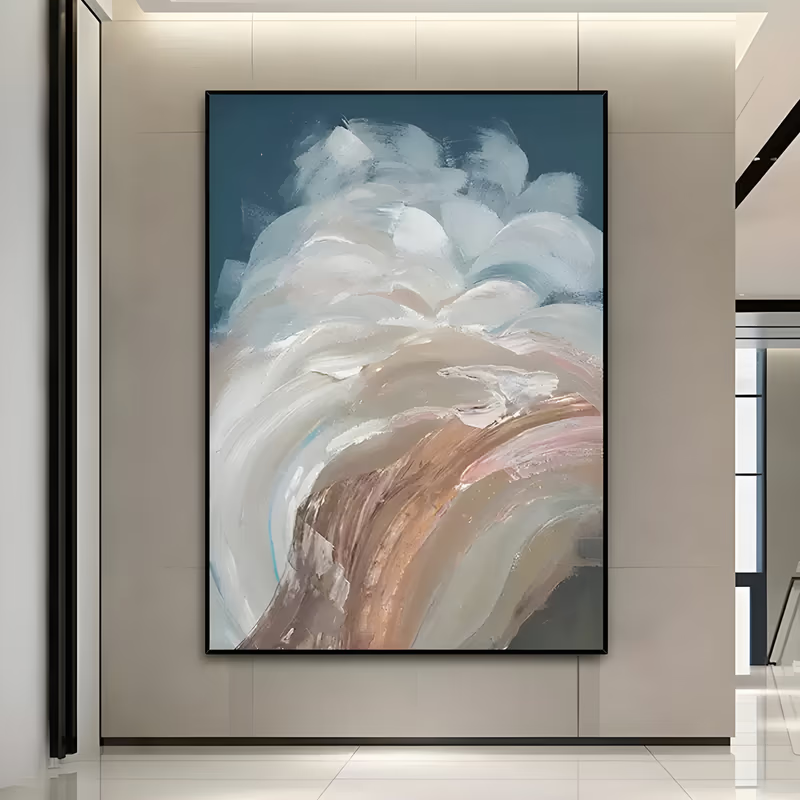
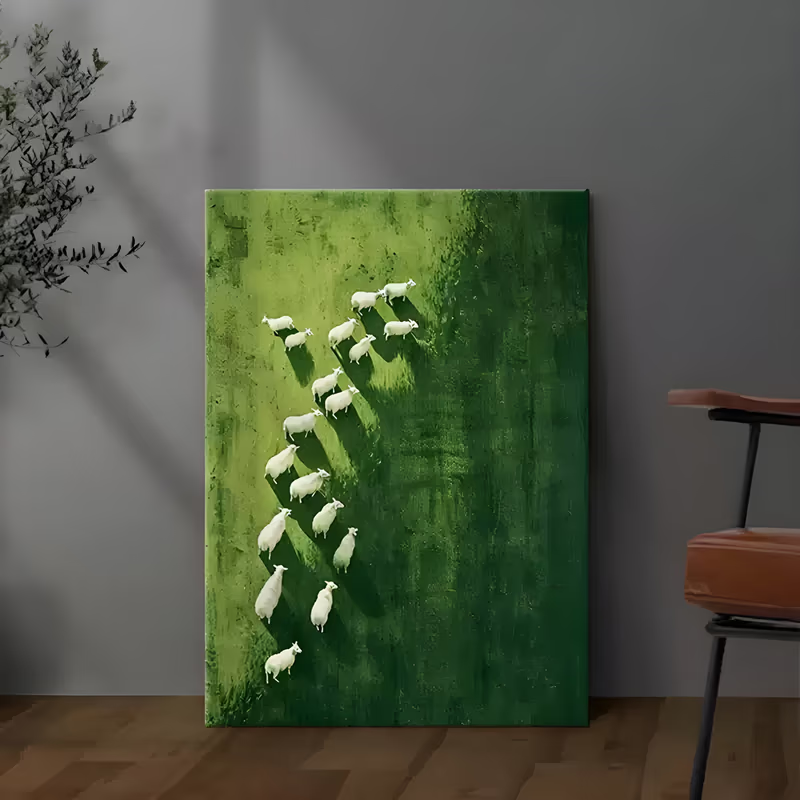
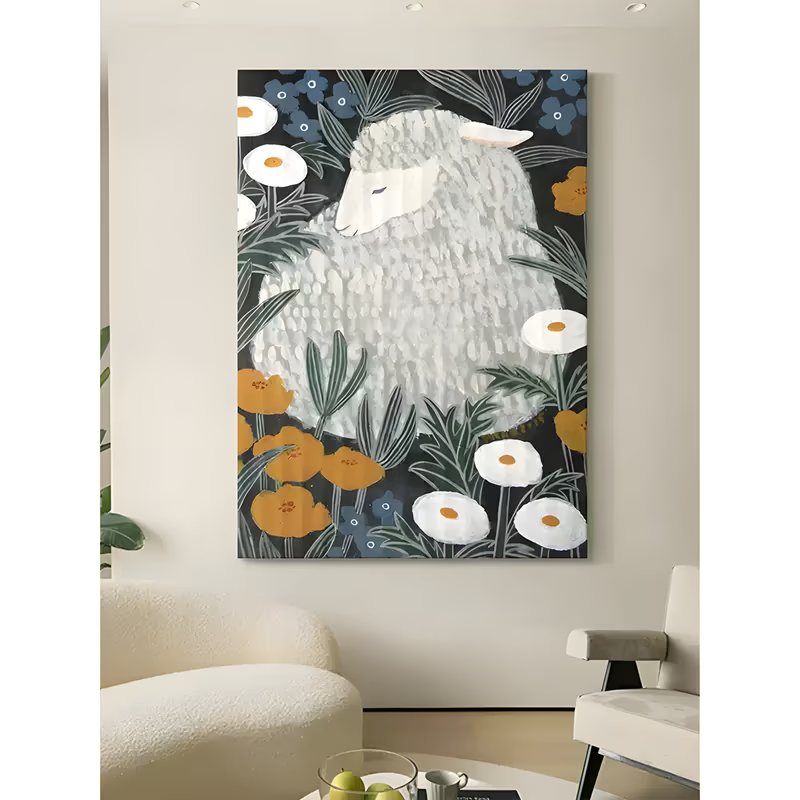
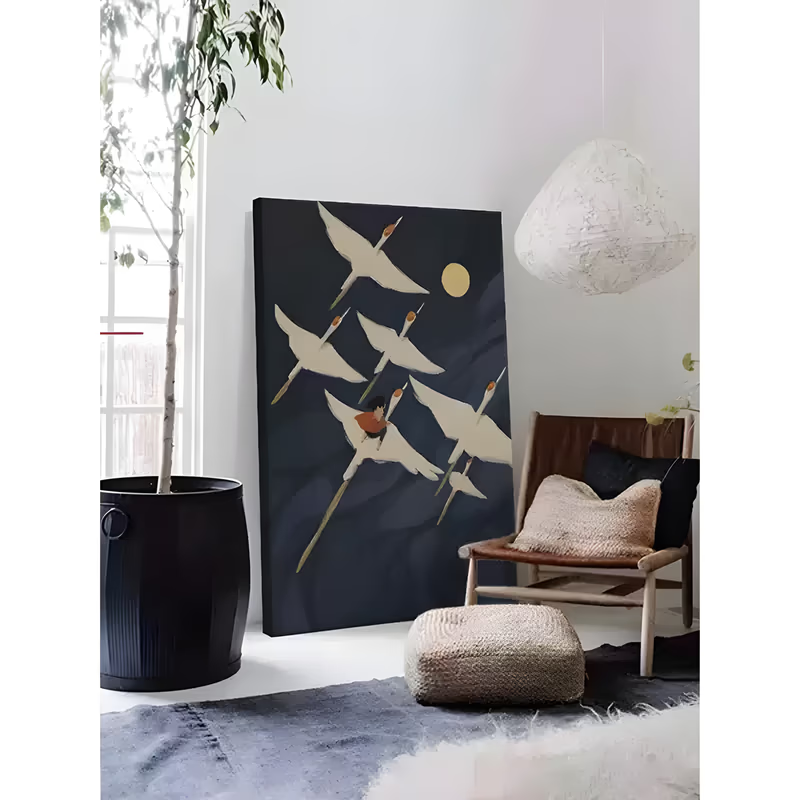
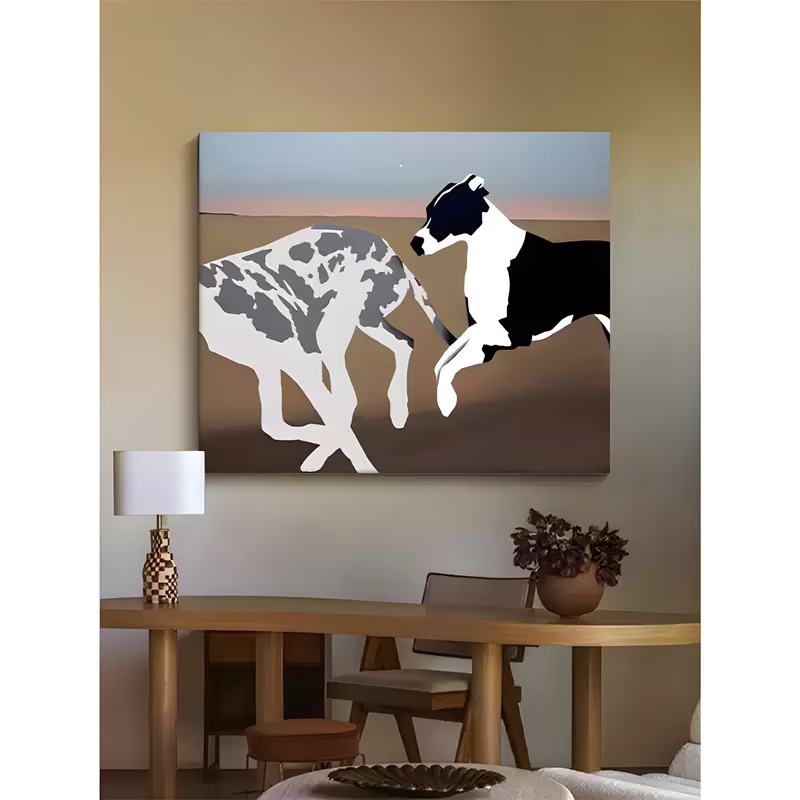
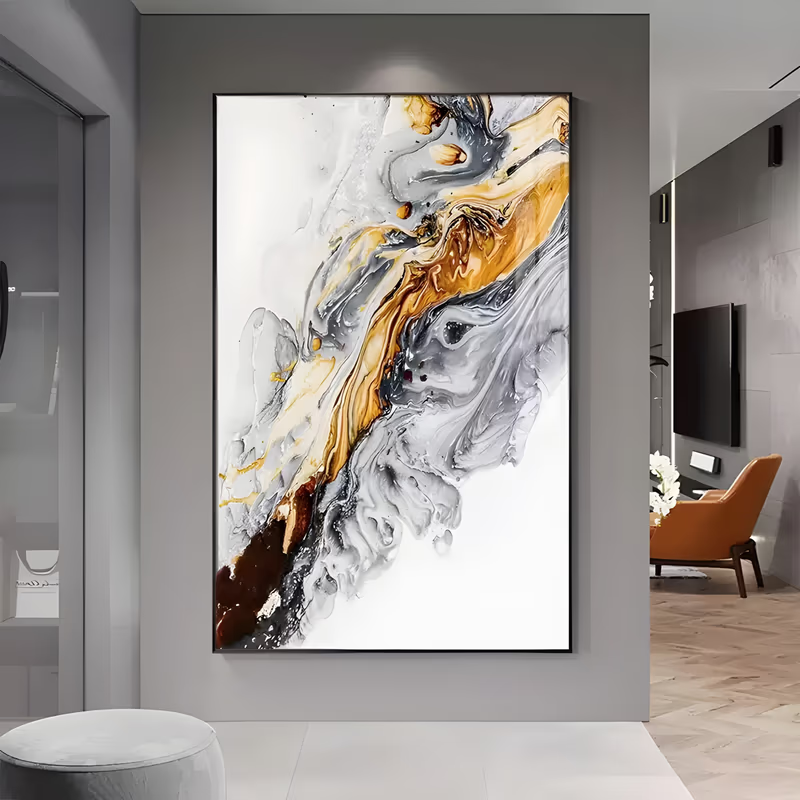
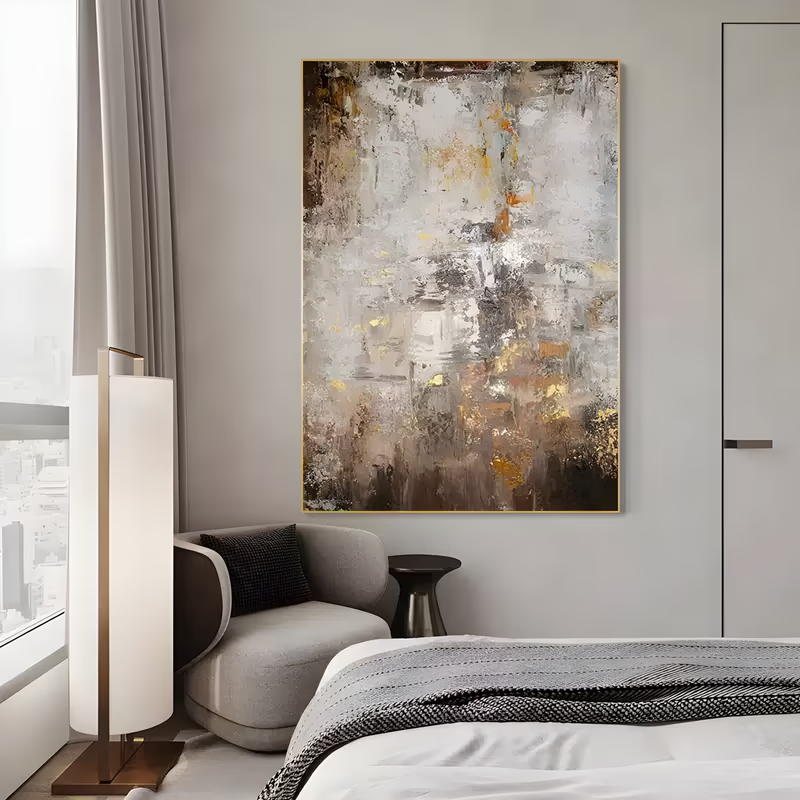
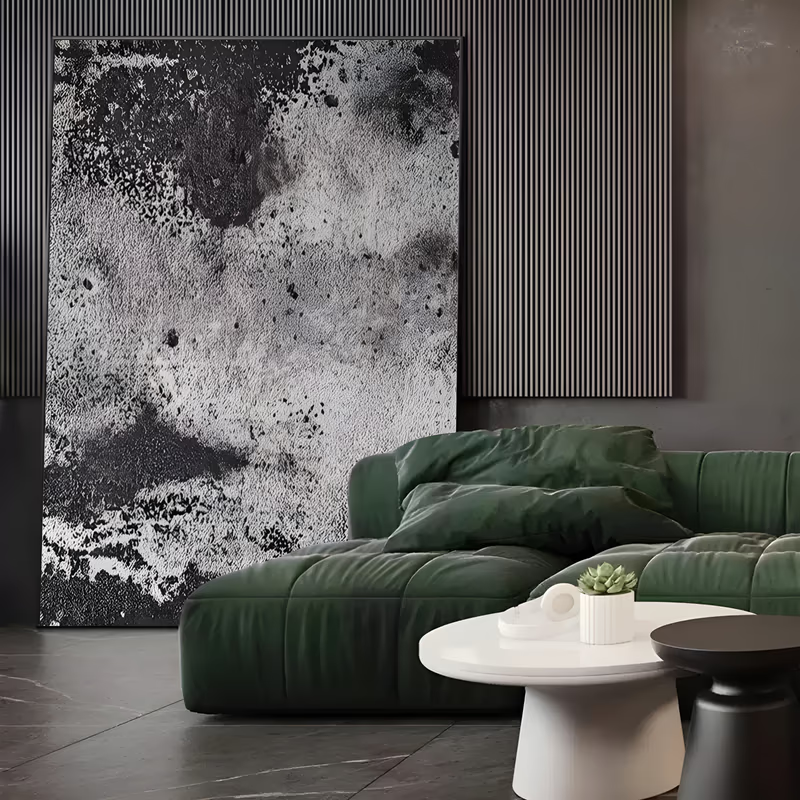
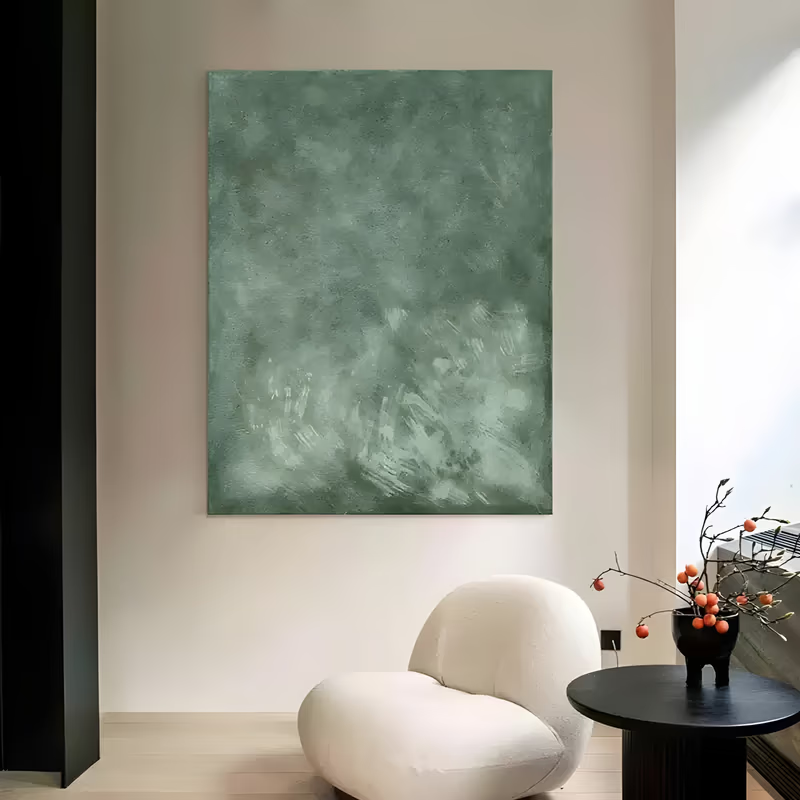
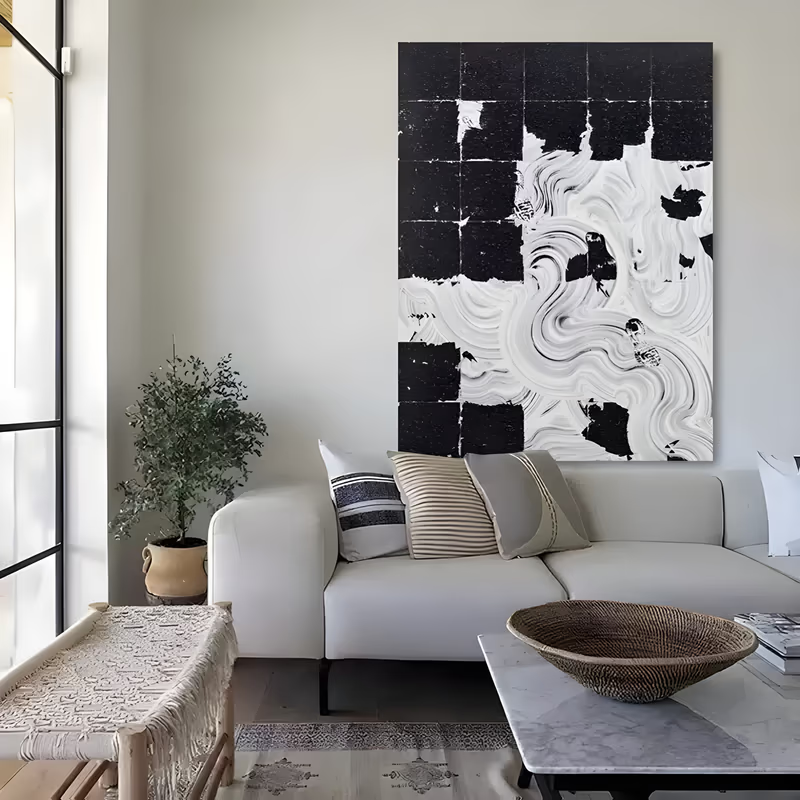
White wall art guide · Updated
How to choose white wall art that holds its own
Key takeaways
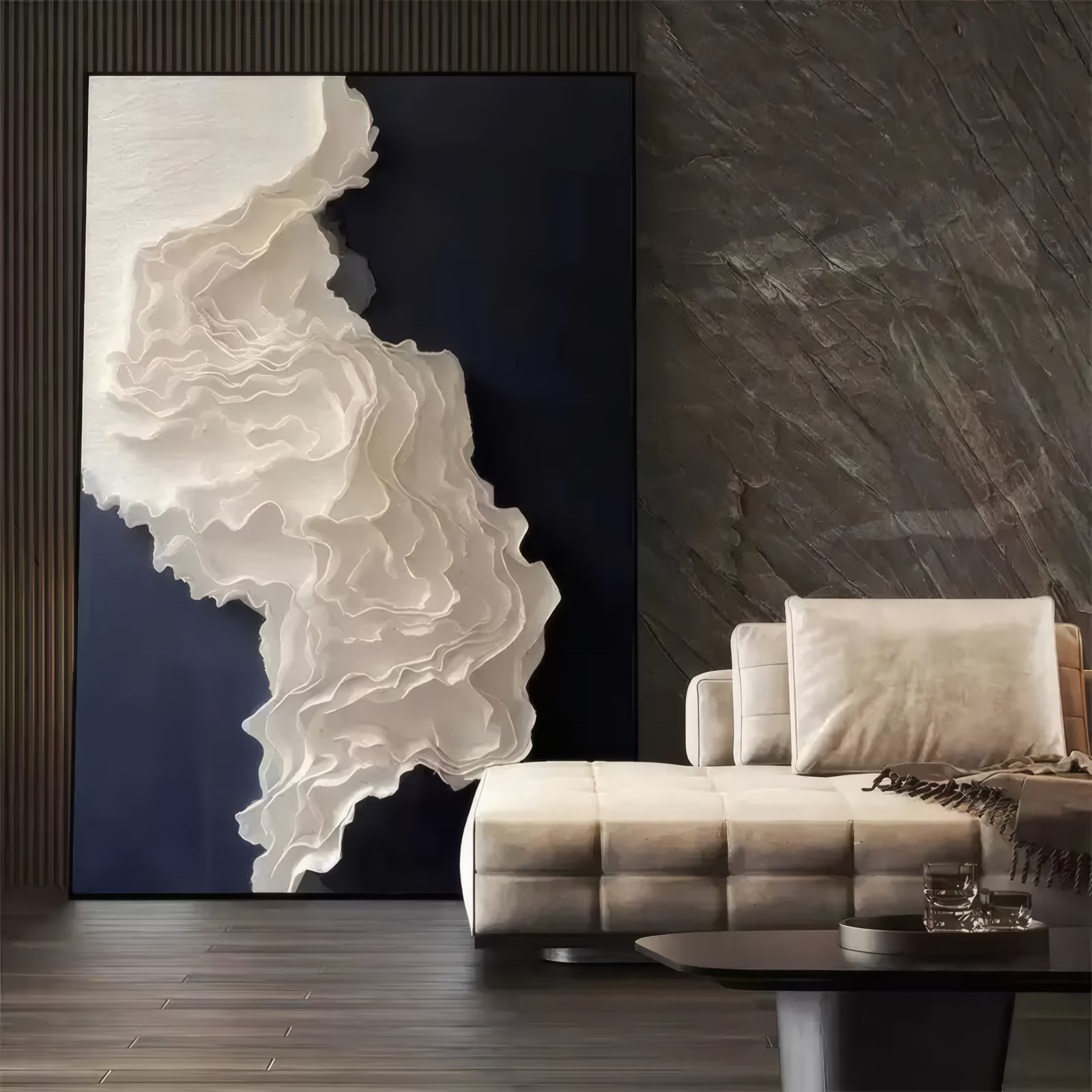
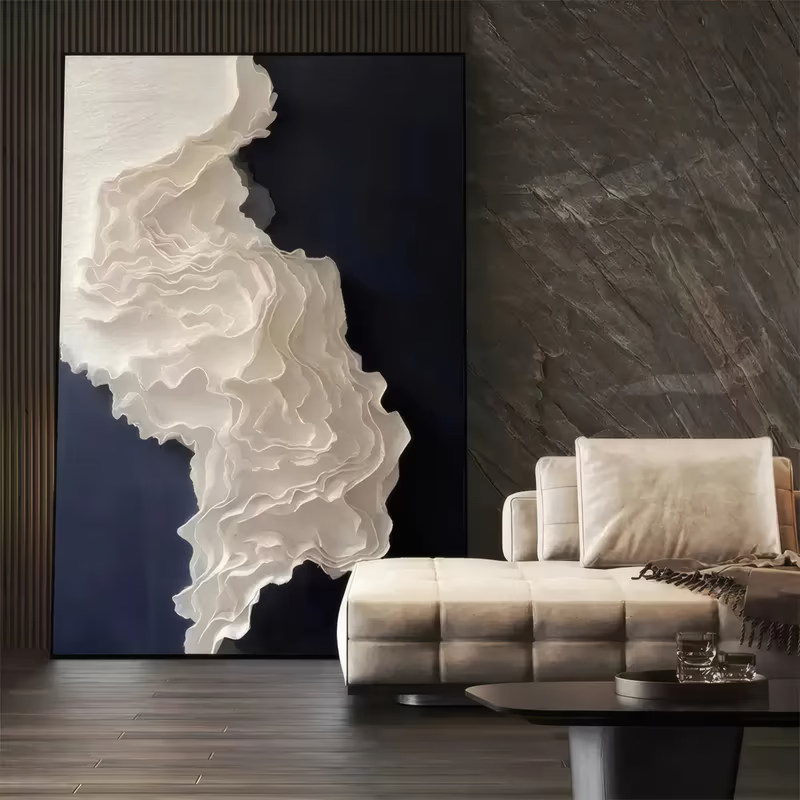
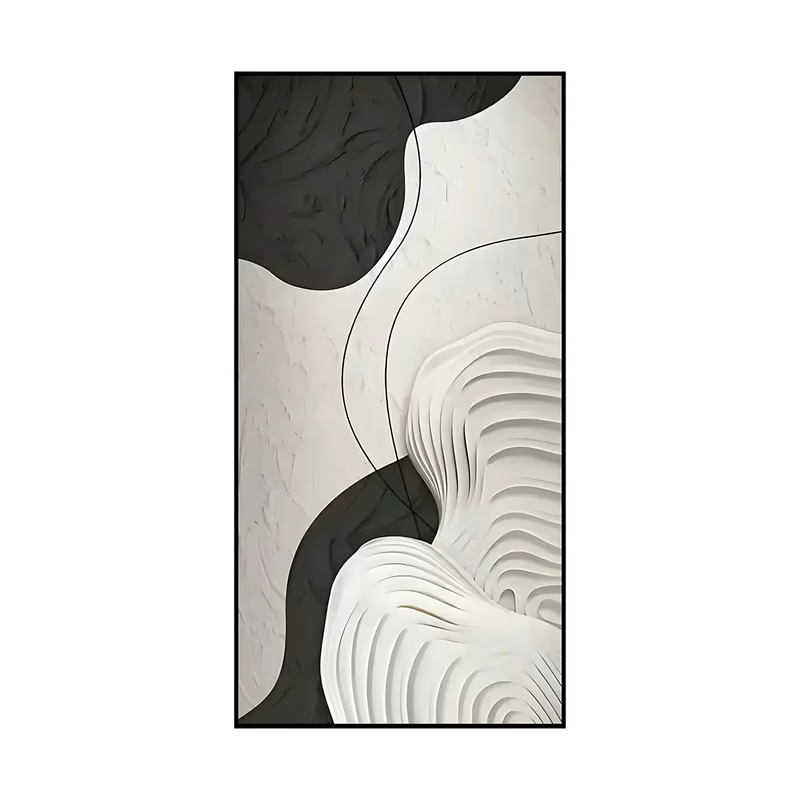
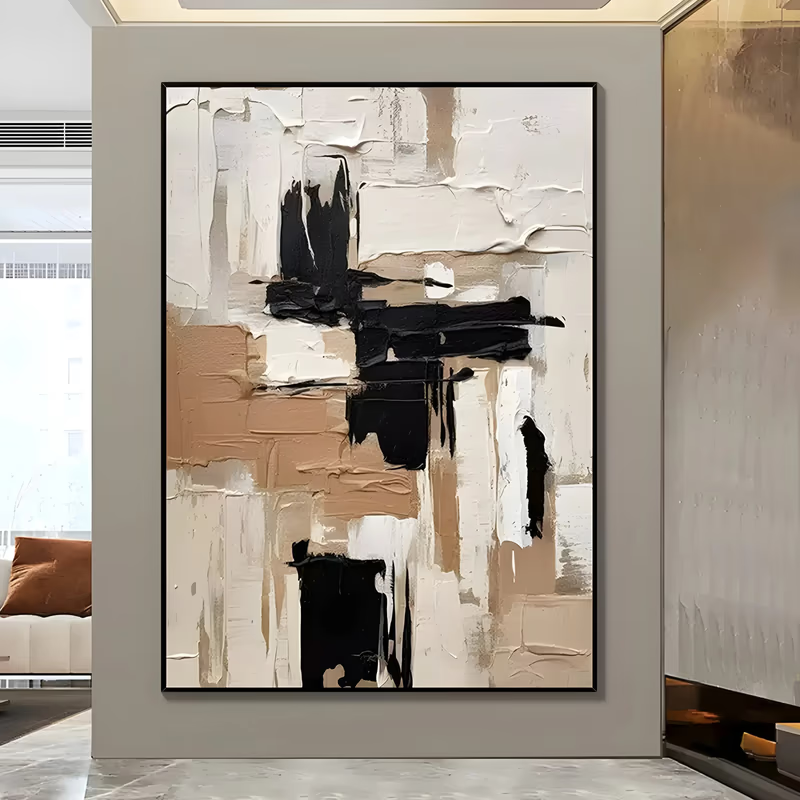
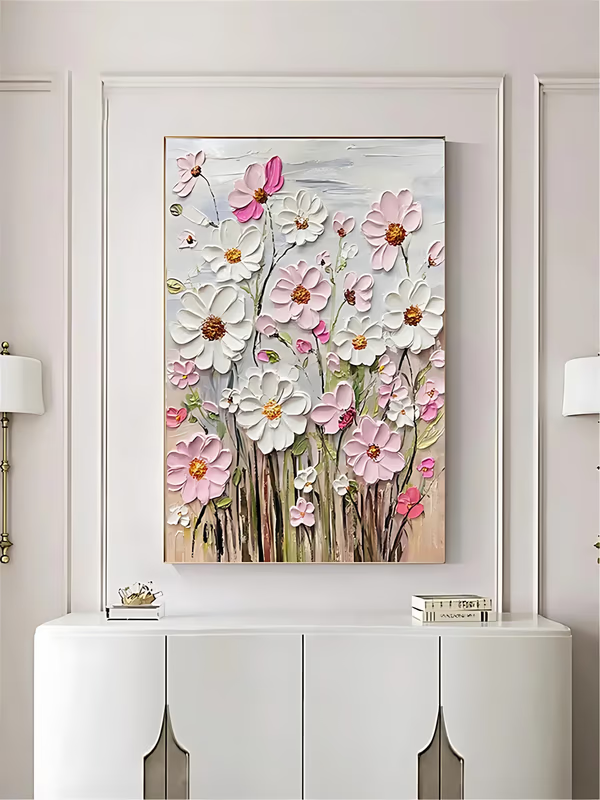
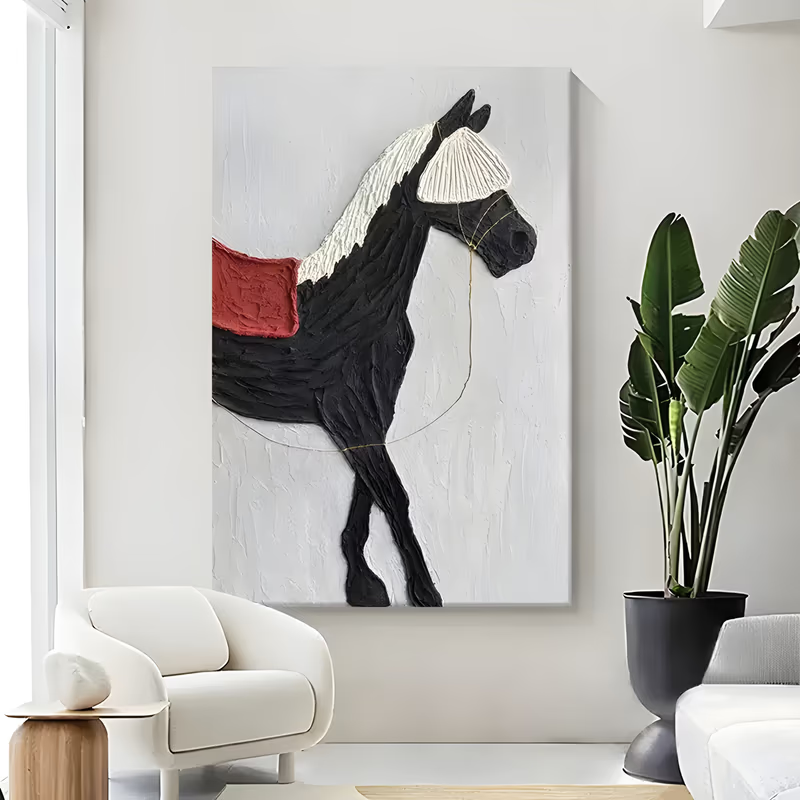
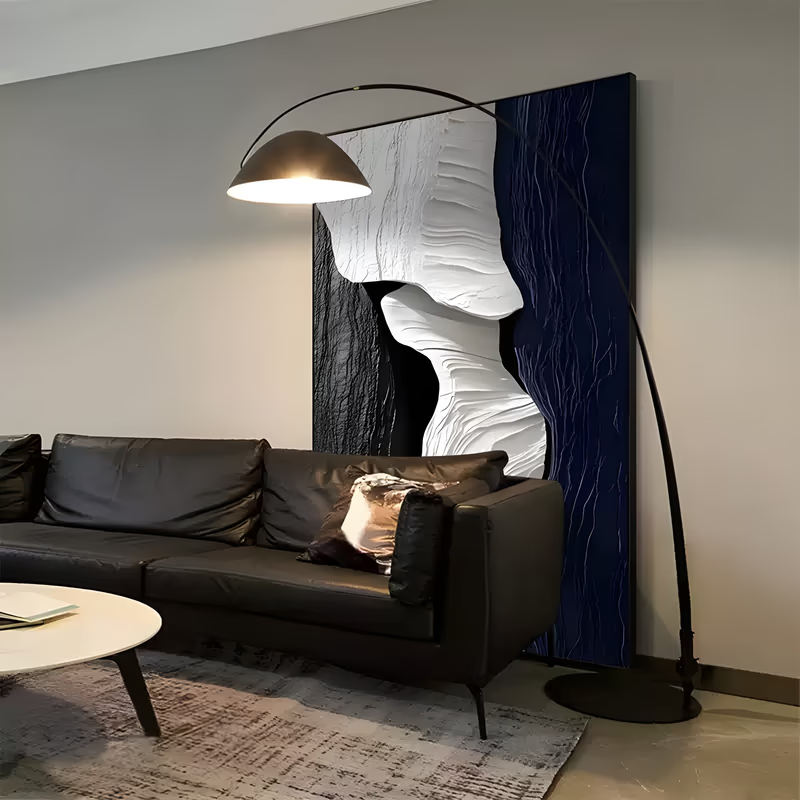
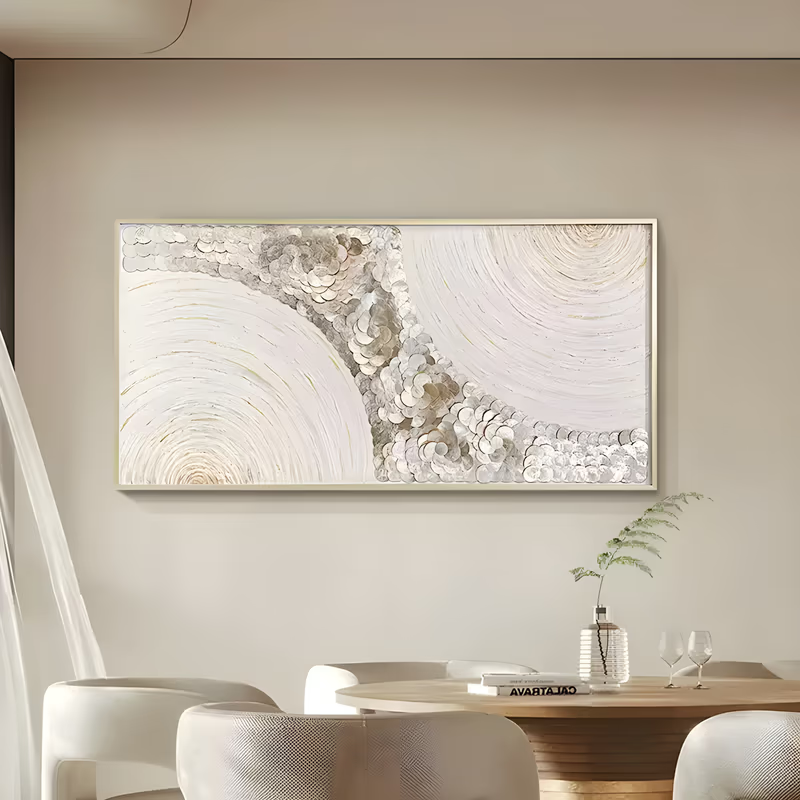
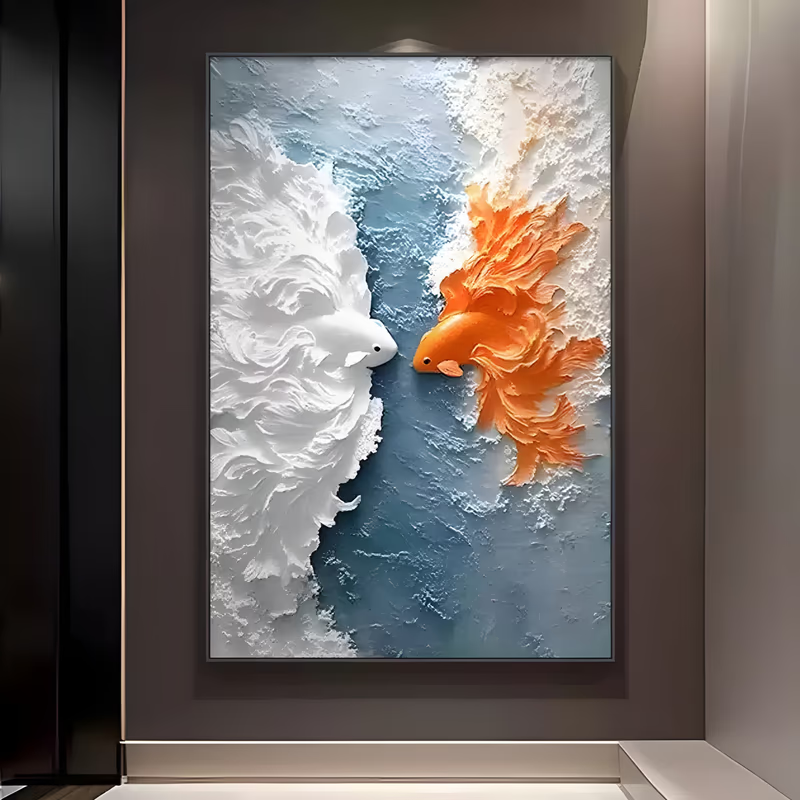
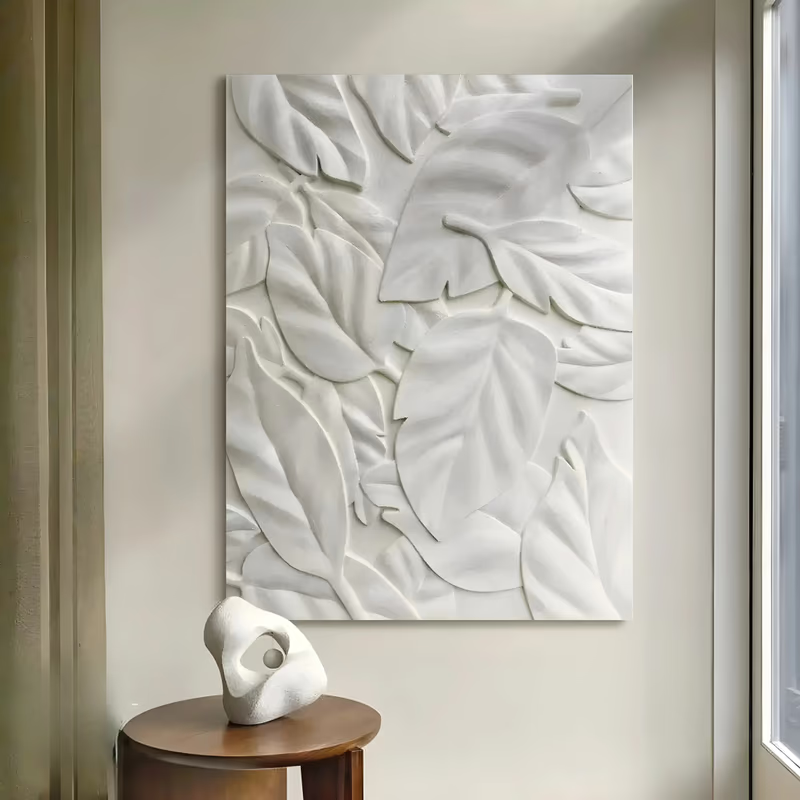
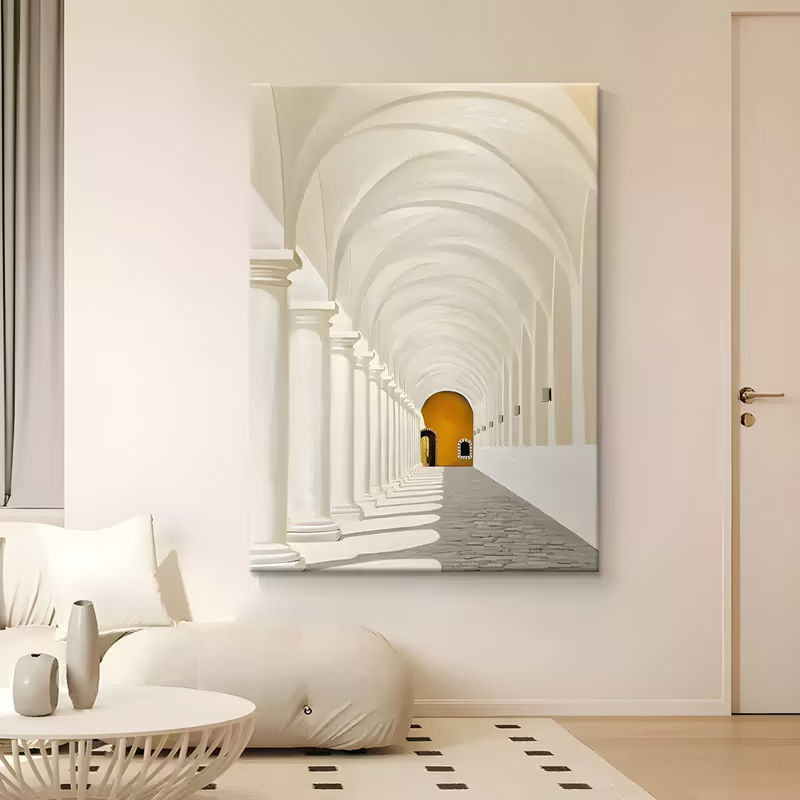
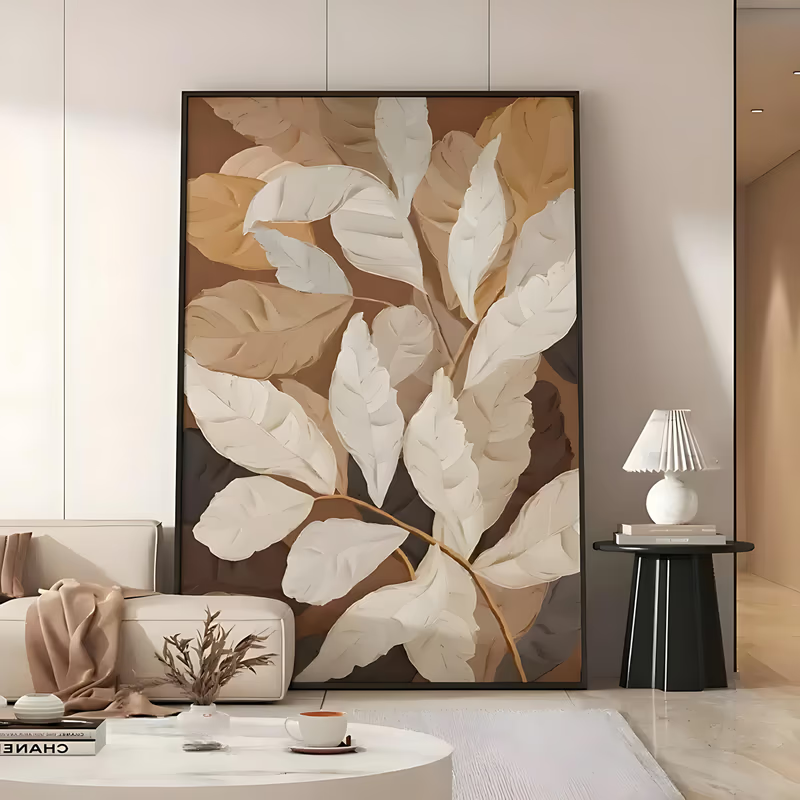
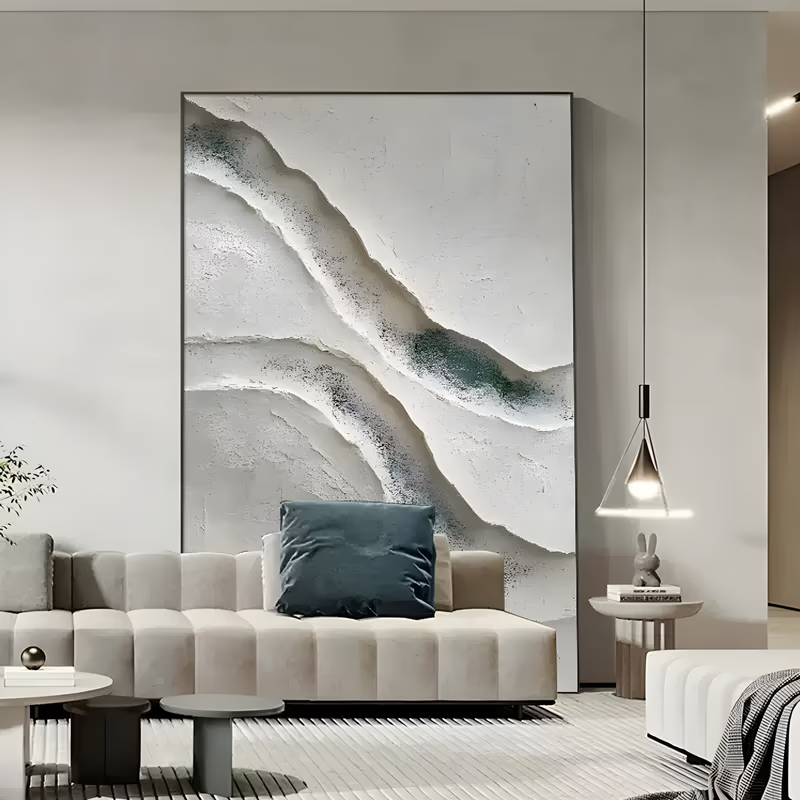
- White art works through texture: sculpted plaster, impasto and carved ridges cast their own shadows, so a white canvas reads as a relief rather than a blank.
- Match the undertone to the room: ivory and bone suit wood, linen and cream walls; chalk and bright white suit grey, navy, black and concrete.
- Give it contrast on a white wall: a darker frame, a coloured ground behind the white motif, or a lamp raking across the surface keeps it visible.
- Go a size up: pale art recedes, so choose close to three-quarters of the furniture width, or hang two tall panels side by side.
Why choose white wall art for a room?
White wall art adds calm, light and texture without adding another colour, which makes it the safest choice for a busy scheme and the most refined one for a quiet scheme.
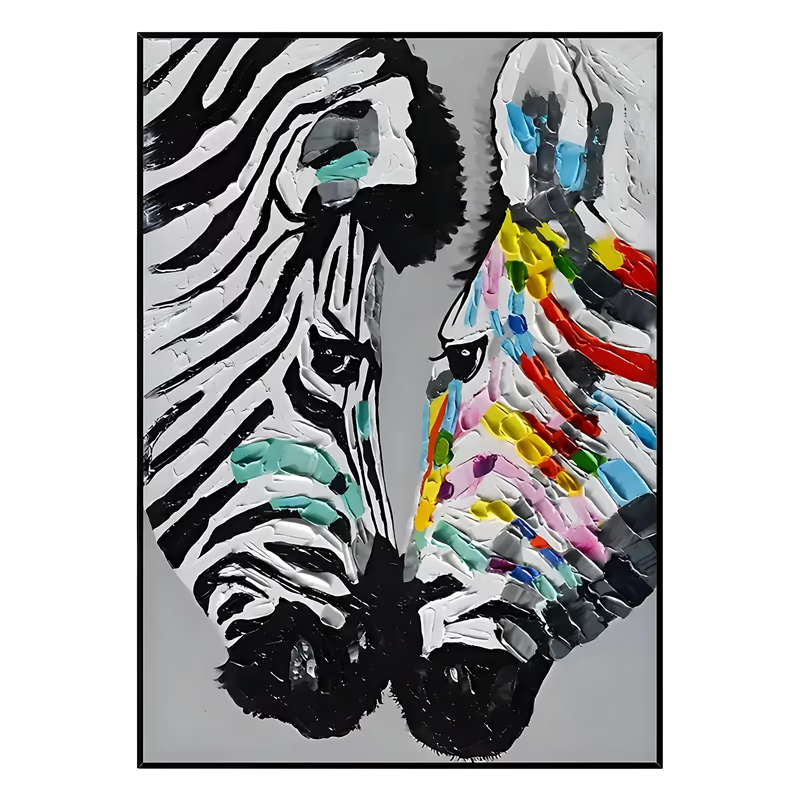
A white painting does something a coloured canvas cannot: it lets the room's own daylight become part of the picture. Plaster ridges, knife marks and raised petals pick up shadow in the morning and lose it at noon, so the piece keeps changing while the colour scheme stays still. That is why designers reach for white when the sofa, the rug or the view already supplies the colour, and why white canvas art is a staple of spas, galleries and hotel corridors, where a wall has to look finished without competing for attention.
The risk with white is the opposite of the risk with strong colour. Nobody has ever found a white painting too loud, but a flat white canvas on a white wall can look like an empty frame waiting for a picture. The rest of this guide is mostly about avoiding that.
Which white should you choose: ivory, chalk, bone or bright white?
Match the white of the painting to the undertone of the room: warm ivory and bone for wood, linen and cream, cool chalk and bright white for grey, blue, black and concrete.
| White | How it reads | Sits best with | Rooms |
|---|---|---|---|
| Bright white | Crisp, cool and gallery-like; the cleanest contrast against dark walls | Charcoal, navy, black, chrome, glass | Galleries, offices, modern living rooms |
| Chalk and soft white | Matt, calm, with a trace of grey; the most adaptable white | Pale grey, greige, oak, stone | Living rooms, meeting rooms, corridors |
| Ivory and cream white | Warm and gentle, with a hint of yellow; flattering under lamps | Beige, walnut, brass, linen, bouclé | Bedrooms, guest suites, dining rooms |
| Bone and parchment | Earthy and aged, close to raw plaster | Terracotta, clay, rattan, limewash | Spas, wabi-sabi rooms, restaurants |
| Snow and blue-white | Cold and fresh, like winter light | Blue, sage, silver, pale timber | Bathrooms, coastal homes, chalets |
A quick test before you choose: hold a sheet of plain printer paper flat against the wall. If the wall looks yellow or pink beside it, the room is warm and an ivory or bone white will settle in. If the wall looks grey or blue, the room is cool, and chalk or bright white will look intended rather than dirty.
What kinds of white canvas art are there?
White canvas art comes in four main kinds: textured and plaster relief, white flower paintings, snowy landscapes and seascapes, and minimalist white abstracts.
White textured and plaster wall art
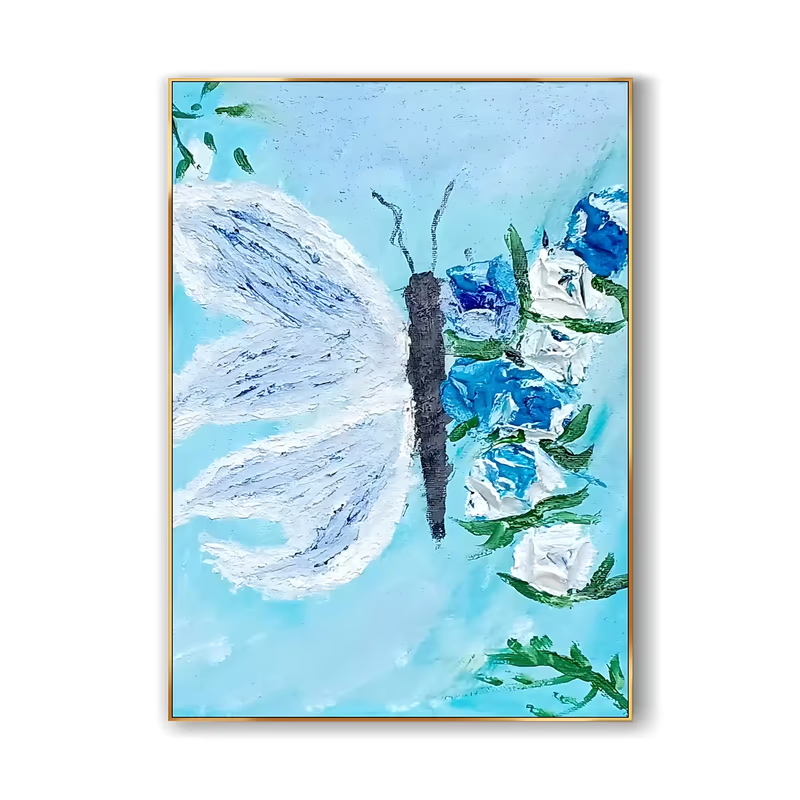
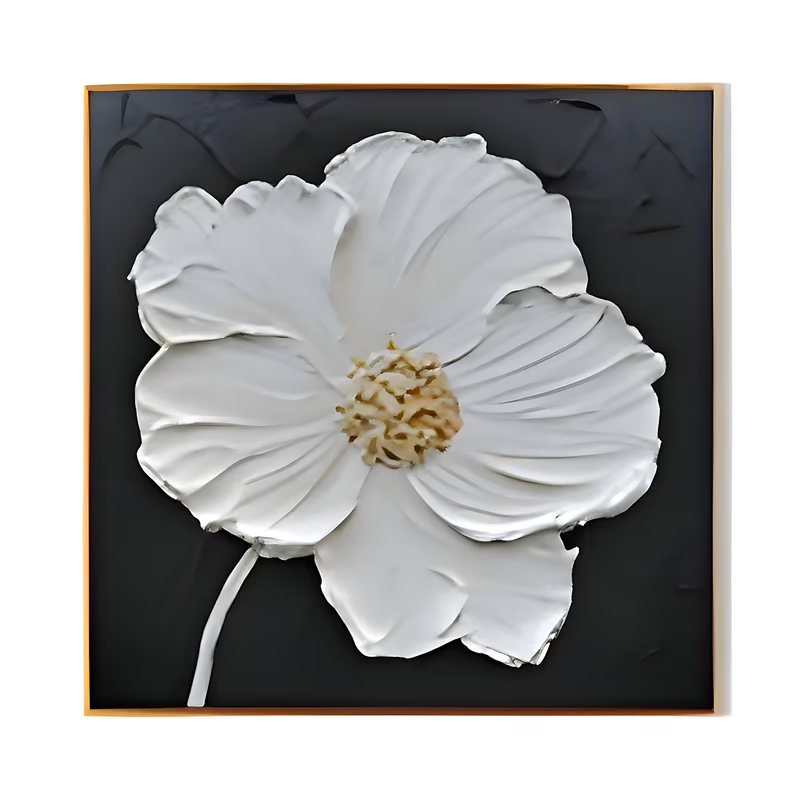
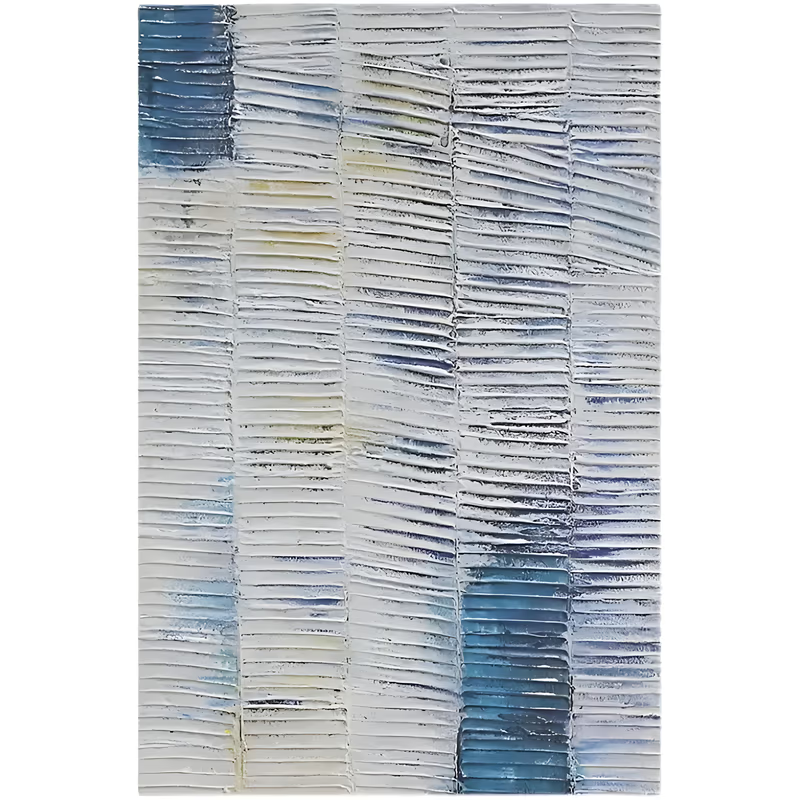
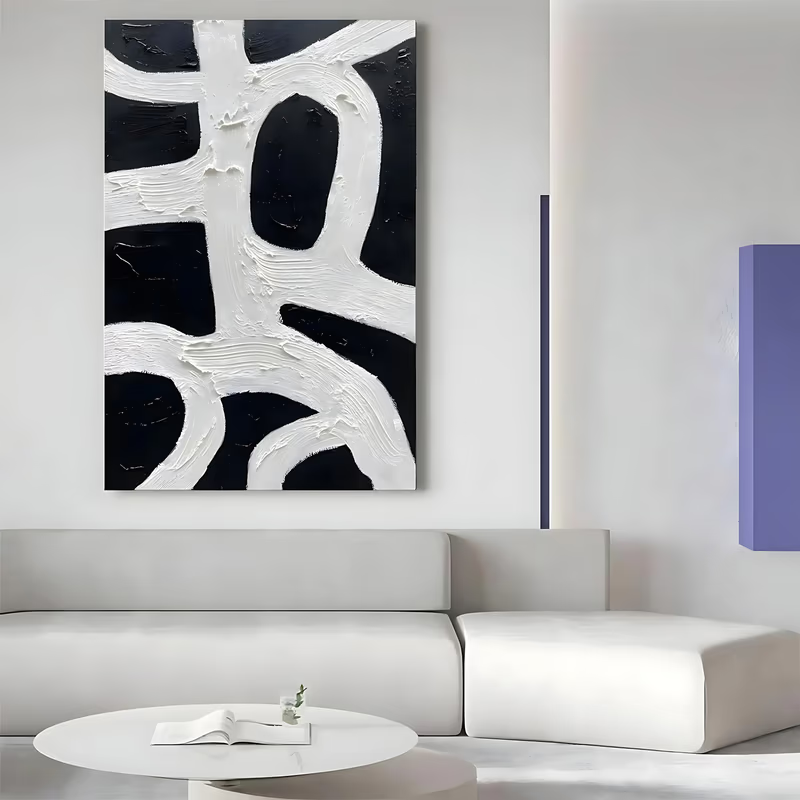
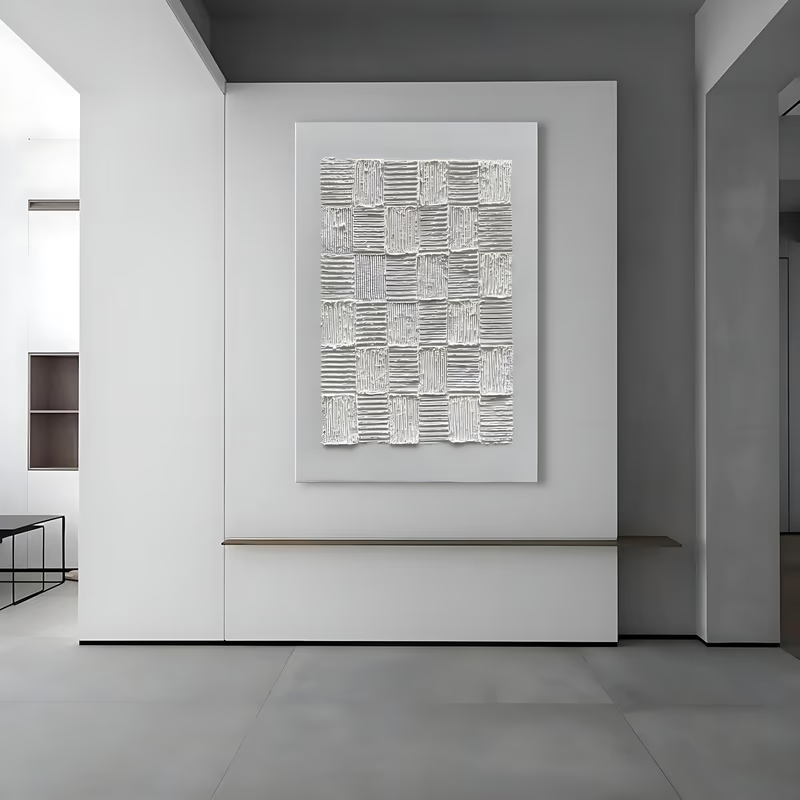
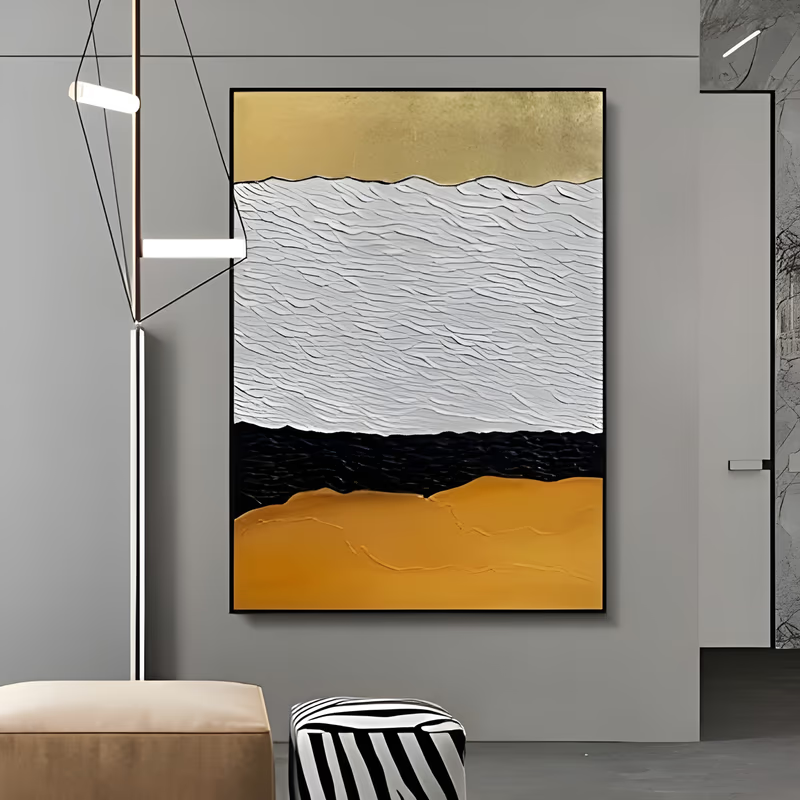
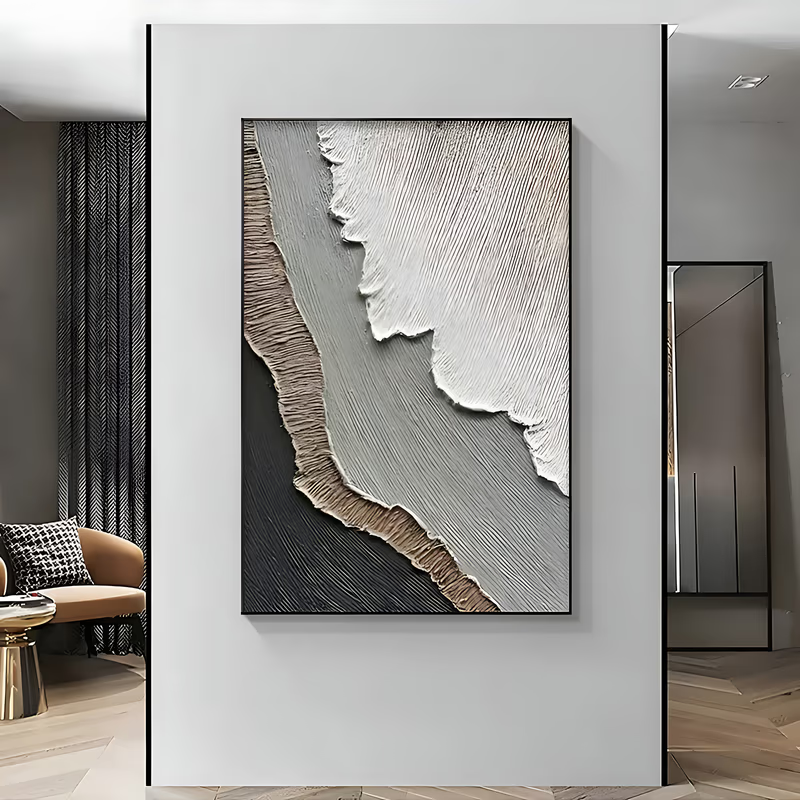
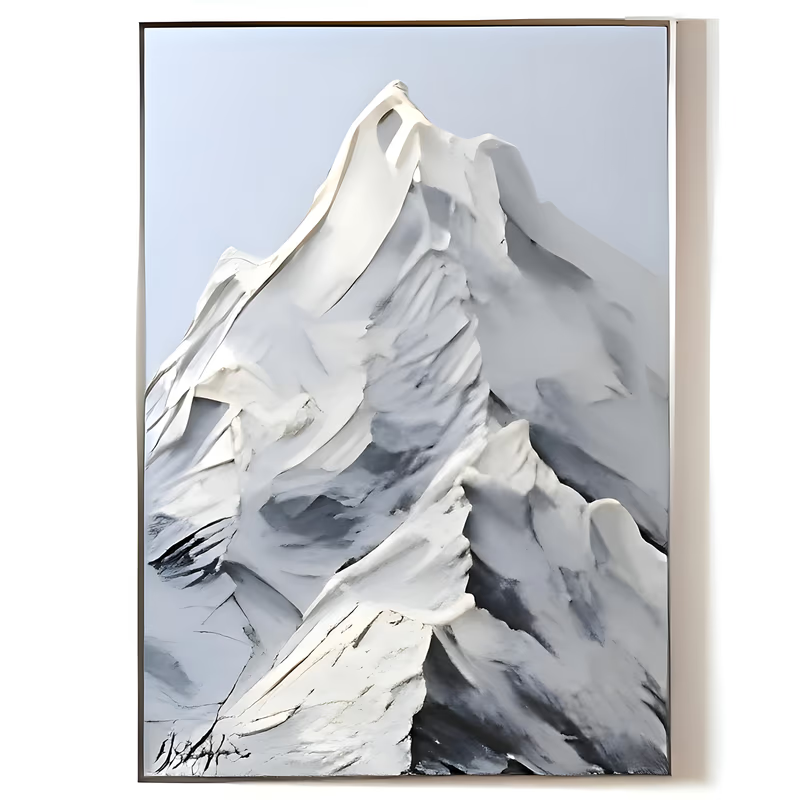
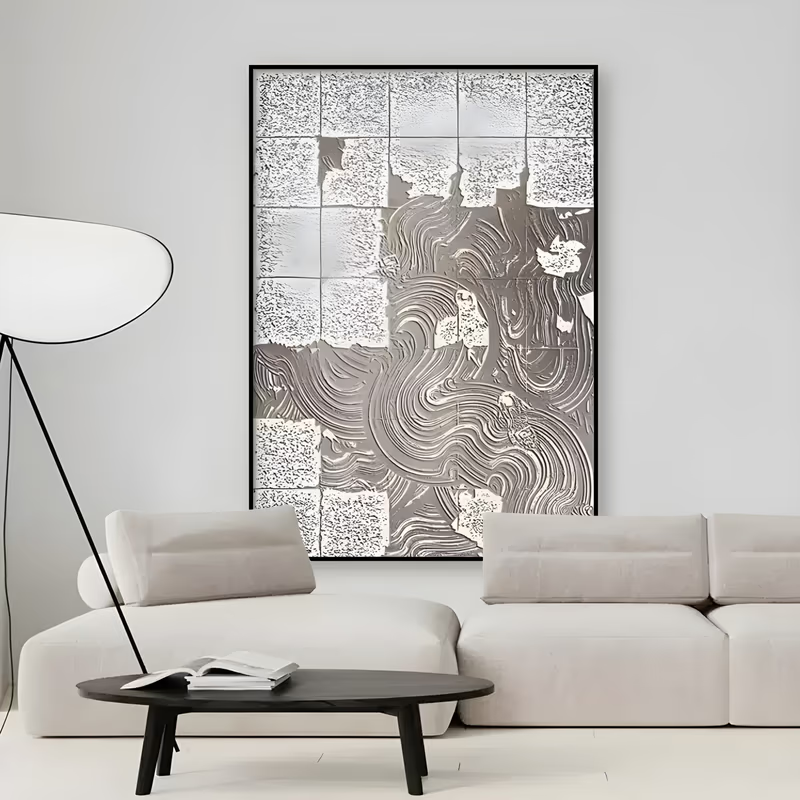
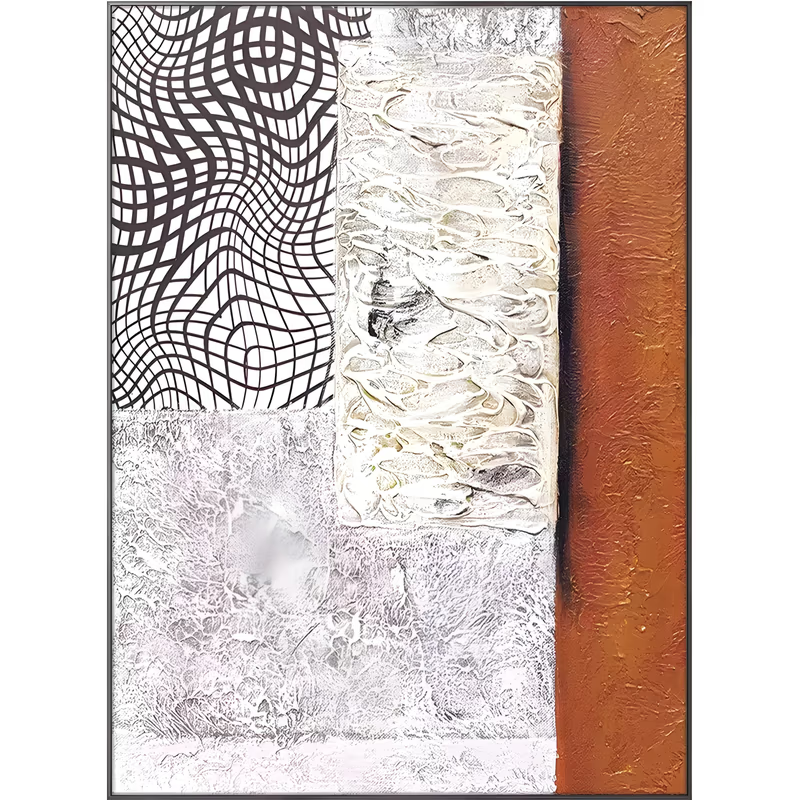
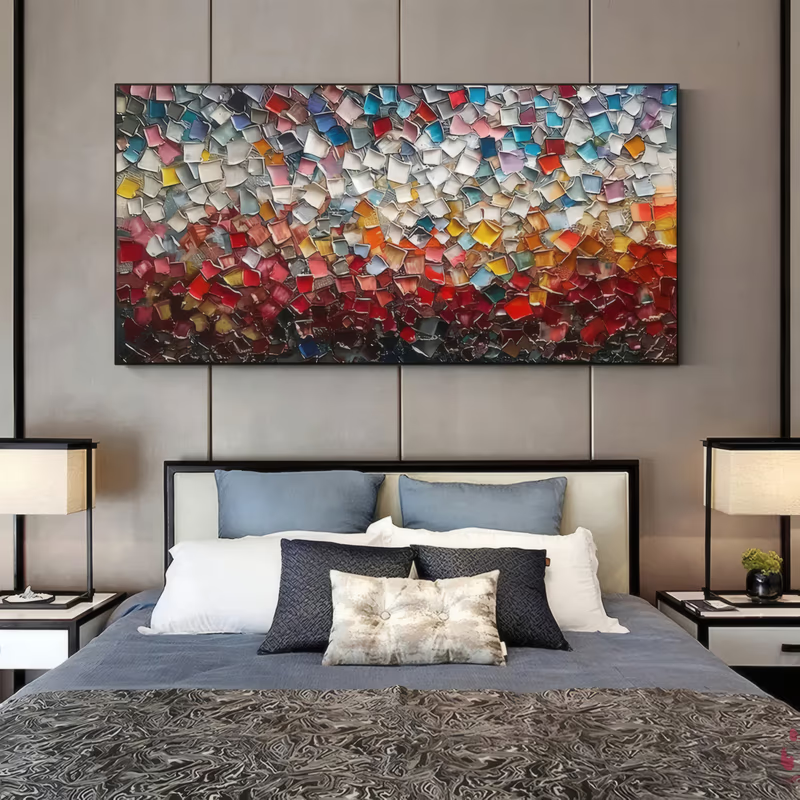
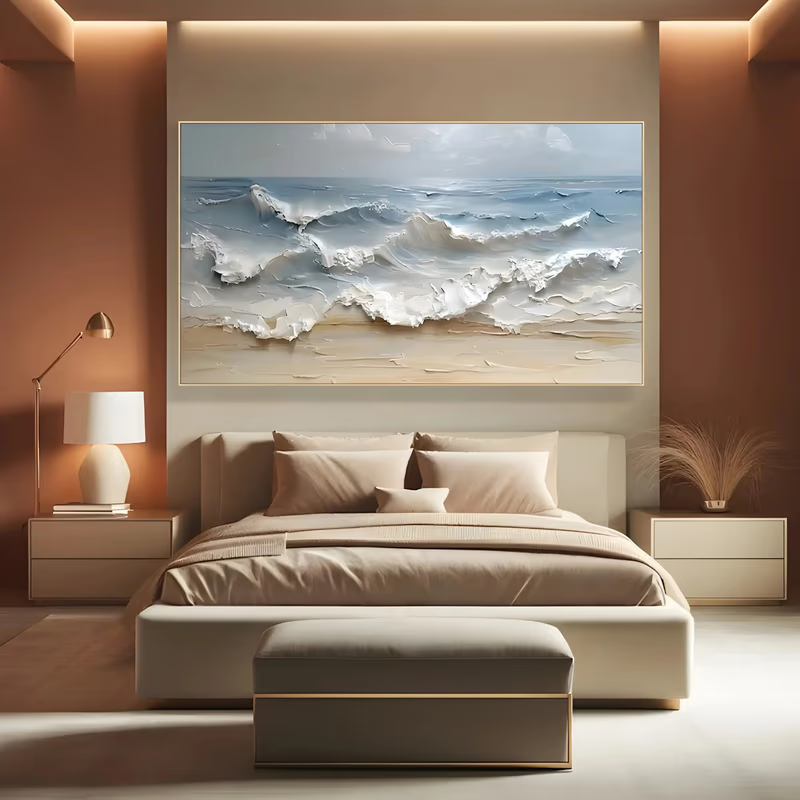
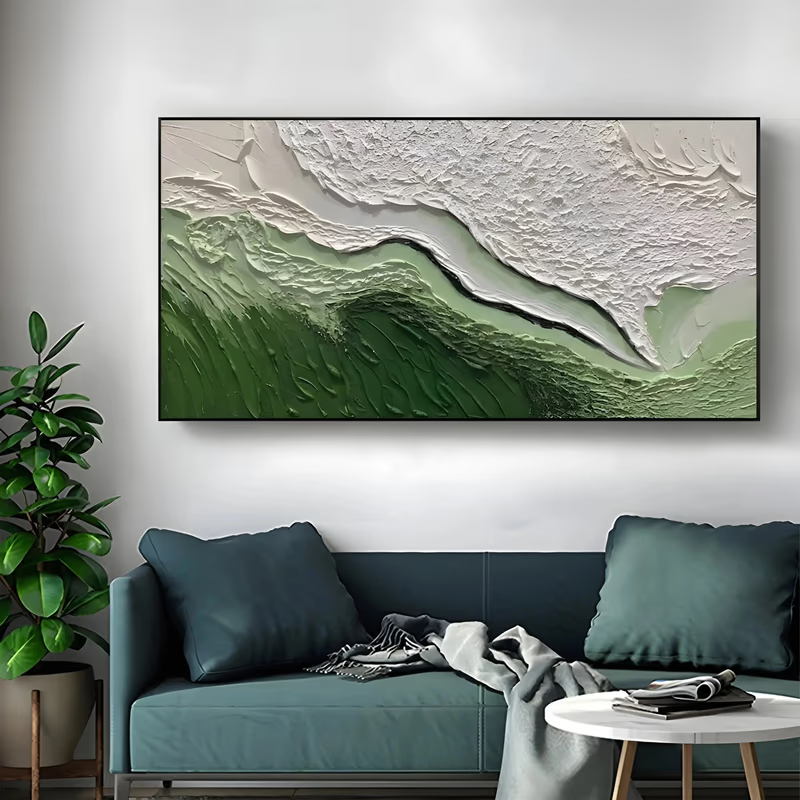
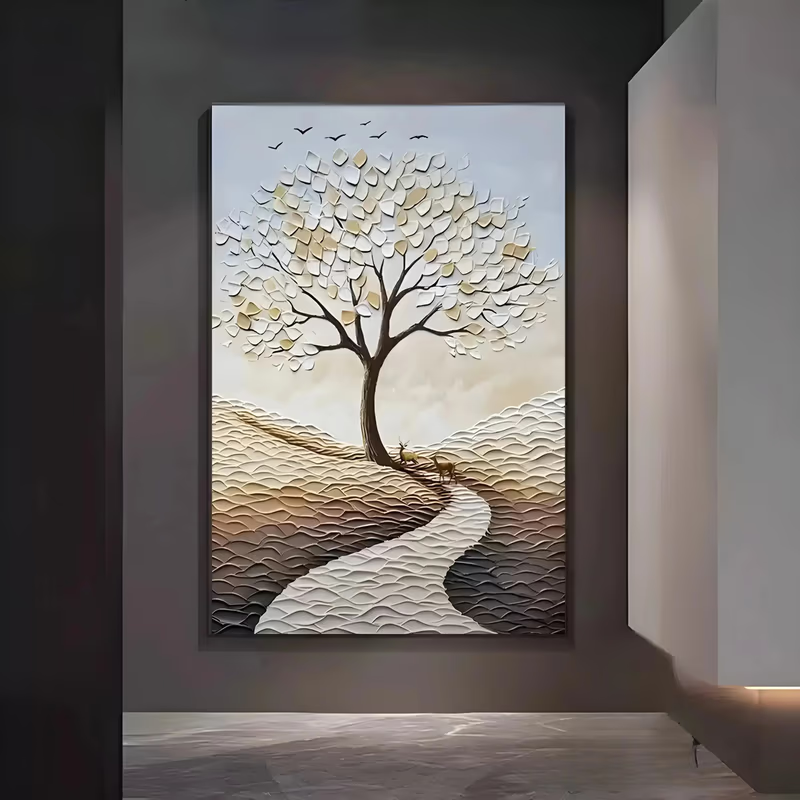
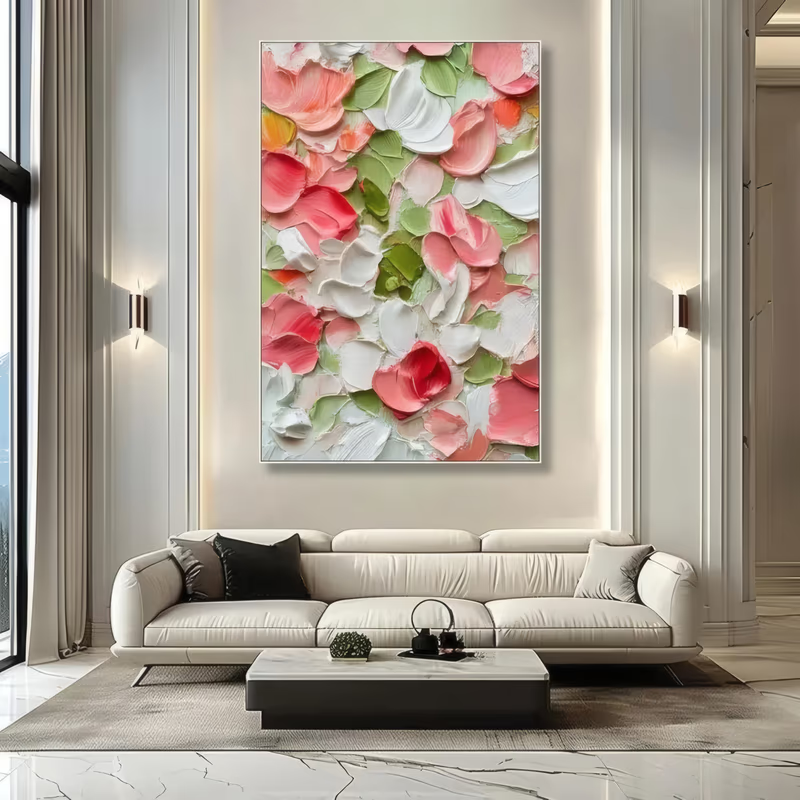
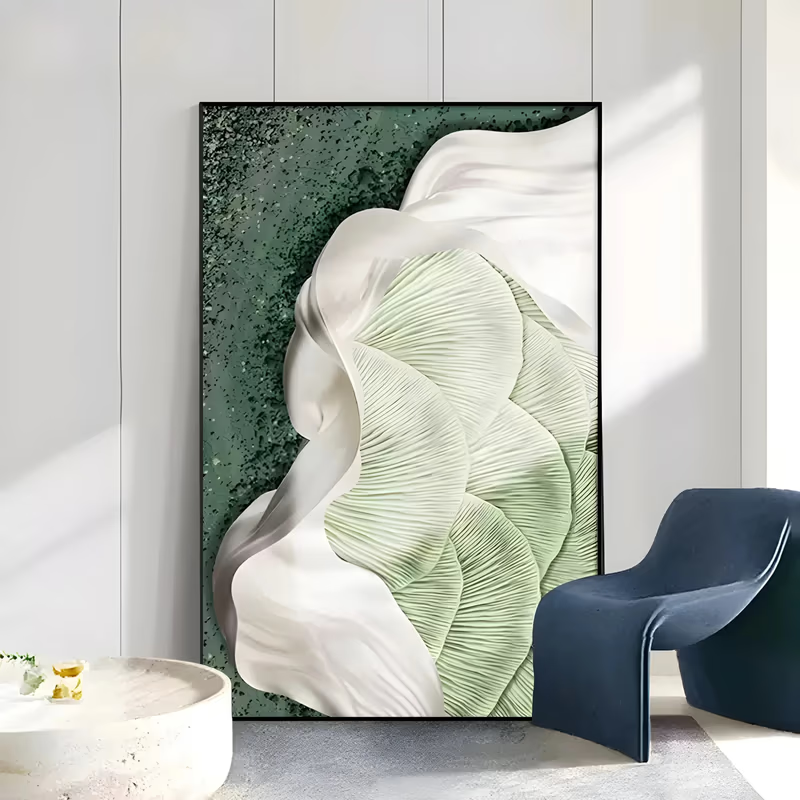
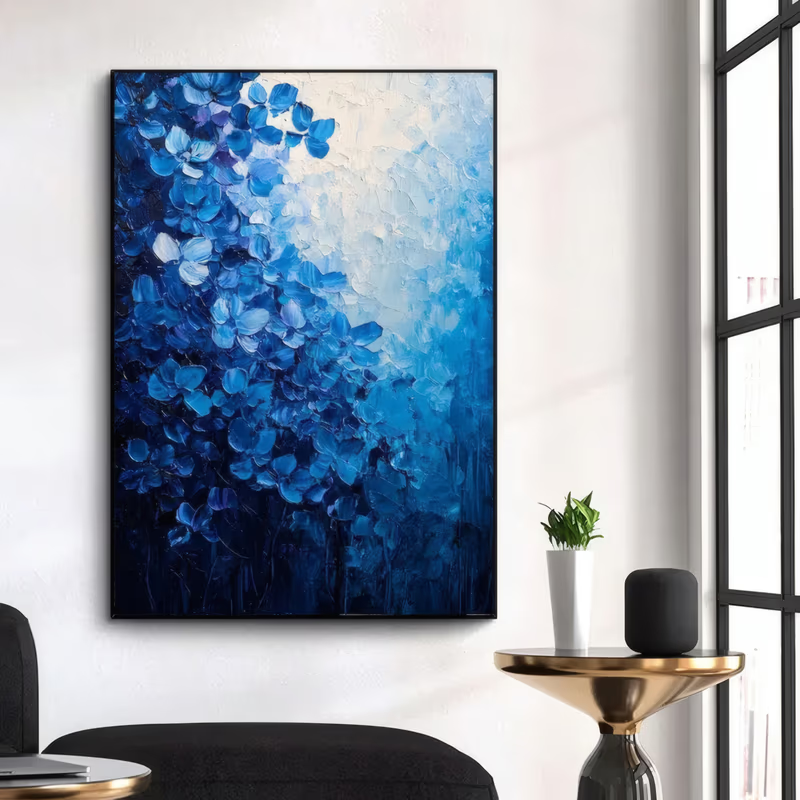
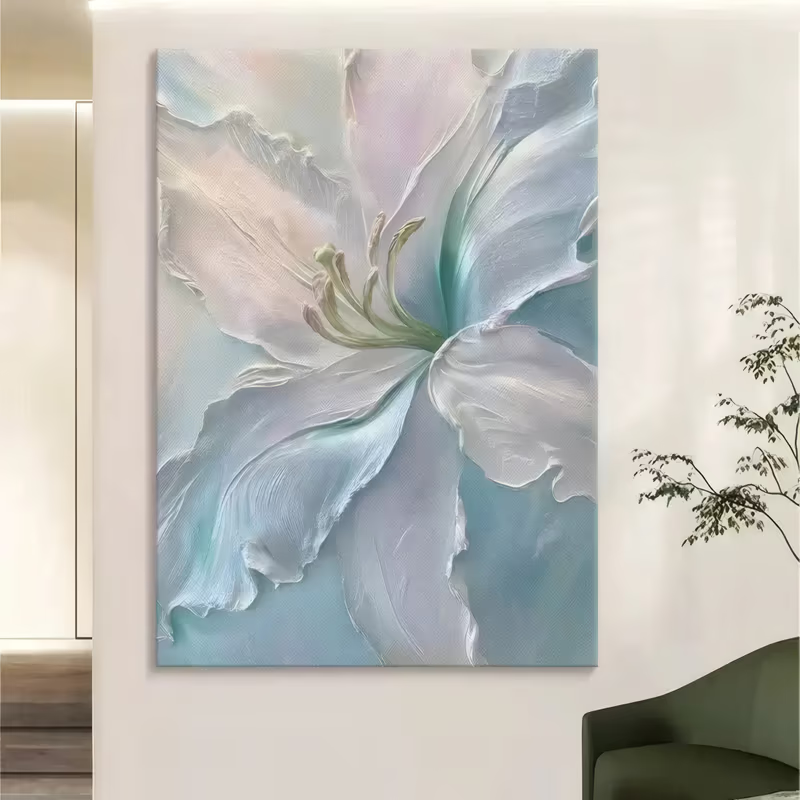
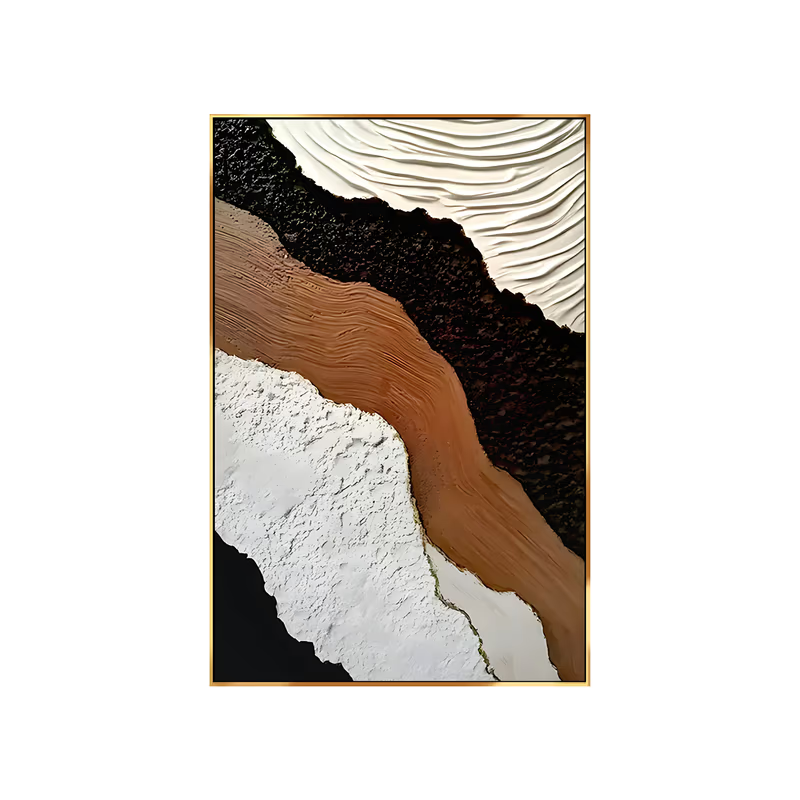
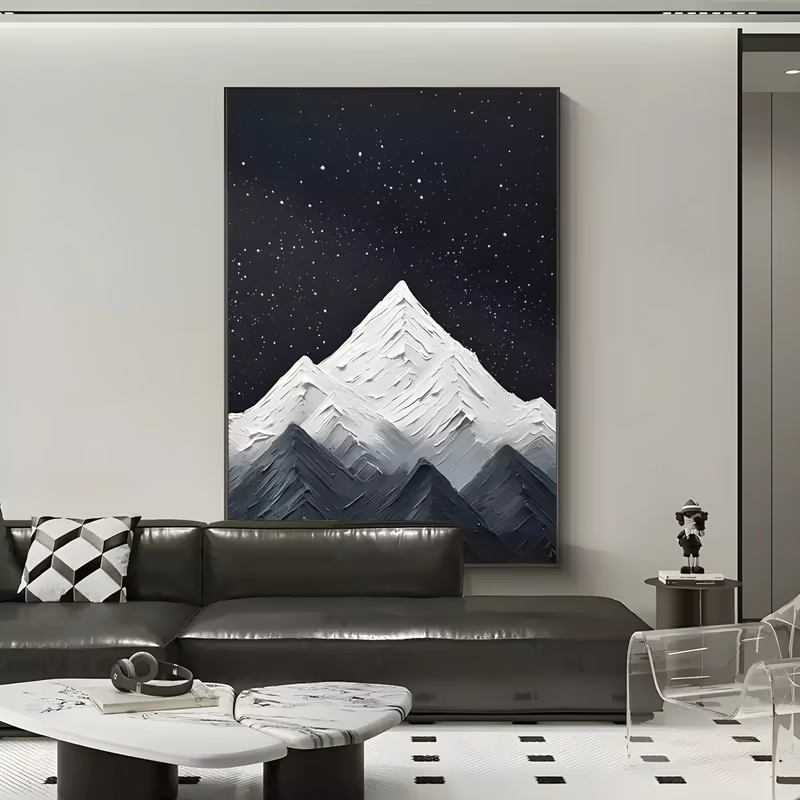
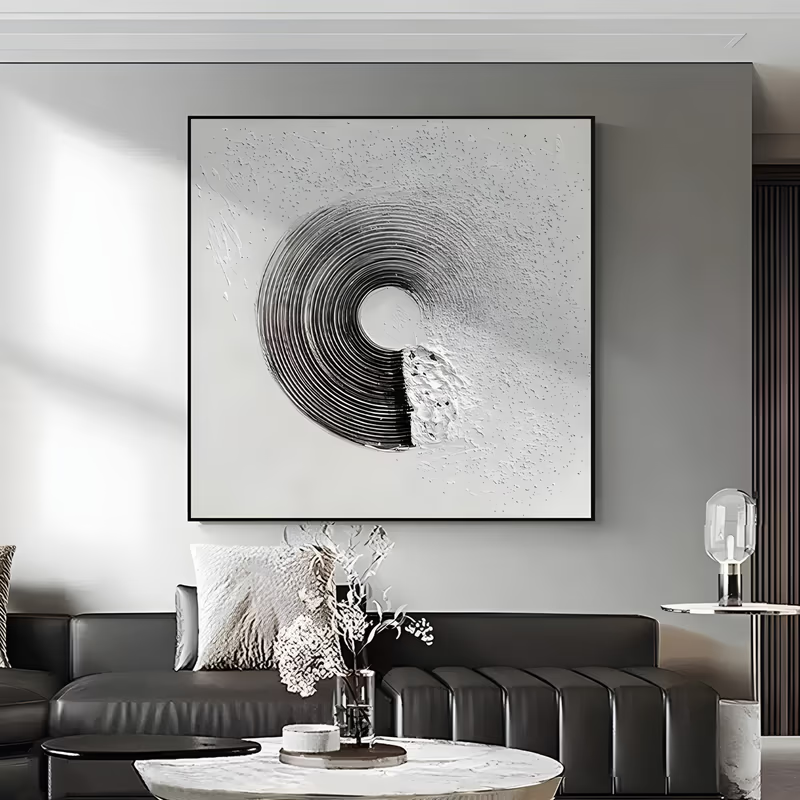
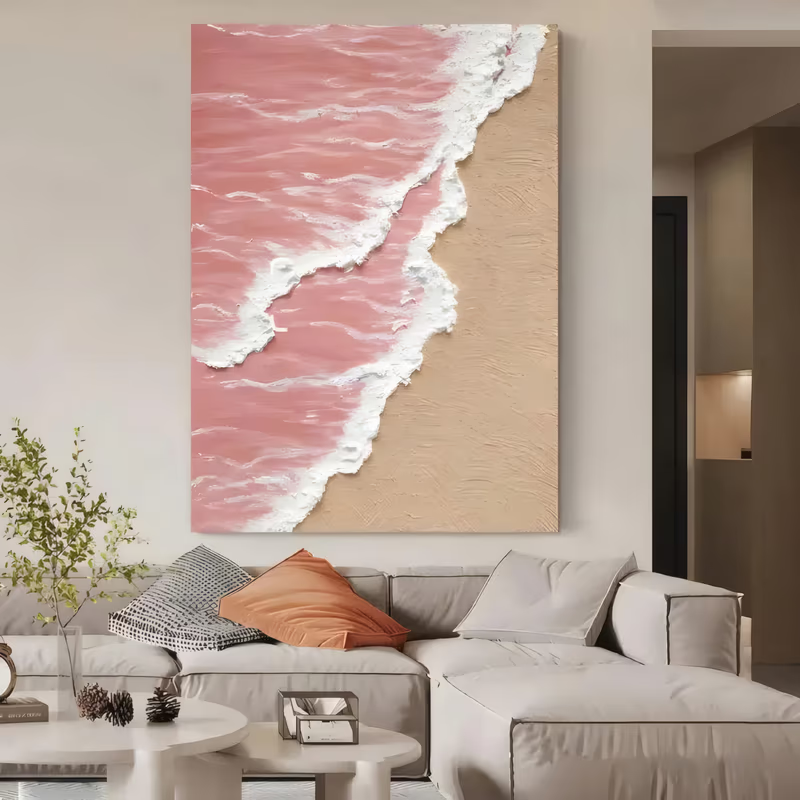
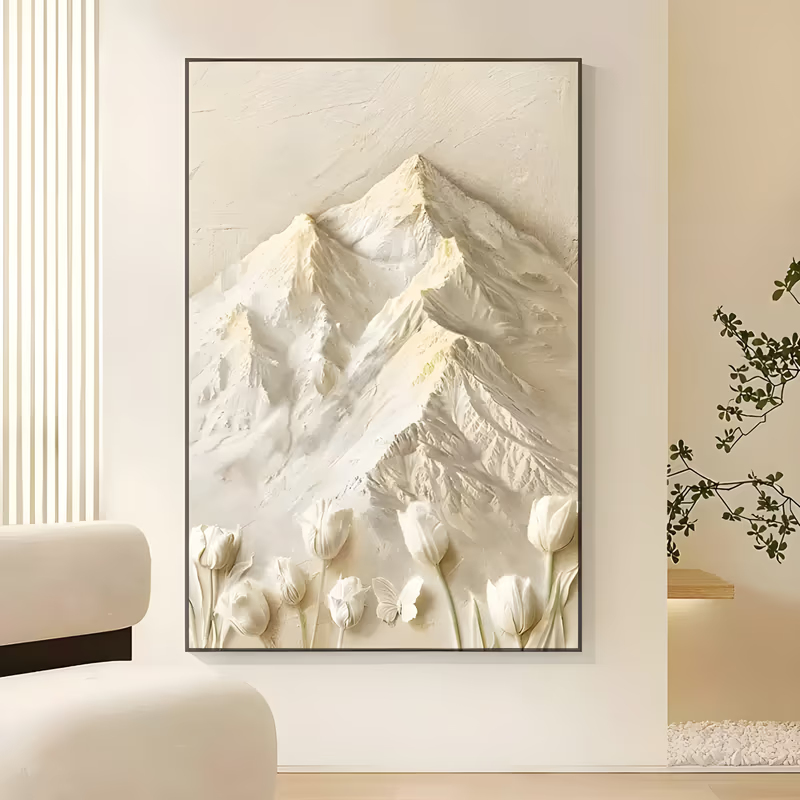
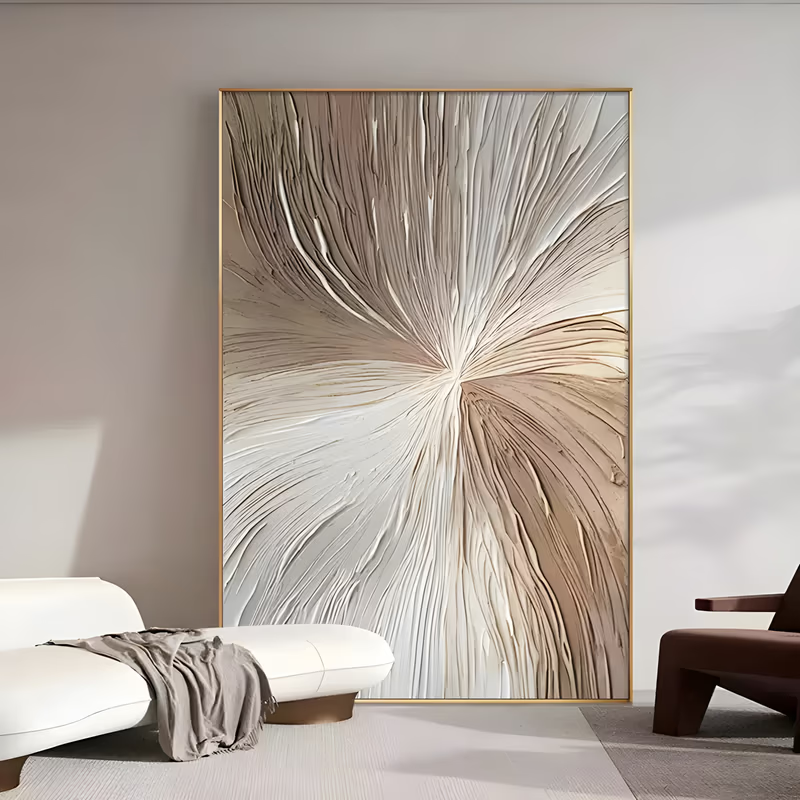
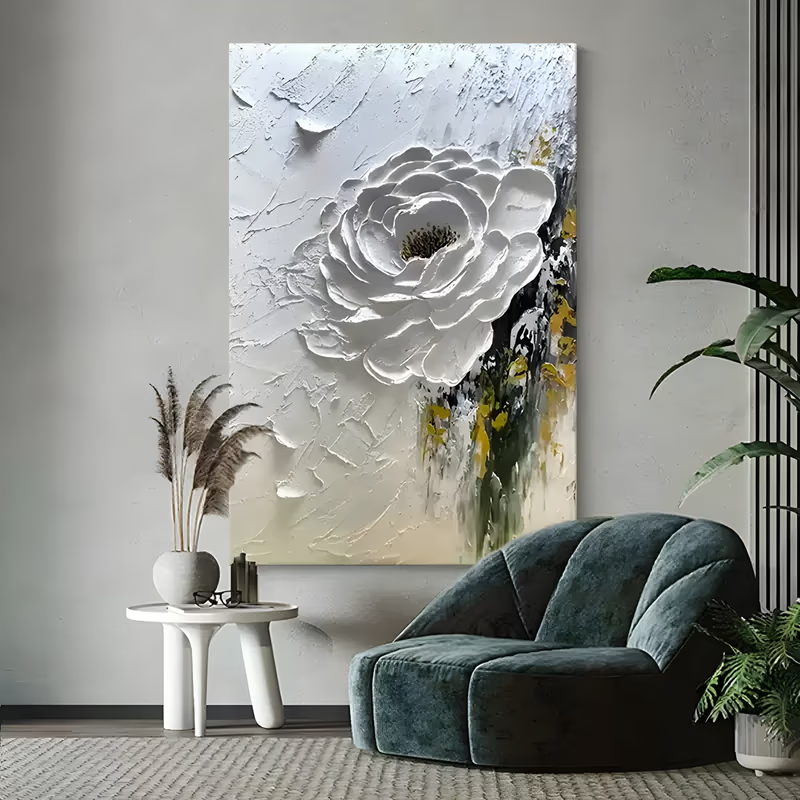
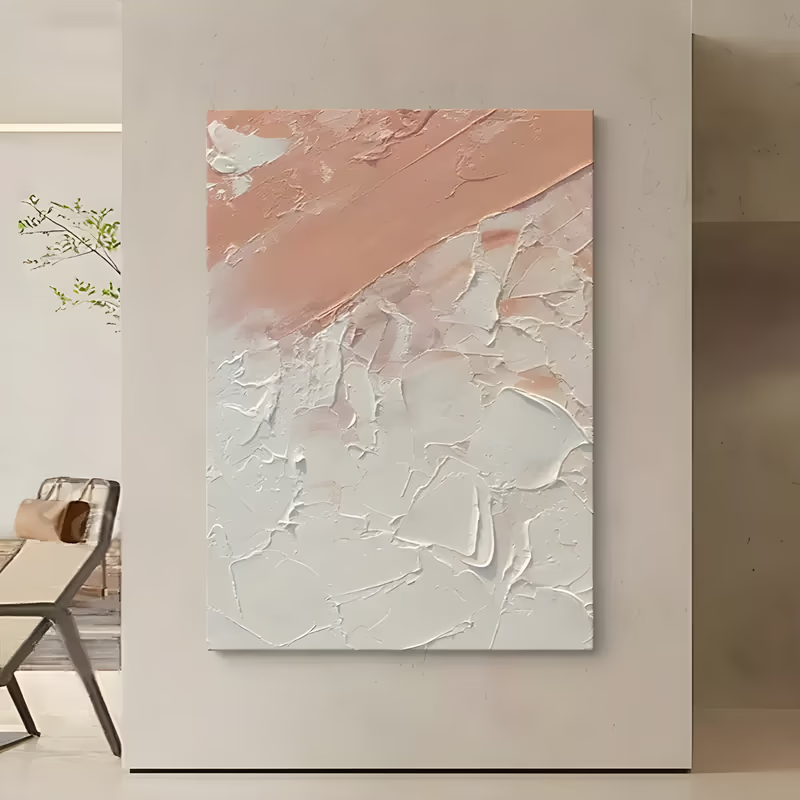
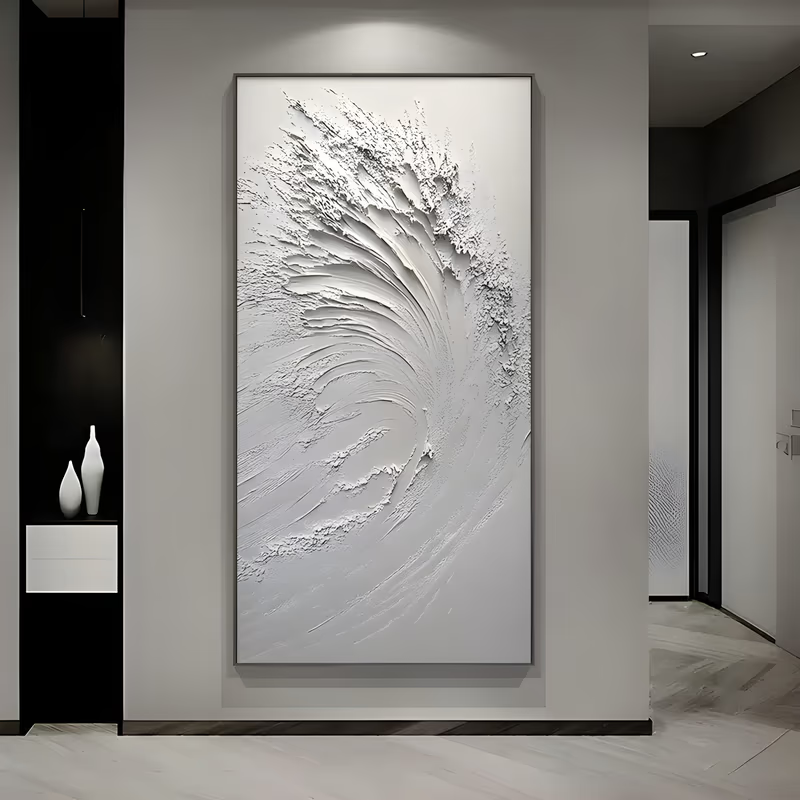
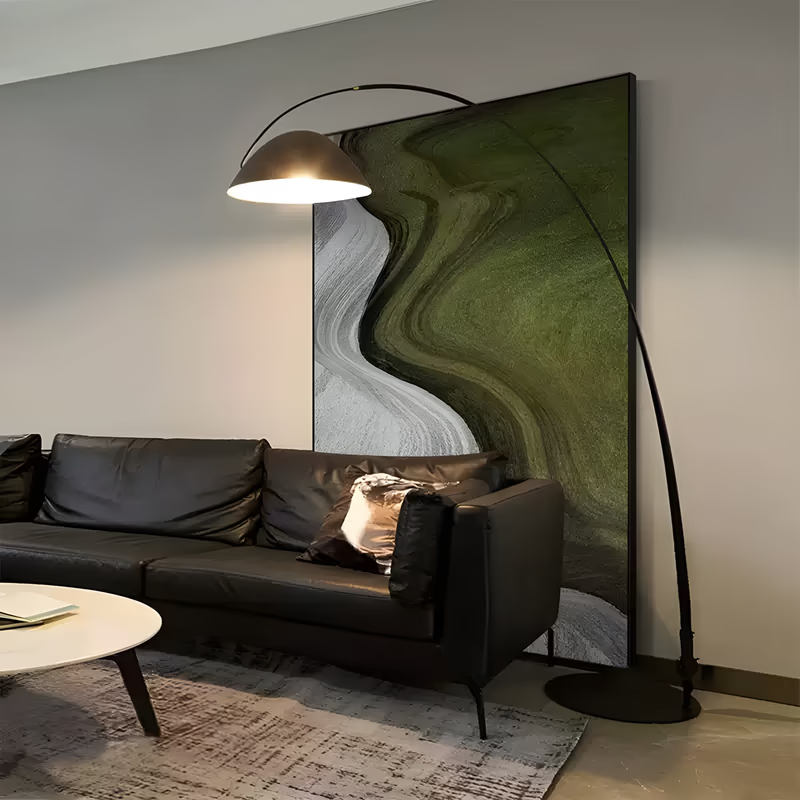
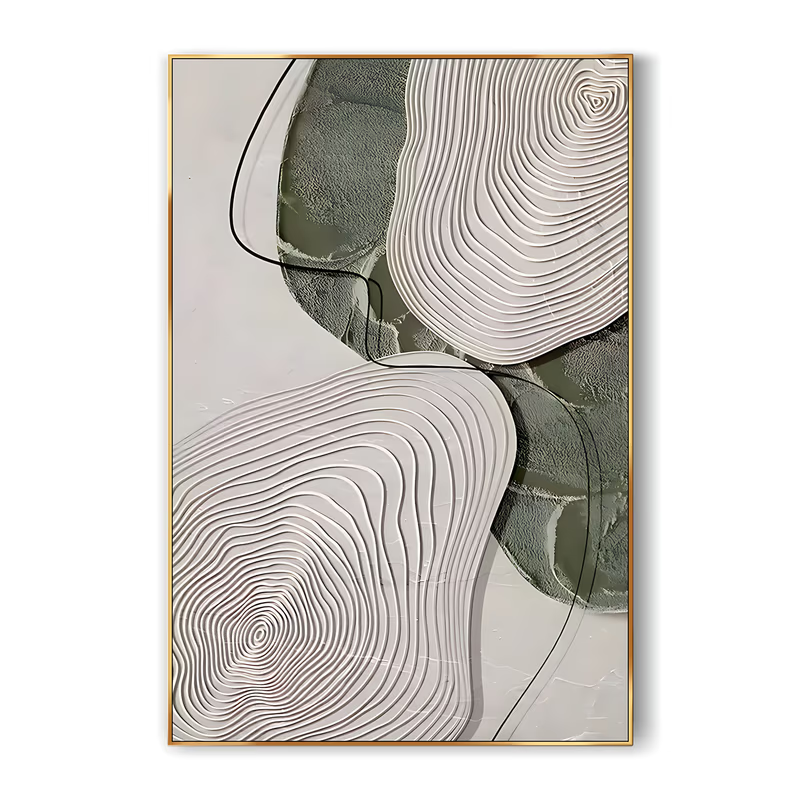
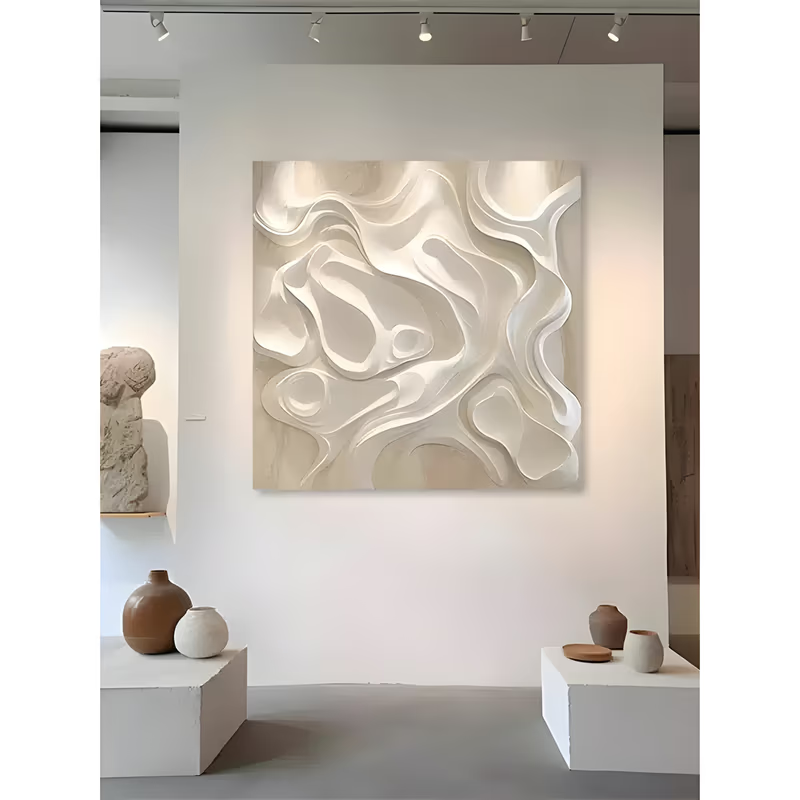
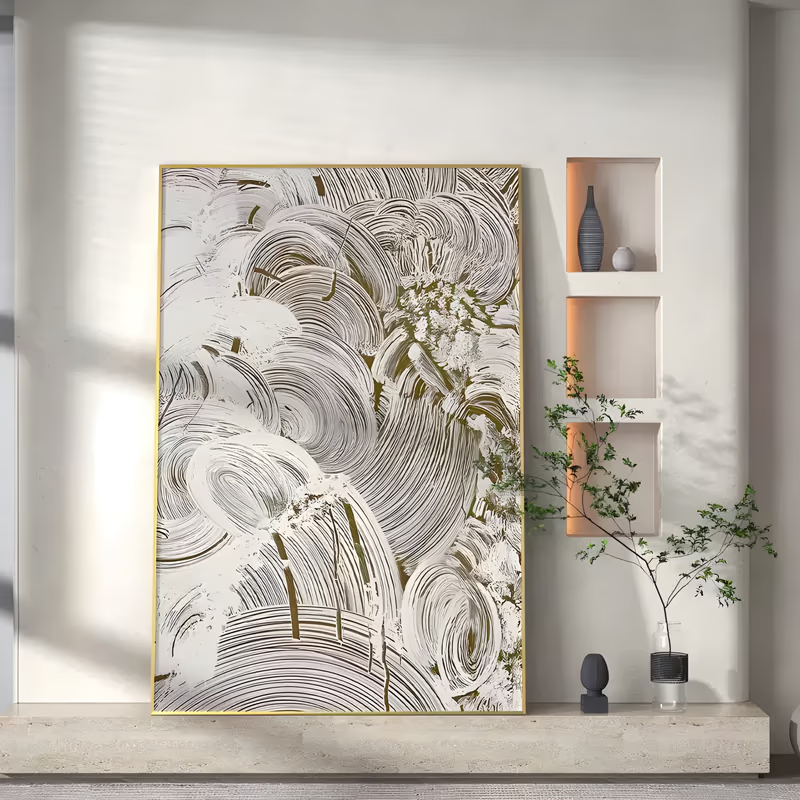
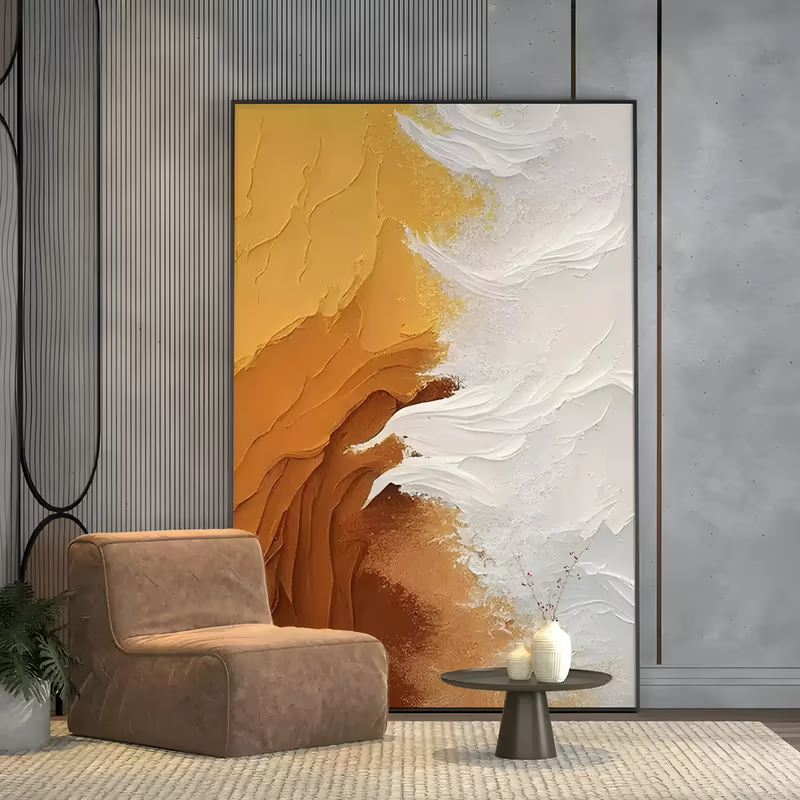
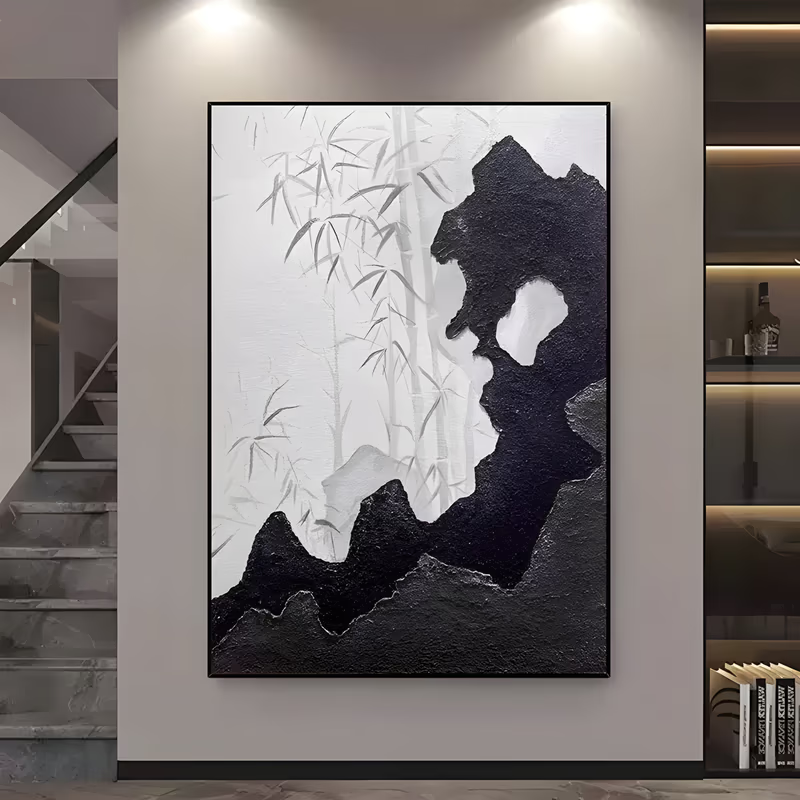
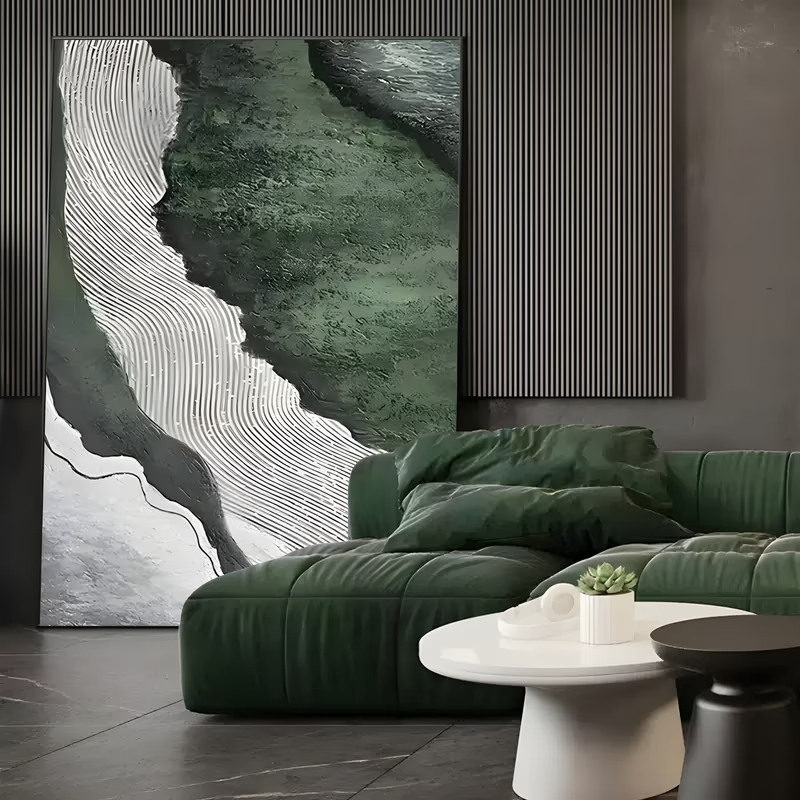
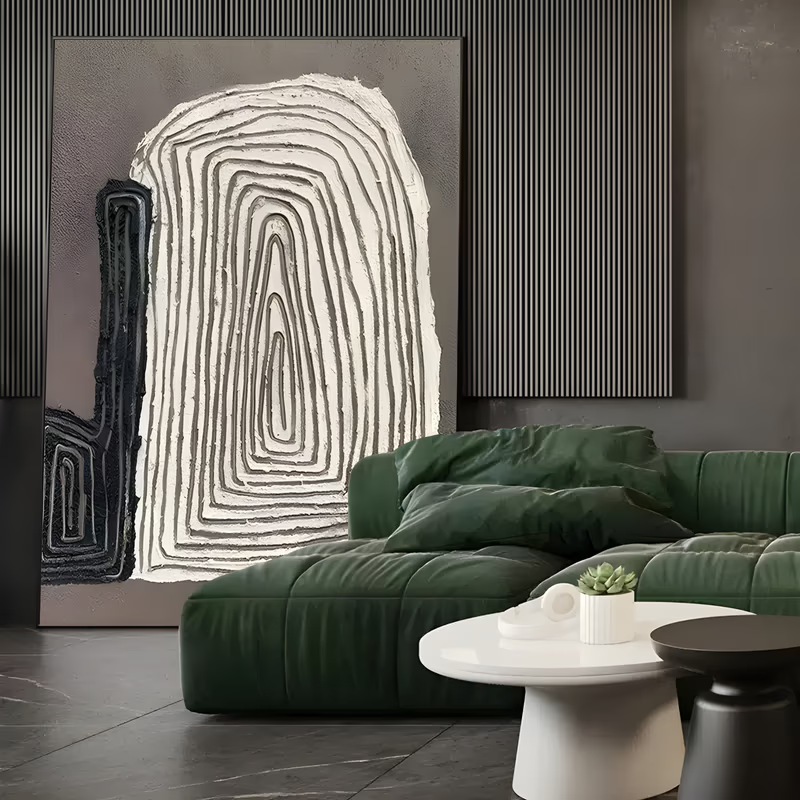
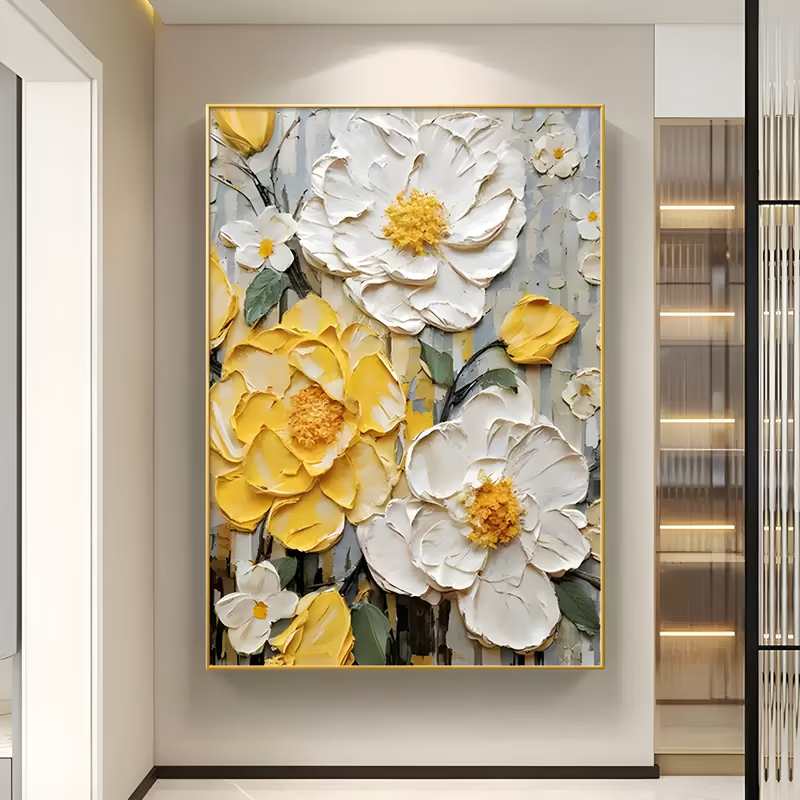
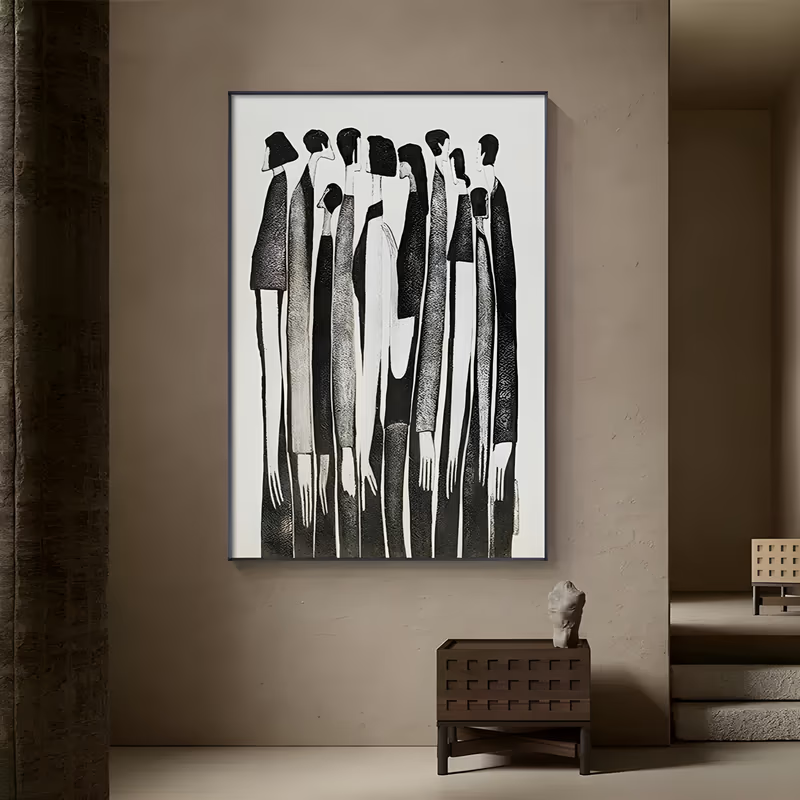
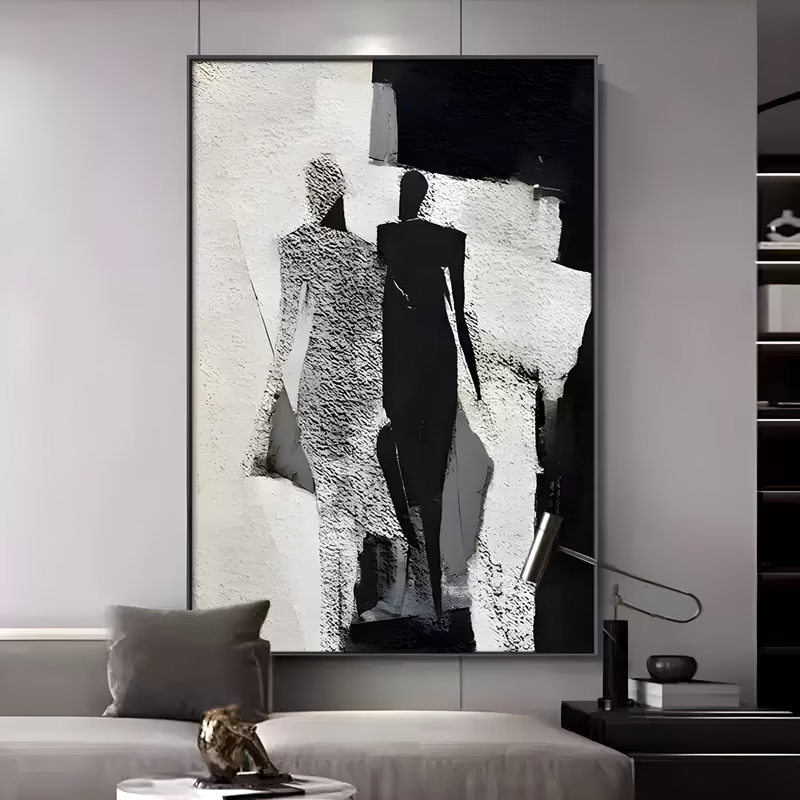
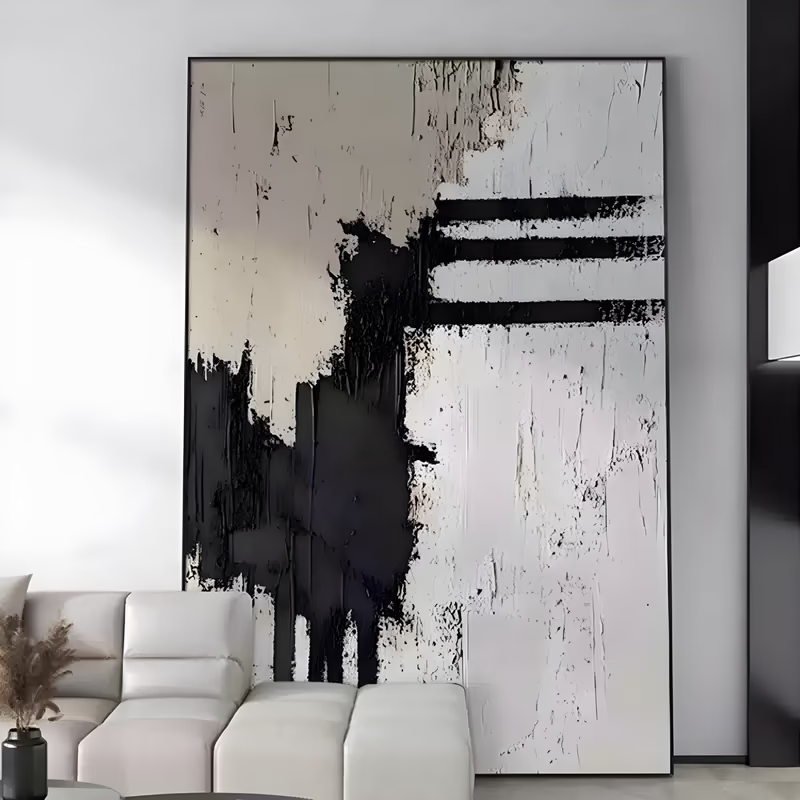
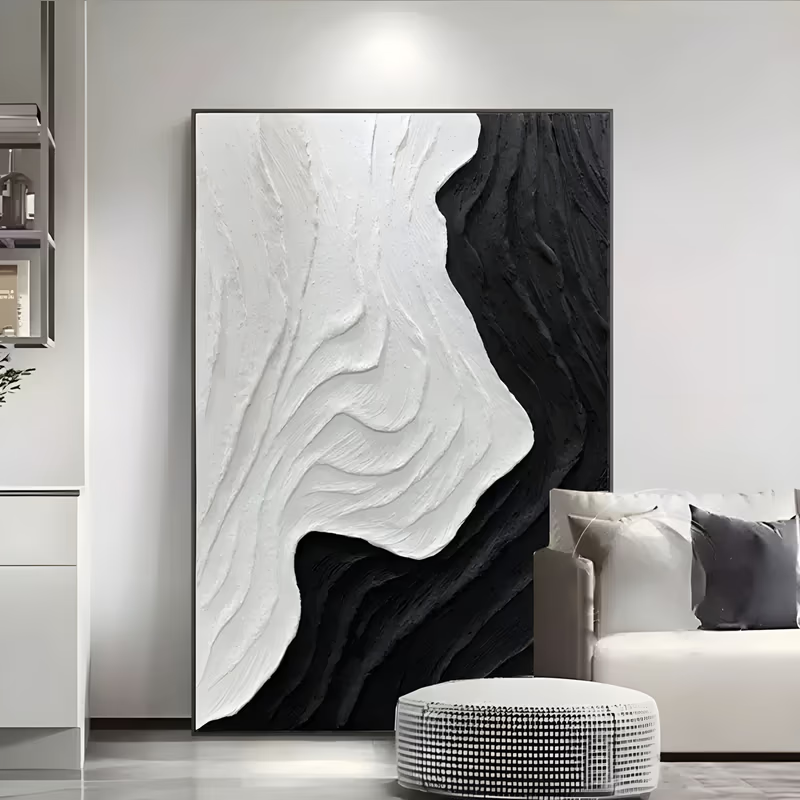
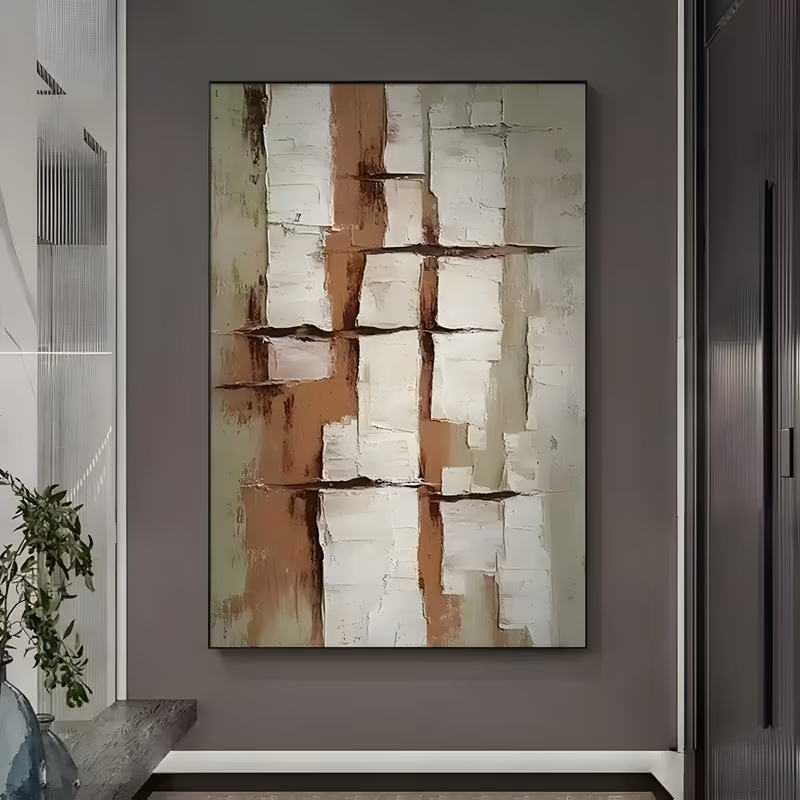
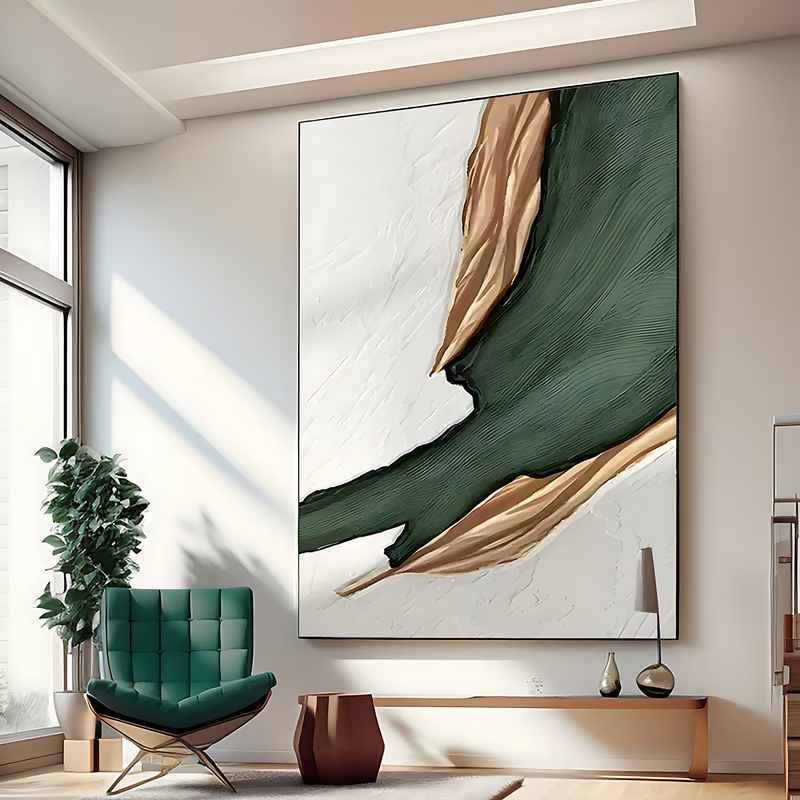
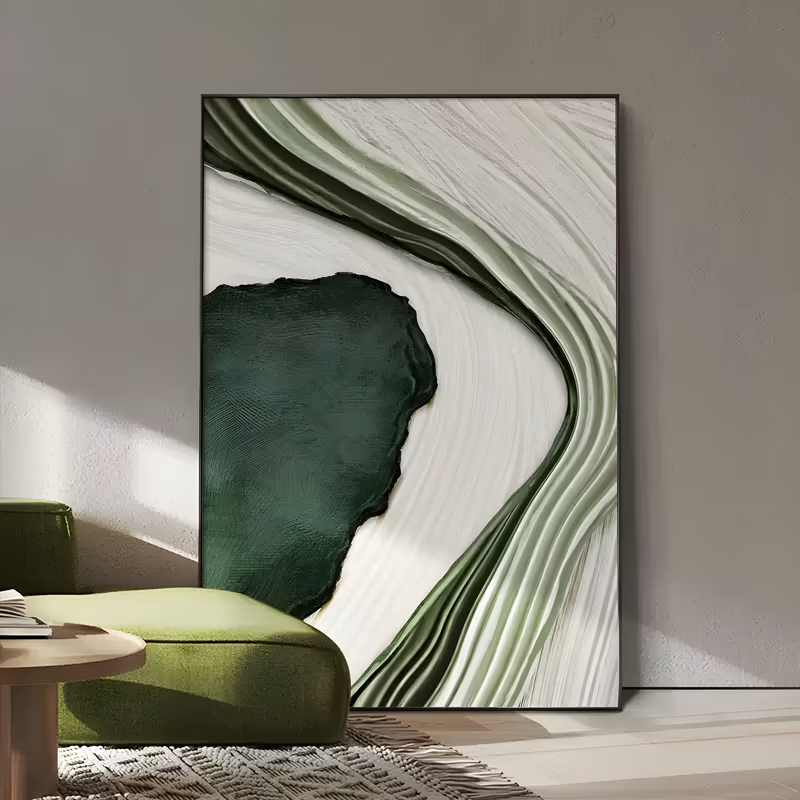
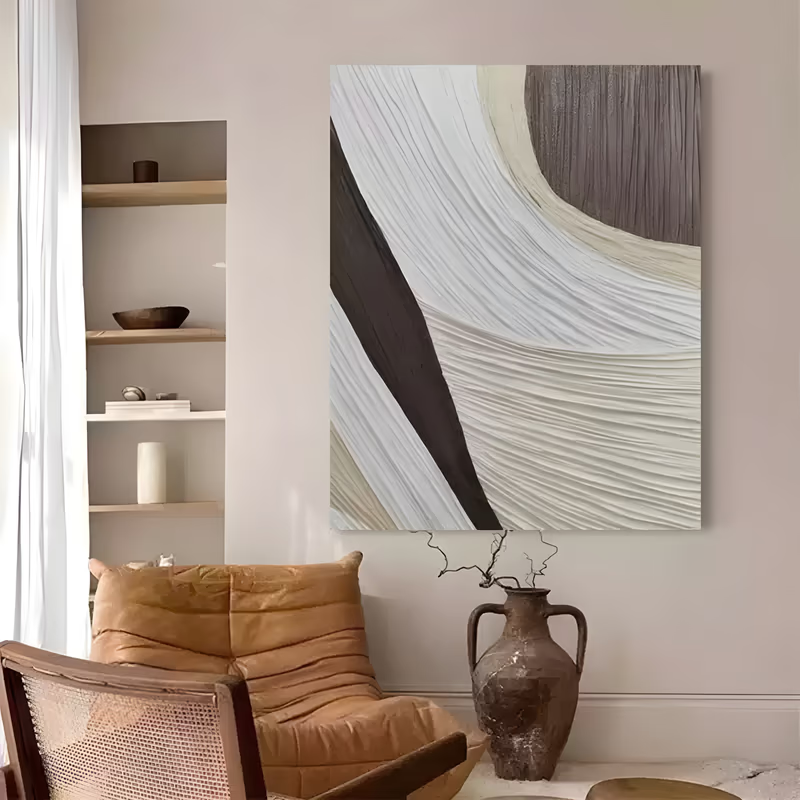
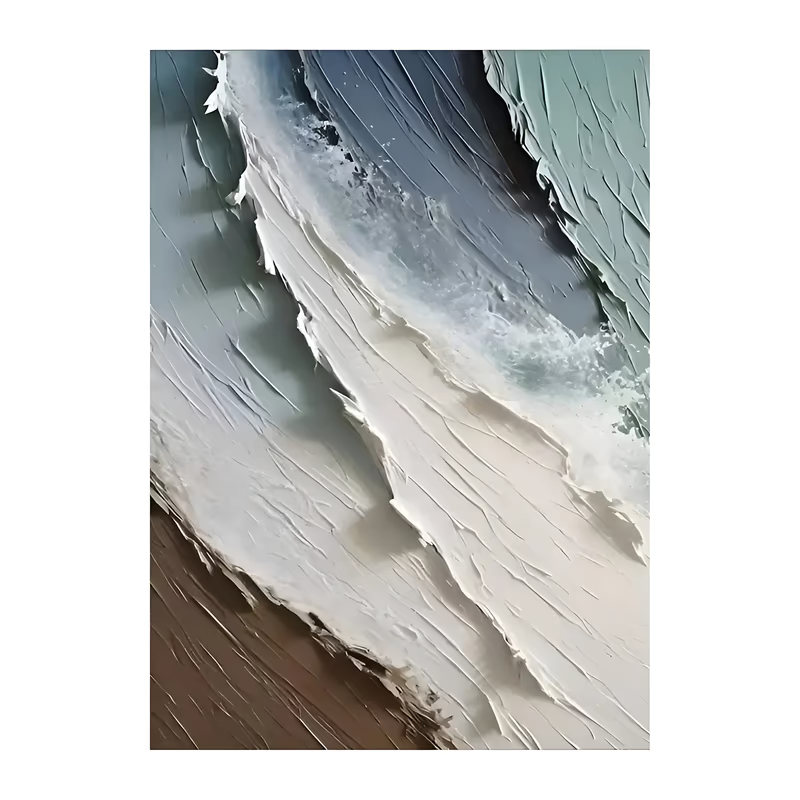
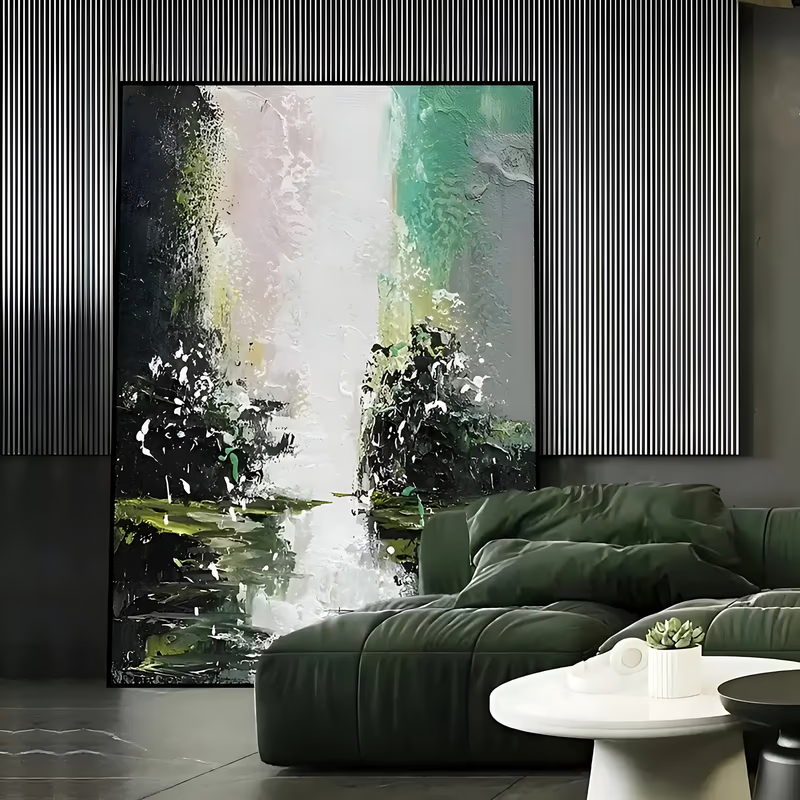
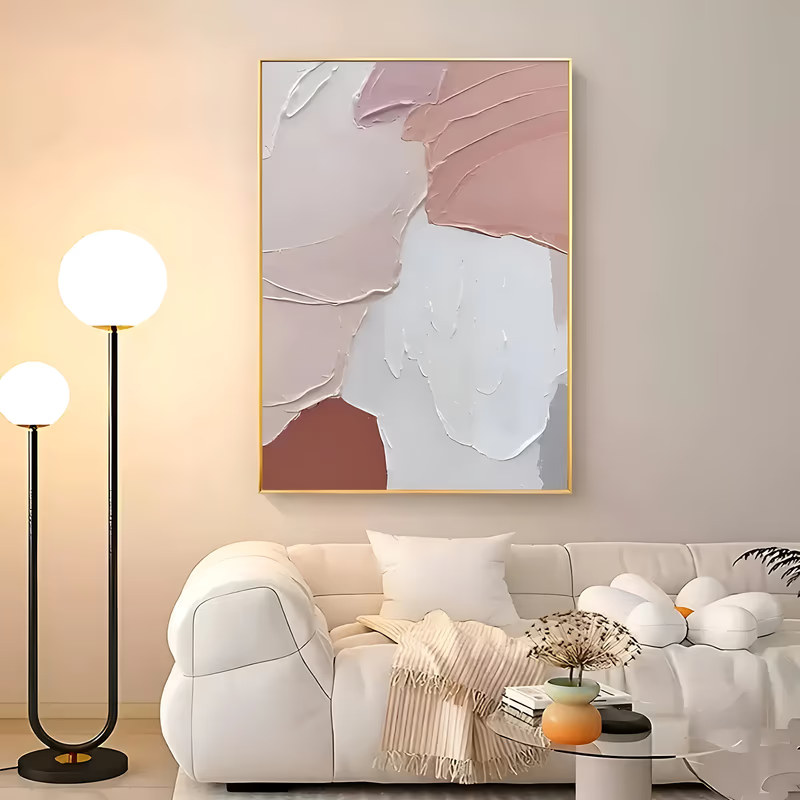
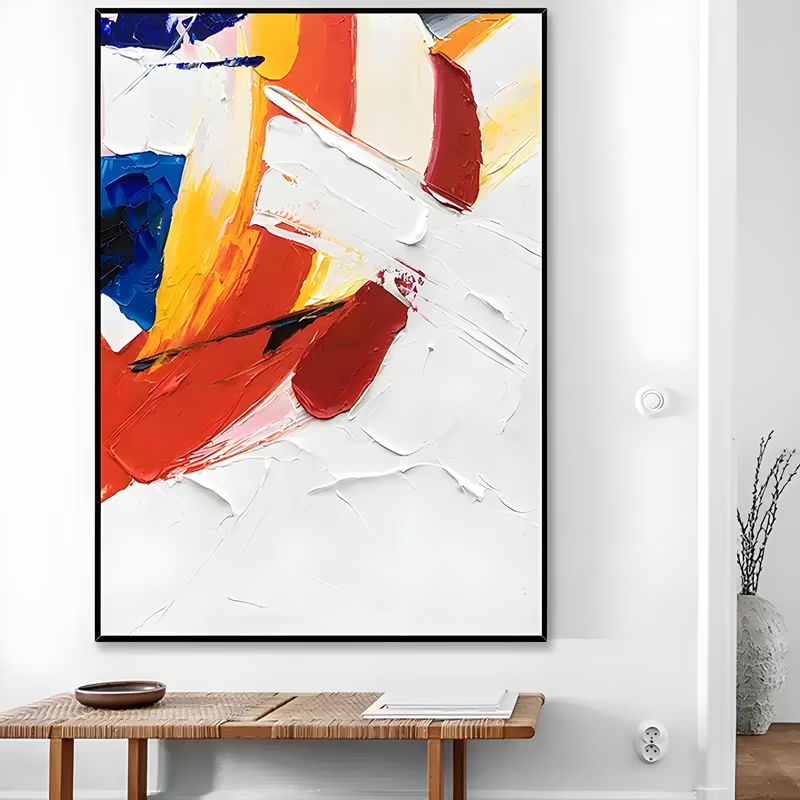
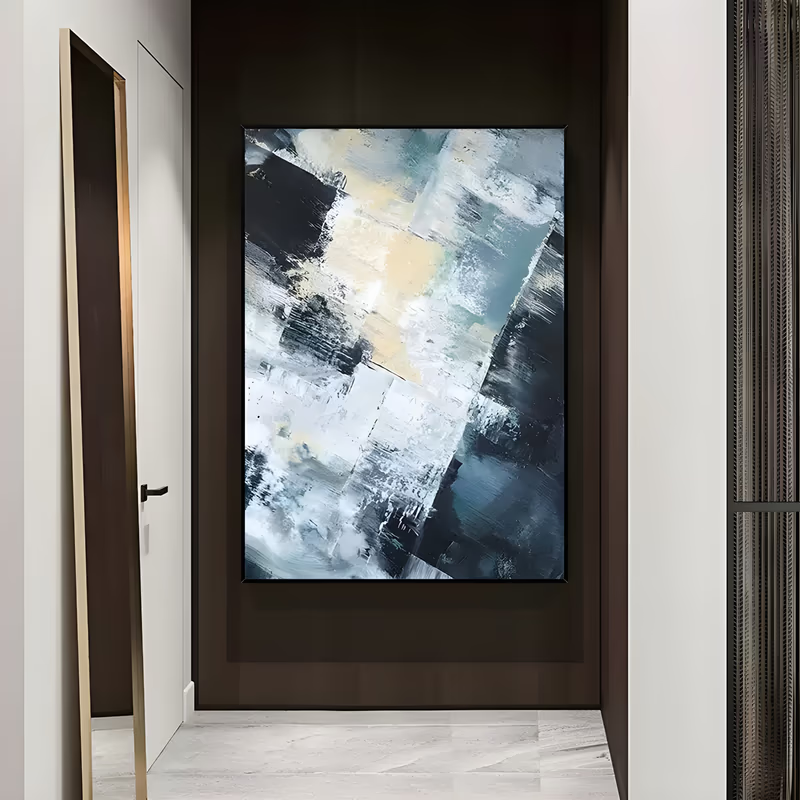
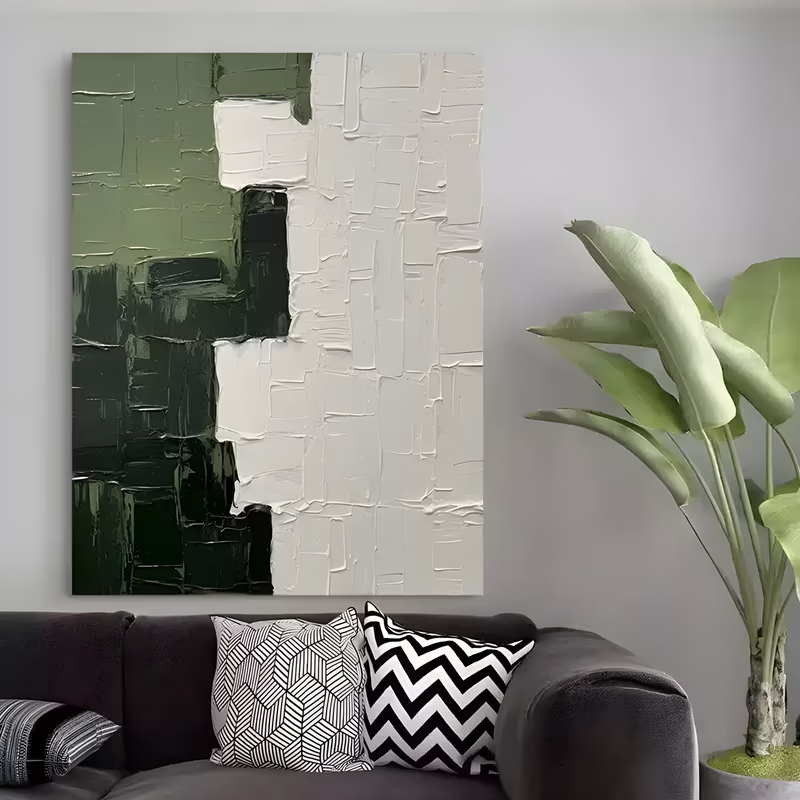
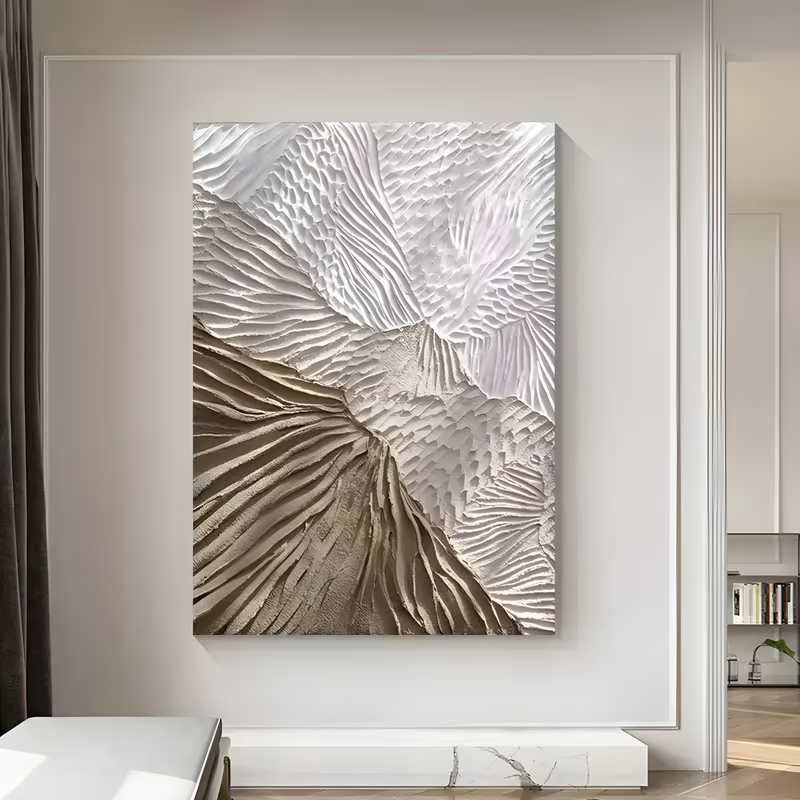
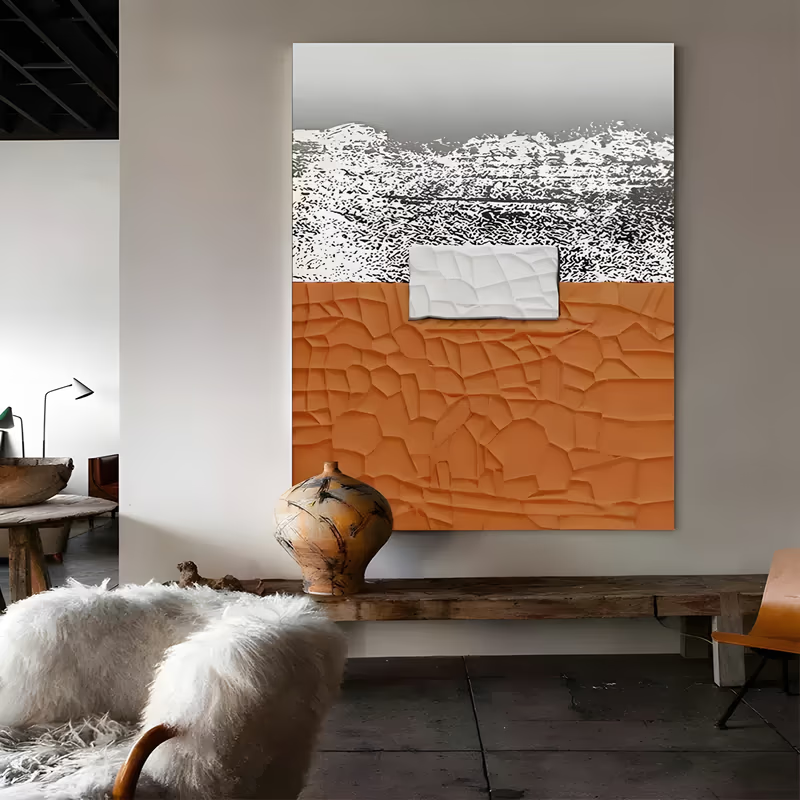
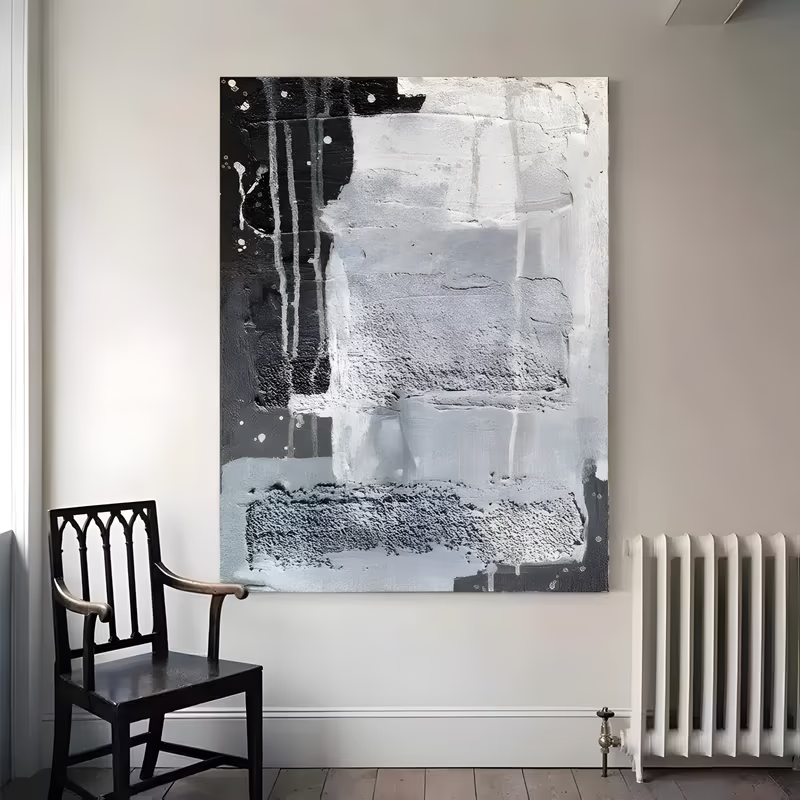
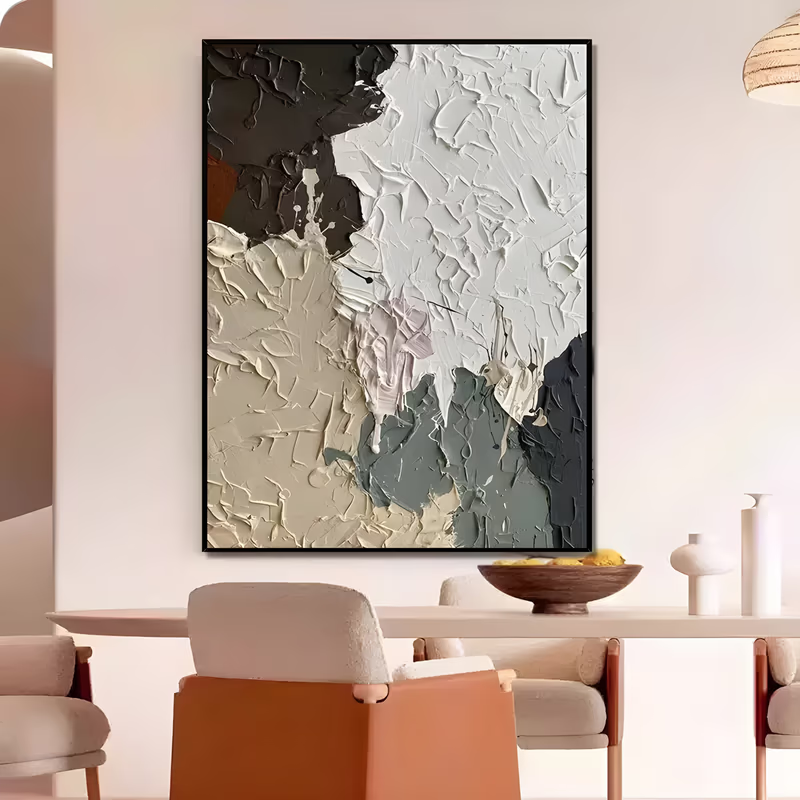
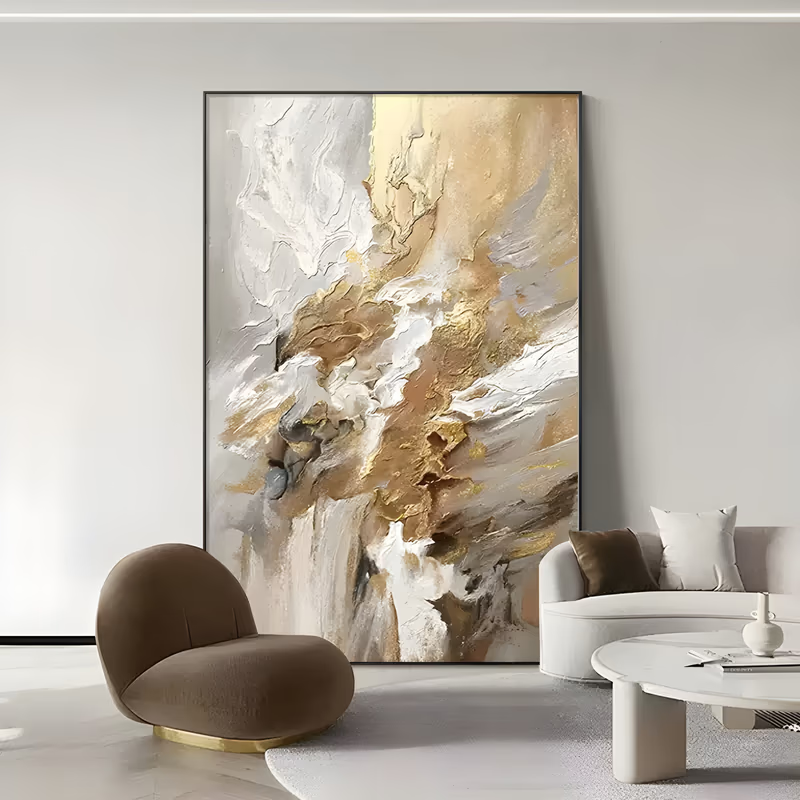
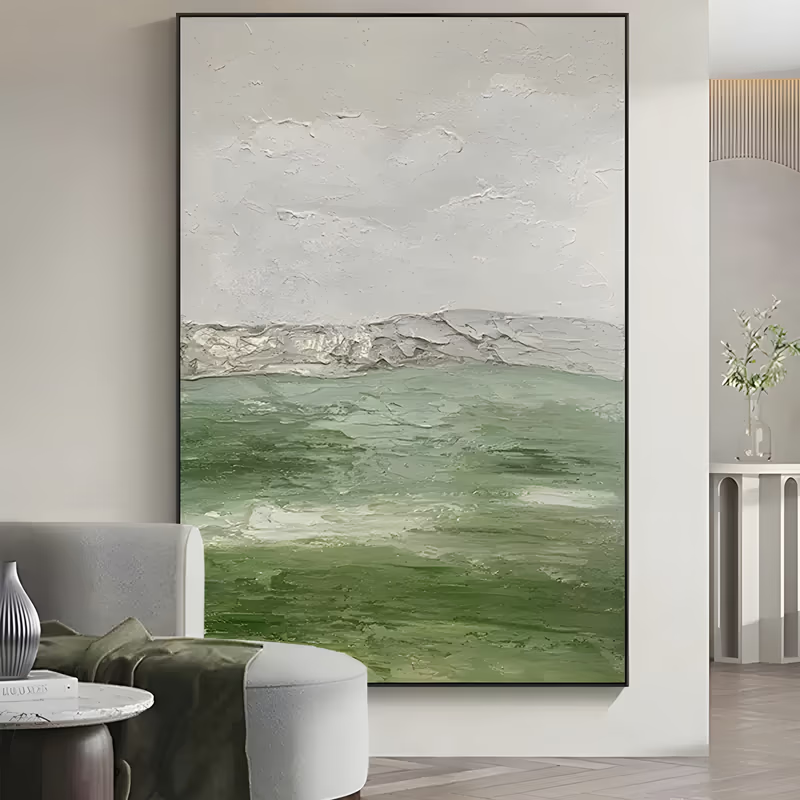
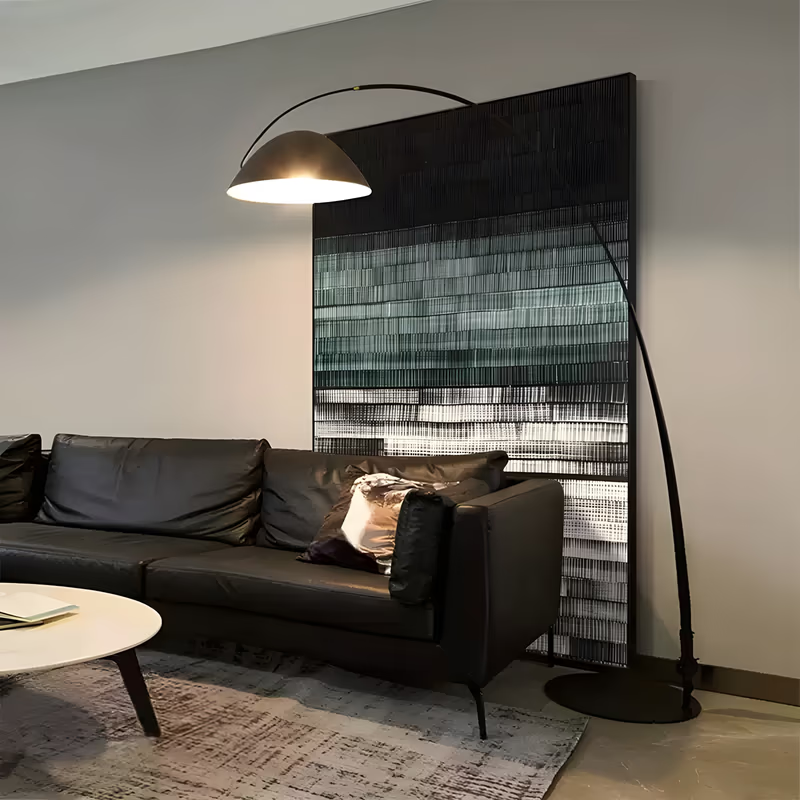
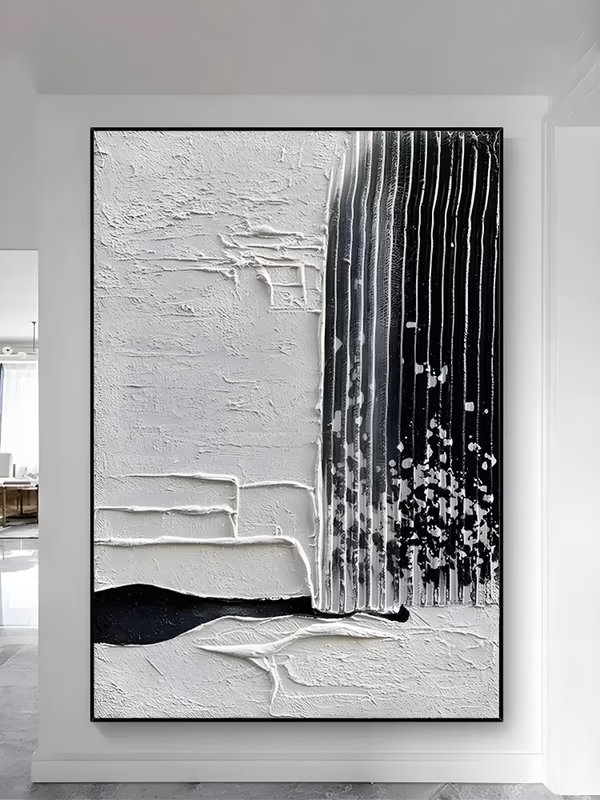
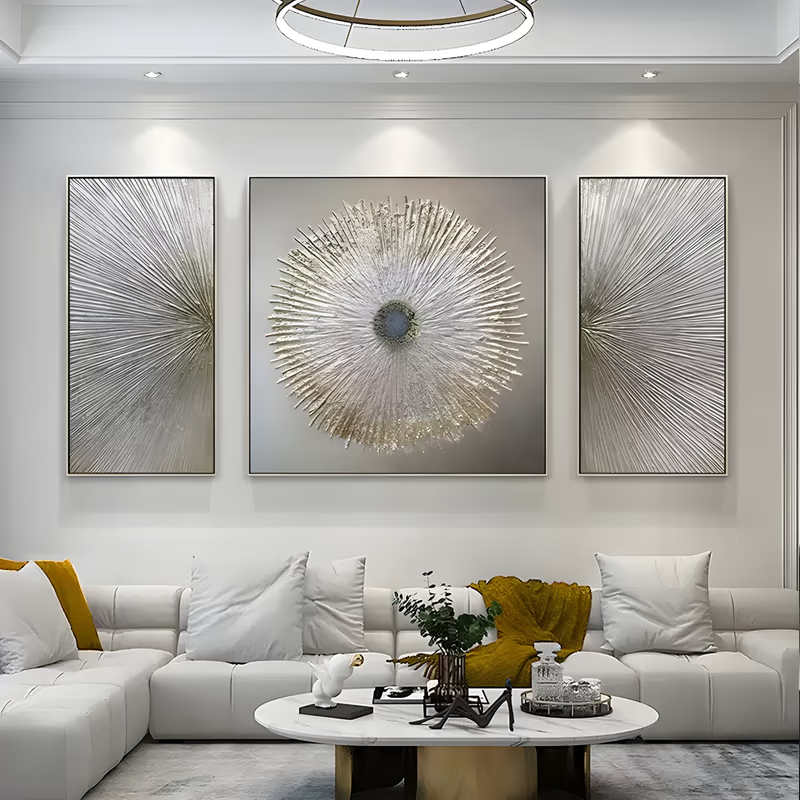
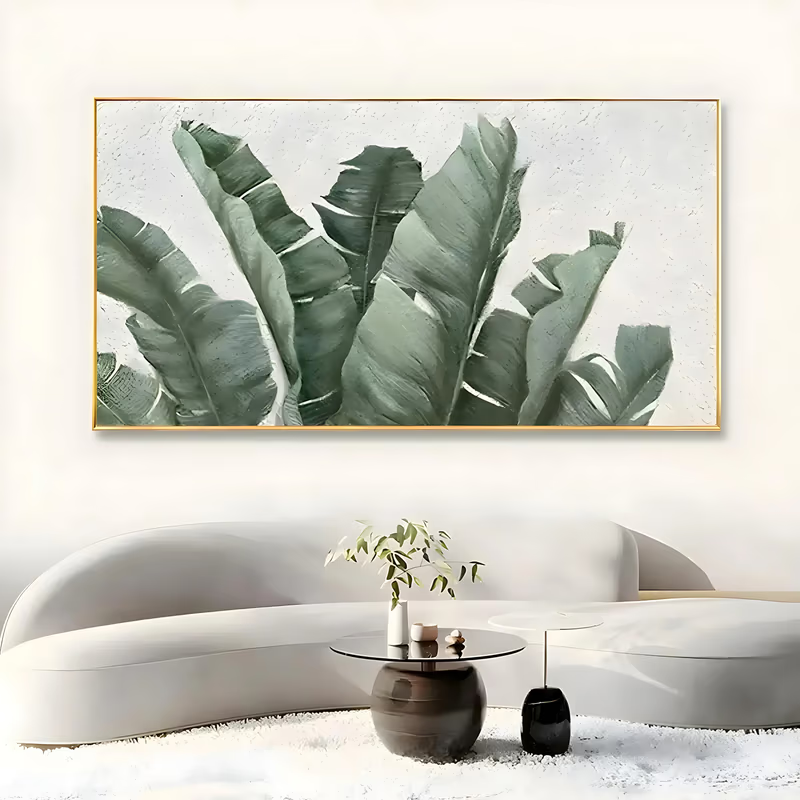
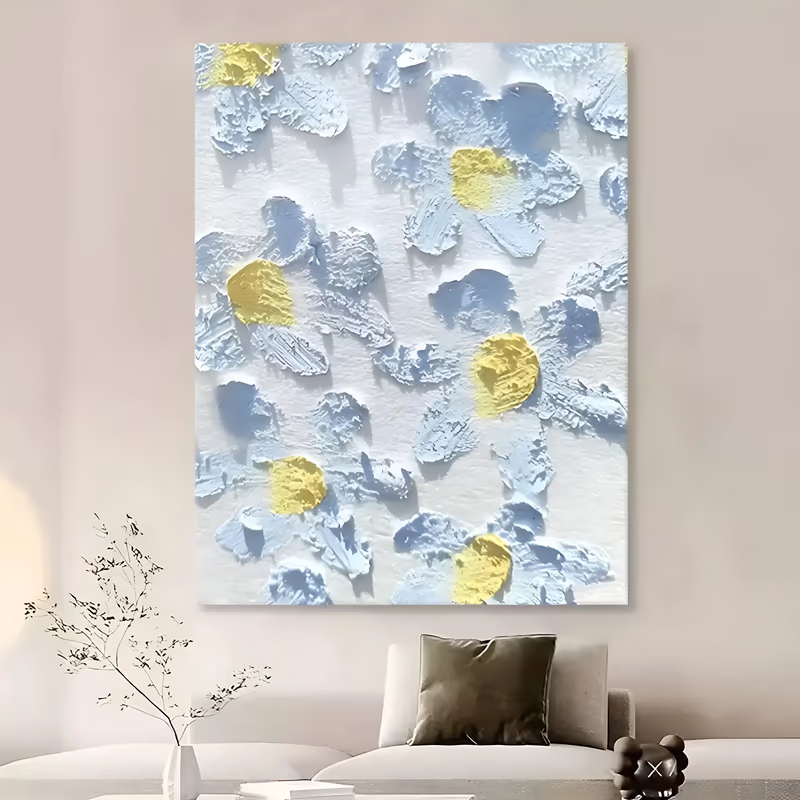
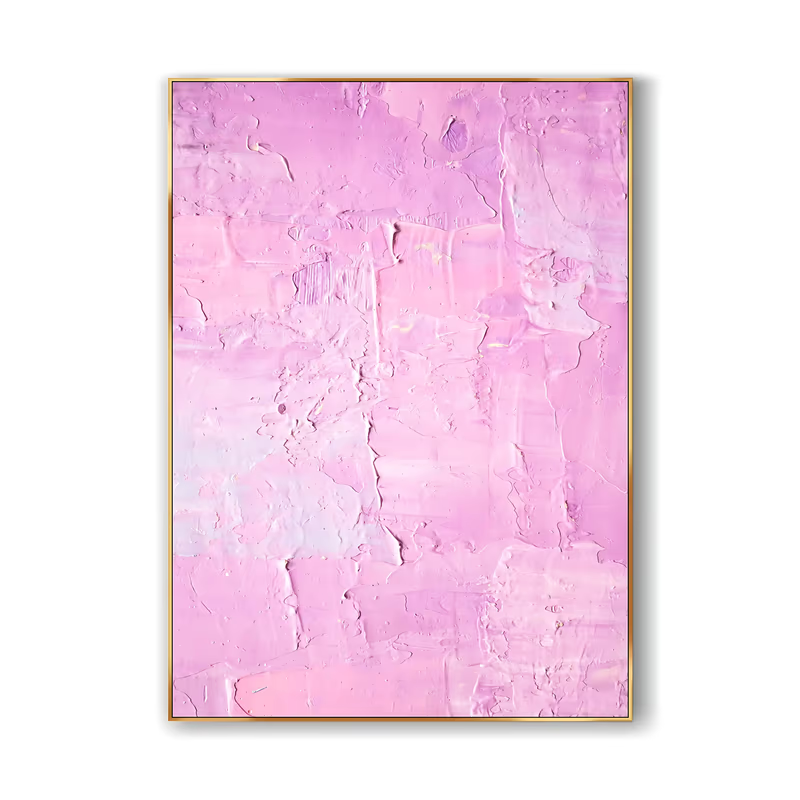
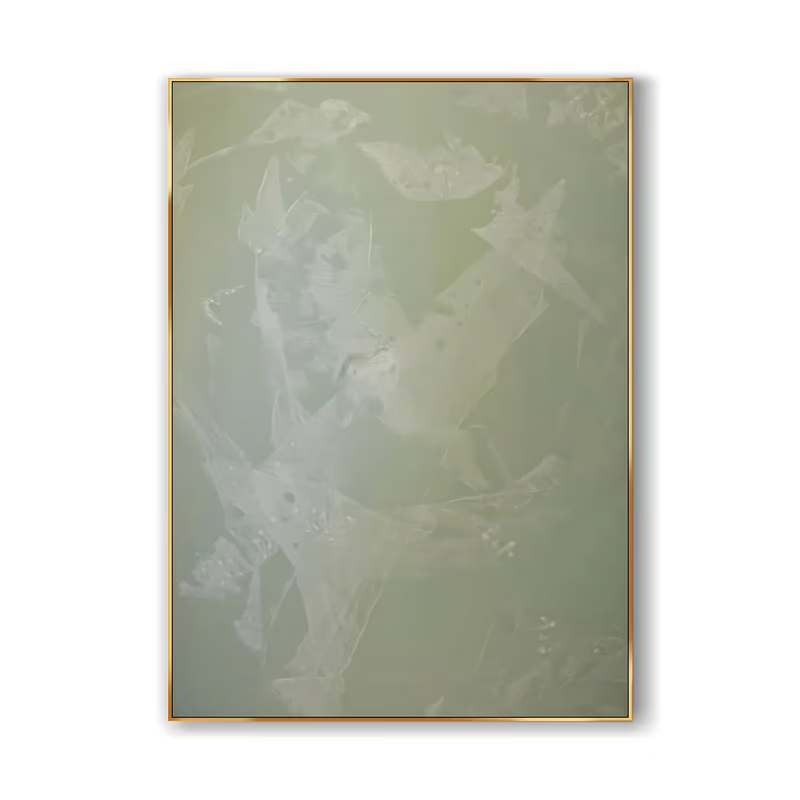
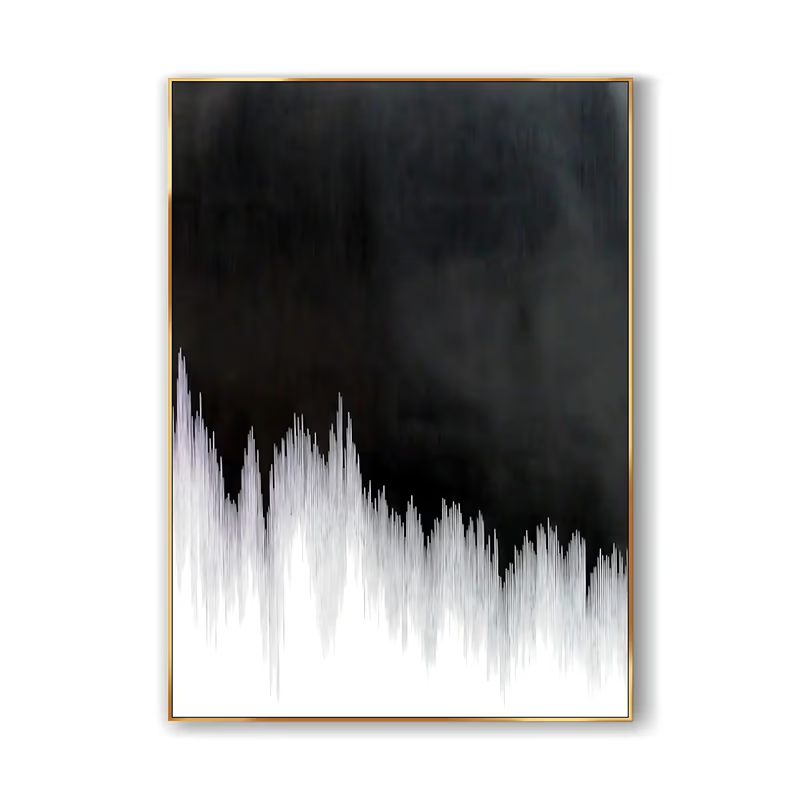
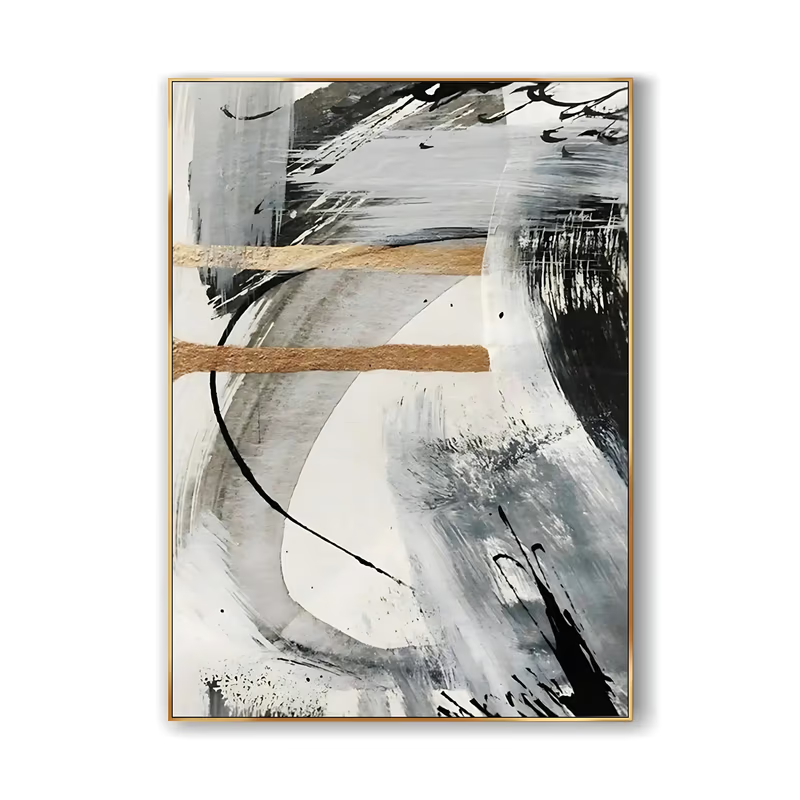
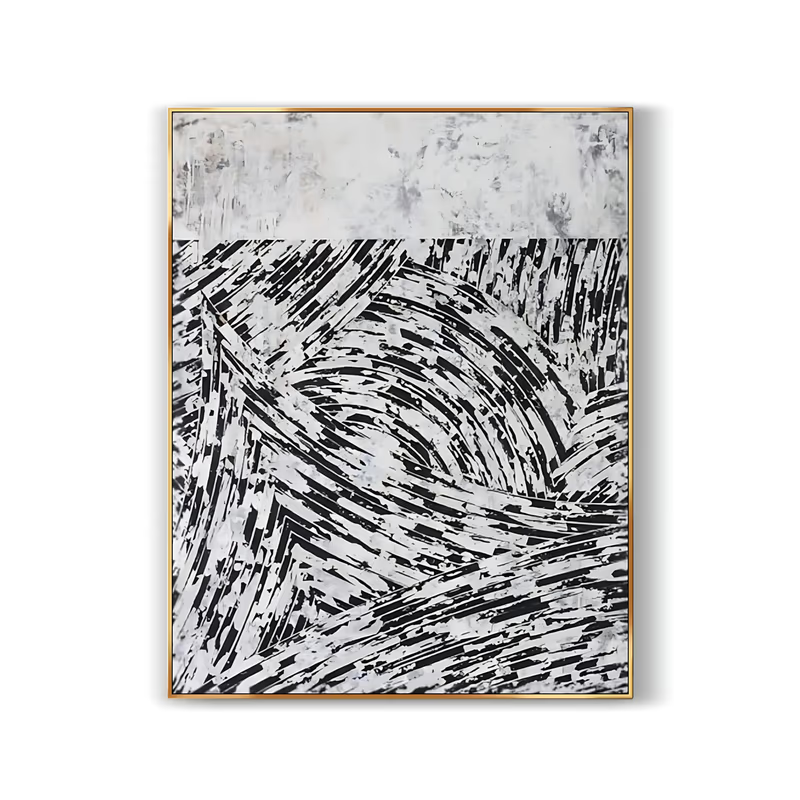
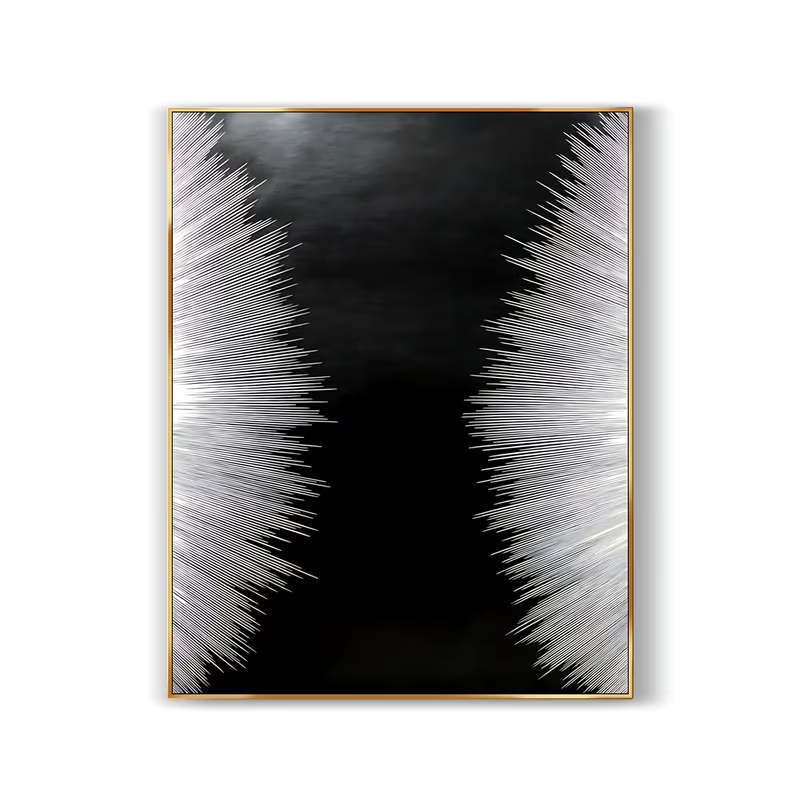
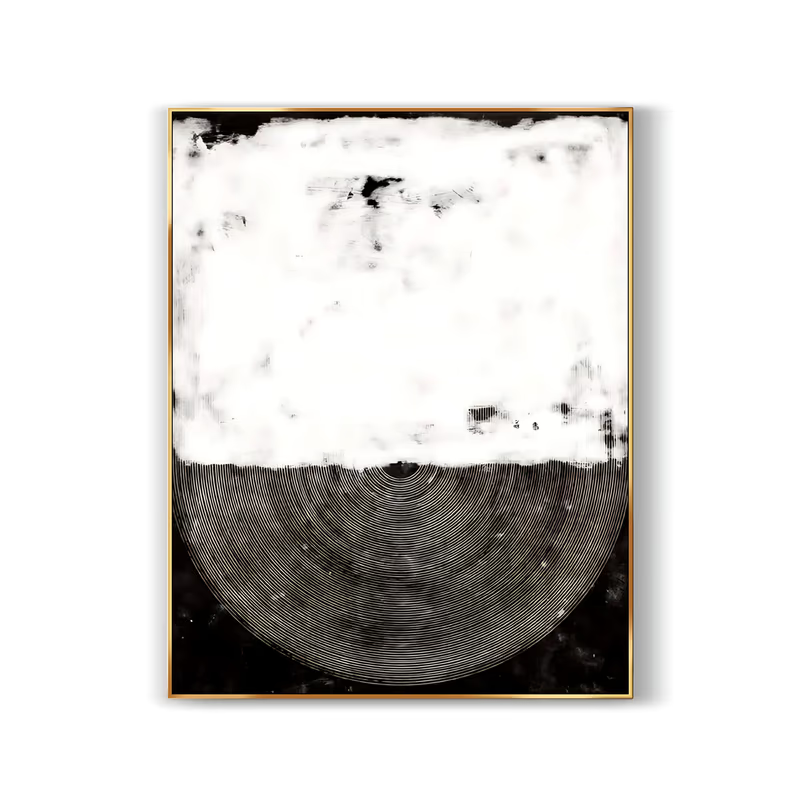
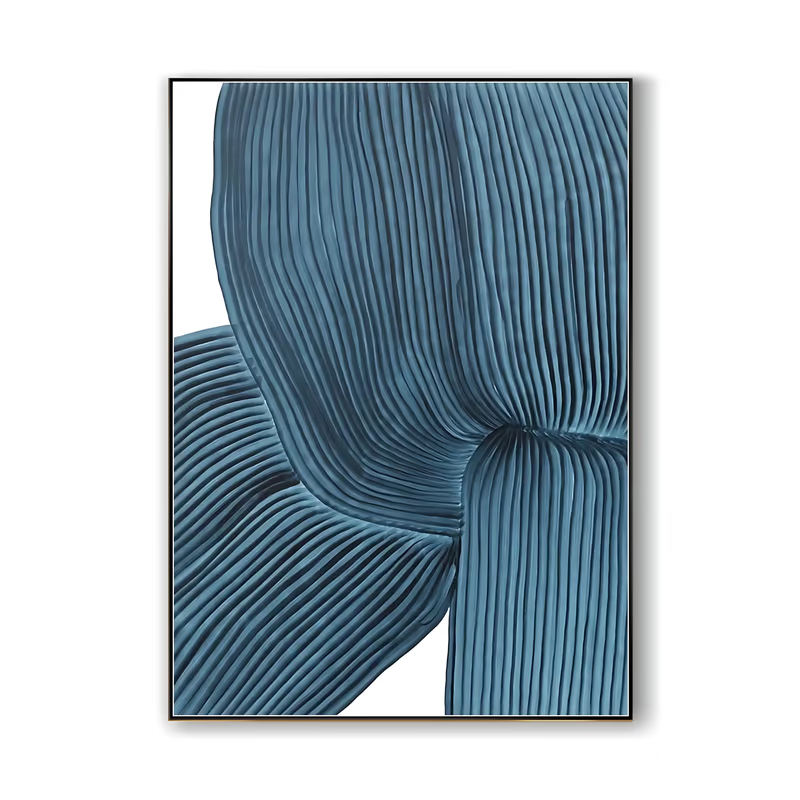
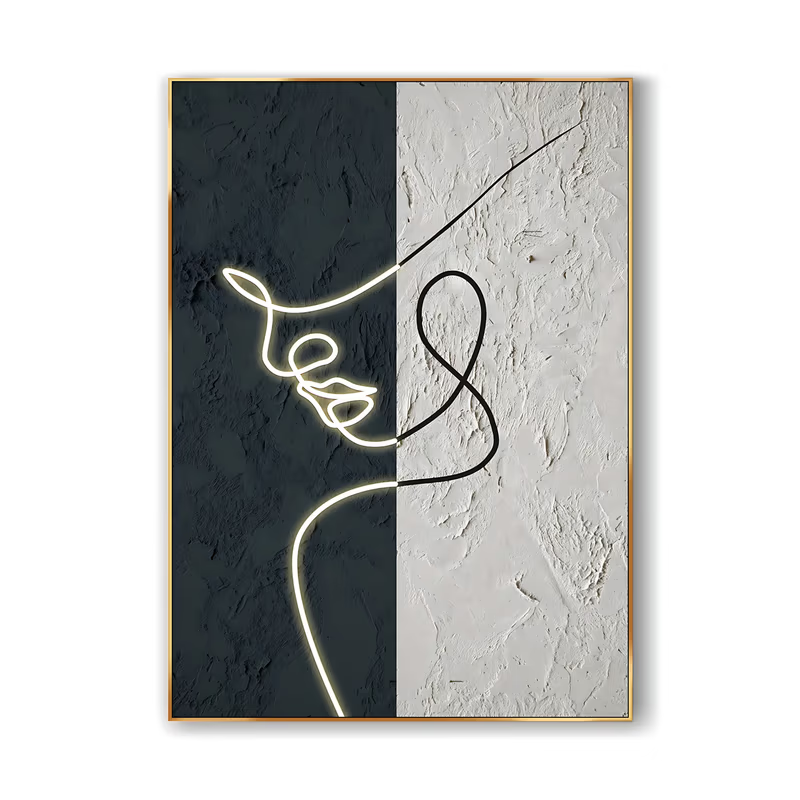
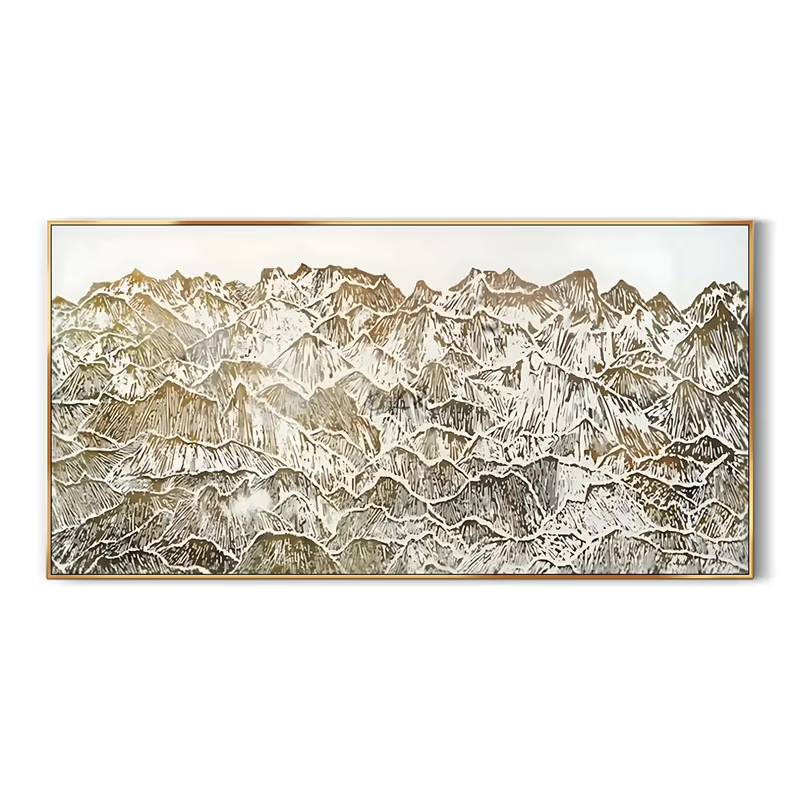
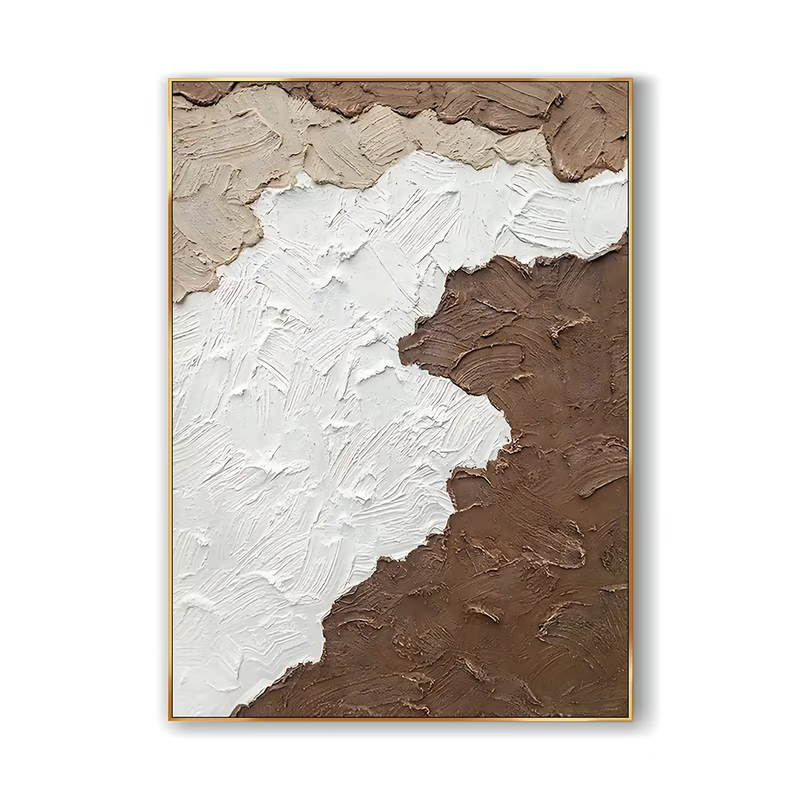
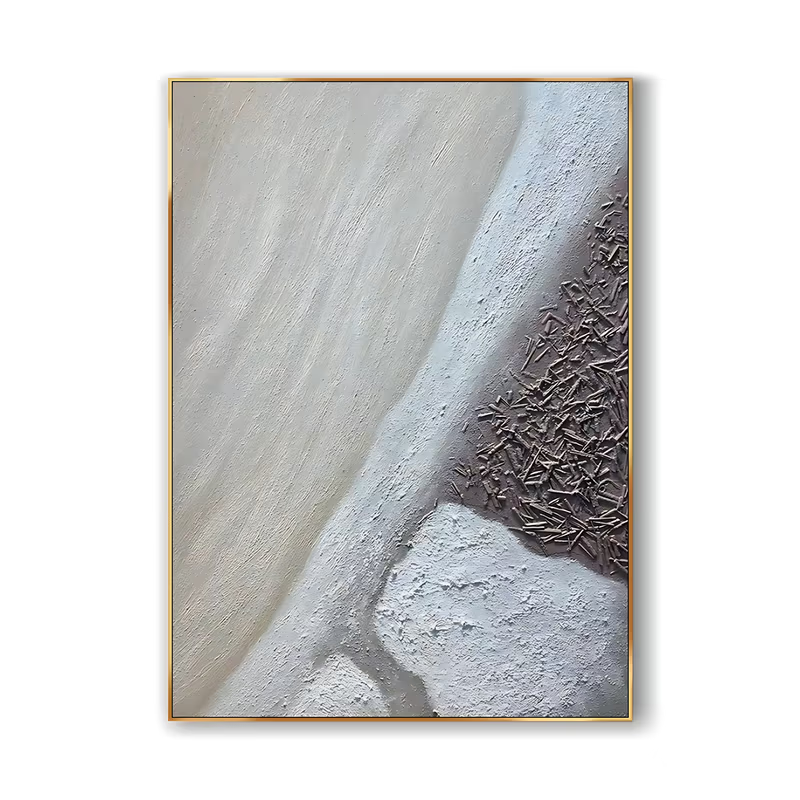
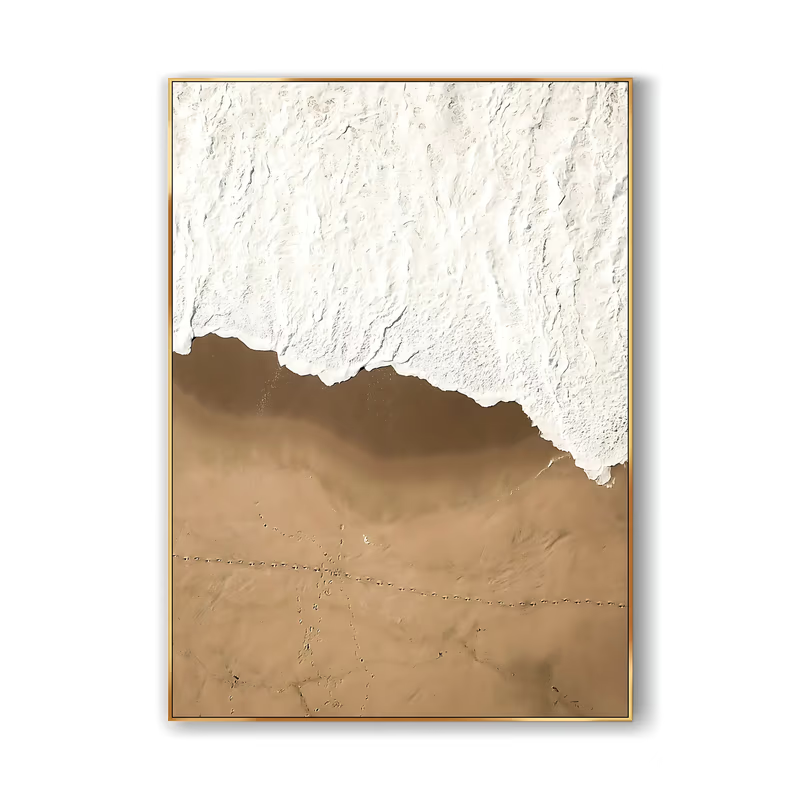
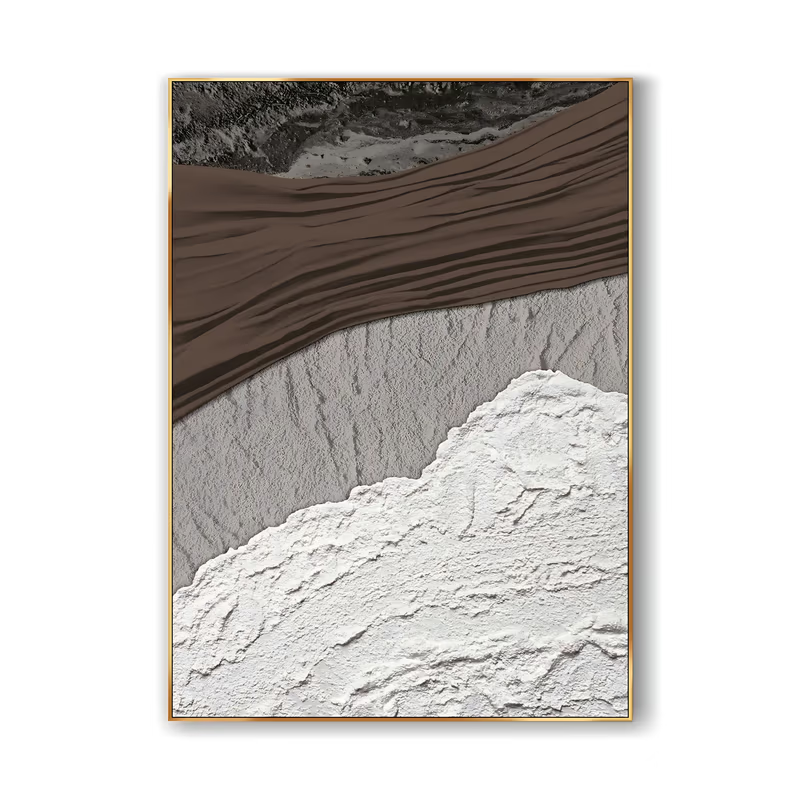
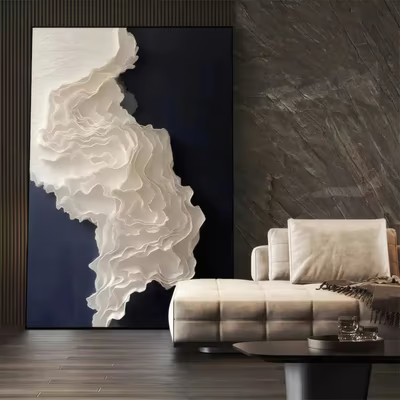
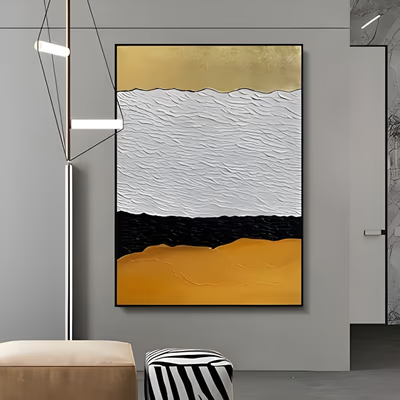
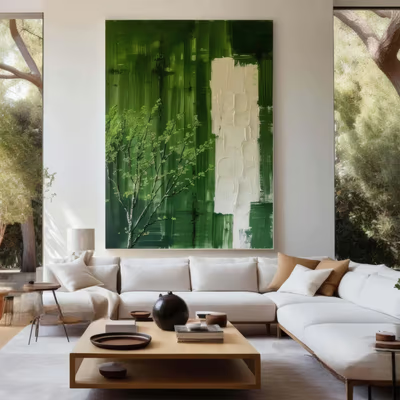
Sculpted plaster waves, combed ridges, carved shells and thick impasto laid on with a knife, often white on white or white beside a single dark band. This is the kind that most needs light from the side and most rewards it. Above a bed or in a lobby it reads almost as part of the architecture.
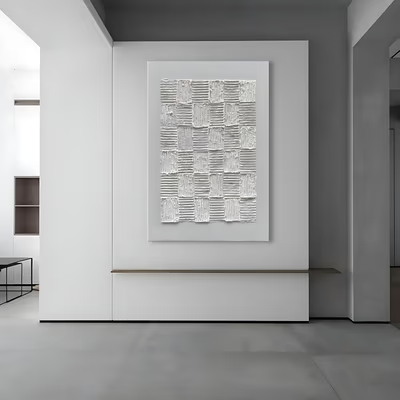
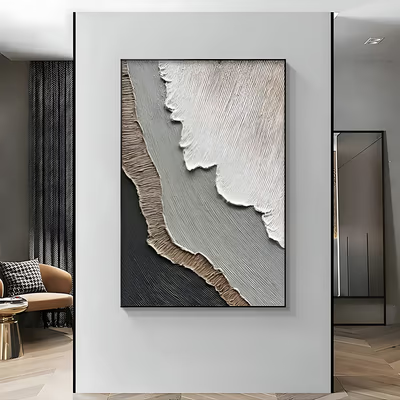
White flower paintings
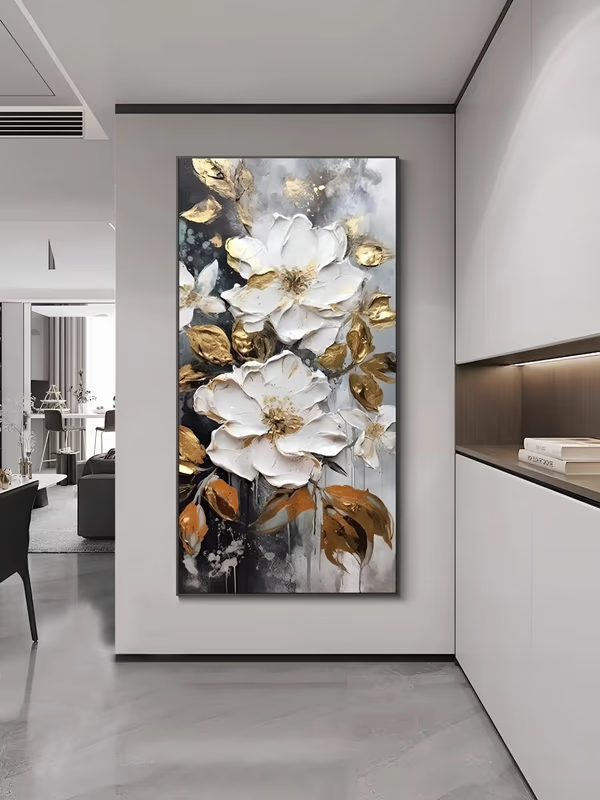
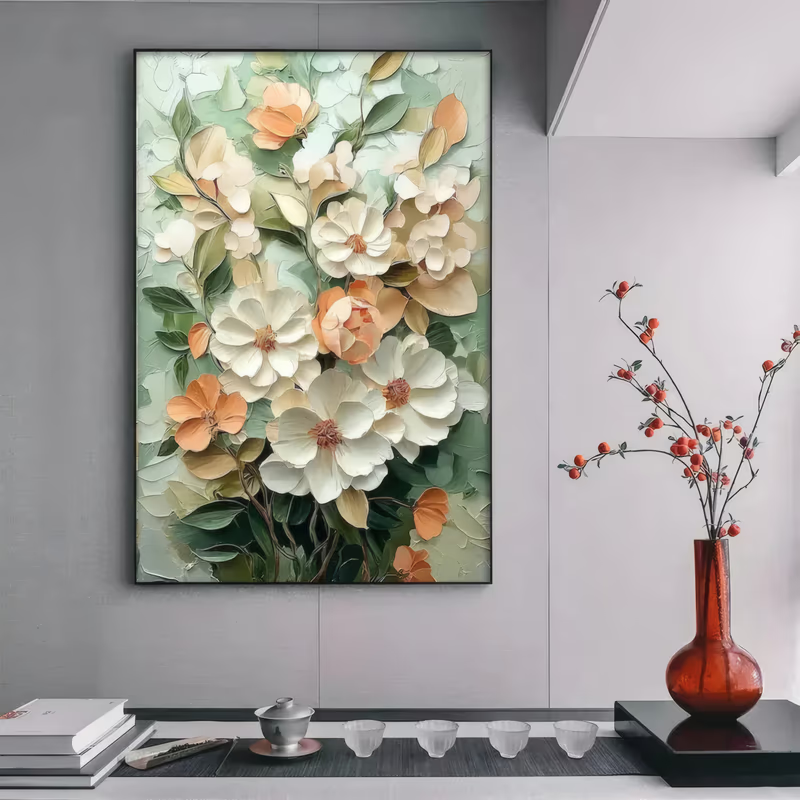
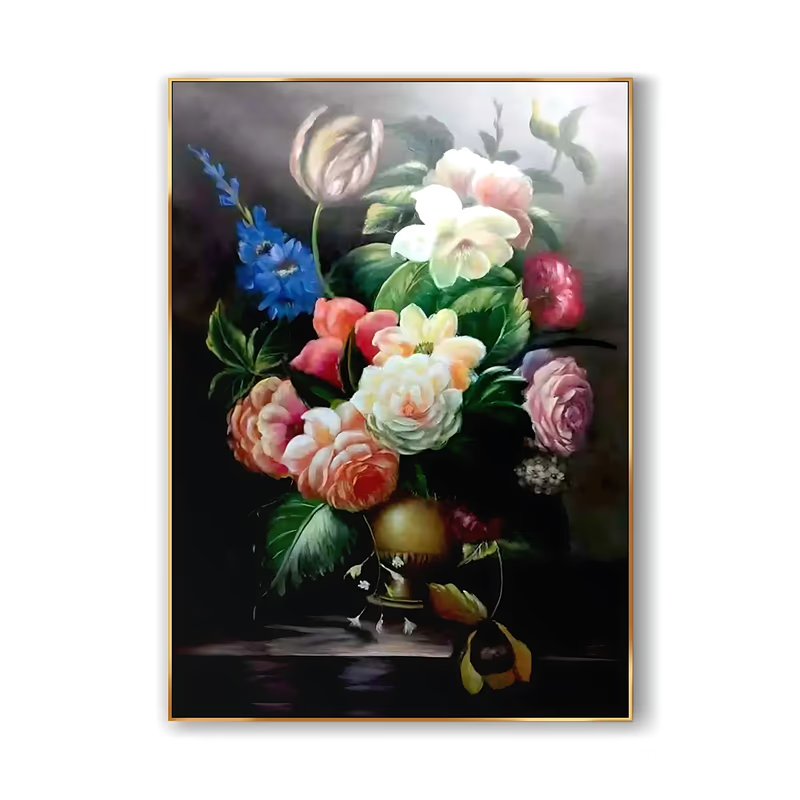
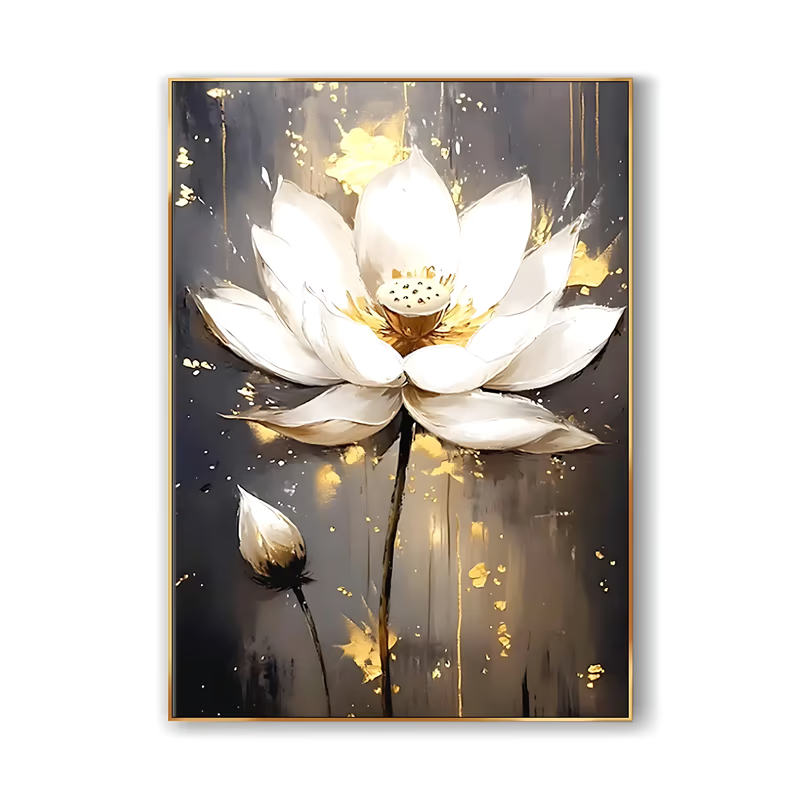
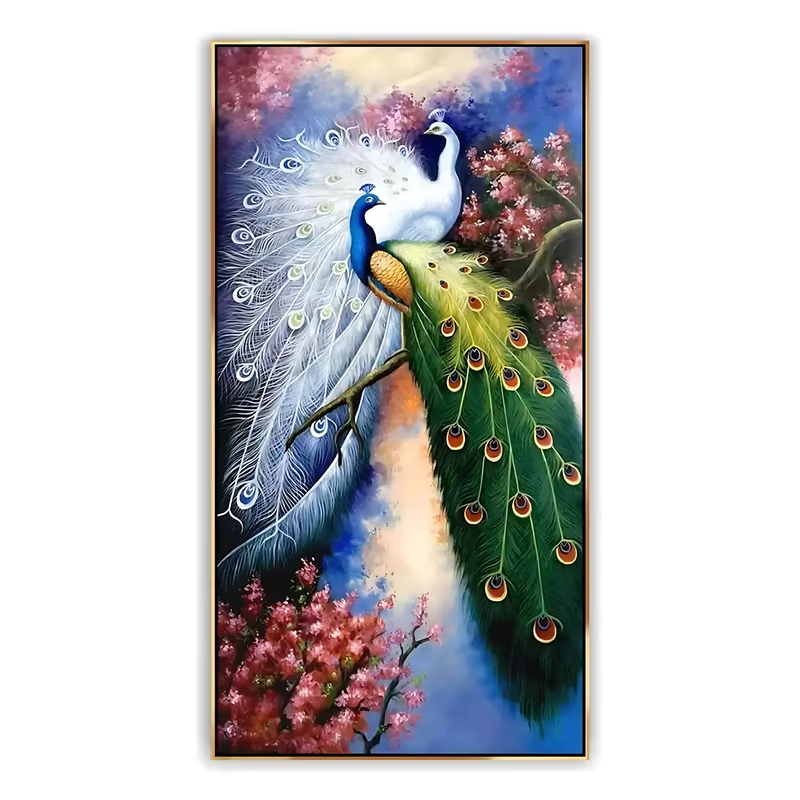
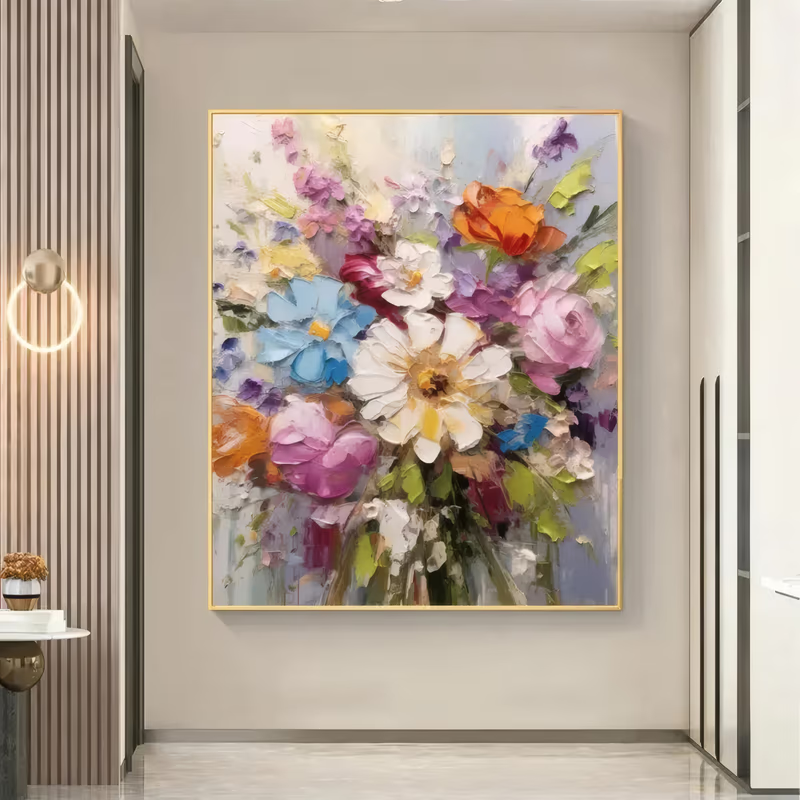
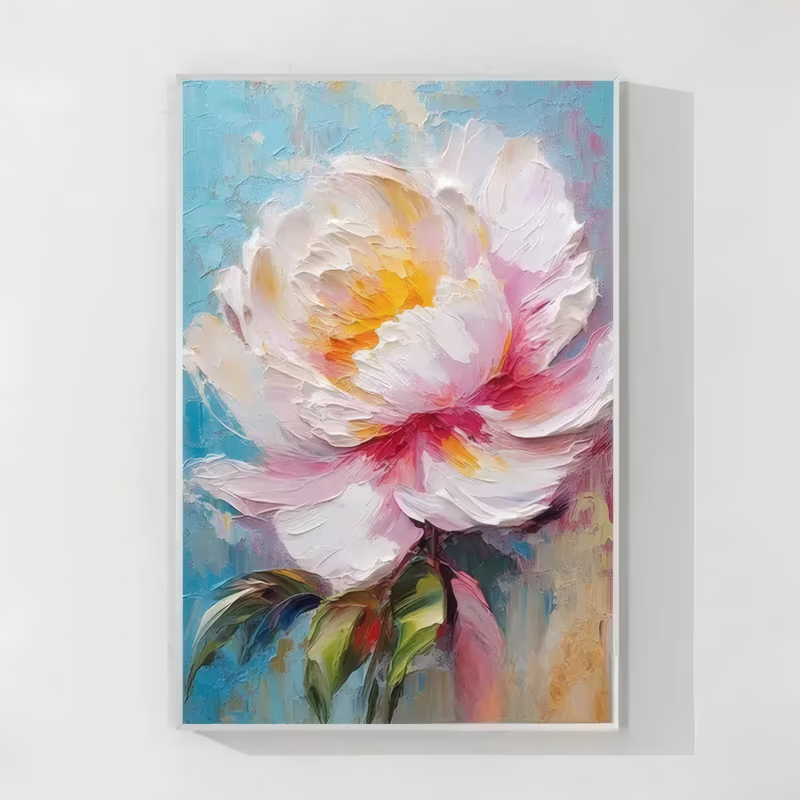
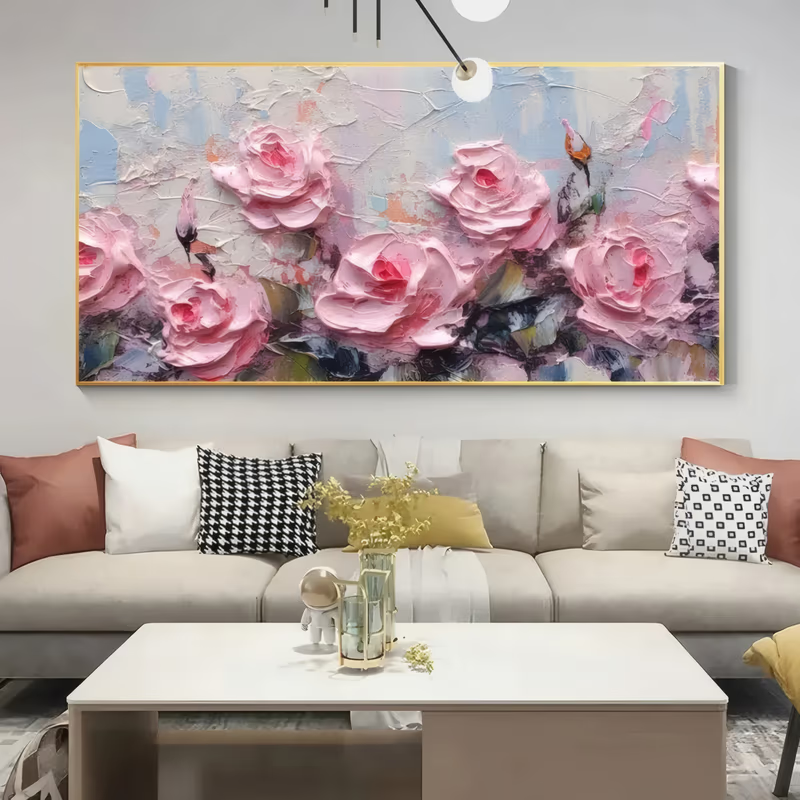
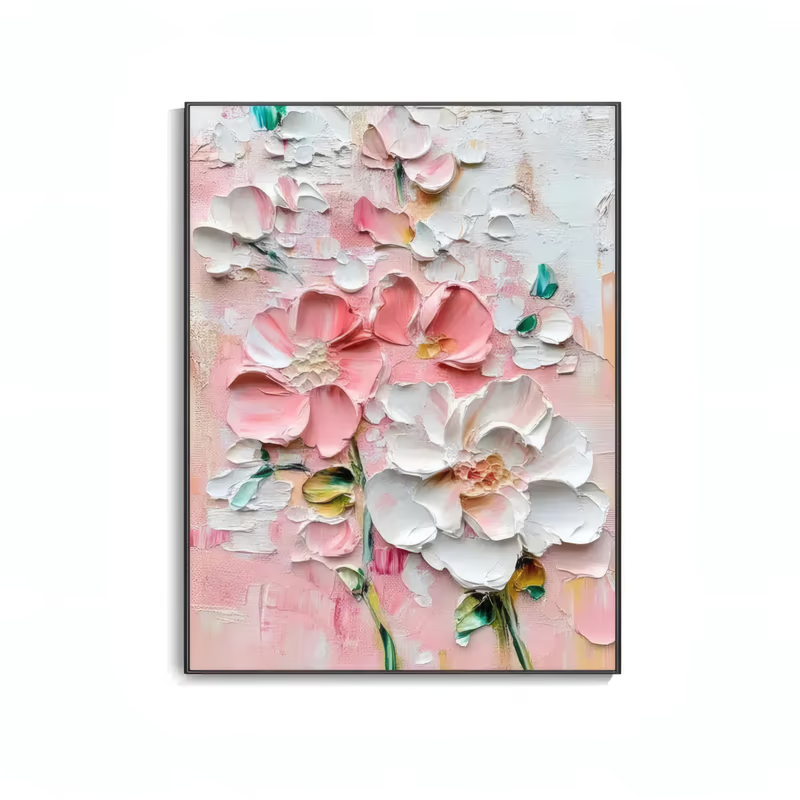
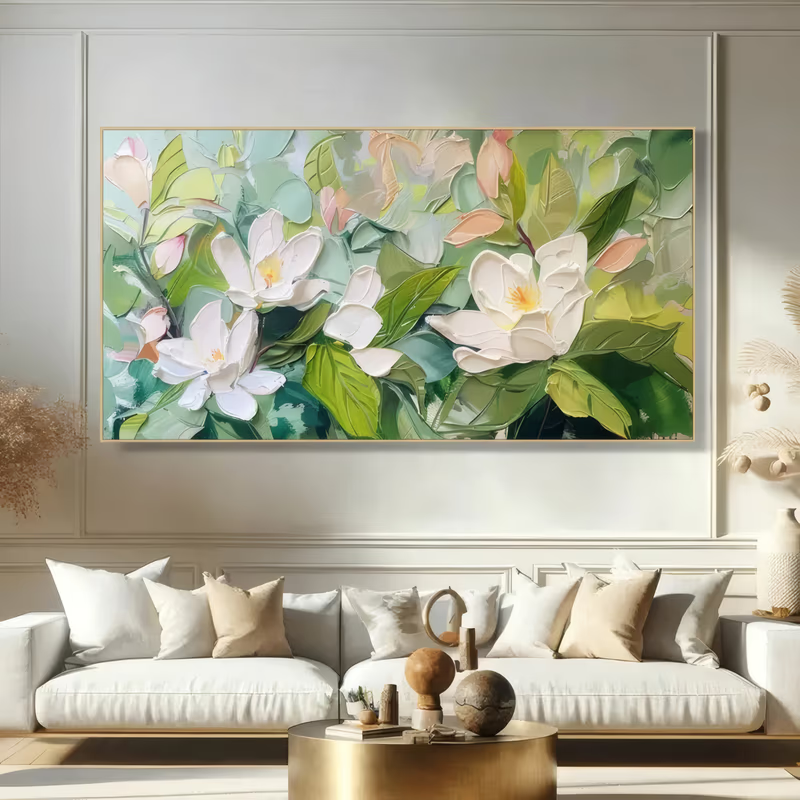
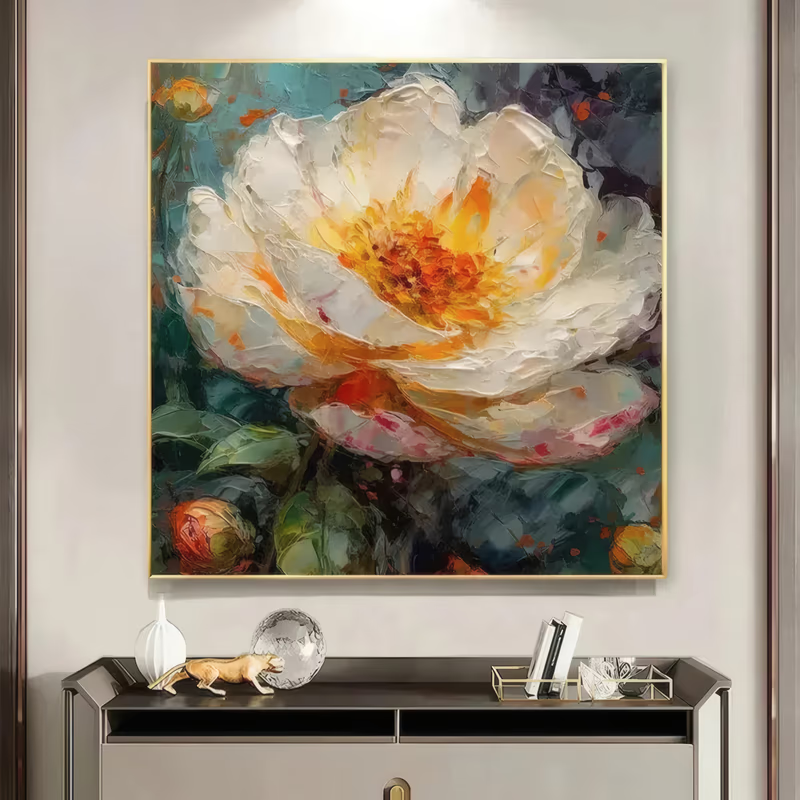
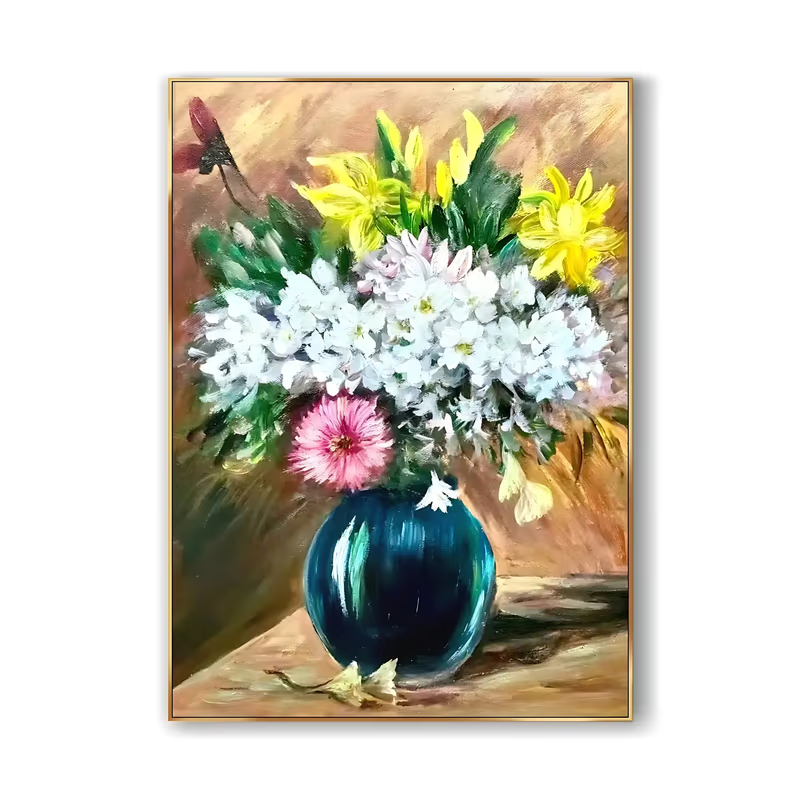
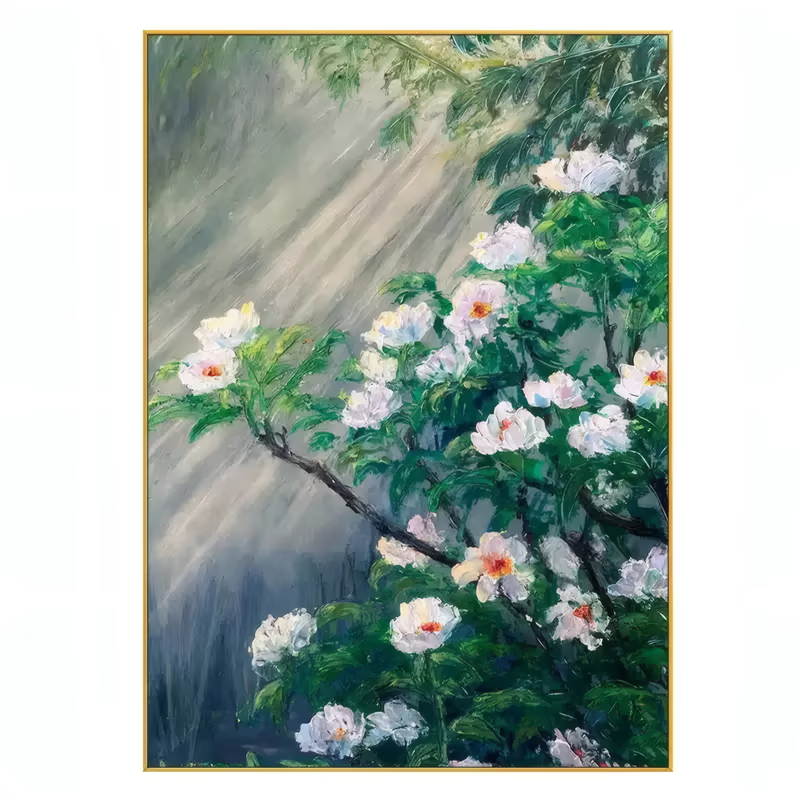
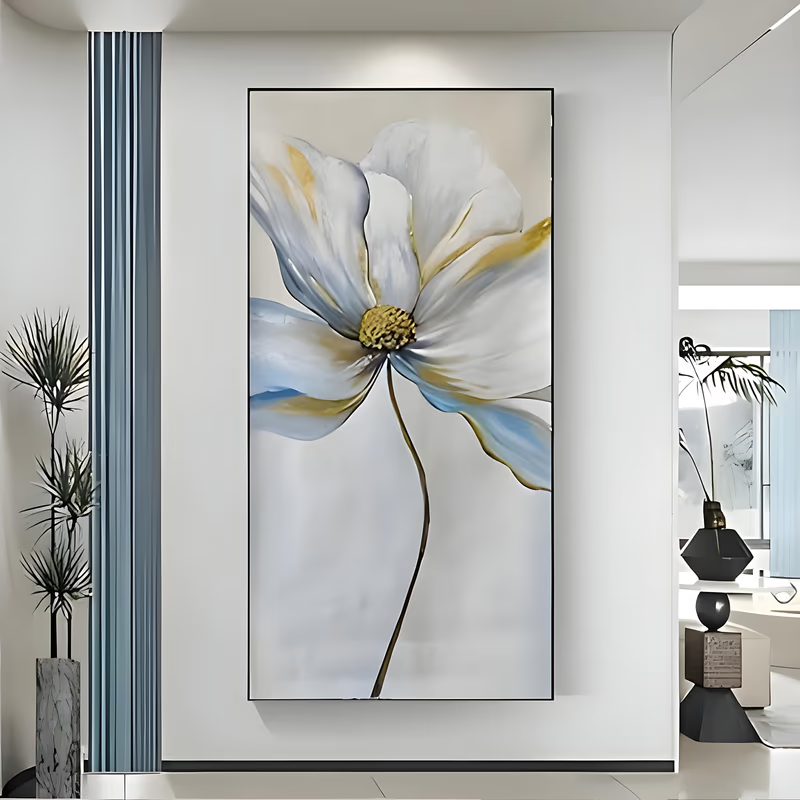
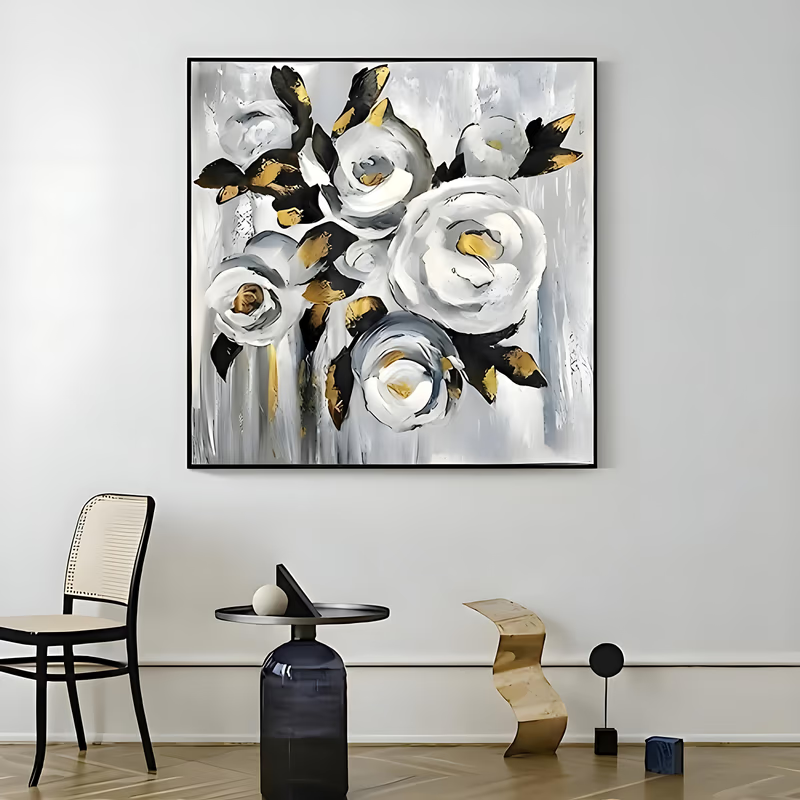
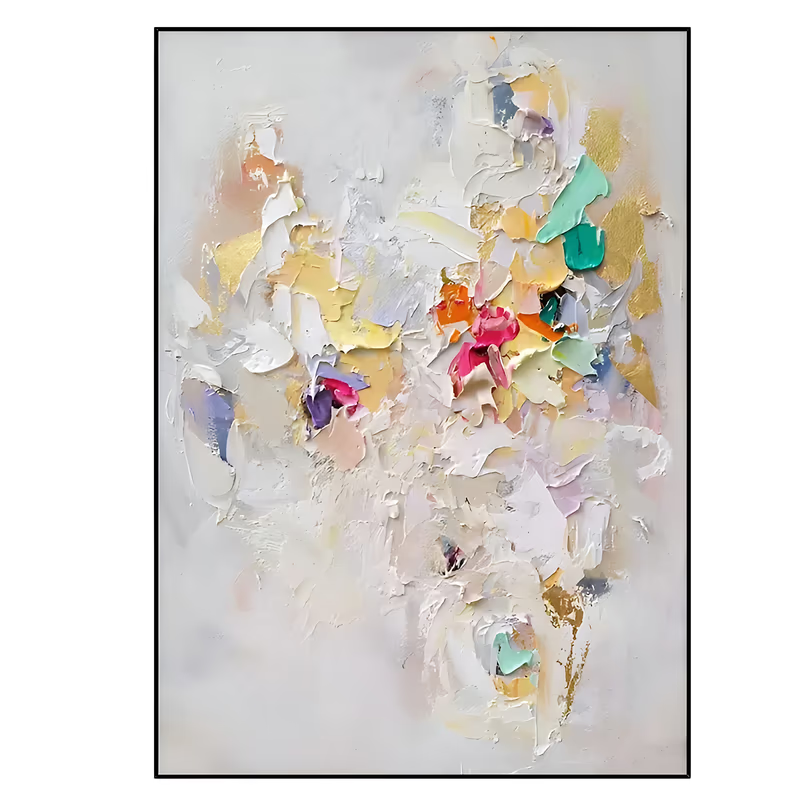
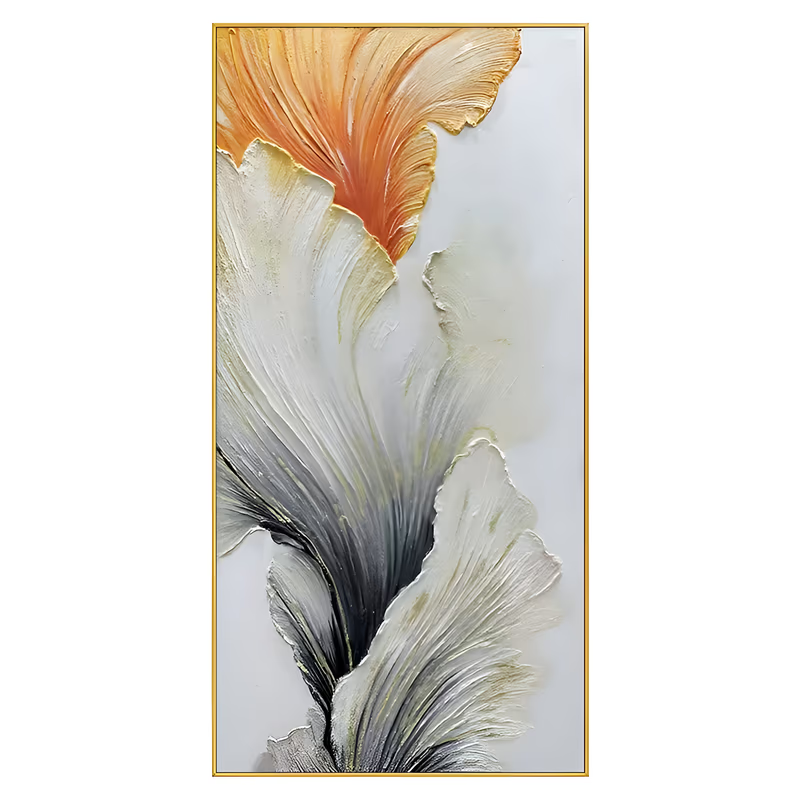
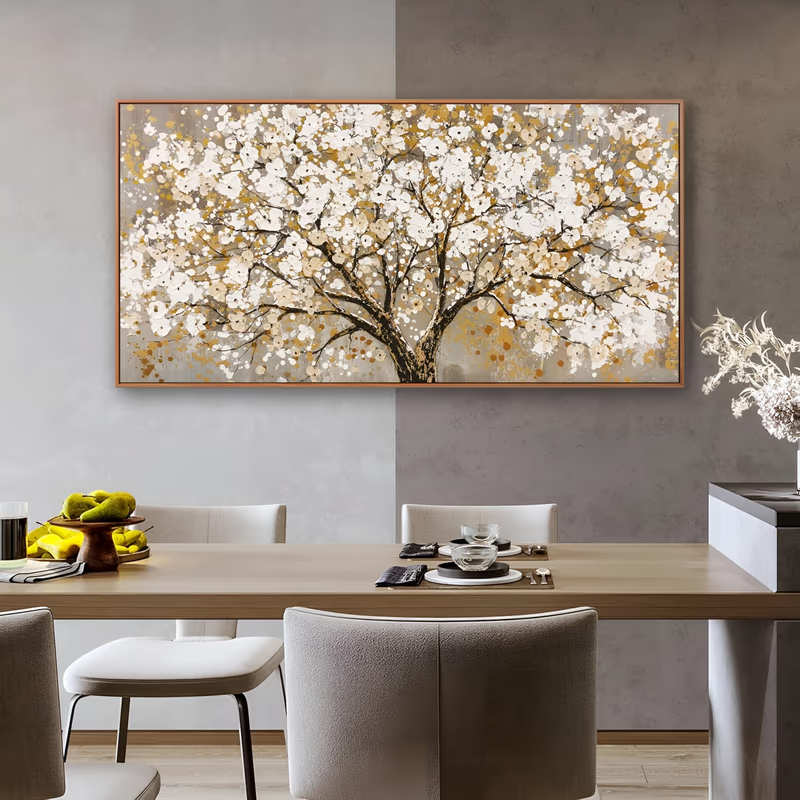
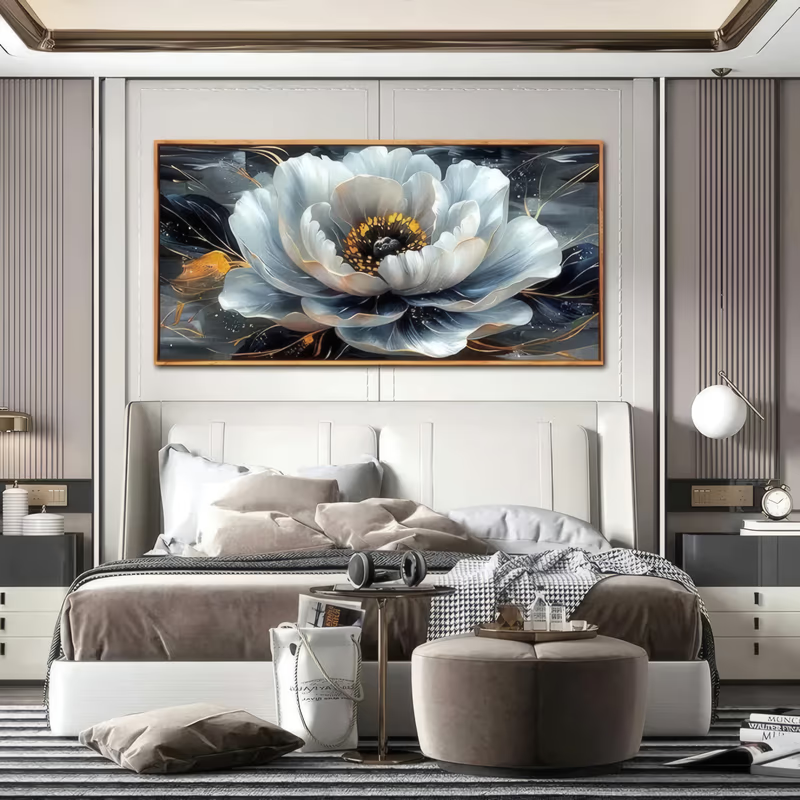
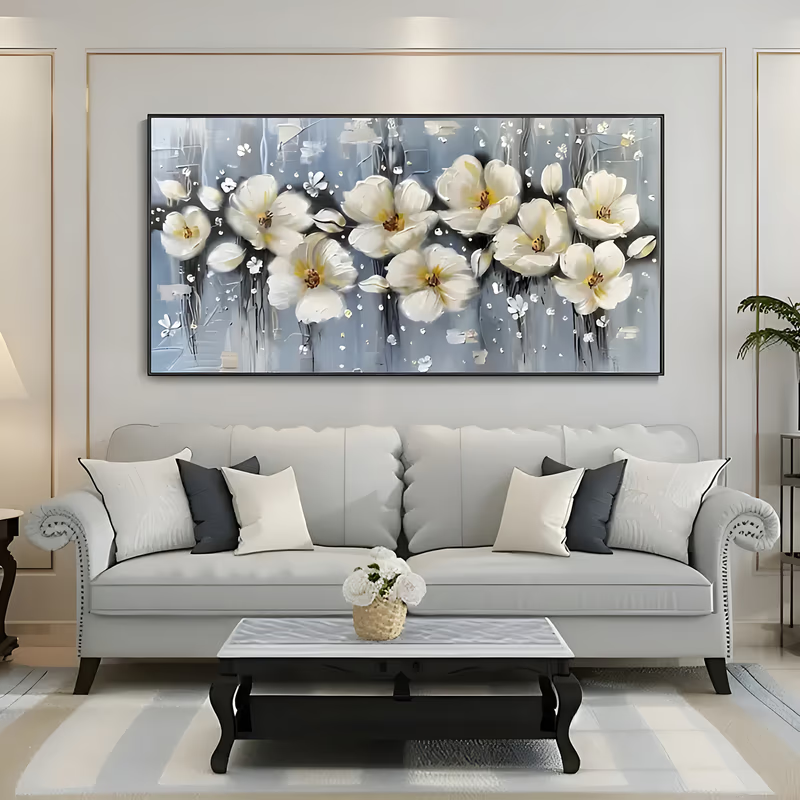
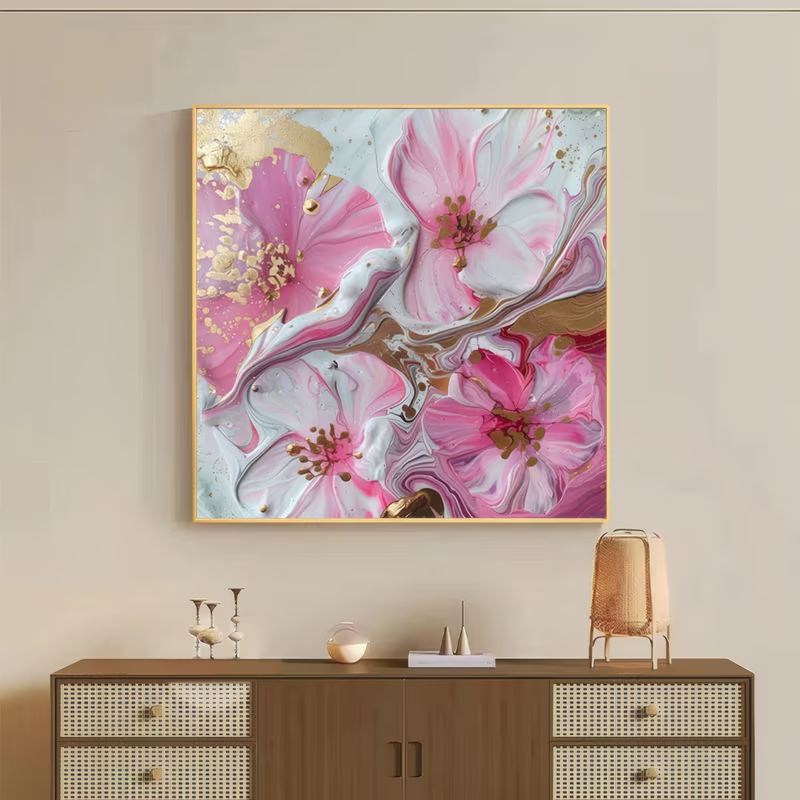
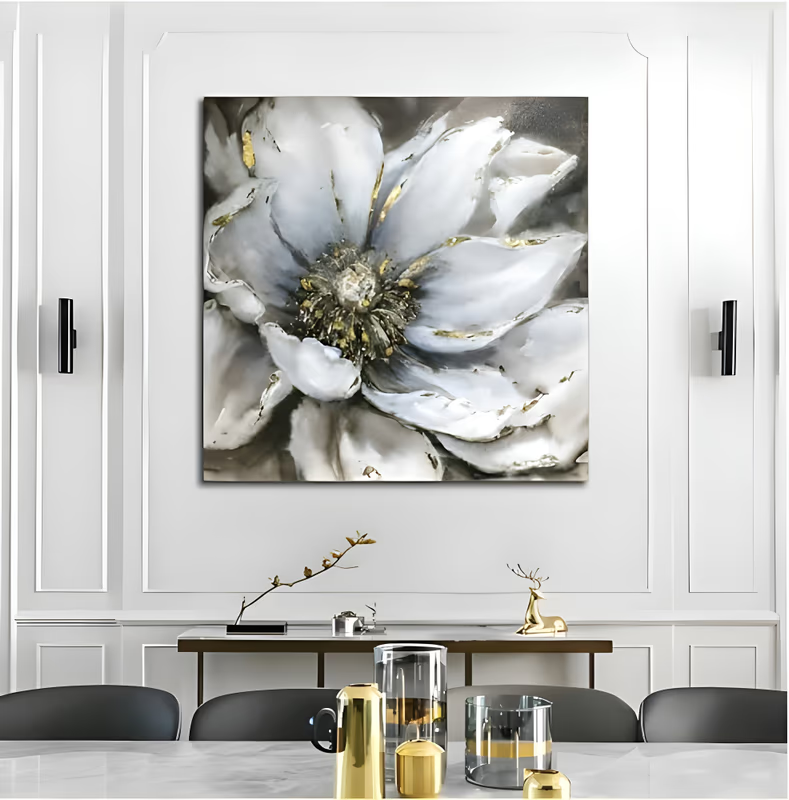
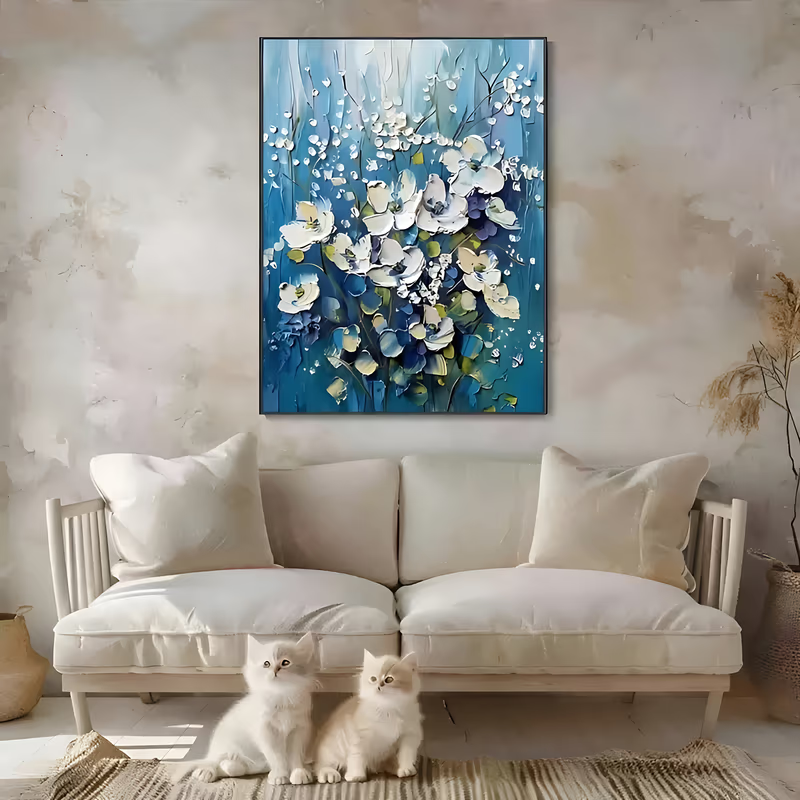
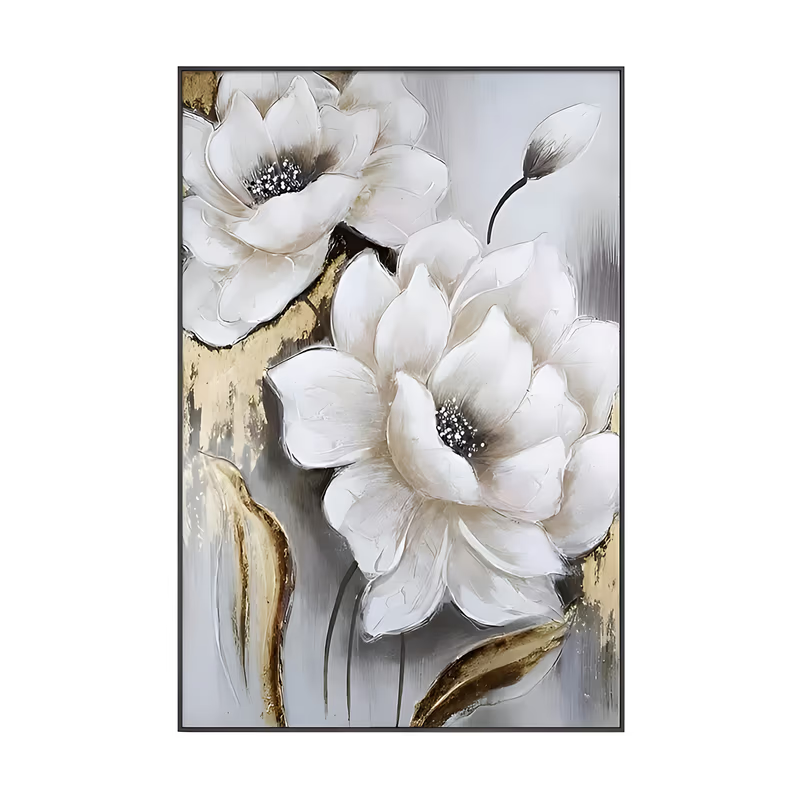
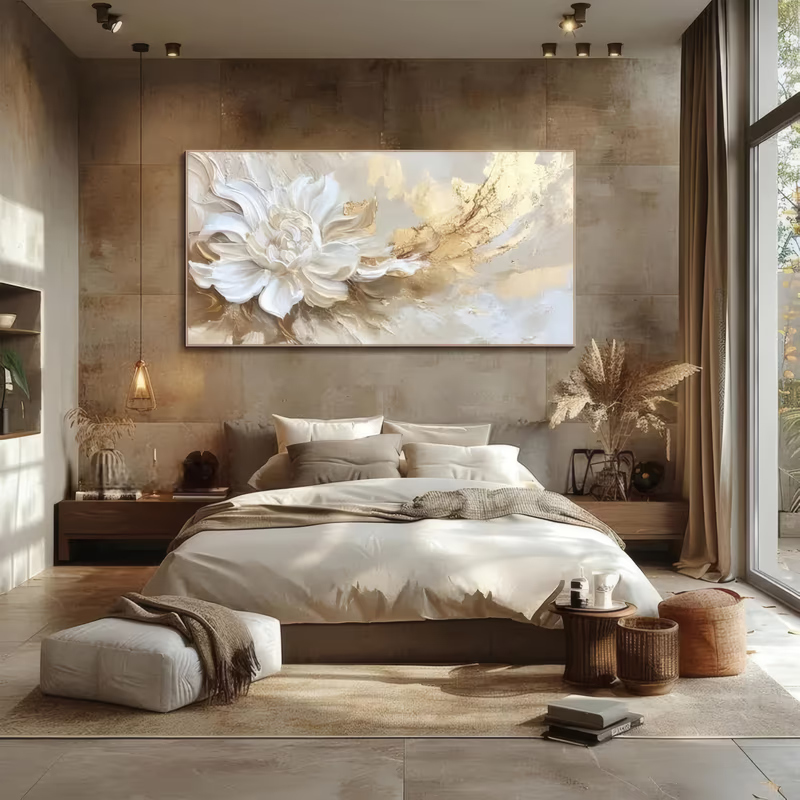
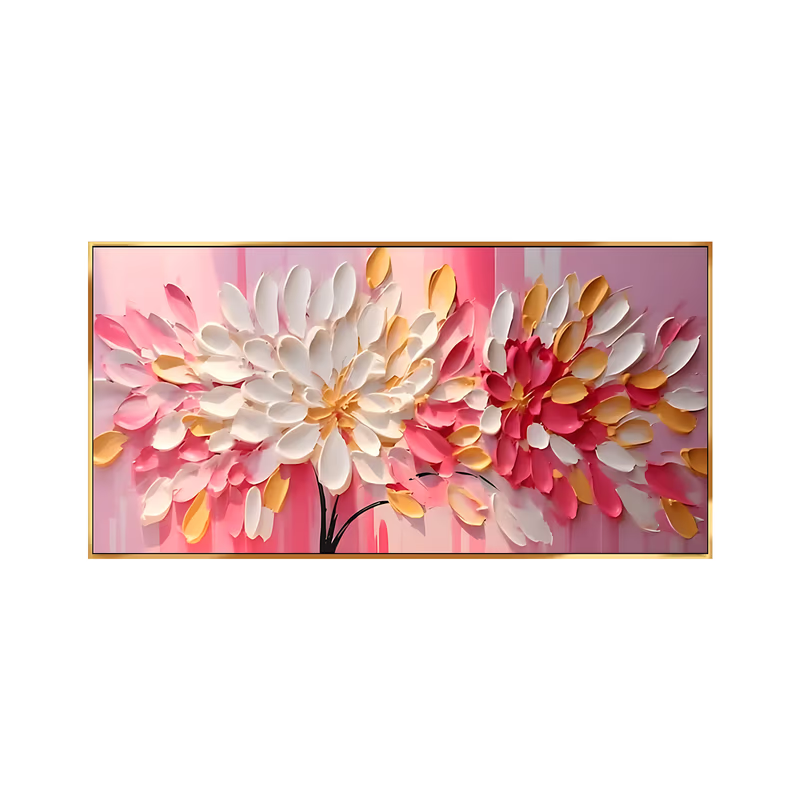
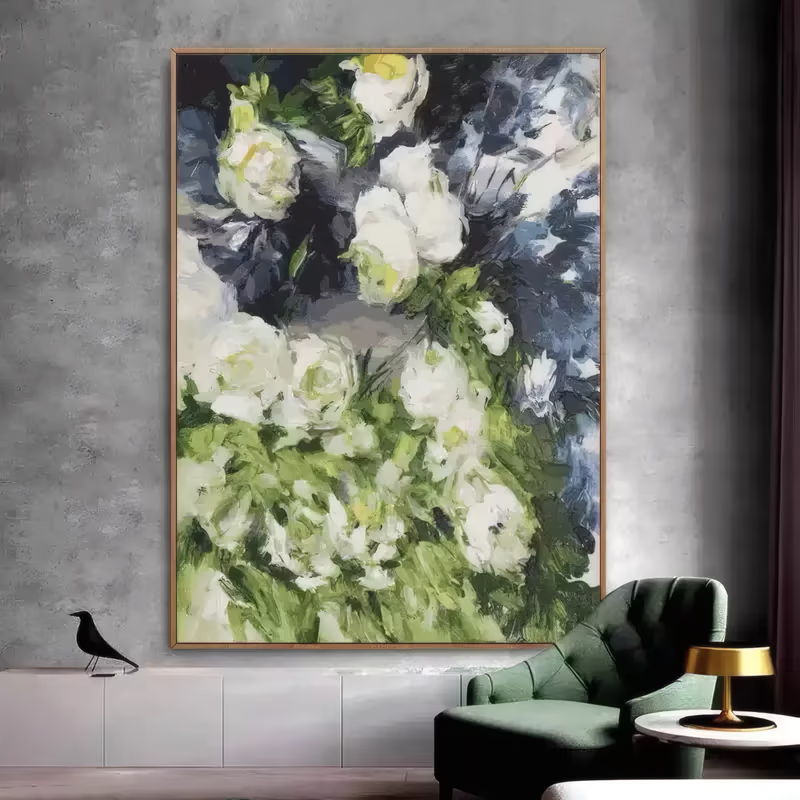
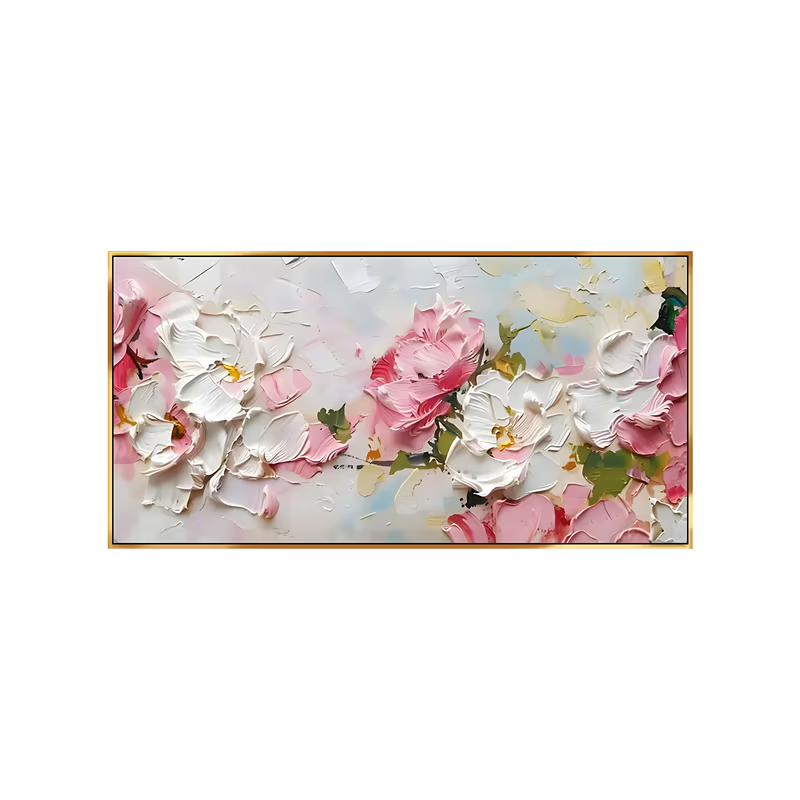
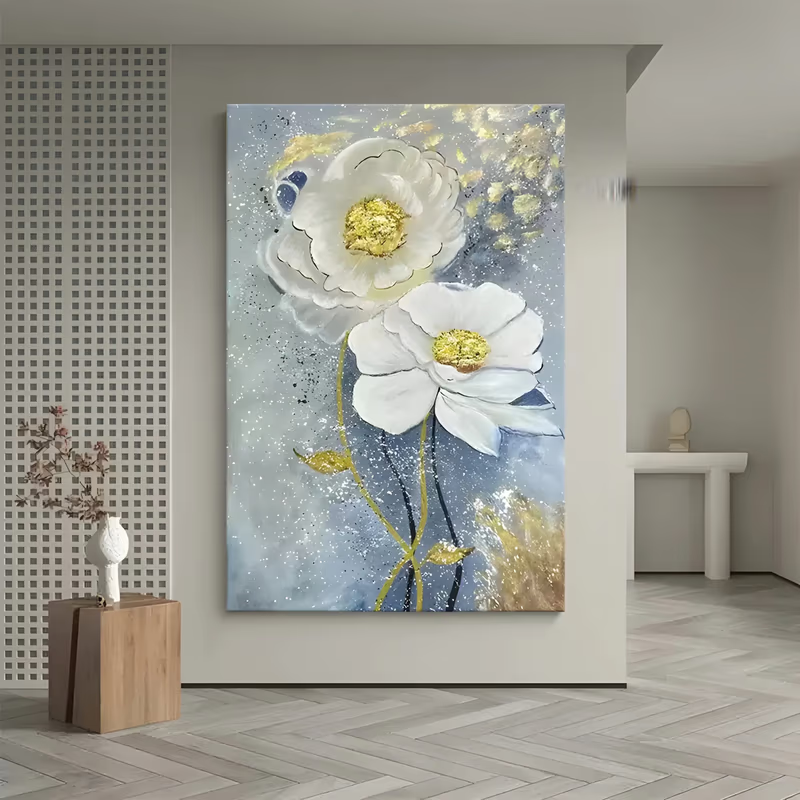
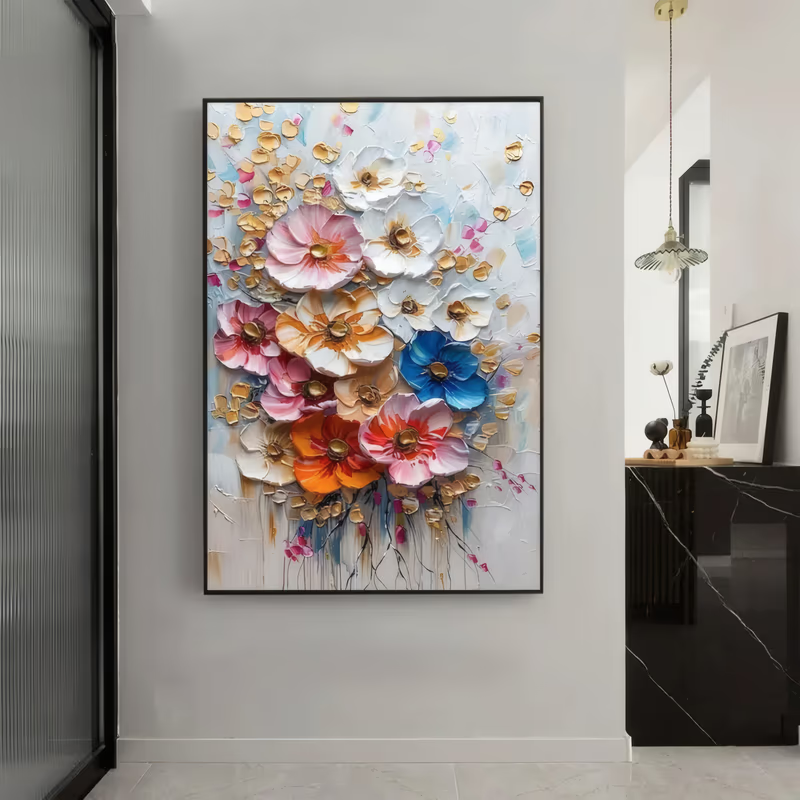
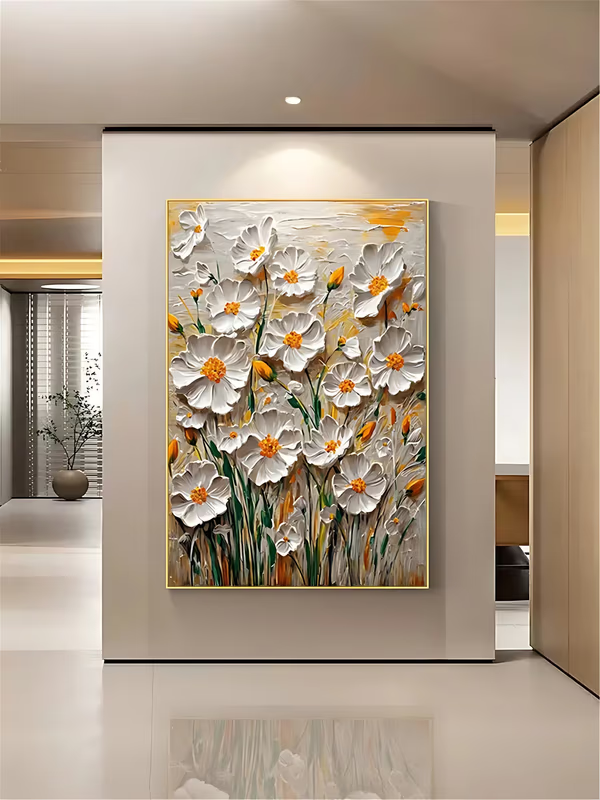
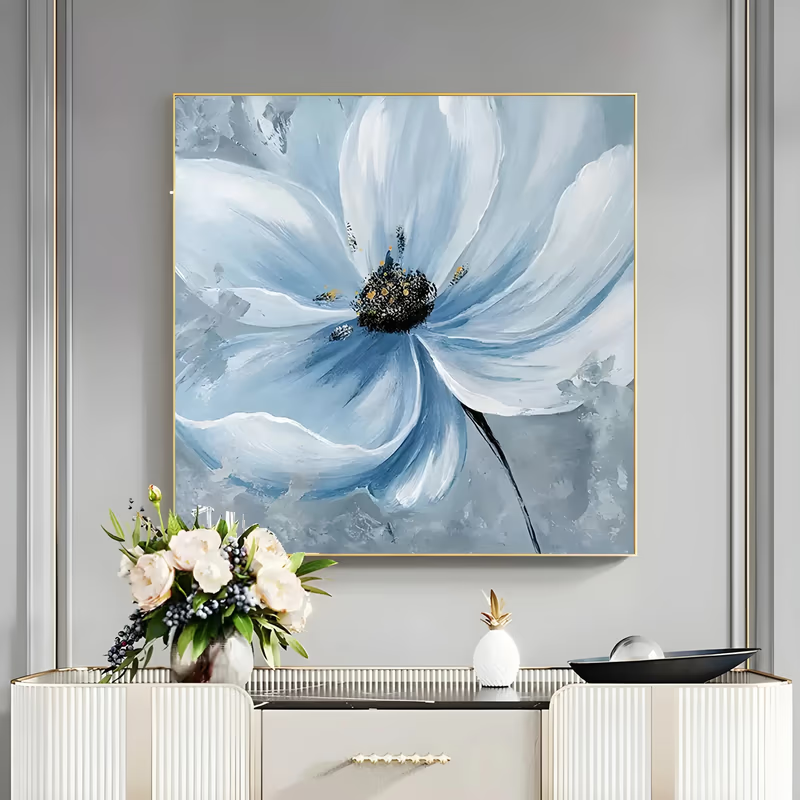
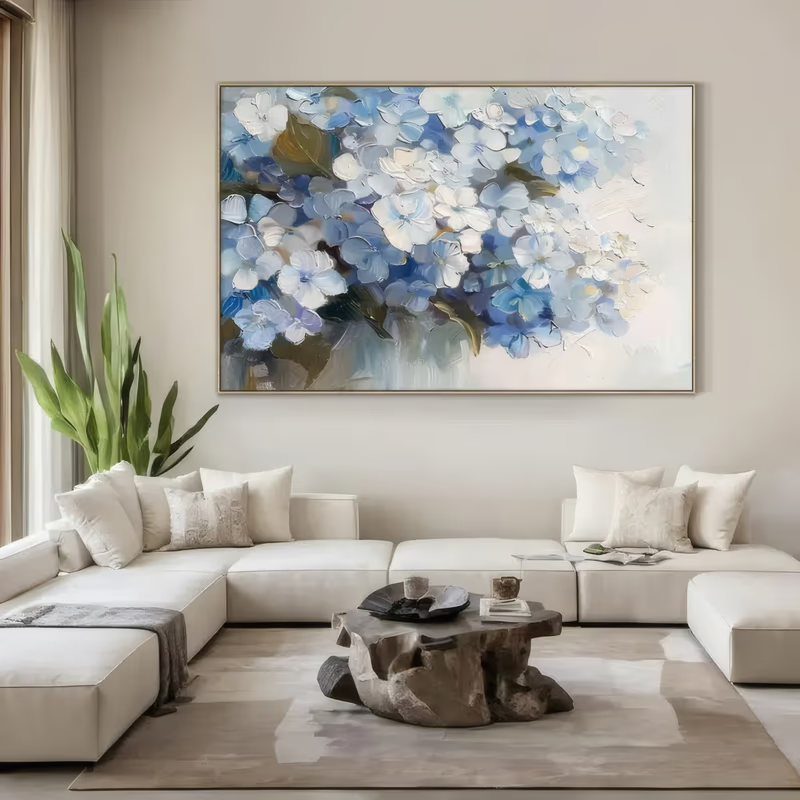
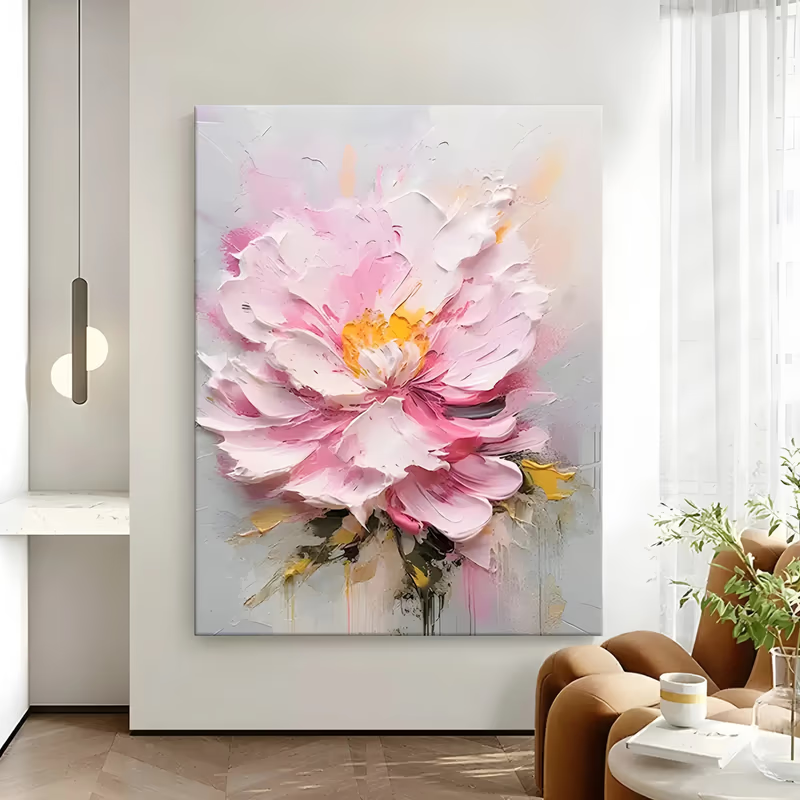
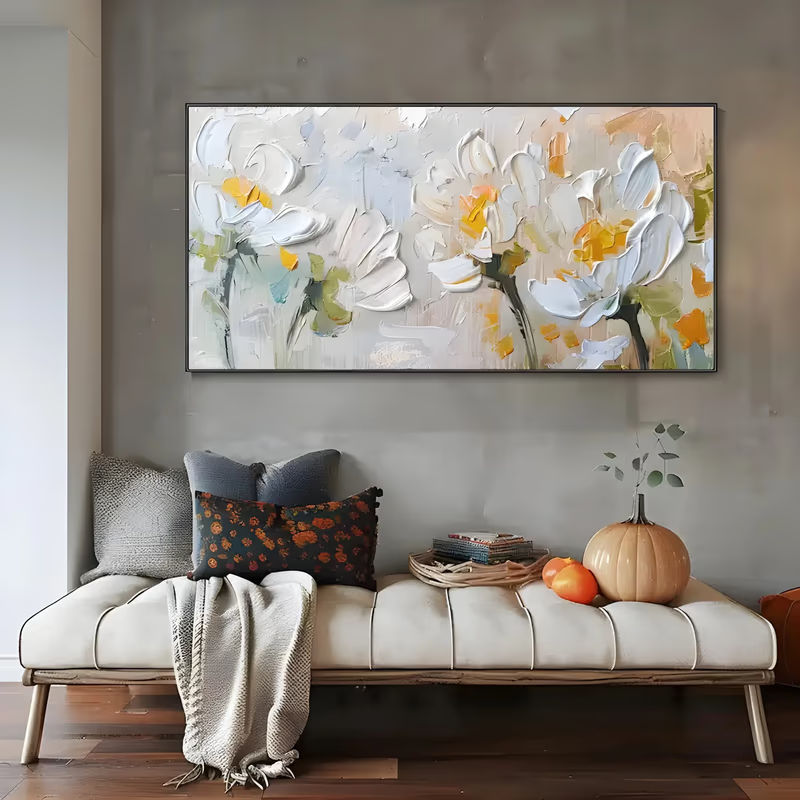
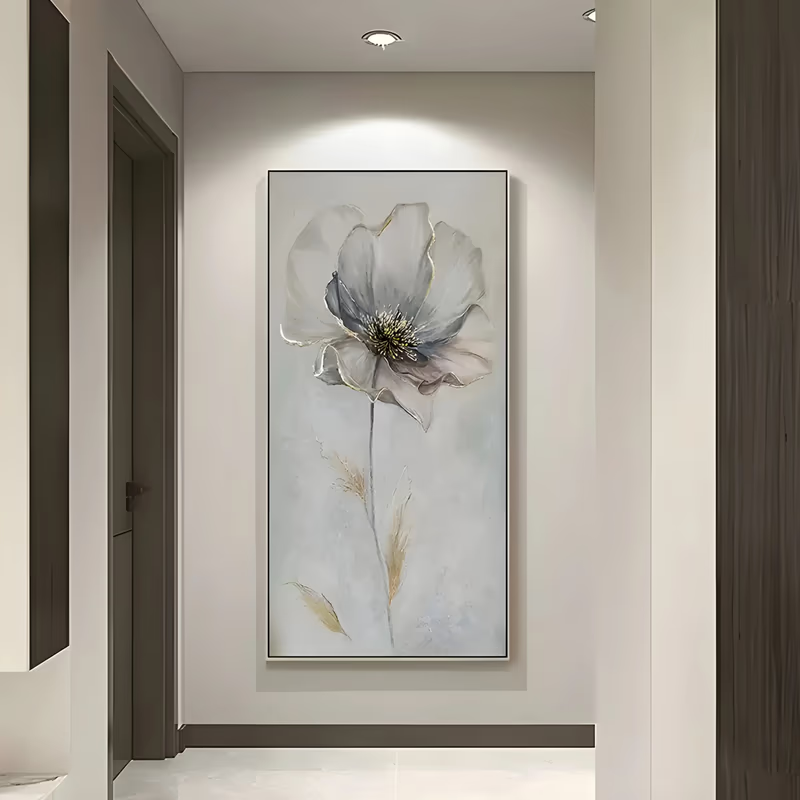
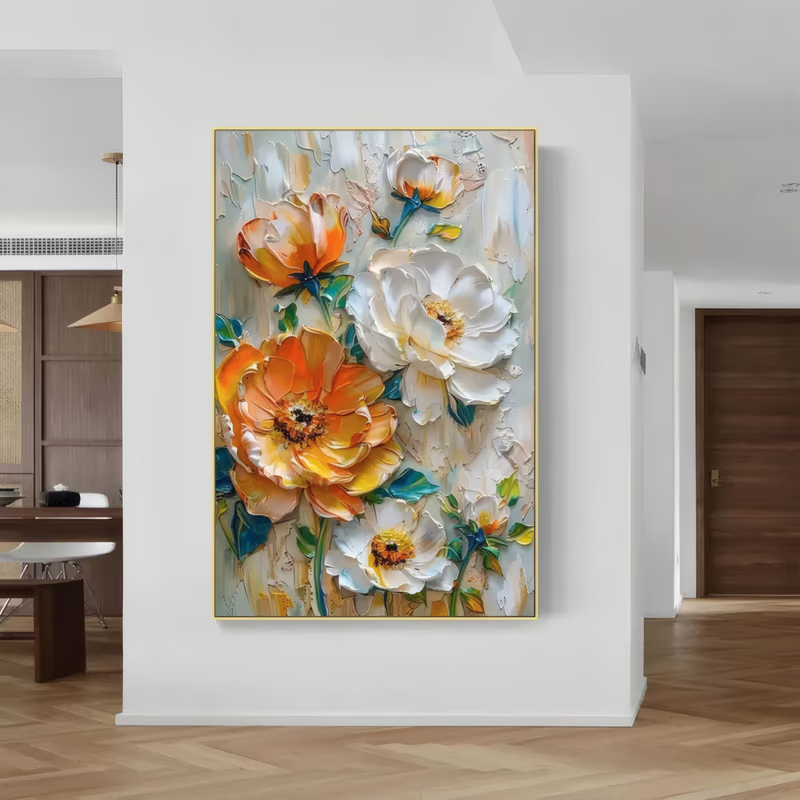
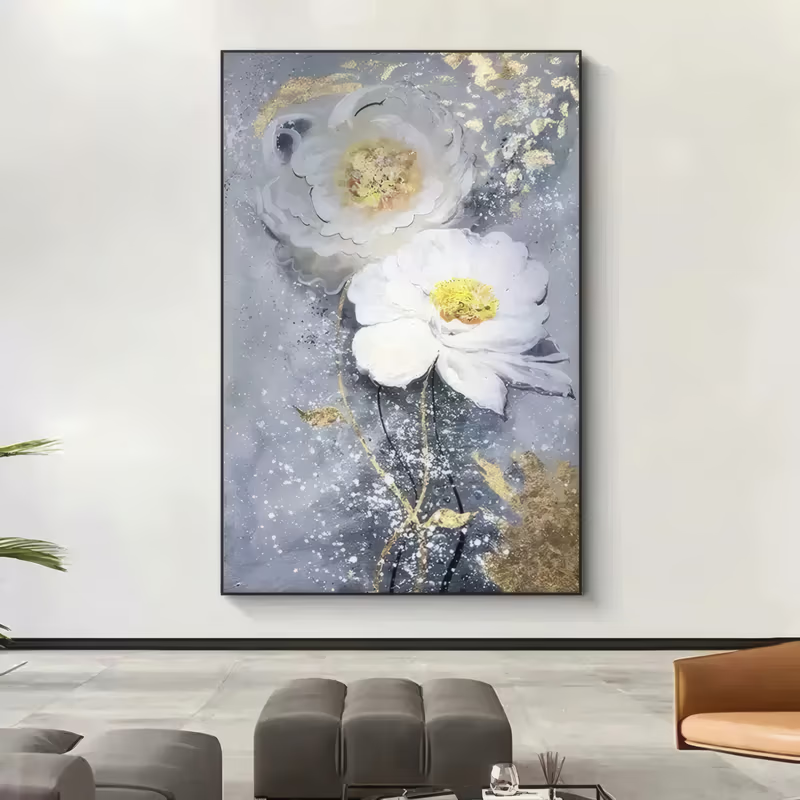
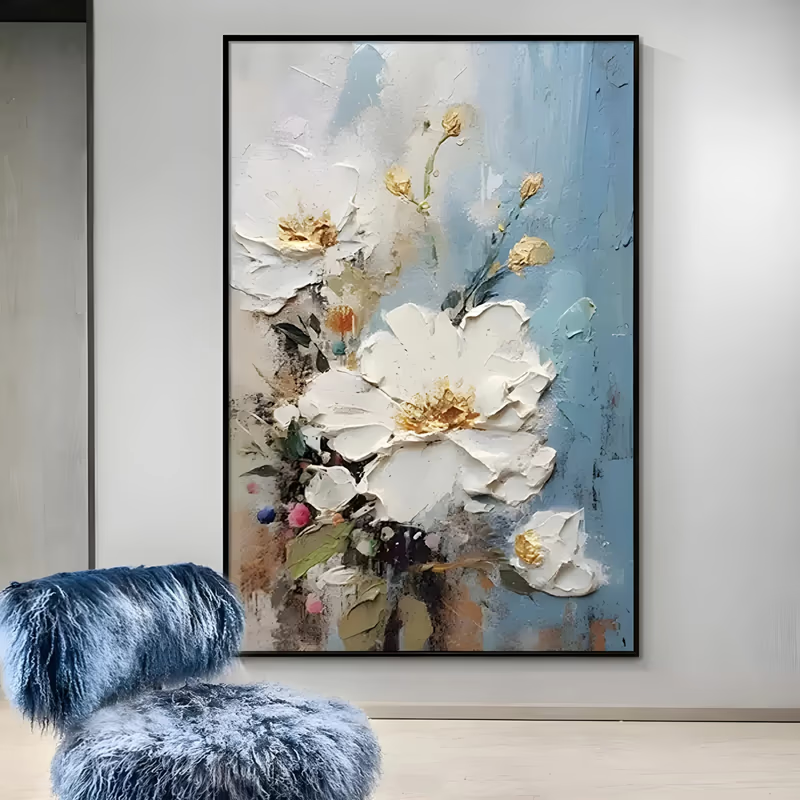
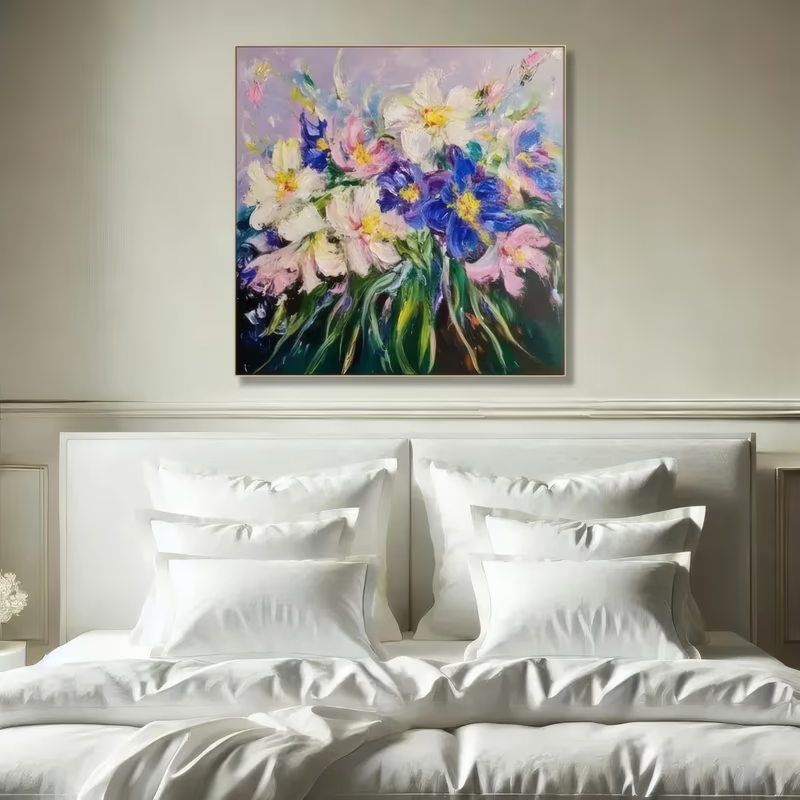
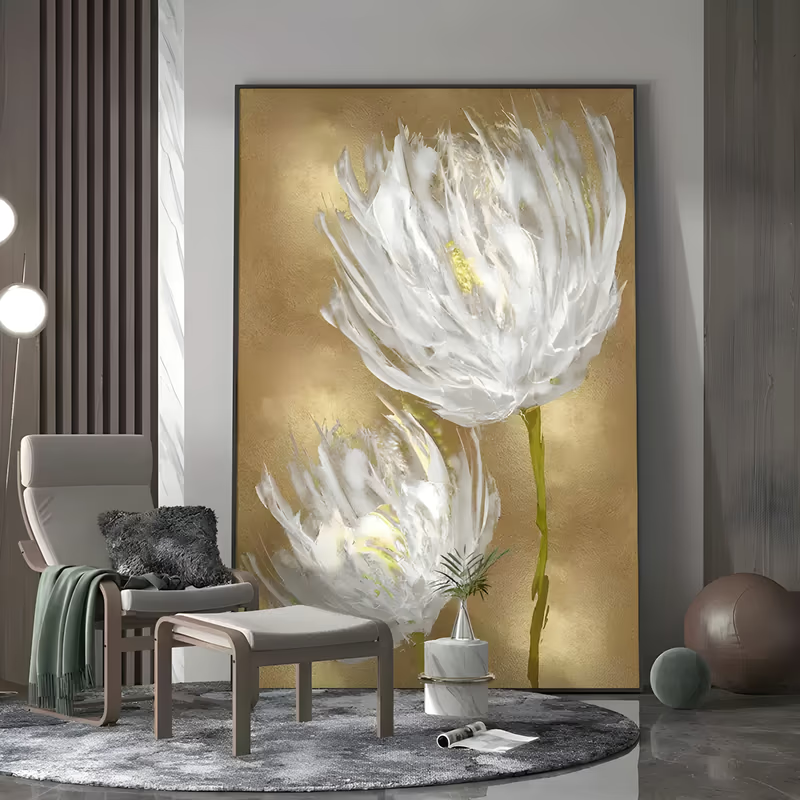
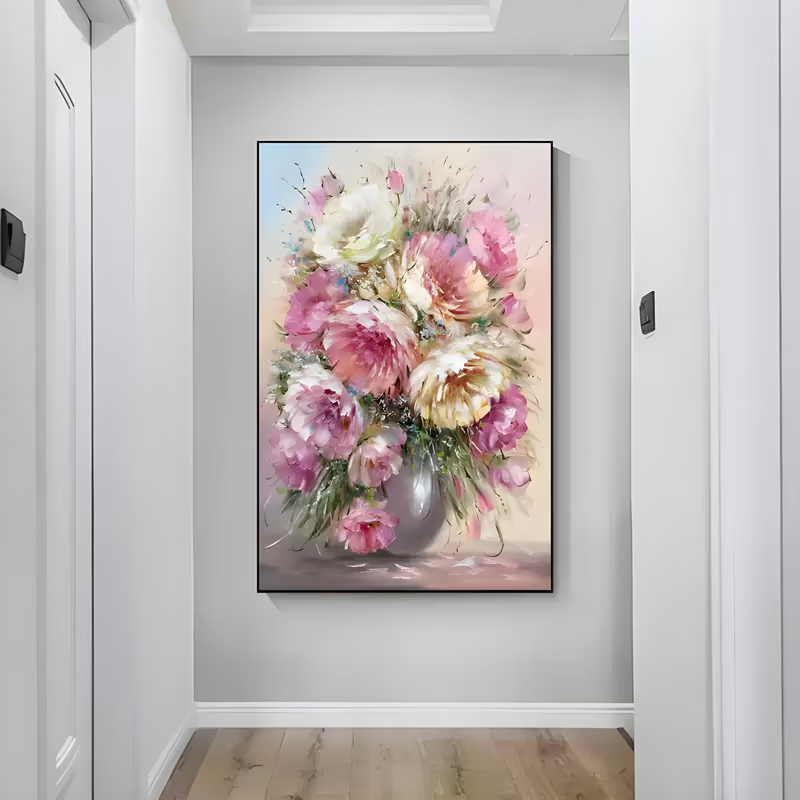
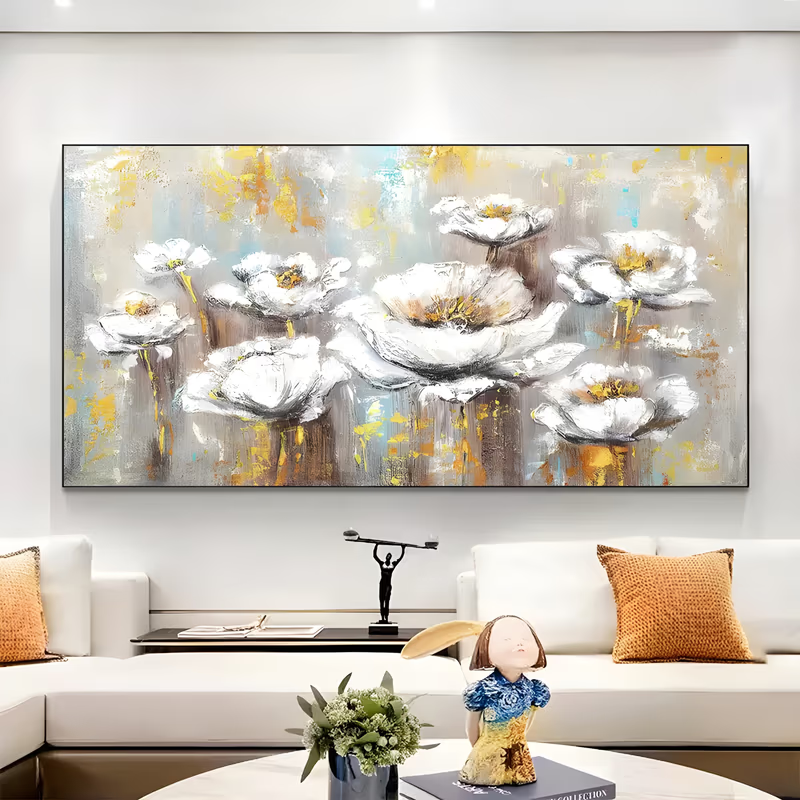
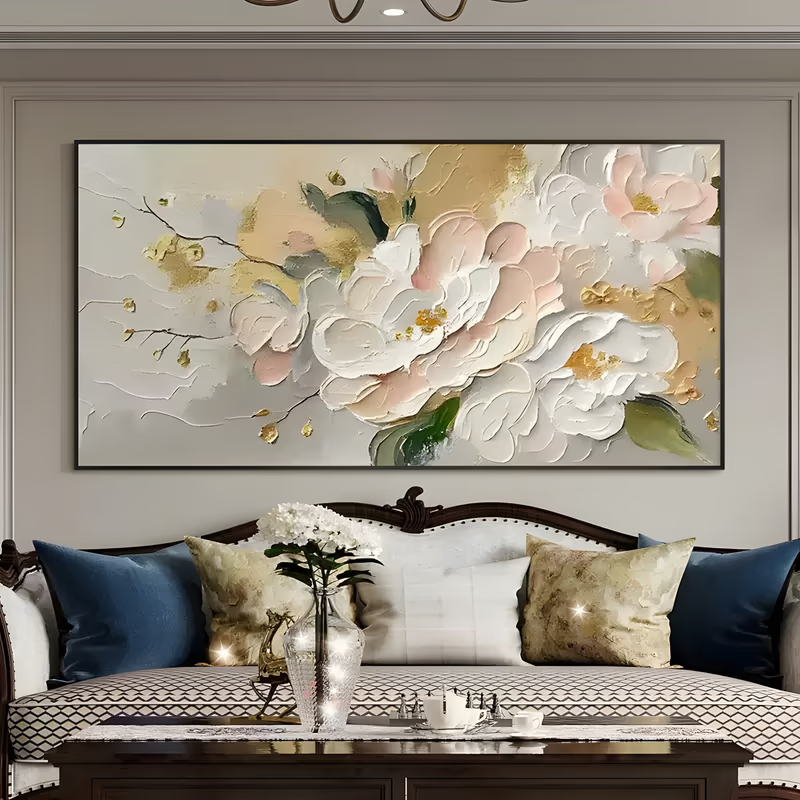
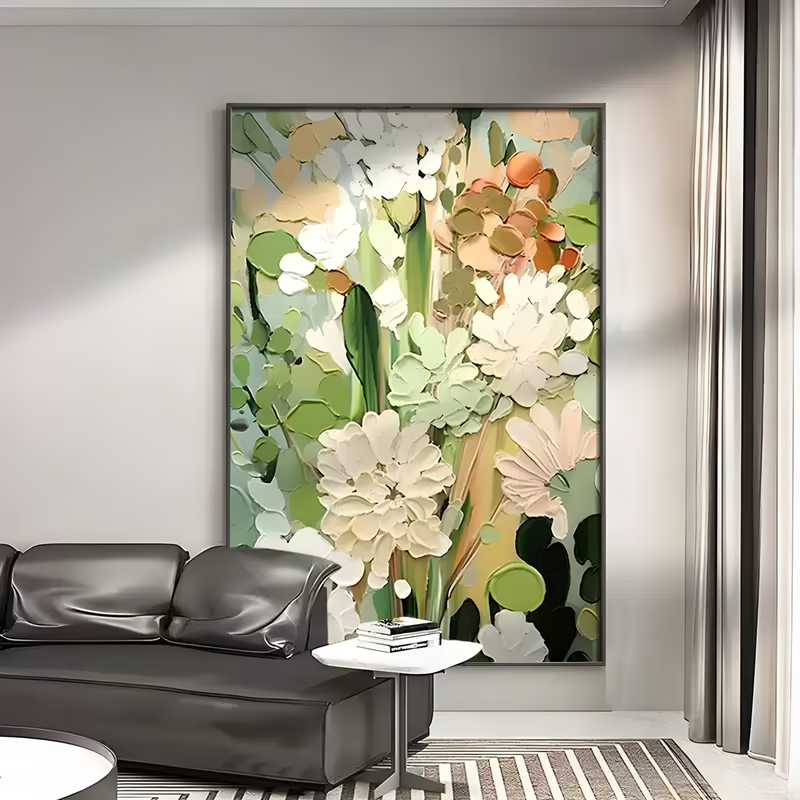
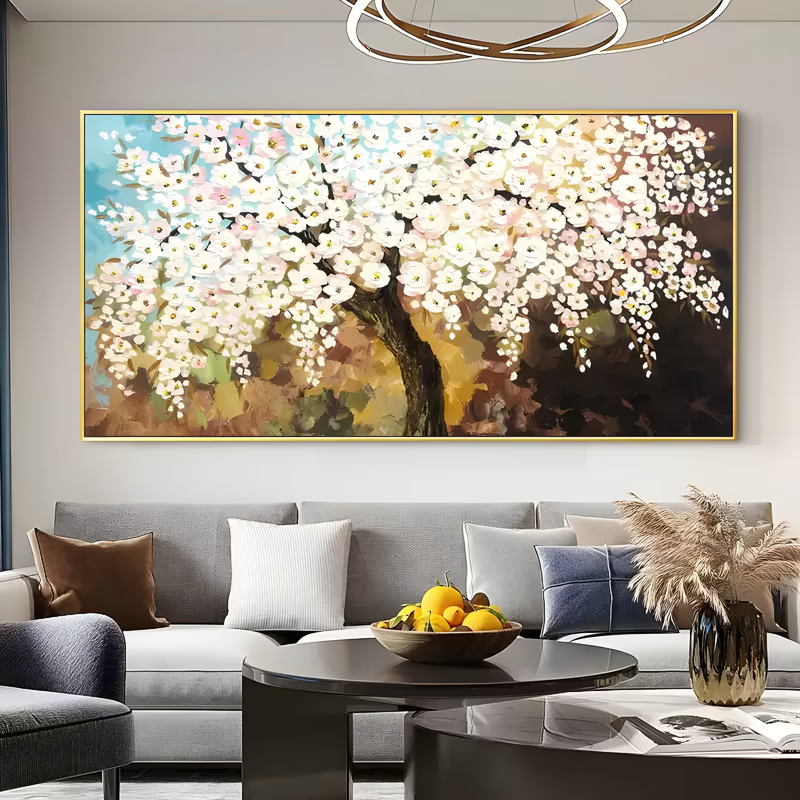
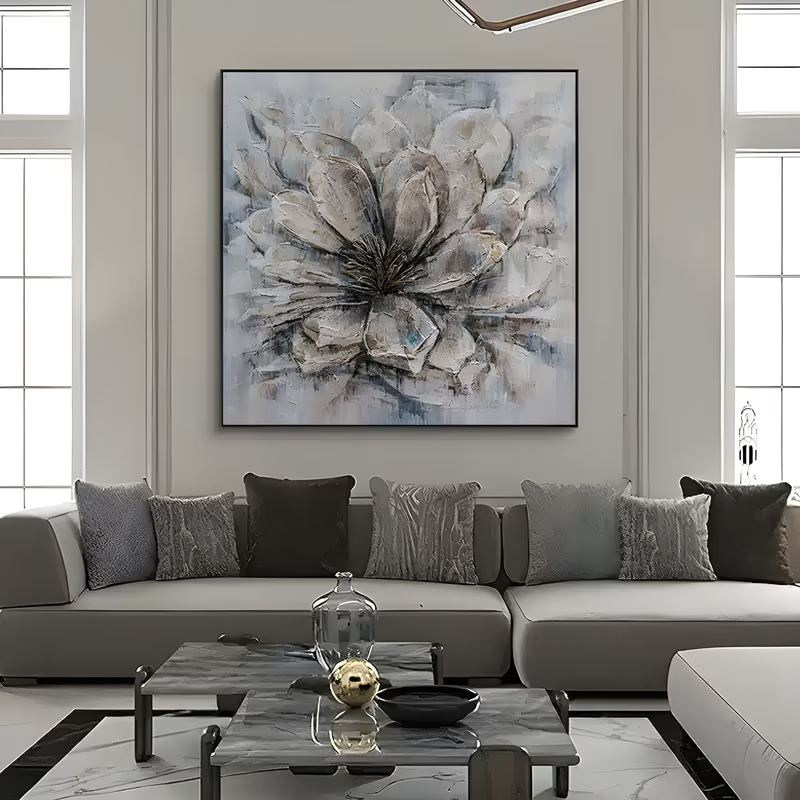
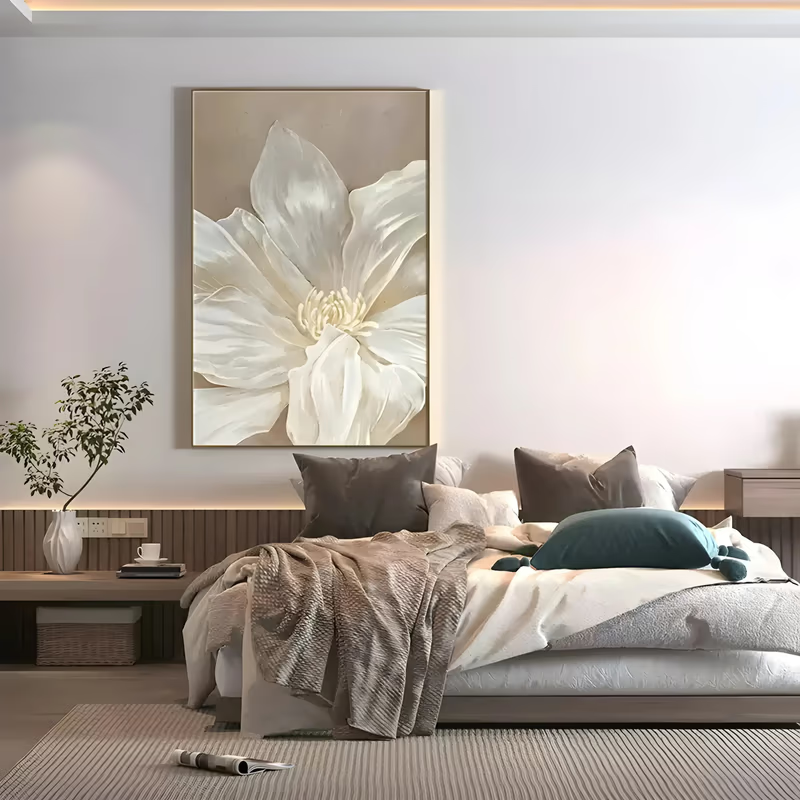
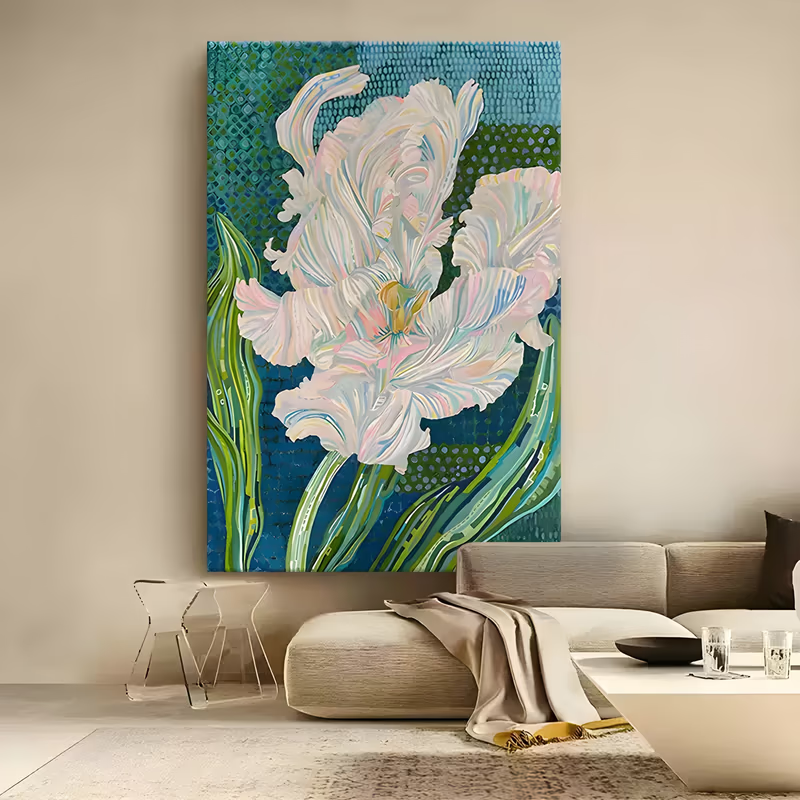
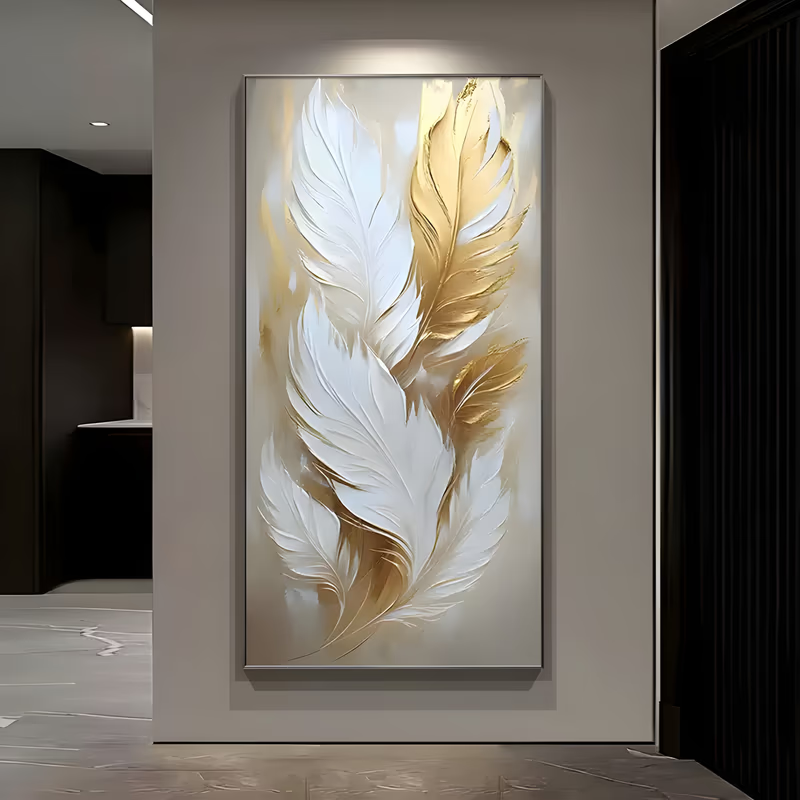
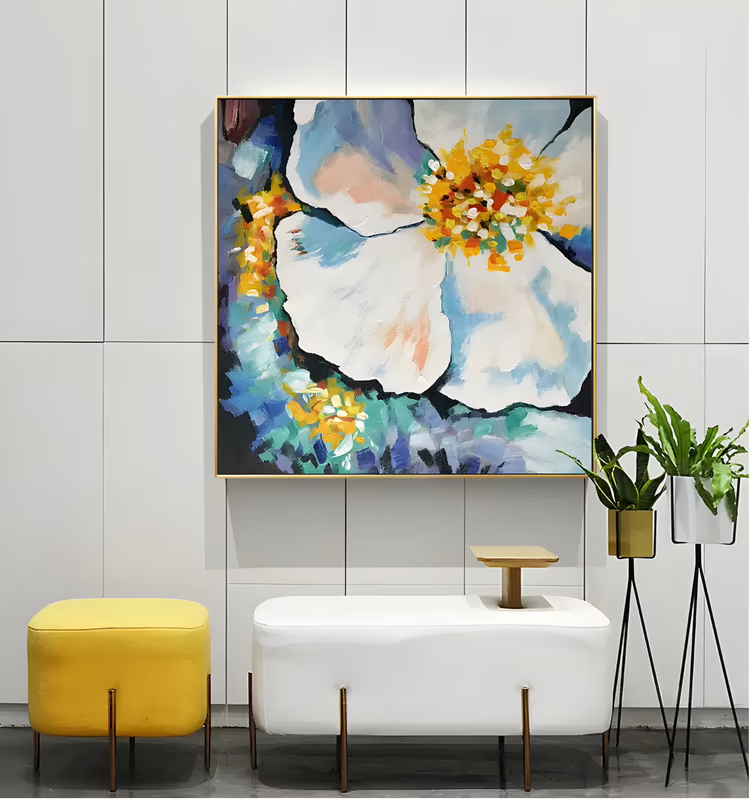
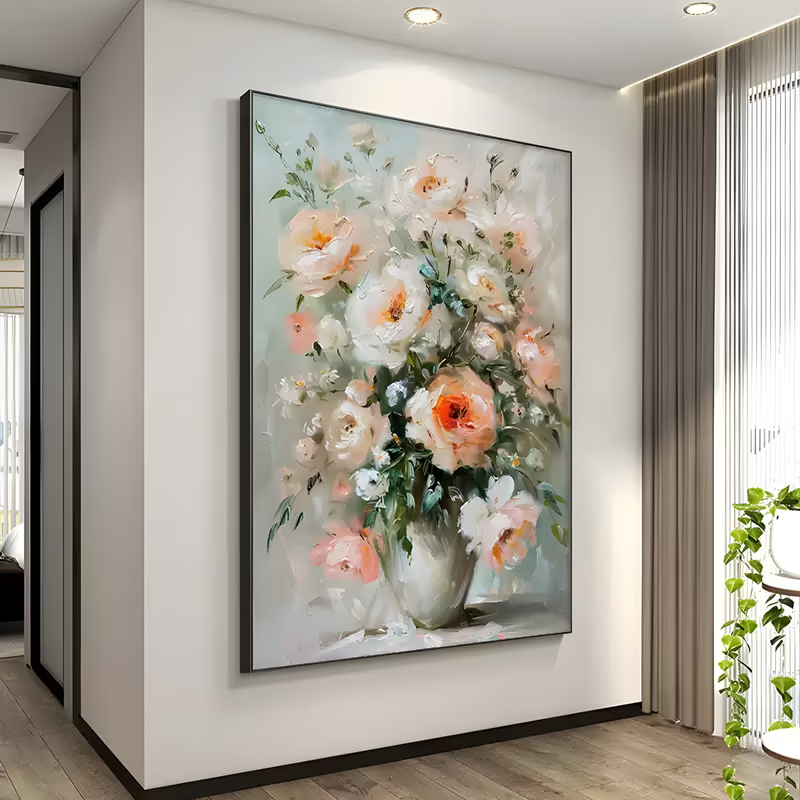
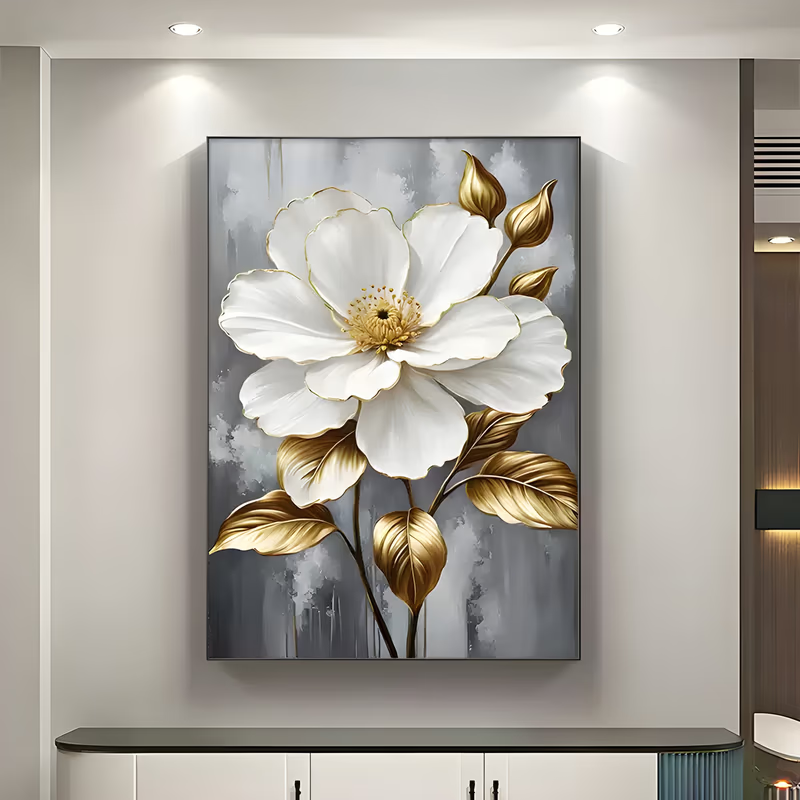
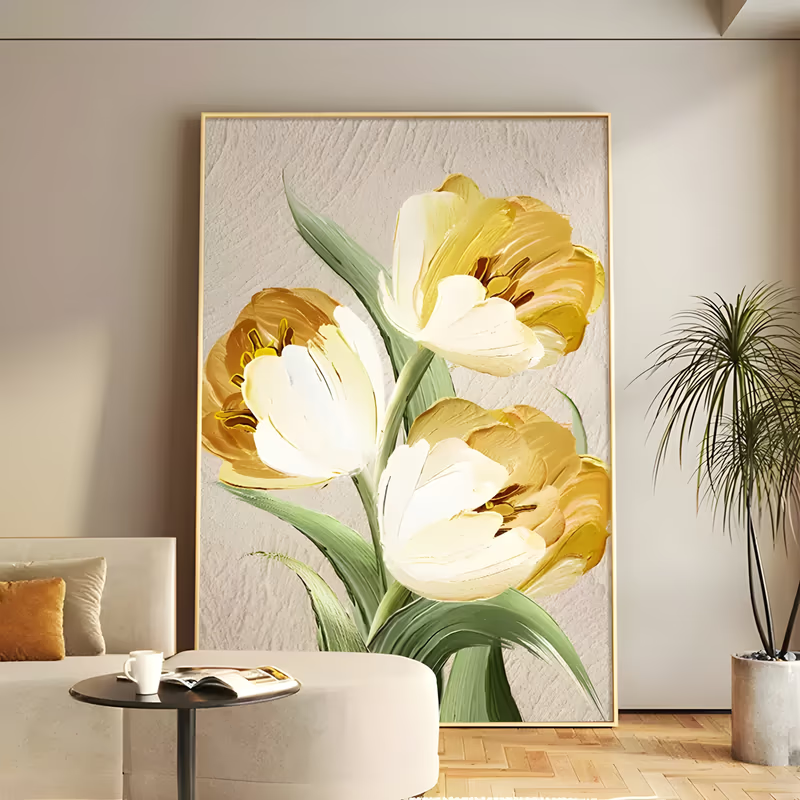
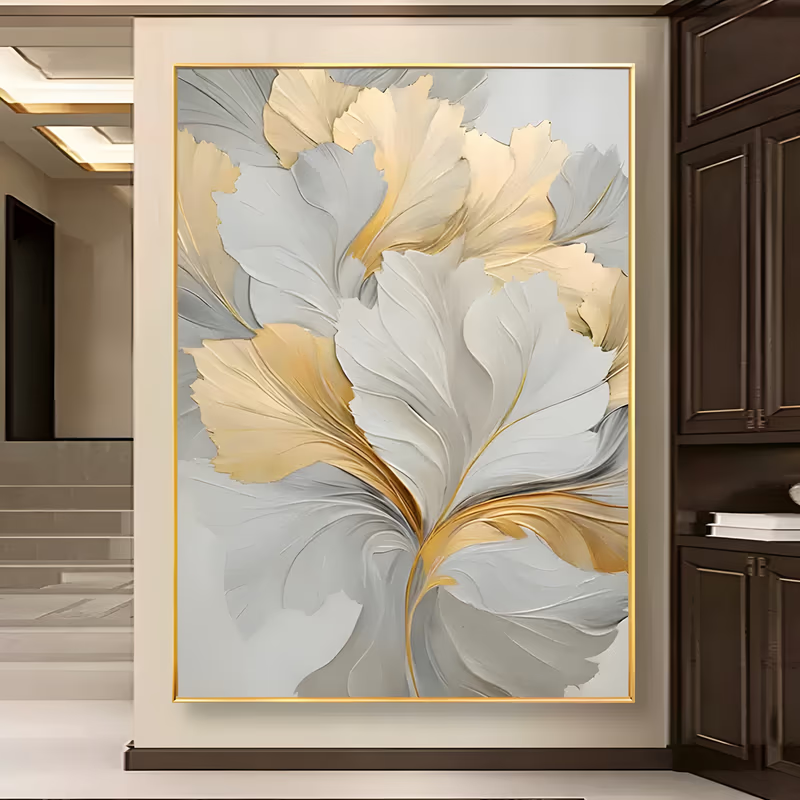
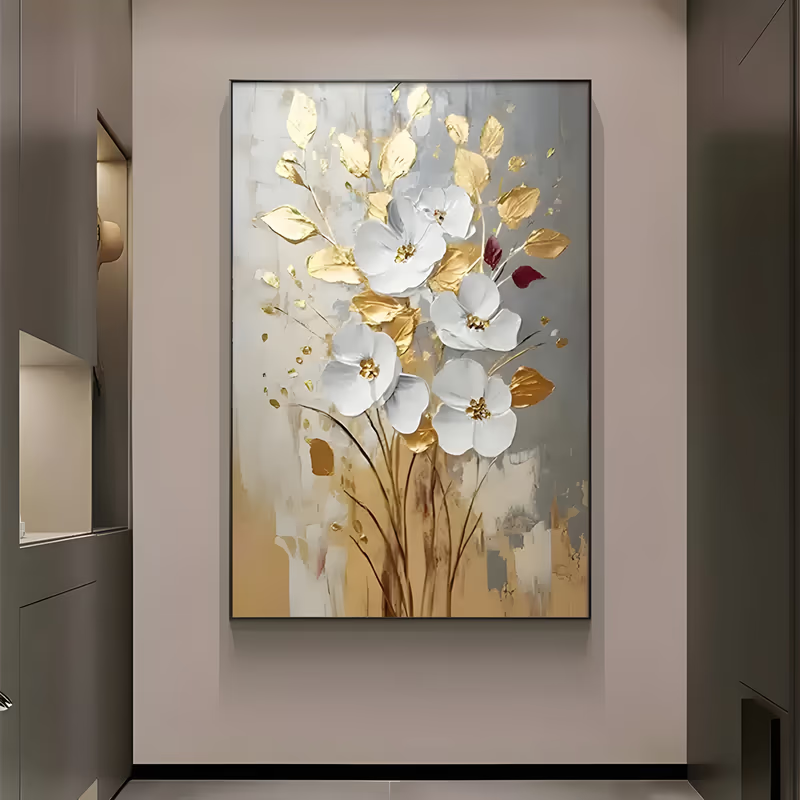
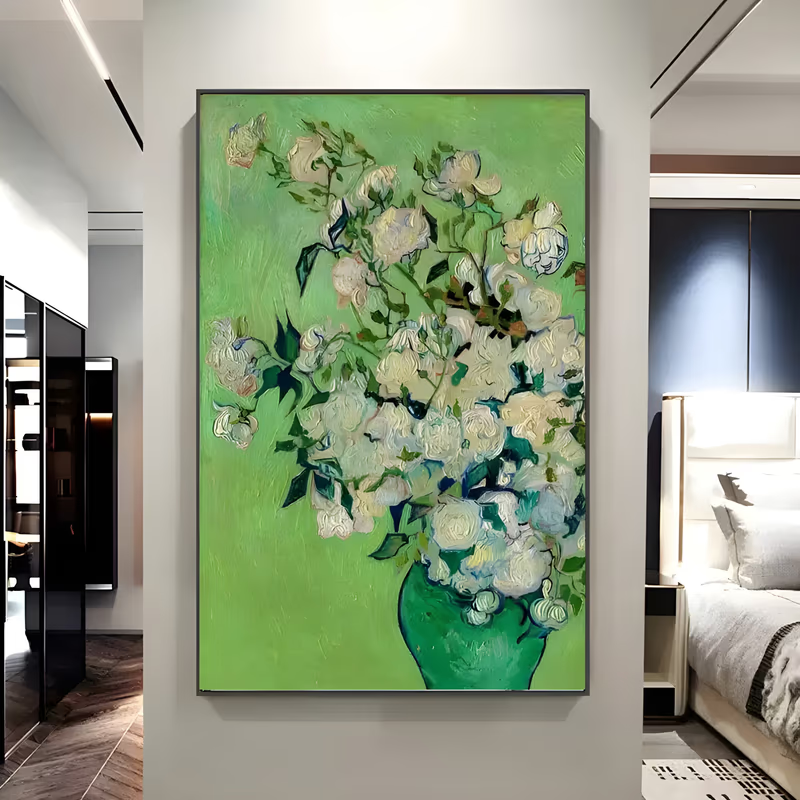
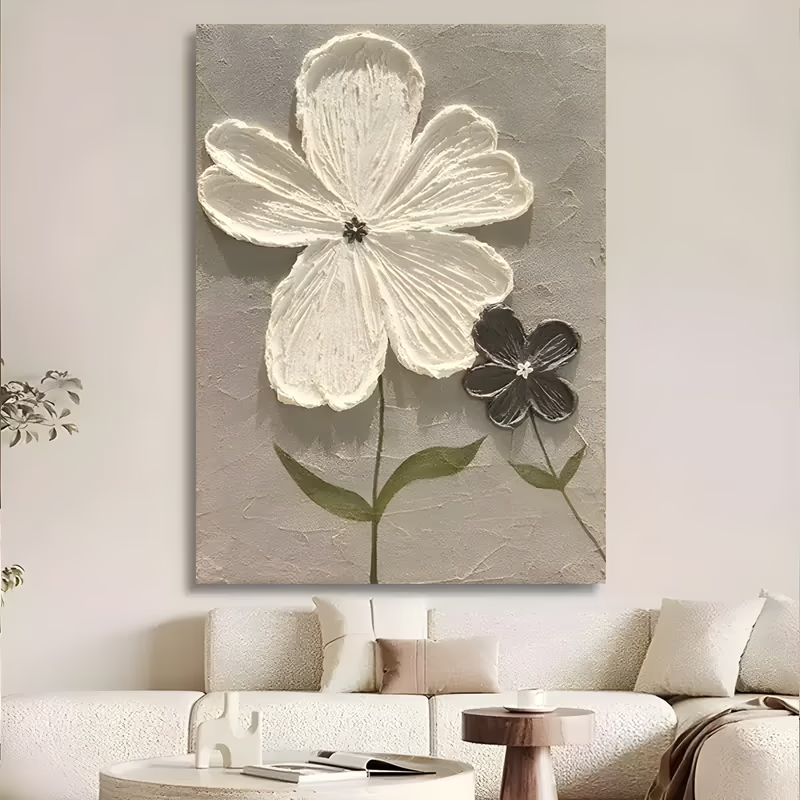
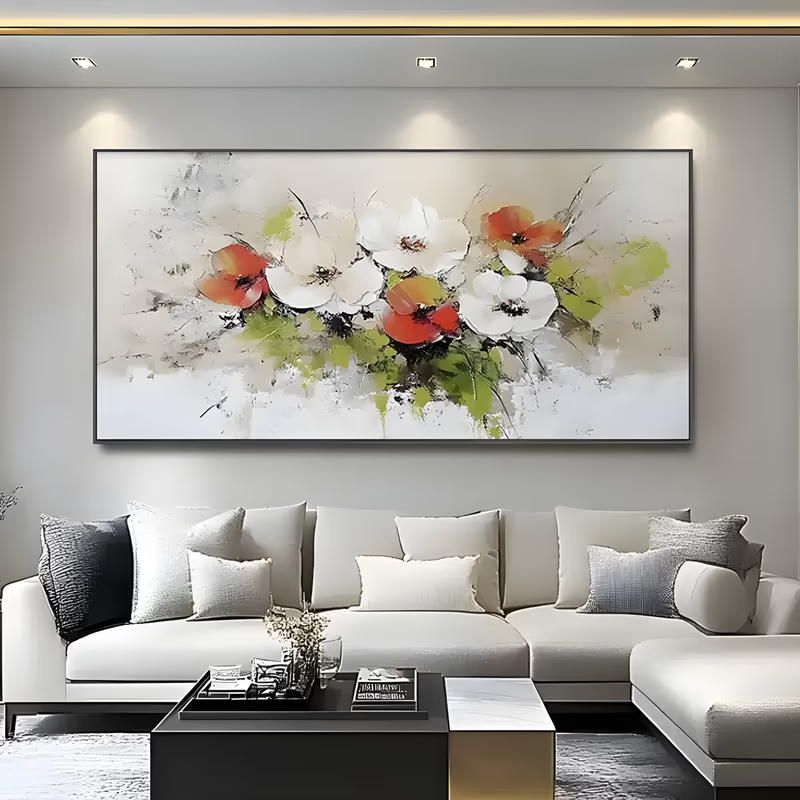
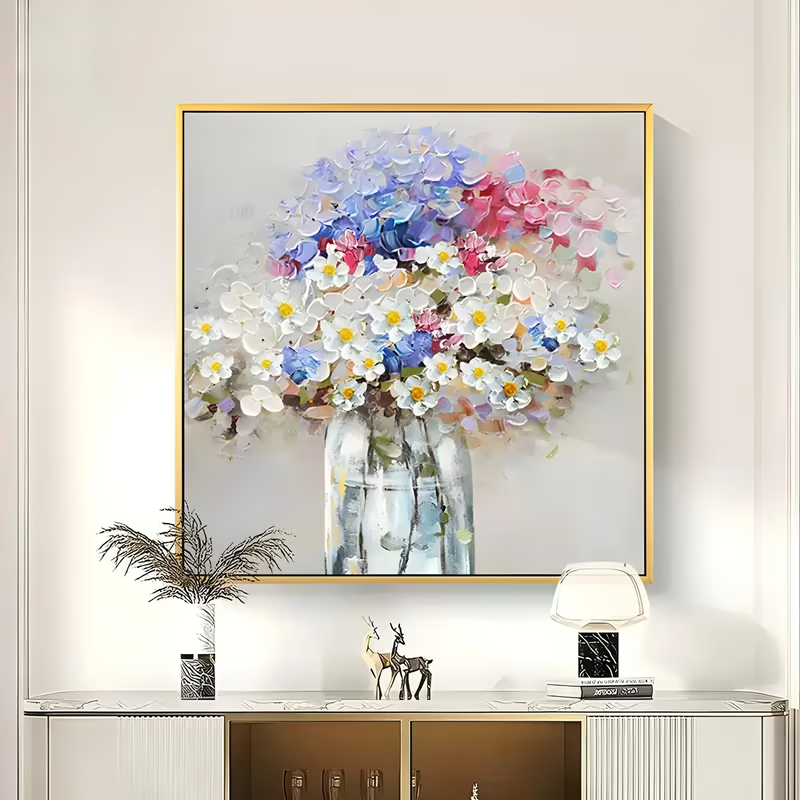
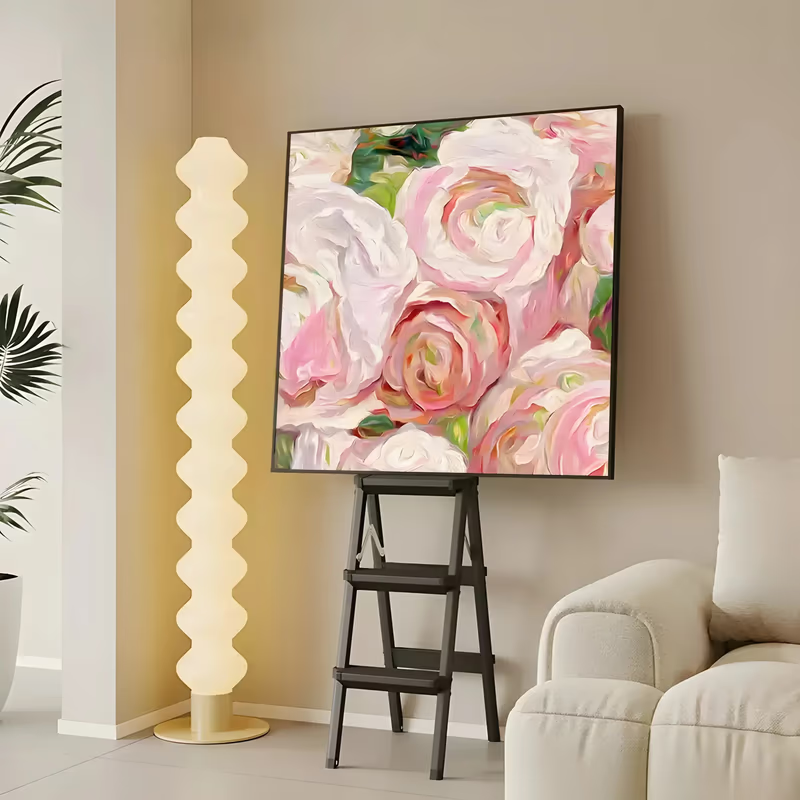
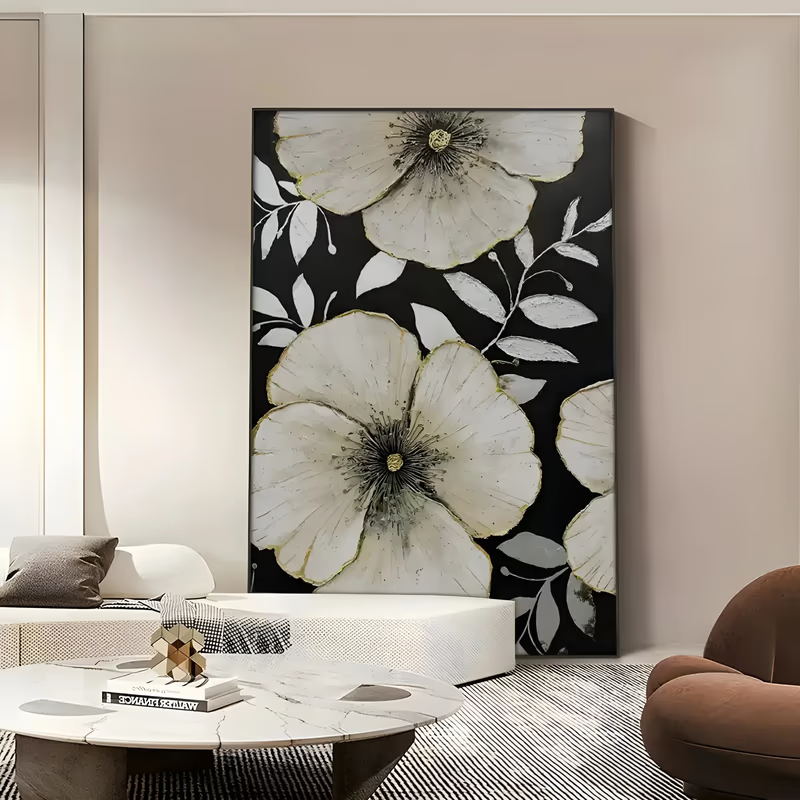
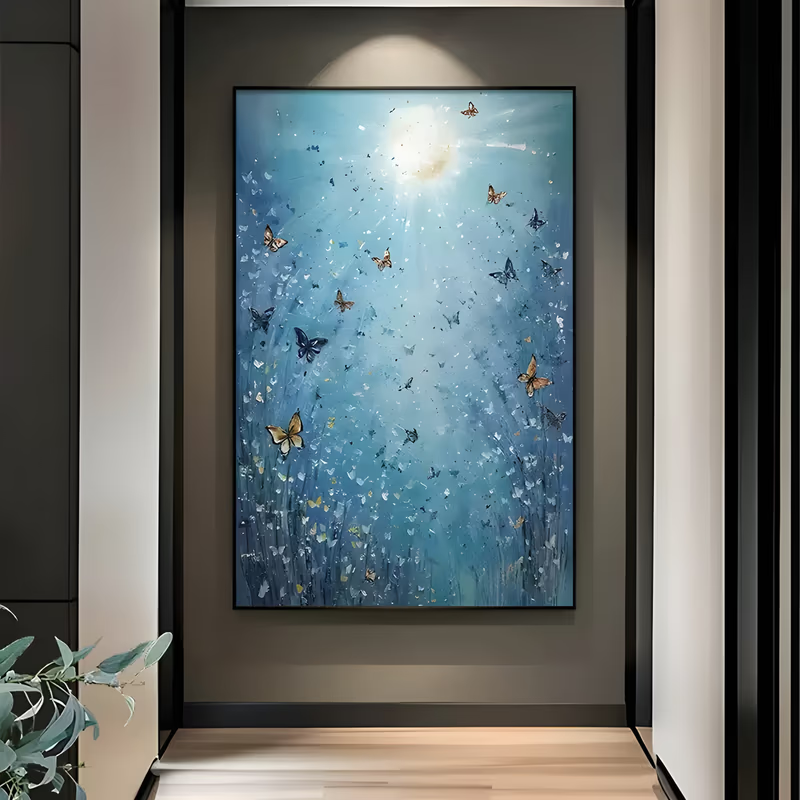
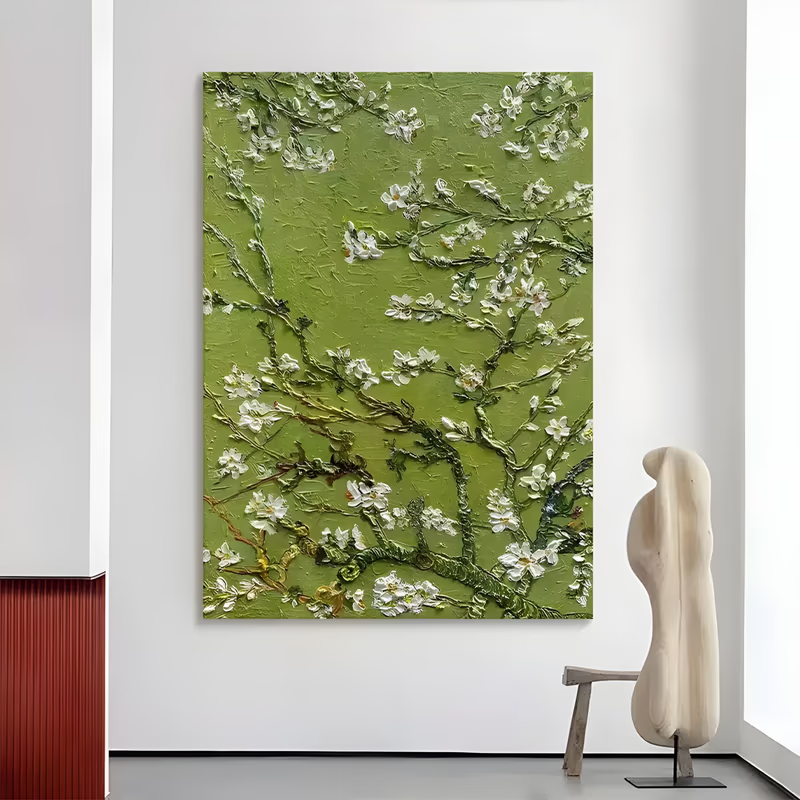
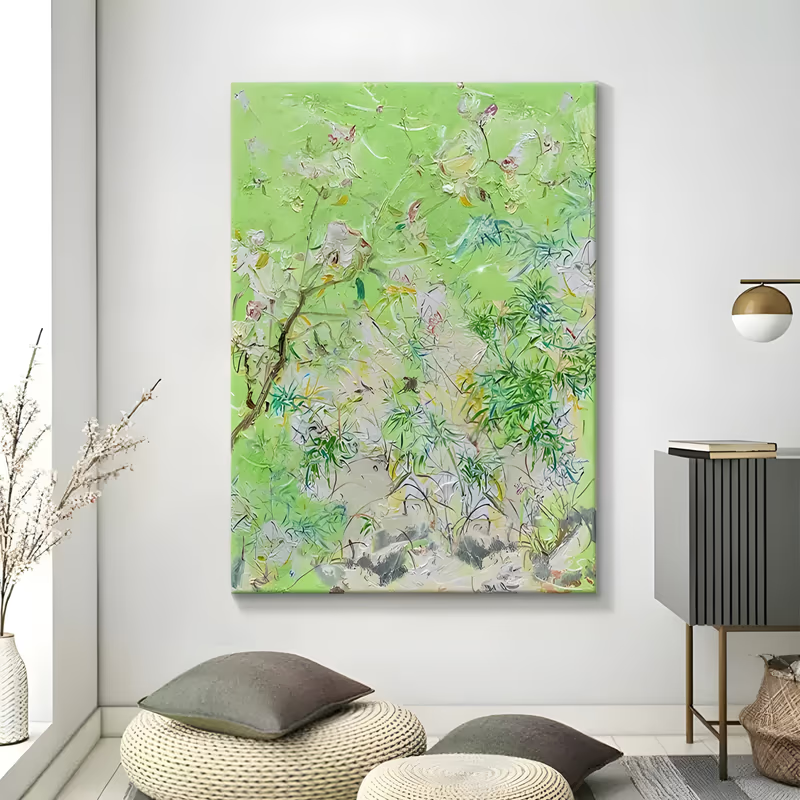
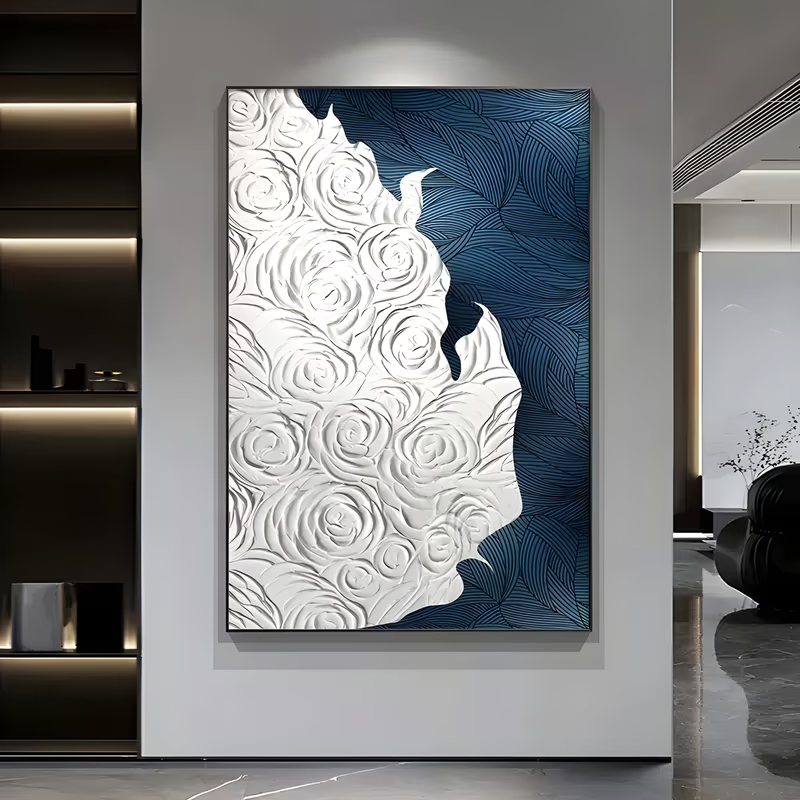
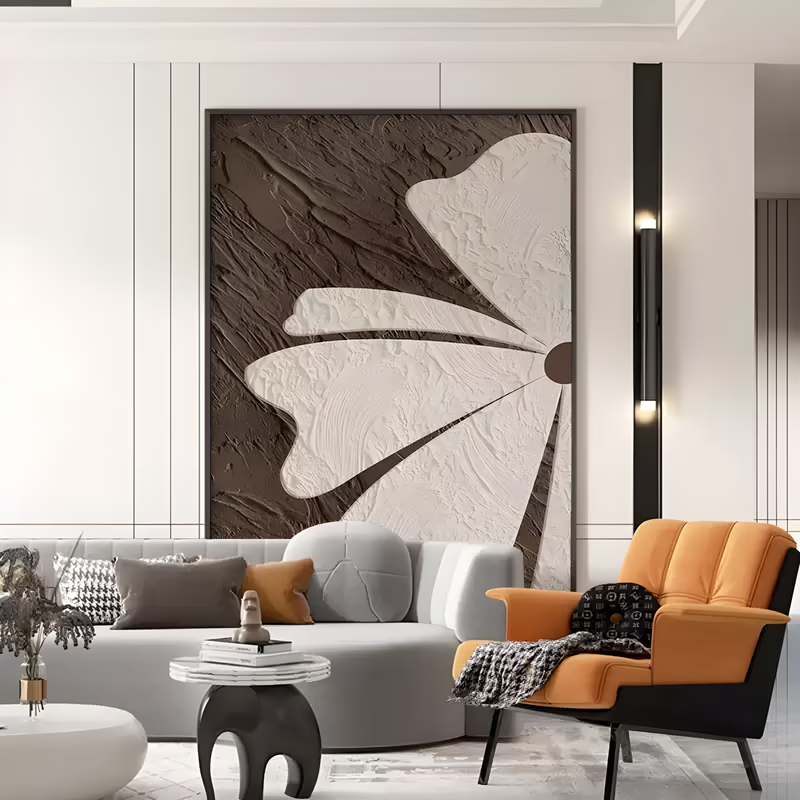
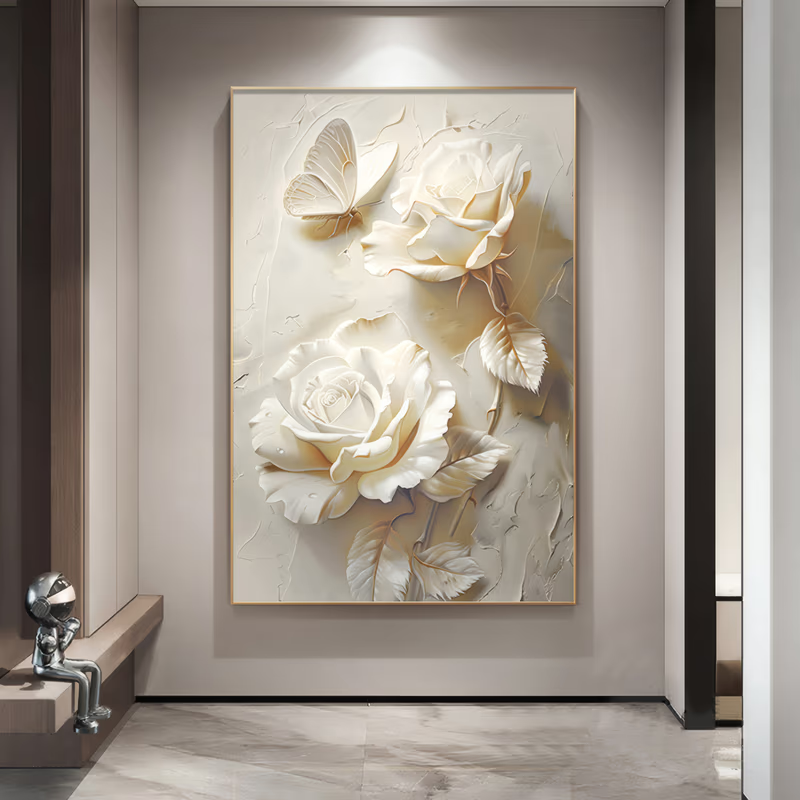
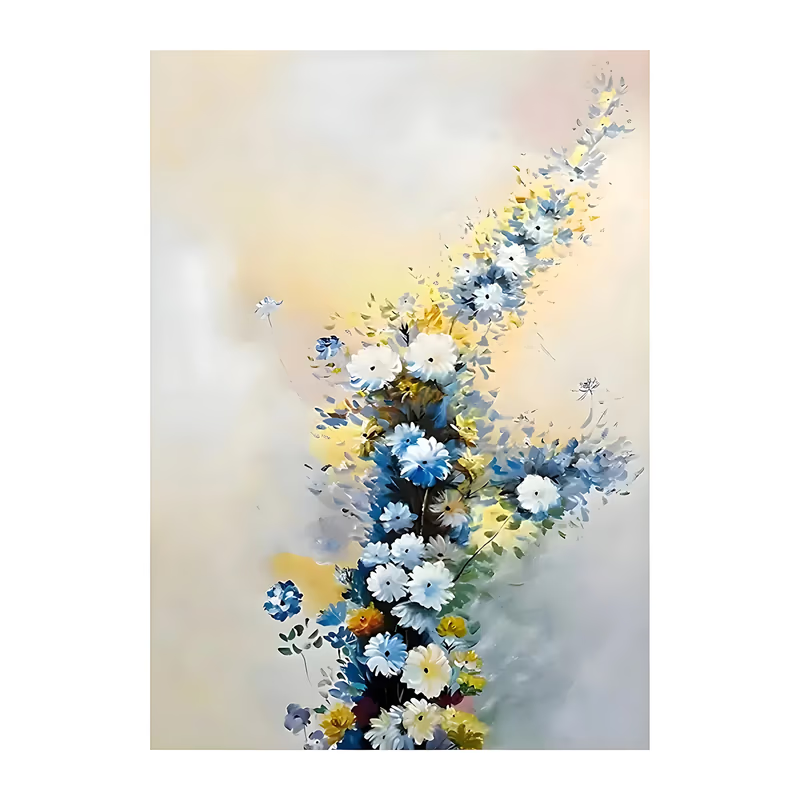
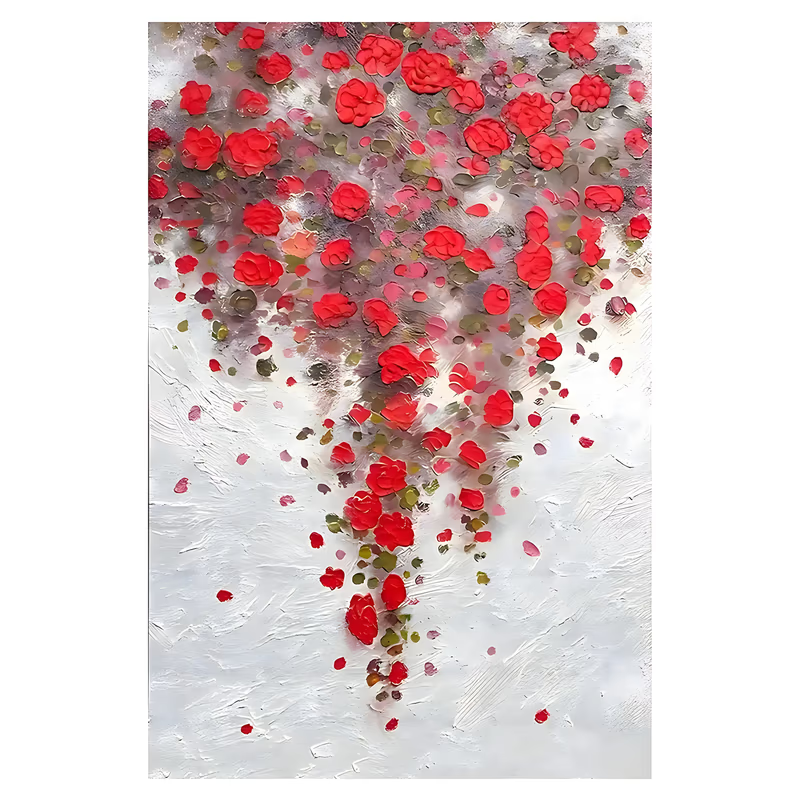
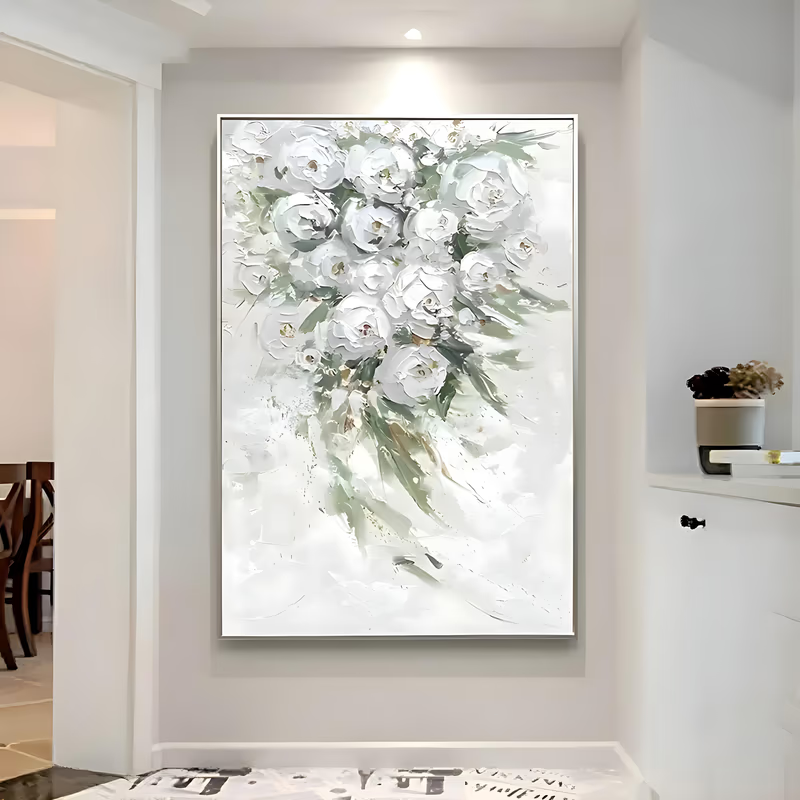
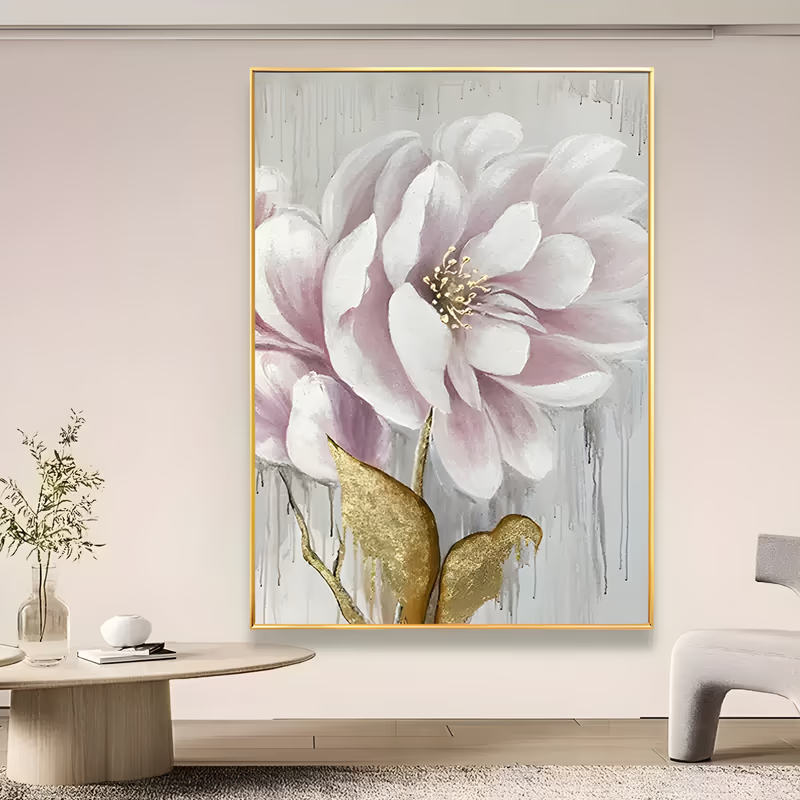
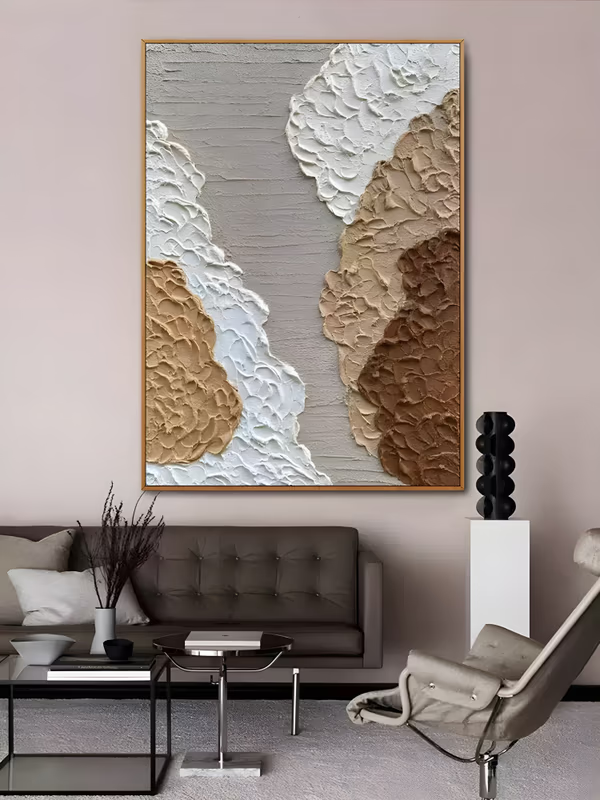
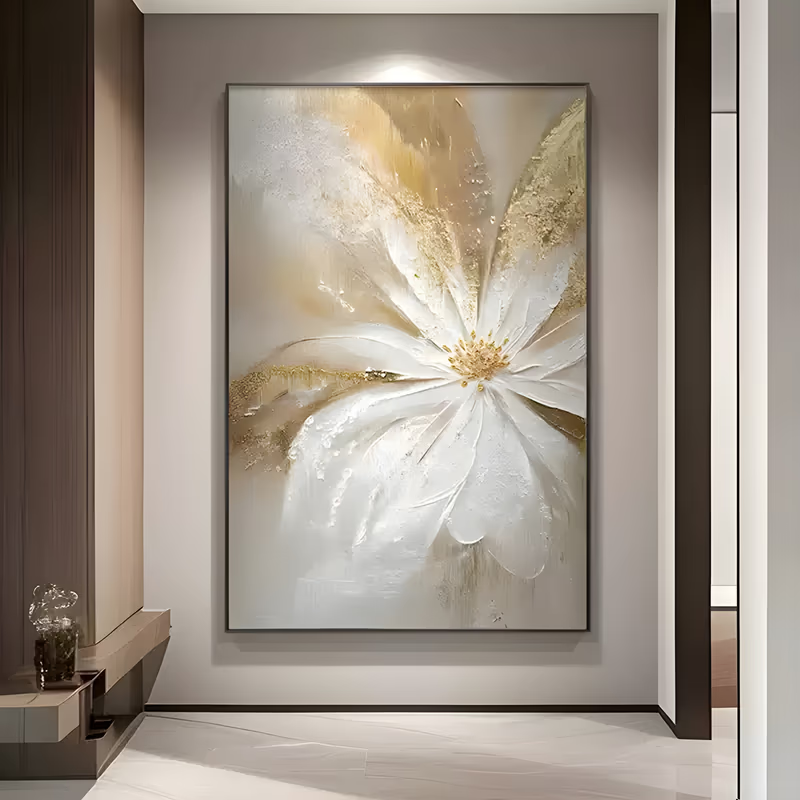
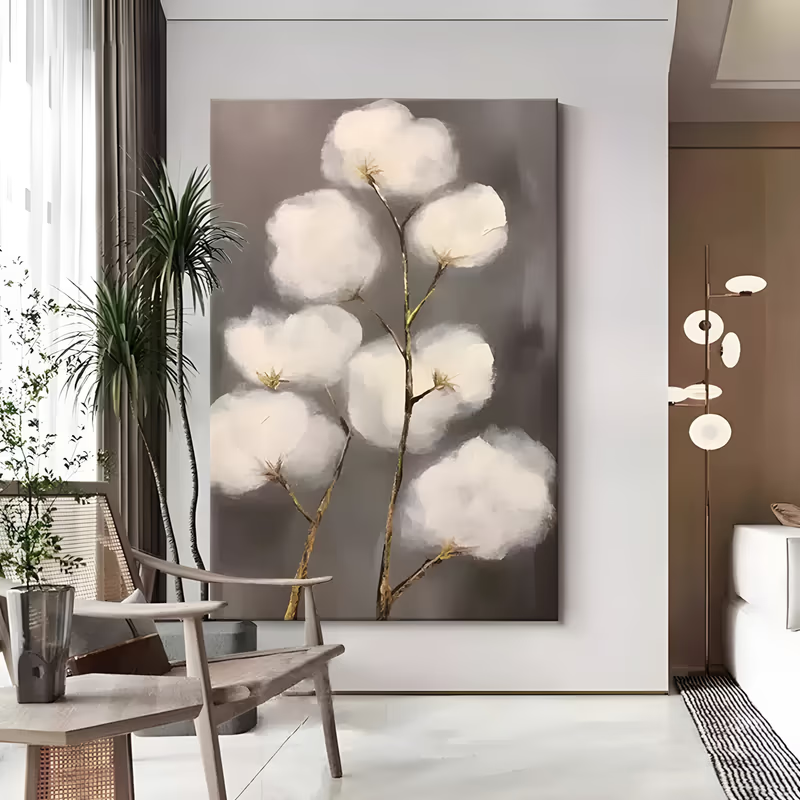
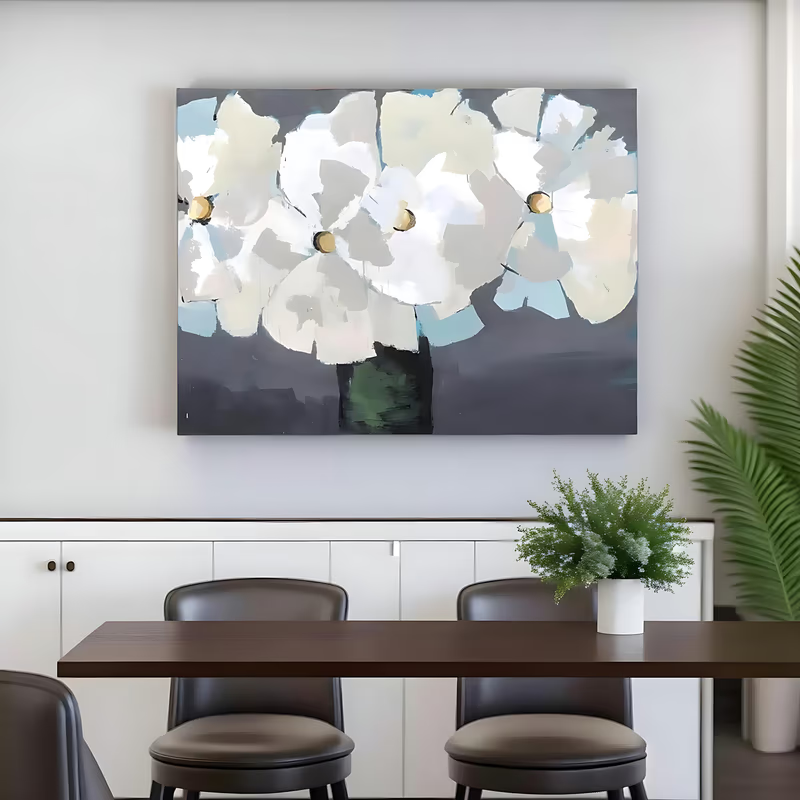
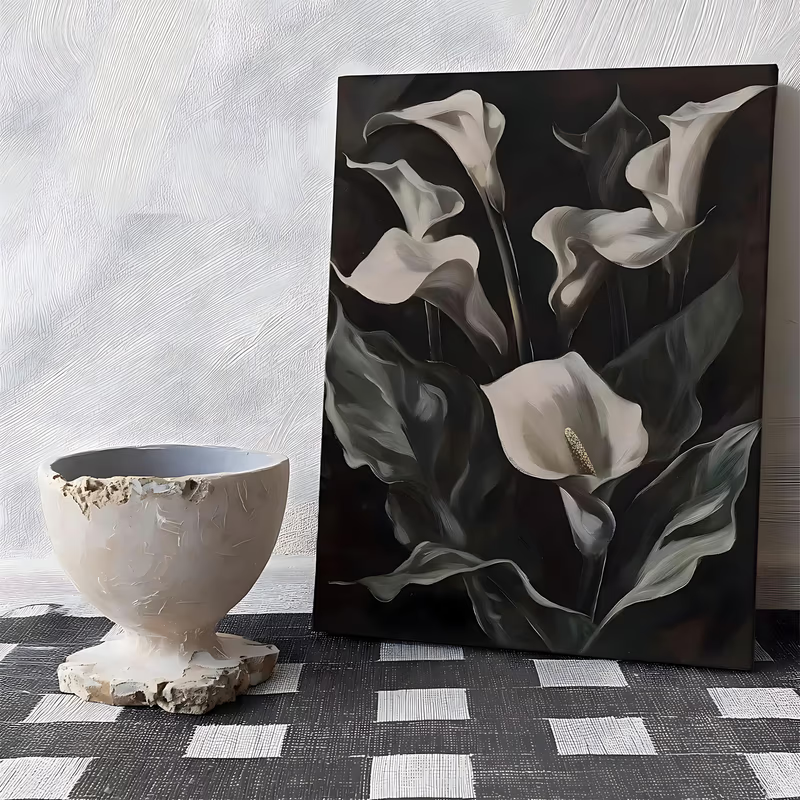
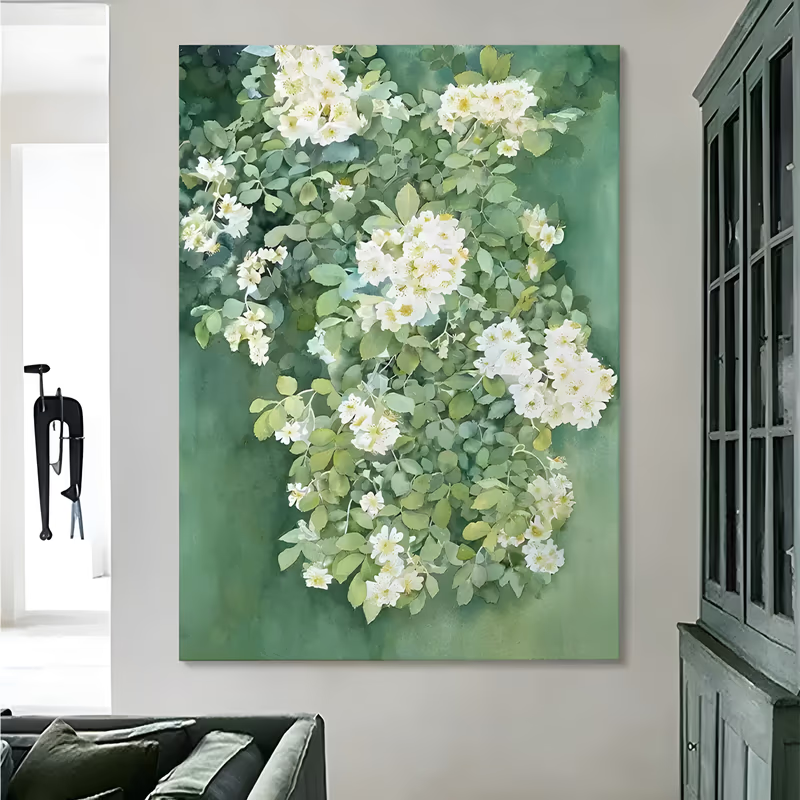
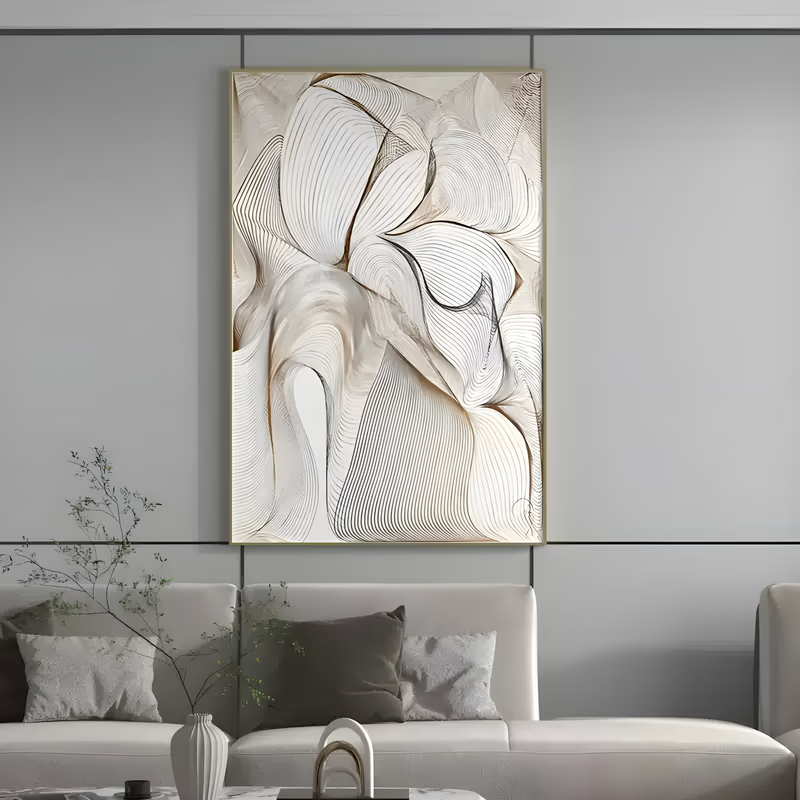
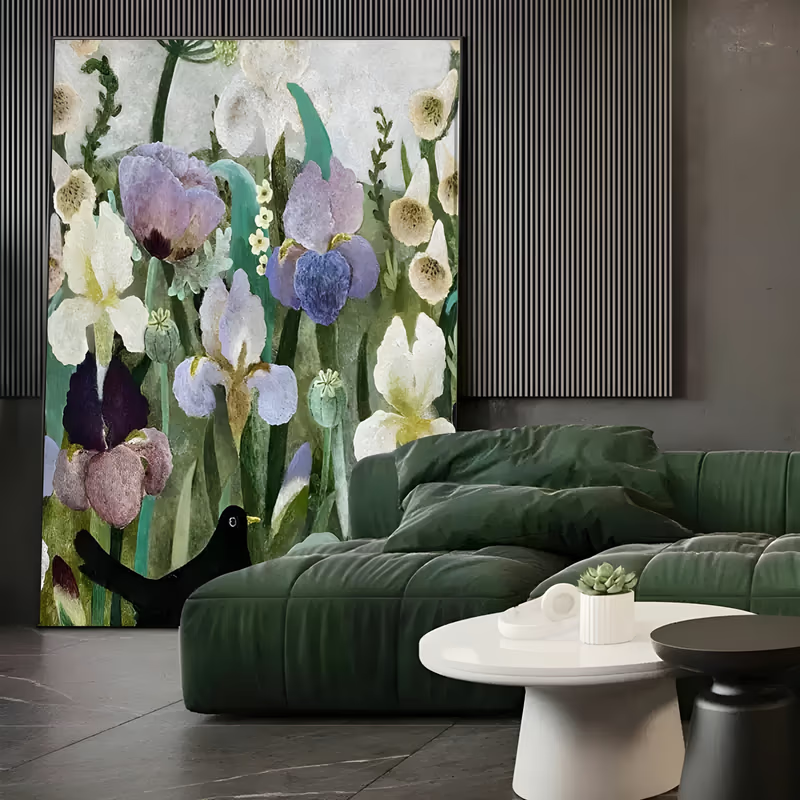
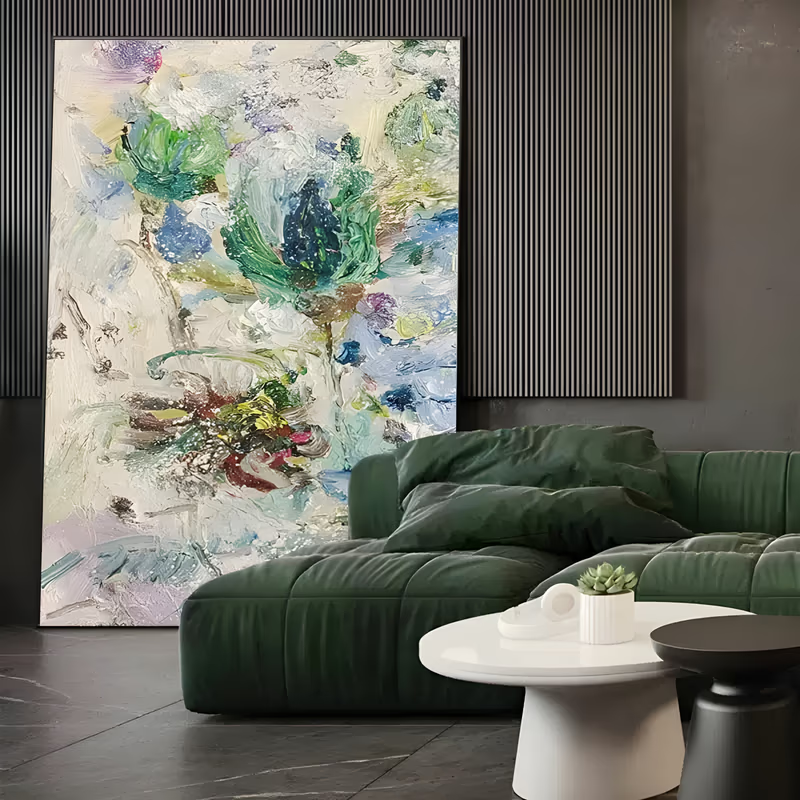
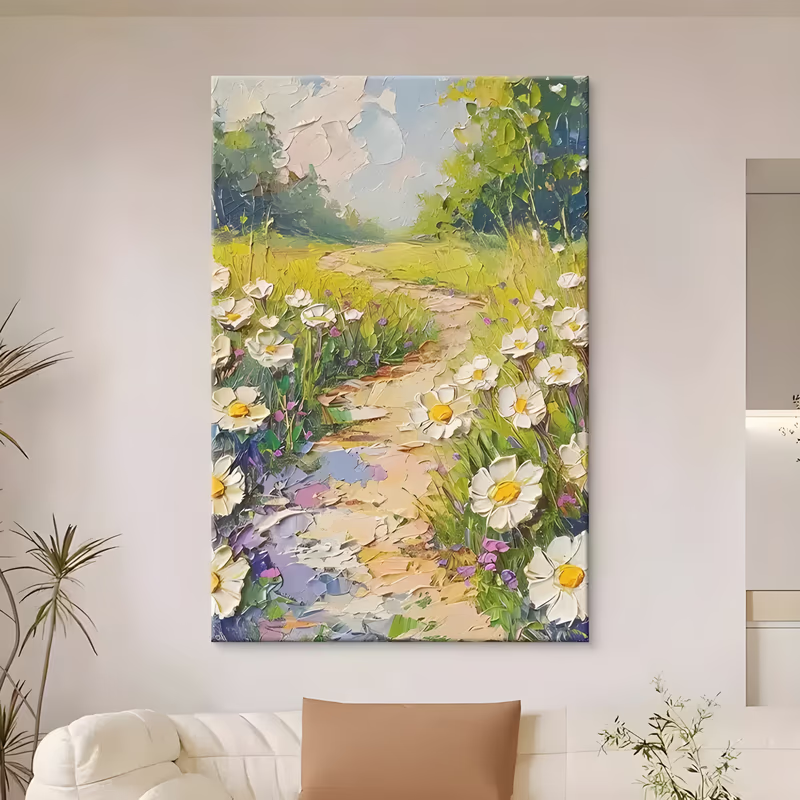
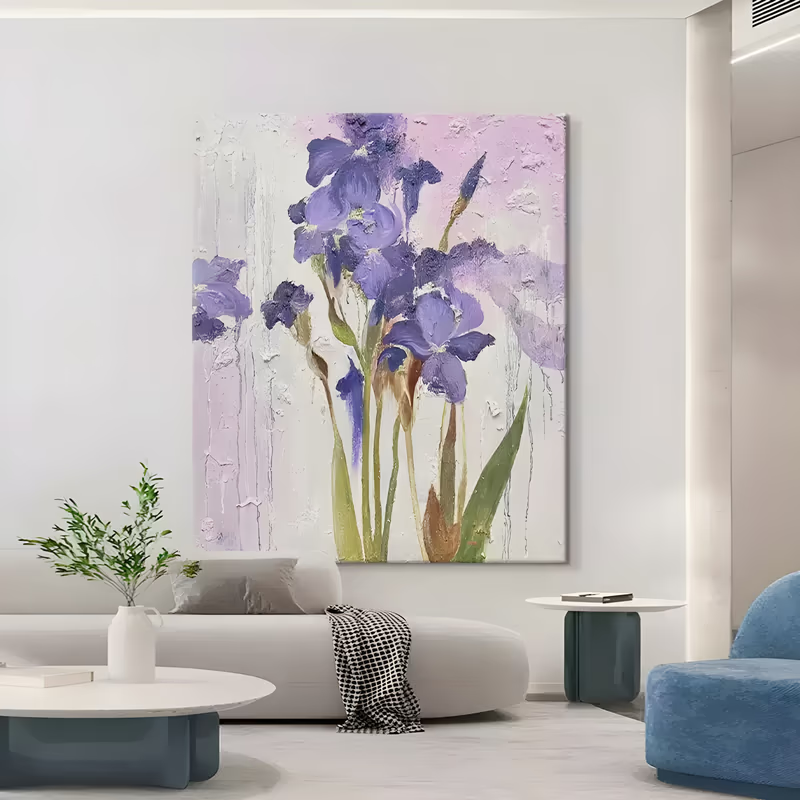
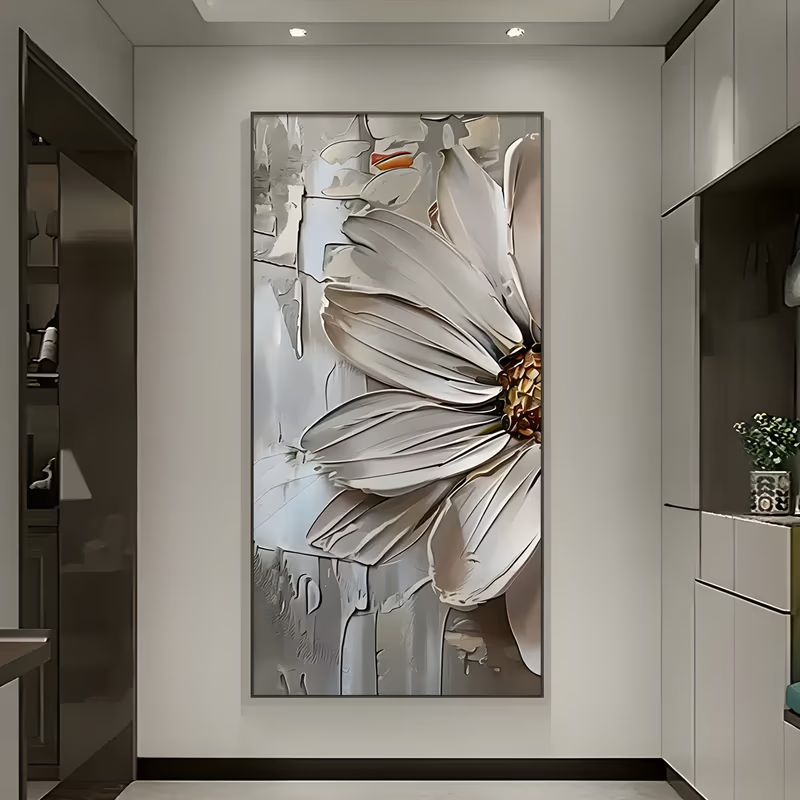
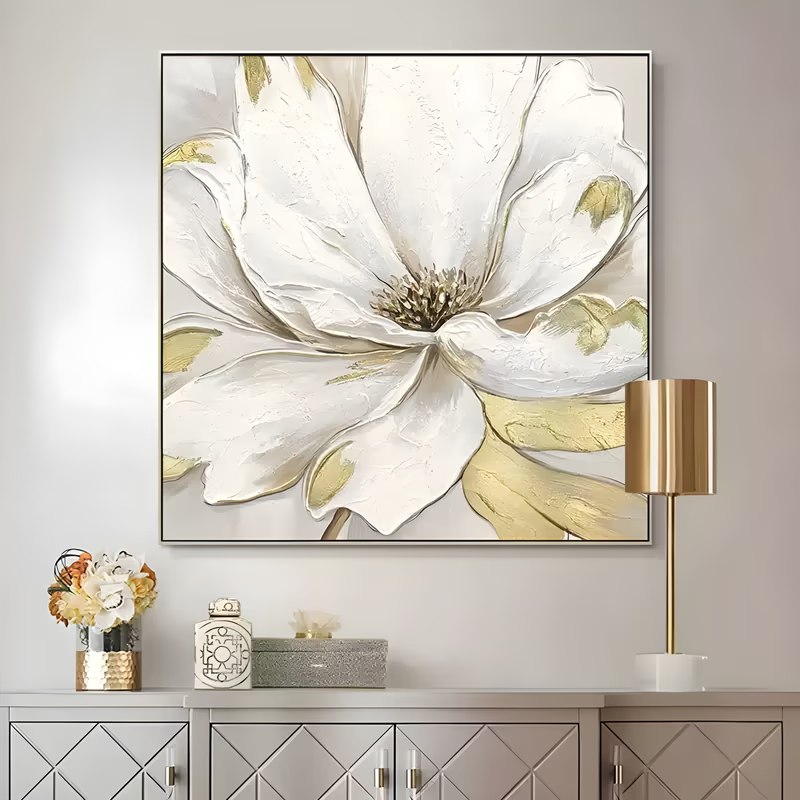
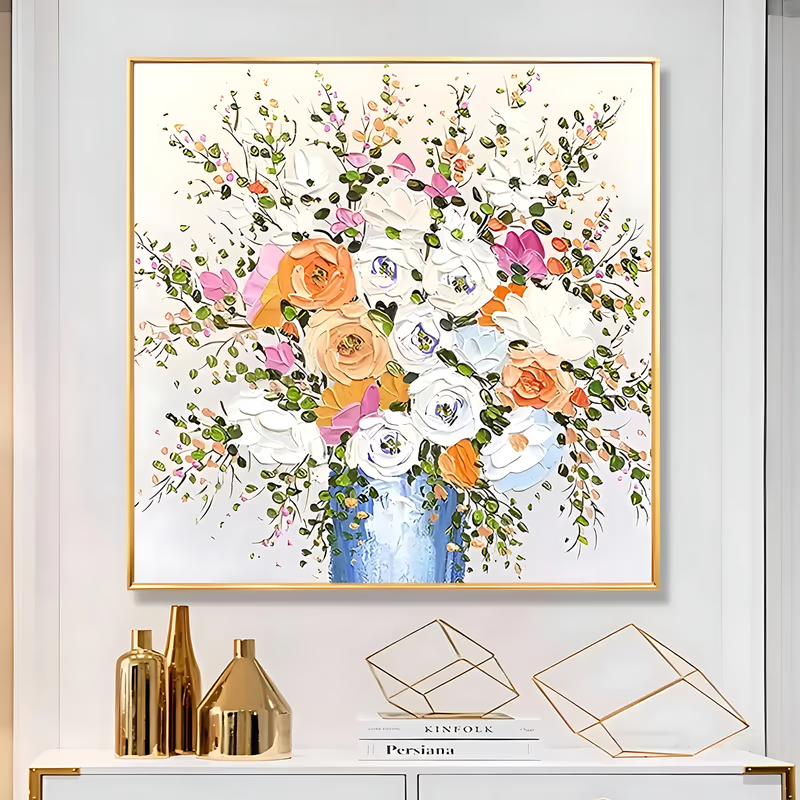
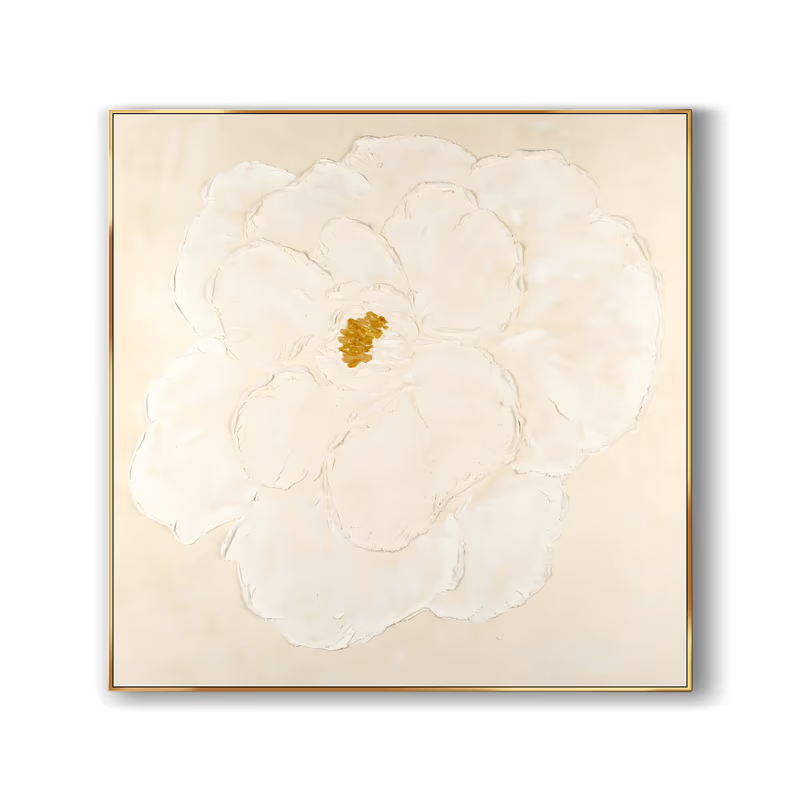
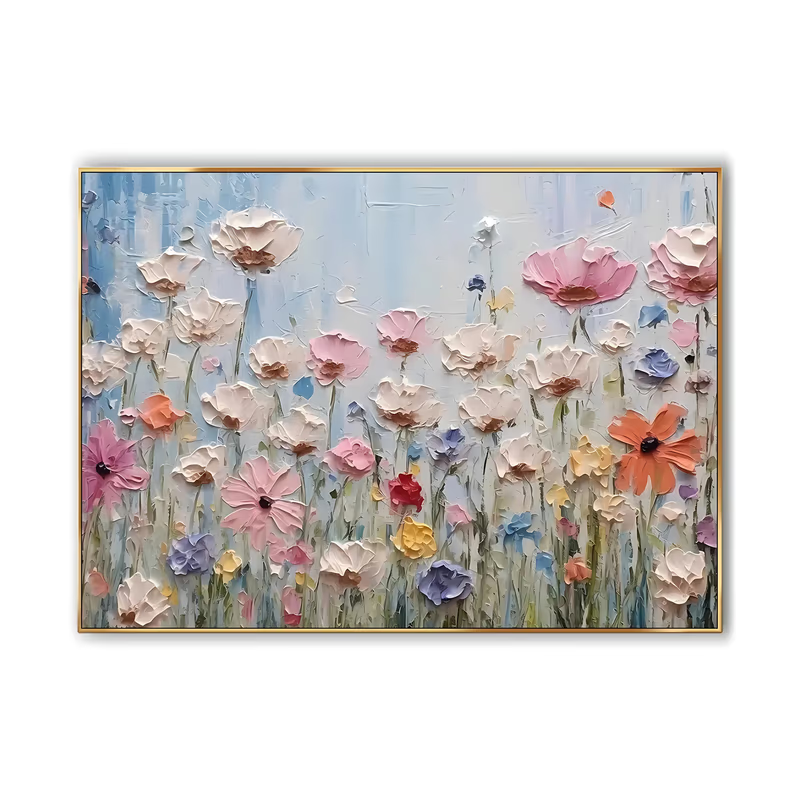
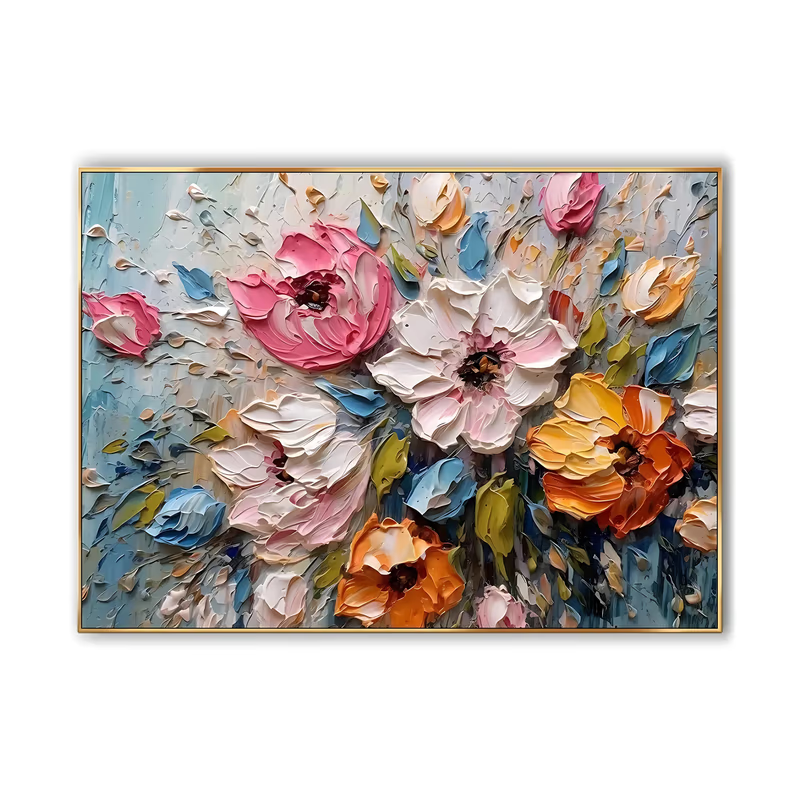
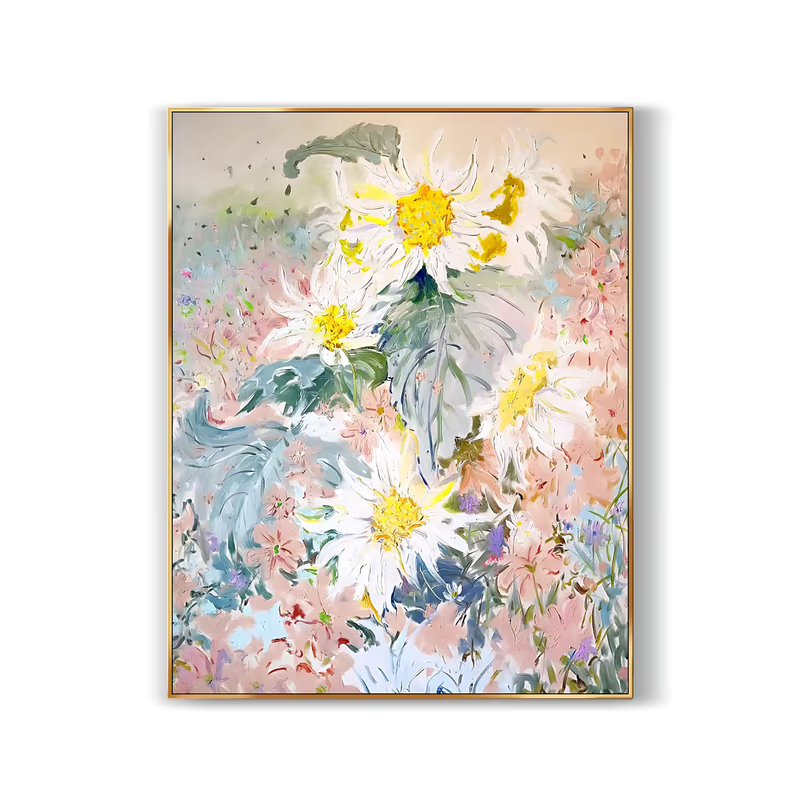
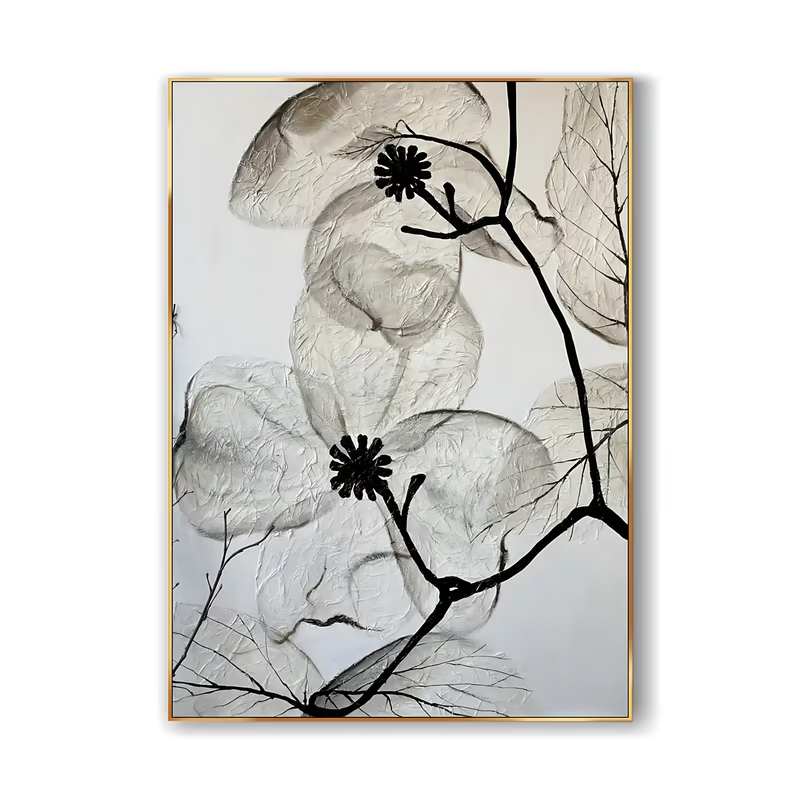
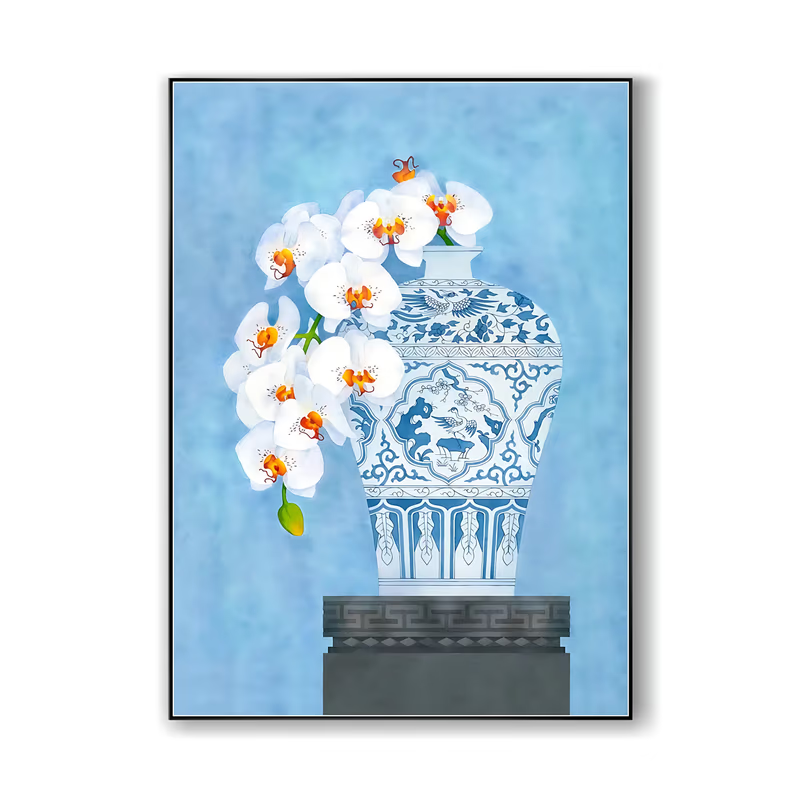
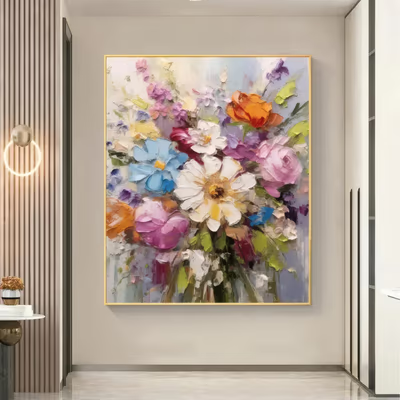
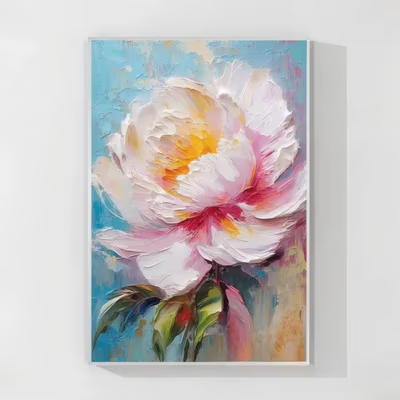
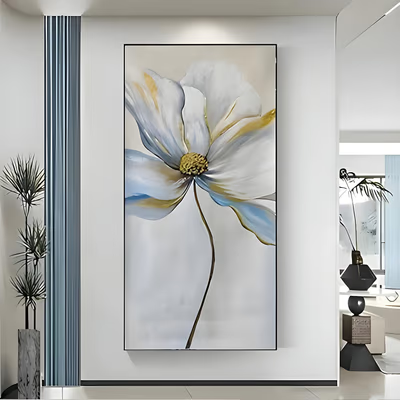
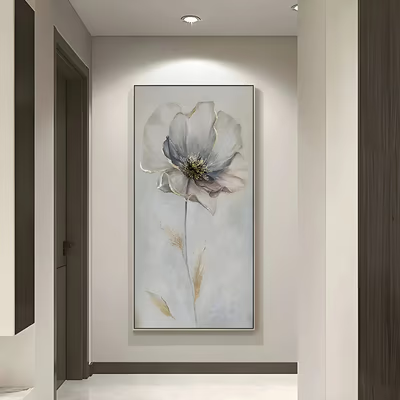
Magnolias, peonies, camellias, lilies, poppies and almond blossom, often raised off the canvas in plaster and finished with flecks of gold or silver leaf. Set against a grey, blue, green or brown ground, the white petals stay visible on any wall, which makes these the easiest white art to place.
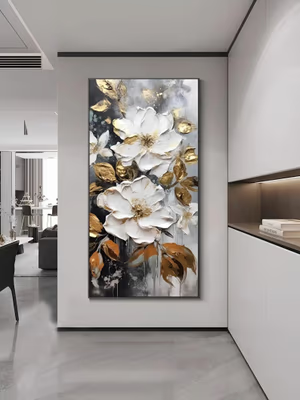
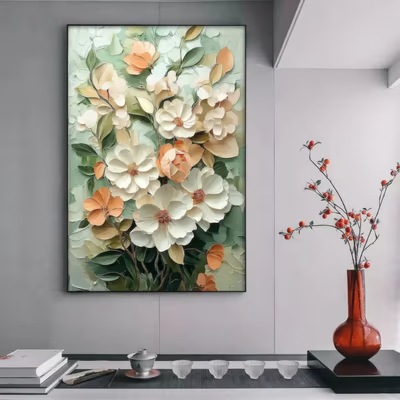
Snowy landscapes and white seascapes
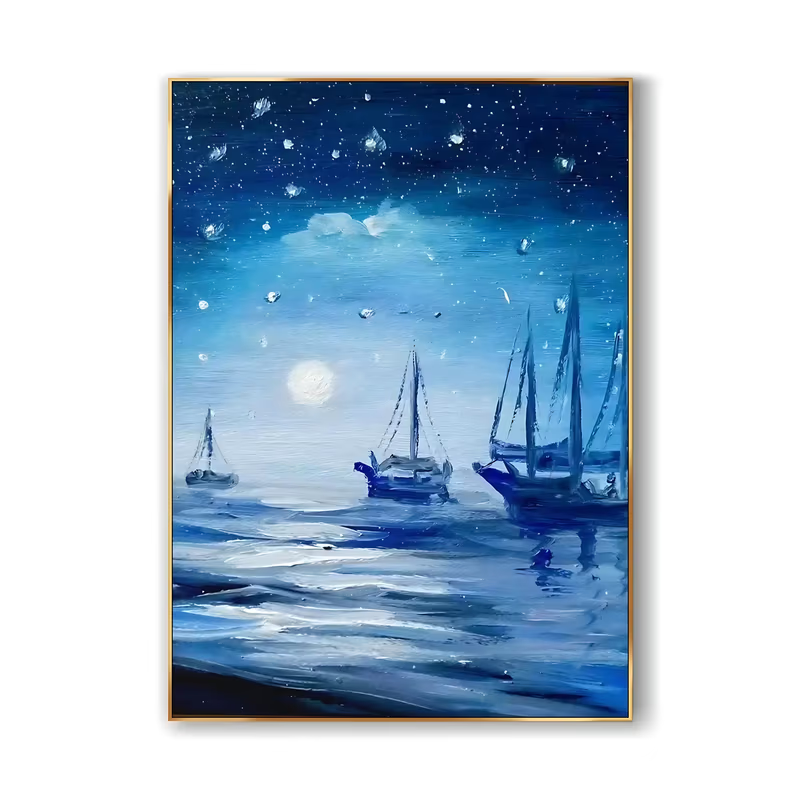
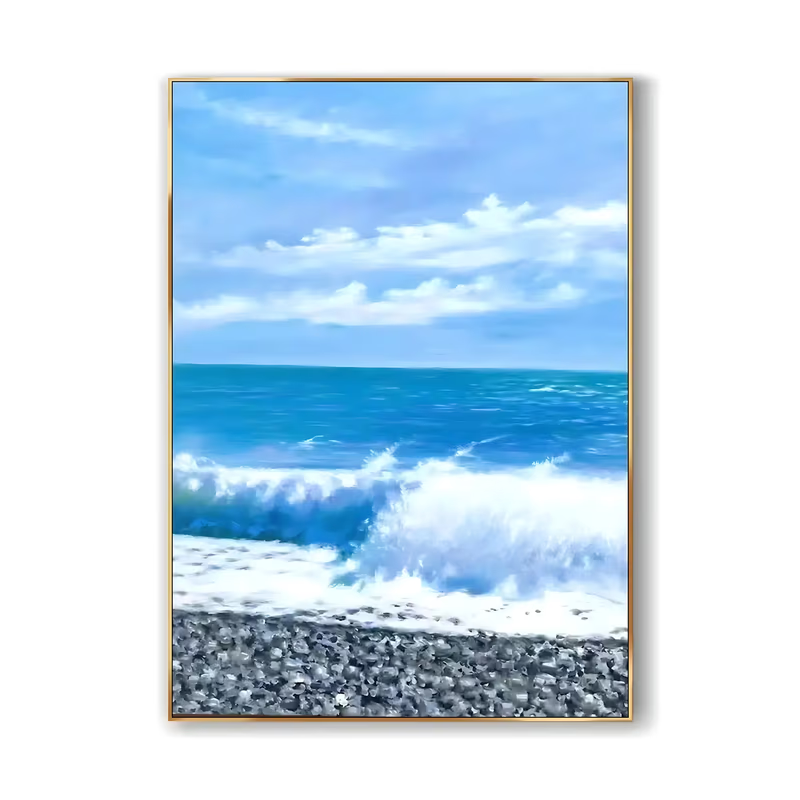
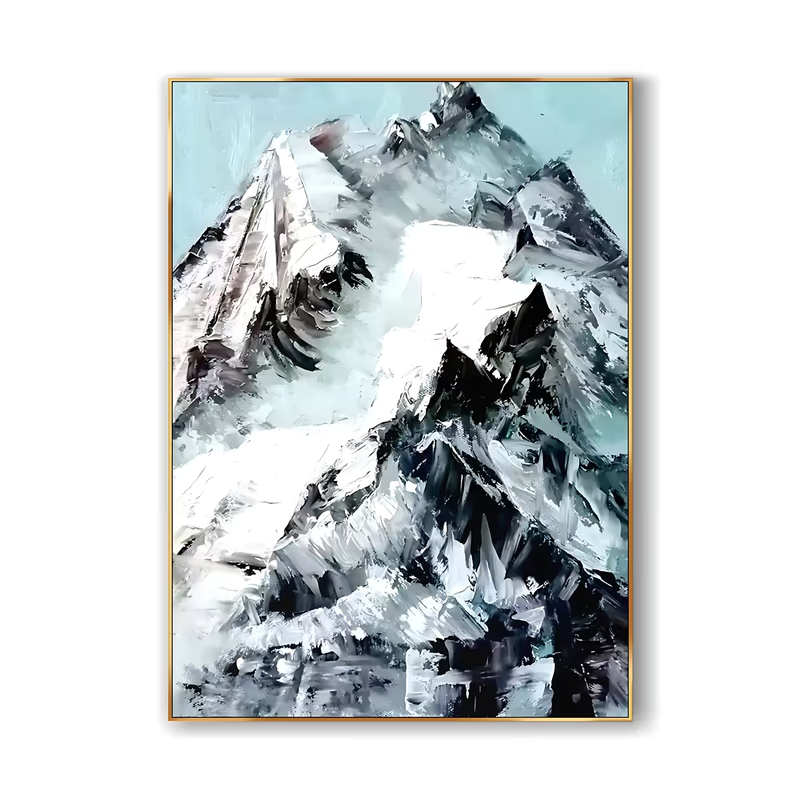
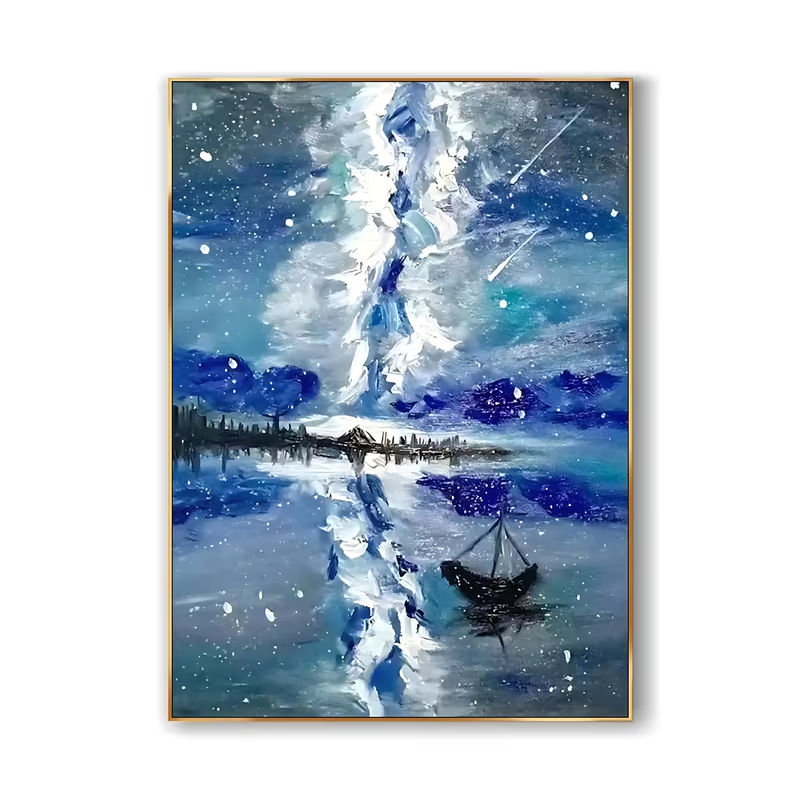
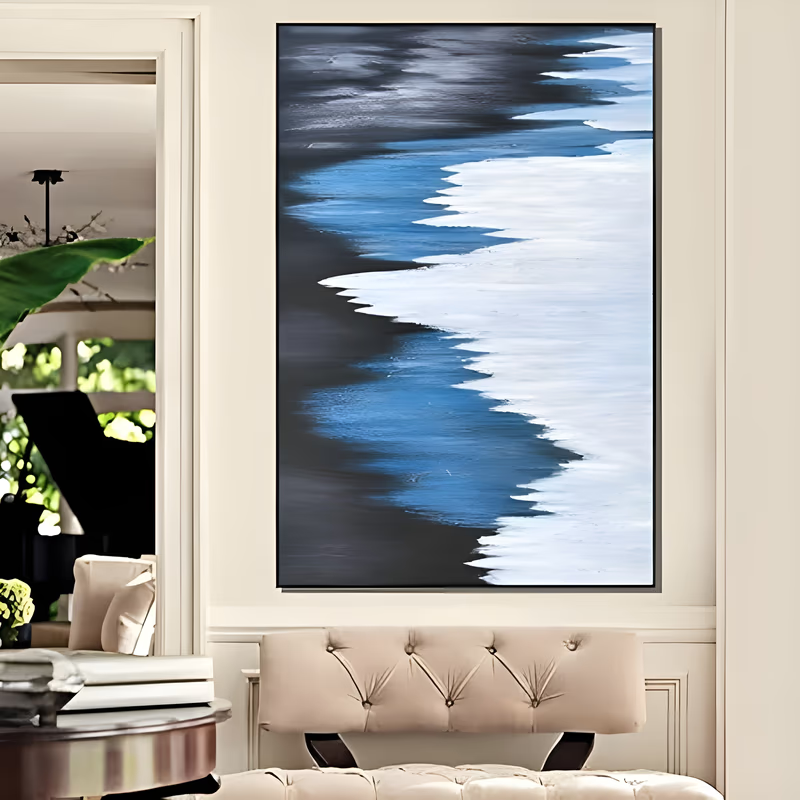
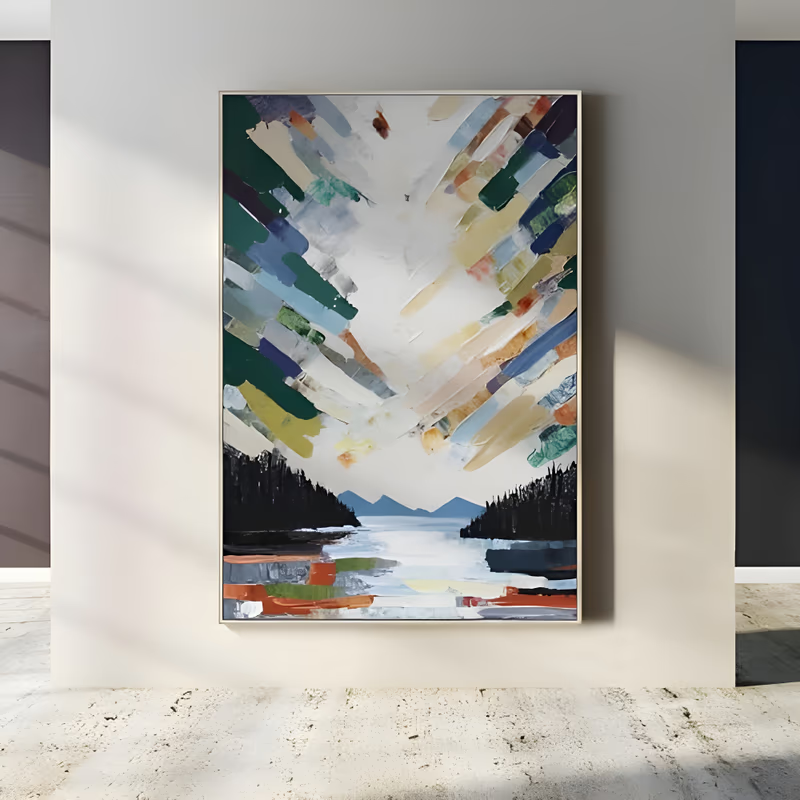
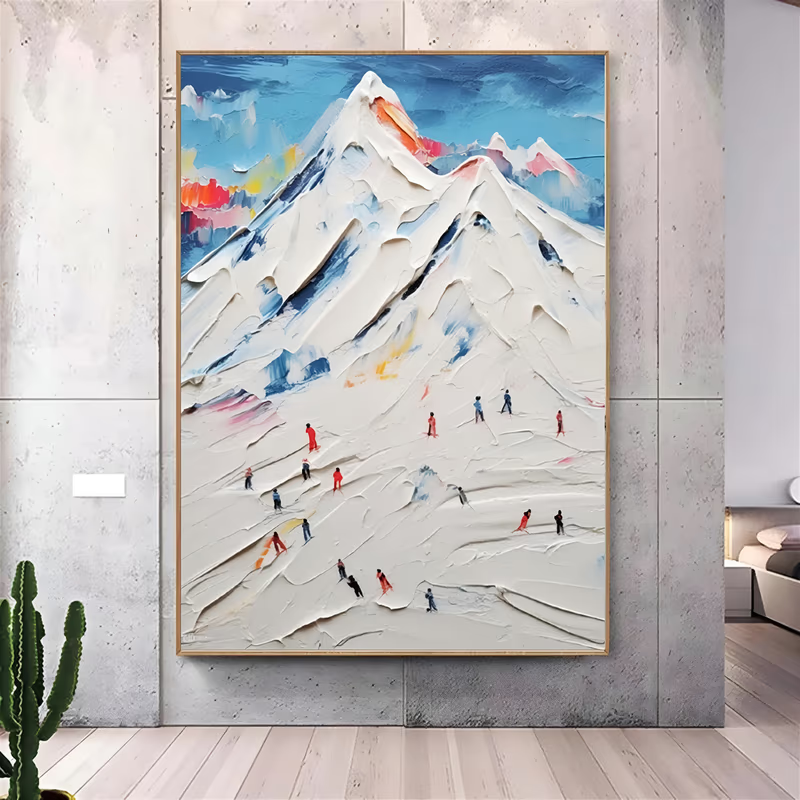
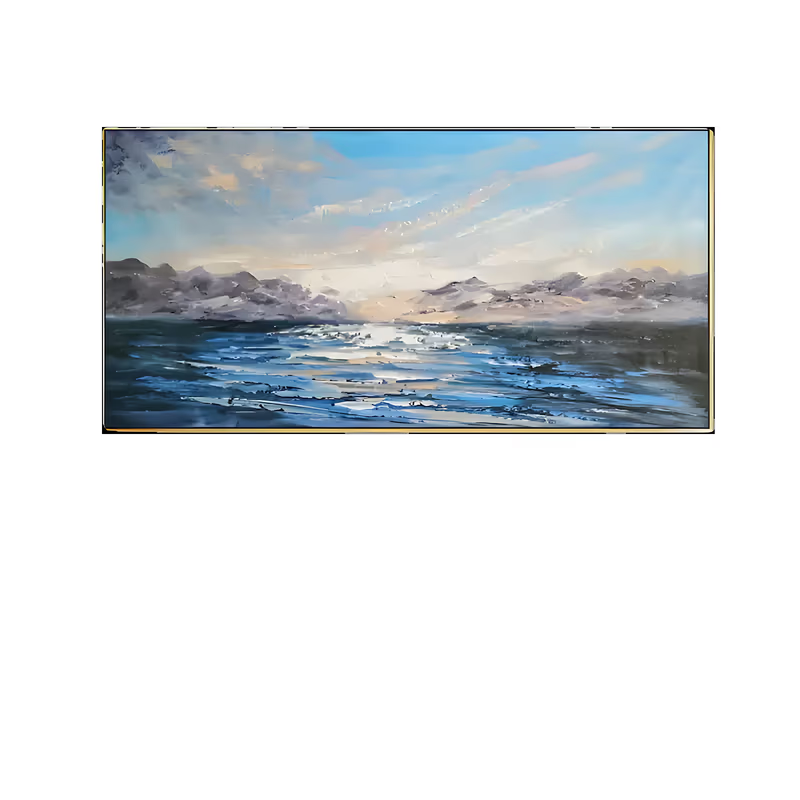
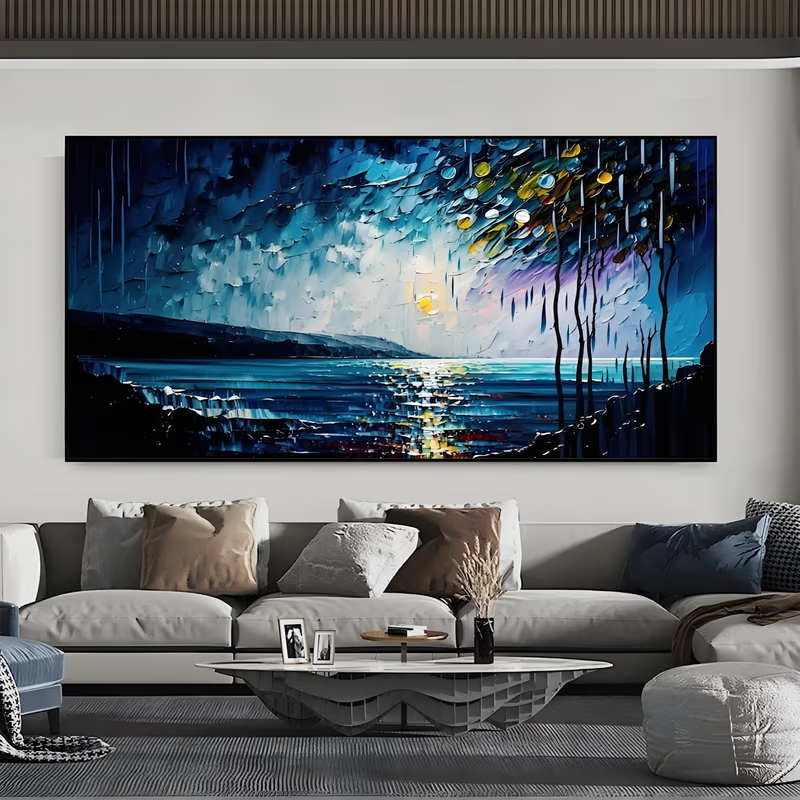
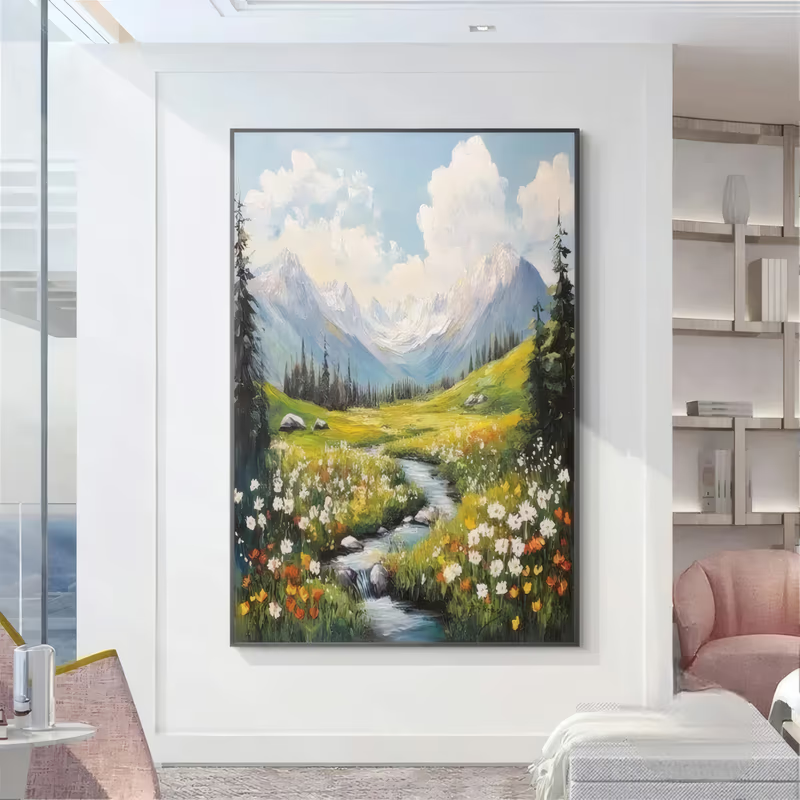
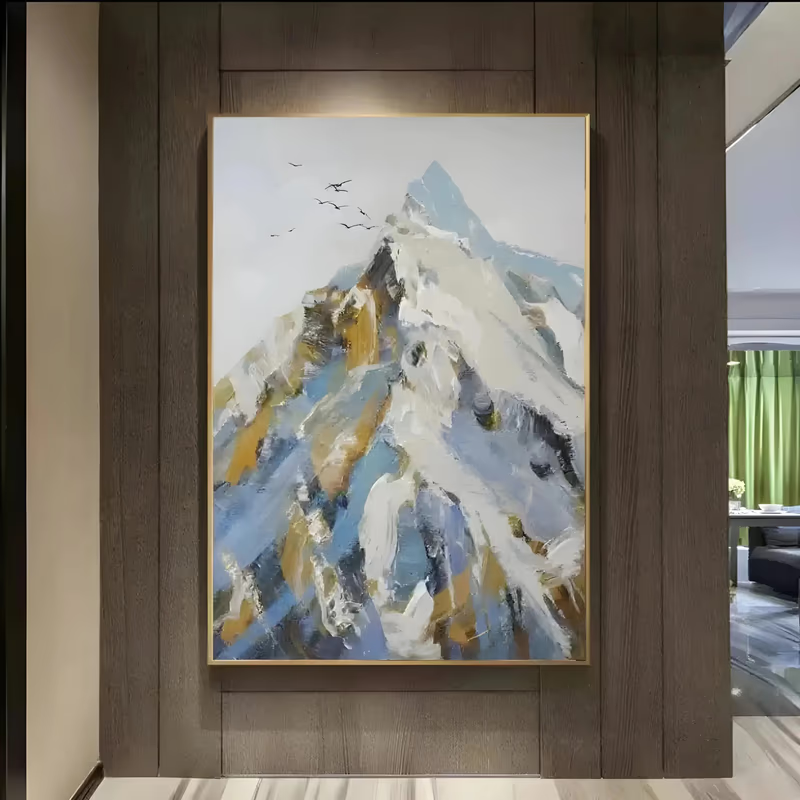
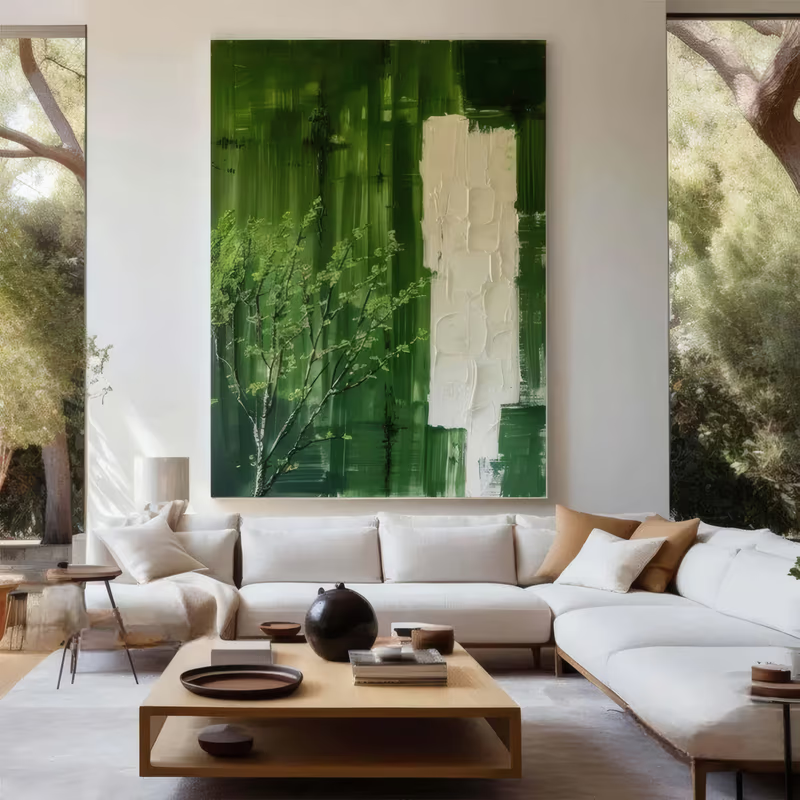
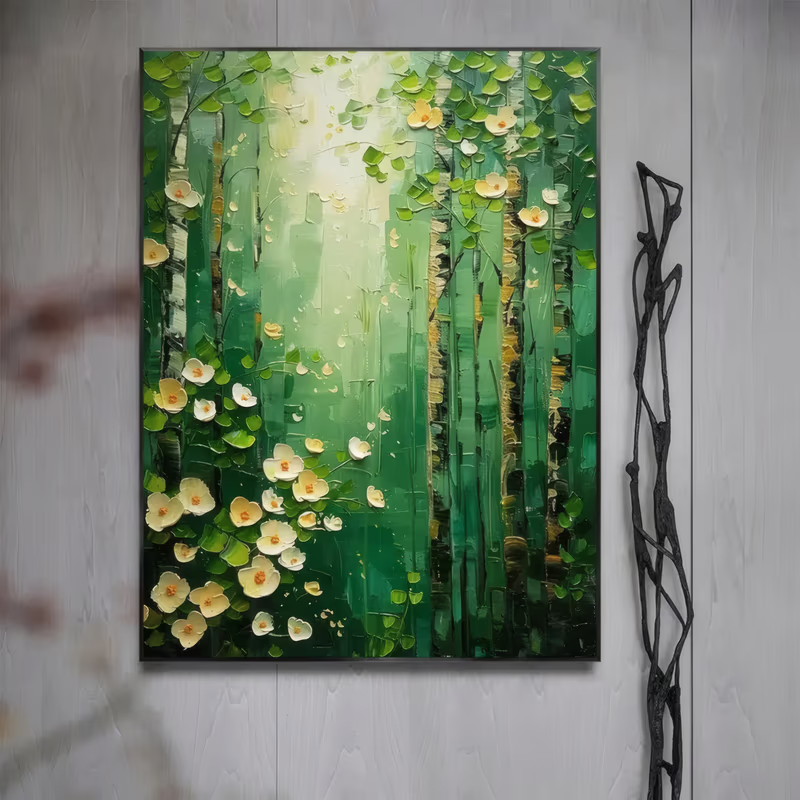
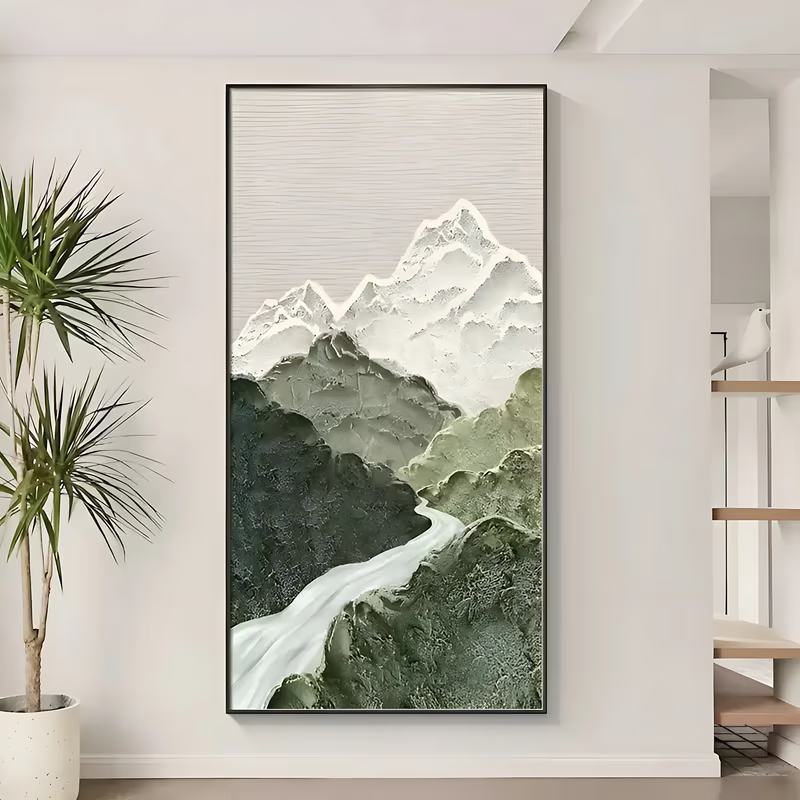
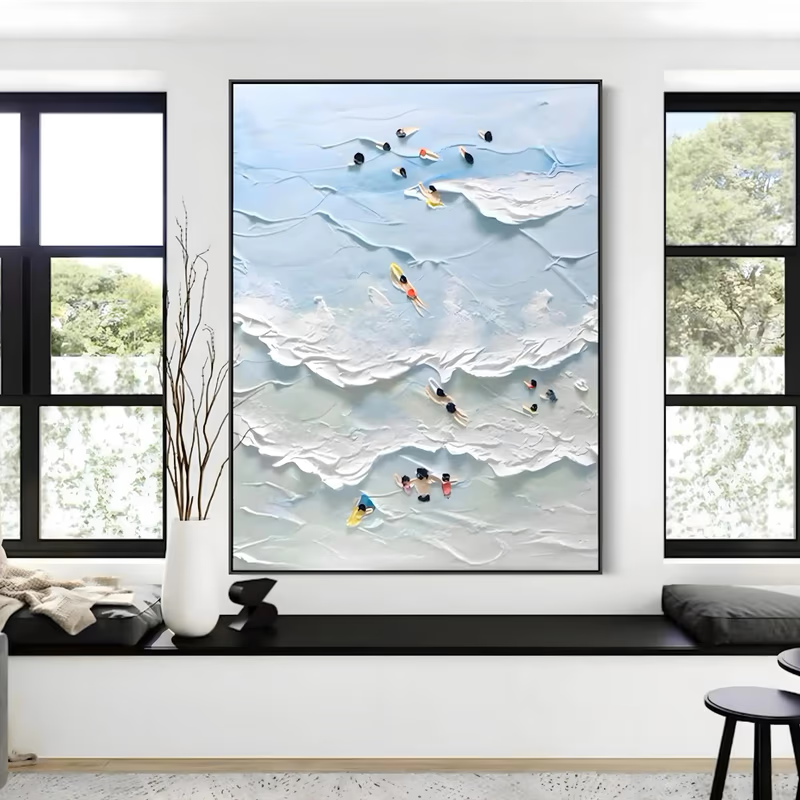
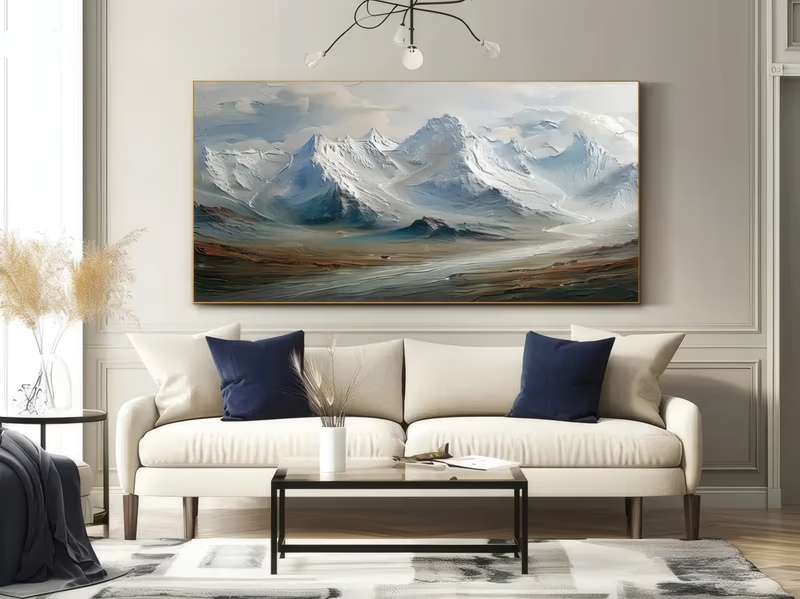
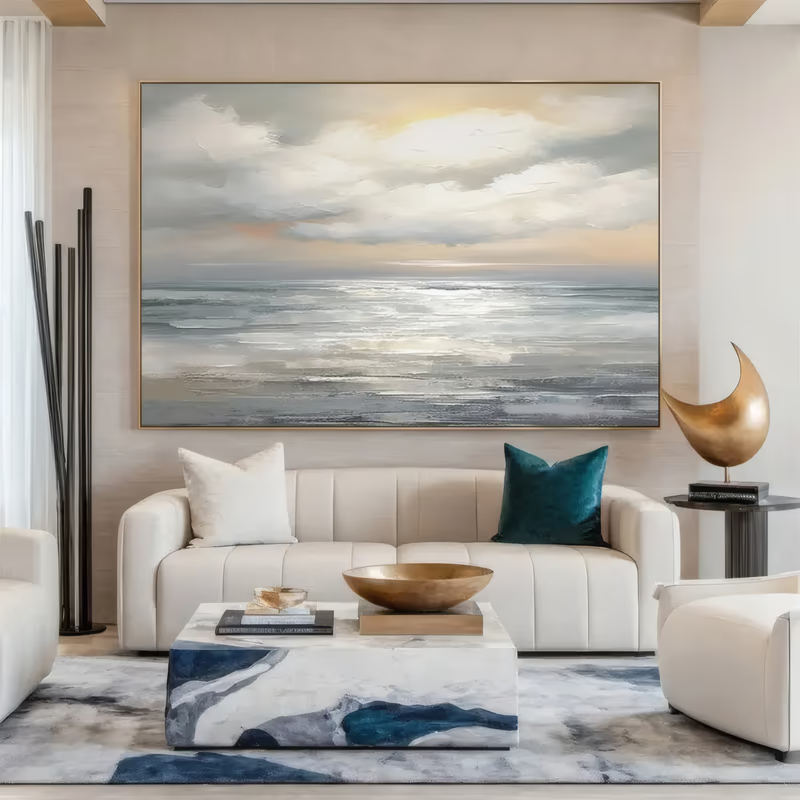
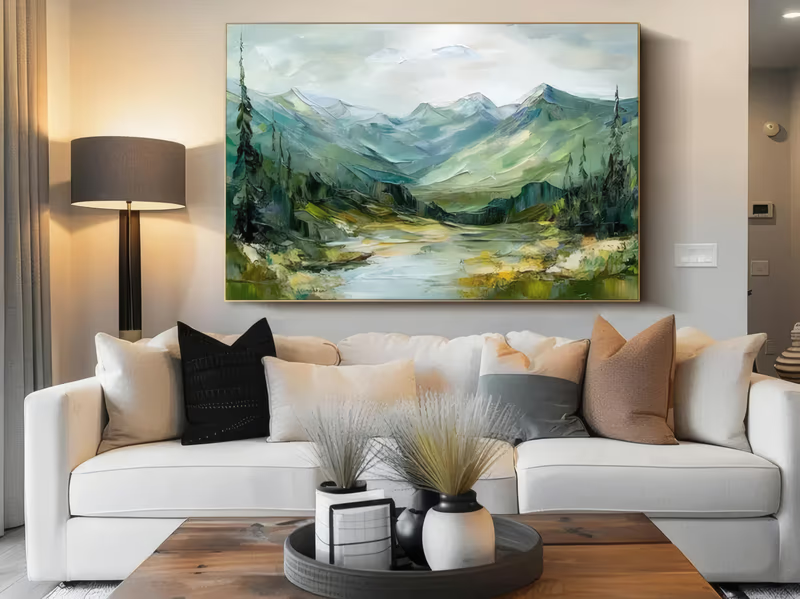
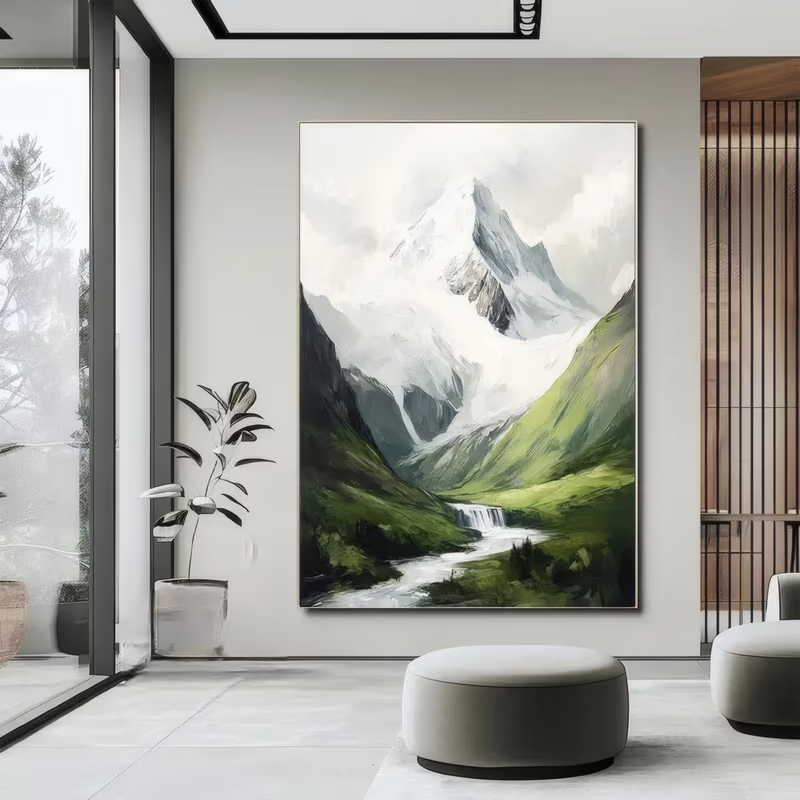
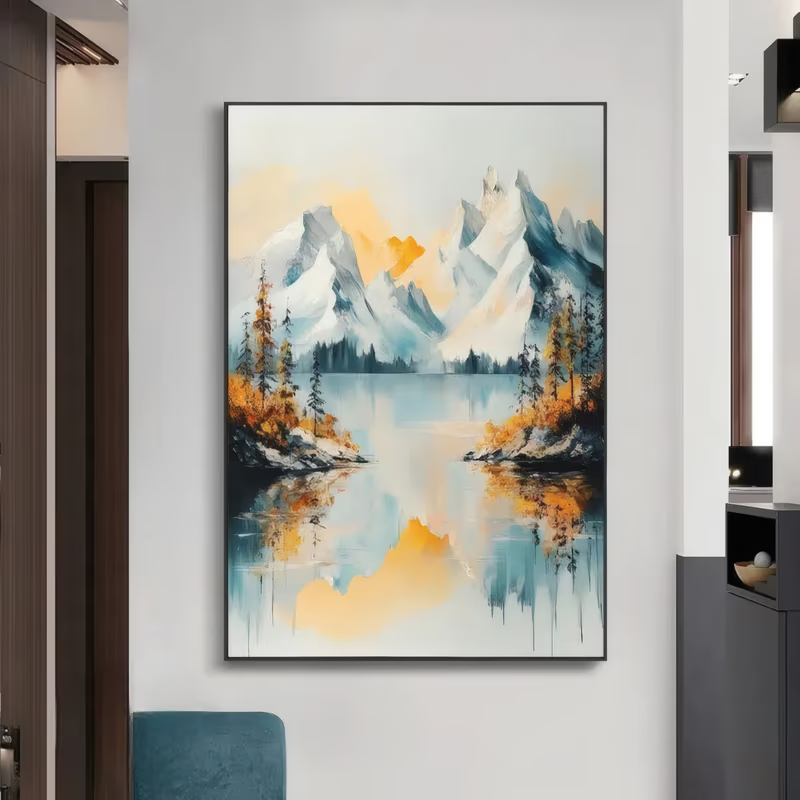
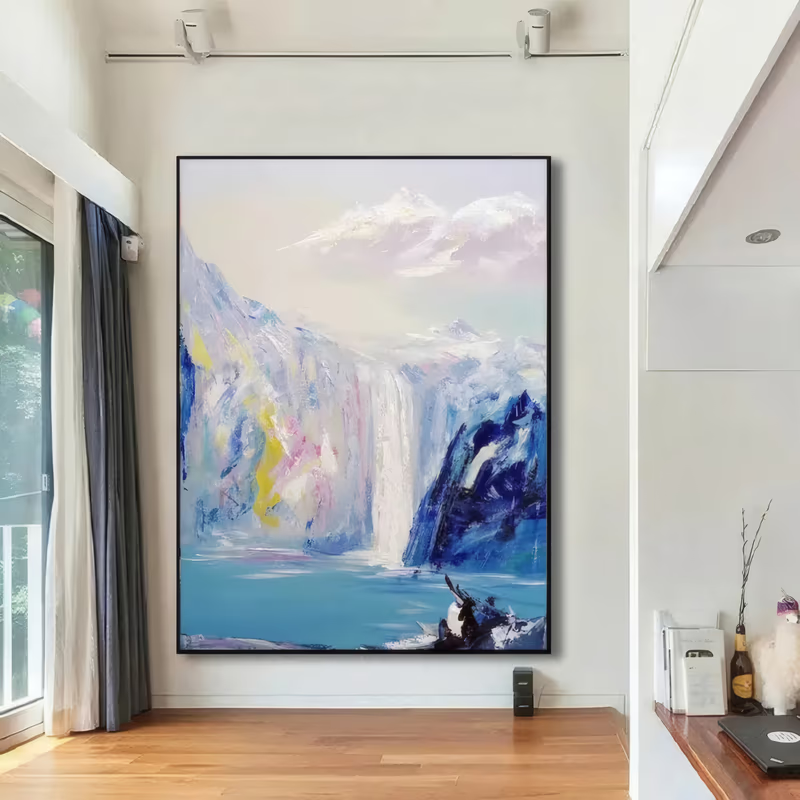
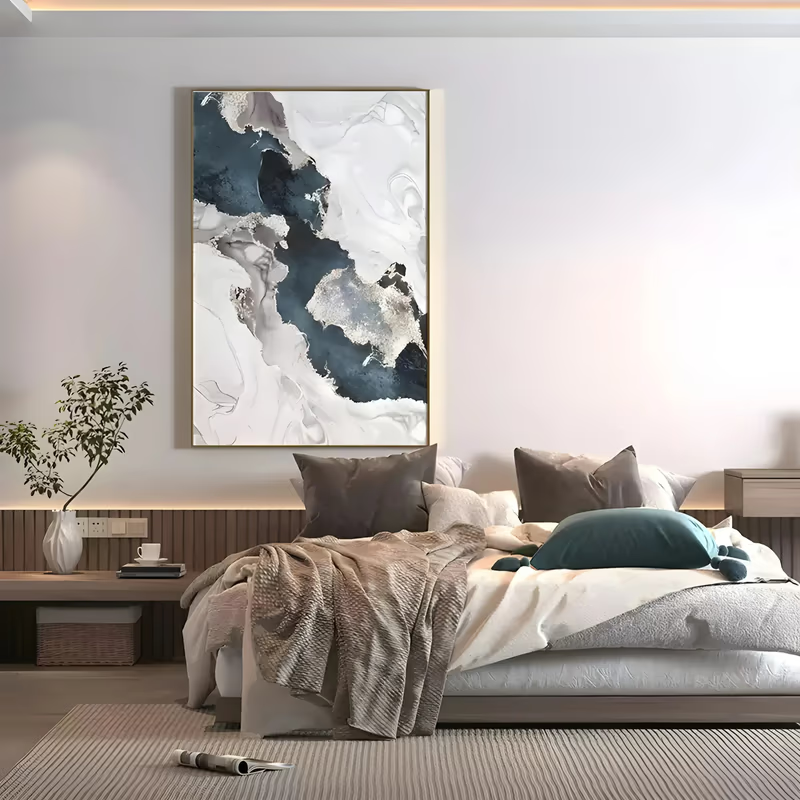
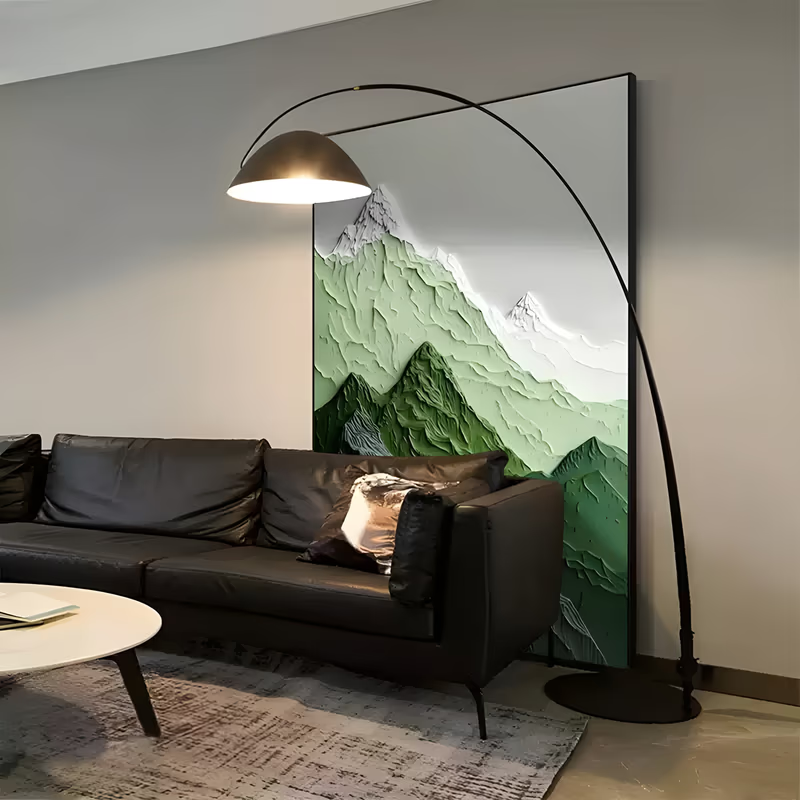
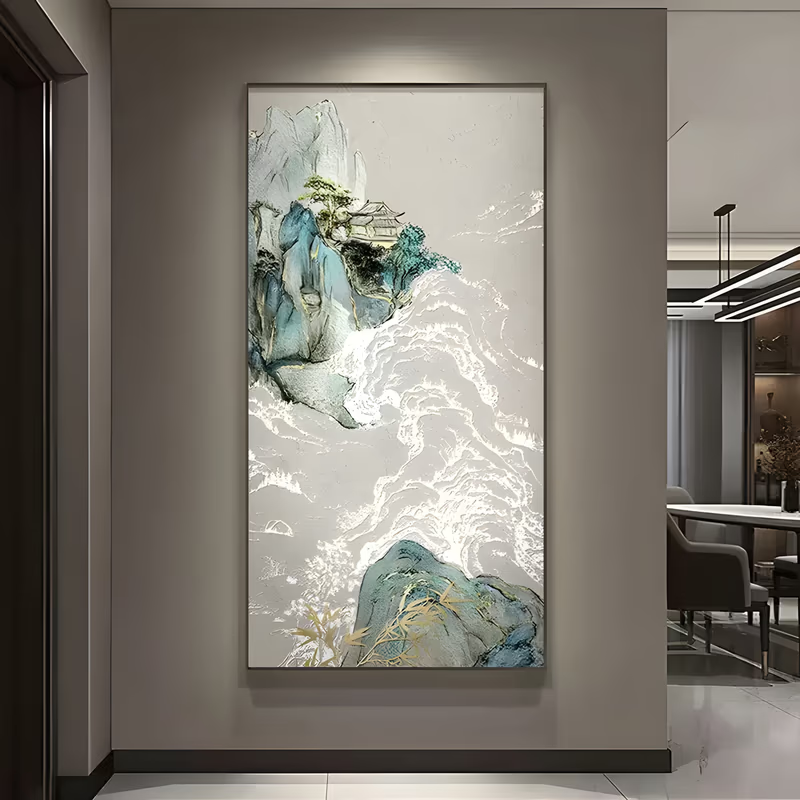
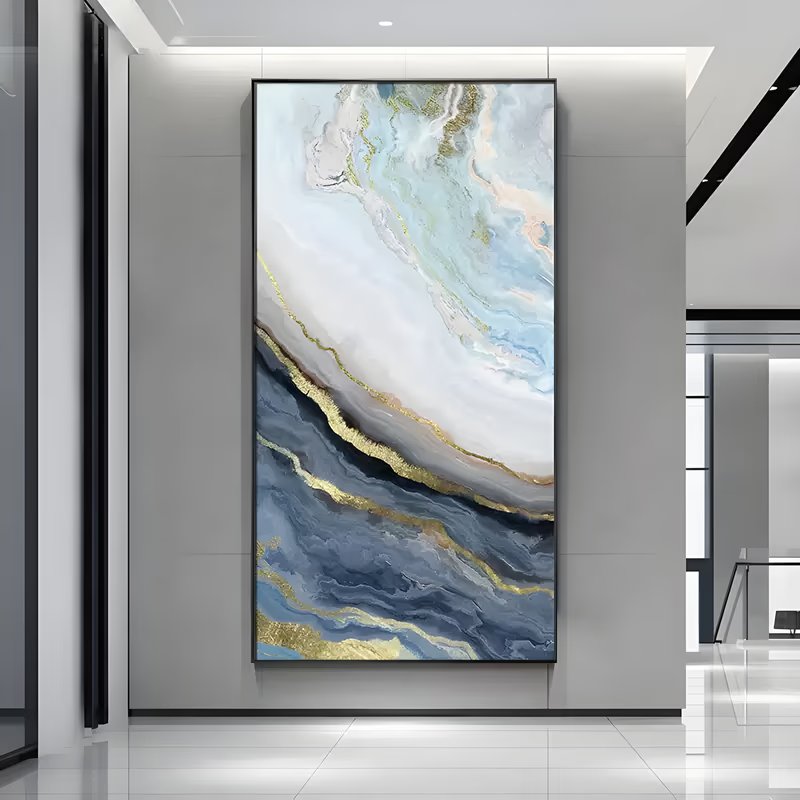
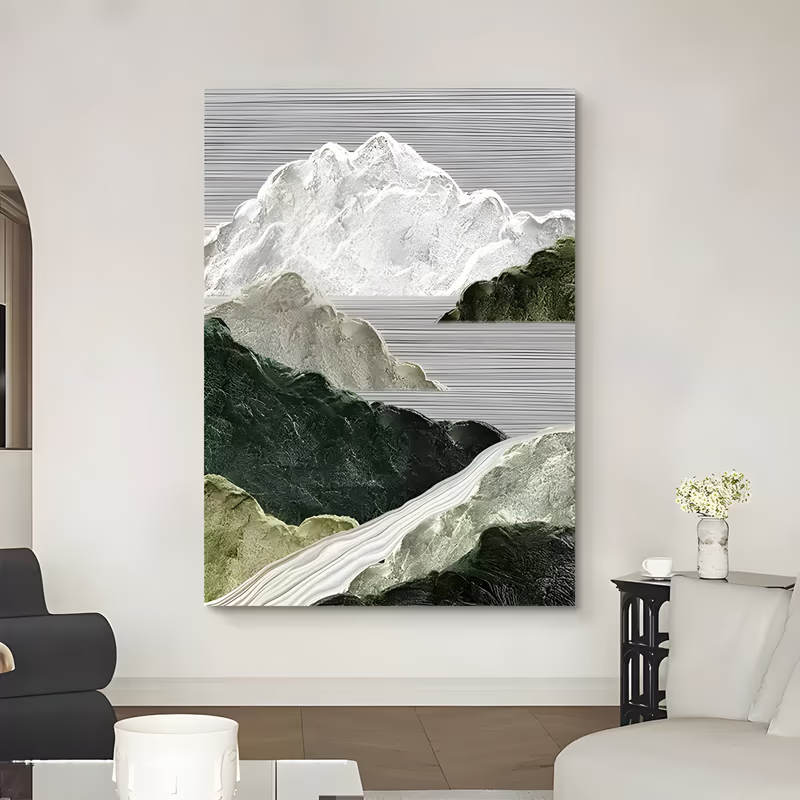
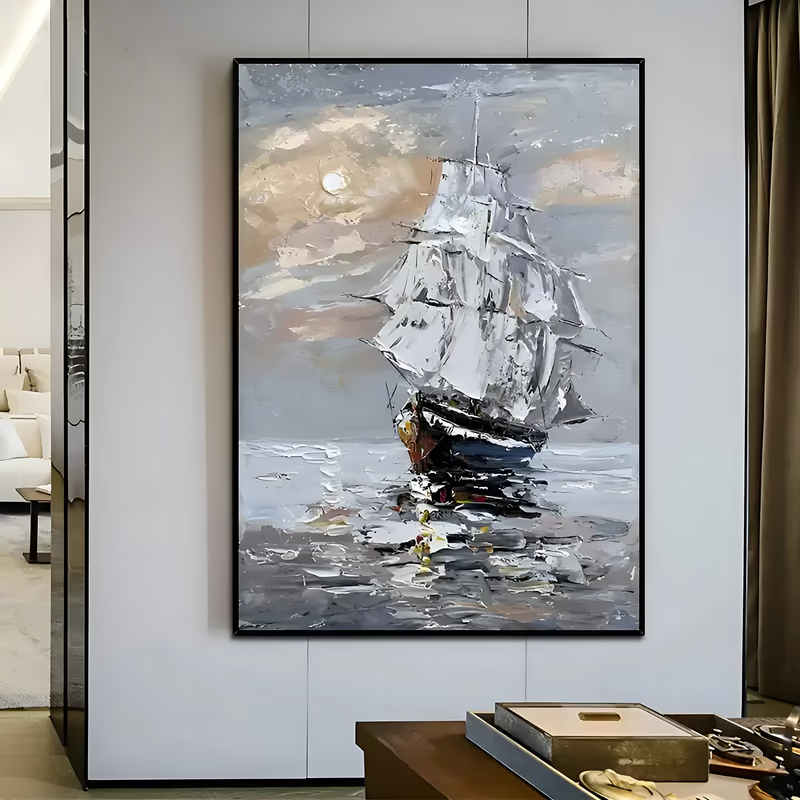
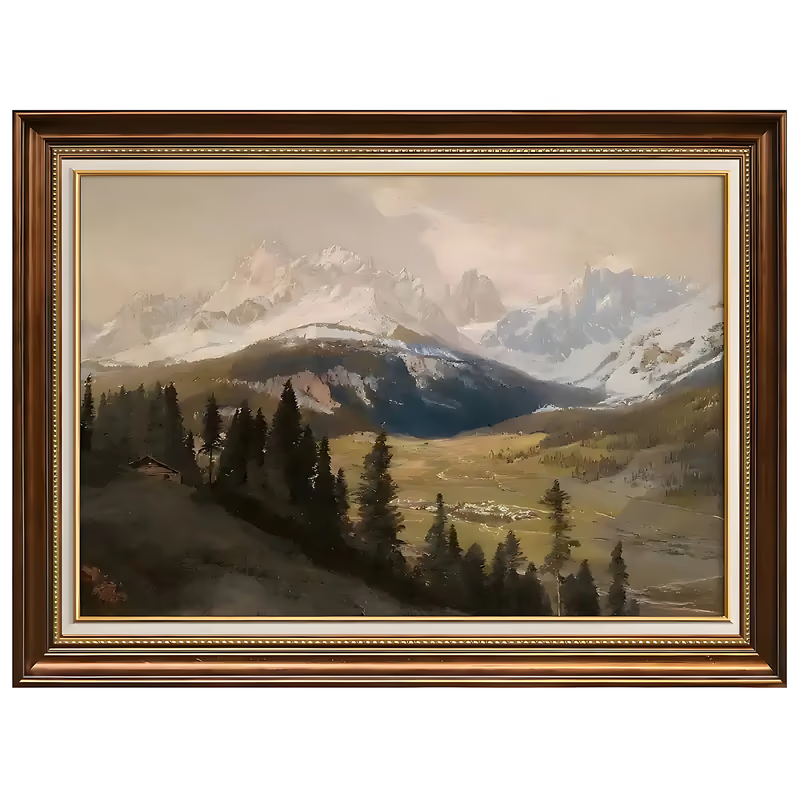
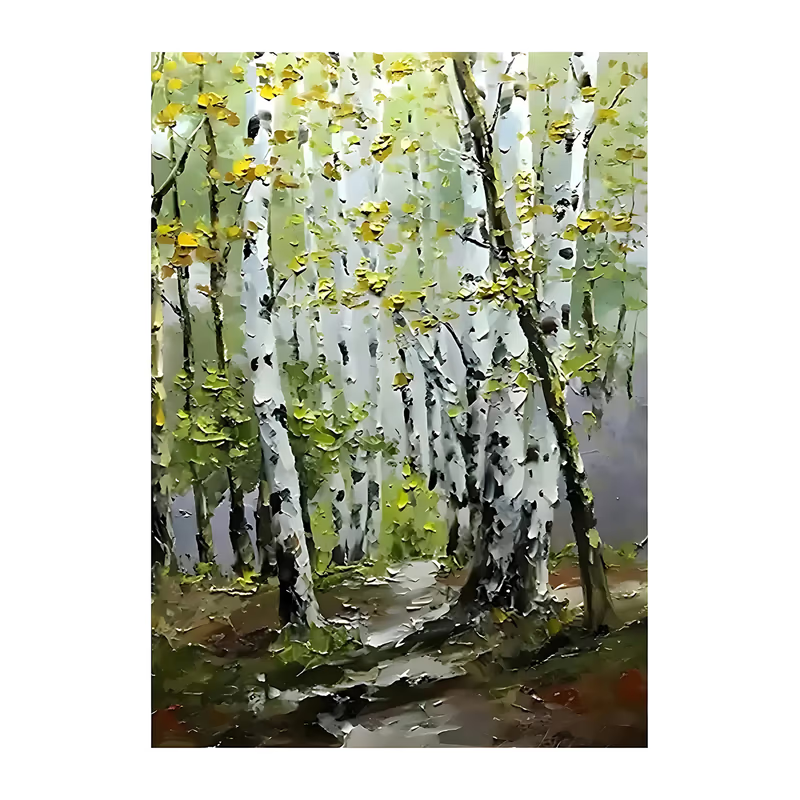
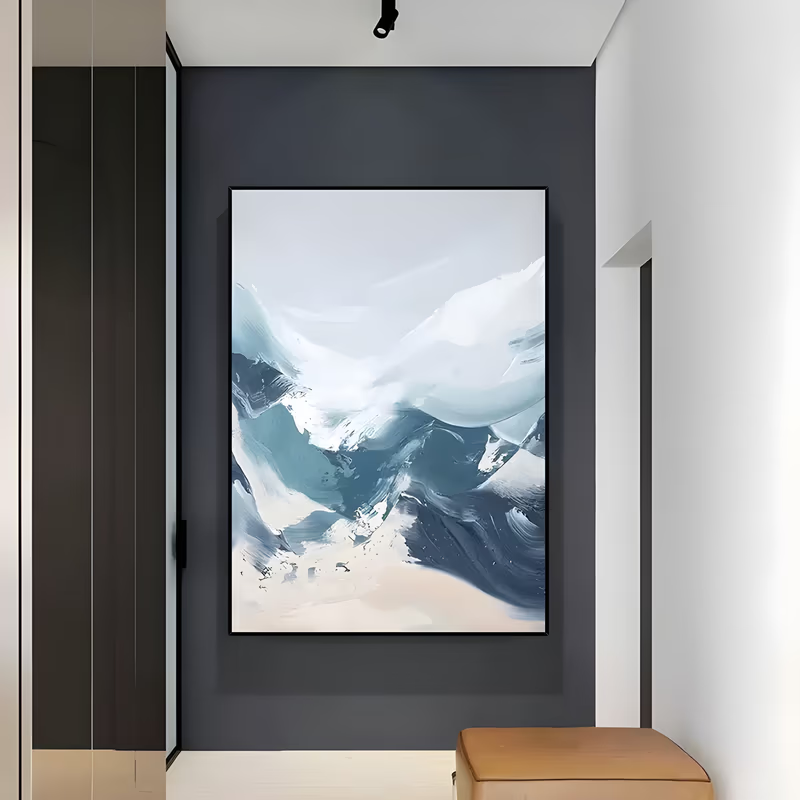
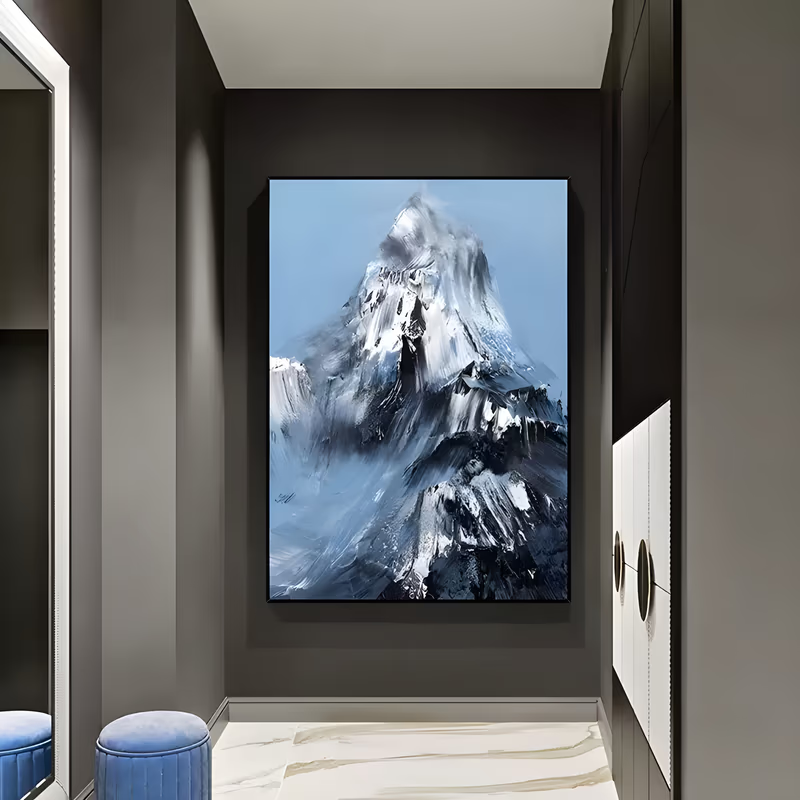
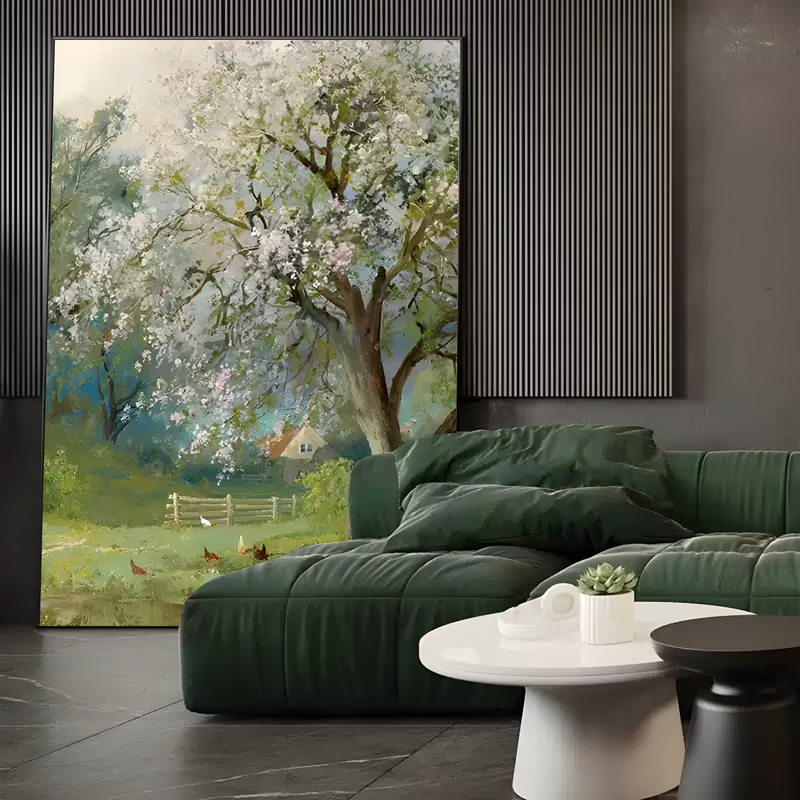
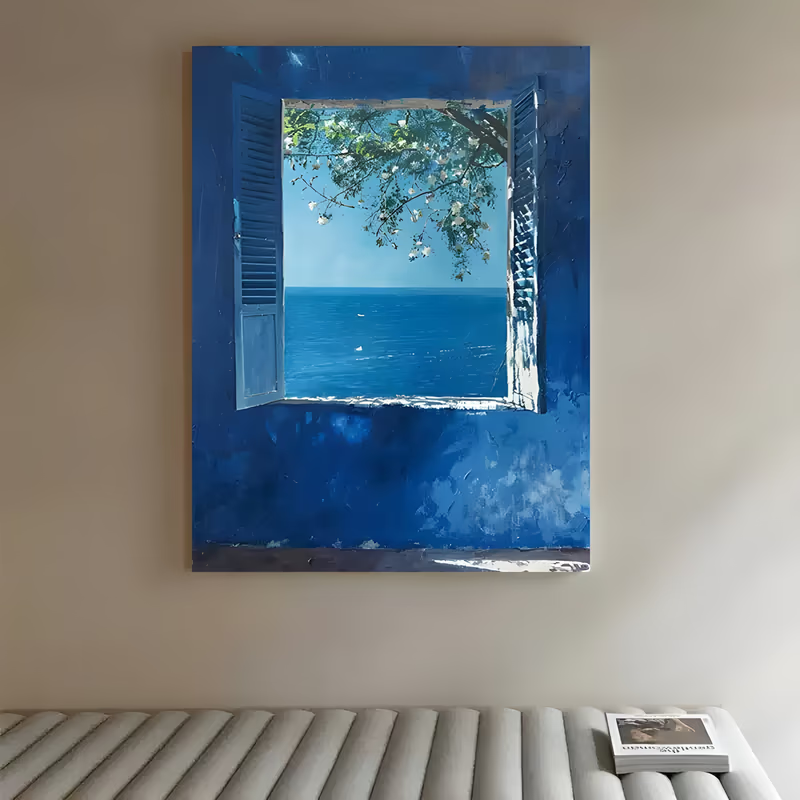
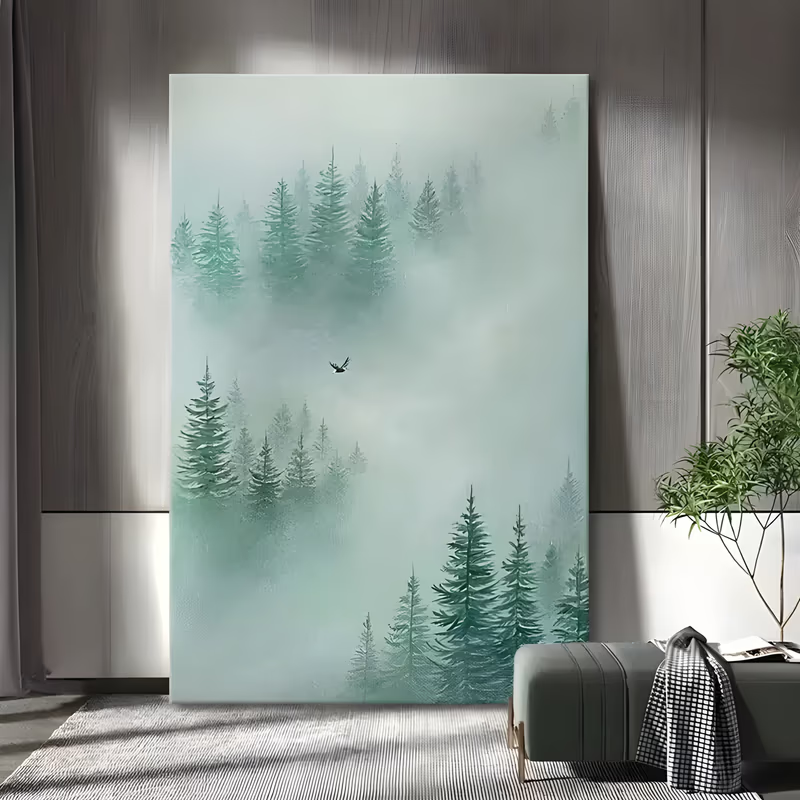
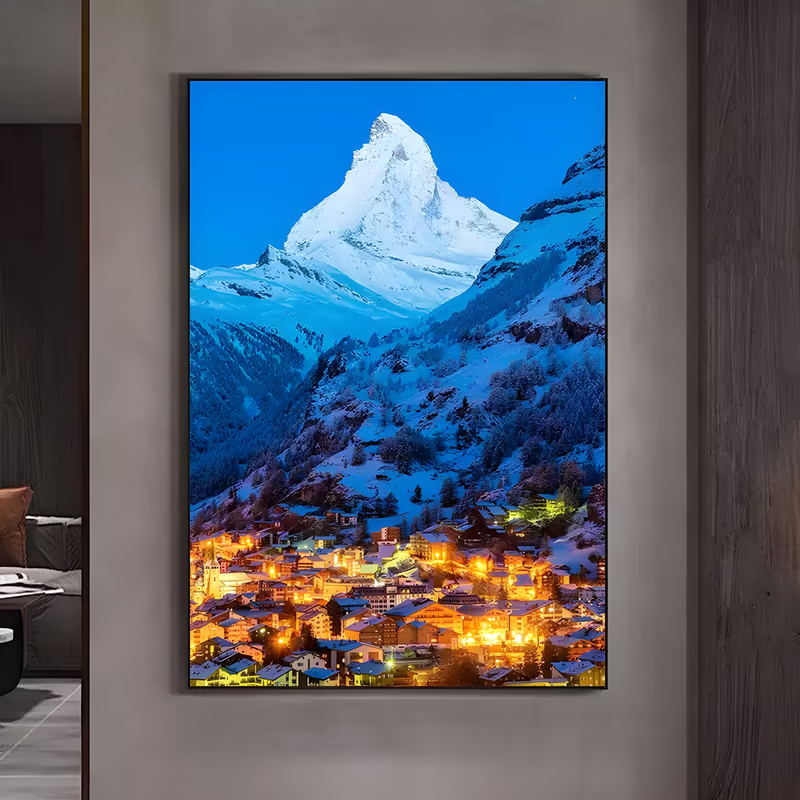
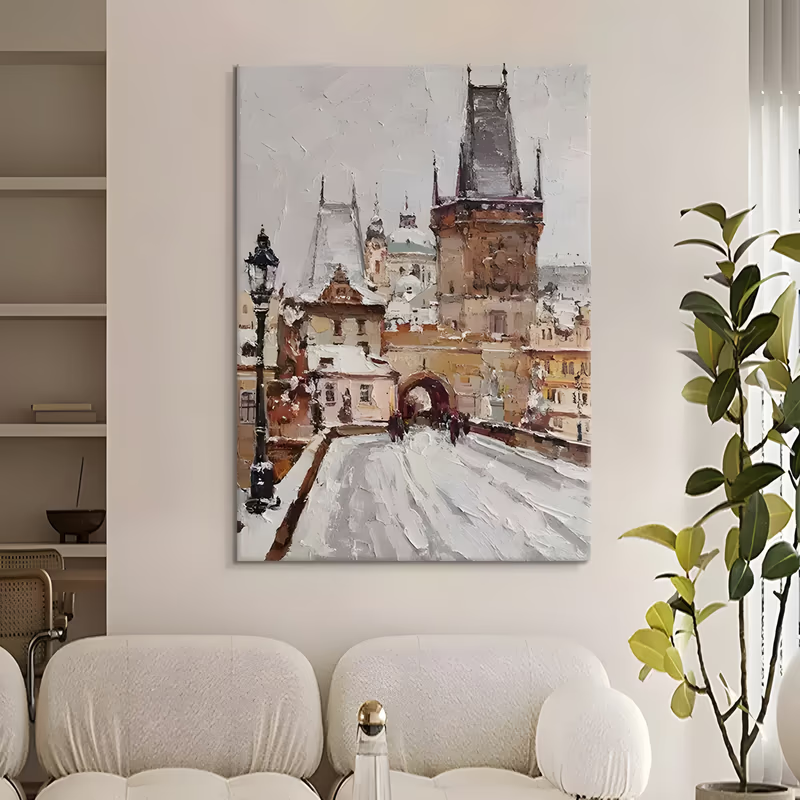
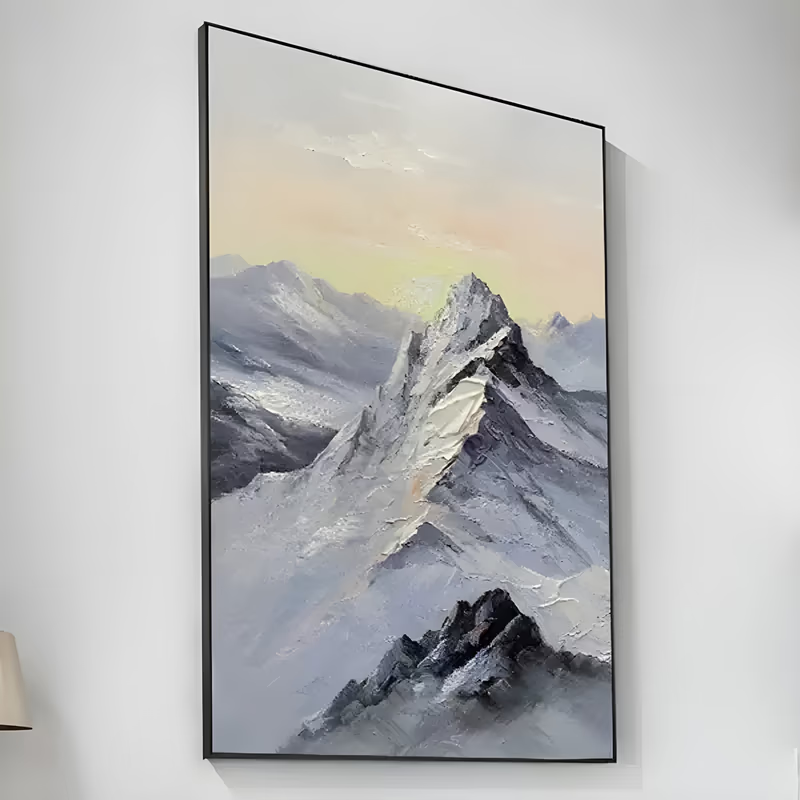
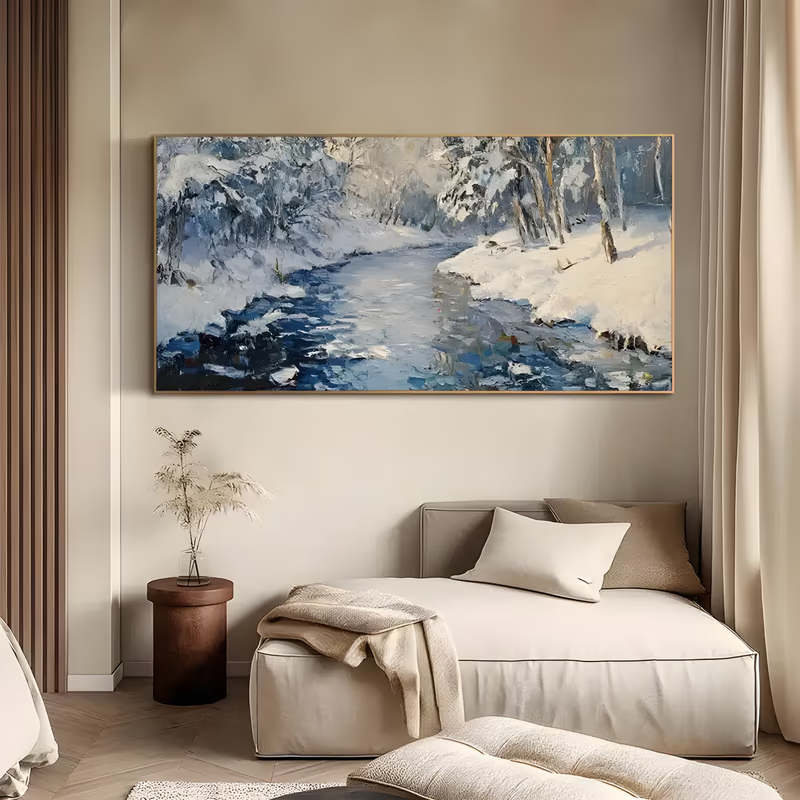
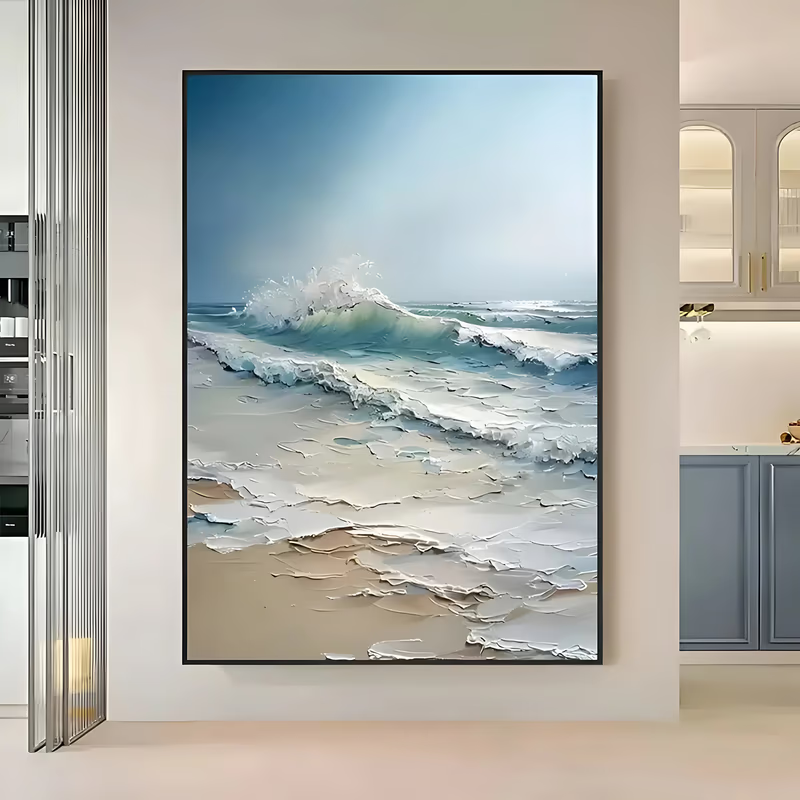
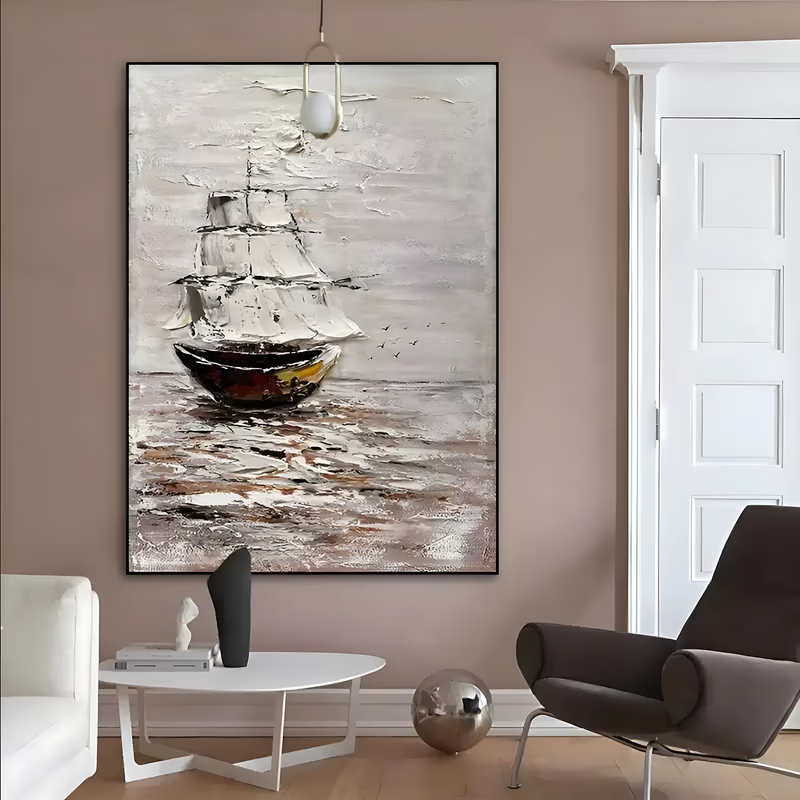
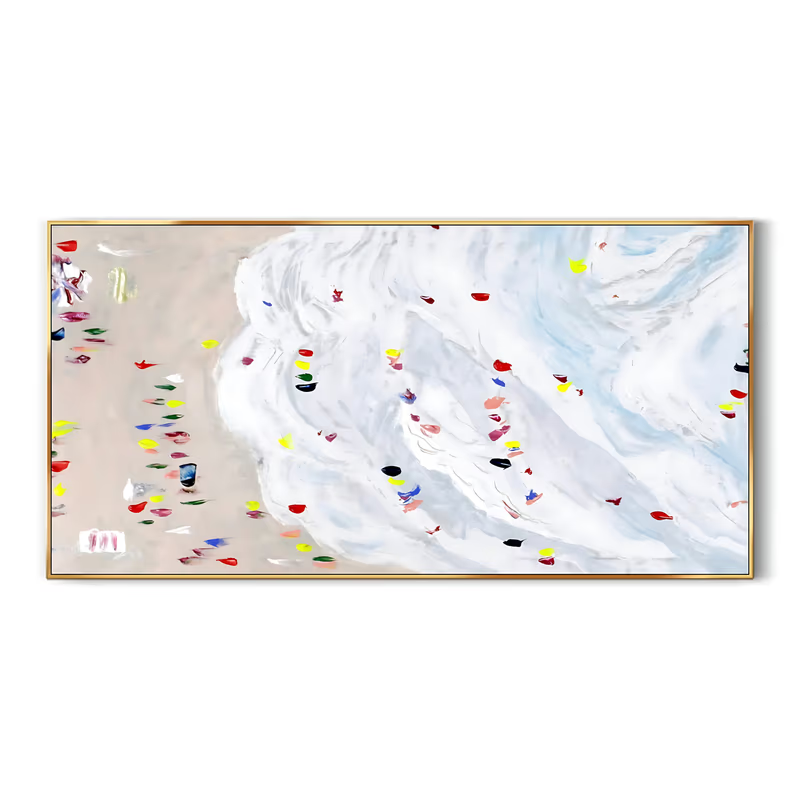
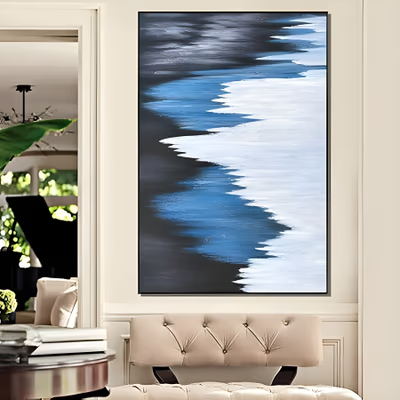
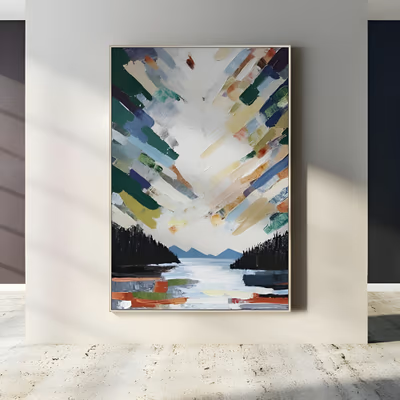
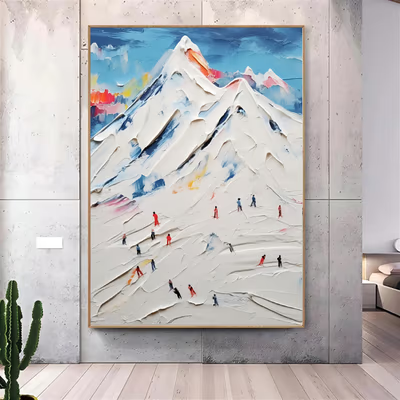
Snow peaks above green valleys, winter streams, birch woods in sunlight, and surf breaking white across sand or a navy sea. They bring air and distance into a windowless room and suit chalets, coastal homes and long spa corridors.
Minimalist white abstract art
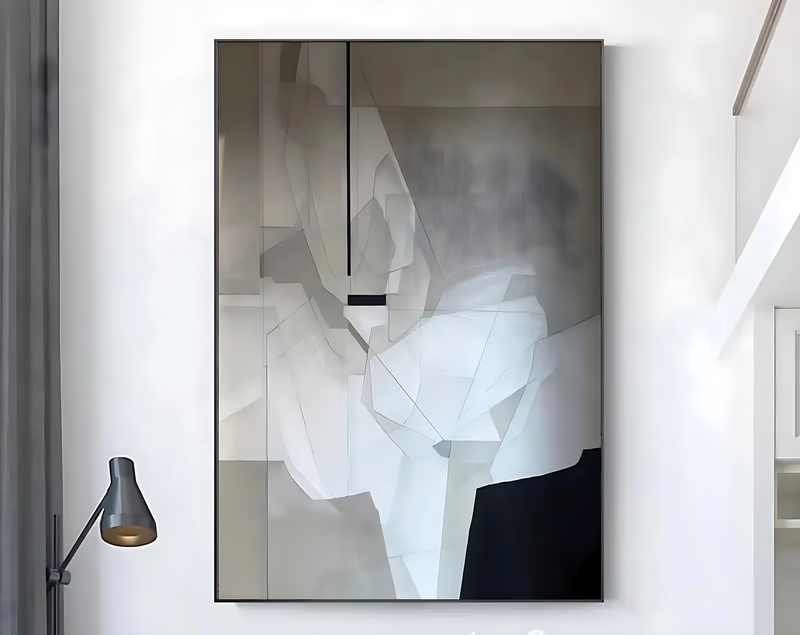
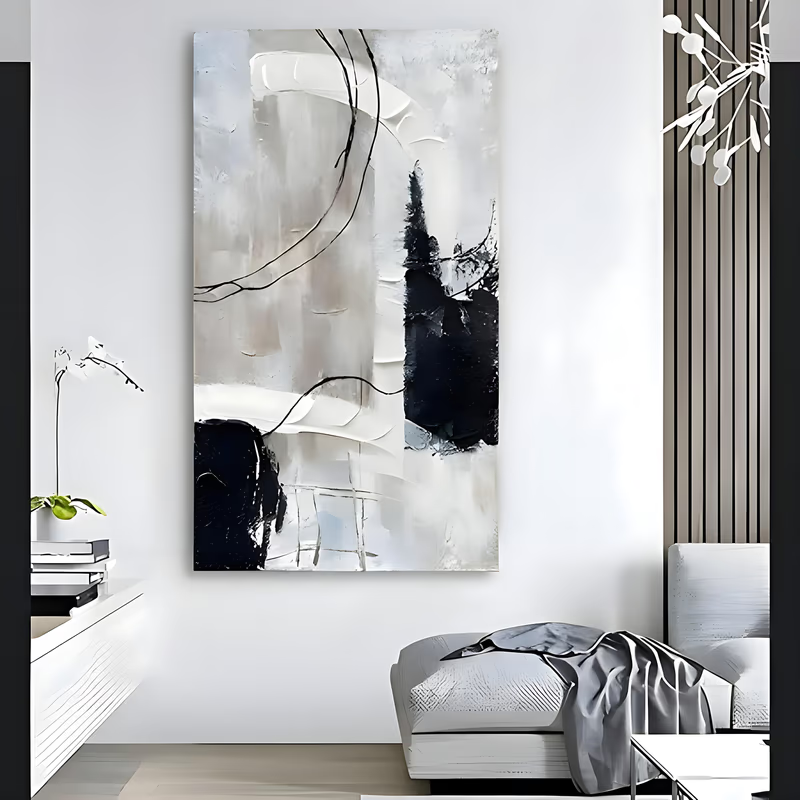
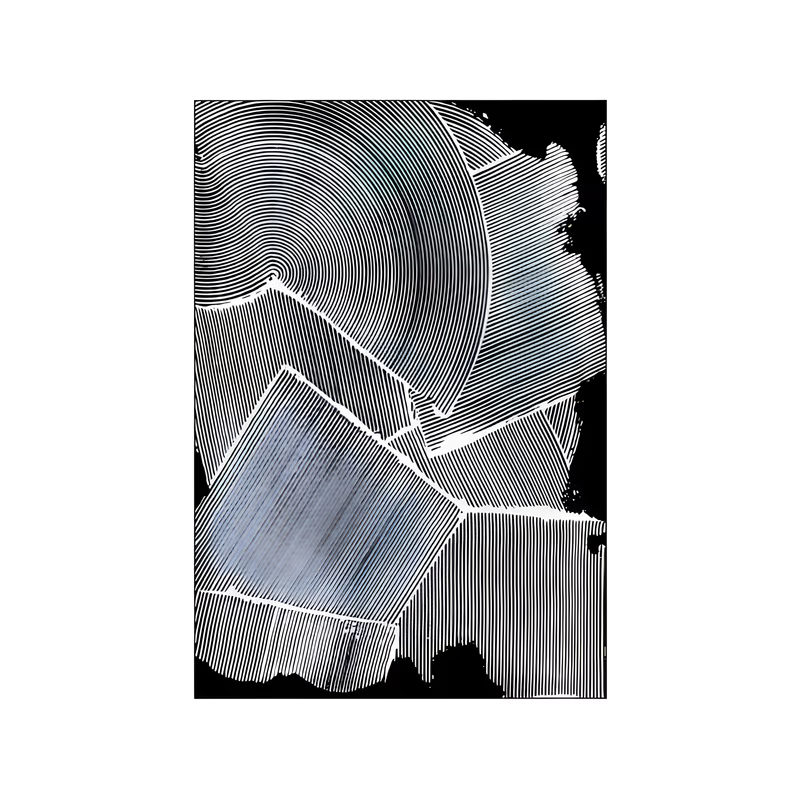
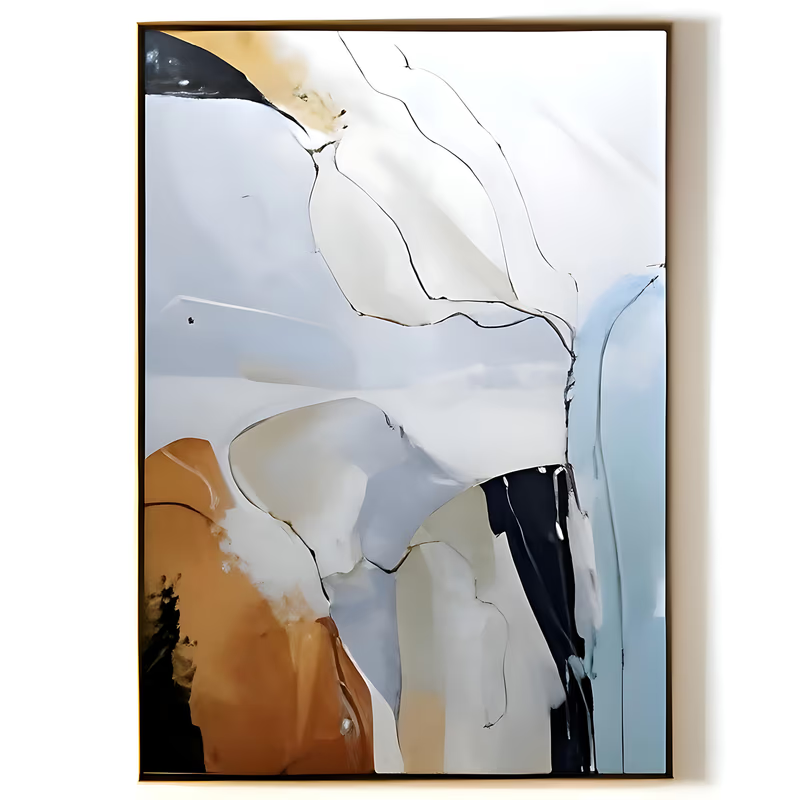
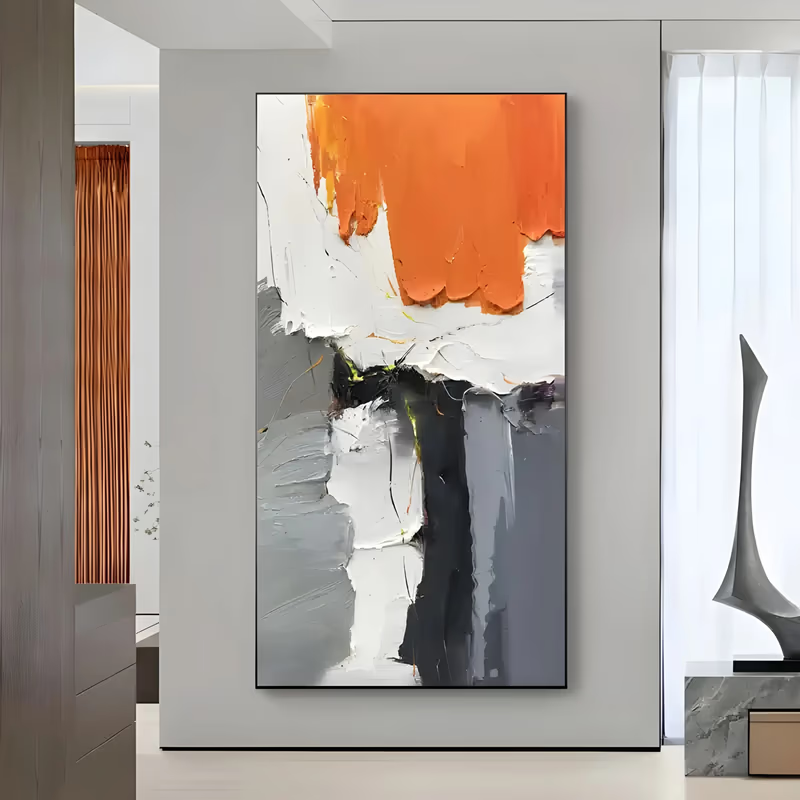
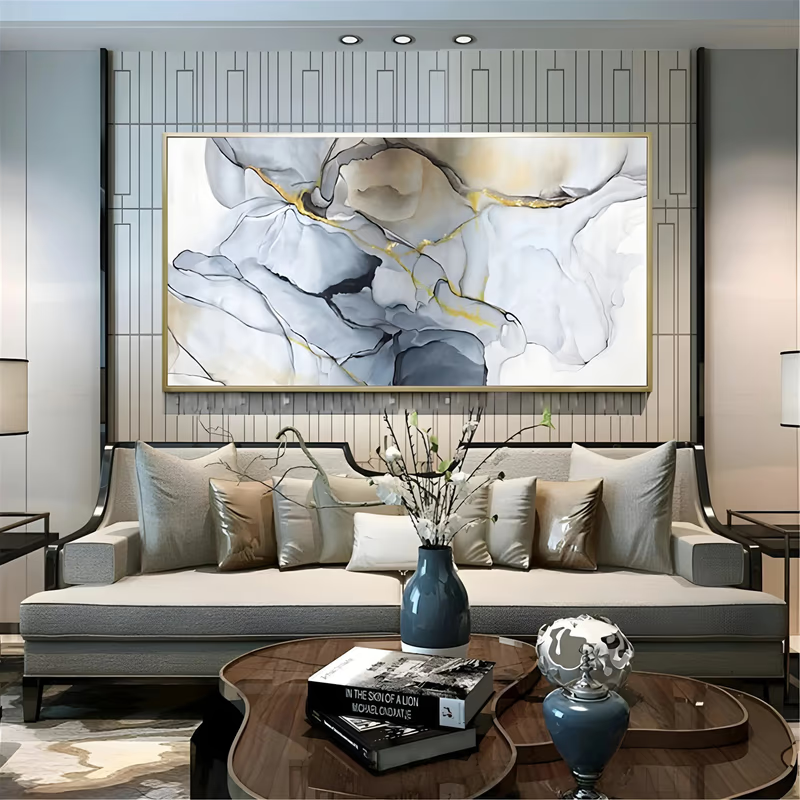
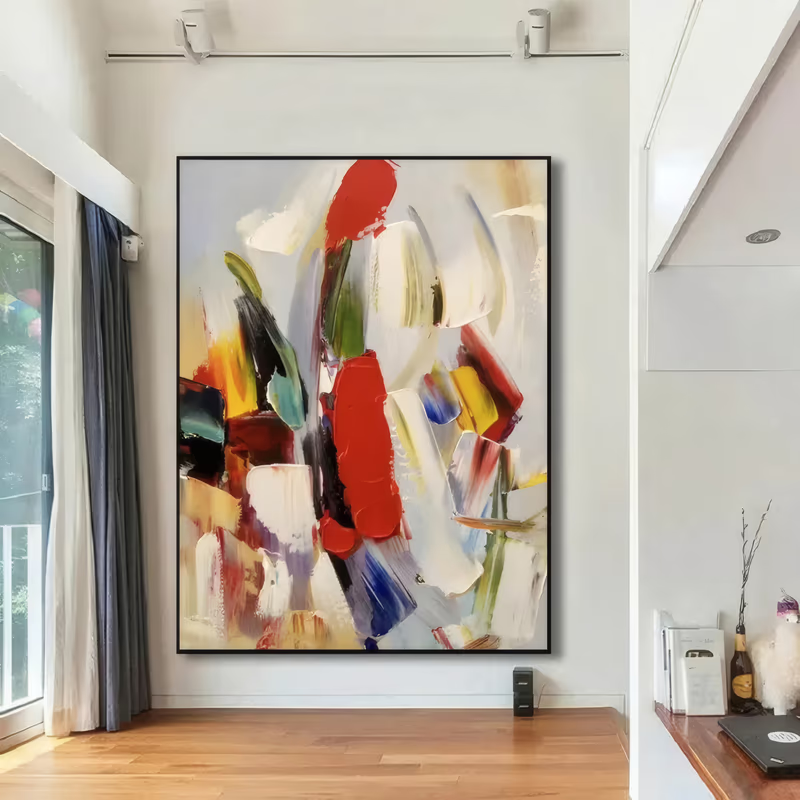
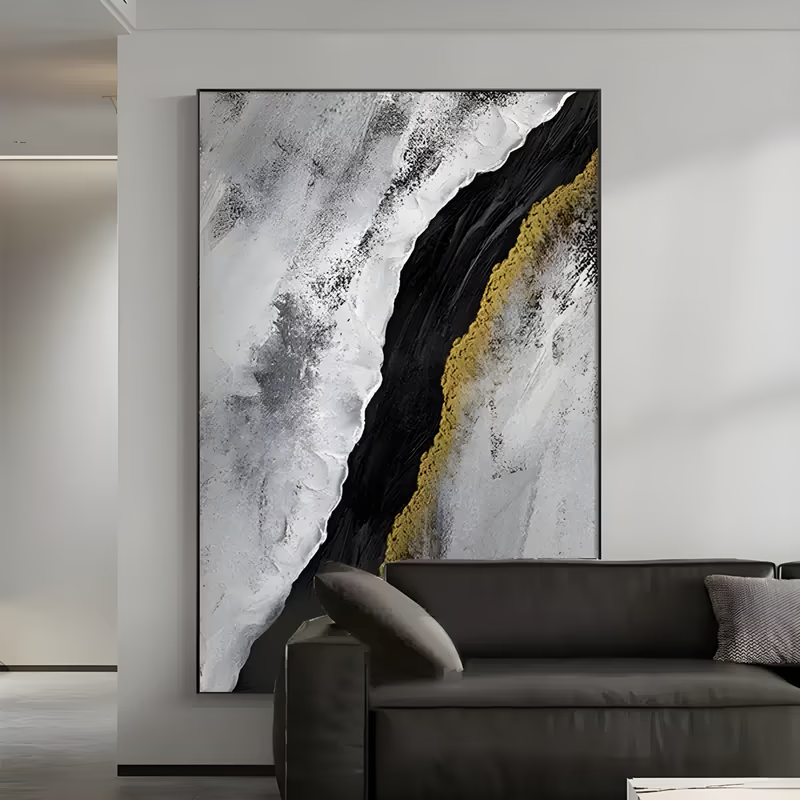
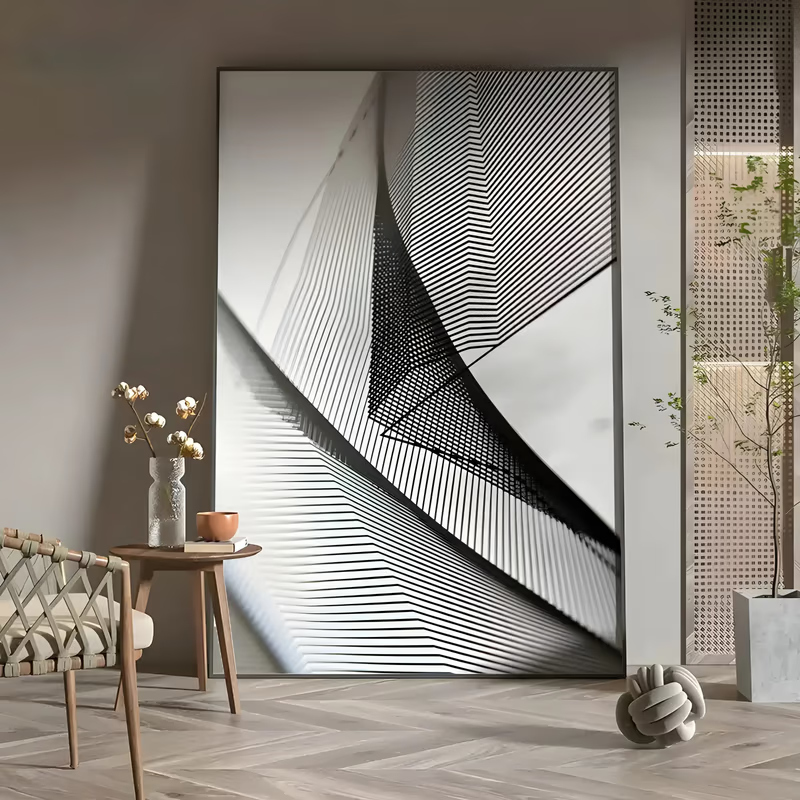
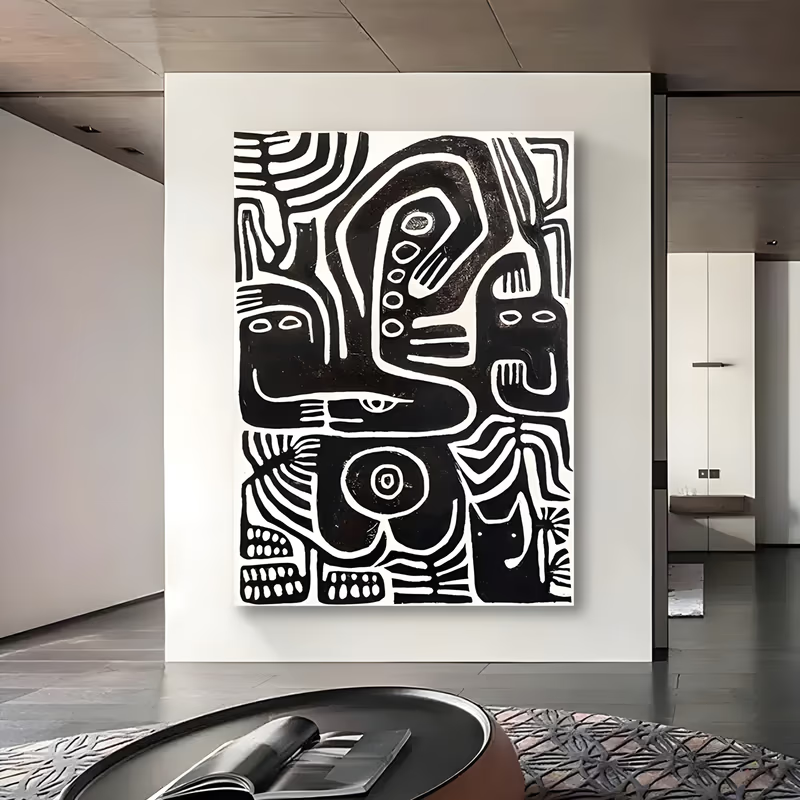
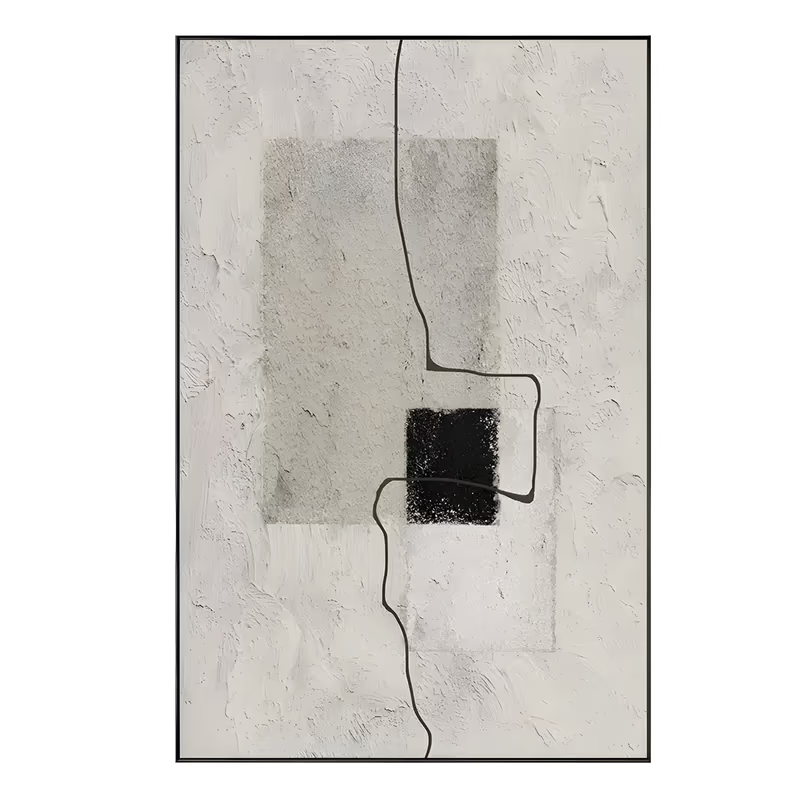
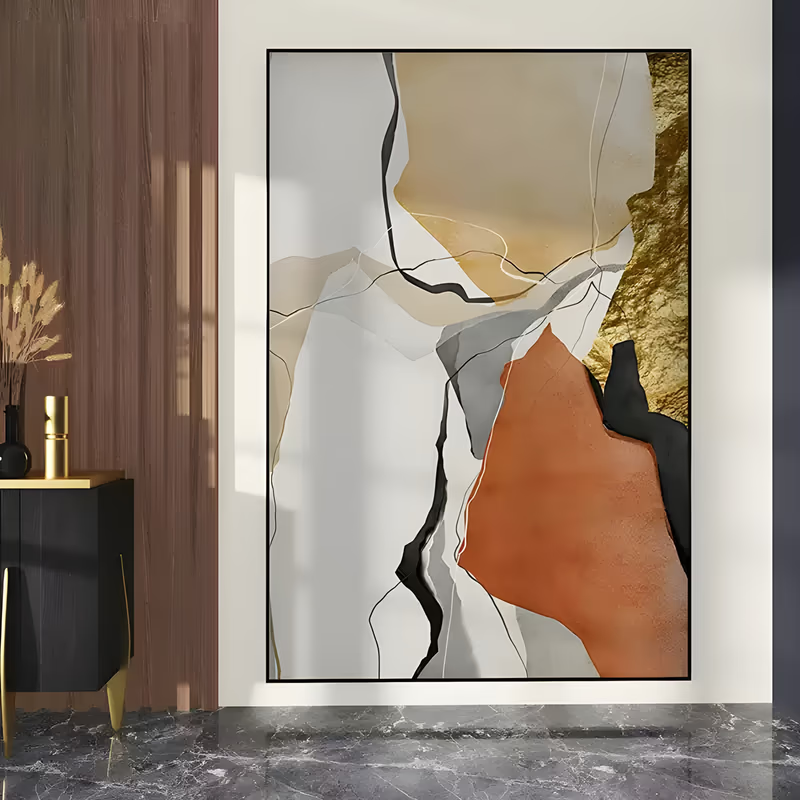
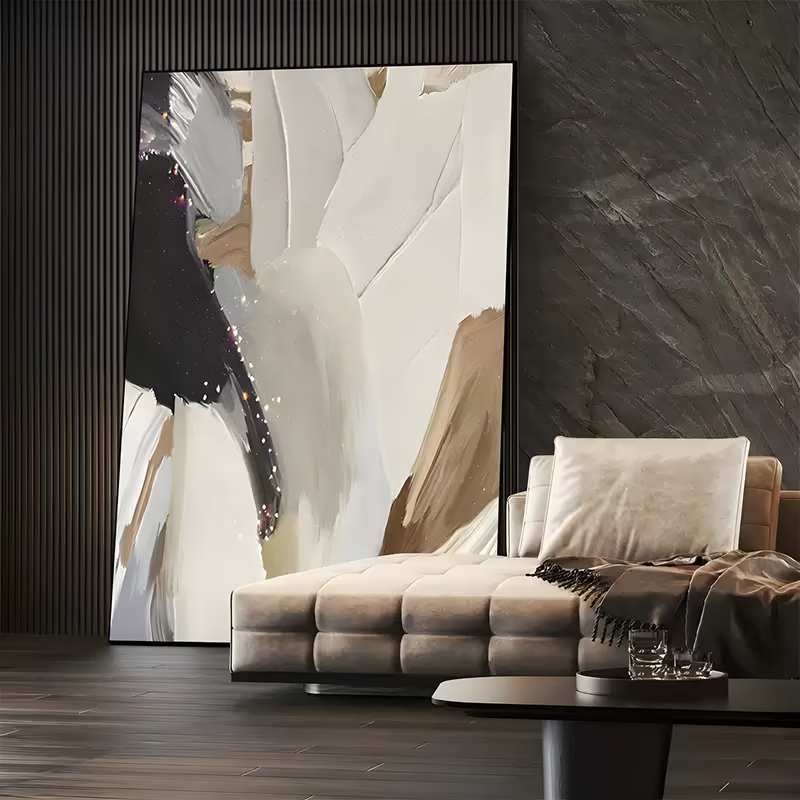
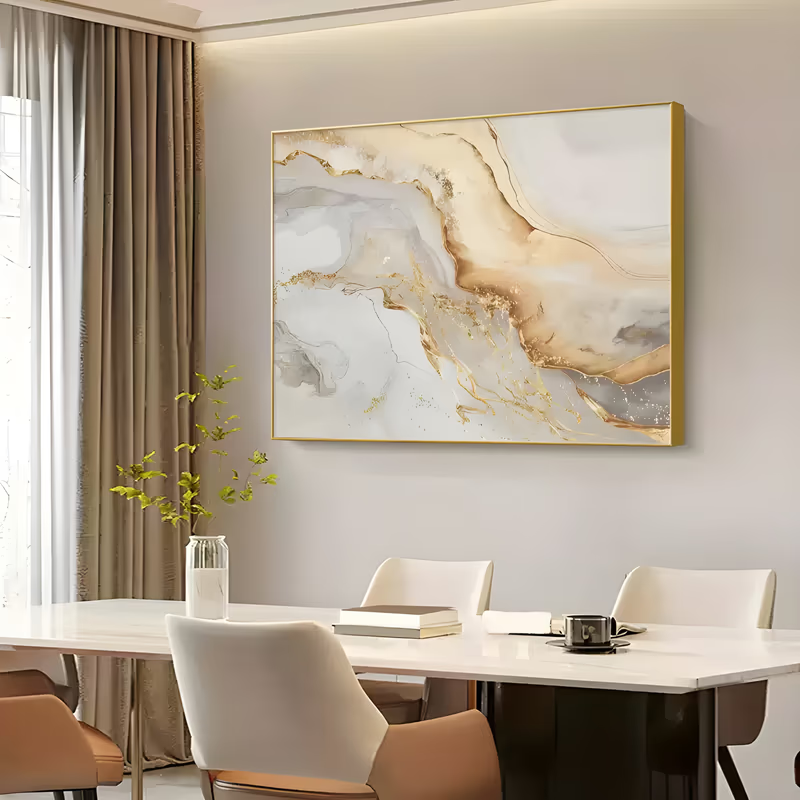
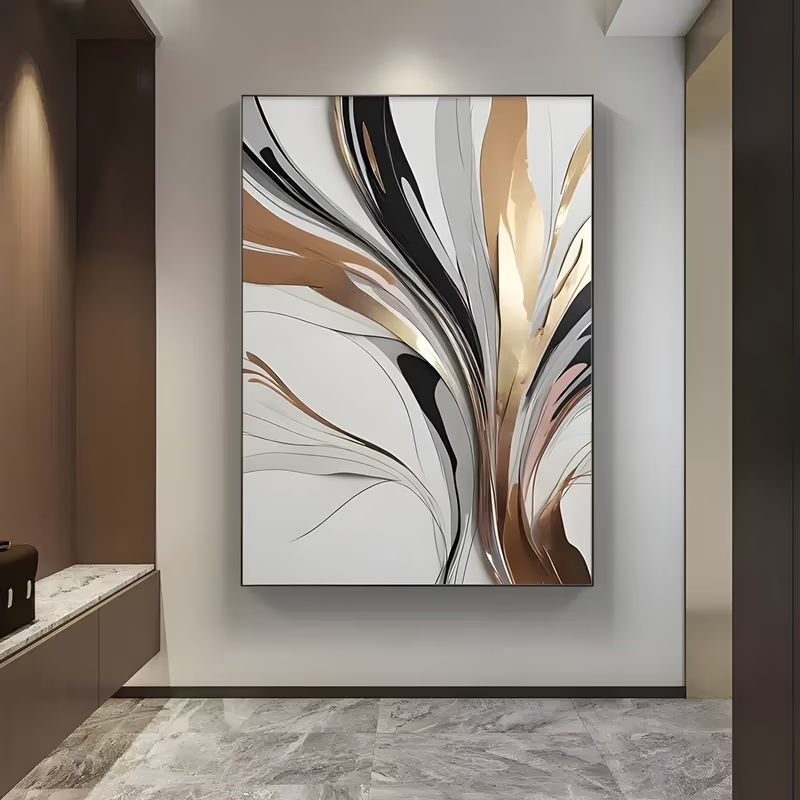
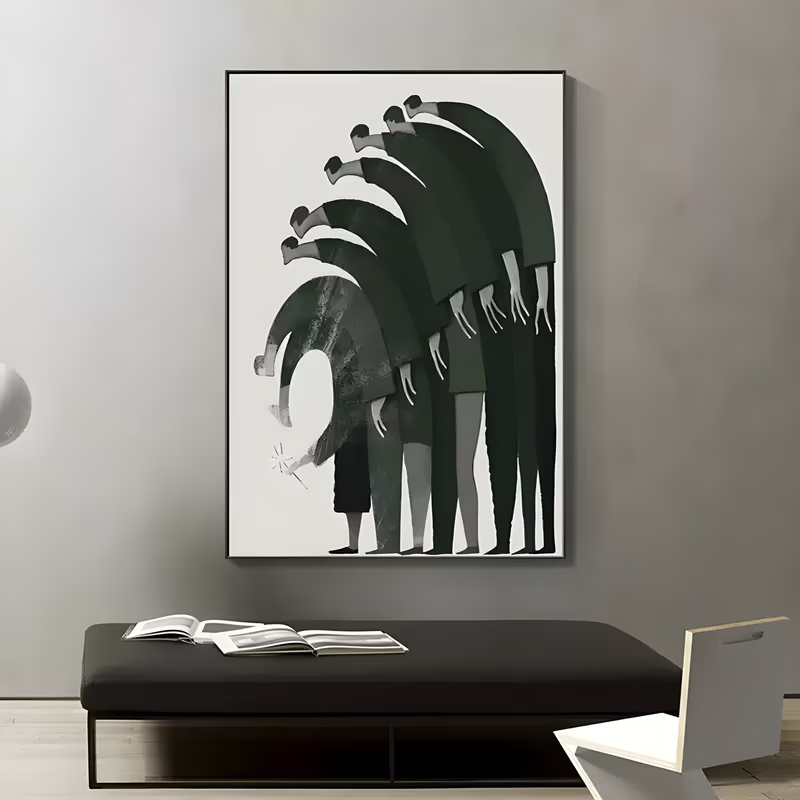
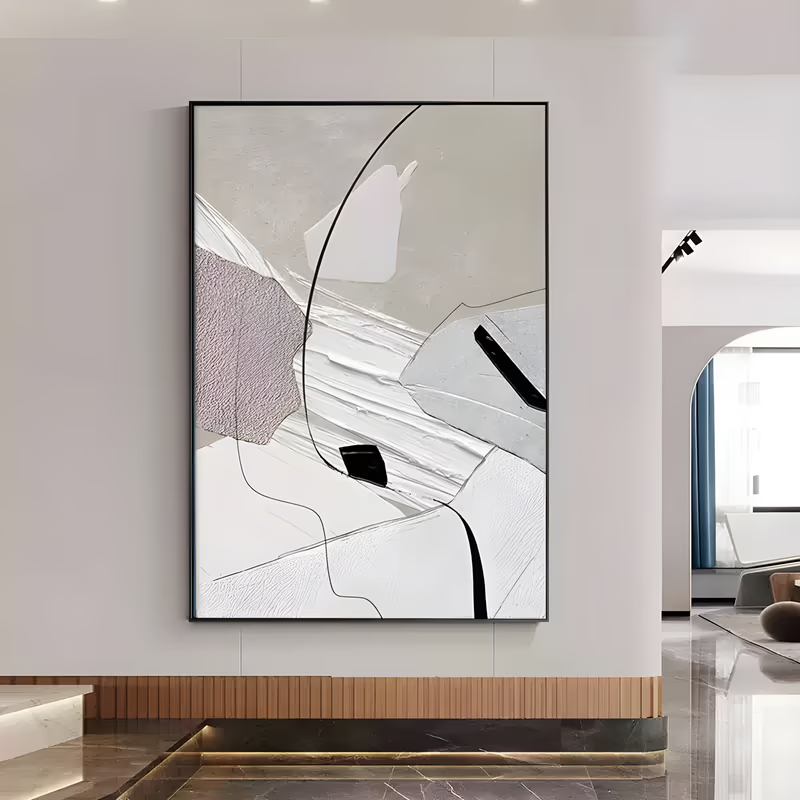
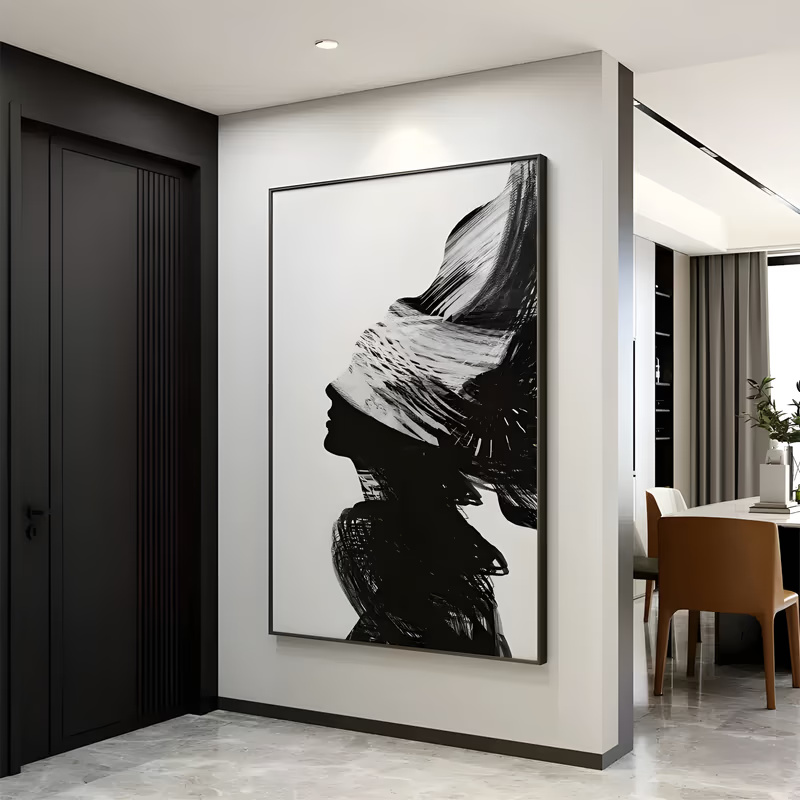
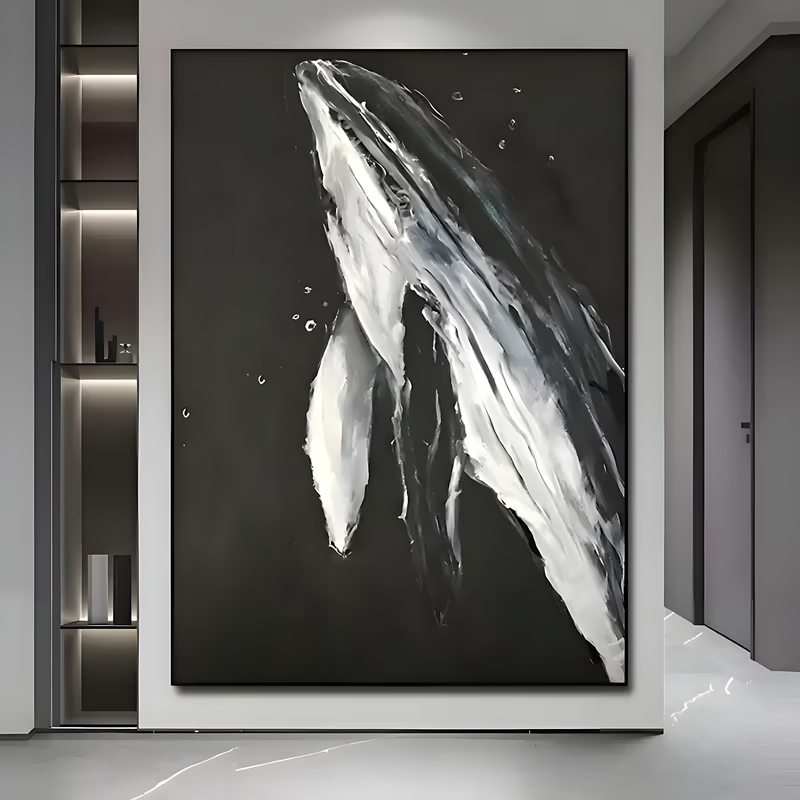
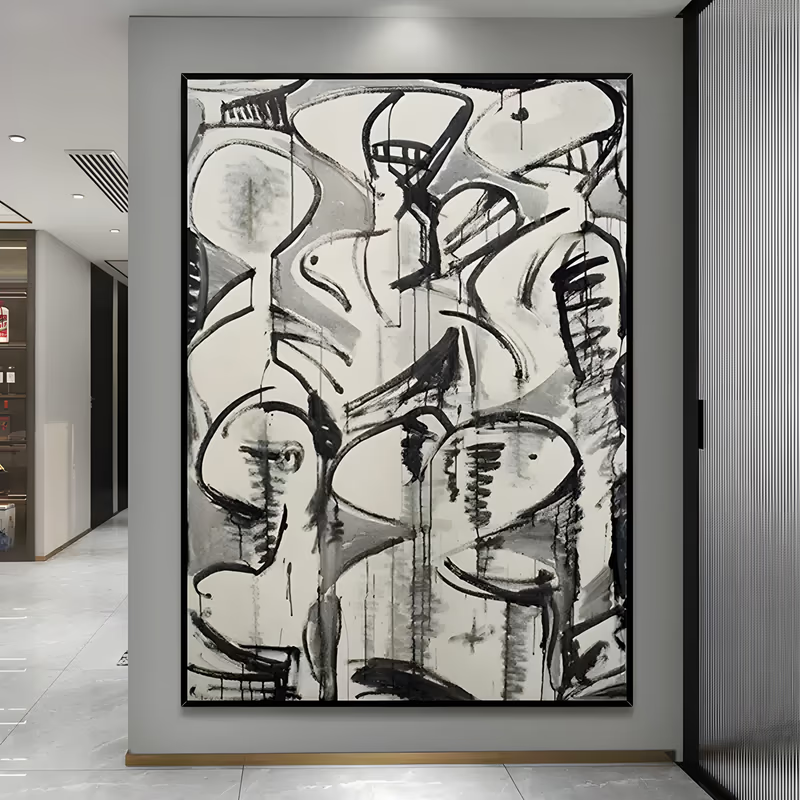
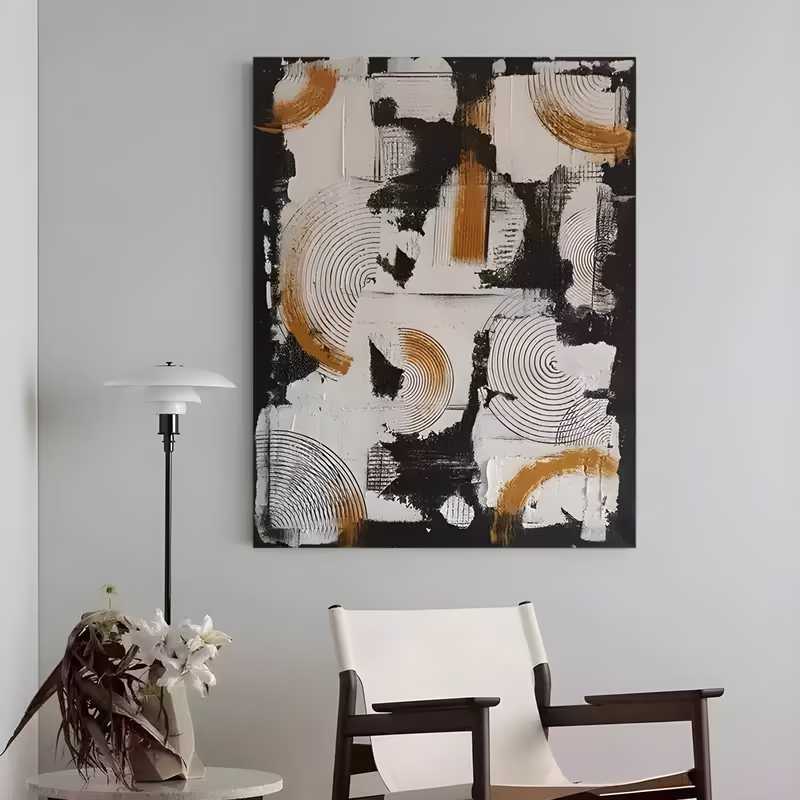
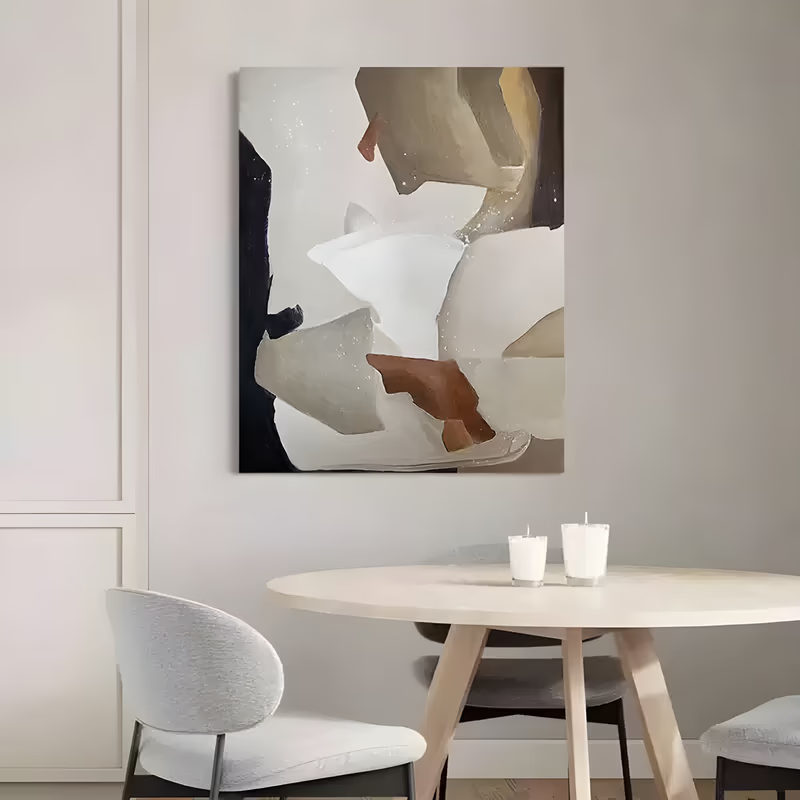
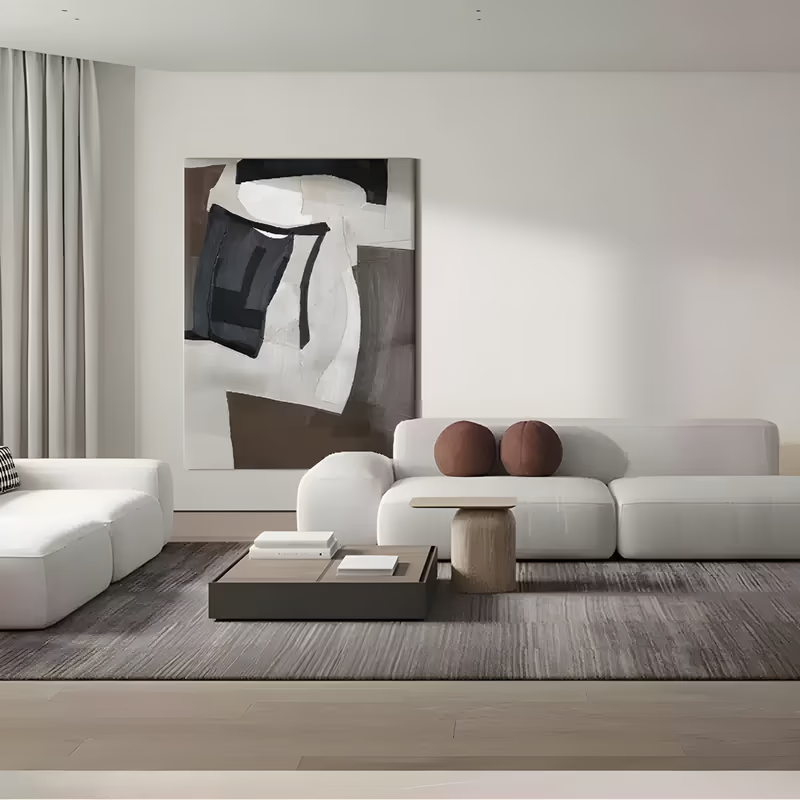
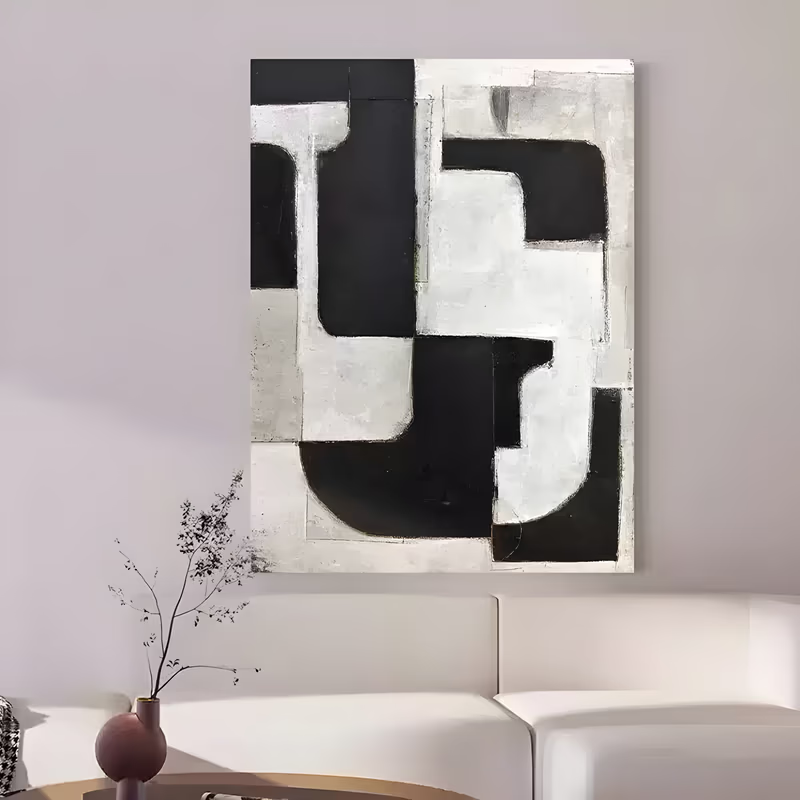
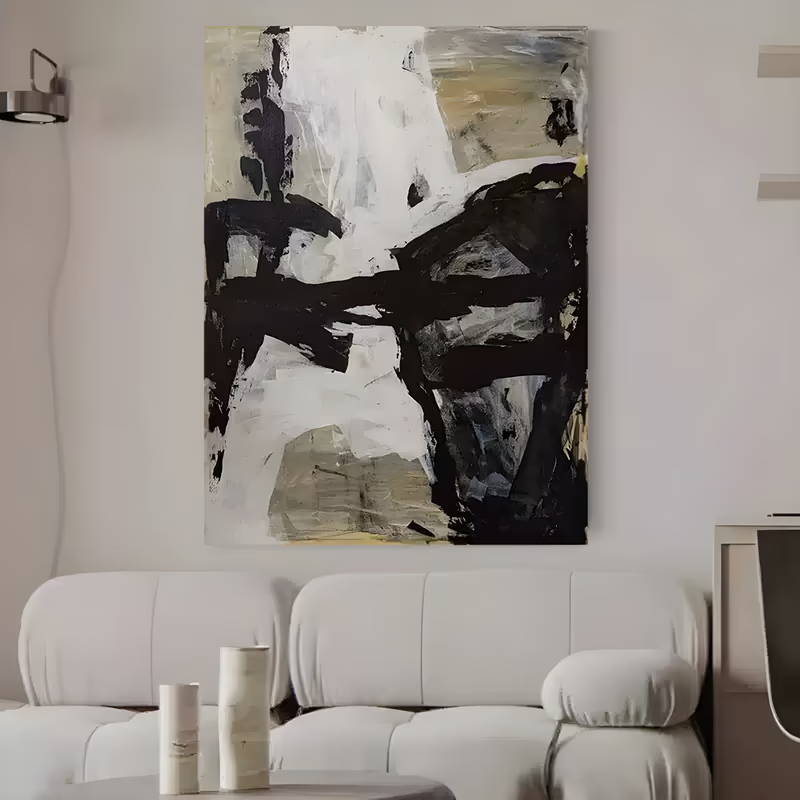
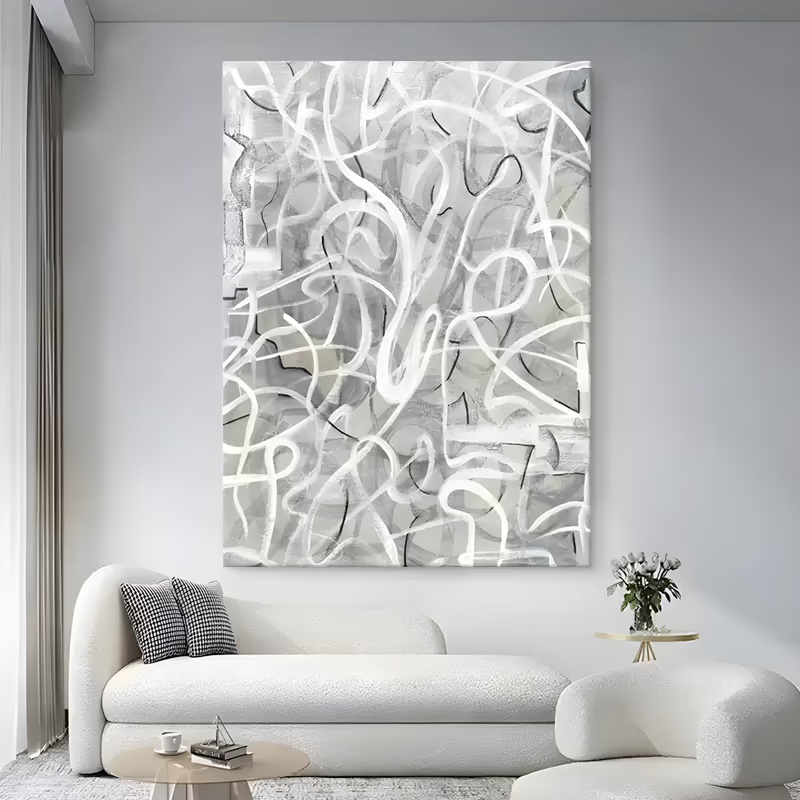
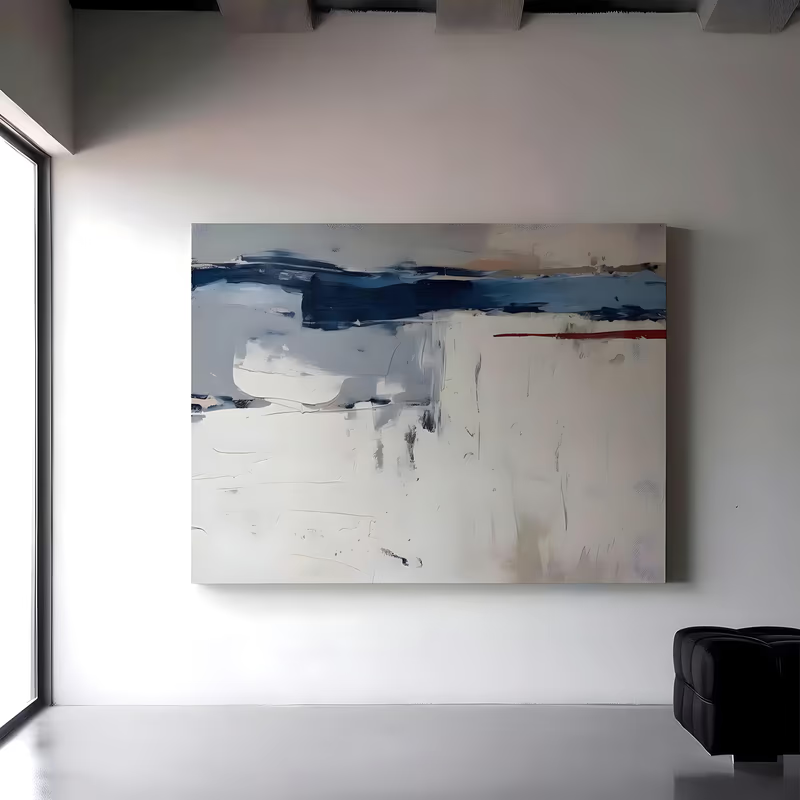
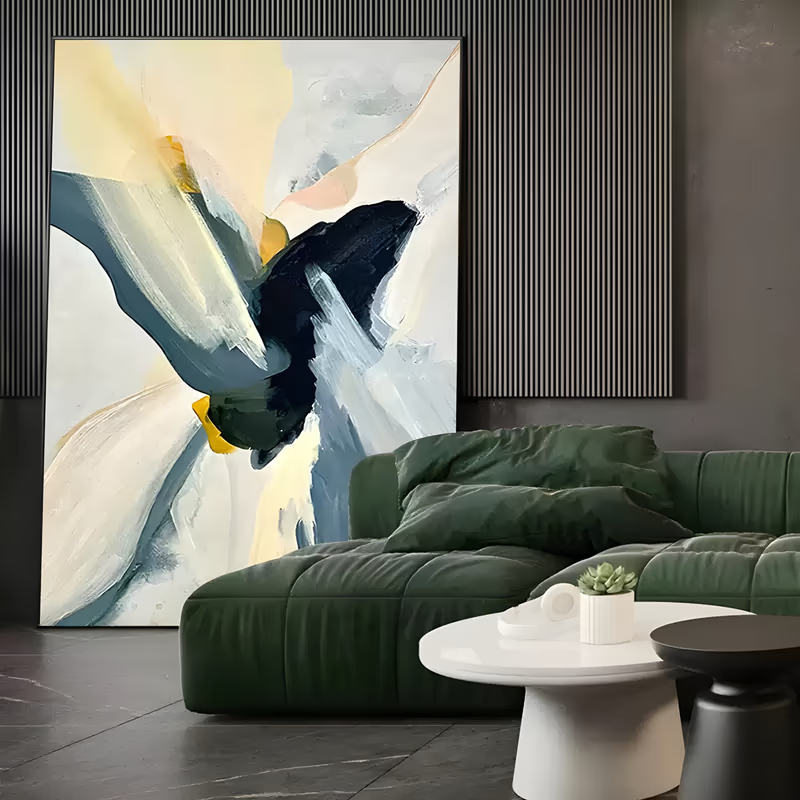
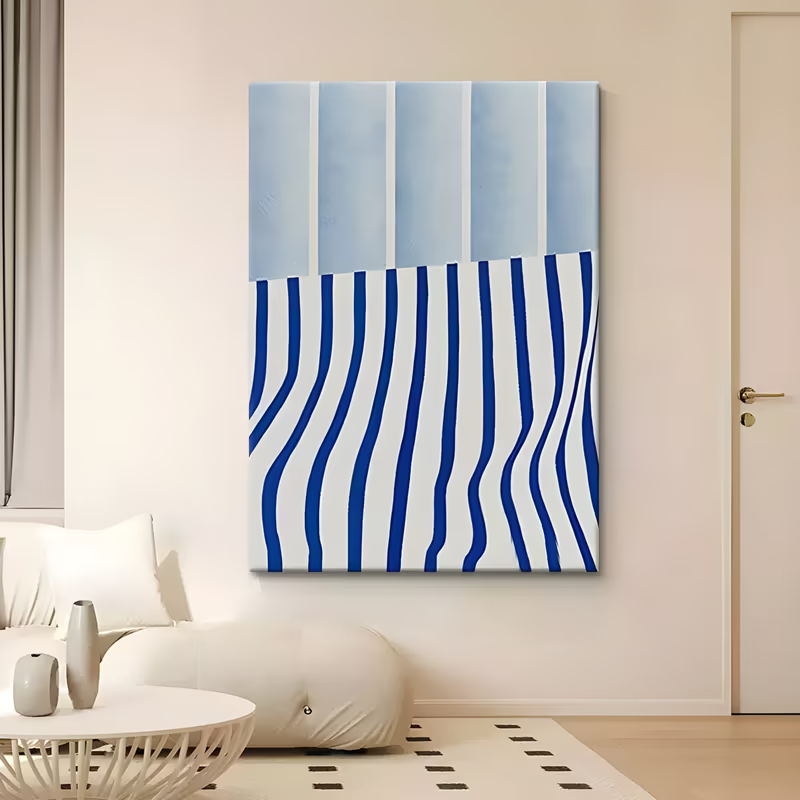
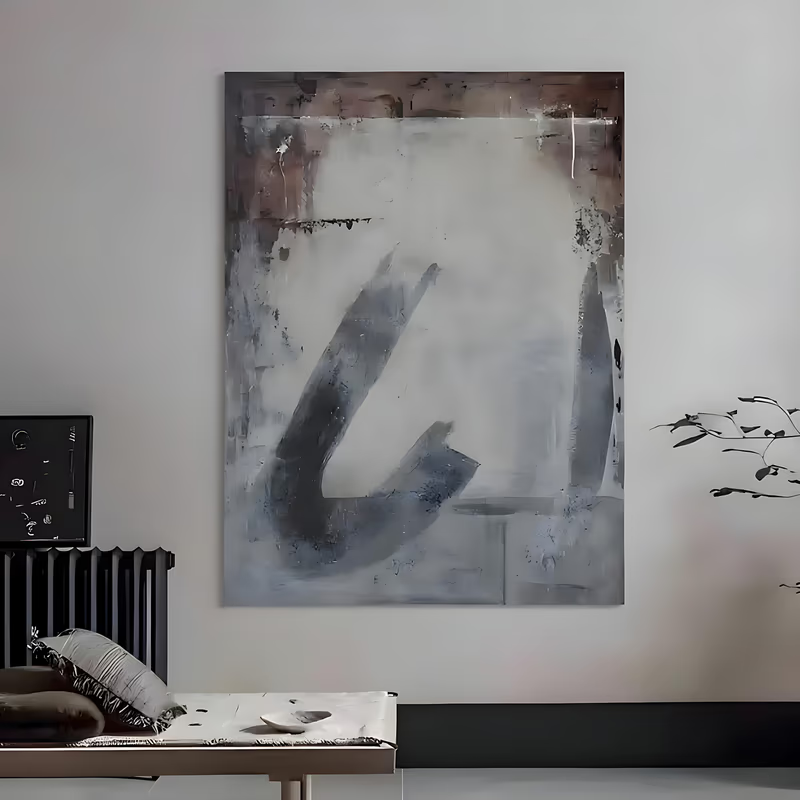
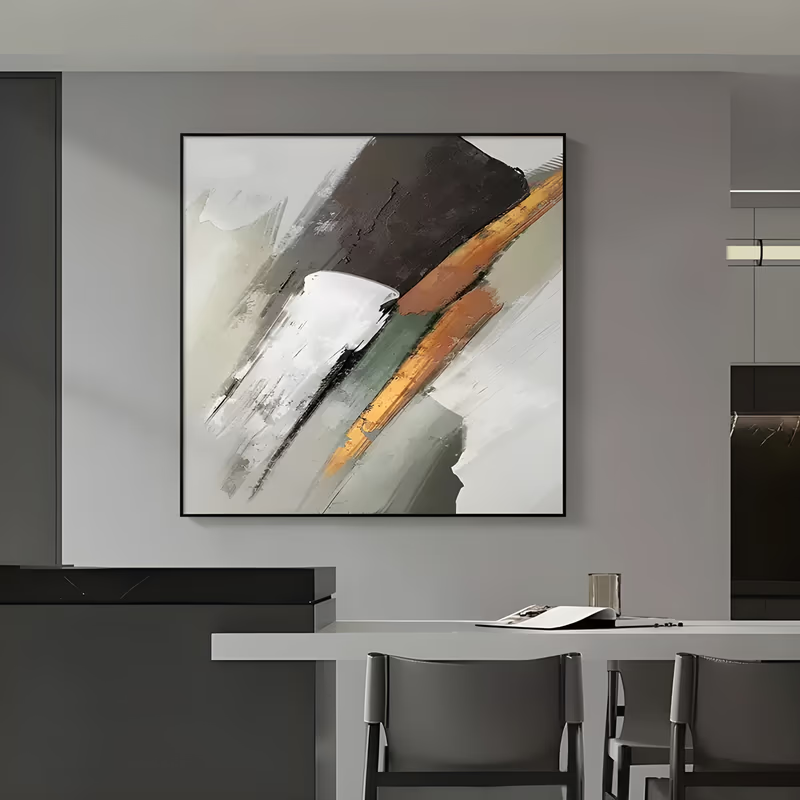
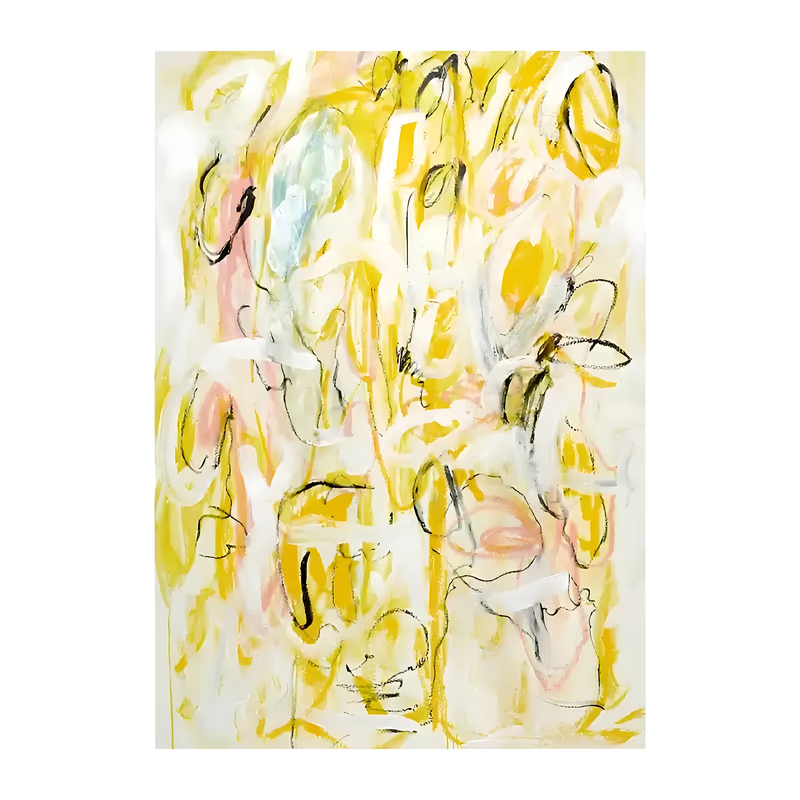
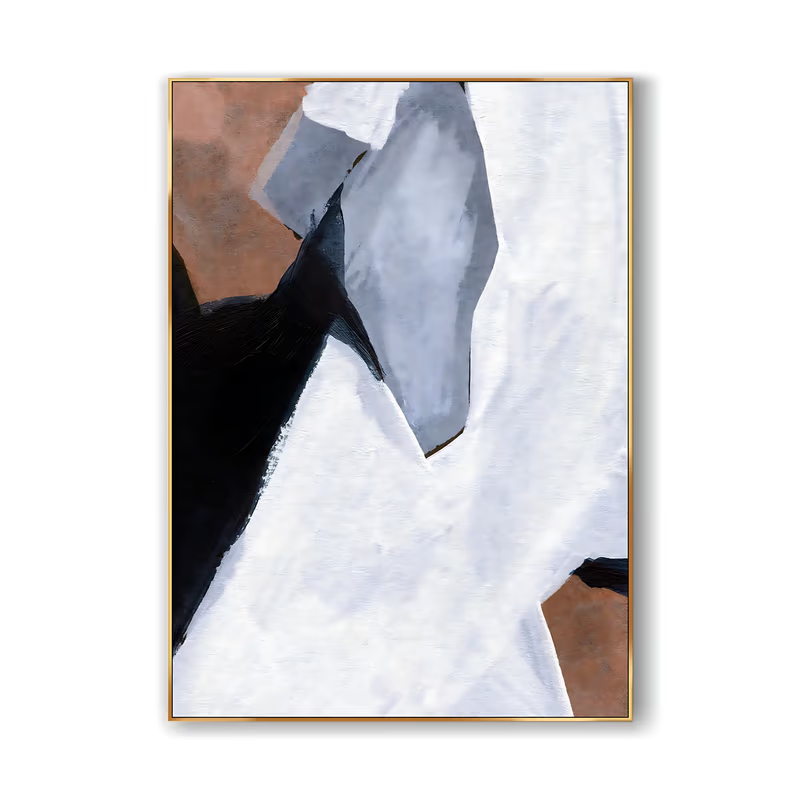
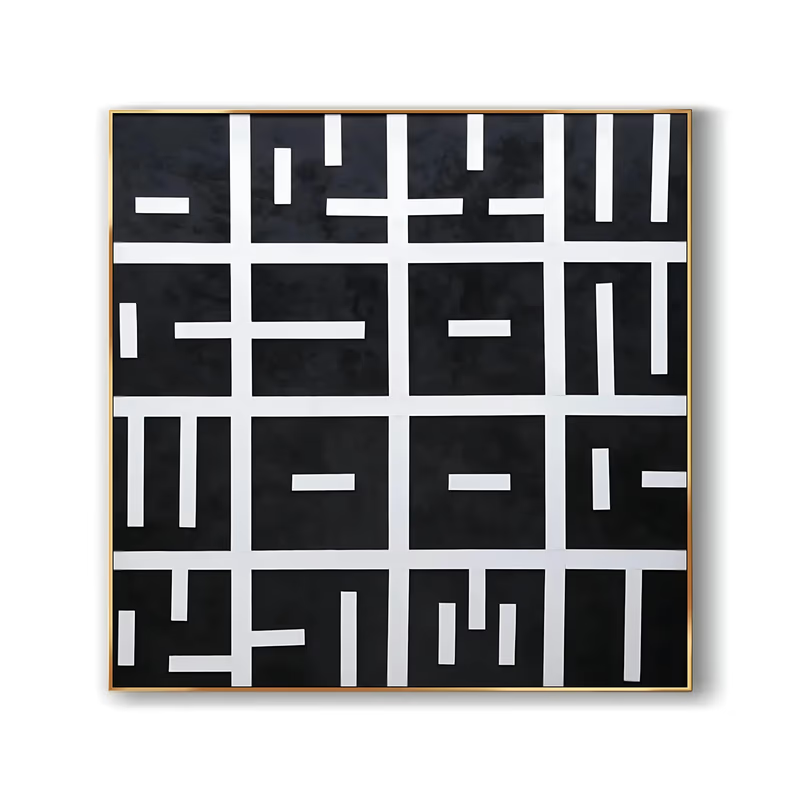
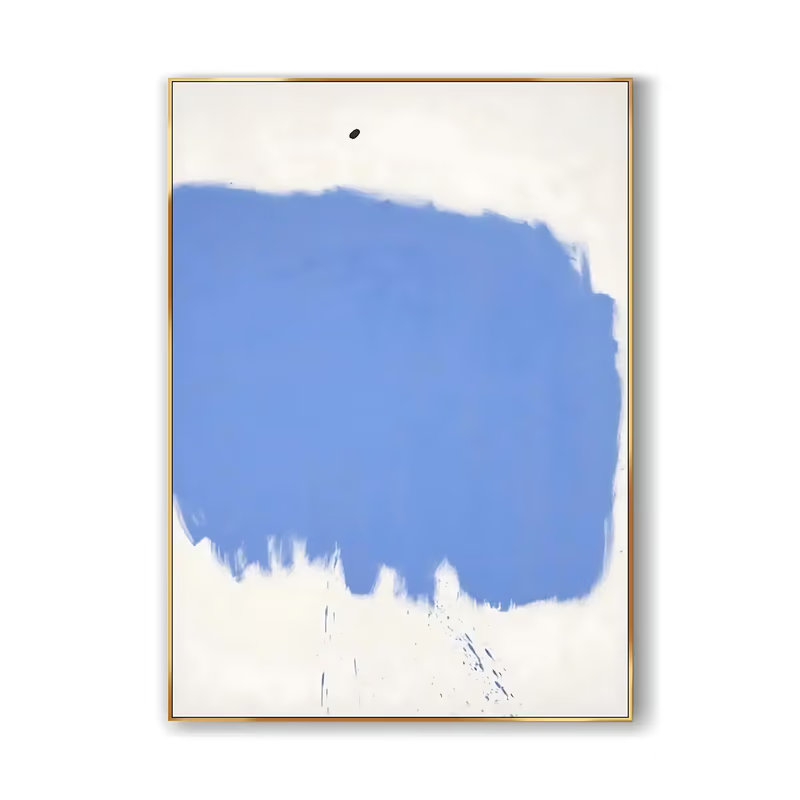
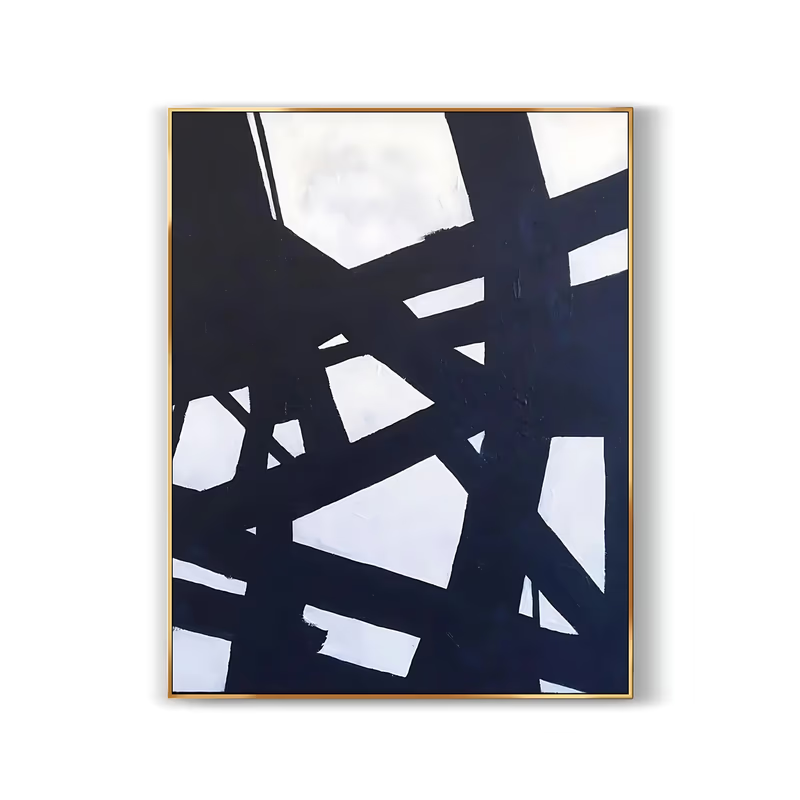
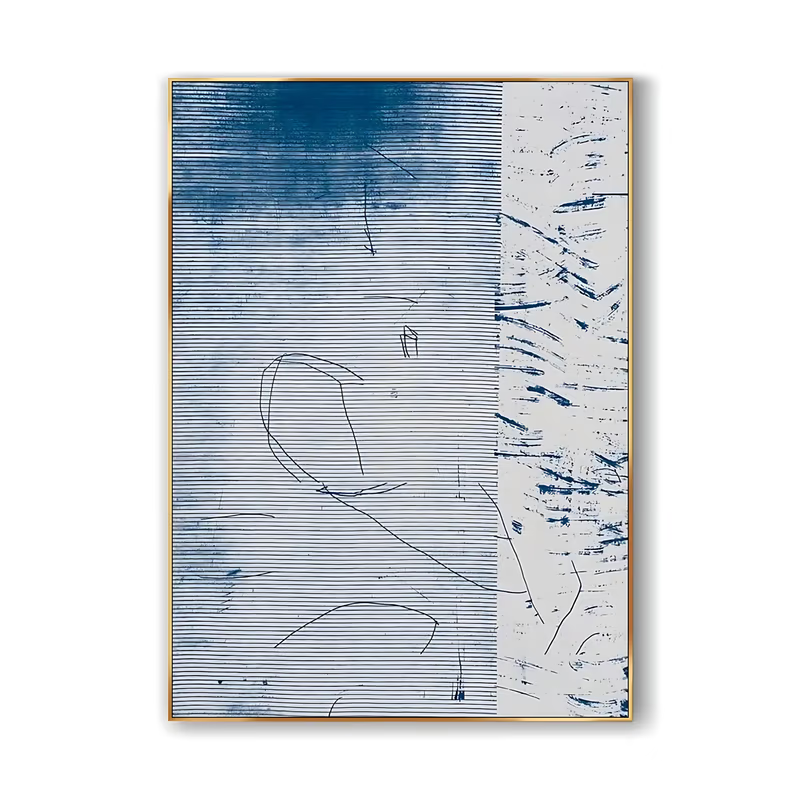
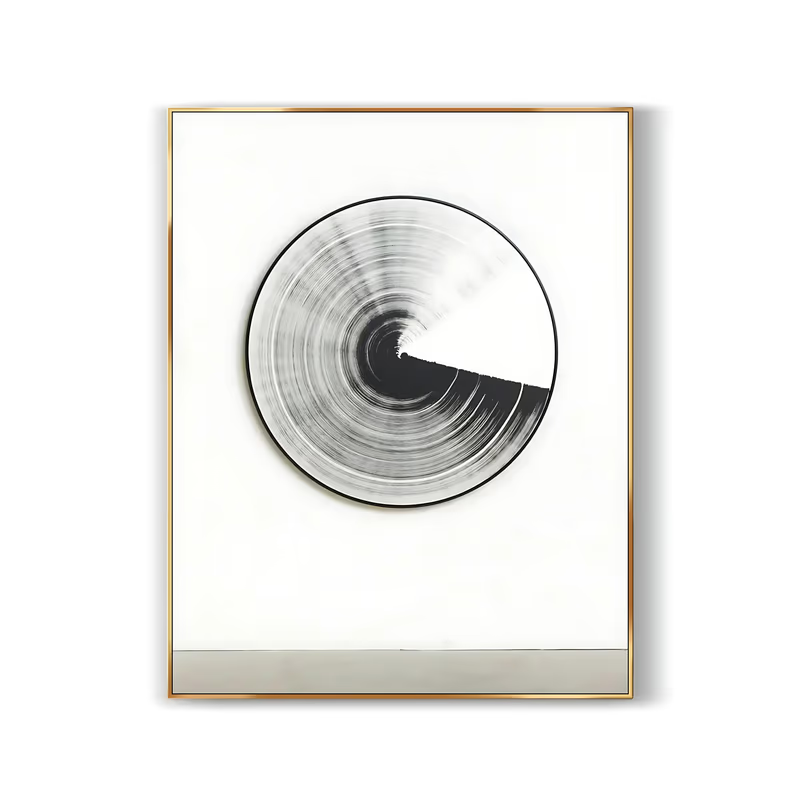
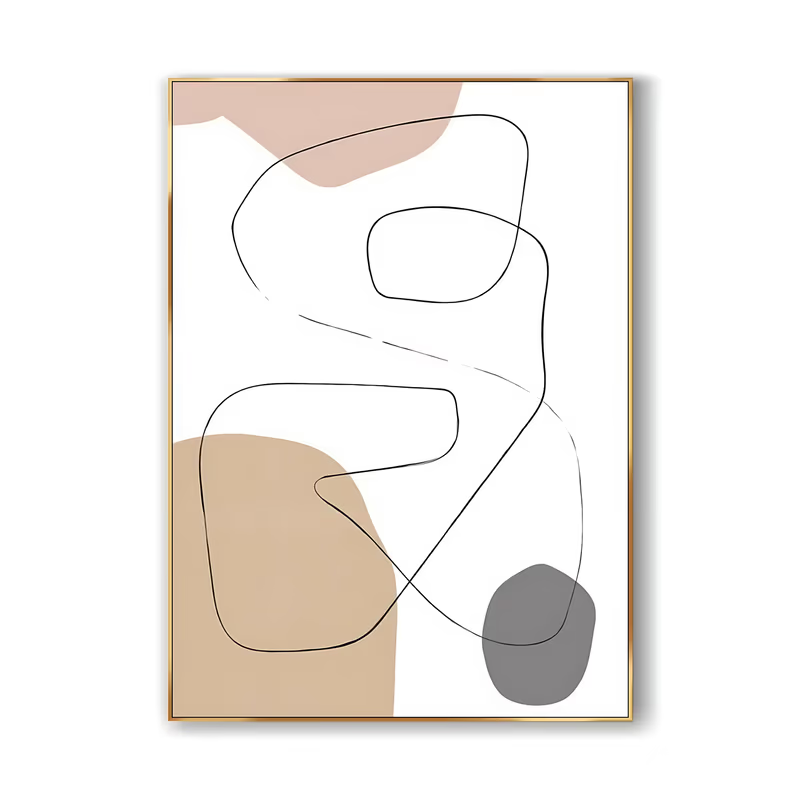
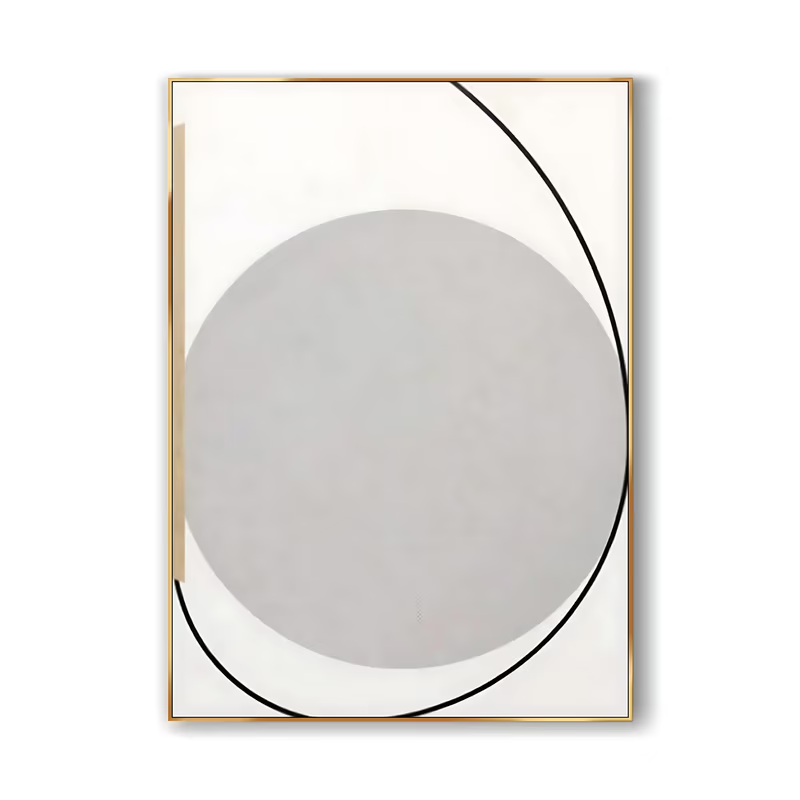
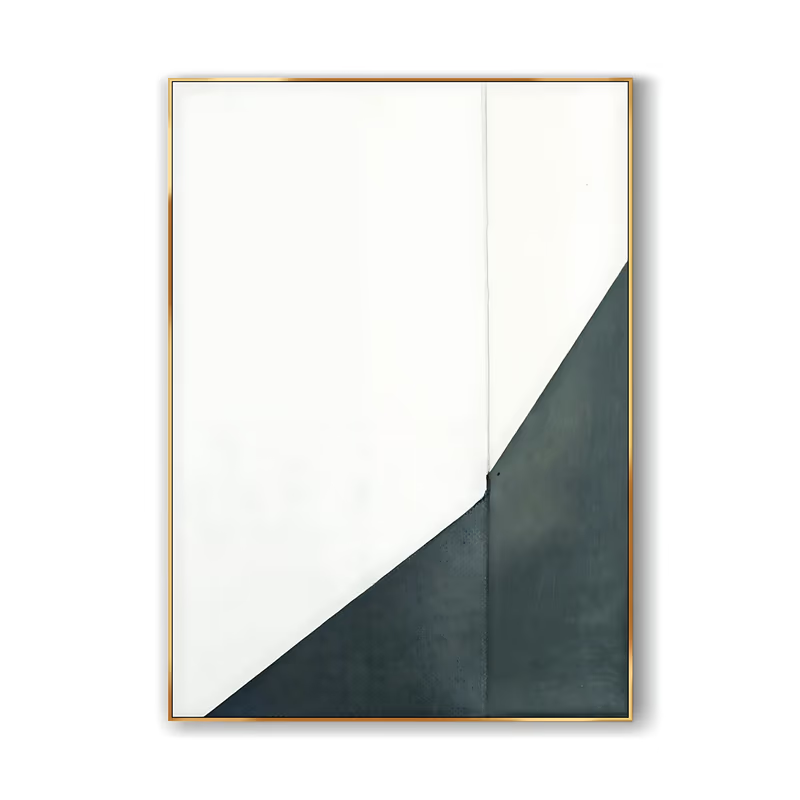
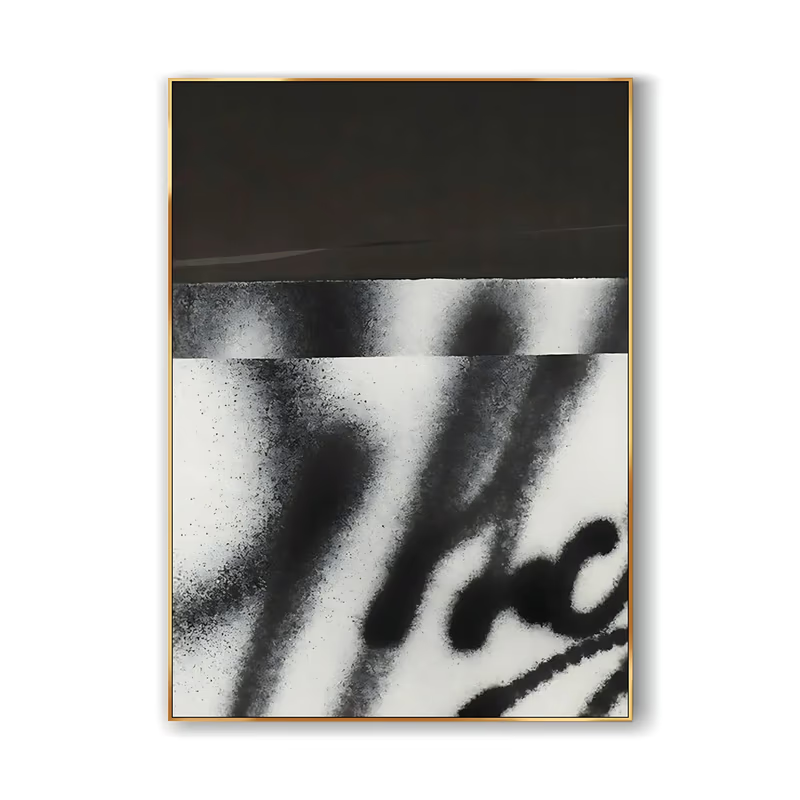
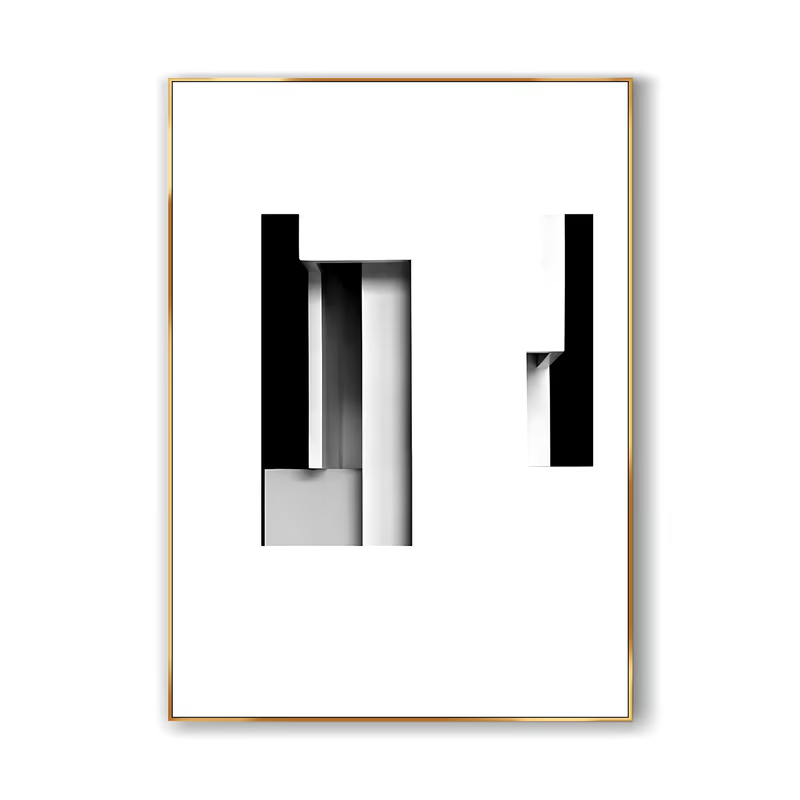
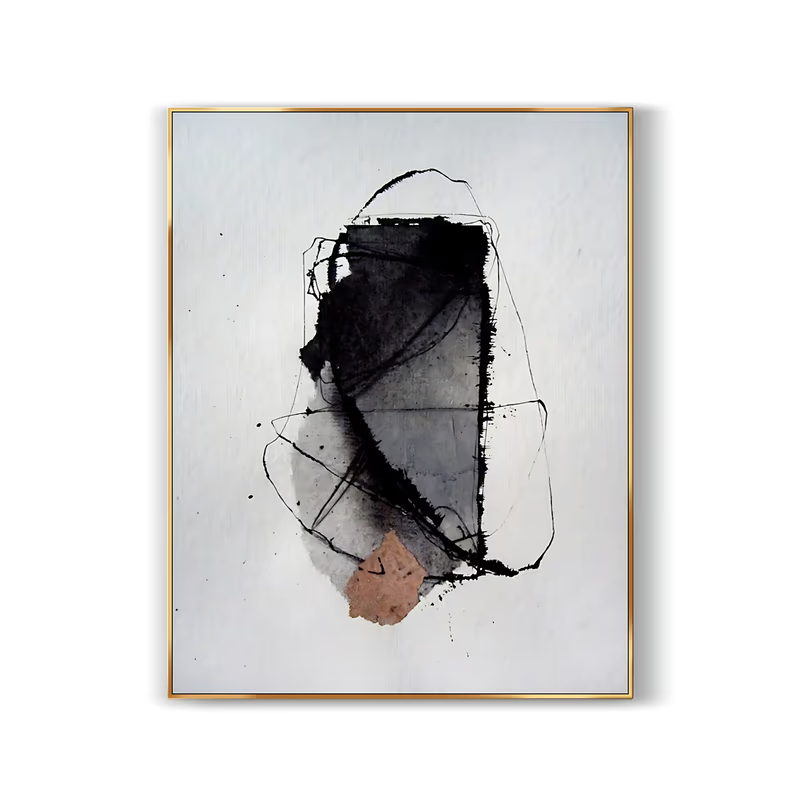
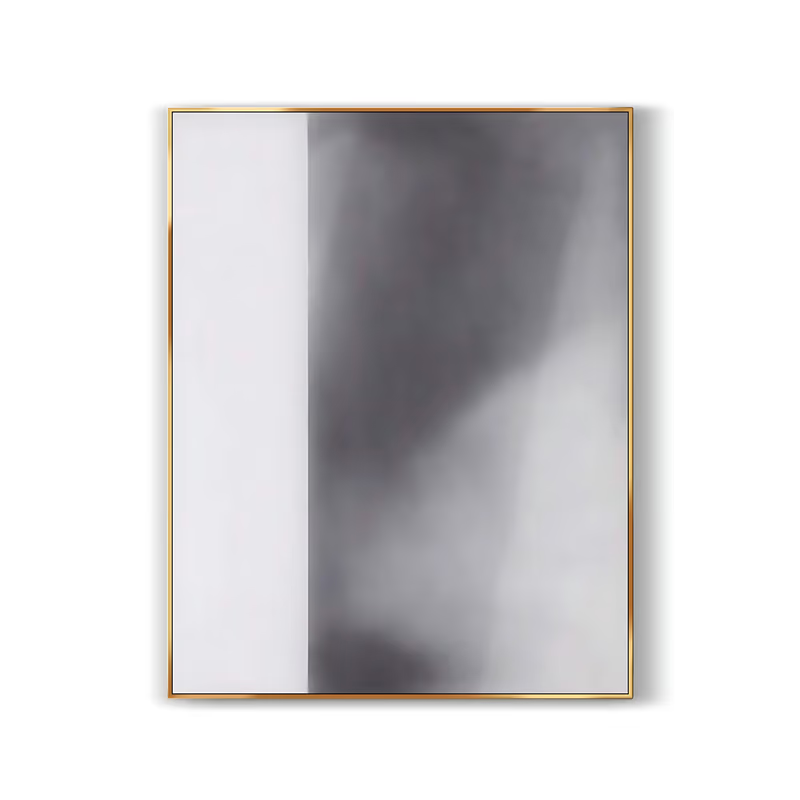
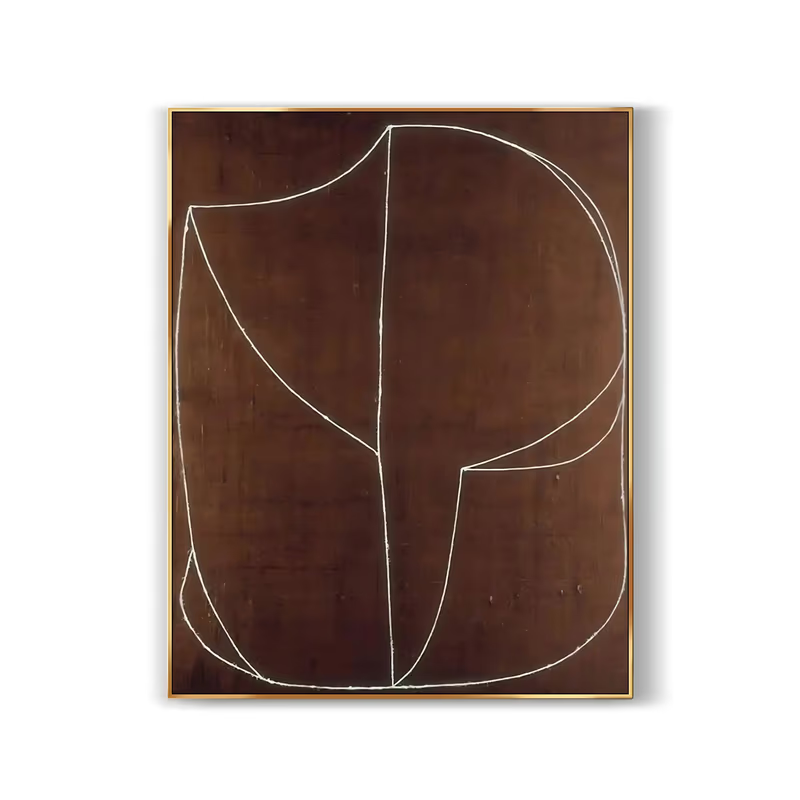
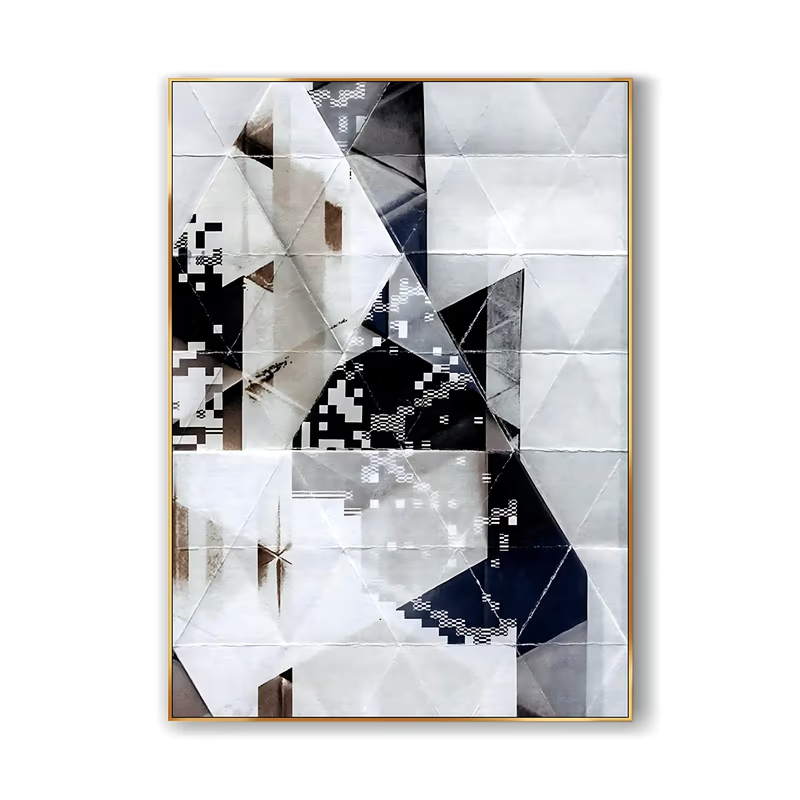
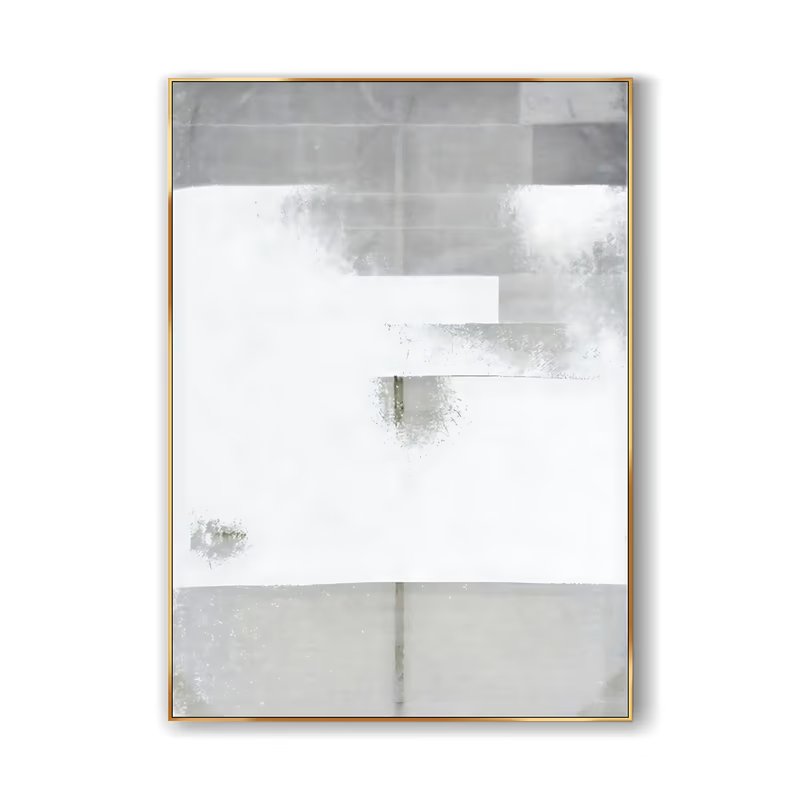
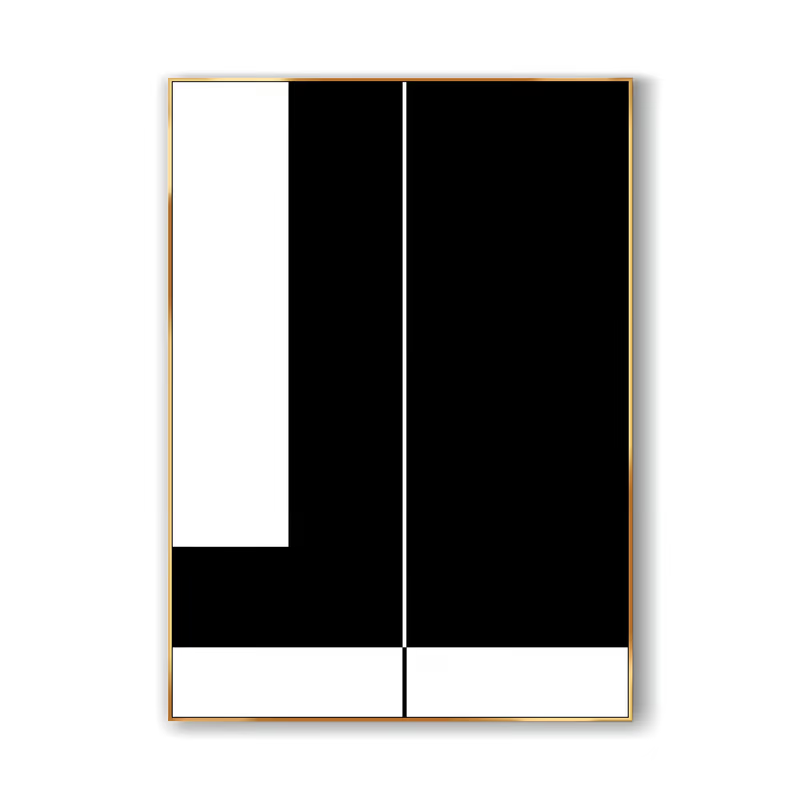
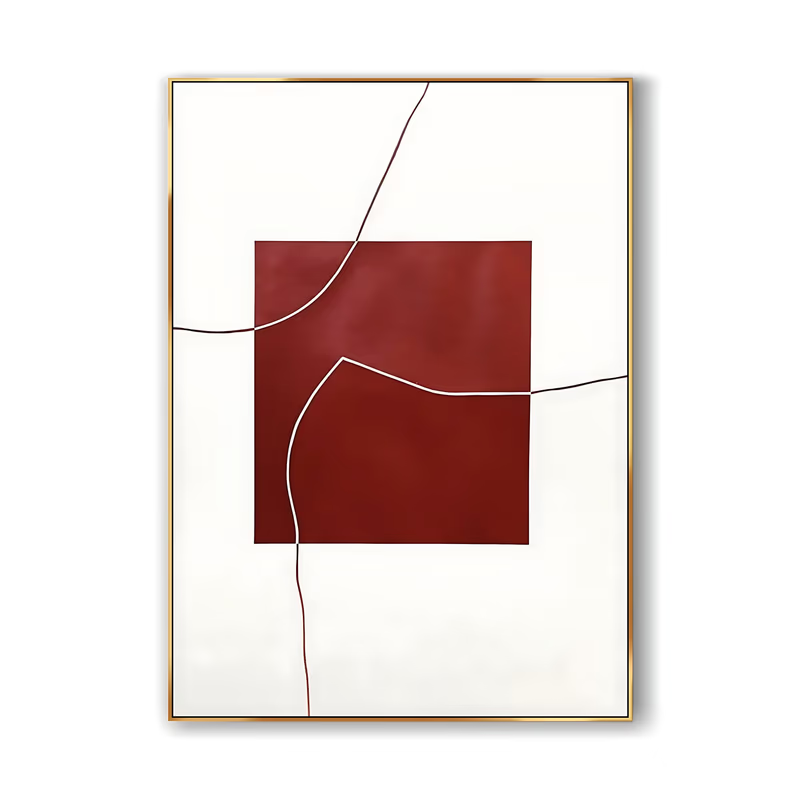
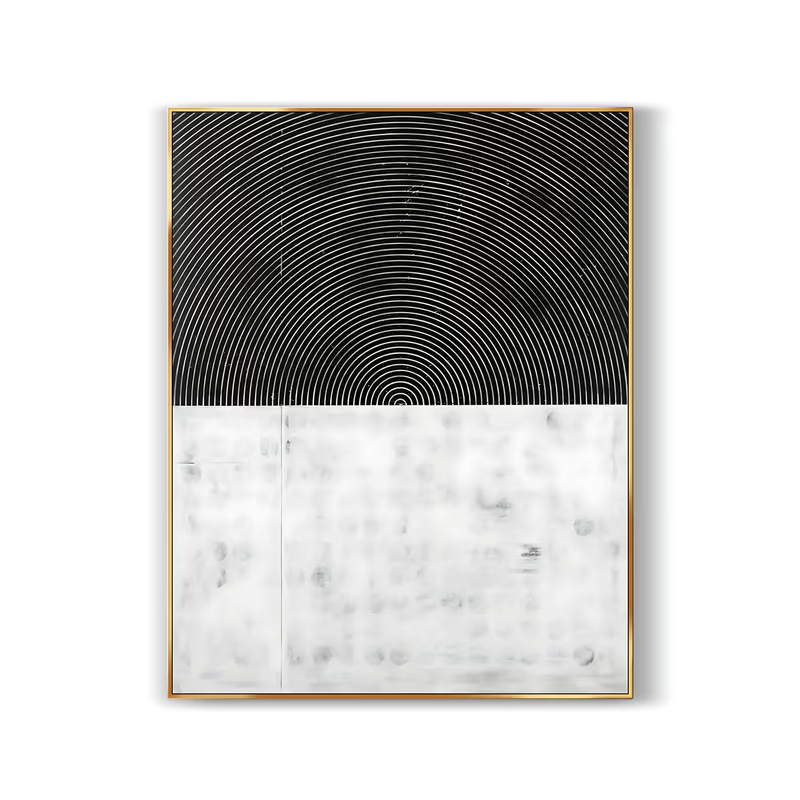
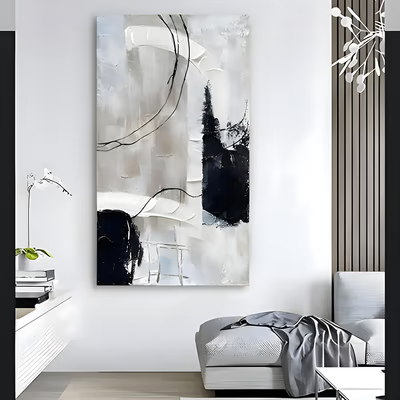
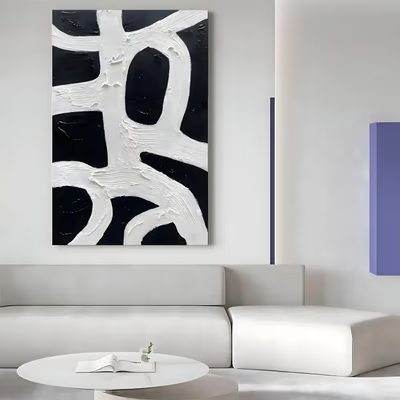
A single drawn line across chalk, stepped bands of white and soft grey, a black arc on an ivory field. Spare and quiet, and best given a wall to itself in a home office, a meeting room or a calm hallway.
How do you stop white art disappearing on a white wall?
Give the painting something the wall does not have: texture that throws a shadow, a coloured ground behind the white, or a frame that draws a clear edge.
| Your wall | White art that stands out | Edge to give it |
|---|---|---|
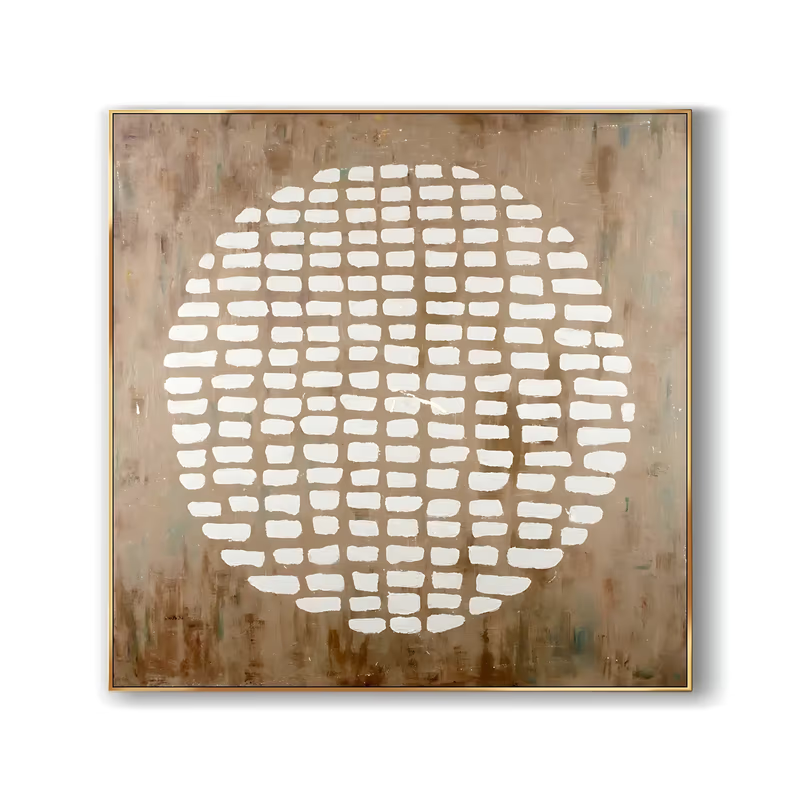
| White or off-white | Deep plaster relief, or a white motif on a grey, blue or green ground | Black, walnut or gold frame |
| Light grey or greige | Ivory or chalk relief; white flowers with gold or silver leaf | White or light wood frame, or frameless |
| Navy, charcoal or deep green | Almost any white piece; bright white reads strongest | Frameless, or a slim black frame |
| Timber panelling or limewash | Bone and ivory relief, white florals on brown | Frameless or natural wood |
Light matters as much as the wall. A ceiling downlight aimed straight at a textured canvas flattens it; a picture light or an adjustable spot set above and slightly to one side throws every ridge into relief. In a room with one strong window, hang textured white art on a wall that light crosses rather than the wall that faces the window.
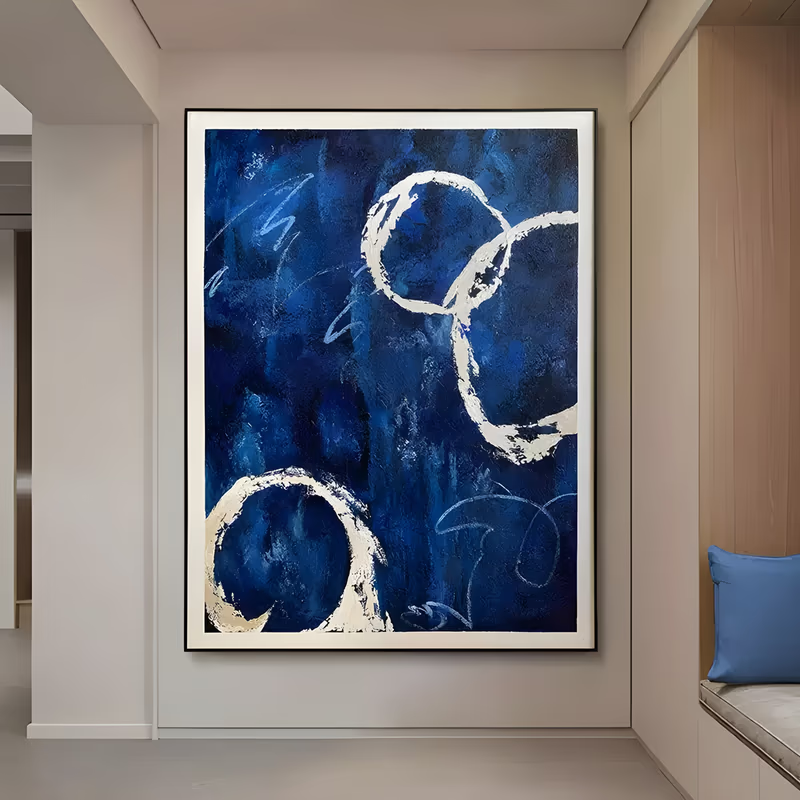
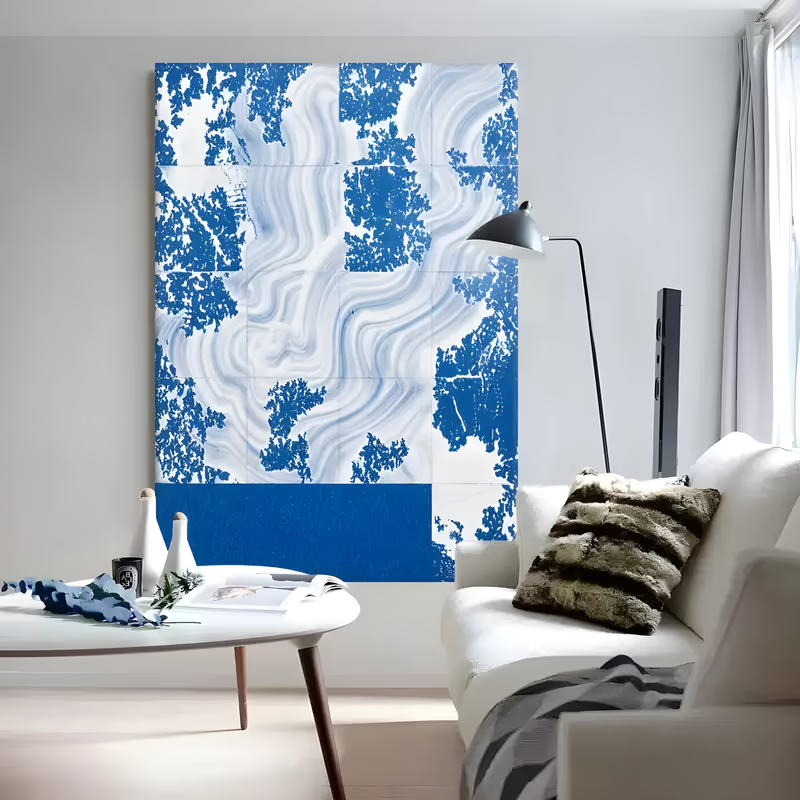
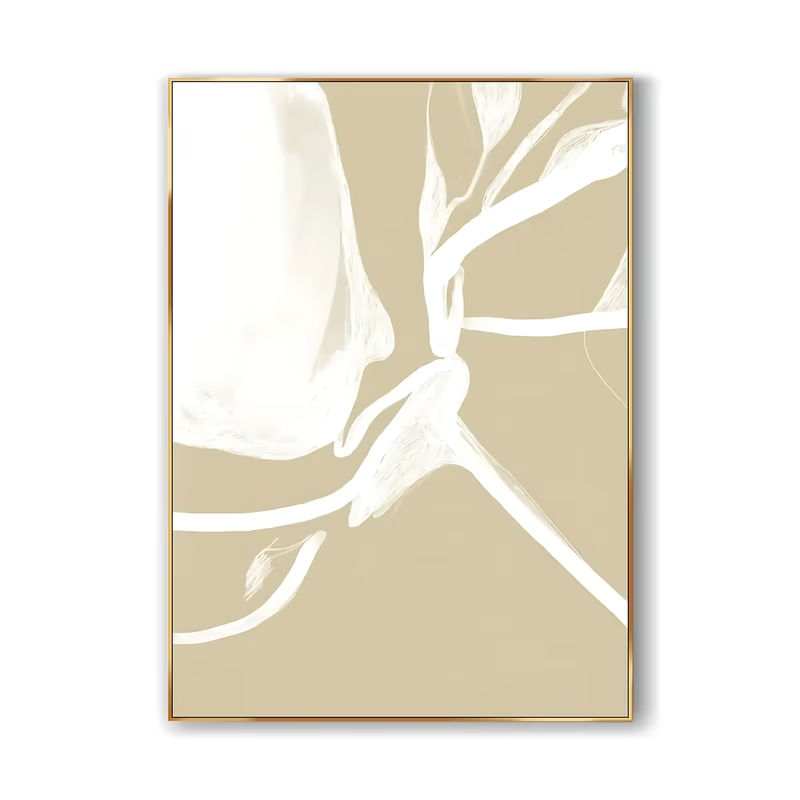
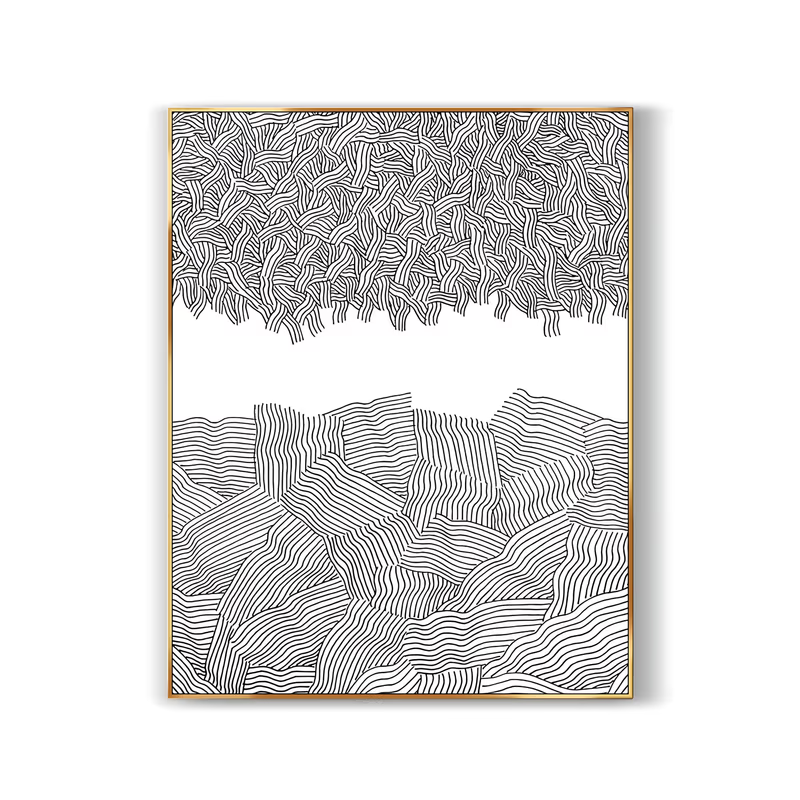
If the wall itself must stay white, choose white wall art with a second colour doing some of the work: black line, a band of grey, a ground of sage or dusty blue. The white then reads as the subject rather than as more wall.
Where does white wall art work best?
White wall art works best in rooms meant to feel calm and open: bedrooms, bathrooms and spas, entrance halls and corridors, and any room where the furniture or the view already brings the colour.
Living room
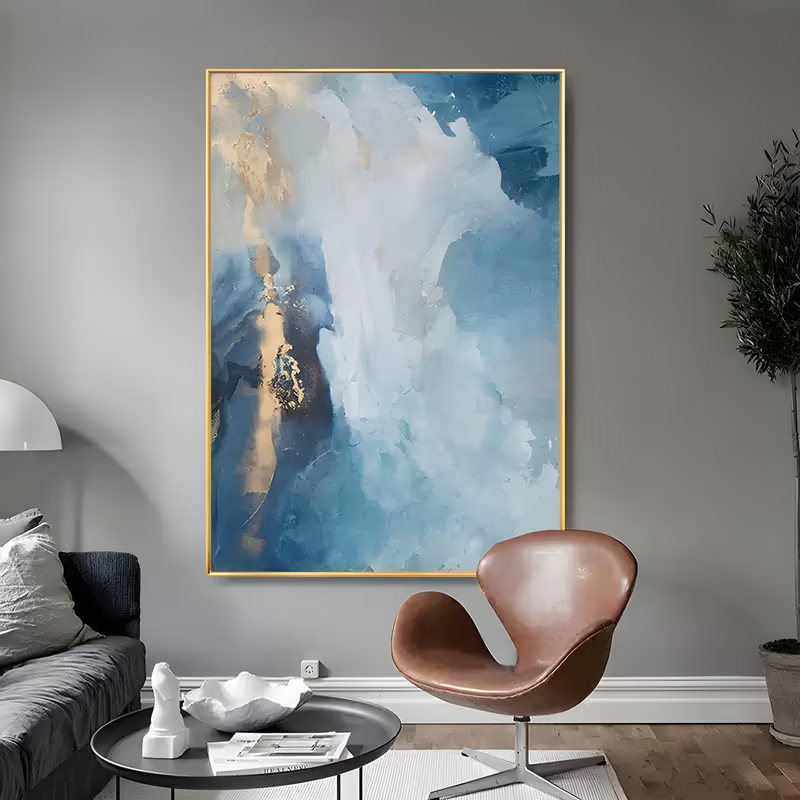
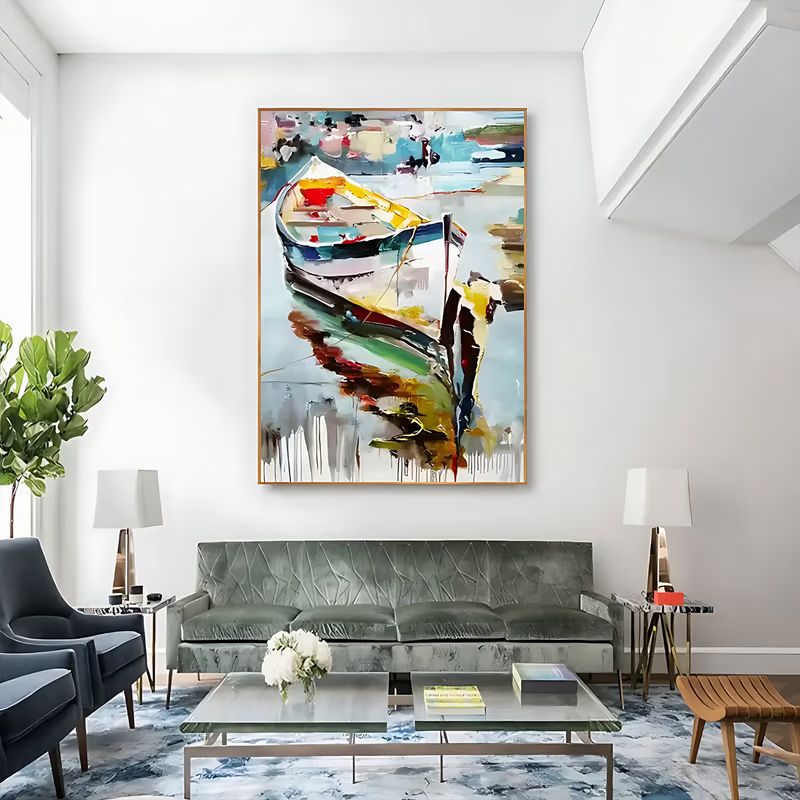
A large white relief above the sofa adds depth without fighting a patterned rug or coloured upholstery, and it suits both pared-back modern rooms and soft country ones. White art for living rooms.
Bedroom
Ivory and cream white feel gentle first thing in the morning and warm under bedside lamps. A wide white flower painting over the headboard is restful without being bland. White art for bedrooms.
Bathroom and spa
Snow scenes, surf and blue-white relief echo water and stone, and they keep a treatment room quiet. Hang framed pieces away from direct splashes in a well-ventilated room. White art for bathrooms and spas.
Entrance hall and corridors
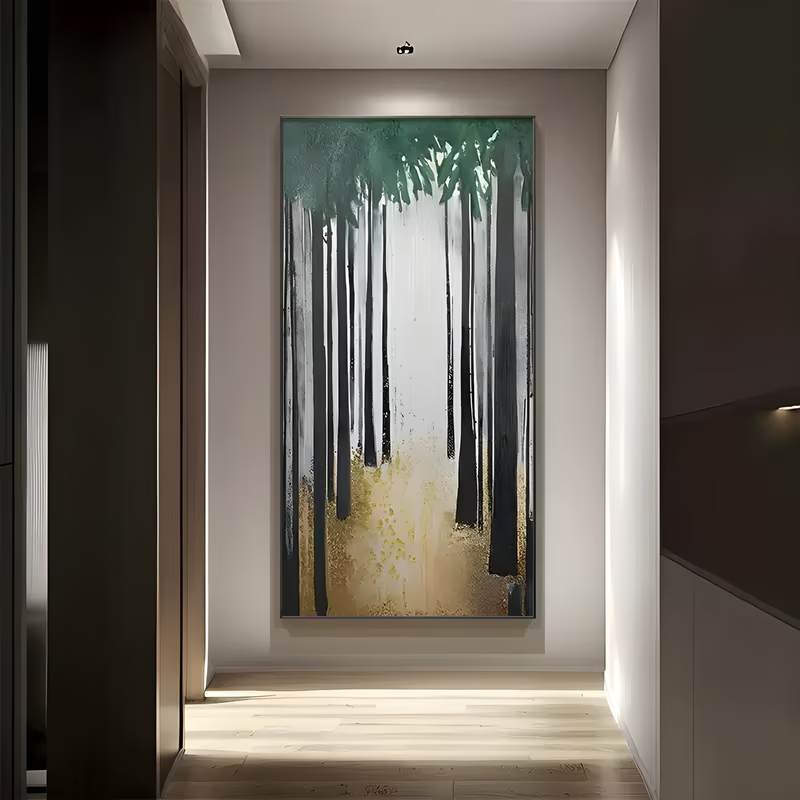
Narrow spaces are seen at an angle, which is exactly how texture shows best. A run of tall white reliefs gives a corridor rhythm without making it feel narrower. White art for halls and corridors.
Offices and meeting rooms
Minimalist white abstracts keep a workspace clear-headed and suit glass partitions and pale joinery. White art for offices.
Hotels, galleries and shops
White art works across a whole property because it sits with every fabric scheme: relief for the lobby, florals for the guest rooms, quiet abstracts for the corridors. White art for hospitality and retail.
How large should white wall art be, and how do you light it?
Choose white wall art a size larger than you would choose a coloured painting, close to three-quarters of the furniture width, and light it from above at an angle so the texture shows.
Pale art recedes: from across the room a white canvas looks smaller than a dark one of the same size. Over a sofa, bed or console, aim for about 70–75% of the furniture width and leave roughly 20 cm (8 in) between the furniture and the bottom edge. On a wall with no furniture, the canvas can take most of the width. Keep its centre near 145–152 cm (57–60 in) from the floor, so the most detailed part of the texture sits at eye level.
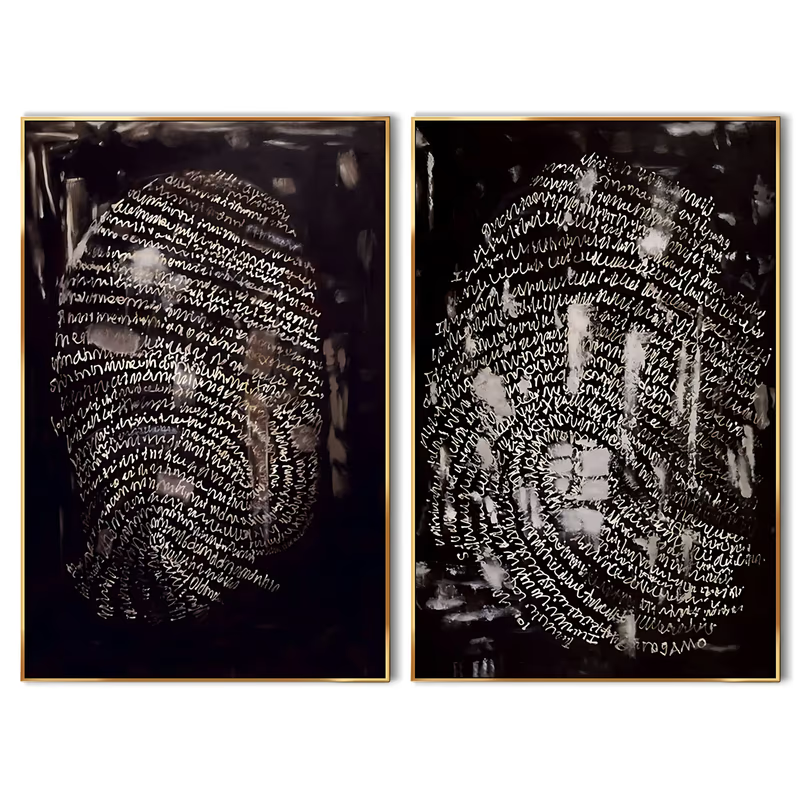
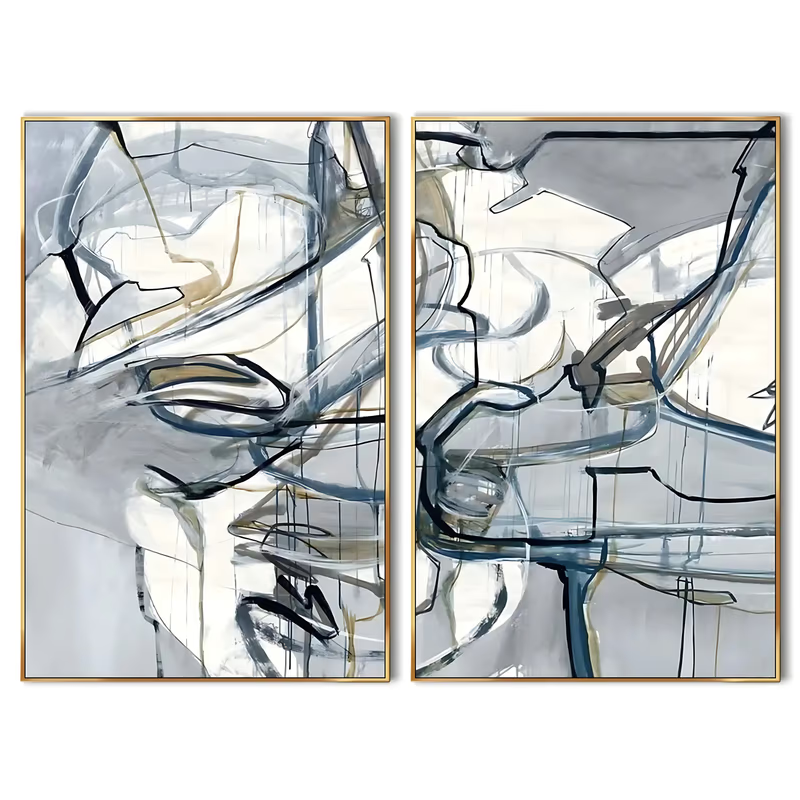
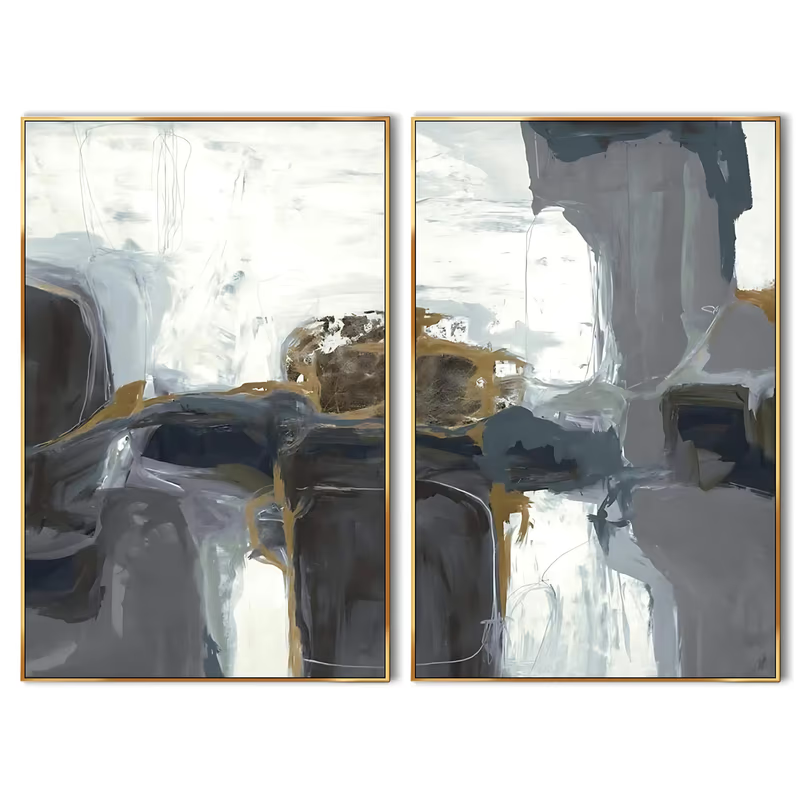
Two or three tall white panels hung with even gaps of 5–8 cm (2–3 in) make a strong alternative to one large canvas, and the gaps read as shadow lines that suit the white. Plaster relief weighs more than a flat canvas, so use two fixings rather than one. For lighting, a picture light or ceiling spot angled at about 30 degrees from the wall is the standard museum setting, and it is what turns a white surface into a landscape of ridges.
How do you get white wall art made in exactly the right white?
Name the wall paint or send a fabric sample, and the white of the painting is tuned to sit with it before any paint goes on the canvas.
White is the hardest colour to get right by eye, because every white has an undertone and two whites side by side make each other look dirty. Because each canvas is painted to order, the painting's white can be pushed warmer or cooler, and any second colour in it, a grey ground, a gold fleck, a black line, can be matched to your scheme. You see progress photos or video at each stage, and the next stage only begins once you approve, so a white that reads too yellow or too blue is corrected early.
A final photograph is approved before dispatch. The finished white canvas can travel rolled in a tube, arrive stretched on bars and ready to hang without a frame, or come framed in gold, silver, black, white or wood. 3D plaster and deep relief pieces are the exception: they travel stretched or framed, and are only rolled if you agree to have the texture made thin enough for transport.