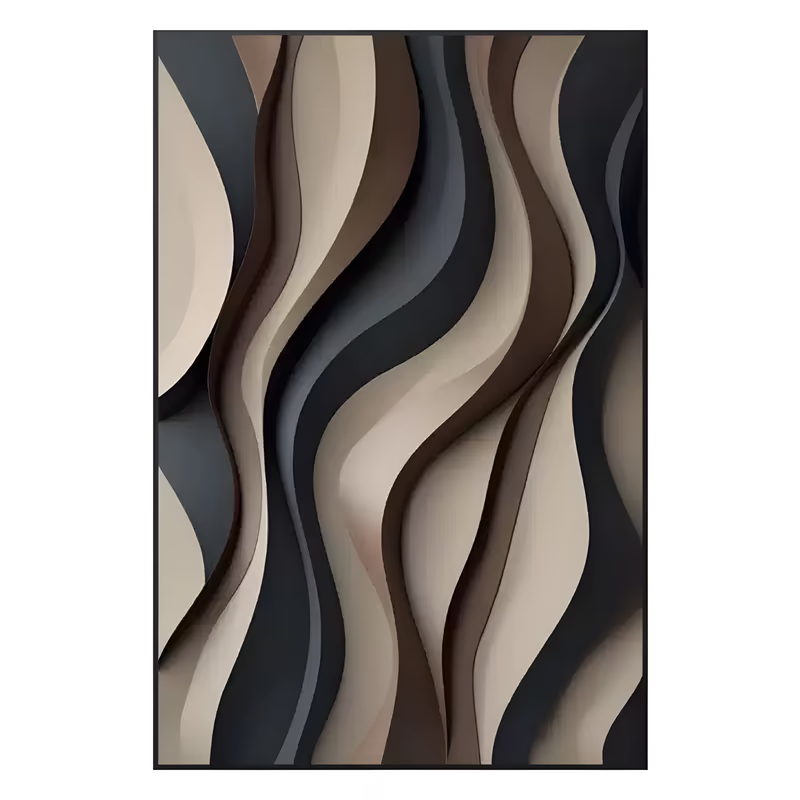
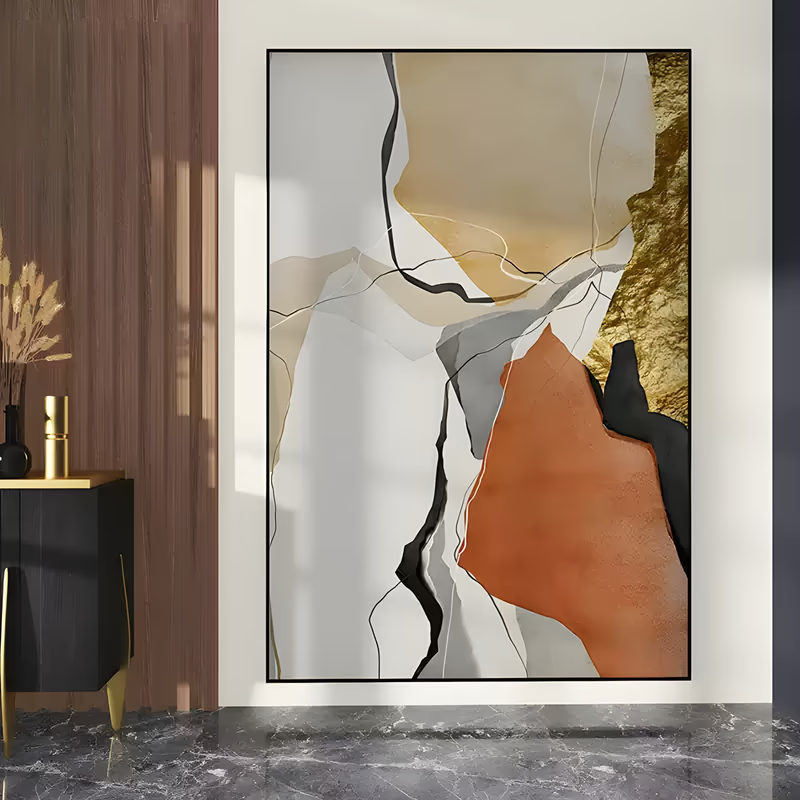
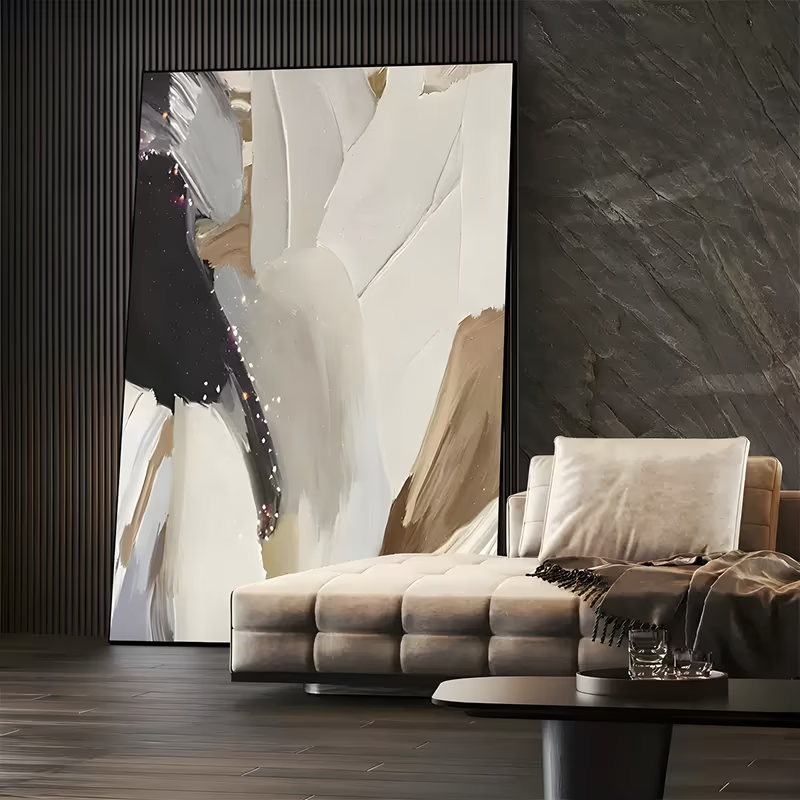
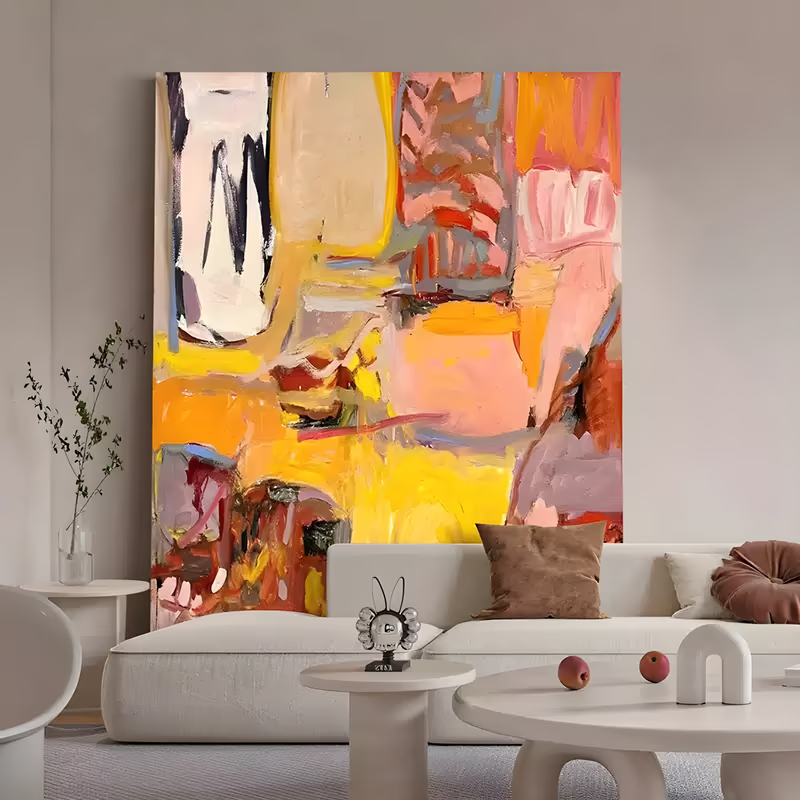
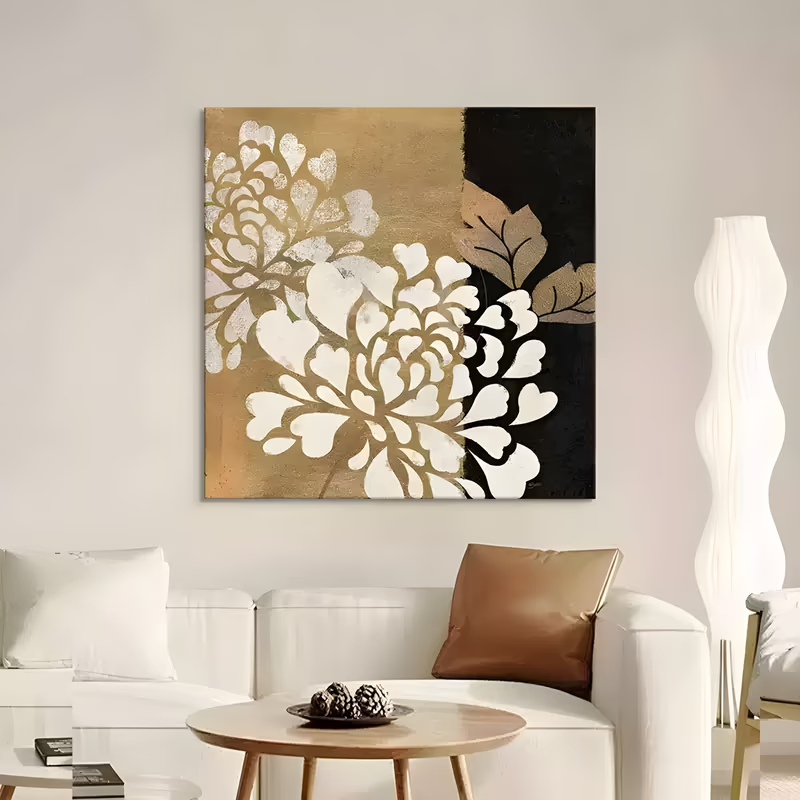
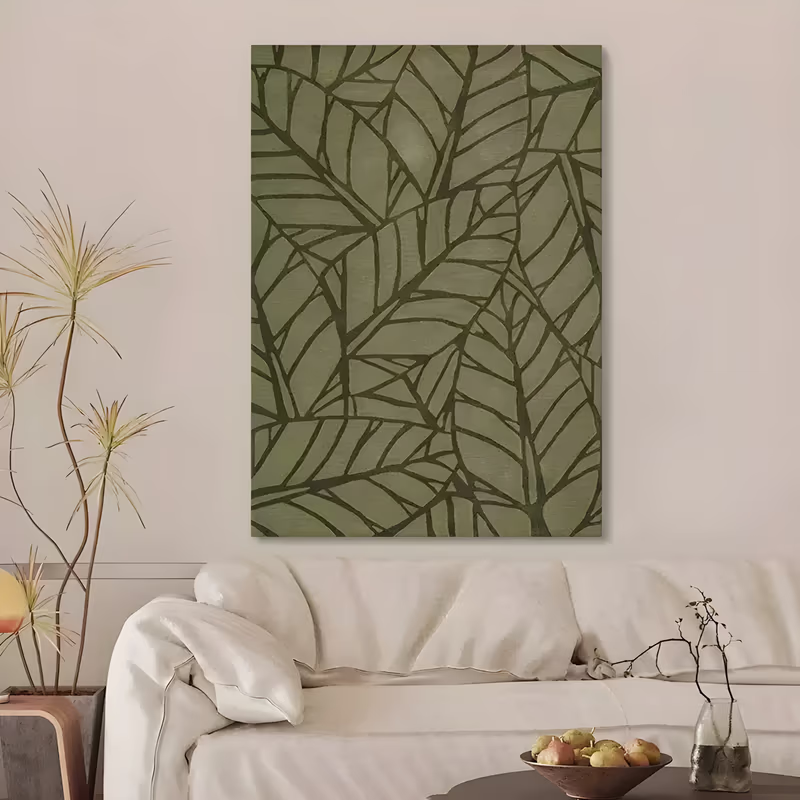
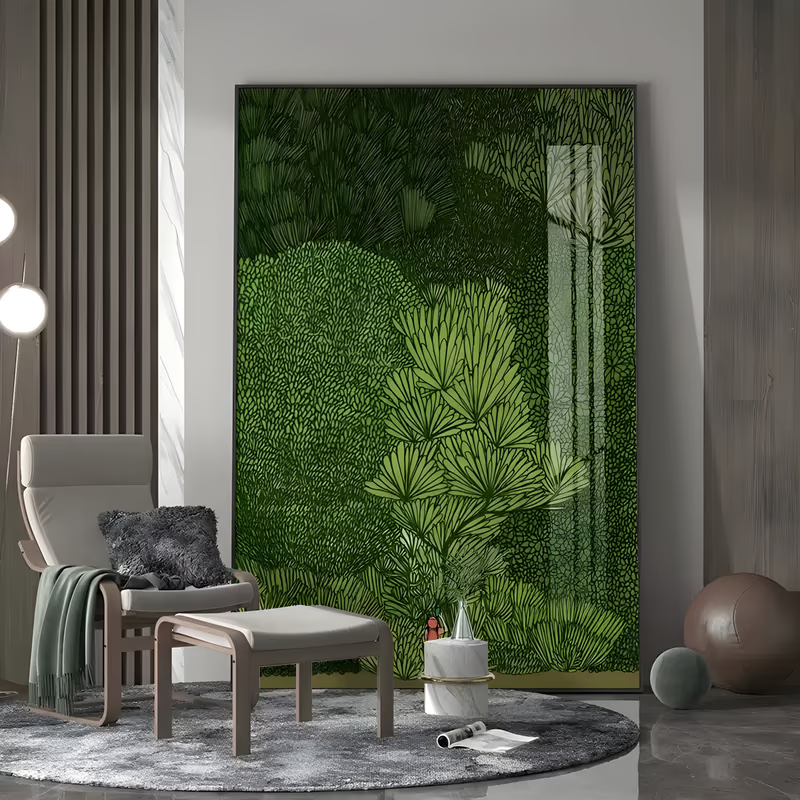
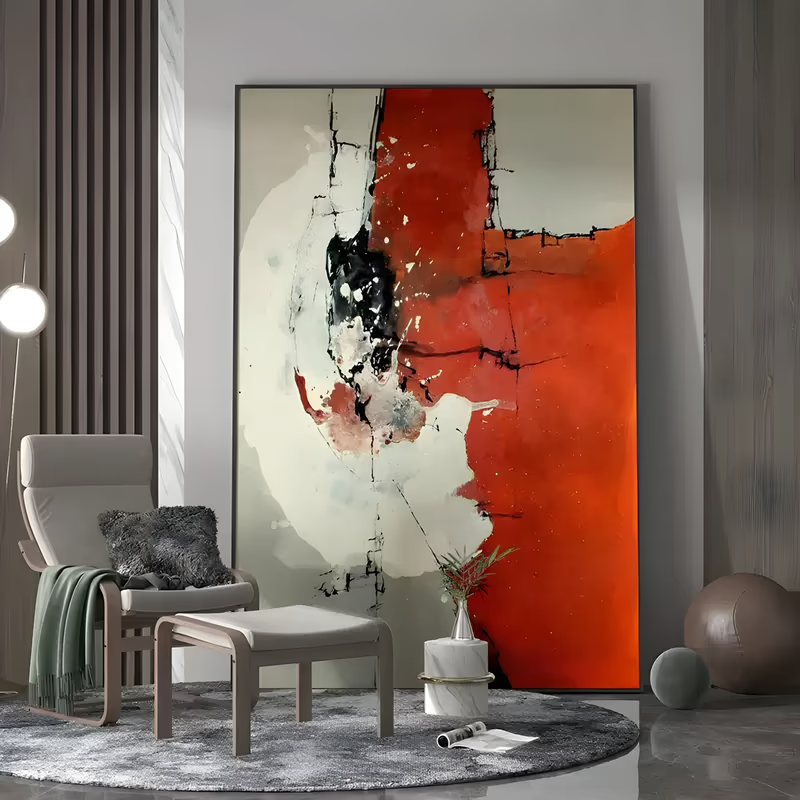
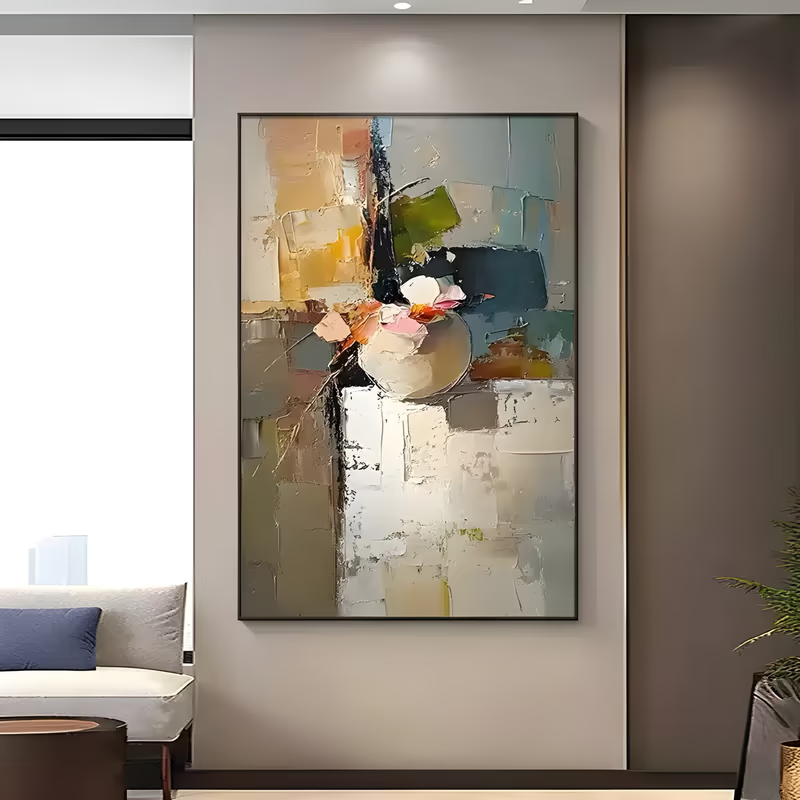
Abstract art guide · Updated
How to choose abstract canvas wall art
Key takeaways
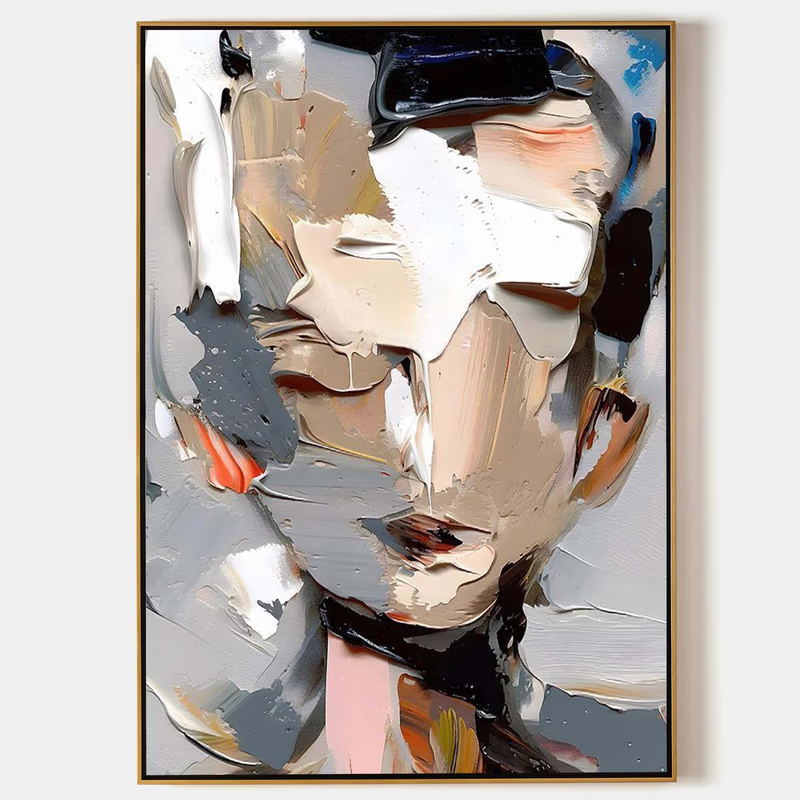
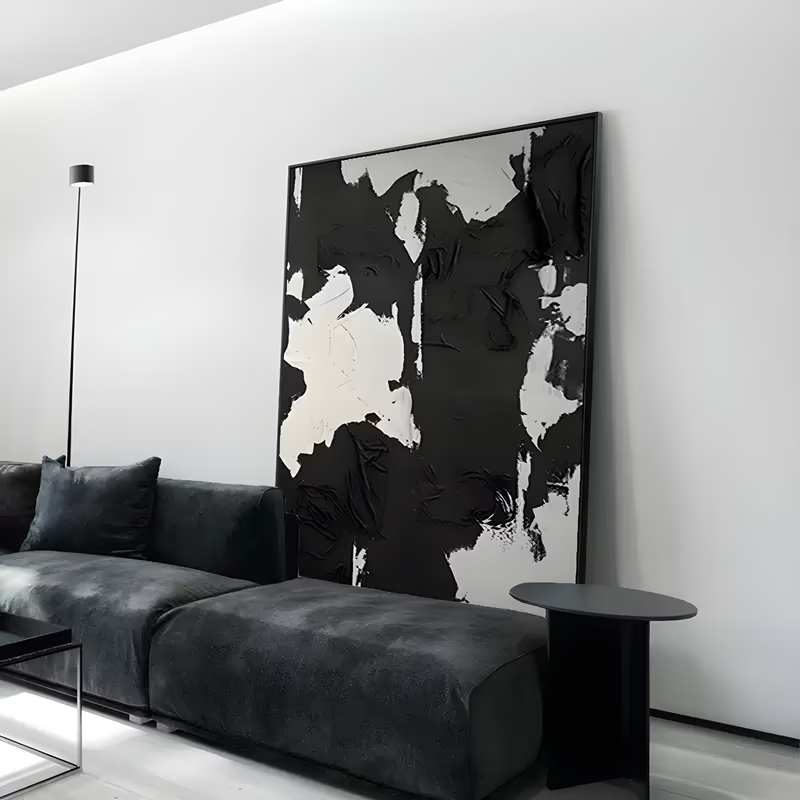
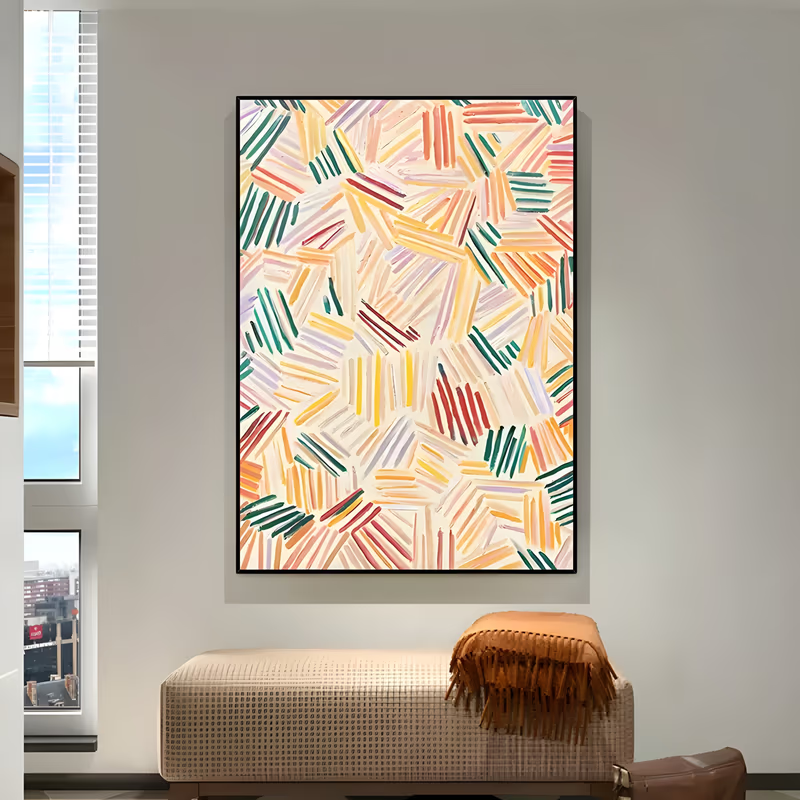
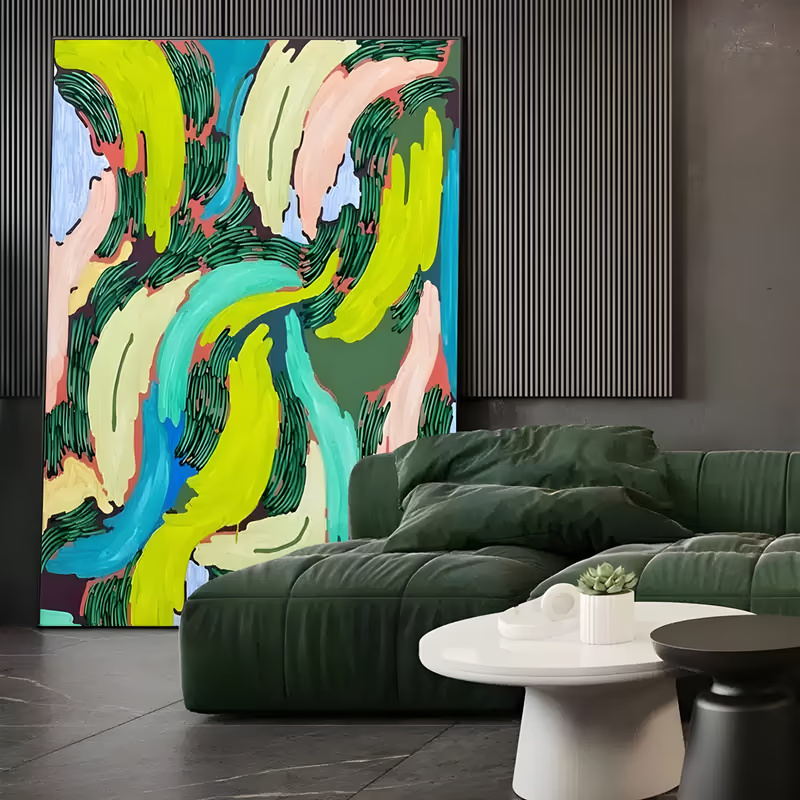
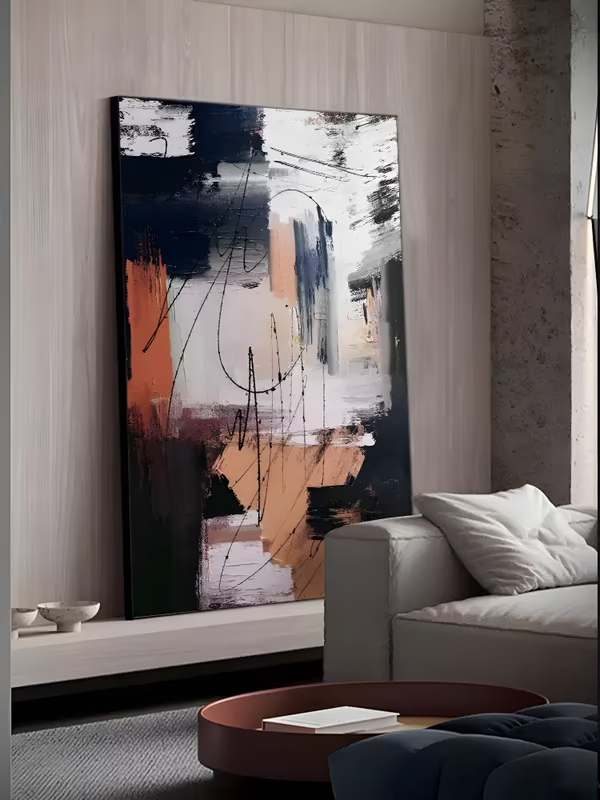
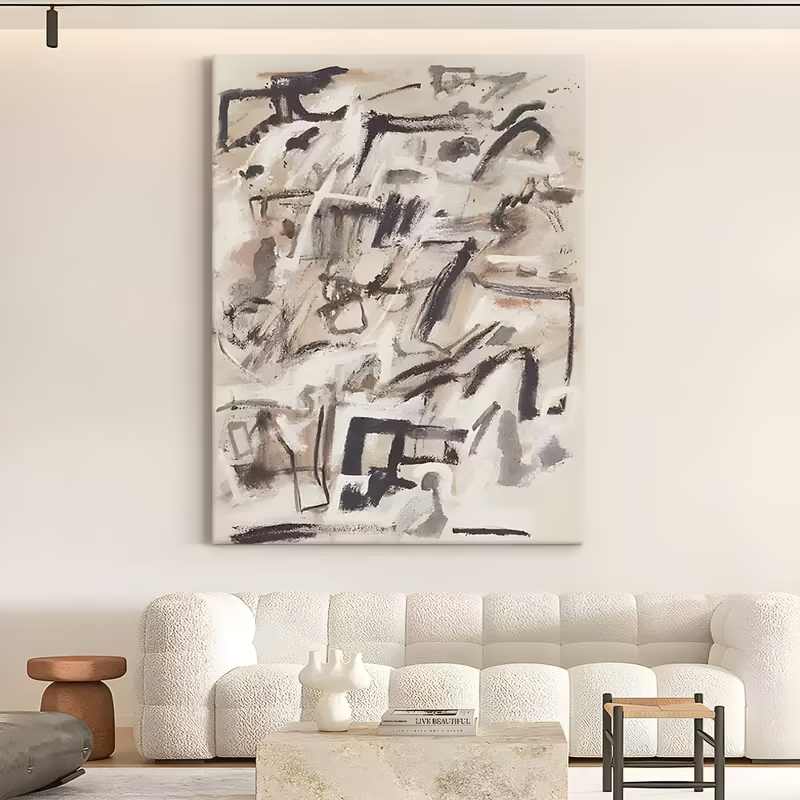
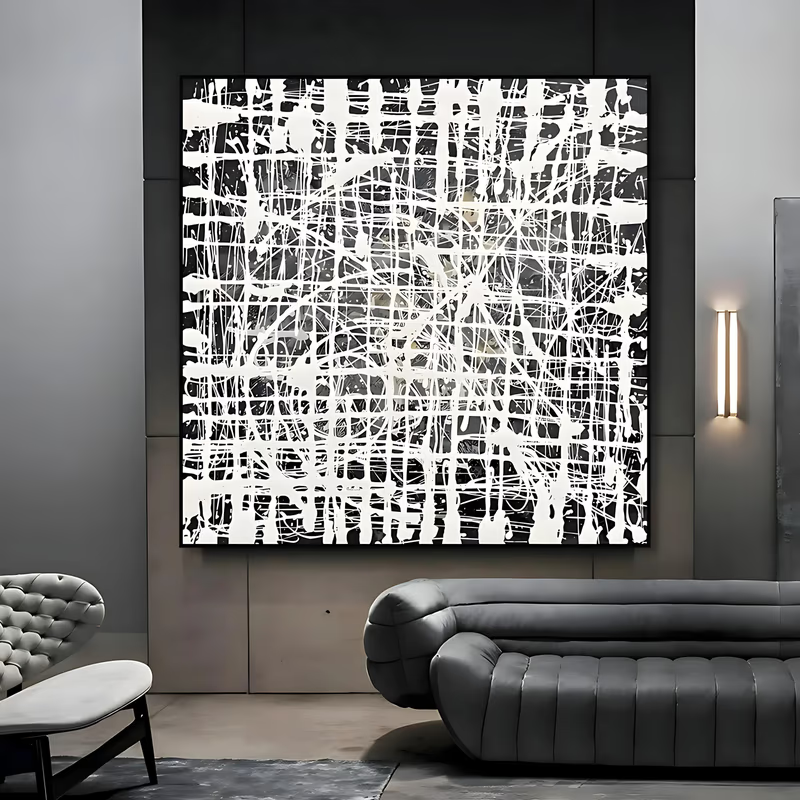
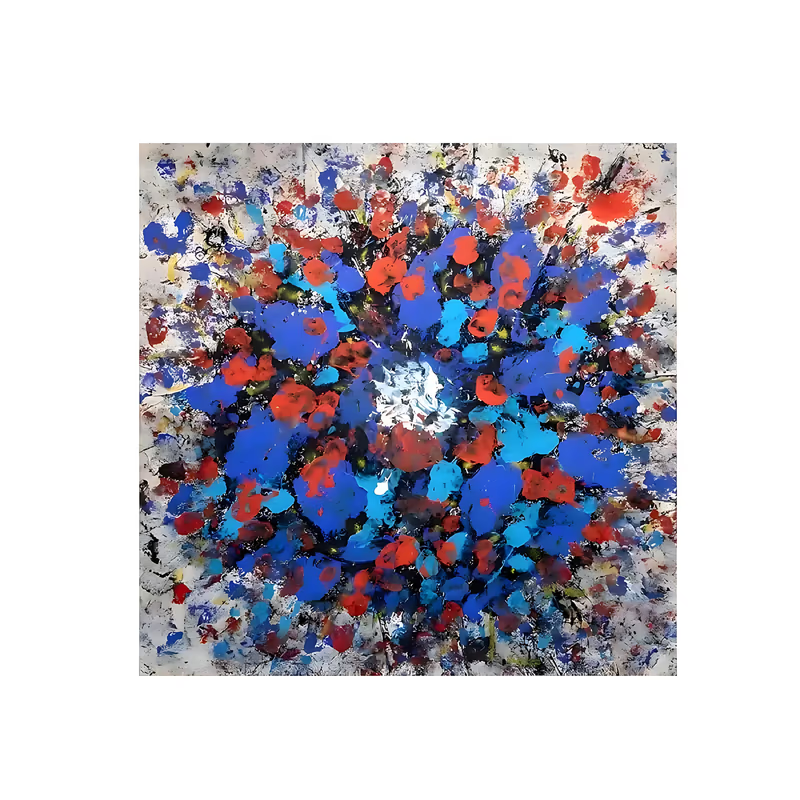
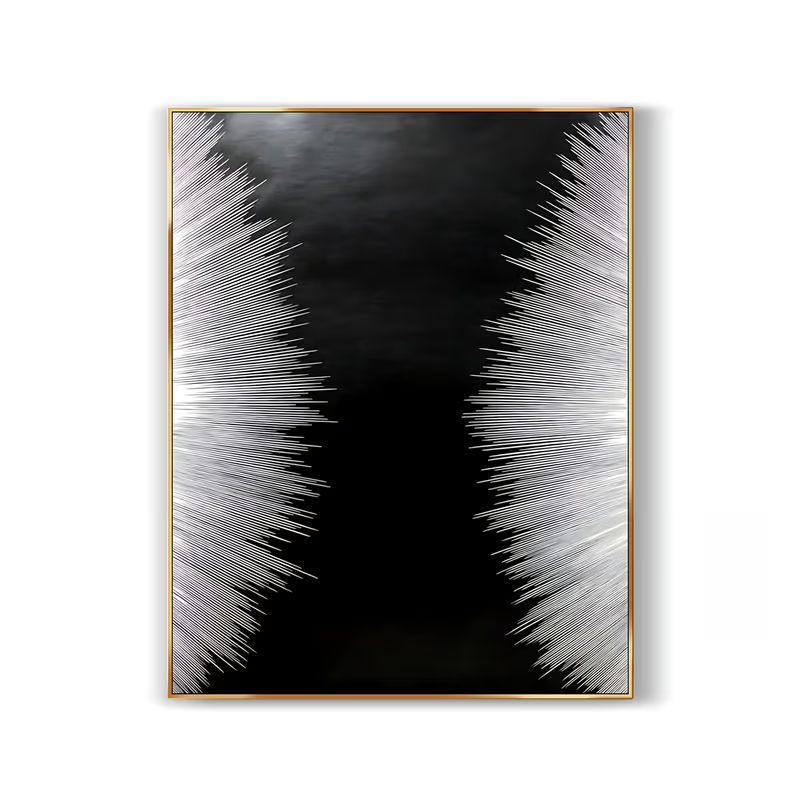
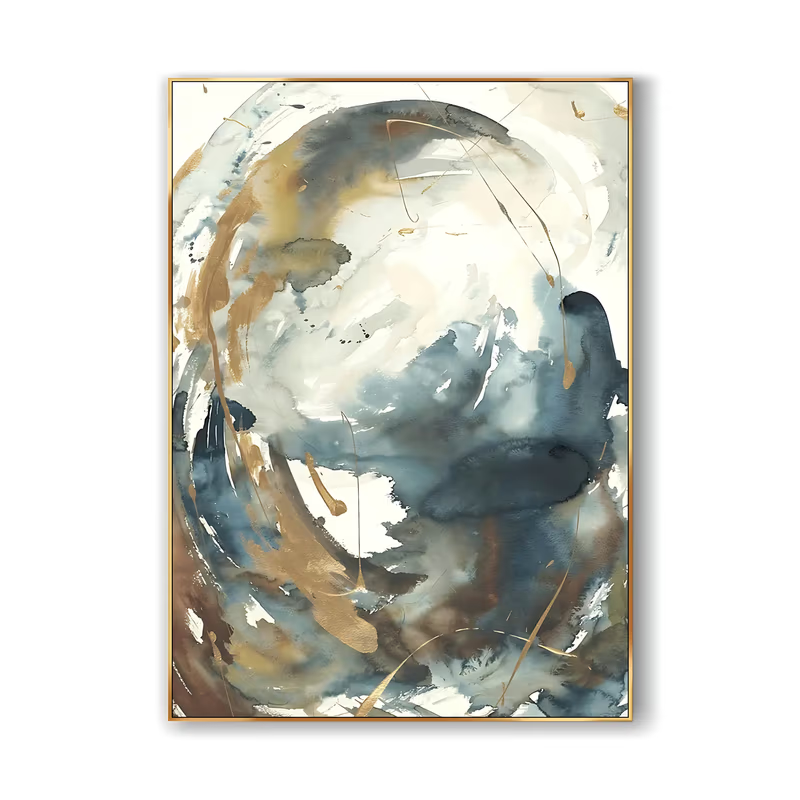
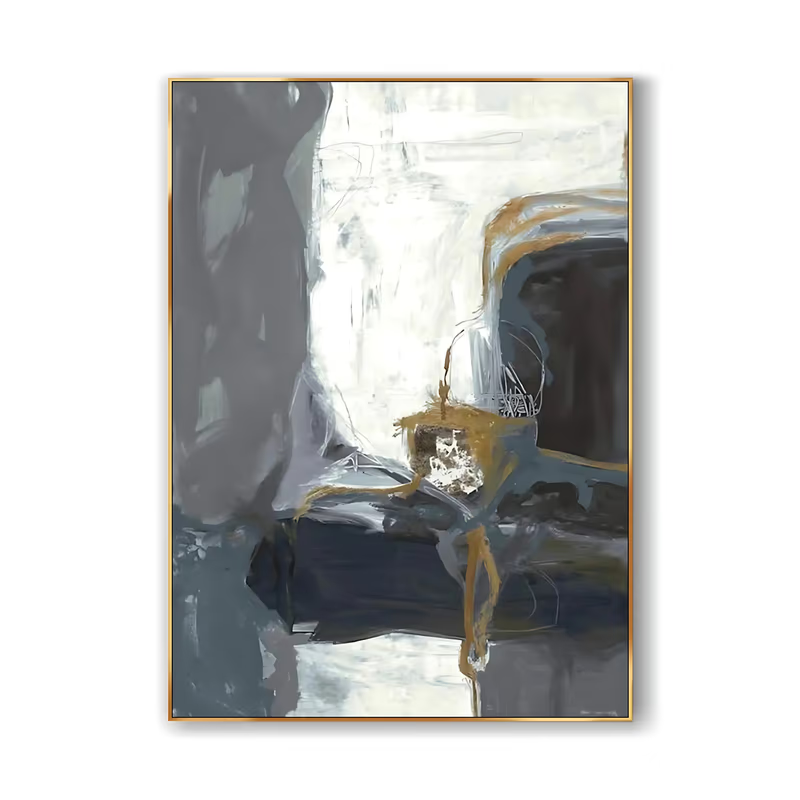
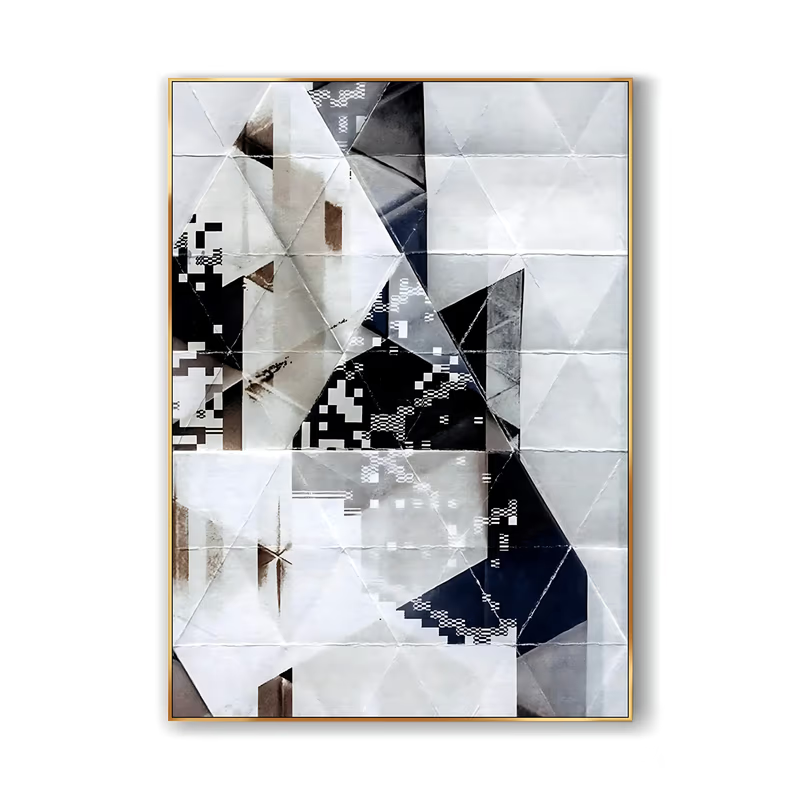
- Choose the mark, not just the colour: knife strokes, pours, drips, colour blocks and cubist lines each give a room a different energy.
- Contrast sets the volume: black against white or complementary colours shout; tones of one colour family murmur. Decide how loud the wall should be.
- Abstract suits shared spaces: with no subject to like or dislike, an abstract canvas works for every guest, tenant or colleague who passes it.
- Scale it up: abstract art loses its force when it is small, so size it to the furniture or the wall and consider a pair of tall canvases.
What is abstract canvas wall art?
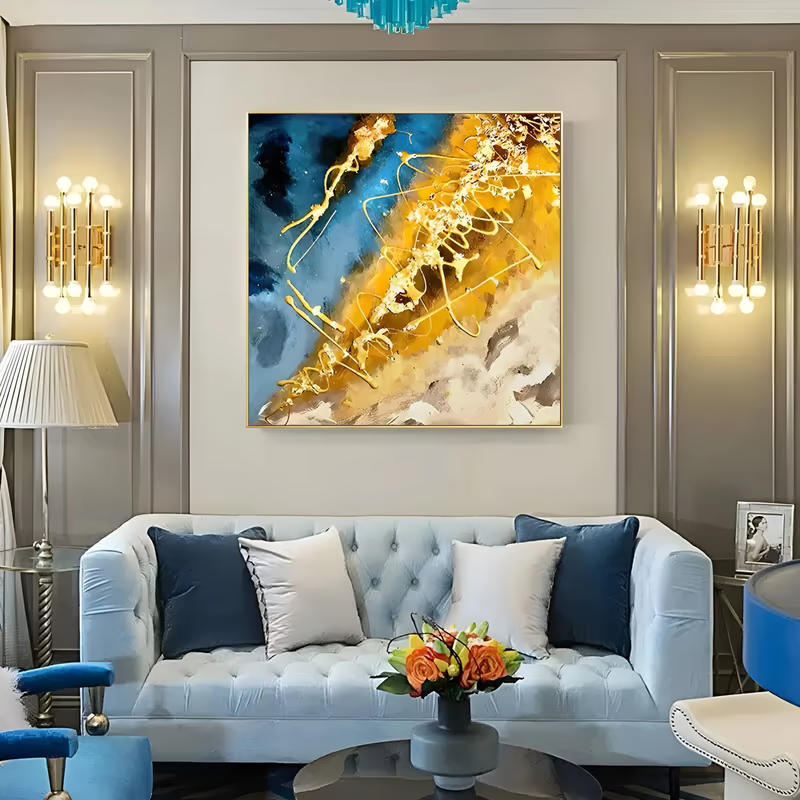
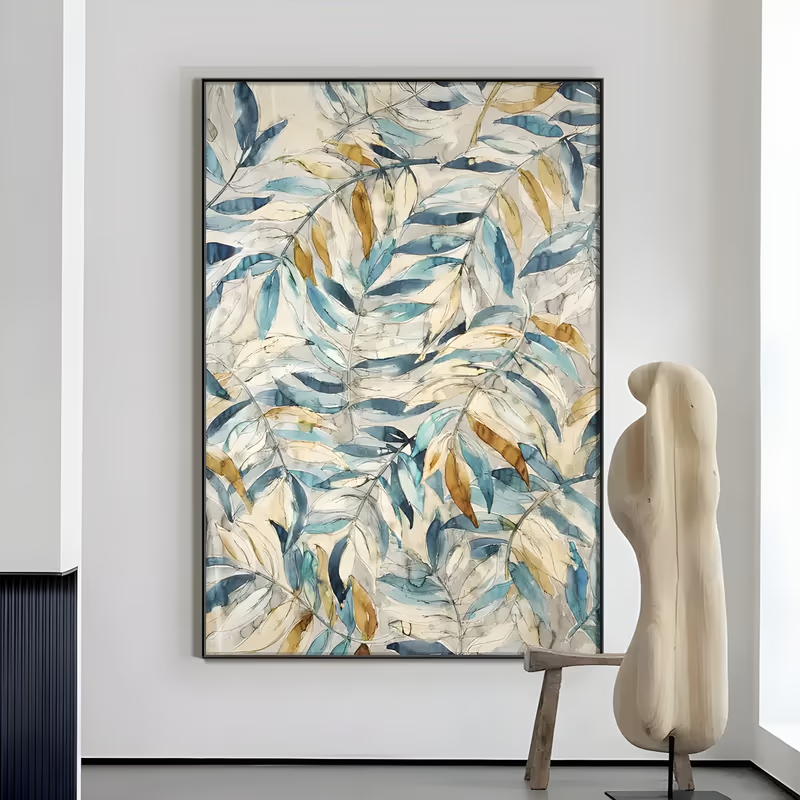
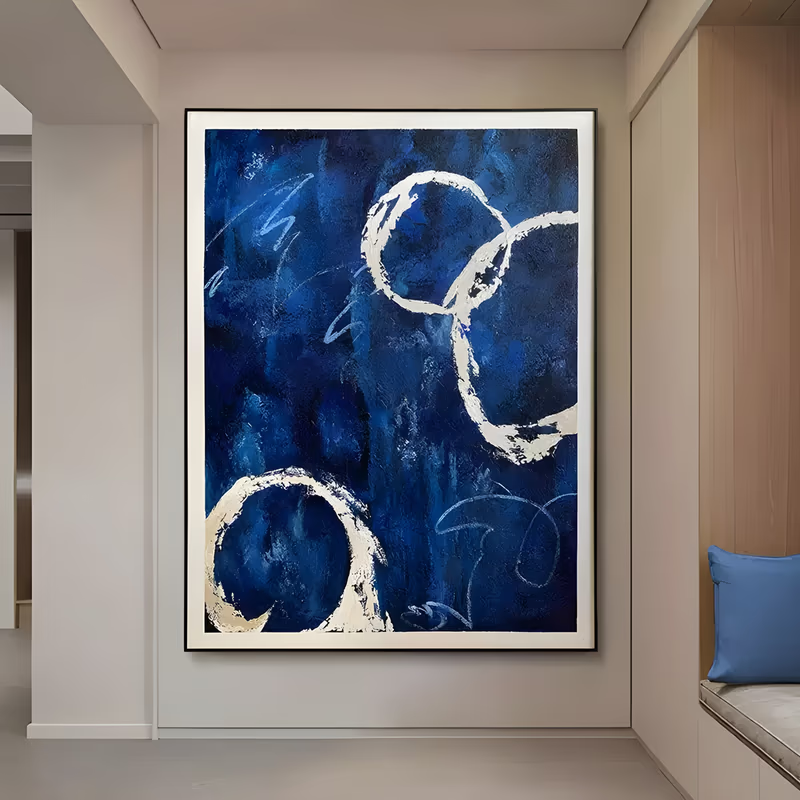
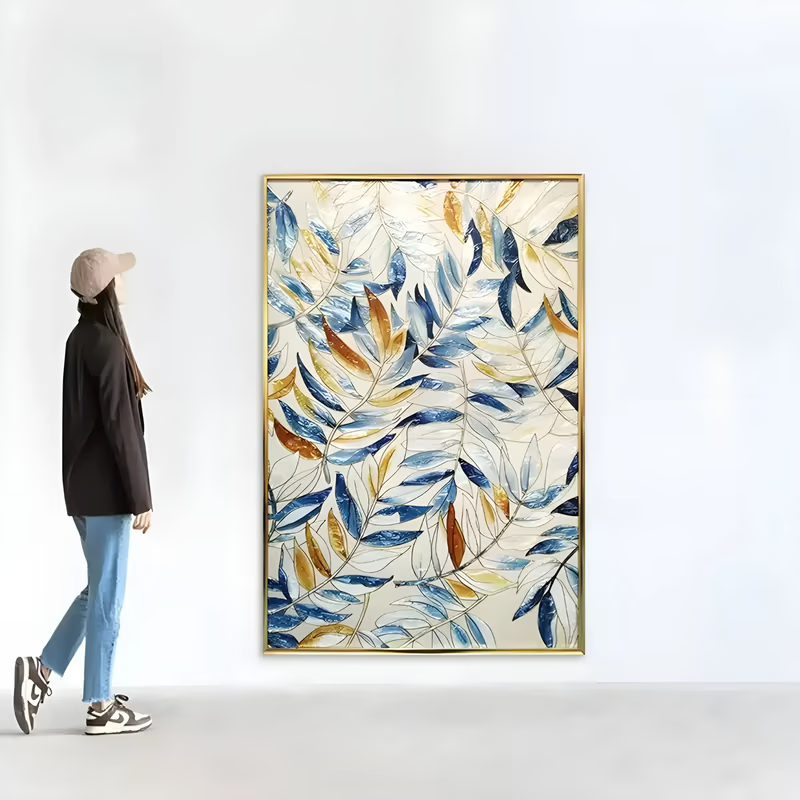
Abstract canvas wall art is painting that does not depict a recognisable scene; it is built from colour, shape, line and texture, and you respond to how it feels rather than what it shows.
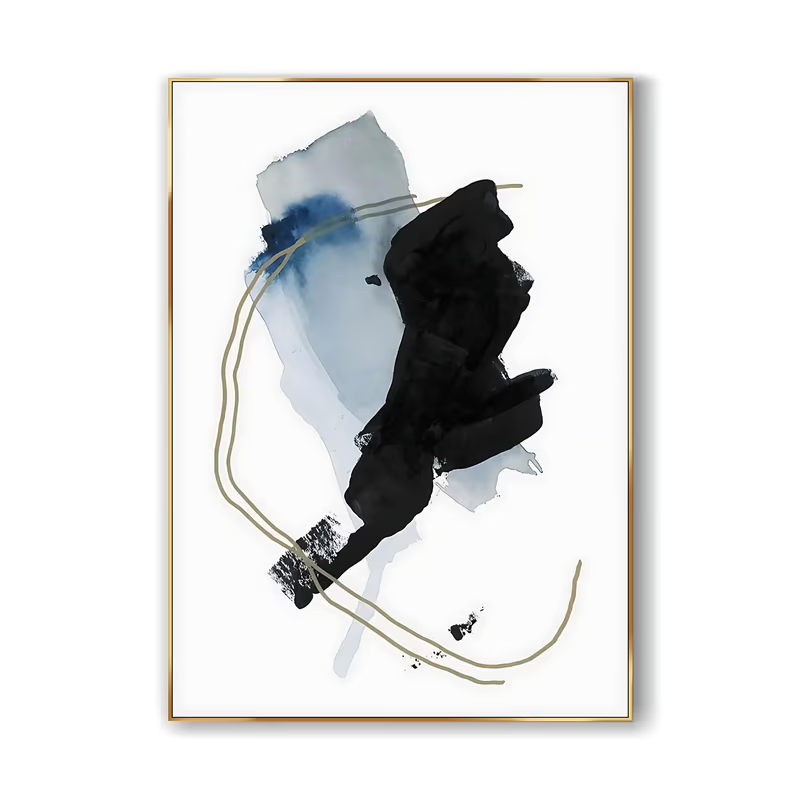
Some abstracts start from something real (a wave, a skyline, a face) and simplify it until only rhythm and colour are left. Others are pure invention: a field of overlapping translucent blocks, a web of dripped lines, a slab of navy cut by a seam of gold. Either way, the painting asks the eye to move around it rather than settle on a single object.
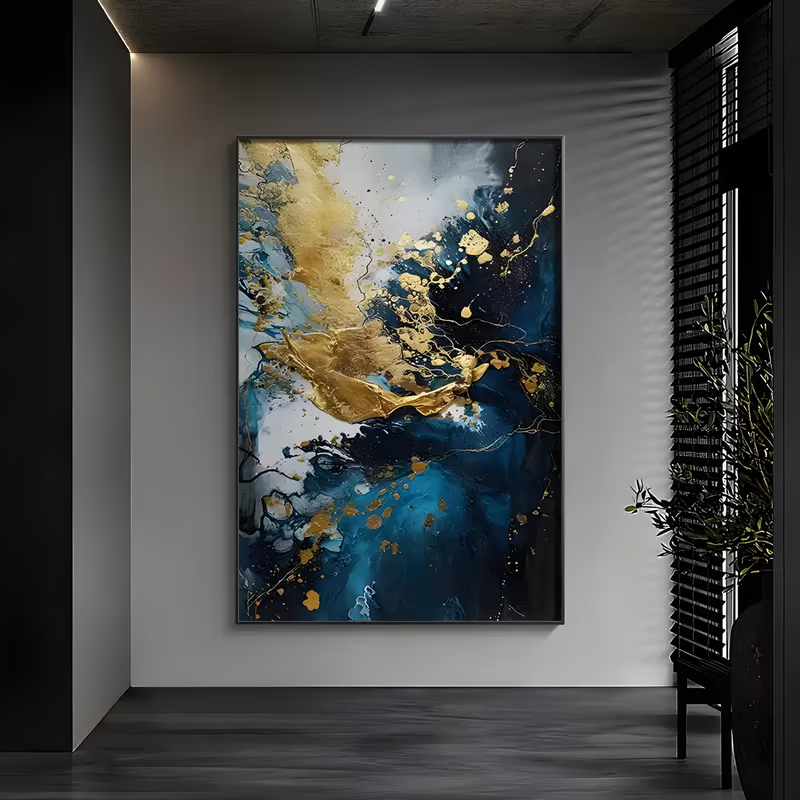
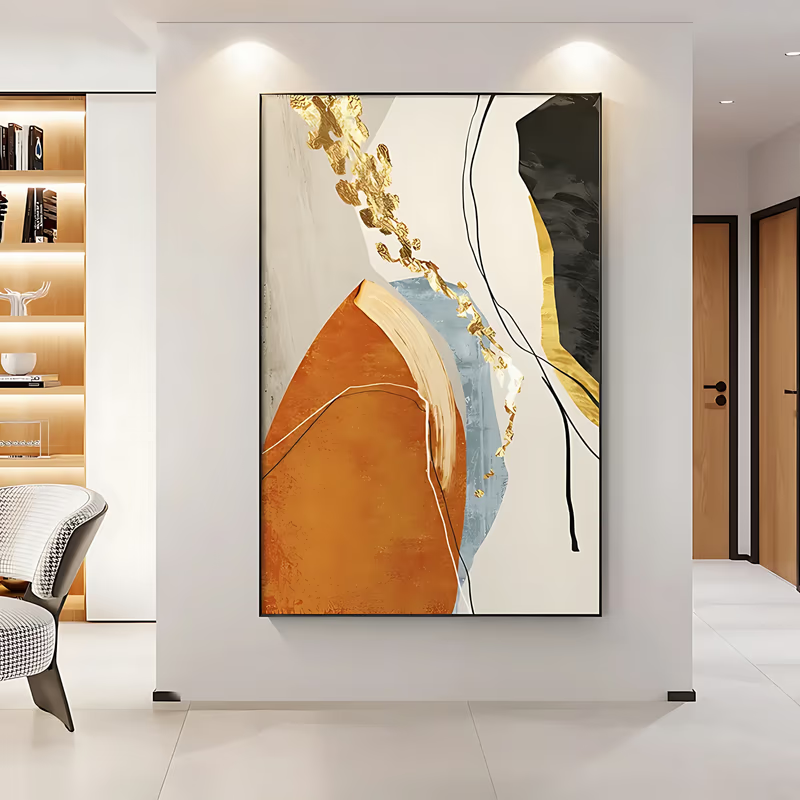
On this site, abstract sits beside two neighbouring styles. Textured and plaster art is about raised relief you could run a hand over, and minimalist art is about restraint and empty space. Abstract is the broadest and most energetic of the three: the paint is allowed to move, layer and collide. Many pieces here combine palette-knife work, poured passages and gold leaf on one canvas.
How do you choose abstract wall art for a room?
Decide how much energy the wall should give off, then choose an abstract whose contrast, mark size and number of colours match that energy.
| What to look at | Calmer abstract | Livelier abstract |
|---|---|---|
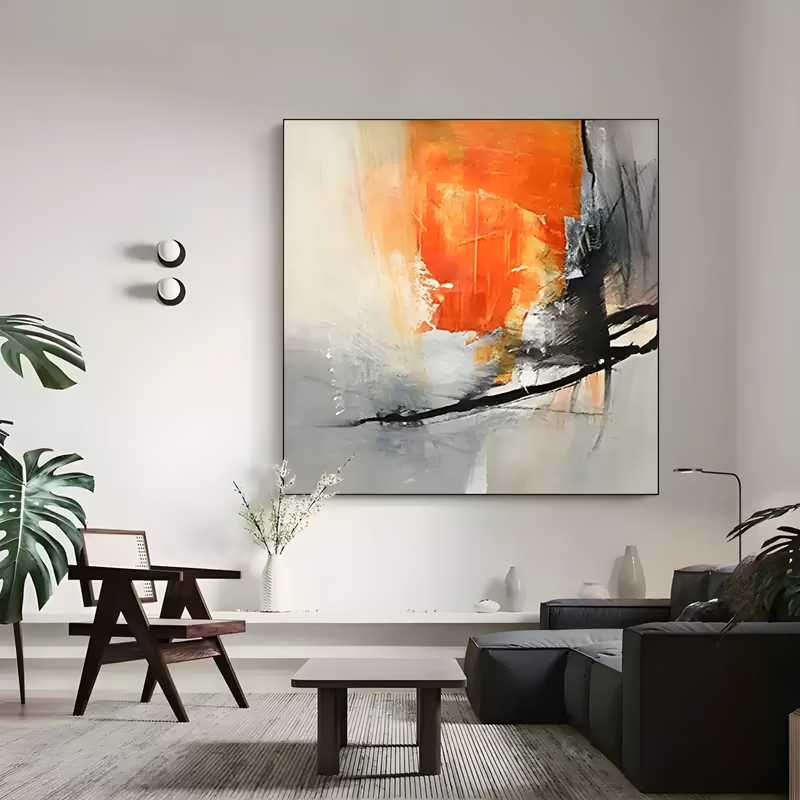
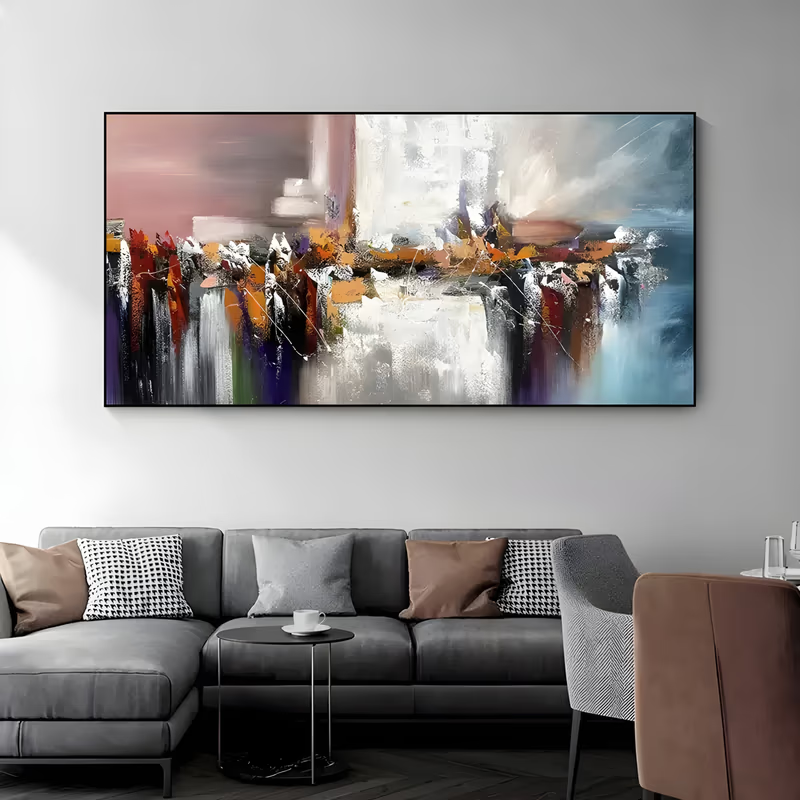
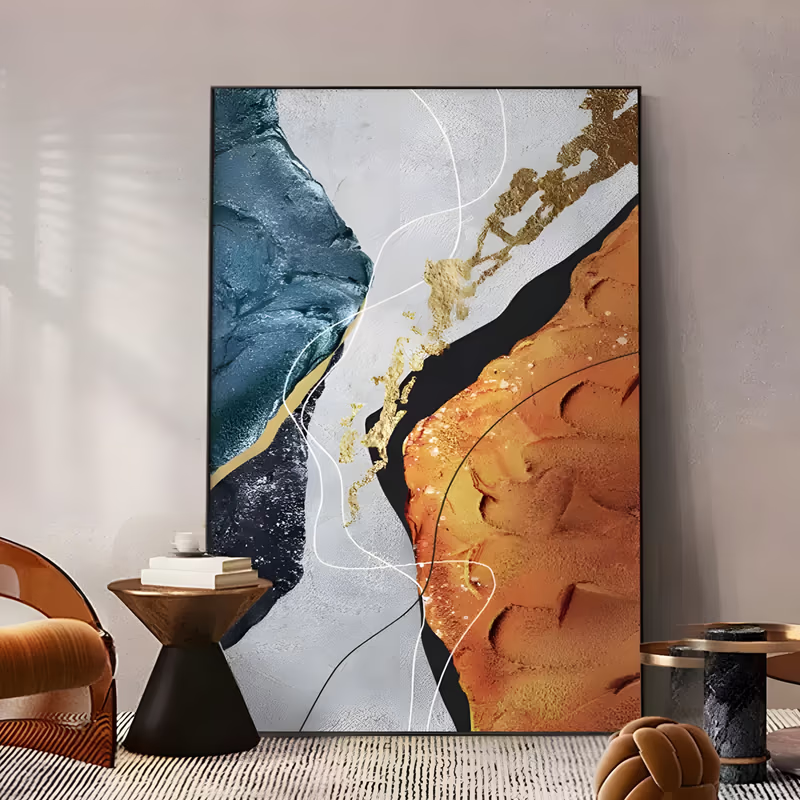
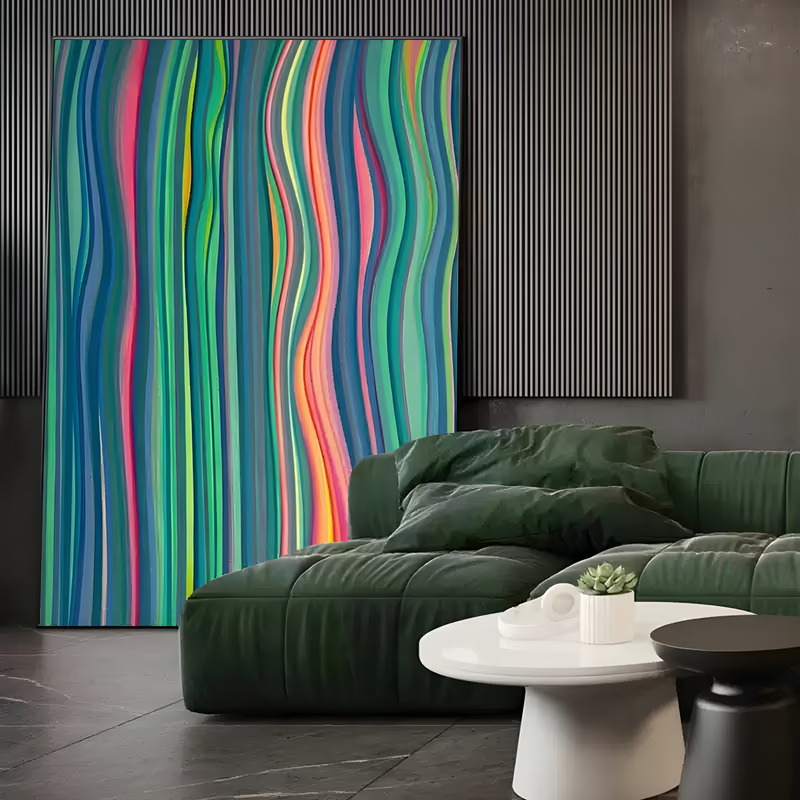
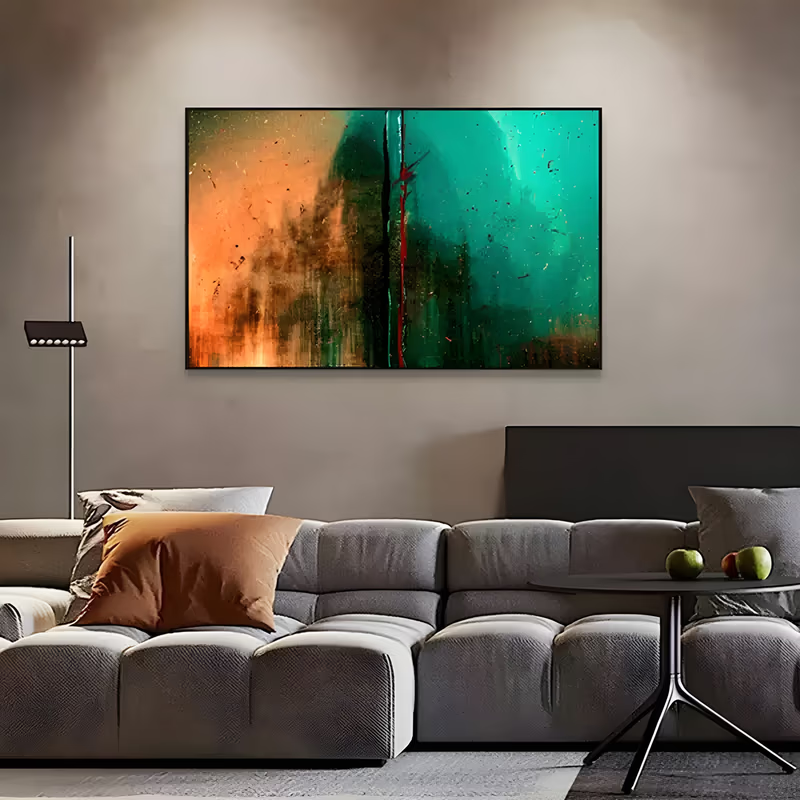
| Contrast | Tones of one family: greys and taupes, blues and whites | Black against white, or complementary pairs such as orange and teal |
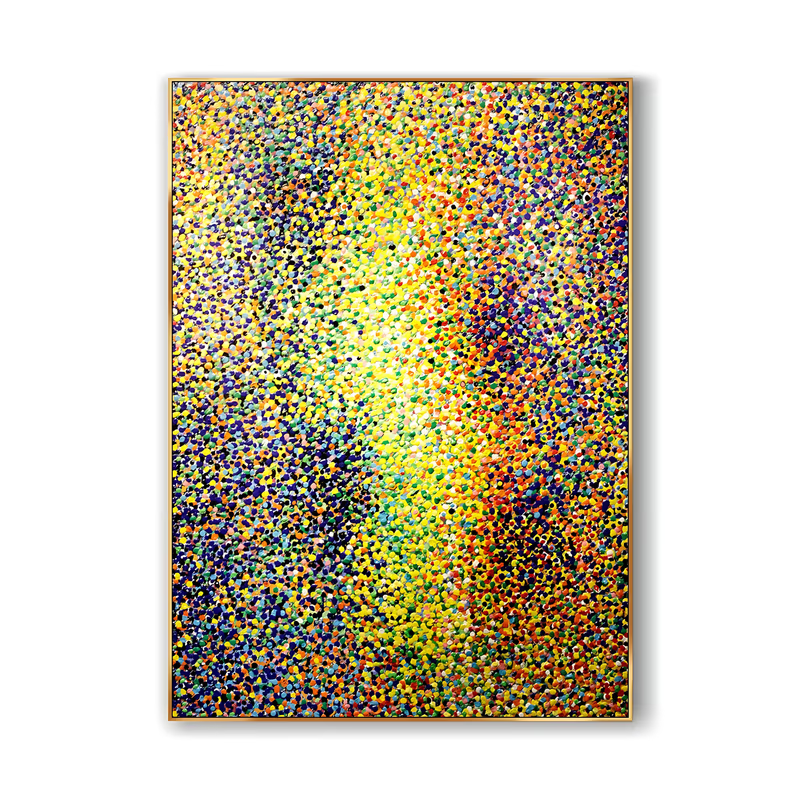
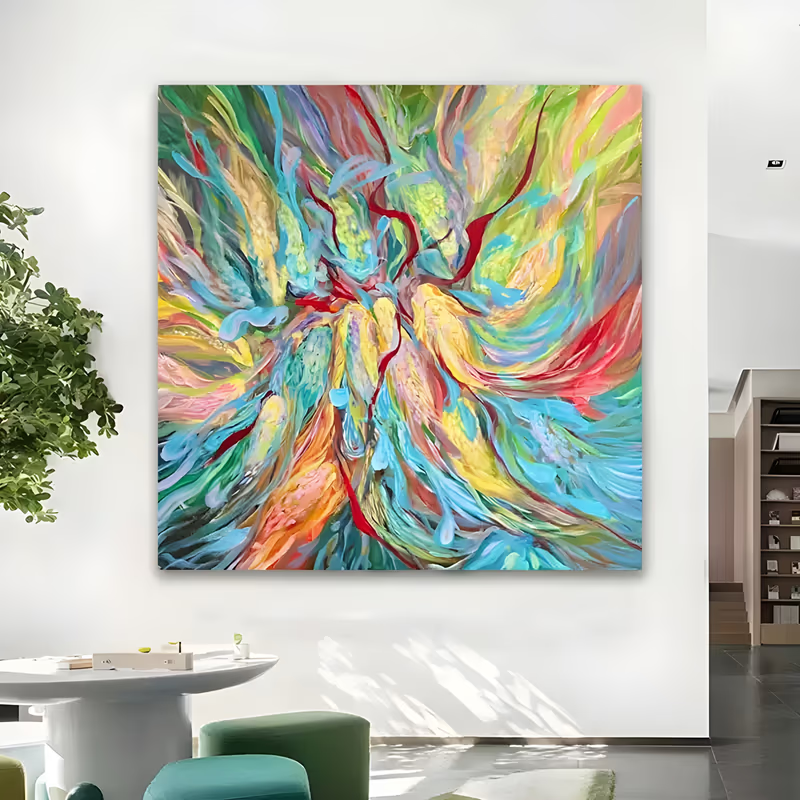
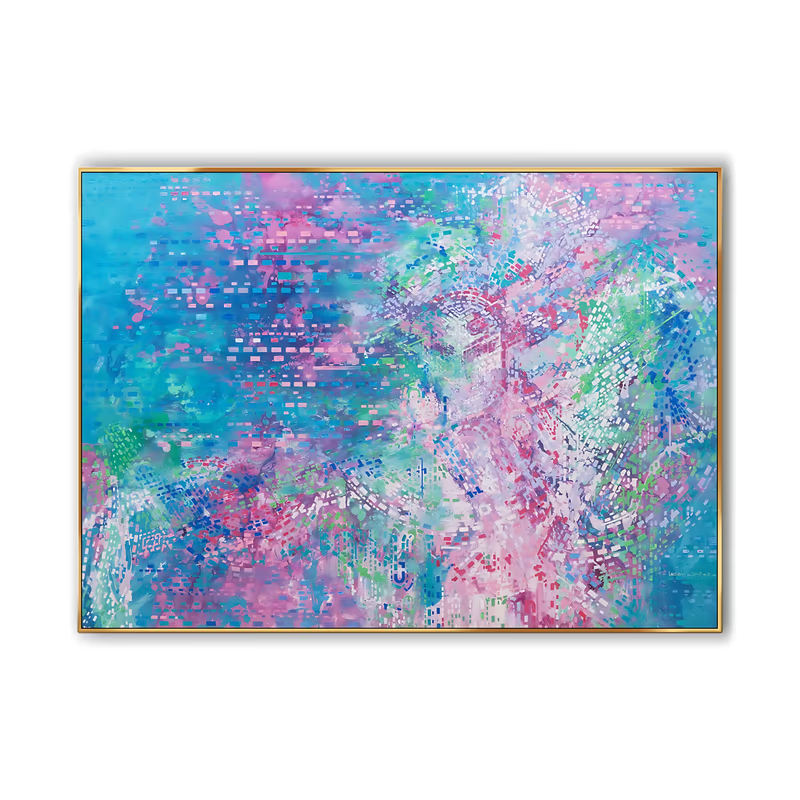
| Size of marks | Broad washes and soft gradients | Small busy dabs, drips and splatter |
| Number of colours | Two or three | Five or more |
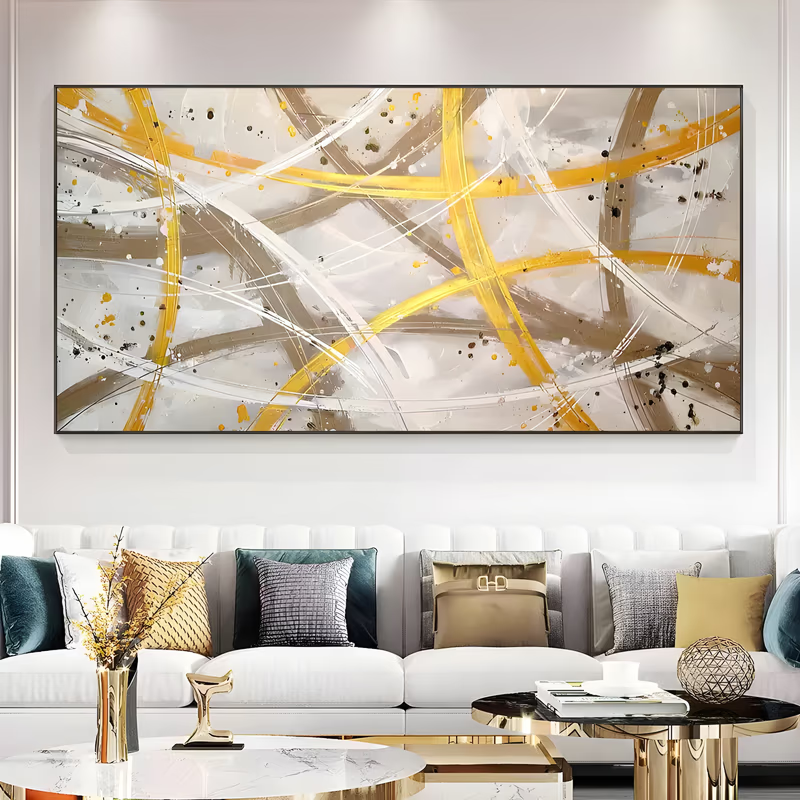
| Direction of movement | Horizontal bands that settle the eye | Diagonals and spirals that pull it across the canvas |
| Rooms it suits | Bedrooms, spas, meeting rooms, guest rooms | Living rooms, restaurants, bars, lobbies, creative offices |
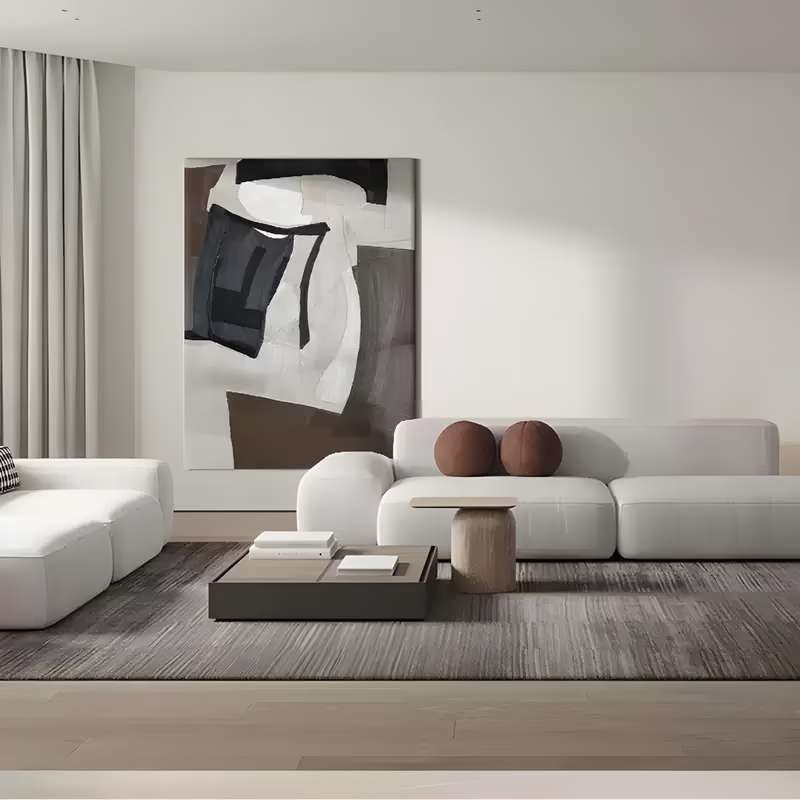
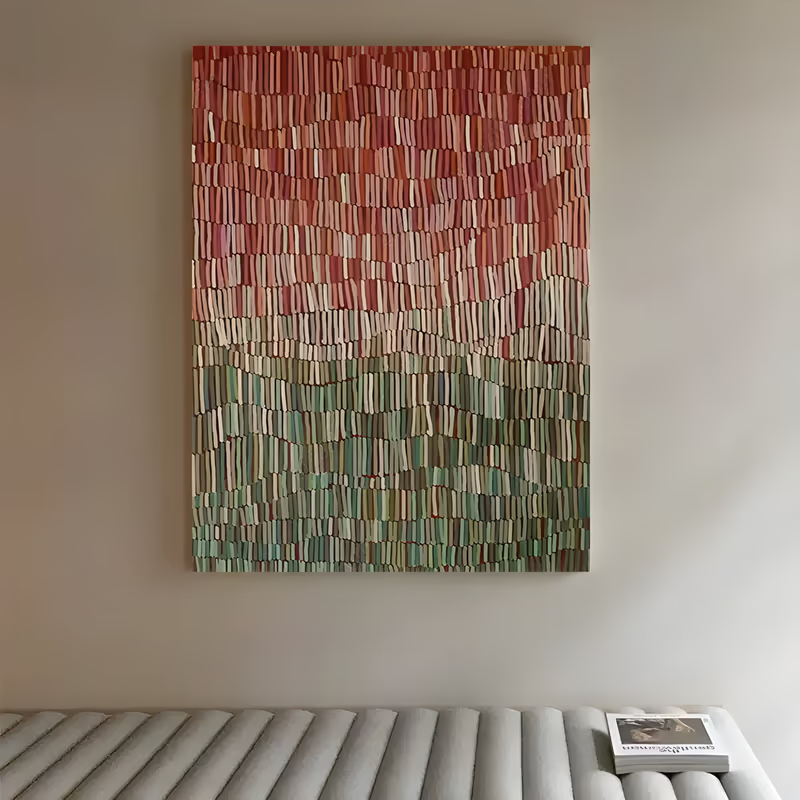
Then check the room's existing colours. An abstract that repeats one hue from a rug, a sofa or a run of joinery will look chosen for the space; one that introduces a single new accent will refresh it. You can narrow the grid by feel, with calming, bold or moody abstracts.
What kinds of abstract art are there?
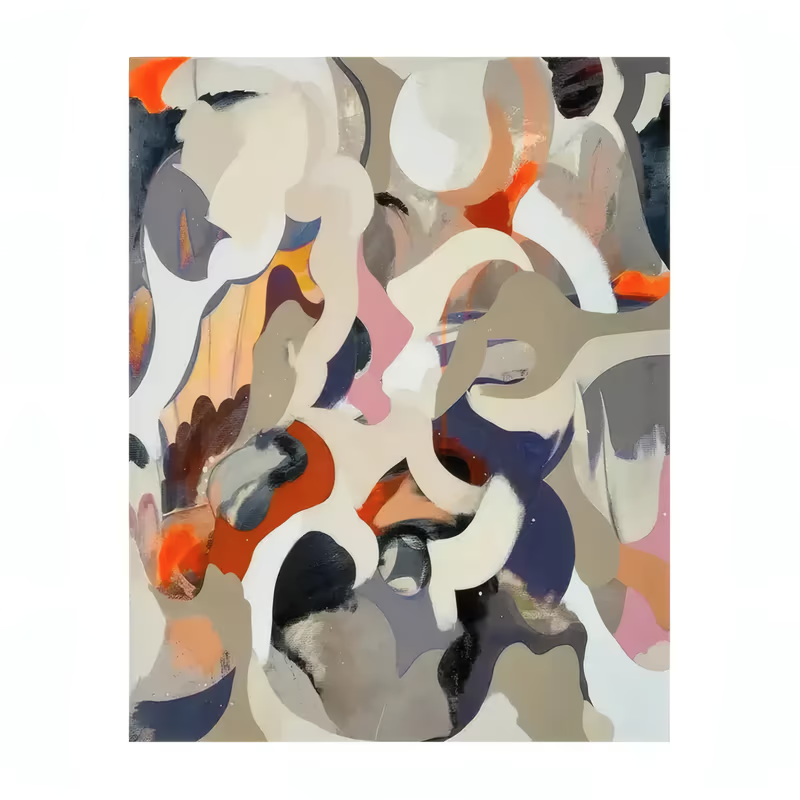
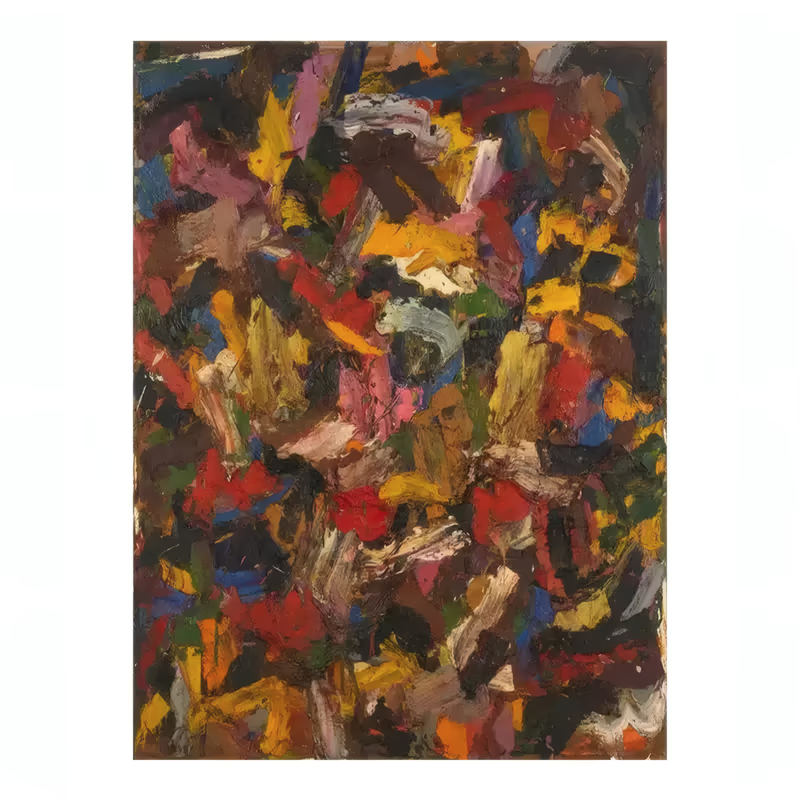
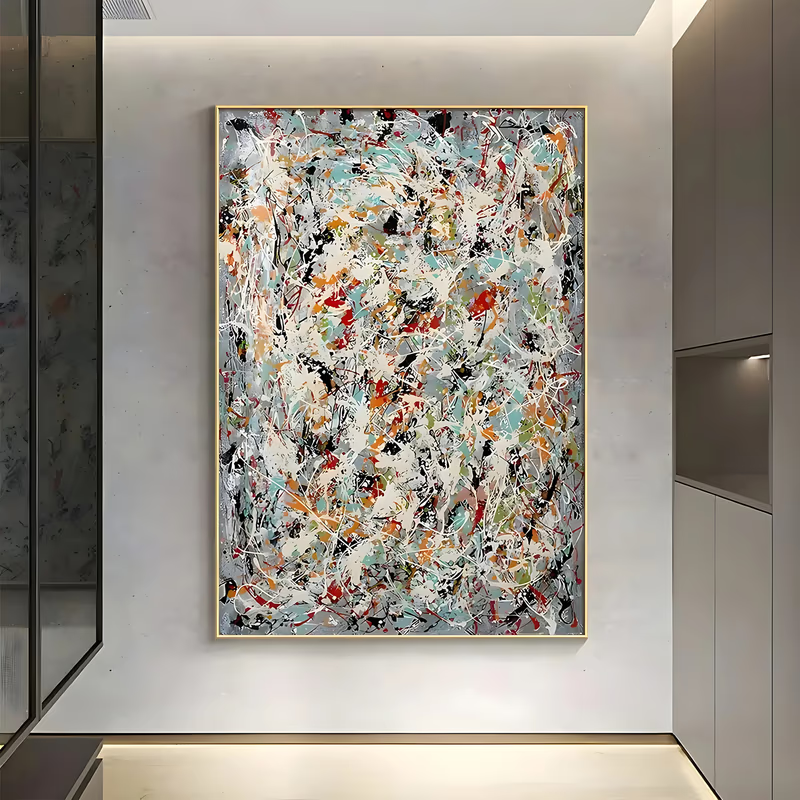
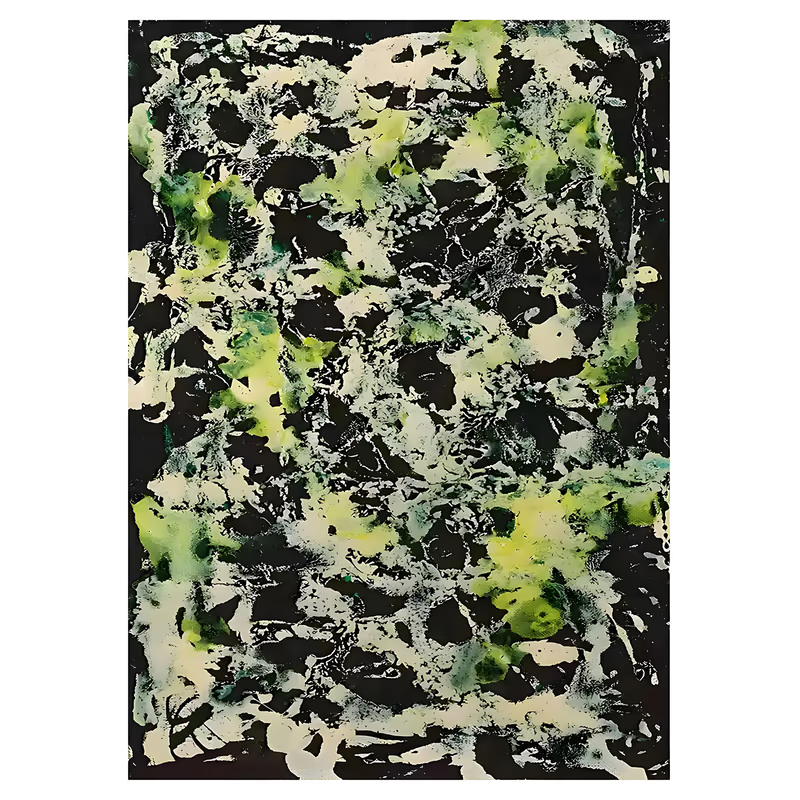
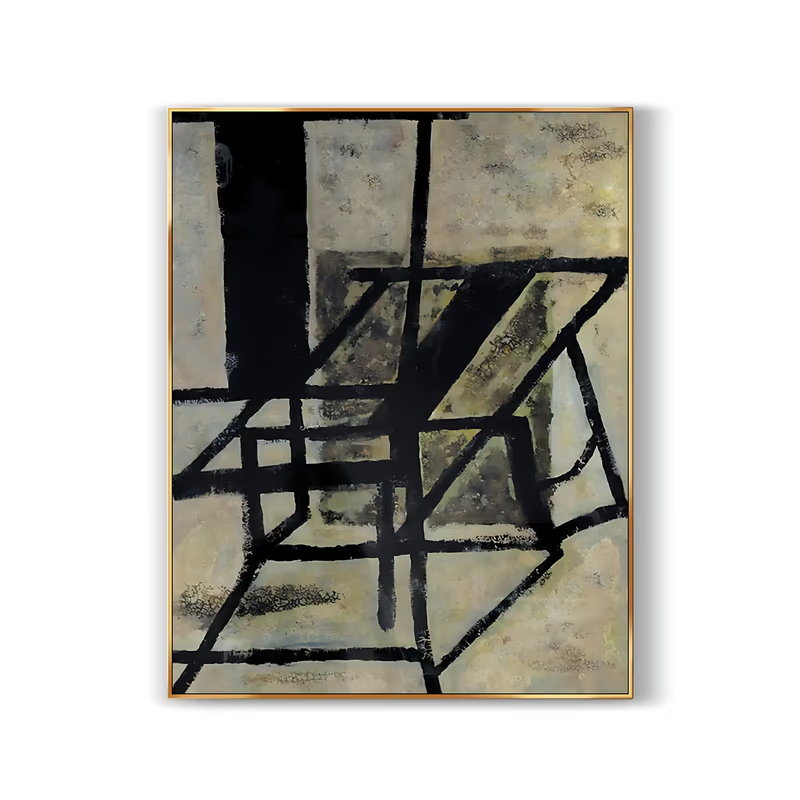
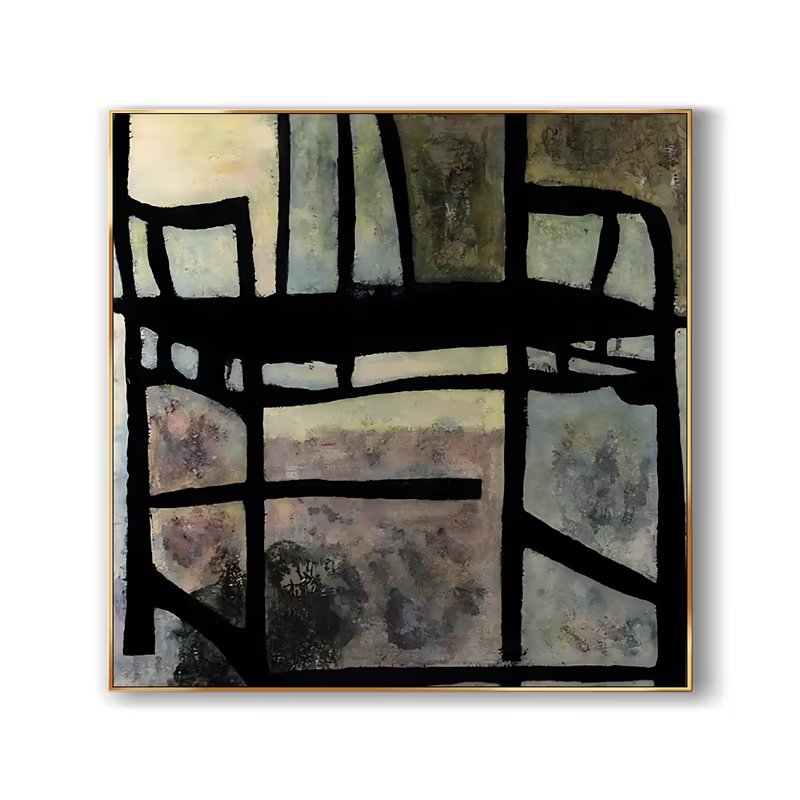
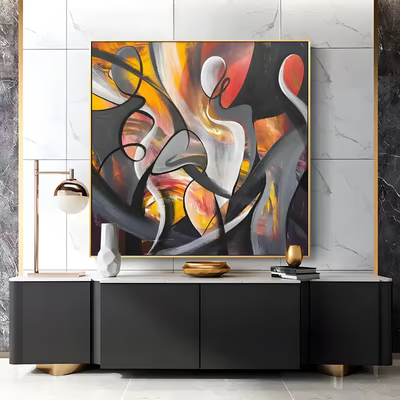
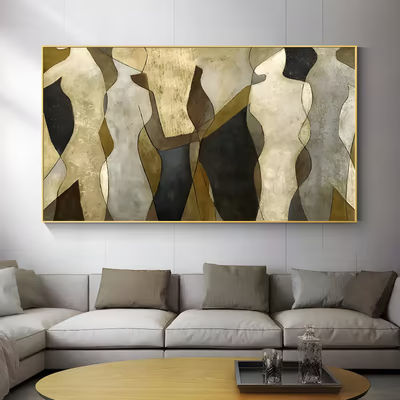
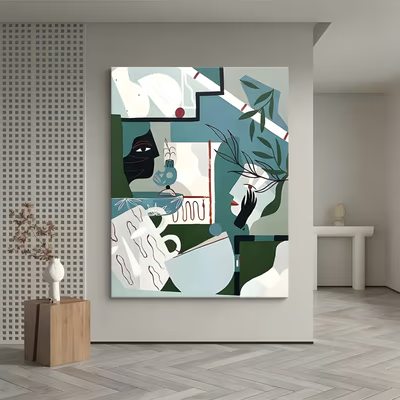
Abstract wall art here comes in four broad kinds: gestural and poured work, geometric and colour-block compositions, abstracted landscapes and seascapes, and cubist faces and figures.
Gestural, poured and gold-leaf abstracts
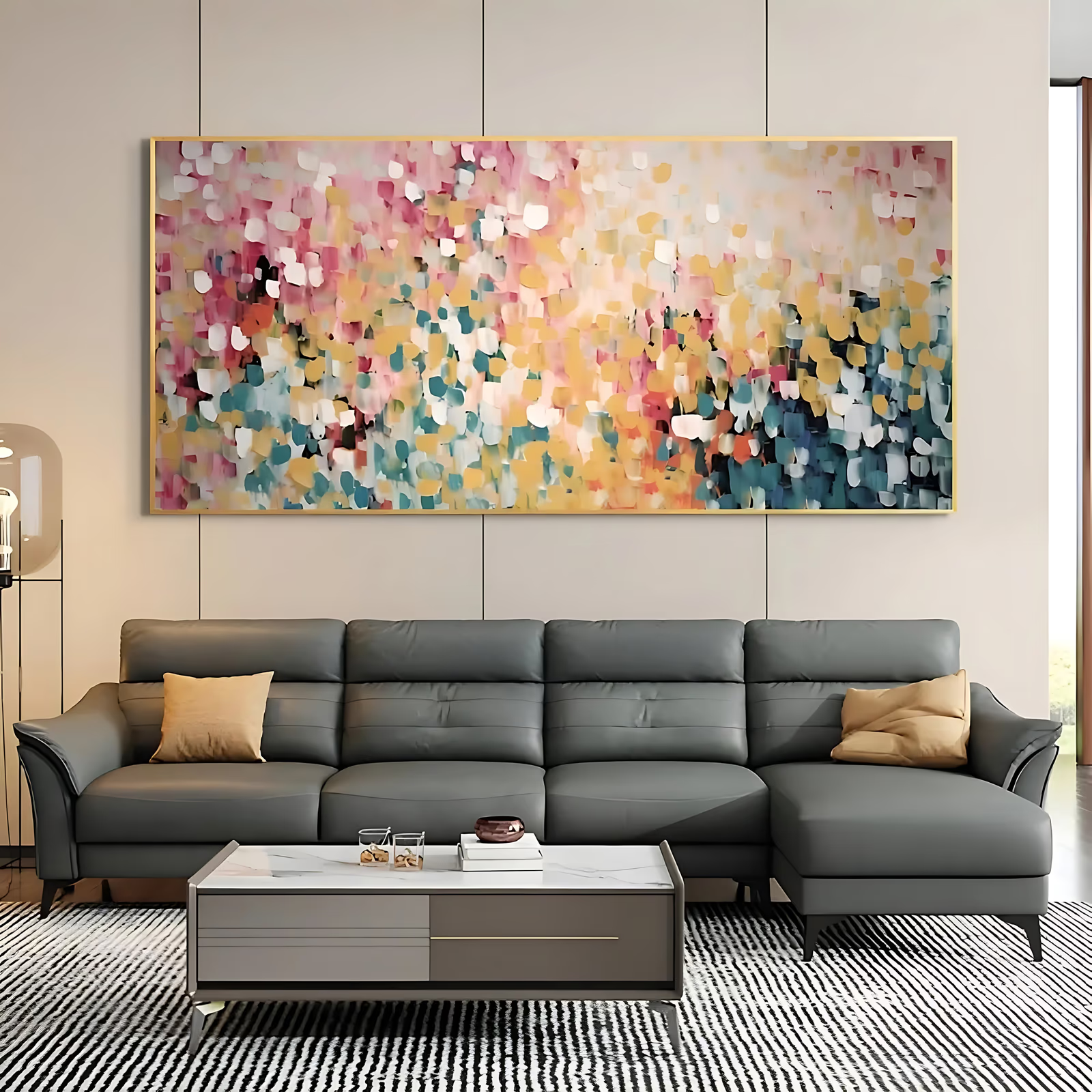
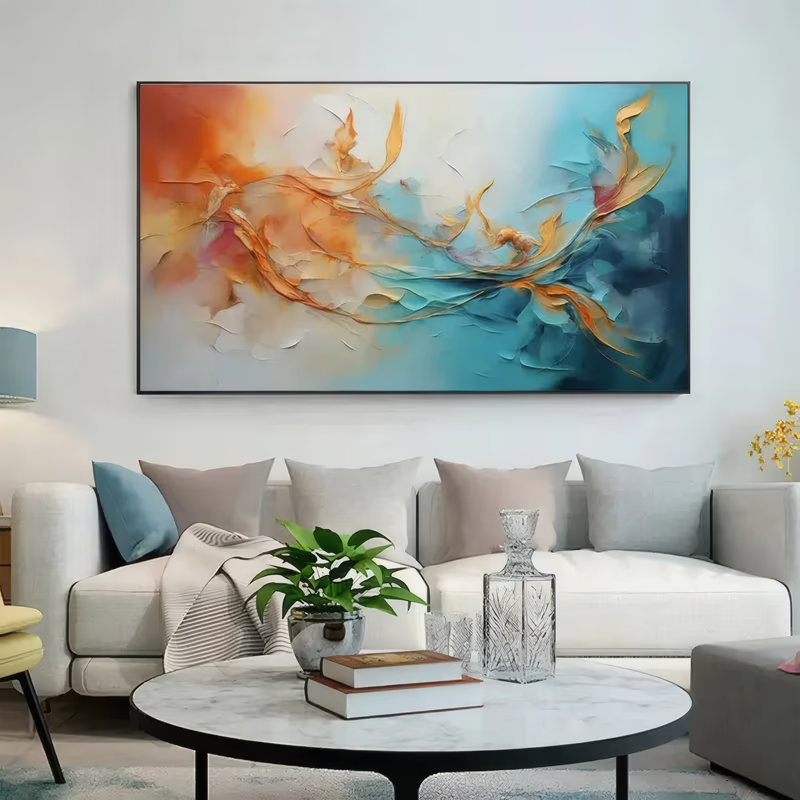
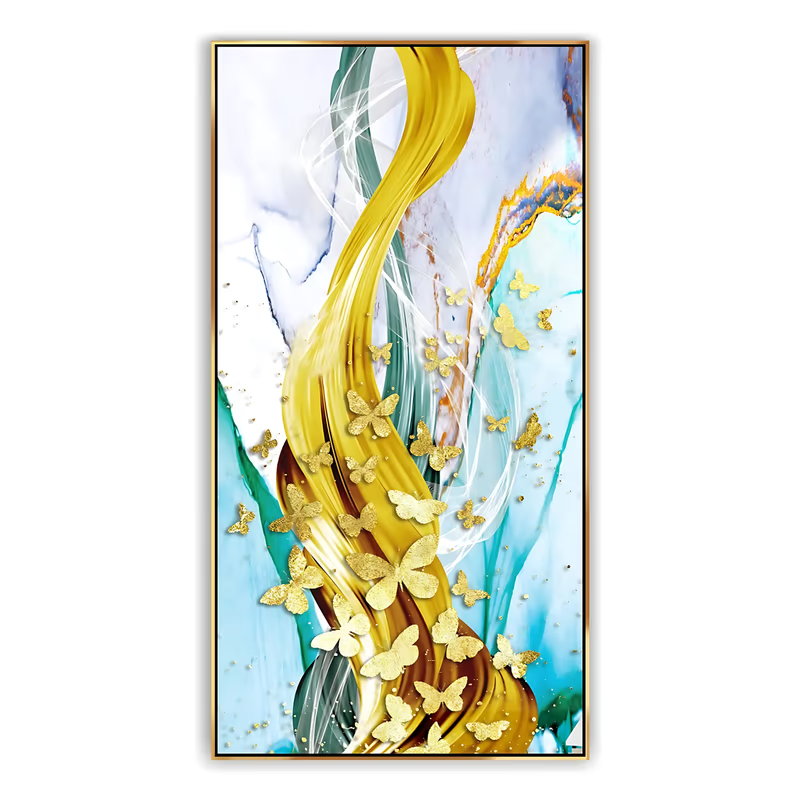
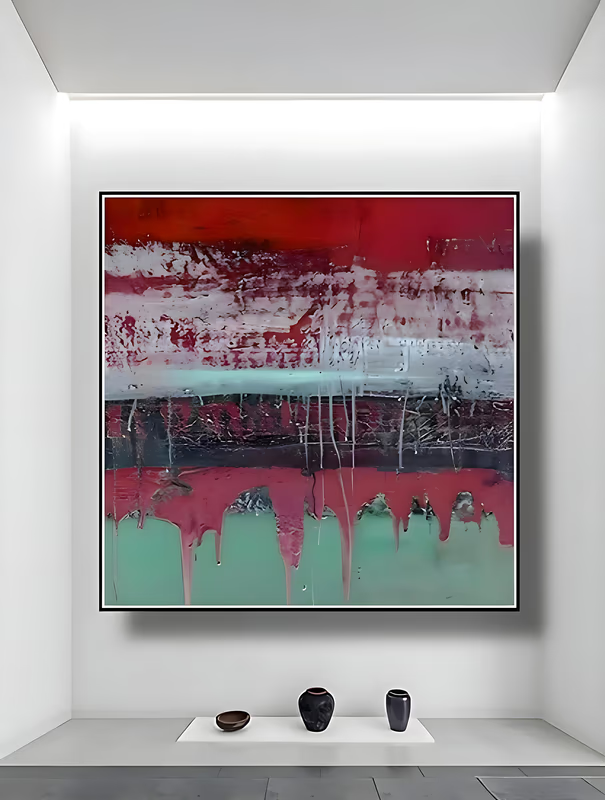
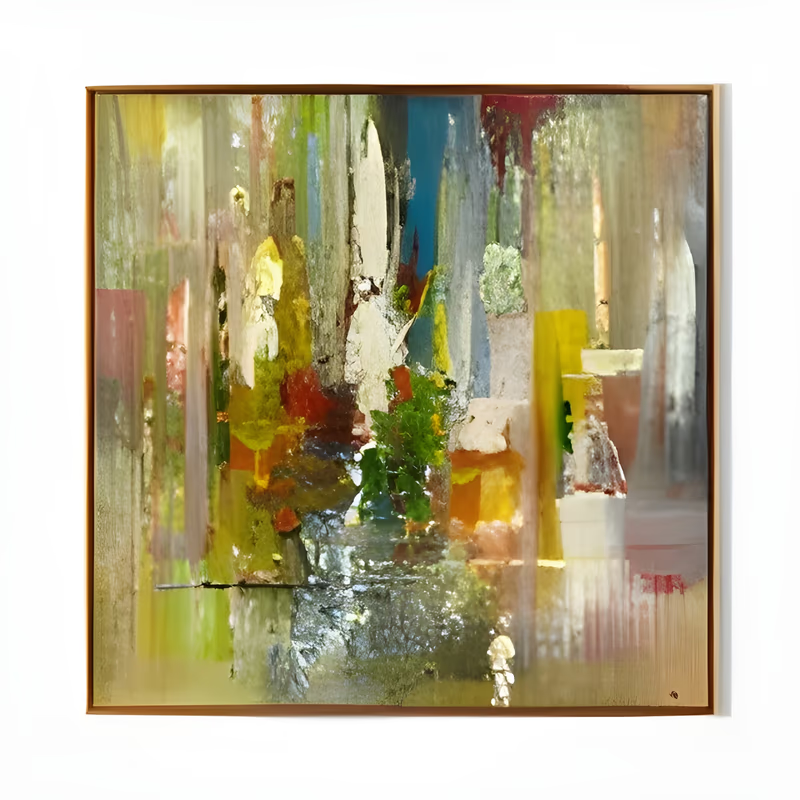
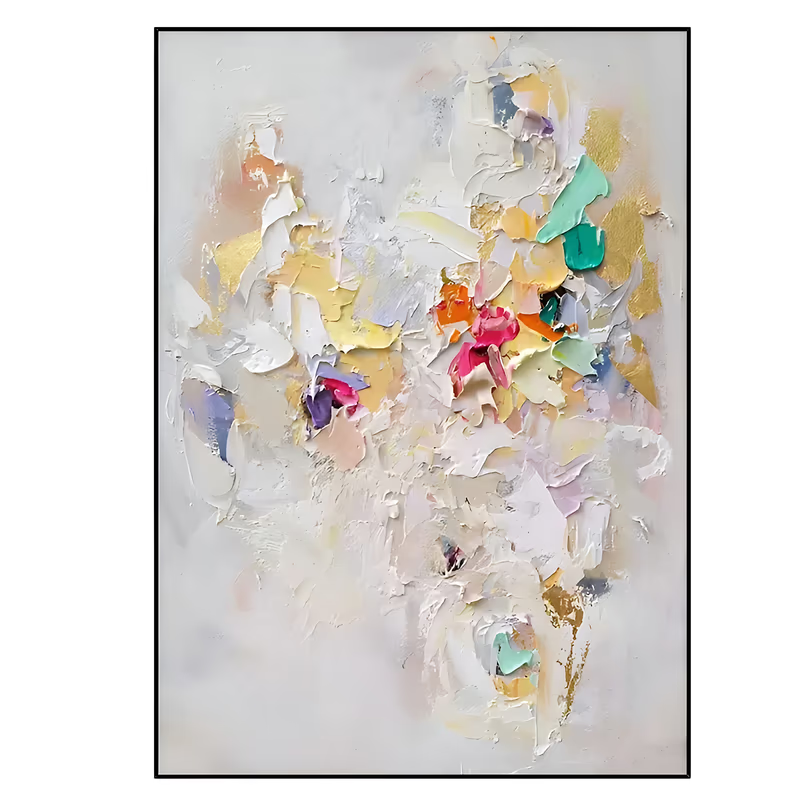
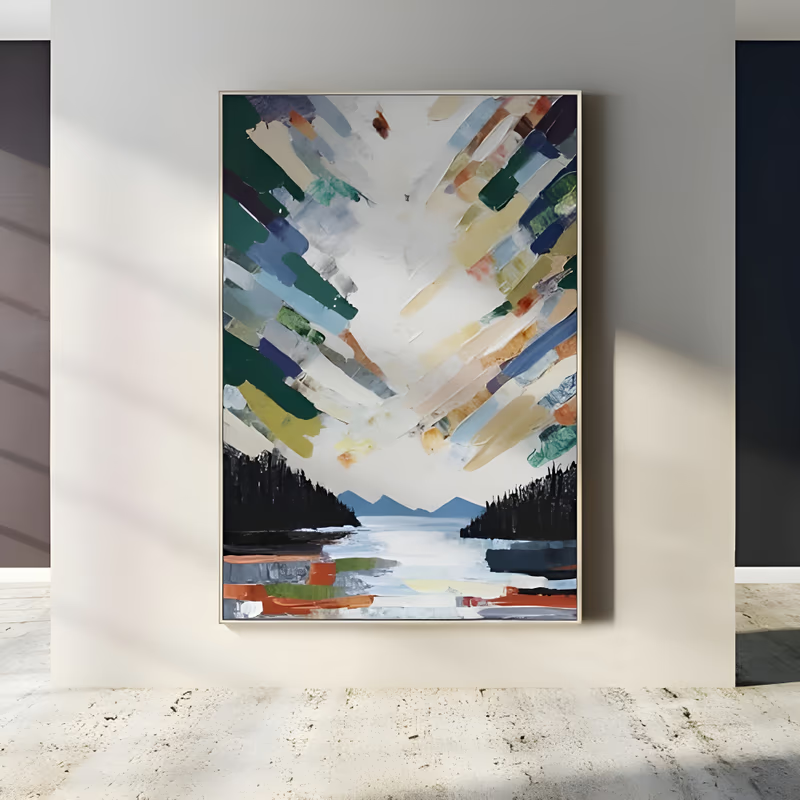
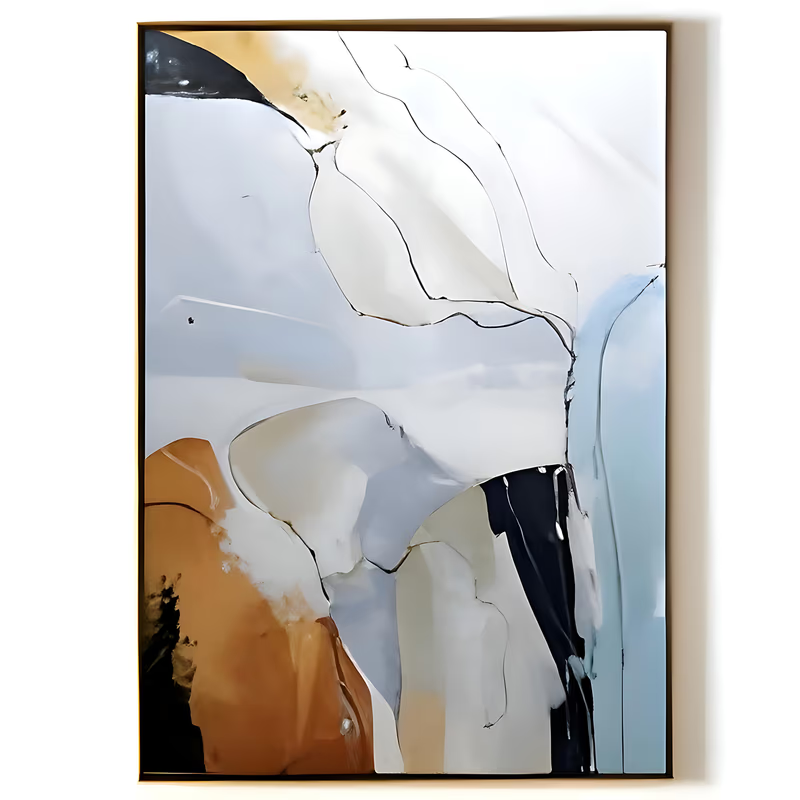
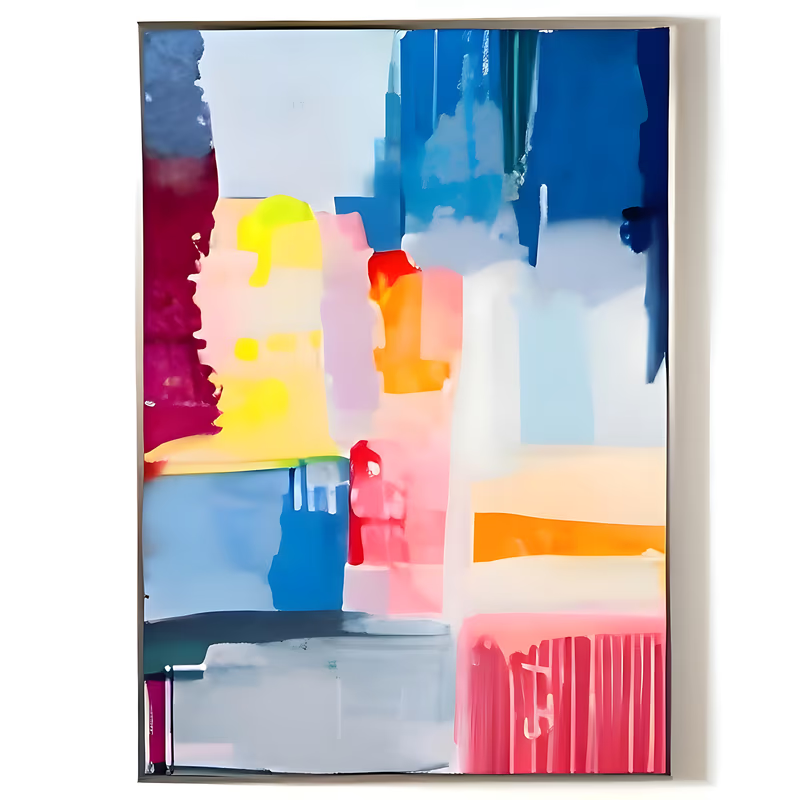
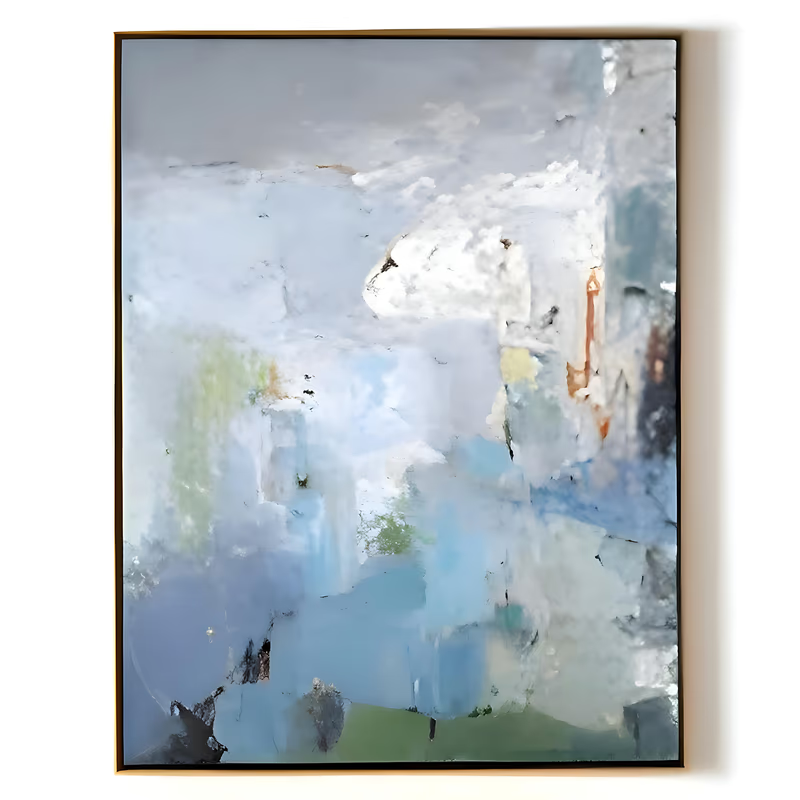
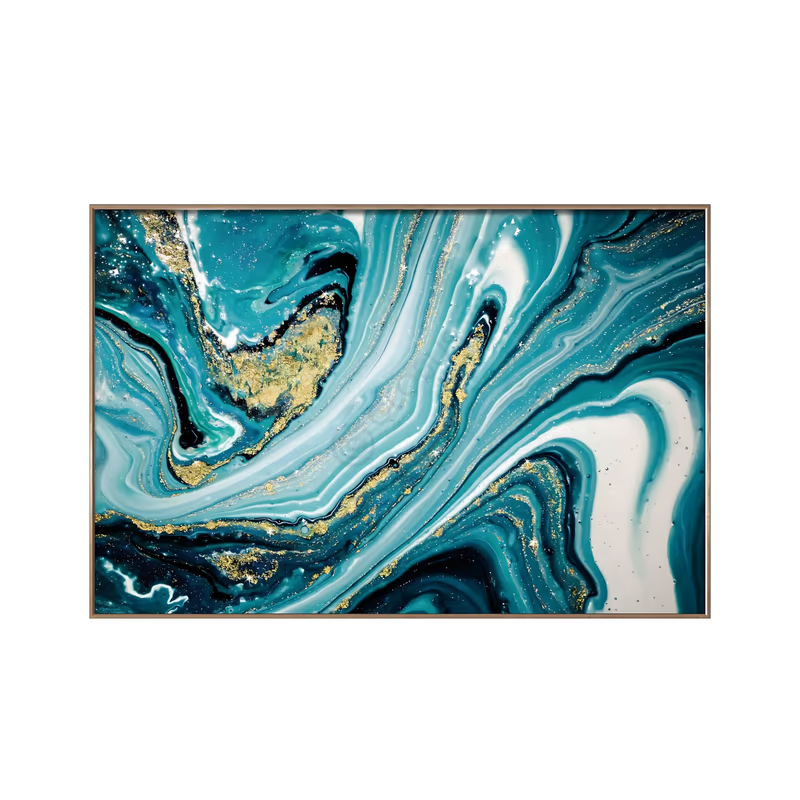
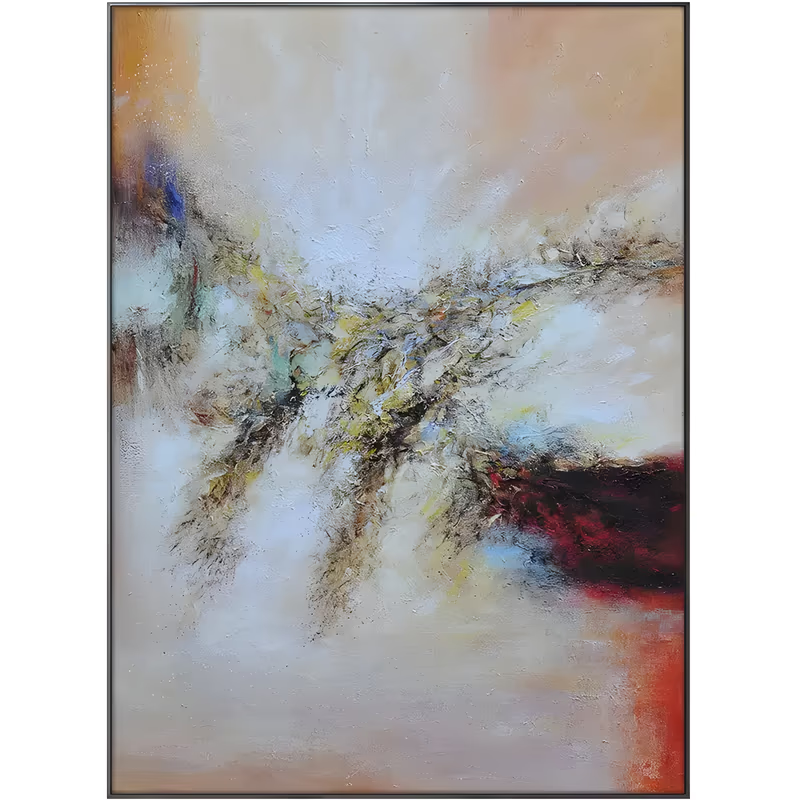
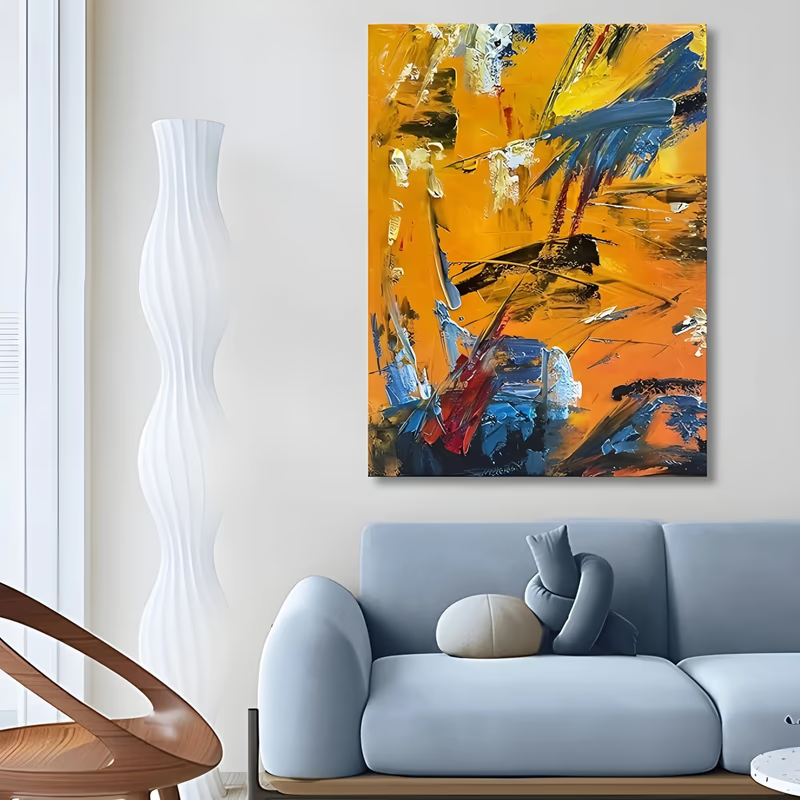
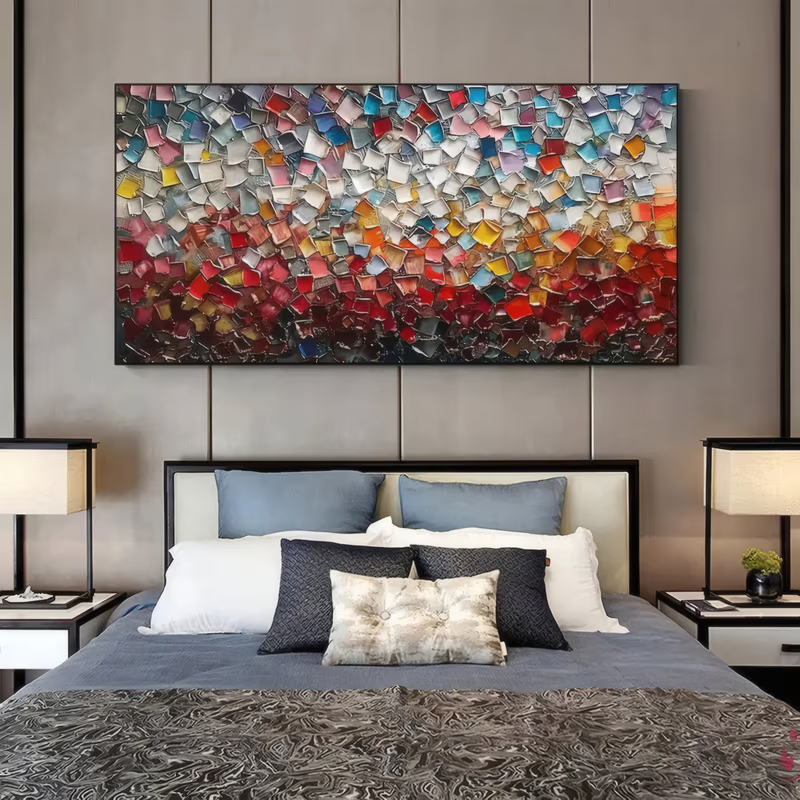
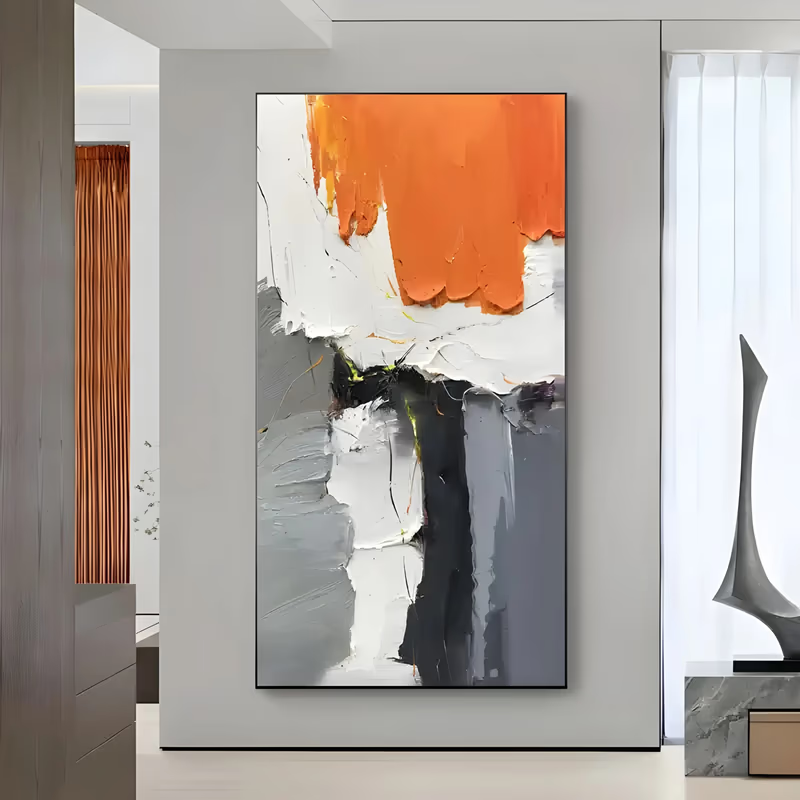
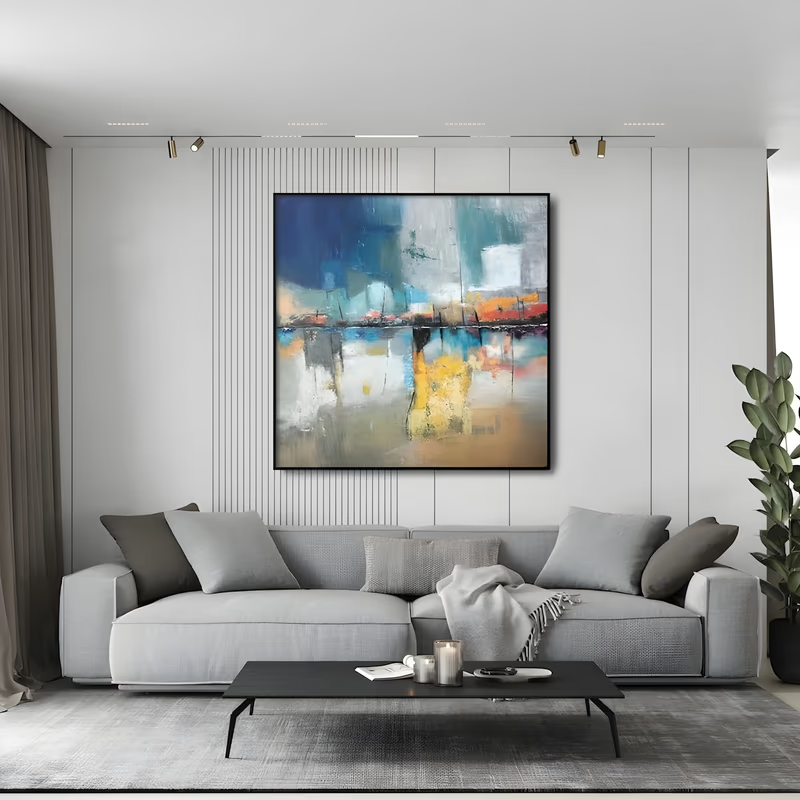
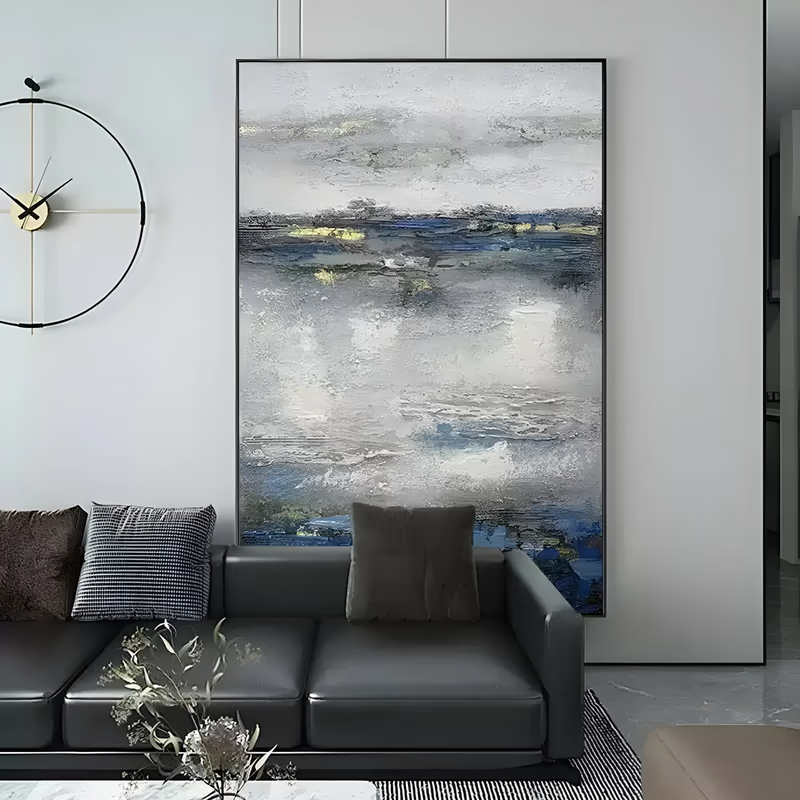
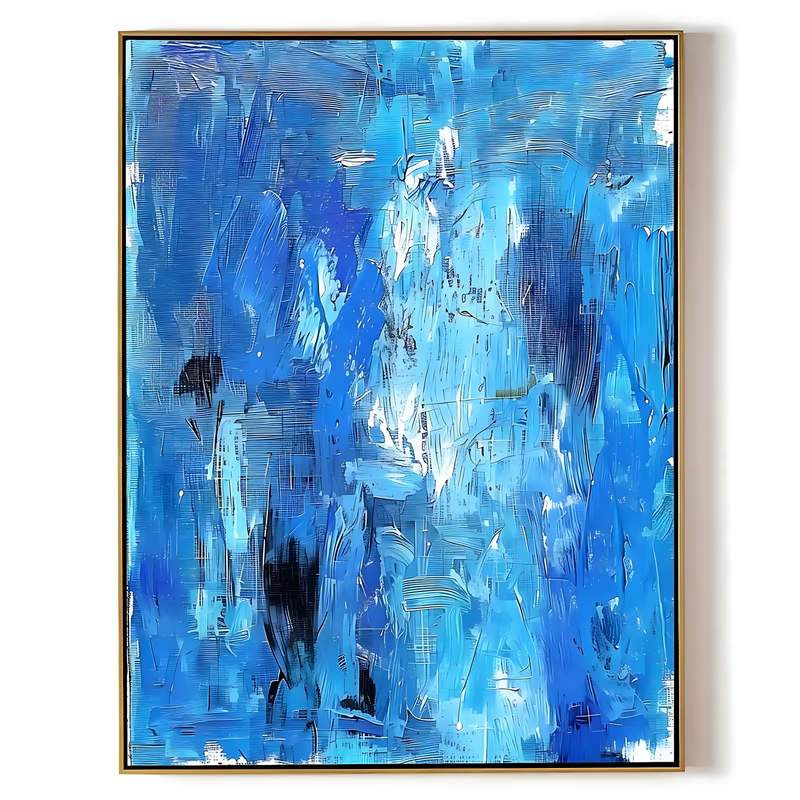
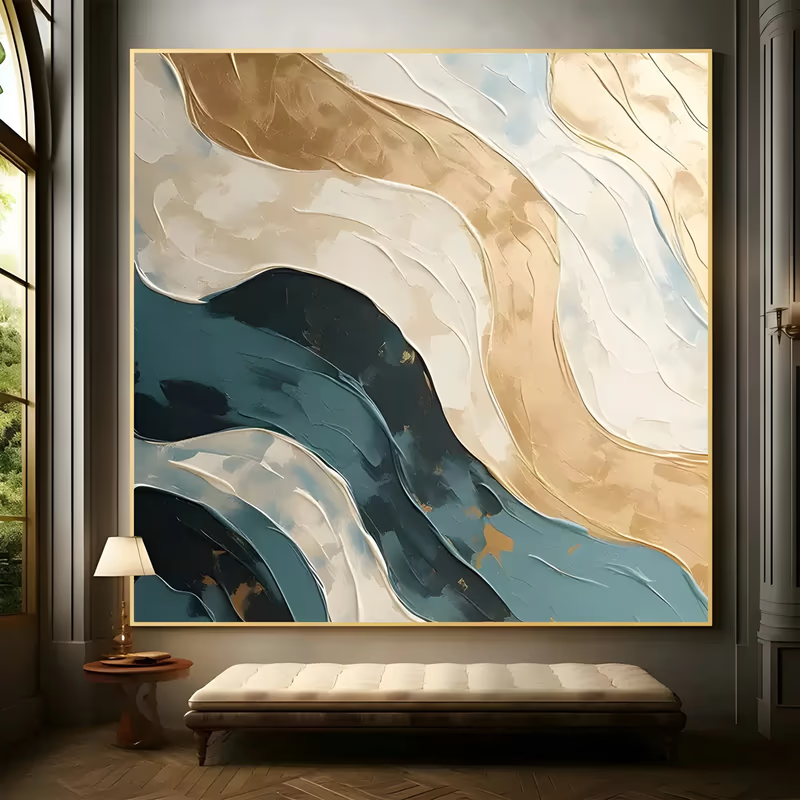
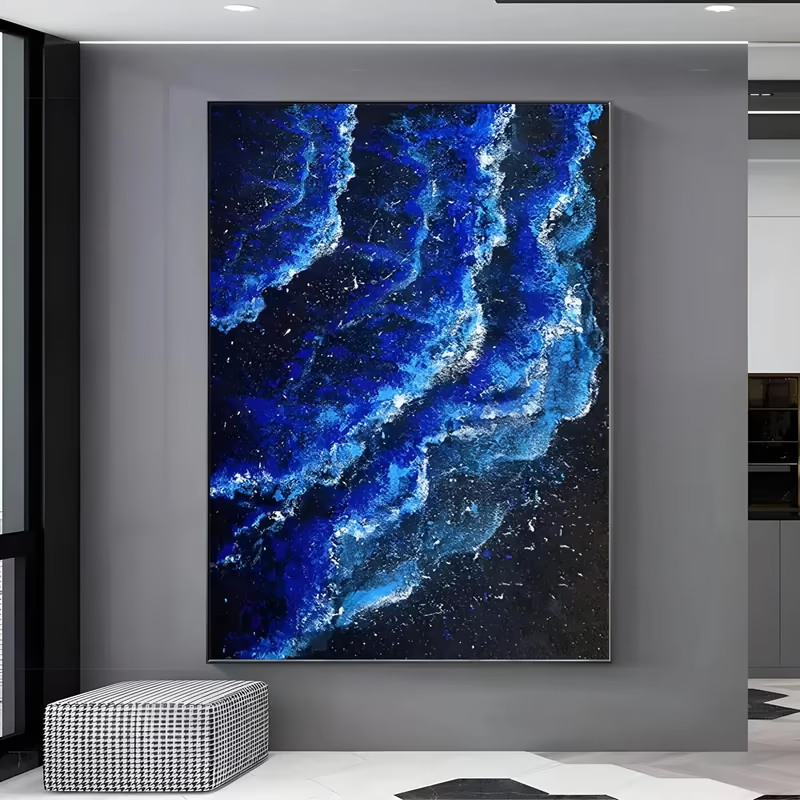
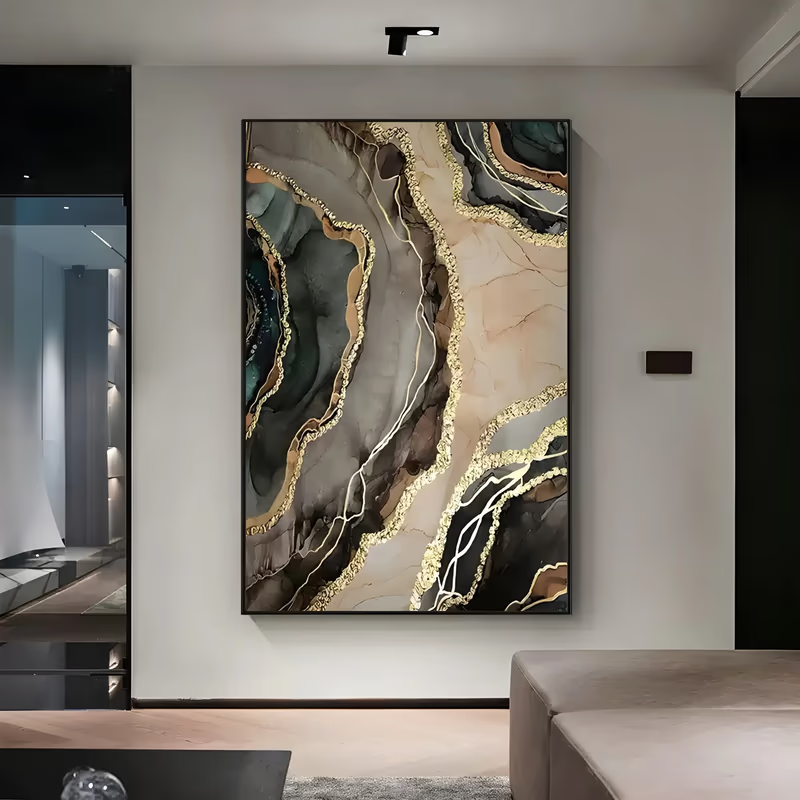
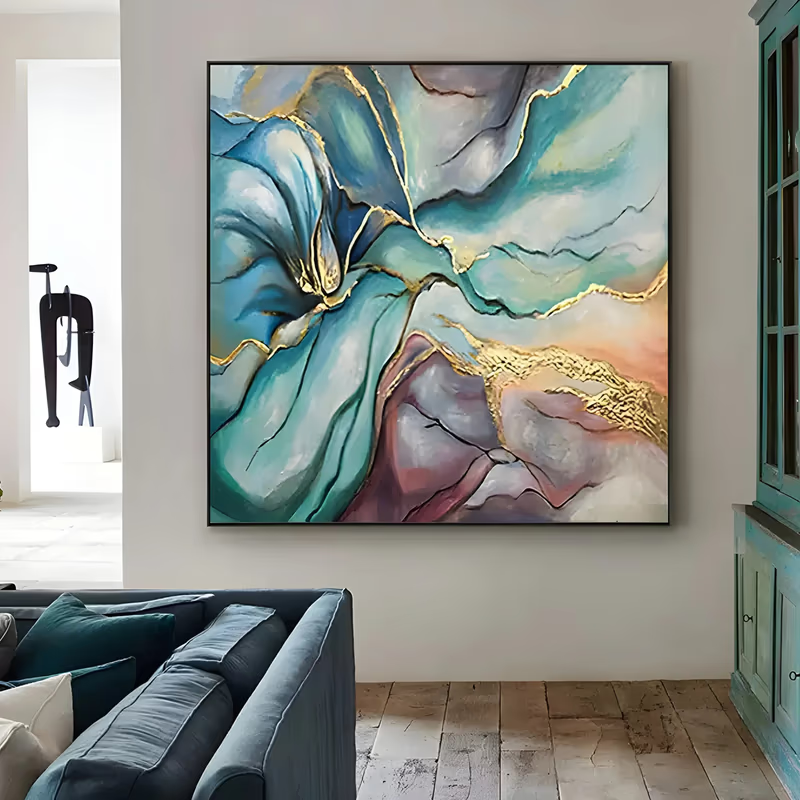
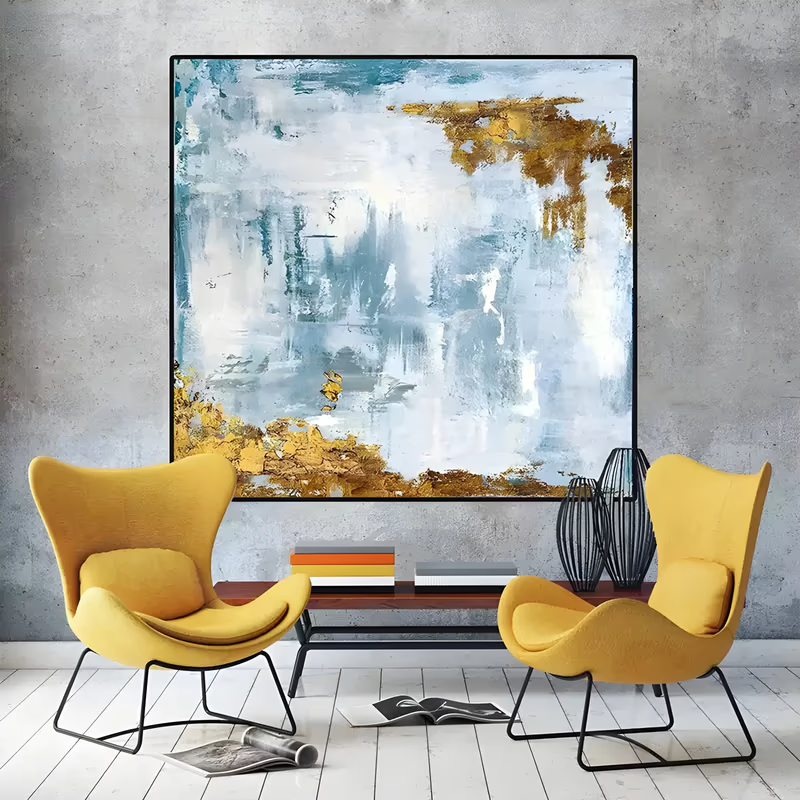
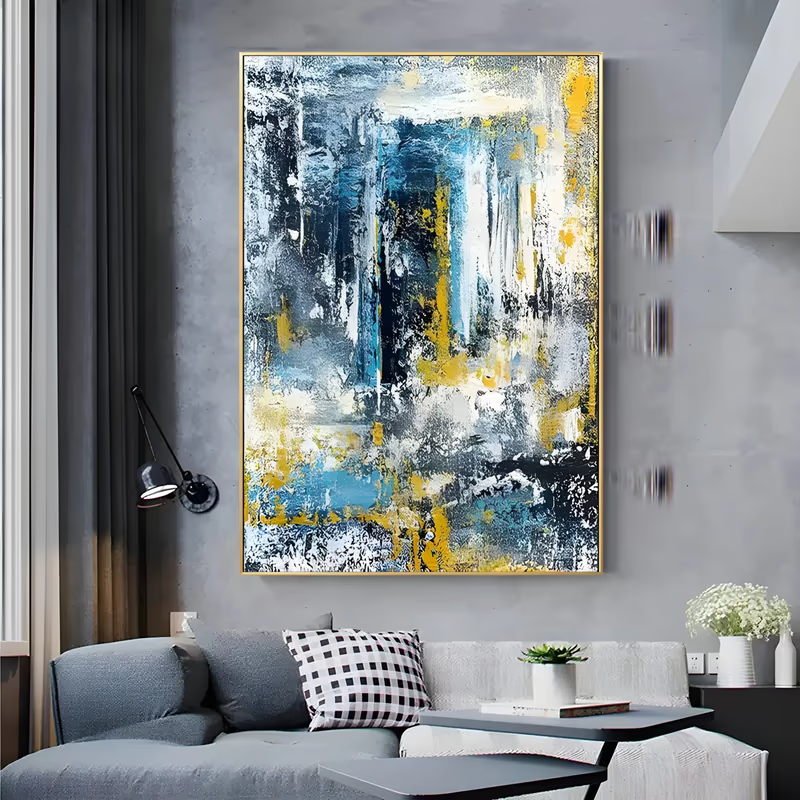
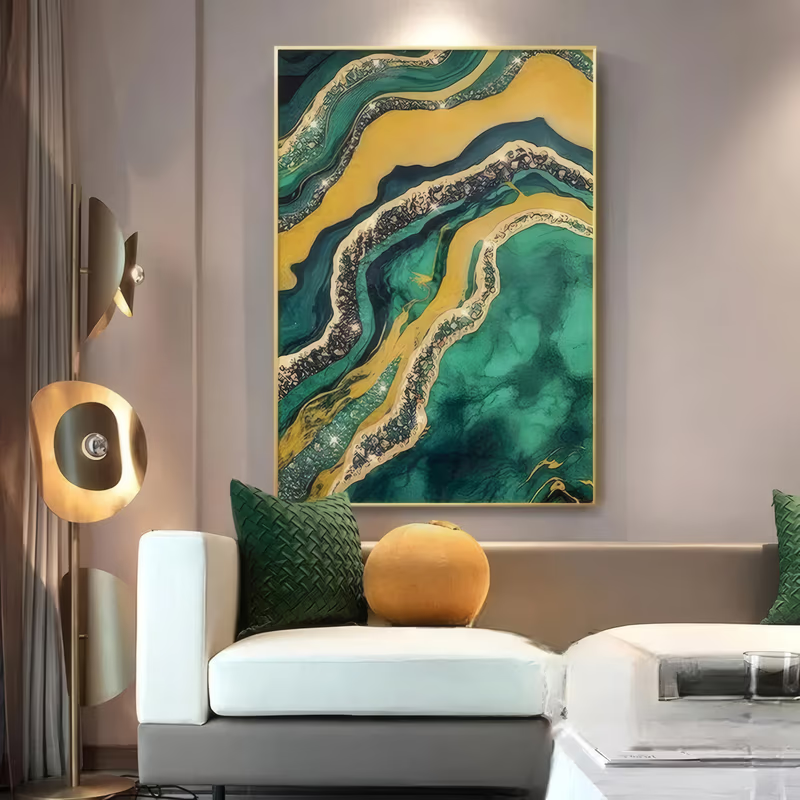
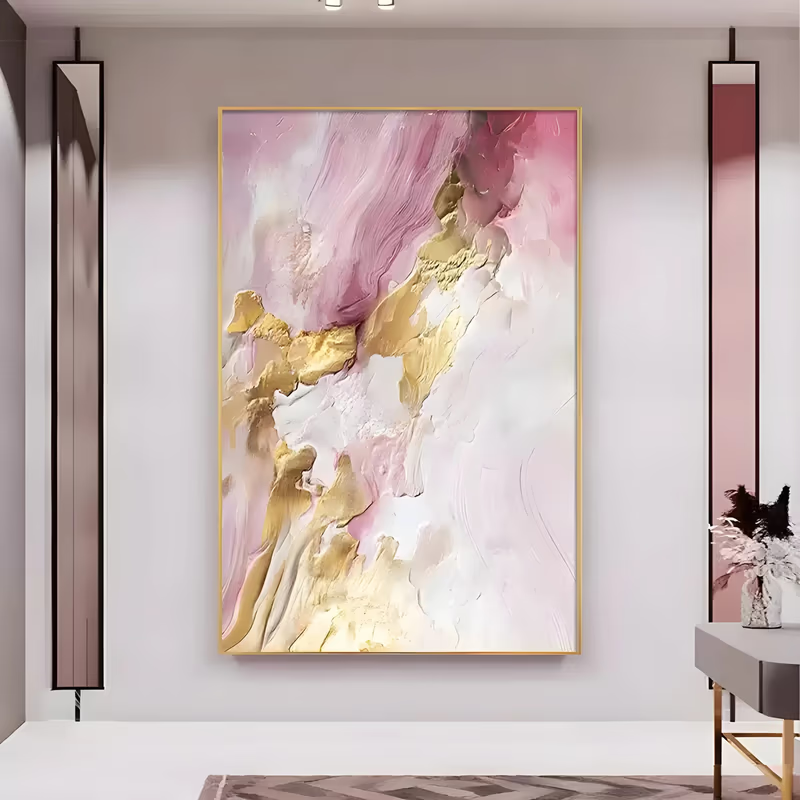
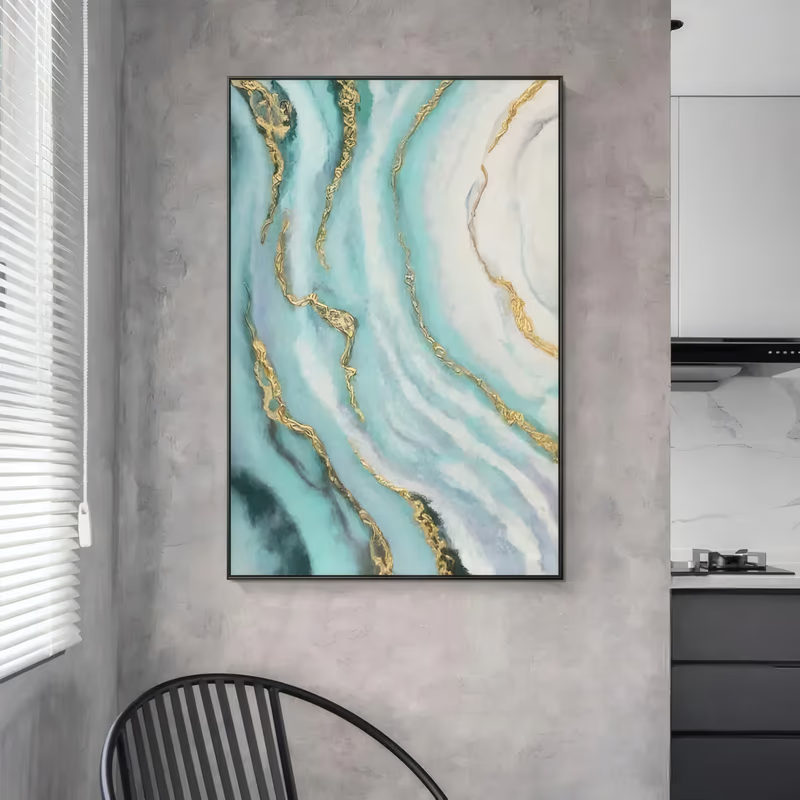
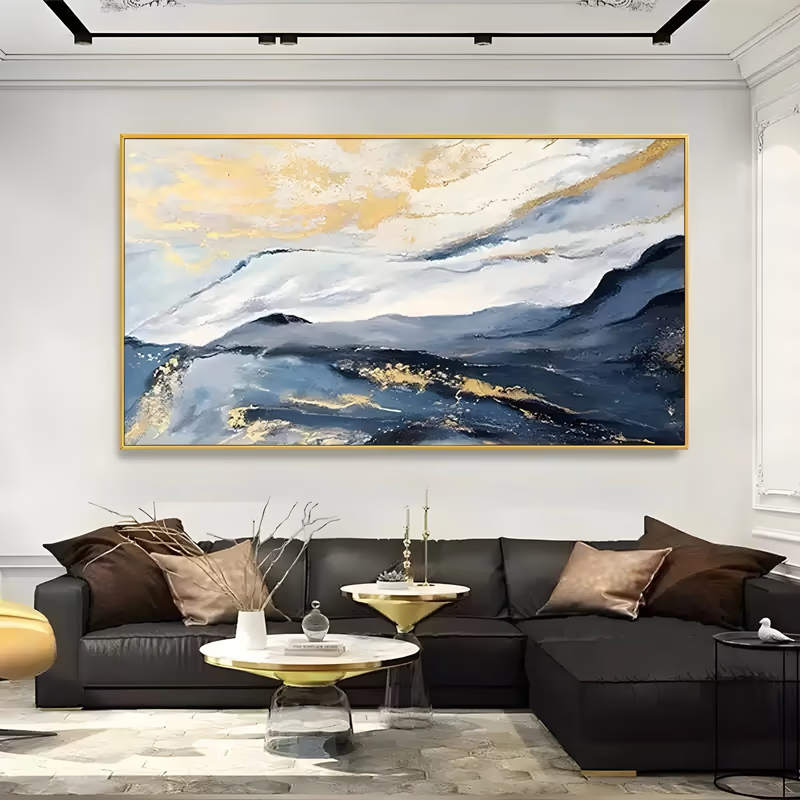
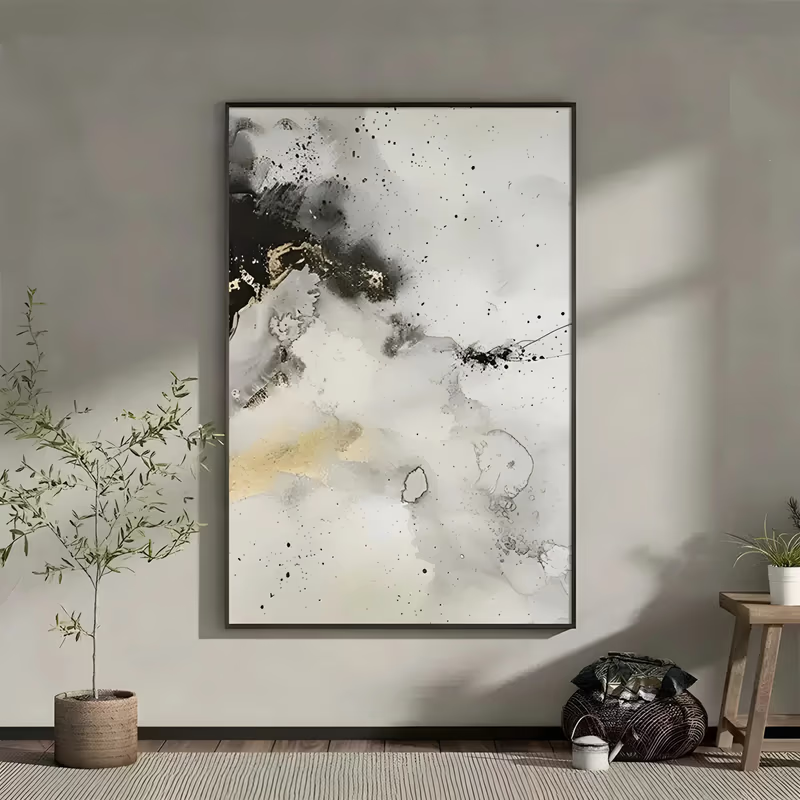
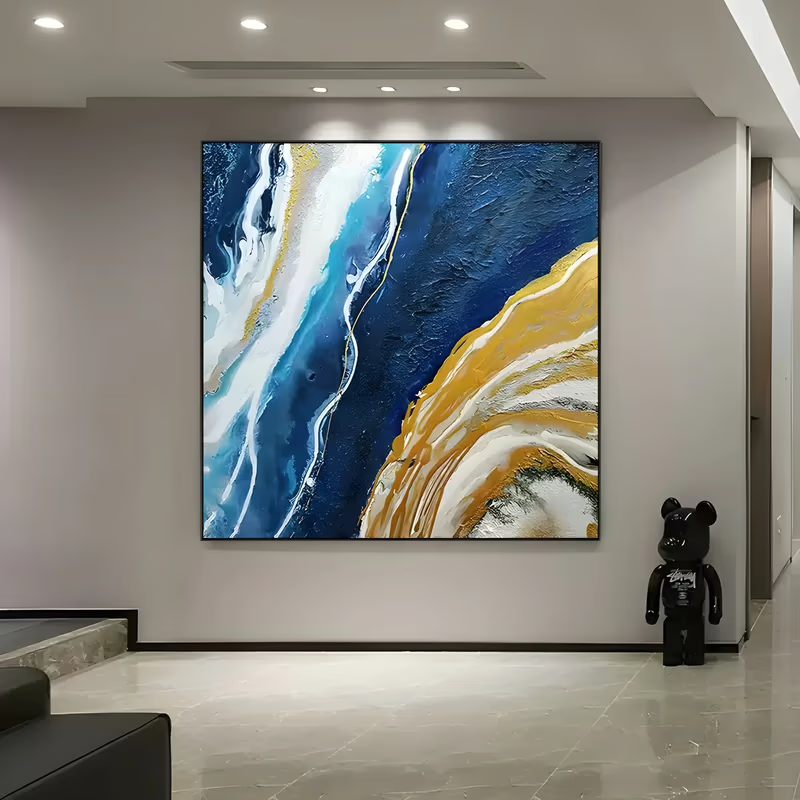
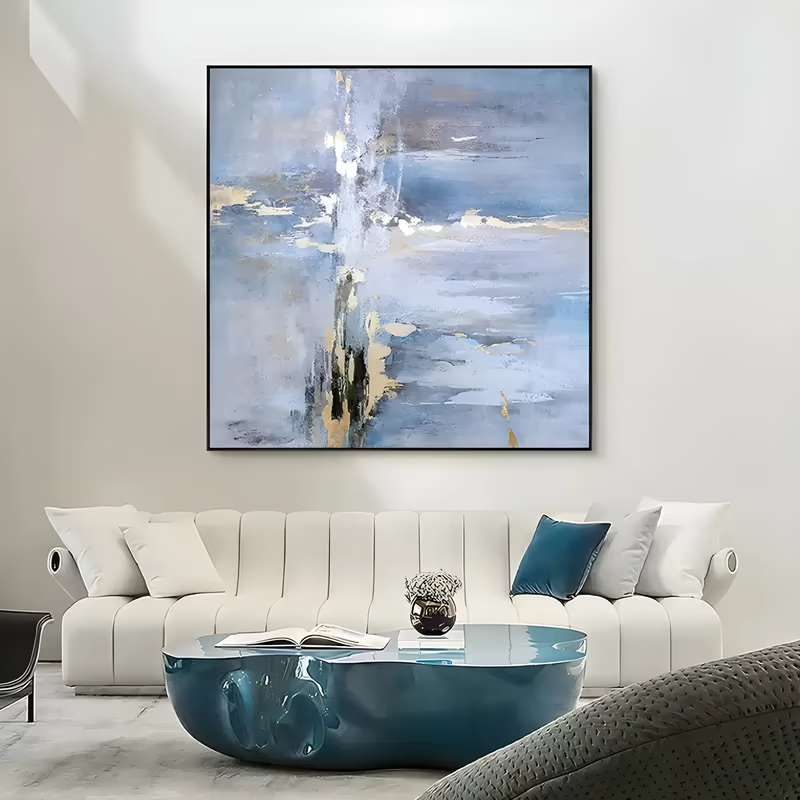
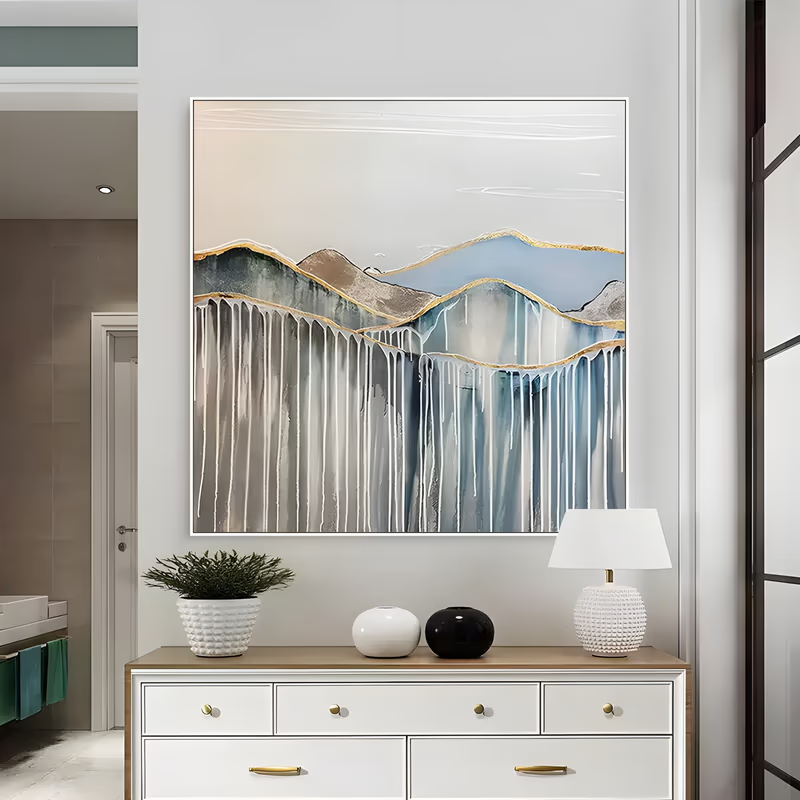
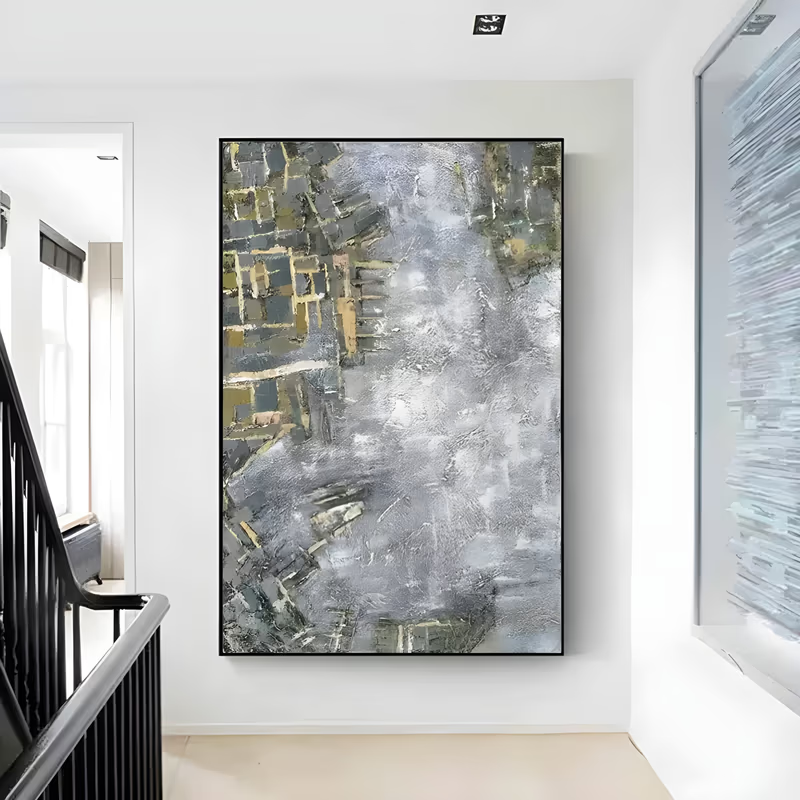
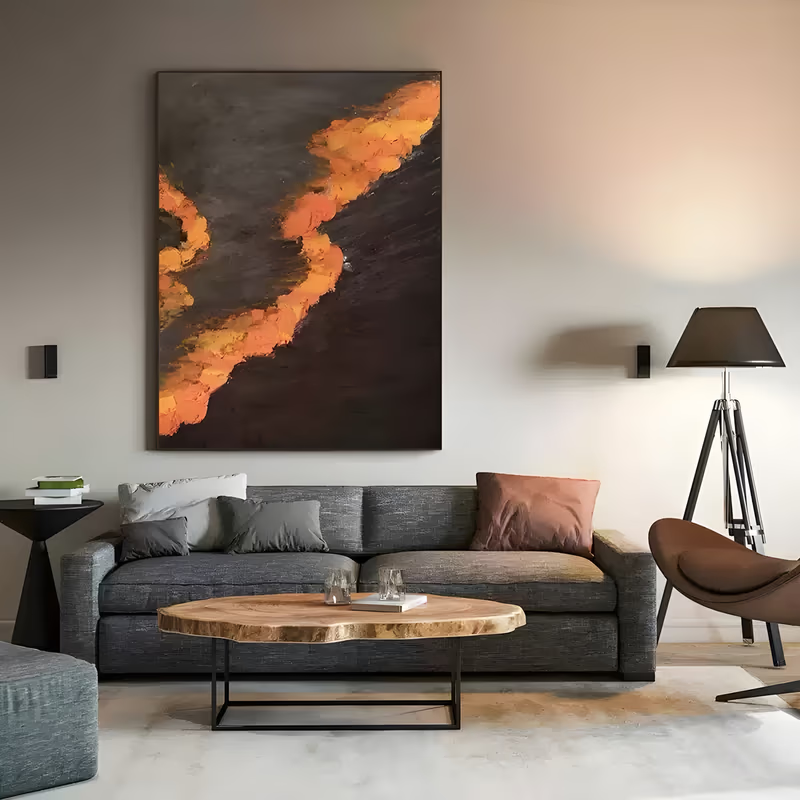
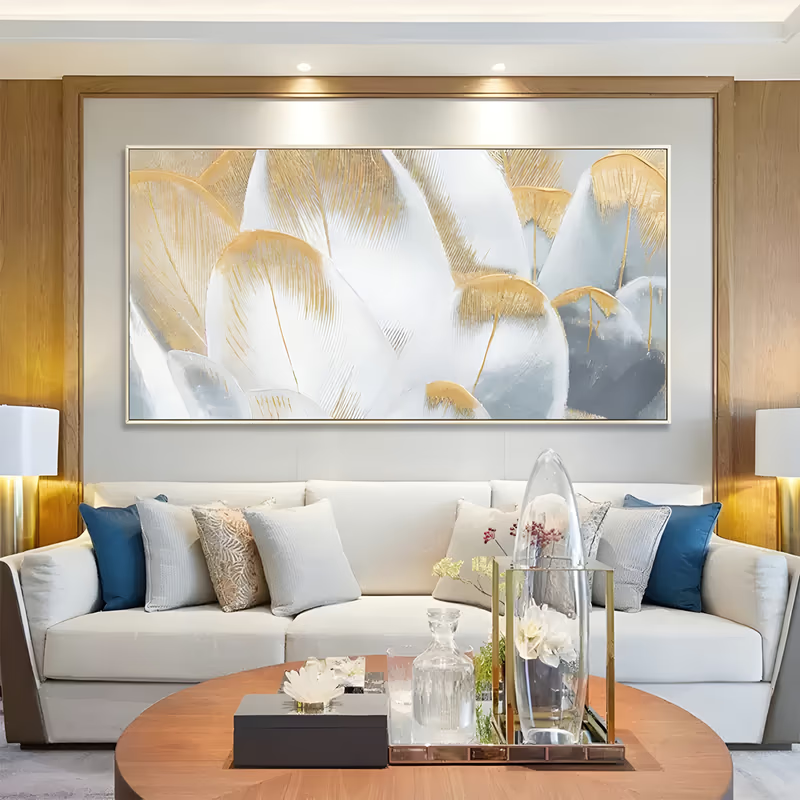
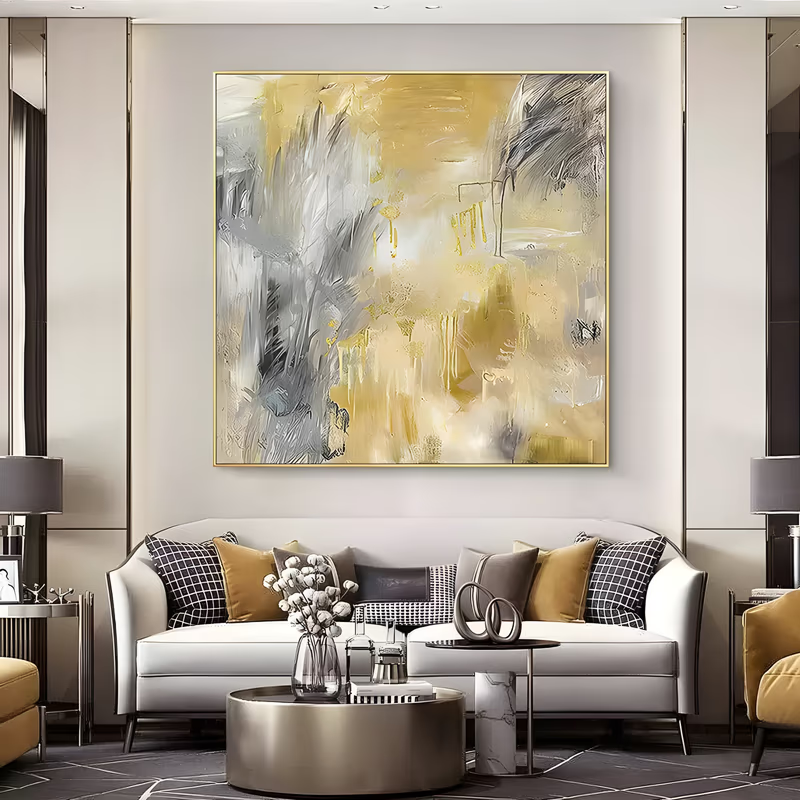
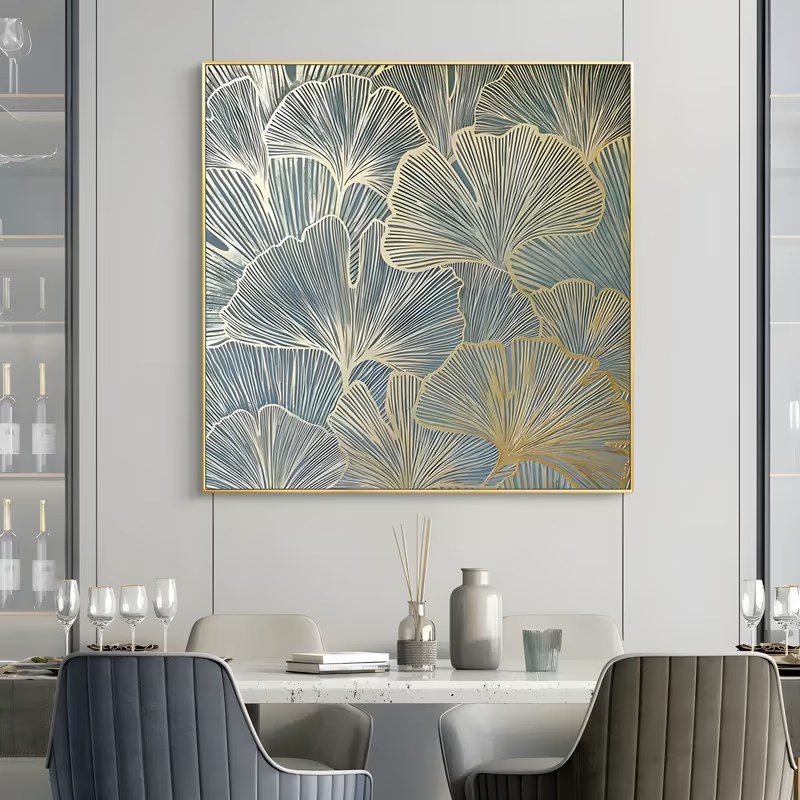
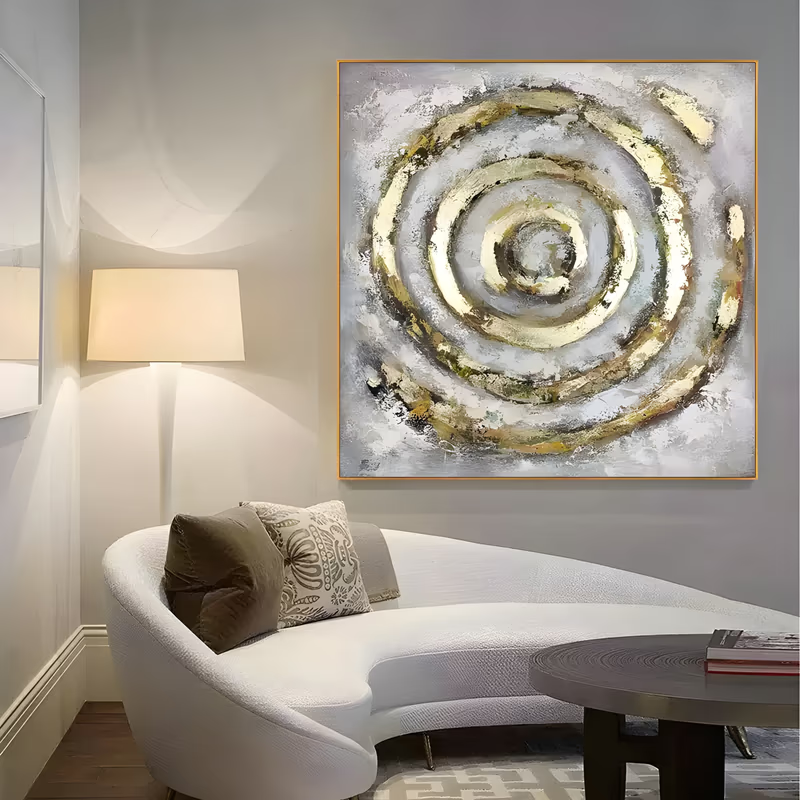
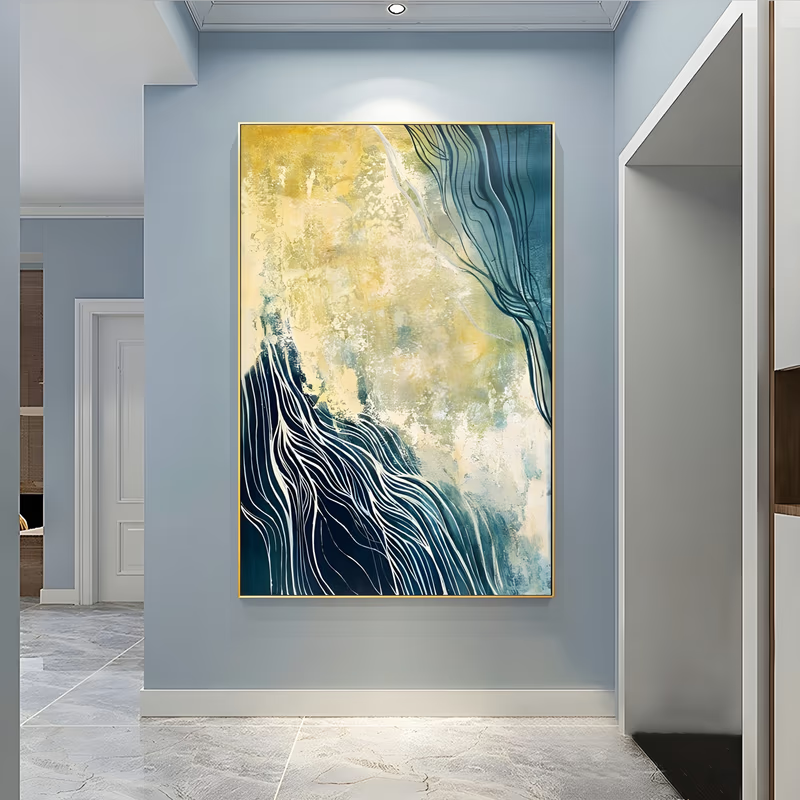
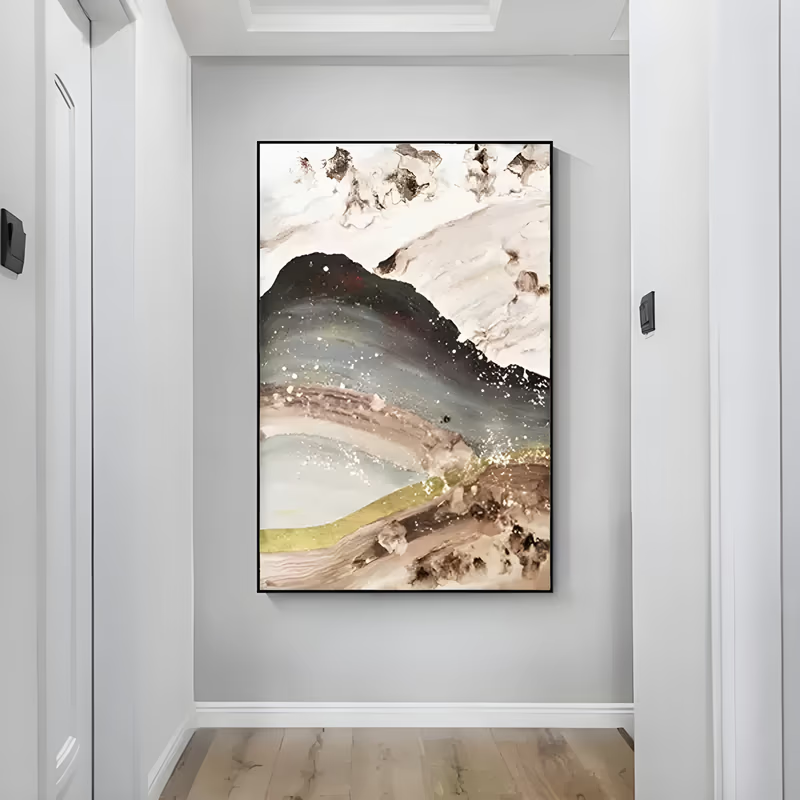
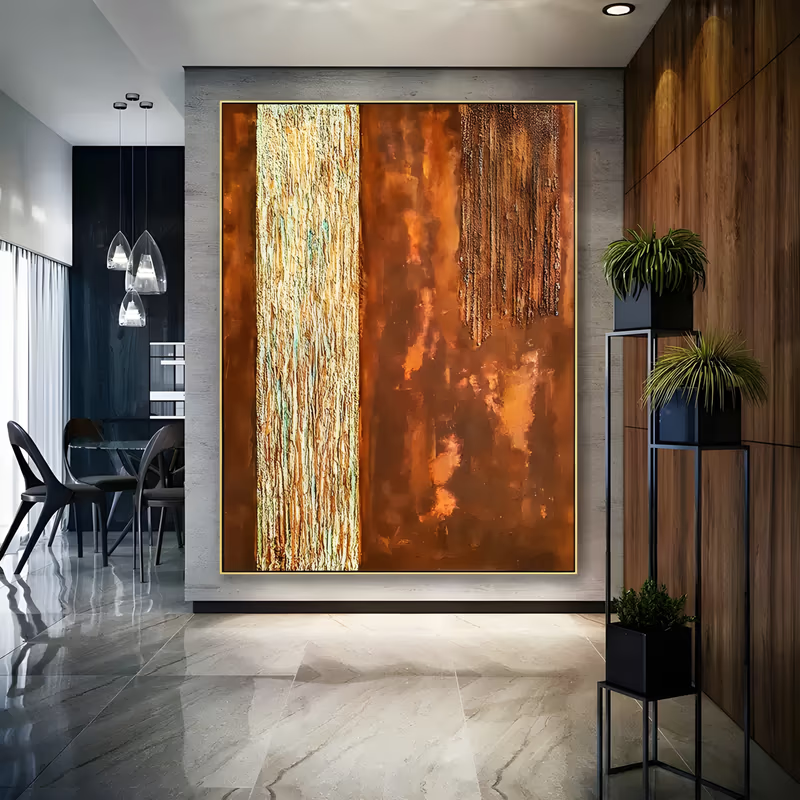
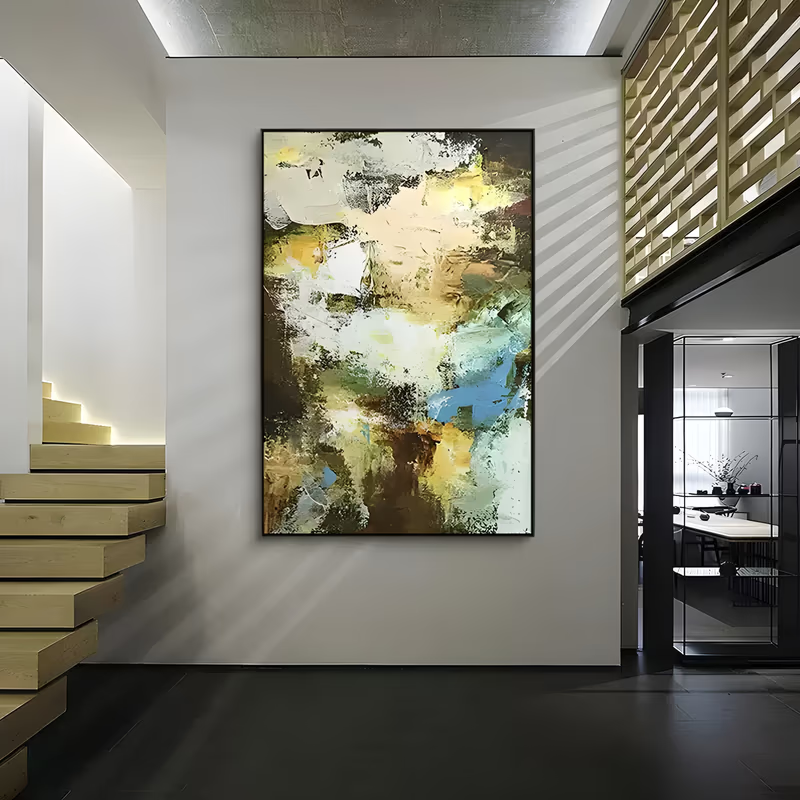
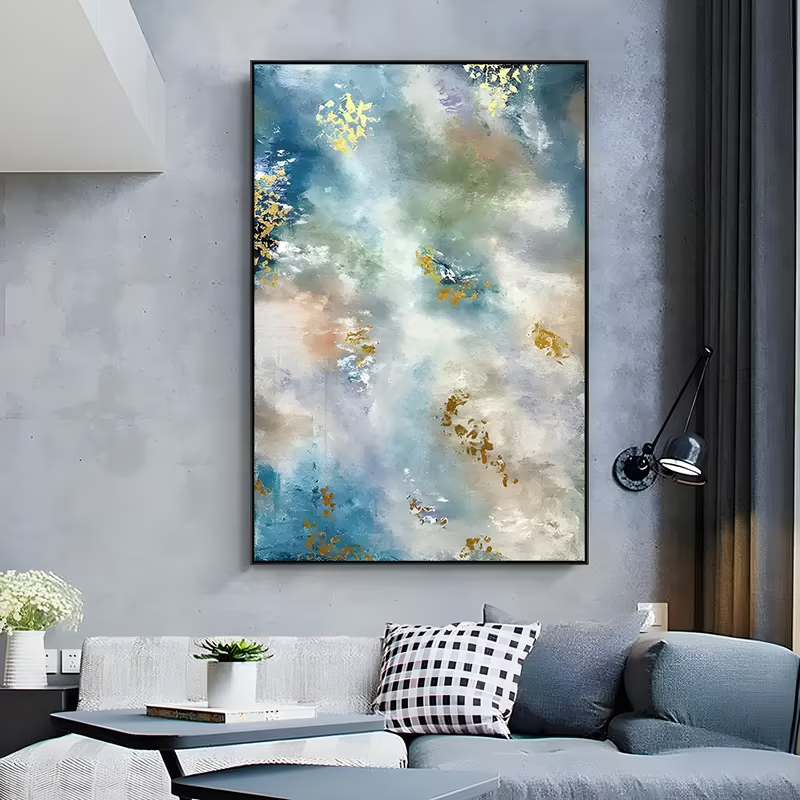
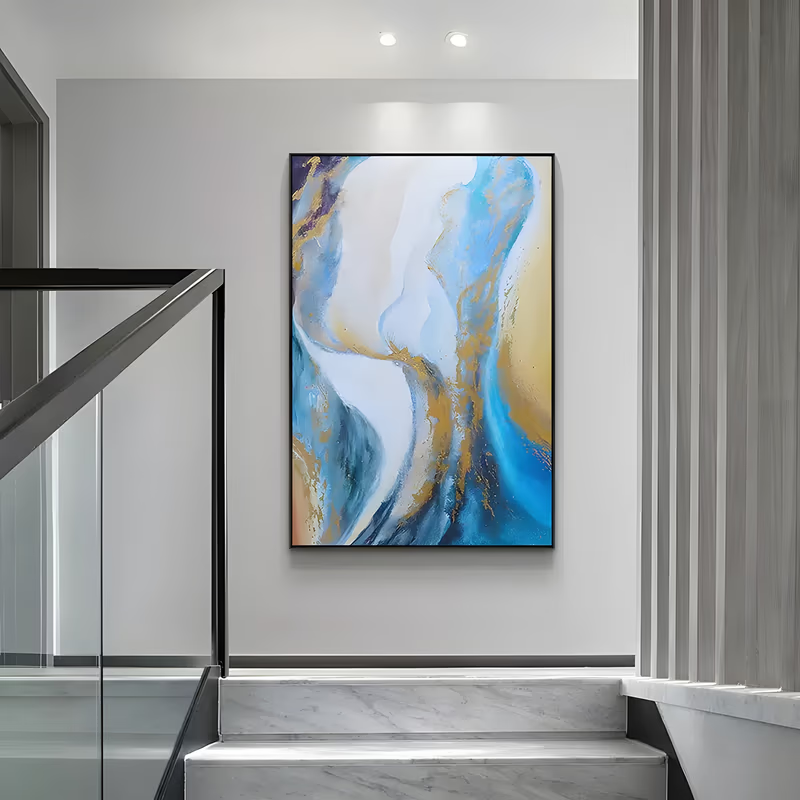
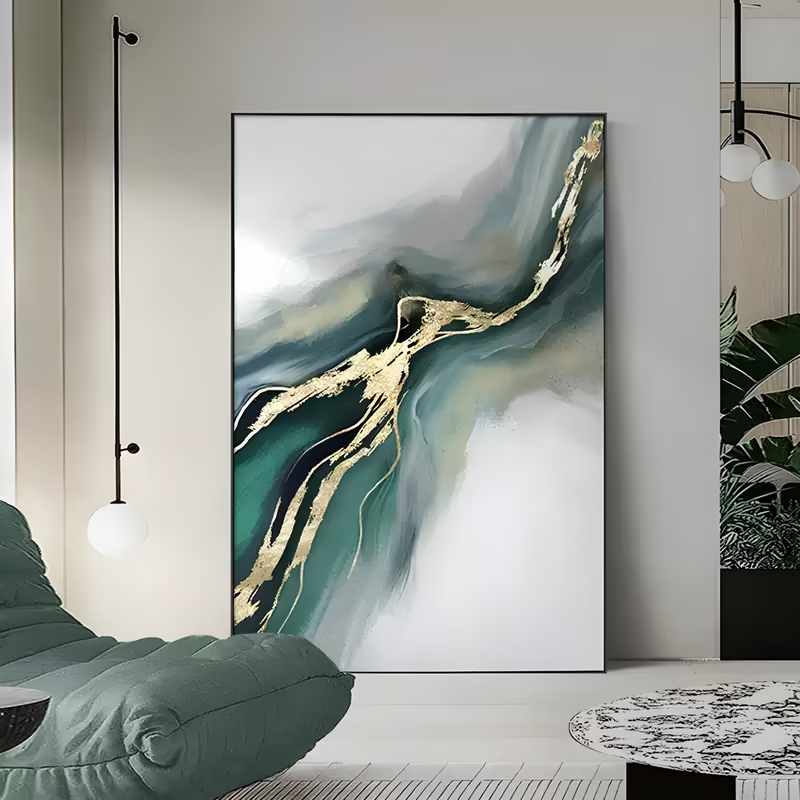
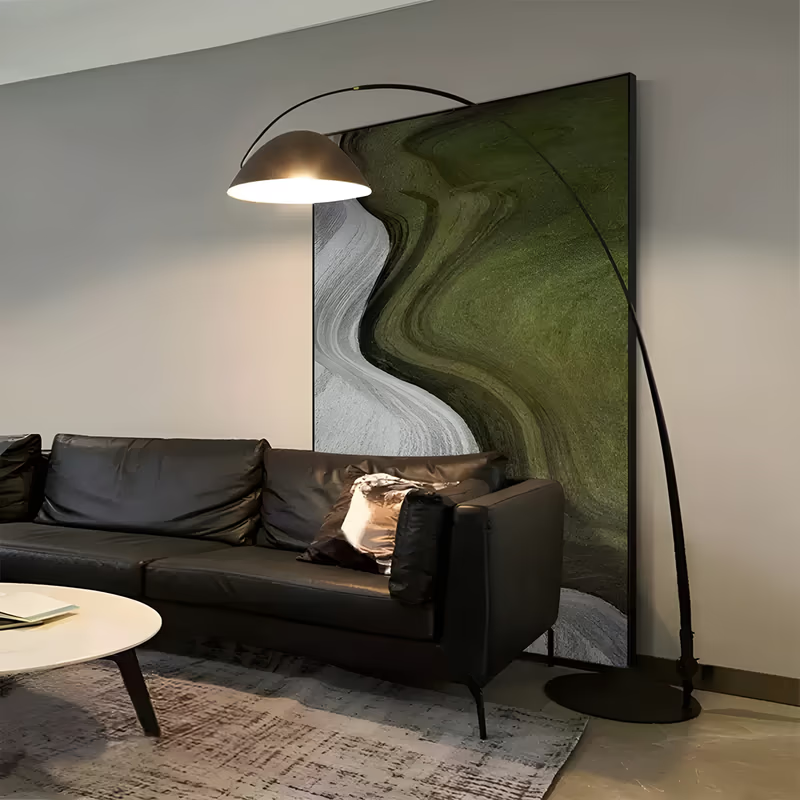
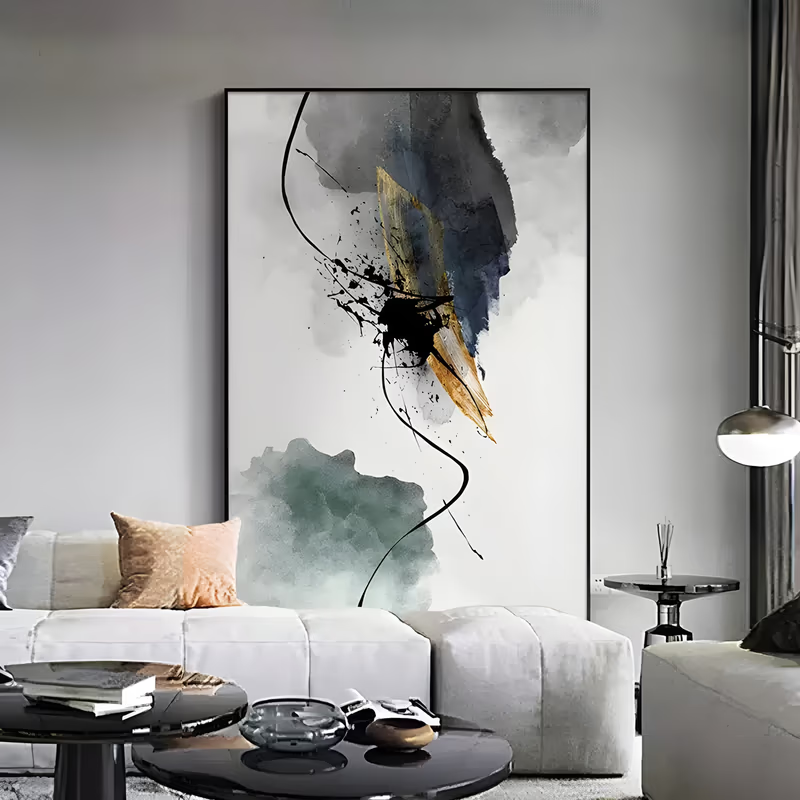
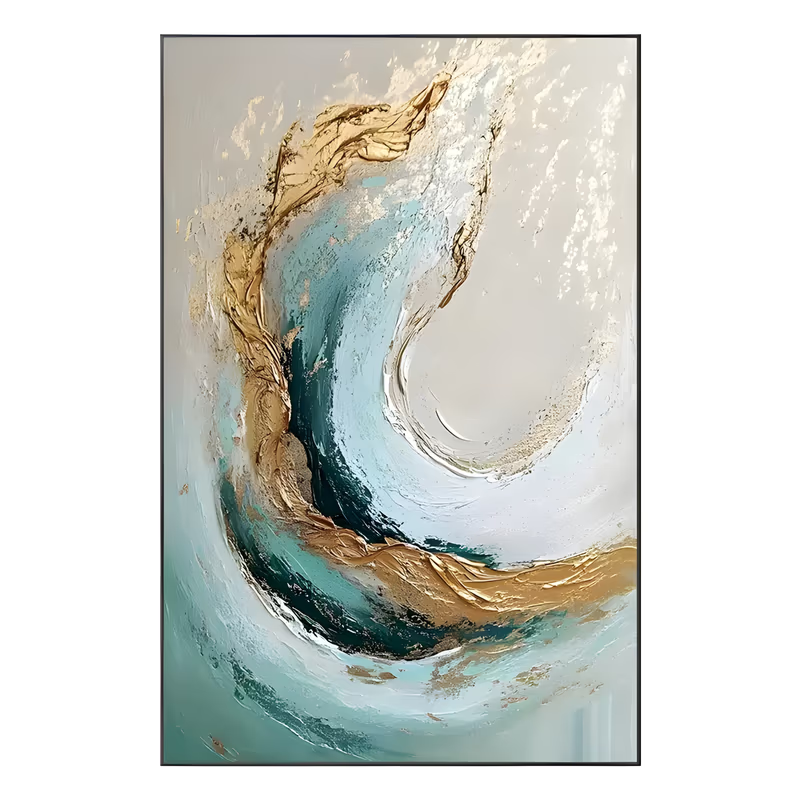
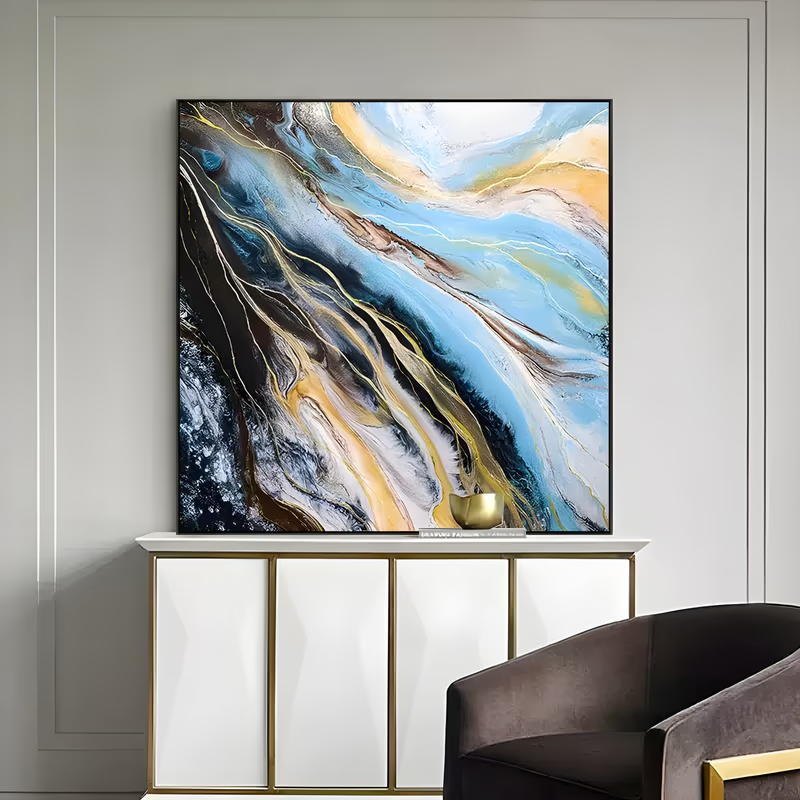
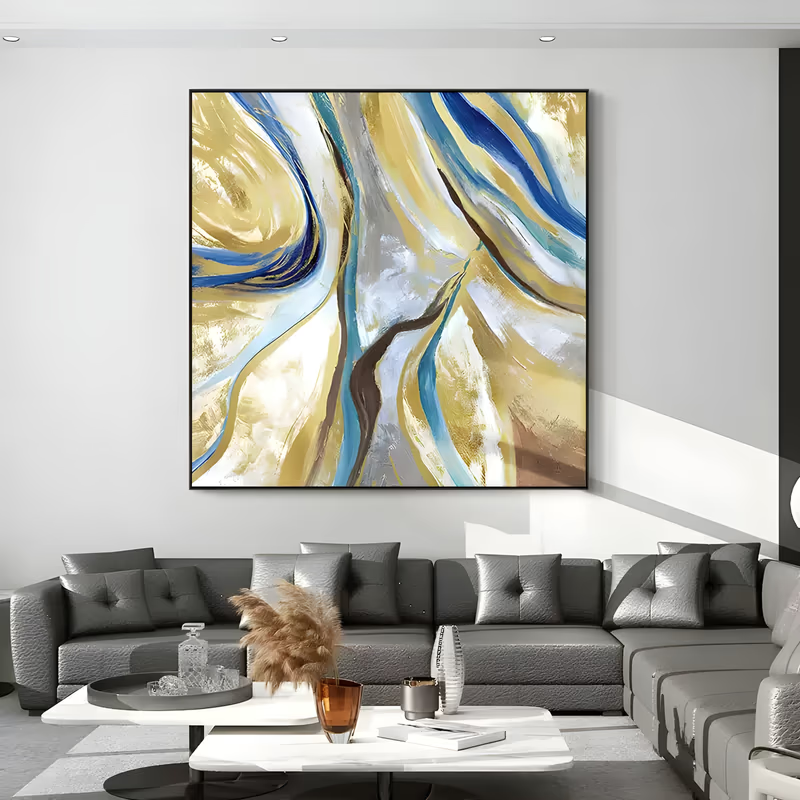
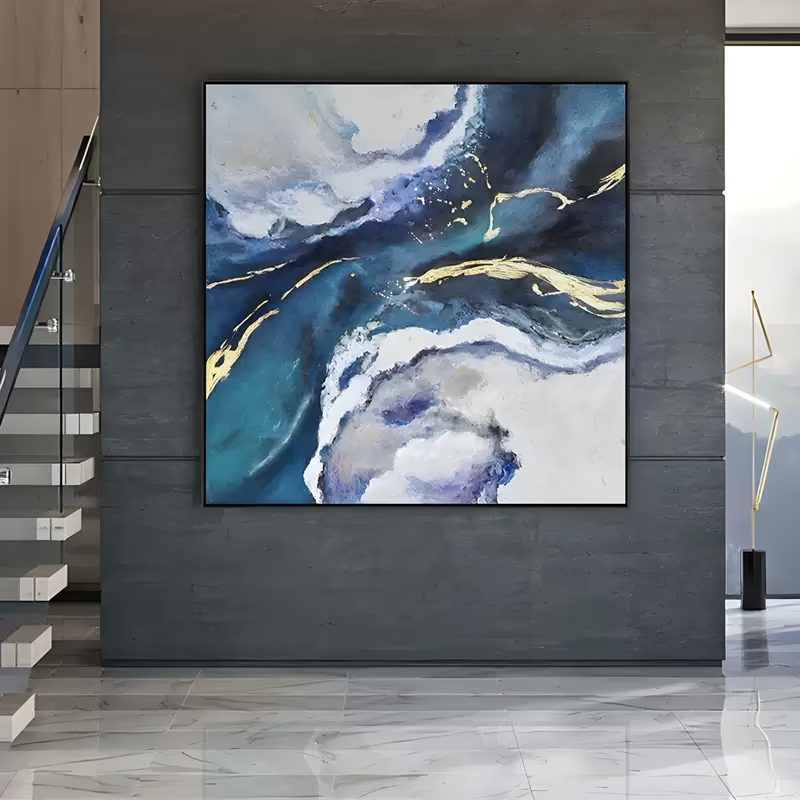
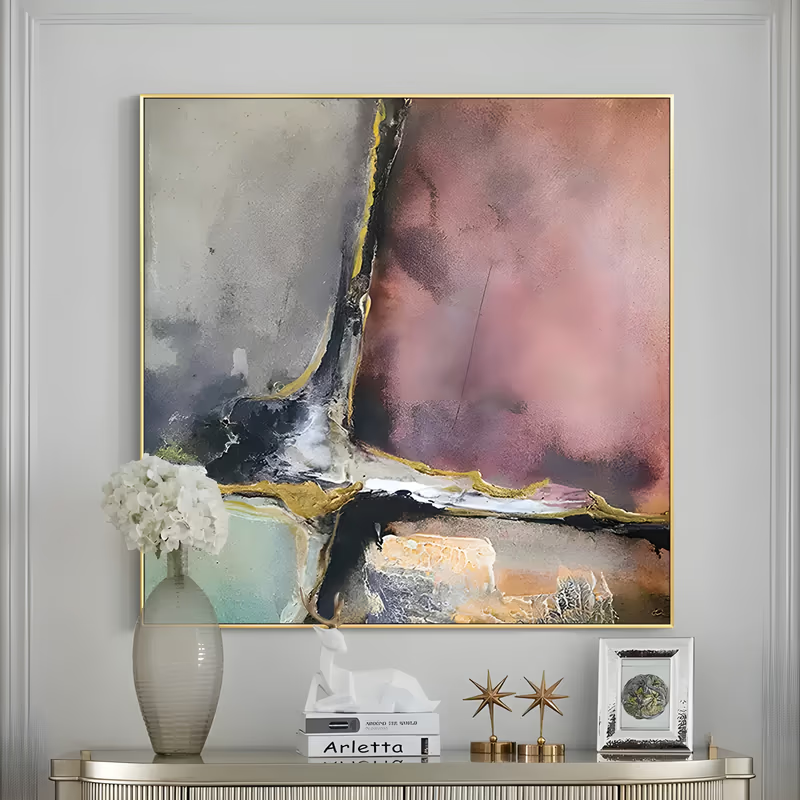
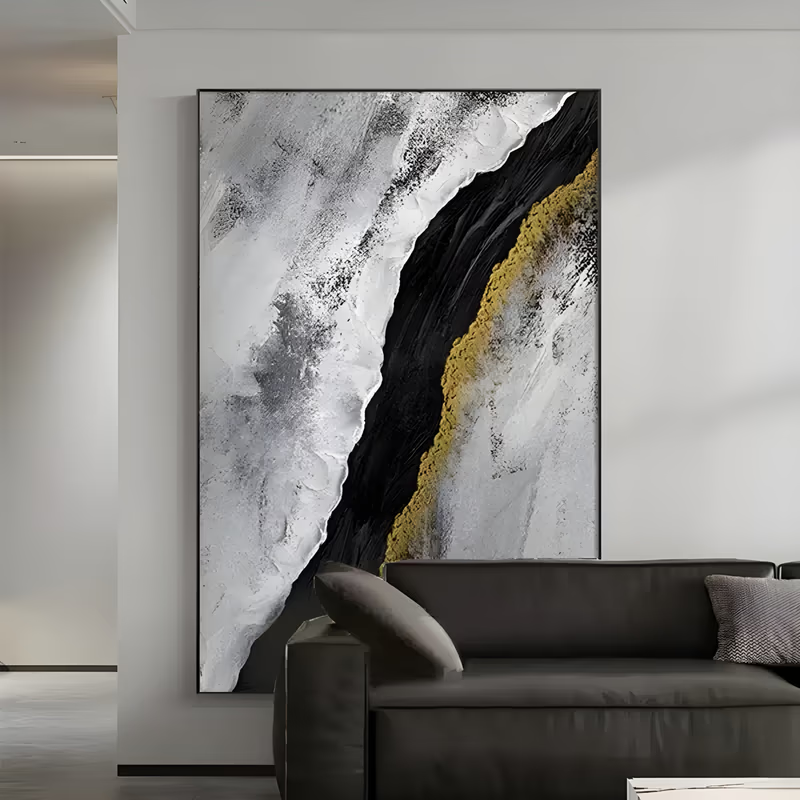
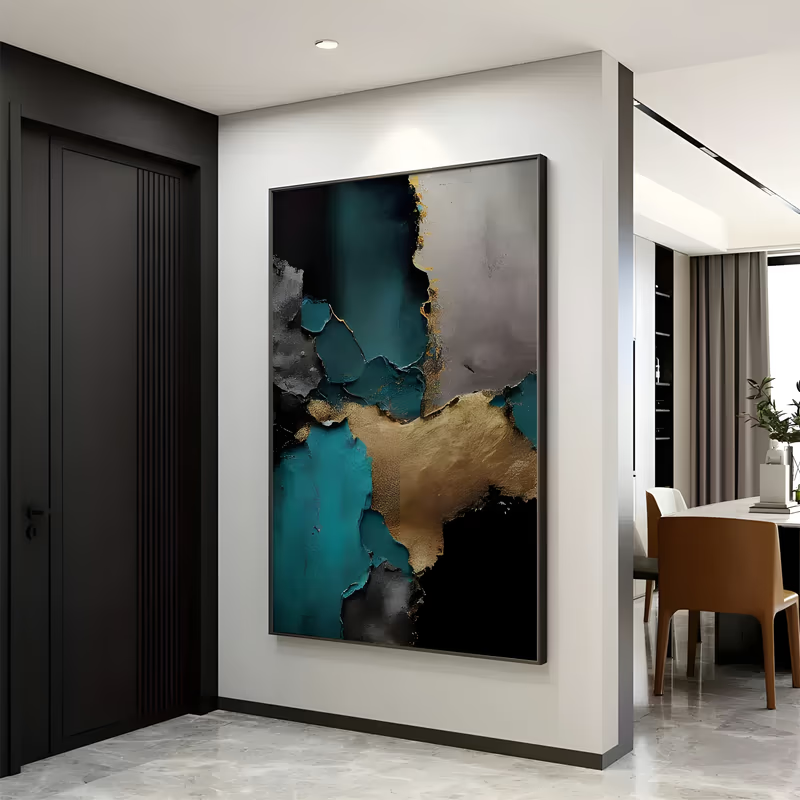
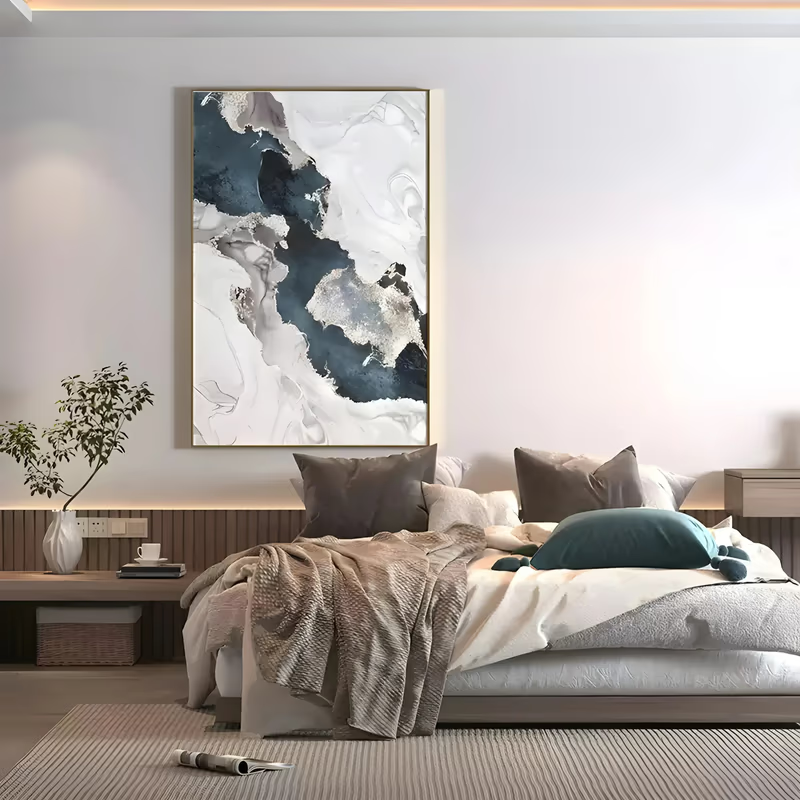
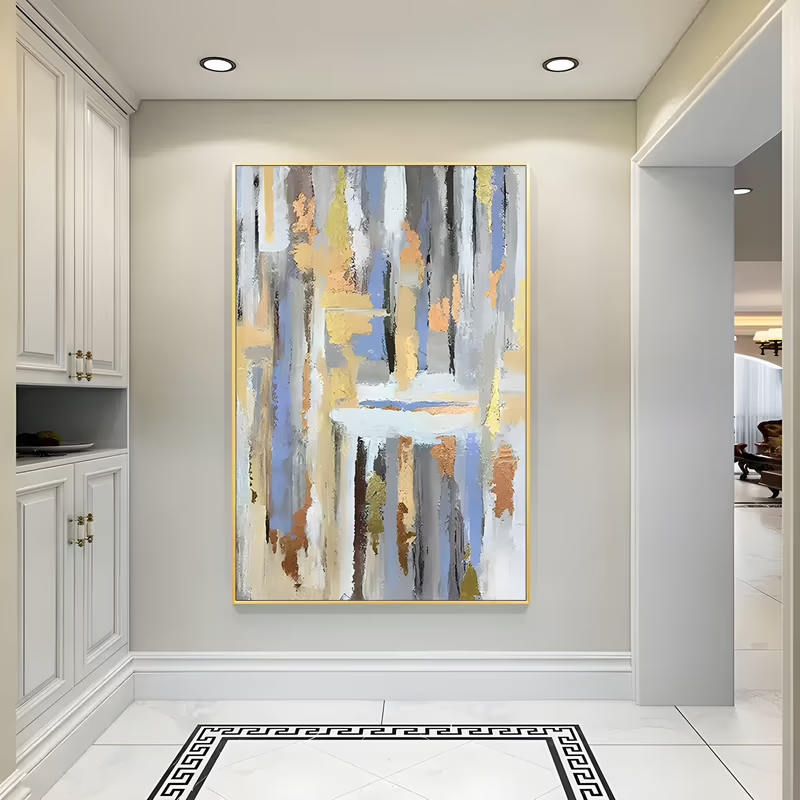
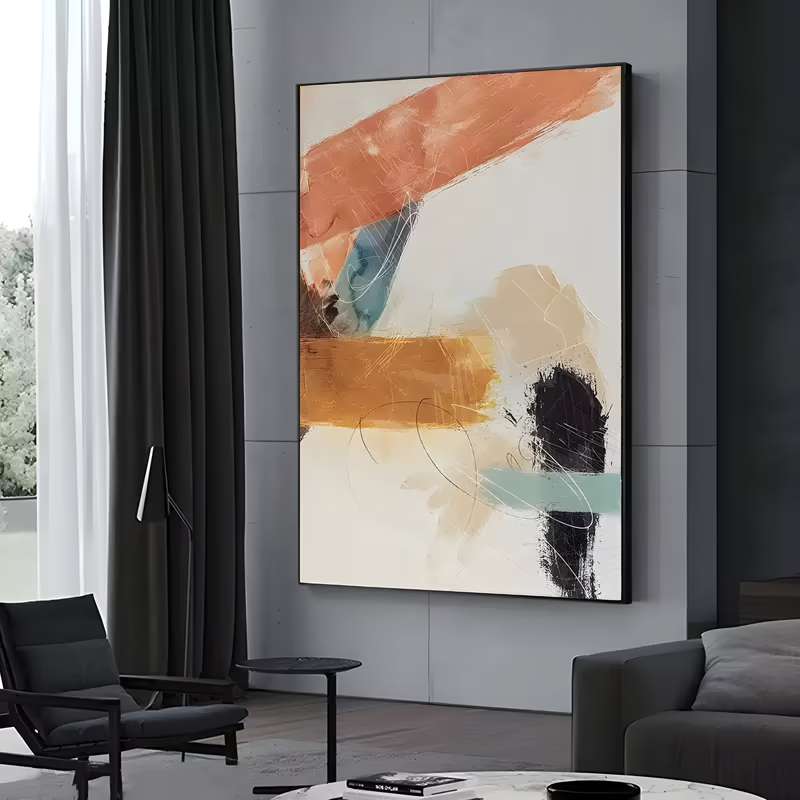
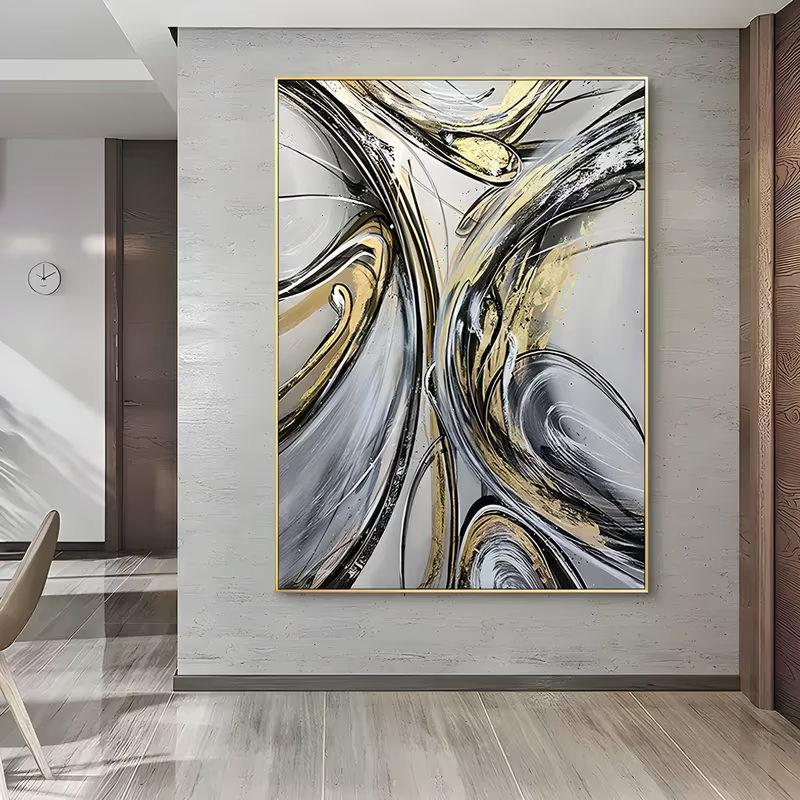
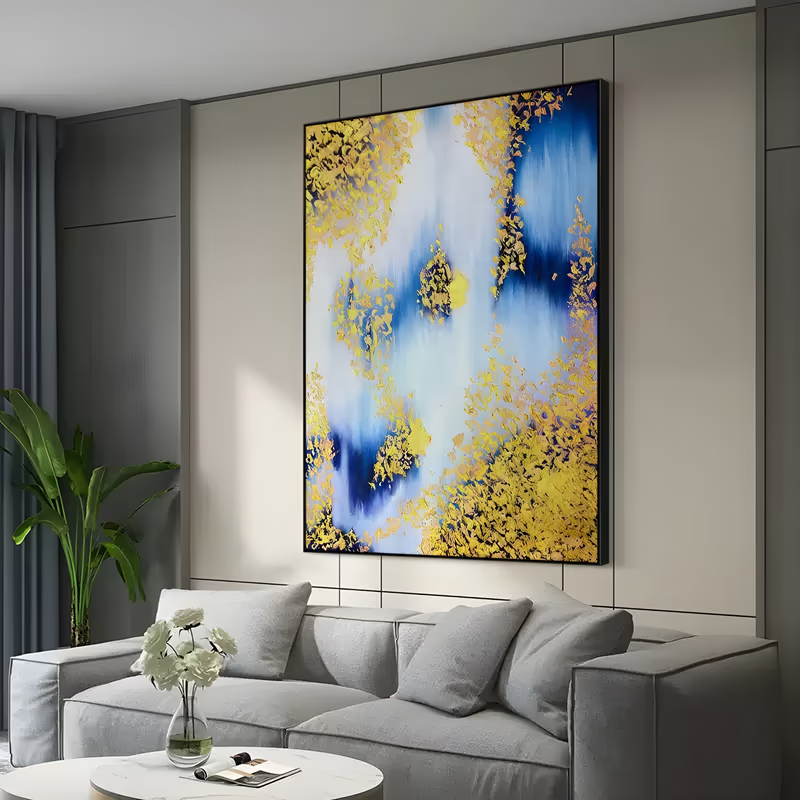
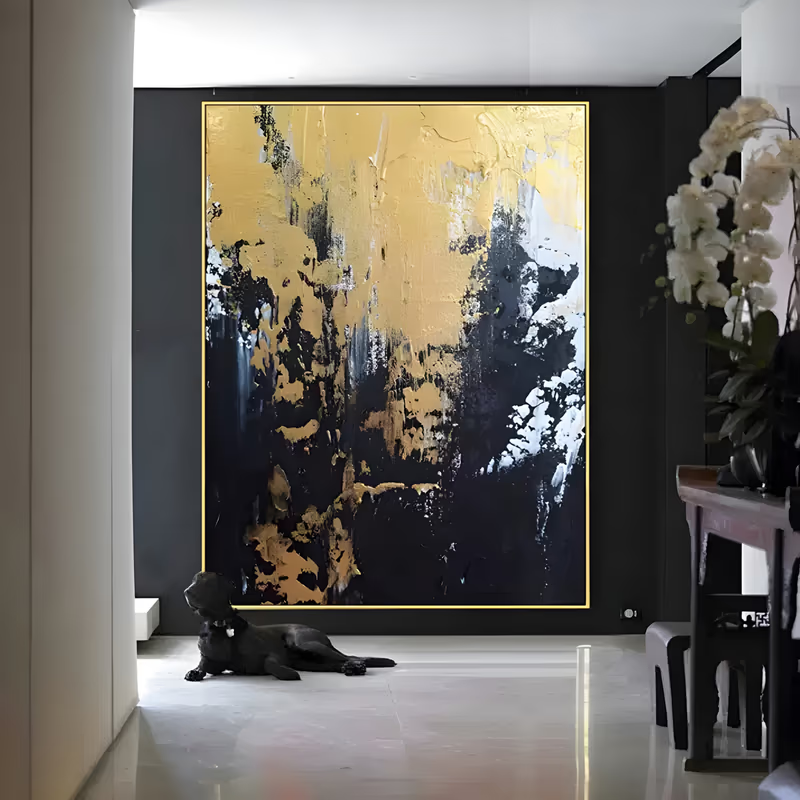
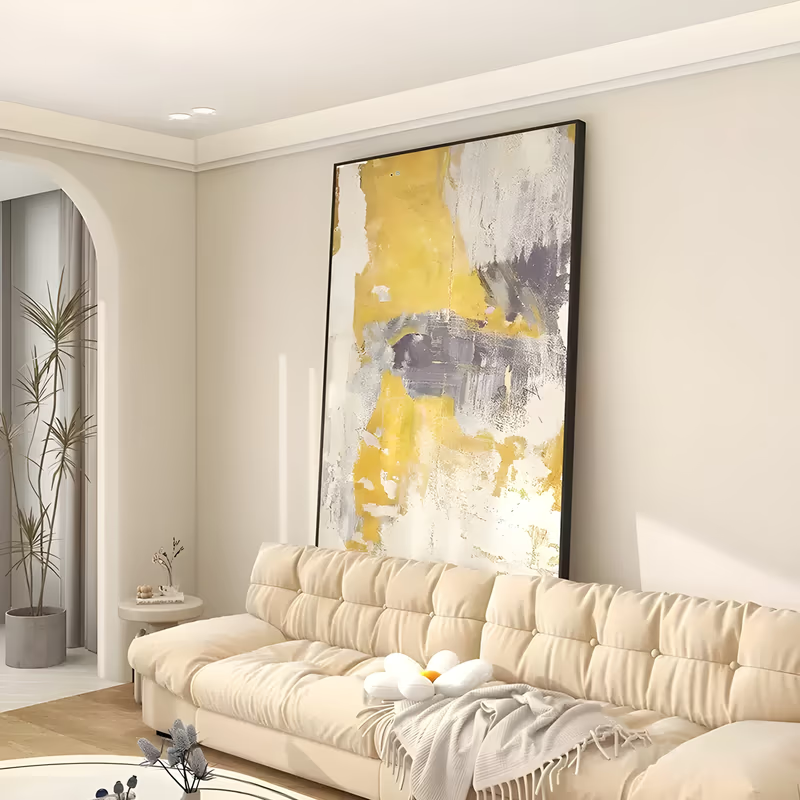
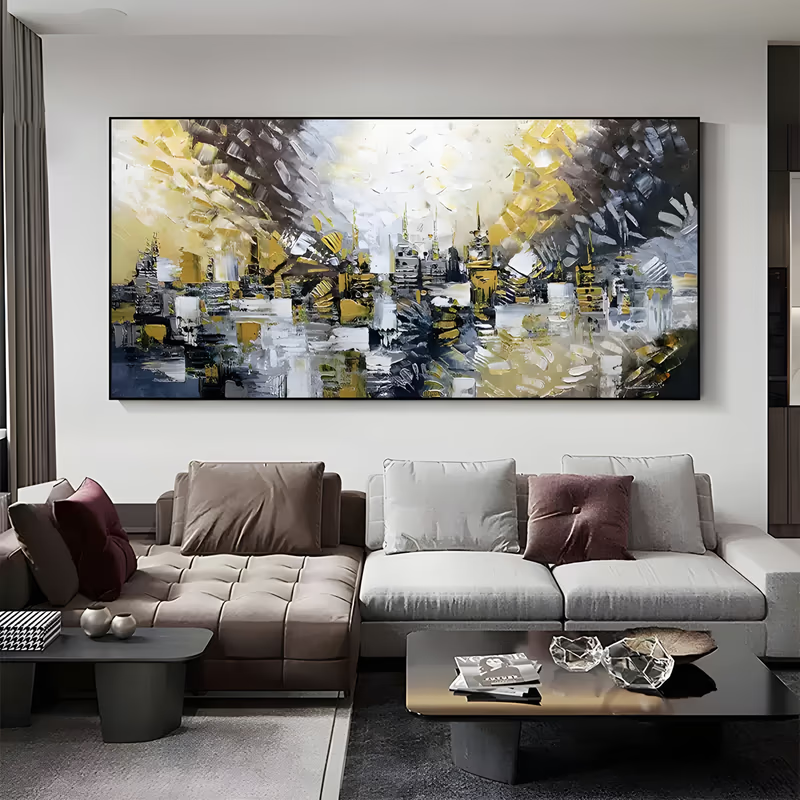
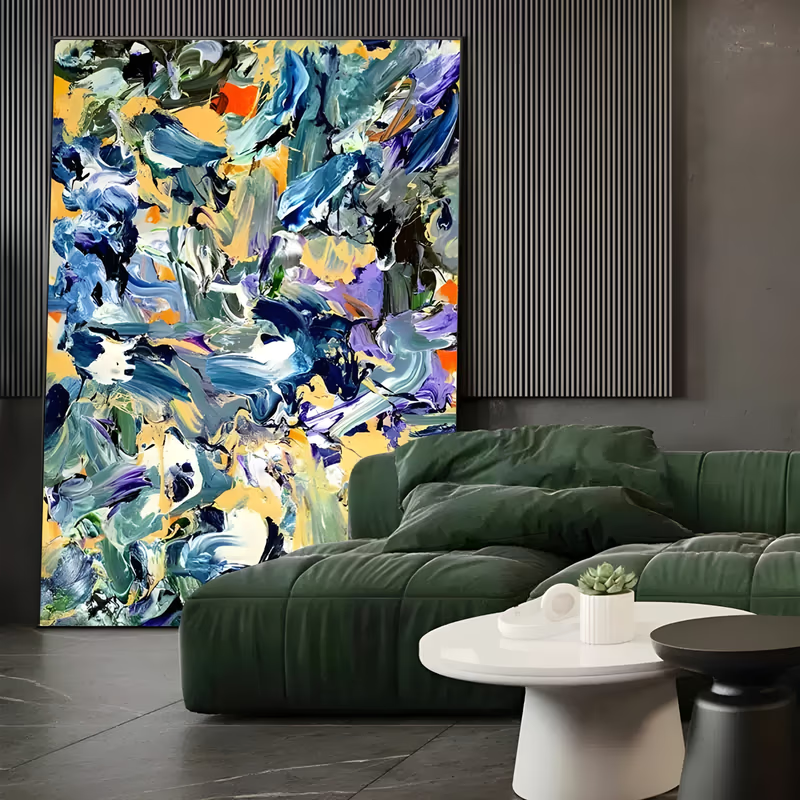
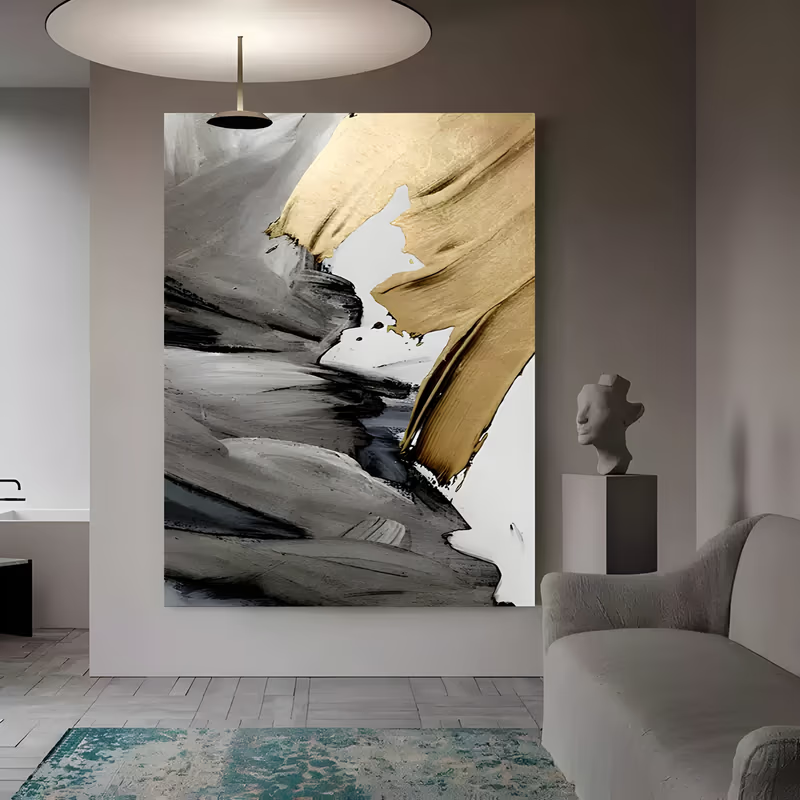
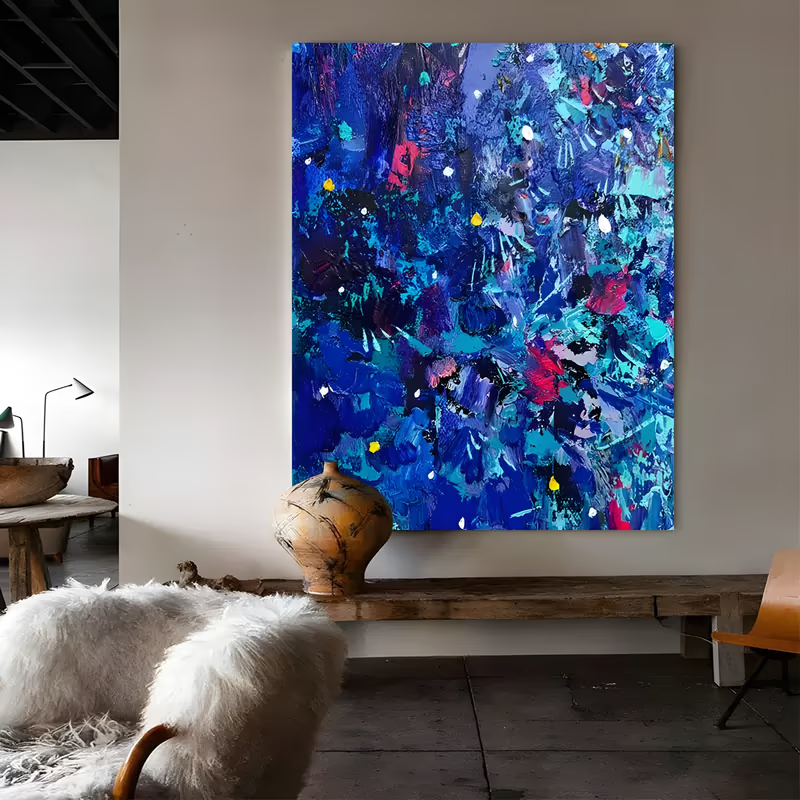
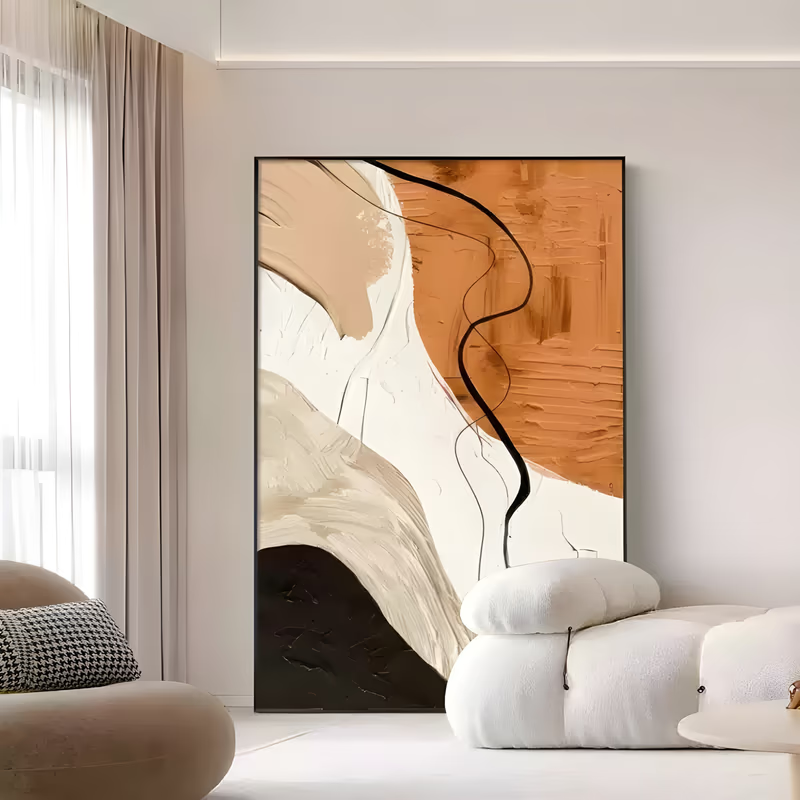
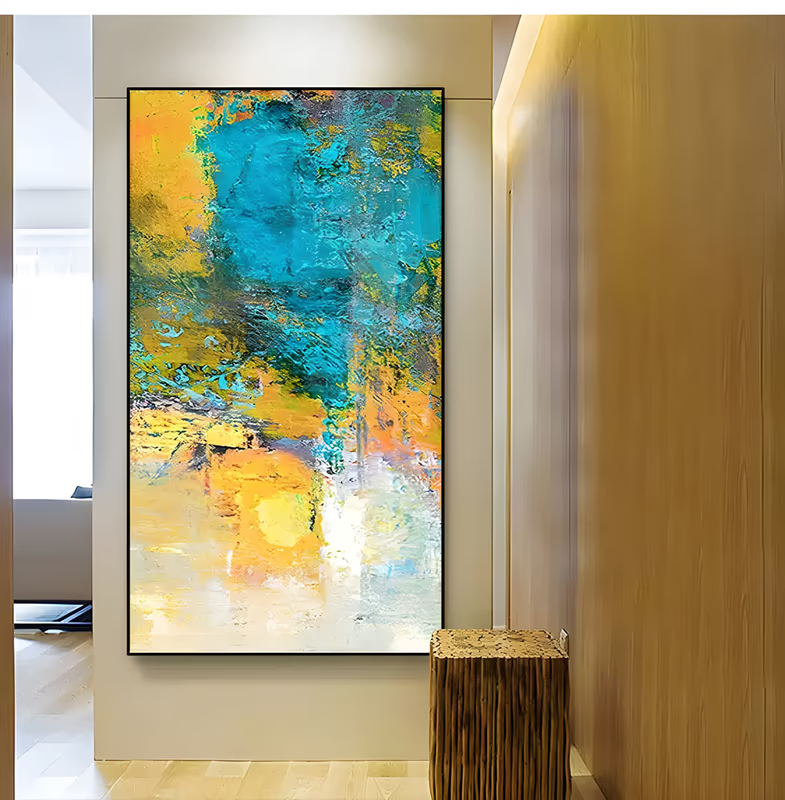
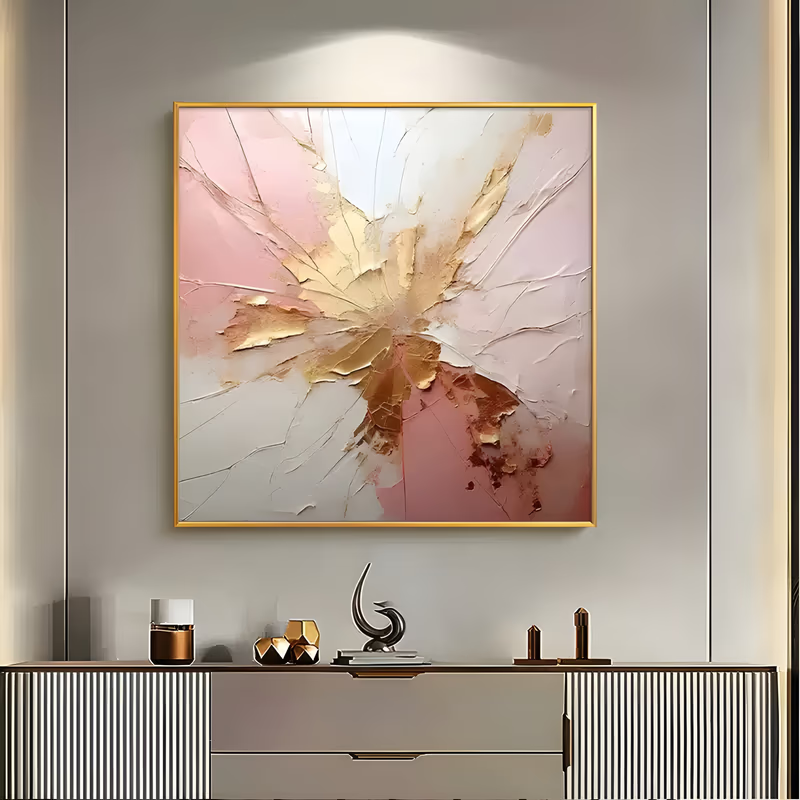
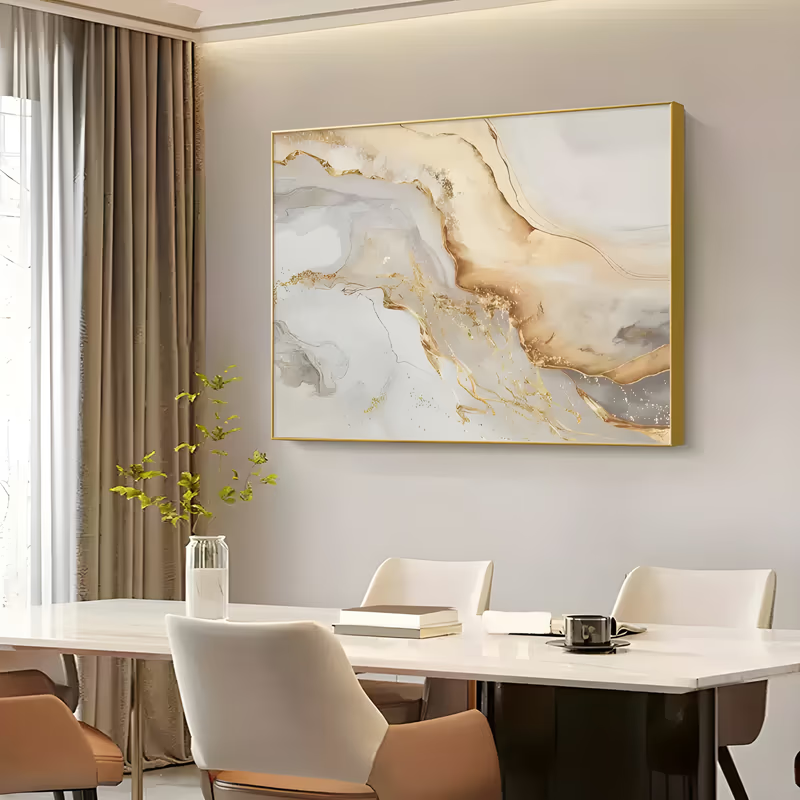
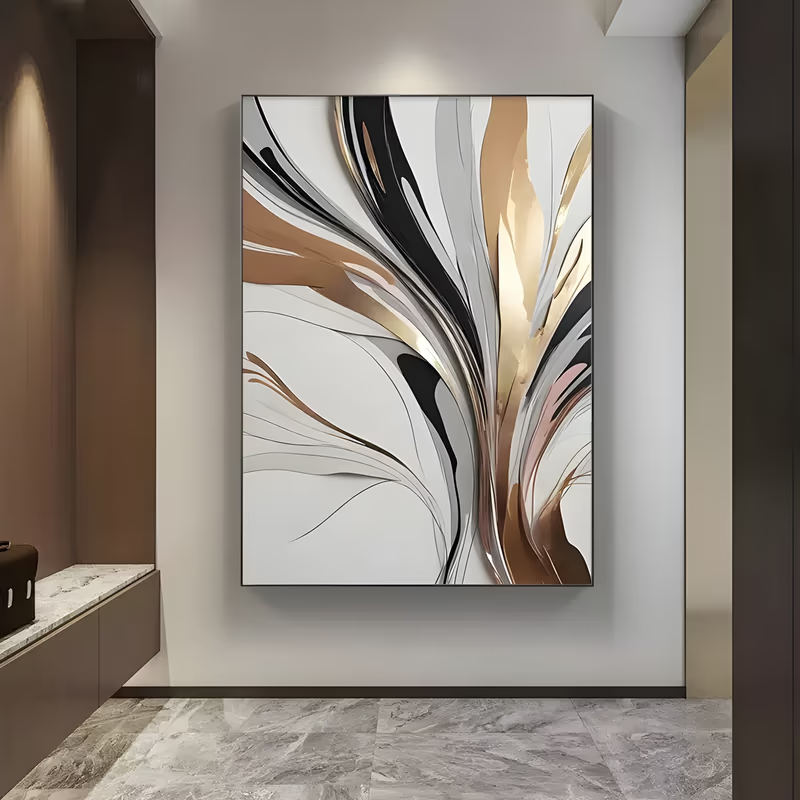
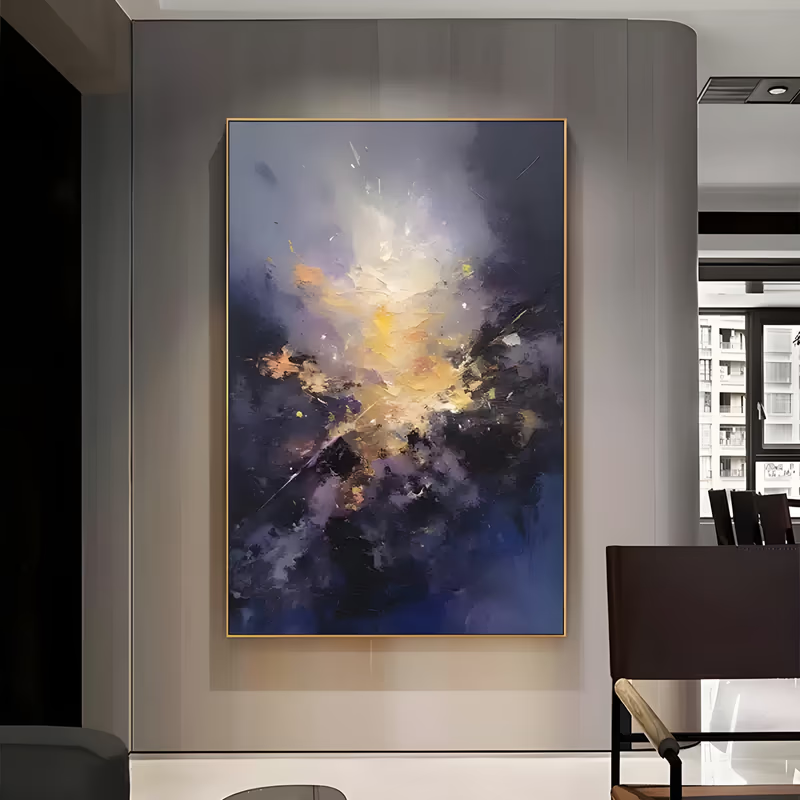
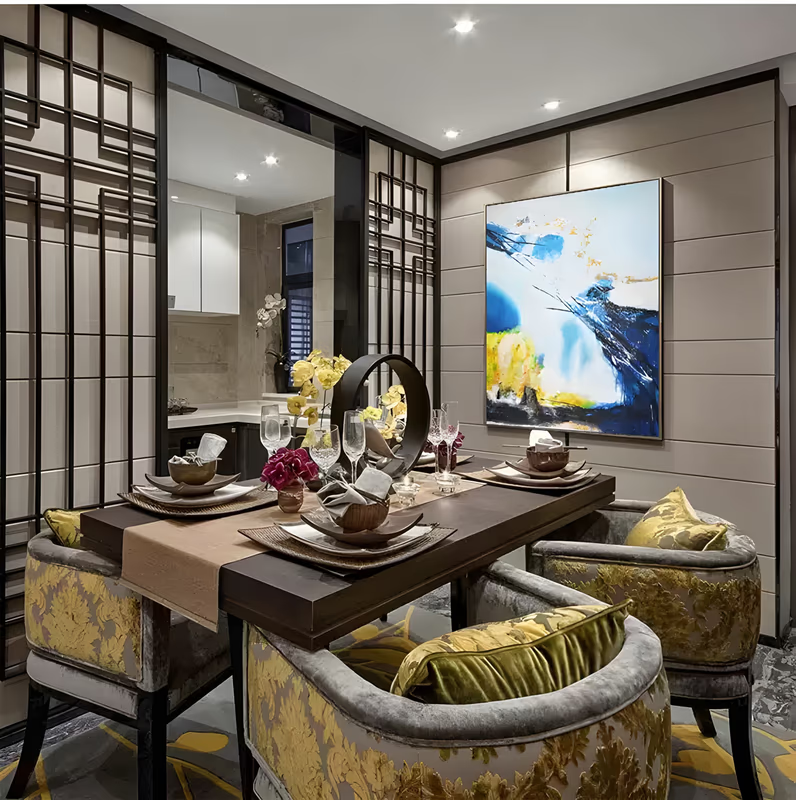
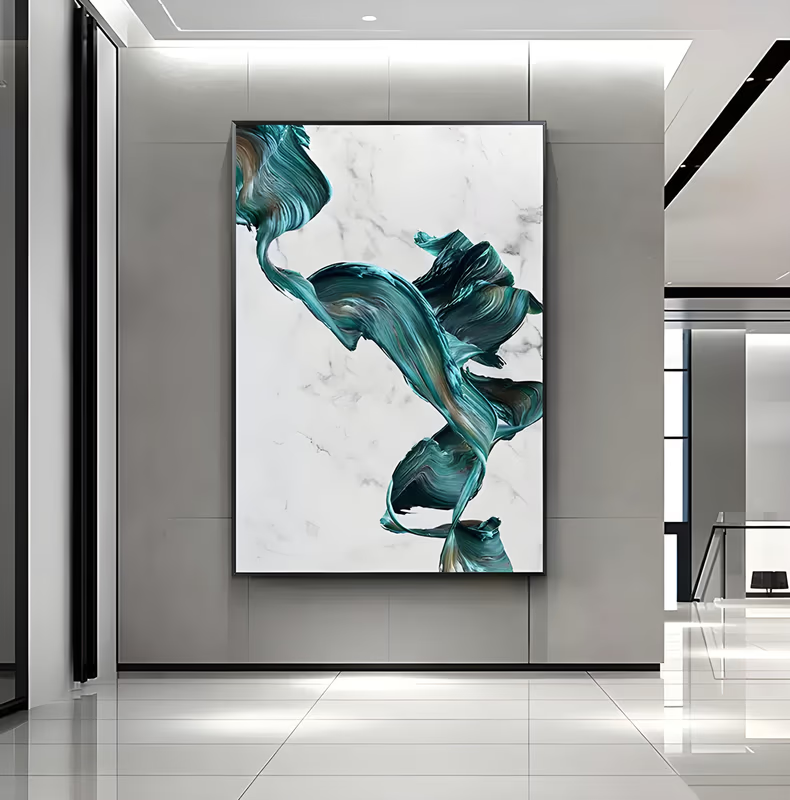
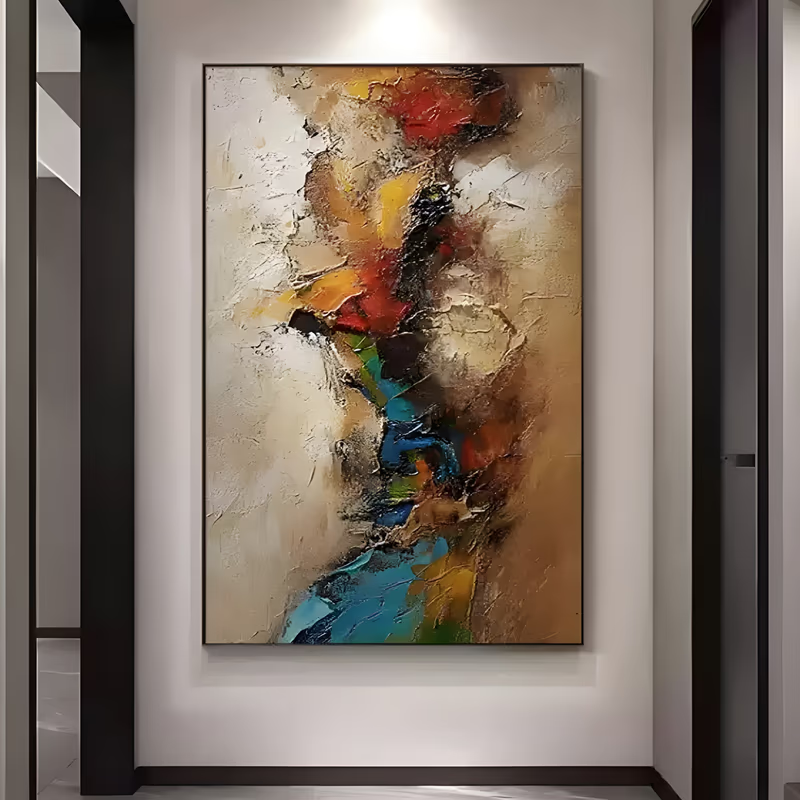
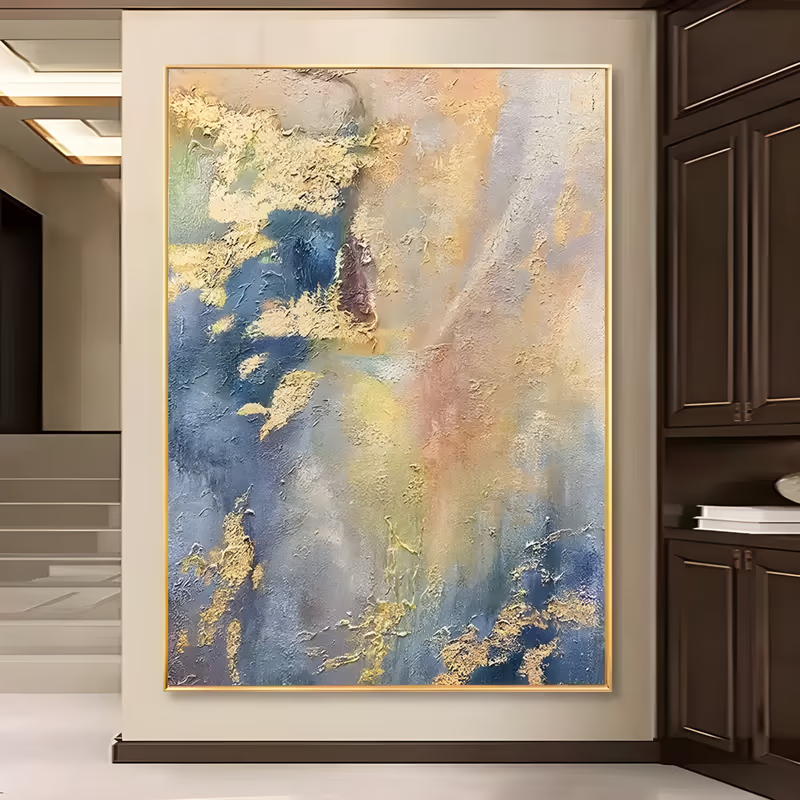
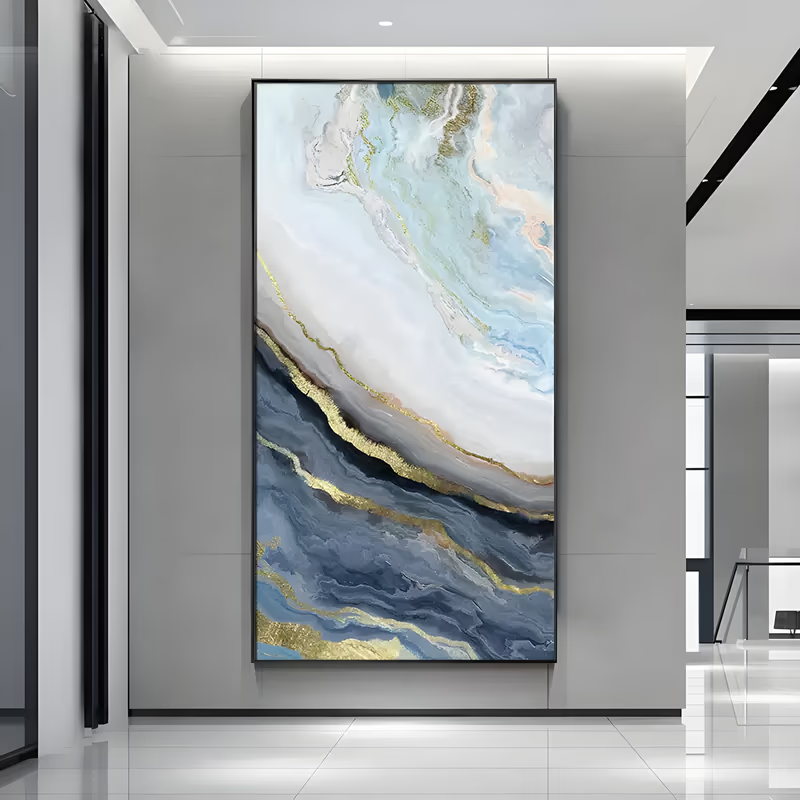
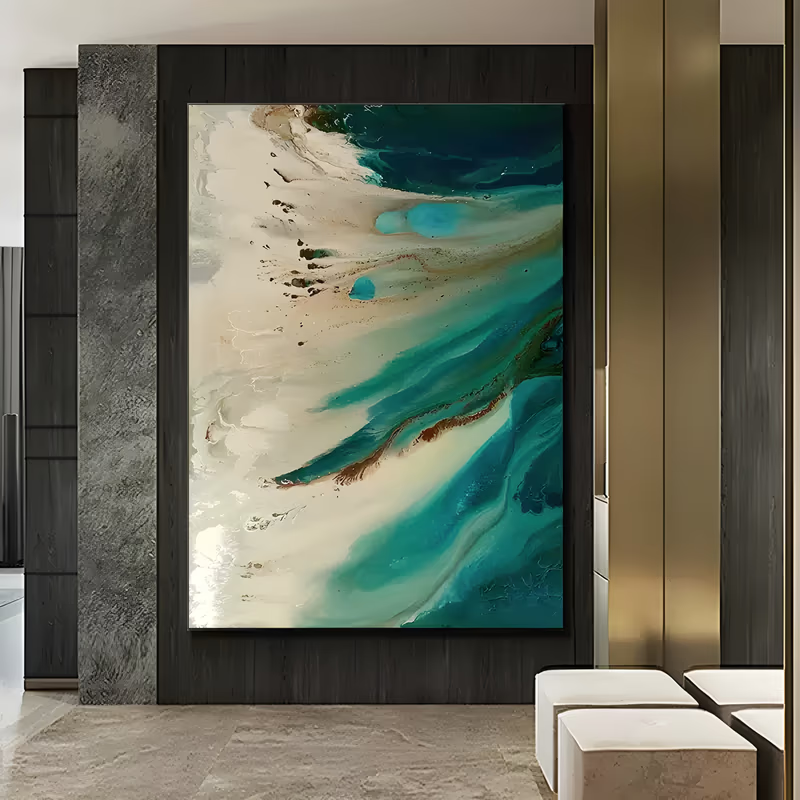
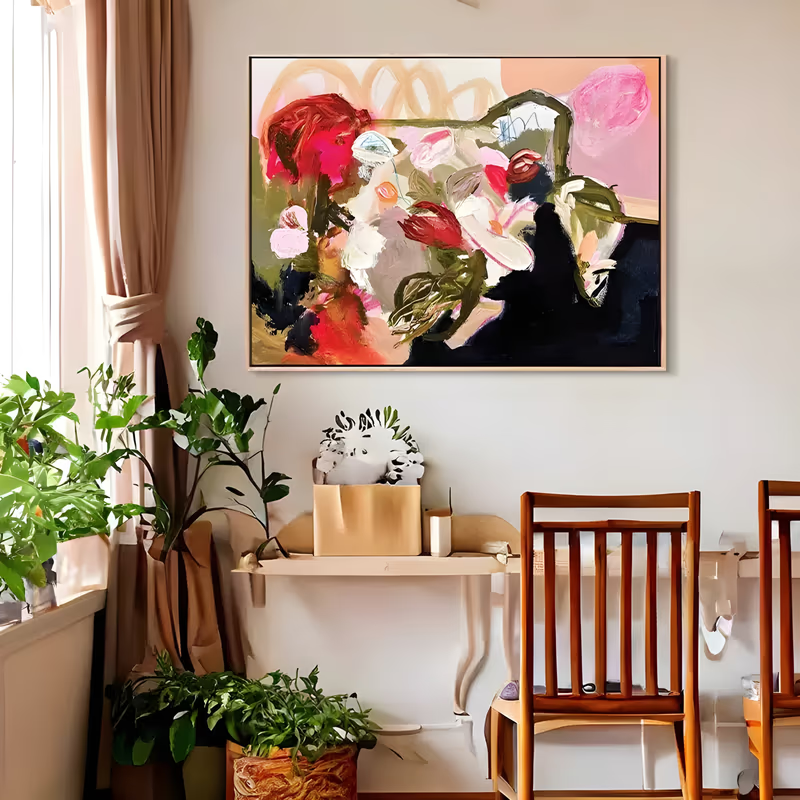
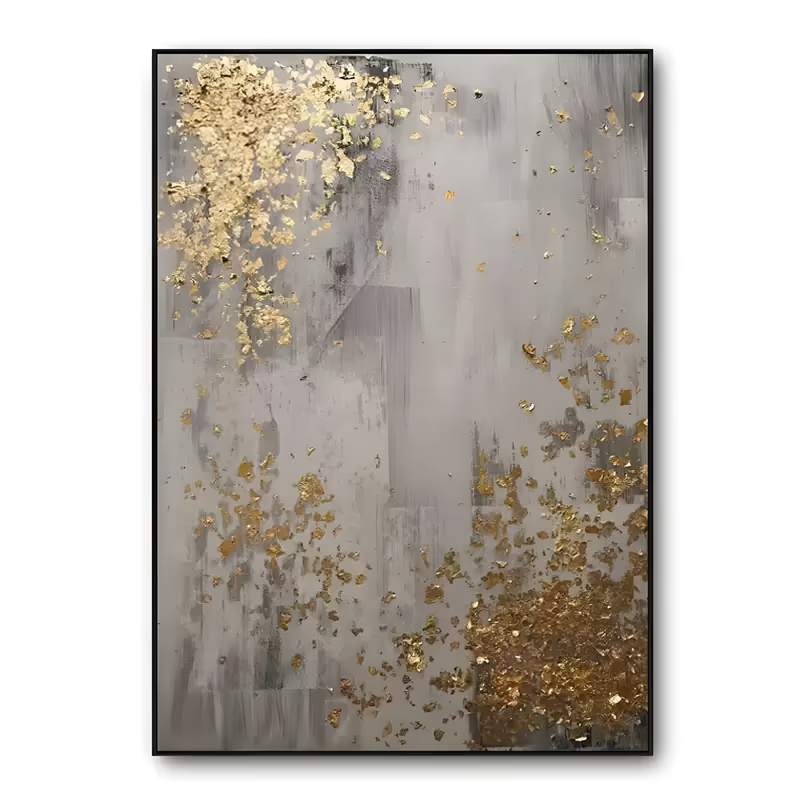
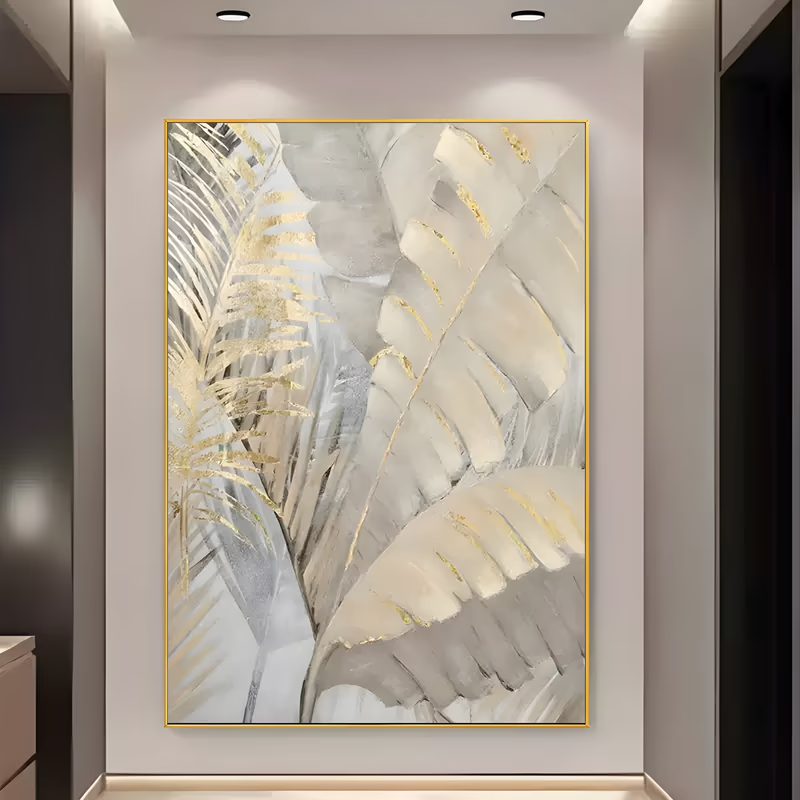
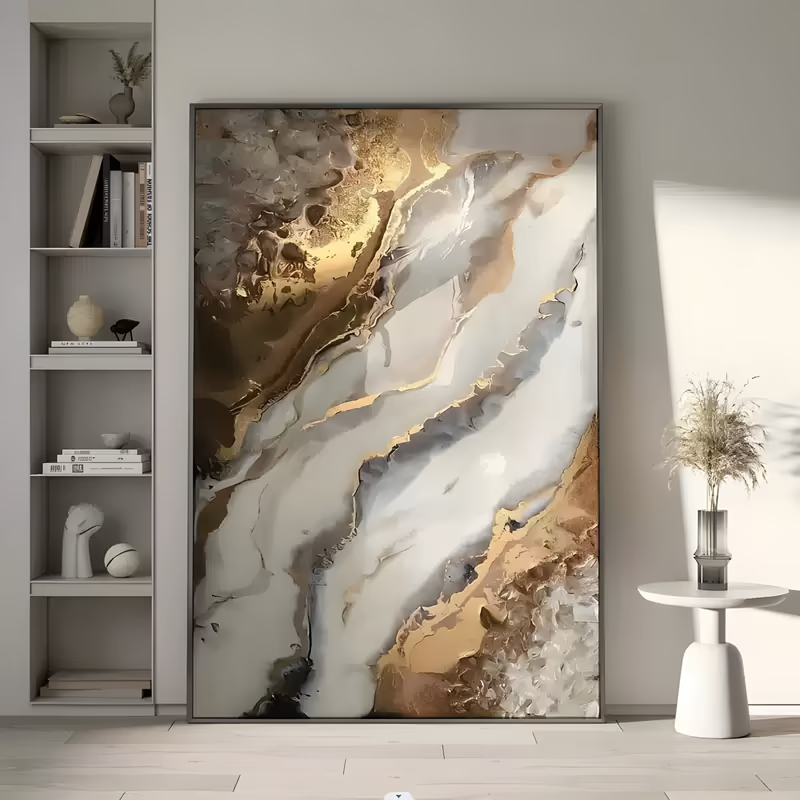
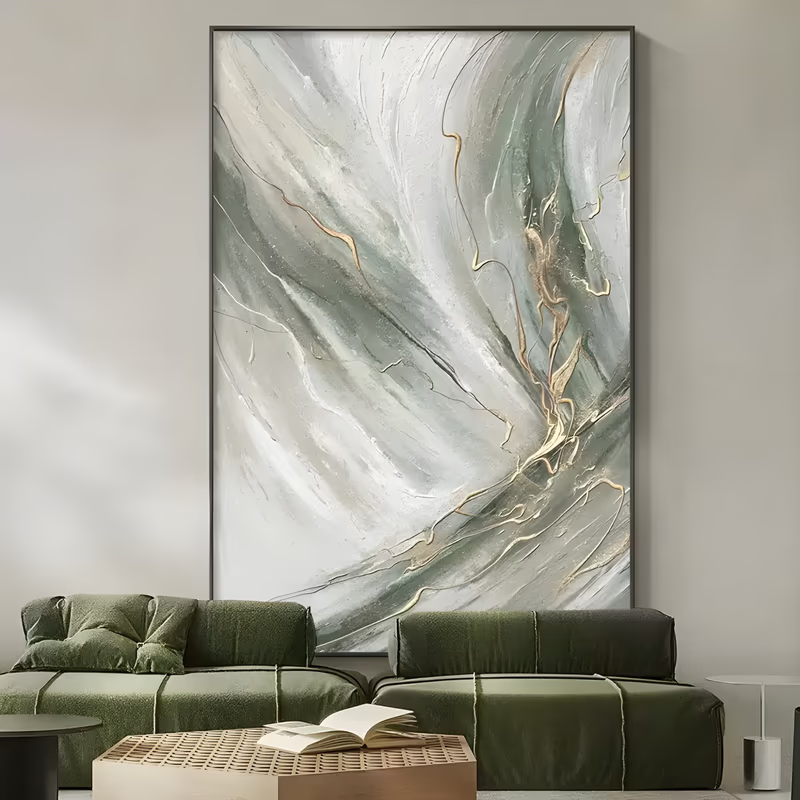
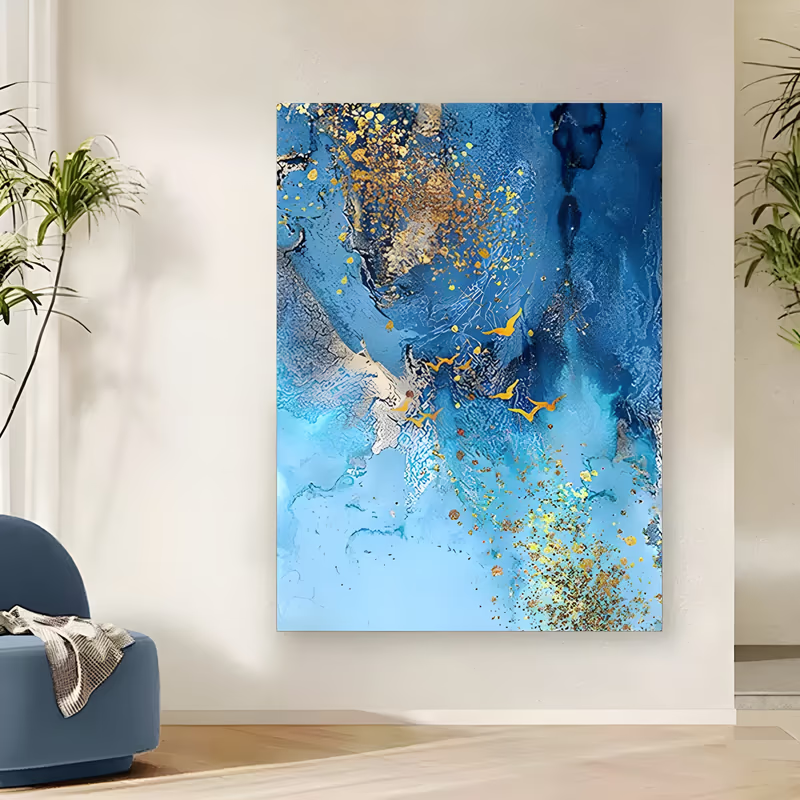
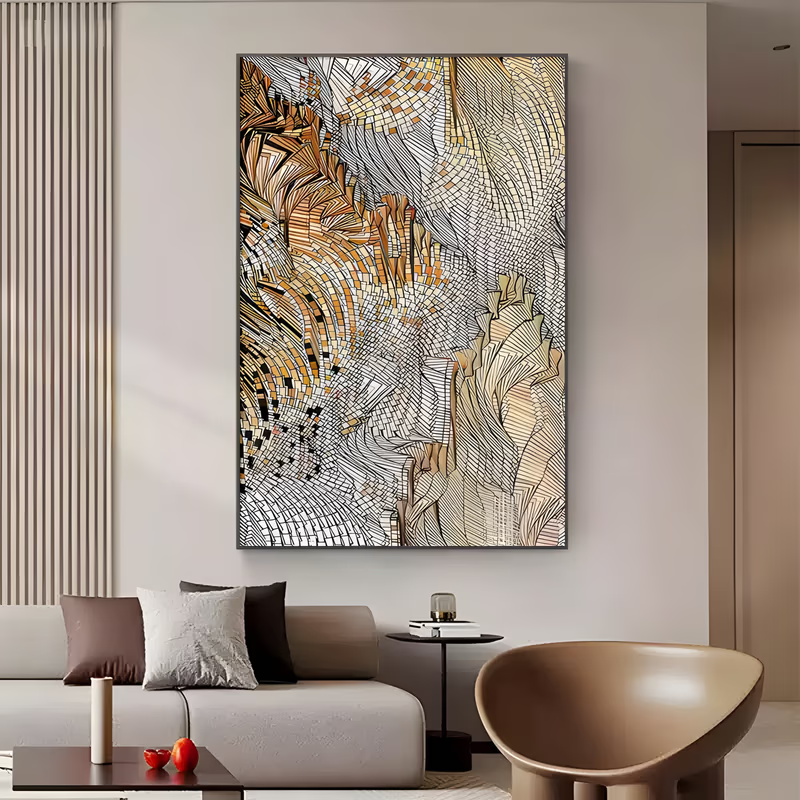
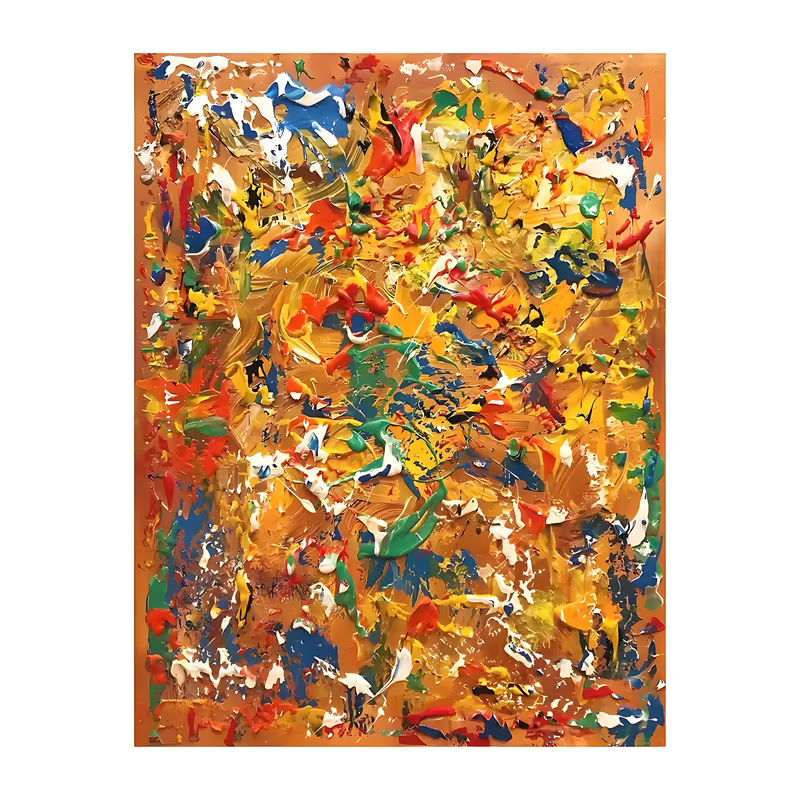
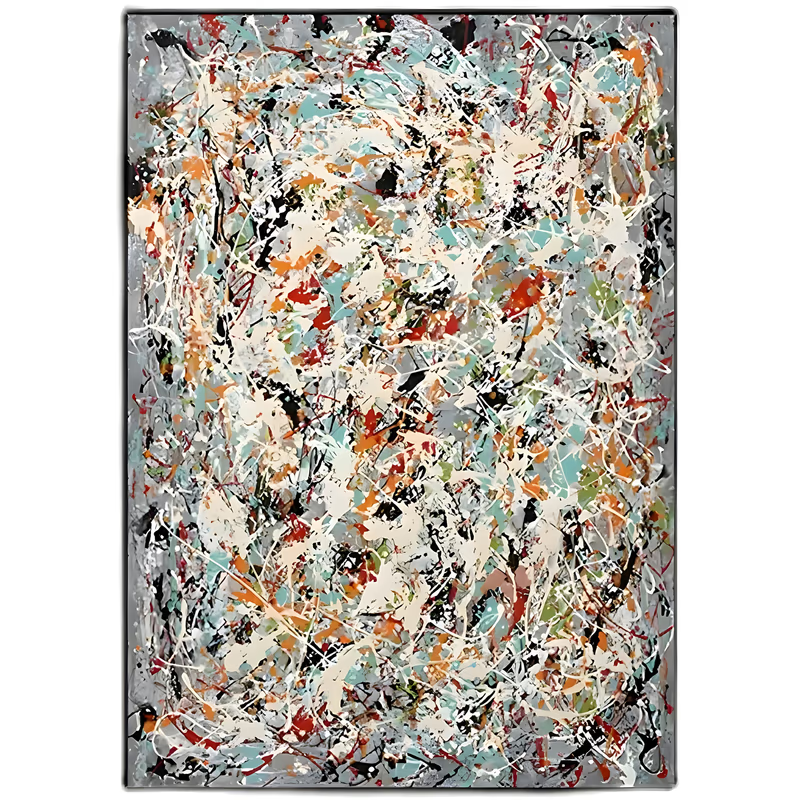
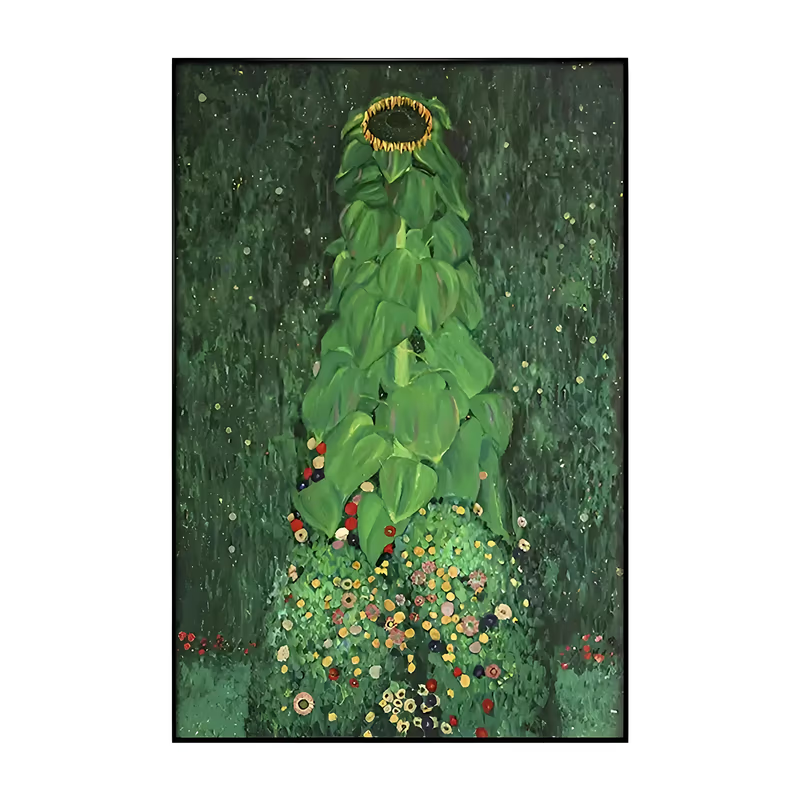
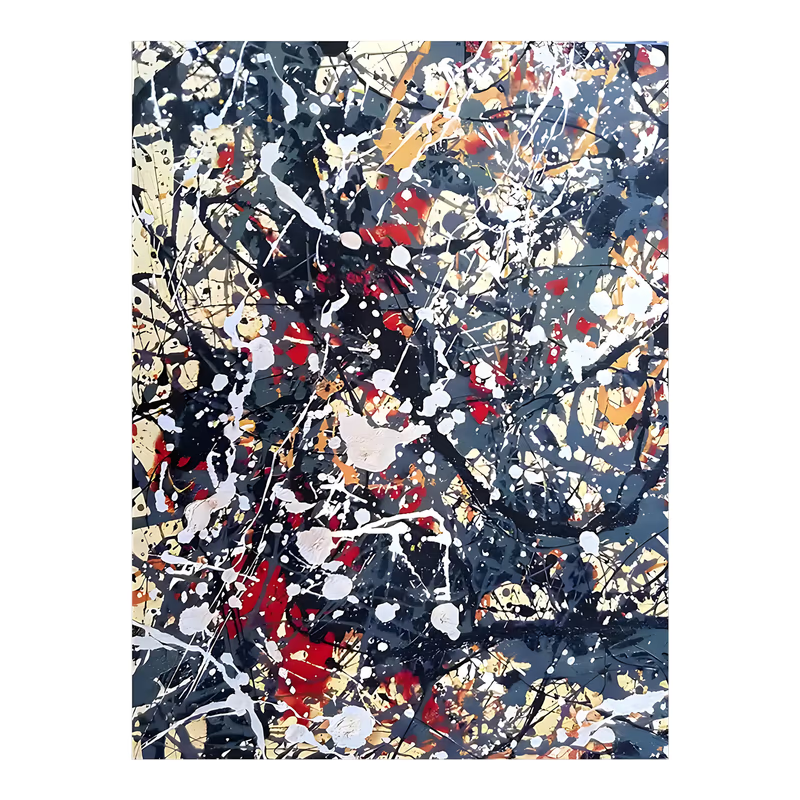
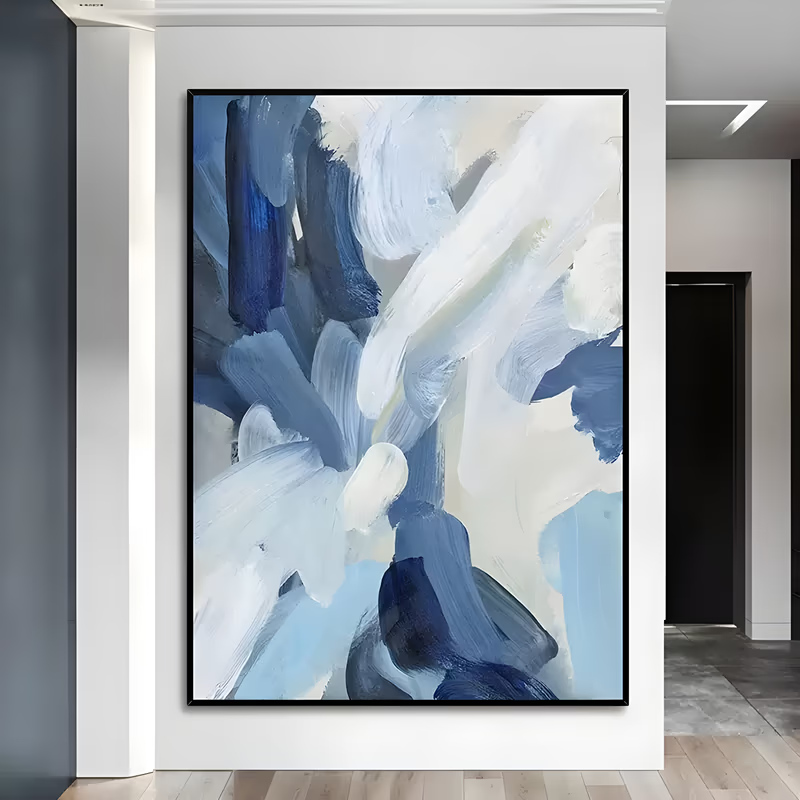
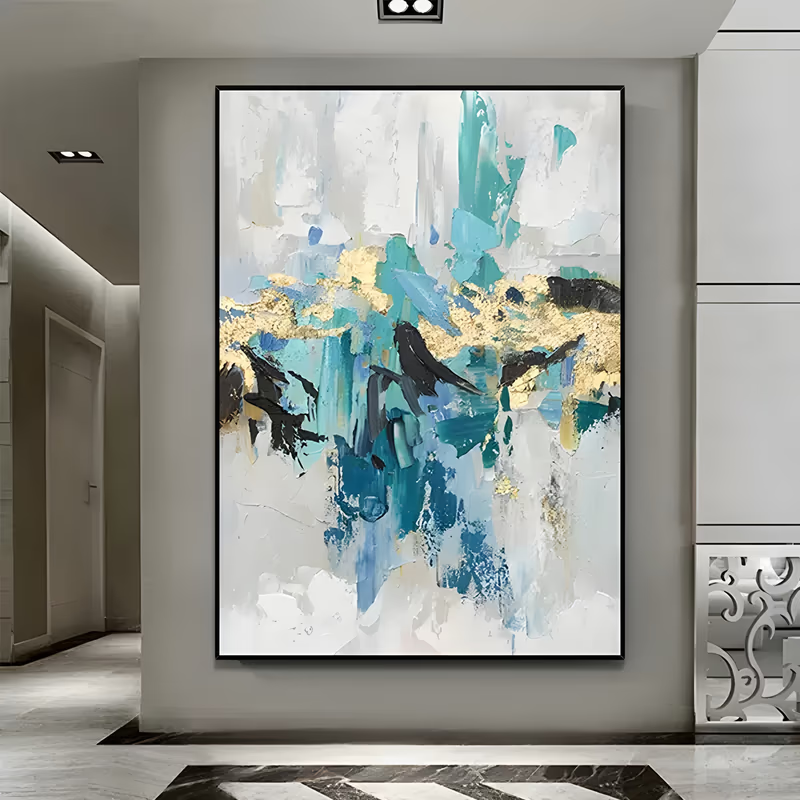
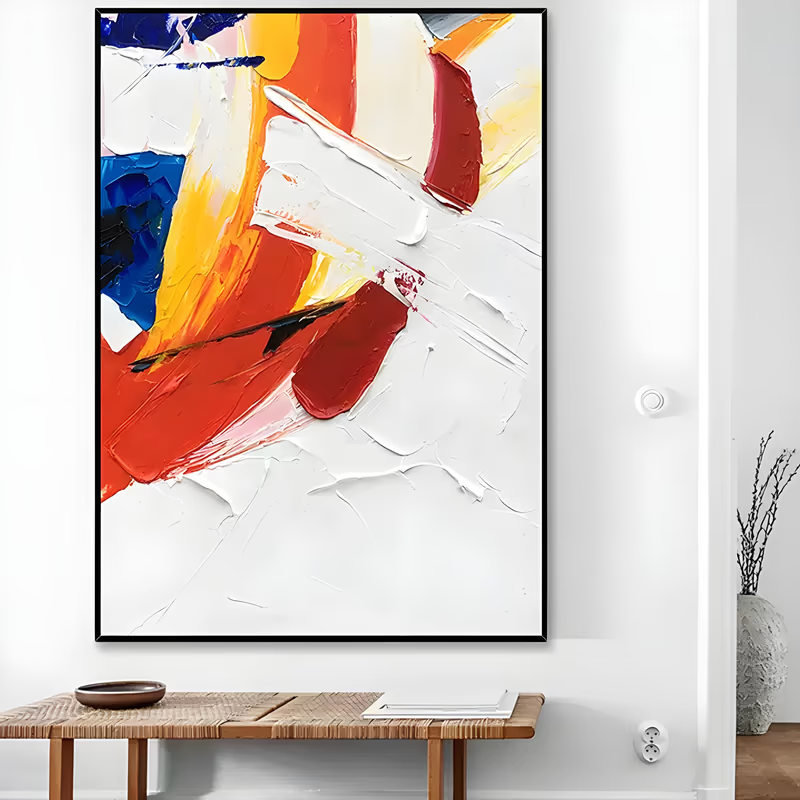
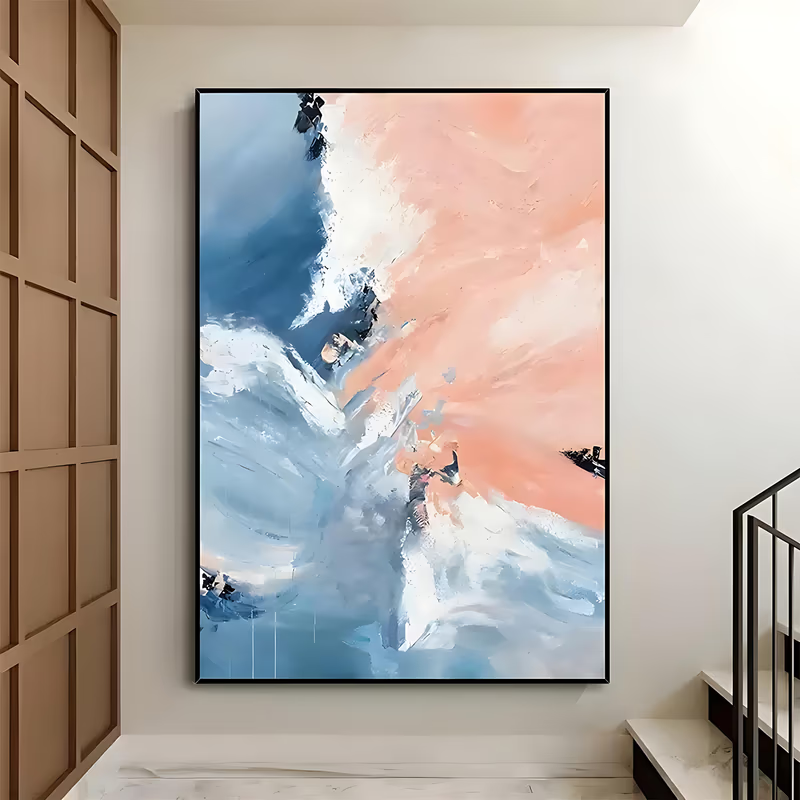
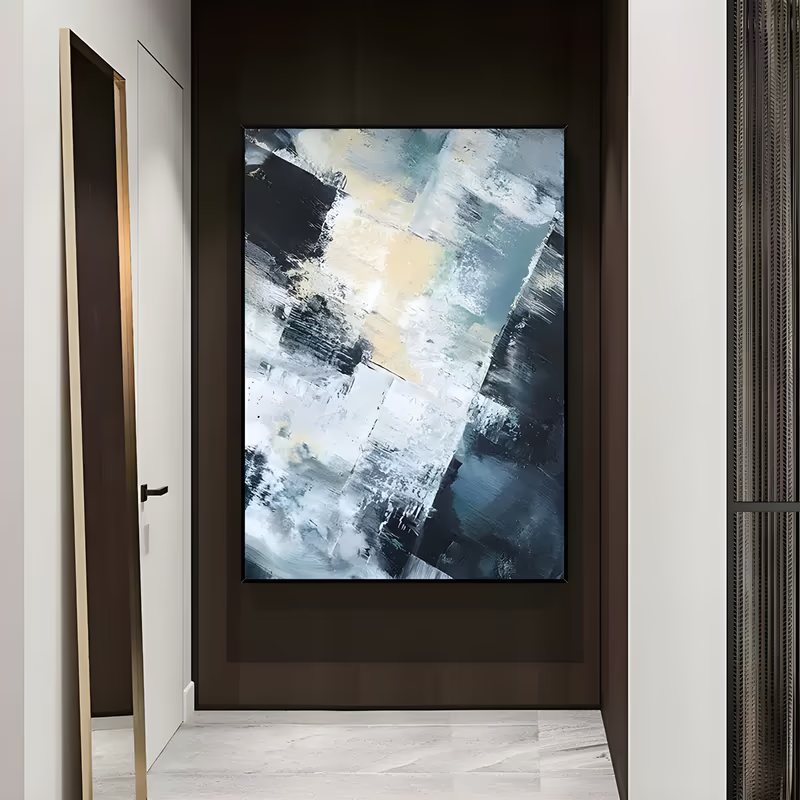
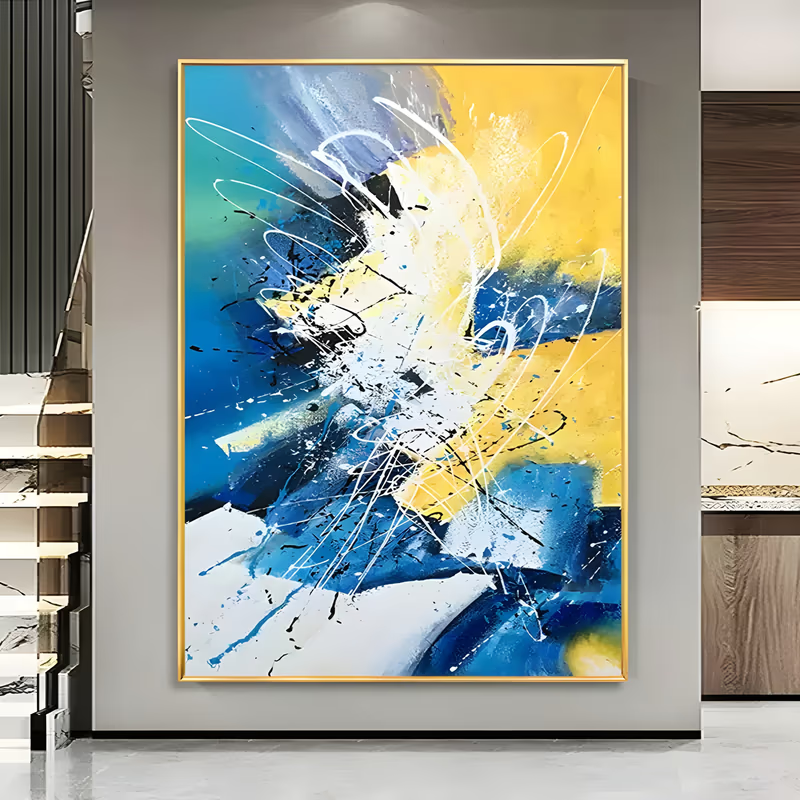
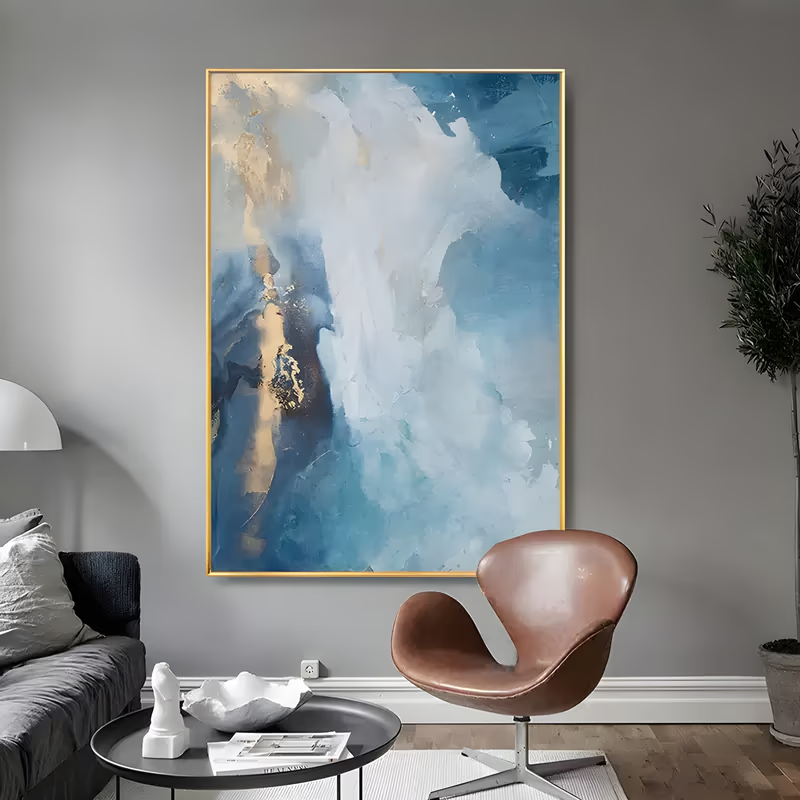
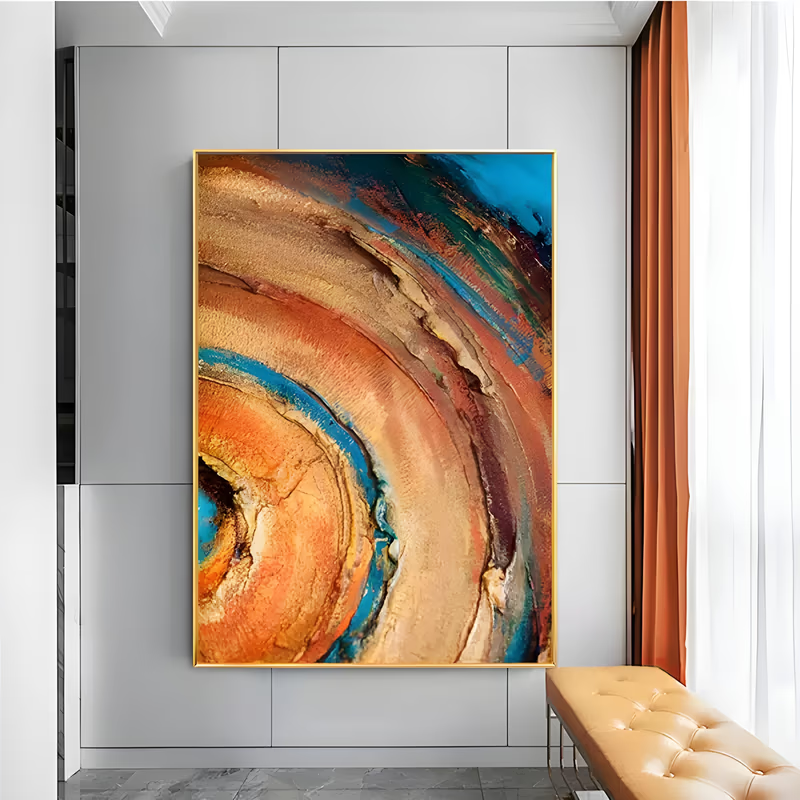
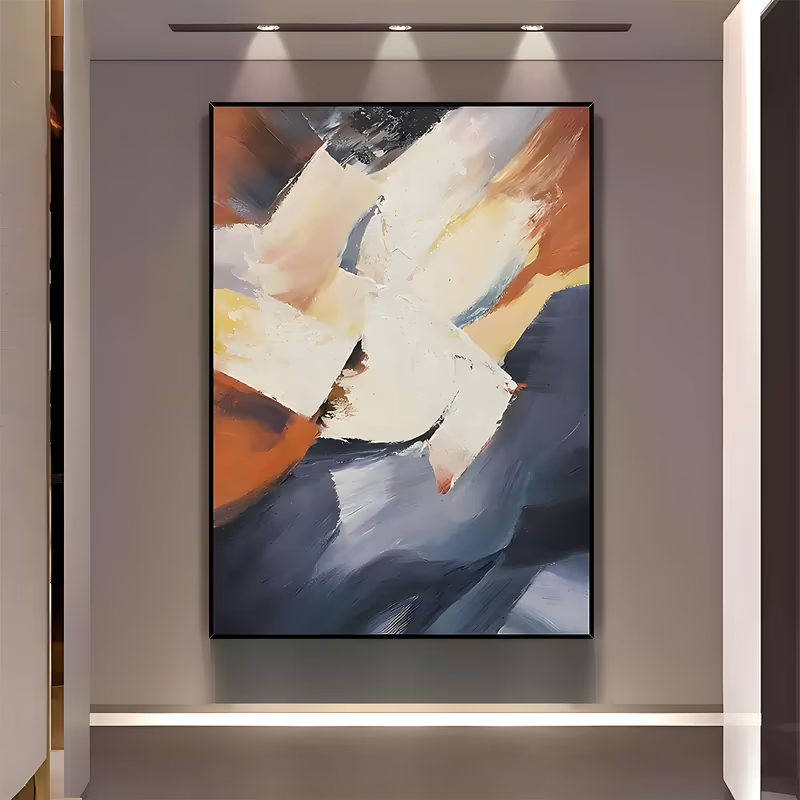
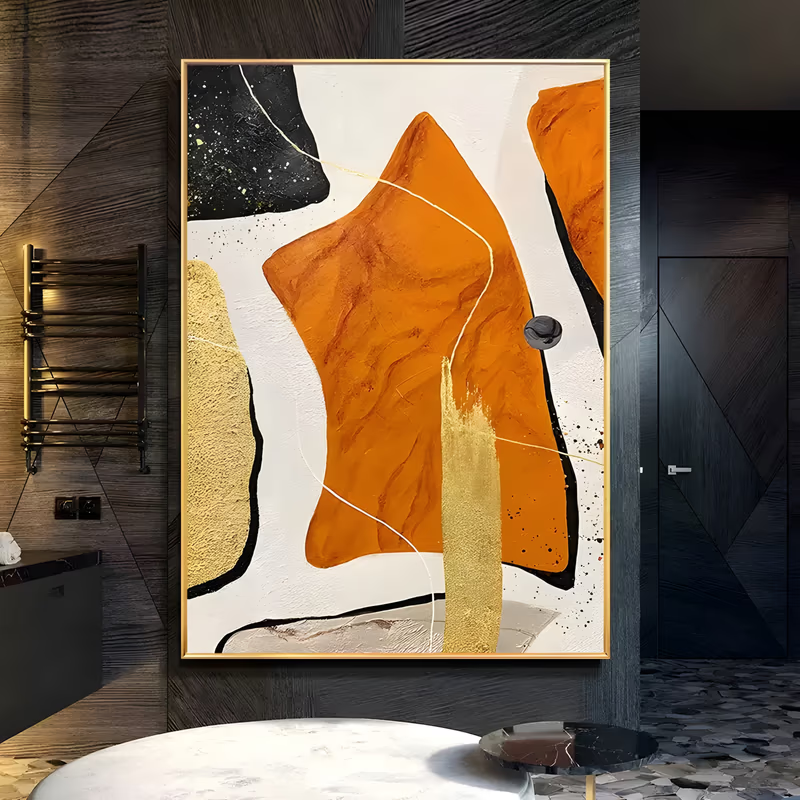
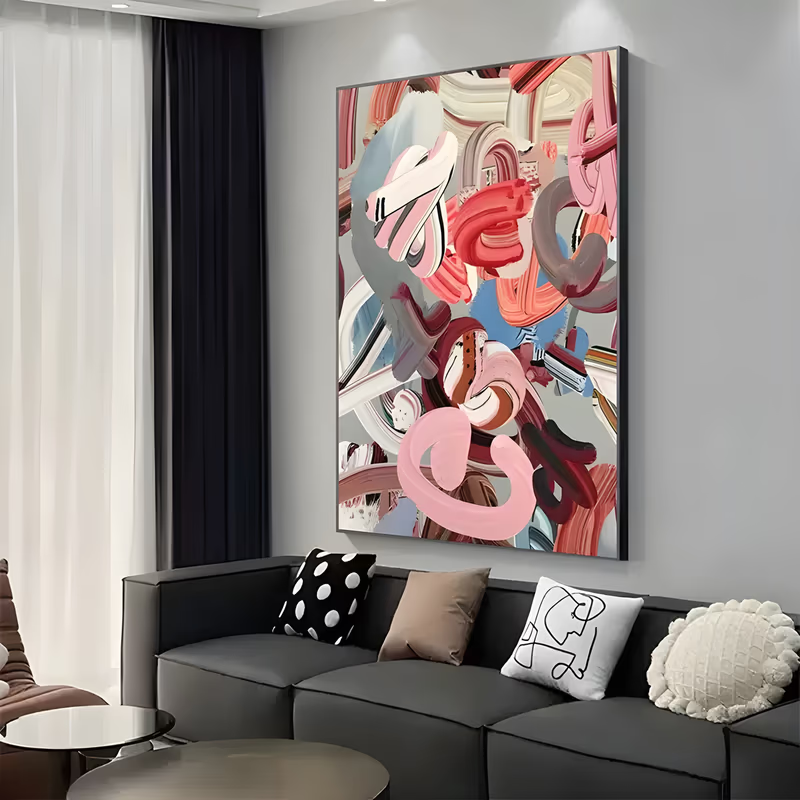
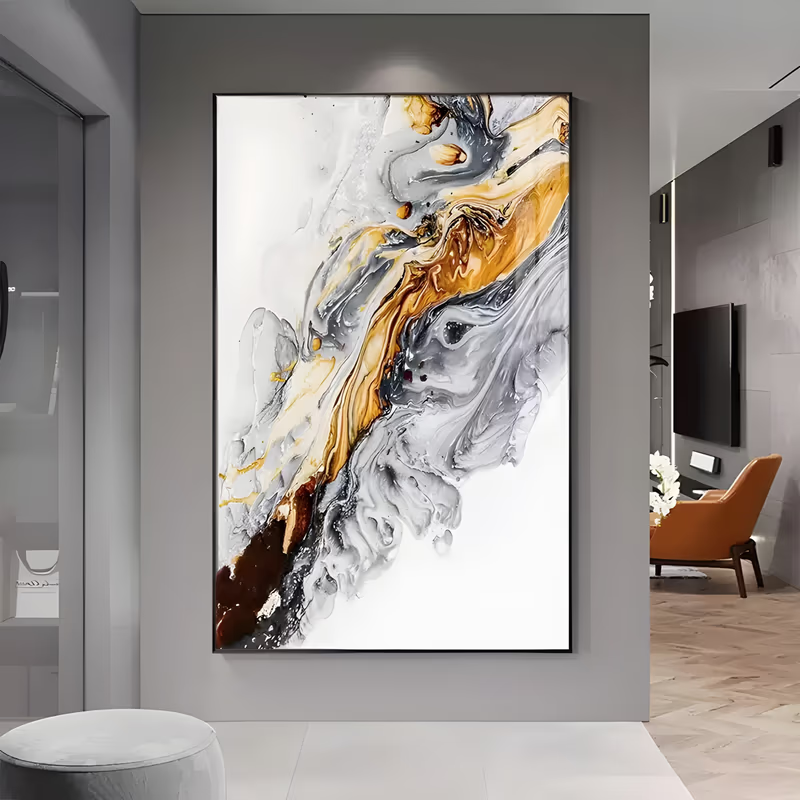
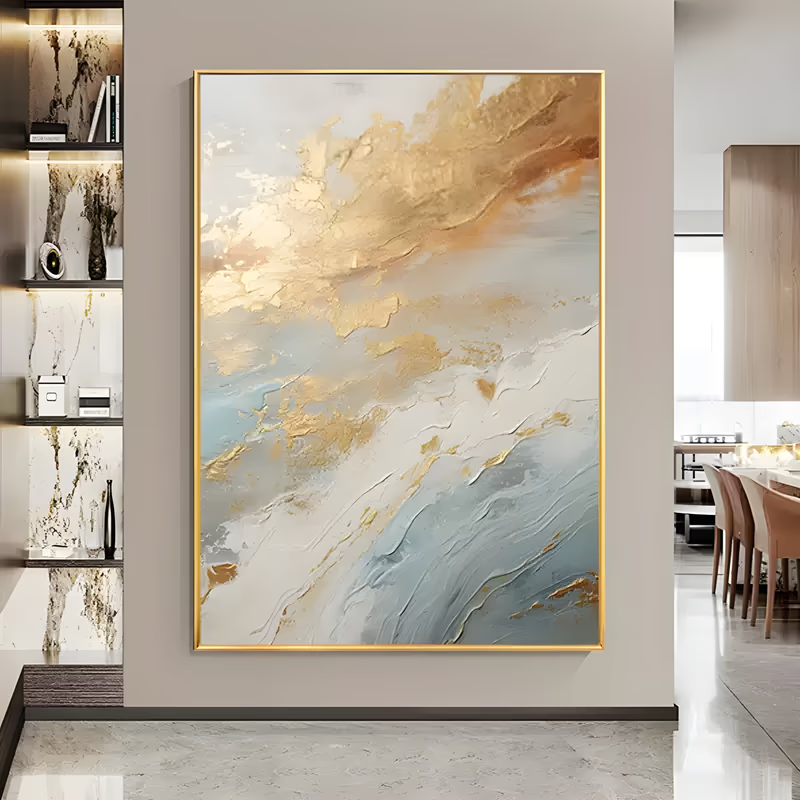
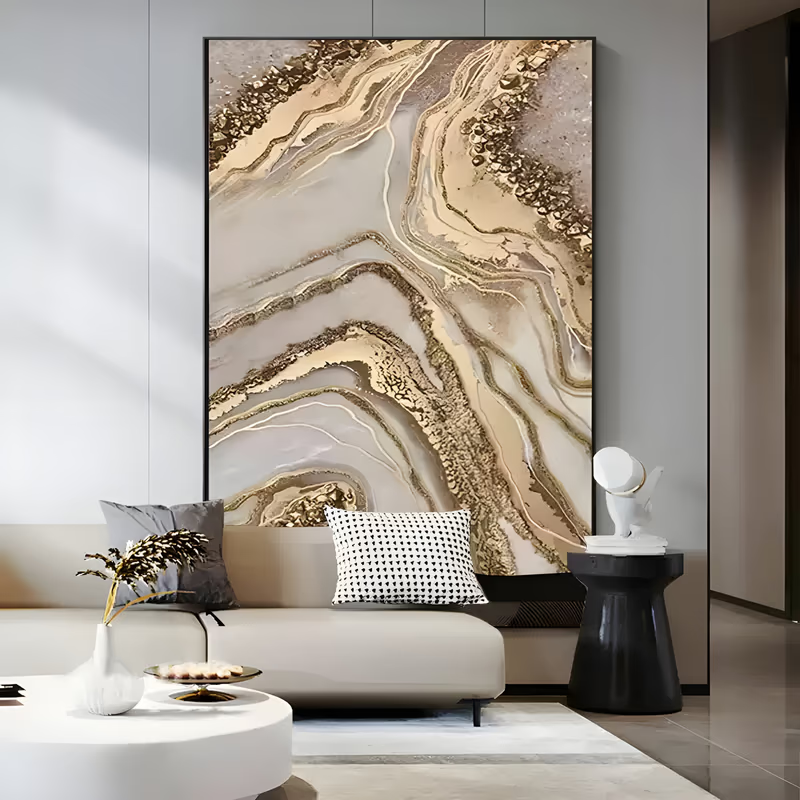
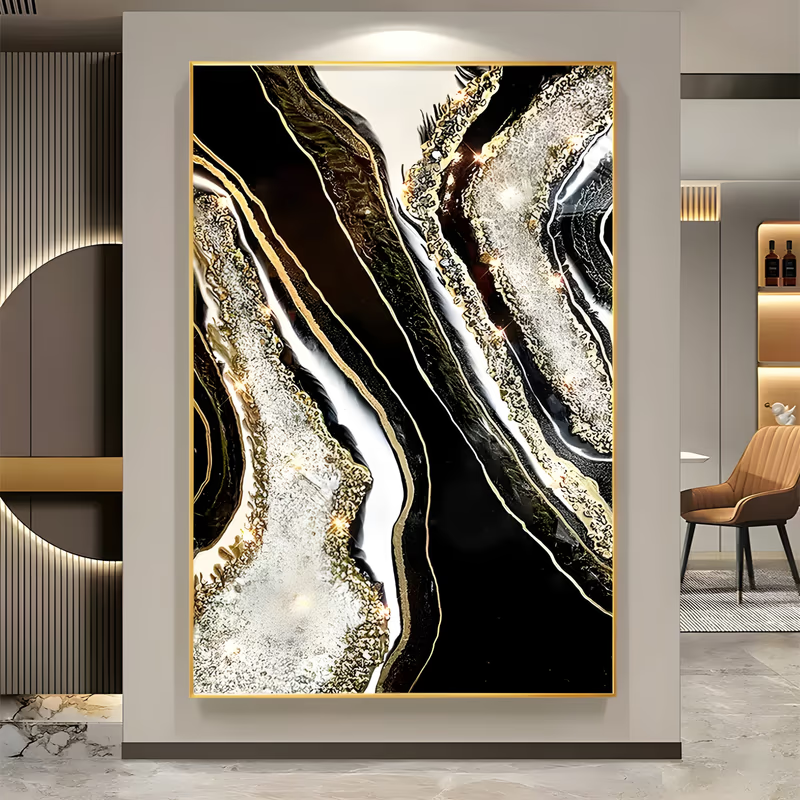
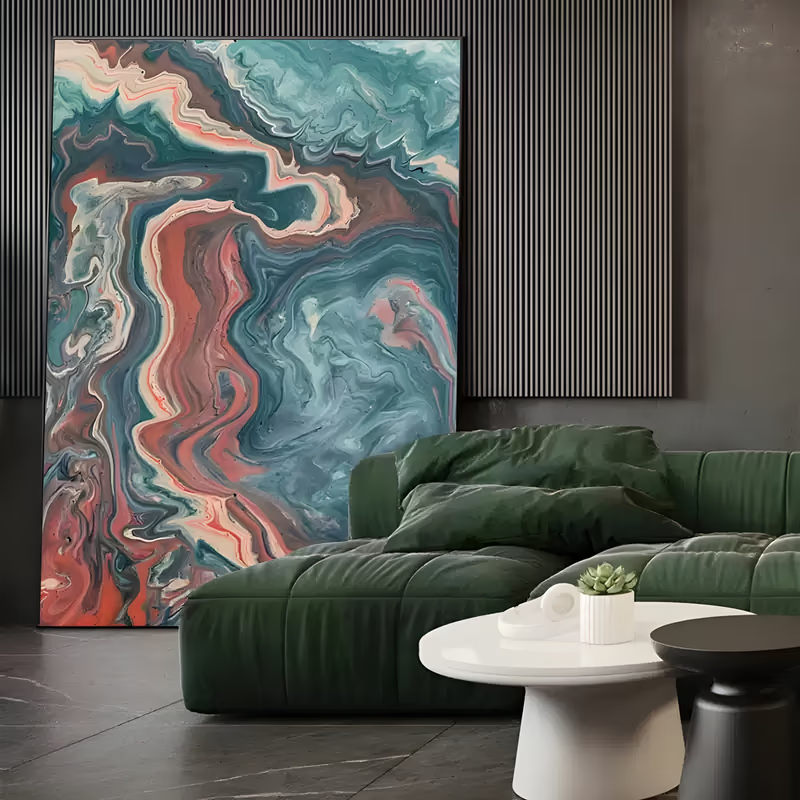
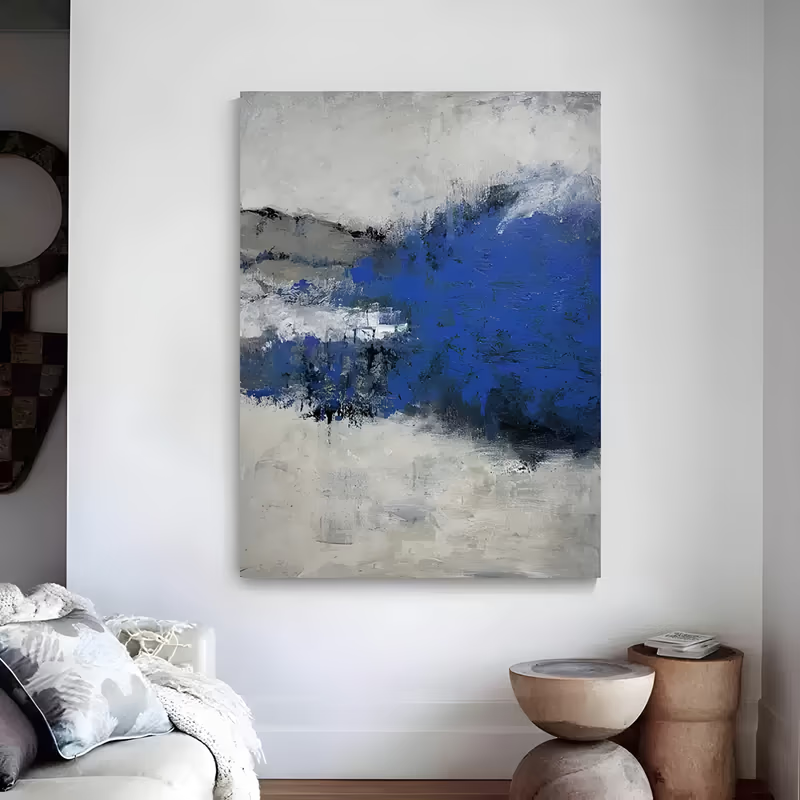
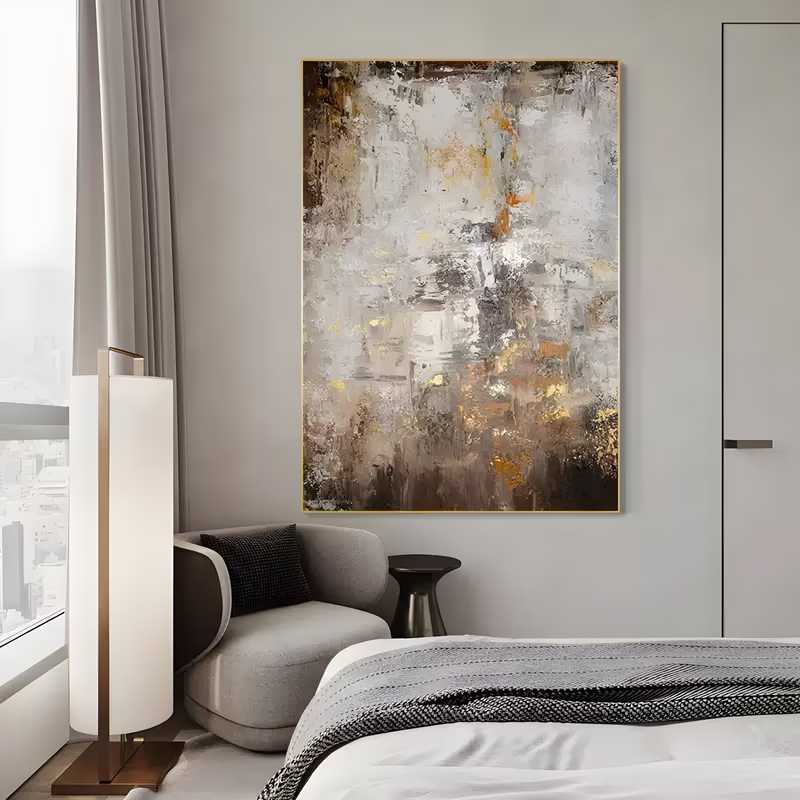
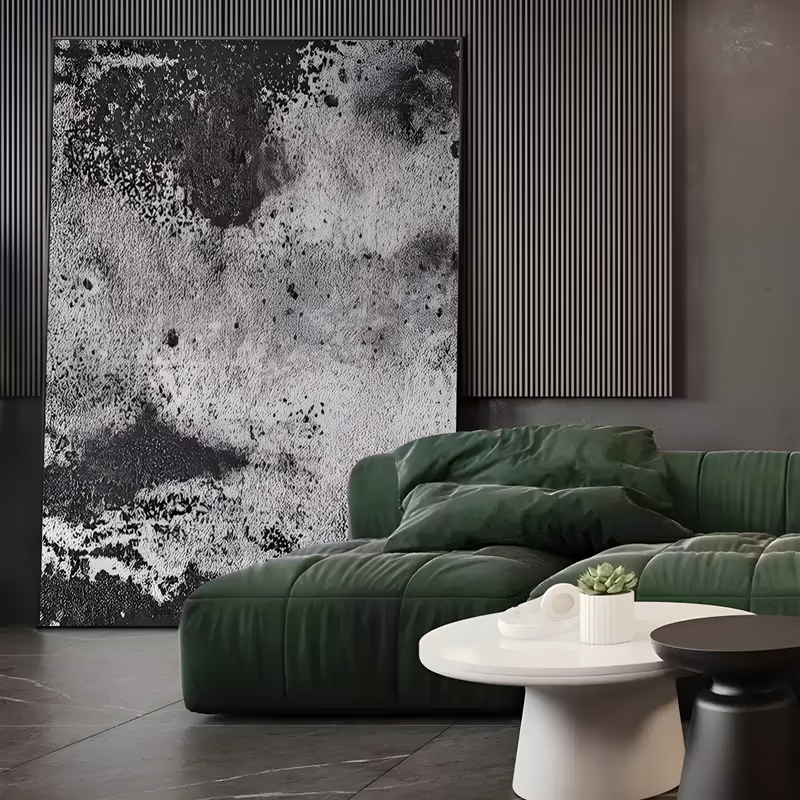
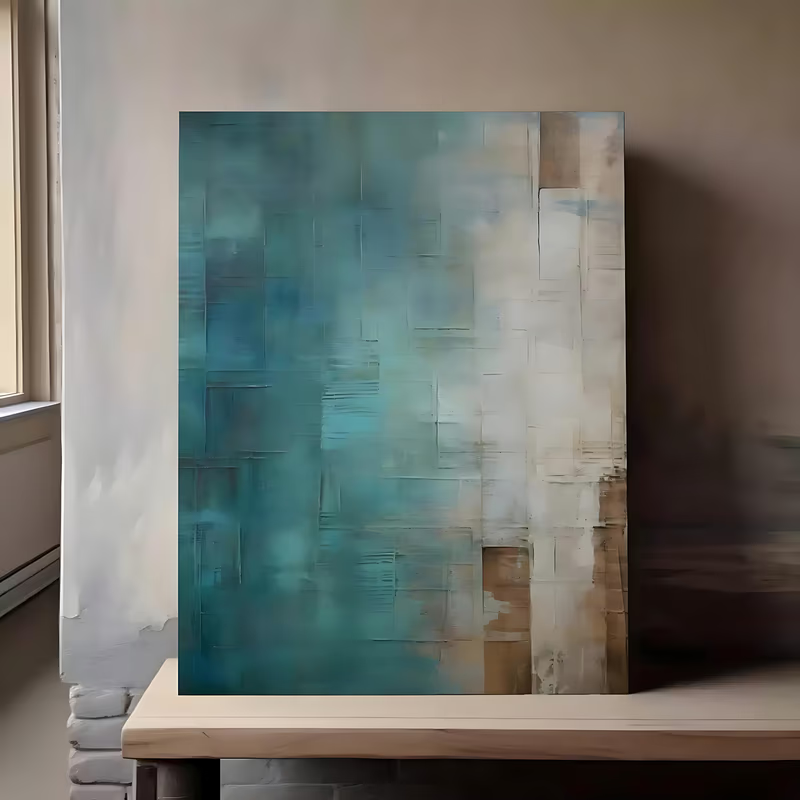
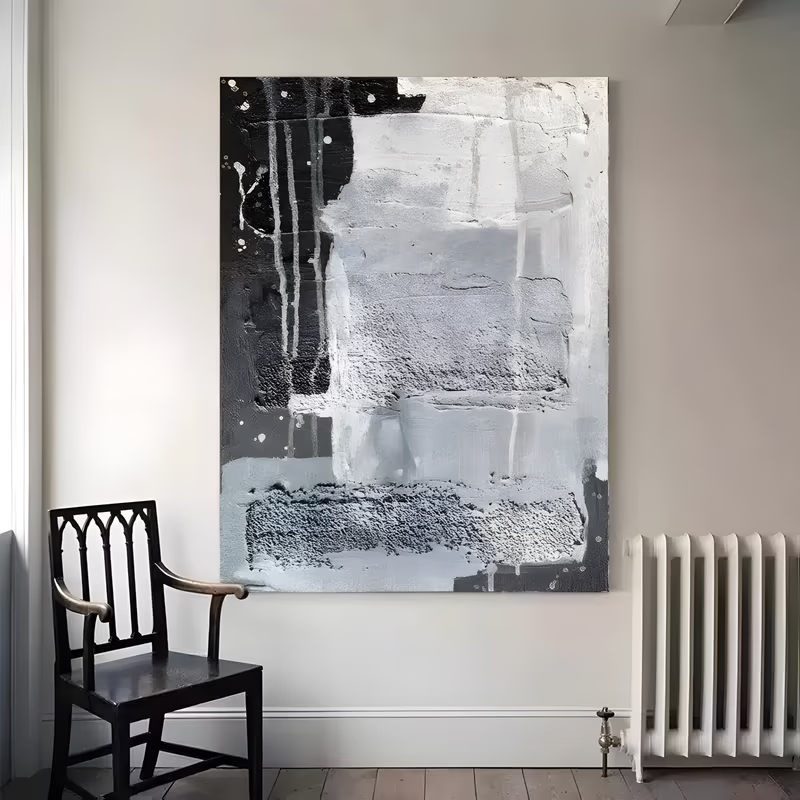
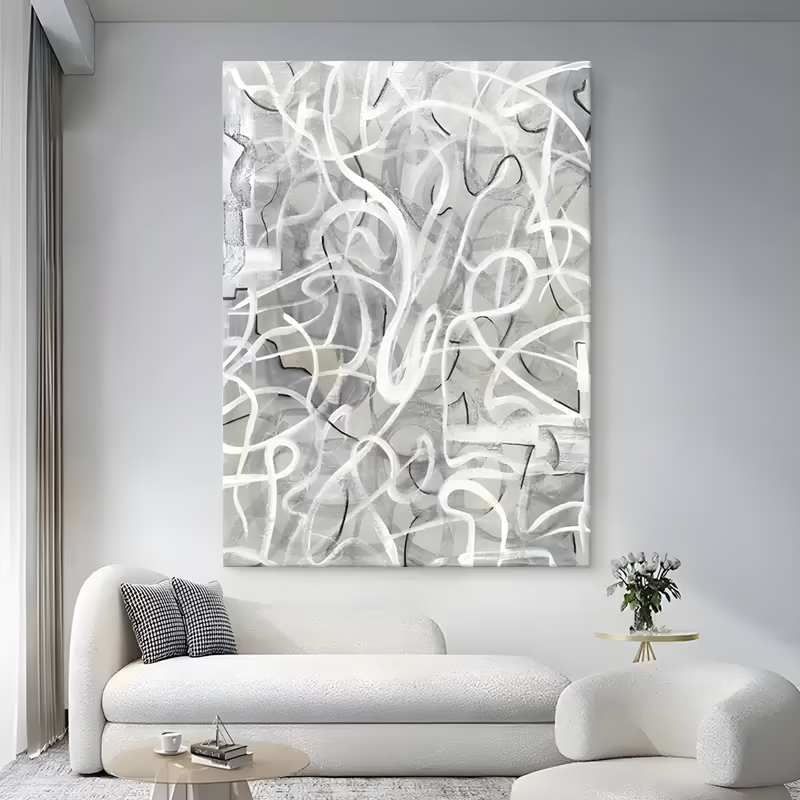
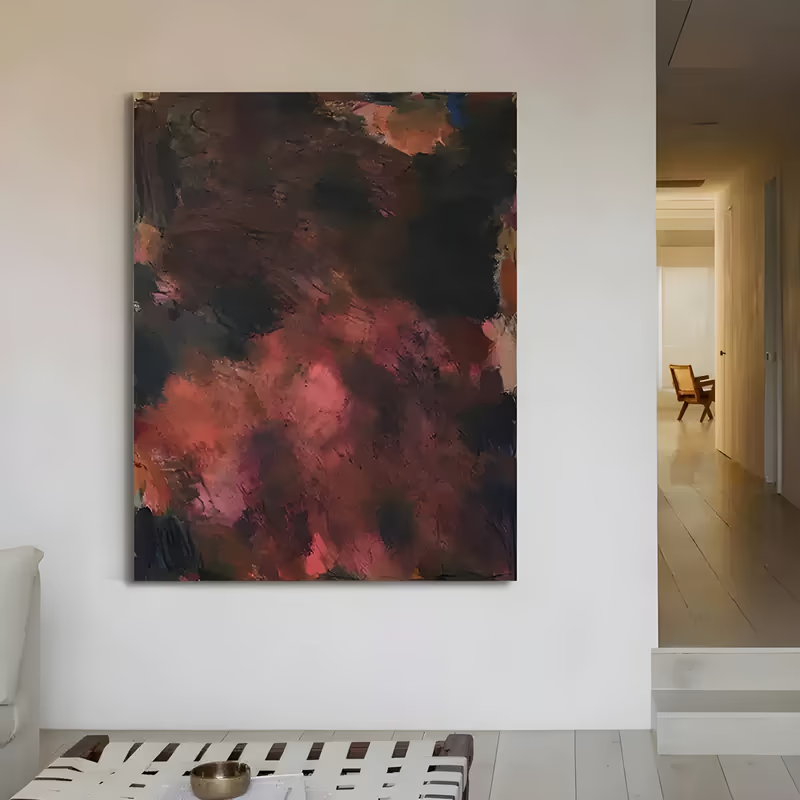
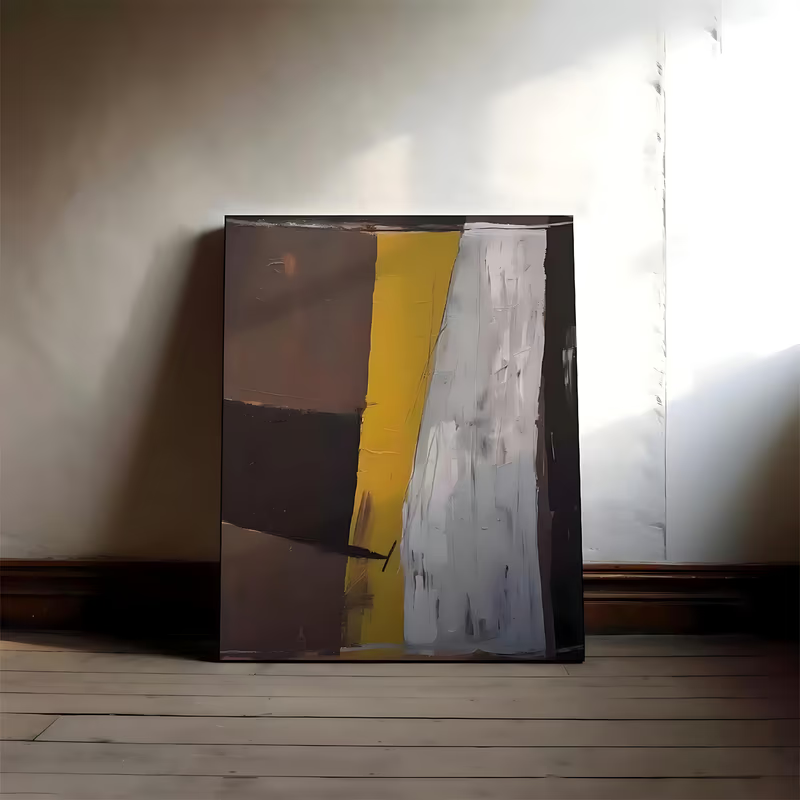
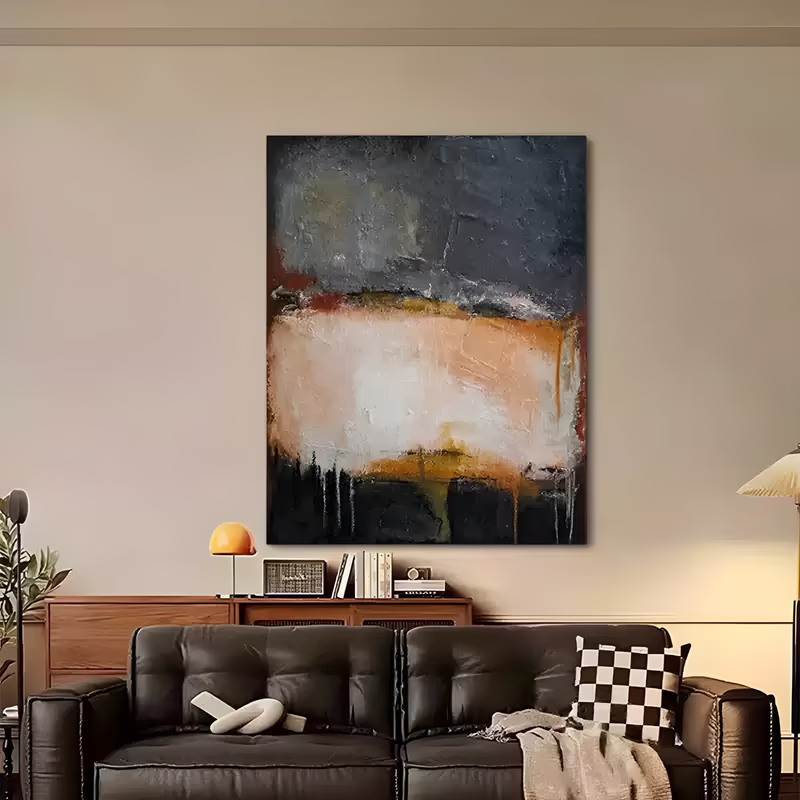
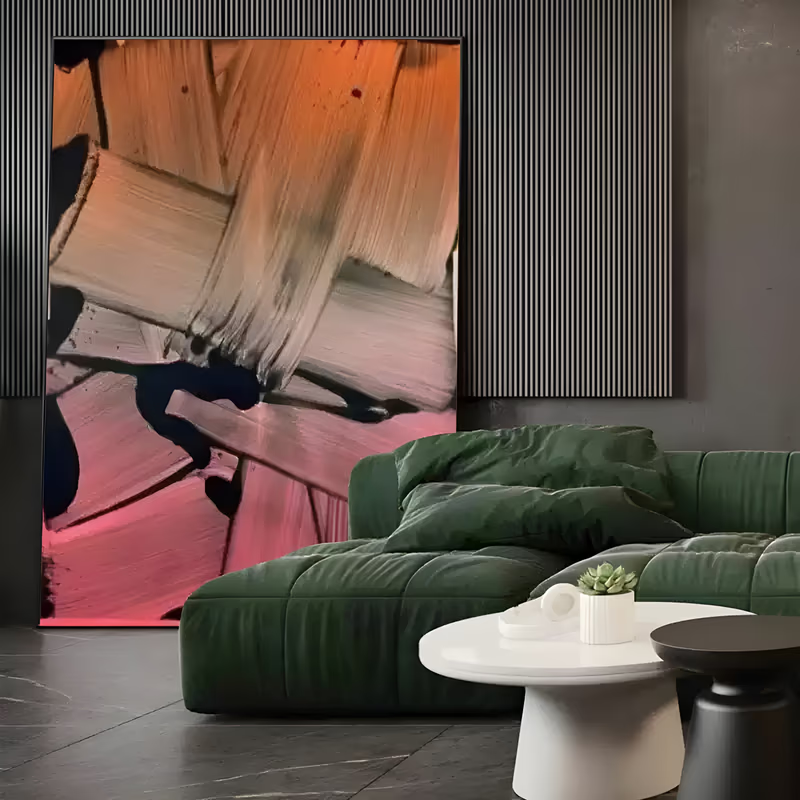
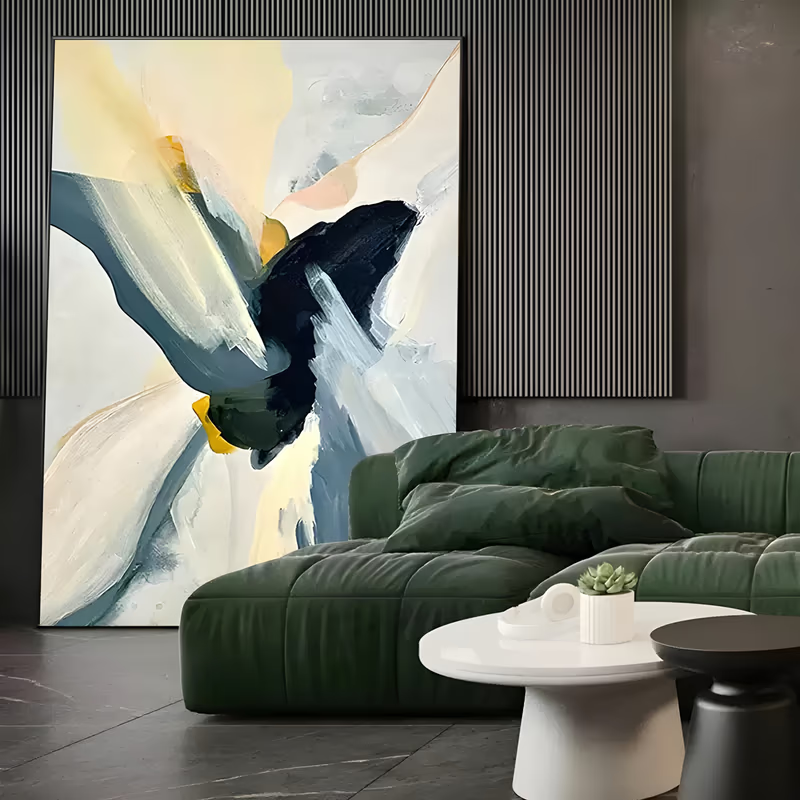
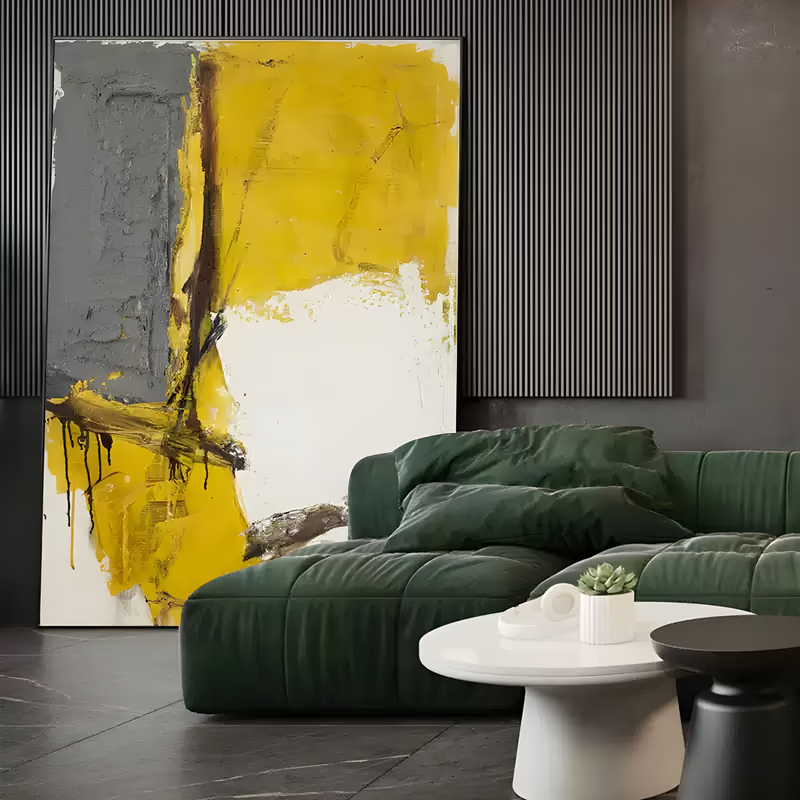
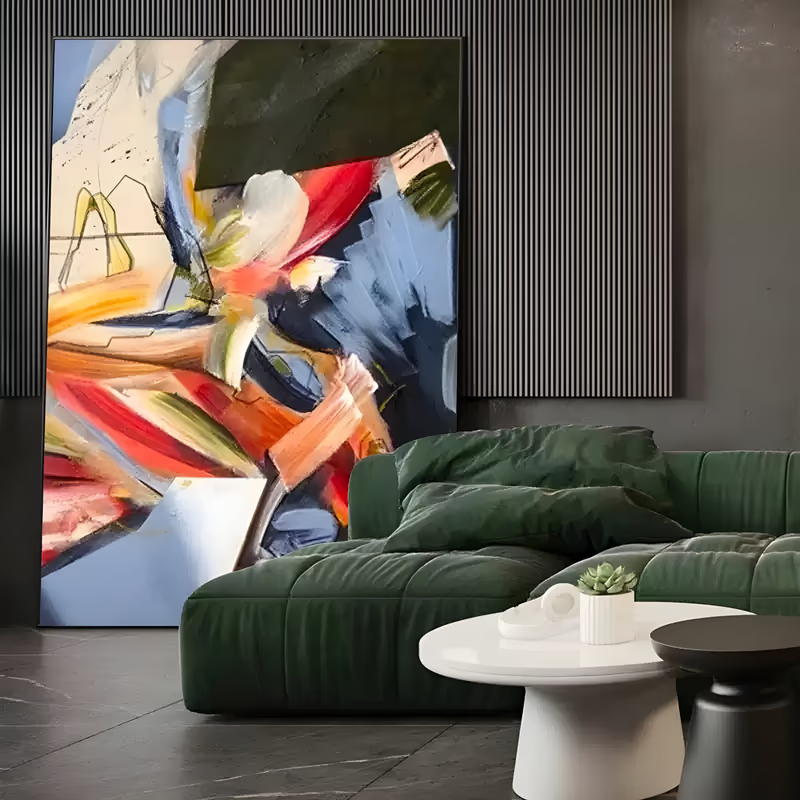
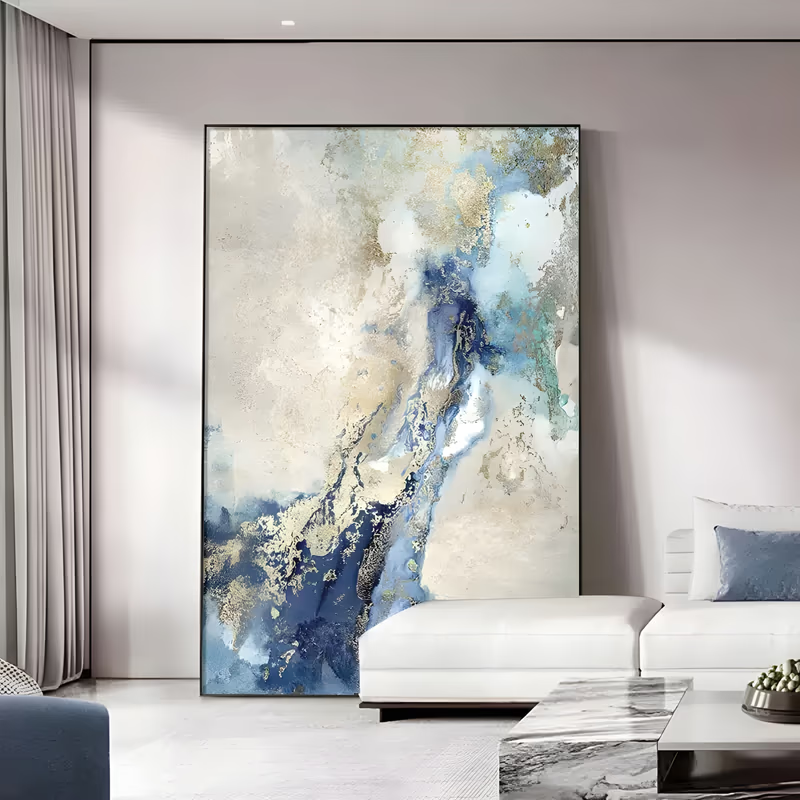
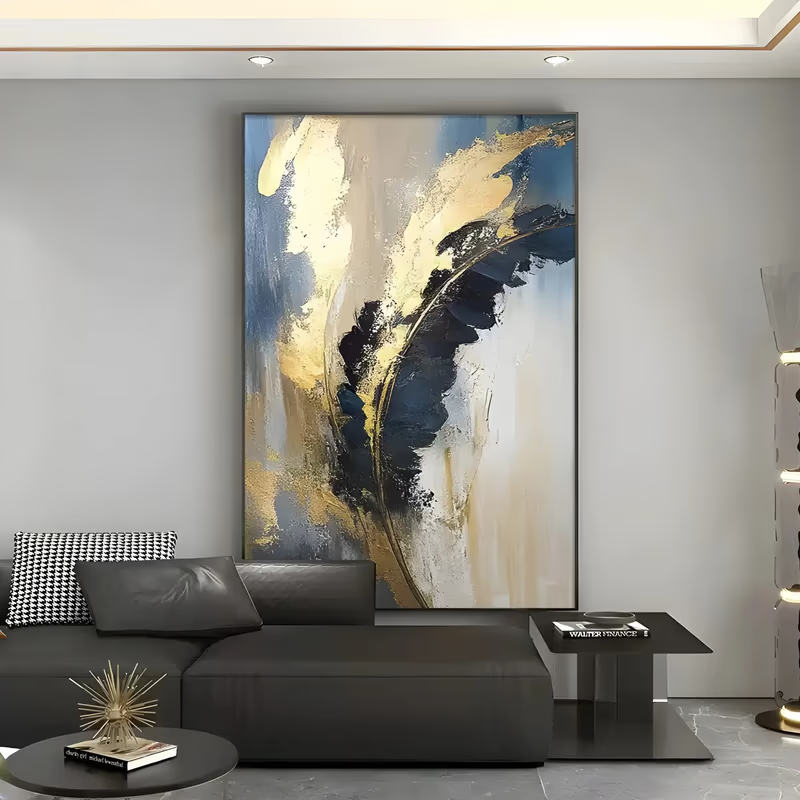
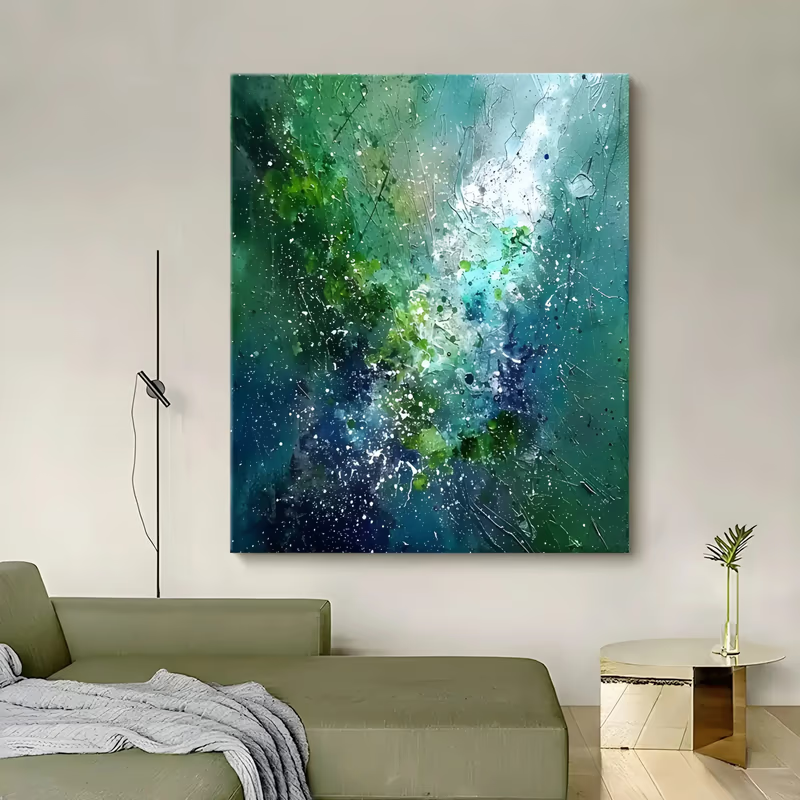
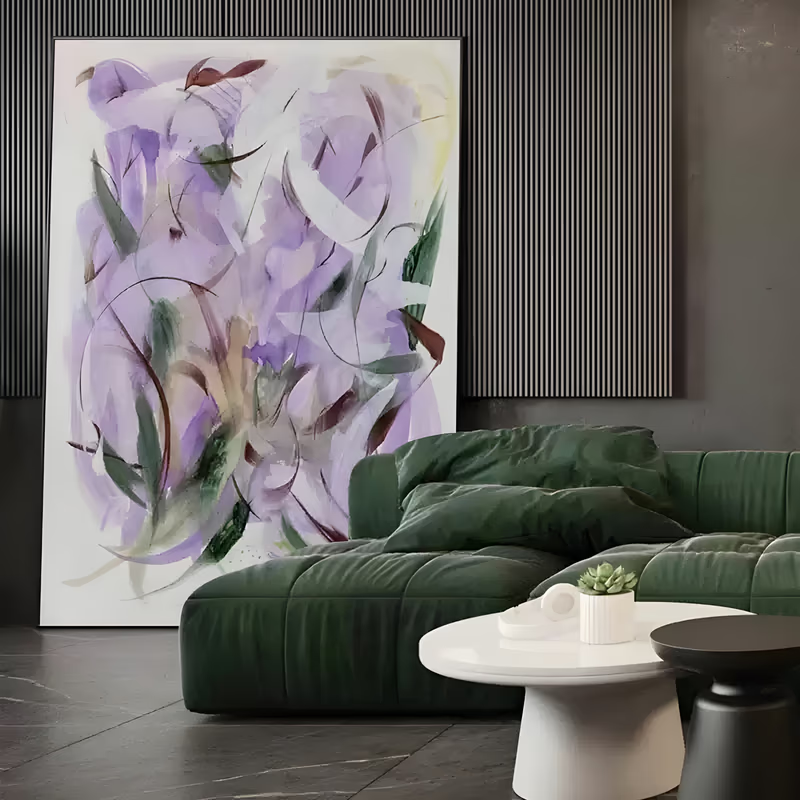
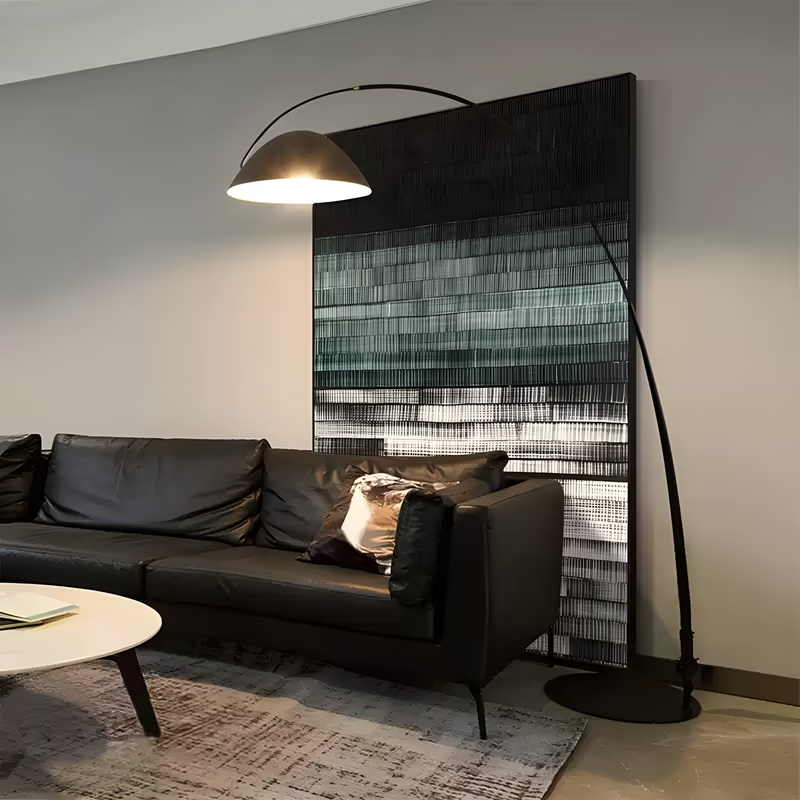
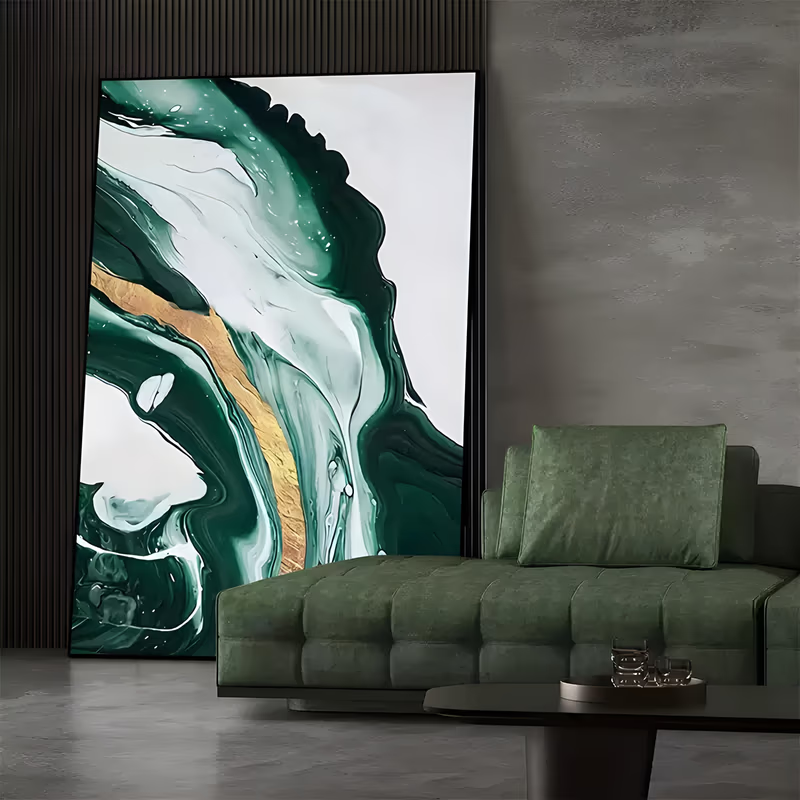
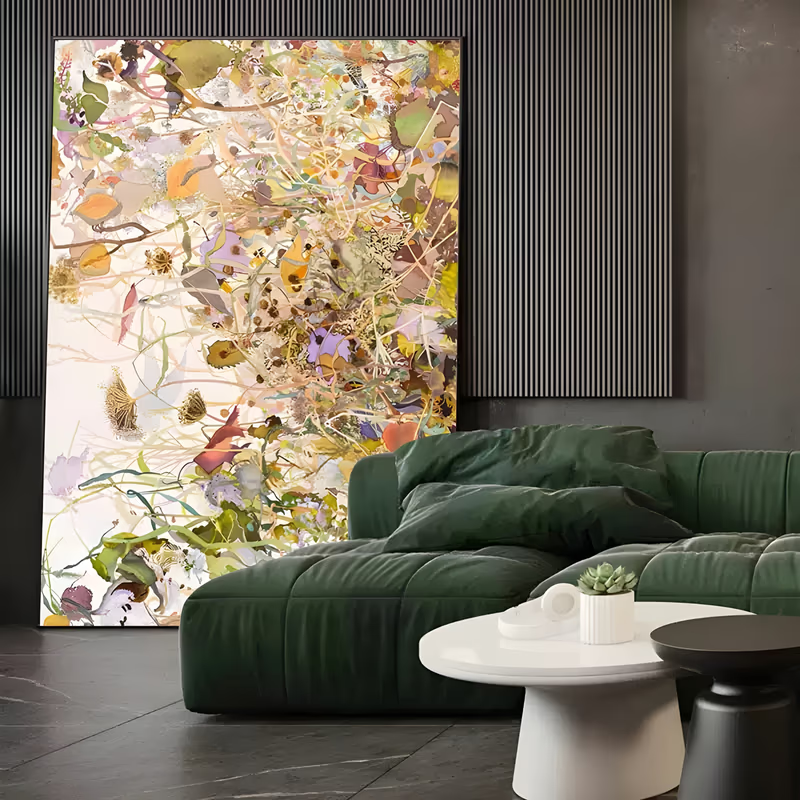
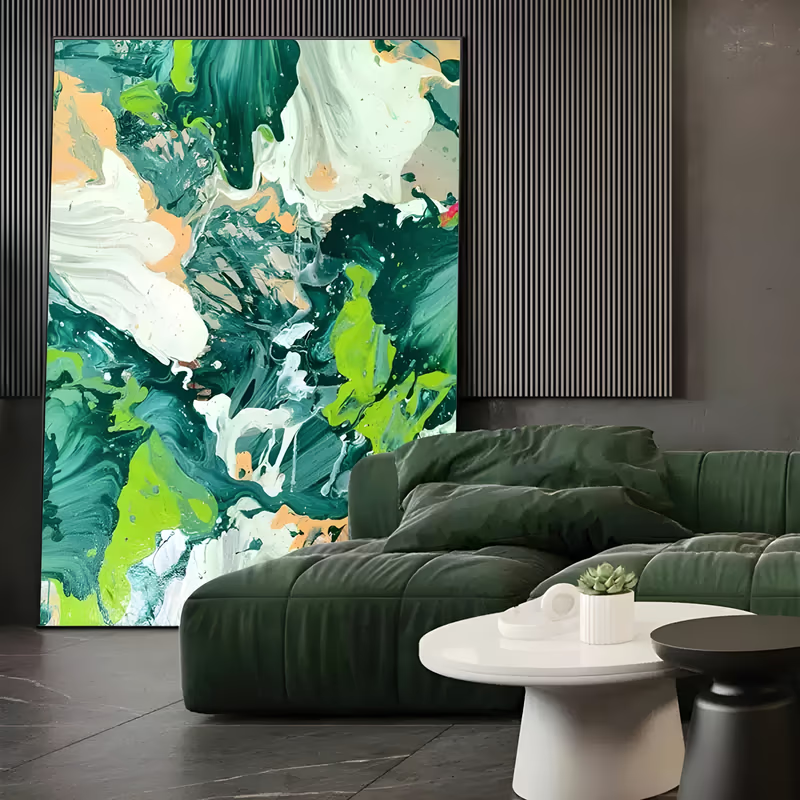
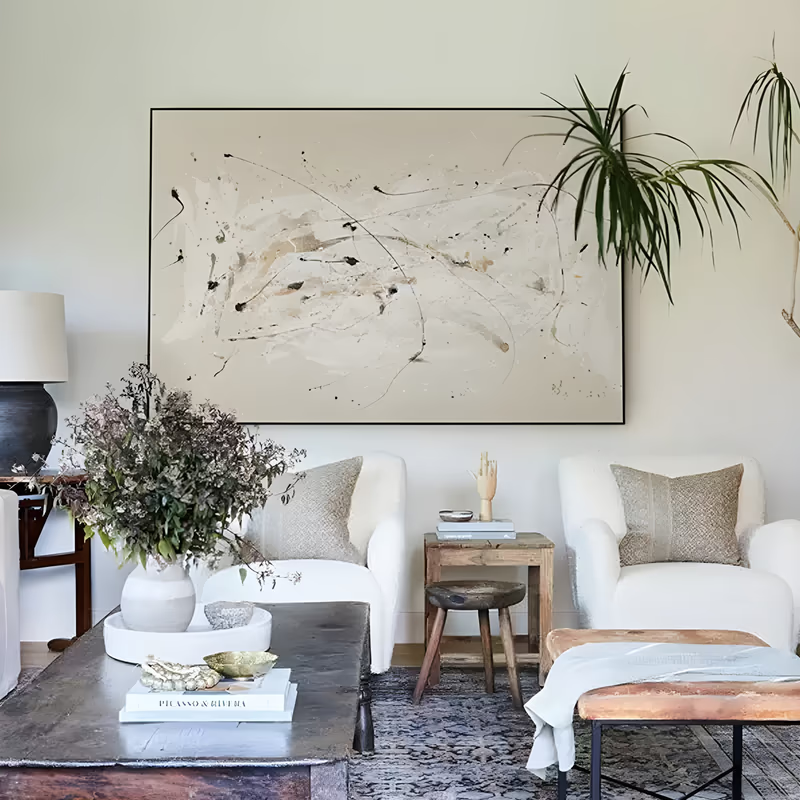
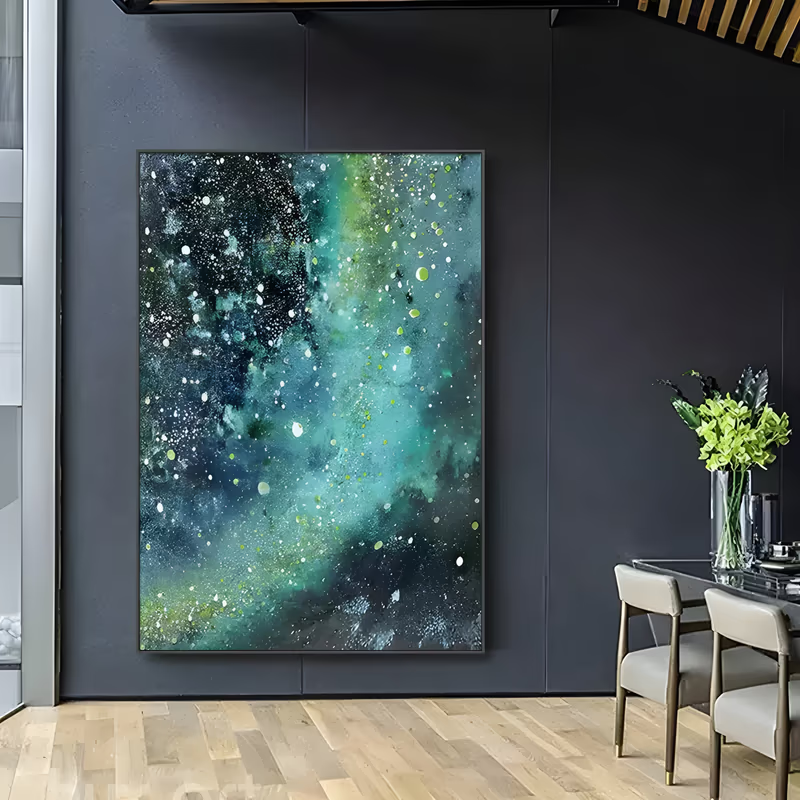
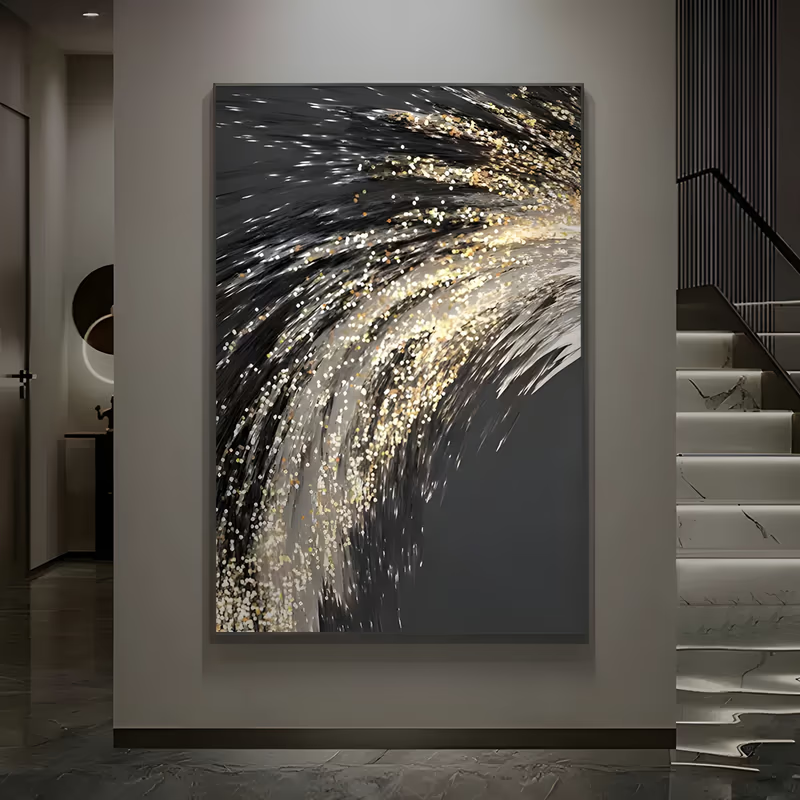
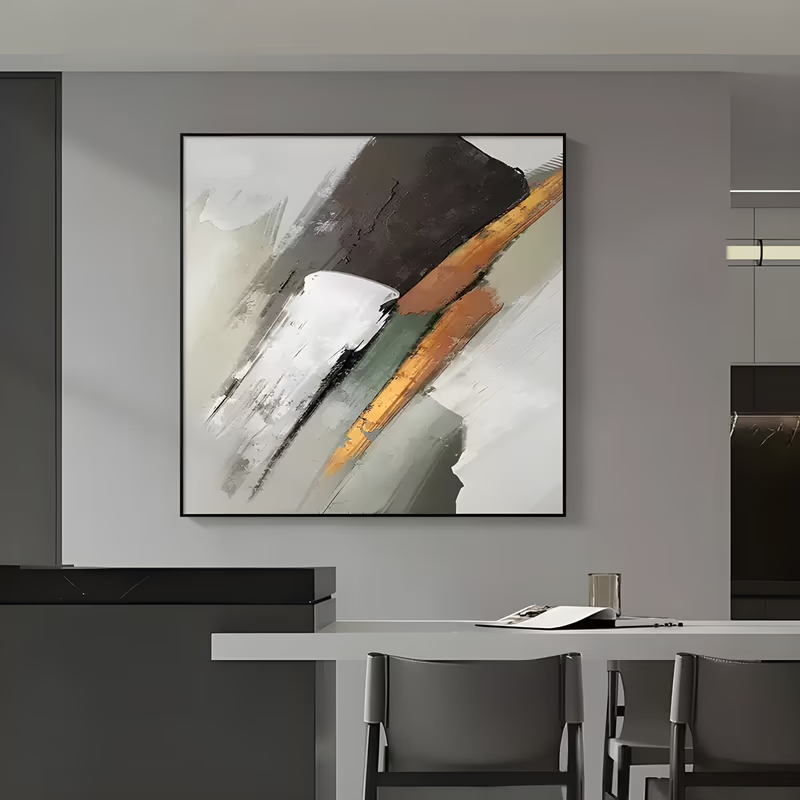
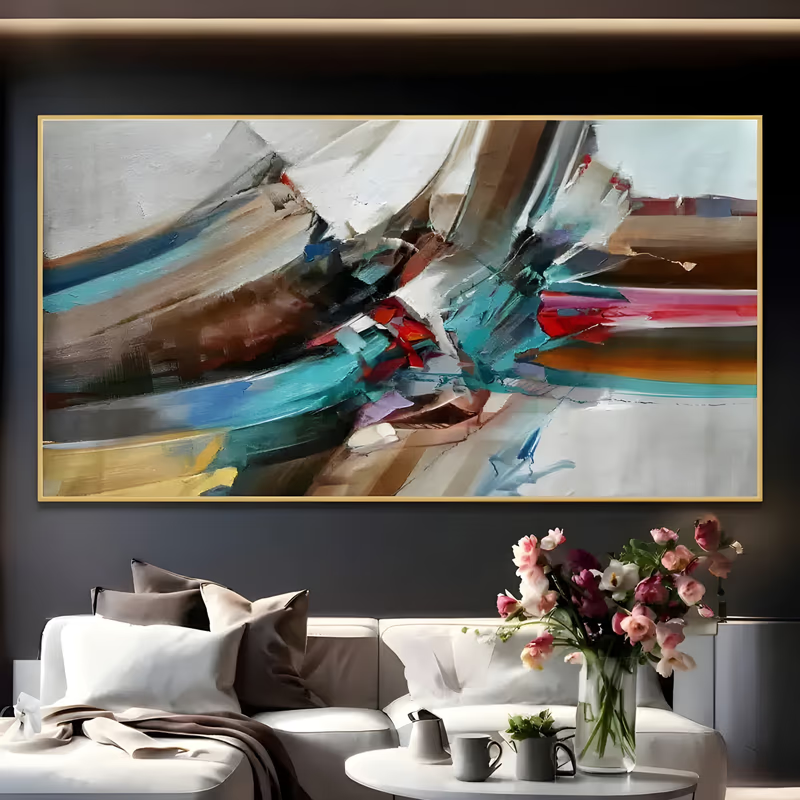
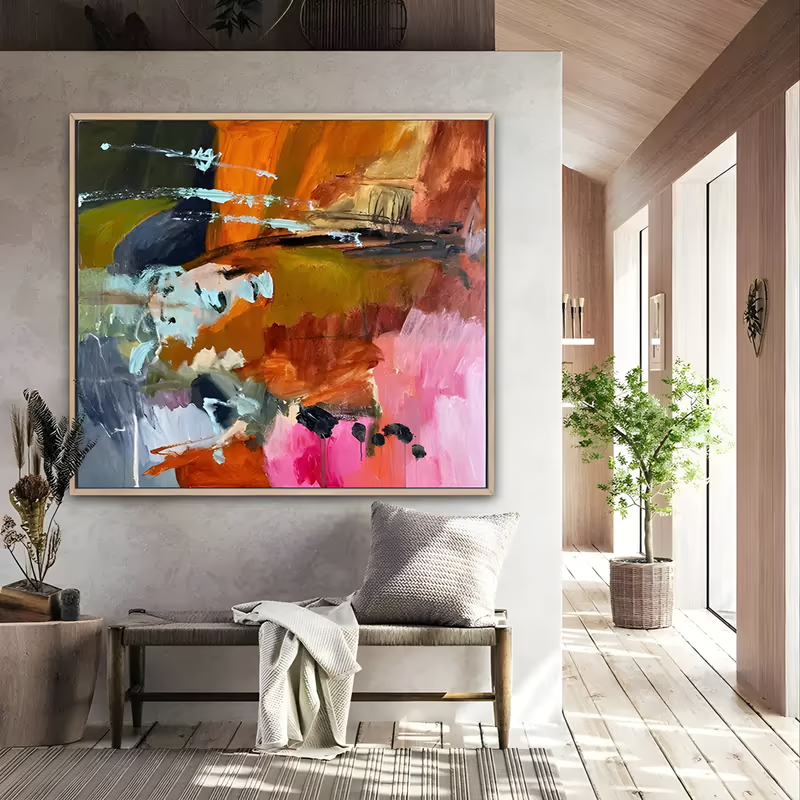
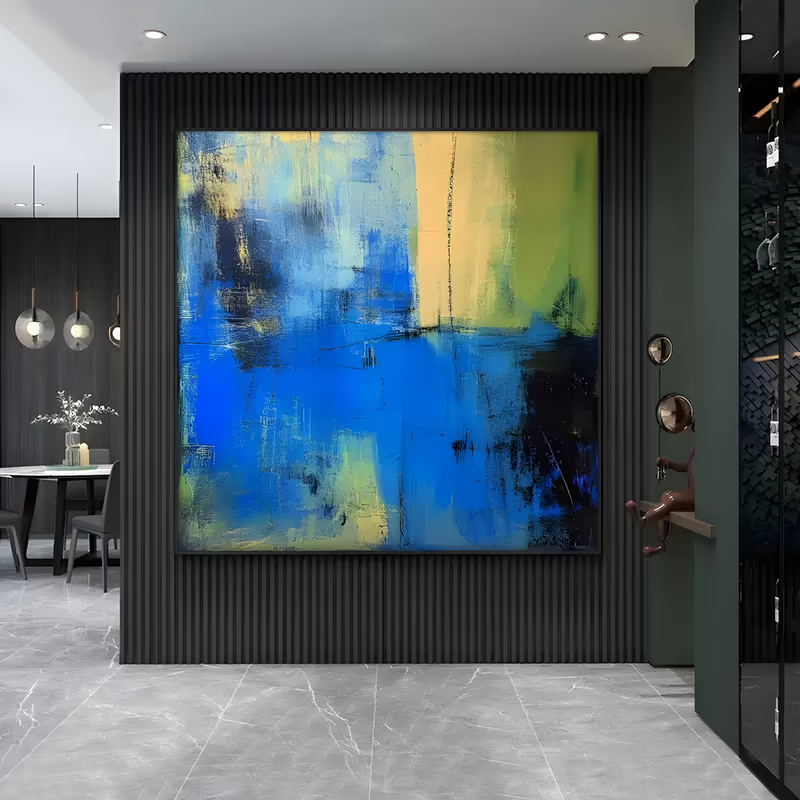
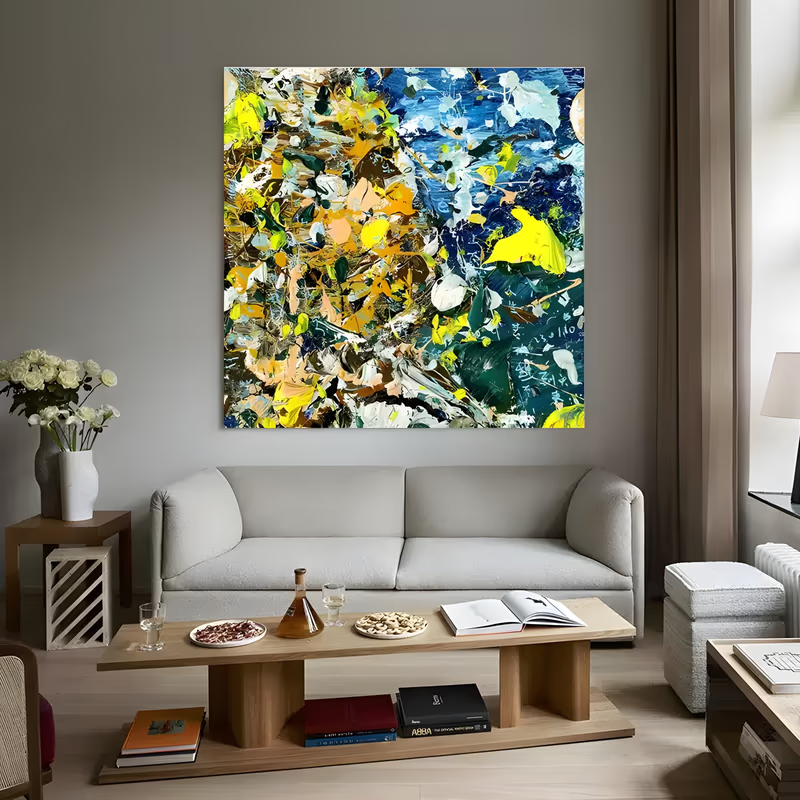
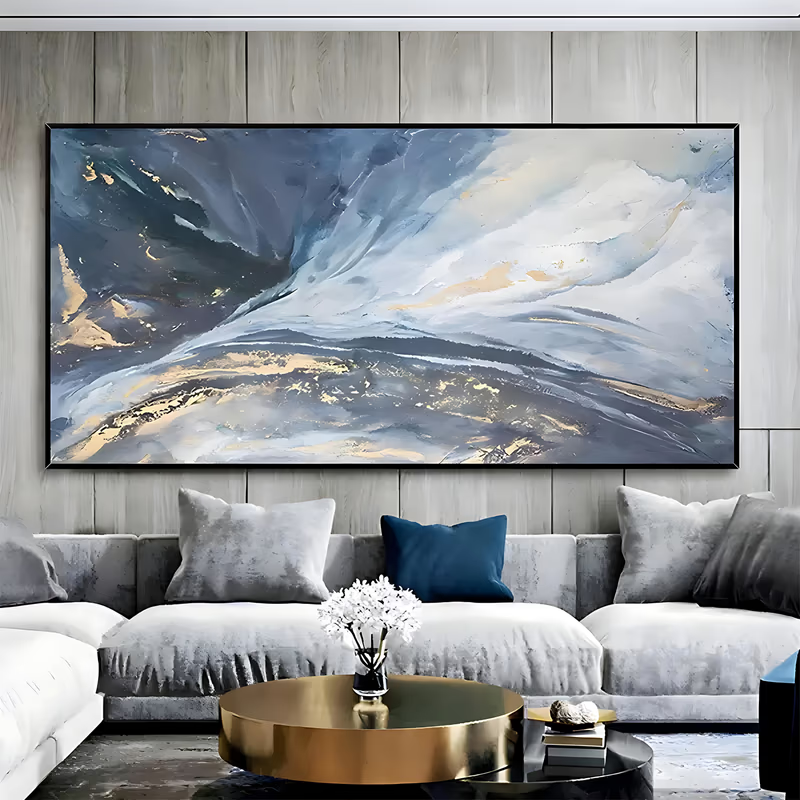
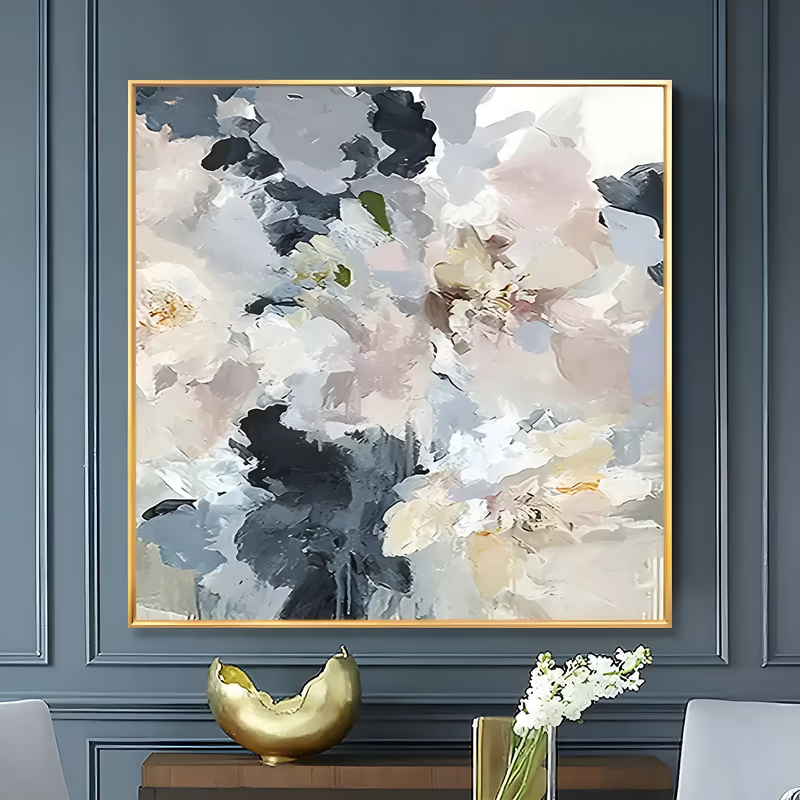
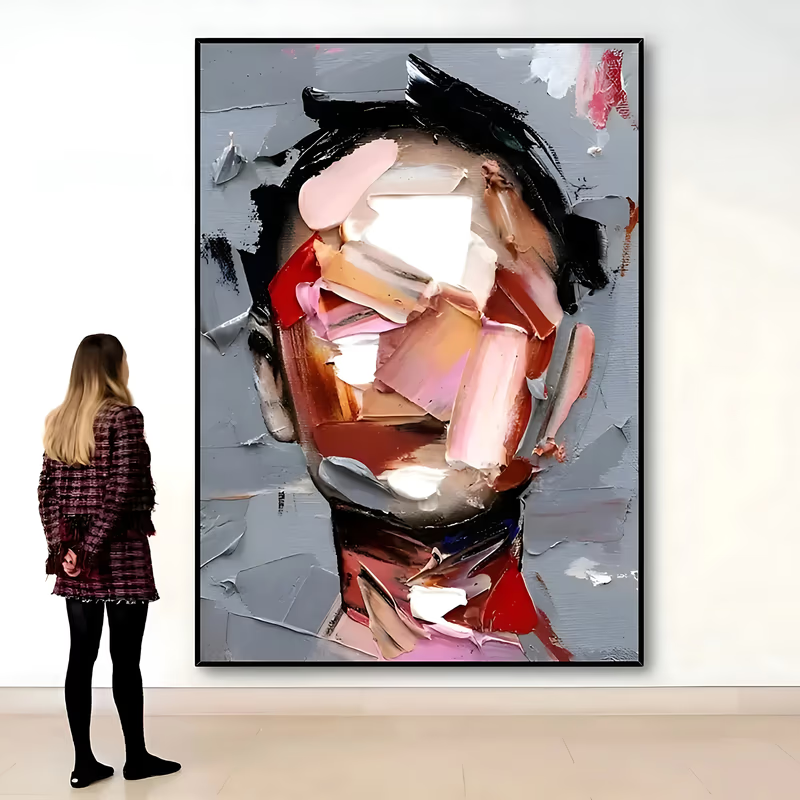
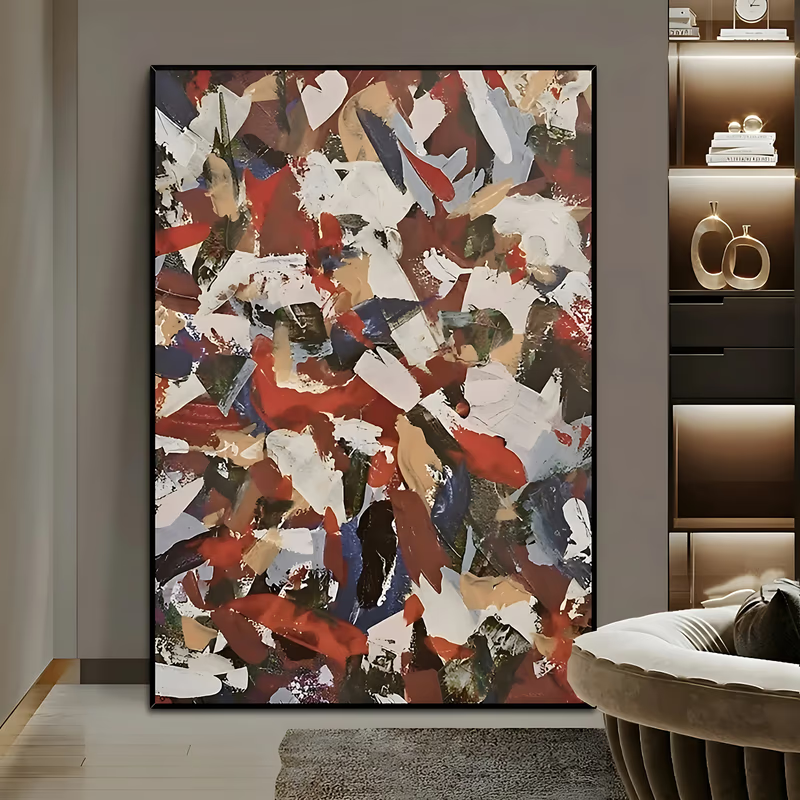
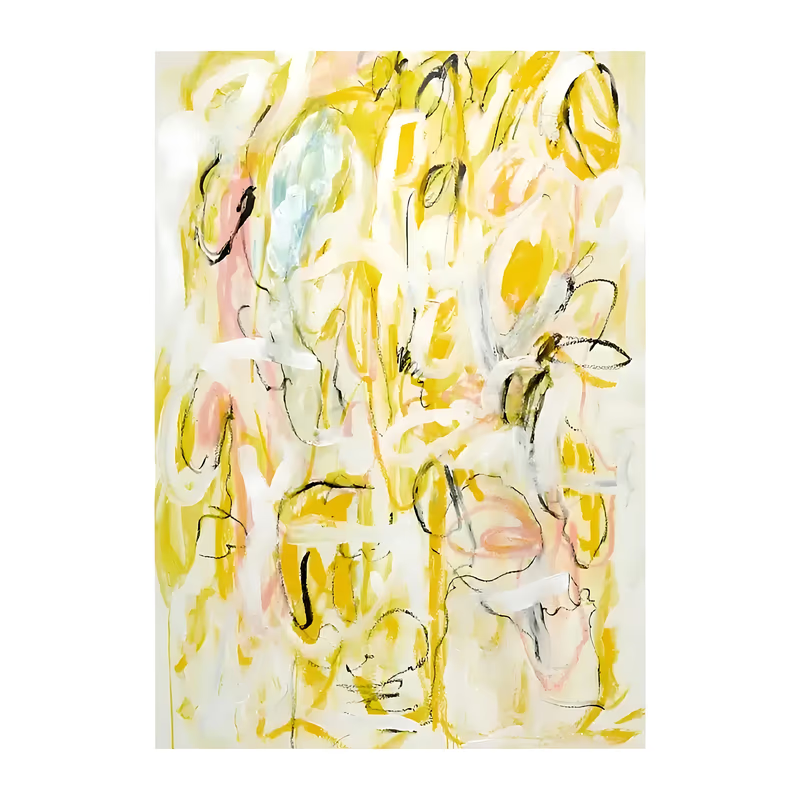
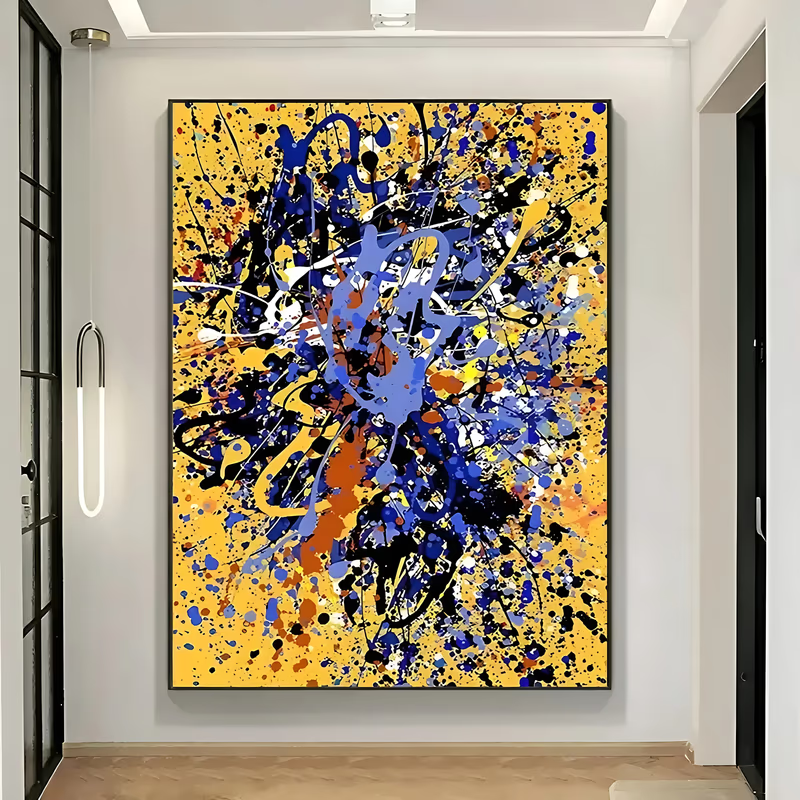
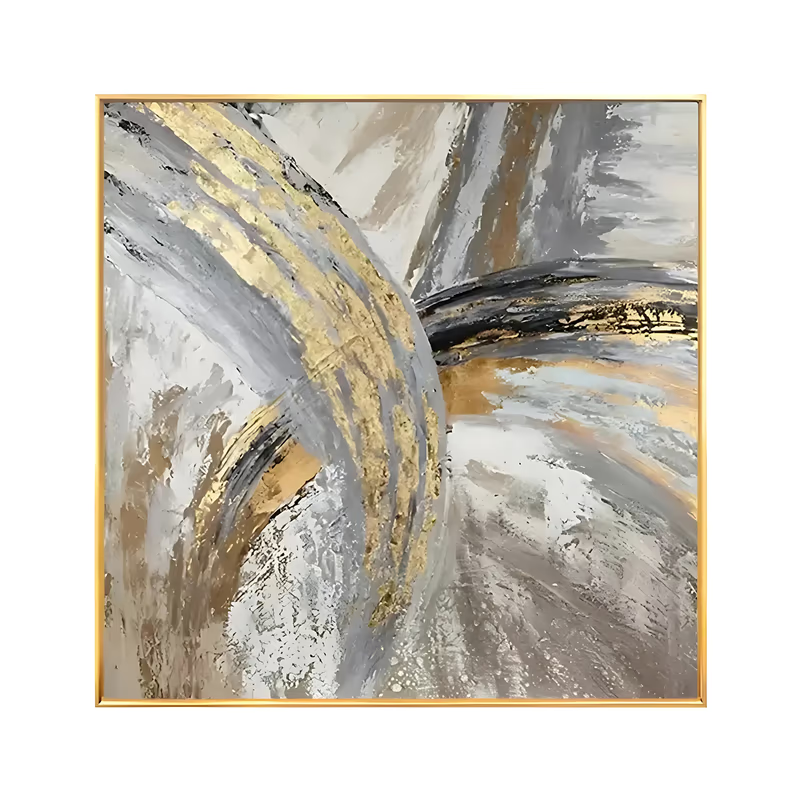
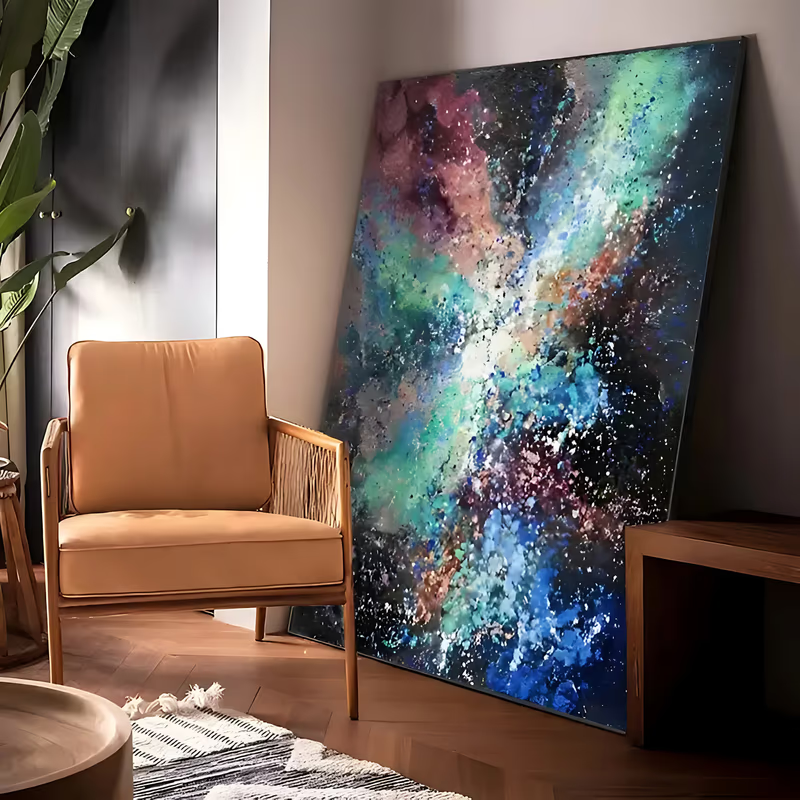
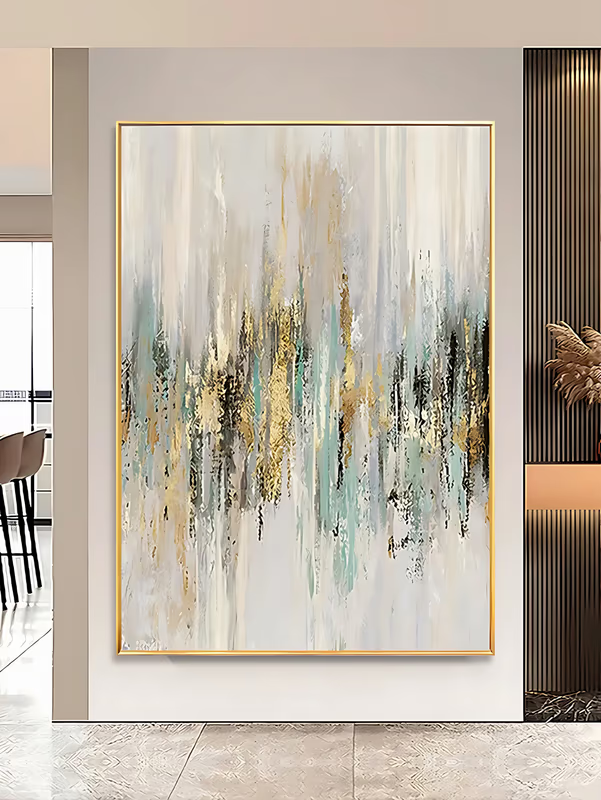
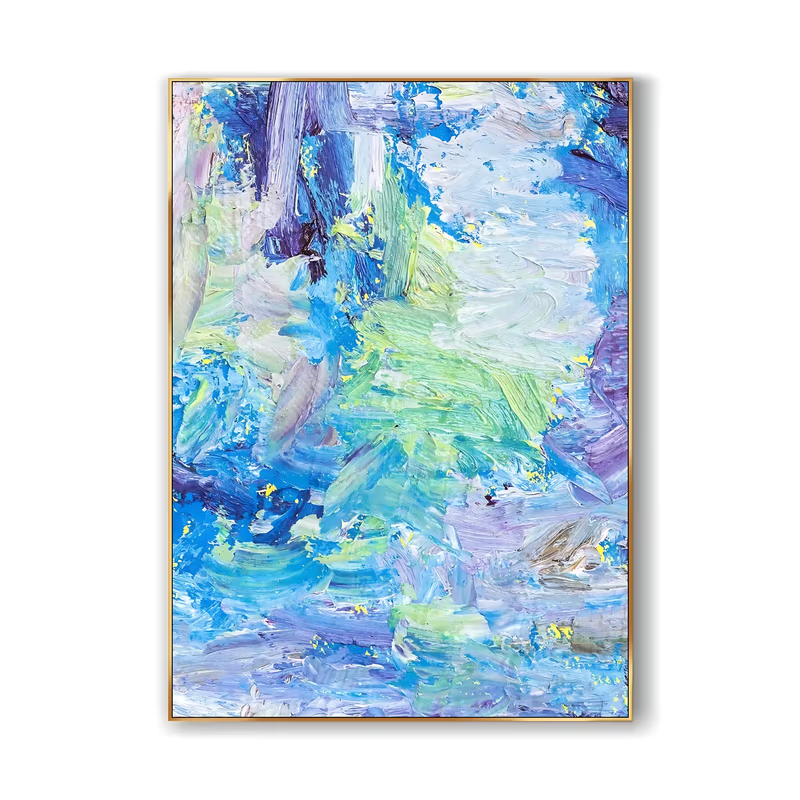
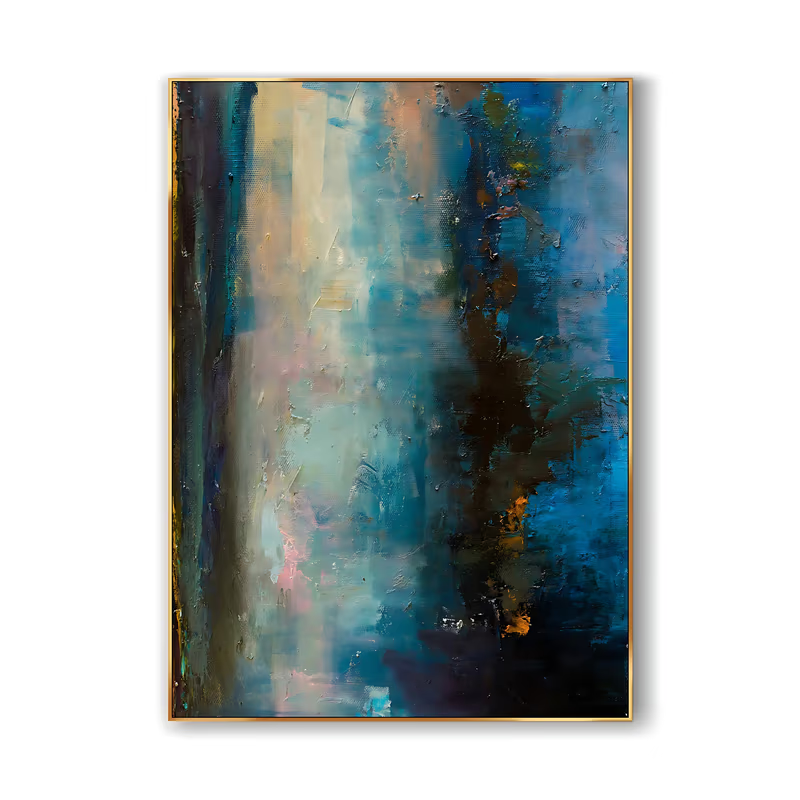
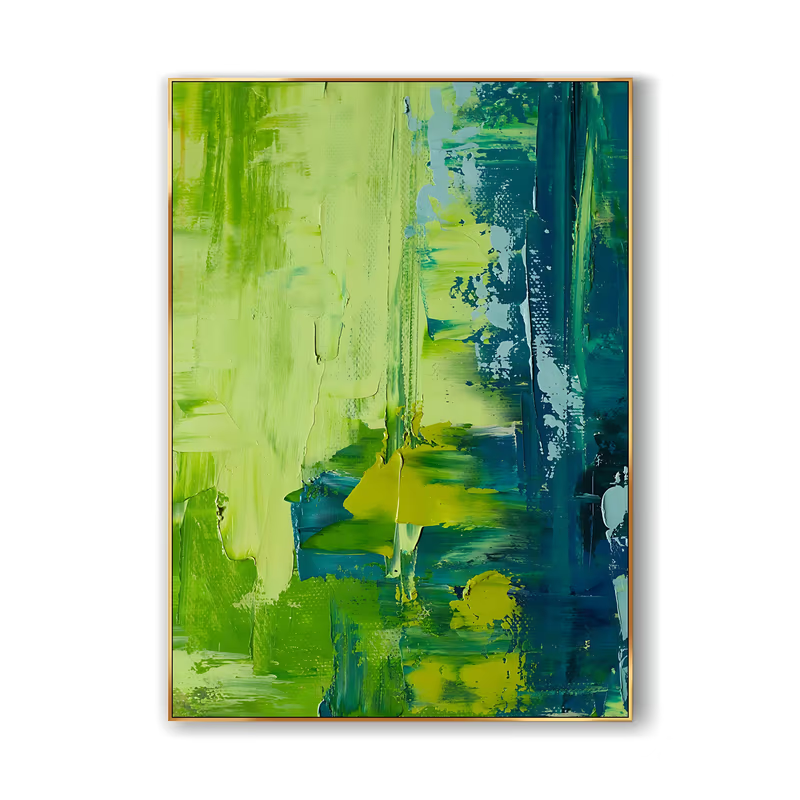
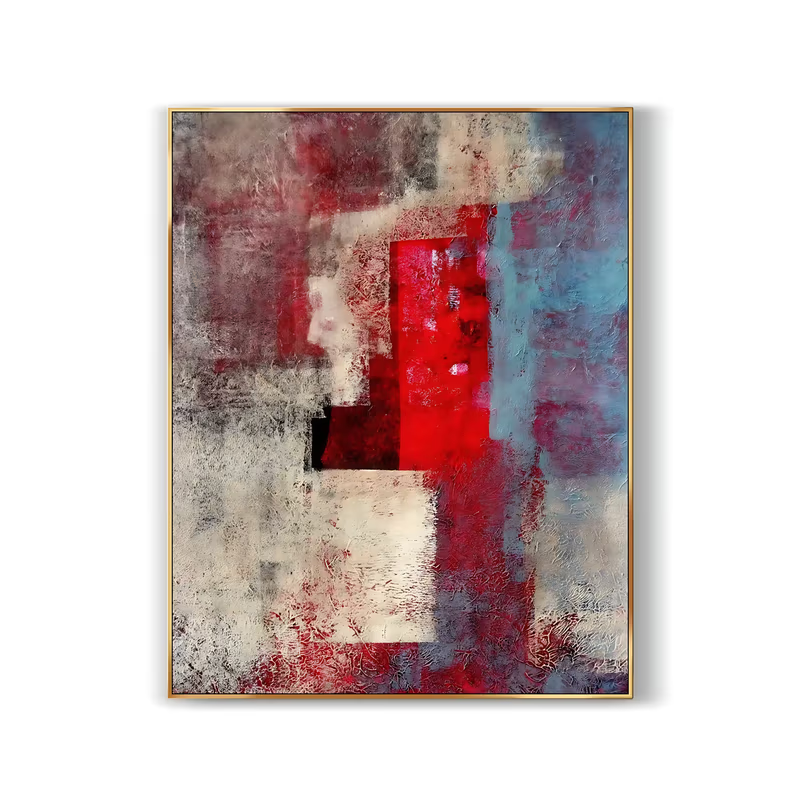
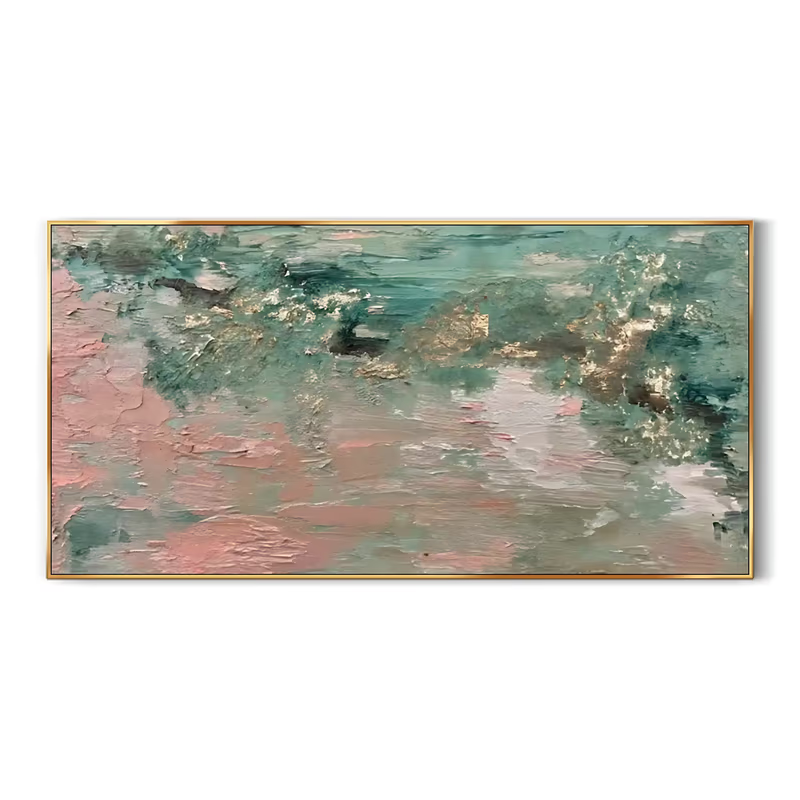
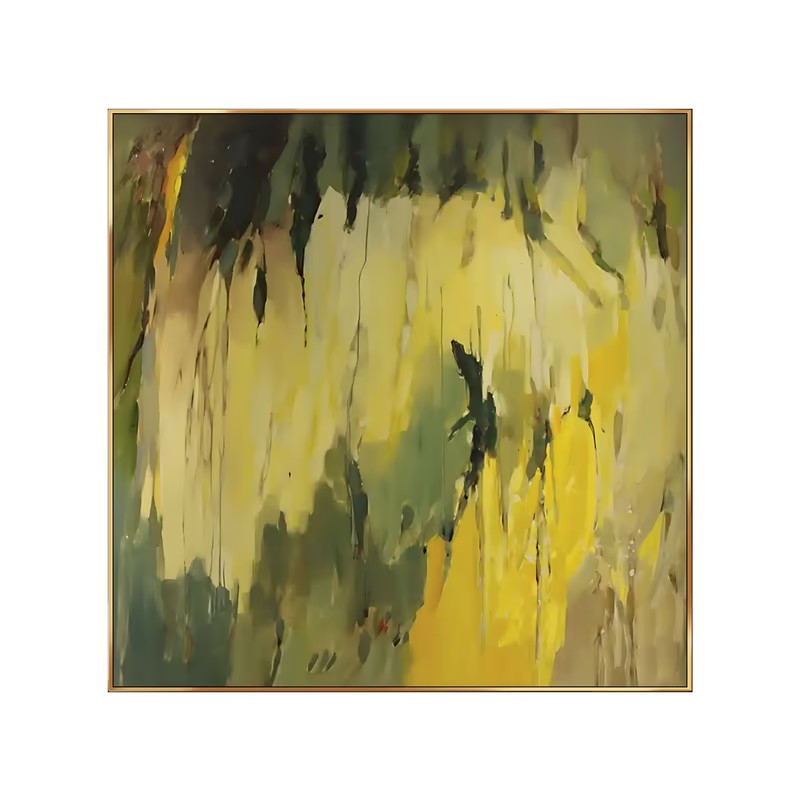
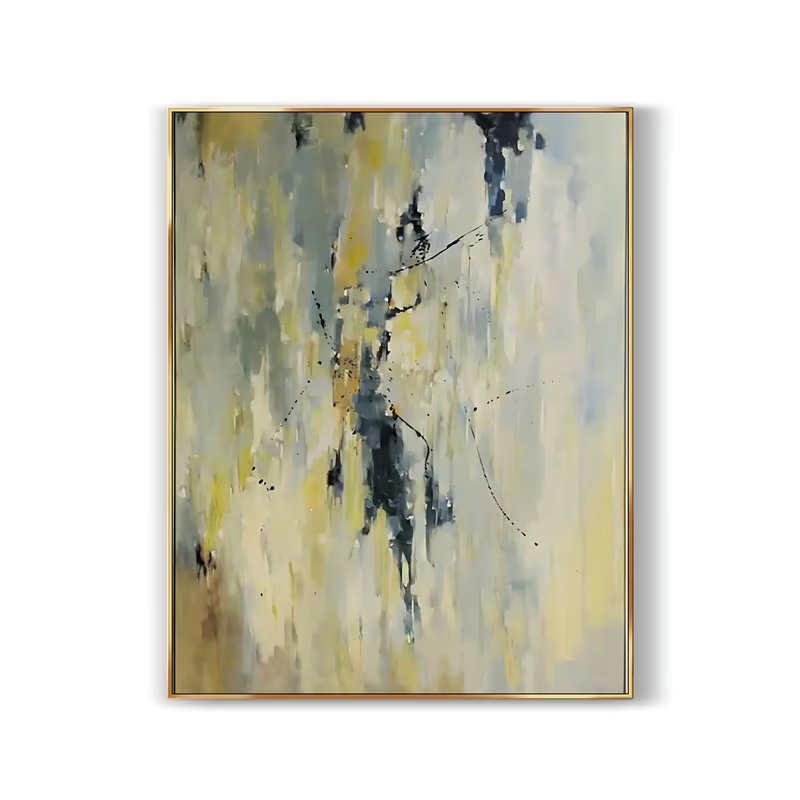
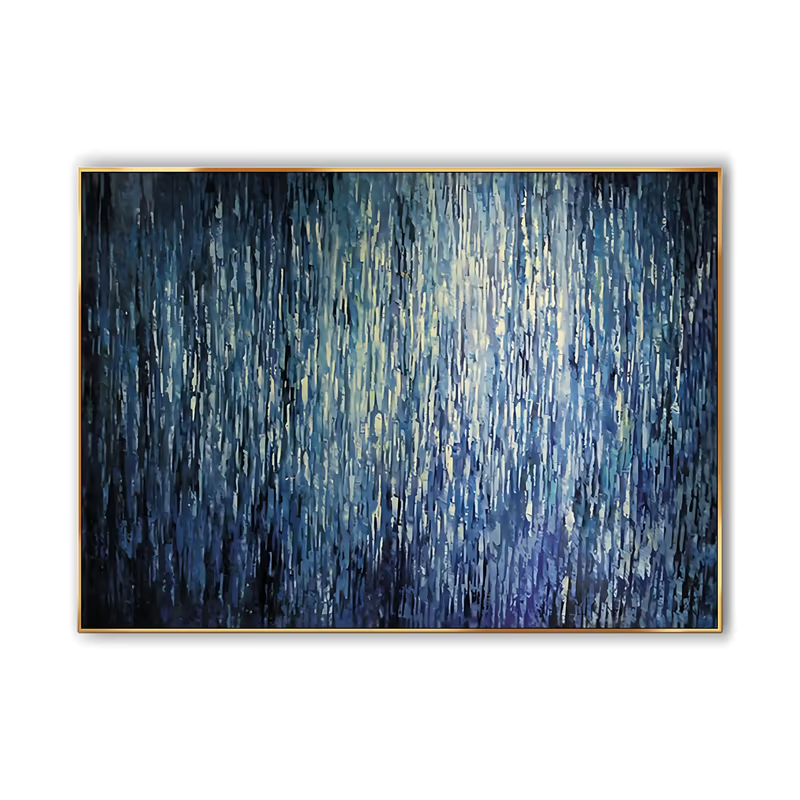
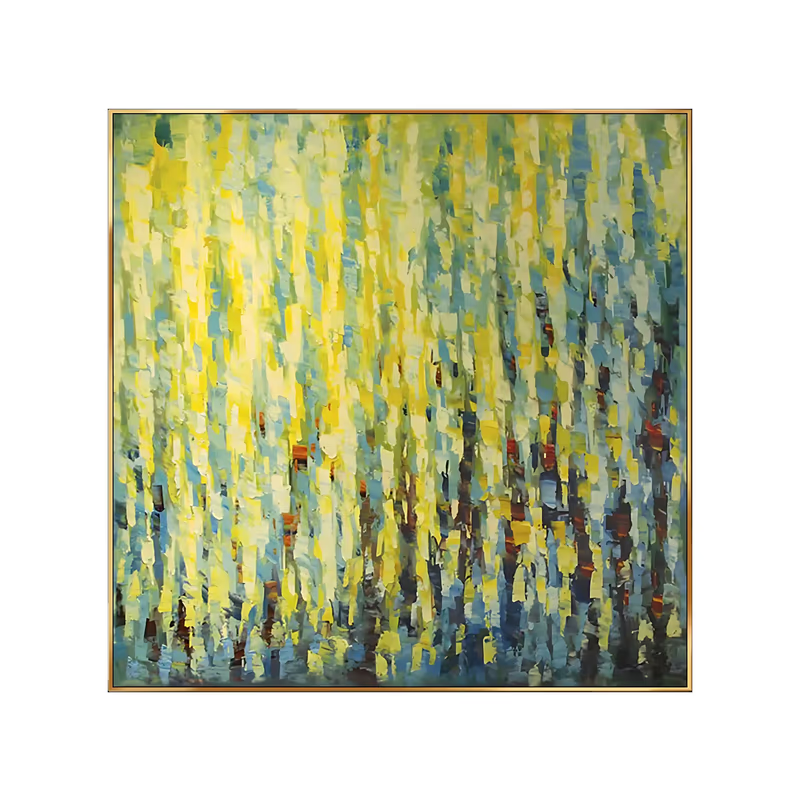
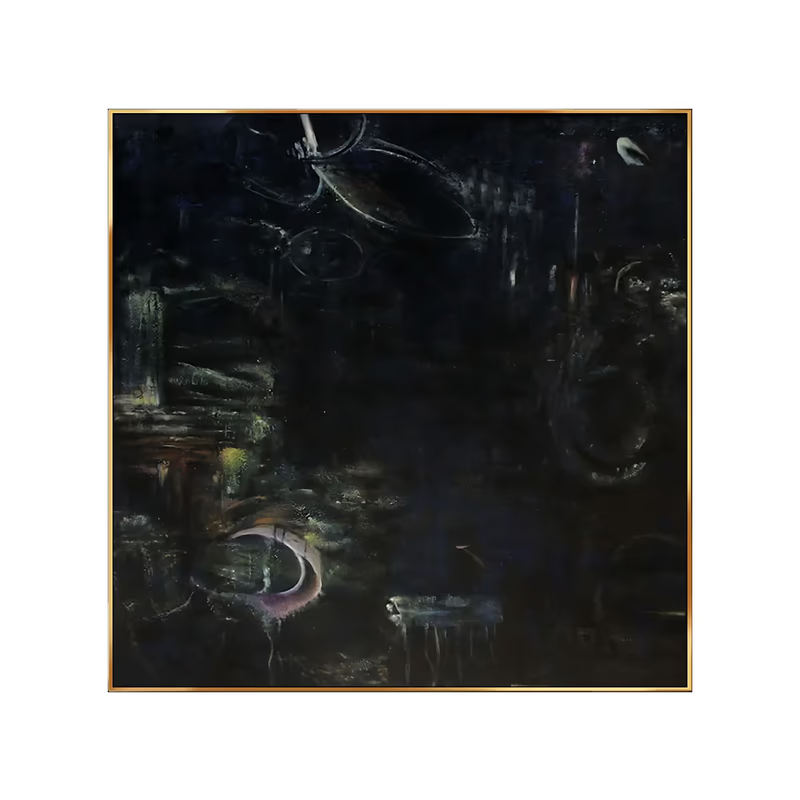
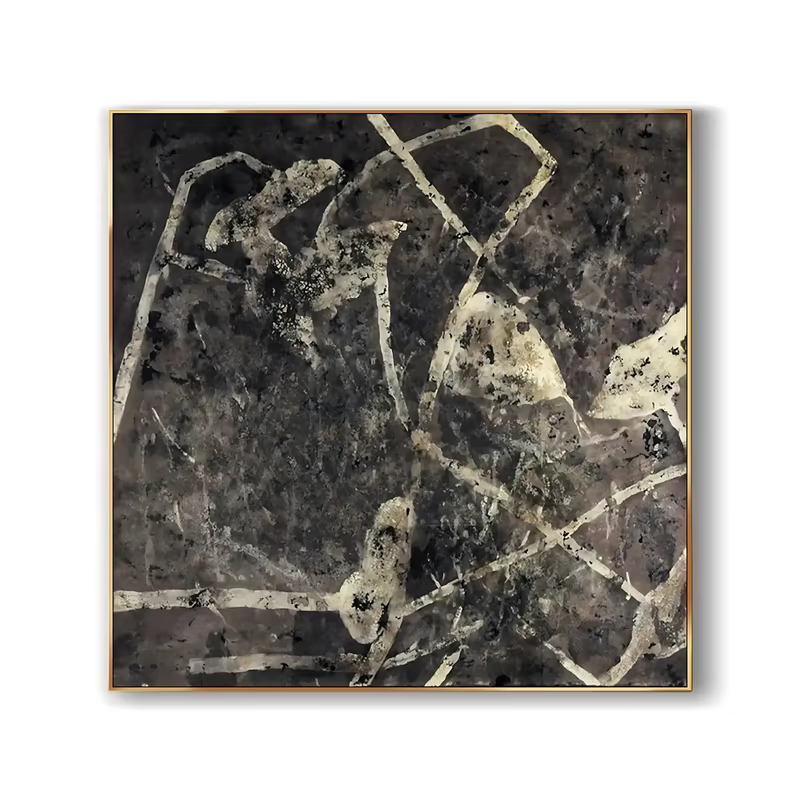
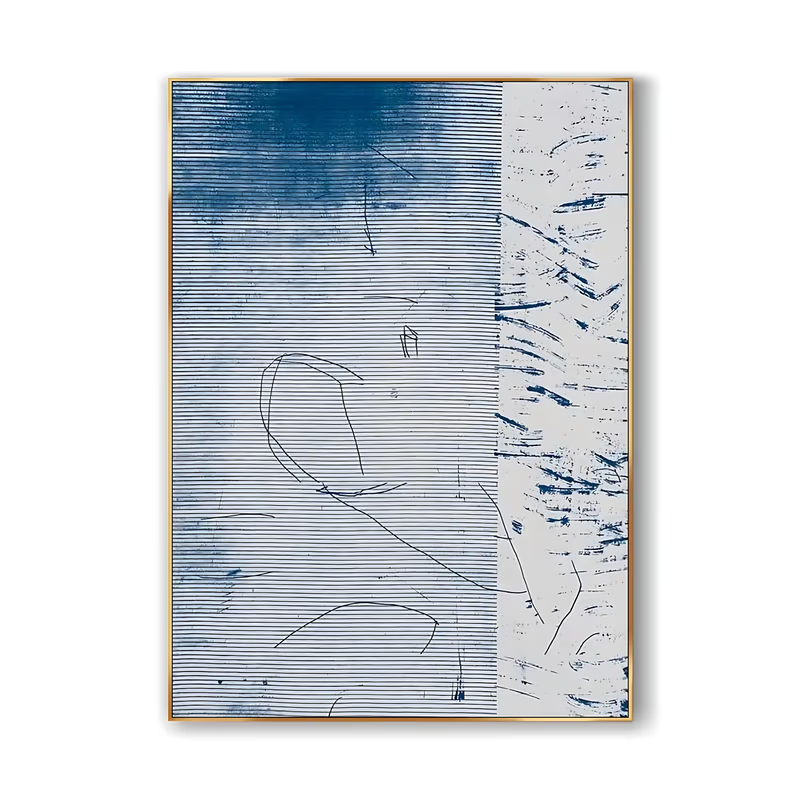
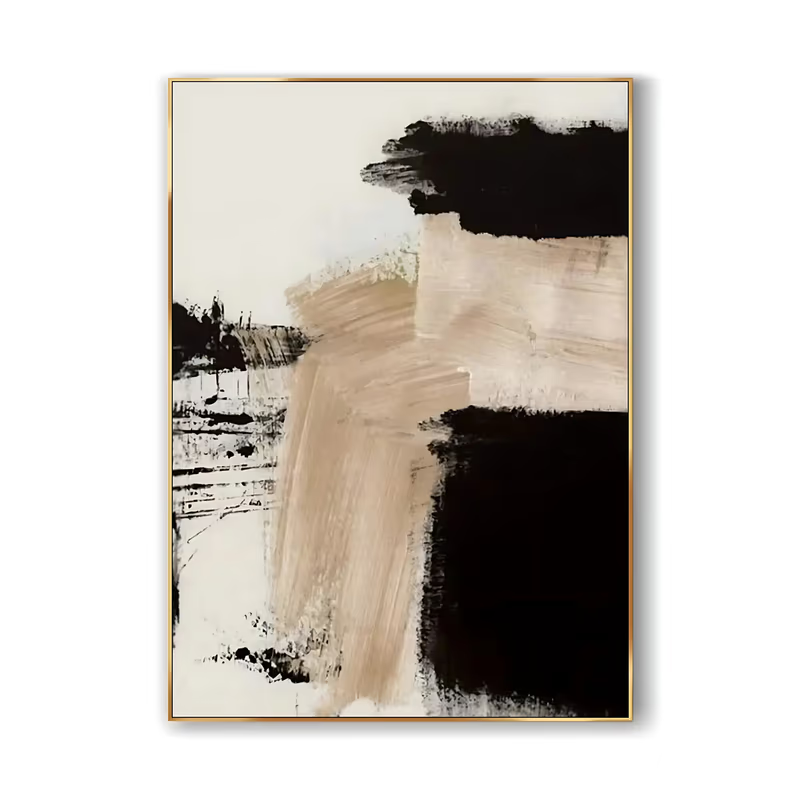
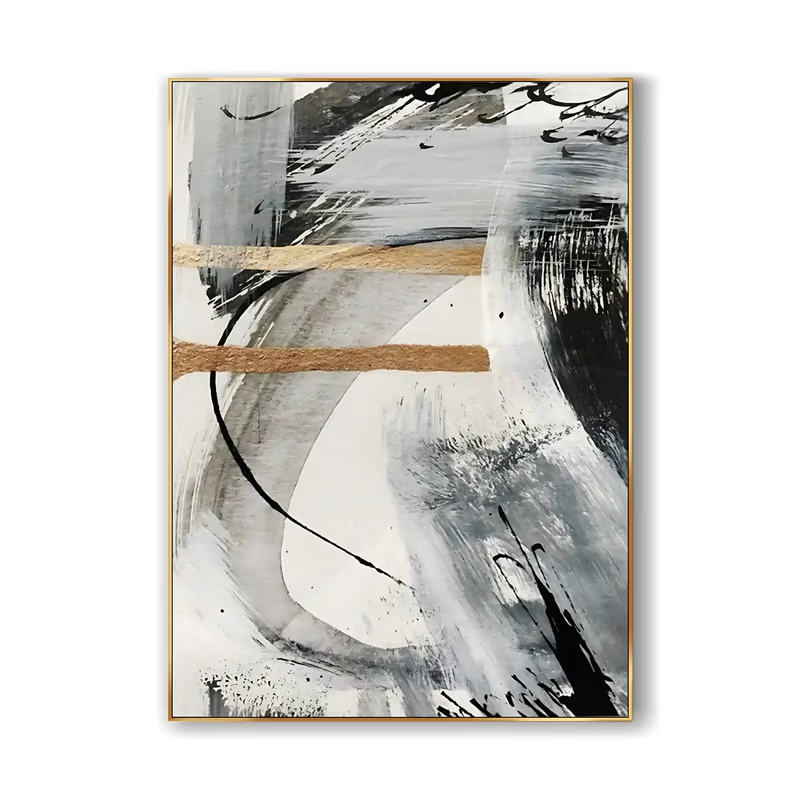
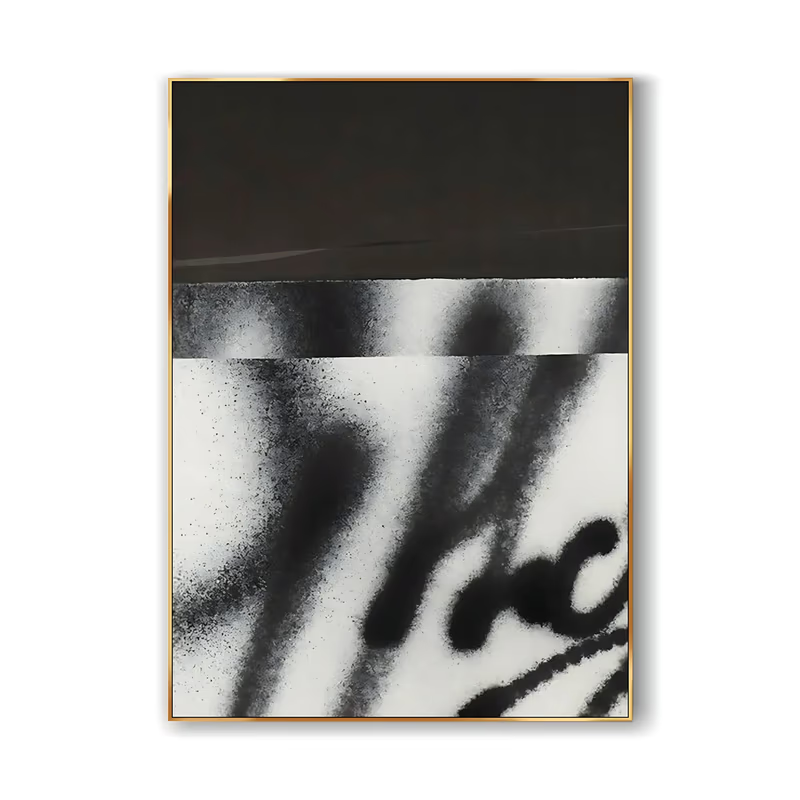
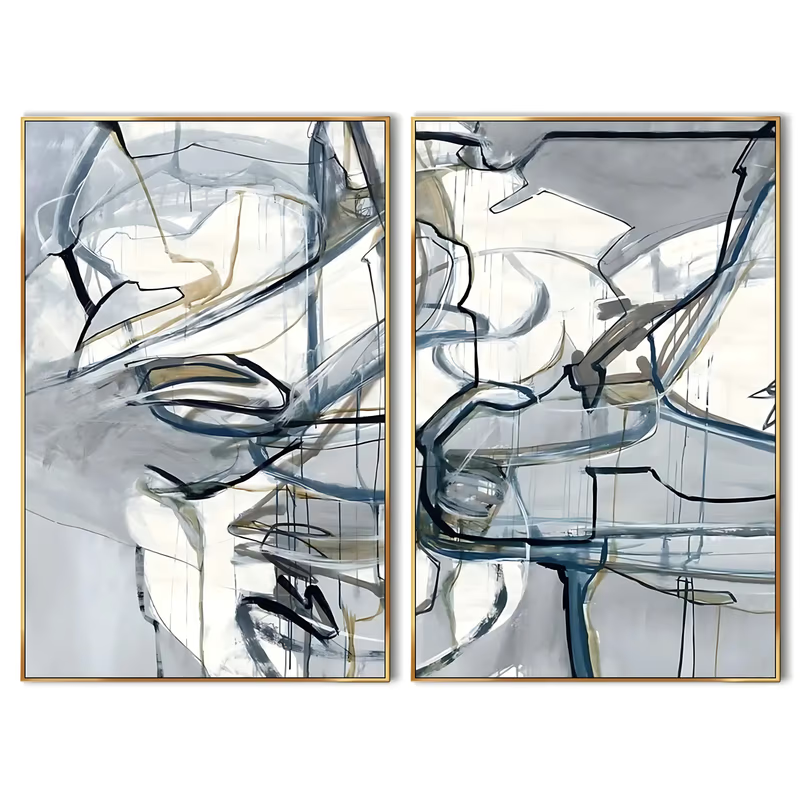
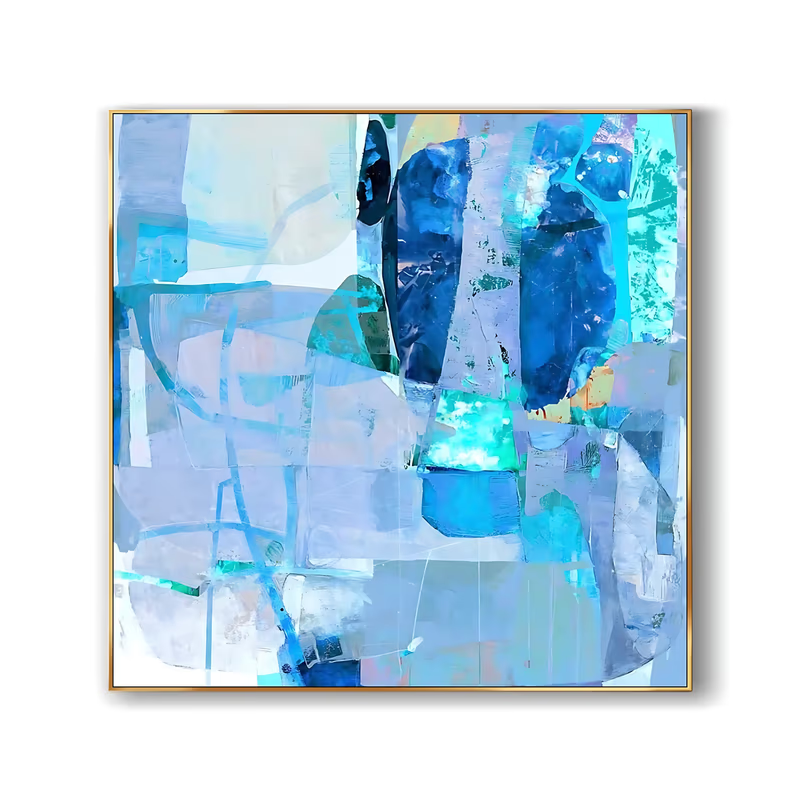
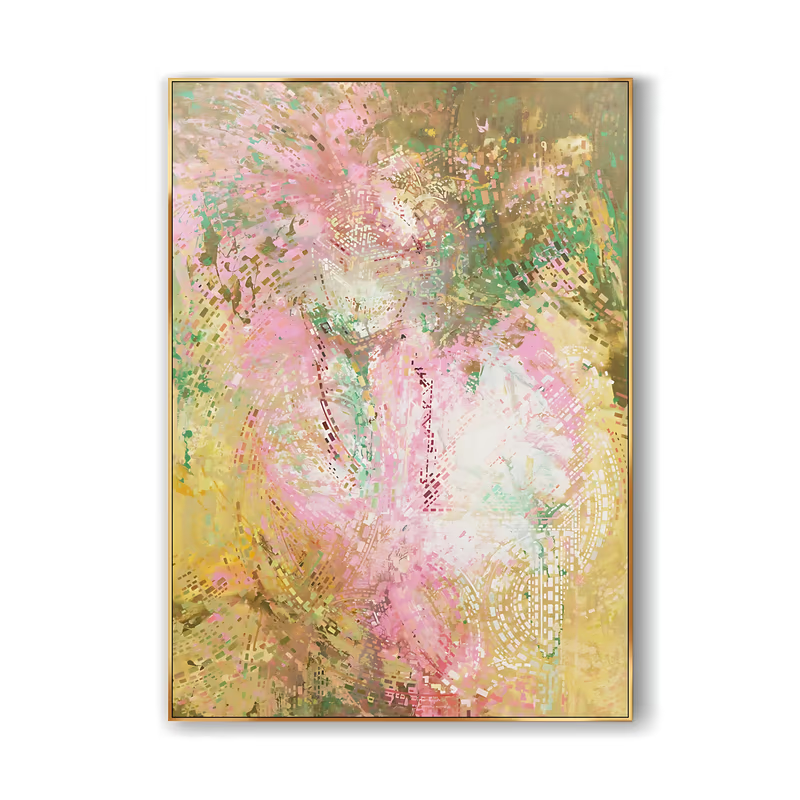
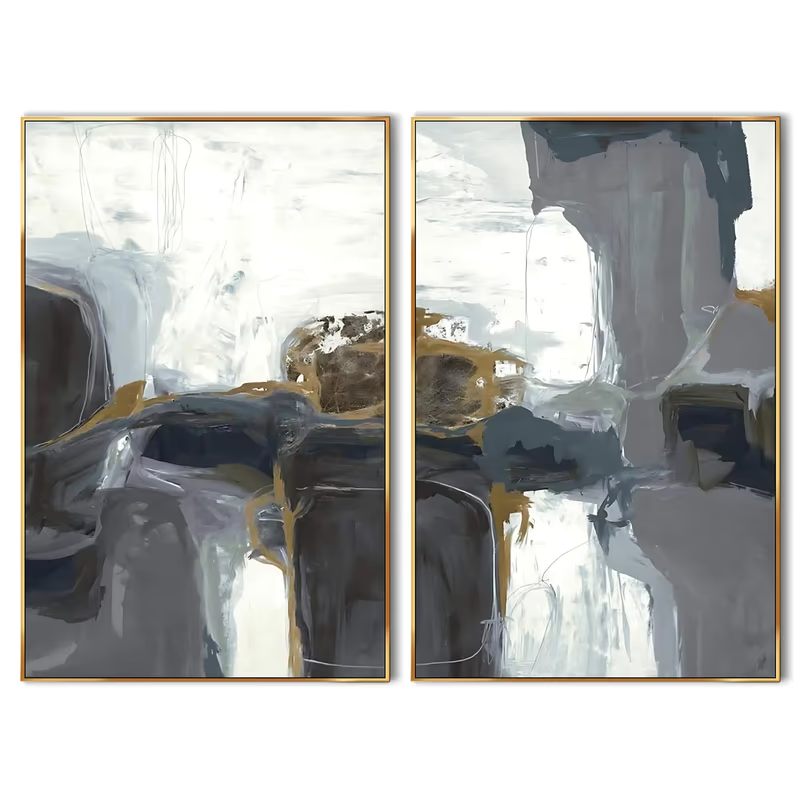
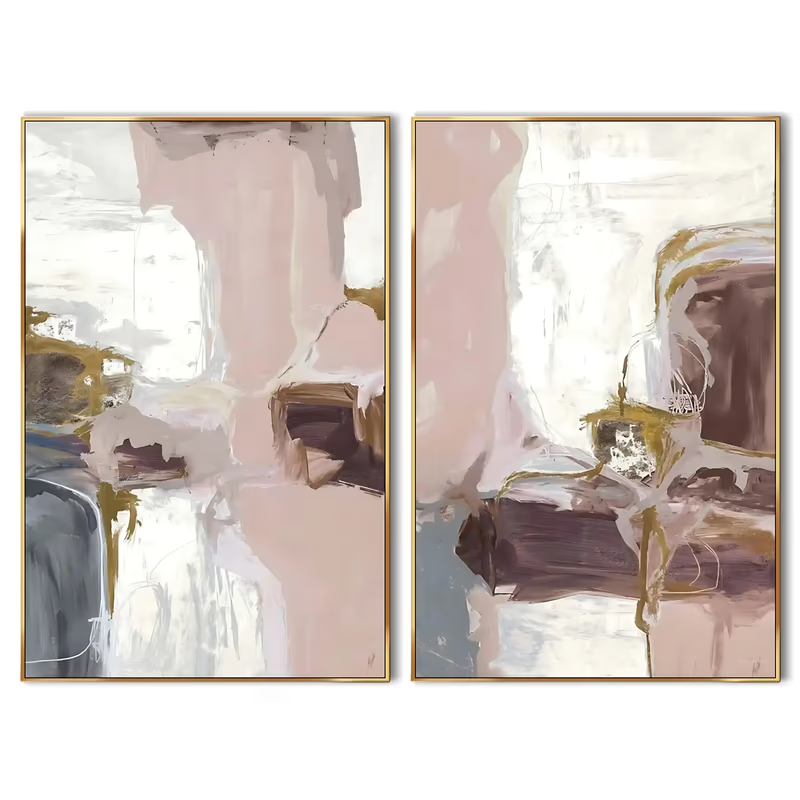
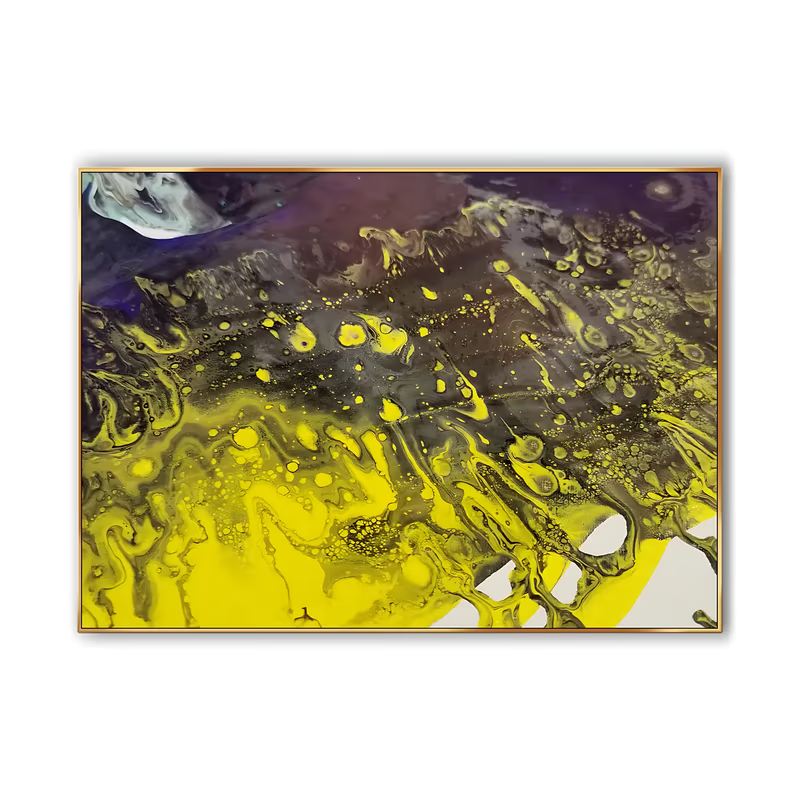
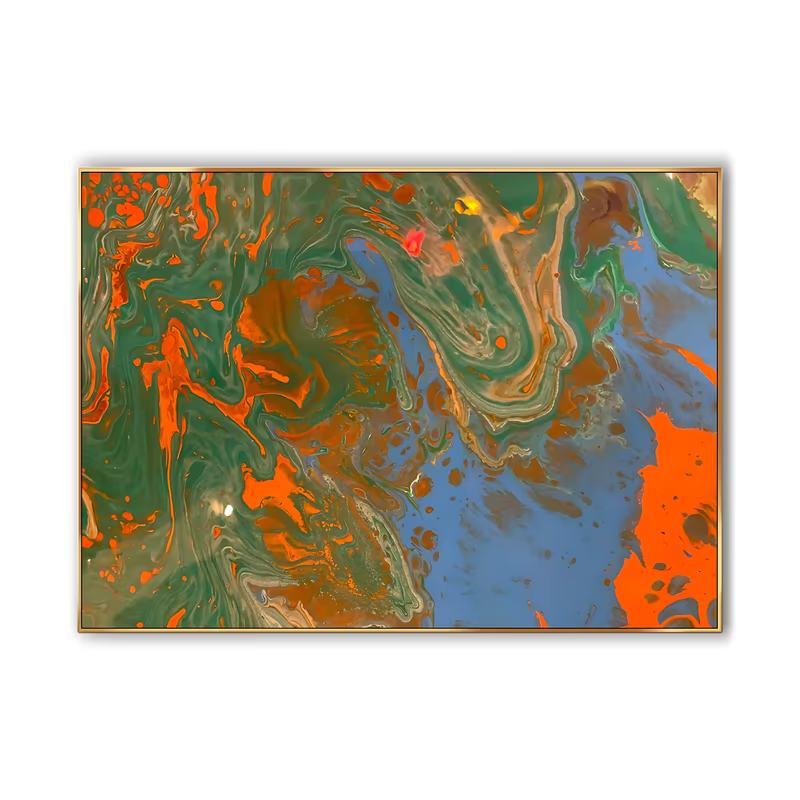
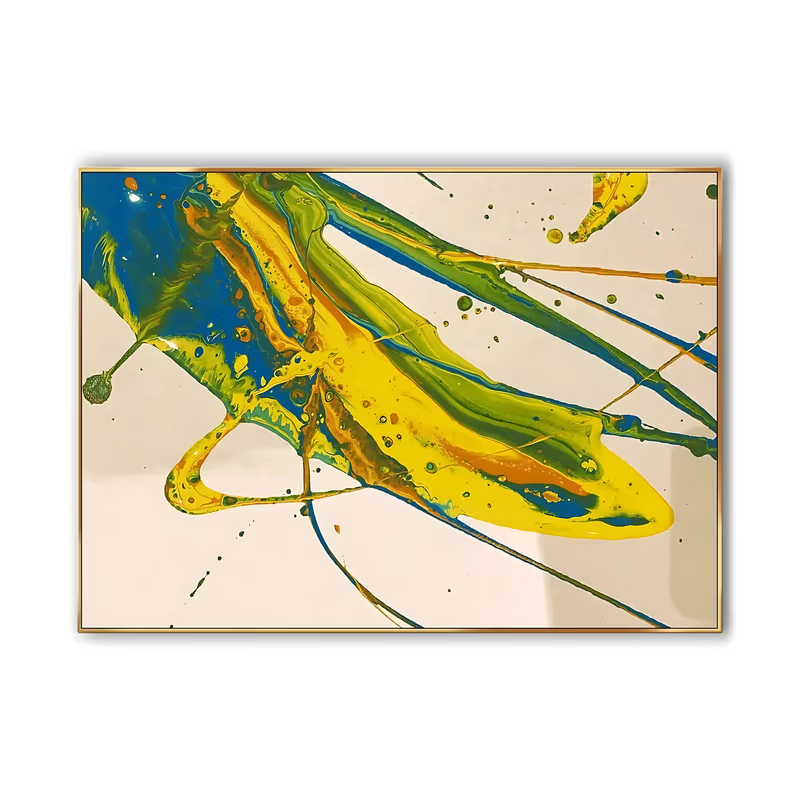
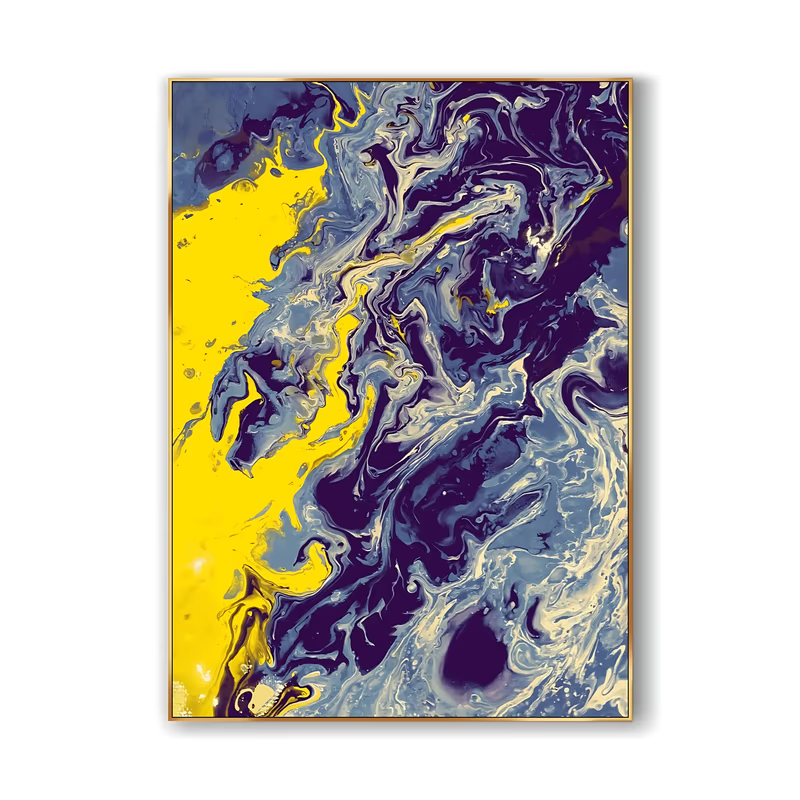
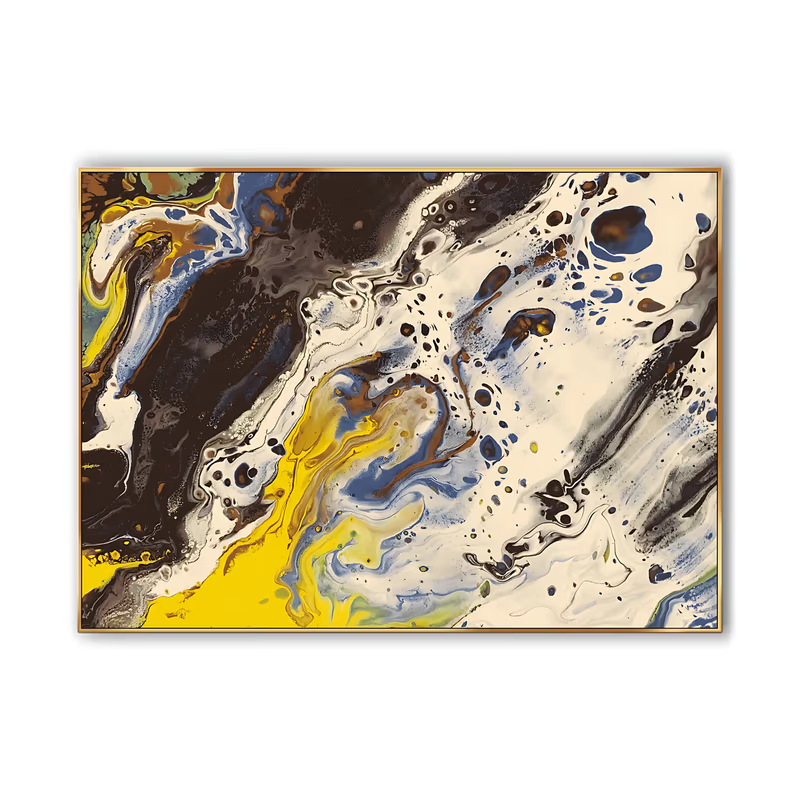
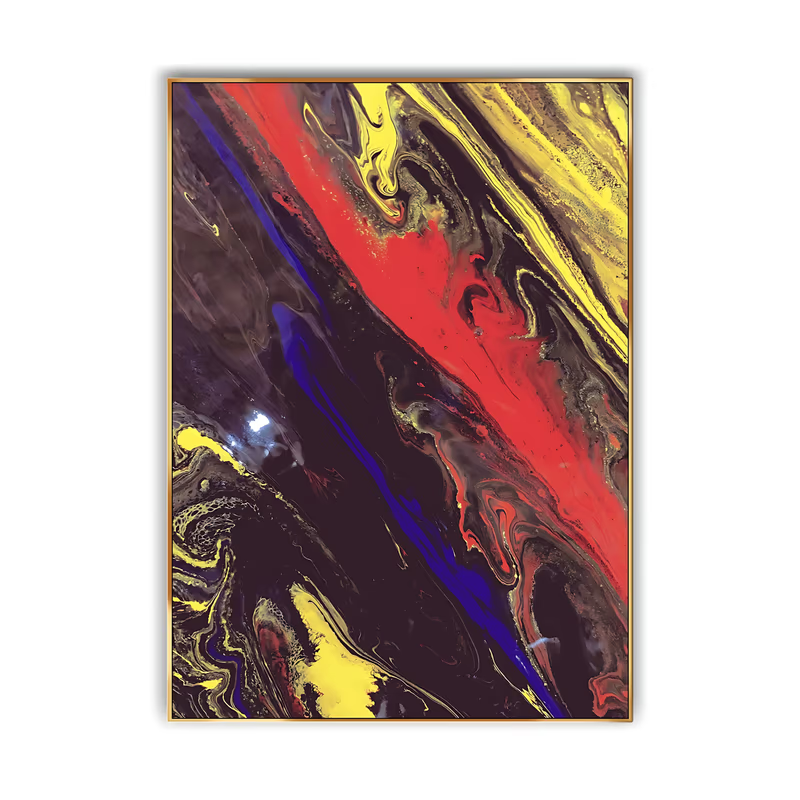
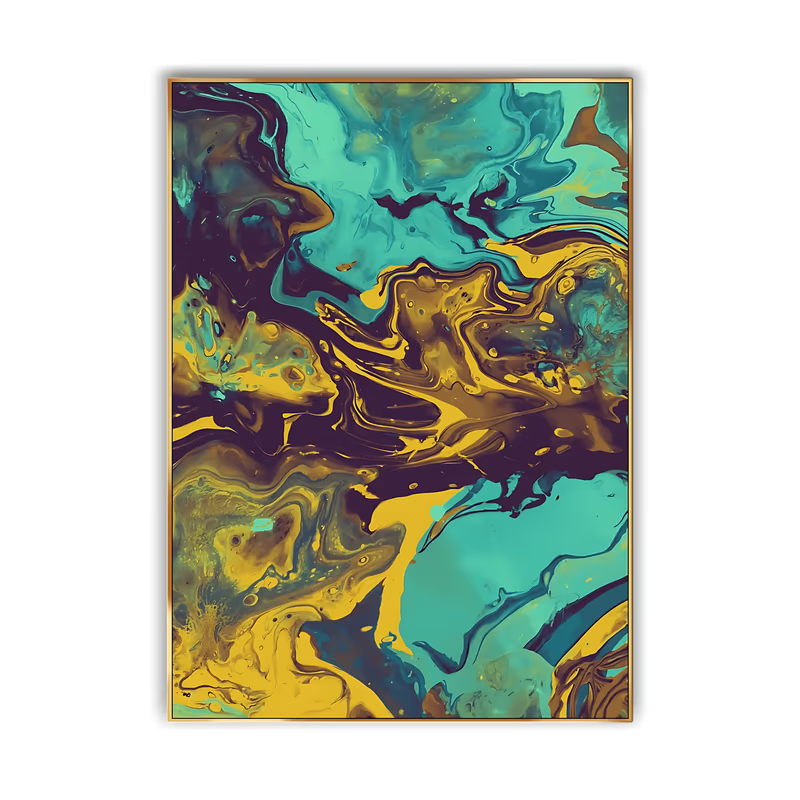
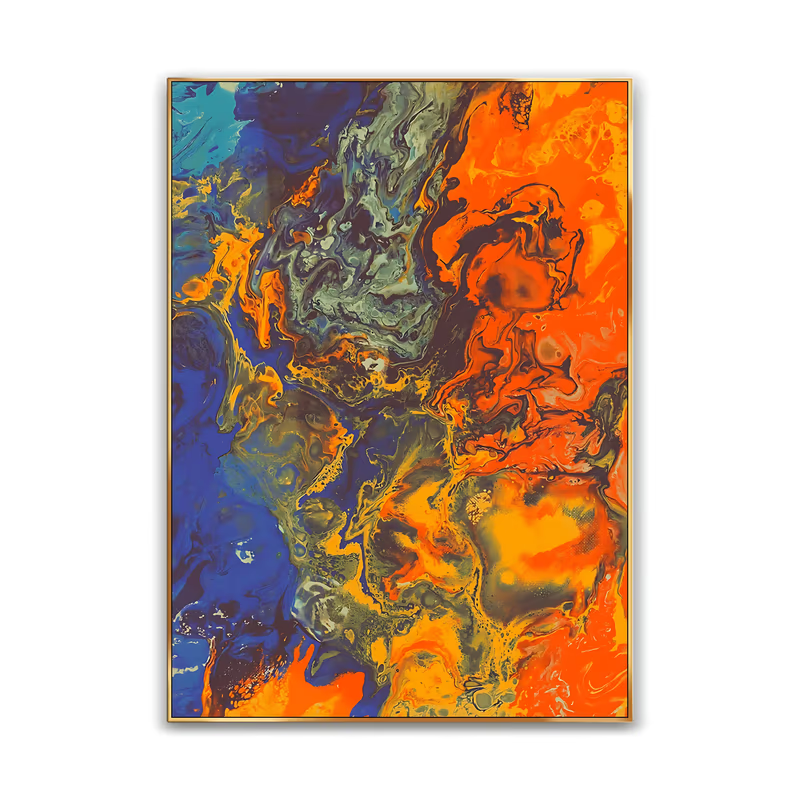
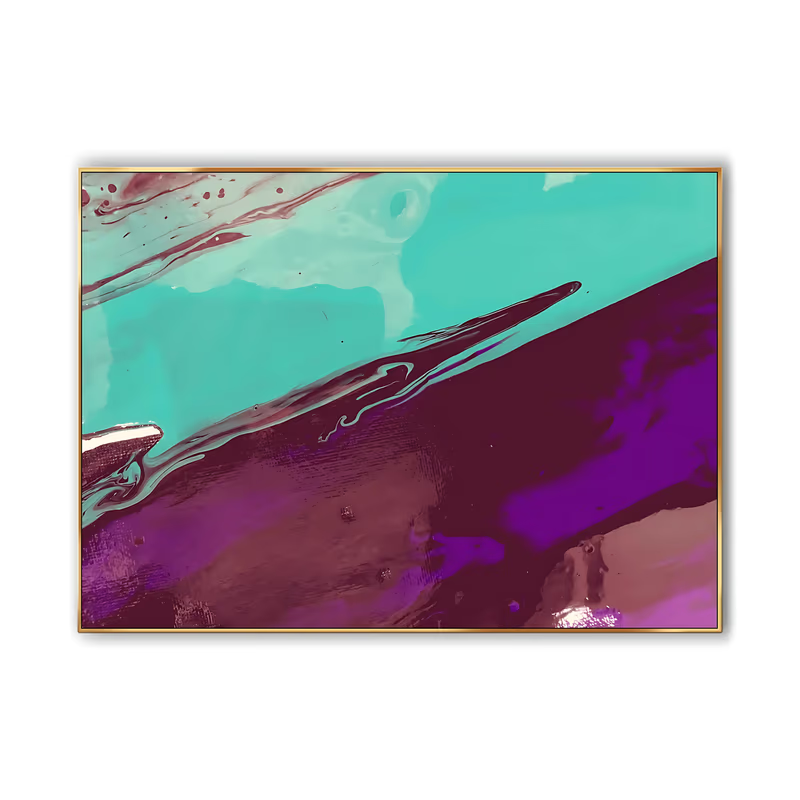
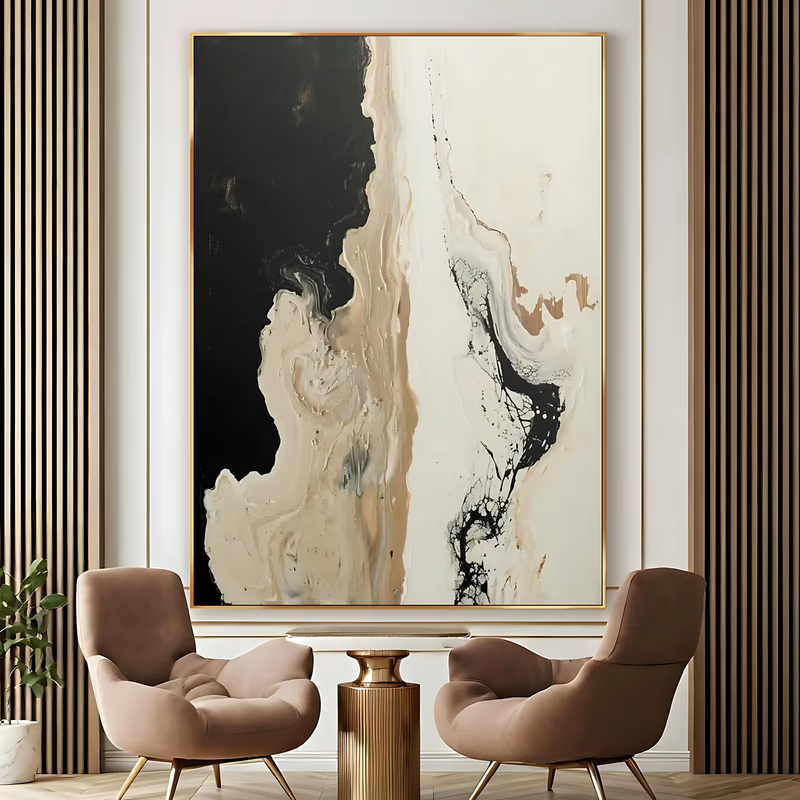
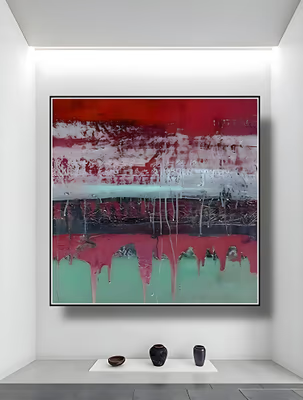
The paint itself is the subject. Wide palette-knife strokes stacked like shale, fluid pours that marble into agate and gold veins, dense flung drips, and quiet grey washes scattered with gold leaf. Big and loose, they hold a large wall in a living room, a bar or a reception.
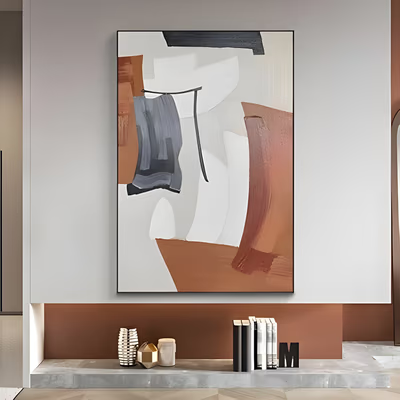
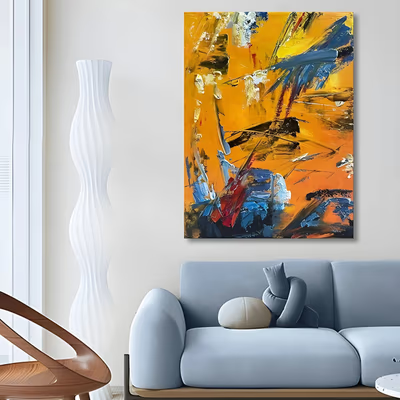
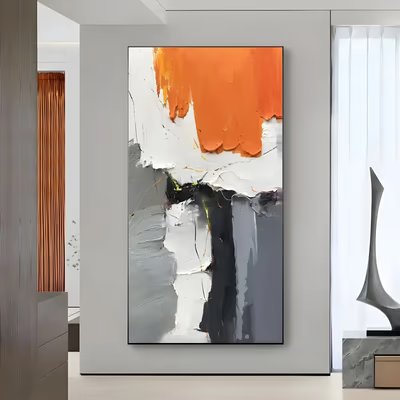
Geometric and colour-block abstracts
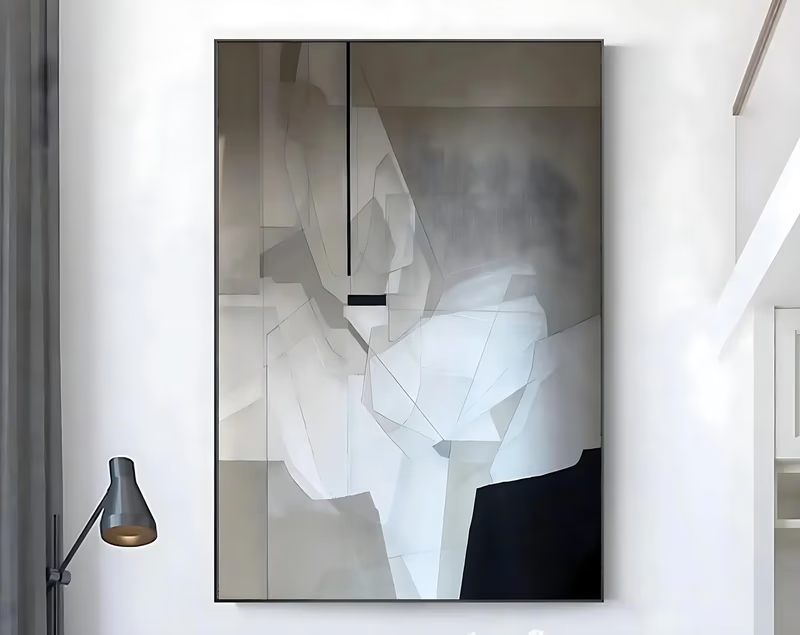
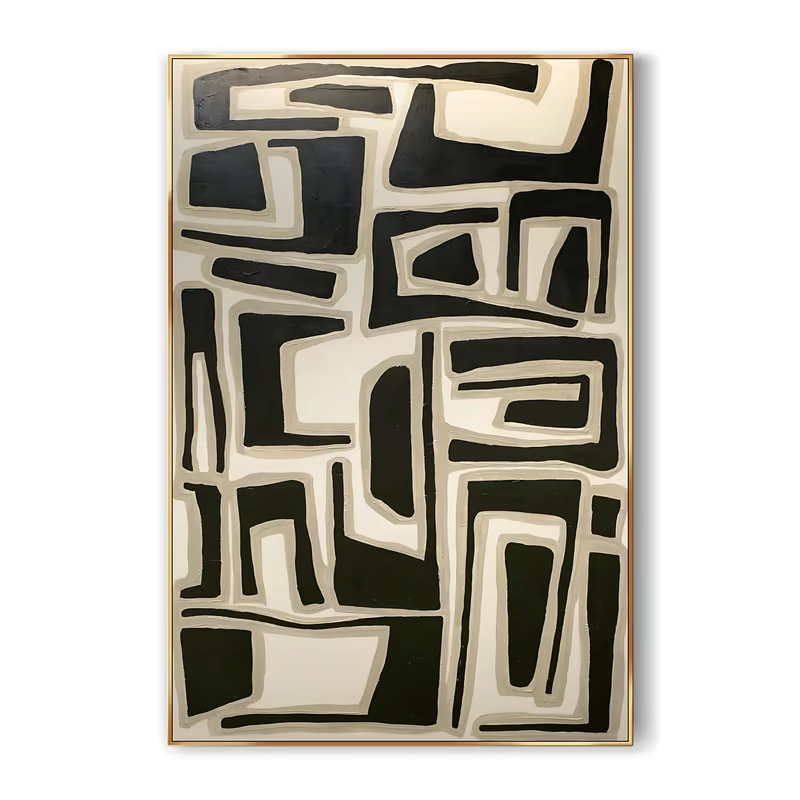
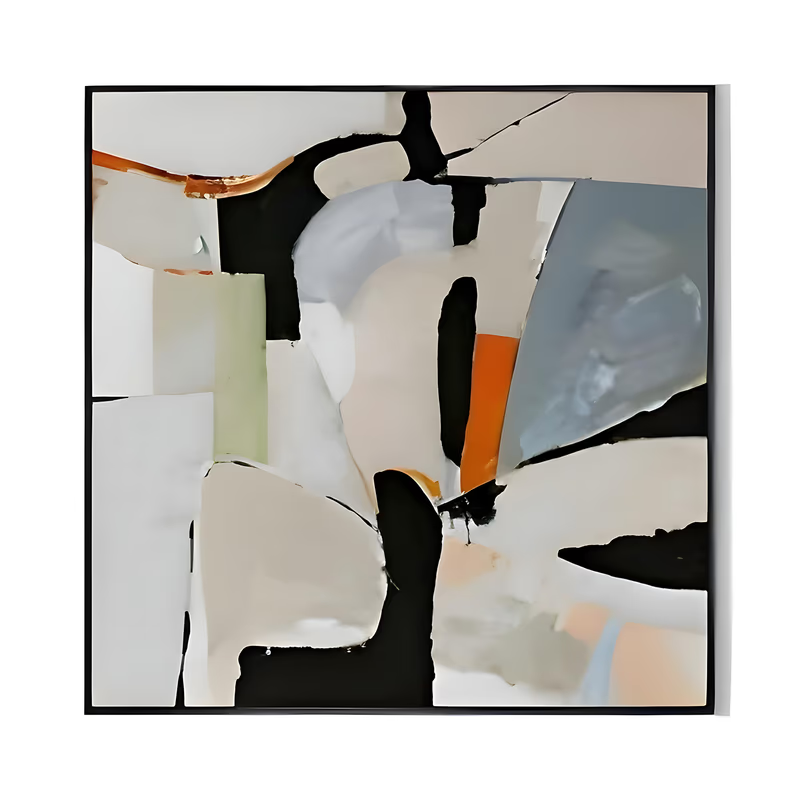
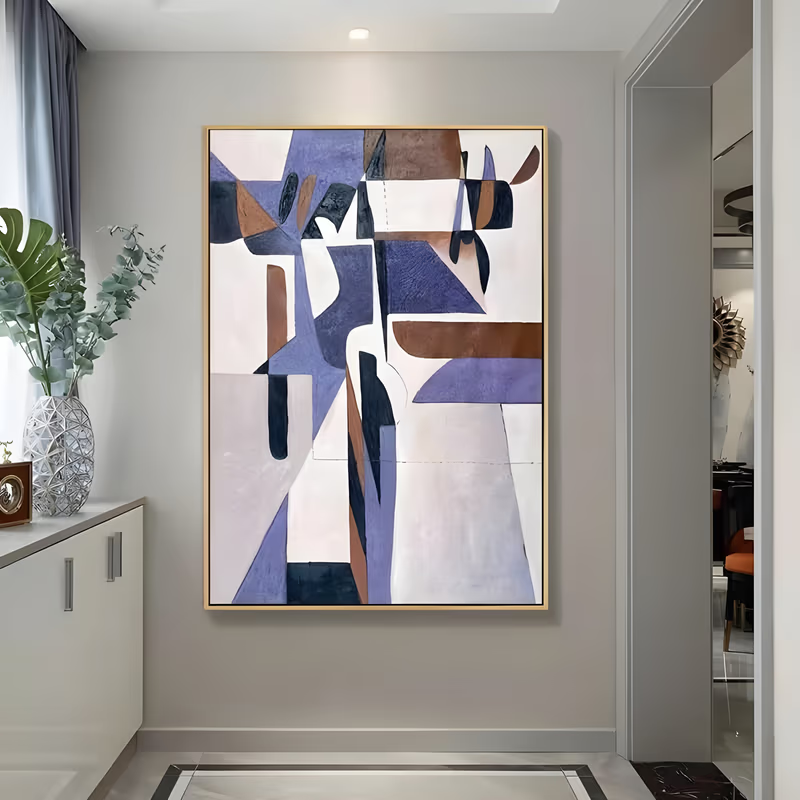
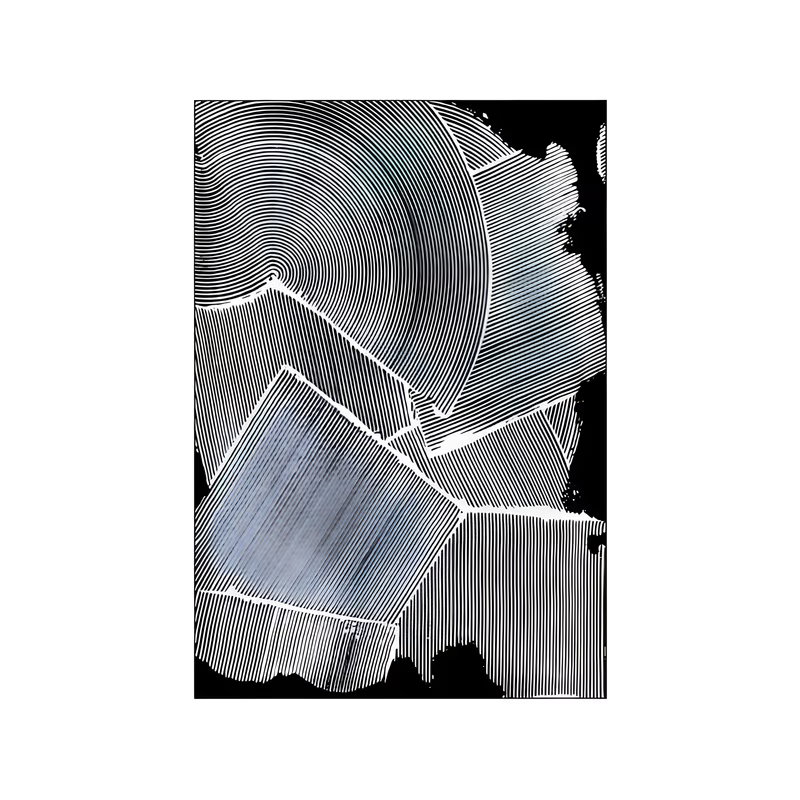
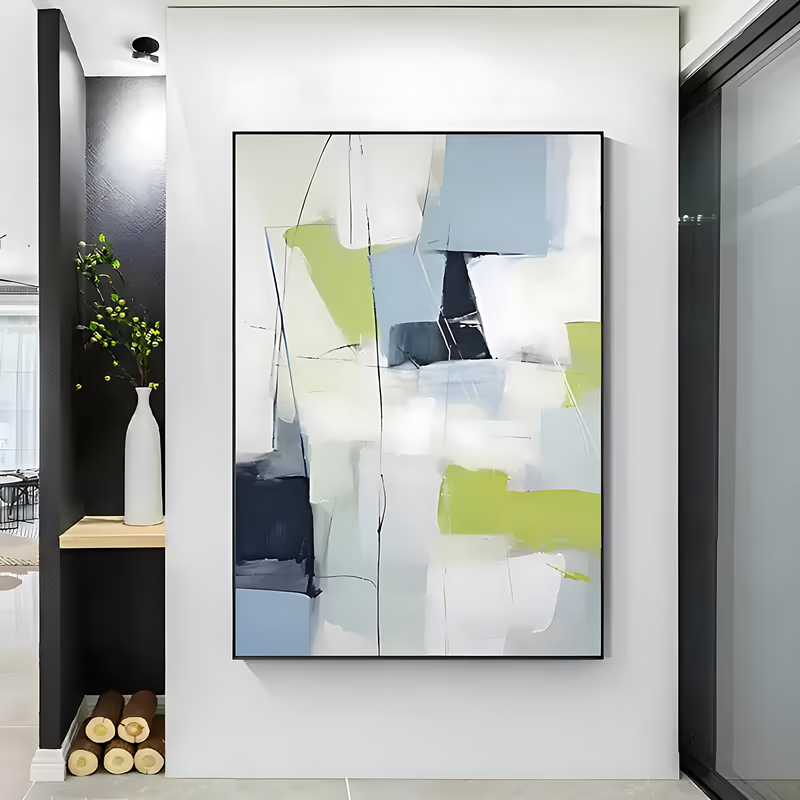
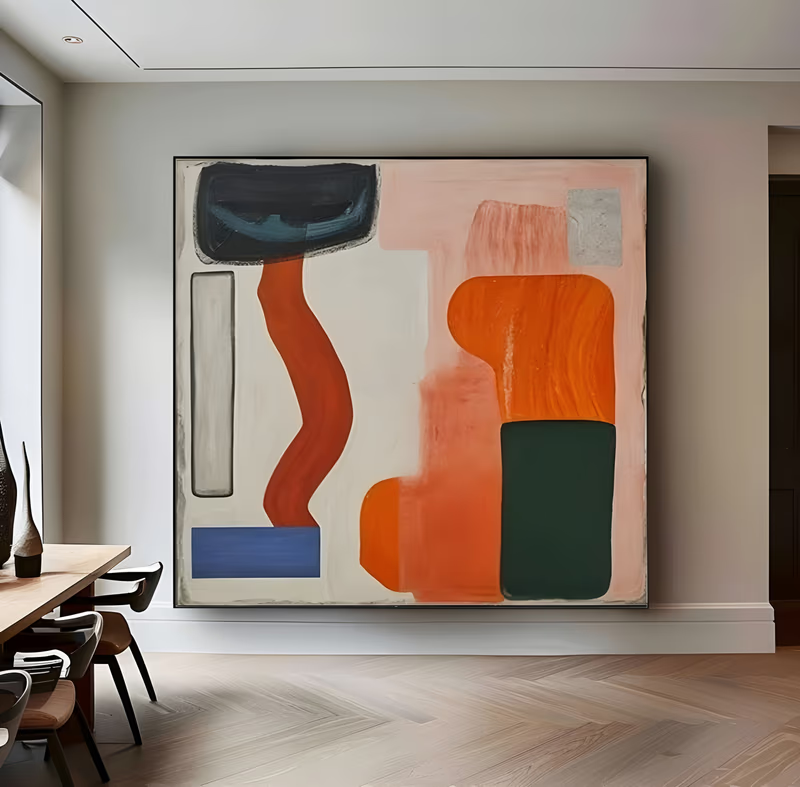
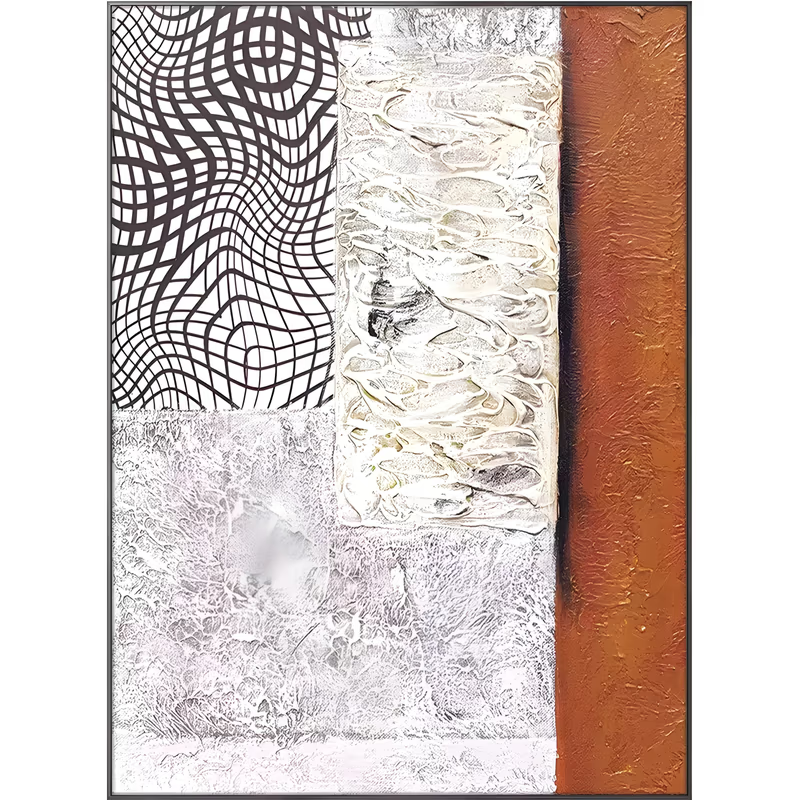
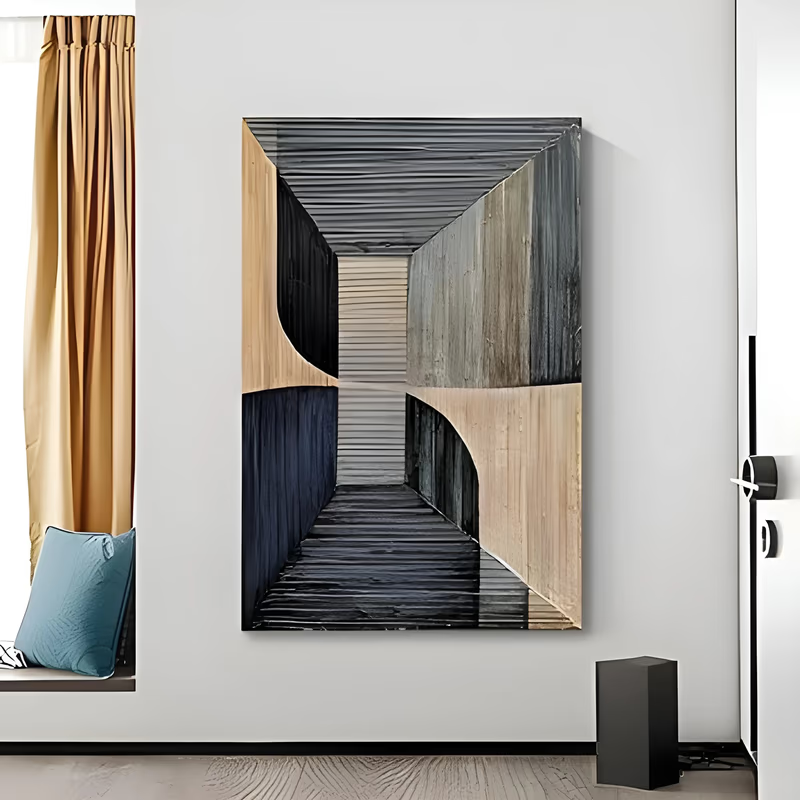
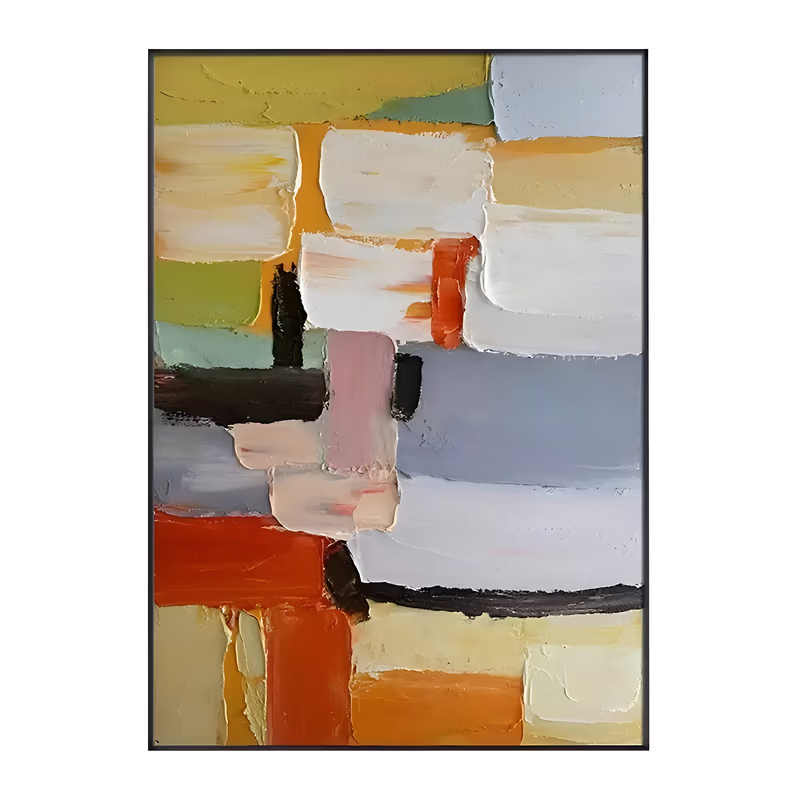
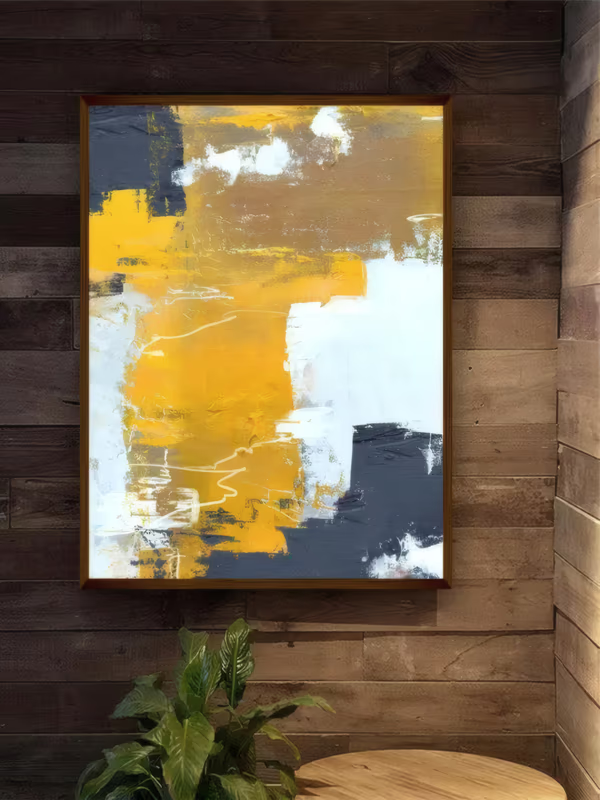
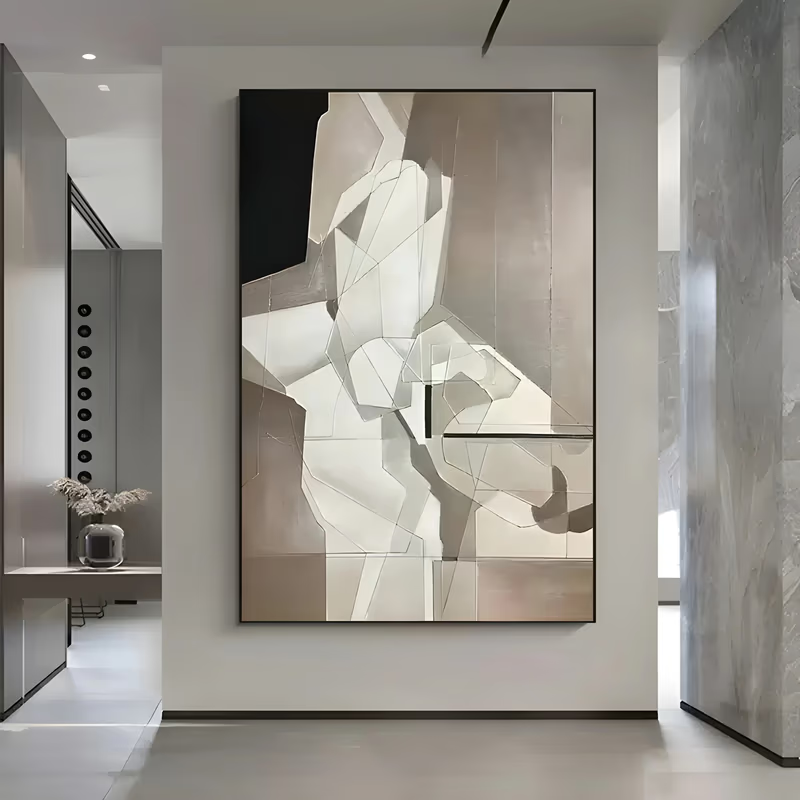
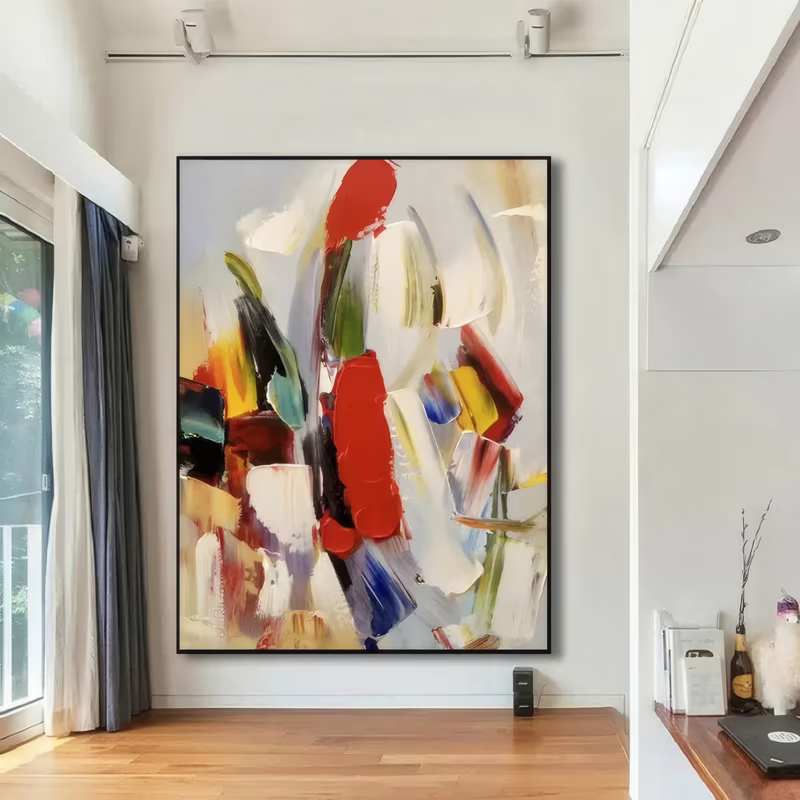
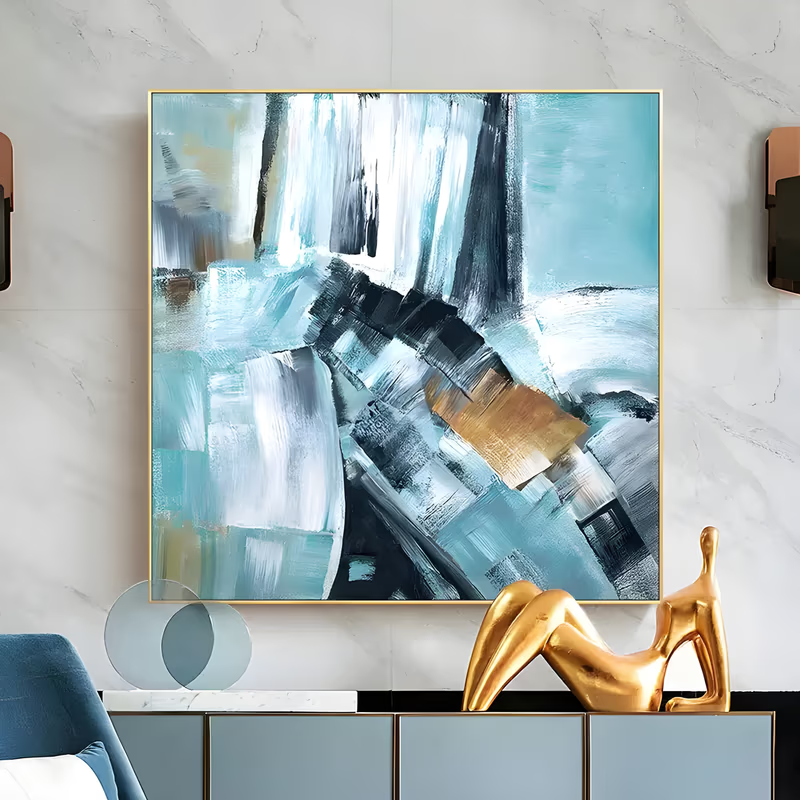
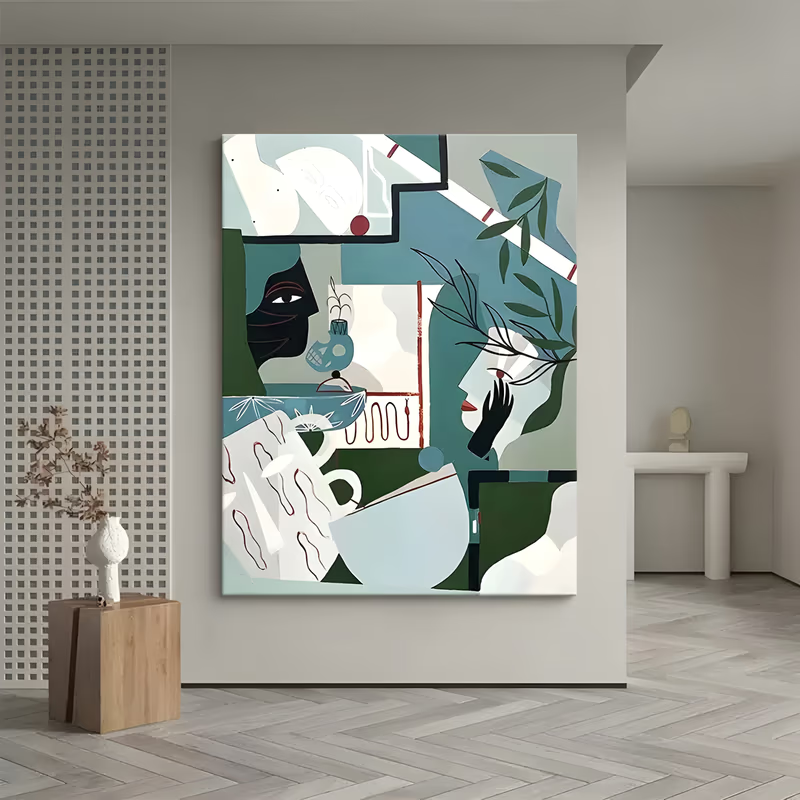
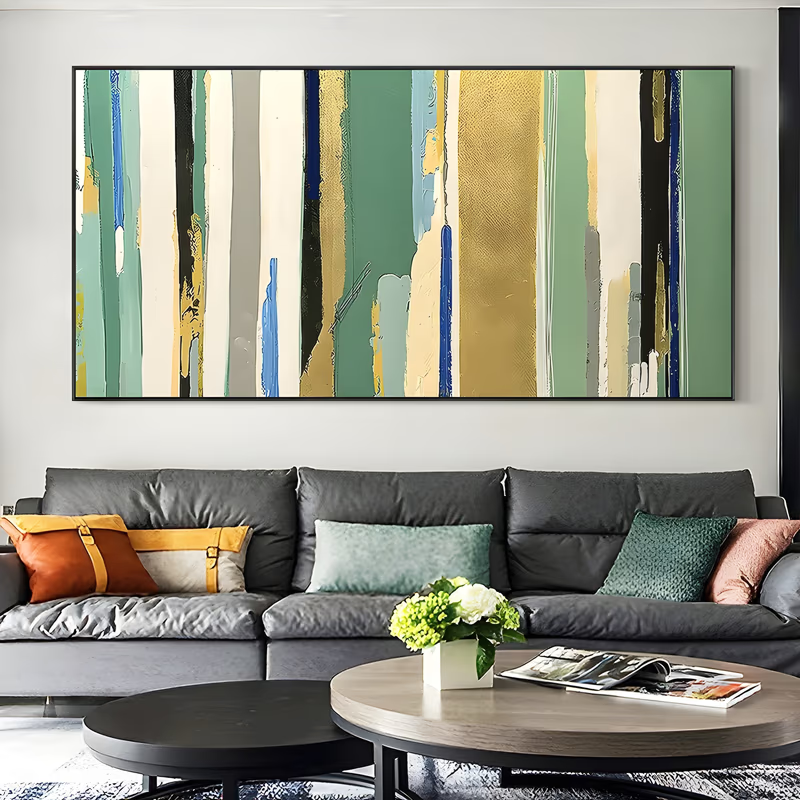
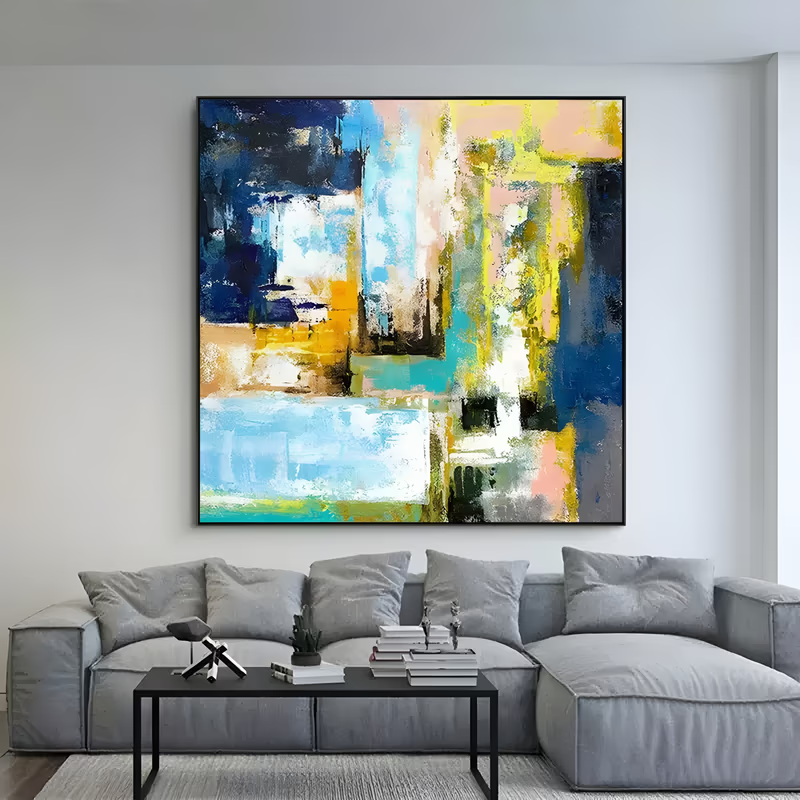
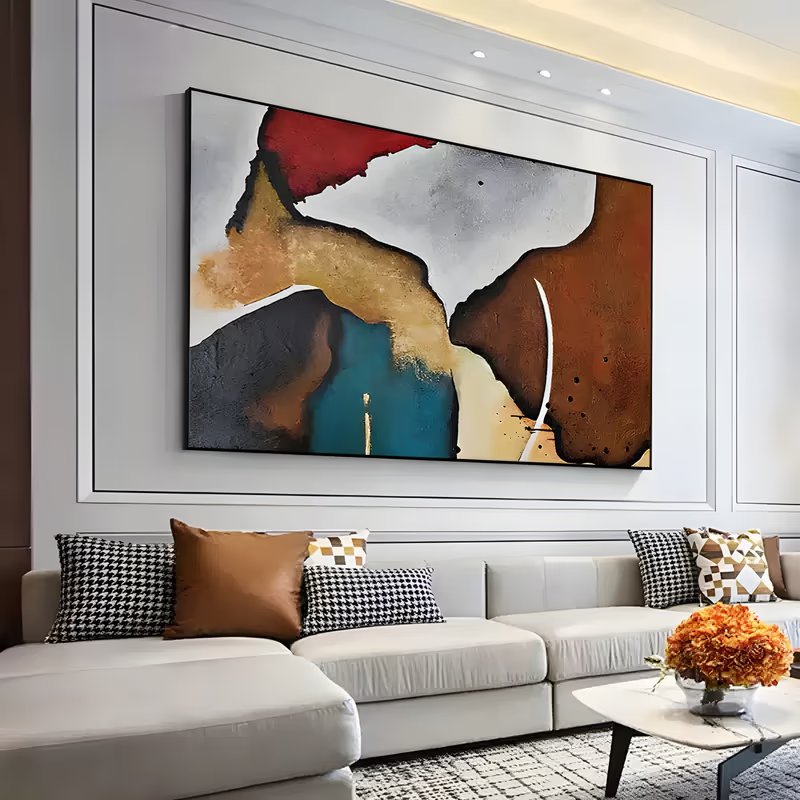
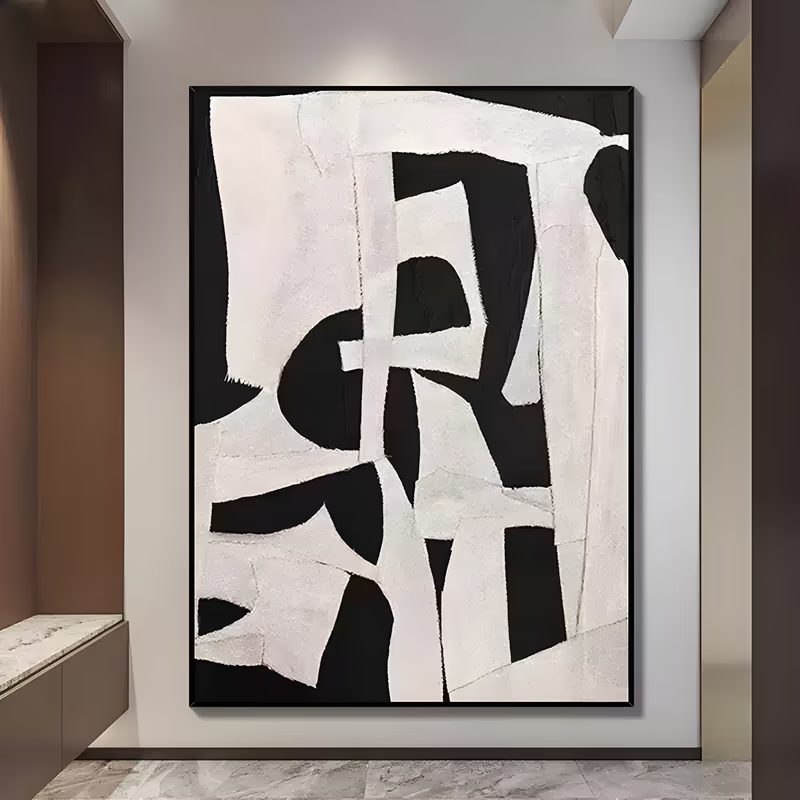
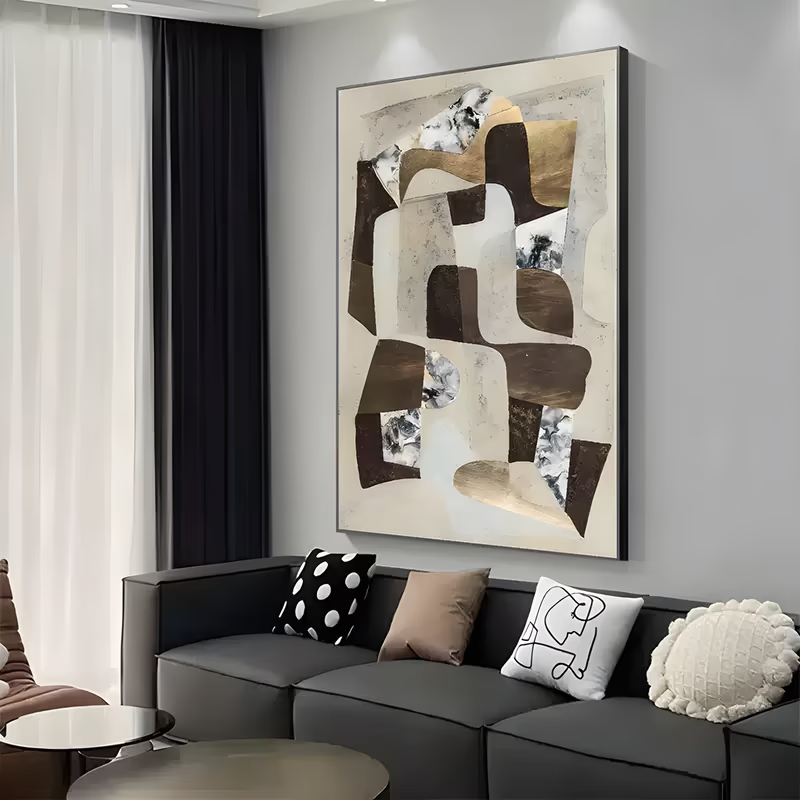
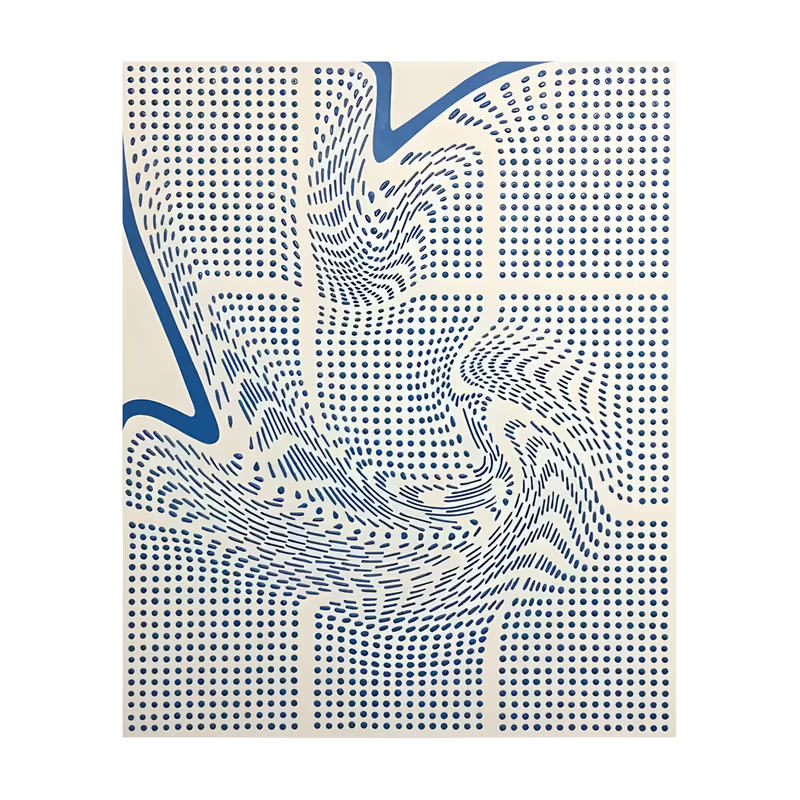
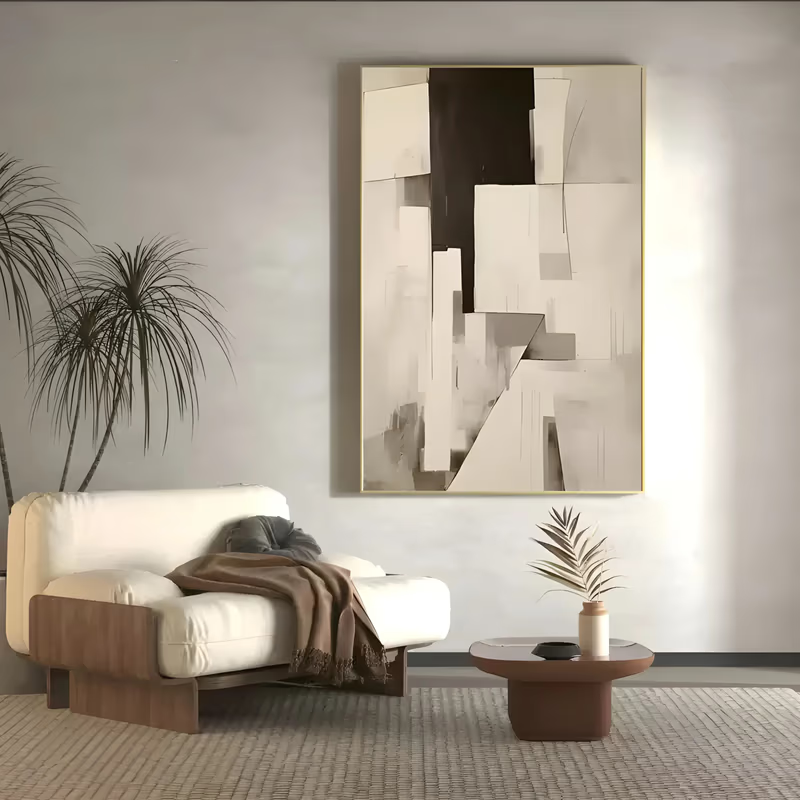
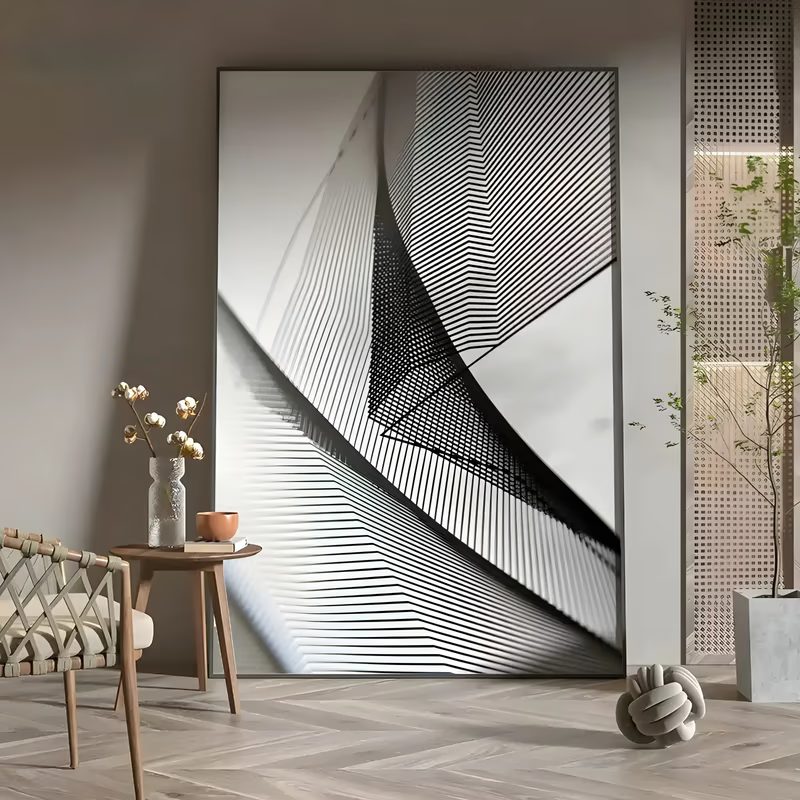
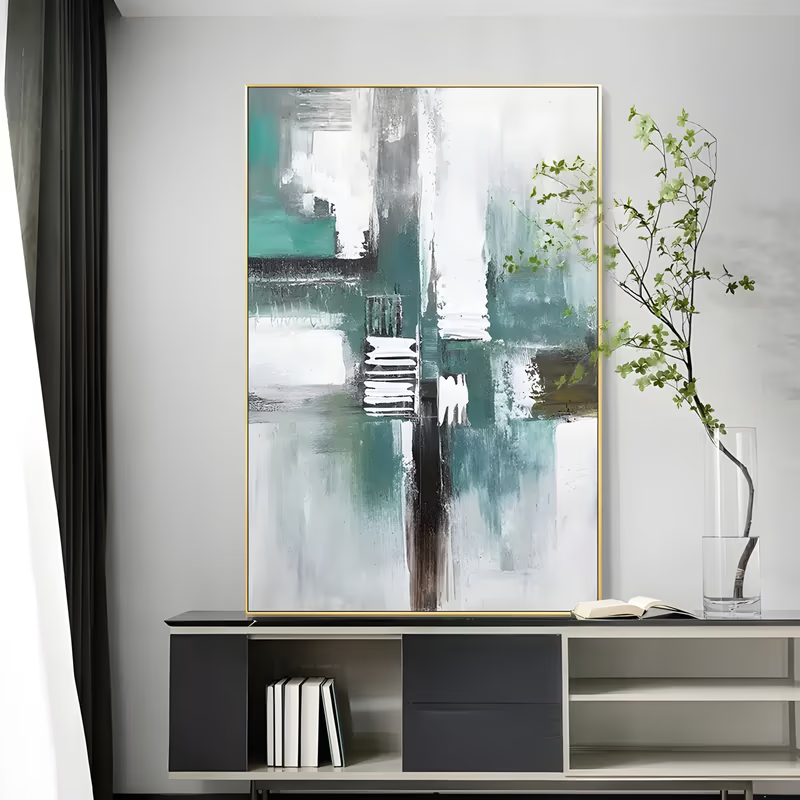
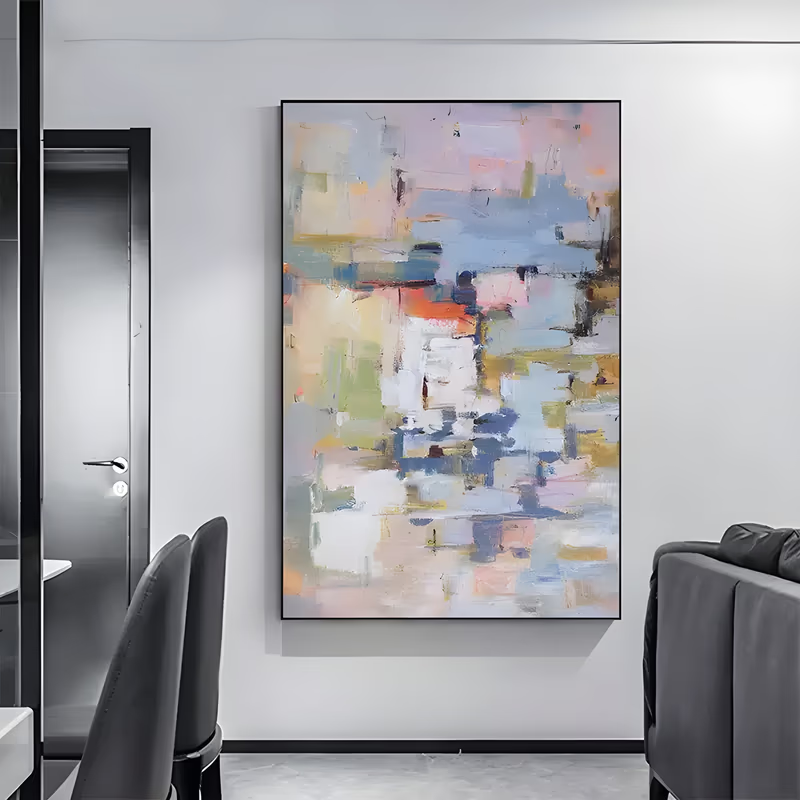
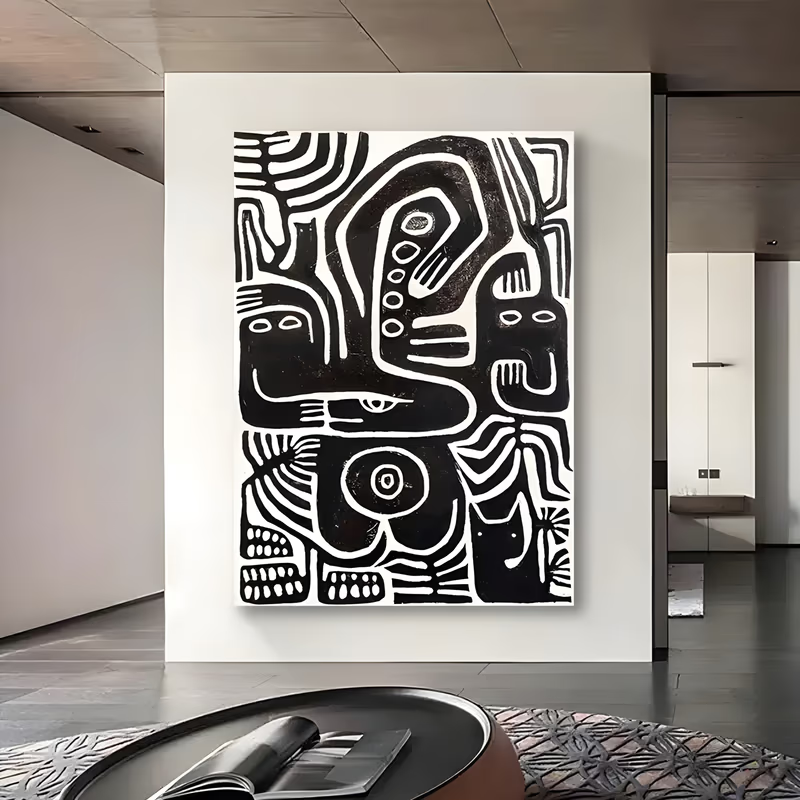
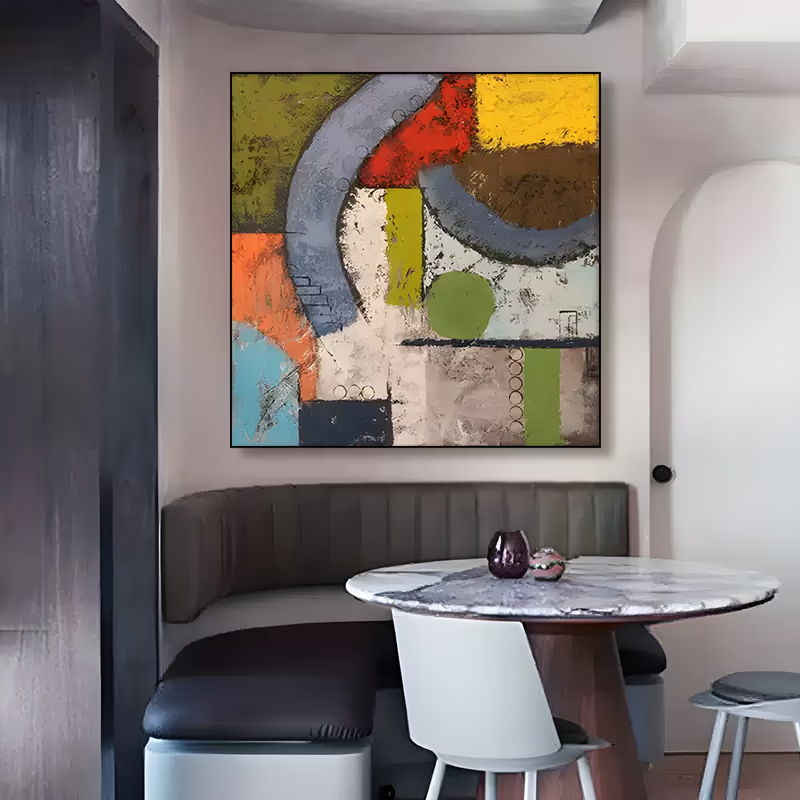
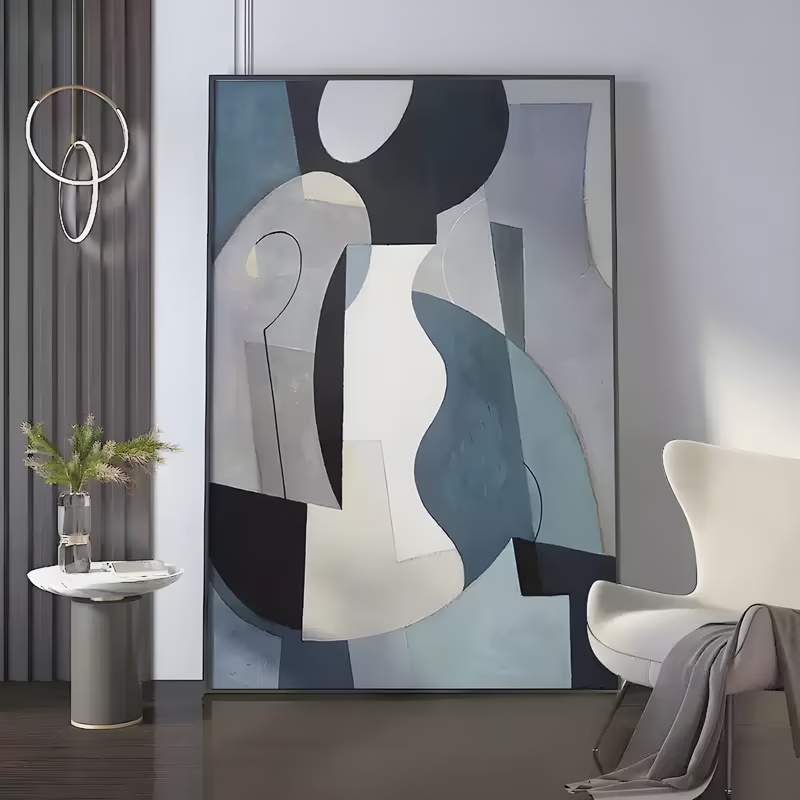
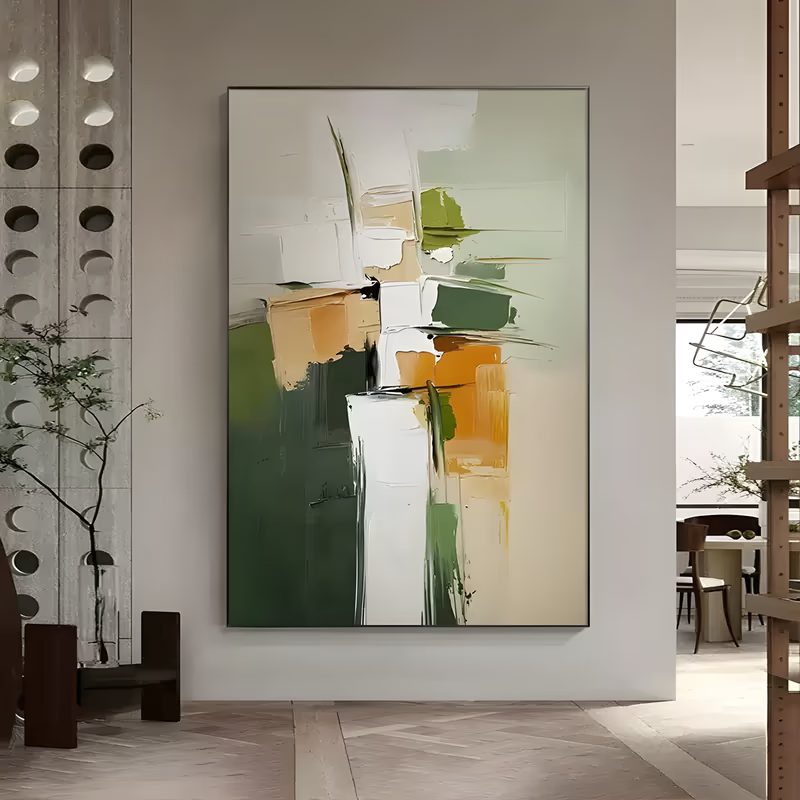
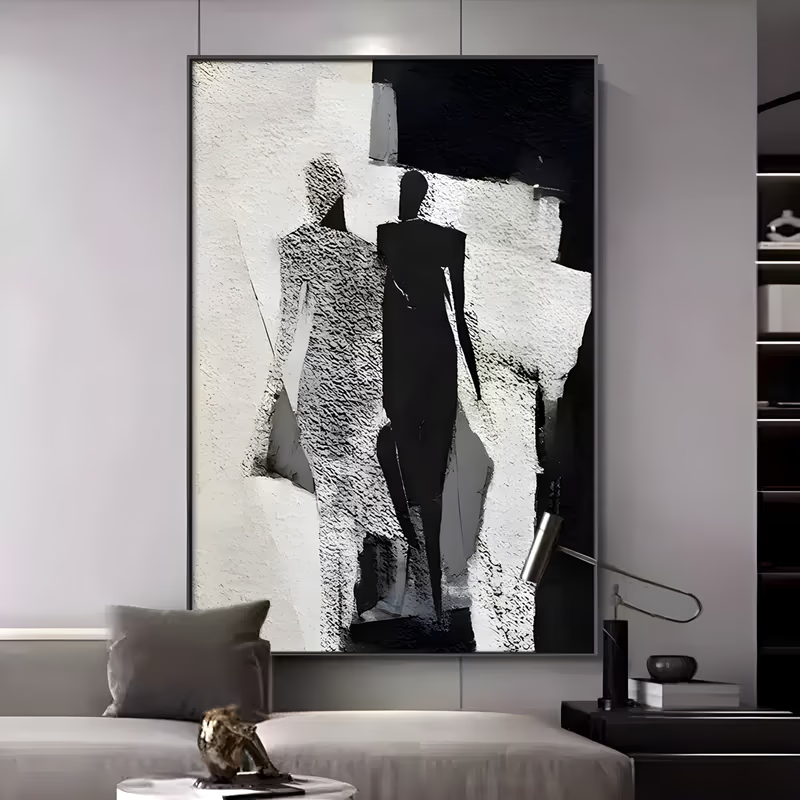
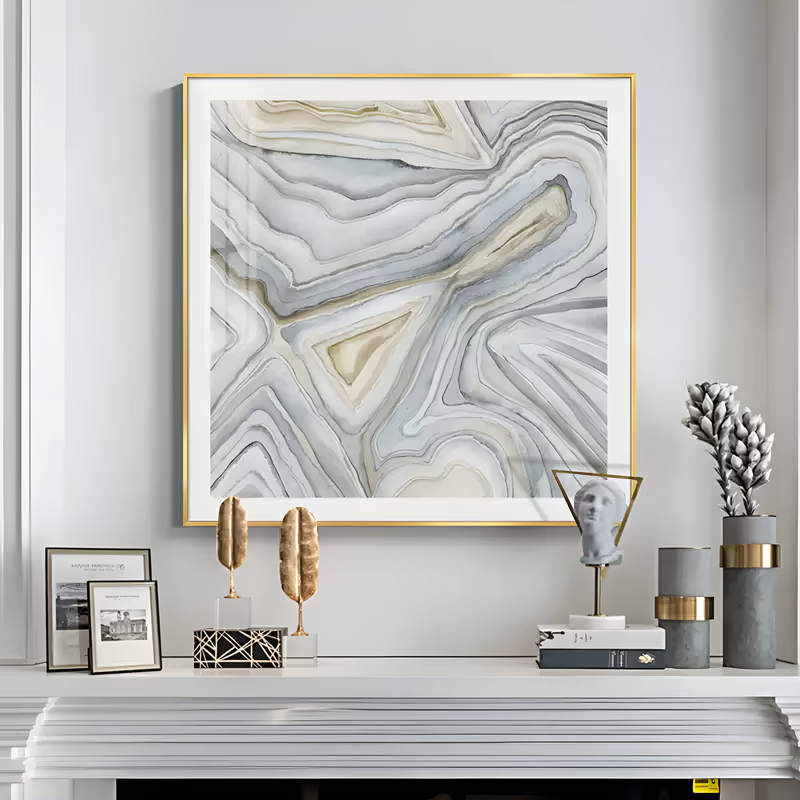
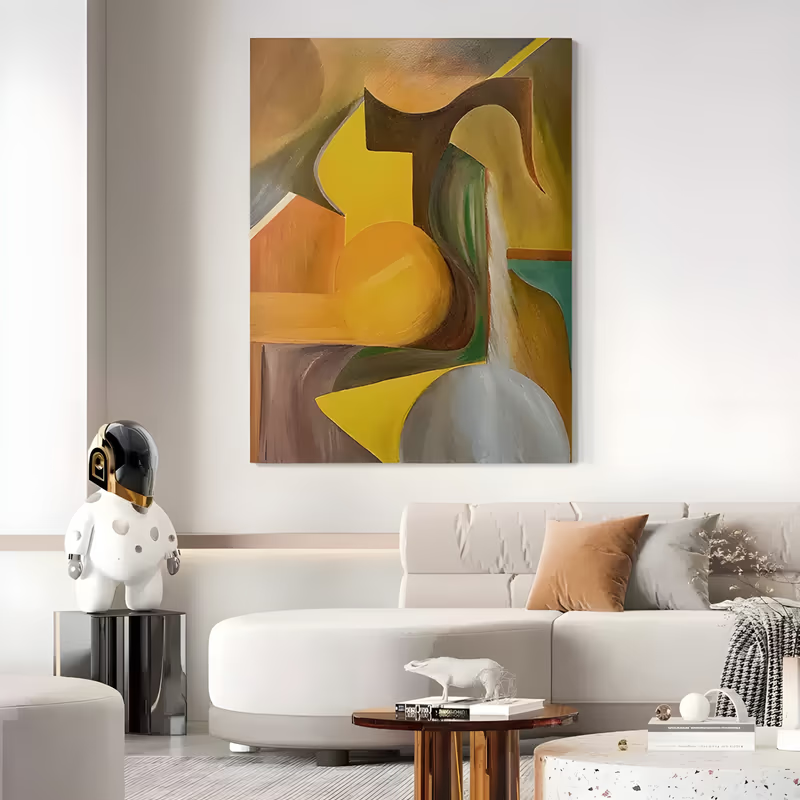
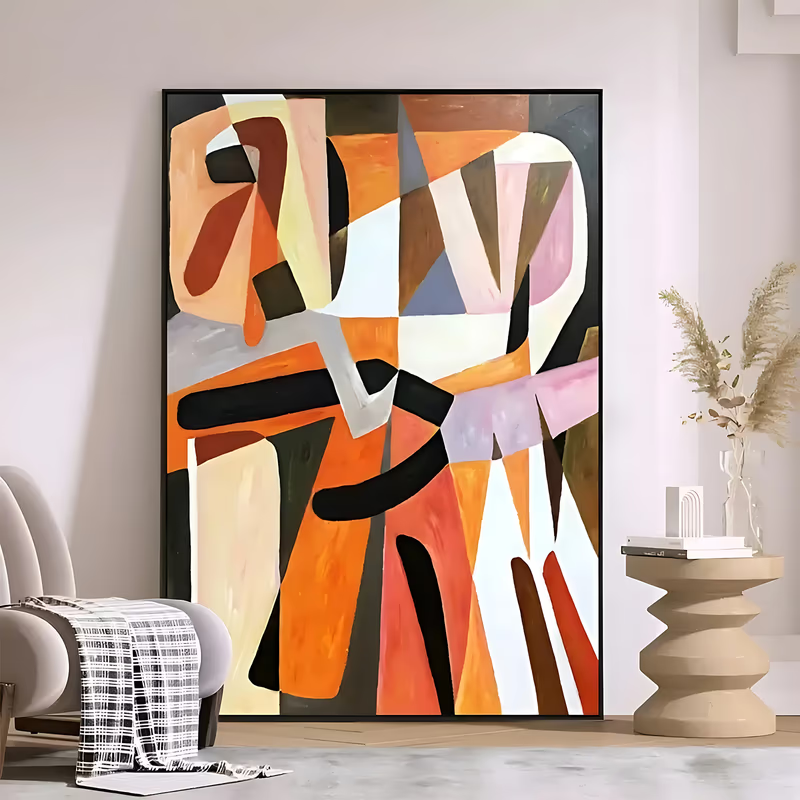
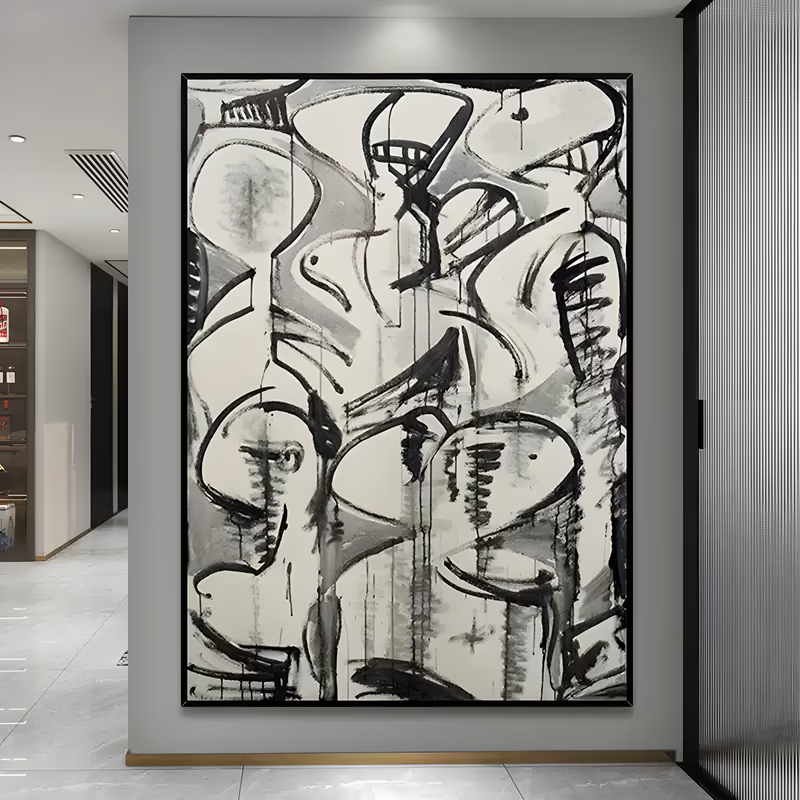
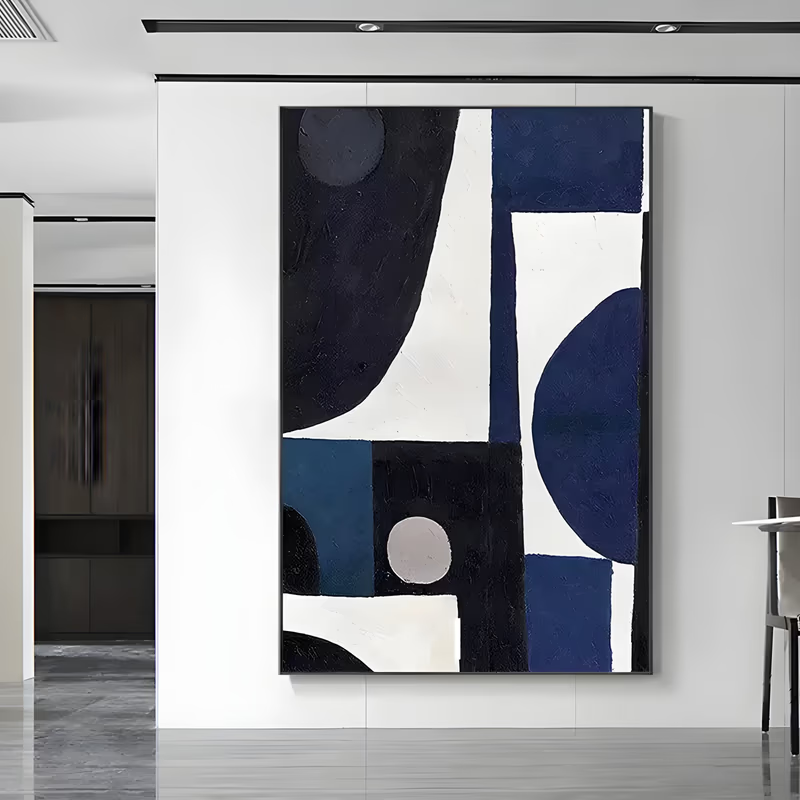
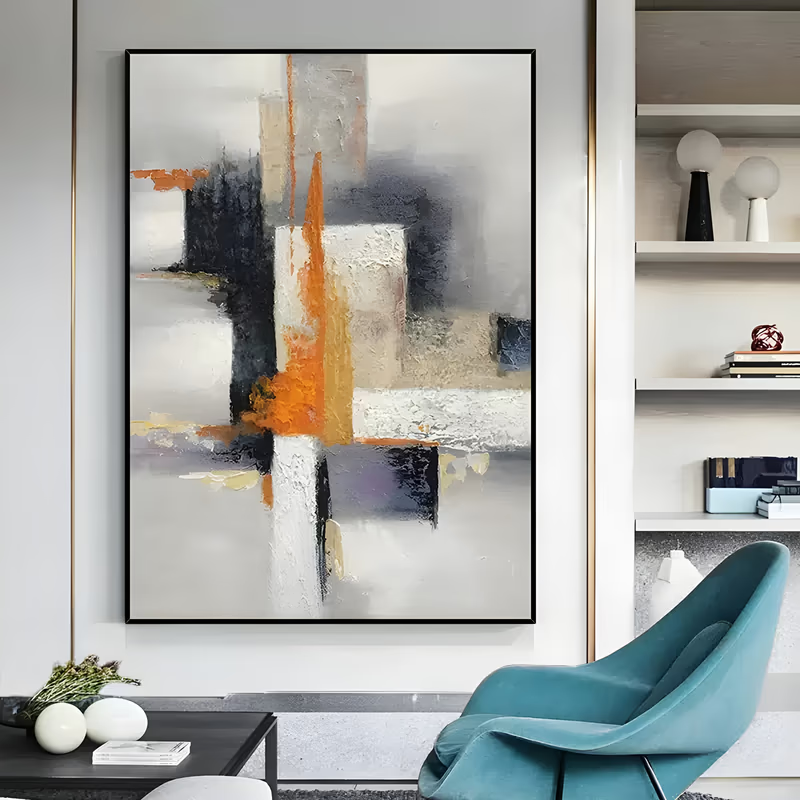
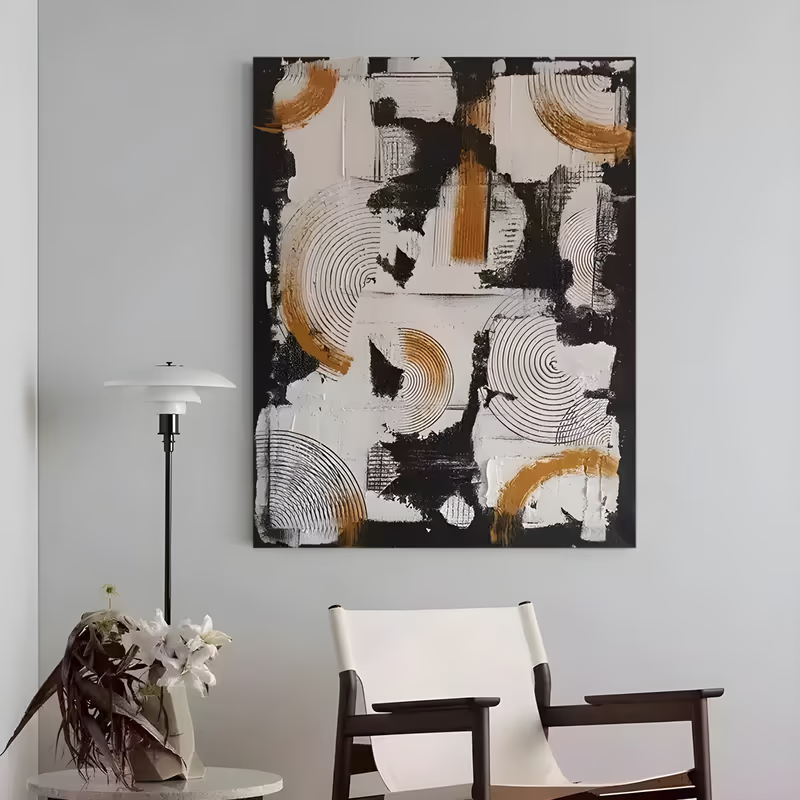
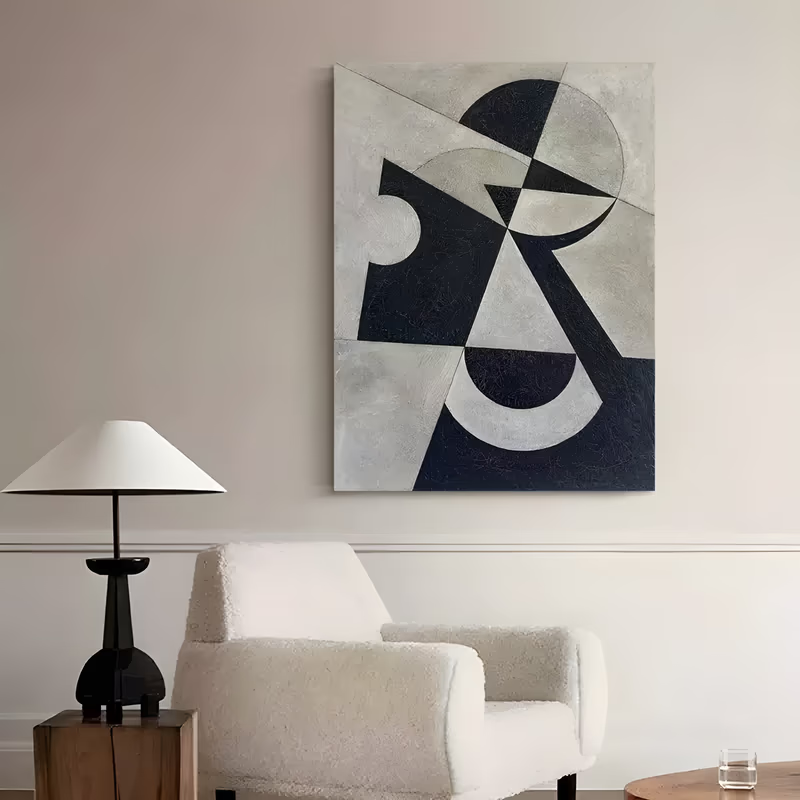
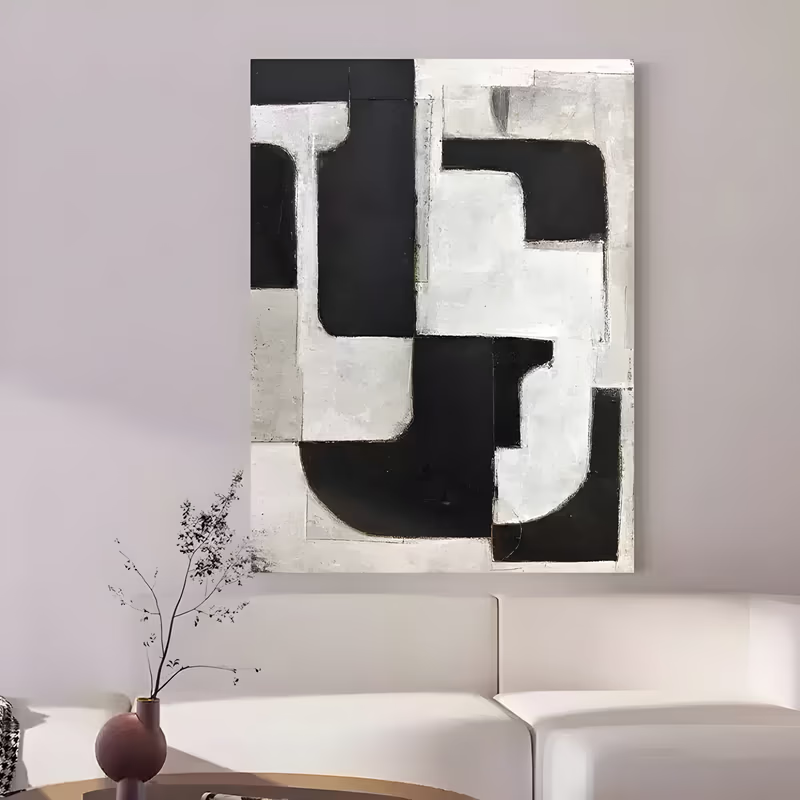
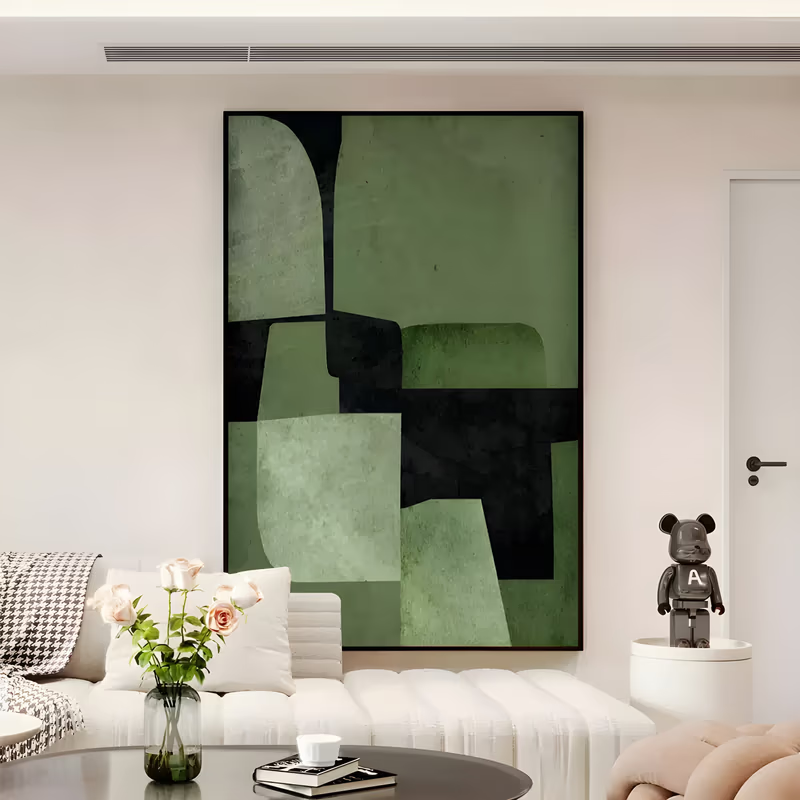
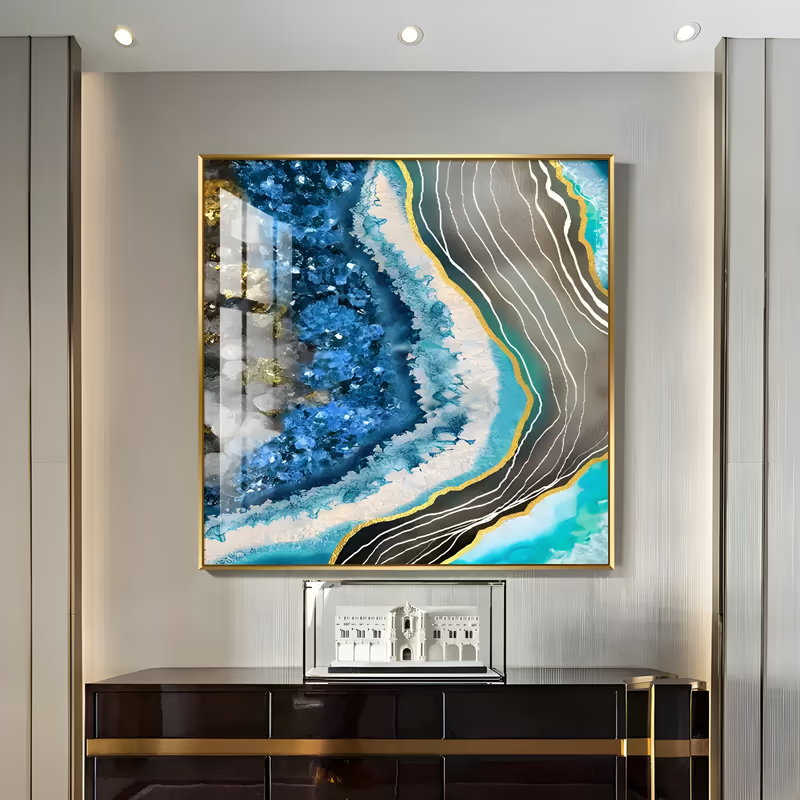
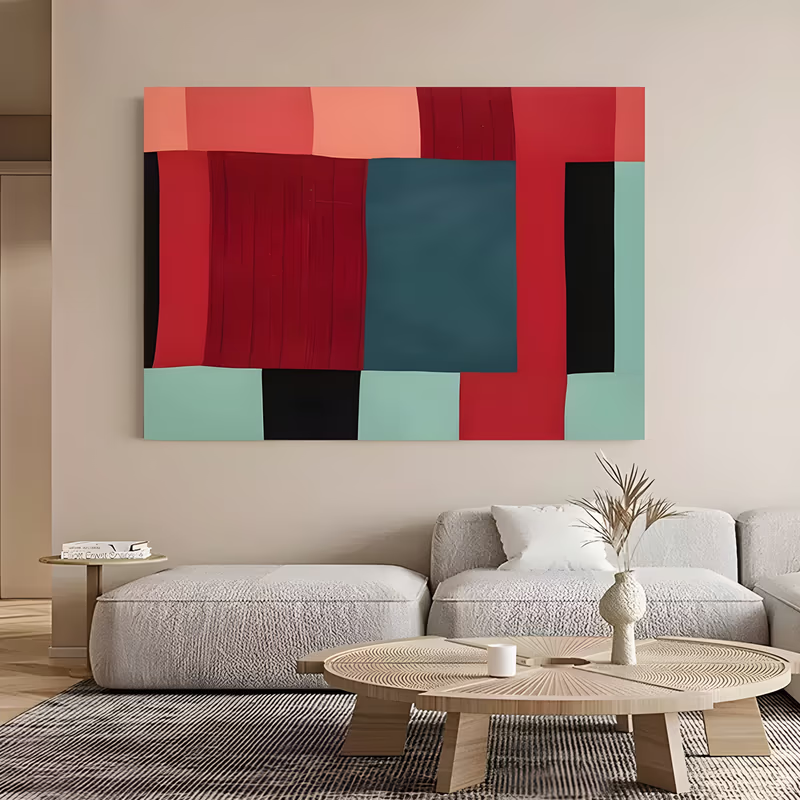
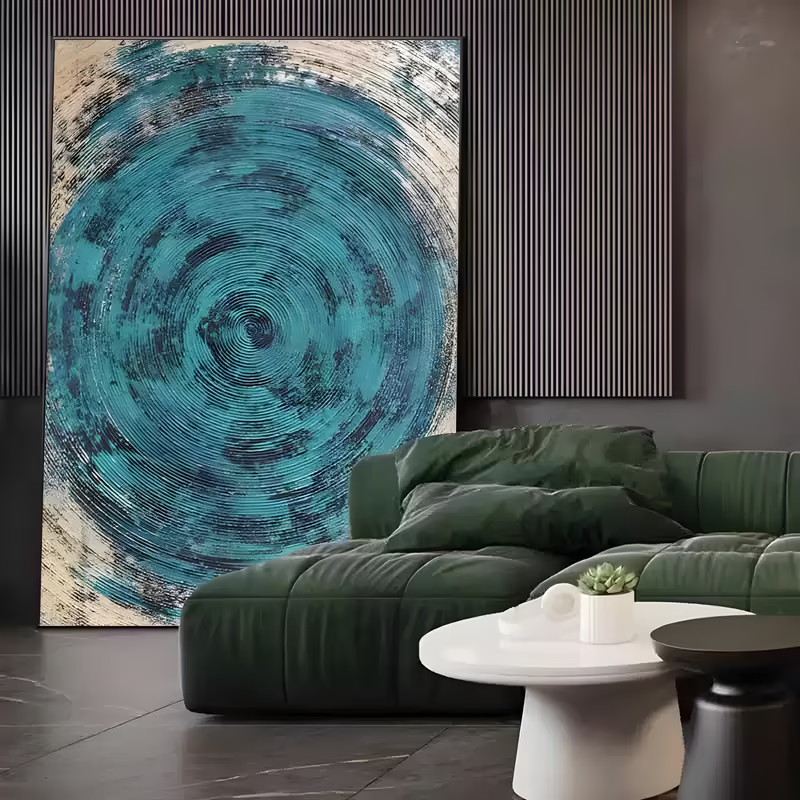
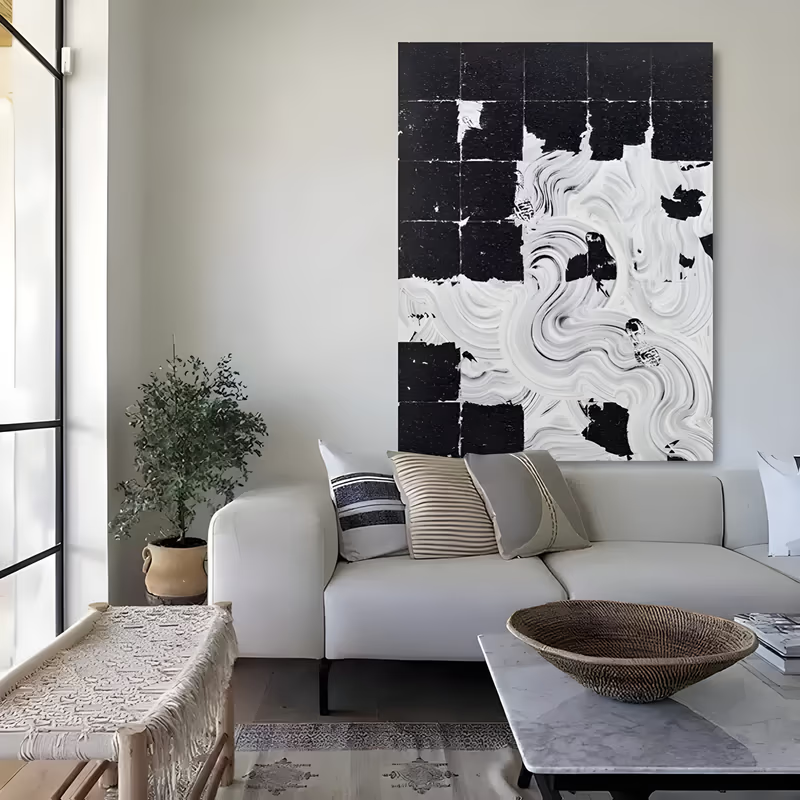
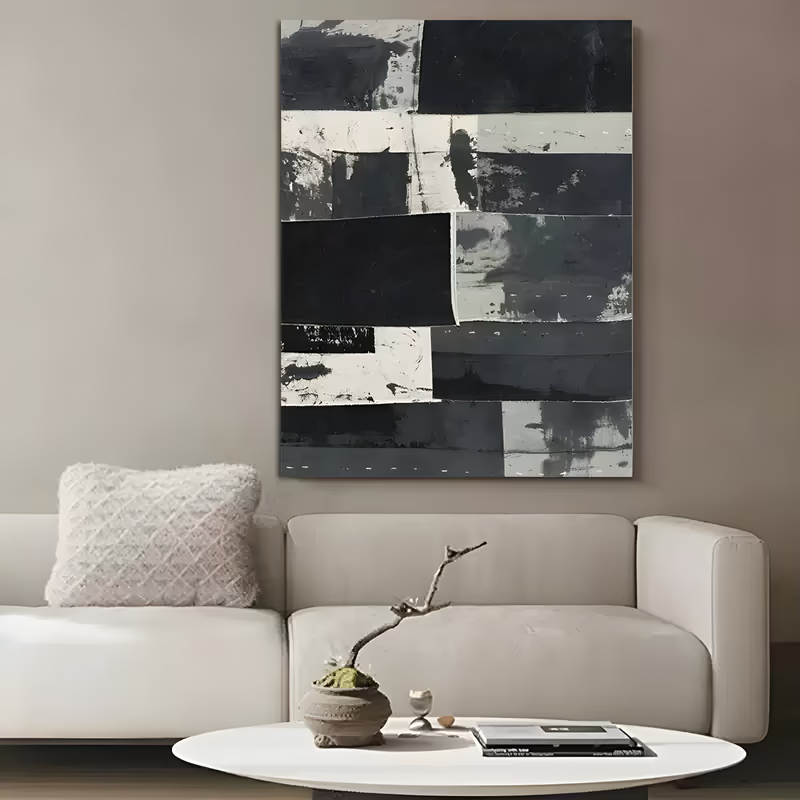
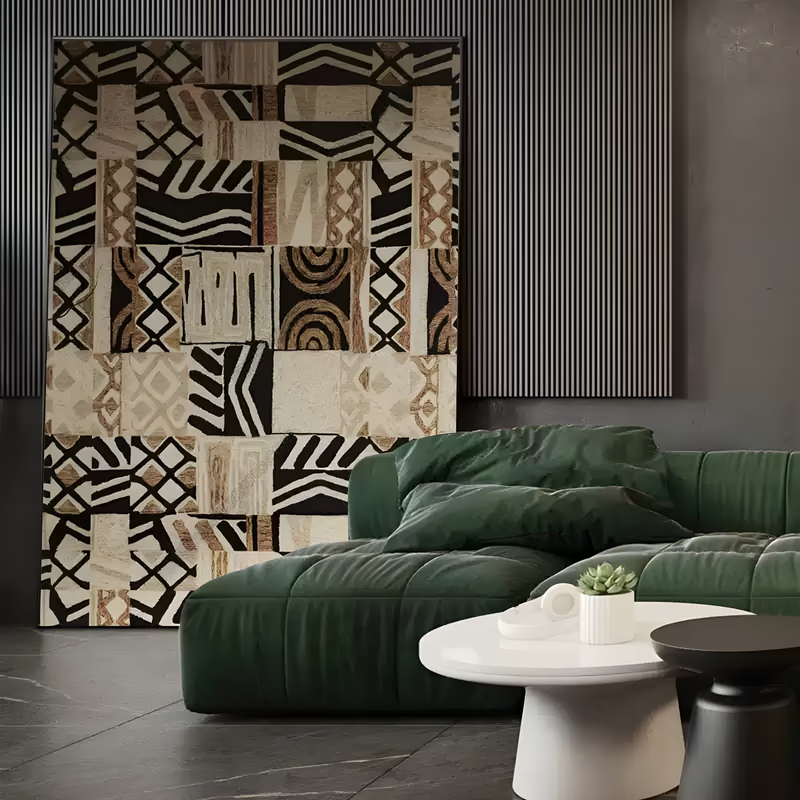
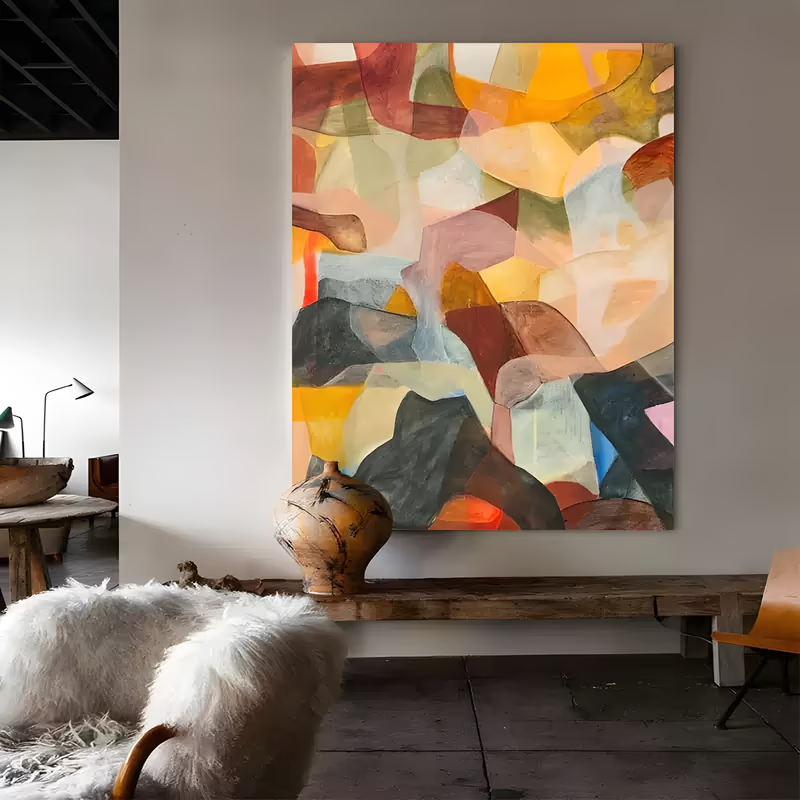
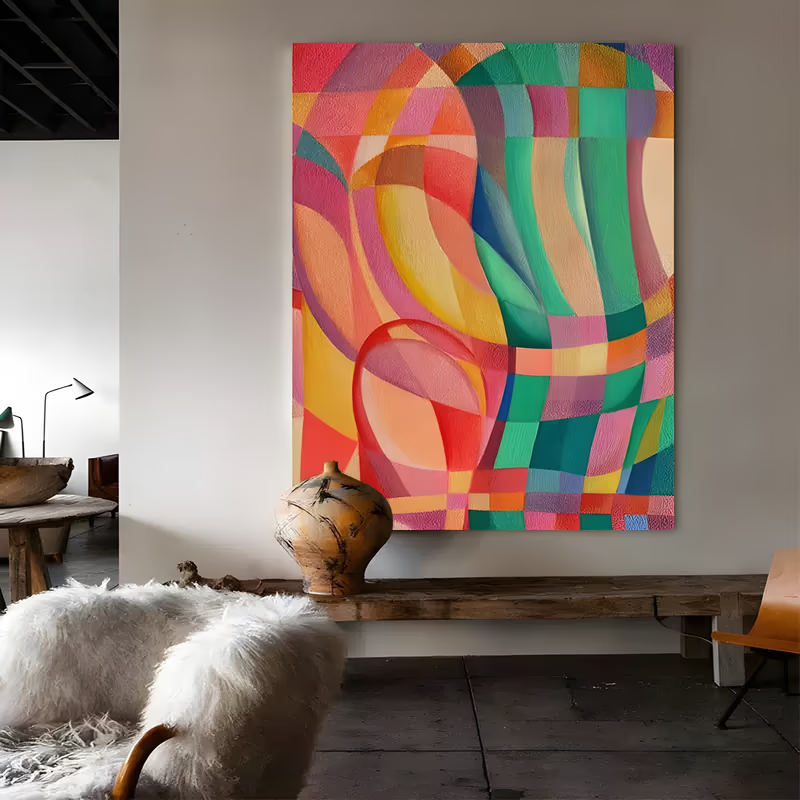
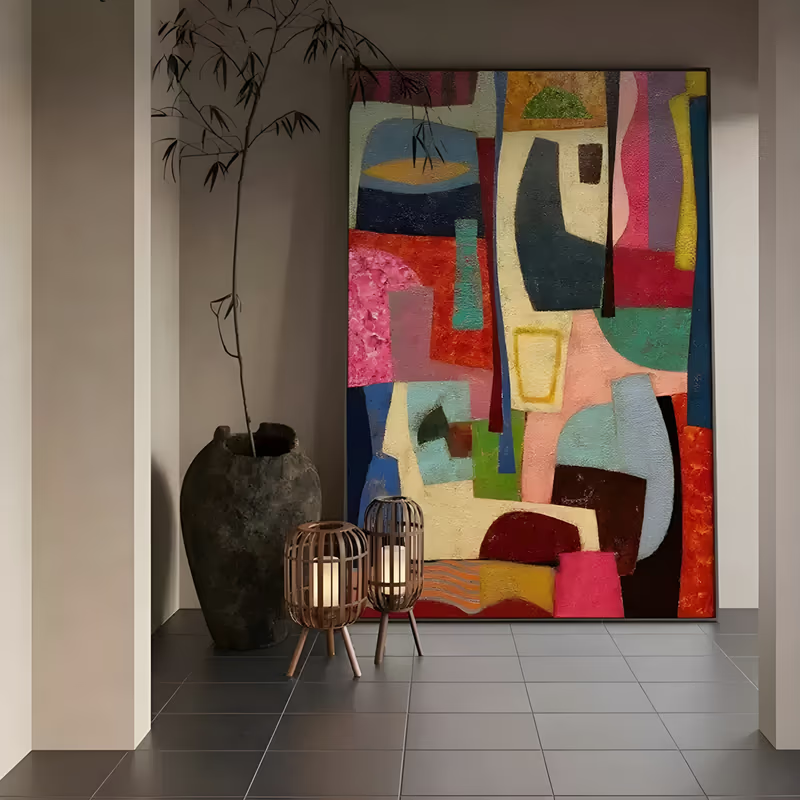
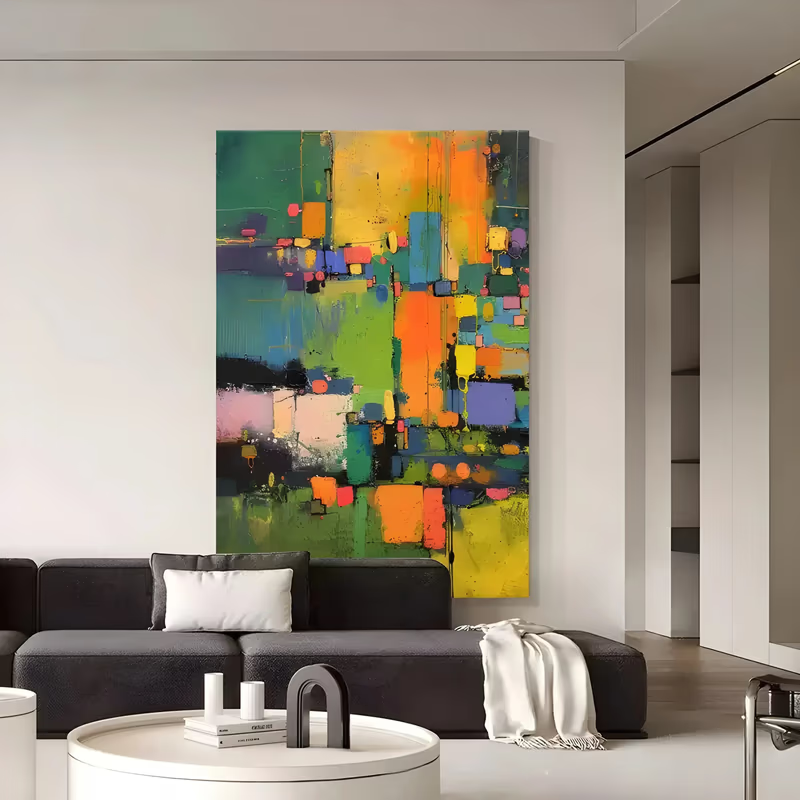
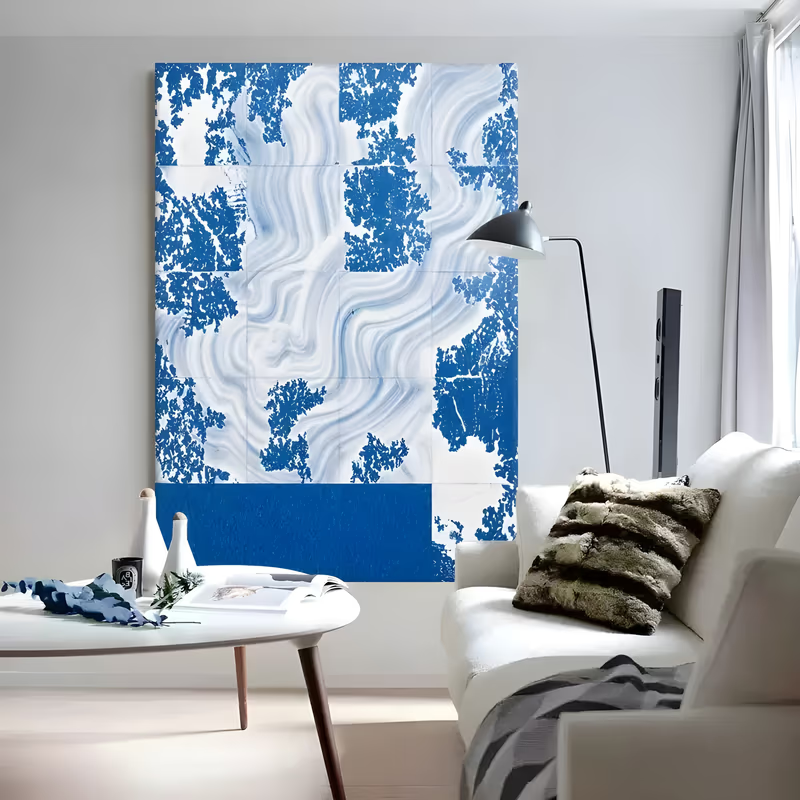
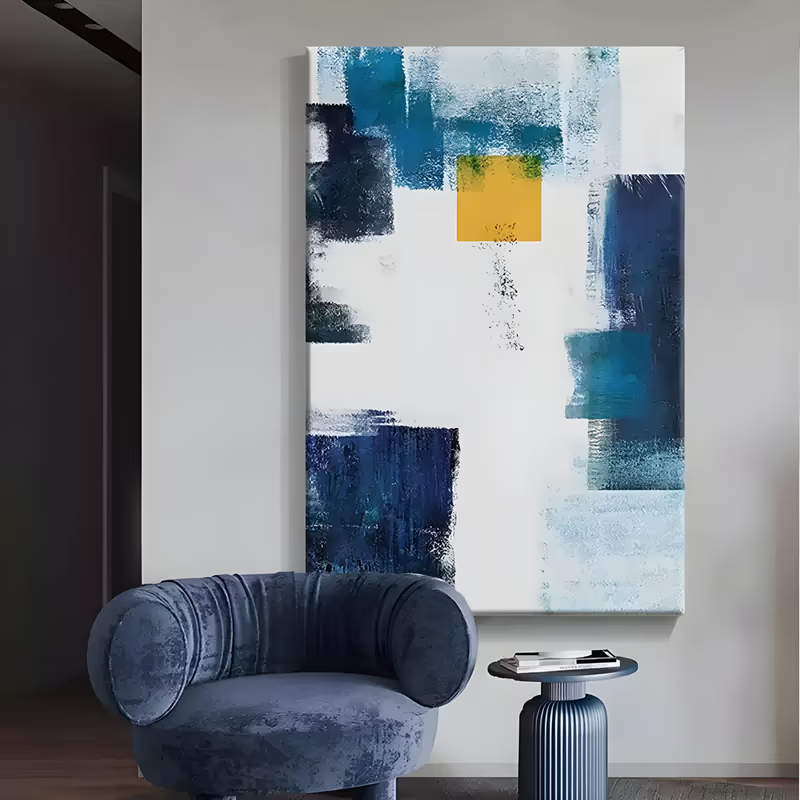
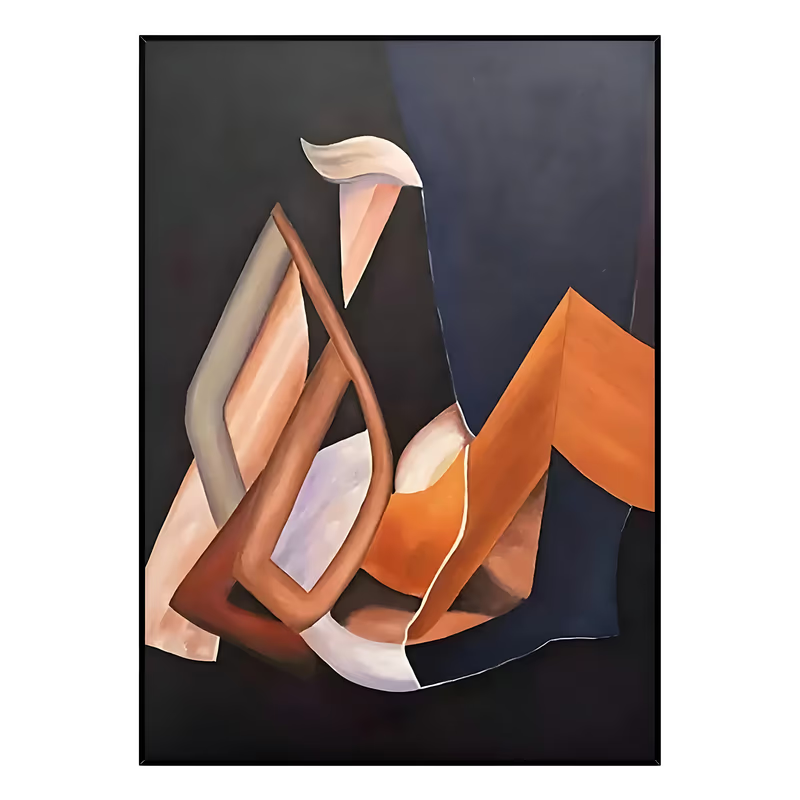
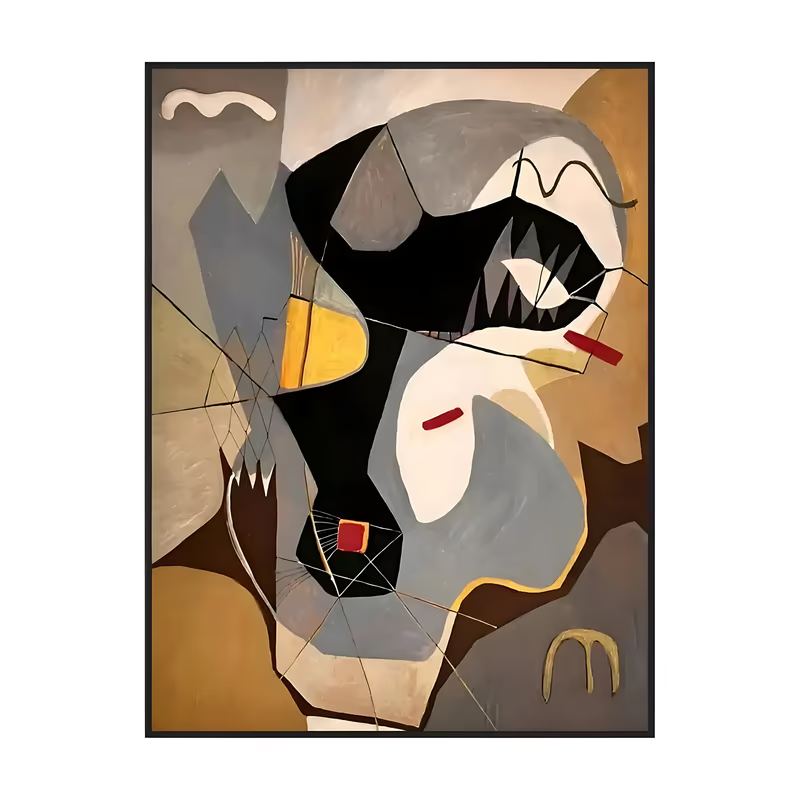
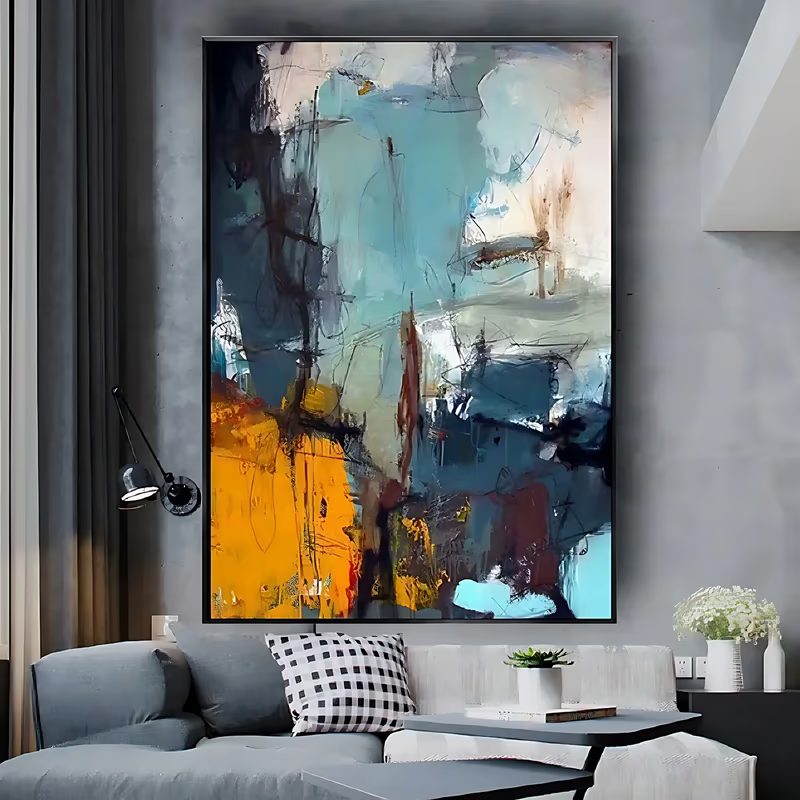
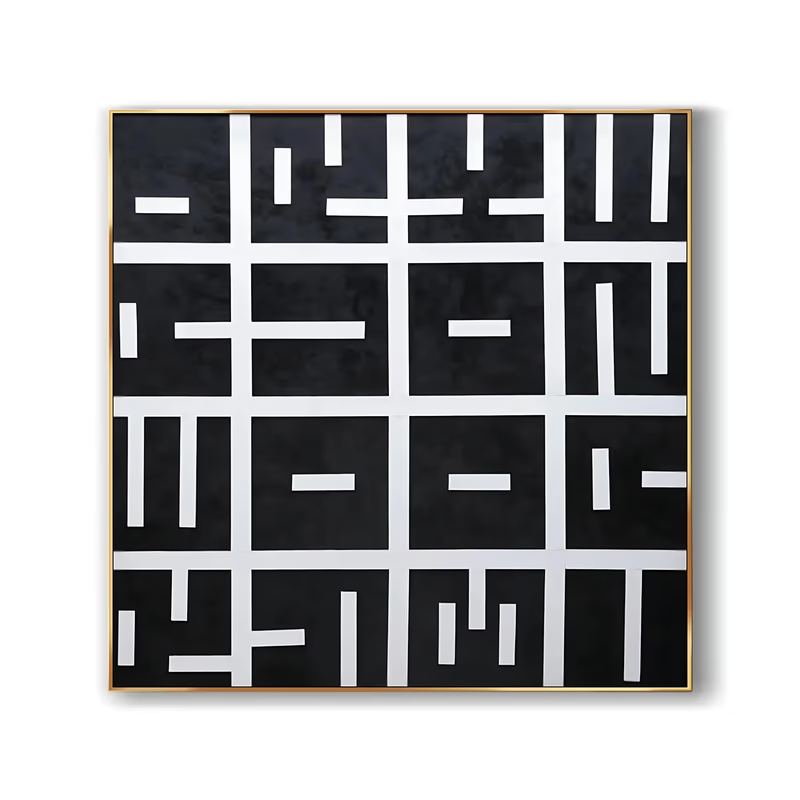
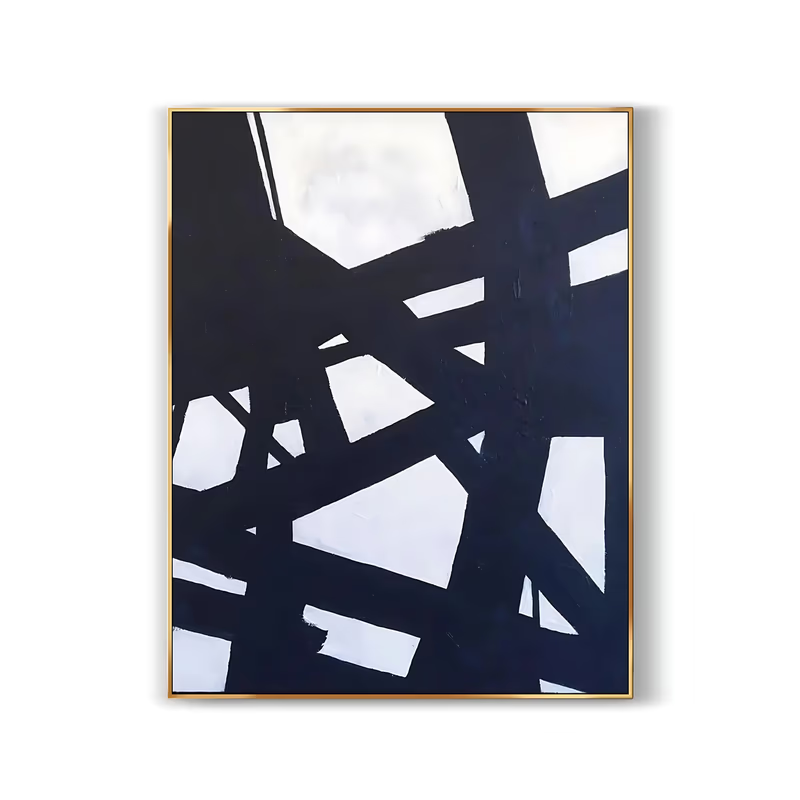
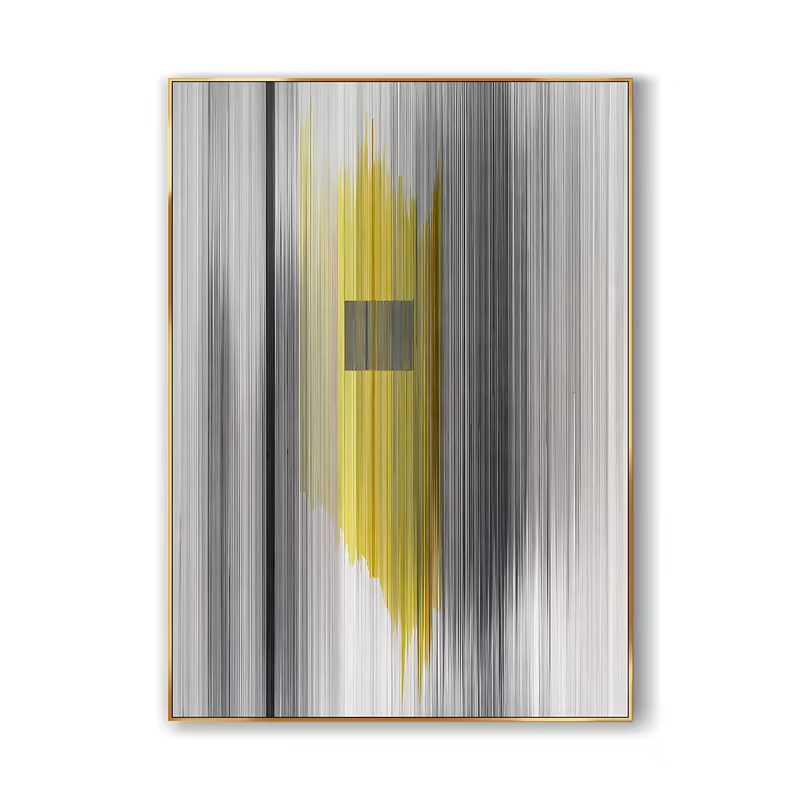
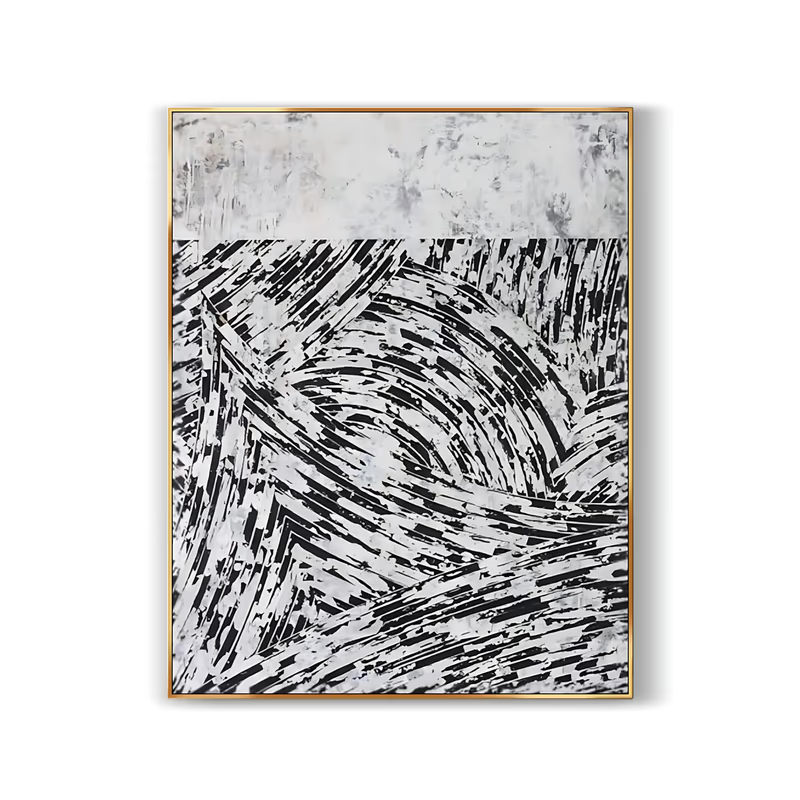
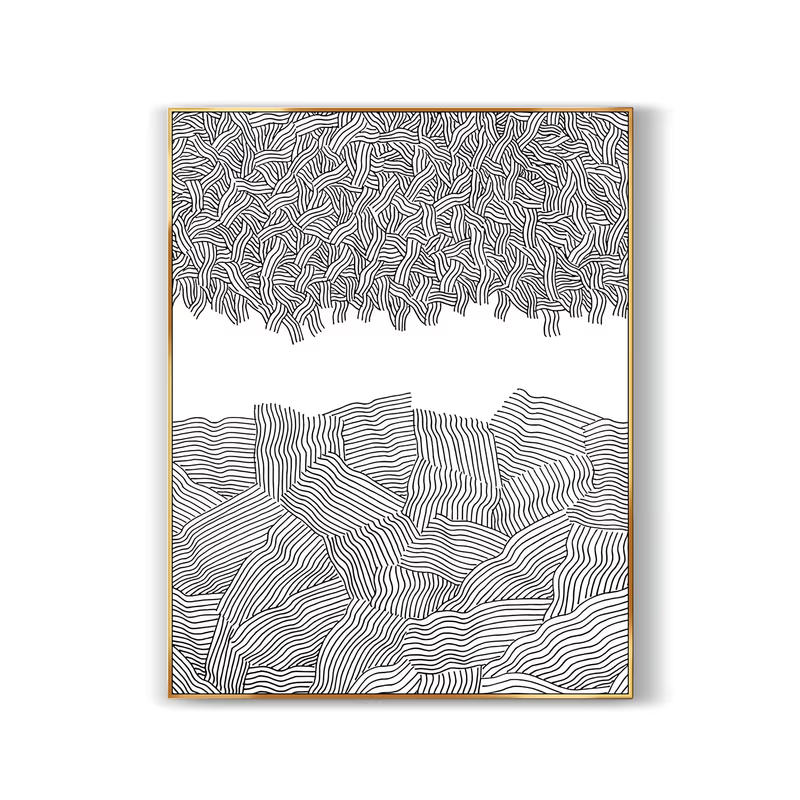
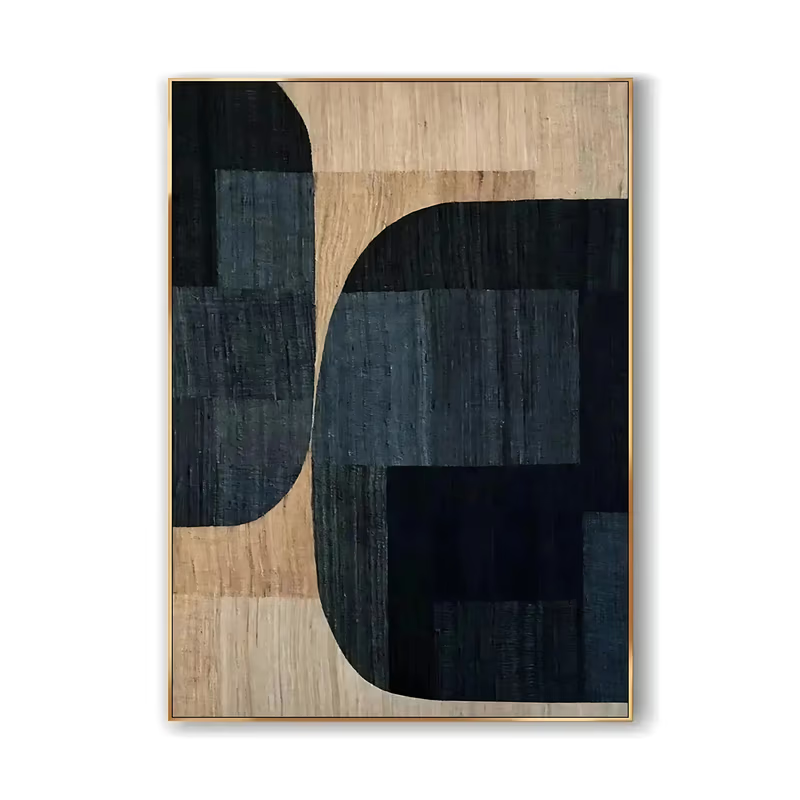
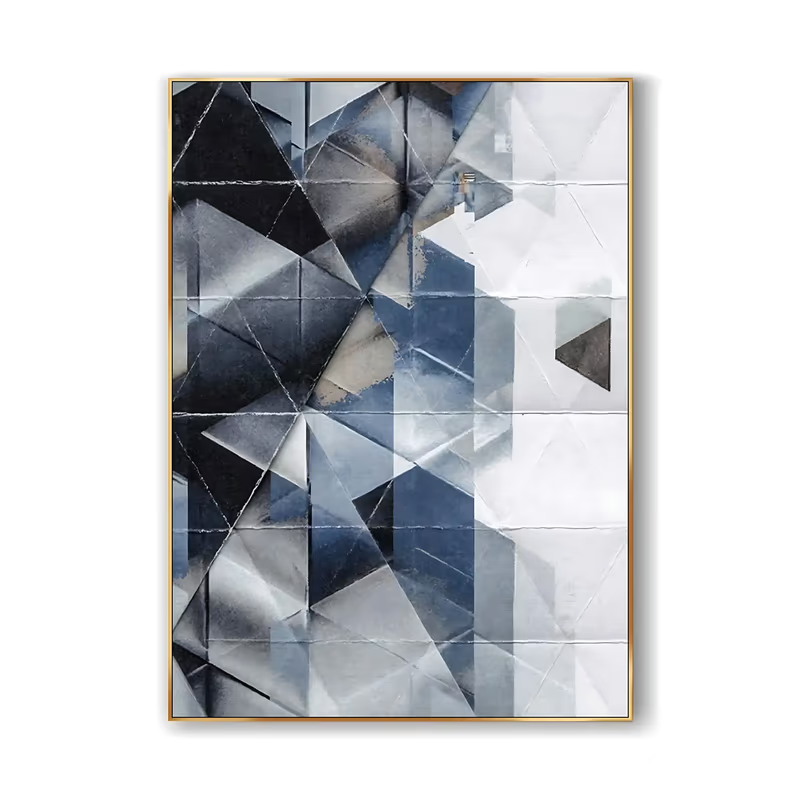
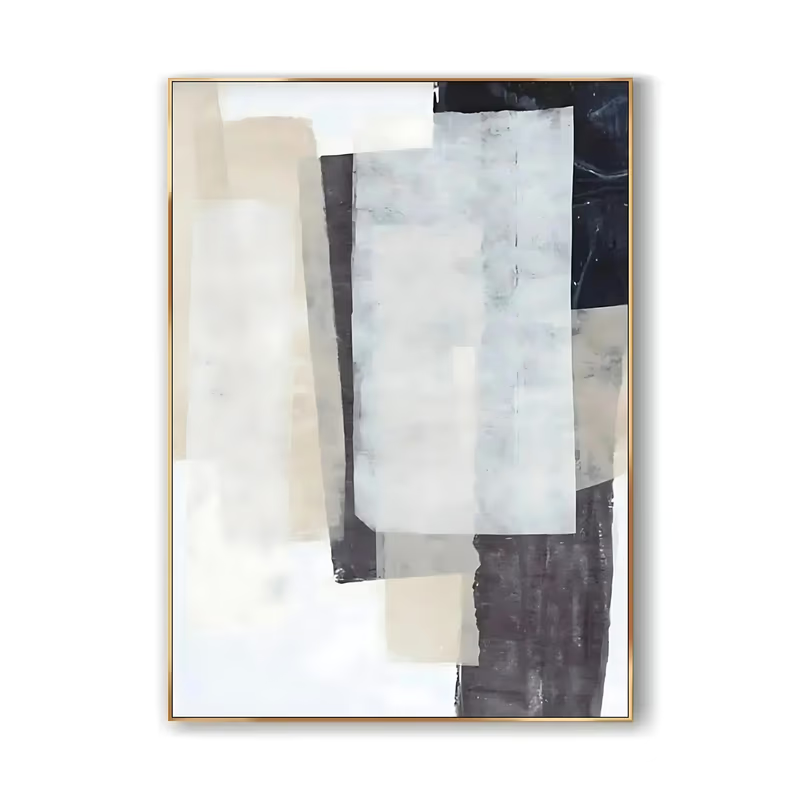
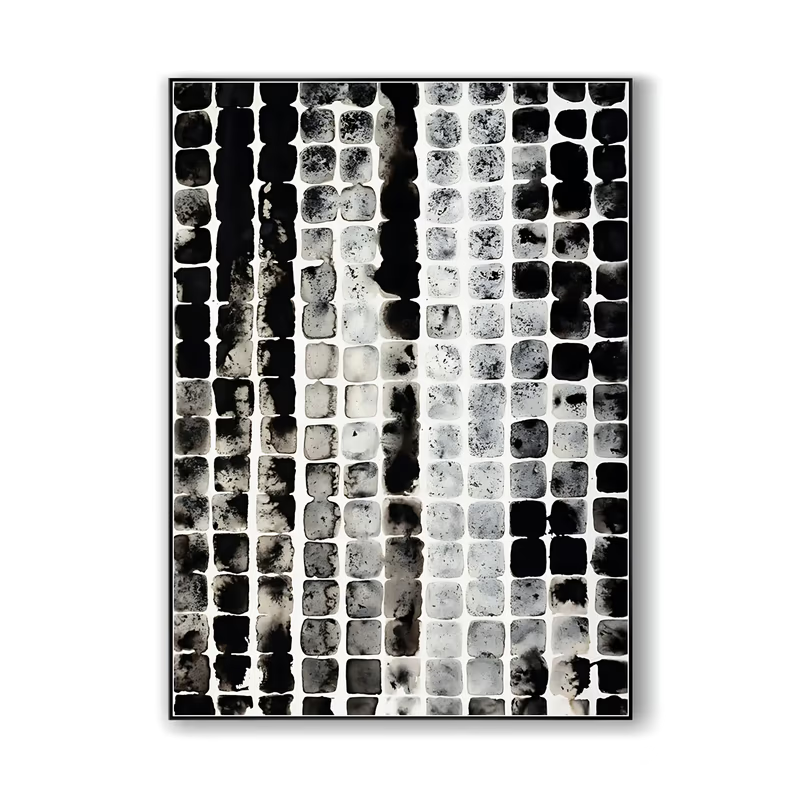
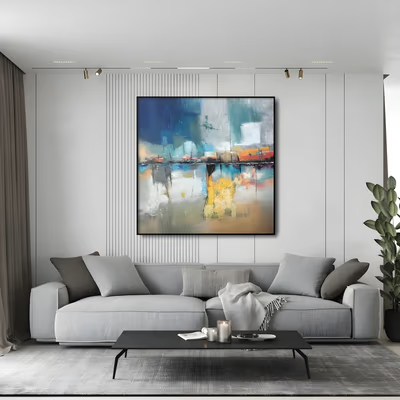
Translucent stacked rectangles, interlocking black and white shapes, concentric agate rings and bending op-art grids. Ordered and architectural, they suit offices, meeting rooms, mid-century living rooms and modern apartments.
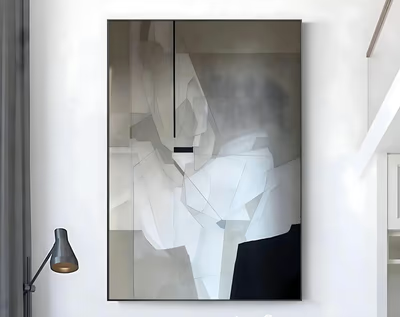
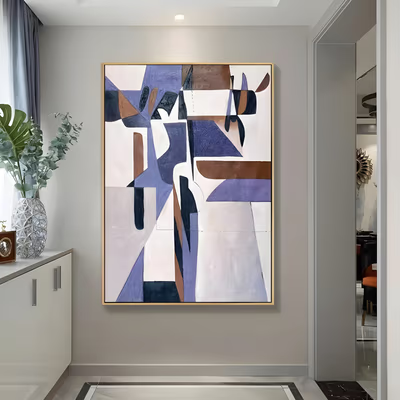
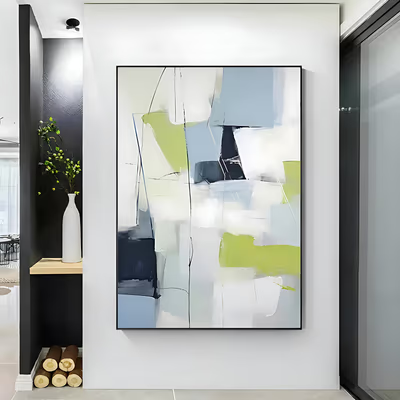
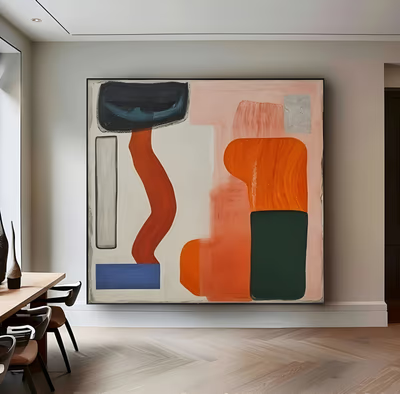
Abstract landscapes and seascapes
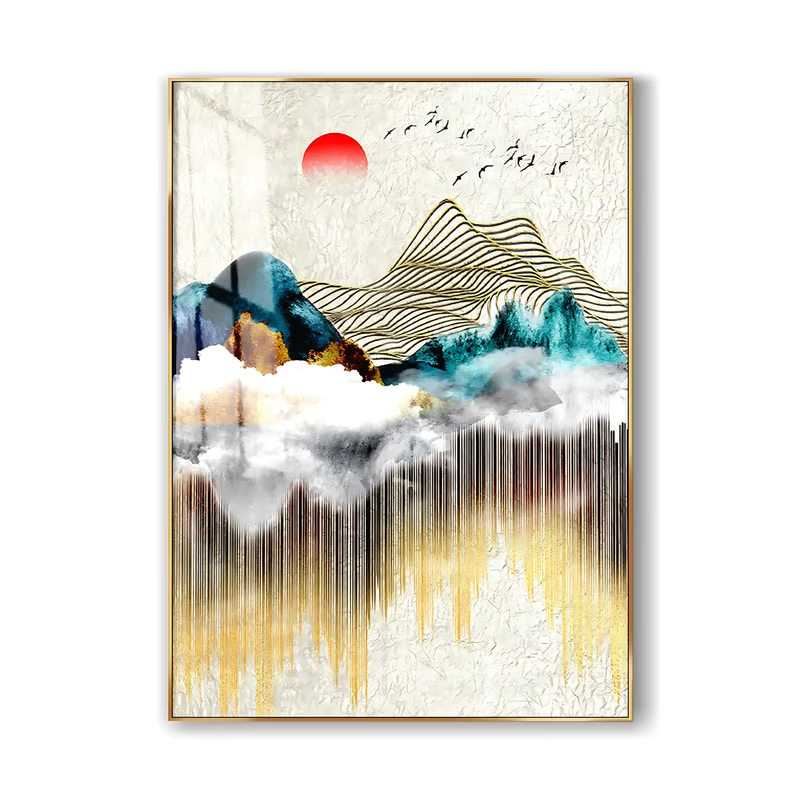
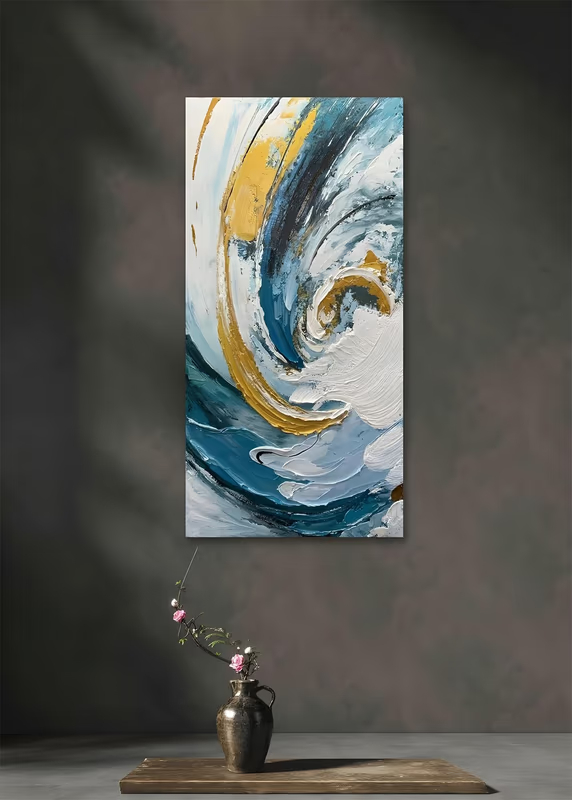
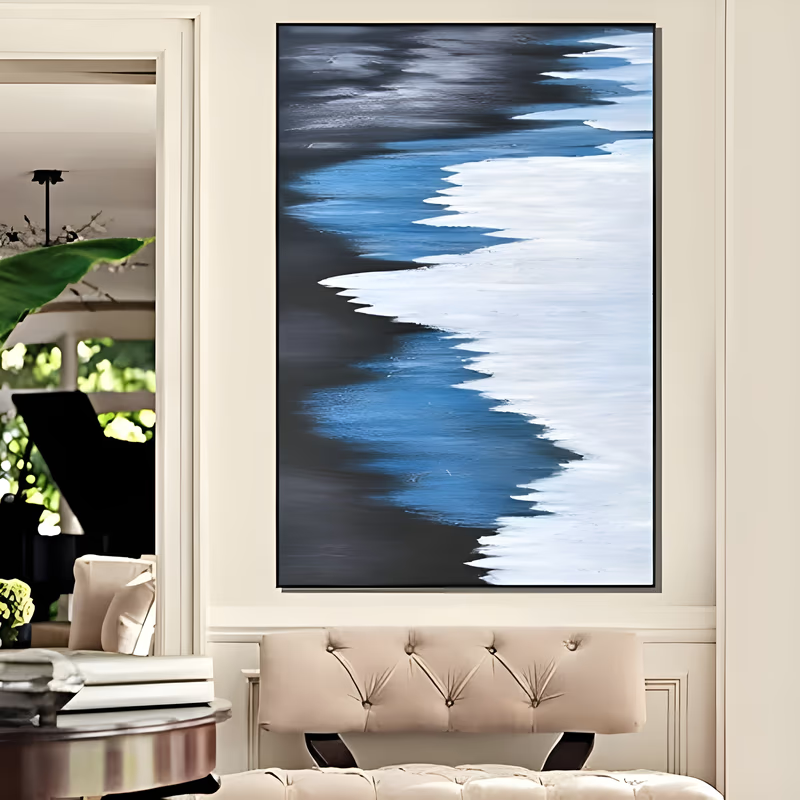
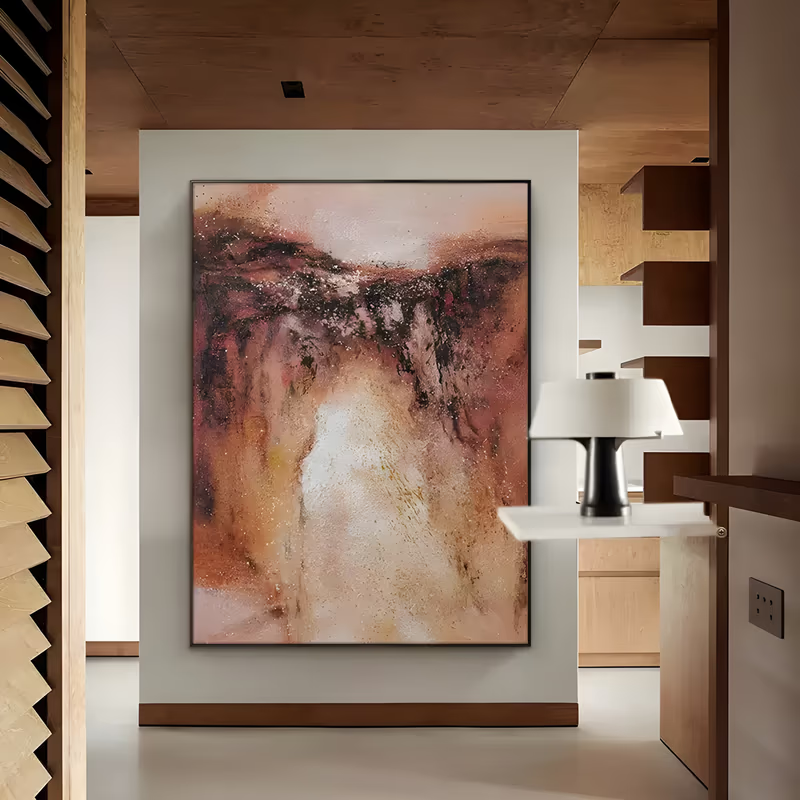
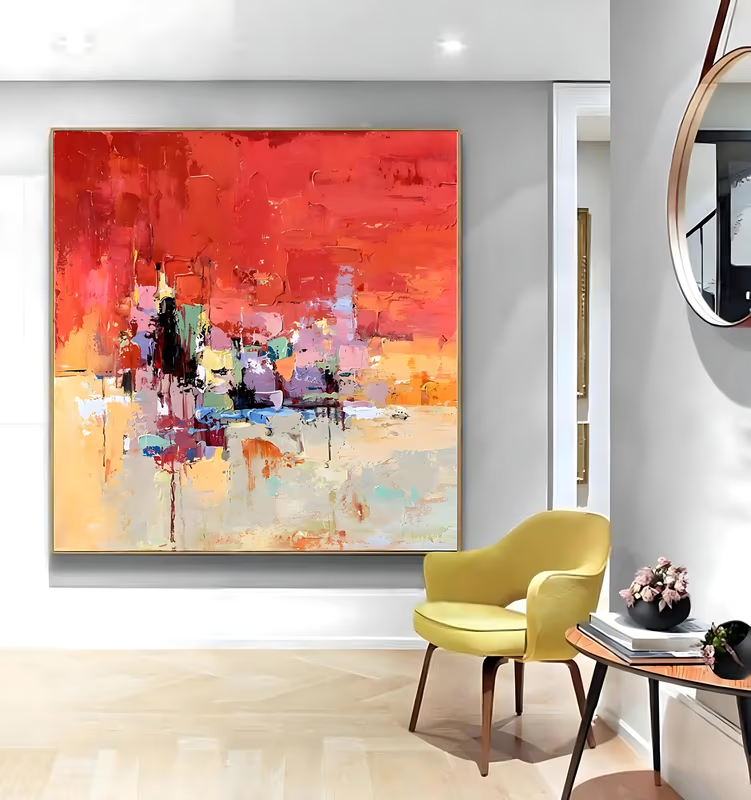
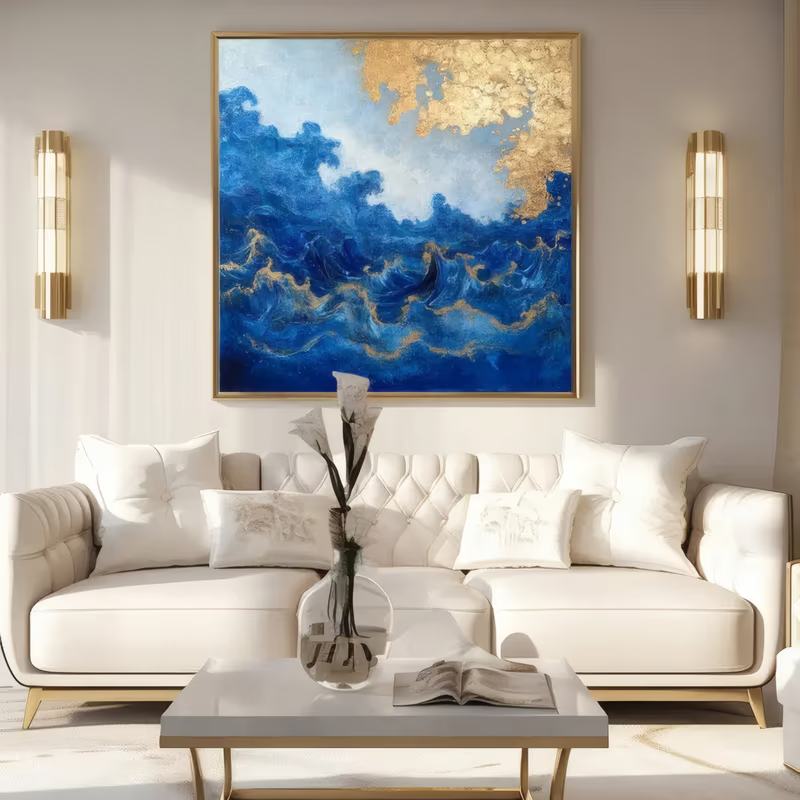
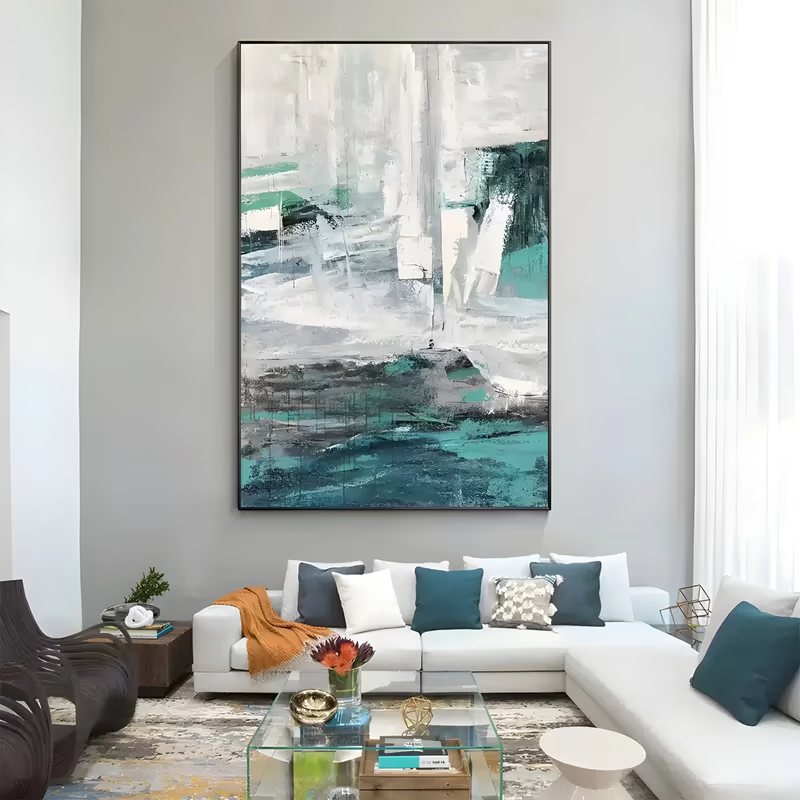
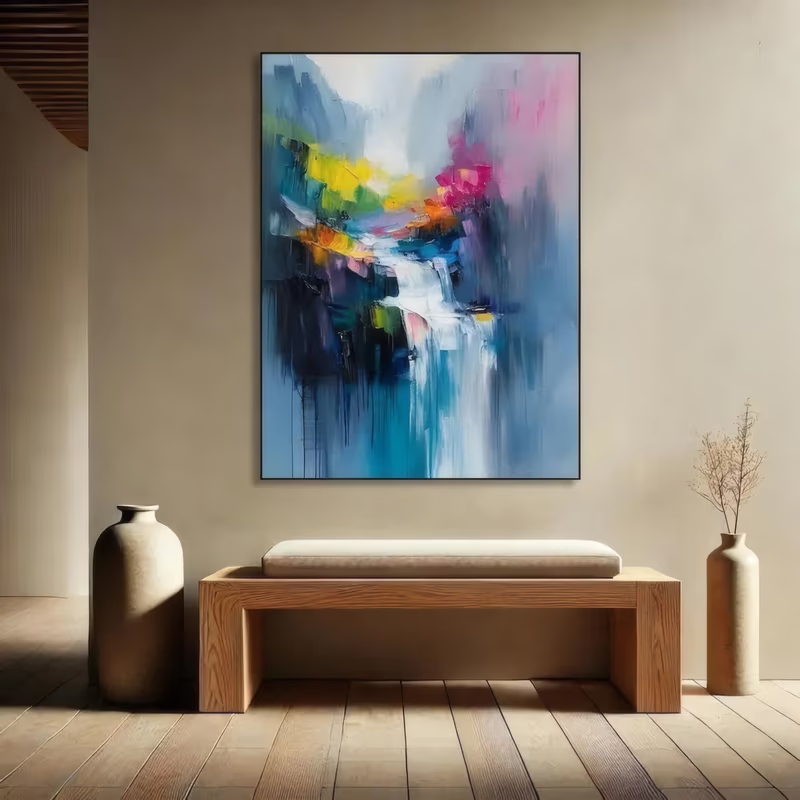
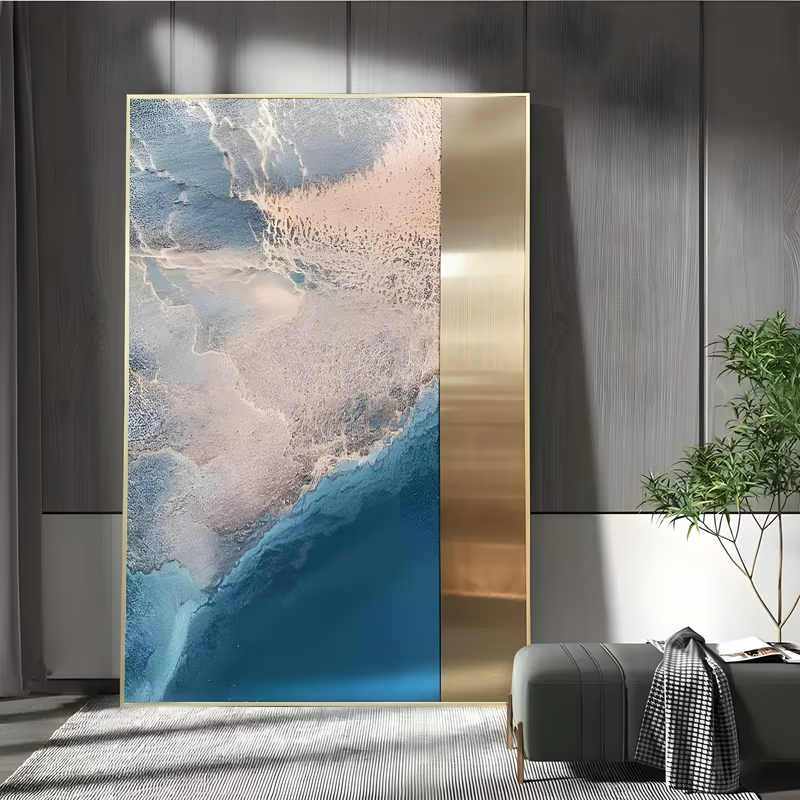
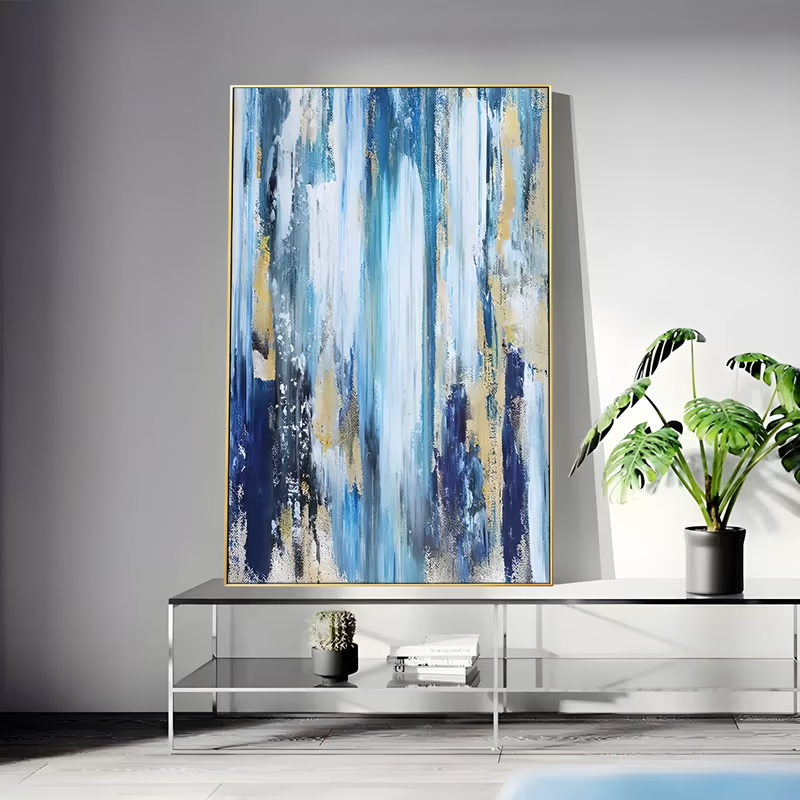
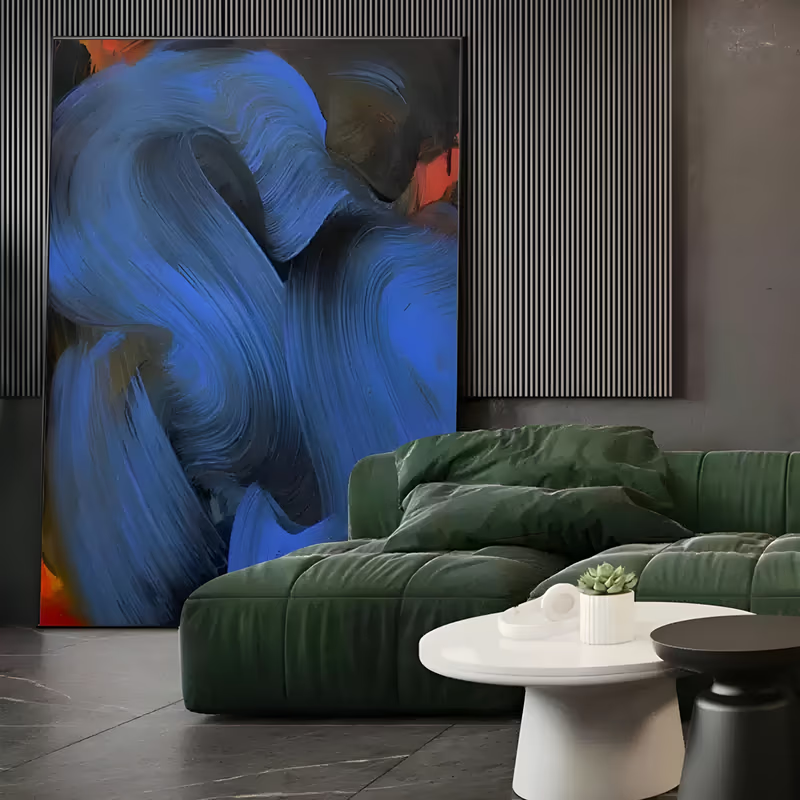
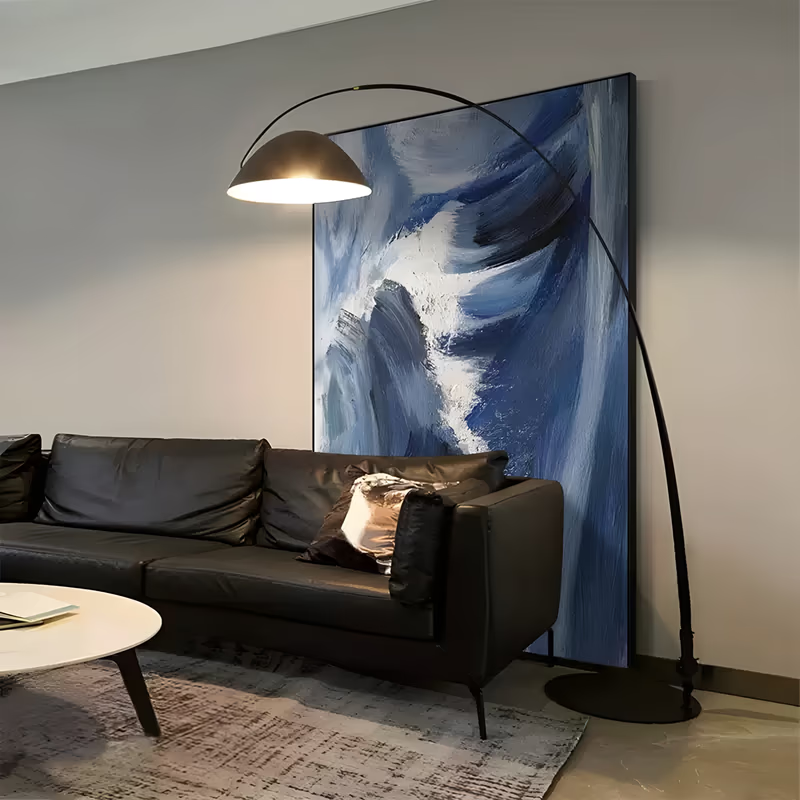
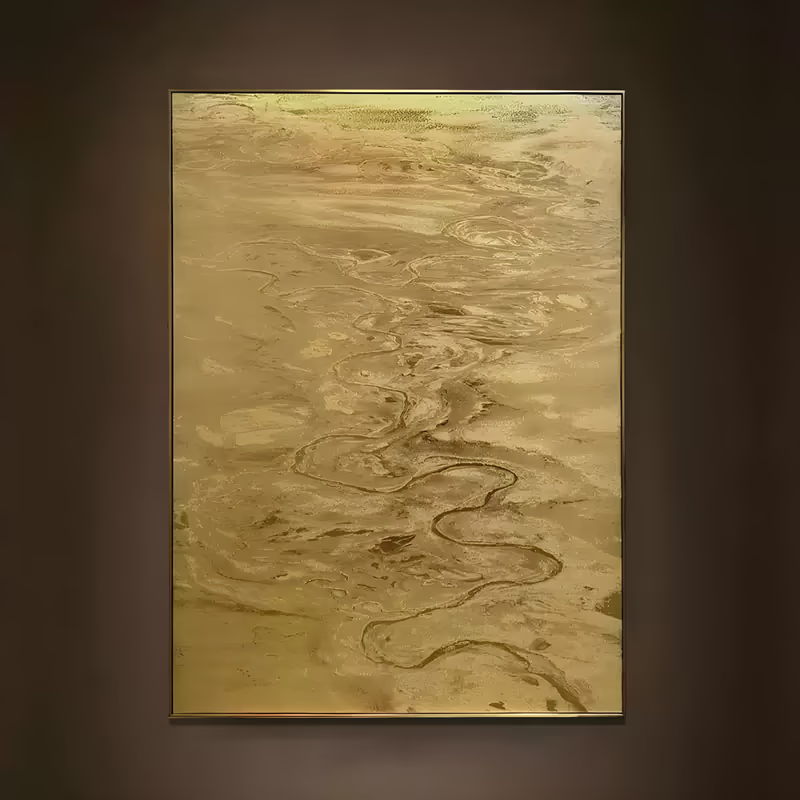
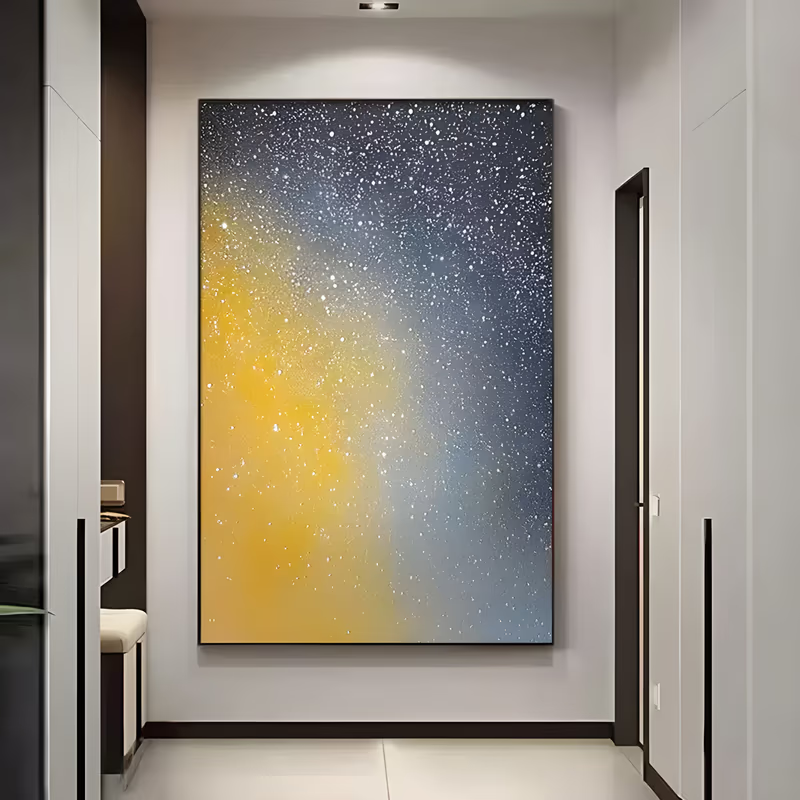
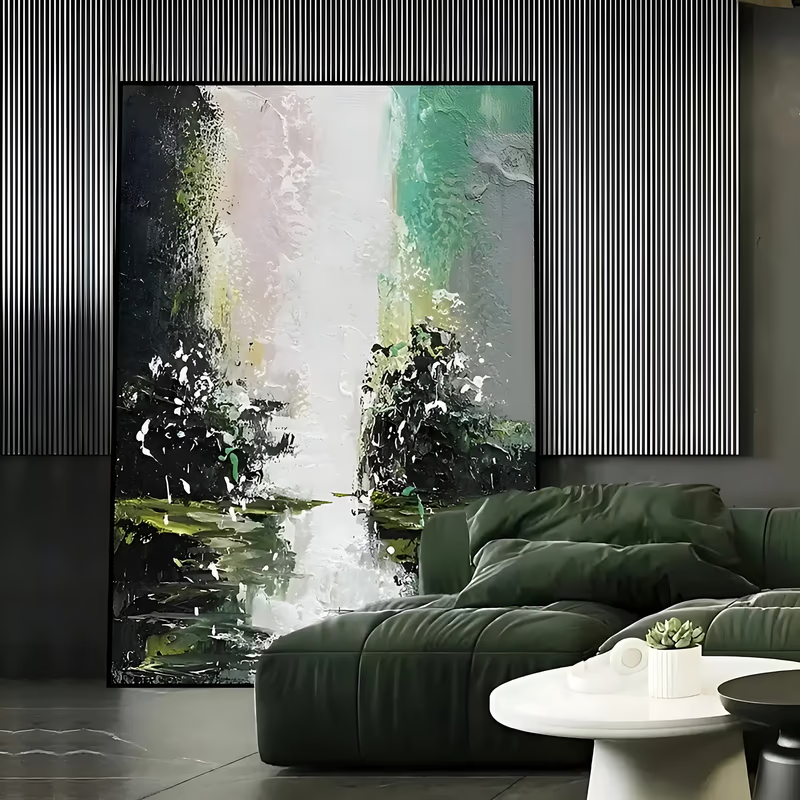
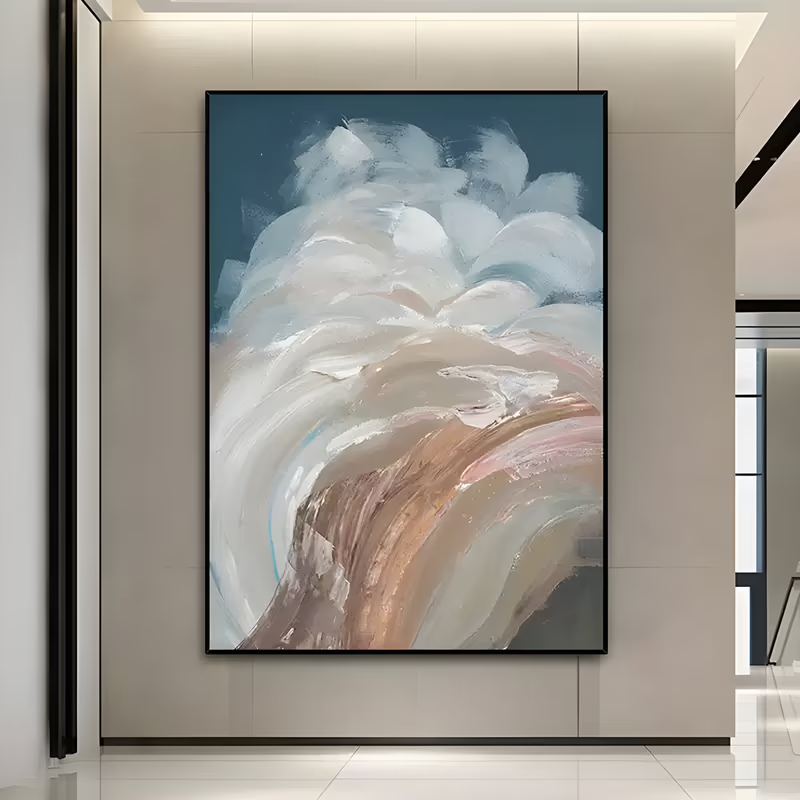
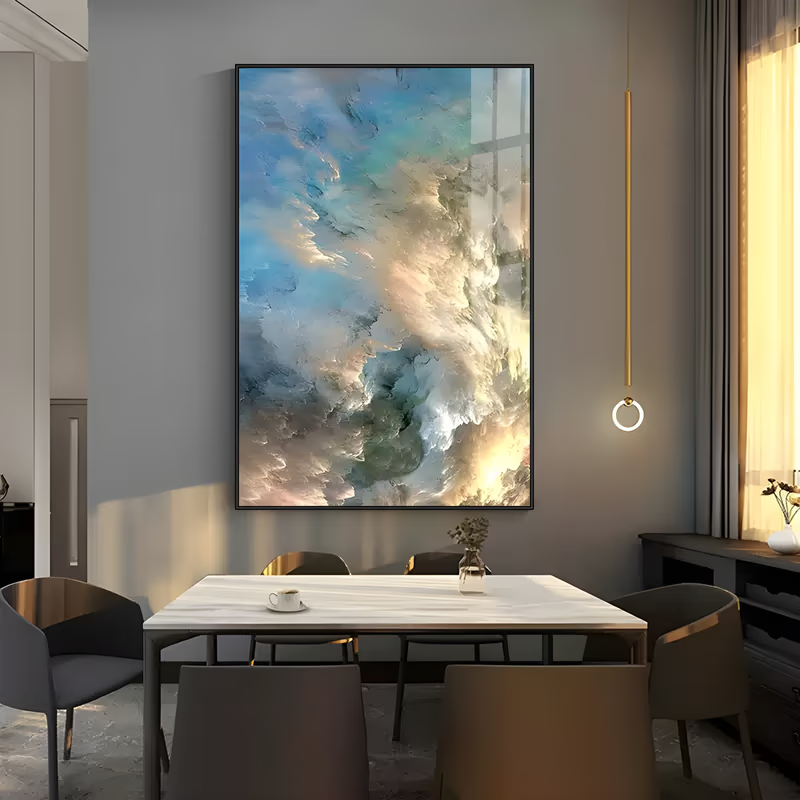
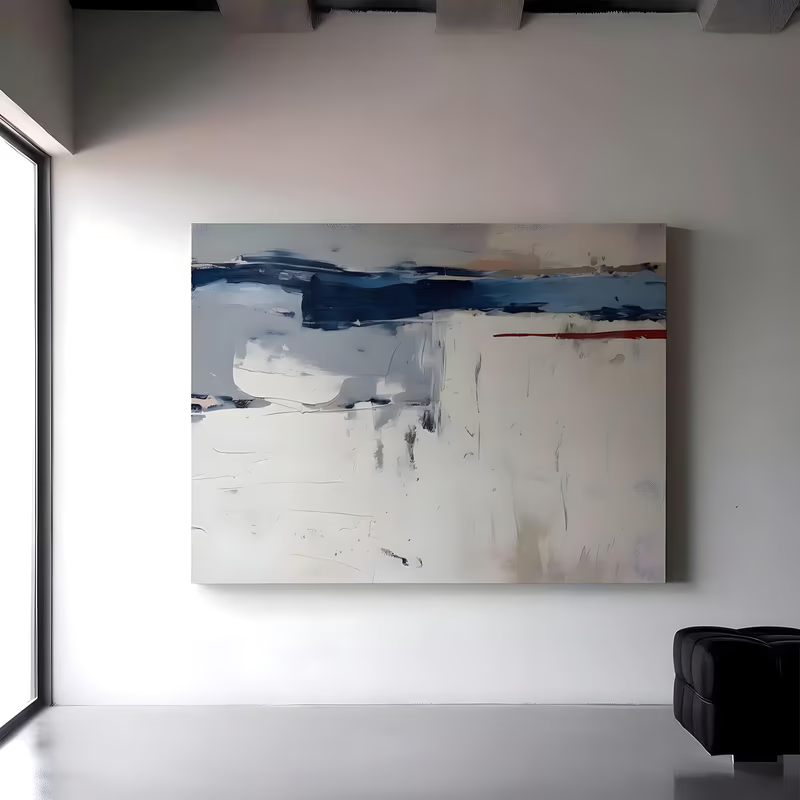
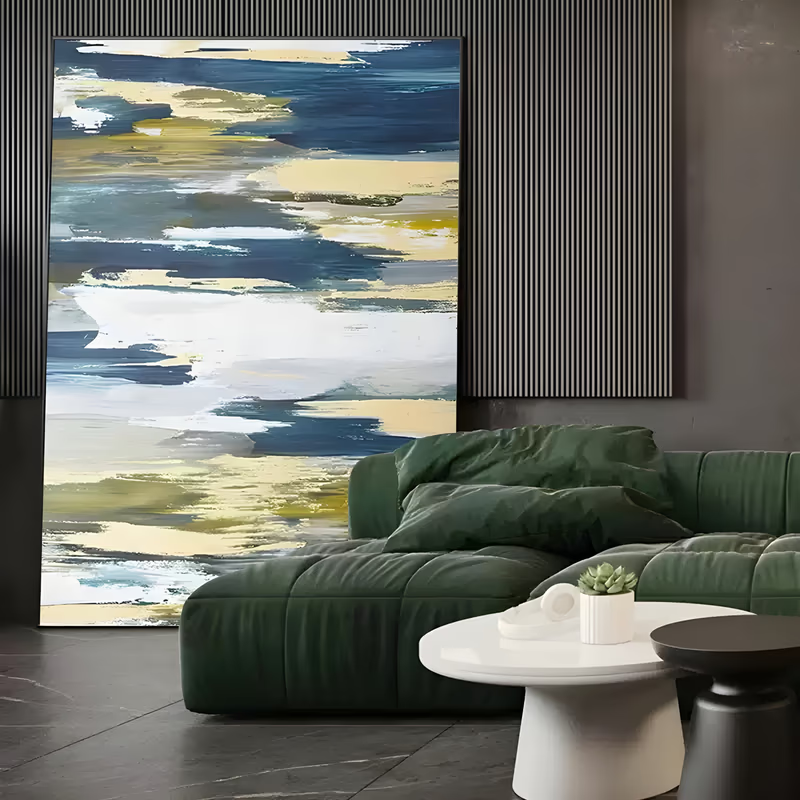
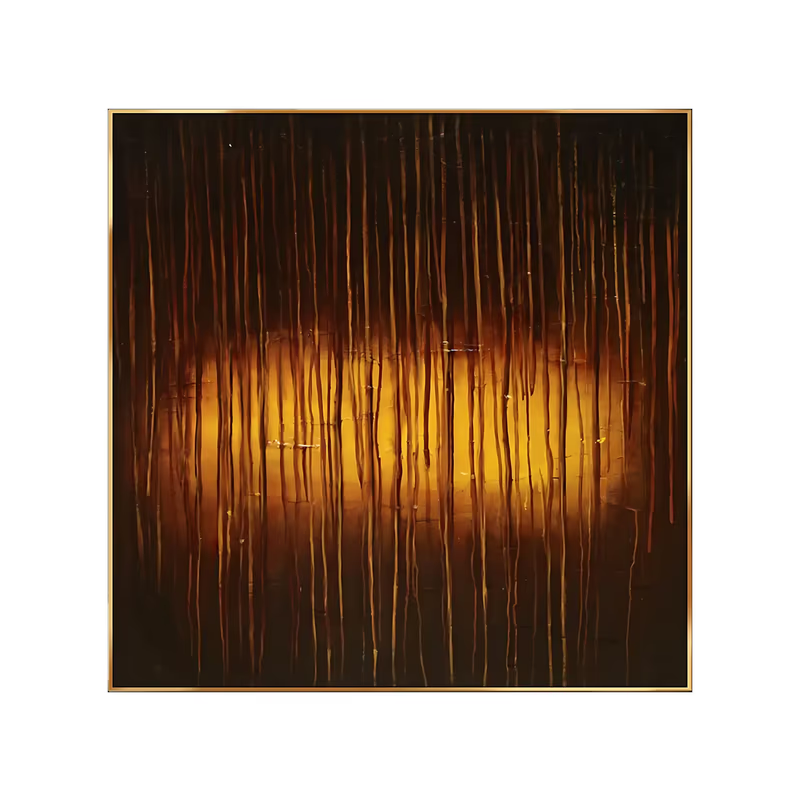
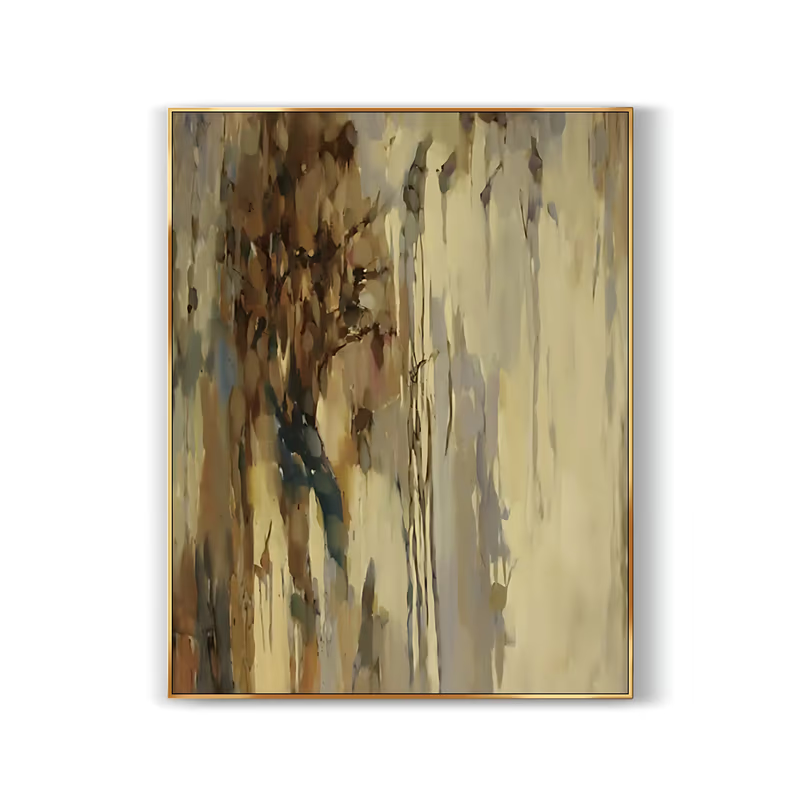
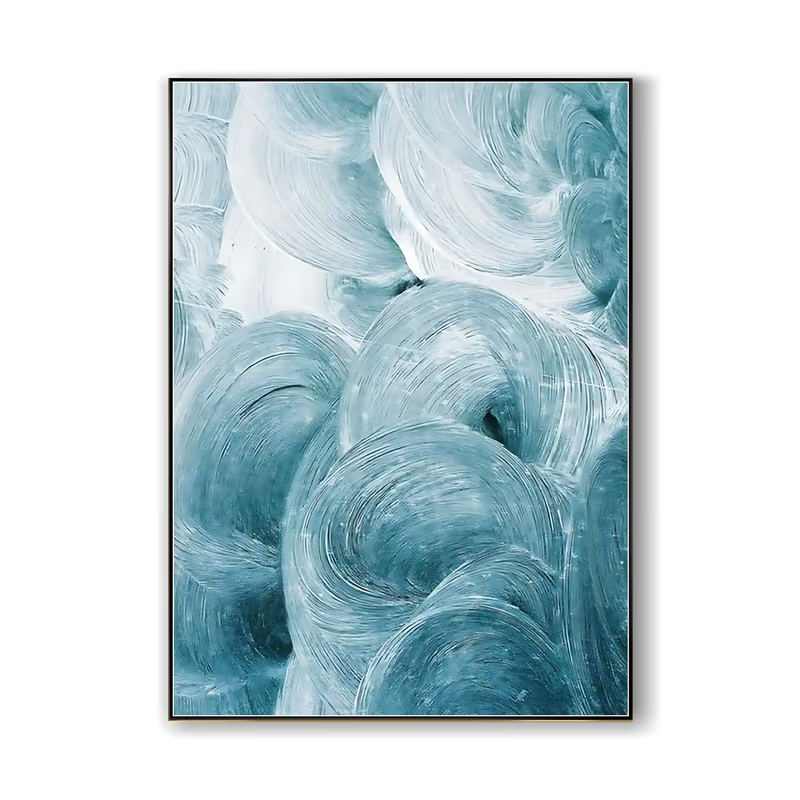
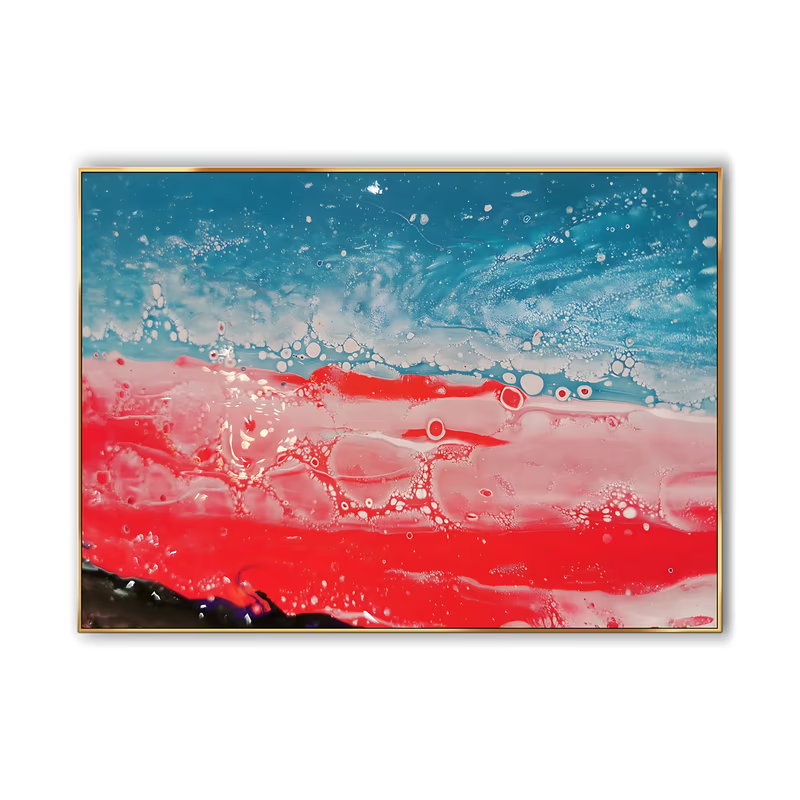
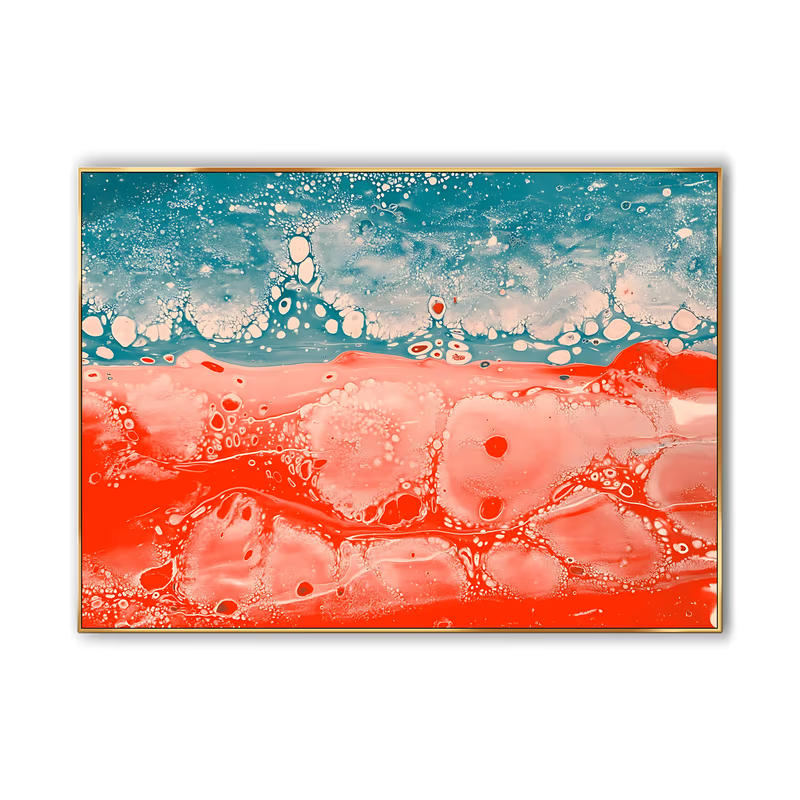
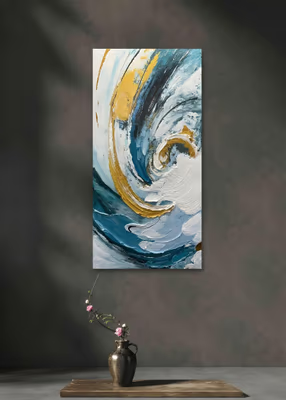
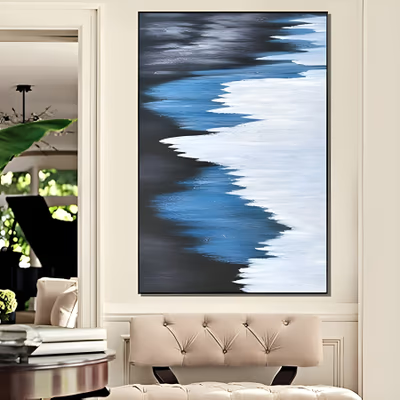
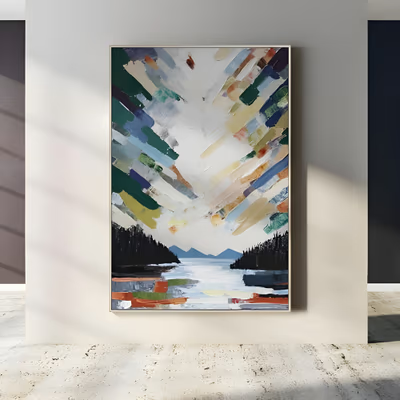
A horizon reduced to two glowing fields, a waterfall turned into falling streaks of white, a wave curling into a spiral, a skyline as one torn band of colour. They keep a sense of place, which makes them easy in hotel rooms and spa corridors.
Cubist faces and figures
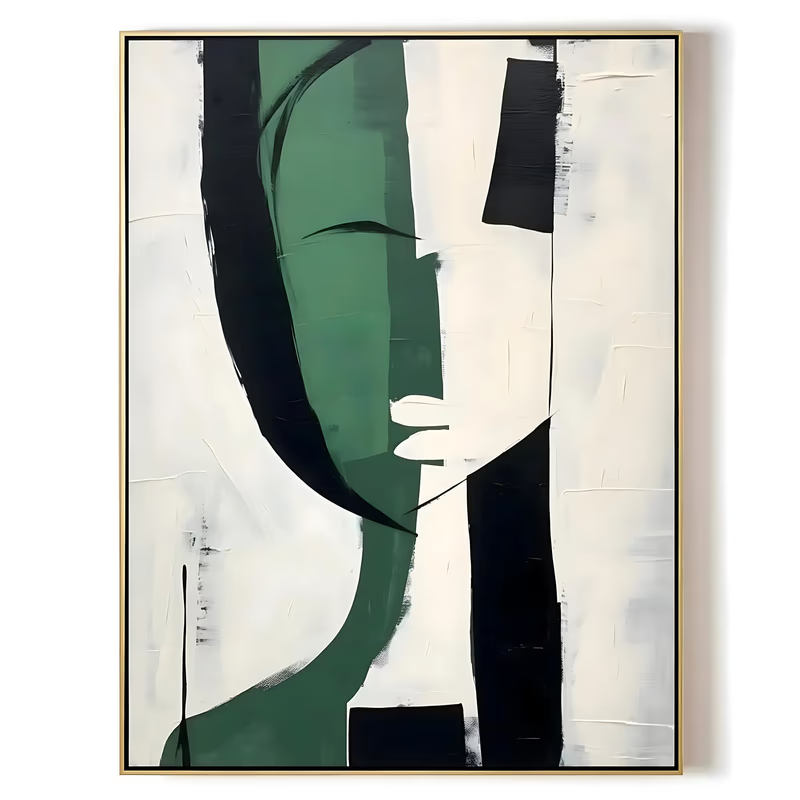
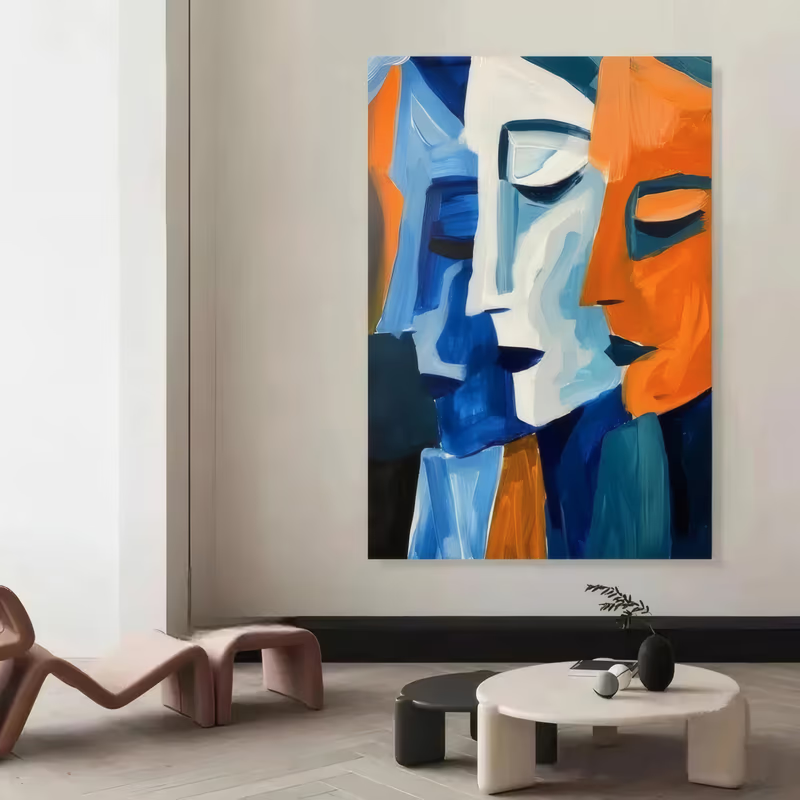
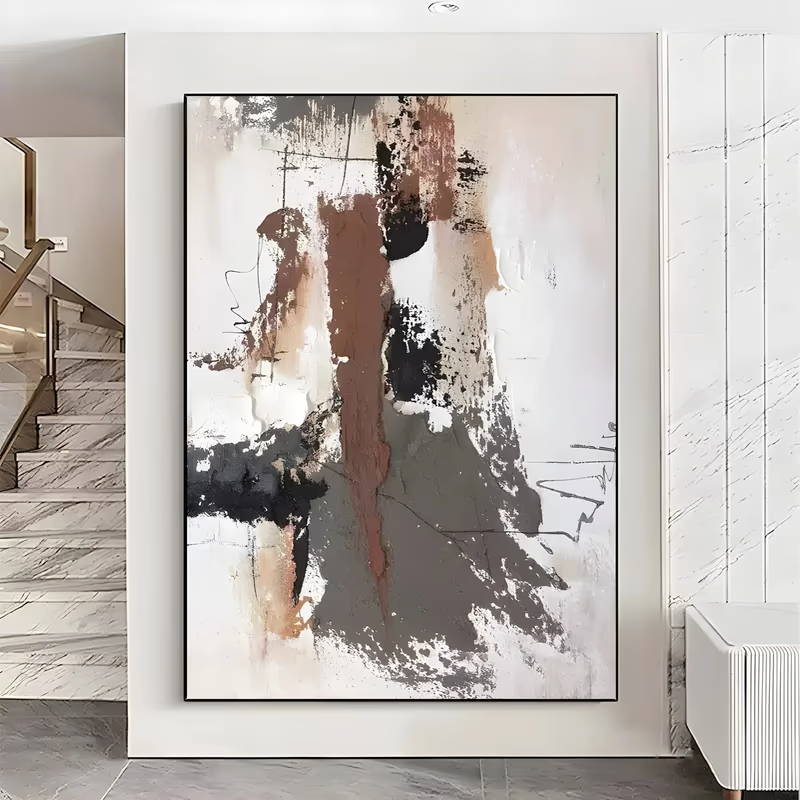
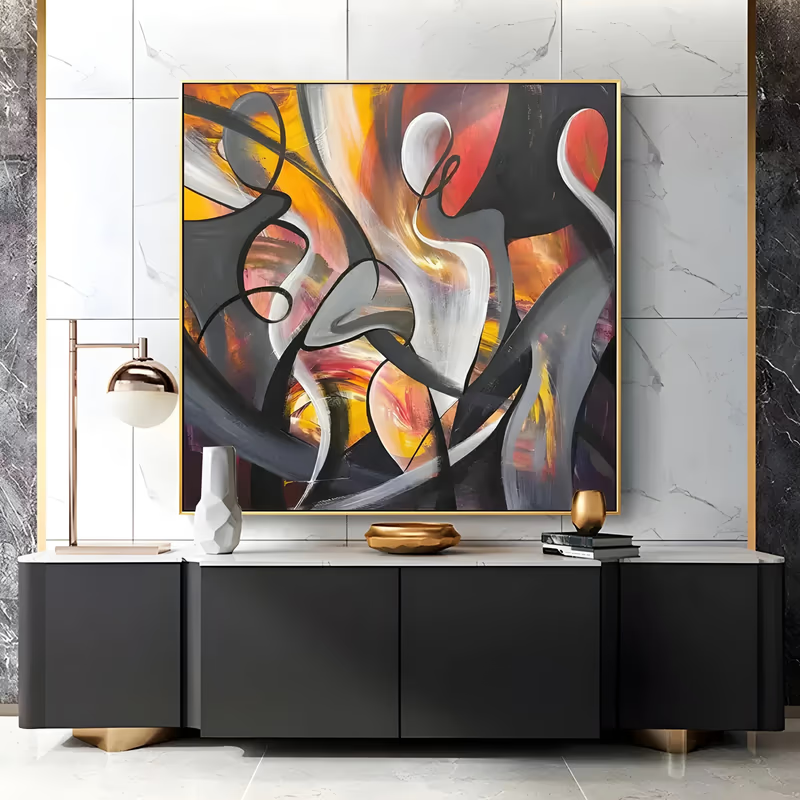
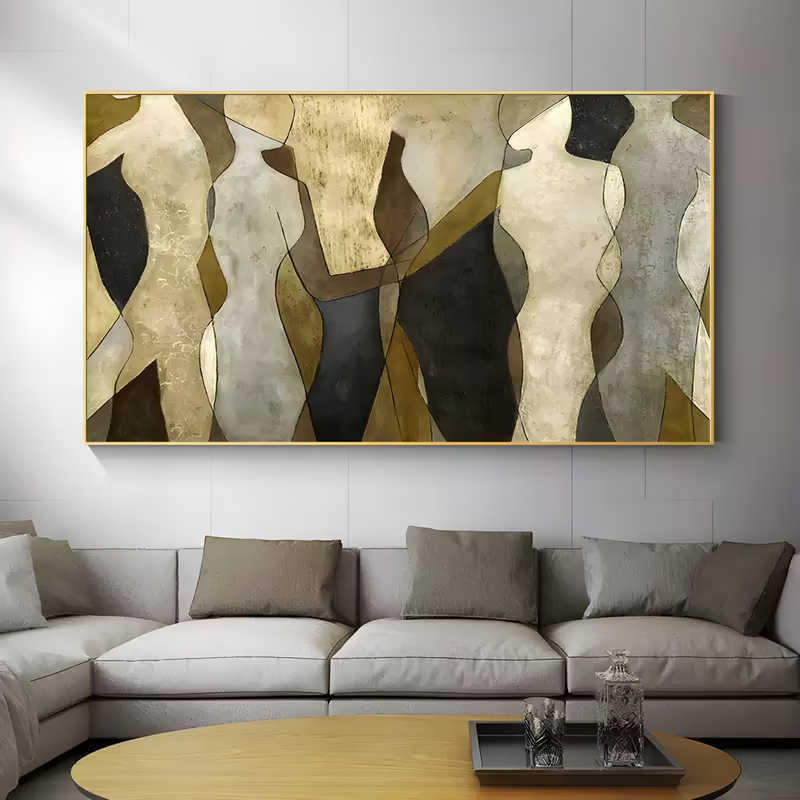
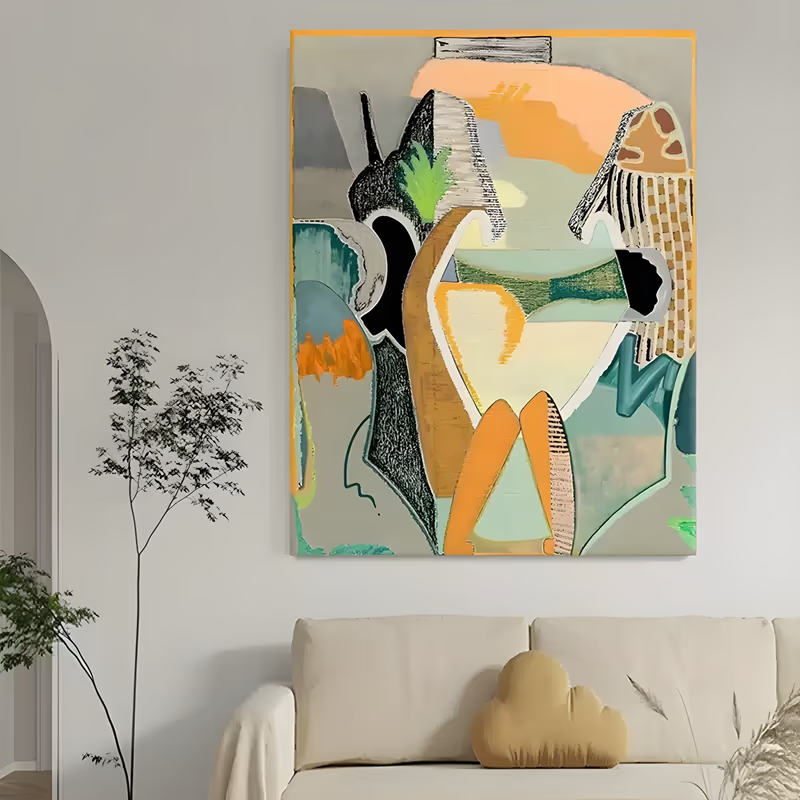
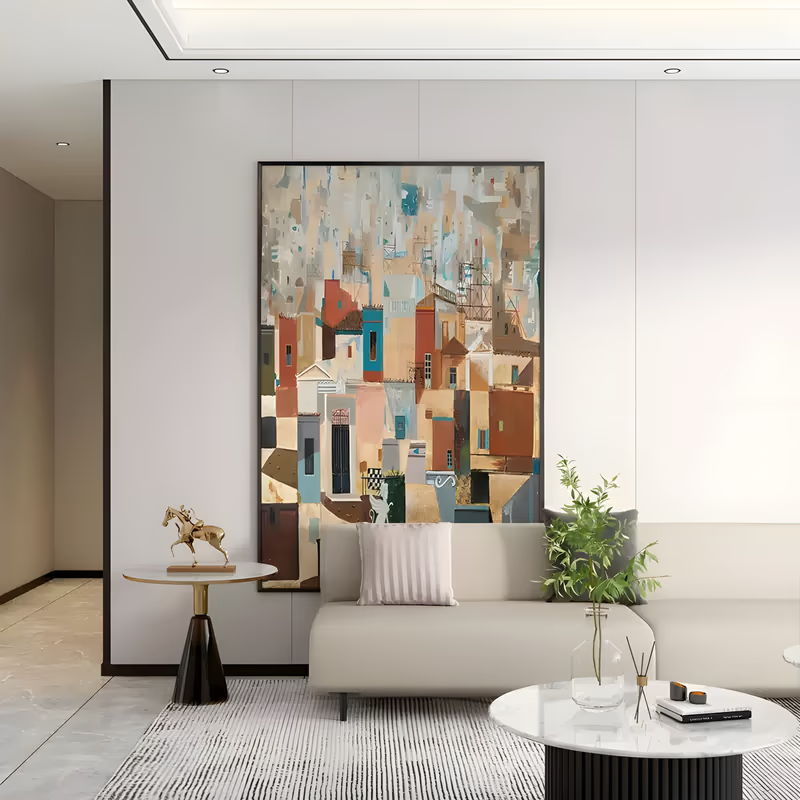
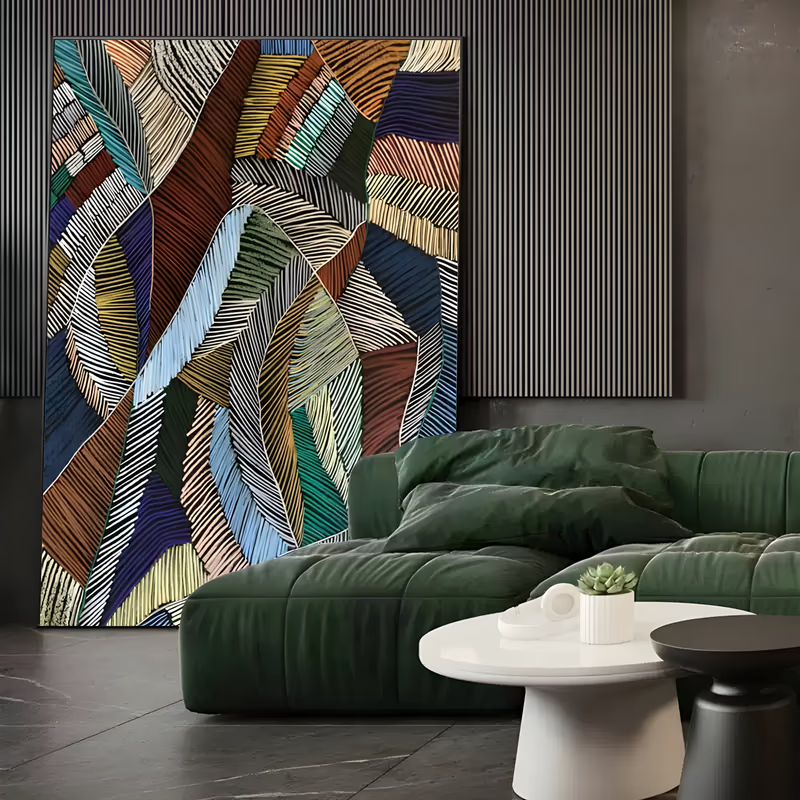
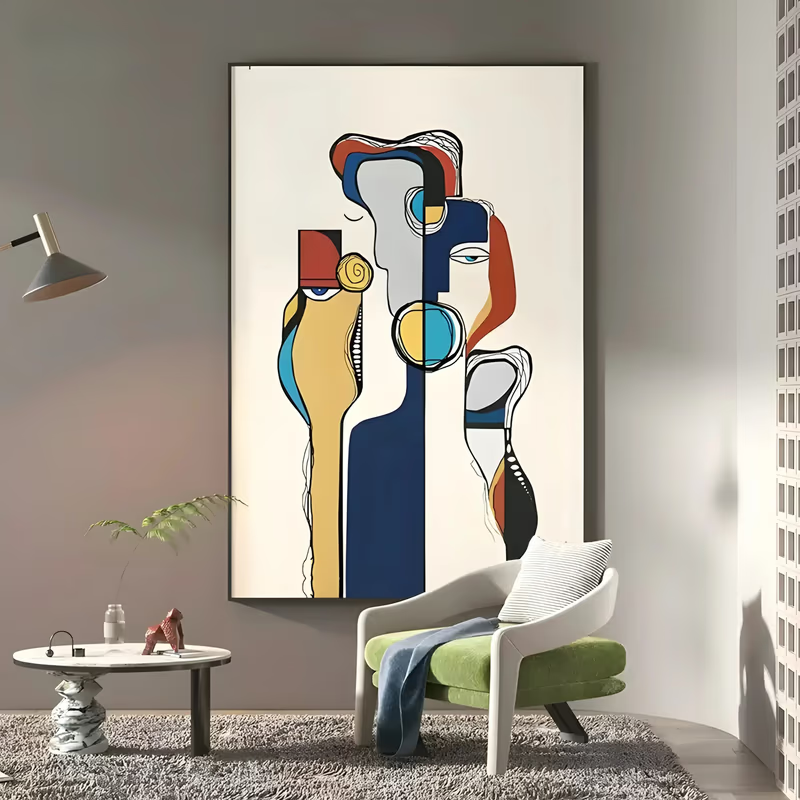
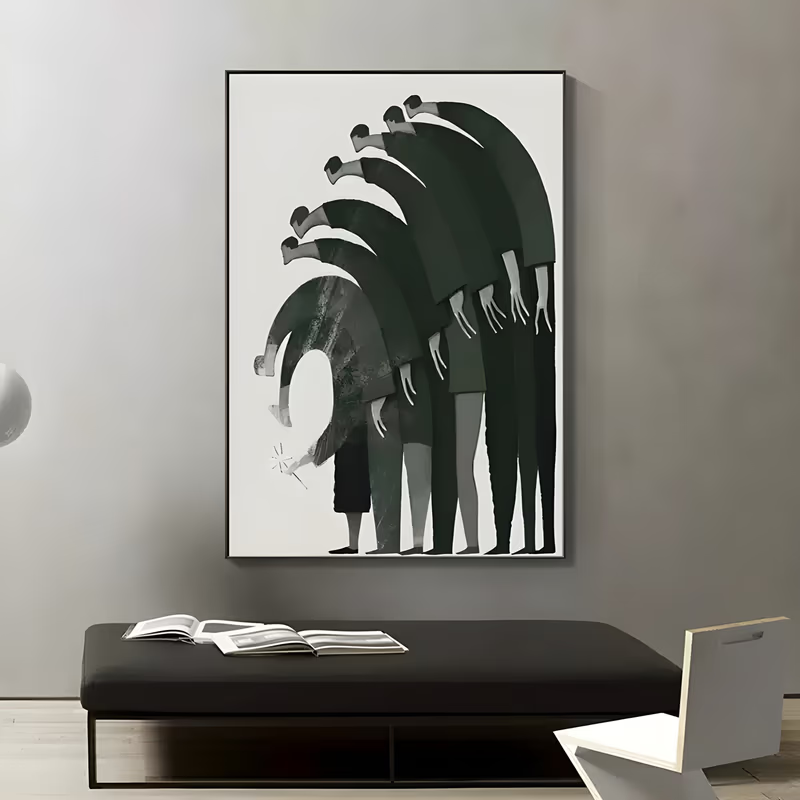
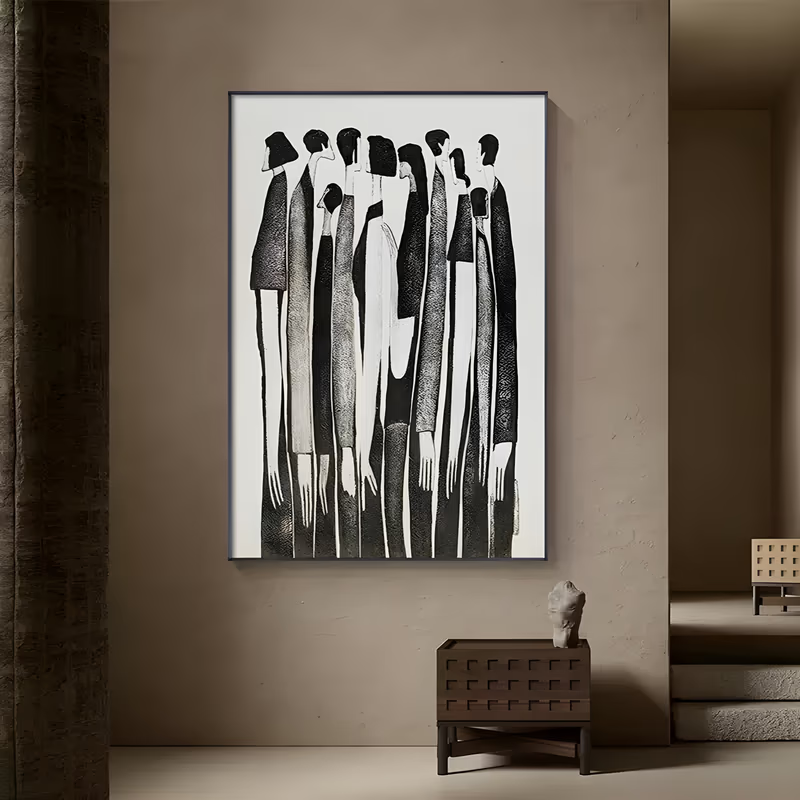
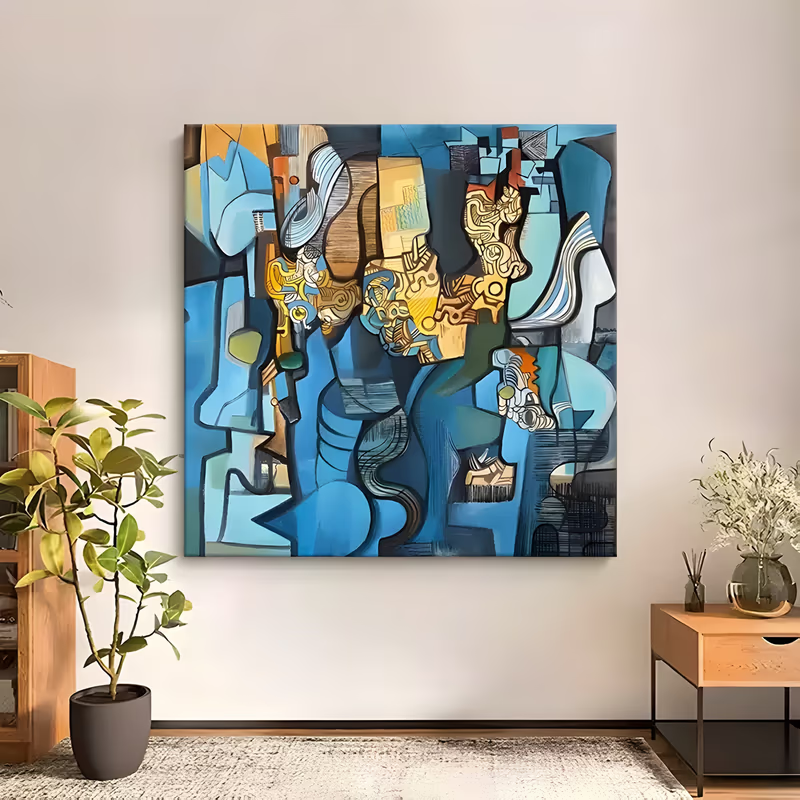
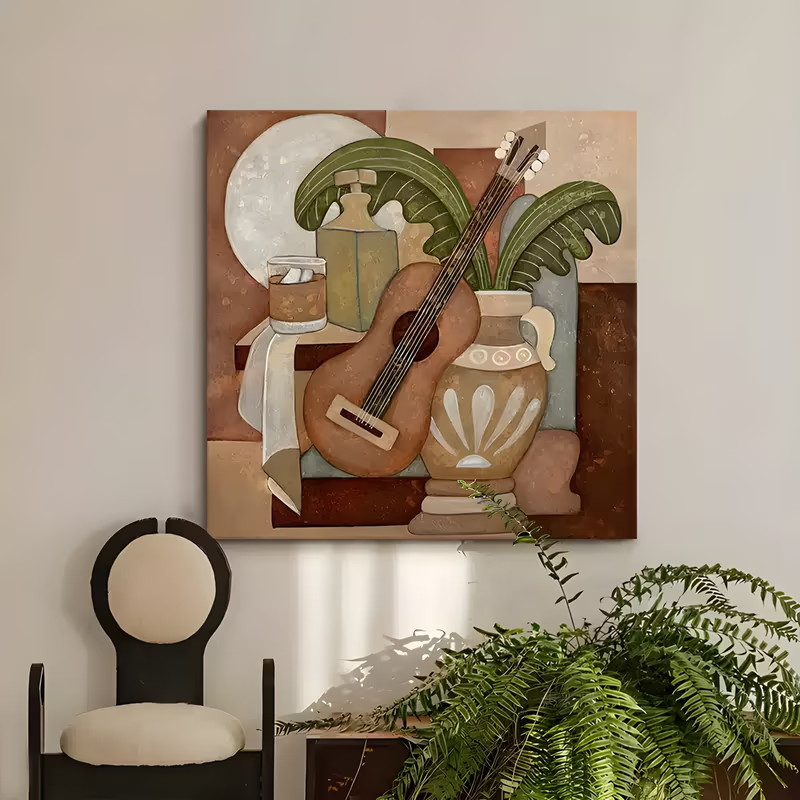
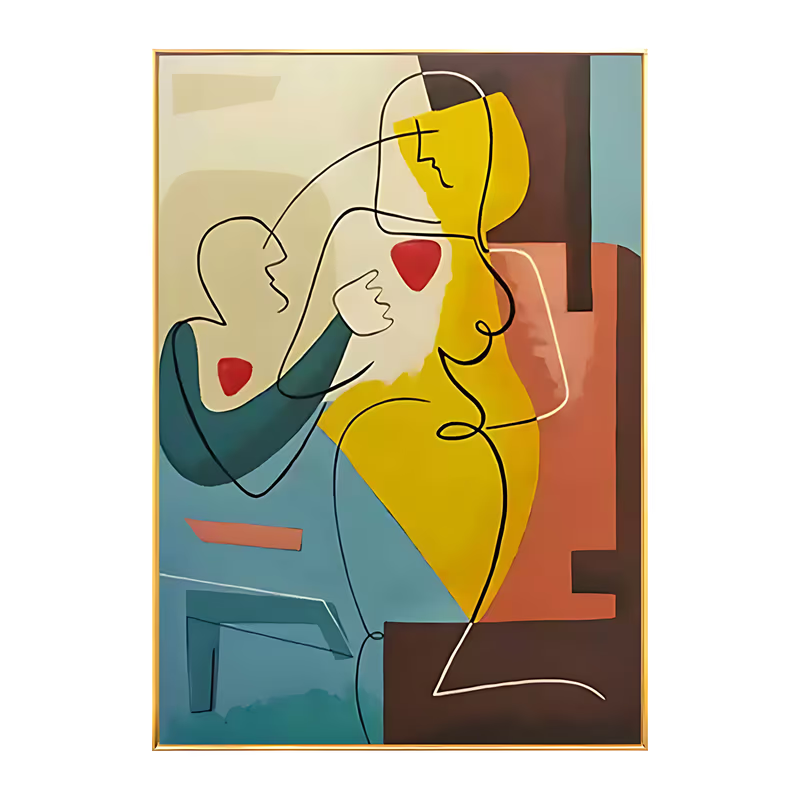
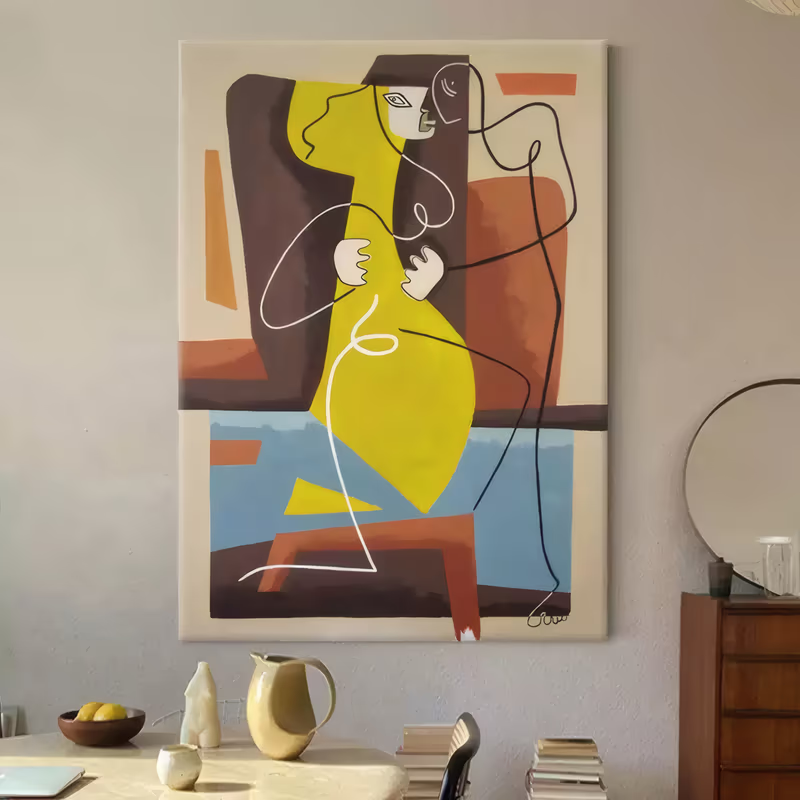
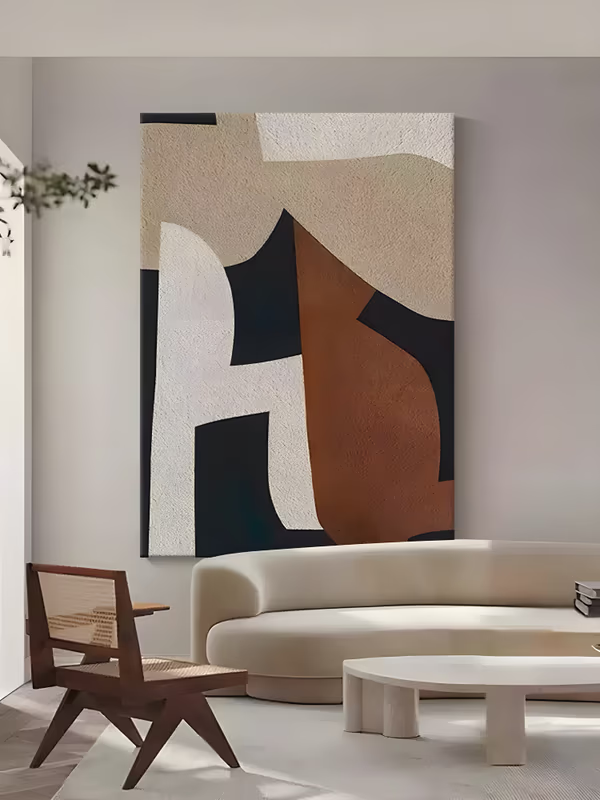
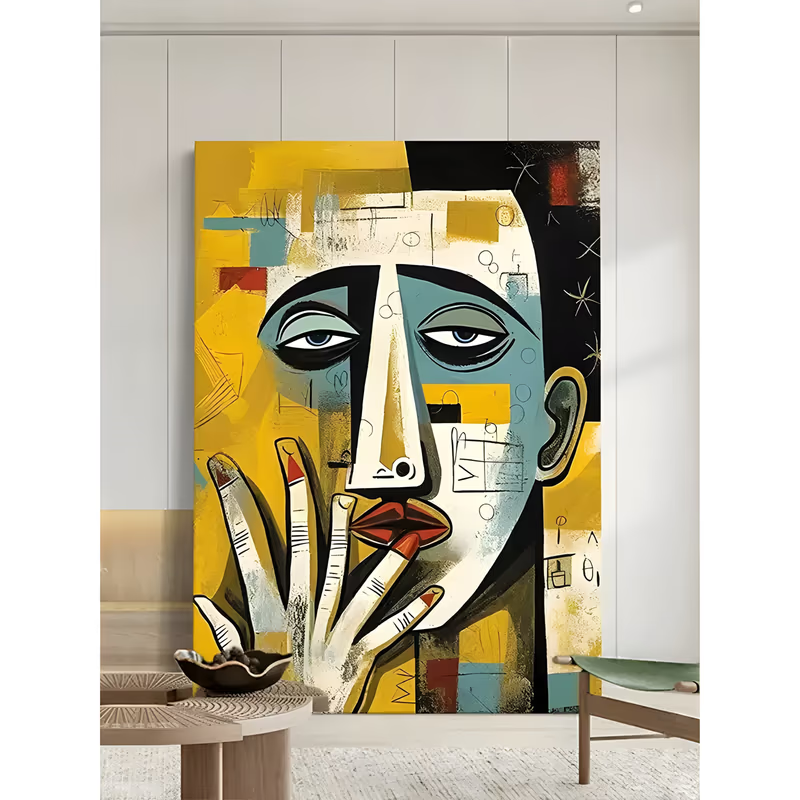
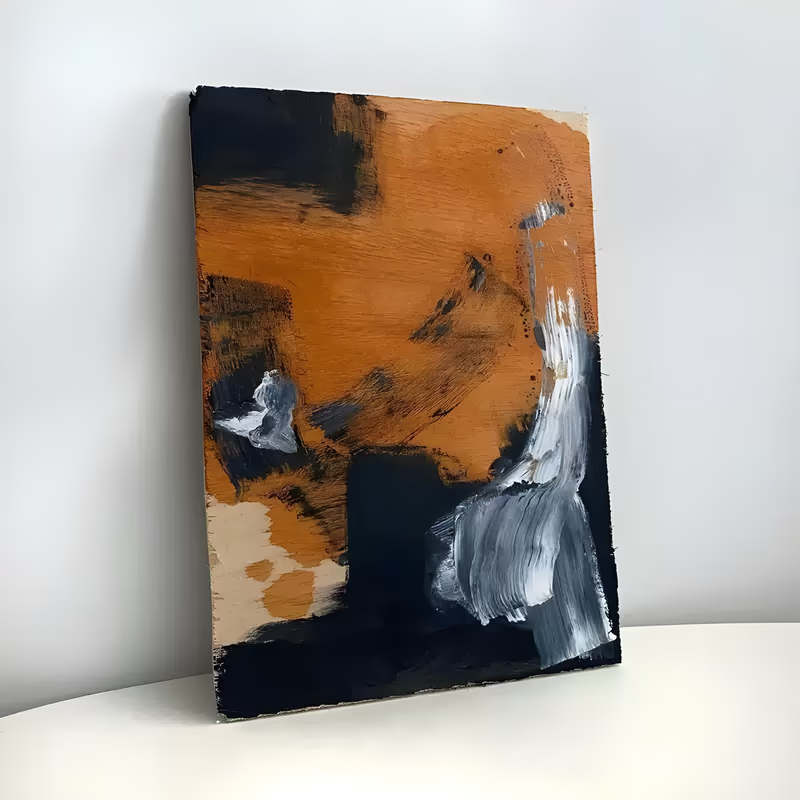
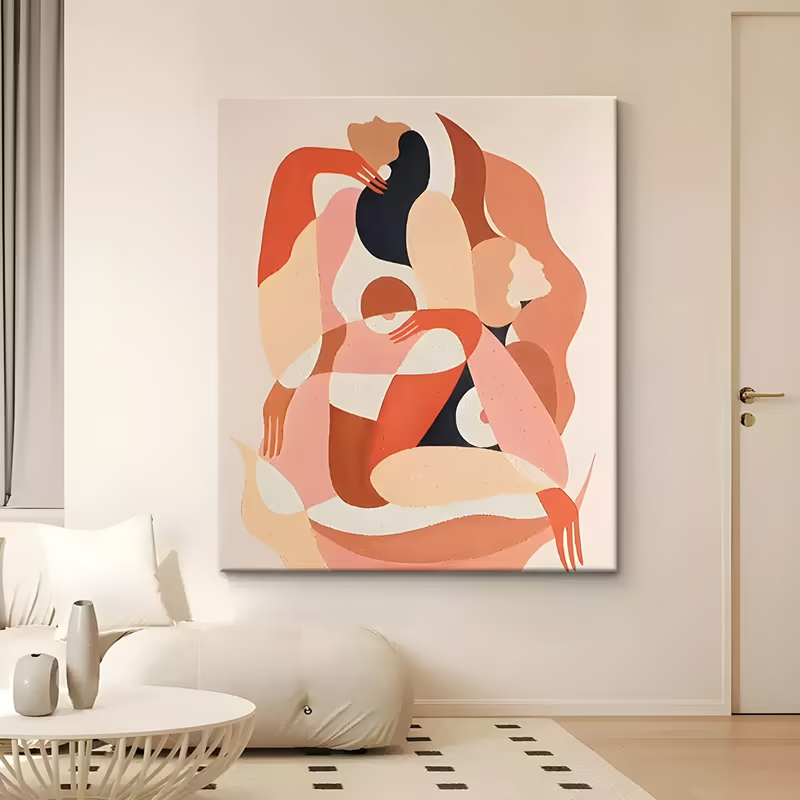
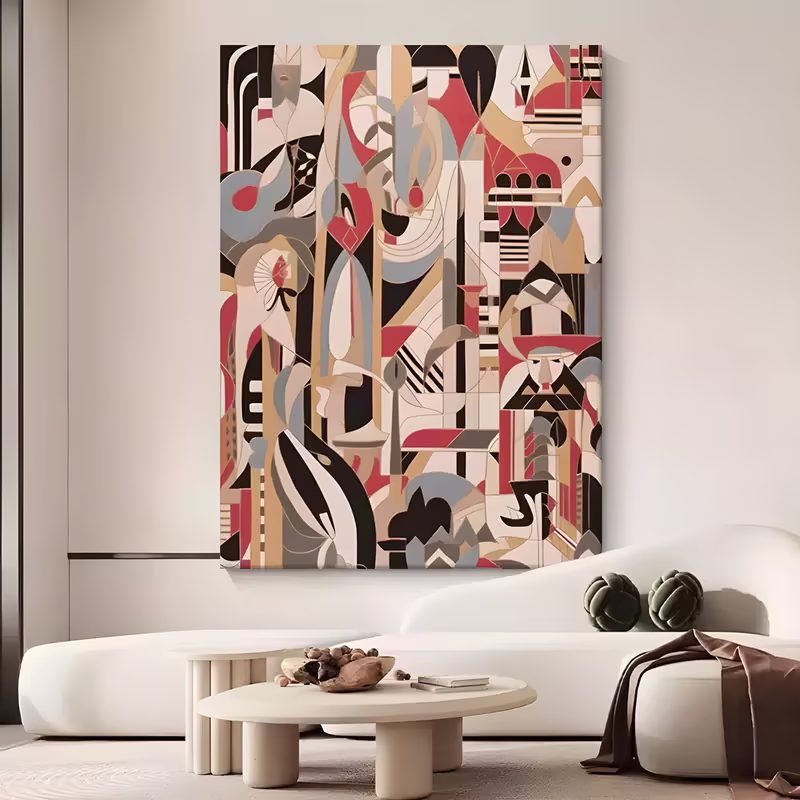
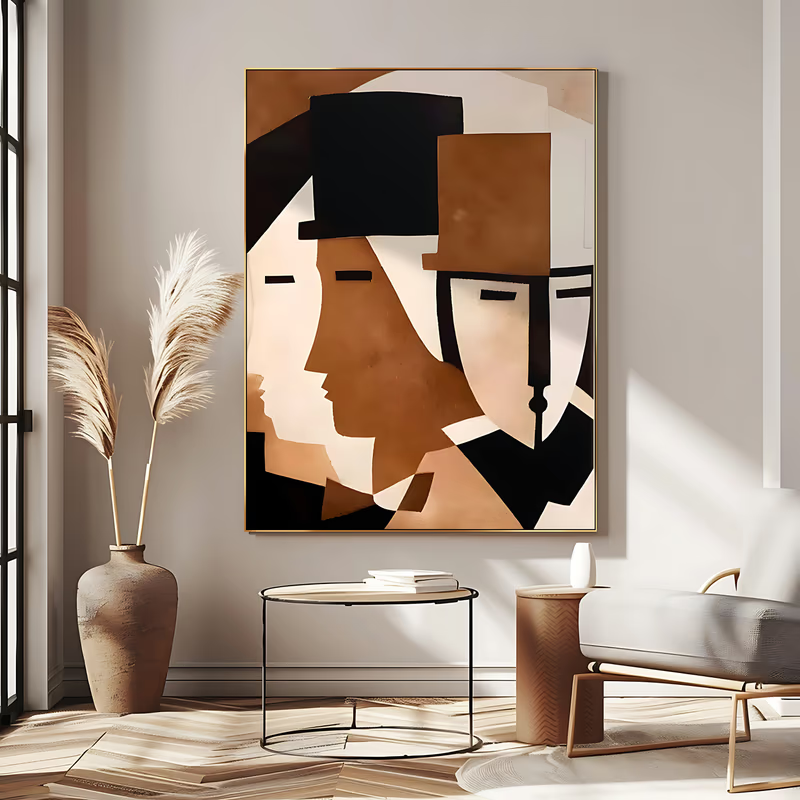
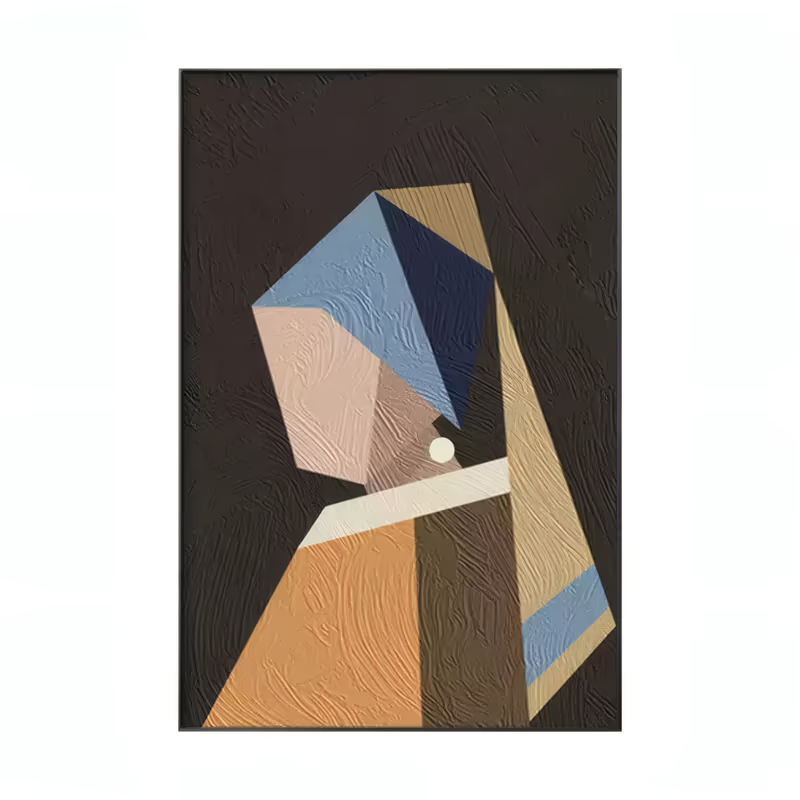
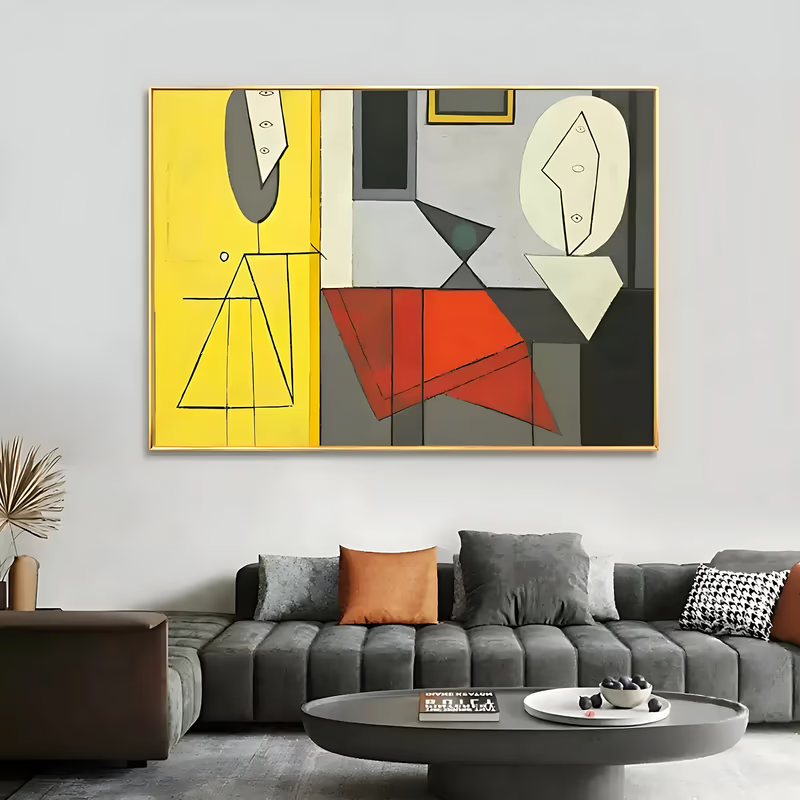
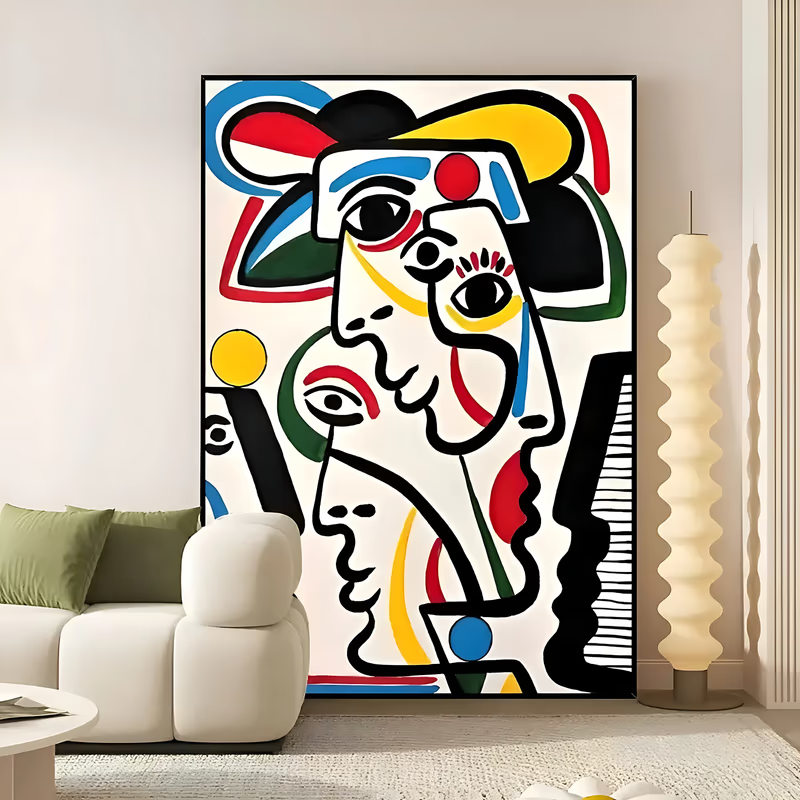
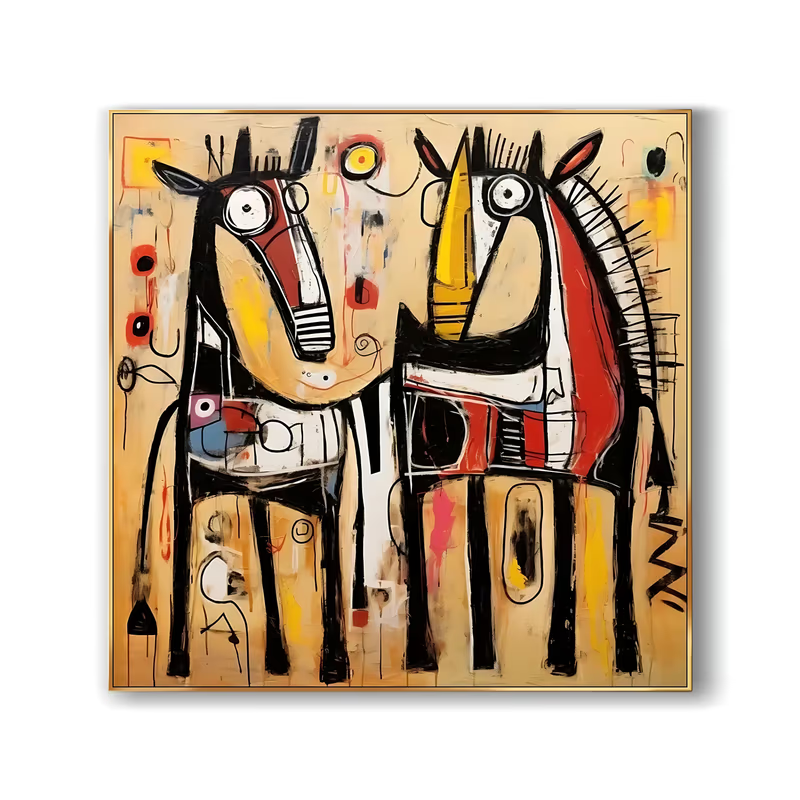
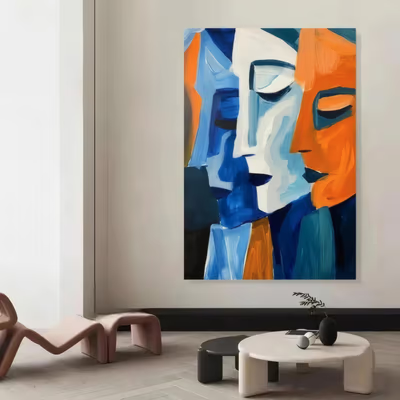
Profiles split into overlapping planes of terracotta, black and ochre, and mask-like faces built from flat blocks of colour. Characterful and warm, they bring conversation to restaurants, bars, galleries and entrance halls.
Which interior styles suit abstract art?
Almost every interior style has an abstract that suits it; the trick is matching the kind of mark and palette to the furniture and materials.
| Interior style | Abstract that fits |
|---|---|
| Mid-century modern | Colour blocks, circles and arches in mustard, teal, rust and cream |
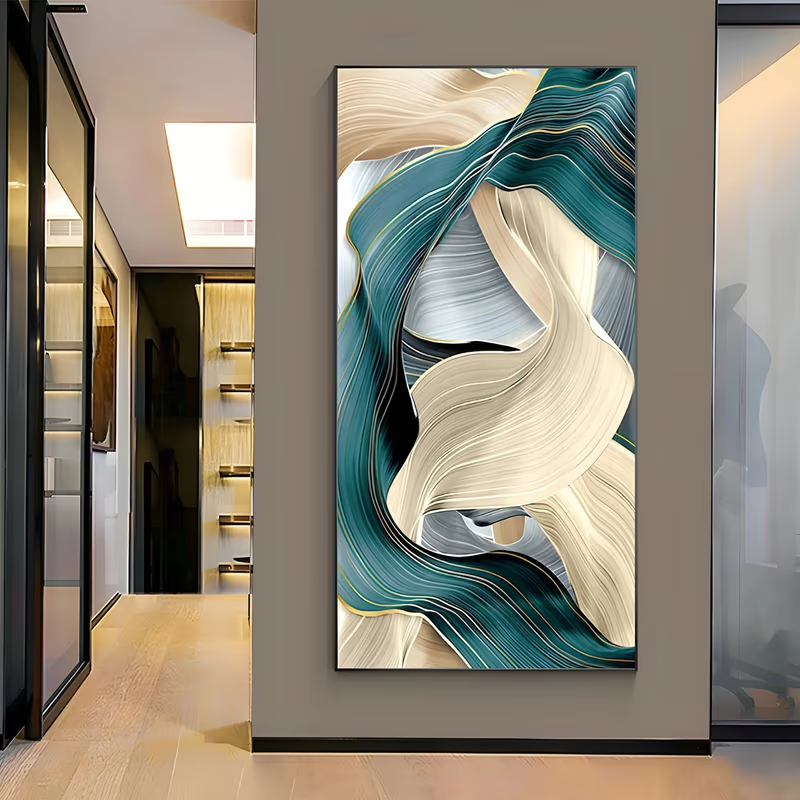
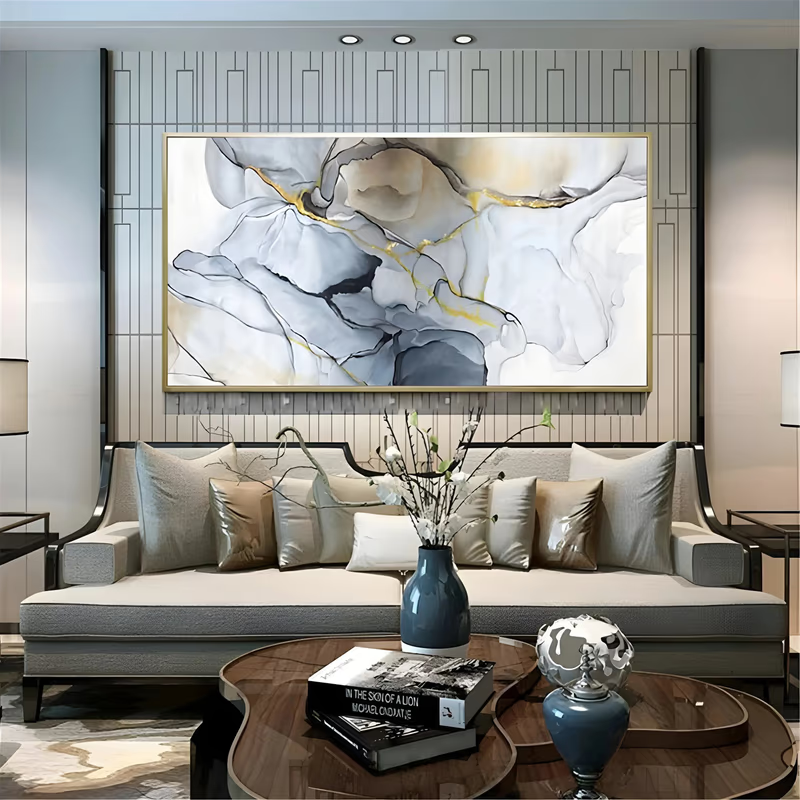
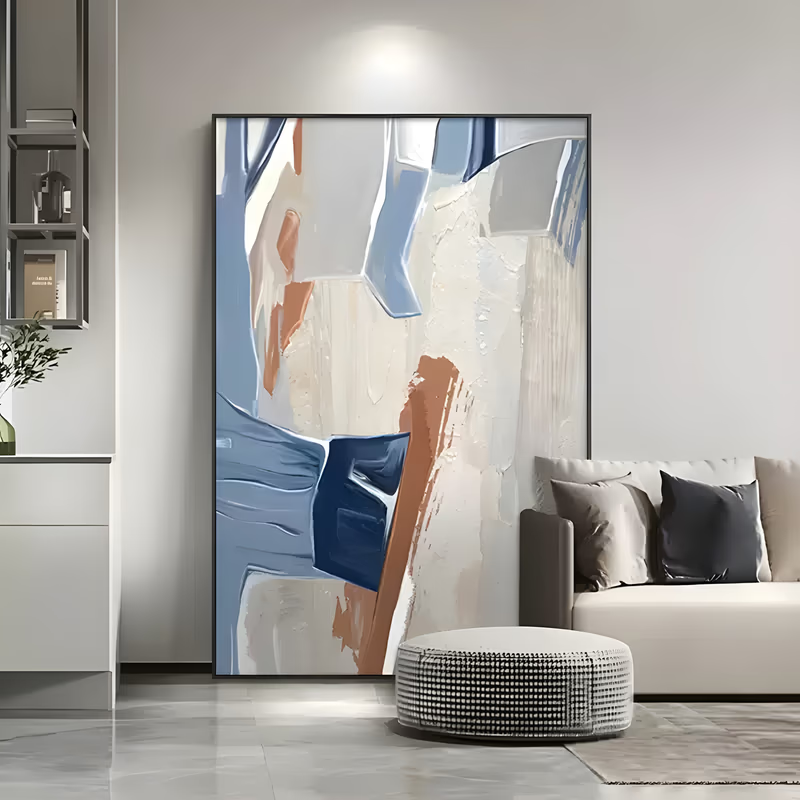
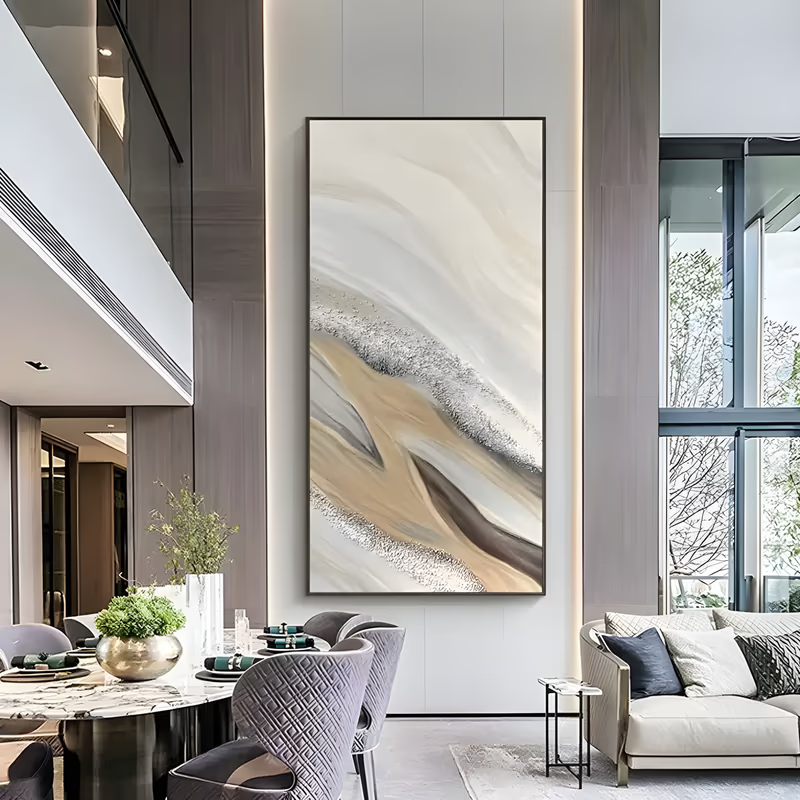
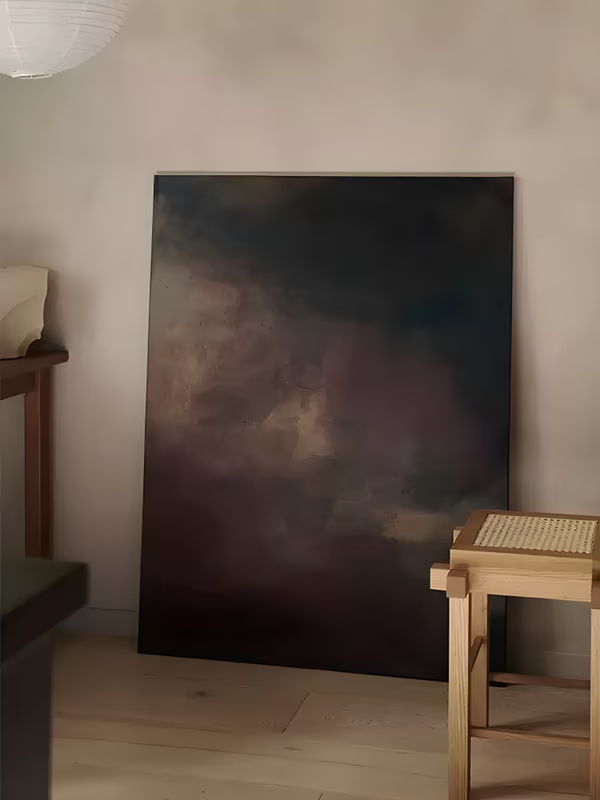
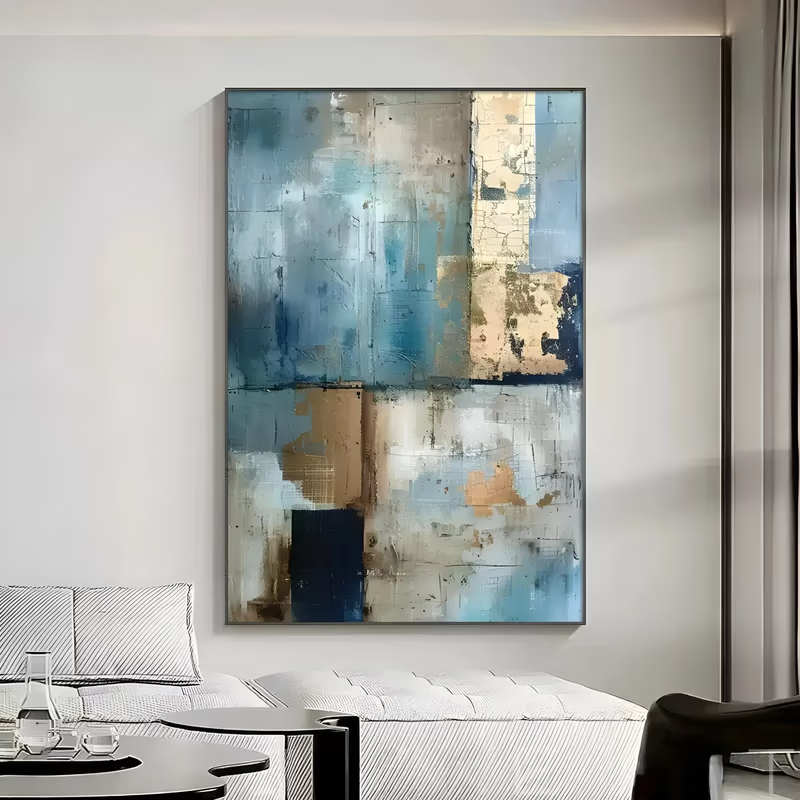
| Contemporary and quiet luxury | Large soft washes in greige, taupe and ivory with a thread of gold leaf |
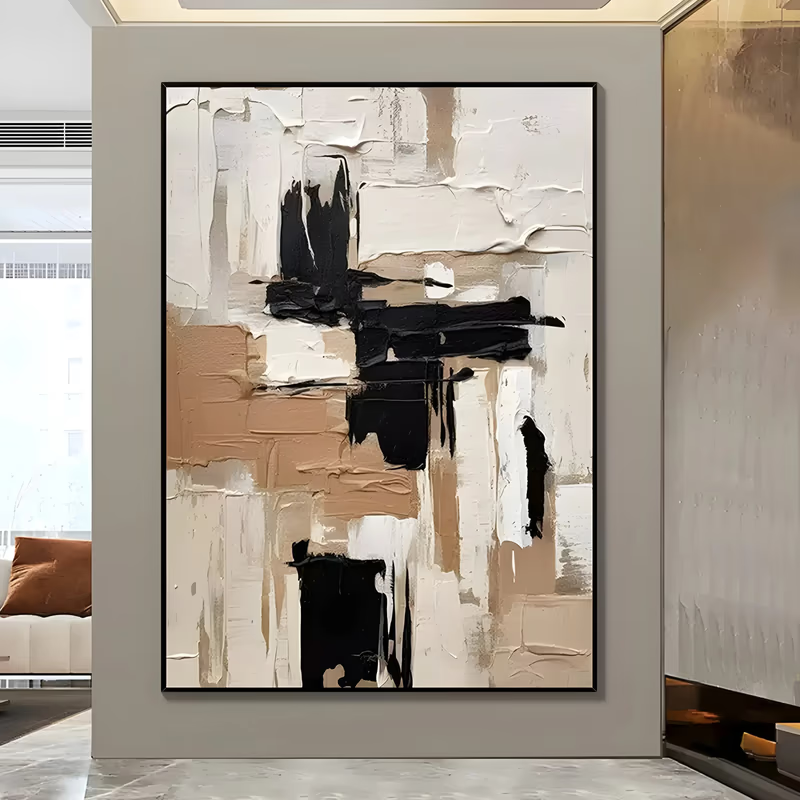
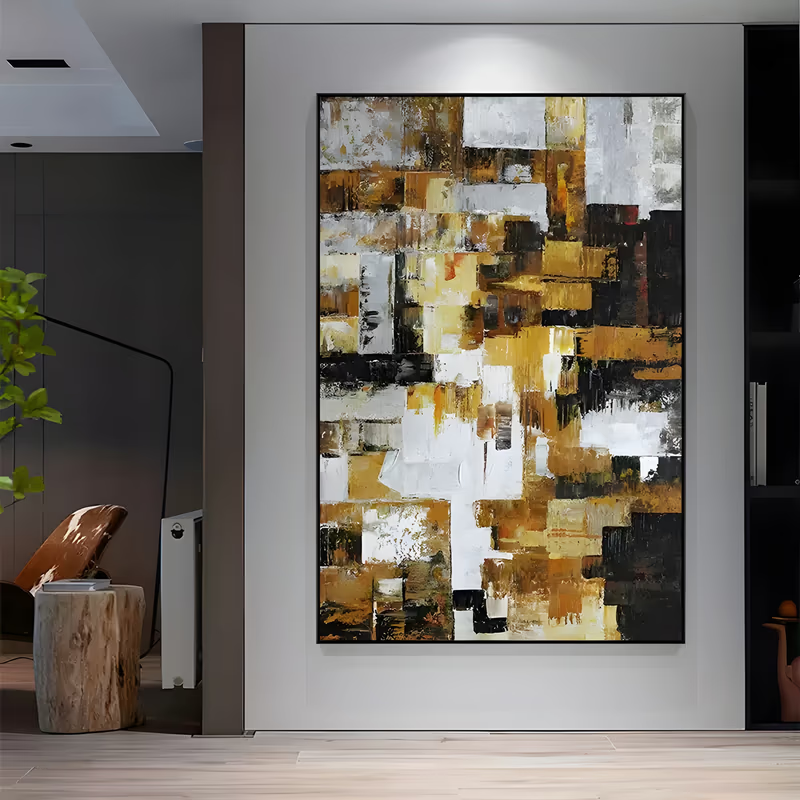
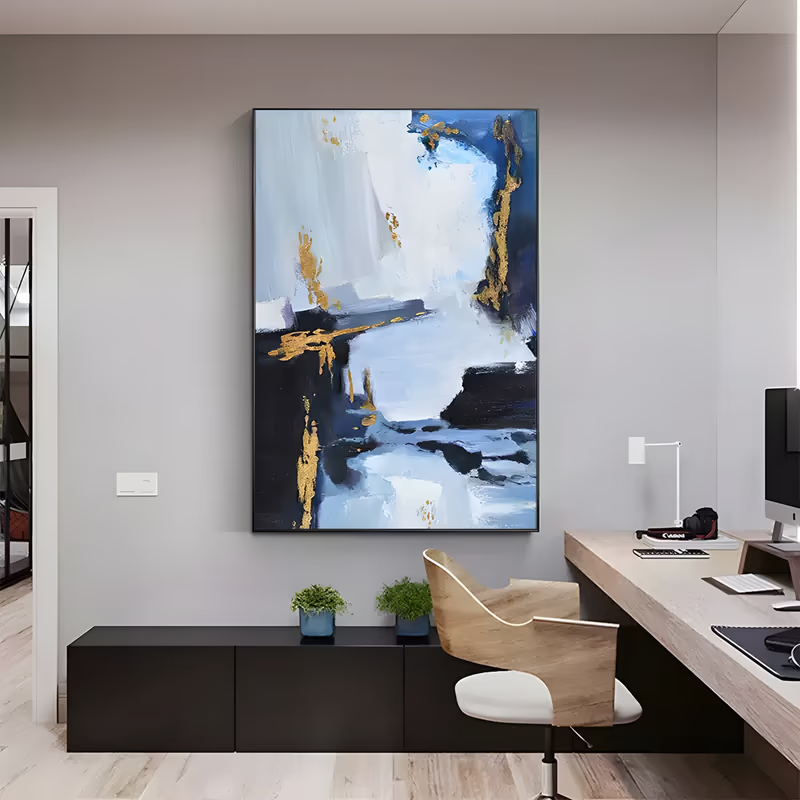
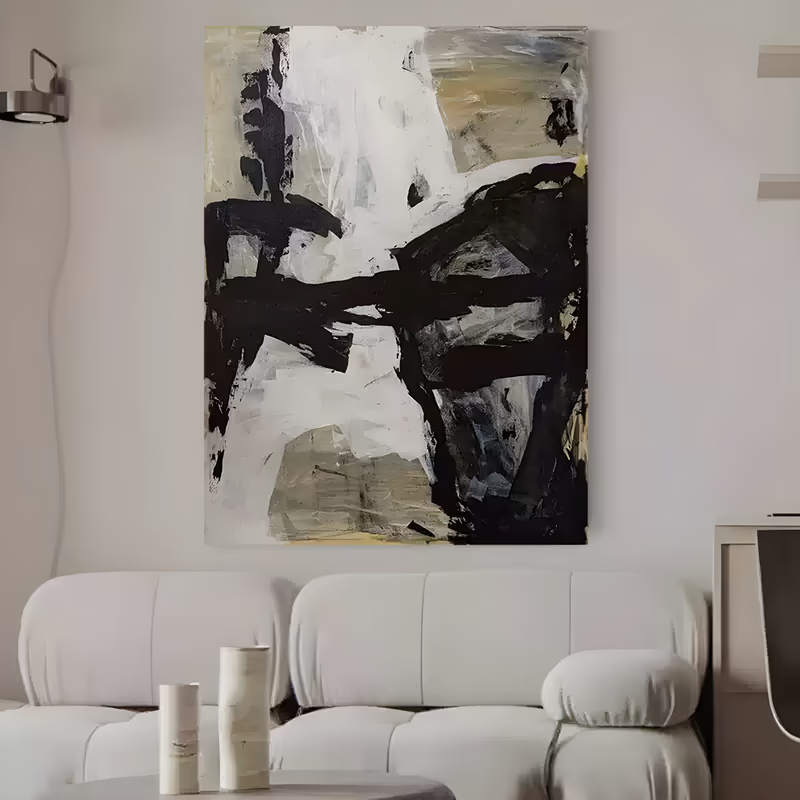
| Industrial loft | Black and white knife work, drips and charcoal grounds against brick and steel |
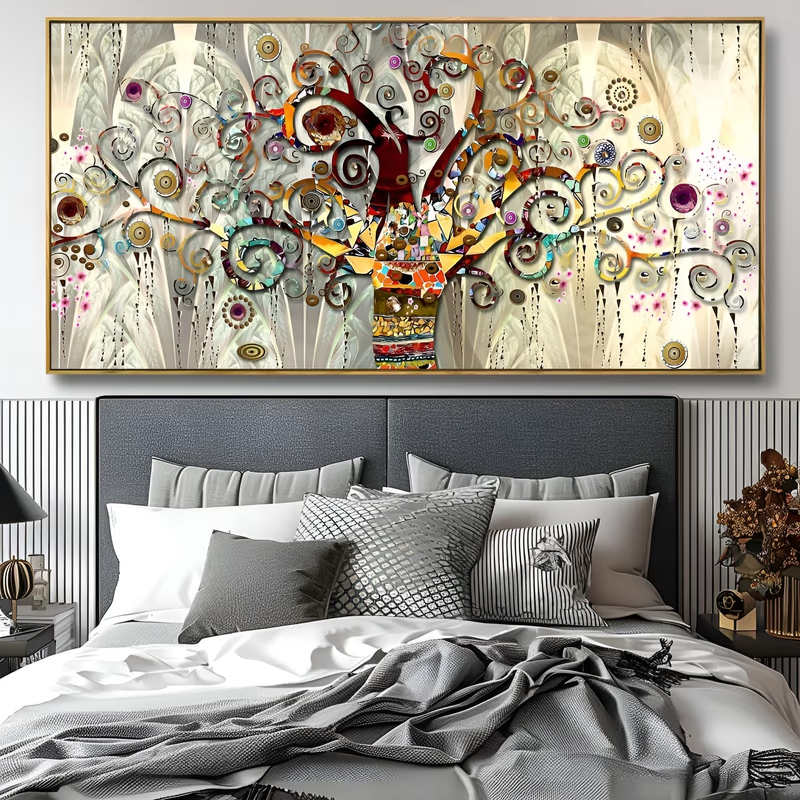
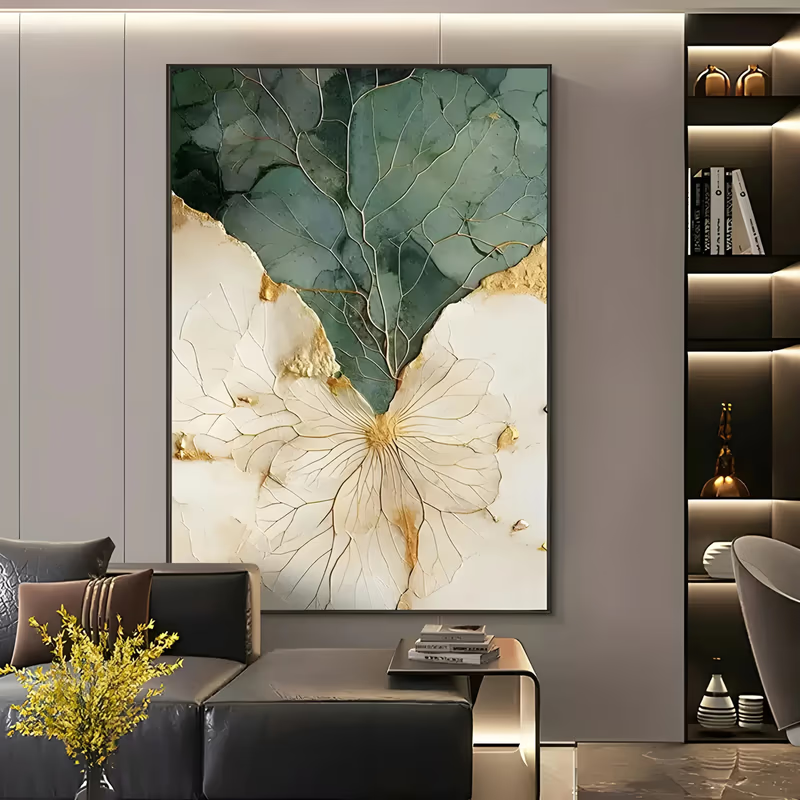
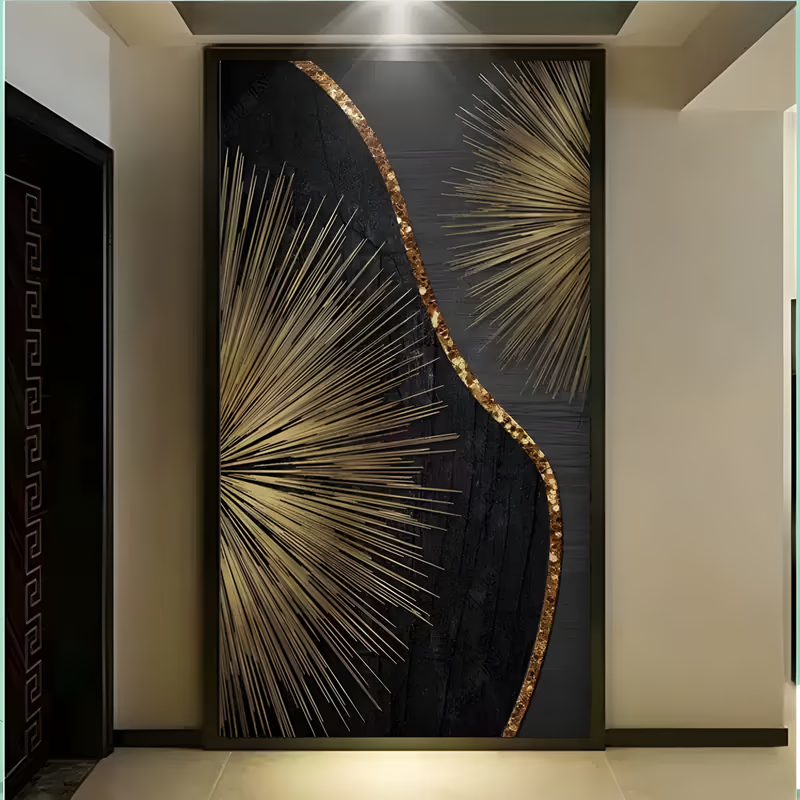
| Art Deco and glam | Black, navy or emerald with gold leaf veins and fans |
| Boho and Mediterranean | Terracotta and ochre cubist faces, sun discs and earthy brushwork |
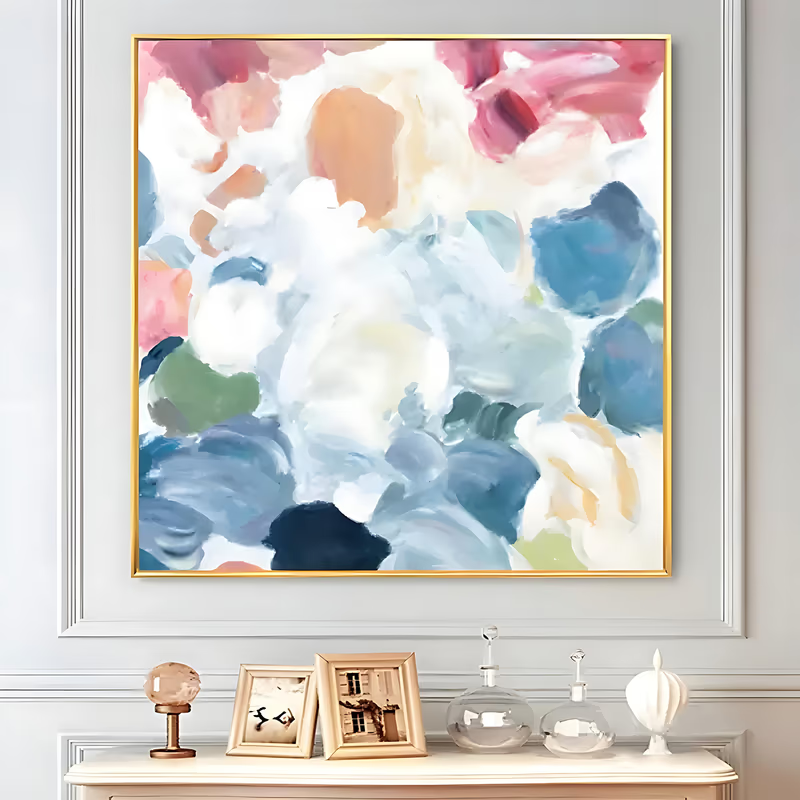
| Classic or traditional | Soft abstract landscapes in muted tones, framed in gold, as a modern counterpoint |
Abstract art also bridges rooms that mix periods. A traditional sofa and a modern coffee table can look unrelated until a canvas on the wall picks up a colour from each.
How big should abstract canvas art be, and should it be vertical or horizontal?
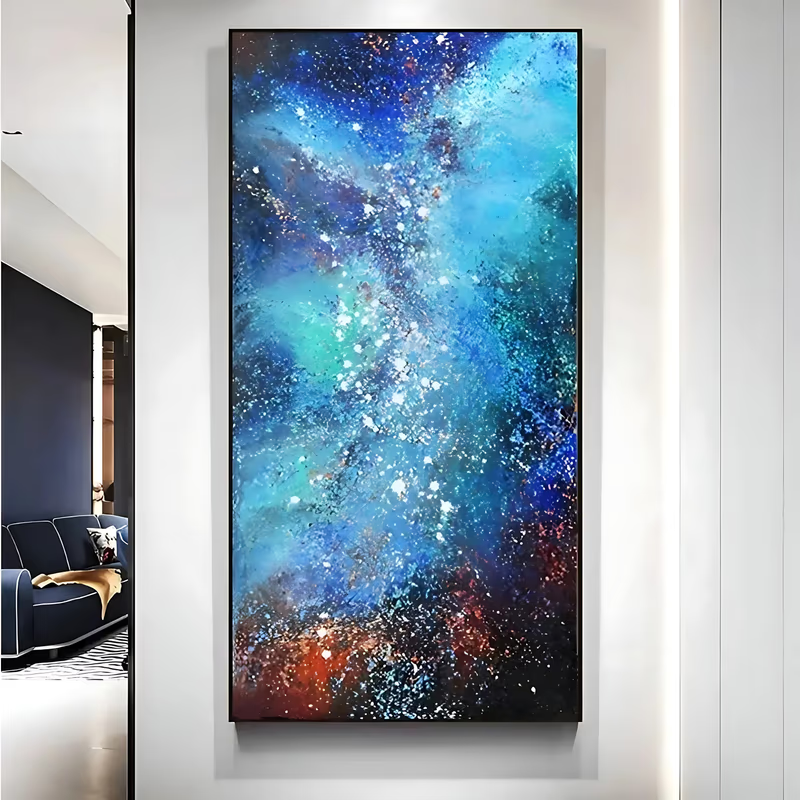
Go larger than feels safe: an abstract canvas should span about two-thirds of the sofa, bed or console below it, and a tall vertical format adds height to a room.
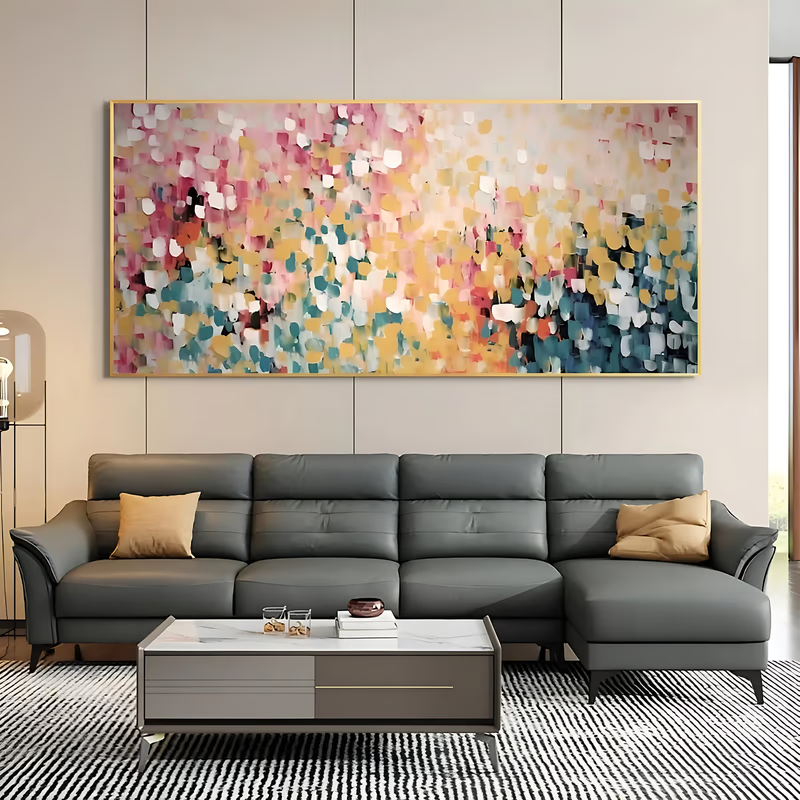
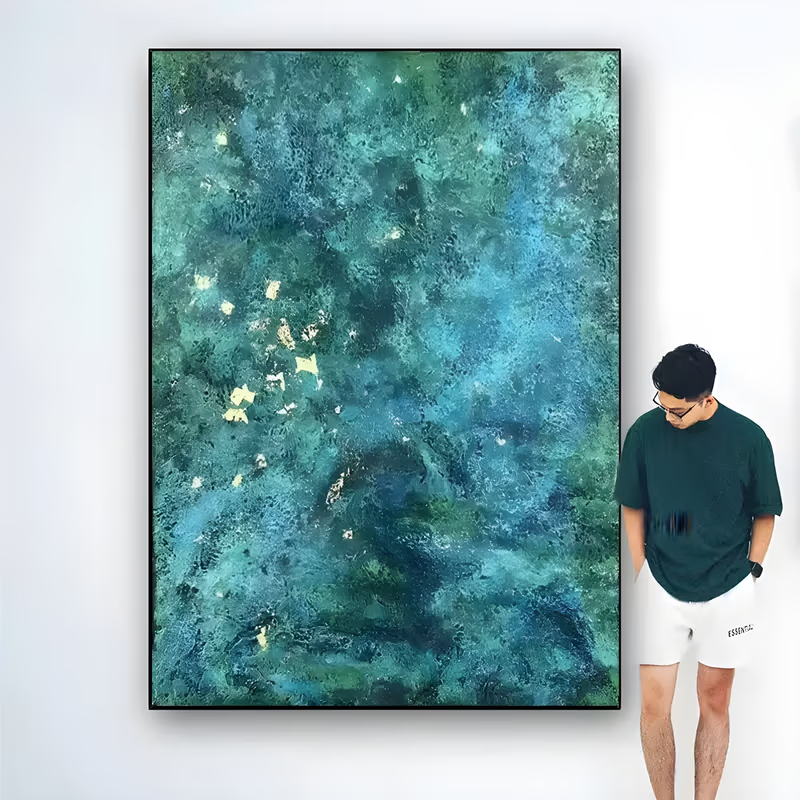
Abstract work depends on scale. A small abstract reads as a colour swatch, while a large one surrounds the eye. Over a 220 cm (87 in) sofa, aim for a canvas, or a pair, about 140–160 cm (55–63 in) across. Hang it so the lower edge sits roughly 20–25 cm (8–10 in) above the back of the sofa.
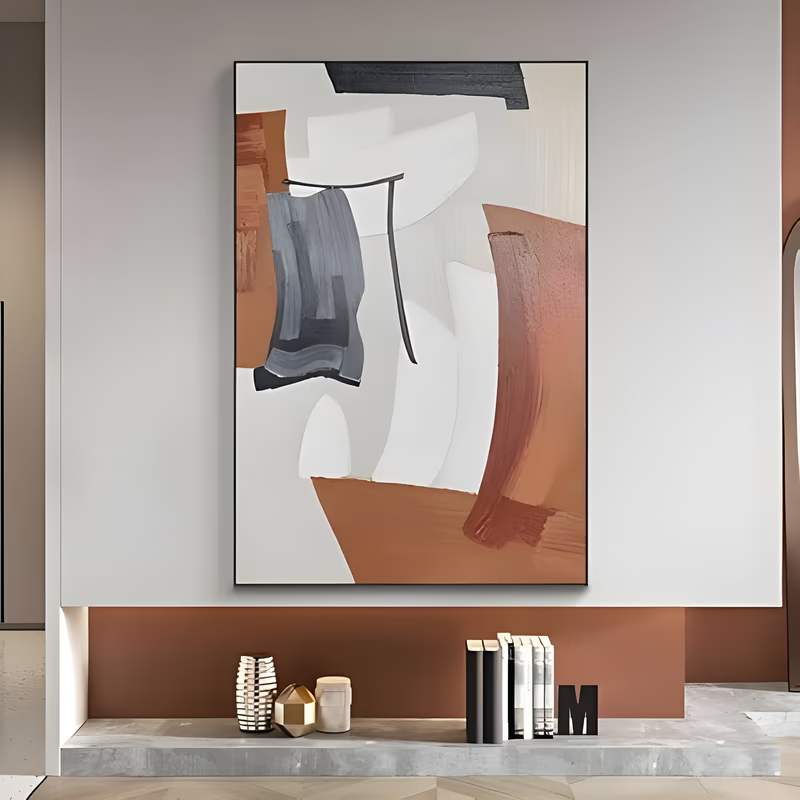
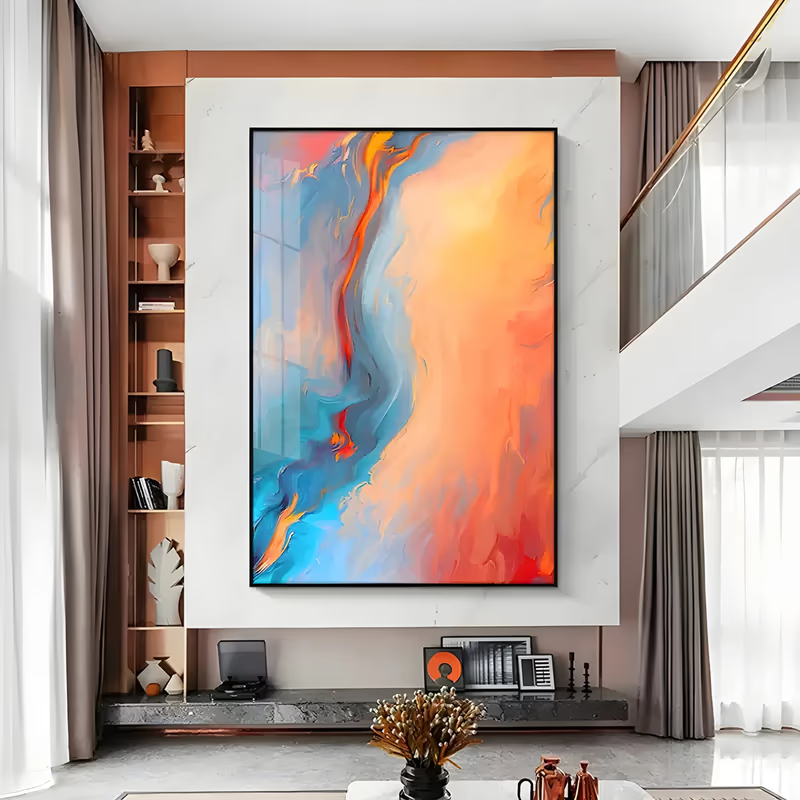
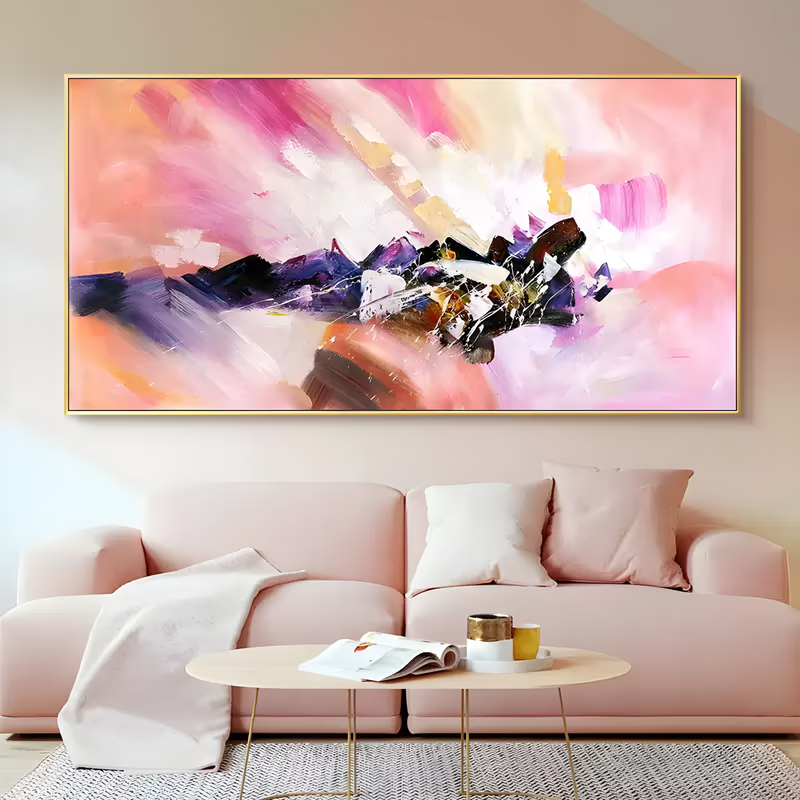
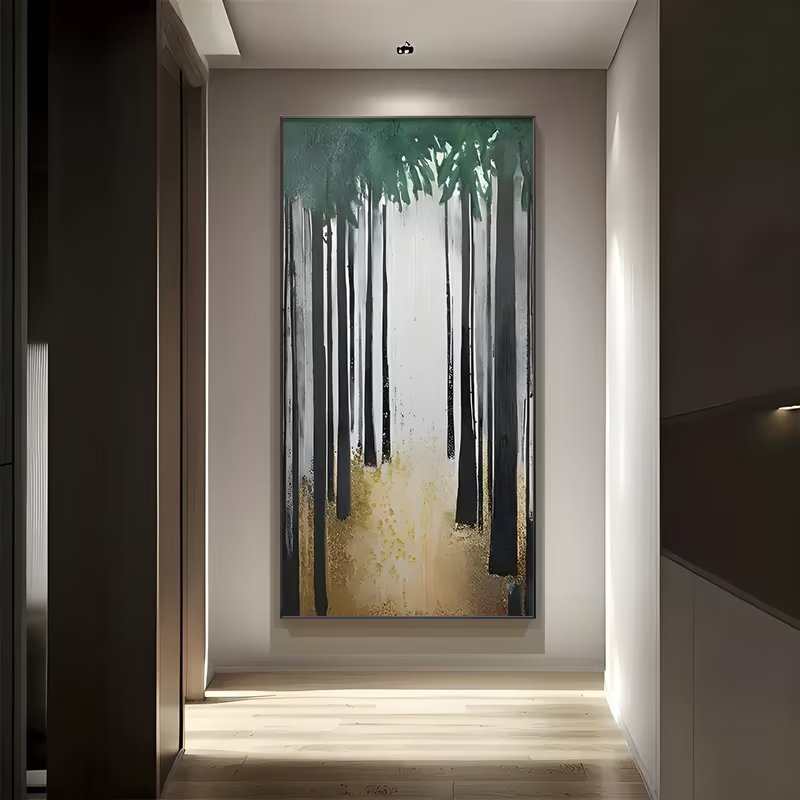
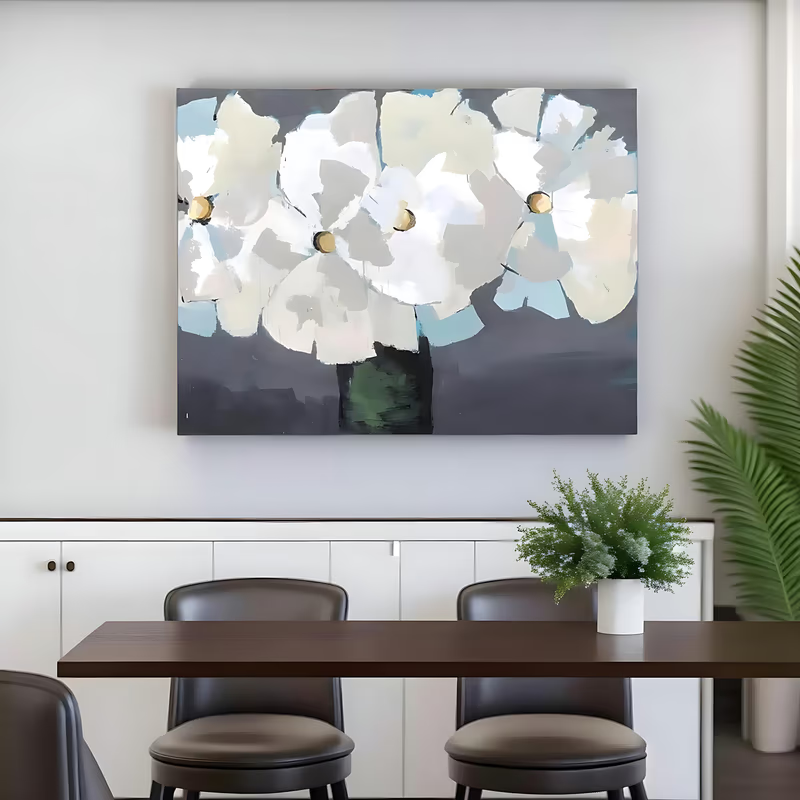
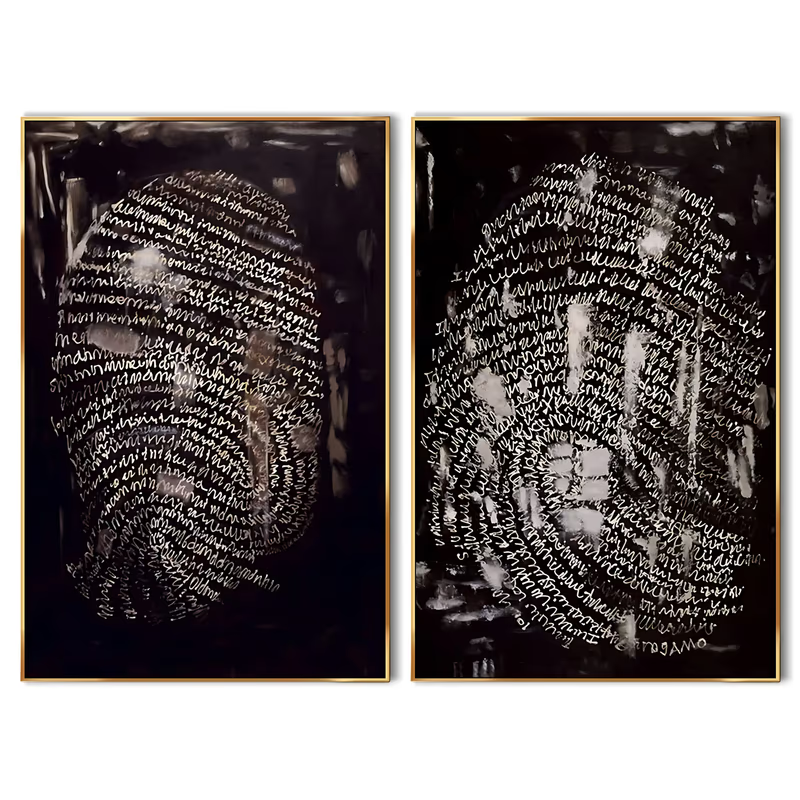
Most abstracts here are painted in a vertical format, which lifts the eye in rooms with ordinary ceiling heights. Two tall canvases side by side, 5–8 cm (2–3 in) apart, make a wide composition over a sofa or a bed and are easier to handle than one huge canvas. Horizontal and panoramic abstracts fill a dining wall or a long reception desk backdrop, and square pieces hang well in a grid. Because each piece is painted for the order, you can ask for any size, including oversized; see oversized and custom-size art.
Why do hotels, offices and lobbies choose abstract art?
Abstract art works in shared spaces because nobody has to agree with its subject: it sets a tone, carries the brand colours and suits everyone who walks past.
A landscape might remind one guest of home and leave the next one cold; an abstract in the right palette simply makes the space feel considered. That is why abstract canvases are the default for lobbies and receptions, workspaces, restaurants and bars and corridors. Gold leaf catches downlights in a lobby; a calm wash steadies a boardroom; a bolder knife-painted piece gives a restaurant its talking point.
For a project, one abstract composition can be varied across floors or rooms, so the pieces are related without being identical. You approve each one from photos as it is painted. Read more on lobby statement art and art for corporate offices.
How do you approve a made-to-order abstract painting?
You approve the palette and the placement of the main masses first, then the build-up of layers, then the finished surface, each from progress photos or video, and the painter continues only once you agree.
An abstract is painted by hand for every order, so the marks will never be a copy of the catalogue photograph: a knife stroke falls a little differently, a pour finds its own path. What stays the same is what matters to the room: the colours, the balance between dark and light, where the gold sits and how busy the surface is. Those are the things to check at each stage.
If the room has a scheme, send the paint code, fabric or stone sample and the palette is adjusted before the first layer goes on. A final photograph is approved before dispatch. Canvases travel rolled, stretched on a frame ready to hang, or framed in gold, silver, black, white or wood; a thin black or gold frame suits most abstracts. Start with a quote request.