











Retail art guide · Updated
How to choose art for a shop, showroom or gallery
Key takeaways
- Decide the job first: backdrop art supports what the shop sells; stock art is what the shop sells. They are chosen, hung and priced differently.
- Use the wall seen from the door: the back wall visible from the street is the one that pulls people in, so give it the largest, boldest canvas.
- Keep art above the merchandise: hang it clear of shelving and rails so it frames the product instead of hiding behind it.
- For resale, start small and reorder: one piece is the minimum, volume pricing starts at 10, and a design that sells can be painted again in a new colourway.
What does art do in a retail store?
Art in a retail store sets the brand's mood before a customer touches a product, gives passers-by a reason to step in, and makes the shop feel curated rather than stocked.
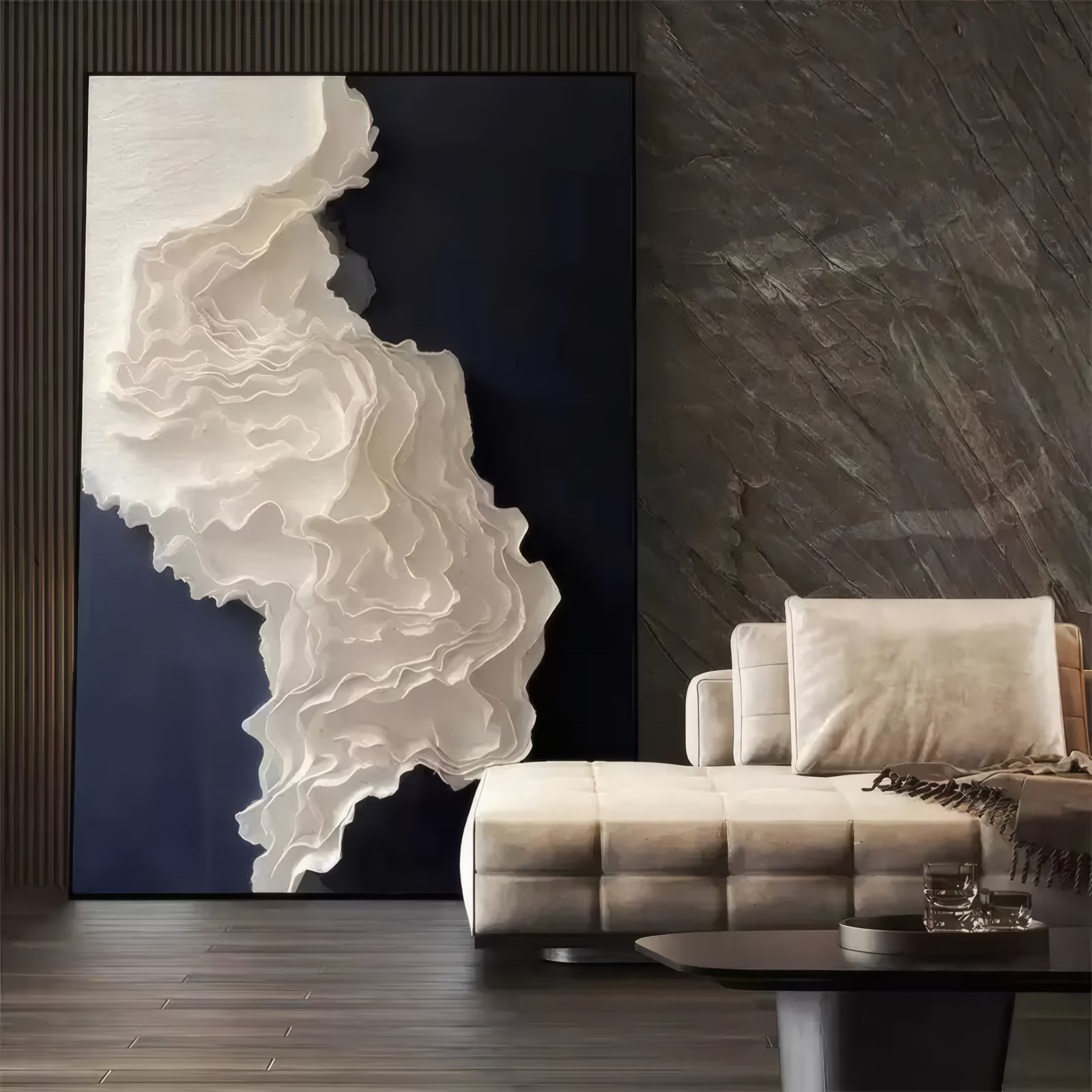
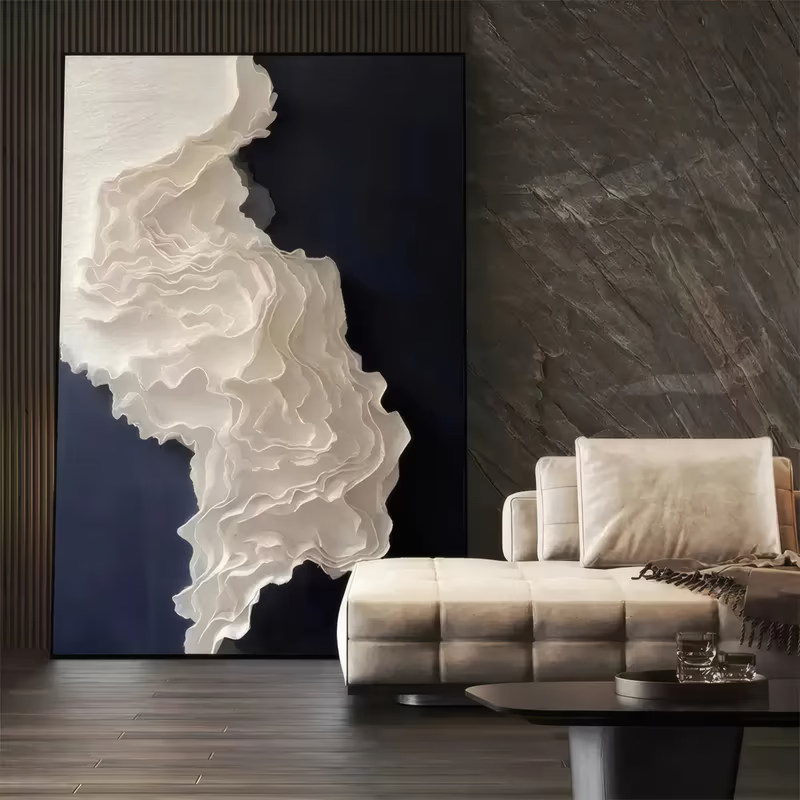
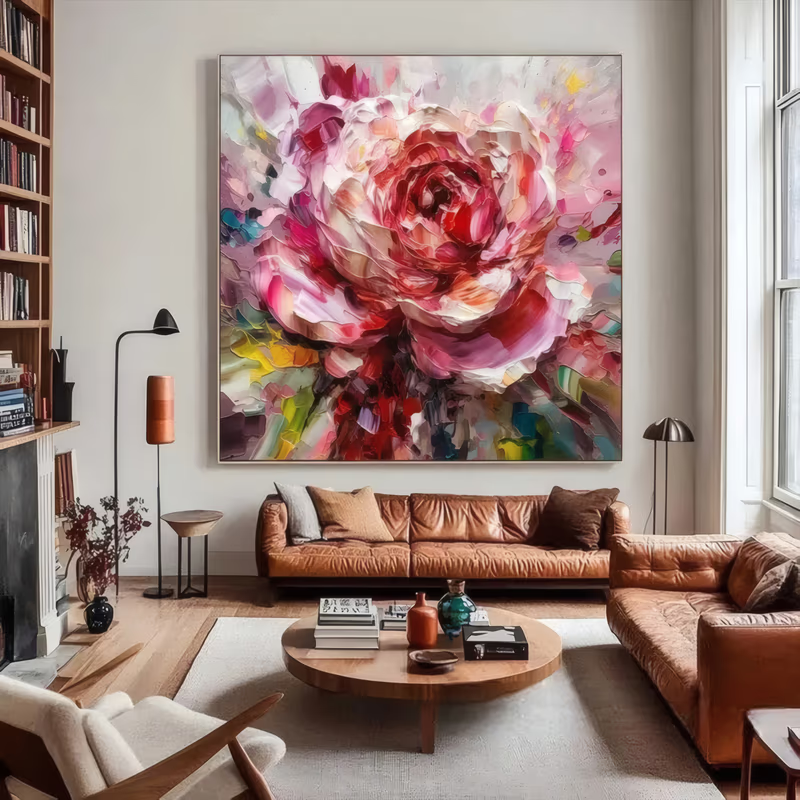
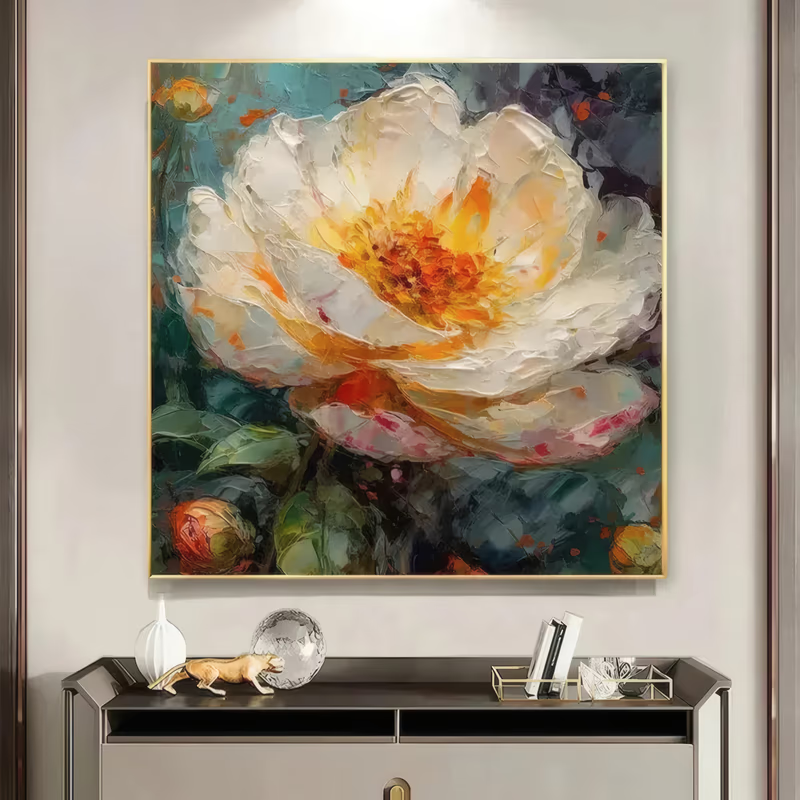
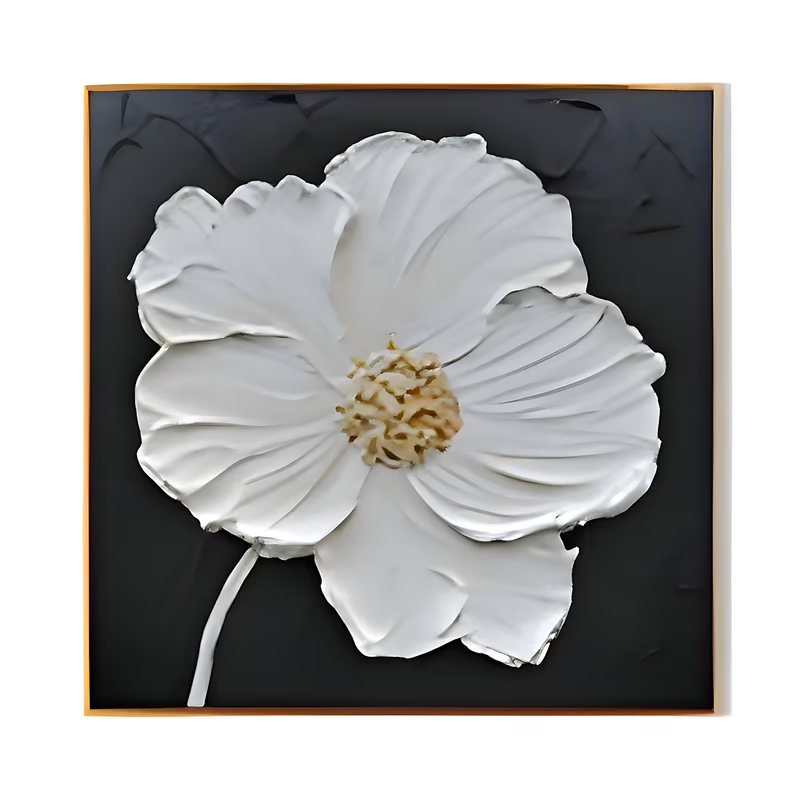
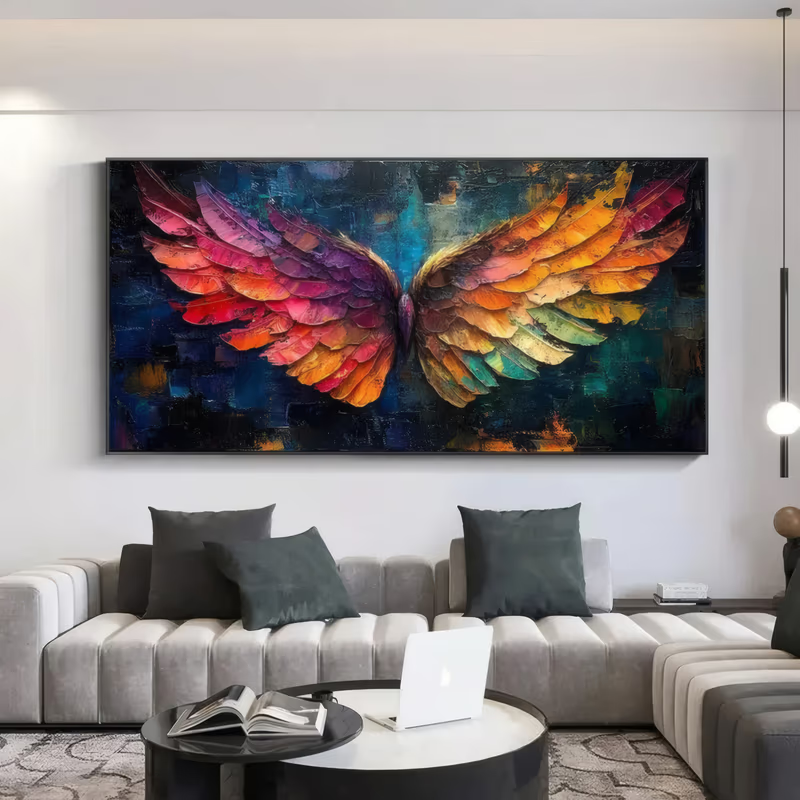
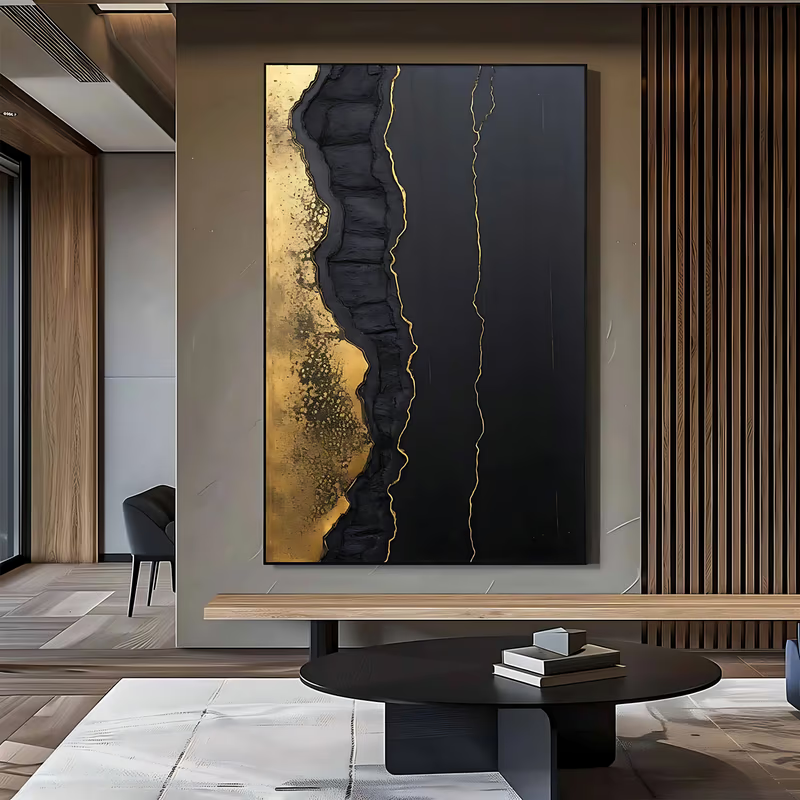
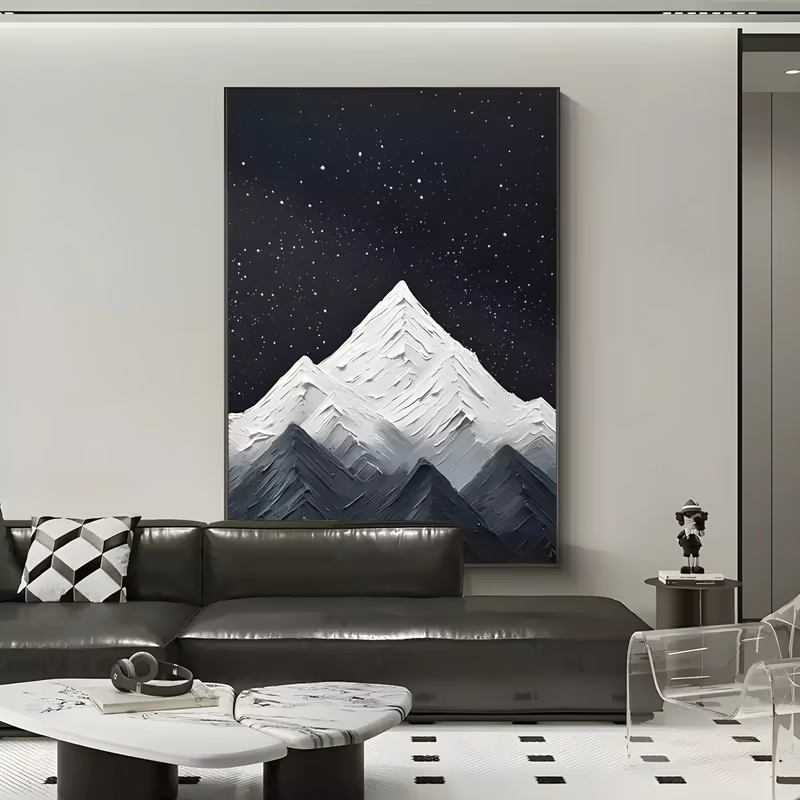
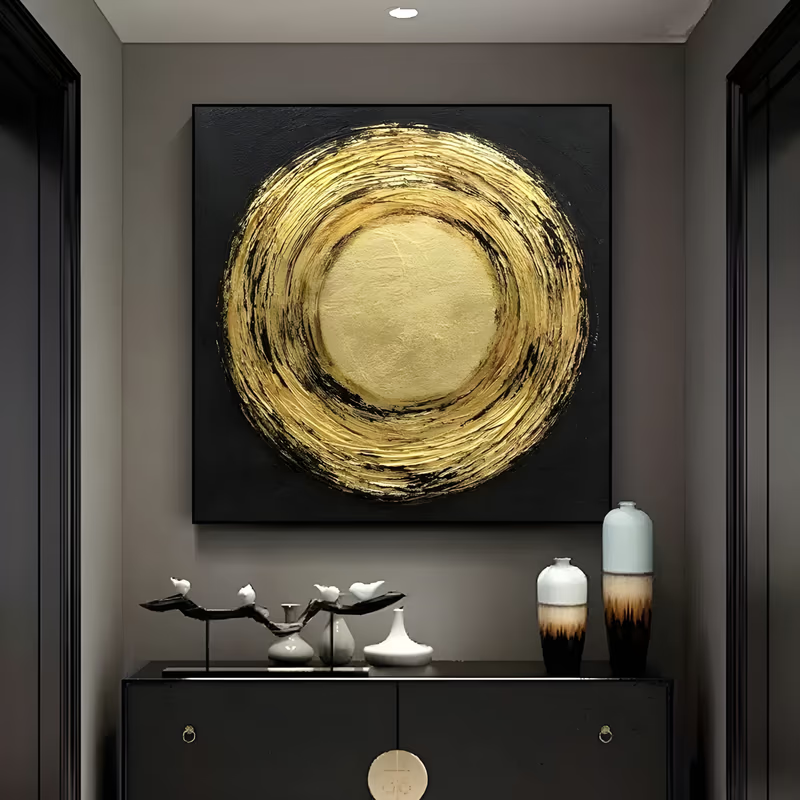
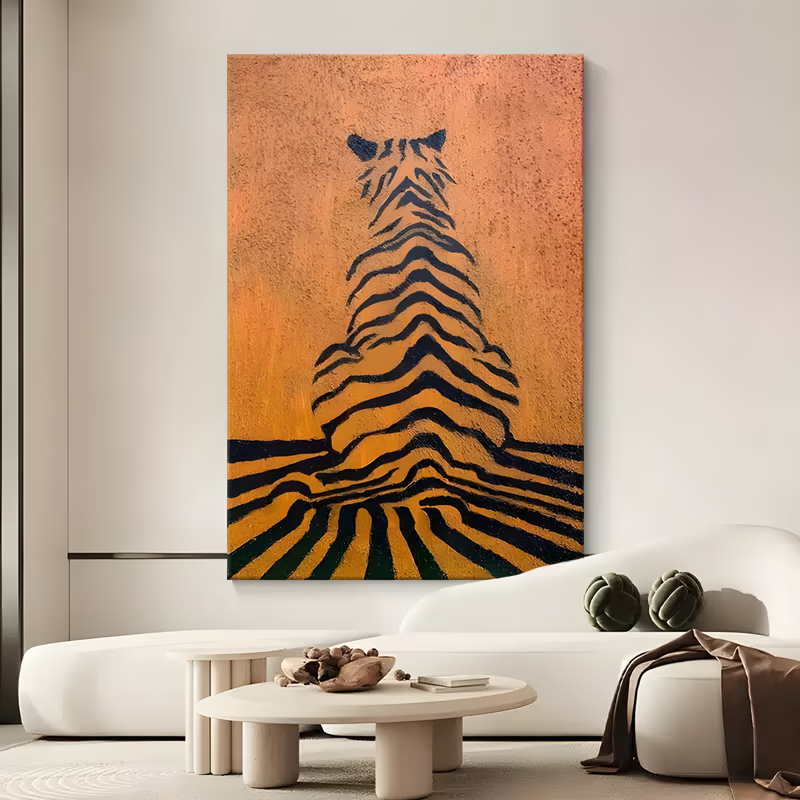
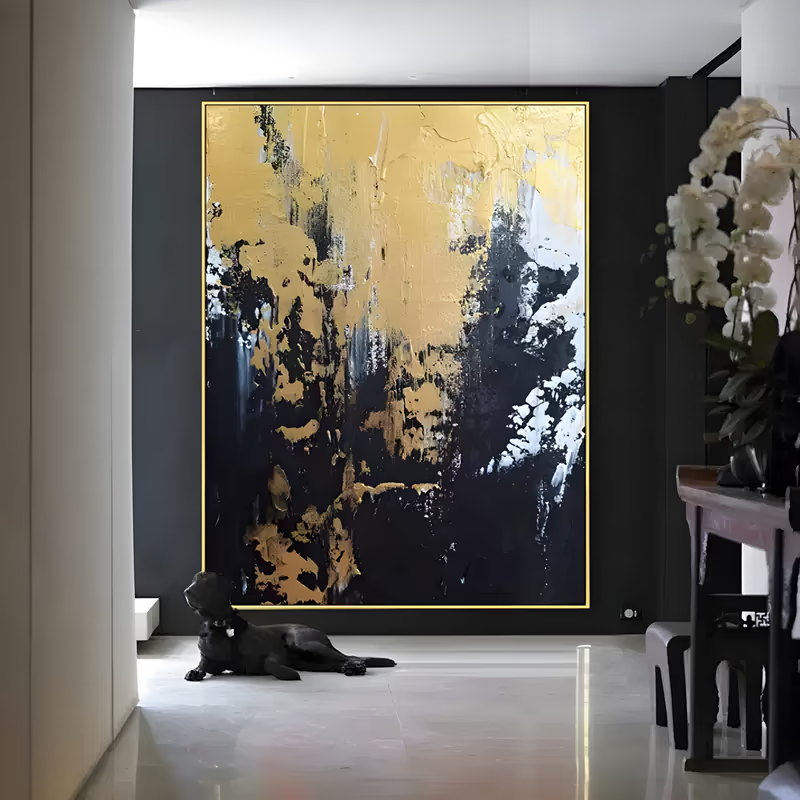
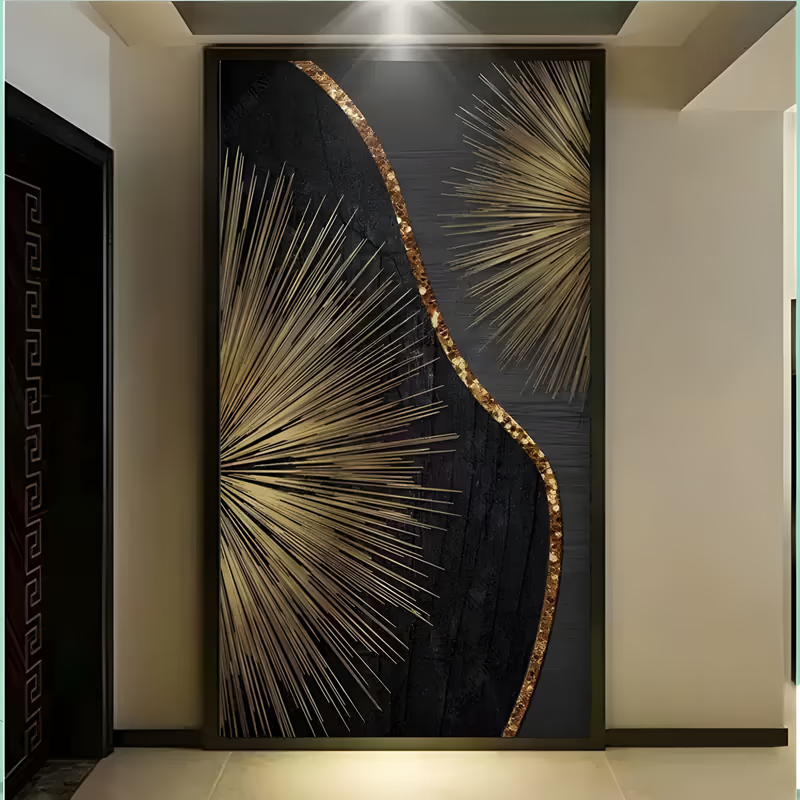
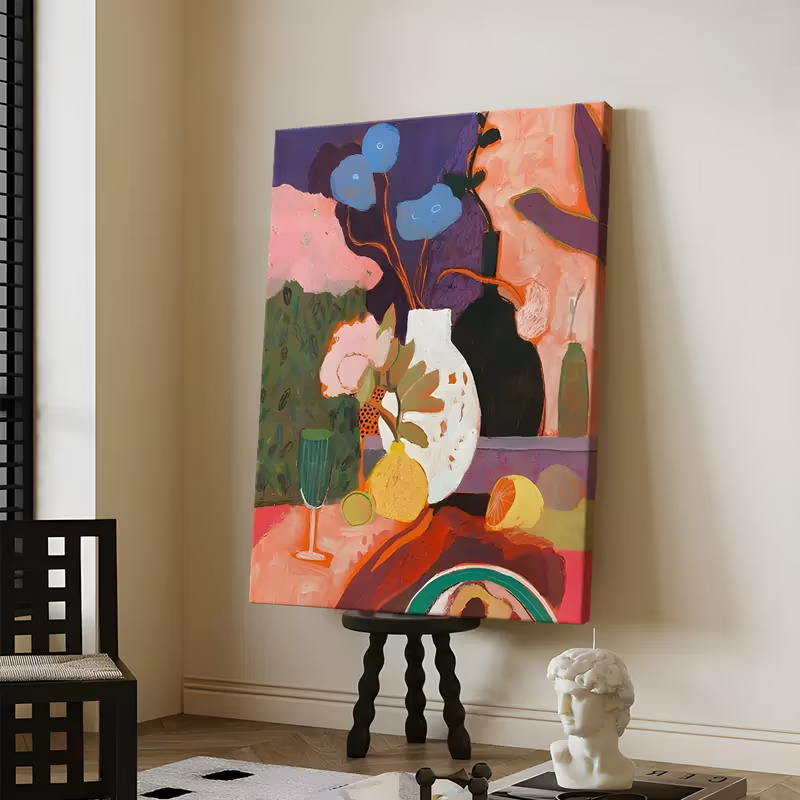
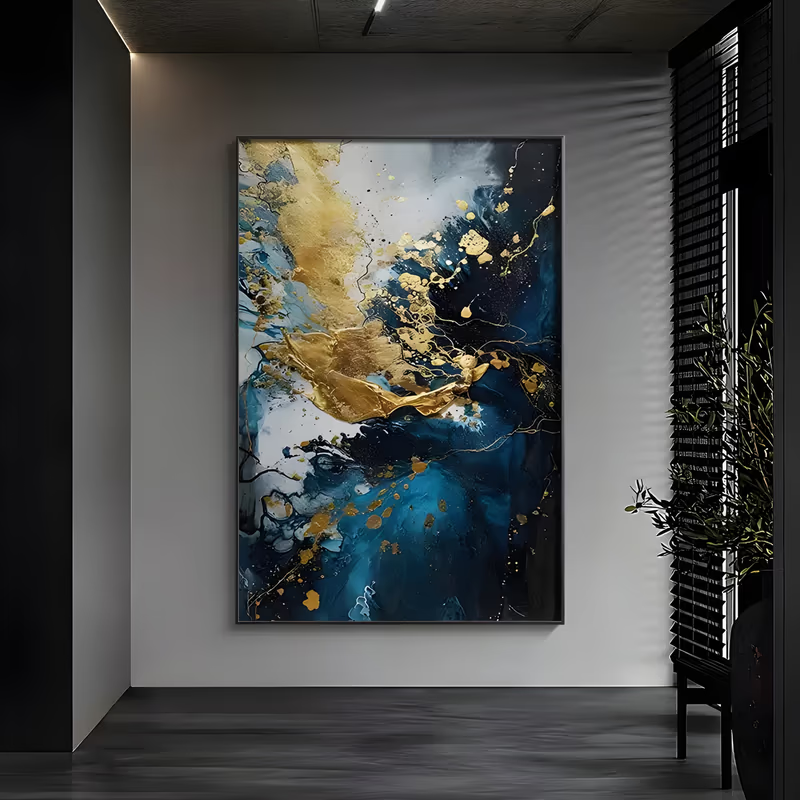
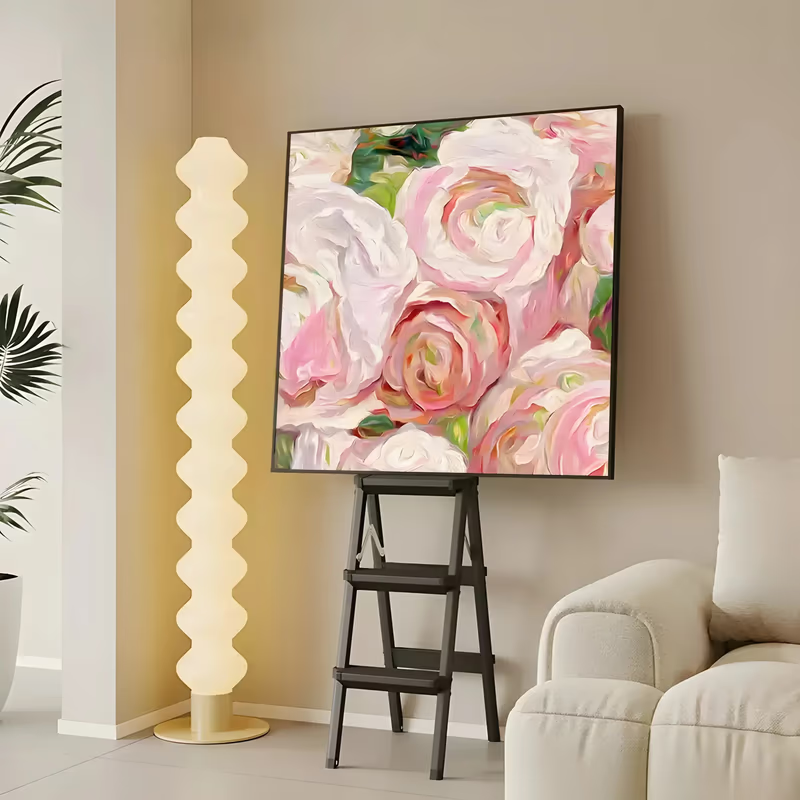
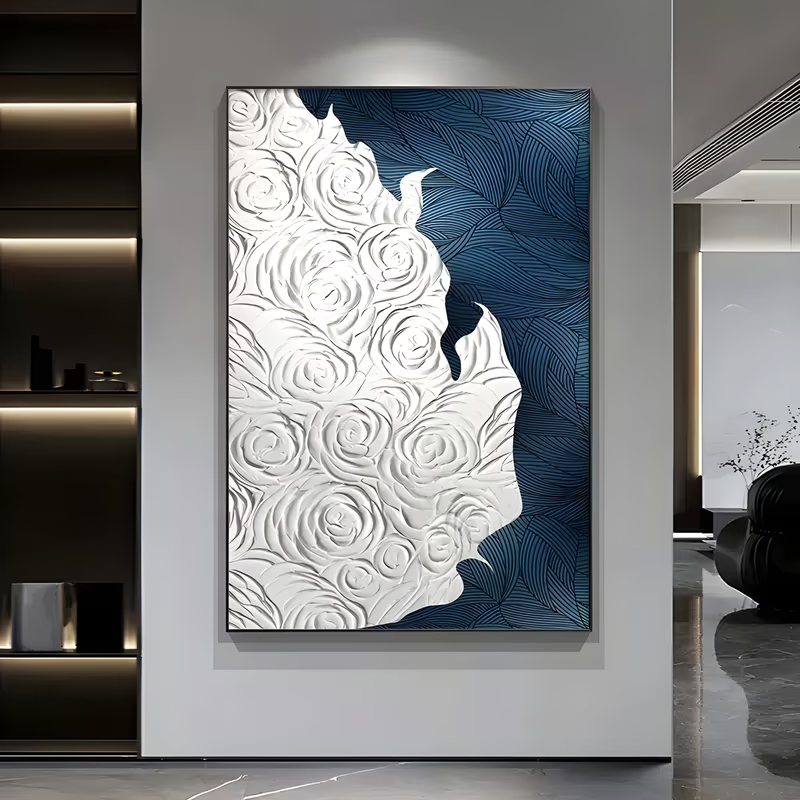
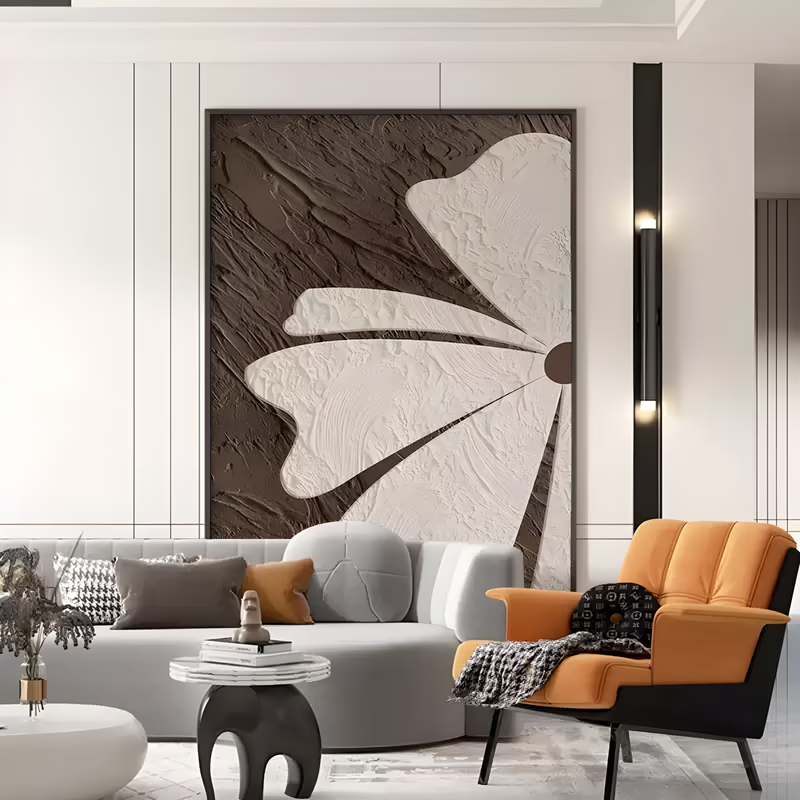
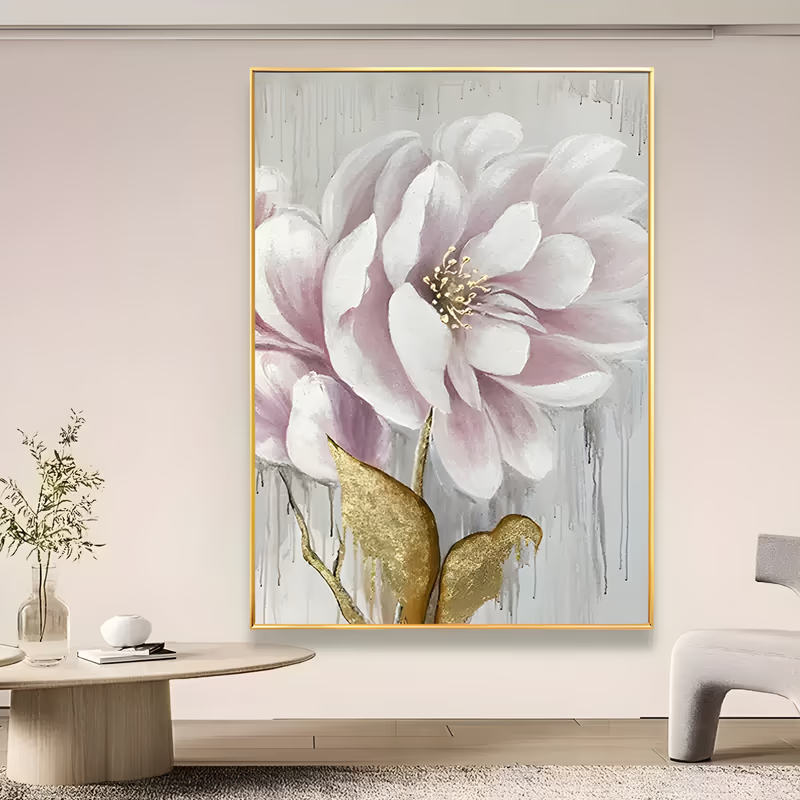
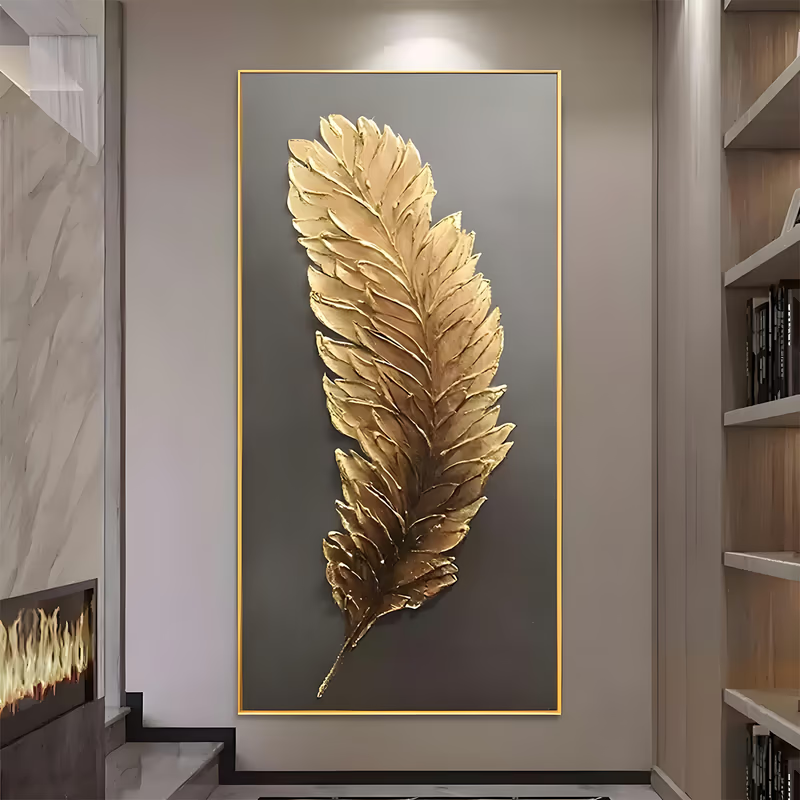
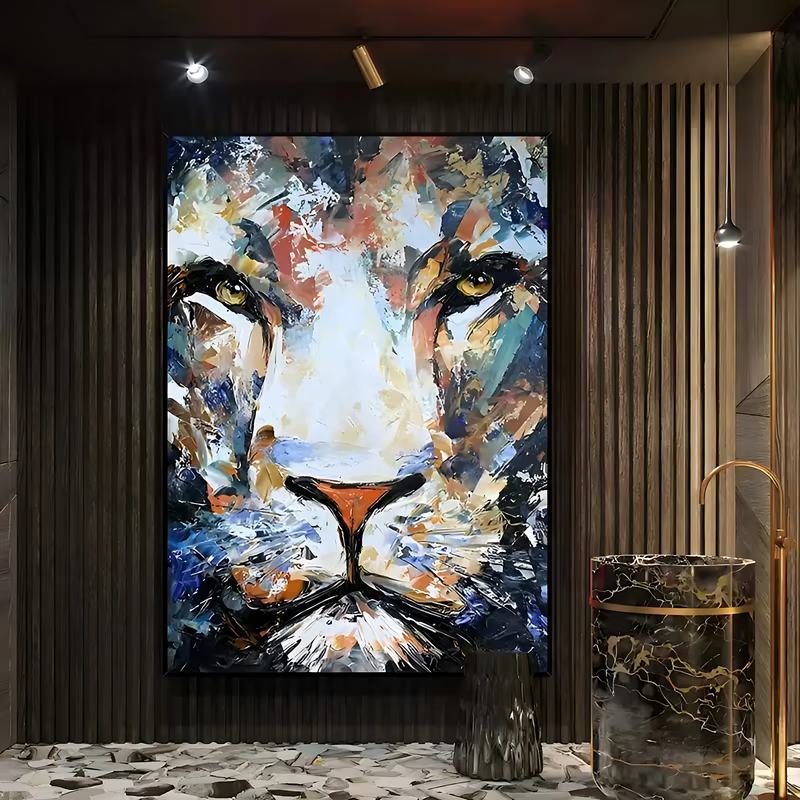
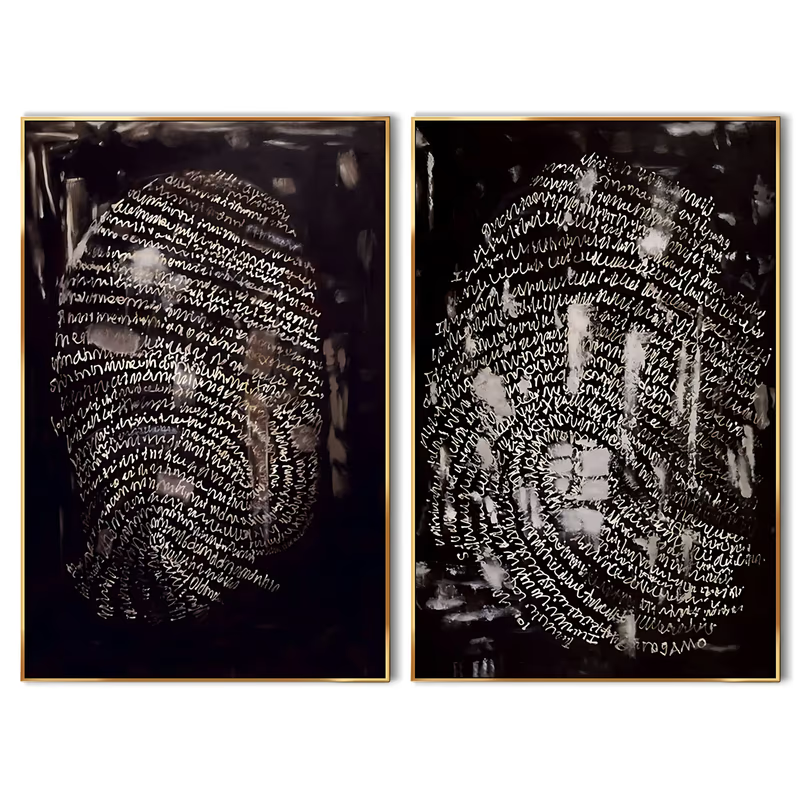
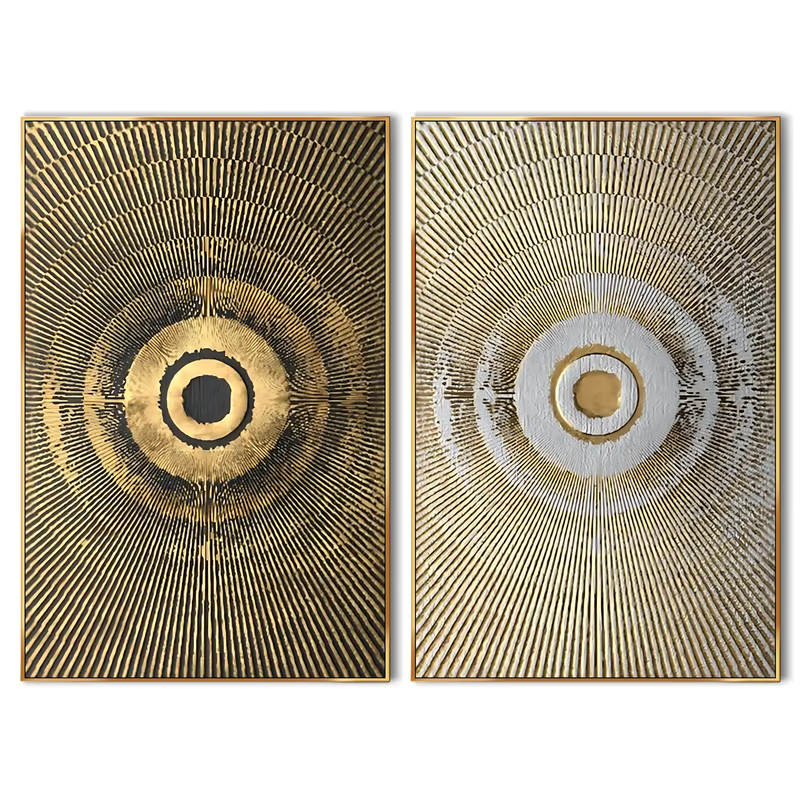
A shop has seconds to tell someone on the pavement what kind of place it is. A large painting does that faster than signage: a black-and-gold abstract says luxury, a knife-painted tiger says playful and bold, a sculpted white peony says calm and premium. Inside, art slows people down. It gives them something to look at between rails, a backdrop for the photos they take and share, and a sense that someone chose every object in the room.
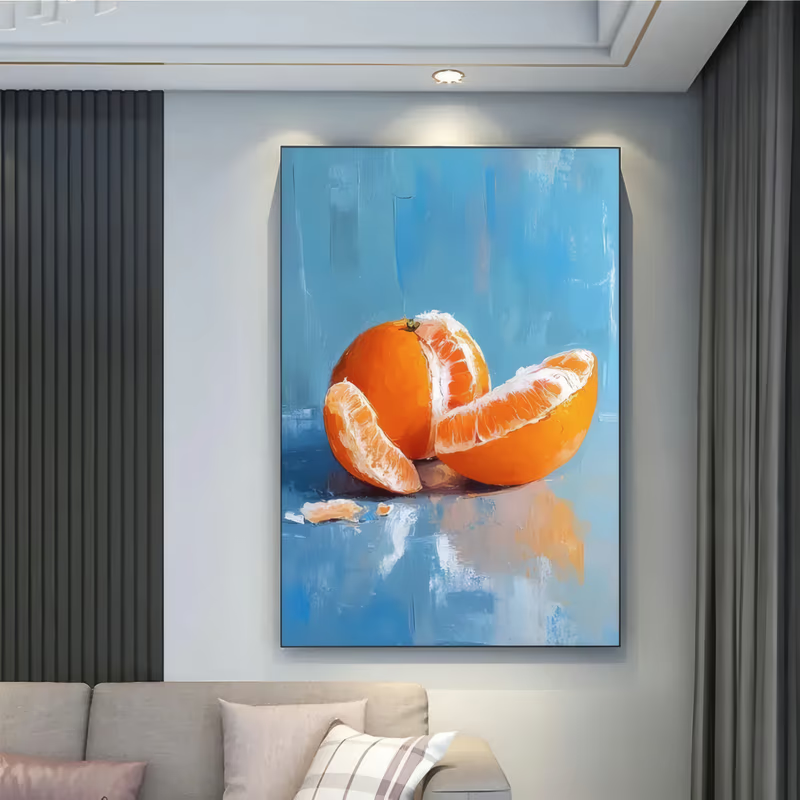
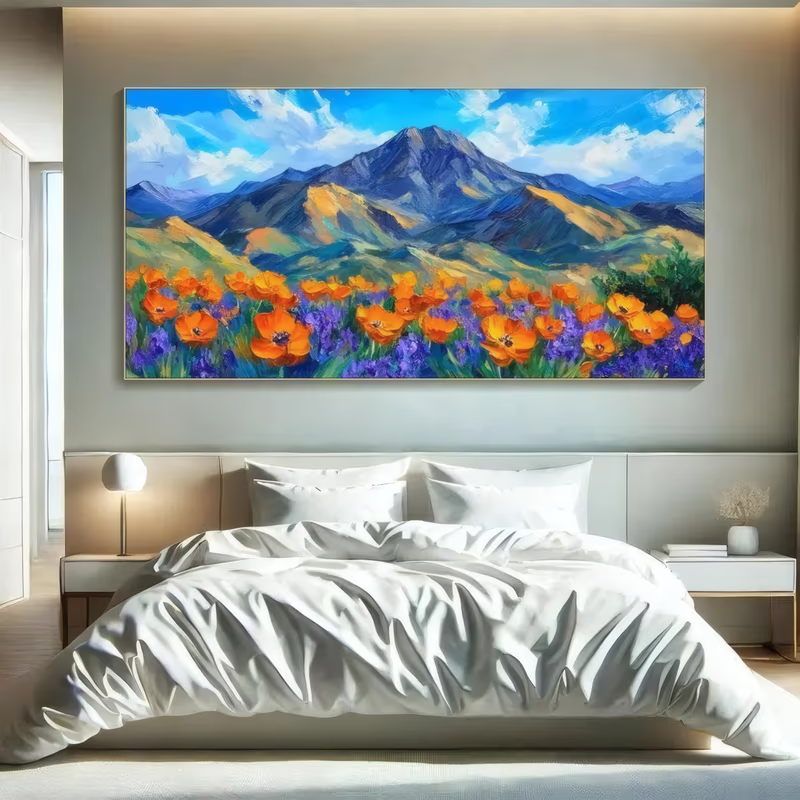
Colour does part of the work. Reds, oranges and yellows are traditionally associated with energy and impulse, which suits fashion, food and gift shops; blues, greens and neutrals with calm and trust, which suits jewellery, beauty and homeware. The filter's bold and dramatic moods are a good place to start for a shop that needs to be noticed.
Is retail store art a backdrop or the stock itself?
It can be either, and the choice changes everything: backdrop art is bought once to support the brand, while stock art is bought to sell and is replaced as it goes.
| Art as backdrop | Art as stock | |
|---|---|---|
| Who it is for | Fashion, beauty, homeware and lifestyle shops; brand flagships | Galleries, framers, furniture and décor showrooms, online sellers |
| What it must do | Express the brand, frame the product, stay put for a season or more | Sell, at a price that leaves a margin, and be replaceable |
| Subjects | Abstracts and textures in brand colours; one memorable statement | A spread of subjects, sizes and palettes, so every customer finds something |
| Hanging | High, large and permanent, above fixtures | At eye level, with space around each piece and a price card |
| Changes | Refreshed with a new concept or season | Replaced as pieces sell; best sellers reordered in new colourways |
Furniture showrooms often do both at once: the art styles the room set, and it carries a price tag. If you sell what you hang, choose pieces that suit real homes, sized as they would be over a sofa or bed. For ideas, see living room wall art.
What kinds of art work in a shop or gallery?
The art that works in a shop or gallery is art with character: figurative and portrait work, animals, sculpted florals and bold abstracts. Each draws a different customer.
Figurative pieces and portraits
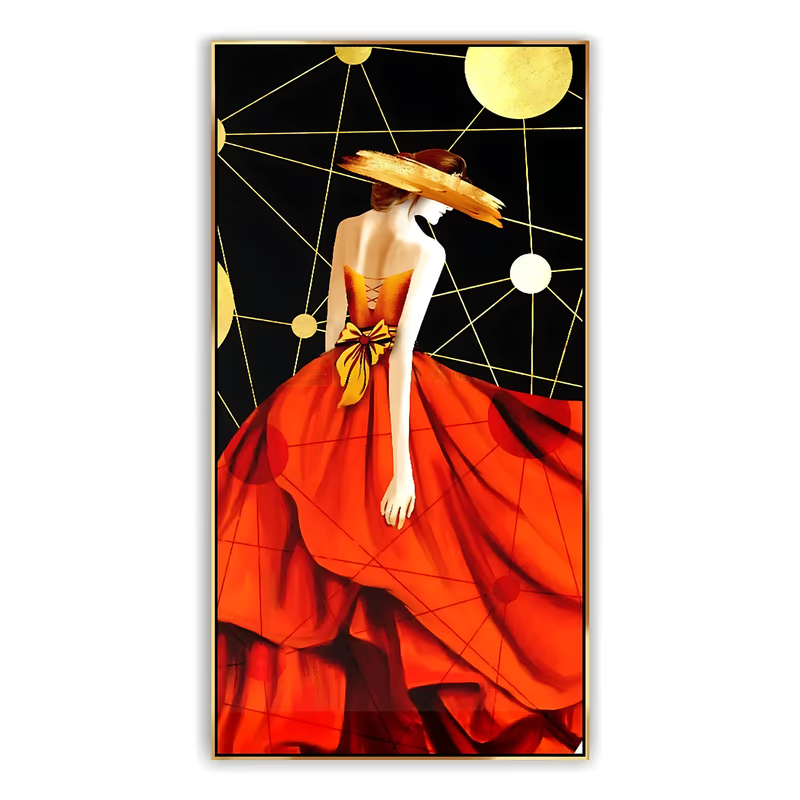
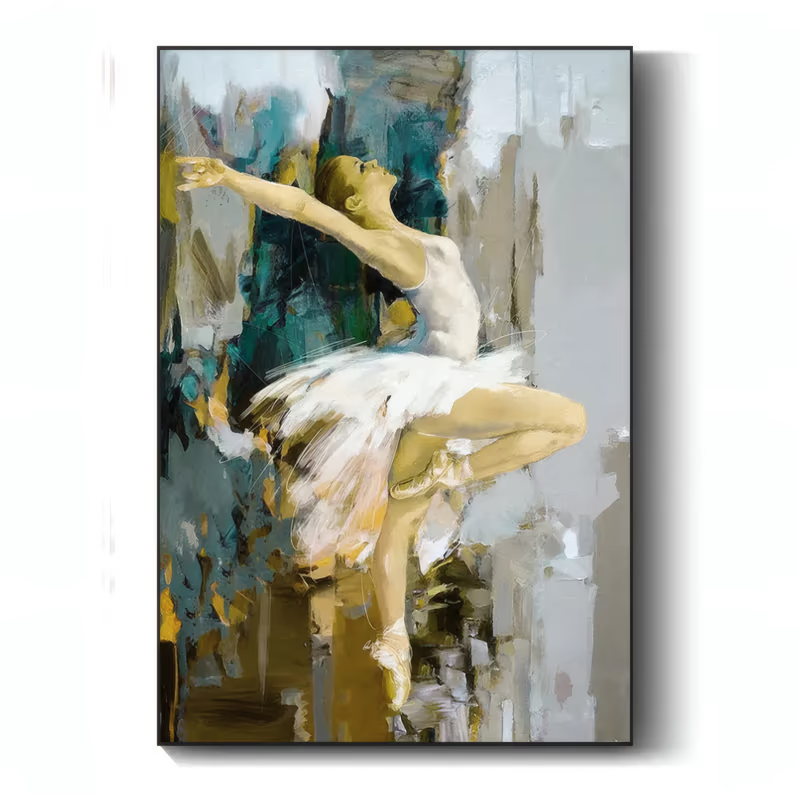
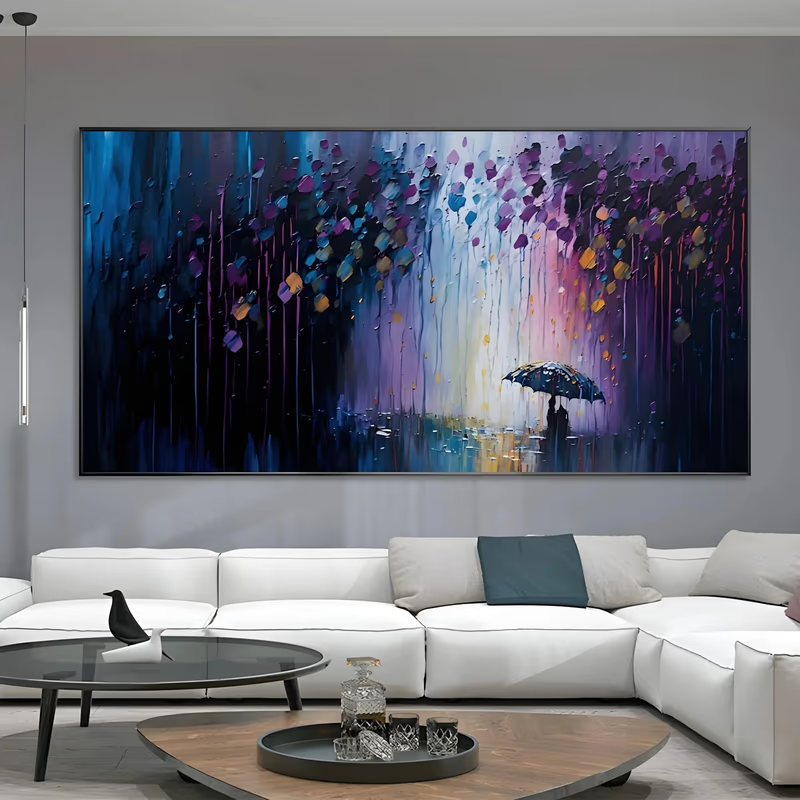
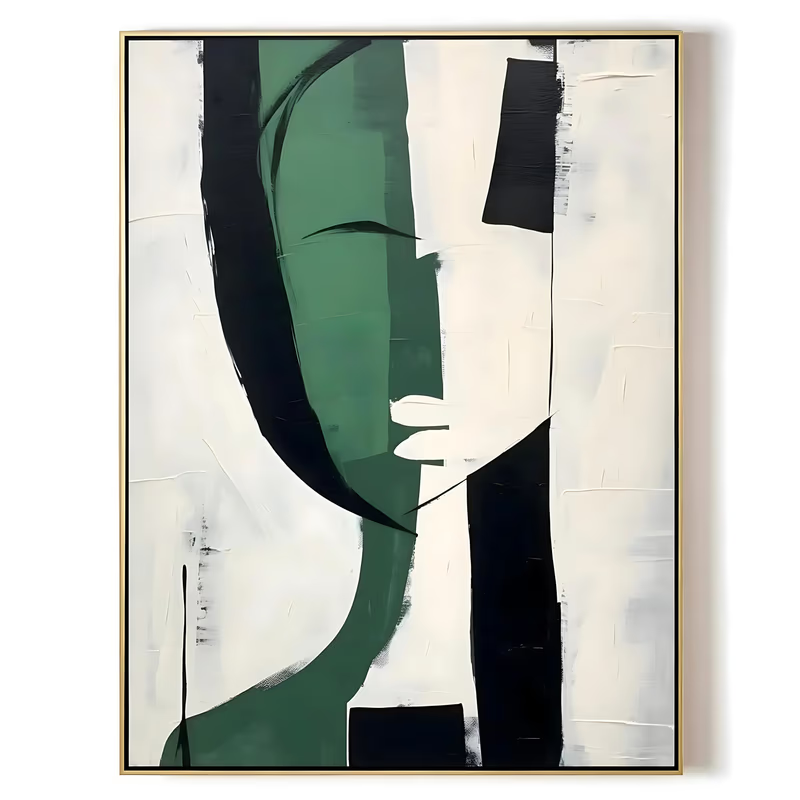
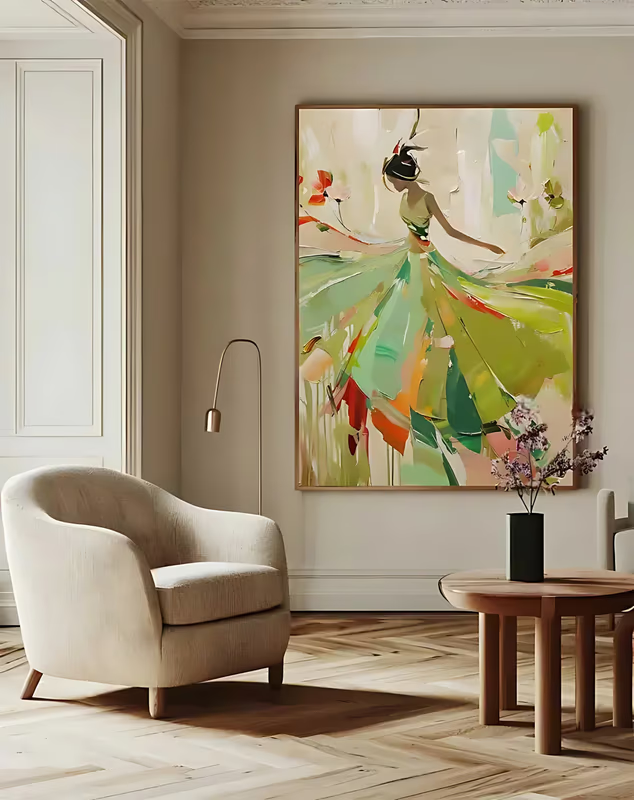
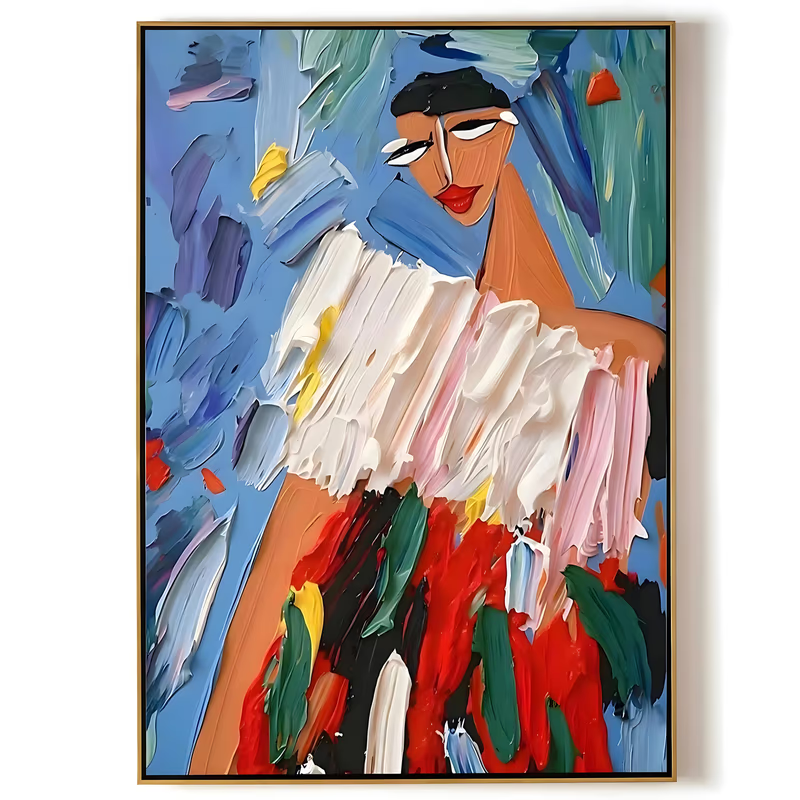
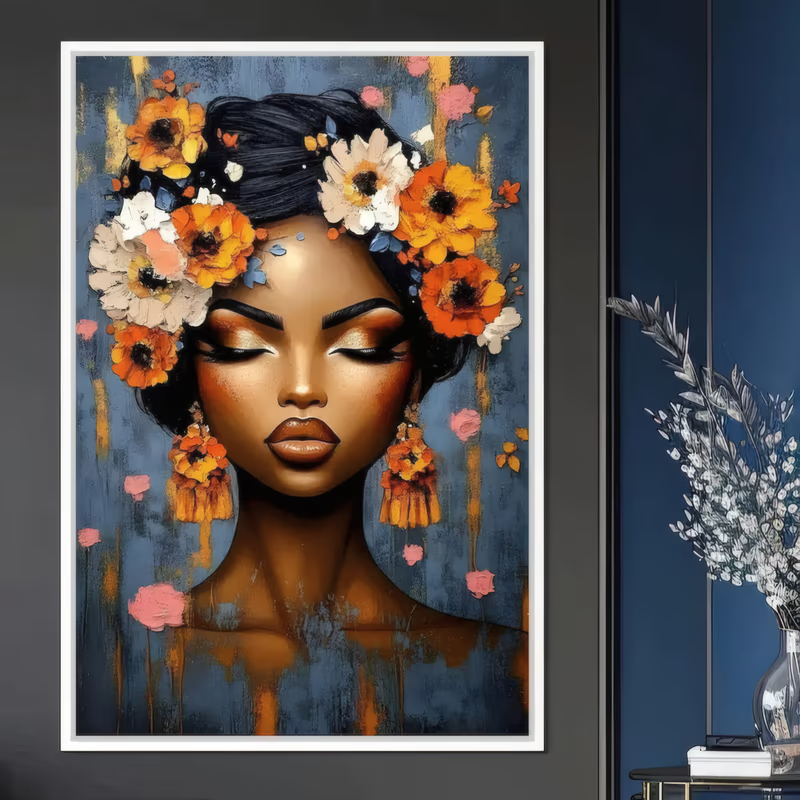
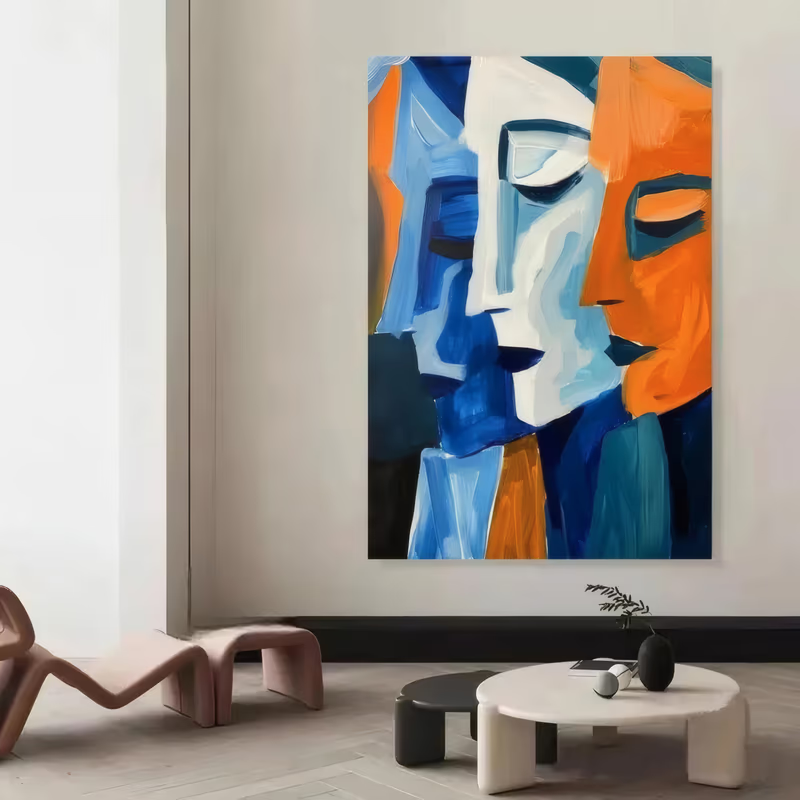
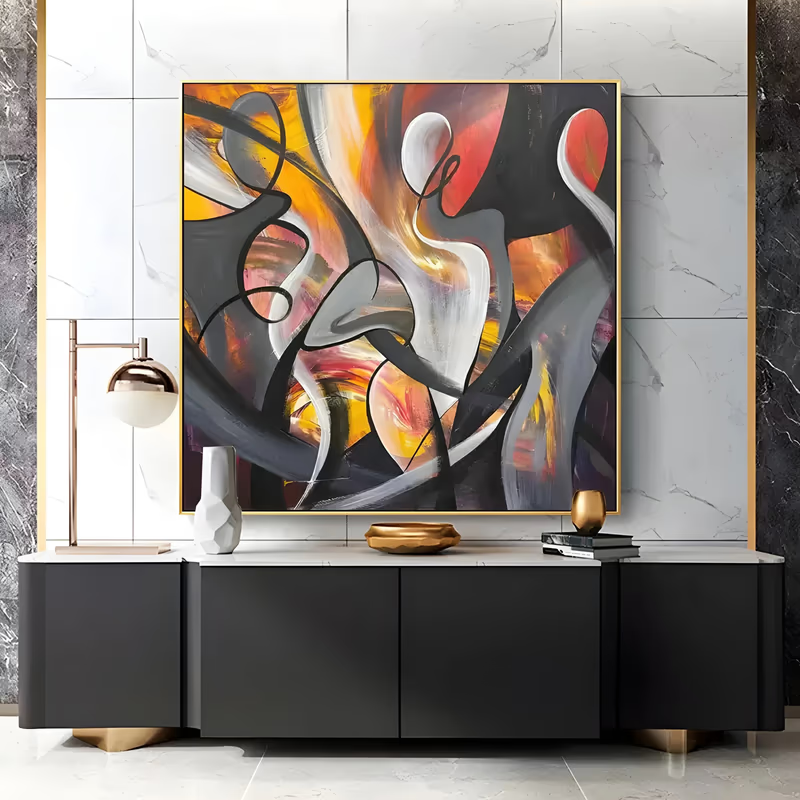
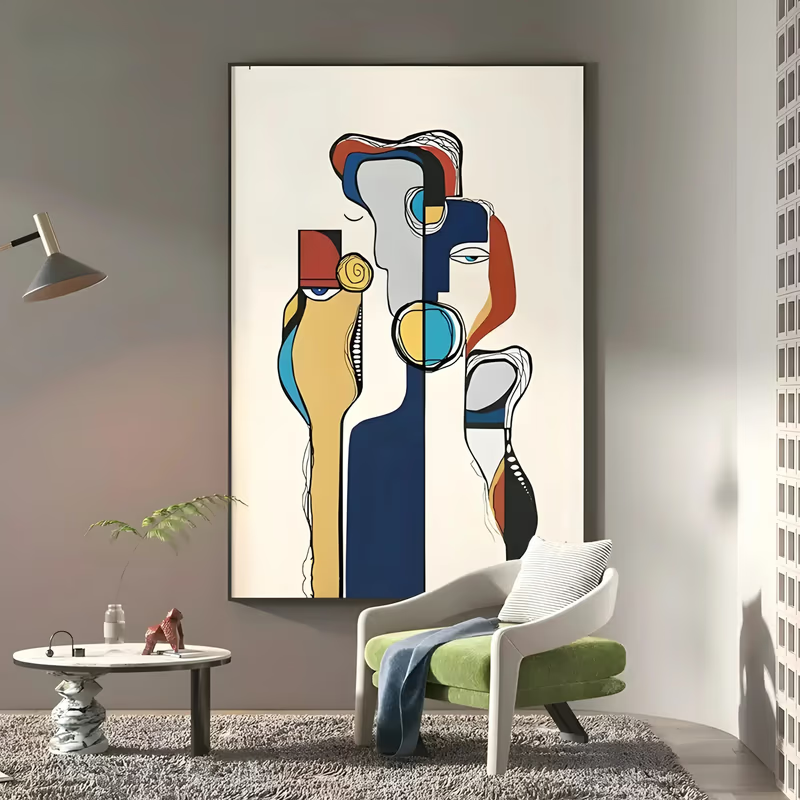
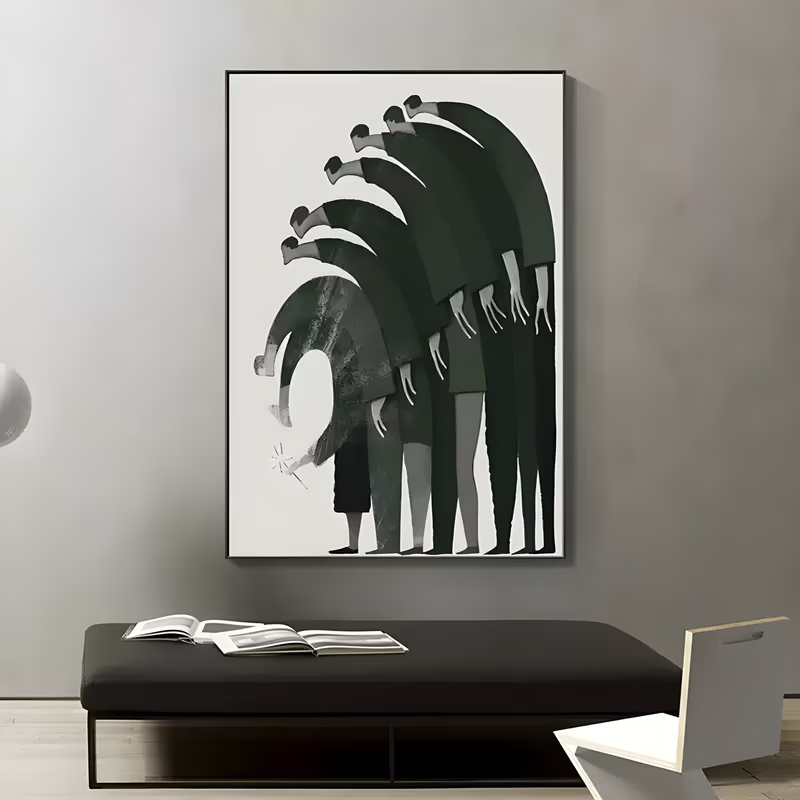
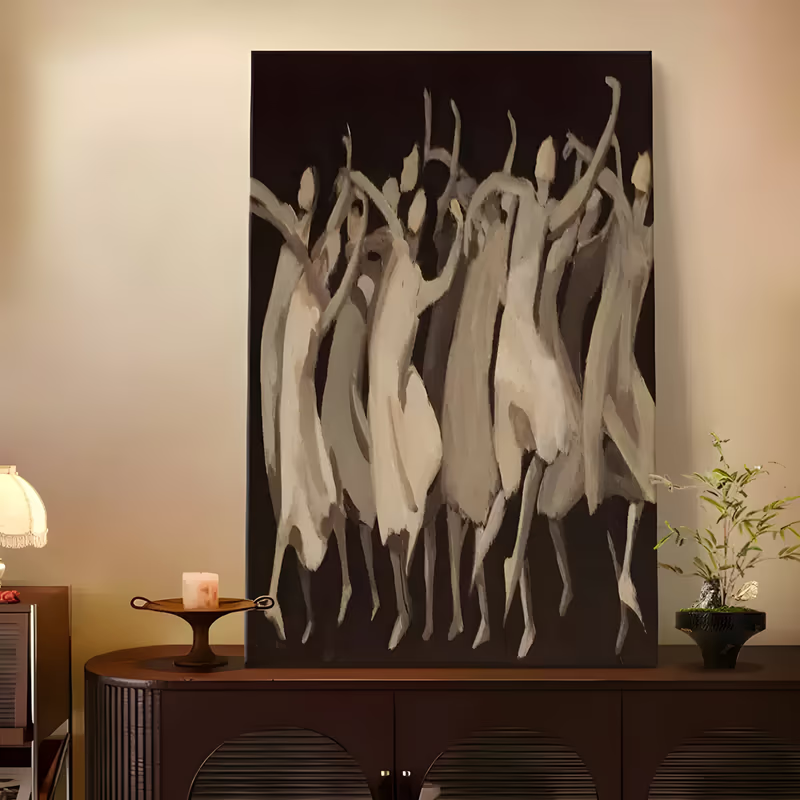
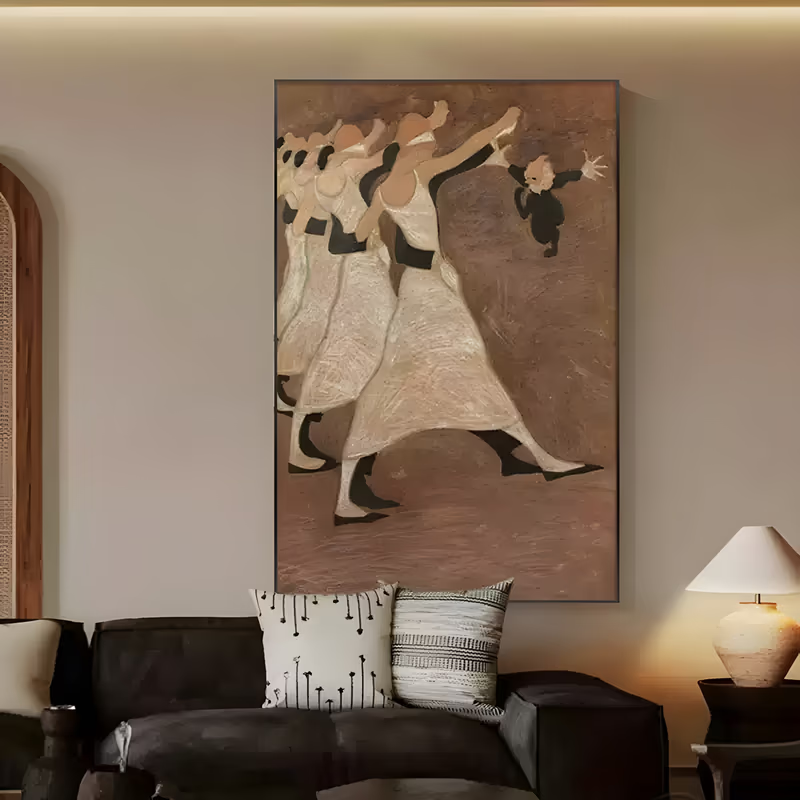
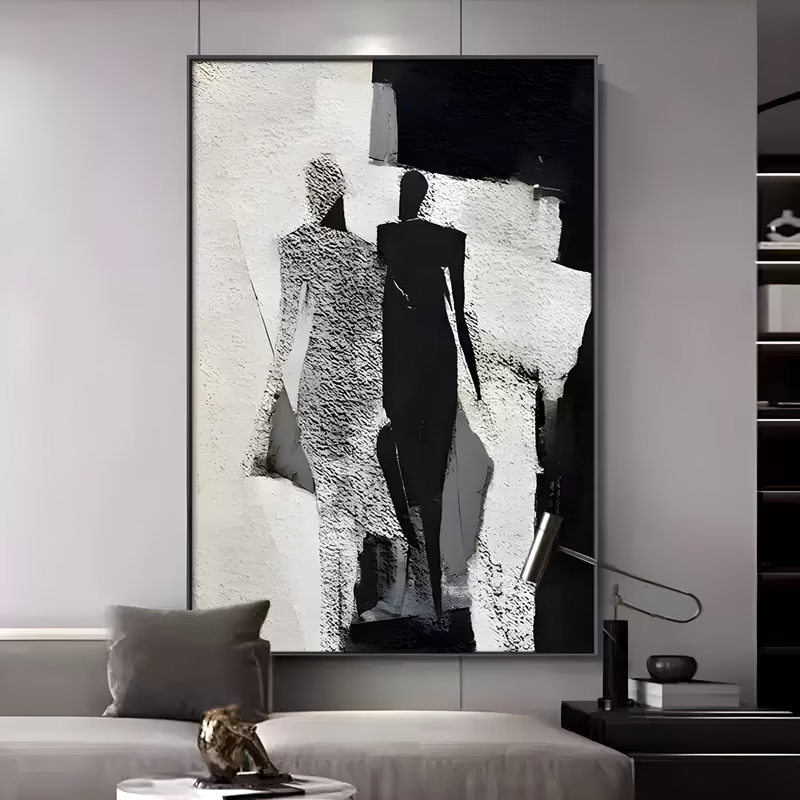
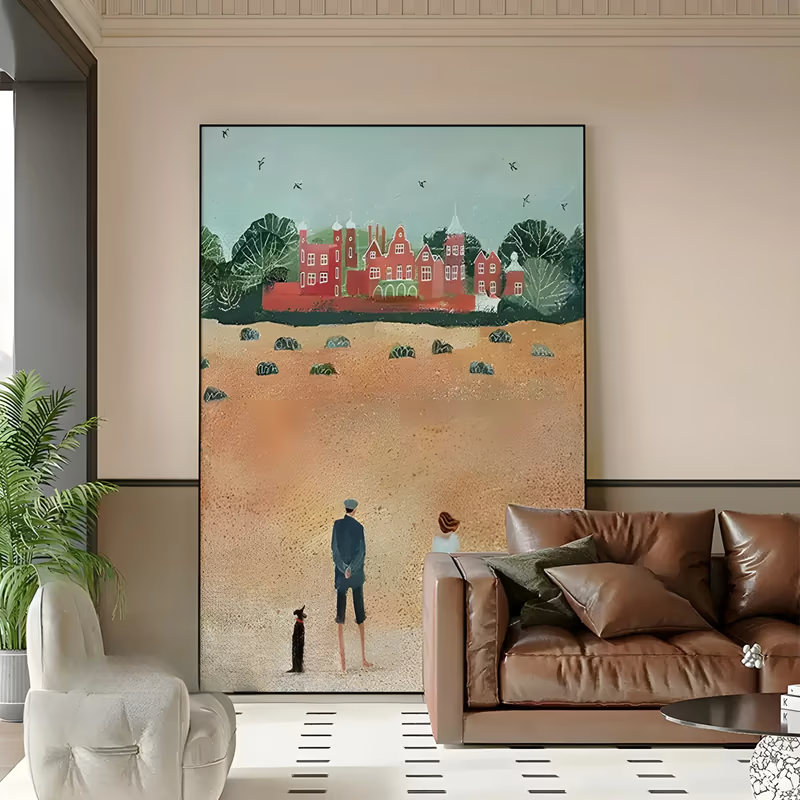
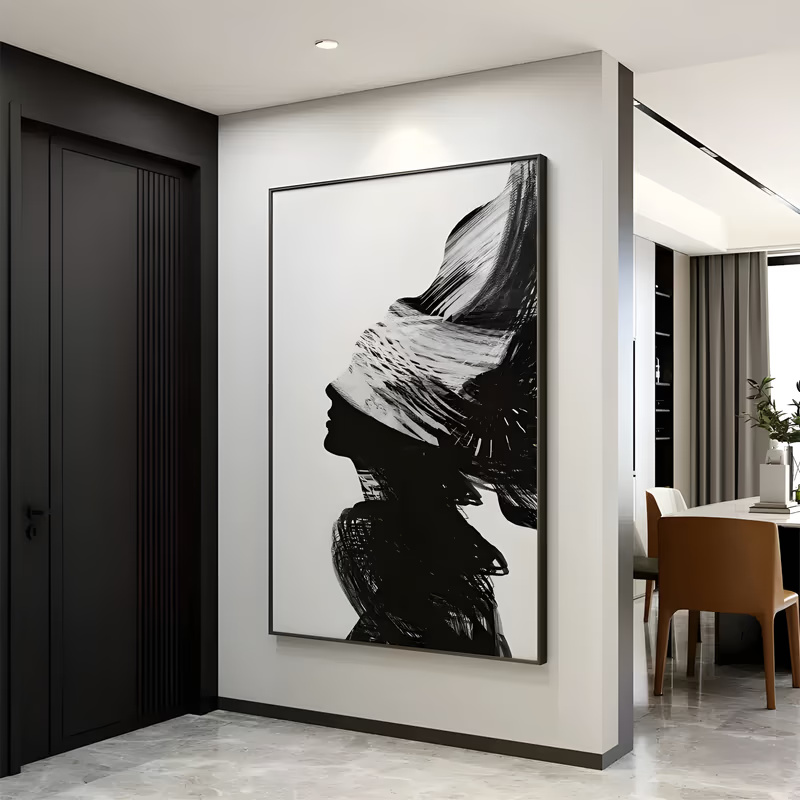
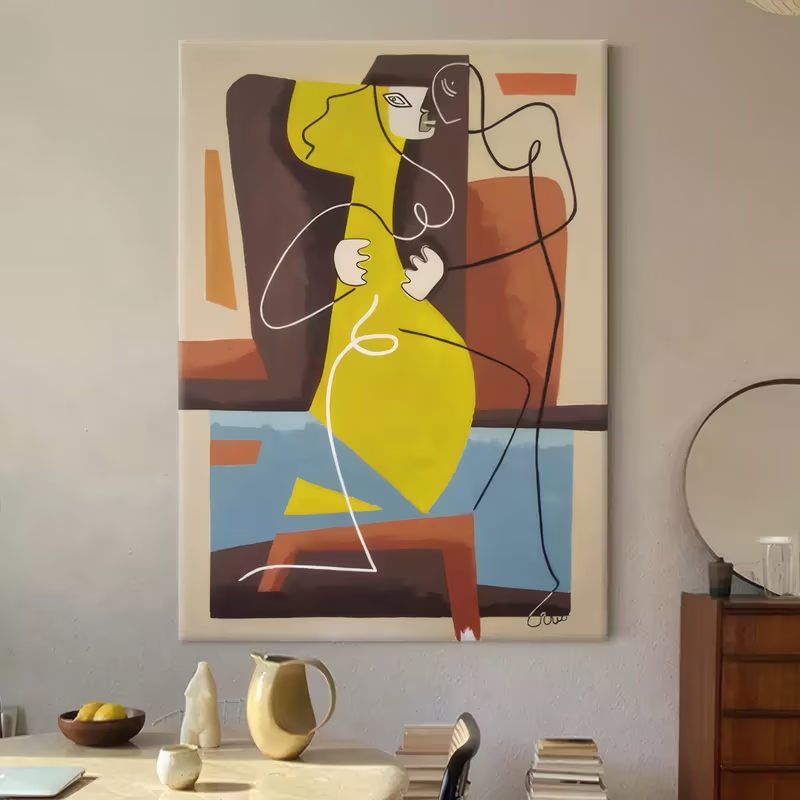
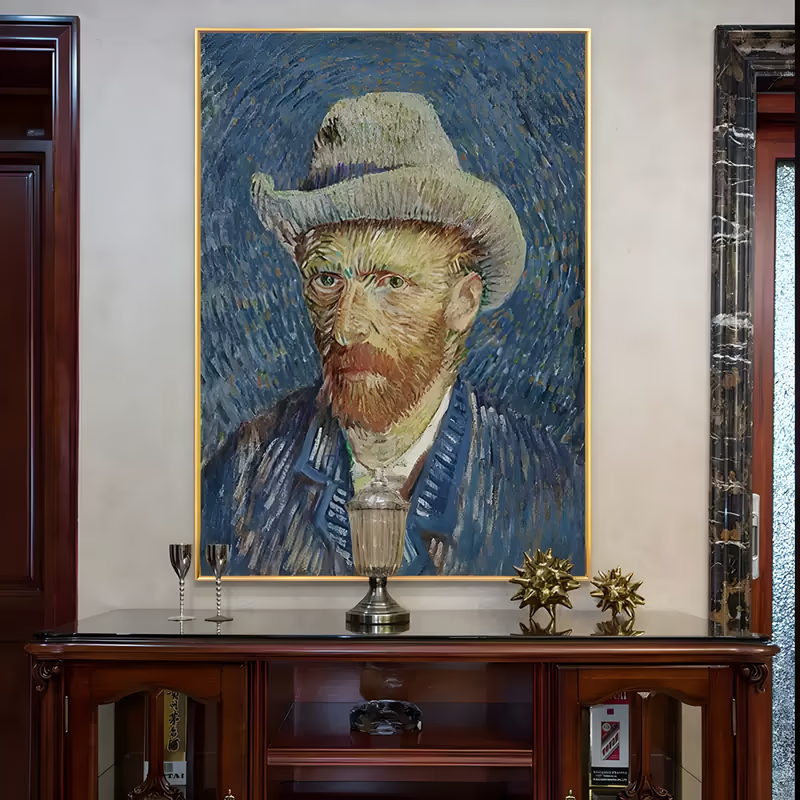
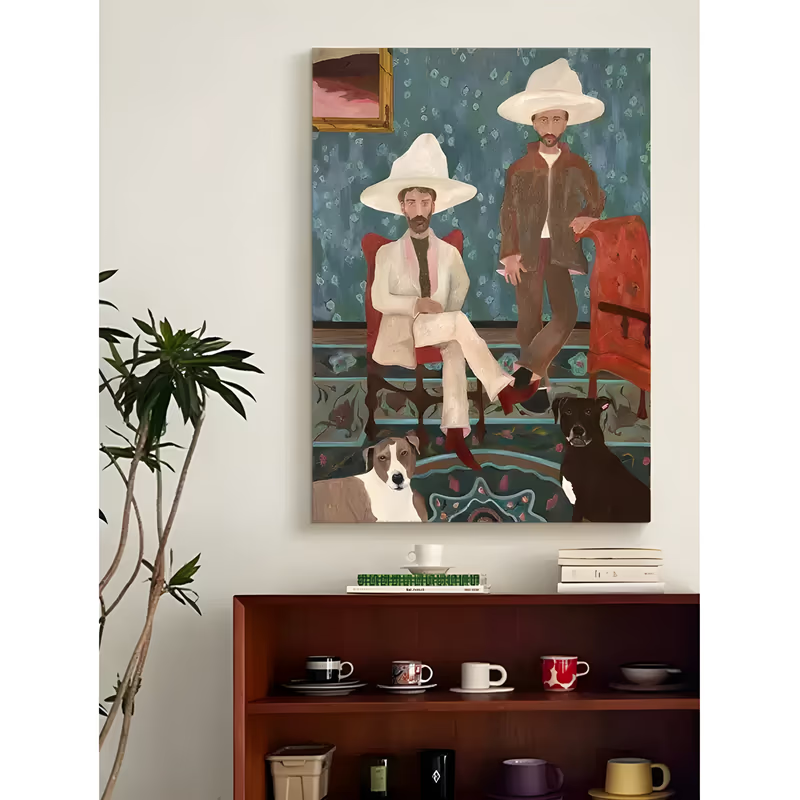
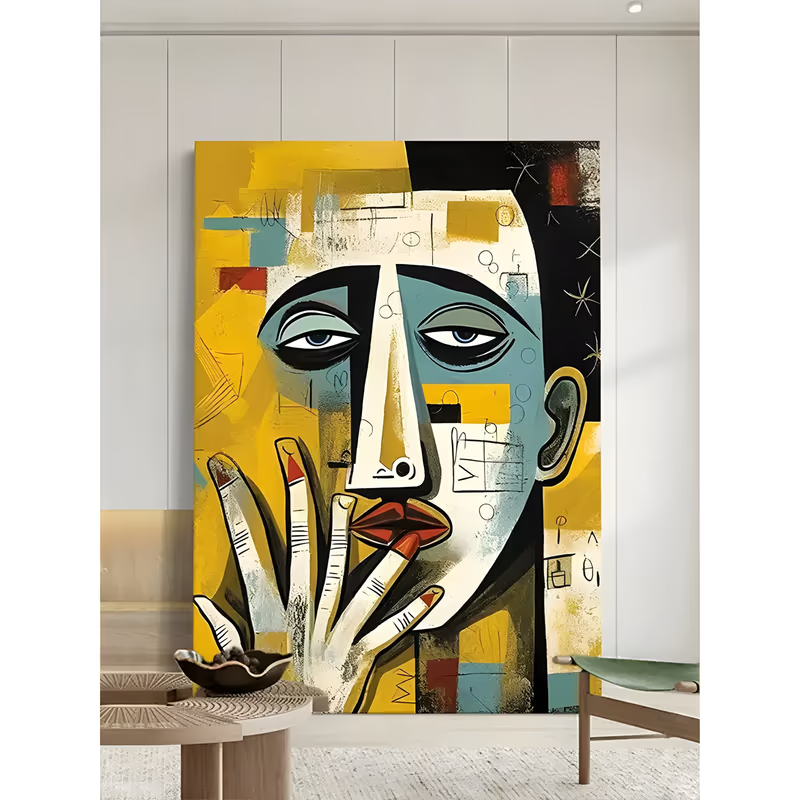
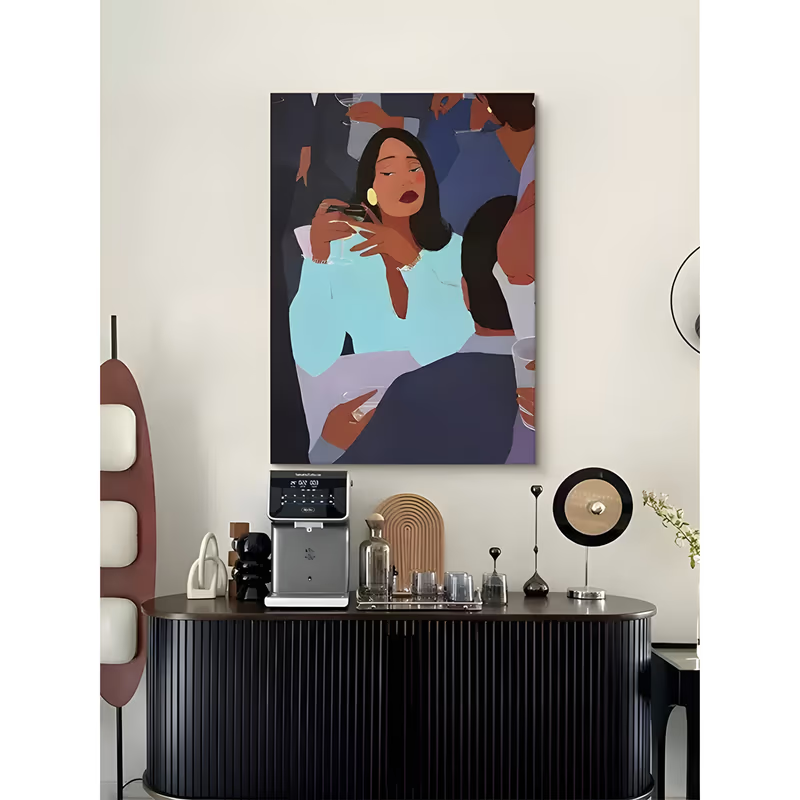
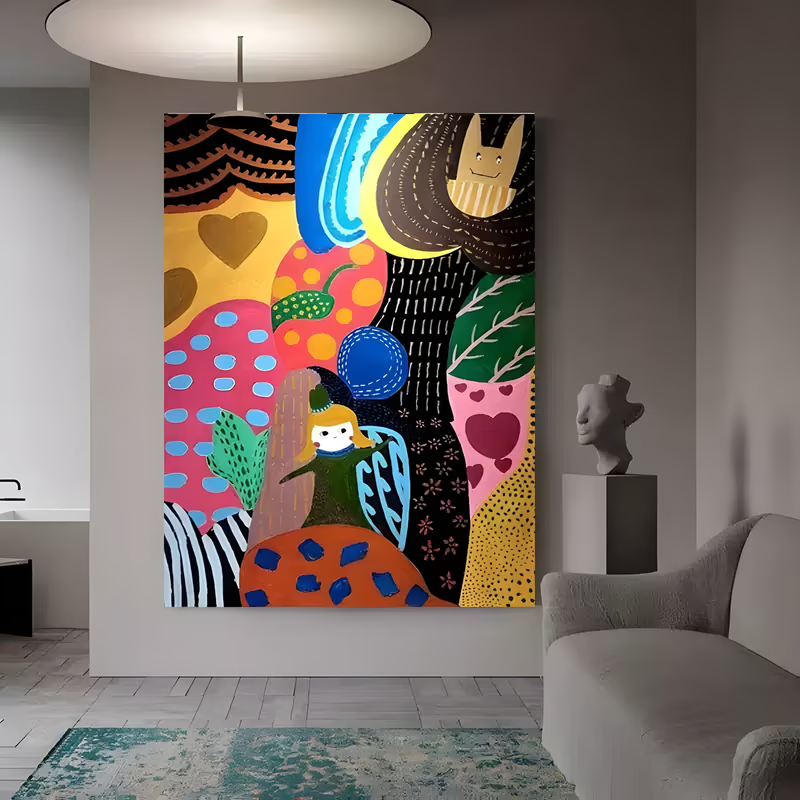
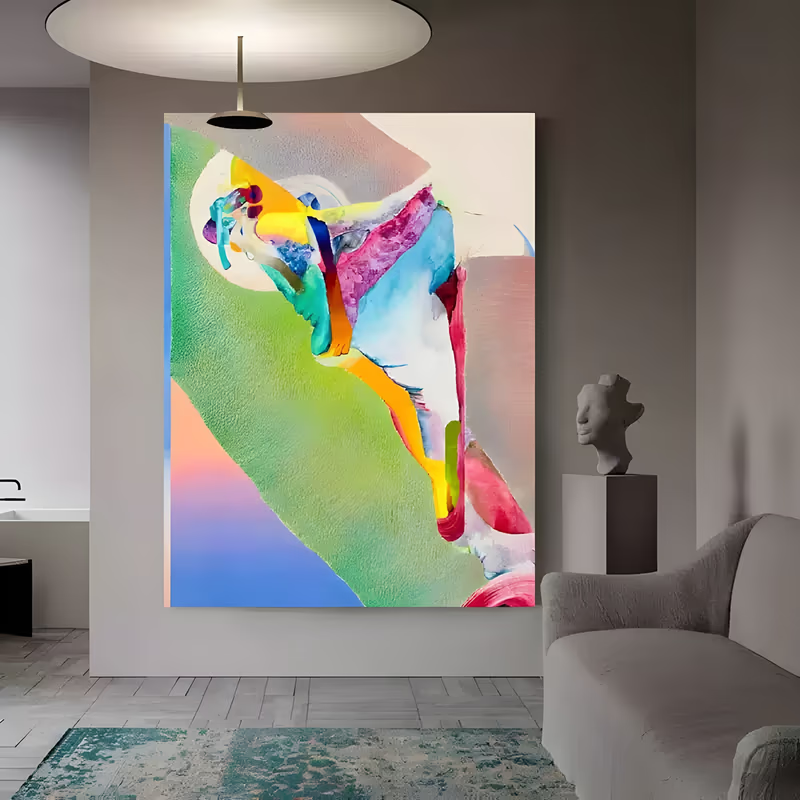
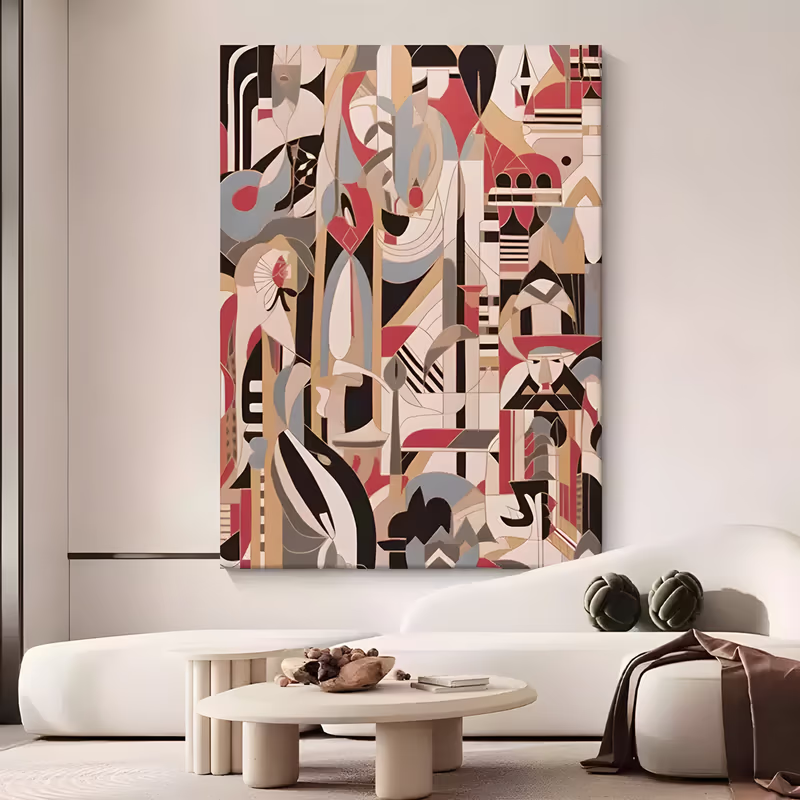
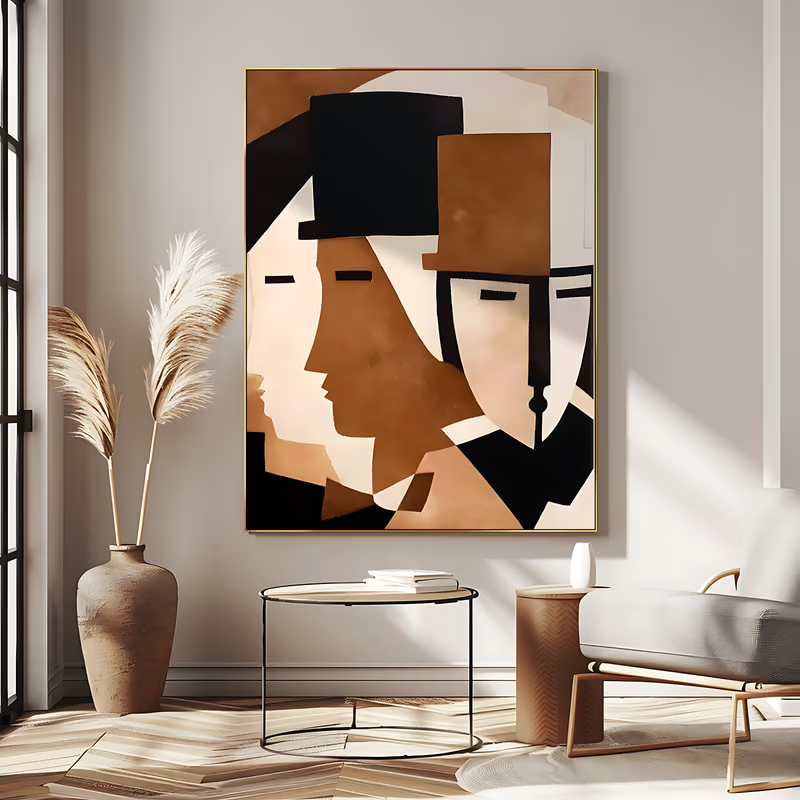
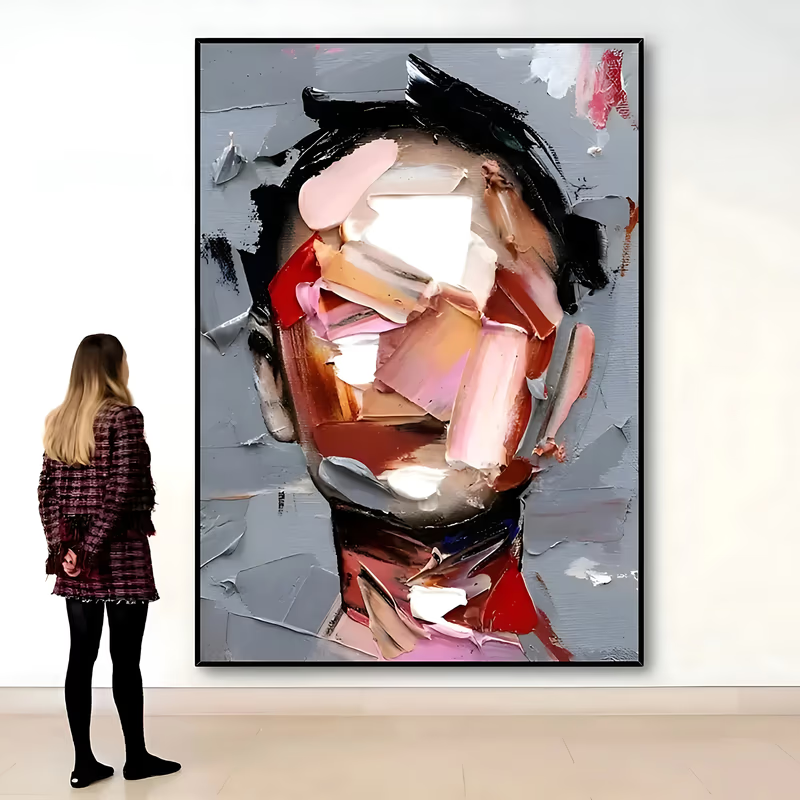
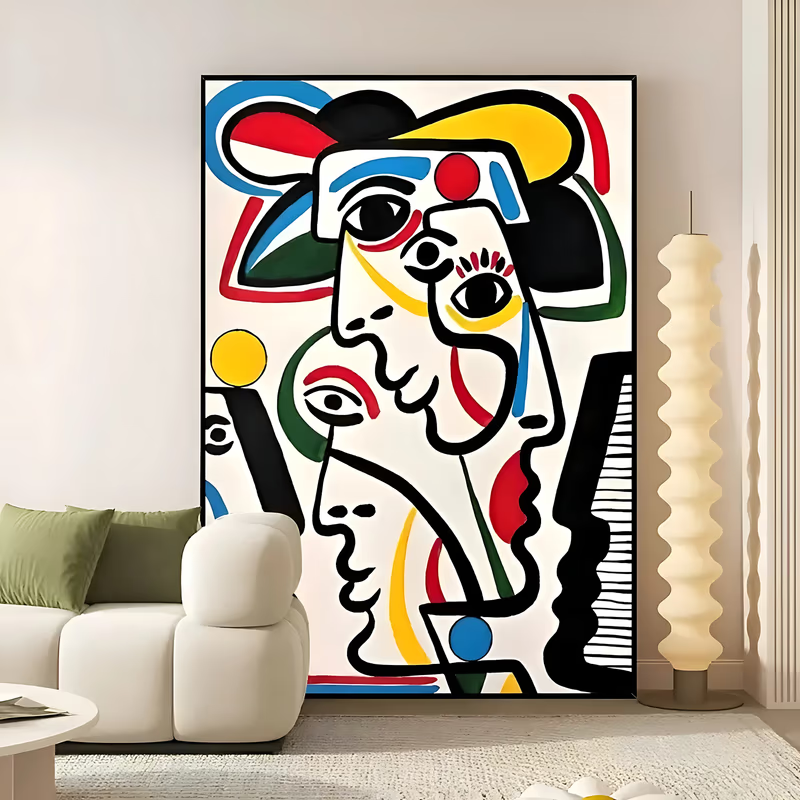
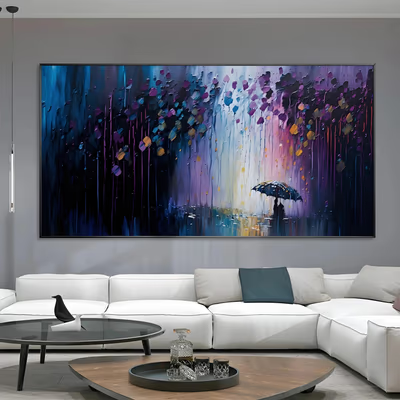
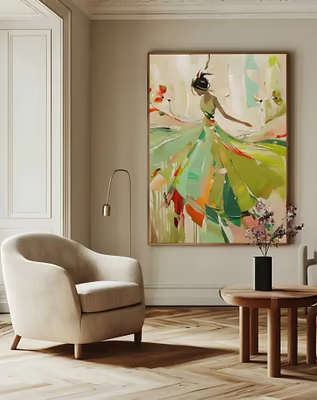
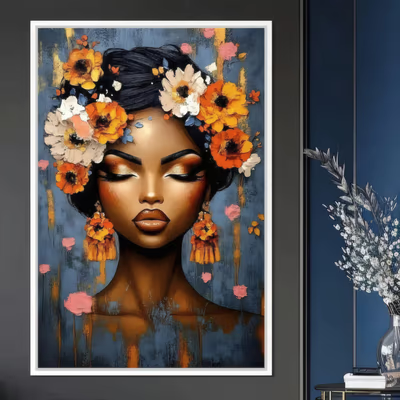
A woman in a red gown and gold hat, a ballerina on a teal ground, cubist faces, dancing figures, a lone figure with an umbrella in purple rain. Figures make people stop, because we read faces and bodies before anything else. They suit fashion boutiques, beauty counters and galleries with a younger, design-led audience.

Animals and pet portraits
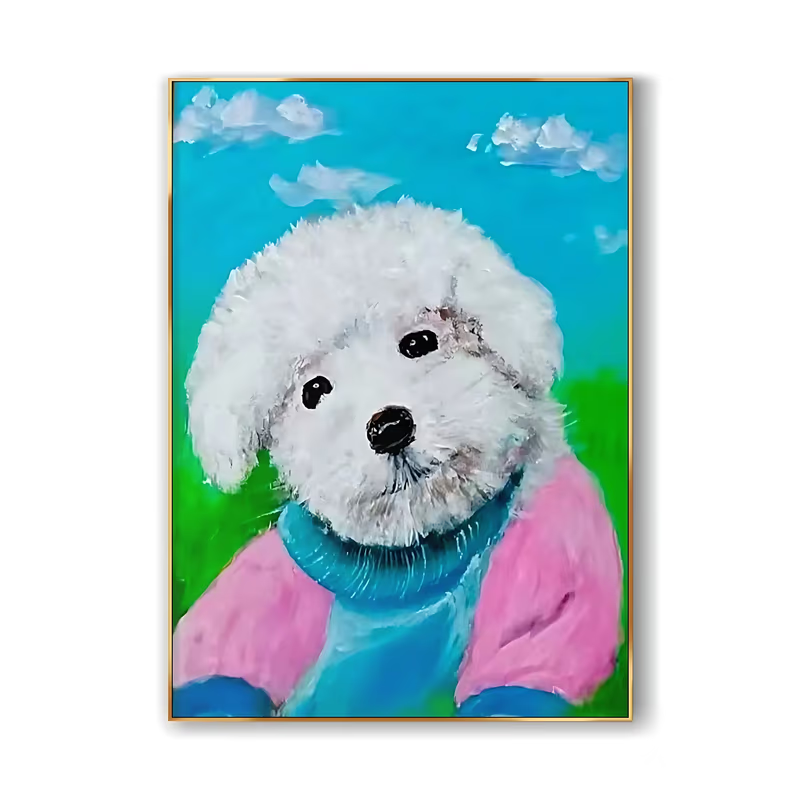
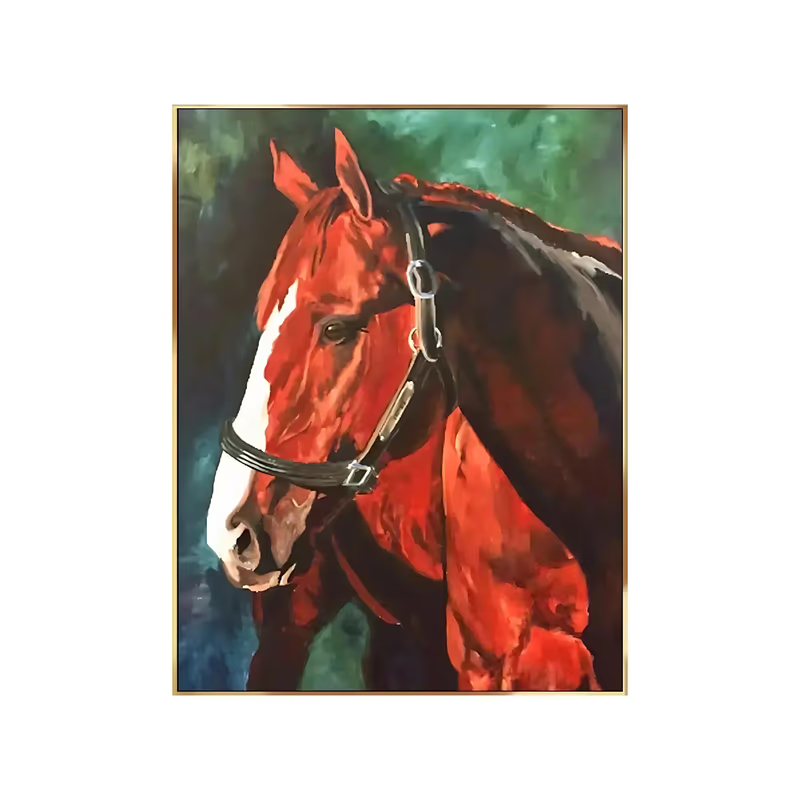
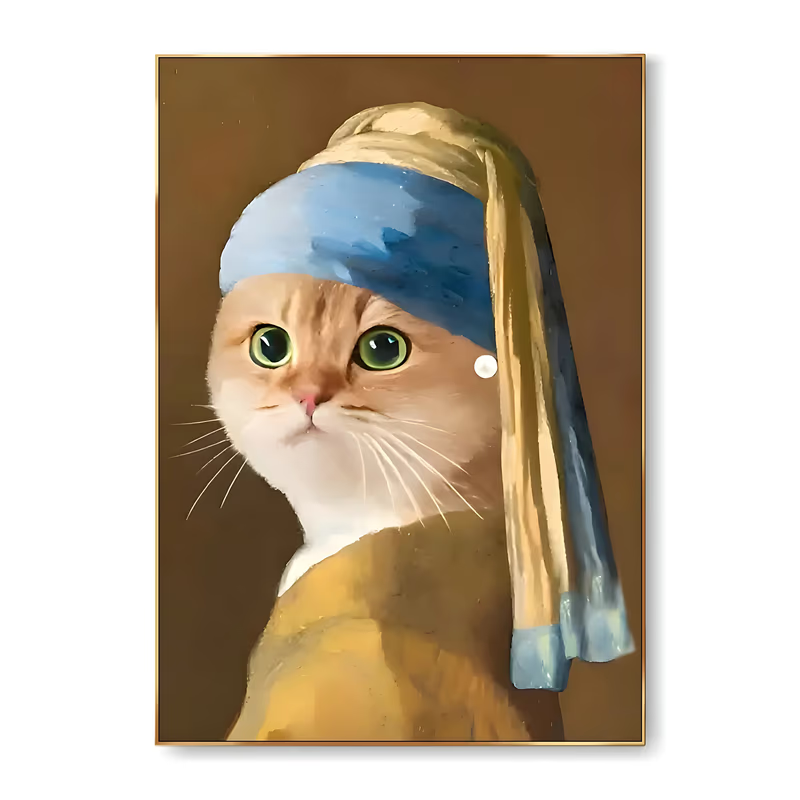
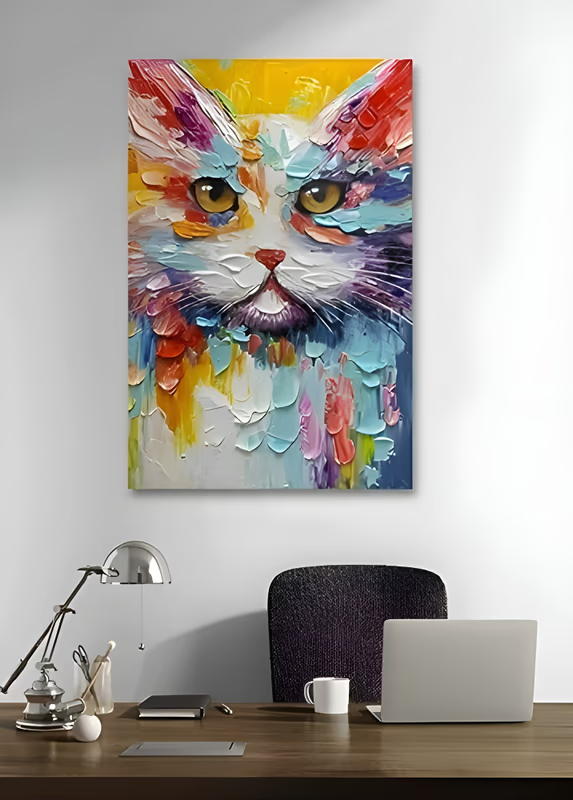
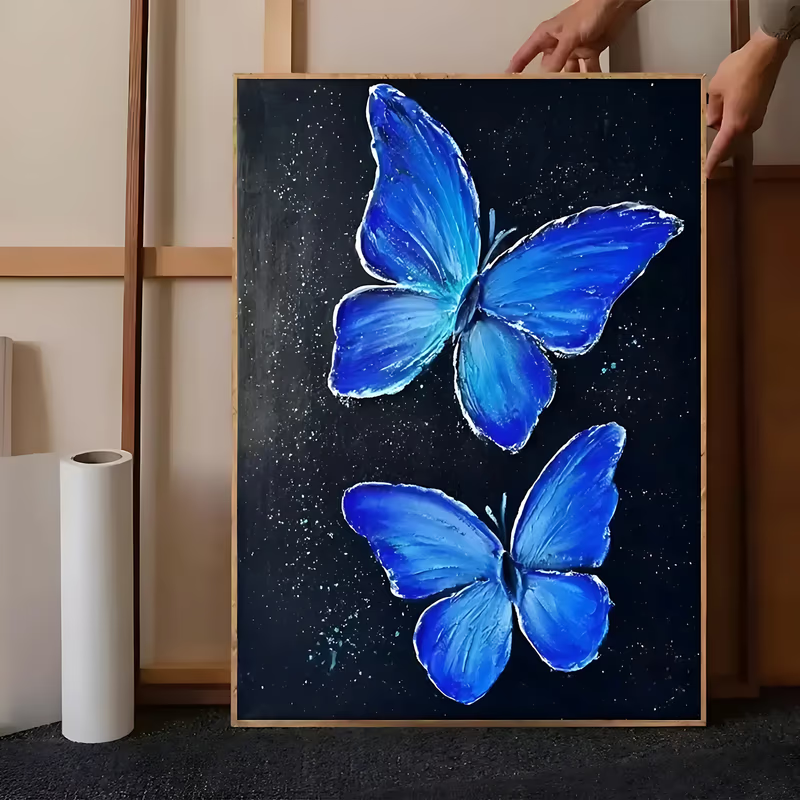
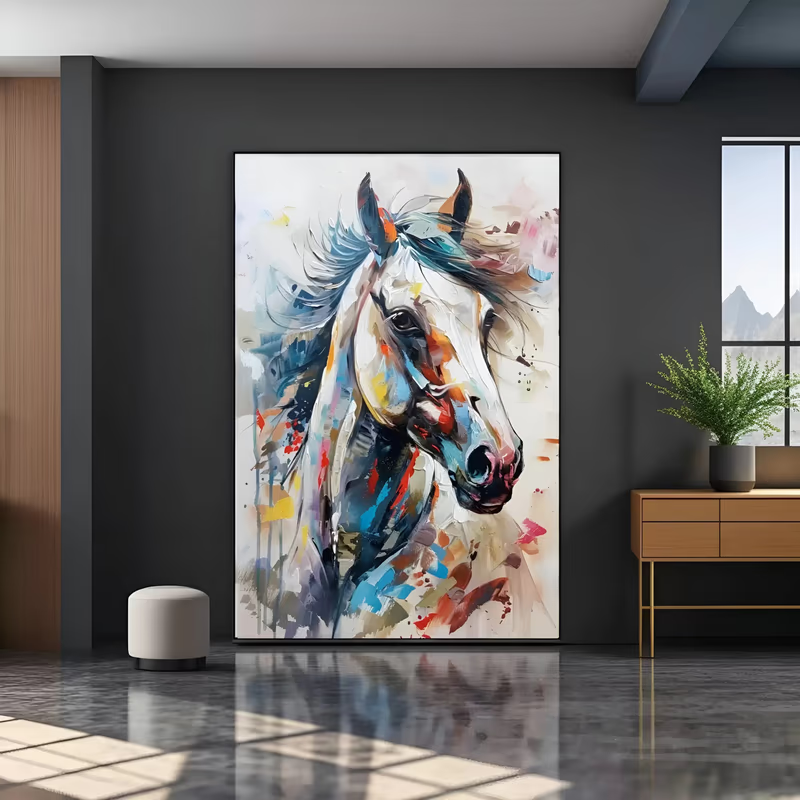
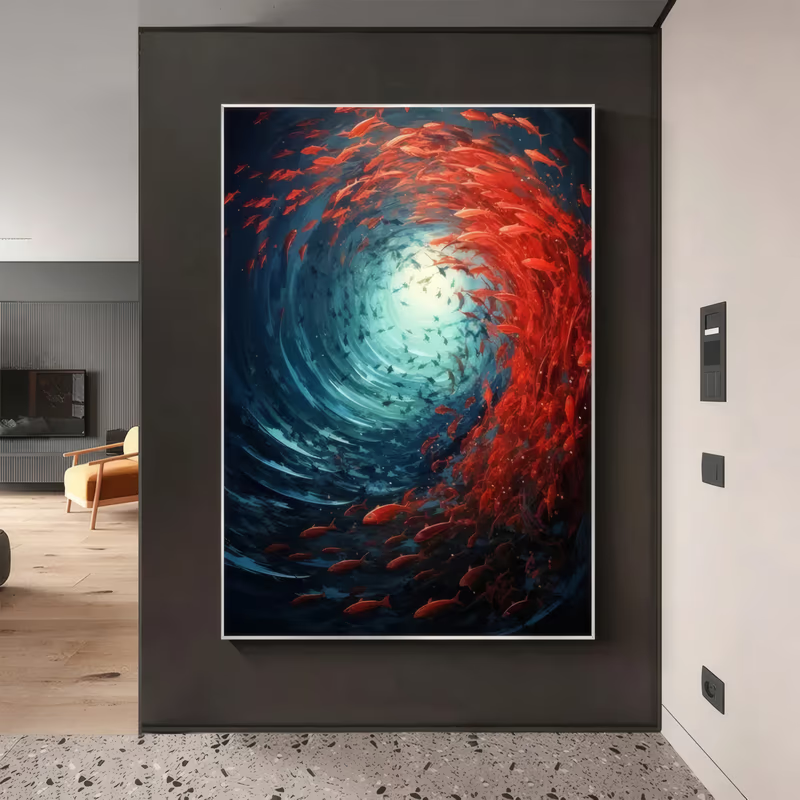
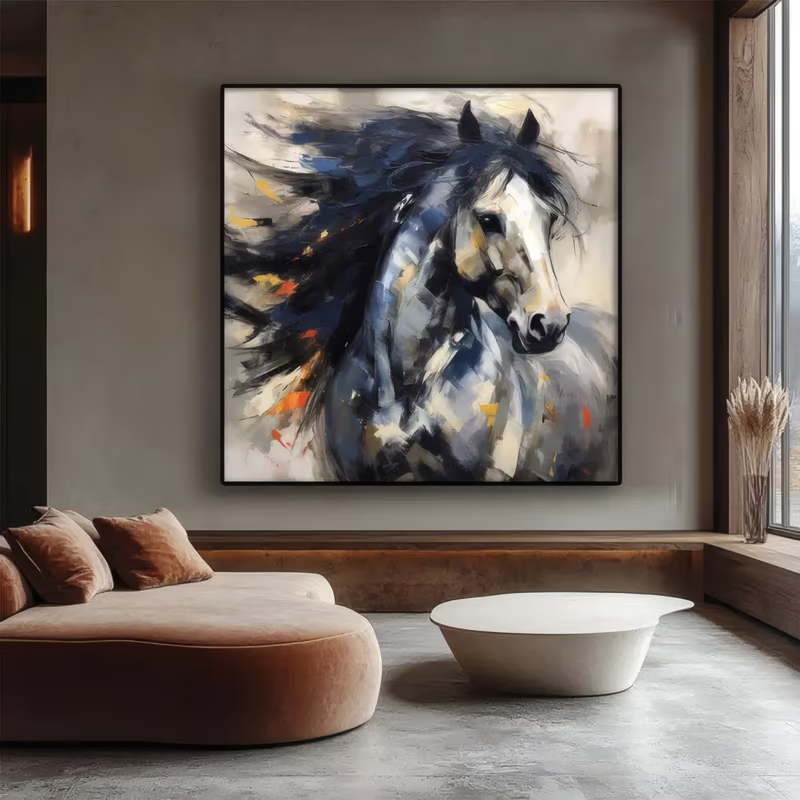
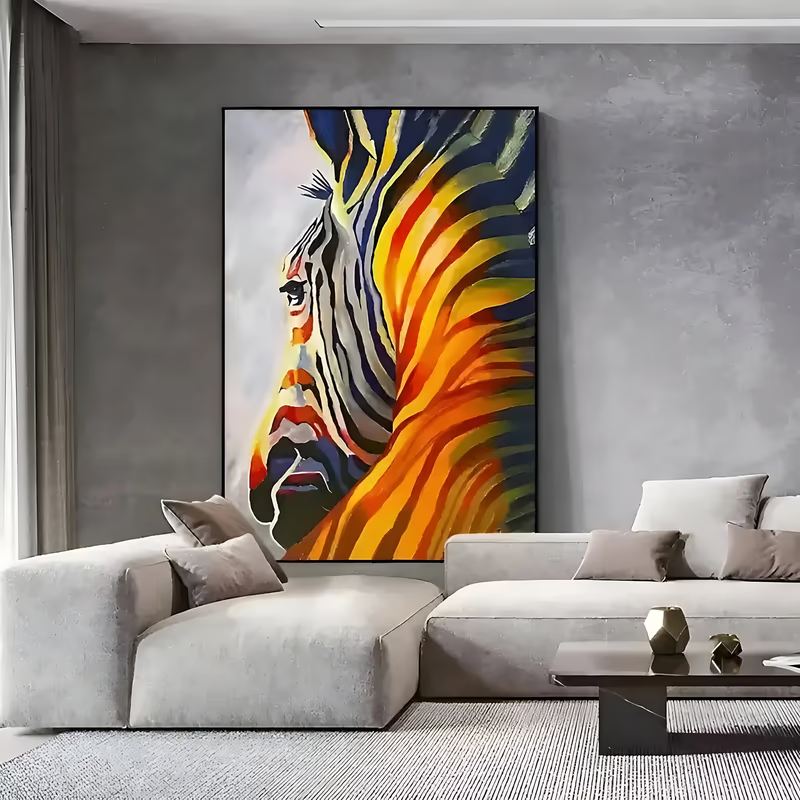
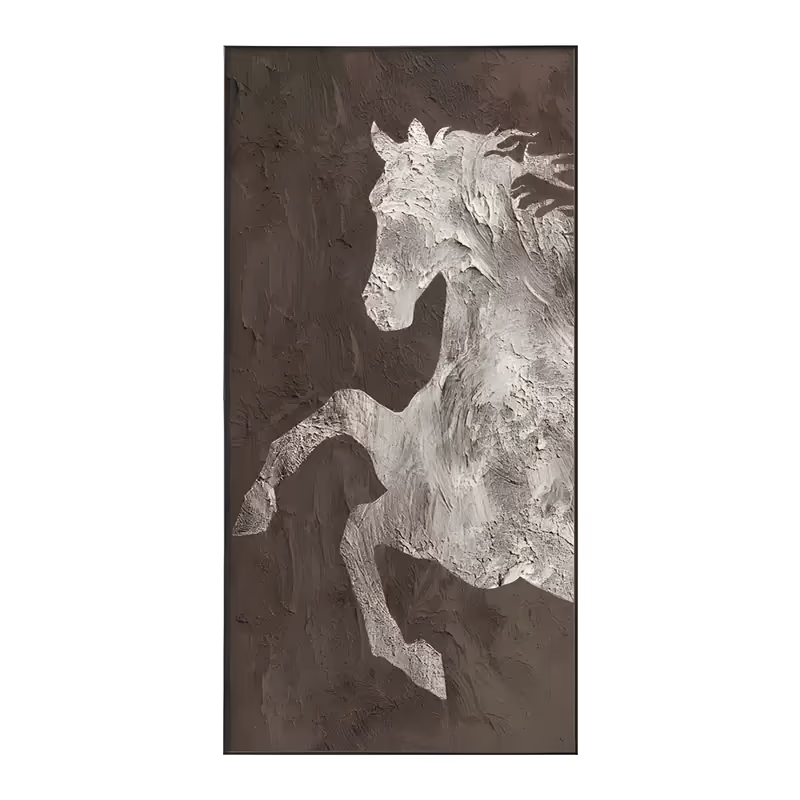
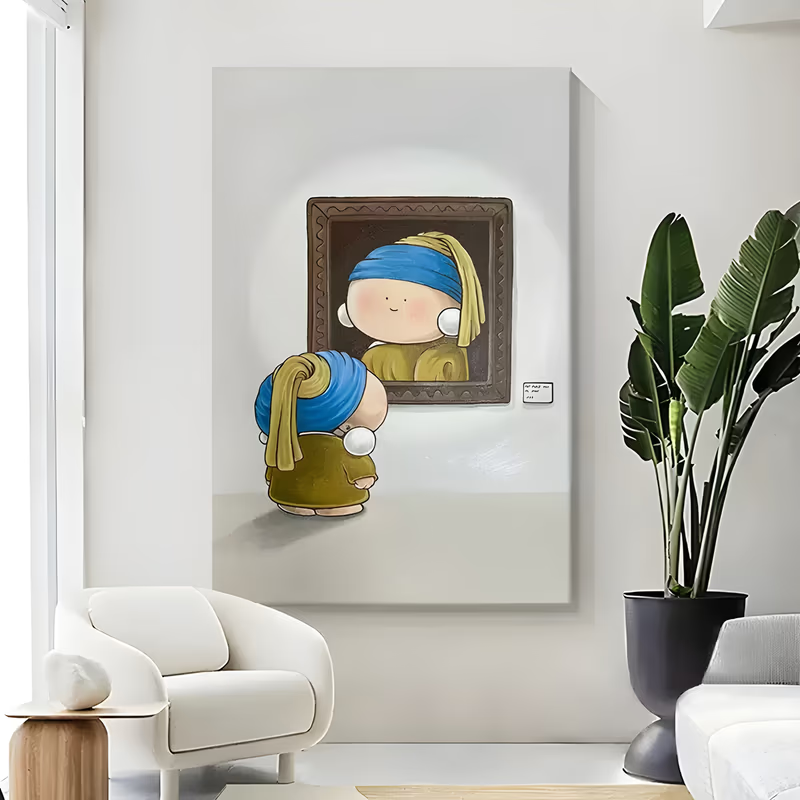
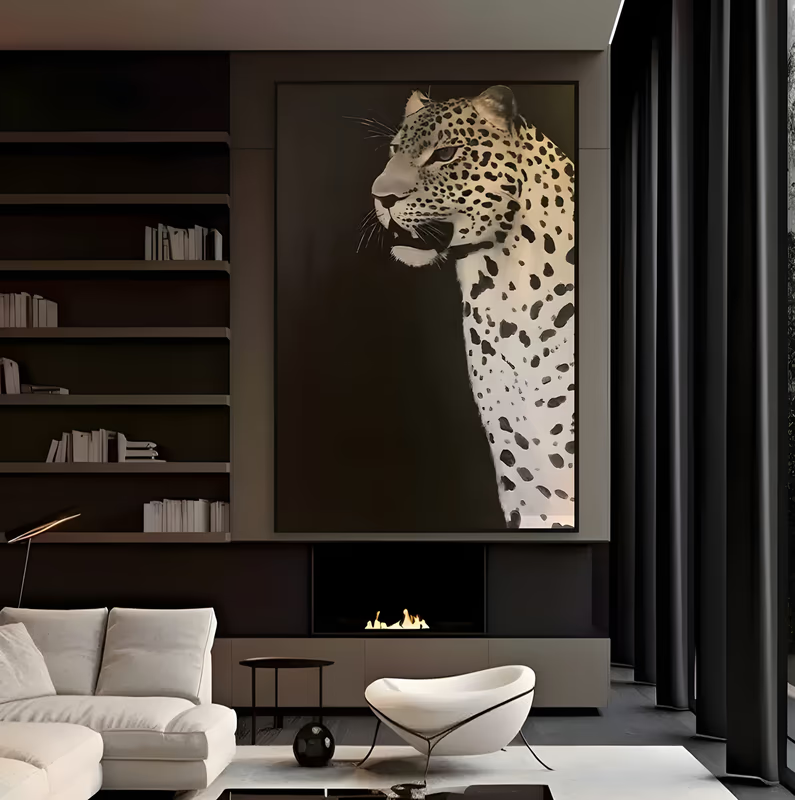
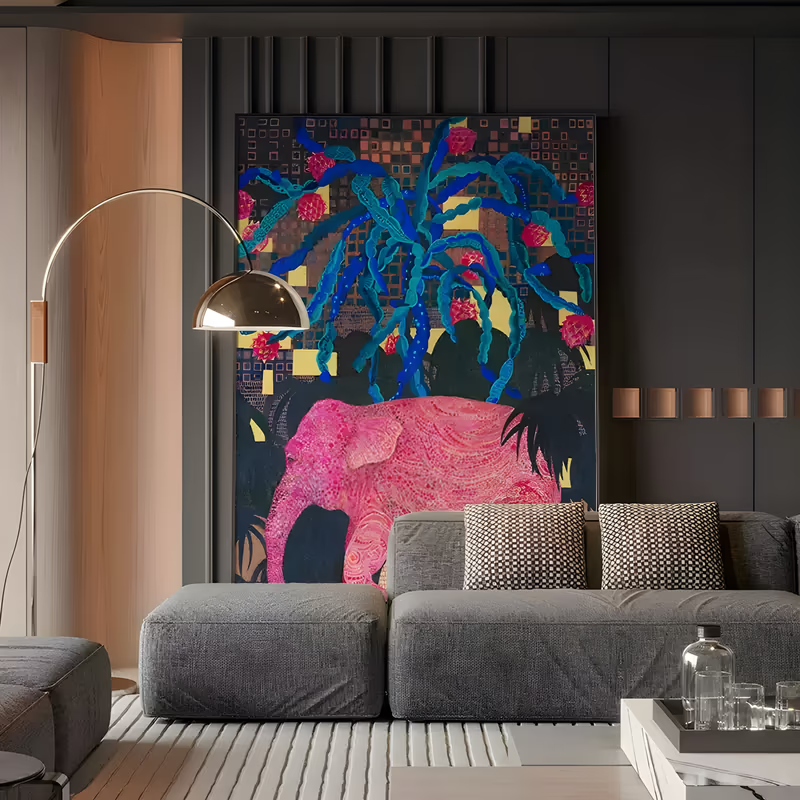
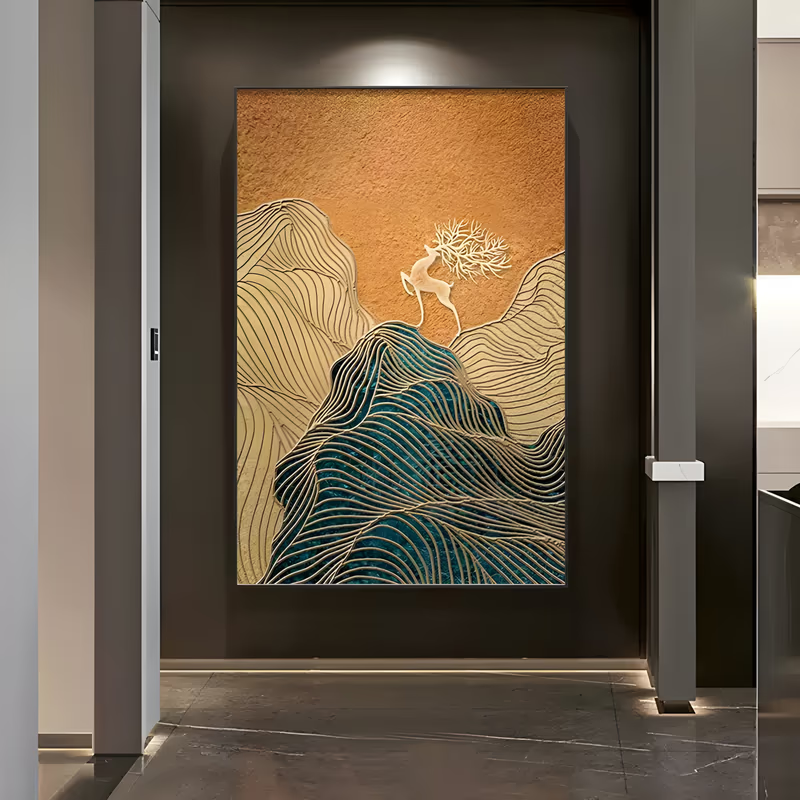
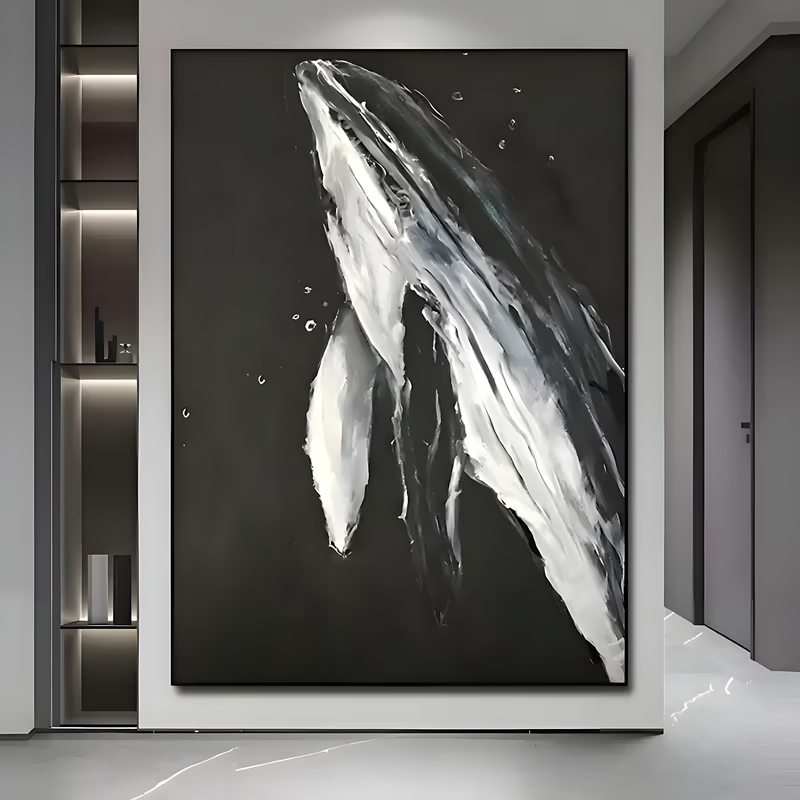
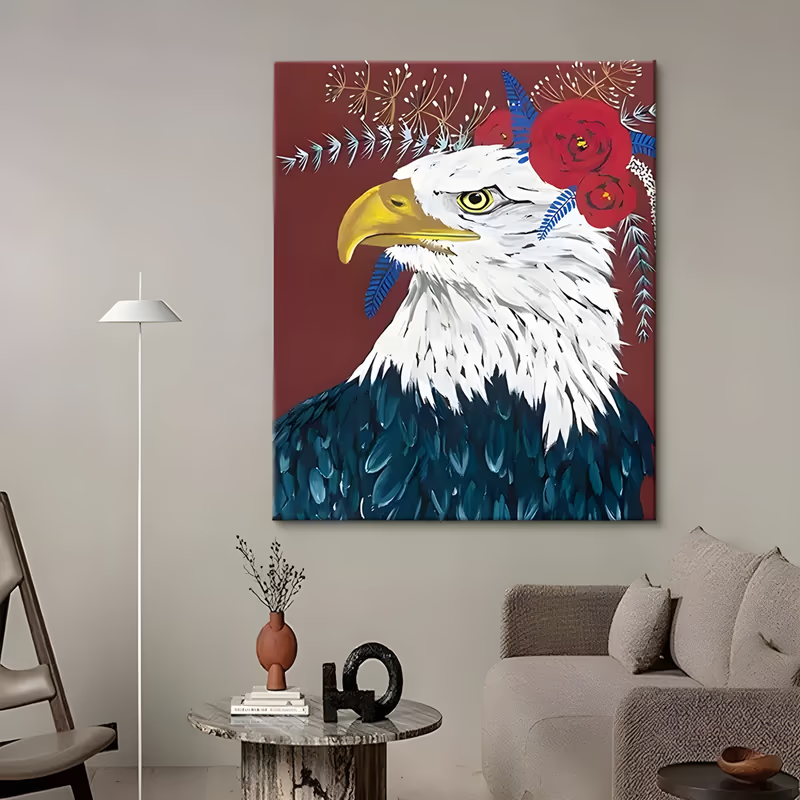
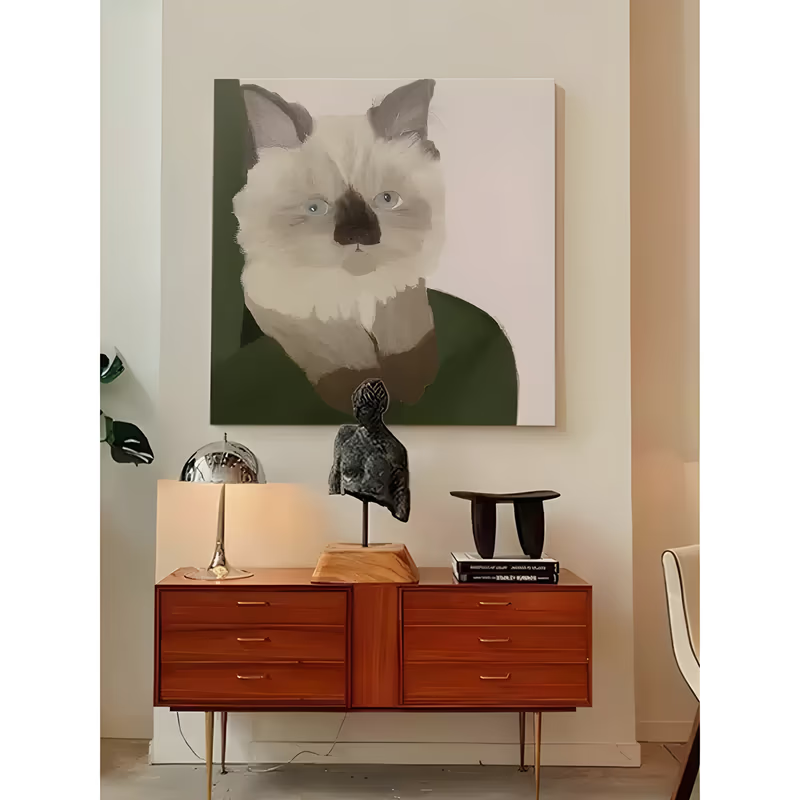
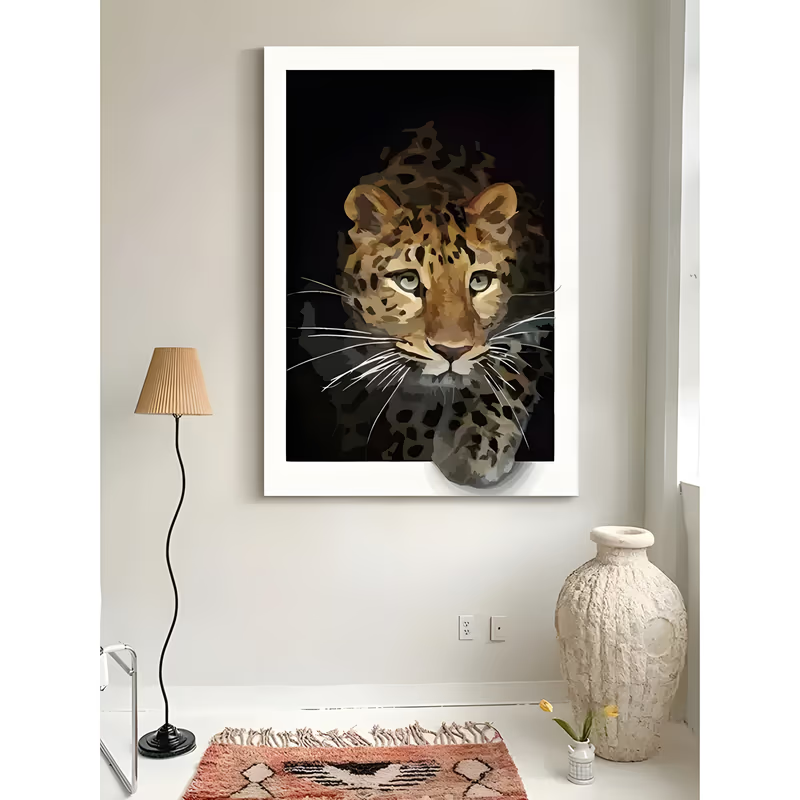
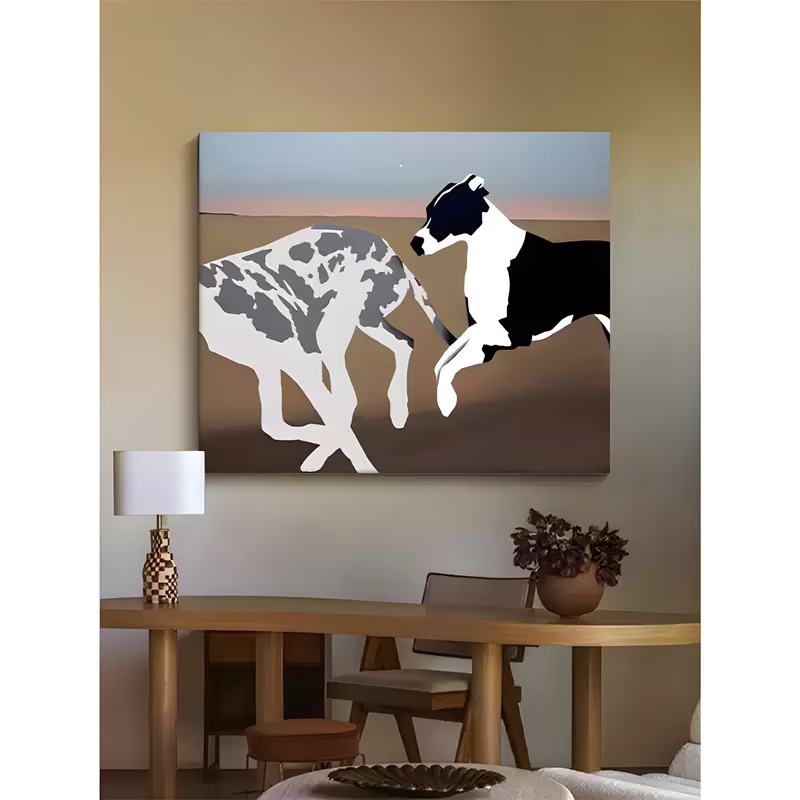
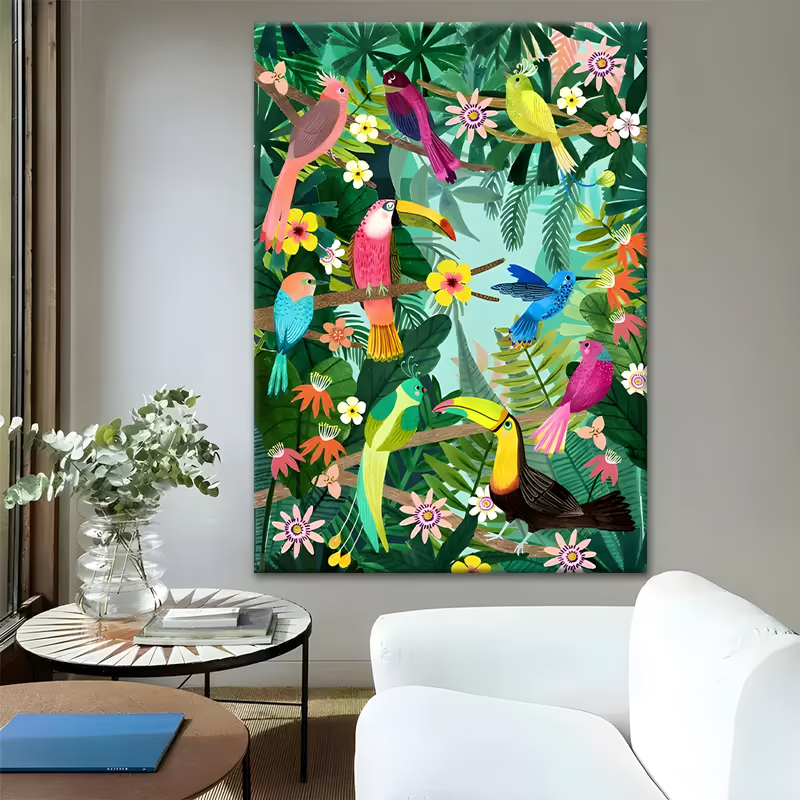
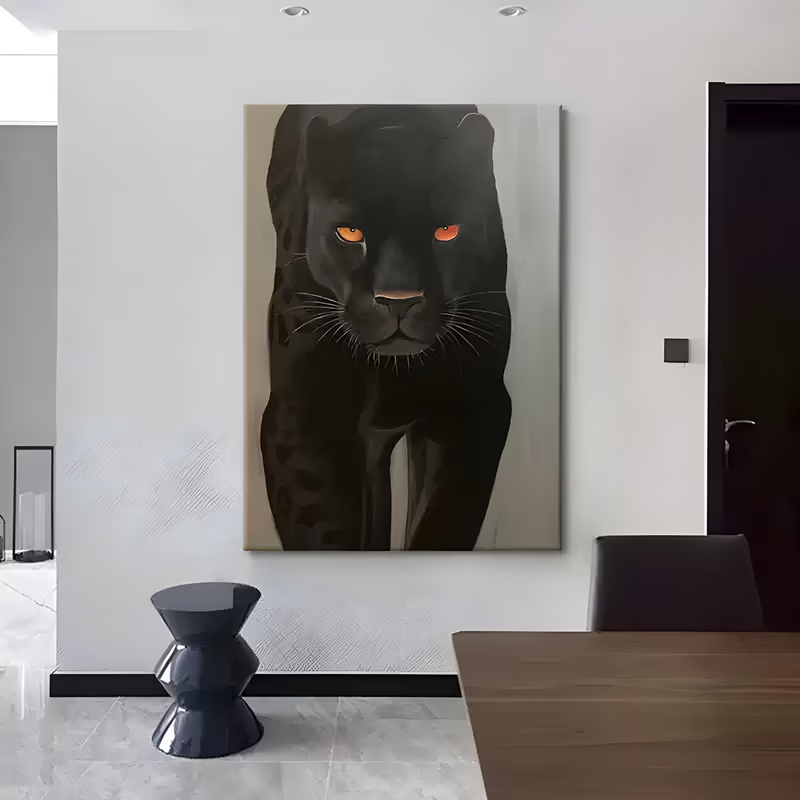
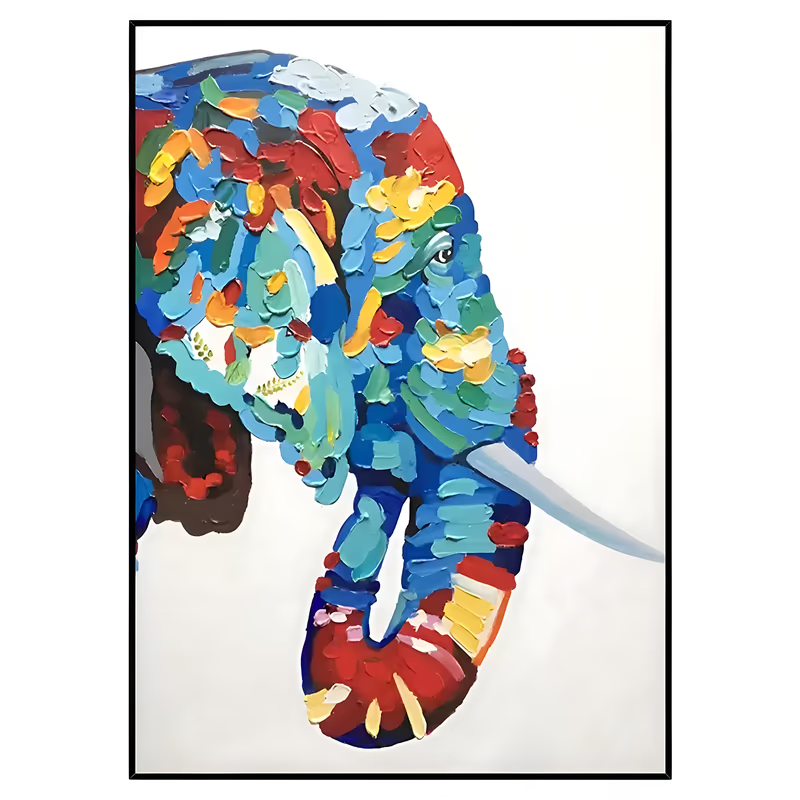
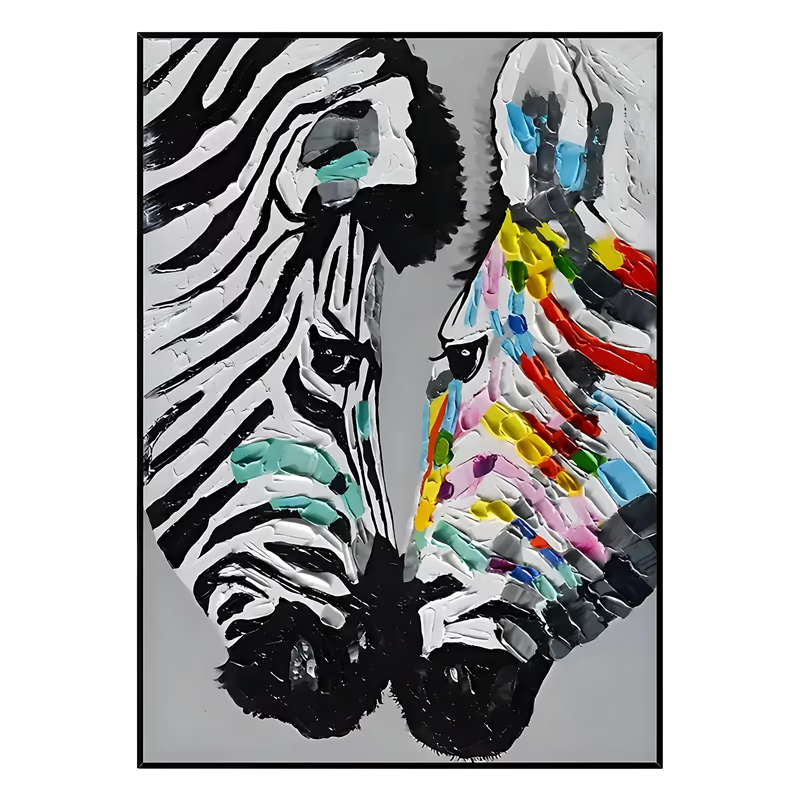
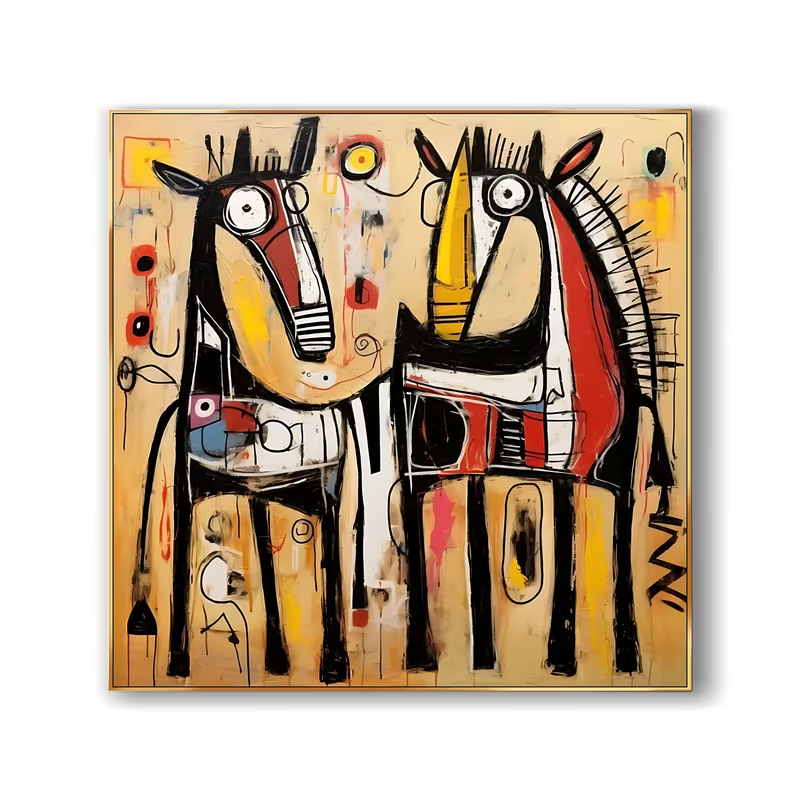
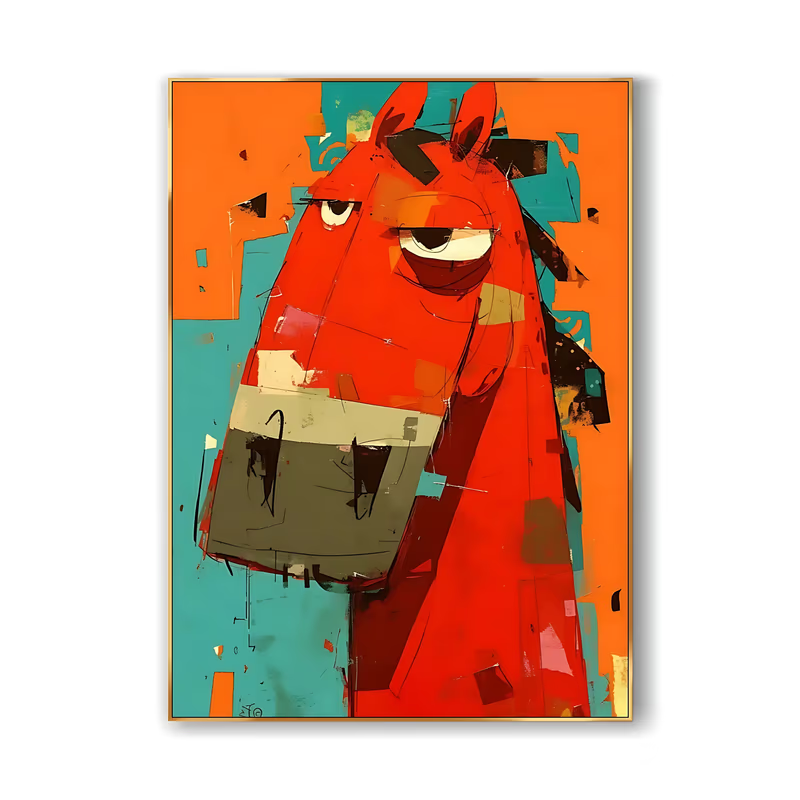
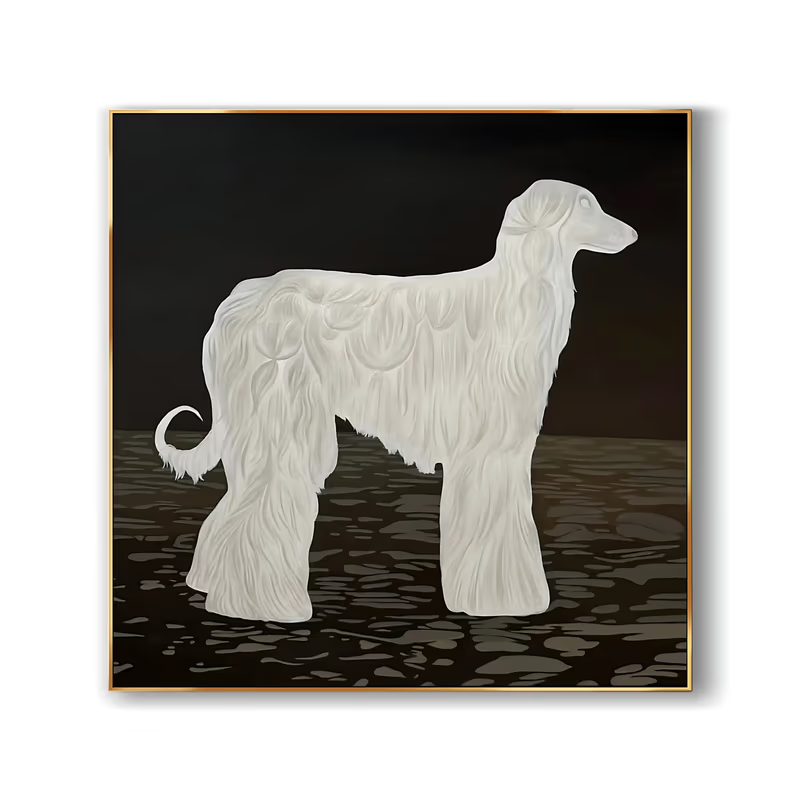
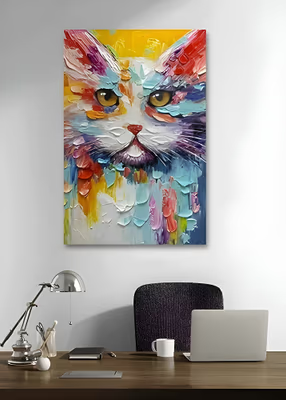
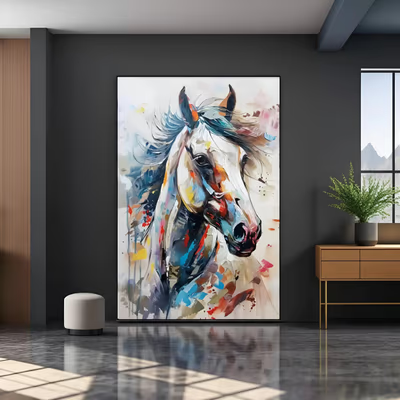
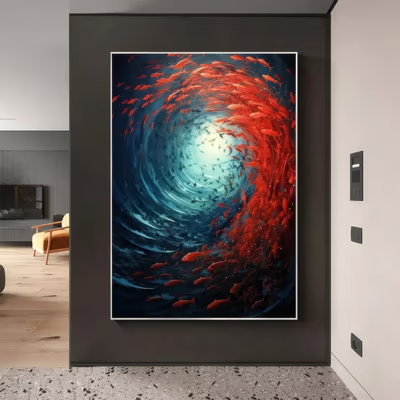
A striped tiger seen from behind on orange, a cat in a blue and gold turban, a bichon in a pink sweater, peacocks in a flowering garden, rainbow knife-painted horses. Animal paintings are among the easiest to sell in a gift shop, pet boutique or showroom, because buyers recognise their own pet or favourite animal in them. More in animal and wildlife paintings.
Sculpted and statement florals
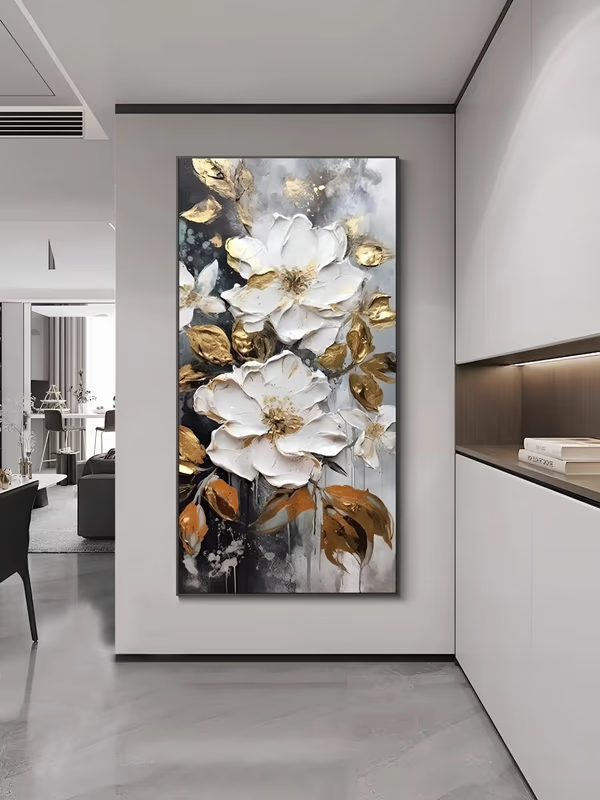
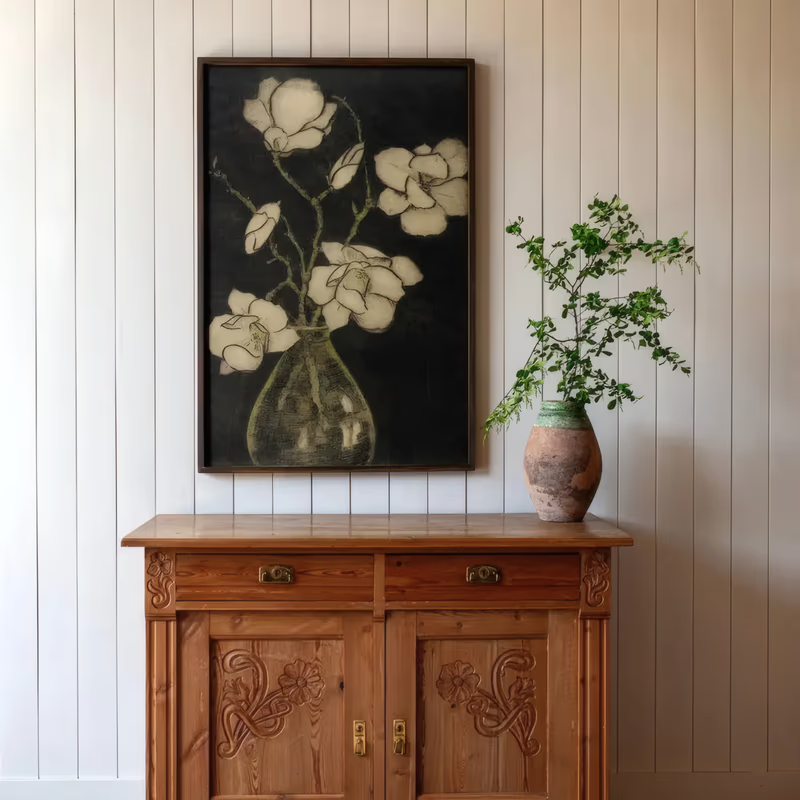
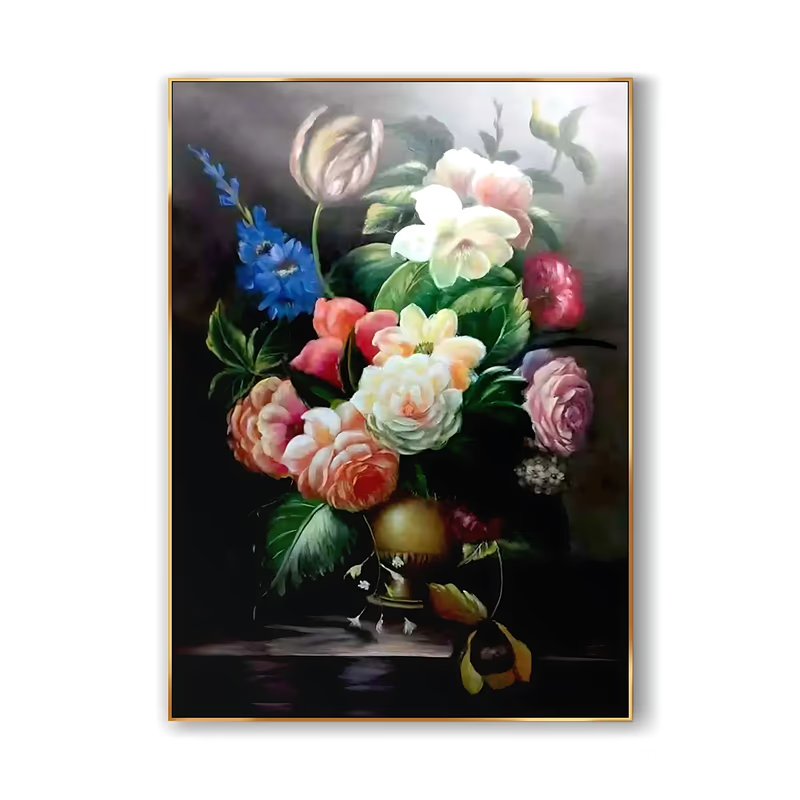
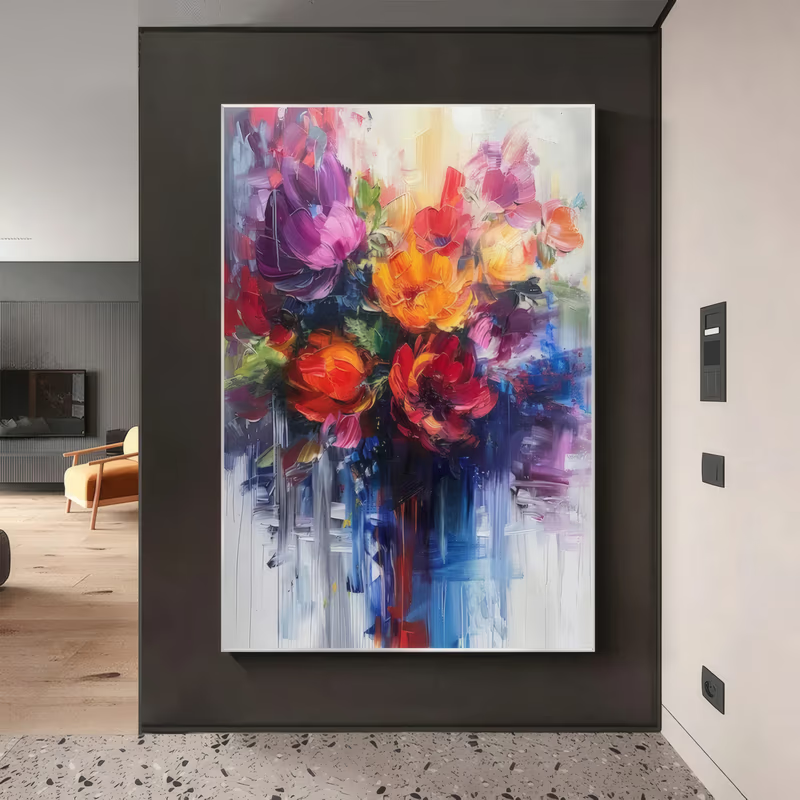
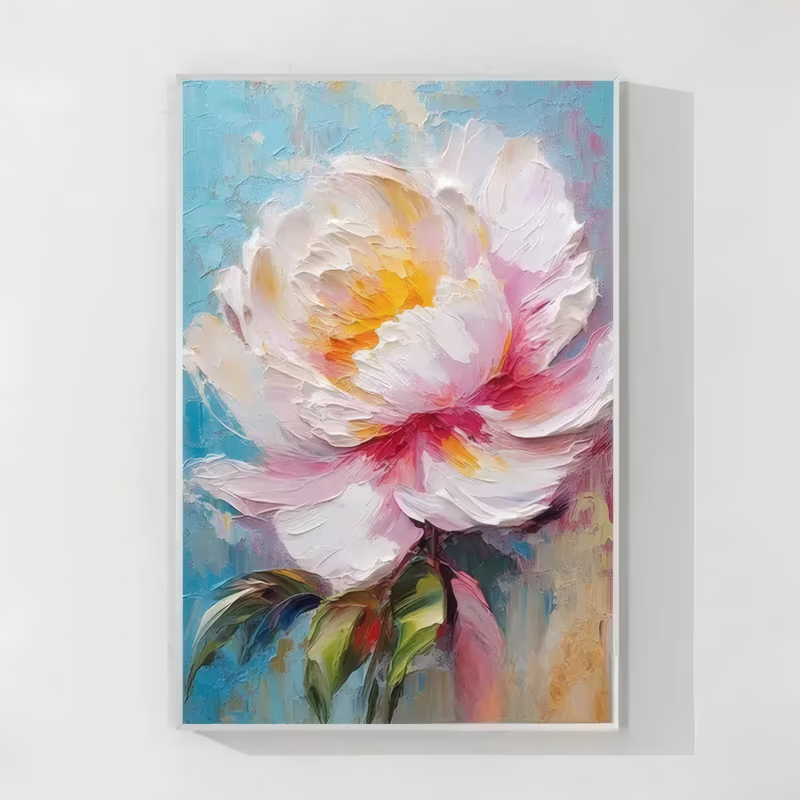
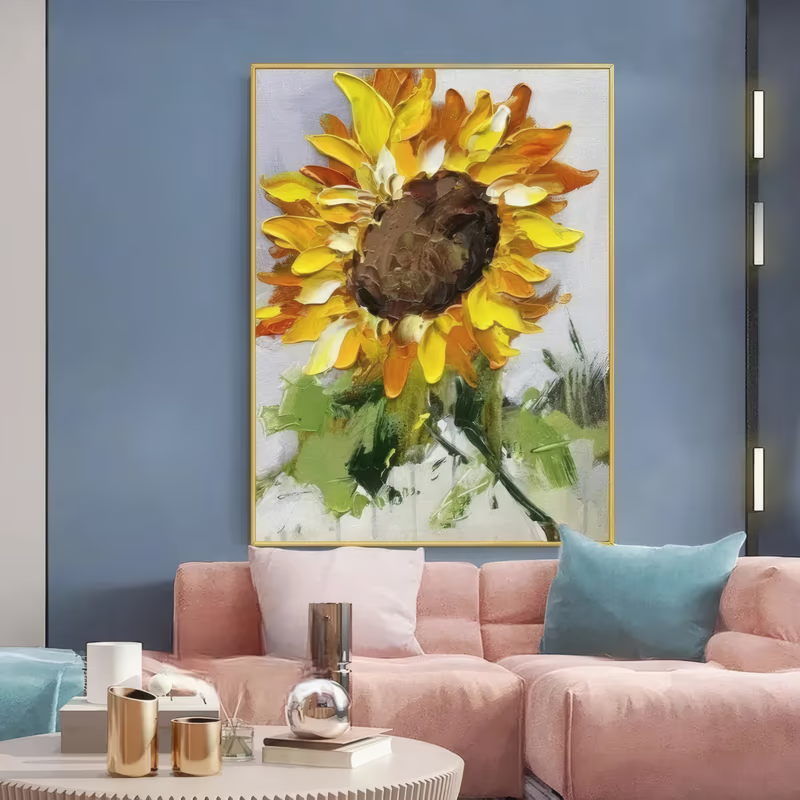
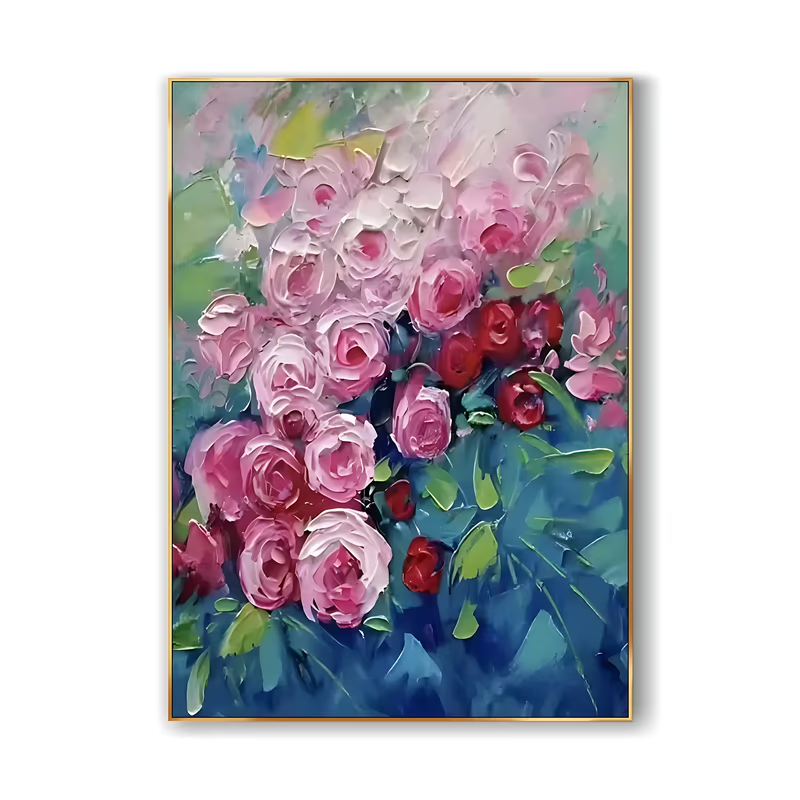
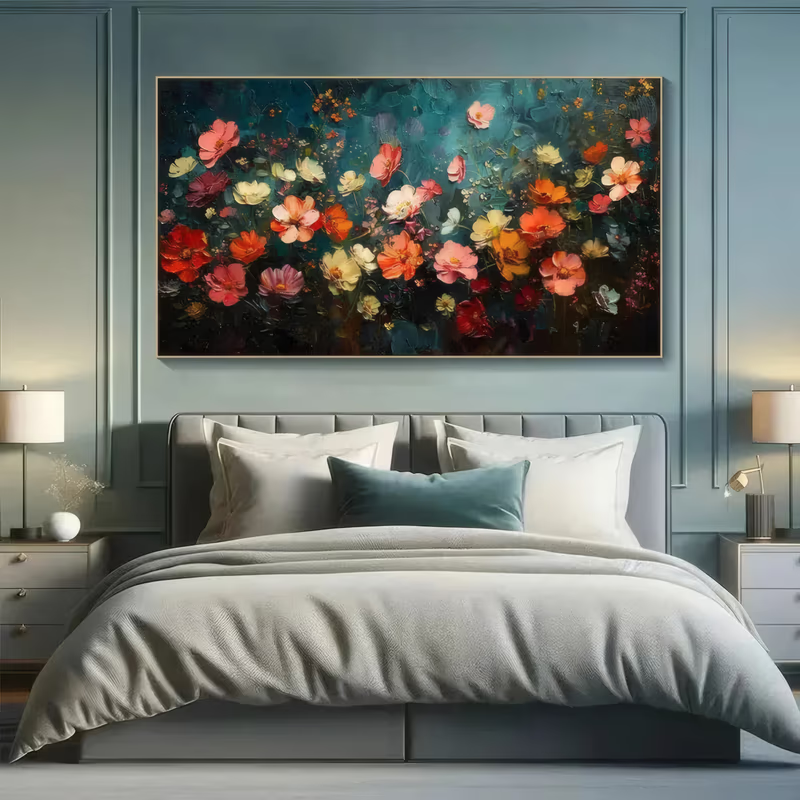
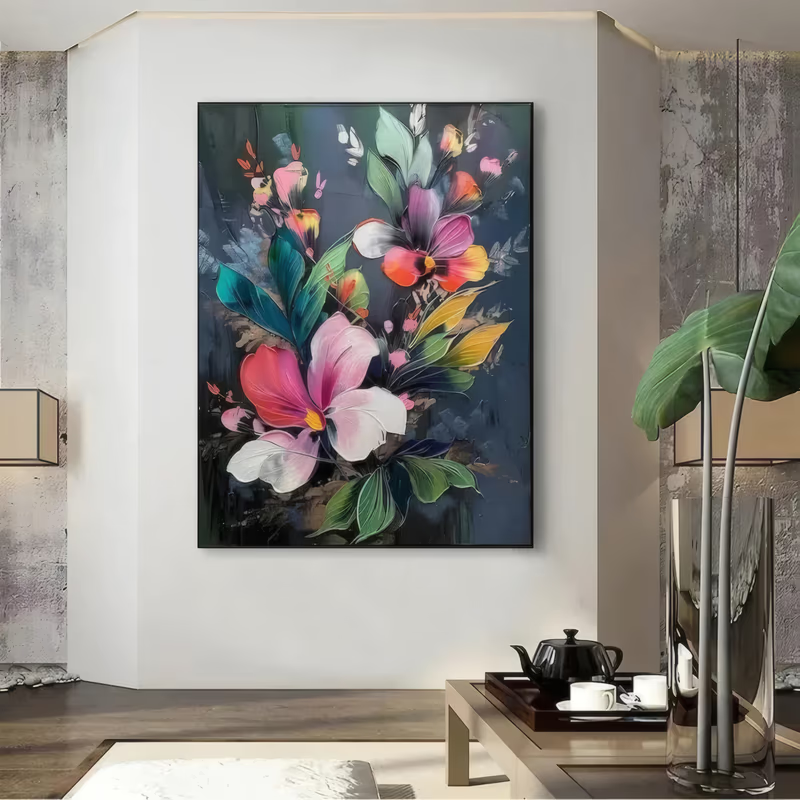
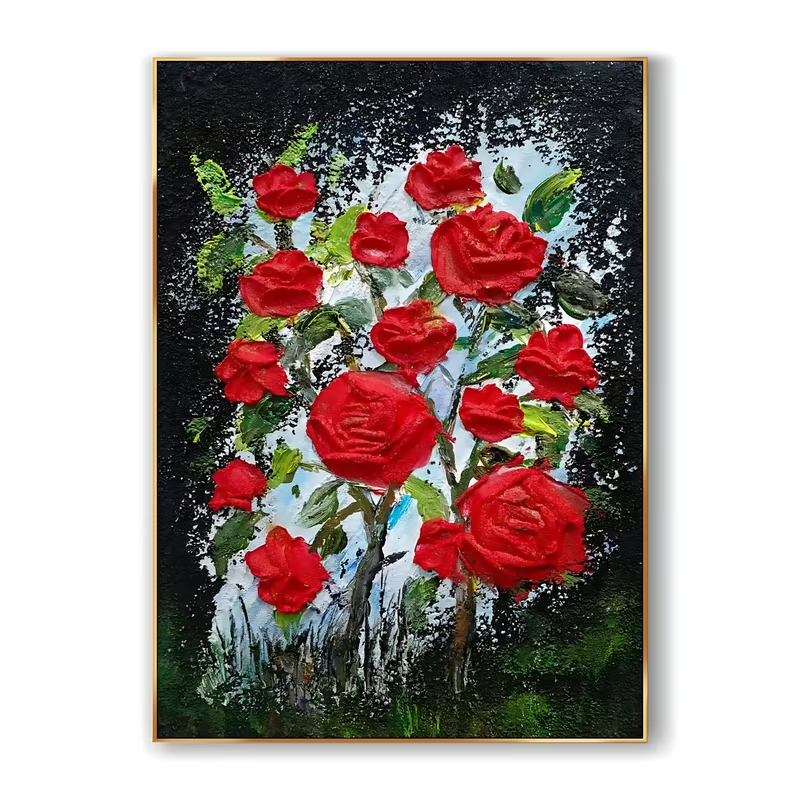
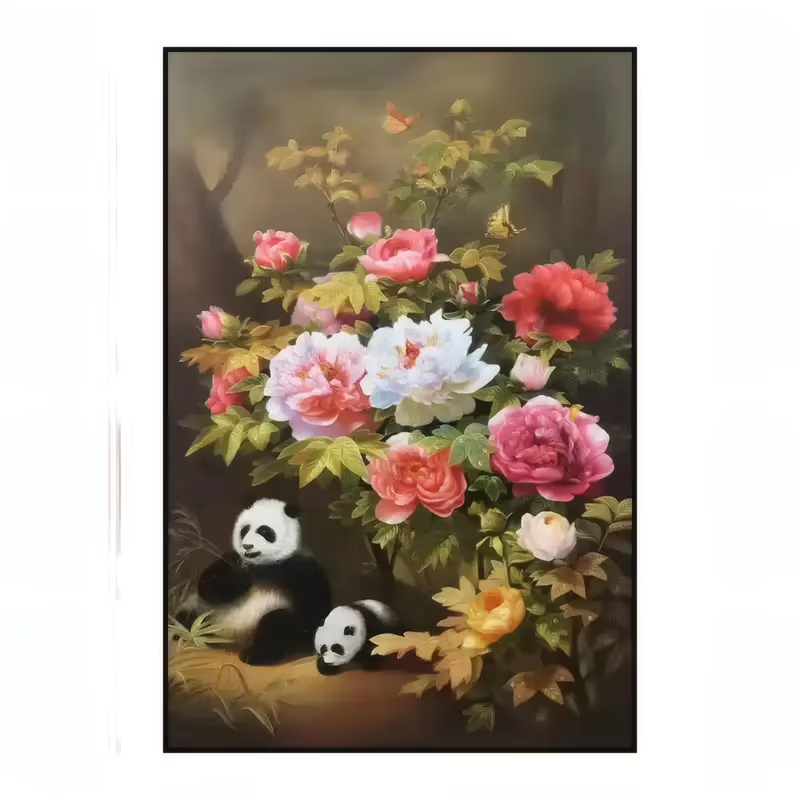
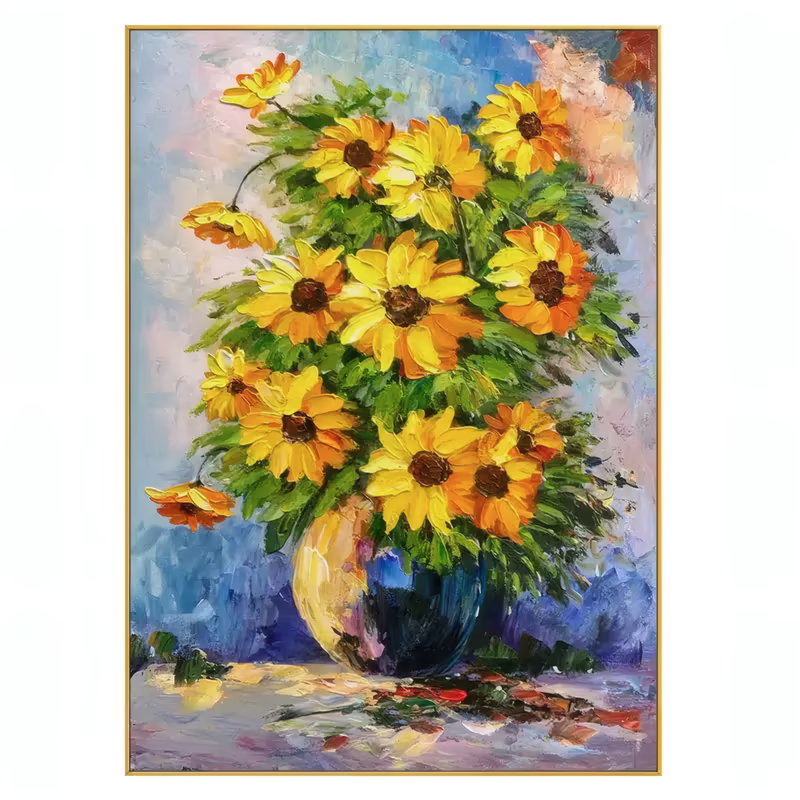
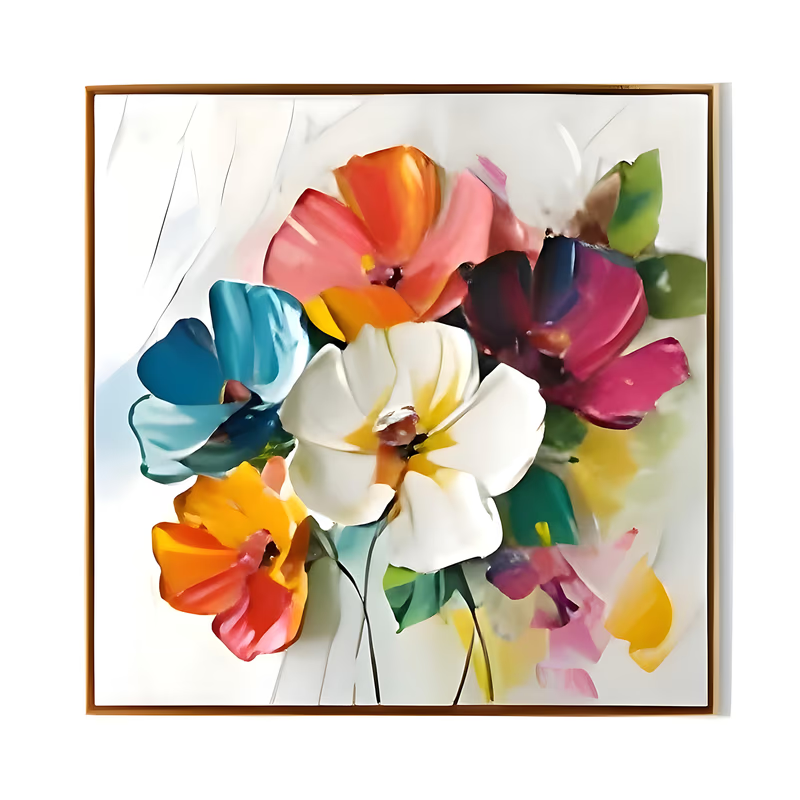
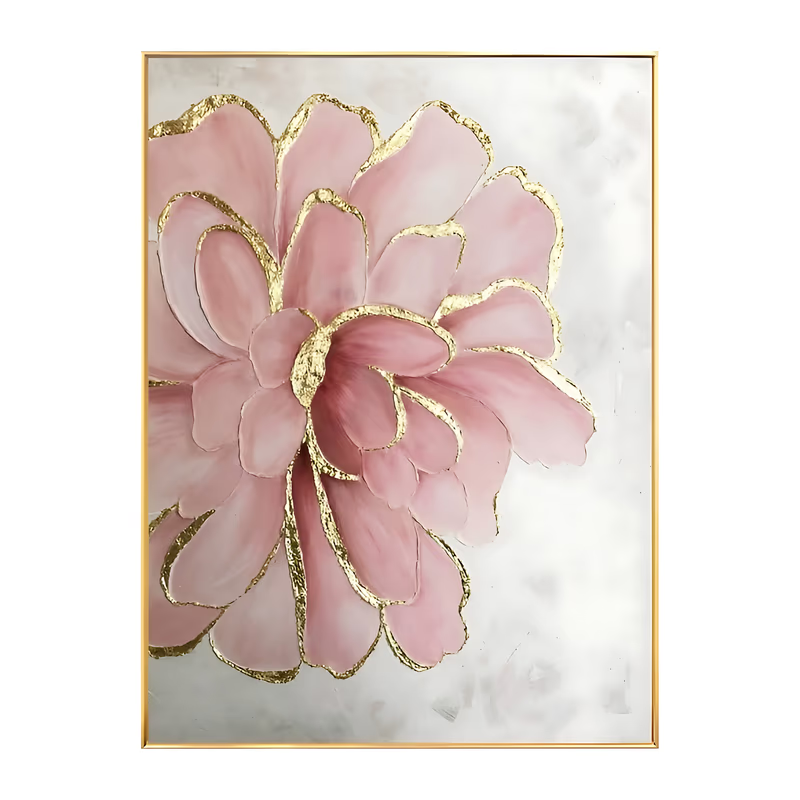
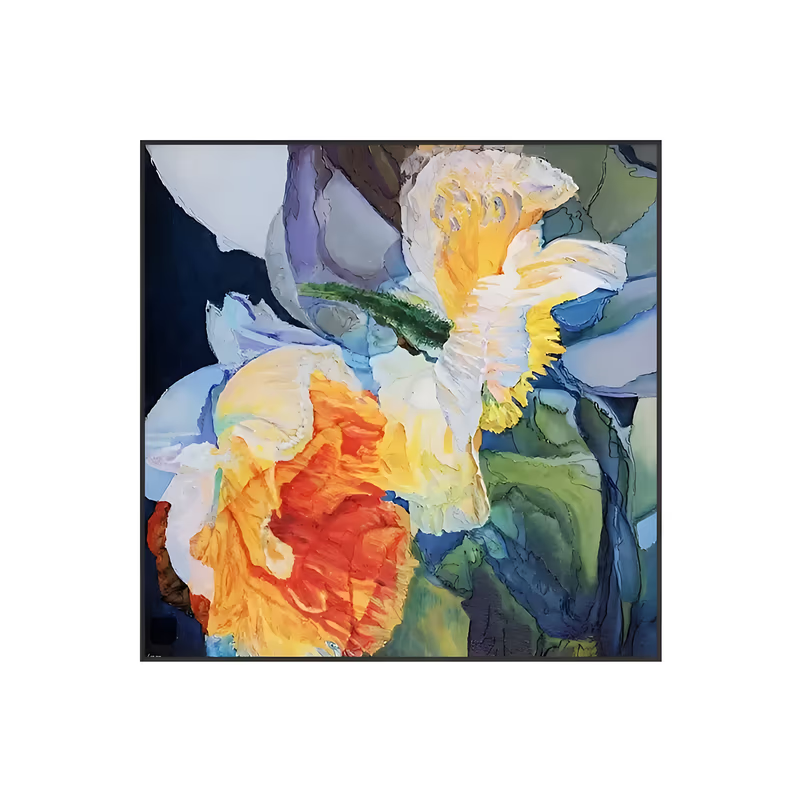
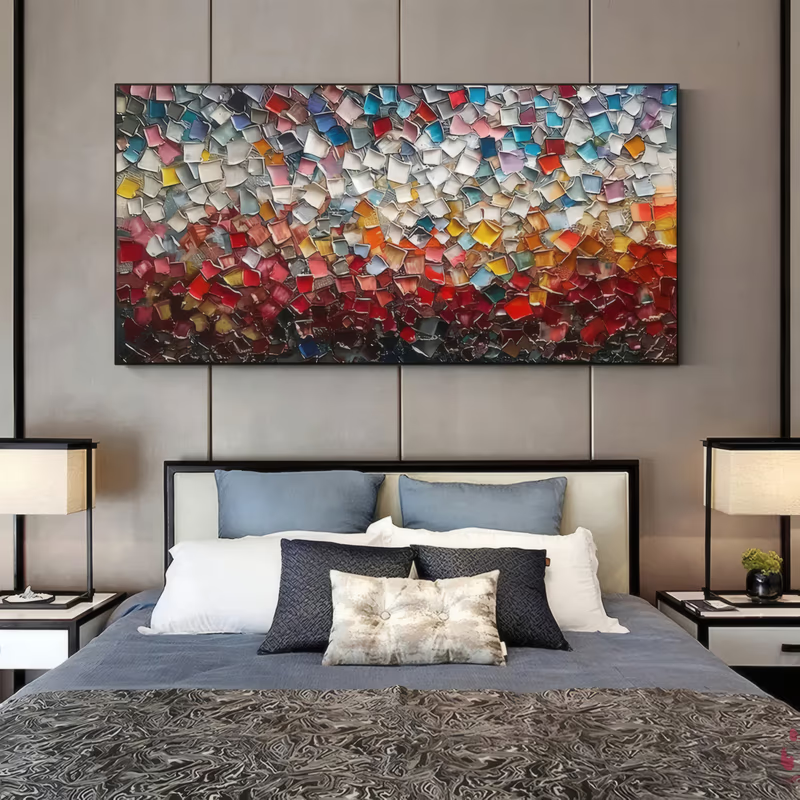
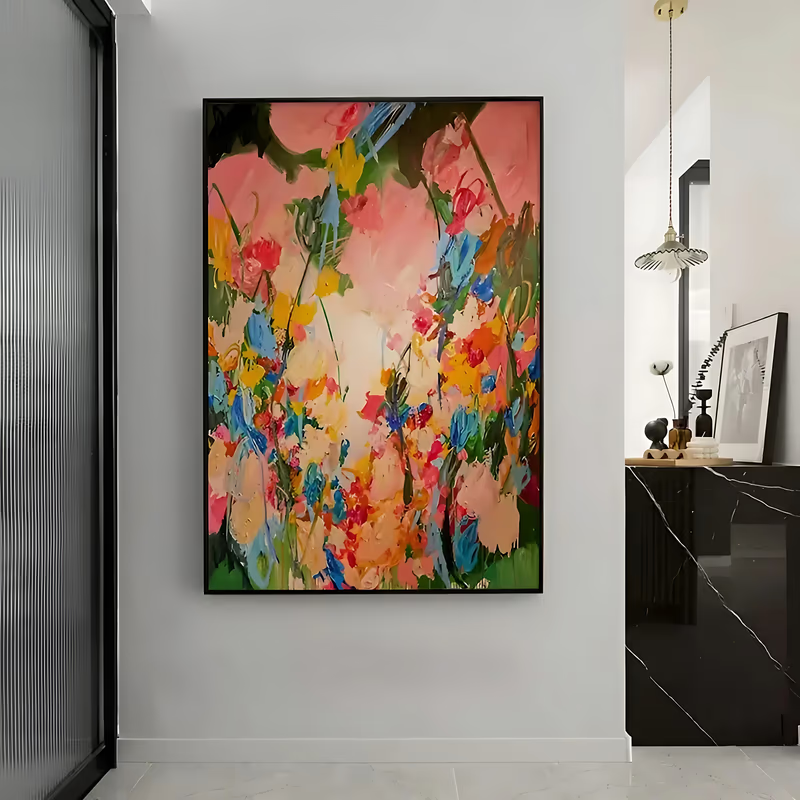
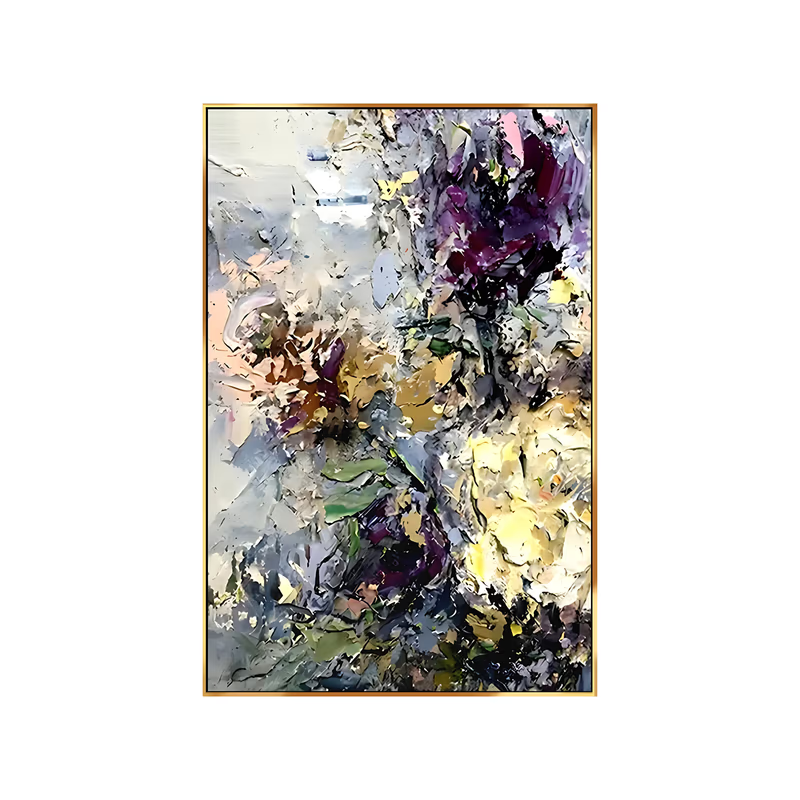
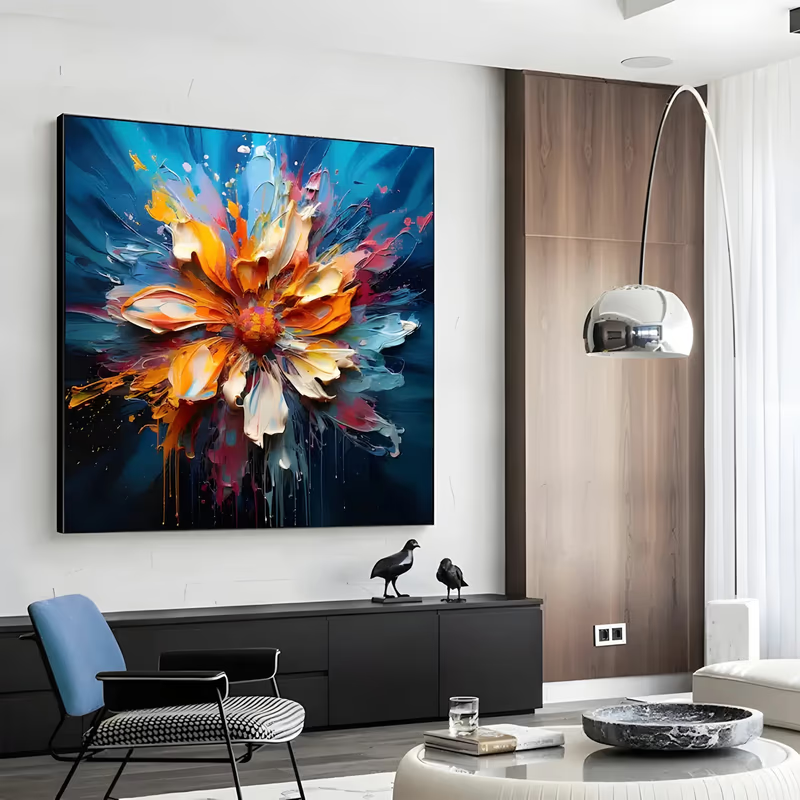
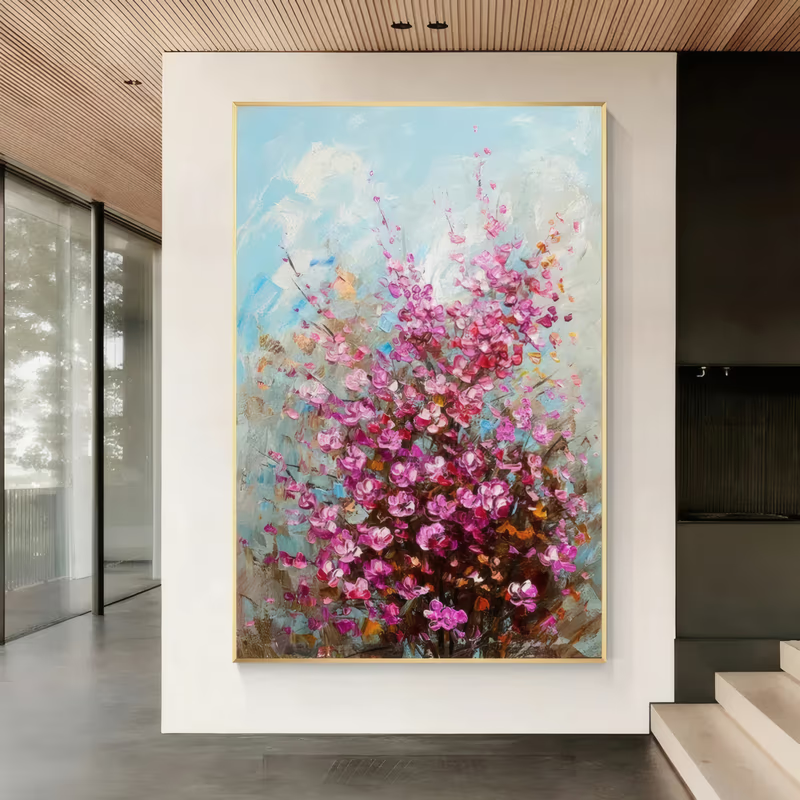
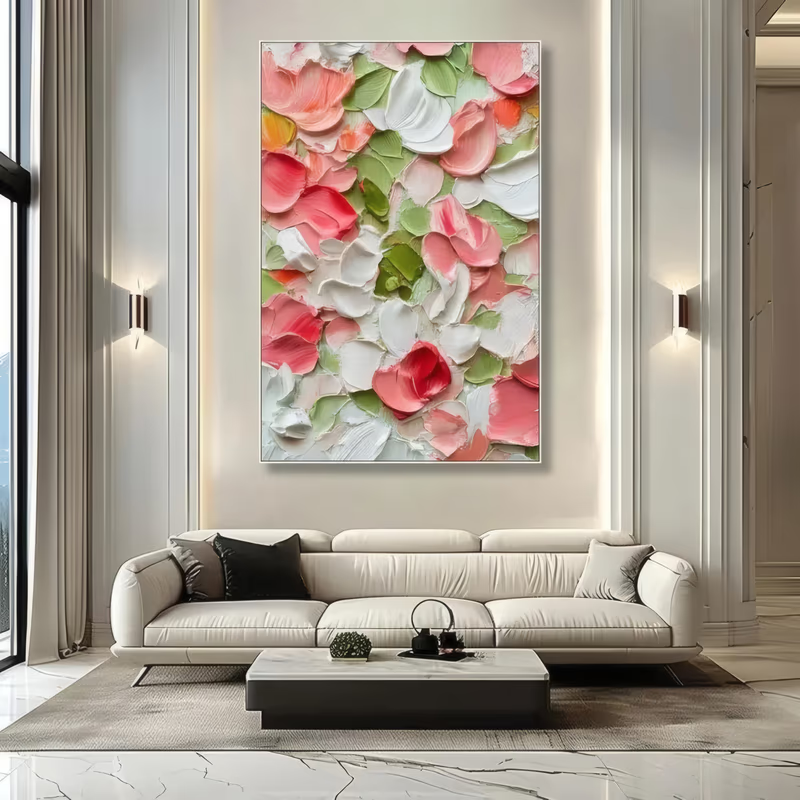
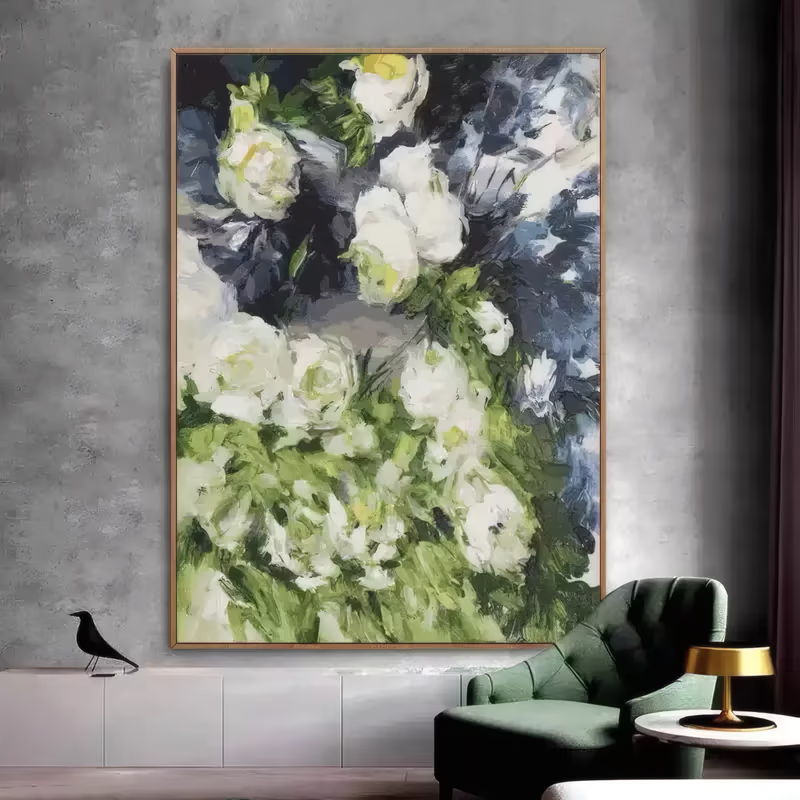
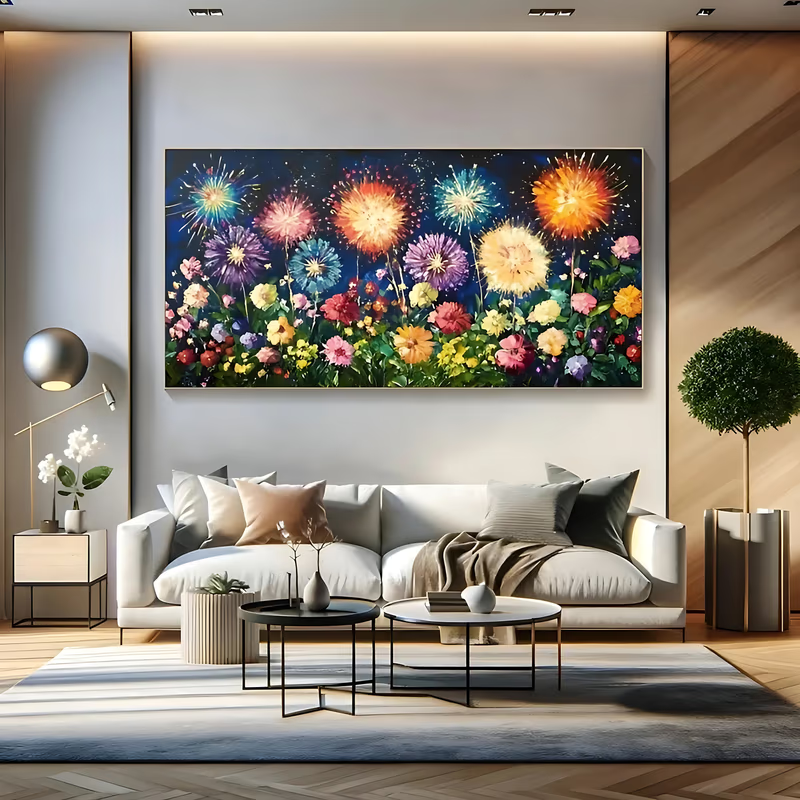
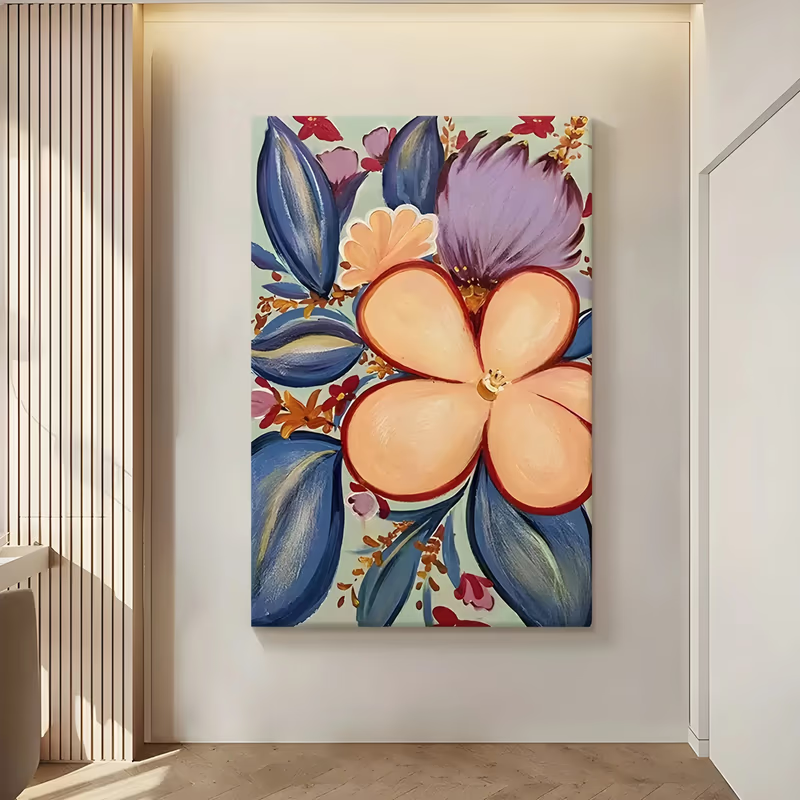
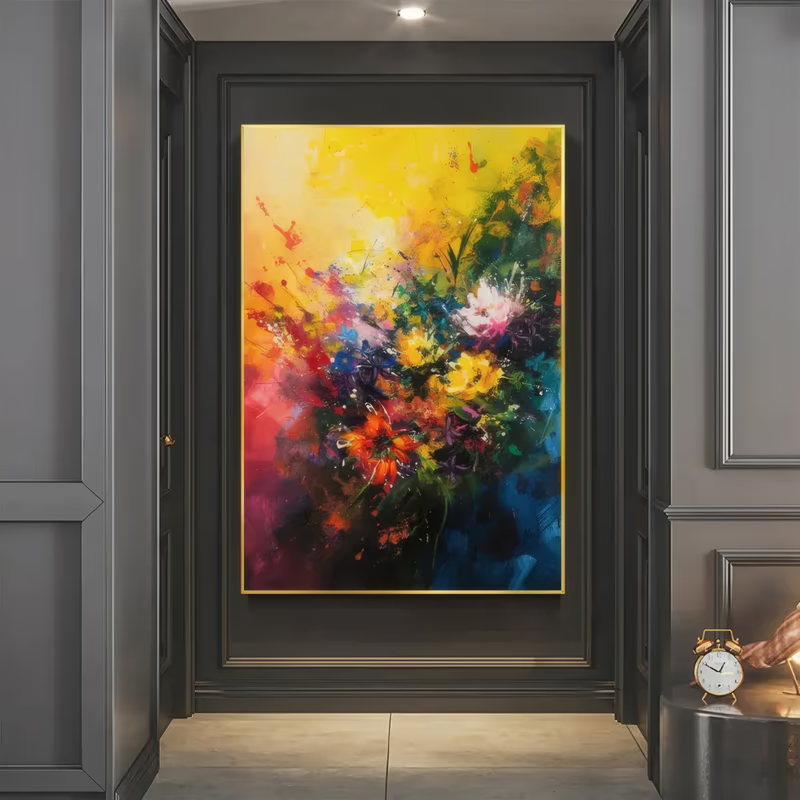
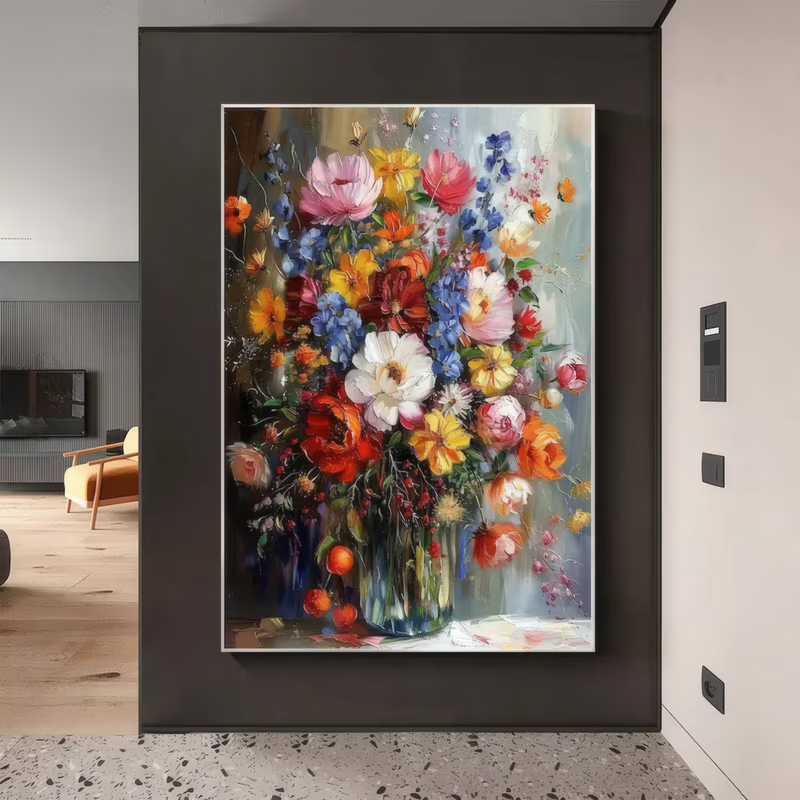
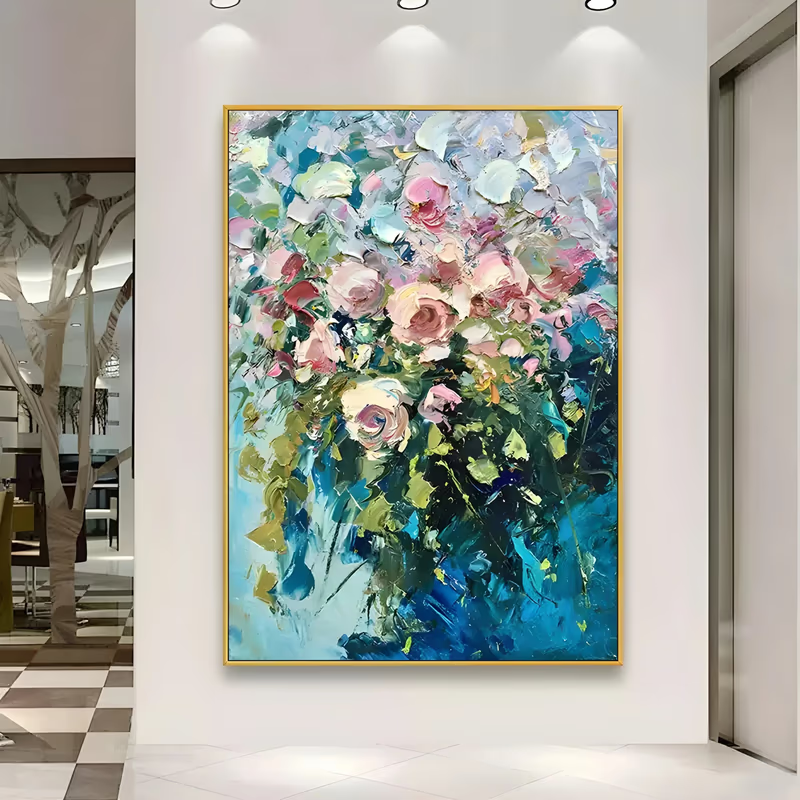
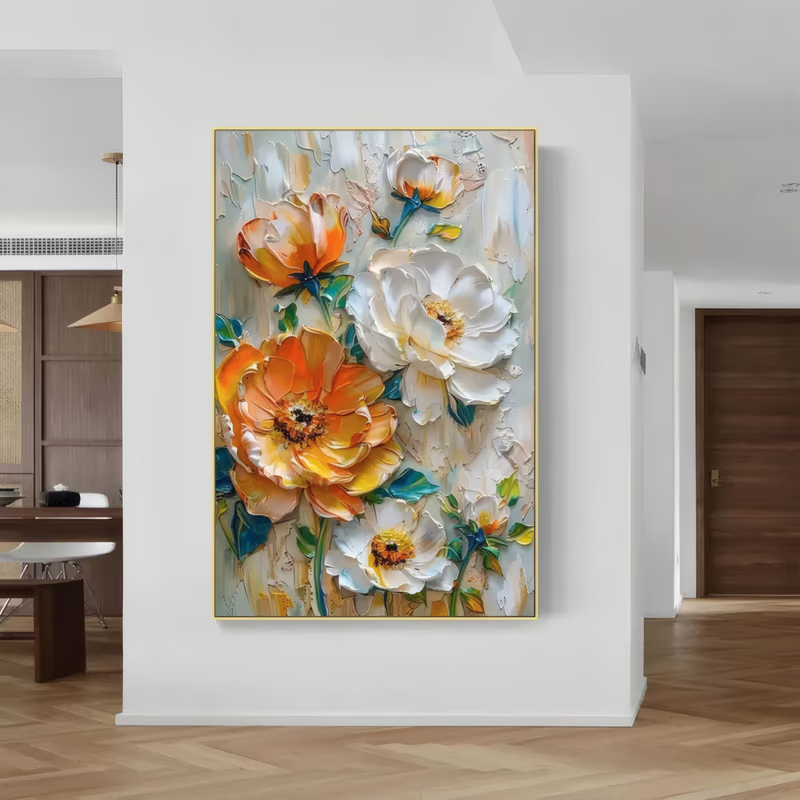
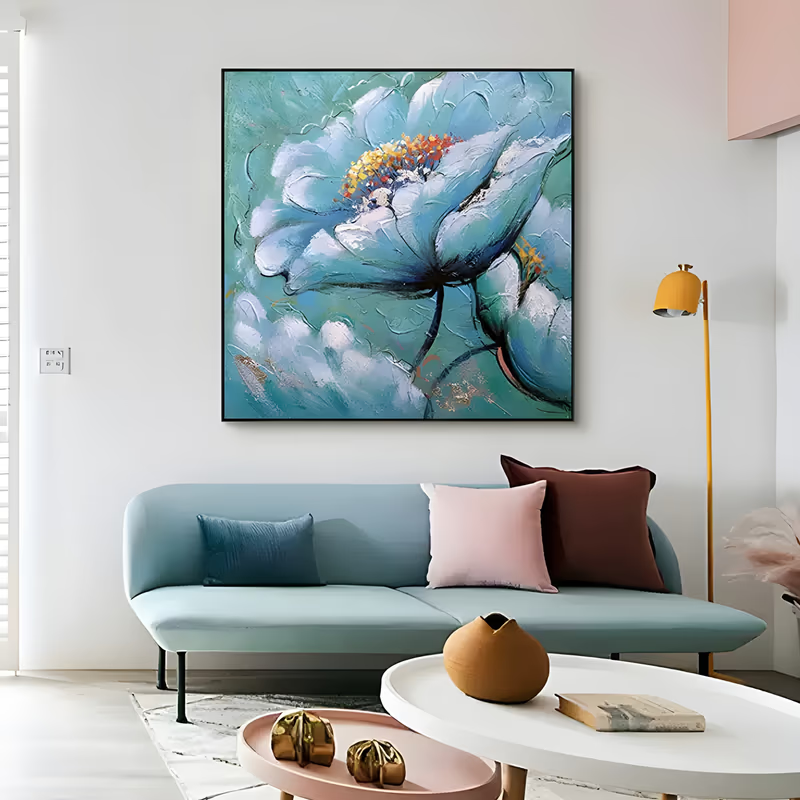
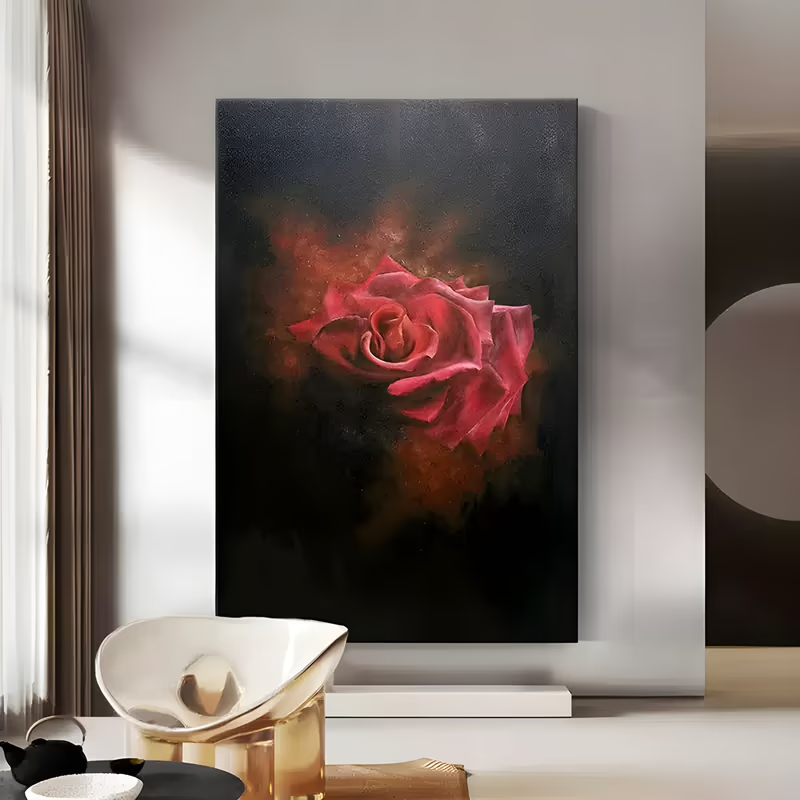
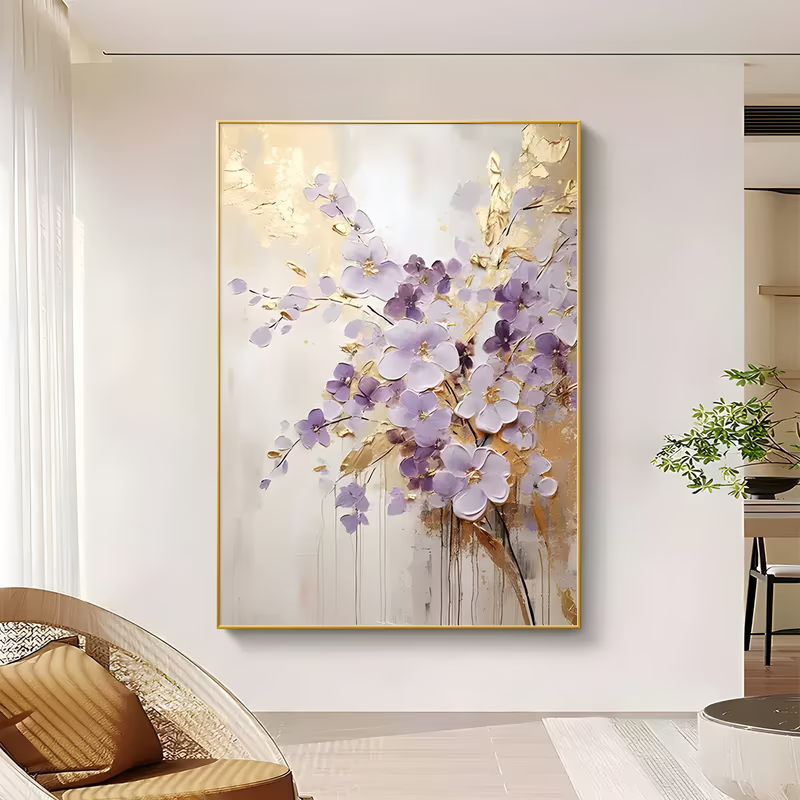
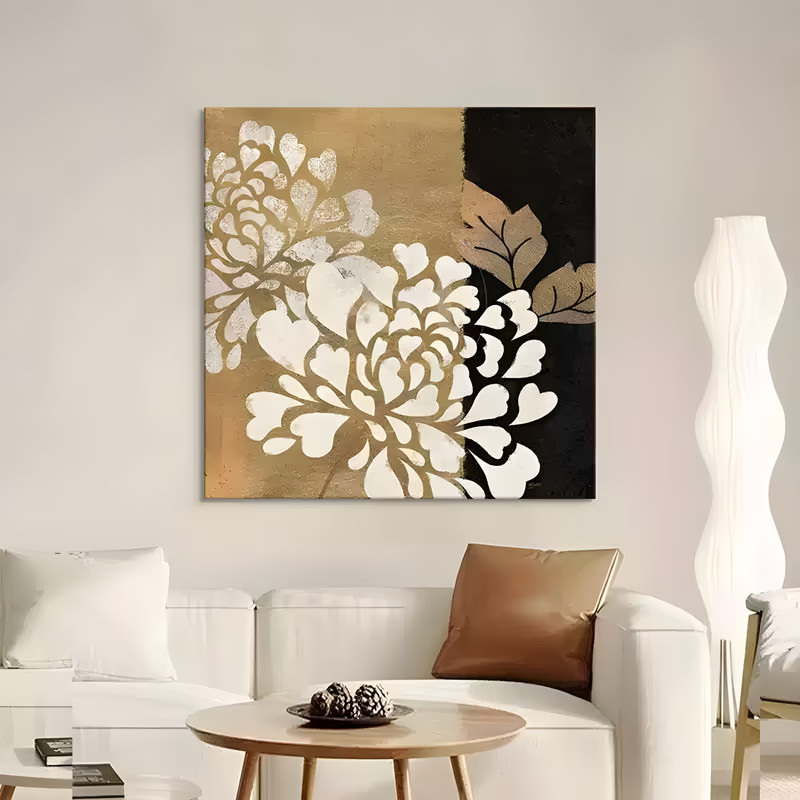
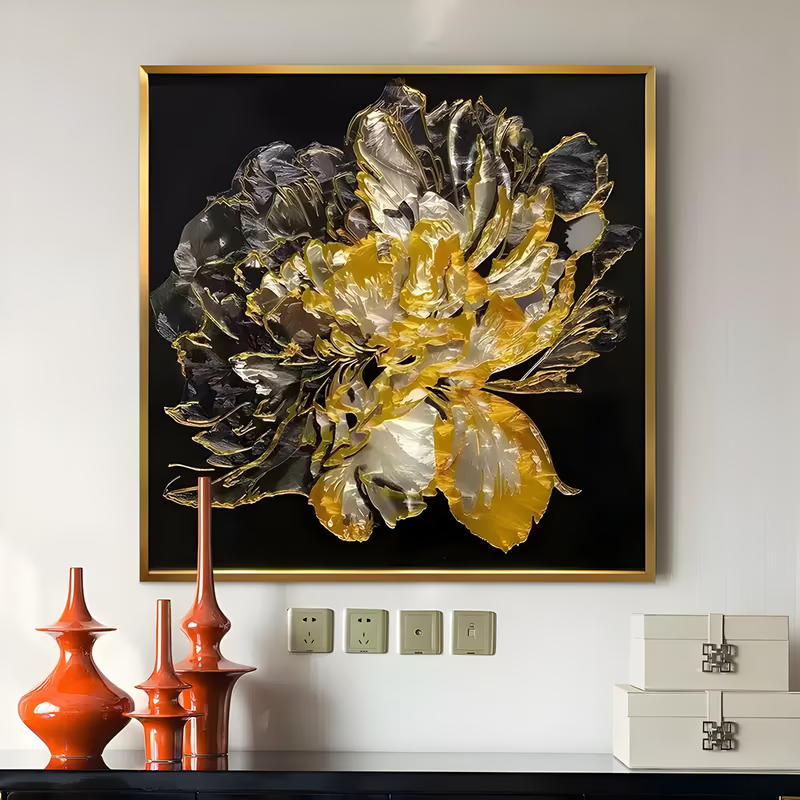
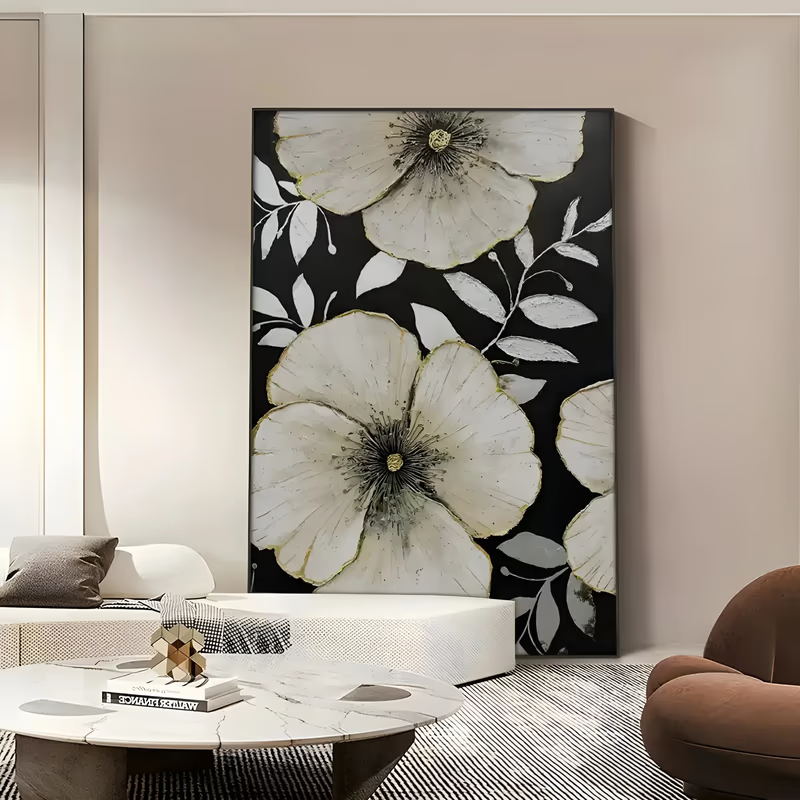
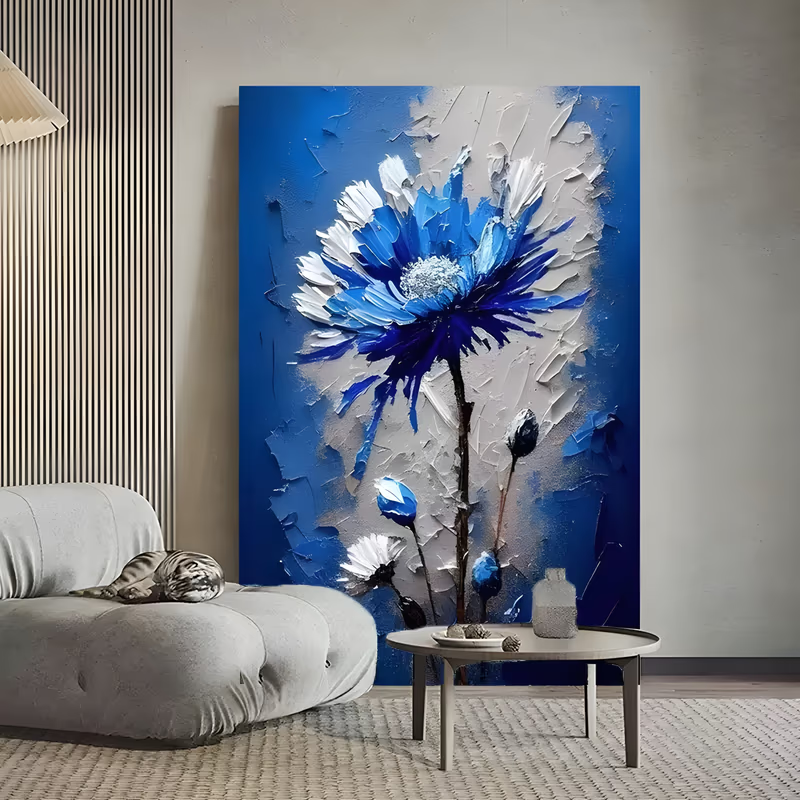
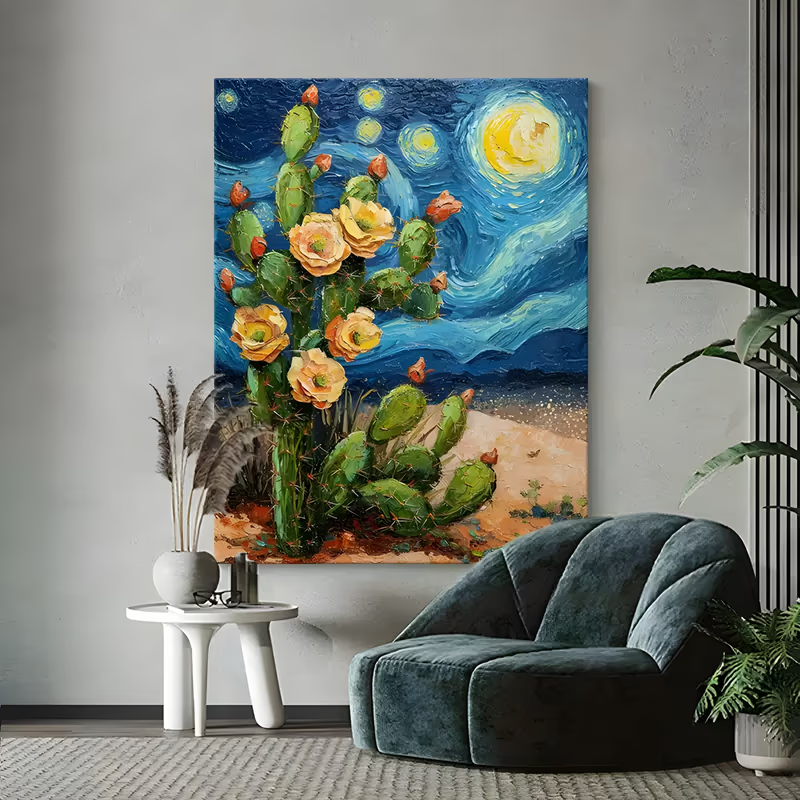
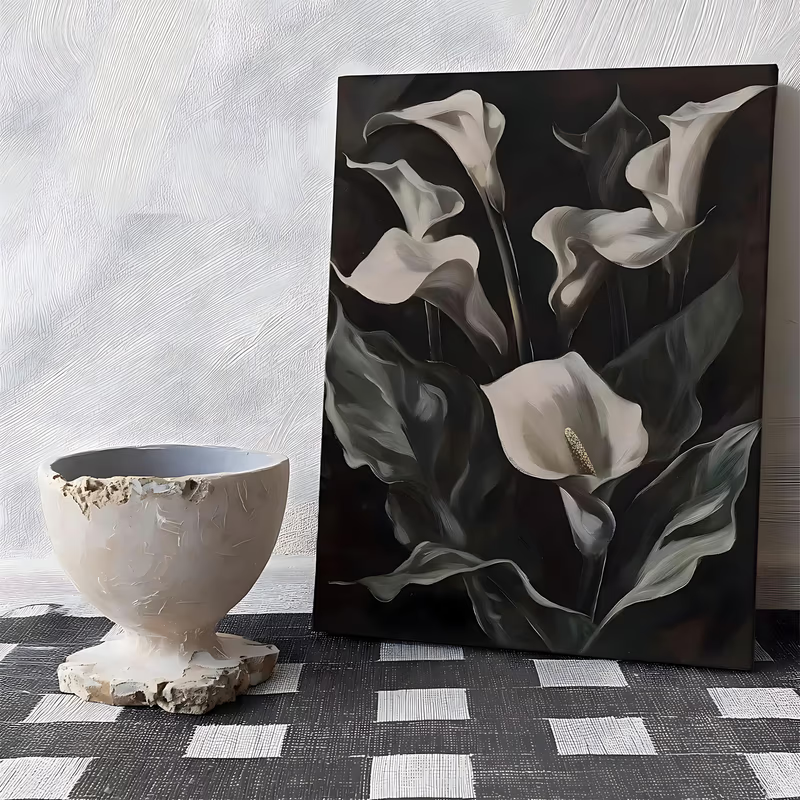
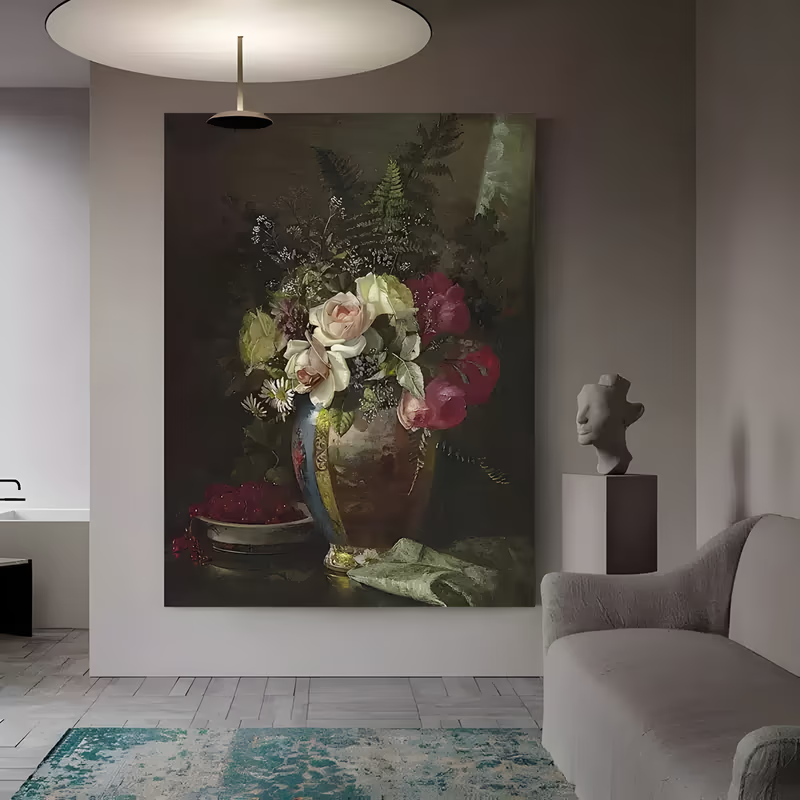
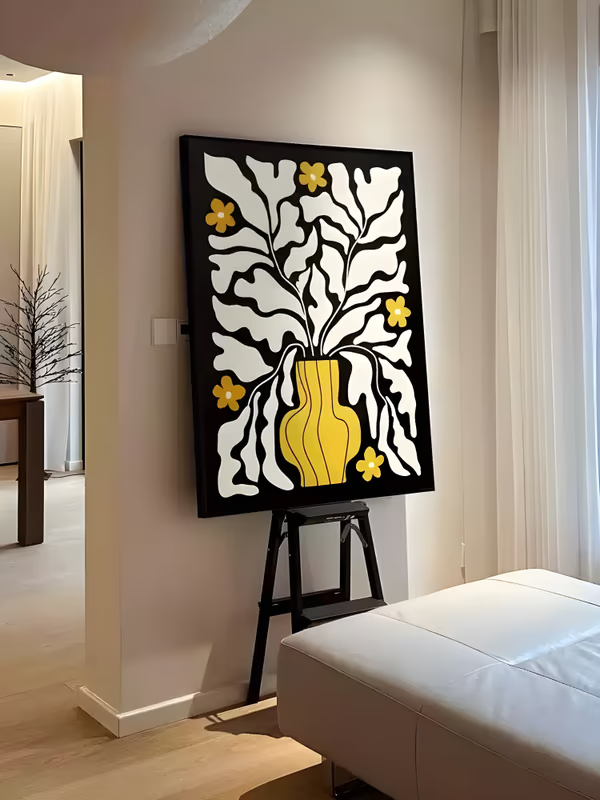
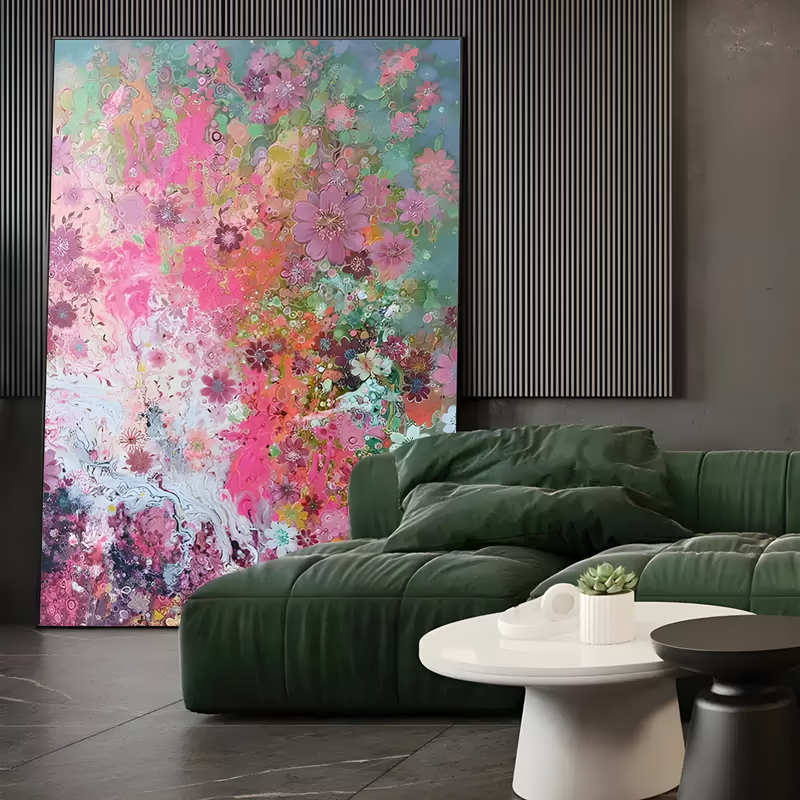
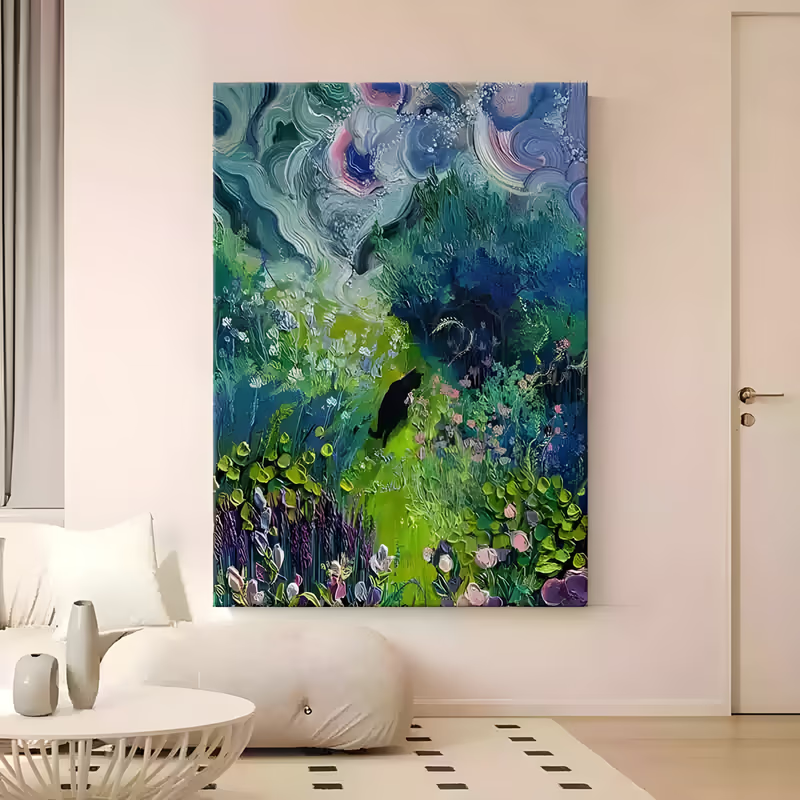
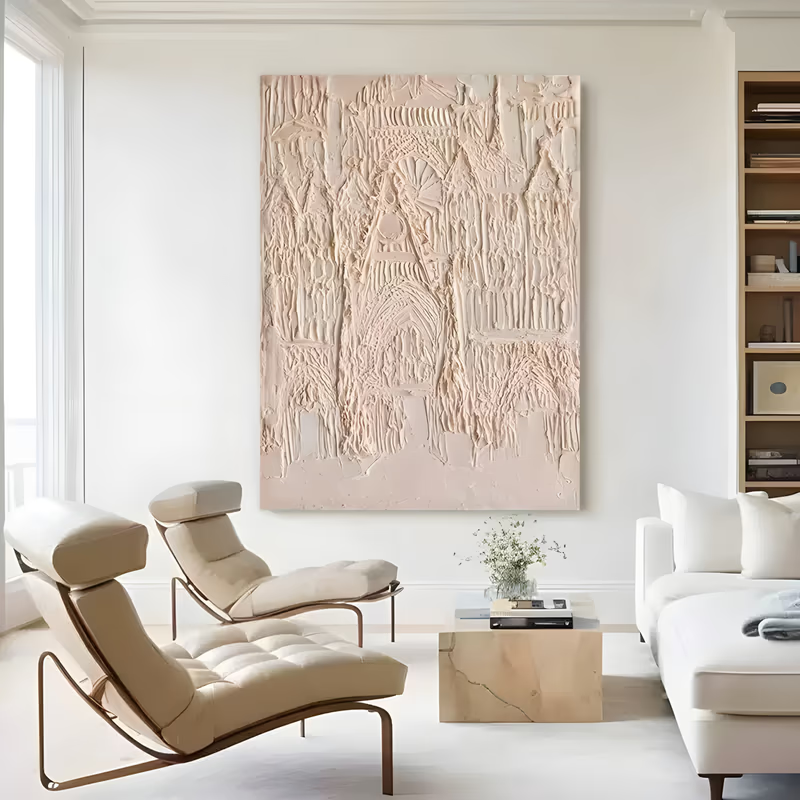
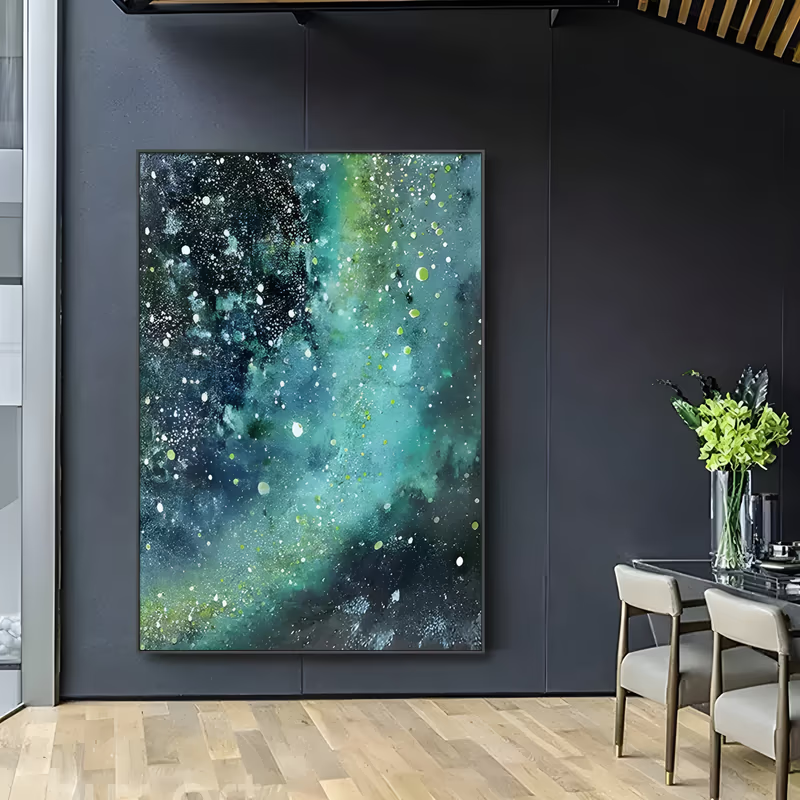
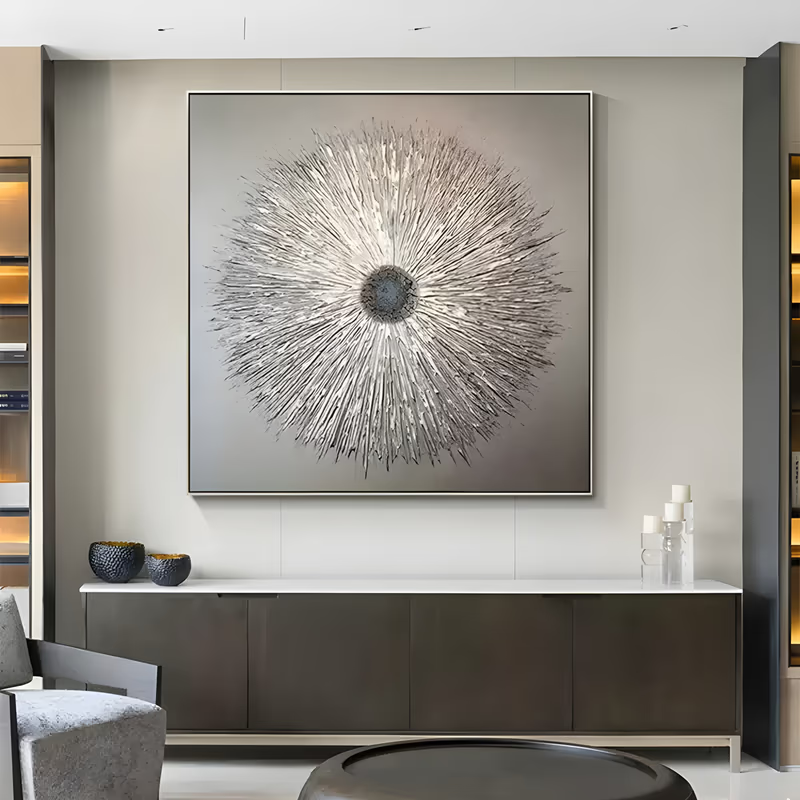
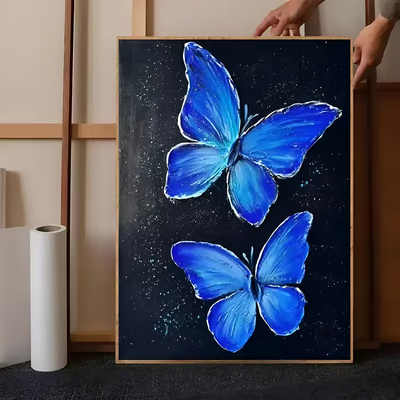
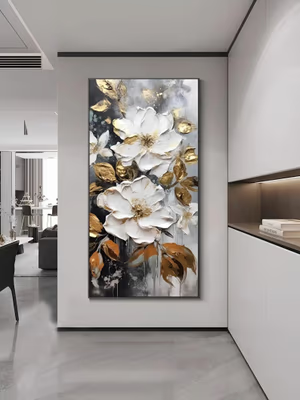
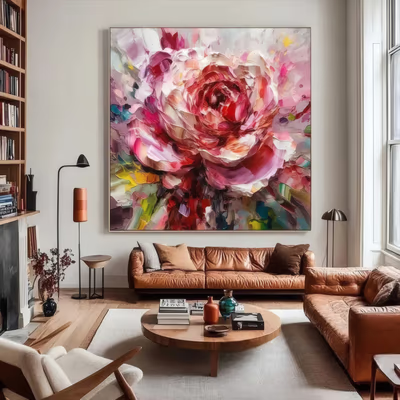
Plaster peonies on black, knife-painted roses on deep blue, Dutch-style bouquets in an urn, firework dandelions on a night sky. Raised petals catch shop lighting and invite a closer look, which is exactly what a showroom wants. They are steady sellers in homeware and furniture stores.
Bold abstracts
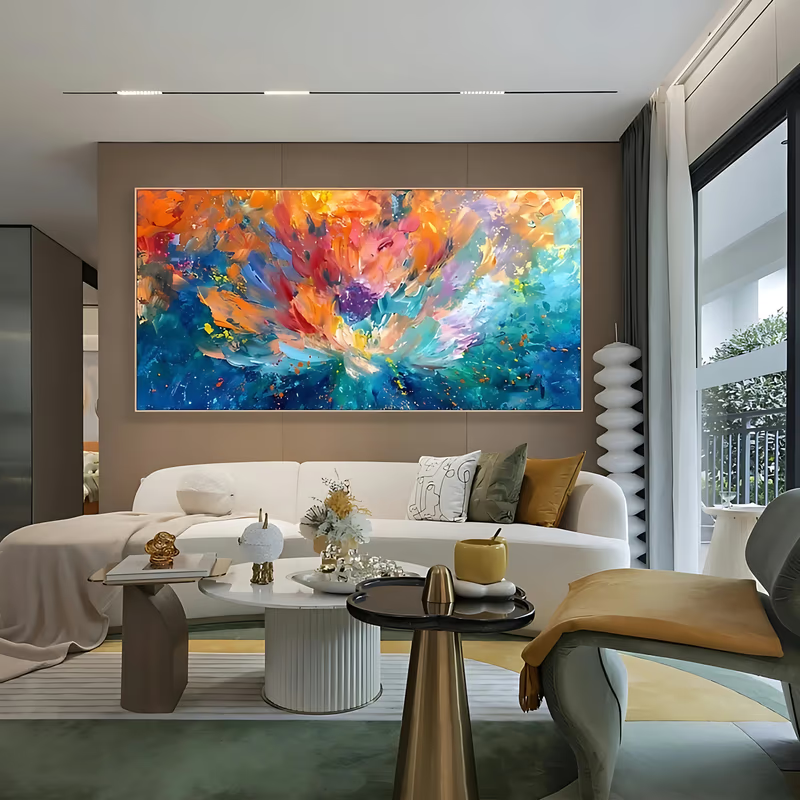
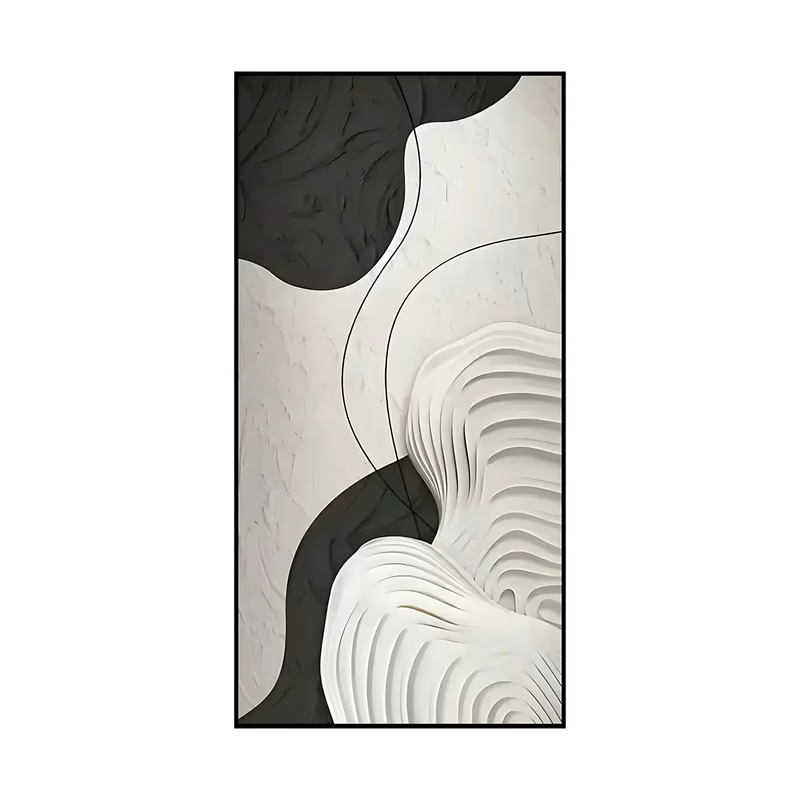
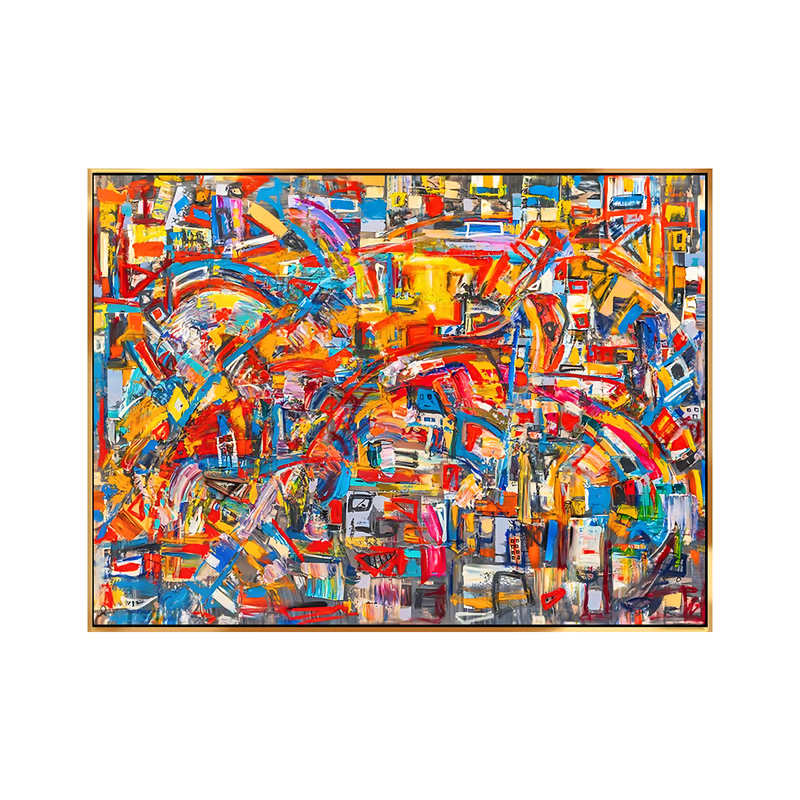
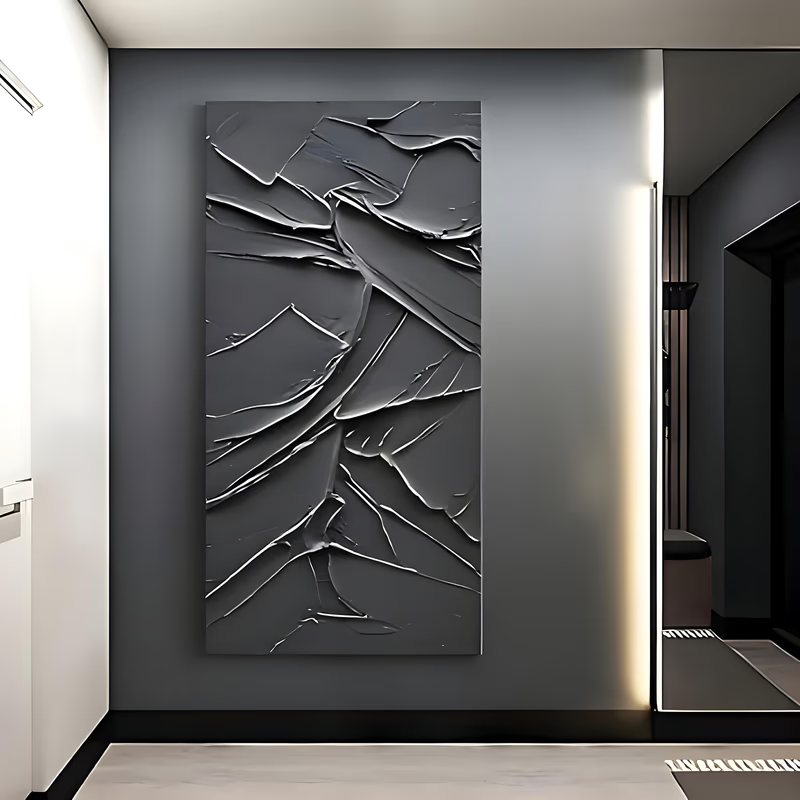
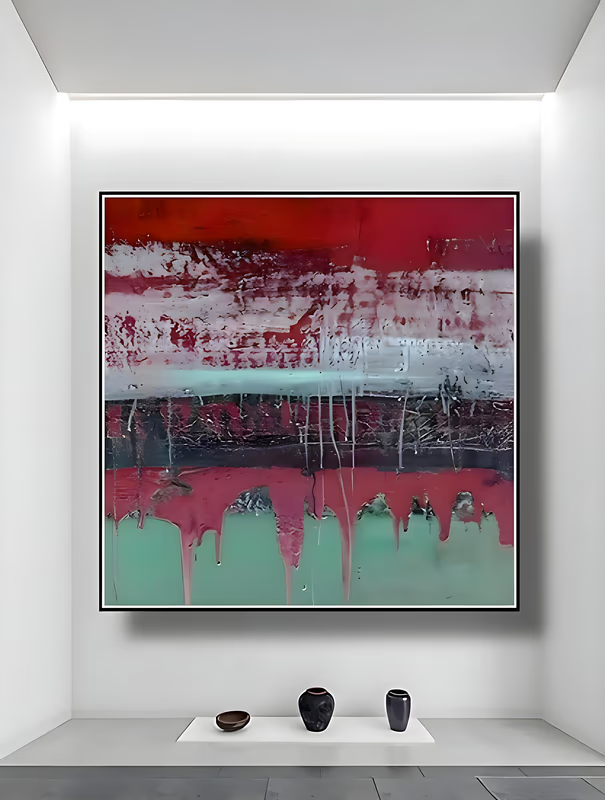
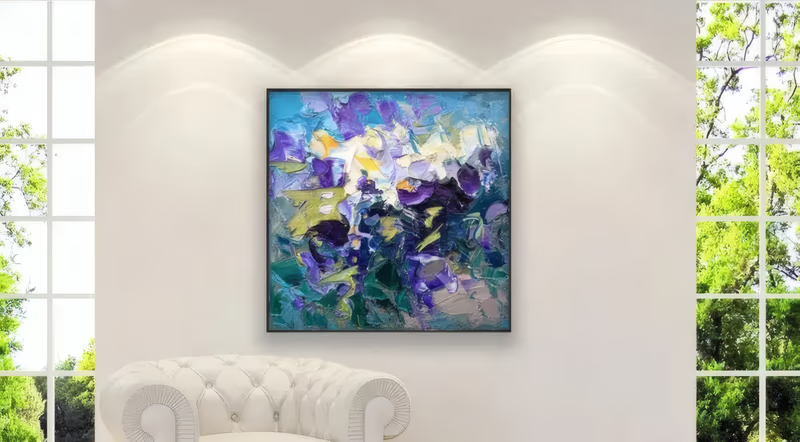
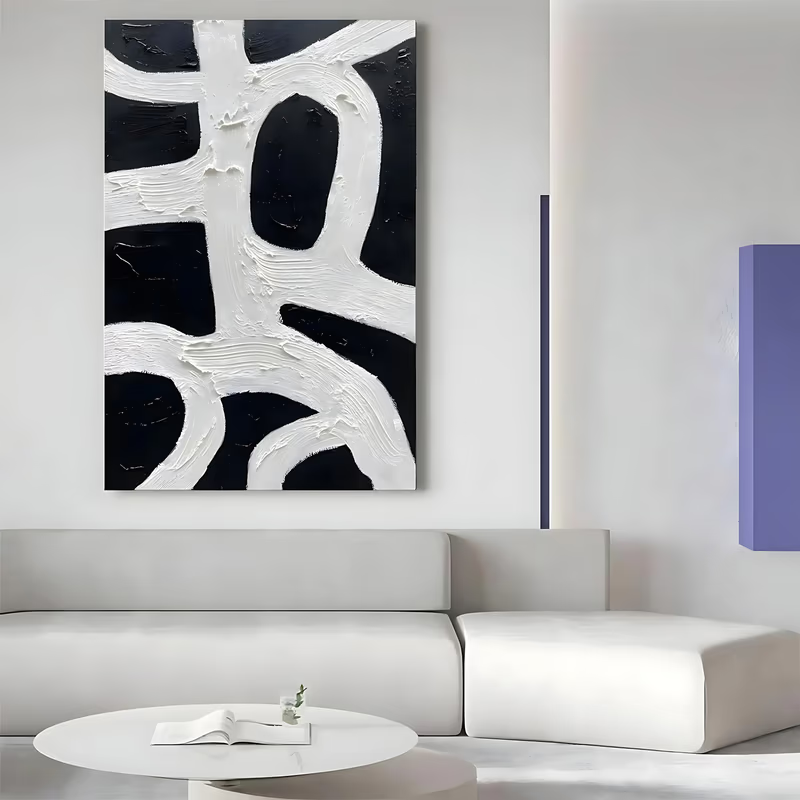
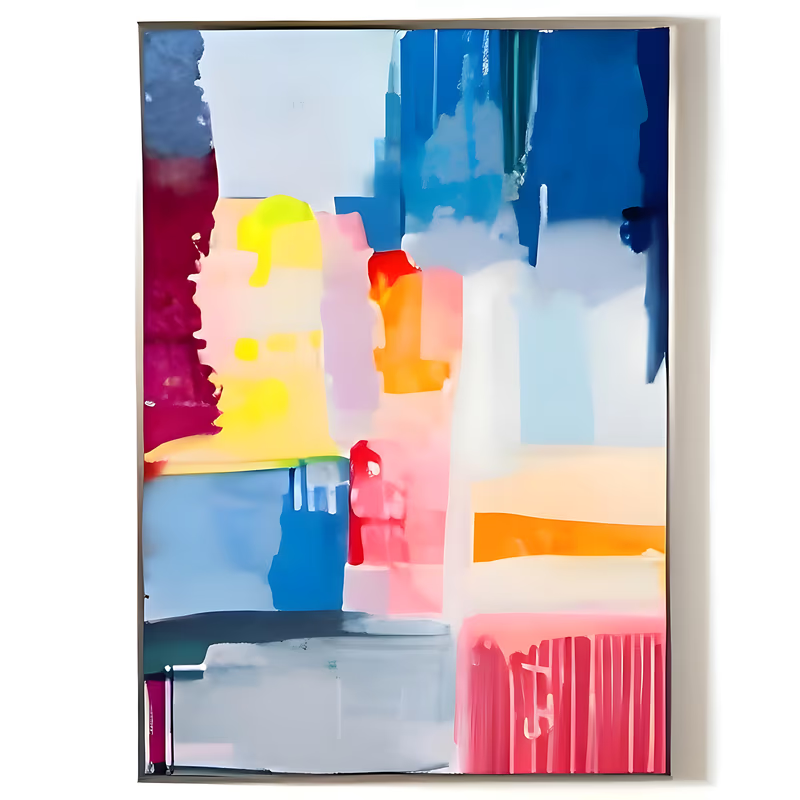
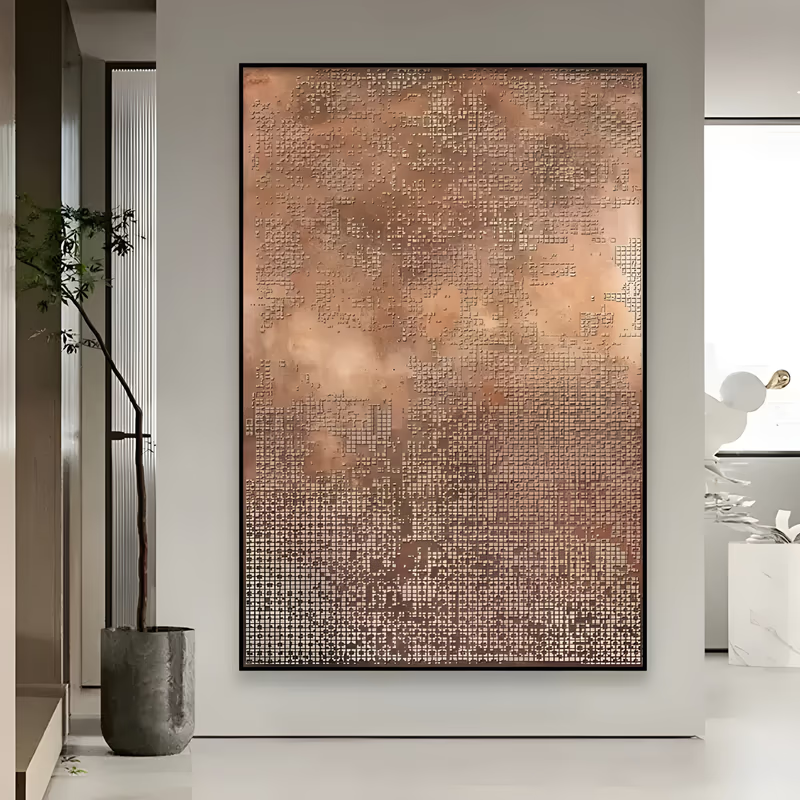
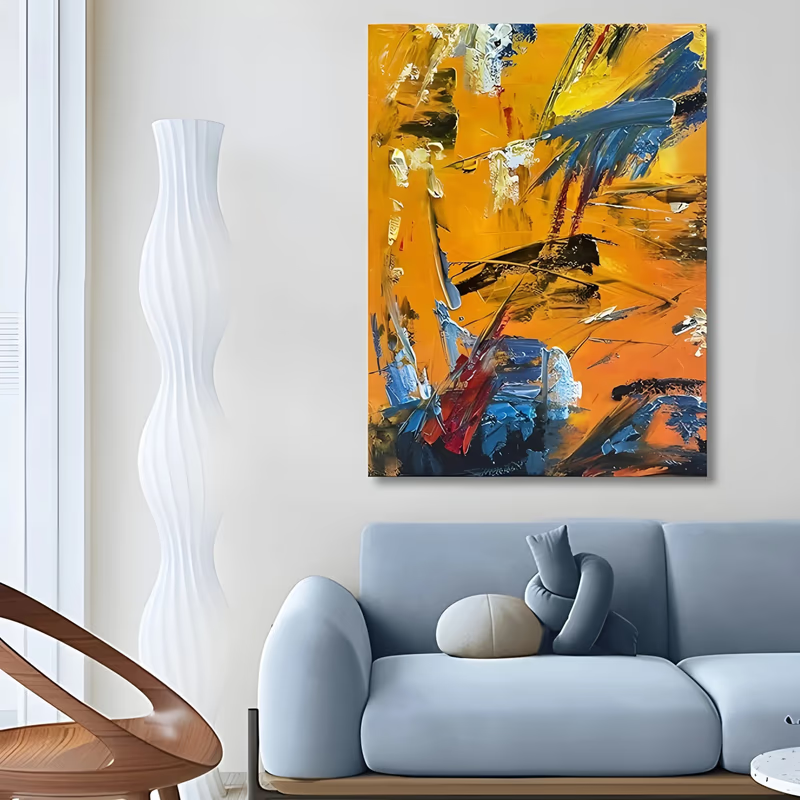
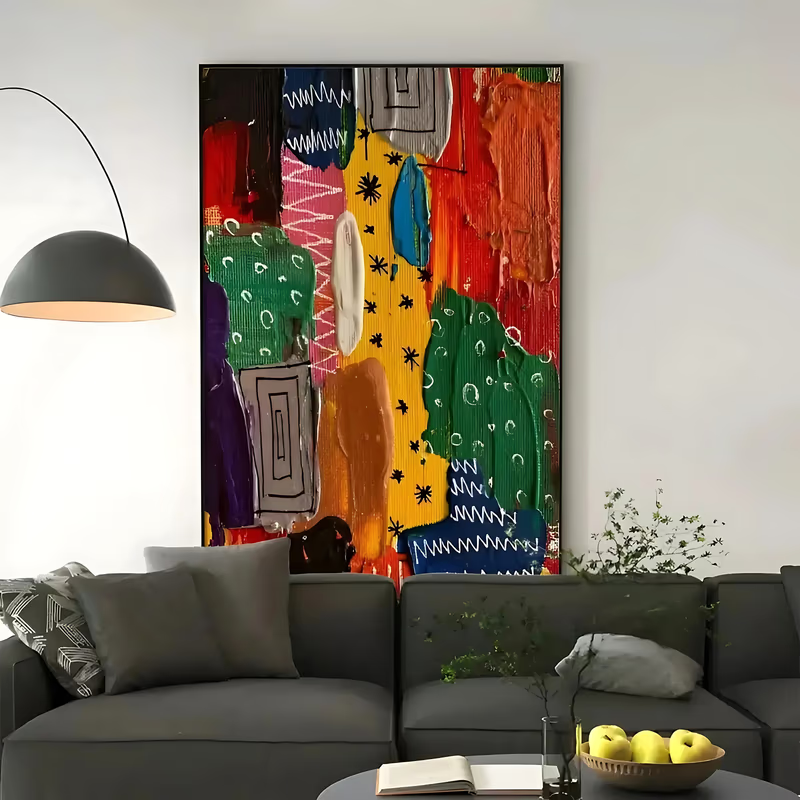
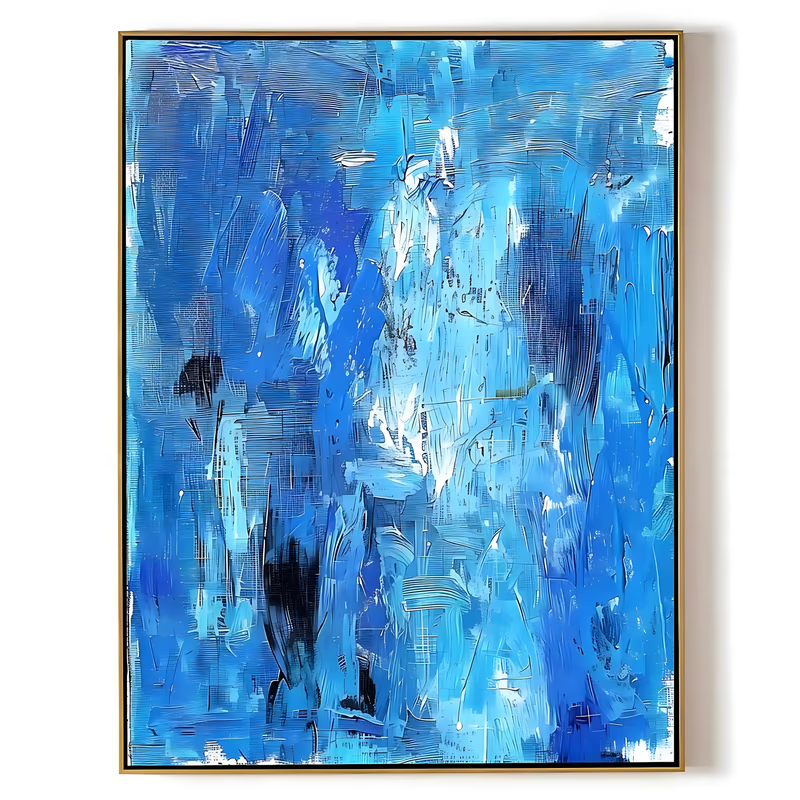
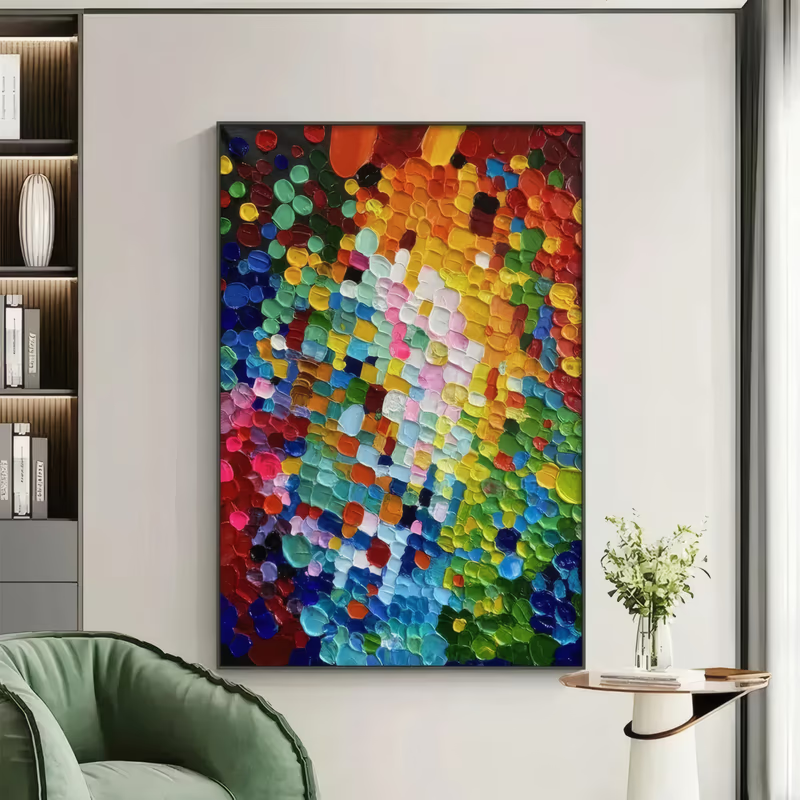
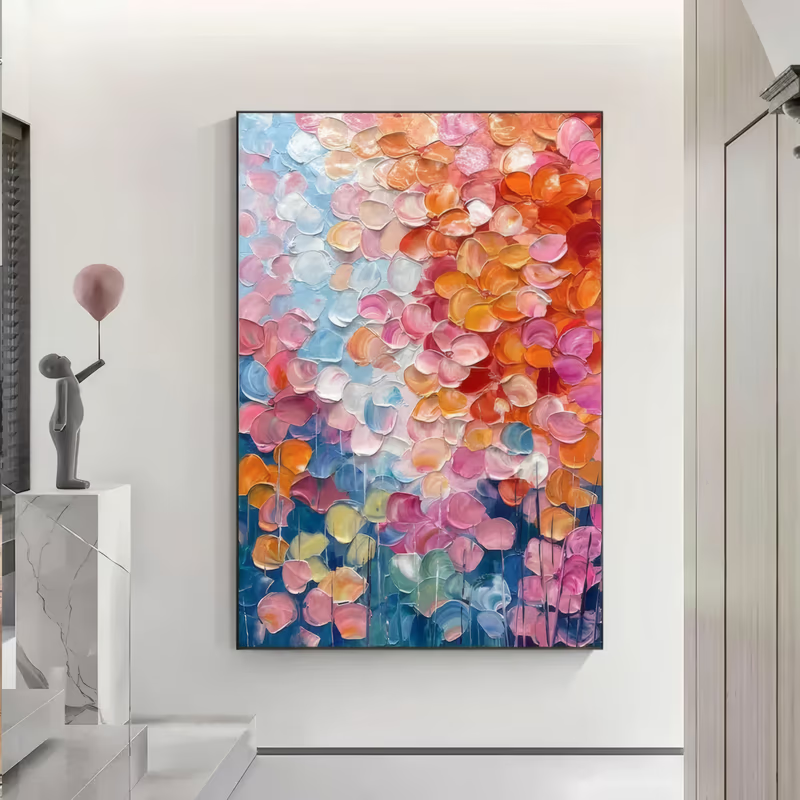
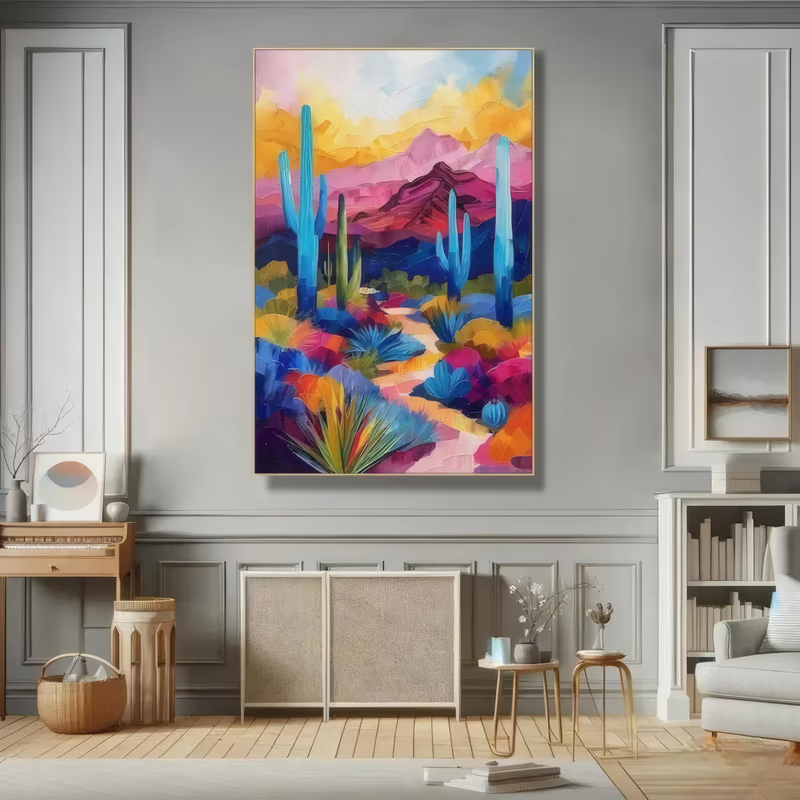
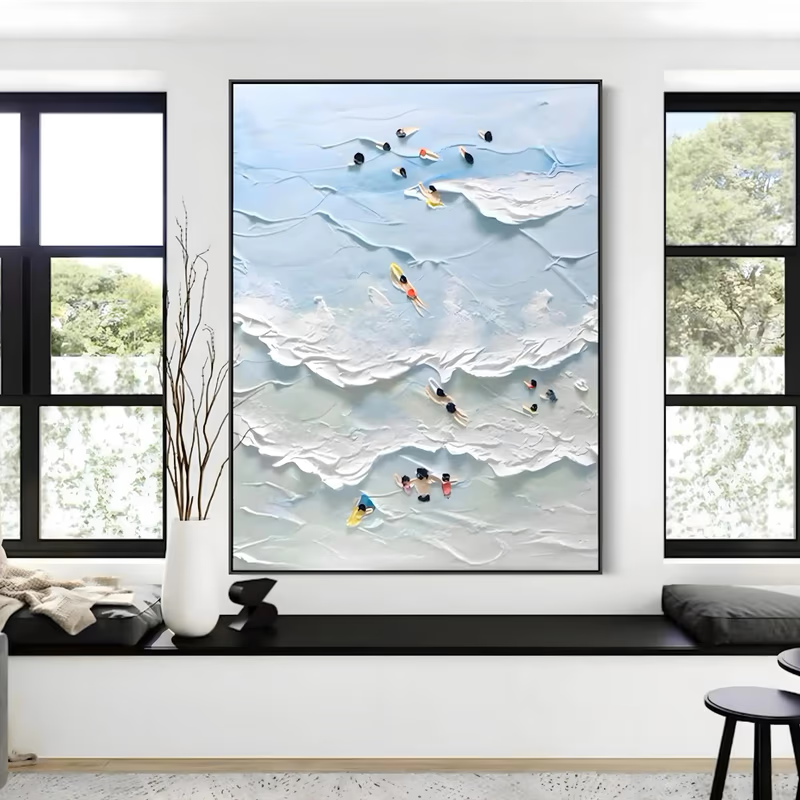
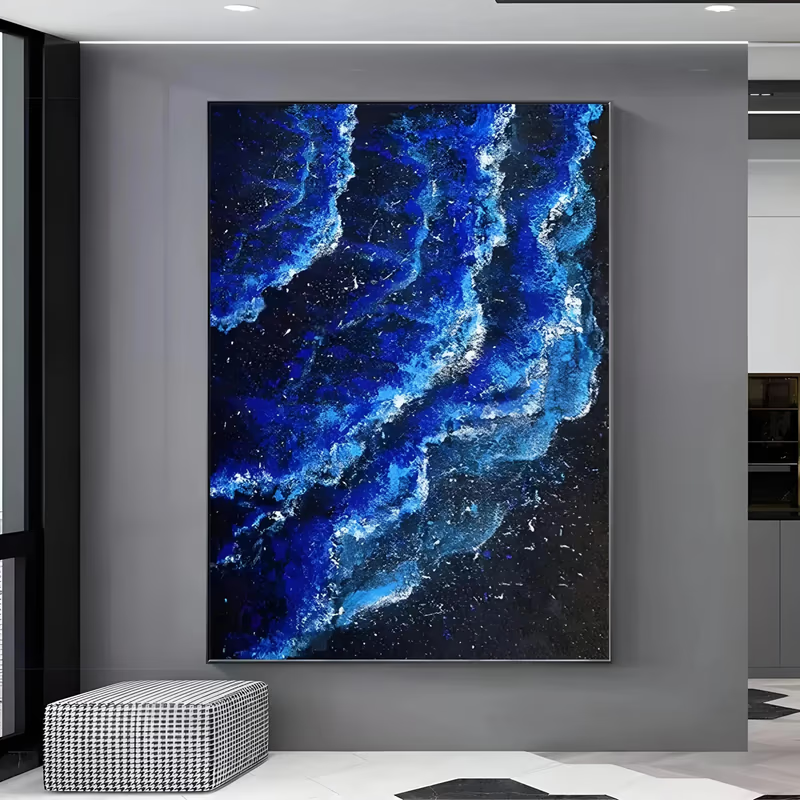
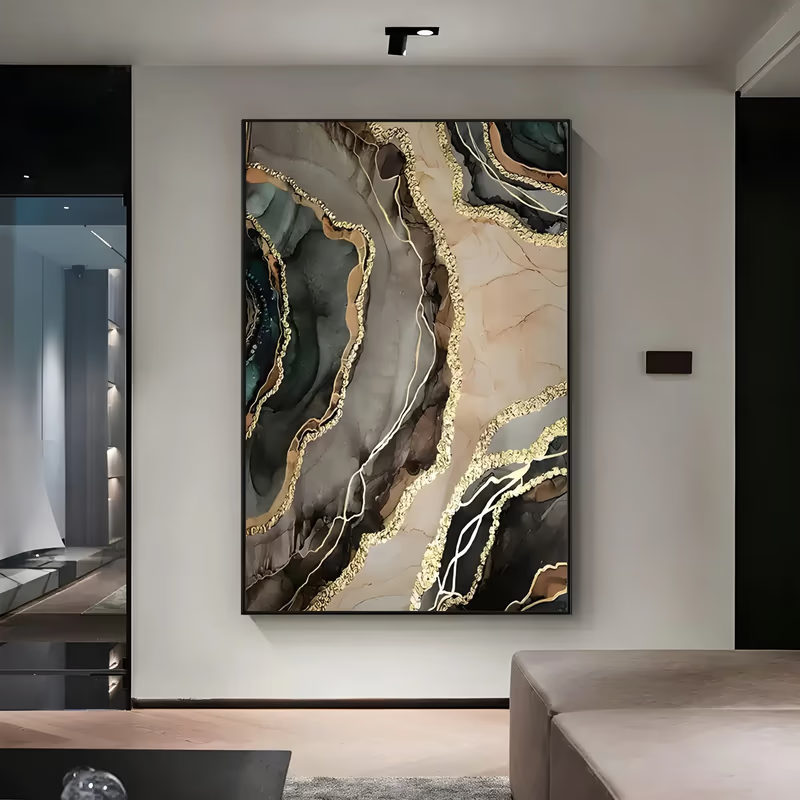
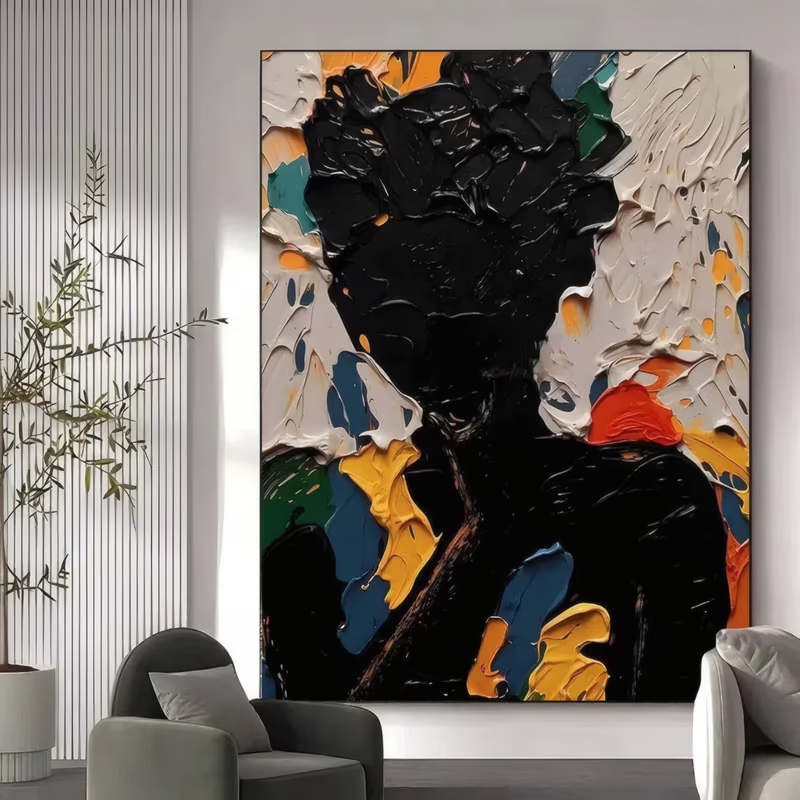
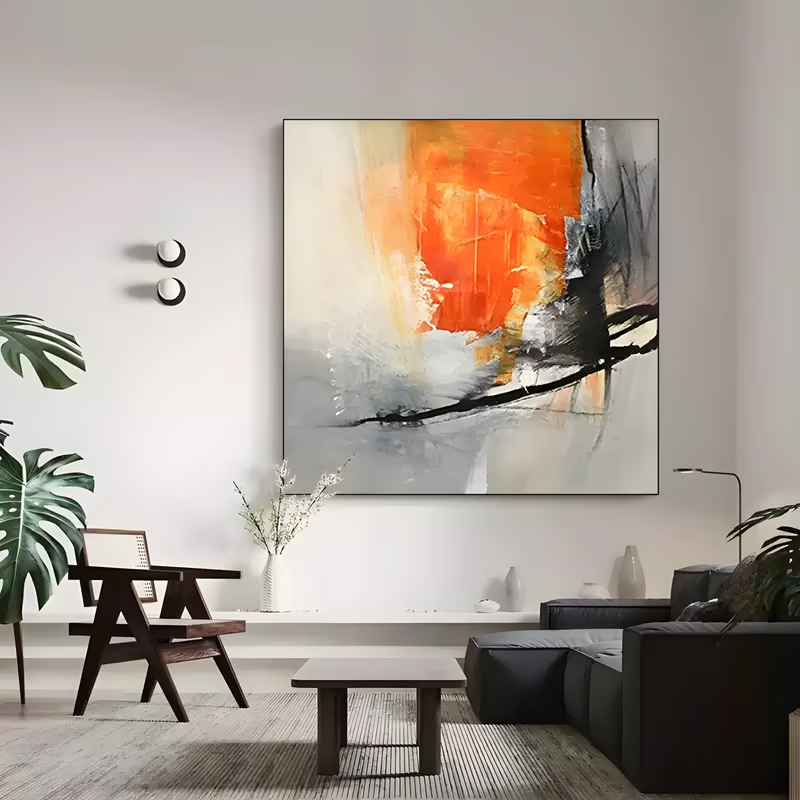
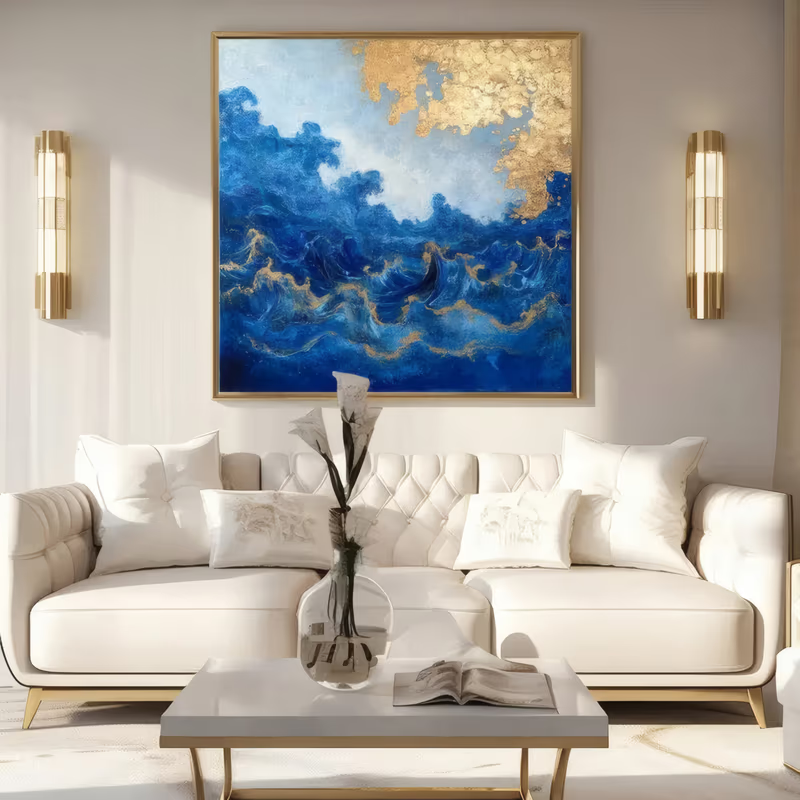
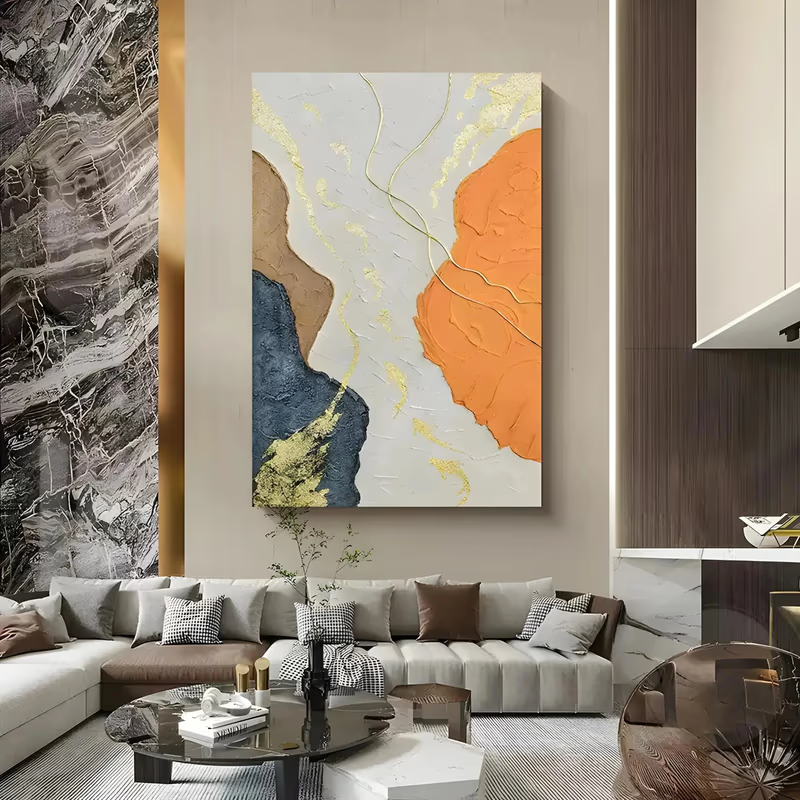
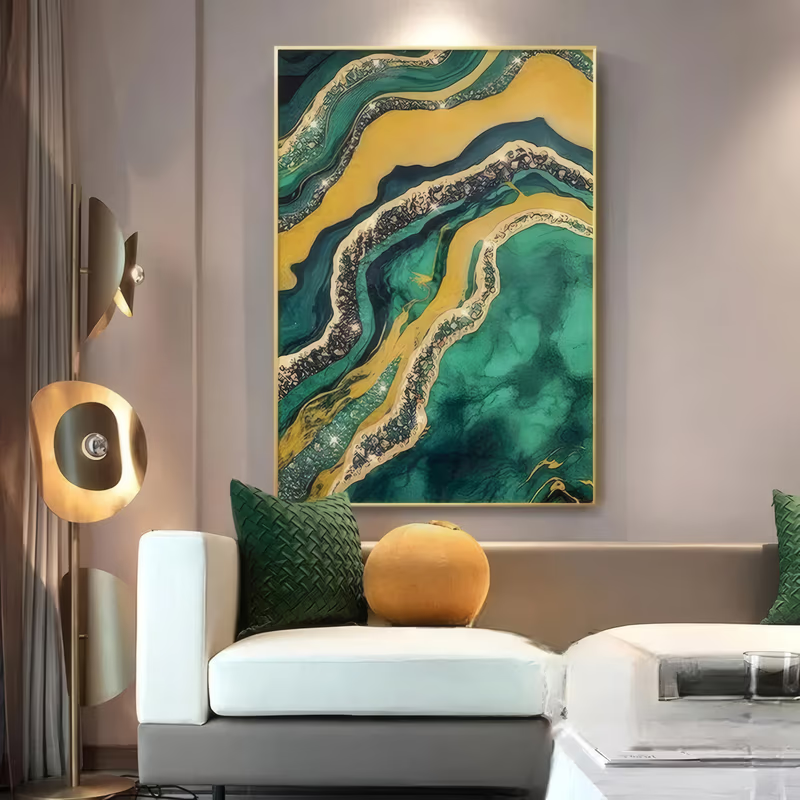
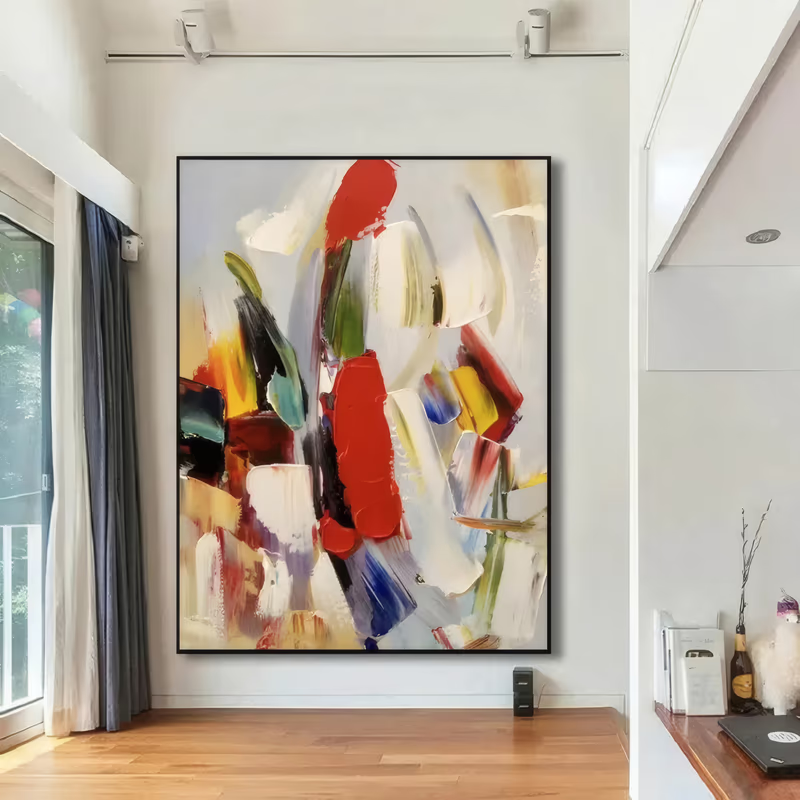
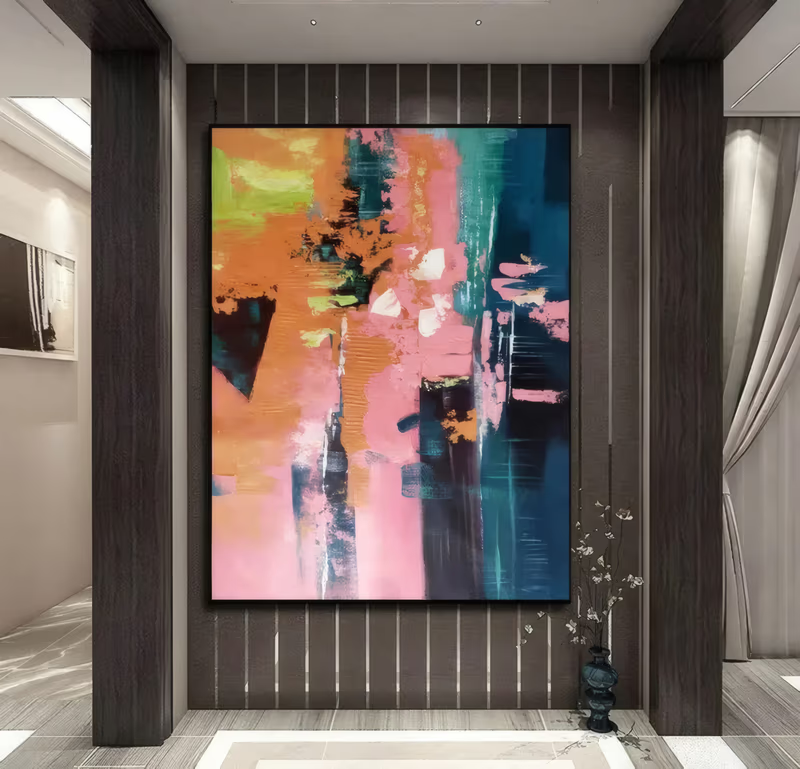
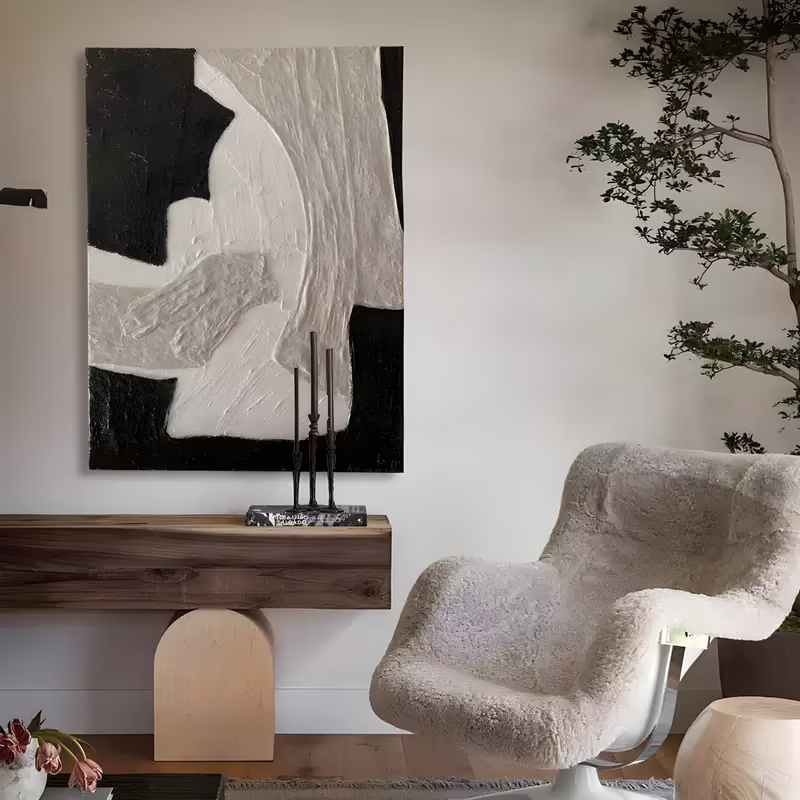
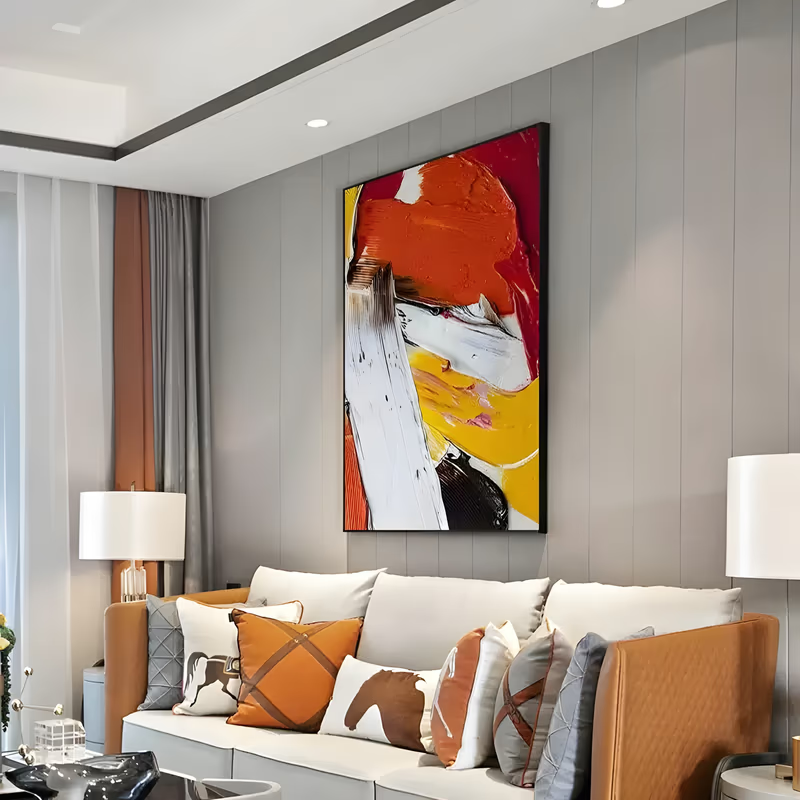
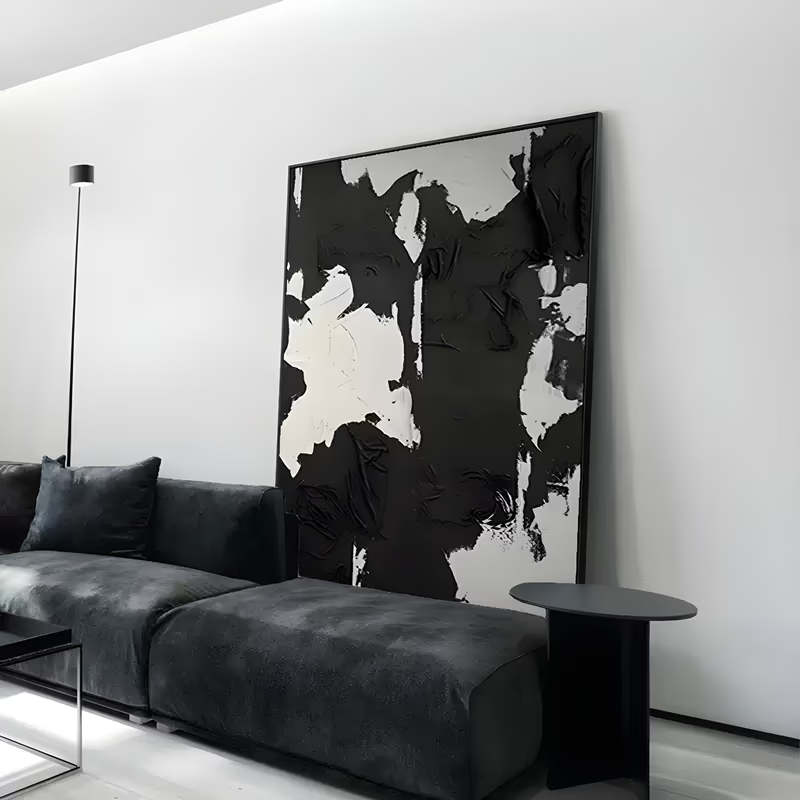
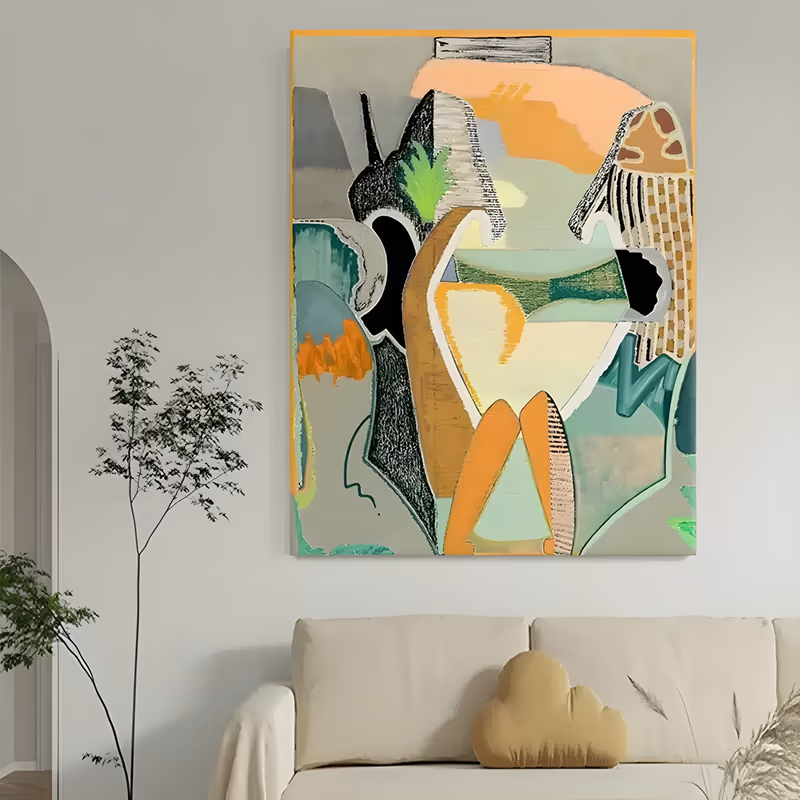
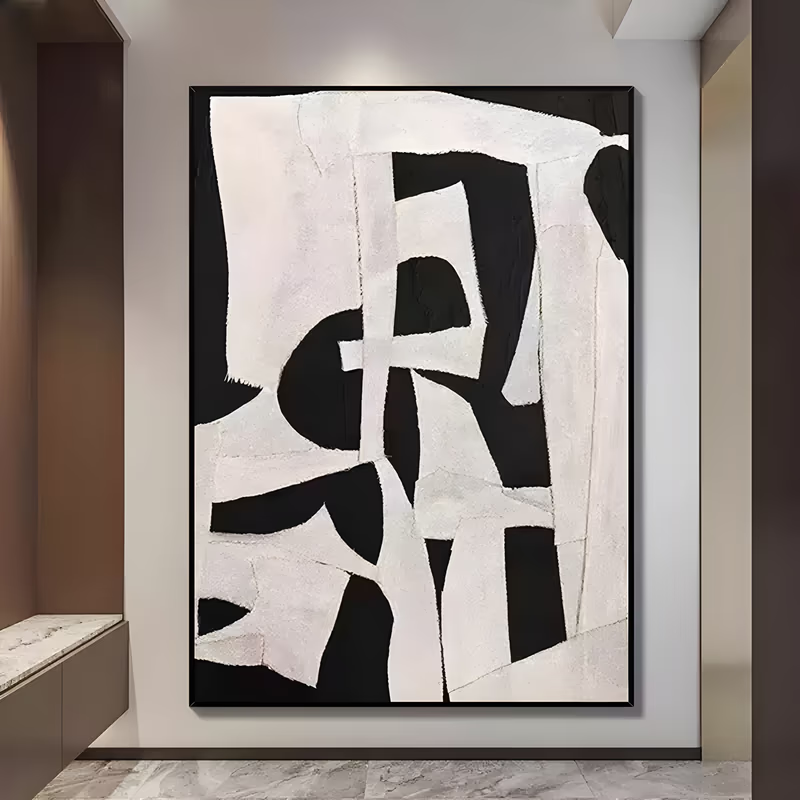
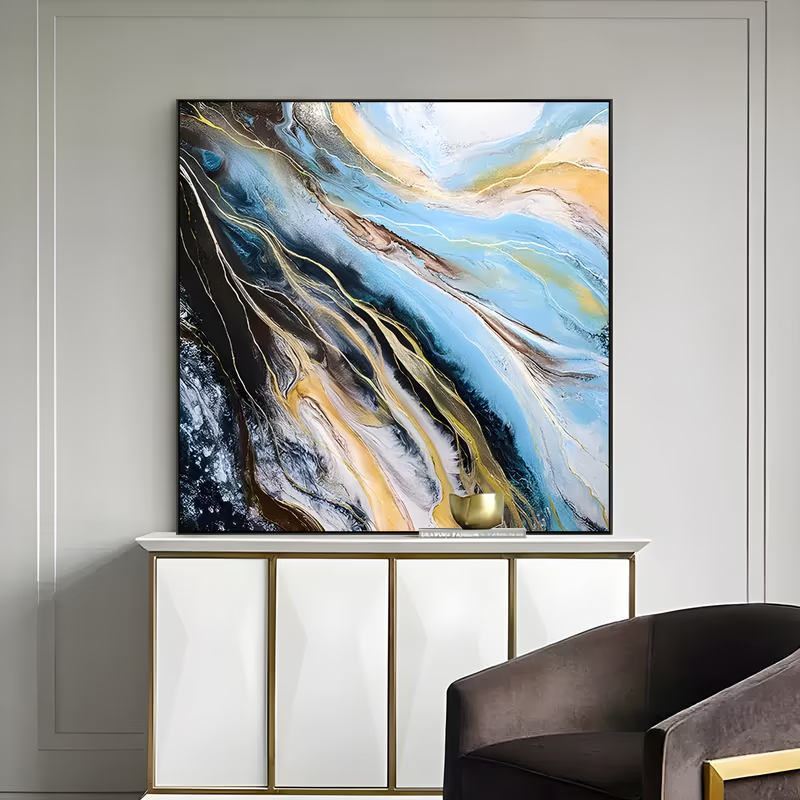
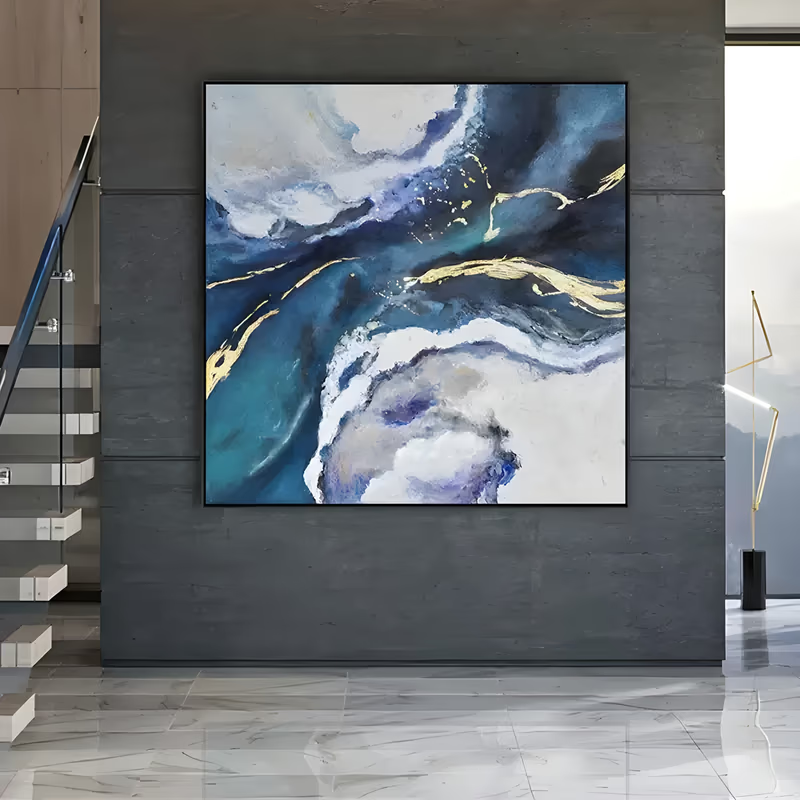
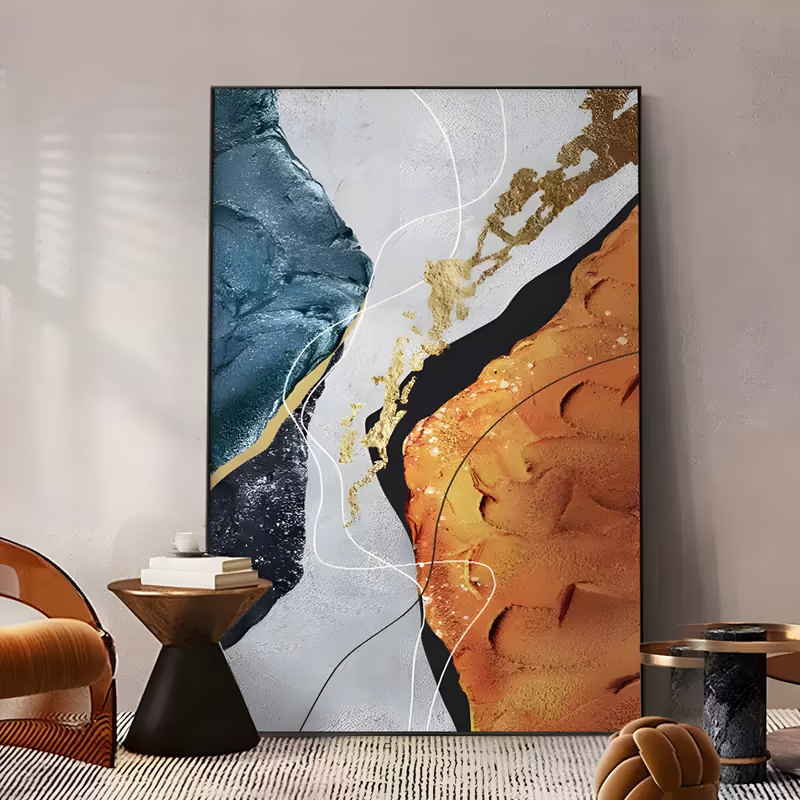
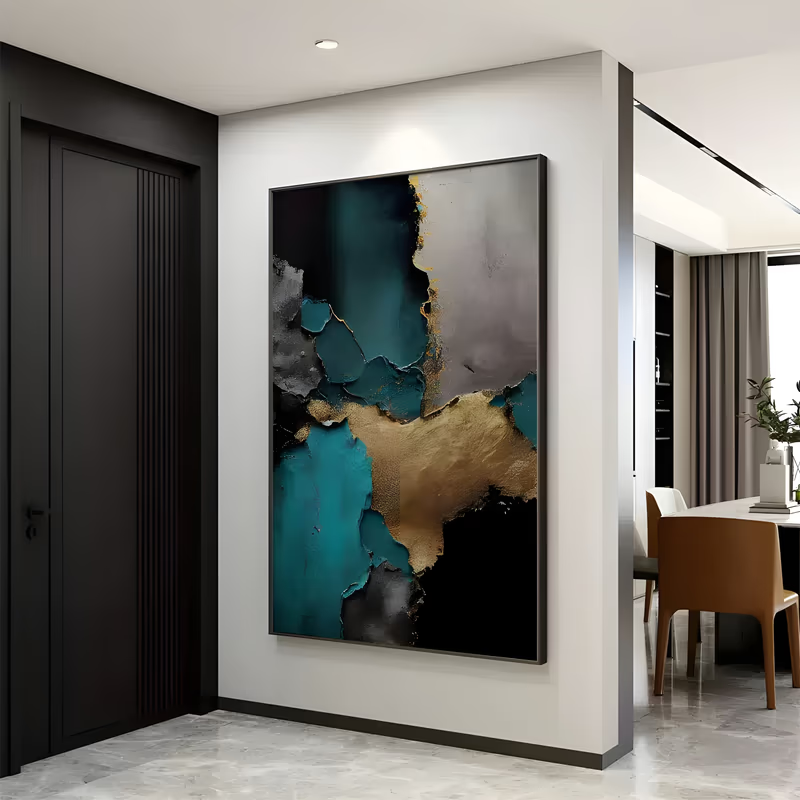
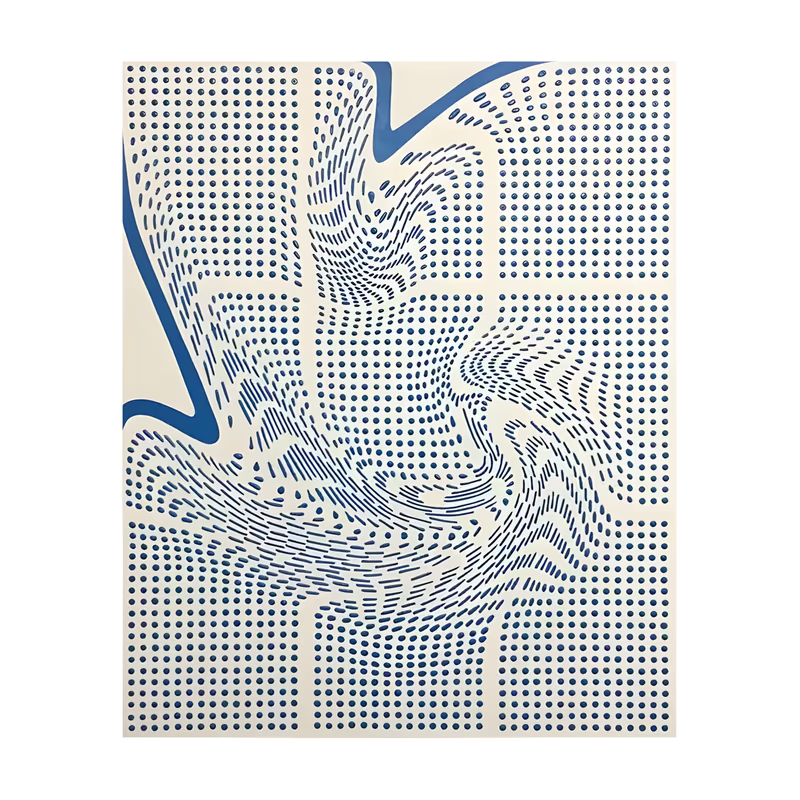
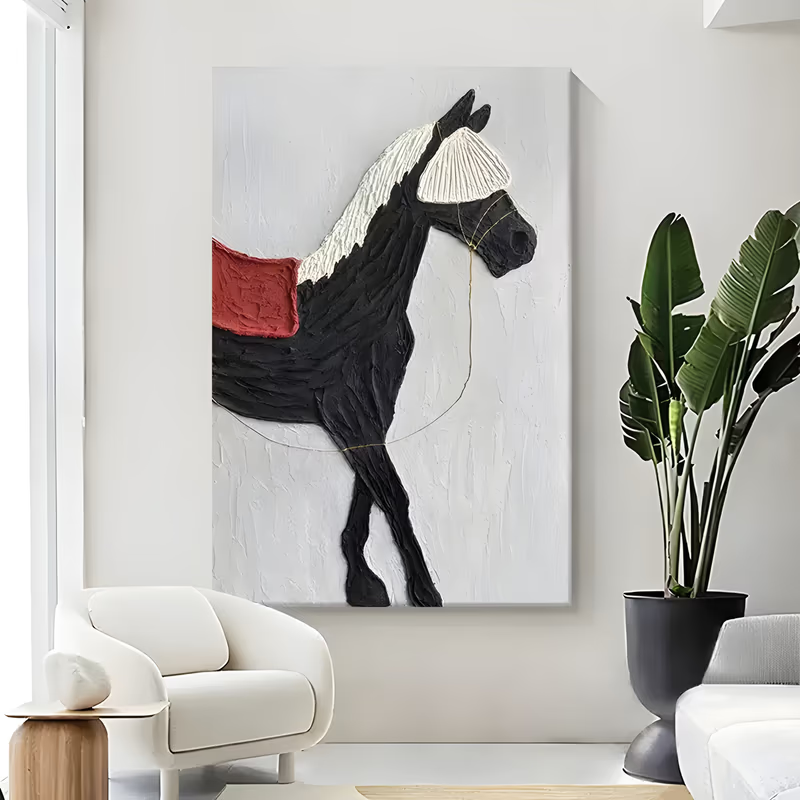
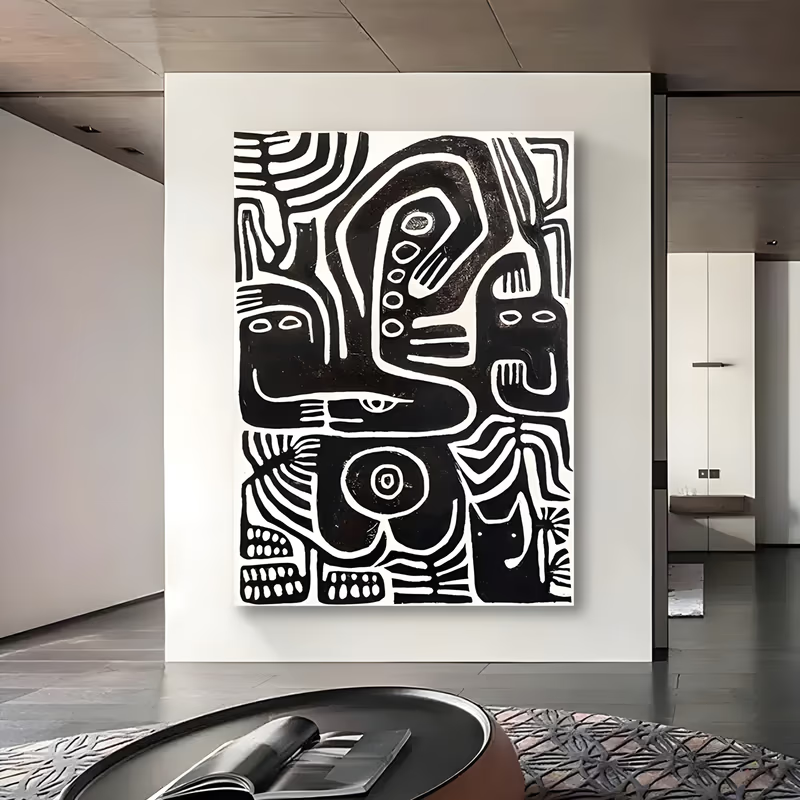
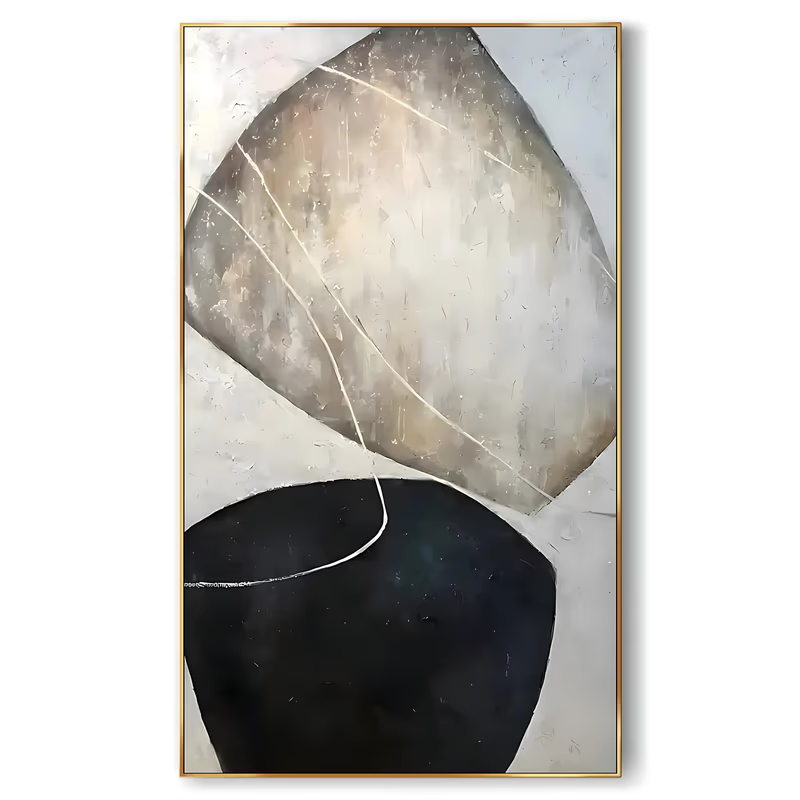
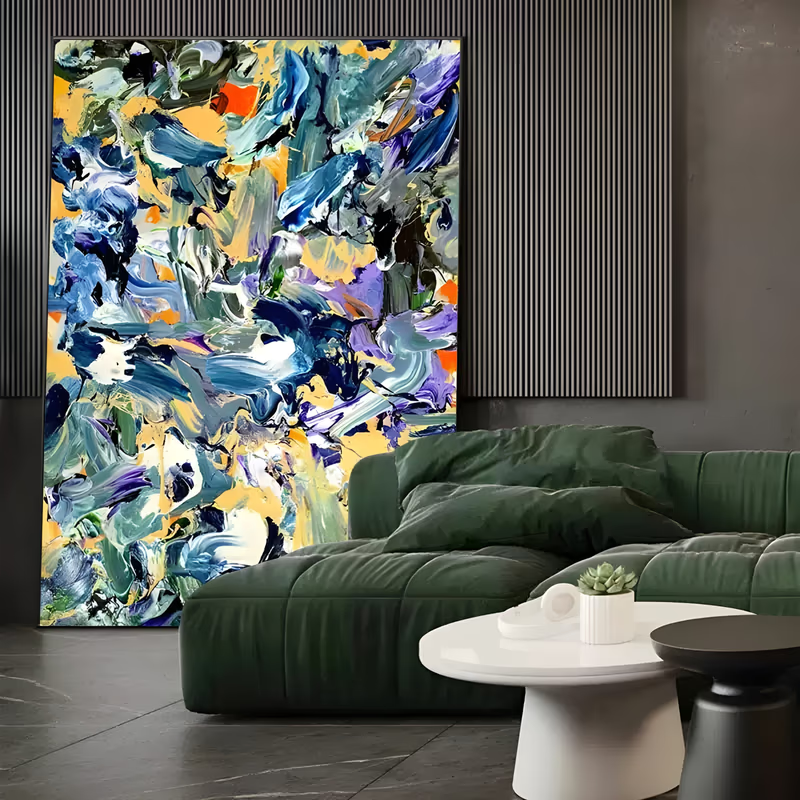
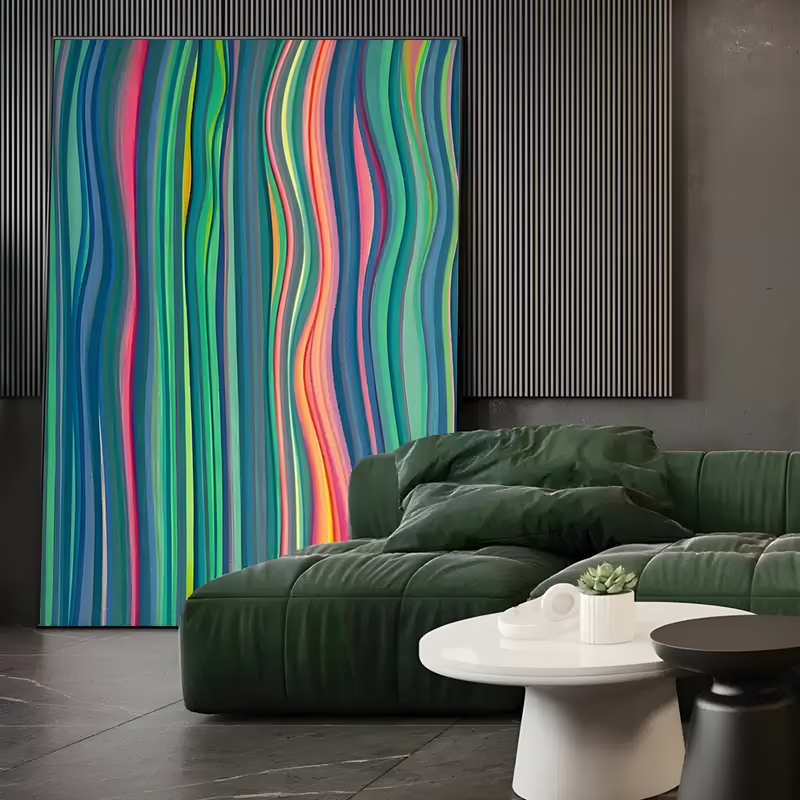
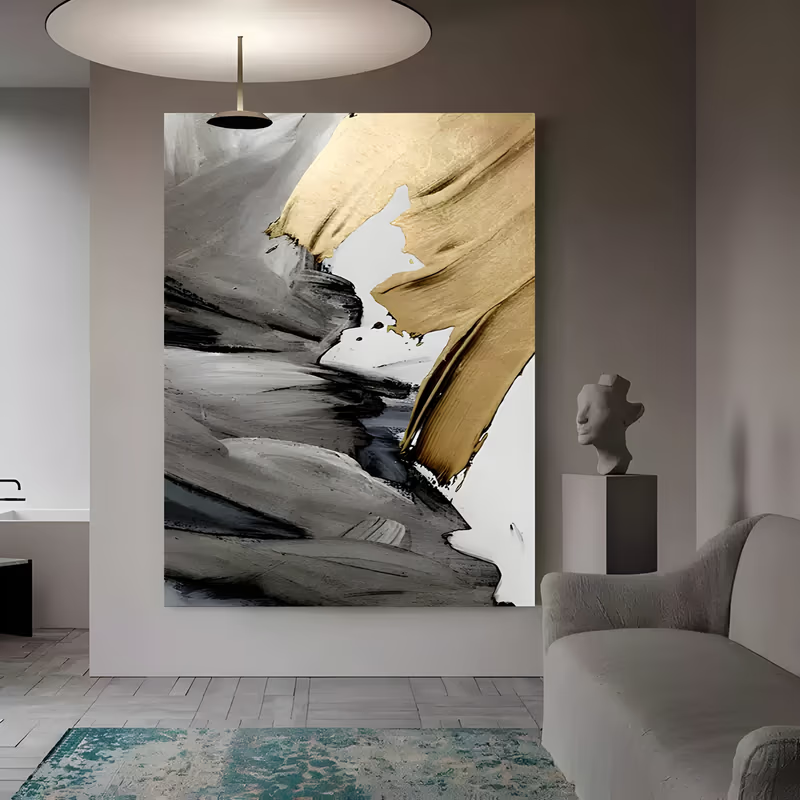
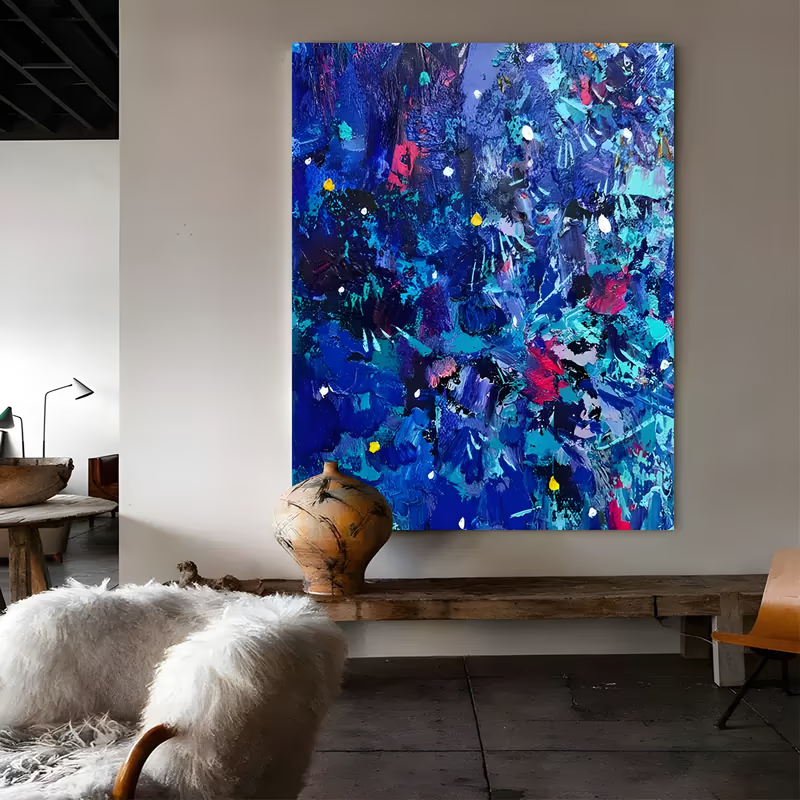
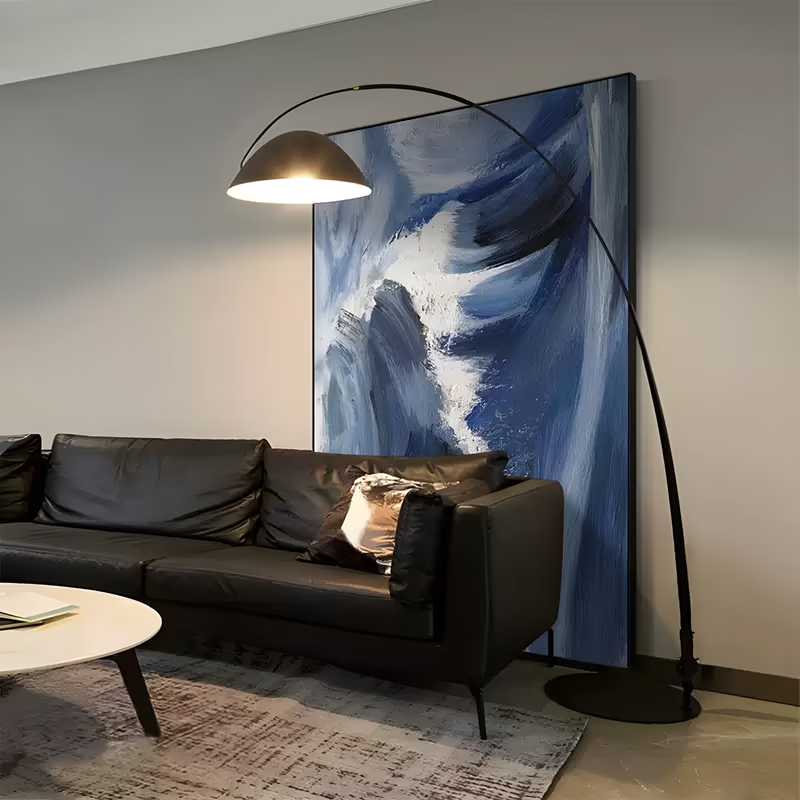
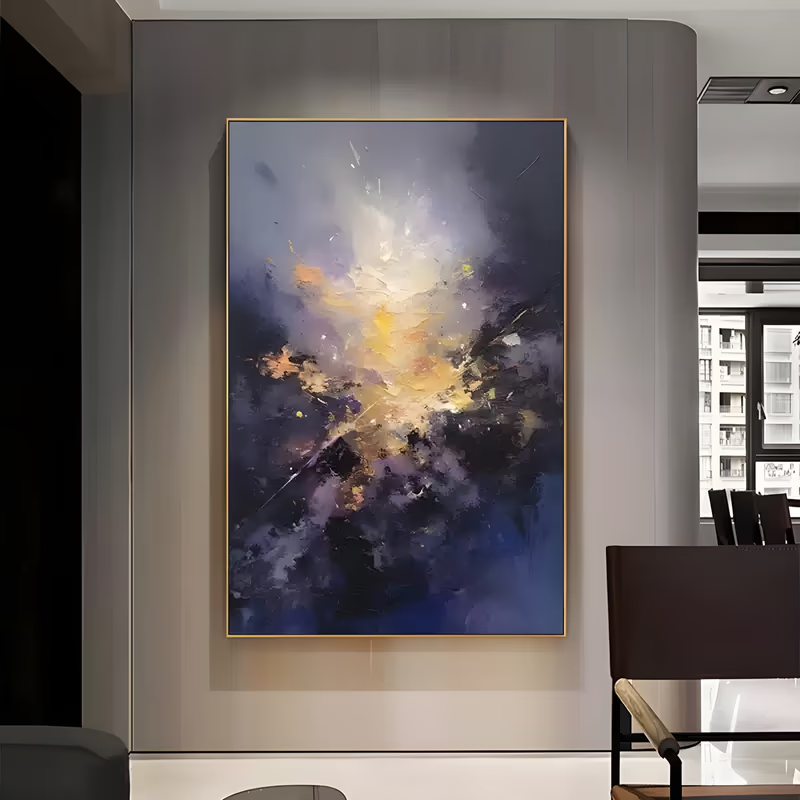
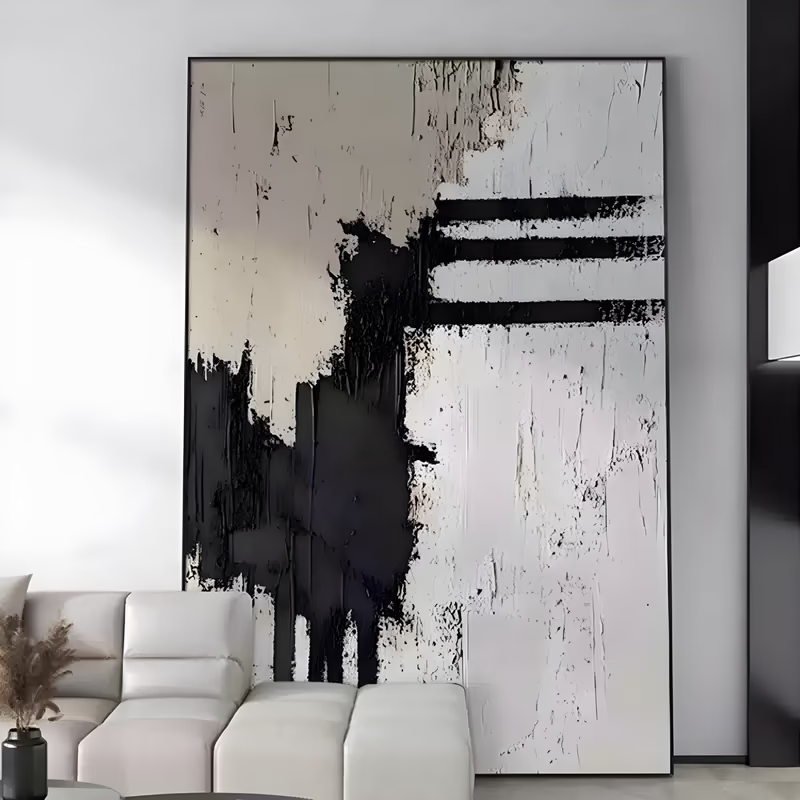
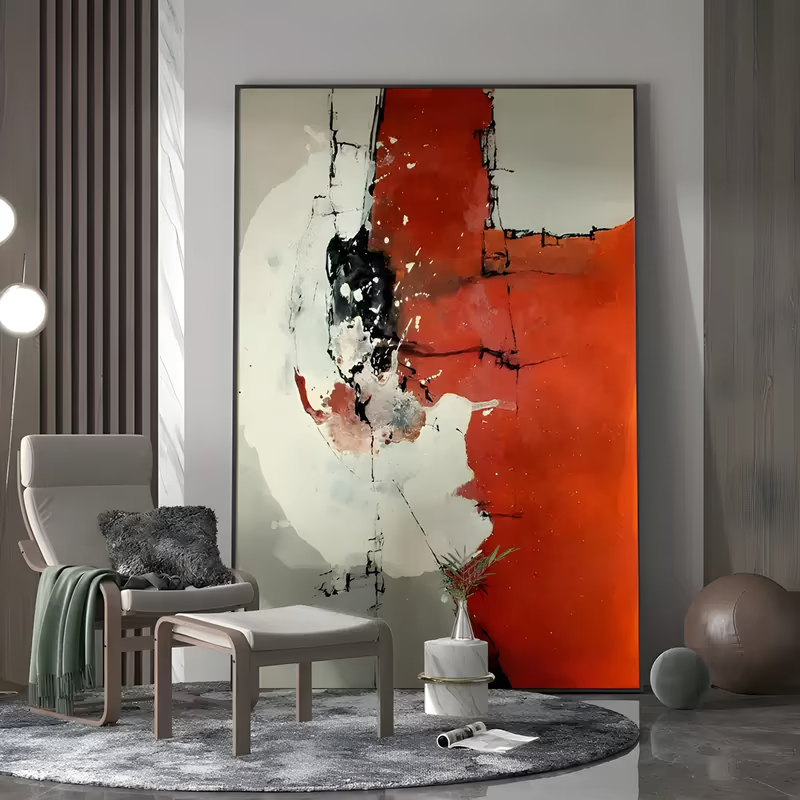
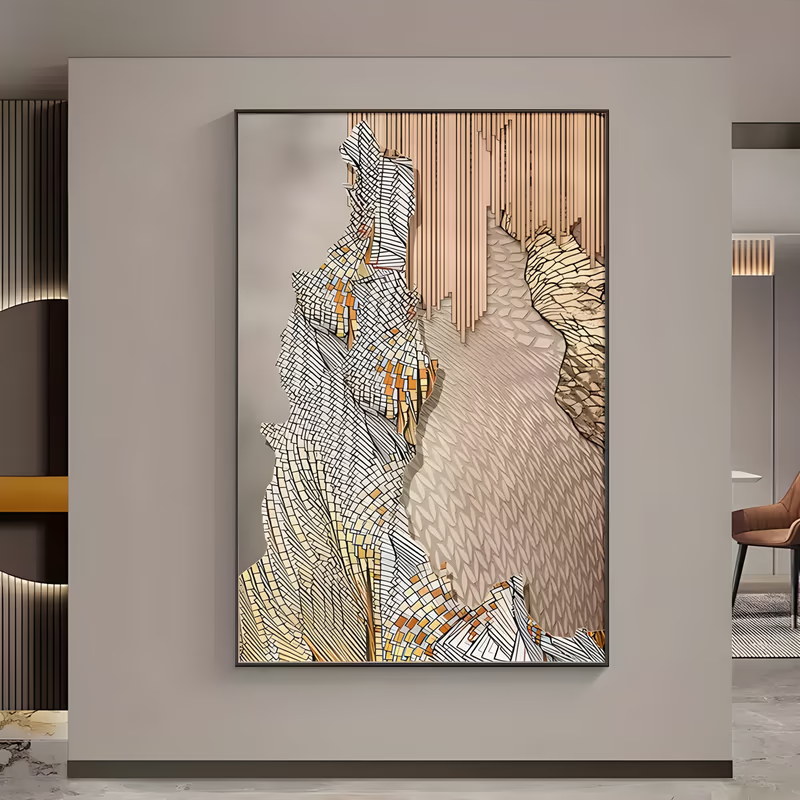
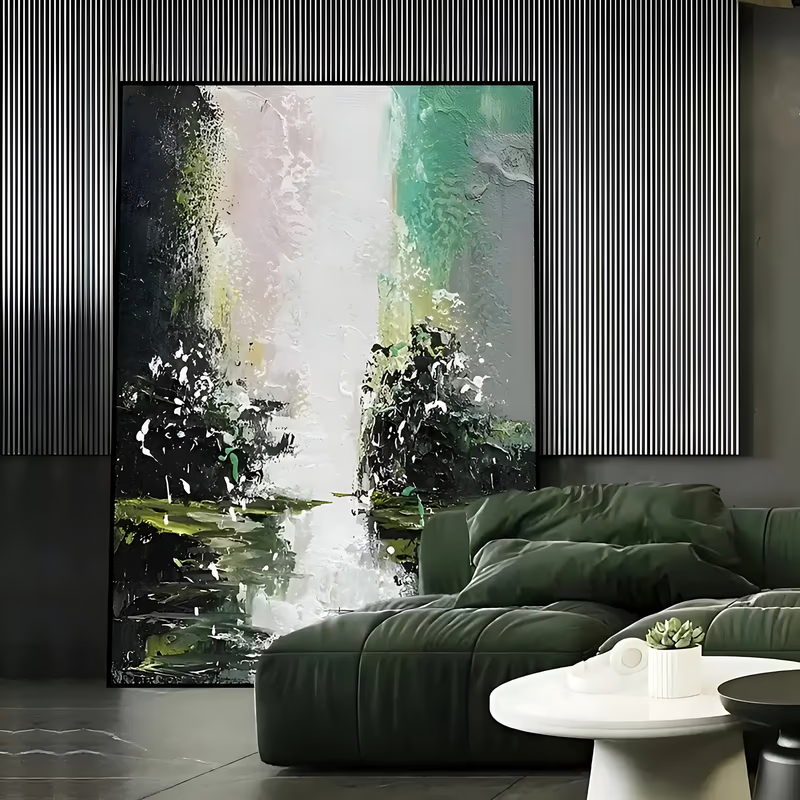
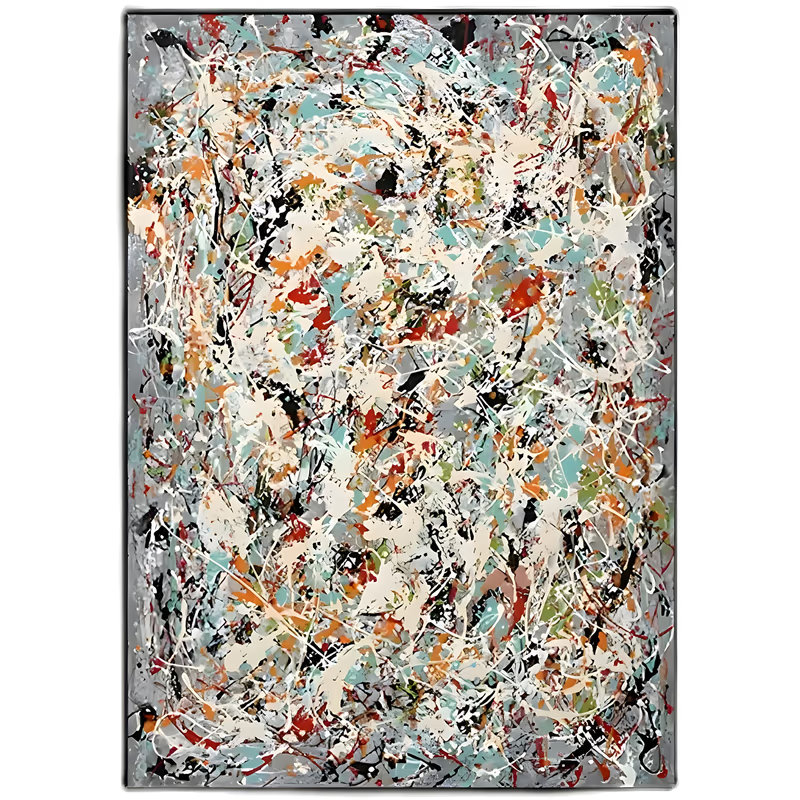
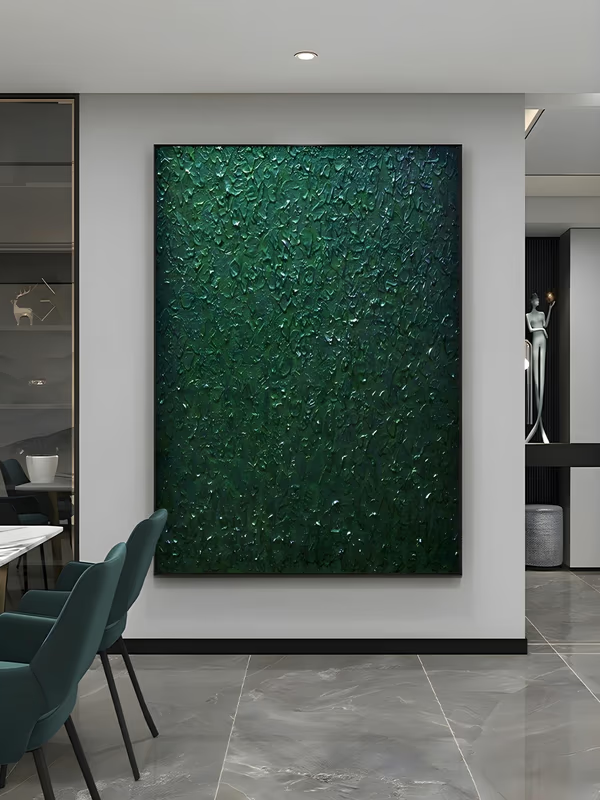
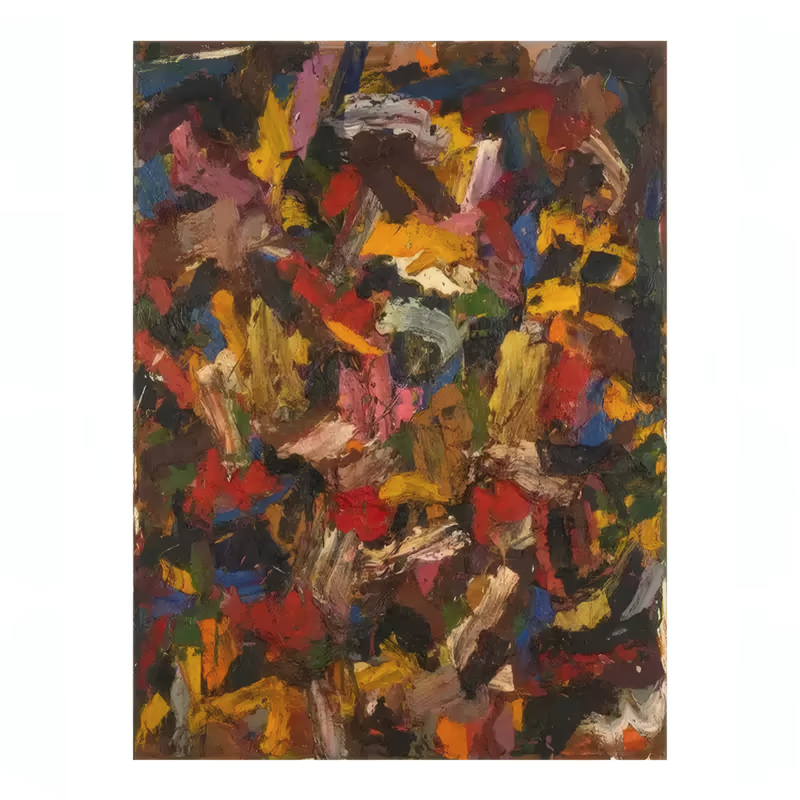
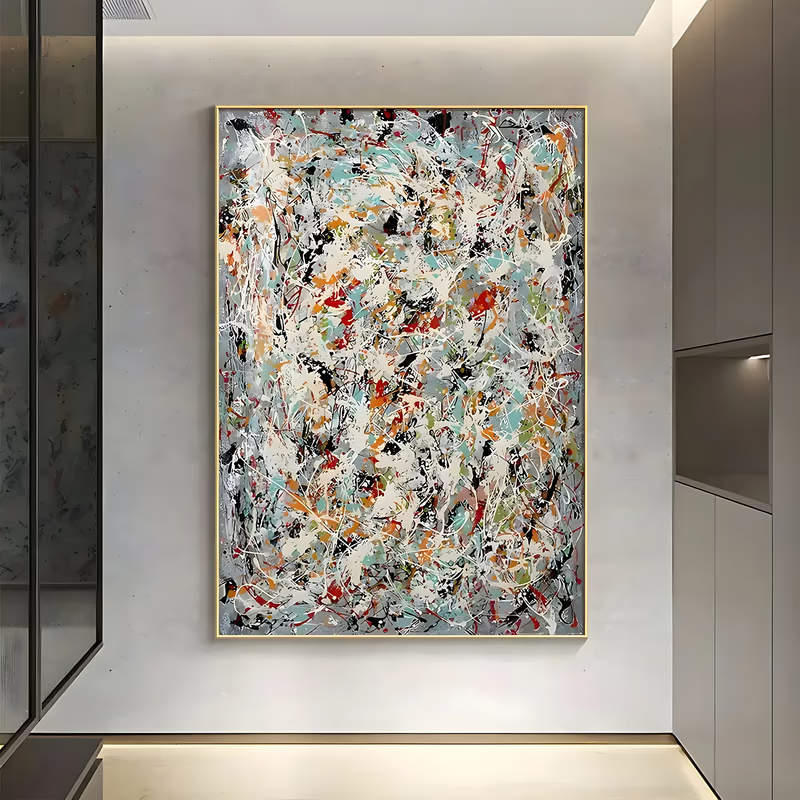
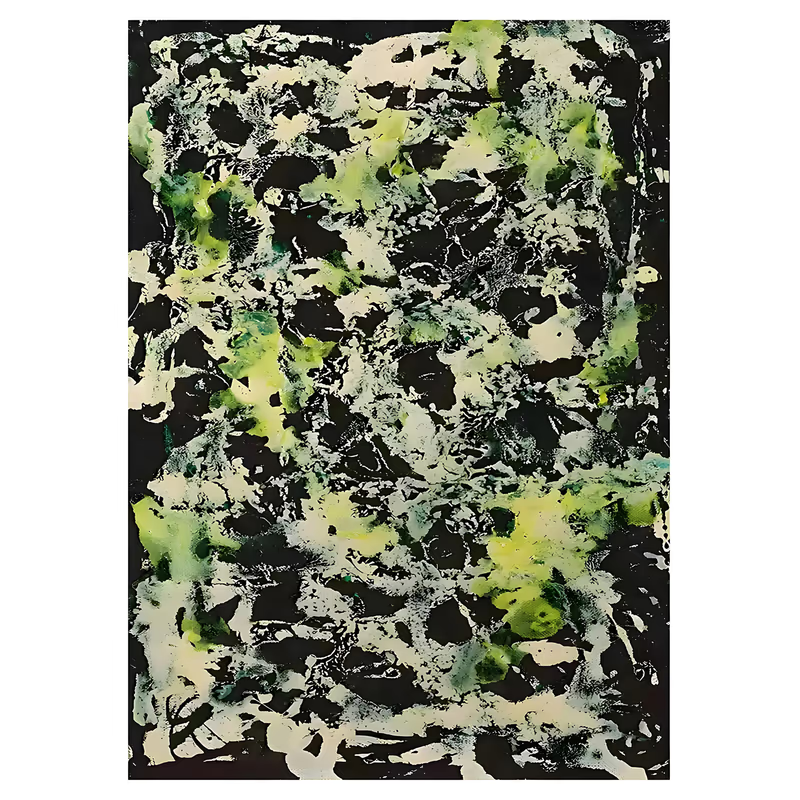
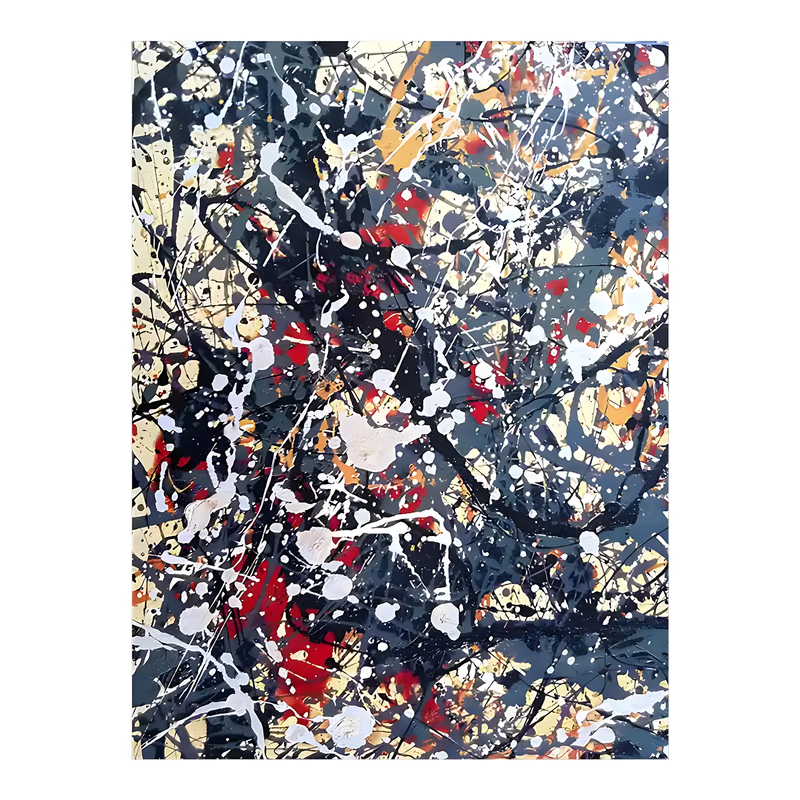
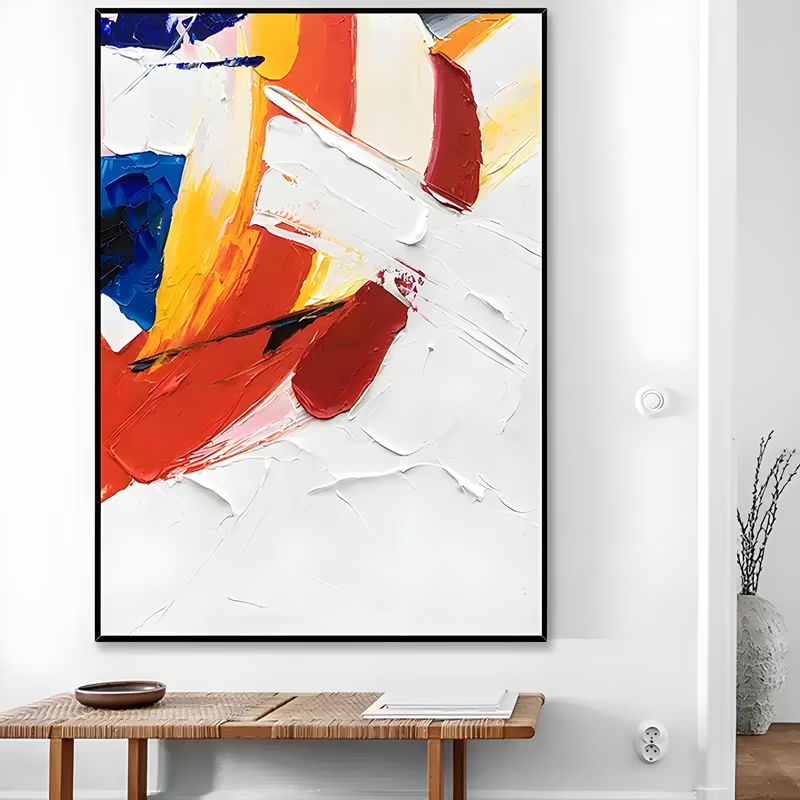
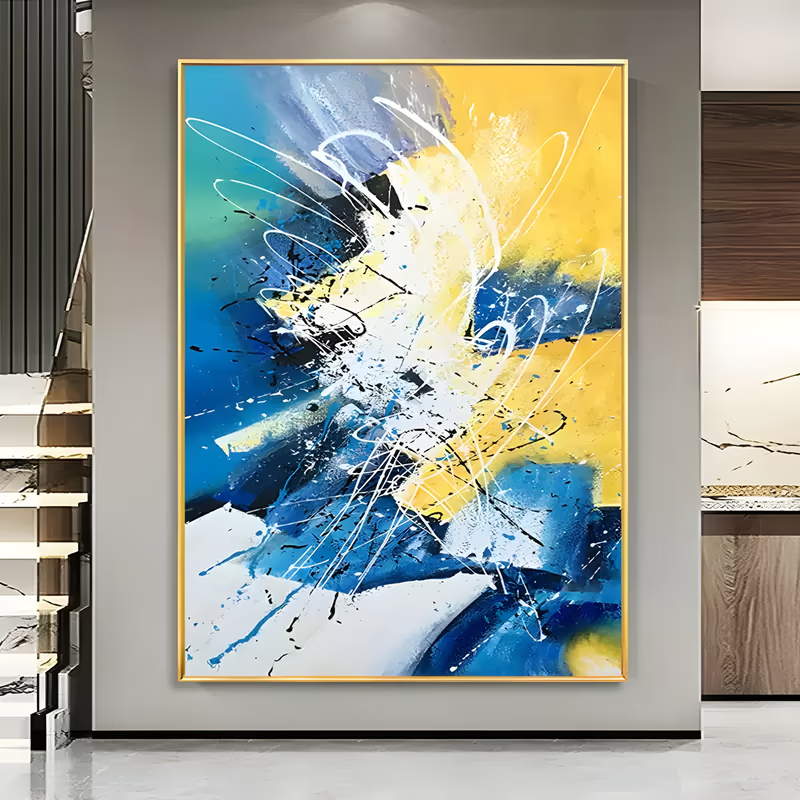
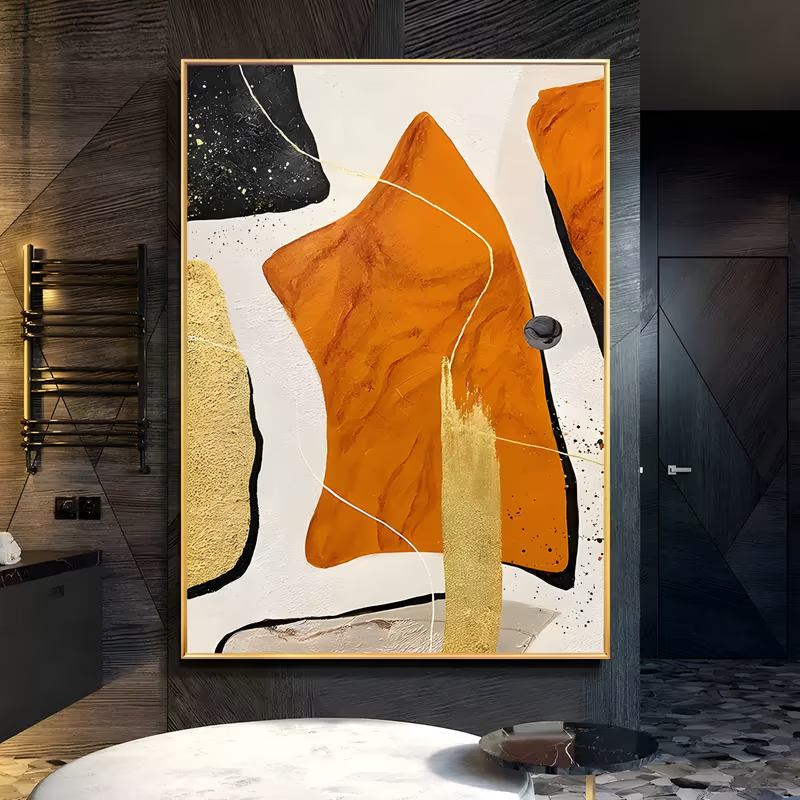
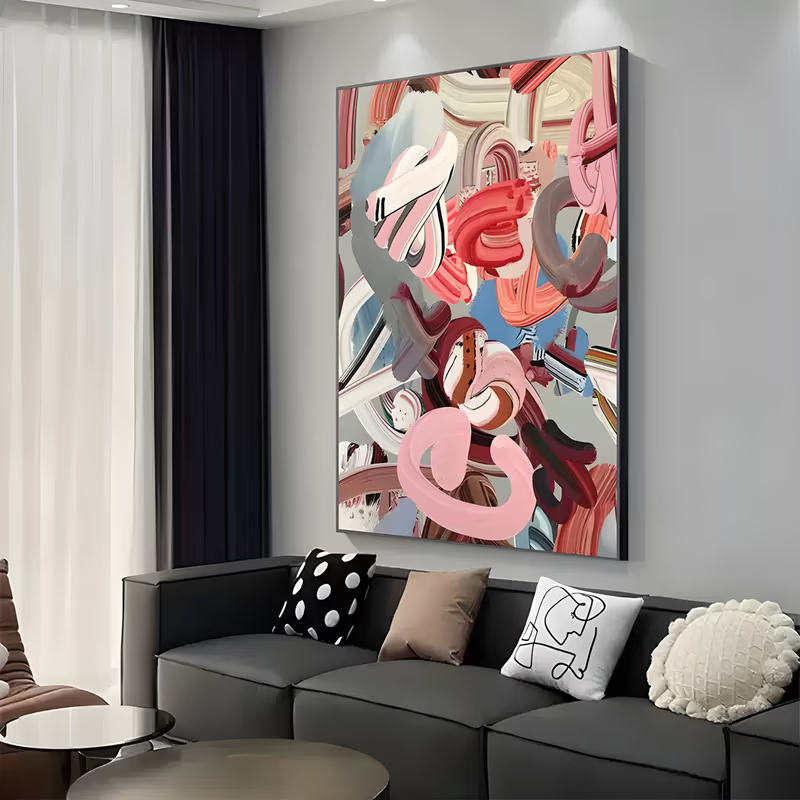
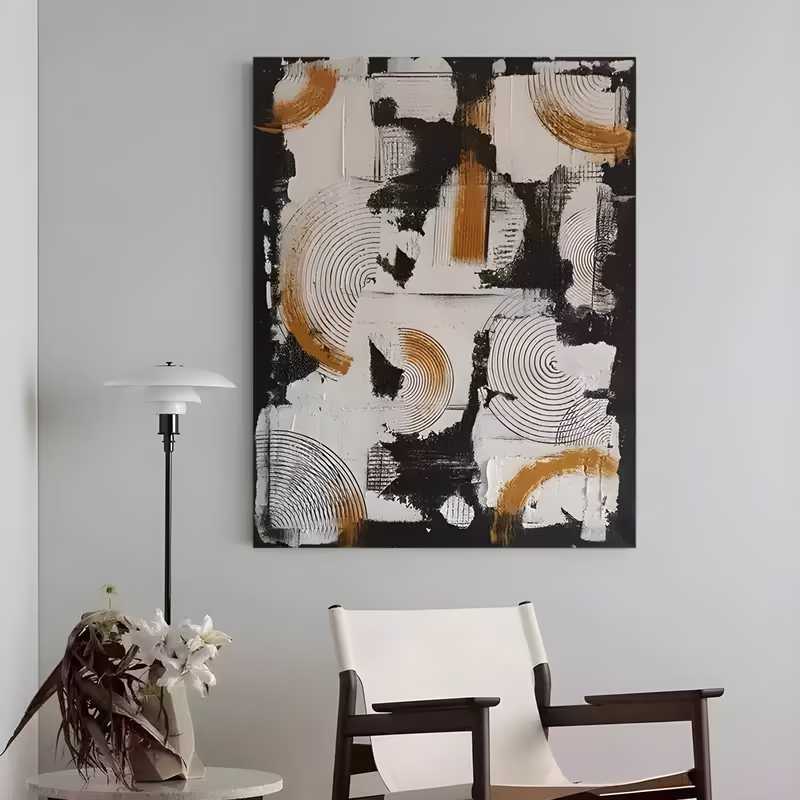
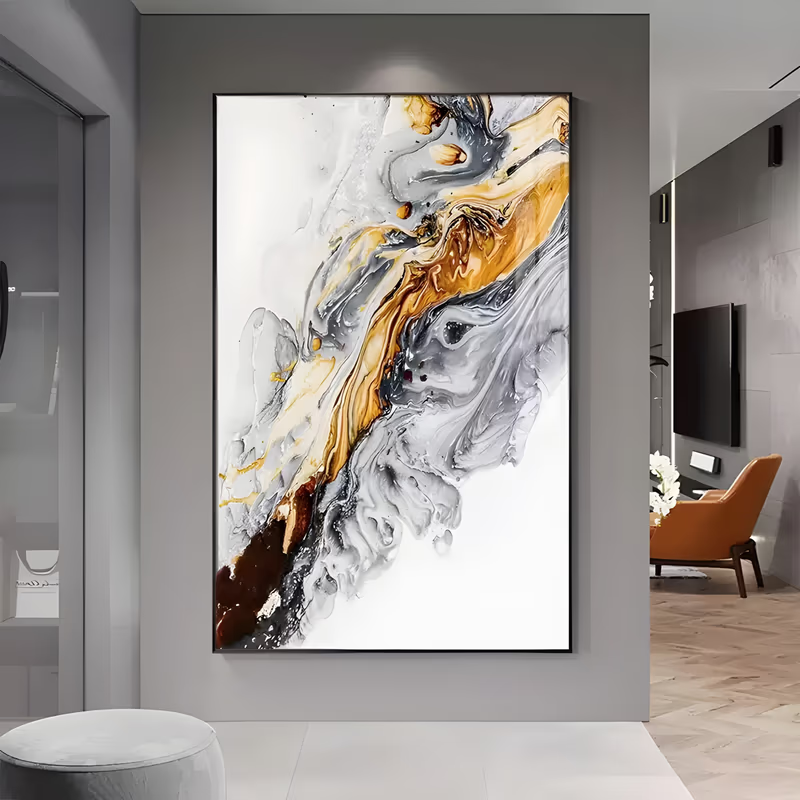
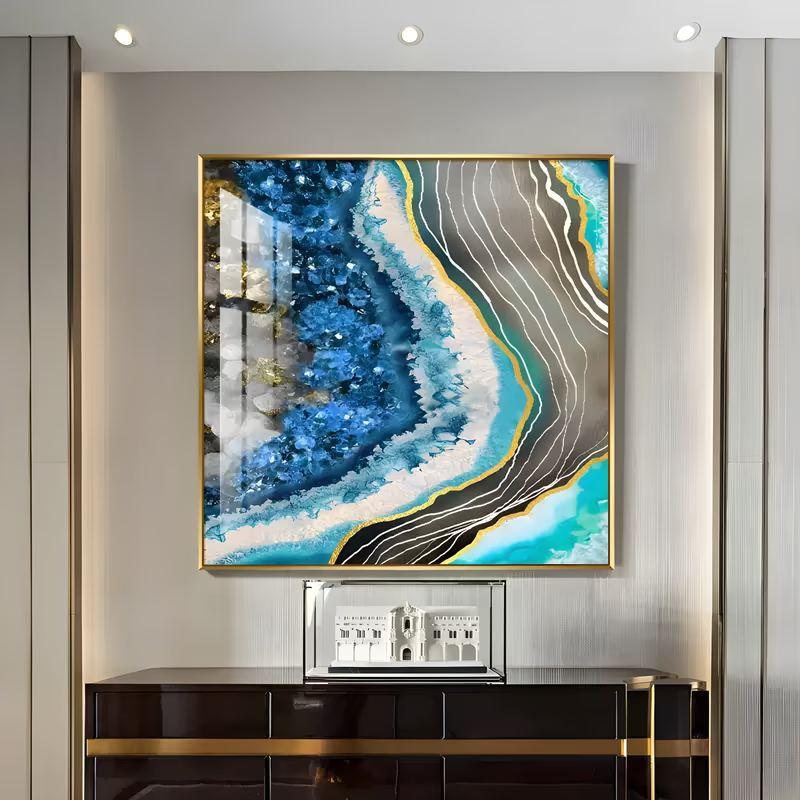
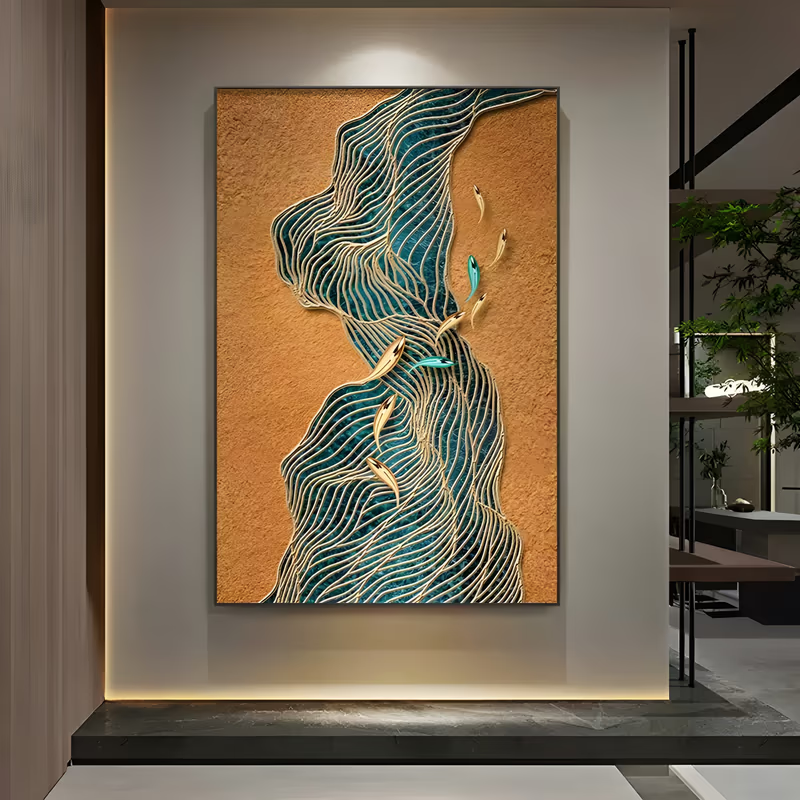
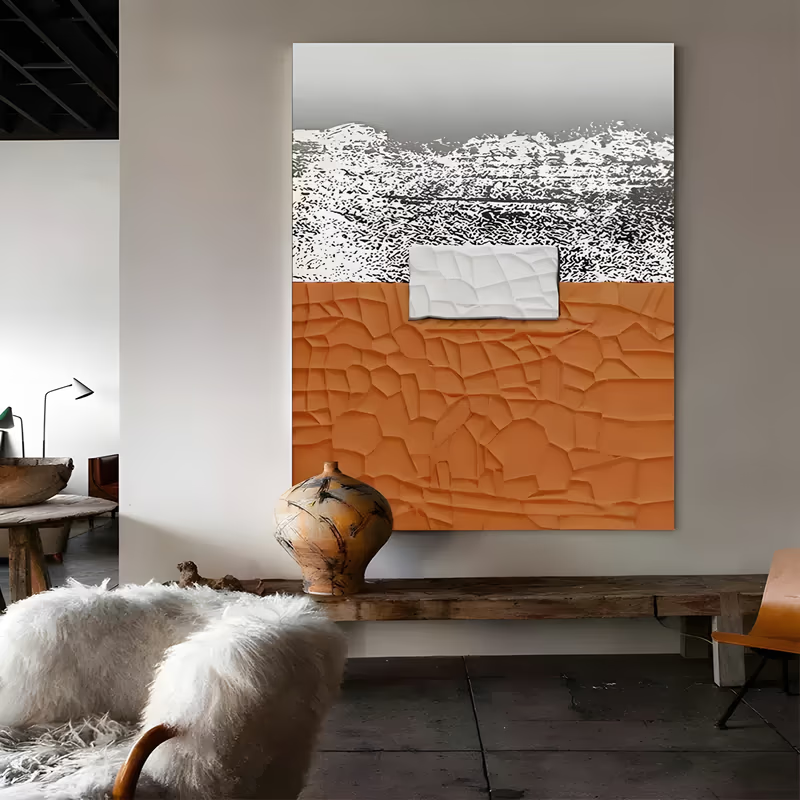
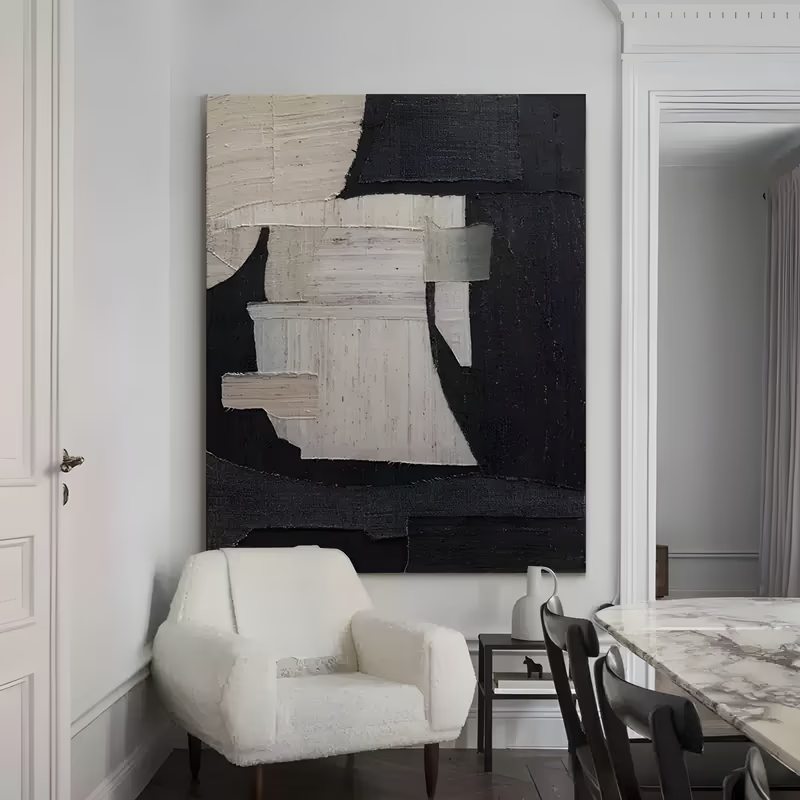
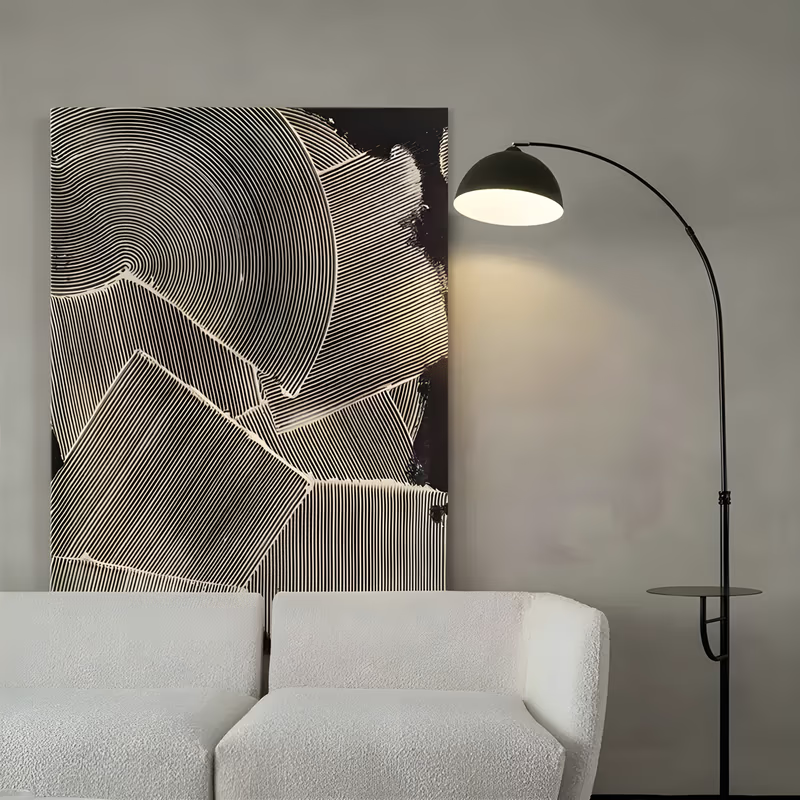
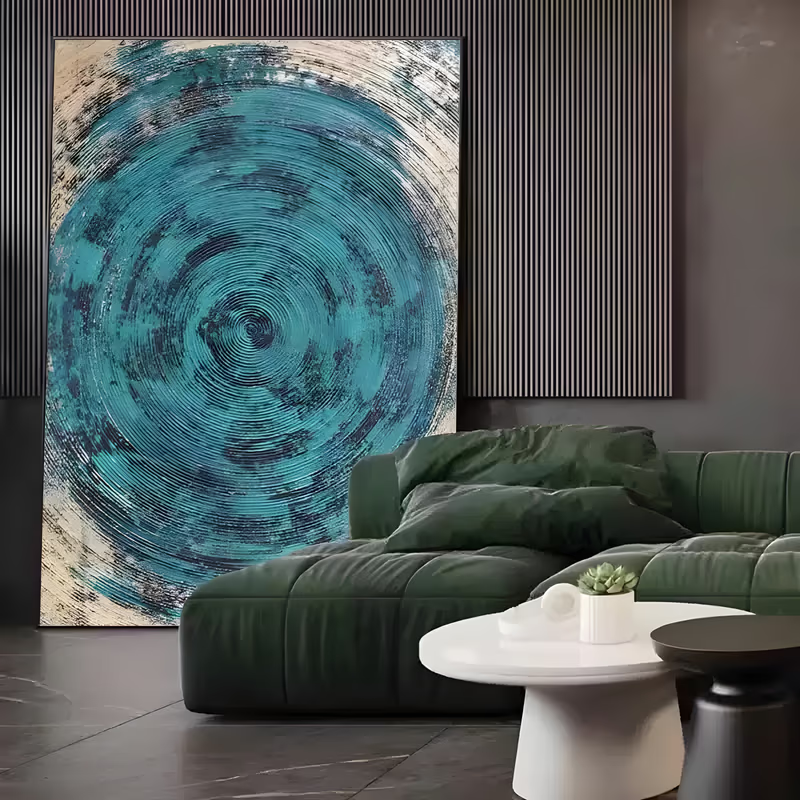
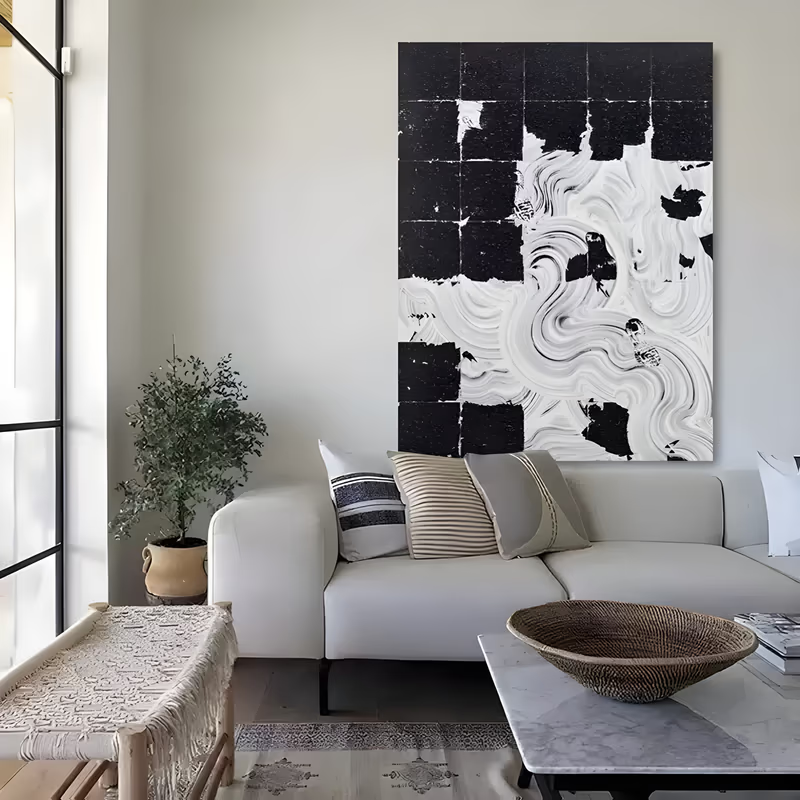
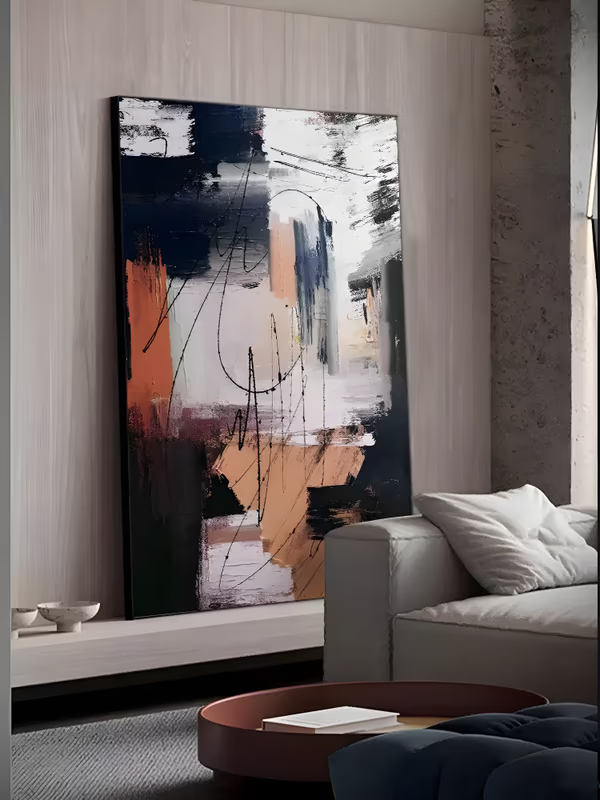
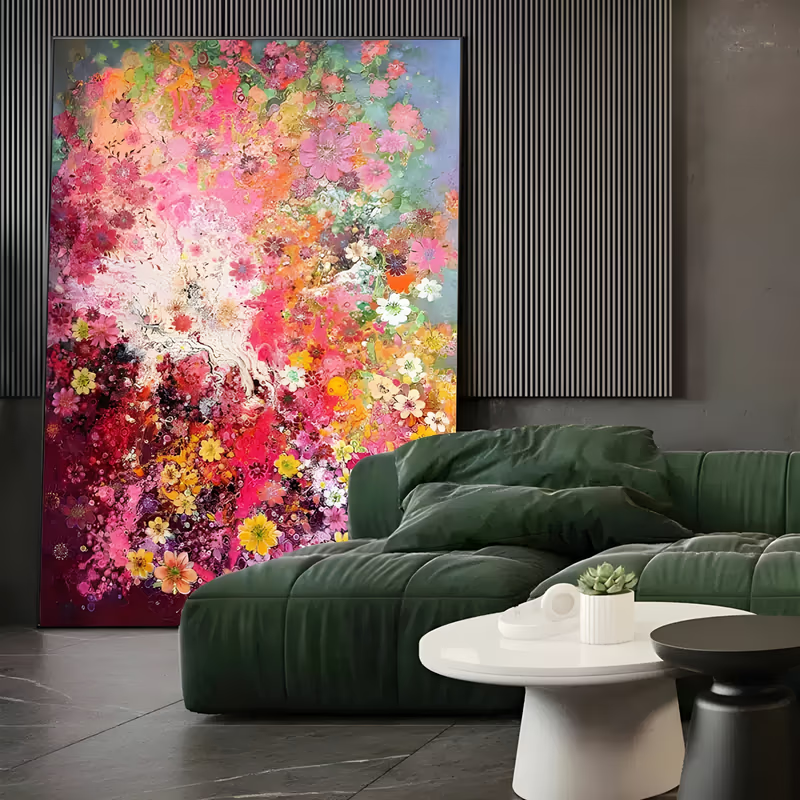
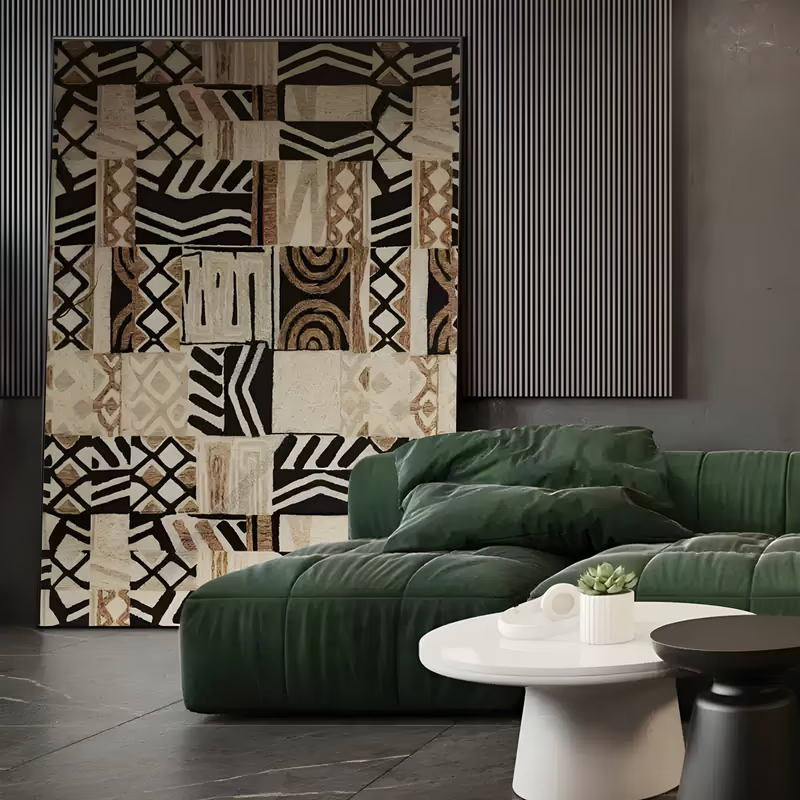
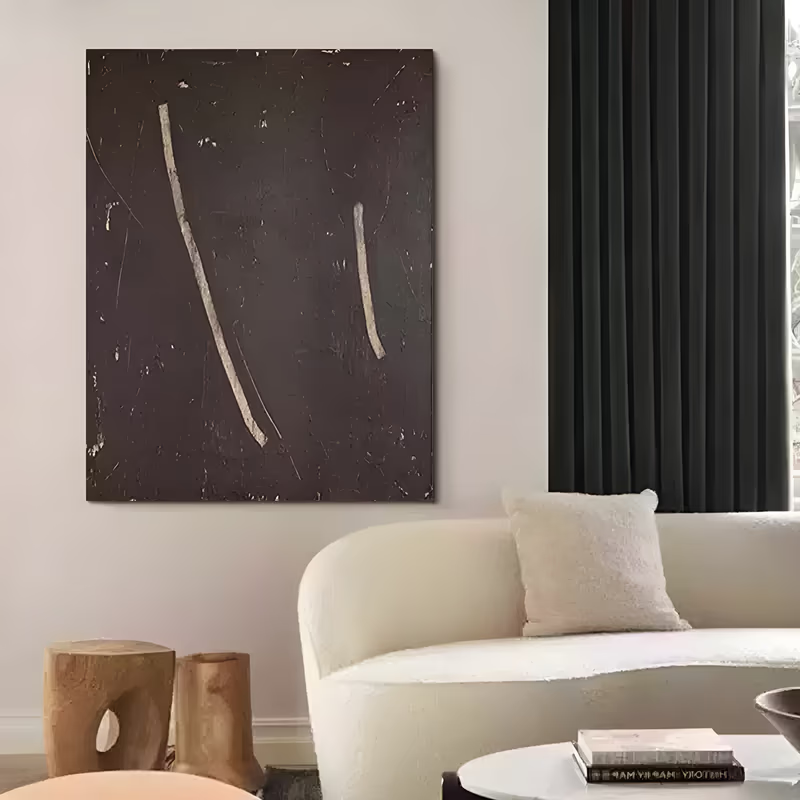
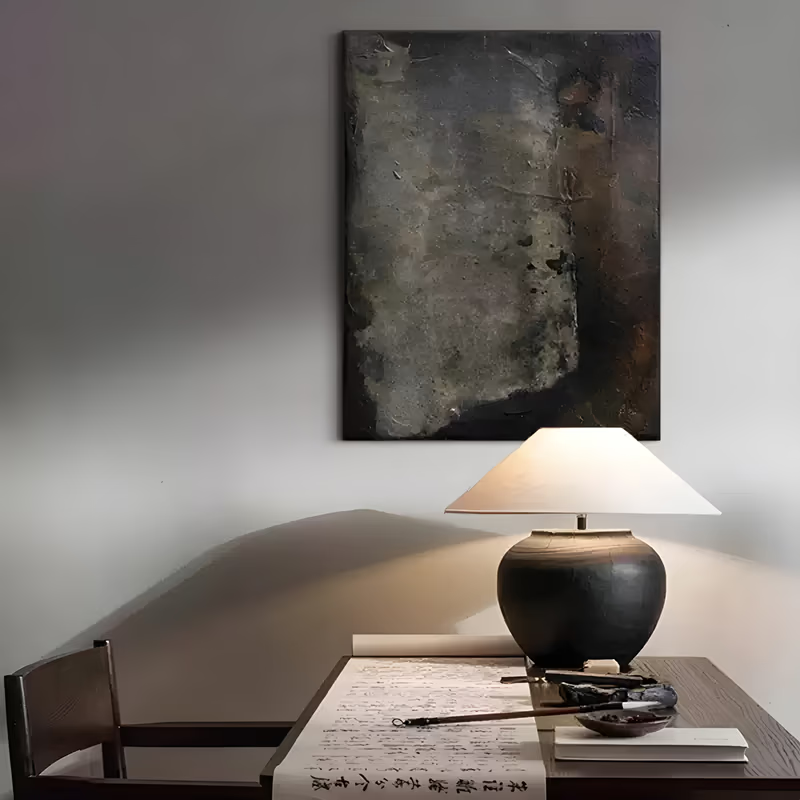
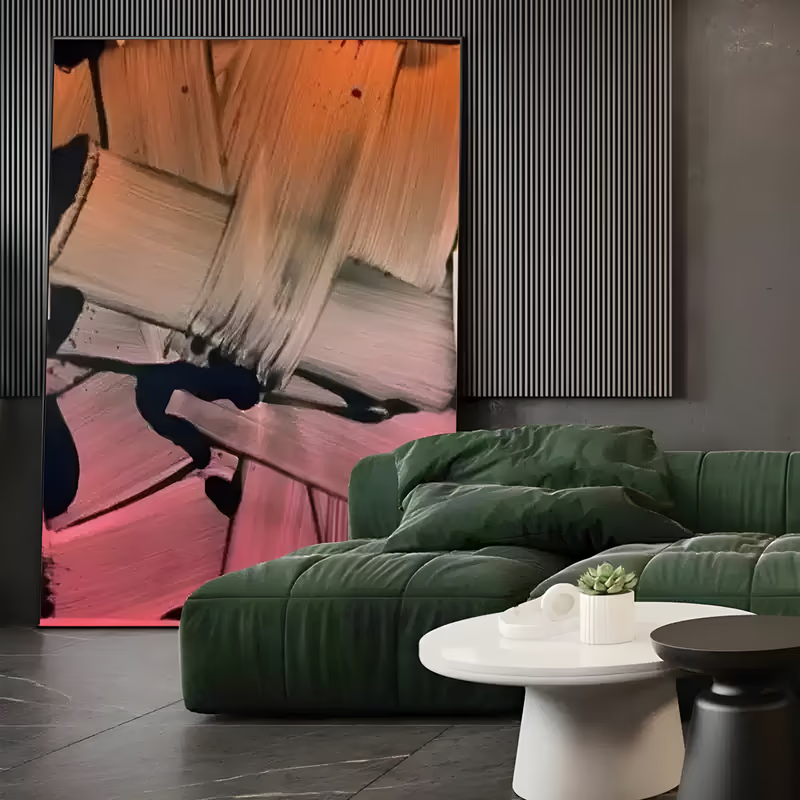
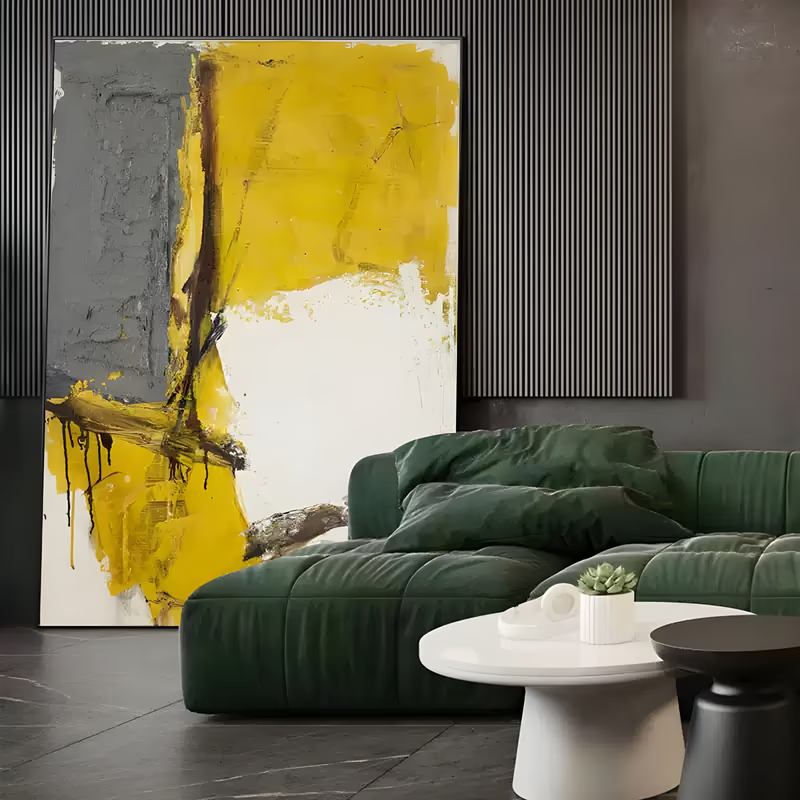
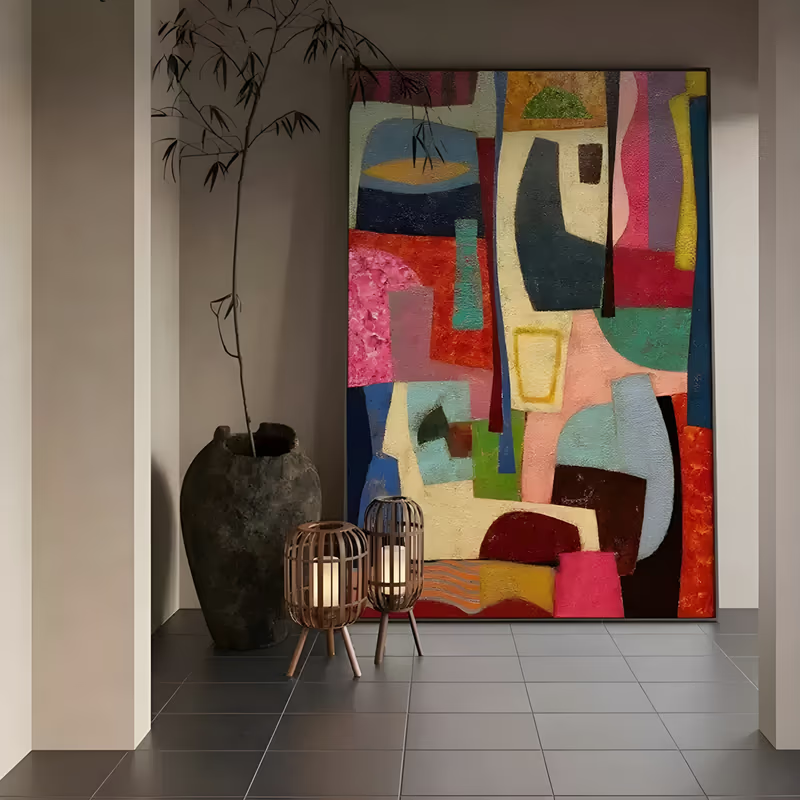
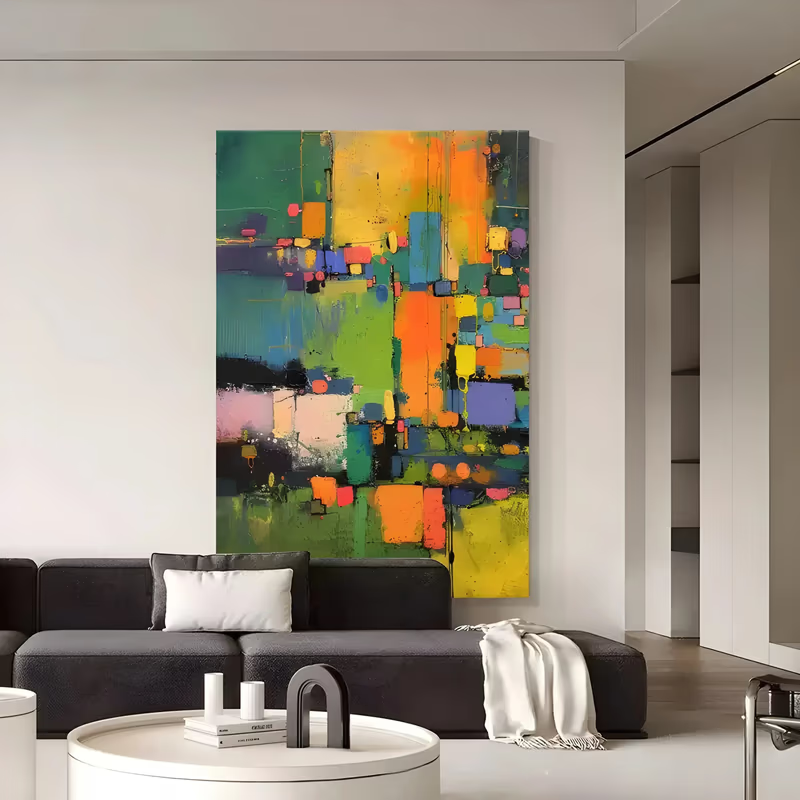
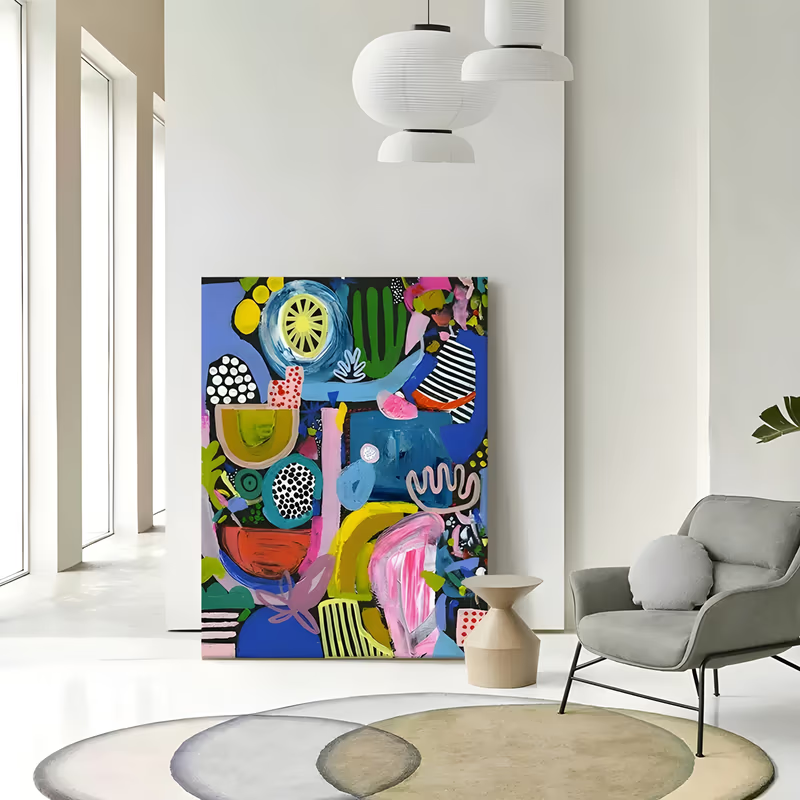
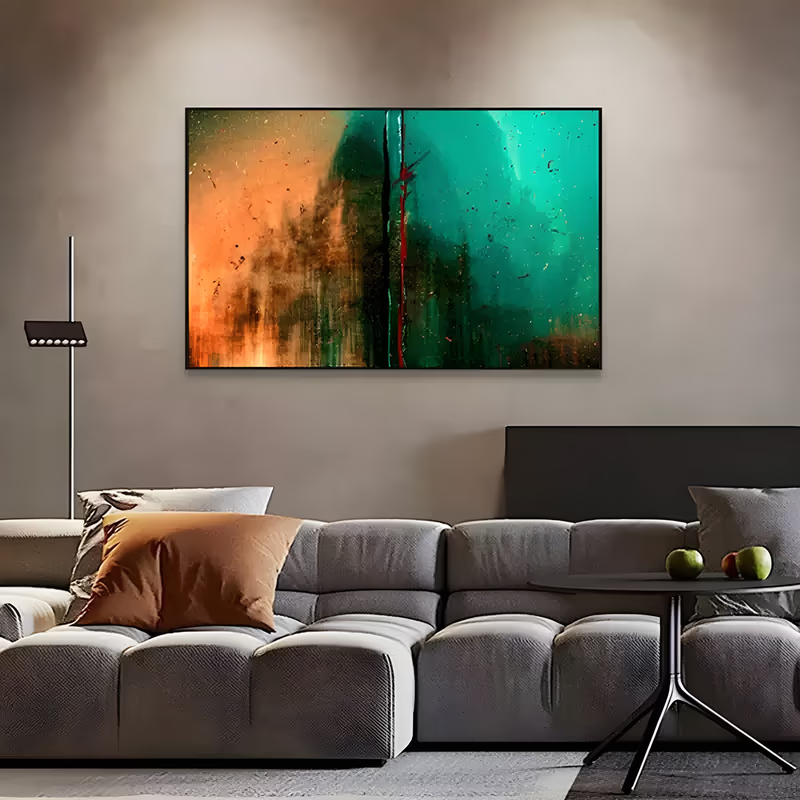
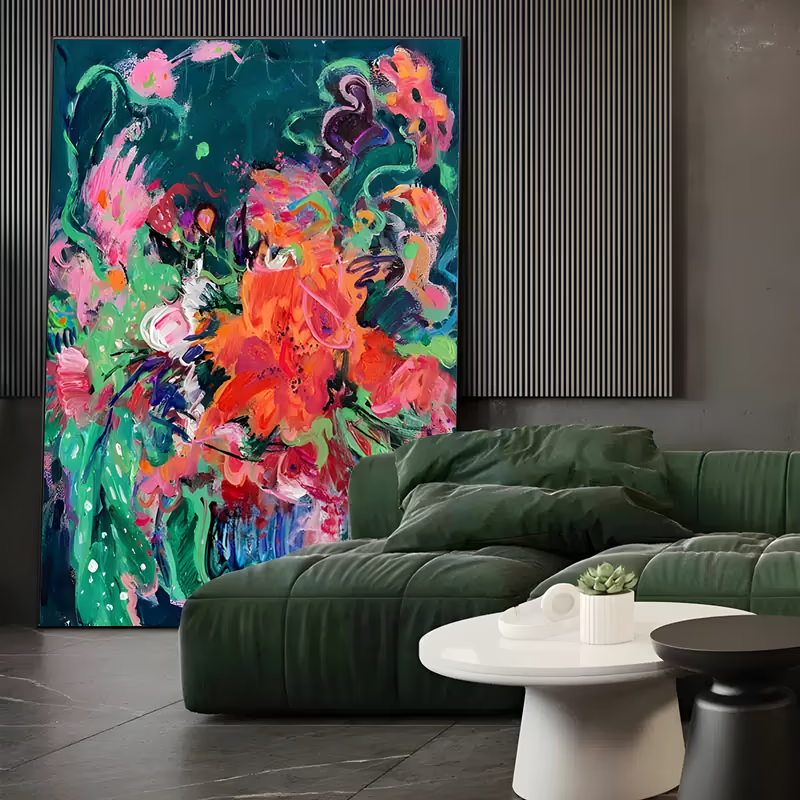
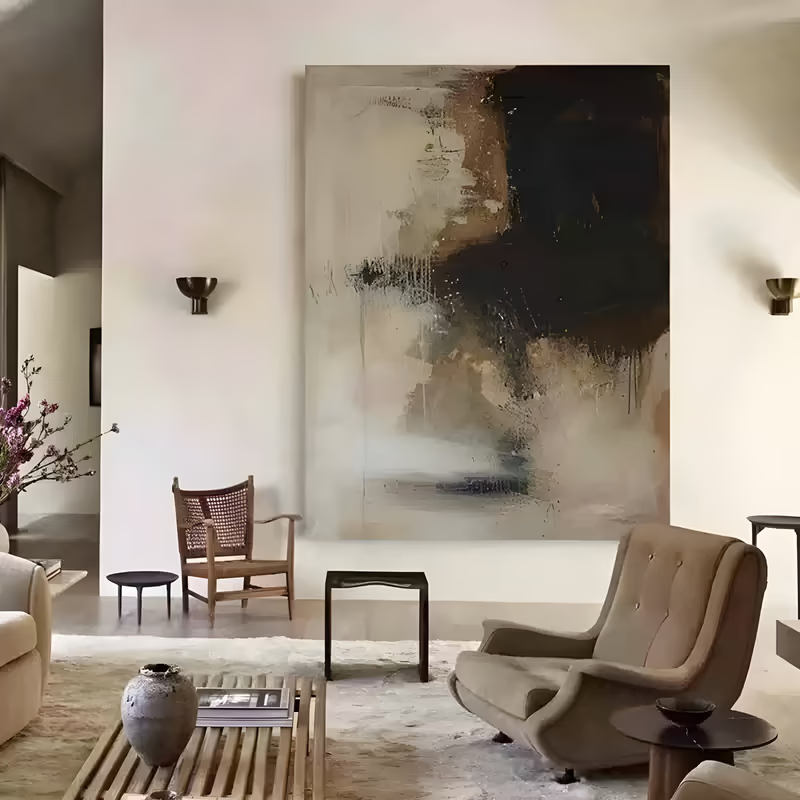
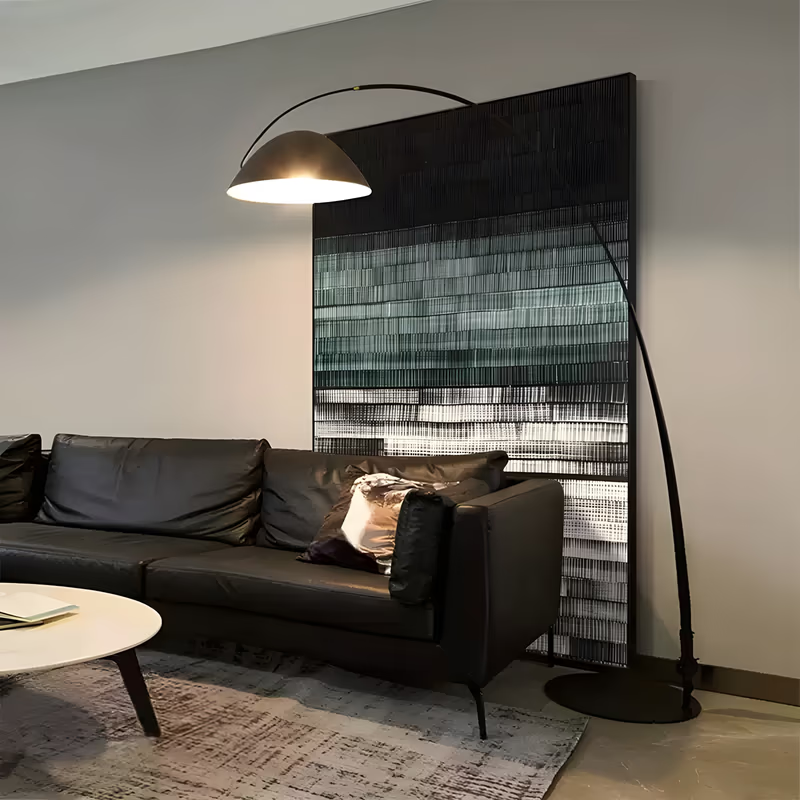
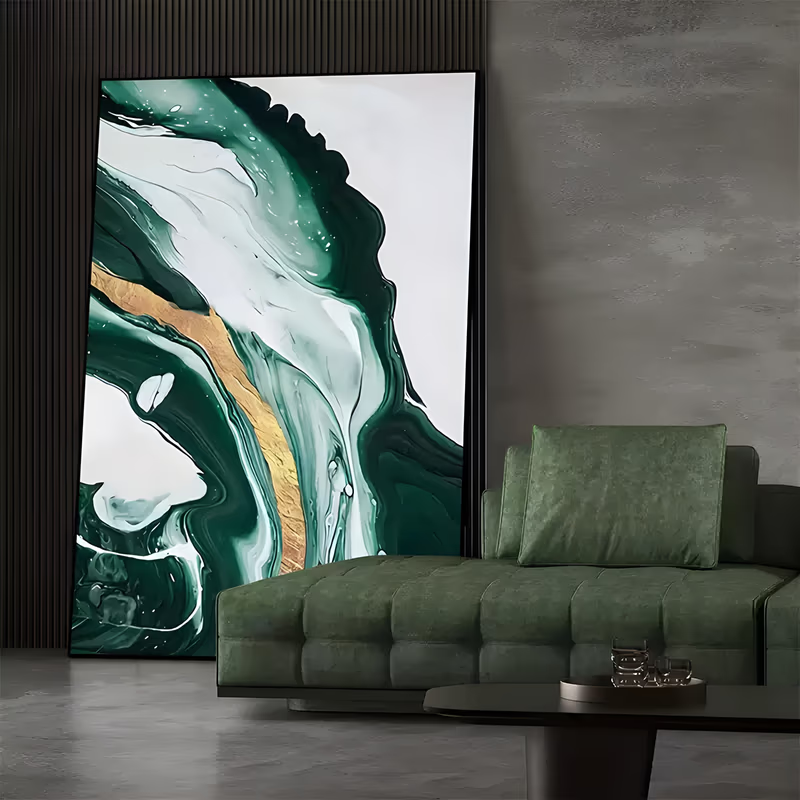
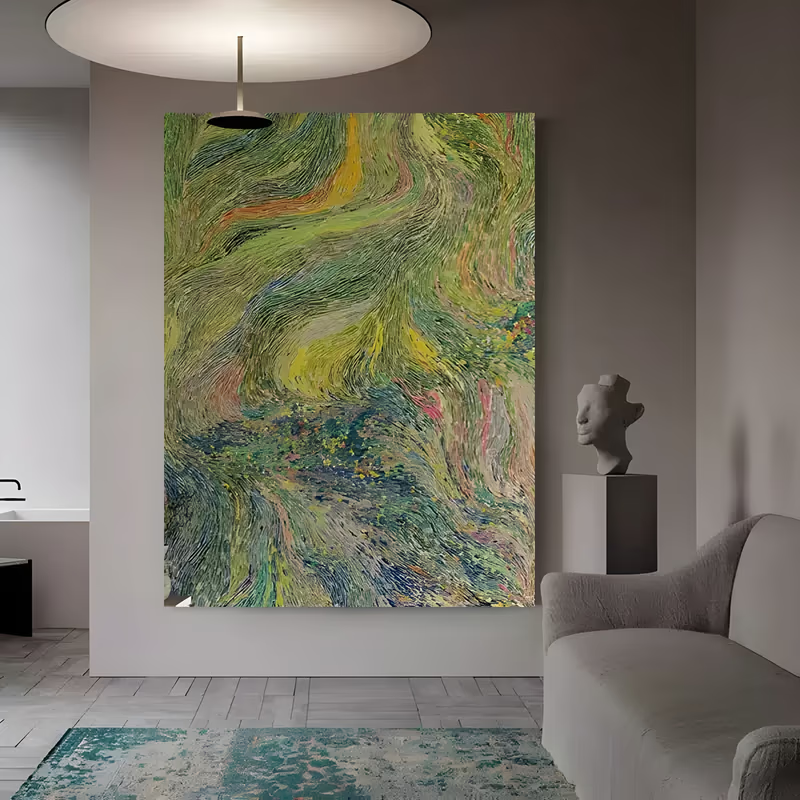
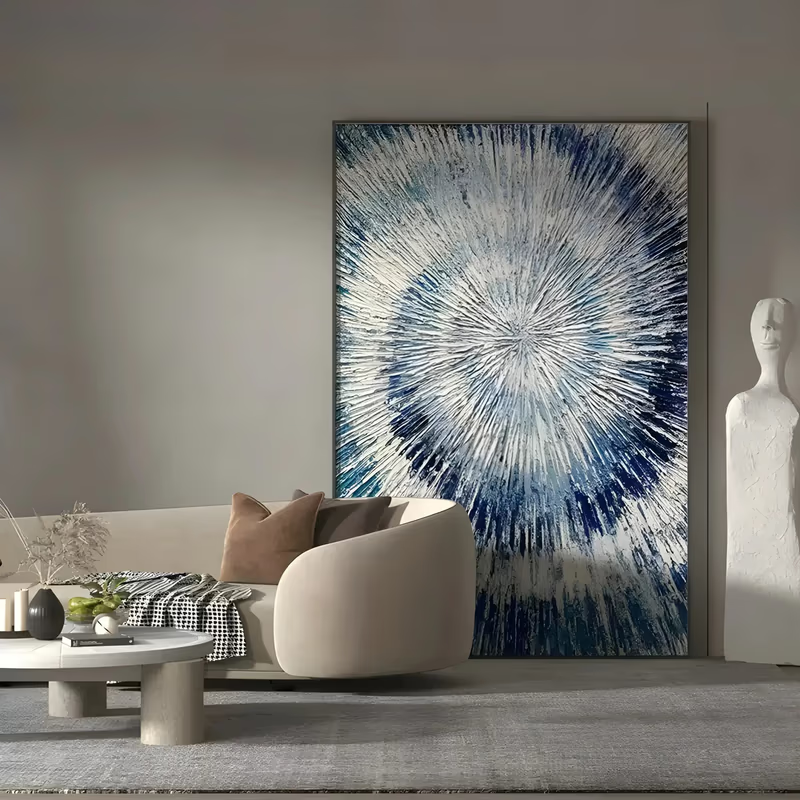
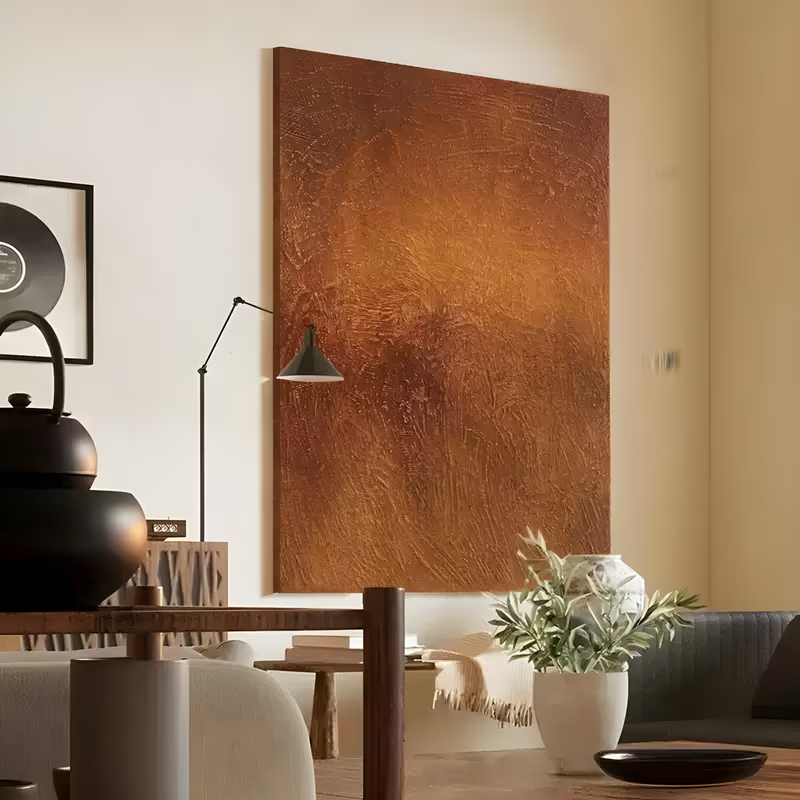
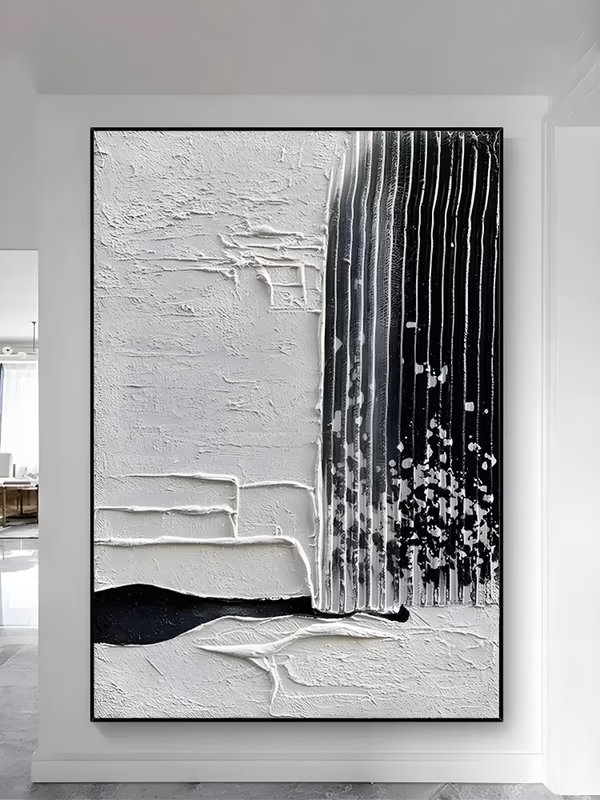
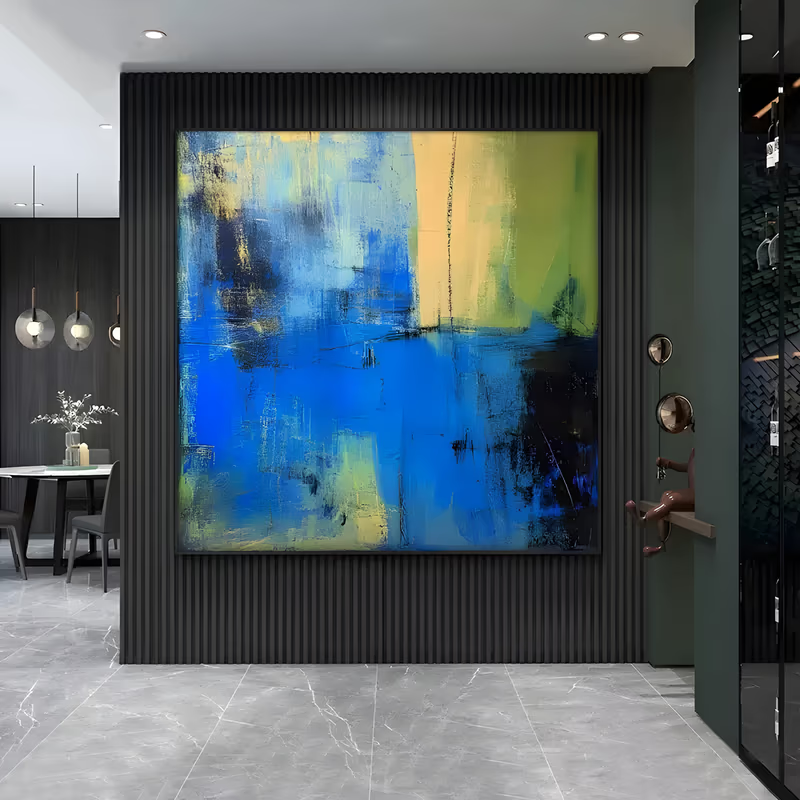
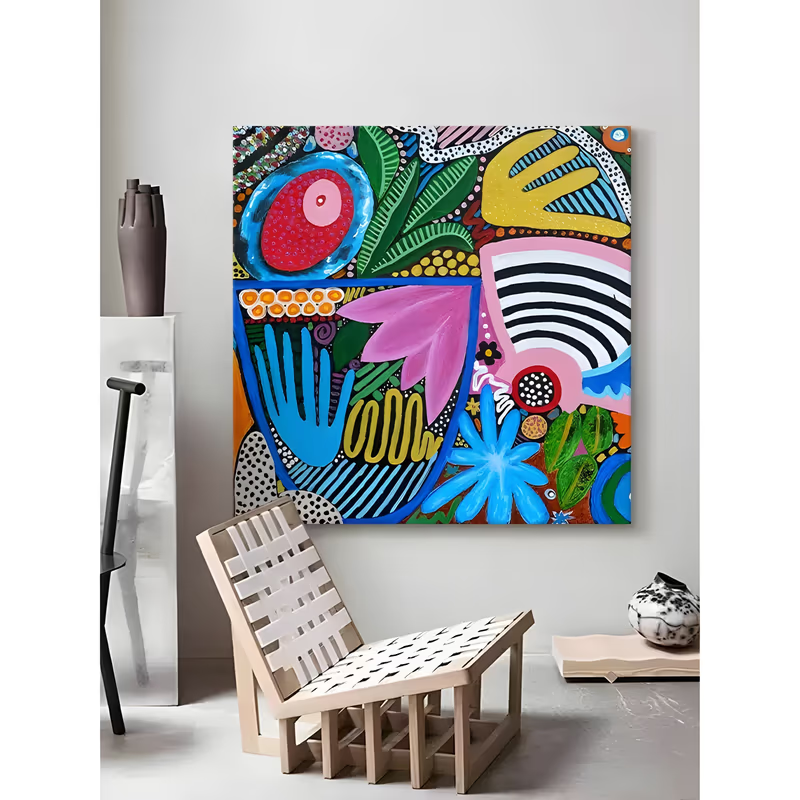
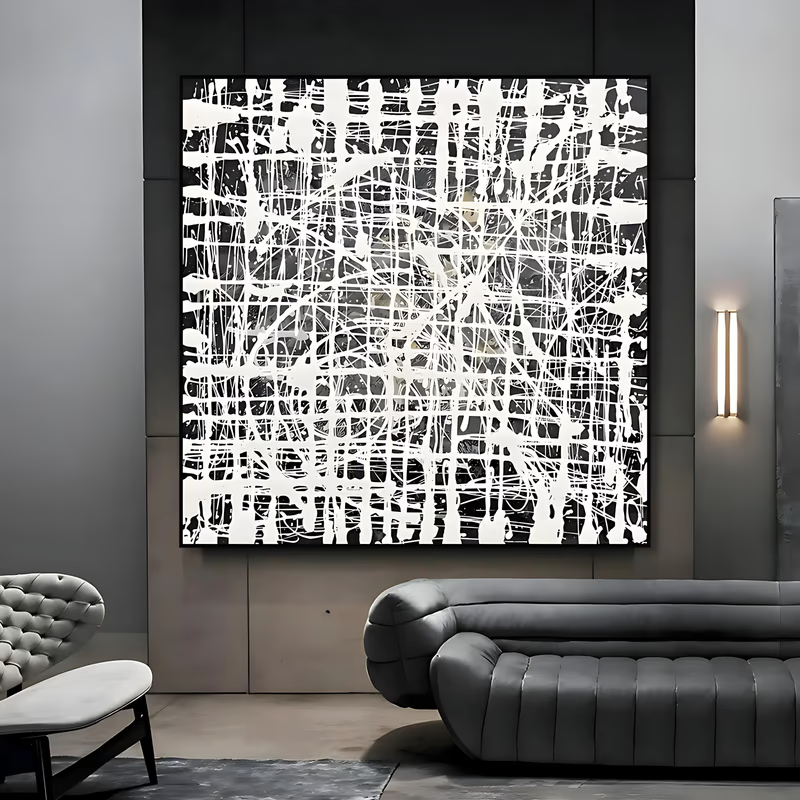
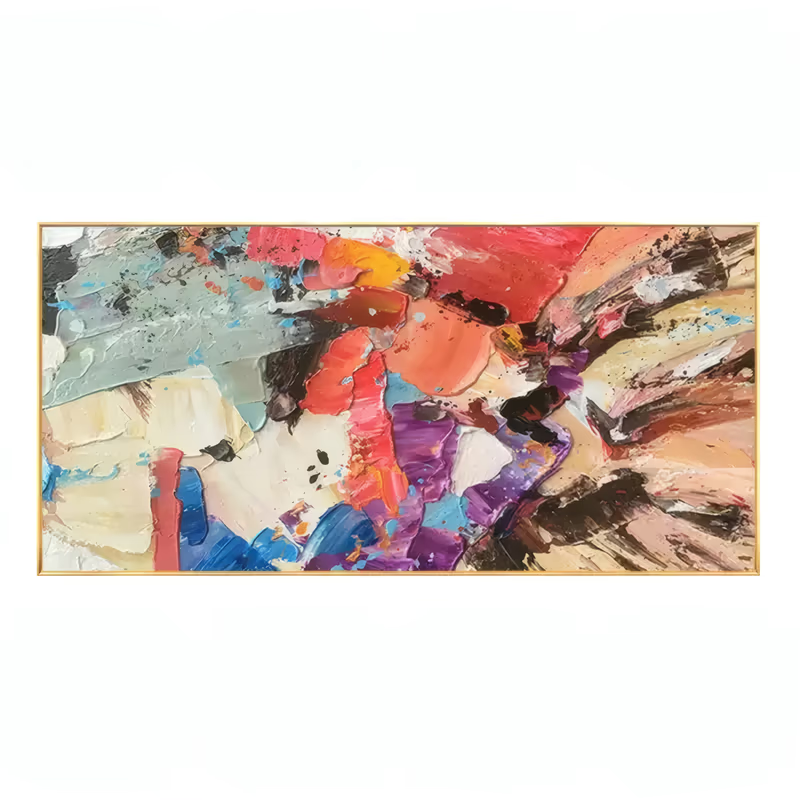
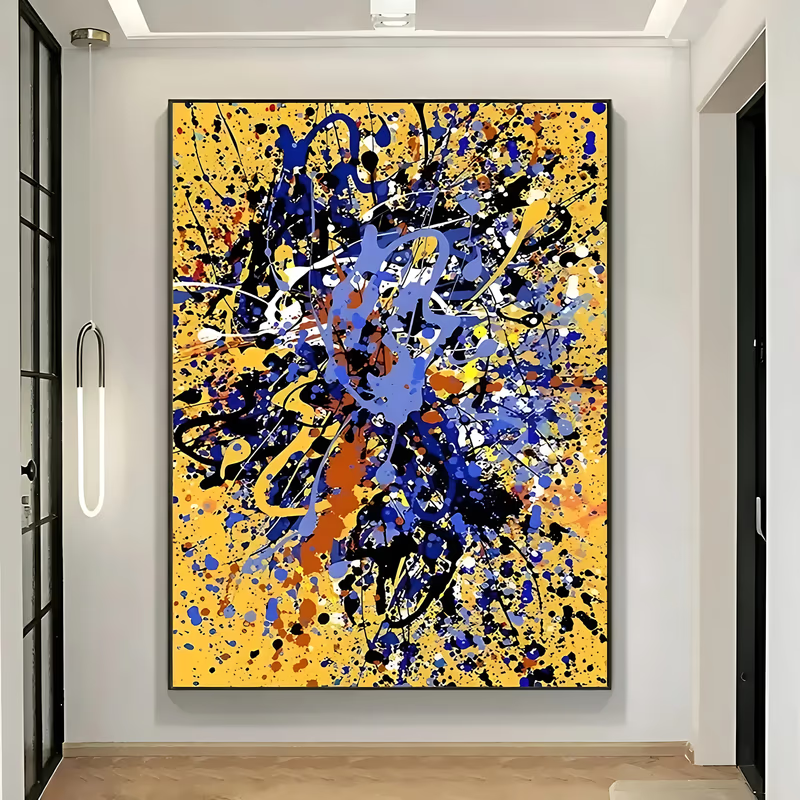
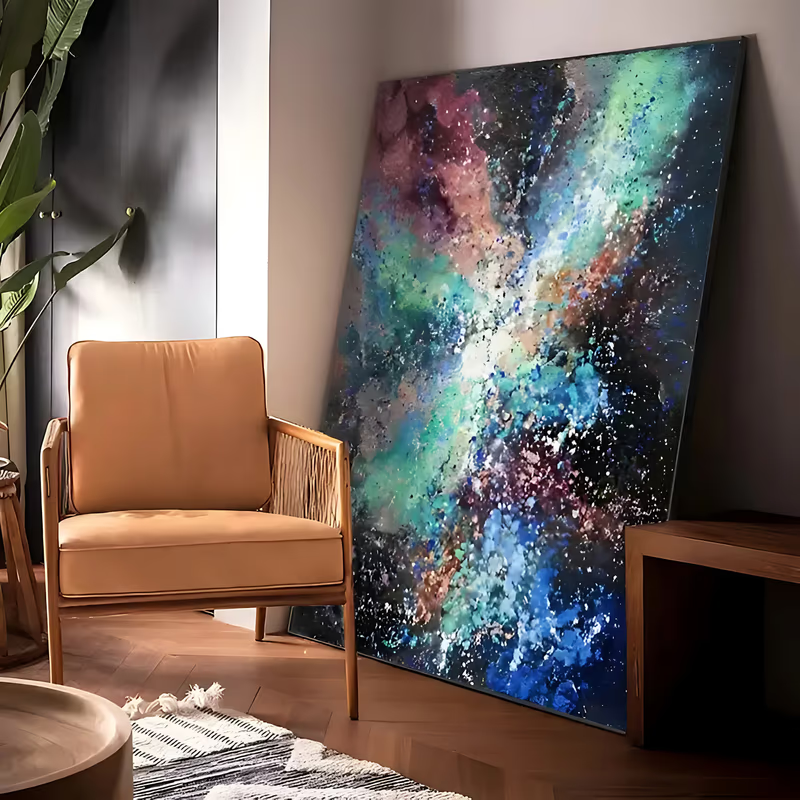
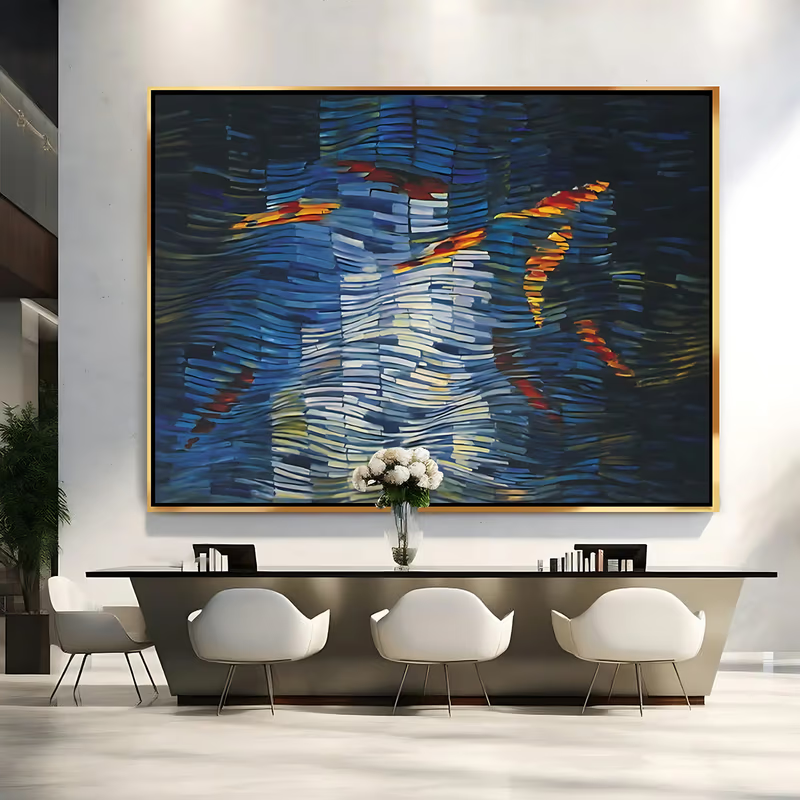
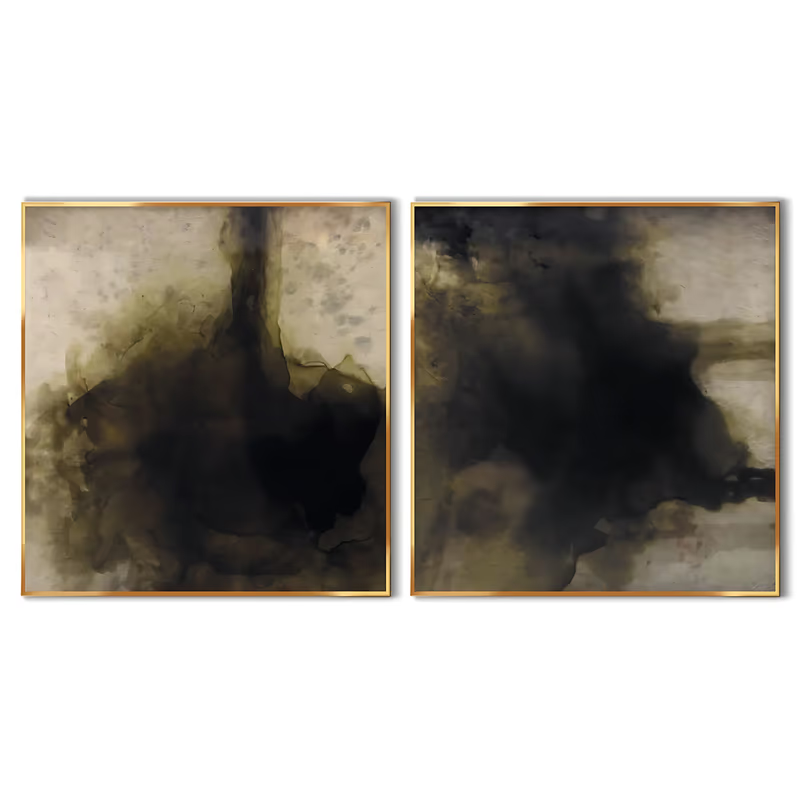
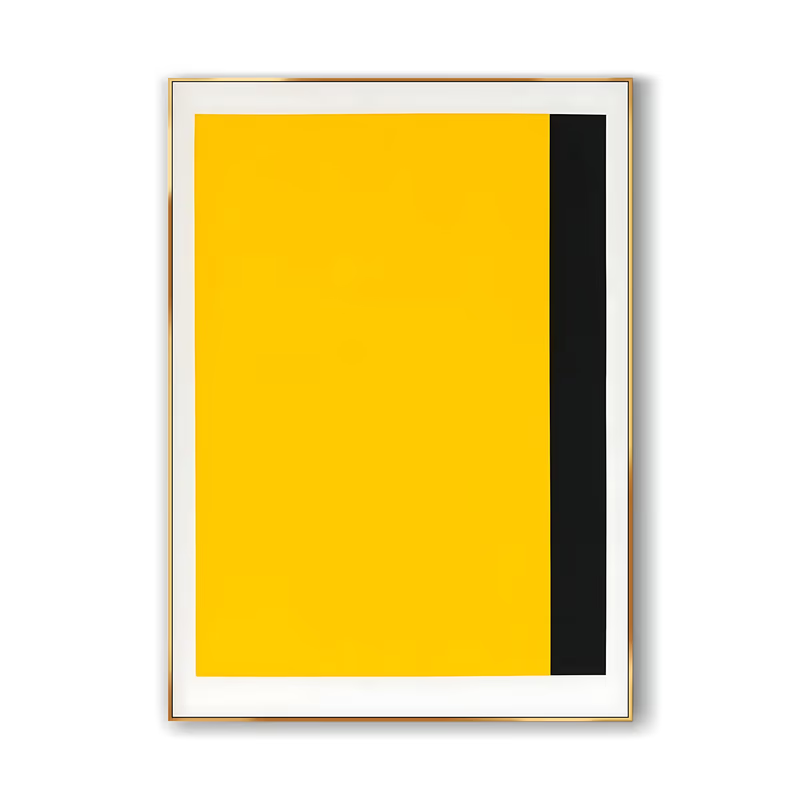
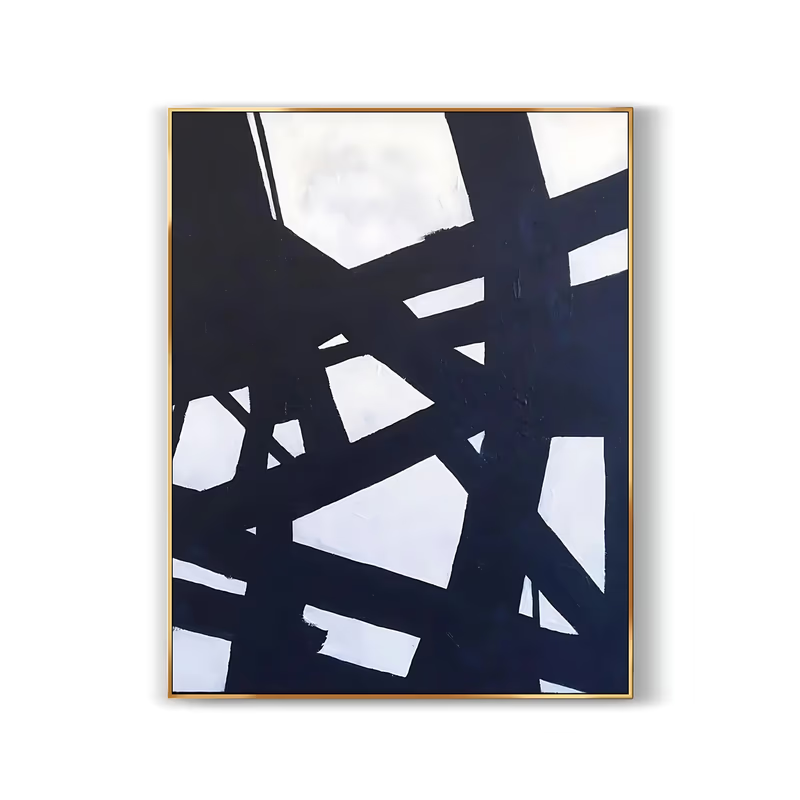
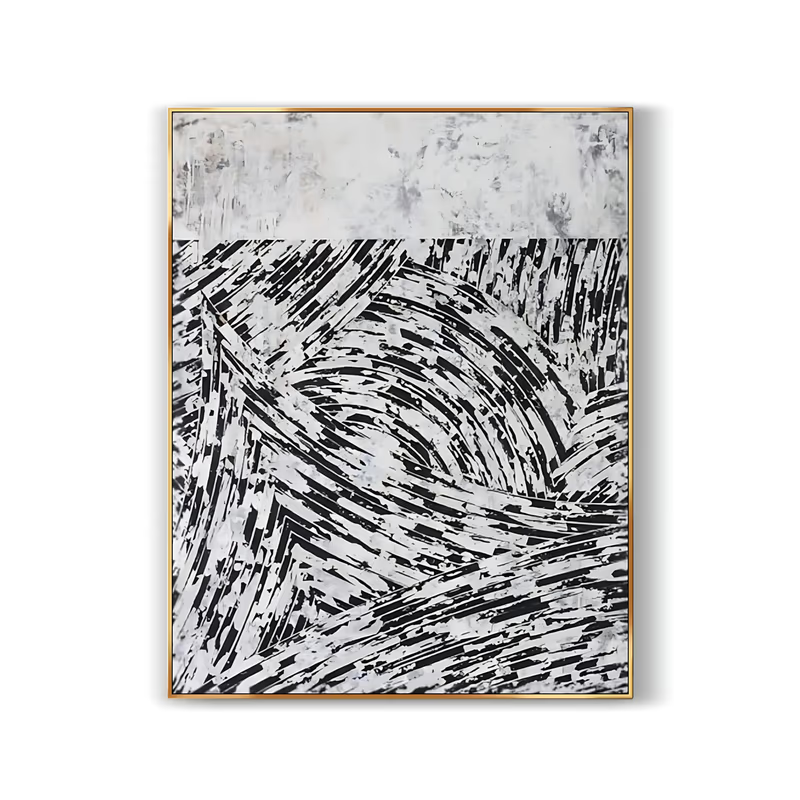
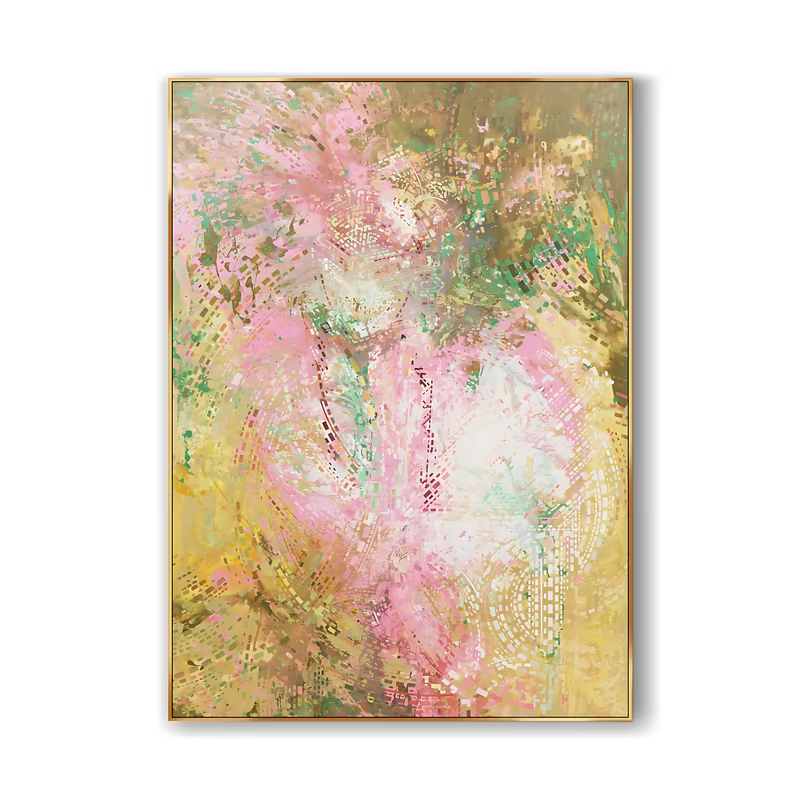
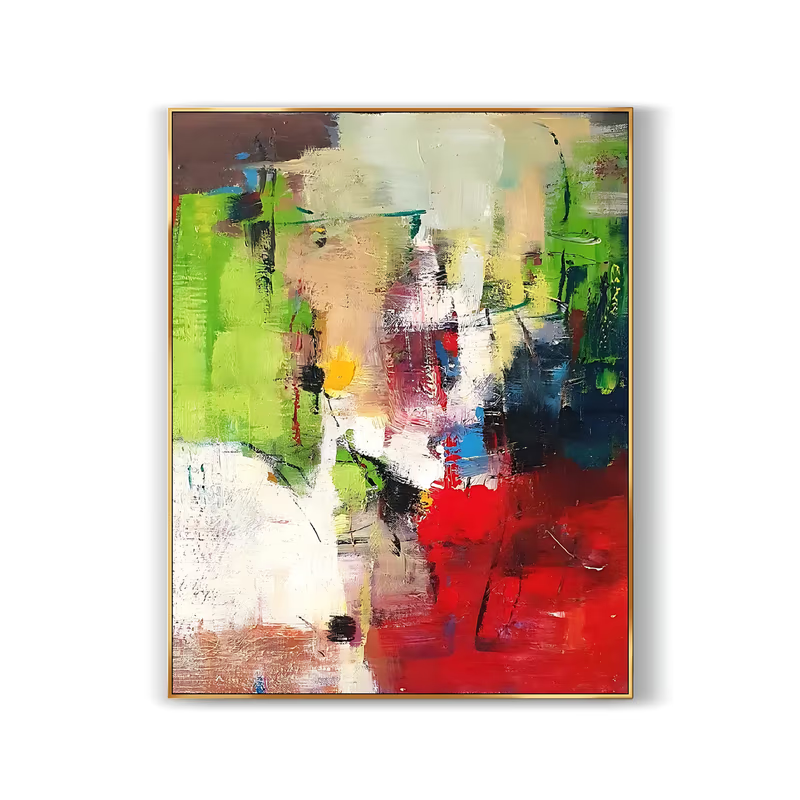
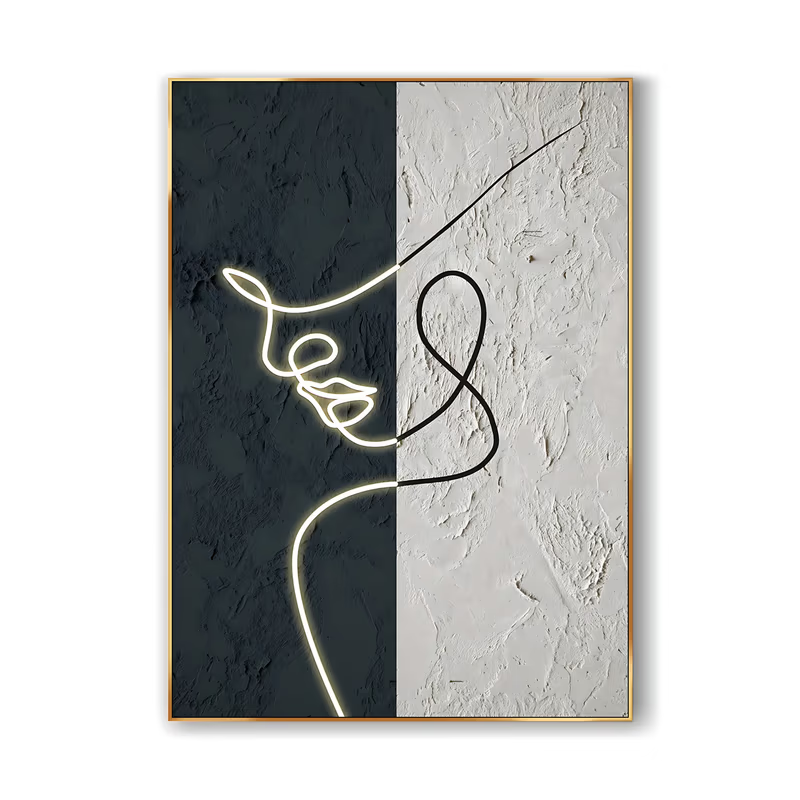
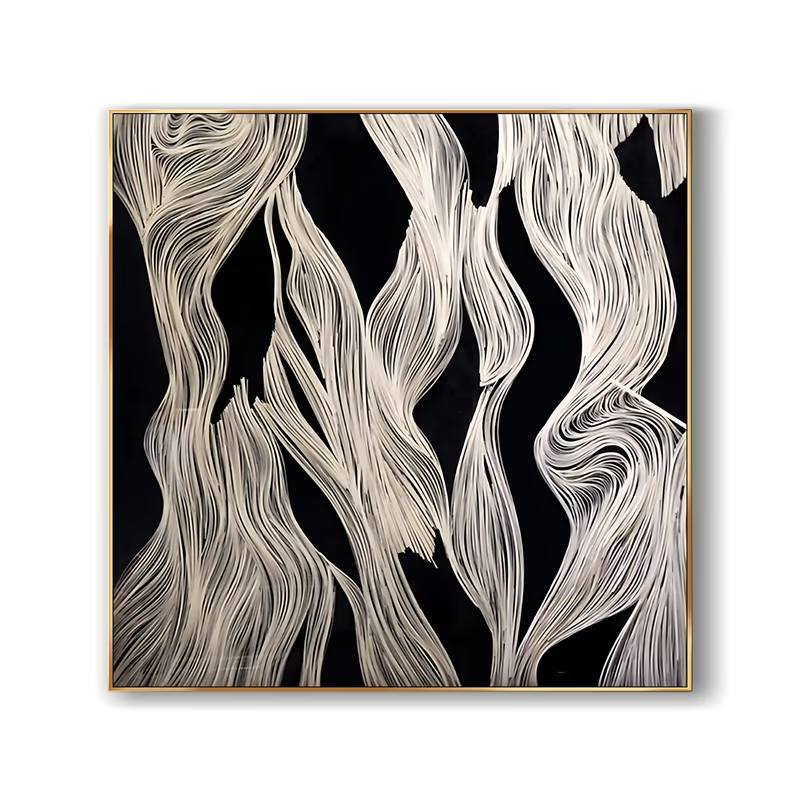
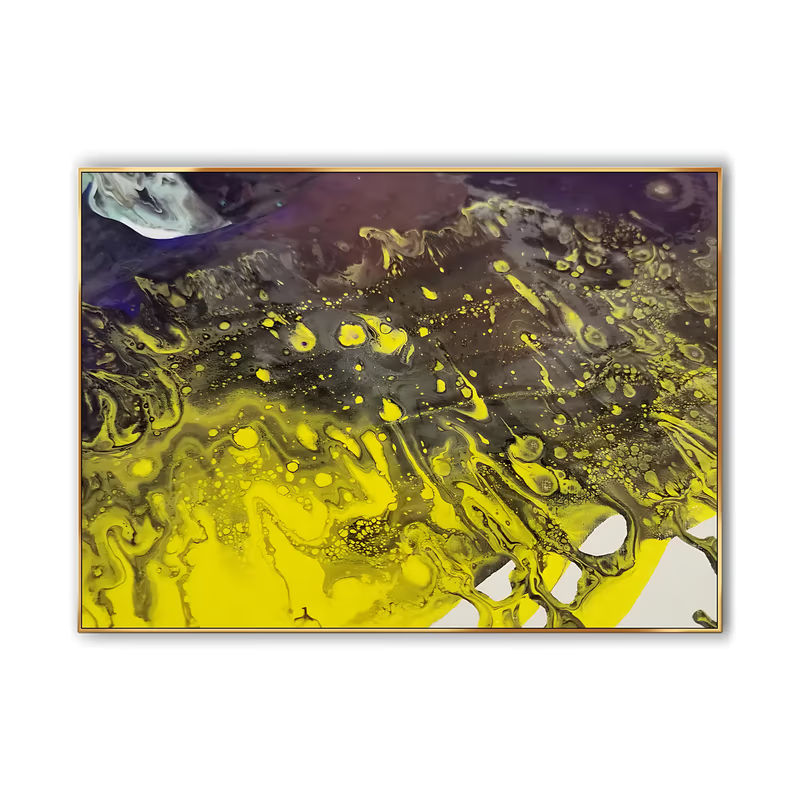
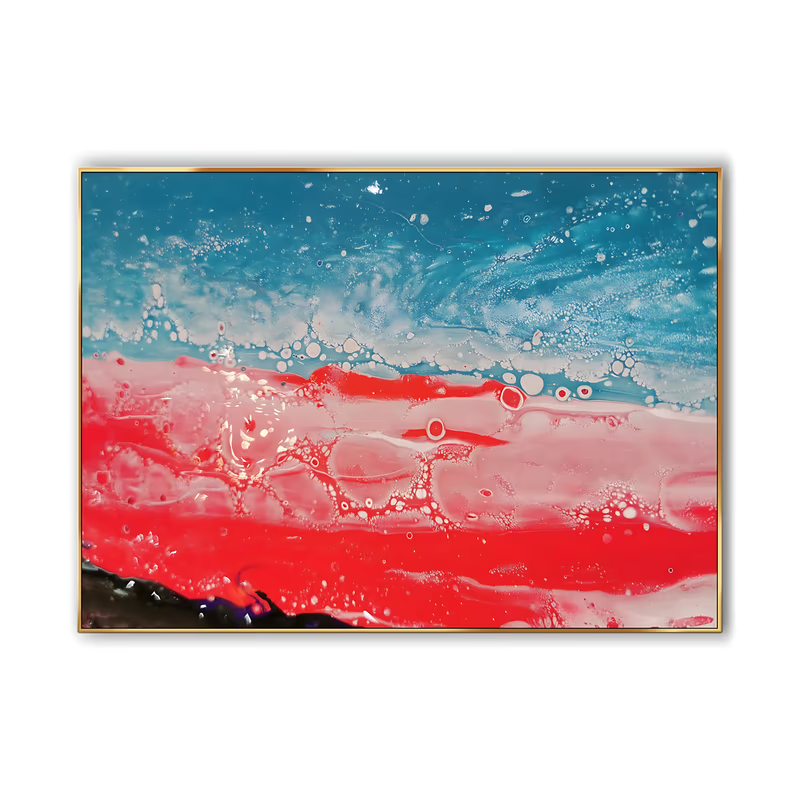
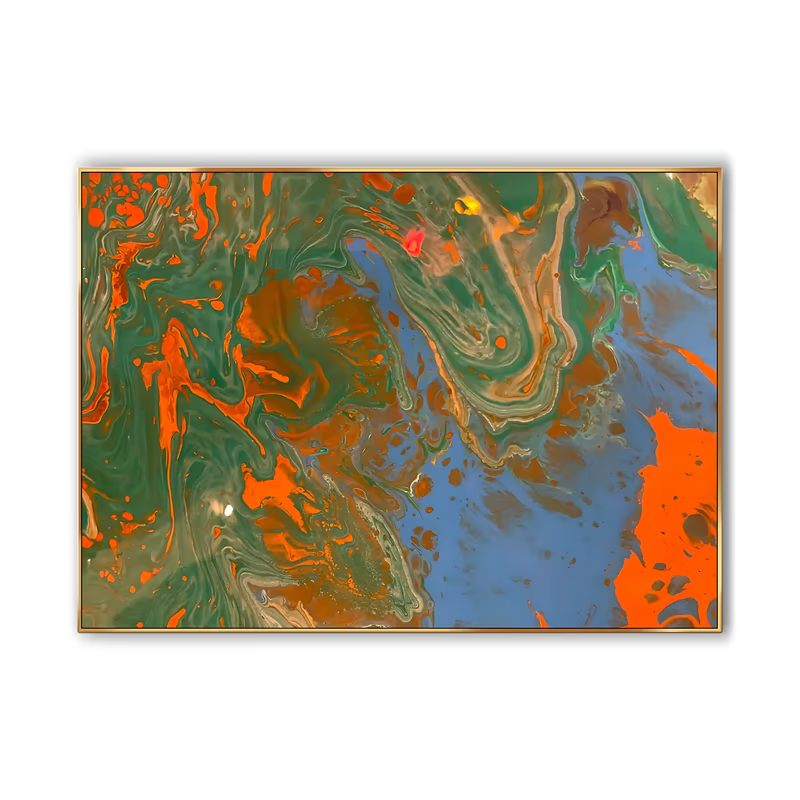
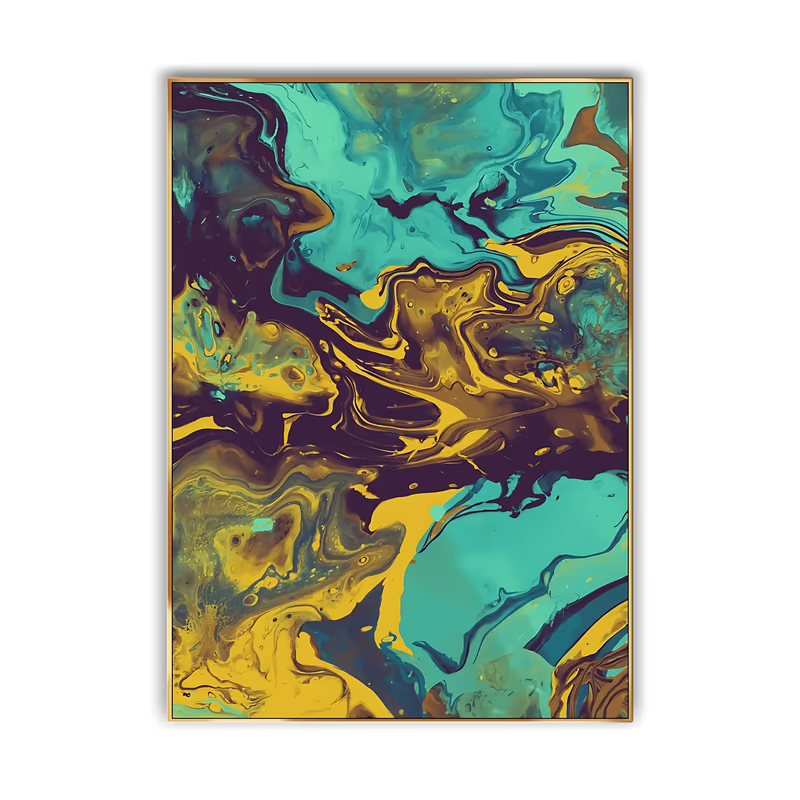
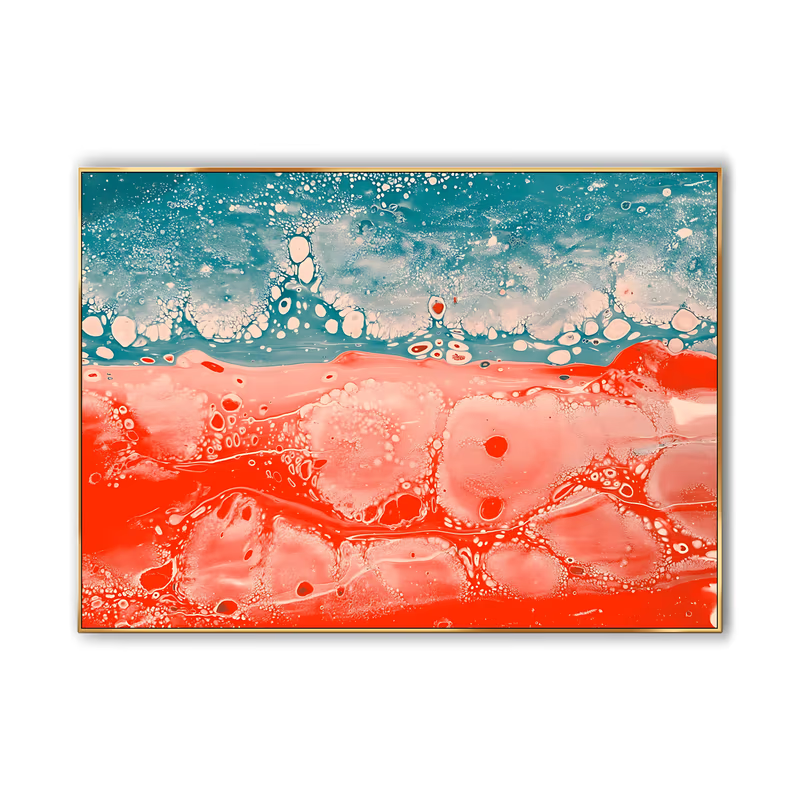
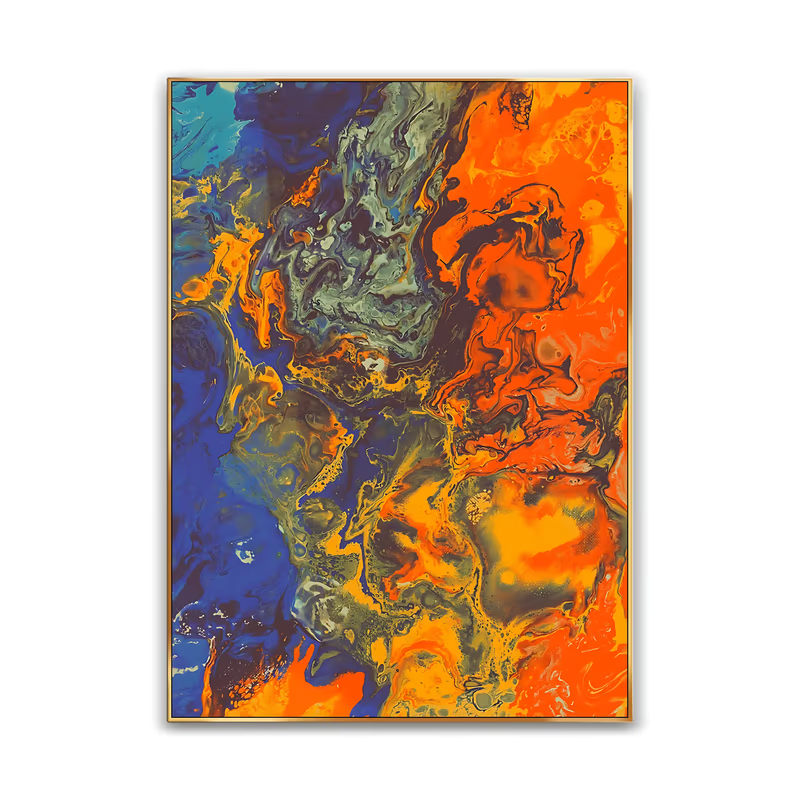
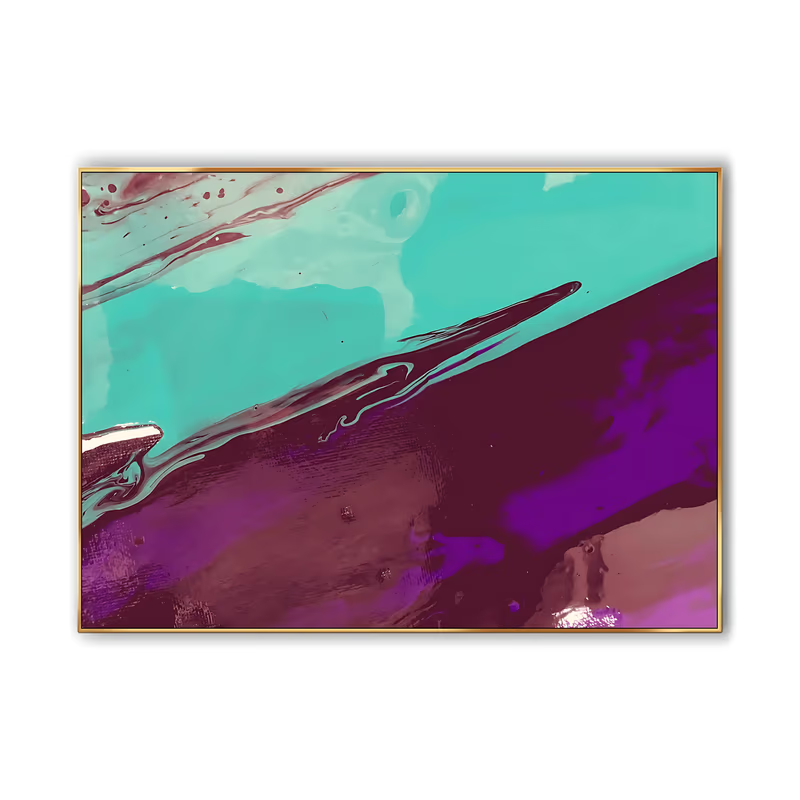
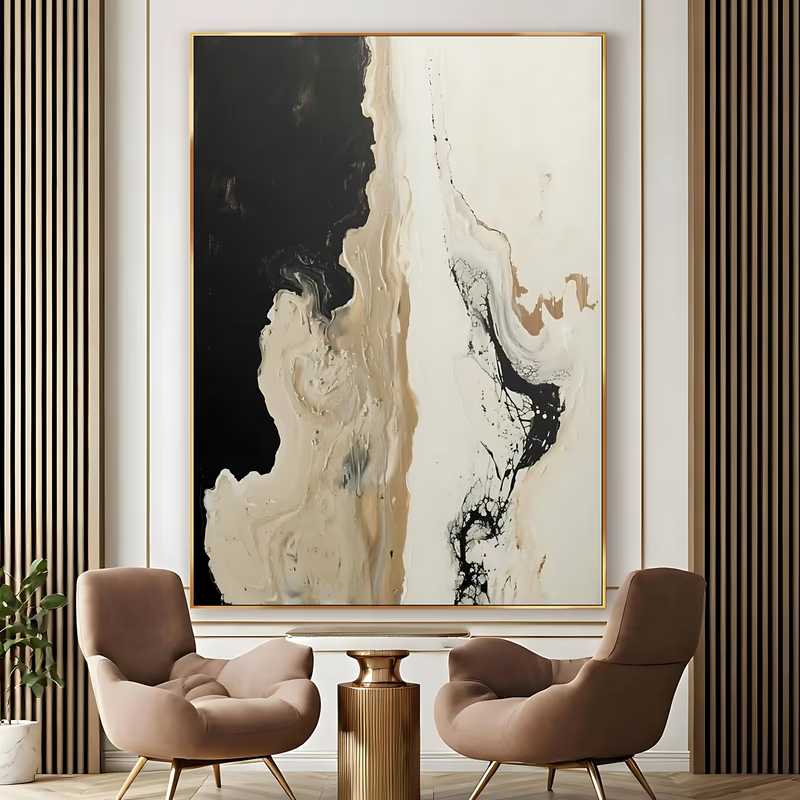
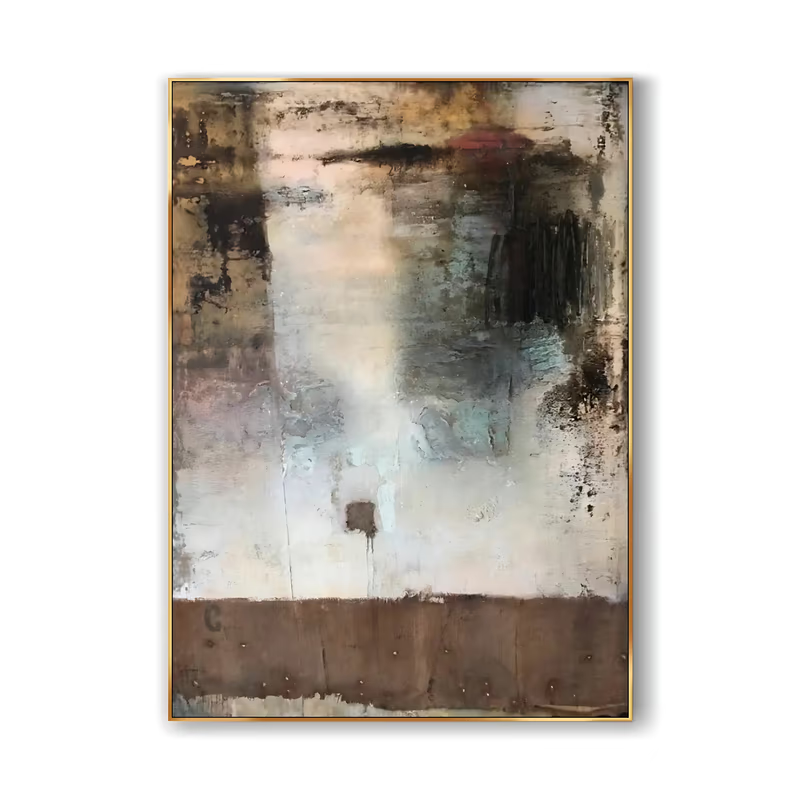
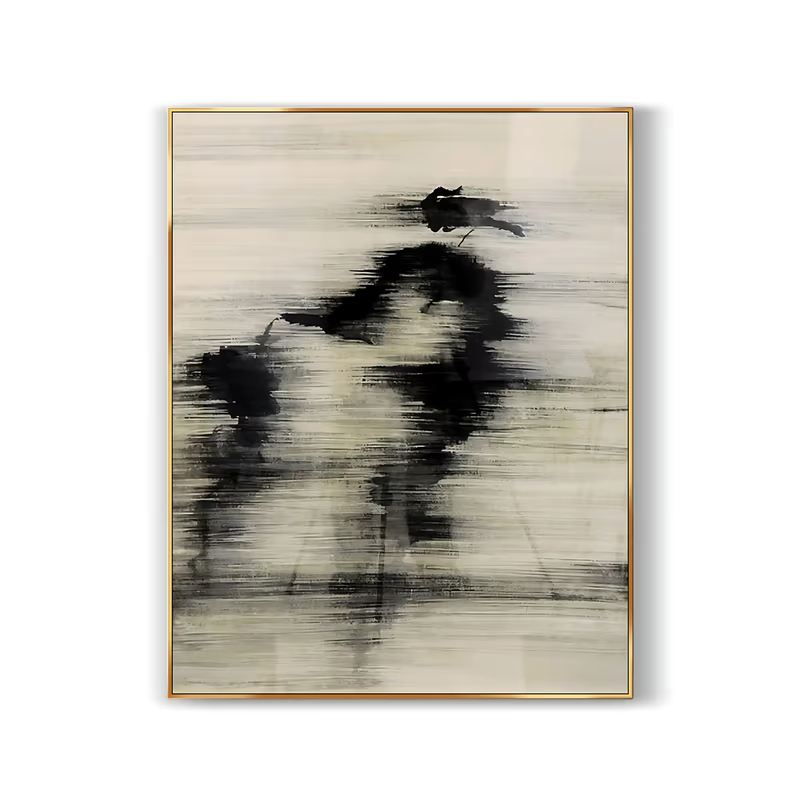
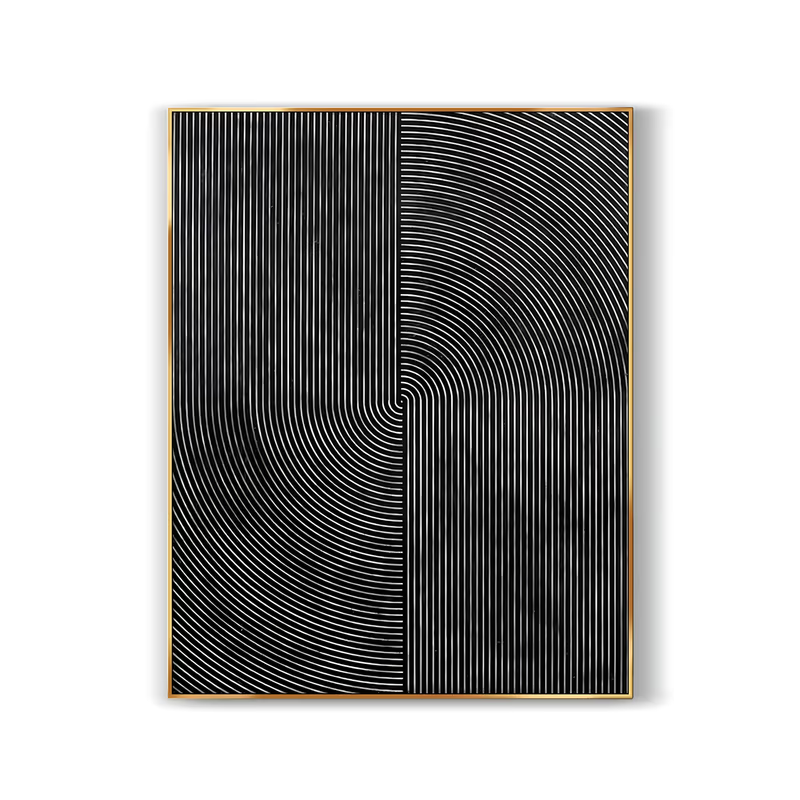
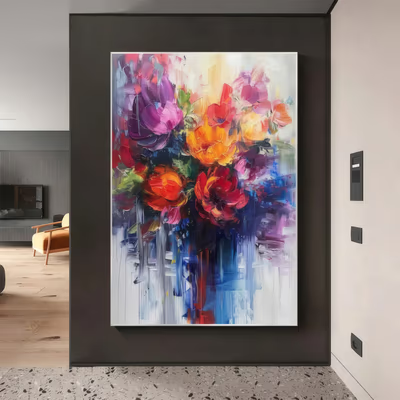
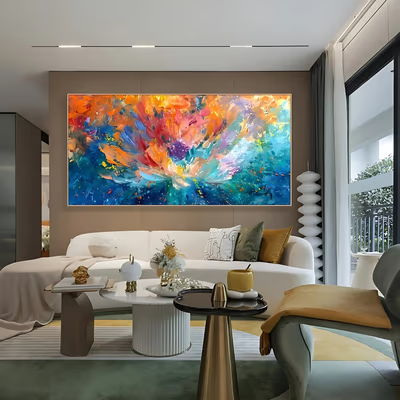
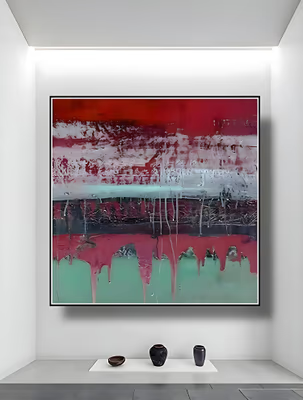
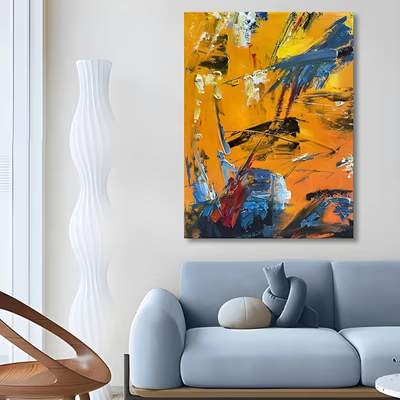
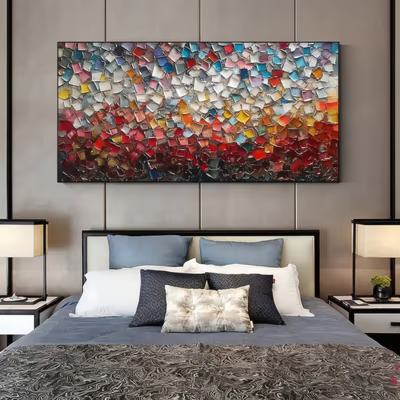
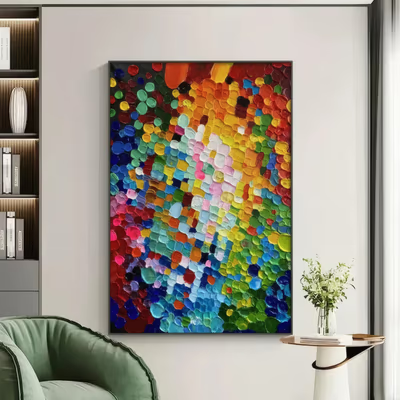
Cobalt, magenta and yellow colour blocks, crimson and emerald knife strokes, teal and gold-foil marbling, black plaster fields with white ridges. The strongest backdrop for a fashion or design store, and the easiest to tune to a brand palette. See abstract canvas art for the full style.
Where should art hang in a store or showroom?
Hang store art on the walls customers see from the entrance and from the queue: the back wall, behind the cash desk, and at the end of the main aisle.
Walk in from the street and note what you see first. In most shops it is the back wall, and a large canvas there draws people through the whole space, past the product. The wall behind the cash desk is the second priority, because customers stand facing it while they pay. Fitting rooms, lounges and the end of each aisle are good places for smaller pieces that reward people who linger.
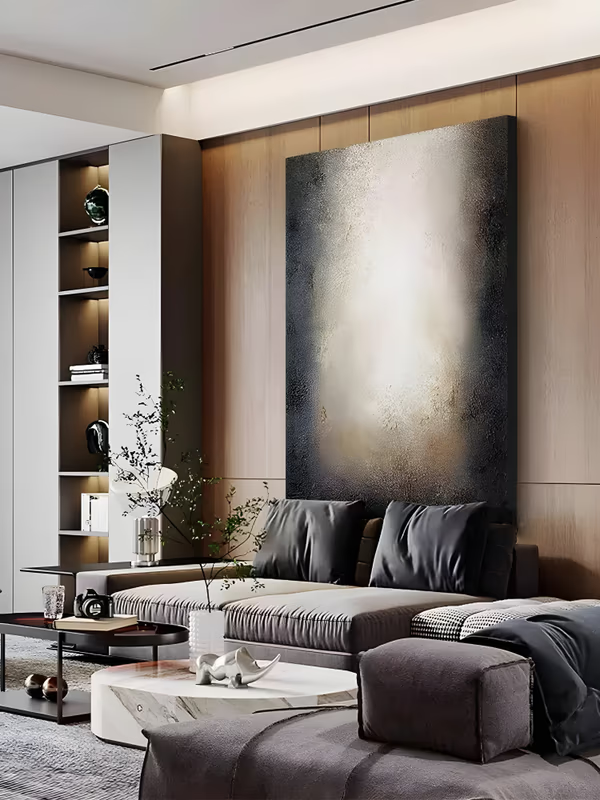
Keep art above fixture height on walls lined with shelving or rails, so it frames the merchandise rather than competing with it at eye level. Narrow piers between windows suit tall vertical canvases. In a showroom, hang art as you would in a home, over the sofa or bed in each room set, so customers picture it at their own place. In shop windows, strong sun through glass fades any painting over time, so rotate window pieces back into the store every few weeks.
How big should art be in a retail store?
Retail store art needs to be bigger than home art: large enough to read from the entrance, and scaled to tall ceilings and long sightlines.
Shops are seen from further back than living rooms, and ceilings are often 3–4 m (10–13 ft) or more. As a working guide:
- Back wall seen from the door: if the wall is 8–15 m (26–49 ft) from the entrance, a canvas 150–200 cm (59–79 in) wide or a group spanning that width.
- Behind the cash desk: at least the width of the counter, centred on it, with the bottom edge clear of the till and any screens.
- Above fixtures: start 20–30 cm (8–12 in) above the top of the shelving, and use panoramic canvases to run along the top of a long wall unit.
- Gallery and showroom stock: hang at a centre of about 150 cm (59 in), like a home, so buyers judge it at the height it will hang for them.
A larger canvas in a store is rarely a mistake; an undersized one looks like an afterthought. Every design here can be painted larger, see oversized and custom-size art.
How do galleries and resellers stock original art from a trade supplier?
Start with a small, varied selection, watch what sells, then reorder the designs that work in new sizes and colourways.
Because every canvas is painted to order, a gallery or shop does not have to commit to deep stock. Order a first selection across subjects, sizes and price points, hang it, and let customers show you what they respond to. A design that sells well can be painted again, in the same palette or a new one; it will never be identical, because each one is hand-painted, which is part of its appeal to the next buyer. The minimum order is one piece and volume pricing starts at 10.
Framers often prefer canvases shipped rolled, so they can stretch and frame them in house and add their own margin on the framing; others take them stretched and ready to hang. Furniture showrooms tend to order sets sized to their room settings. There is more on each route in art for galleries and framers, art for furniture showrooms and flagships and art for online sellers.
How do you keep store art consistent across several shops?
Build a short list of compositions and paint each one in colourways for each branch, so every store feels like the same brand without hanging copies.
A retail chain needs the art to say the same thing in every location, but identical canvases in every shop look mass-produced, which works against the reason for using original art. Keep the composition and vary the palette, size or orientation to suit each store's walls and light: the flagship gets the panoramic version, a smaller branch the vertical. The pieces are related, not repeated.
Approve a sample for the flagship first, then roll the series out store by store. Each piece is painted in about 10 days and spends 5–7 days in transit, with progress photos at every stage, so a visual merchandising team can approve a whole rollout without visiting. Time it against store openings and seasonal refits, and every enquiry is quoted within one business day.
How is shop and showroom art matched to a brand?
Send the brand palette as paint codes, fabric or material swatches, and photos of the store under its own lighting, and the colours are set before the canvas is painted.
Shop lighting is usually brighter and cooler than a home, and it can push colours in unexpected directions, so a photo taken in the store is worth more than a mood board. Any work on this page can be repainted in your colours and redrawn to the size of the wall, and the composition is adapted to the new proportions rather than stretched. You receive progress photos or video at each stage, painting continues only after you approve, and a final photograph is approved before the piece is dispatched.
Canvases ship rolled, stretched without a frame and ready to hang, or framed in gold, silver, black, white or wood; gold and black frames suit most luxury and fashion stores. Delivery is by DHL, FedEx or UPS express to any country, and a larger stock order can also go by air or sea freight; iHomeArt suggests the best route, and the transit time depends on it. Request a quote with your wall list or store plans, or read how custom sizes and colourways work.