Dramatic wall art guide · Updated
How to choose and stage dramatic wall art
Key takeaways
- Drama is tension: a small area of light against a large area of shadow, a strong diagonal, or a moment of force just before it breaks.
- Give it a stage: dramatic pieces need a clear sightline, one focused light and a room people arrive in, such as a lobby, bar or stairwell.
- Dark wall or light wall is a choice: a dark wall makes the painting glow from within; a light wall turns it into a window onto night.
- Size it from the first view: judge scale from the door or the foot of the stair, and expect to go larger than usual.
What makes a painting dramatic?
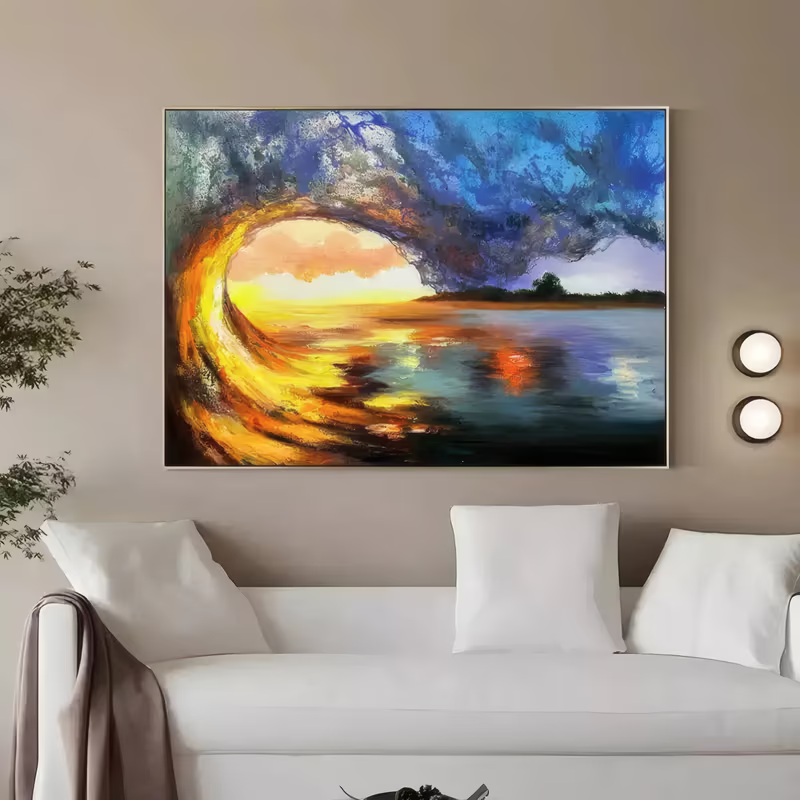
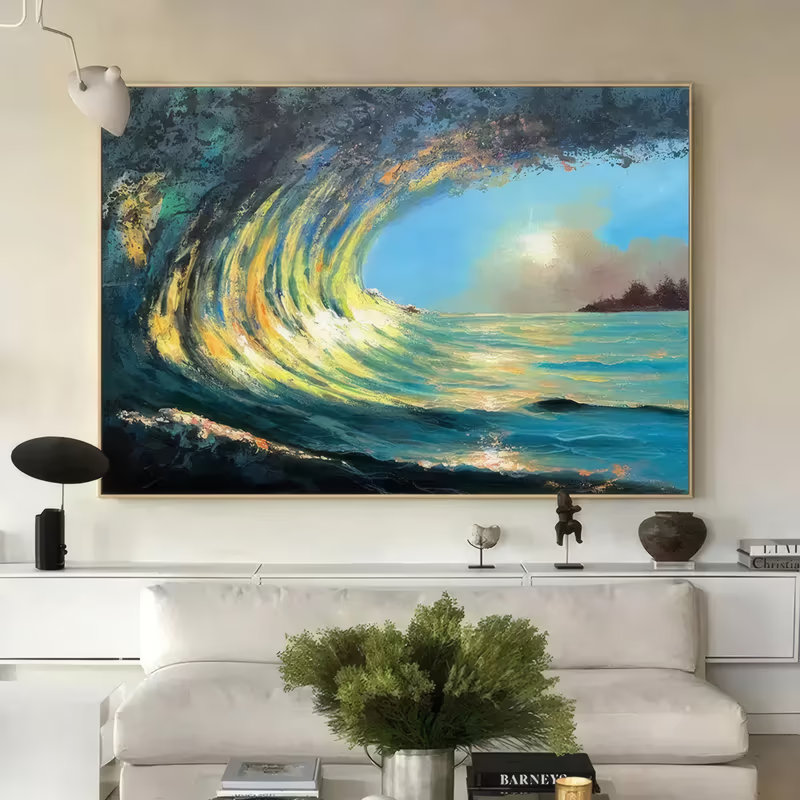
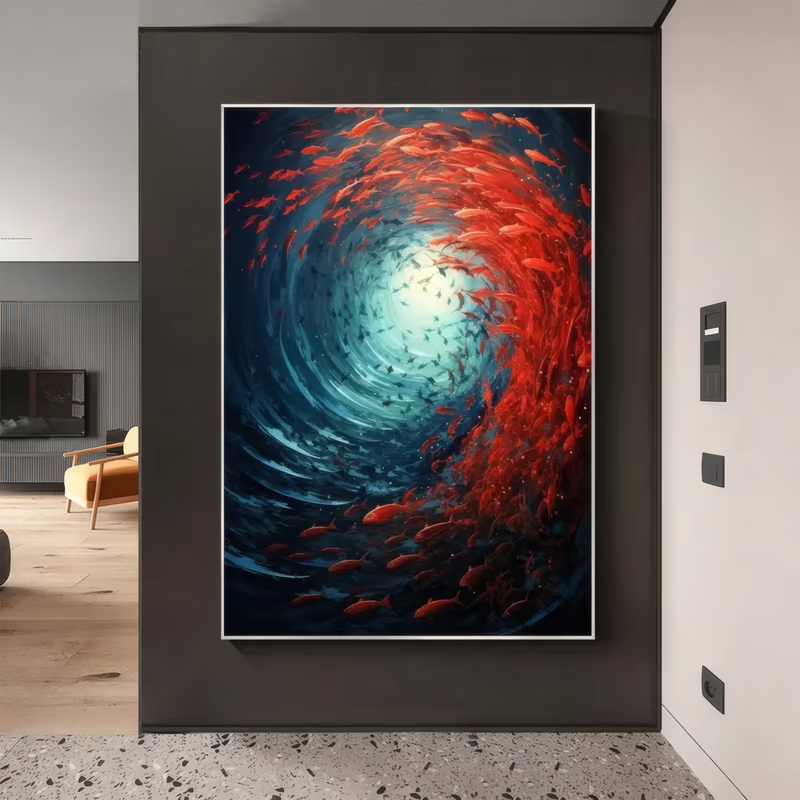
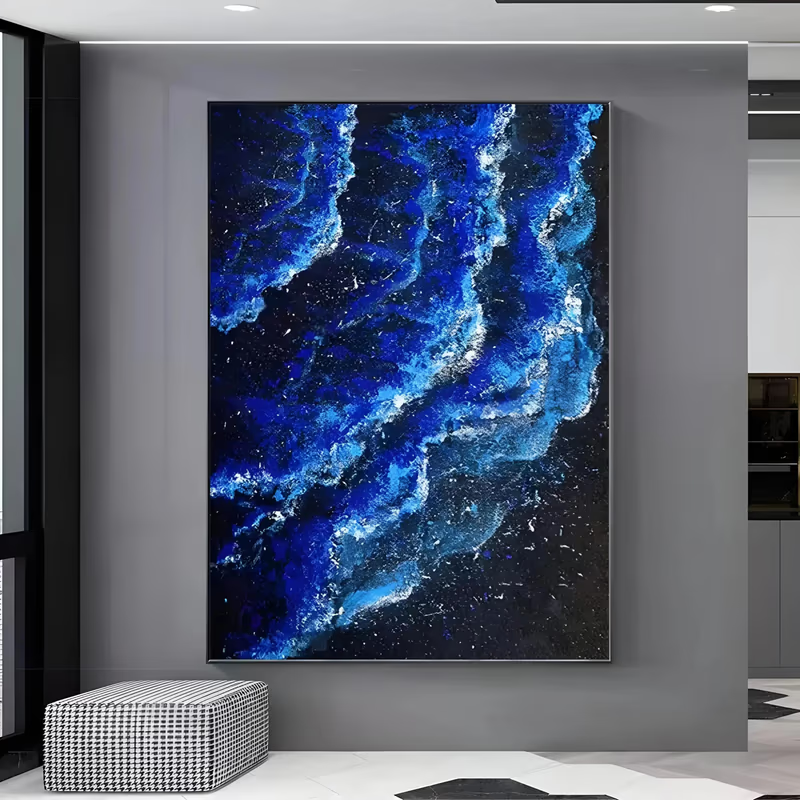
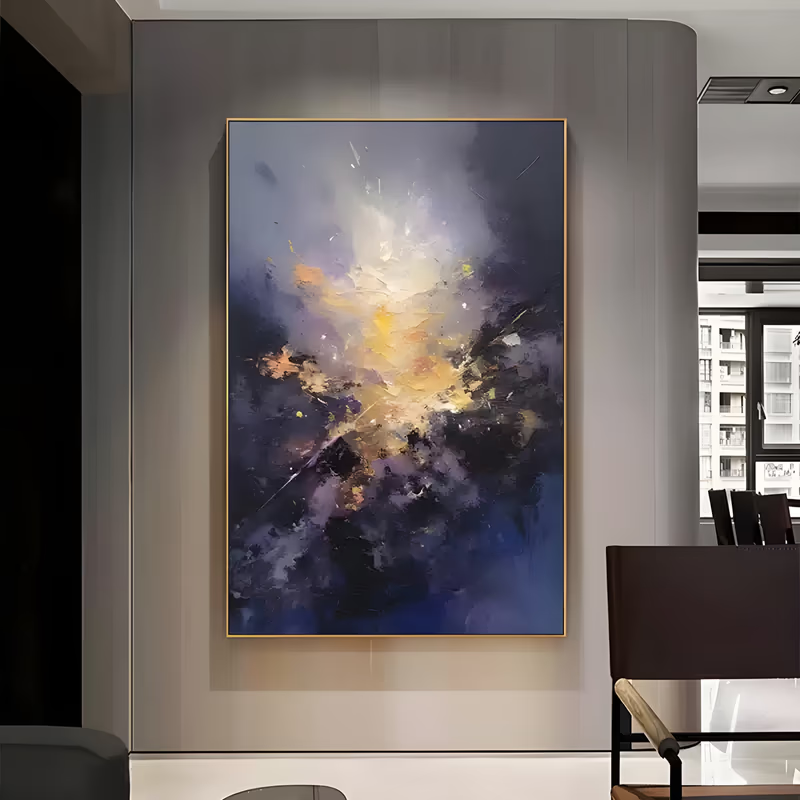
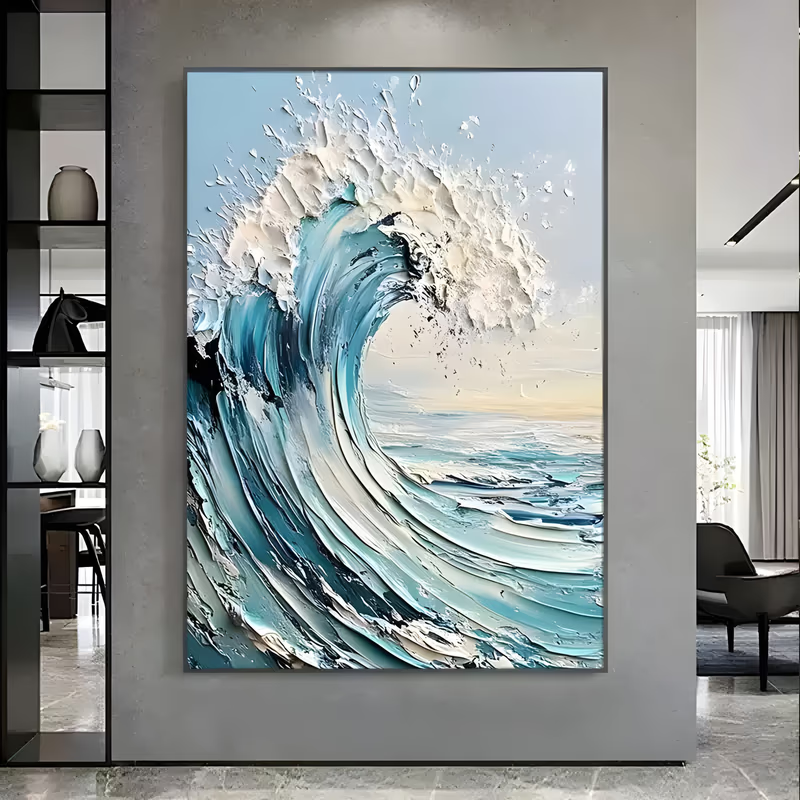
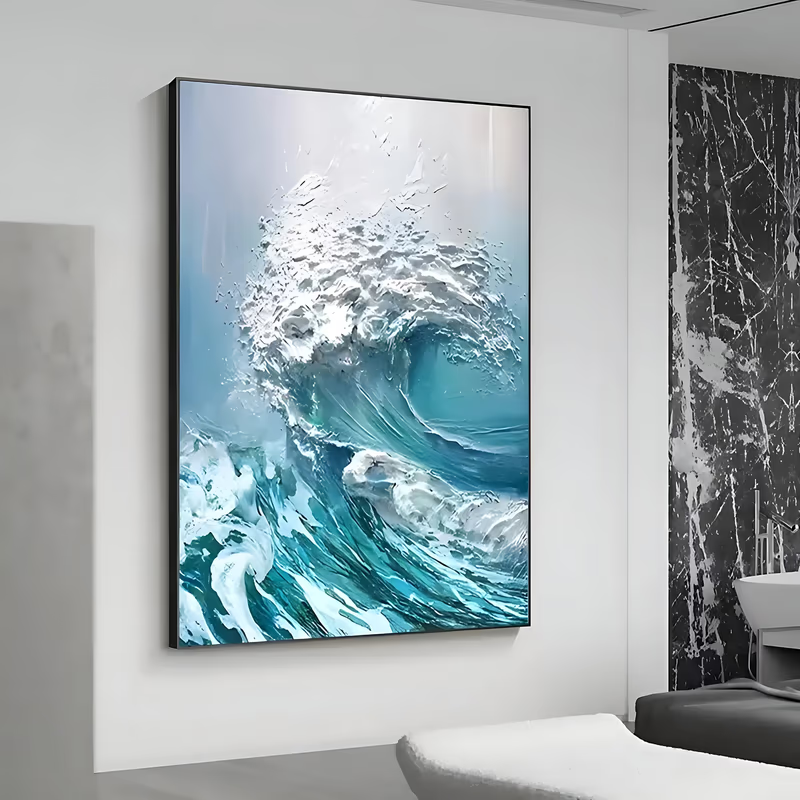
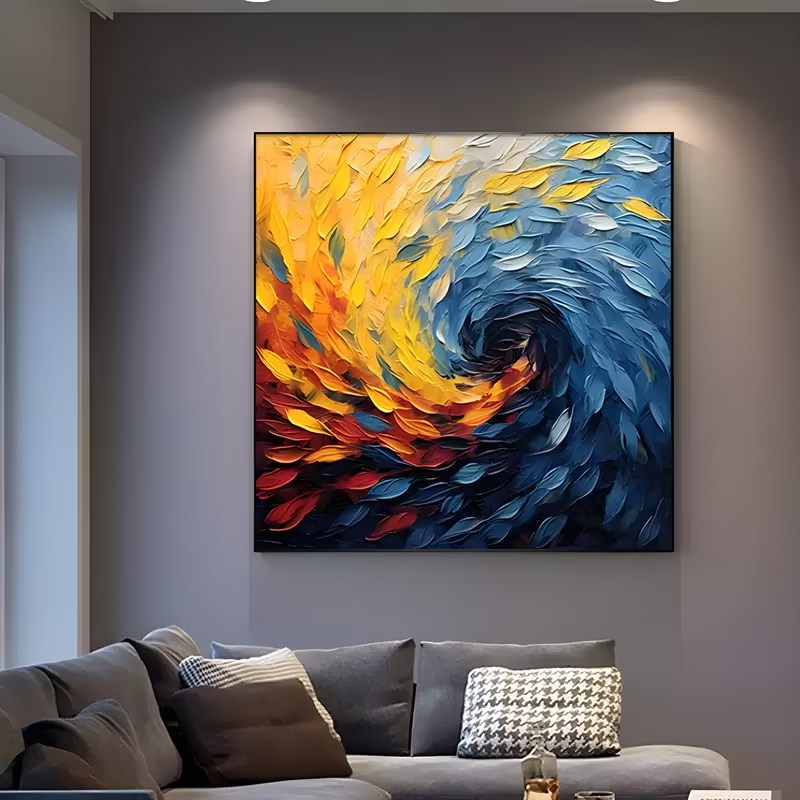
A painting looks dramatic when it holds tension: light bursting out of darkness, a strong diagonal, or a moment of force caught just before it resolves, such as a wave about to break.
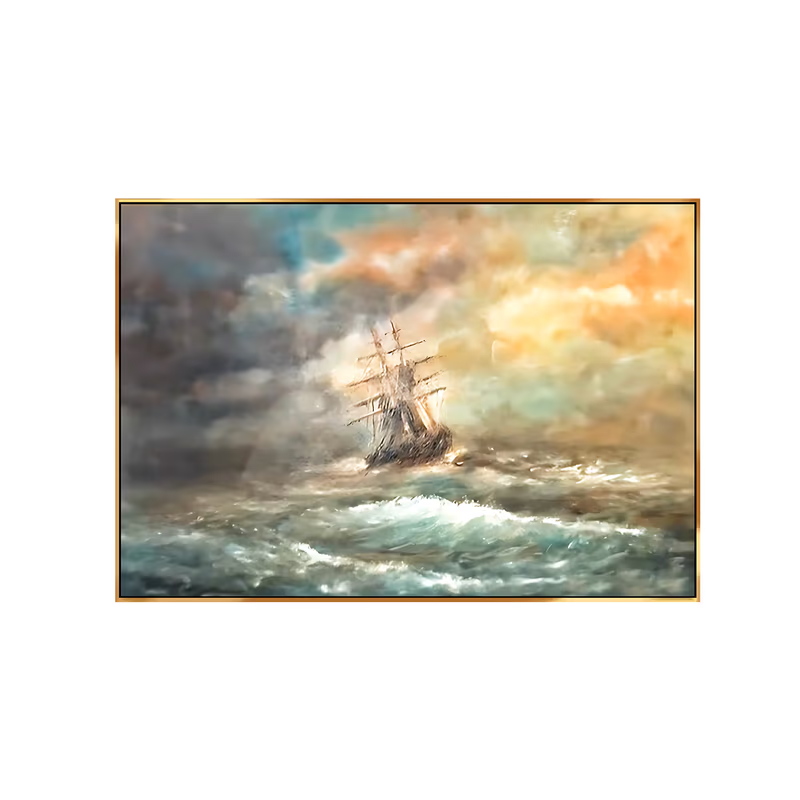
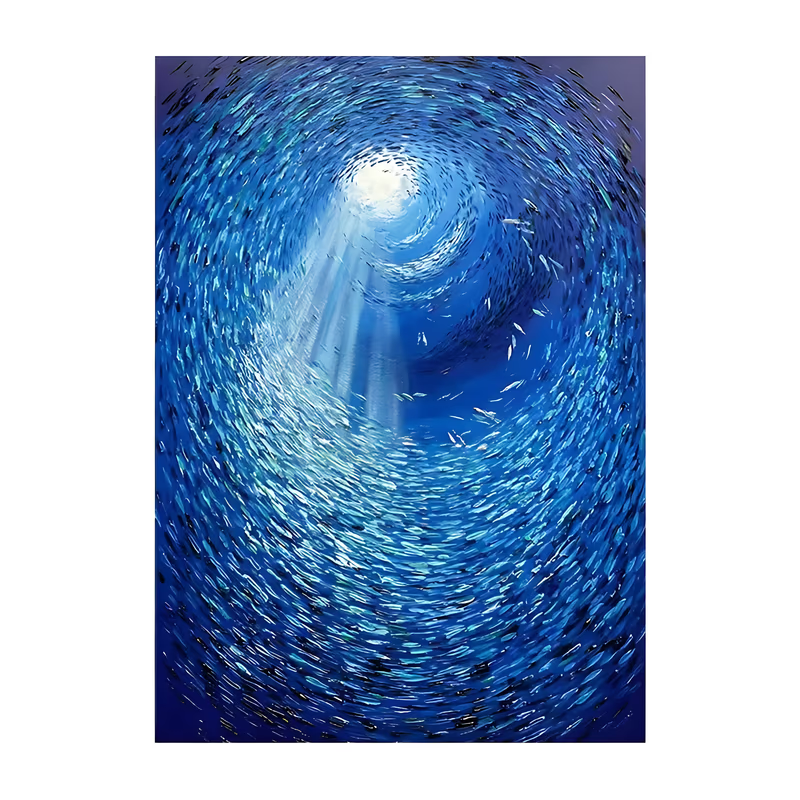
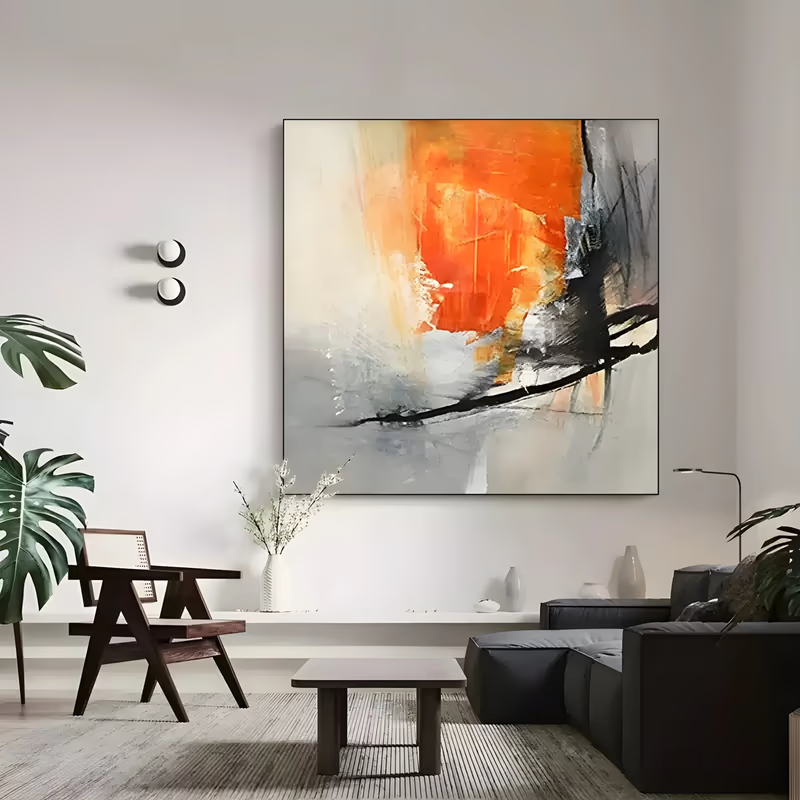
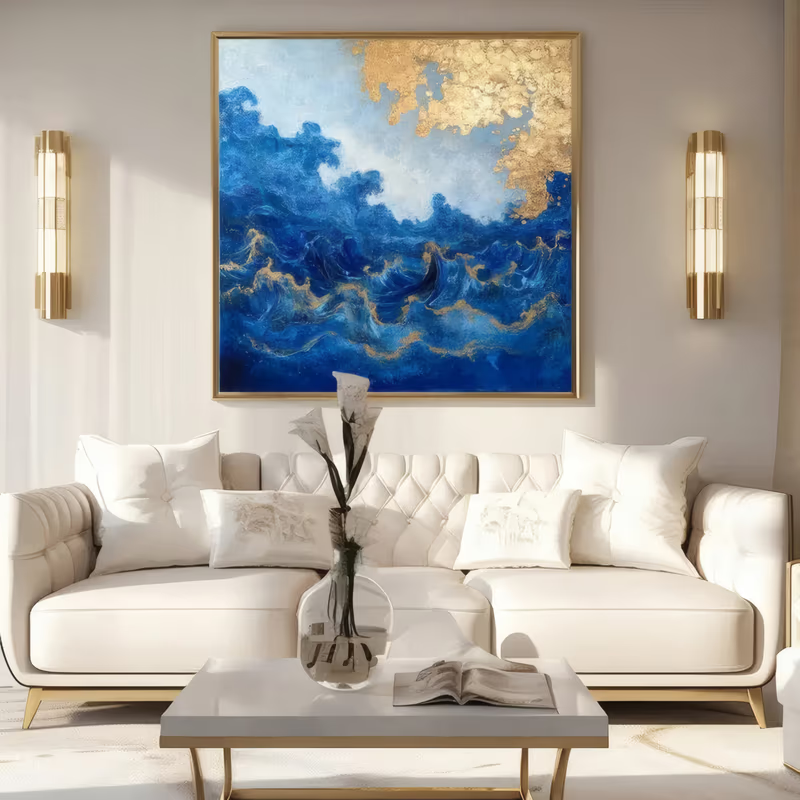
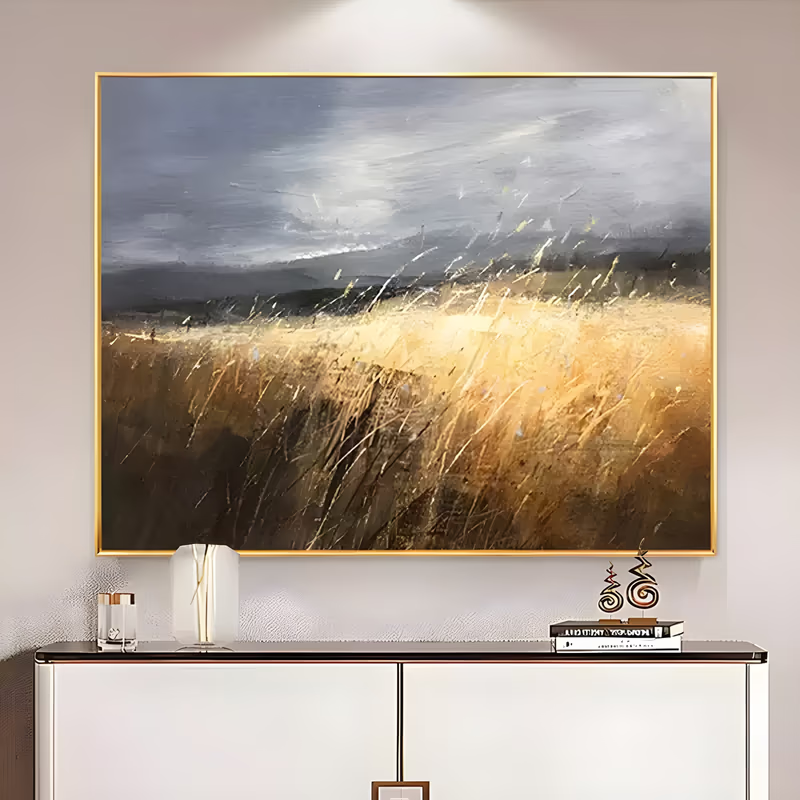
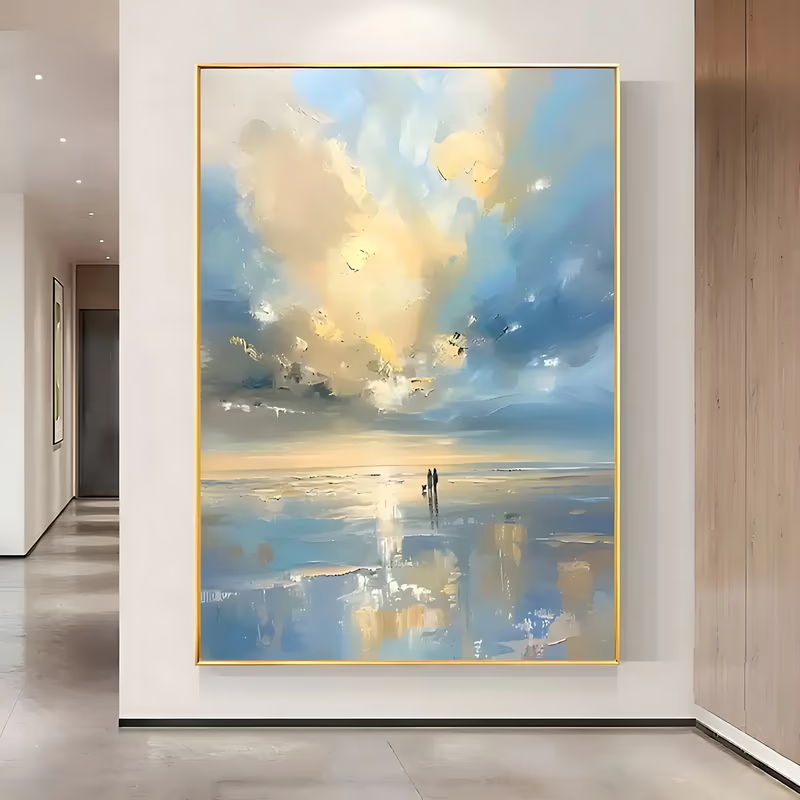
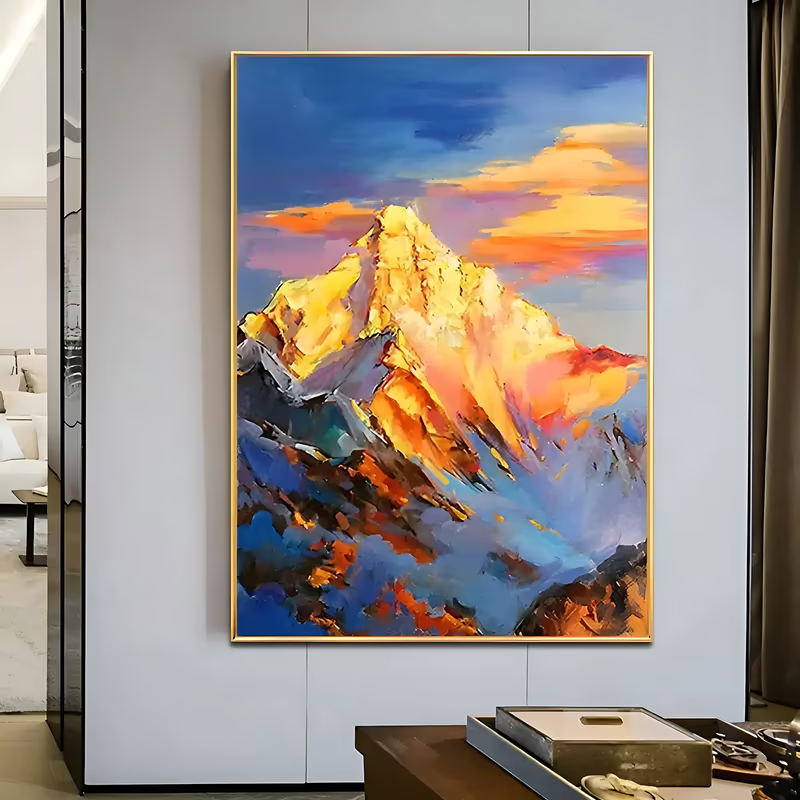
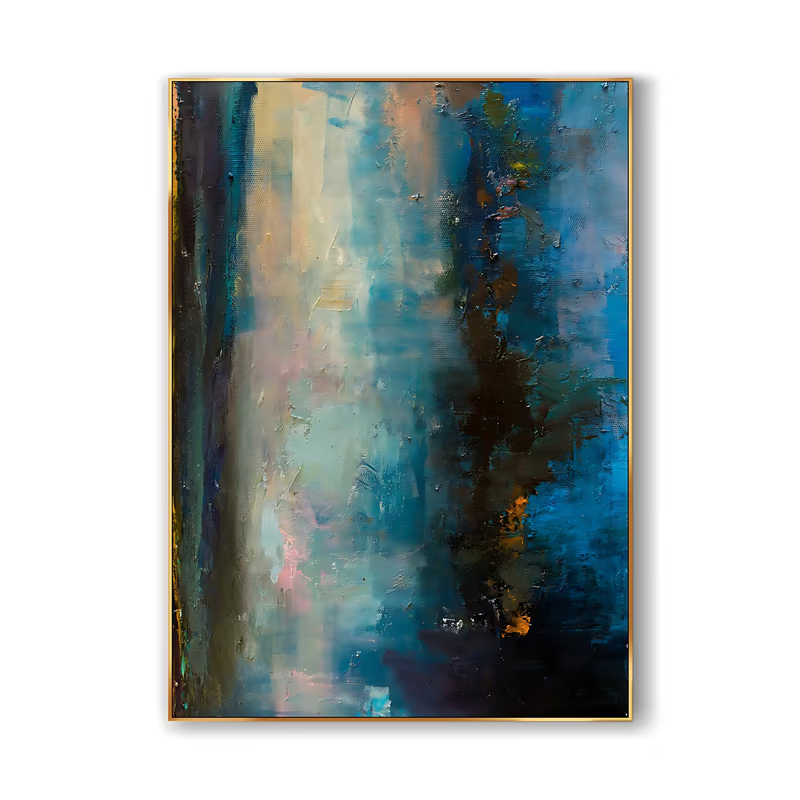
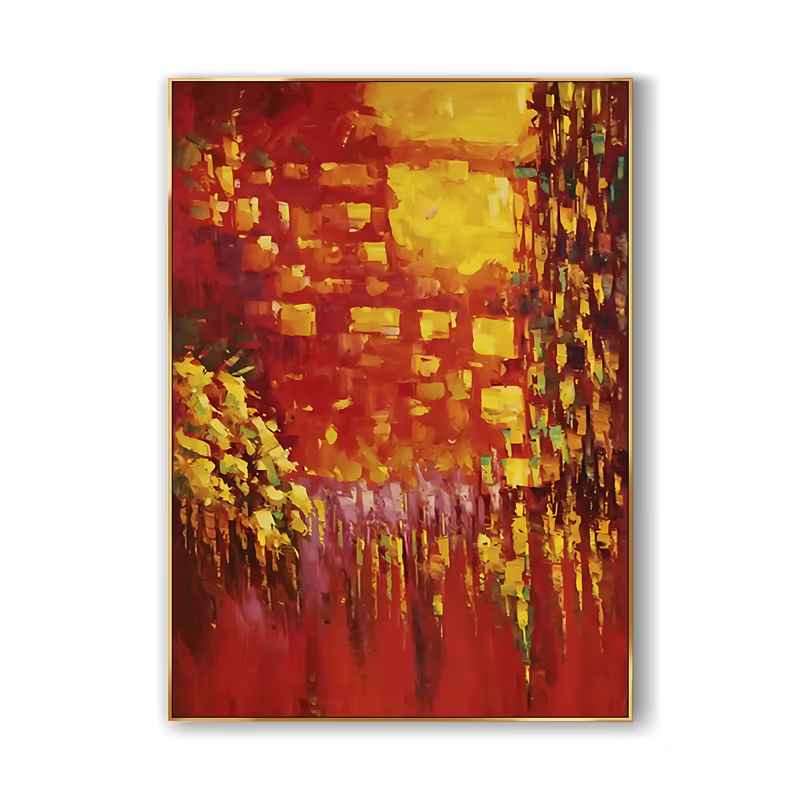
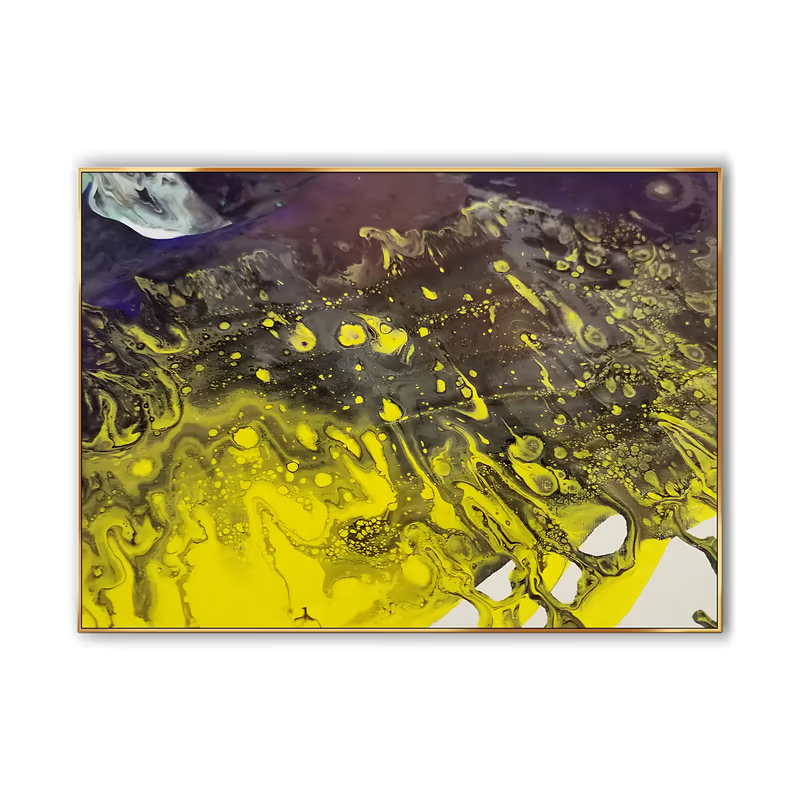
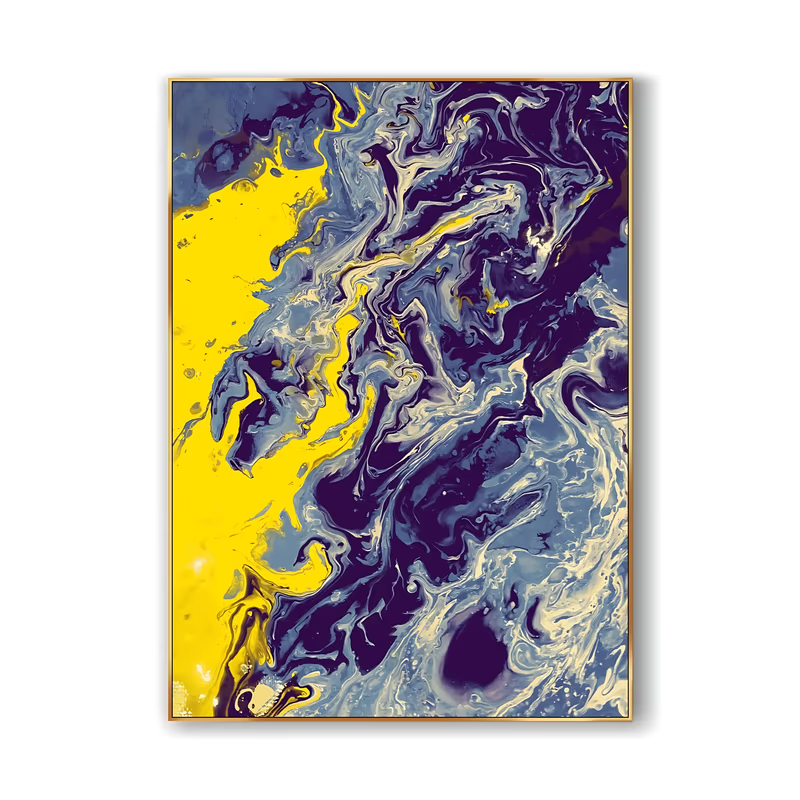
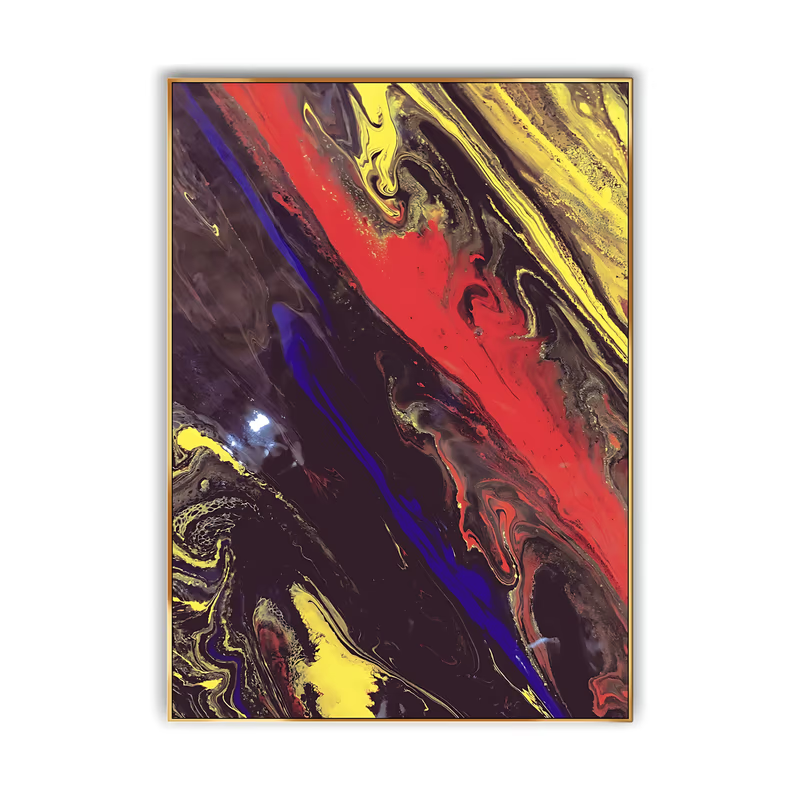
Drama is the sense that something is happening. The quickest way to create it is contrast between light and dark, with a bright passage set against a deep ground so it seems to glow. Composition adds the rest. Diagonals feel unstable and full of motion, where horizontals feel settled. A small figure under a vast sky, a storm front crossing a valley or a curling wave lit gold from inside all carry a sense of scale and suspense.
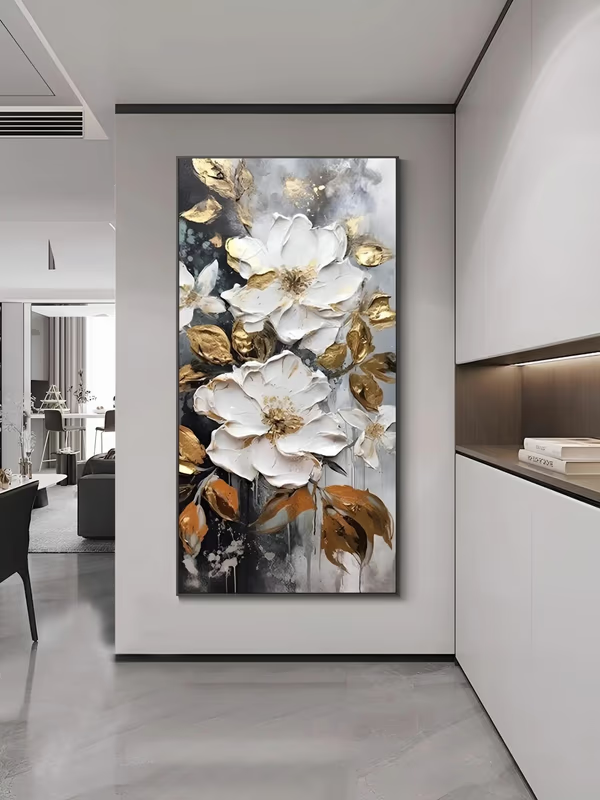
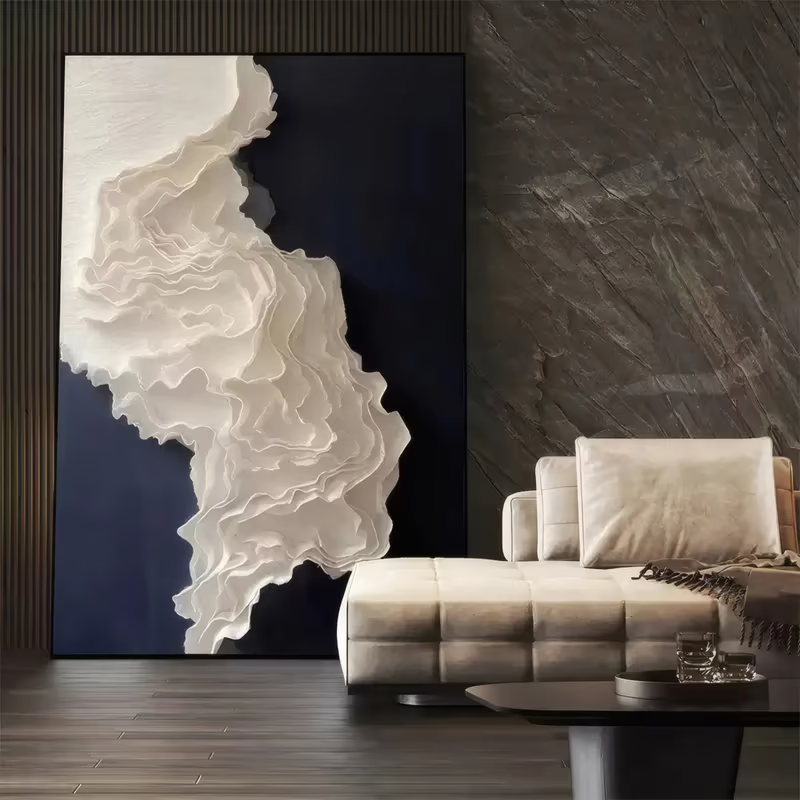
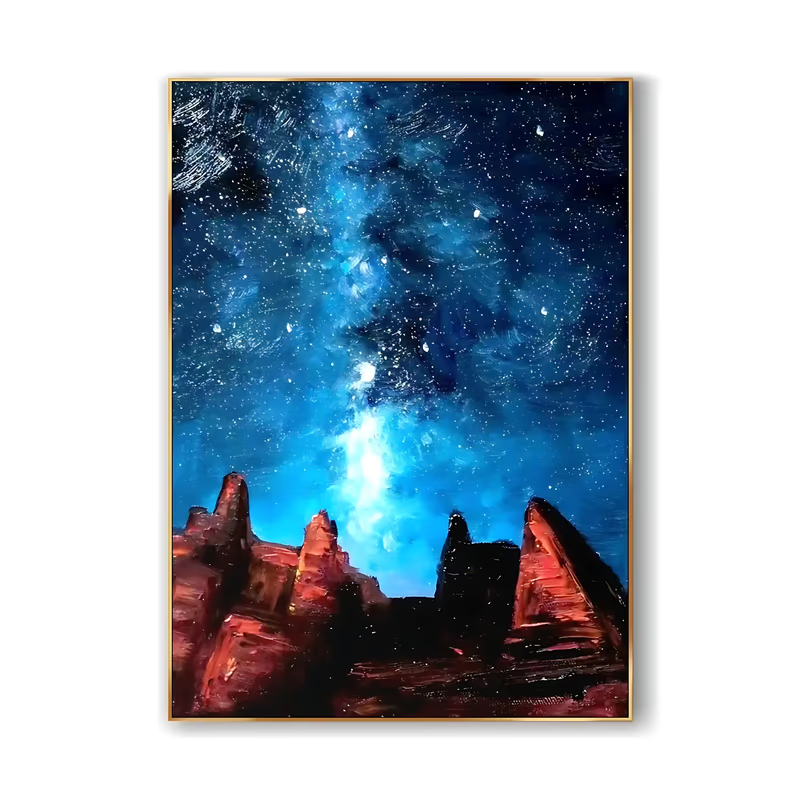
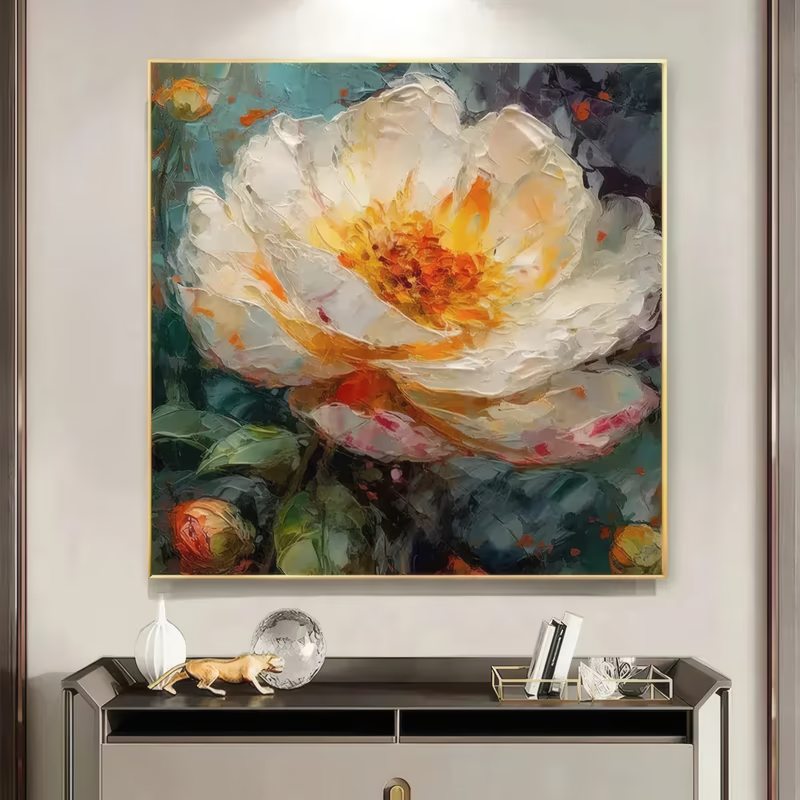
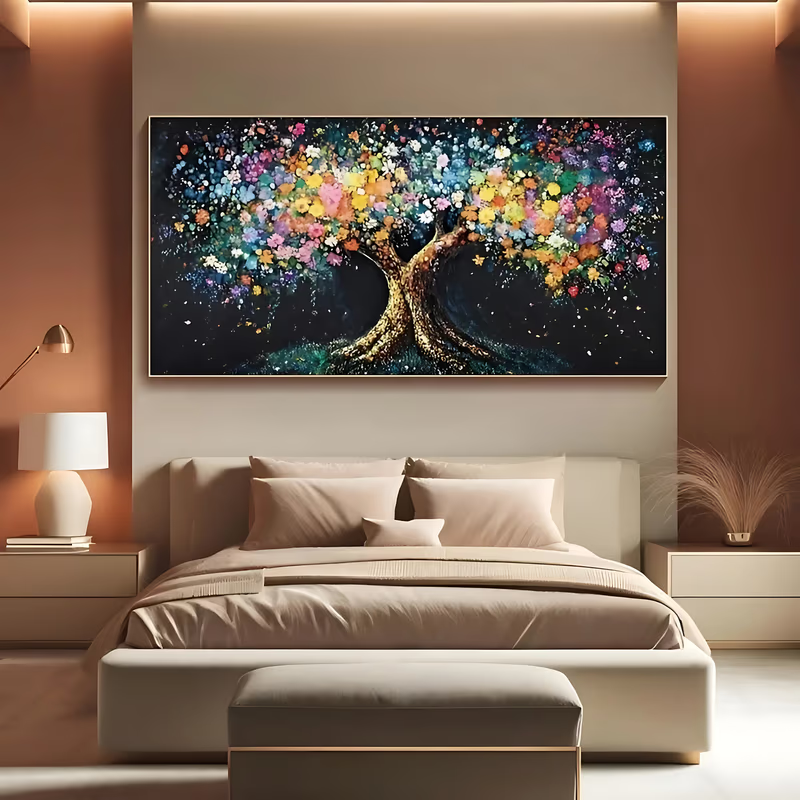
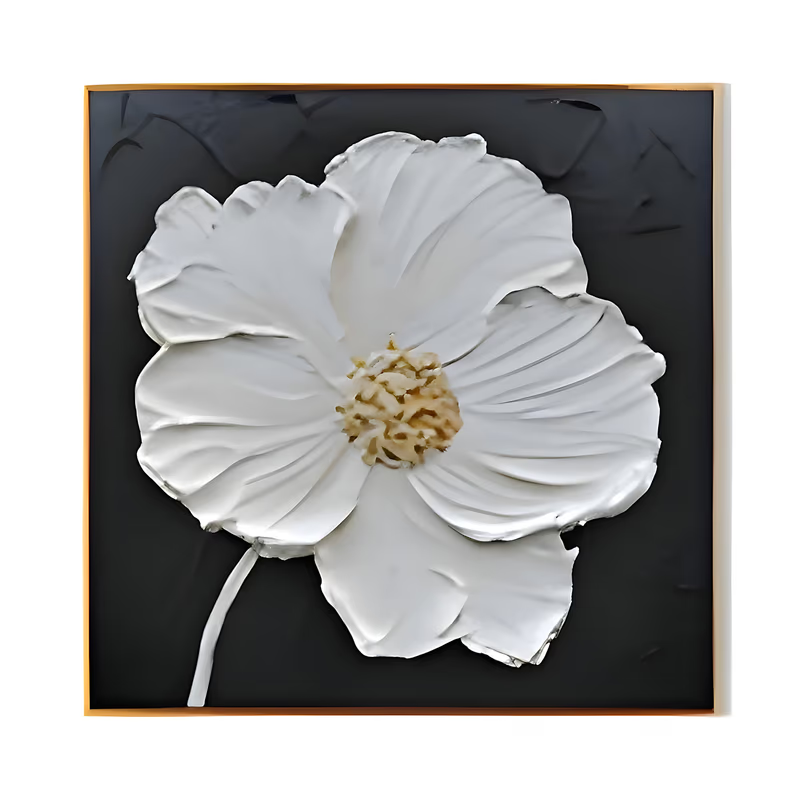
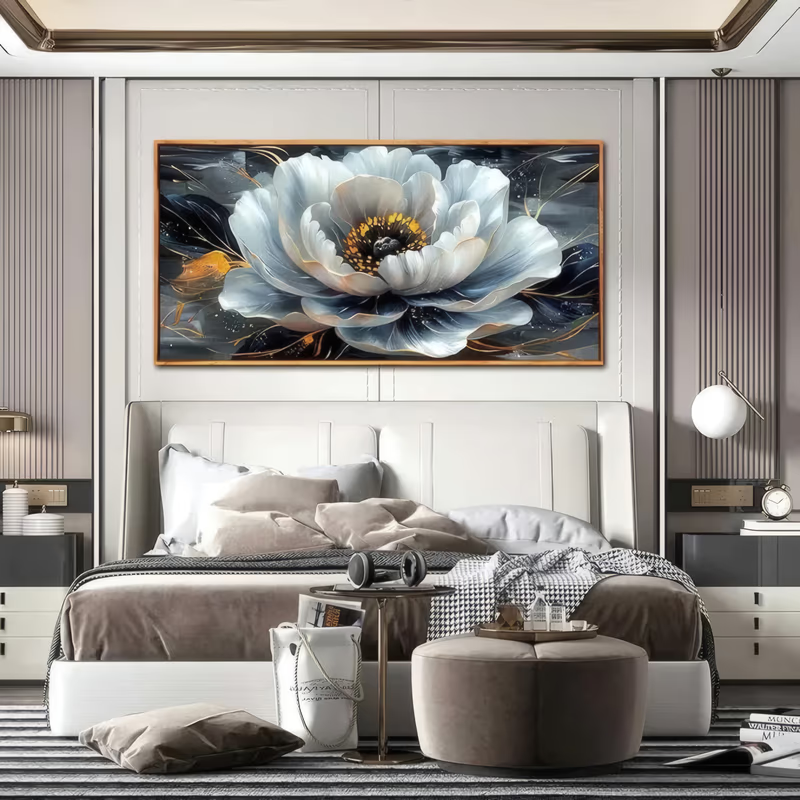
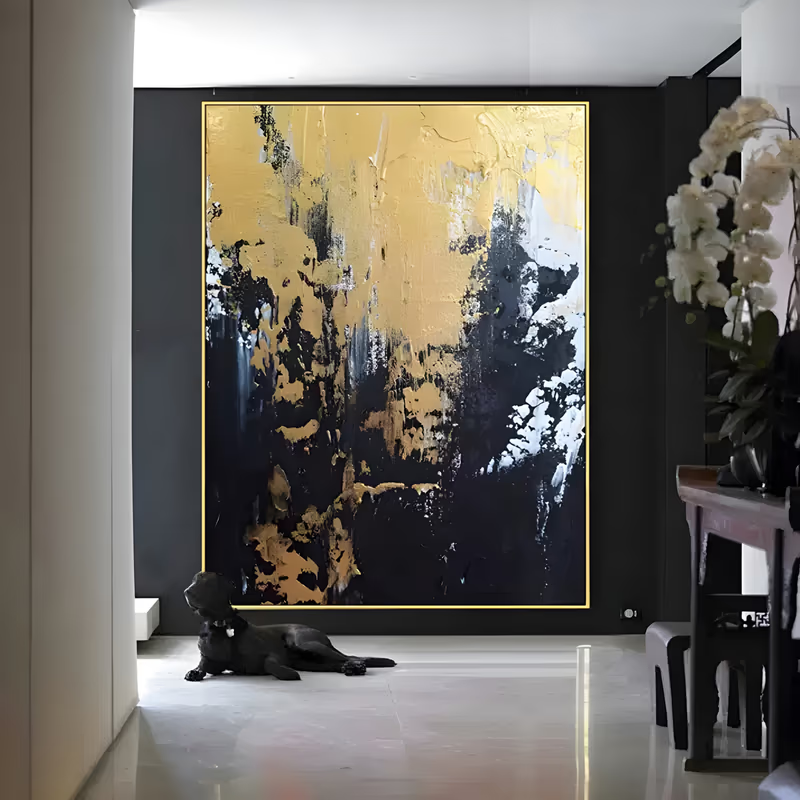
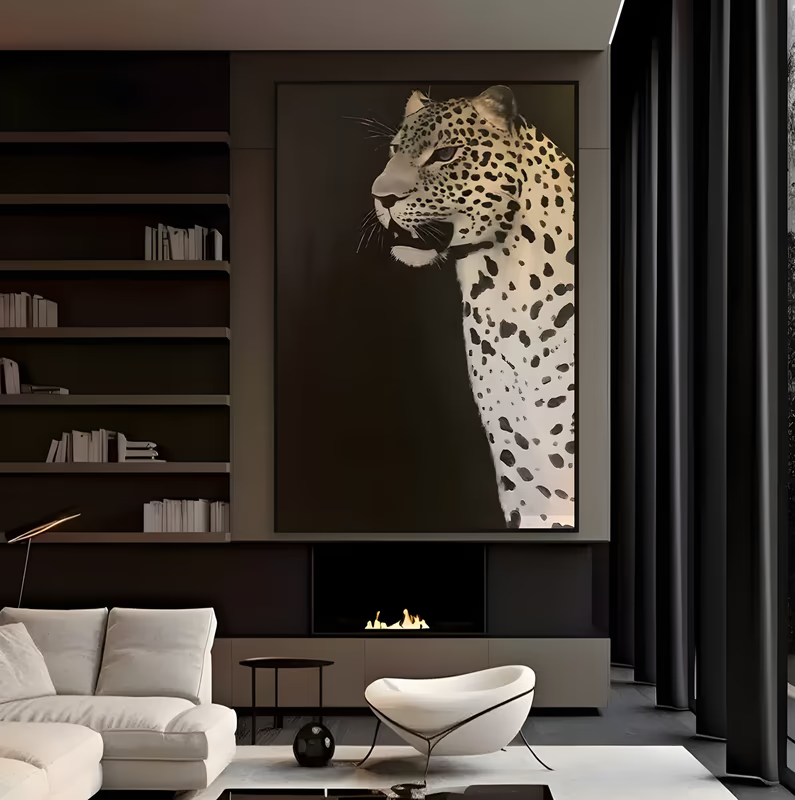
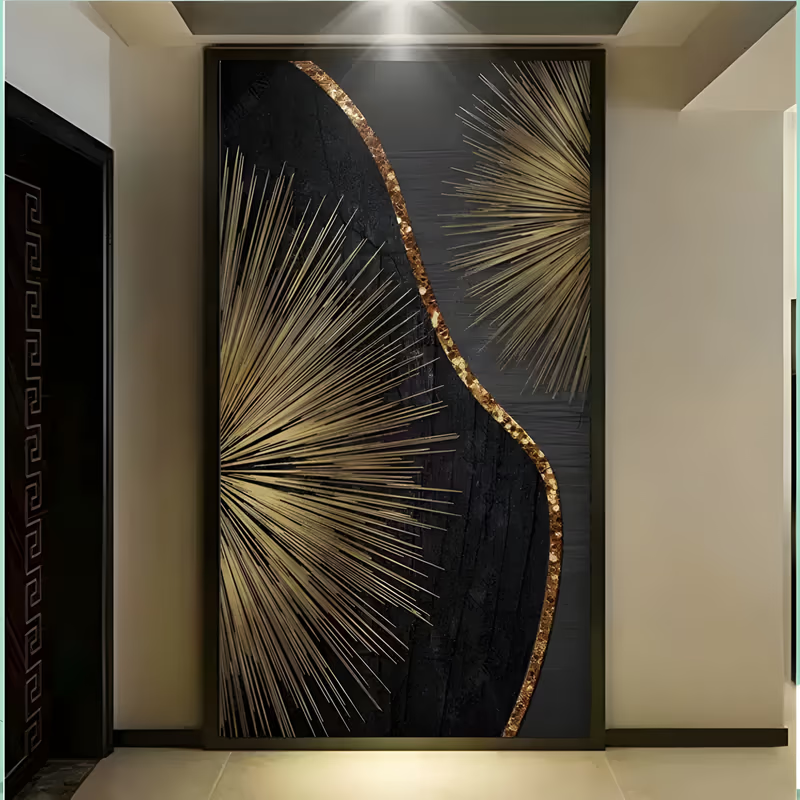
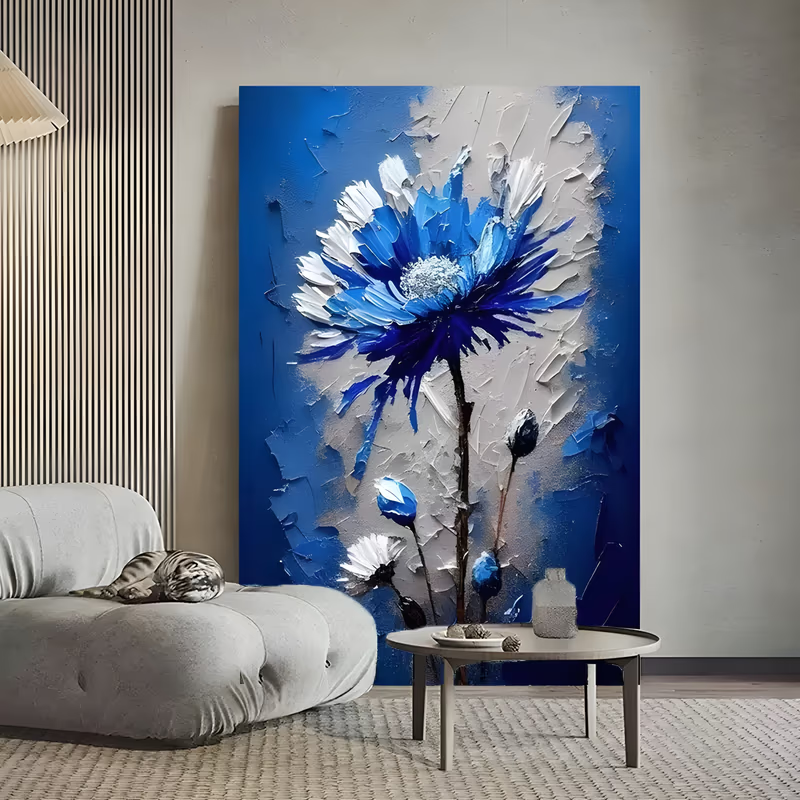
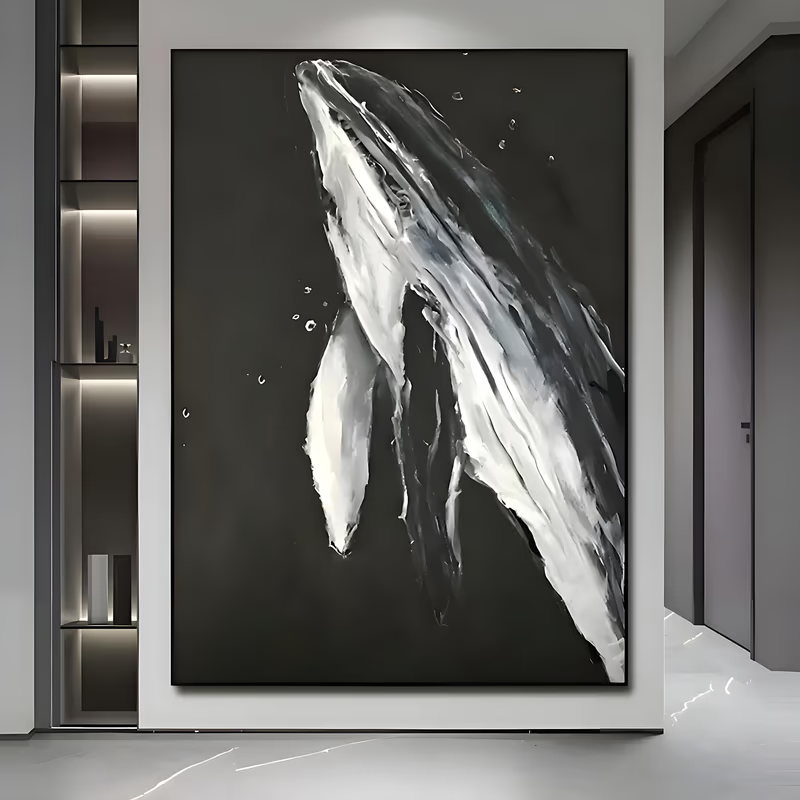
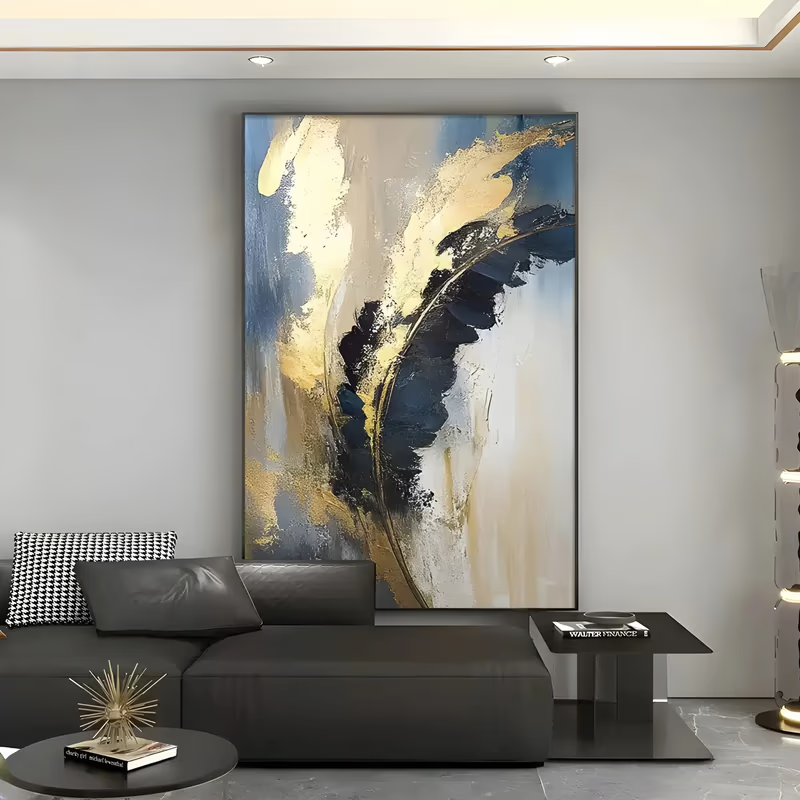
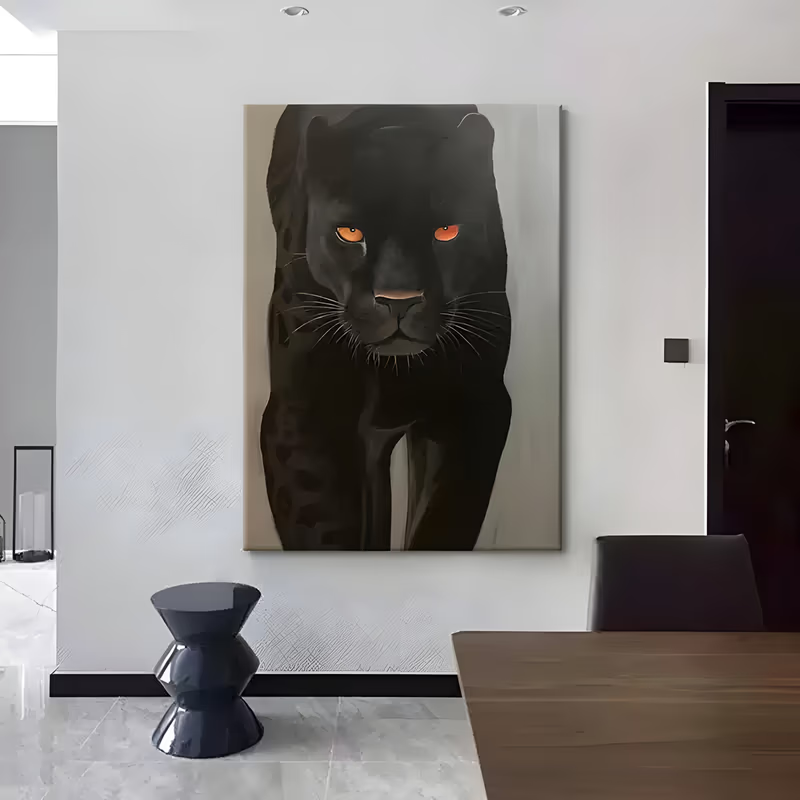
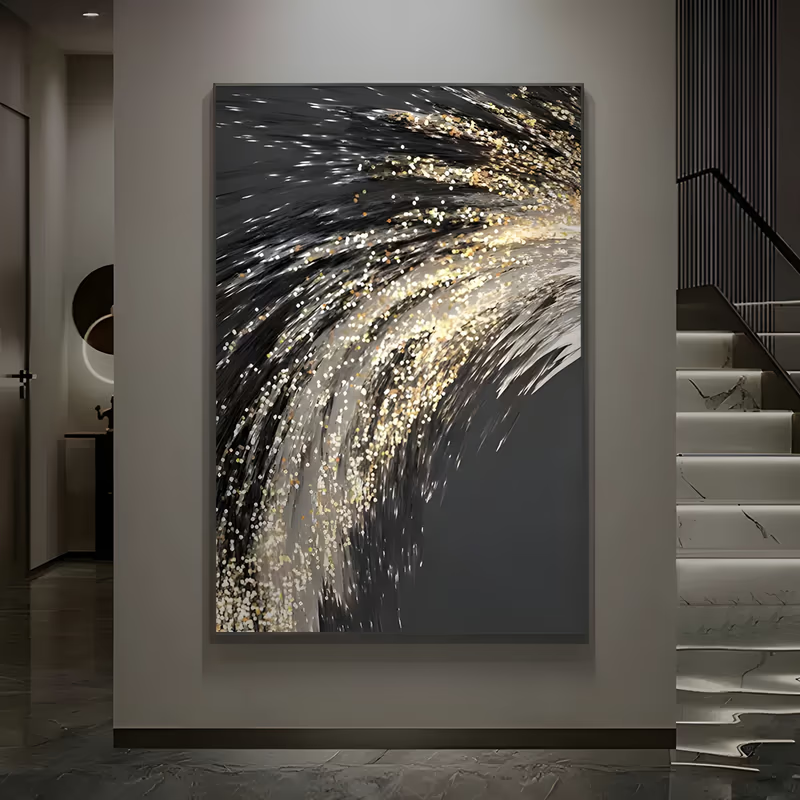
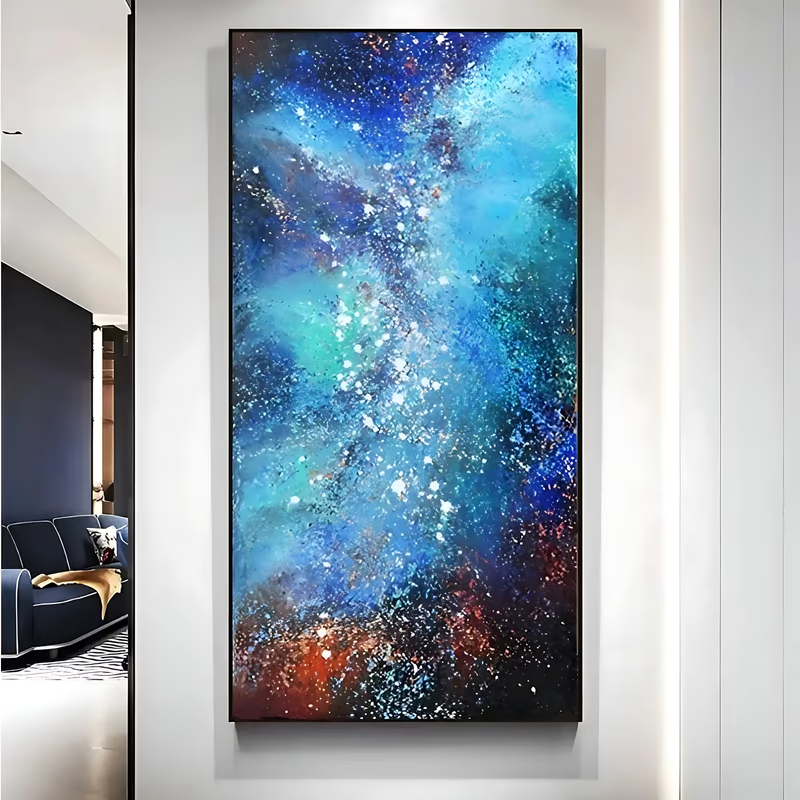
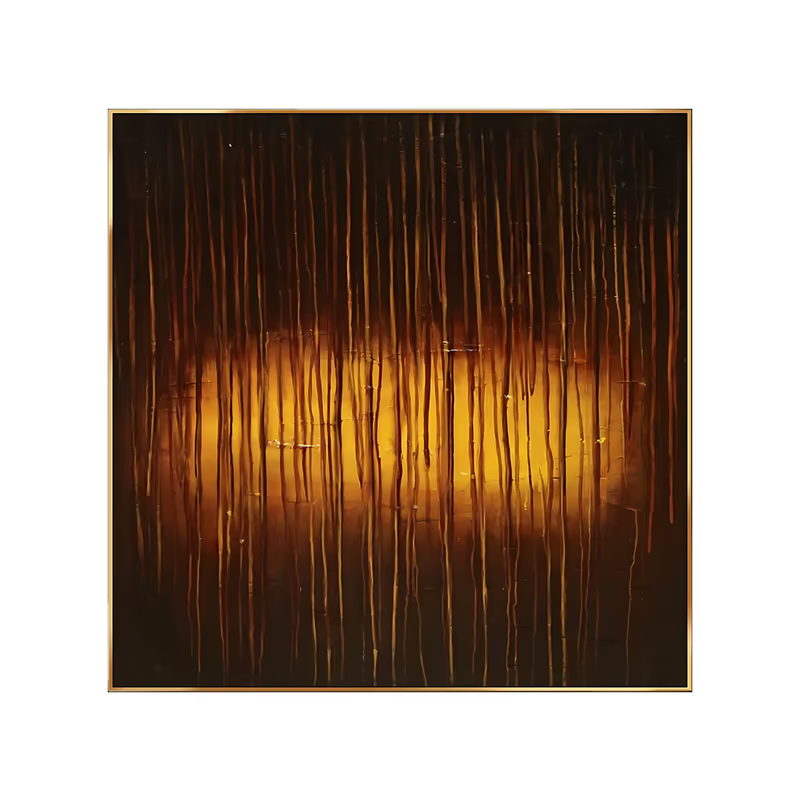
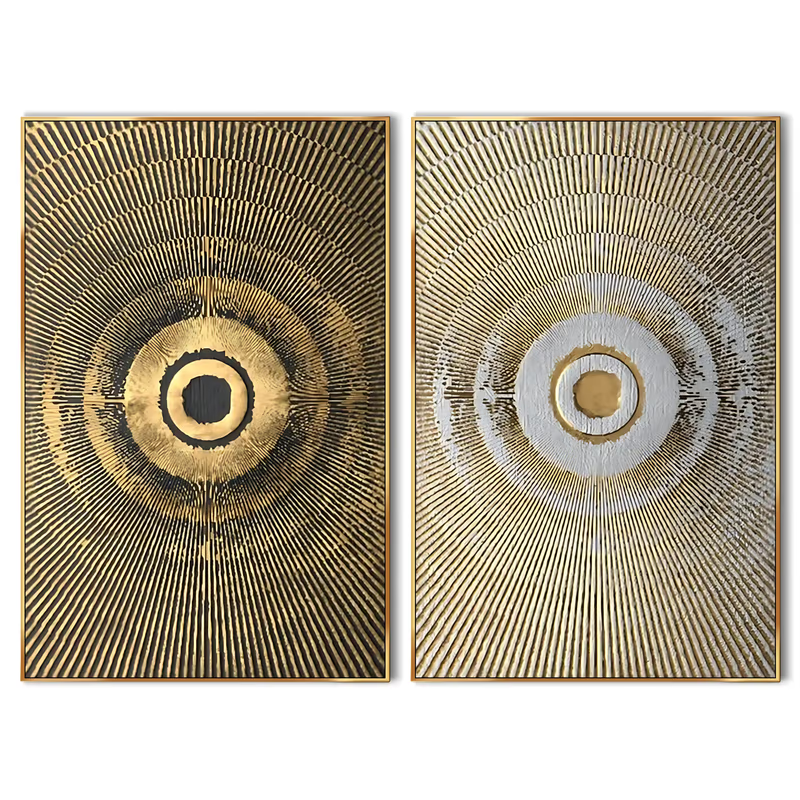
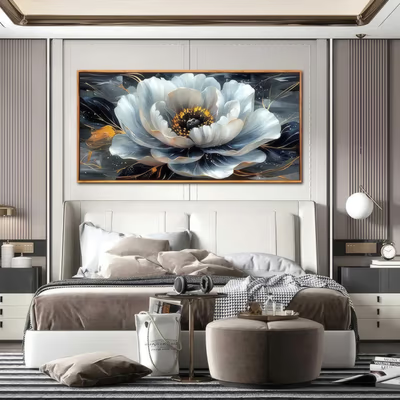
Subject helps but is not essential. A night sky with the Milky Way over red rock, a black panther with amber eyes, a white peony on navy and a gold sunburst on black are all dramatic for the same reason: a concentrated area of light, a large area of shadow, and a clear direction for the eye. Thick texture can heighten it, because raised paint casts its own small shadows under a spotlight.
How does chiaroscuro make wall art dramatic?
Chiaroscuro, Italian for light-dark, models forms with strong light against deep shadow, and it is the oldest technique painters have for making a picture feel theatrical.
Renaissance and Baroque painters used it to make figures seem to step out of the canvas; in its most extreme form, tenebrism, most of the picture falls into darkness and only the key forms are lit. Modern dramatic wall art borrows the same devices with new subjects and grounds.
| Device | What you see | Where it plays best |
|---|---|---|
| Light out of darkness | A leopard, a bloom or a figure emerging from a black or navy ground | Bars, dining rooms, private lounges |
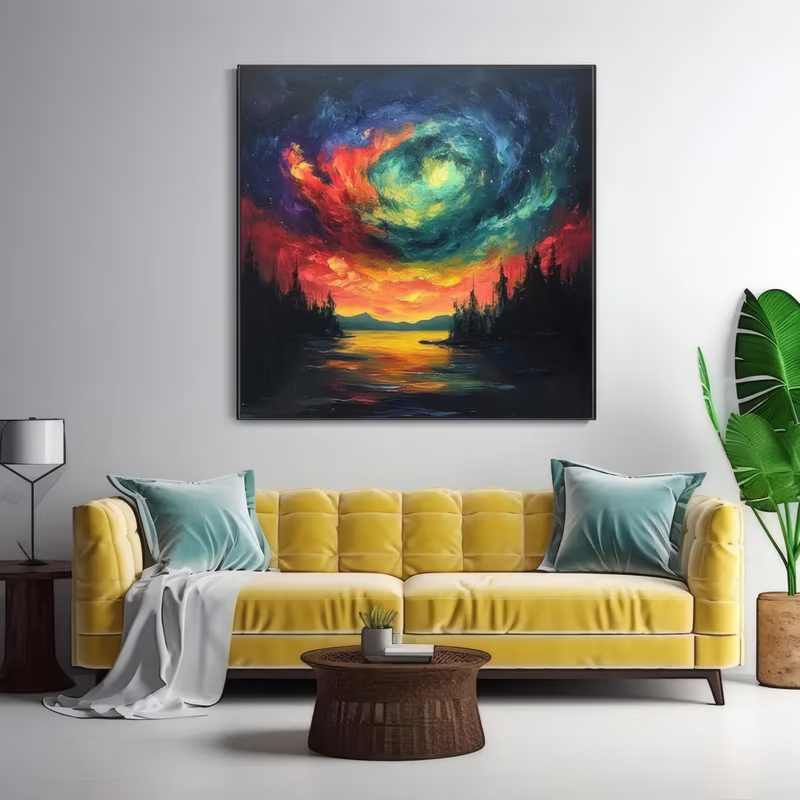
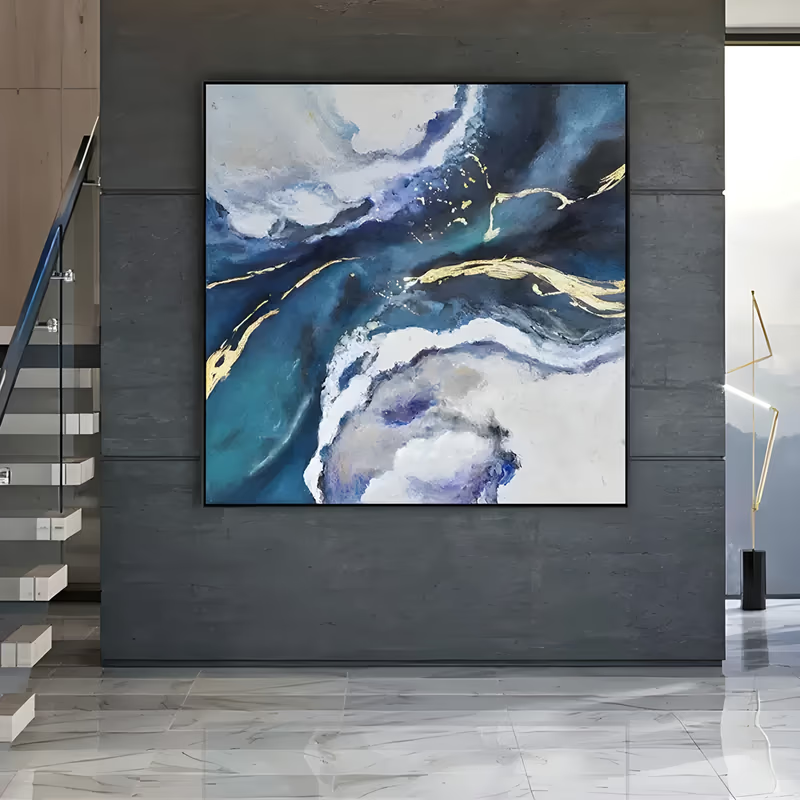
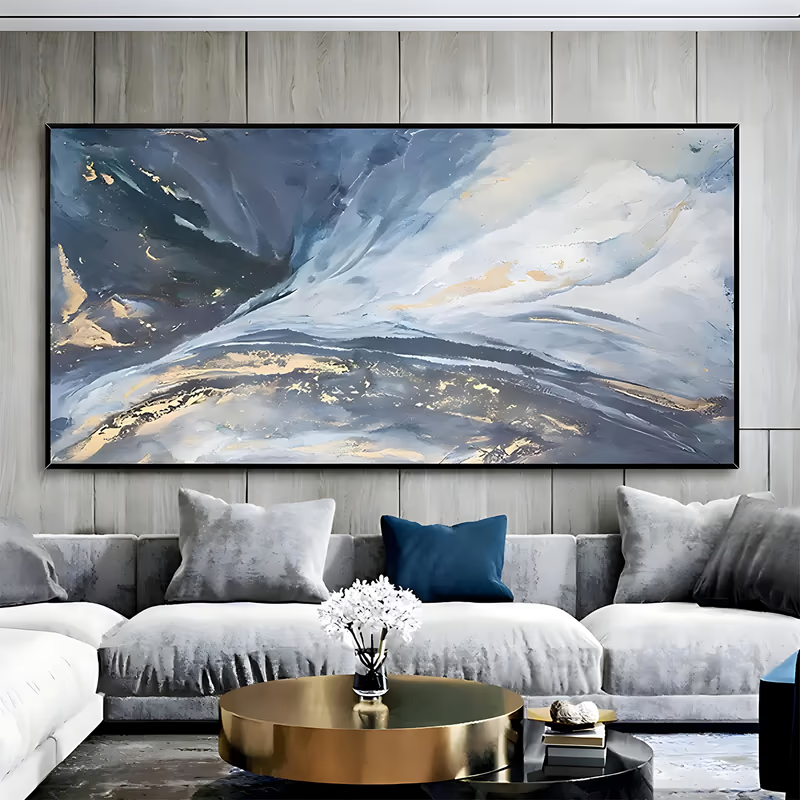
| Nature at full force | Breaking waves, storm skies, lightning-lit peaks, star fields | Lobbies, stairwells, double-height walls |
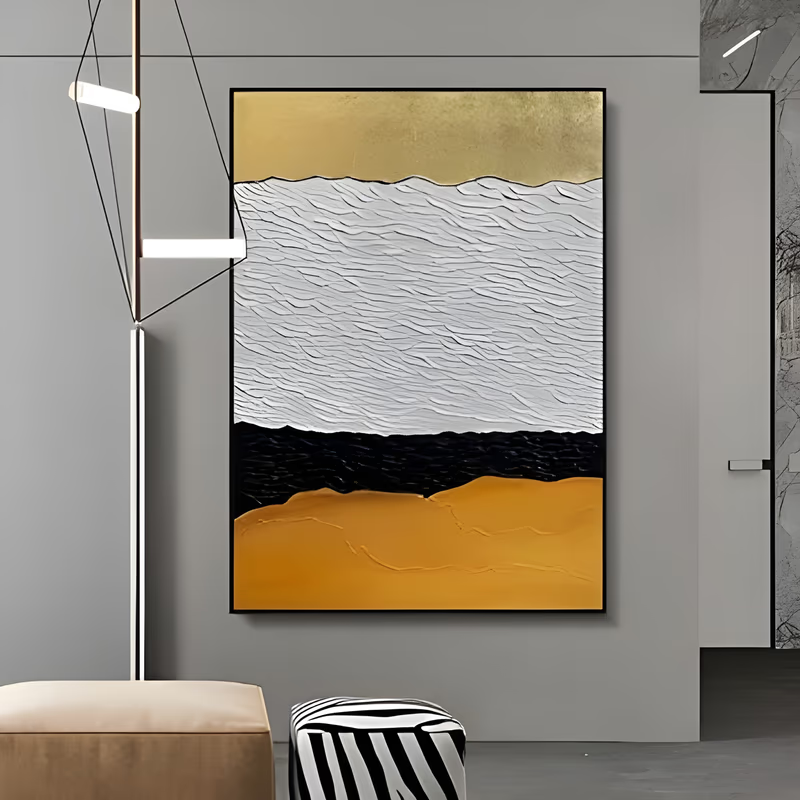
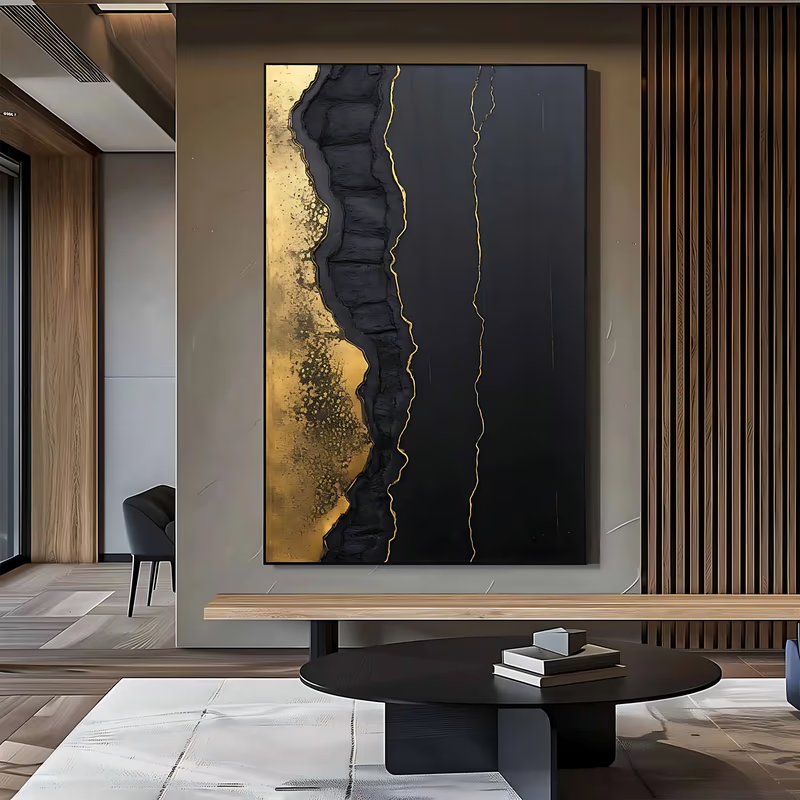
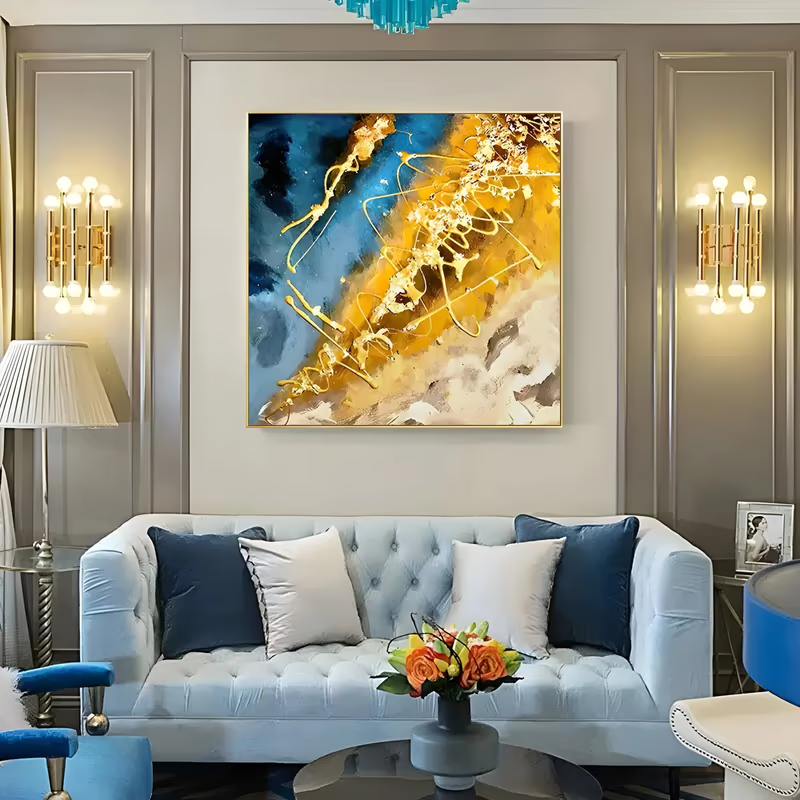
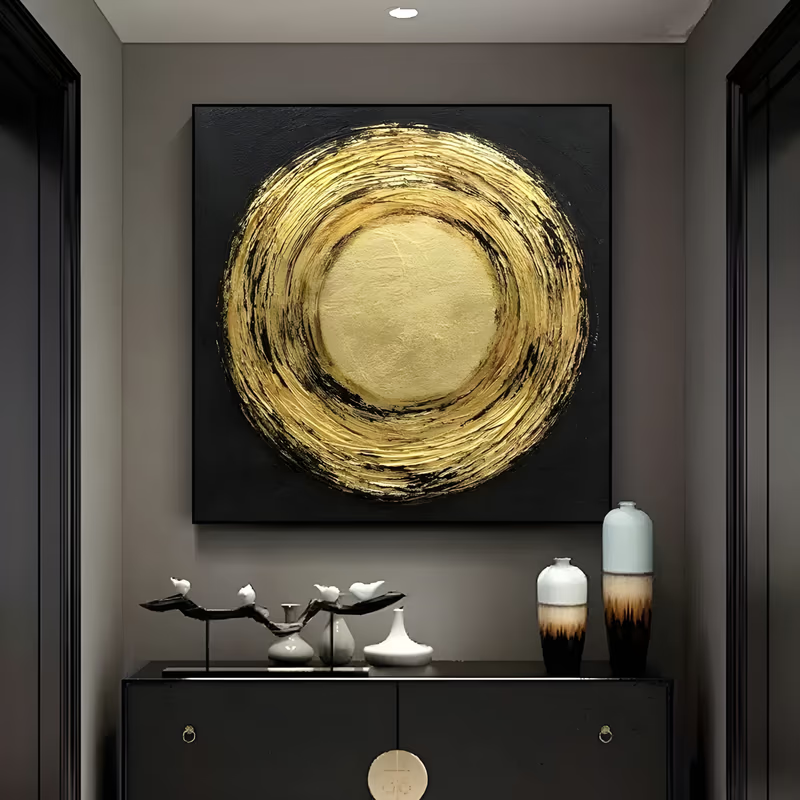
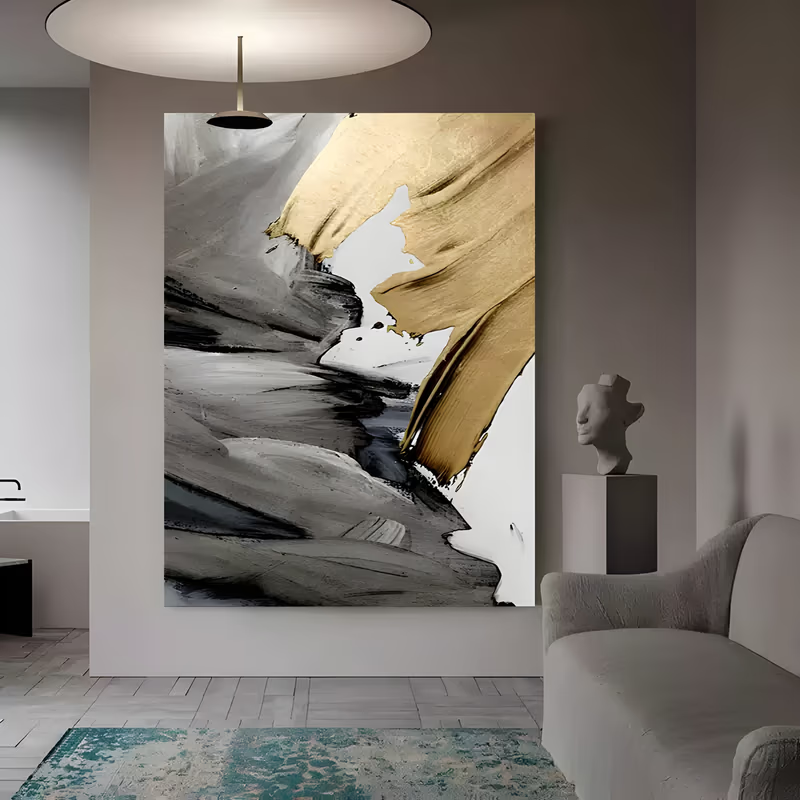
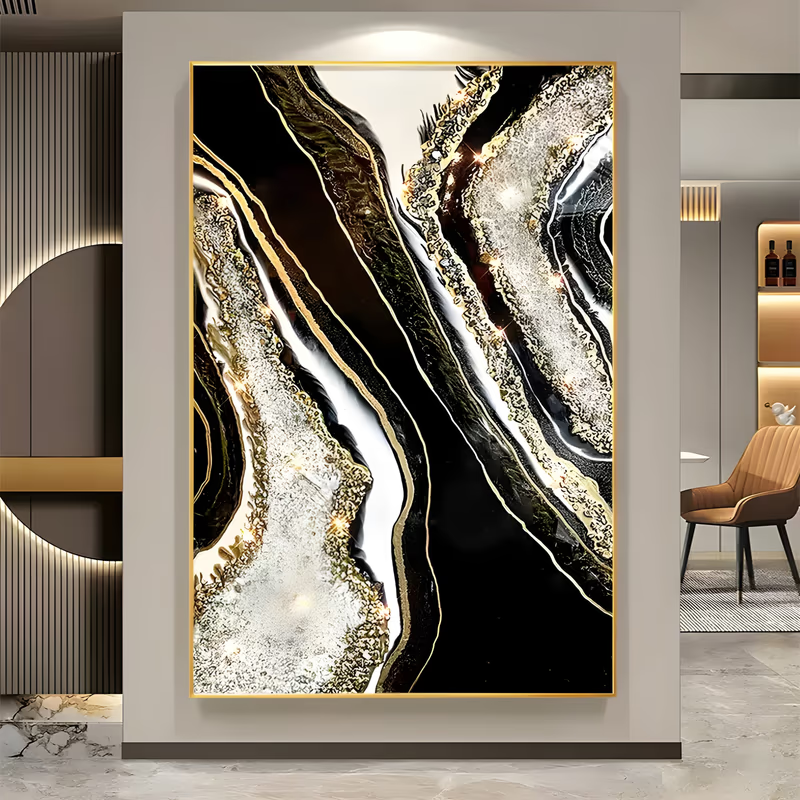
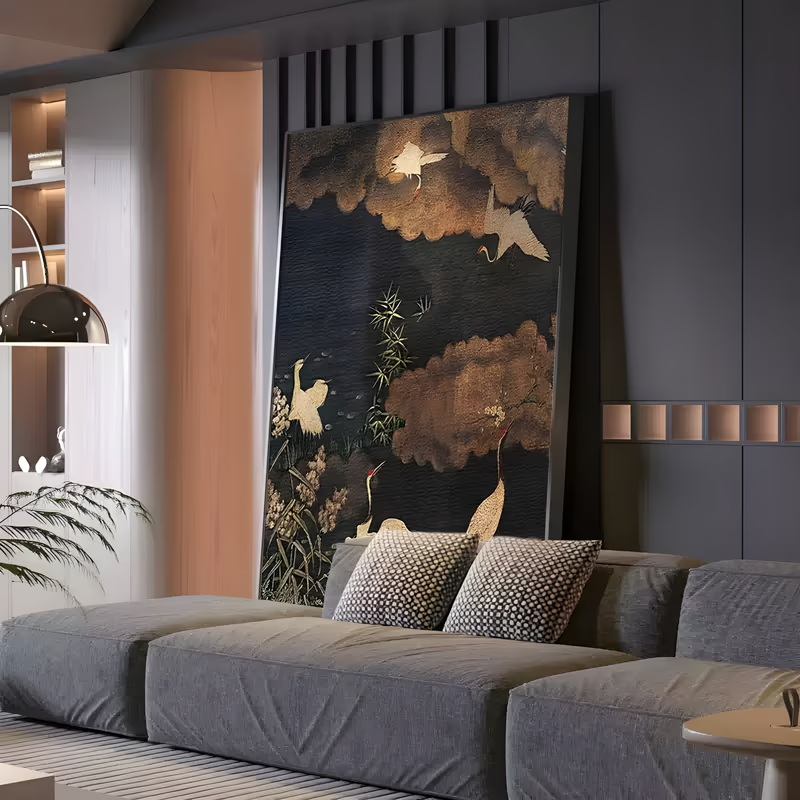
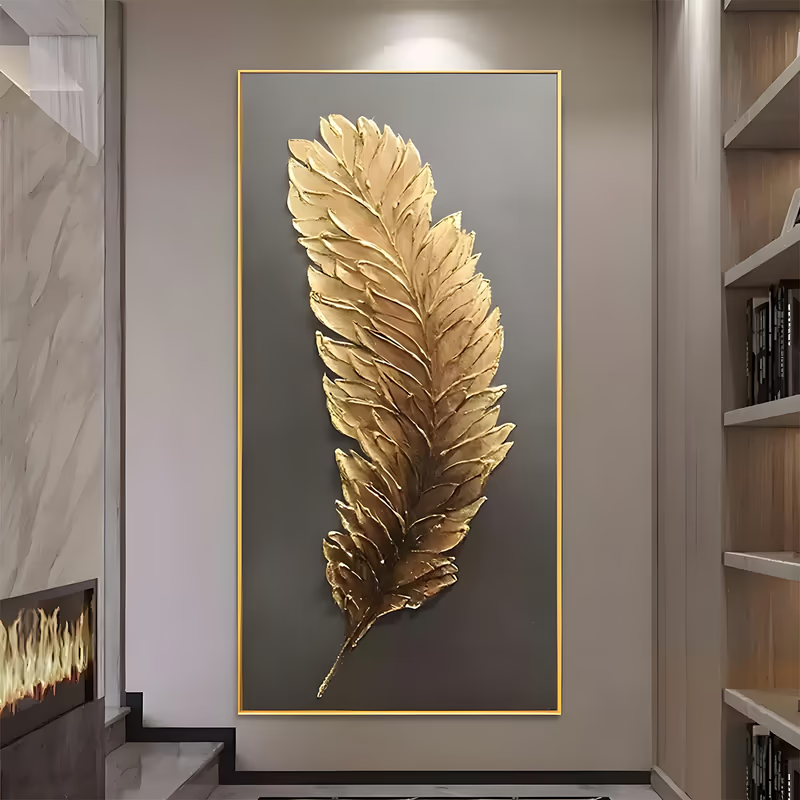
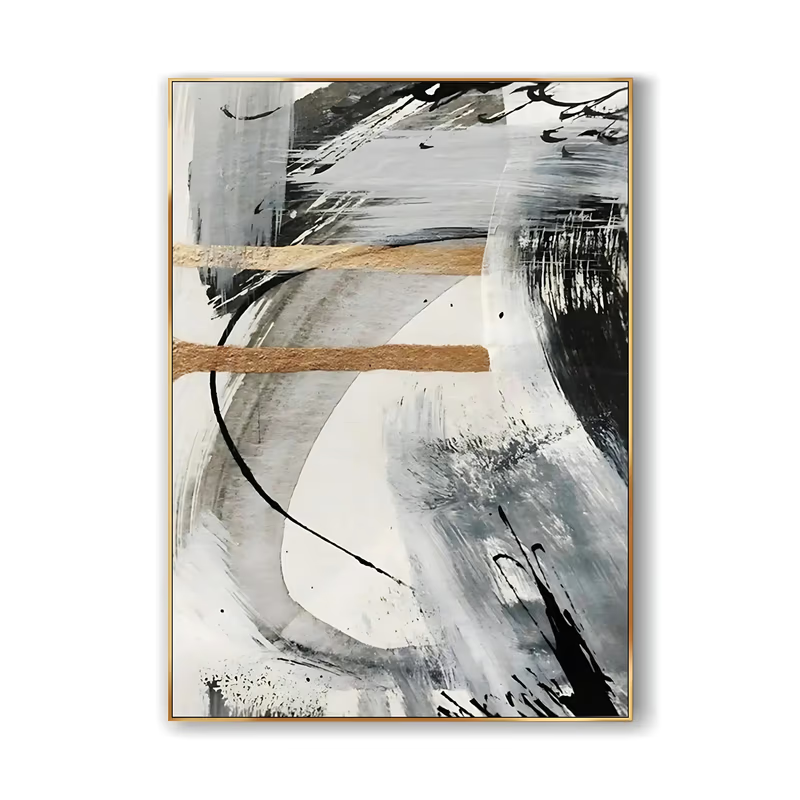
| Metal on black | Gold or silver rays, leaf and lines on a dark field | Evening receptions, hotel bars, jewellery retail |
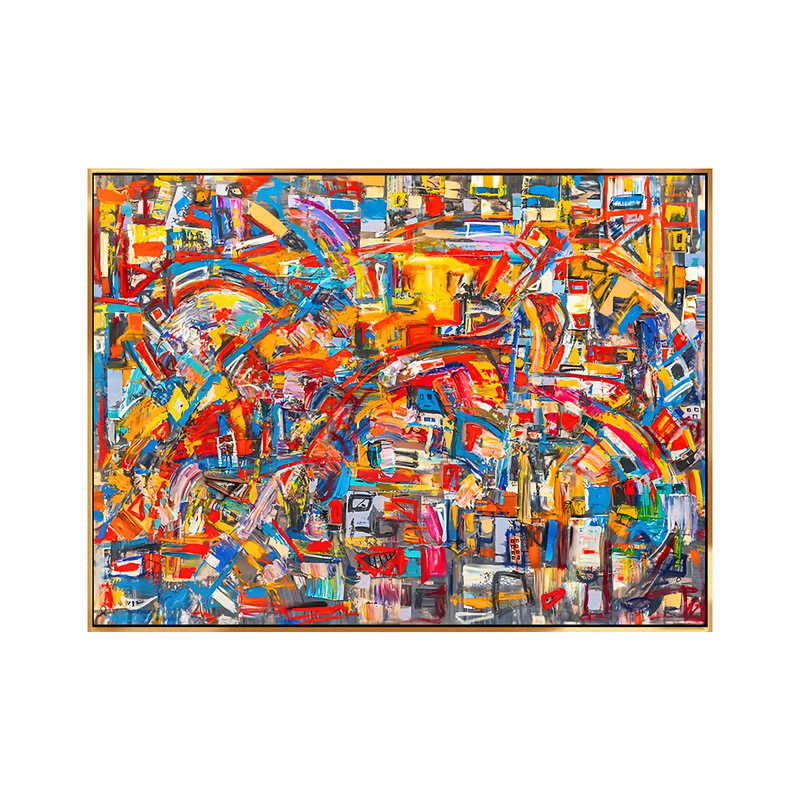
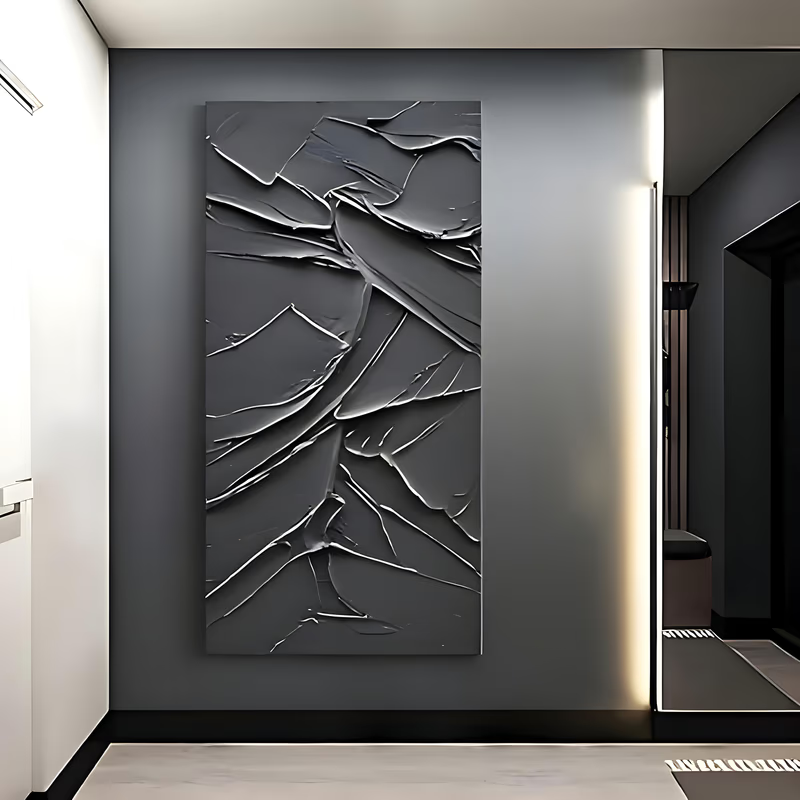
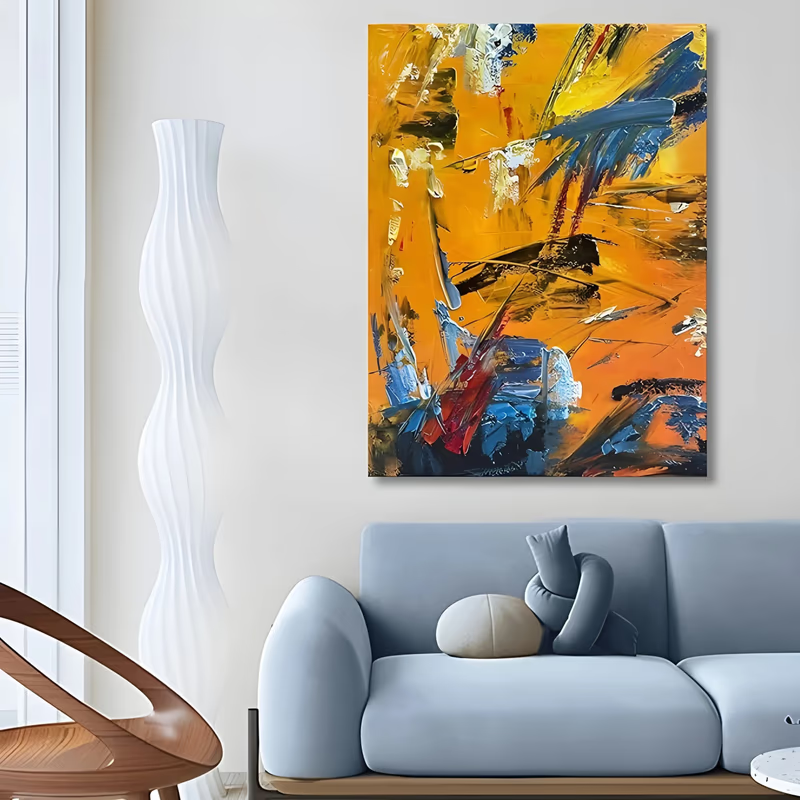
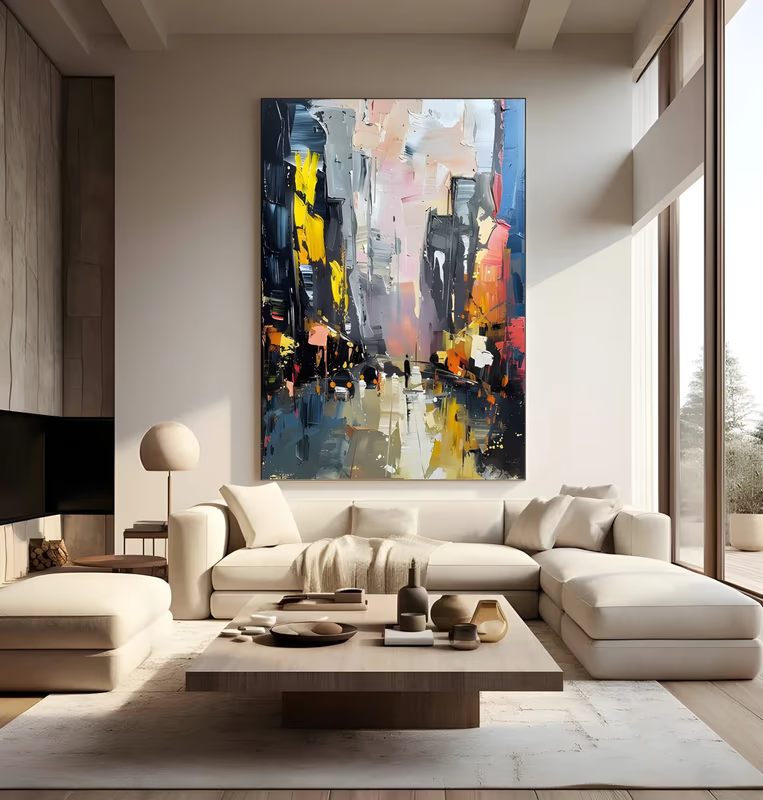
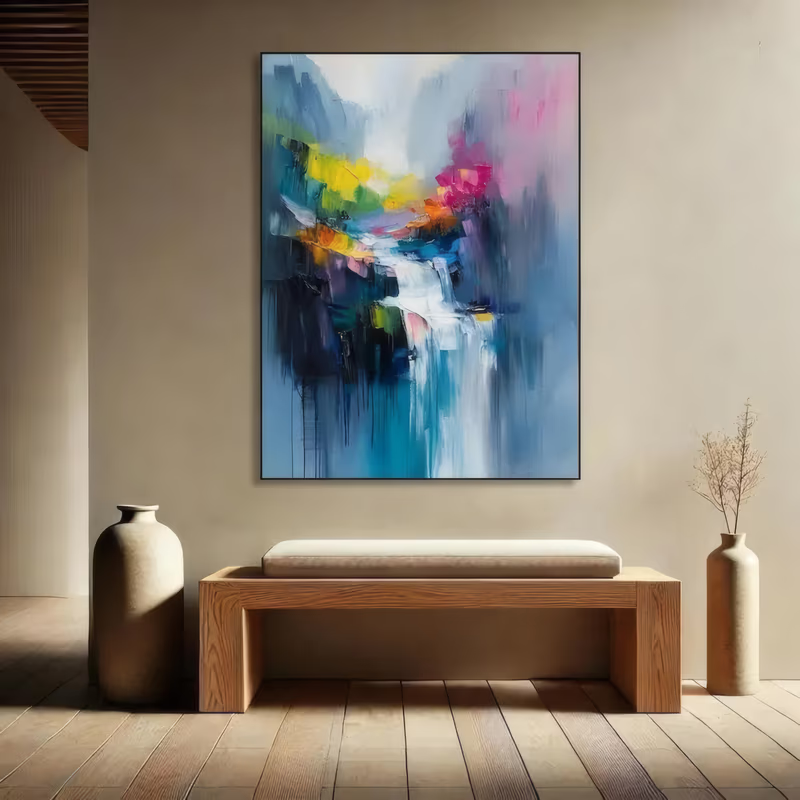
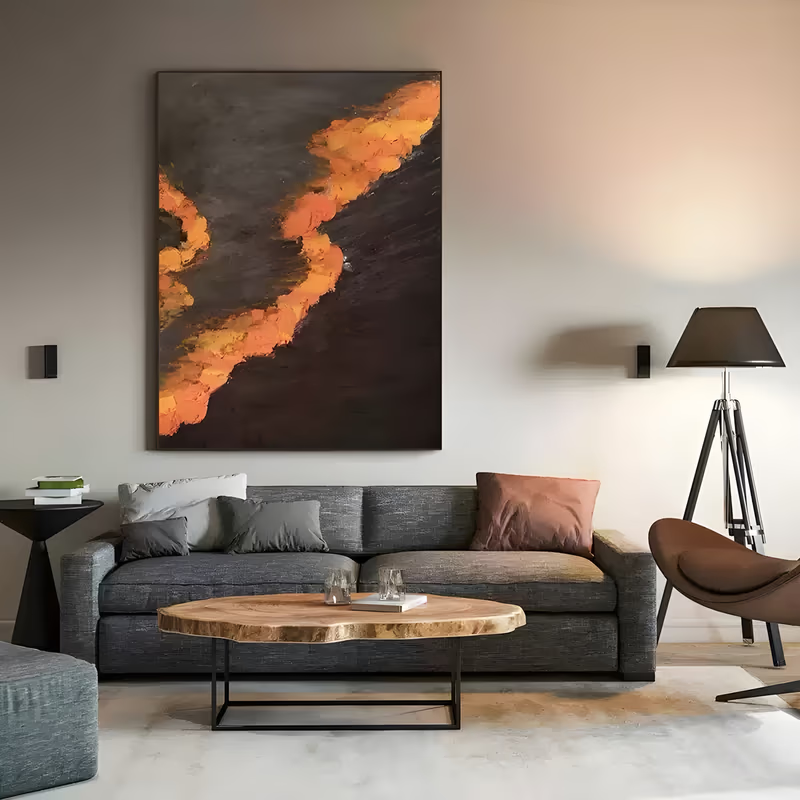
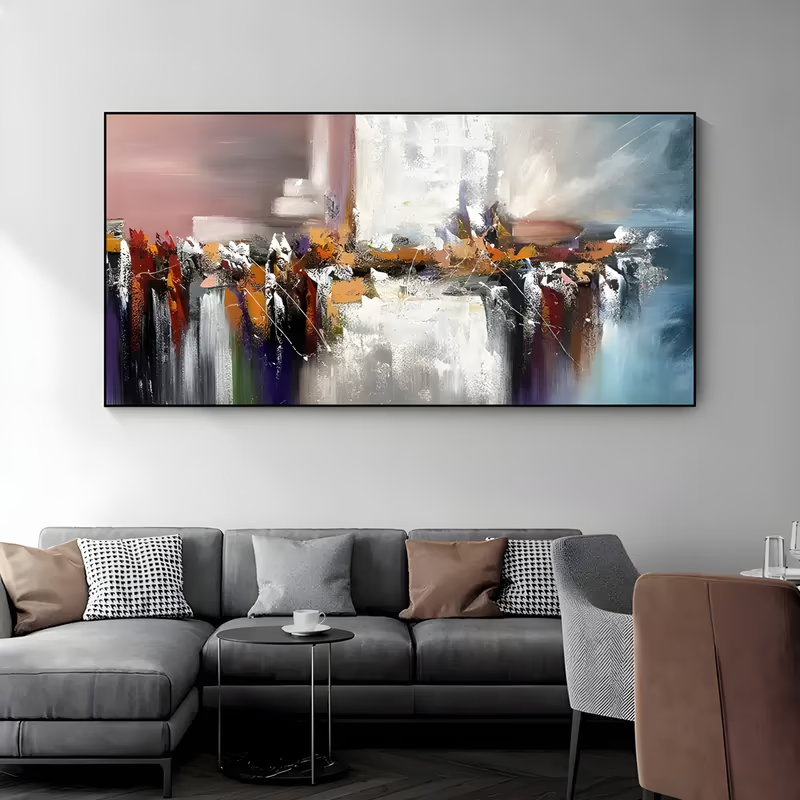
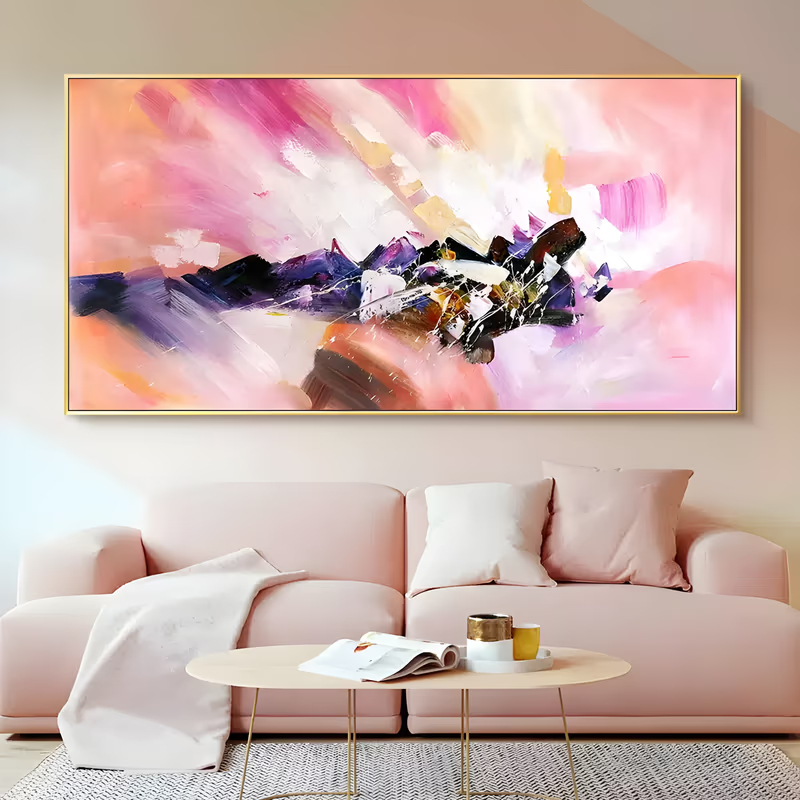
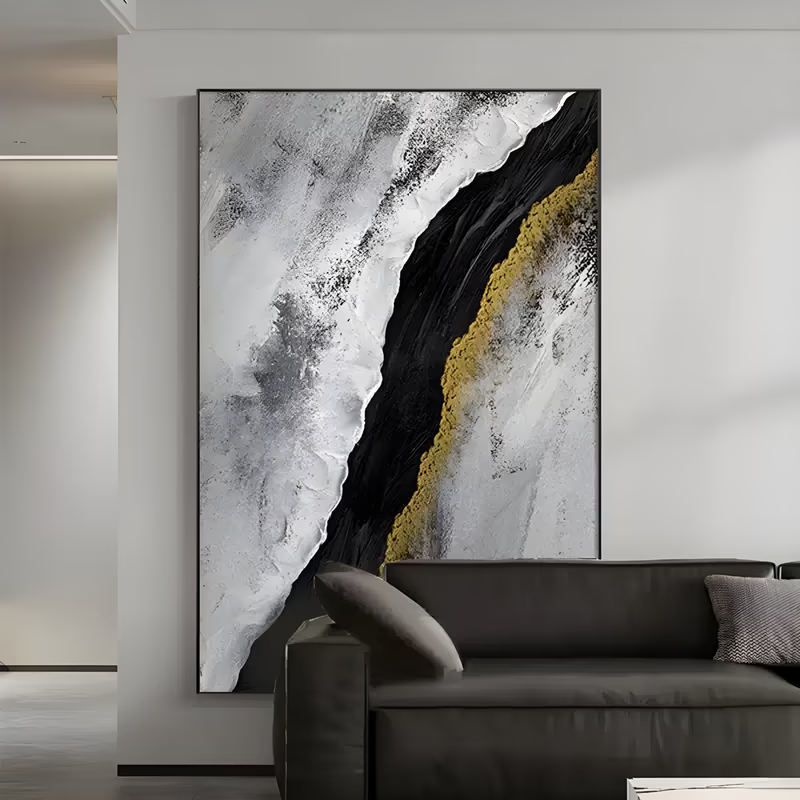
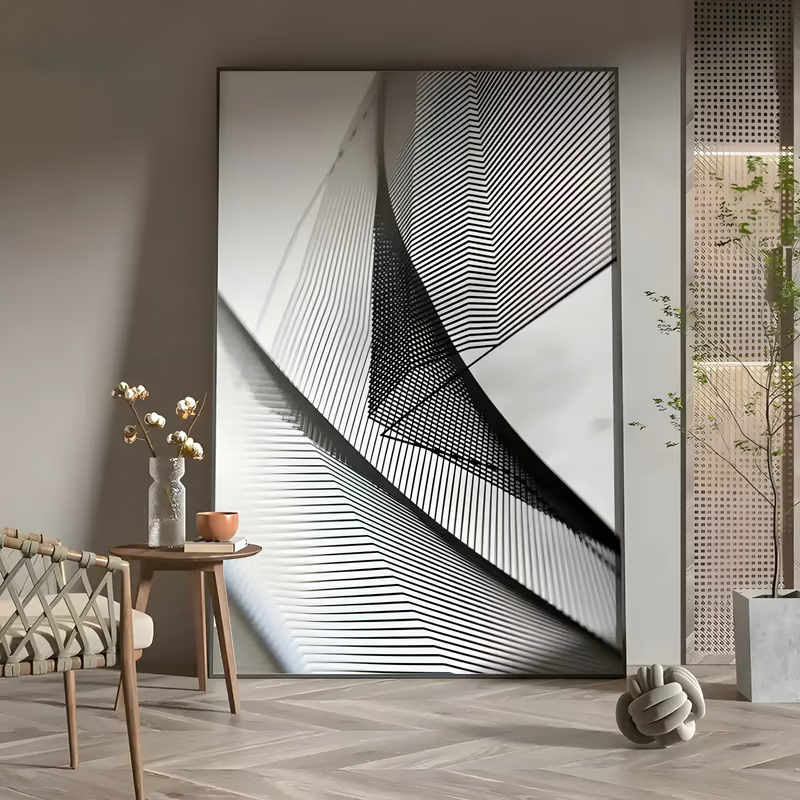
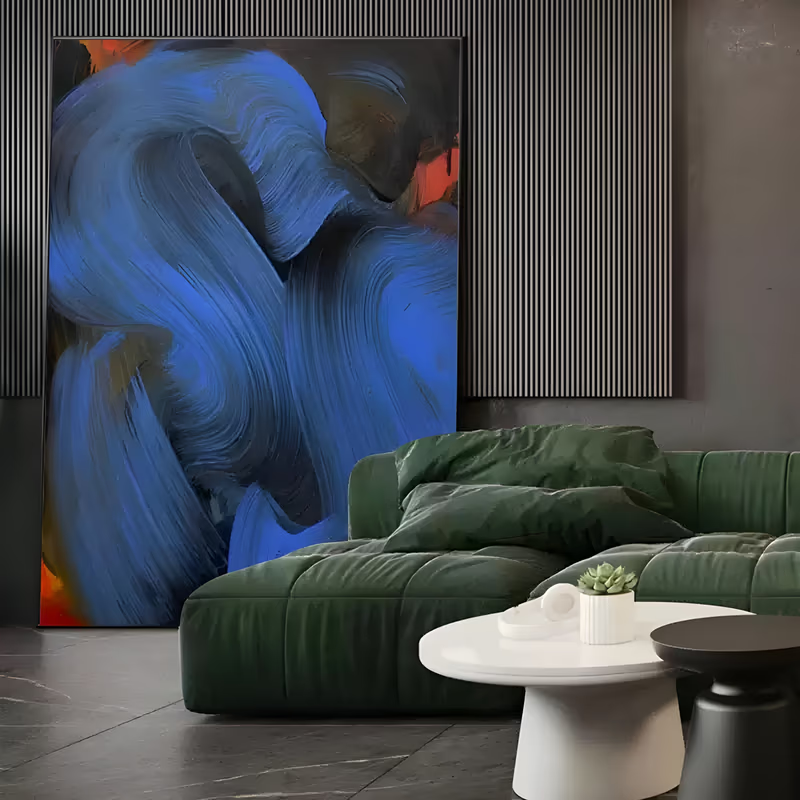
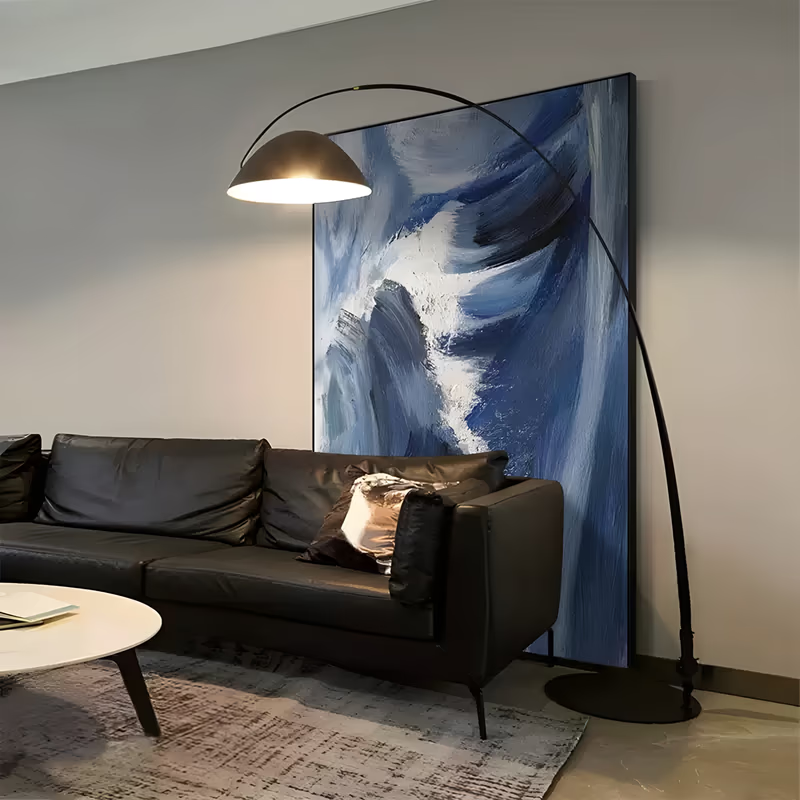
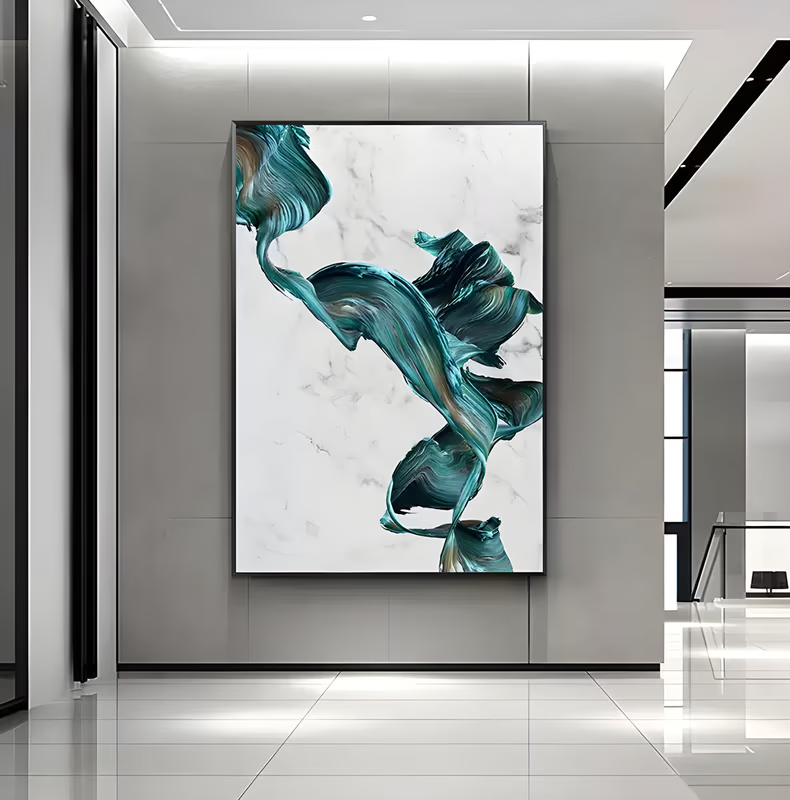
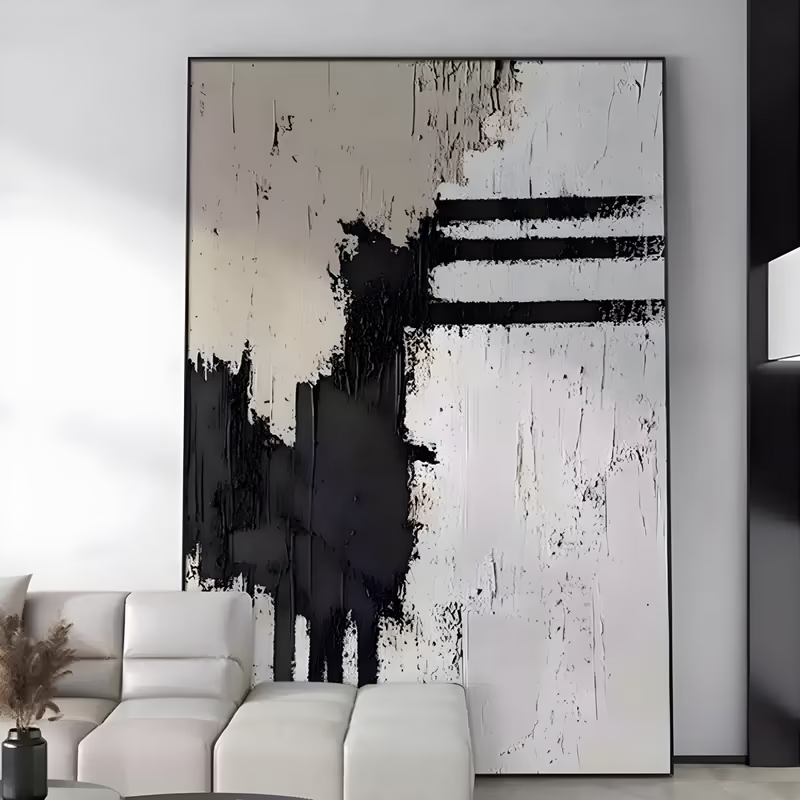
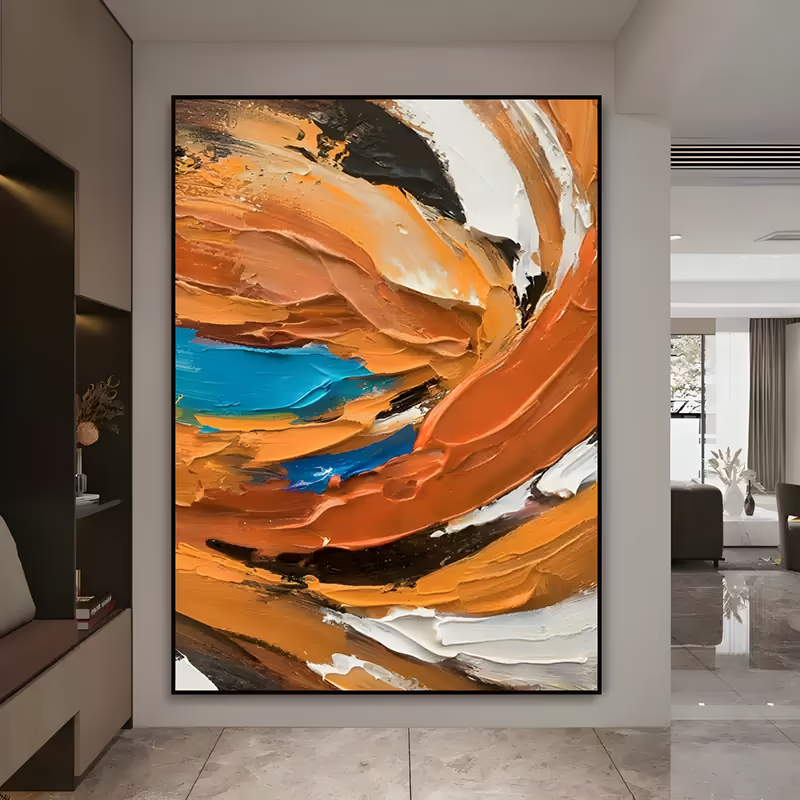
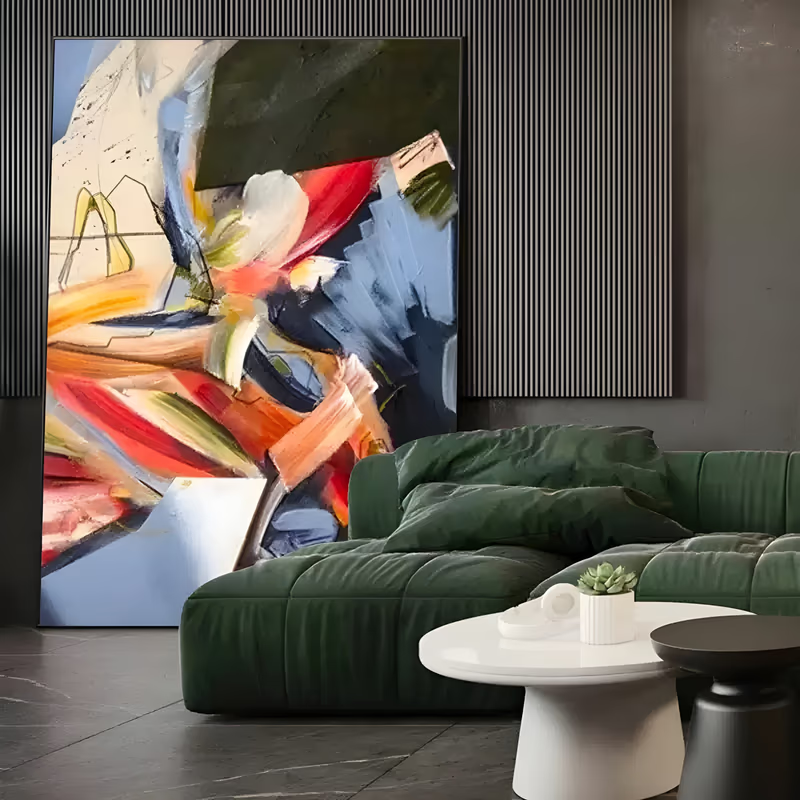
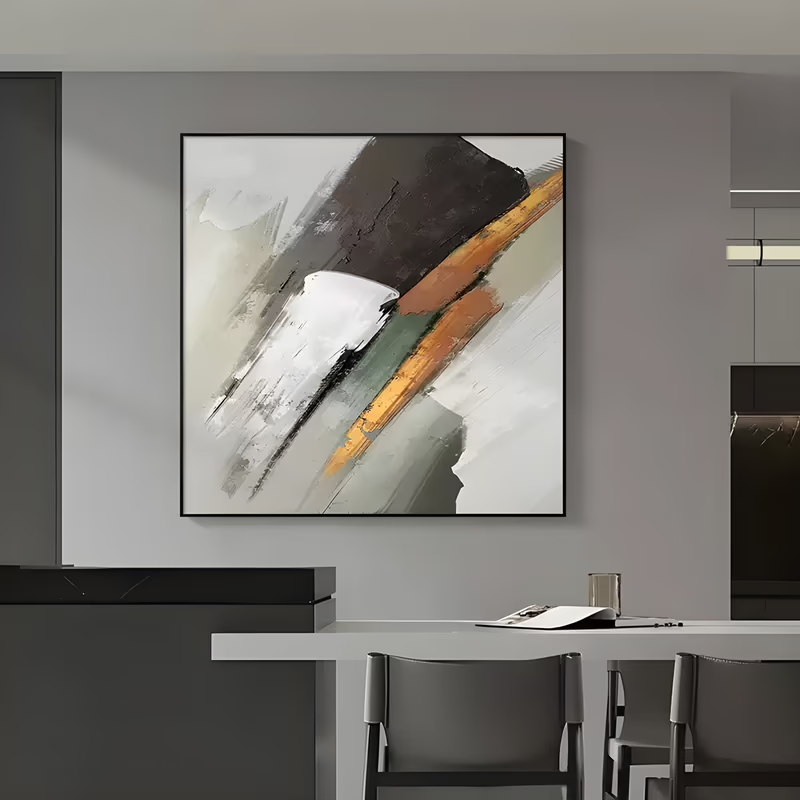
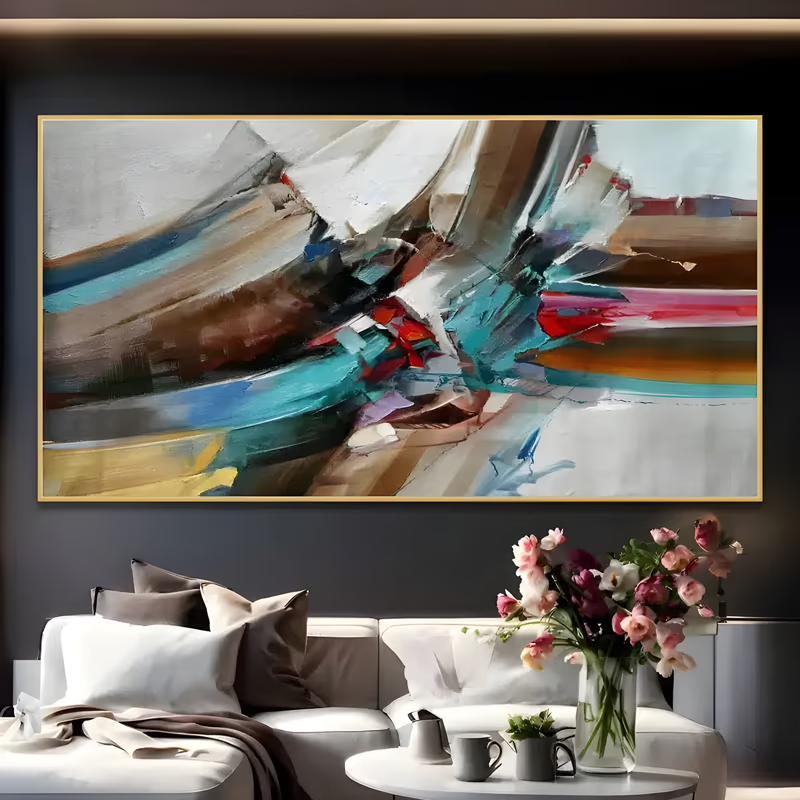
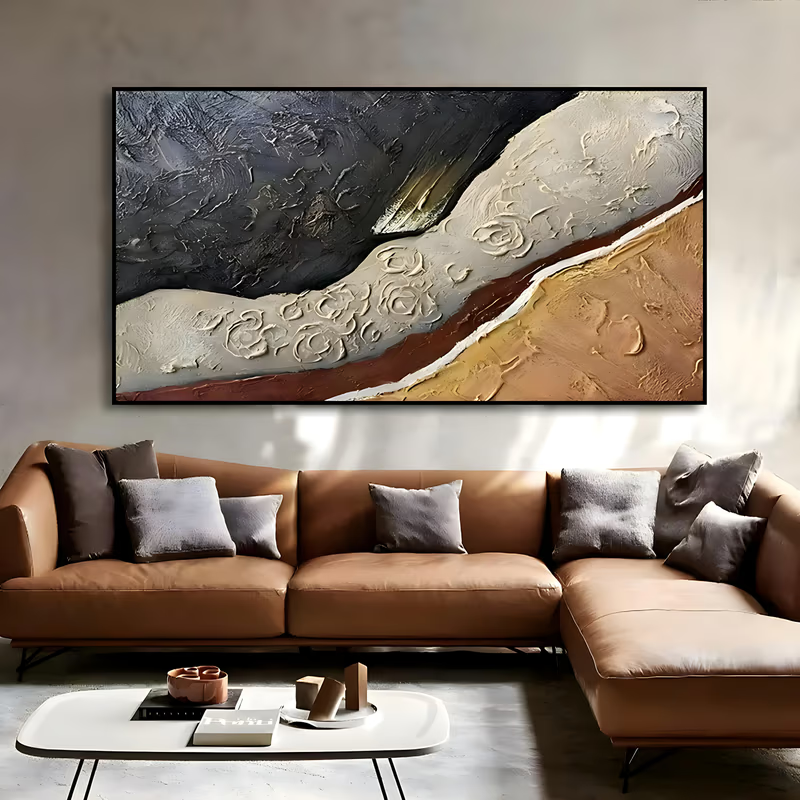
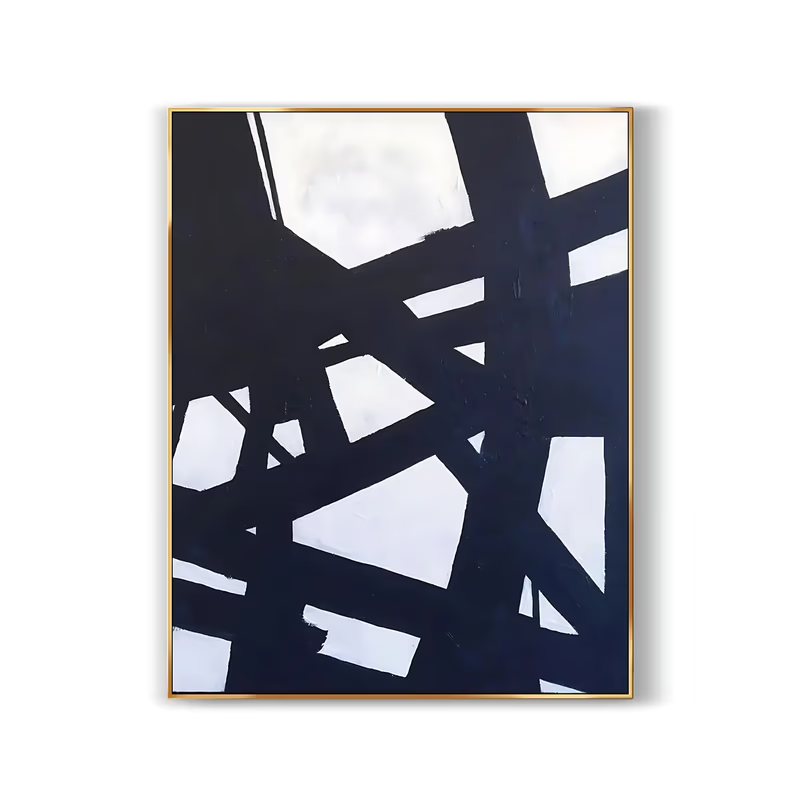
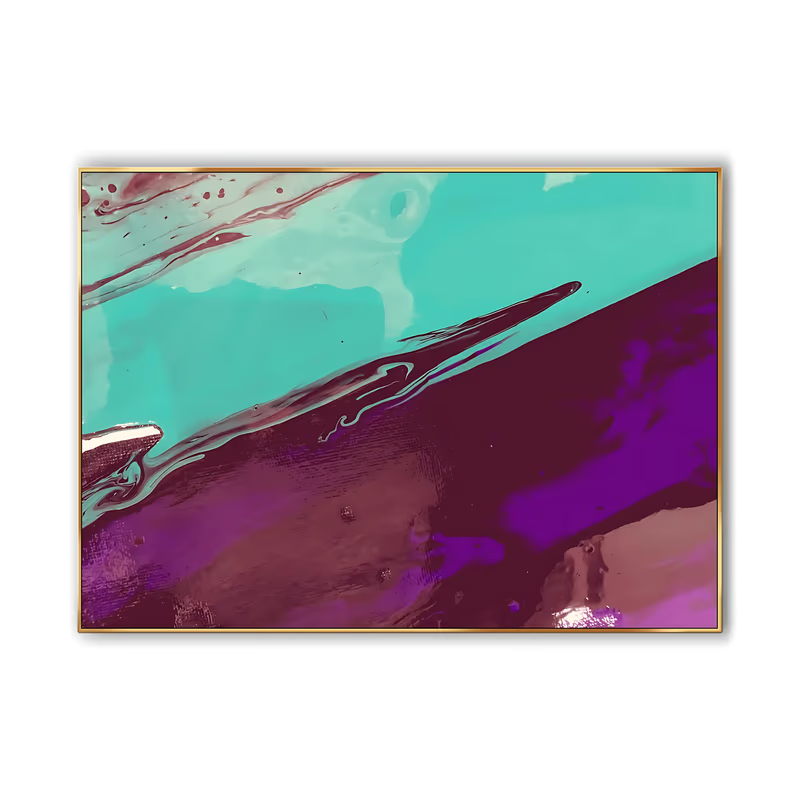
| The strong diagonal | Sweeping brush or knife strokes cutting across the canvas | Modern living rooms, boardrooms |
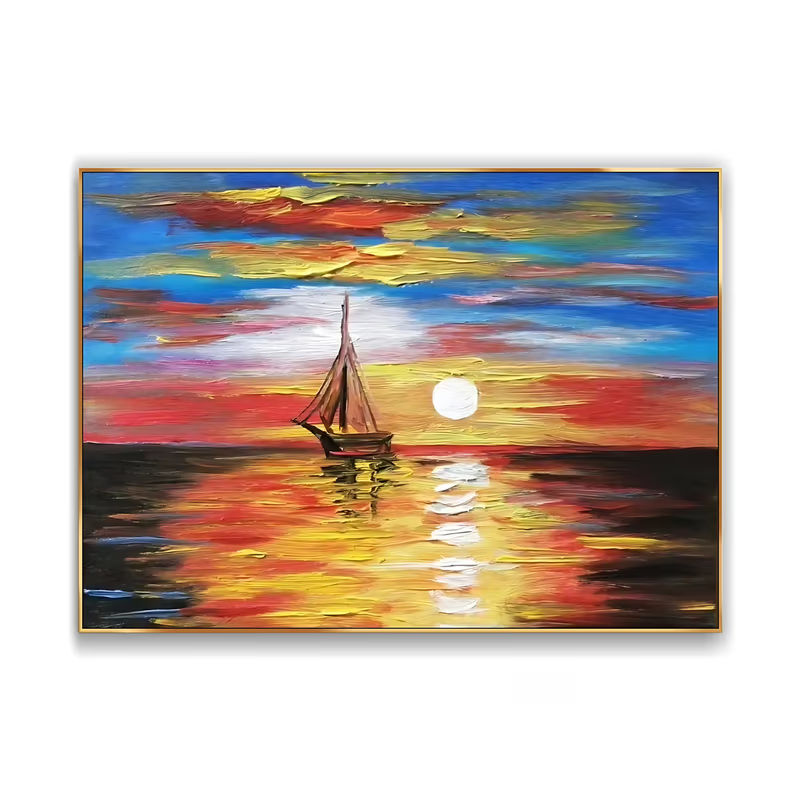
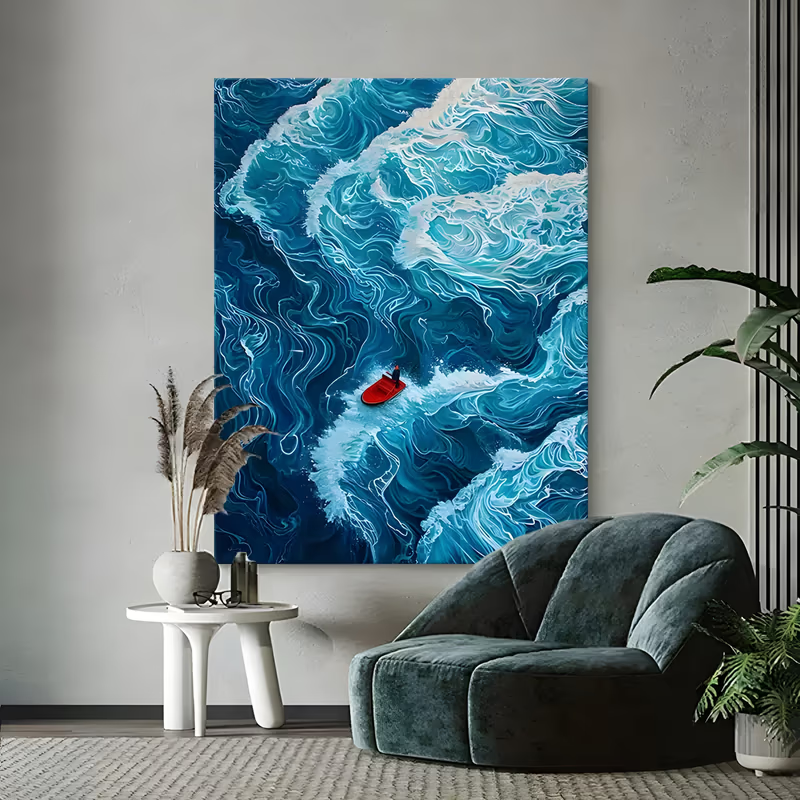
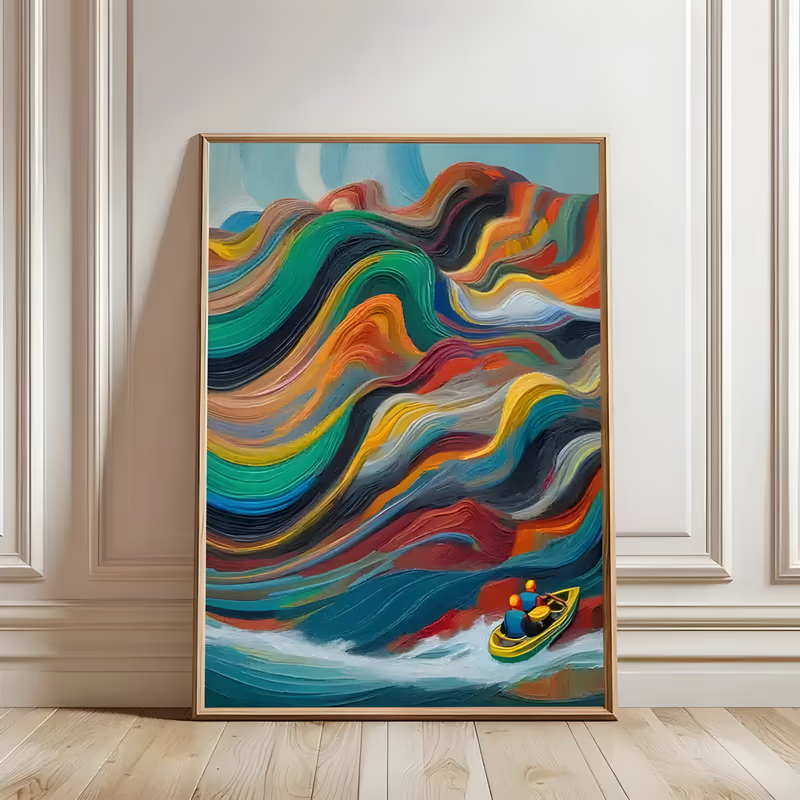
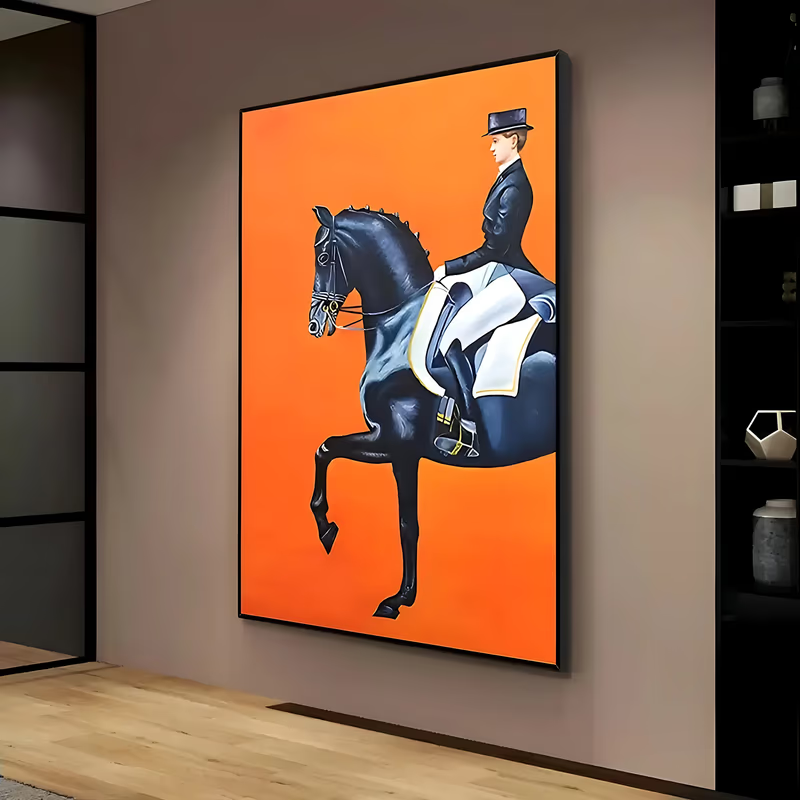
| Scale and solitude | A lone boat, rider or figure against a huge landscape | Corridor ends, libraries, studies |
Each device can be used alone. A painting does not need a black ground to be dramatic, but the darker and smaller its lit area, the more theatrical it becomes.
Is dramatic wall art the same as moody or bold art?
No: dramatic art is about tension and high contrast, moody art about quiet, low-key darkness, and bold art about strong shapes, which may not be dark at all.
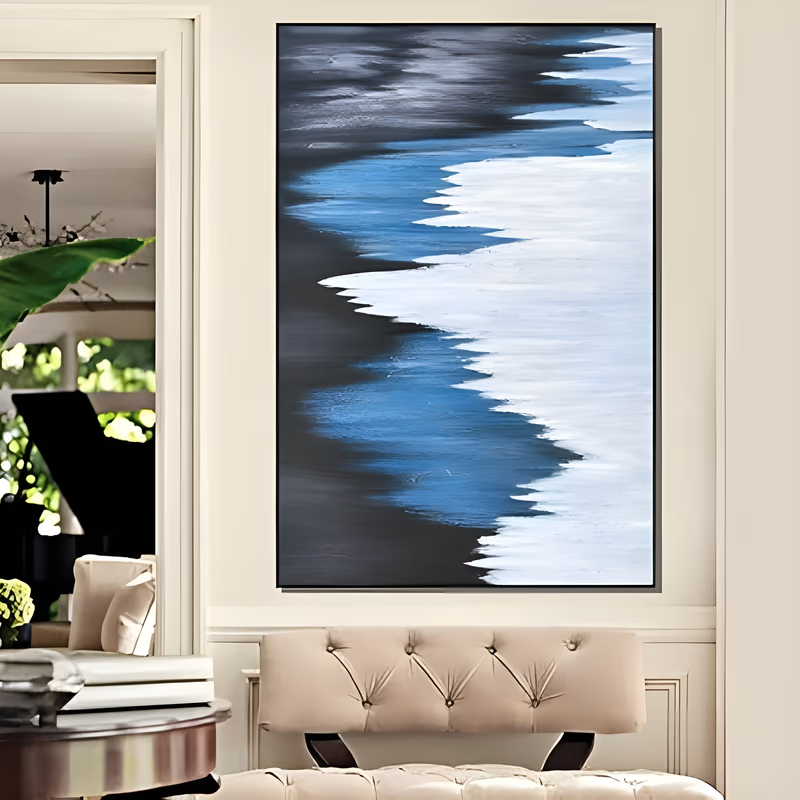
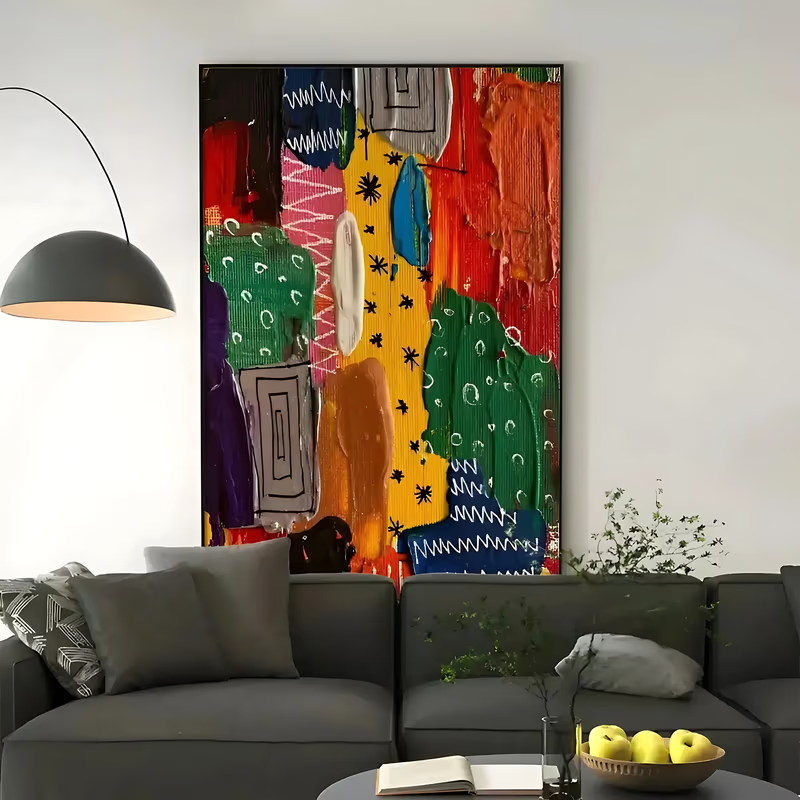
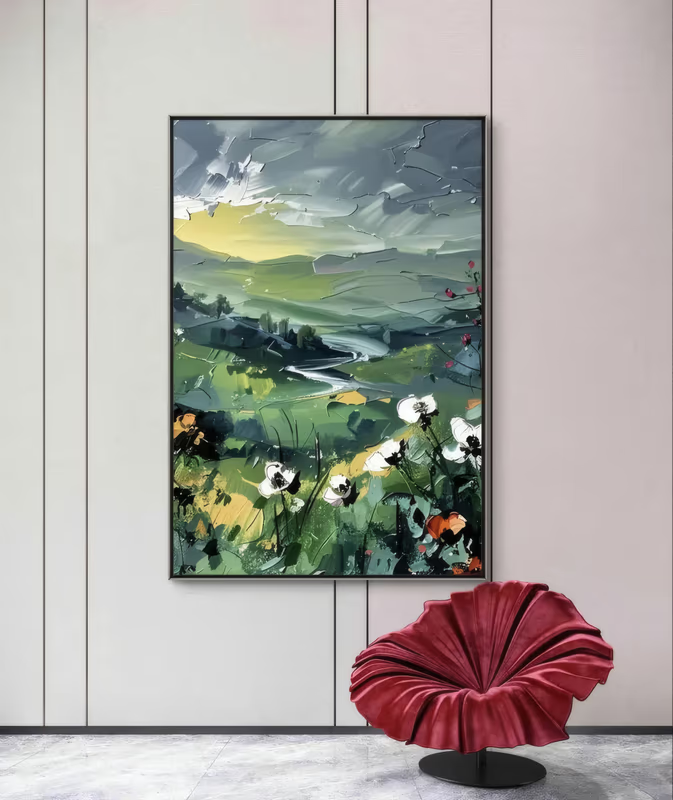
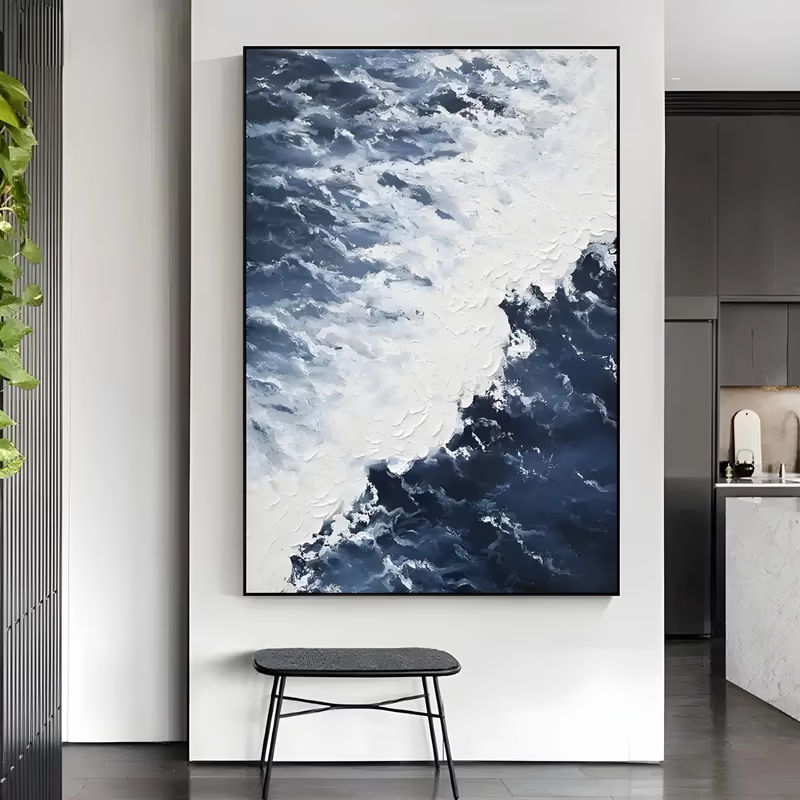
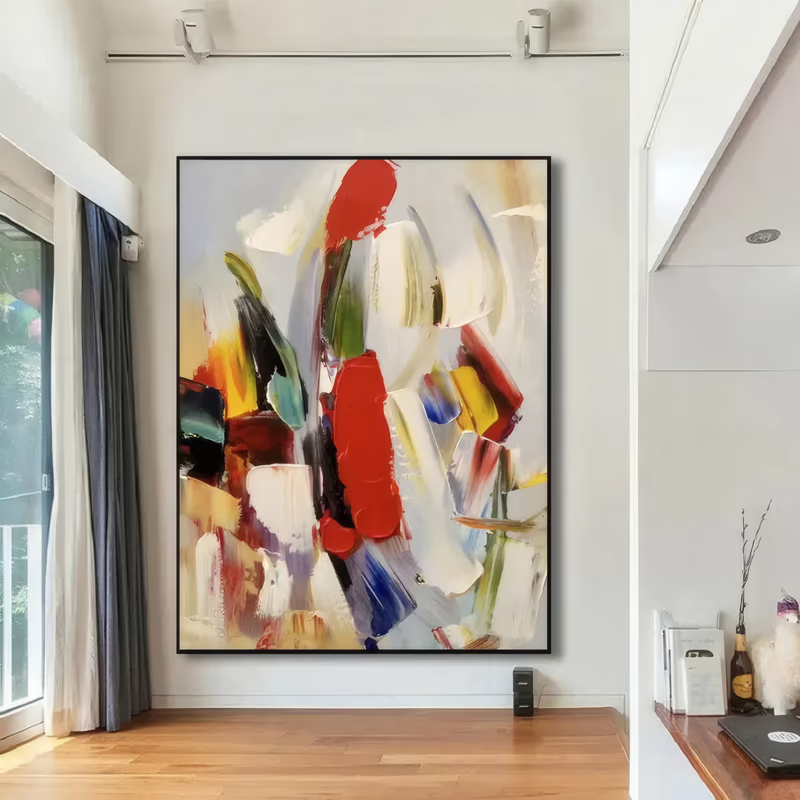
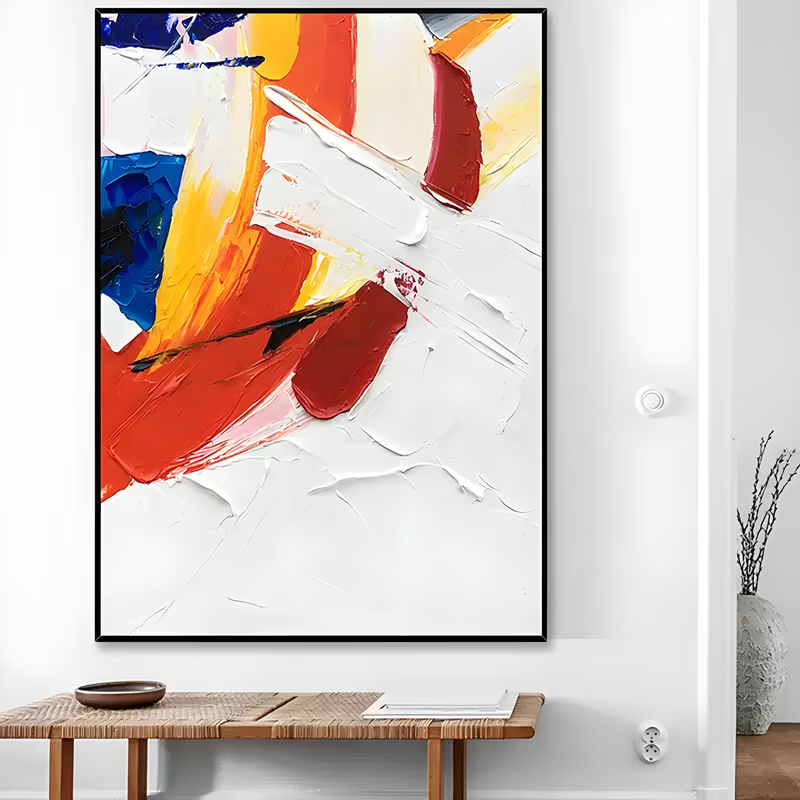
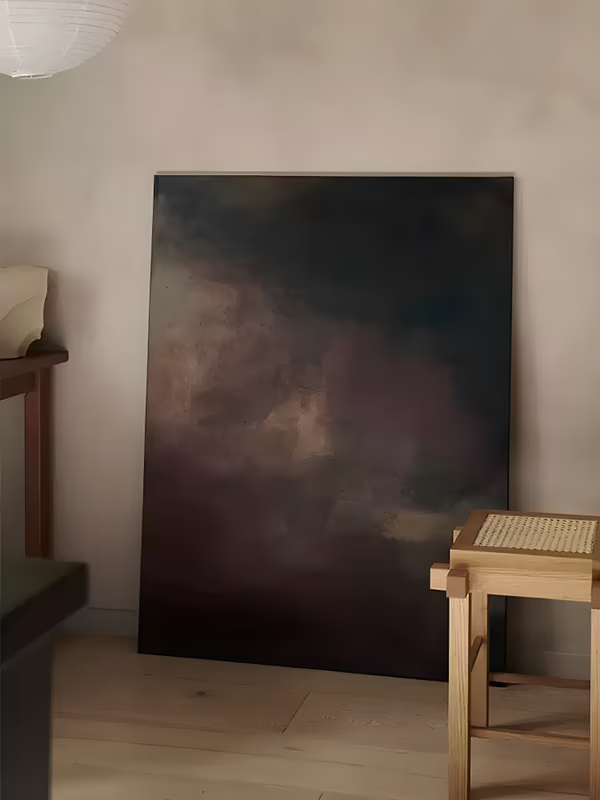
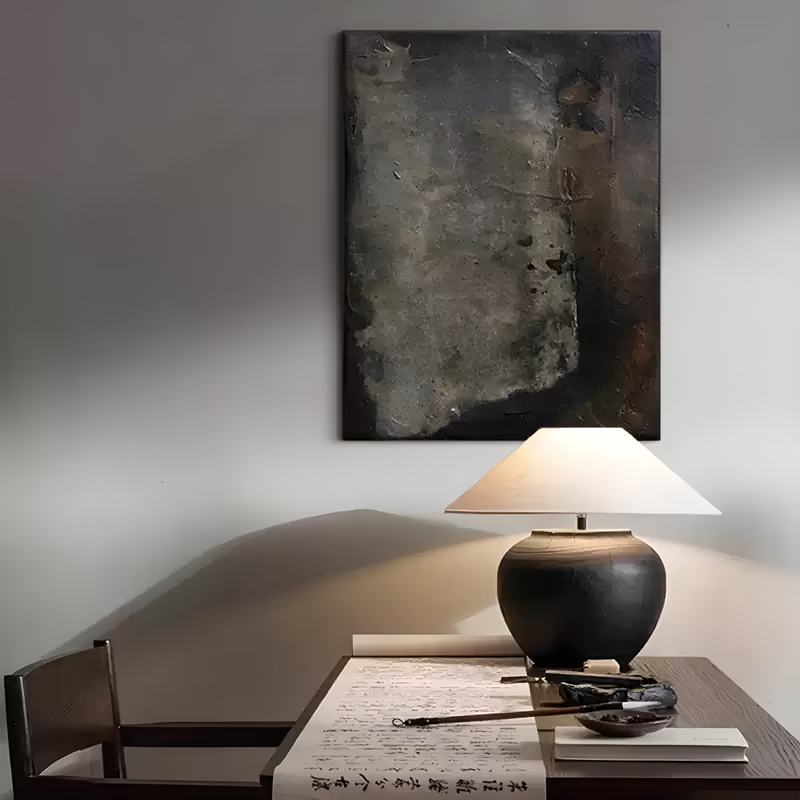
Put a stormy sea painted with white spray against black water next to a misty dusk lake in greys and umber. Both are dark; only the first is dramatic. It has a peak of light and a sense of action, while the second wraps the room in calm. That is the line between dramatic and moody wall art. Bold work, by contrast, can be bright and cheerful, such as three primary-colour blocks on white; it shares drama's confidence but not its darkness. See bold wall art.
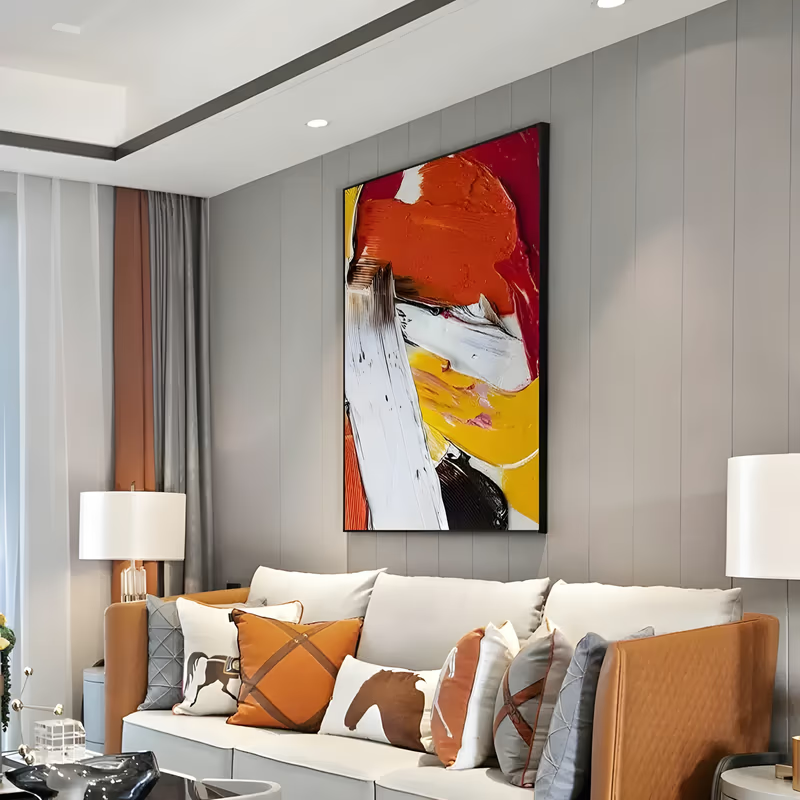
The difference matters for planning. Dramatic pieces want a stage: a defined sightline, controlled light and a room people visit rather than live in all day. Moody pieces can fill a whole scheme. Bold pieces suit daylight just as well as night.
What kinds of dramatic paintings are there?
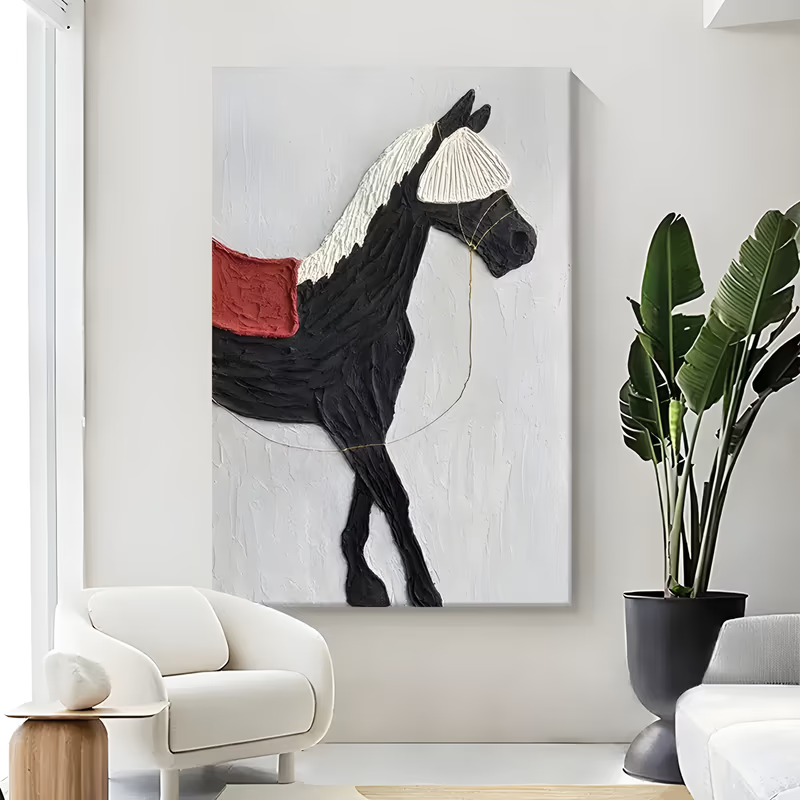
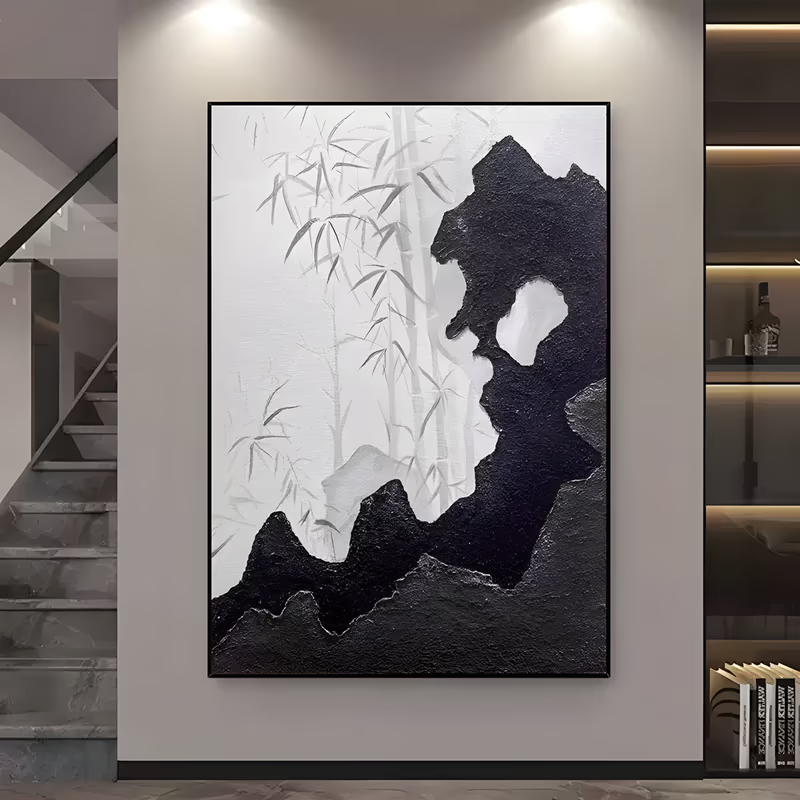
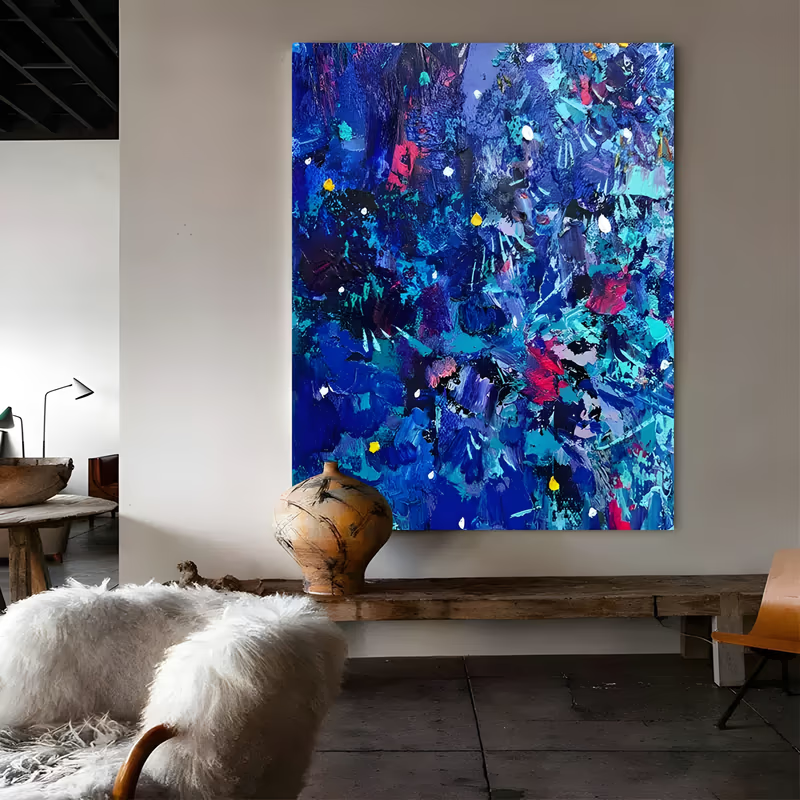
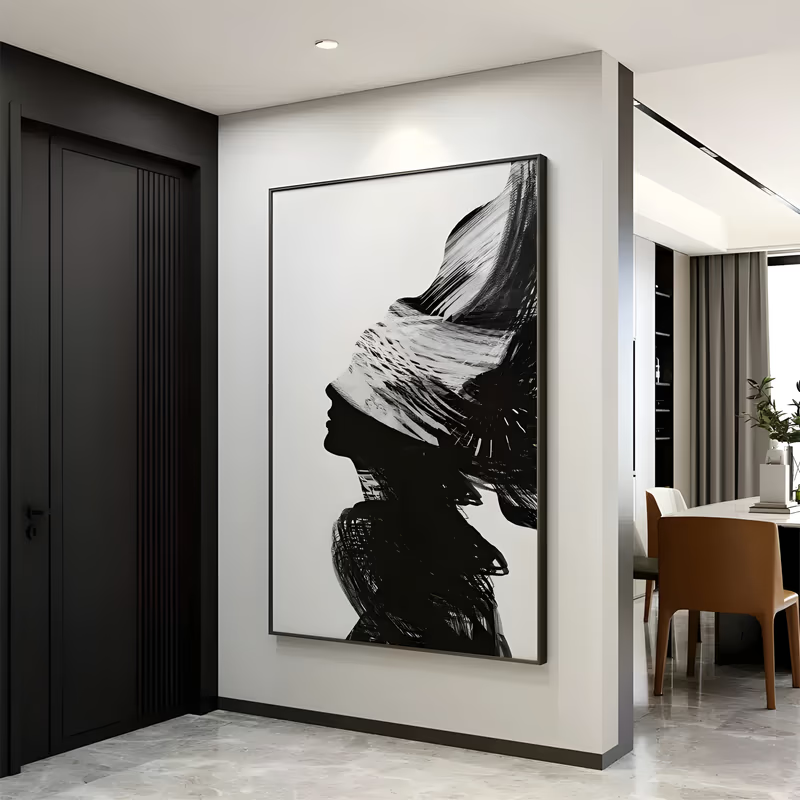
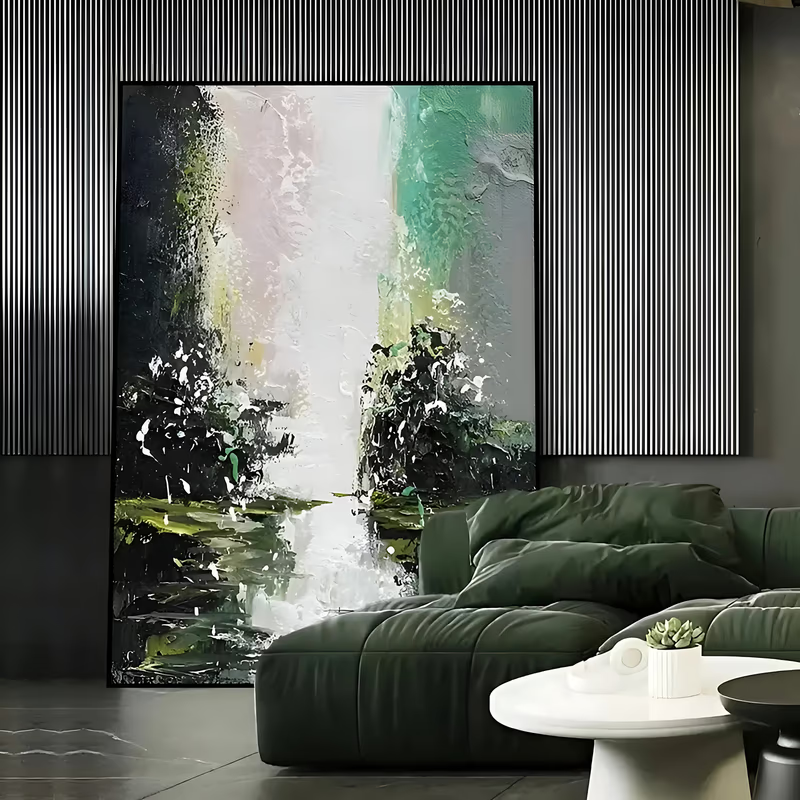
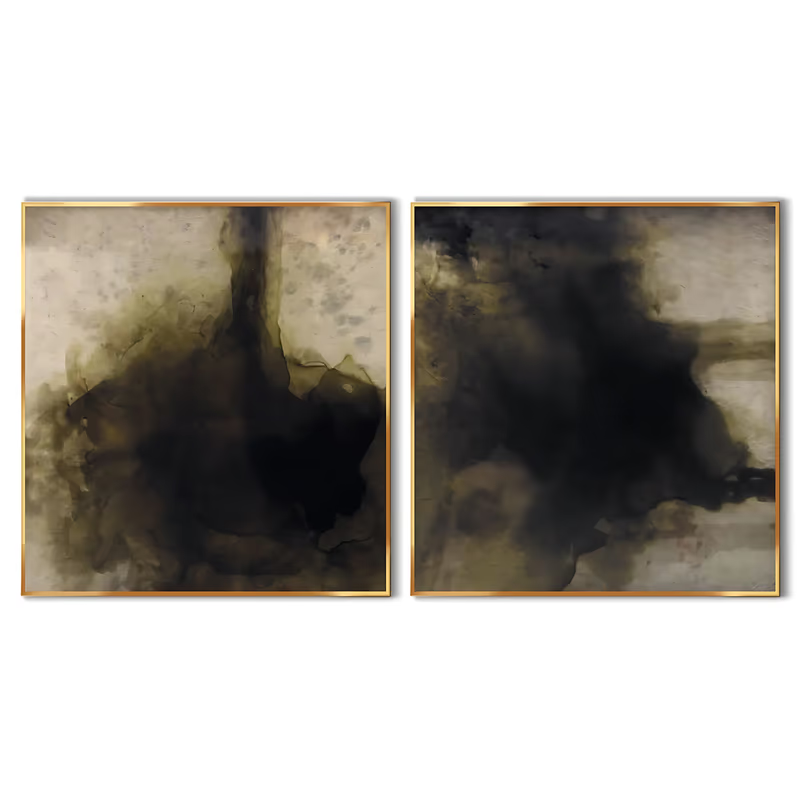
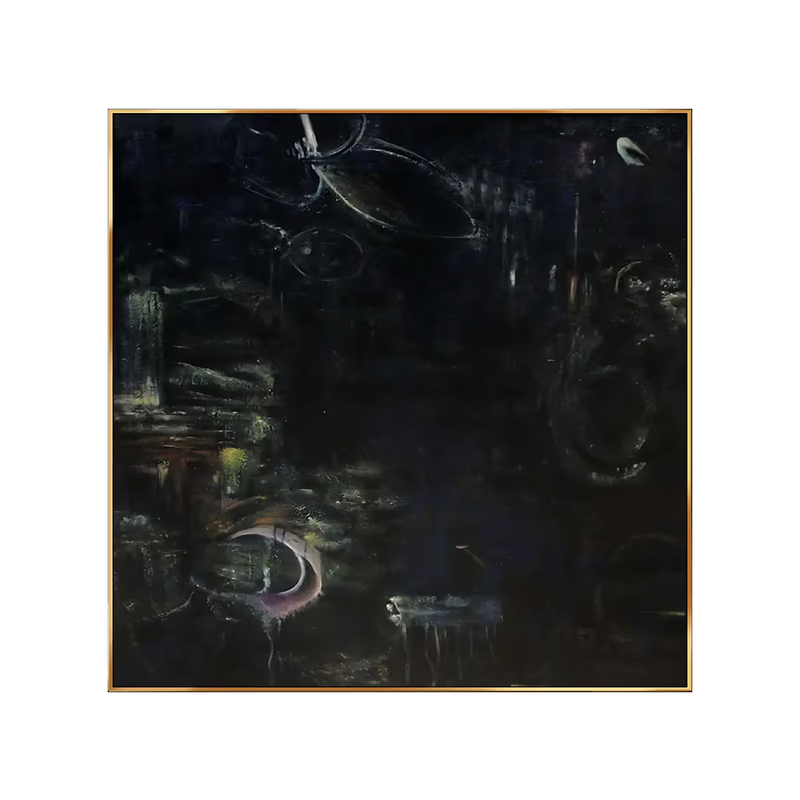
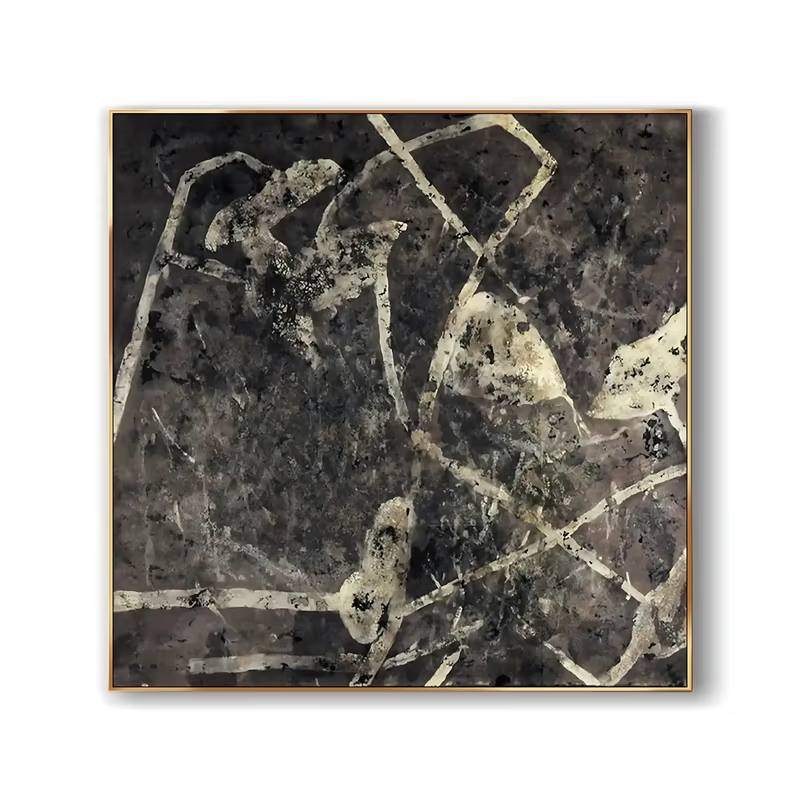
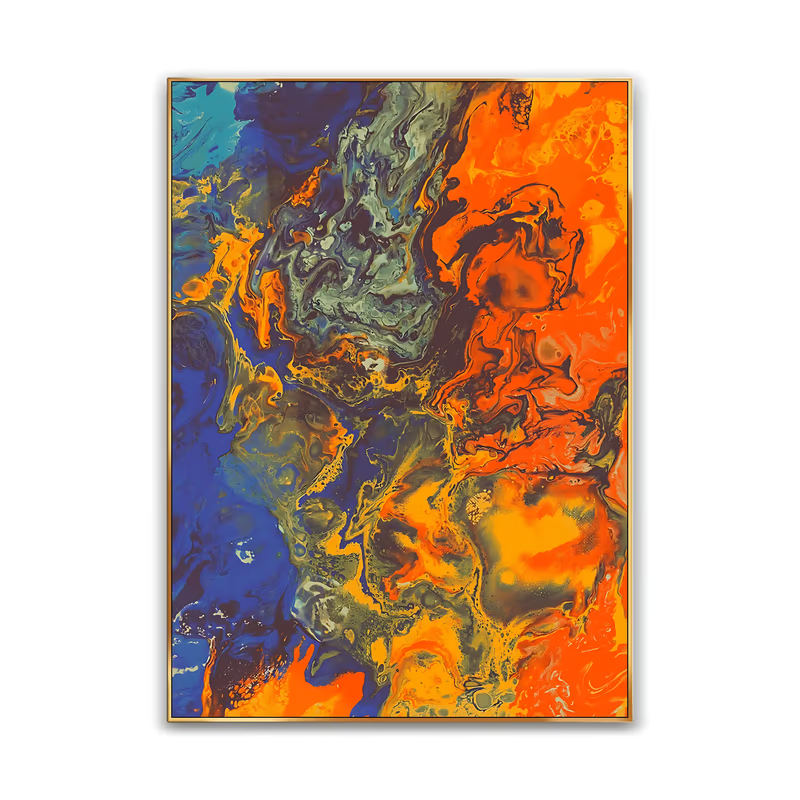
Dramatic wall art here comes in four kinds: night skies, storms and breaking seas; animals stepping out of darkness; dark-ground abstracts and plaster relief, often touched with gold or silver; and flowers and figures lit against deep colour.
Night, storm and sea
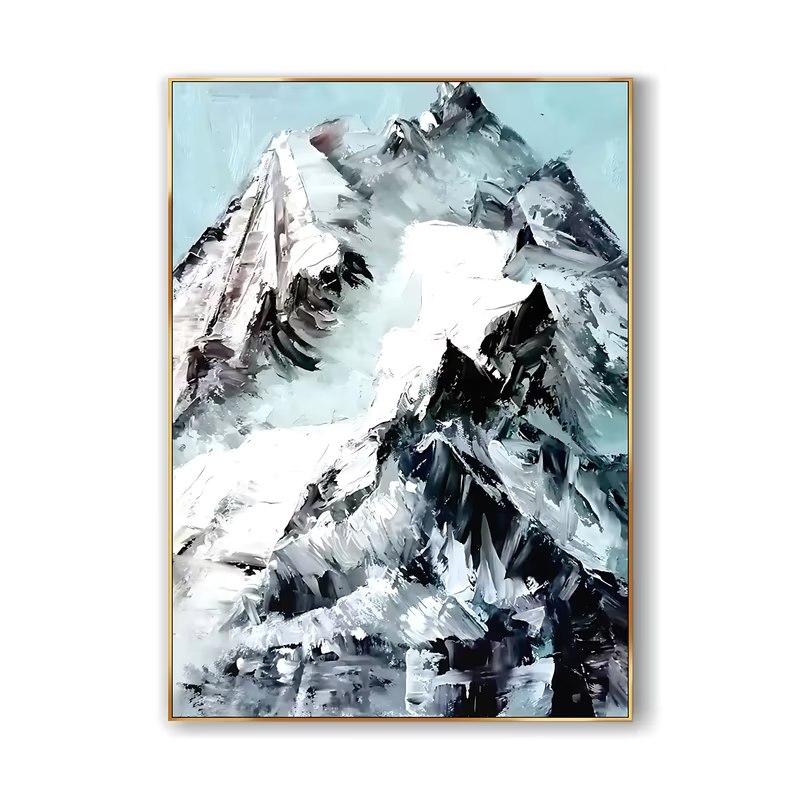
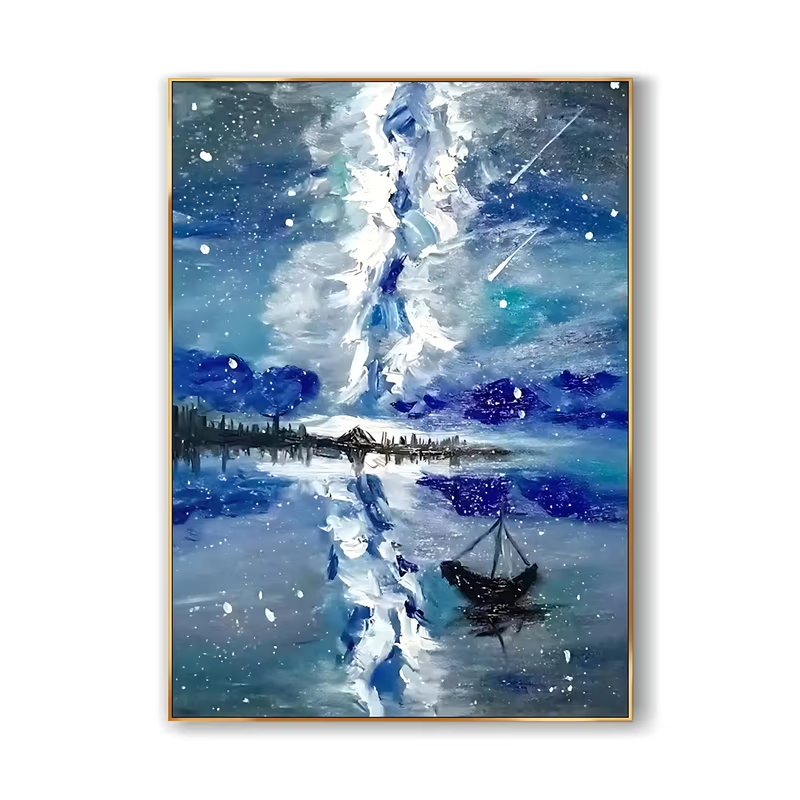
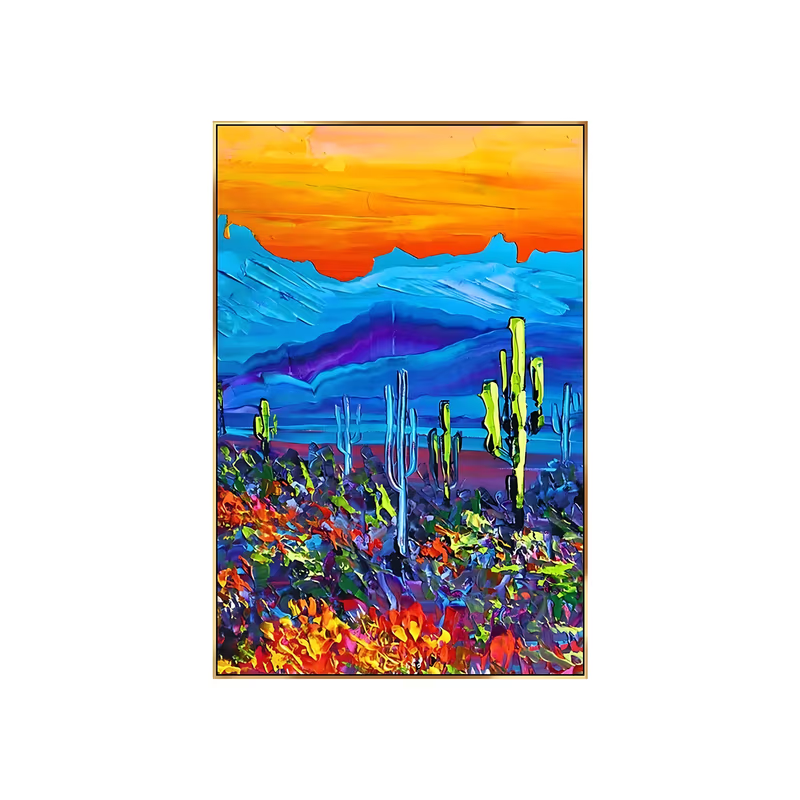
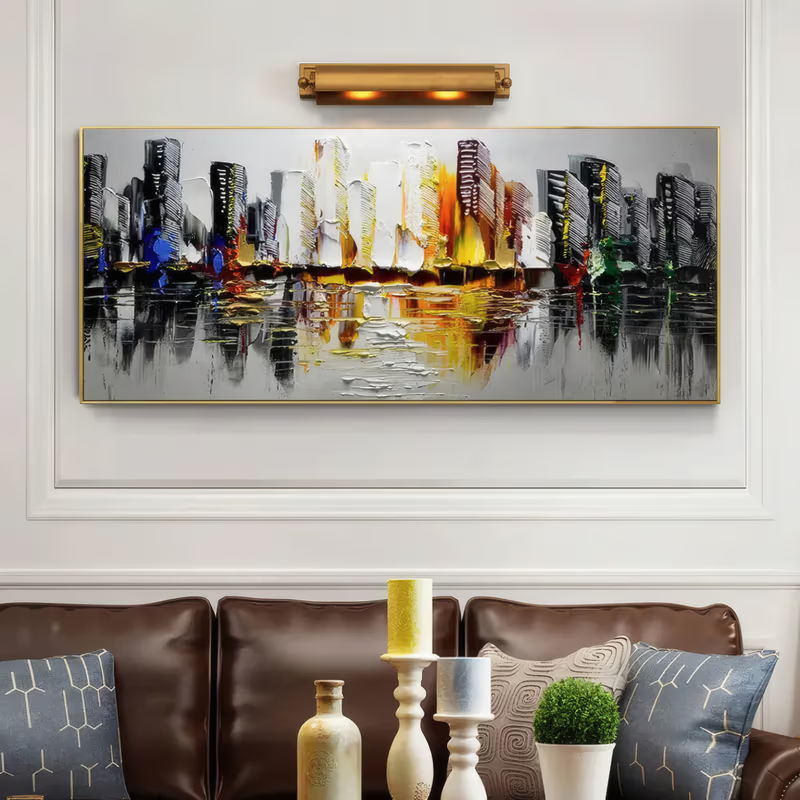
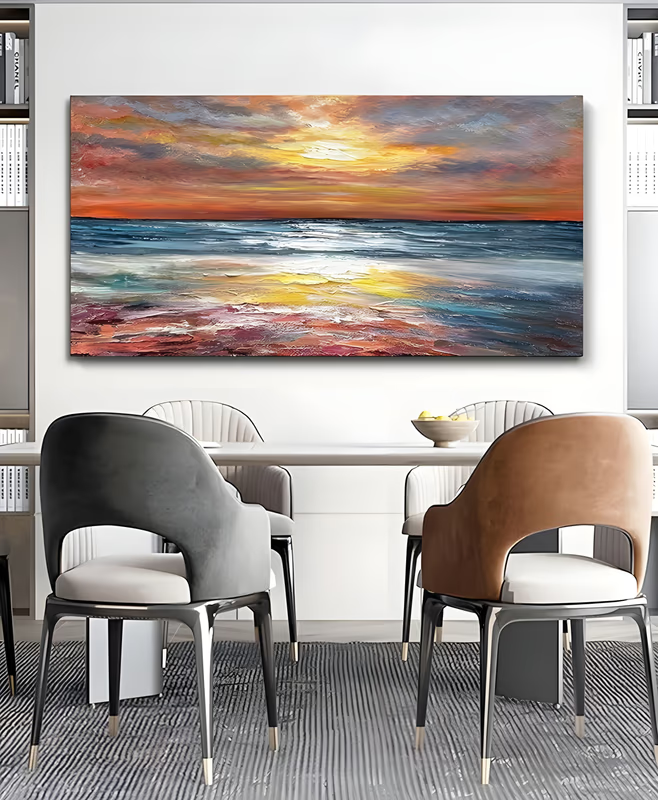
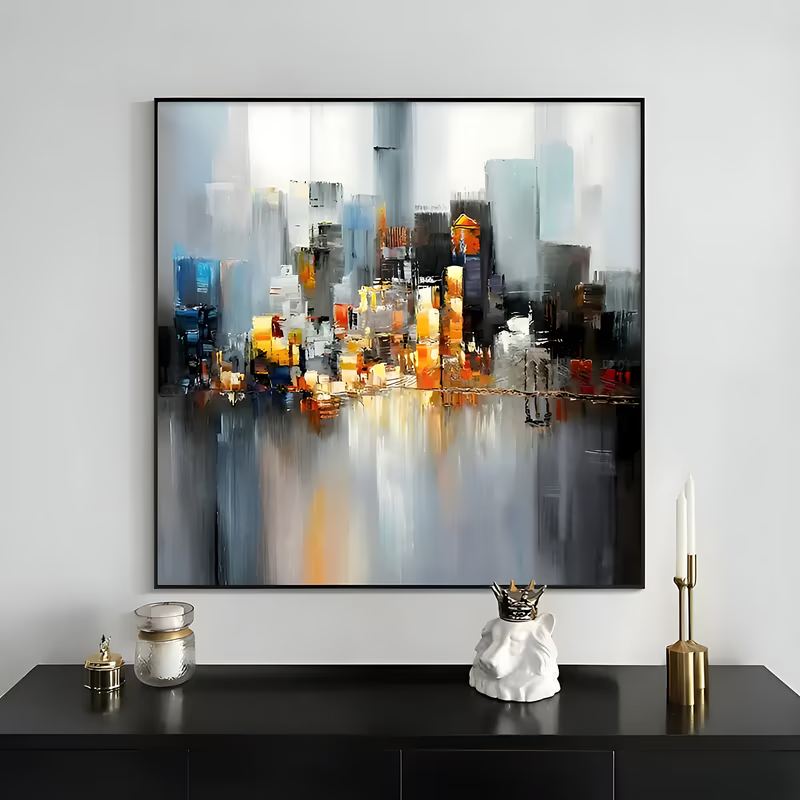
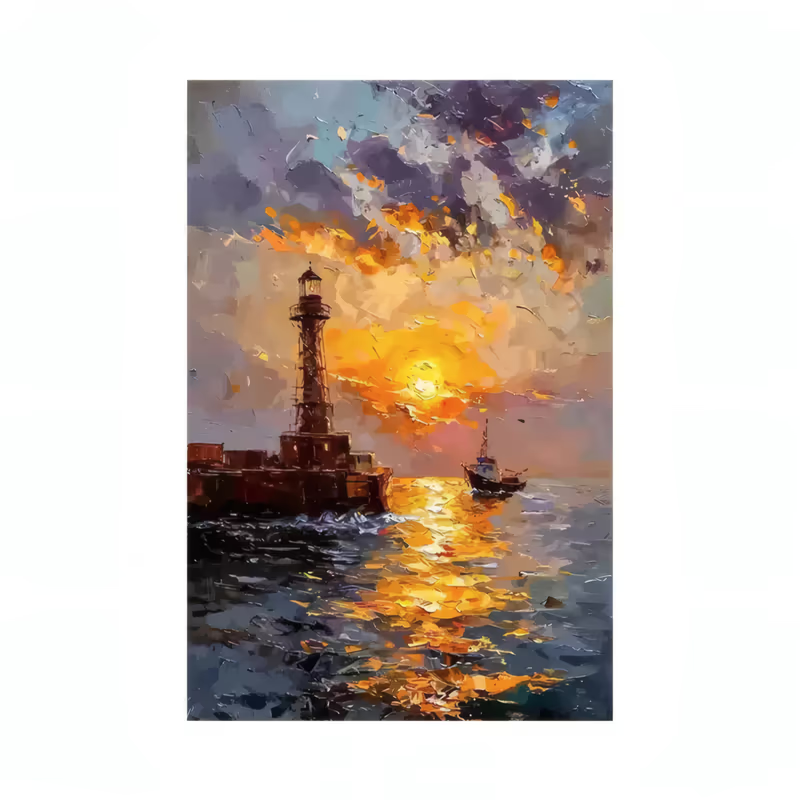
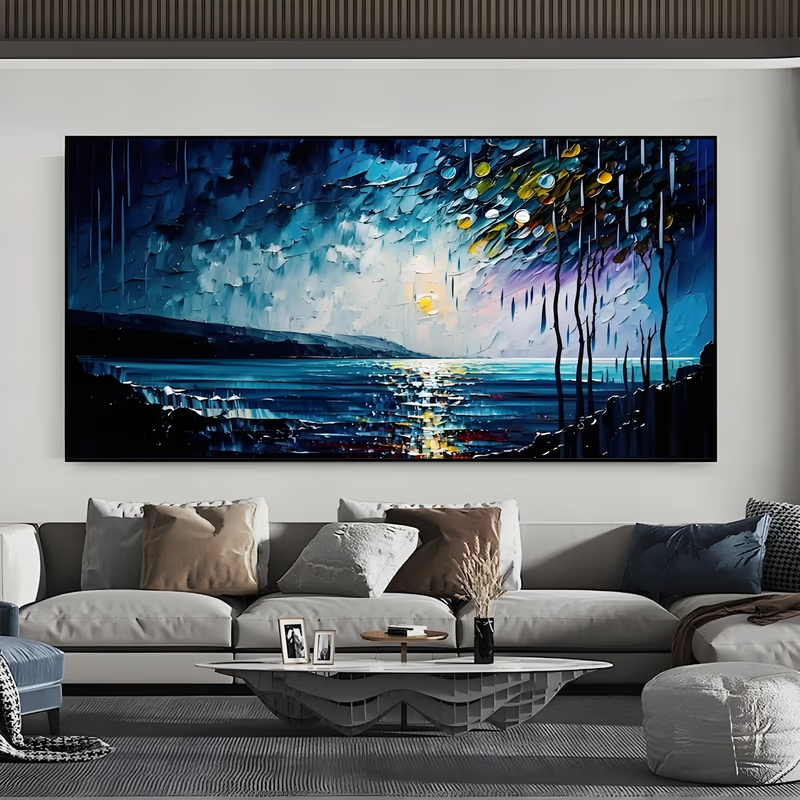
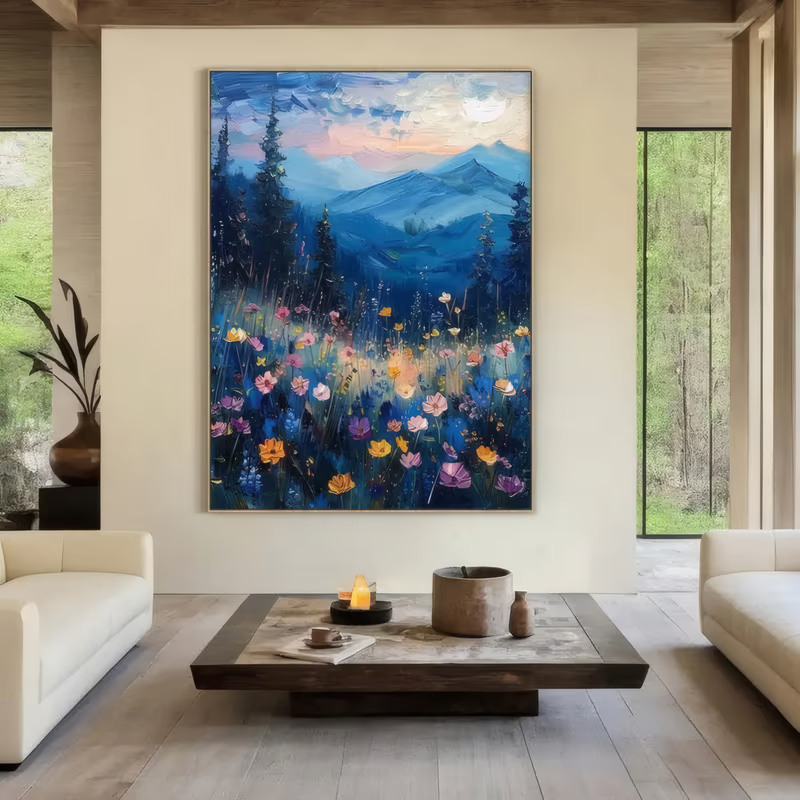
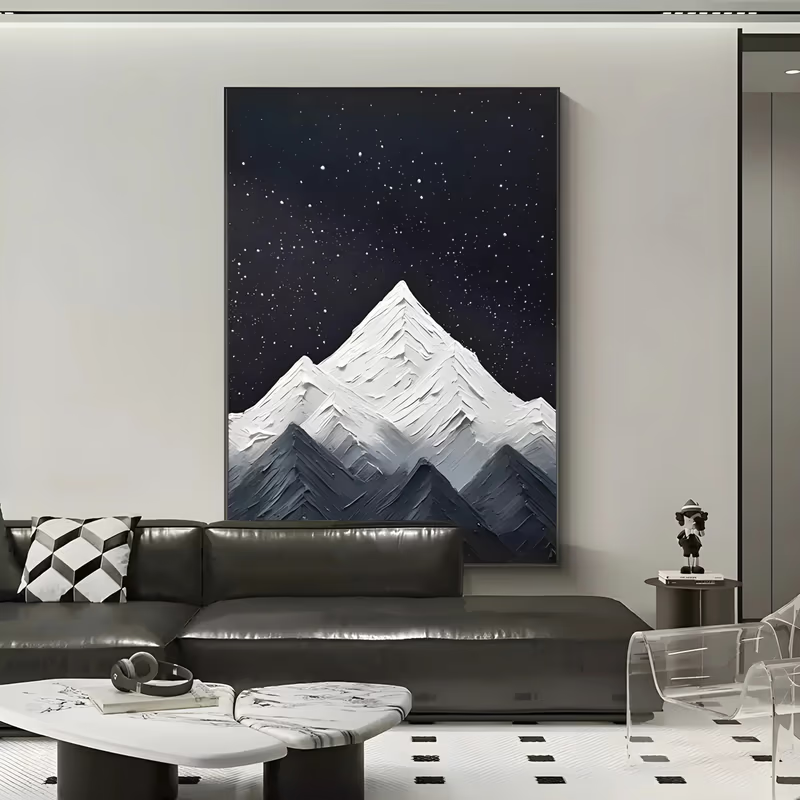
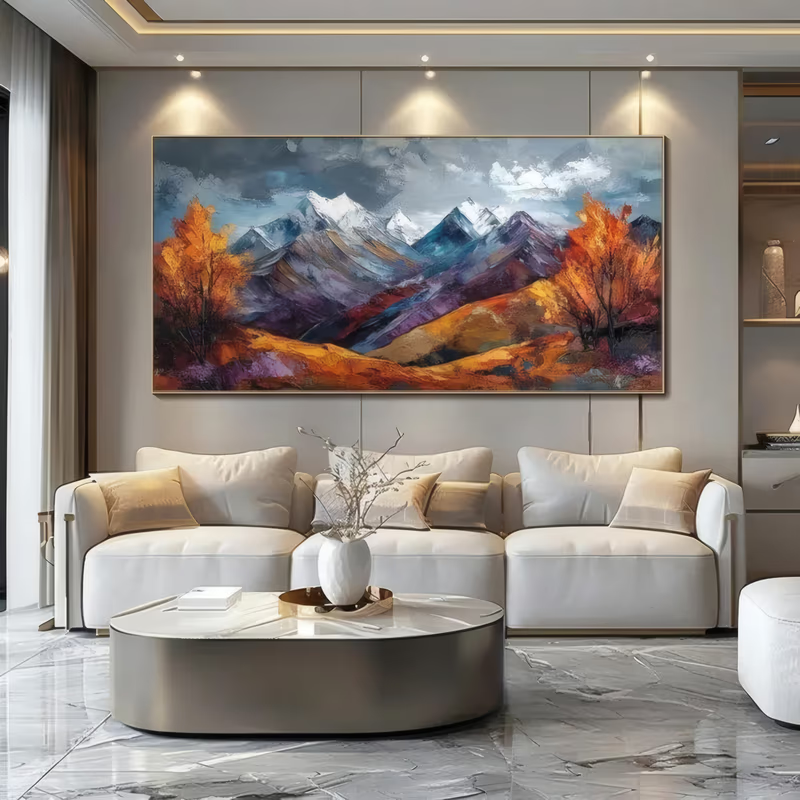
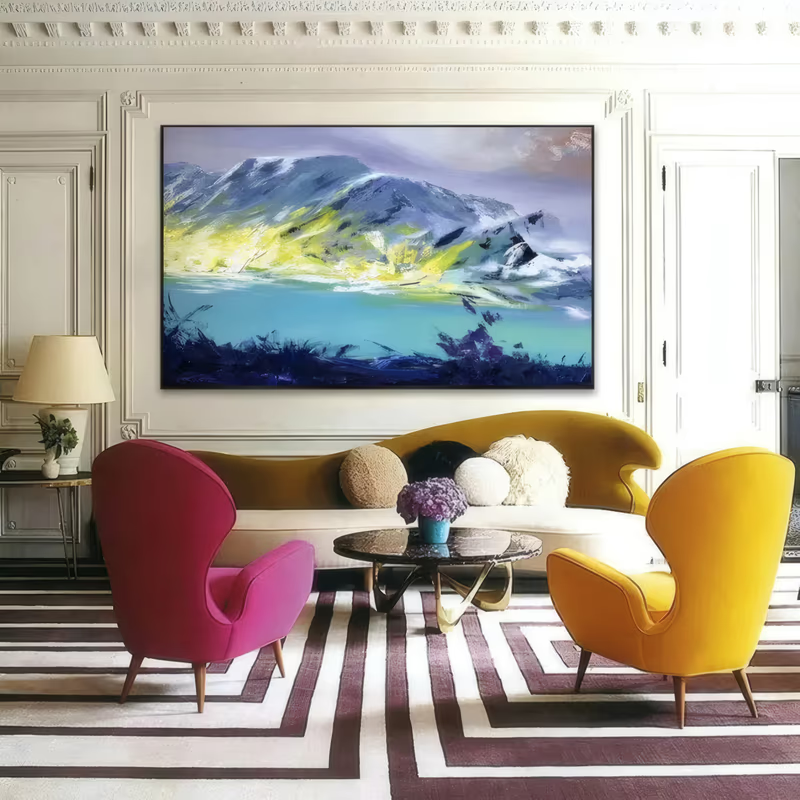
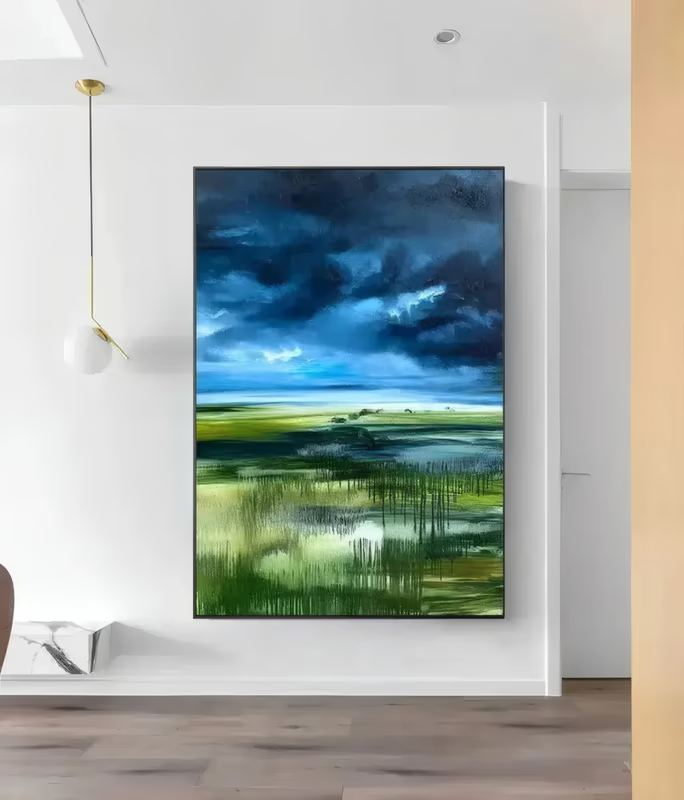
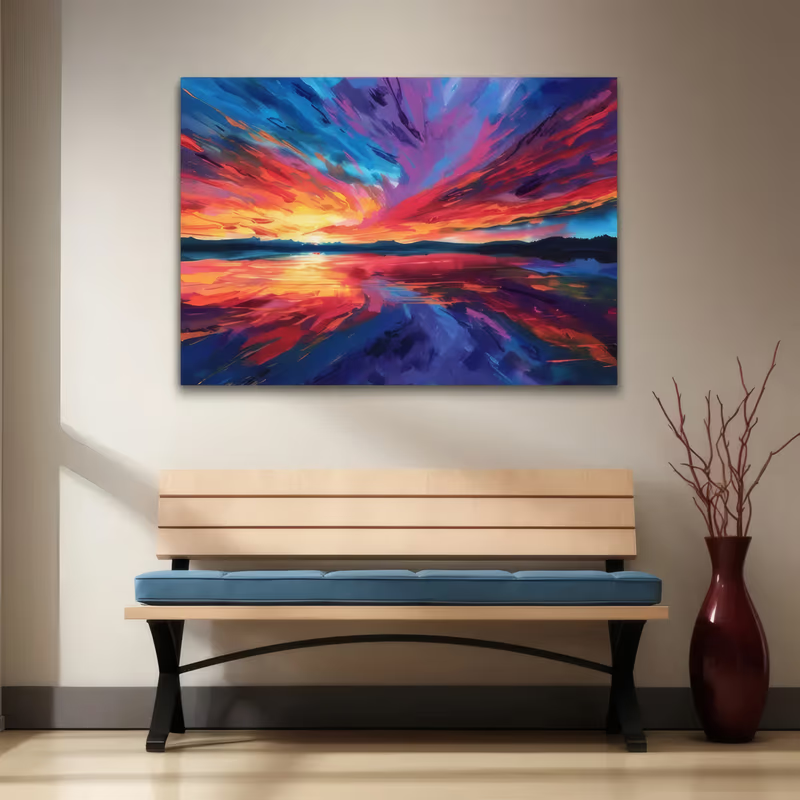
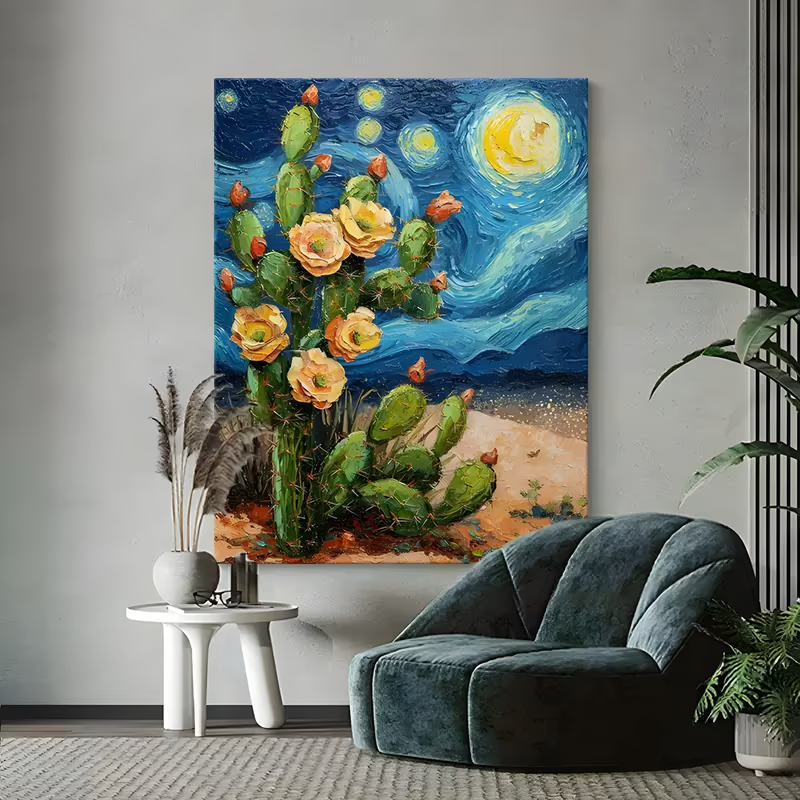
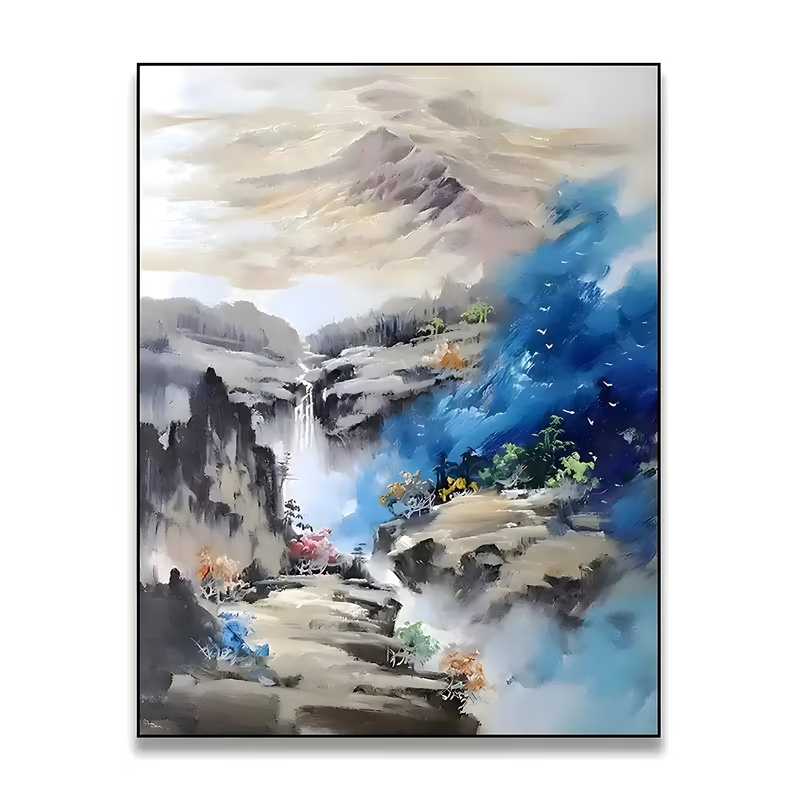
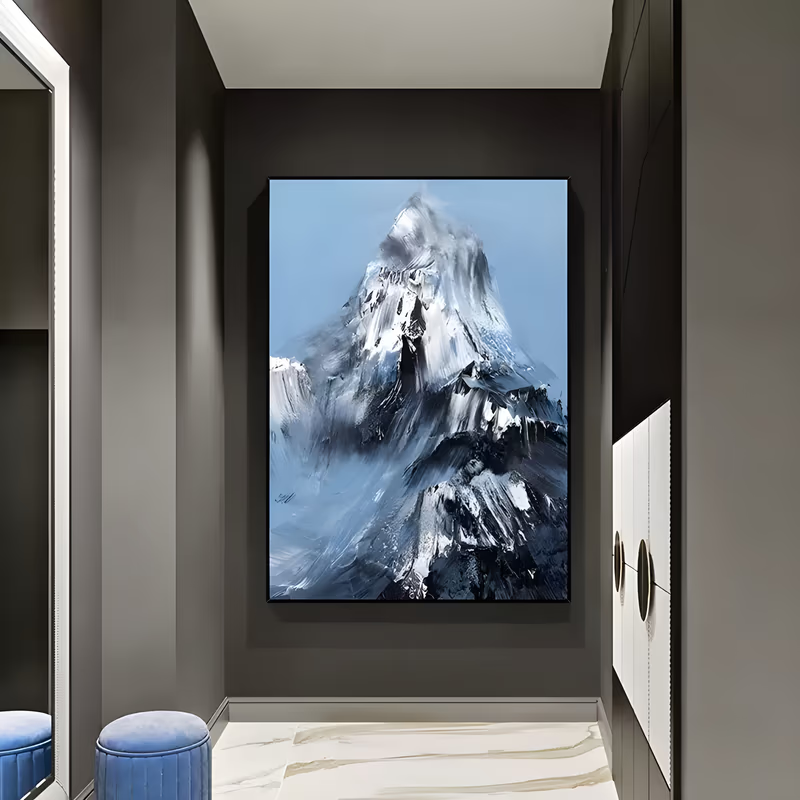
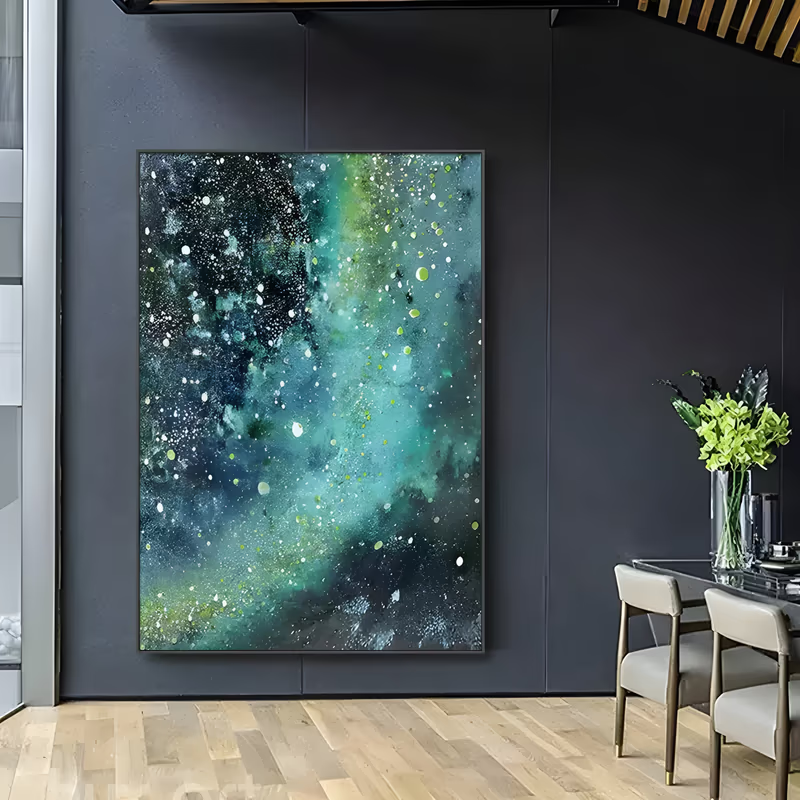
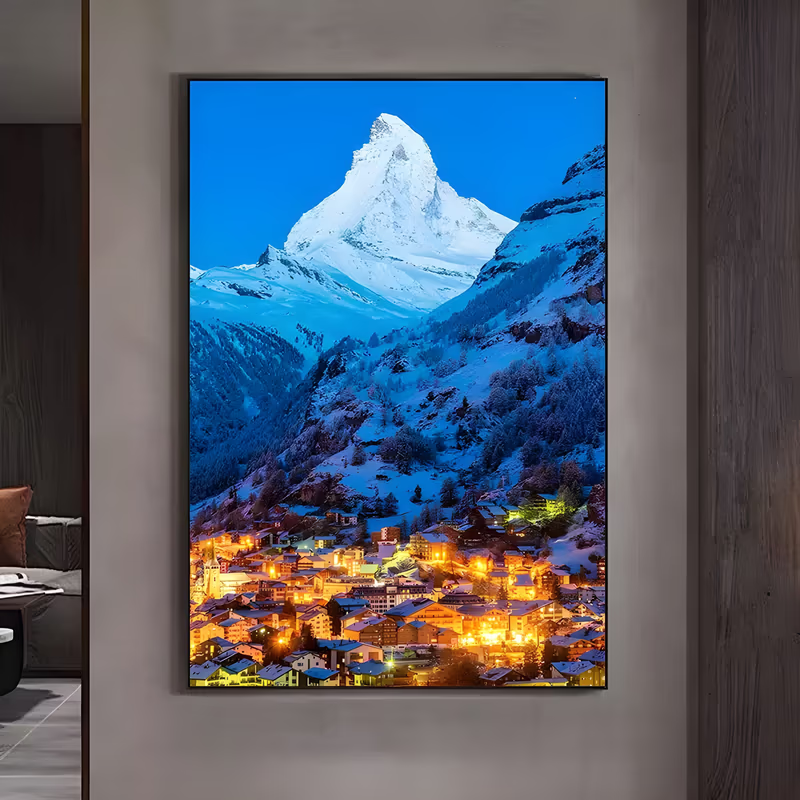
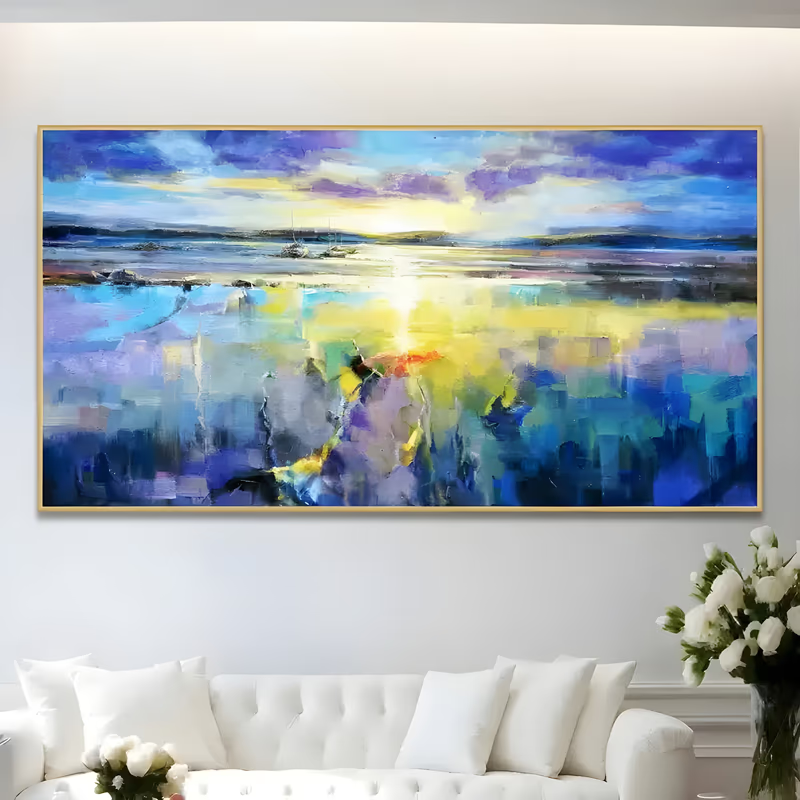
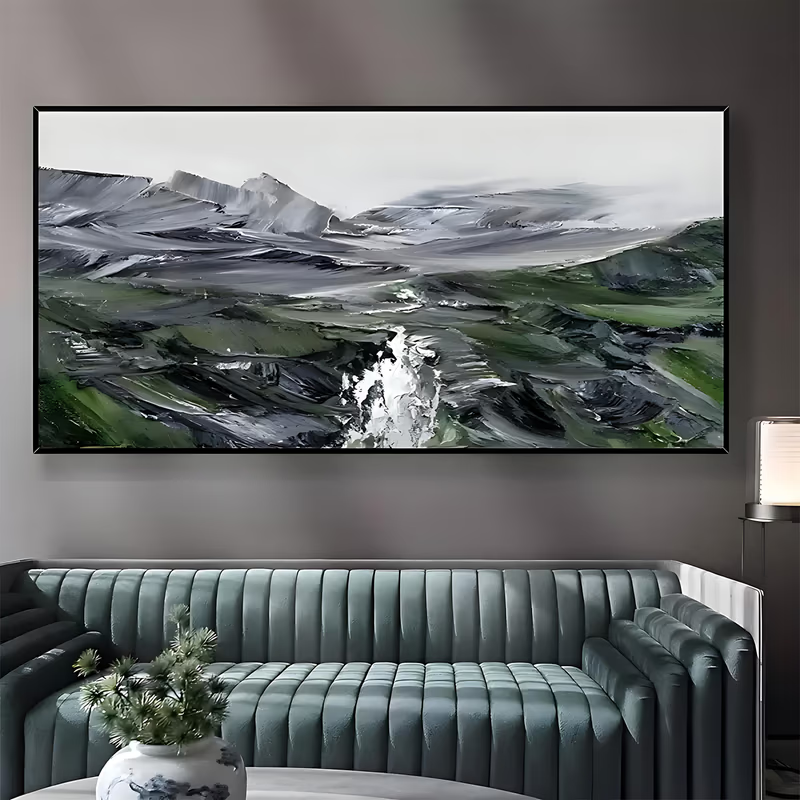
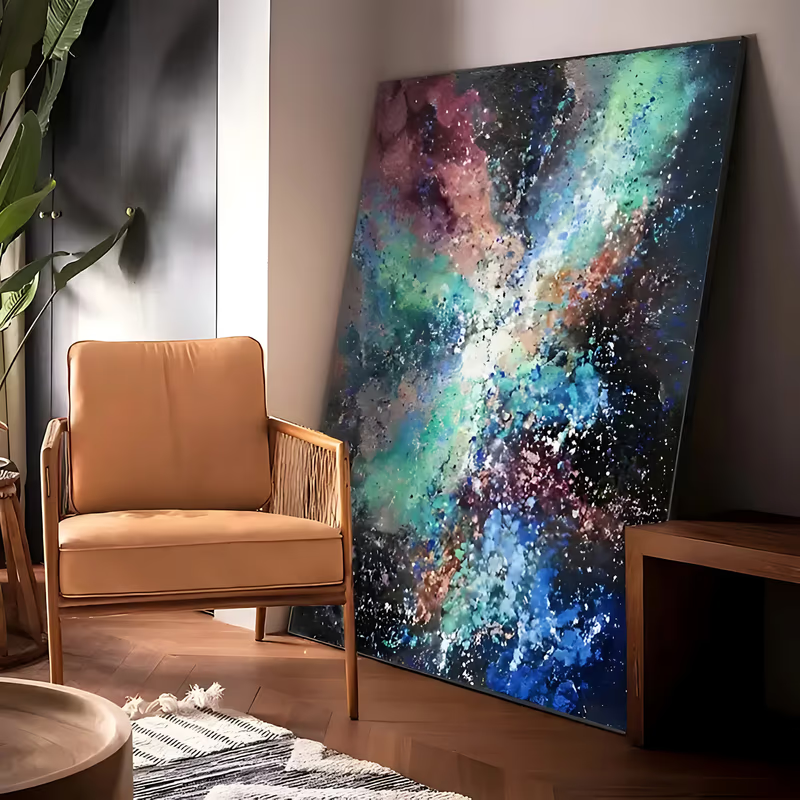
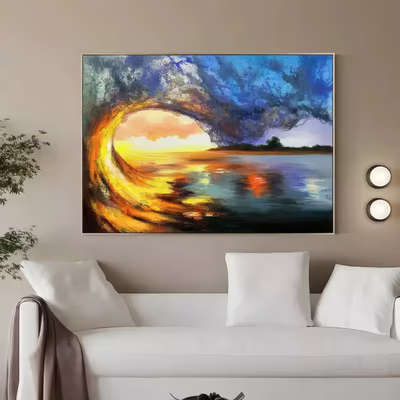
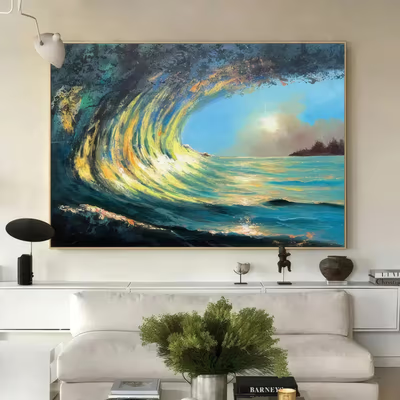
The Milky Way over a lake with a boat, golden sunset inside a curling wave, a turquoise barrel wave, snow peaks in black and white, a bistro street at night, saguaro cacti against a burning sky. These are landscapes at their most theatrical, ideal for lobbies and wide walls. See dramatic landscapes and seascapes.
Animals out of the dark
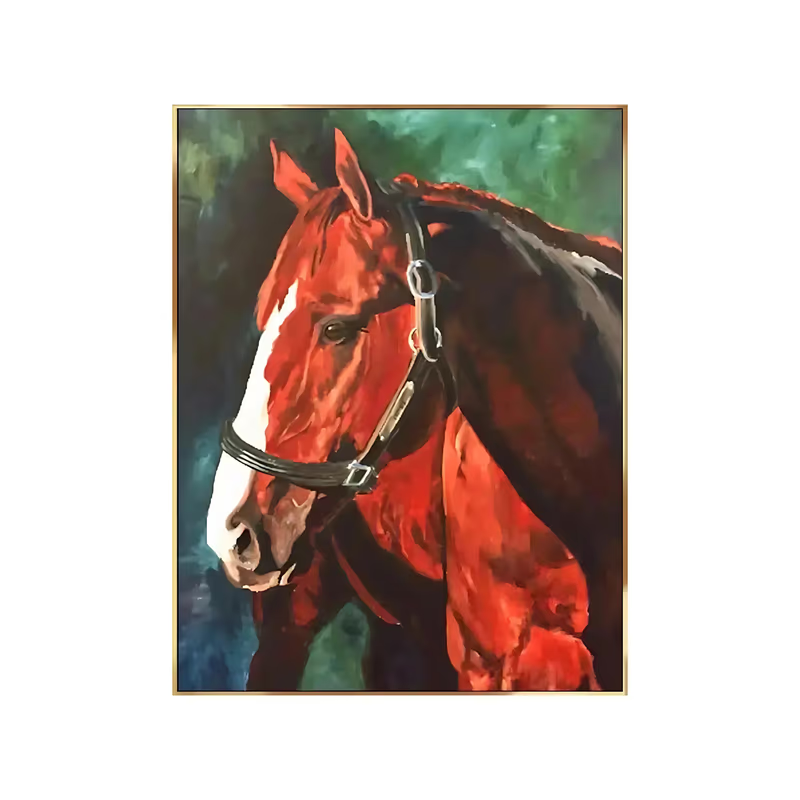
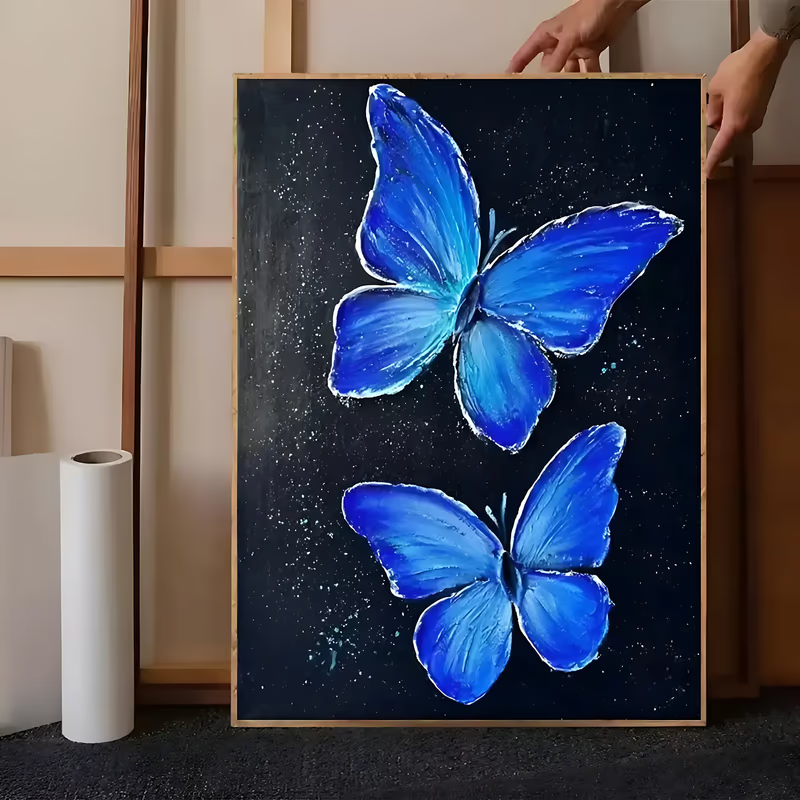
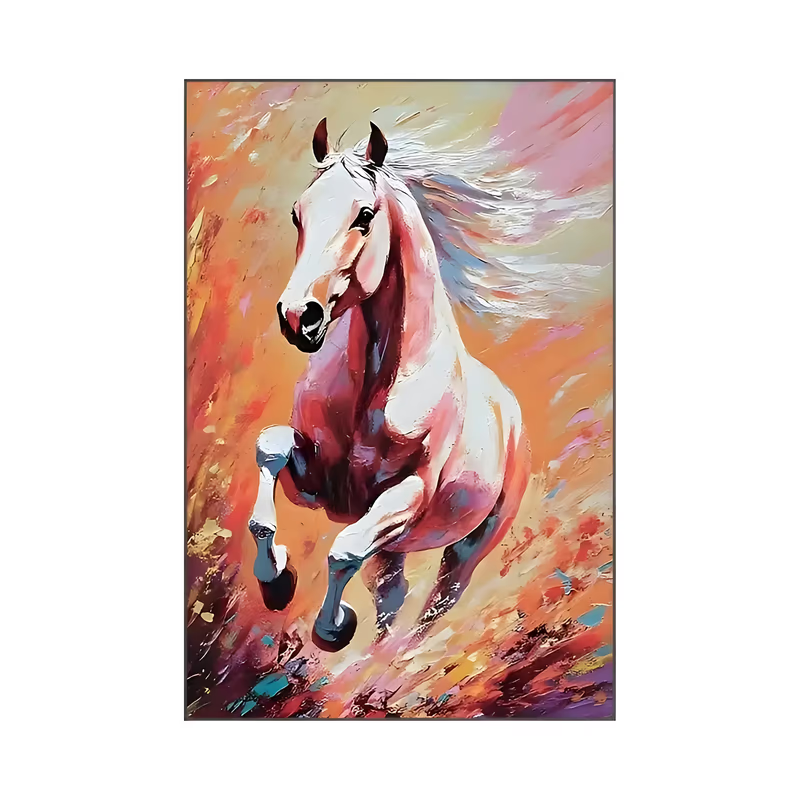
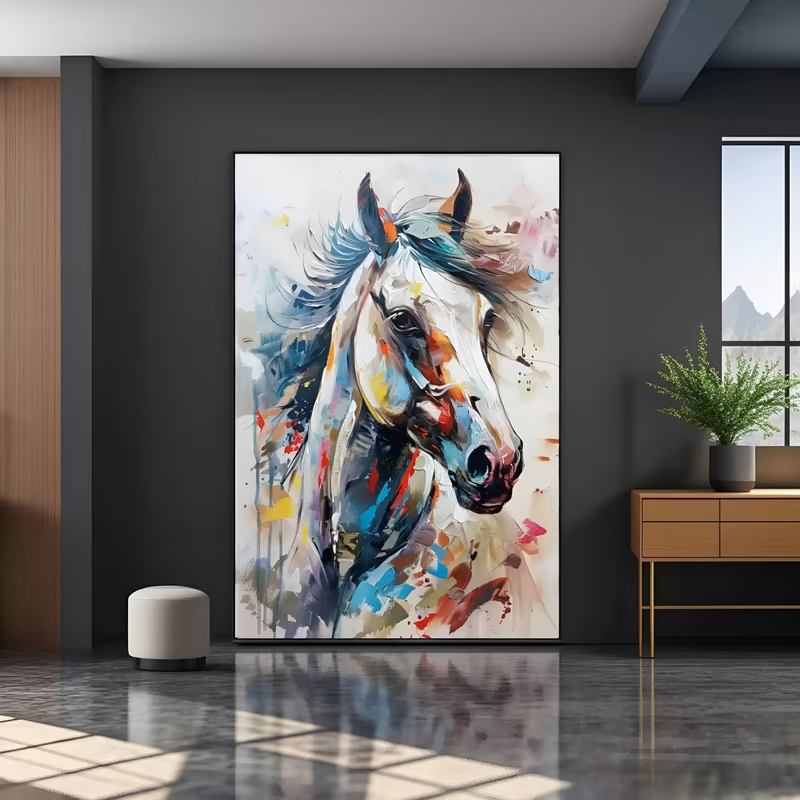
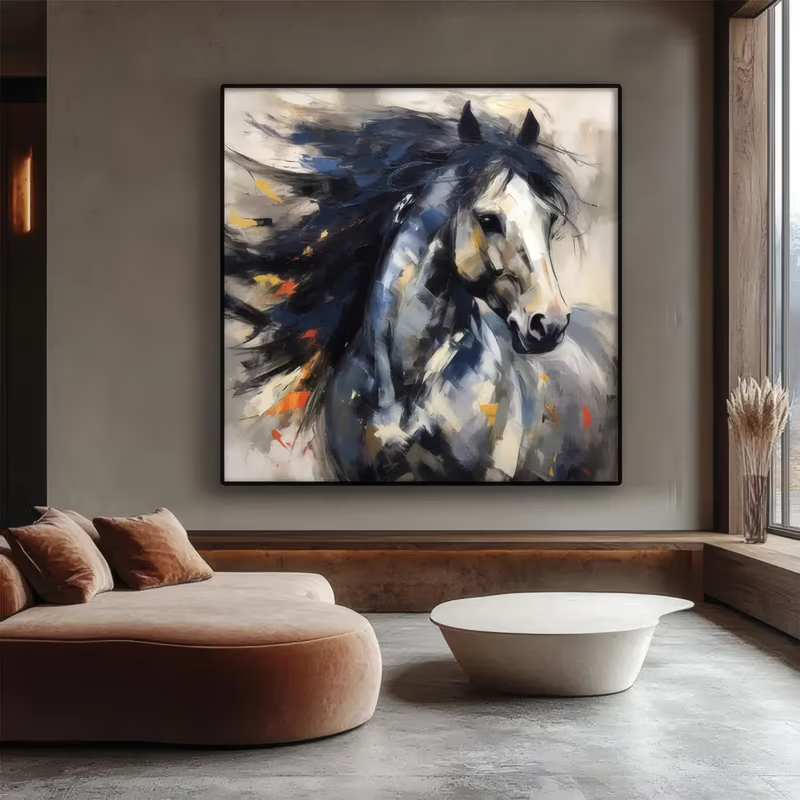
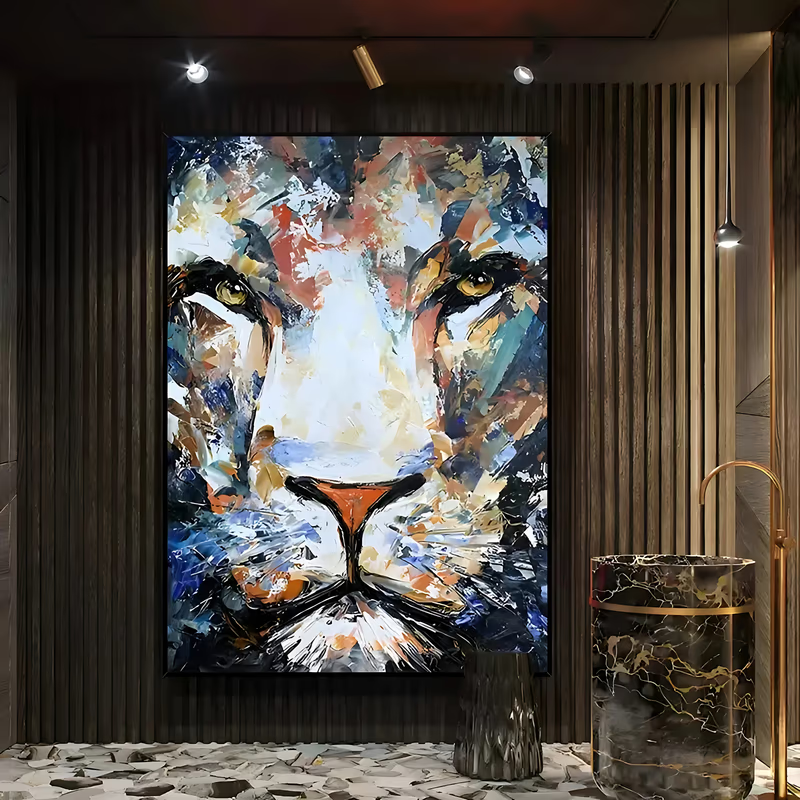
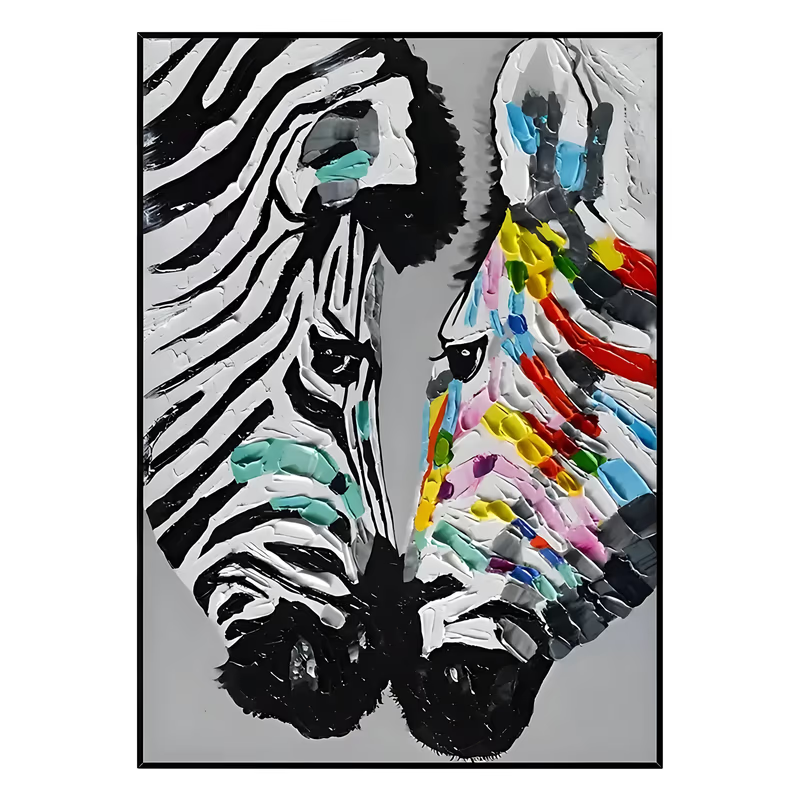
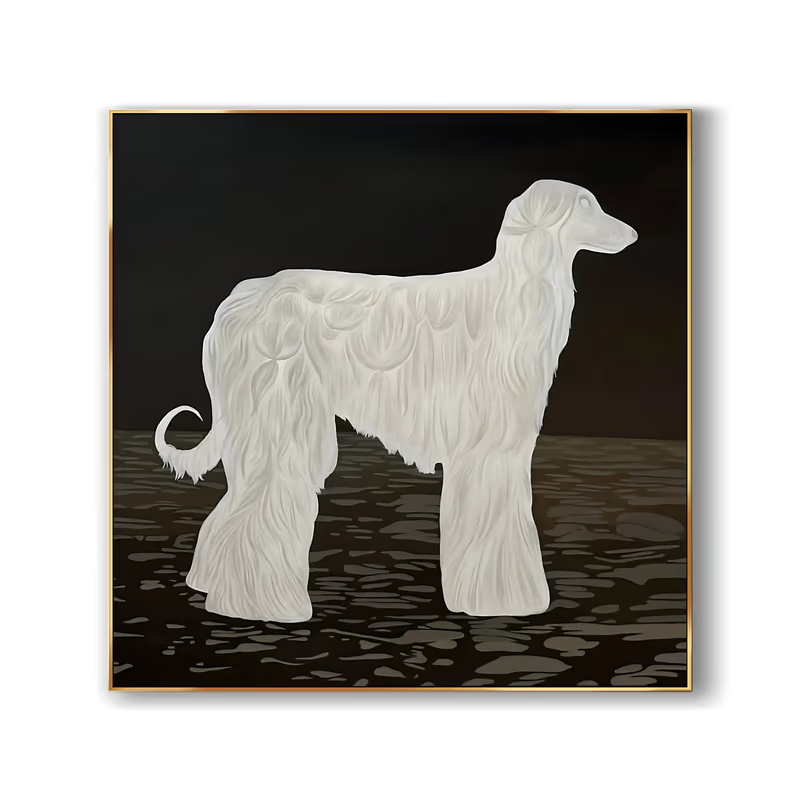
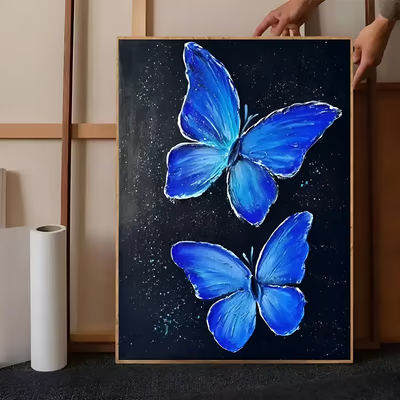
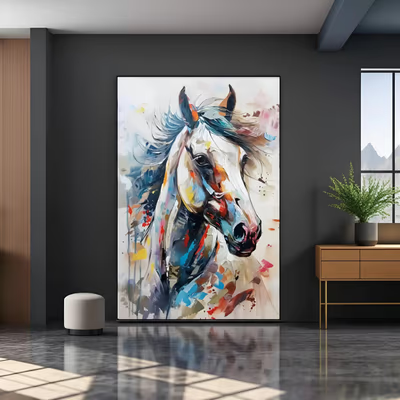
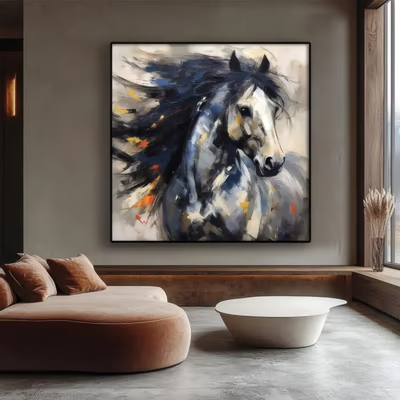
A prowling black panther, a leopard in profile against black, a chestnut horse head, electric-blue morpho butterflies, a white Afghan hound on a dark dappled ground. A face or an eye catching the light is the most direct form of chiaroscuro, and it suits whisky bars, studies and members' lounges.
Black, gold and relief abstracts
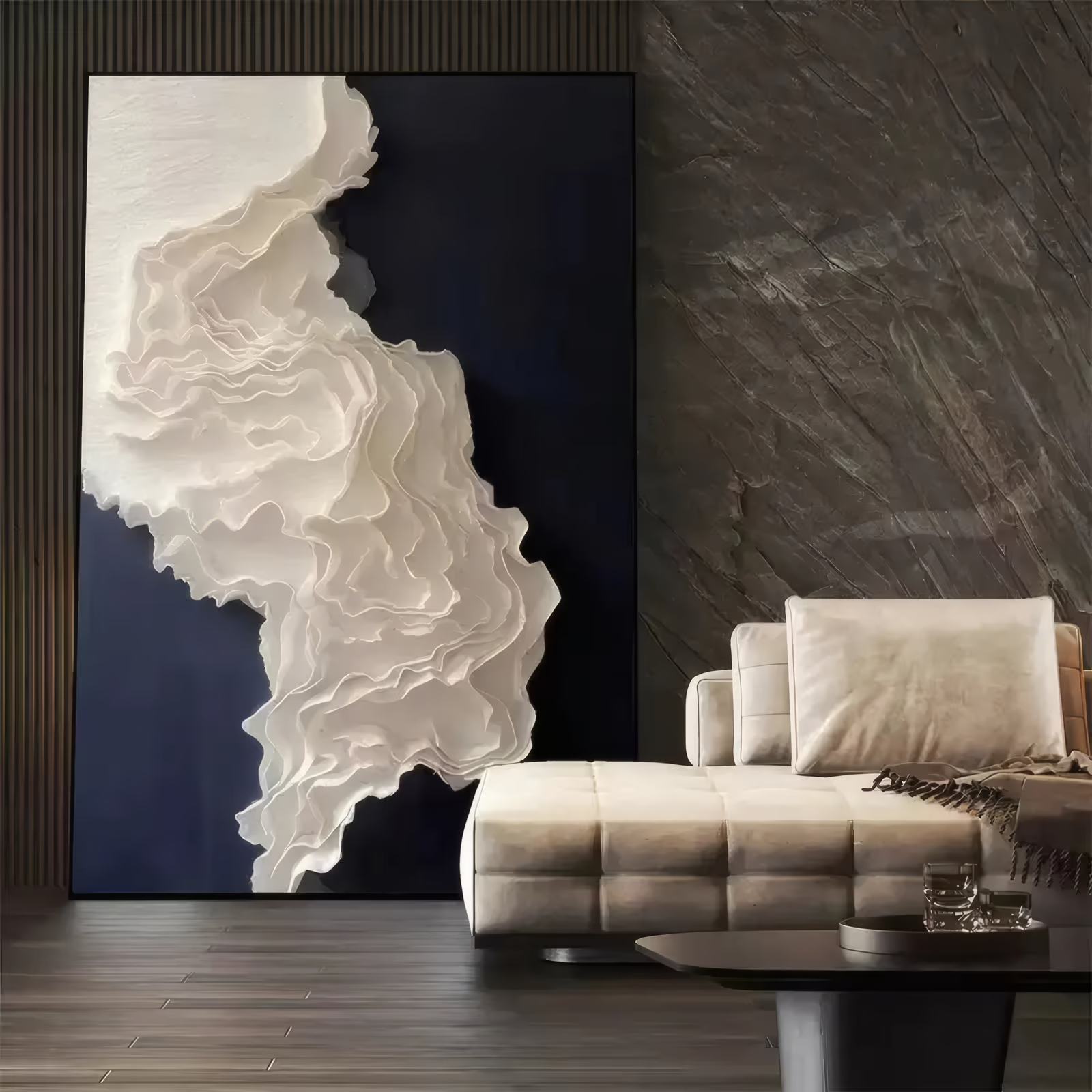
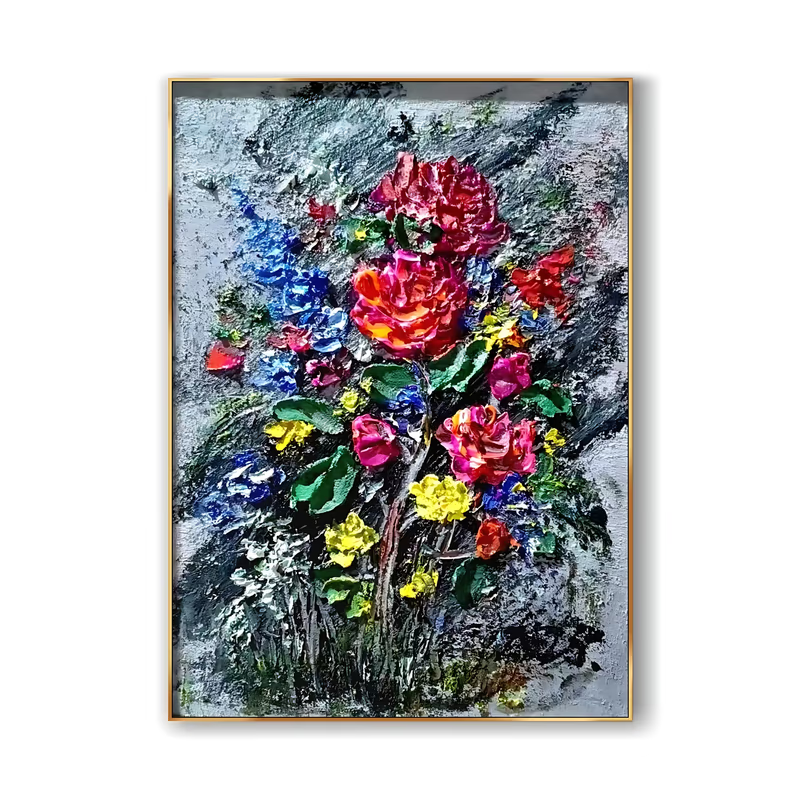
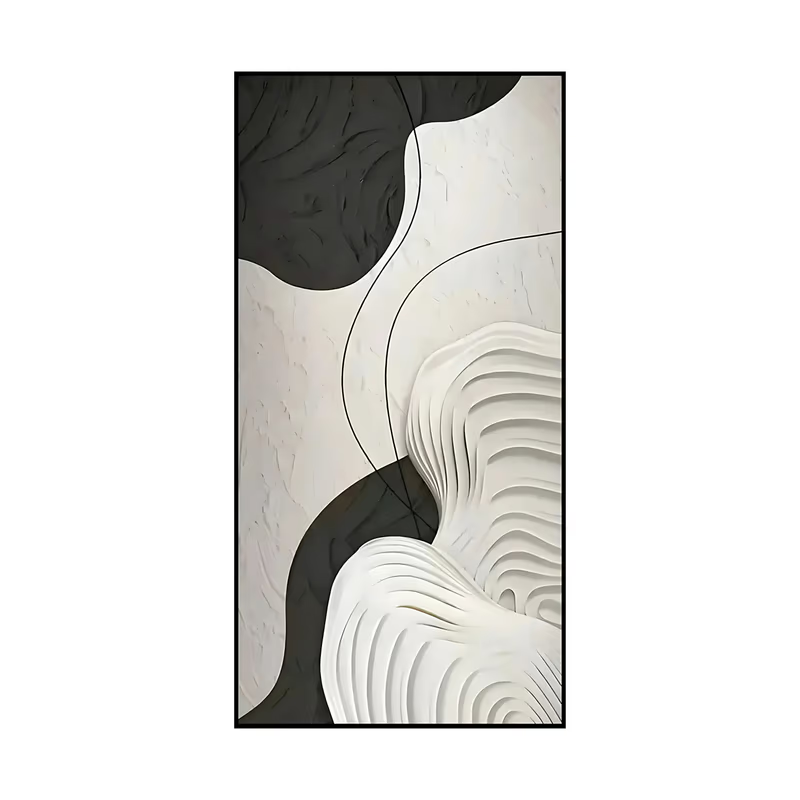
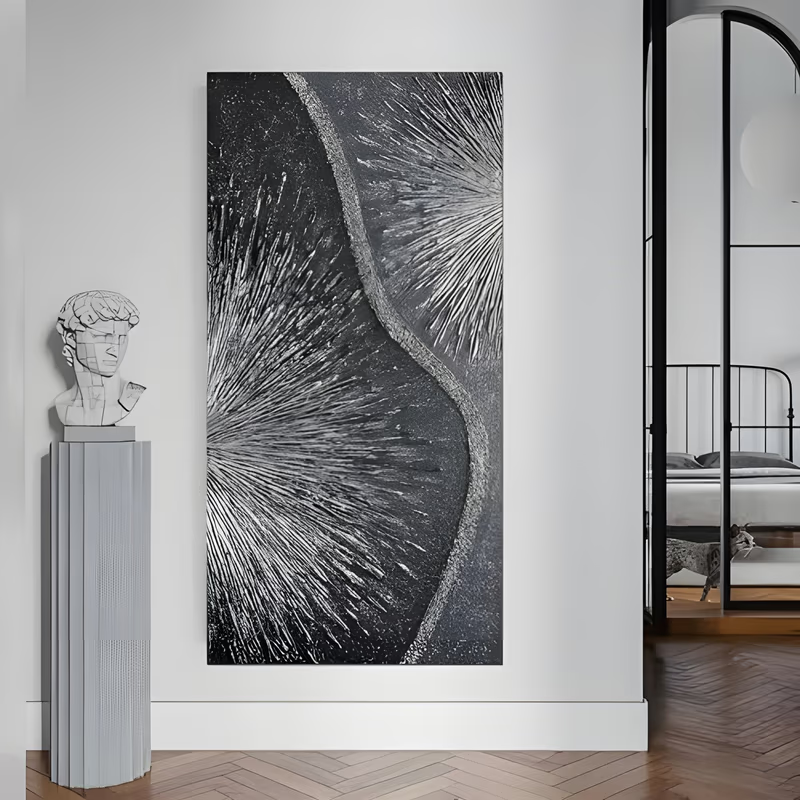
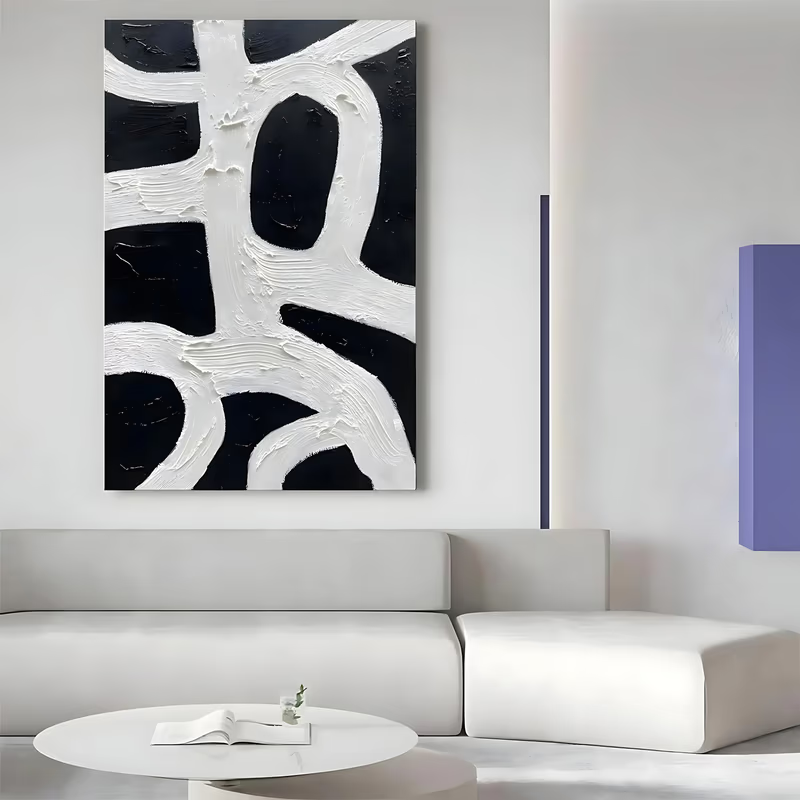
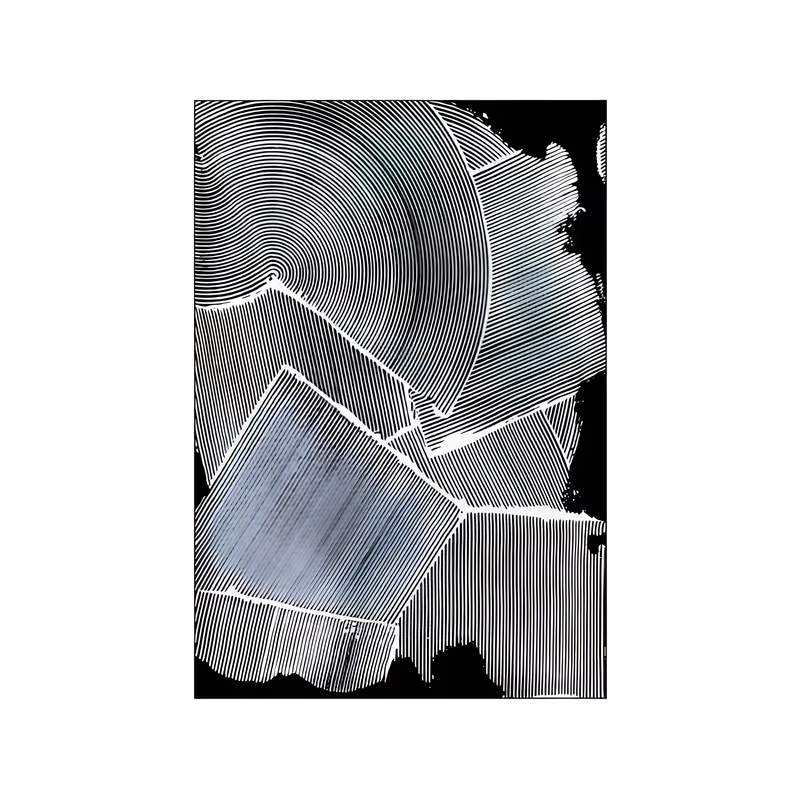
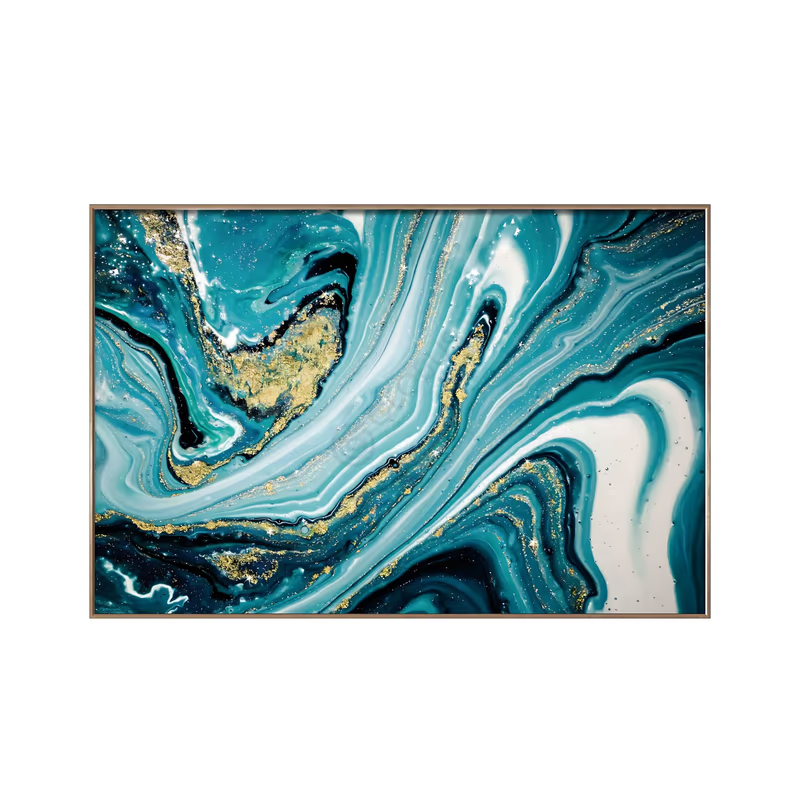
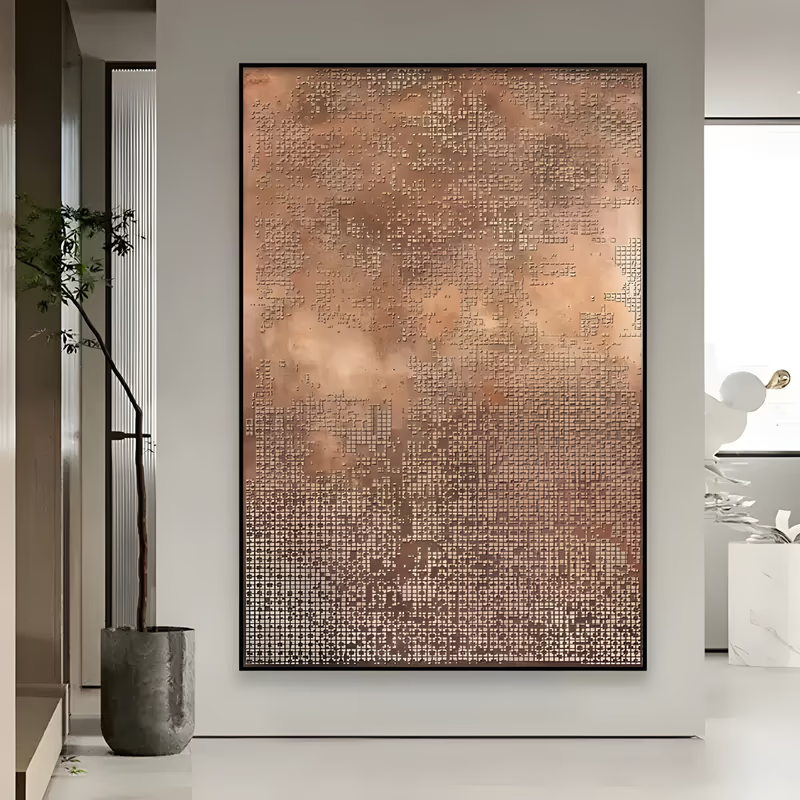
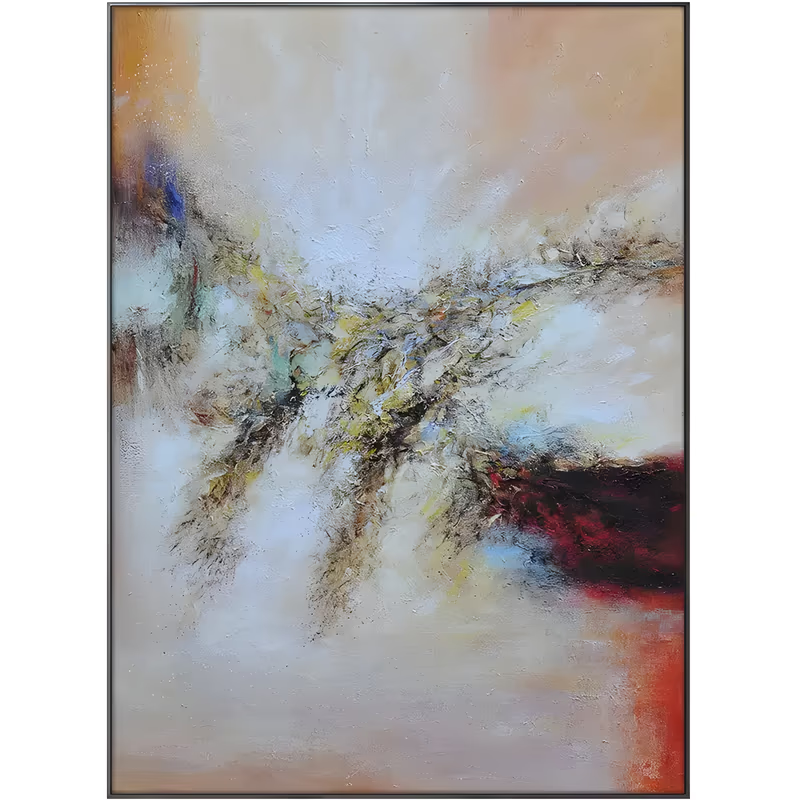
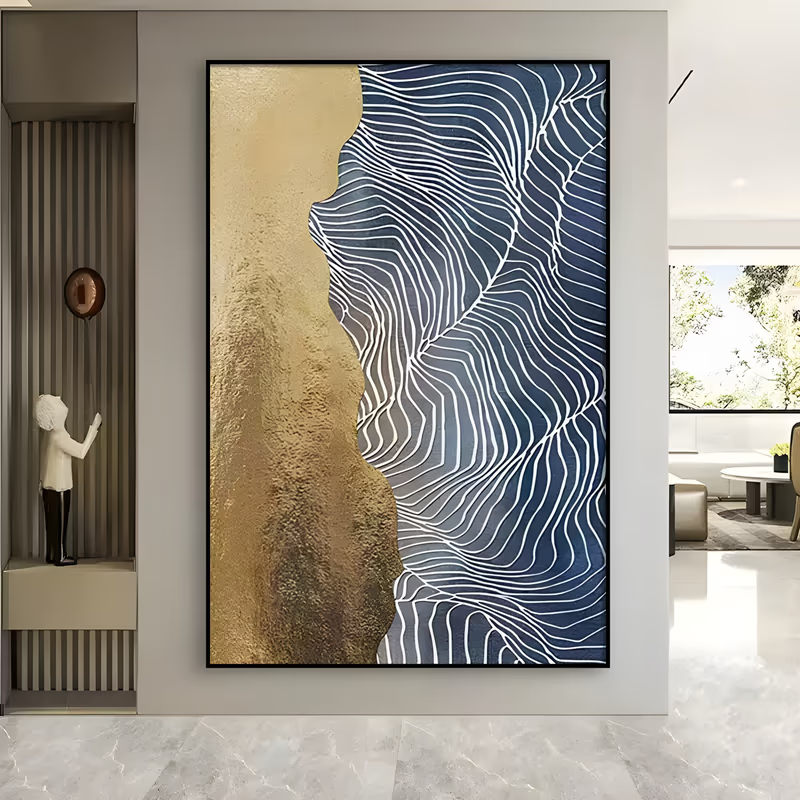
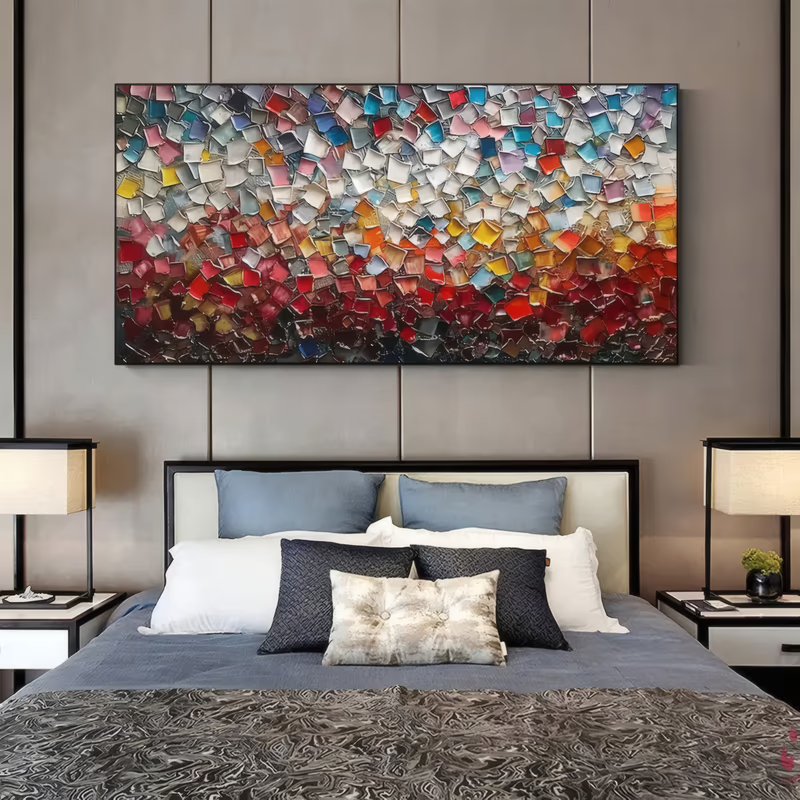
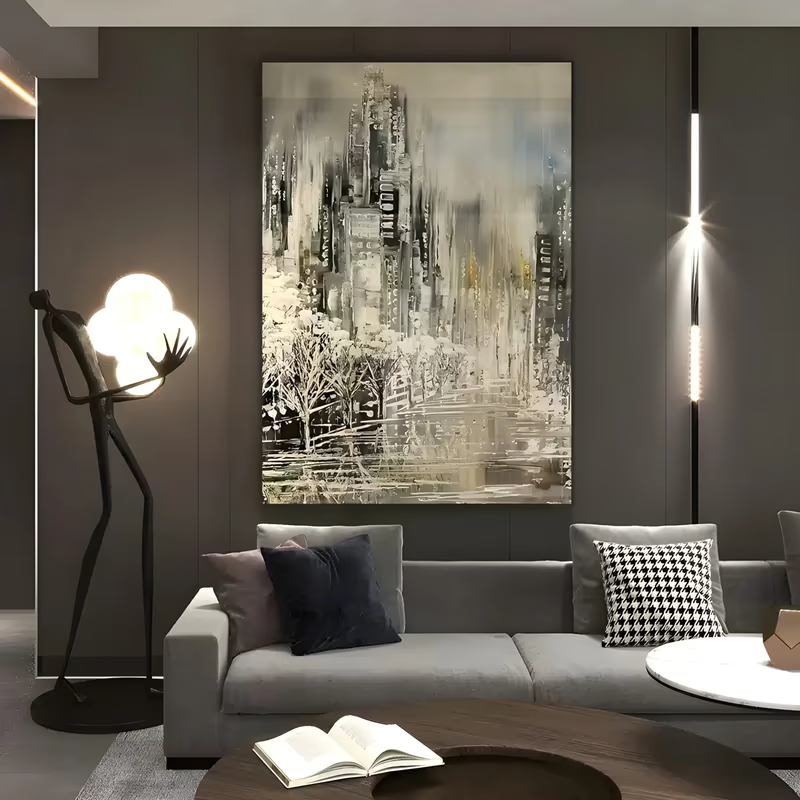
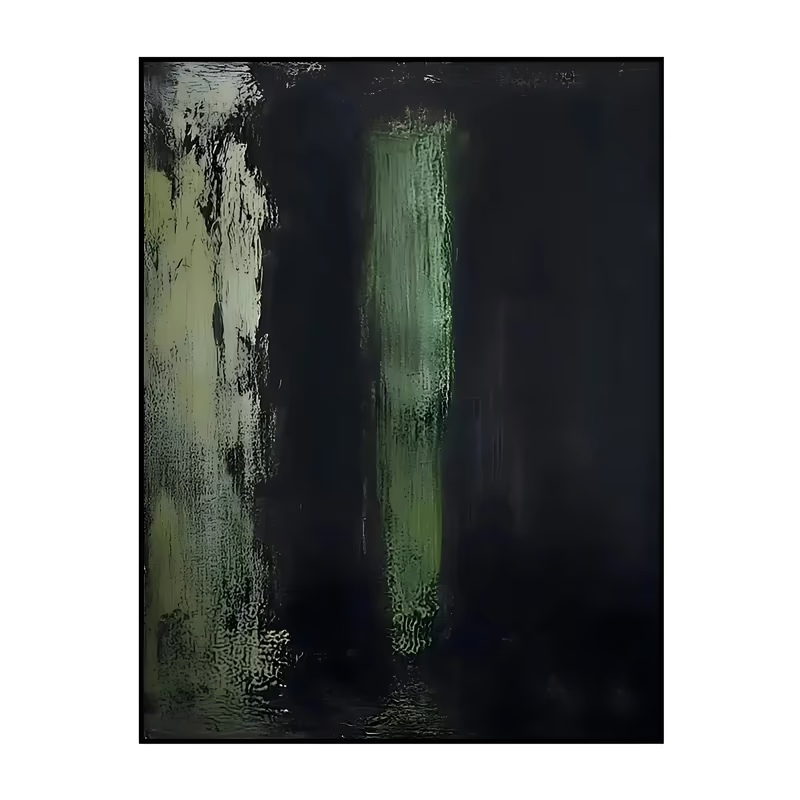
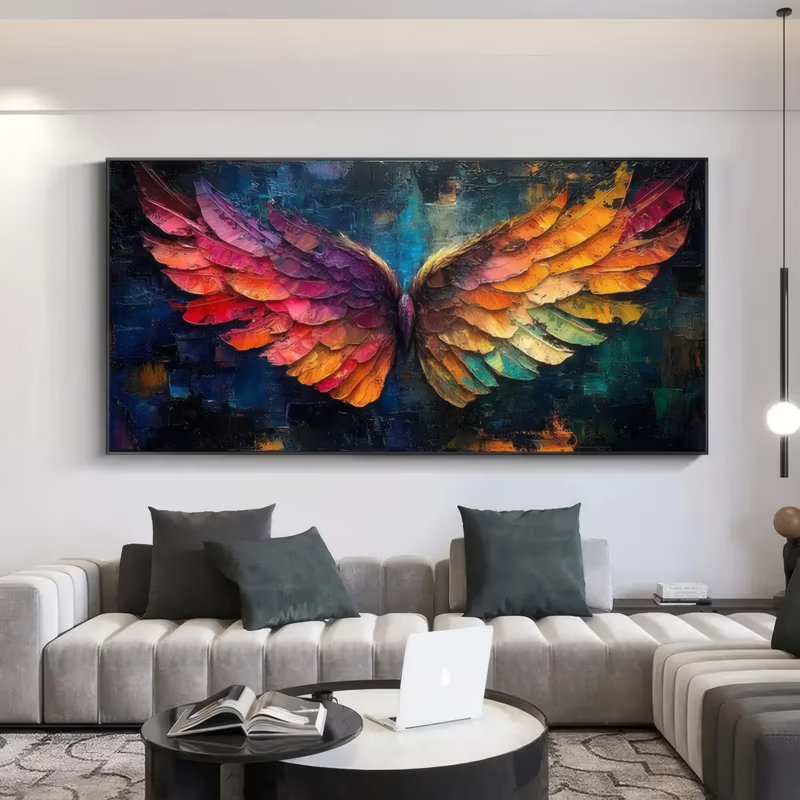
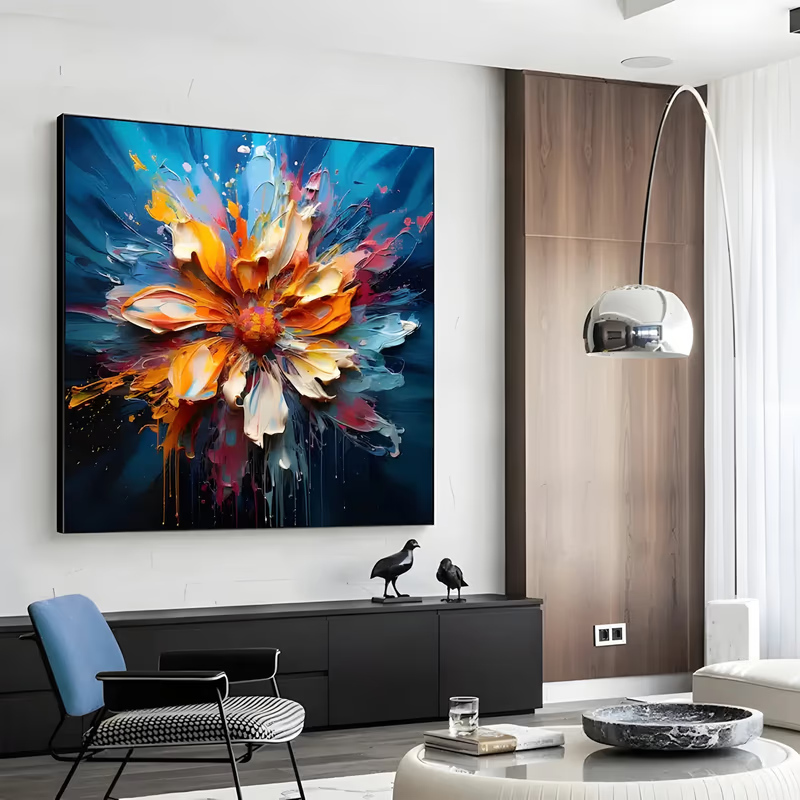
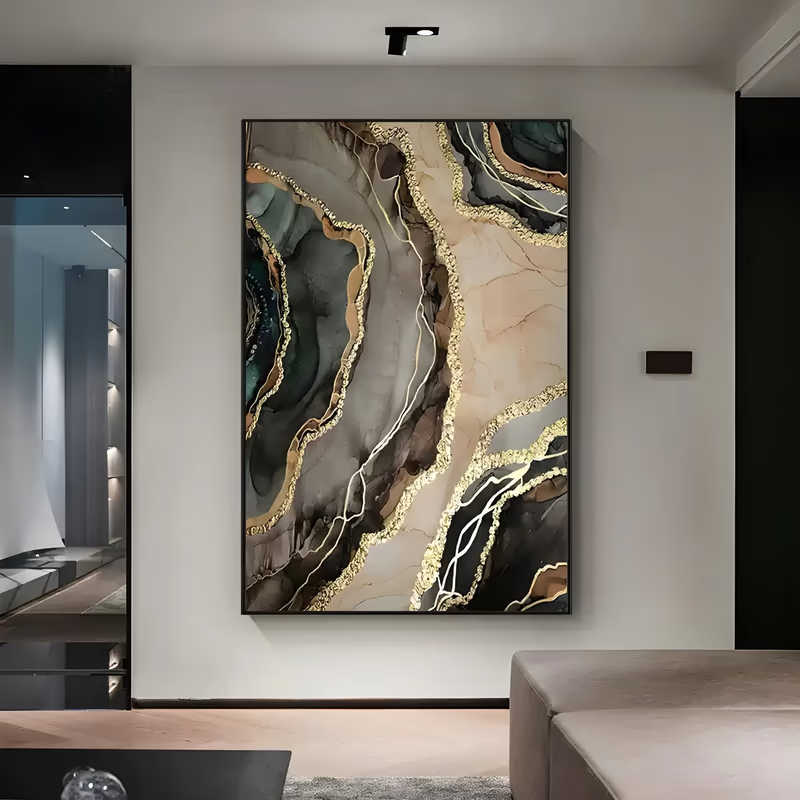
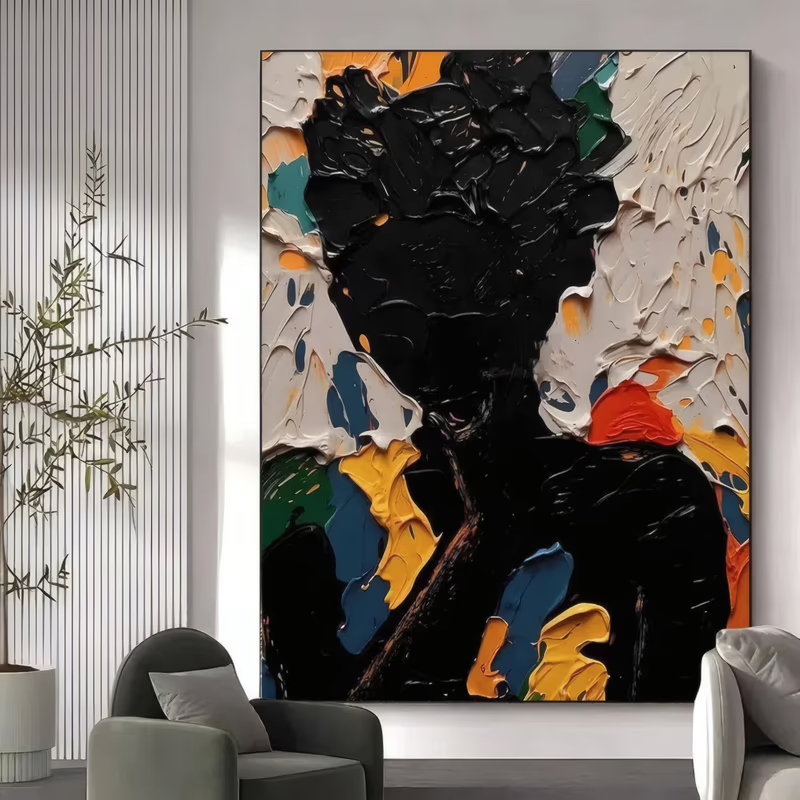
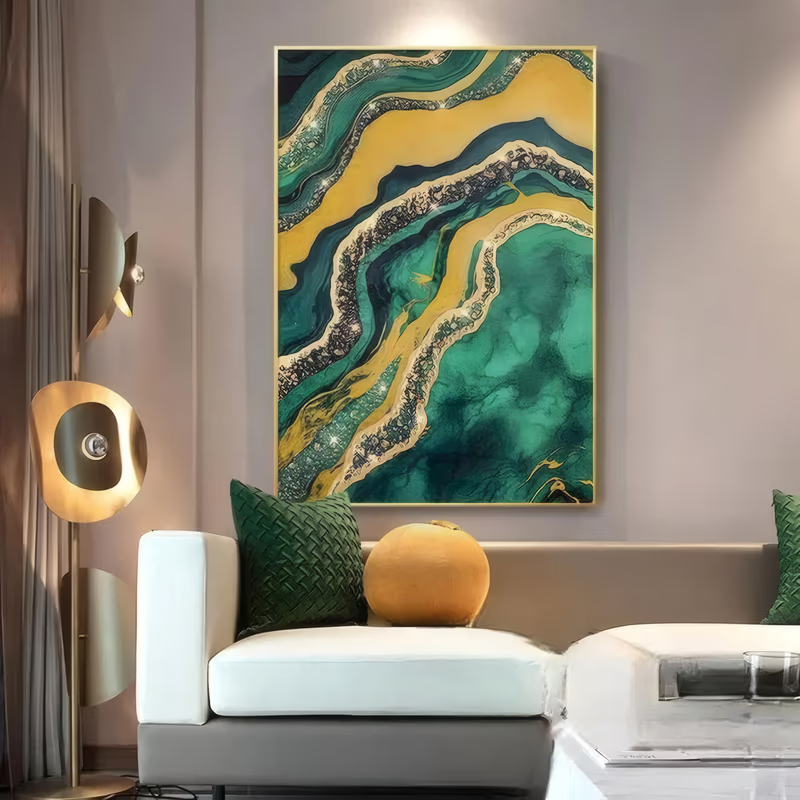
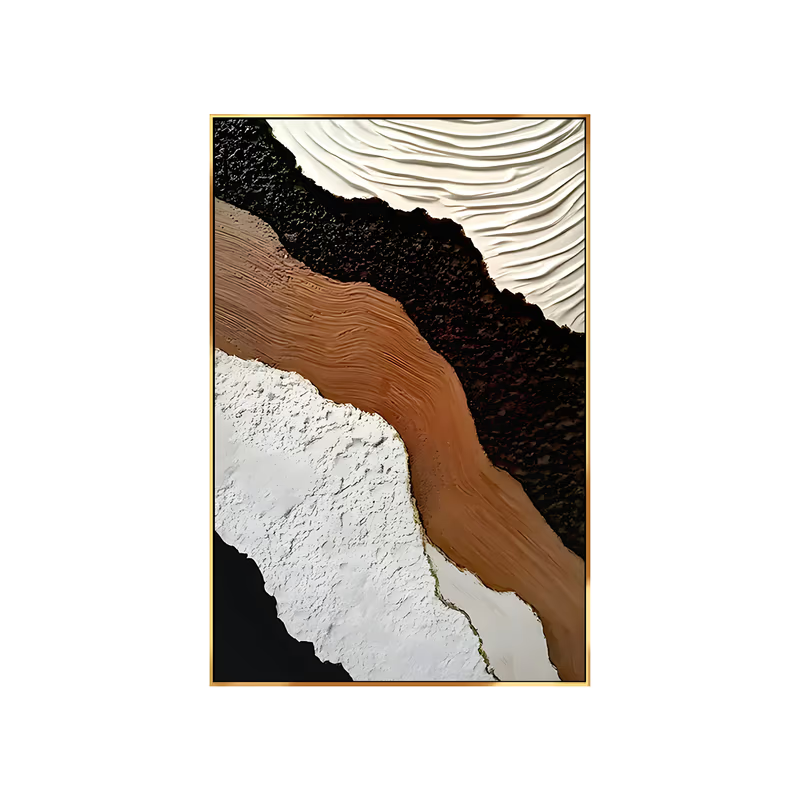
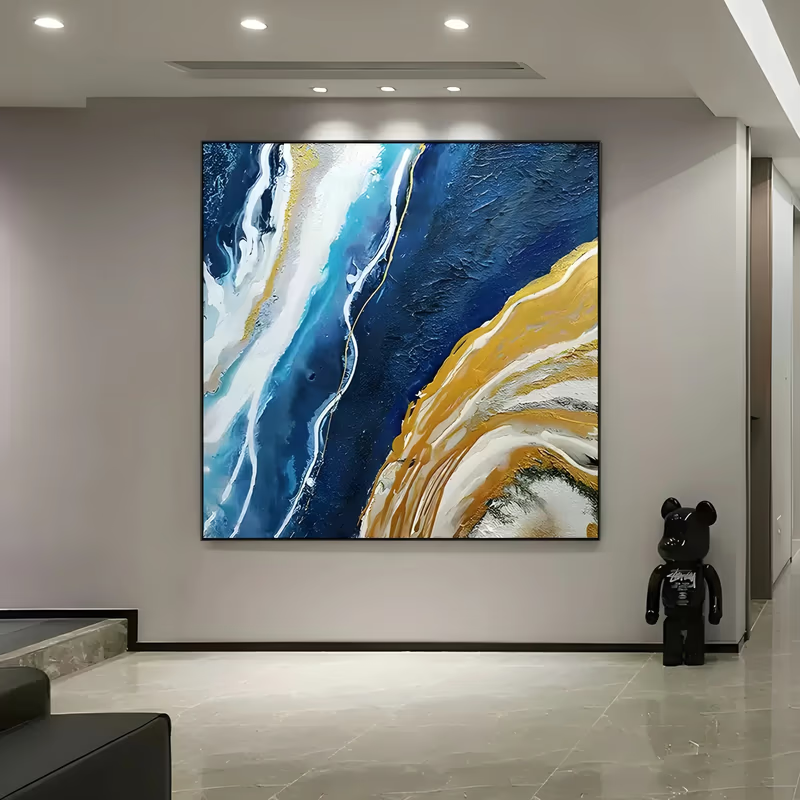
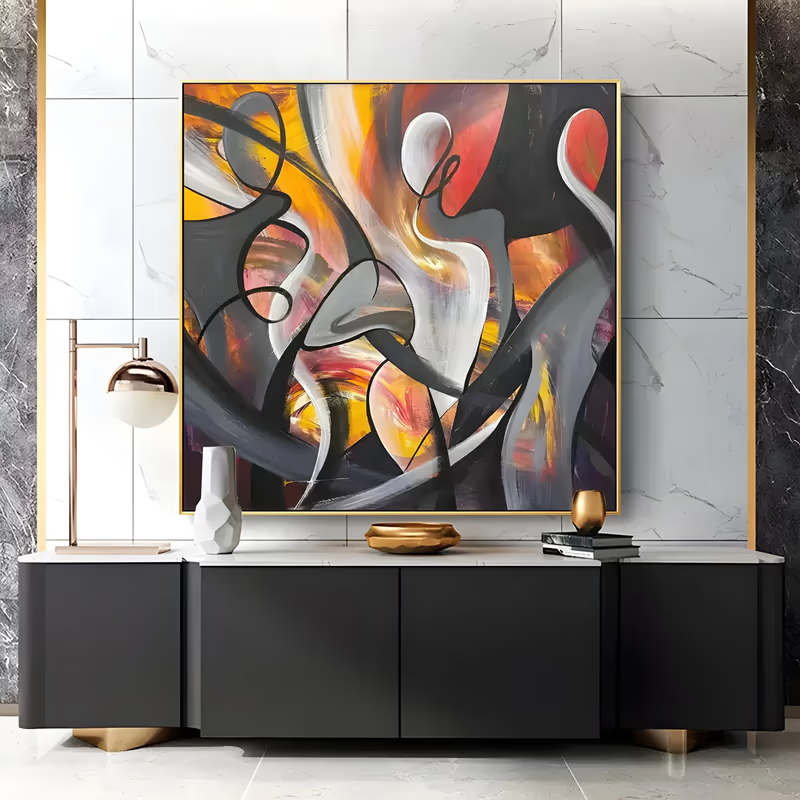
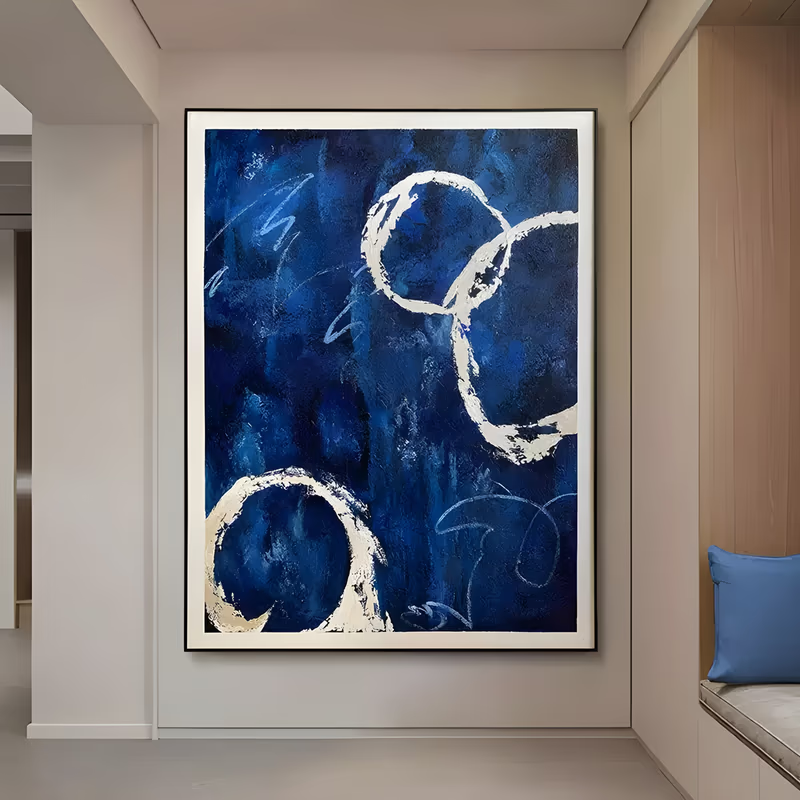
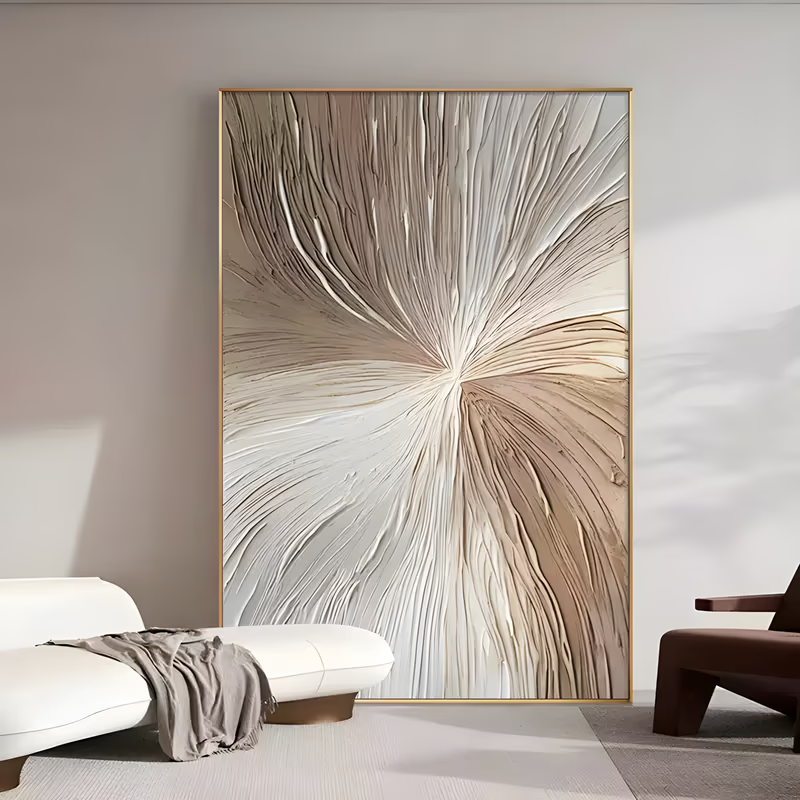
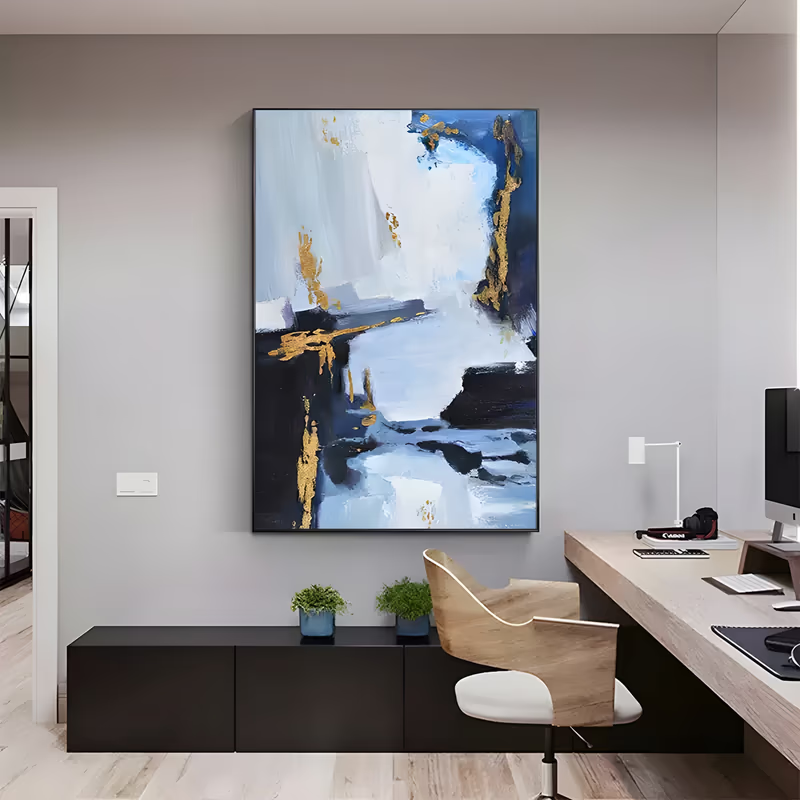
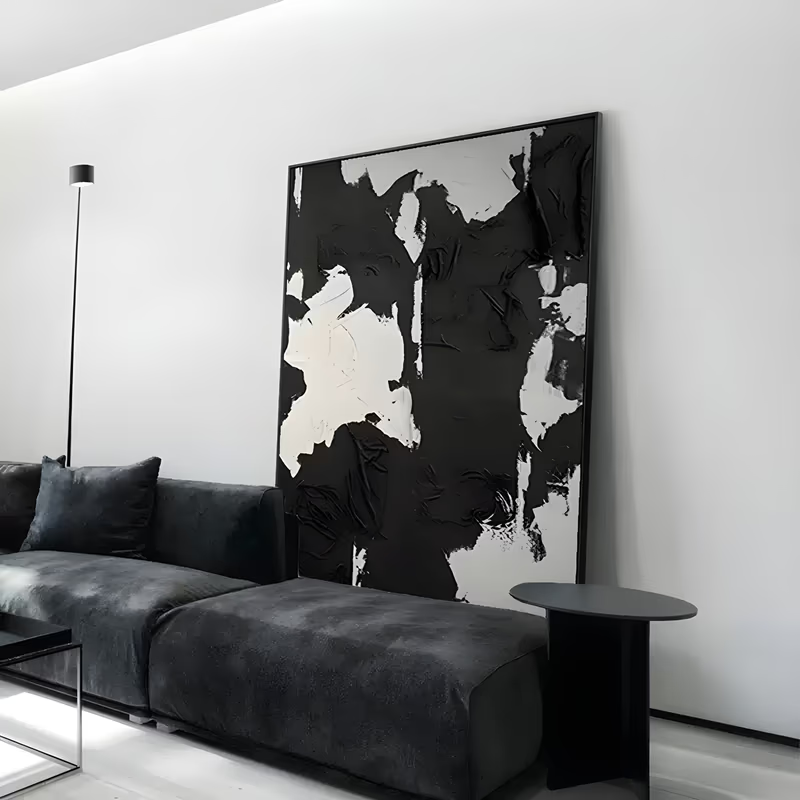
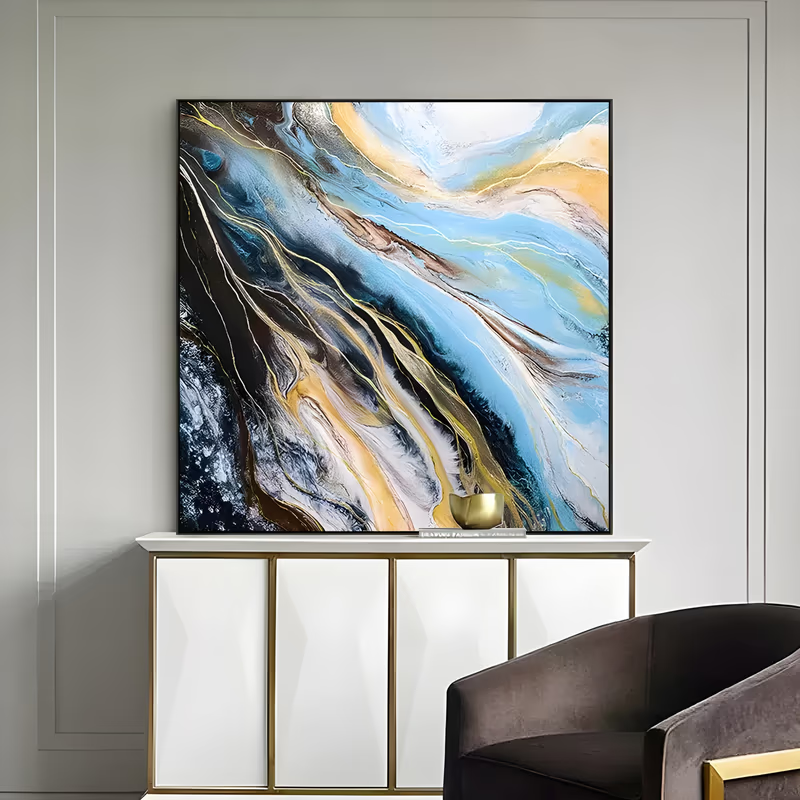
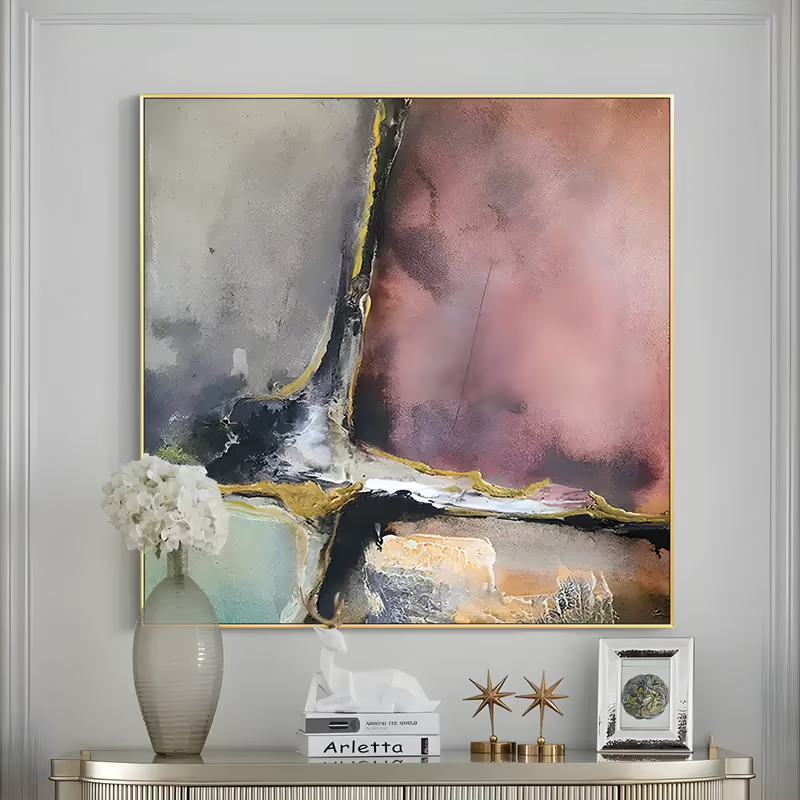
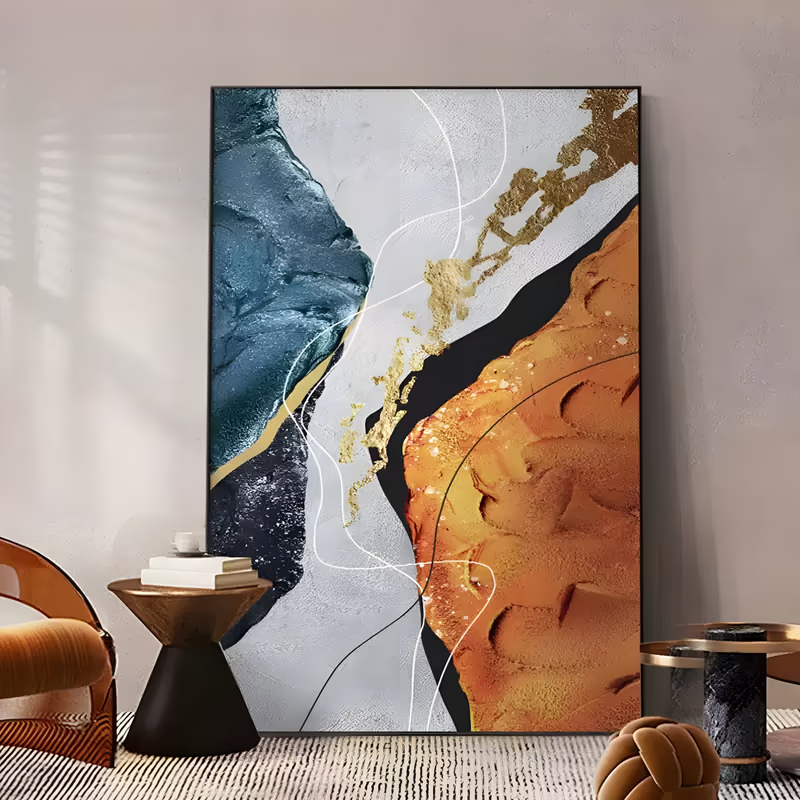
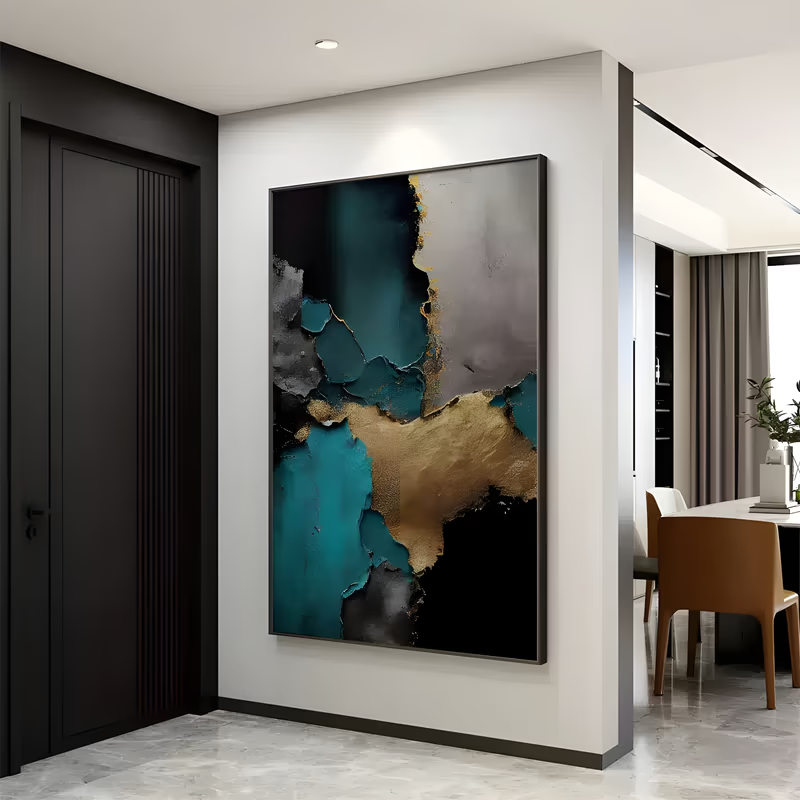
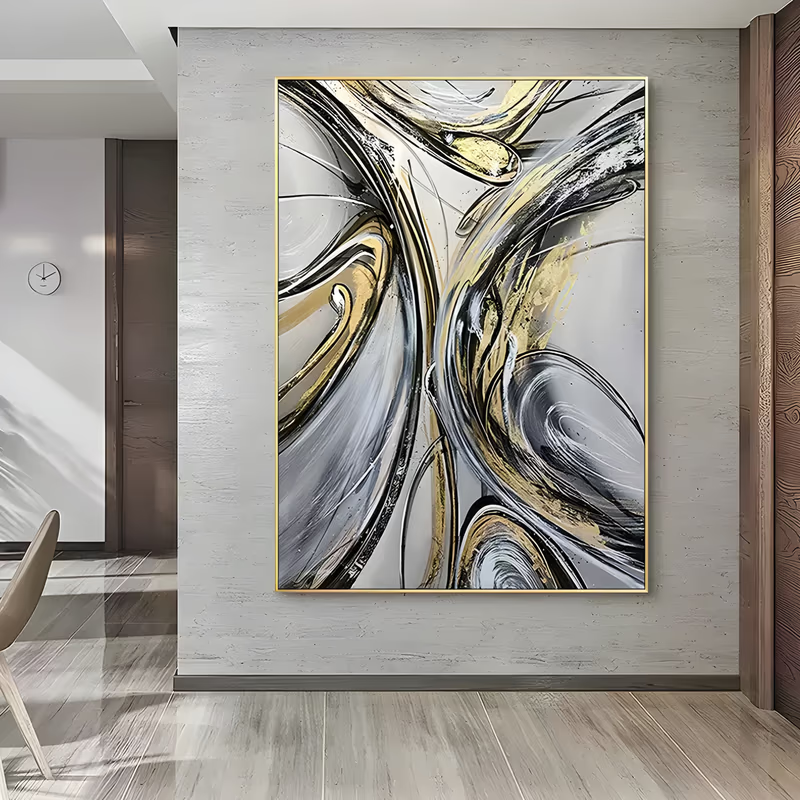
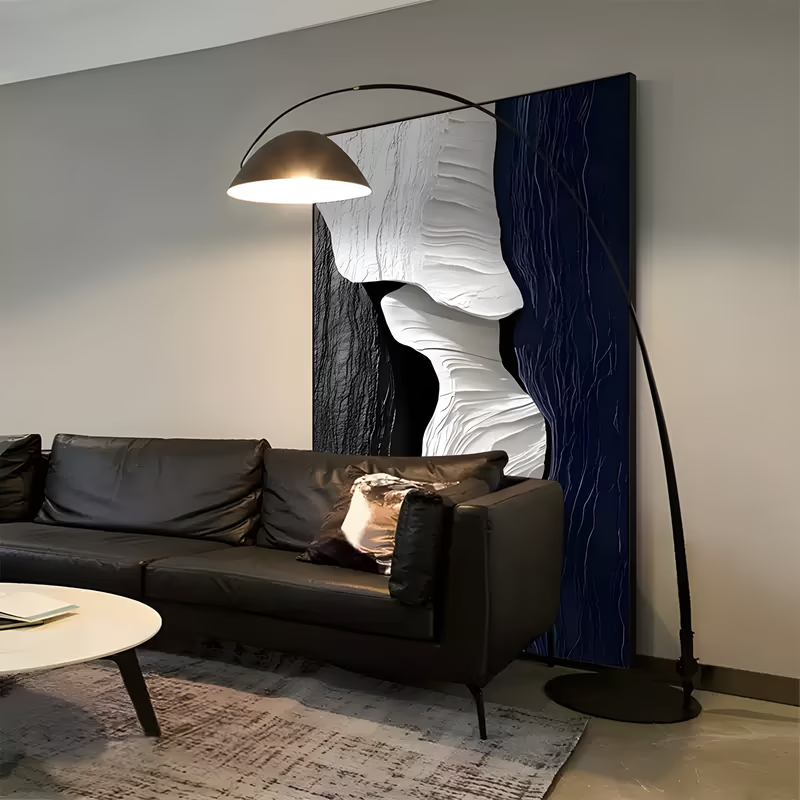
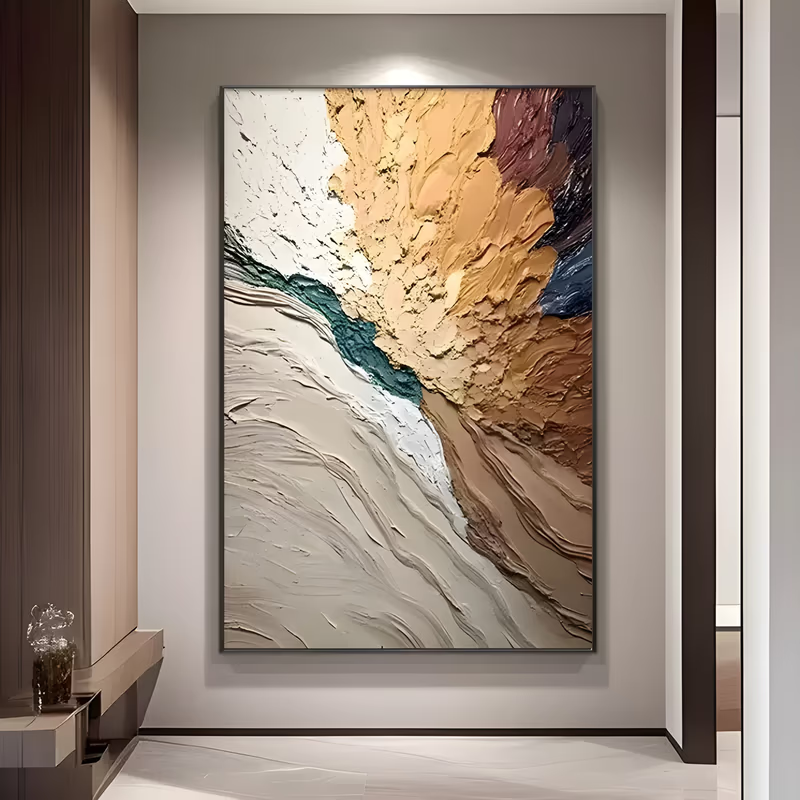
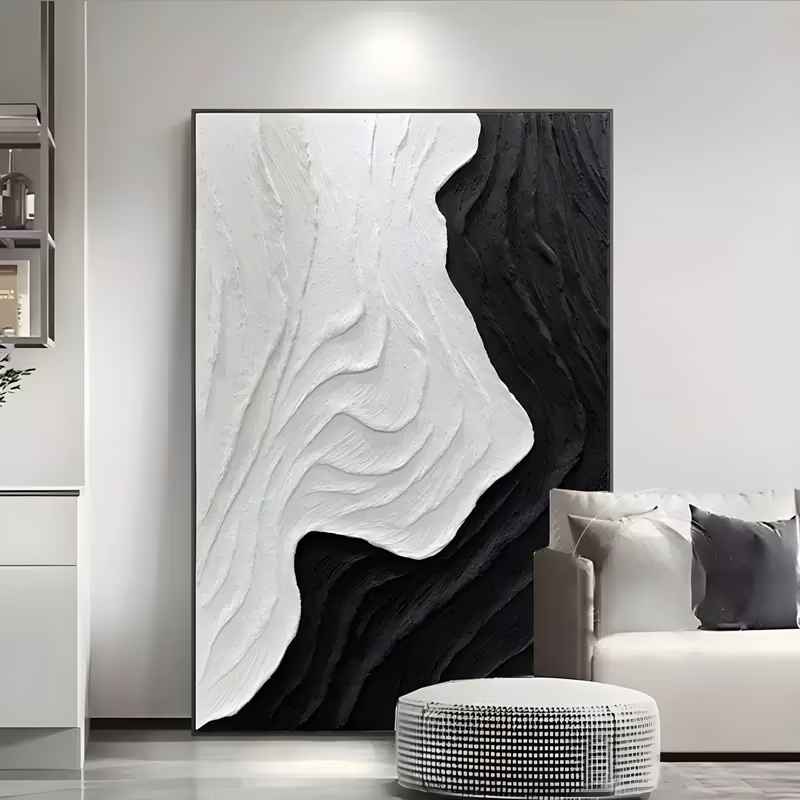
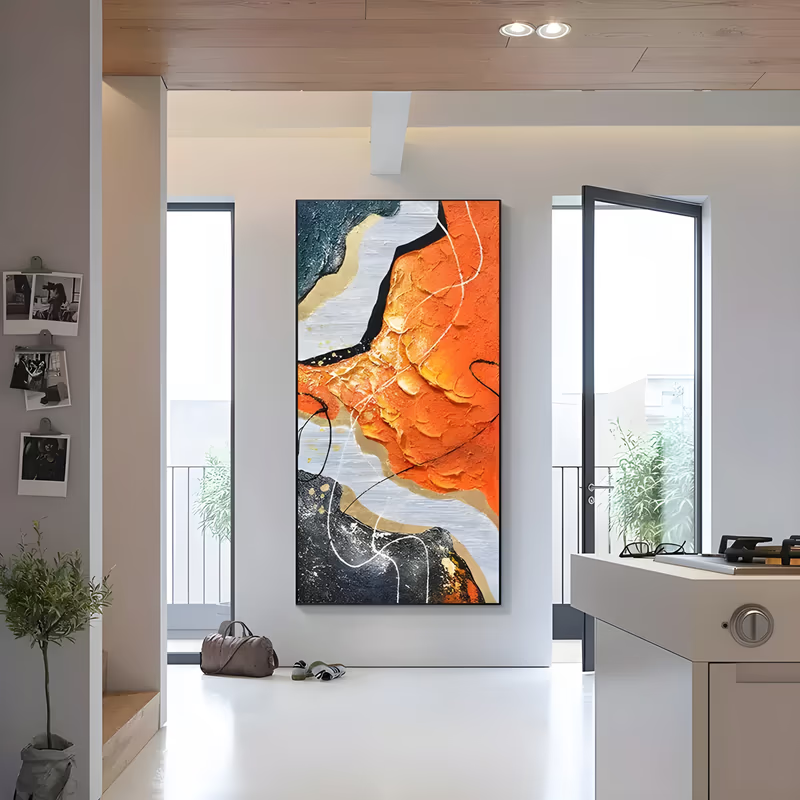
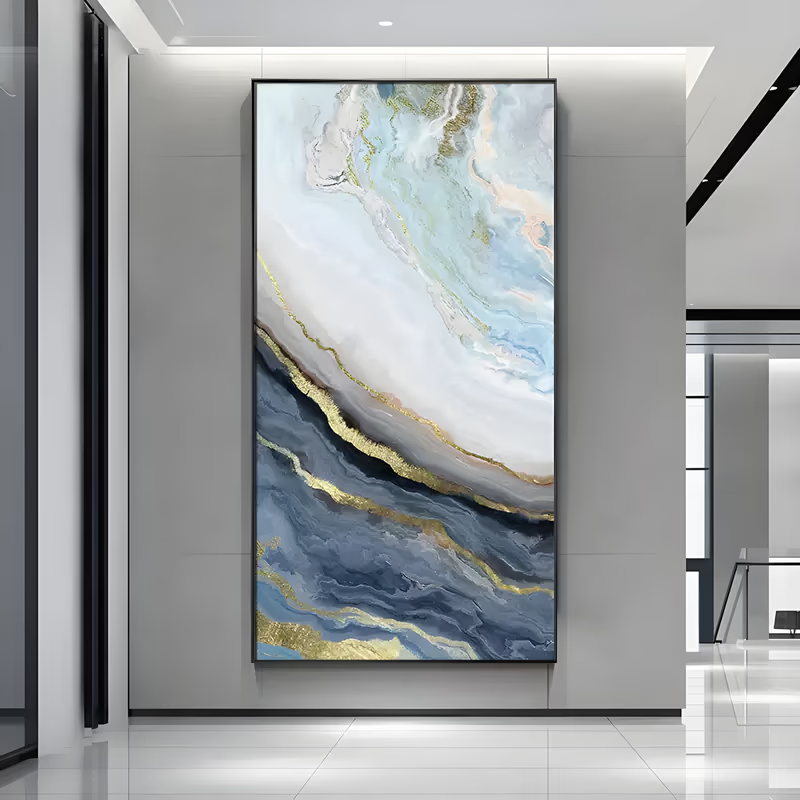
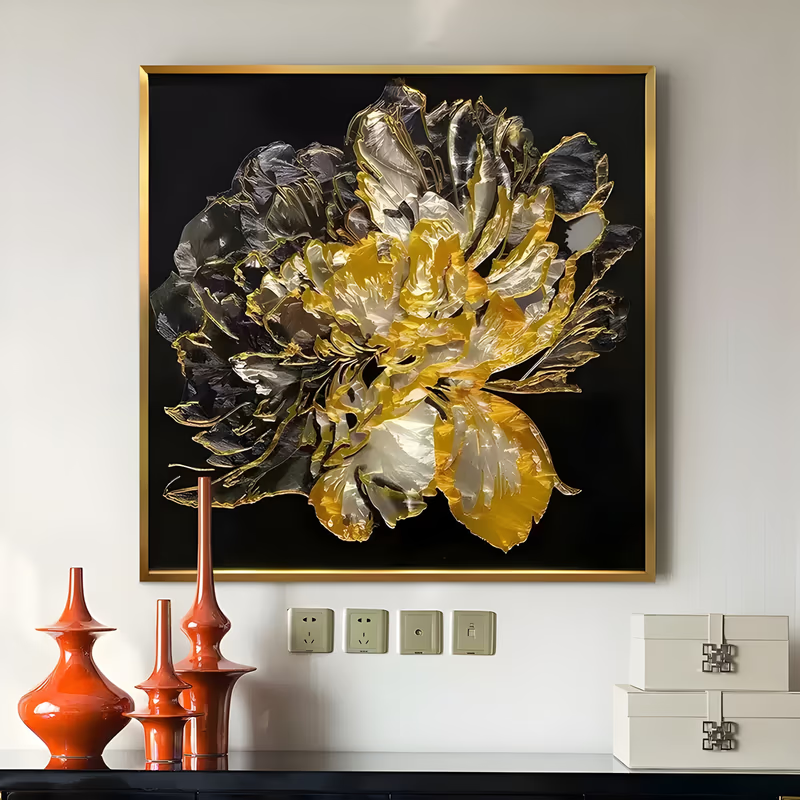
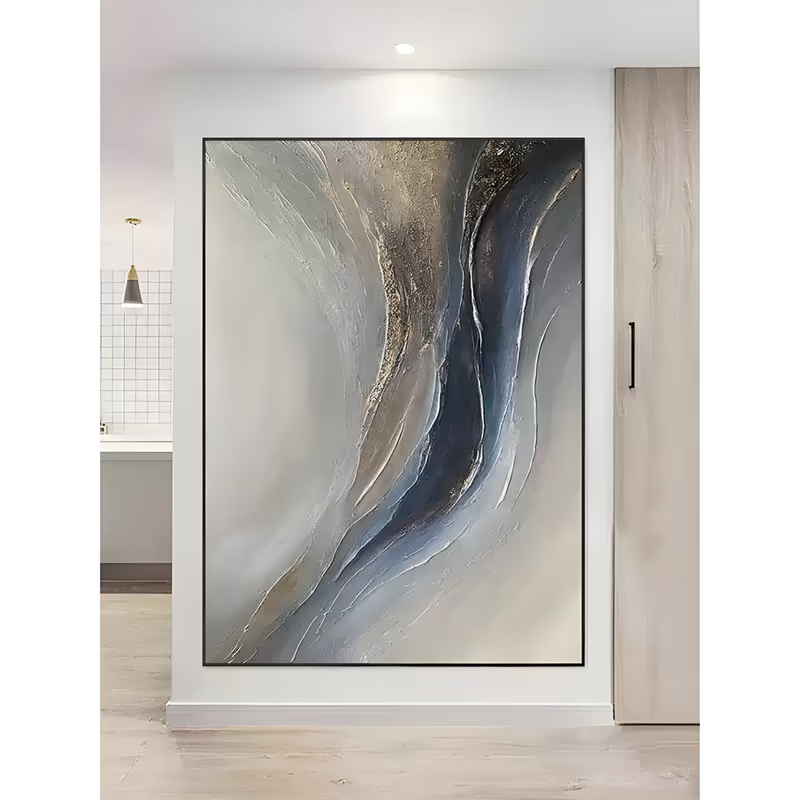
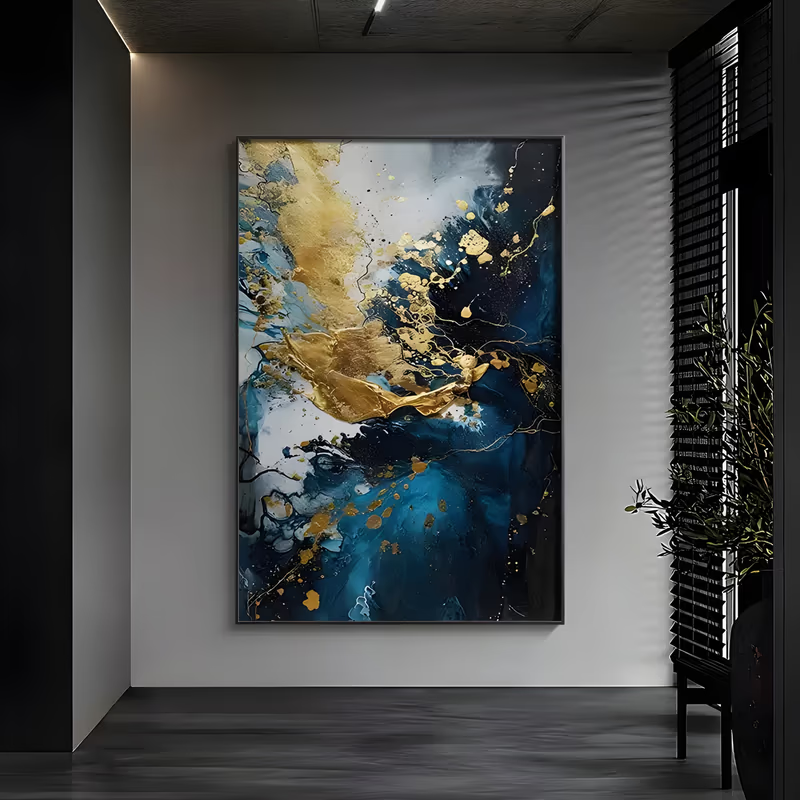
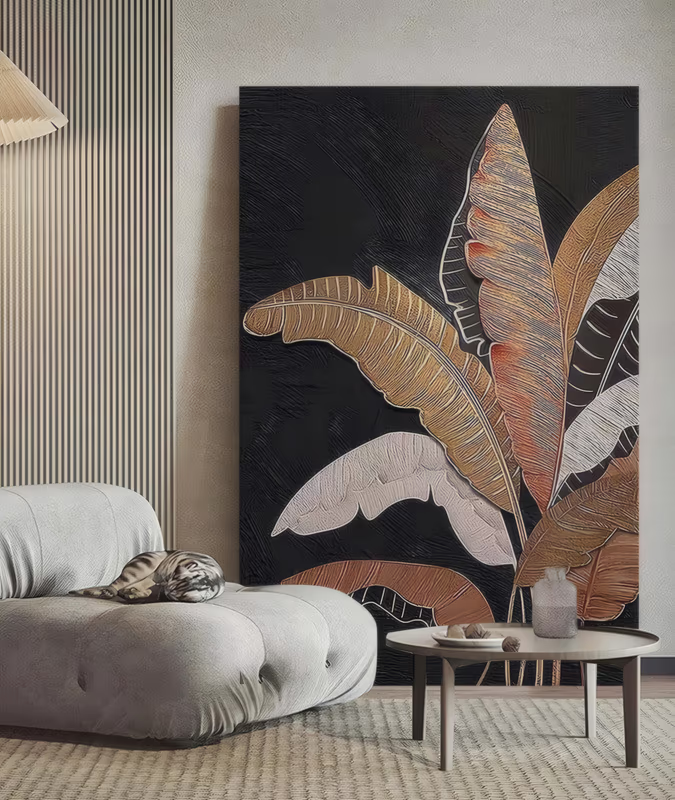
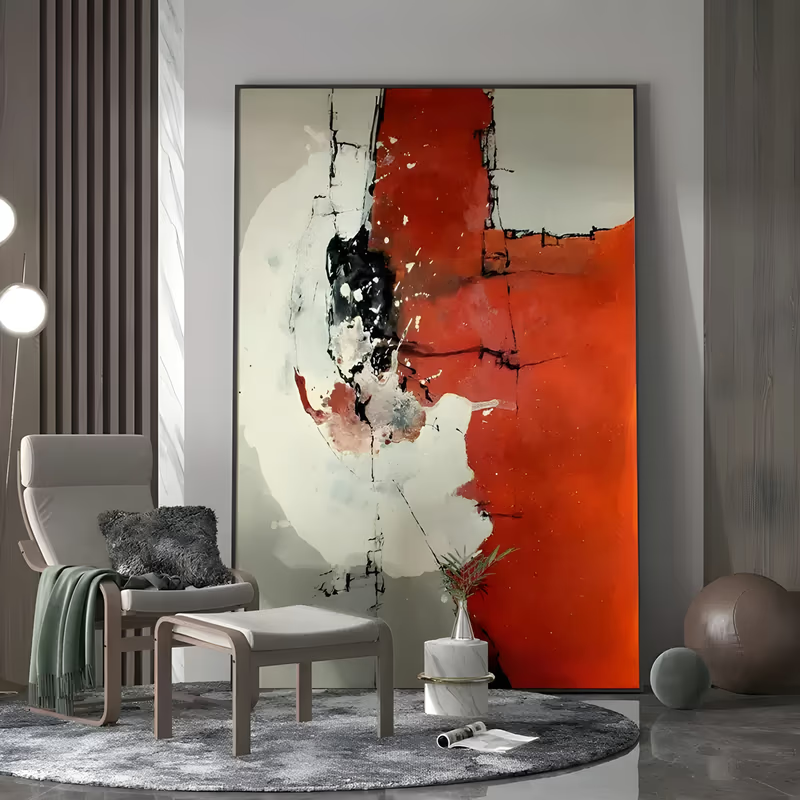
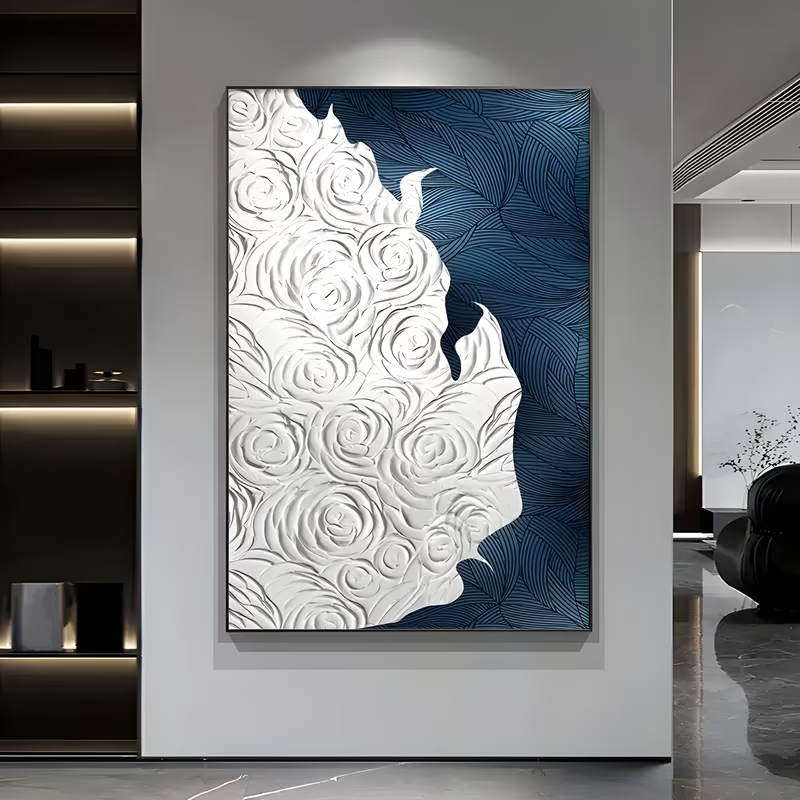
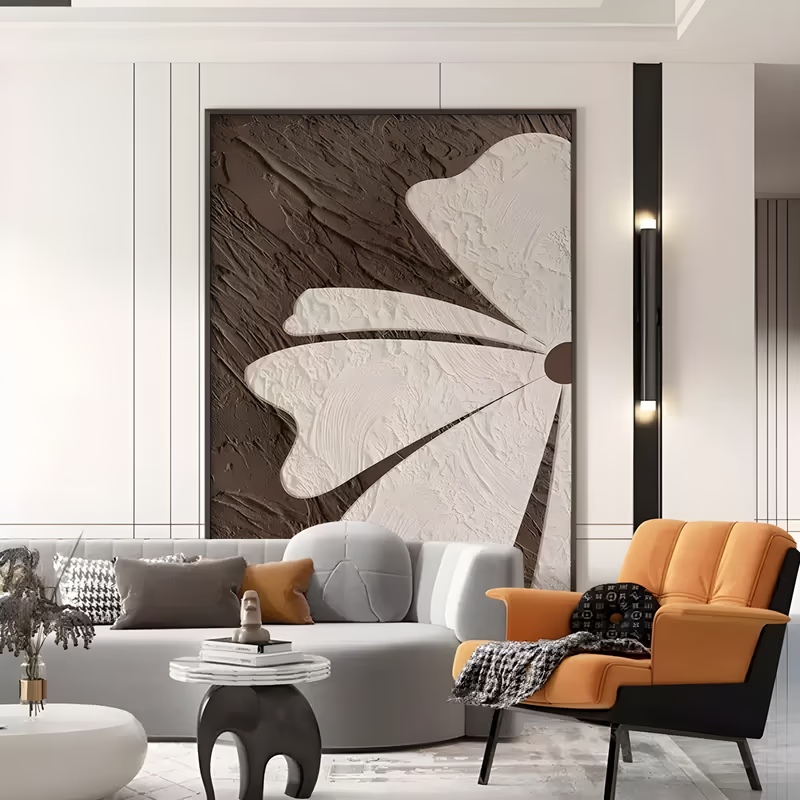
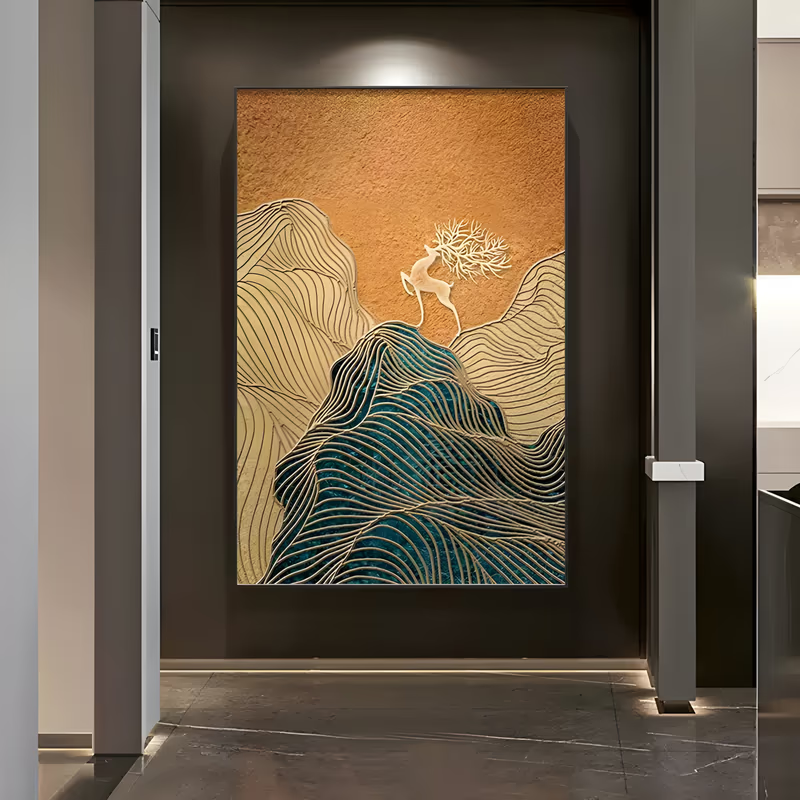
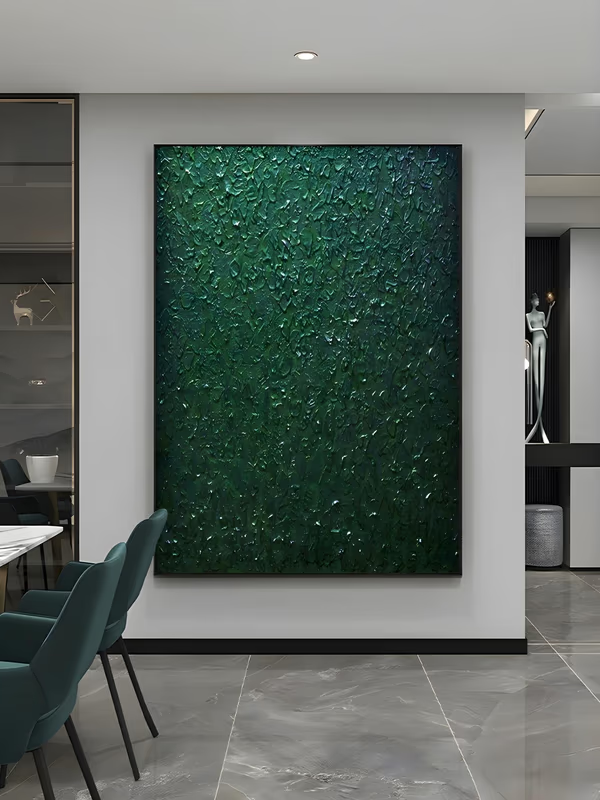
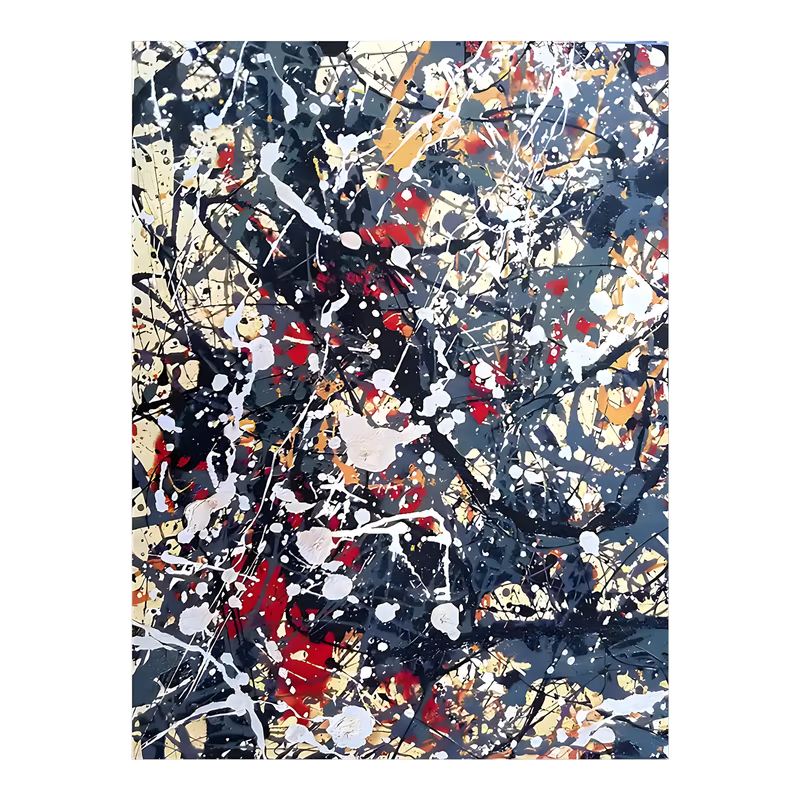
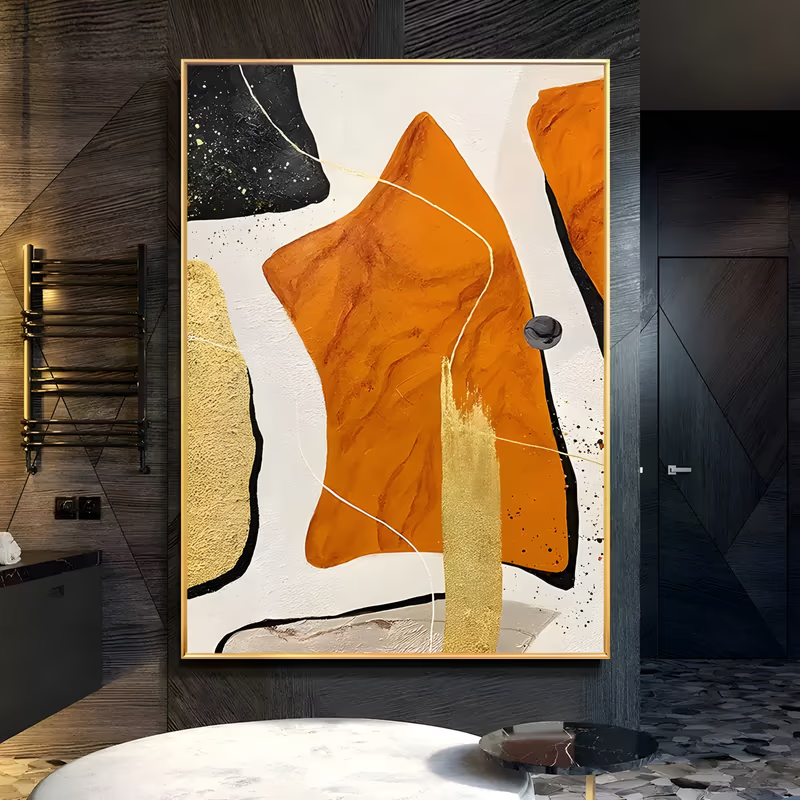
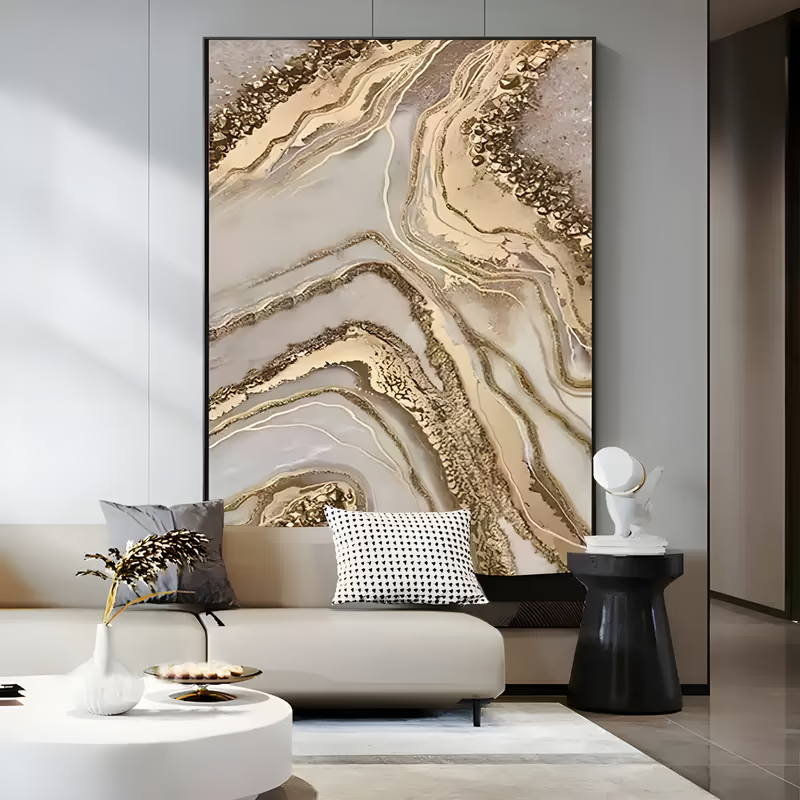
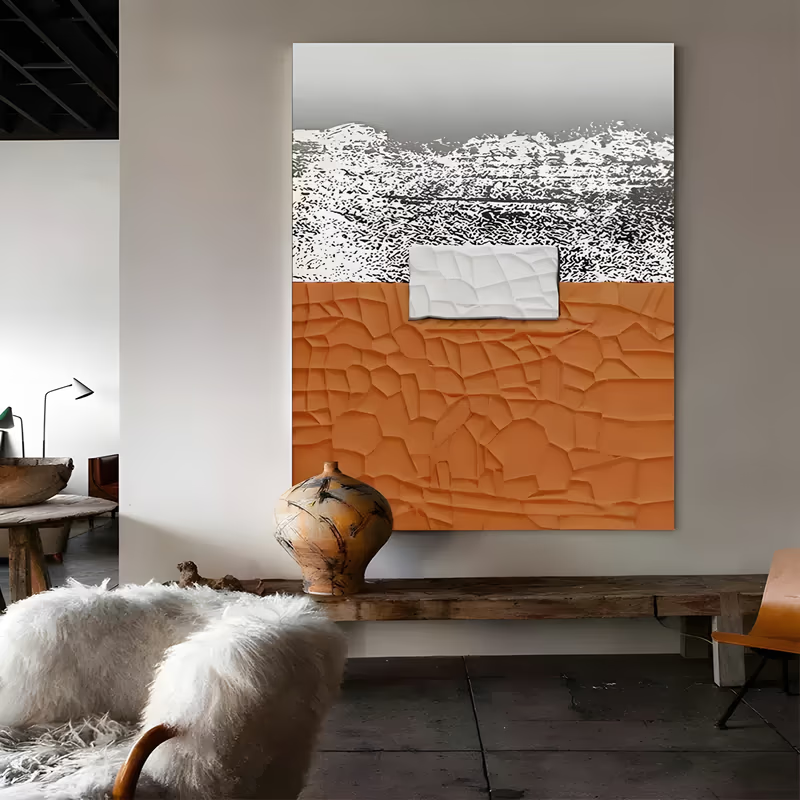
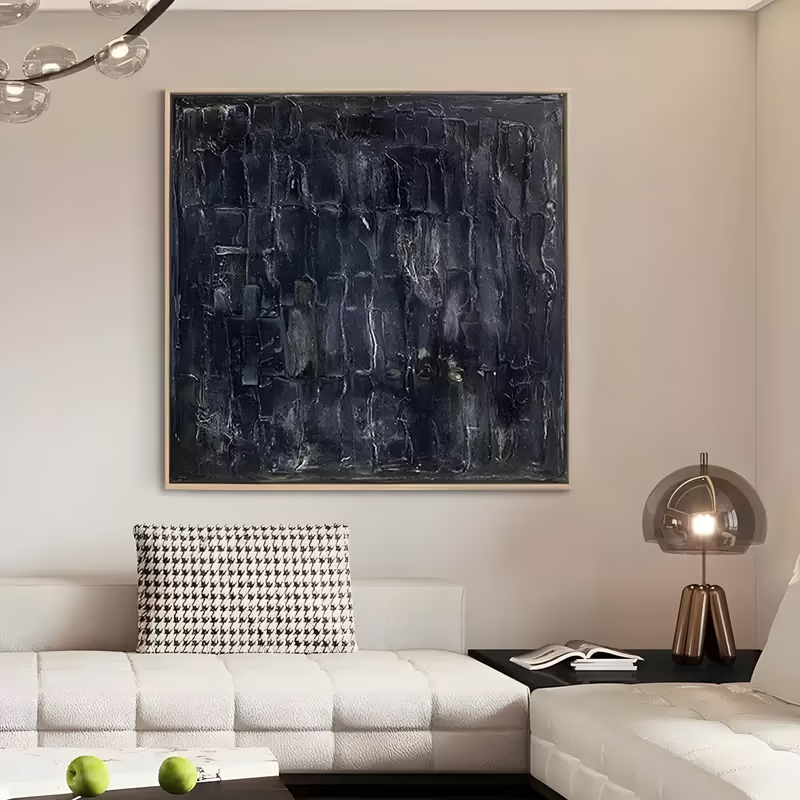
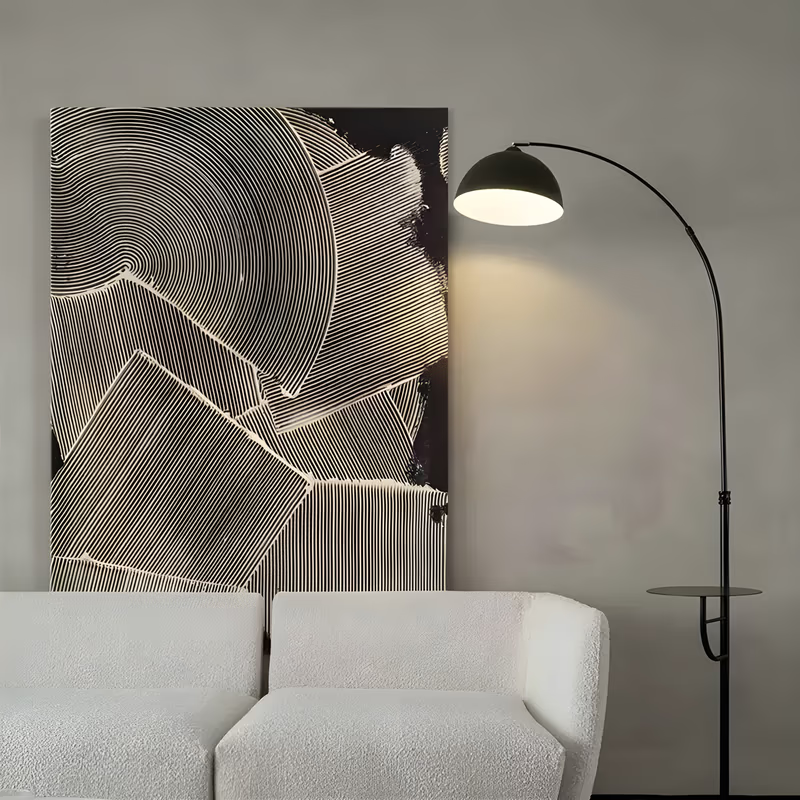
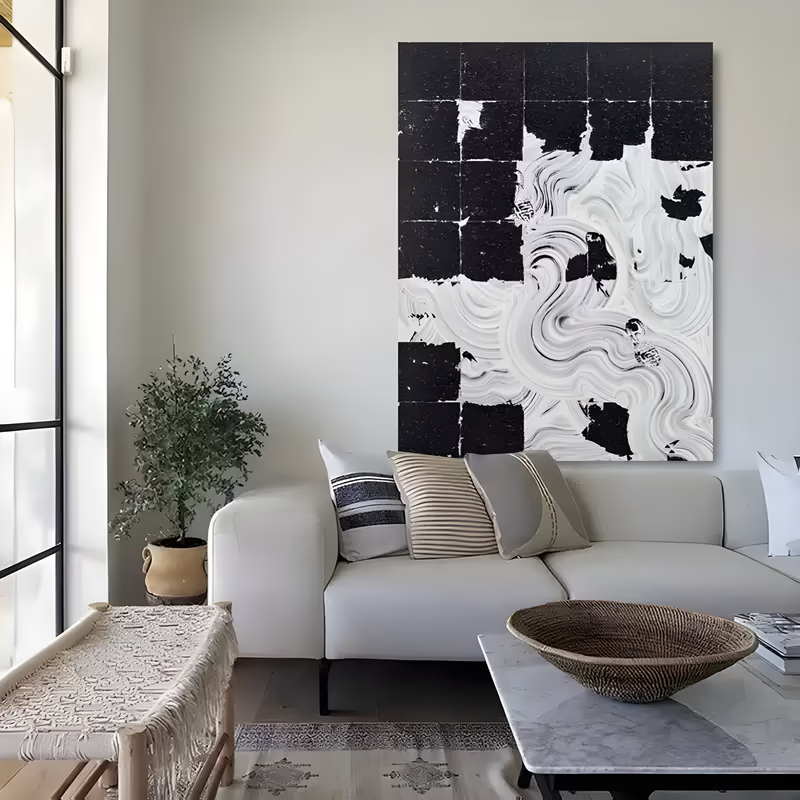
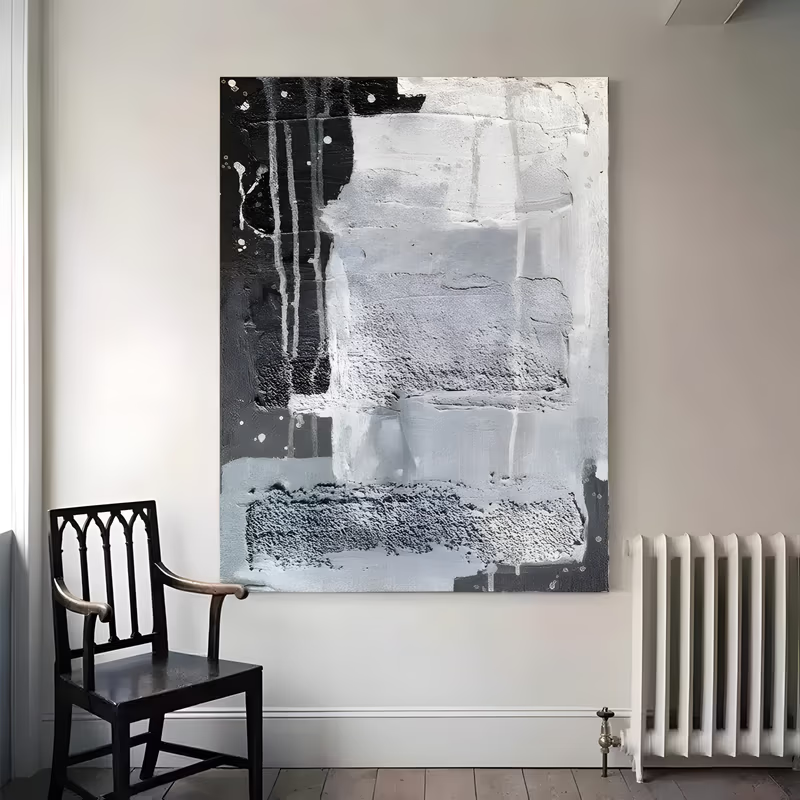
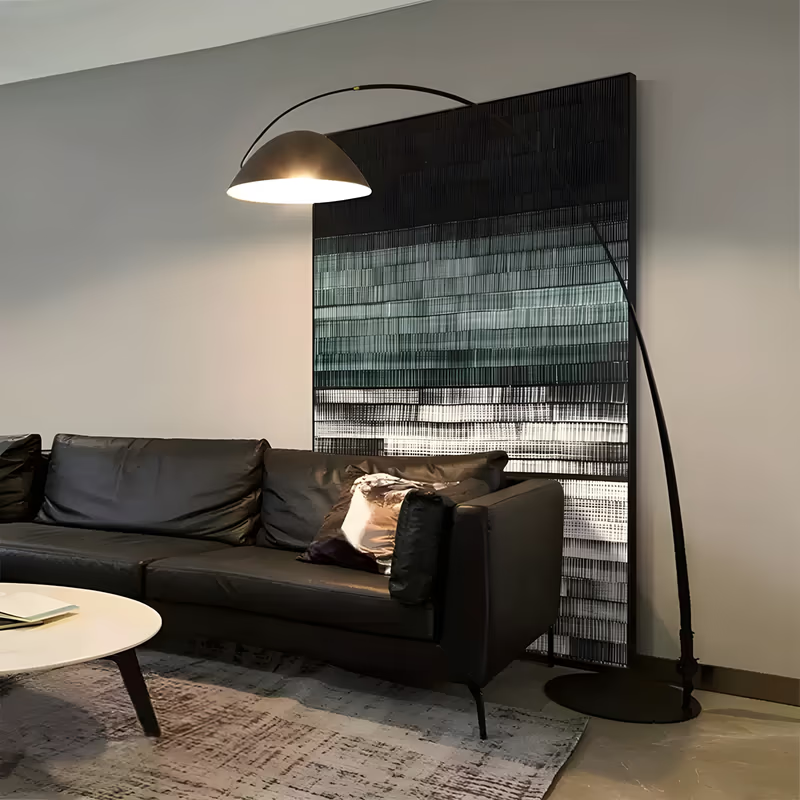
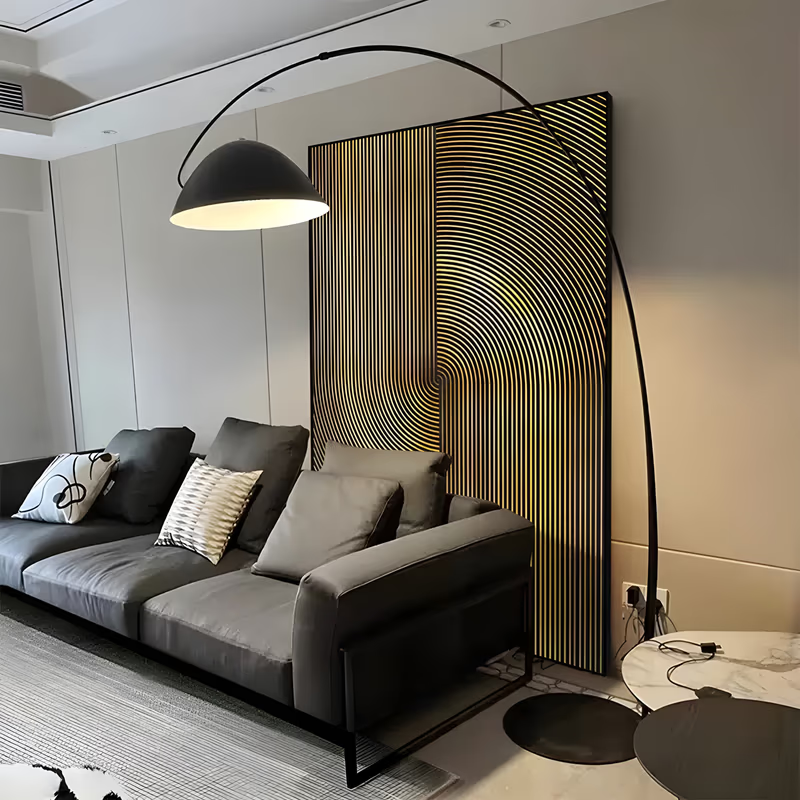
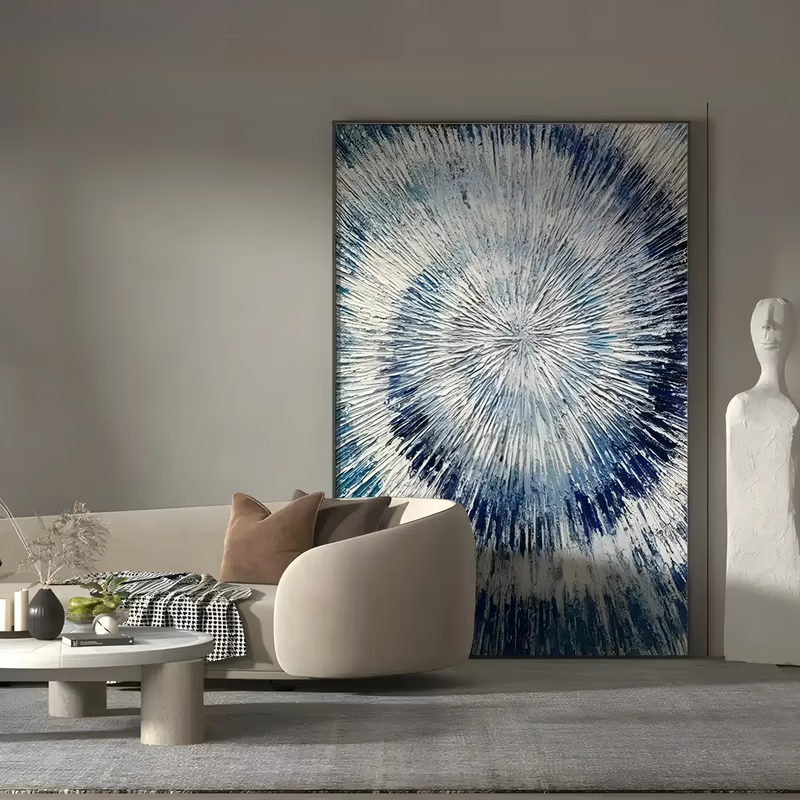
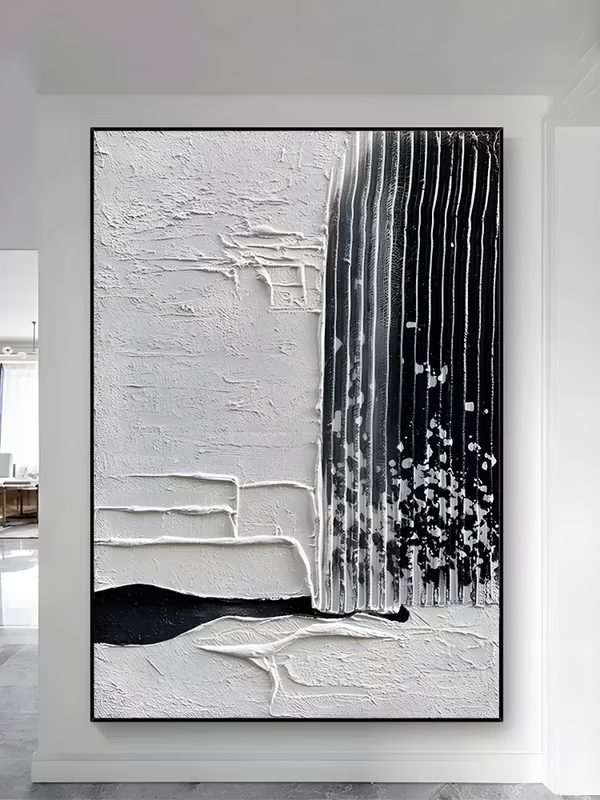
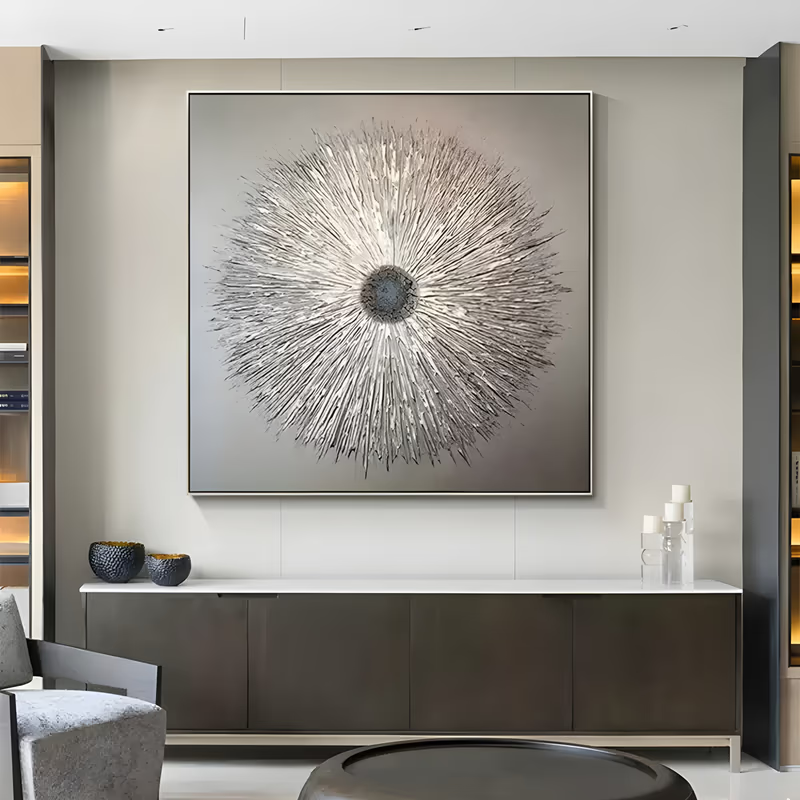
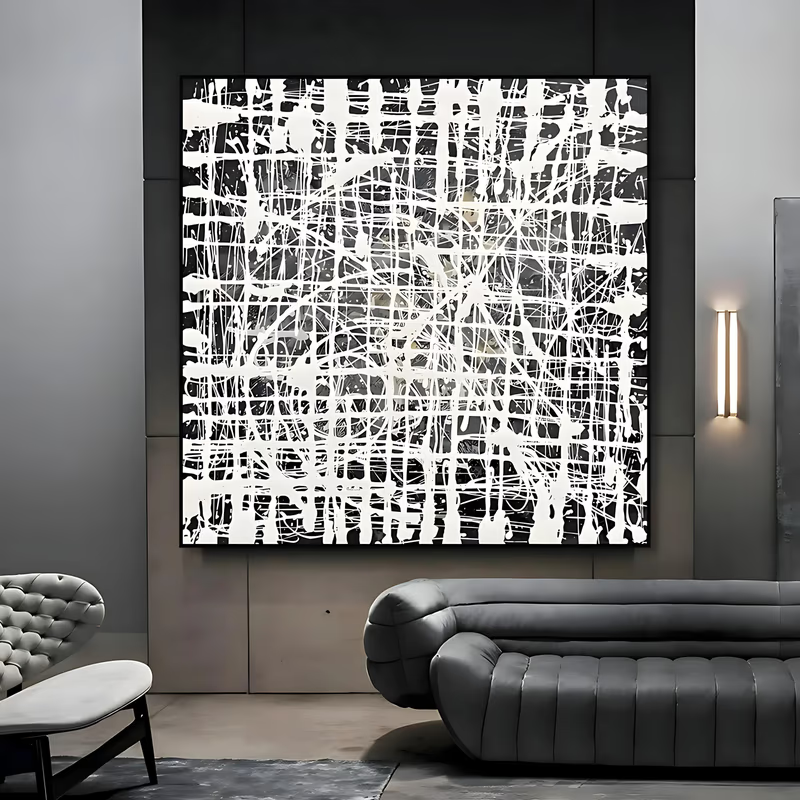
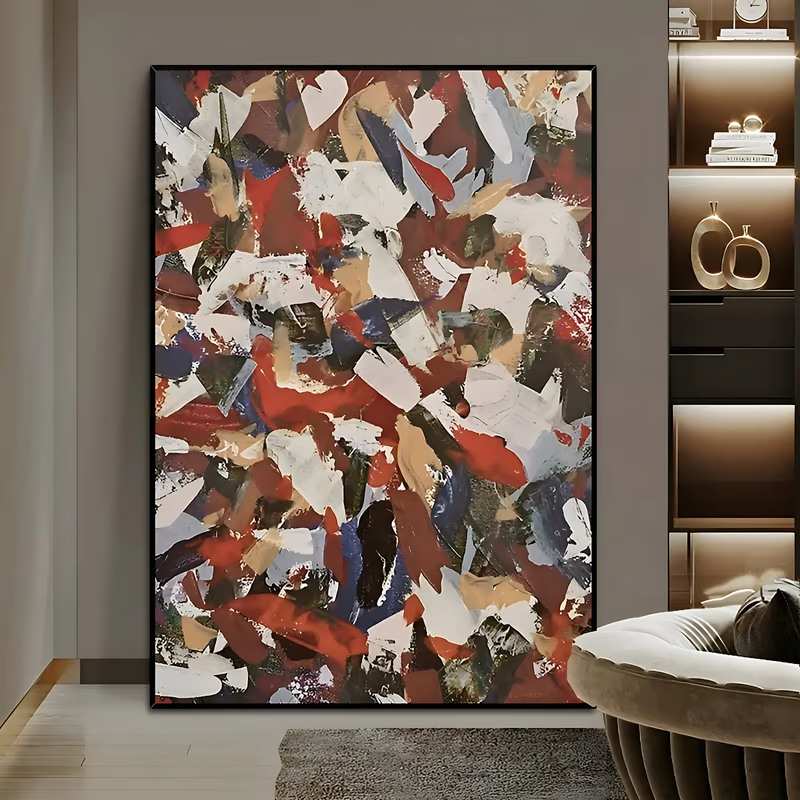
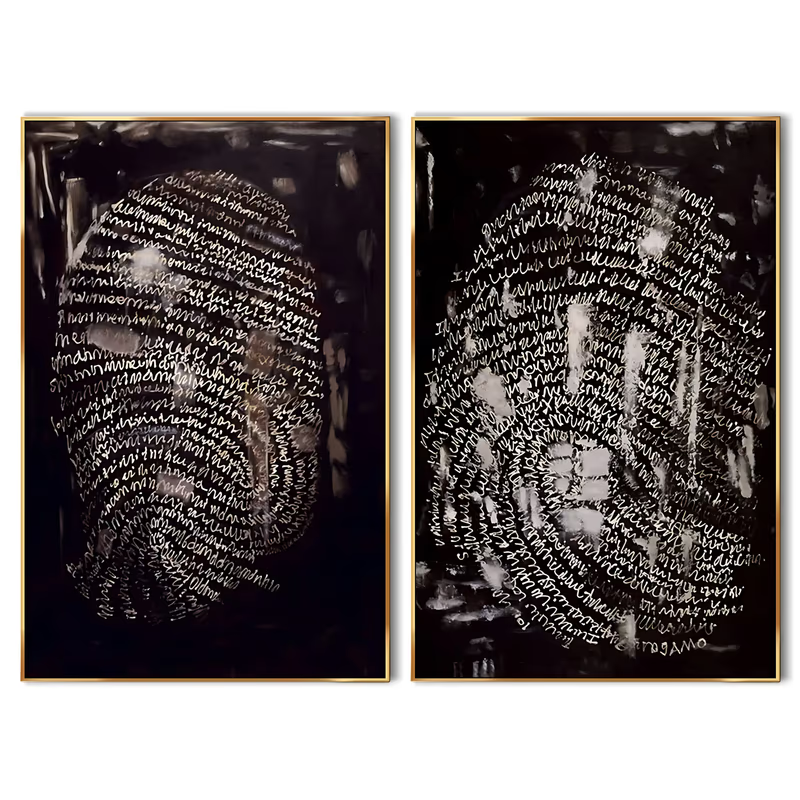
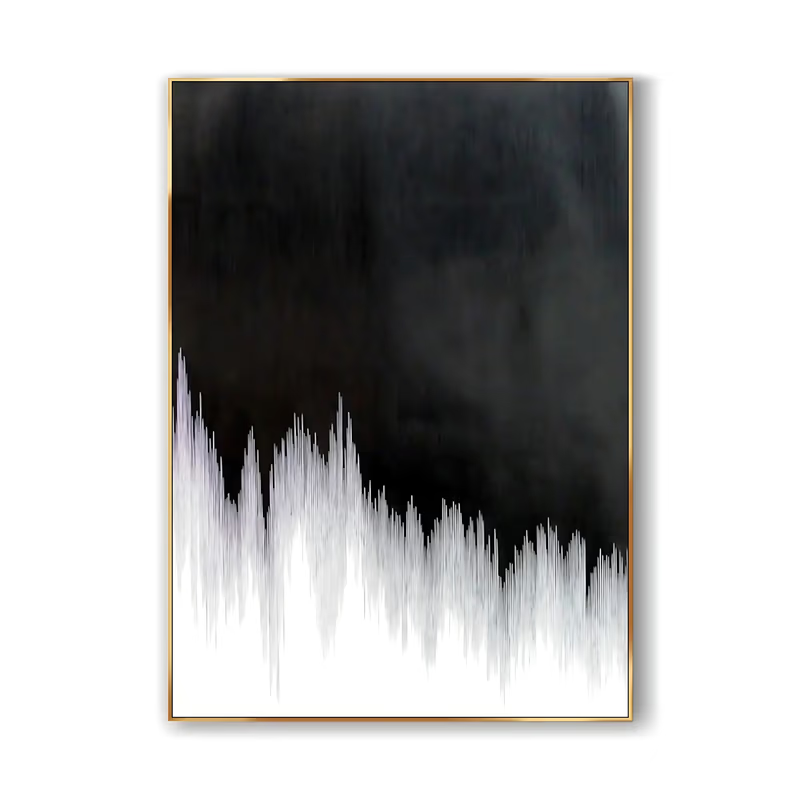
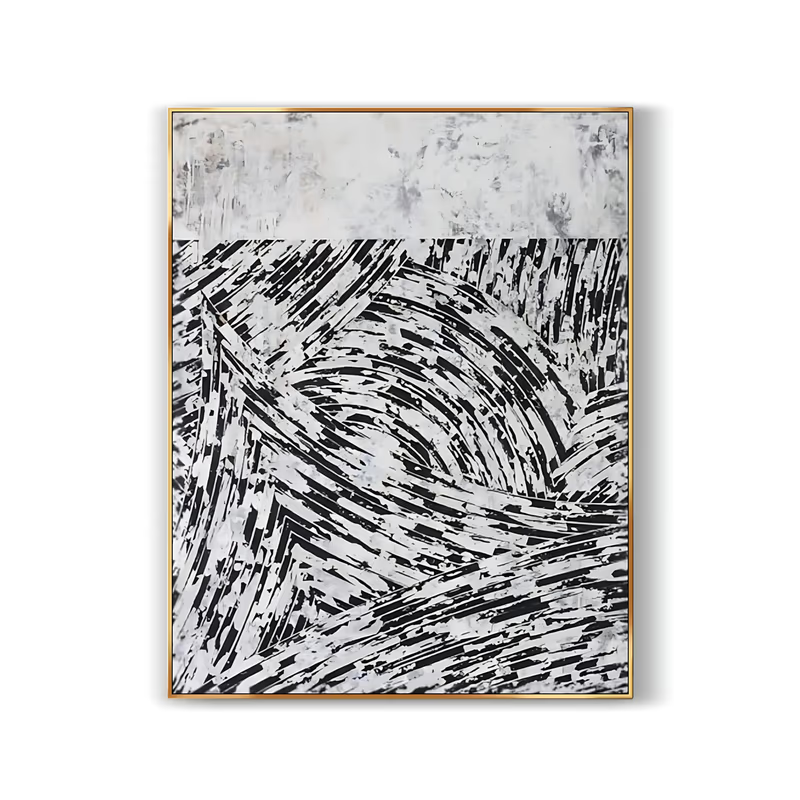
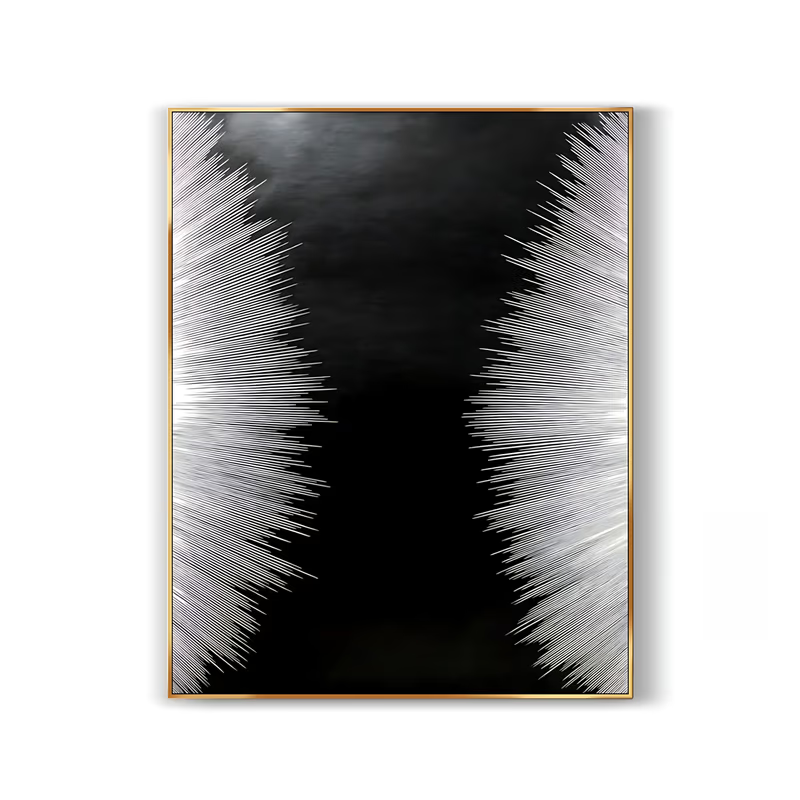
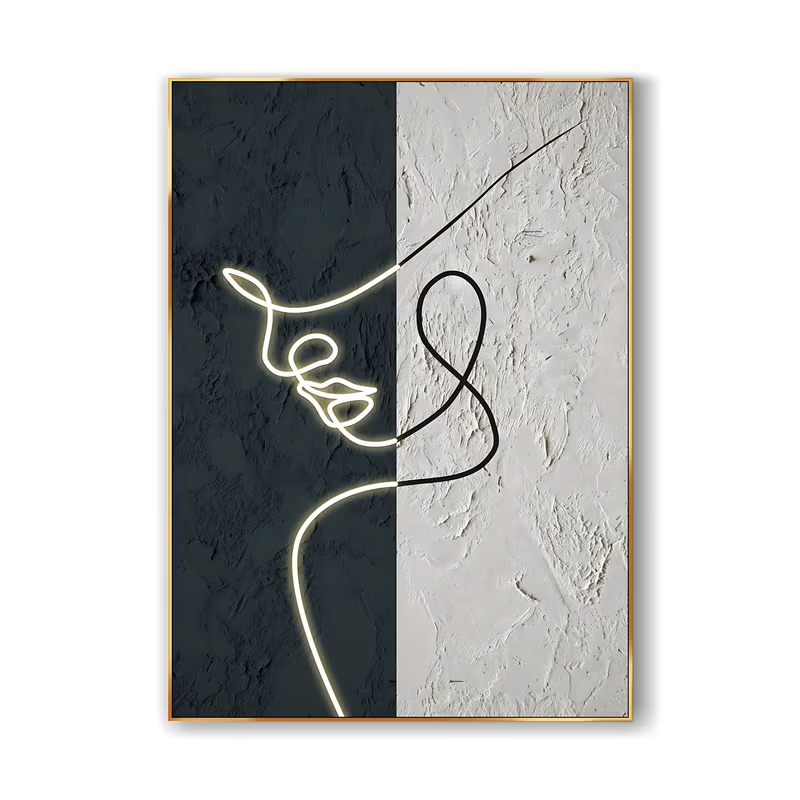
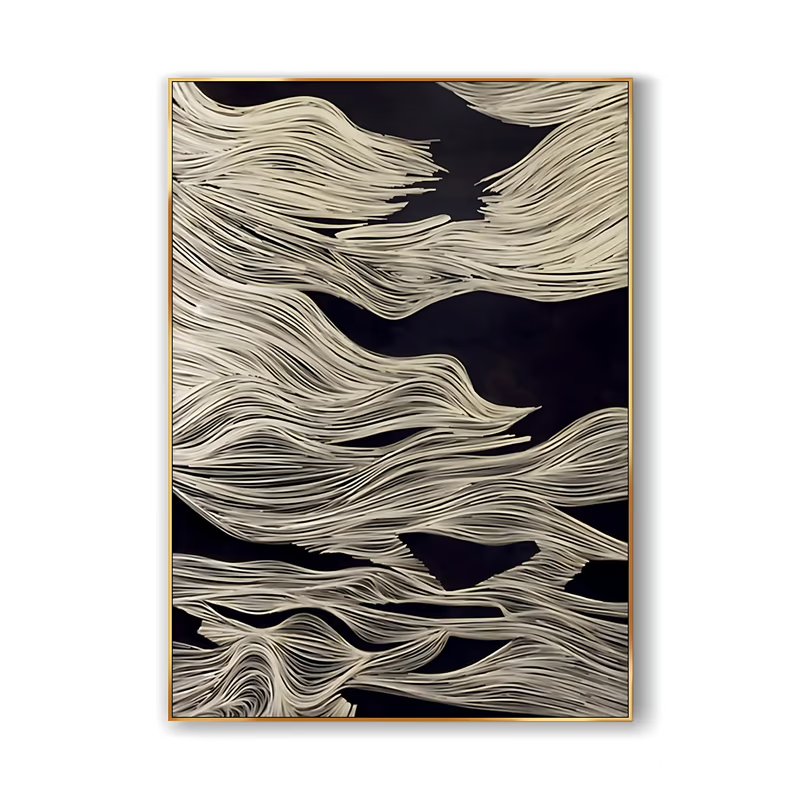
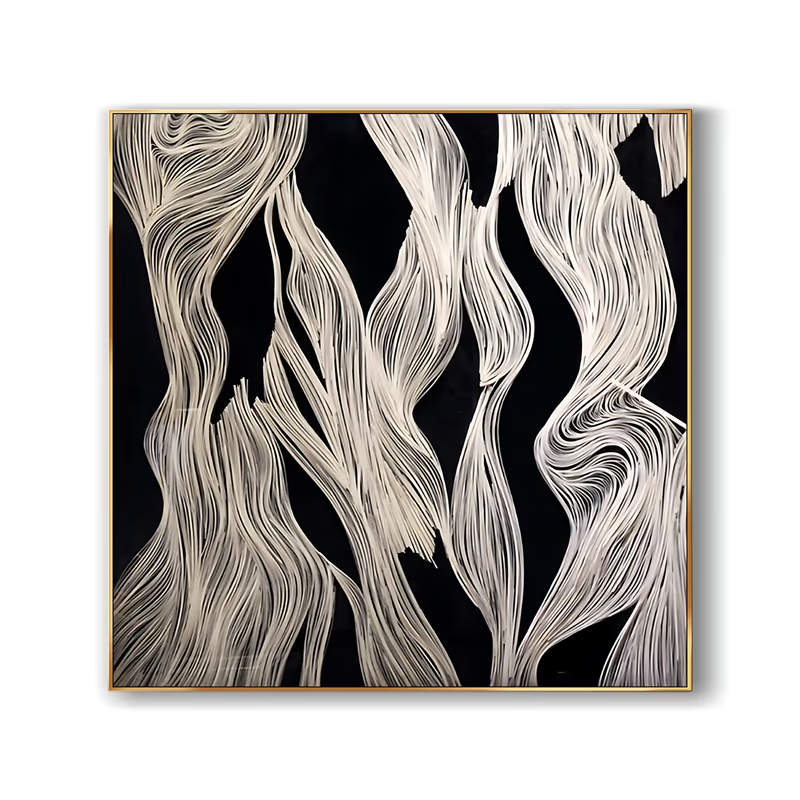
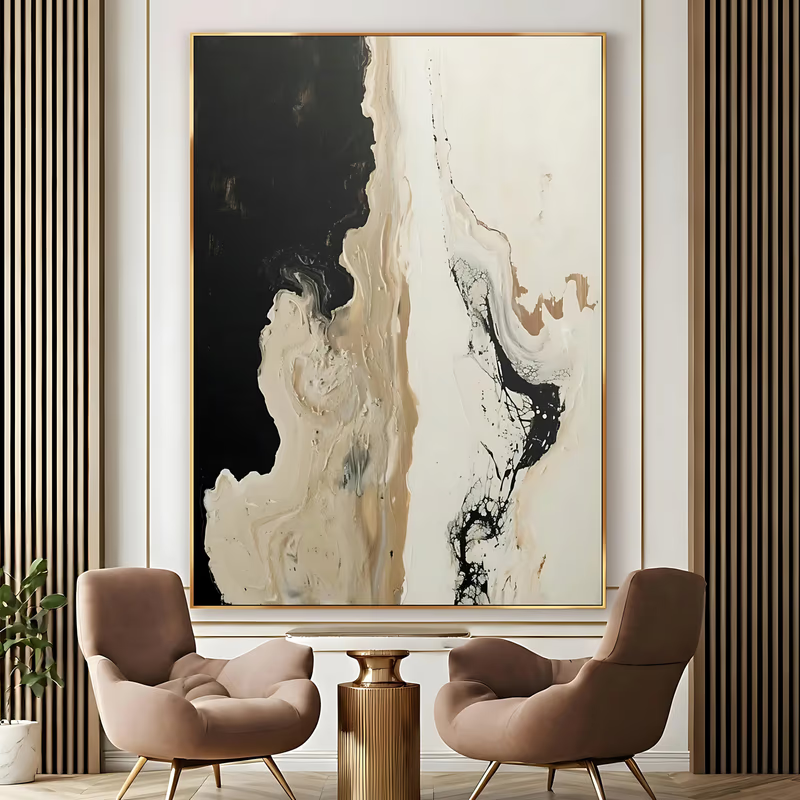
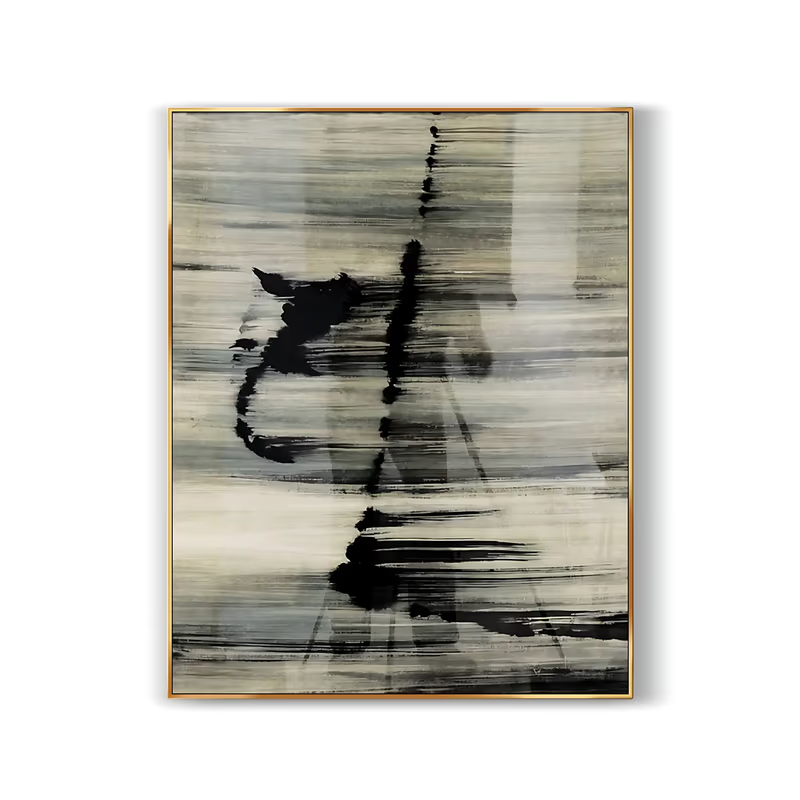
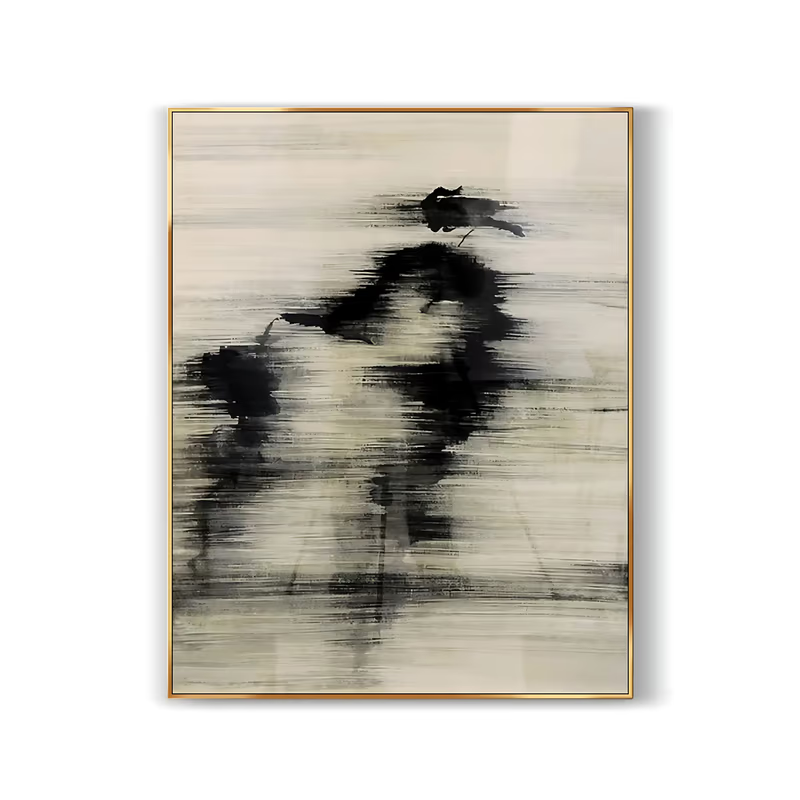
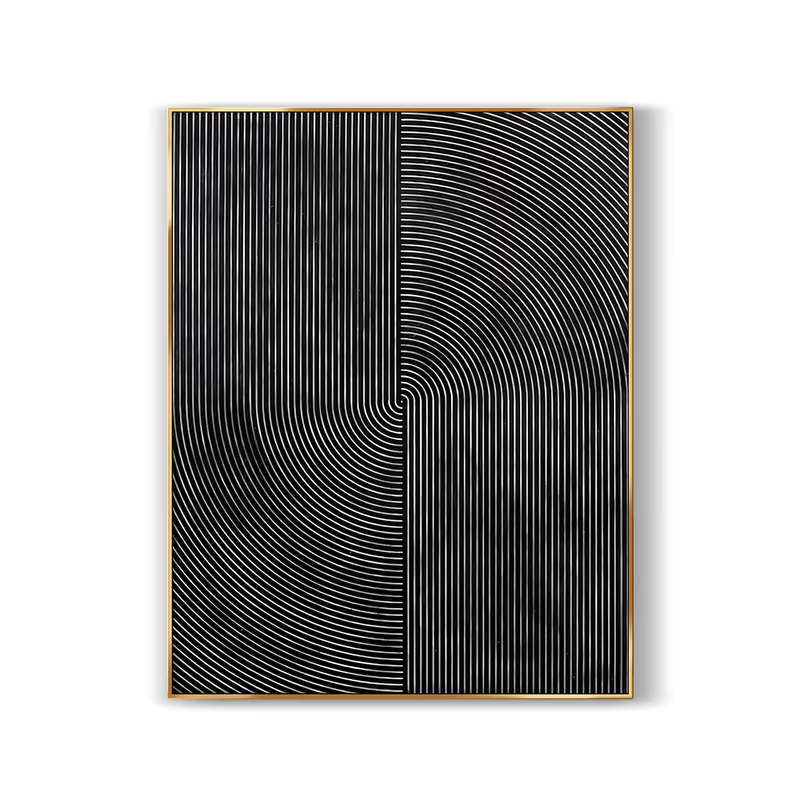
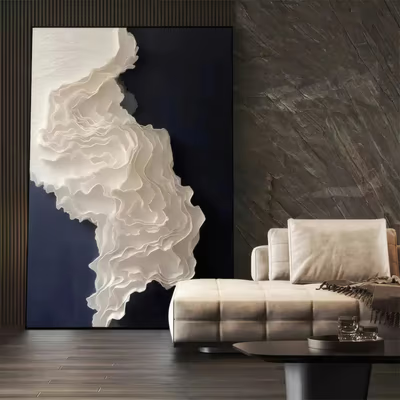
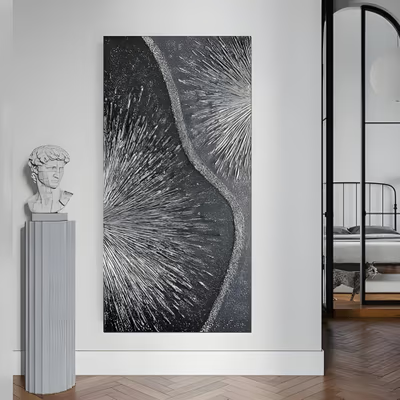
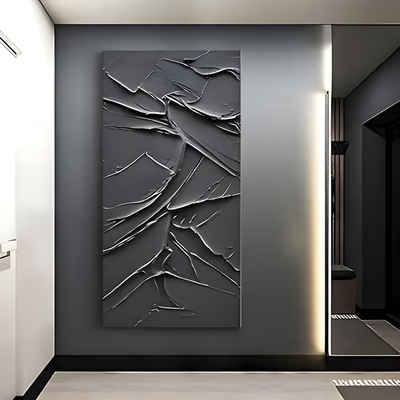
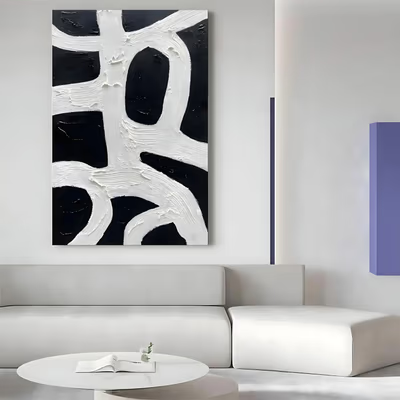
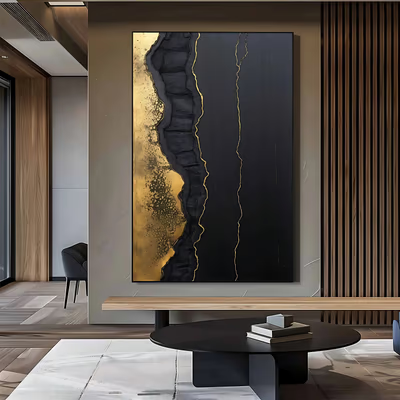
White loops on black, silver starburst rays, sculpted black plaster, combed arcs on dark grounds, gold sunbursts. Without a subject, the drama comes entirely from contrast and texture, and raised surfaces change as light moves across them during an evening. Strong choices for hotel receptions, lift lobbies and restaurants. See also dramatic black art and gold accents.
Flowers and figures against deep colour
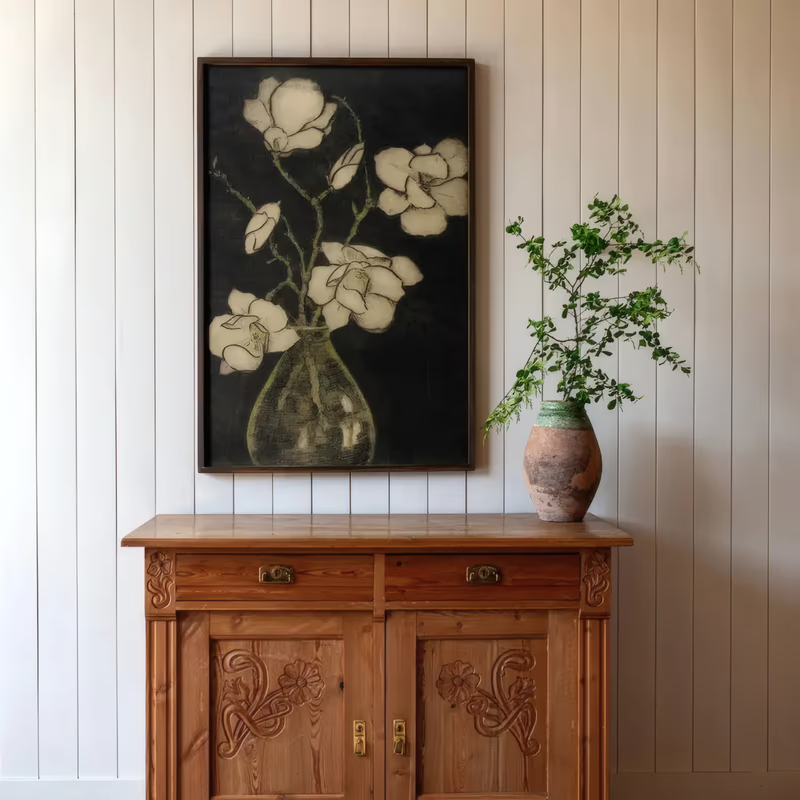
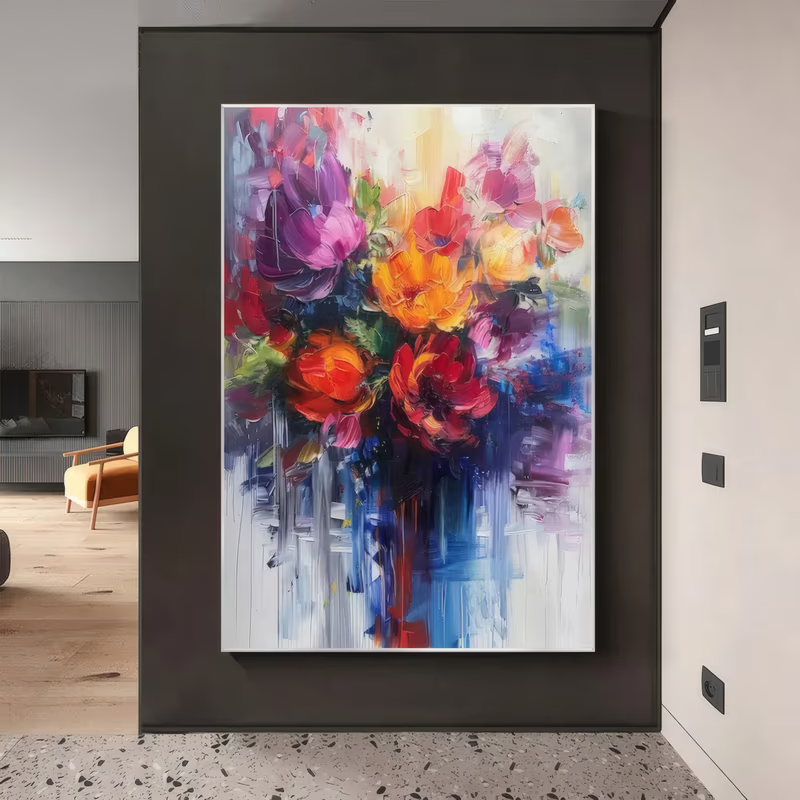
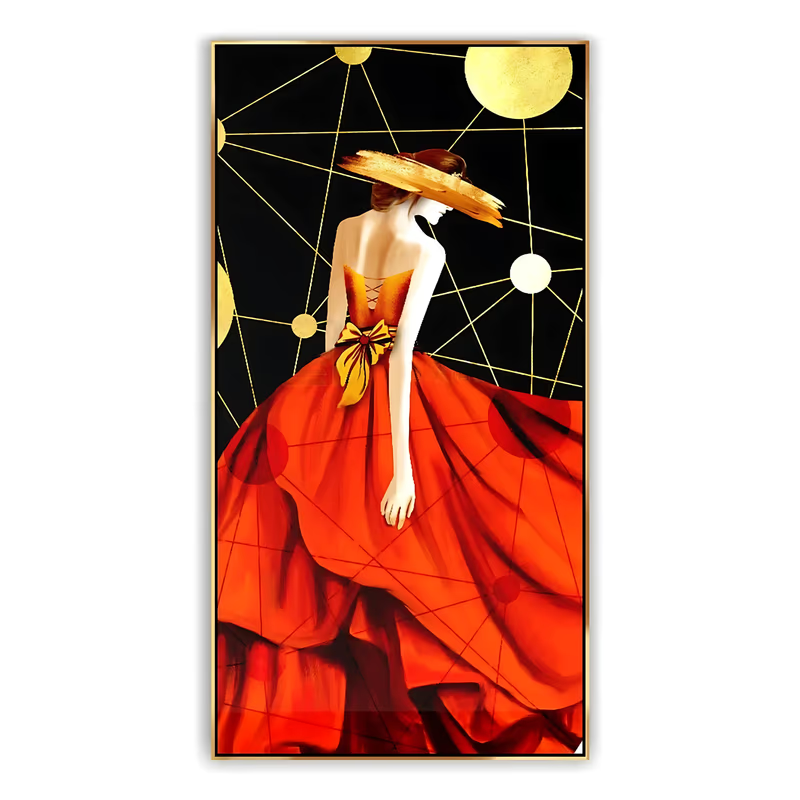
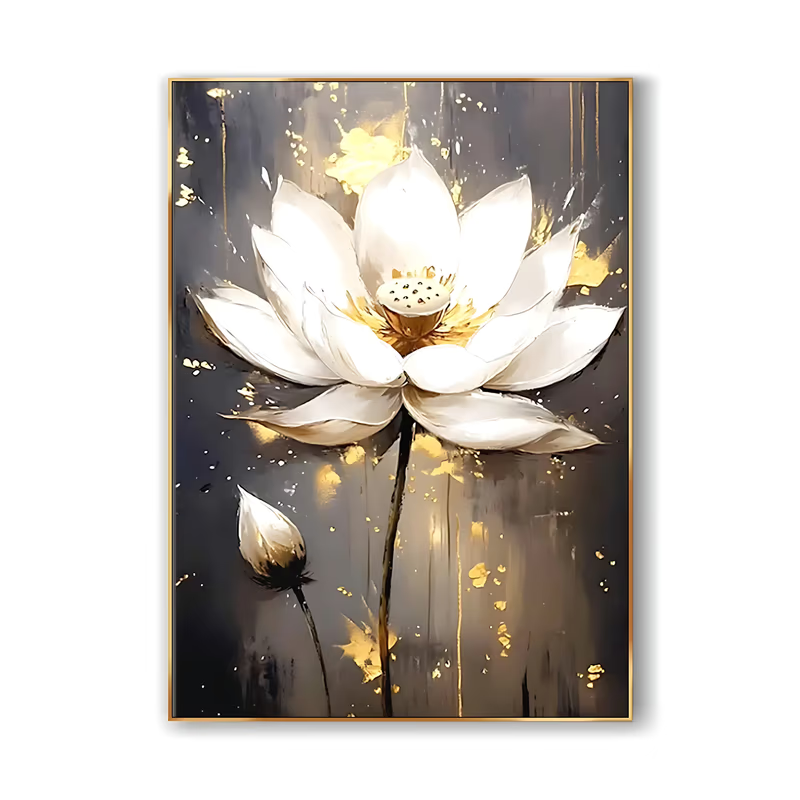
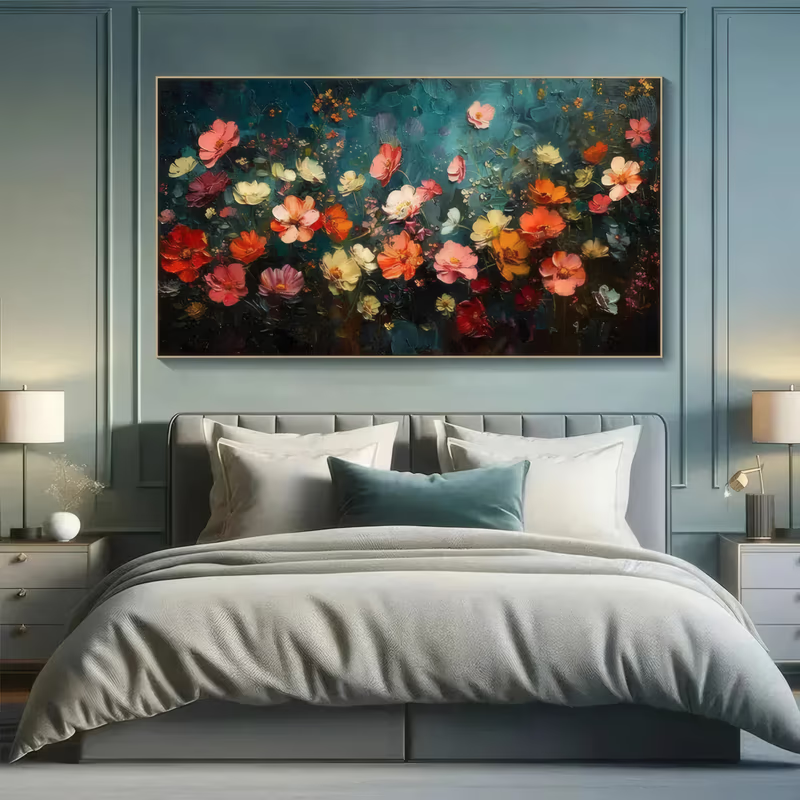
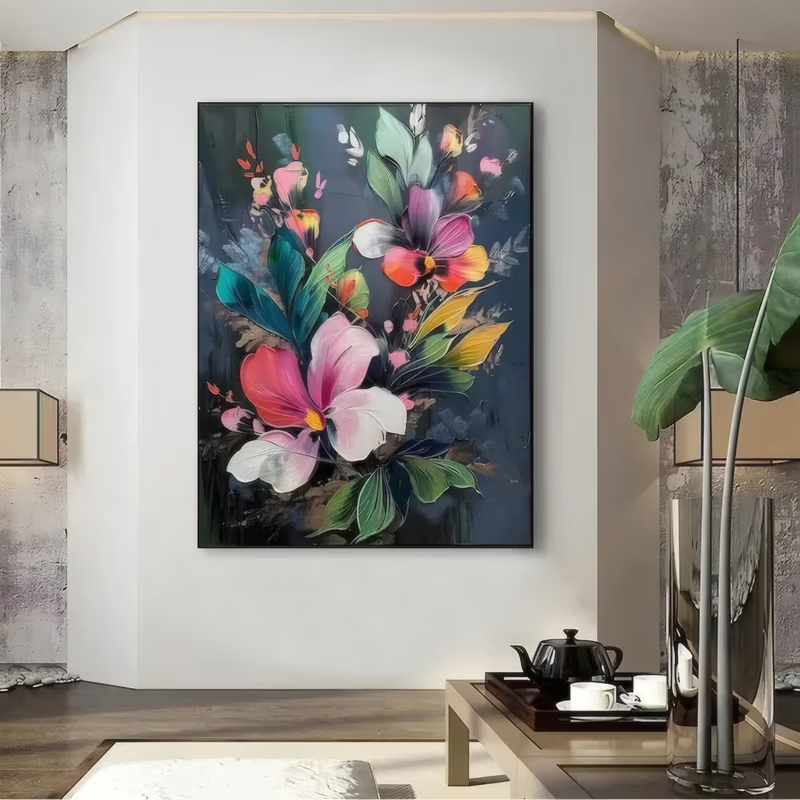
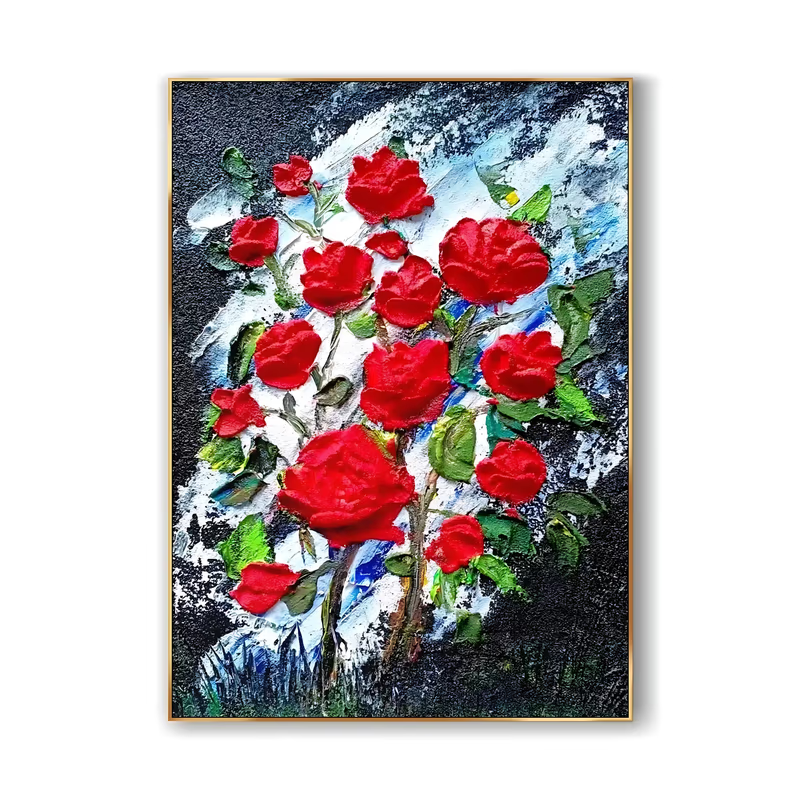
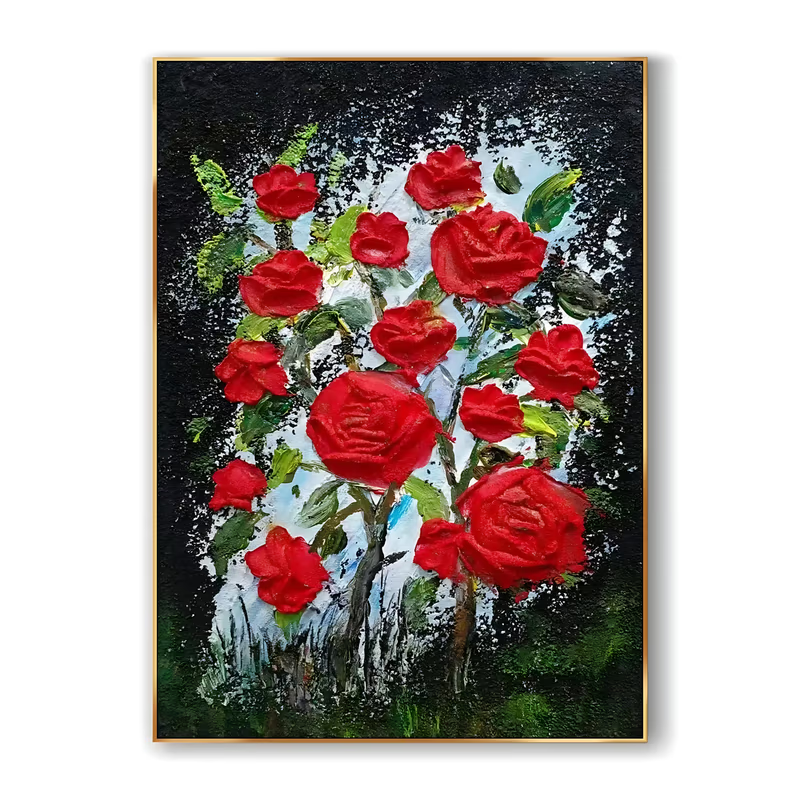
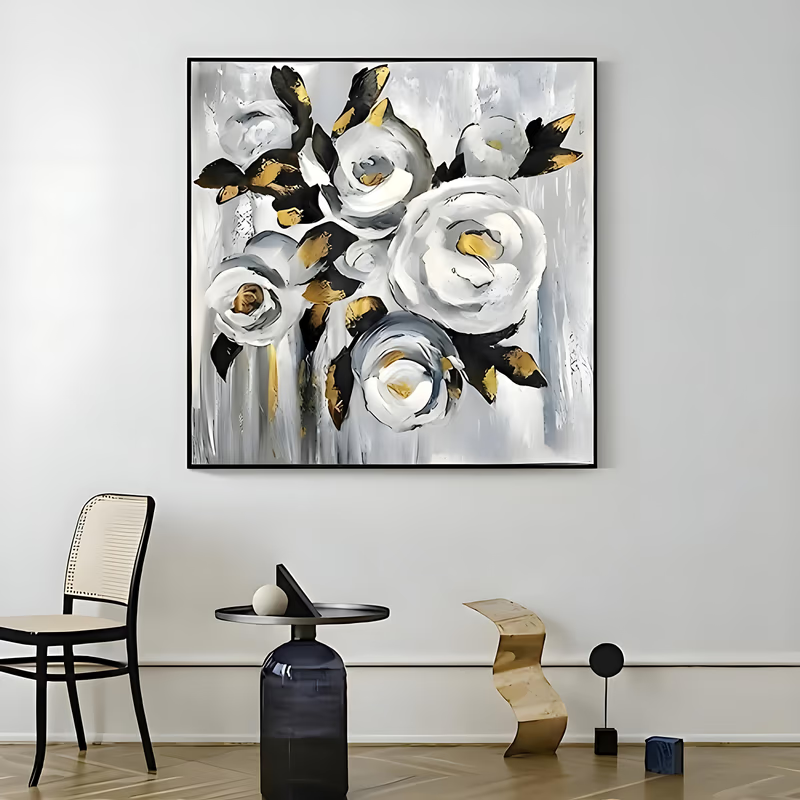
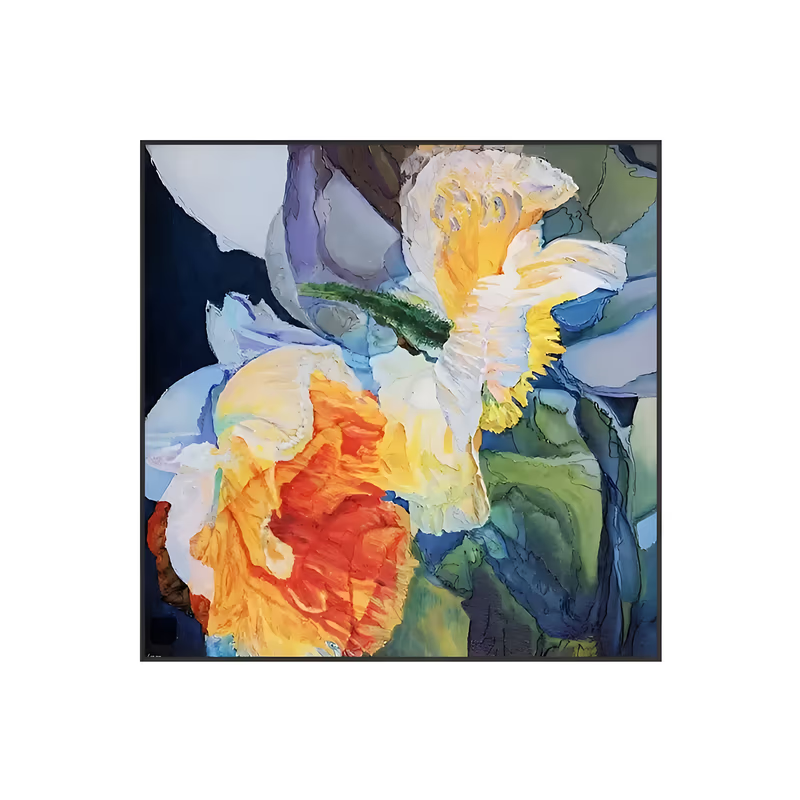
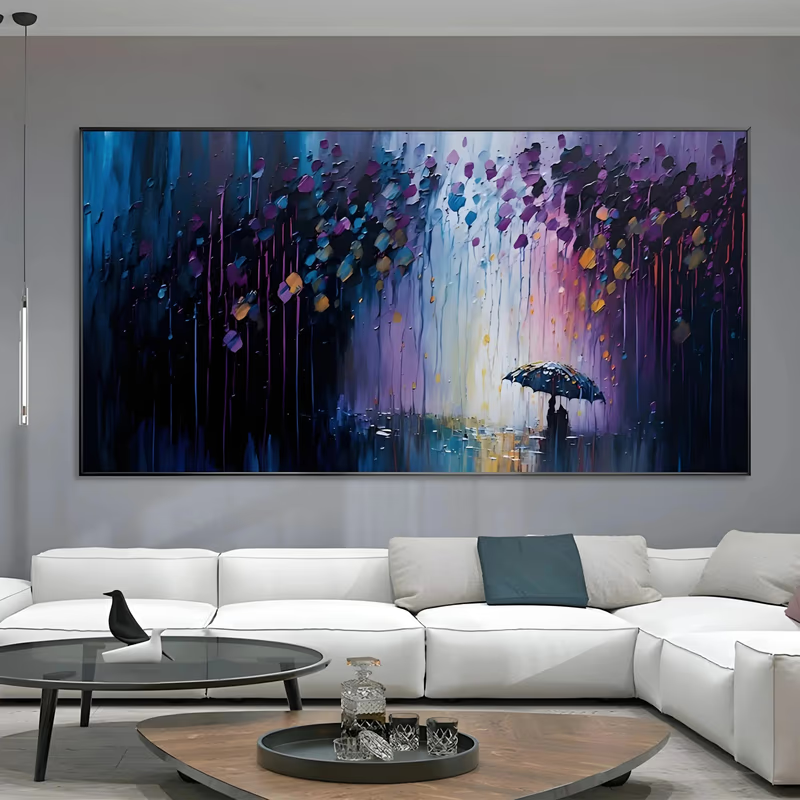
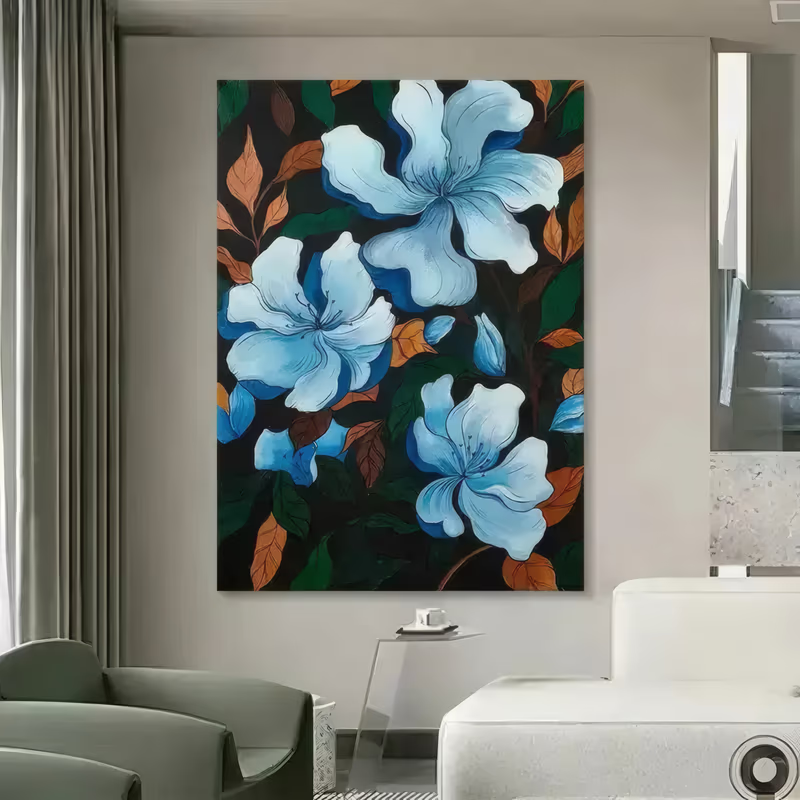
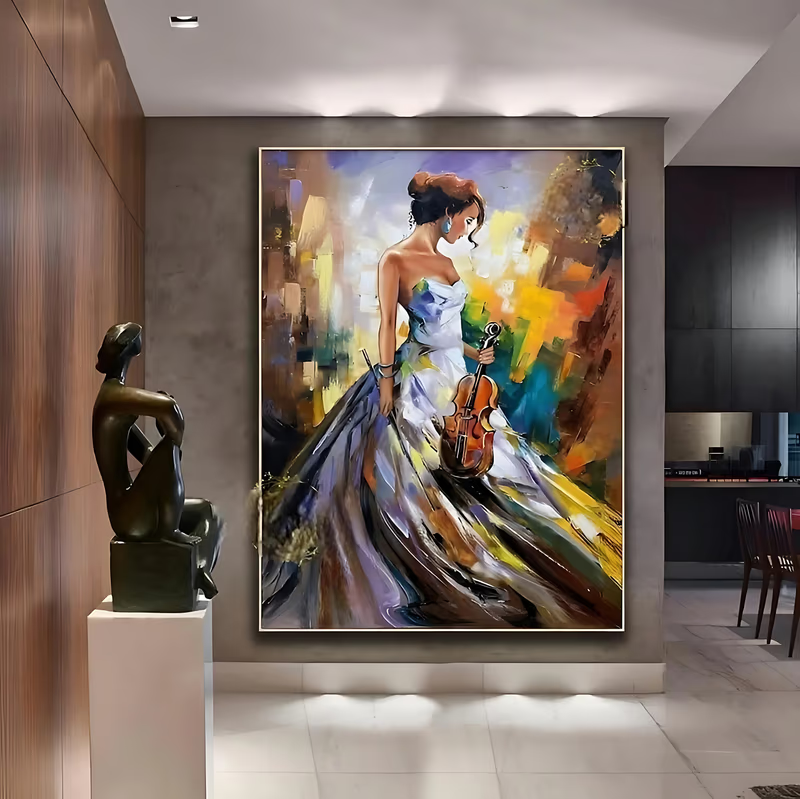
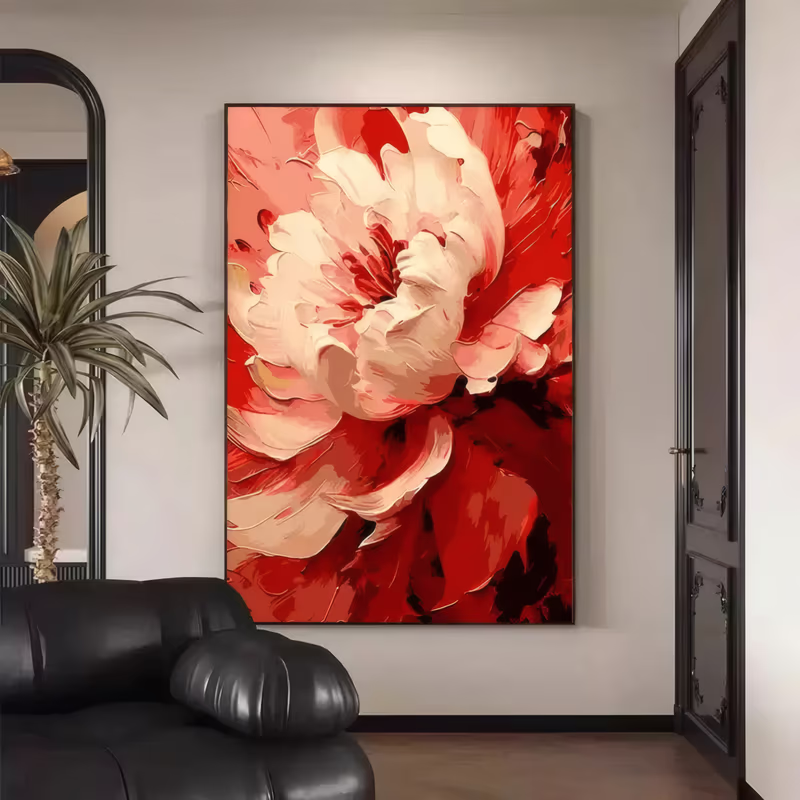
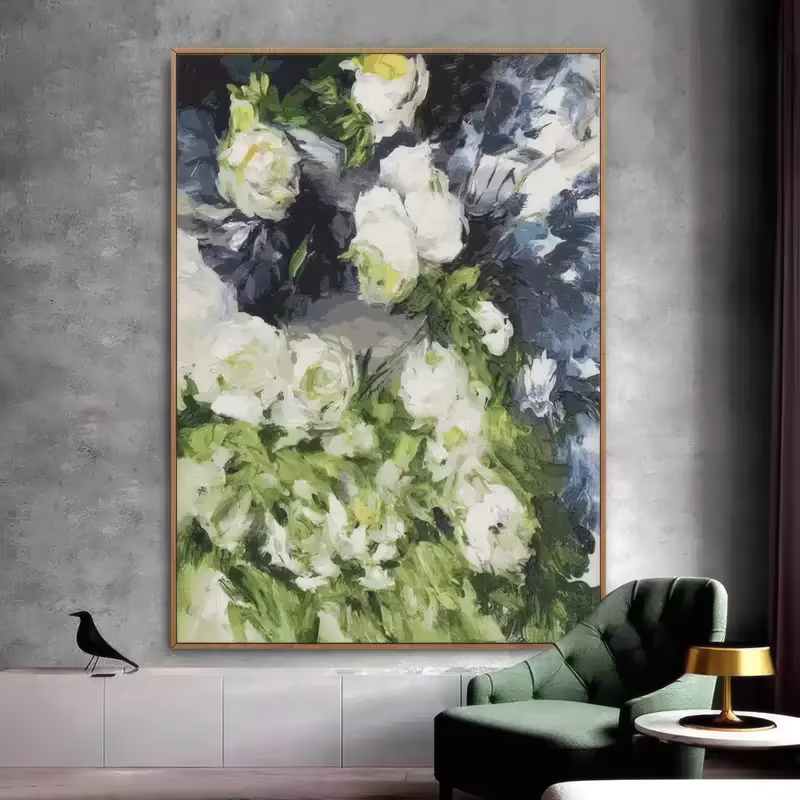
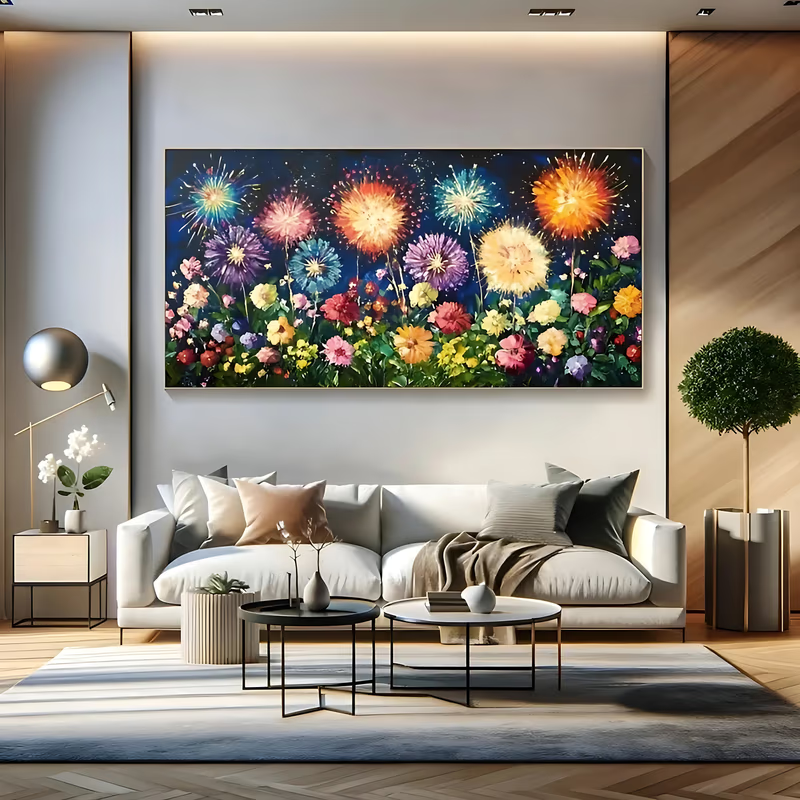
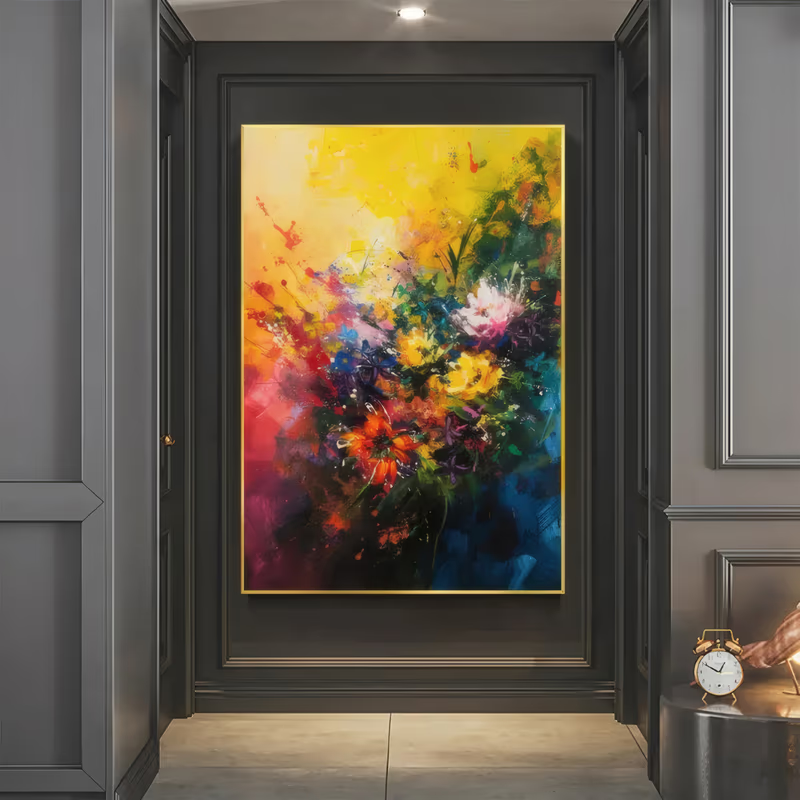
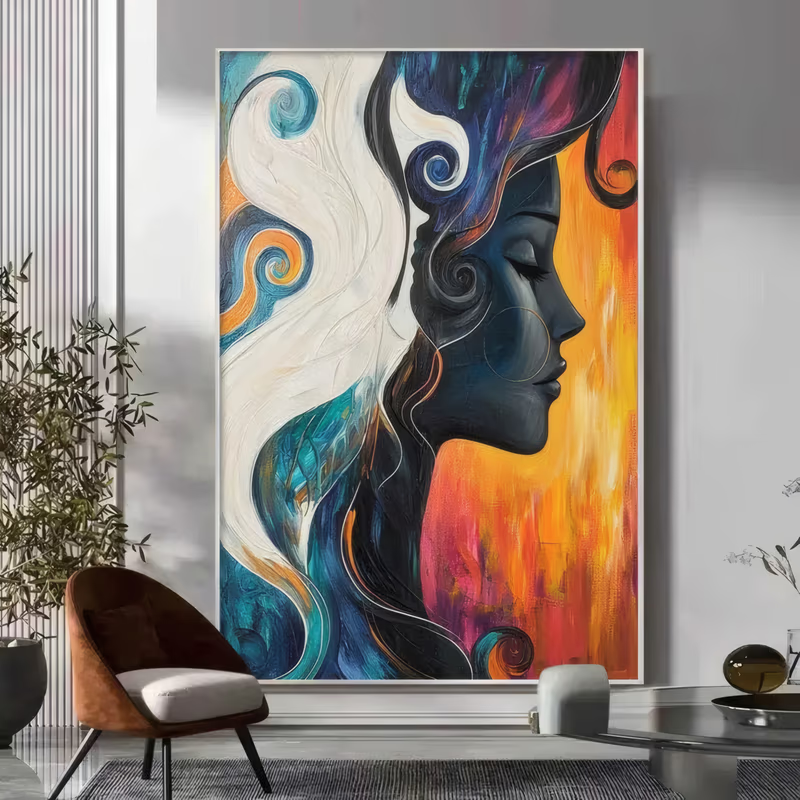
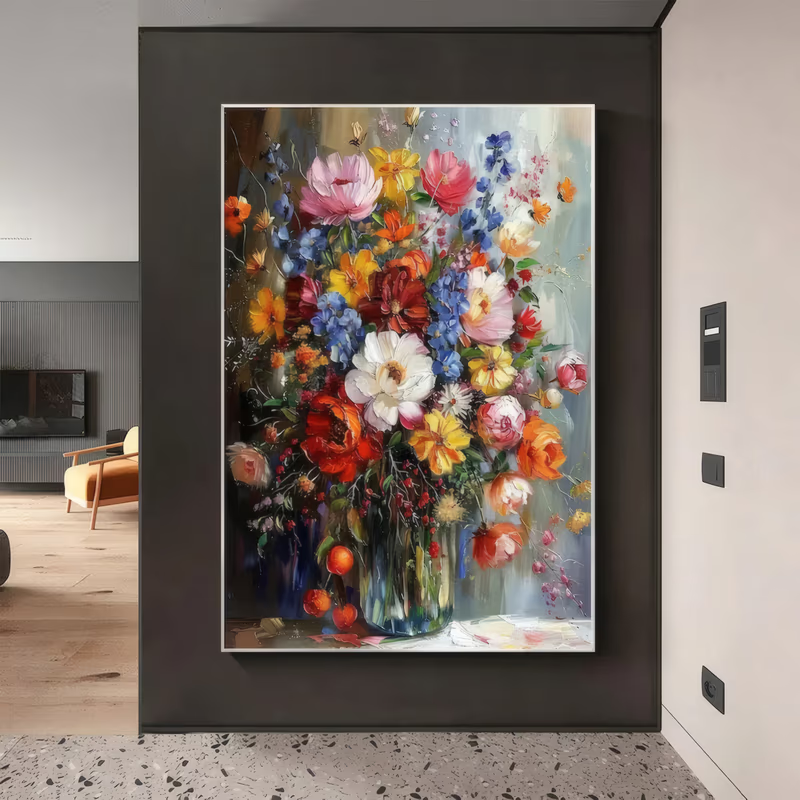
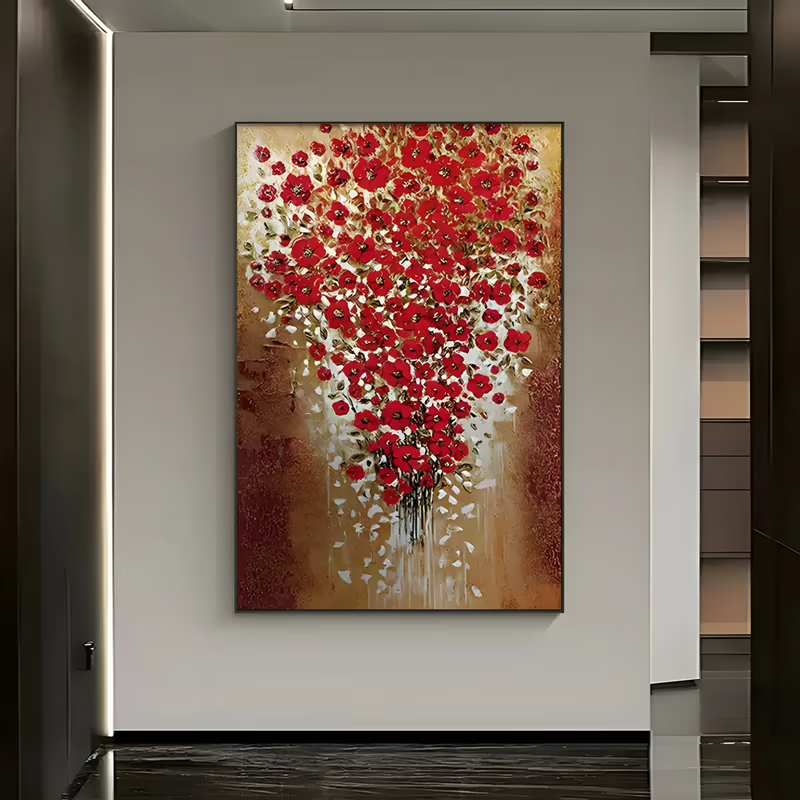
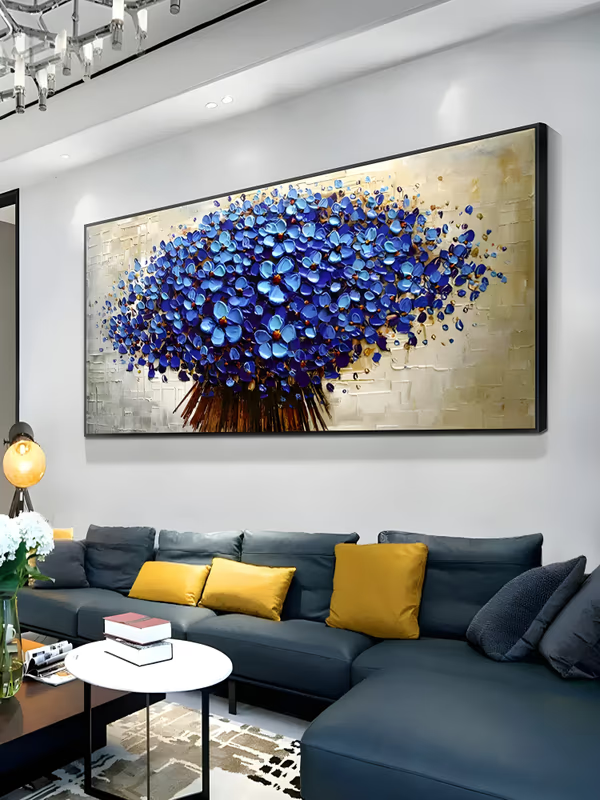
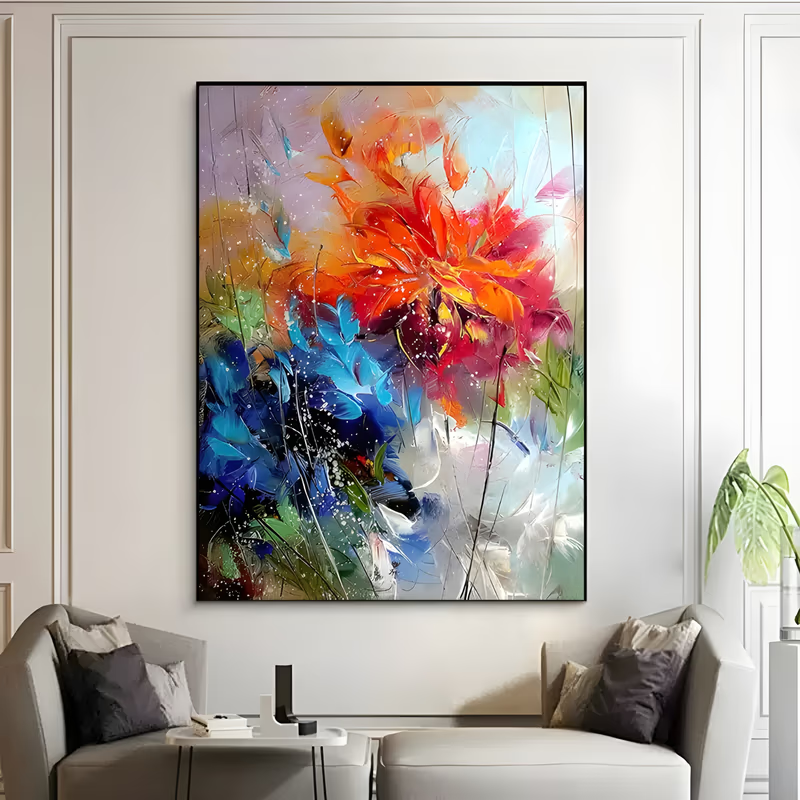
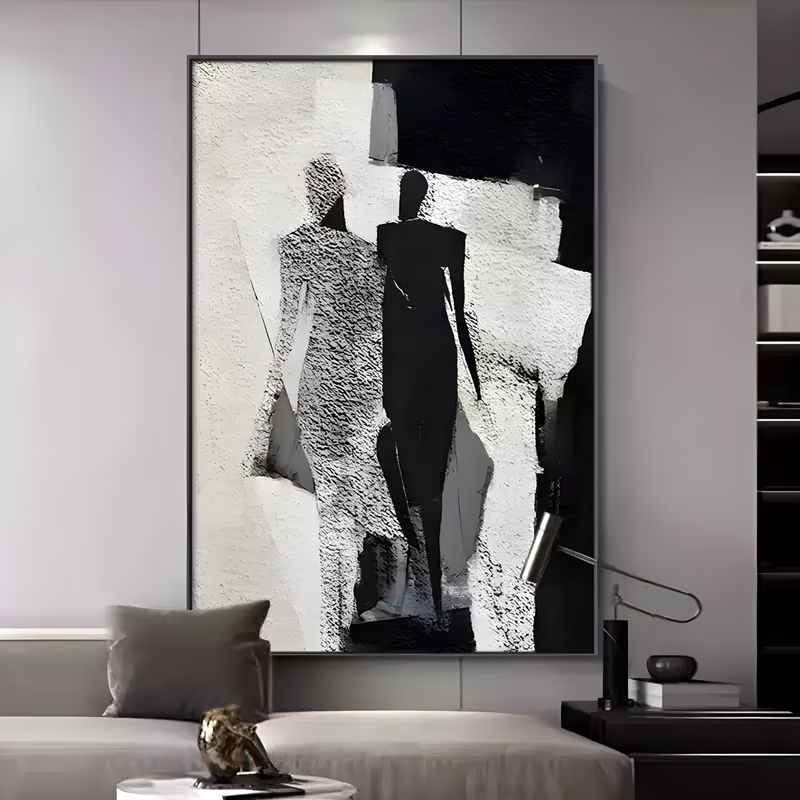
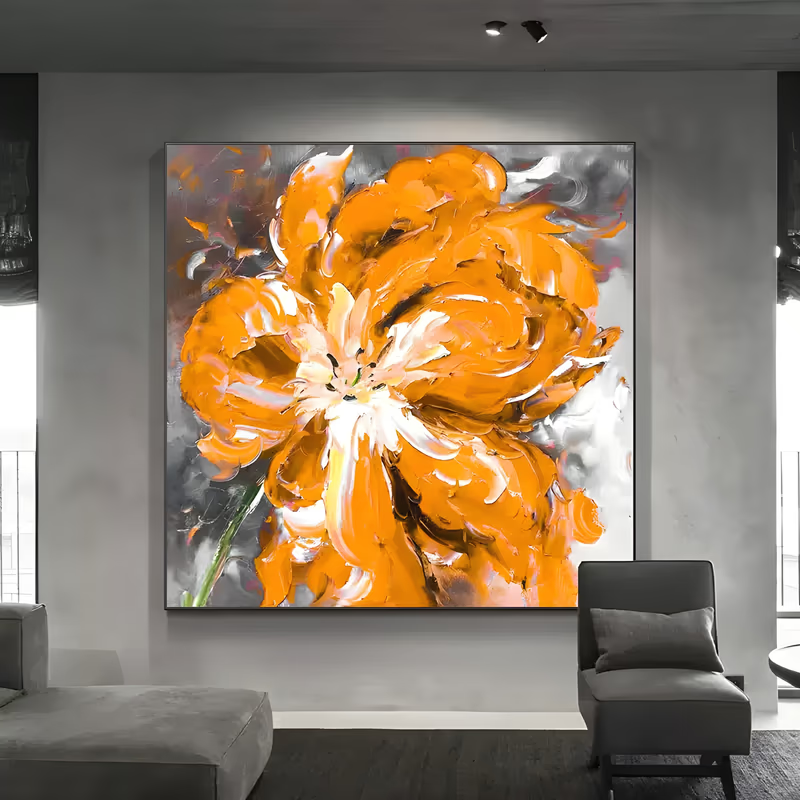
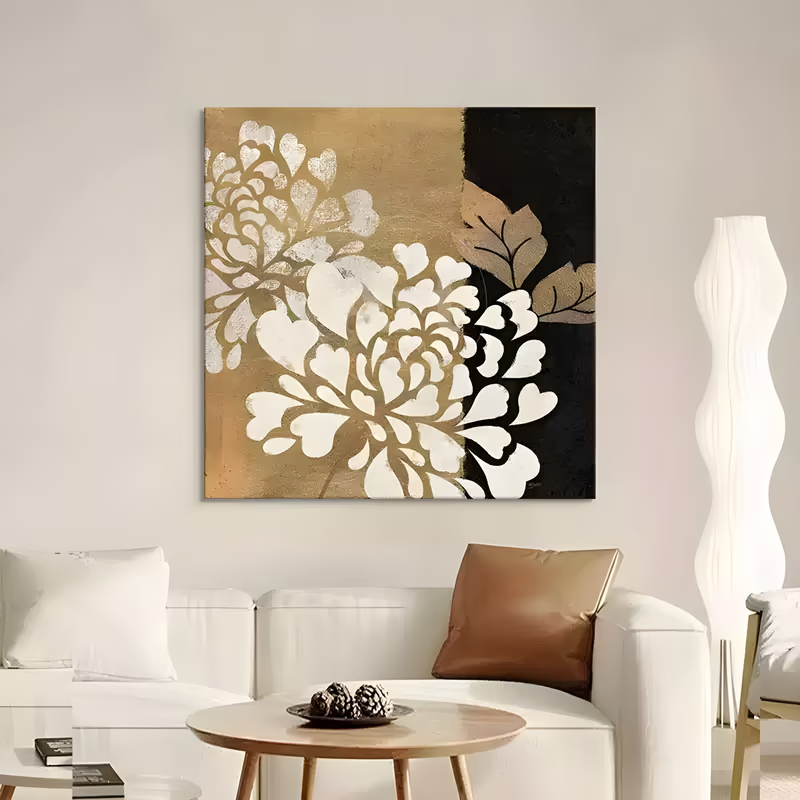
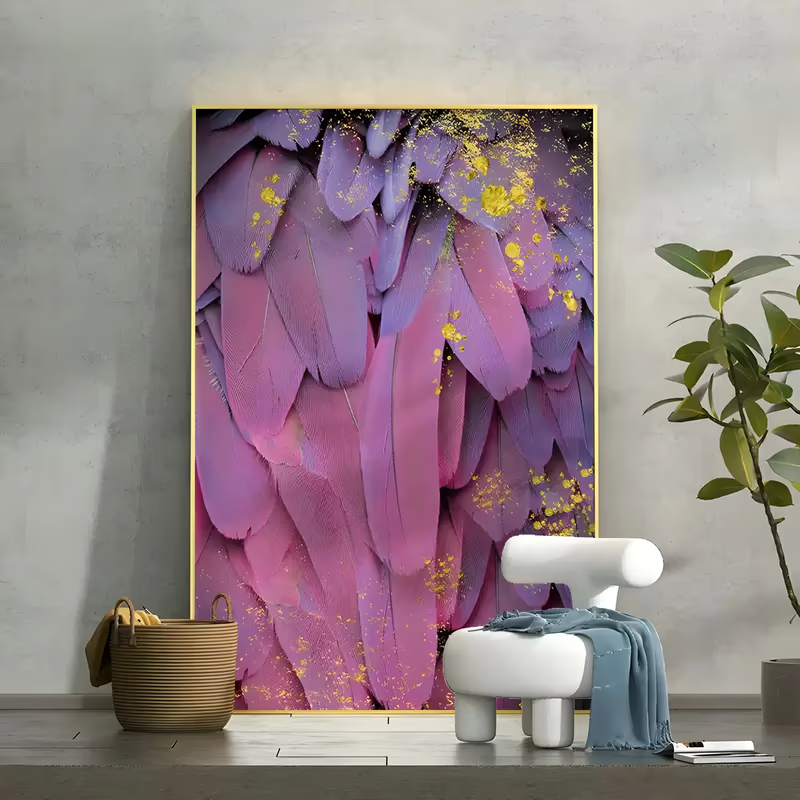
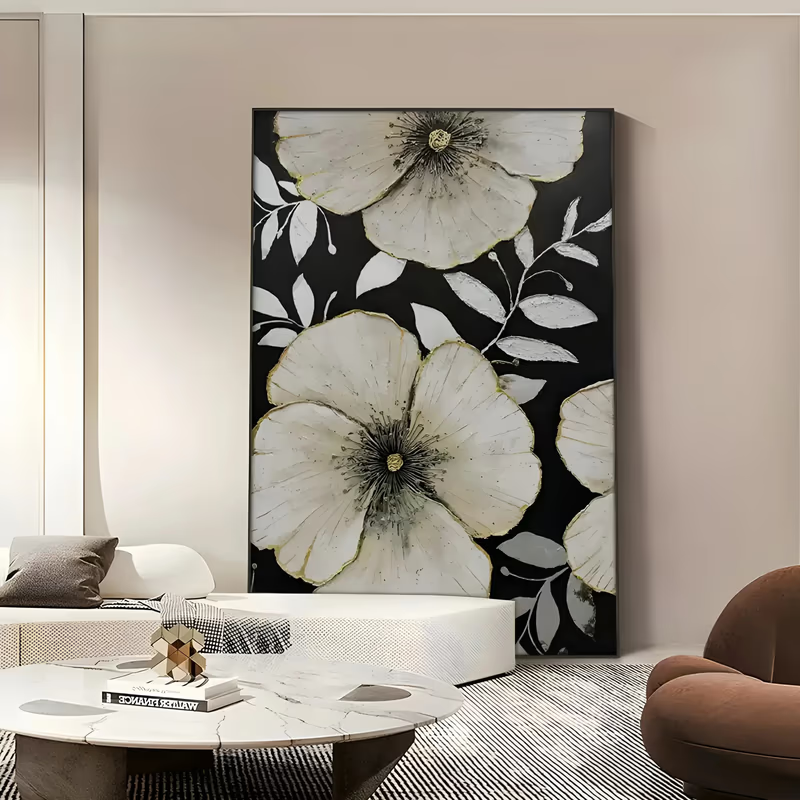
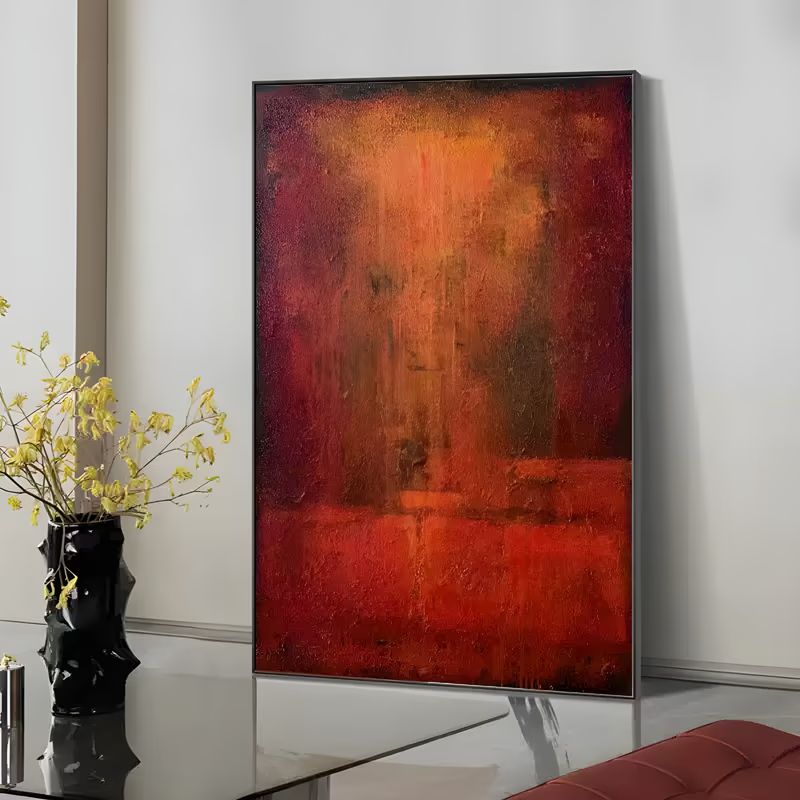
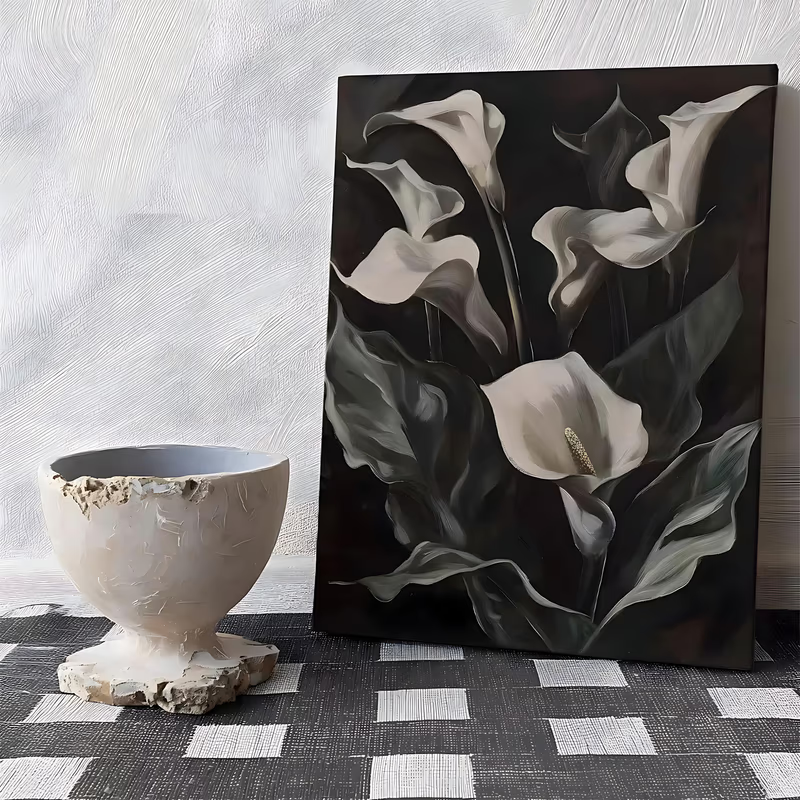
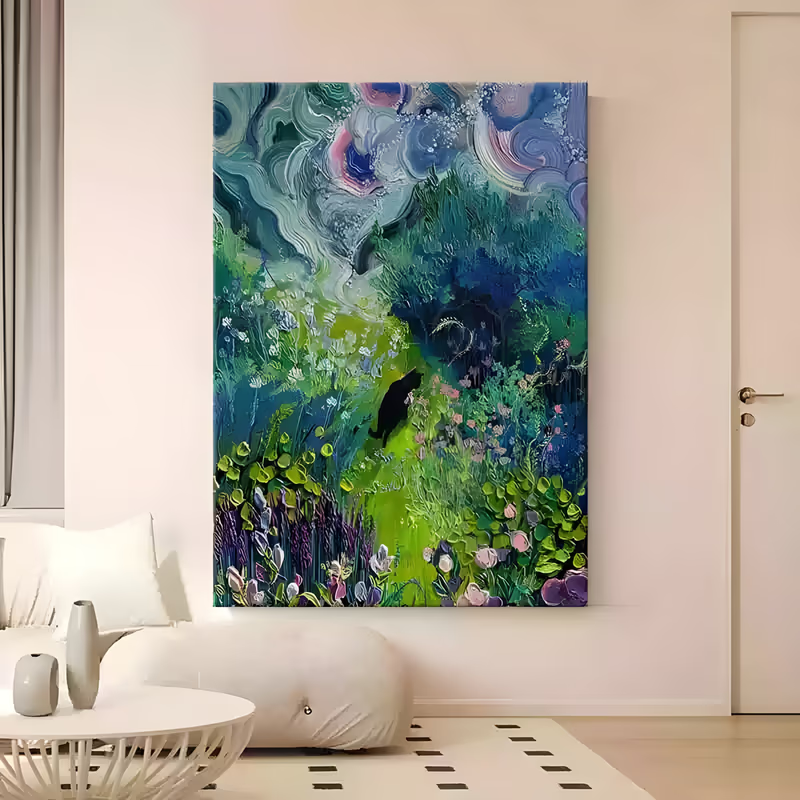
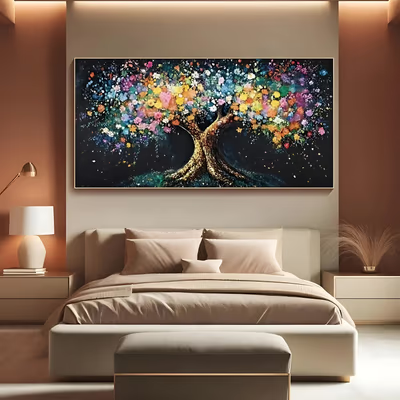
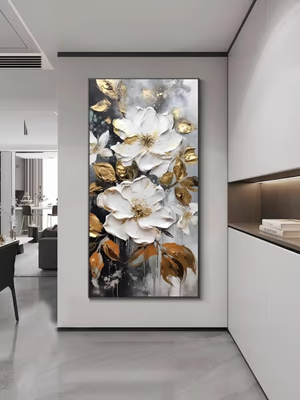
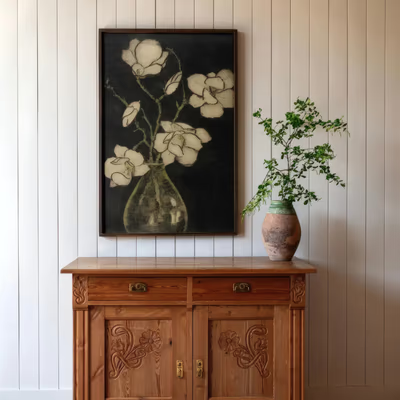
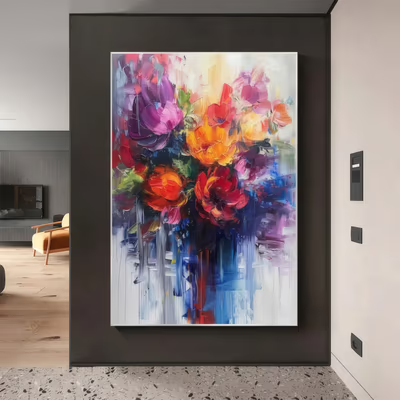
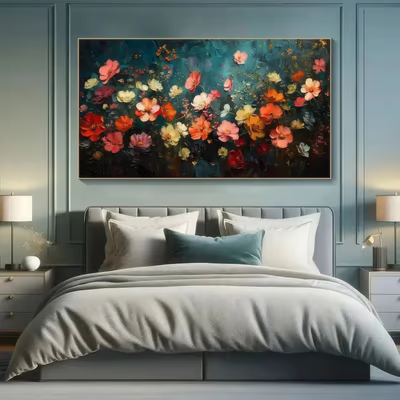
White blooms with gold leaves on charcoal, cream magnolias in glass on black, a woman in a red gown, a single lotus flecked with gold. A pale form on a dark ground gives a dining room or a powder room real presence without the scale of a storm scene.
Where does dramatic wall art work best?
Dramatic wall art works best in rooms used in the evening or seen as a destination: hotel lobbies, bars, restaurants, stairwells, dining rooms and studies.
Hotel lobbies and receptions
A lobby changes character after dark, and a dramatic canvas lit by one spot becomes its centre once the daylight goes. Double-height walls and lift lobbies are natural stages. Dramatic lobby art; for programmes, see lobby statement art and art for luxury hotels and palaces.
Bars, restaurants and lounges
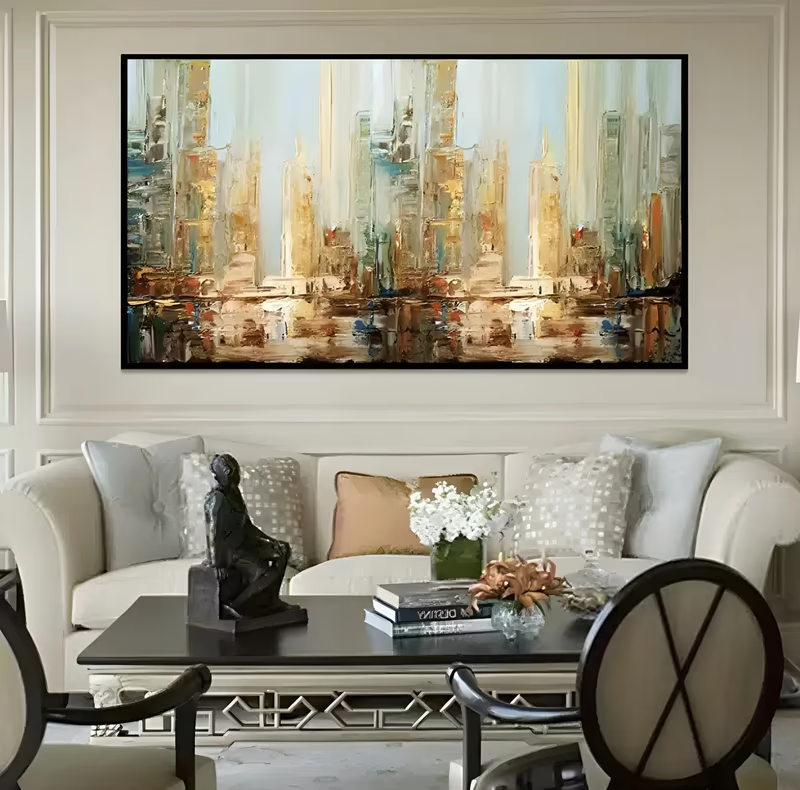
Low light, dark finishes and a sense of occasion all favour drama. A wide piece behind the bar or along a banquette sets the evening tone. Restaurants and bars; restaurant groups.
Stairwells, entrance halls and corridor ends
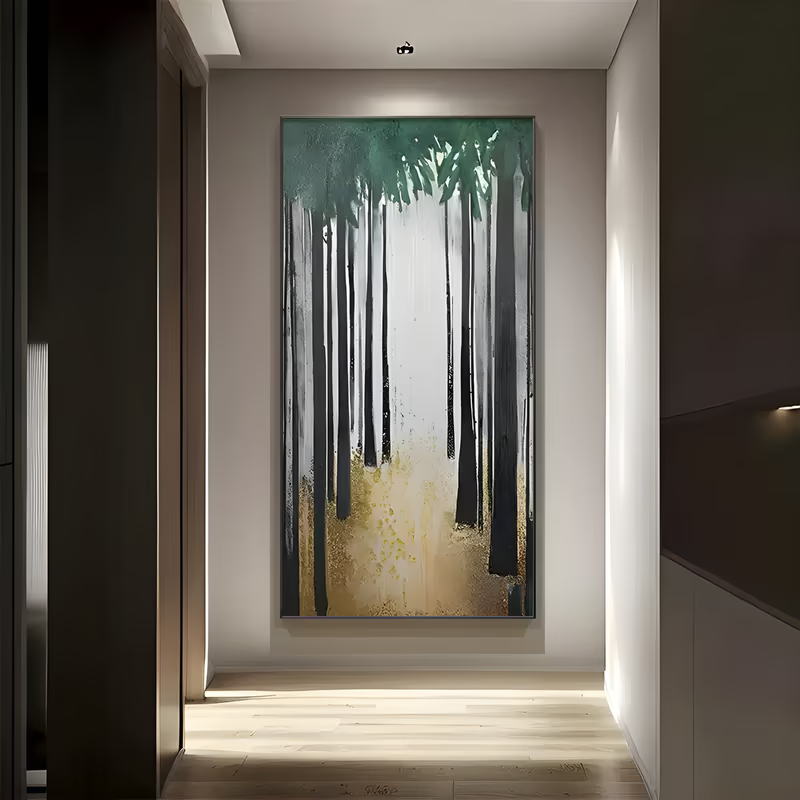
Spaces that people move through towards something suit a painting with a clear focal light. Hung at the turn of a stair or the end of a corridor, it pulls people forward. Entrances and corridors.
Dining rooms, dens and studies at home
A dramatic piece over a dining table comes alive under pendants and candles; in a study or media room it suits dark joinery and leather. Dining rooms, living rooms, studies and home offices.
For galleries and shops, a single dramatic canvas can act as the window display. Retail and gallery.
How should dramatic wall art be lit and framed?
Light dramatic wall art like a stage: one focused beam sized to the canvas, a darker surround, and a frame that either disappears or picks up the painting's highlights.
Aim one light. A ceiling spot or track head aimed at about 30 degrees from vertical lights the canvas without glare and keeps your shadow off it. Size the beam to the painting, so light falls on the art and not the wall around it. Warm-white lamps around 2700–3000K flatter gold, red and deep blue. An adjustable picture light works at home; in a lobby or bar, an accent luminaire on a dimmer lets you raise the drama as the evening goes on.
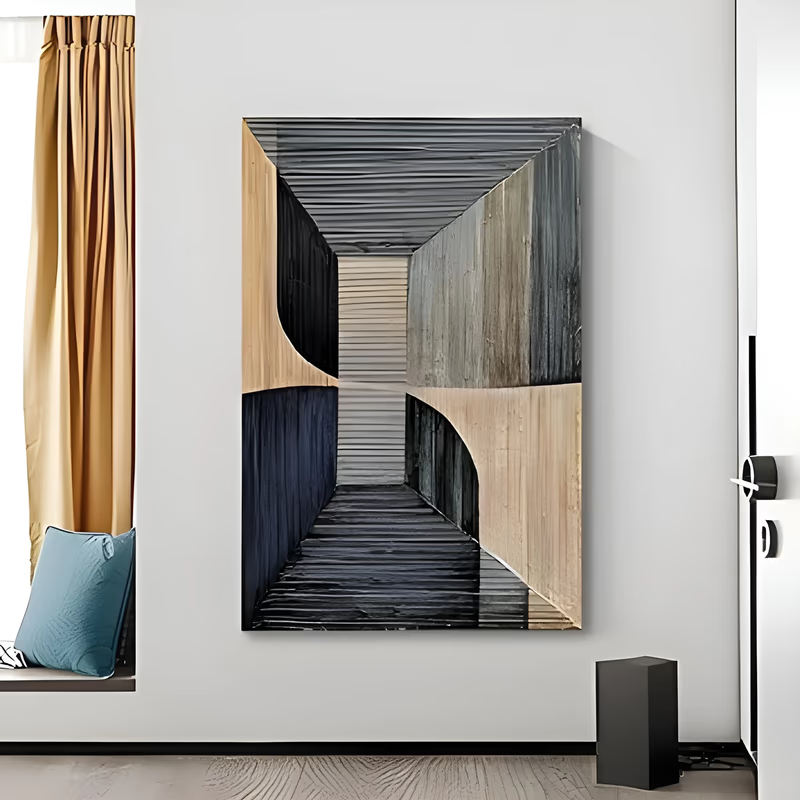
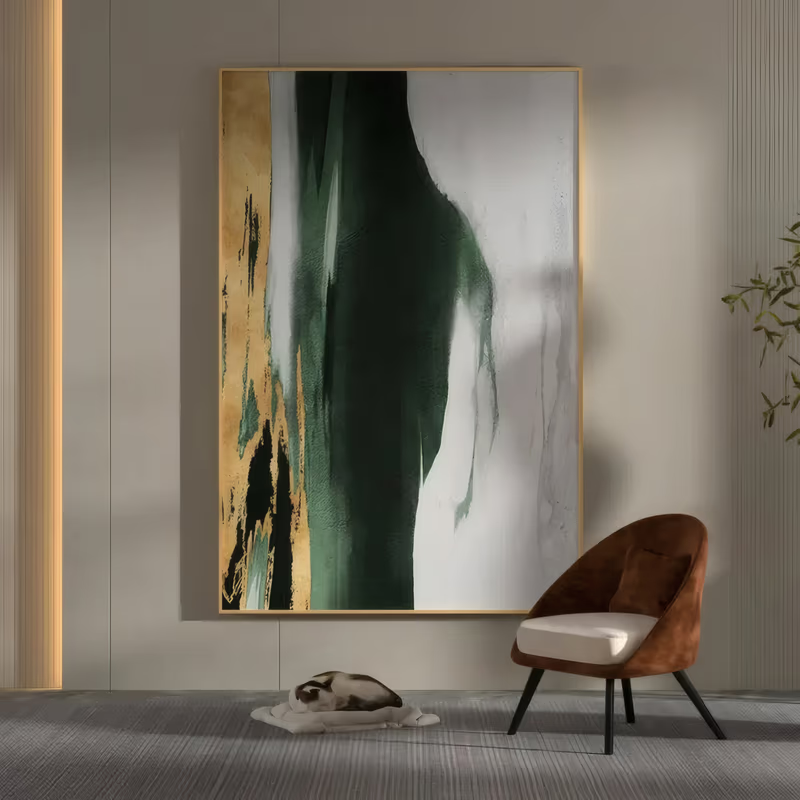
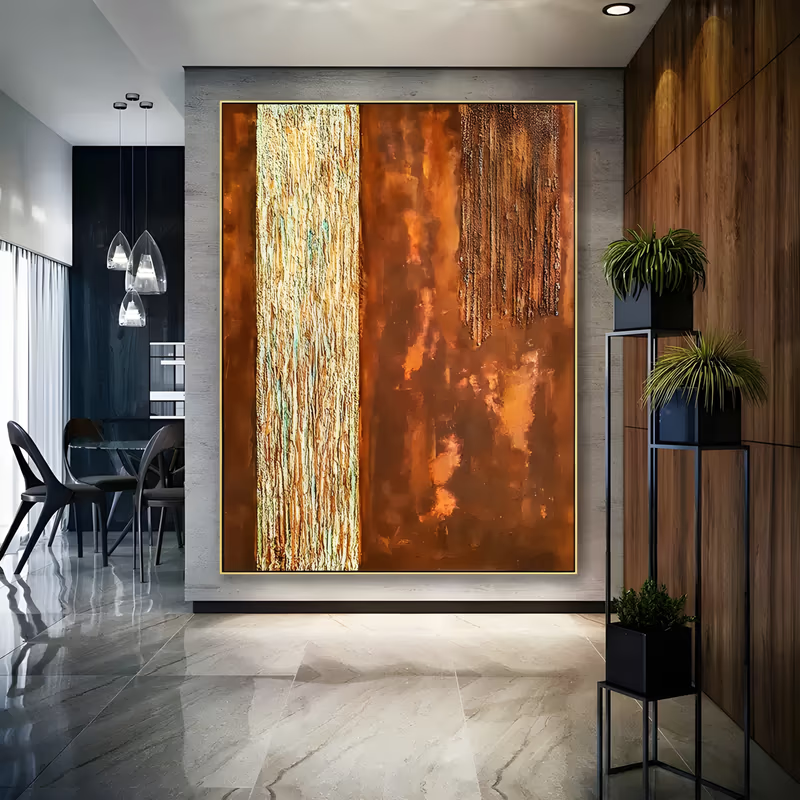
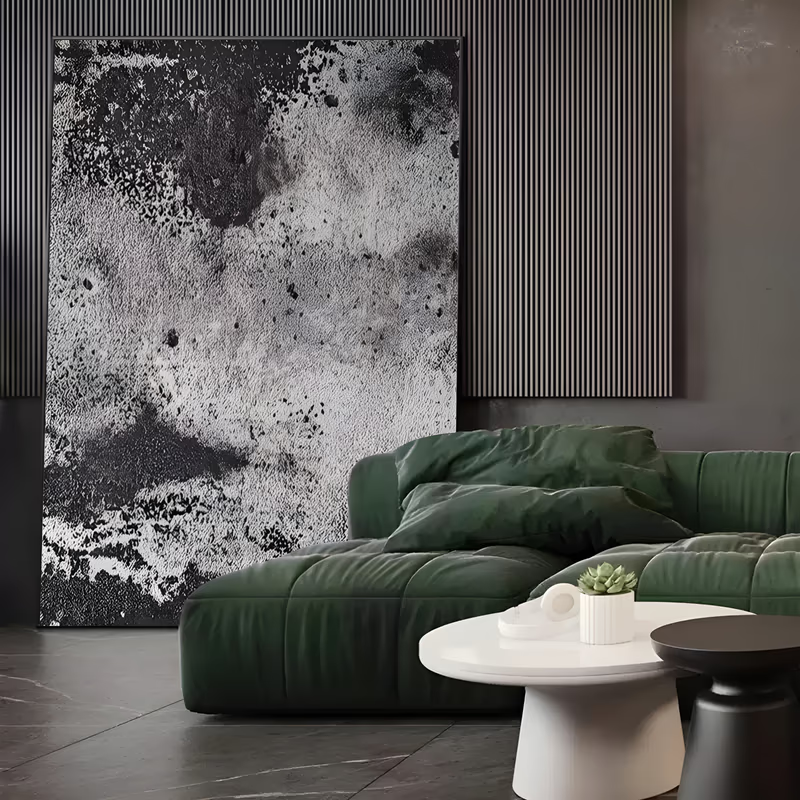
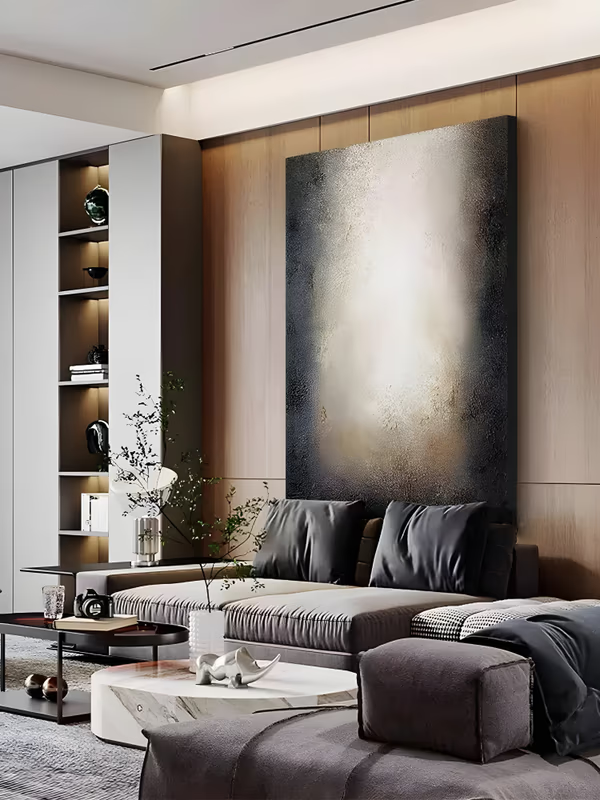
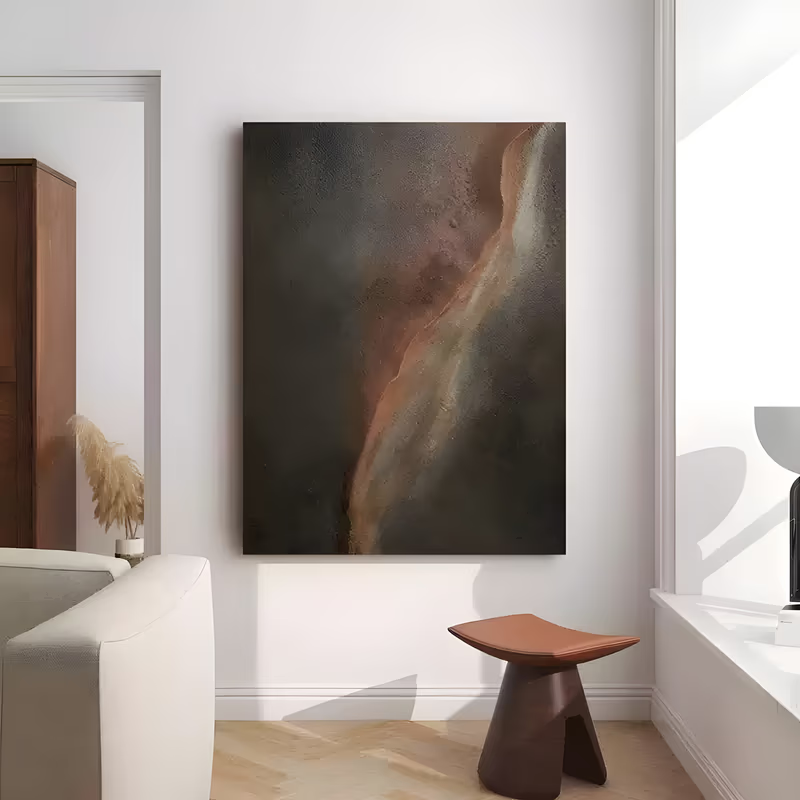
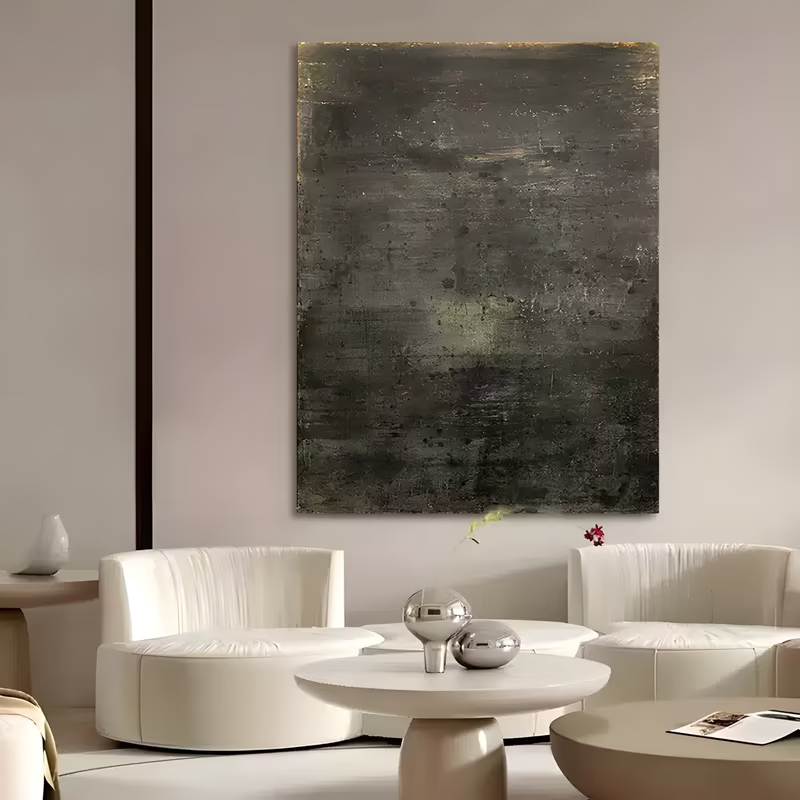
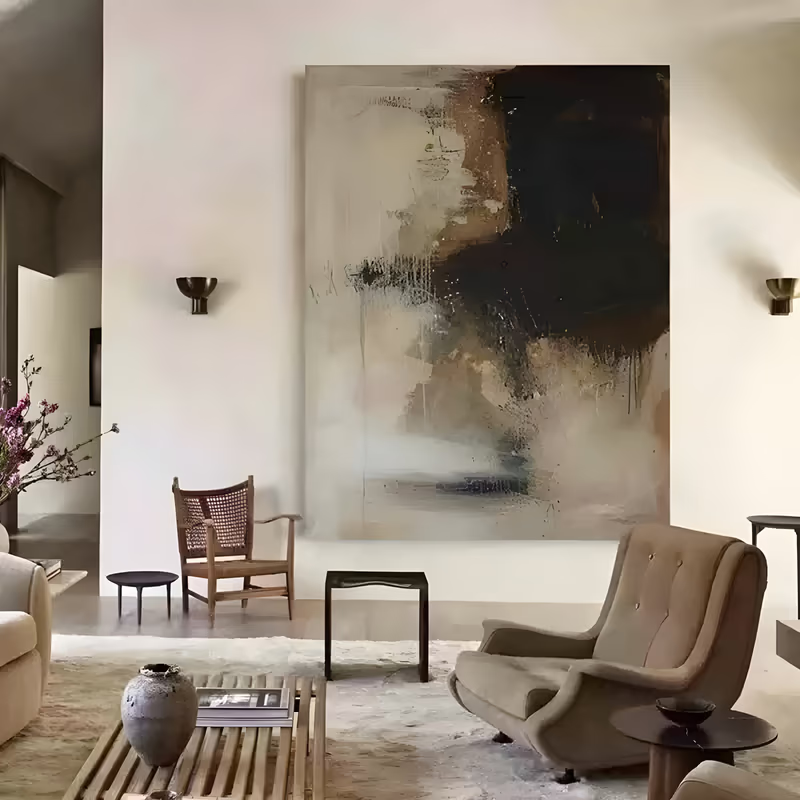
Choose the wall colour deliberately. A dark wall around a dark painting makes its light passages glow, and the canvas seems lit from within. A light wall turns the same painting into a window onto night, which is more striking still but reads heavier. If the room is small, choose a piece with larger light areas.
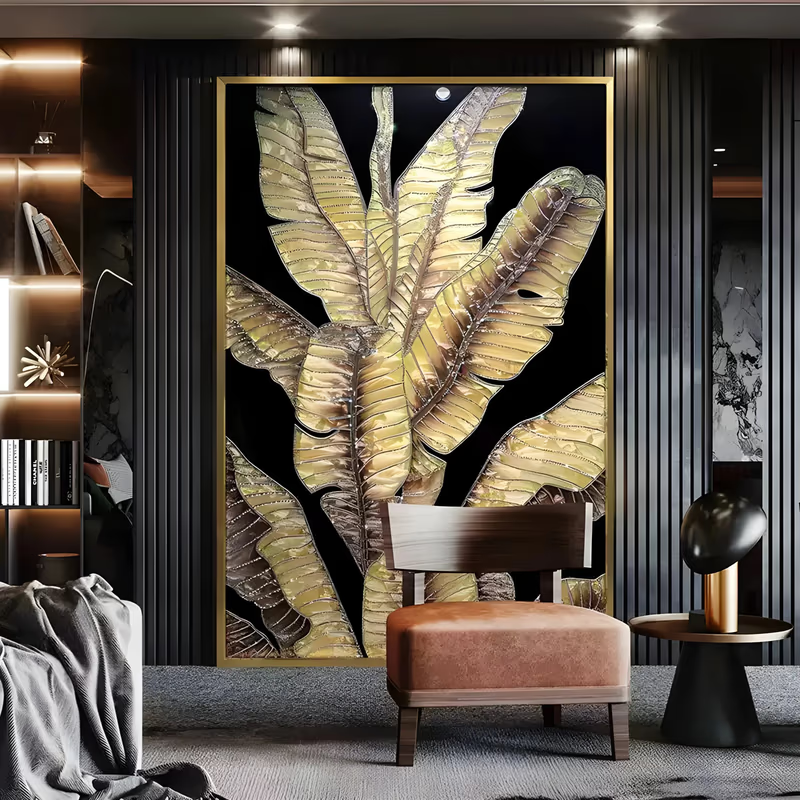
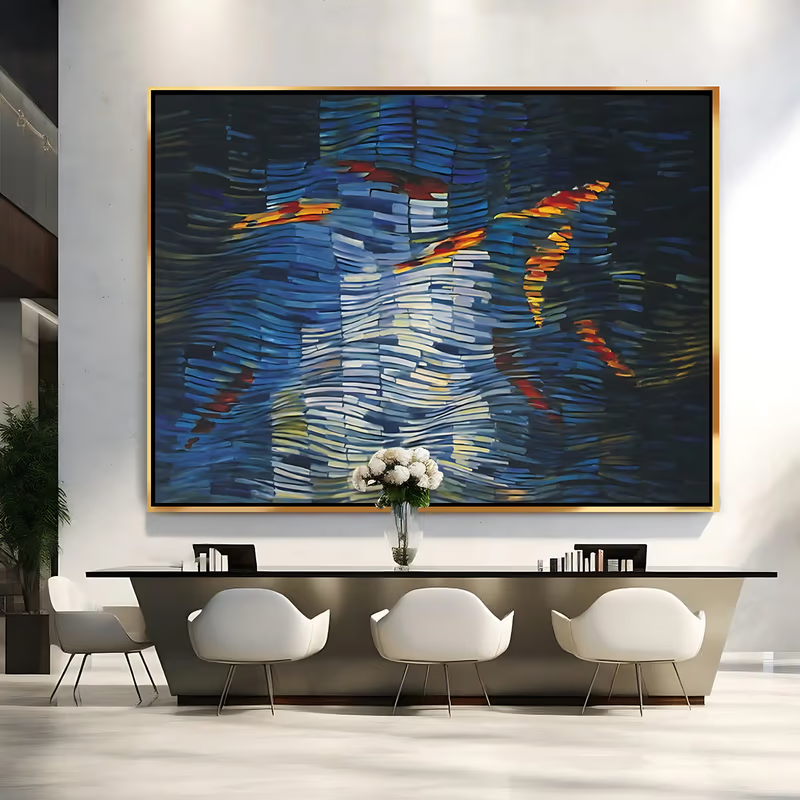
Frame for the stage. A black float frame lets a dark canvas melt into a dark wall; a gold frame echoes gold leaf and warm highlights and suits classic or palatial rooms; a silver frame suits cool storm and night palettes. Stretched without a frame, a dramatic piece looks most contemporary.
How big should dramatic wall art be, and how is it planned for a hotel or bar?
Dramatic wall art should be scaled to the sightline from which it is first seen, often larger than usual, and in hospitality it is planned as a few key pieces rather than many.
In a stairwell or double-height hall, judge size from the bottom of the stair or the front door, not from close up. On these walls a canvas of 150 cm (60 in) or more on its long side is common, and a tall vertical piece suits the rise of a stair. Over a dining table, a horizontal canvas about two-thirds of the table's length echoes the table's shape. Behind a bar, a panoramic piece running most of the back wall works better than a single square. At home, keep the centre at roughly 145–150 cm (57–59 in) from the floor; in tall spaces, lift it to relate to the whole wall.
Hotels usually place dramatic work at arrival, the bar and the restaurant, and calmer work in rooms and corridors. A sample is approved first, then the rest, each painting checked from progress photos. Allow about 10 days to paint each piece and 5–7 days to ship it by DHL, FedEx or UPS express, and plan against the opening date. Volume pricing begins at 10 pieces. See boutique hotels and oversized and custom sizes.
How is a dramatic painting made to order and approved?
You choose the work, the size and the balance of light and dark, and the dramatic painting is built up in stages that you approve from photographs before it is finished.
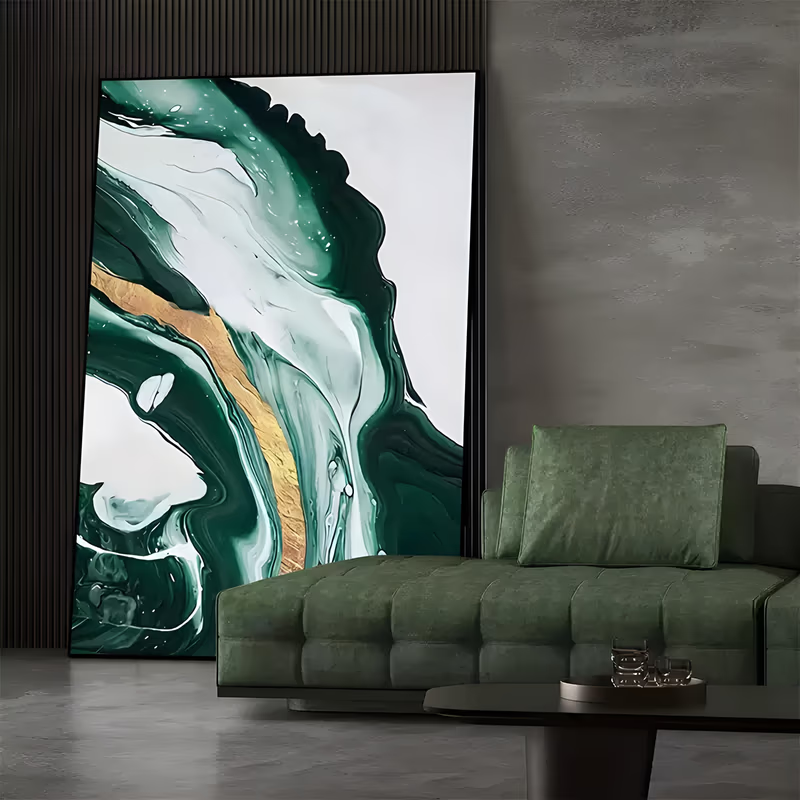
Darkness is the hardest thing to judge on a screen, so it helps to tell us how the painting will be lit and how big the room is. The ground can be made deeper or a touch lighter, the highlight warmer or cooler, and gold or silver accents added or left out. The palette can follow a paint code or fabric, and any catalogue work can be painted in another colourway, such as a navy storm repainted in emerald and black. A new format means the composition is redrawn, so the key light still falls in the right place.
Progress photos or video come at each stage, painting only moves on once you approve, and a final photograph is approved before shipping. The canvas ships rolled, stretched ready to hang, or framed in gold, silver, black, white or wood. Sculpted plaster and deep relief travel stretched or framed, and are rolled only if you choose a thinner texture for transport. Shipping is by DHL, FedEx or UPS express on the route iHomeArt judges best for your address, and its cost is confirmed before the canvas leaves. Request a quote or read about commissions from your own reference.