

Cozy art guide · Updated
How to choose cozy wall art that warms a room
Key takeaways
- Cozy is warmth plus enclosure: warm colour temperature, mid-to-deep tones, real texture and subjects that draw you in make a painting feel snug.
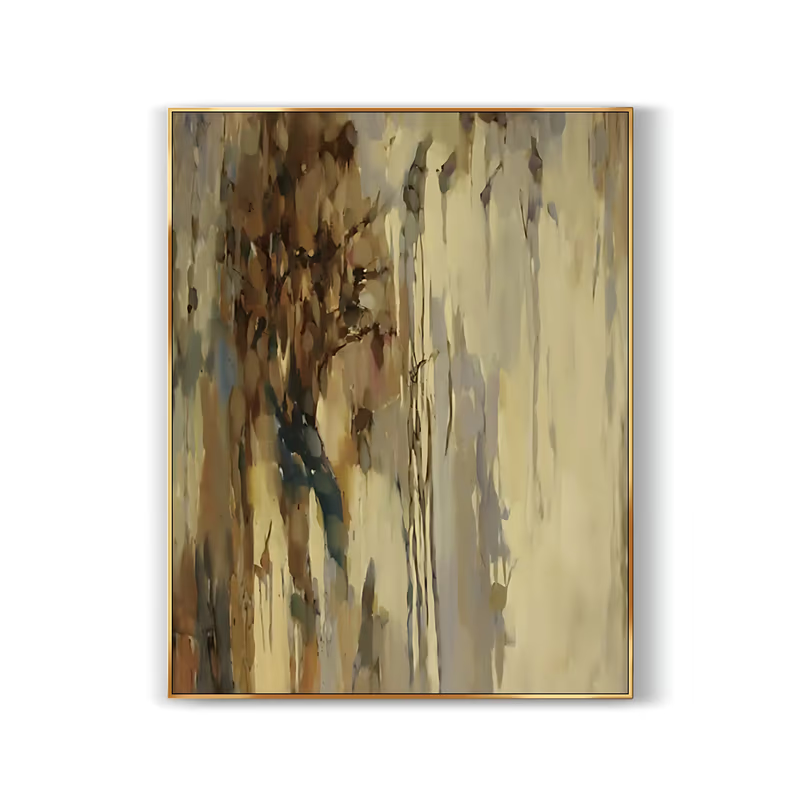
- Build on earth tones: amber, ochre, terracotta, olive and walnut are the core of a warm palette; one cool note of slate or teal keeps it from turning muddy.
- Light it like a lamp: warm 2700–3000K light deepens ambers and makes texture and gold leaf glow; check cool blues under the same bulbs.
- Use warmth to shrink big rooms: a large warm canvas, a darker wall or a tight group of pieces makes a cavernous lounge or lobby feel occupied.
What makes wall art feel cozy and warm?
Wall art feels cozy when it combines warm colour temperature, deeper tones, visible texture and a subject that draws you in rather than out.
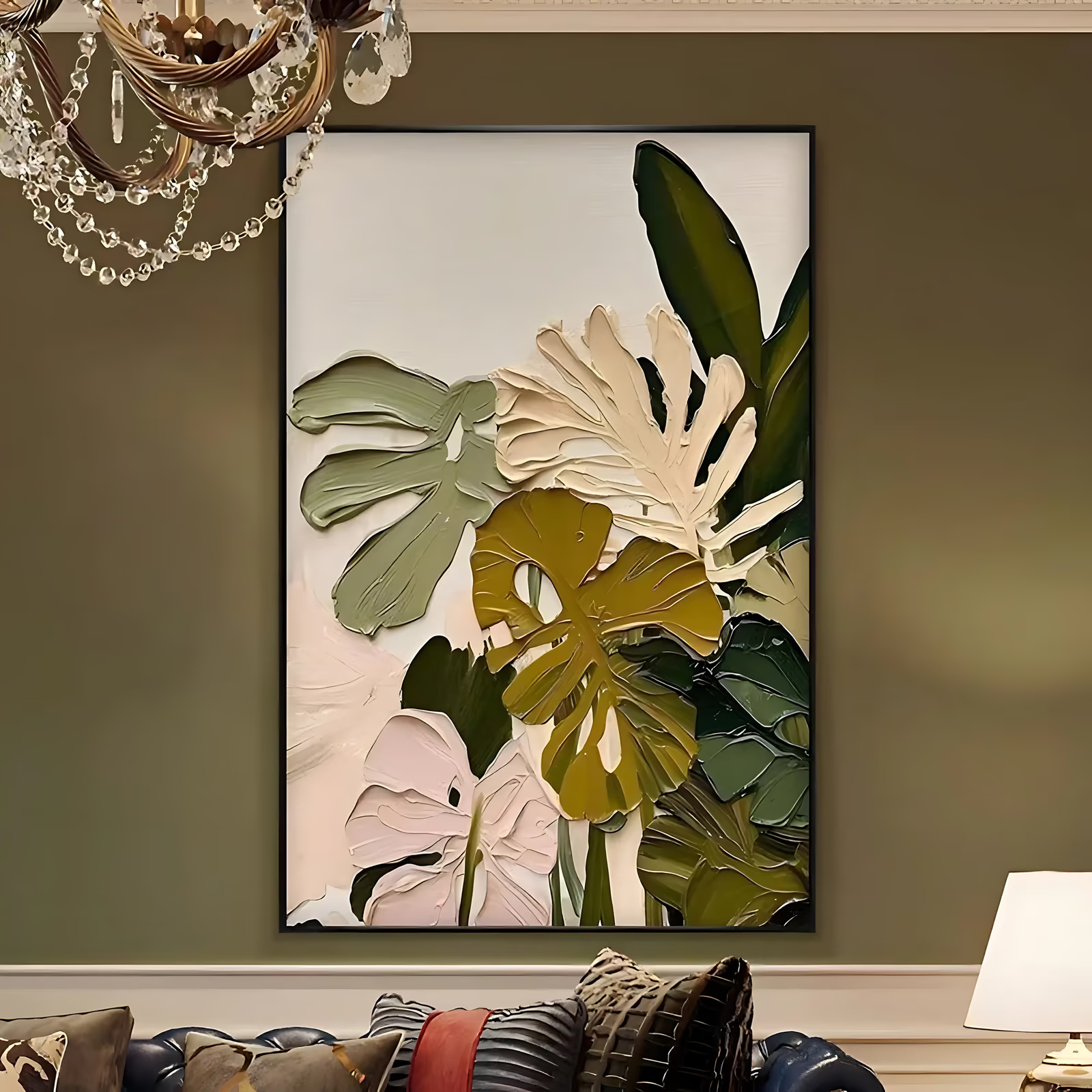
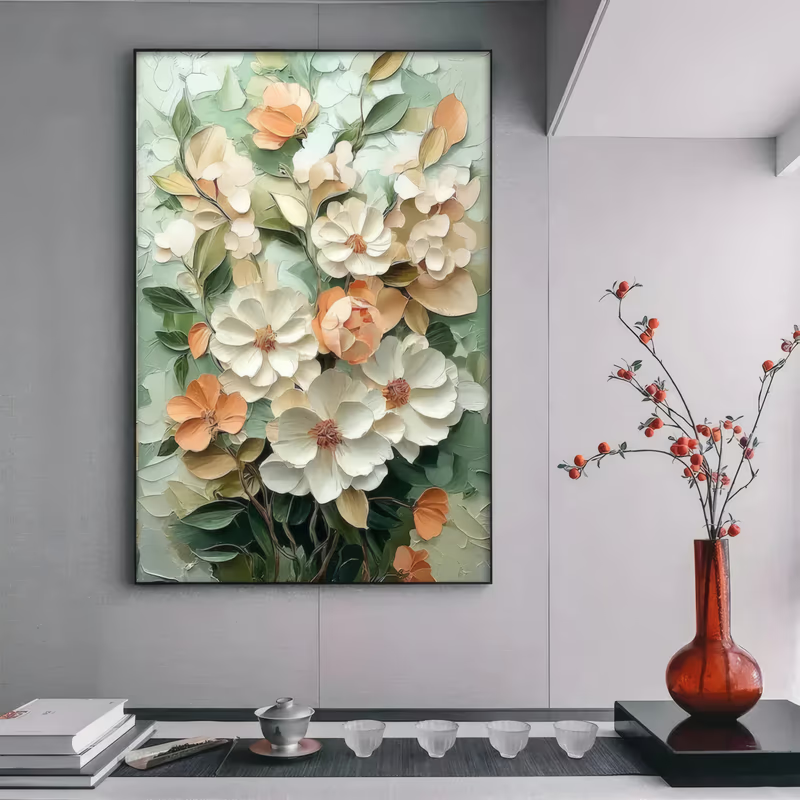
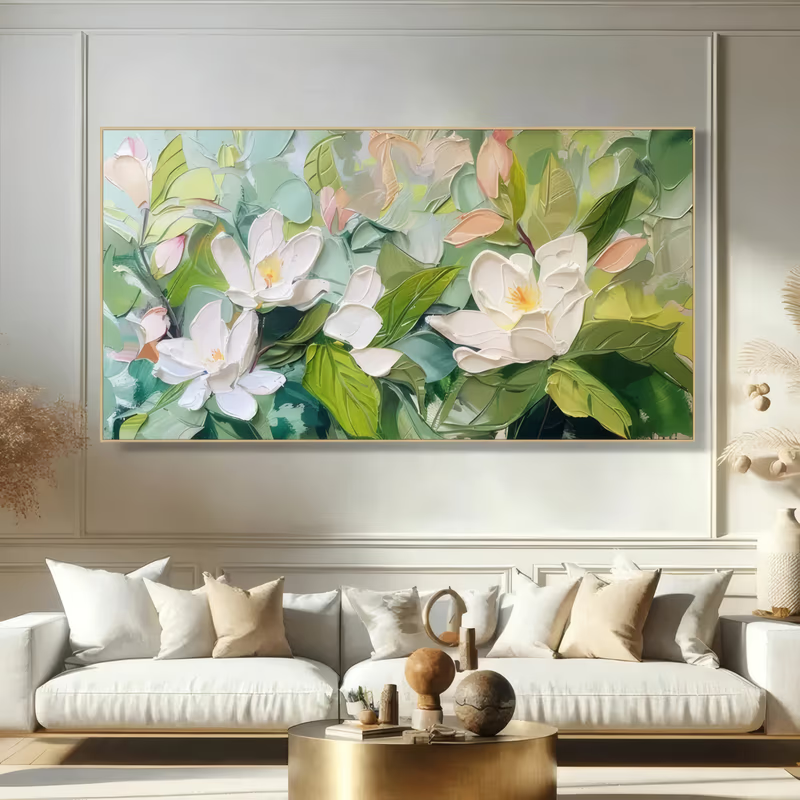
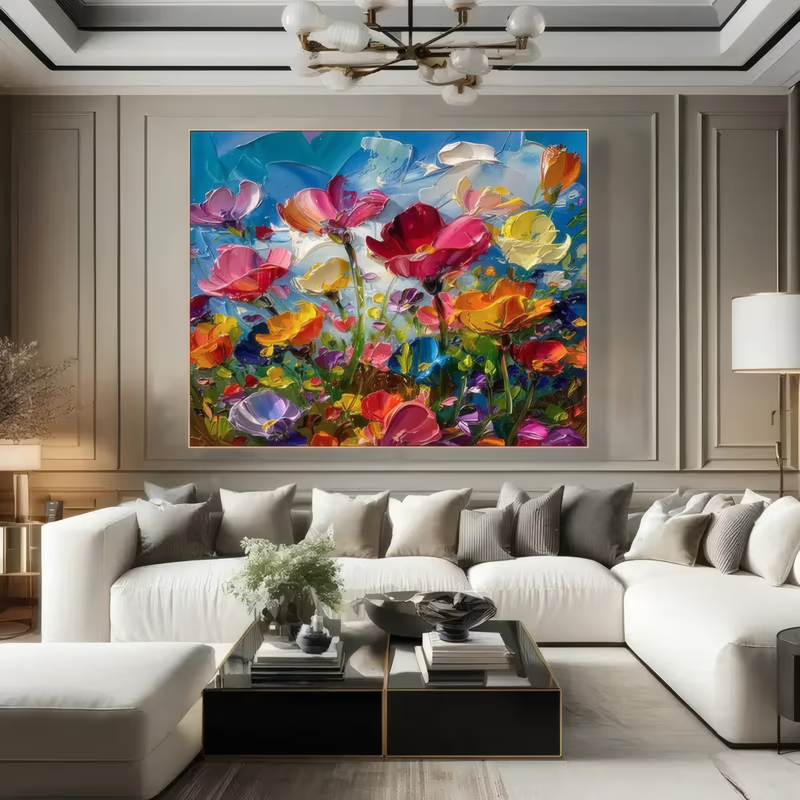
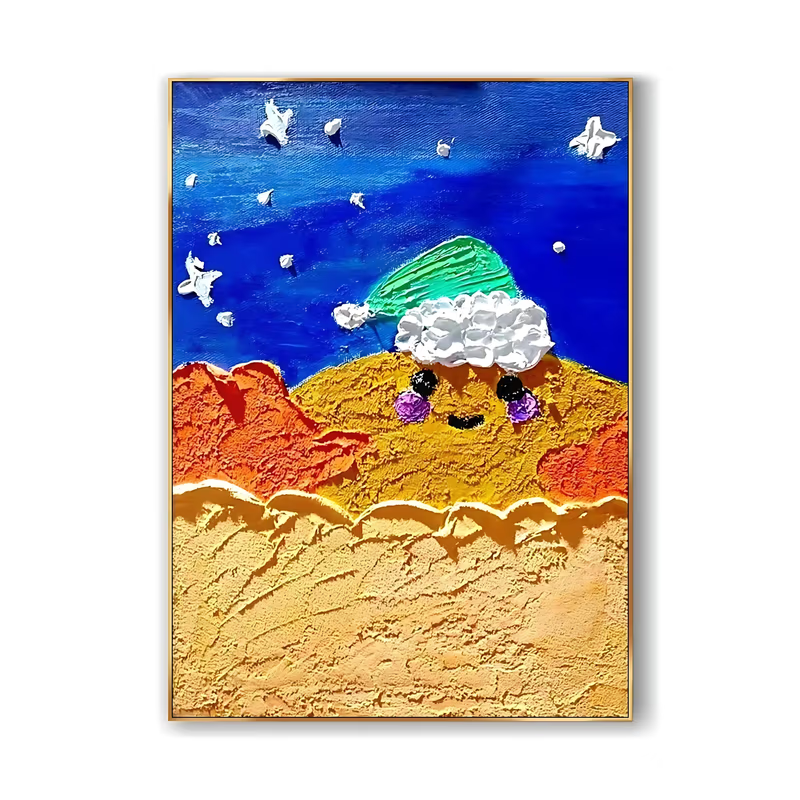
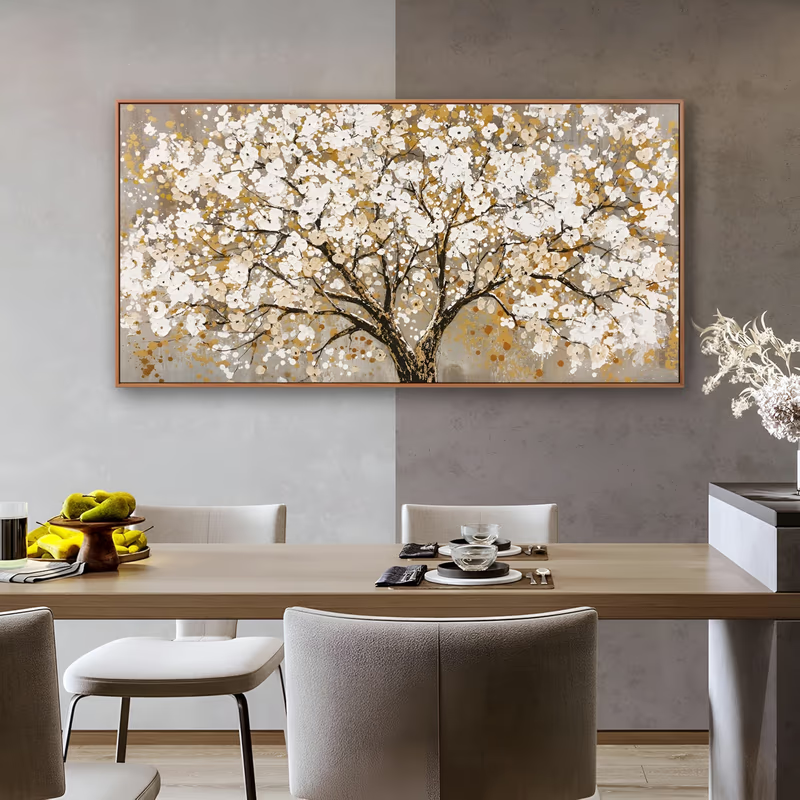
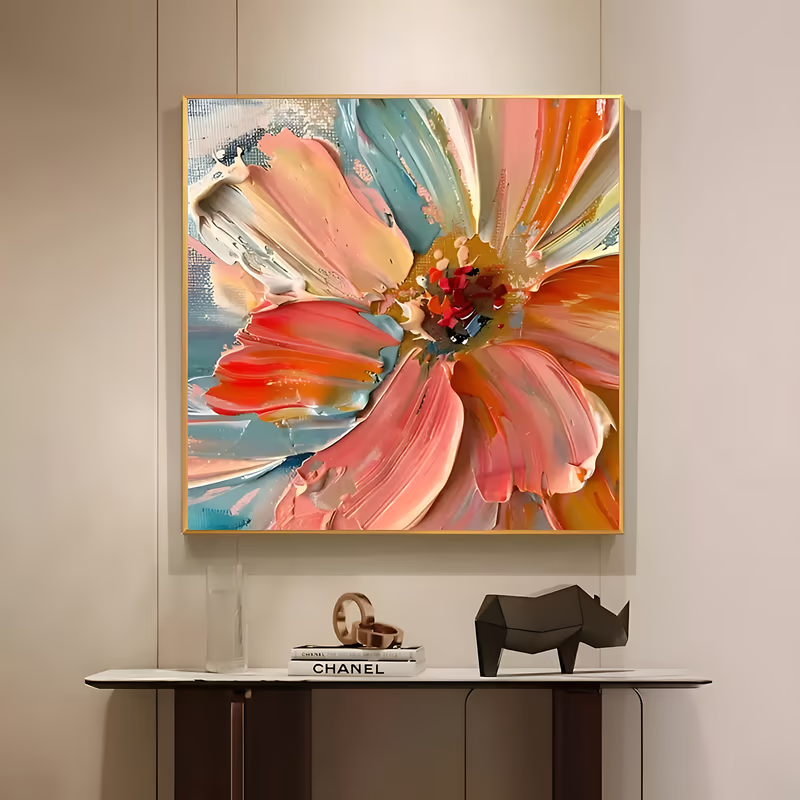
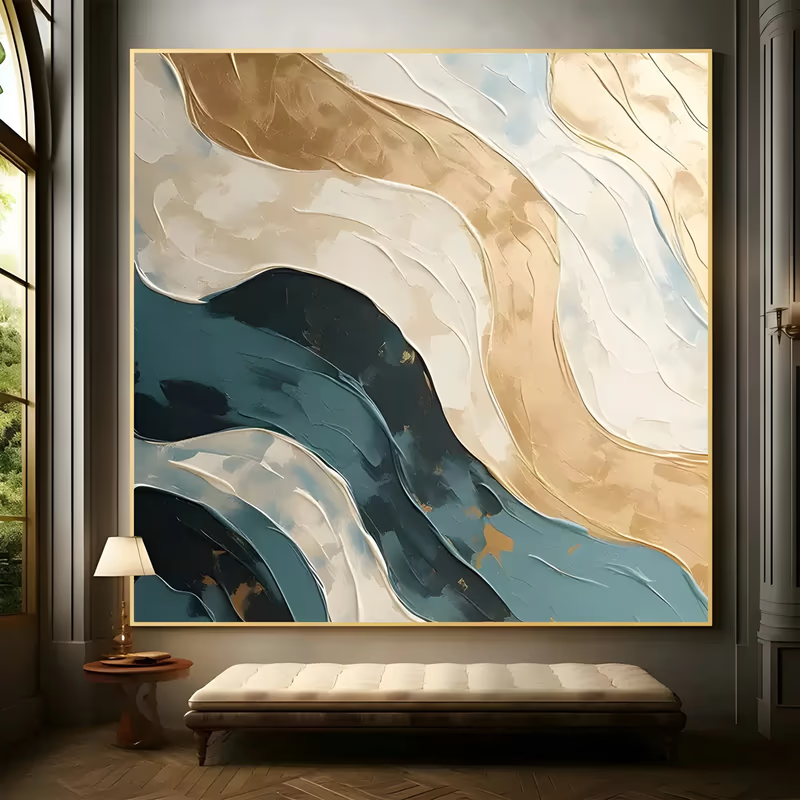
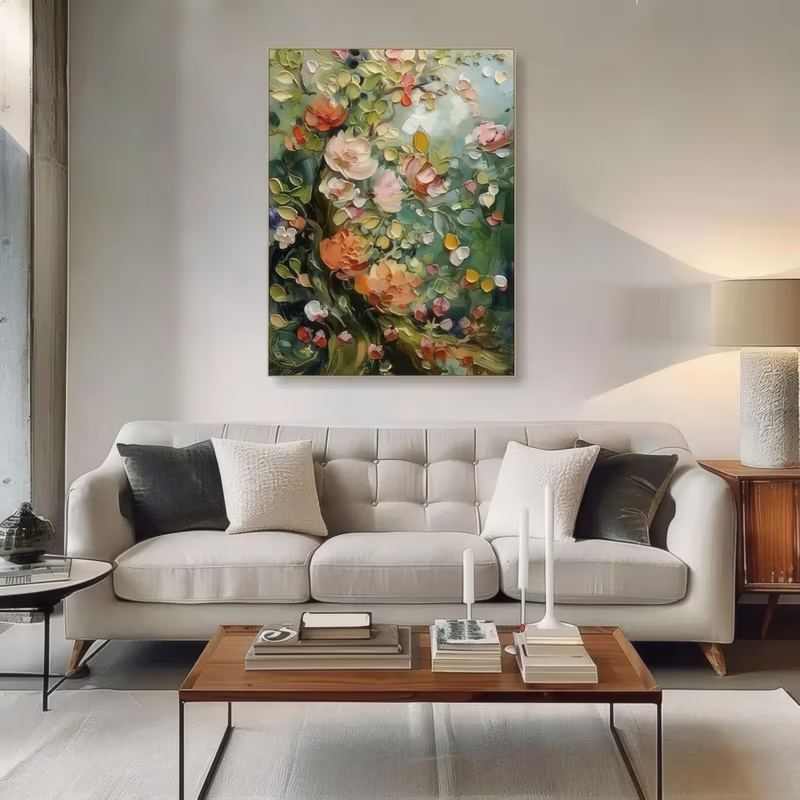
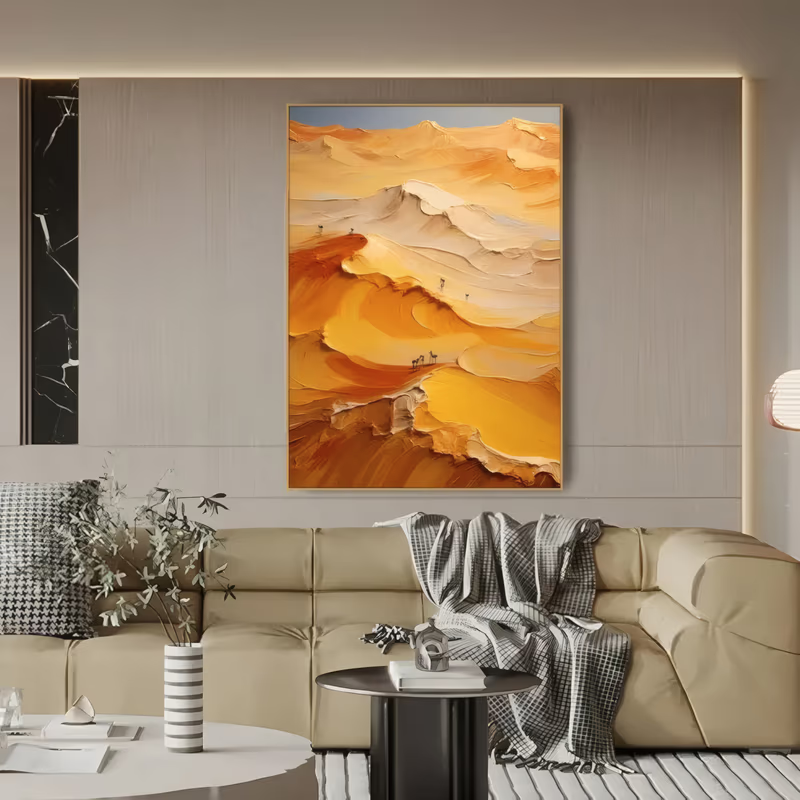
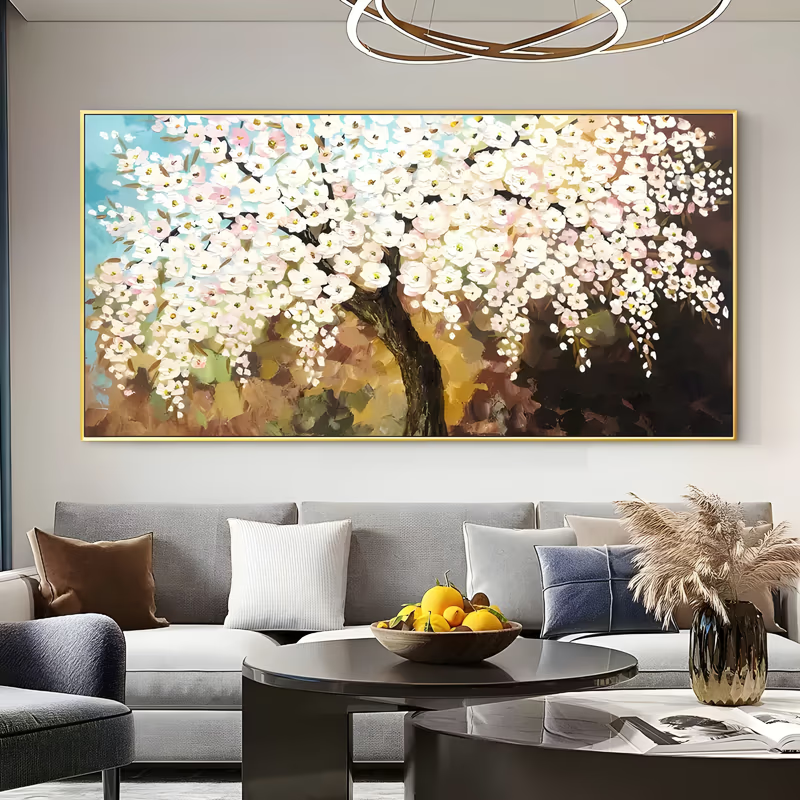
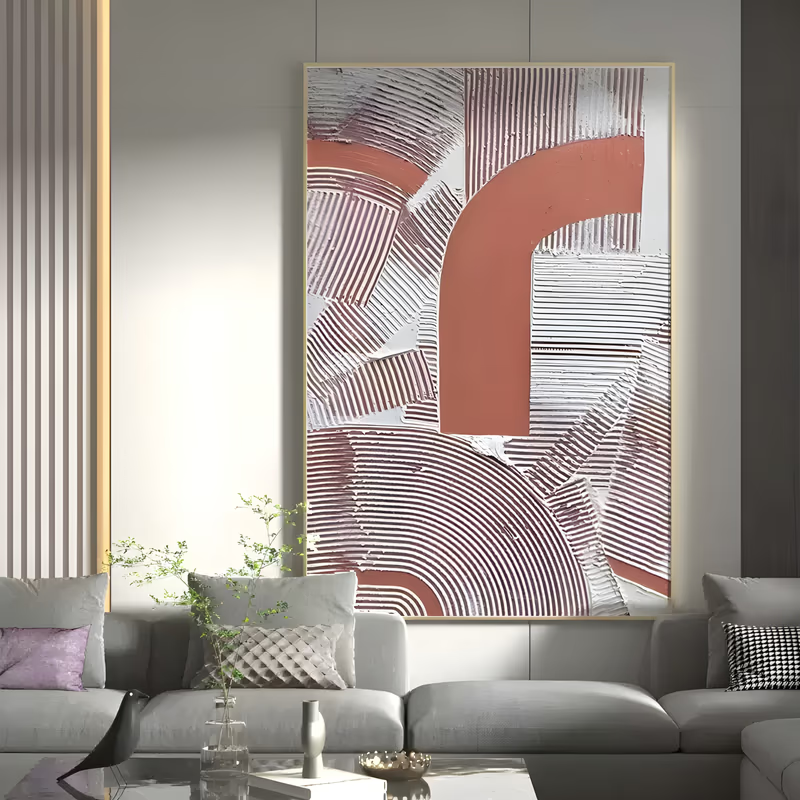
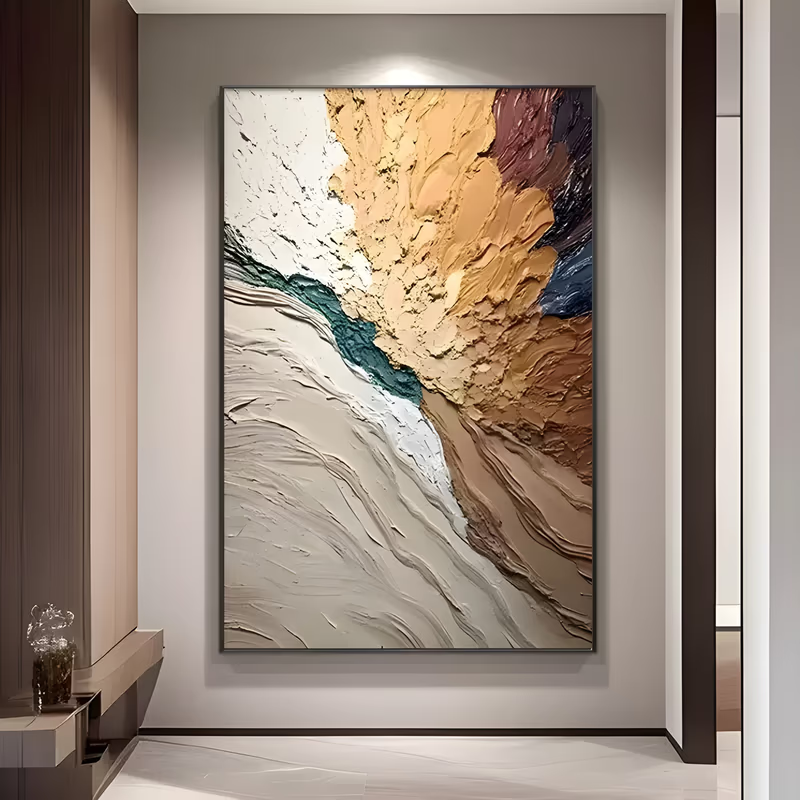
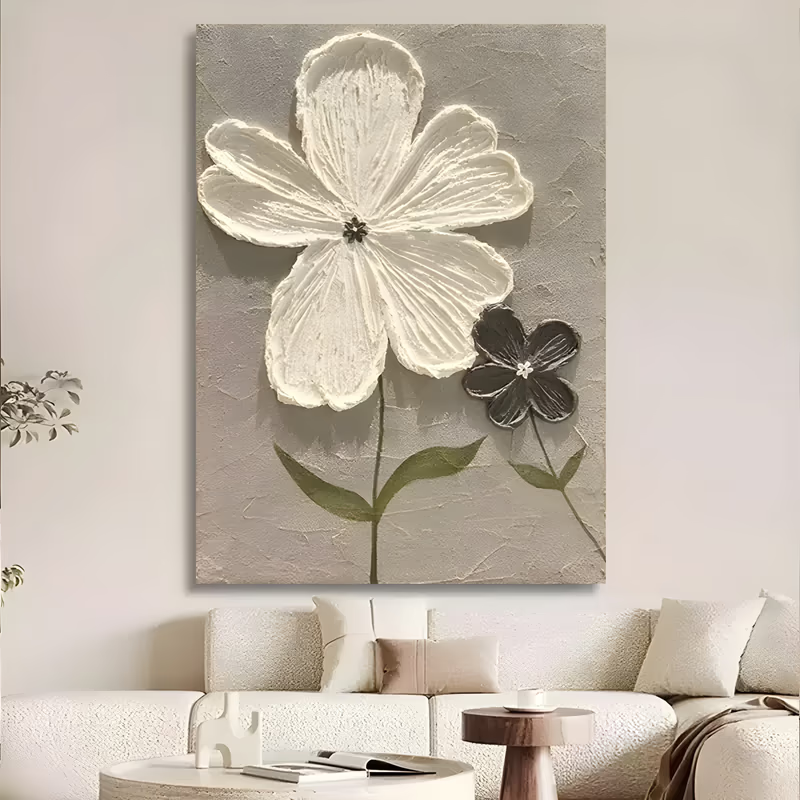
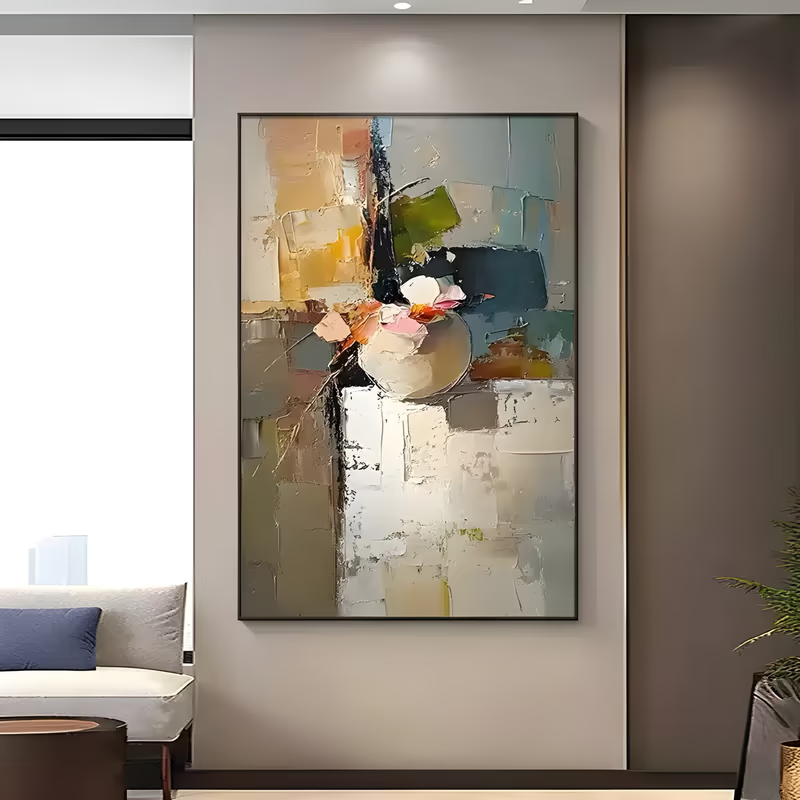
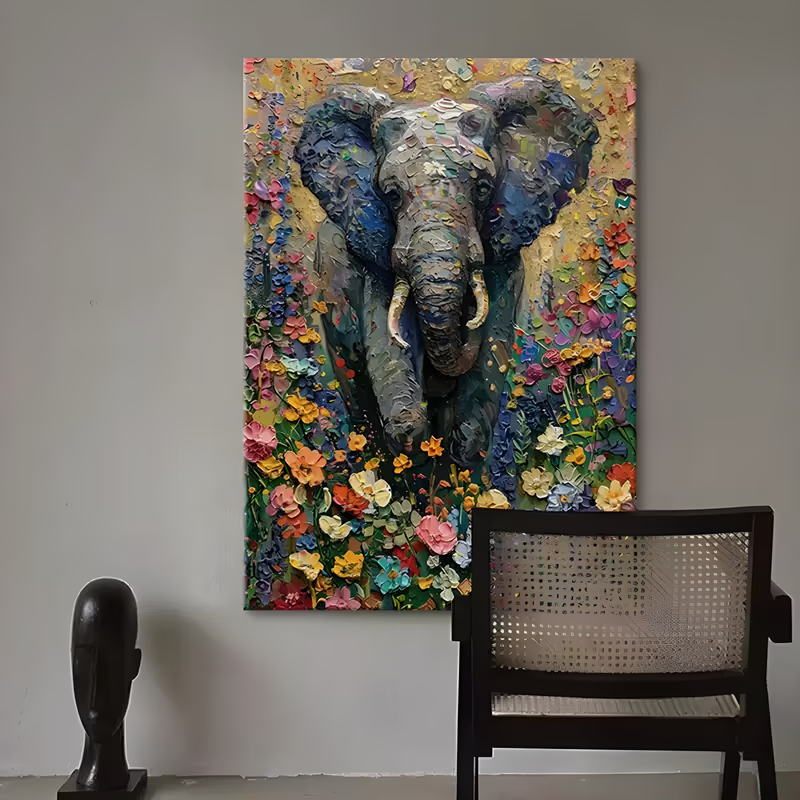
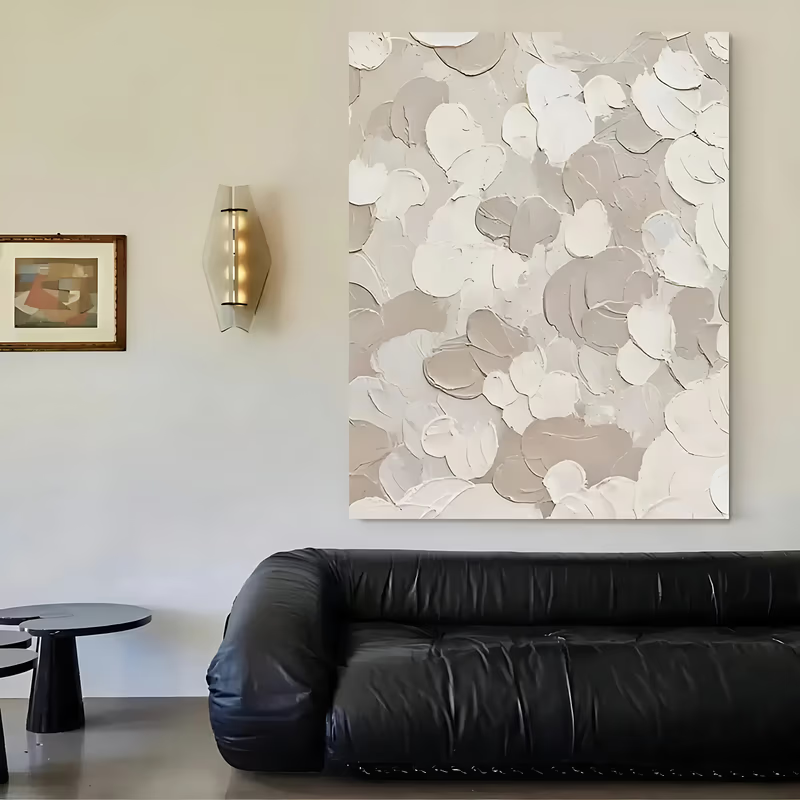
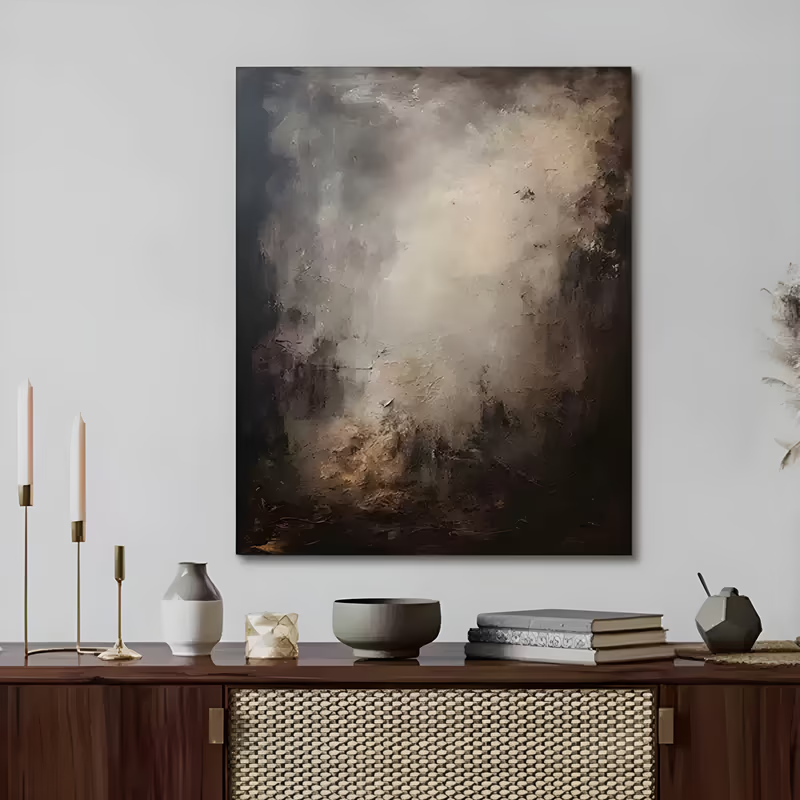
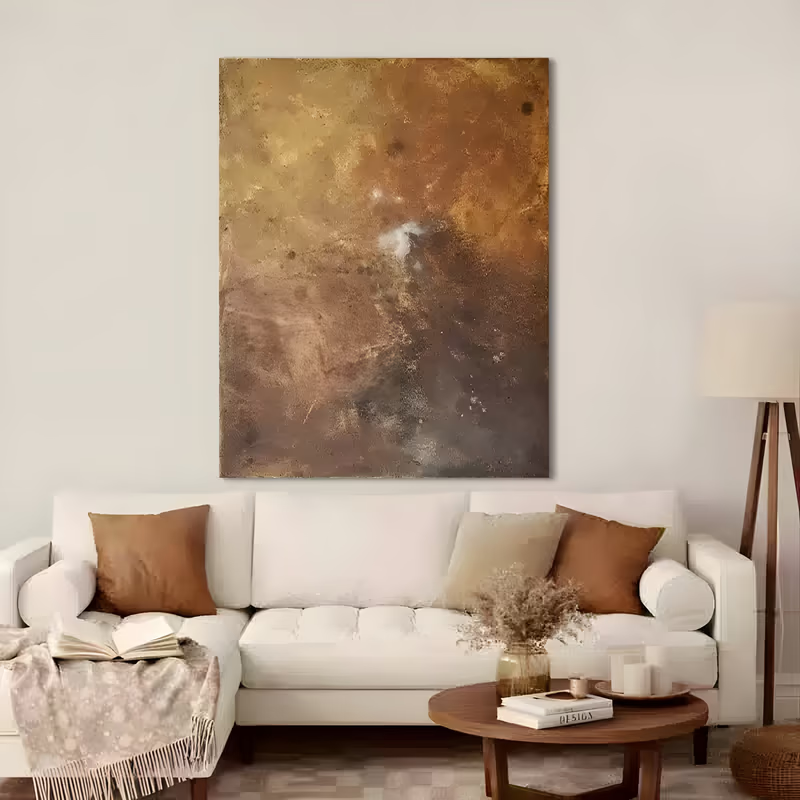
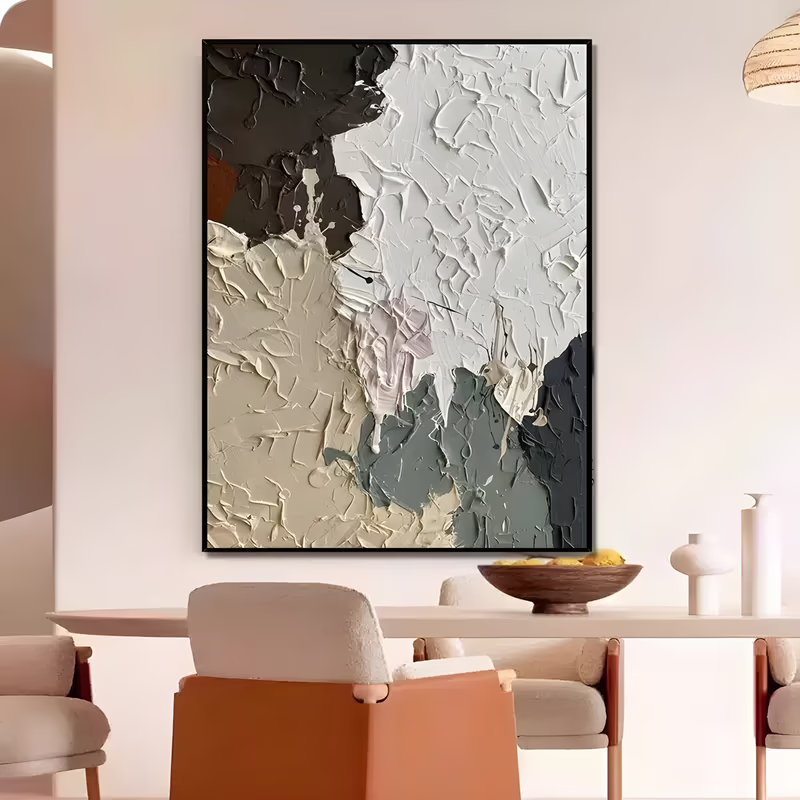
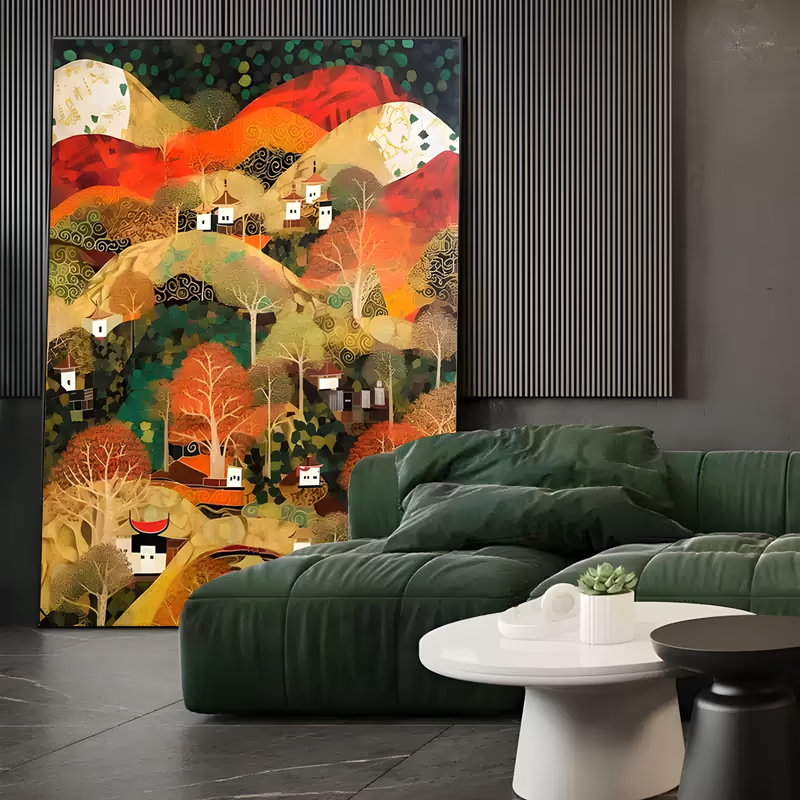
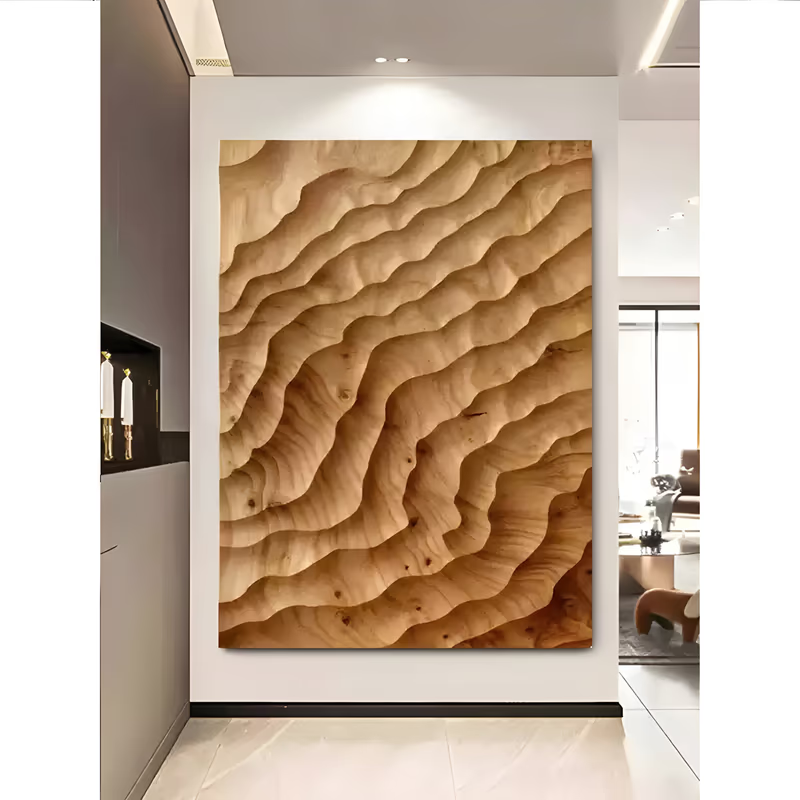
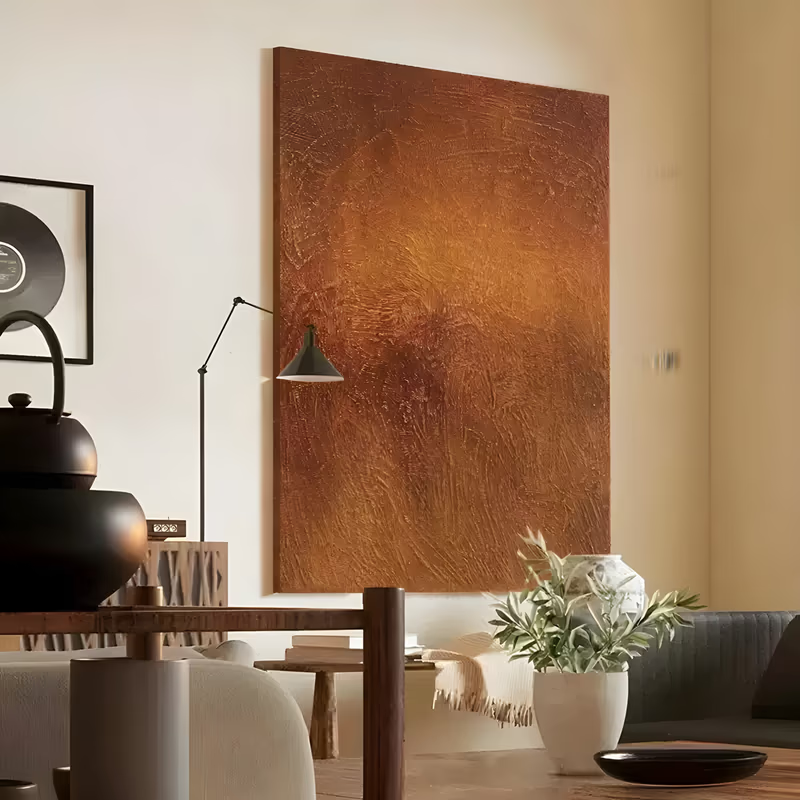
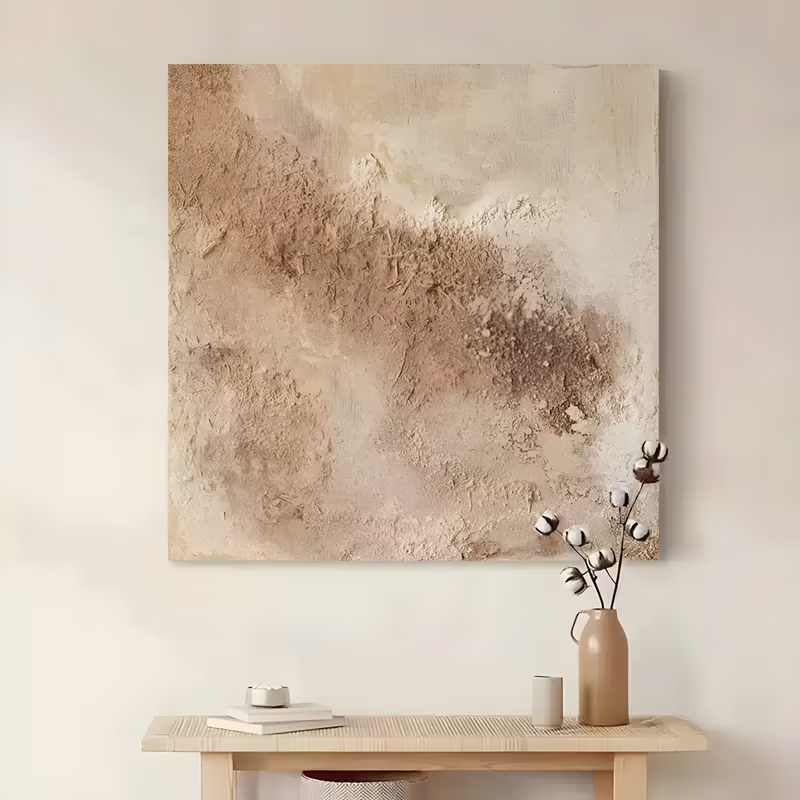
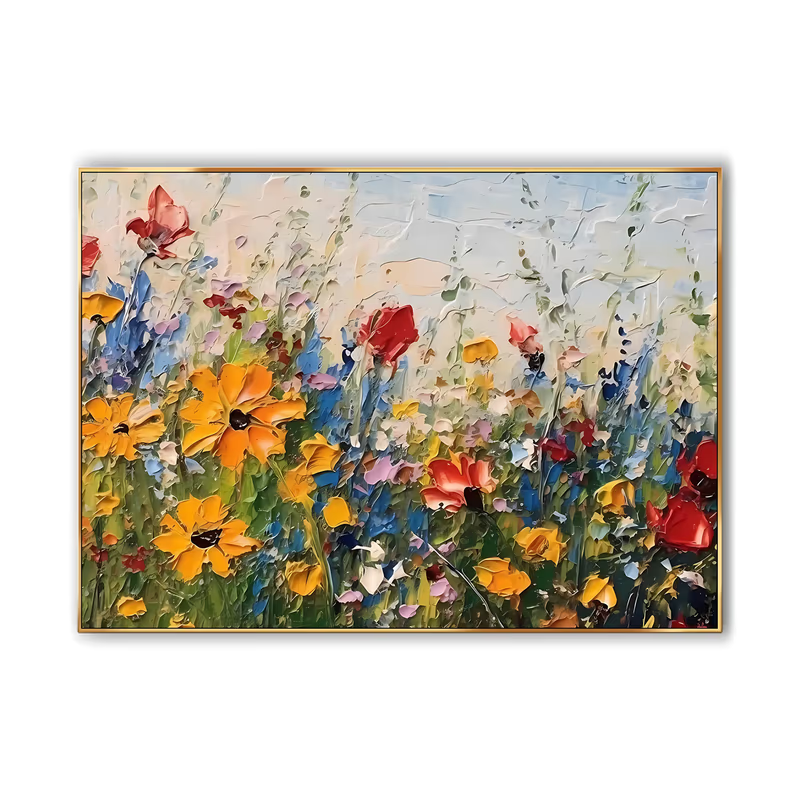
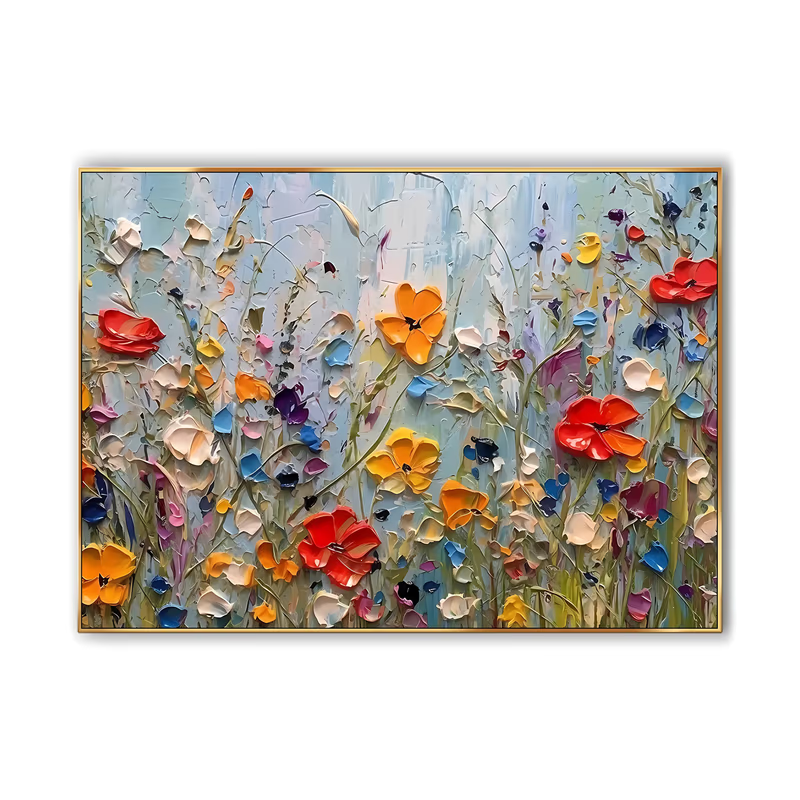
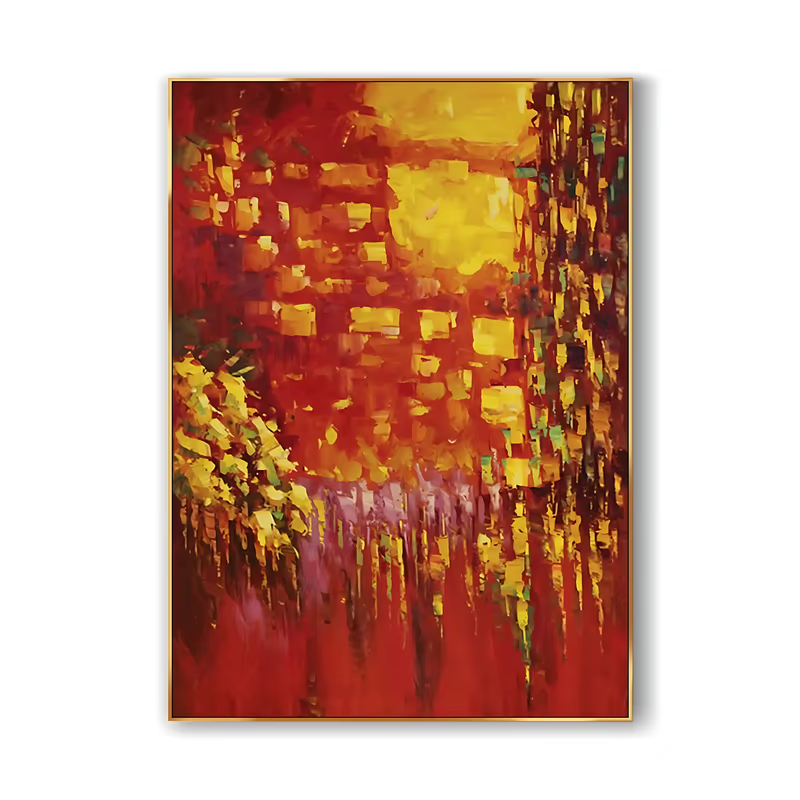
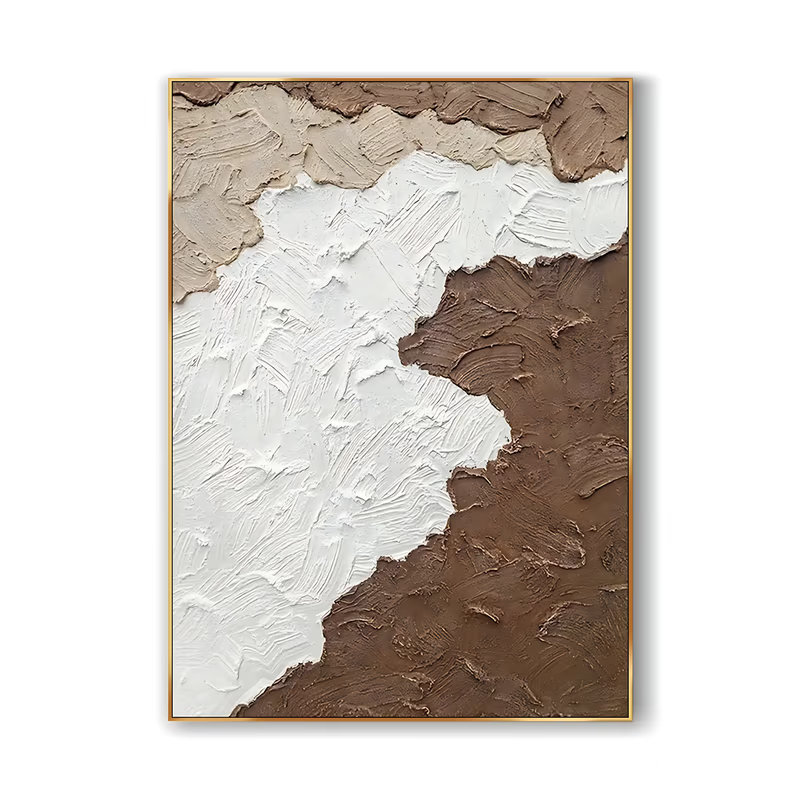
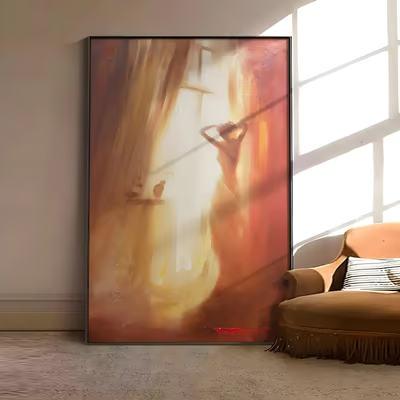
Calming and peaceful paintings work by opening space: cool colours recede, horizons pull the eye far away. Cozy art does the reverse. Warm colours advance, so the wall seems closer and the room more enclosed. Deeper, mid-value tones absorb light rather than reflect it, which makes a space feel sheltered in the evening. Thick knife strokes, combed plaster and rough brushwork invite touch, the same way wool and timber do.
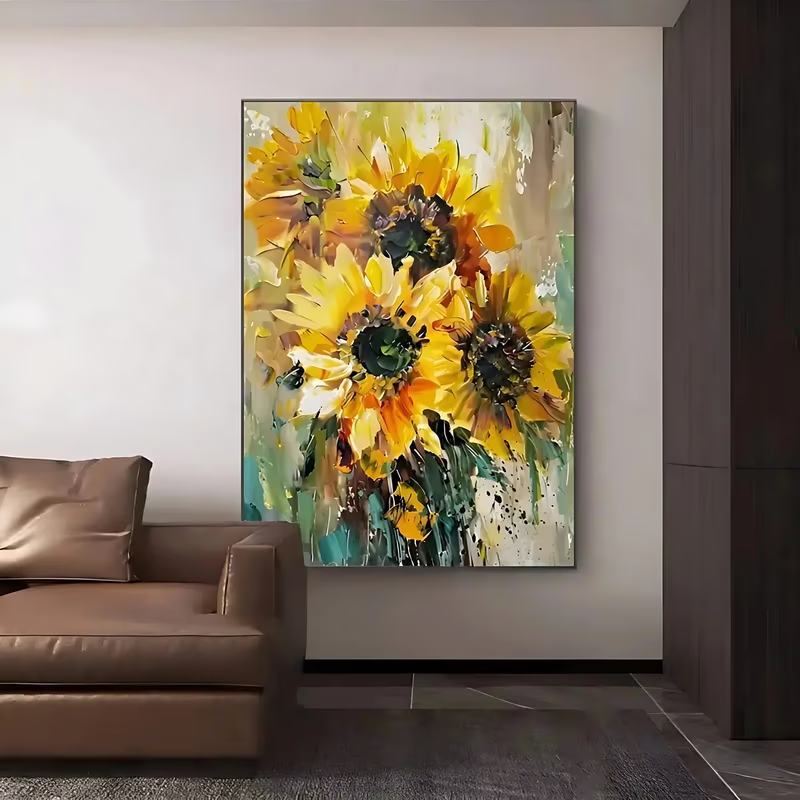
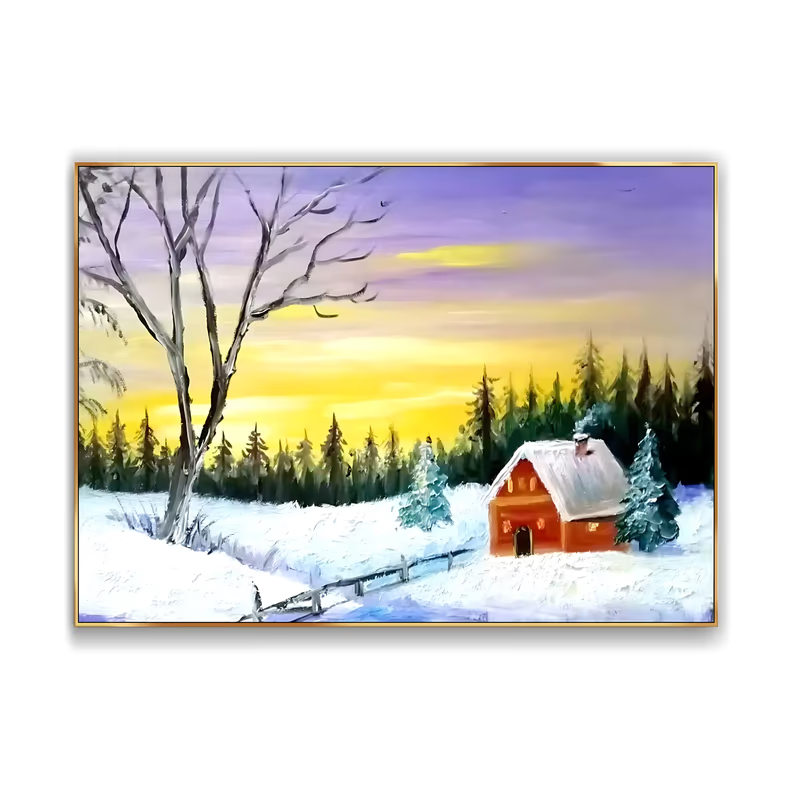
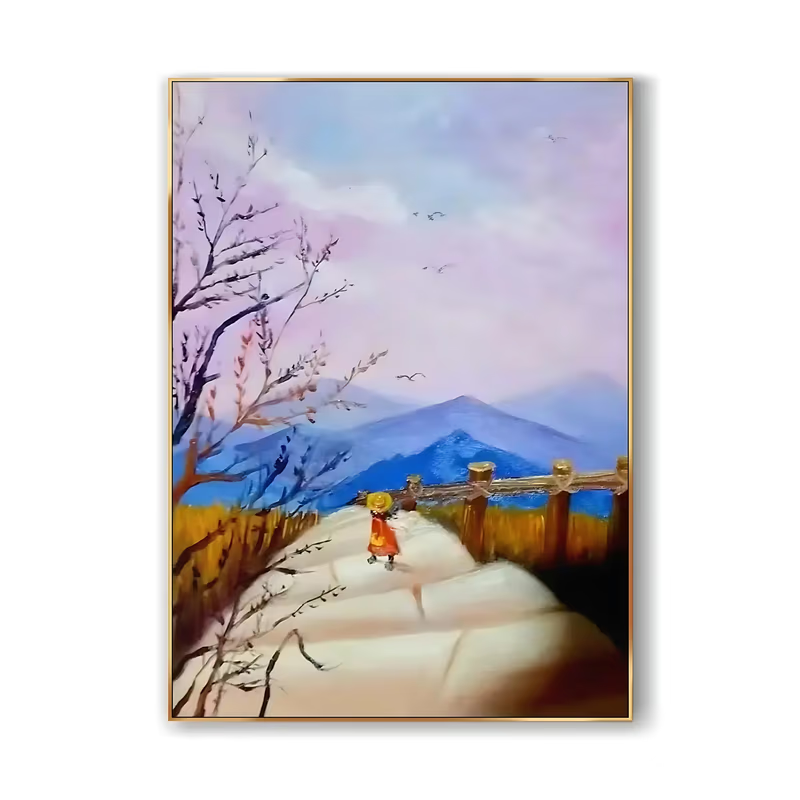
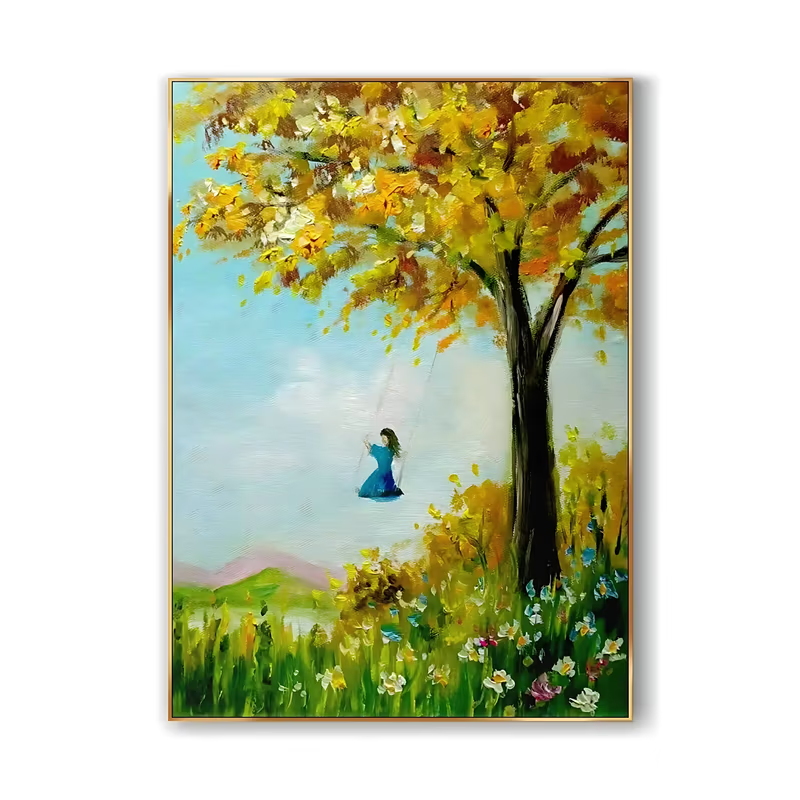
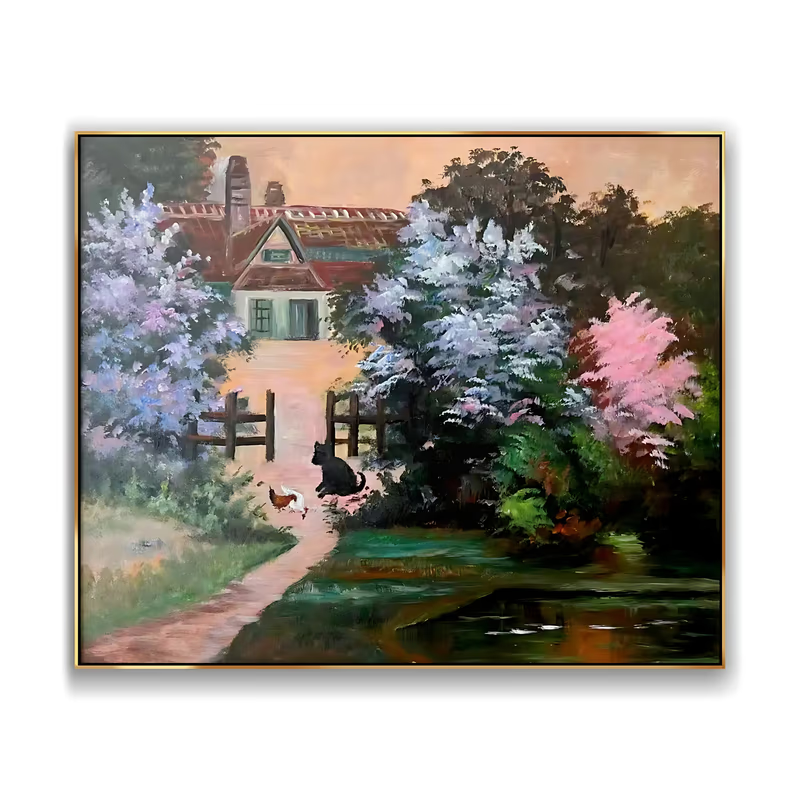
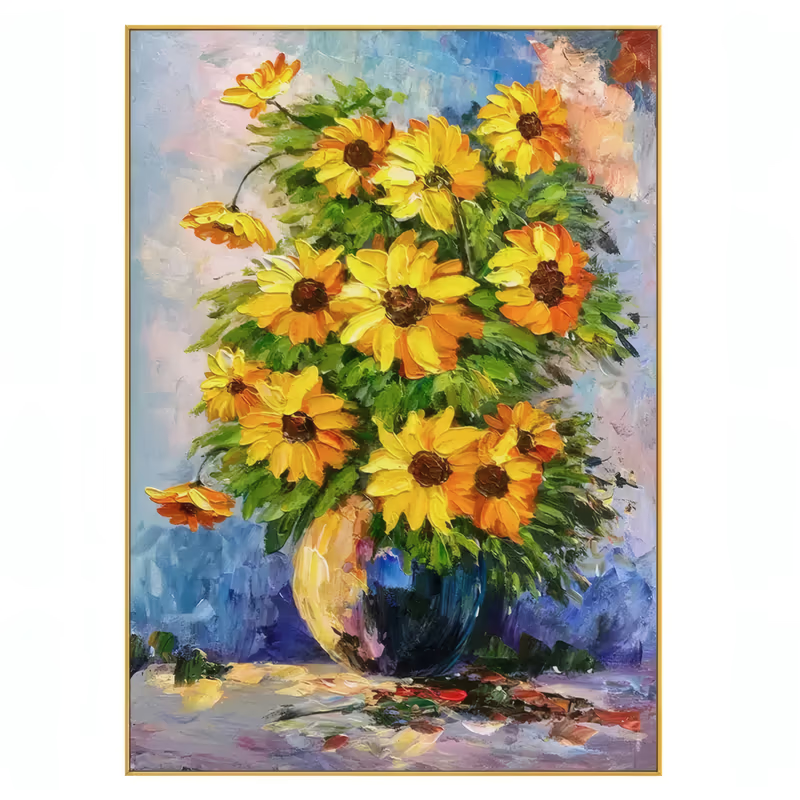
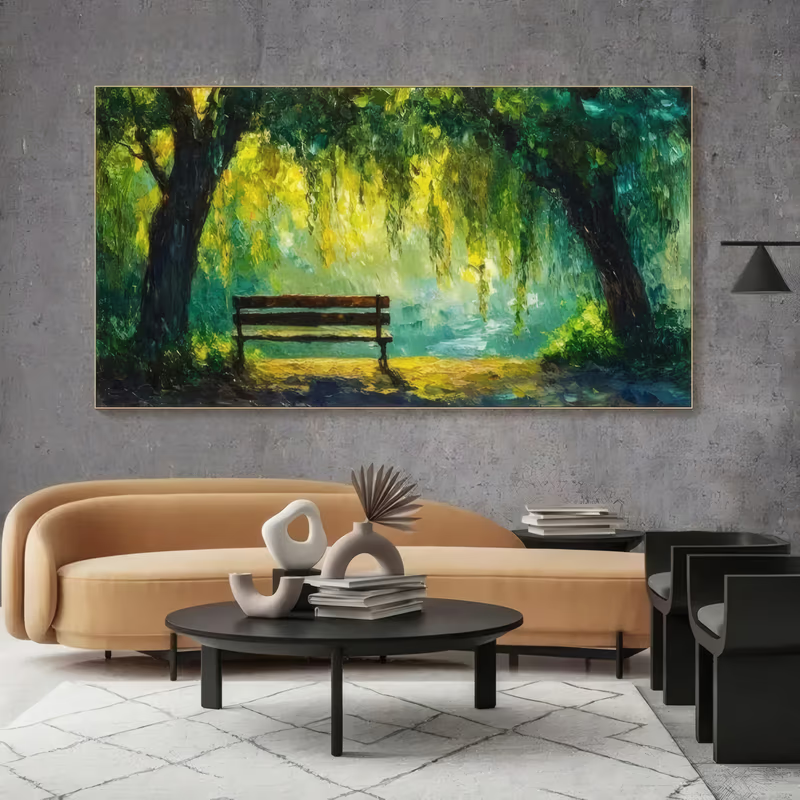
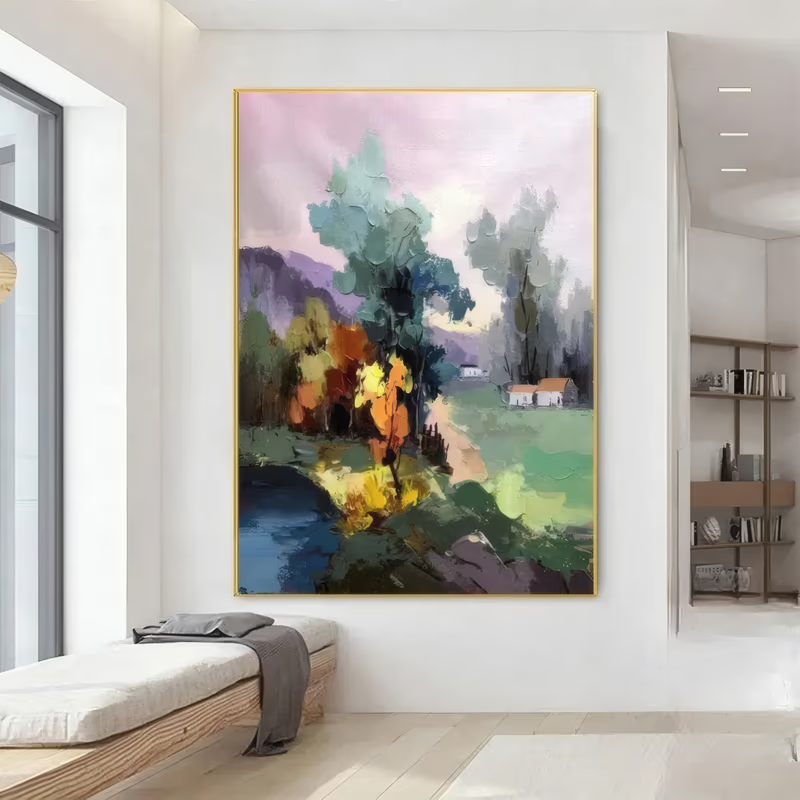
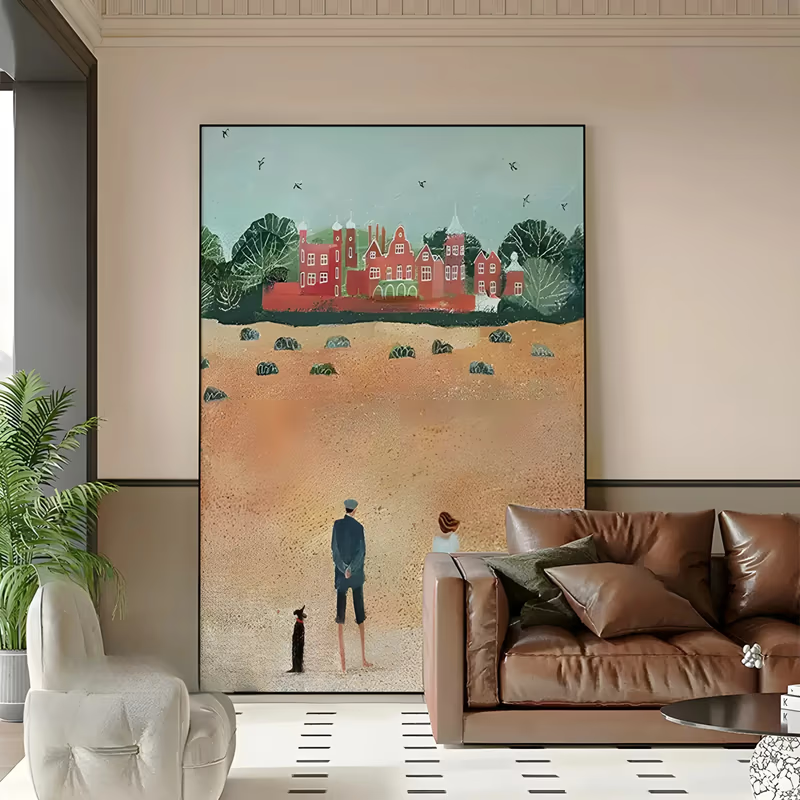
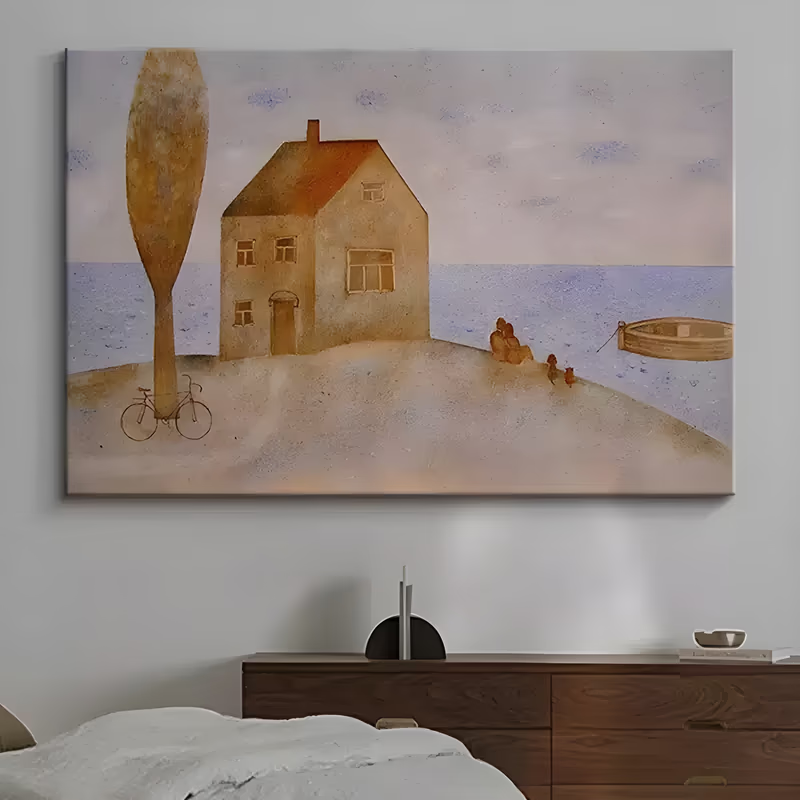
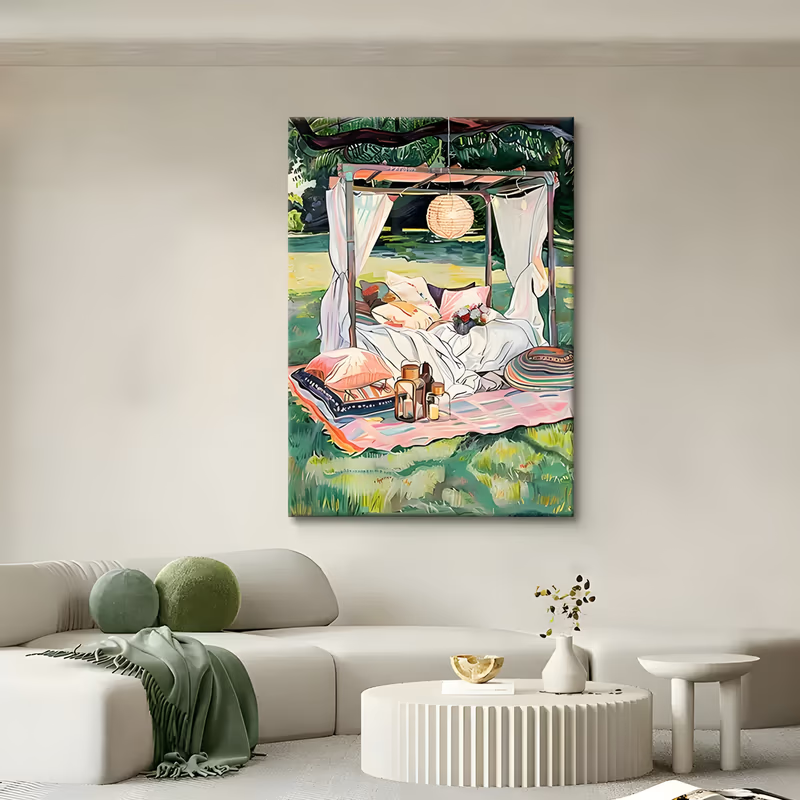
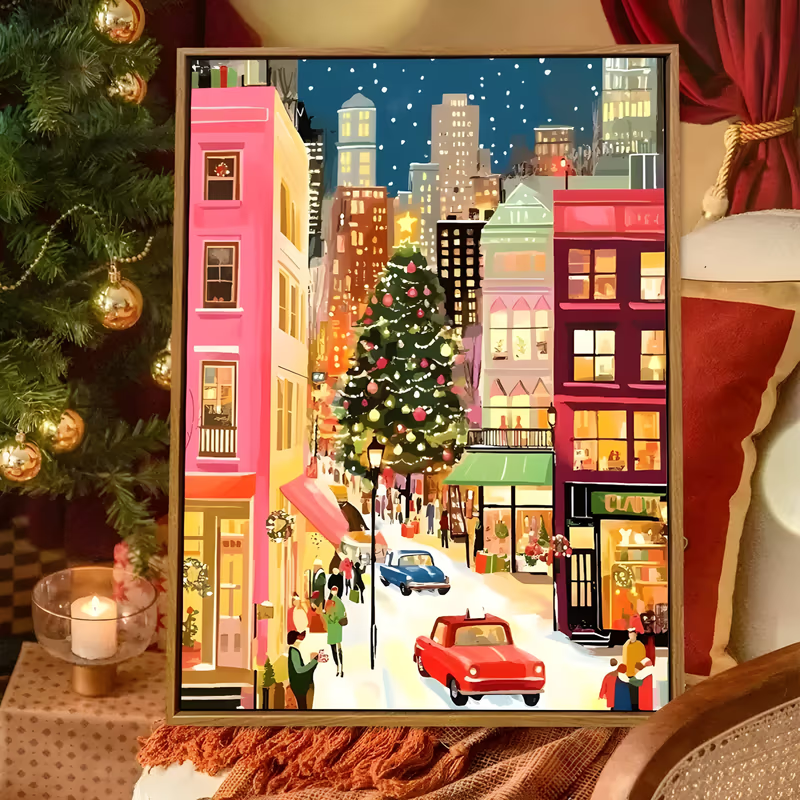
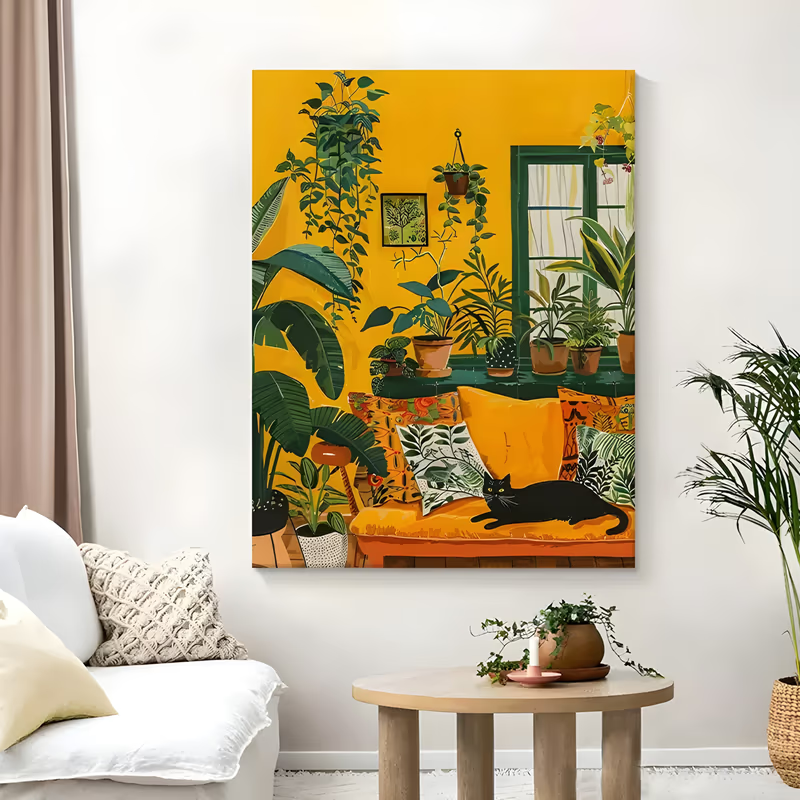
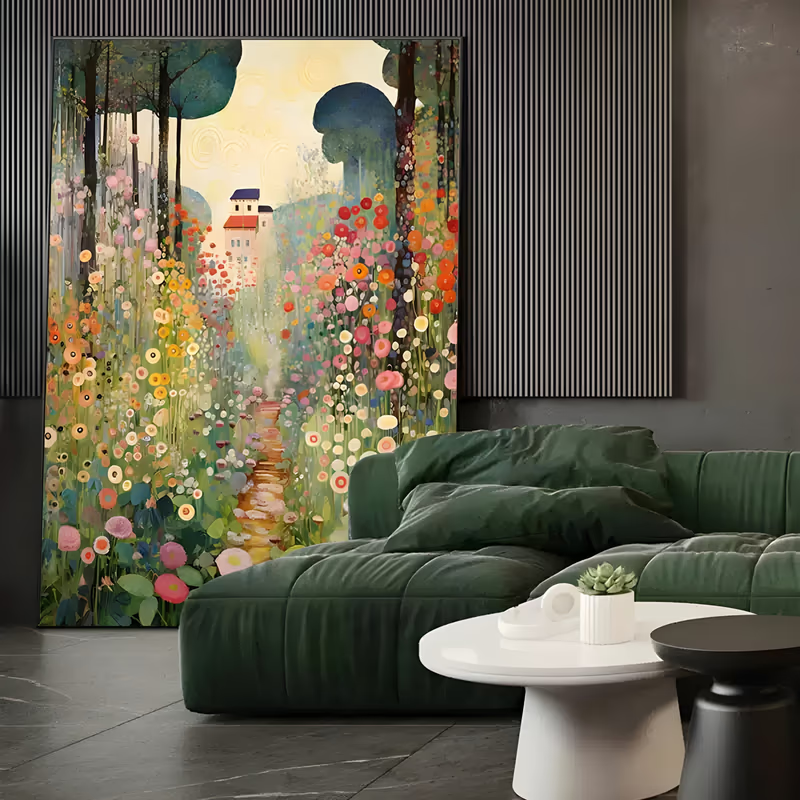
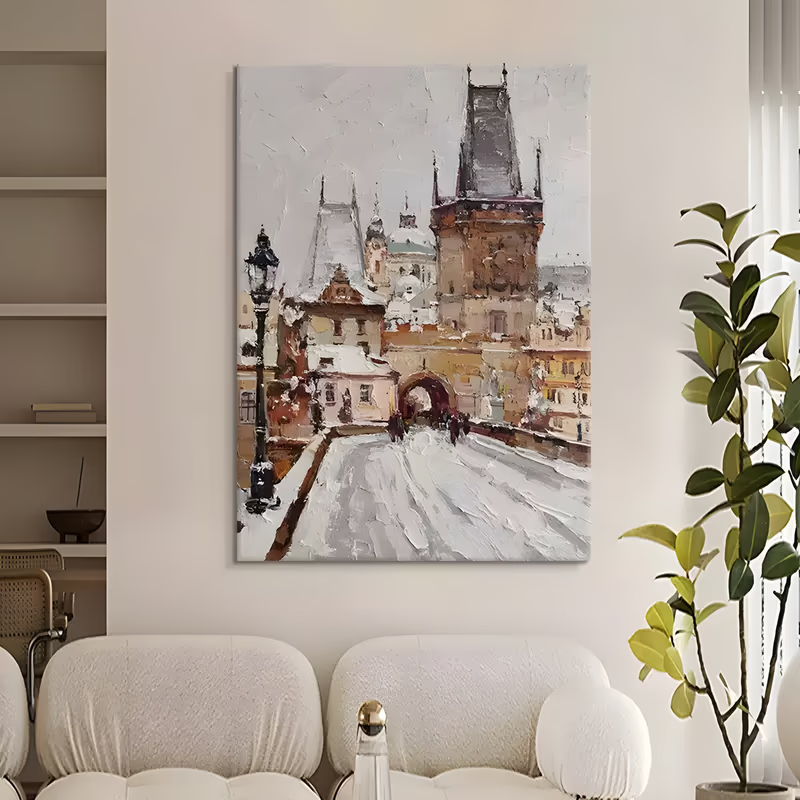
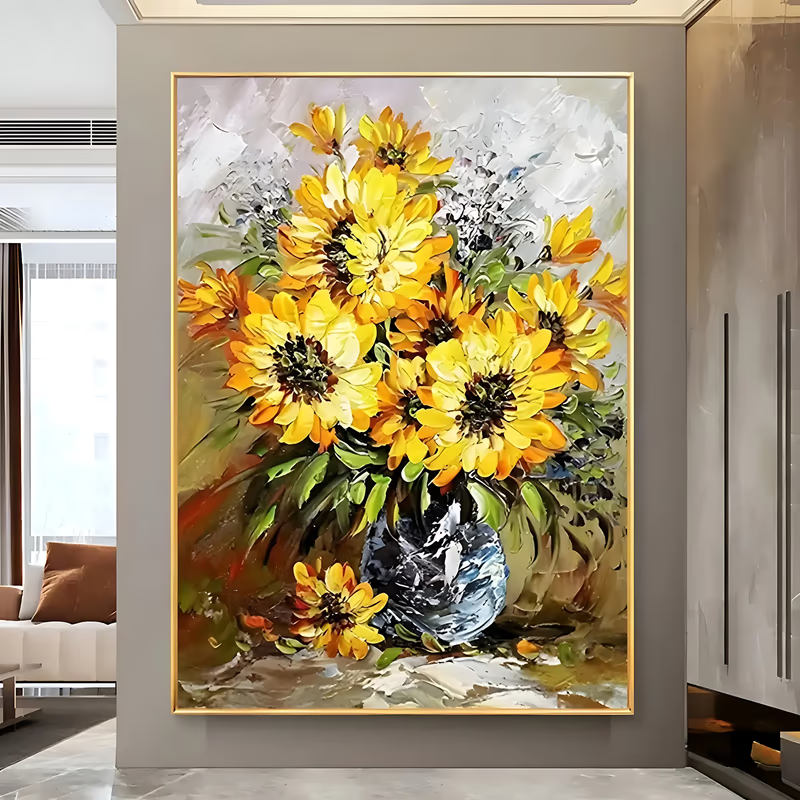
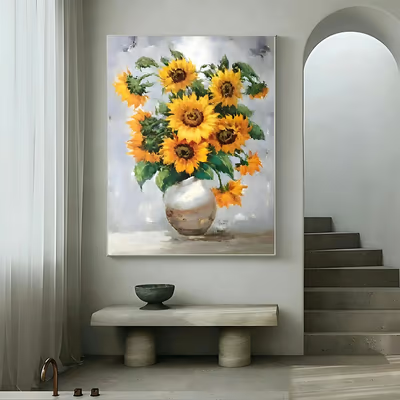
The subject finishes the job. Cozy scenes are close and domestic: a red cabin in snow, a path under autumn trees, sunflowers in a jug, fruit and wine on a table, a cat on a sofa. Even the landscapes tend to be enclosed by trees, hills or a low sky rather than opening to an empty horizon. That sense of being inside, looking at something familiar, is what turns warm colour into comfort.
Which warm colours make the coziest wall art?
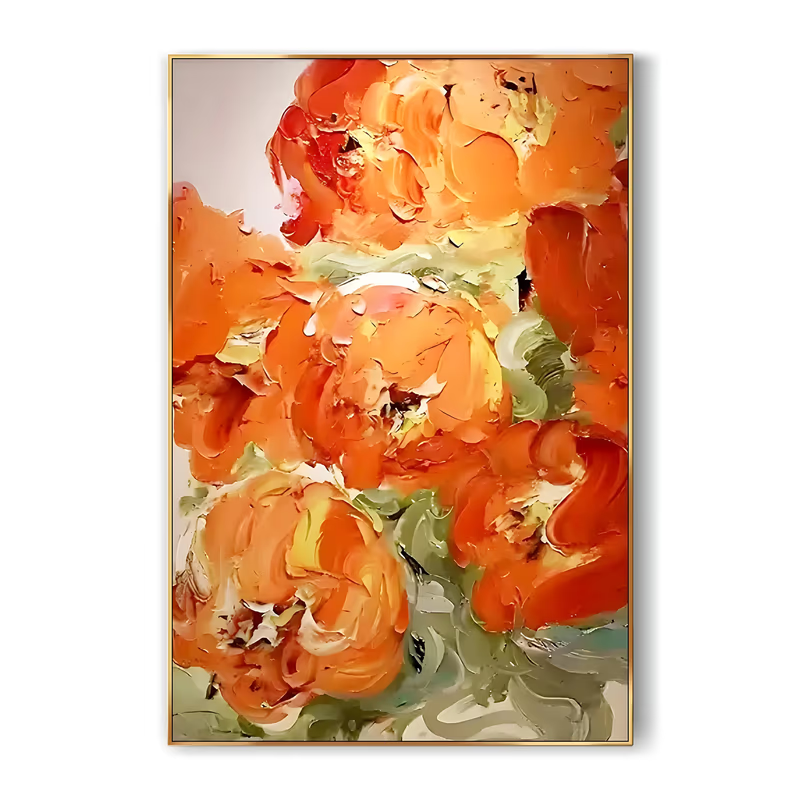
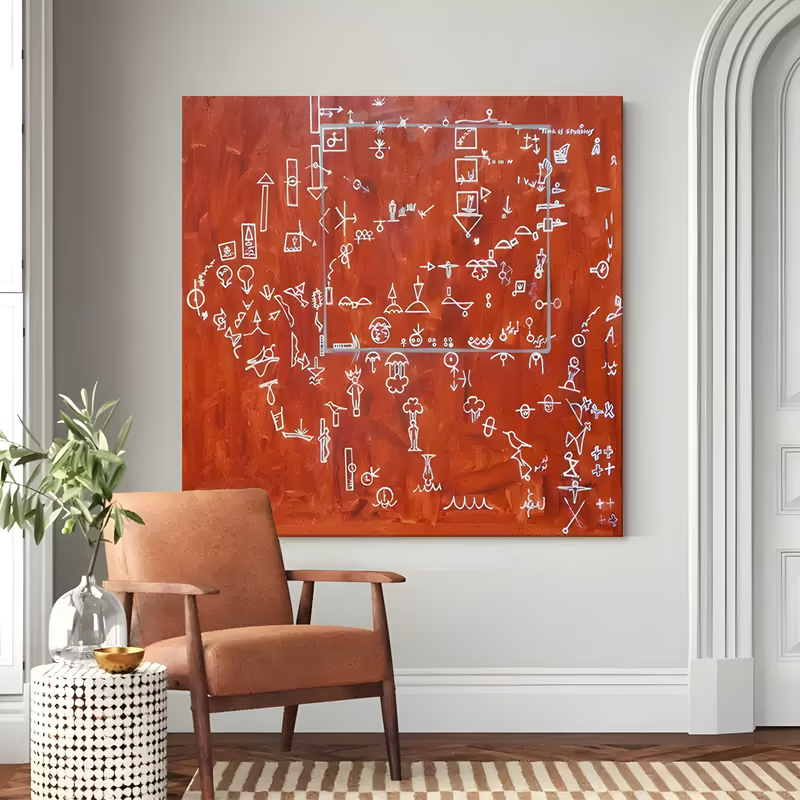
Amber, ochre, terracotta, olive, walnut brown and deep red make the coziest wall art, ideally two or three of them together with one cool note for balance.
| Warm colour | What it adds | Under evening lamps | Good partners |
|---|---|---|---|
| Amber and honey | Glow, like firelight or late sun | Deepens and turns golden | Cream, walnut, slate blue |
| Ochre and mustard | Earthy cheer with a vintage edge | Stays rich, loses any brashness | Olive, teal, charcoal |
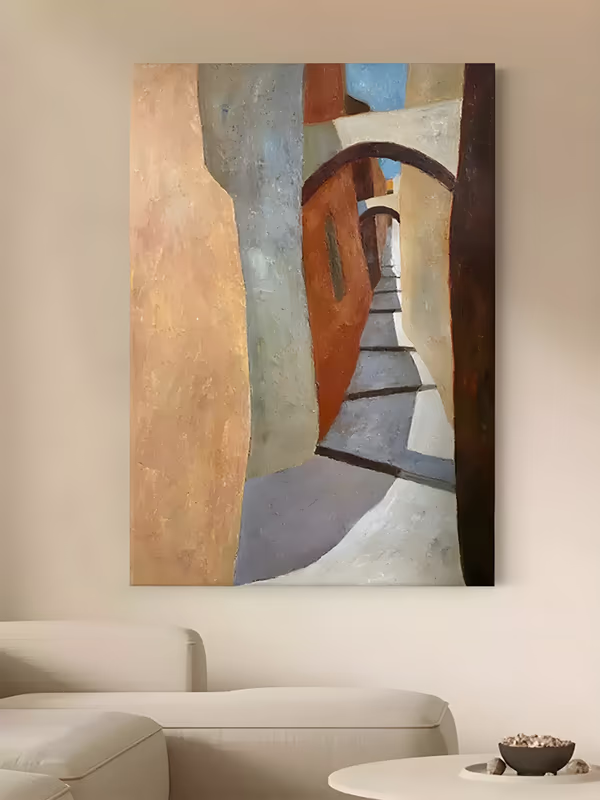
| Terracotta and rust | Sun-baked, Mediterranean warmth | Reads as clay and brick | Sand, sage, navy |
| Olive and moss | The warm side of green; feels natural and grounded | Darkens to a soft shadow tone | Ochre, rust, oak |
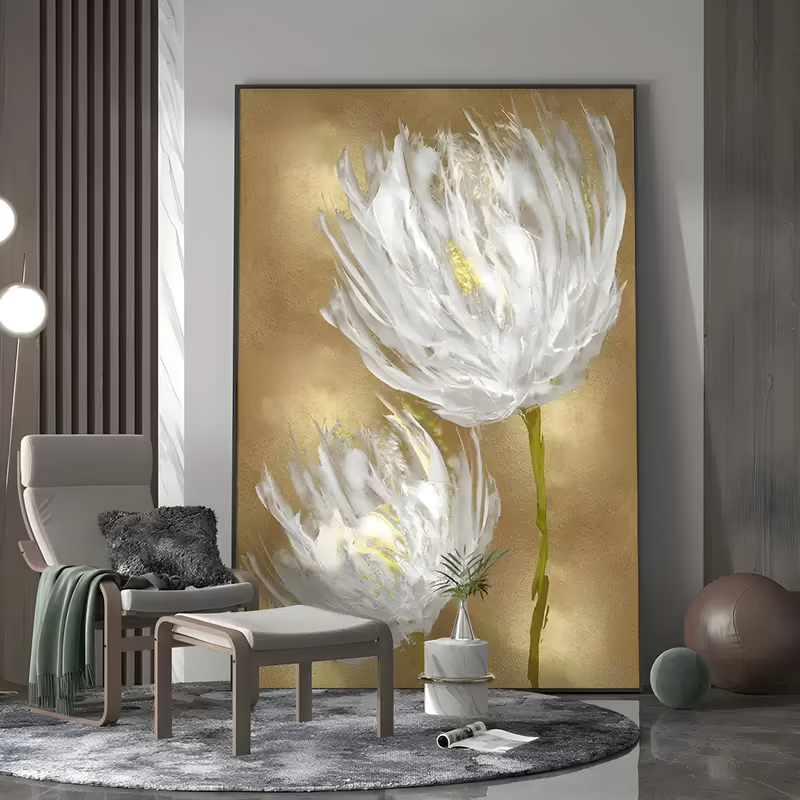
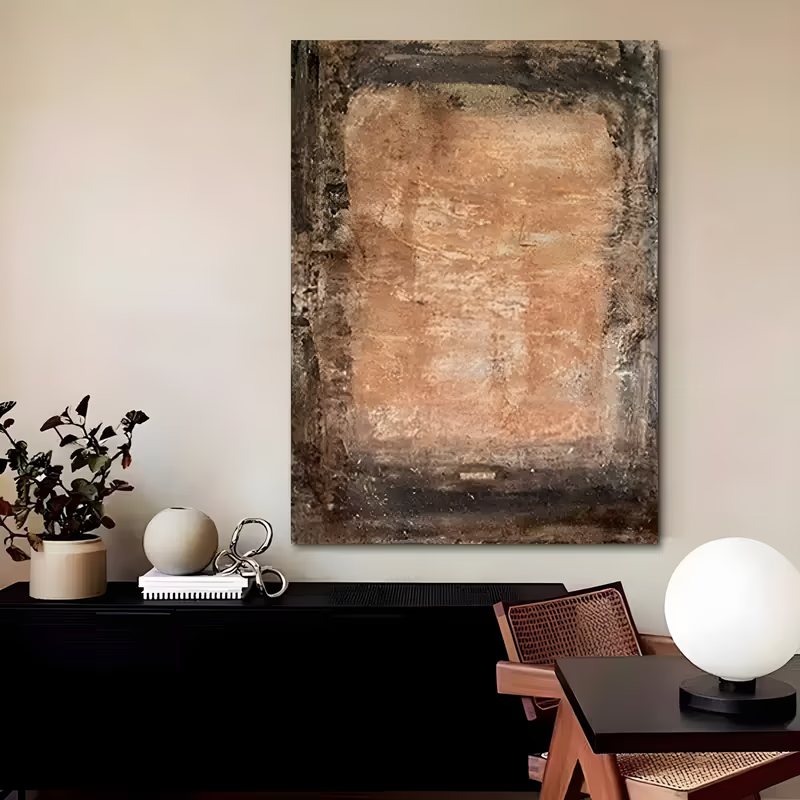
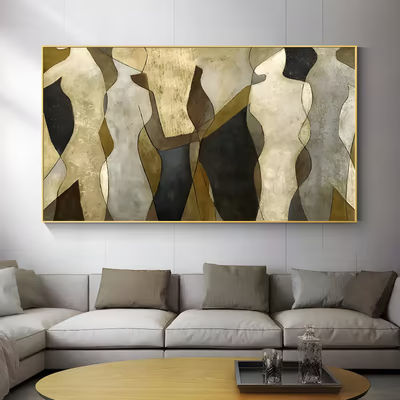
| Walnut and chocolate | Depth and weight; makes a room feel panelled | Can go almost black; needs a light accent | Cream, gold leaf, copper |
| Deep red and burgundy | Intimacy; the colour of wine bars and libraries | Glows like velvet | Gold, forest green, brass |
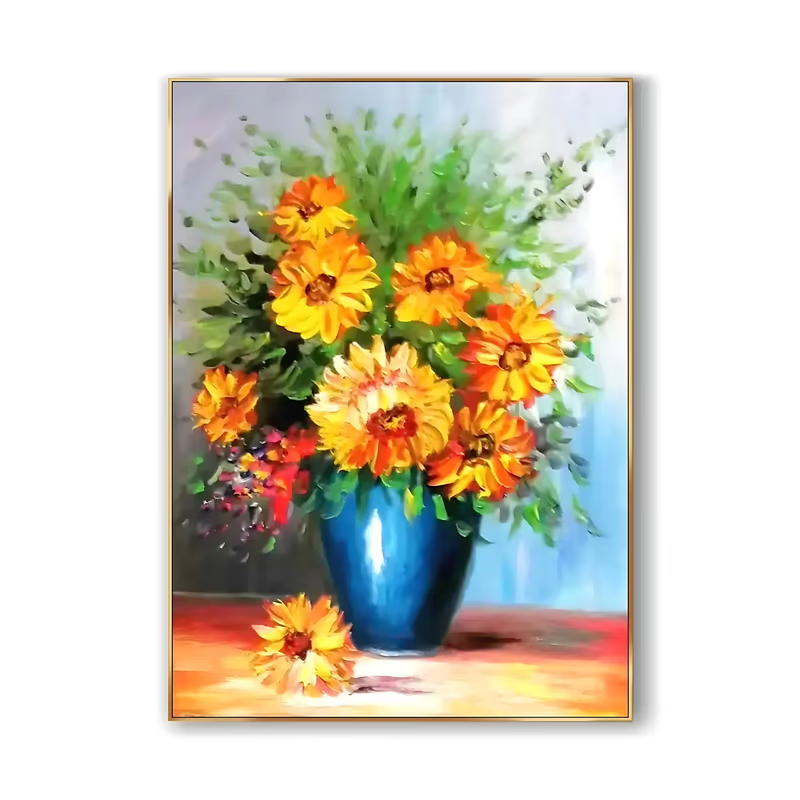
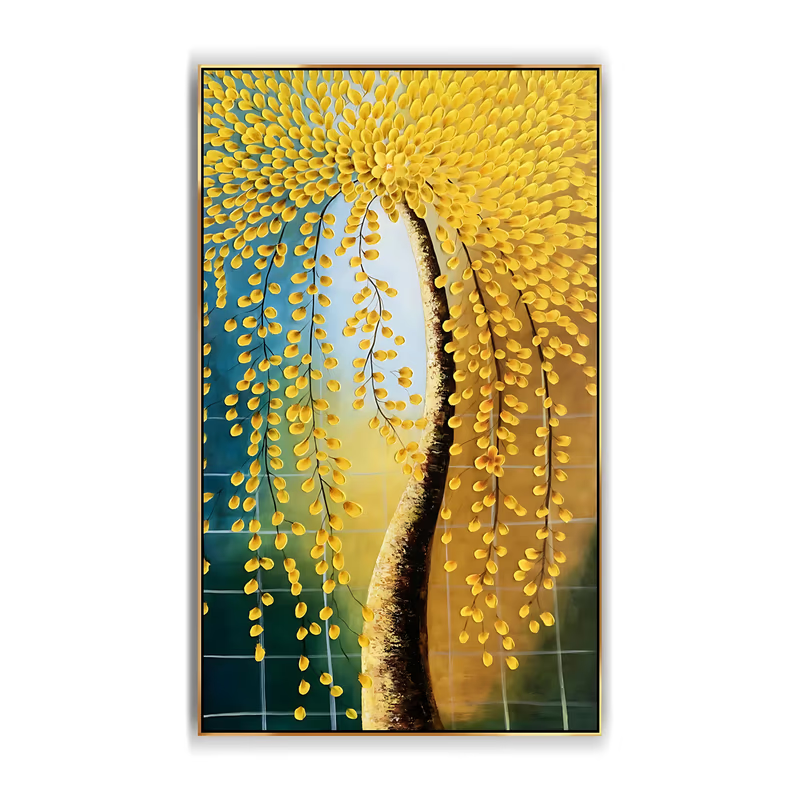
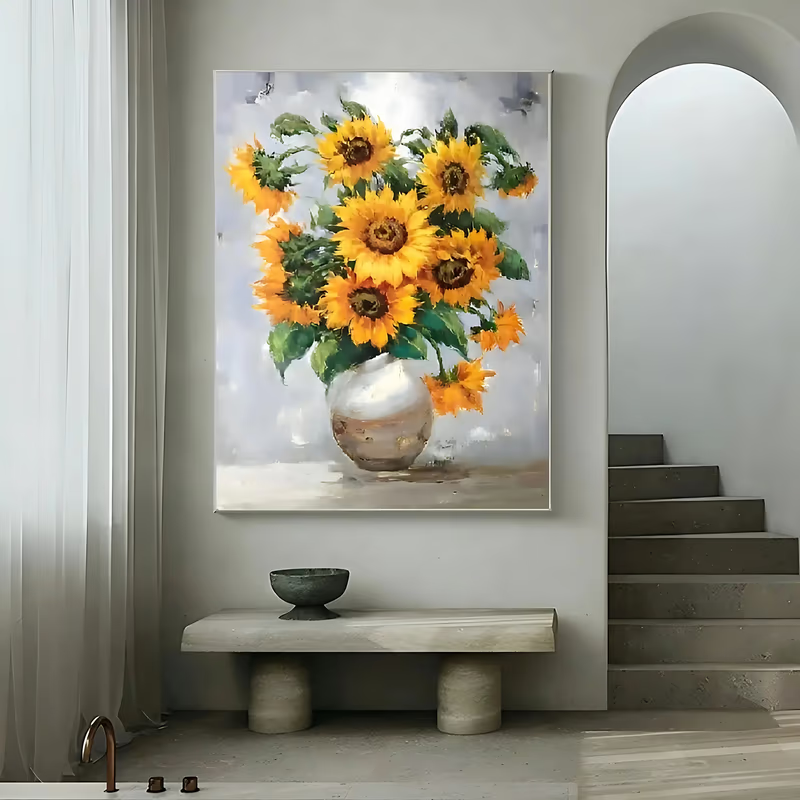
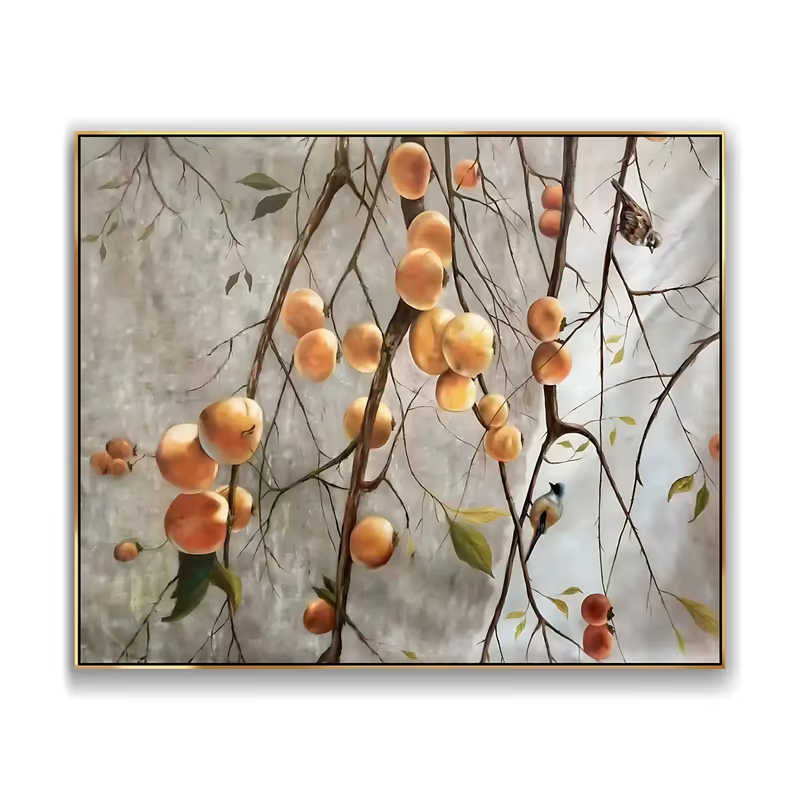
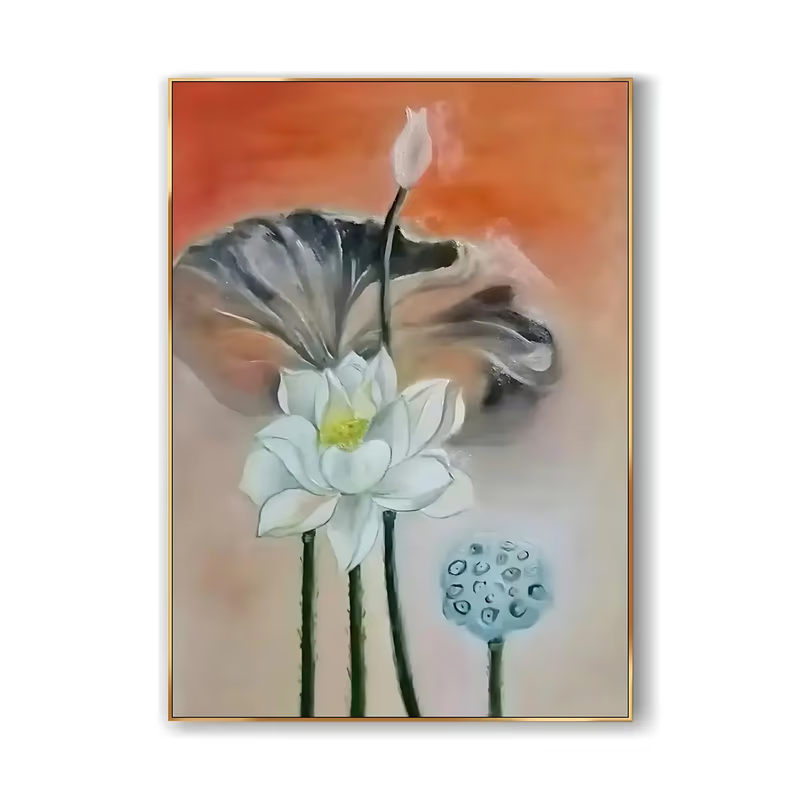
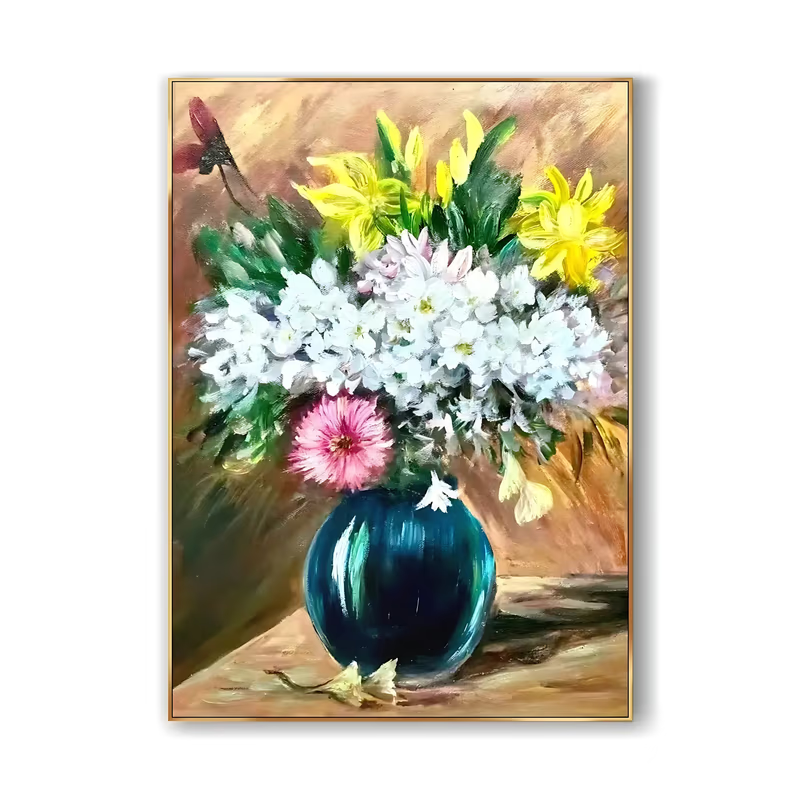
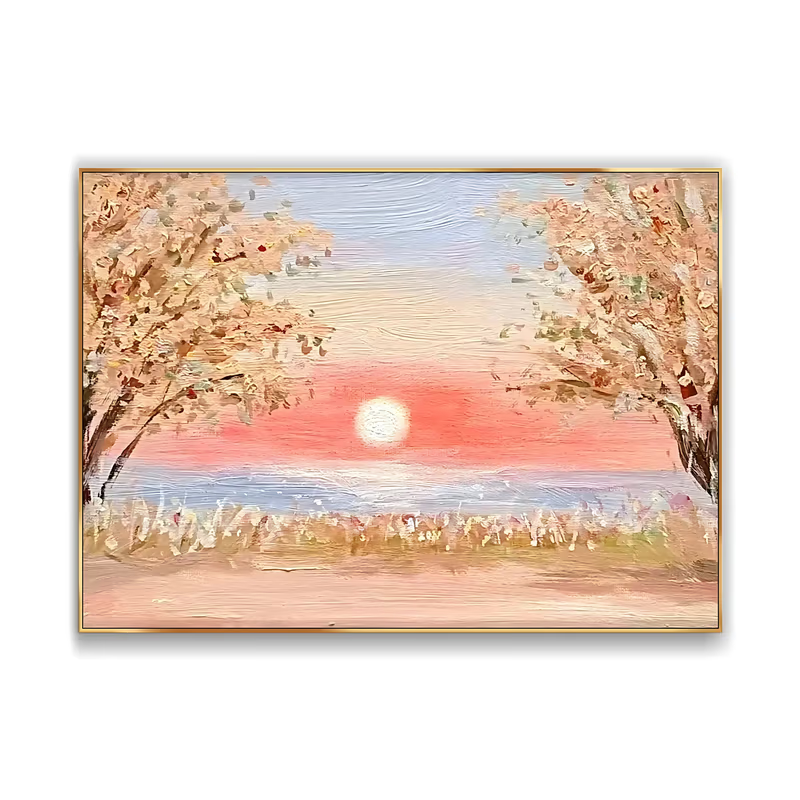
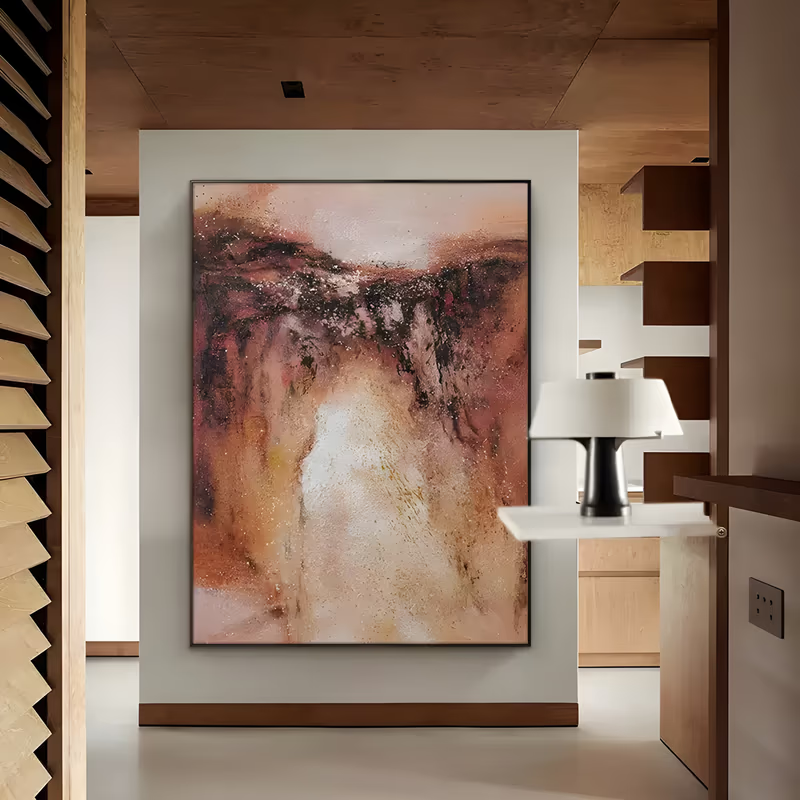
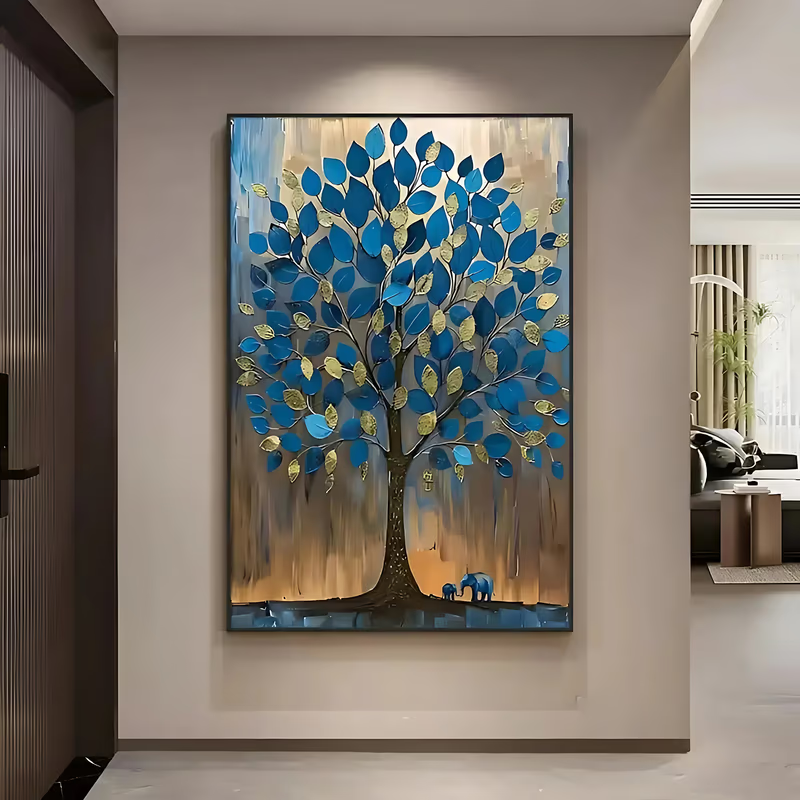
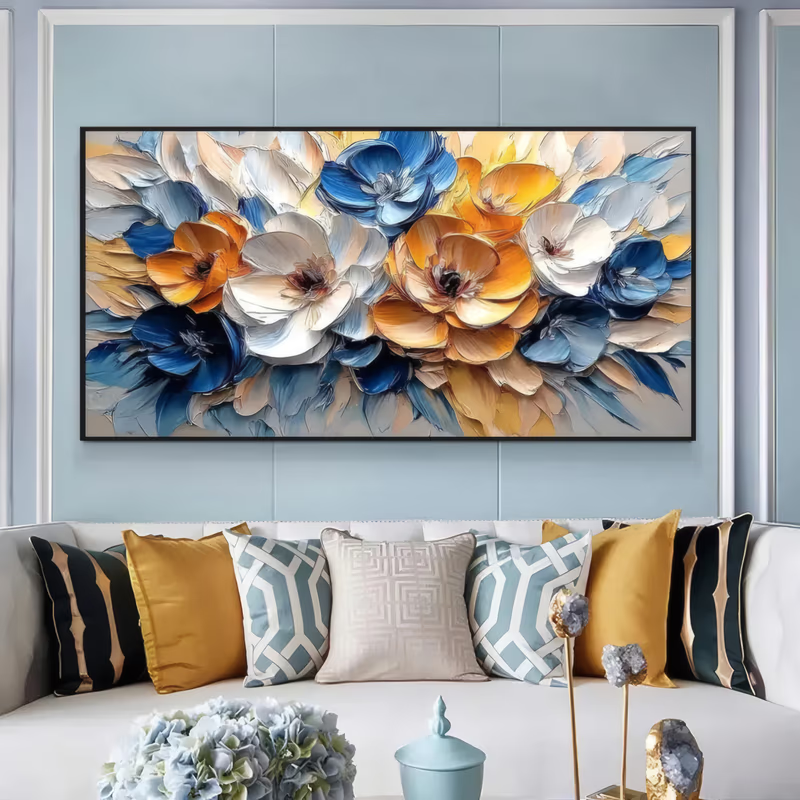
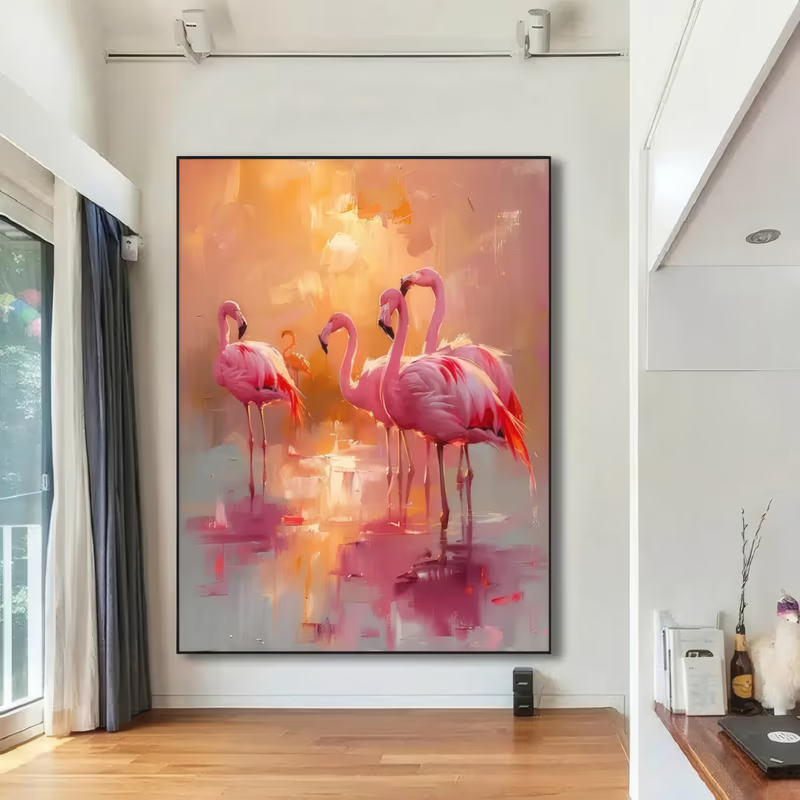
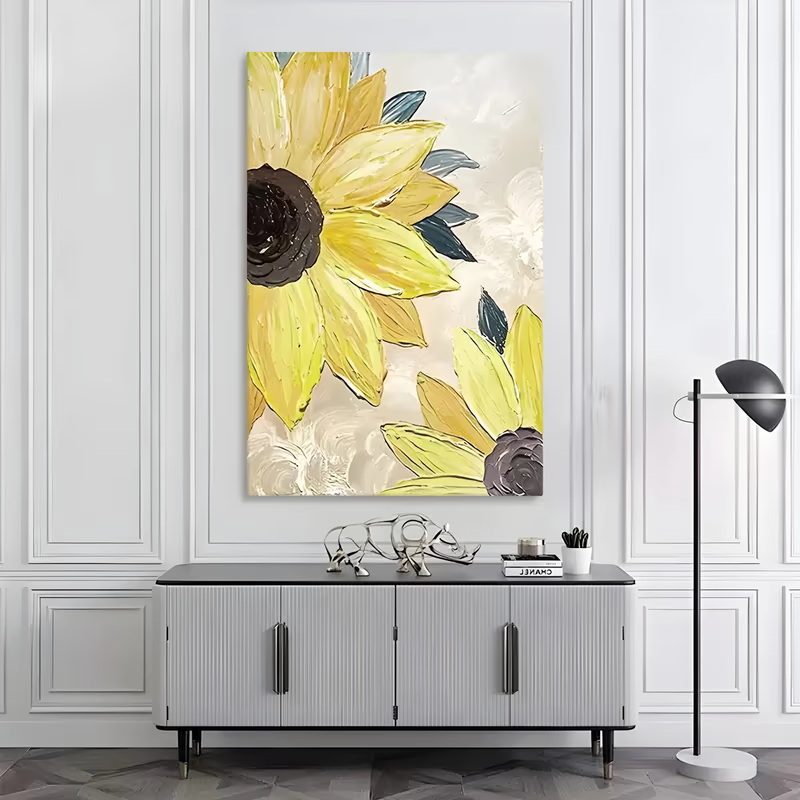
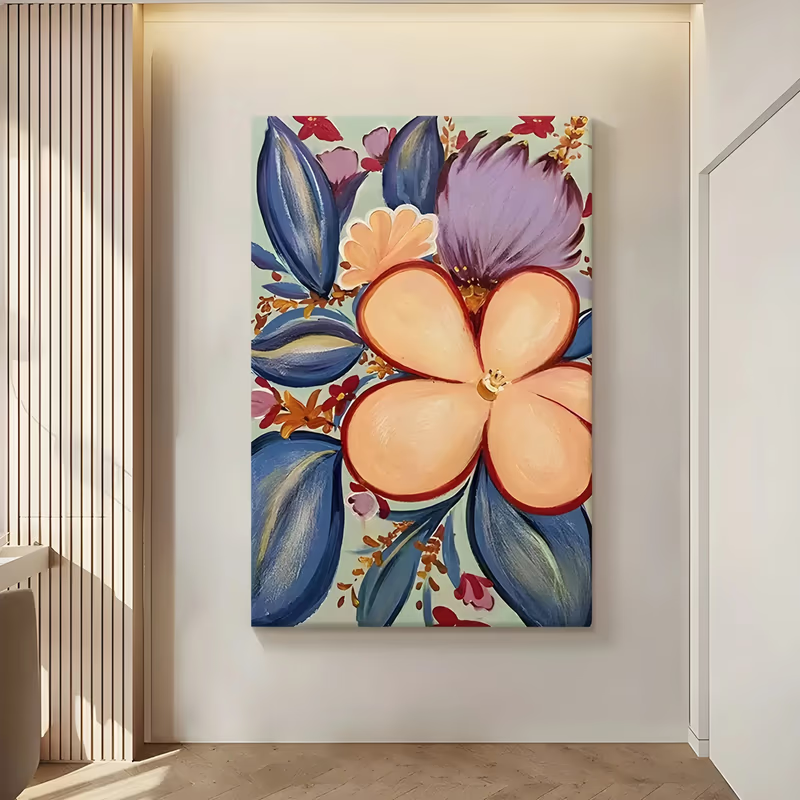
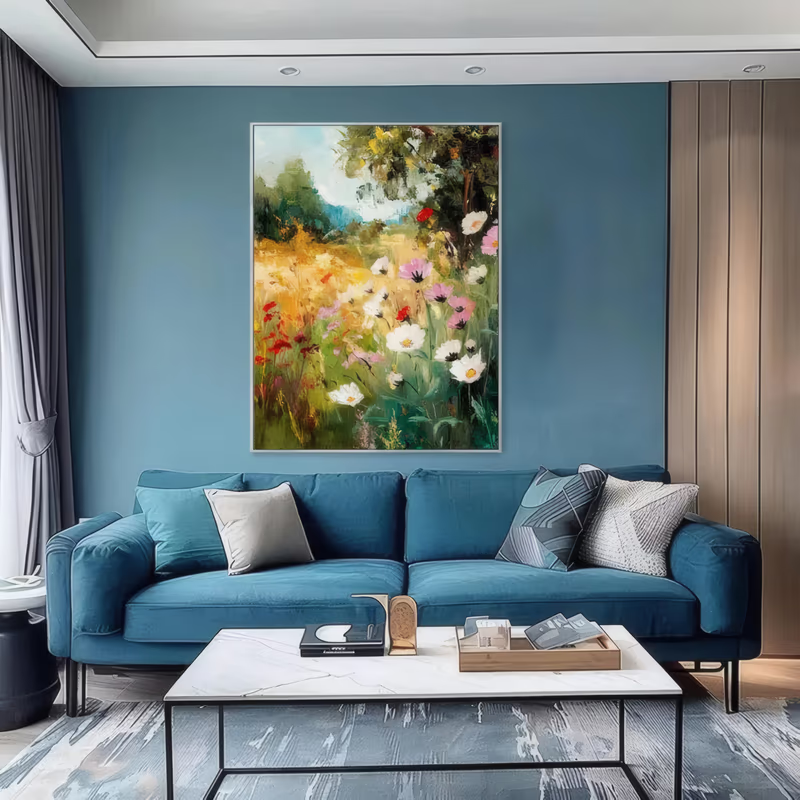
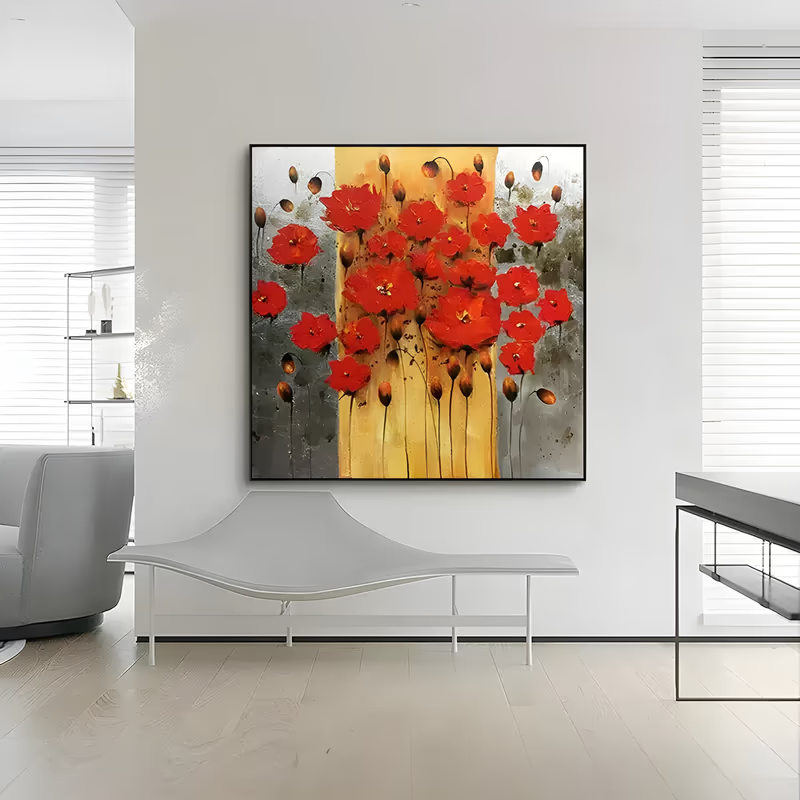
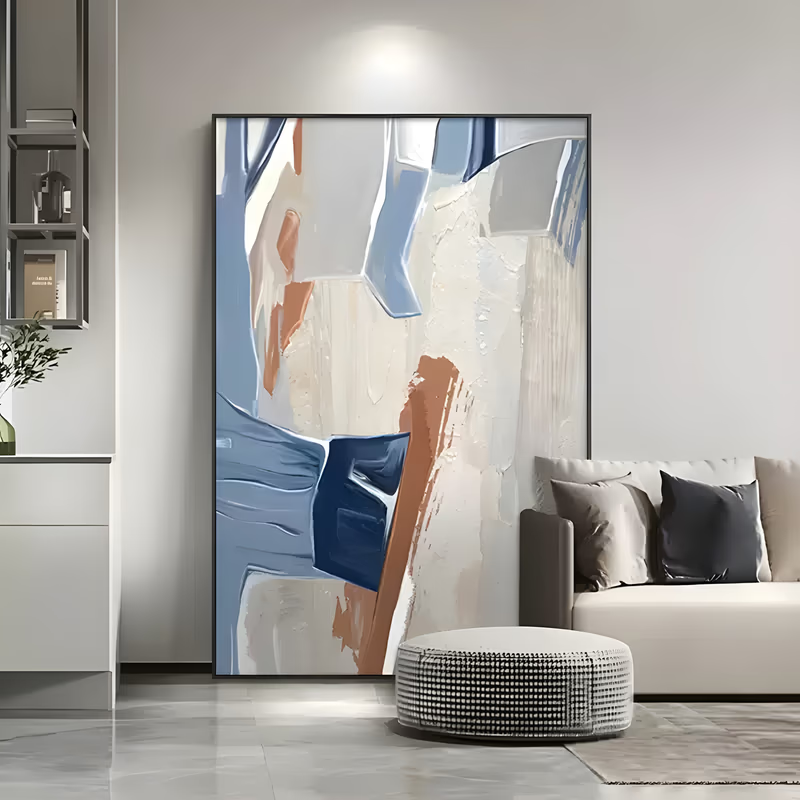
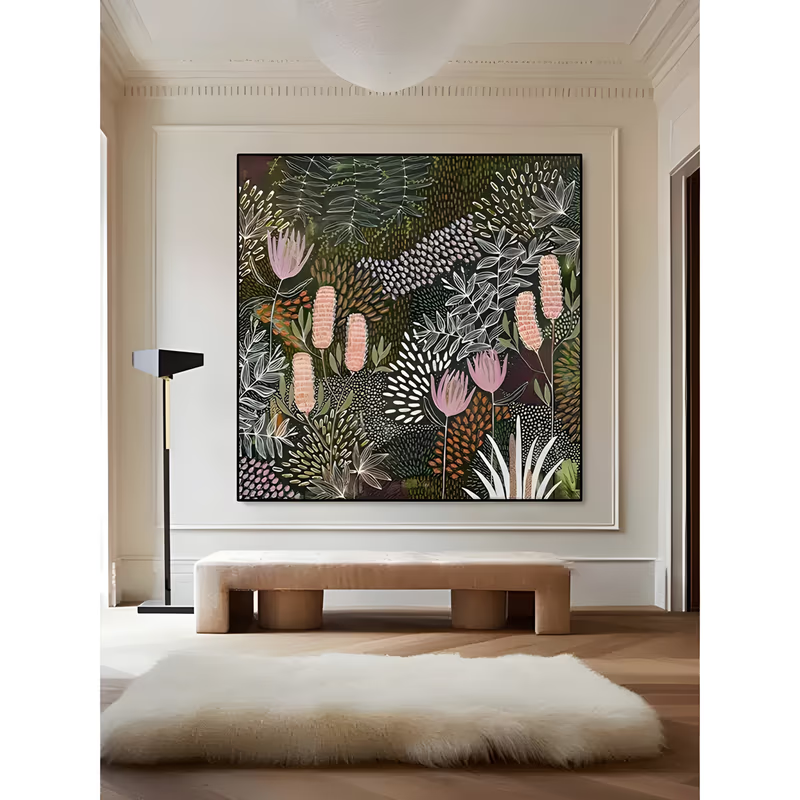
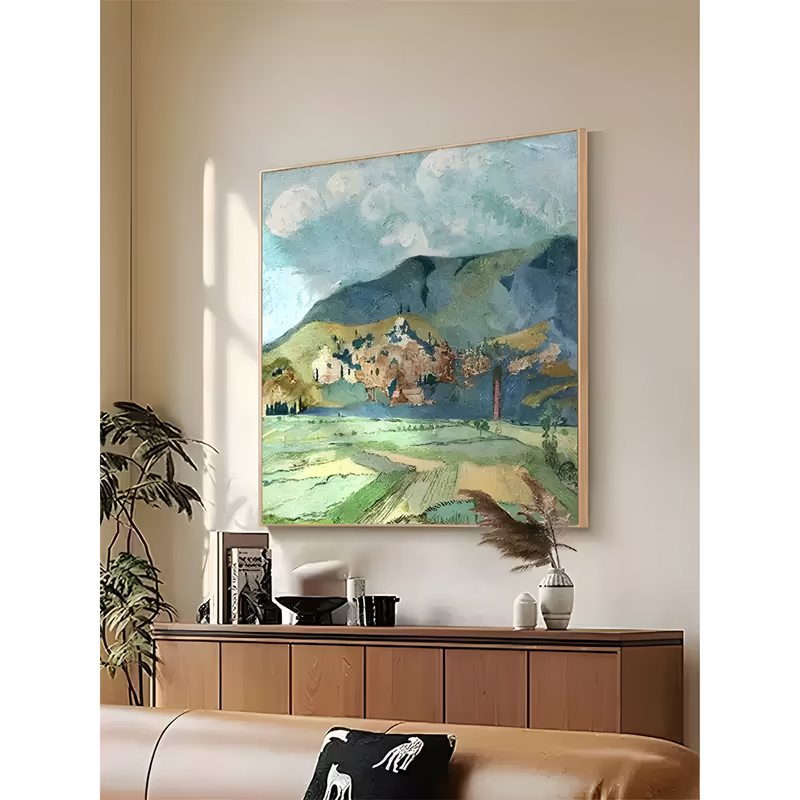
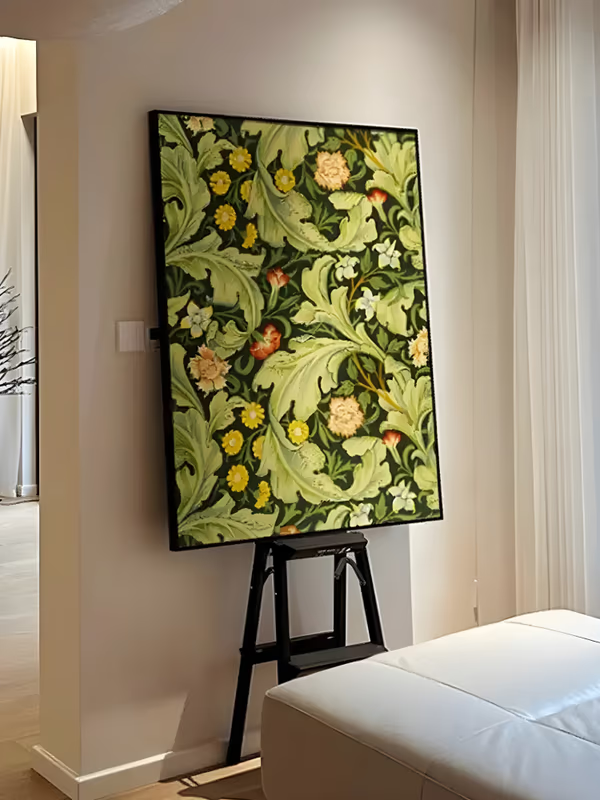
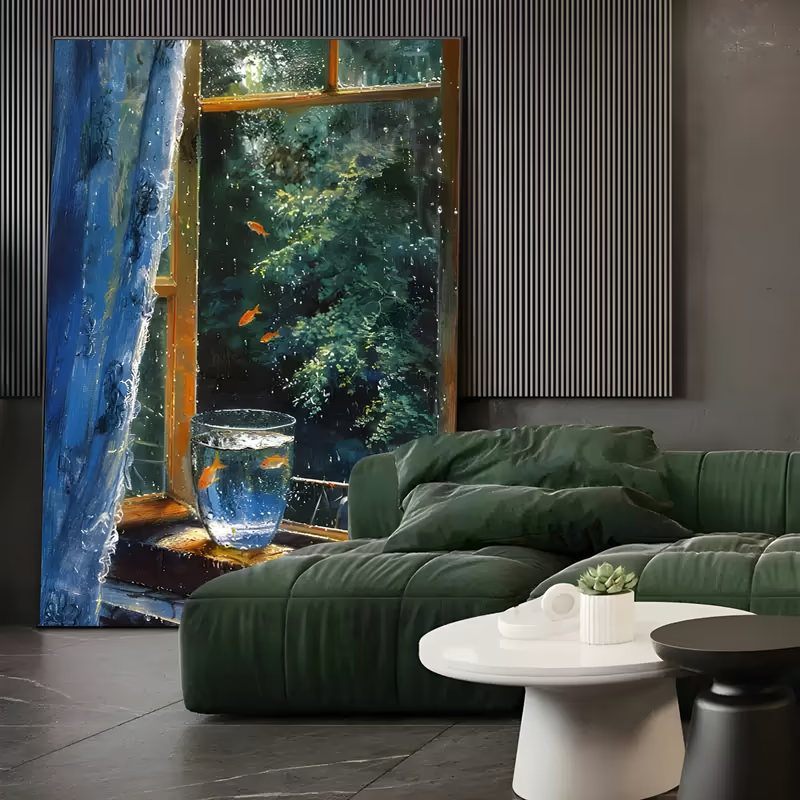
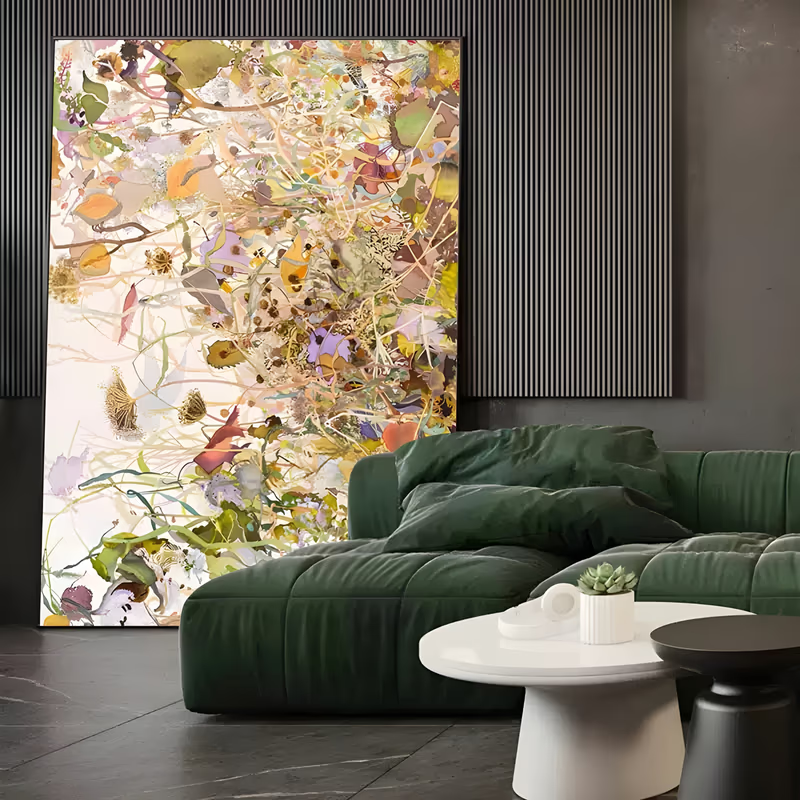
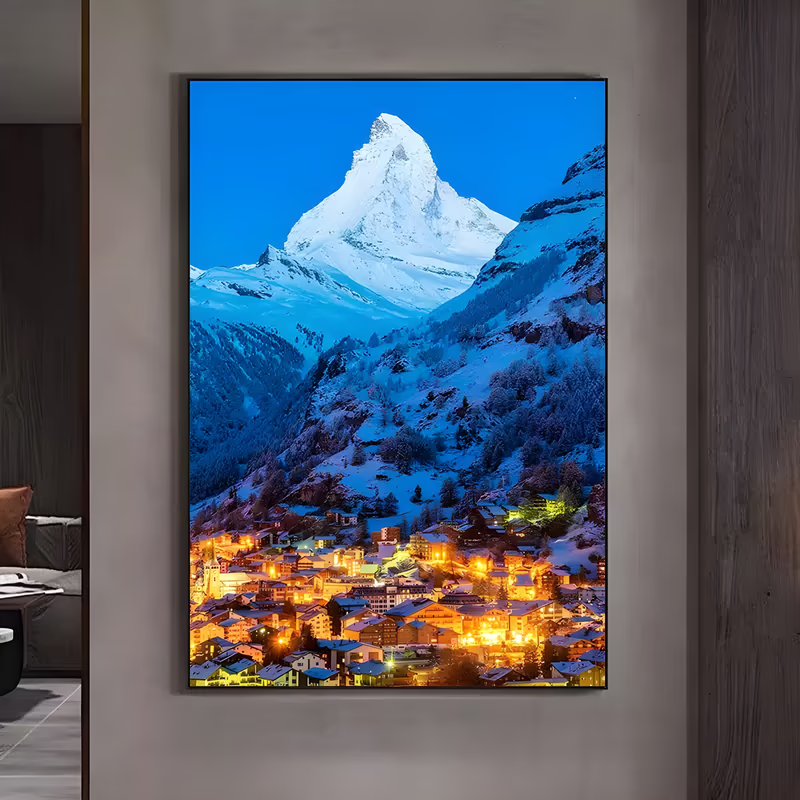
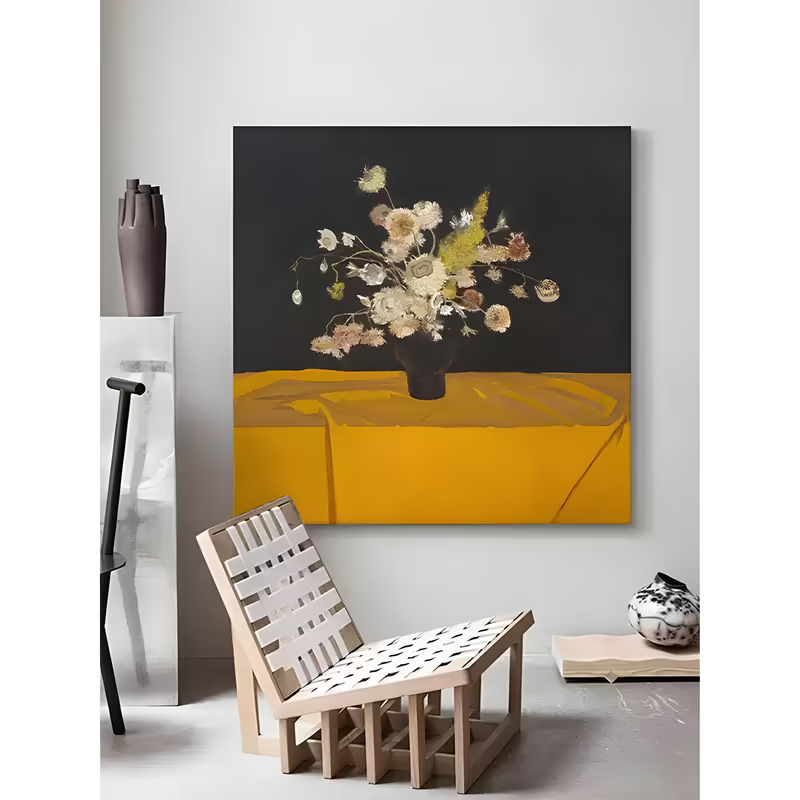
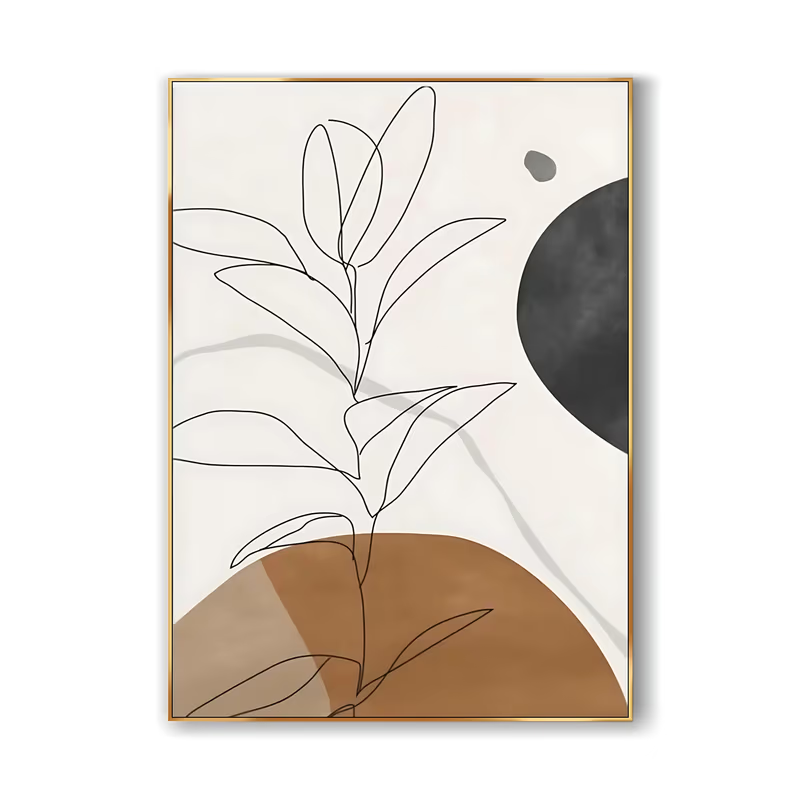
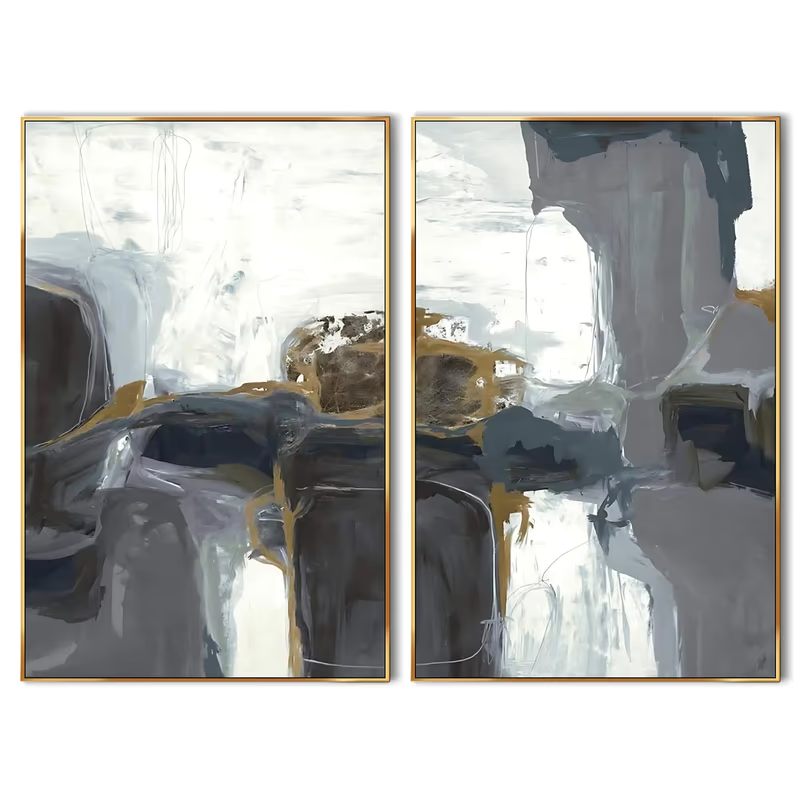
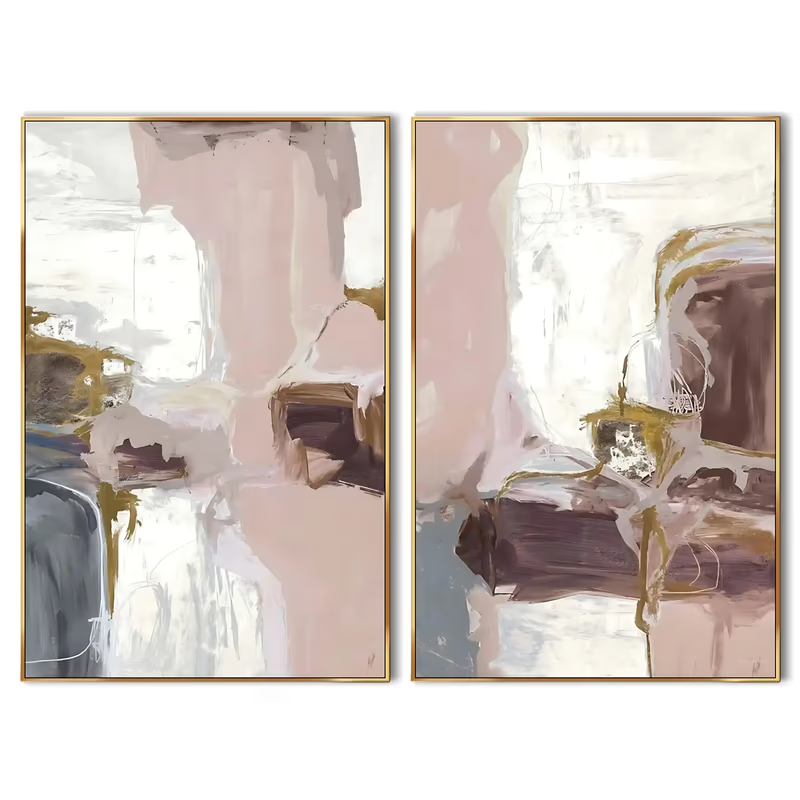
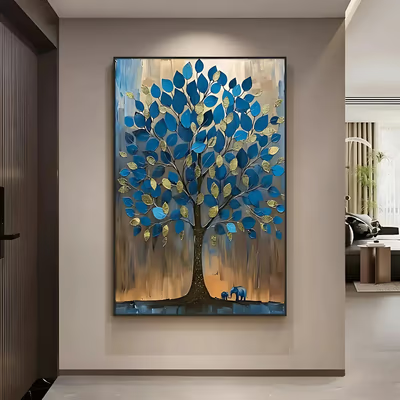
A painting made only of warm colours can look flat or muddy. The coziest pieces usually include one cooler counterpoint, such as a slate sky behind copper trees or a teal vase holding sunflowers, which makes the warm colours look warmer by contrast. Filter this page by orange, terracotta and gold, or brown and beige, and see the terracotta and brown colour guides.
What kinds of cozy paintings are there?
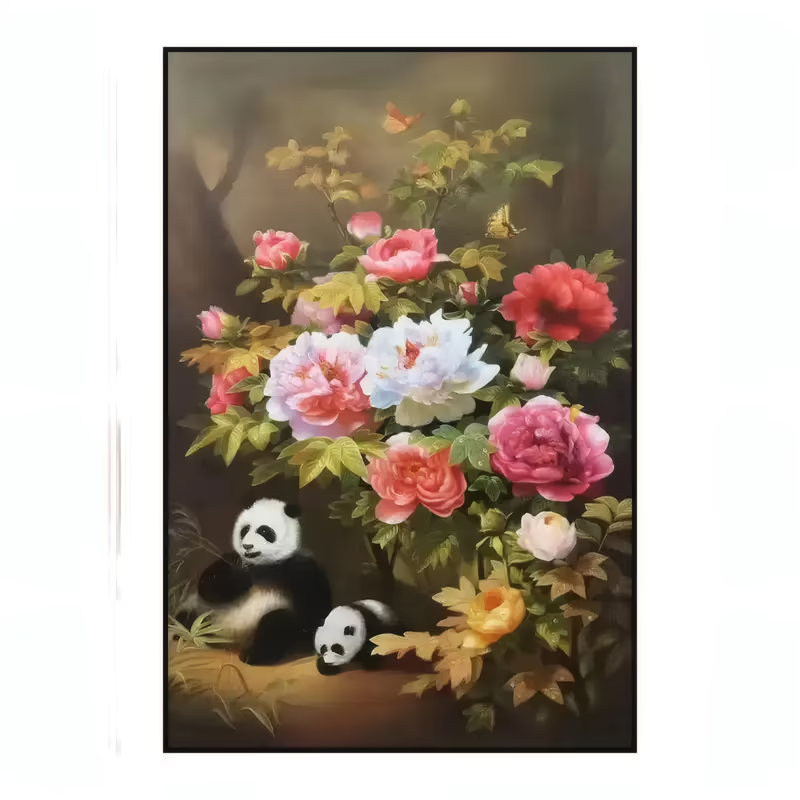
Cozy paintings here fall into four kinds: autumn and winter scenes, still lifes and harvest tables, earth-tone texture, and animals and people at home.
Autumn roads, harvests and snowy cabins
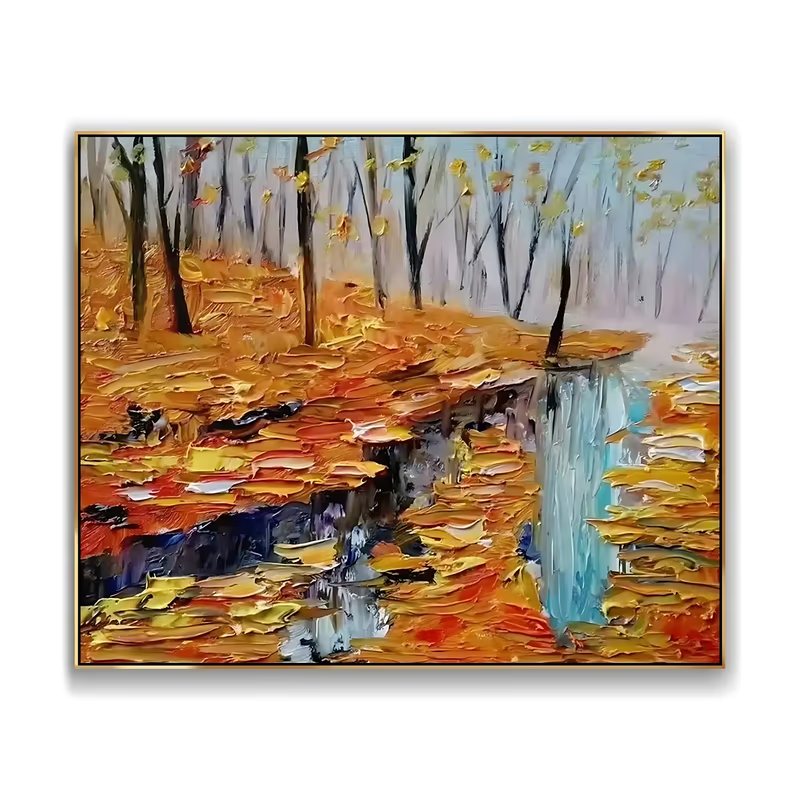
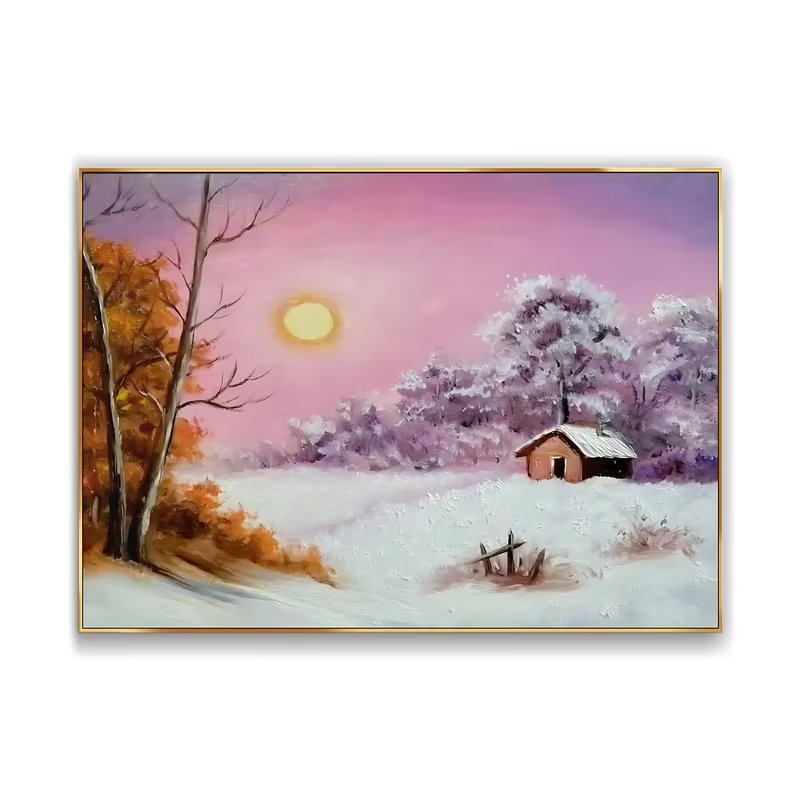
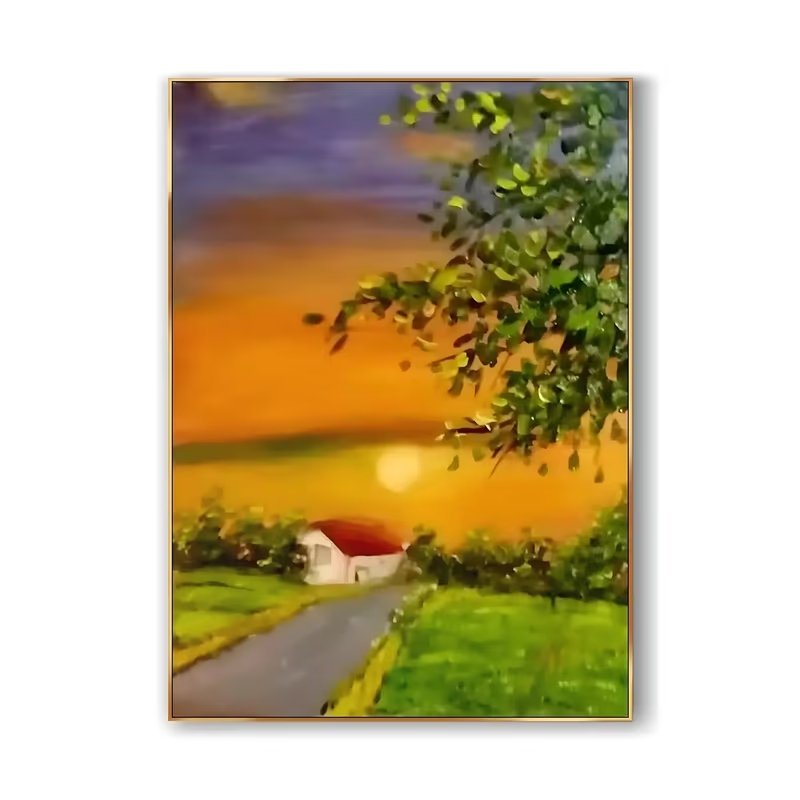
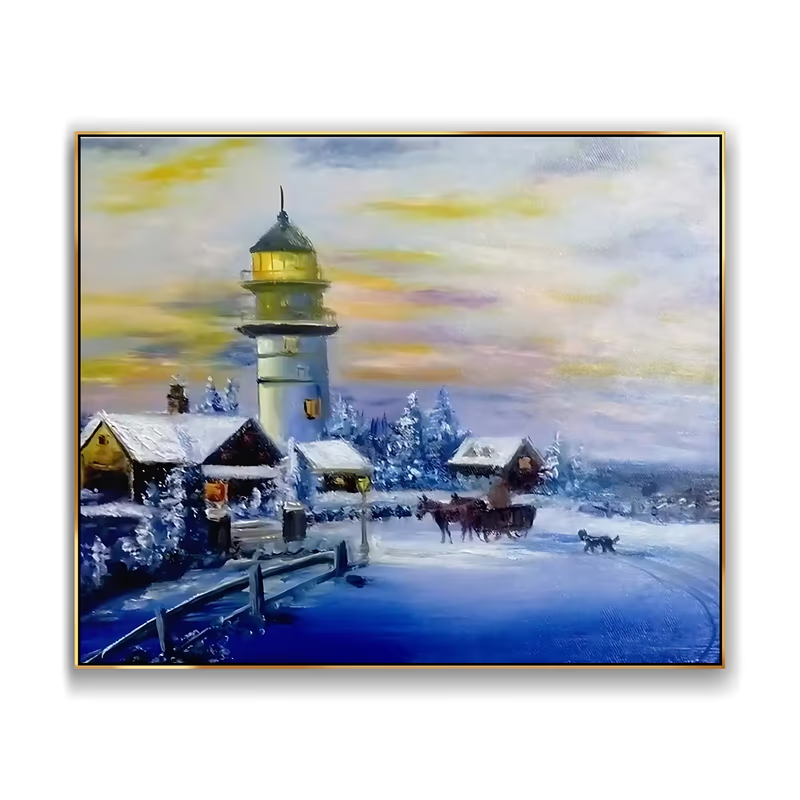
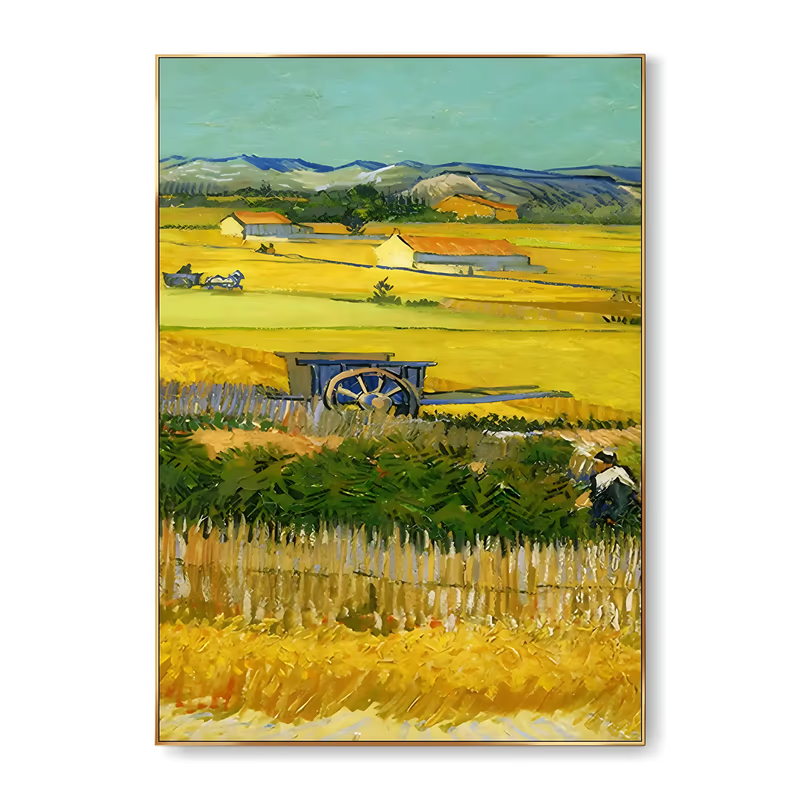
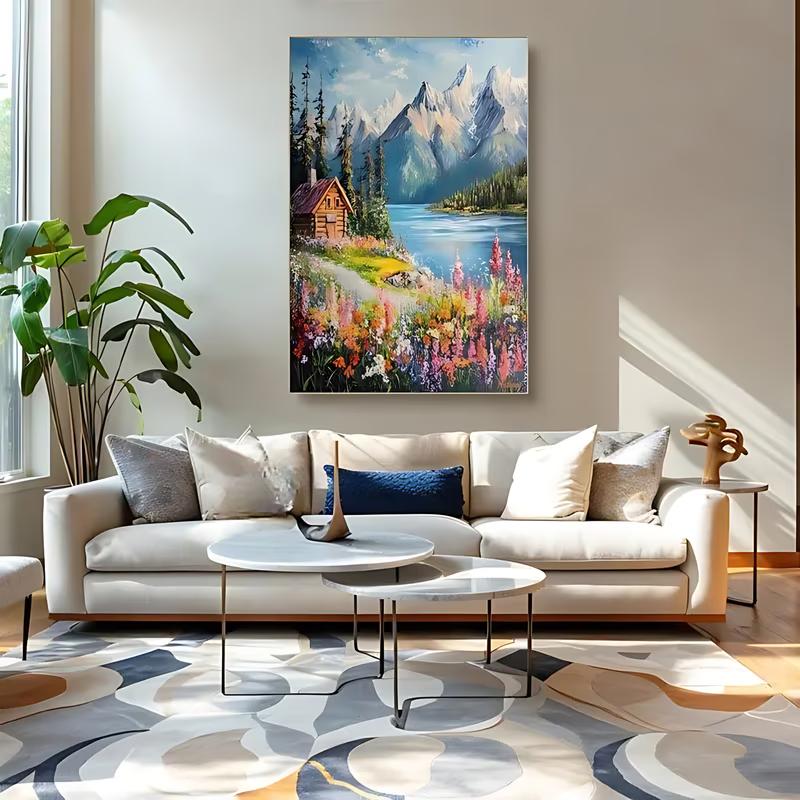
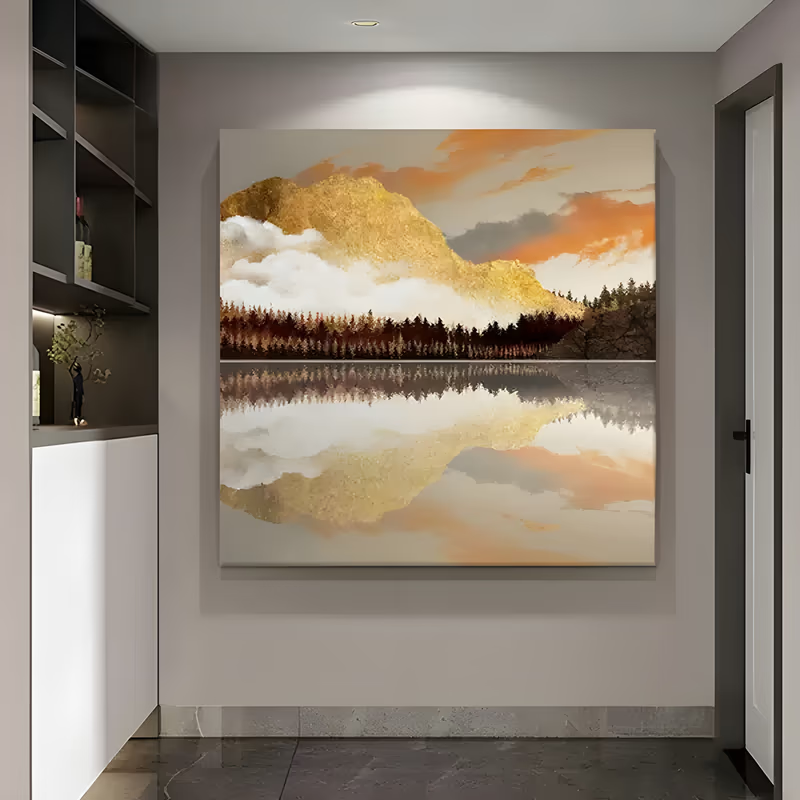
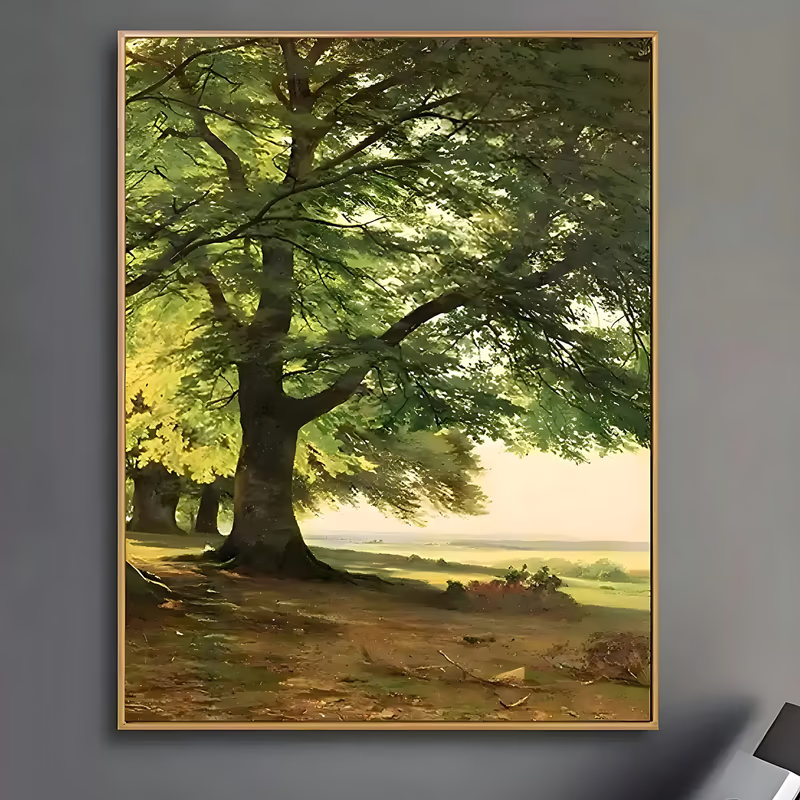
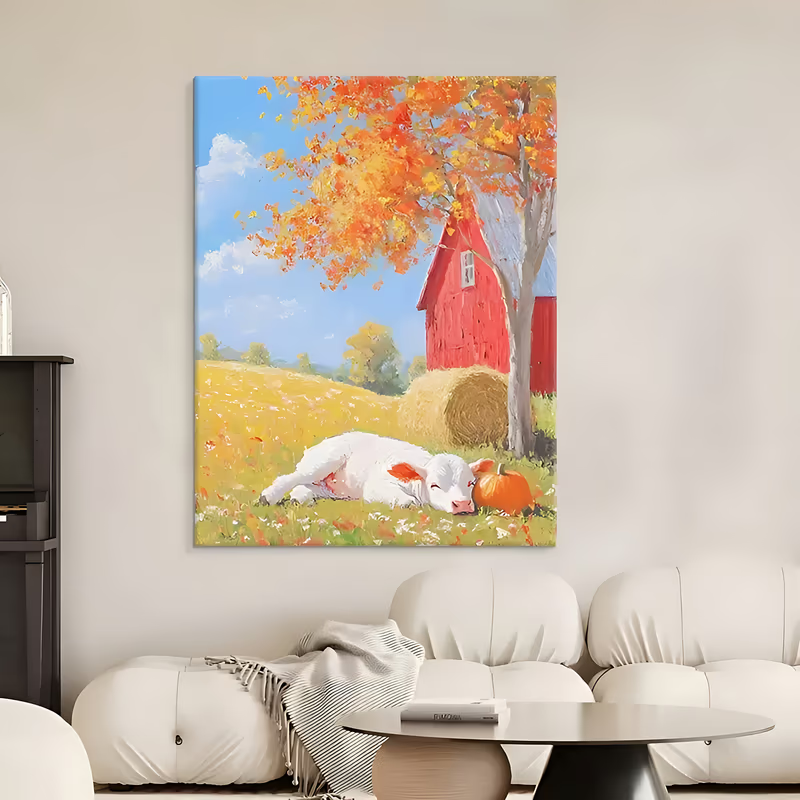
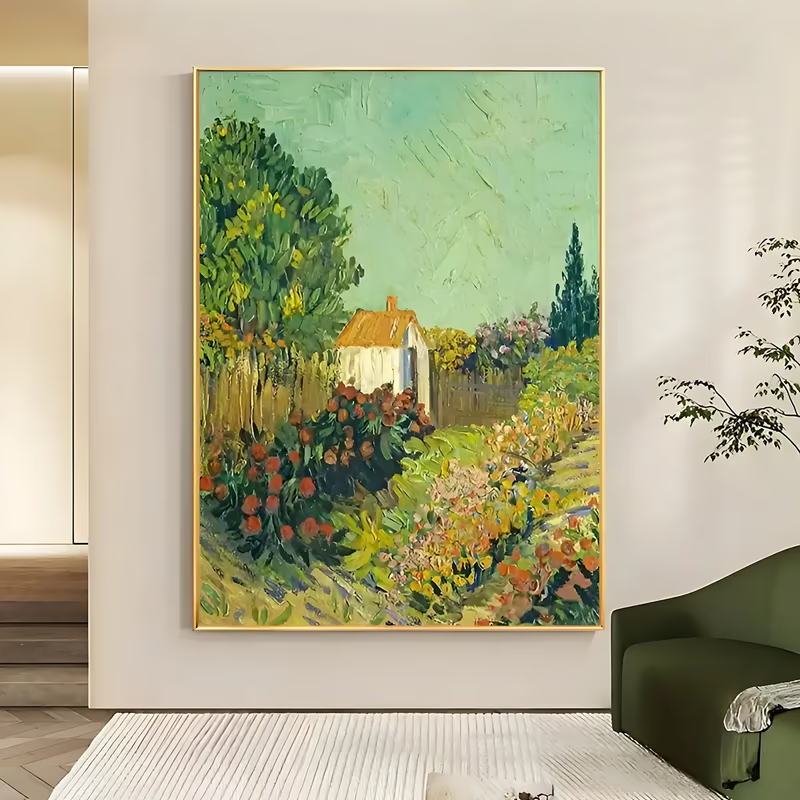
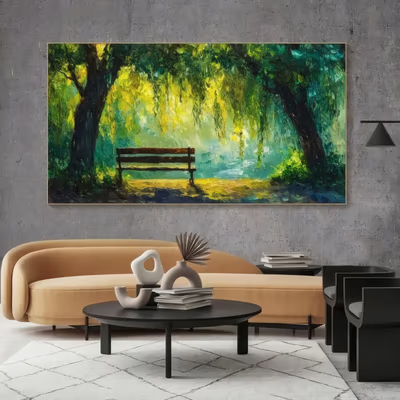
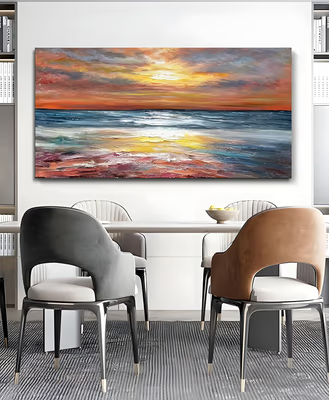
A country road at orange sunset, a red cabin in snow under a violet sky, leaf litter beside an icy stream, a golden wheat harvest, a lighthouse village with a horse sleigh. These are the classic cosy-season scenes, and they suit living rooms, chalets, lodges and hotel lounges through the colder months and beyond.
Sunflowers, fruit and the harvest table
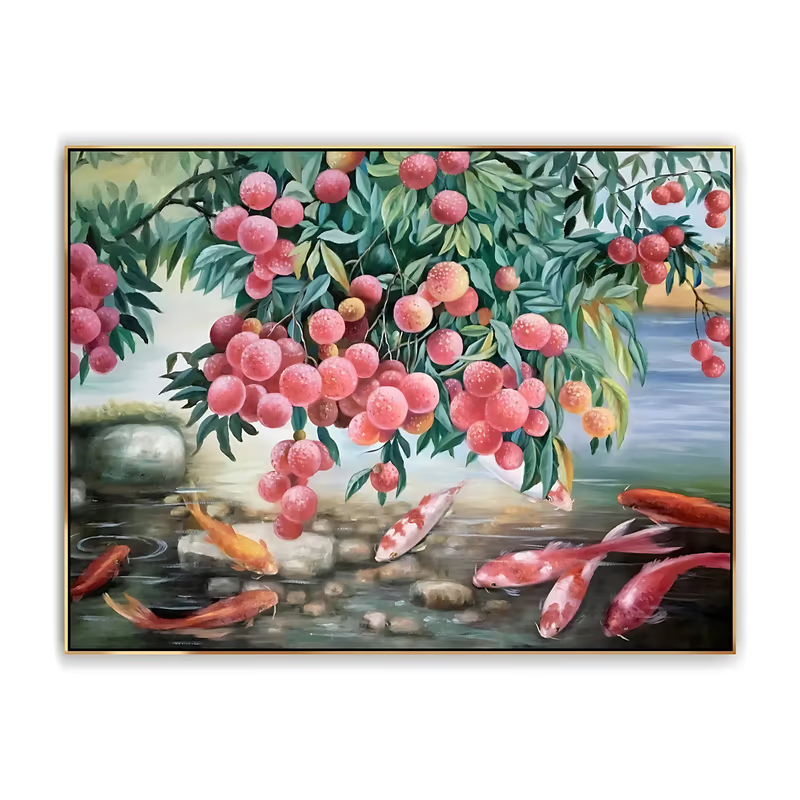
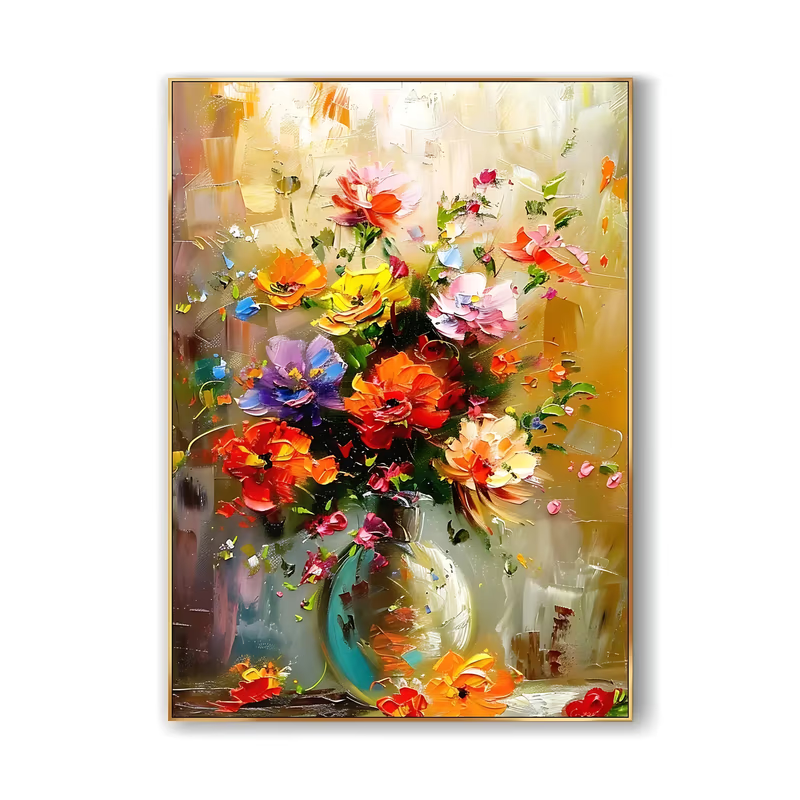
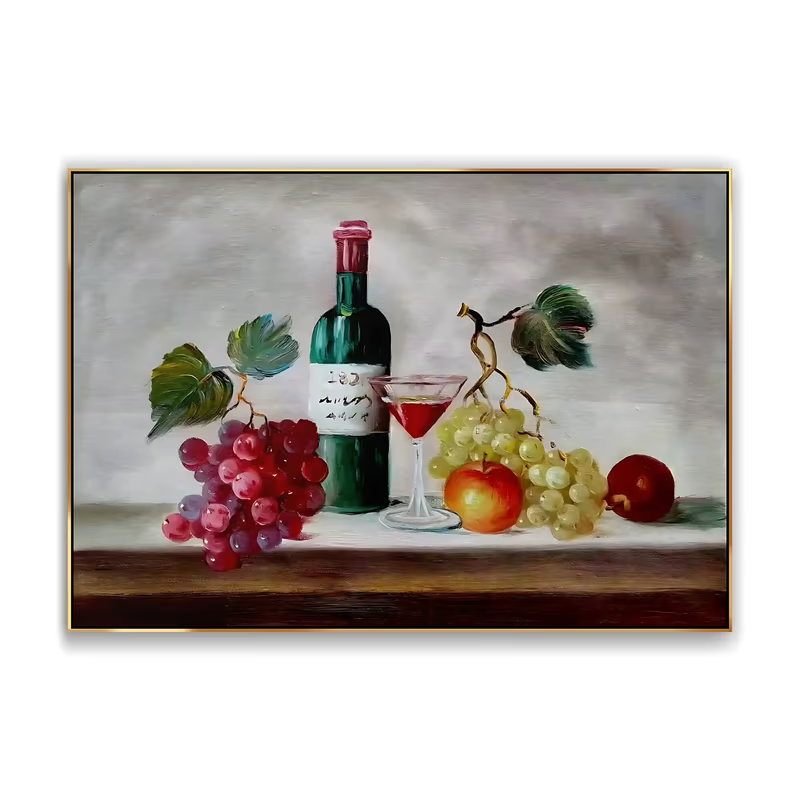
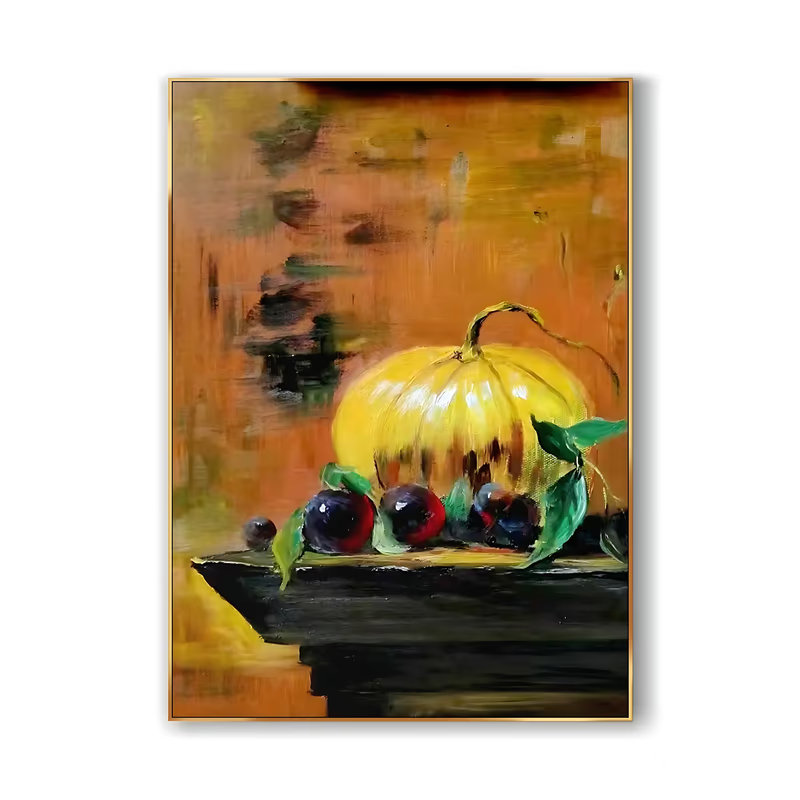
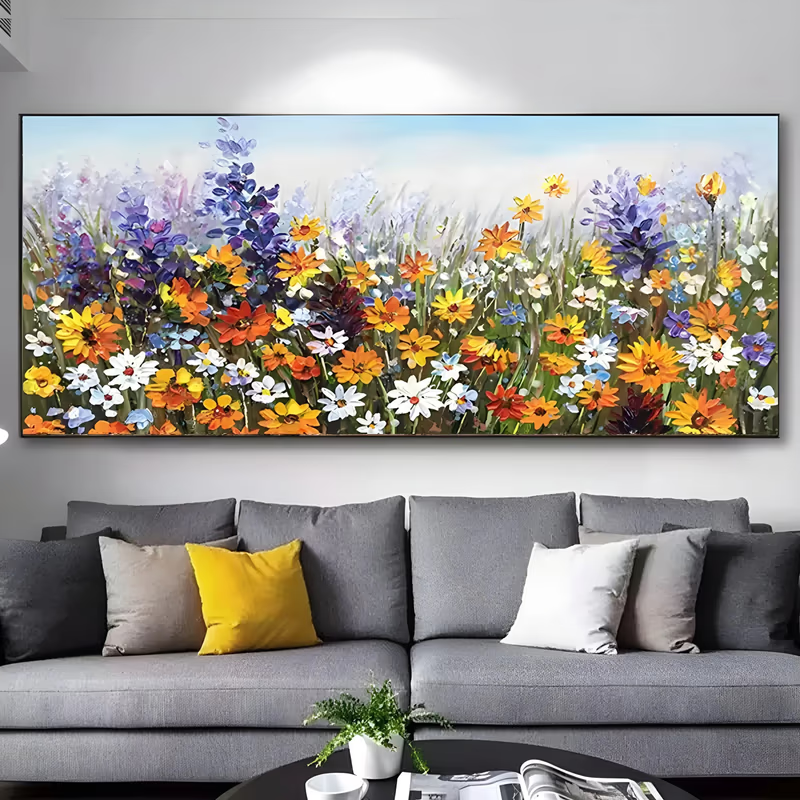
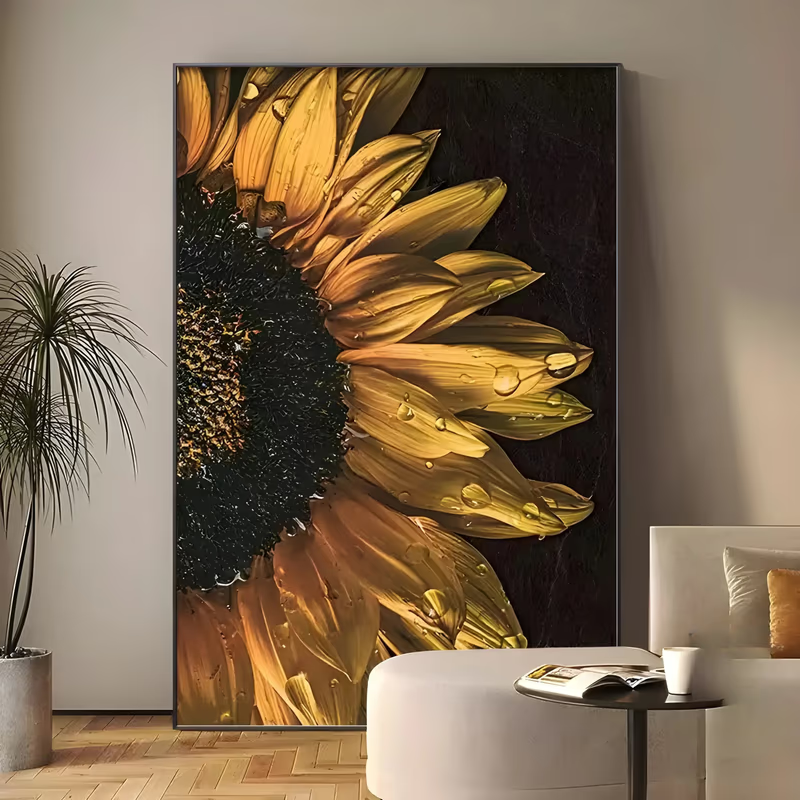
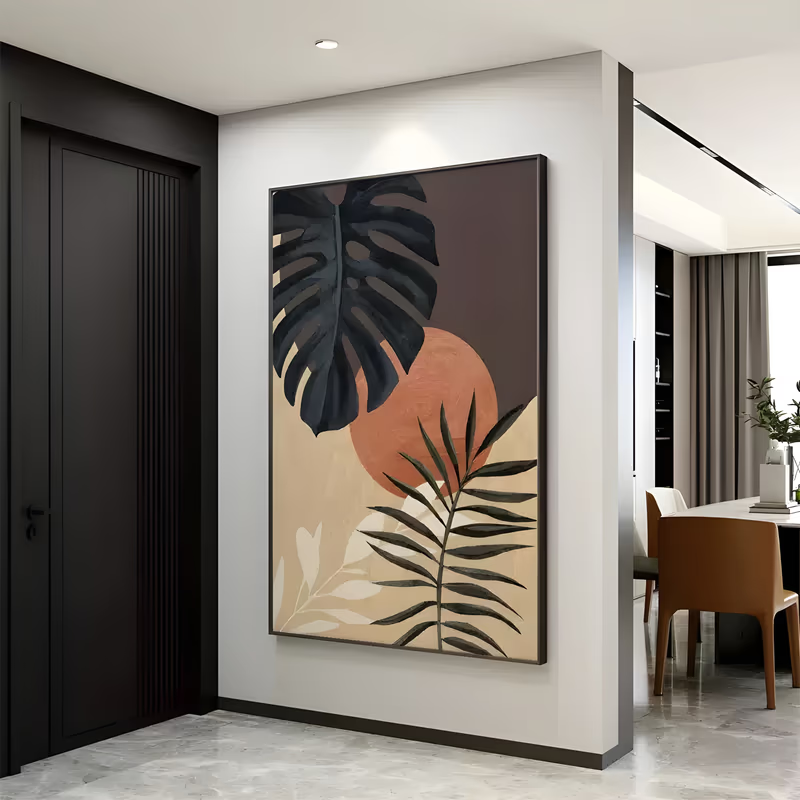
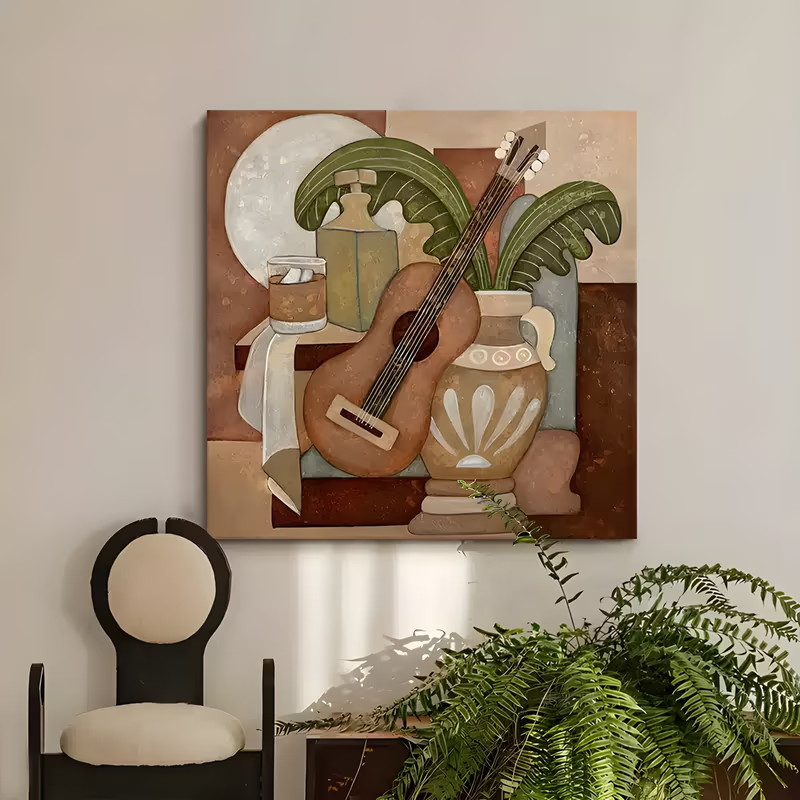
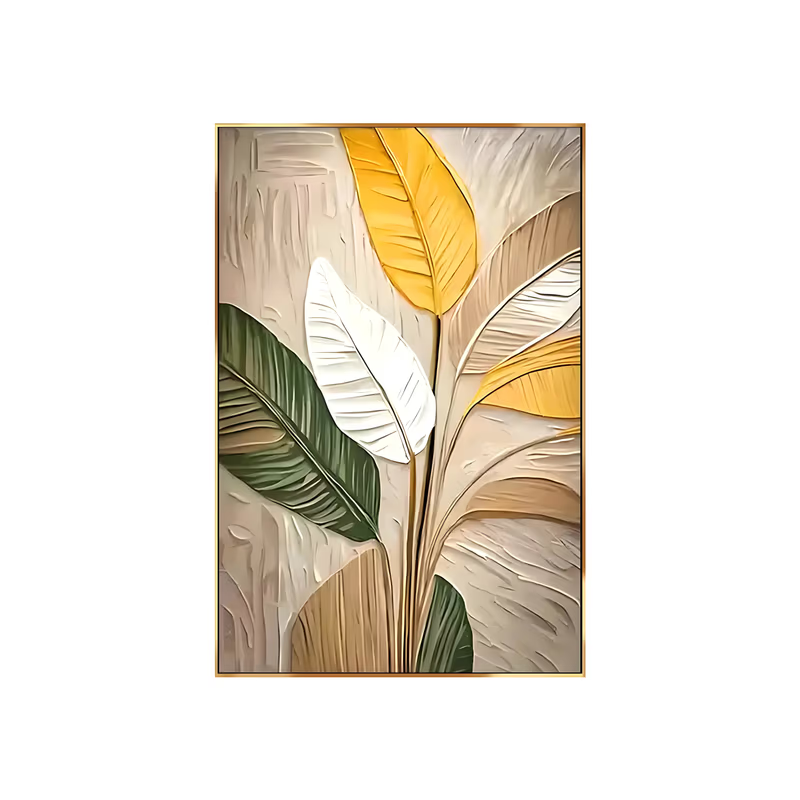
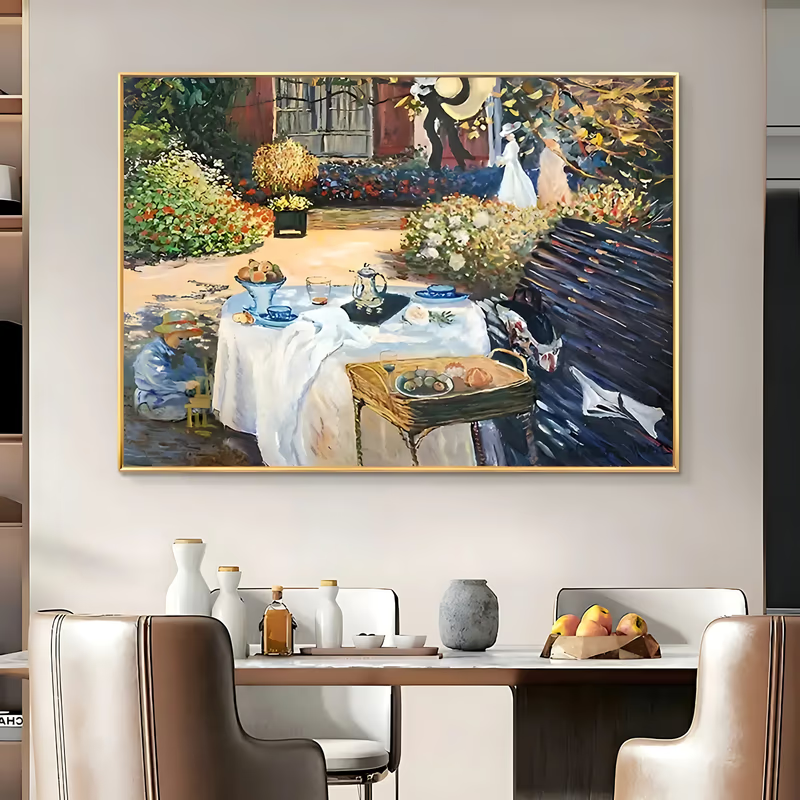
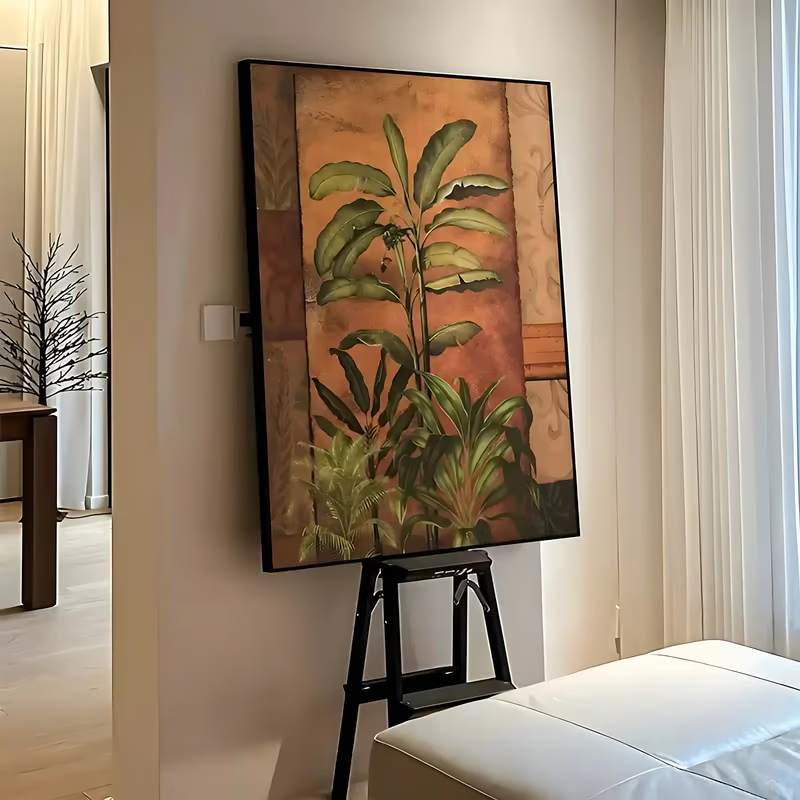
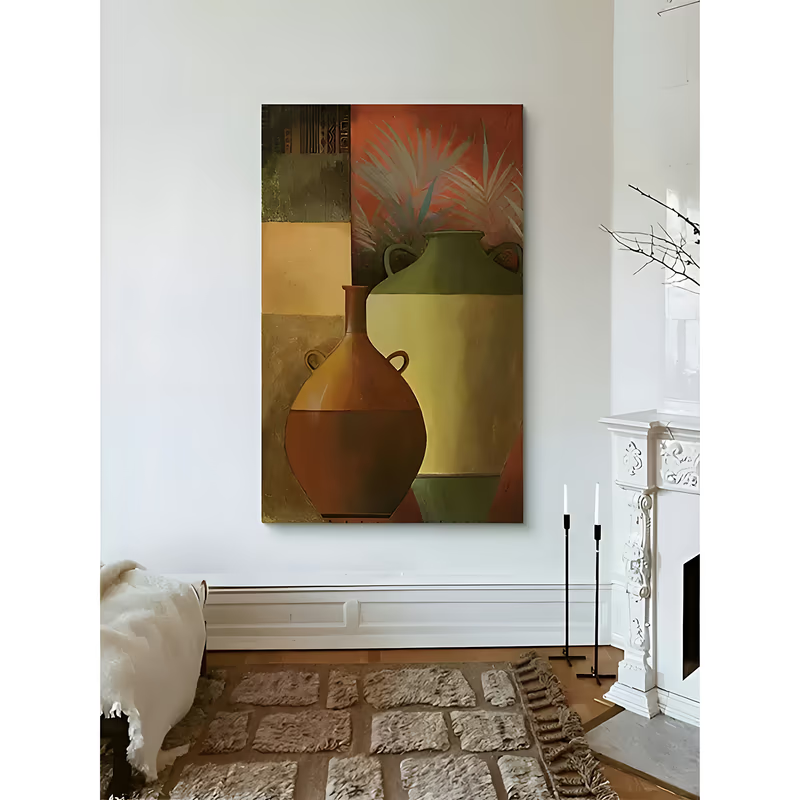
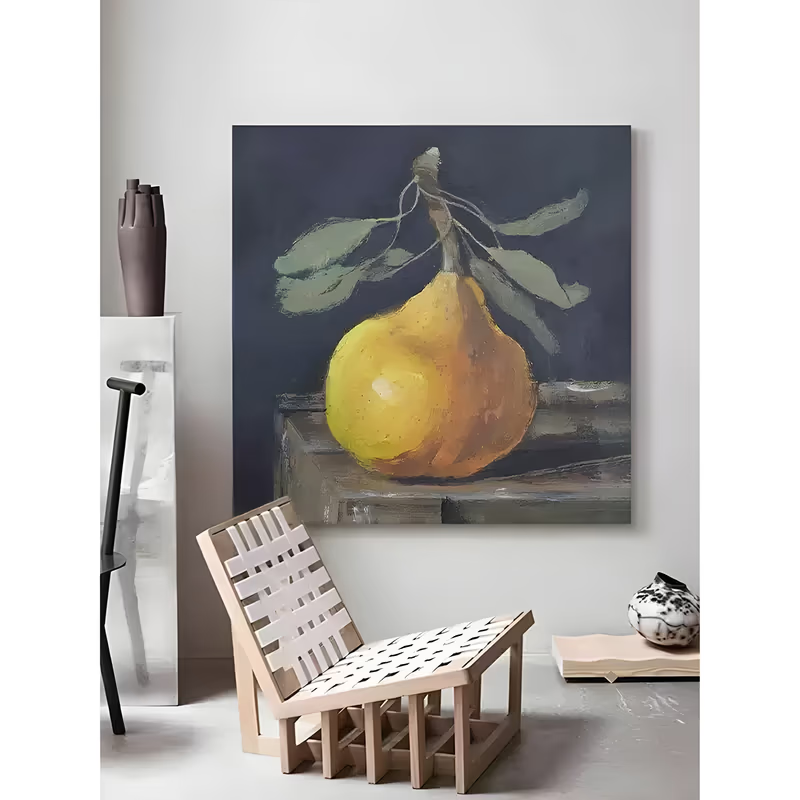
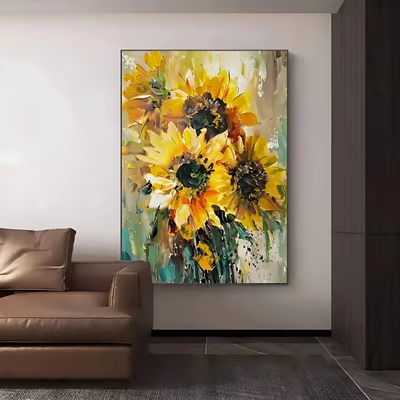
Sunflowers in jugs and glass vases, a pumpkin with dark plums, wine bottles with grapes and apples, a terracotta jug beside palm fronds. Still lifes are domestic by nature, which makes them the warmest choice for dining rooms, kitchens, wine bars and bistros. More in still life paintings.
Earth-tone texture and warm abstracts
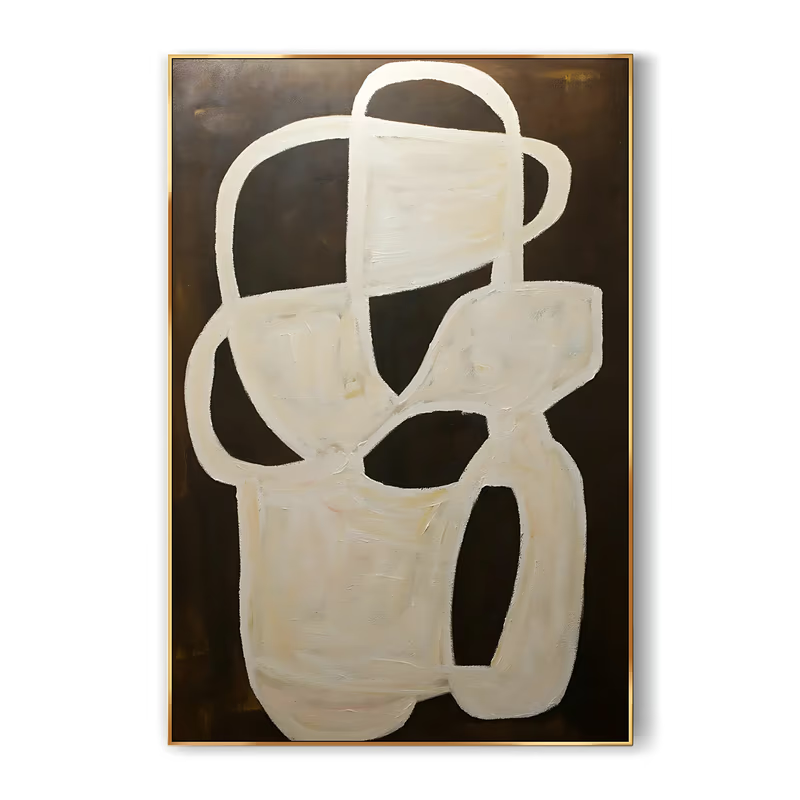
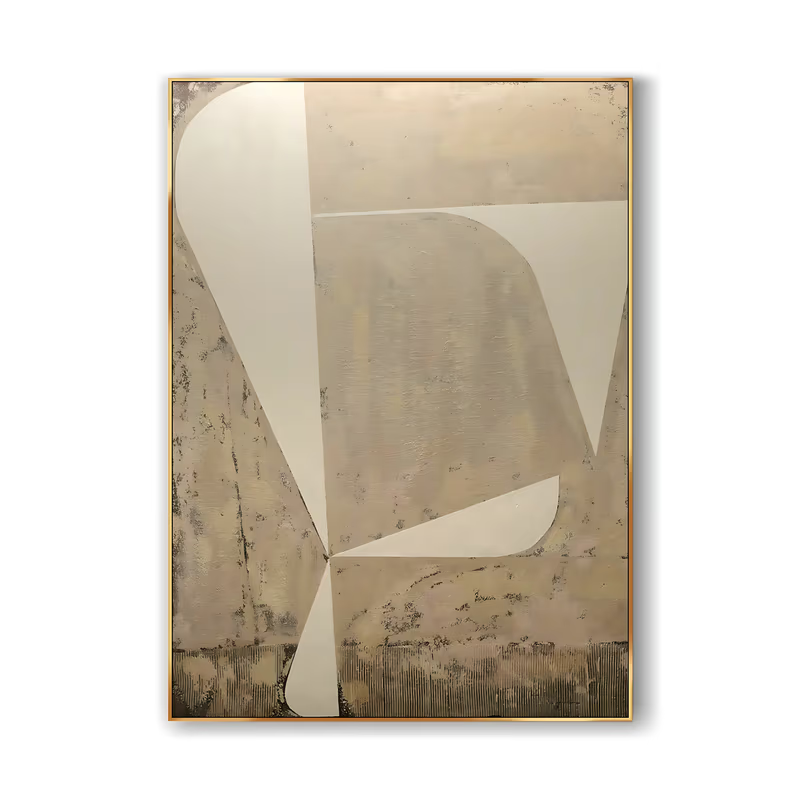
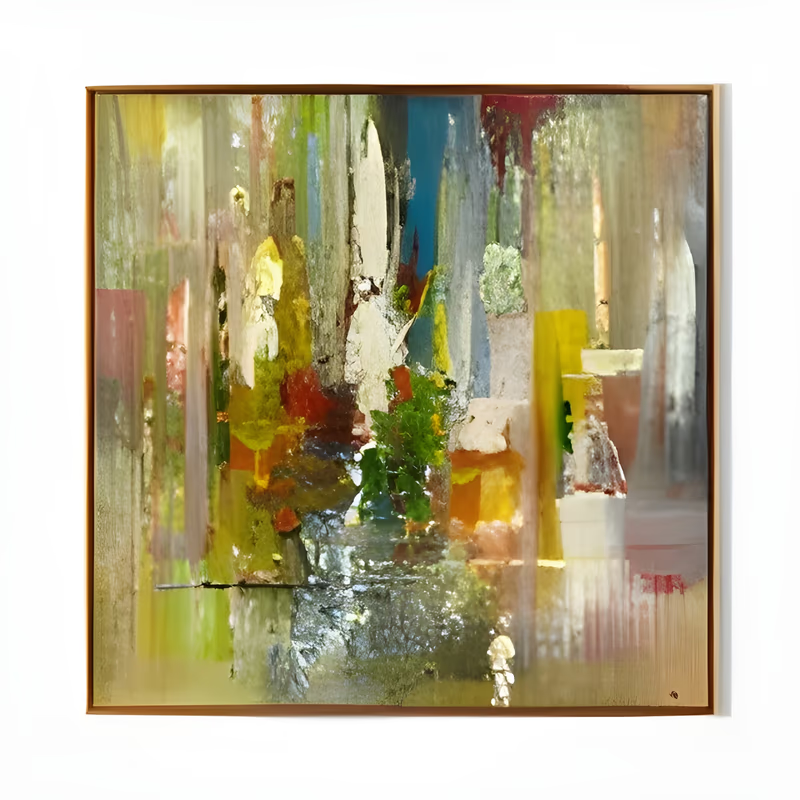
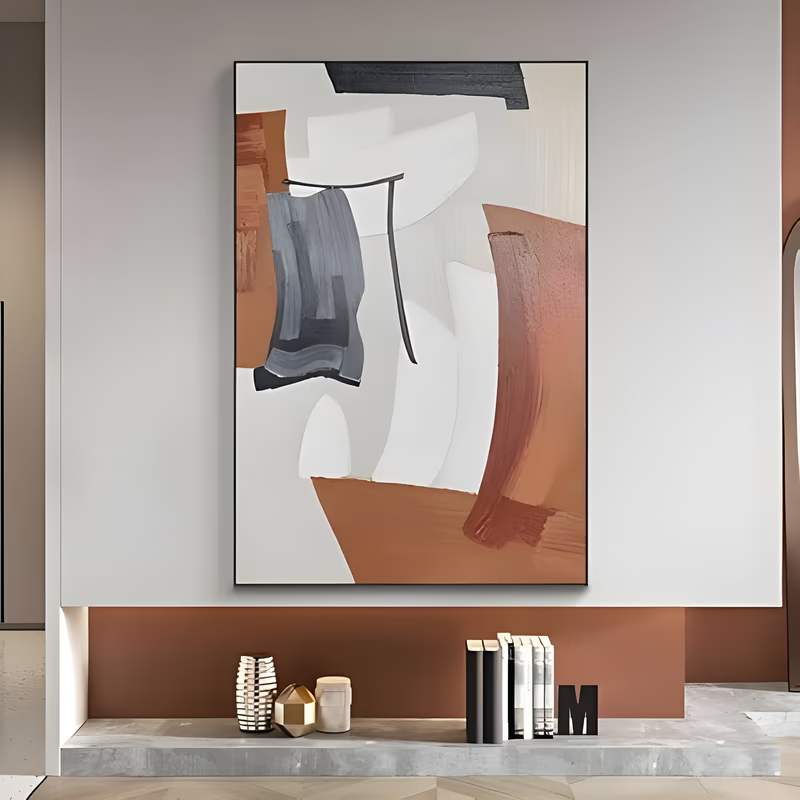
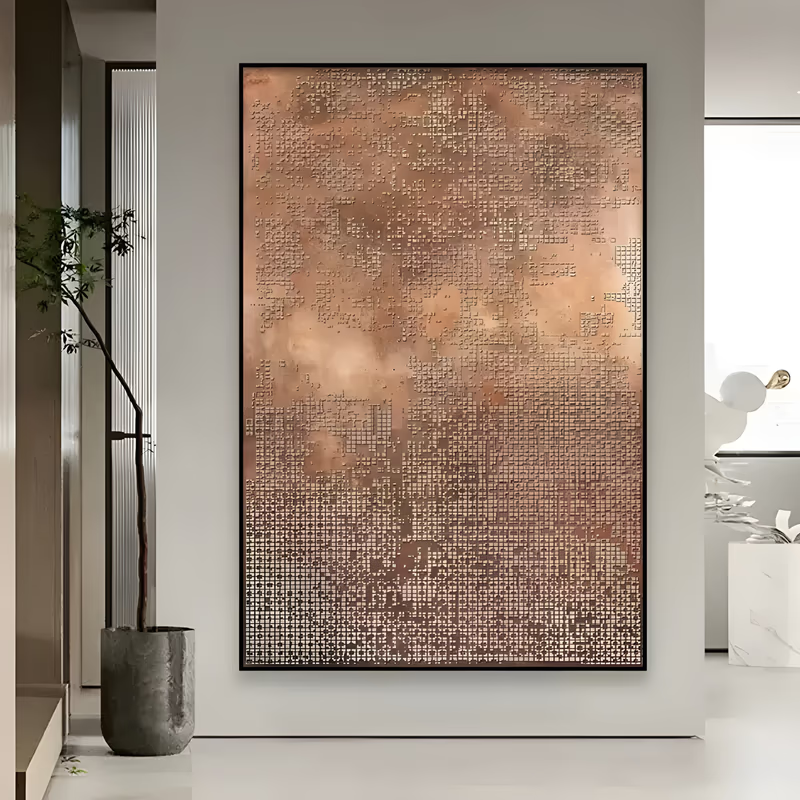
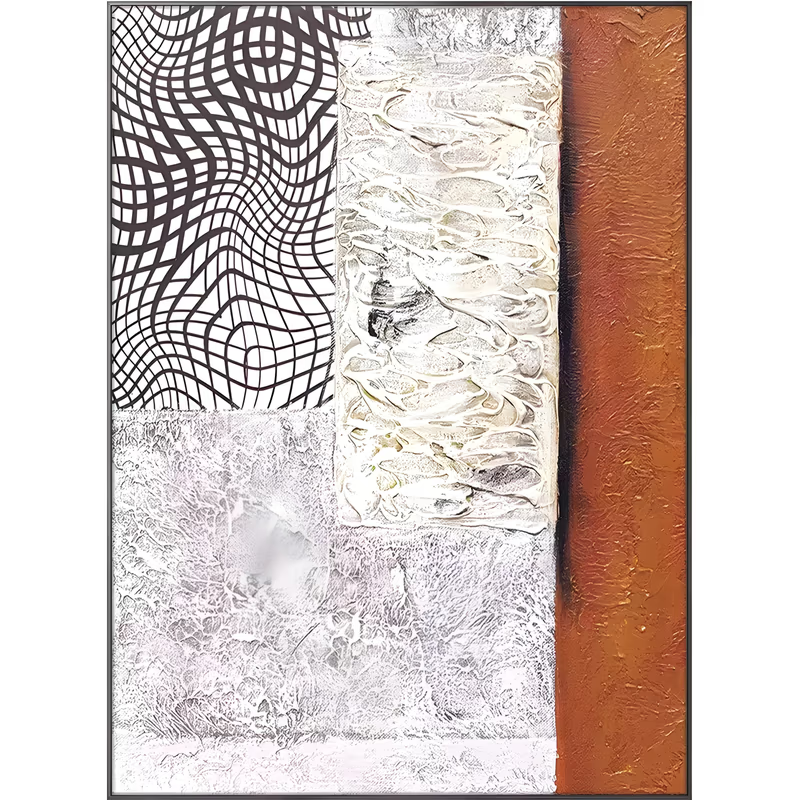
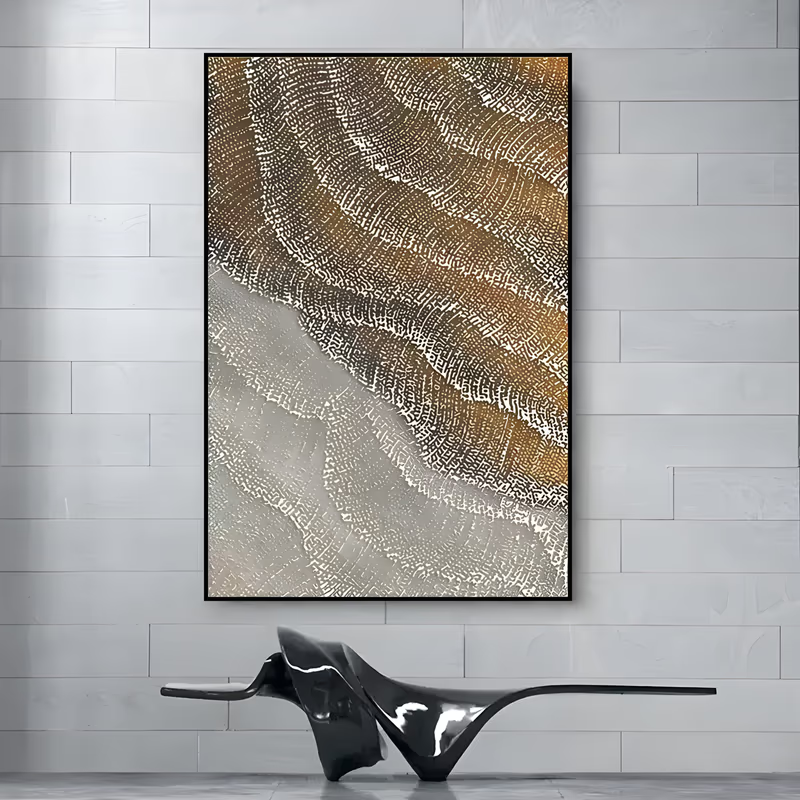
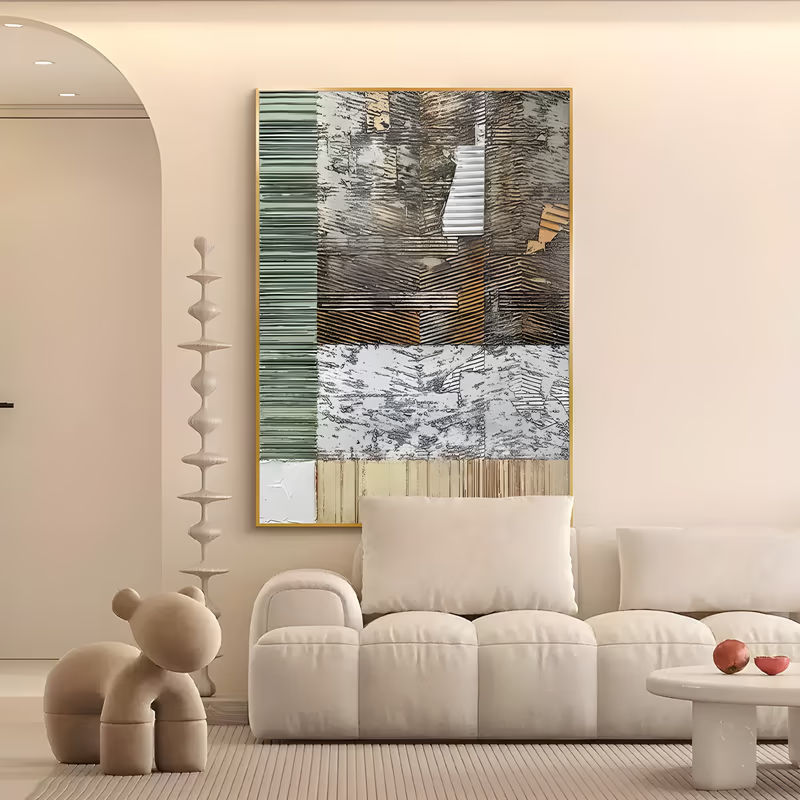
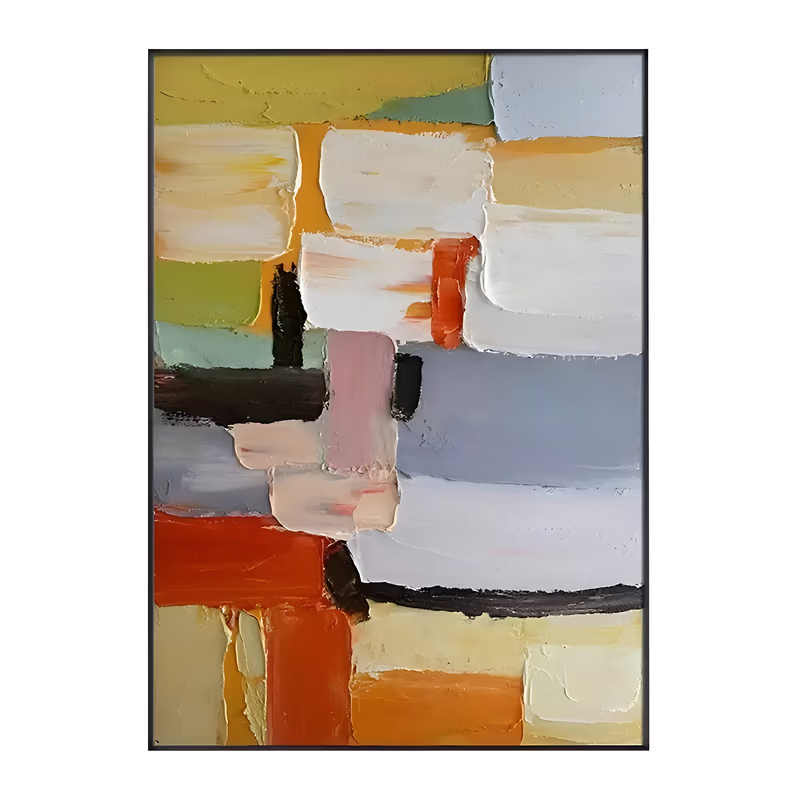
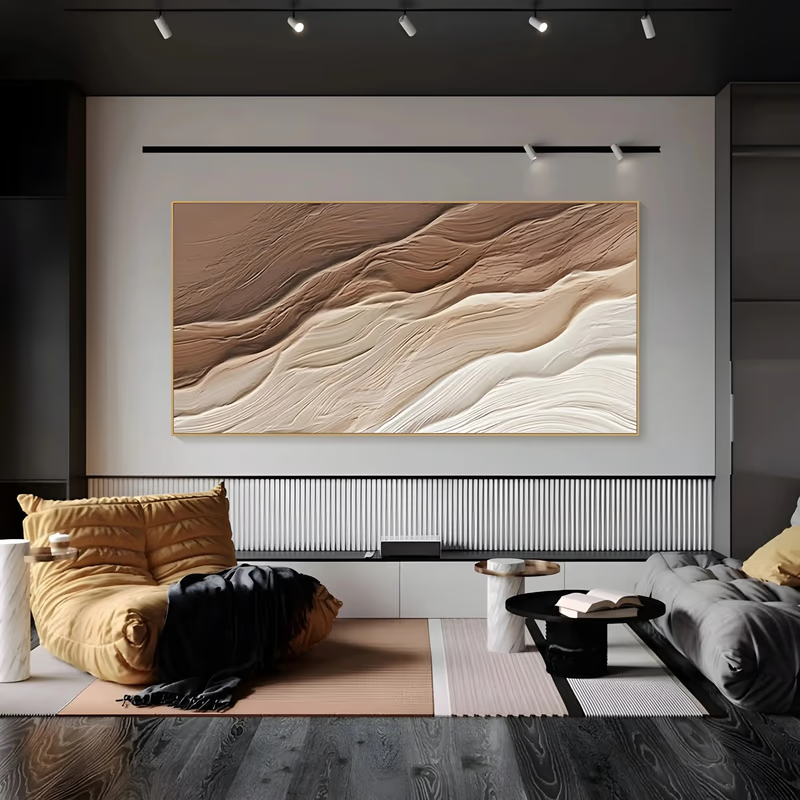
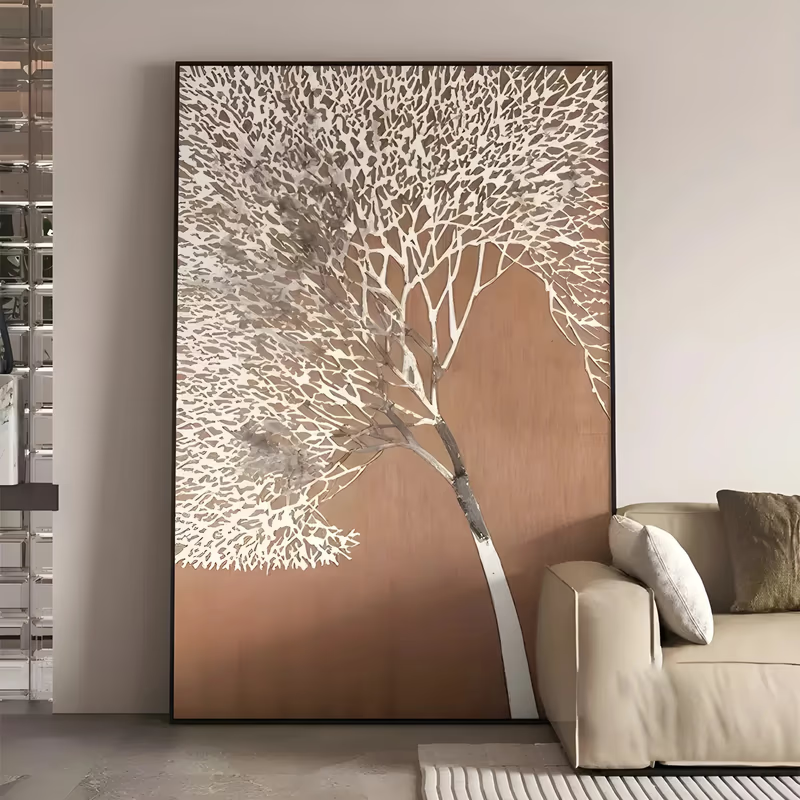
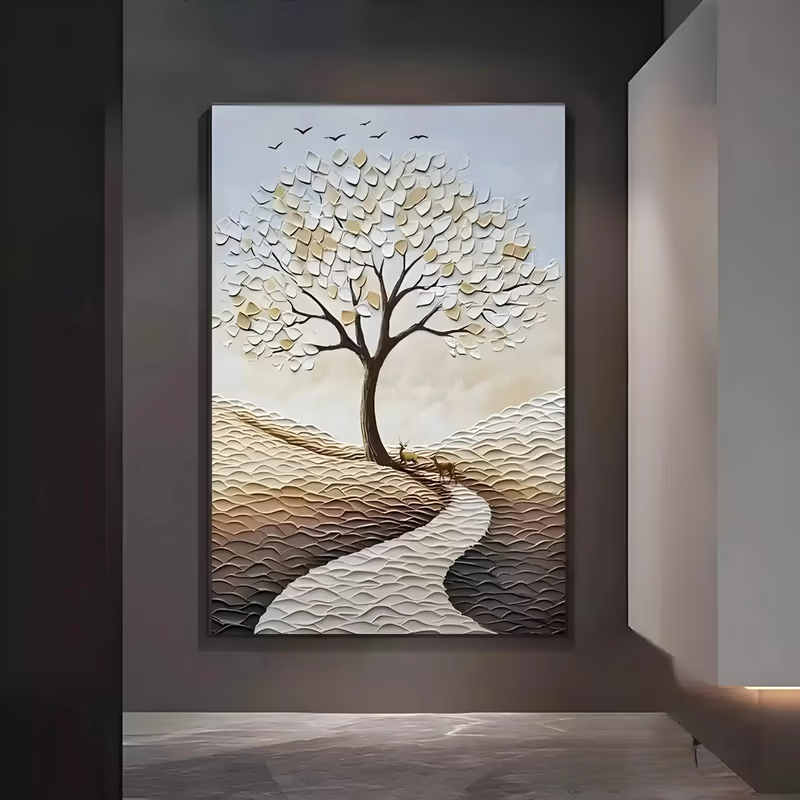
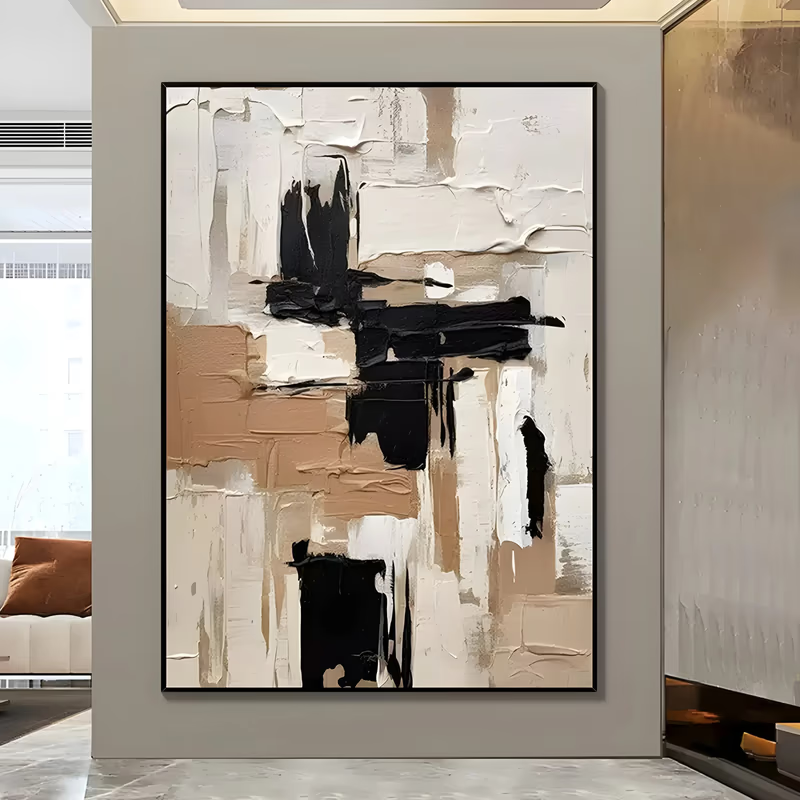
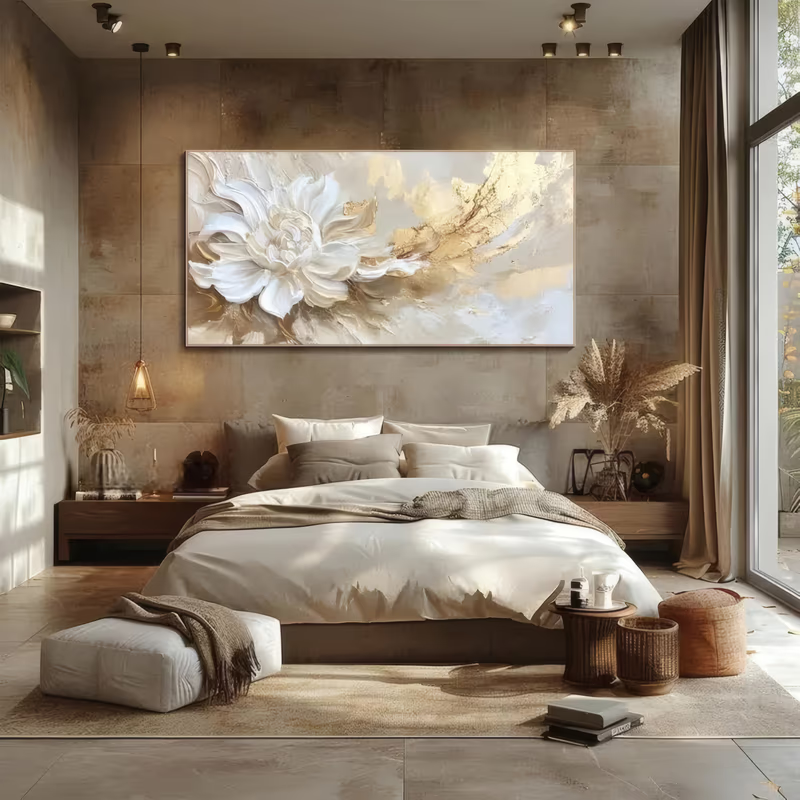
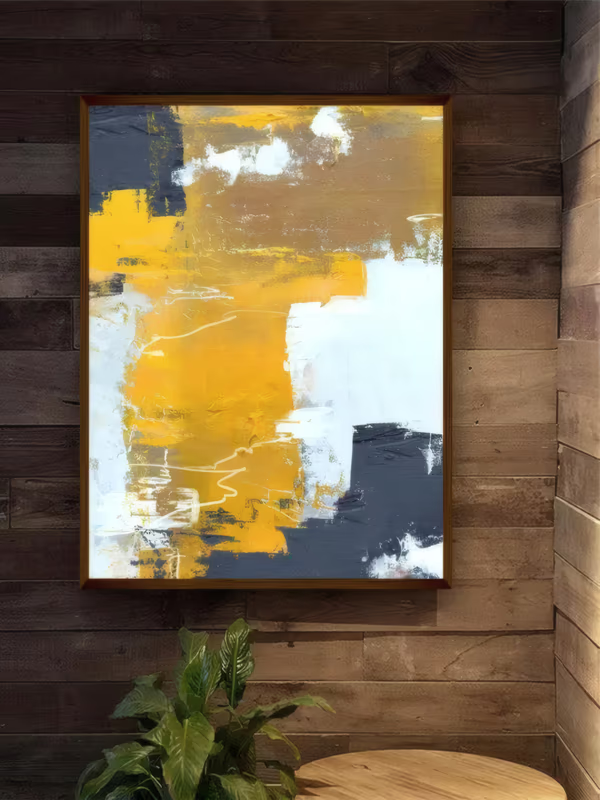
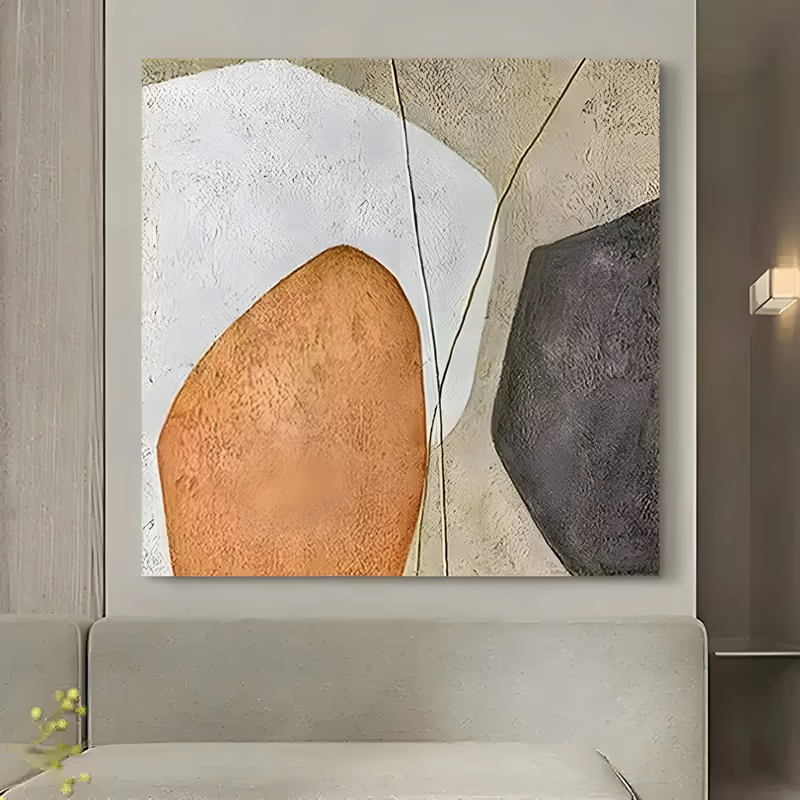
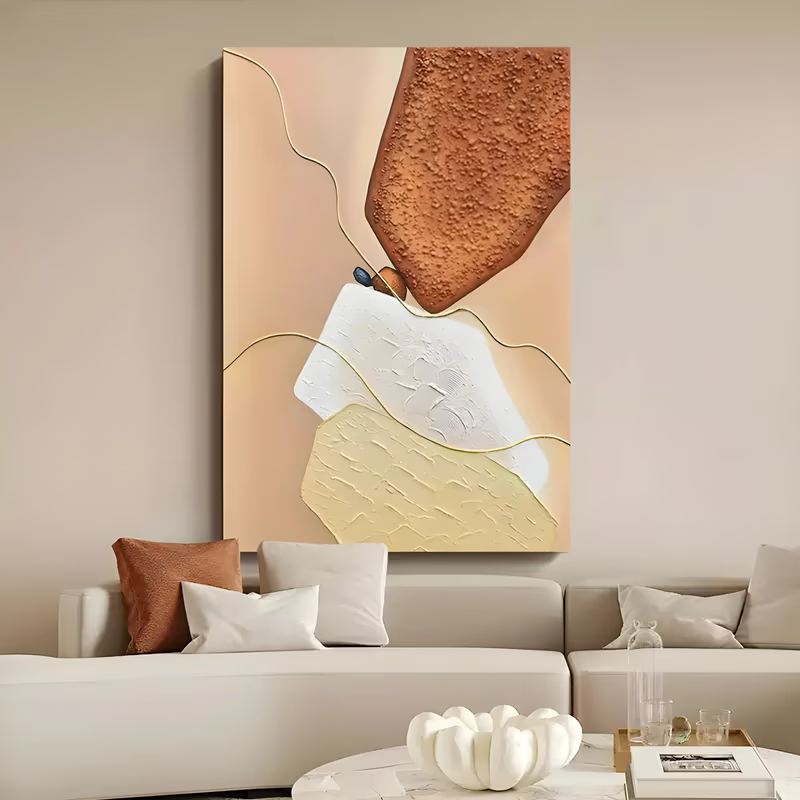
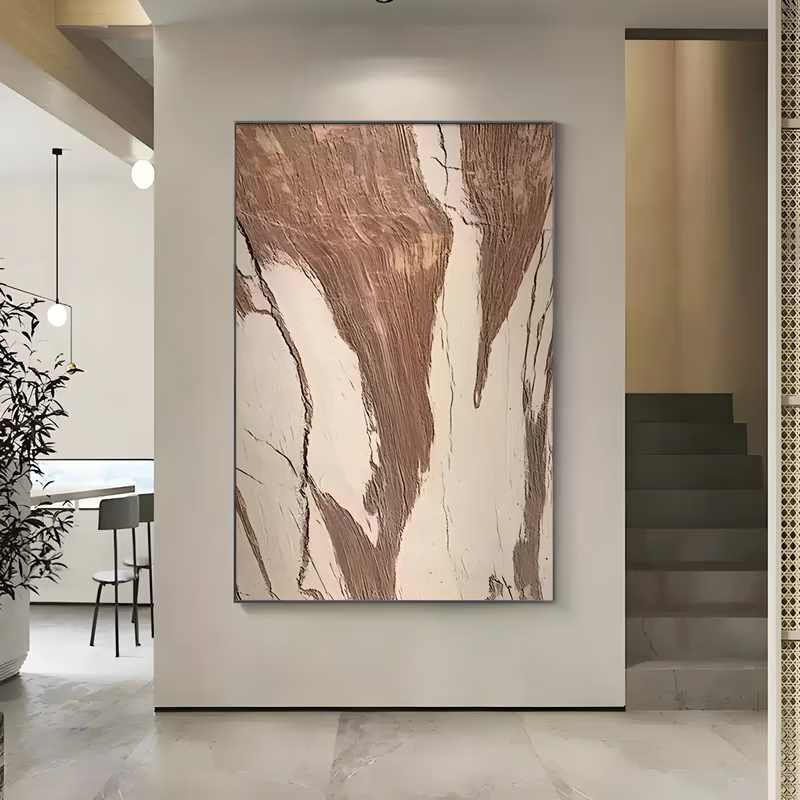
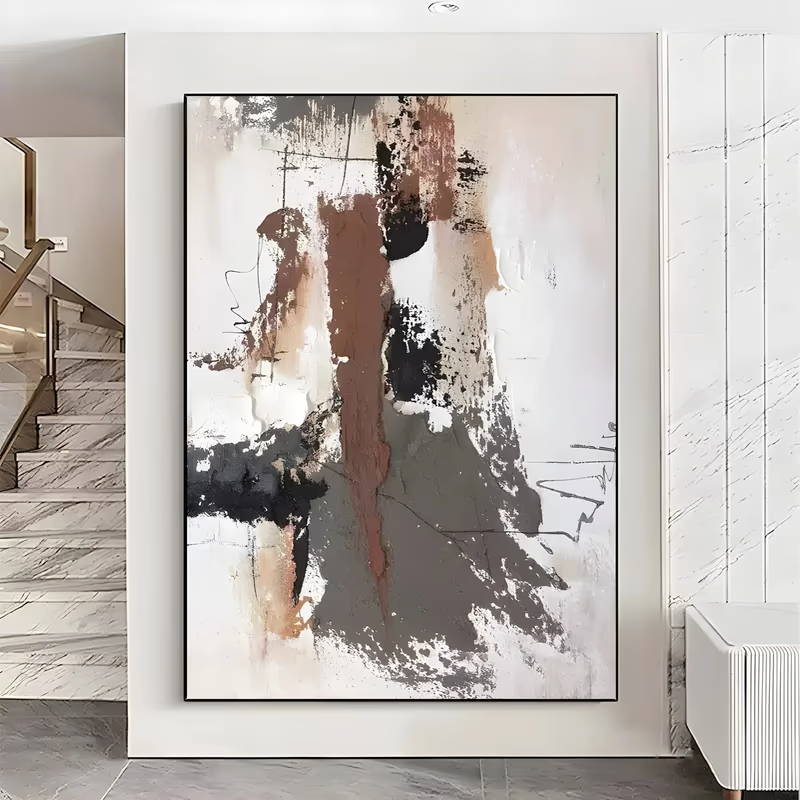
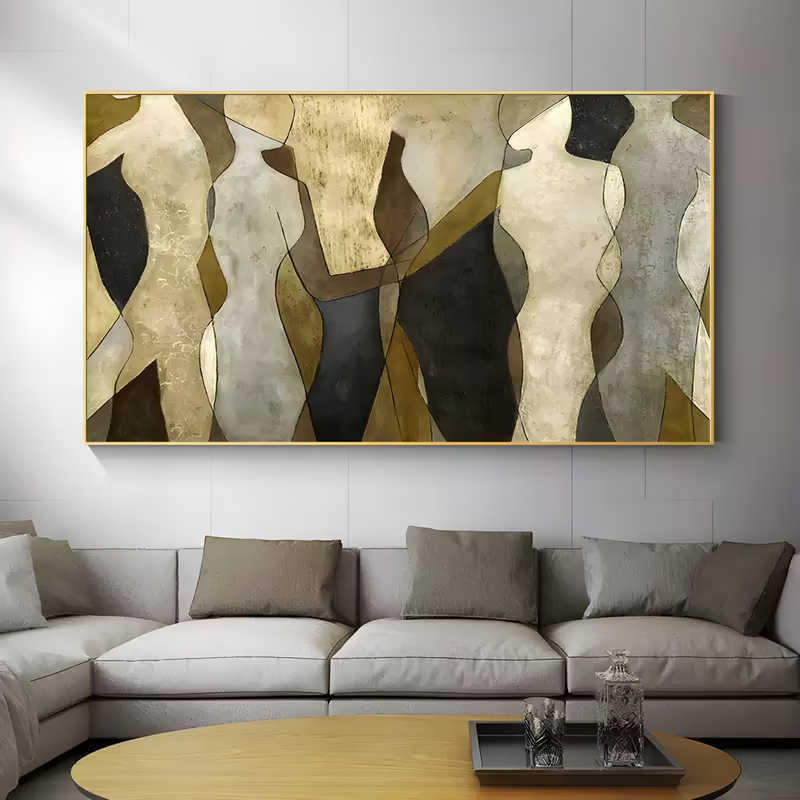
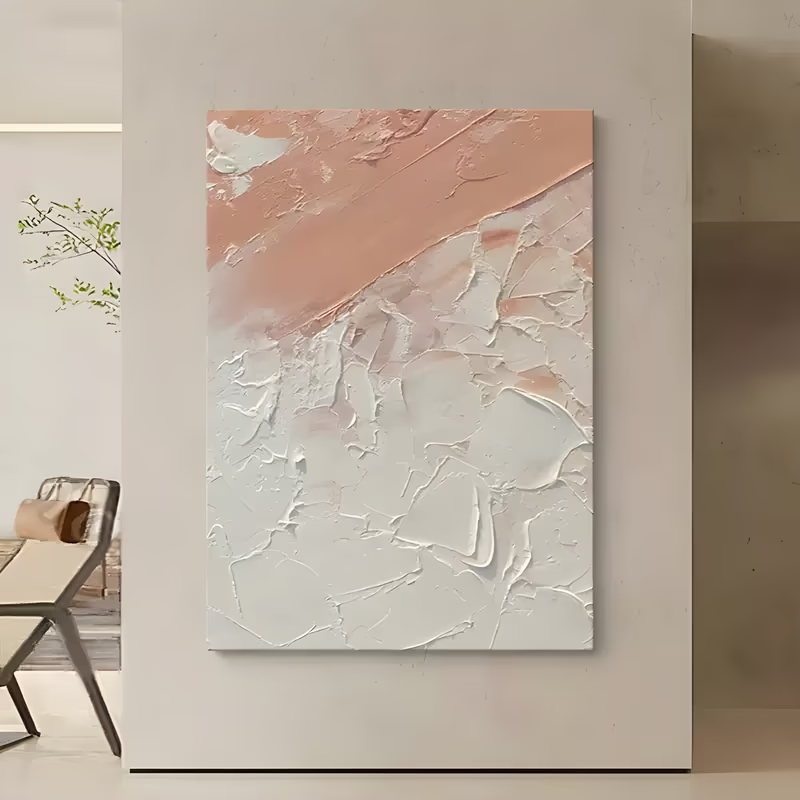
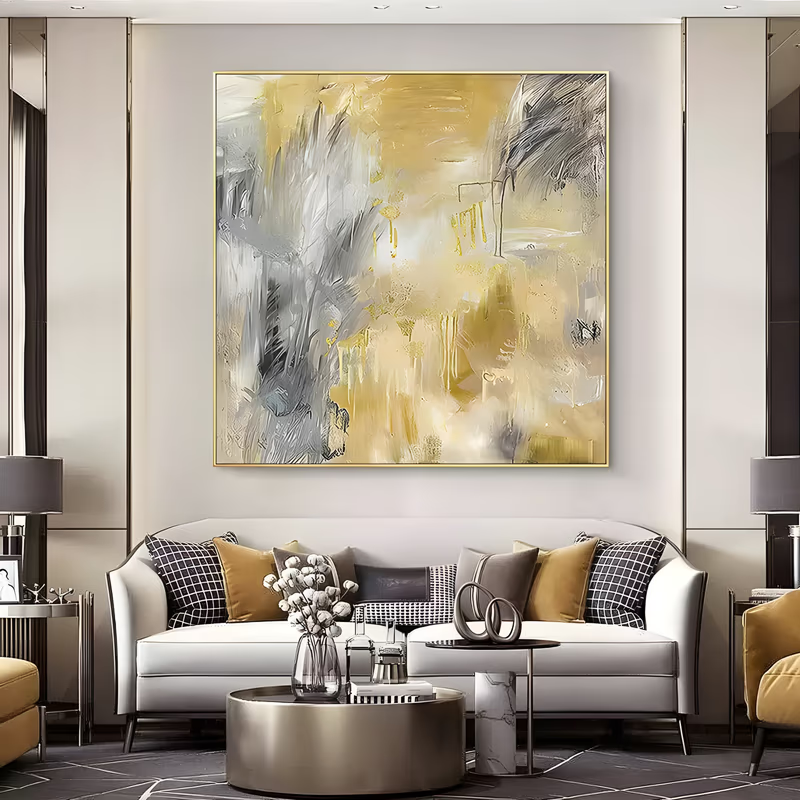
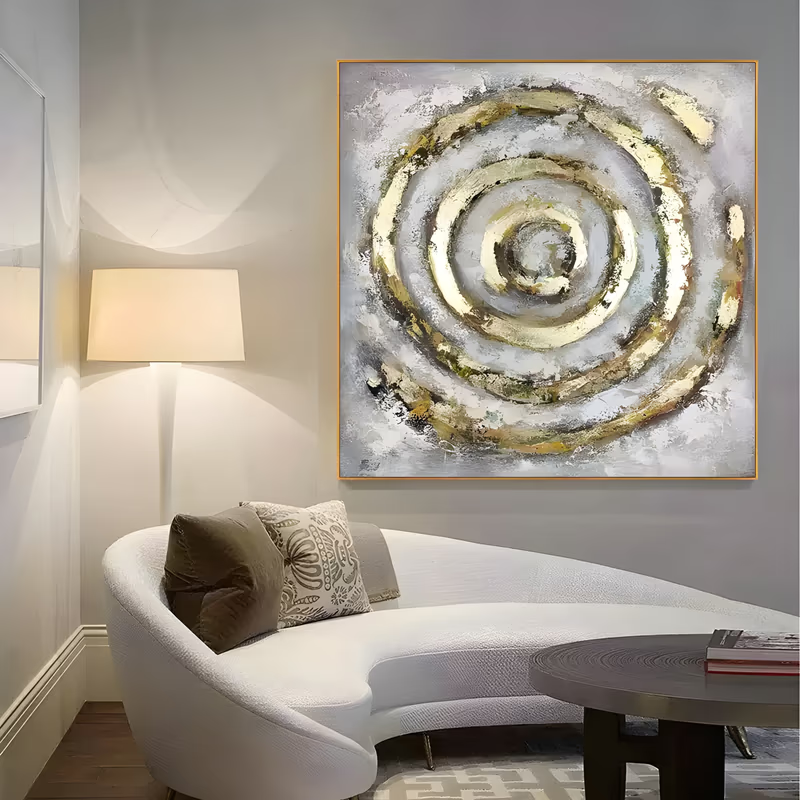
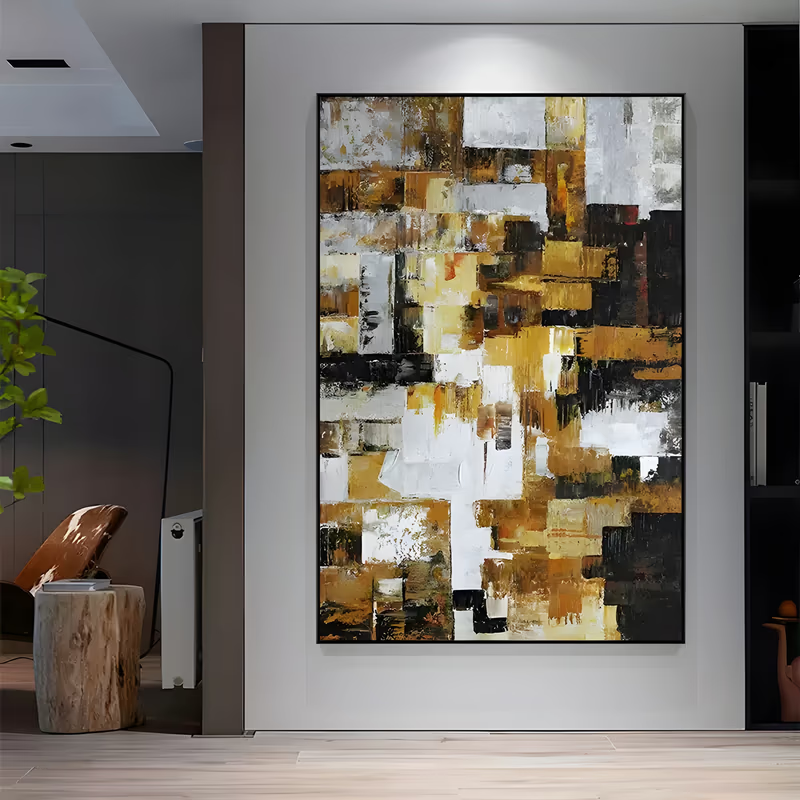
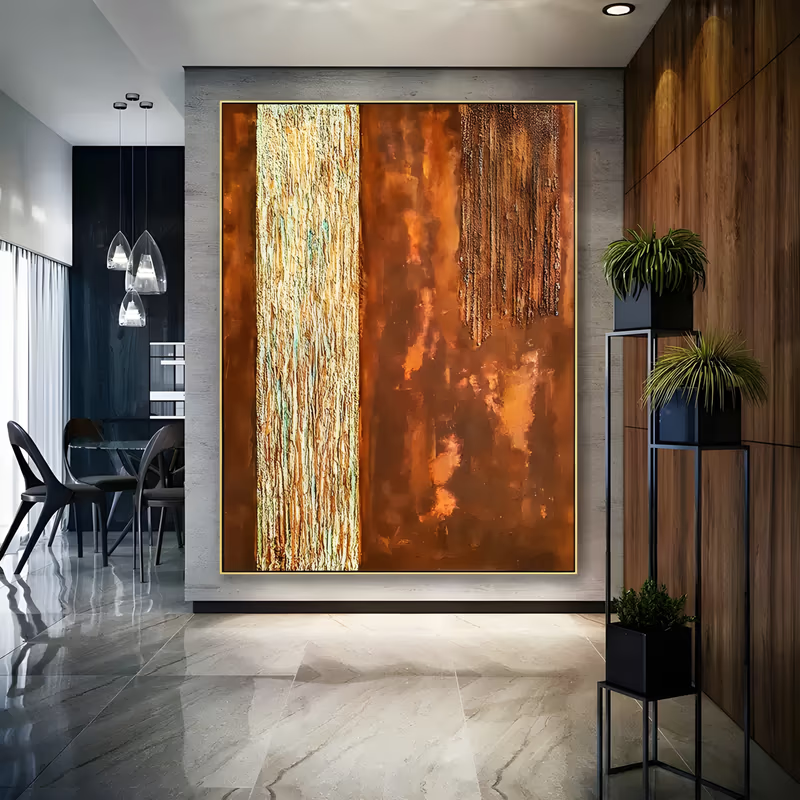
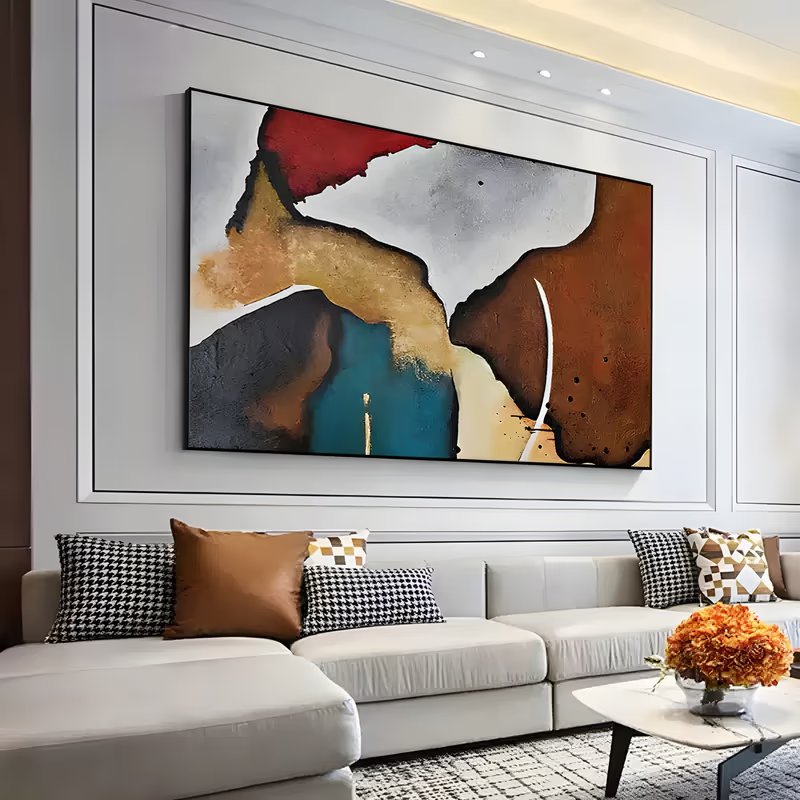
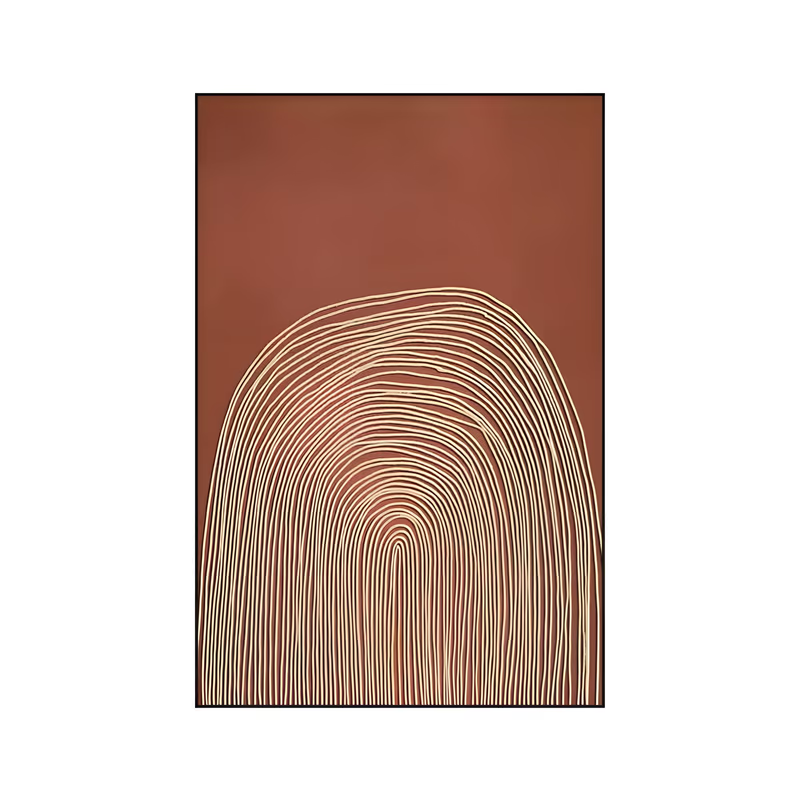
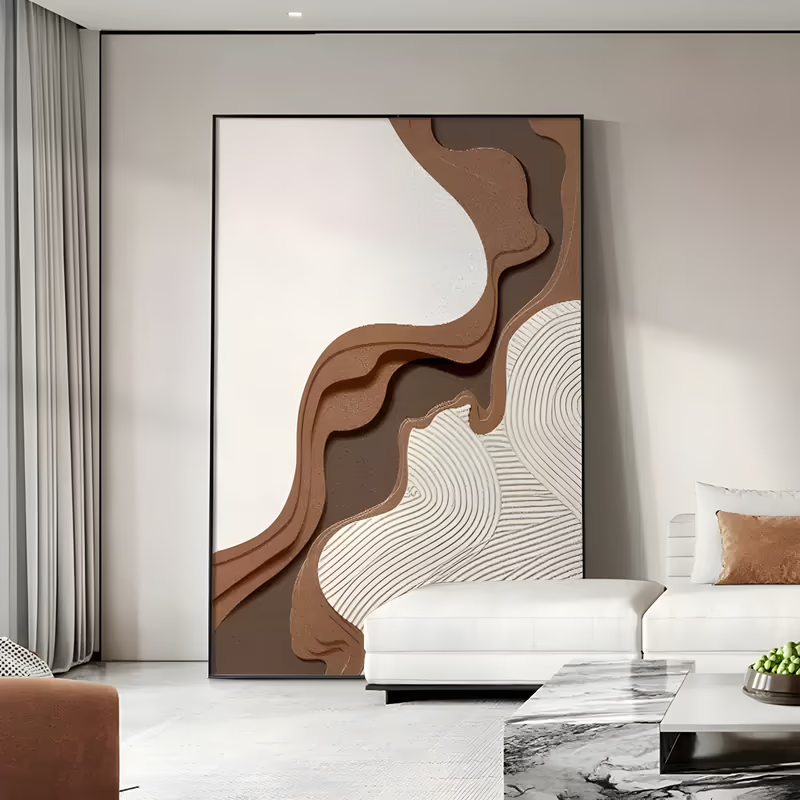
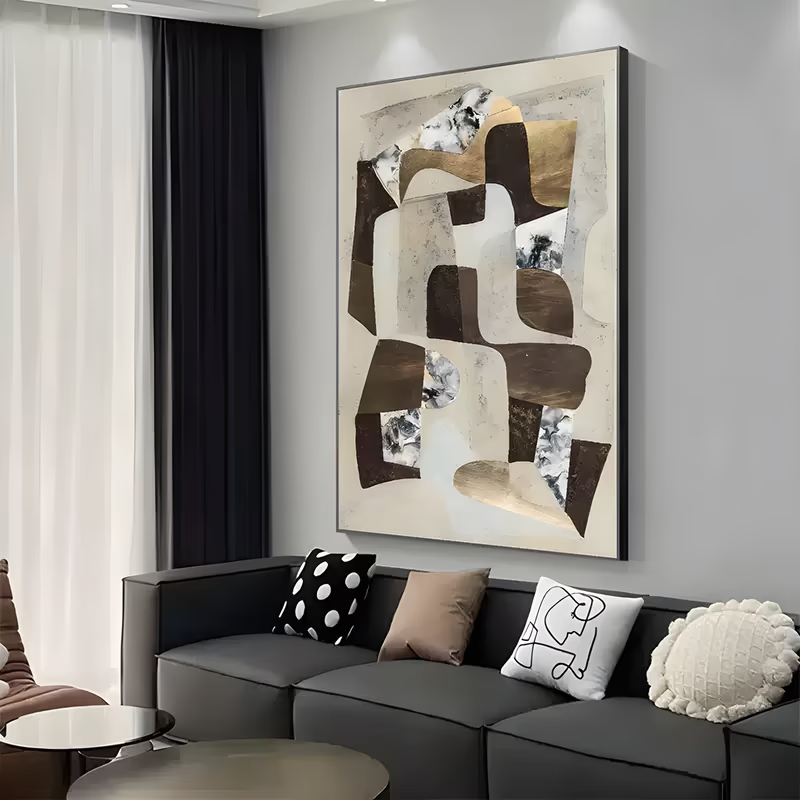
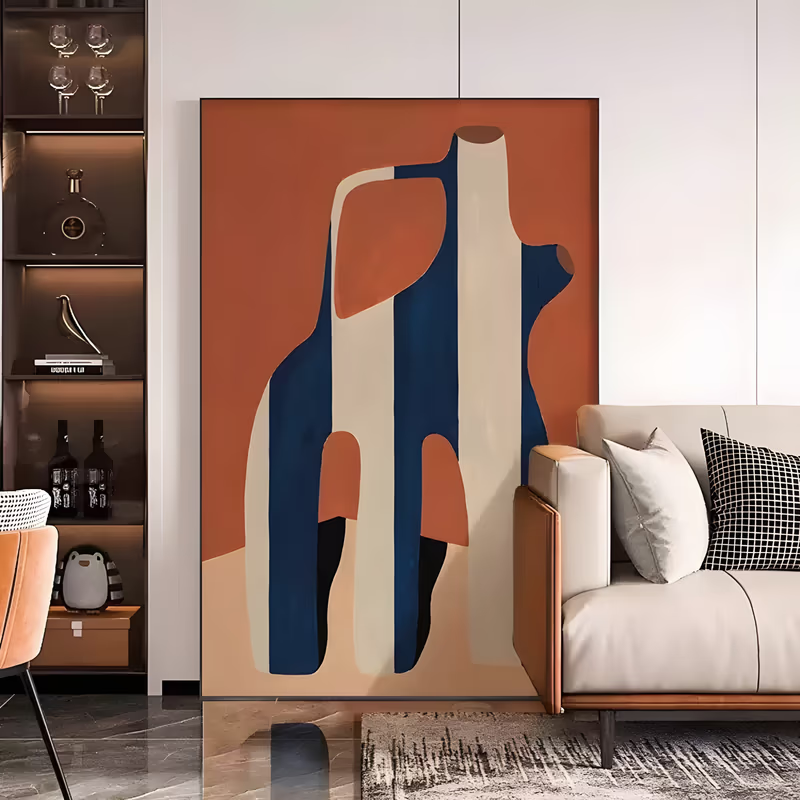
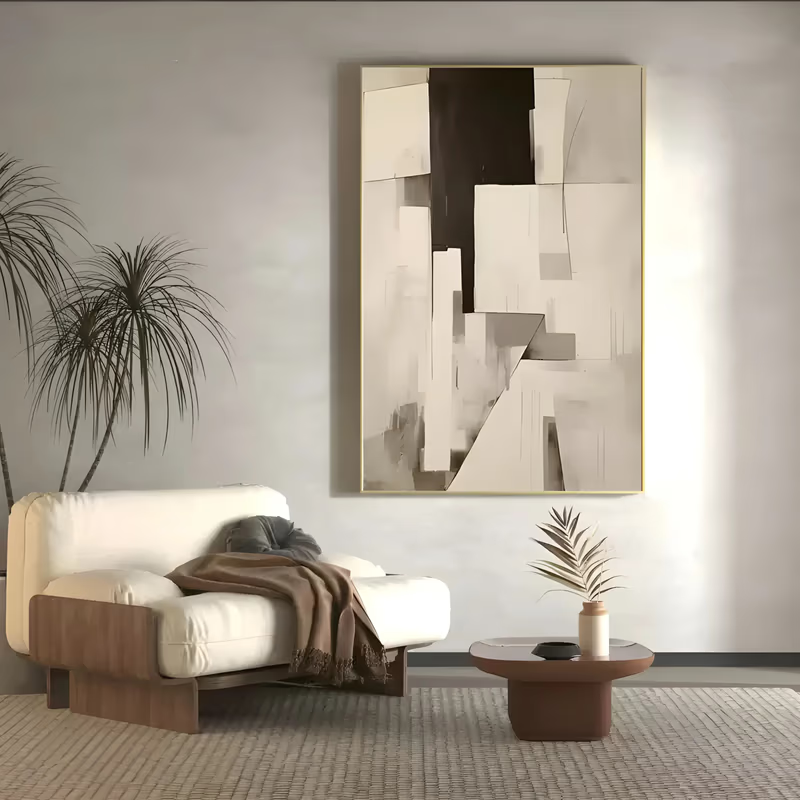
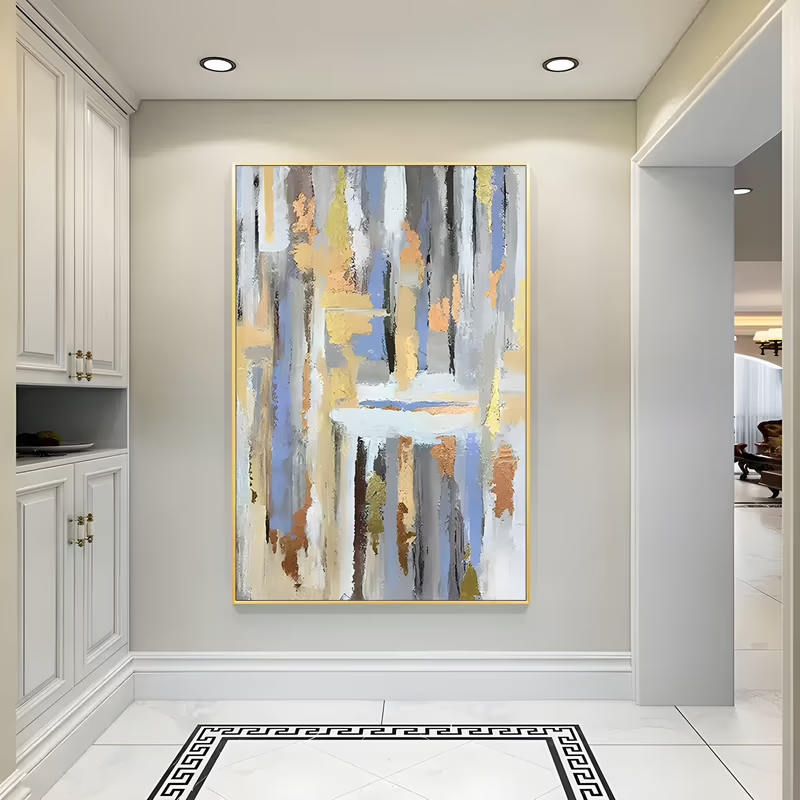
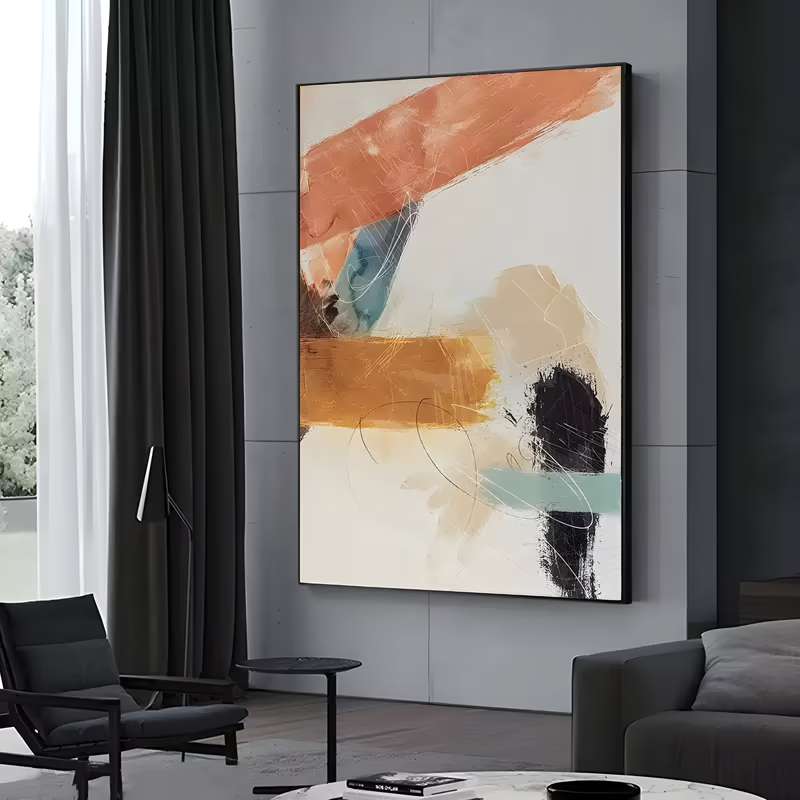
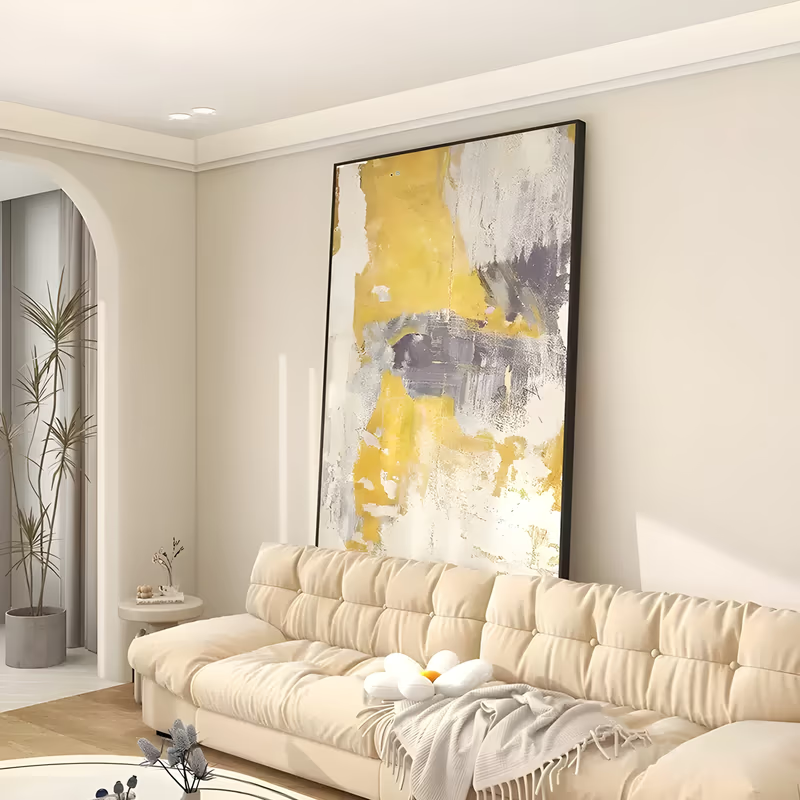
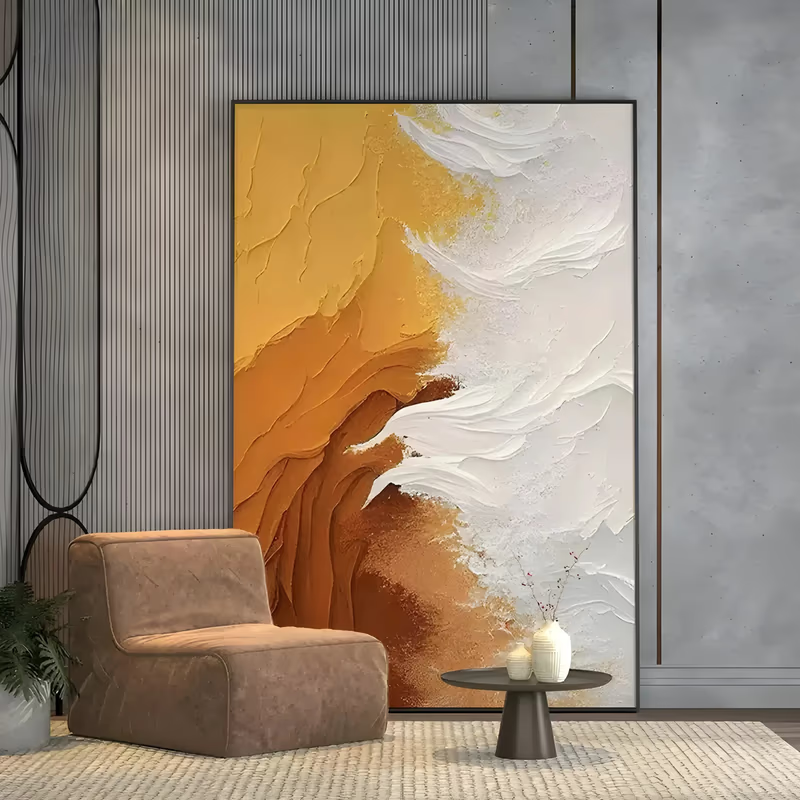
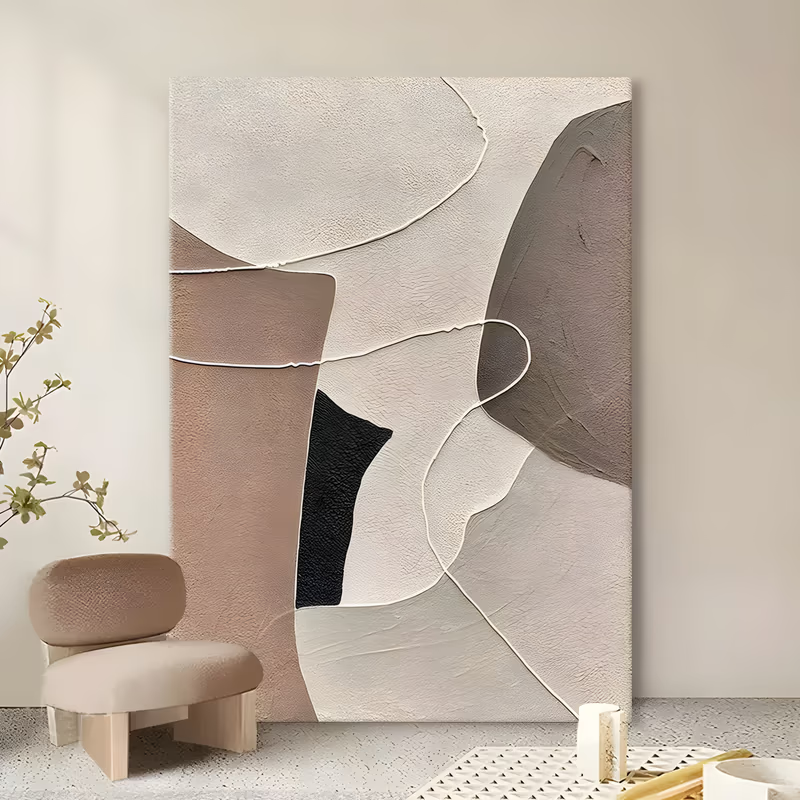
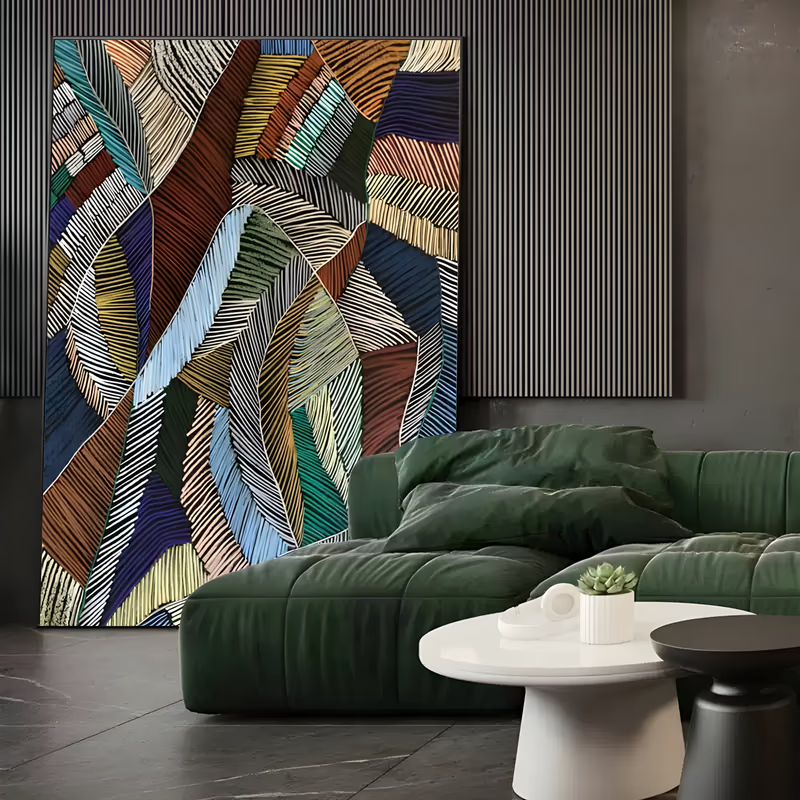
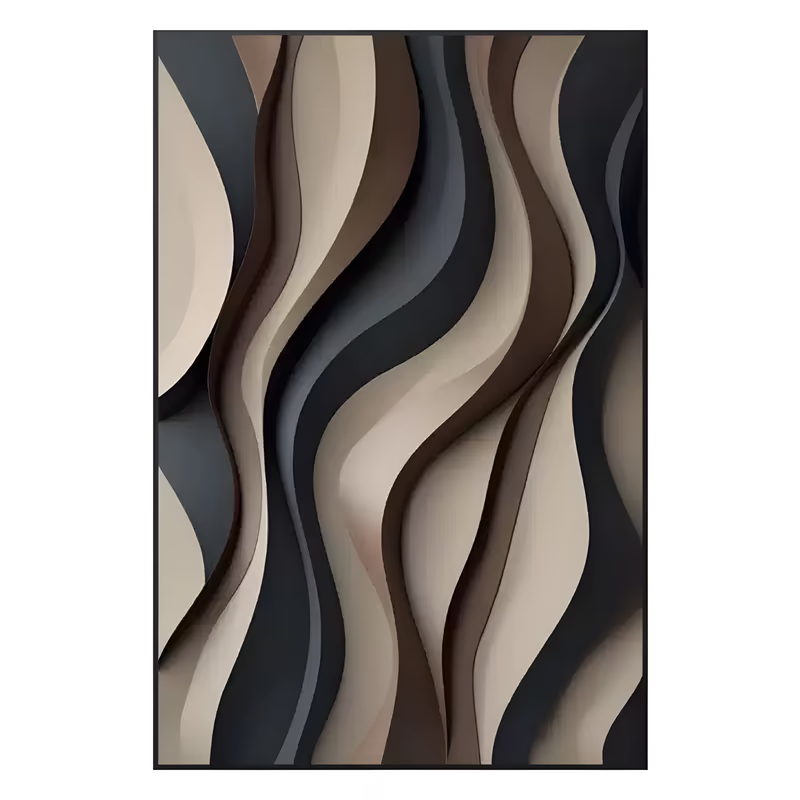
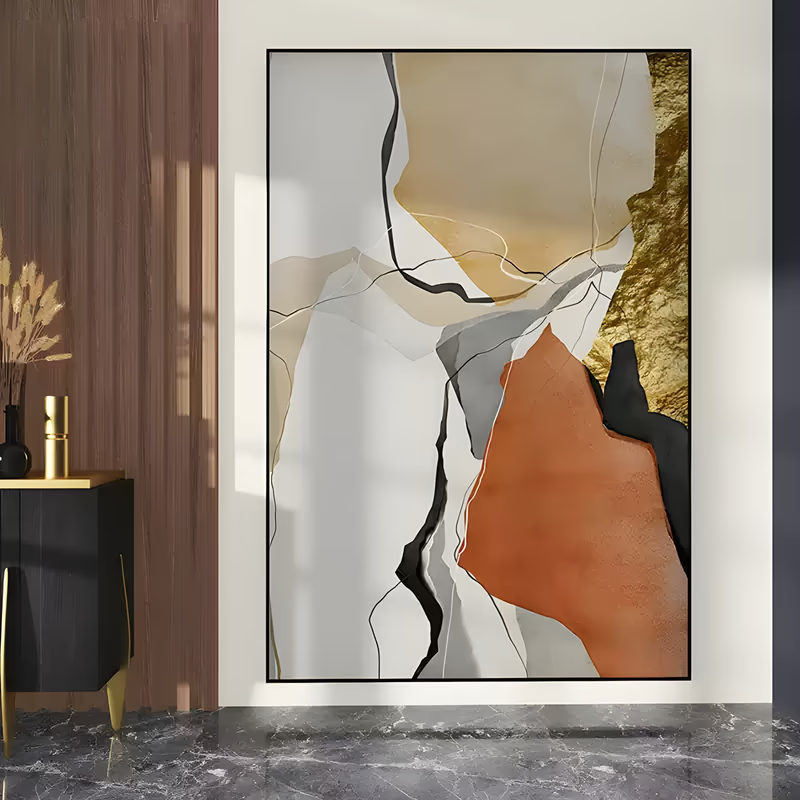
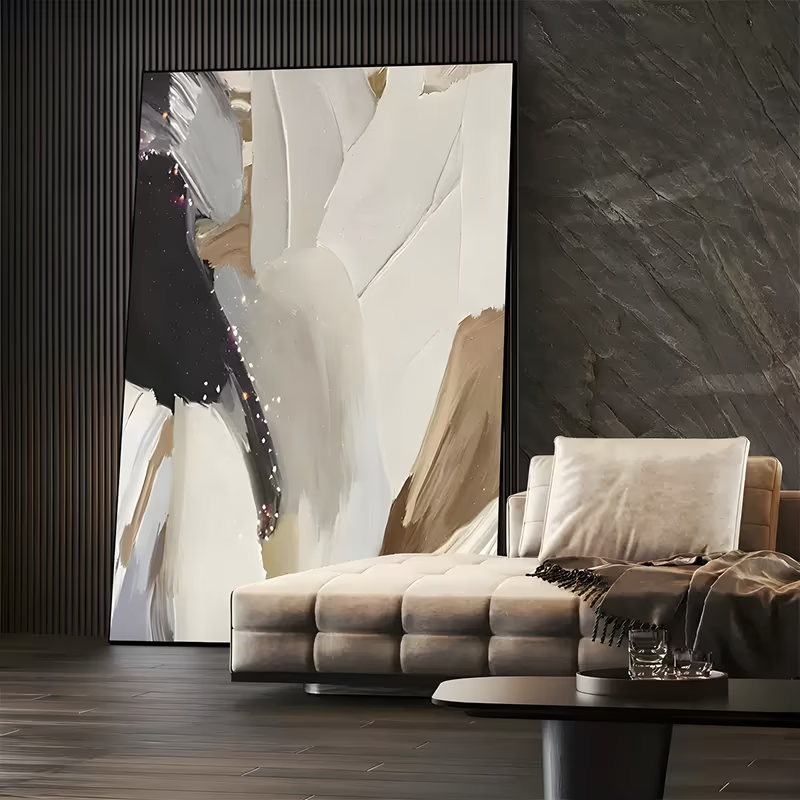
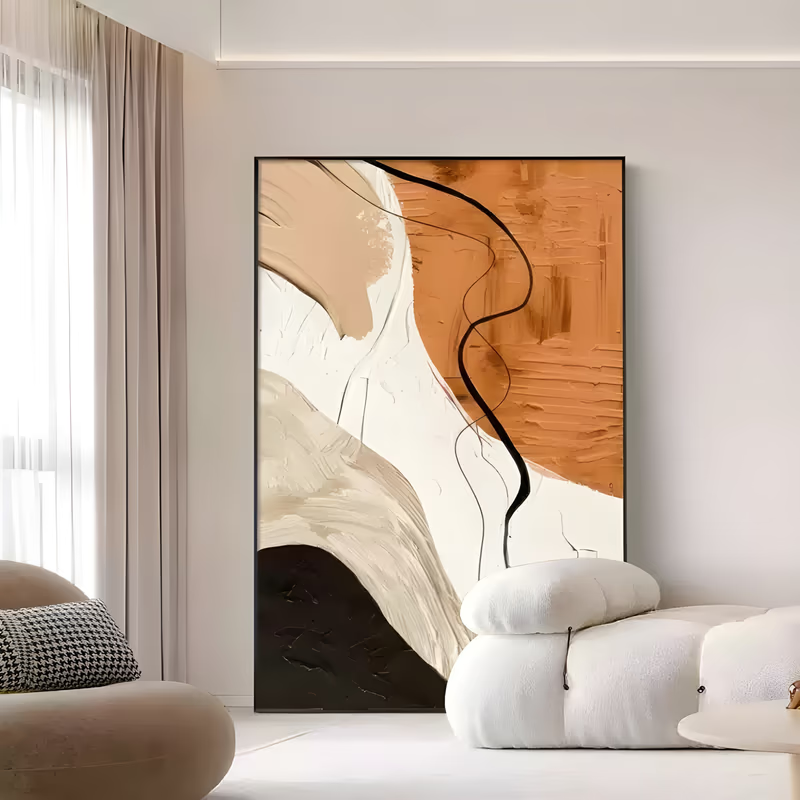
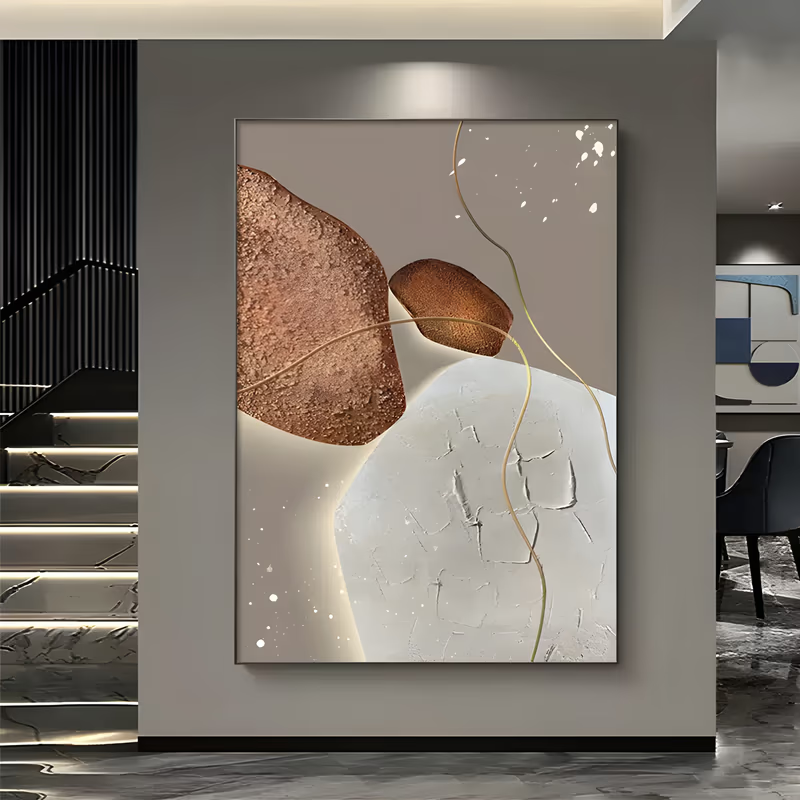
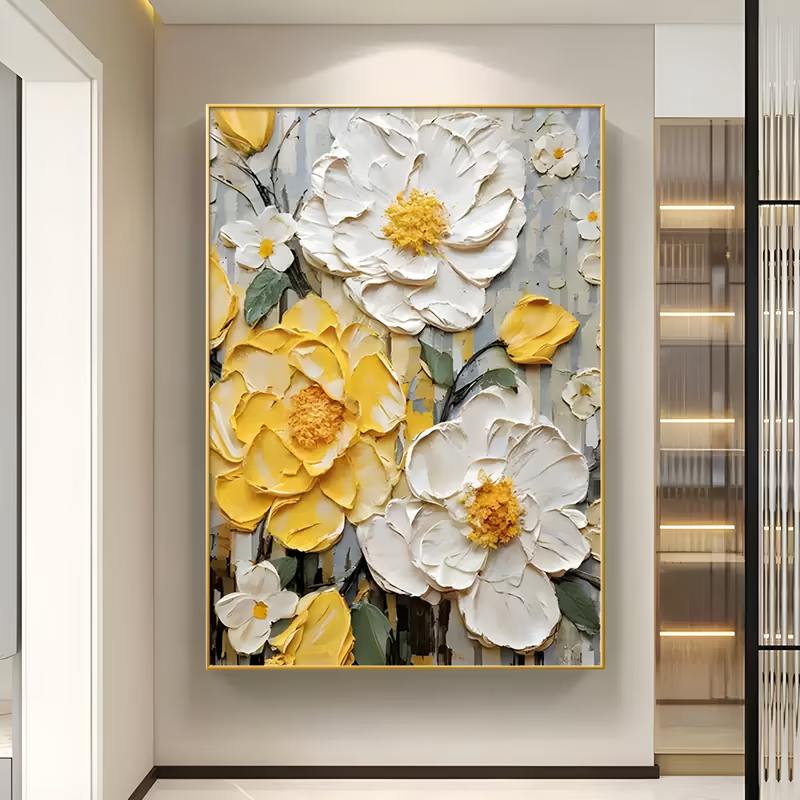
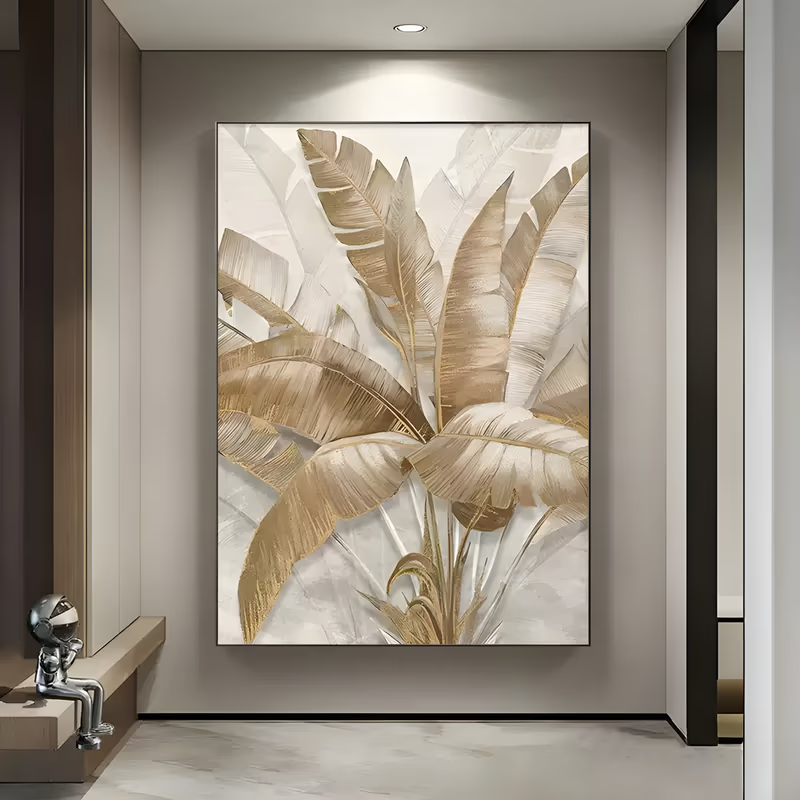
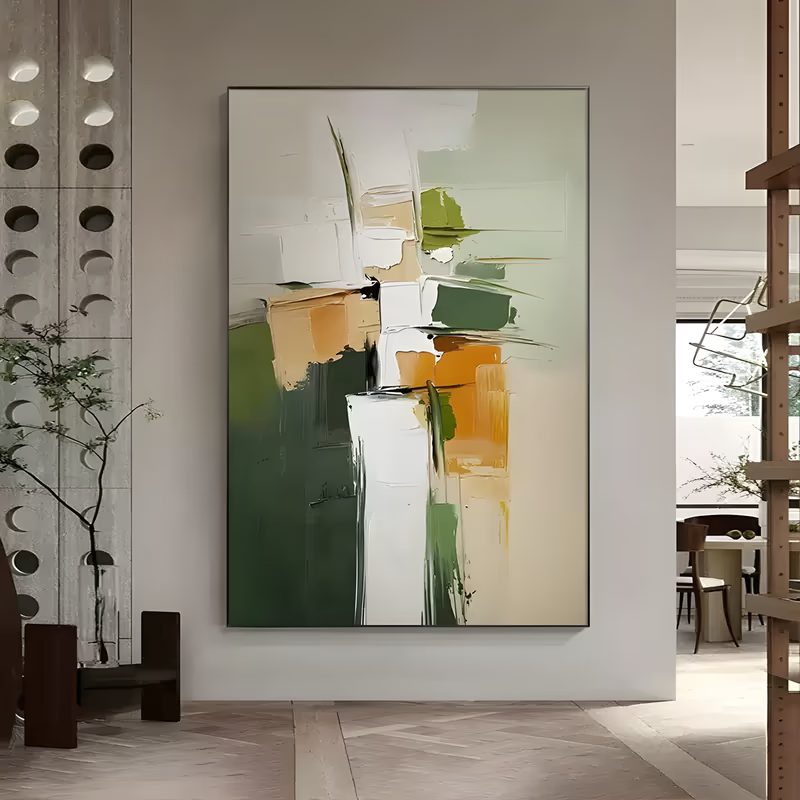
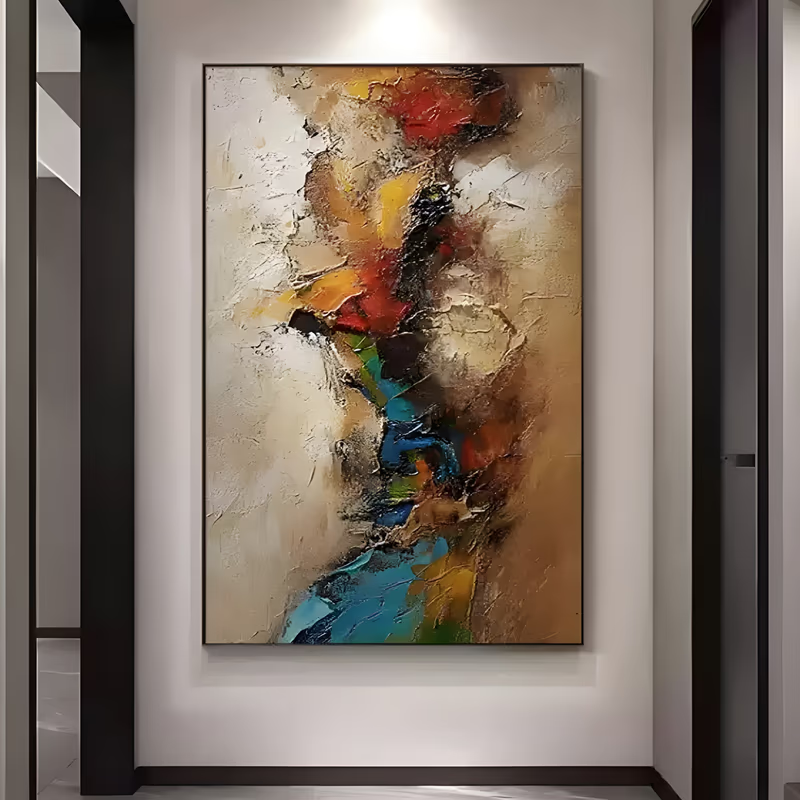
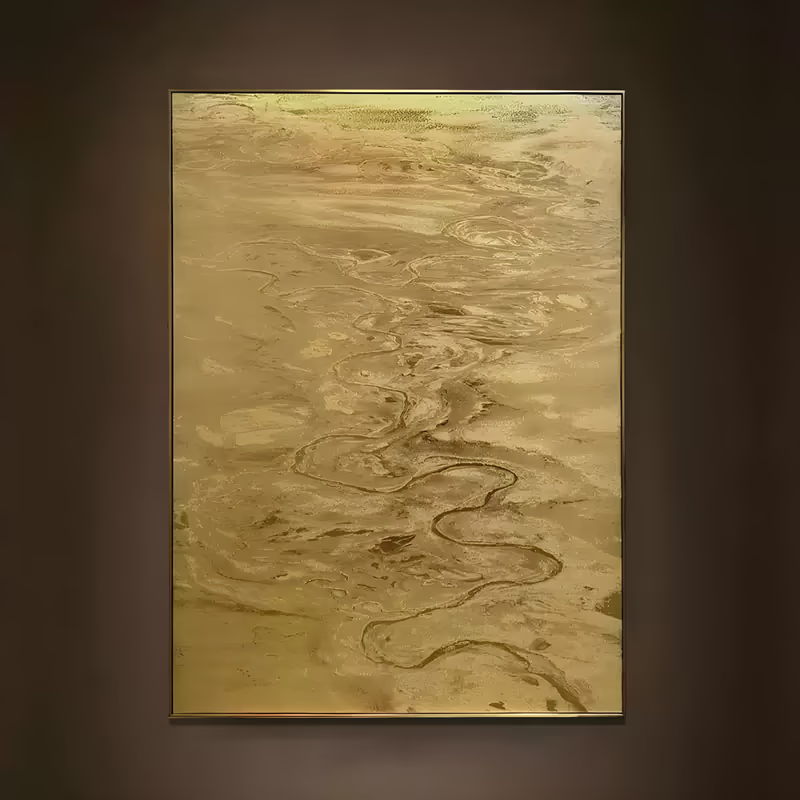
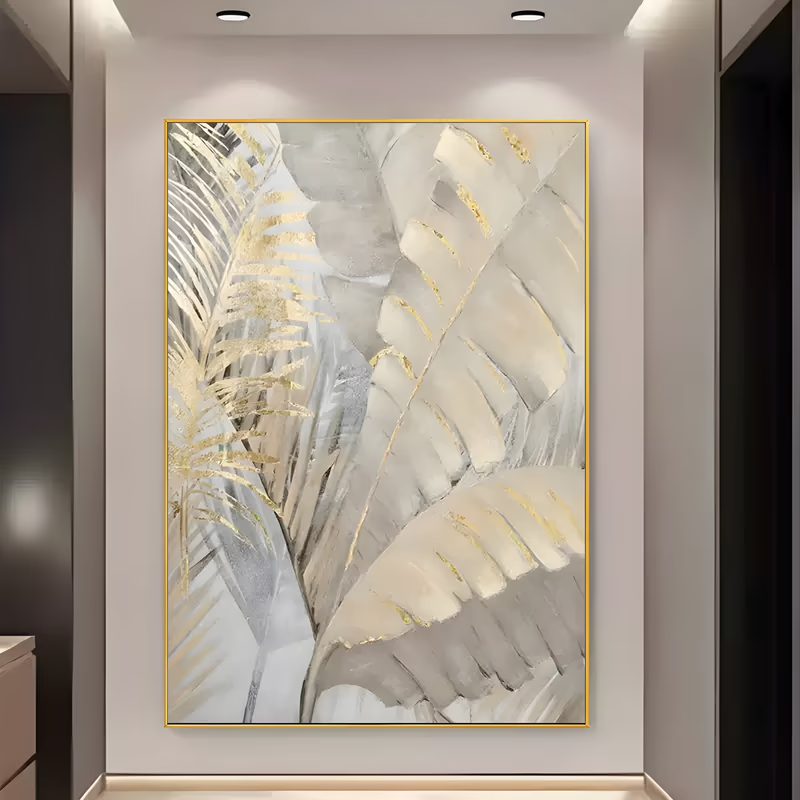
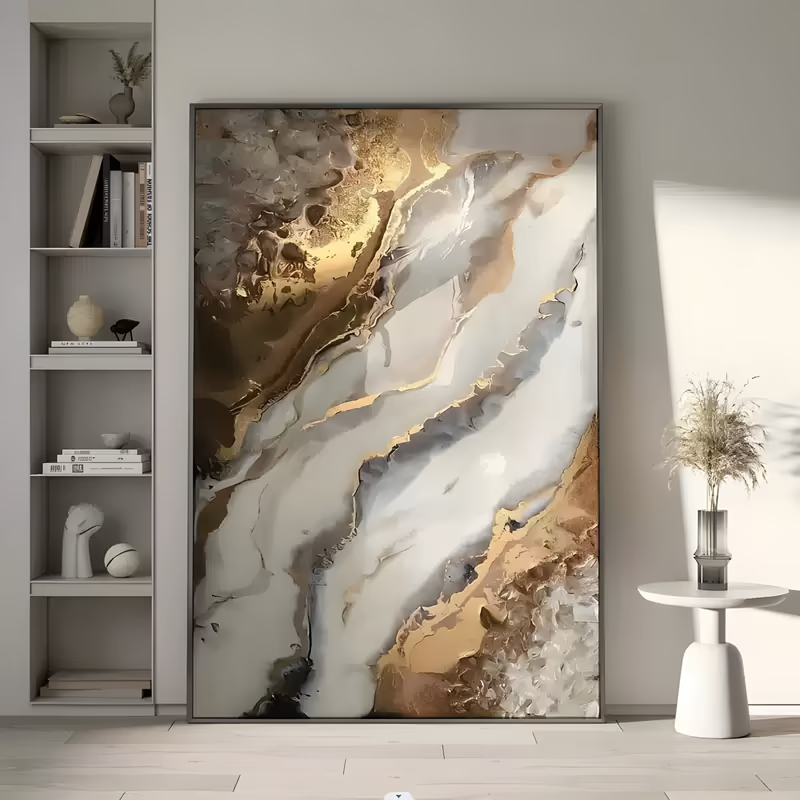
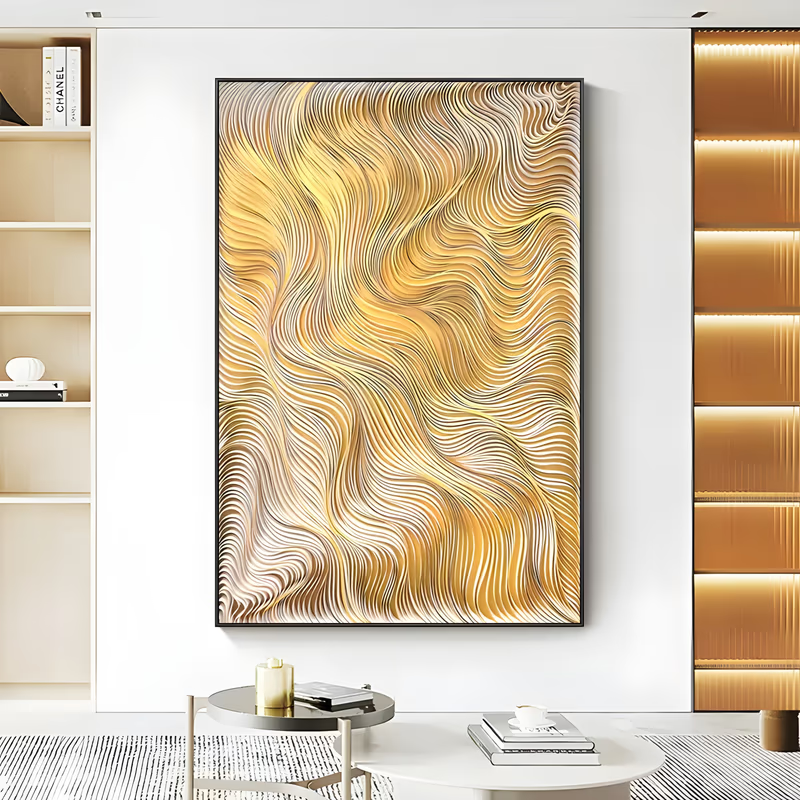
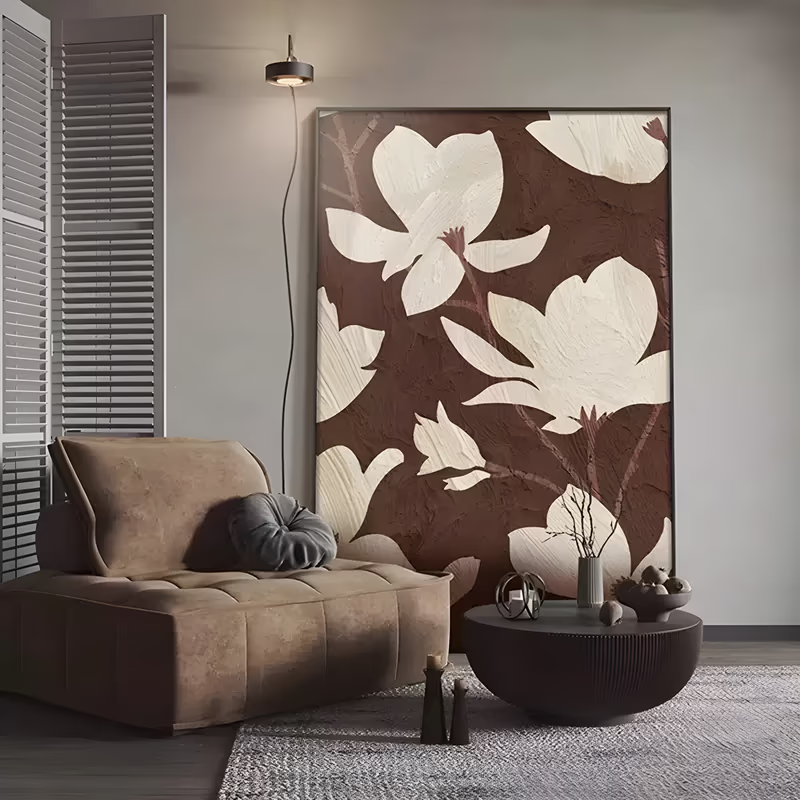
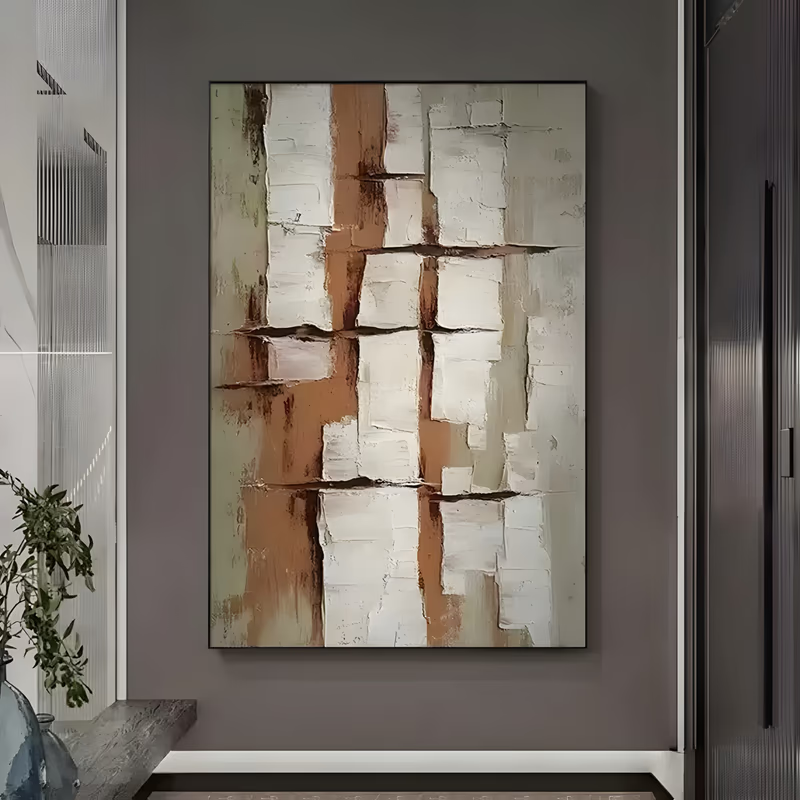
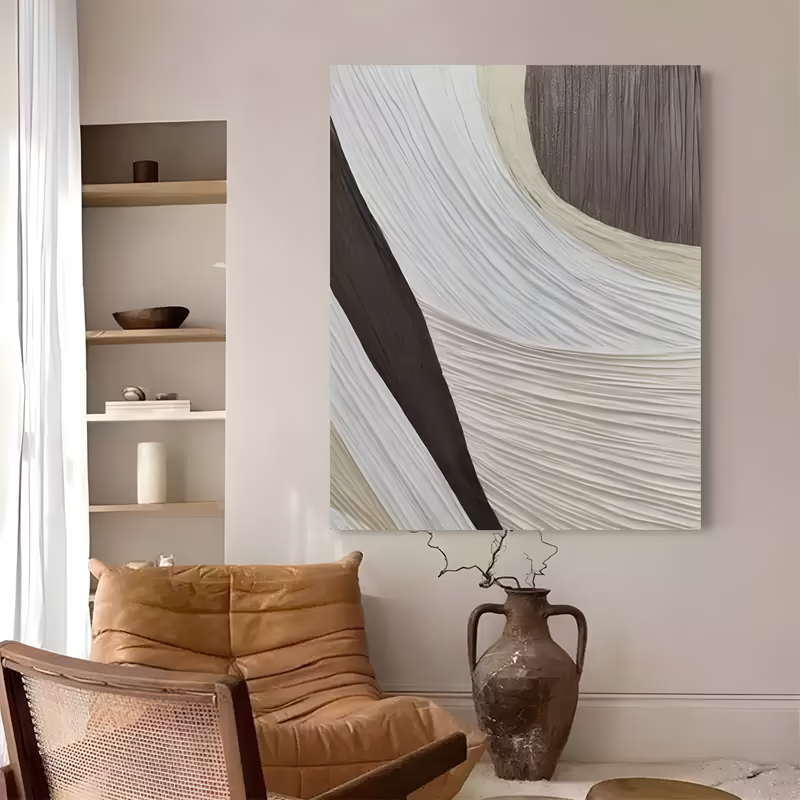
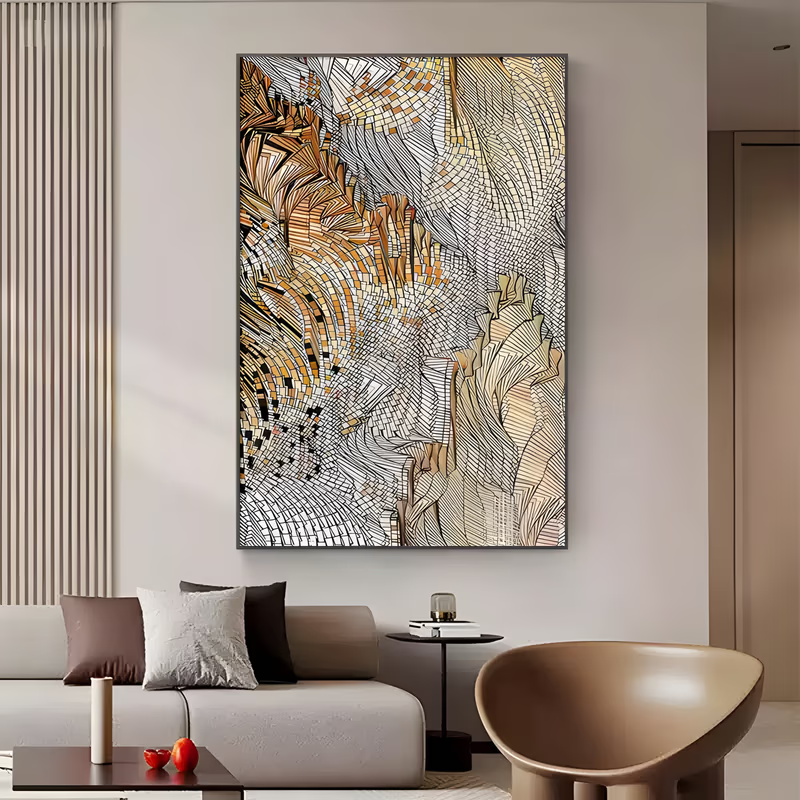
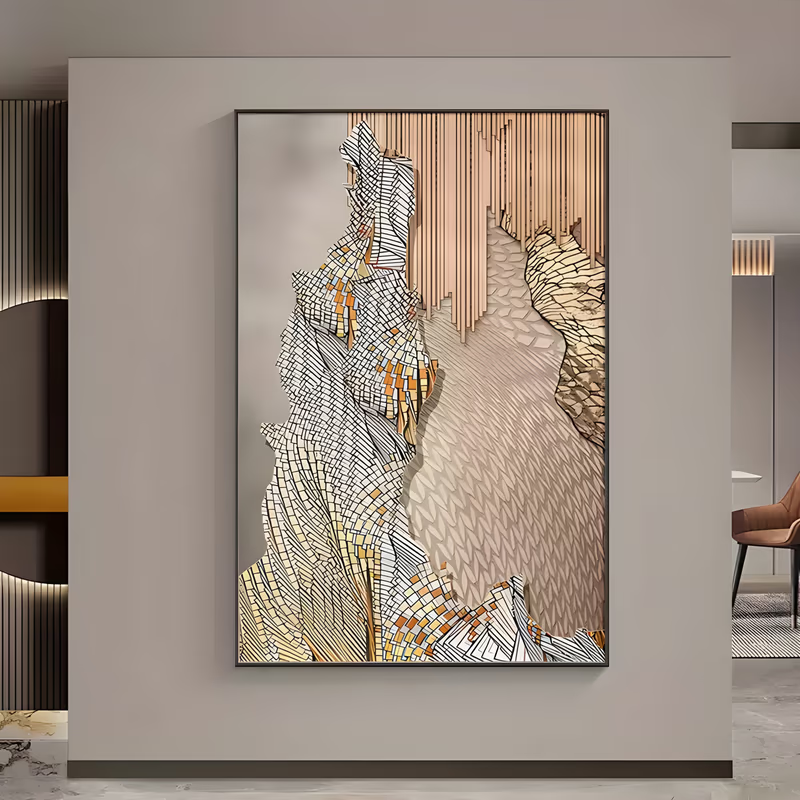
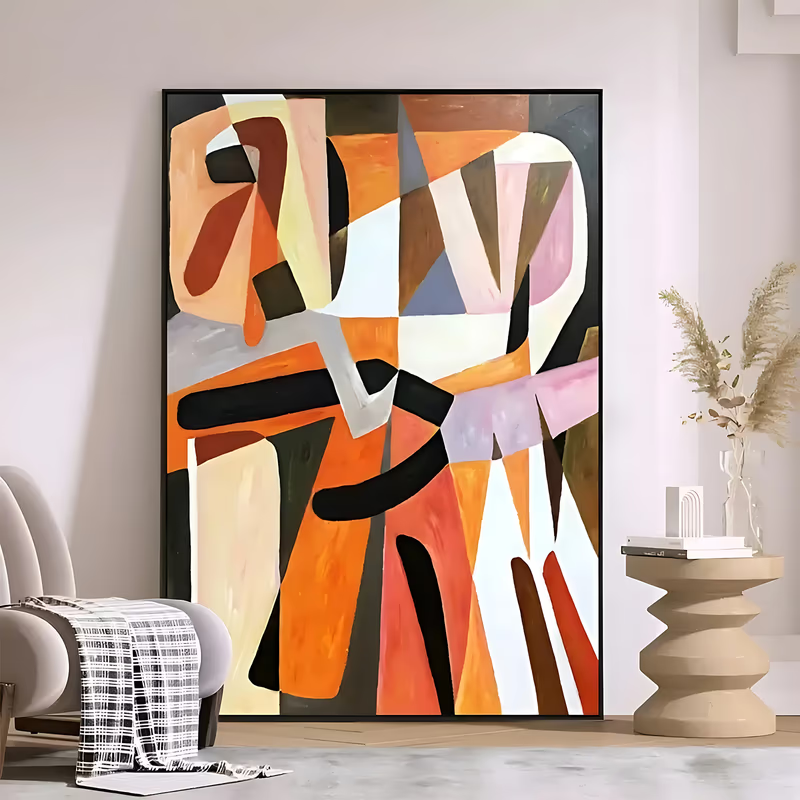
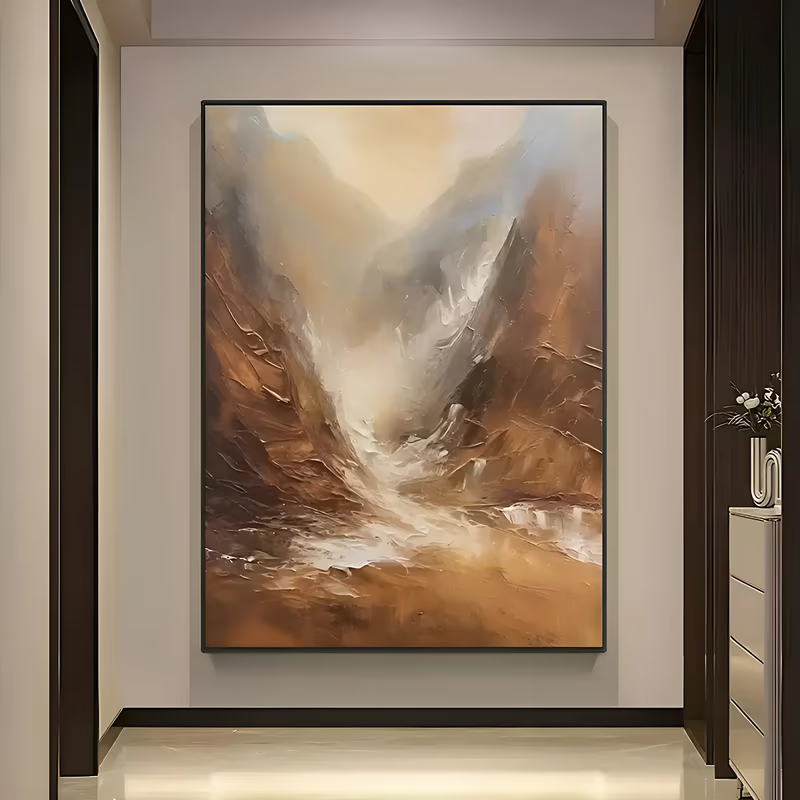
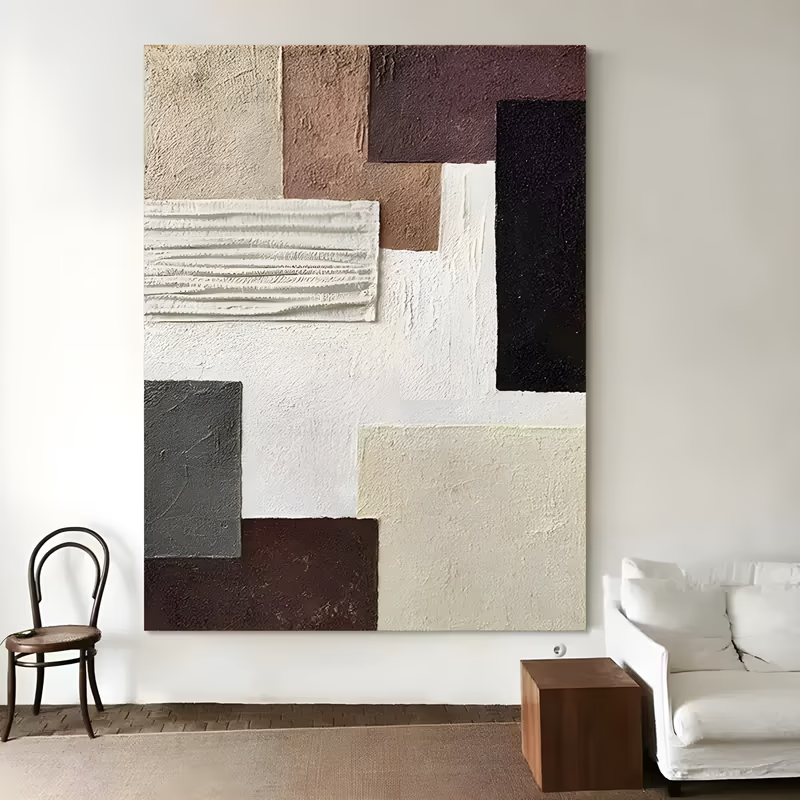
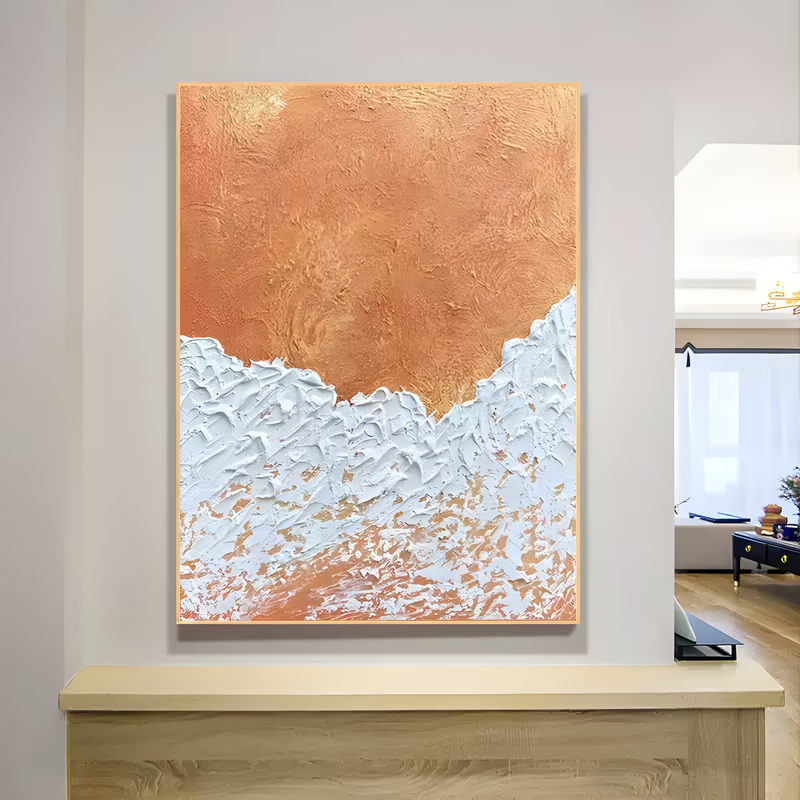
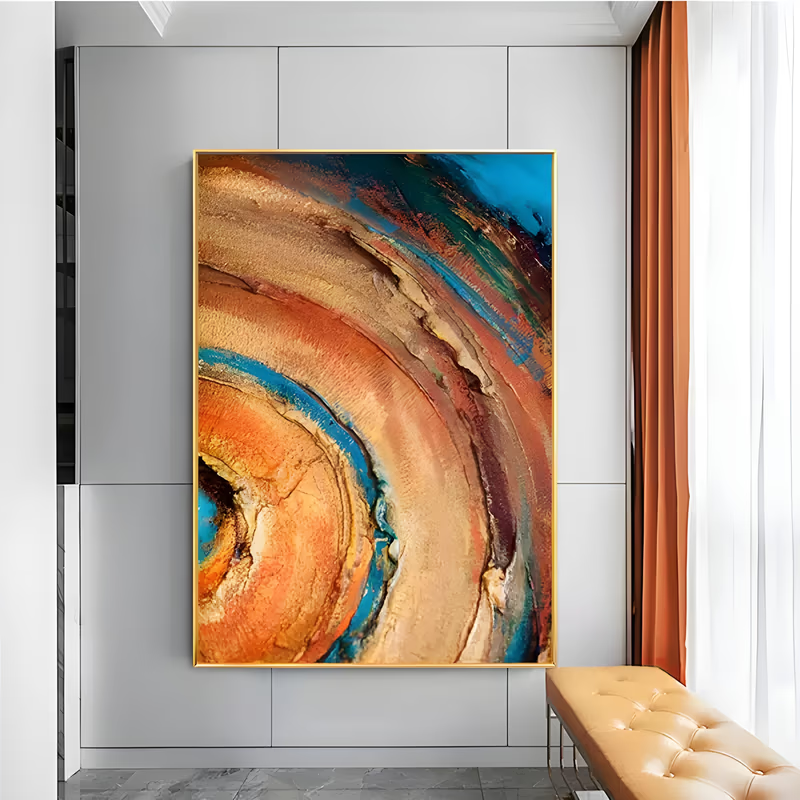
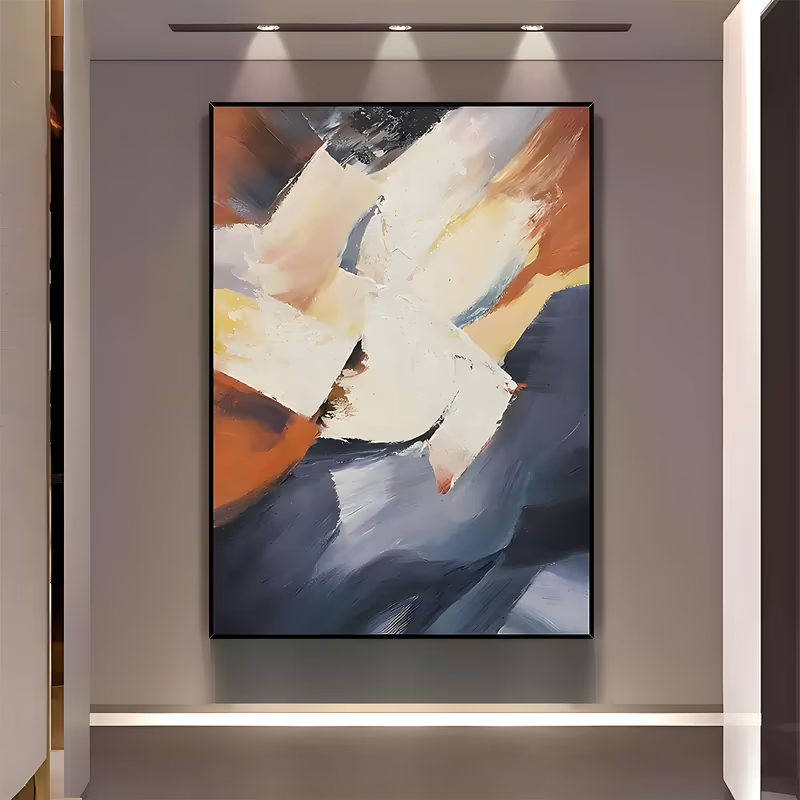
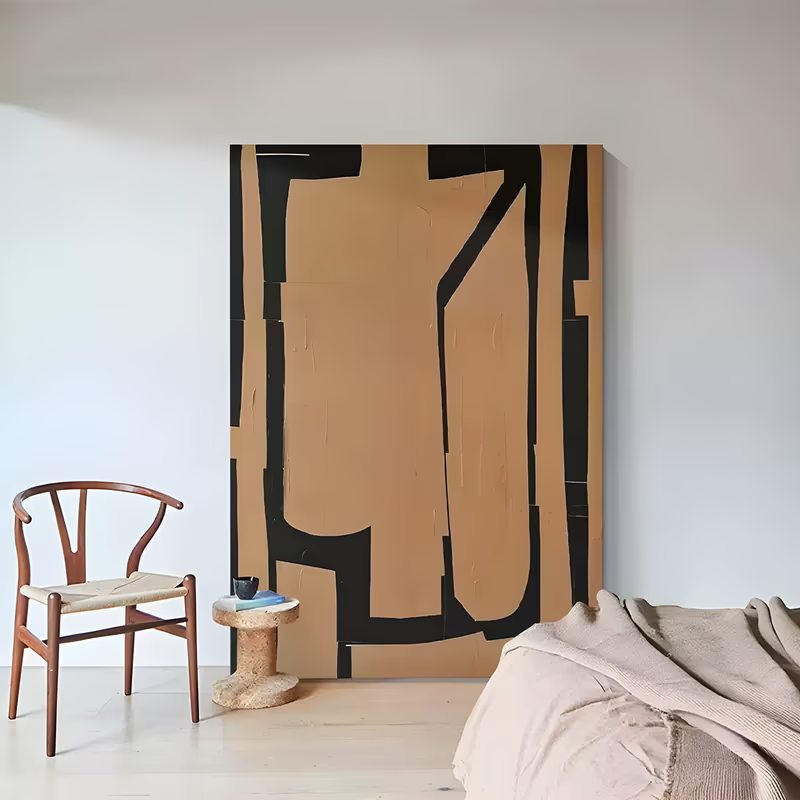
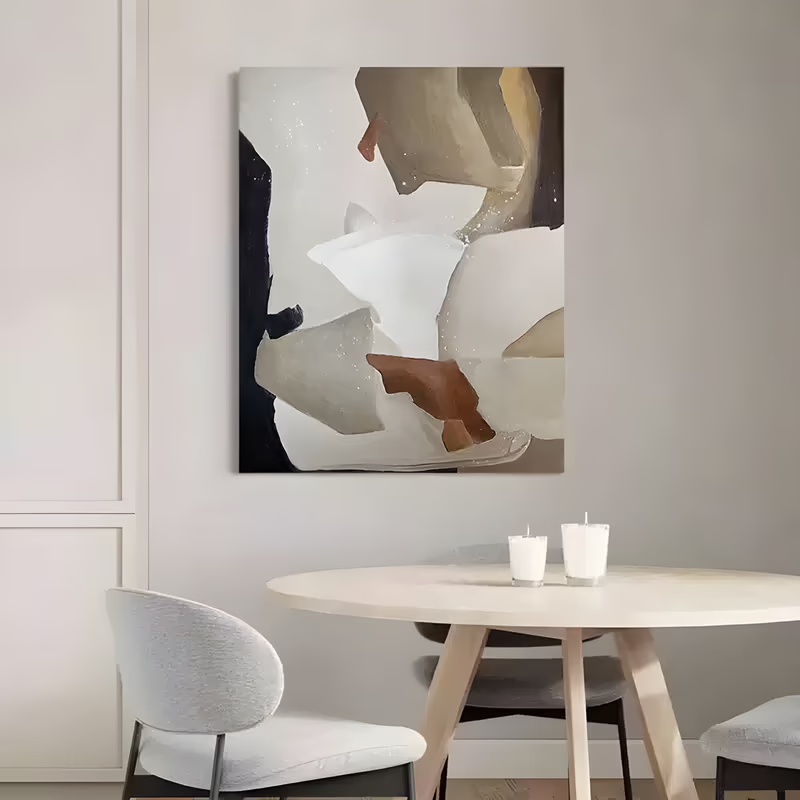
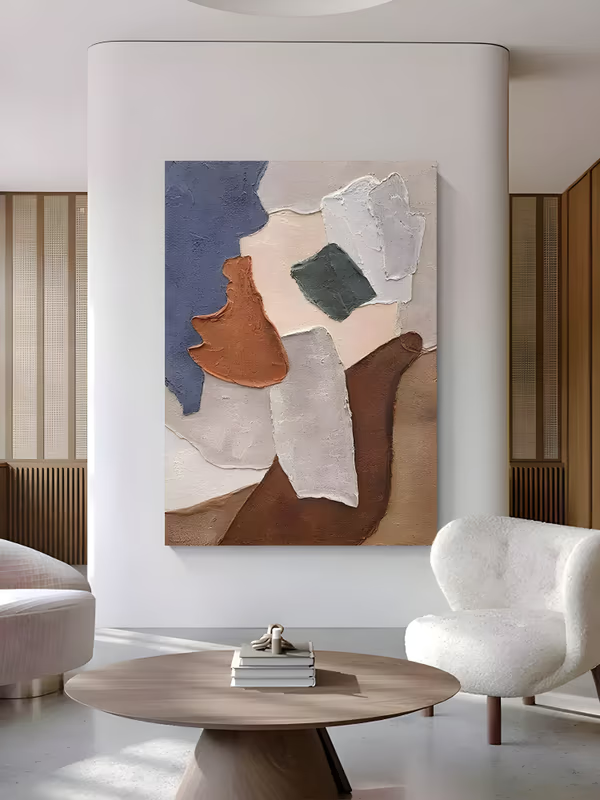
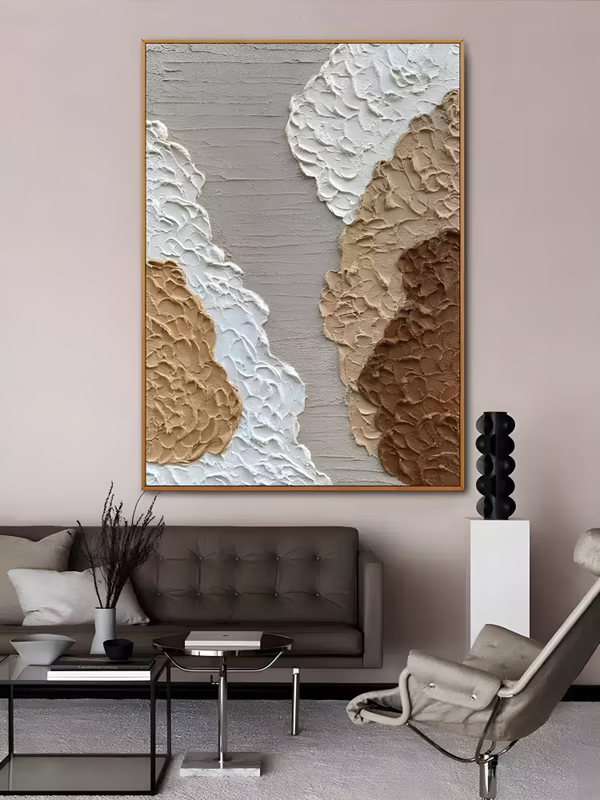
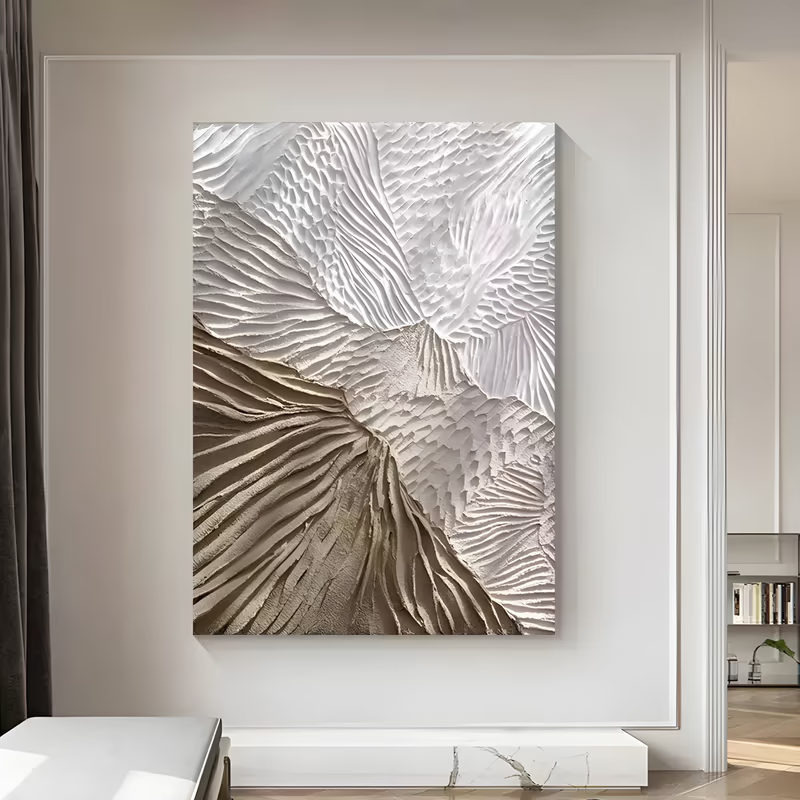
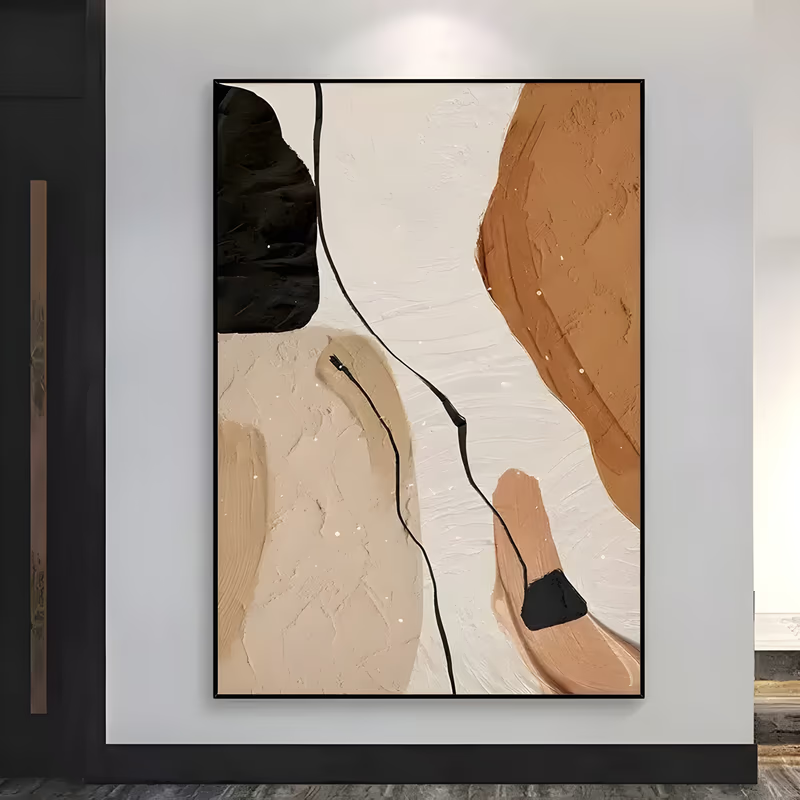
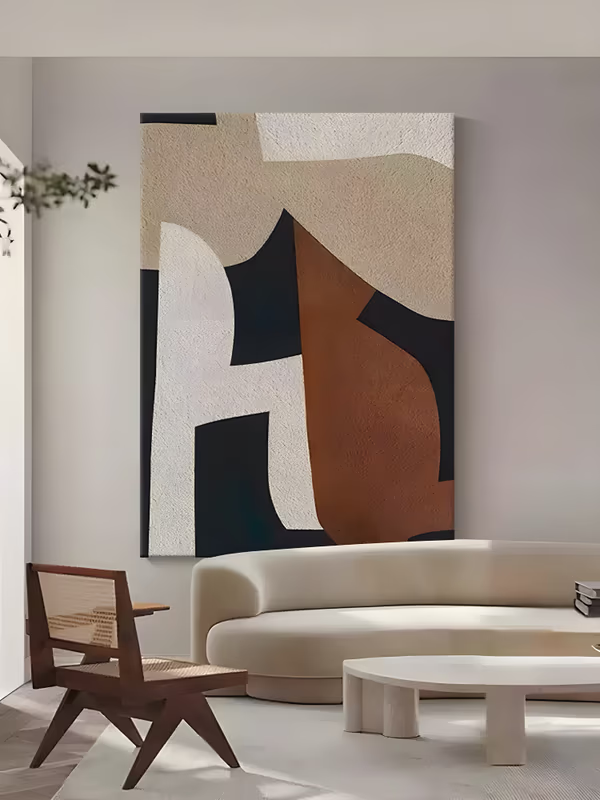
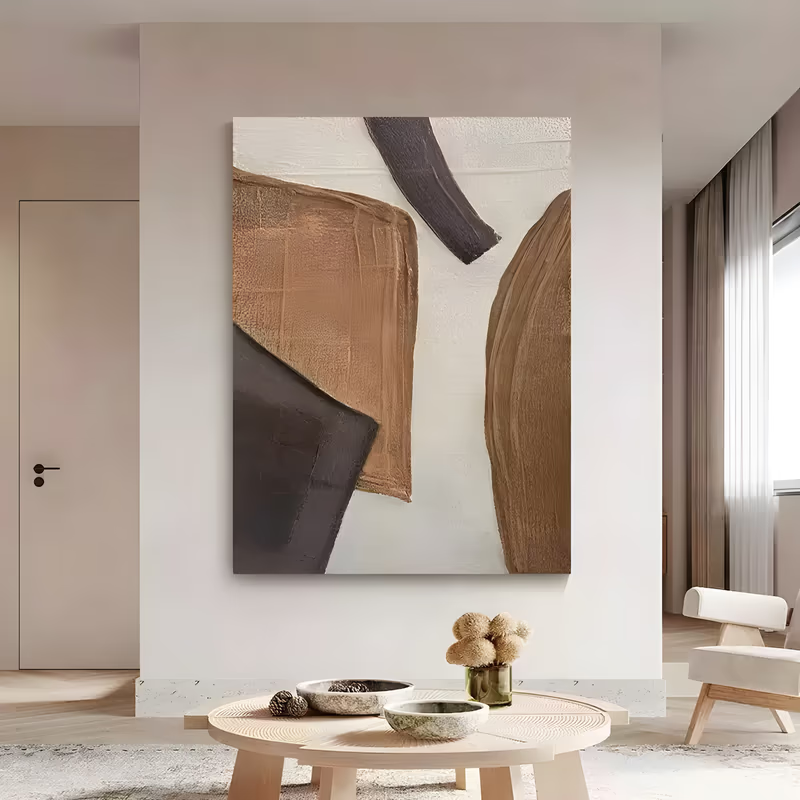
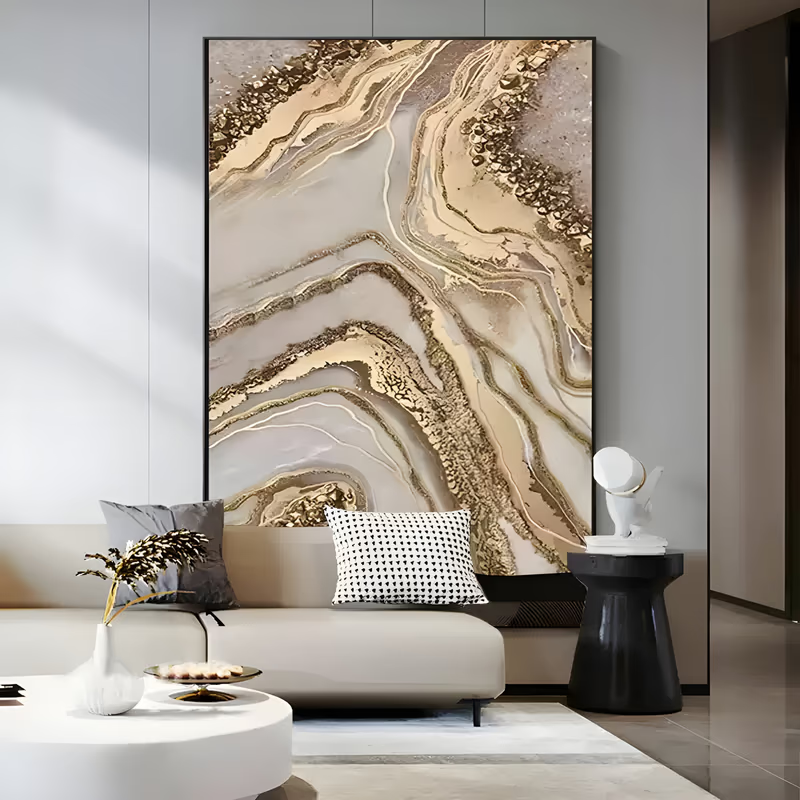
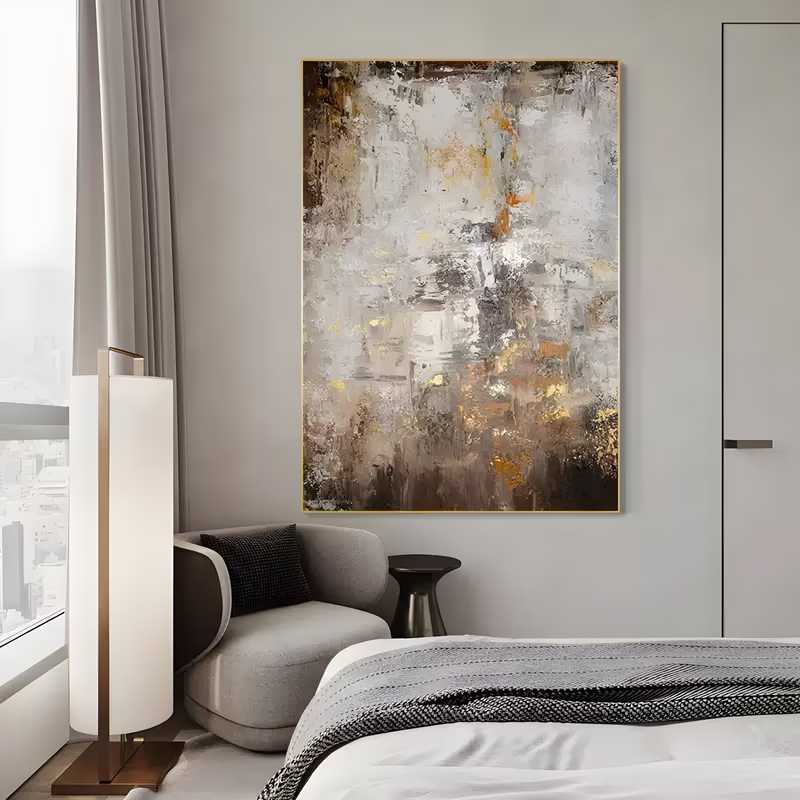
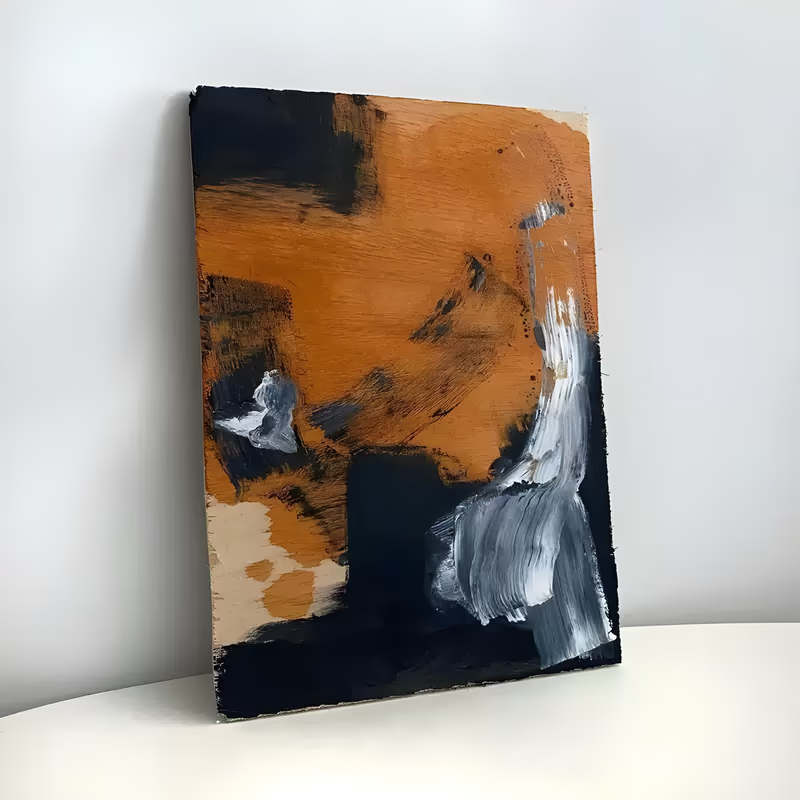
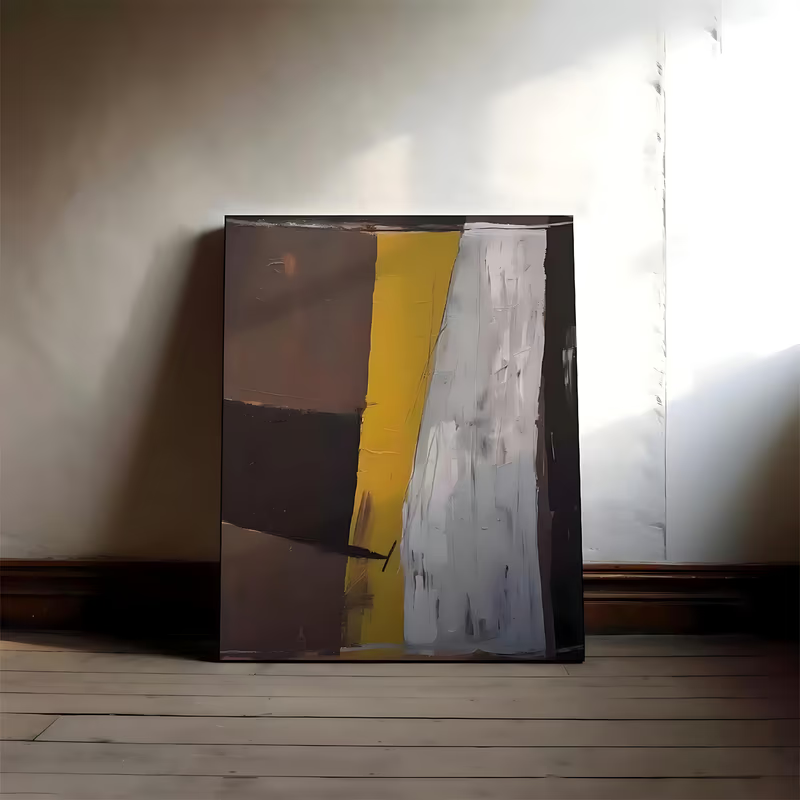
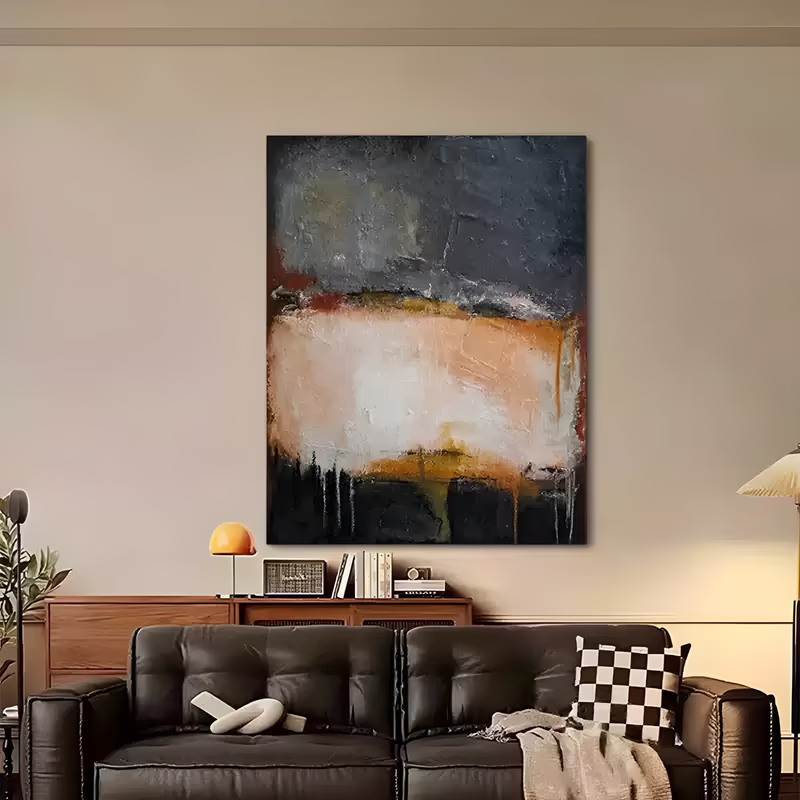
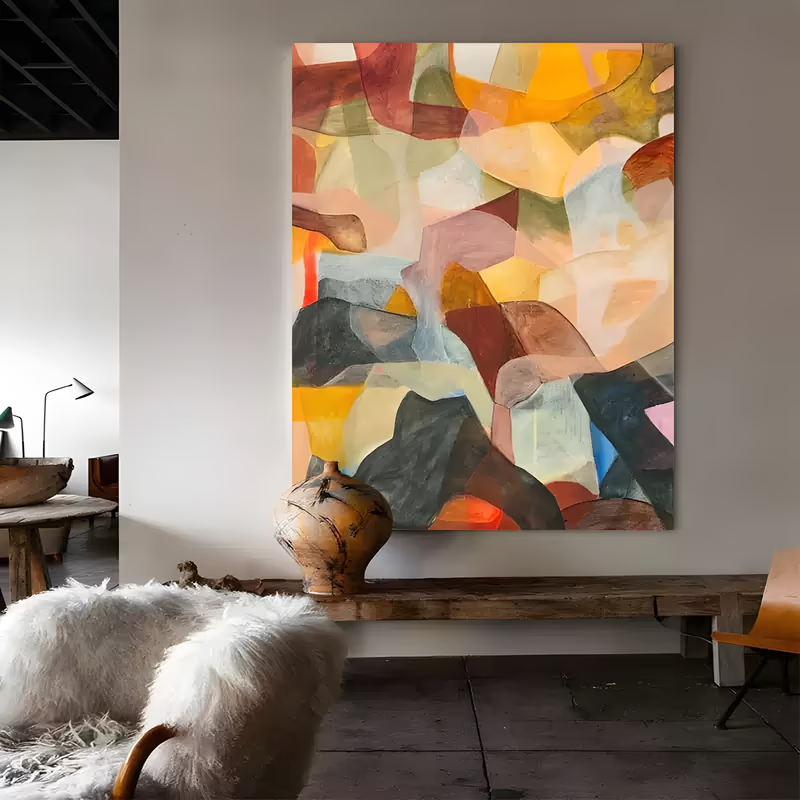
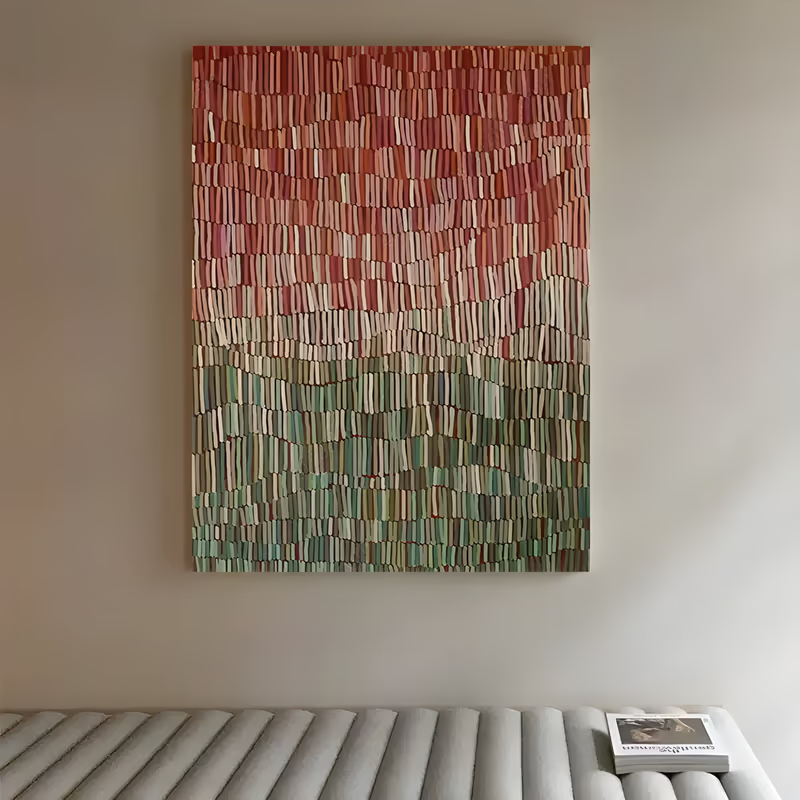
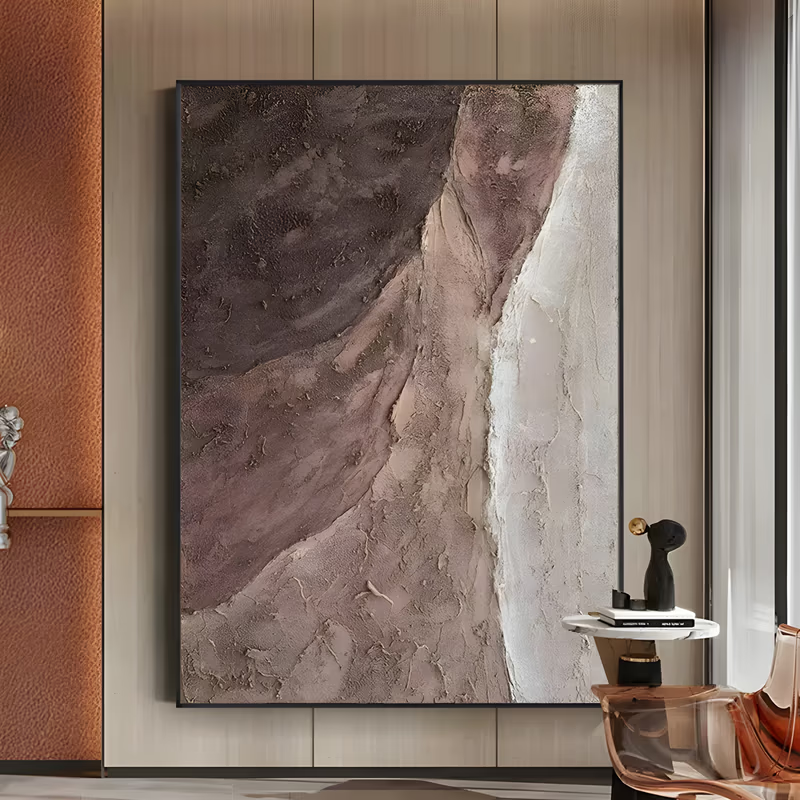
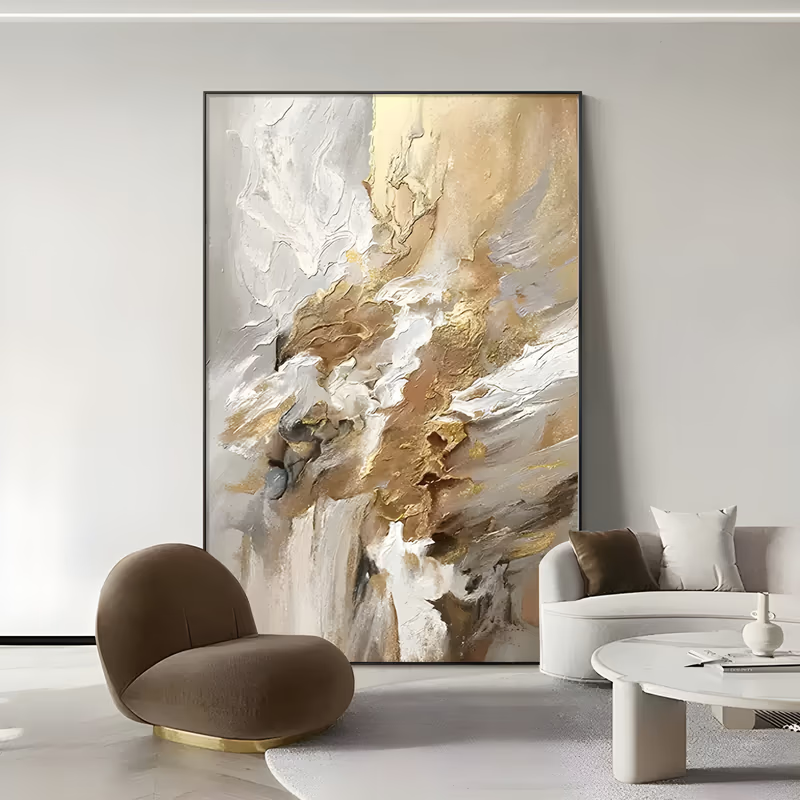
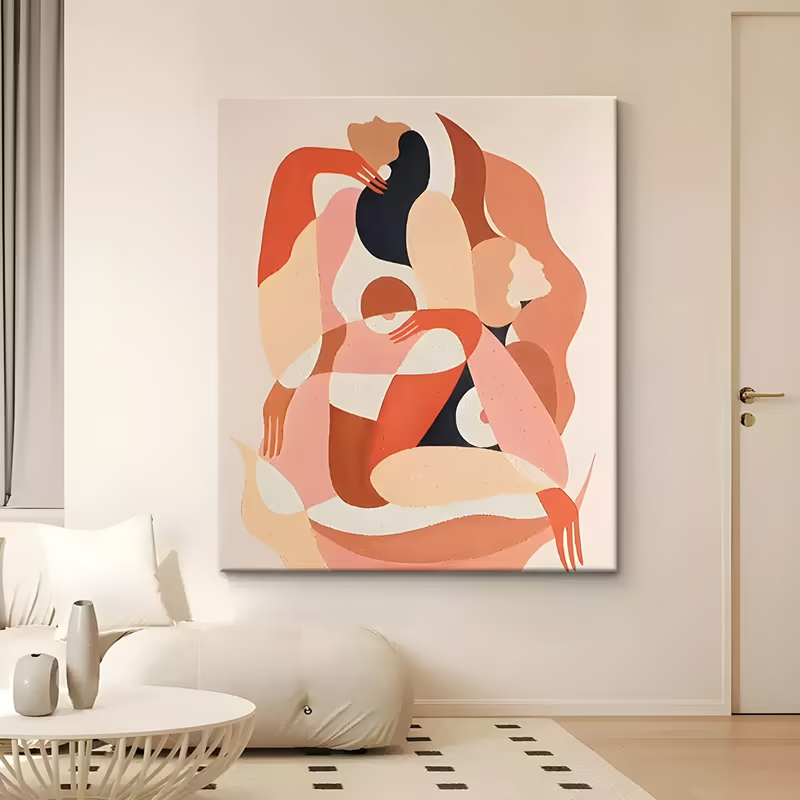
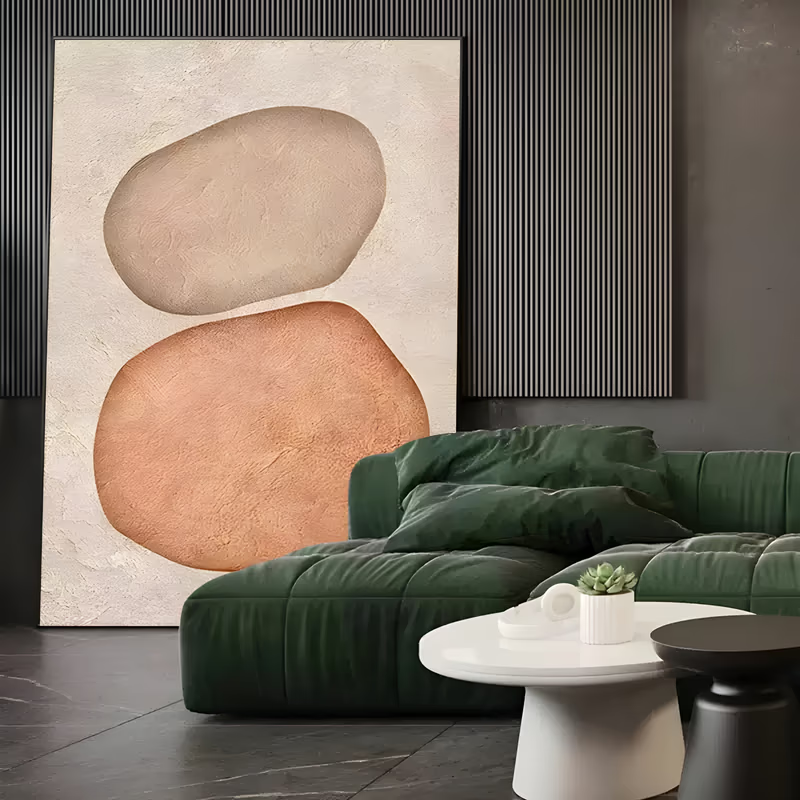
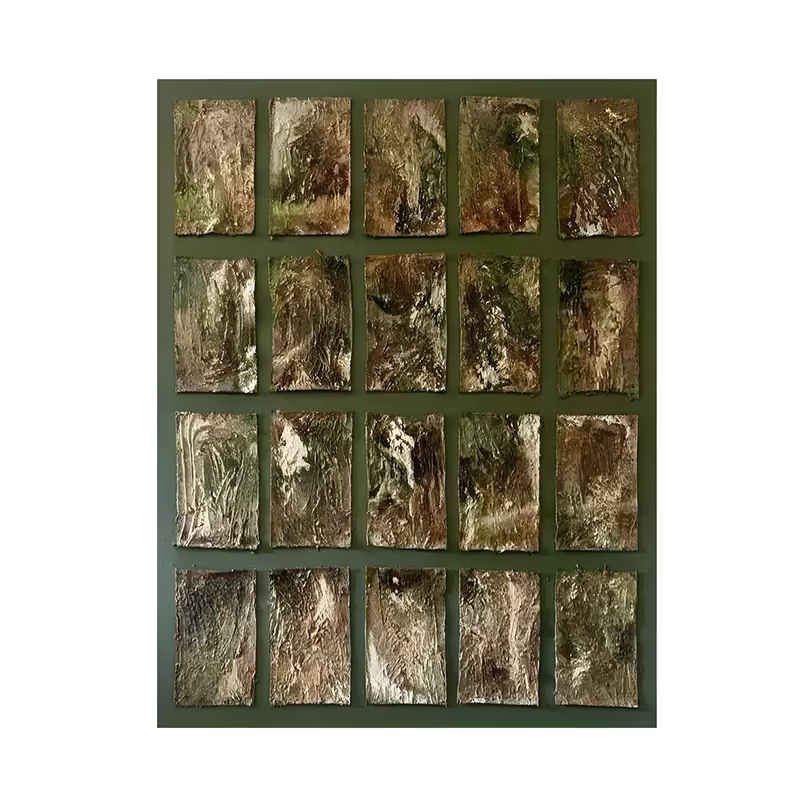
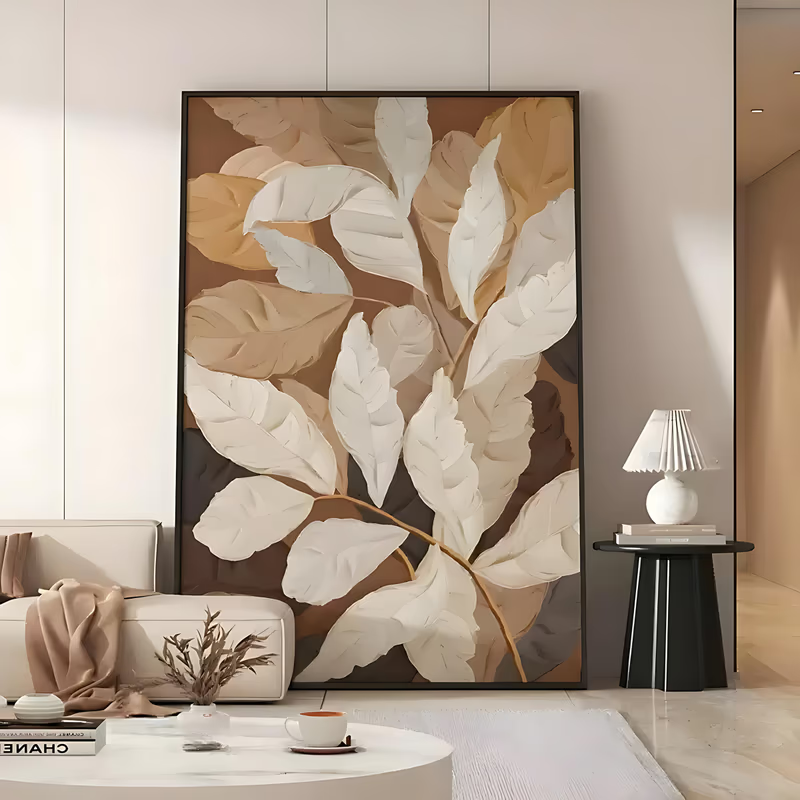
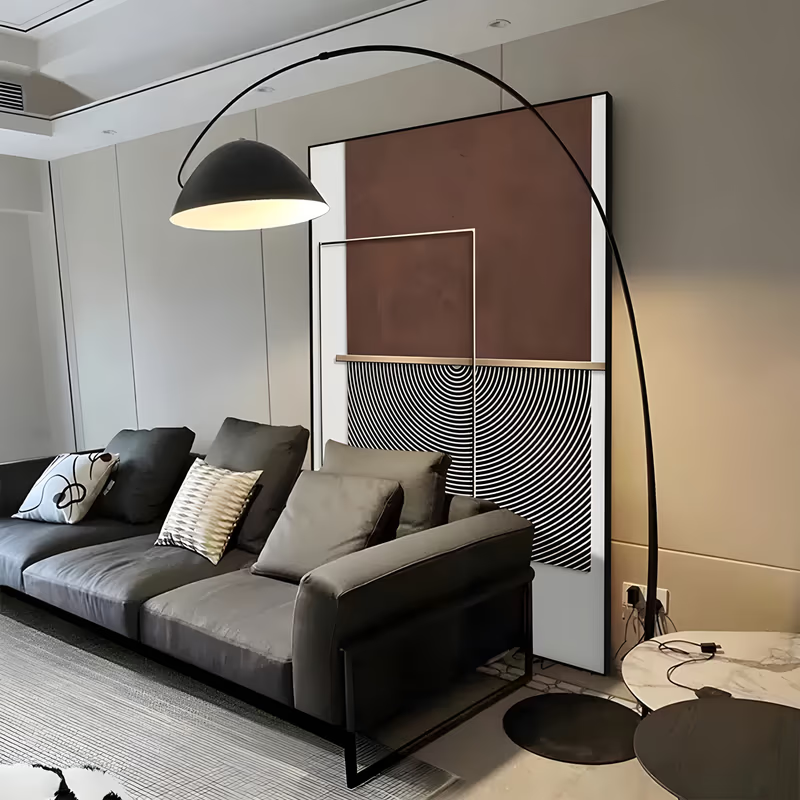
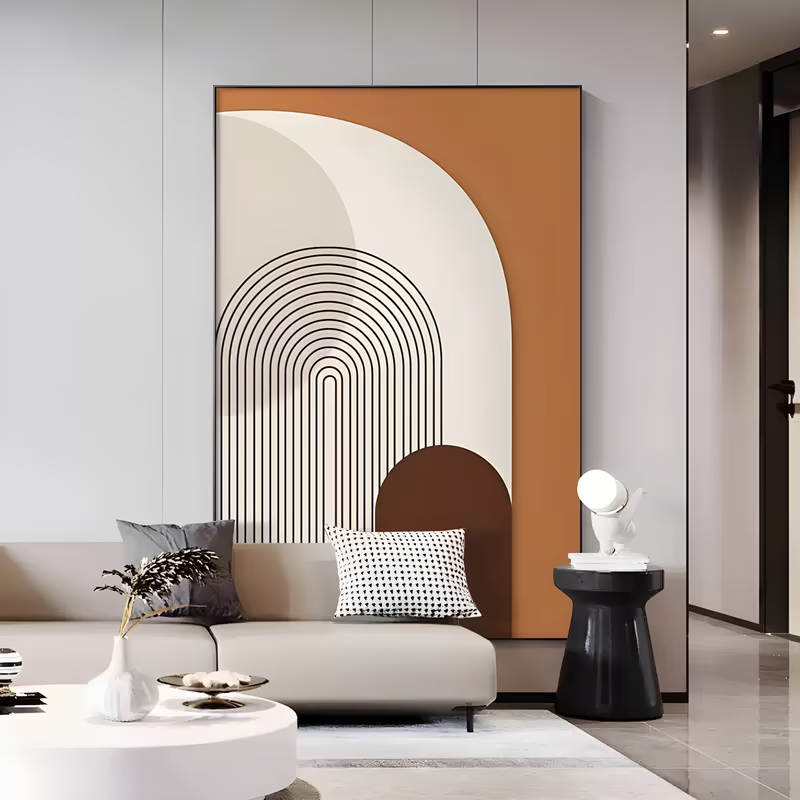
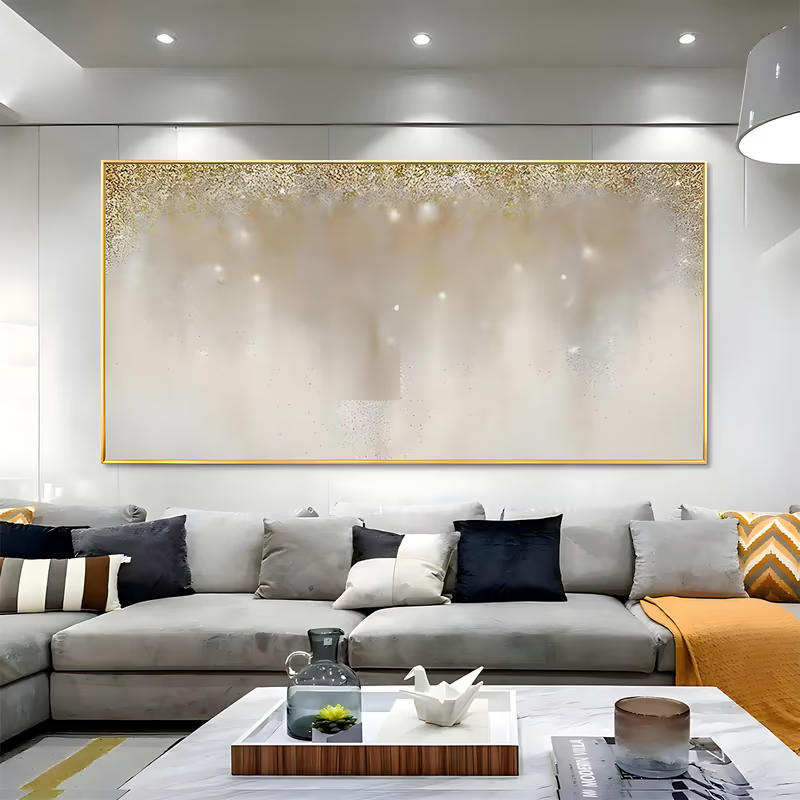
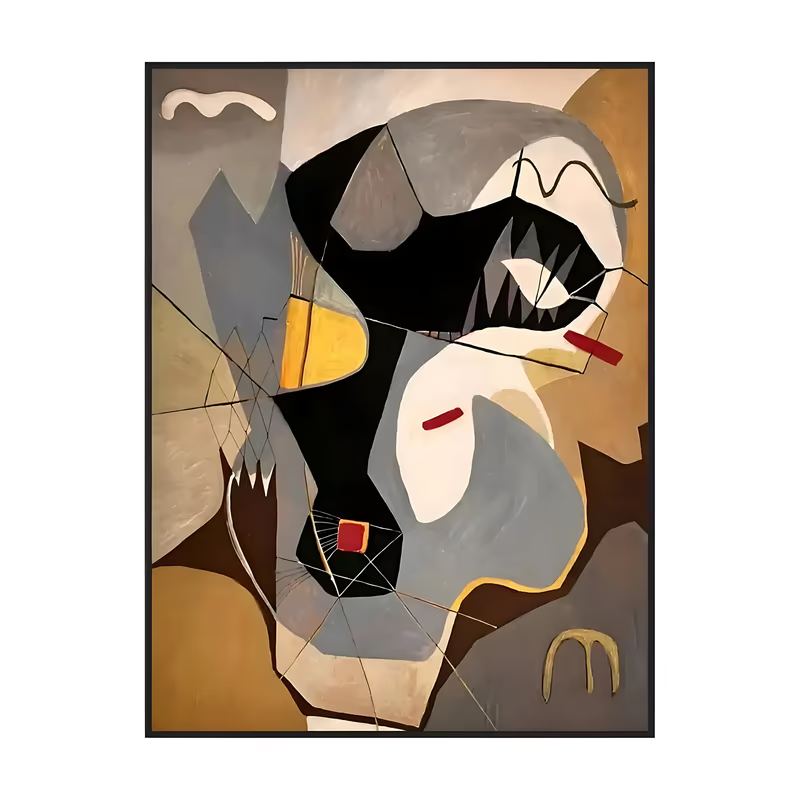
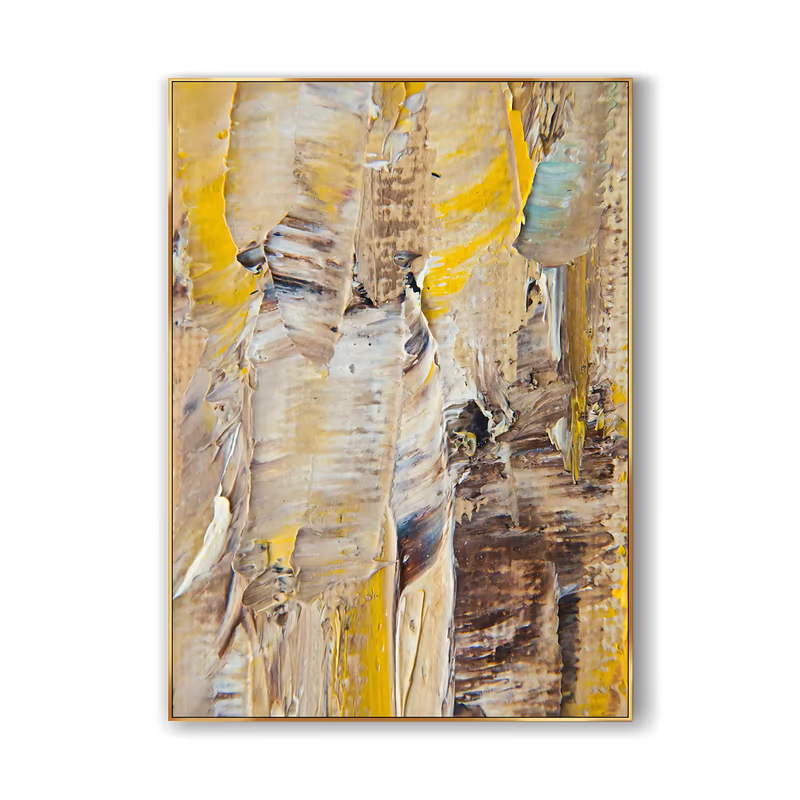
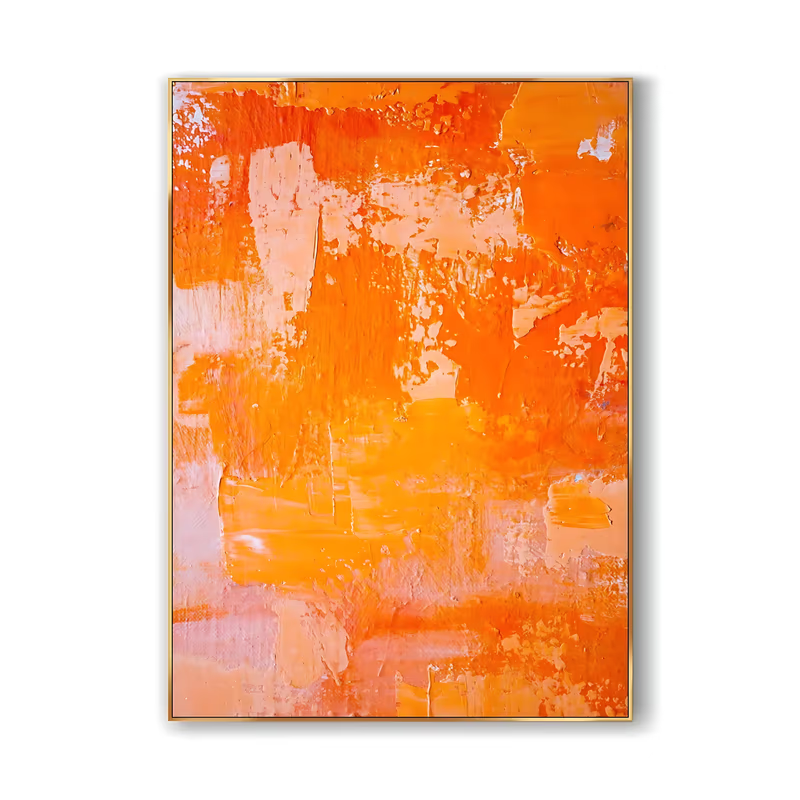
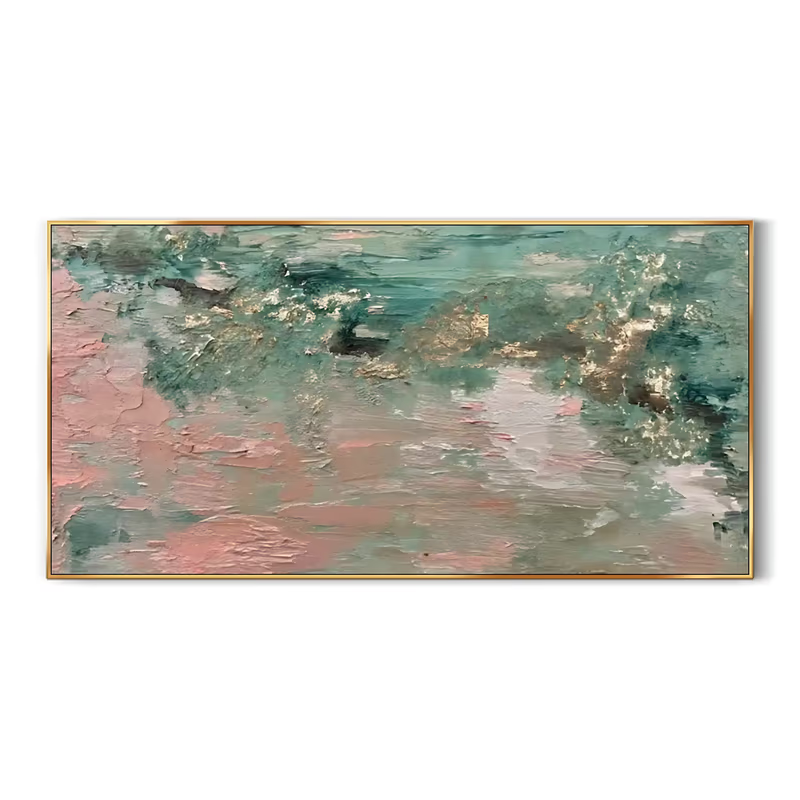
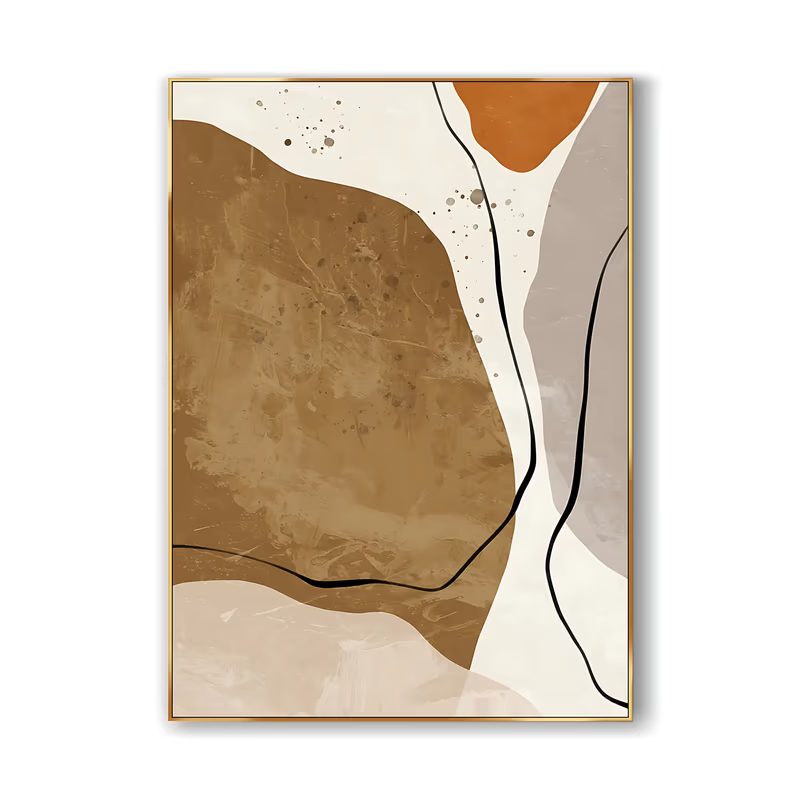
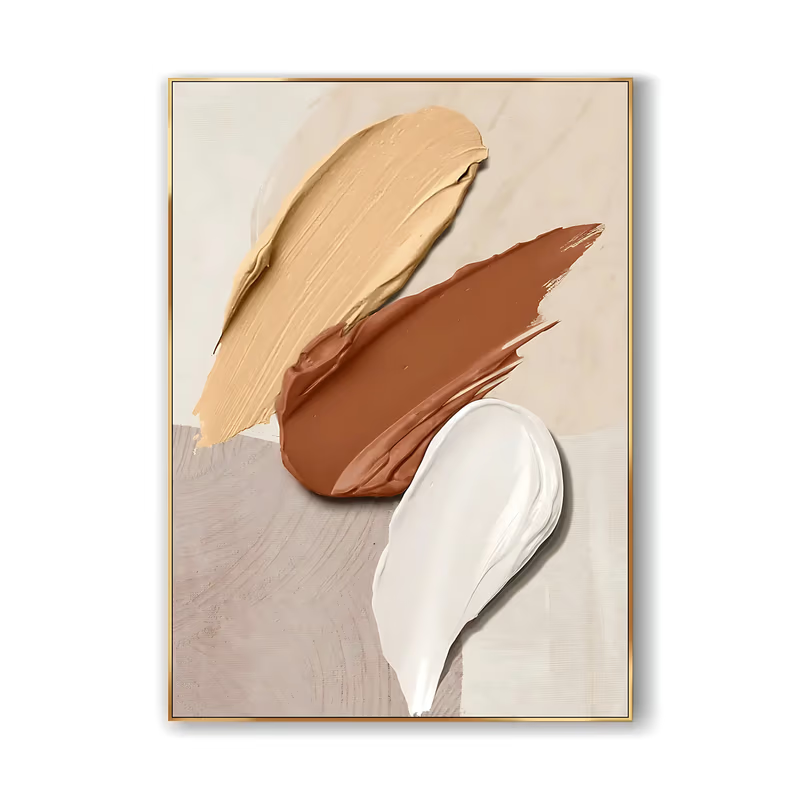
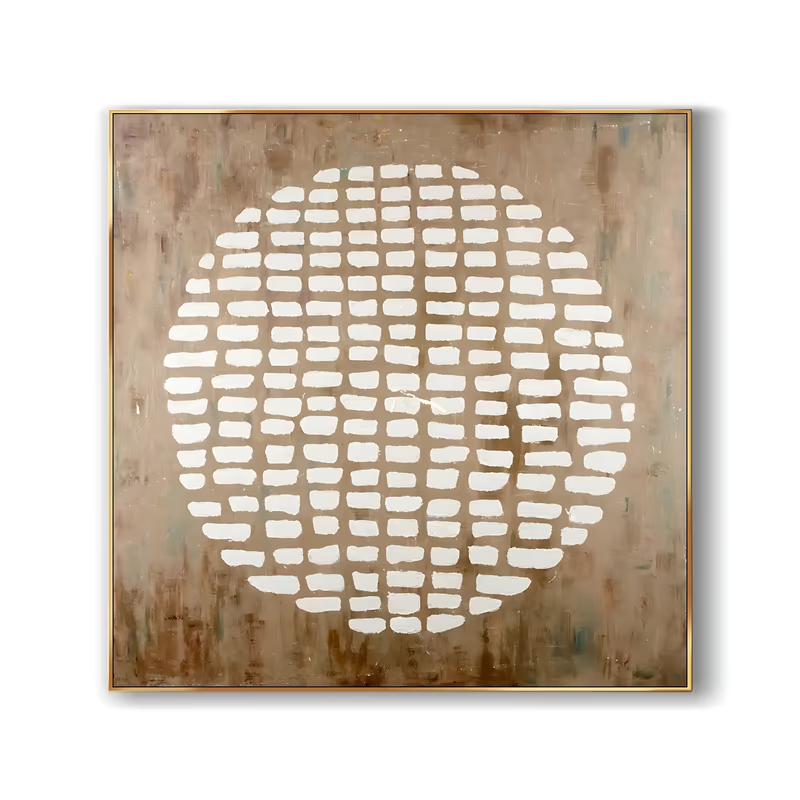
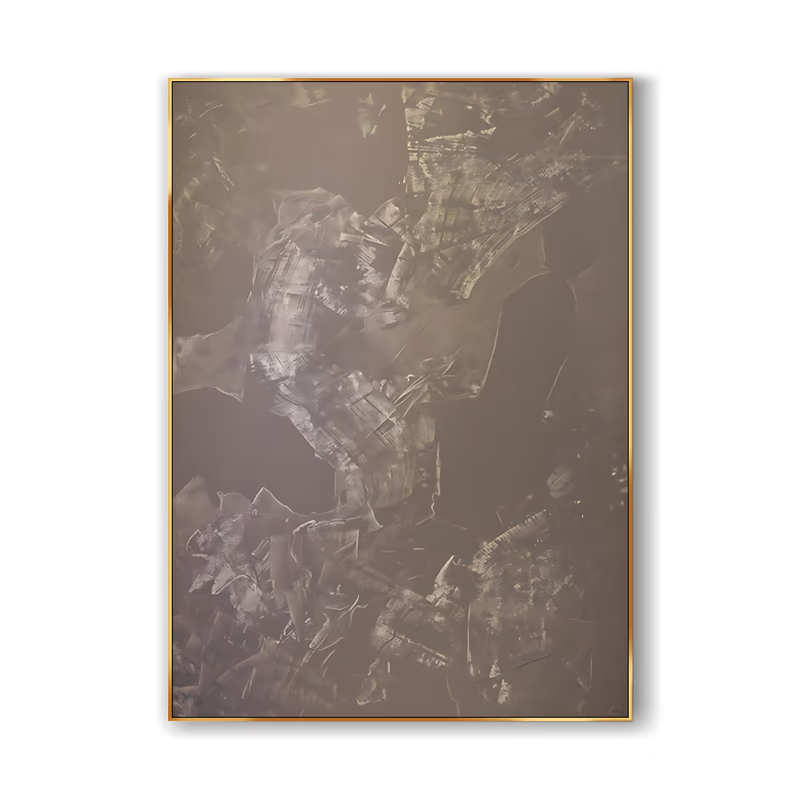
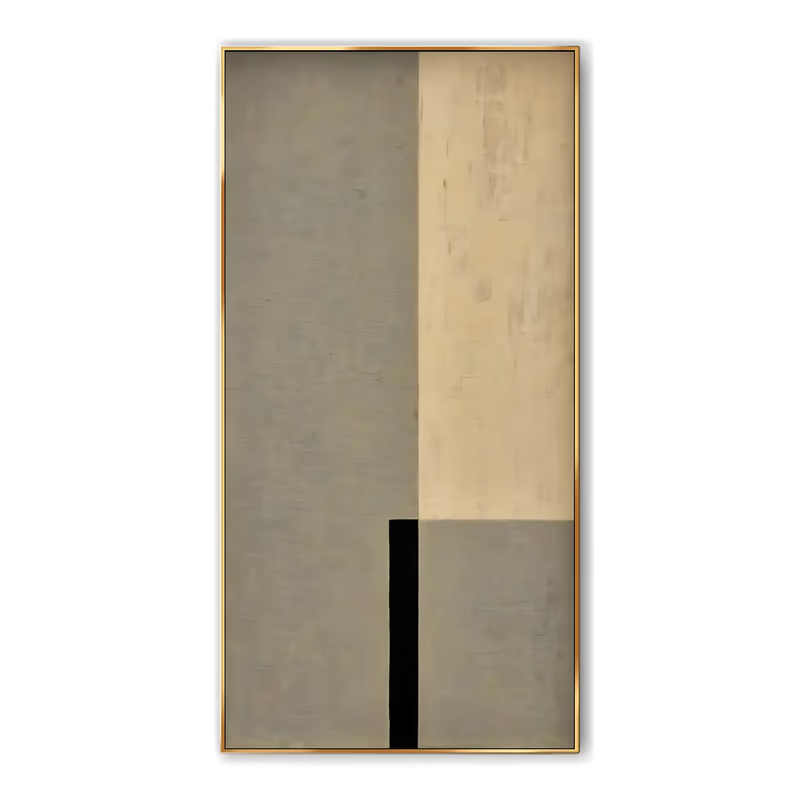
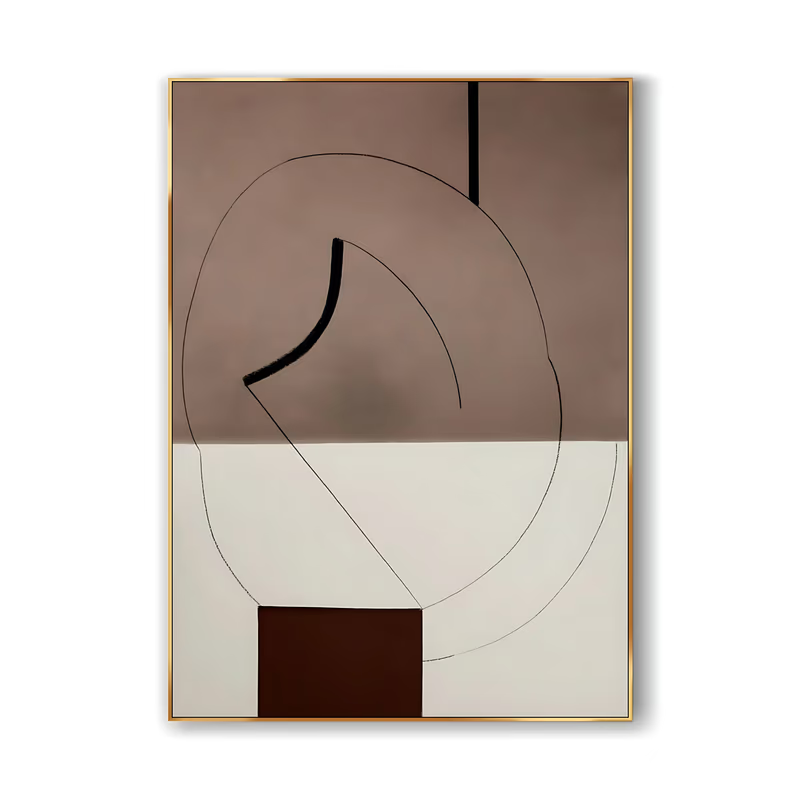
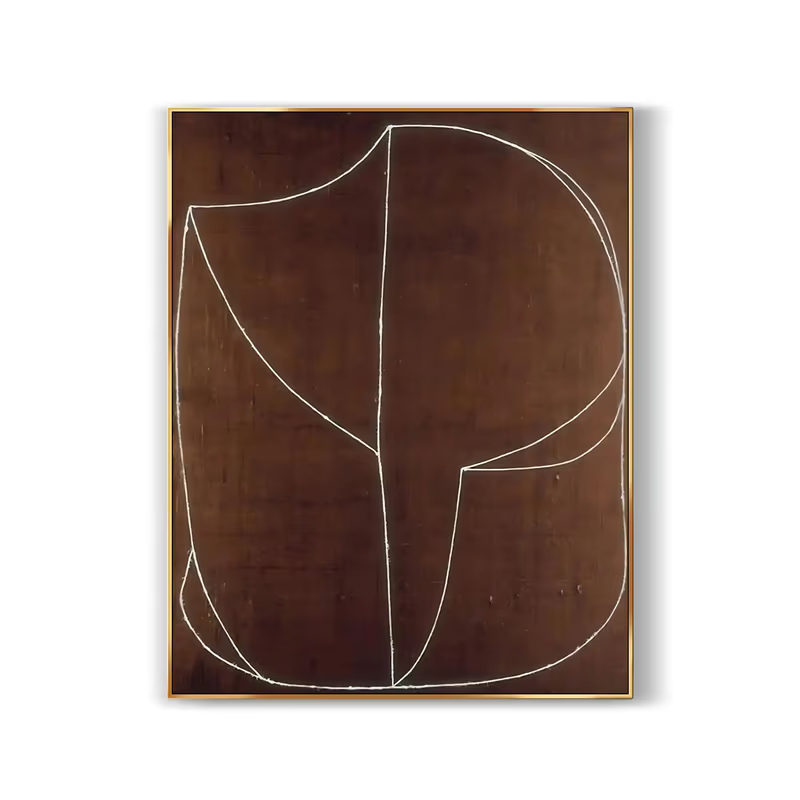
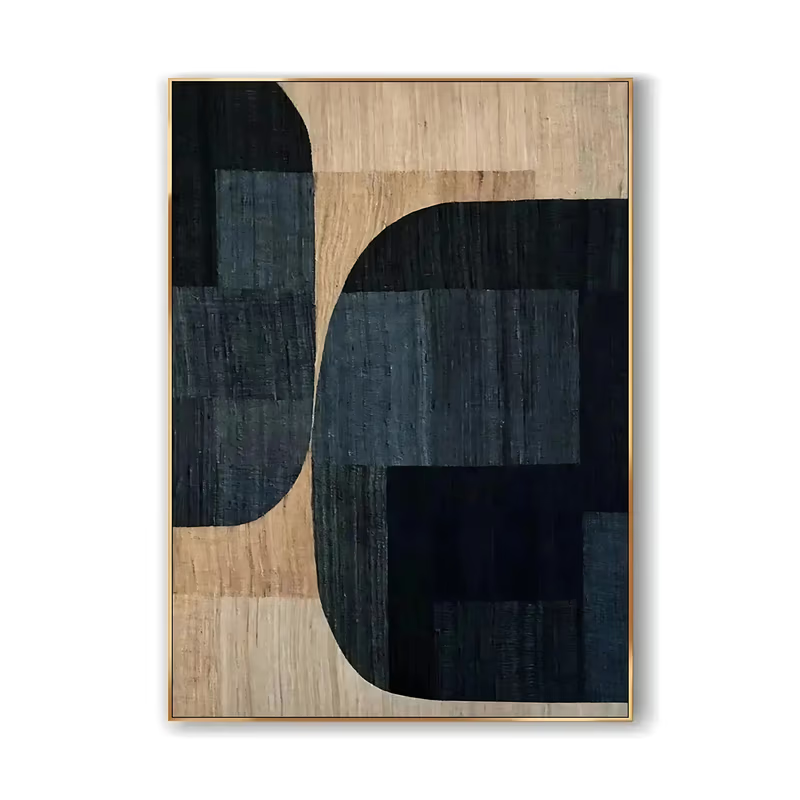
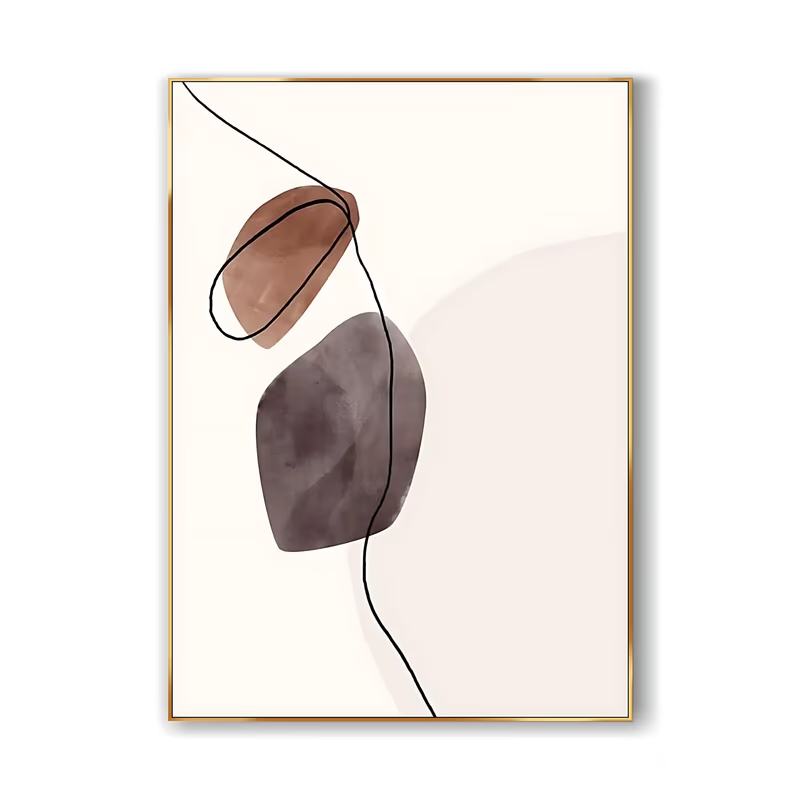
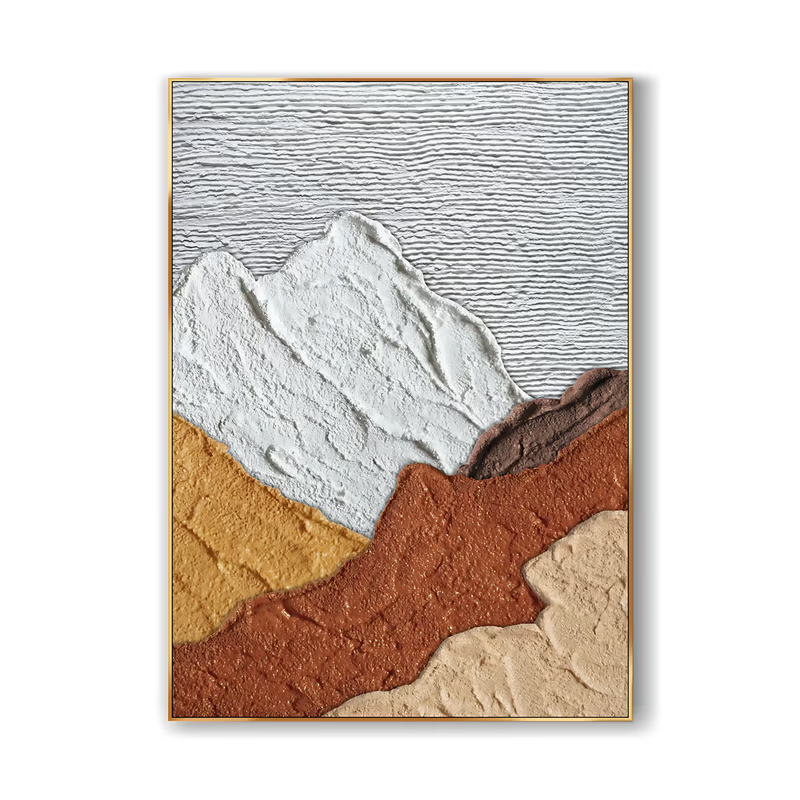
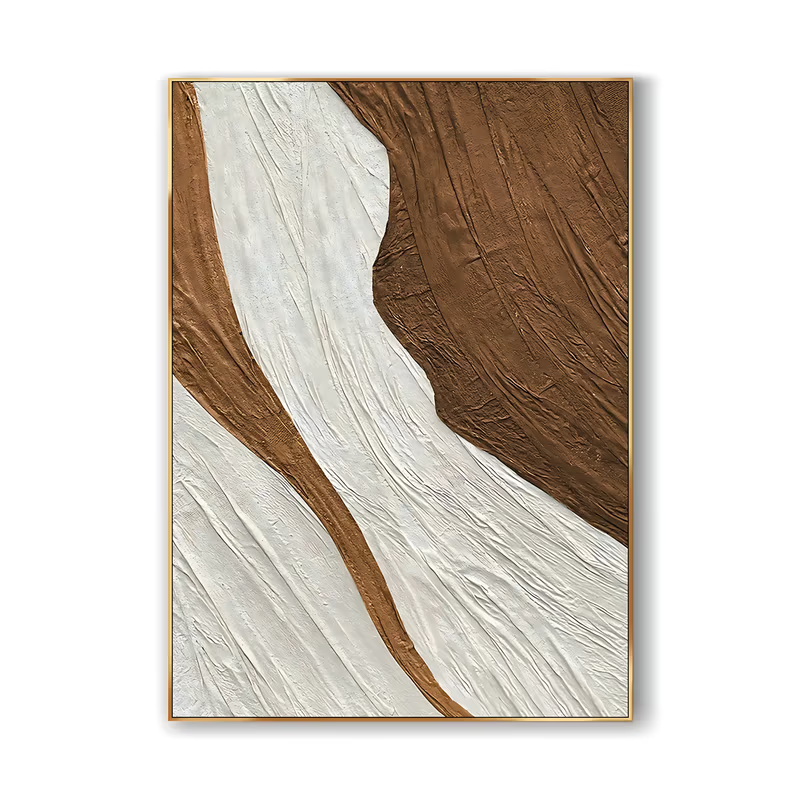
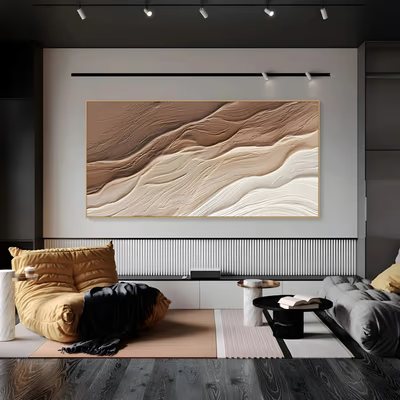
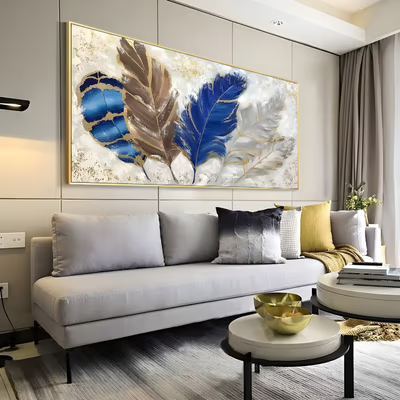
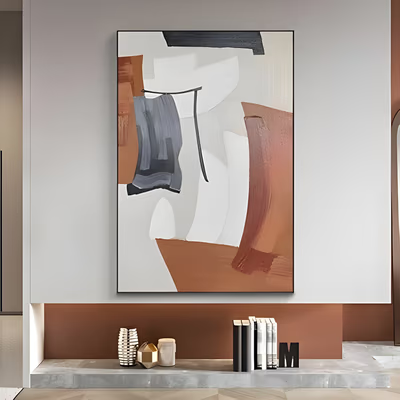
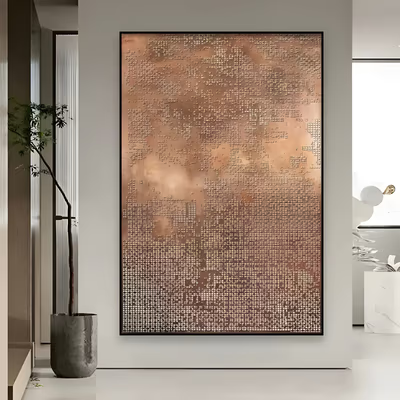
Copper and bronze relief mosaics, combed gold ridges, troweled rust colour fields, terracotta plaster shapes, cream forms on dark brown. These carry warmth through material rather than subject, which suits warm-minimal homes, restaurants and hotel bars where a scene would feel too literal.
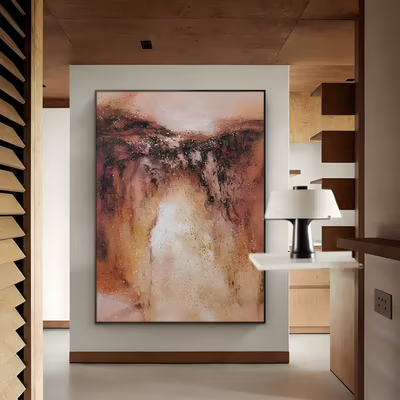
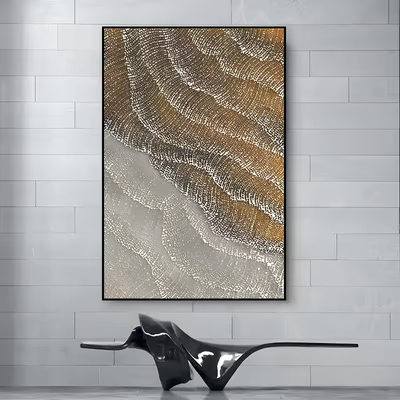
Pets, horses and people at home
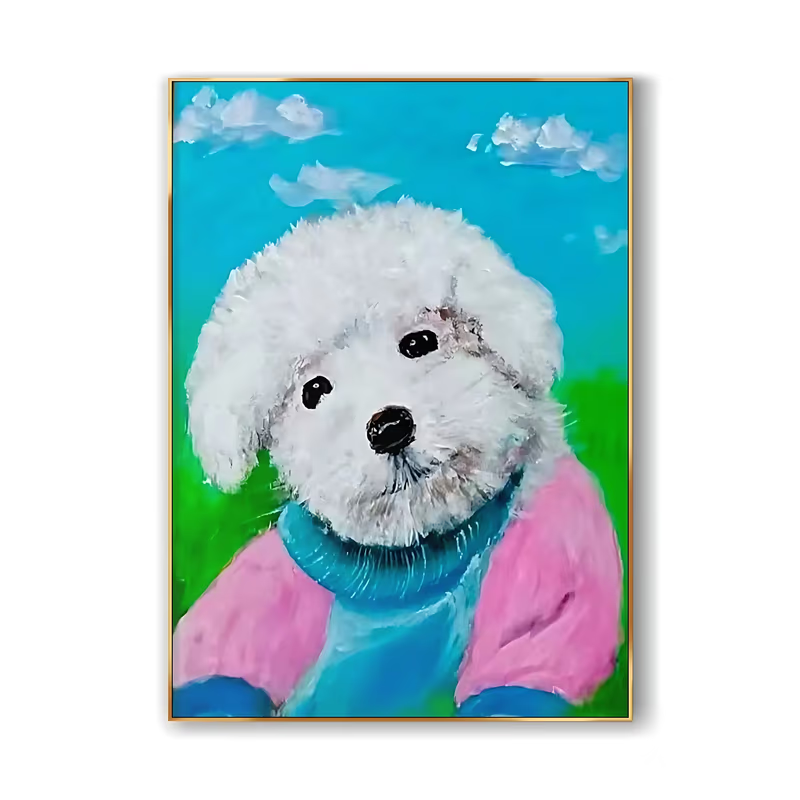
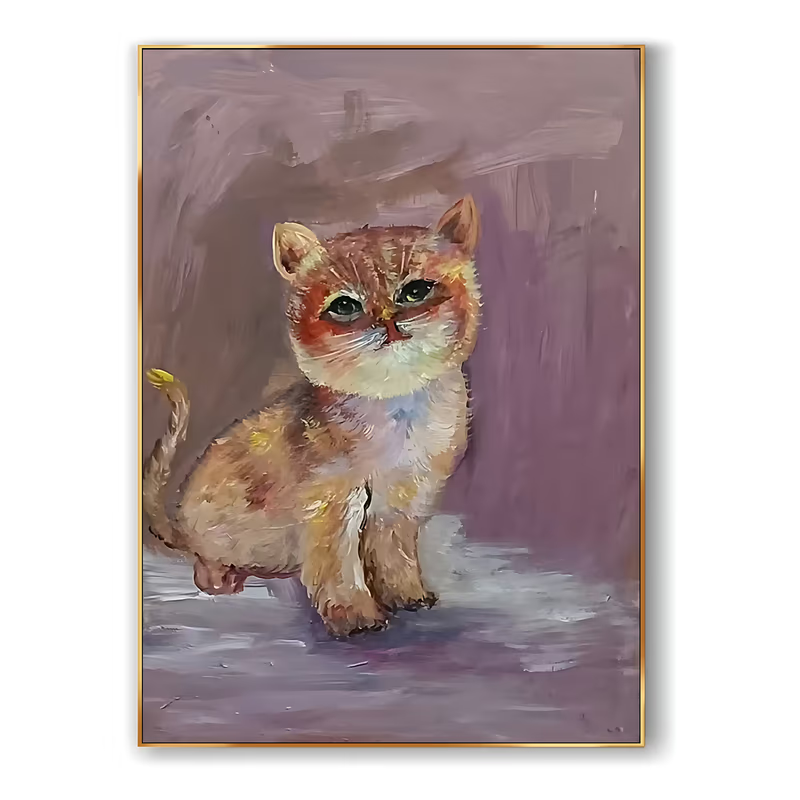
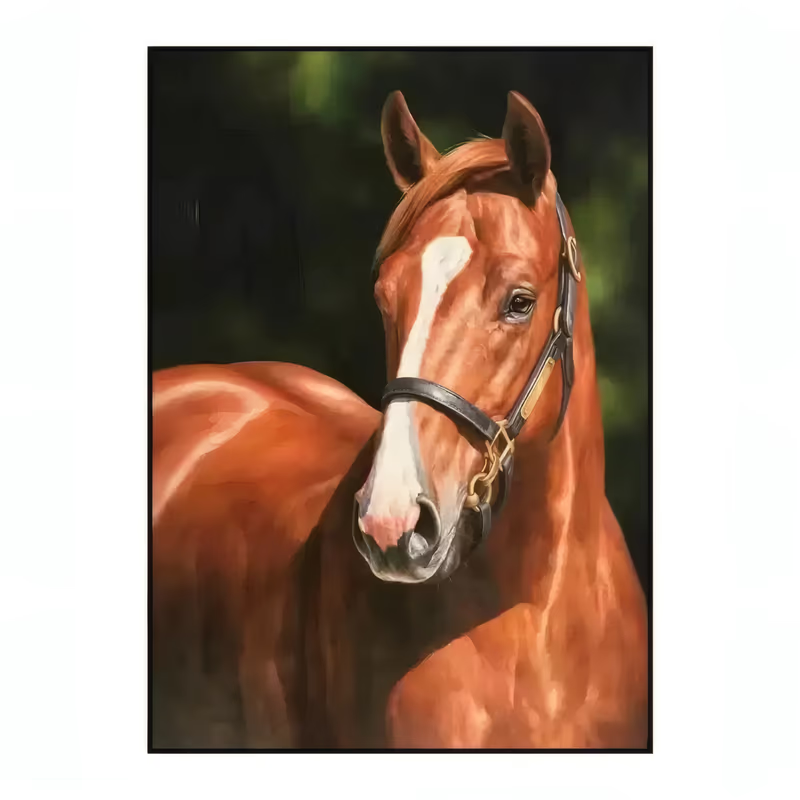
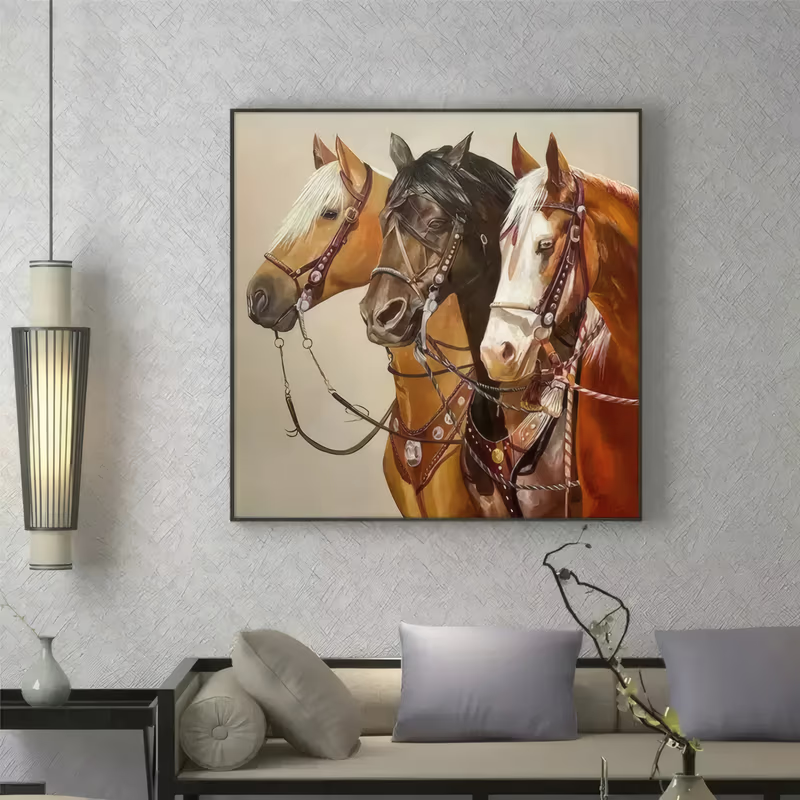
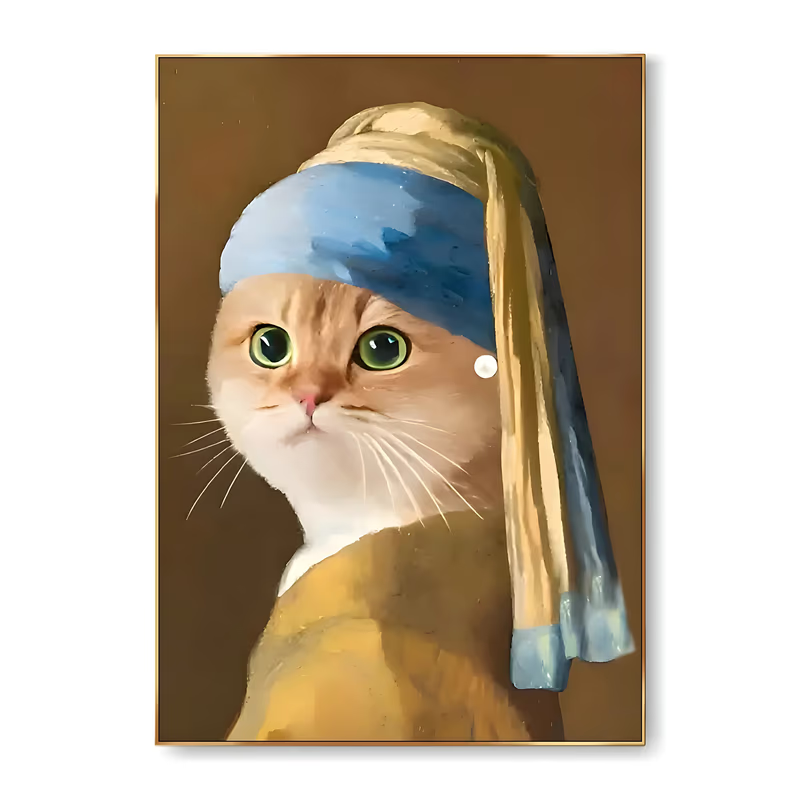
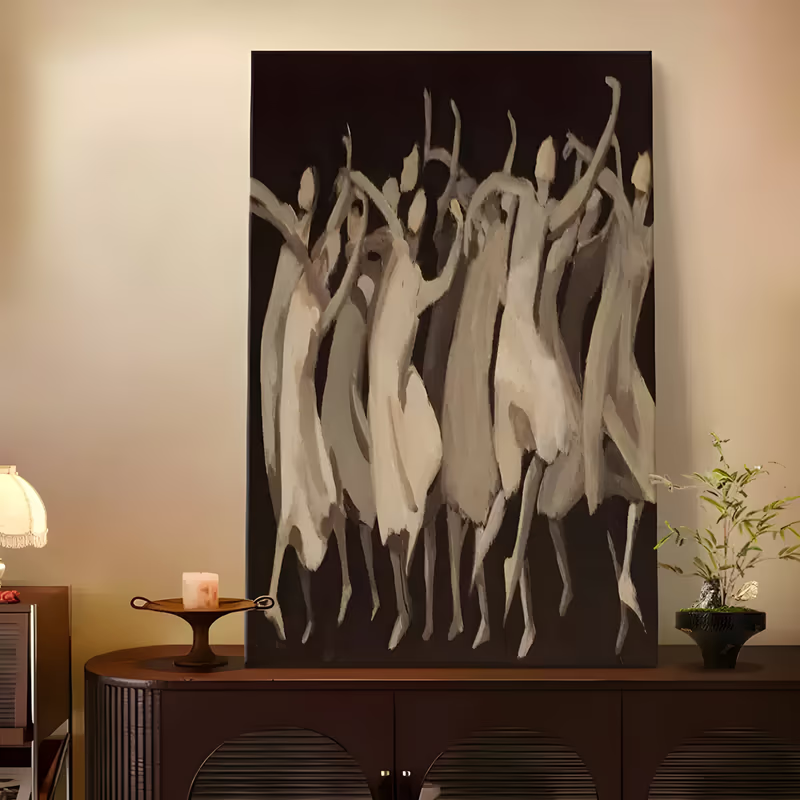
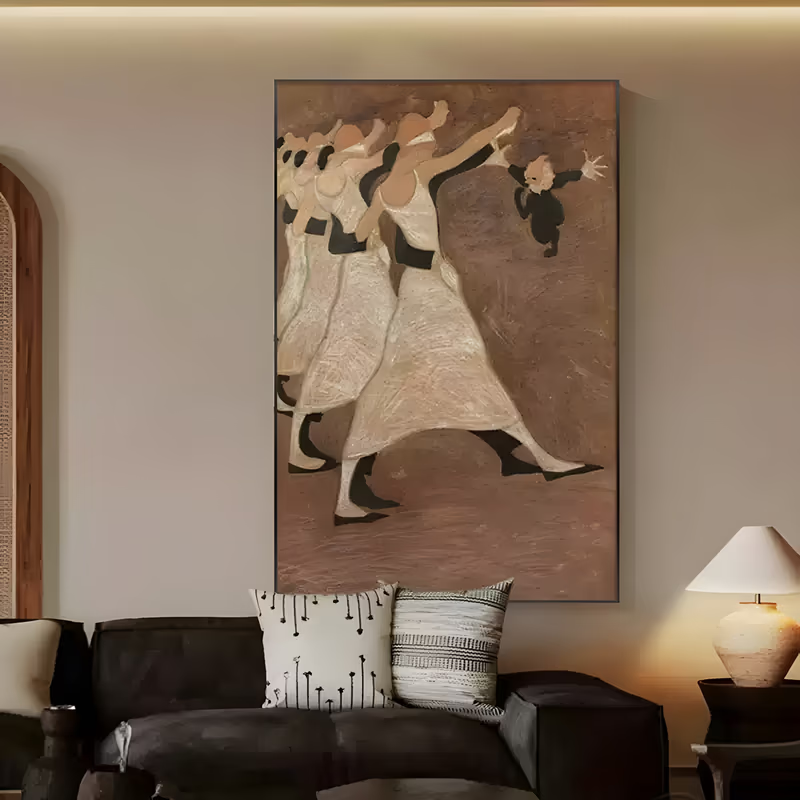
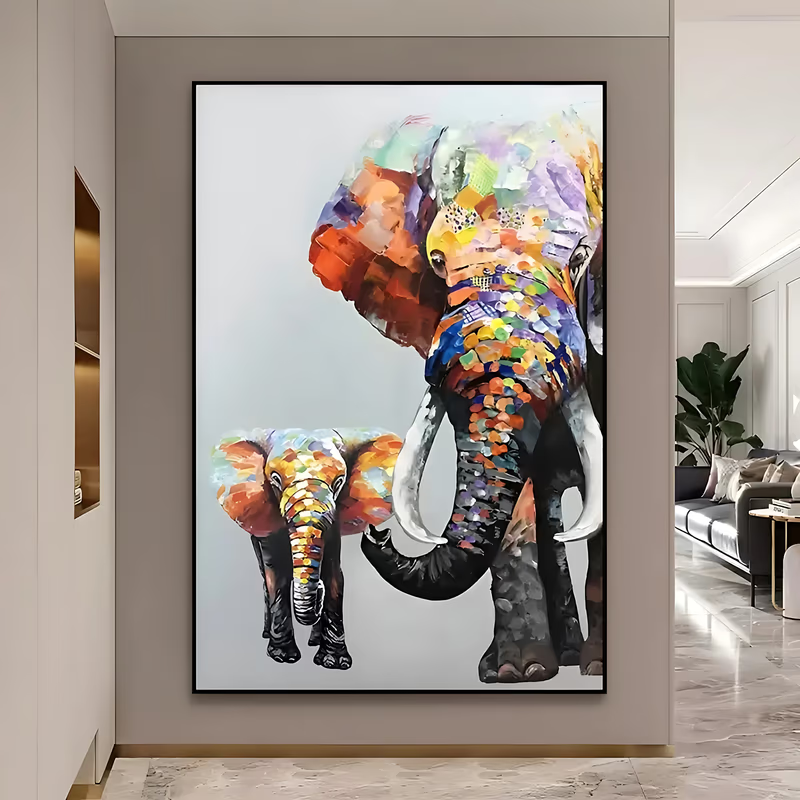
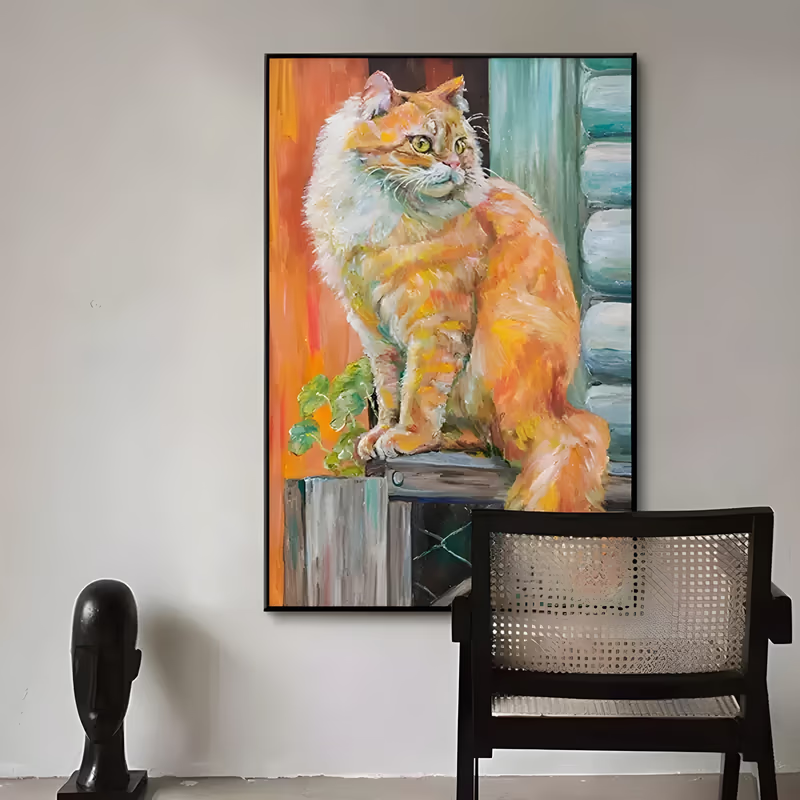
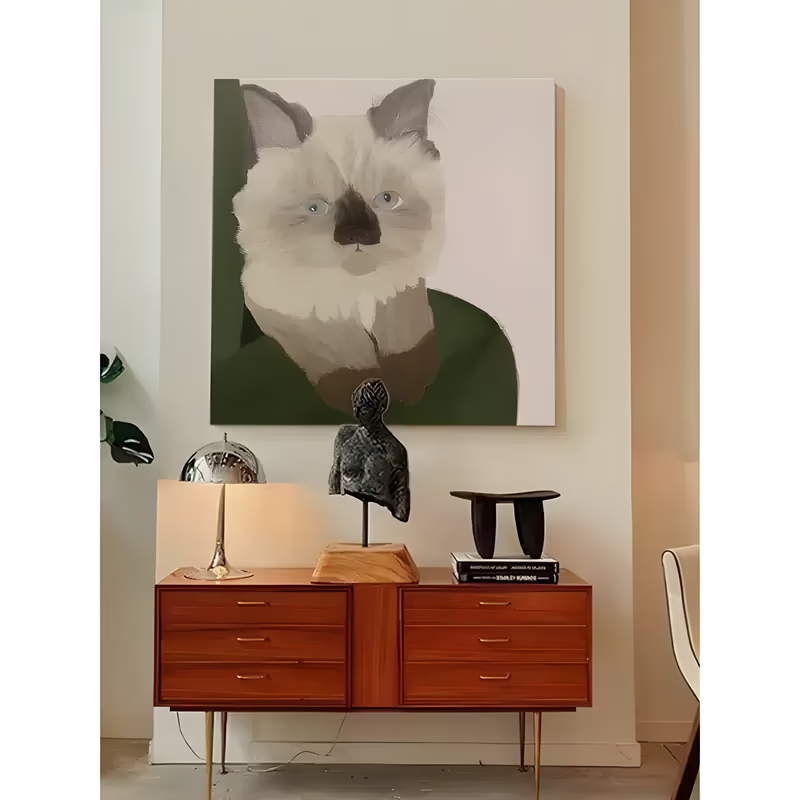
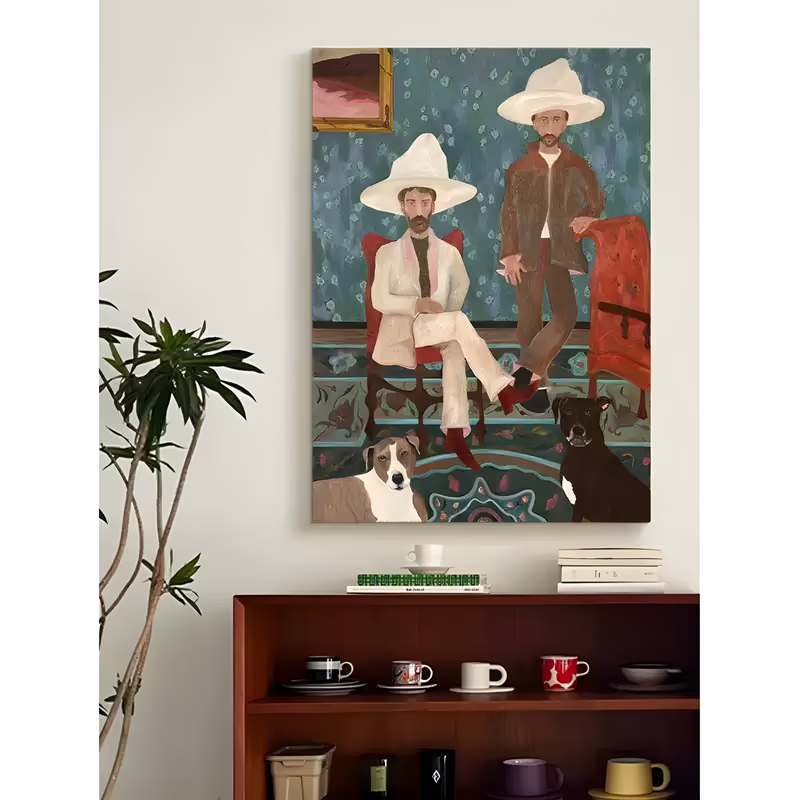
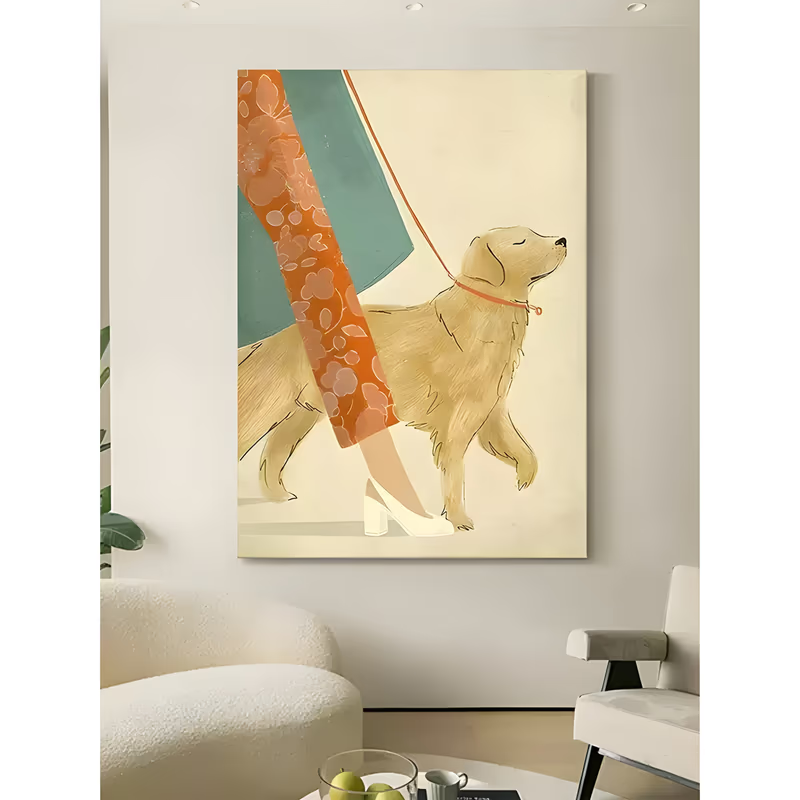
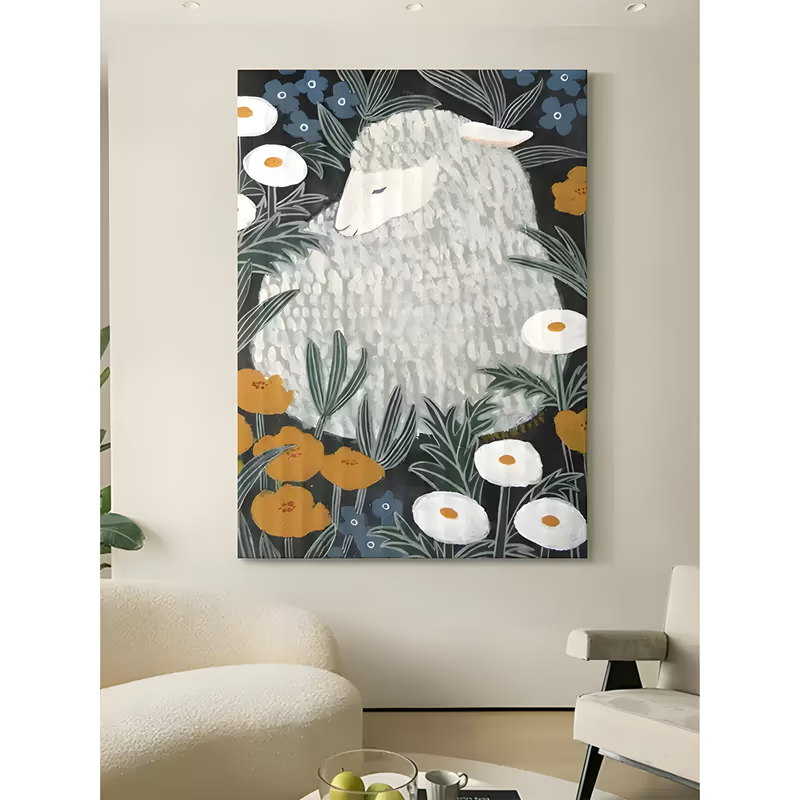
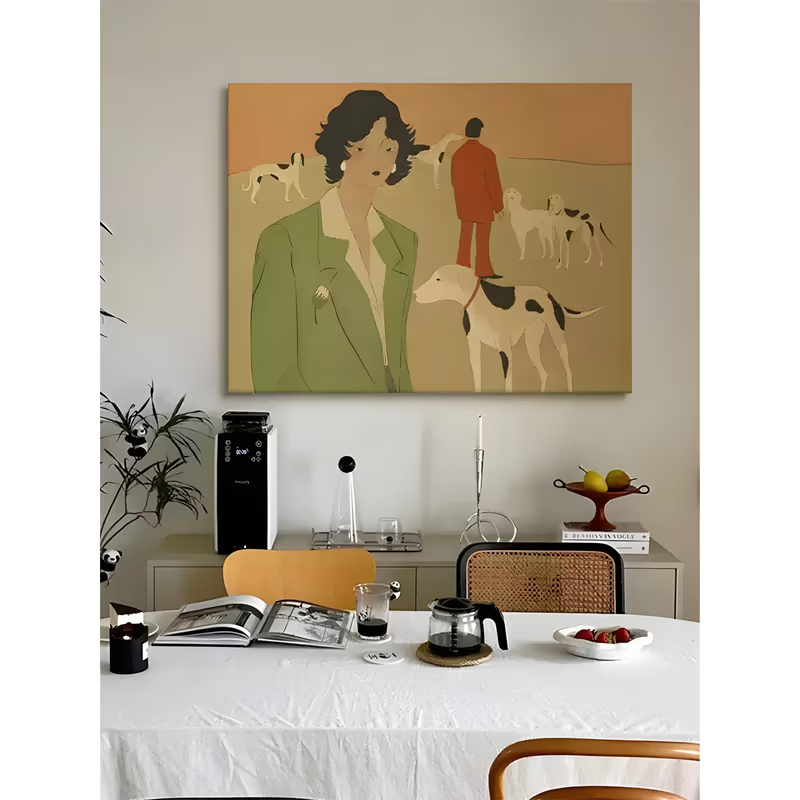
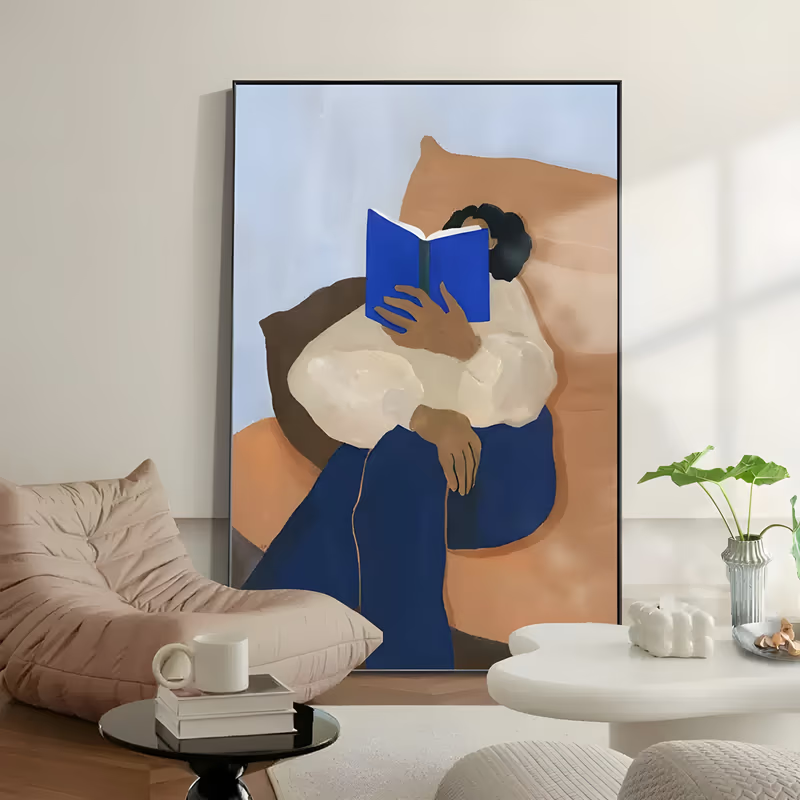
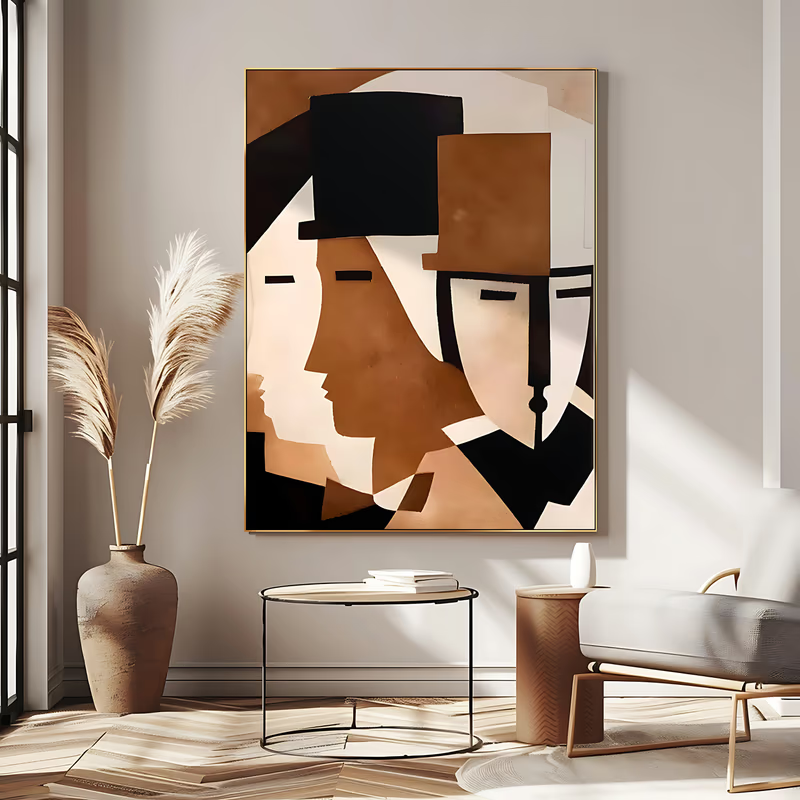
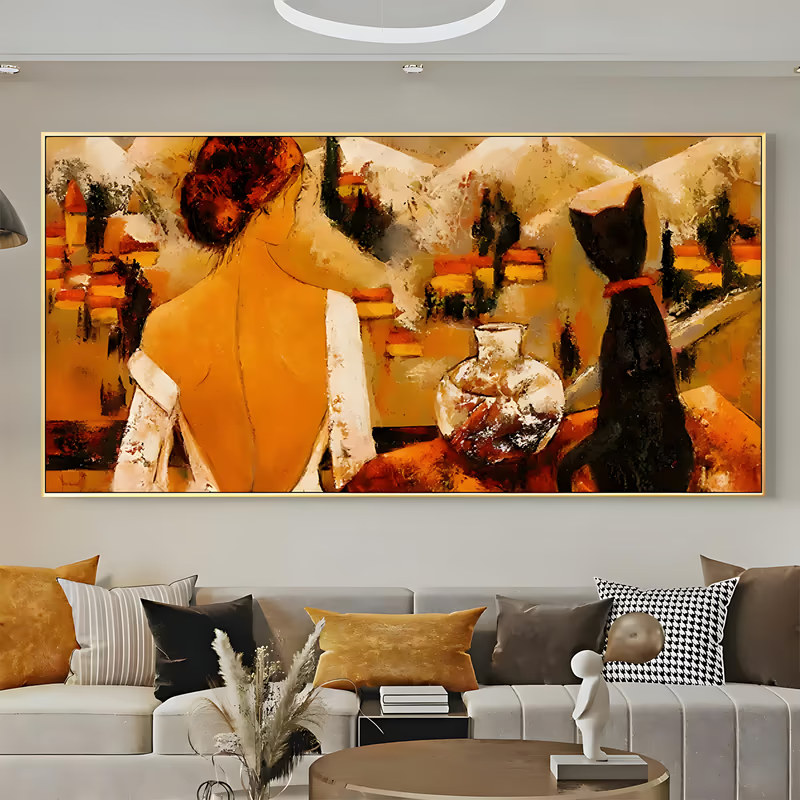
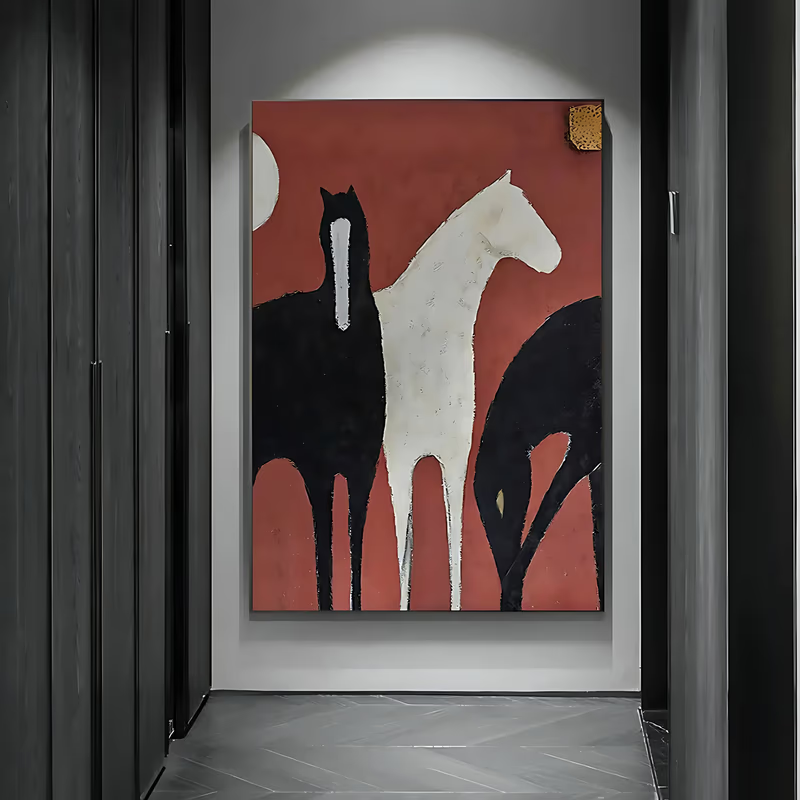
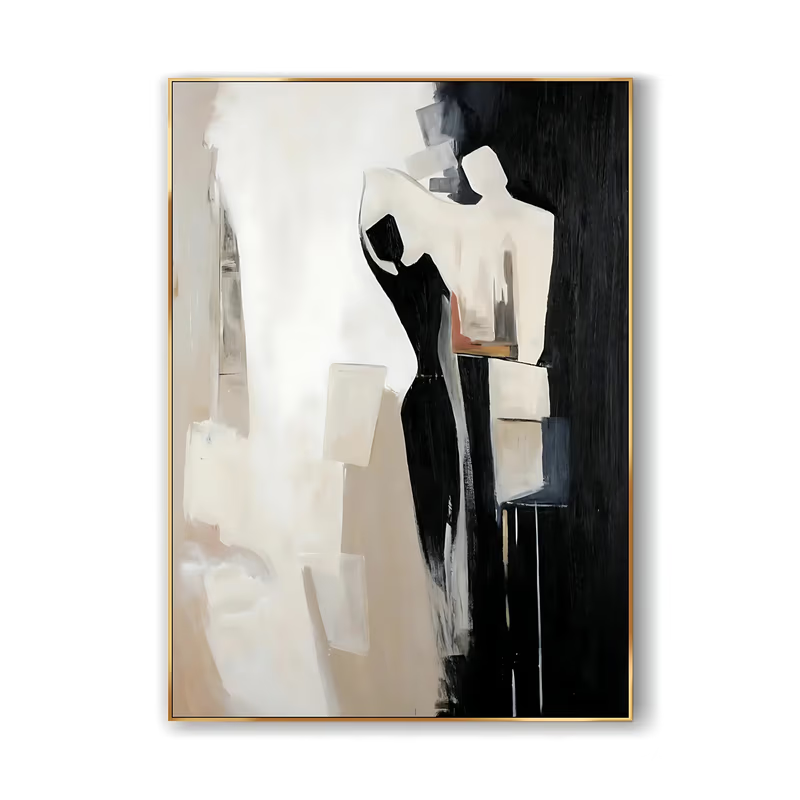
A ginger kitten on mauve, a chestnut horse with a white blaze, a puppy in a jumper, dancing figures on dark brown. Animals and figures give a room company, and the warm palettes they are painted in keep them homely rather than formal. Your own pet can be painted from a photograph through a custom commission.
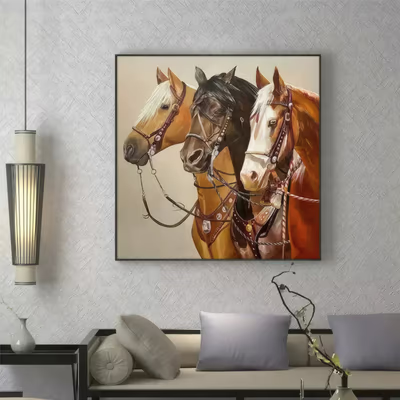
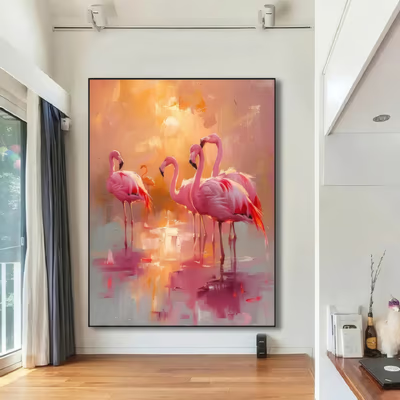
Which rooms and businesses want cozy, warm wall art?
Cozy wall art suits rooms where people gather and linger, especially in the evening: living rooms, dens, dining rooms, chalets, restaurants, bars, hotel lounges and serviced apartments.
Living rooms, dens and snugs
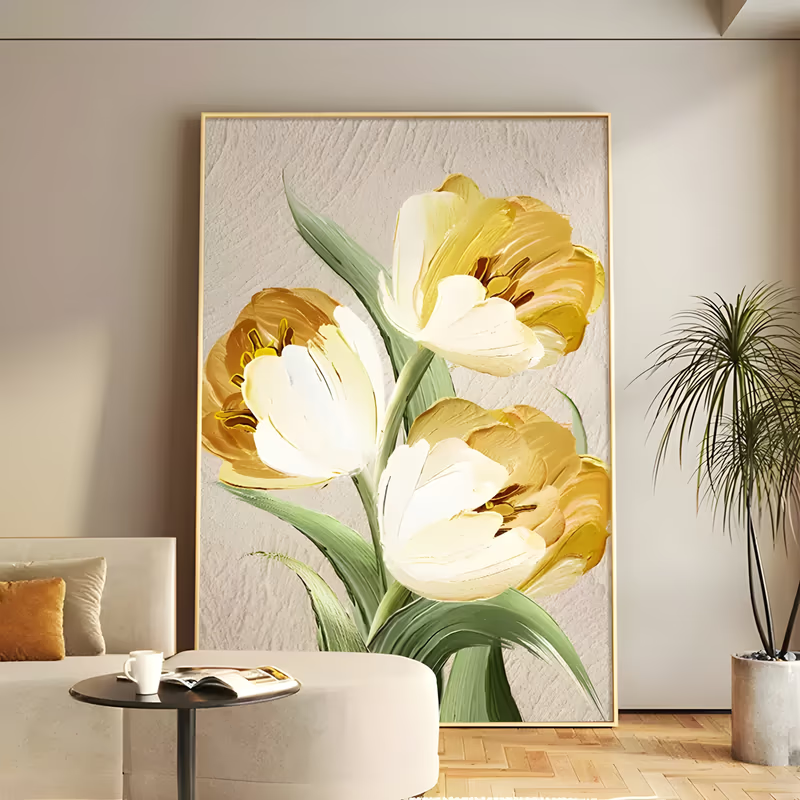
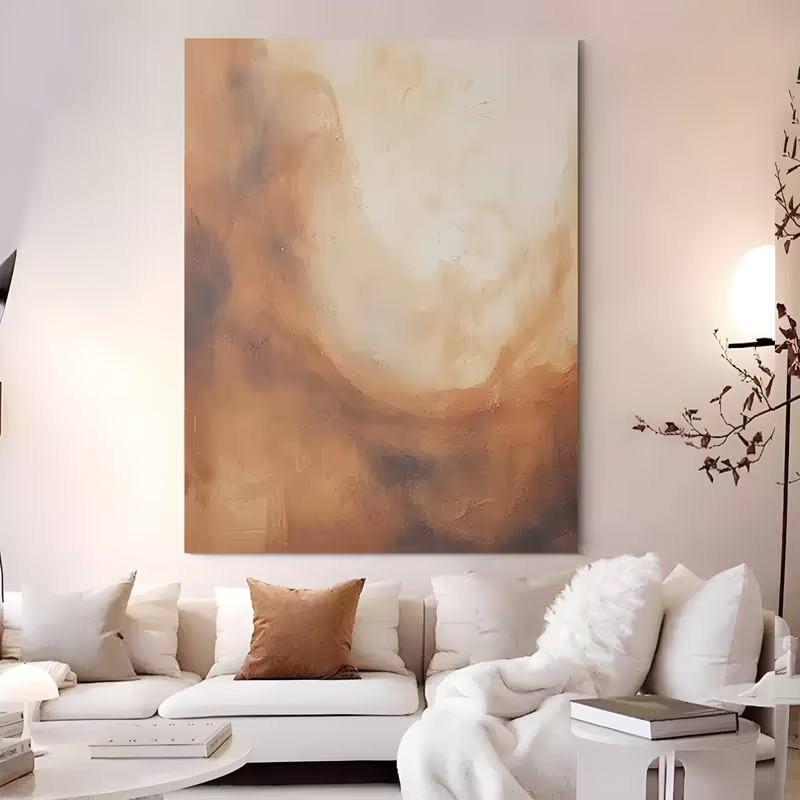
A warm canvas over the sofa or the fireplace sets the tone for the whole room. Cozy art for living rooms.
Dining rooms and kitchens
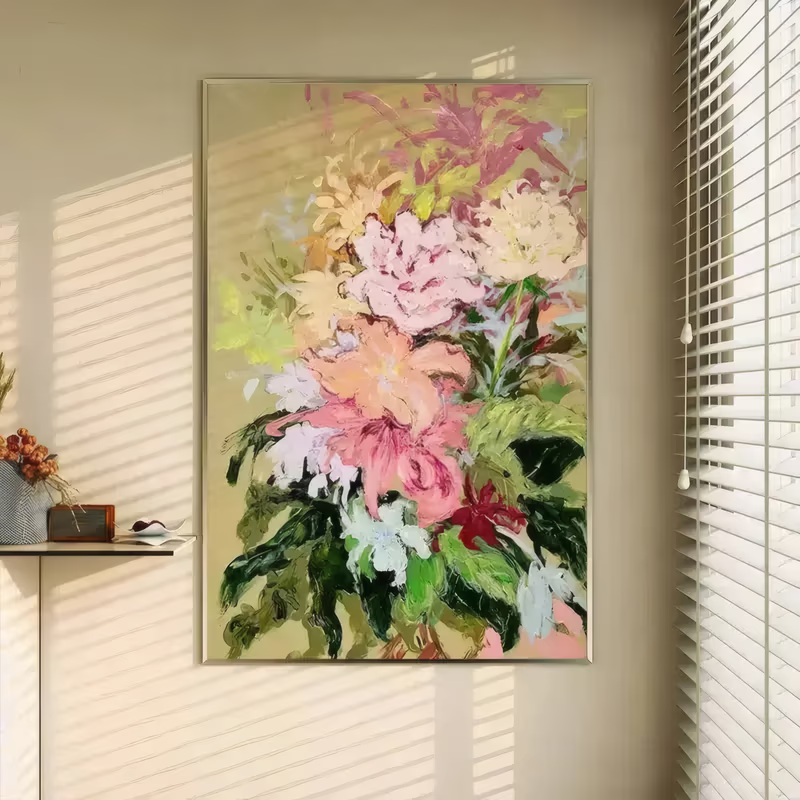
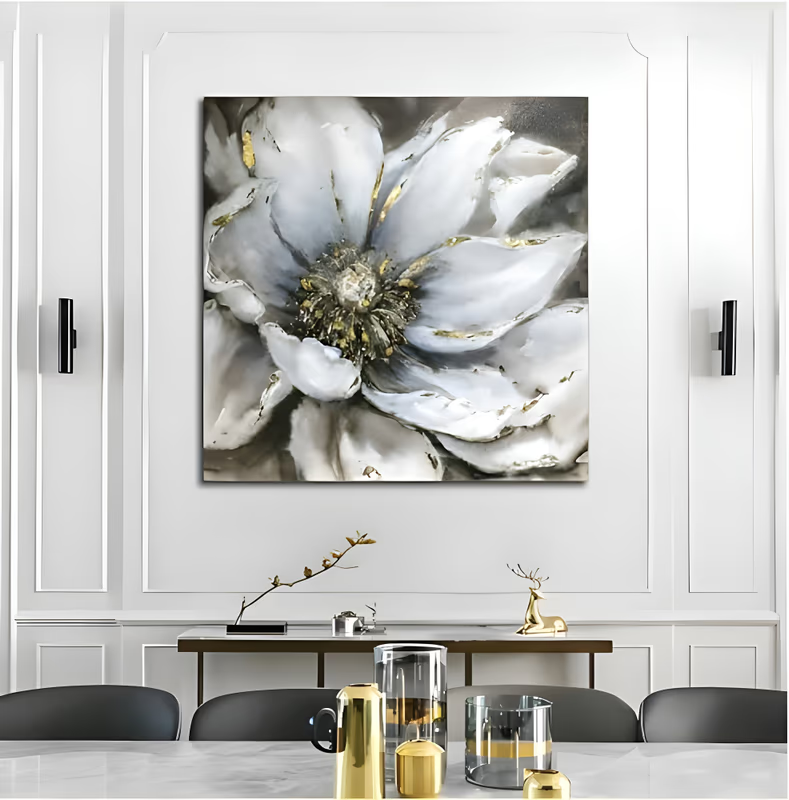
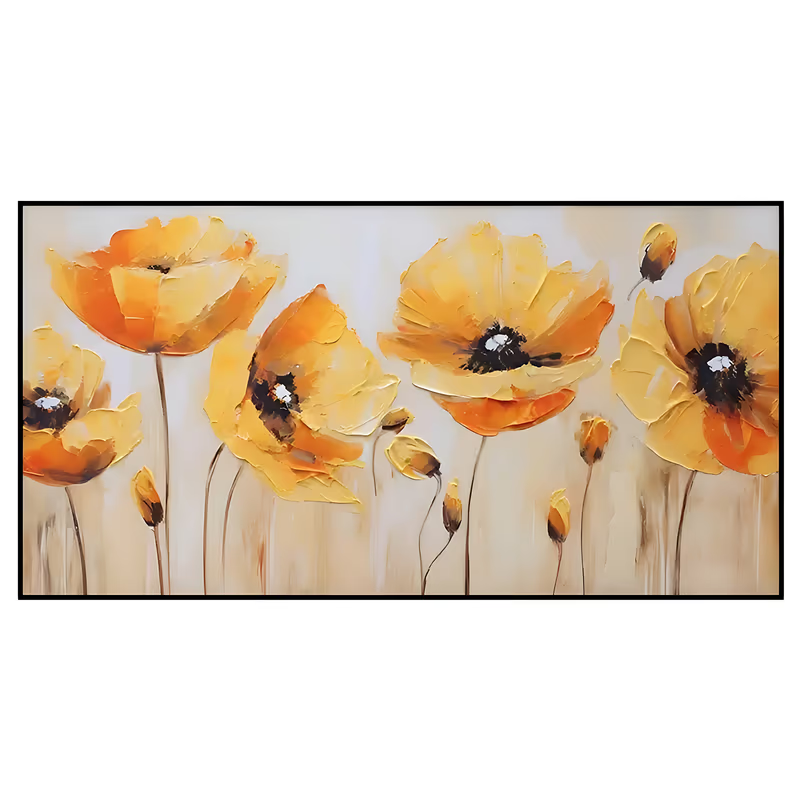
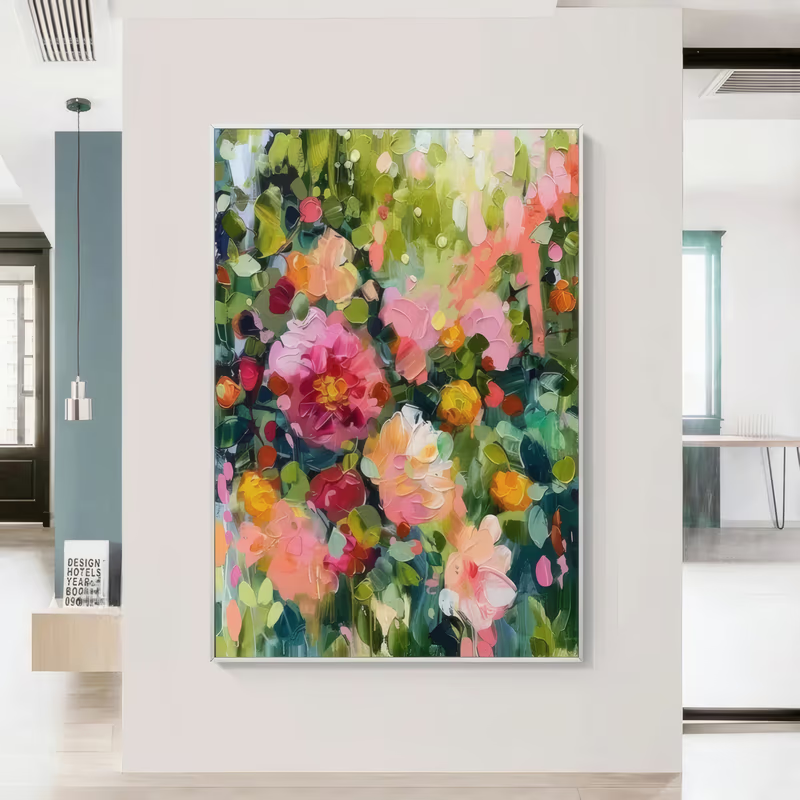
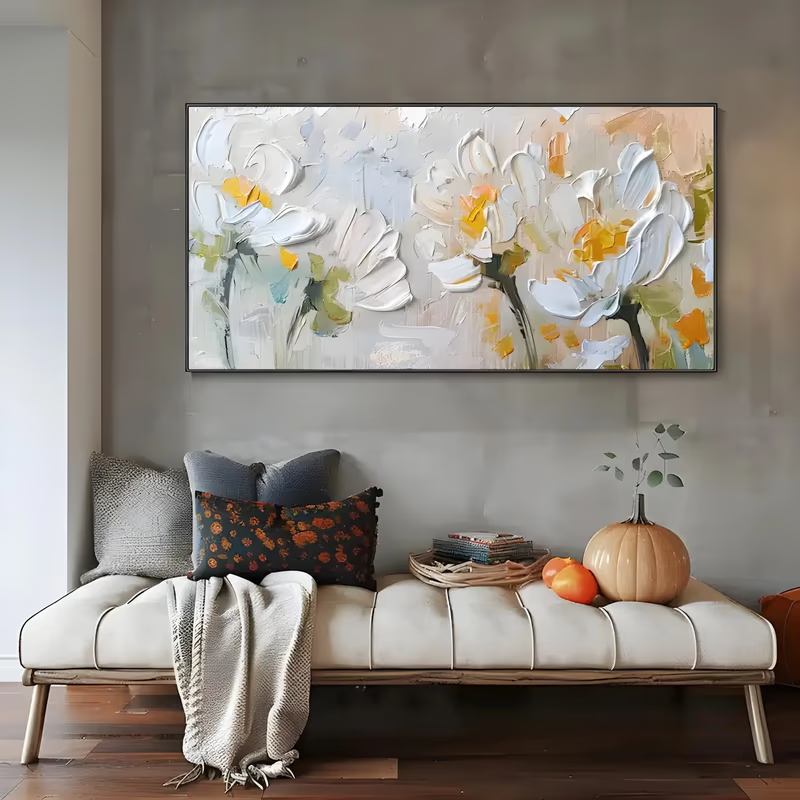
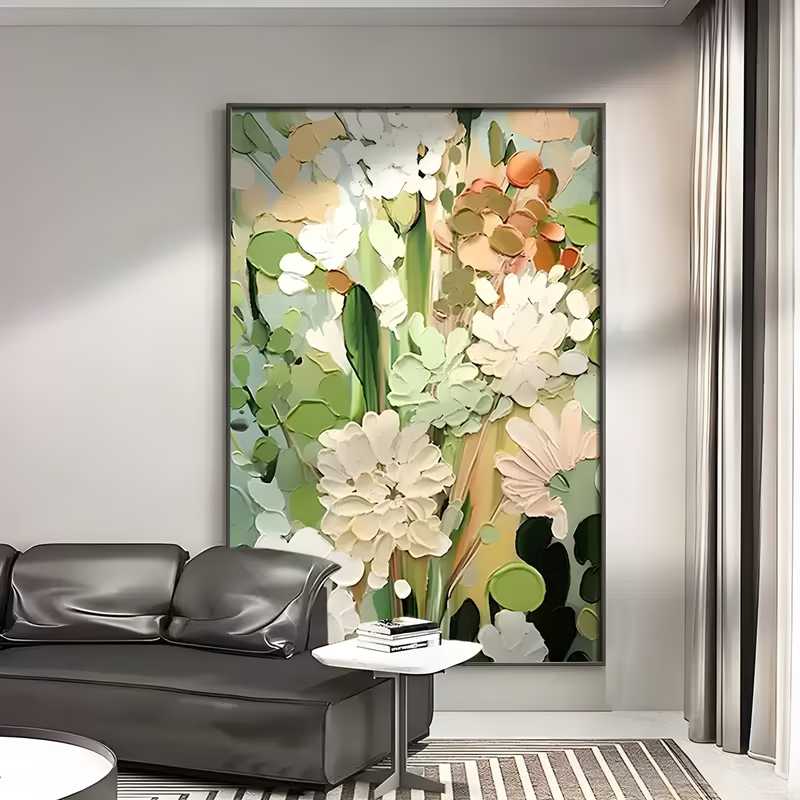
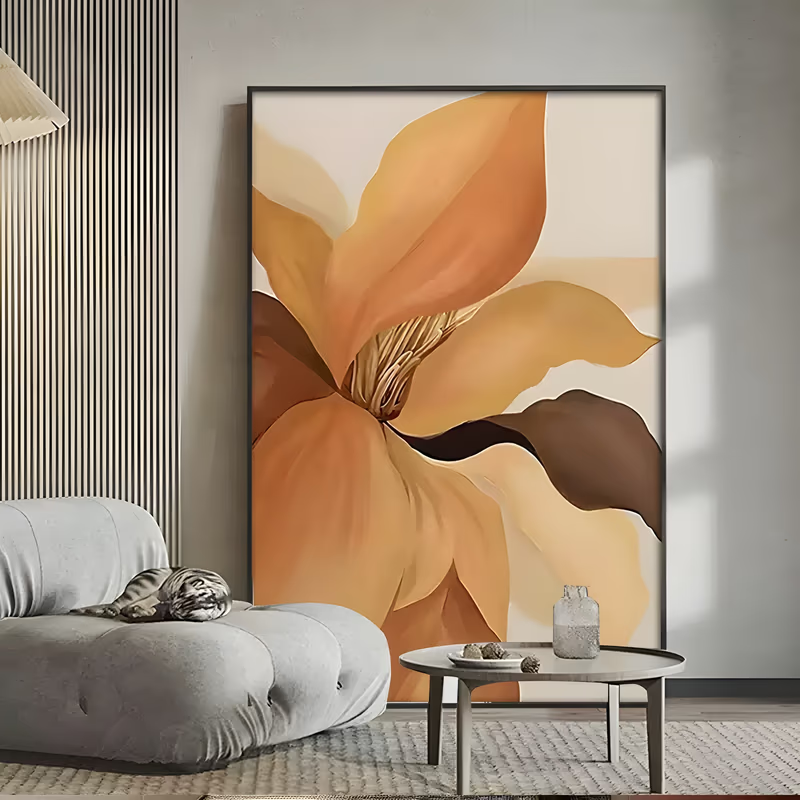
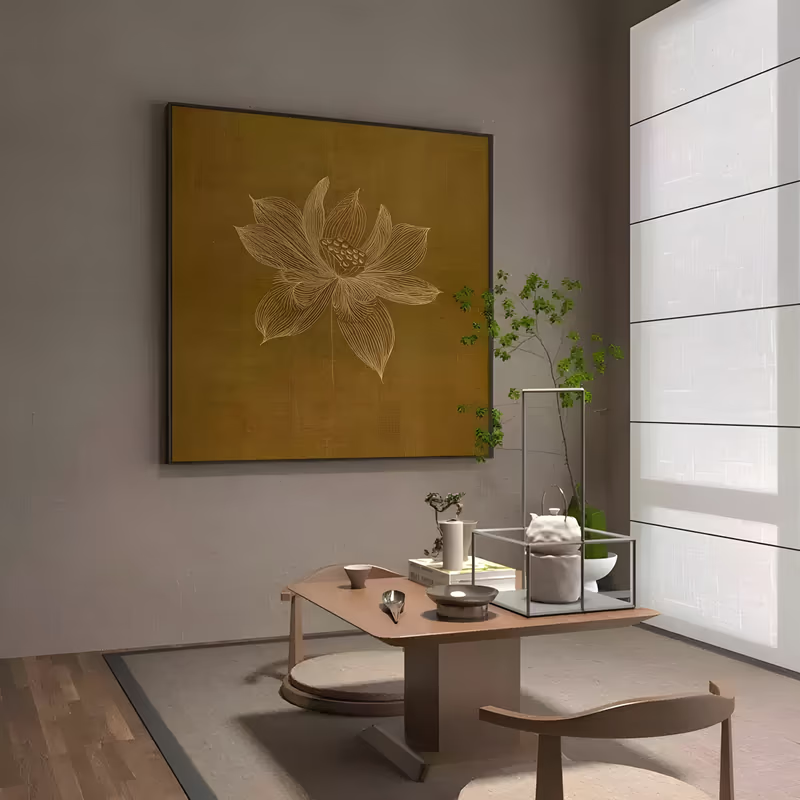
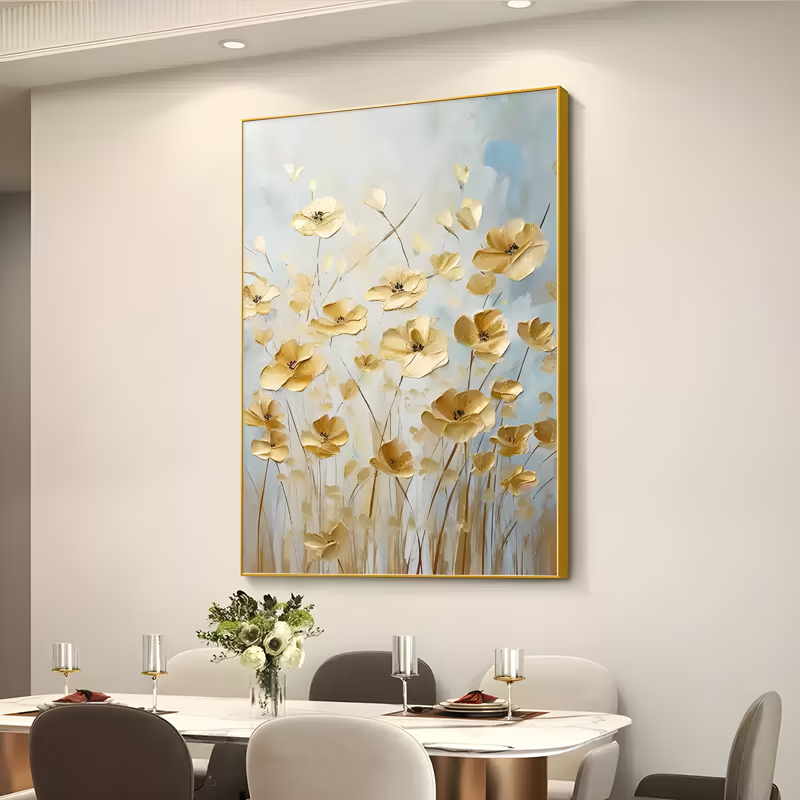
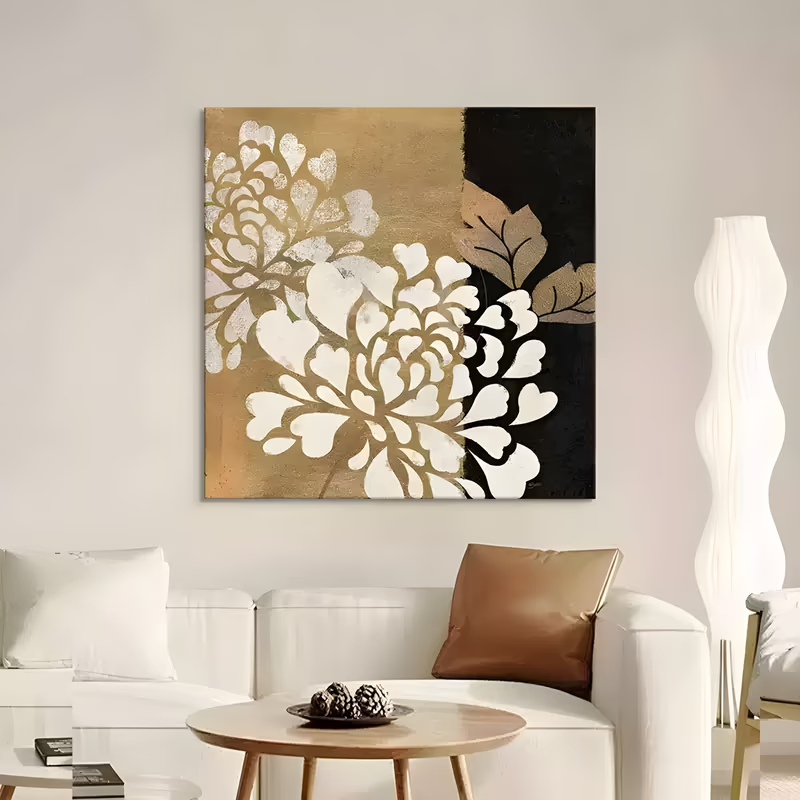
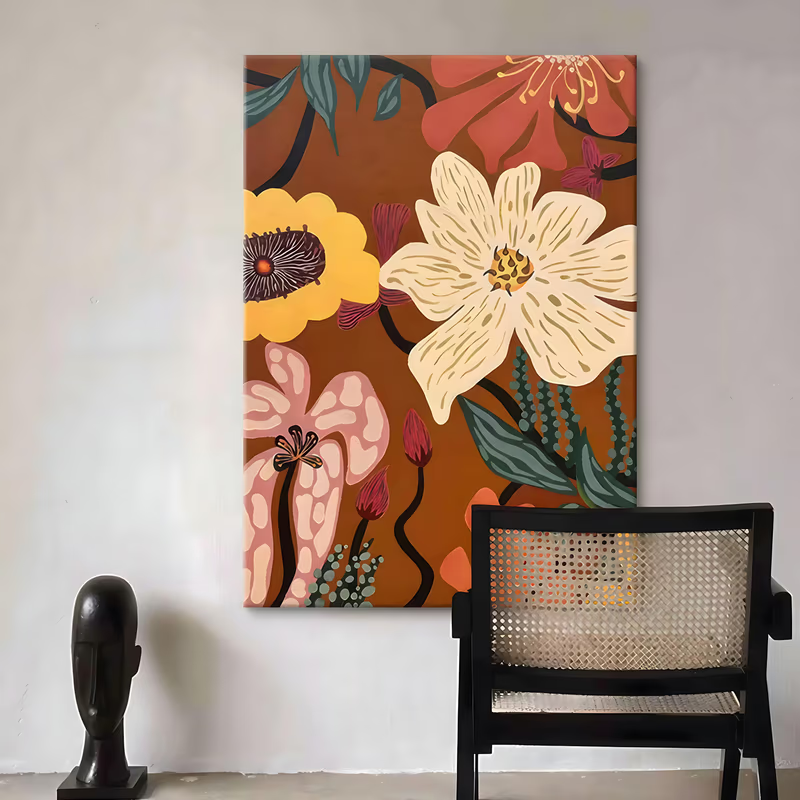
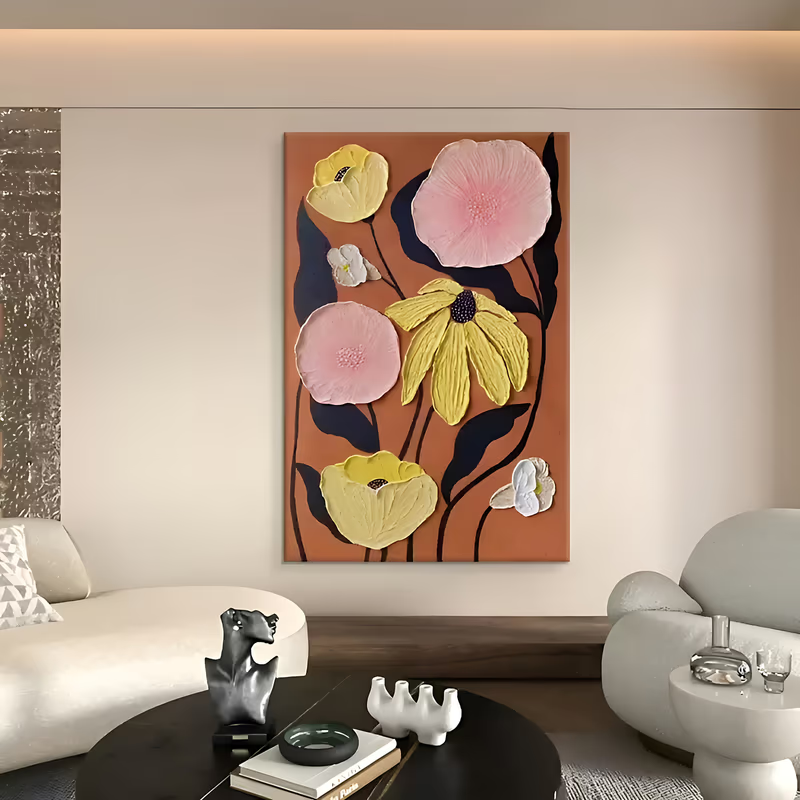
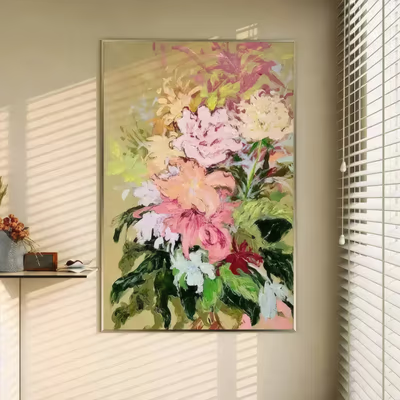
Still lifes, ochre florals and terracotta abstracts suit tables lit by pendants and candles. Warm art for dining rooms.
Restaurants, bistros and bars
Warm art keeps a room inviting after dark and flatters both food and guests under low light. See restaurant groups and bars and cozy art for restaurants.
Hotel lounges, libraries and lodges
Warm paintings make a large public room feel like a sitting room. See boutique and independent hotels and warm art for lobbies.
Serviced apartments, rentals and show homes
A warm painting helps a new, empty-feeling flat read as a home at first viewing. See serviced apartments, build-to-rent and show homes.
How does lamplight change cozy wall art?
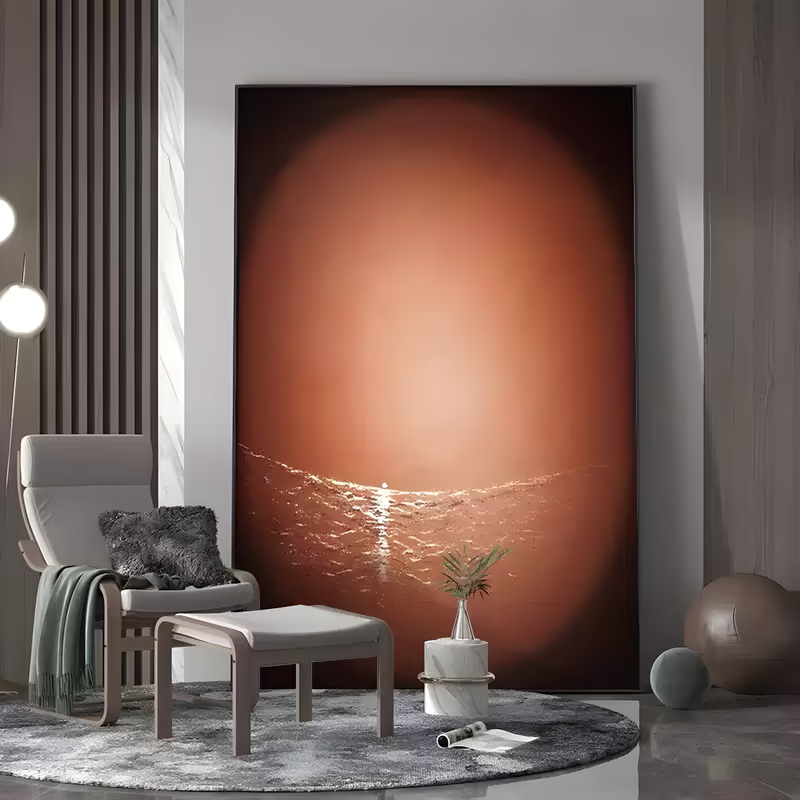
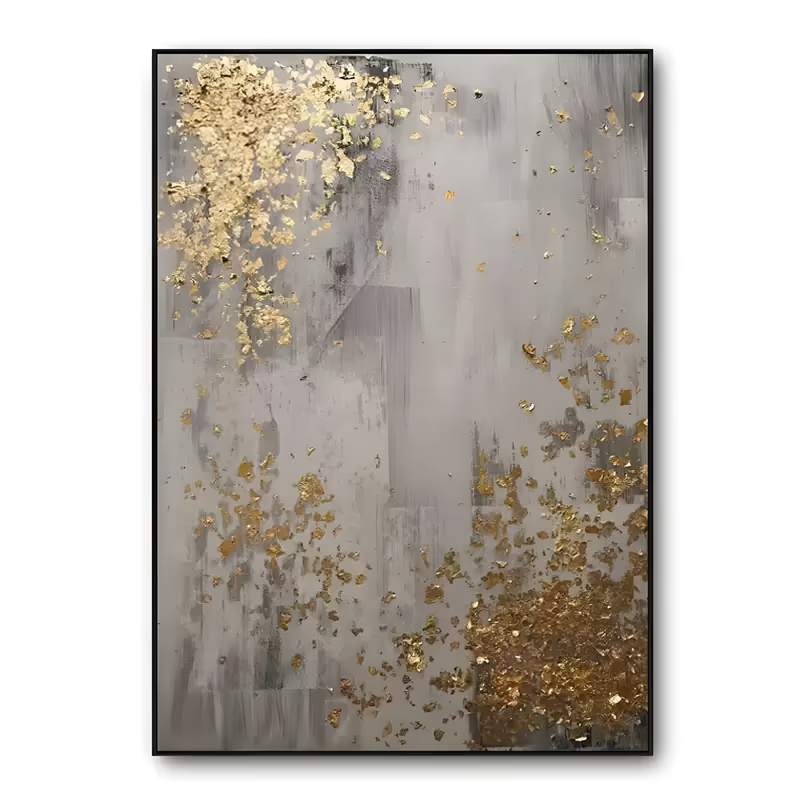
Warm lamplight intensifies cozy wall art: ambers deepen, gold leaf and copper glint, and texture casts soft shadows, so judge a warm painting under the bulbs it will live with.
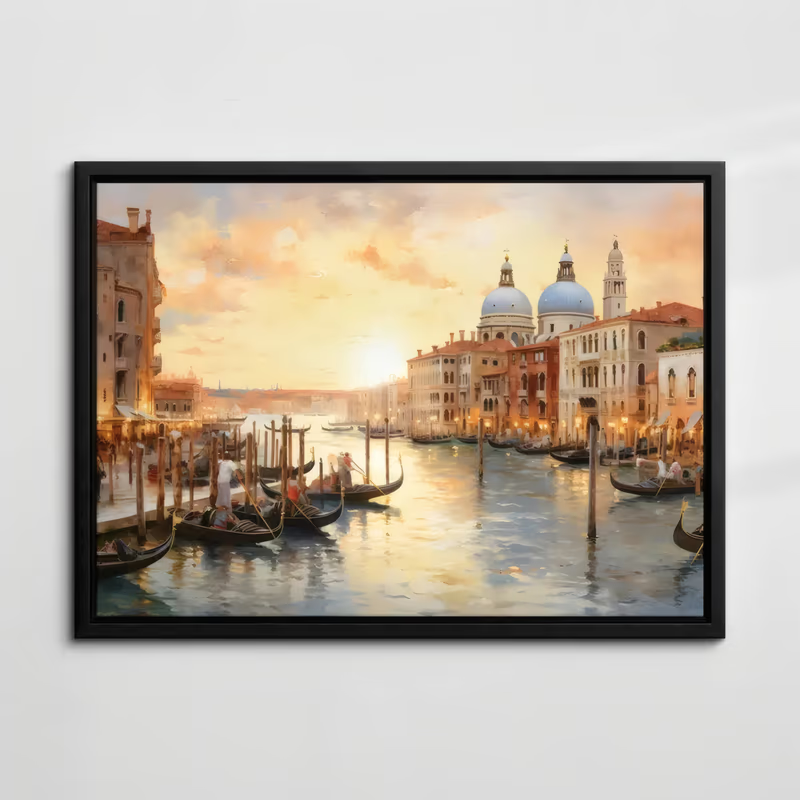
Most homes and restaurants use warm white bulbs of around 2700–3000K in the evening. Under them, oranges, ochres and reds become richer, and cream turns slightly golden. Cool colours behave differently: a pale blue sky behind autumn trees can turn grey, and a mint accent can look dull. If the painting will mostly be seen at night, tell us, and the cooler notes can be strengthened slightly so they hold their own.
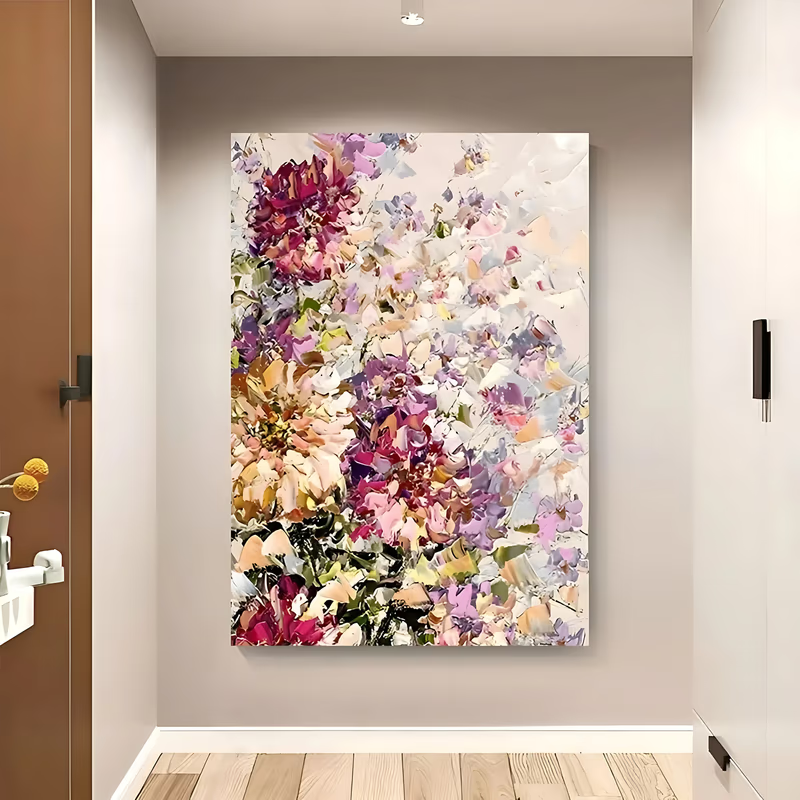
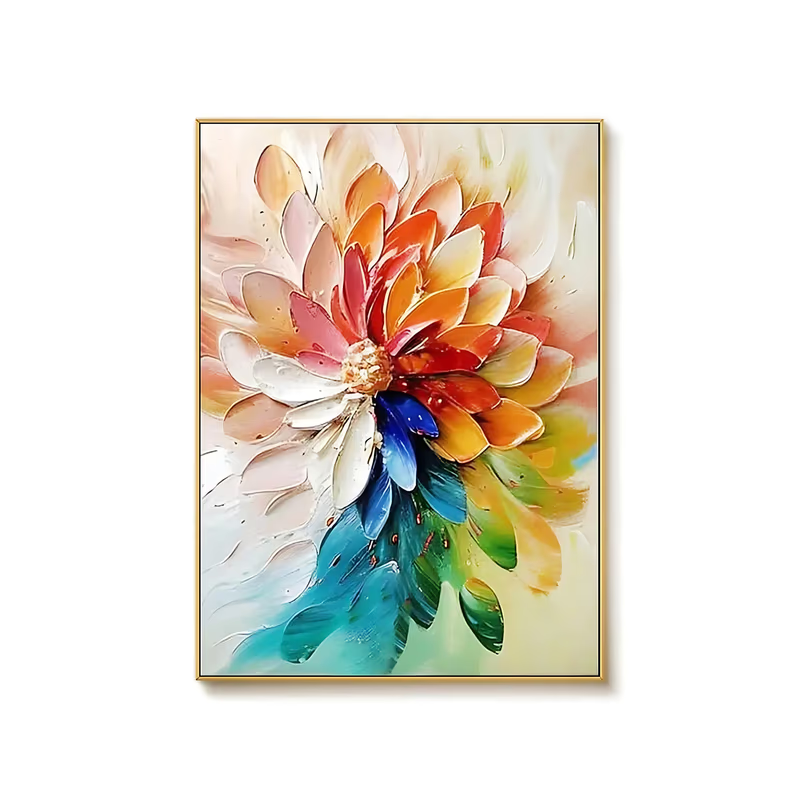
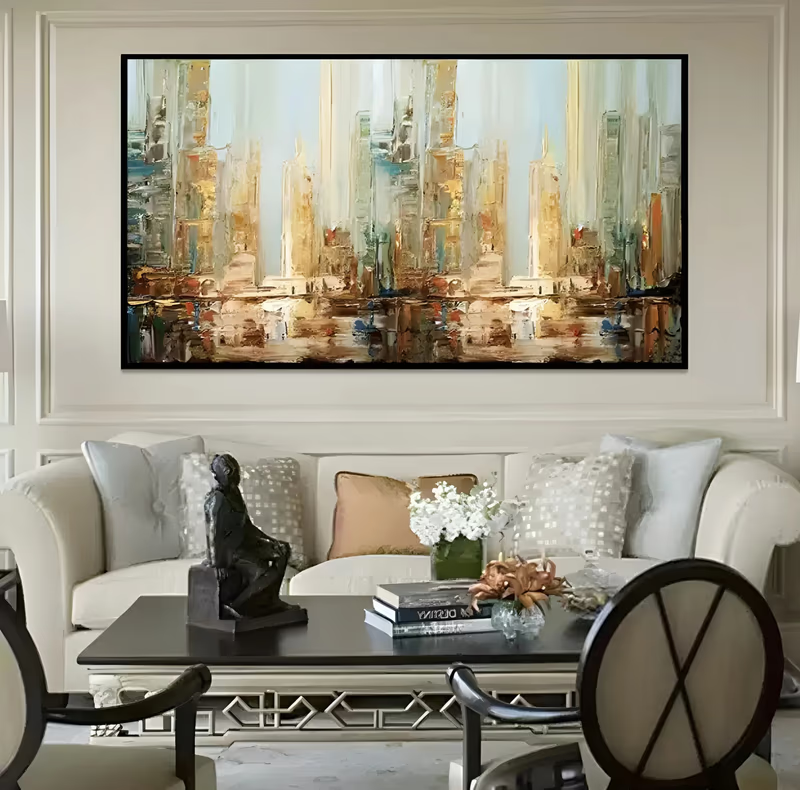
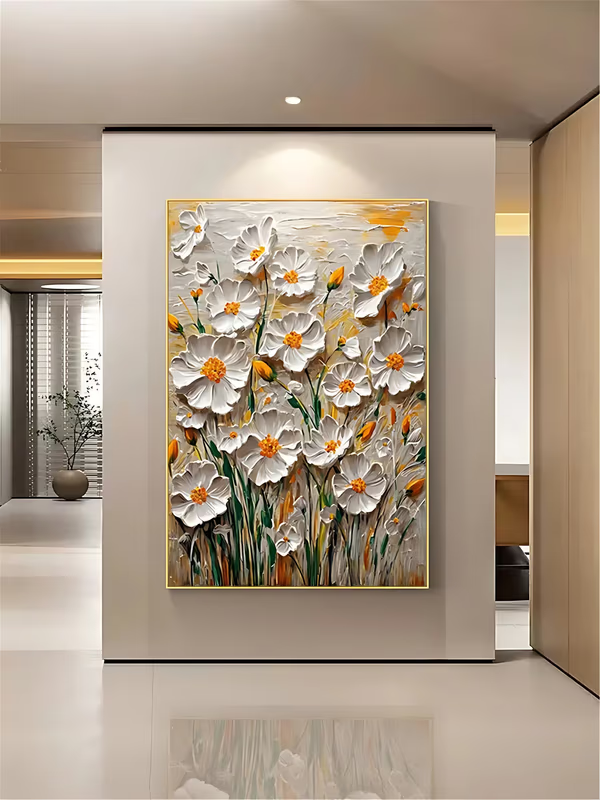
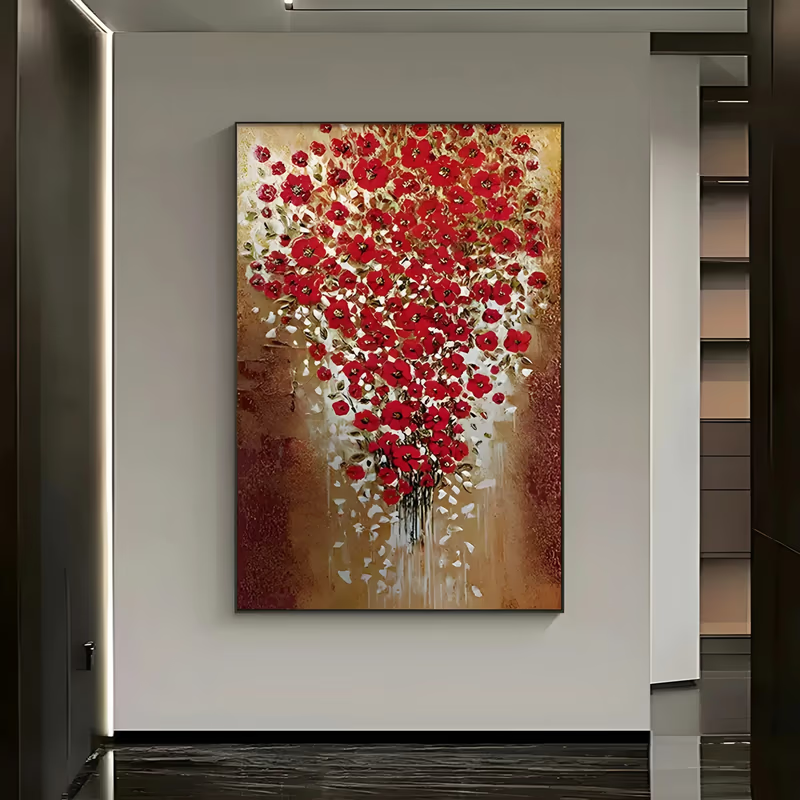
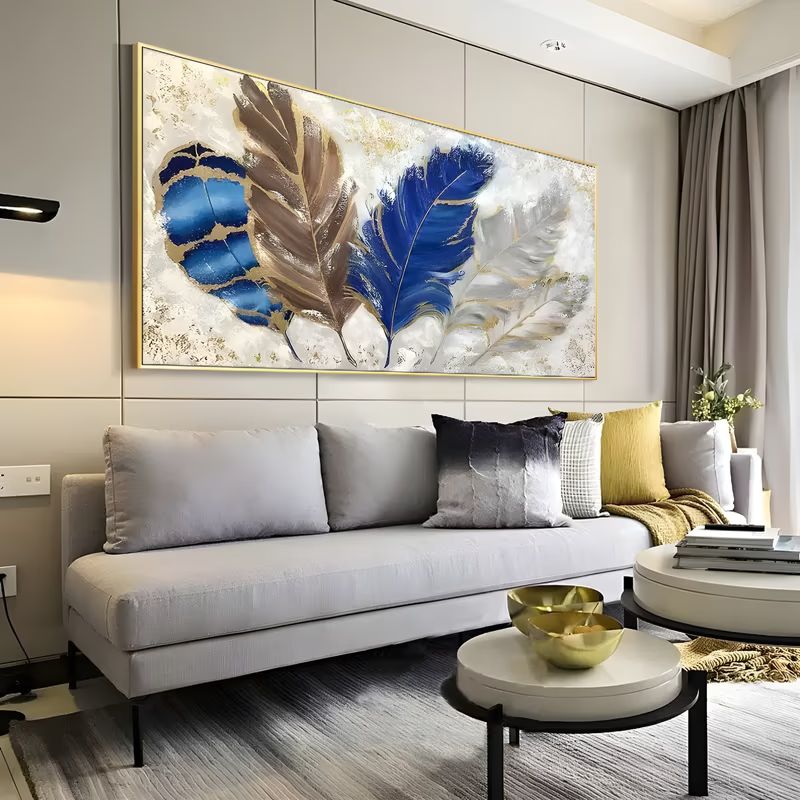
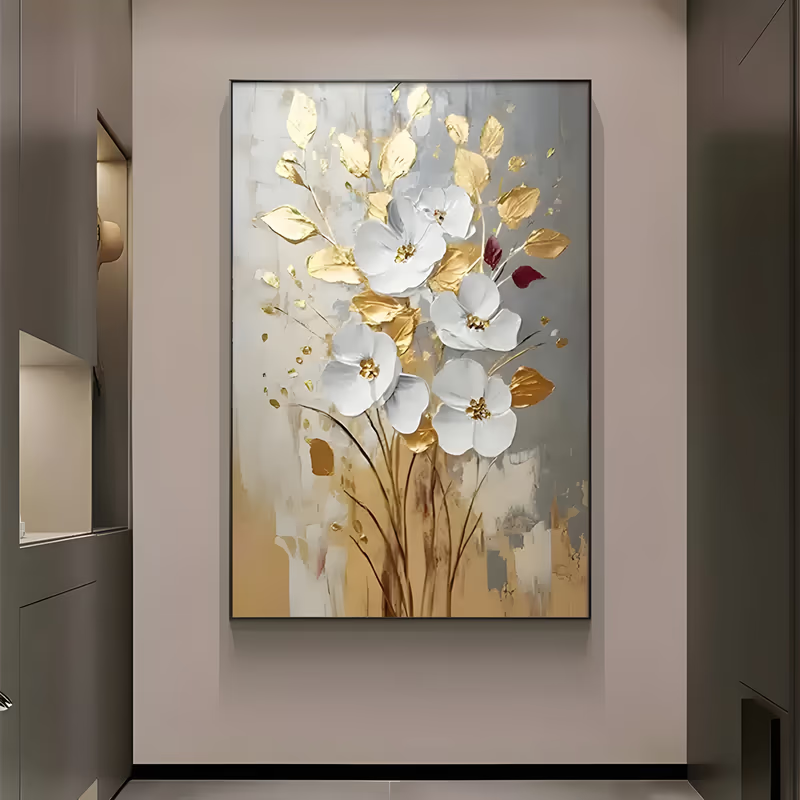
Directional light suits cozy art better than it suits calming art. A picture light or a spot angled from above rakes across knife-painted petals, plaster ridges and gold leaf, which is exactly the tactile glow a warm room needs. Avoid placing a warm painting where it only gets cold overhead light; it will look tired. And keep glass off textured pieces, since reflections flatten them.
How do you make a large or cool room feel cozy with wall art?
Use scale and warmth together: one large warm canvas, or a tight group, brings a big or cool-toned room in around the people using it.
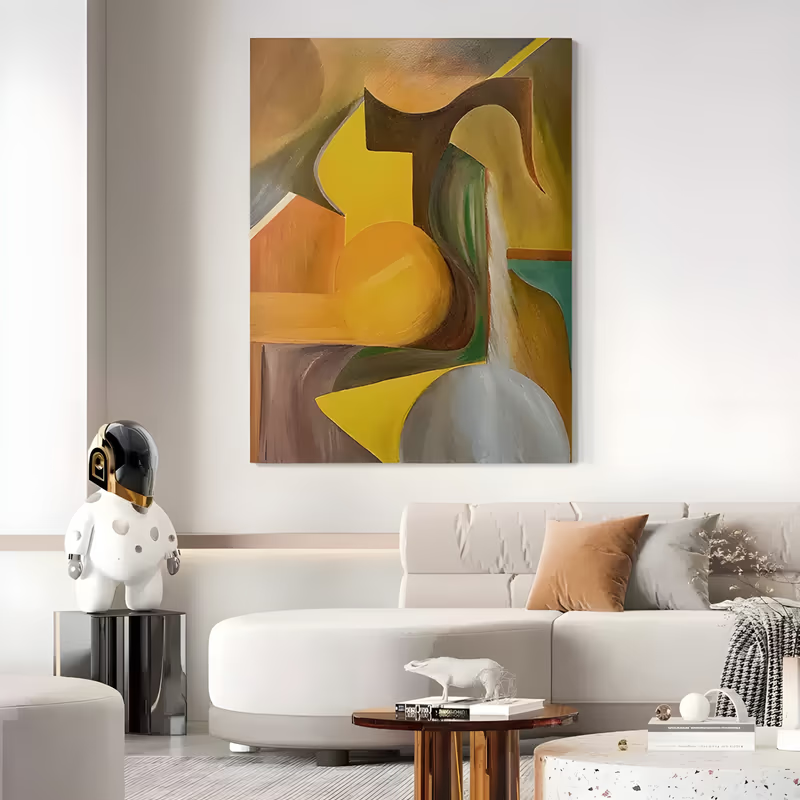
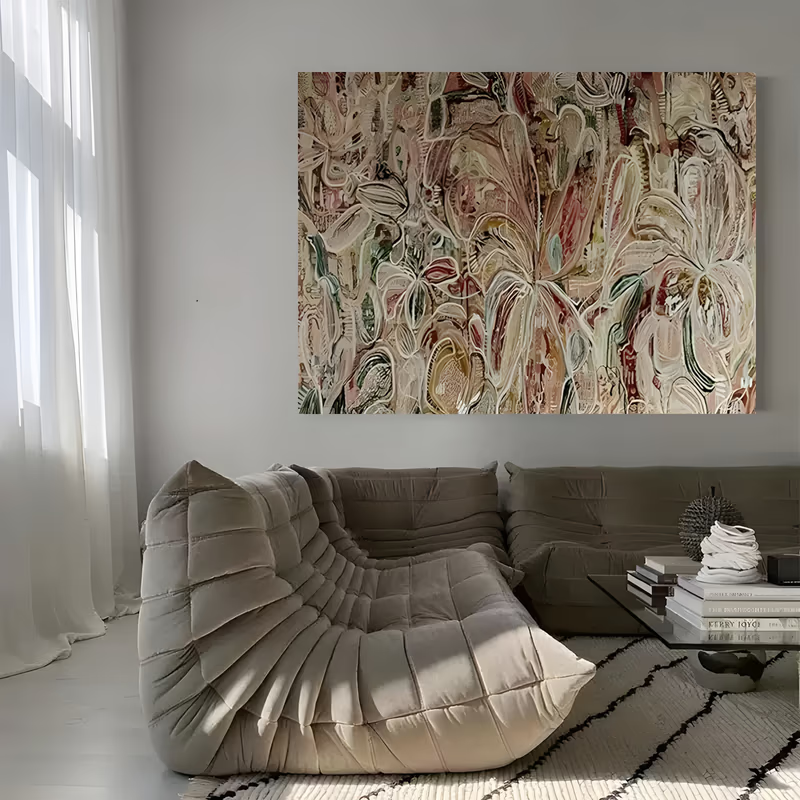
Large open-plan rooms, high ceilings and grey or white schemes often feel cold however much furniture they hold. A painting can fix part of that. A warm canvas covering a good share of the main wall advances visually and makes the room seem smaller and more occupied. In a grey or white room, a single warm piece in amber or terracotta balances the cool surfaces without repainting.
Three further moves help. Hang the art a little lower than usual over low seating, so it belongs to the seating group rather than the ceiling. Group two or three warm pieces close together, with 5–8 cm (2–3 in) between them, to create a sense of a corner within a big space. And consider a darker frame, such as walnut wood or black, which sharpens the edge and adds weight. In hotel lobbies and lounges, a series of warm works across zones can break one large hall into several smaller sitting areas.
What size of cozy wall art suits a fireplace, a sofa or a restaurant wall?
Over a sofa or sideboard, choose about two-thirds of its width; over a fireplace, keep the canvas within the mantel's width; in a restaurant, size for viewing distance, not for one table.
Above a mantelpiece, leave 15–20 cm (6–8 in) between the shelf and the bottom of the canvas, and keep the painting narrower than the chimney breast so the stonework frames it. A square or slightly horizontal canvas usually sits best there. Over a sofa, the usual centre height of 145–152 cm (57–60 in) works, coming down a little for low lounge seating.
In dens and snug rooms, a medium canvas that fills the wall between two lamps or bookshelves feels more enclosed than a huge one with acres of wall around it. In restaurants and bars, guests see the art from across the room, so larger, simpler warm works carry further, and a set of vertical canvases along a banquette gives each table its own piece. Since every painting is made to order, measure the space and ask for the exact size.
How is a cozy painting warmed up to your scheme and approved?
Send photos of the room under its evening light, with the fabric, timber or paint colours around it, and the palette is warmed or adjusted before painting starts.
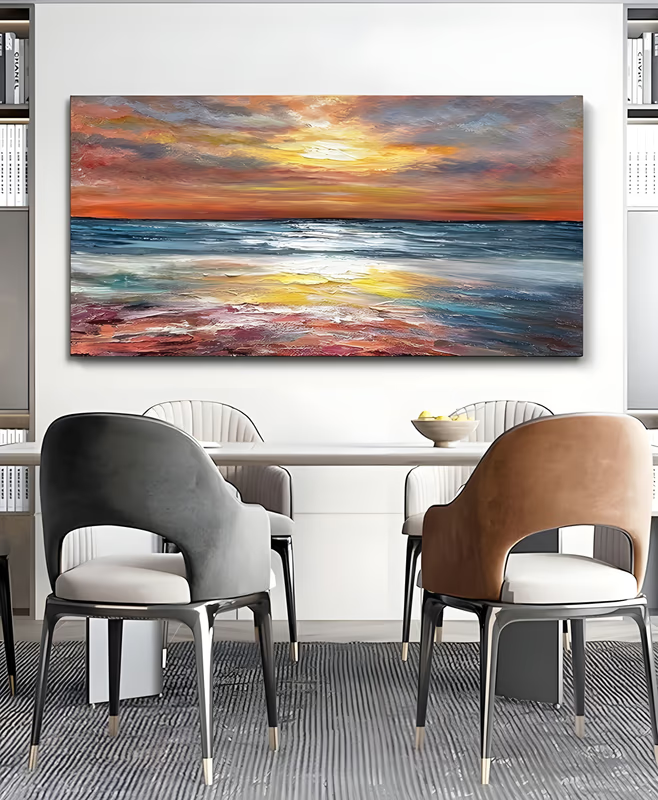
Each piece is hand-painted to order in acrylic on canvas, with oil paint on request. Any catalogue work can be painted in another colourway, so a cool seascape can become a golden-hour version or a grey abstract can take on rust and ochre. The composition is redrawn for the size you need, never stretched.
You see progress photos or video at each stage; nothing moves on until you approve, and a final photograph is approved before dispatch. Paintings ship rolled, stretched ready to hang, or framed; walnut and gold frames suit warm schemes, and silver, black and white are also available. Thick 3D plaster and relief ship stretched or framed, and are rolled only if you agree to a thinner texture. About 10 days of painting is followed by 5–7 days in transit by DHL, FedEx or UPS, with the carrier and route arranged for you and the shipping cost agreed before it ships. Request a quote.