Moody wall art guide · Updated
How to choose moody wall art for a dark, enveloping room
Key takeaways
- Moody means low-key, not just dark: deep greyed colour, gentle contrast and soft edges make a painting atmospheric rather than tense.
- Decide tone-on-tone or a step lighter: matching a dark wall feels immersive; a lighter painting acts as a window at dusk.
- Warm light makes it rich: a picture light around 2700K and lamps at seating height turn a dark canvas from heavy to glowing.
- It scales and repeats well: quiet paintings can go large and work as a series across guest rooms, floors or a whole house.
What is moody wall art?
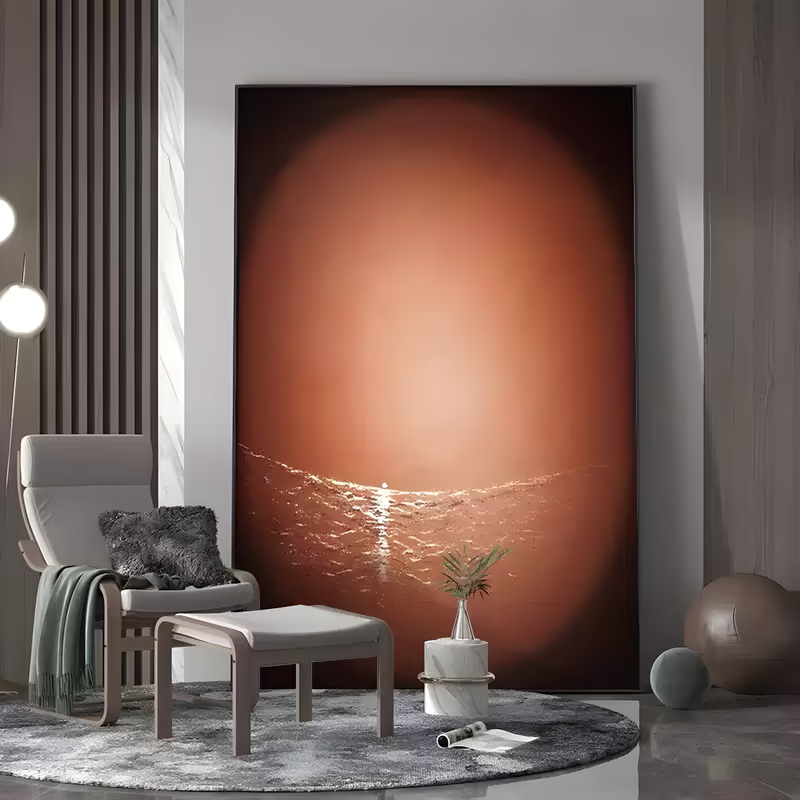
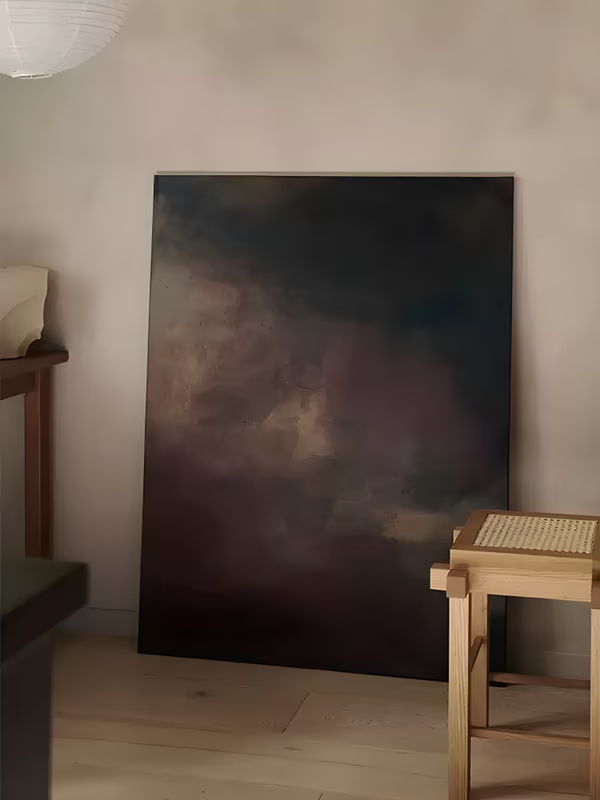
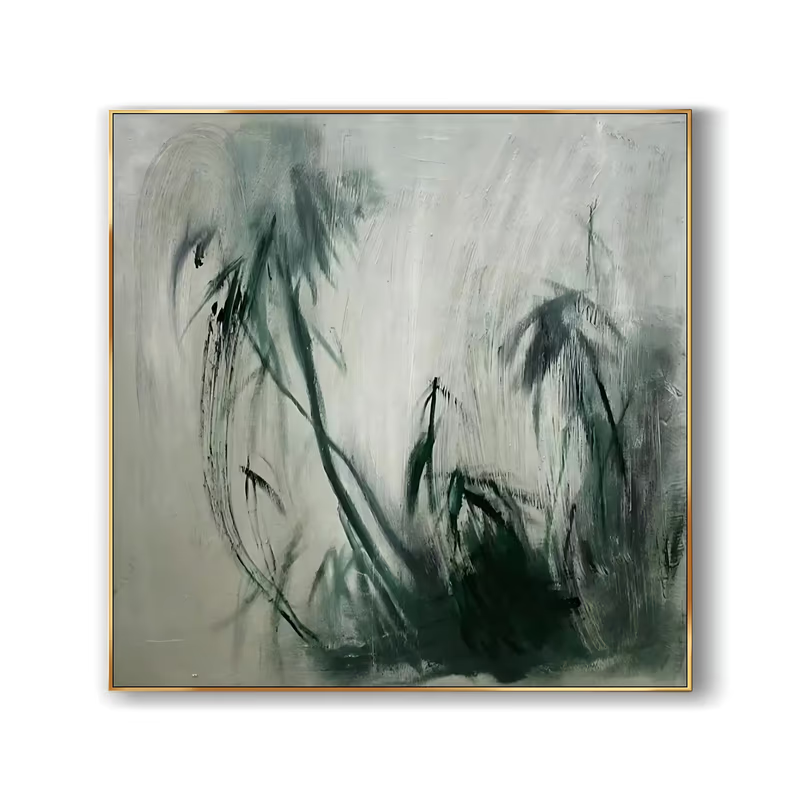
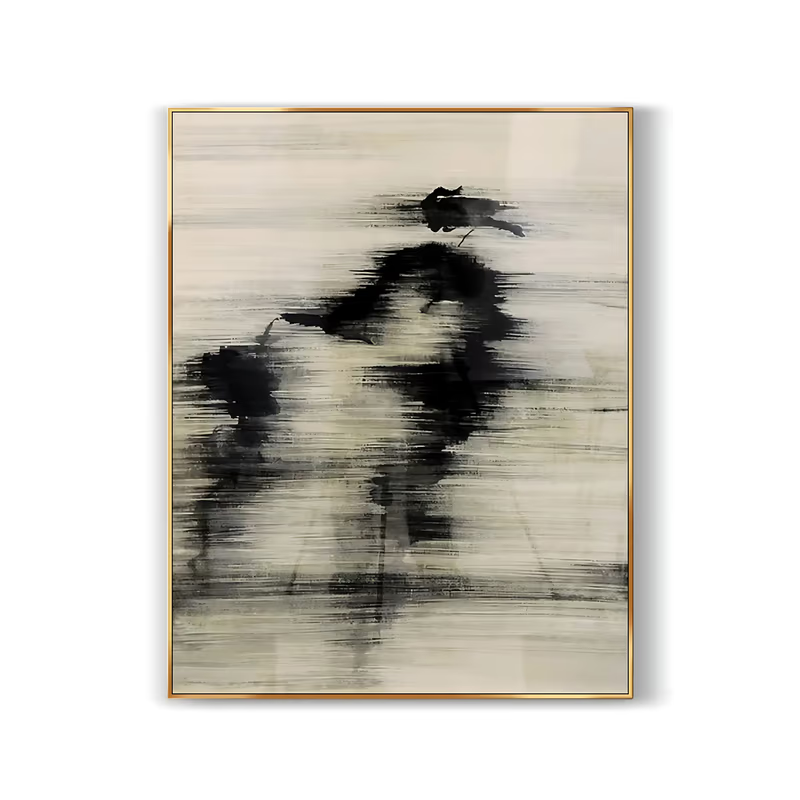
Moody wall art is low-key painting: deep, muted colour, gentle contrast and soft edges that wrap a room in atmosphere rather than demand attention.
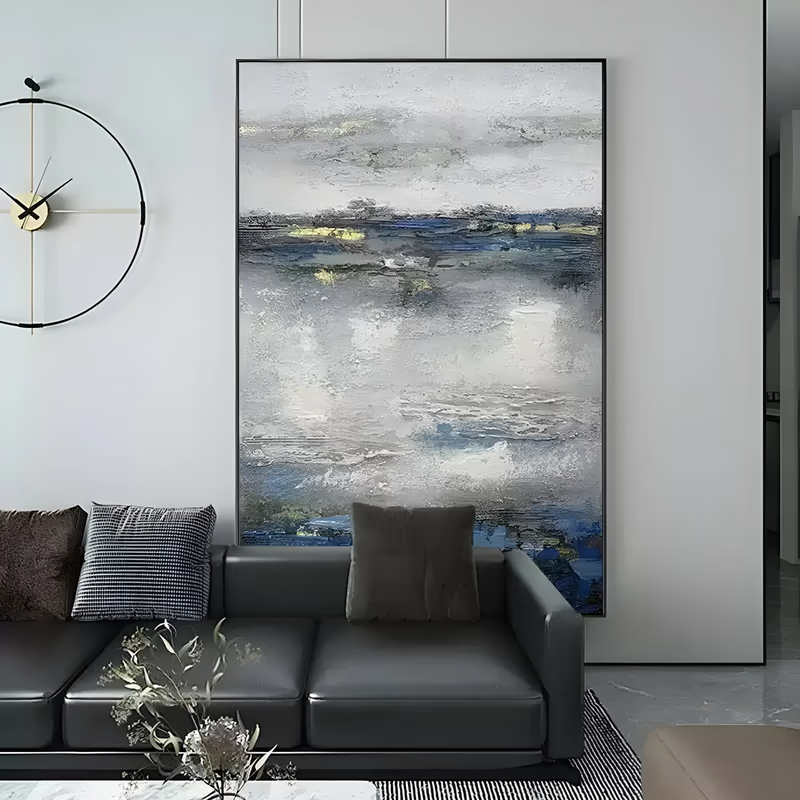
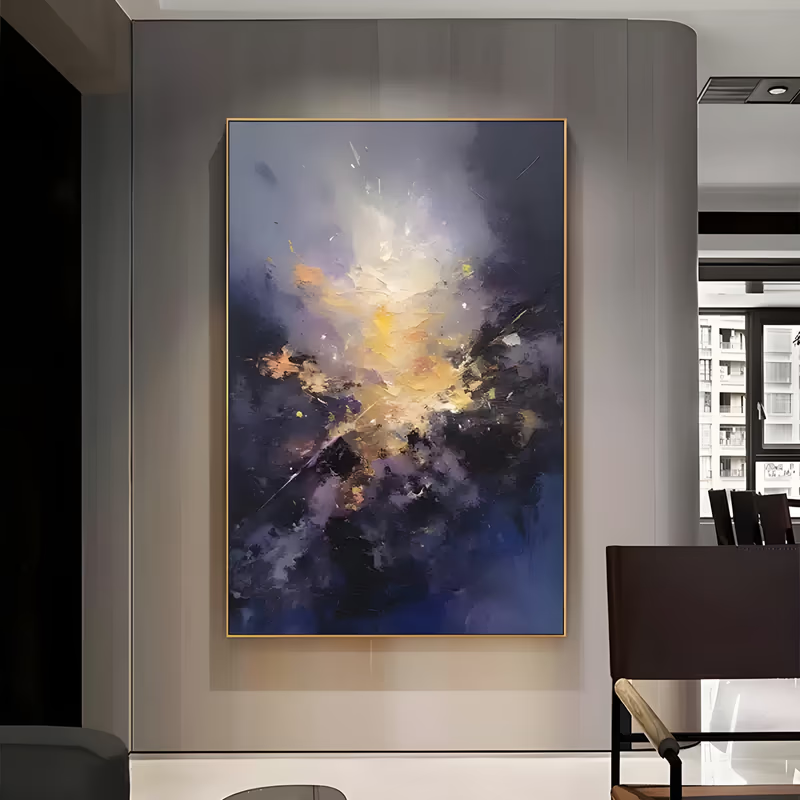
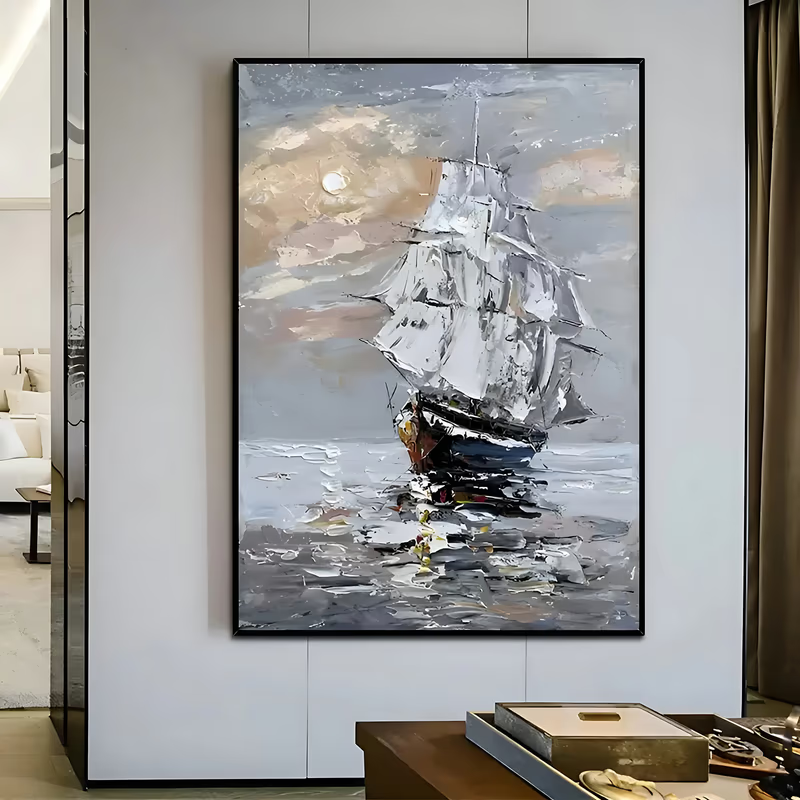
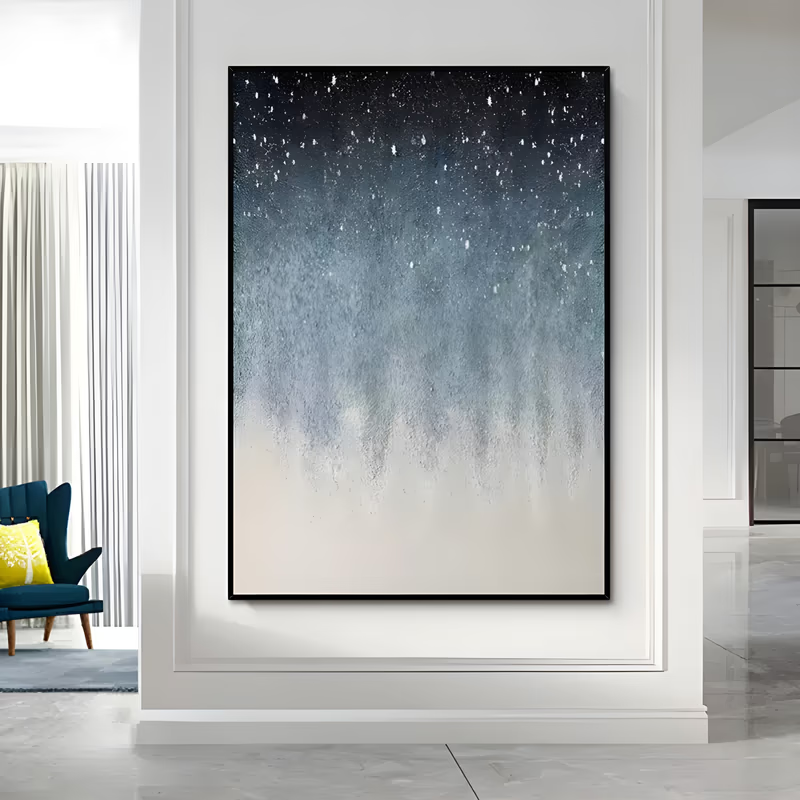
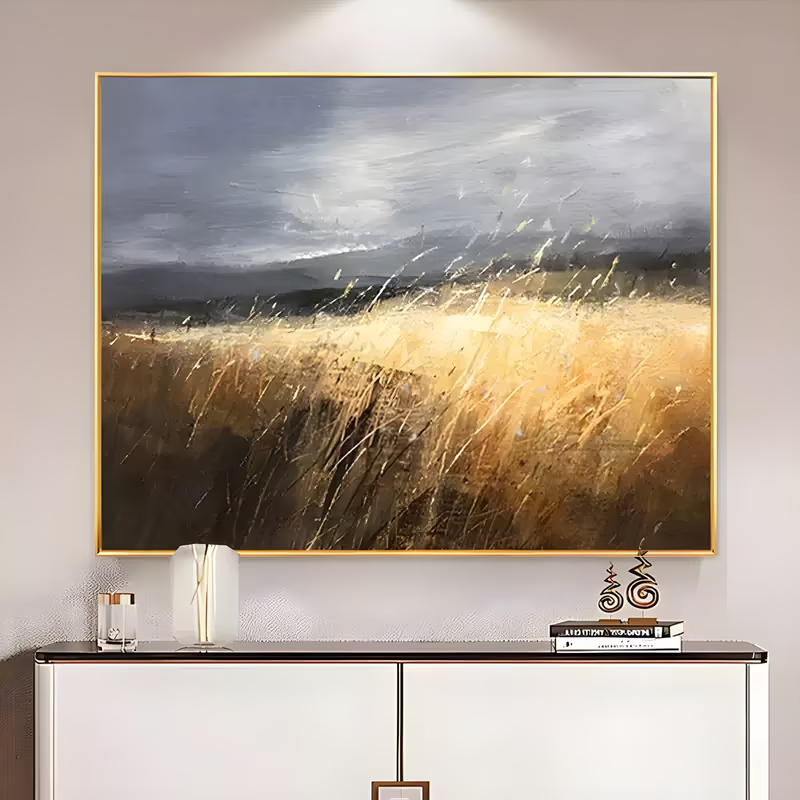
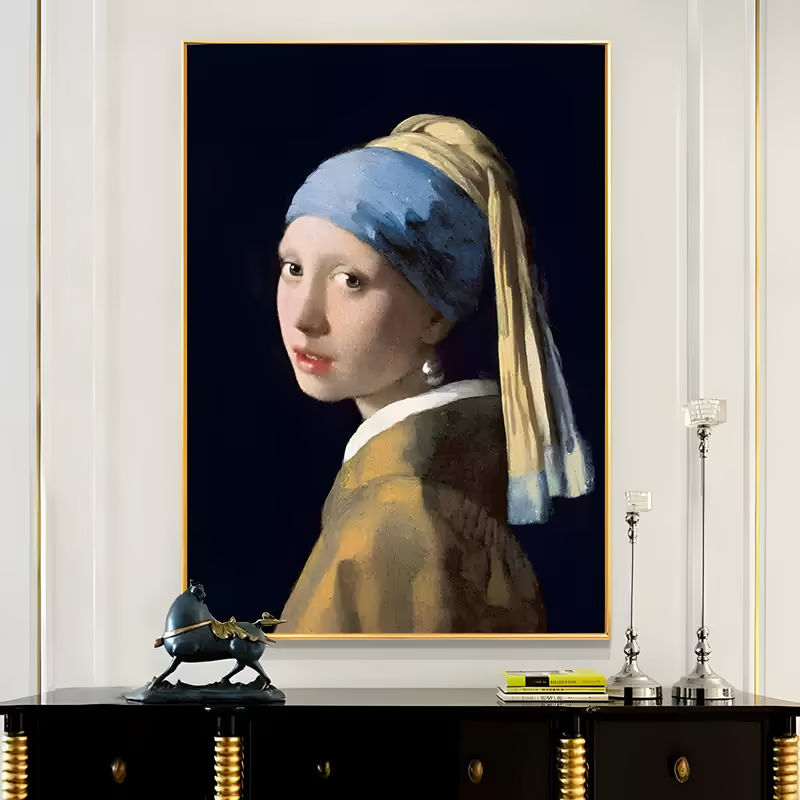
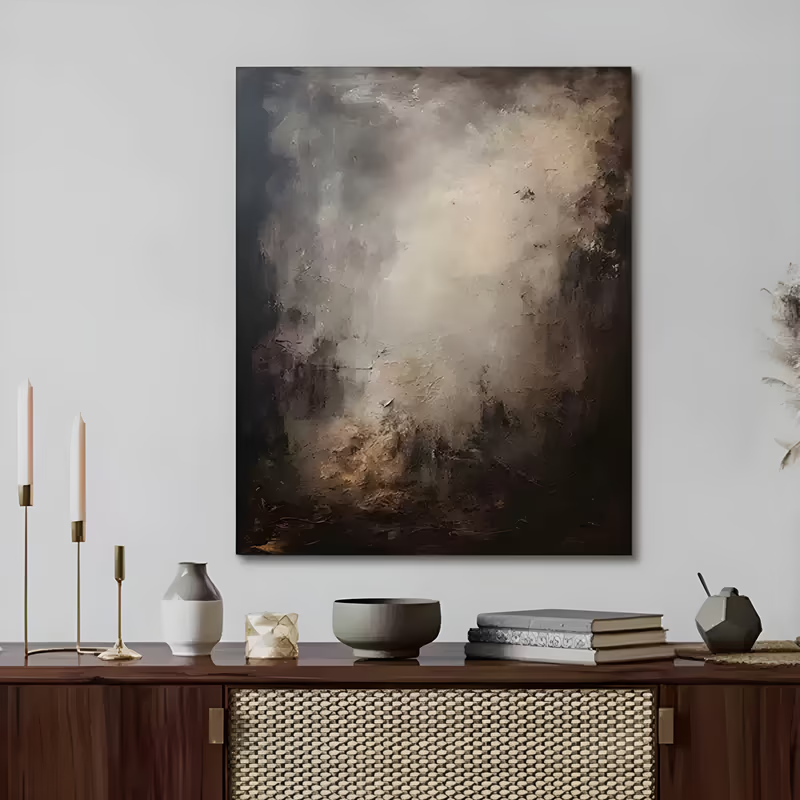
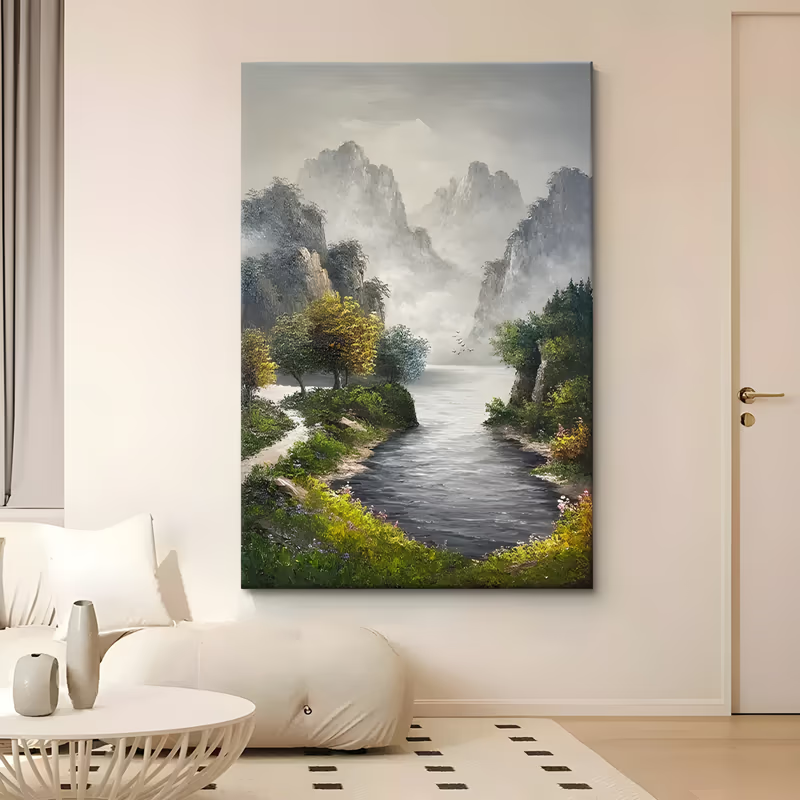
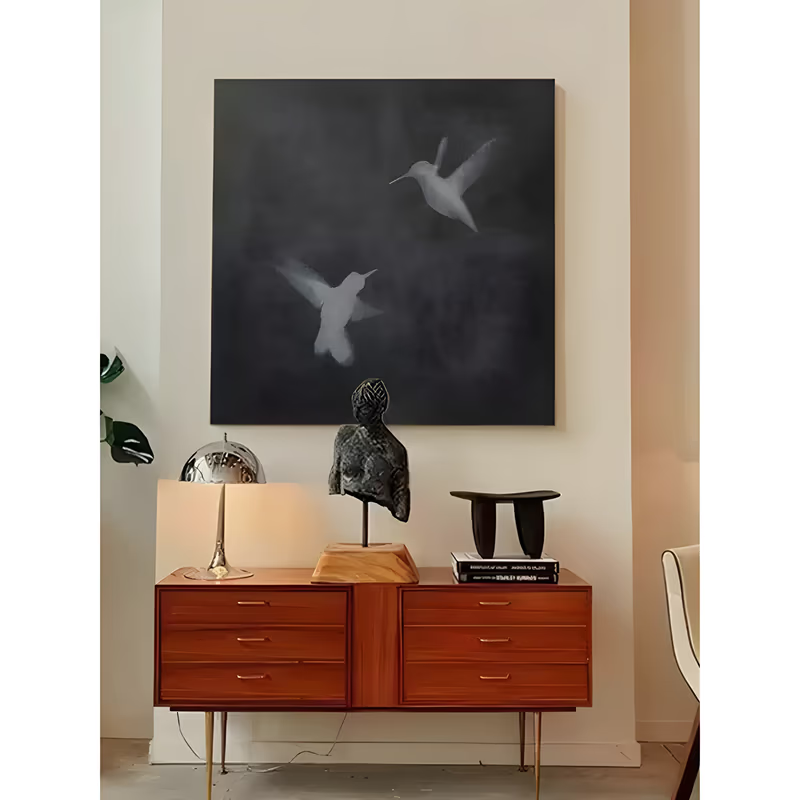
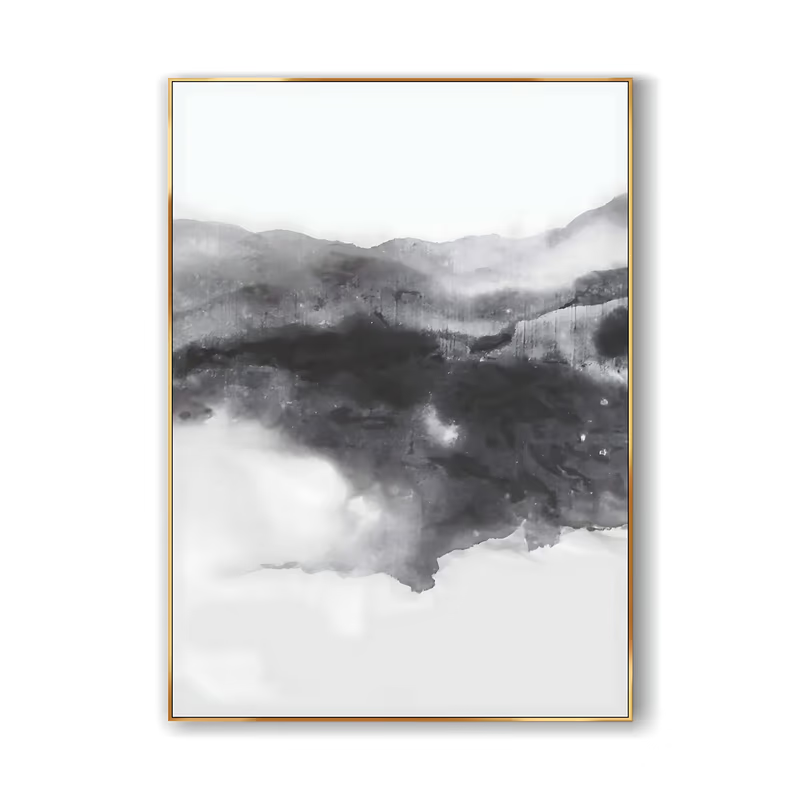
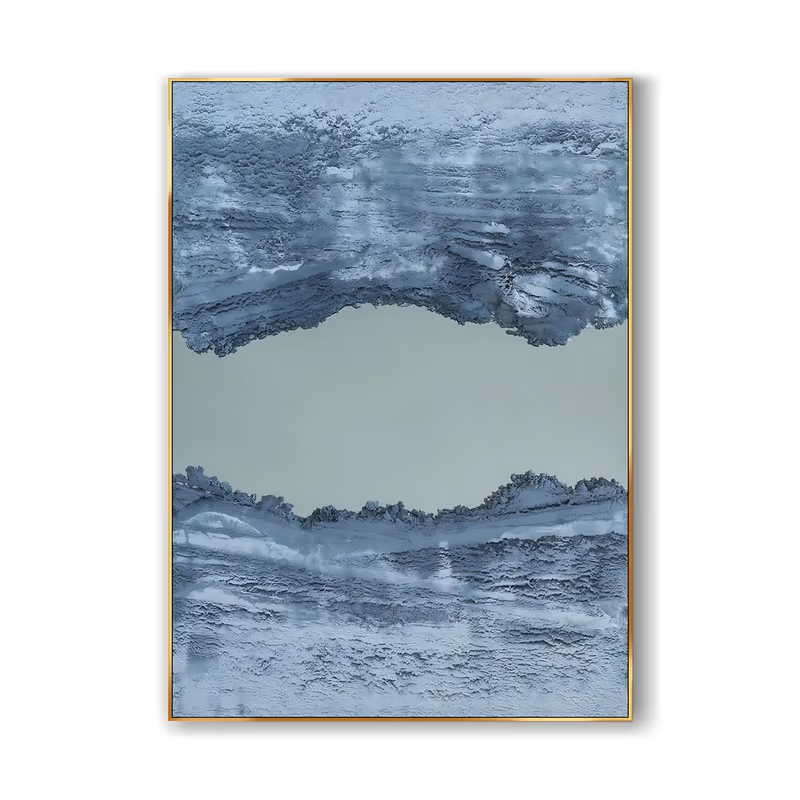
Think of the hour after sunset, fog over a valley, rain on a city street, smoke, stone and shadow. A moody painting lives in the darker middle of the tonal range. Its highlights are few and quiet, its edges dissolve into the ground, and its colours are mixed down with grey, brown or black so nothing shouts. The result is a picture you sink into, which is why moody art suits rooms meant for evenings, conversation and rest.
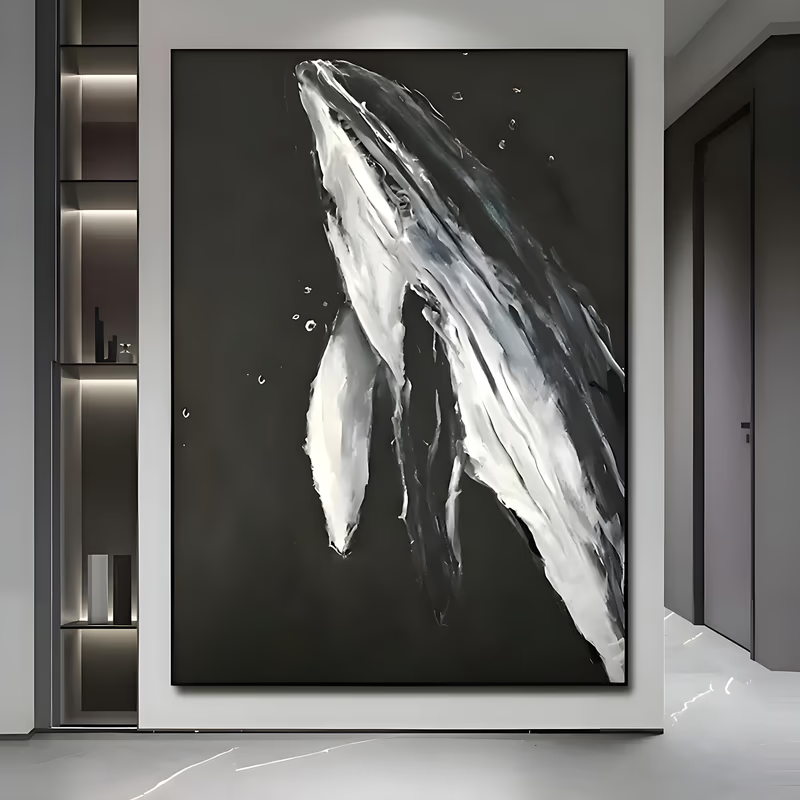
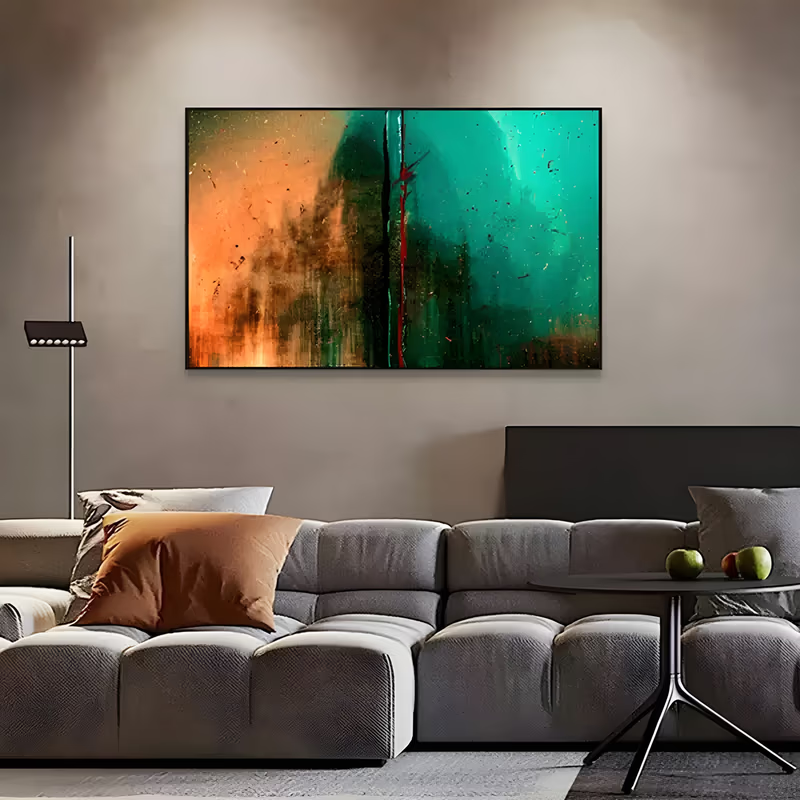
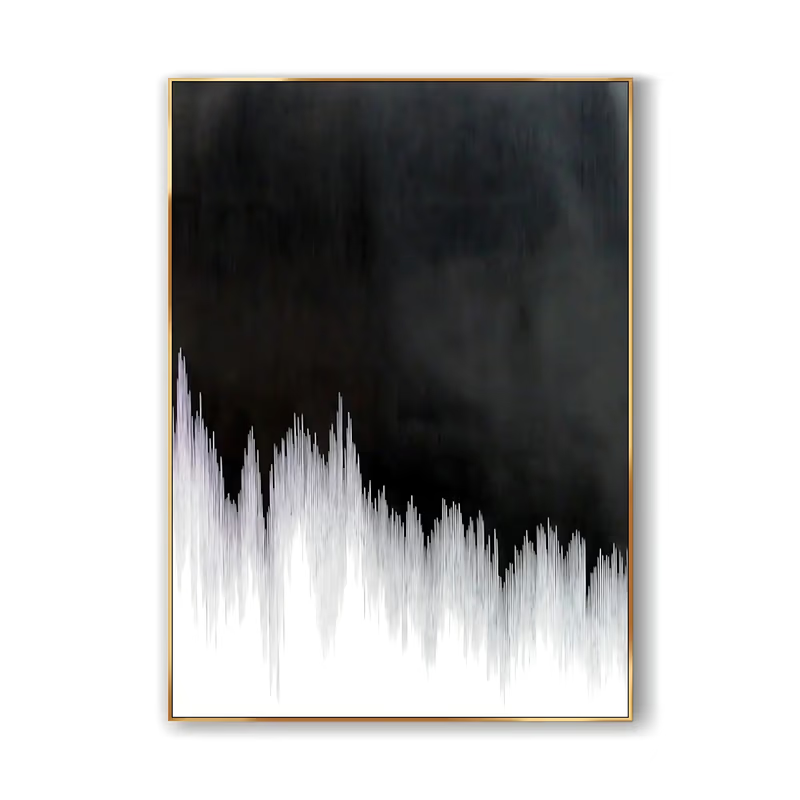
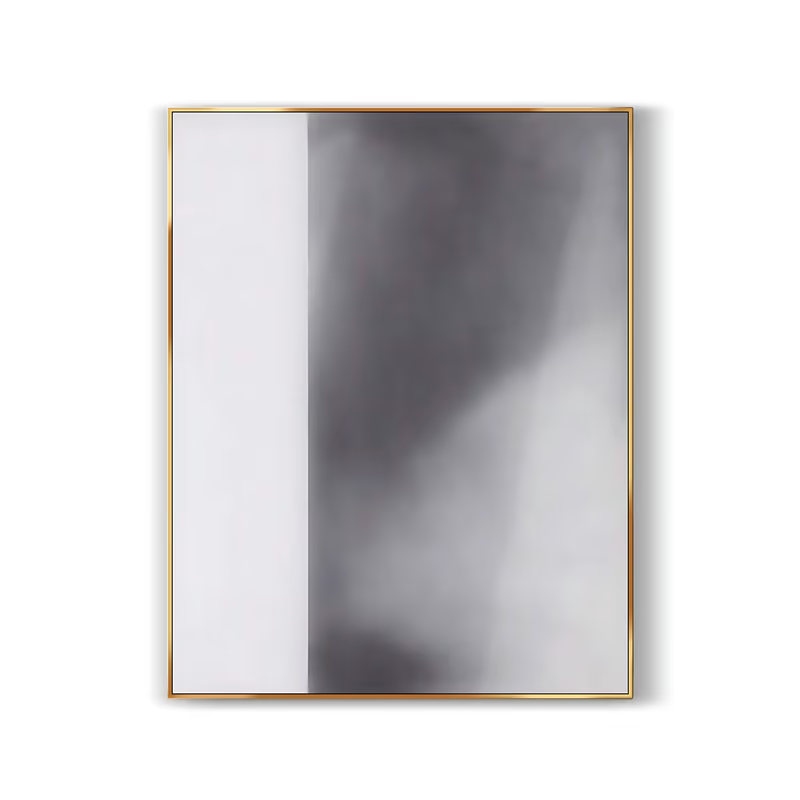
That softness is what separates it from dramatic wall art, which uses a concentrated burst of light against darkness to create tension. A moody painting may be just as dark, but it holds its light evenly and keeps the room calm. It is also different from simply dark art: a pale grey misty lake can be moody, while a black painting with a hard white slash is not.
Which colours and textures make wall art moody?
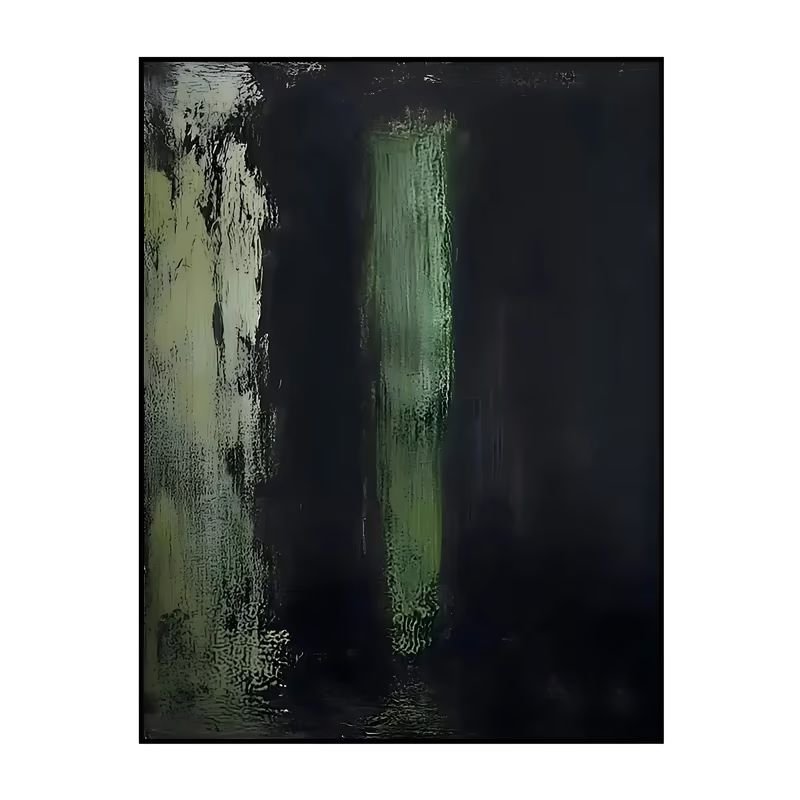
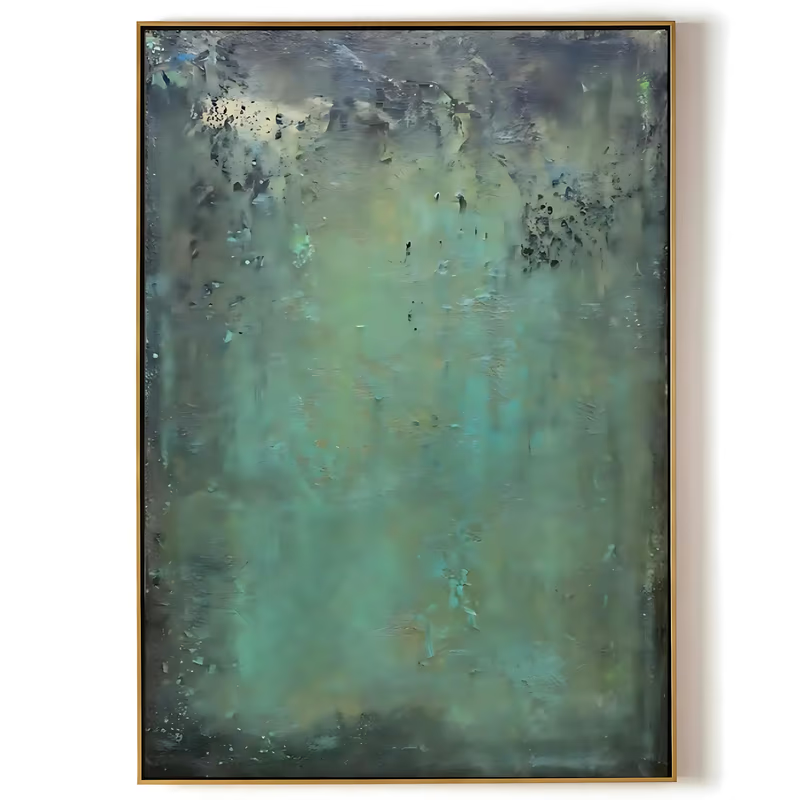
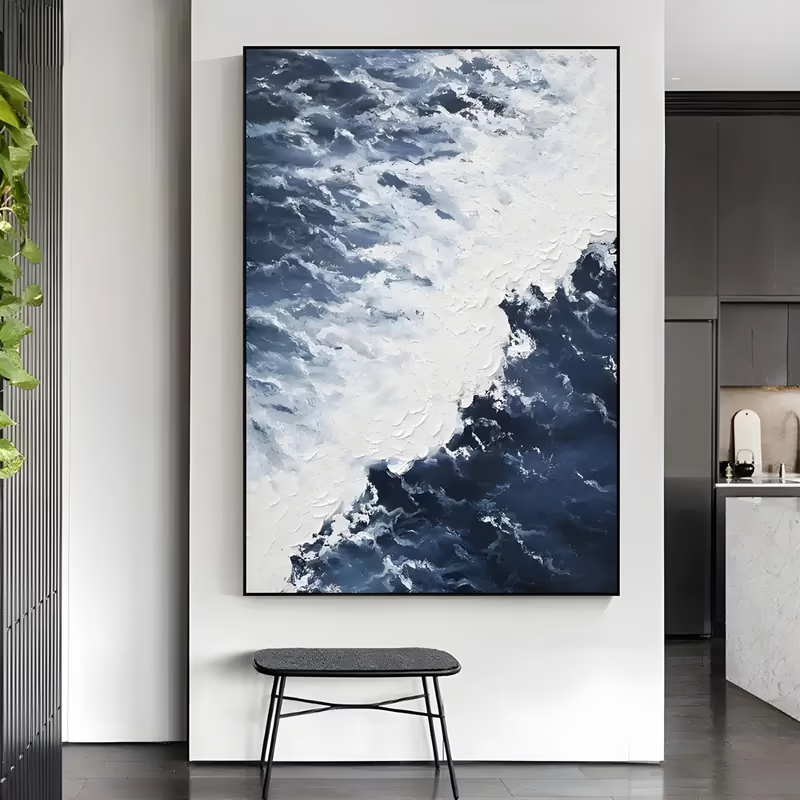
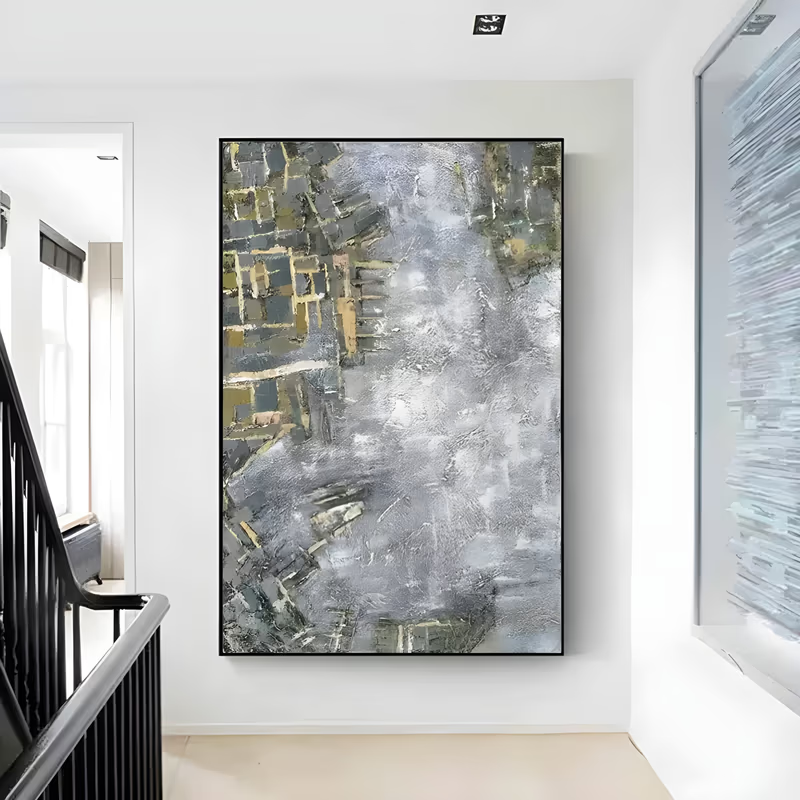
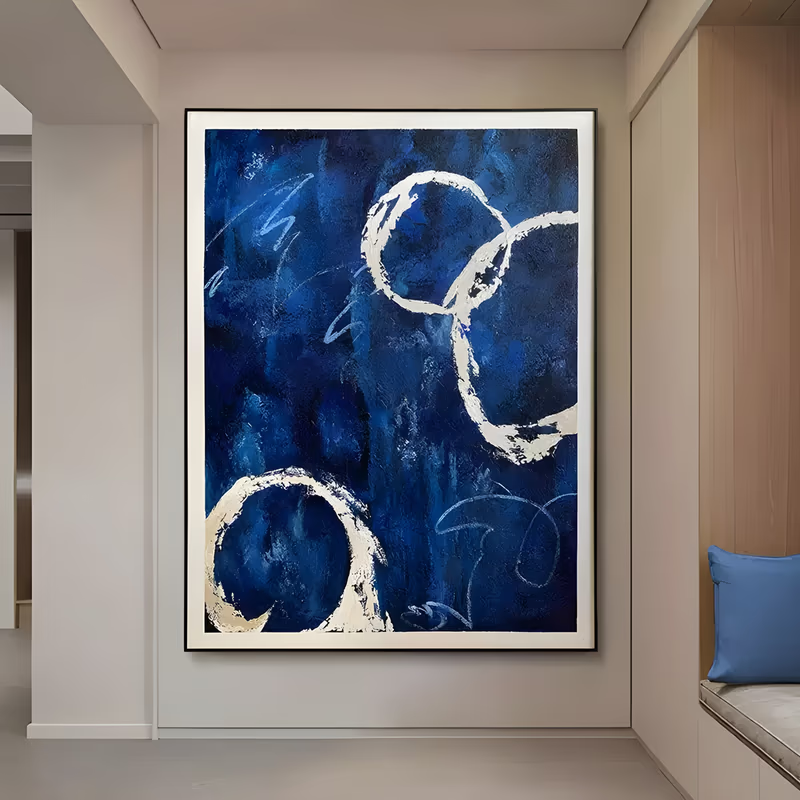
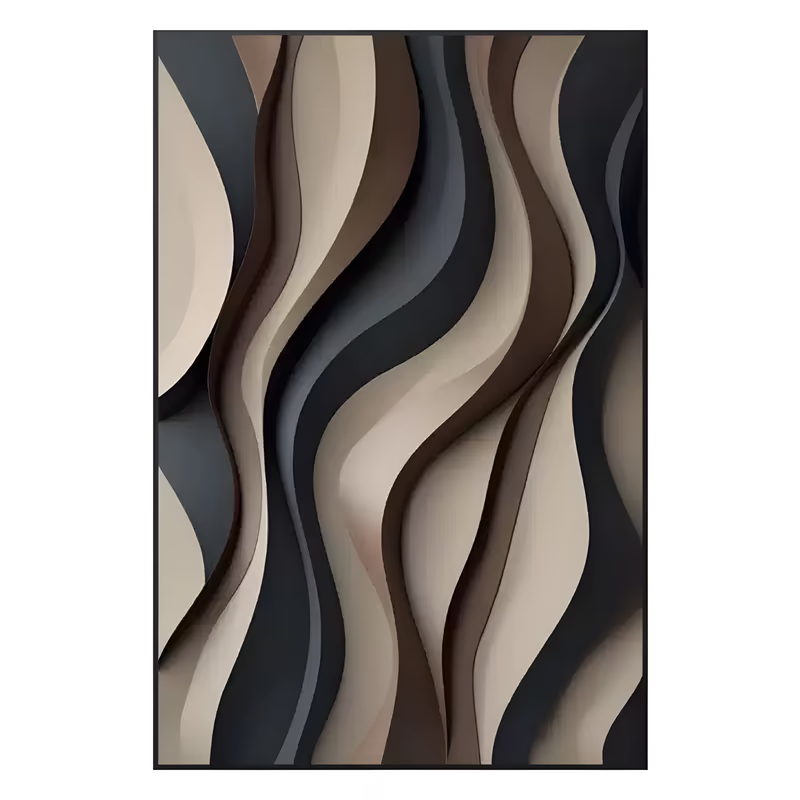
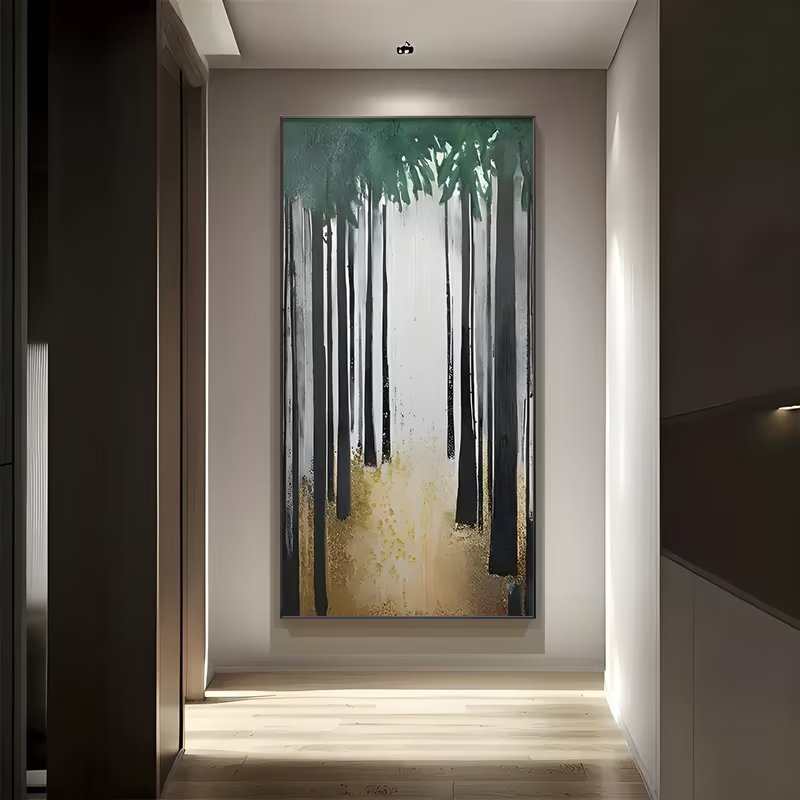
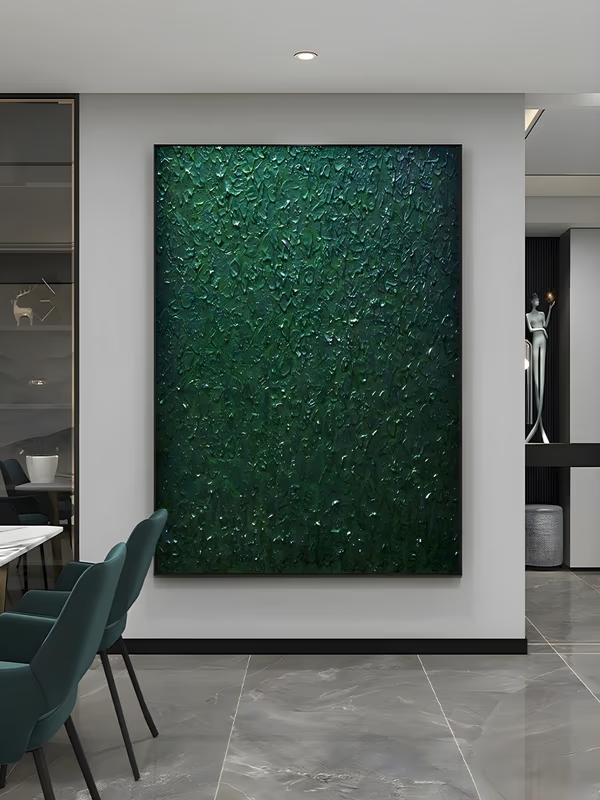
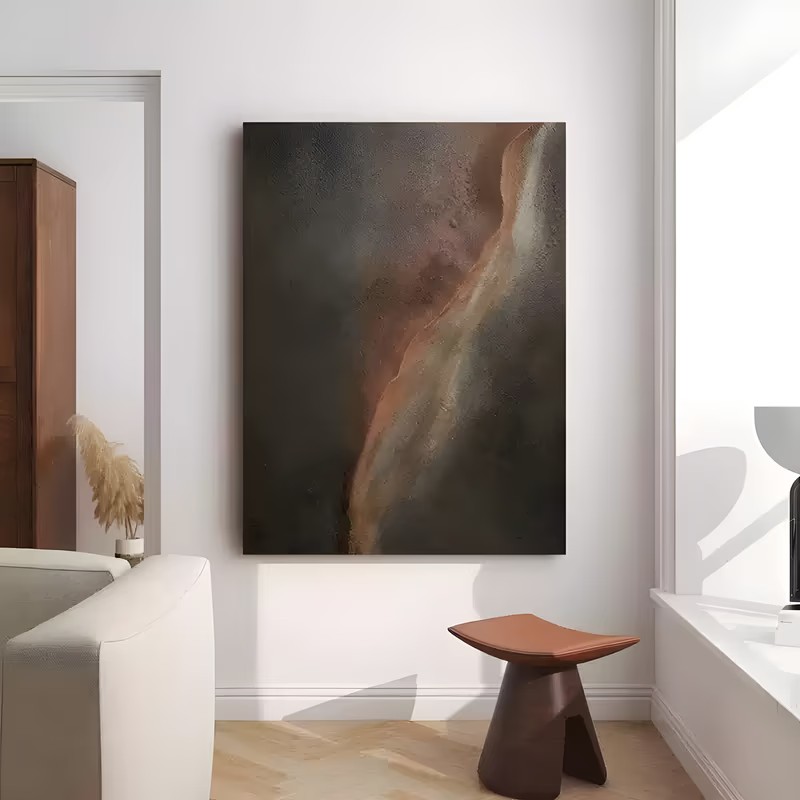
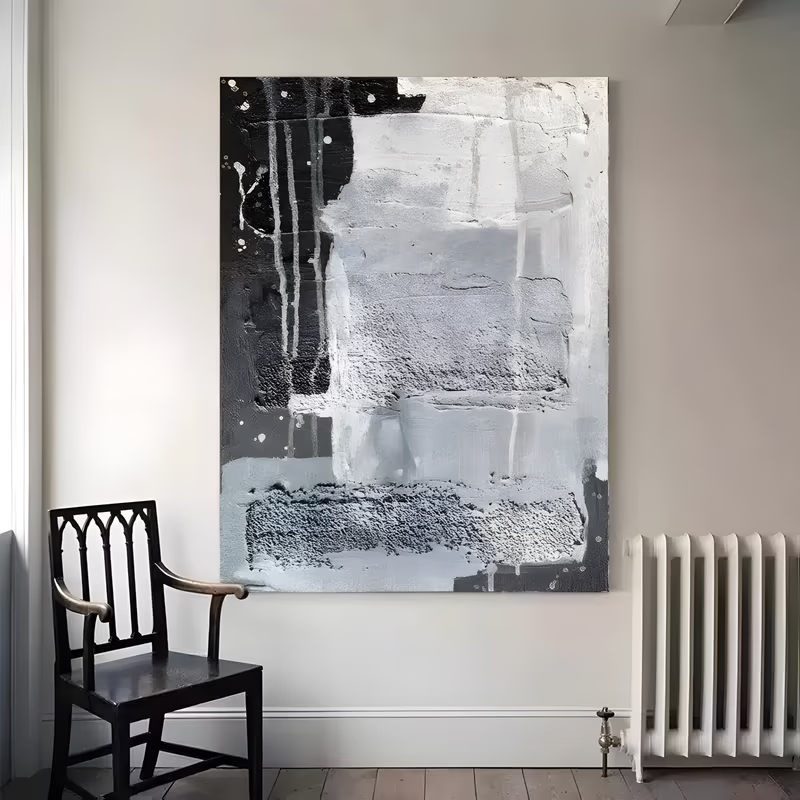
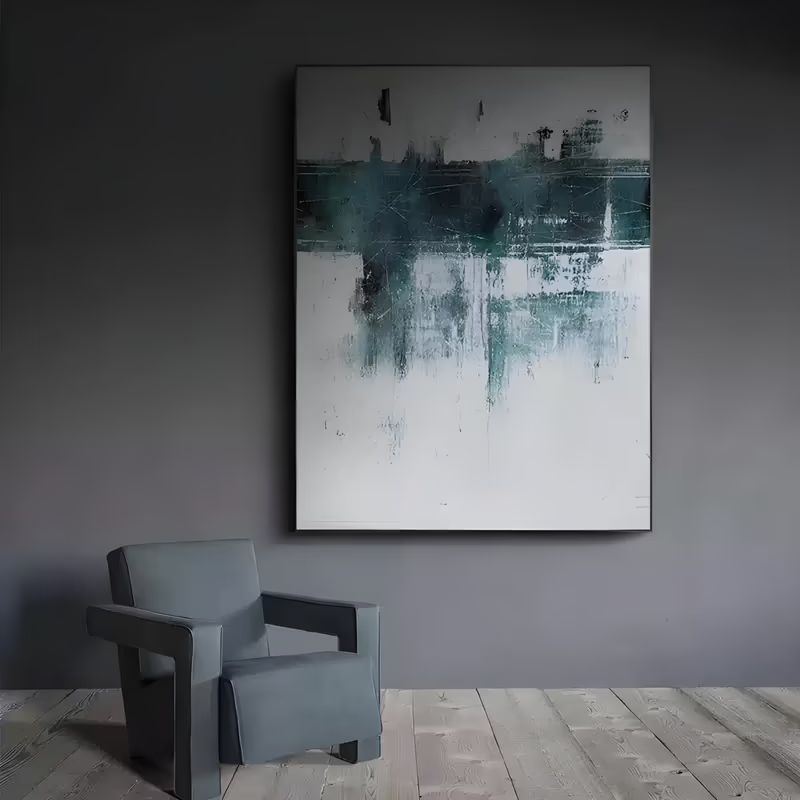
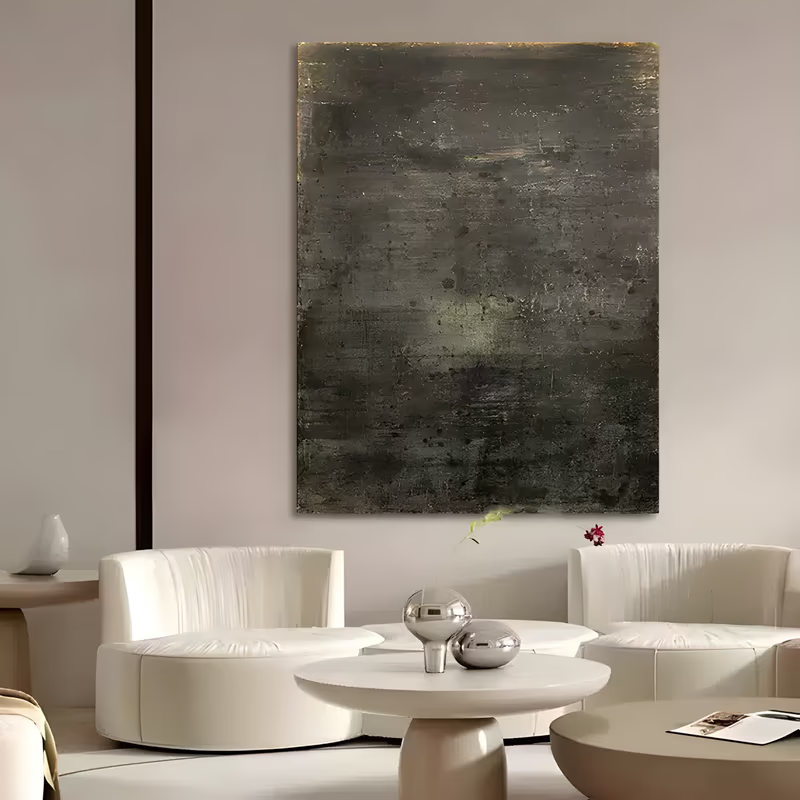
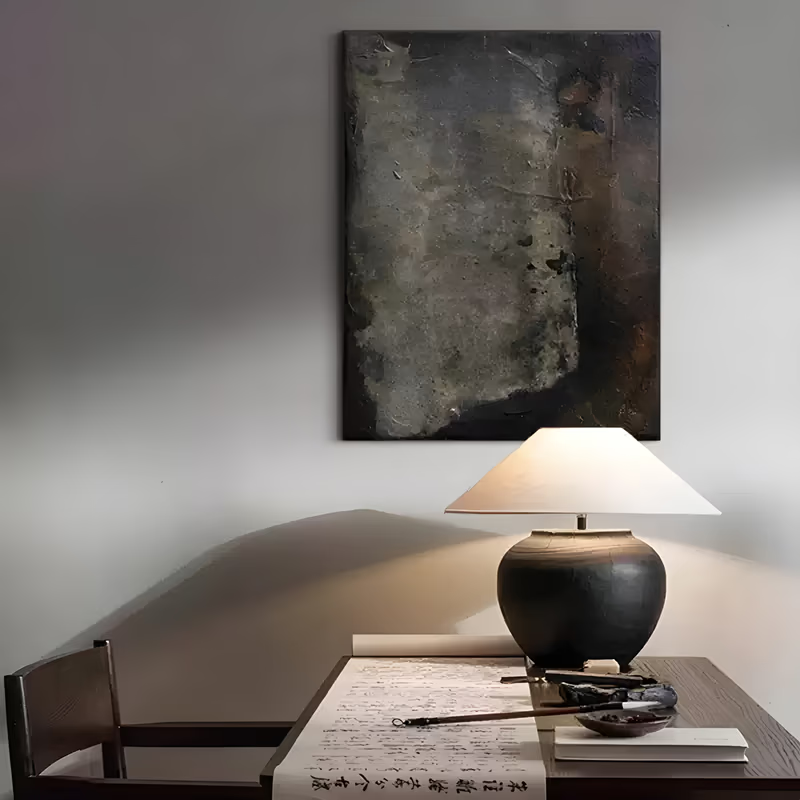
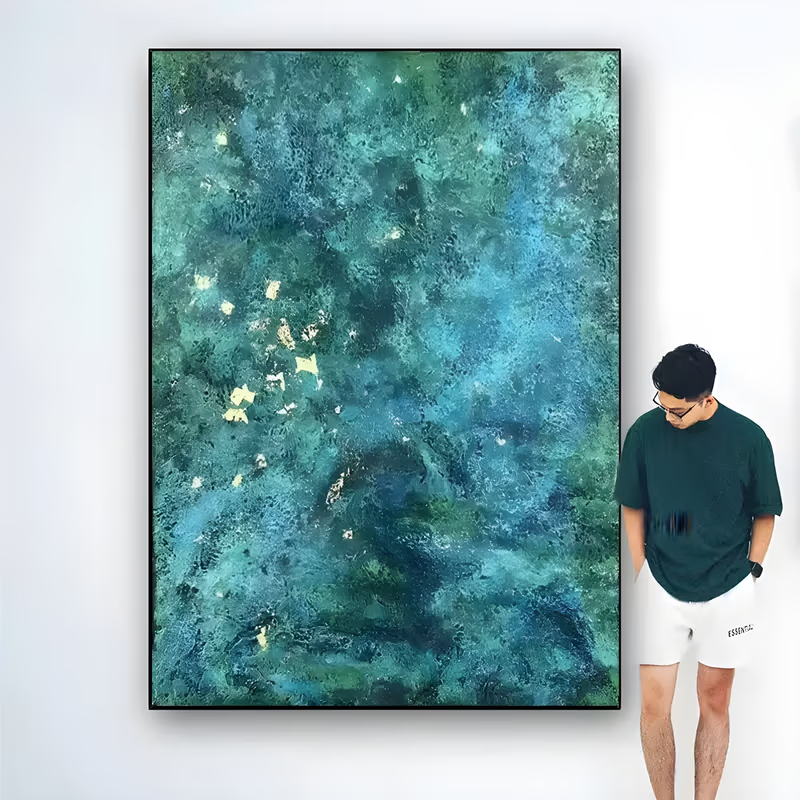
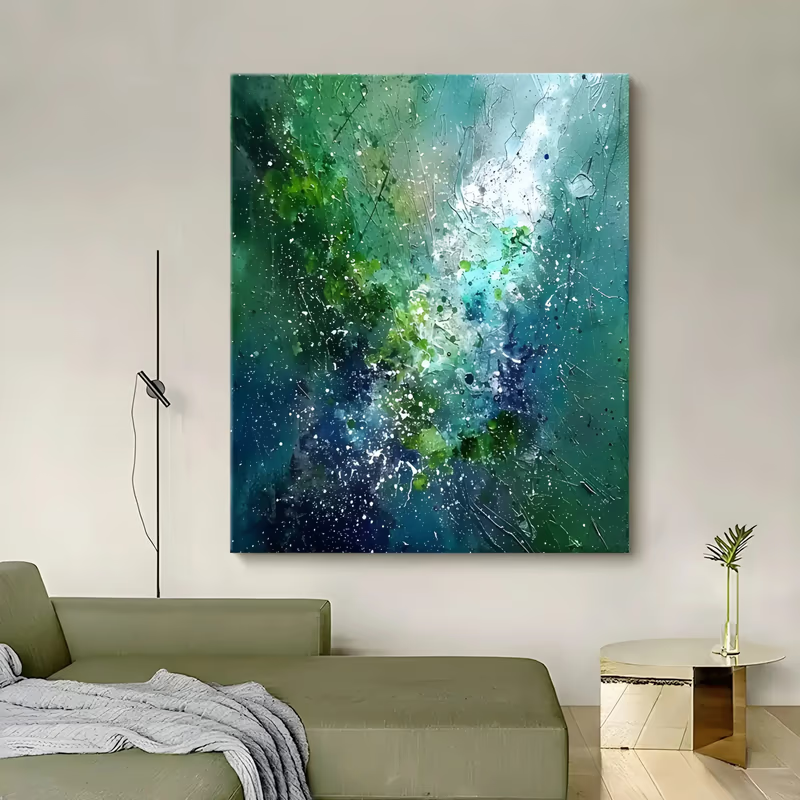
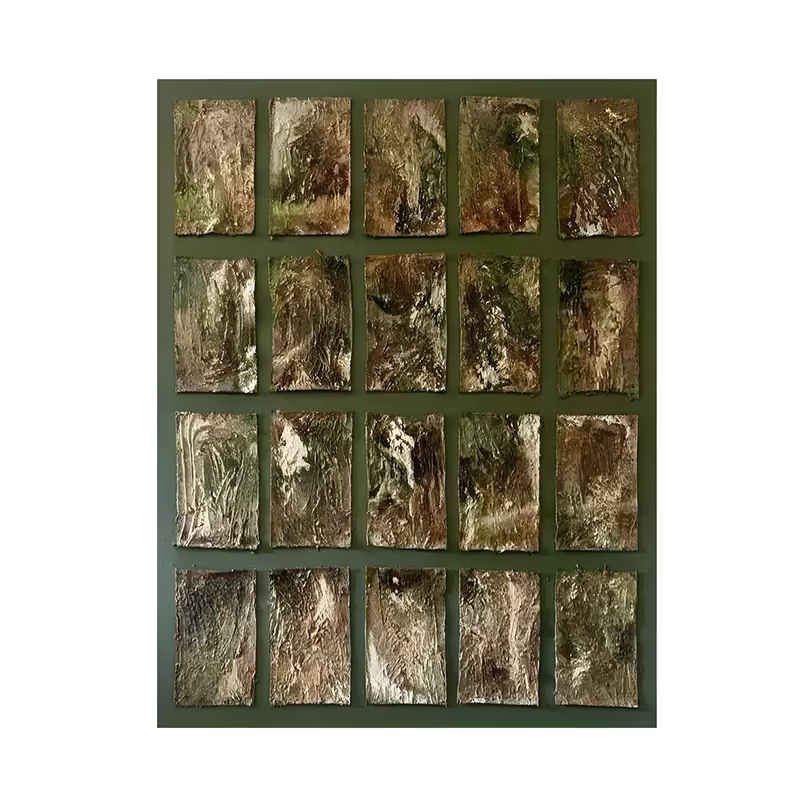
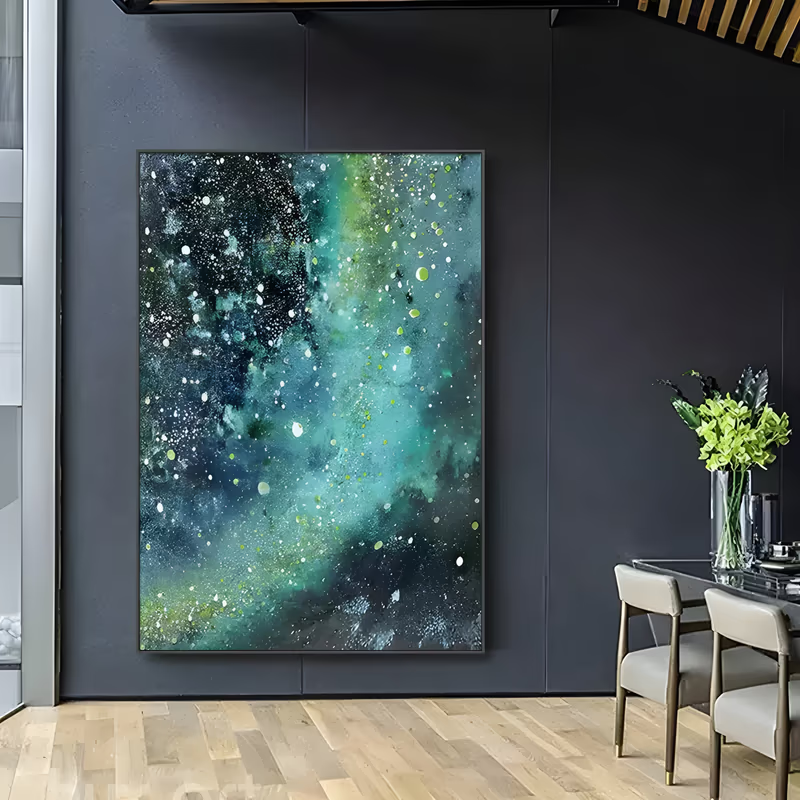
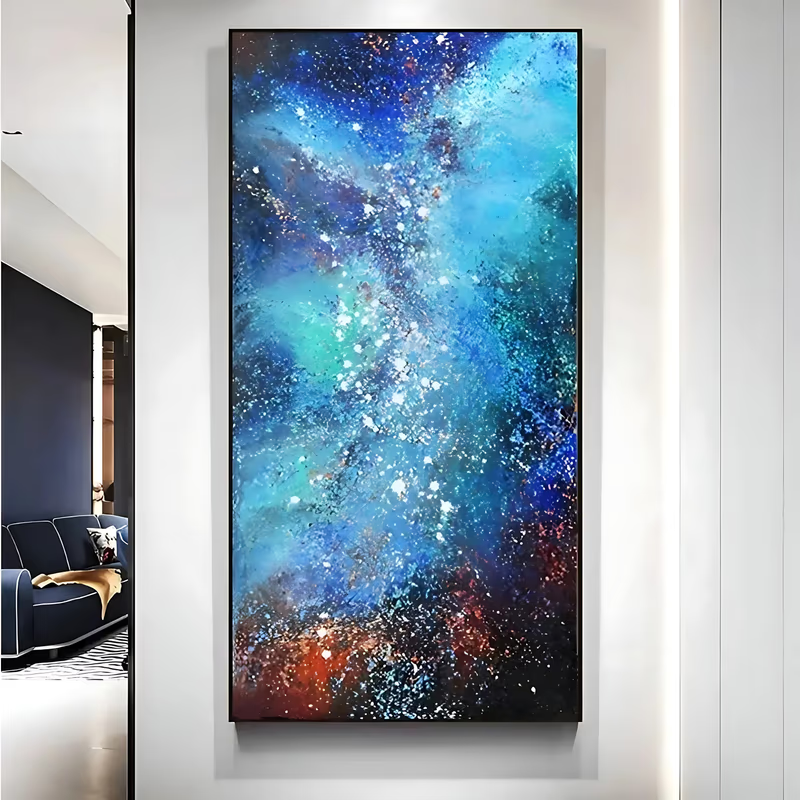
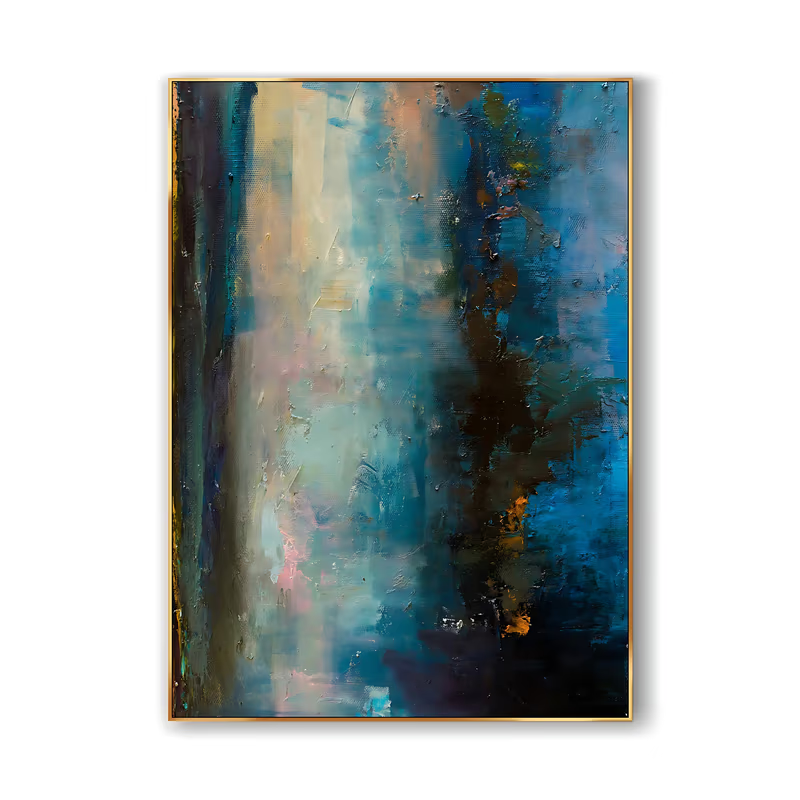
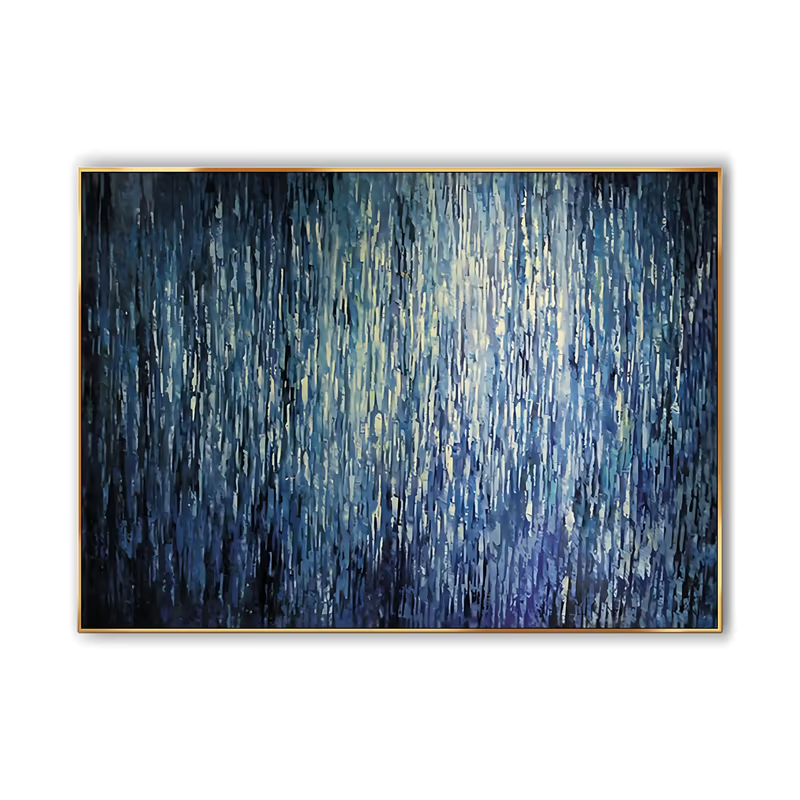
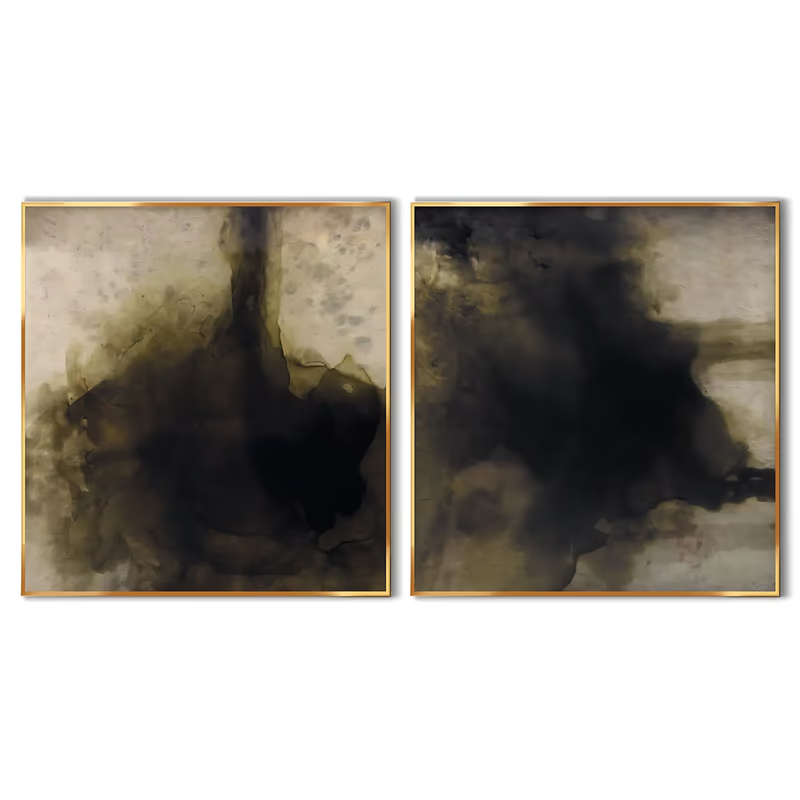
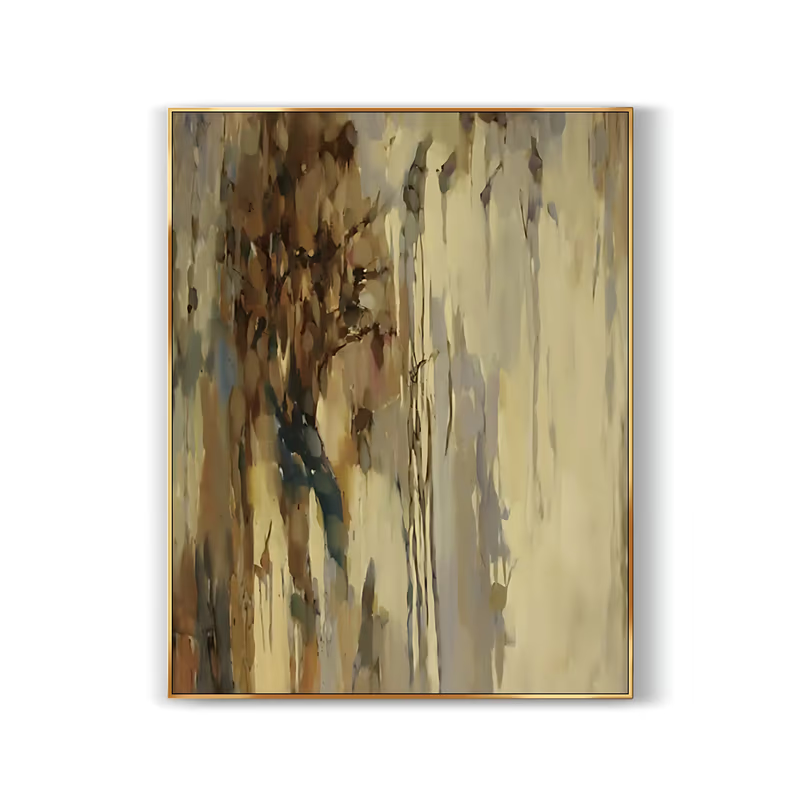
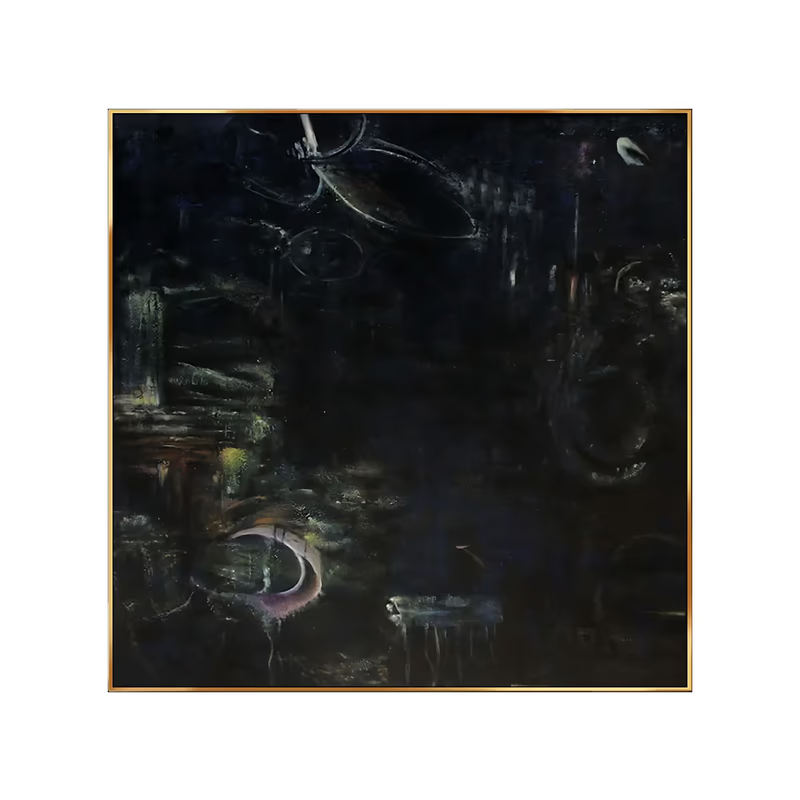
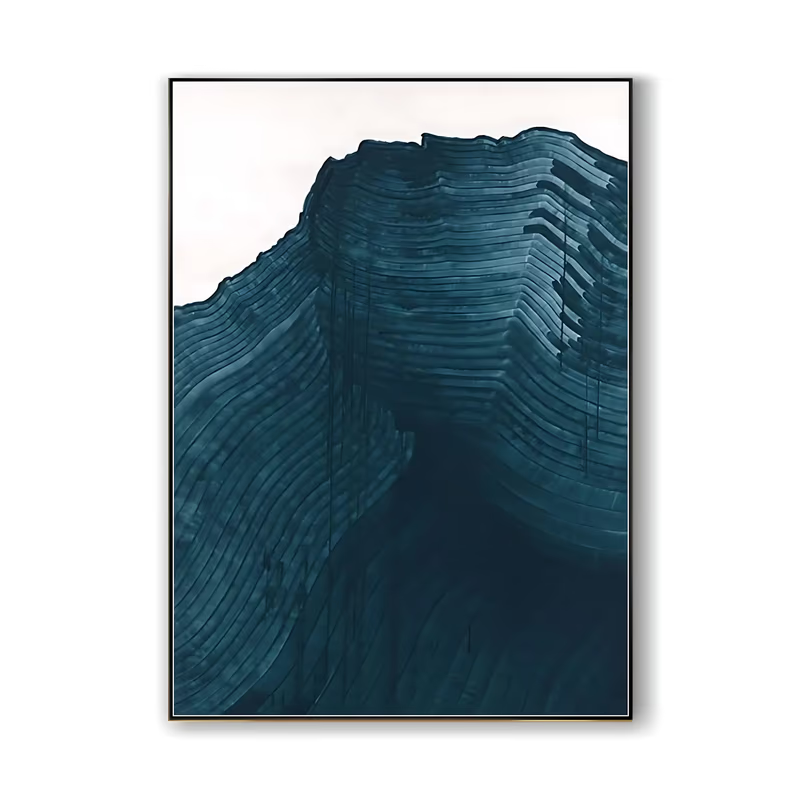
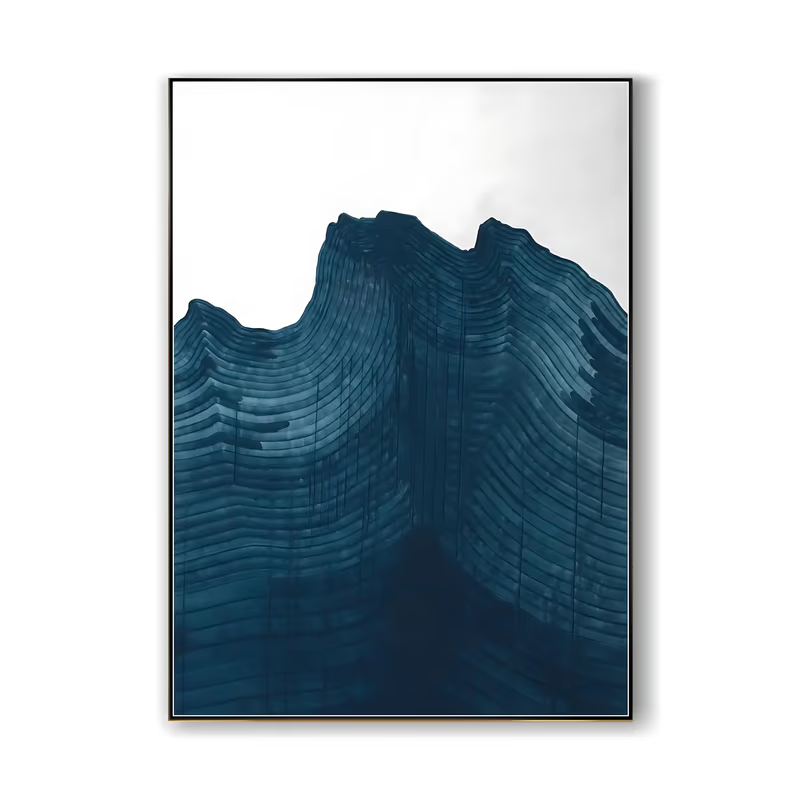
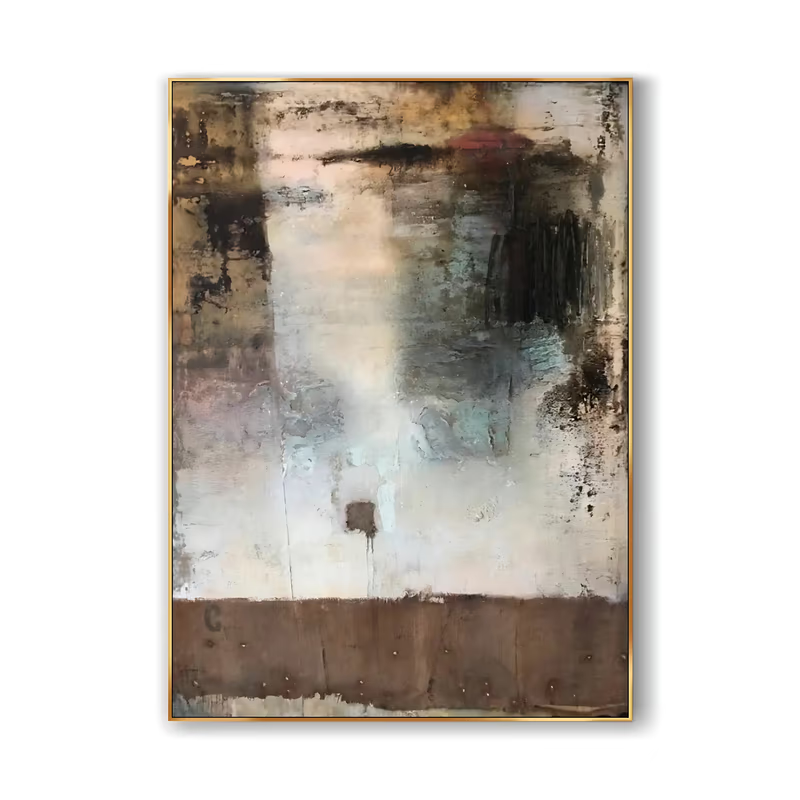
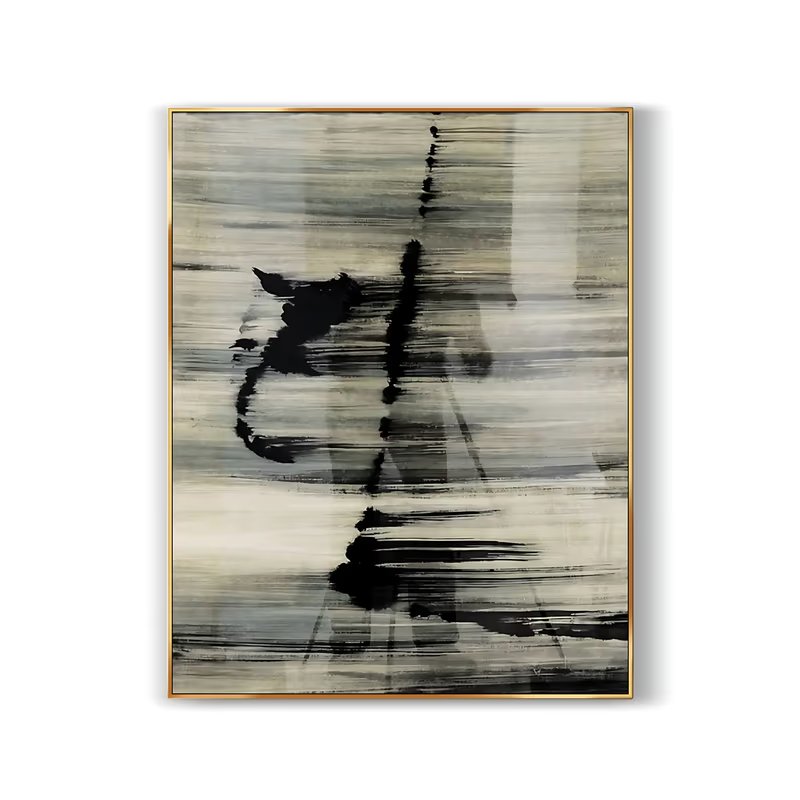
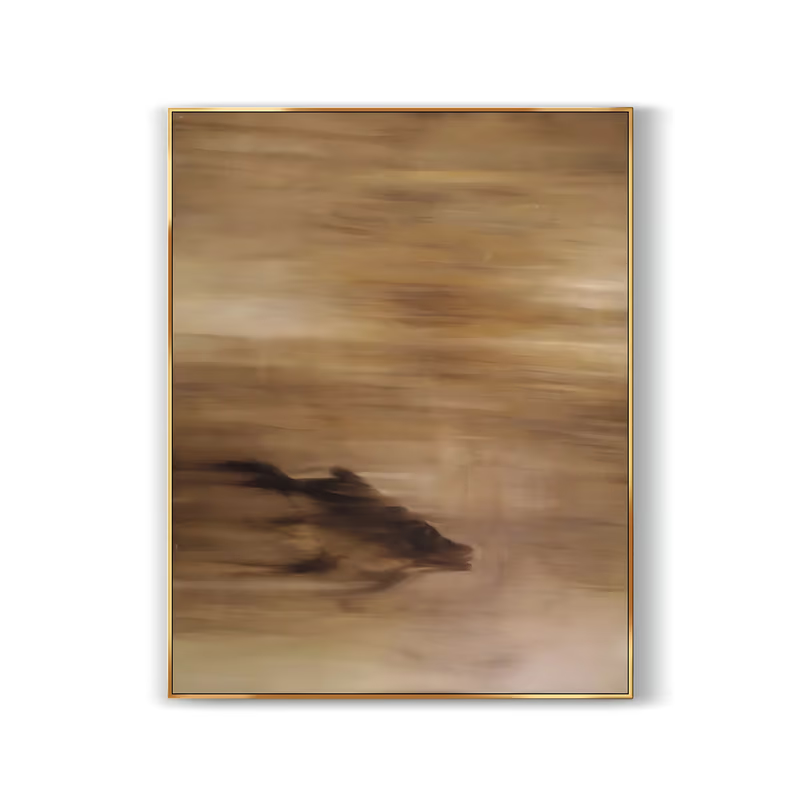
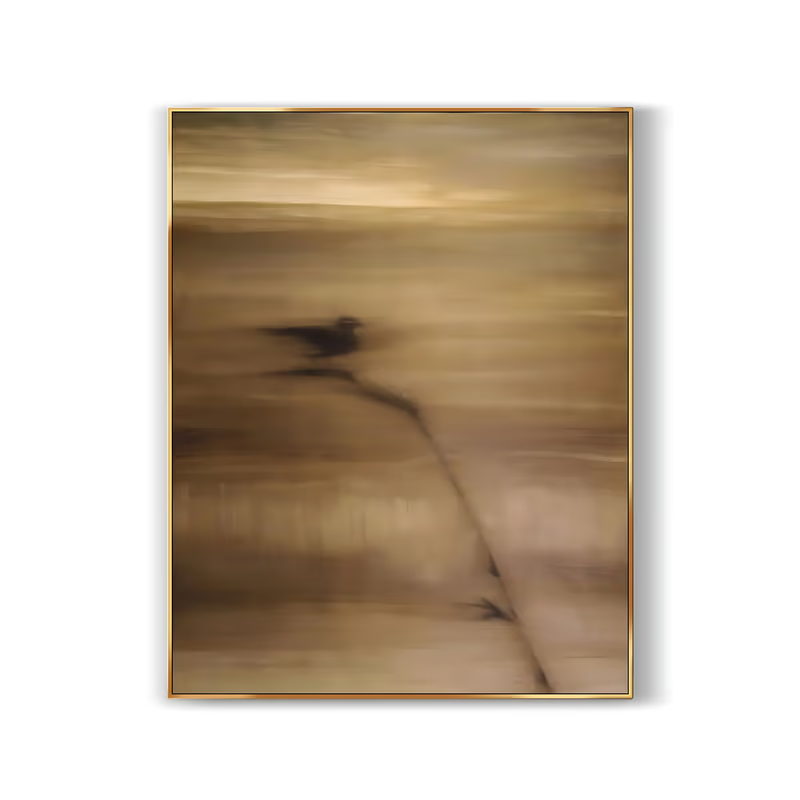
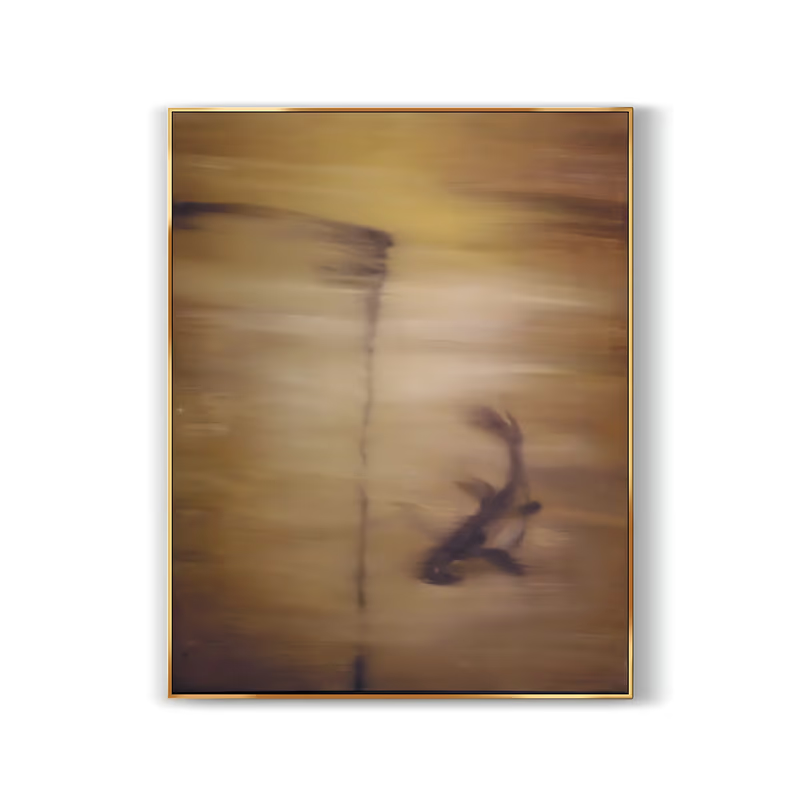
Moody wall art is built on deep, greyed colours, such as charcoal, navy, forest green, umber and smoky taupe, and on matt, weathered or layered surfaces that soak up light.
| Palette | How it feels | Rooms it suits |
|---|---|---|
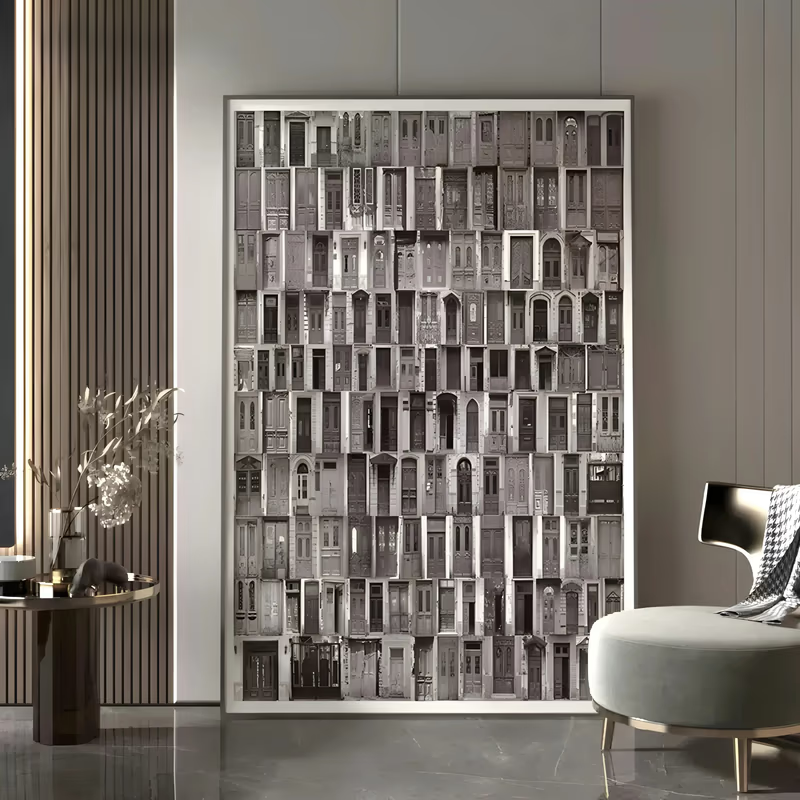
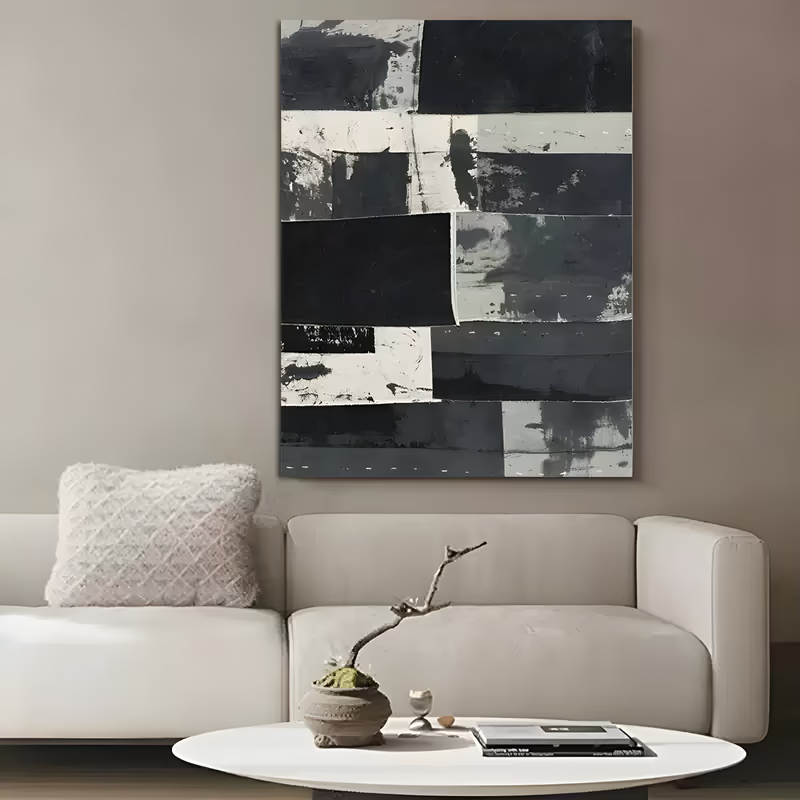
| Charcoal, ink and stone grey | Quiet, architectural, timeless | Studies, boardrooms, modern living rooms |
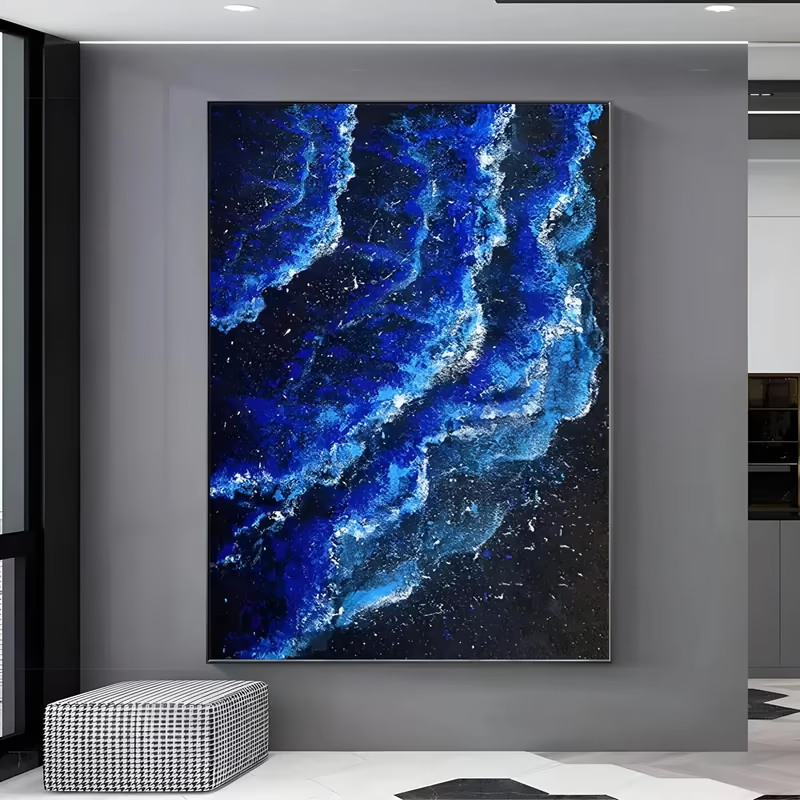
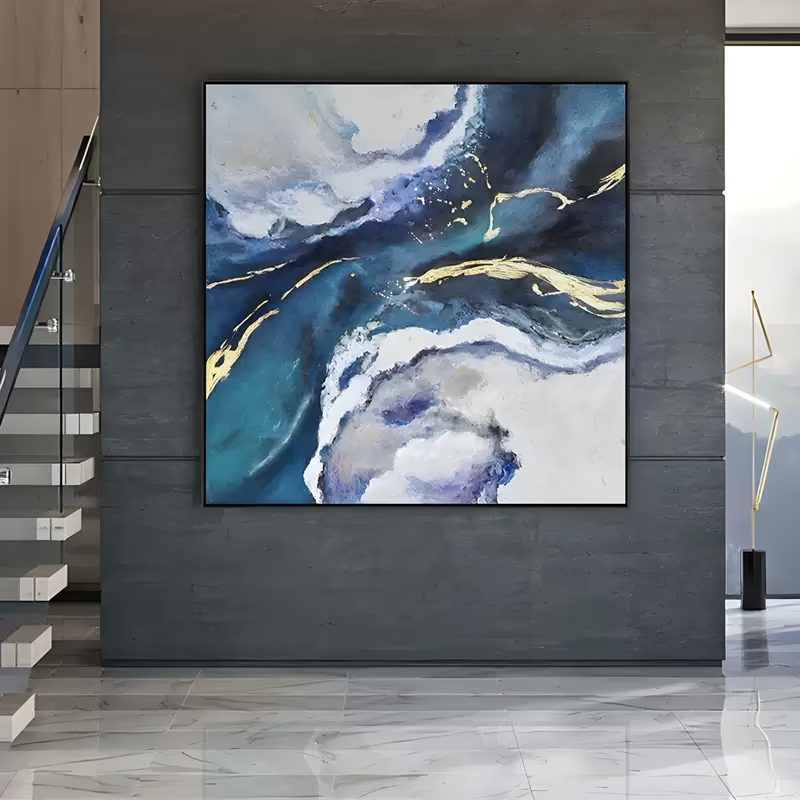
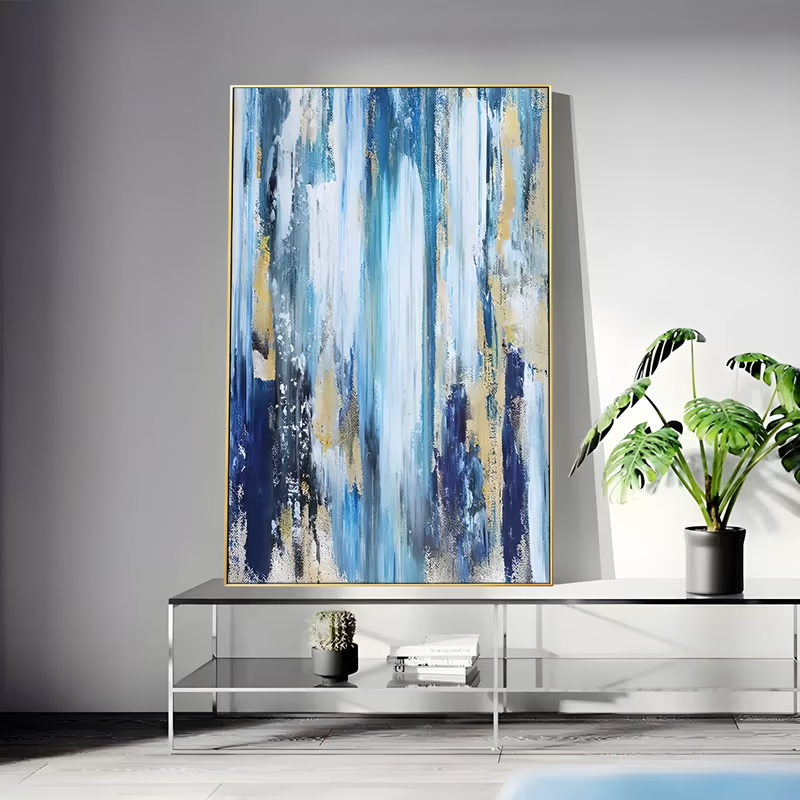
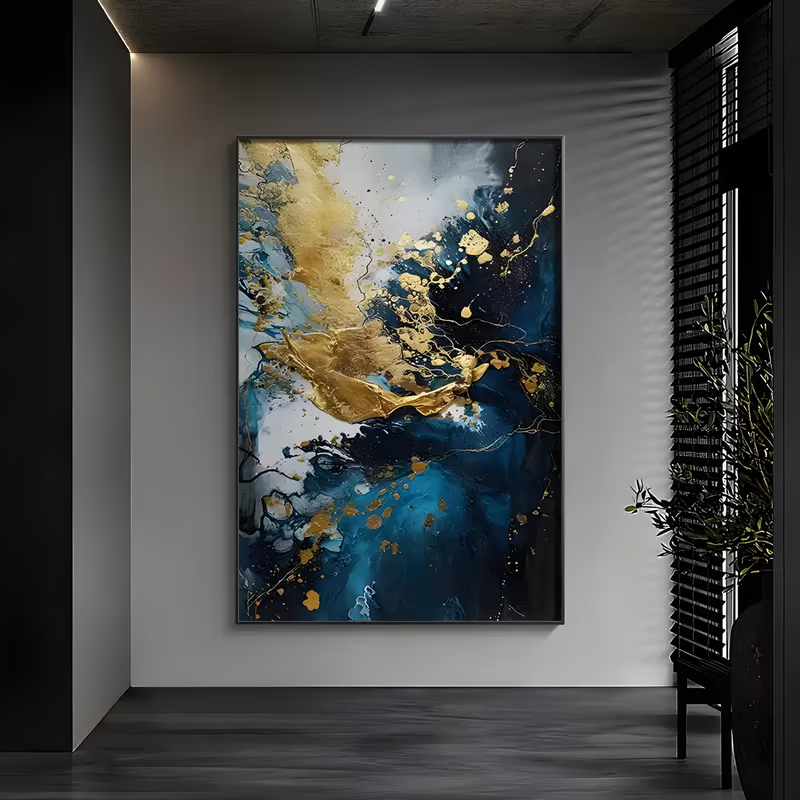
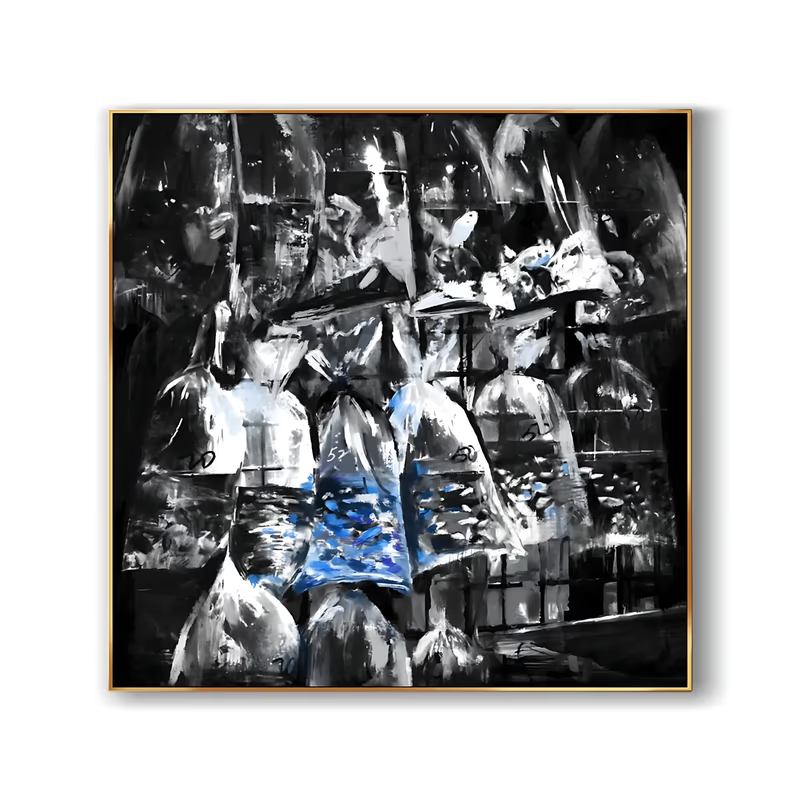
| Navy, indigo and midnight blue | Cool, deep, nocturnal | Bedrooms, guest suites, whisky bars |
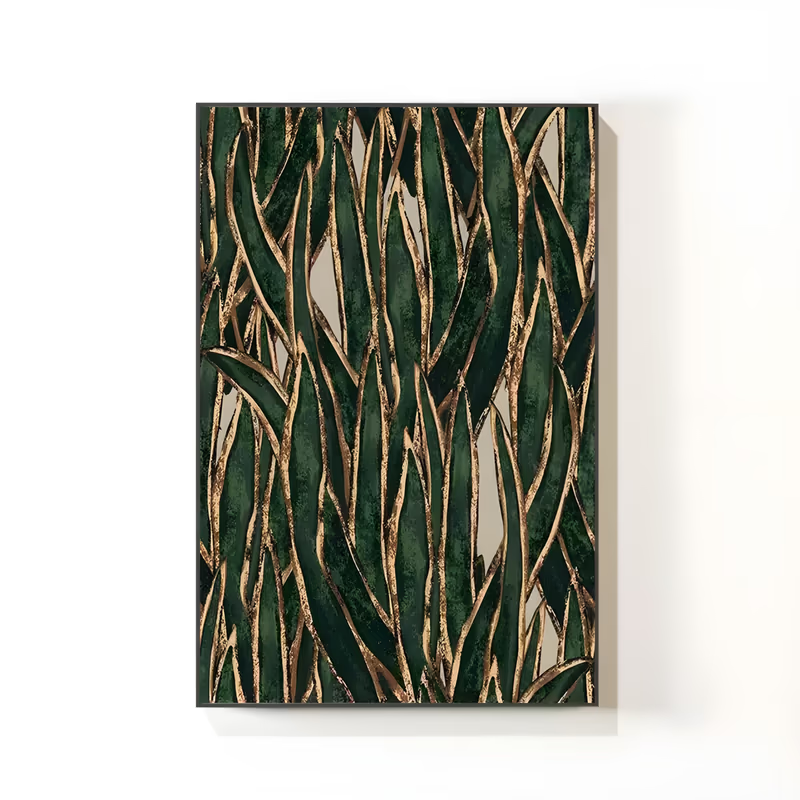
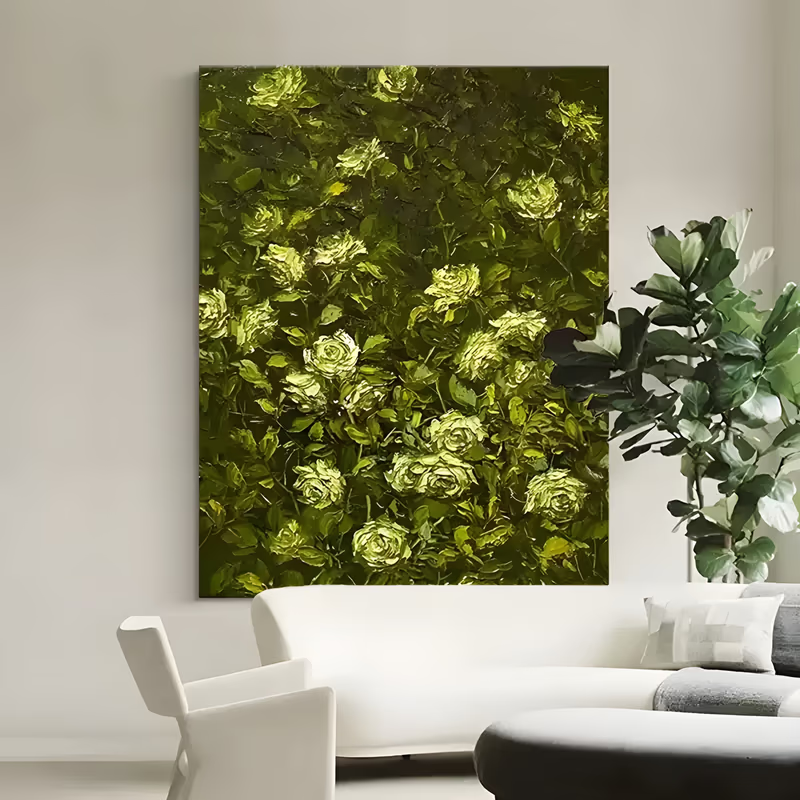
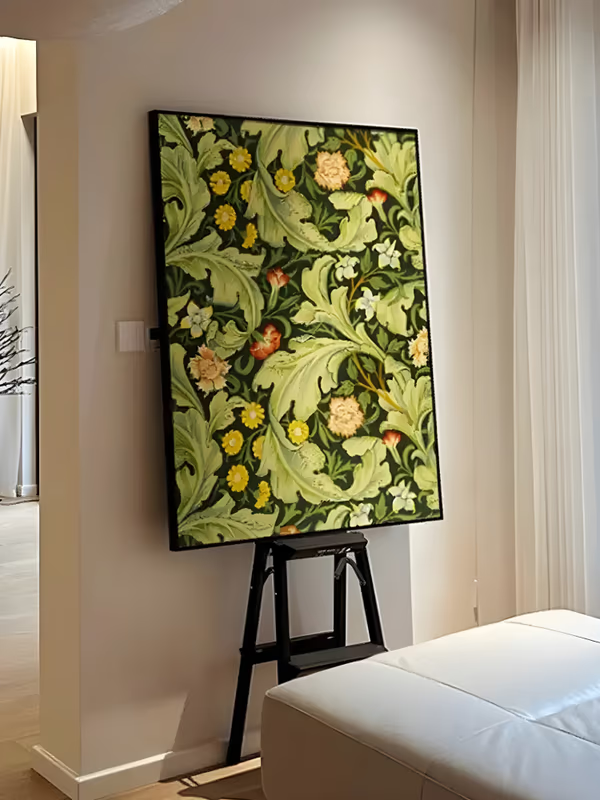
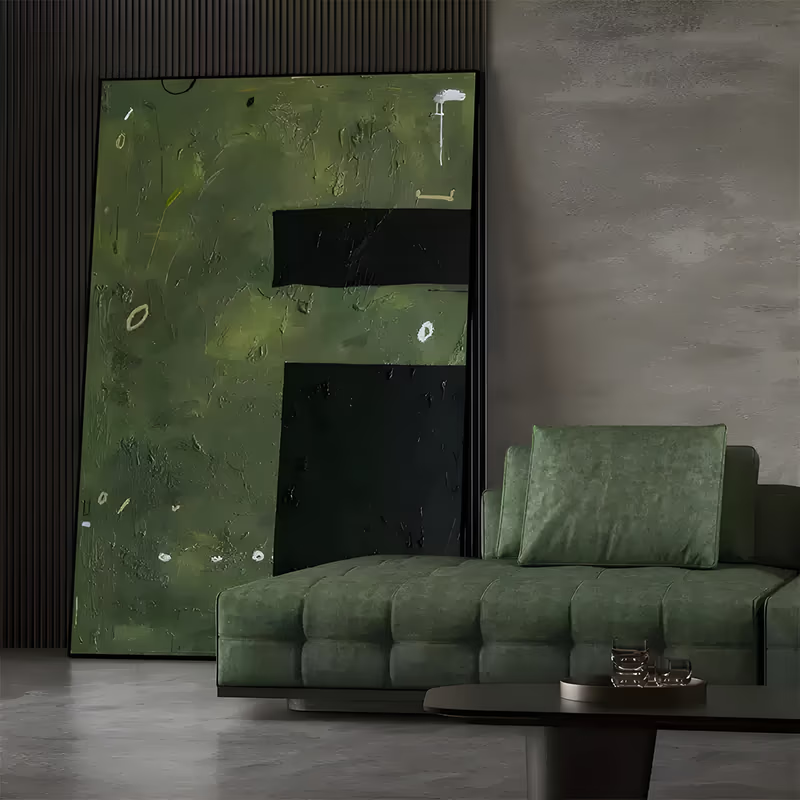
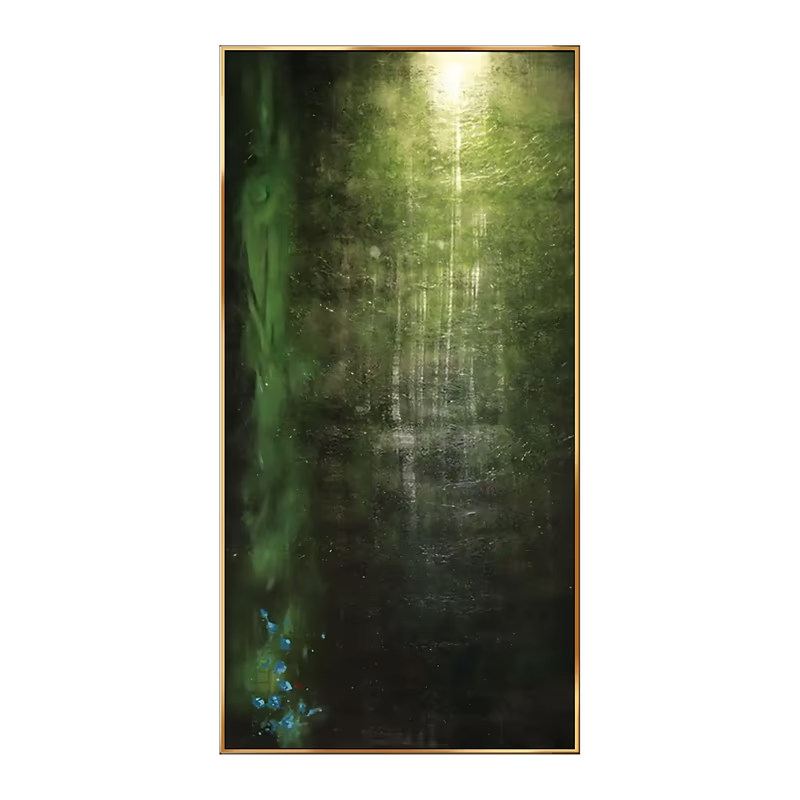
| Forest, olive and moss green | Earthy and sheltered, like woodland at dusk | Libraries, snugs, dining rooms |
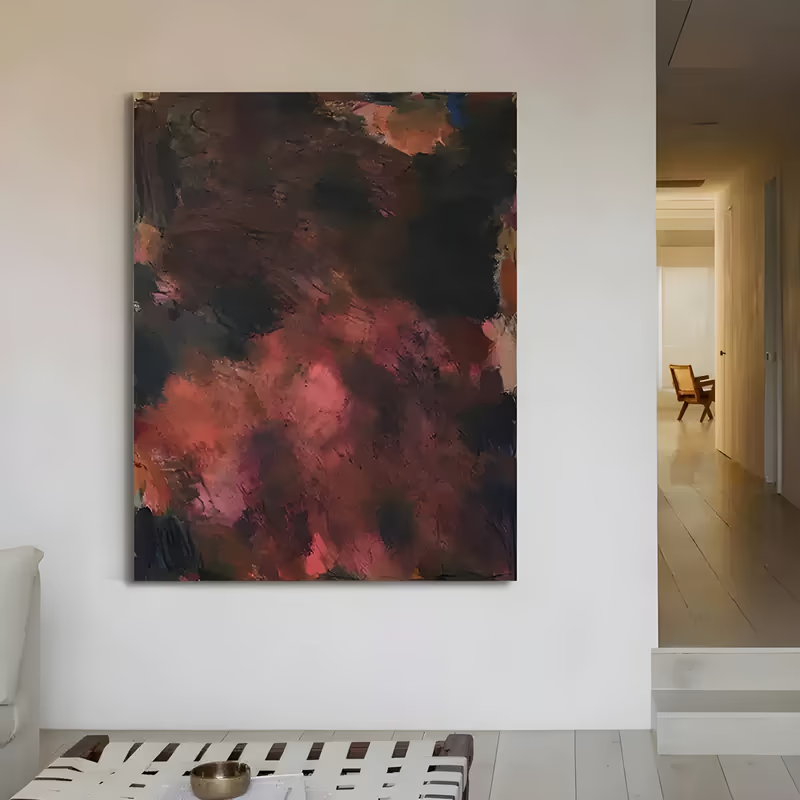
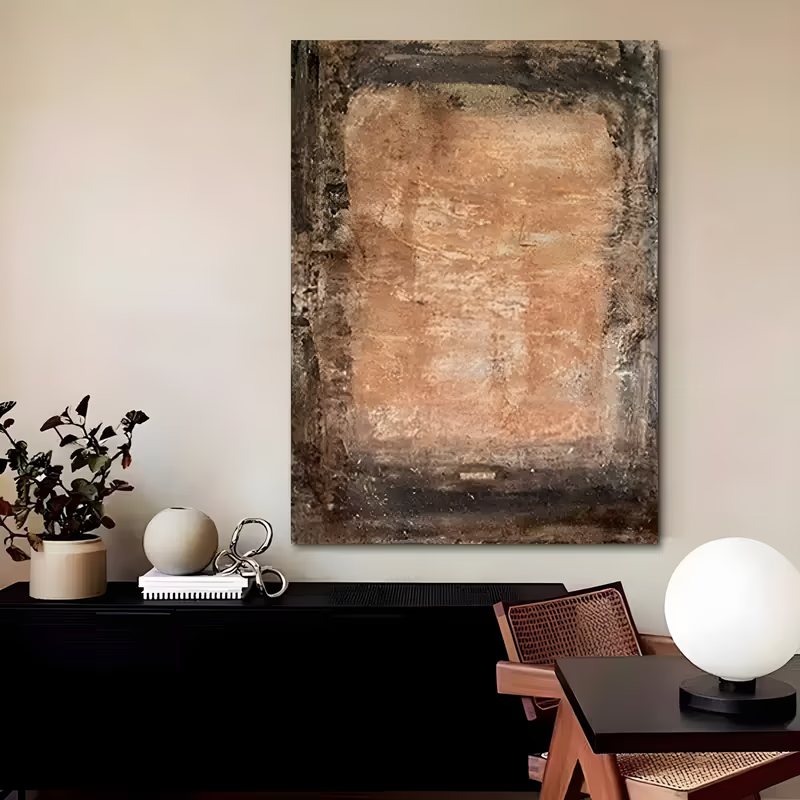
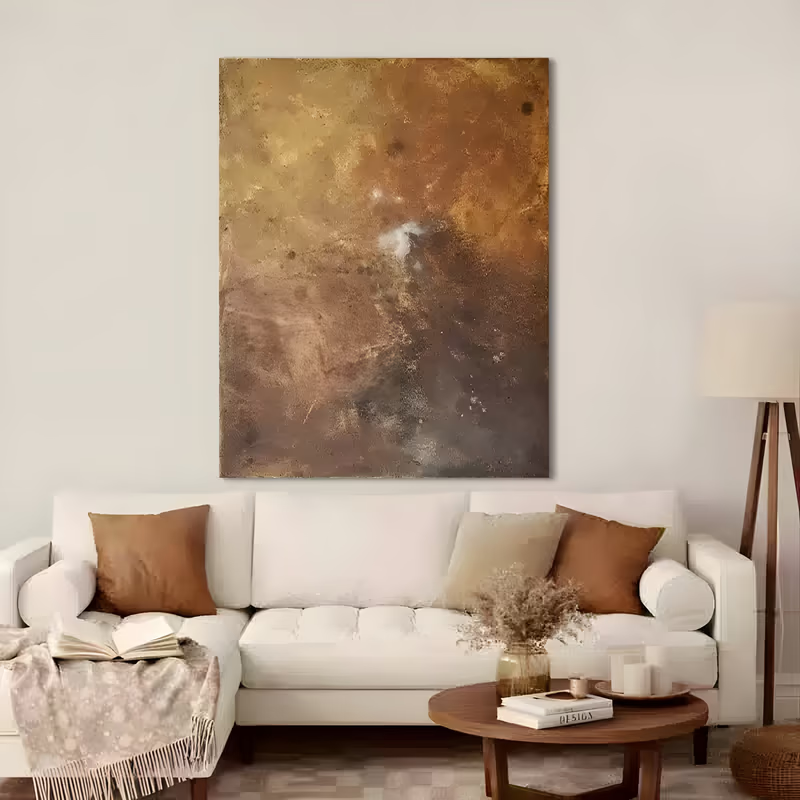
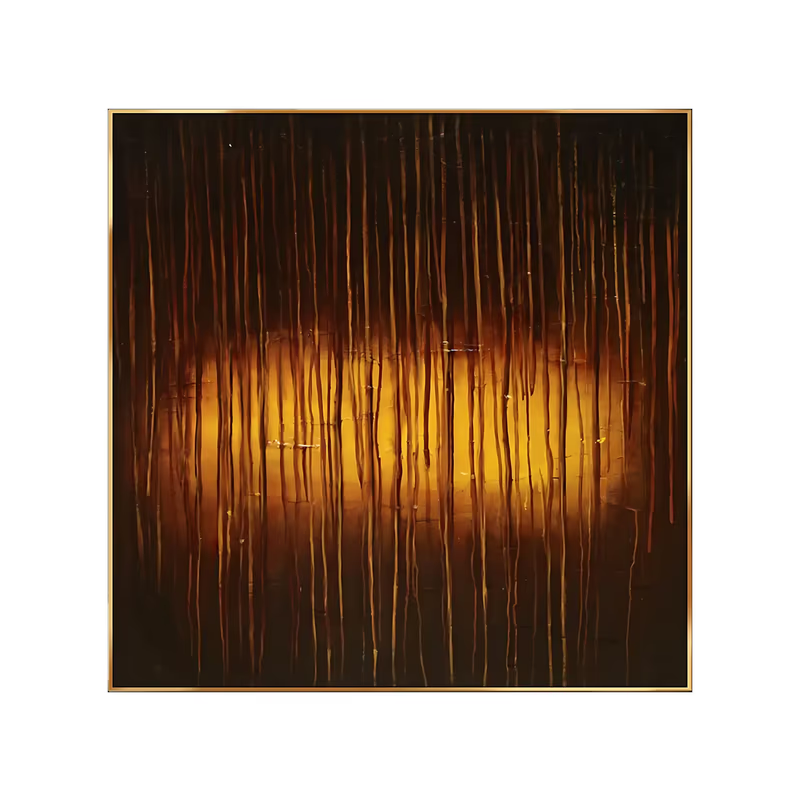
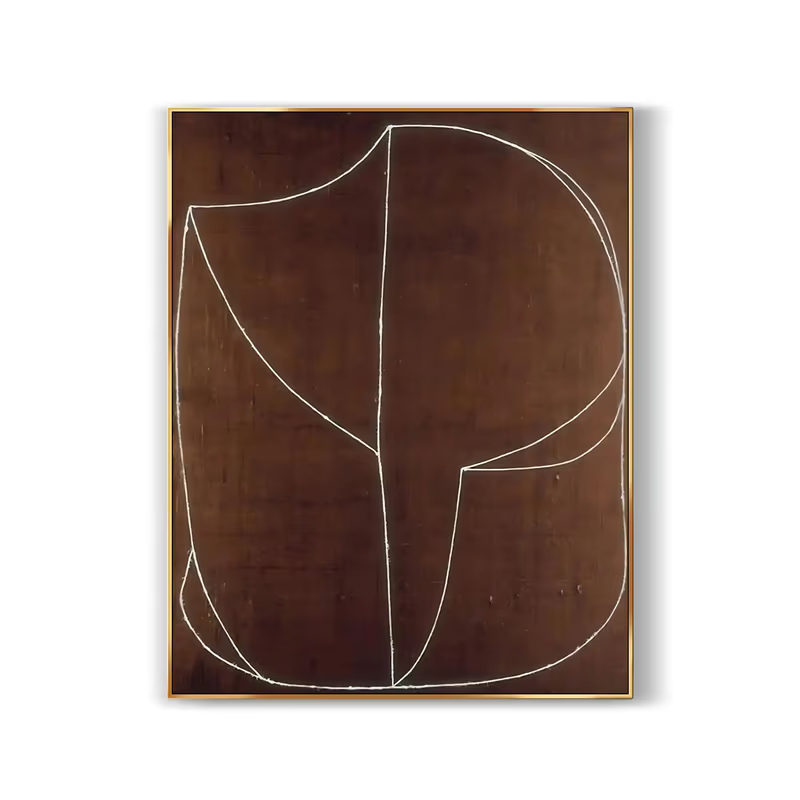
| Umber, rust and sepia | Warm, aged, lamp-lit | Dens, private dining rooms, wine bars |
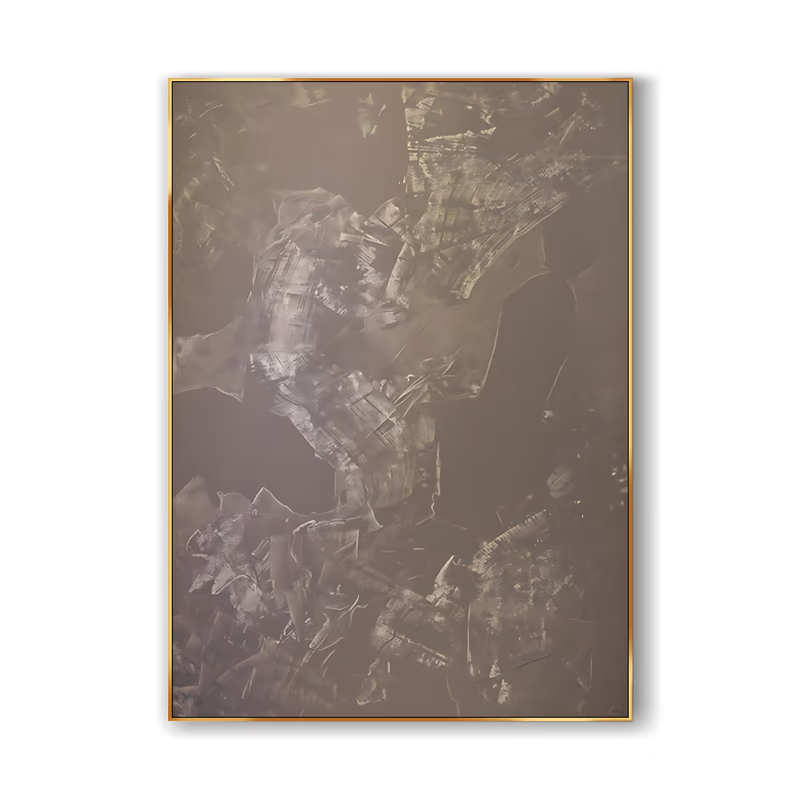
| Smoky taupe, mushroom and greige | Soft and enveloping, the gentlest moody | Bedrooms, spa relaxation rooms, small living rooms |
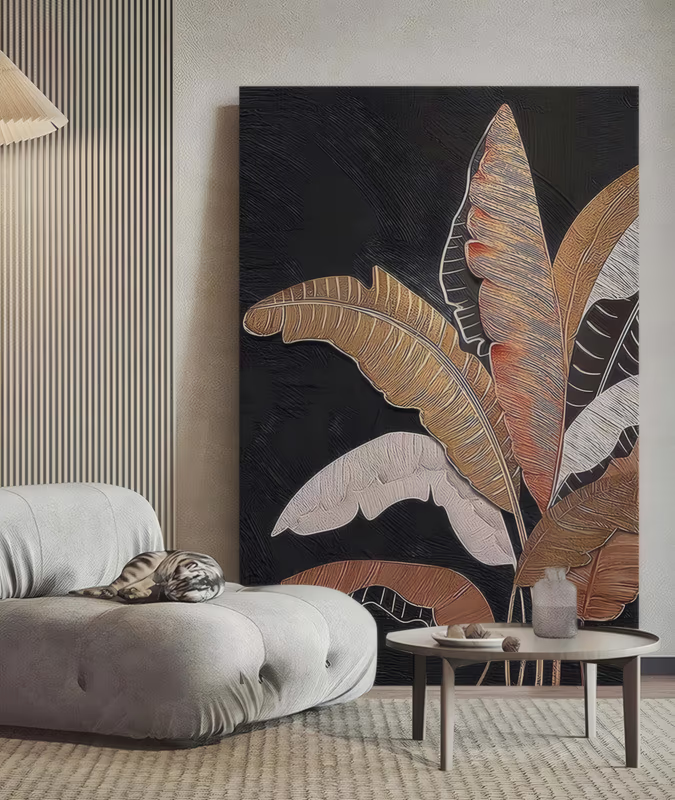
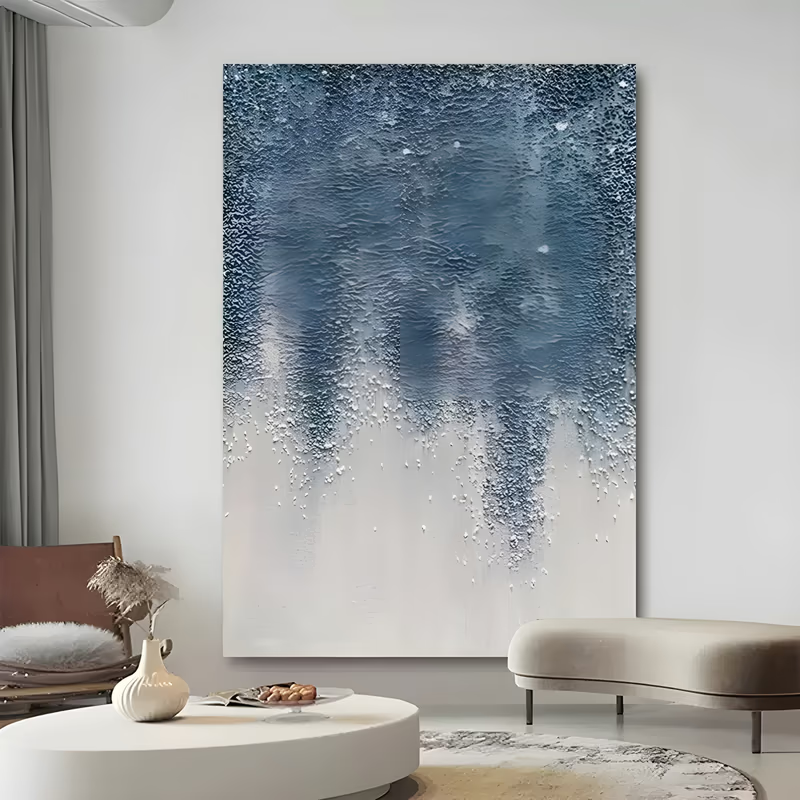
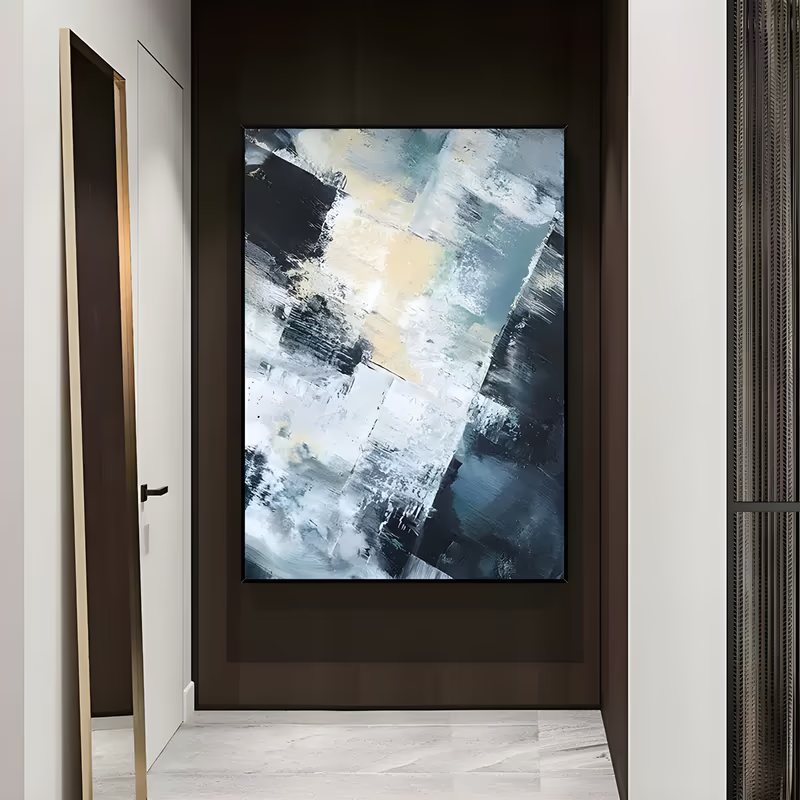
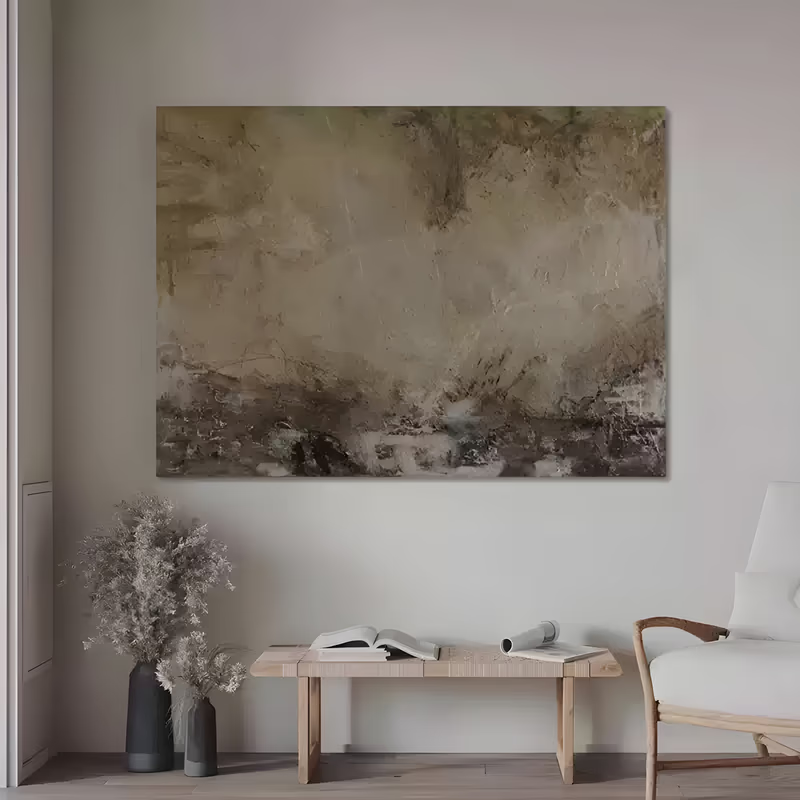
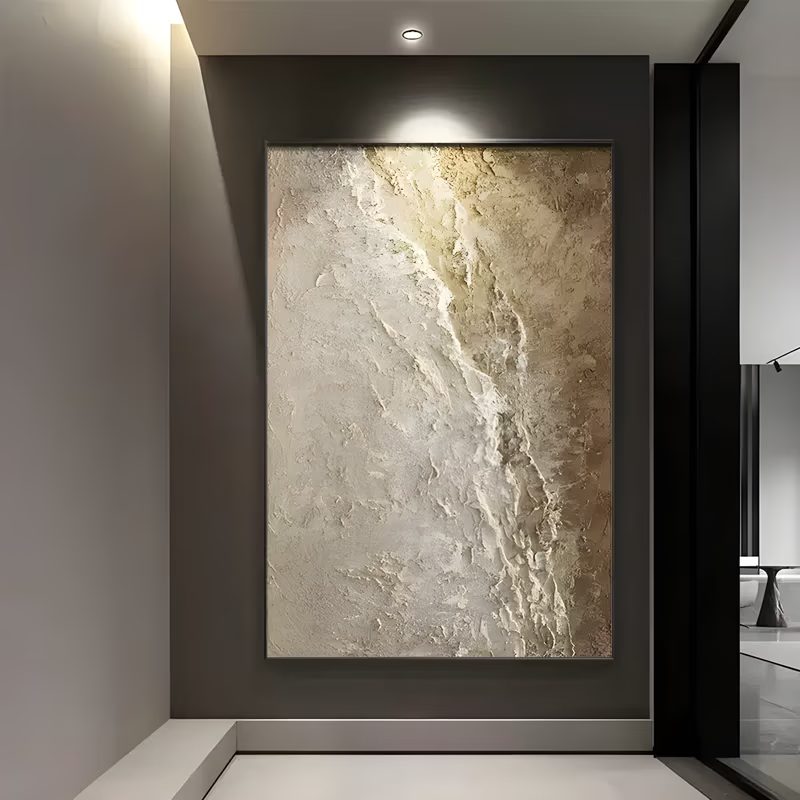
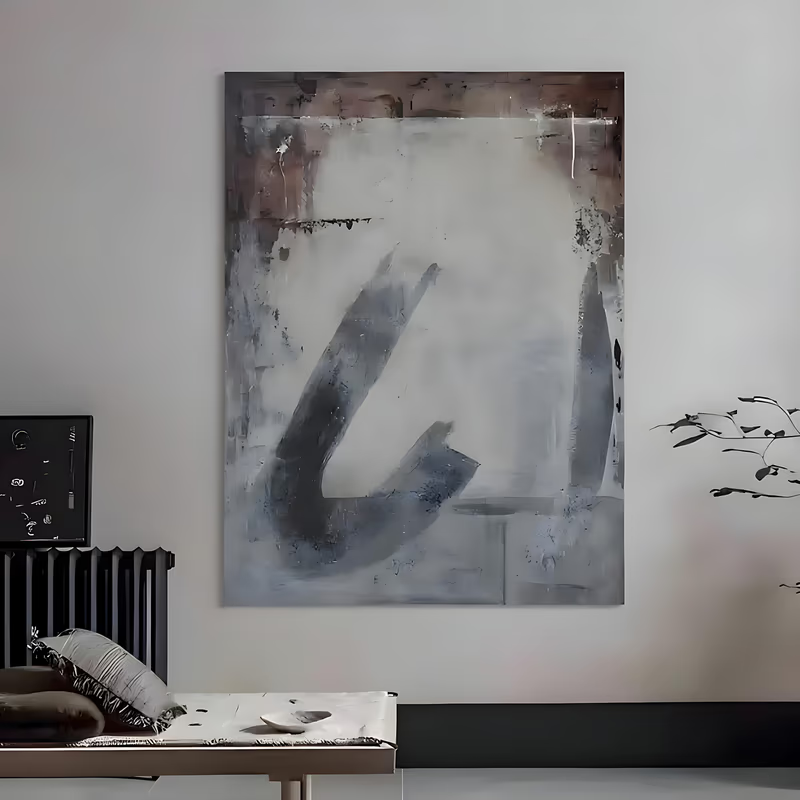
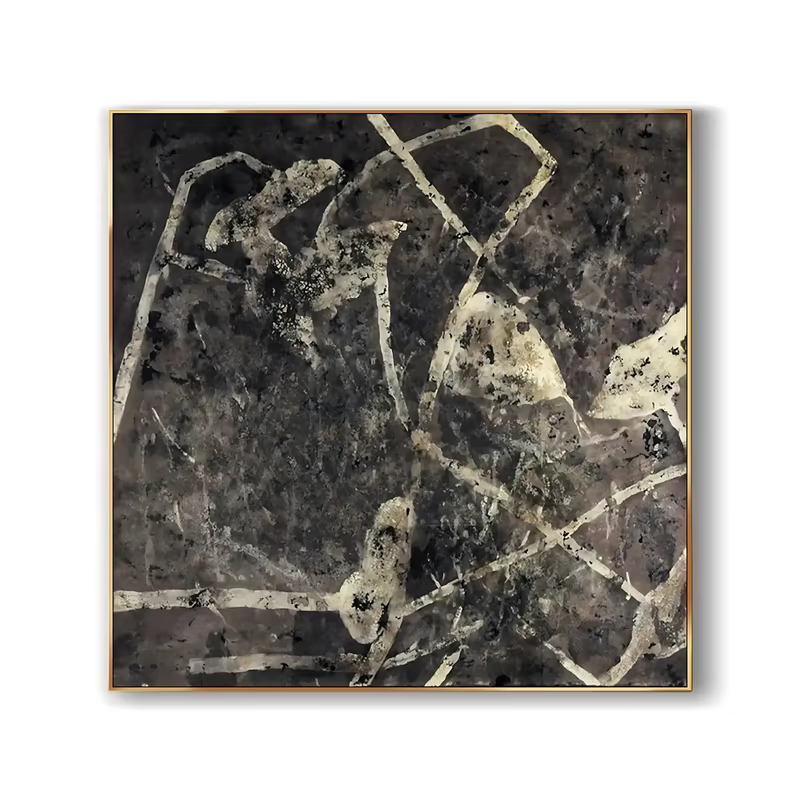
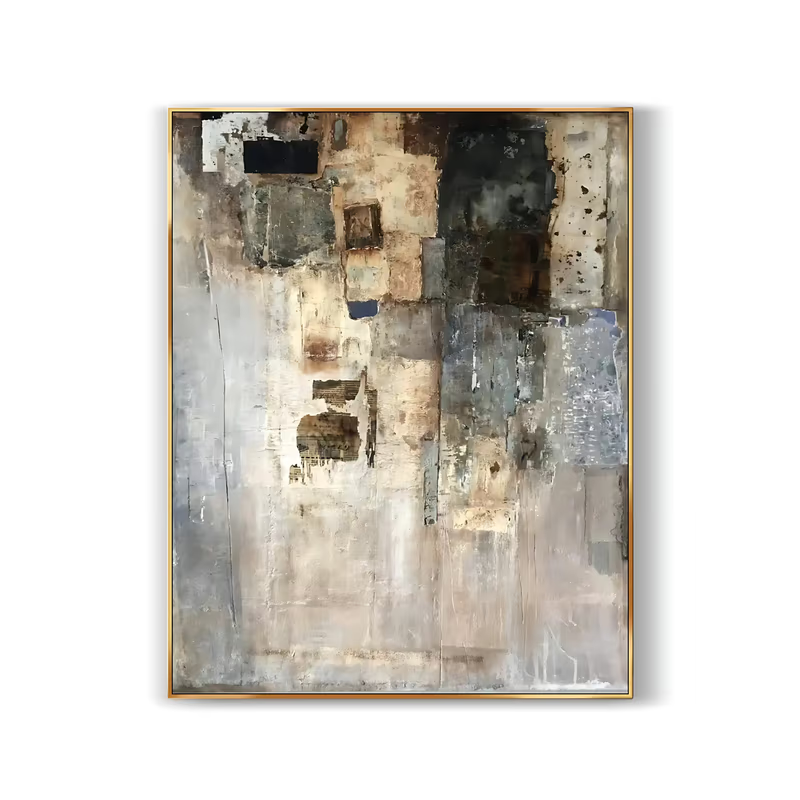
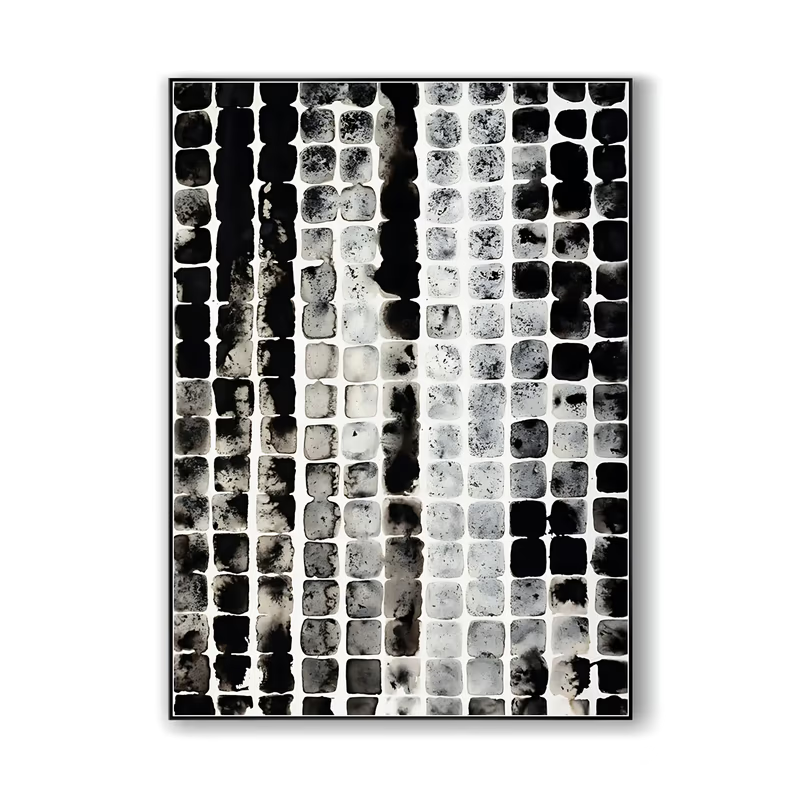
Texture does as much as colour. Weathered plaster, scraped grounds, ink marks bleeding into raw canvas and the uneven surfaces of wabi-sabi art catch low light in small ridges and hollows, so a quiet painting still has life at night. Glossy, crisp surfaces read as cleaner and cooler; matt, layered ones read as moodier.
What kinds of moody paintings are there?
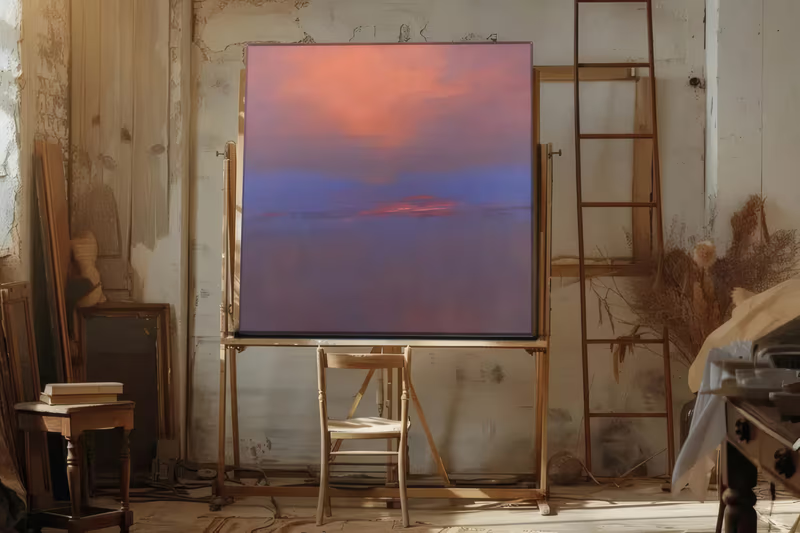
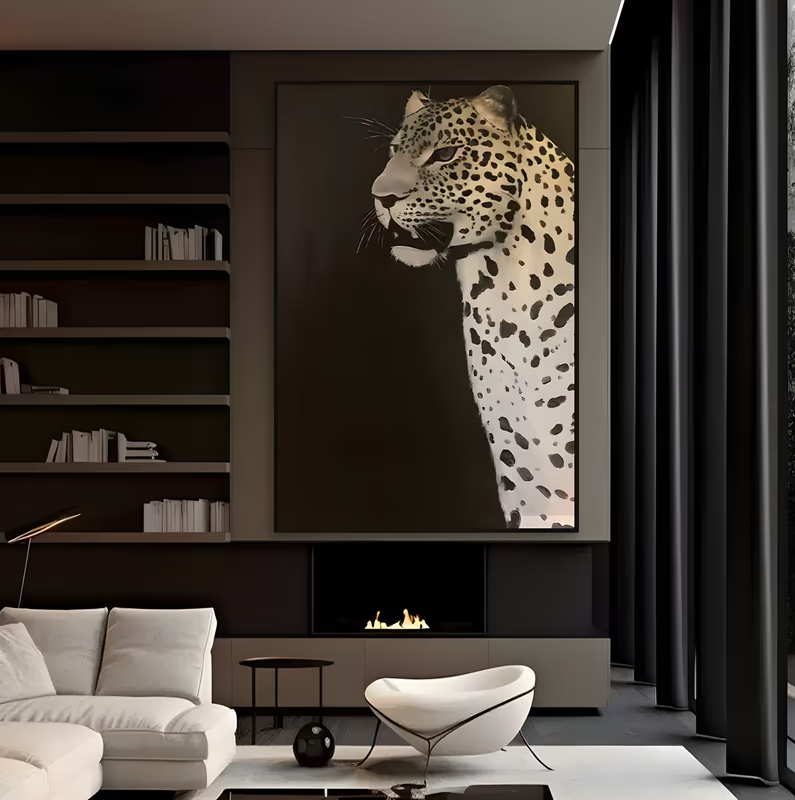
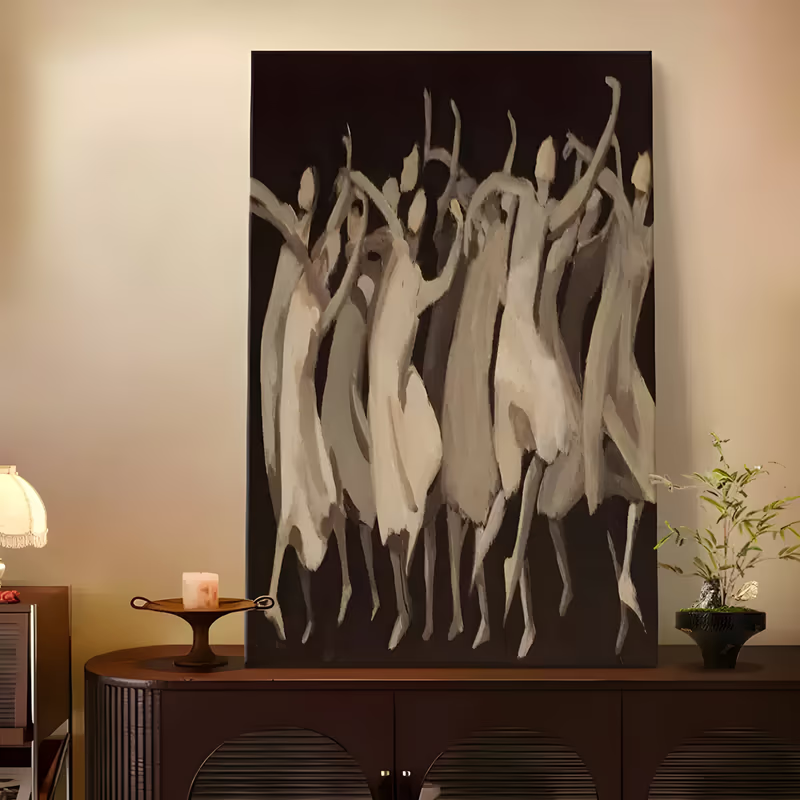
Moody wall art here comes in four kinds: misty, dusky and night landscapes; quiet abstracts in plaster, ink and weathered paint; dark-ground still lifes and flowers; and animals and figures half in shadow.
Dusk, mist, rain and night
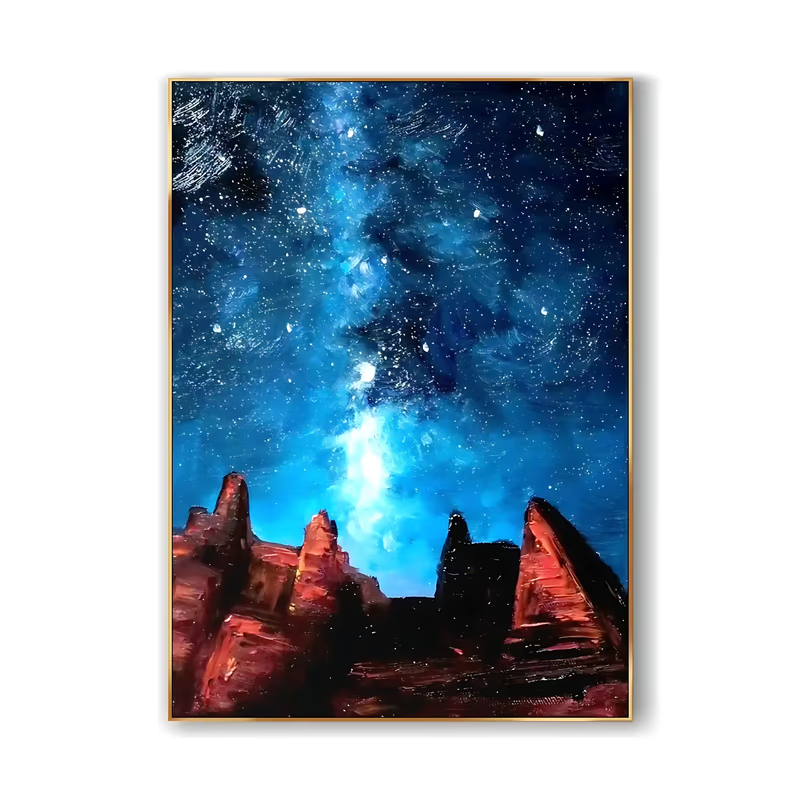
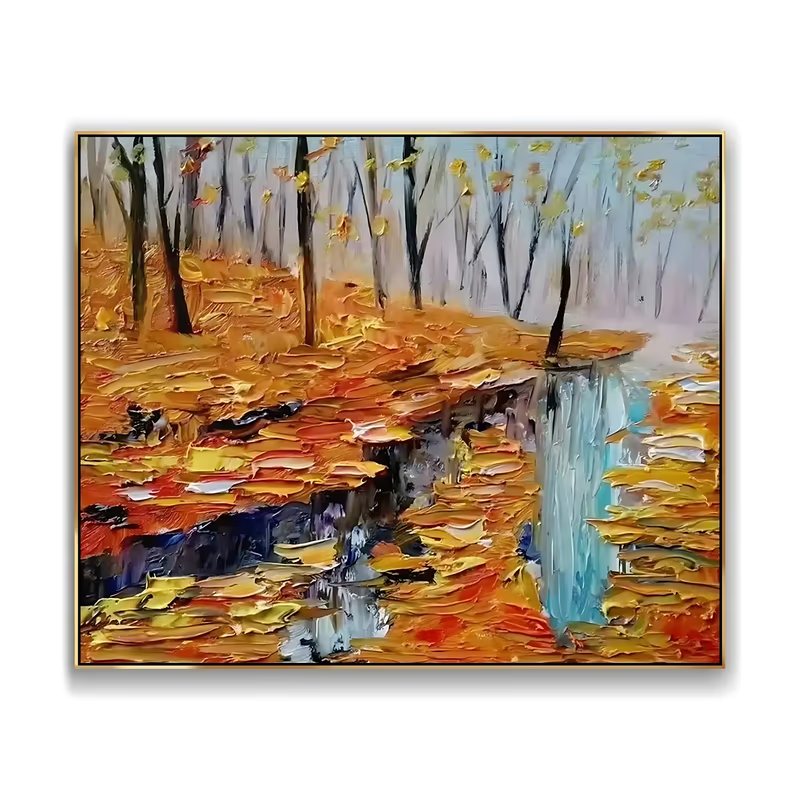
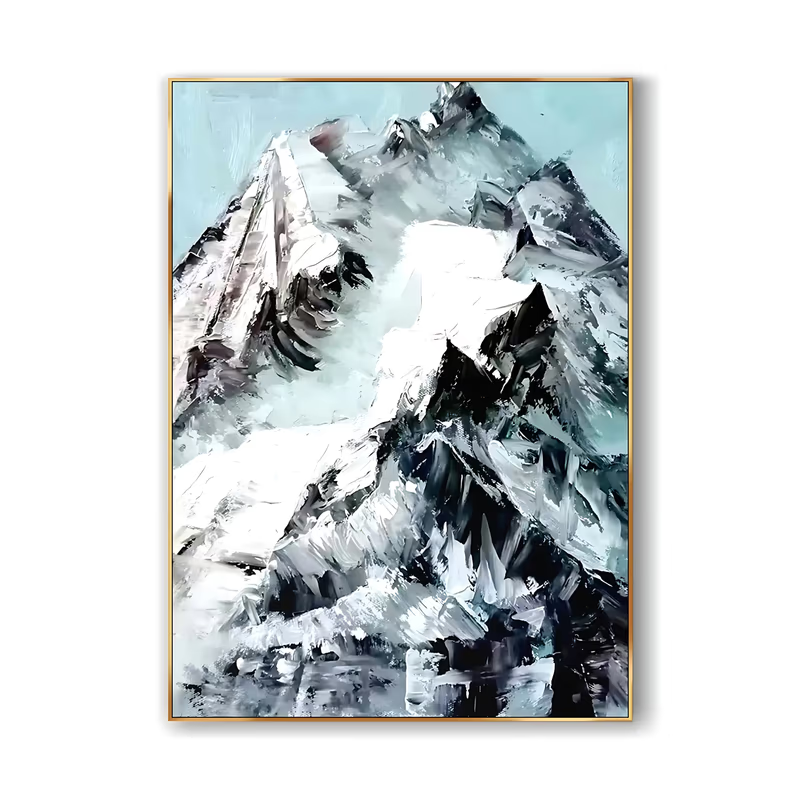
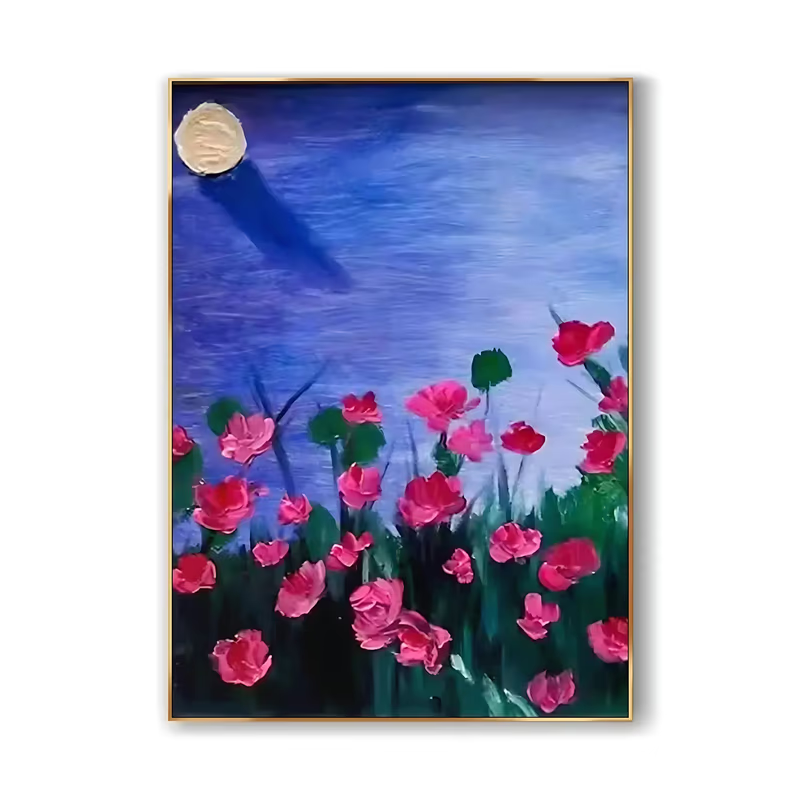
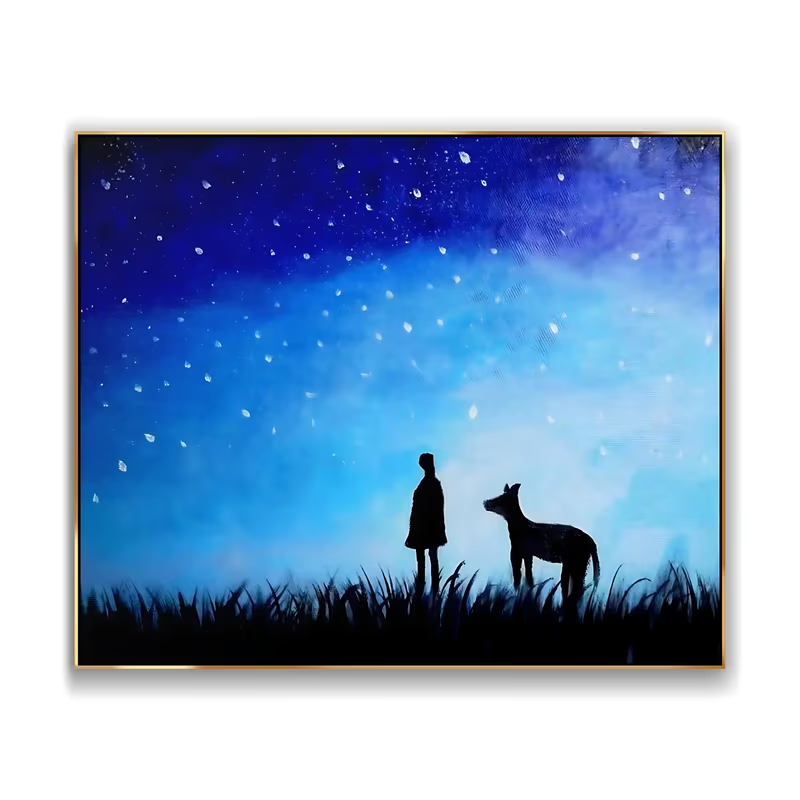
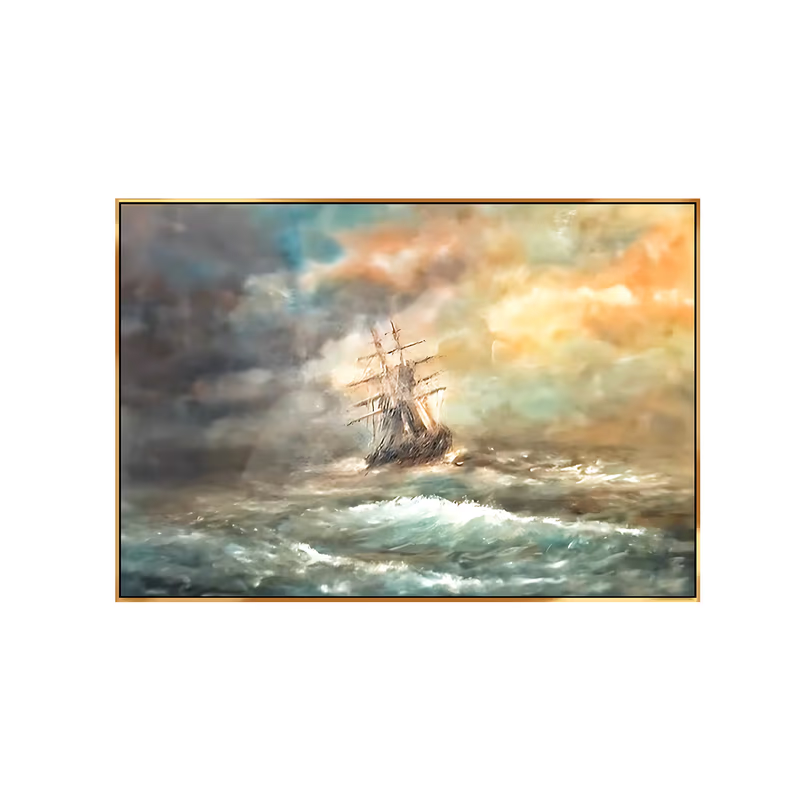
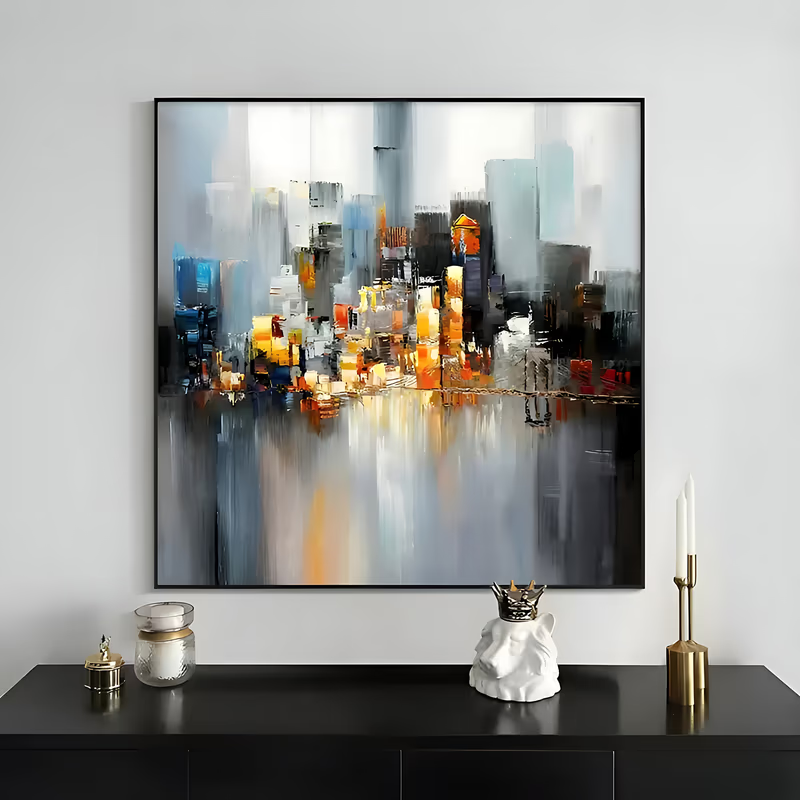
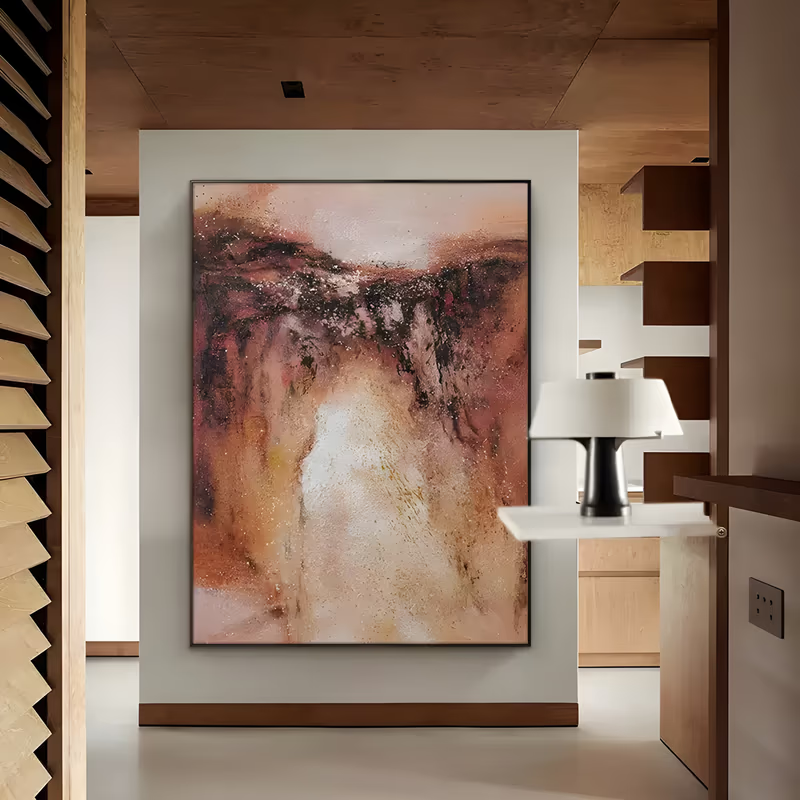
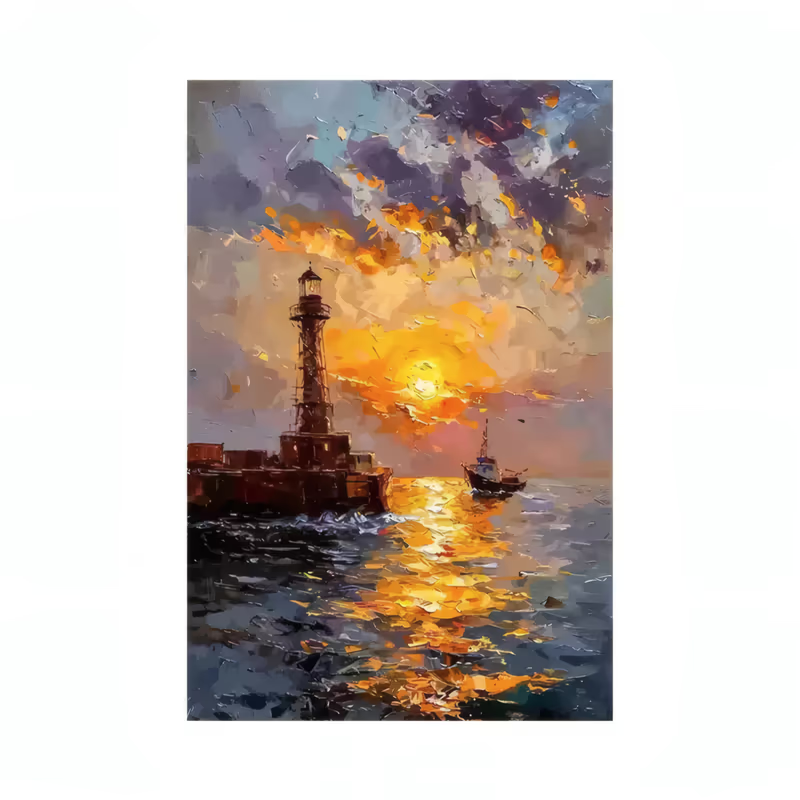
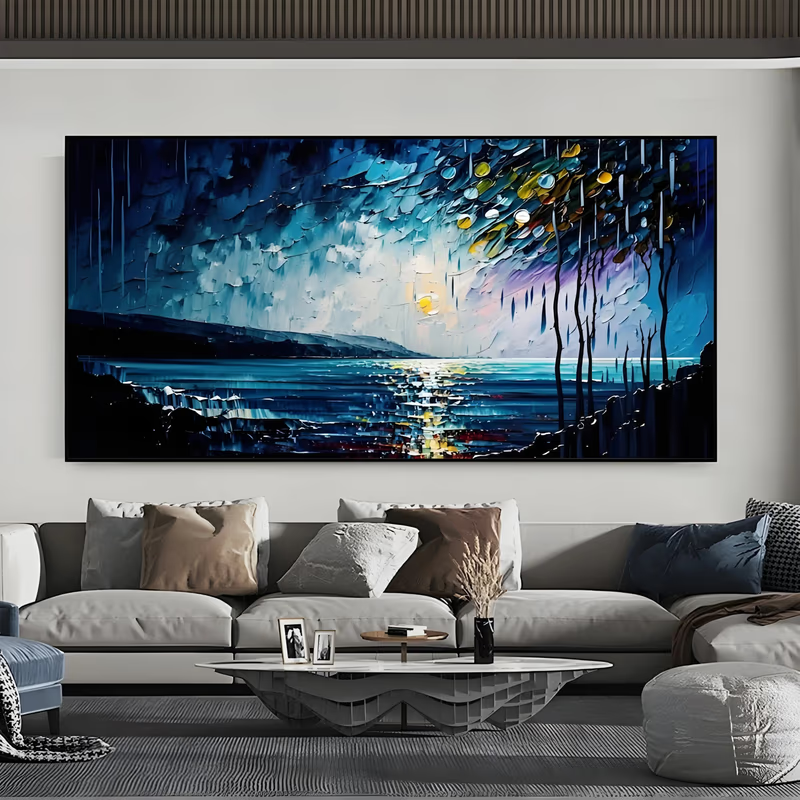
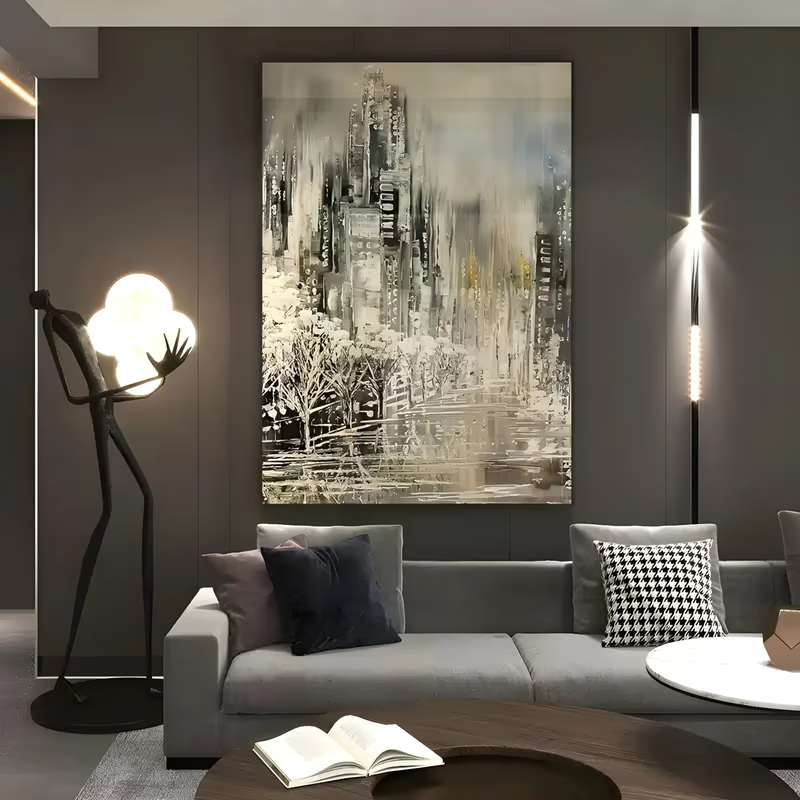
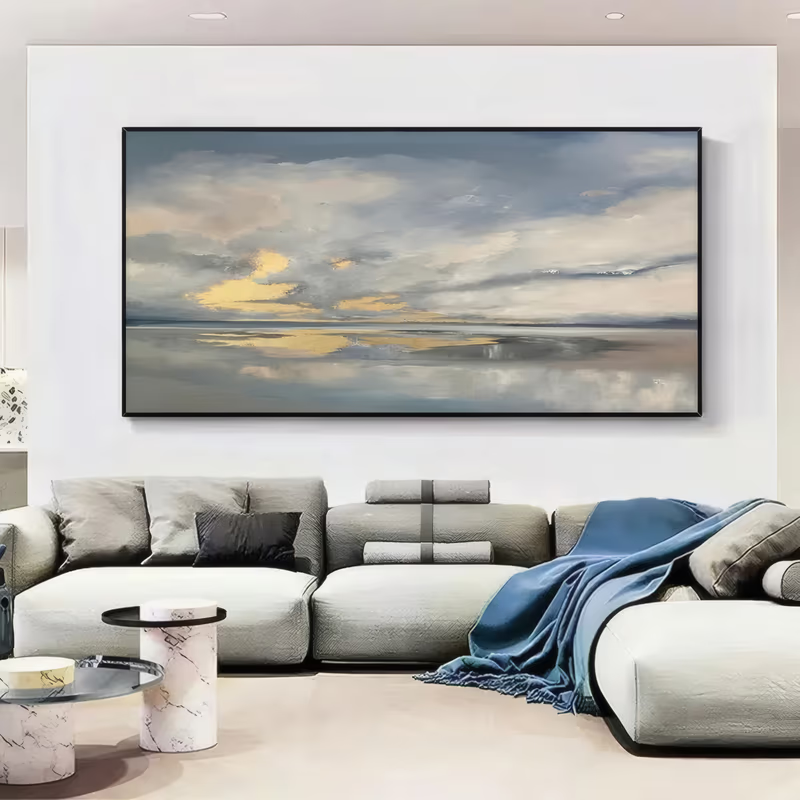
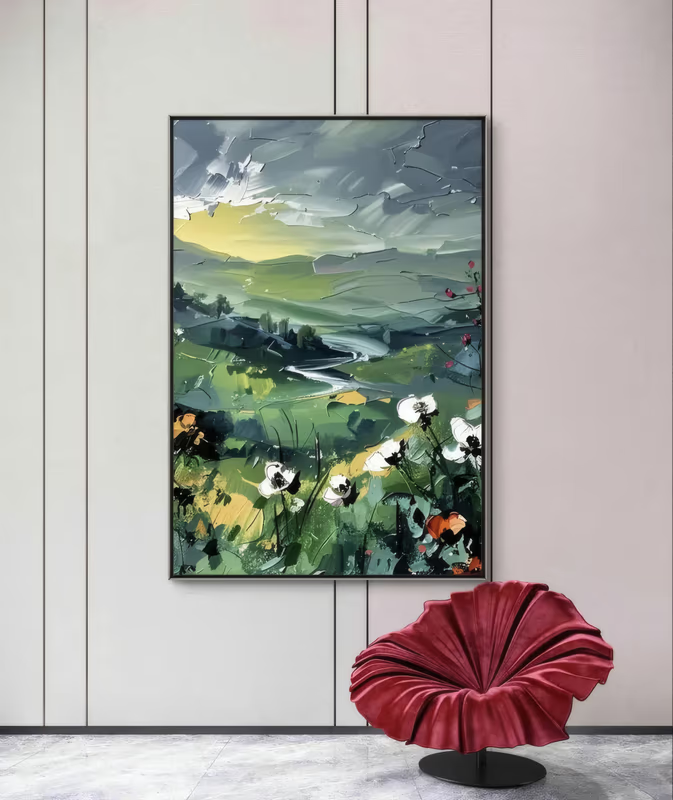
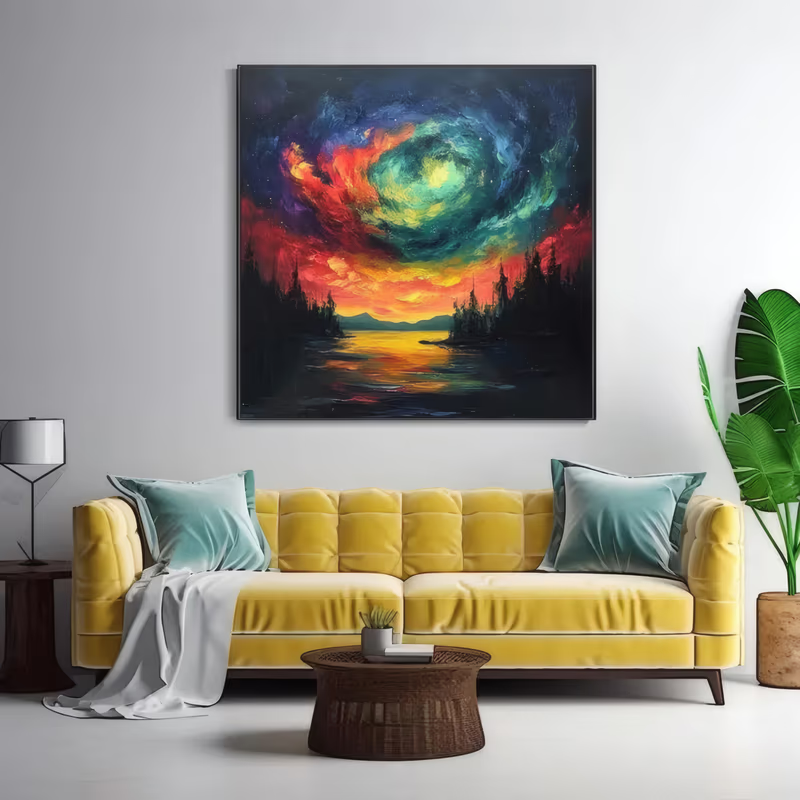
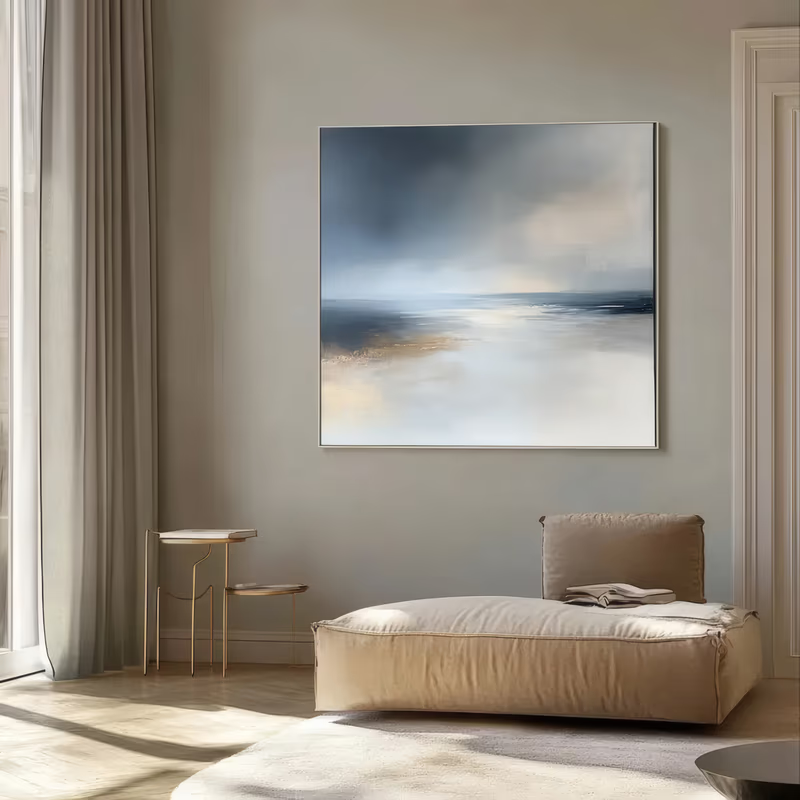
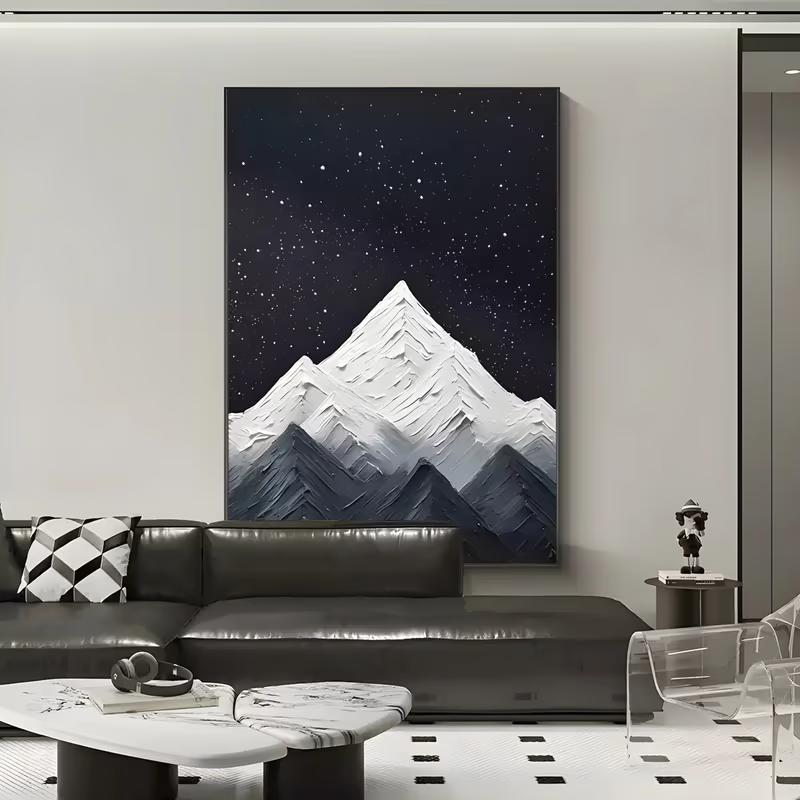
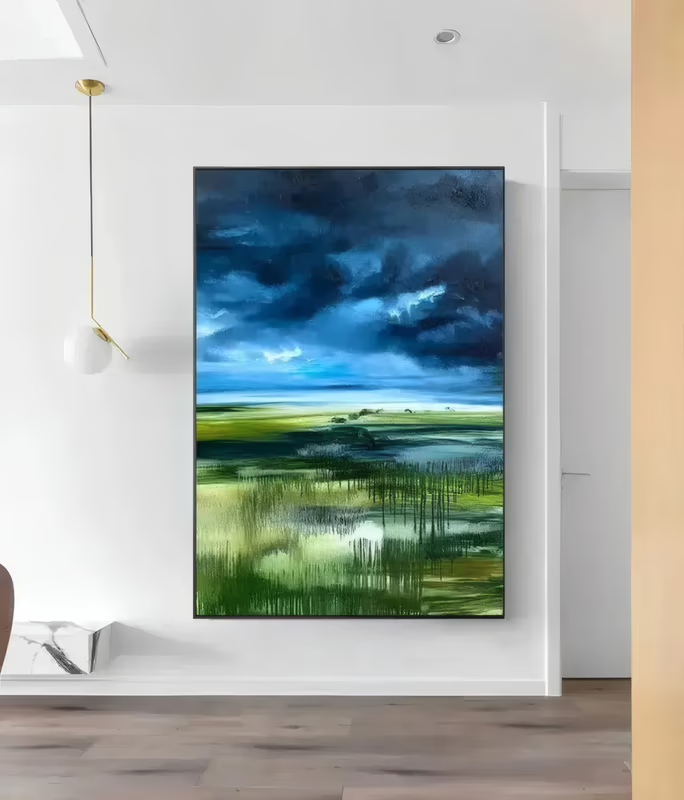
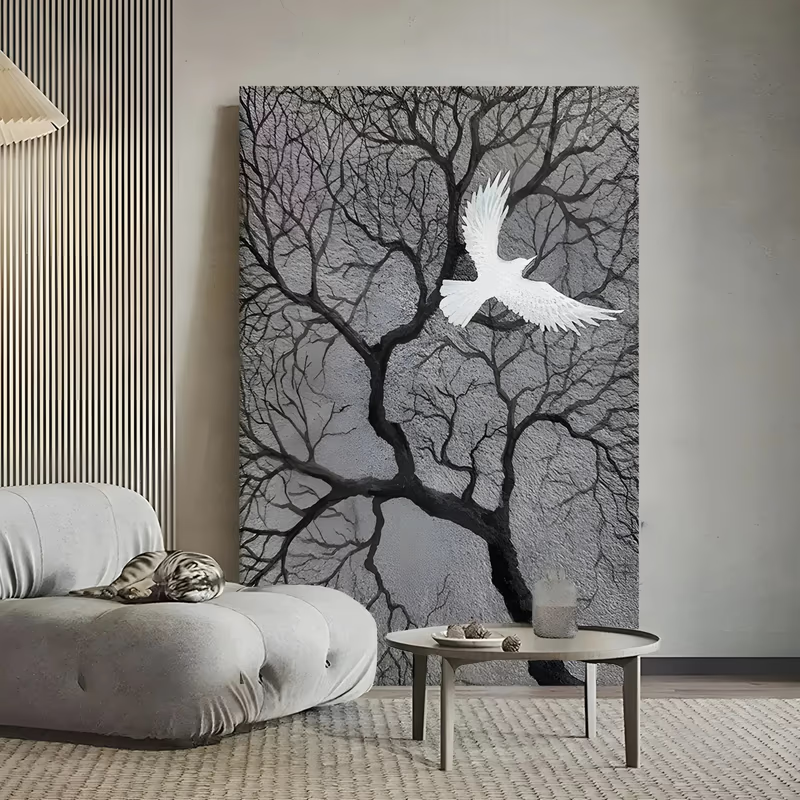
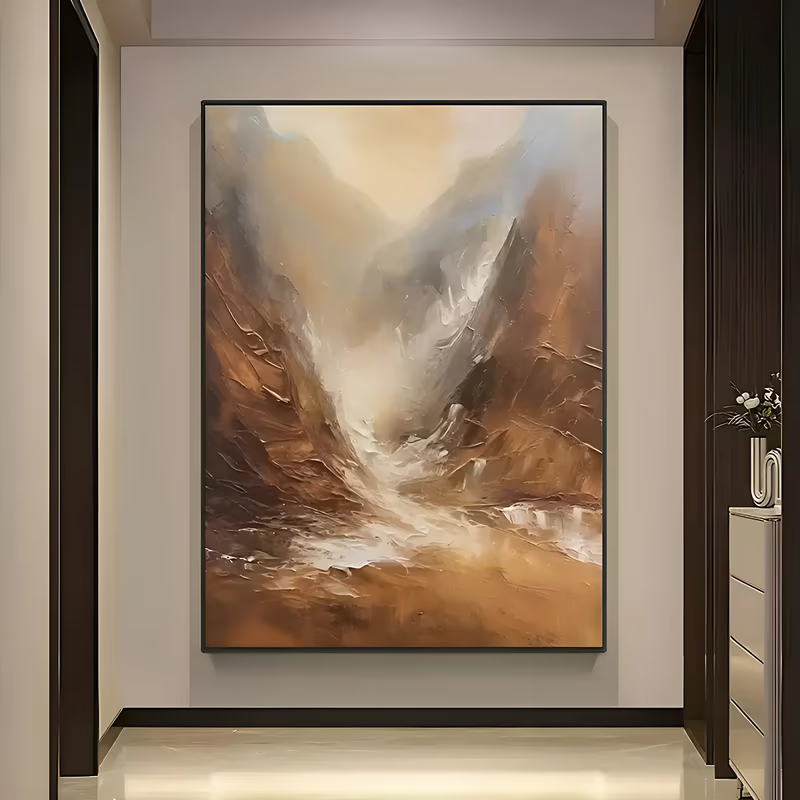
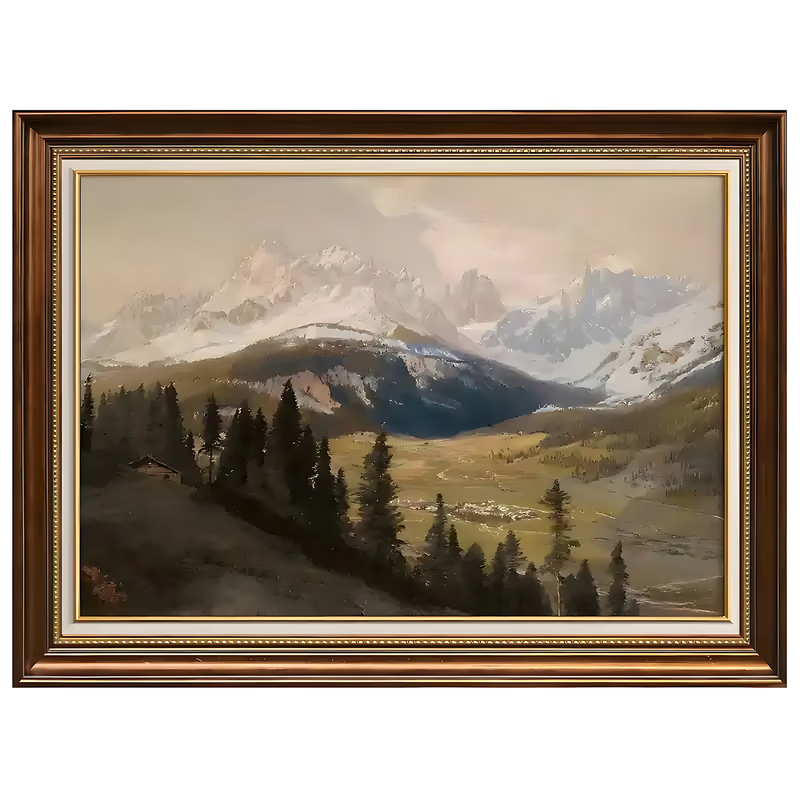
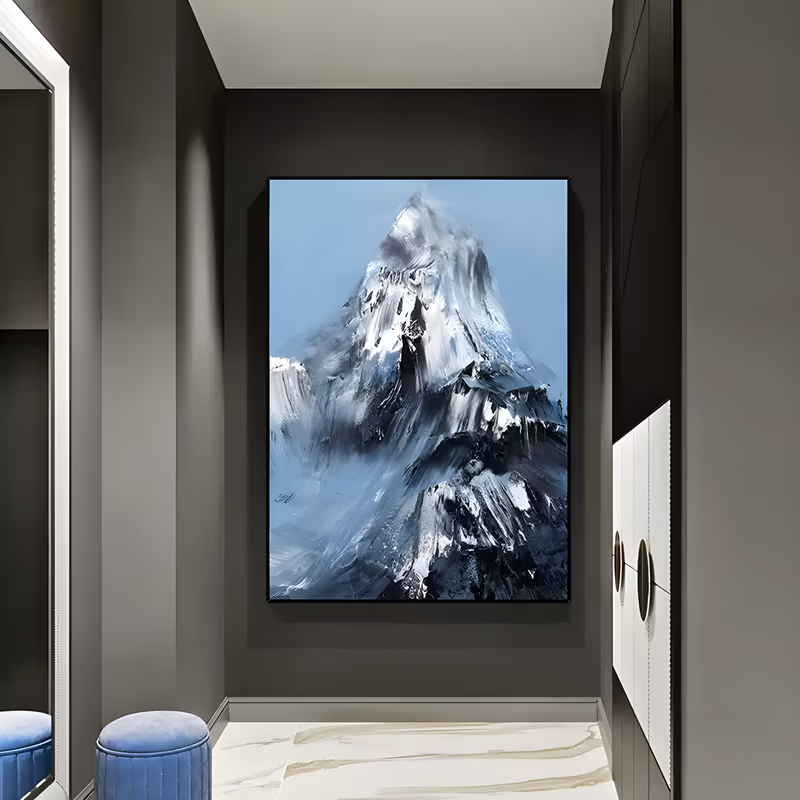
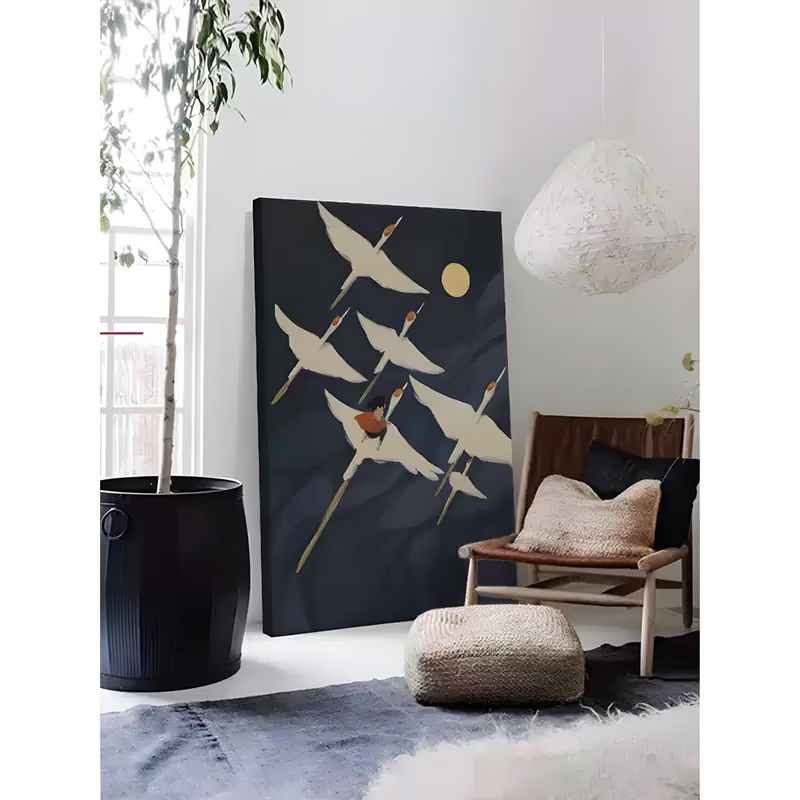
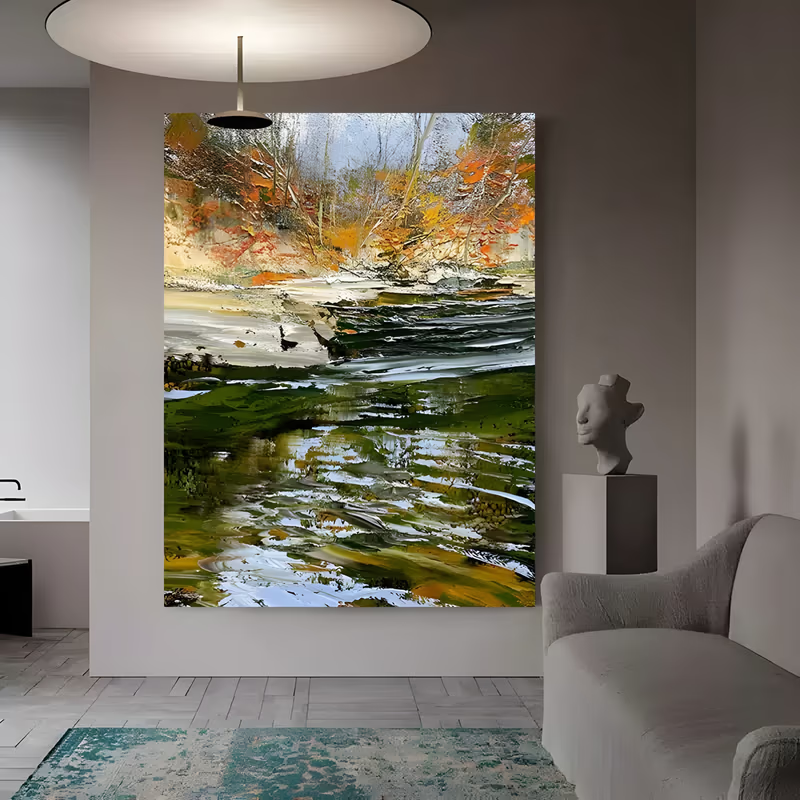
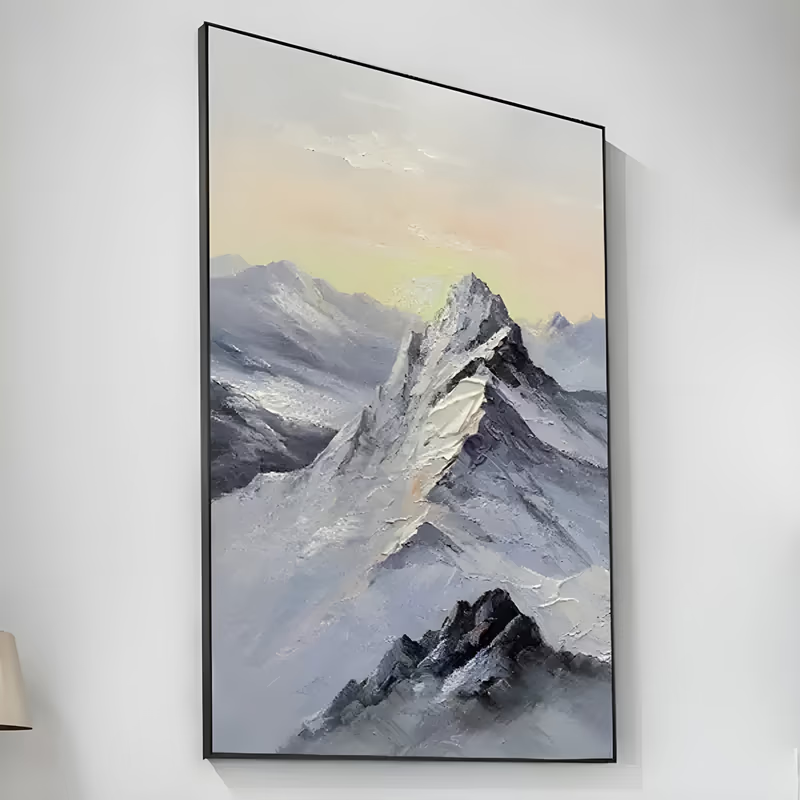
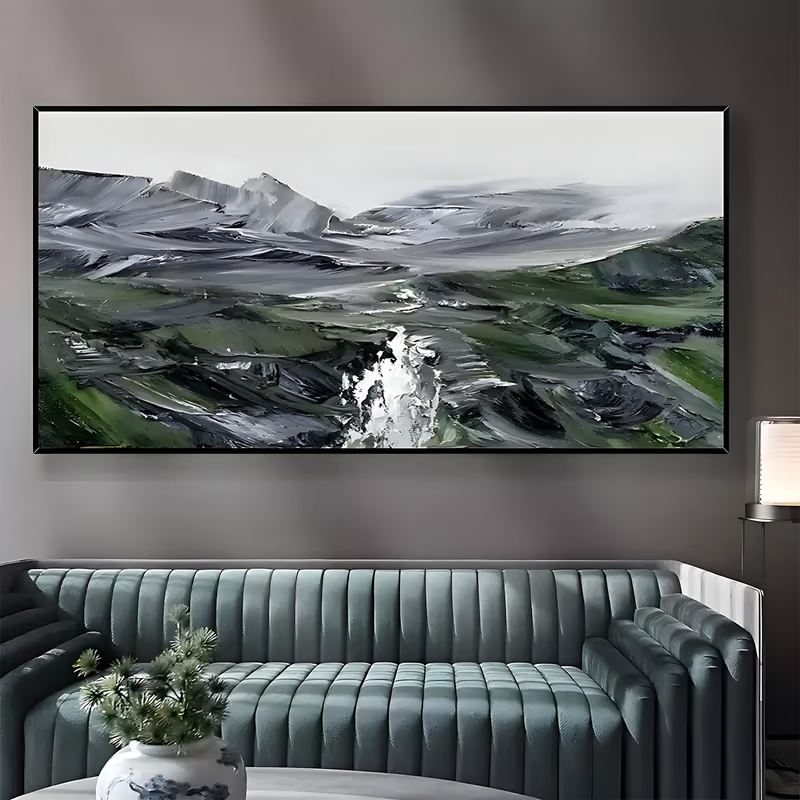
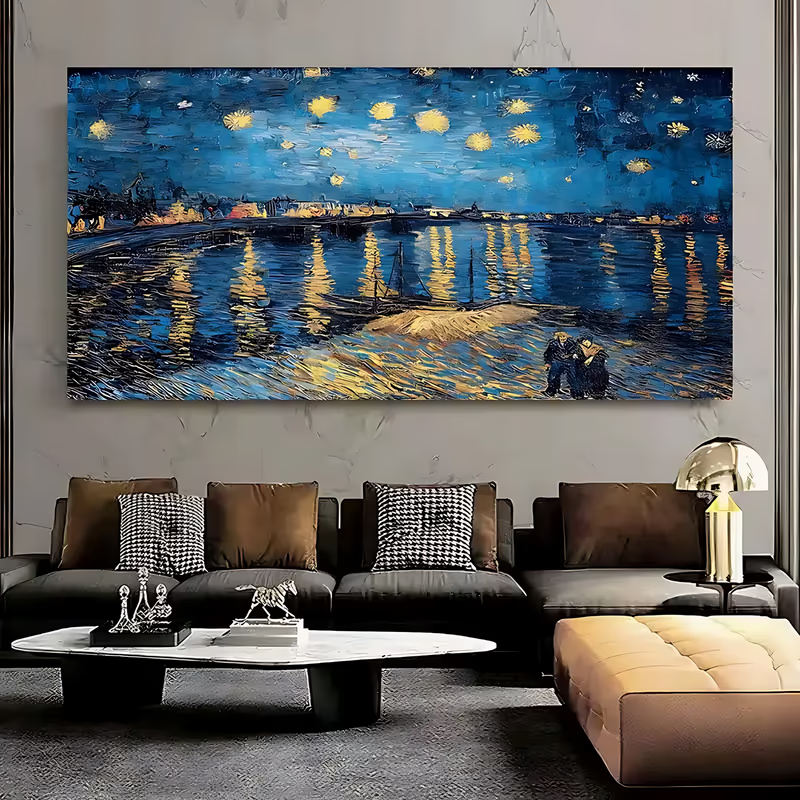
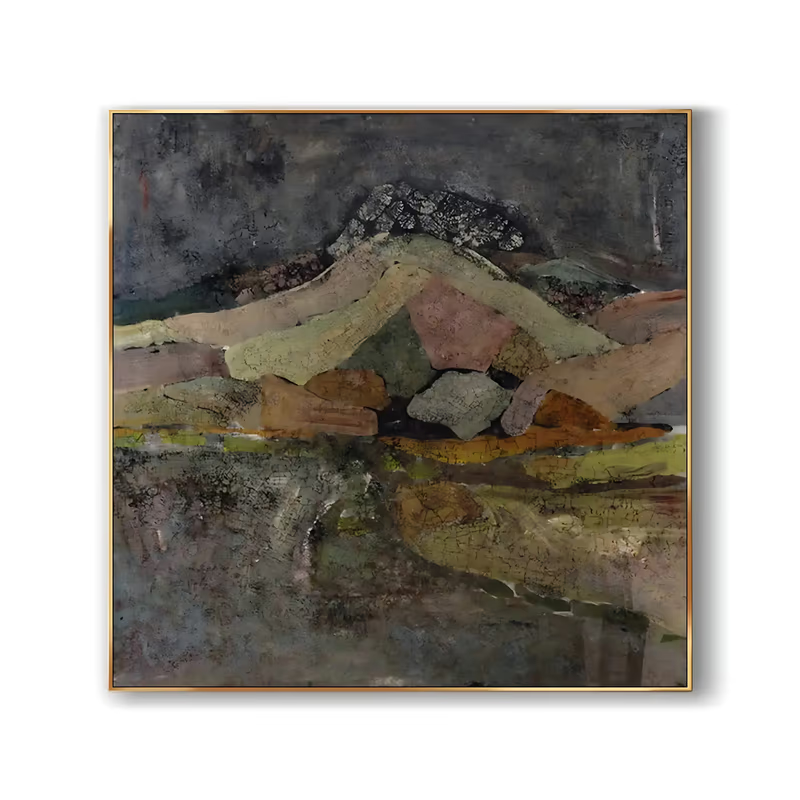
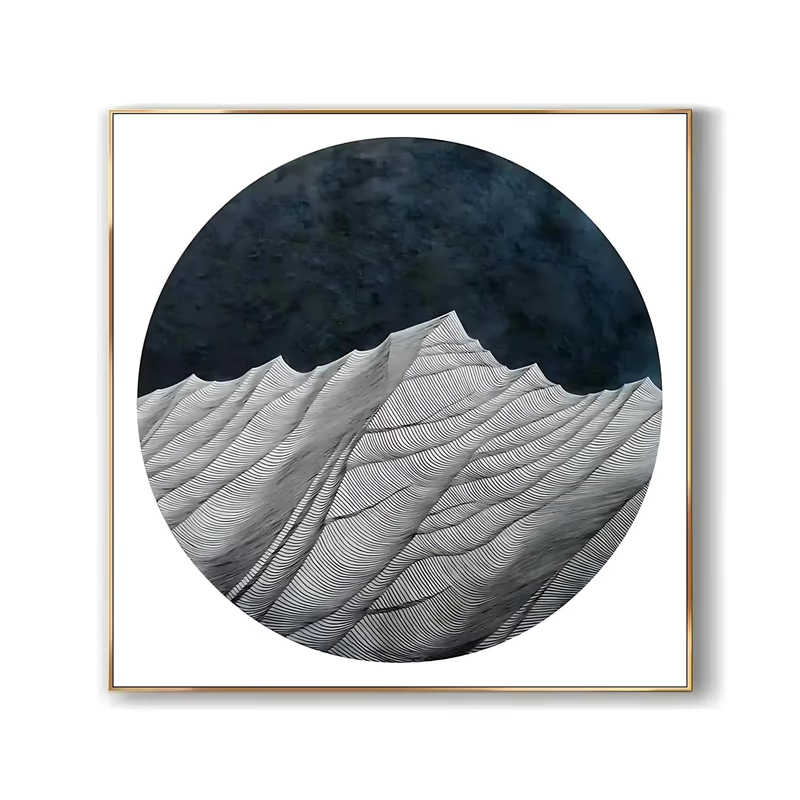
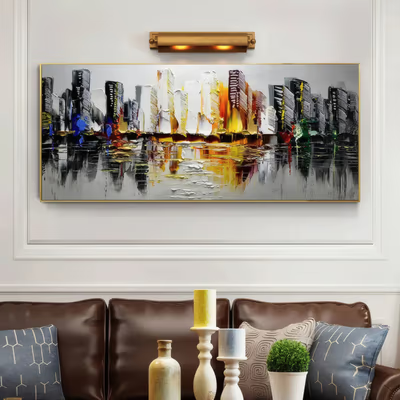
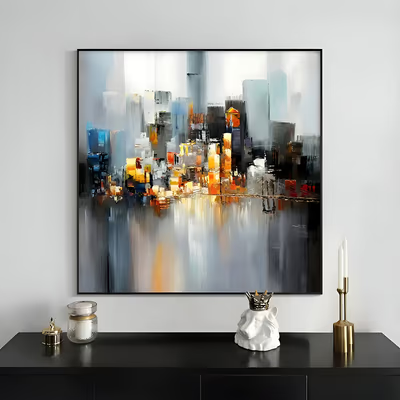
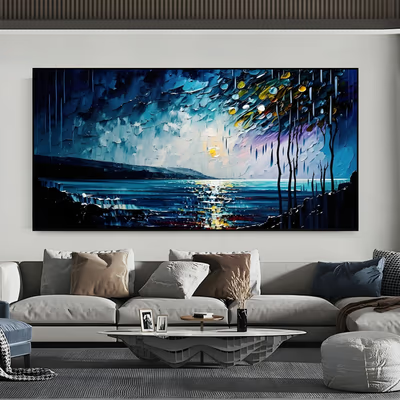
Snow peaks in black and white, a lone figure on a fall path, poppies under a full moon, a girl and her dog under a starry sky, a bistro street at night, a misty ochre canyon. Landscape is the classic moody subject, because weather does the work. See moody landscapes and moody seascapes.
Plaster, ink and weathered abstracts
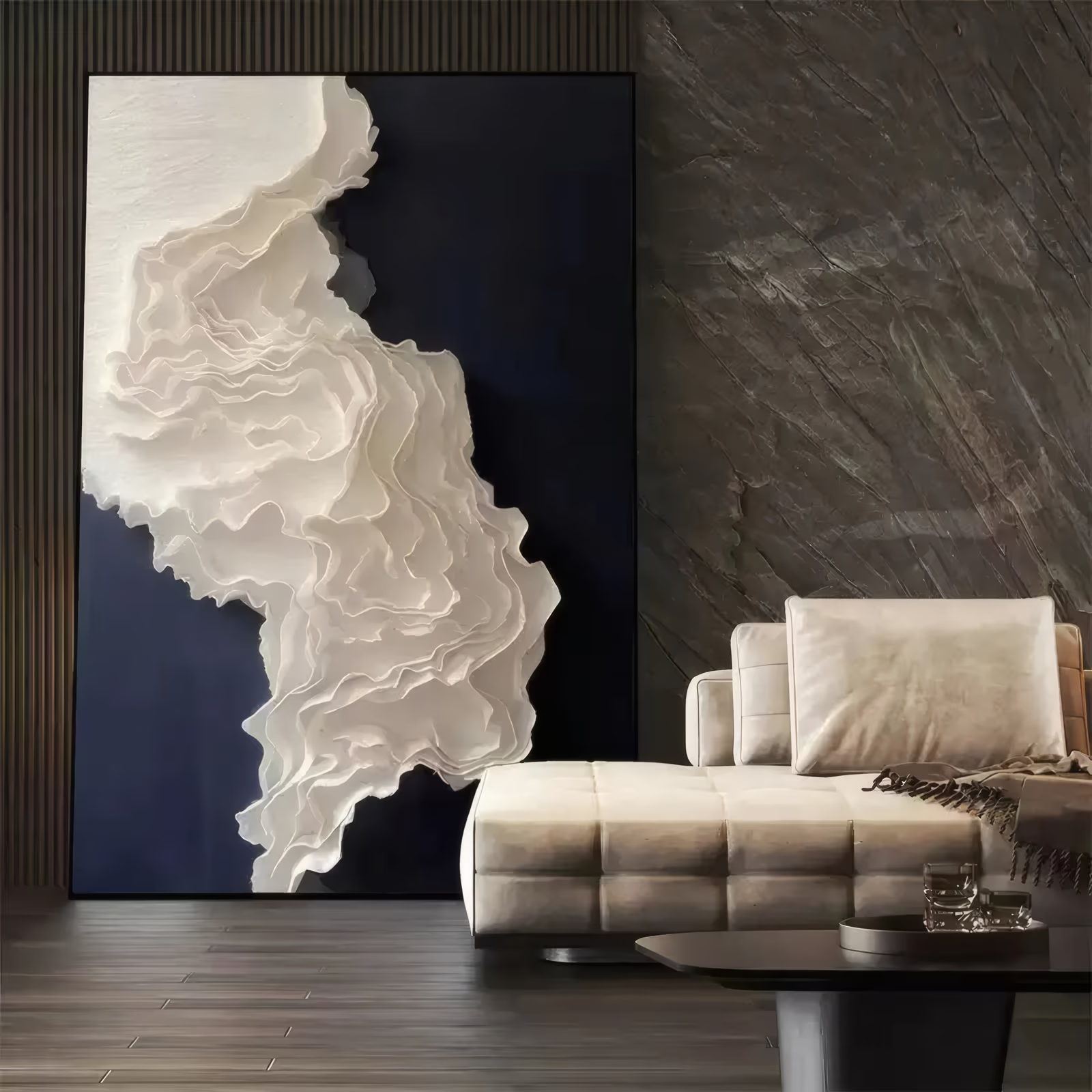
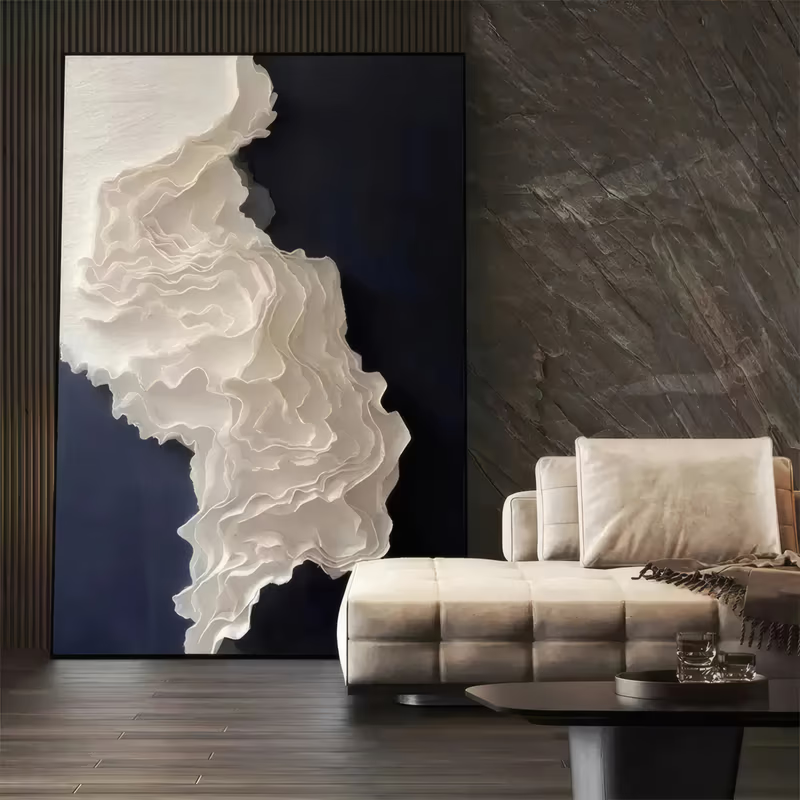
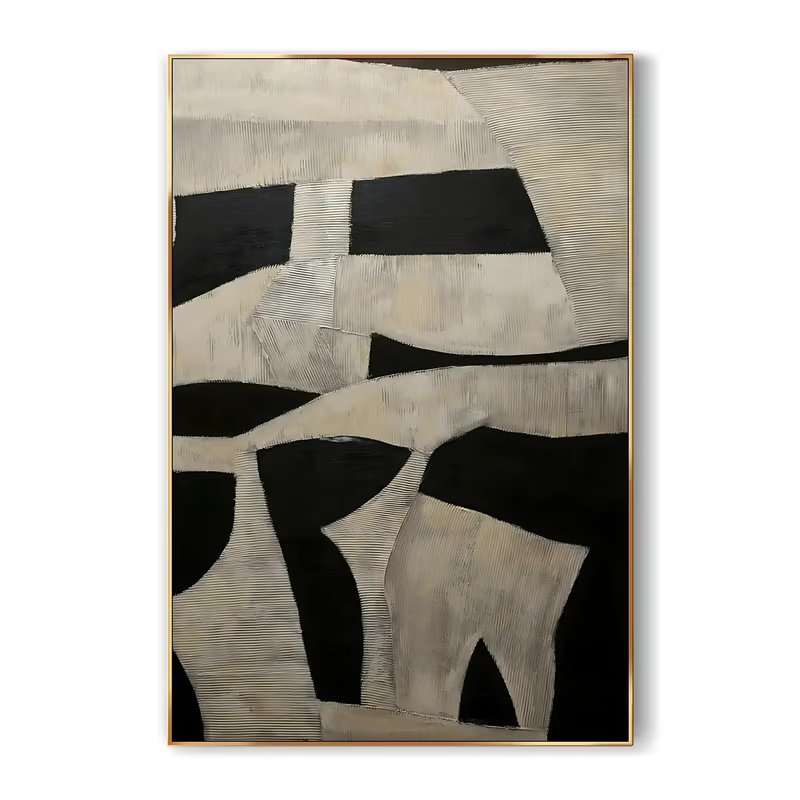
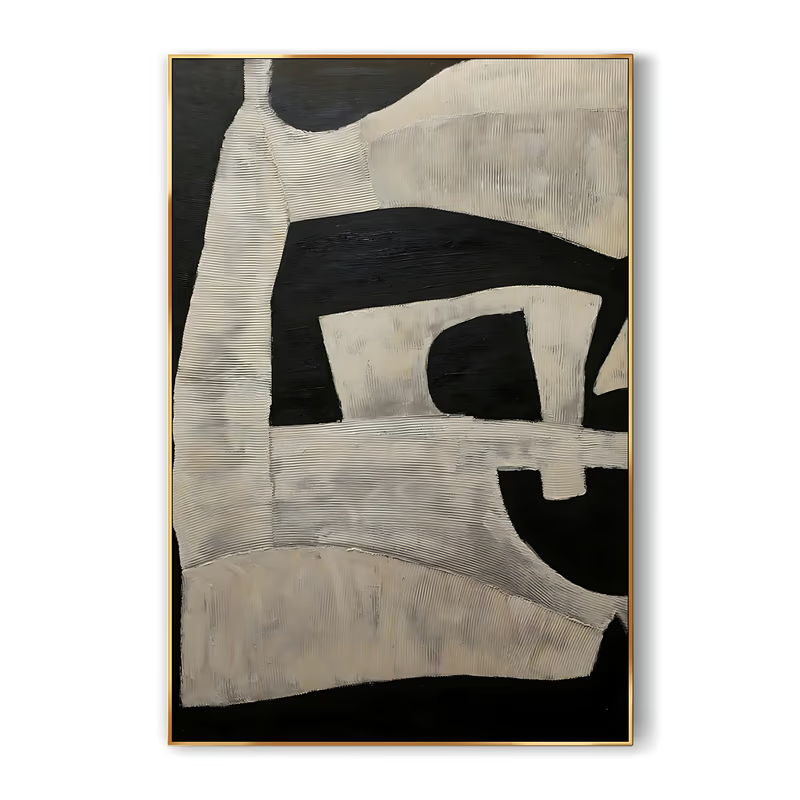
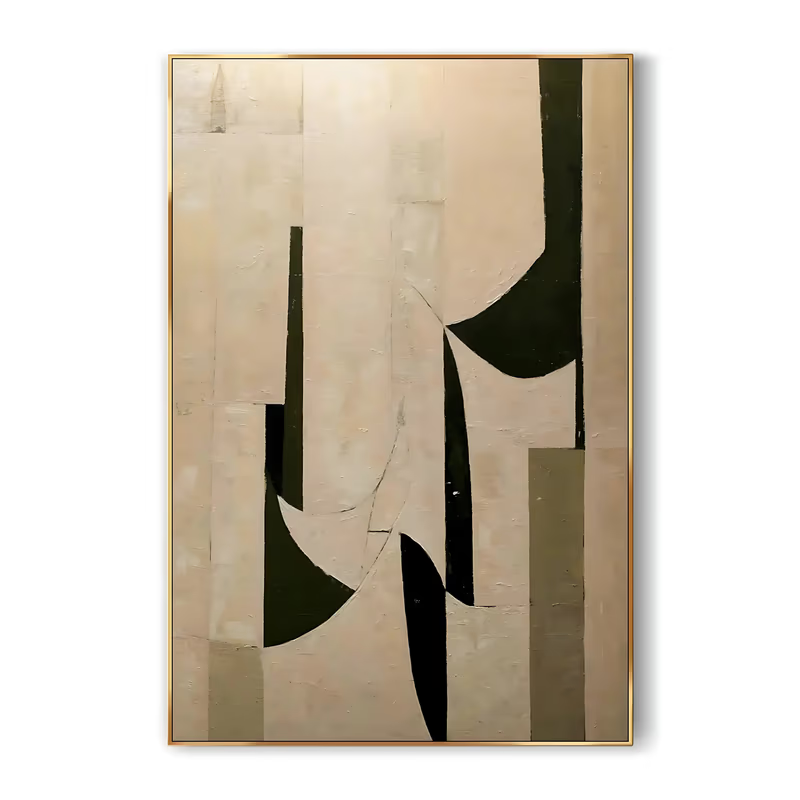
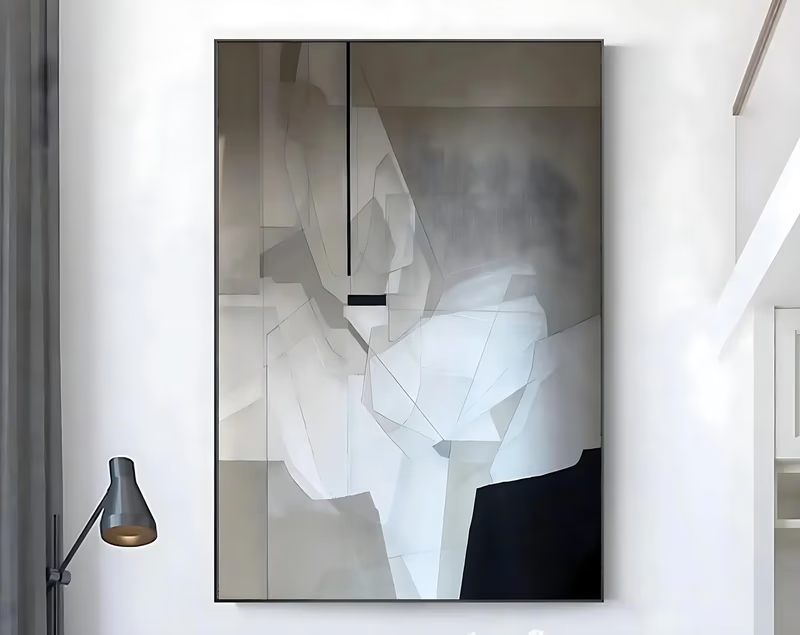
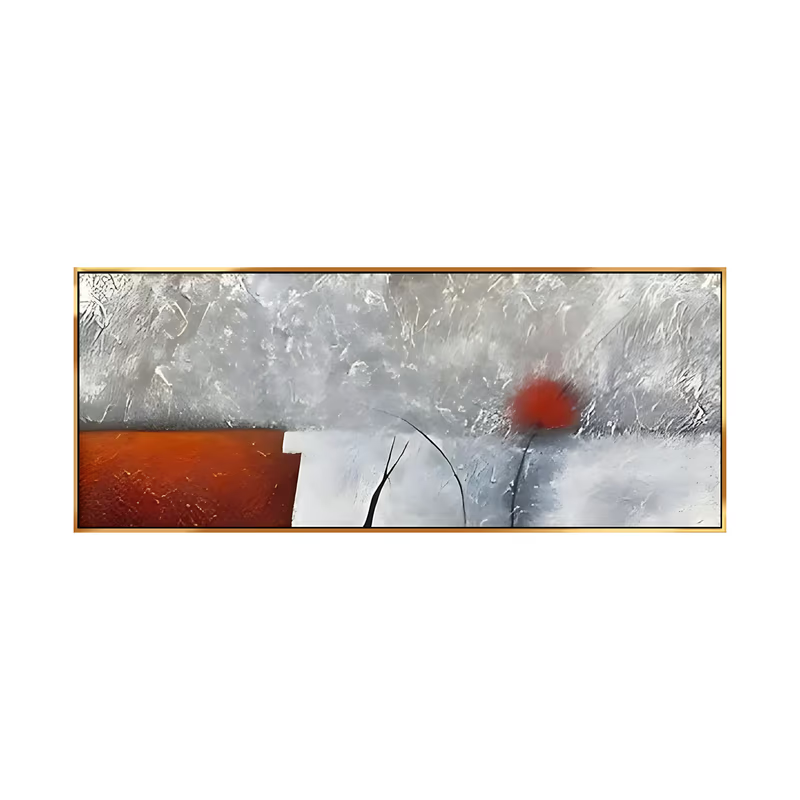
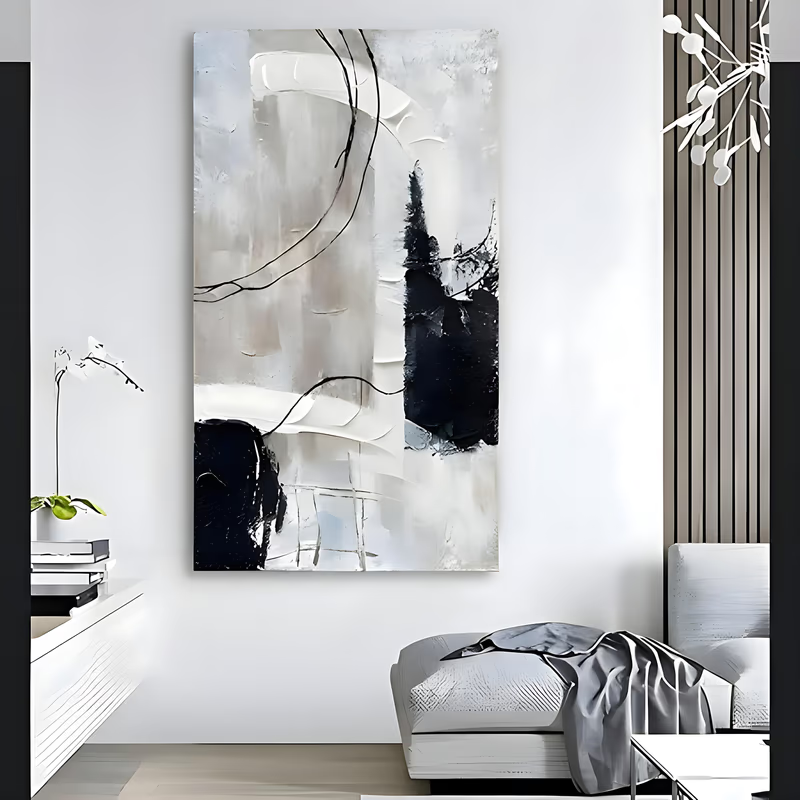
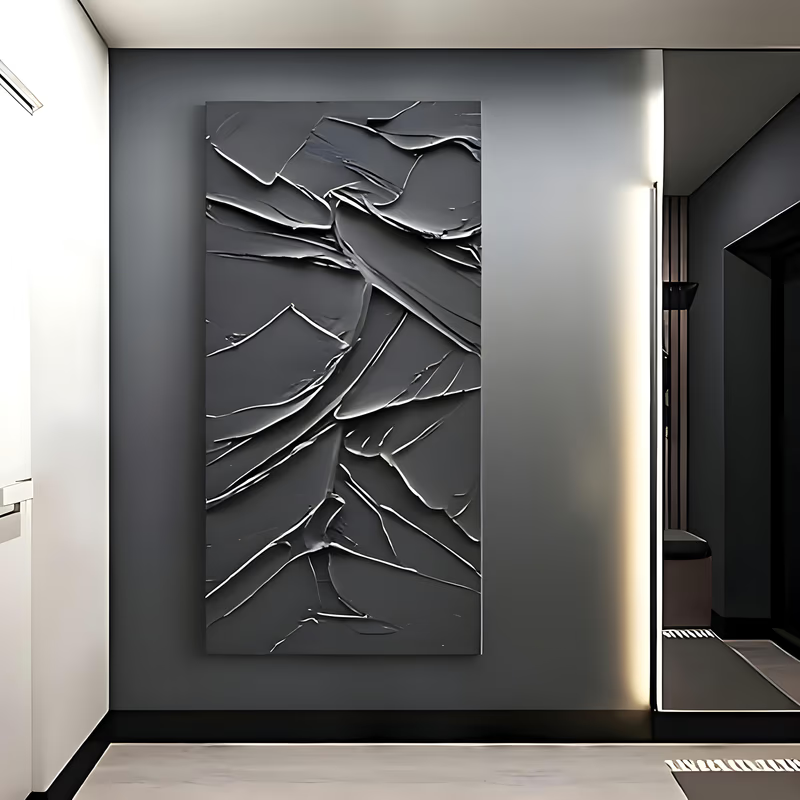
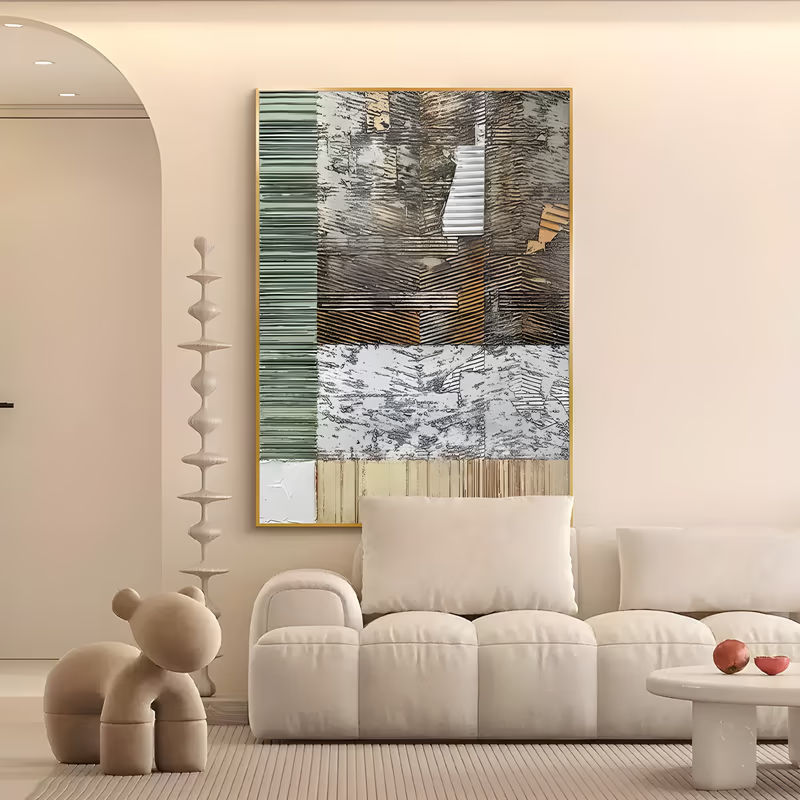
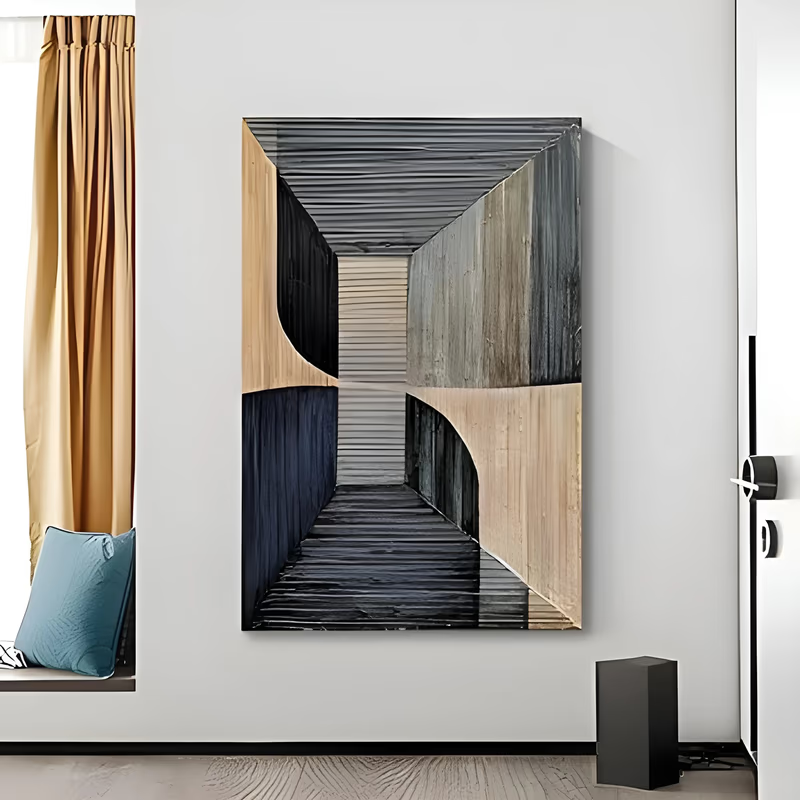
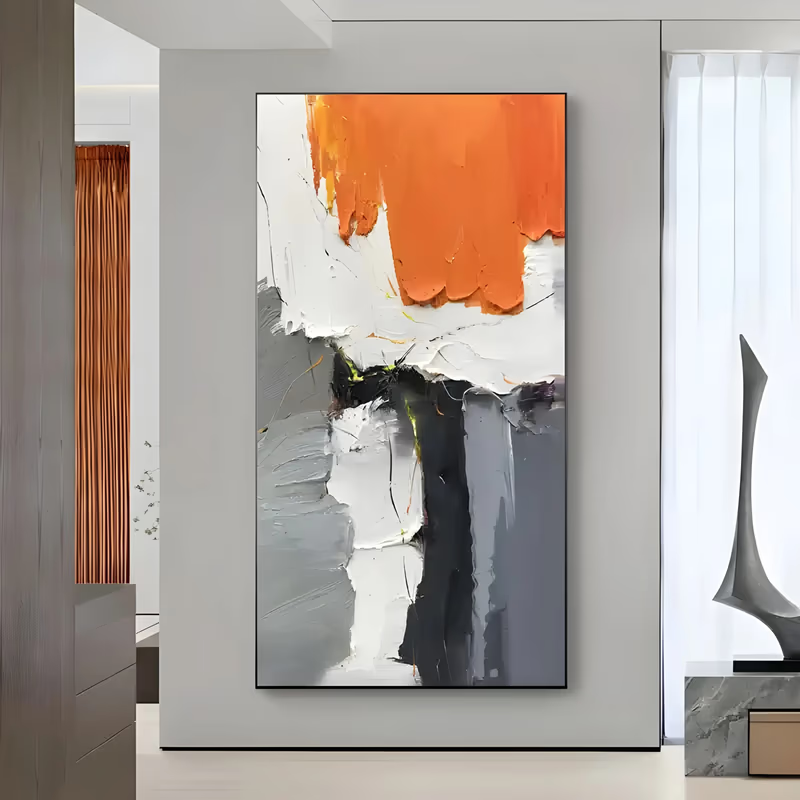
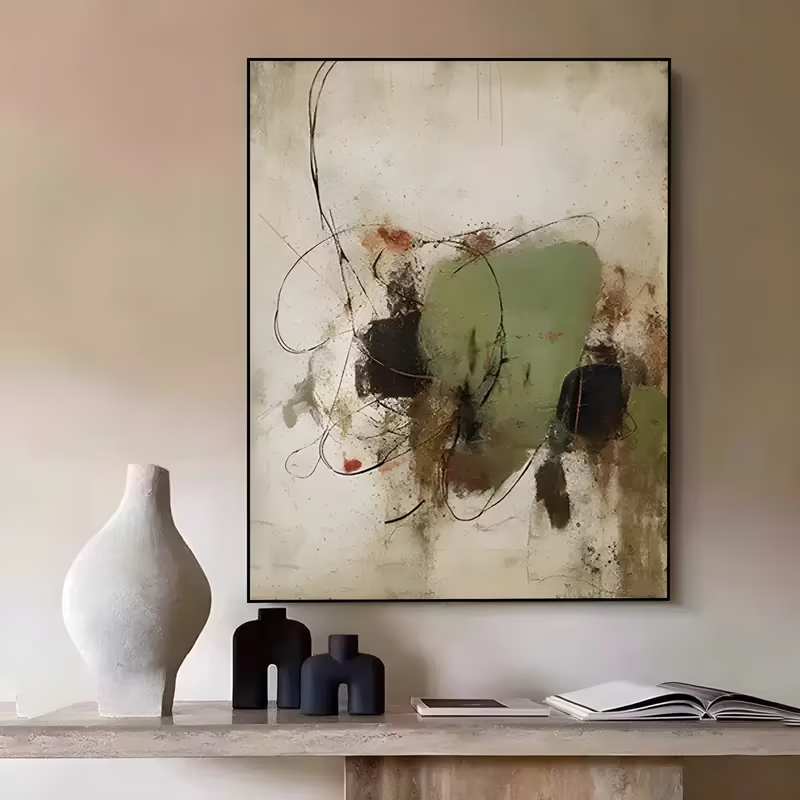
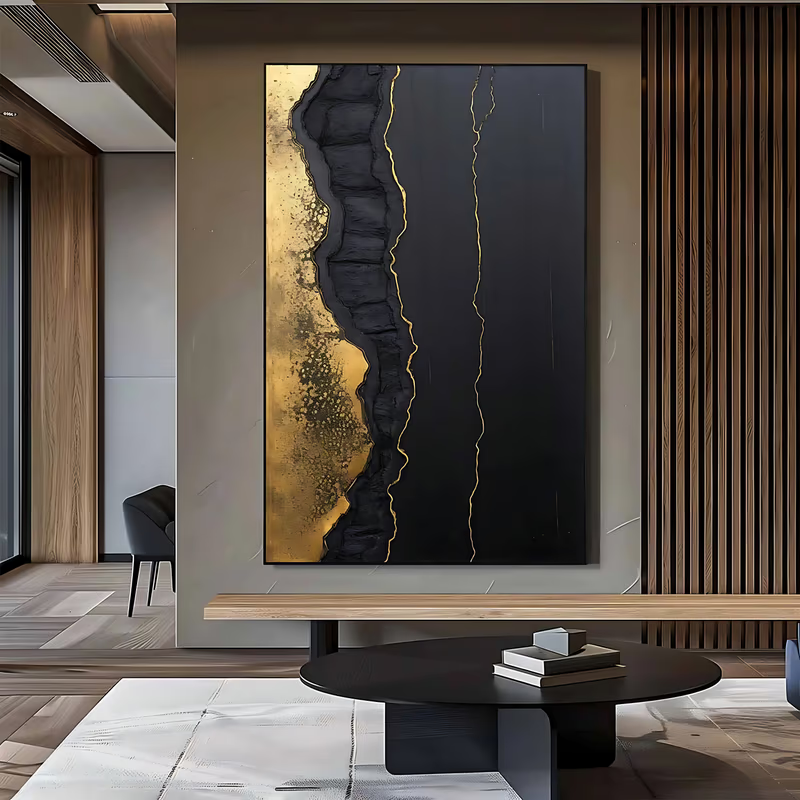
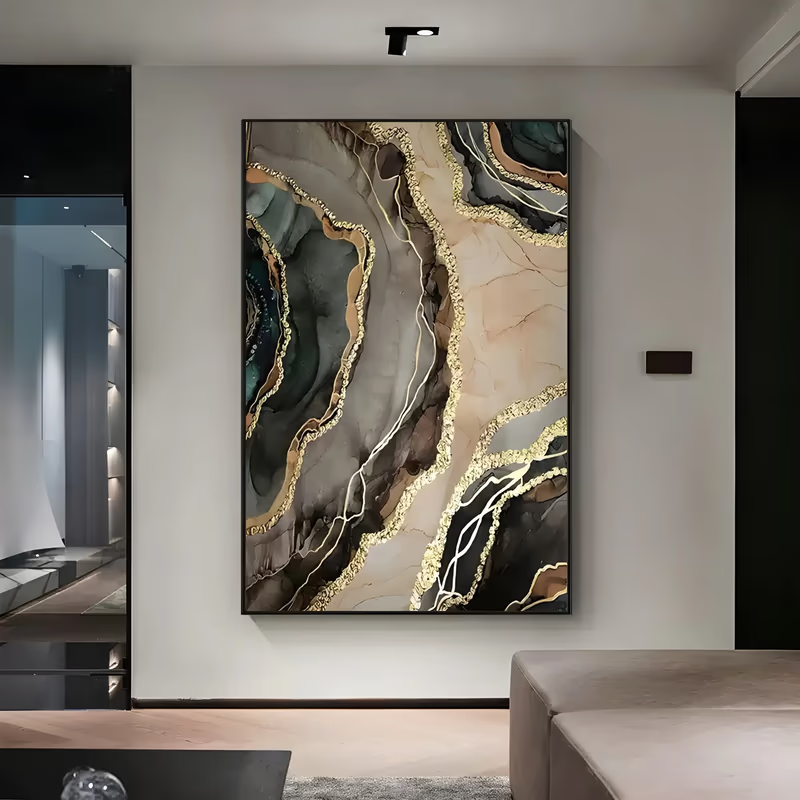
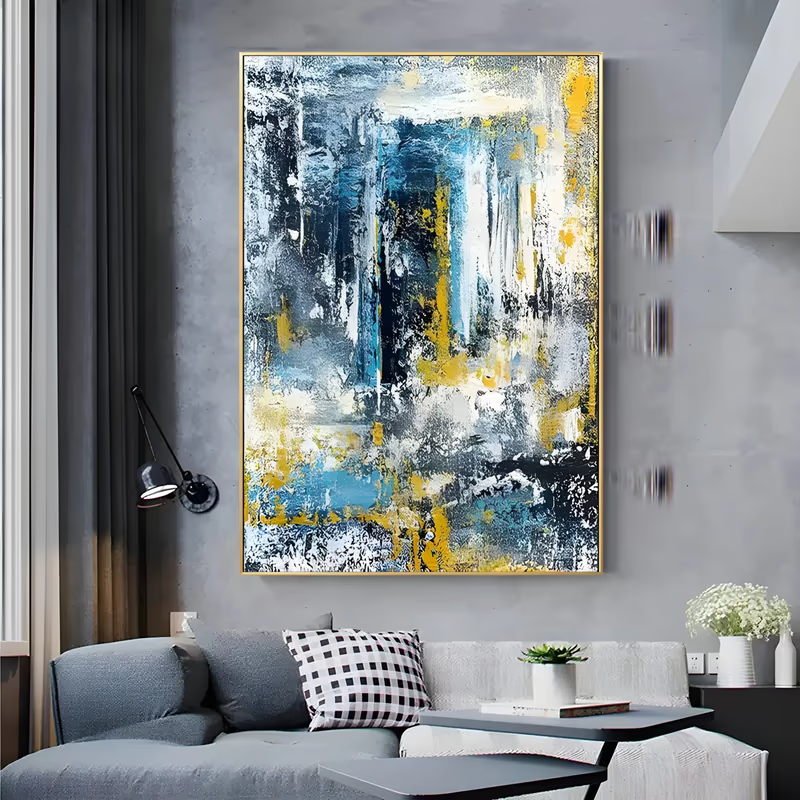
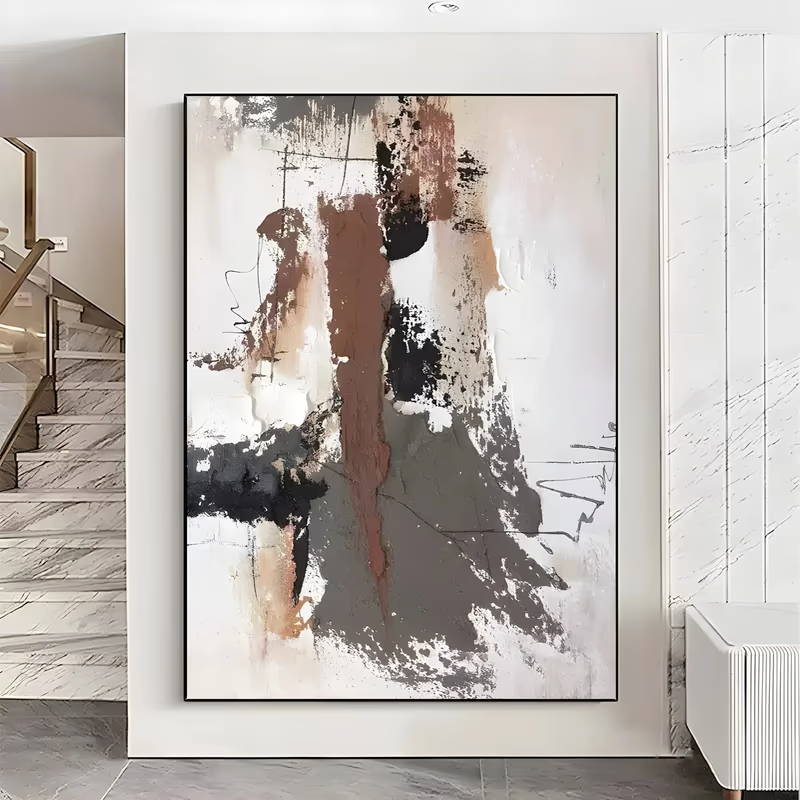
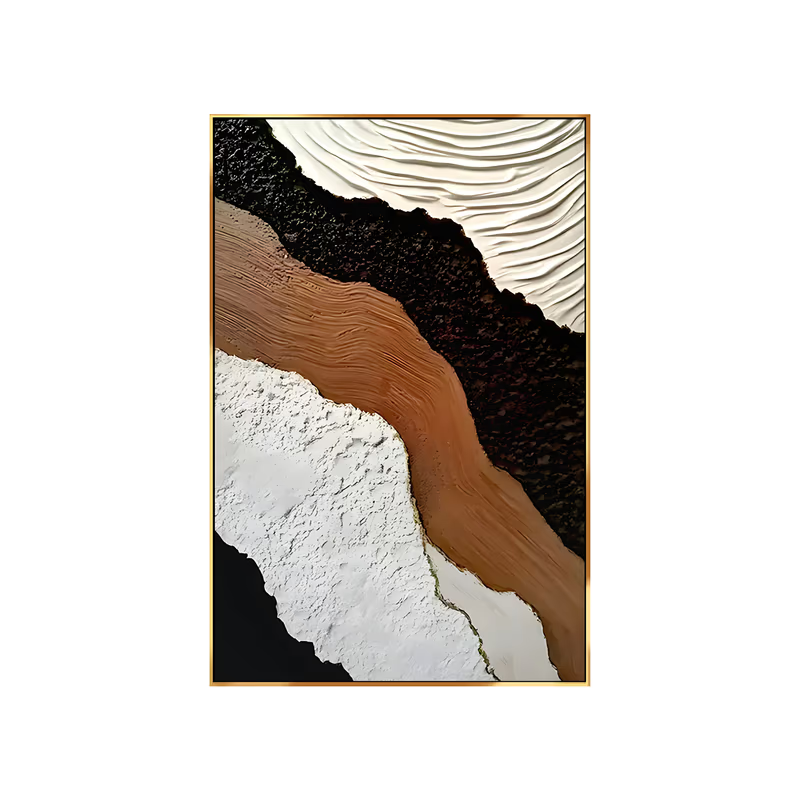
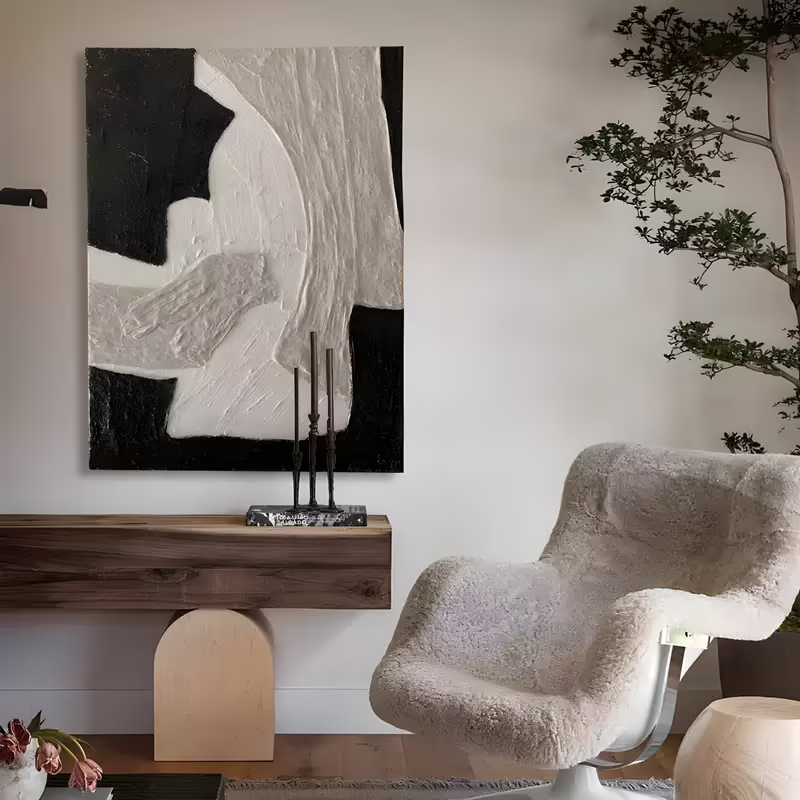
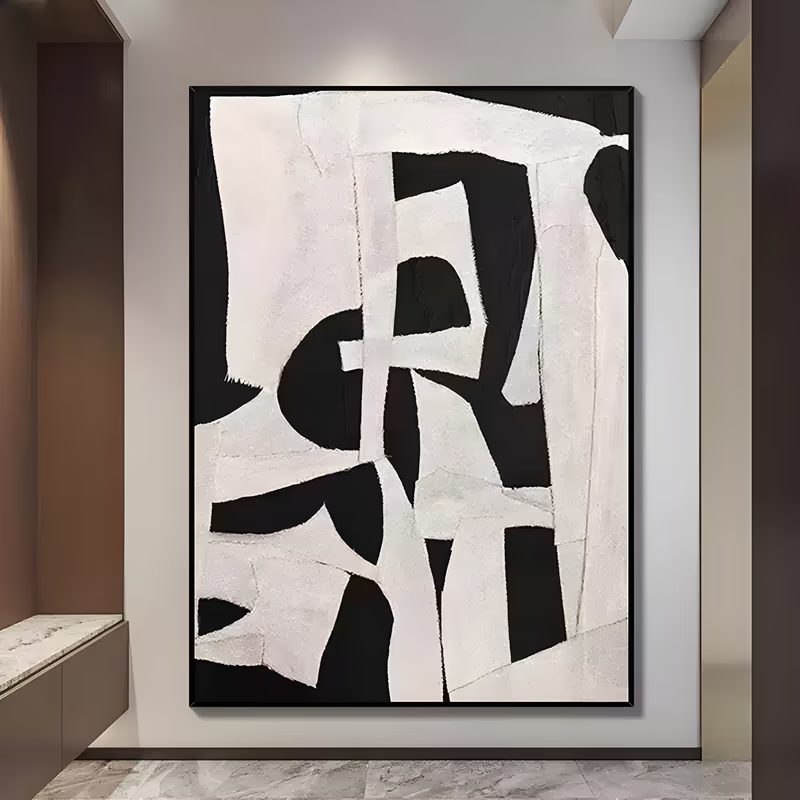
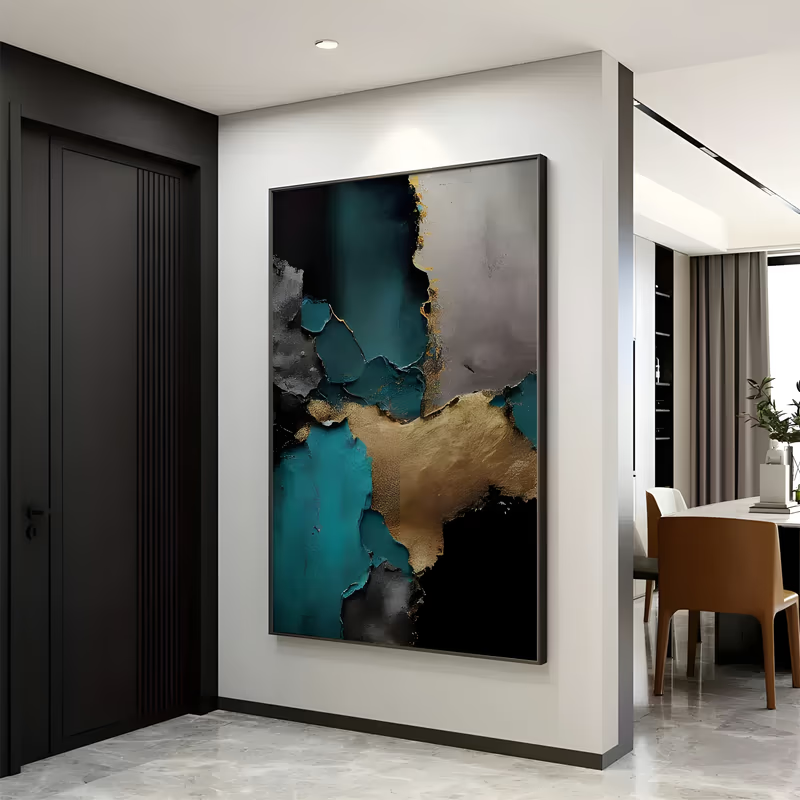
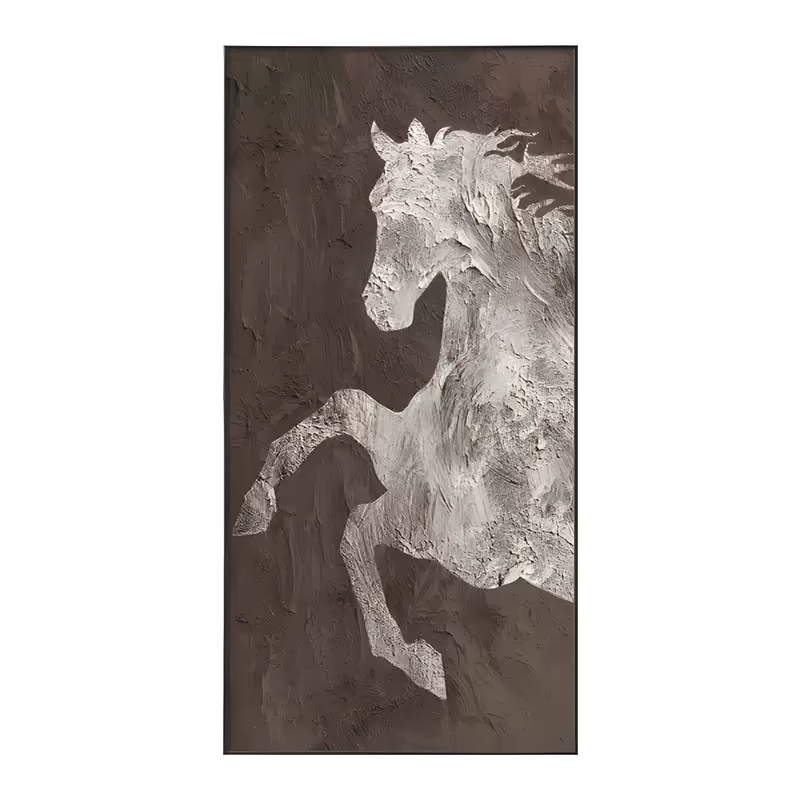
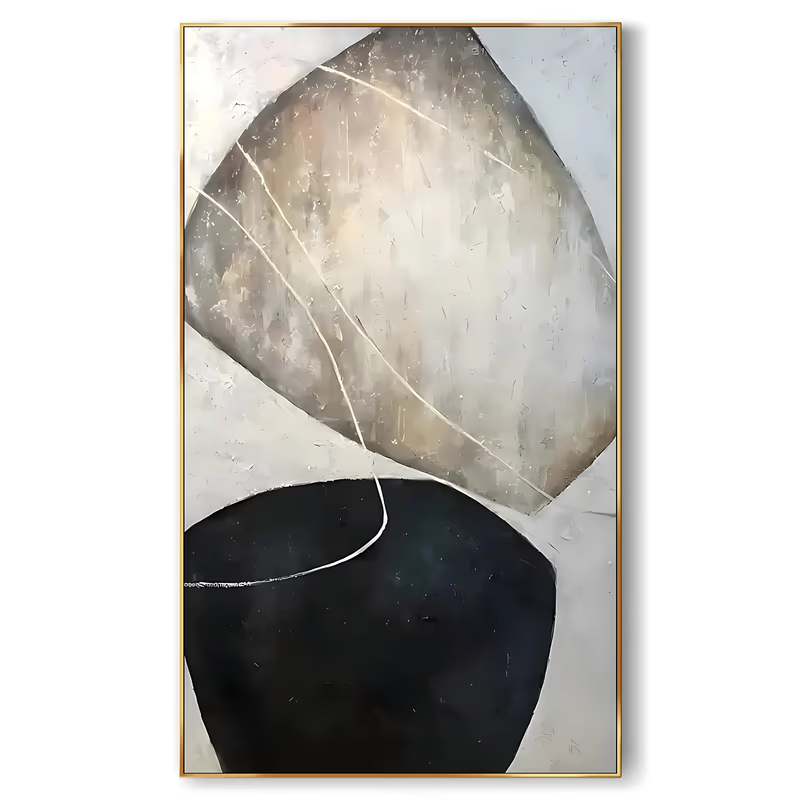
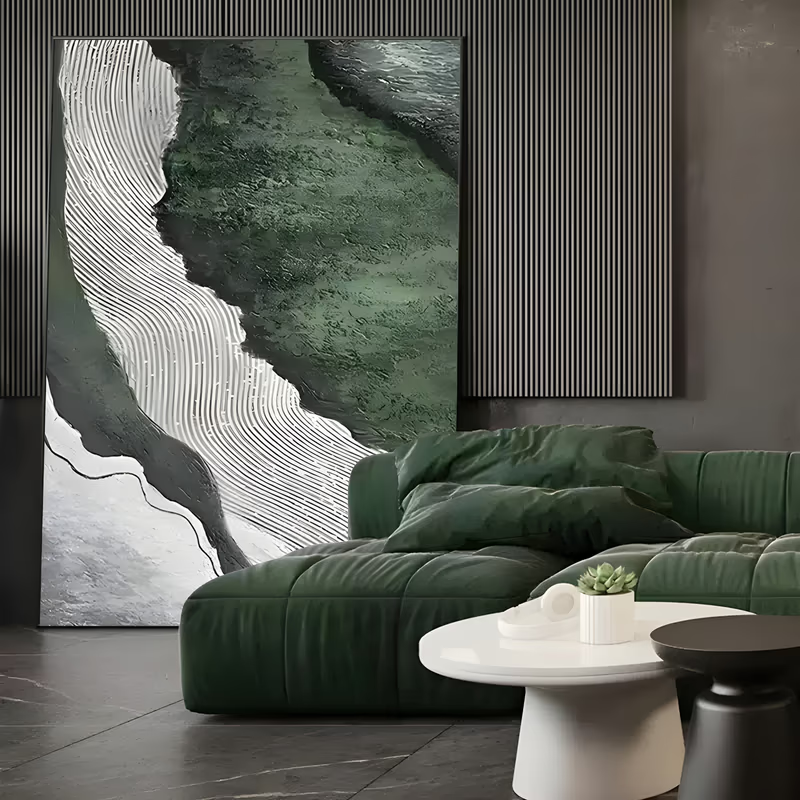
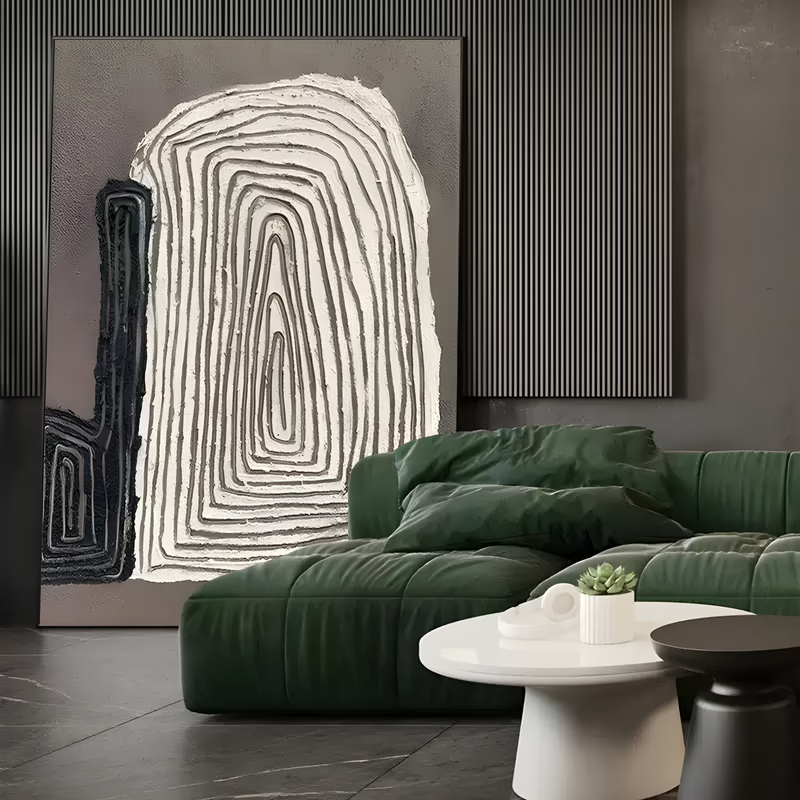
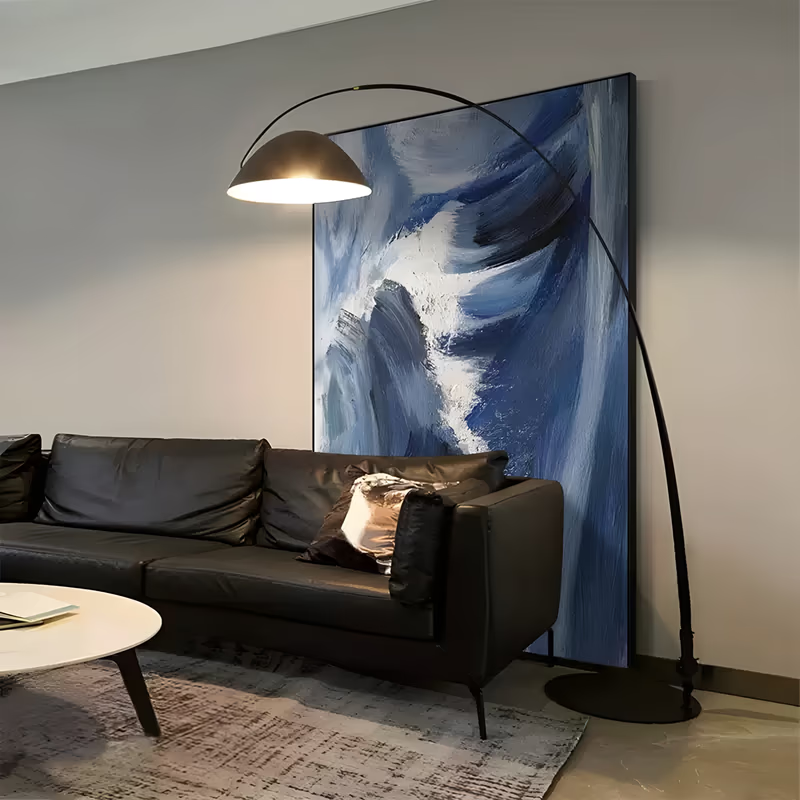
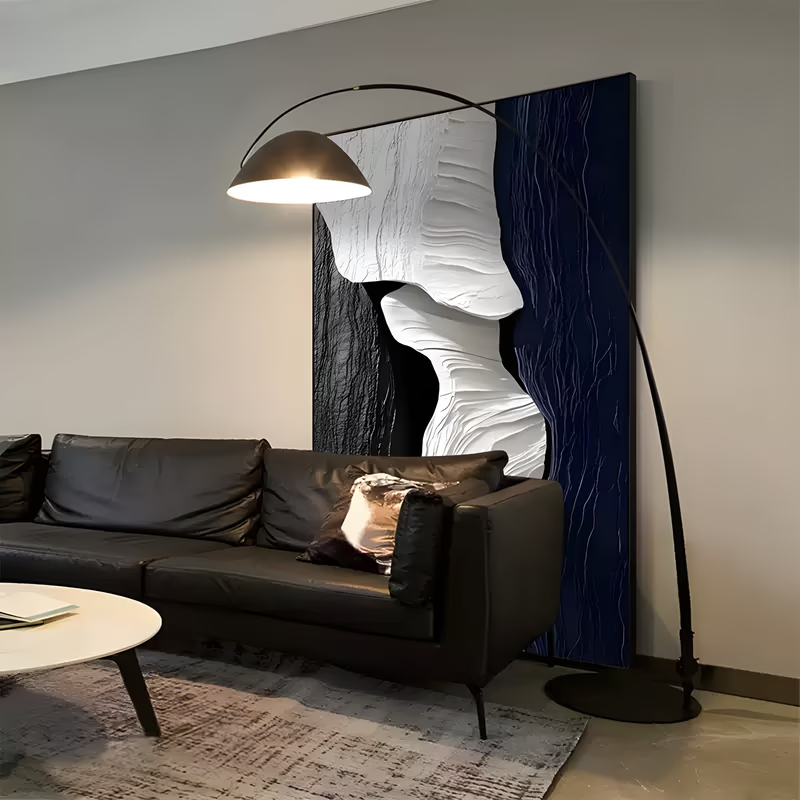
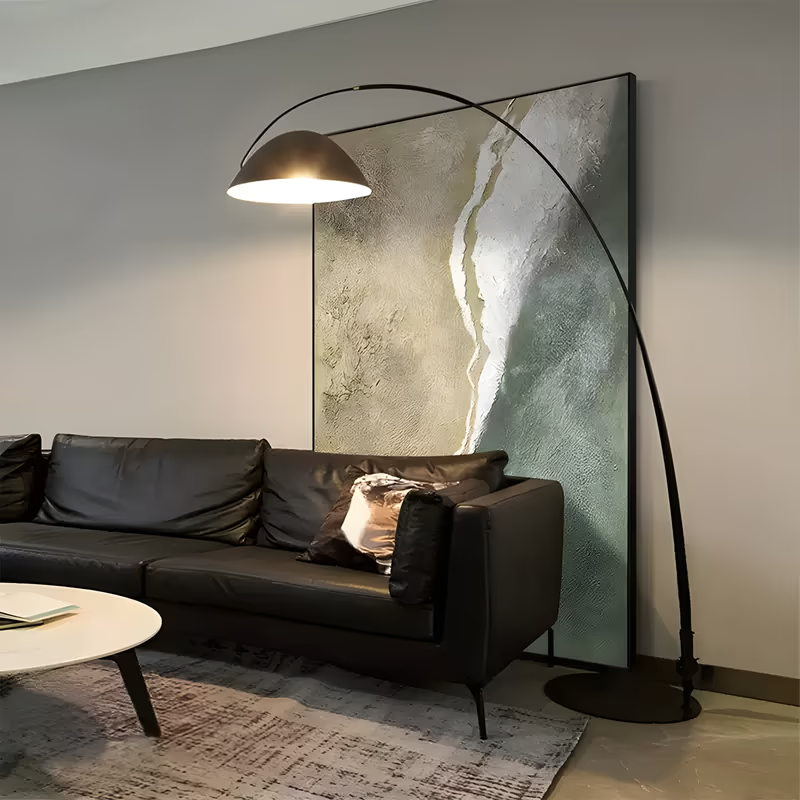
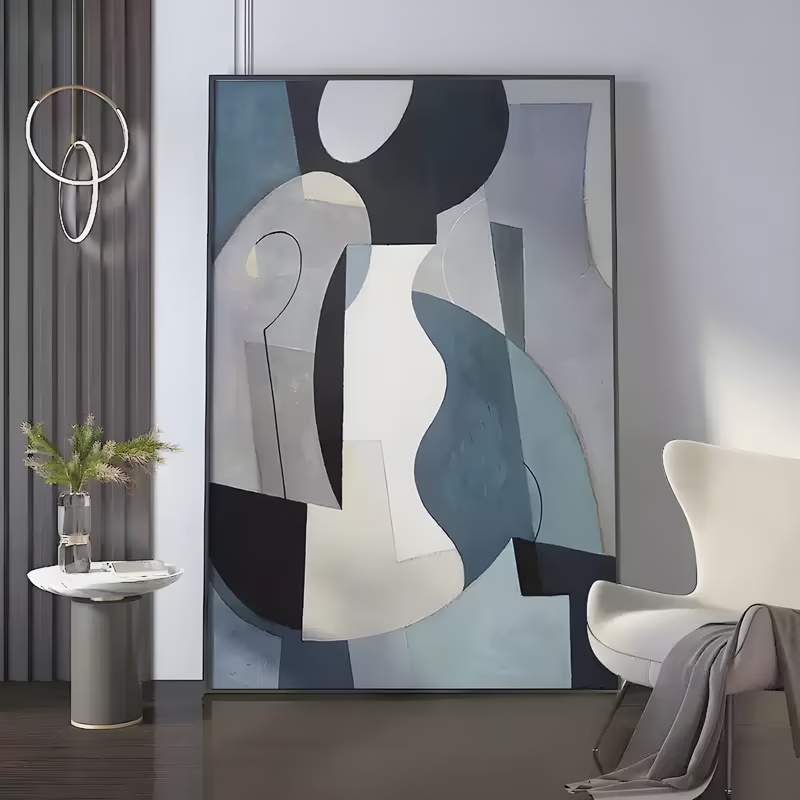
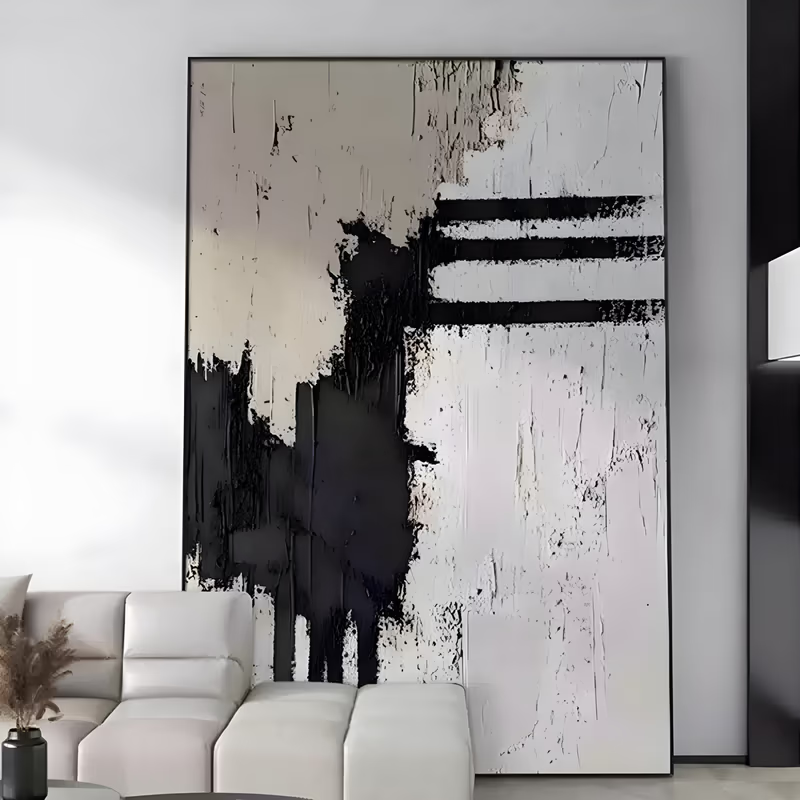
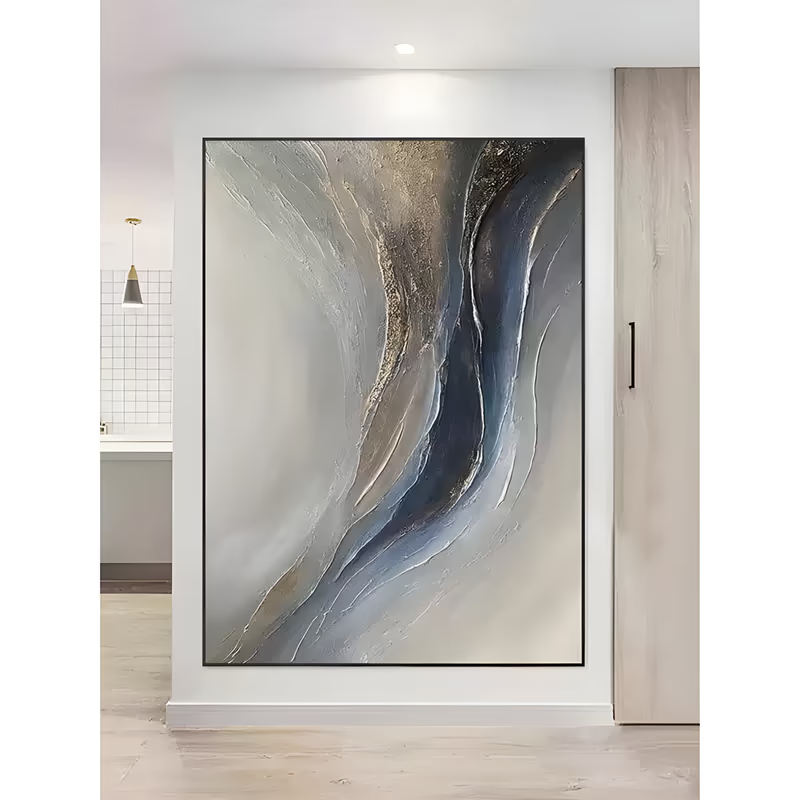
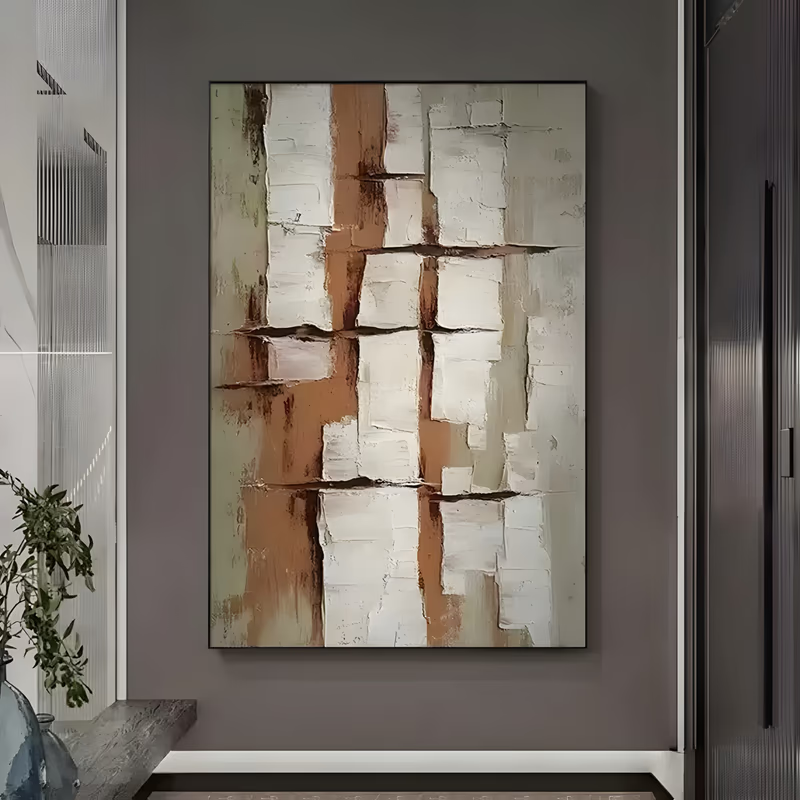
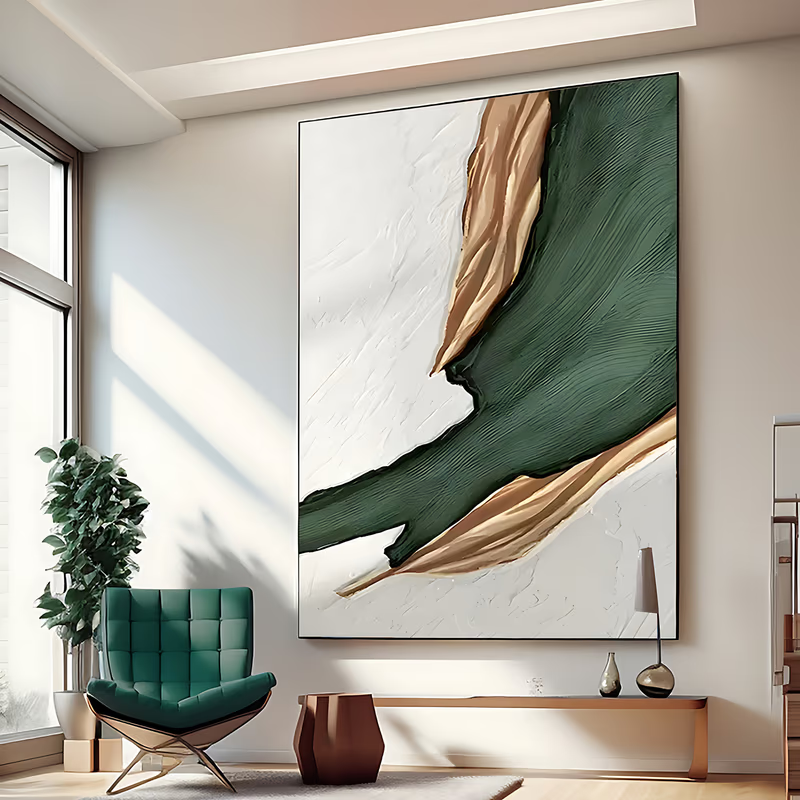
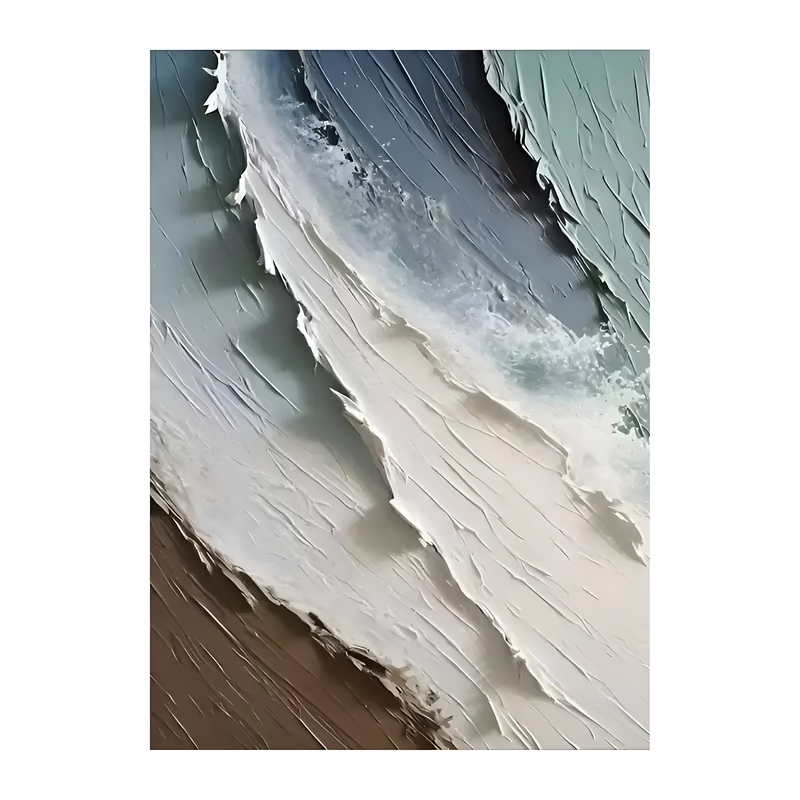
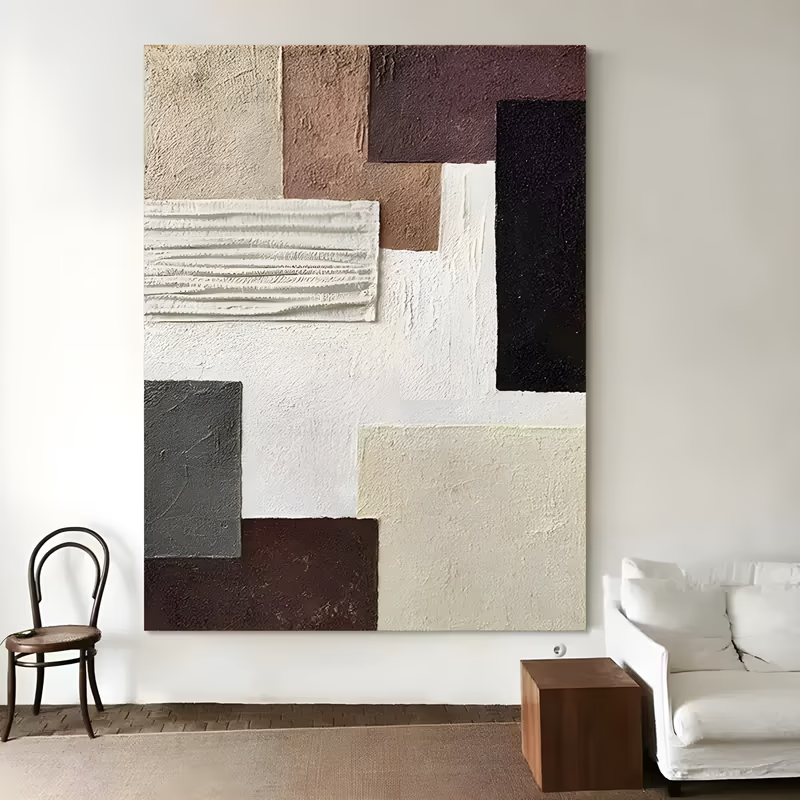
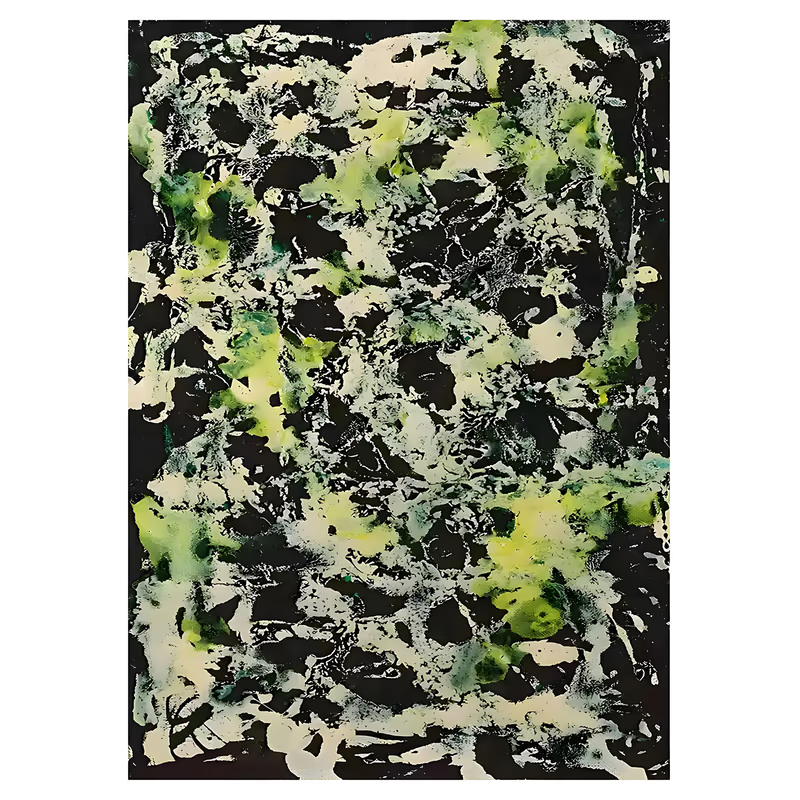
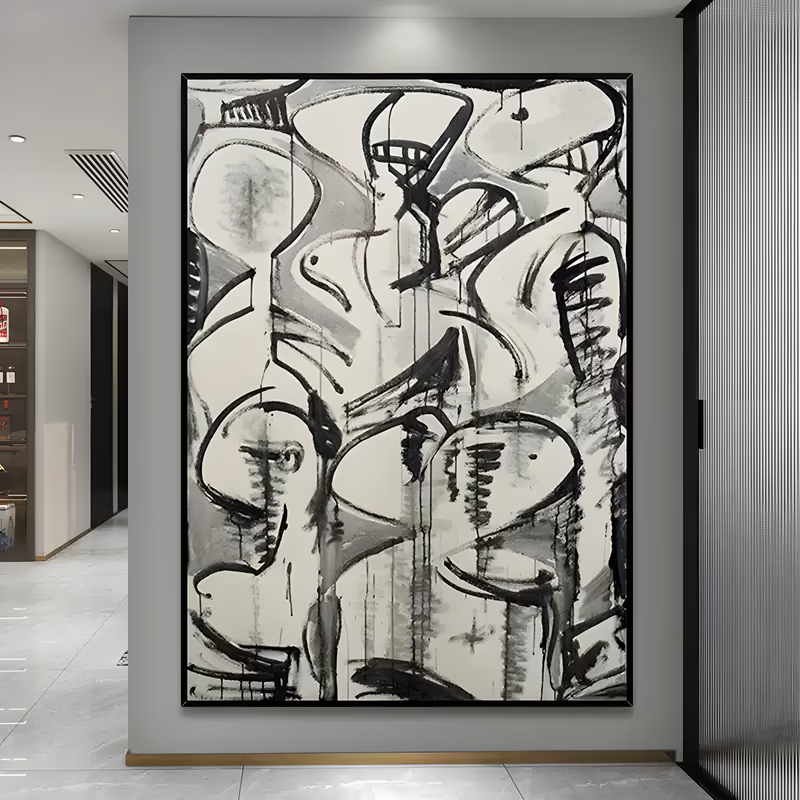
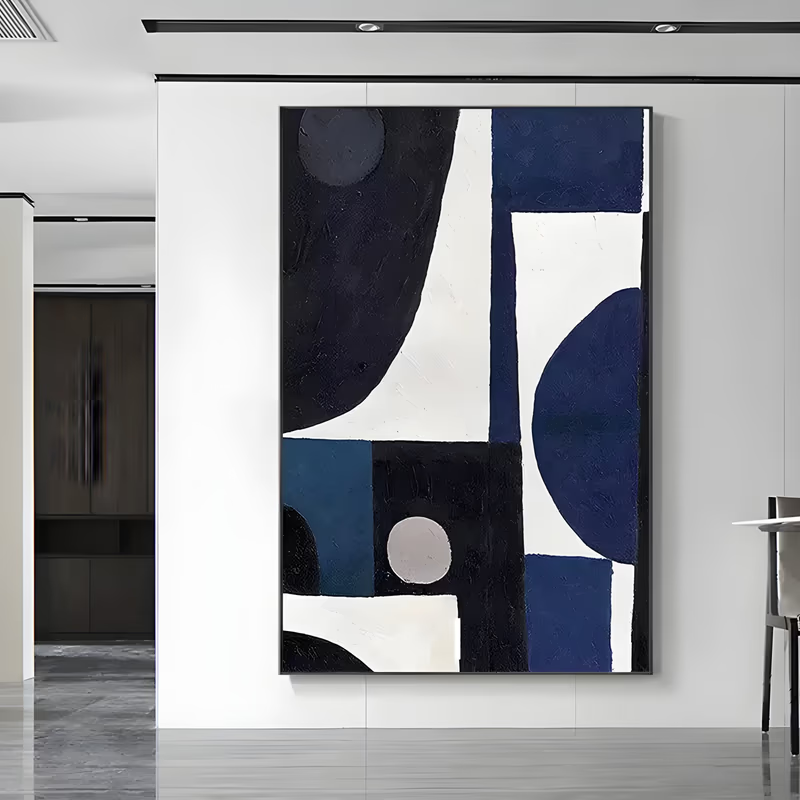
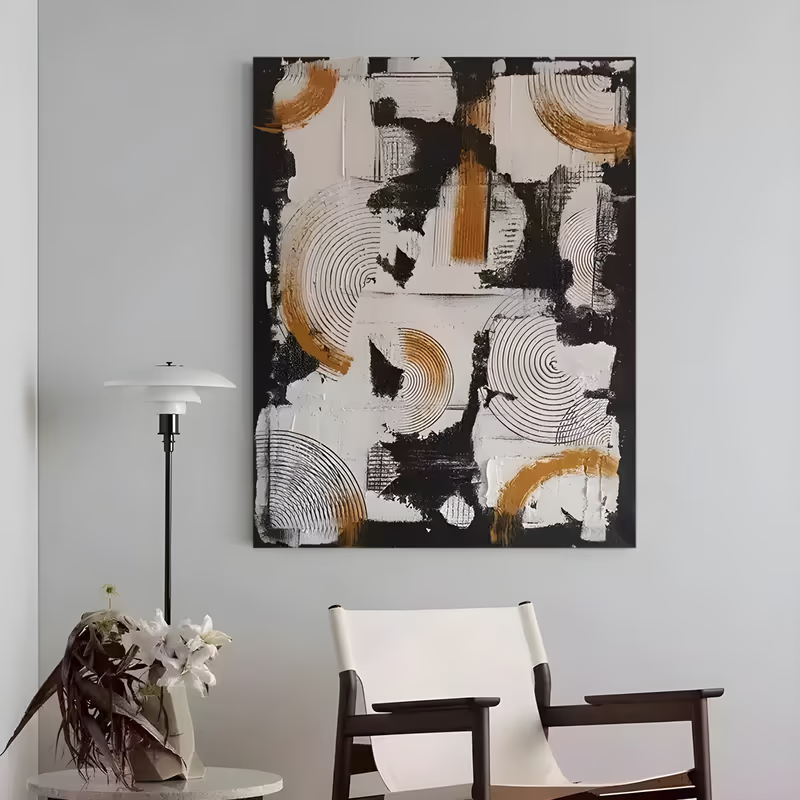
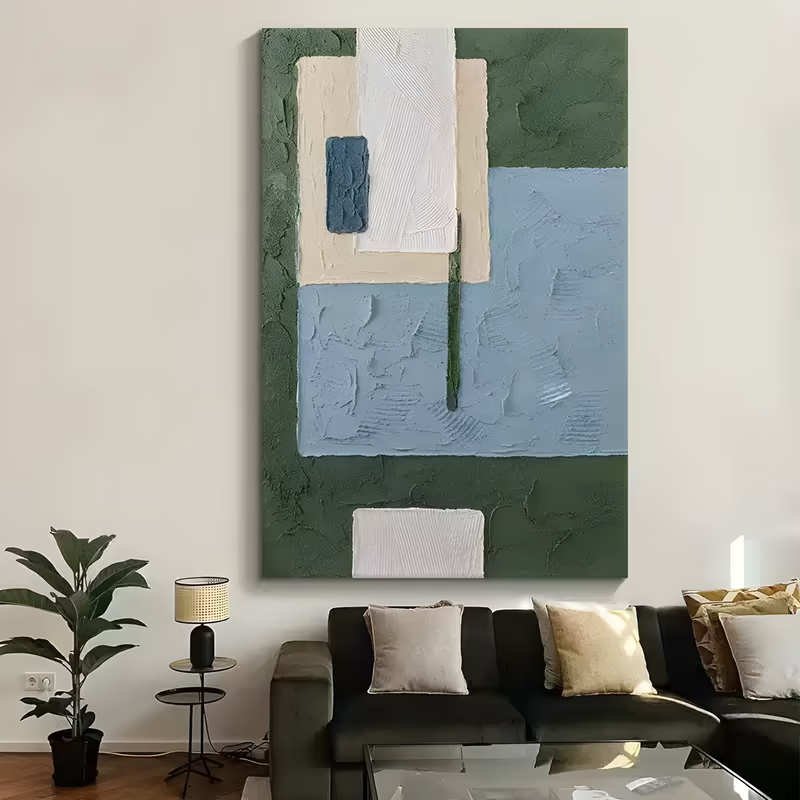
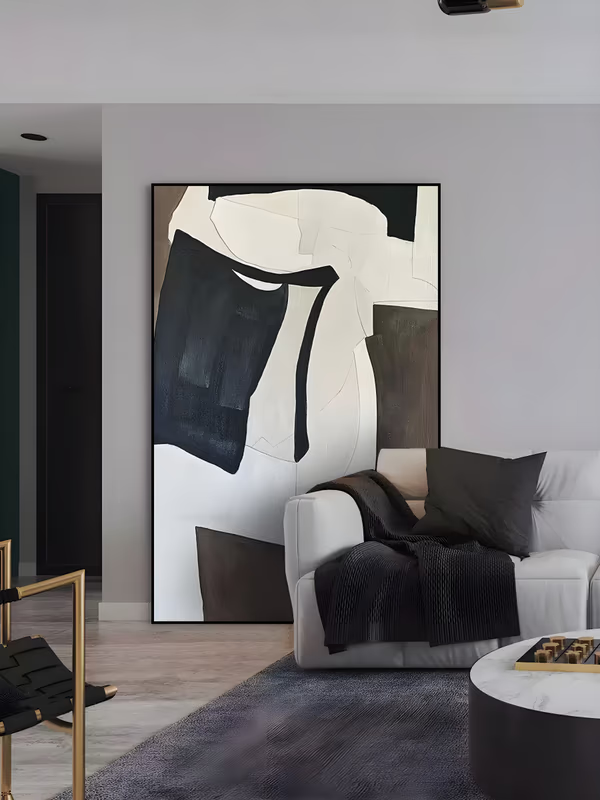
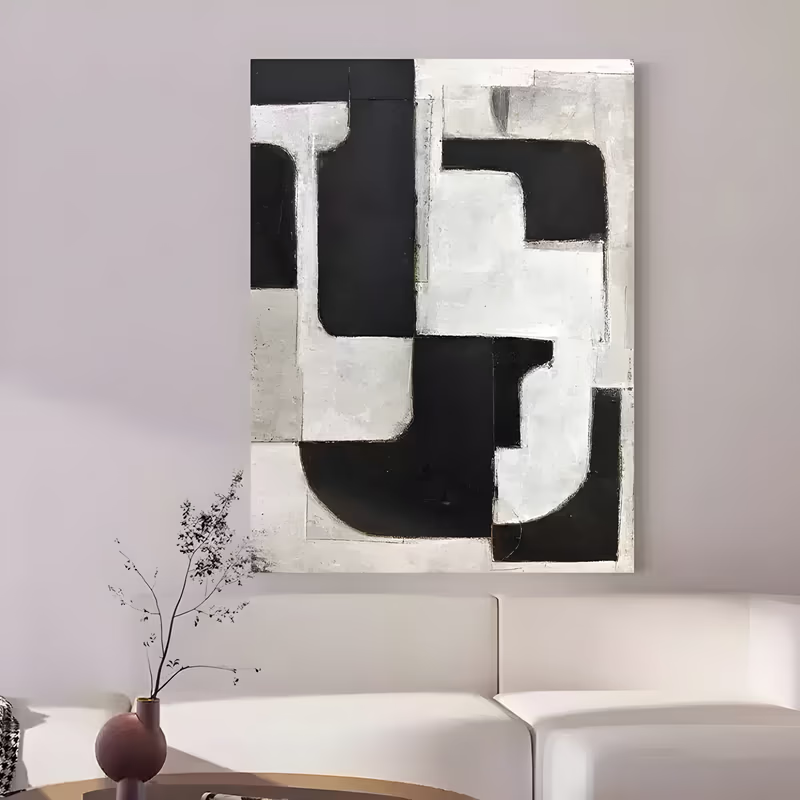
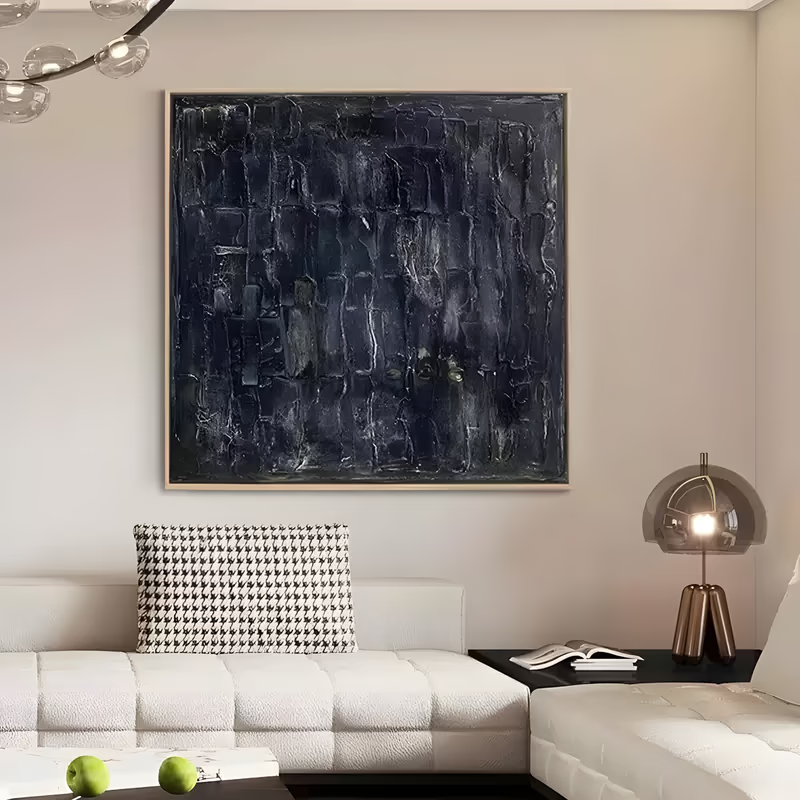
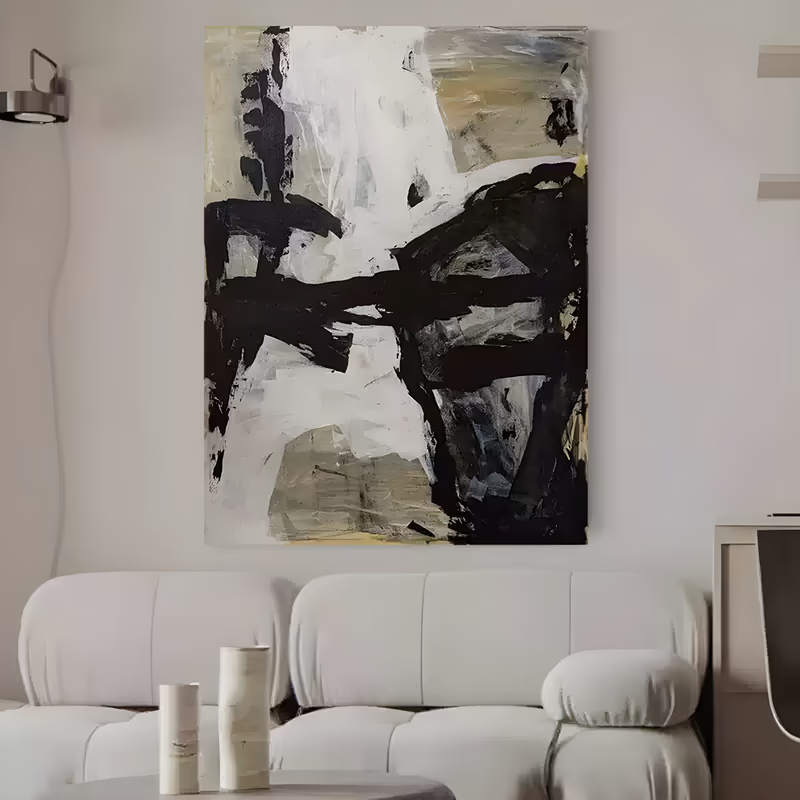
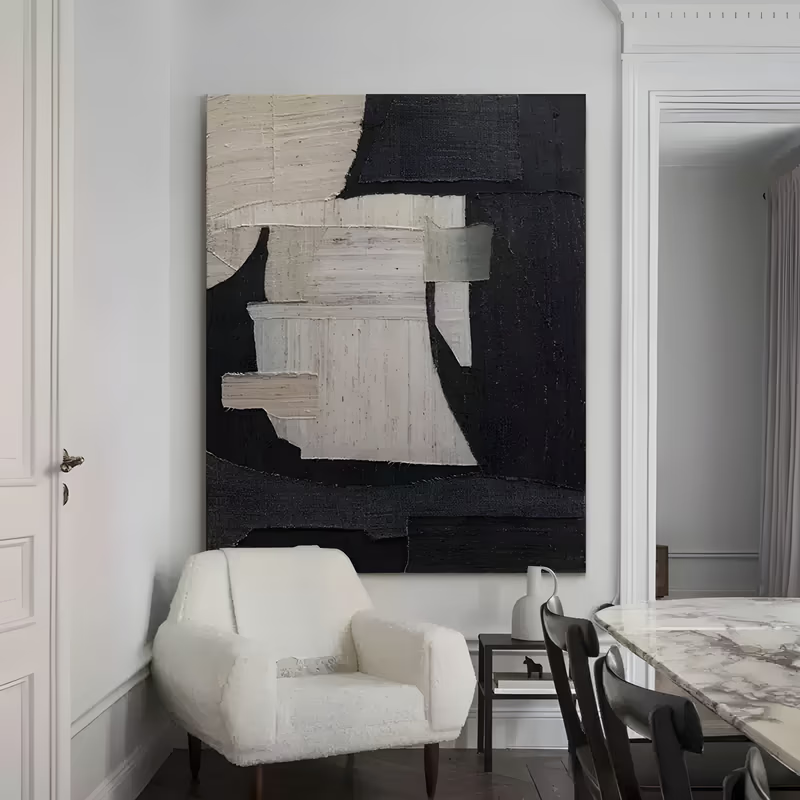
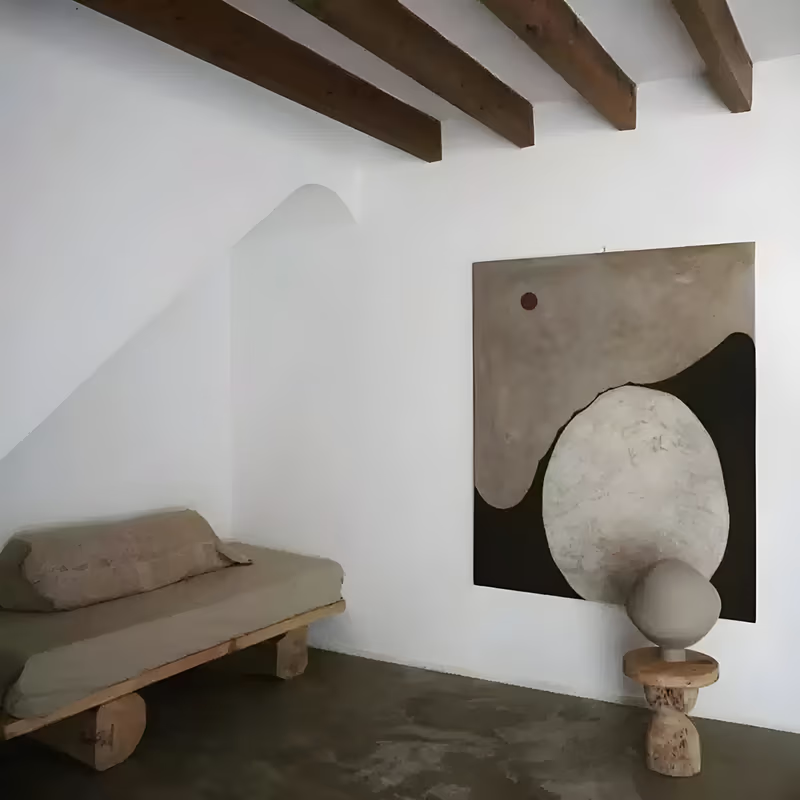
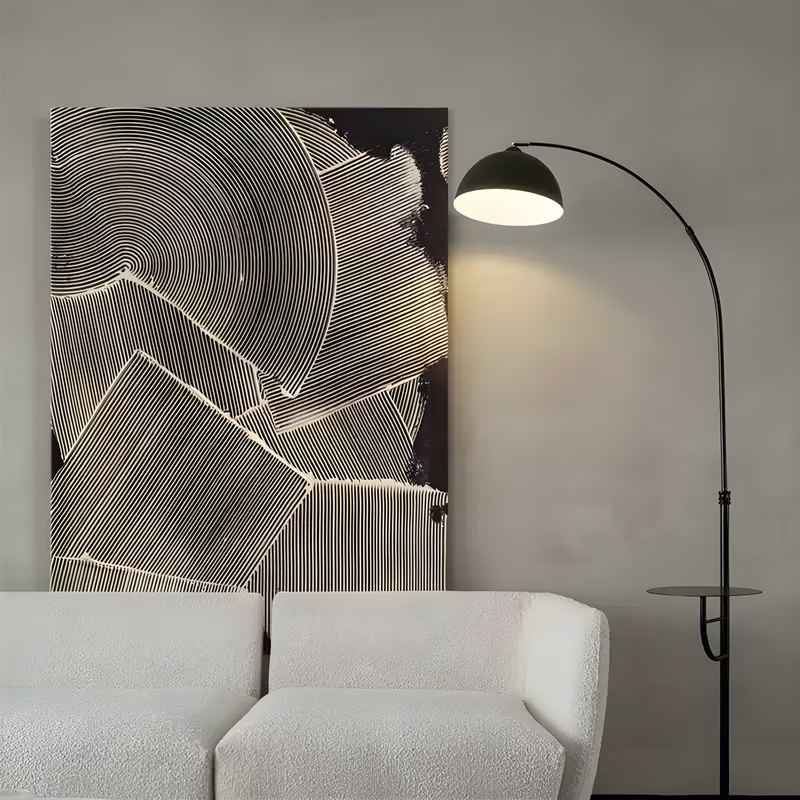
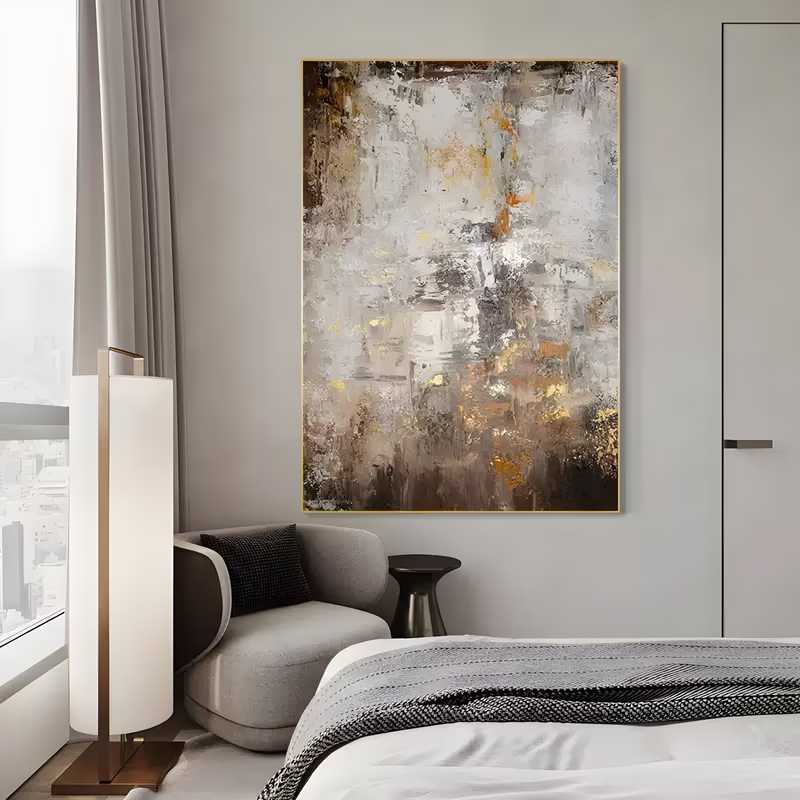
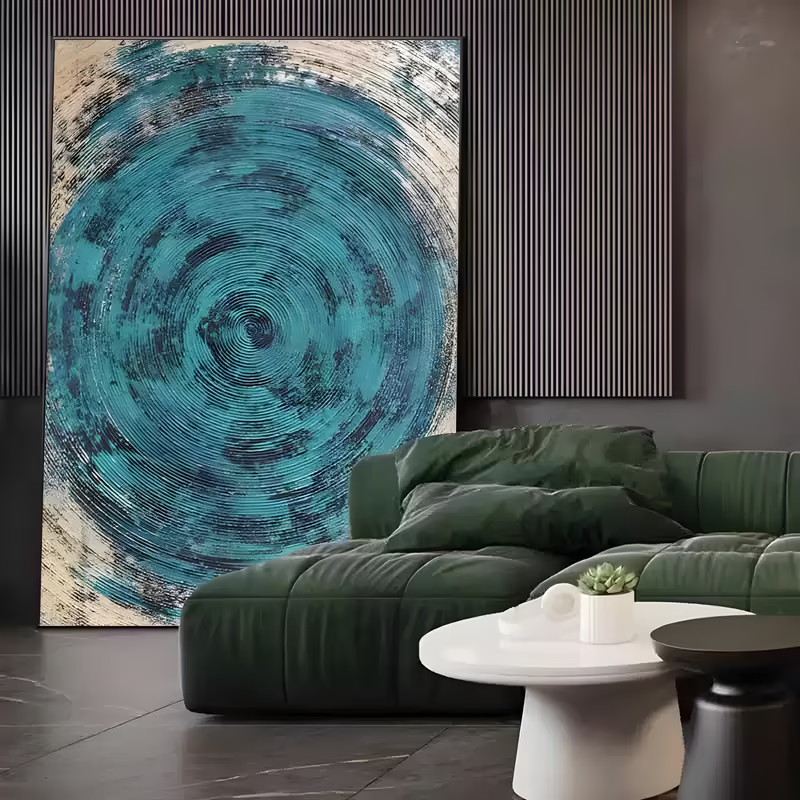
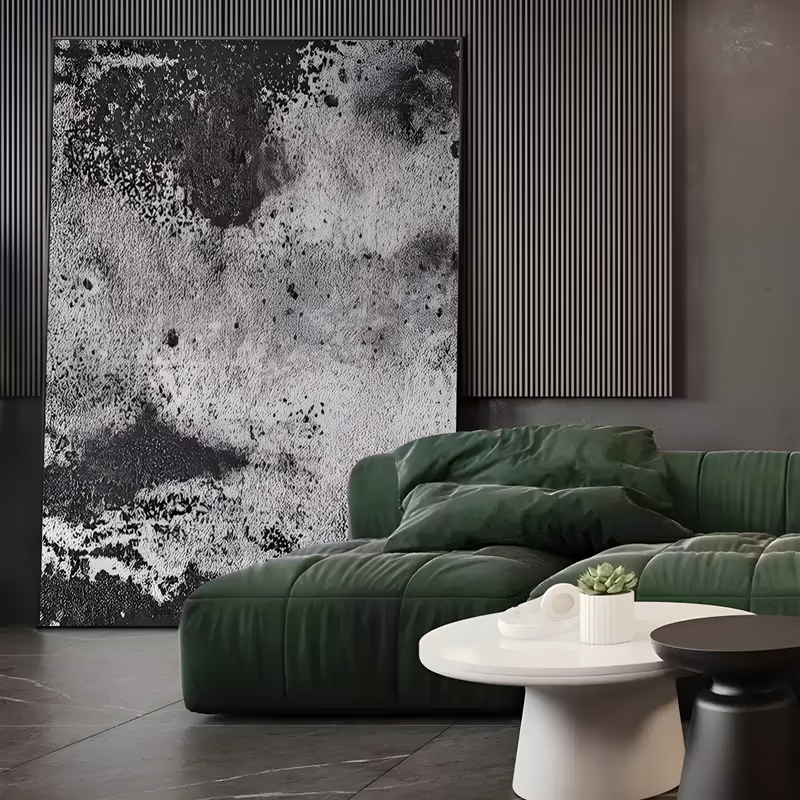
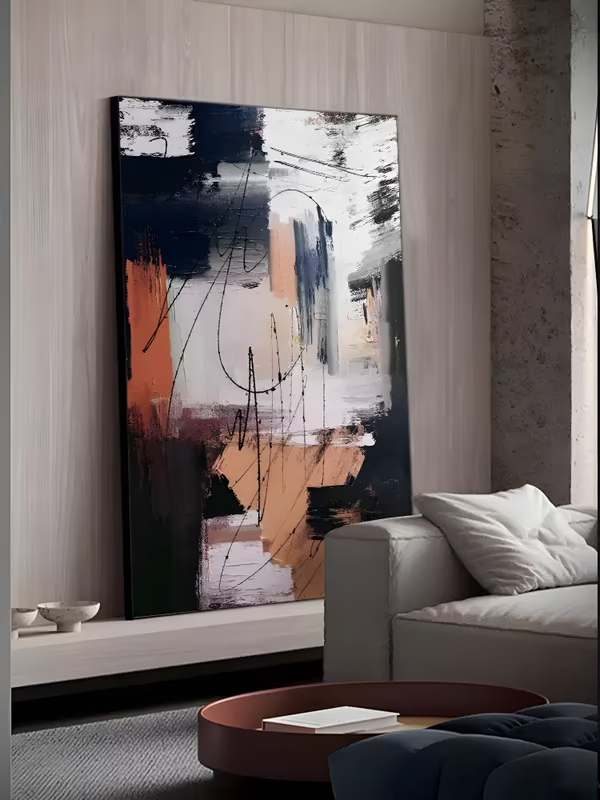
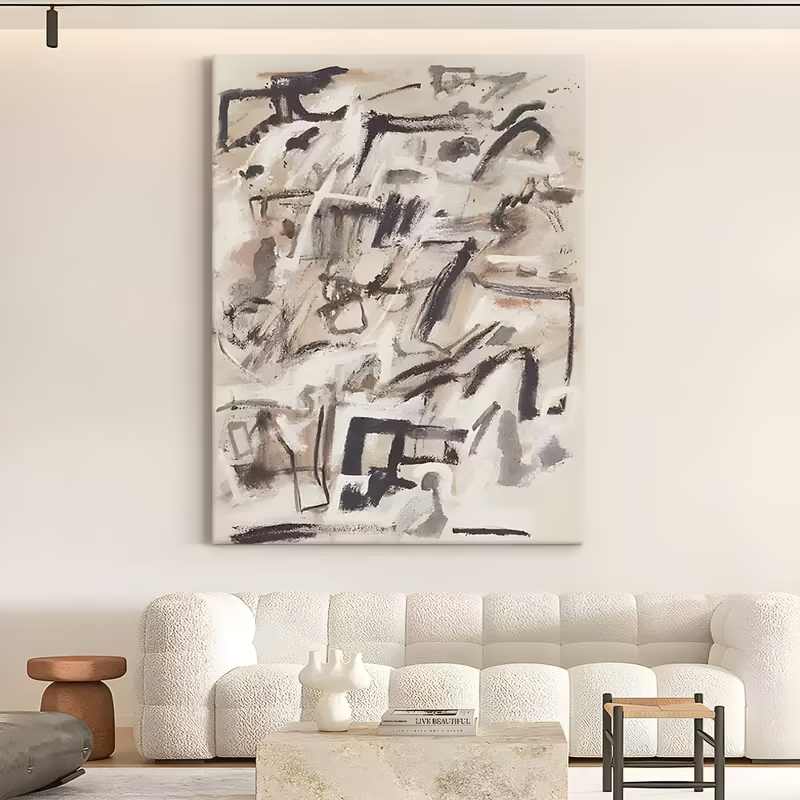
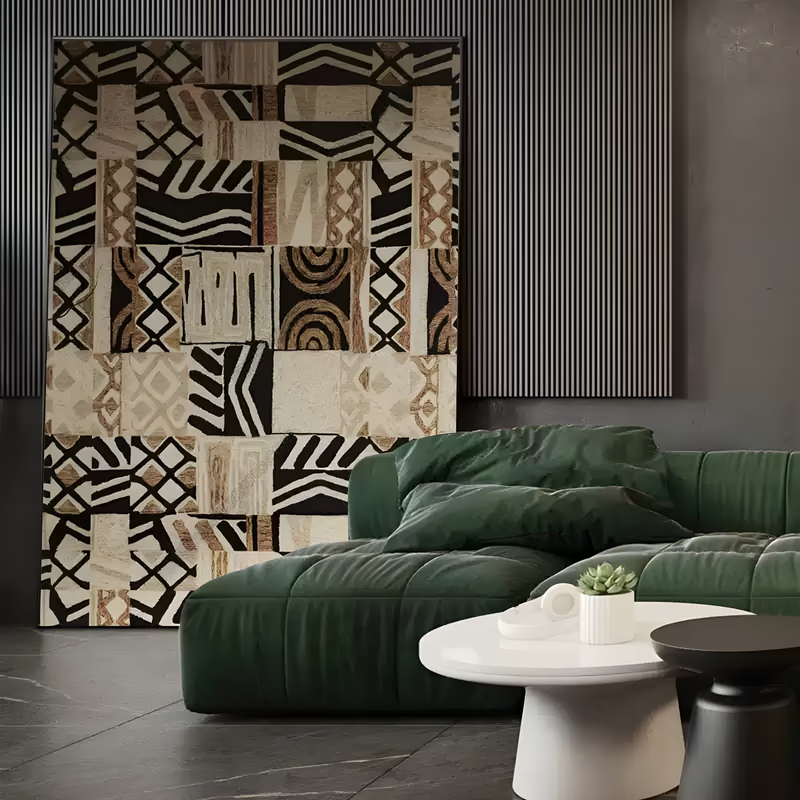
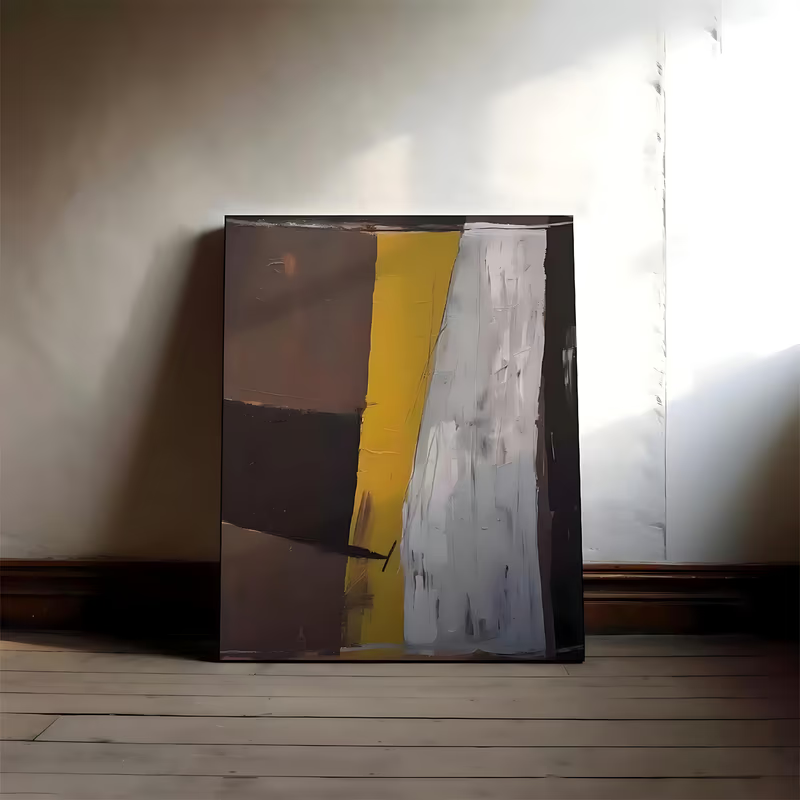
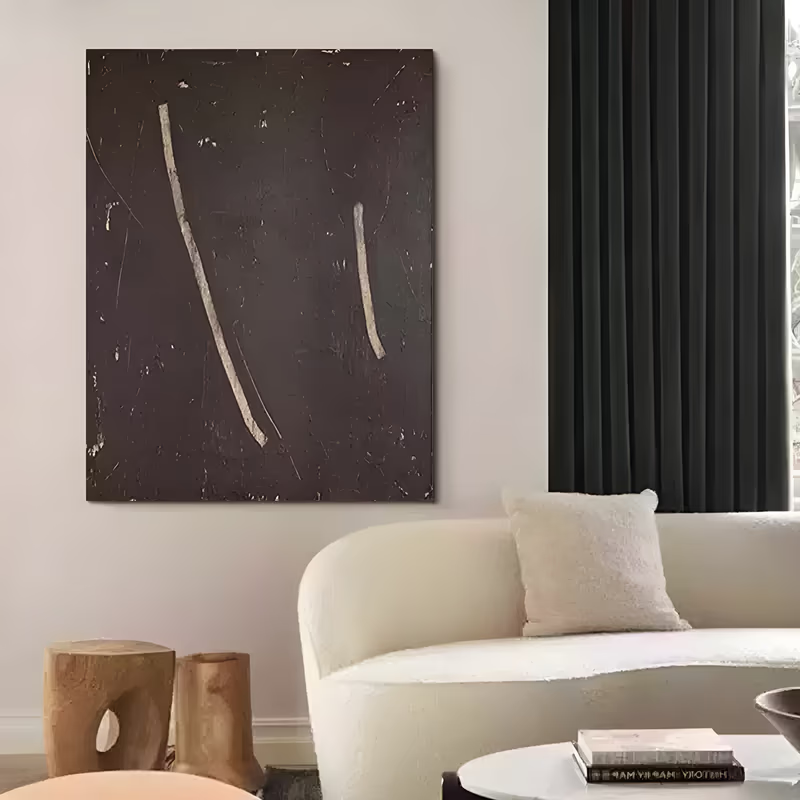
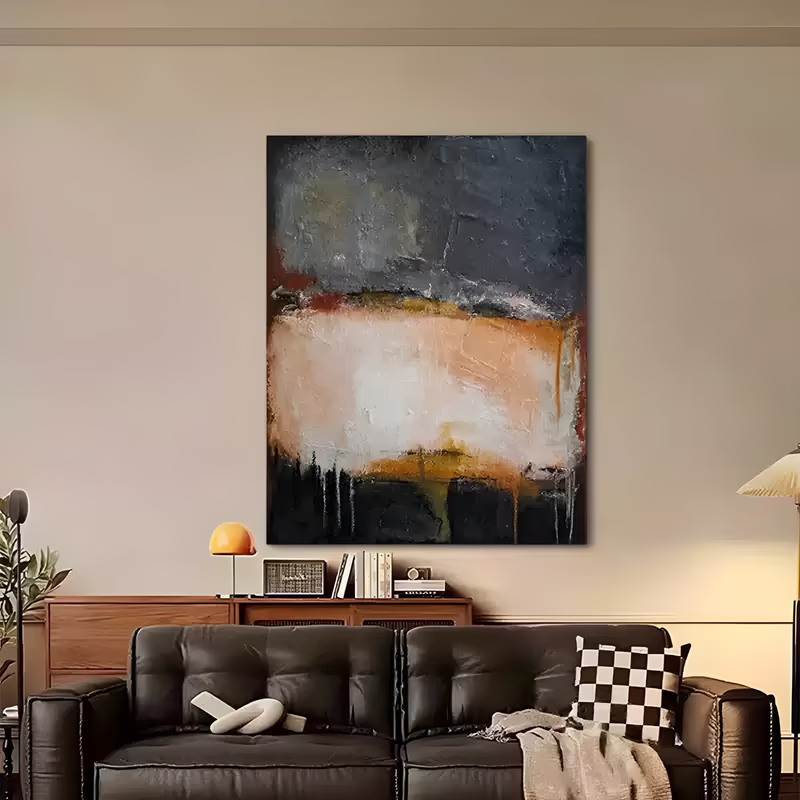
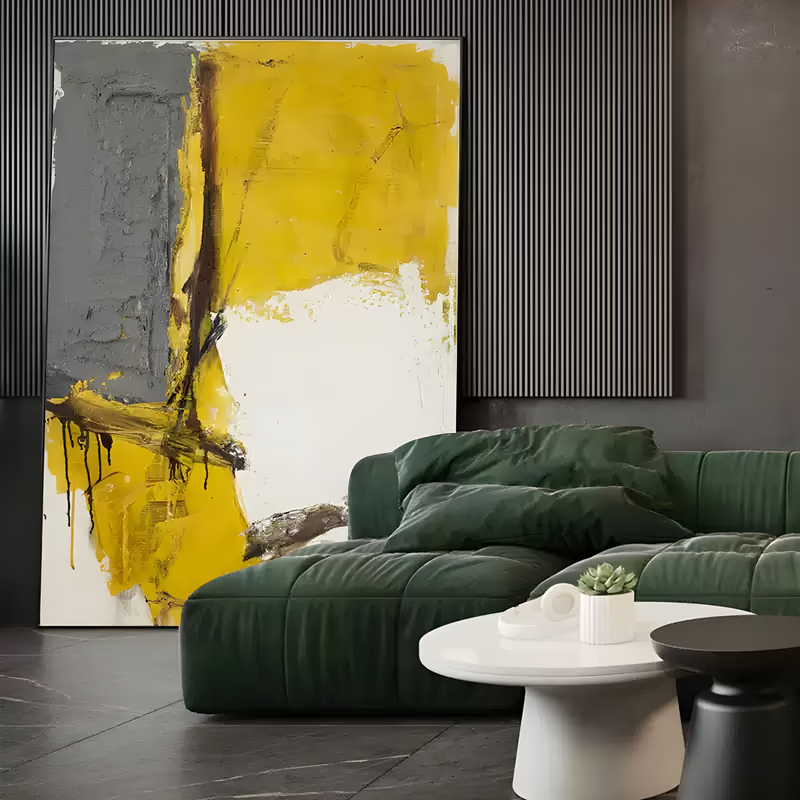
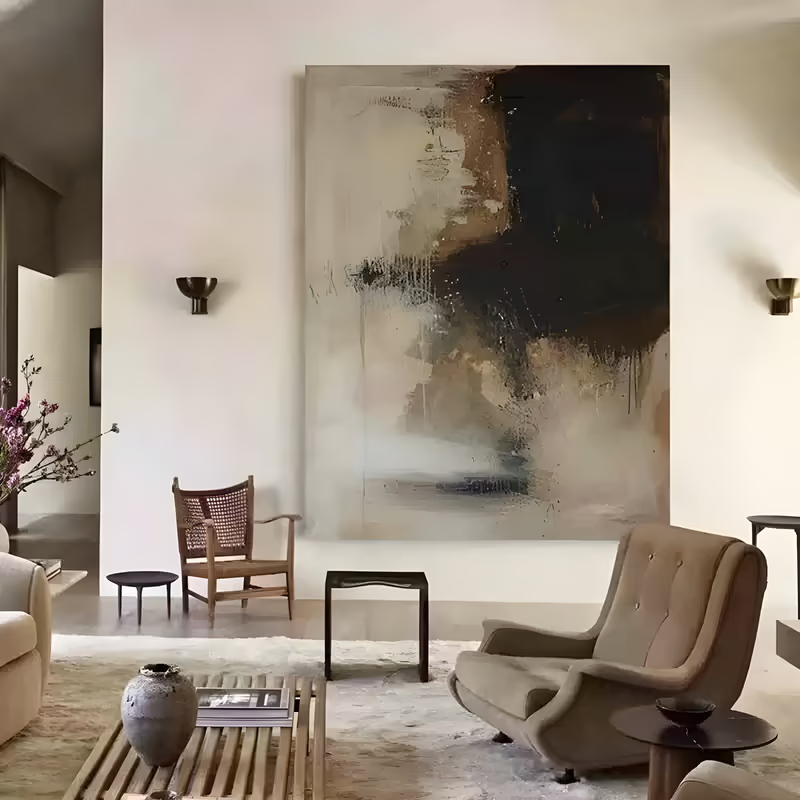
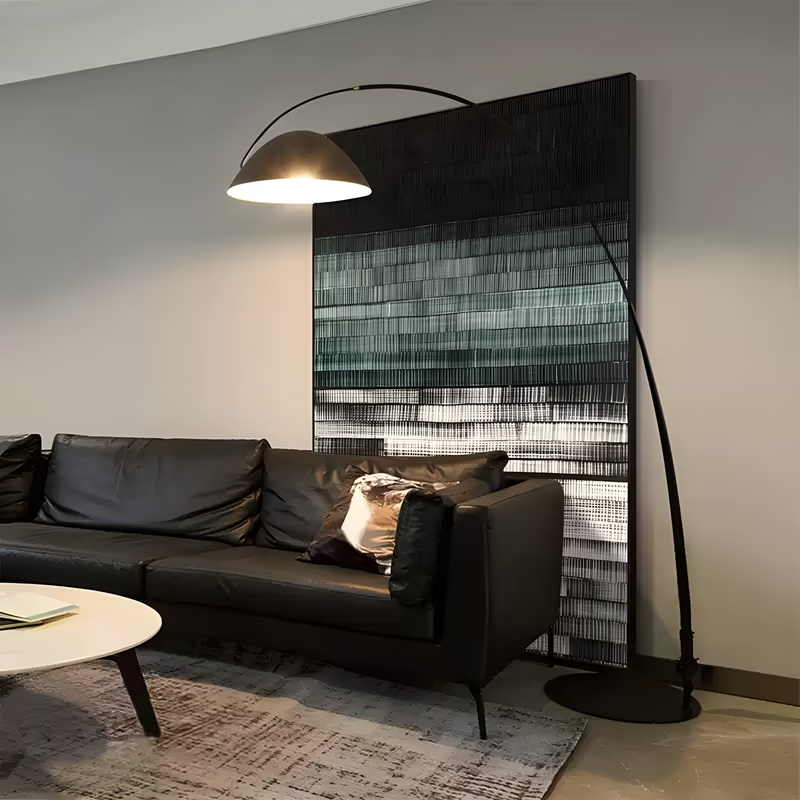
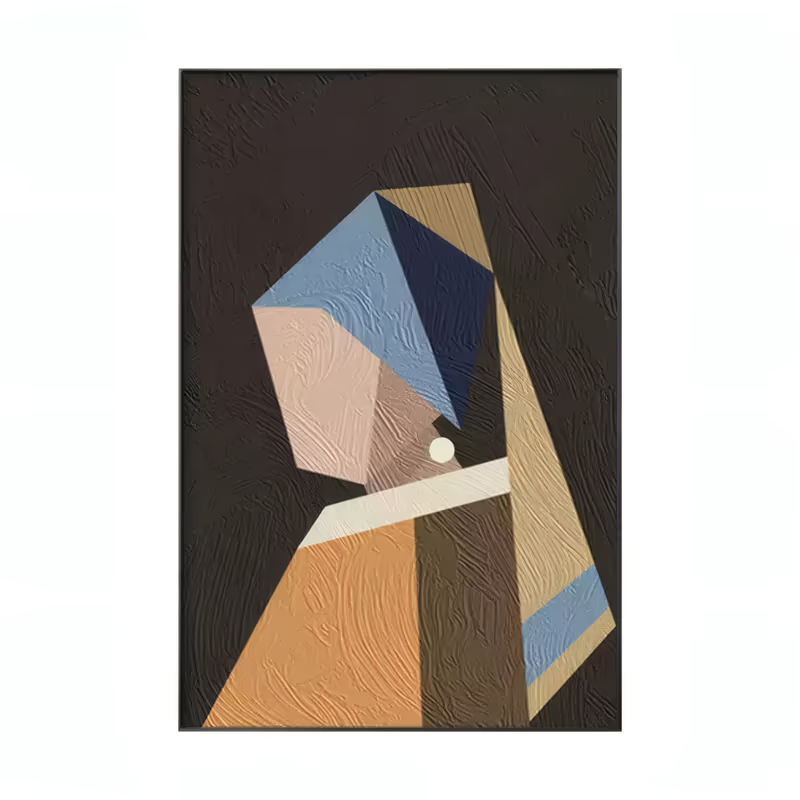
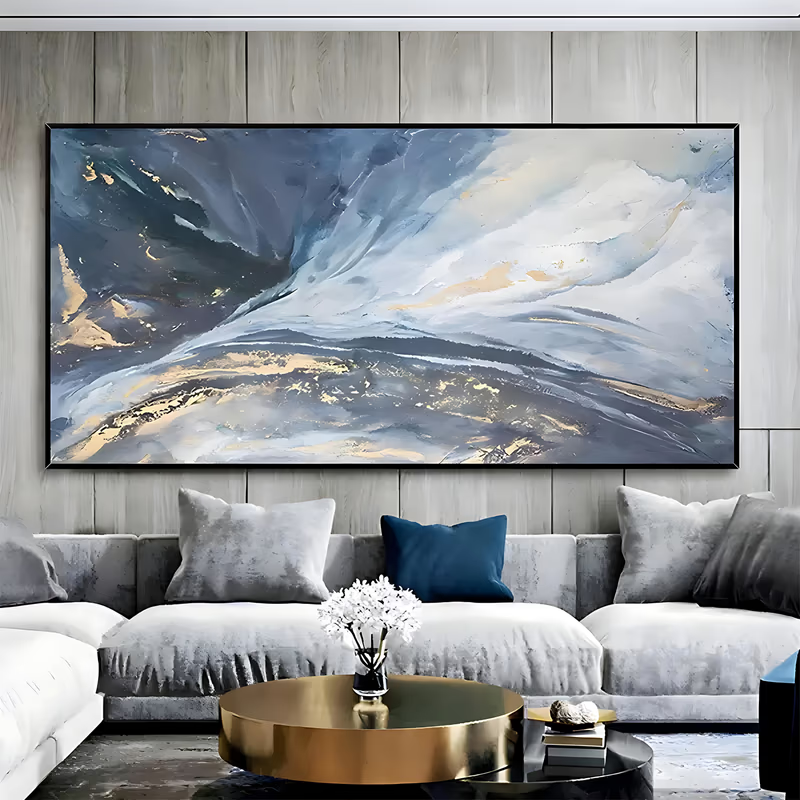
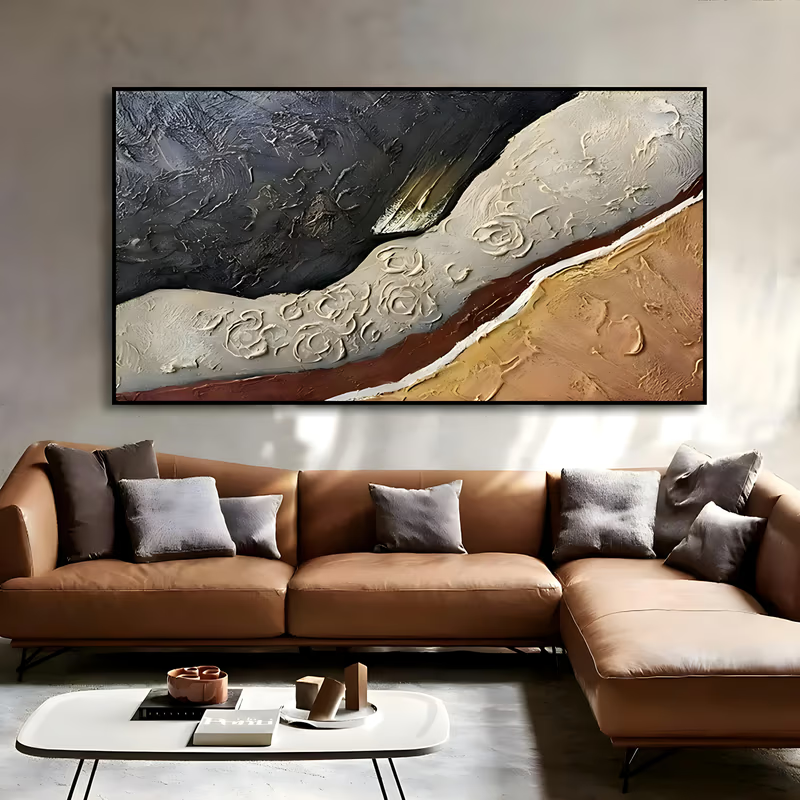
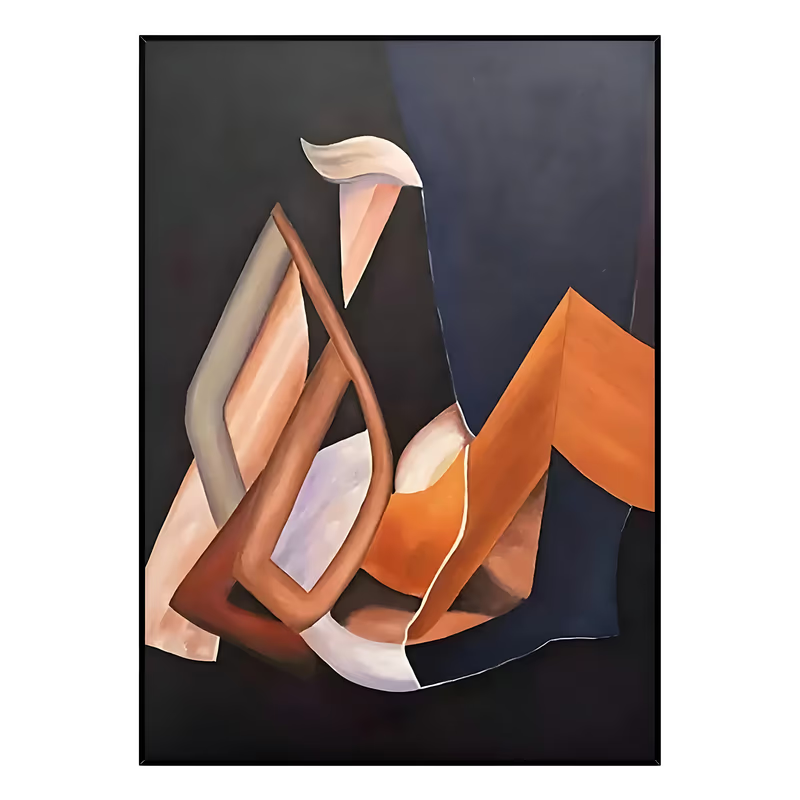
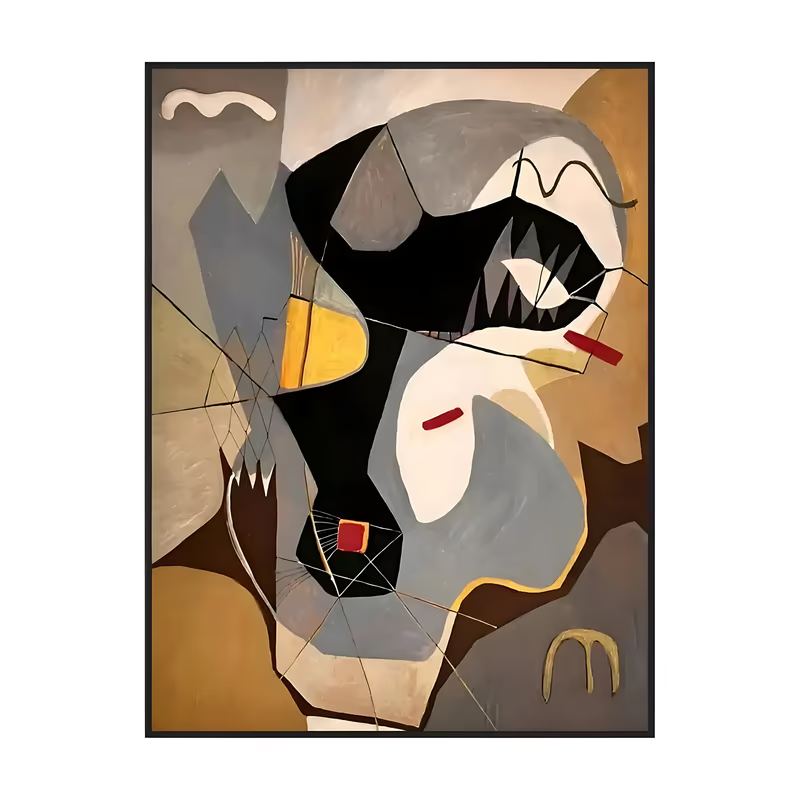
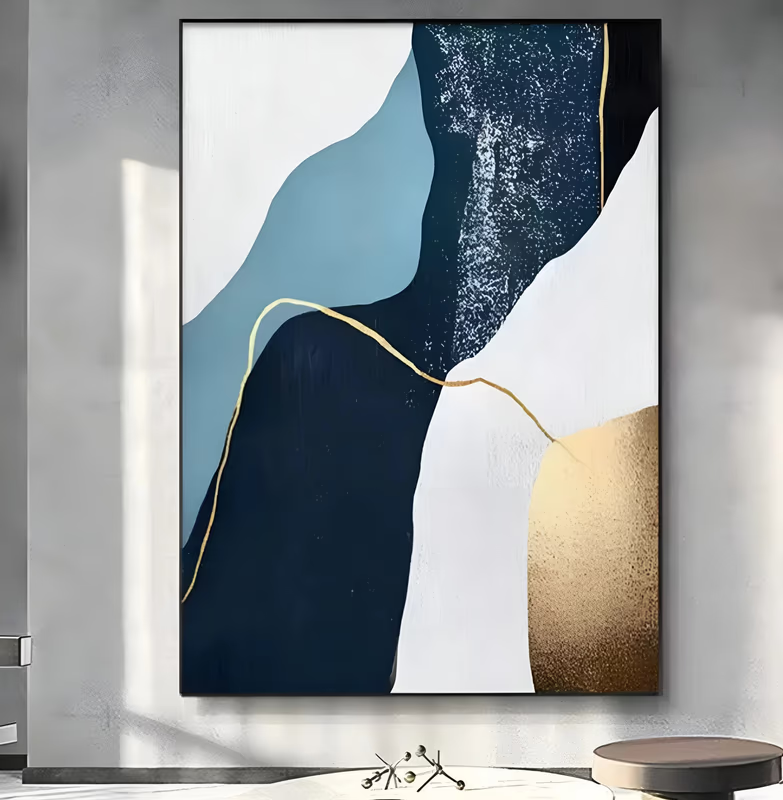
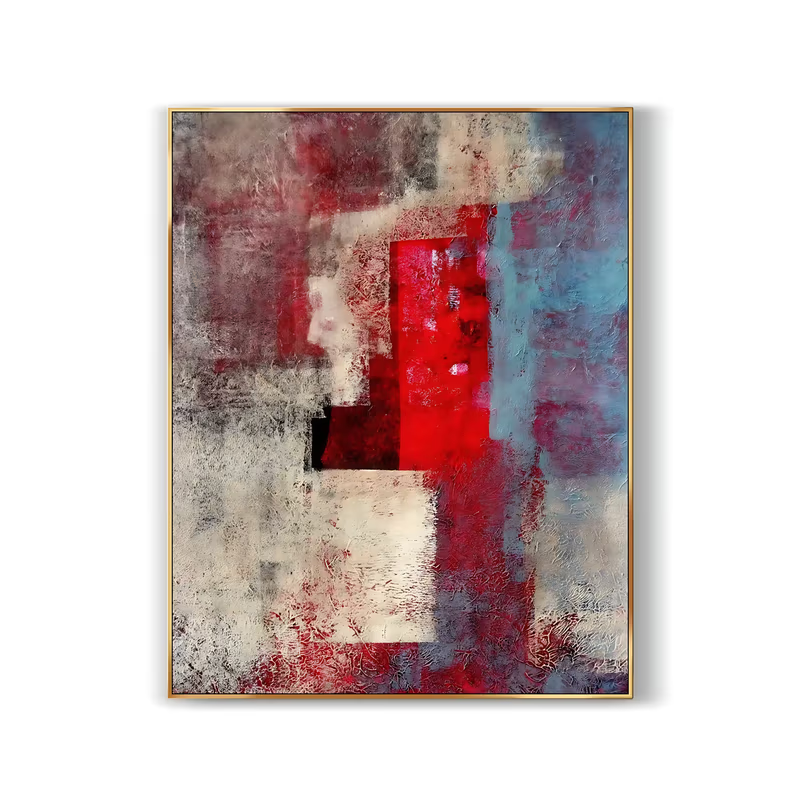
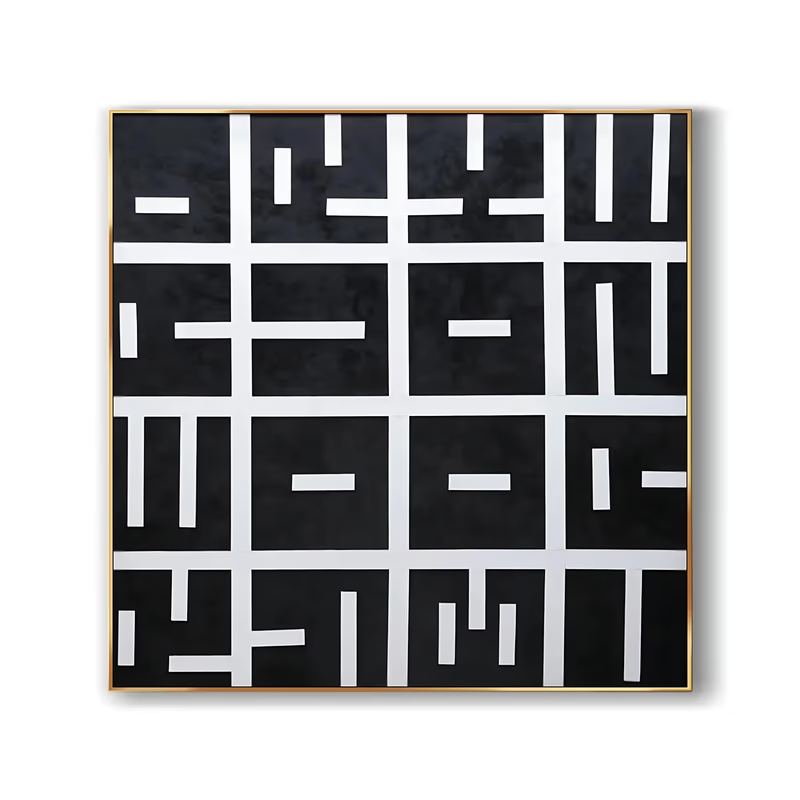
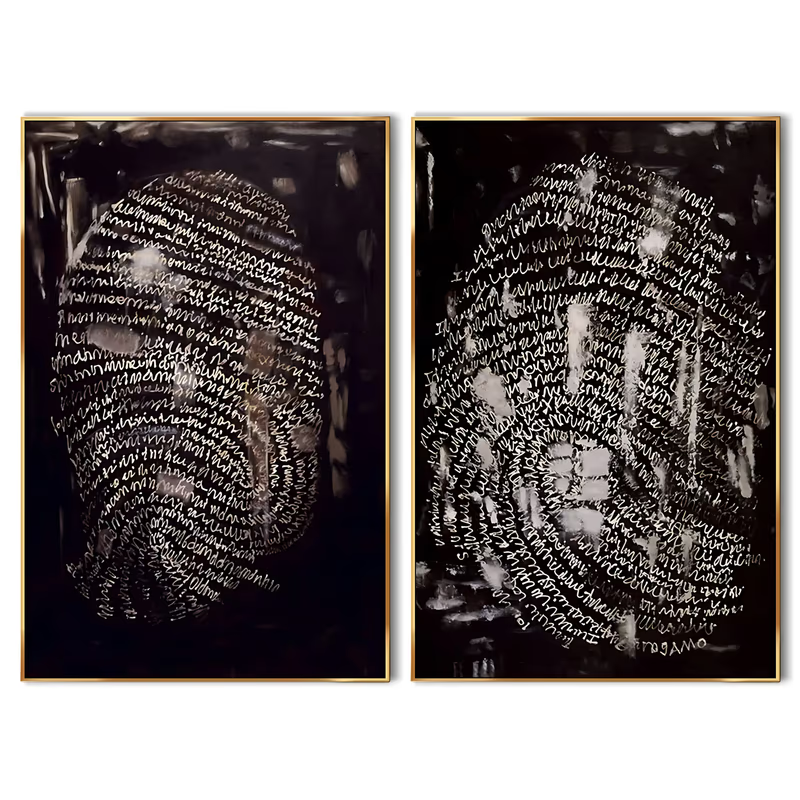
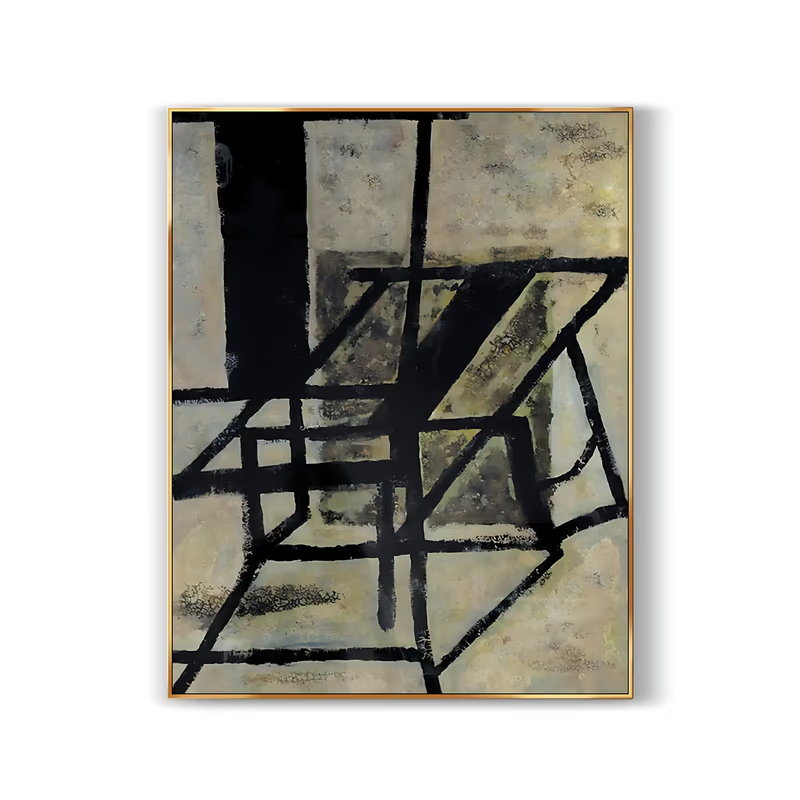
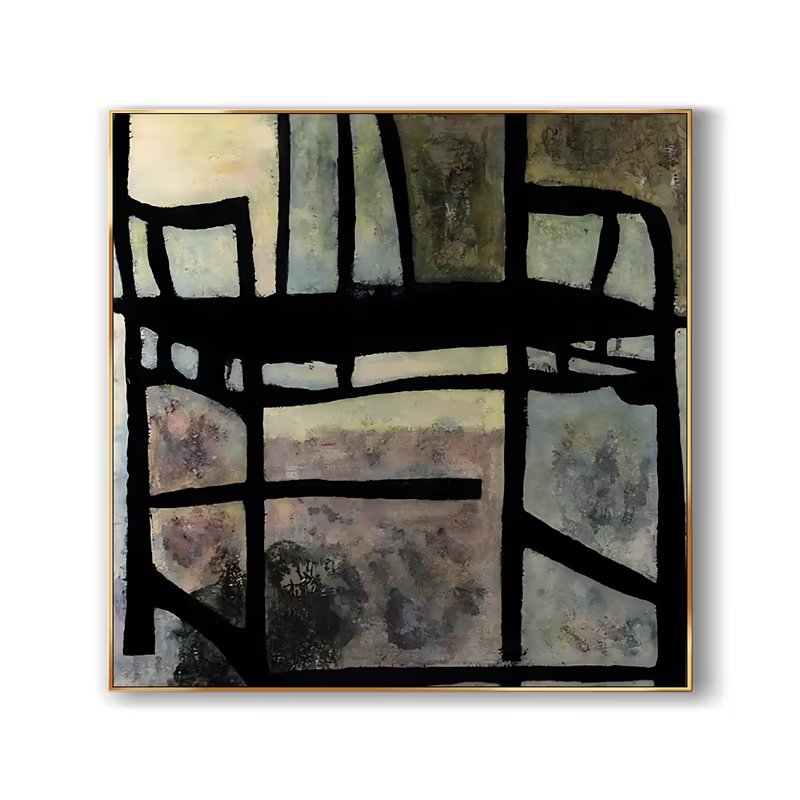
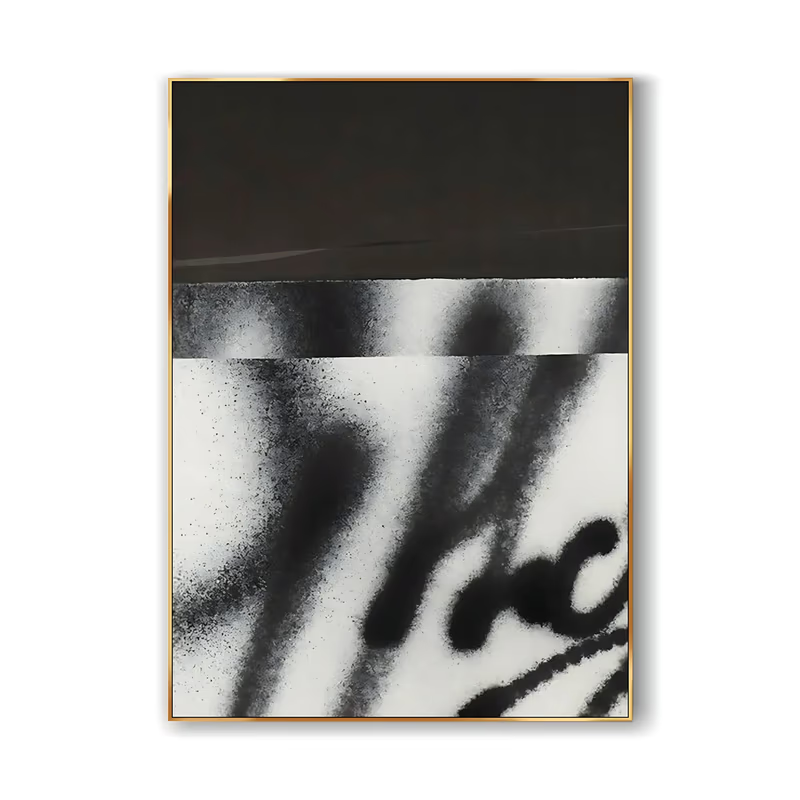
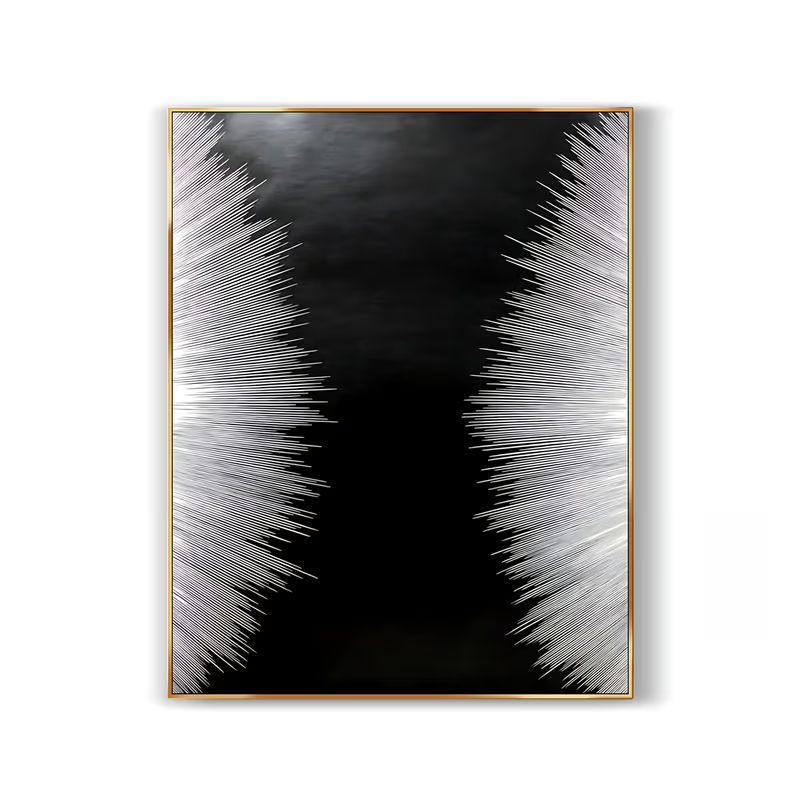
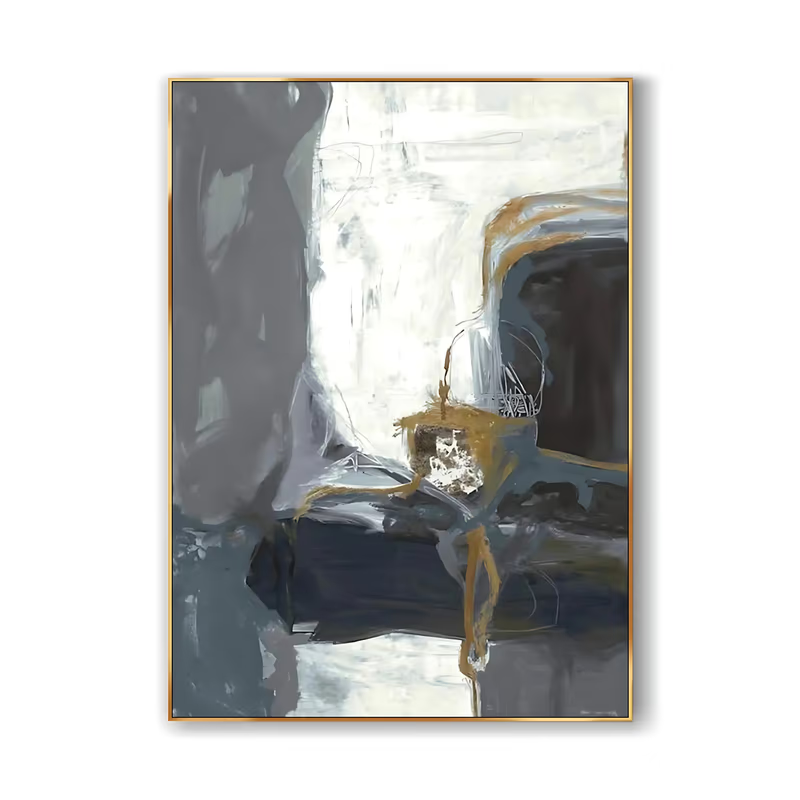
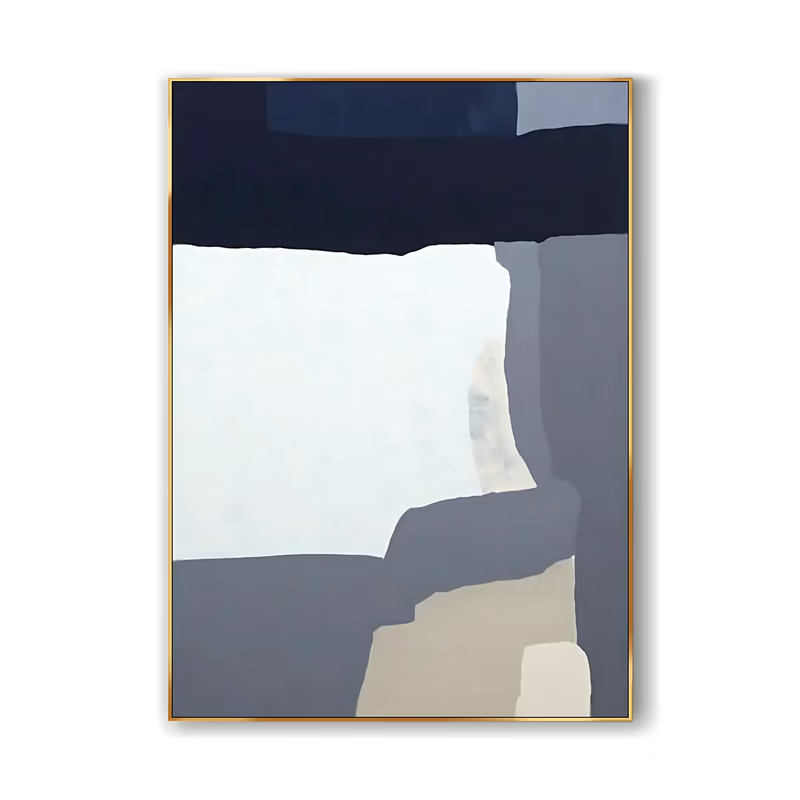
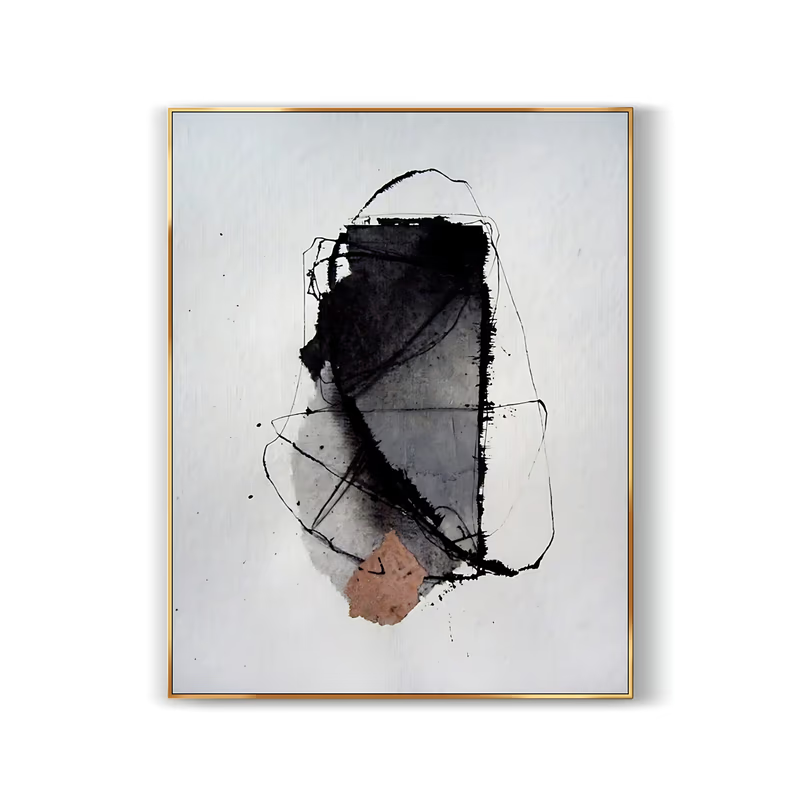
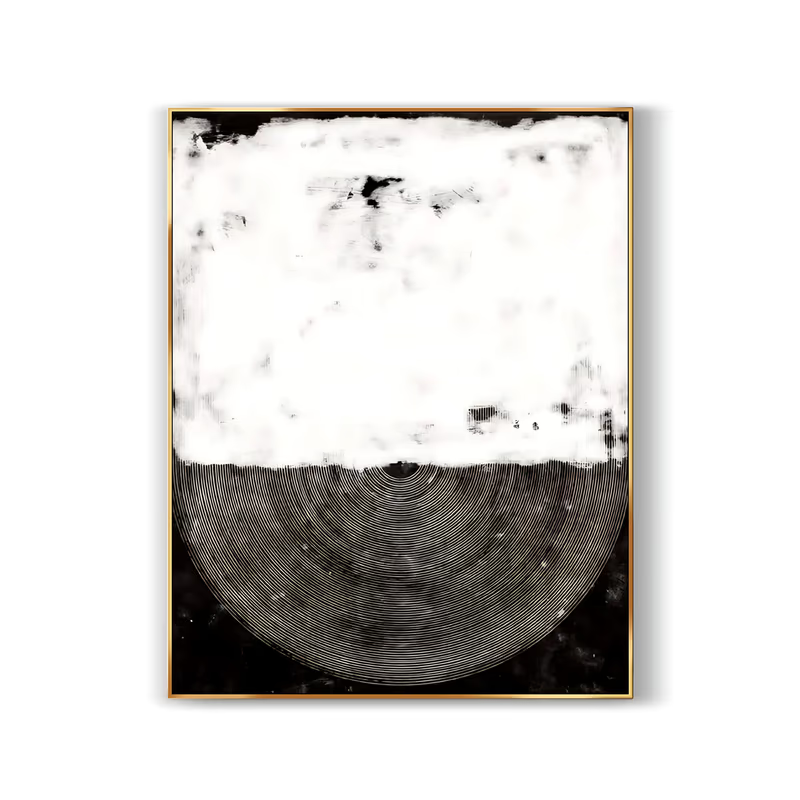
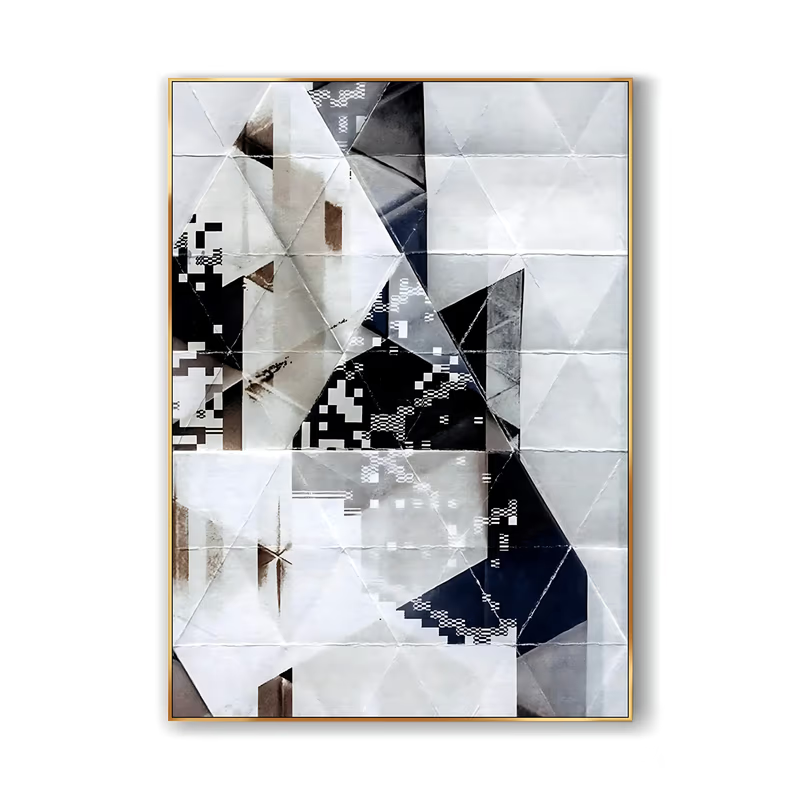
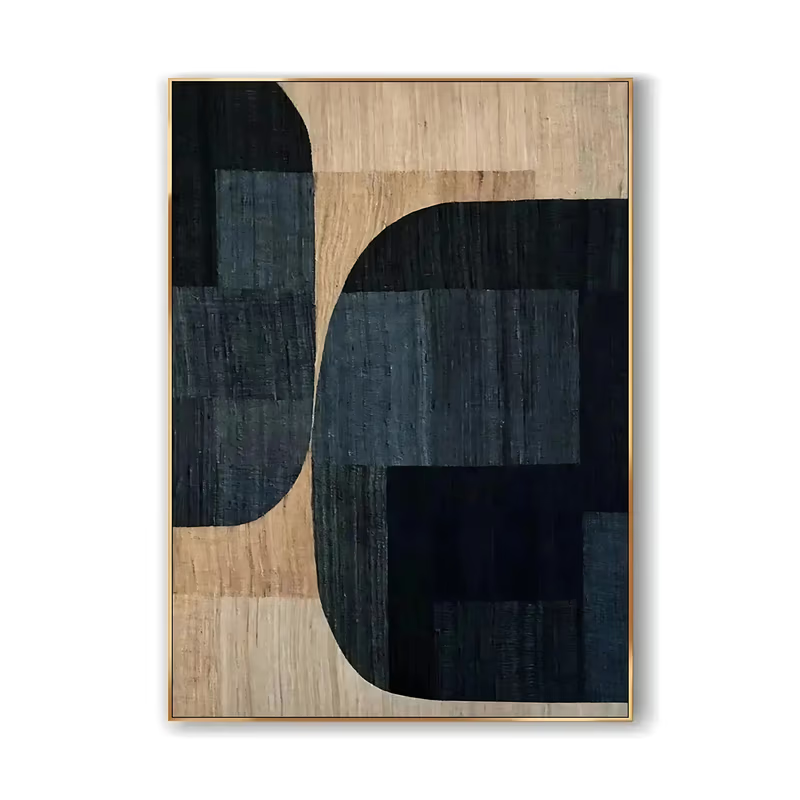
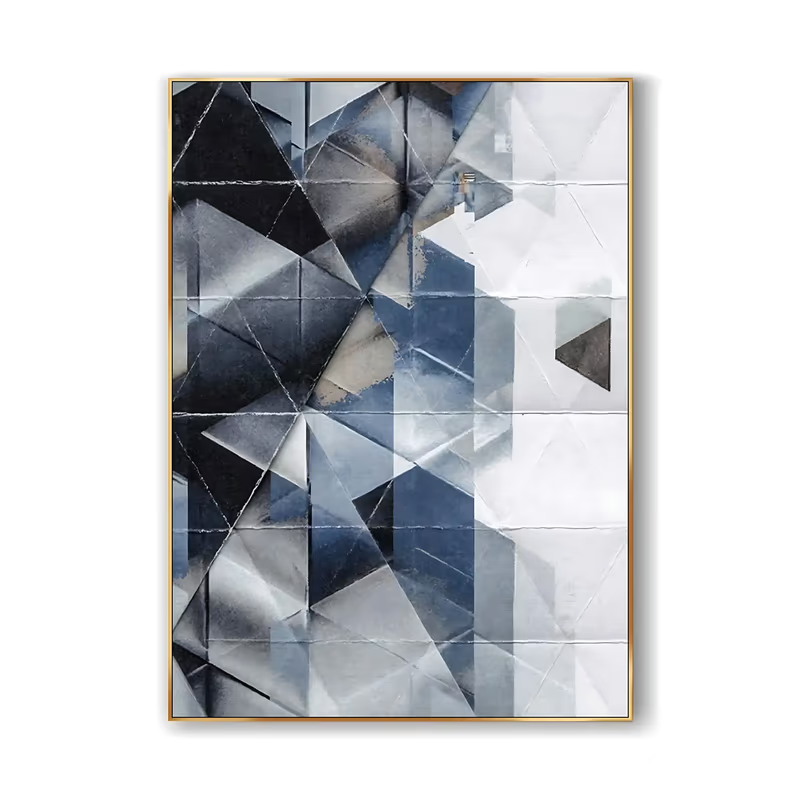
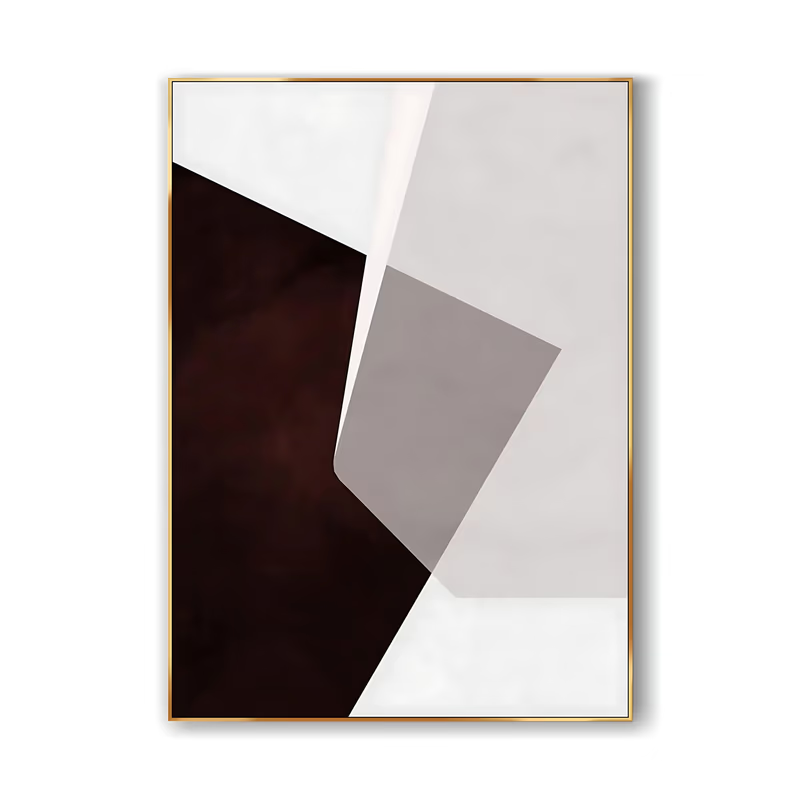
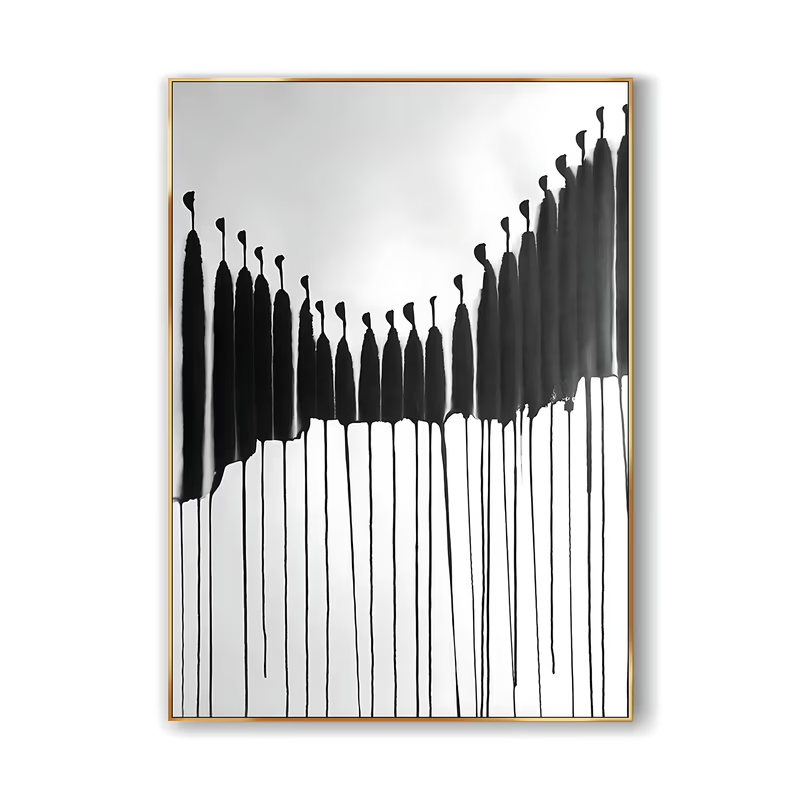
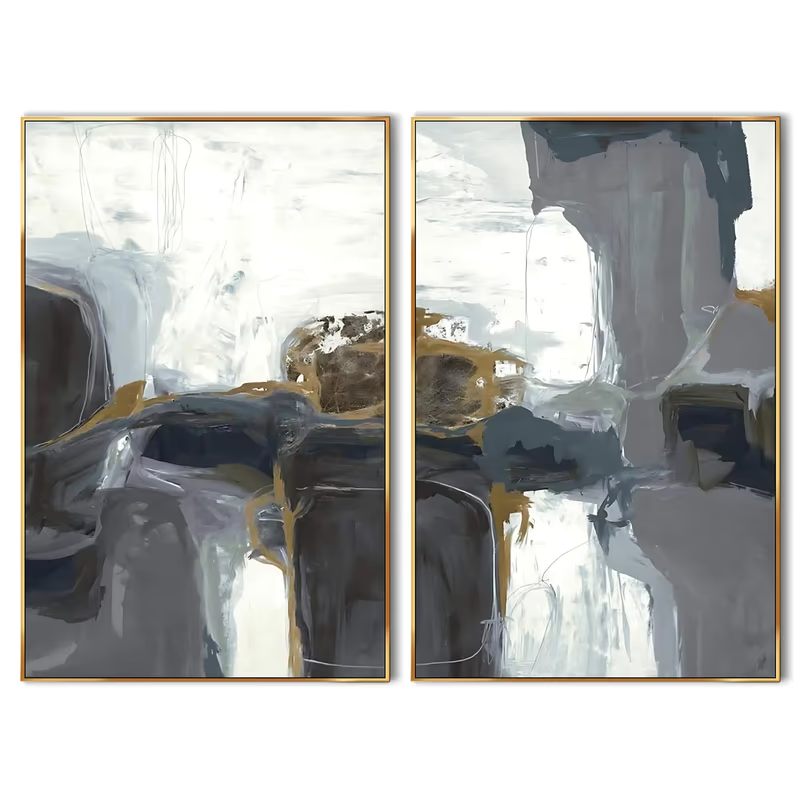
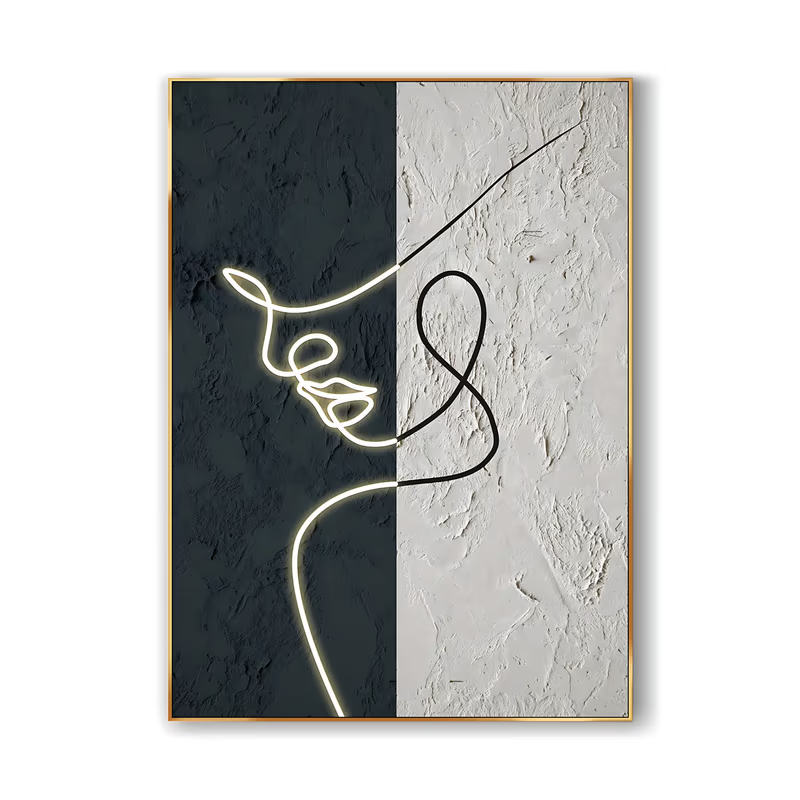
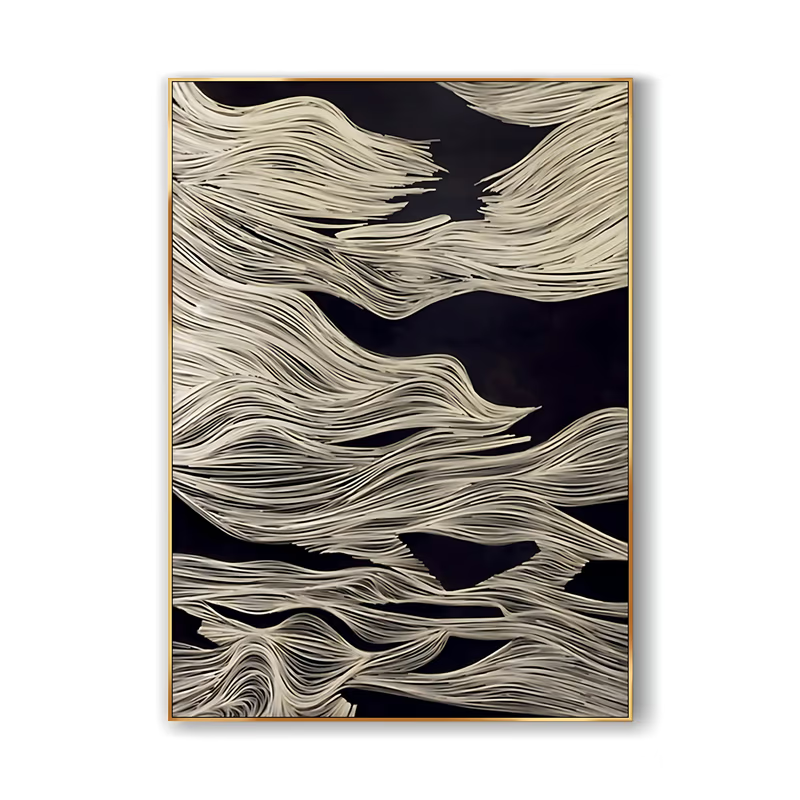
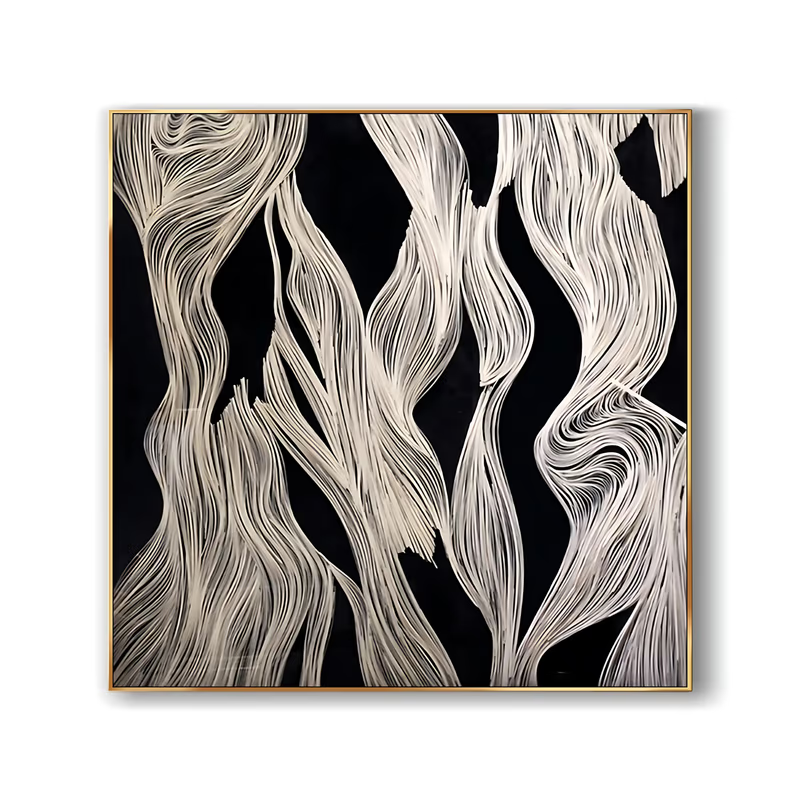
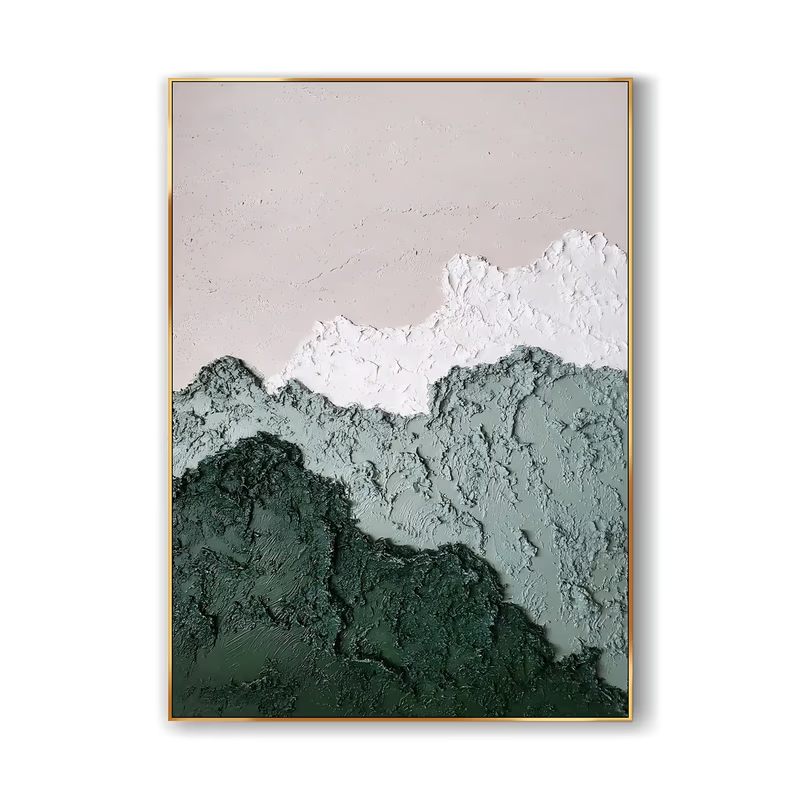
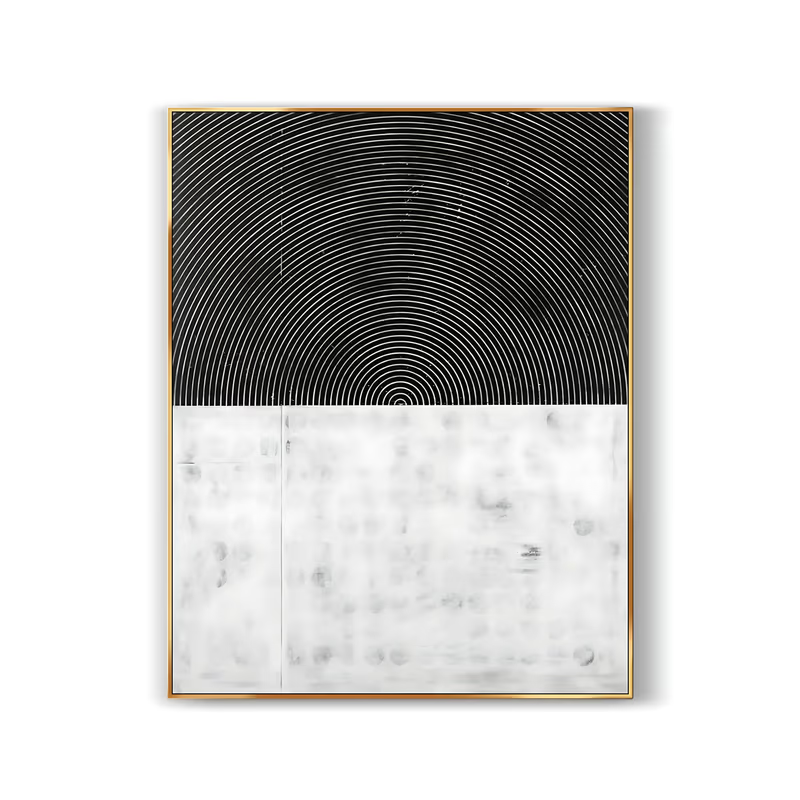
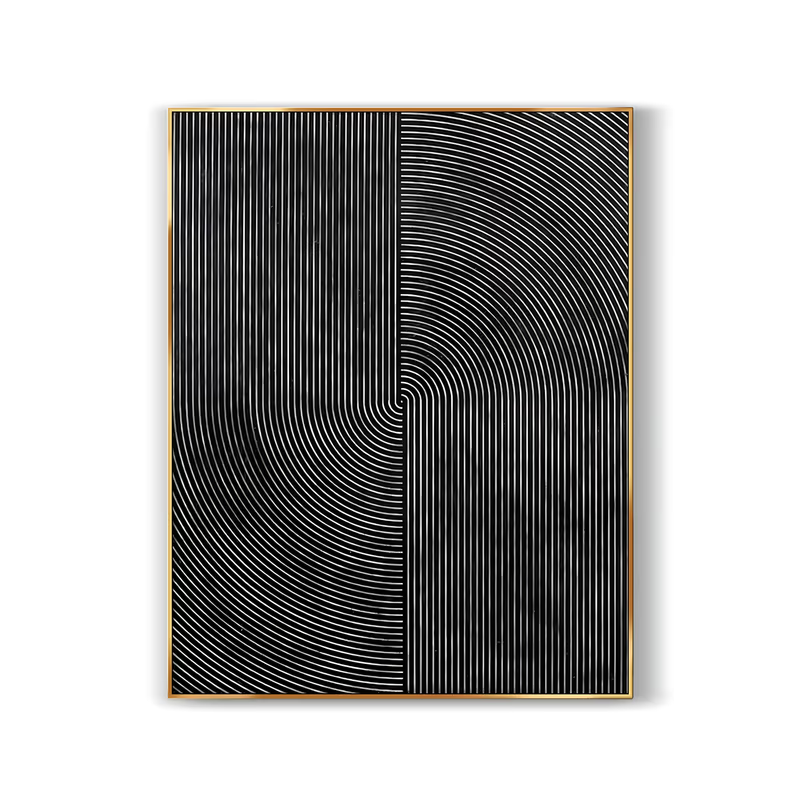
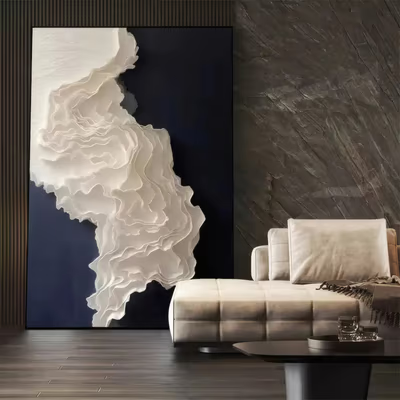
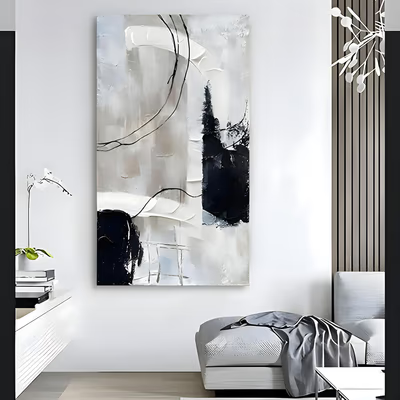
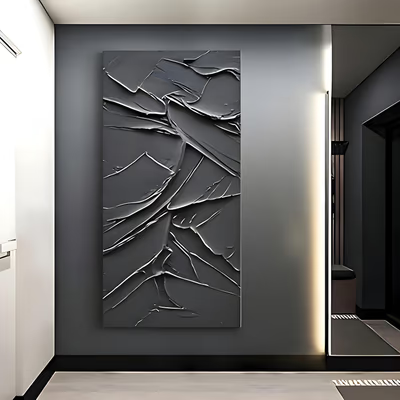
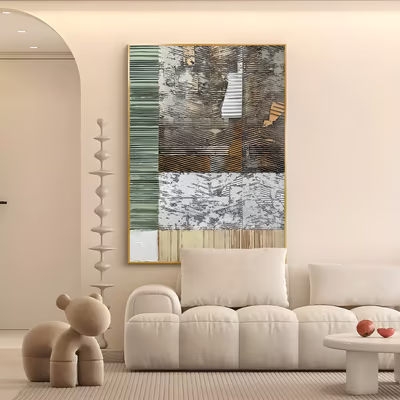
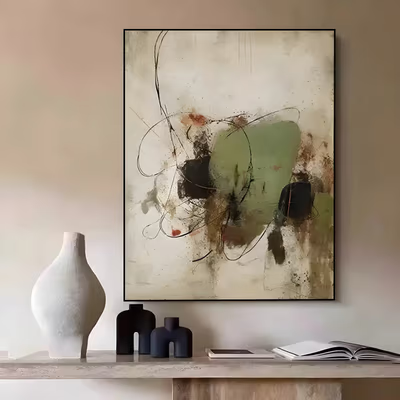
Interlocking beige and black plaster, olive wedges on cream panels, white impasto crossed by ink lines, sage and rust weathered ribs, black sculpted relief. These are moody through surface and restraint rather than subject, and they suit Japandi, industrial and modern rooms, boardrooms and quiet hotel corridors.
Still lifes and flowers on dark grounds
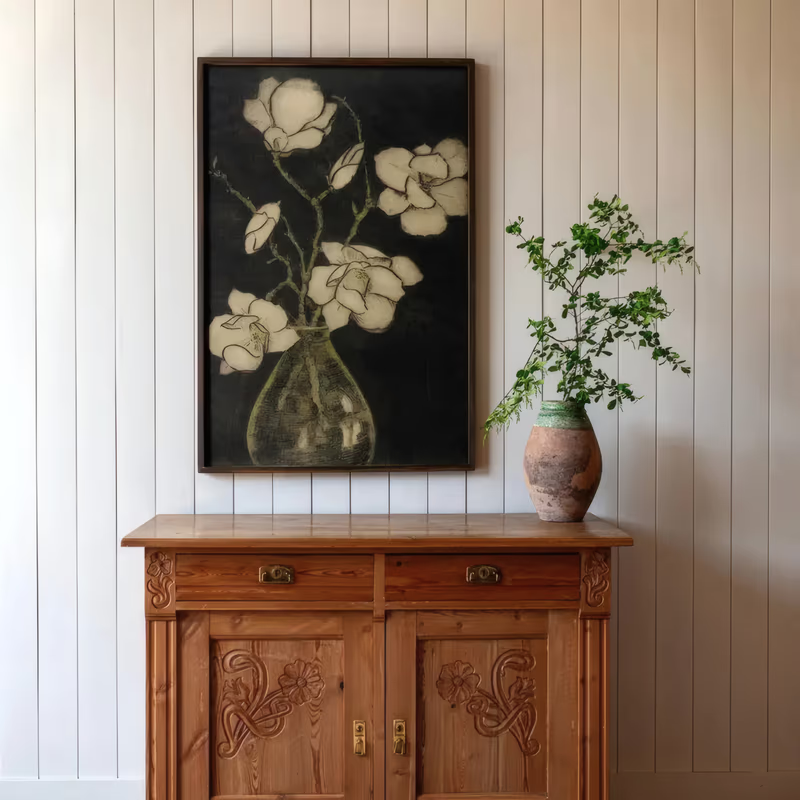
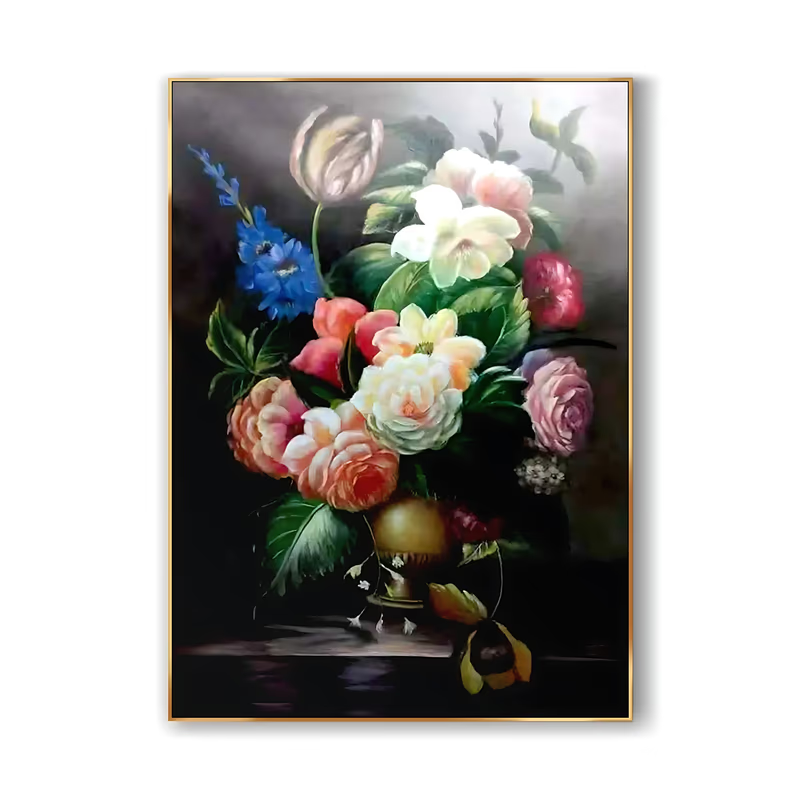
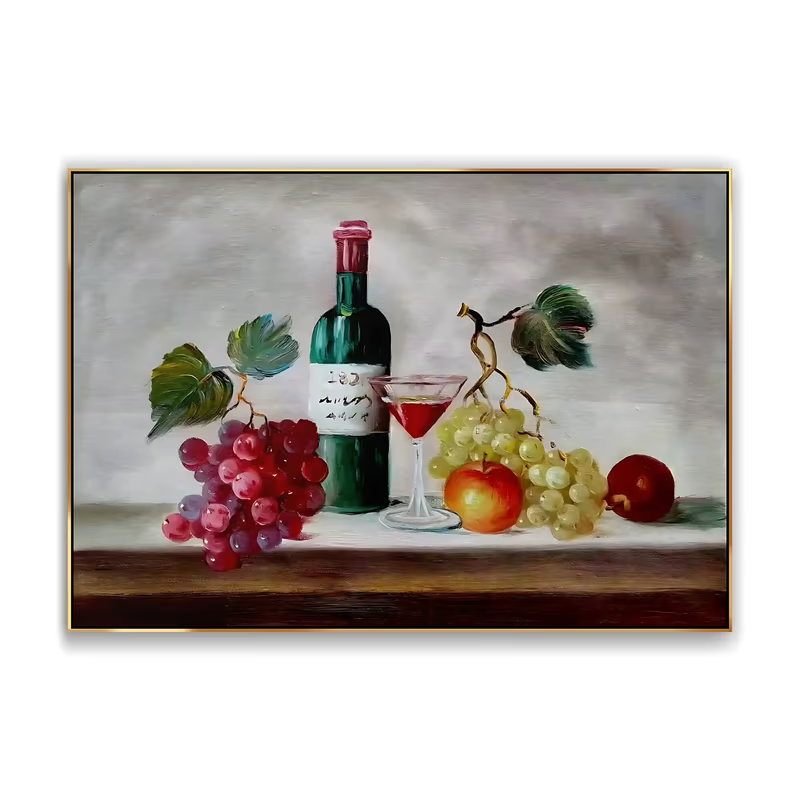
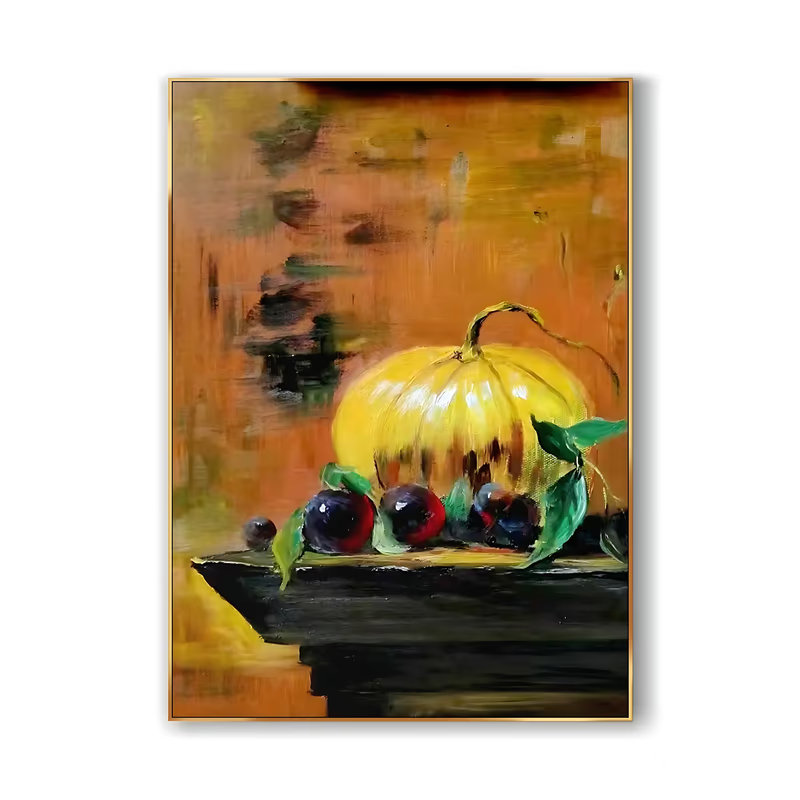
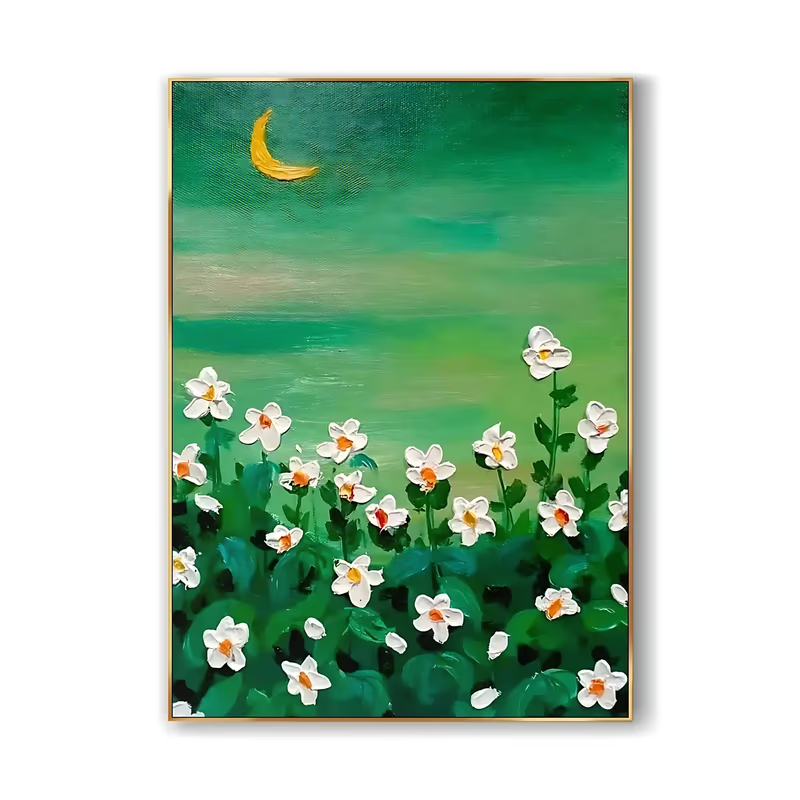
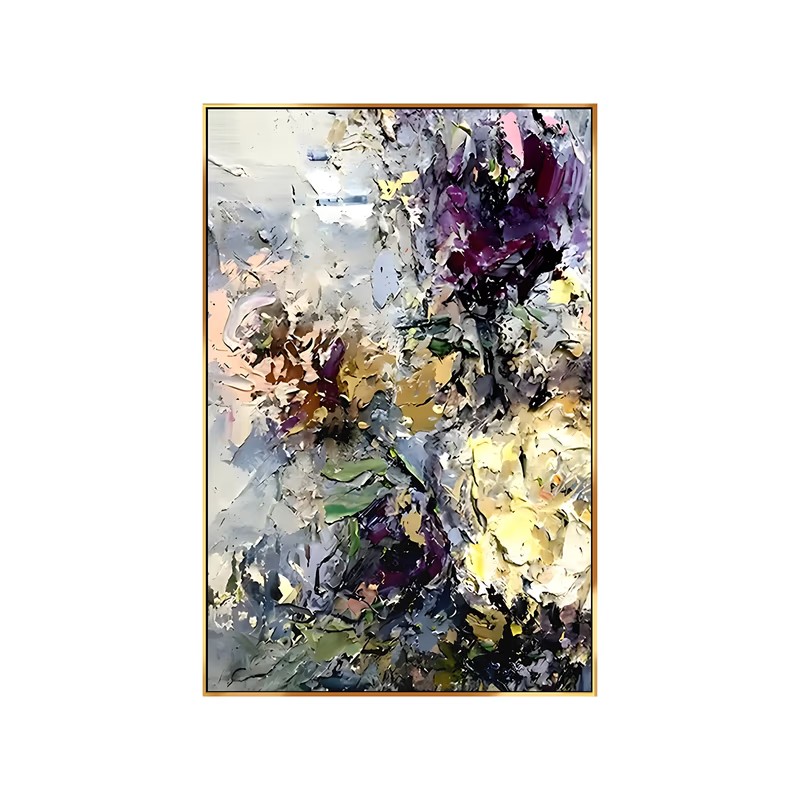
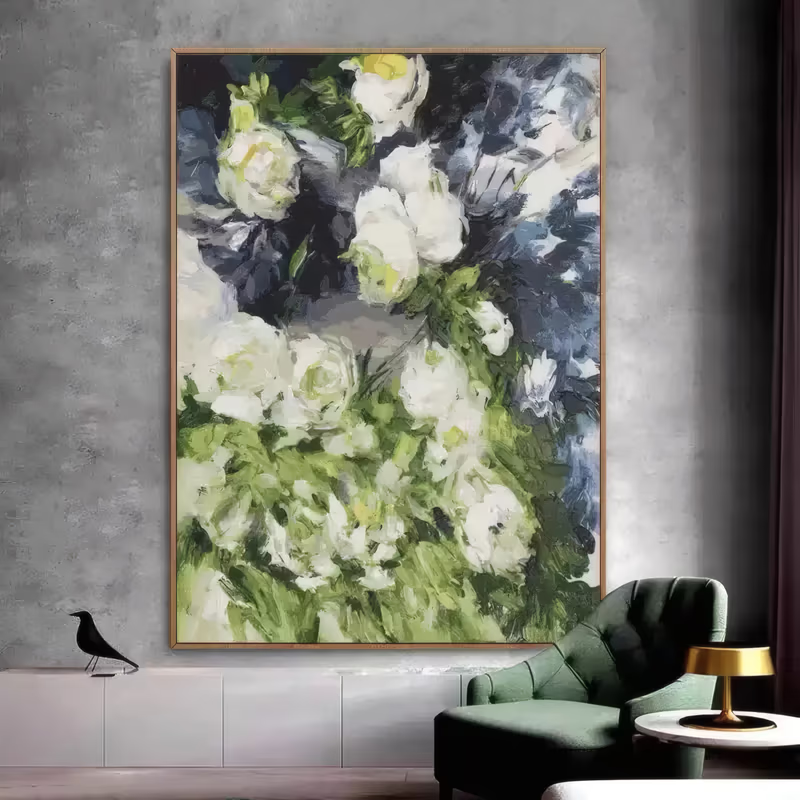
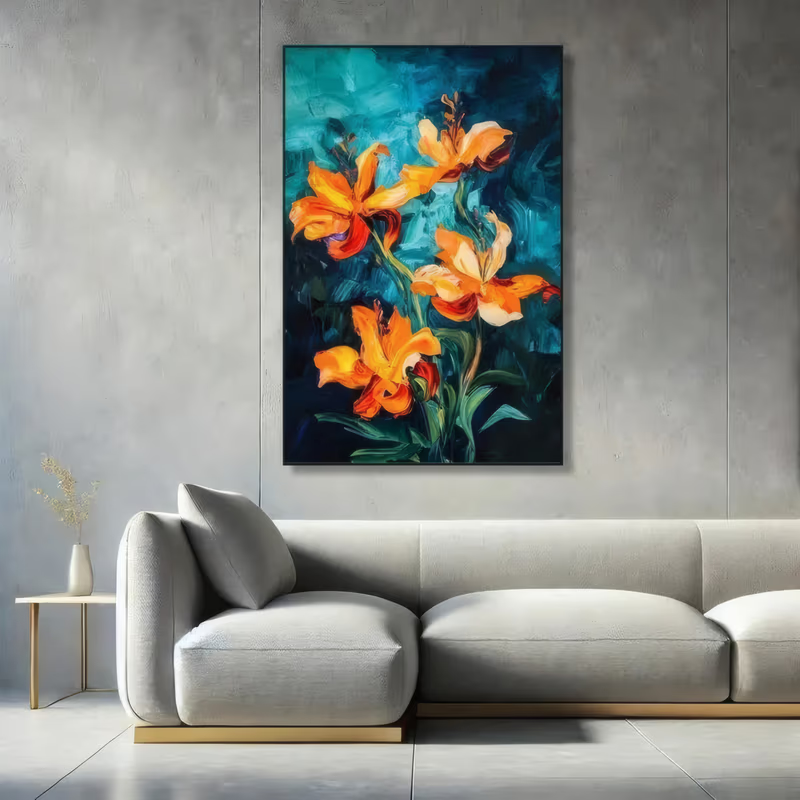
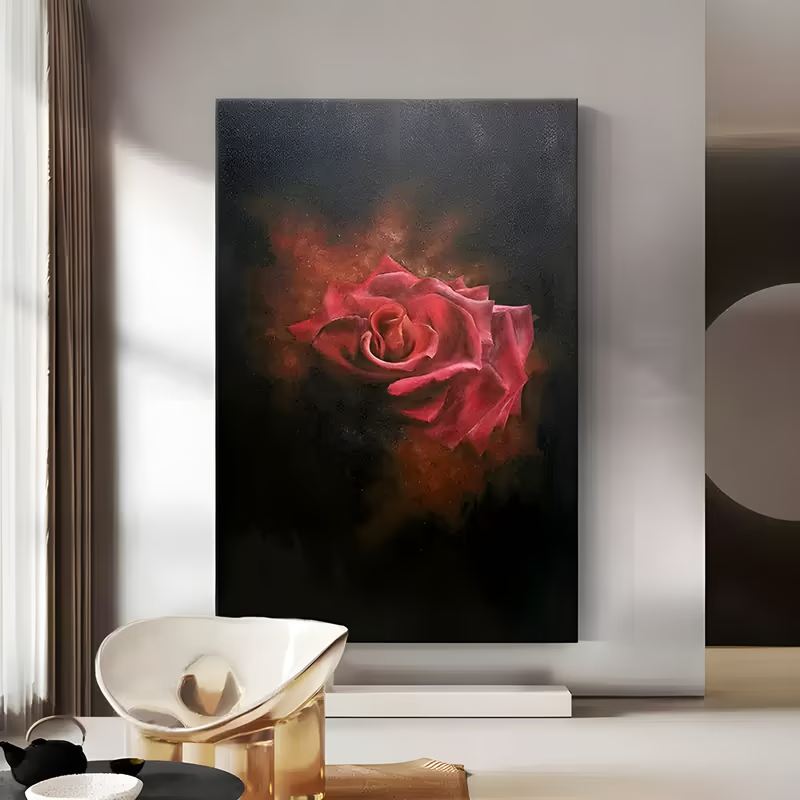
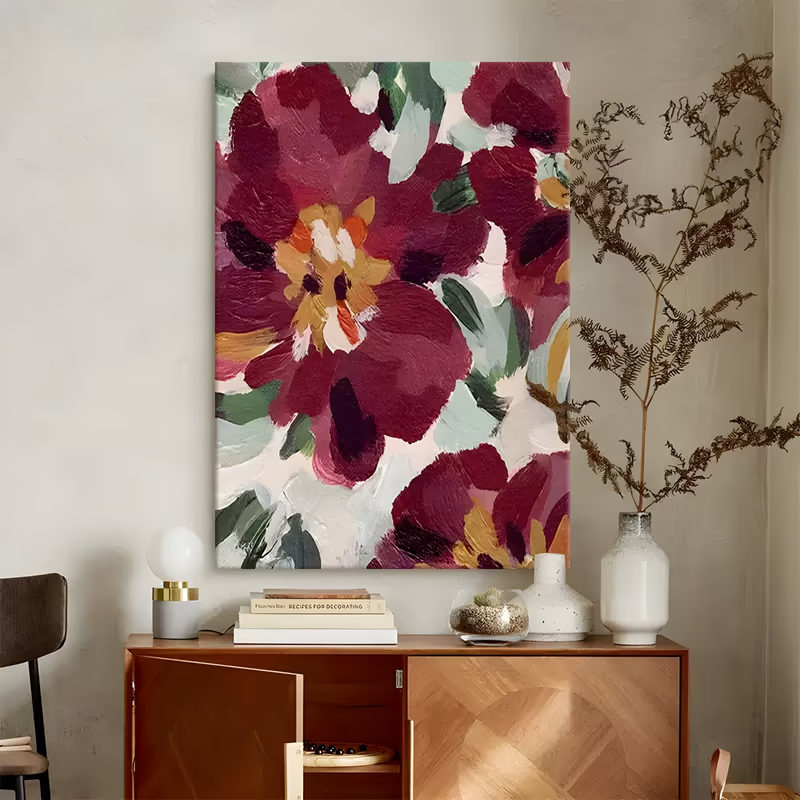
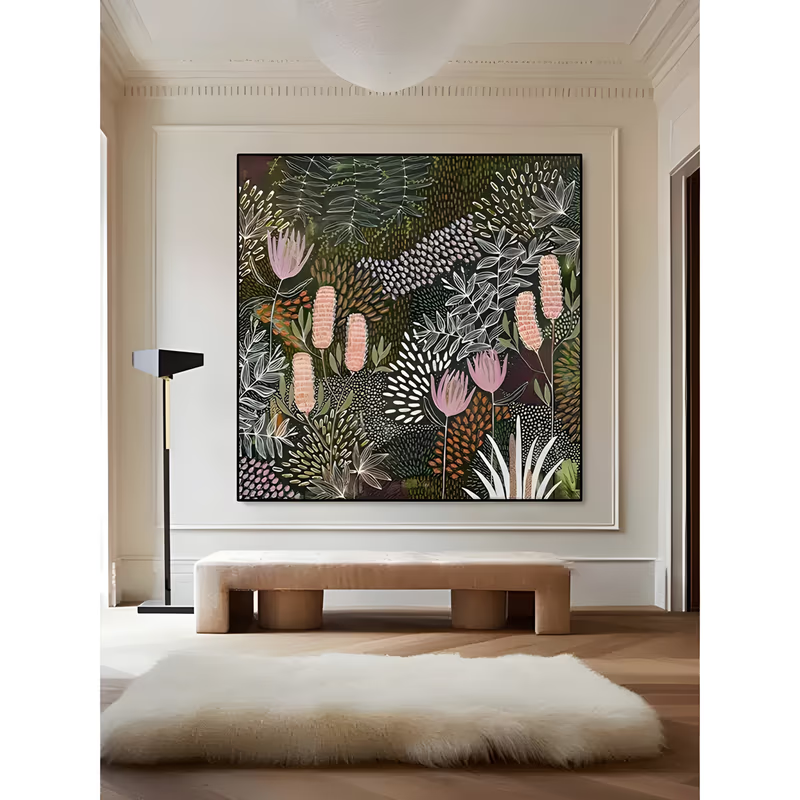
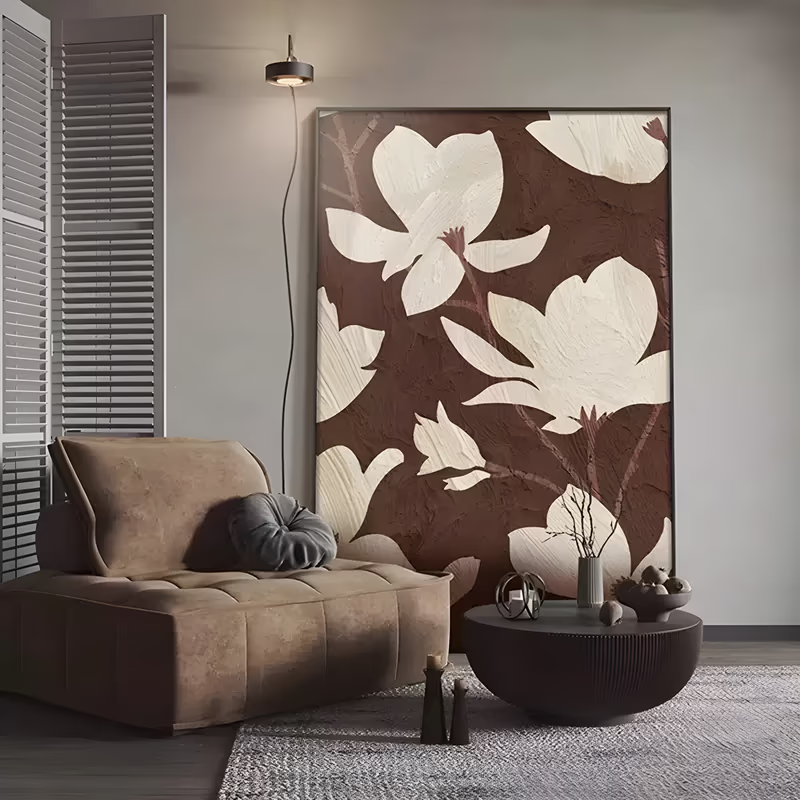
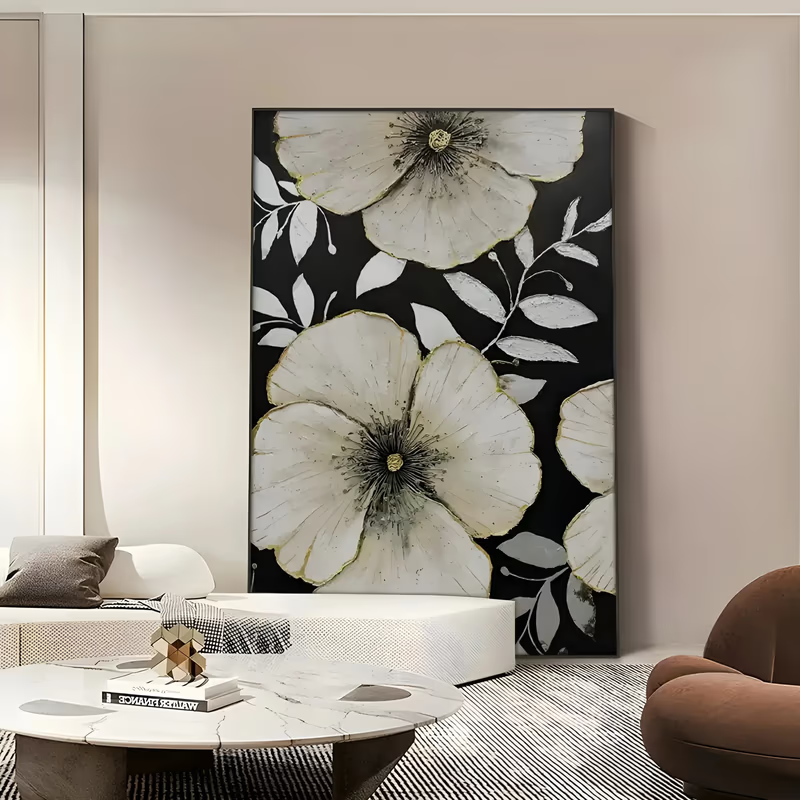
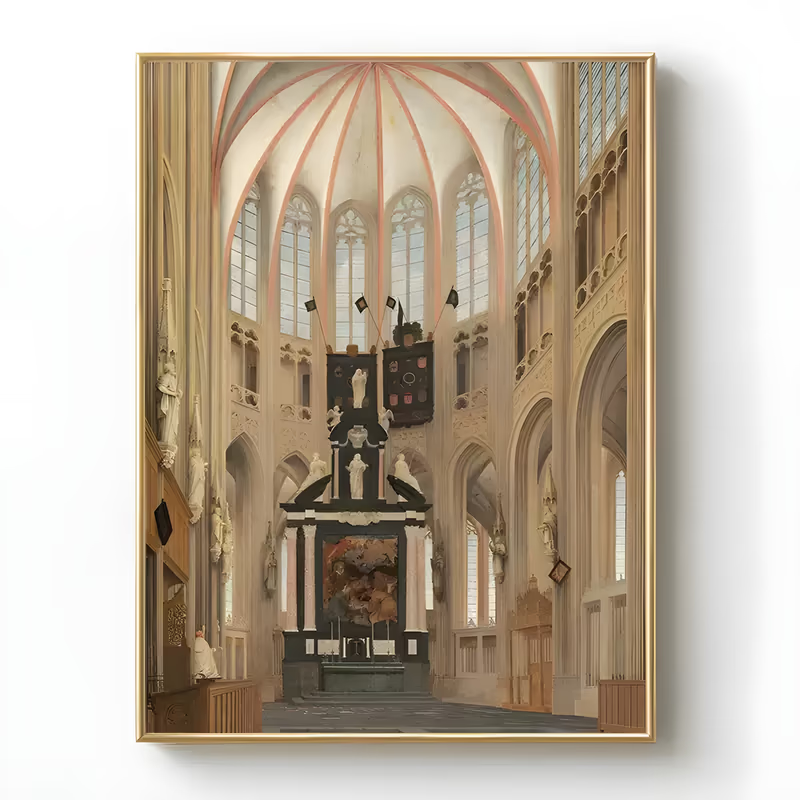
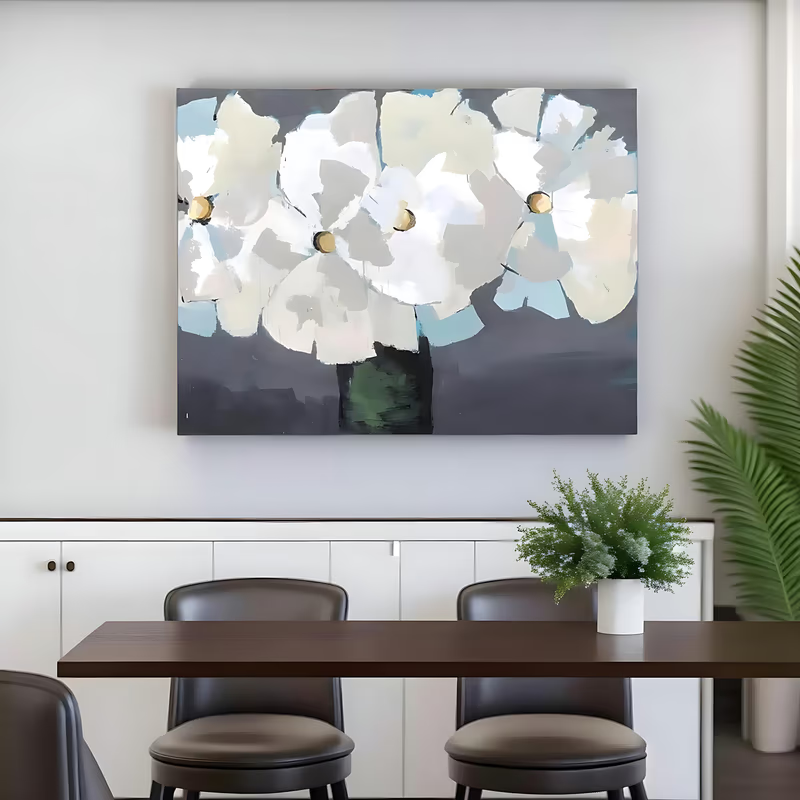
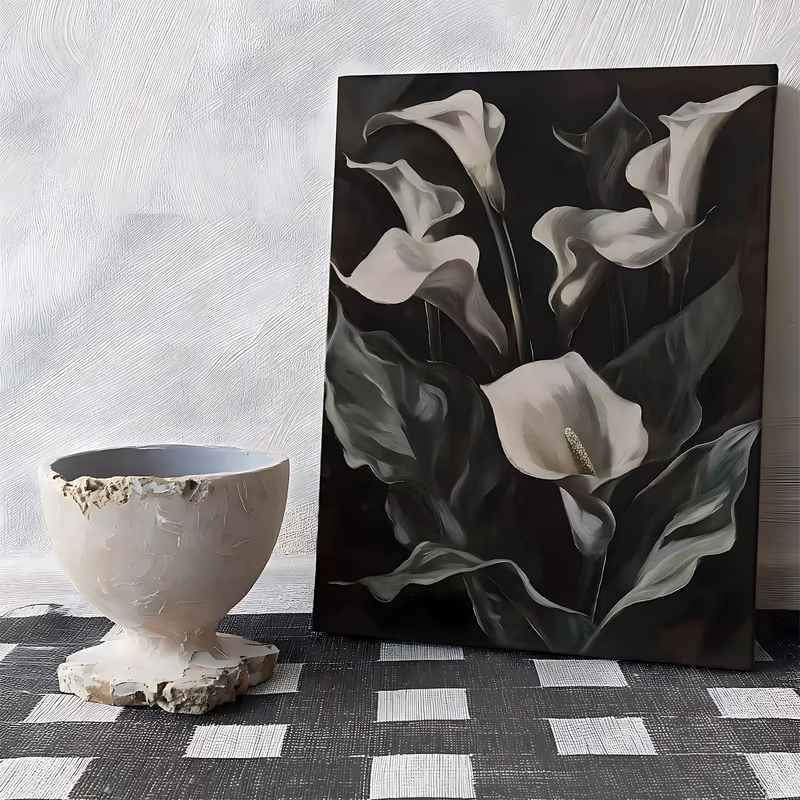
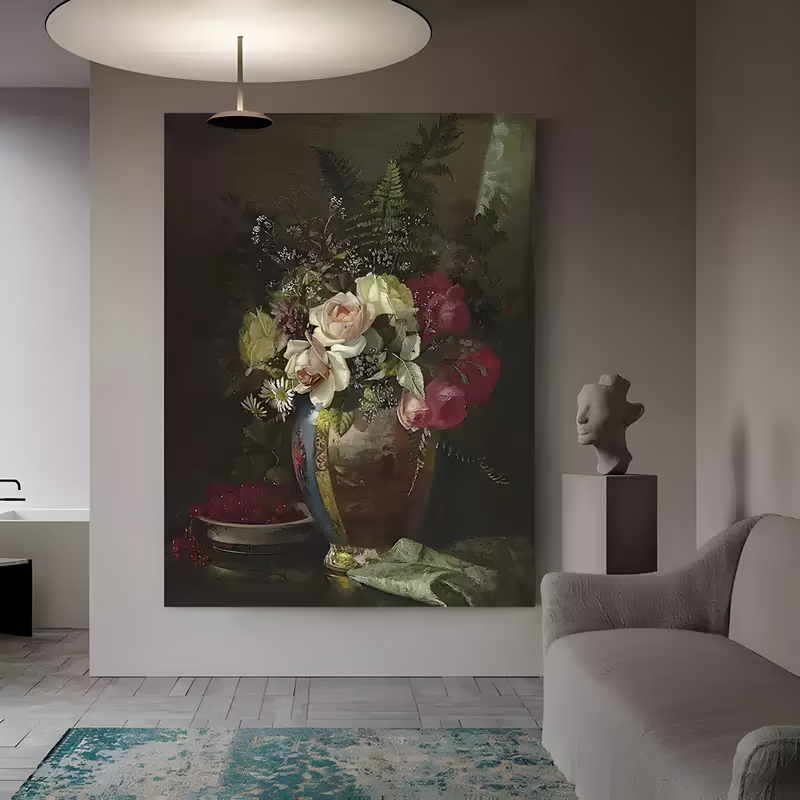
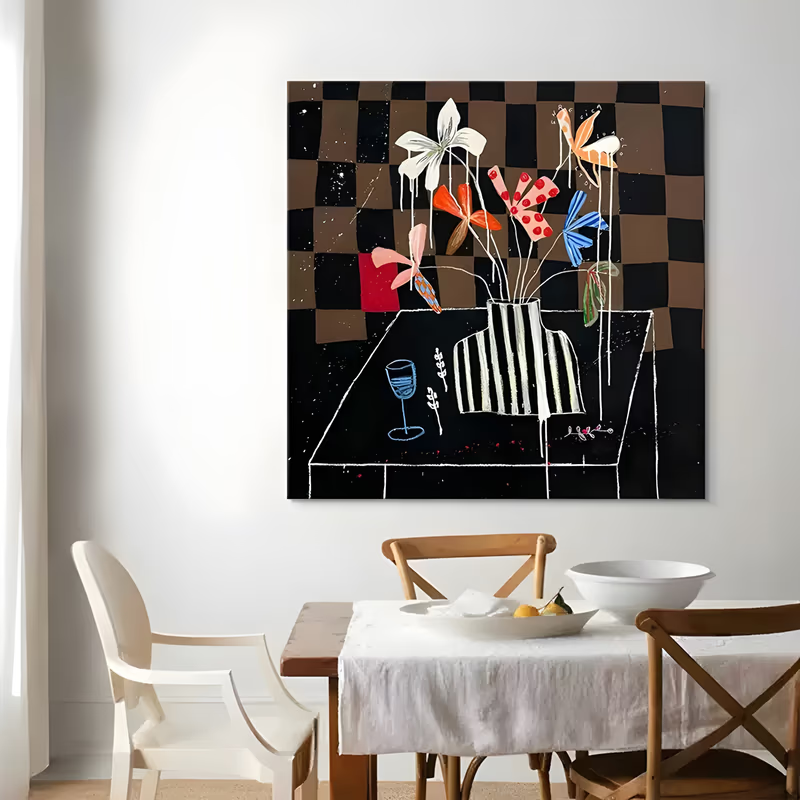
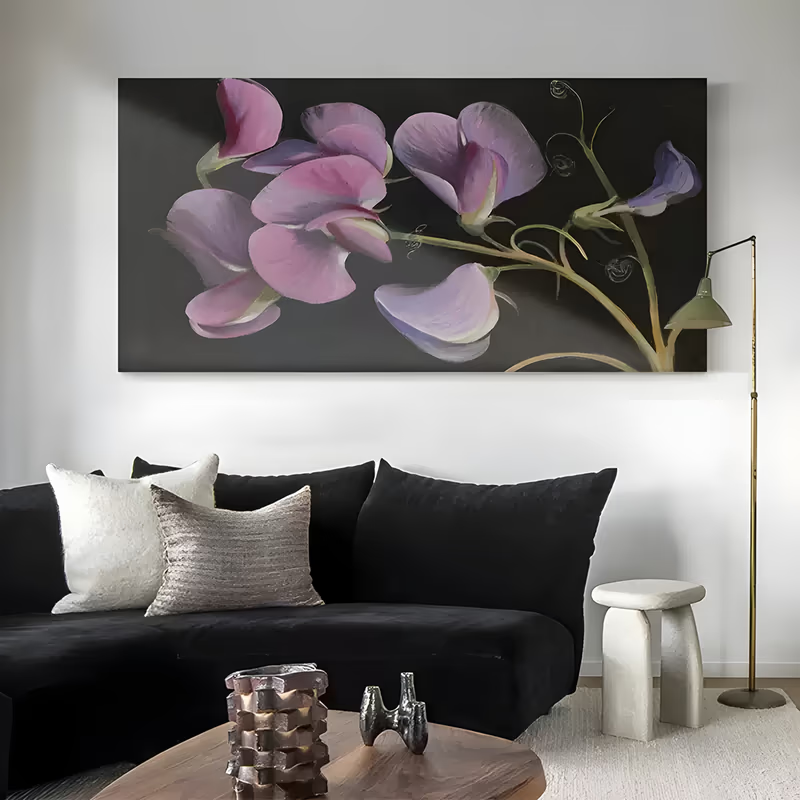
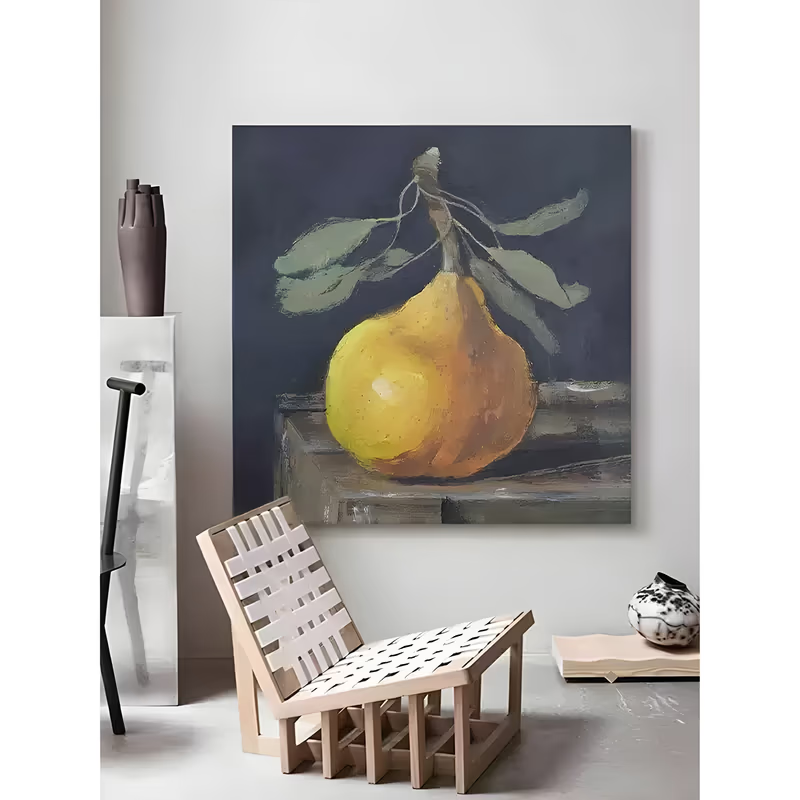
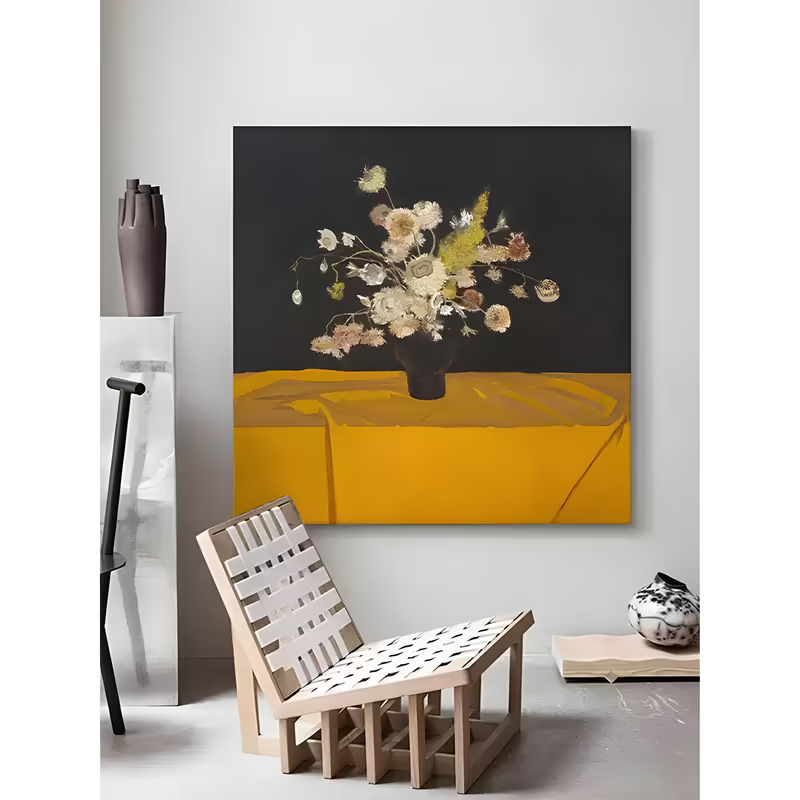
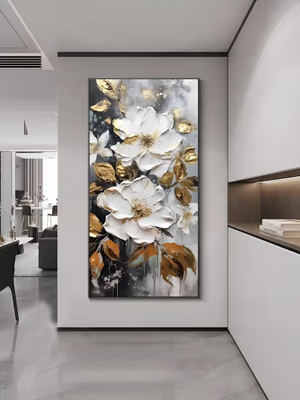
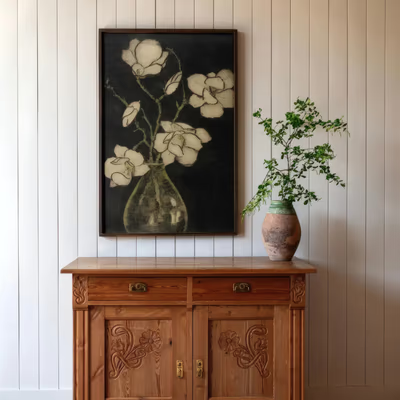
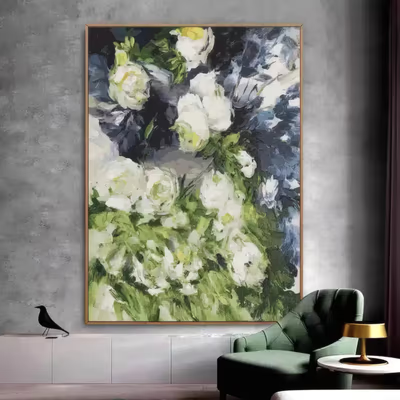
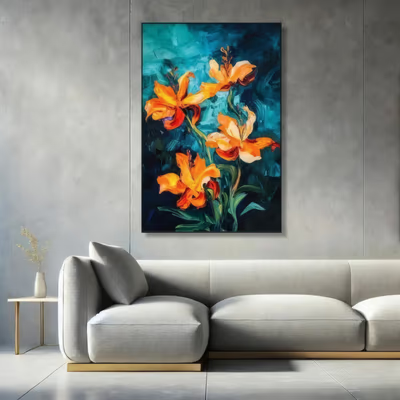
A Dutch-style bouquet in an urn, wine with grapes and apples, a pumpkin with dark plums, cream magnolias on black, a single red bloom on grey plaster. The tradition of the old-master still life, with its candle-lit darkness, fits dining rooms and libraries naturally. See moody still life.
Animals and figures in shadow
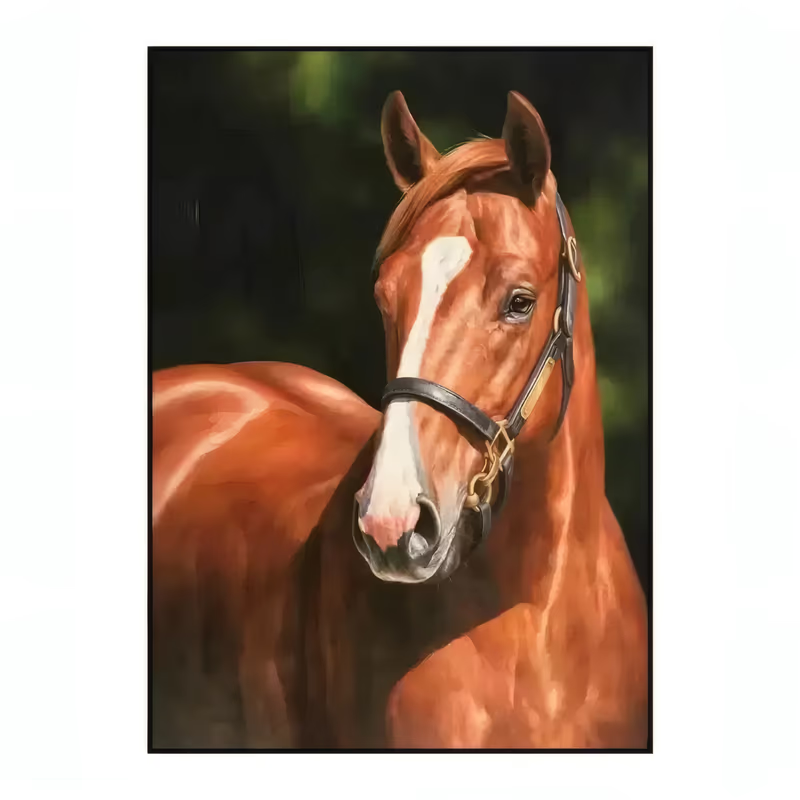
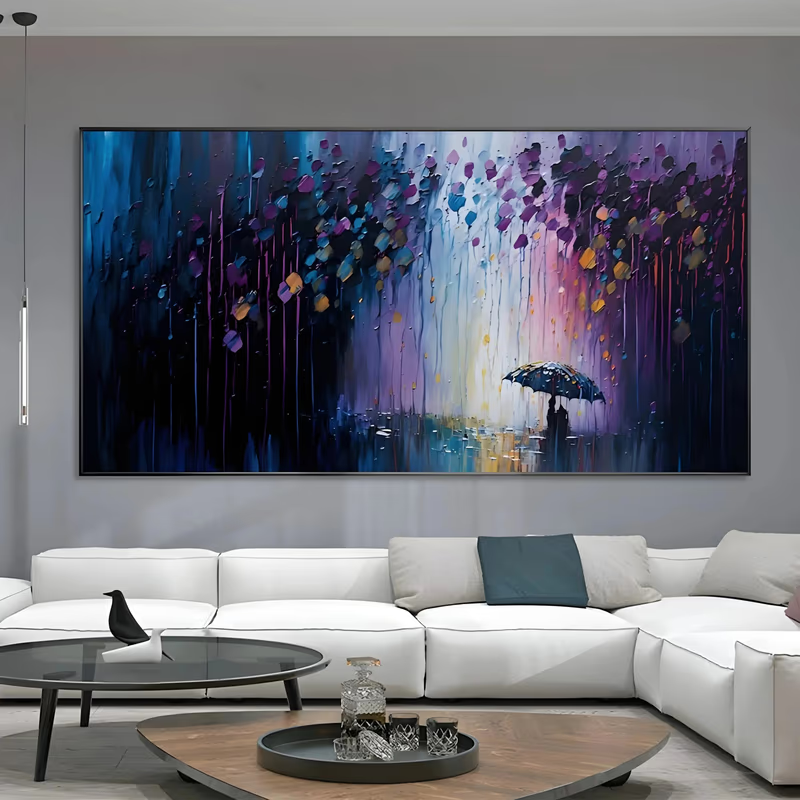
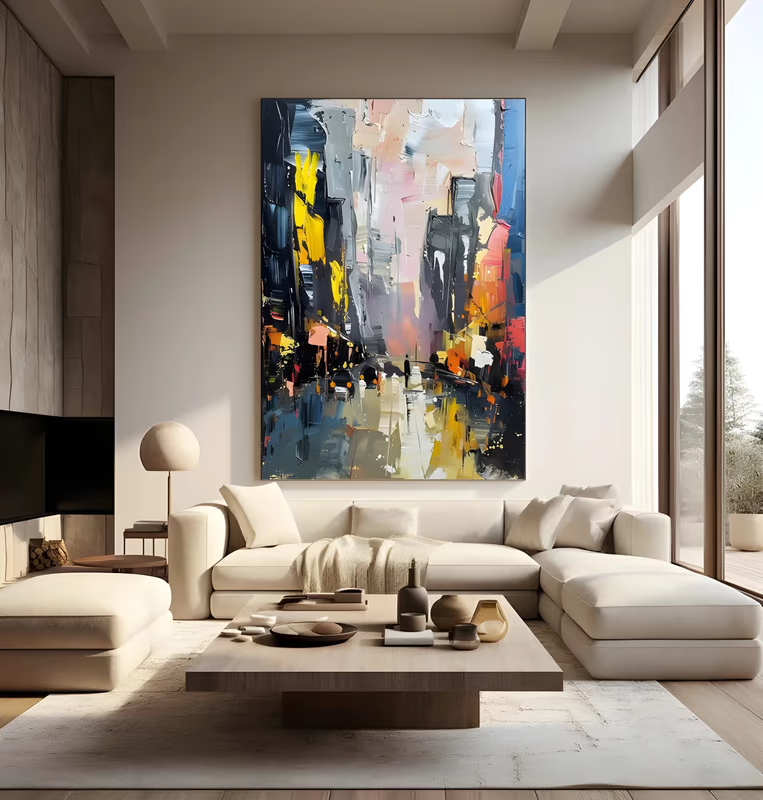
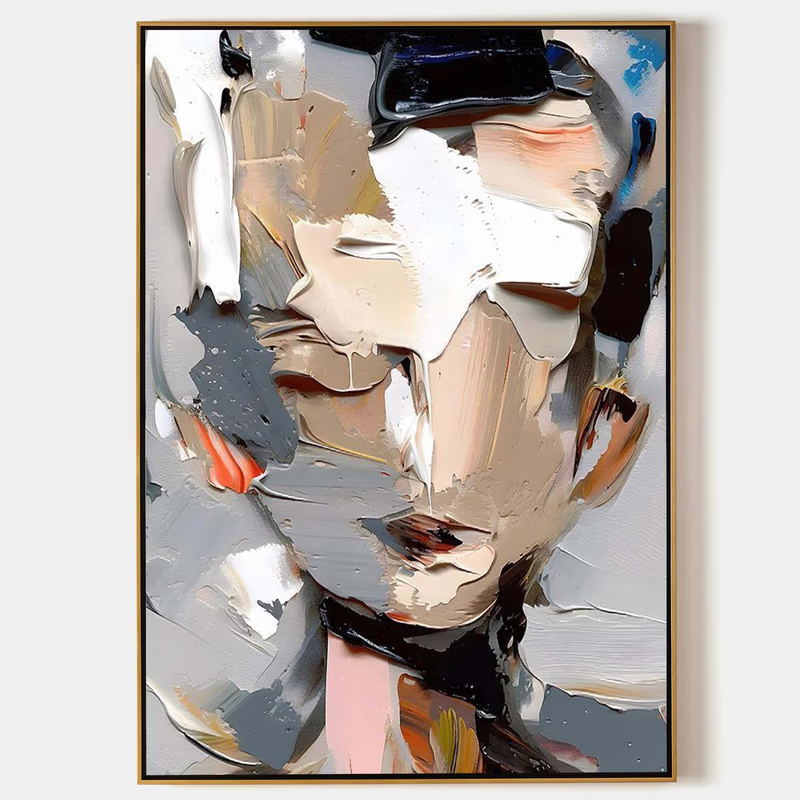
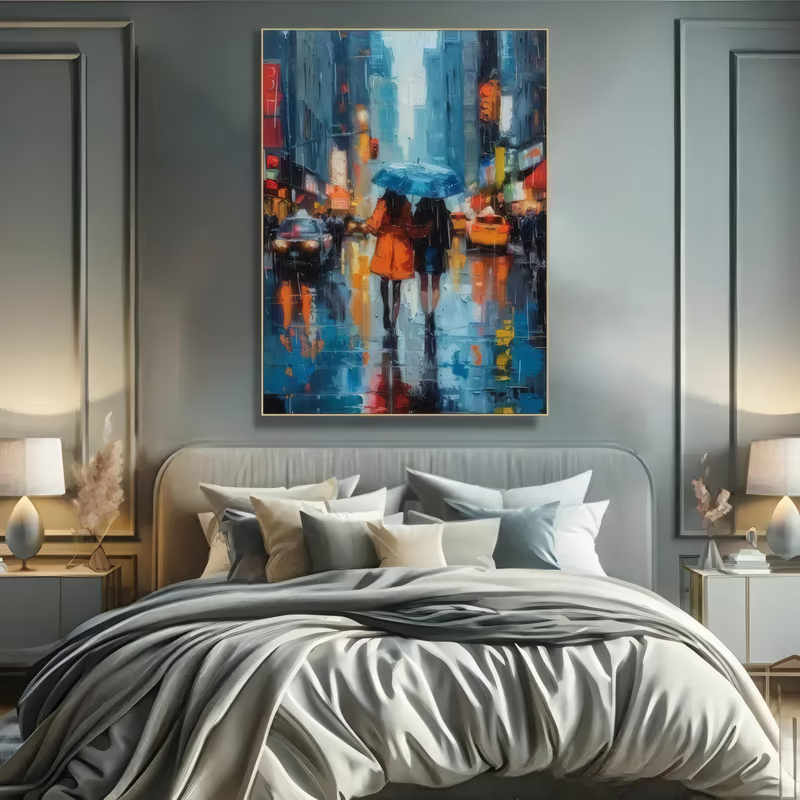
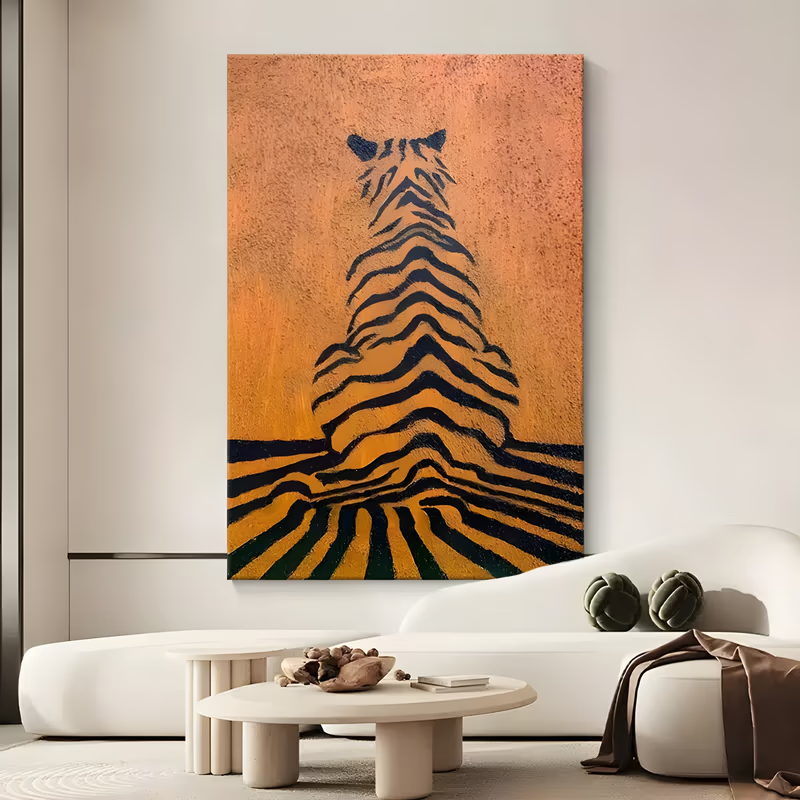
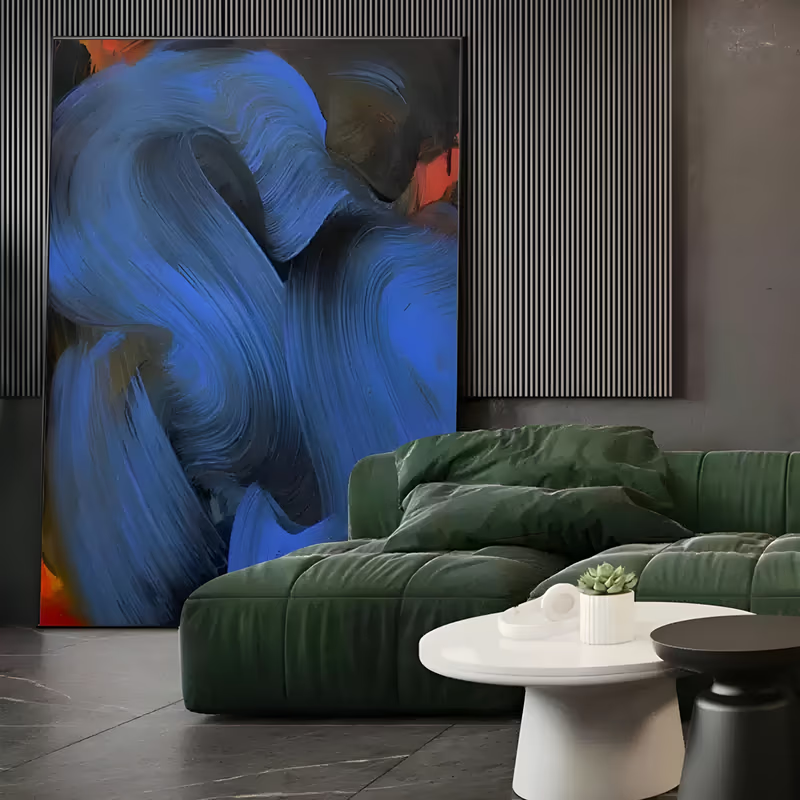
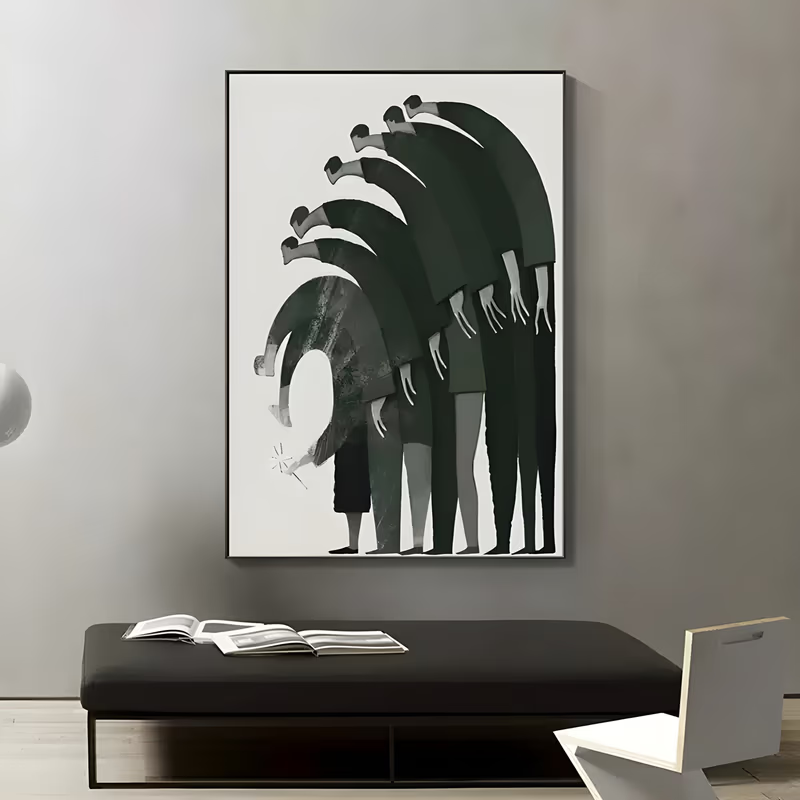
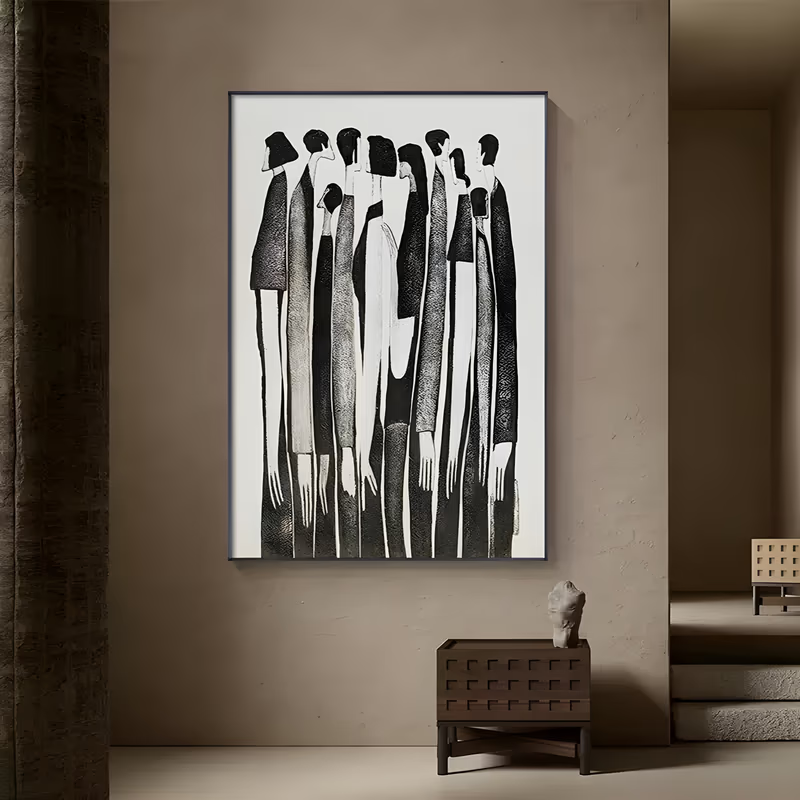
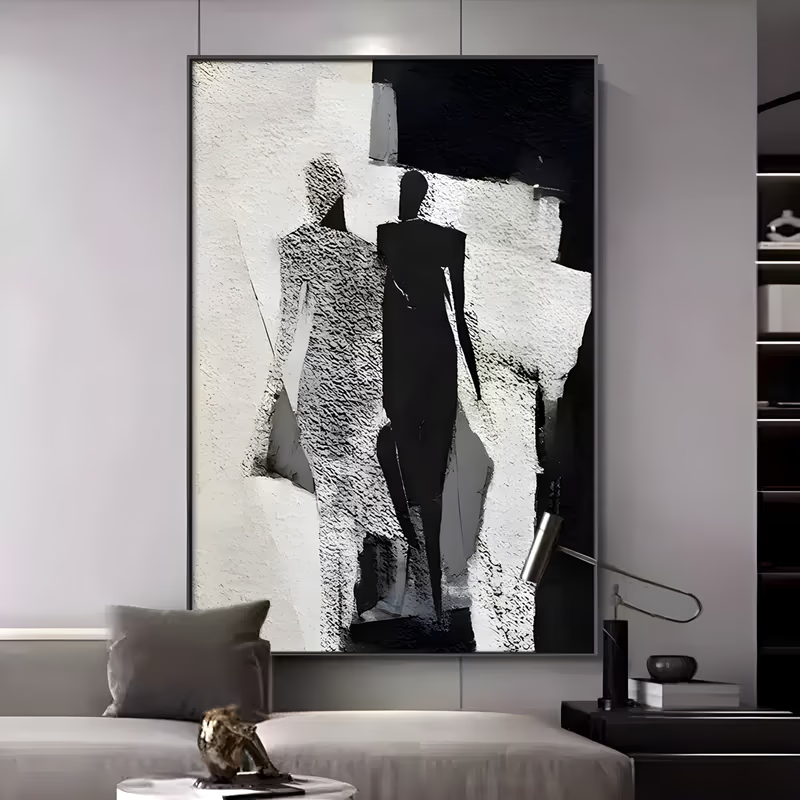
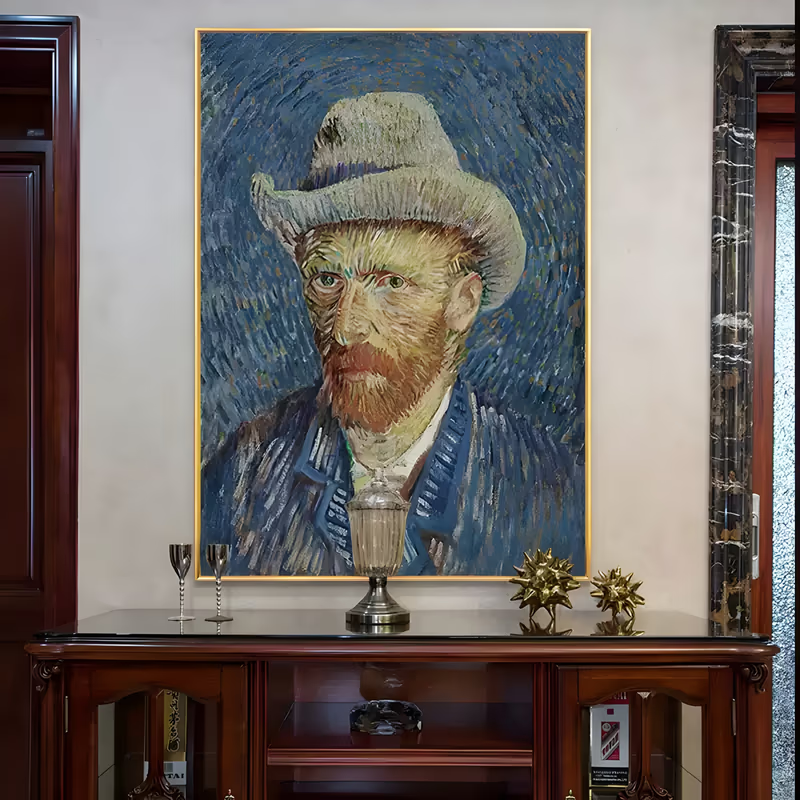
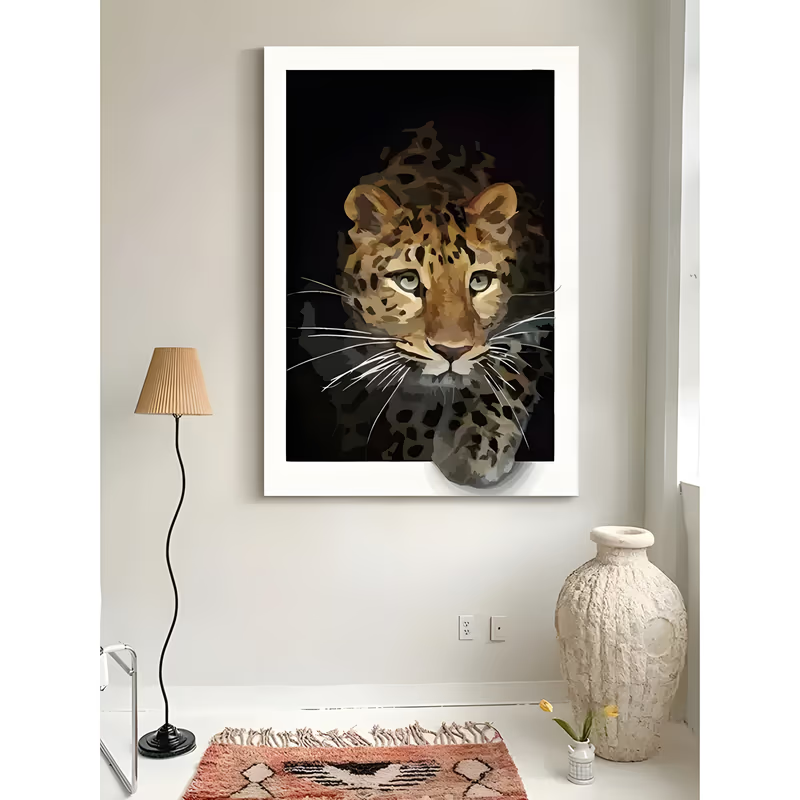
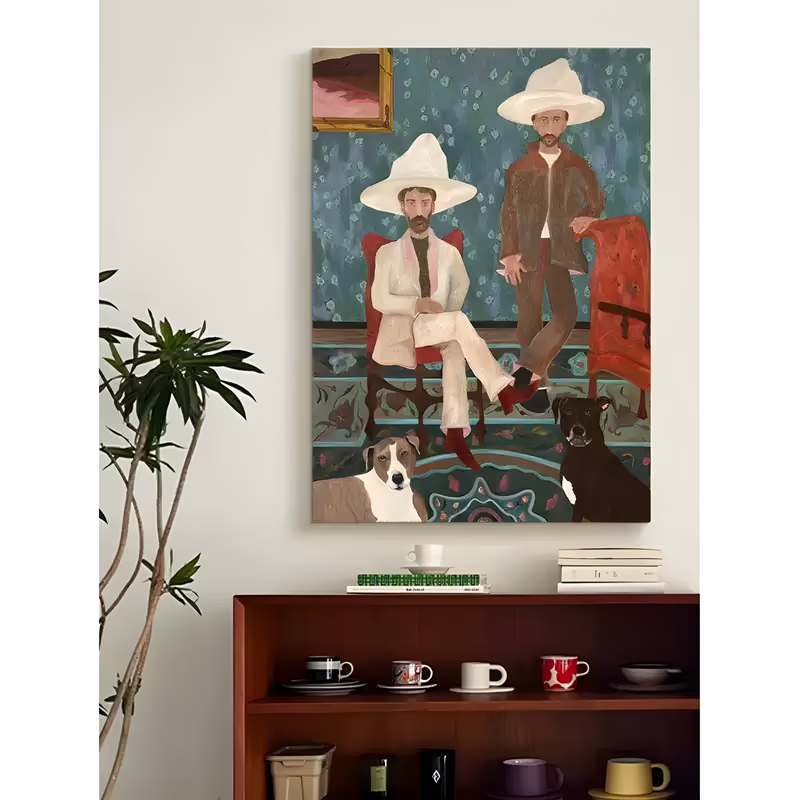
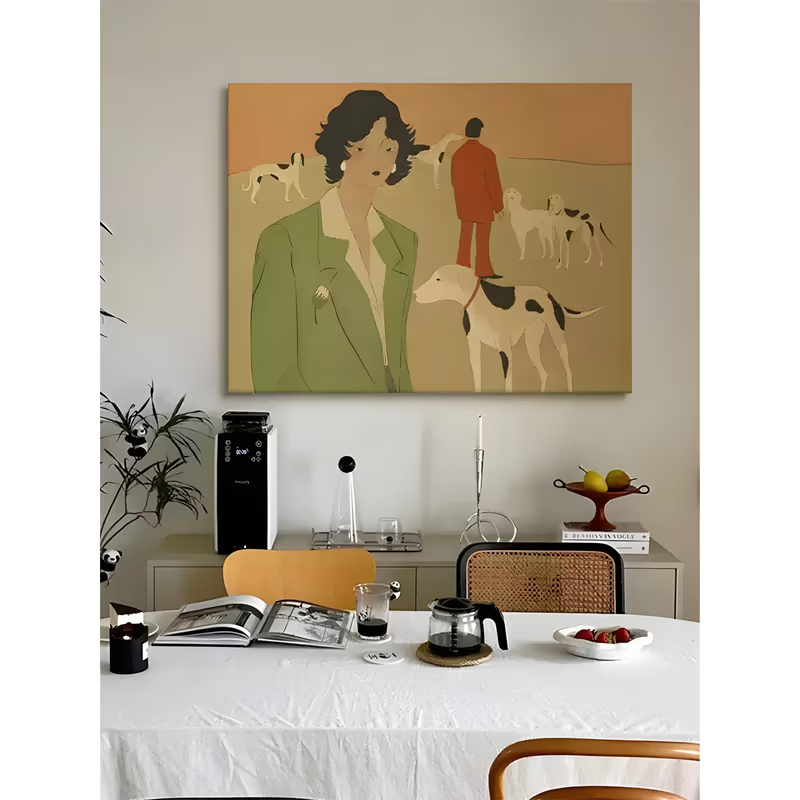
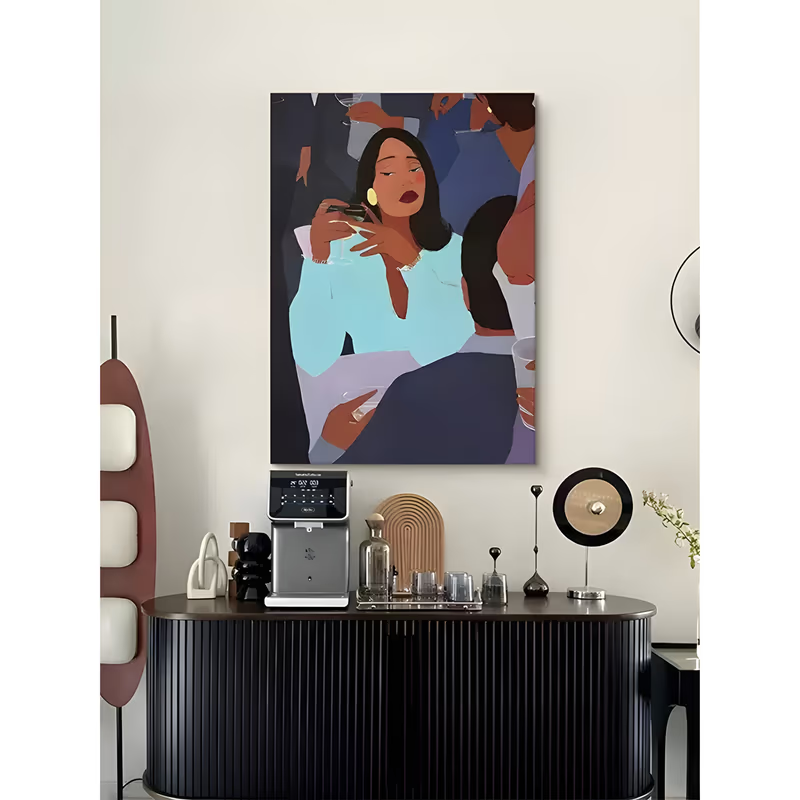
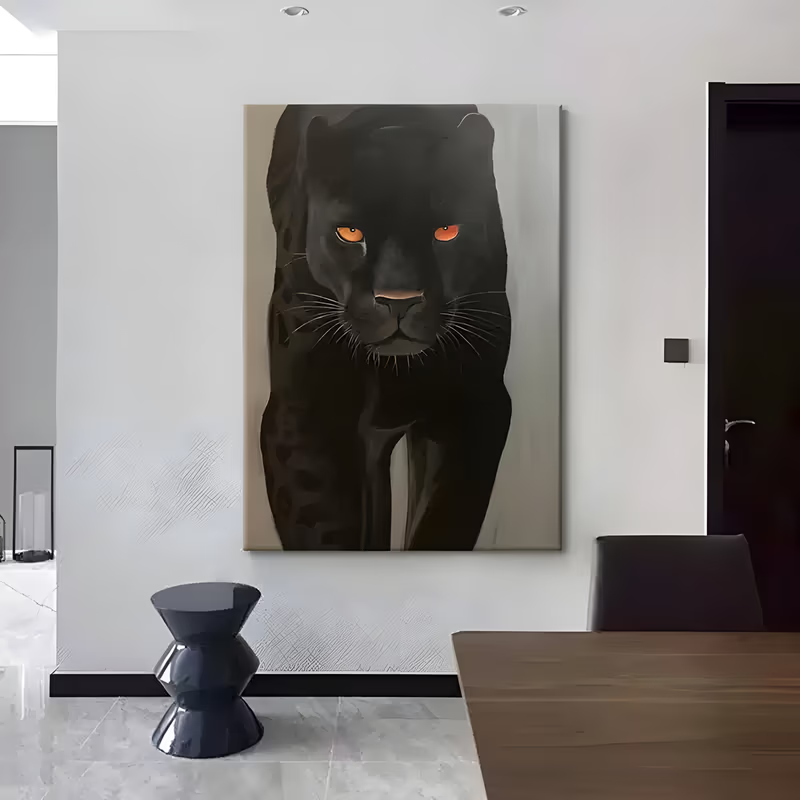
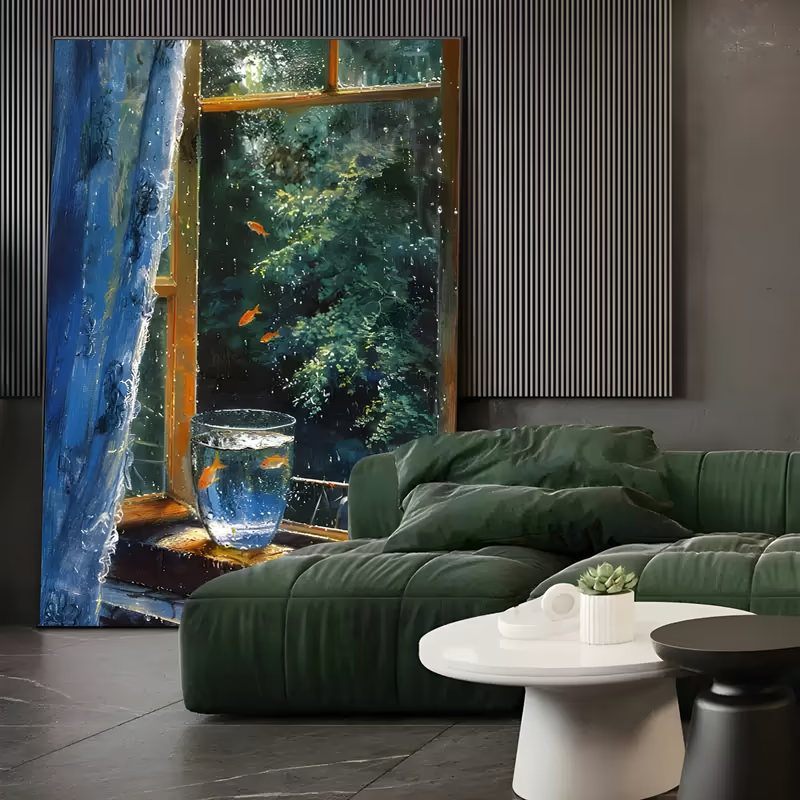
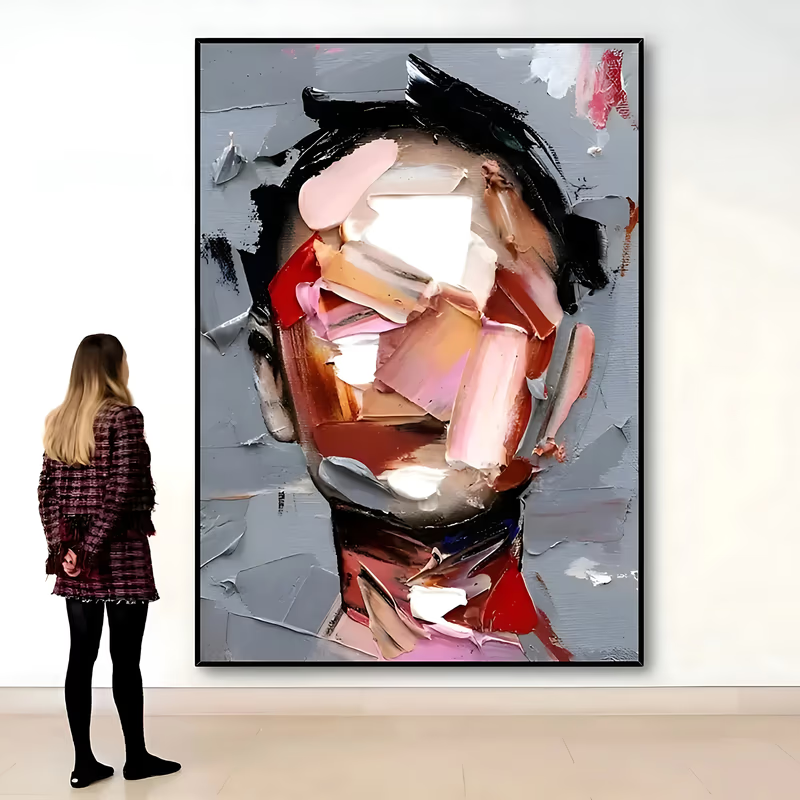
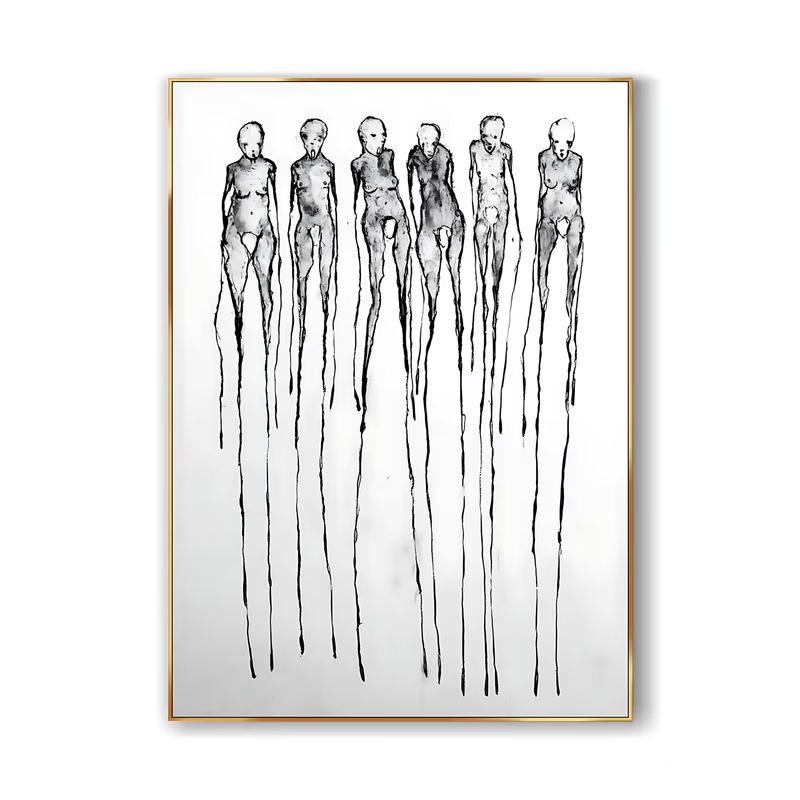
A chestnut horse with a halter, a lone figure under an umbrella in purple rain, a couple on a rainy street in cobalt and amber, an impasto portrait in beige and charcoal. A figure partly lost in shadow or rain carries a quiet story, perfect for a bar, a study or a reading corner.
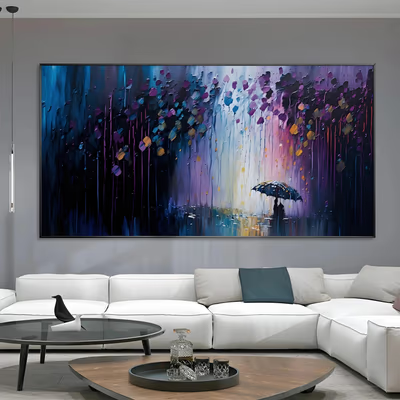
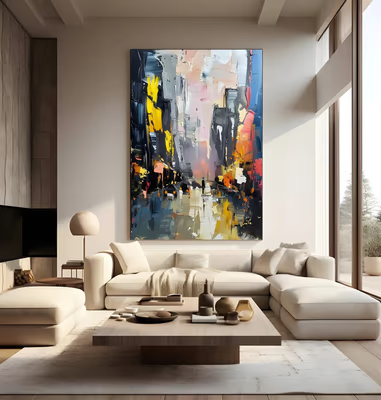
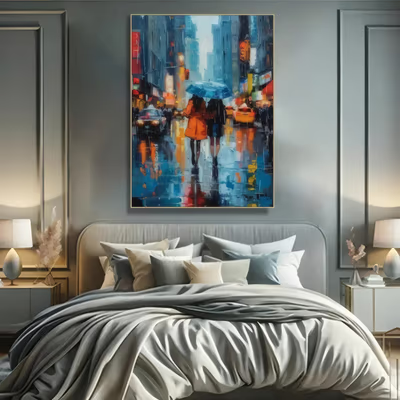
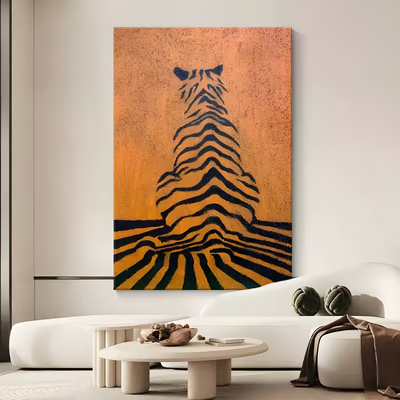
Should moody wall art match a dark wall or stand out from it?
Both work: a painting close in tone to a dark wall makes the room feel enveloping and seamless, while one a few shades lighter acts as a soft window and keeps the room from closing in.
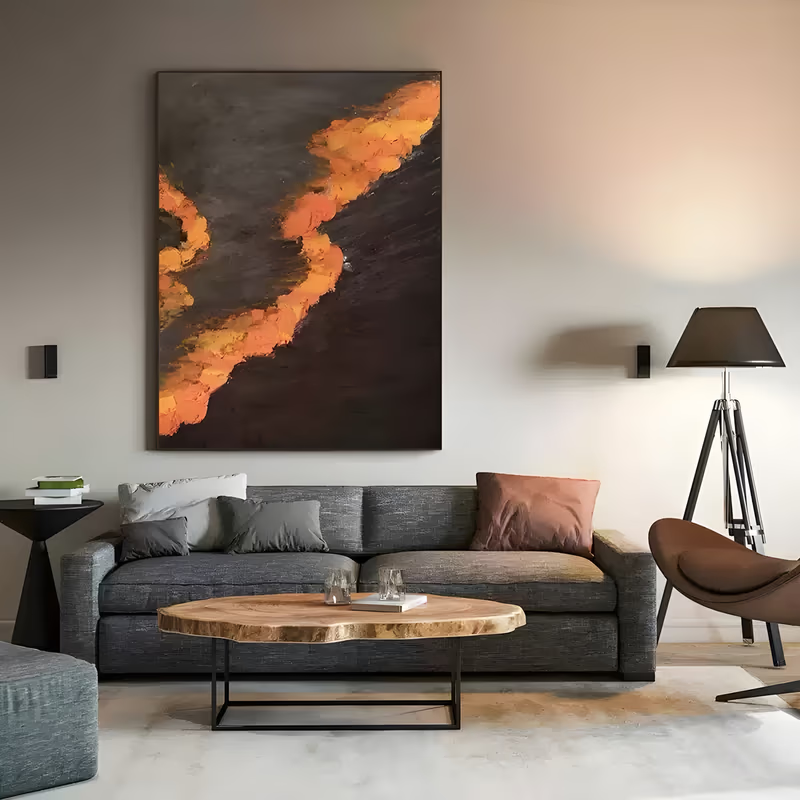
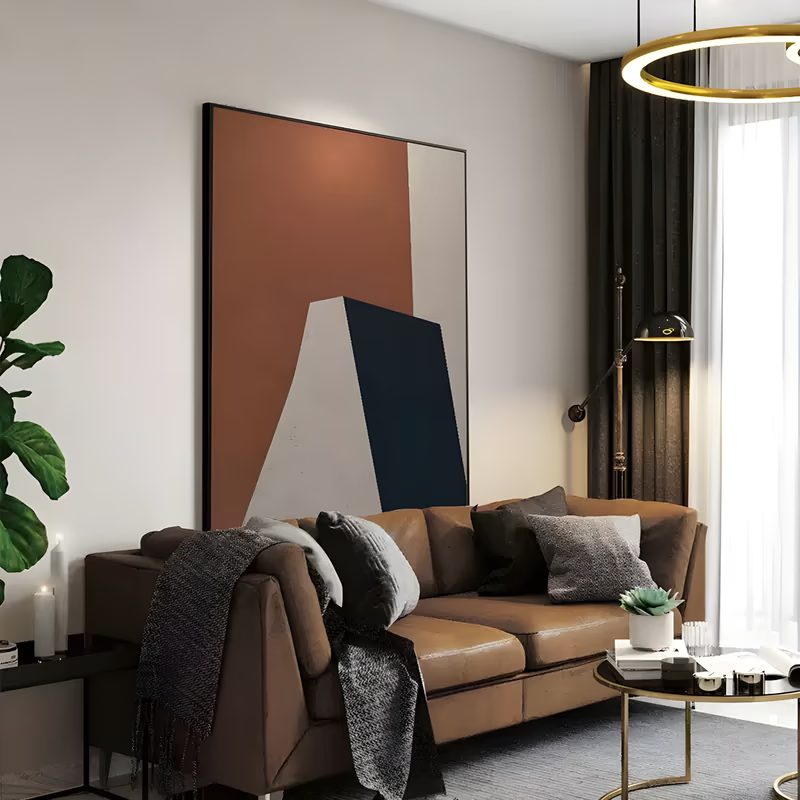
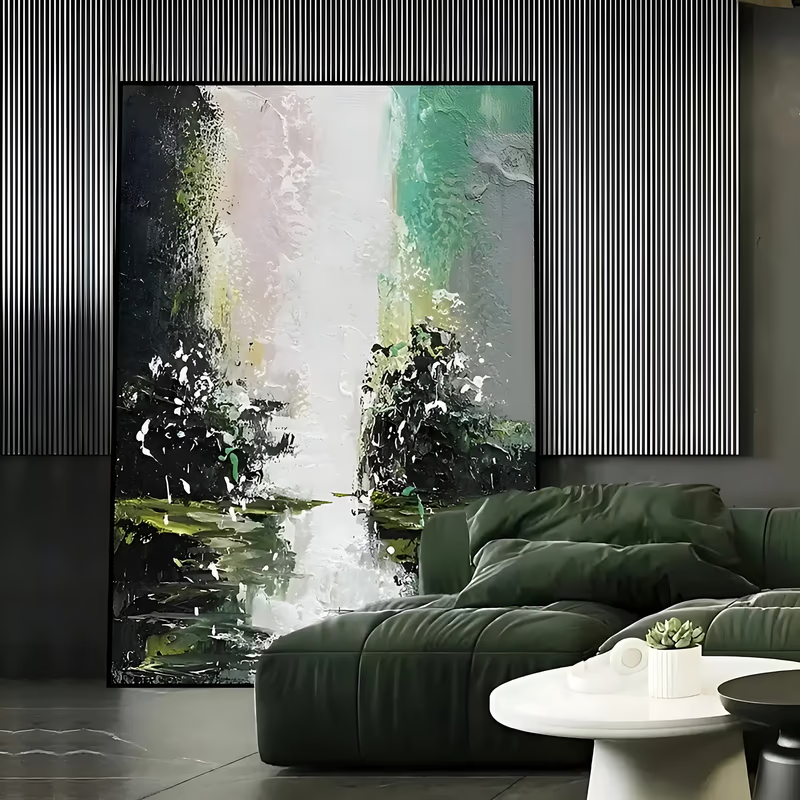
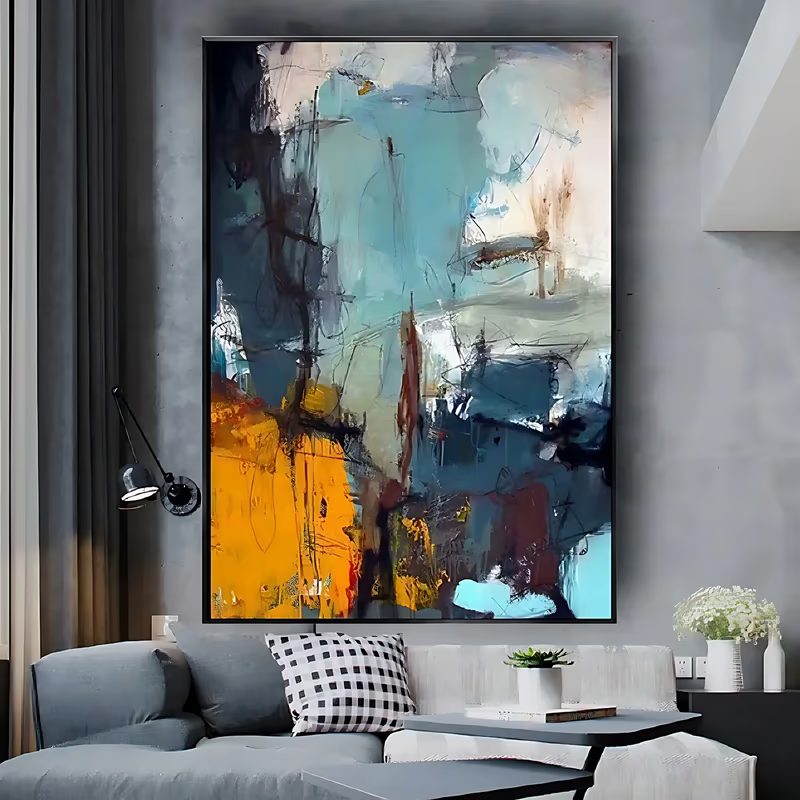
Tone on tone. In a colour-drenched room, where walls, woodwork and even the ceiling share one deep colour, a moody painting in the same family, navy on navy or olive on green, looks almost built in. The art then works through texture and small shifts of colour, best seen under a picture light. This is the most immersive approach and suits bedrooms, snugs and bars.
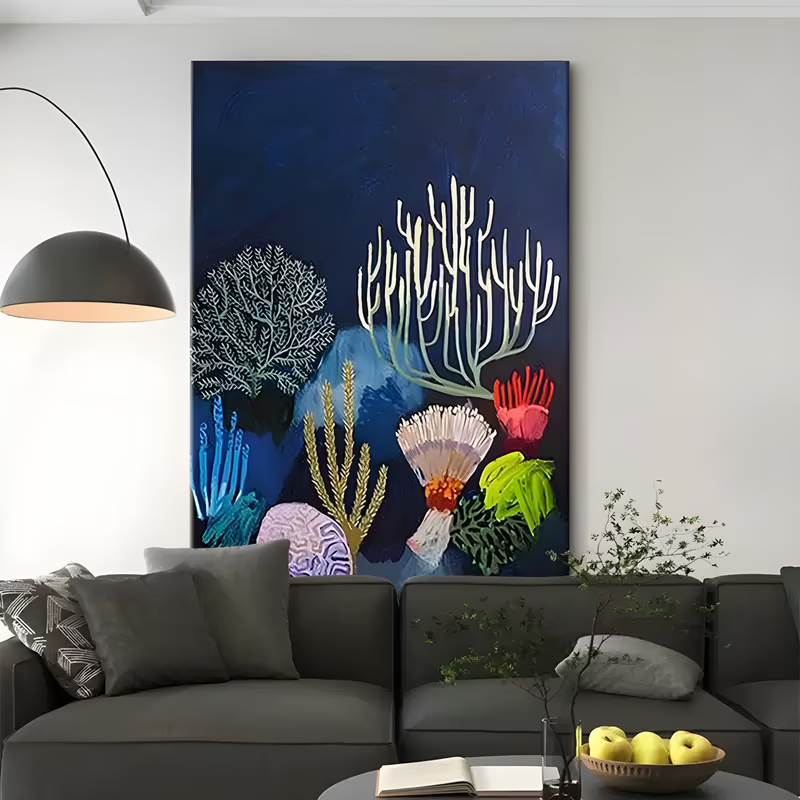
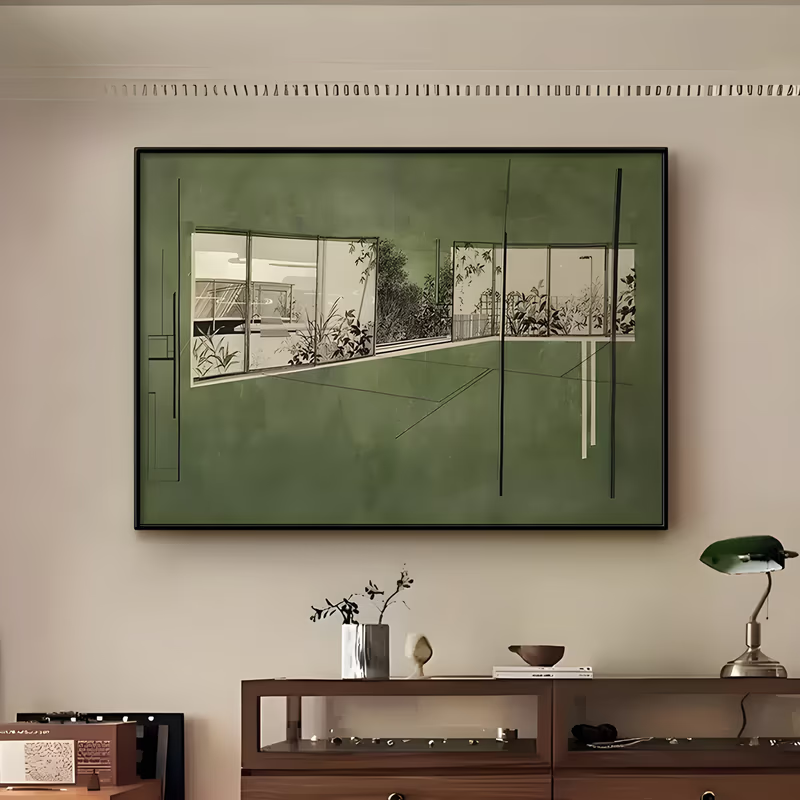
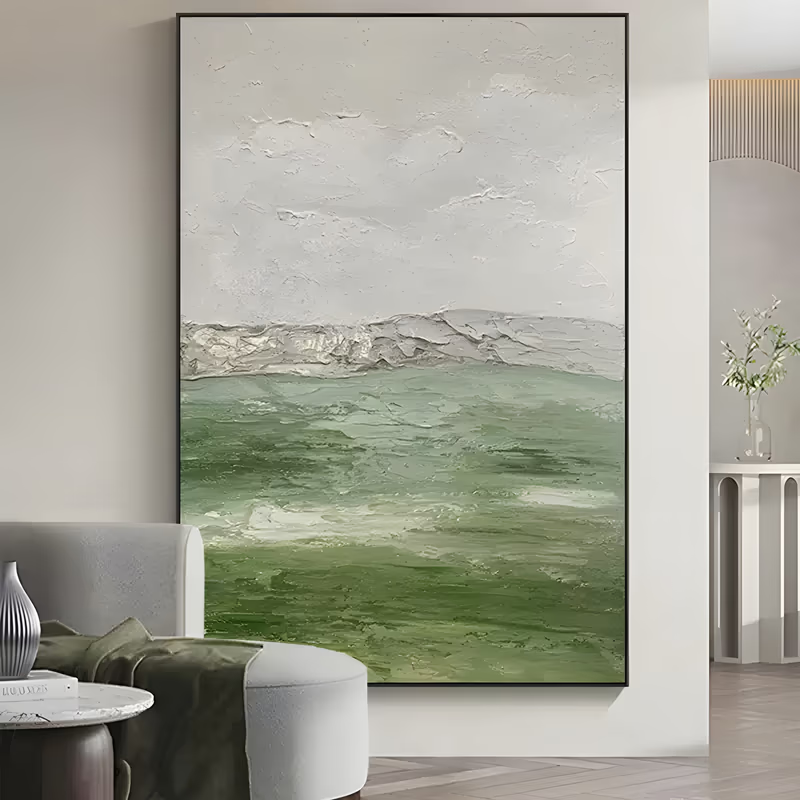
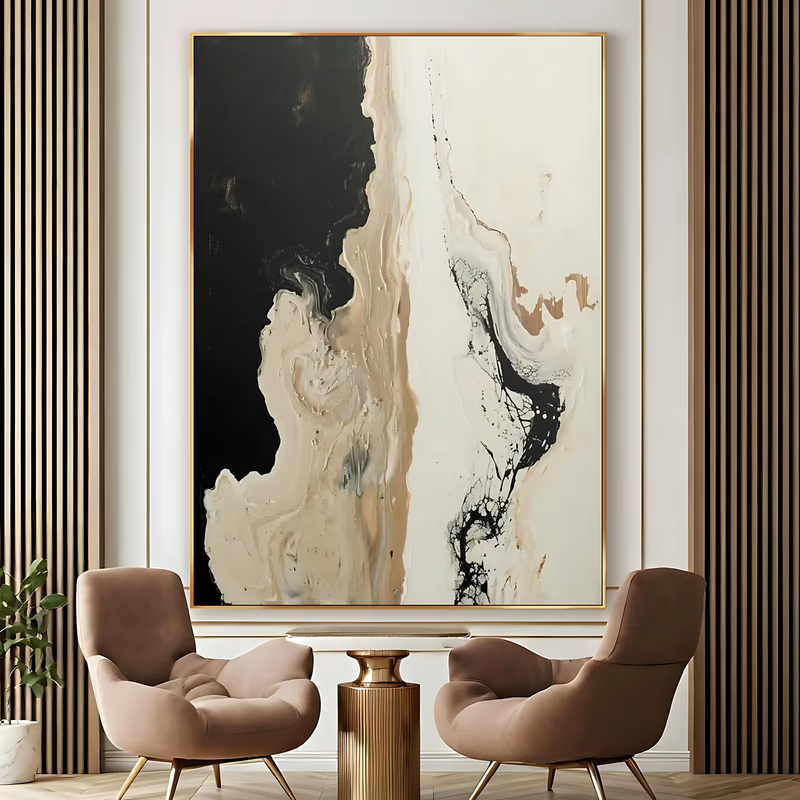
A step lighter. A misty grey lake, a sepia landscape or a cream-and-black plaster abstract on a charcoal or green wall gives the eye somewhere to rest and adds depth, like a view out of the room at dusk. This suits living rooms and dining rooms that also need to feel sociable.
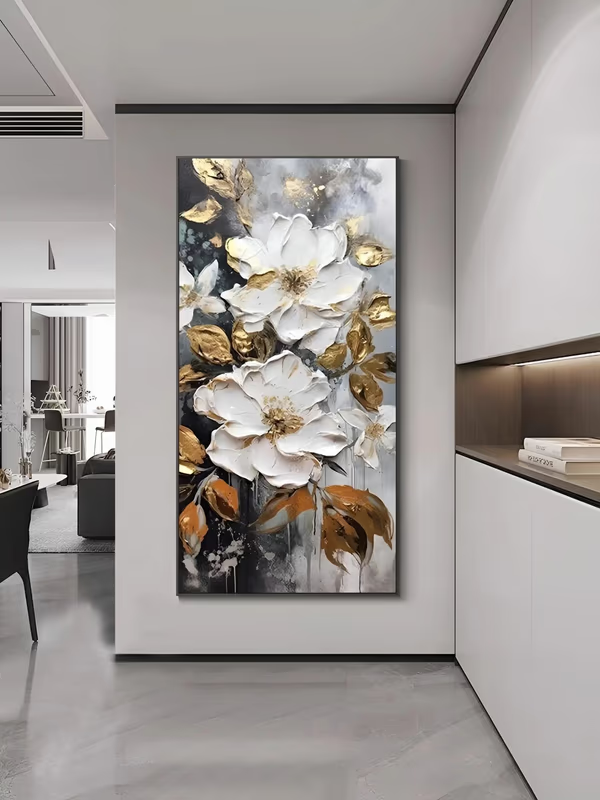
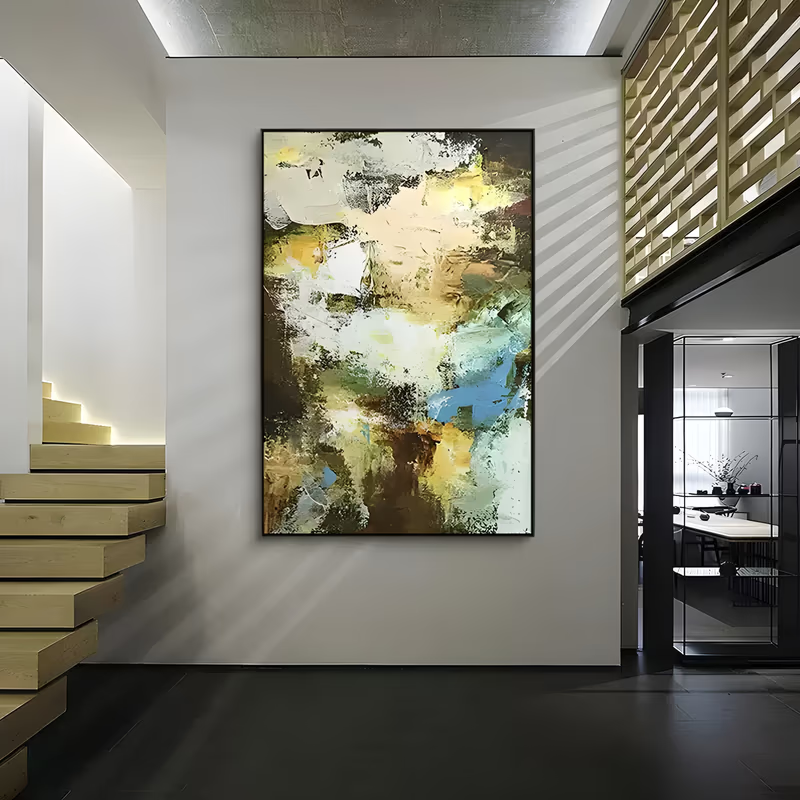
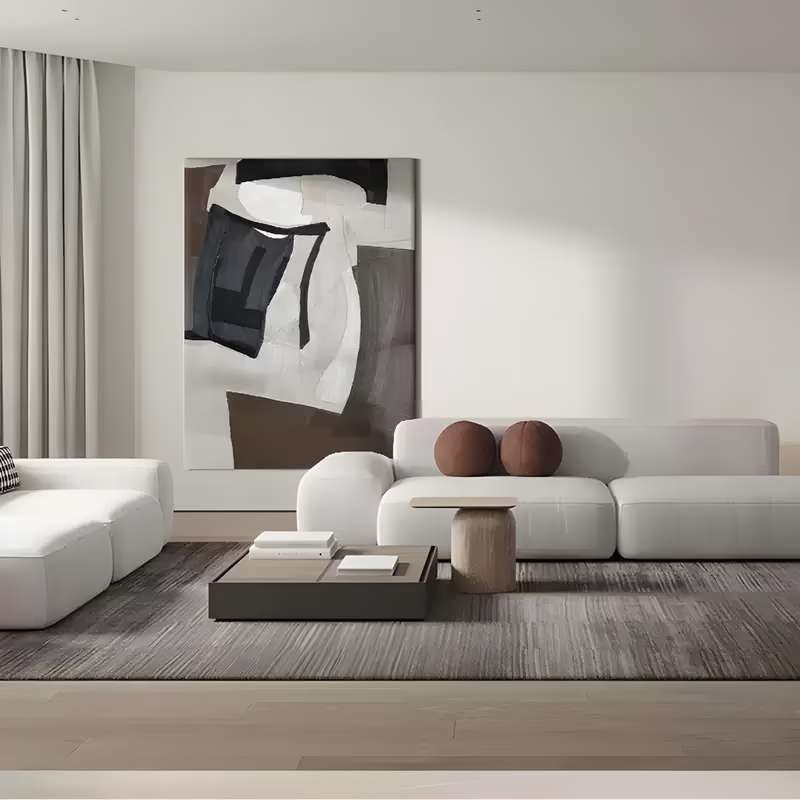
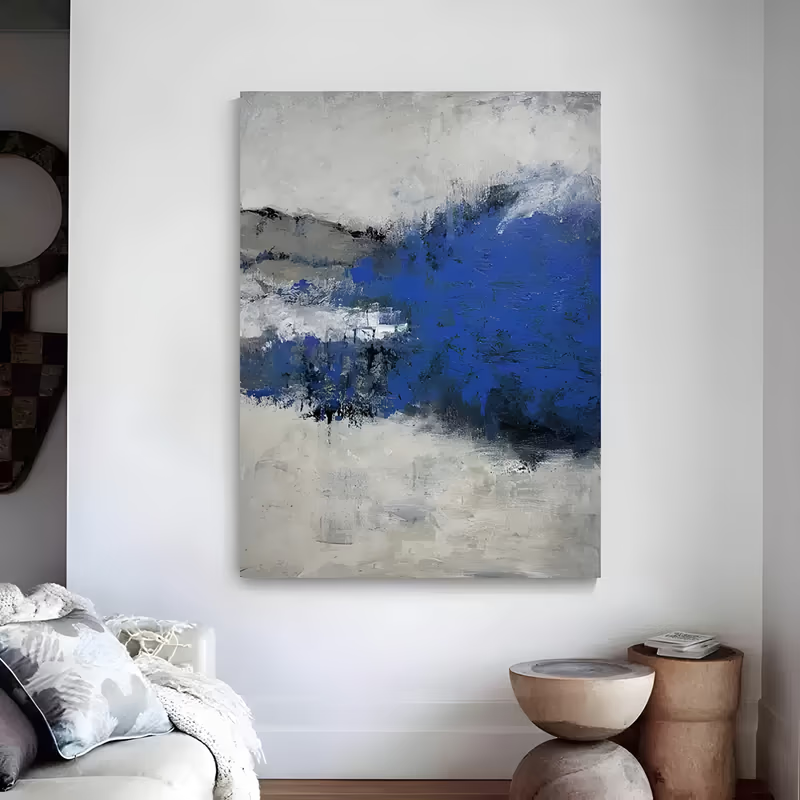
On light walls, moody art reverses the effect: it brings a pool of depth and quiet into a bright room. A single moody canvas on a white wall is one of the easiest ways to add character to a plain modern space. See also black wall art and grey wall art.
Which rooms and venues suit moody wall art?
Moody wall art suits rooms used in the evening or for retreat, such as bedrooms, studies, snugs, dining rooms and guest suites, and venues that sell atmosphere, such as whisky bars, private dining rooms and members' lounges.
Bedrooms and guest rooms
Deep, soft art makes a bedroom feel cocooned, especially with dark walls and warm lamps. In hotel rooms, it gives an evening feeling that guests associate with comfort. Bedrooms, hotel rooms and suites; for programmes, see guest room art programmes.
Studies, libraries and home offices
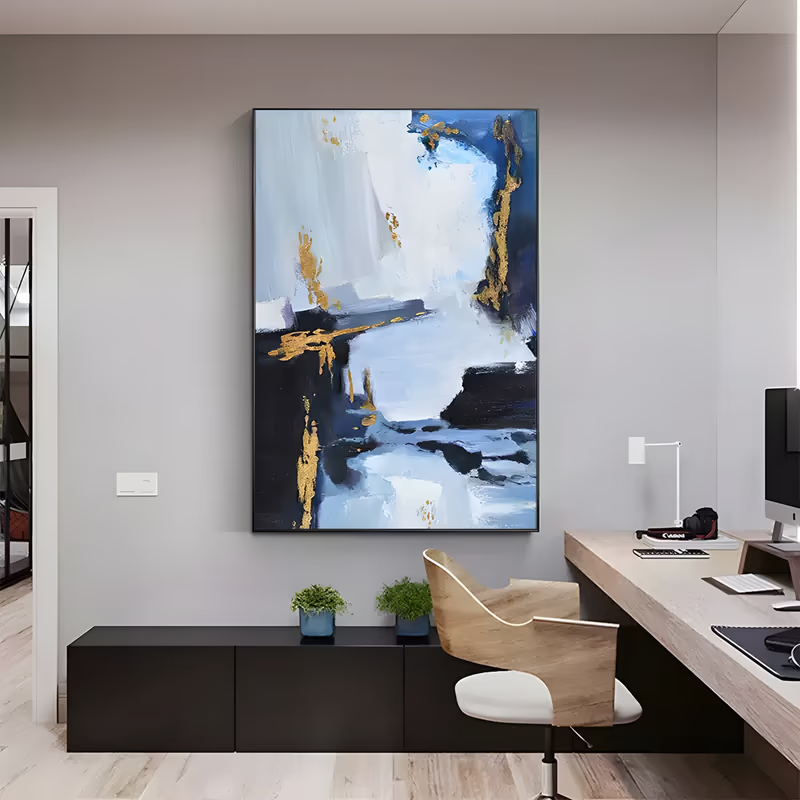
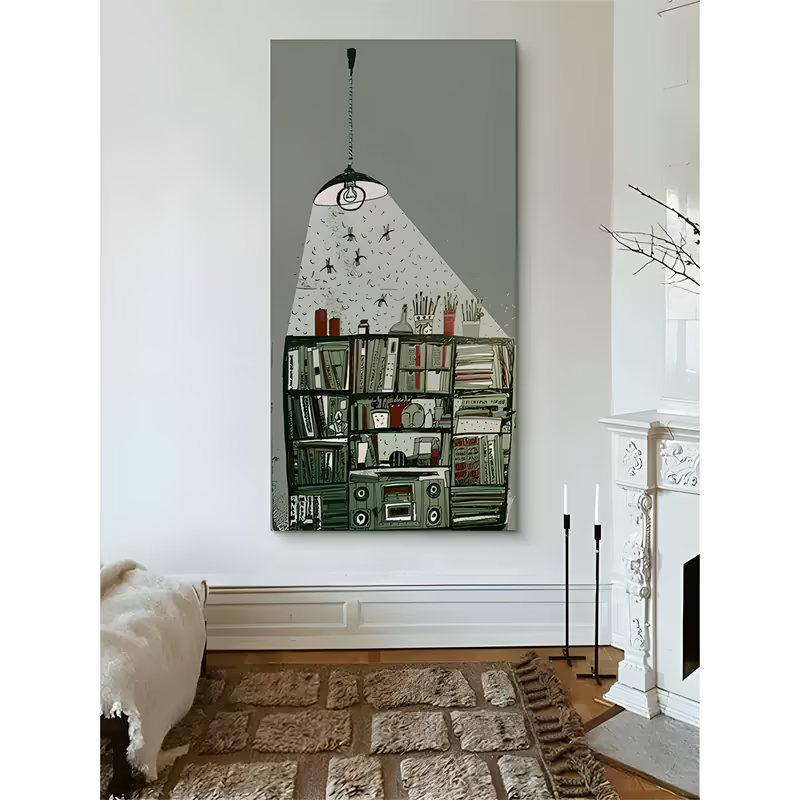
The dark-academia look, with book-lined walls, green or oxblood paint, brass lamps and old wood, wants old-master still lifes, misty landscapes and figures in shadow. Moody art for studies.
Living rooms, snugs and dining rooms
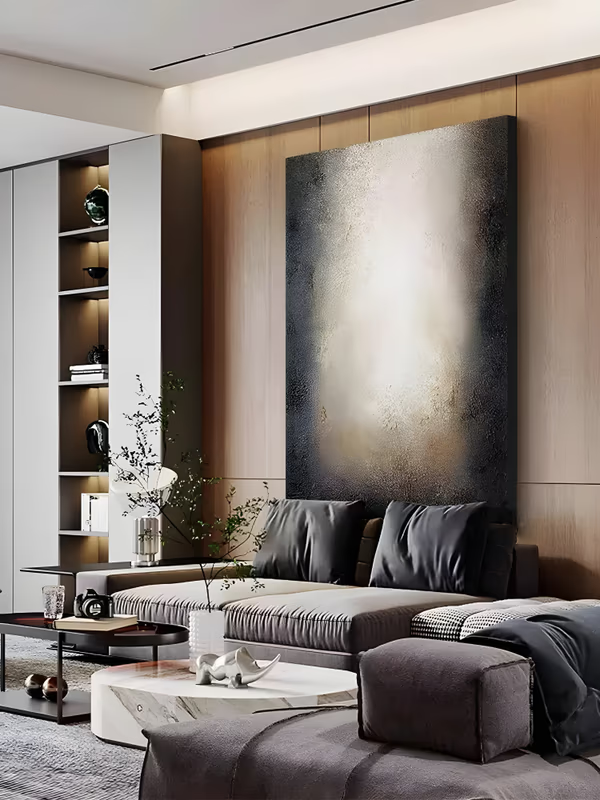
A moody canvas gives a living room depth after dark and a dining room a candle-lit backdrop. Living rooms, dining rooms.
Bars, private dining and boardrooms
Low light, leather and dark wood all suit moody work, which adds atmosphere without distracting from conversation. Boardrooms benefit from its seriousness. Bars and restaurants, boardrooms; see restaurant groups and bars.
Spas use the softest moody art in relaxation rooms, where dim light and stone are already part of the scheme. Spa and wellness.
How do you light moody wall art so a room feels rich, not gloomy?
Light moody wall art with warm, low, layered light, a picture light or a soft spot on the canvas plus lamps around the room, so the painting glows while the corners stay soft.
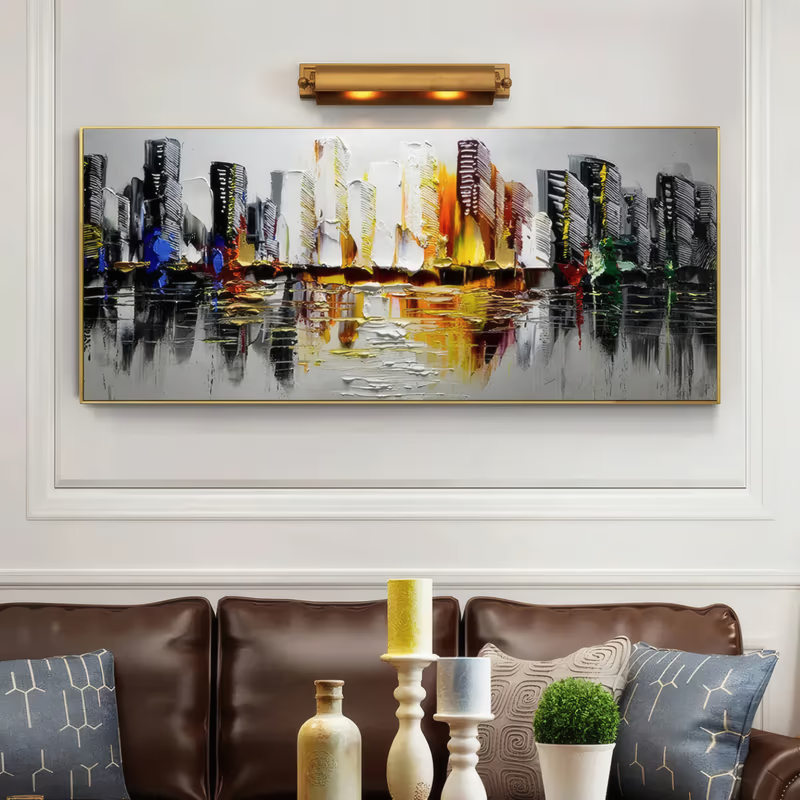
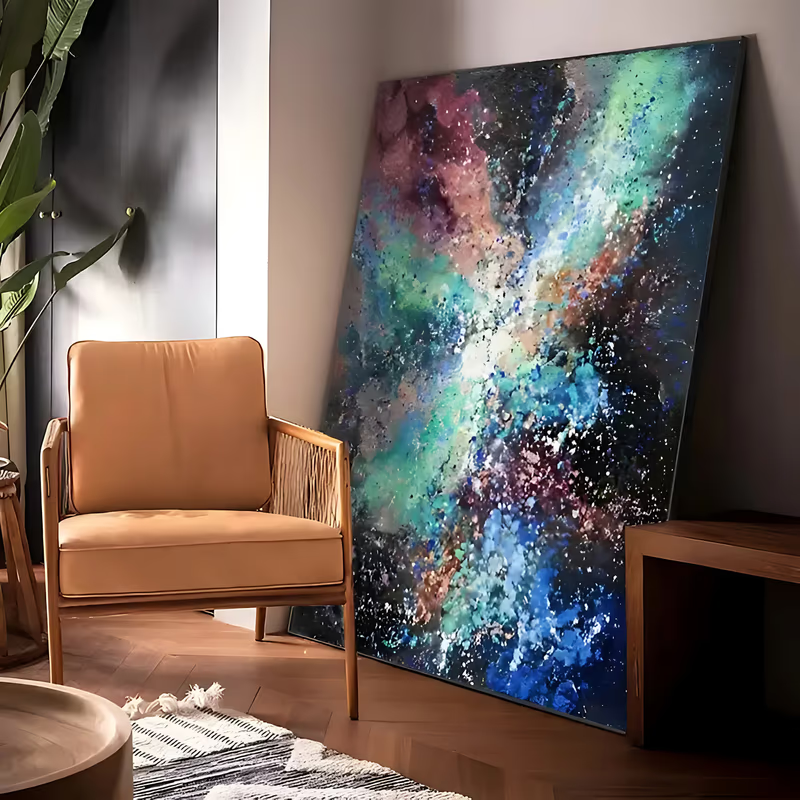
A dark painting under a single cold ceiling light looks flat and heavy; the same painting under a warm picture light looks deep and rich. Use warm-white bulbs, around 2700K, and let the painting be one of the brighter things in the room after dark. Add lamps at seating height, and keep a little reflective material nearby, brass, glass or a gilded frame, to catch the light.
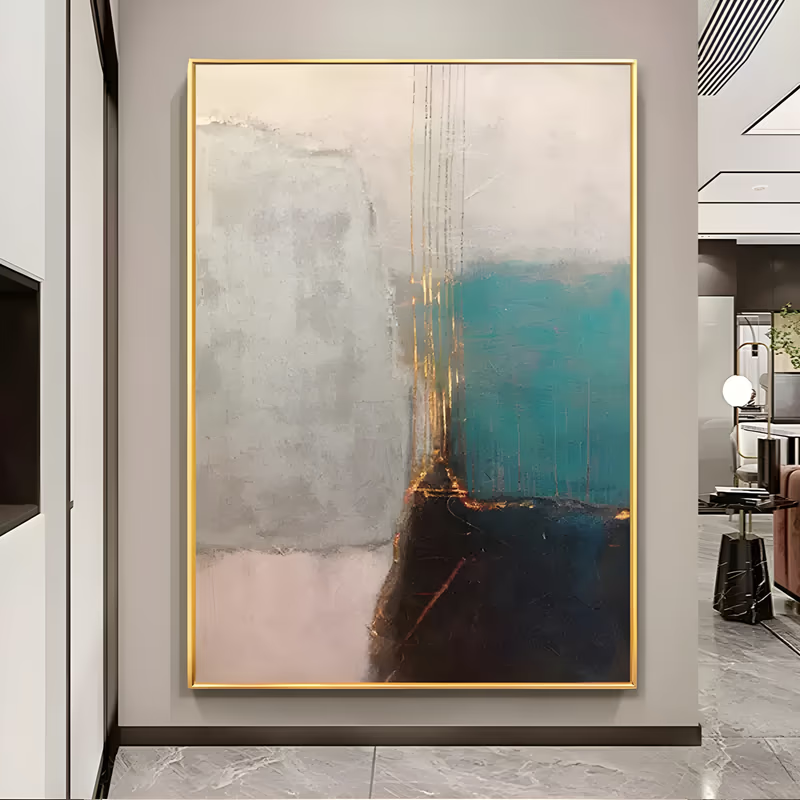
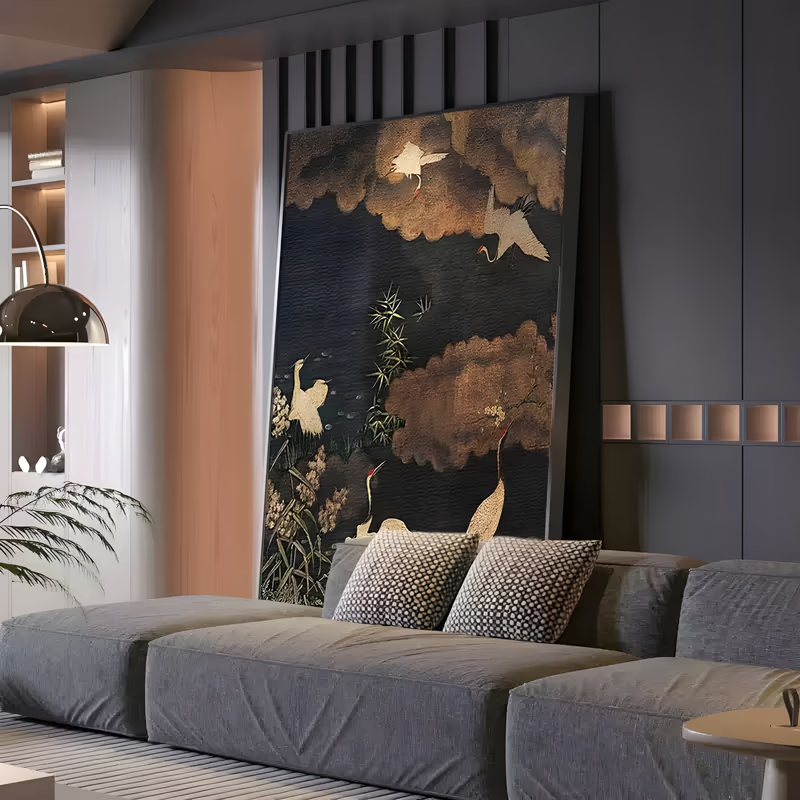
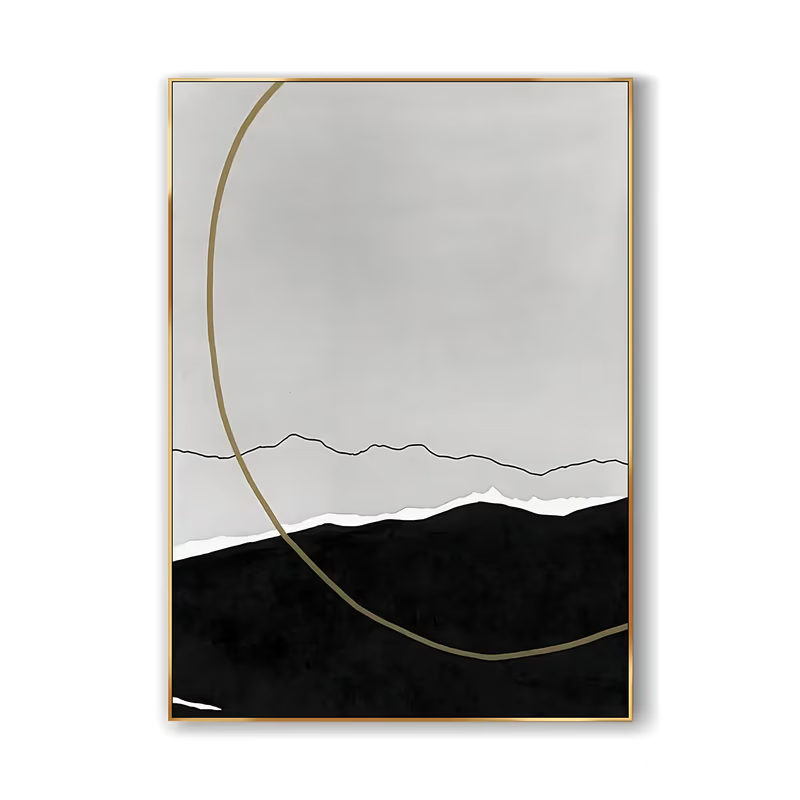
The painting itself can help. A moody piece with a few lighter passages, a pale sky line, a cream bloom or a band of mist, keeps a dark room alive in daylight, when lamps are off. In a room with little natural light, choose those lighter moody works; in a bright room, the deepest ones are safe. Gold, brass and warm wood frames add warmth around dark canvases, while black frames make them recede into a dark wall.
How big should moody wall art be, and can it be used as a series?
Moody wall art can be hung larger than brighter work, because low contrast is restful even at scale, and it works well as a series across rooms, floors or a whole hotel.
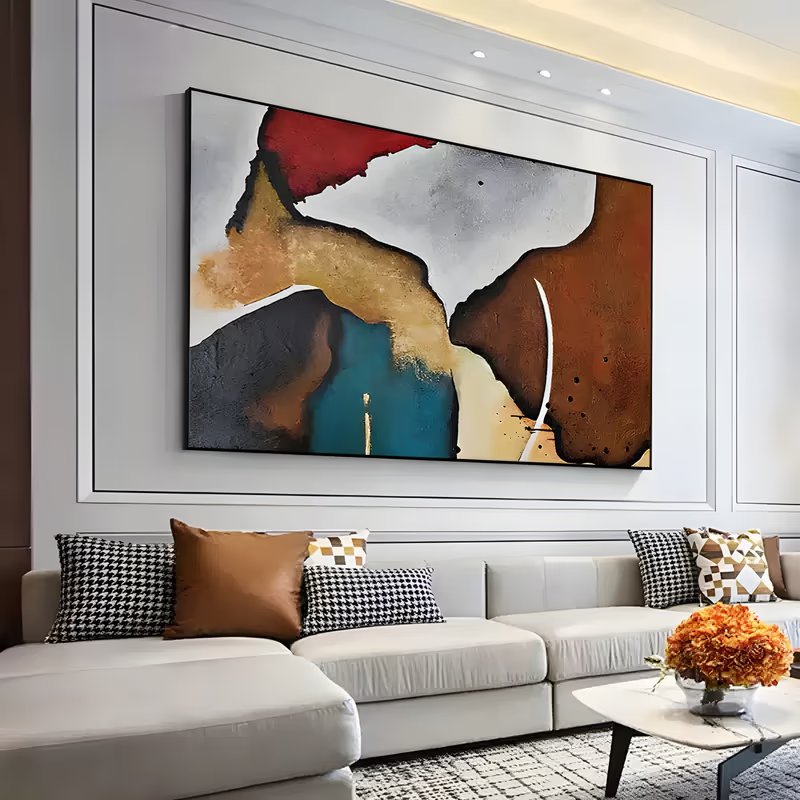
Over a bed or sofa, a moody canvas can span up to three-quarters of the furniture width without overpowering the room. Leave 15–25 cm (6–10 in) above the headboard or sofa back and keep the centre near 145–150 cm (57–59 in) from the floor. On a colour-drenched wall, a very large piece, or a pair hung close together, reads almost like panelling. In a small room, one moody piece is usually enough; several can make the space feel heavy.
Because moody art is quiet, it suits repetition: a misty landscape in navy for one floor and in forest green for the next; a set of plaster abstracts for every guest room on a corridor; matching still lifes for a private dining room. Trade buyers usually approve one sample first, then the run, with each piece approved from progress photos. Each painting needs about 10 days at the easel and 5–7 days by DHL, FedEx or UPS express; volume pricing starts at 10 pieces. See serviced apartments and residential interior designers.
How do you order a moody painting that matches your dark paint colour?
Send the paint colour by name or code, a photo of the room in its evening light and the size you need, and the moody painting is mixed to sit with your wall before work begins.
Deep colours vary enormously: one navy leans green, another violet, and an olive can read brown under lamps. Because each piece is painted to order, the ground and the shadows can be mixed to suit your paint, fabric or timber, and any catalogue work can be repainted in another dark colourway. If the format changes, the composition is redrawn to the new proportions, not stretched.
Dark paint is hard to judge on screen, so you receive progress photos or video at each stage and the painting goes no further until you approve. A final photograph is approved before dispatch. Canvases ship rolled, stretched ready to hang, or framed in gold, silver, black, white or wood. Plaster and deep relief pieces travel stretched or framed unless you agree to a thinner texture that can be rolled. Delivery is by DHL, FedEx or UPS express on a route found for your address, with the shipping cost confirmed before anything leaves. Ask for a quote or see custom work from your own photograph.