Geometric art guide · Updated
How to choose geometric wall art by shape, style and scale
Key takeaways
- Shape sets the mood: arcs and circles soften a room, stripes and grids steady it, sharp angles and diagonals give it energy.
- Match the geometry to the interior: arches and earth tones for Japandi and mid-century rooms, crisp black and white for modern ones, metallic sunbursts for art deco glamour.
- Geometry scales into a programme: one geometric design repainted in several palettes gives a hotel or office a related series across floors.
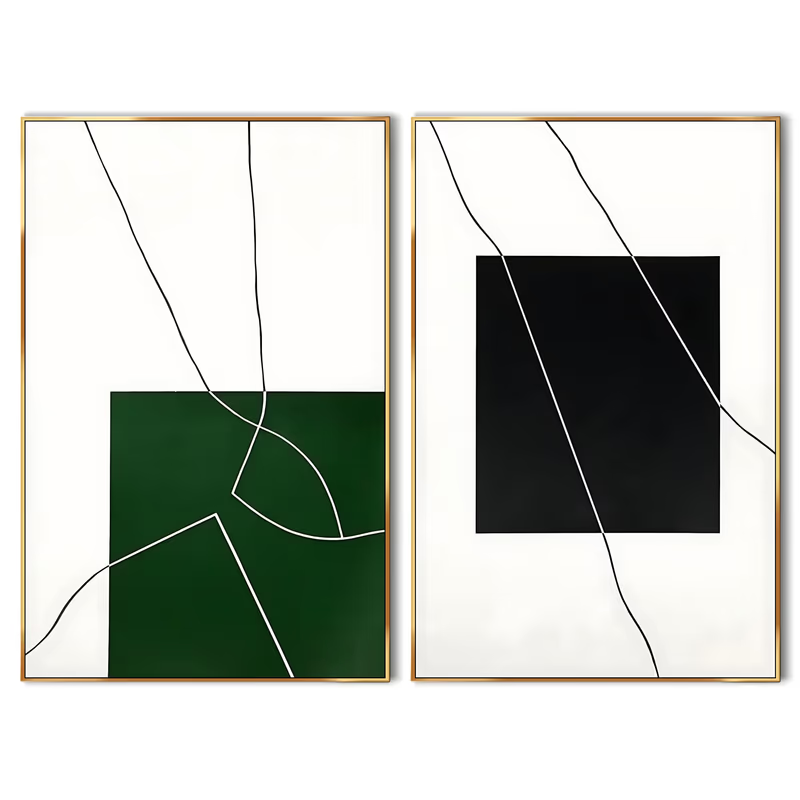
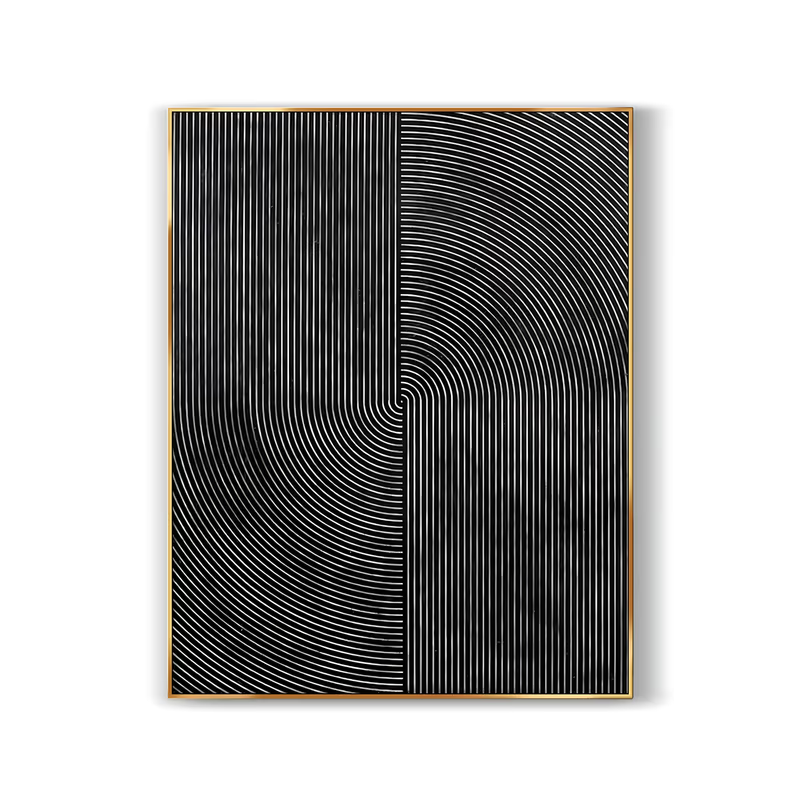
- Pairs and diptychs work naturally: a line or arc that continues from one canvas into the next makes two pieces read as one.
What is geometric wall art, and why do designers keep returning to it?
Geometric wall art is painting built from circles, arcs, lines, blocks and grids rather than from a scene, and designers return to it because it gives a room structure without tying it to a place or a period.
The vocabulary is old. It runs from textile and tile patterns through the Bauhaus and mid-century design to the soft arches of today's interiors. What makes it useful on a wall is that shape talks to architecture. A painted arch echoes a doorway, a stack of bands repeats the lines of shelving, a ring answers a round mirror or pendant. The art looks as if it belongs to the room rather than being added to it.
Geometric work overlaps with abstraction, but it is more ordered. Loose gestural fields and pours live on the abstract theme; hard edges, curves drawn with a compass and repeated units live here.
Hard edges or soft curves: which geometric shapes suit which mood?
Curves and circles calm a room, horizontal bands and grids steady it, and angles, diagonals and high contrast wake it up.
| Shape language | How it reads | Rooms it suits |
|---|---|---|
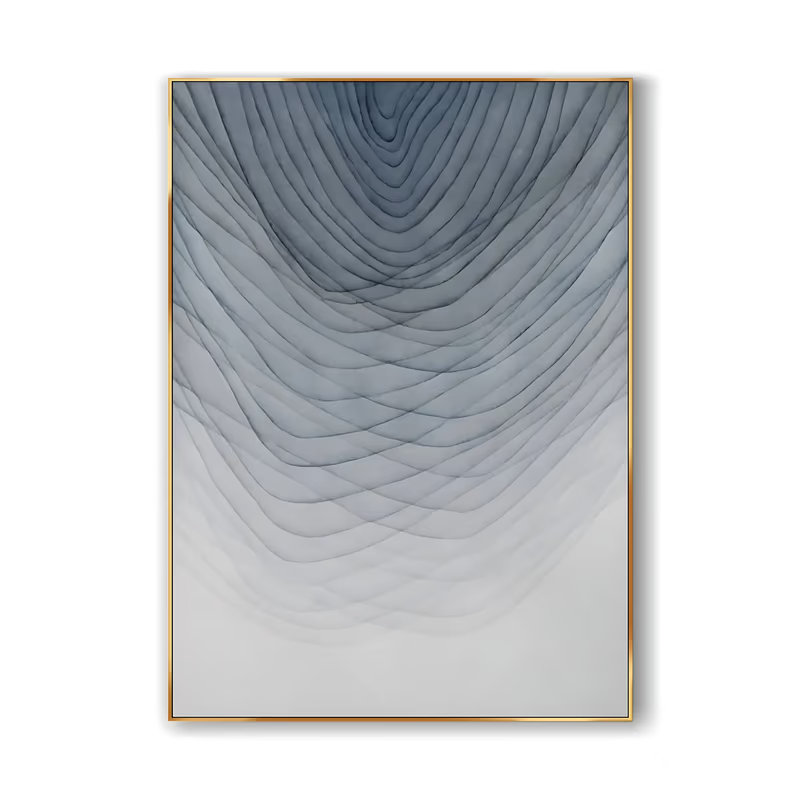
| Arches, half-suns, pebbles and soft rings | Gentle, organic, welcoming | Bedrooms, living rooms, spas, guest rooms |
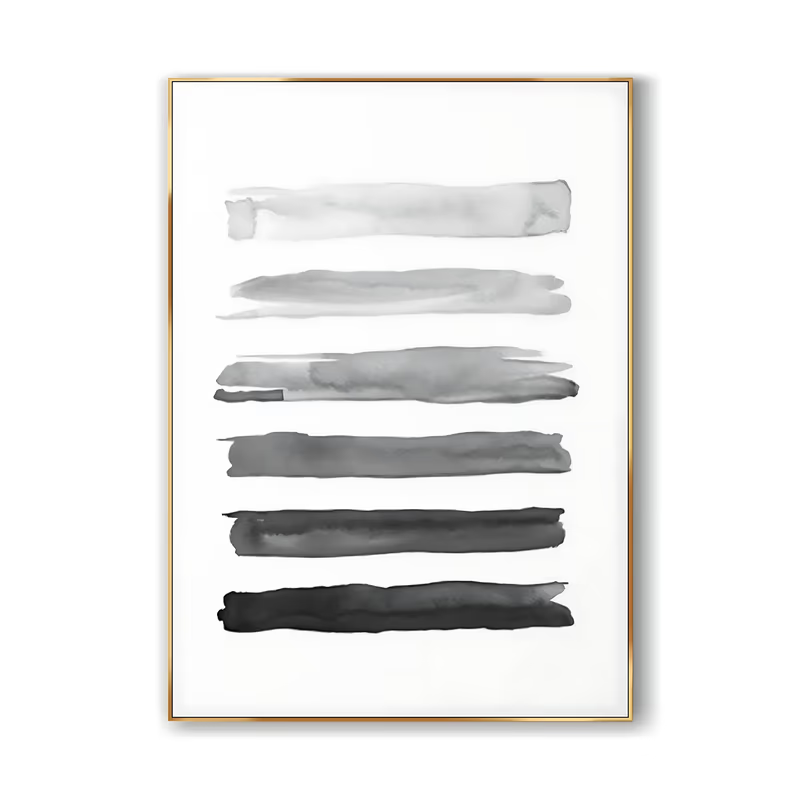
| Horizontal bands and stacked blocks | Settled and calm; widens a wall | Living rooms, dining rooms, headboard walls |
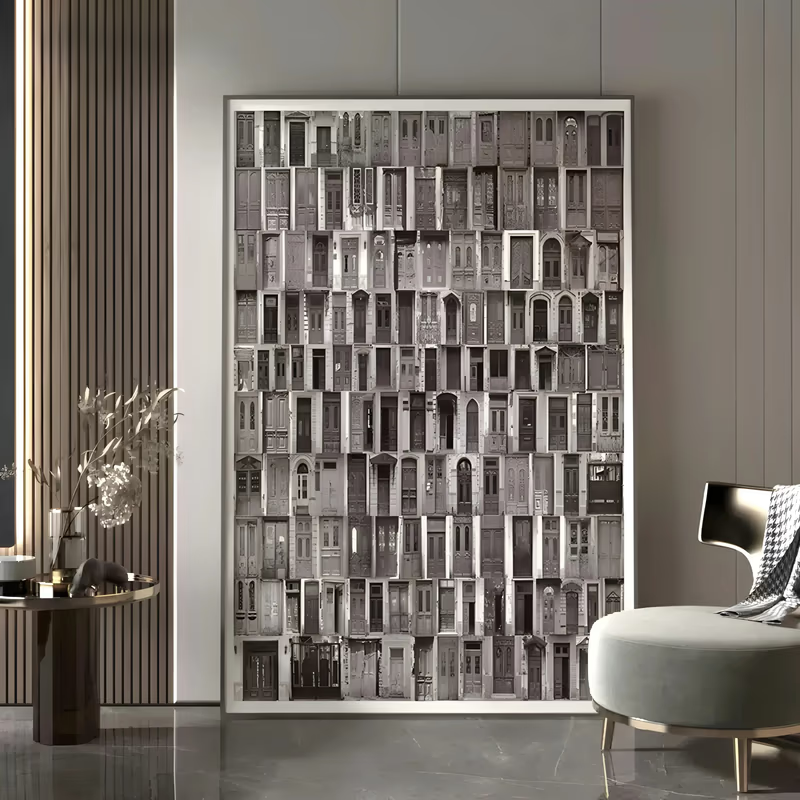
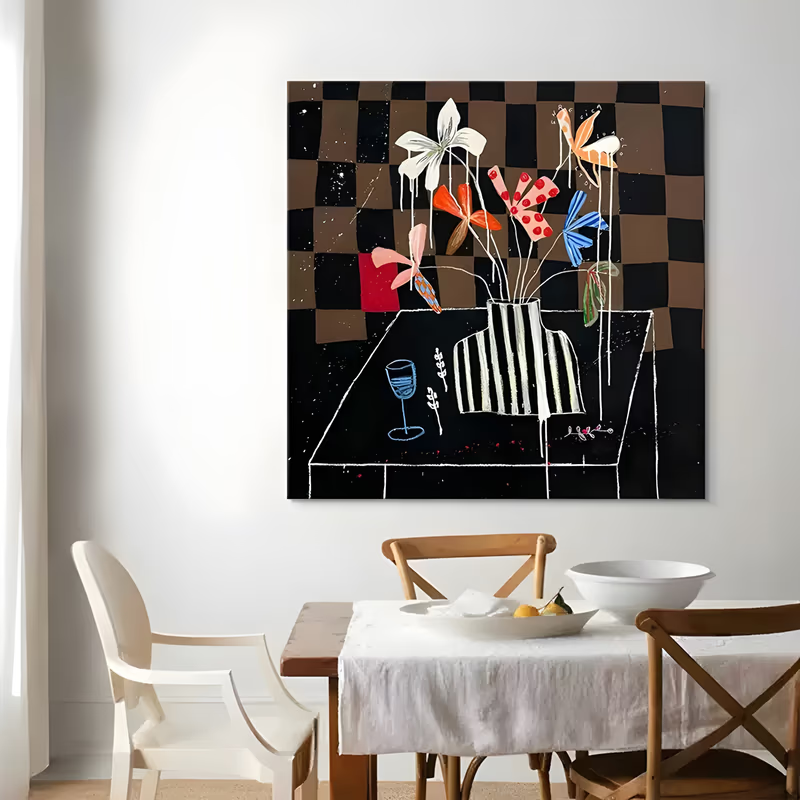
| Grids, tiles and checkerboards | Ordered and architectural | Offices, boardrooms, corridors, kitchens |
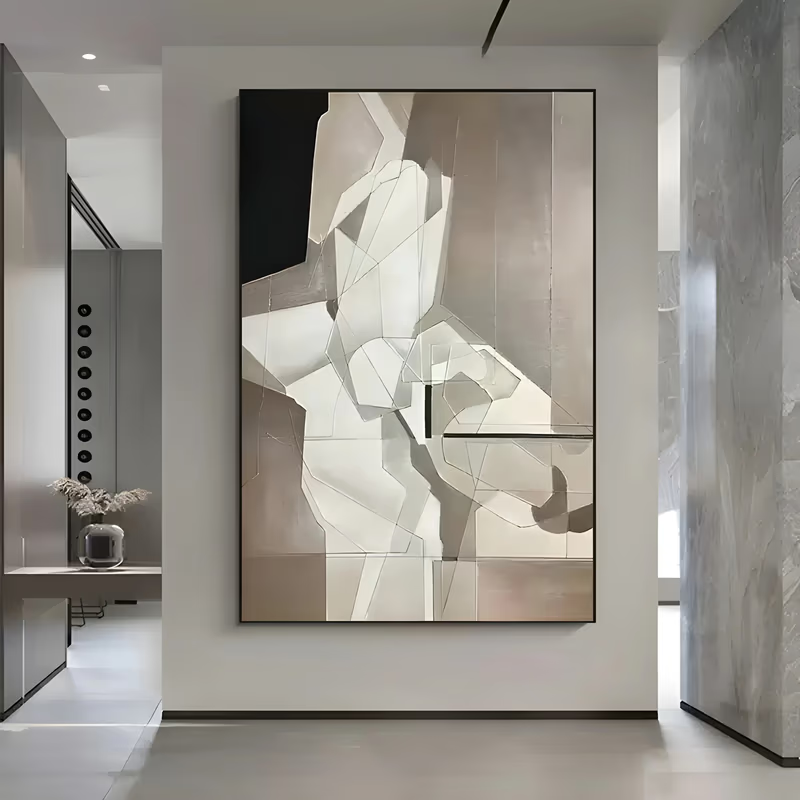
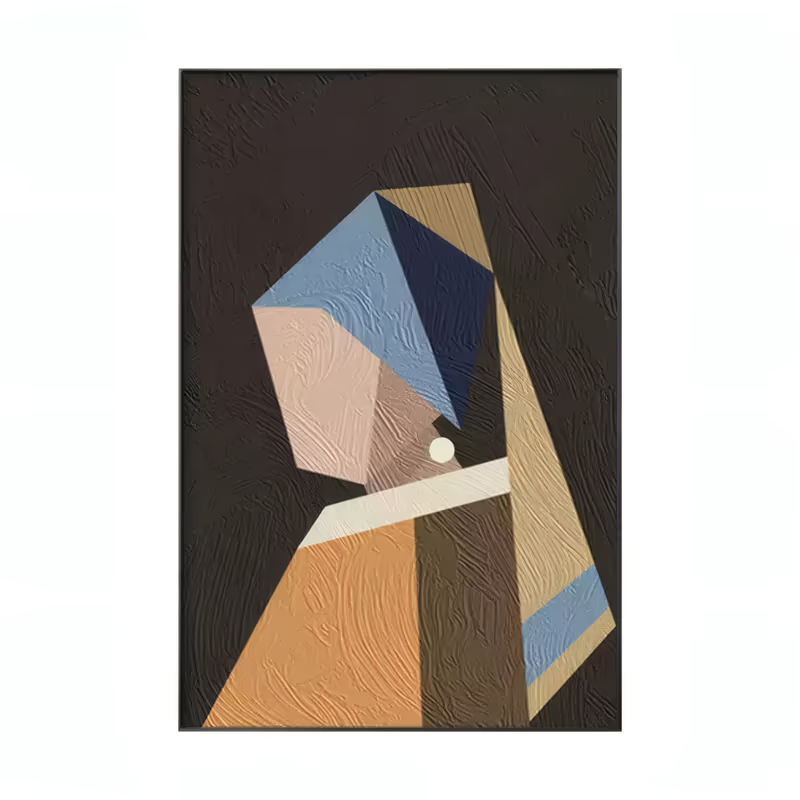
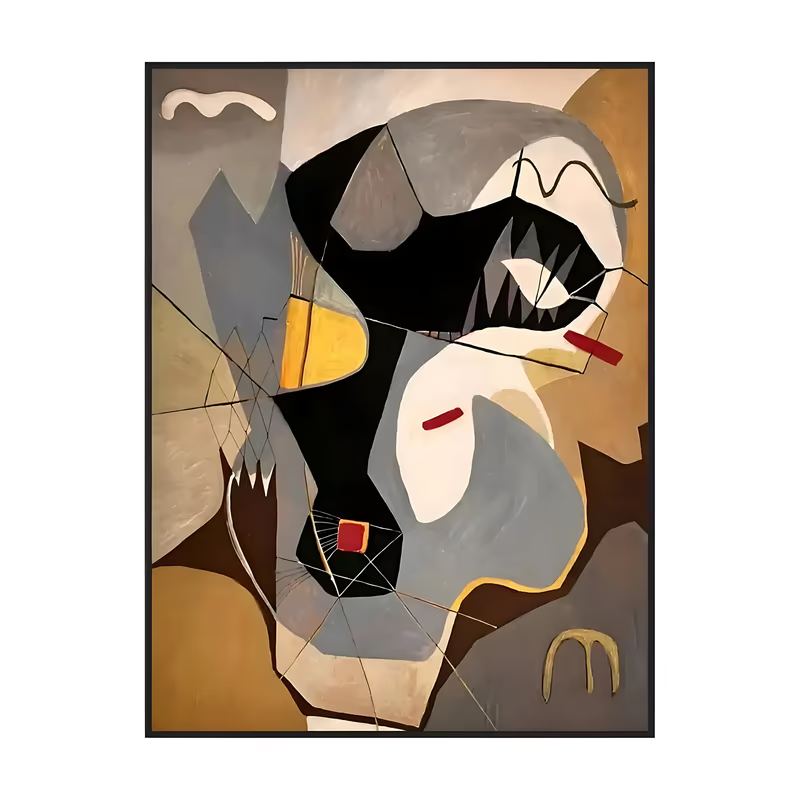
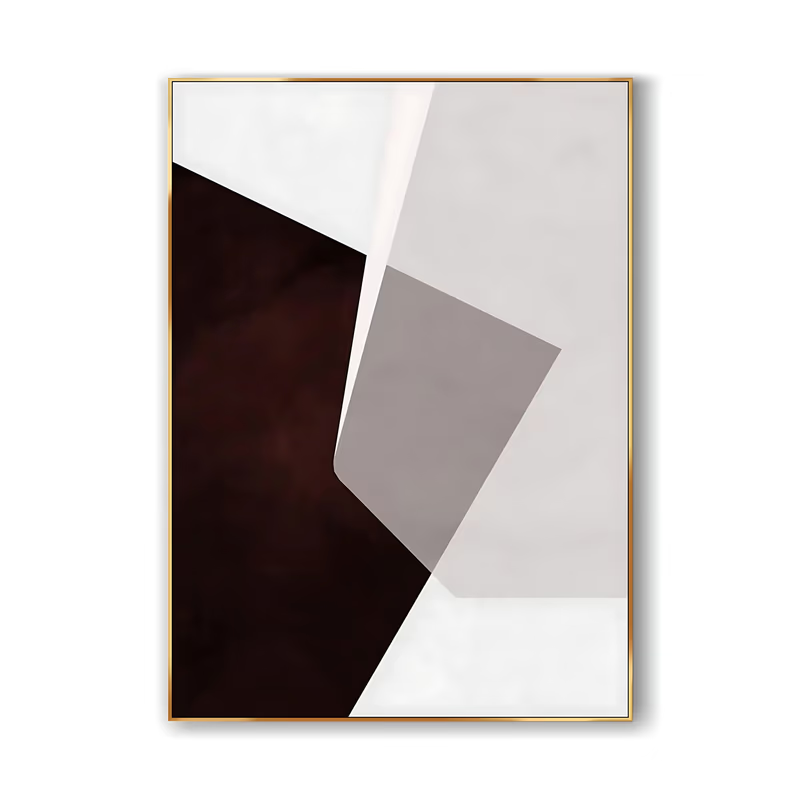
| Diagonals, faceted planes and cubist shards | Dynamic and restless | Bars, studios, creative workplaces, entrances |
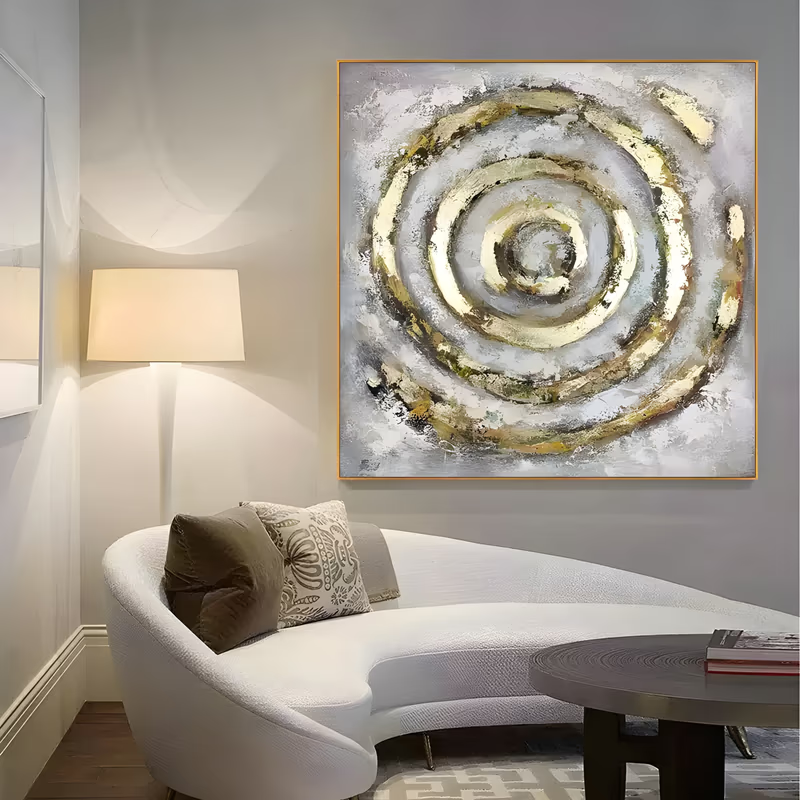
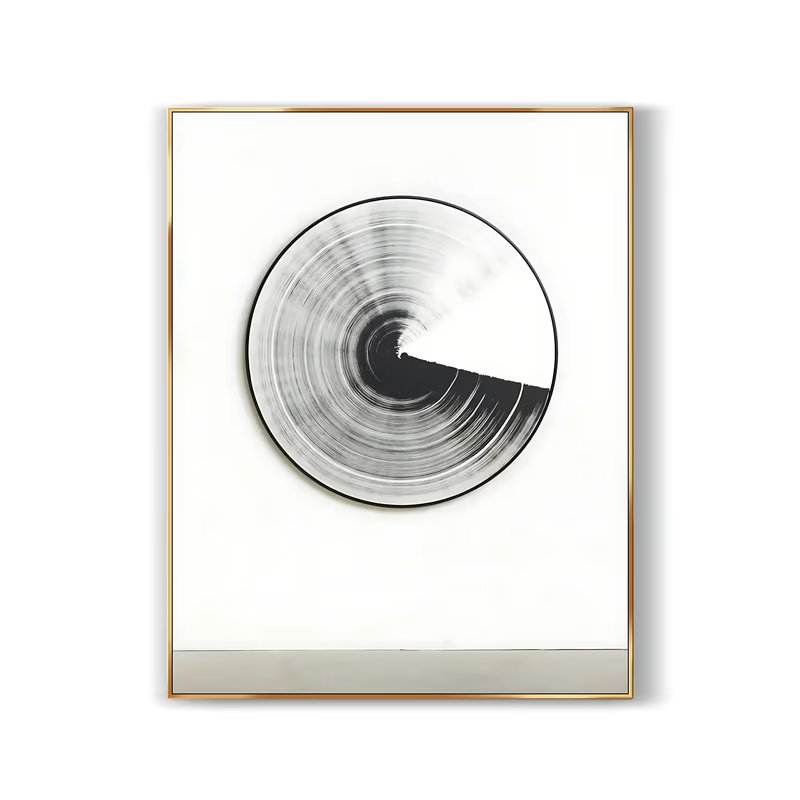
| Radiating sunbursts and concentric rings | A focal point that draws the eye inward | Lobbies, over a fireplace, a stair landing |
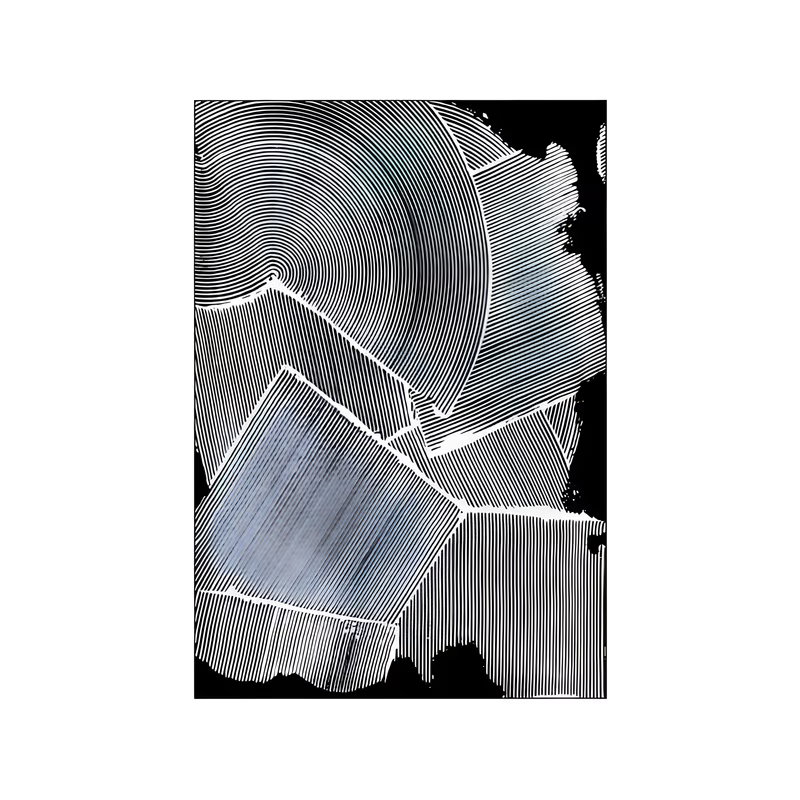
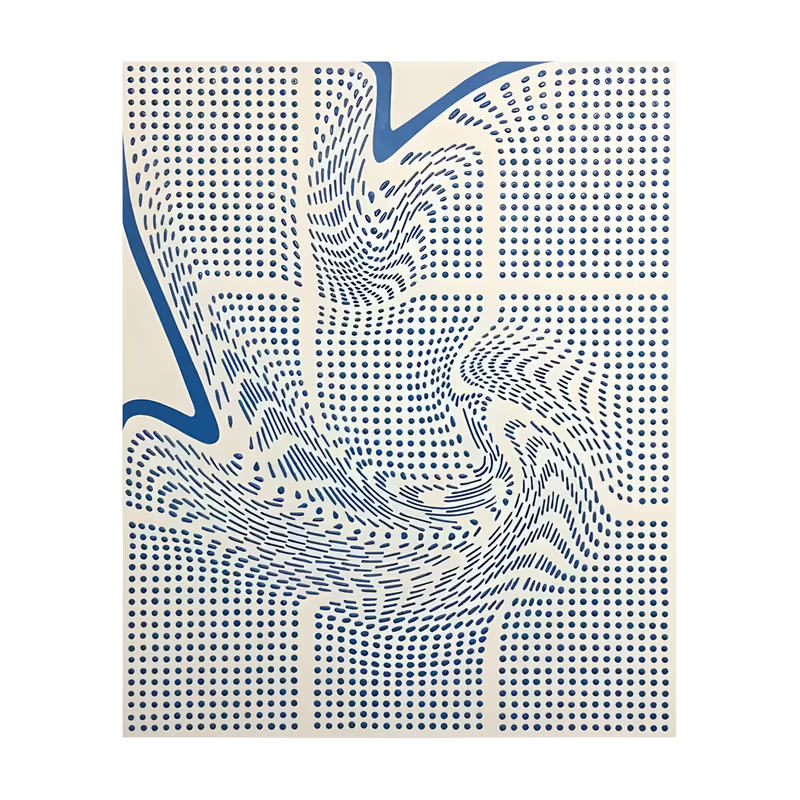
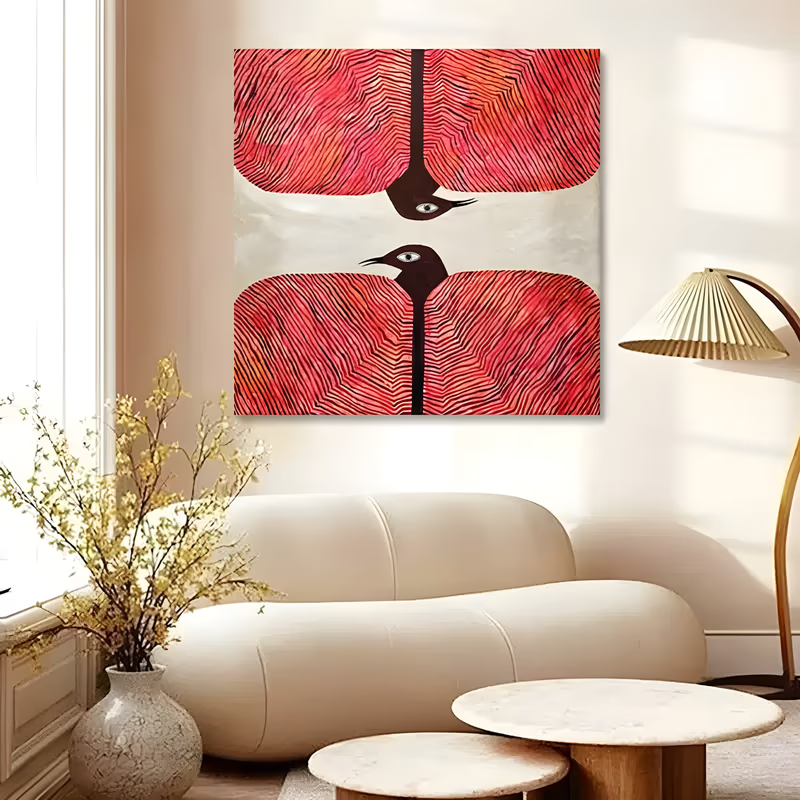
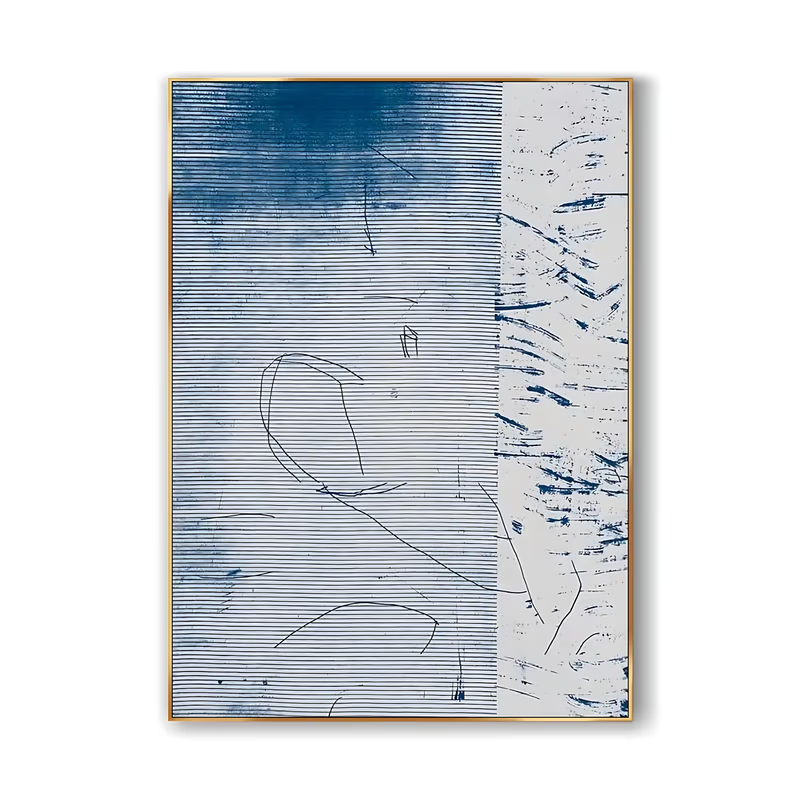
| Optical lines and dot fields | Vibrating, eye-catching up close | Feature walls seen in passing, retail, galleries |
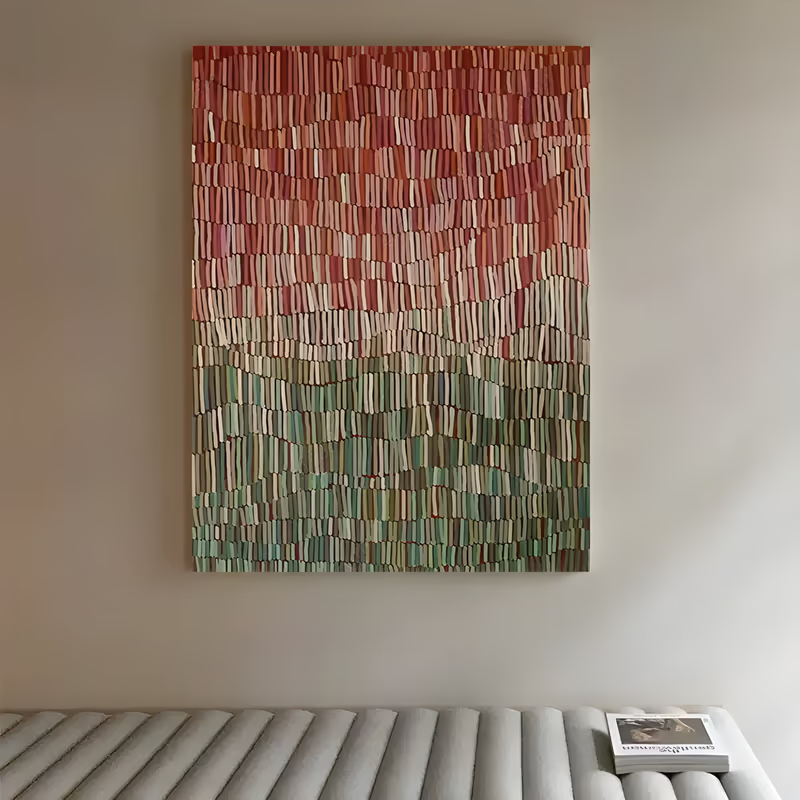
Colour then turns the volume up or down. The same arch reads restful in sand and terracotta and graphic in black and white. Filter the works by feel: calm geometric pieces, bold ones and warm, earthy ones.
What kinds of geometric wall art are painted here?
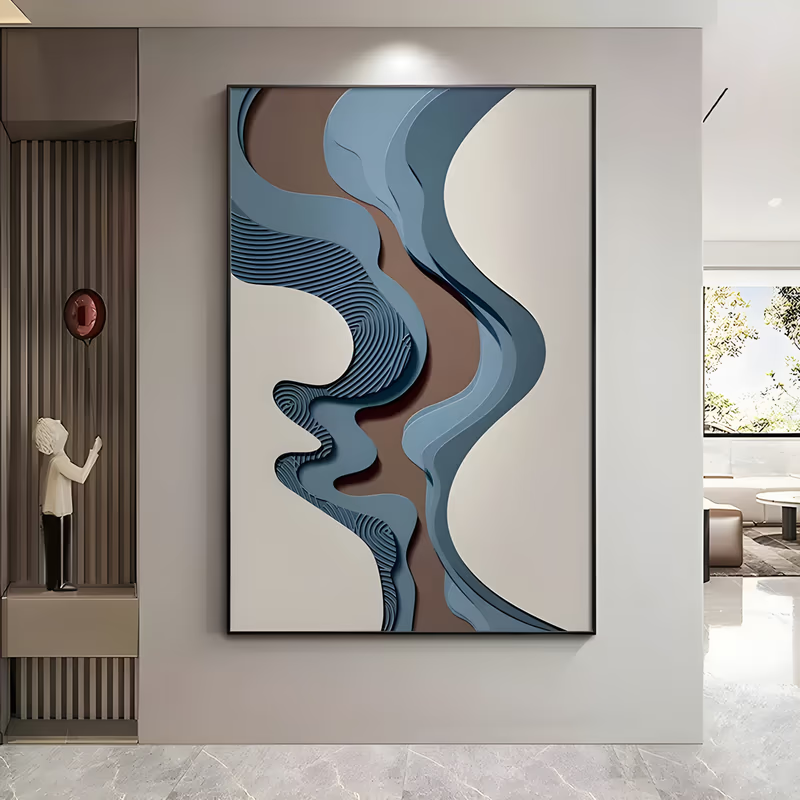
Four kinds: fine-line minimal geometry, bold colour-block and cubist work, sculpted plaster relief, and weathered wabi-sabi patchwork; they share the shapes but not the surface.
Minimal lines, arcs and blocks
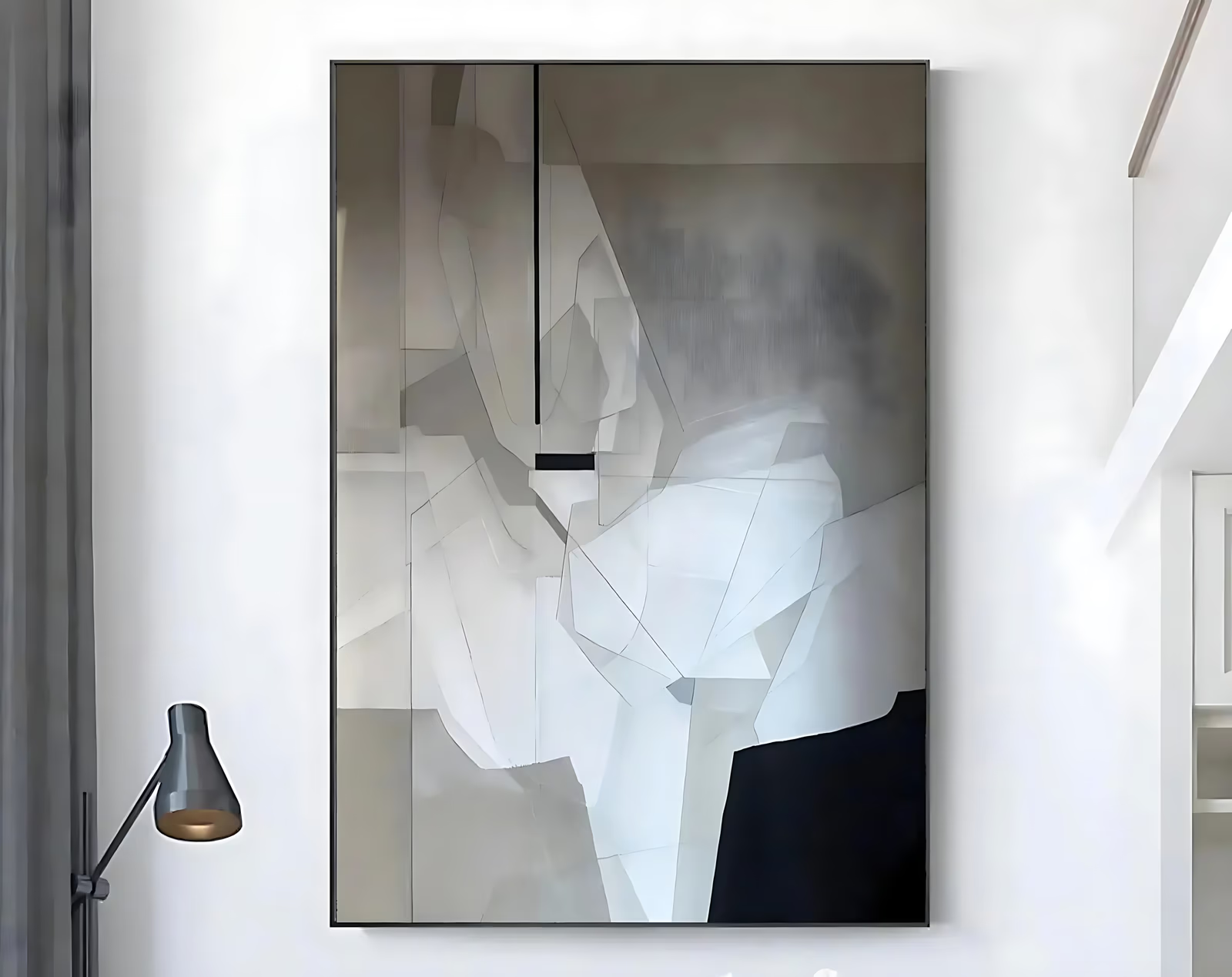
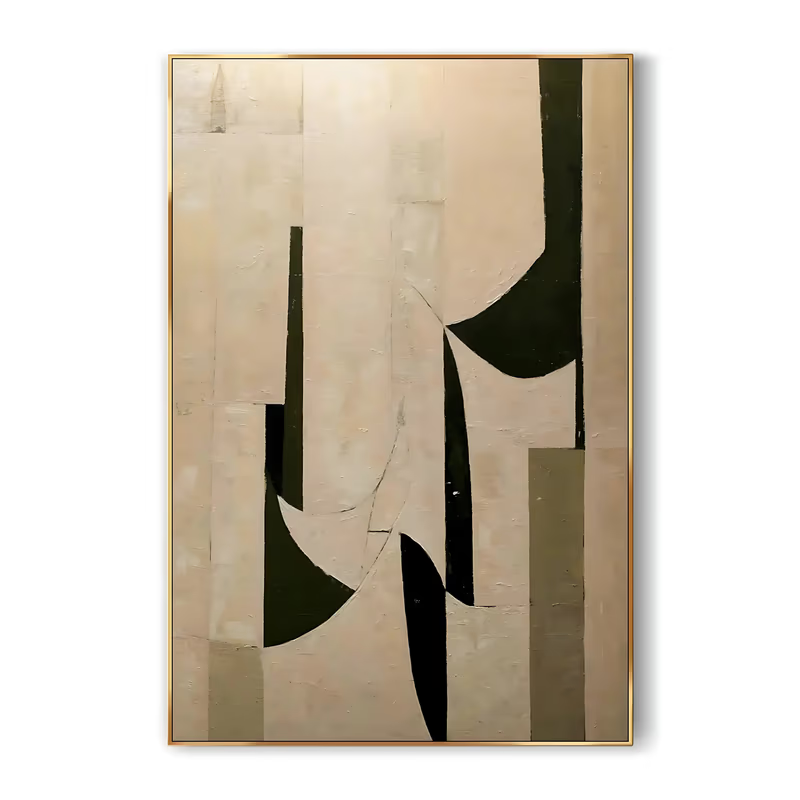
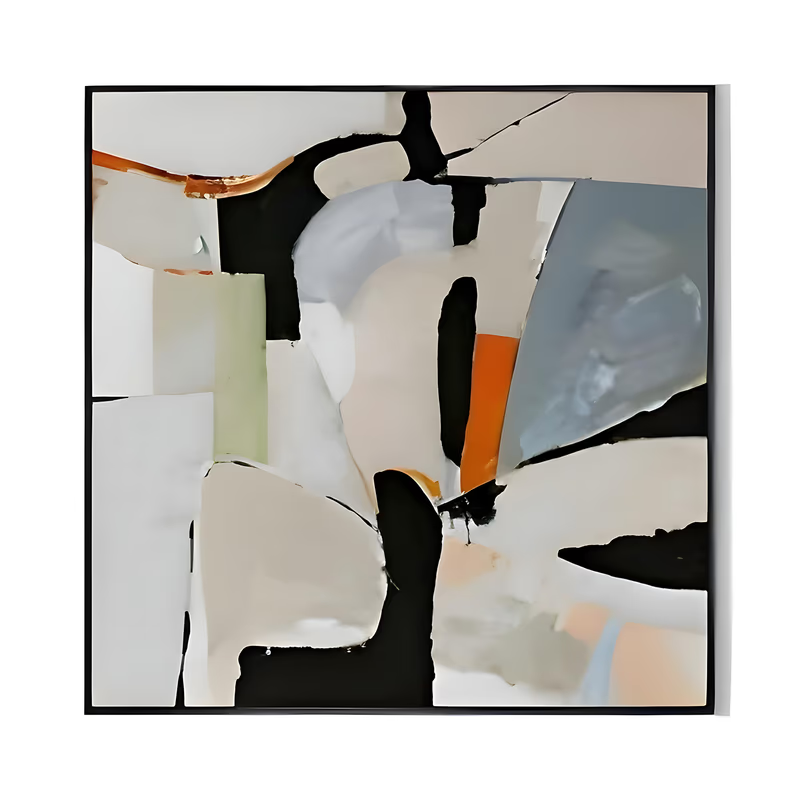
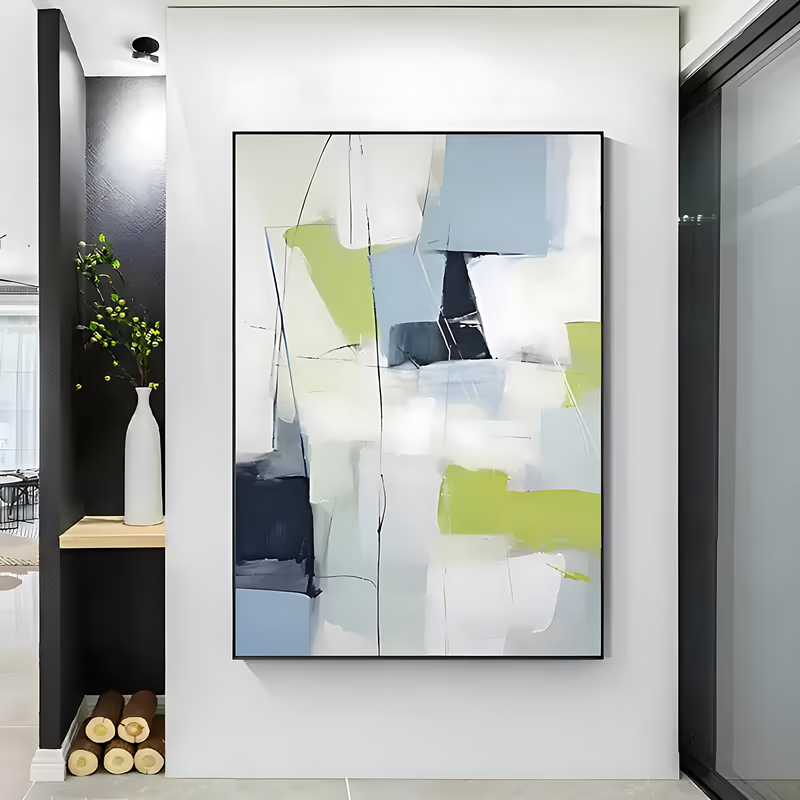
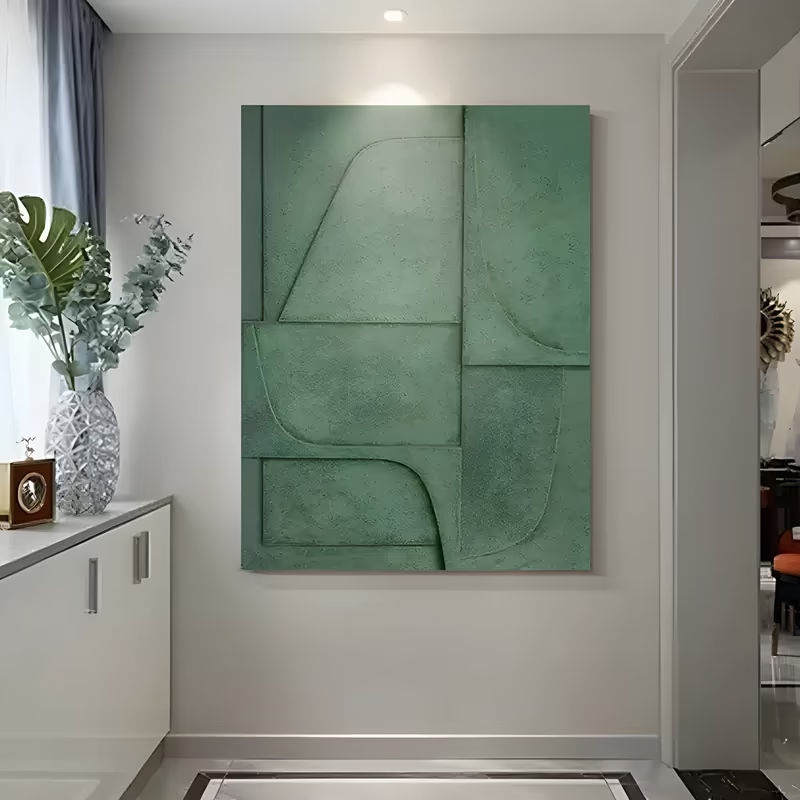
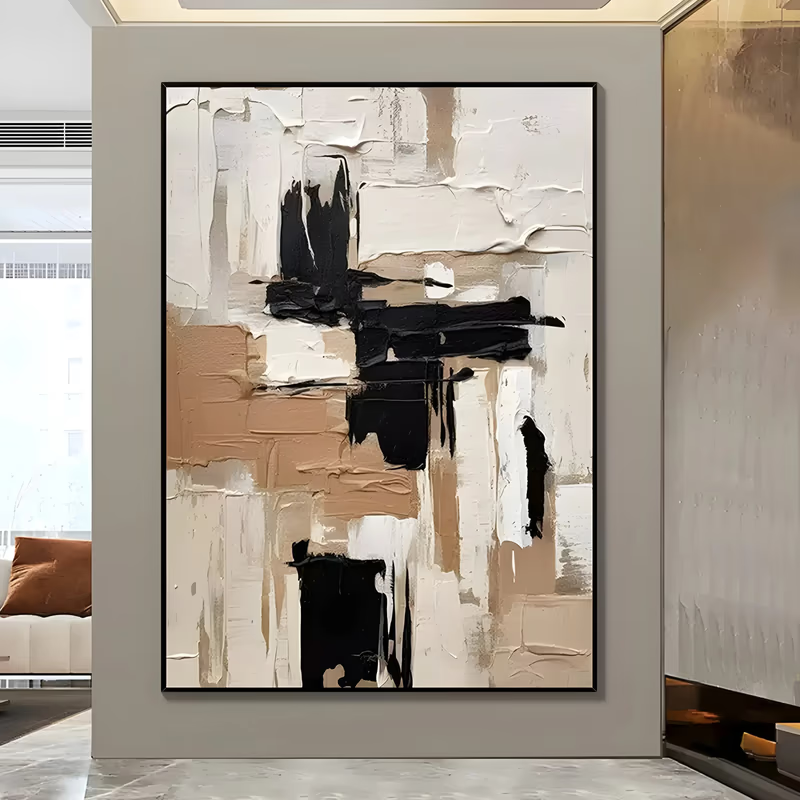
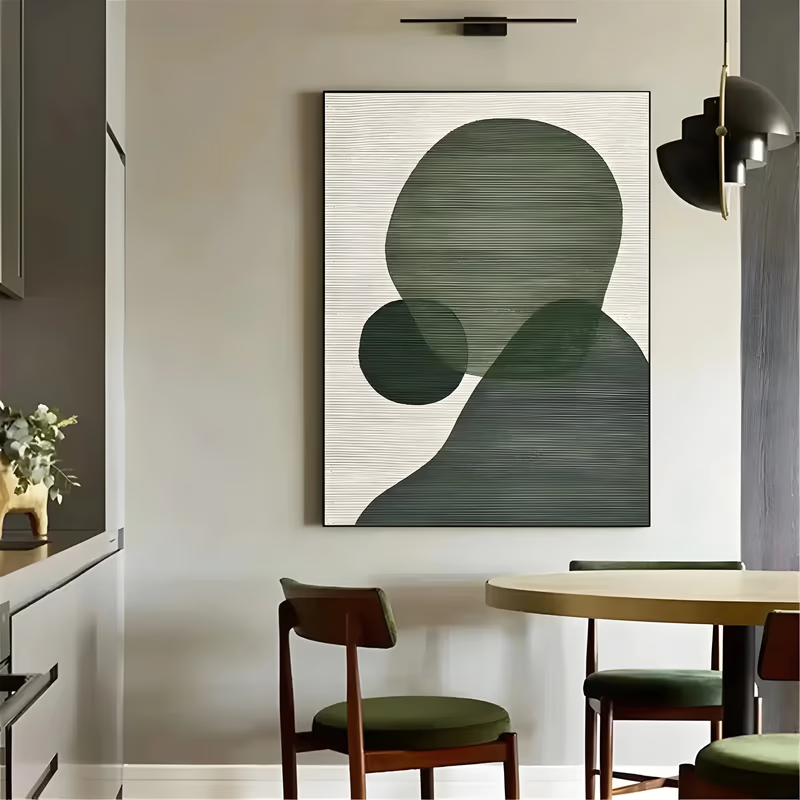
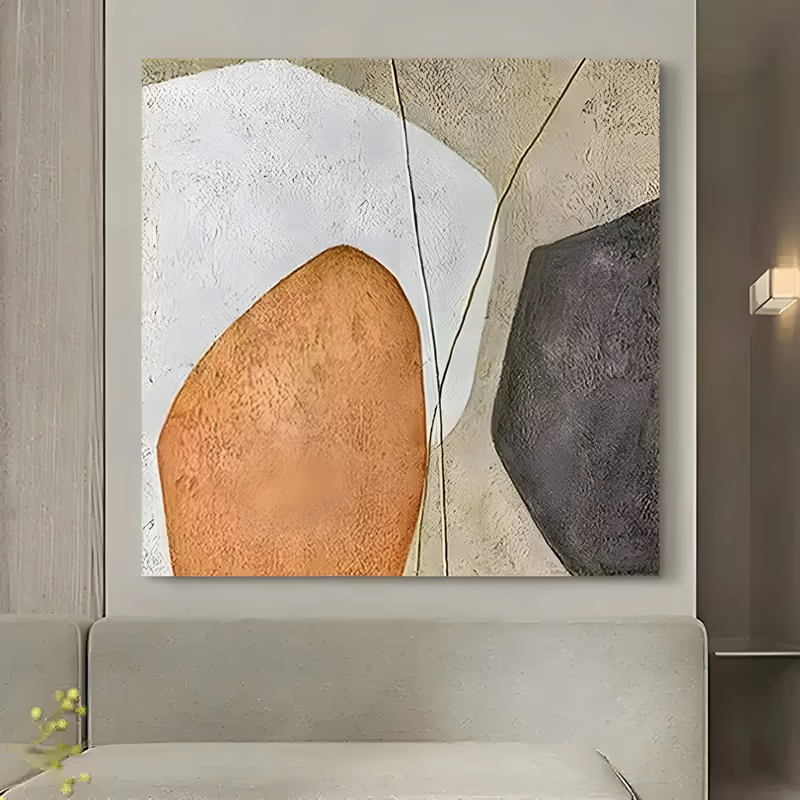
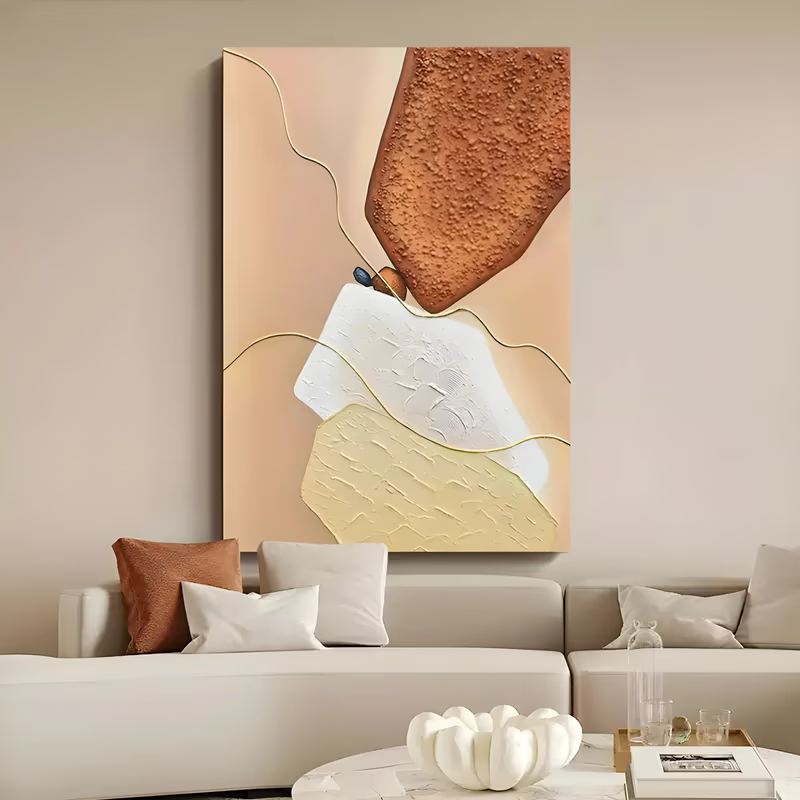
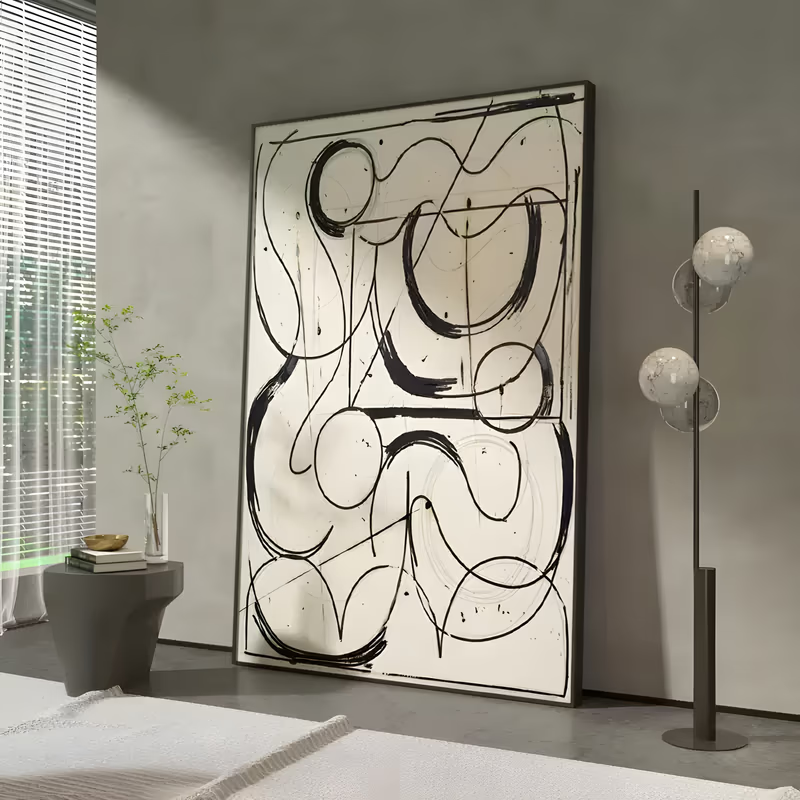
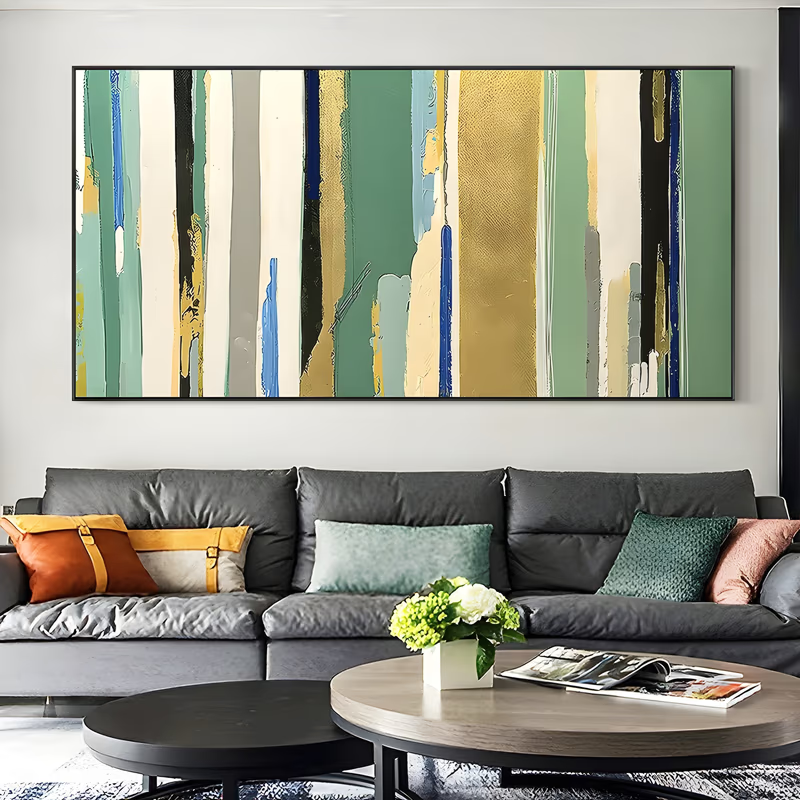
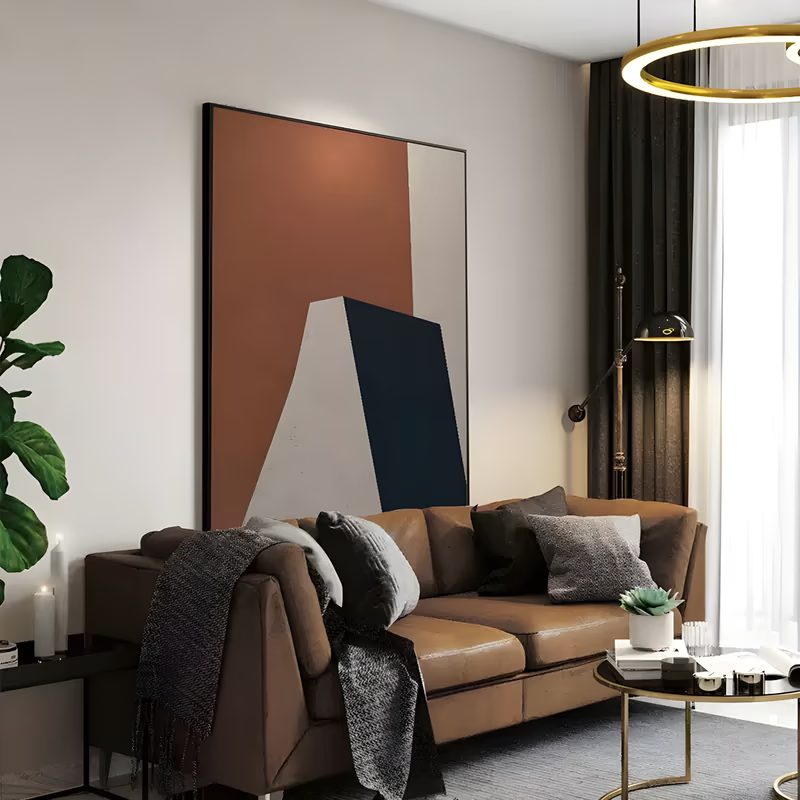
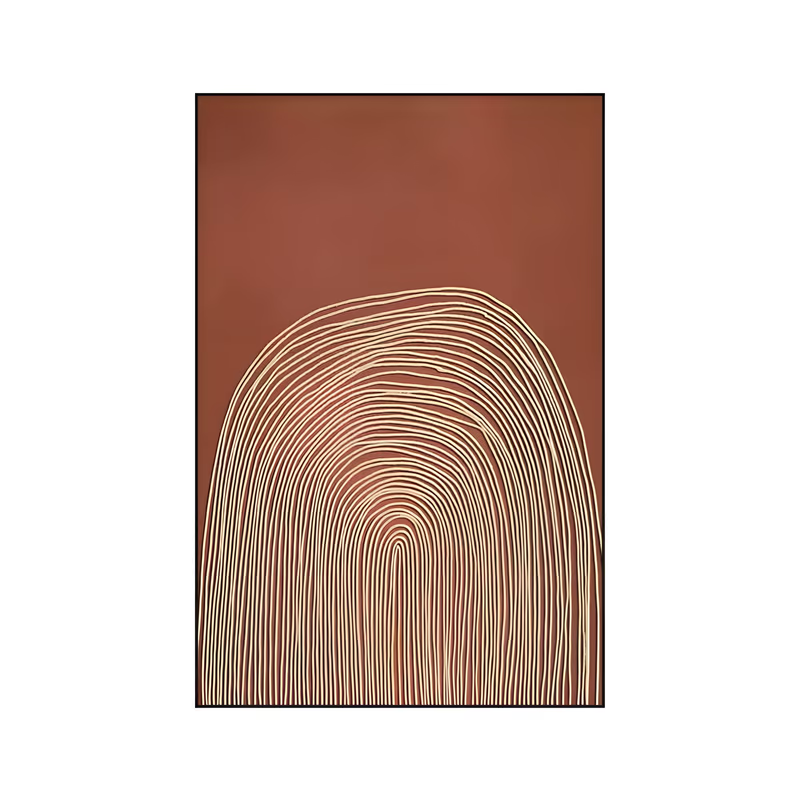
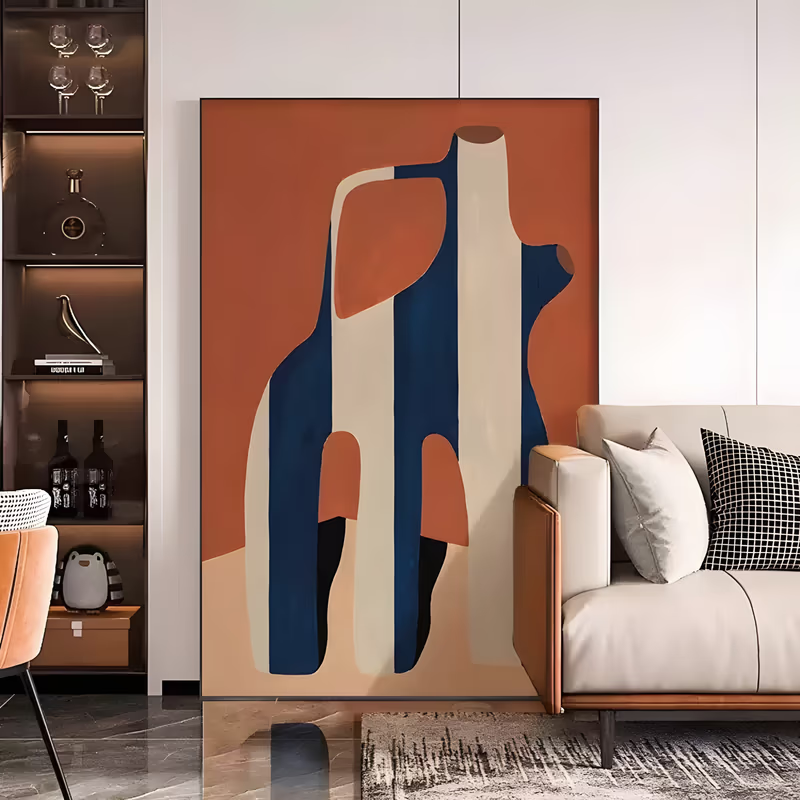
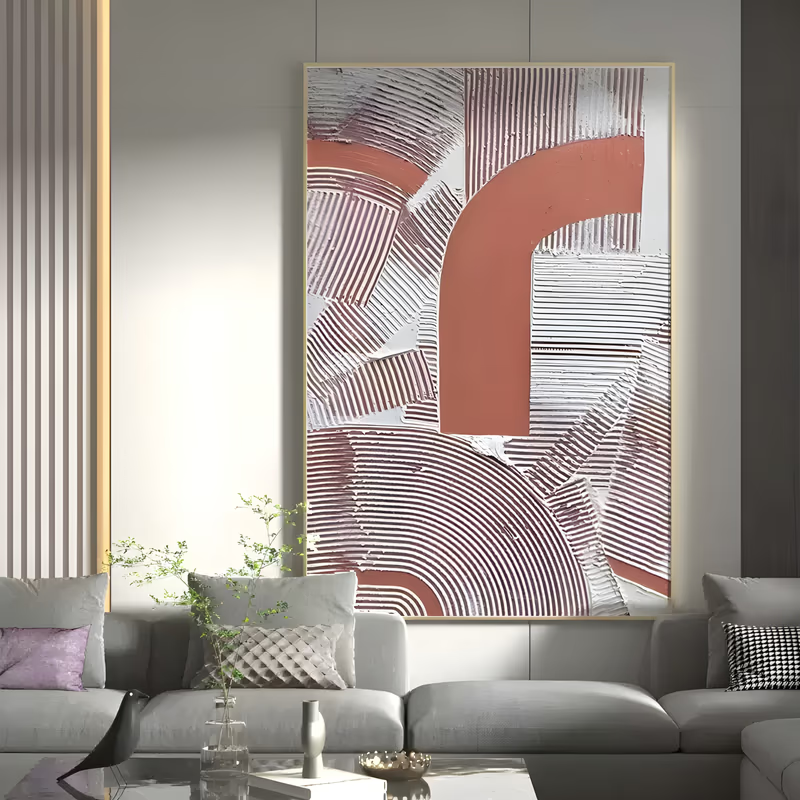
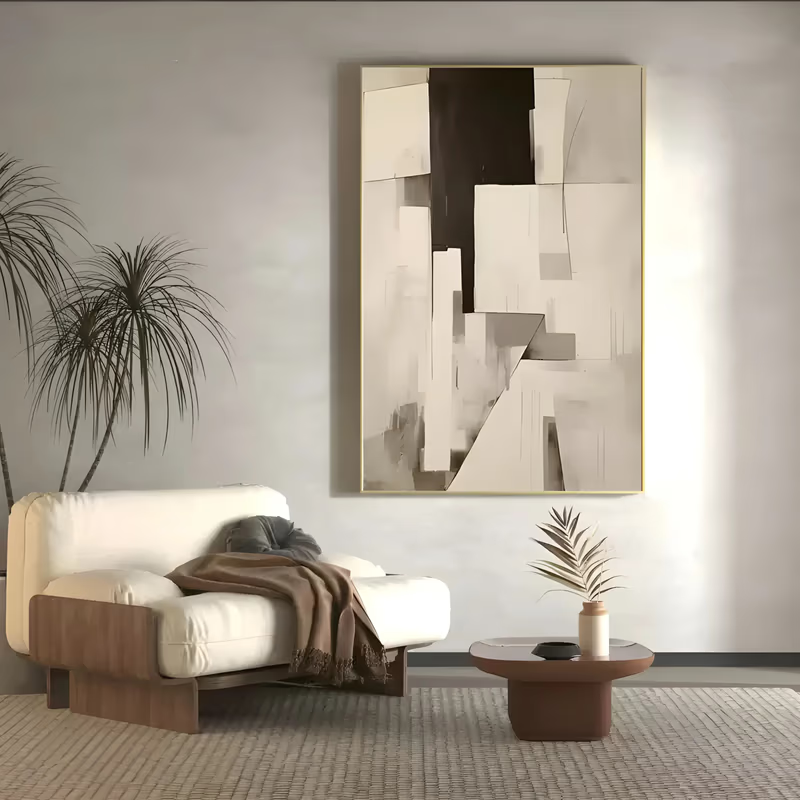
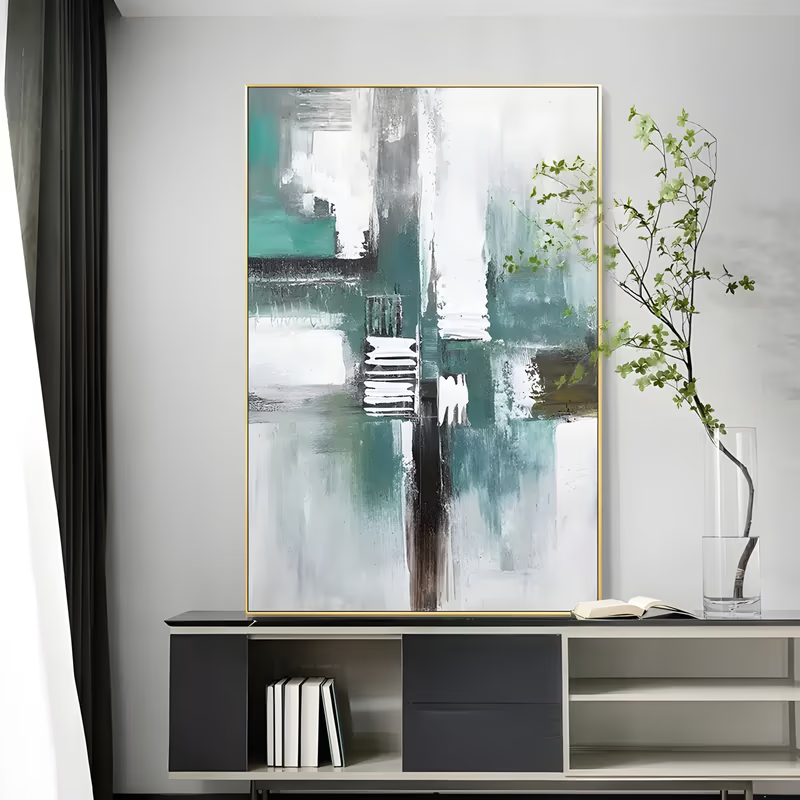
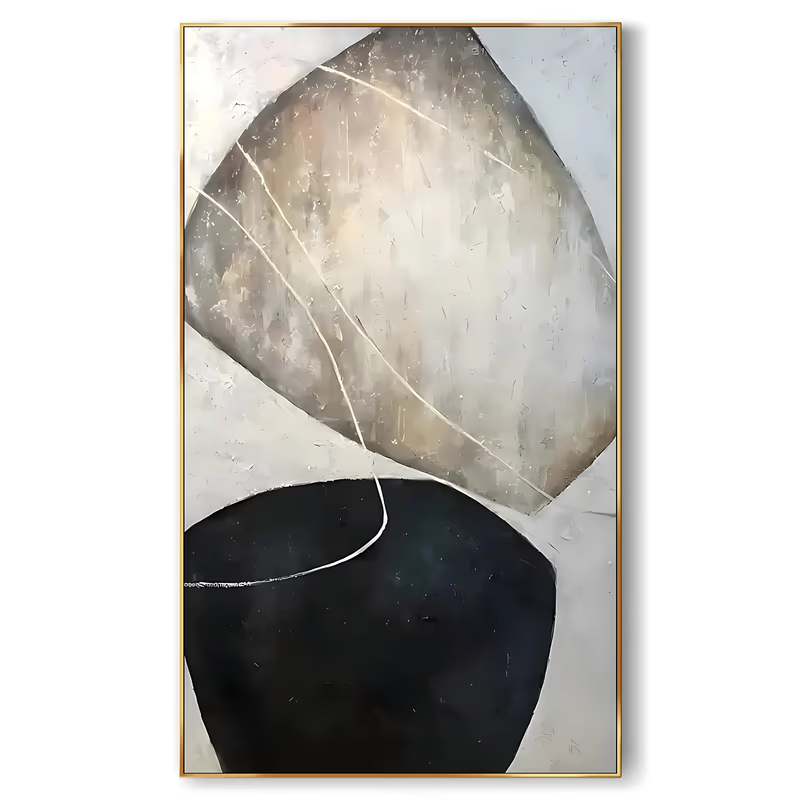
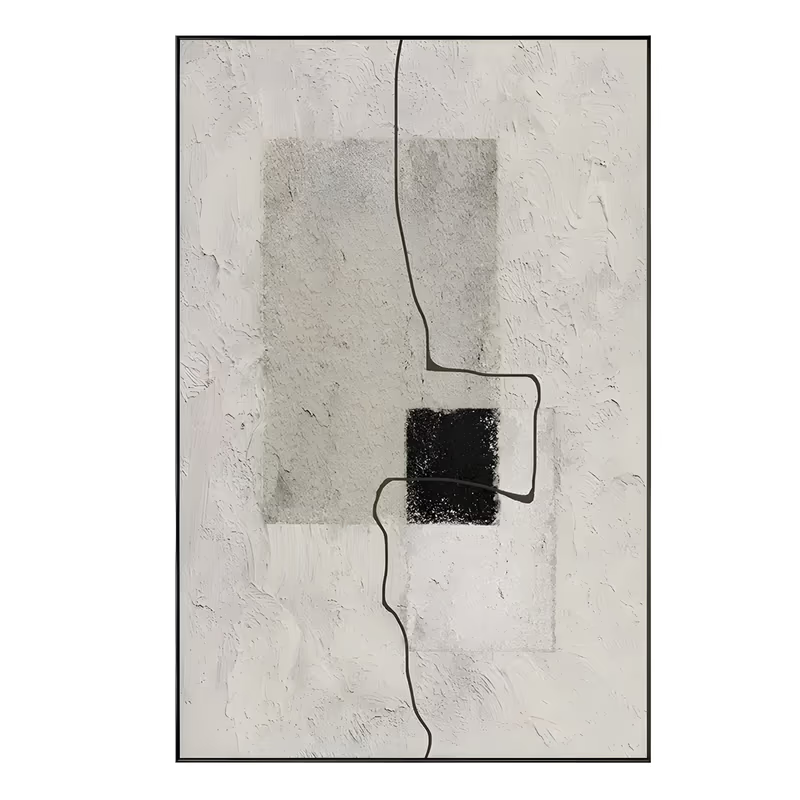
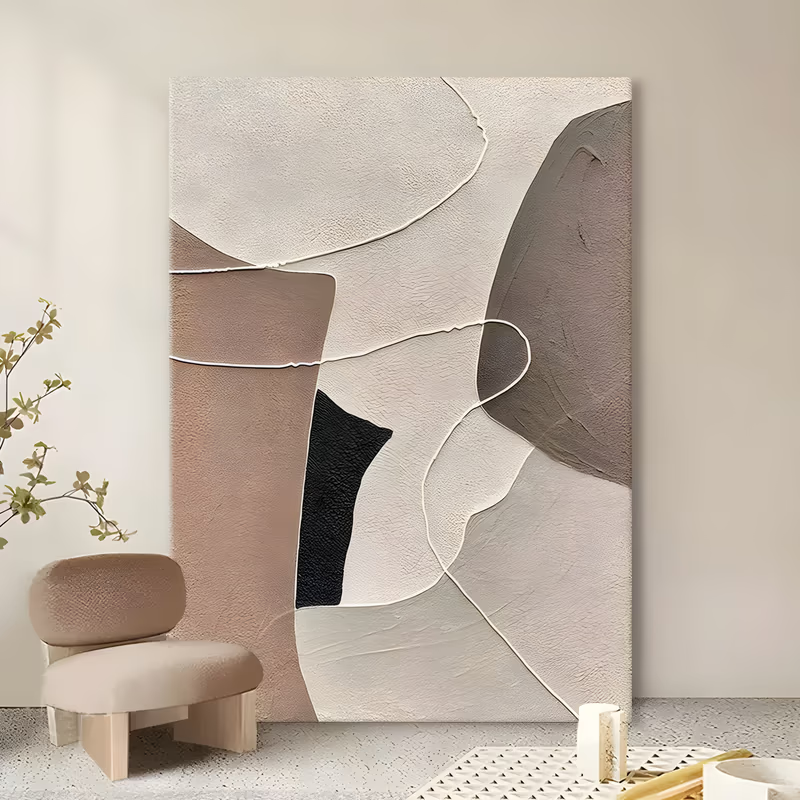
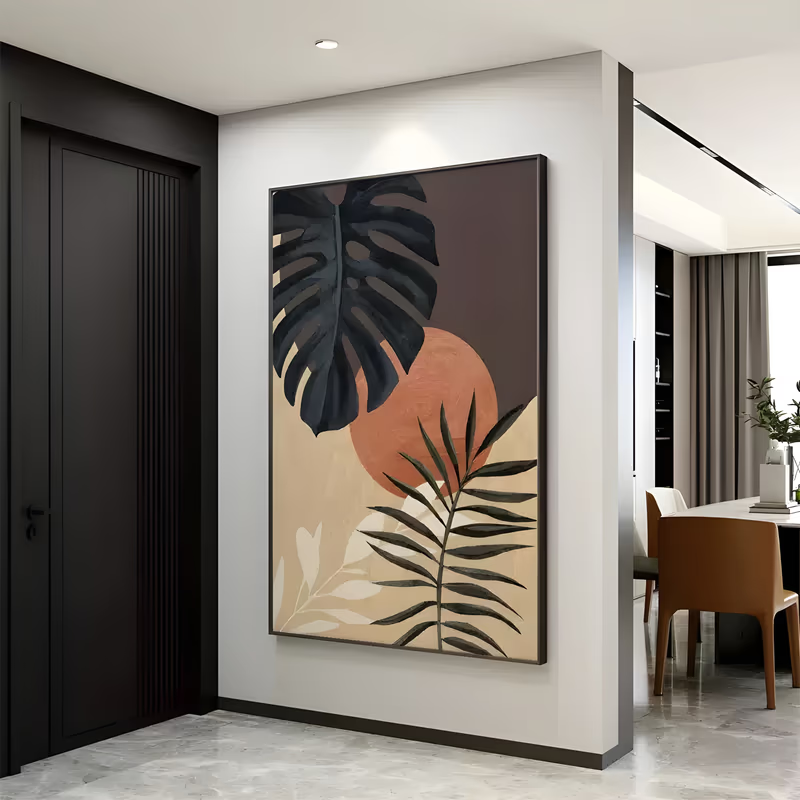
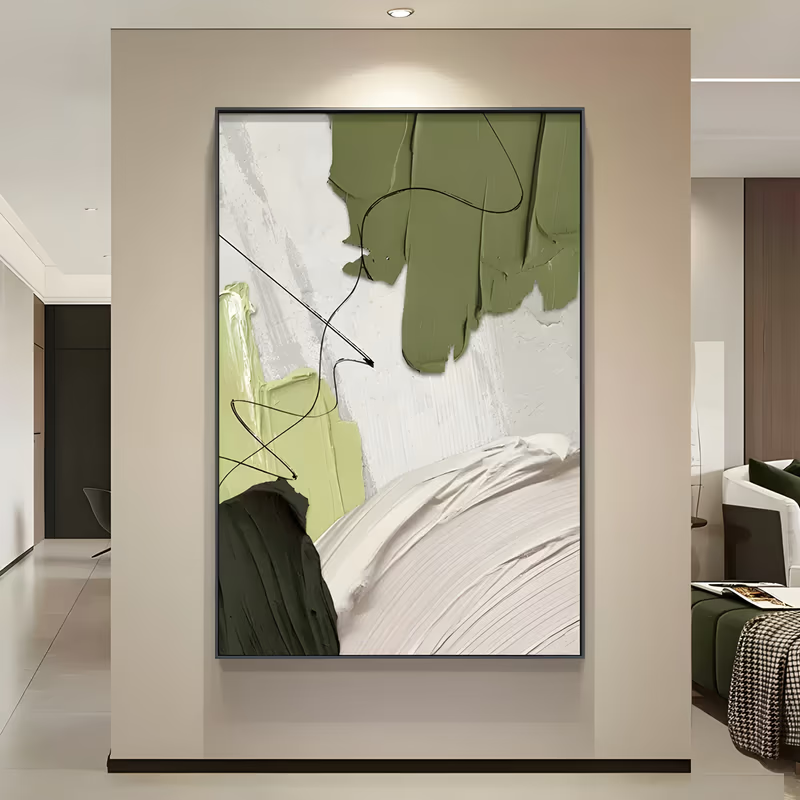
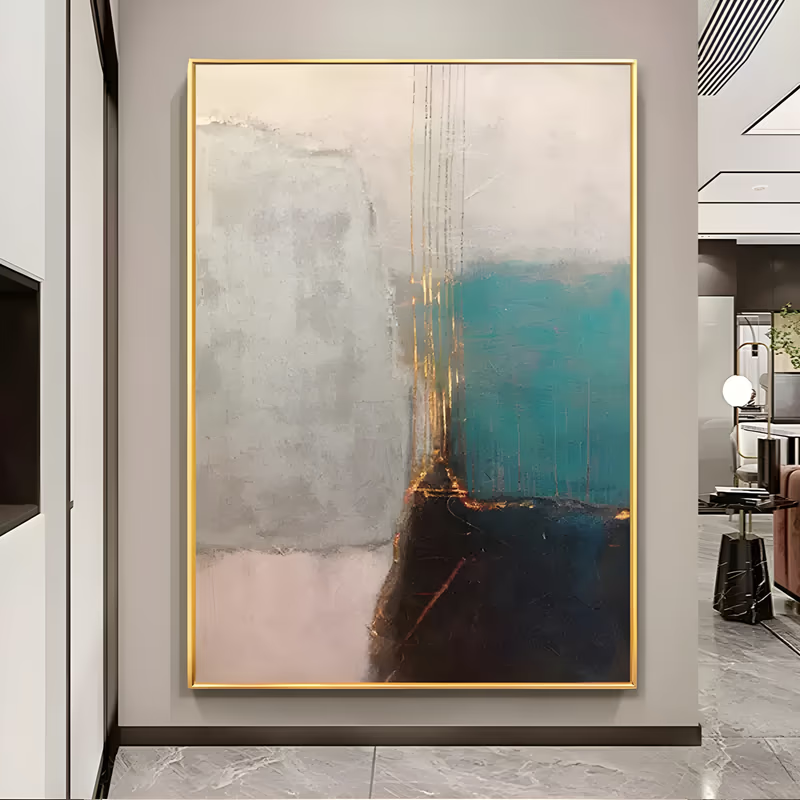
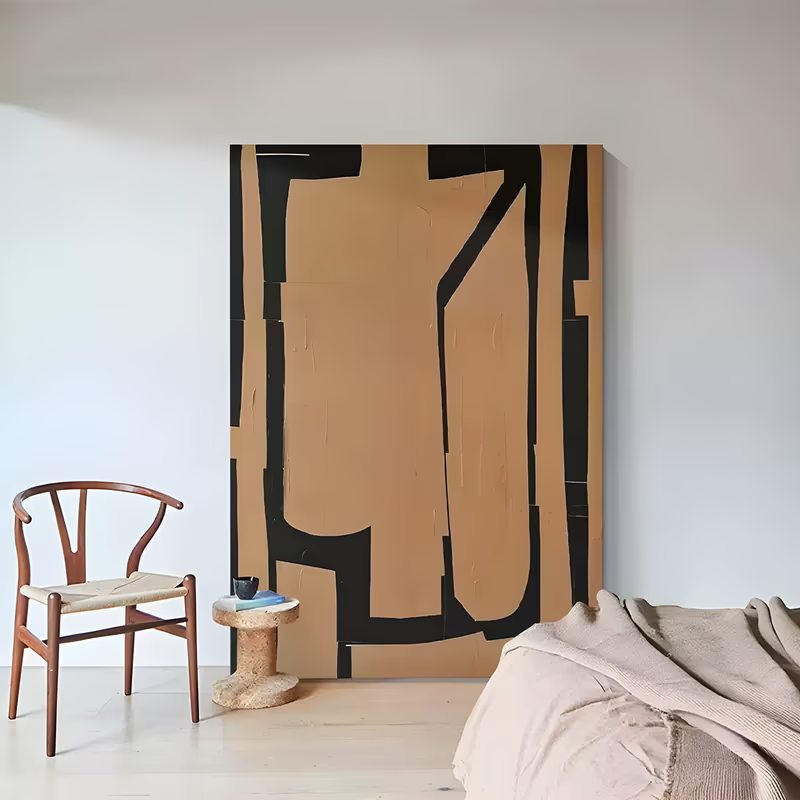
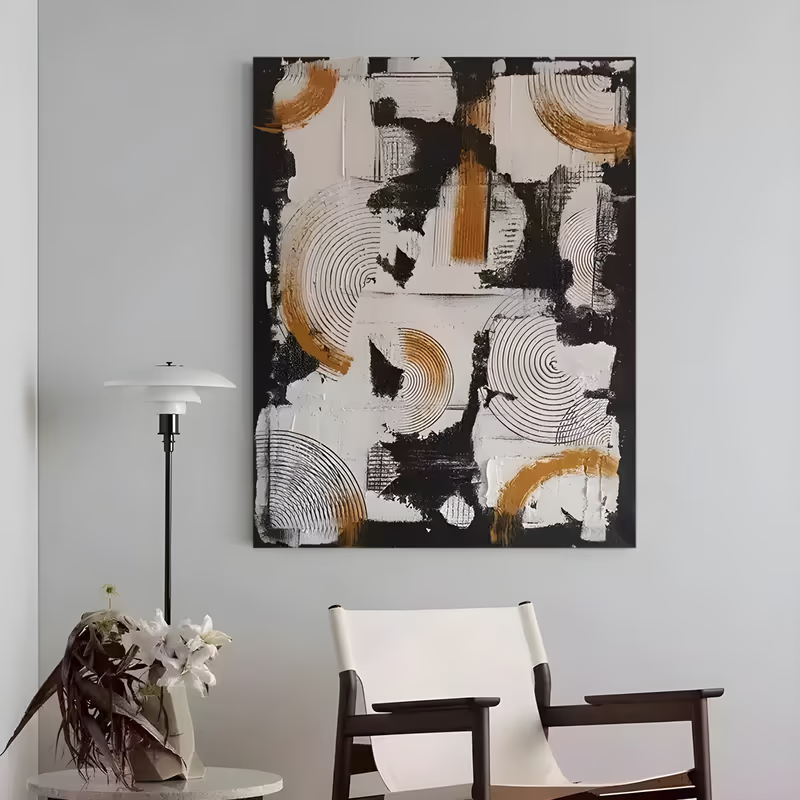
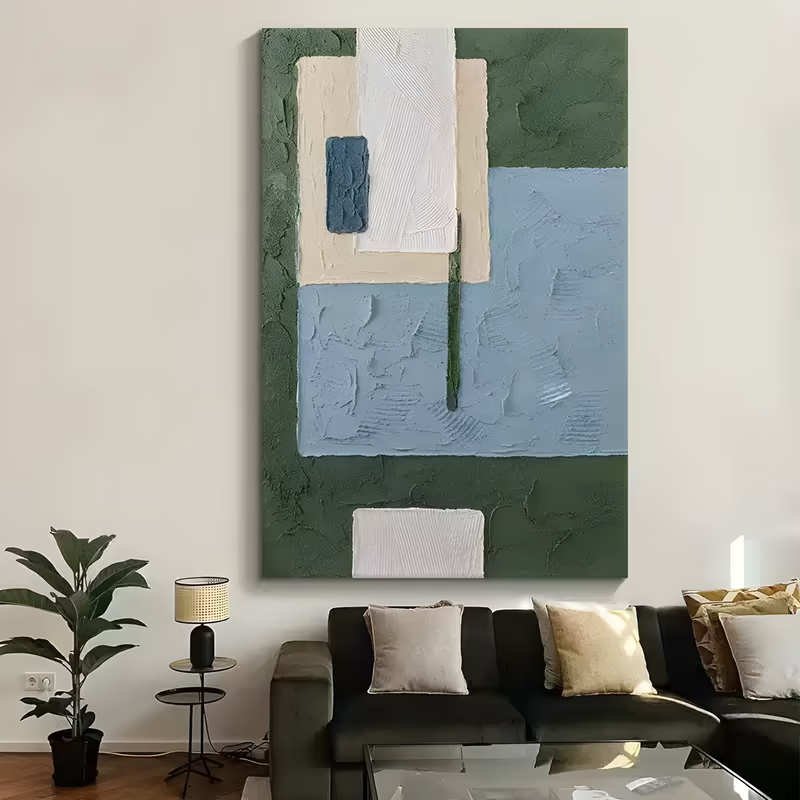
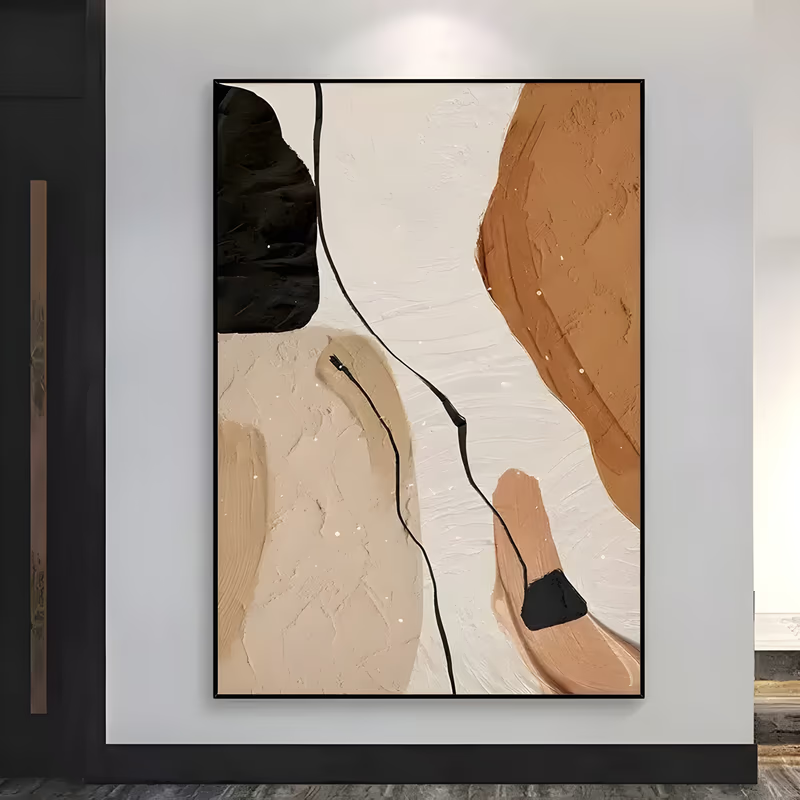
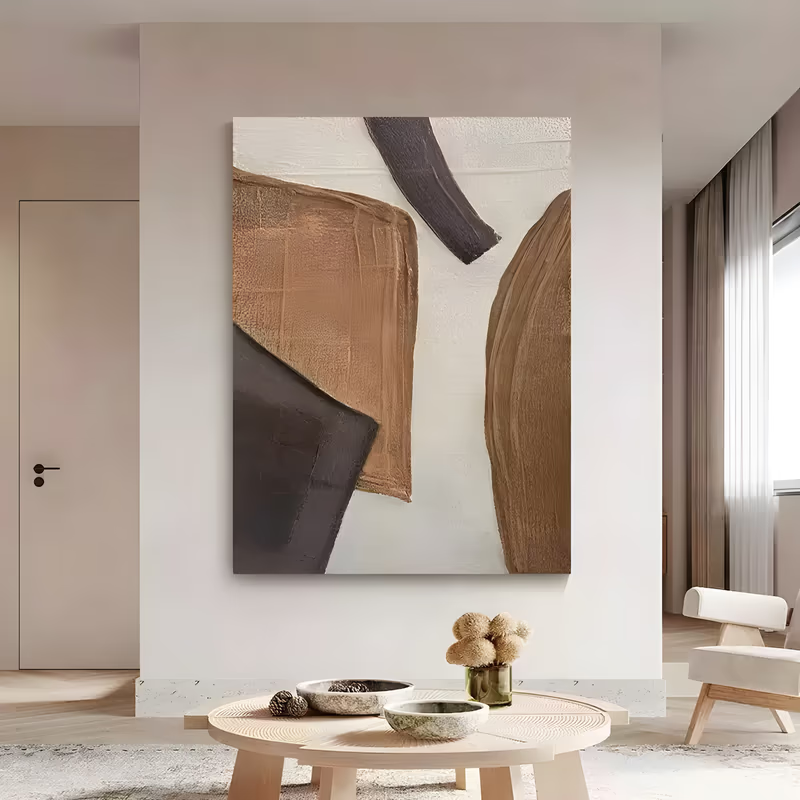
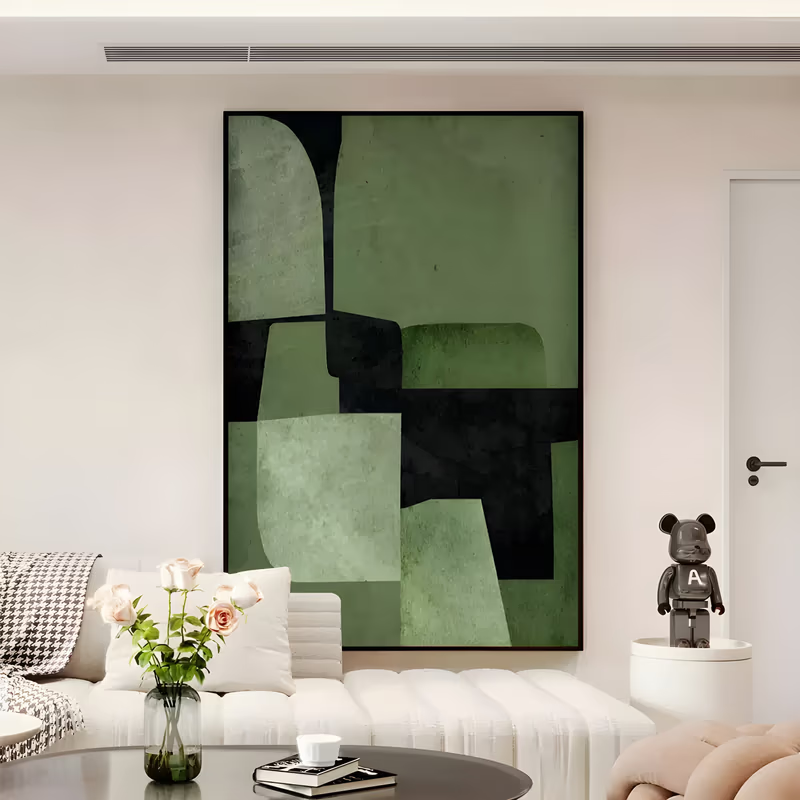
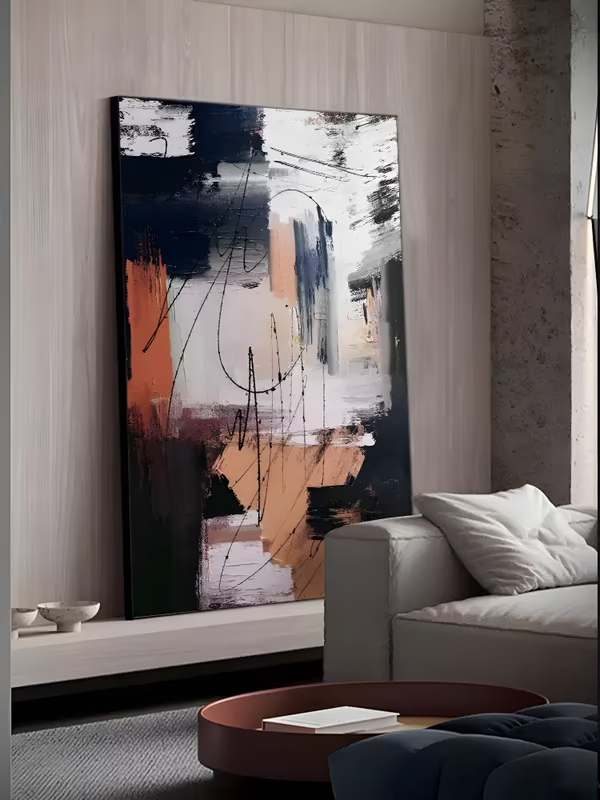
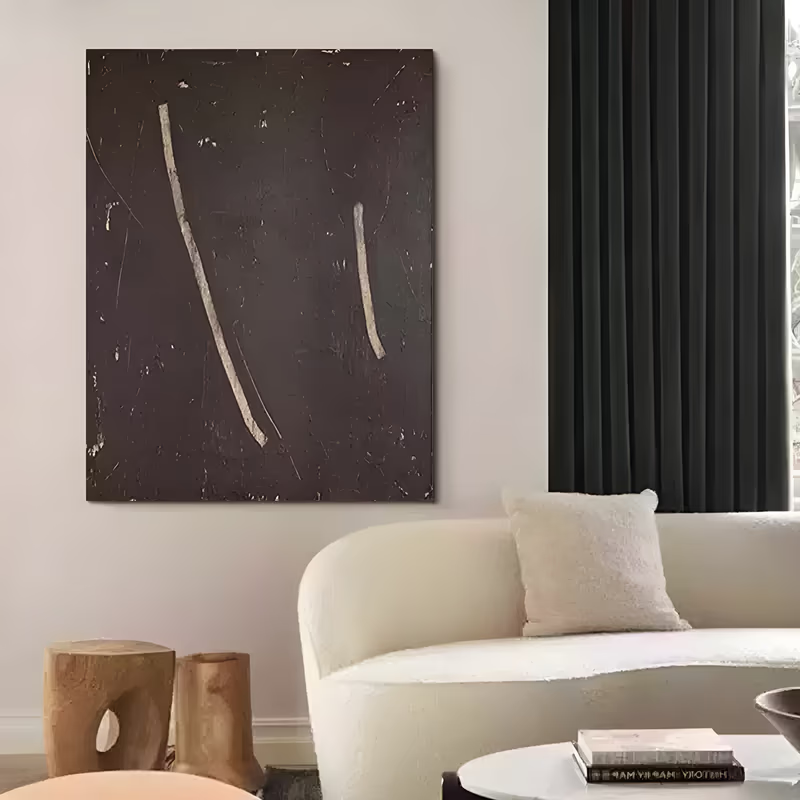
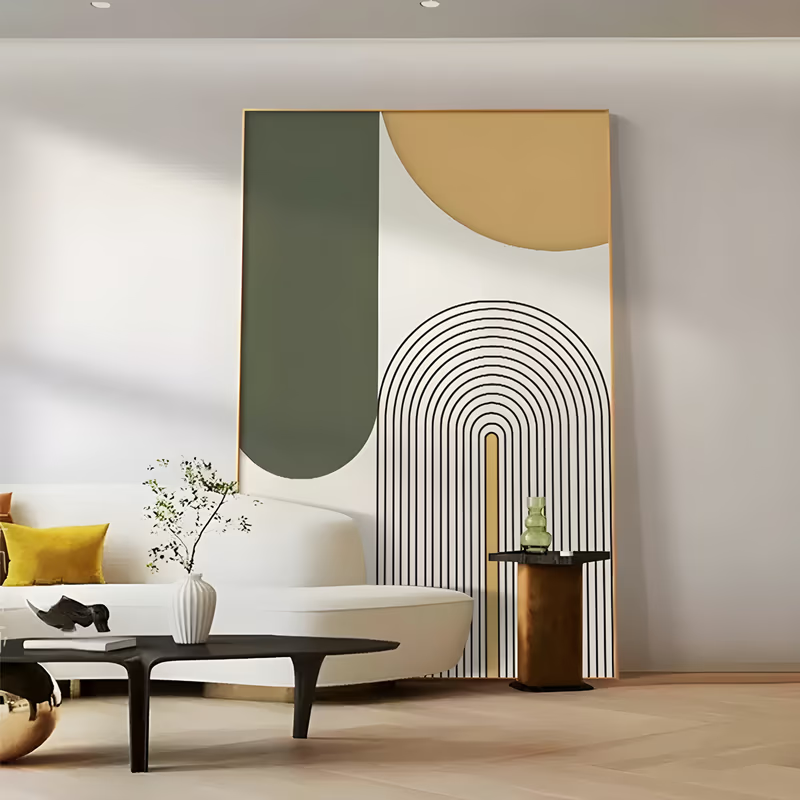
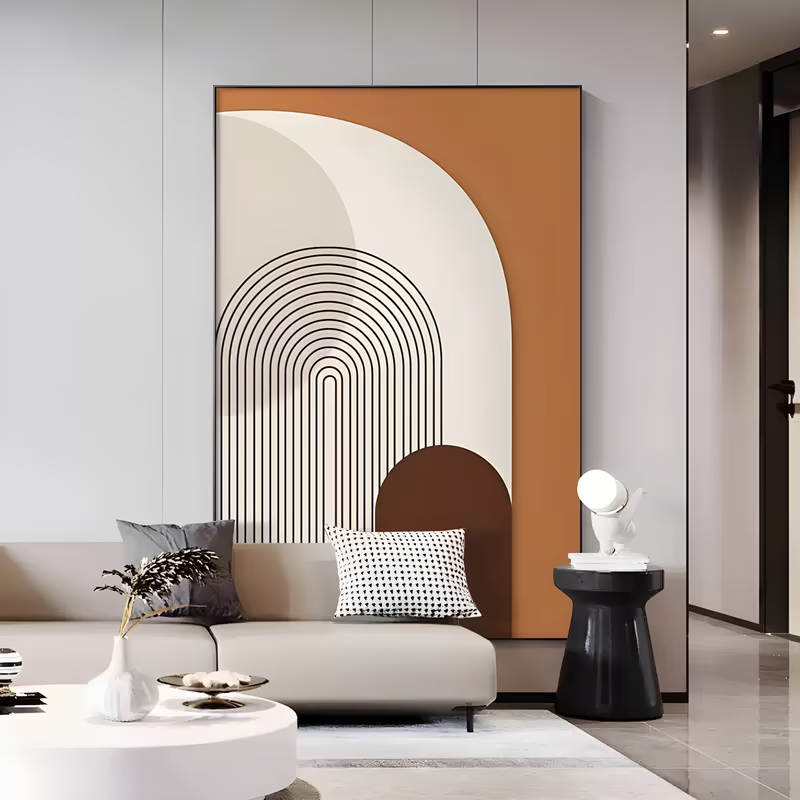
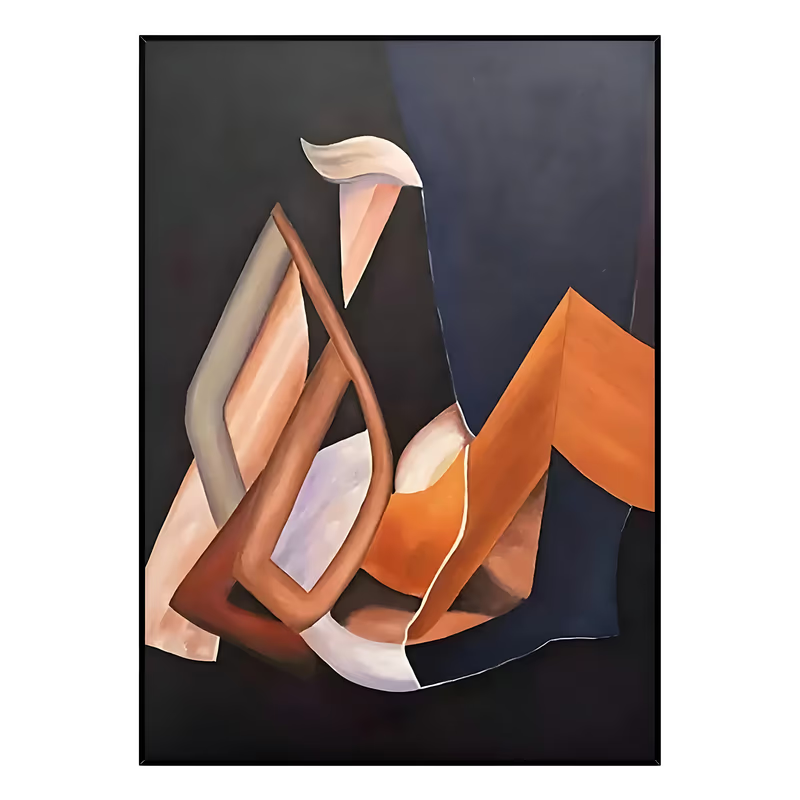
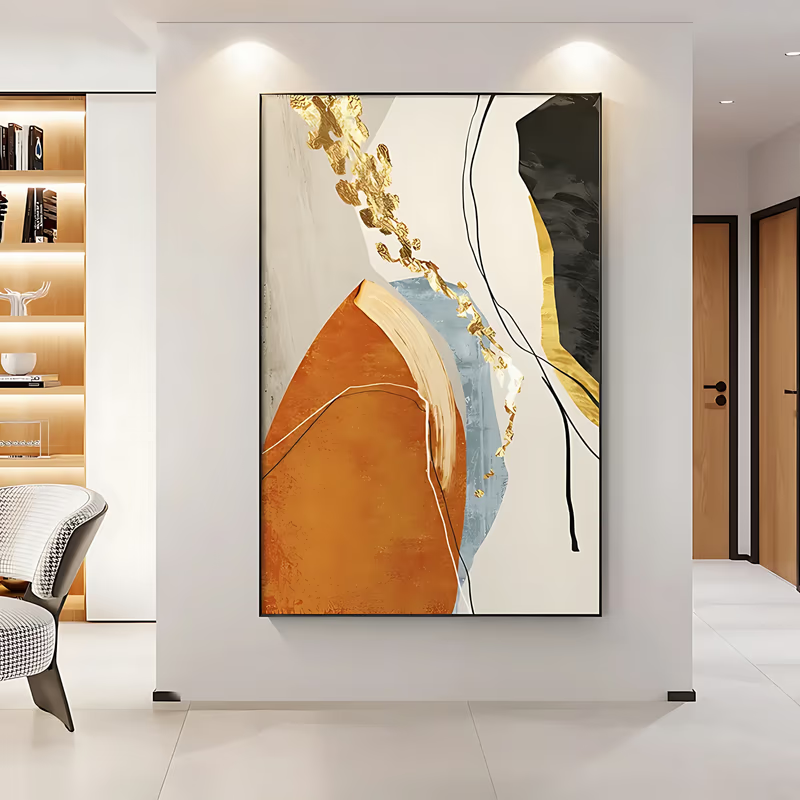
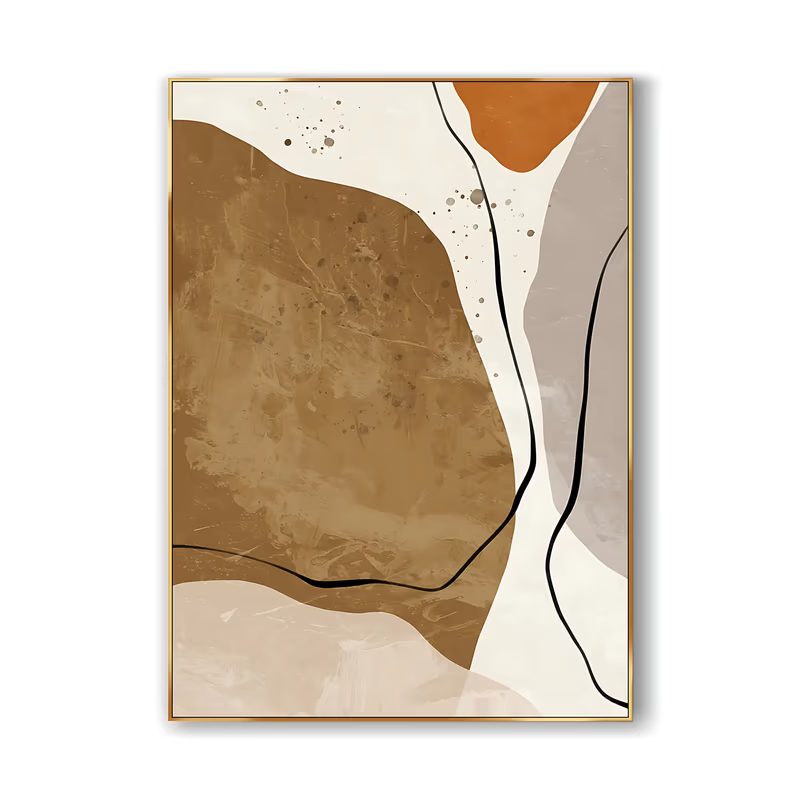
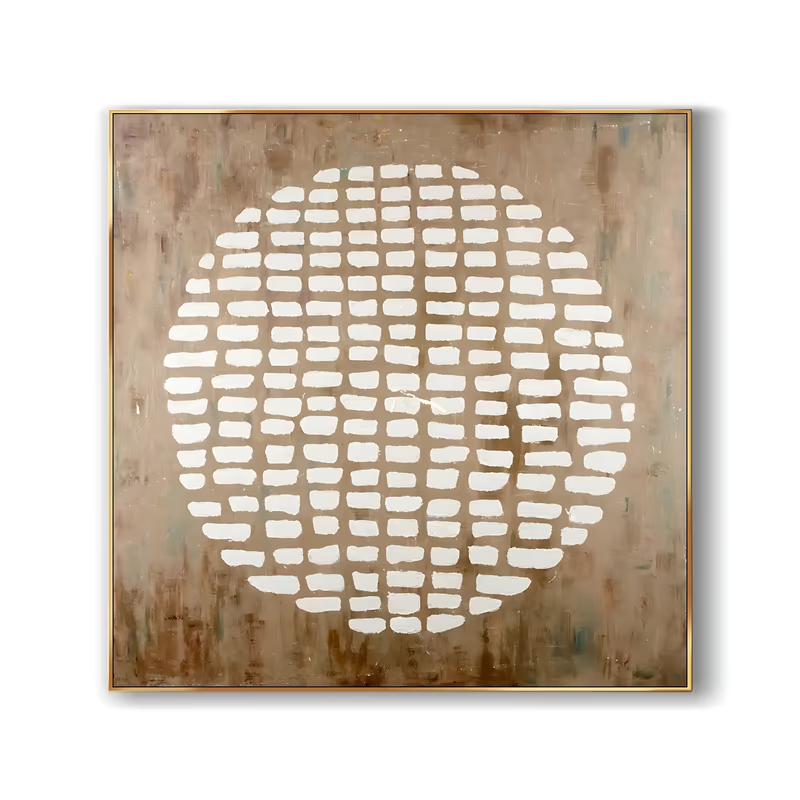
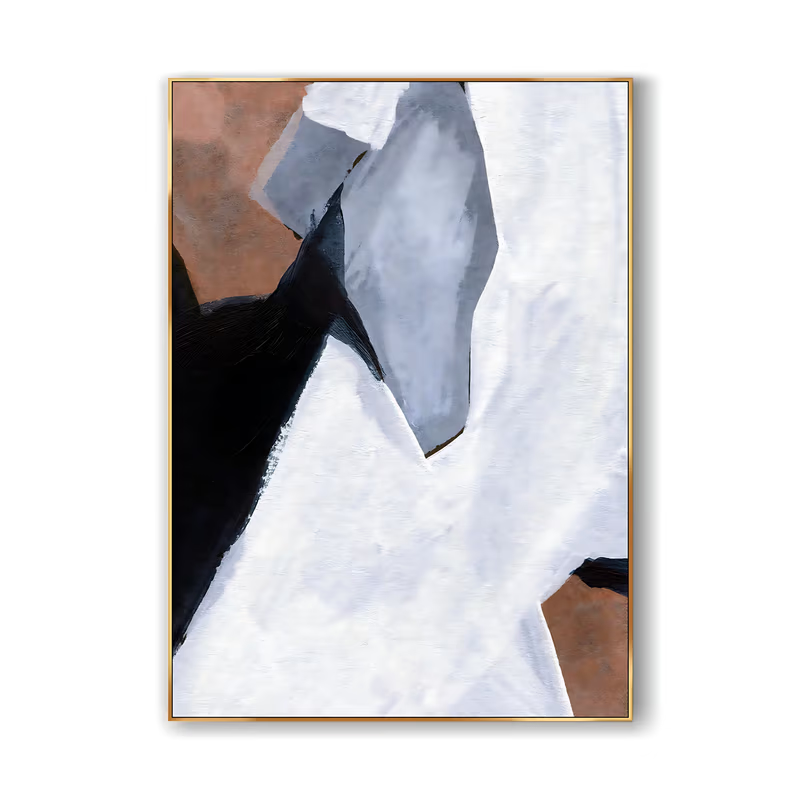
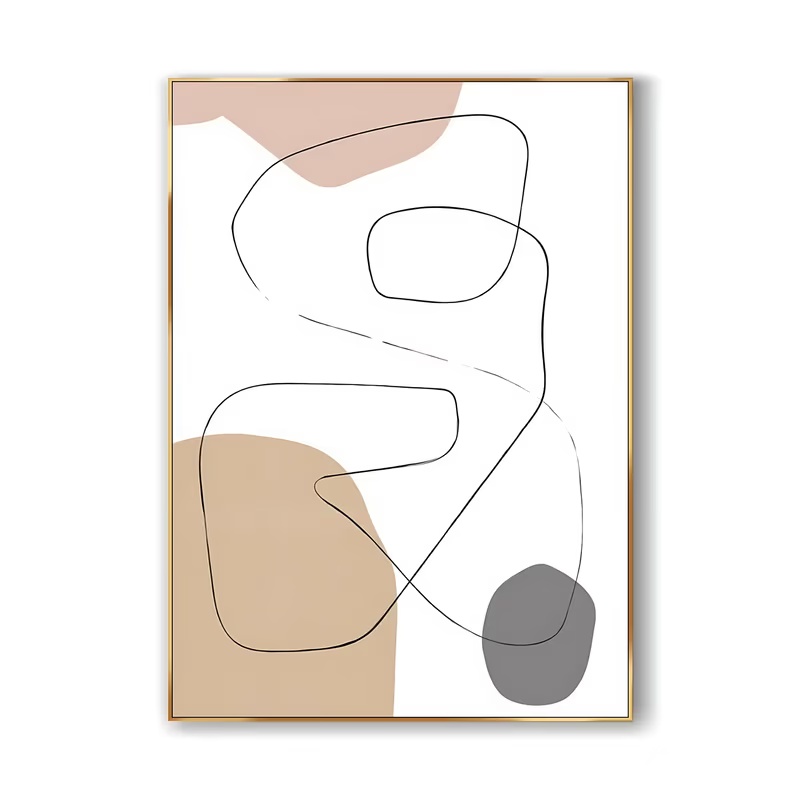
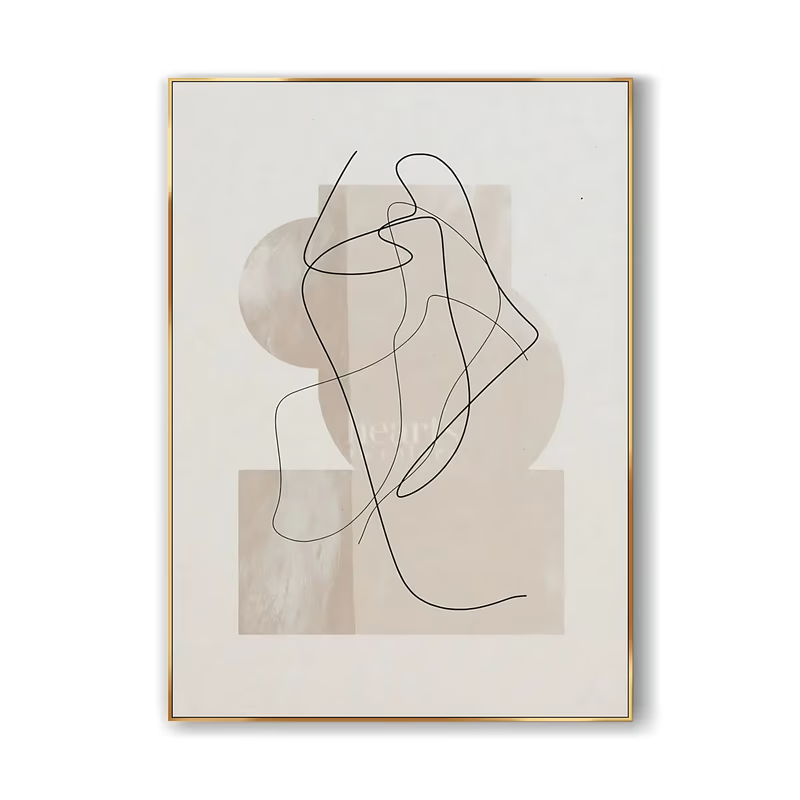
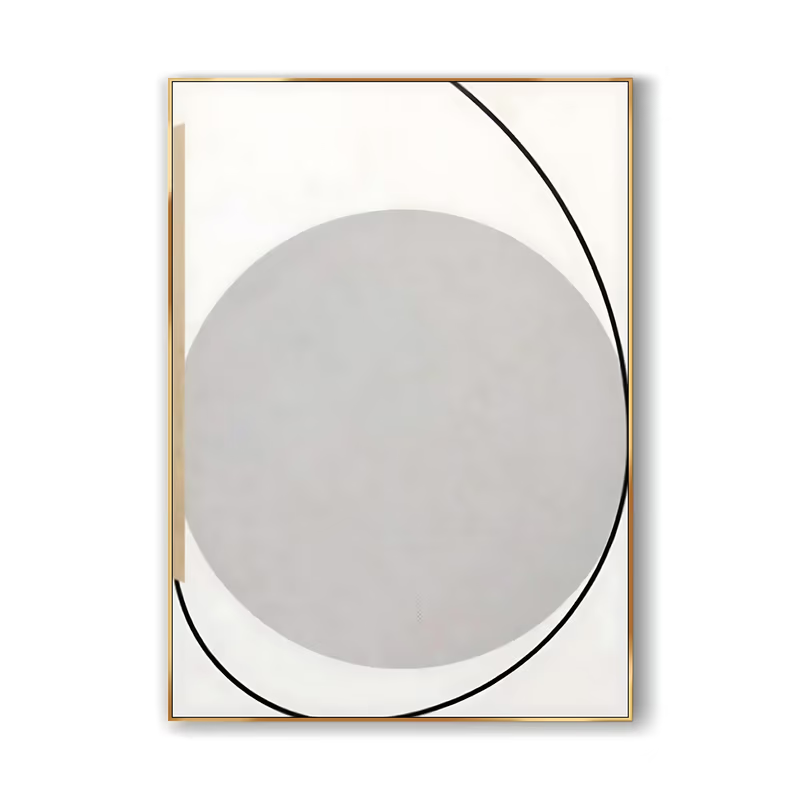
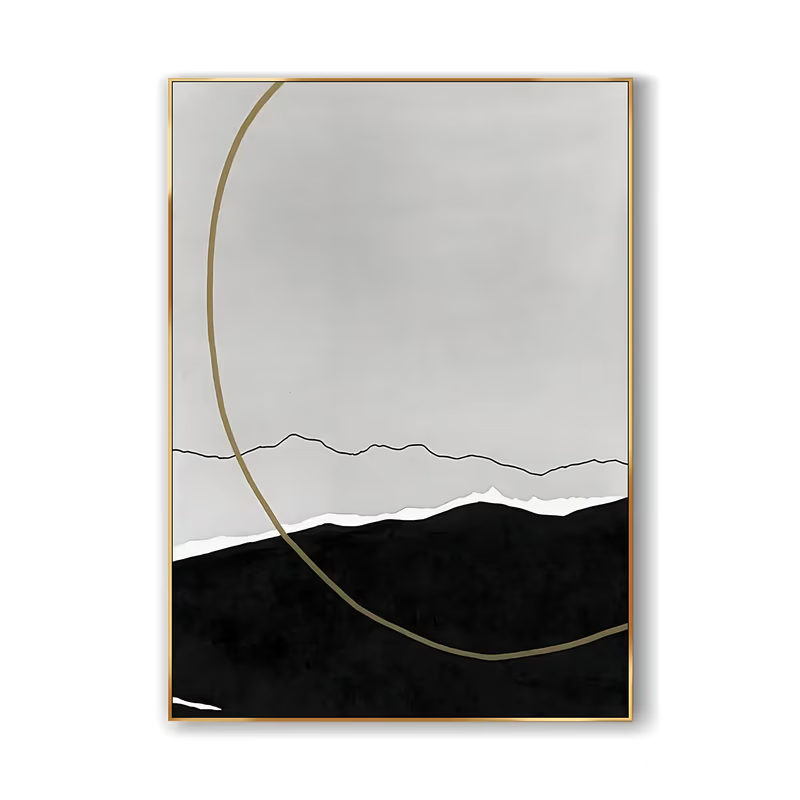
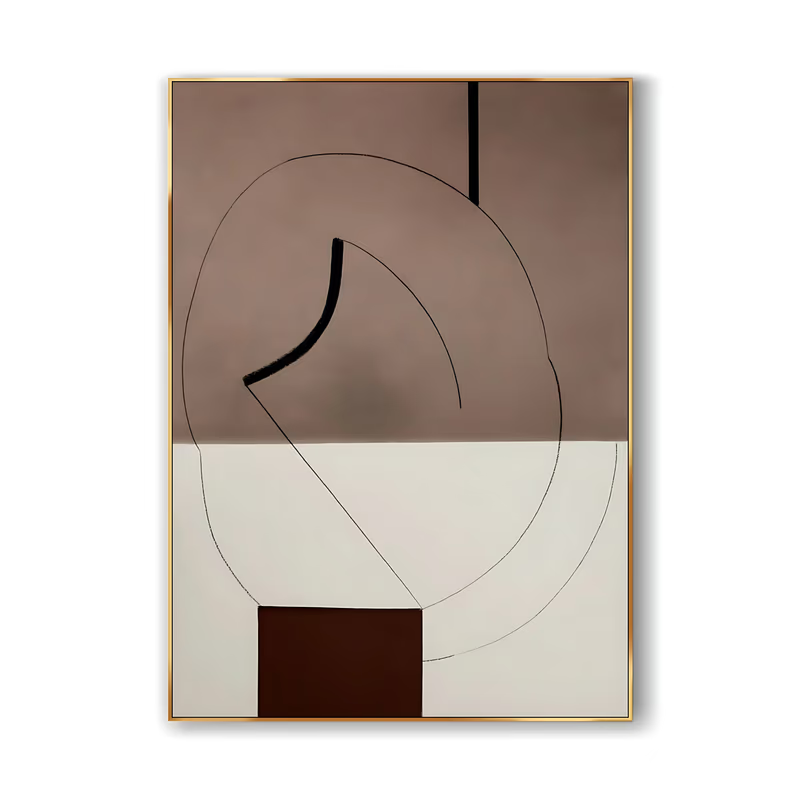
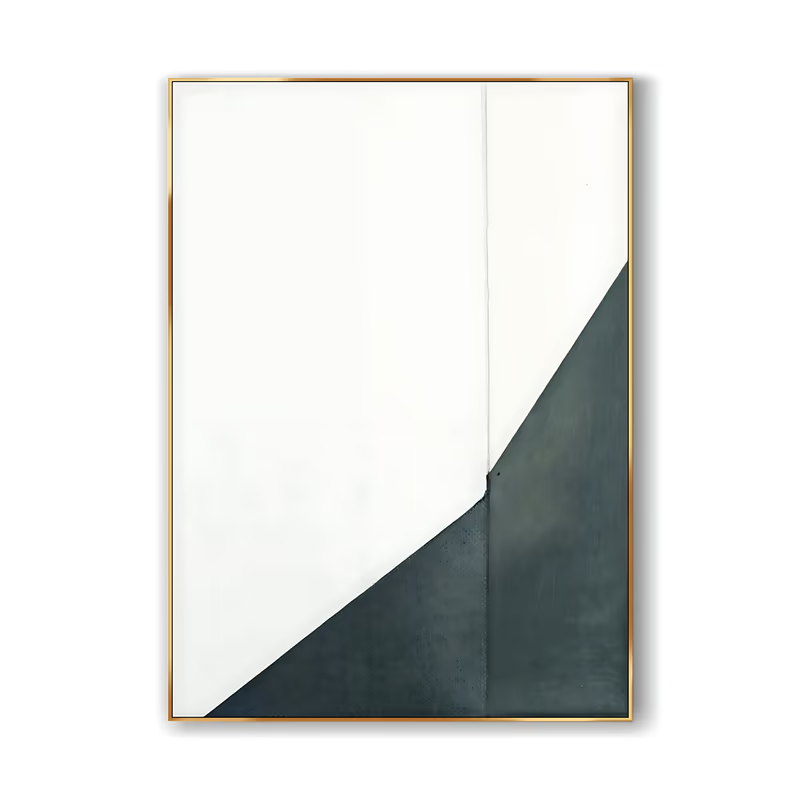
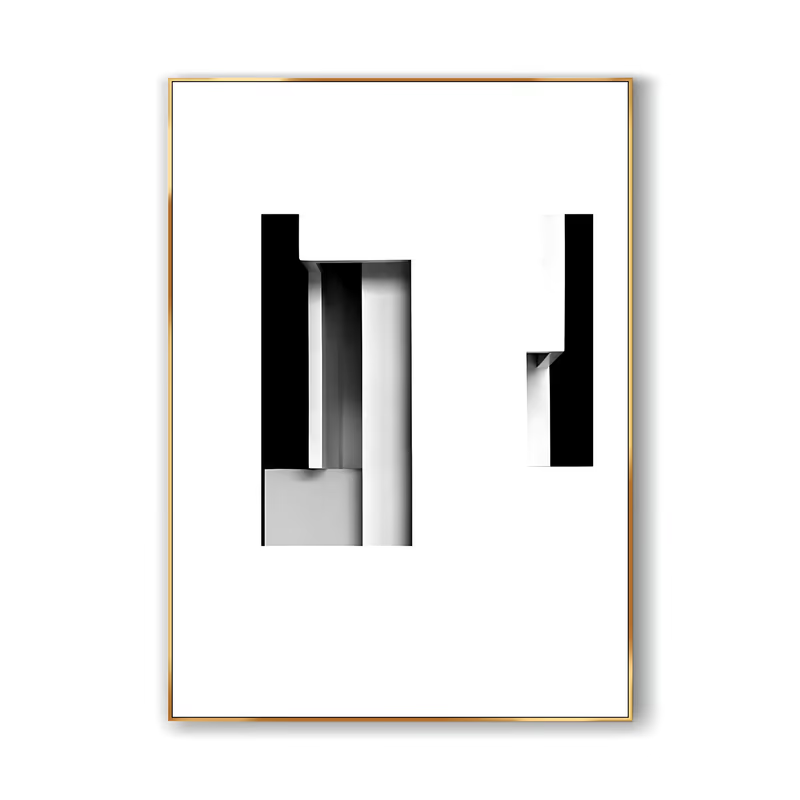
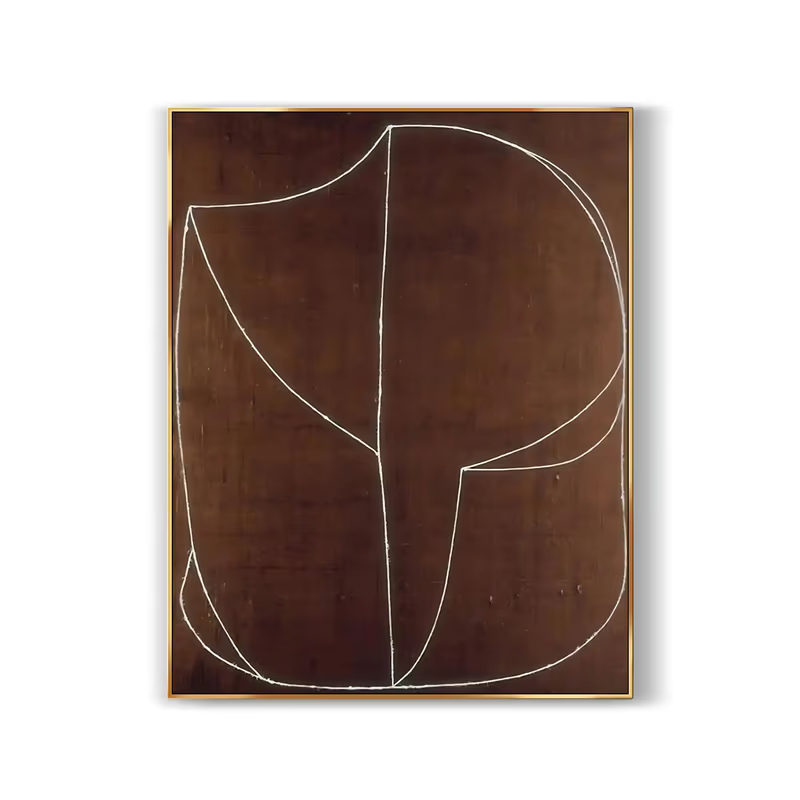
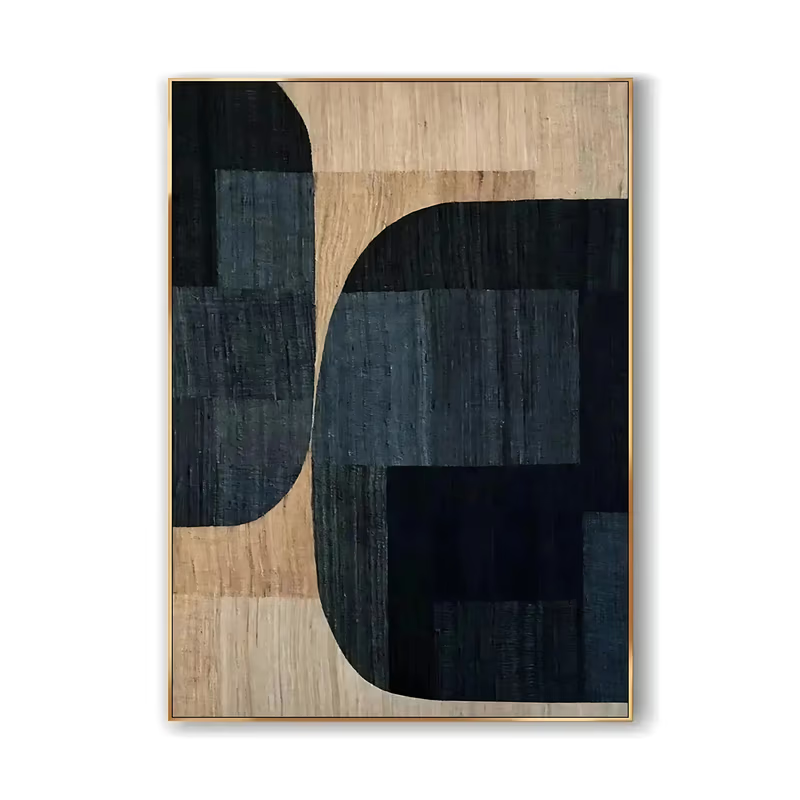
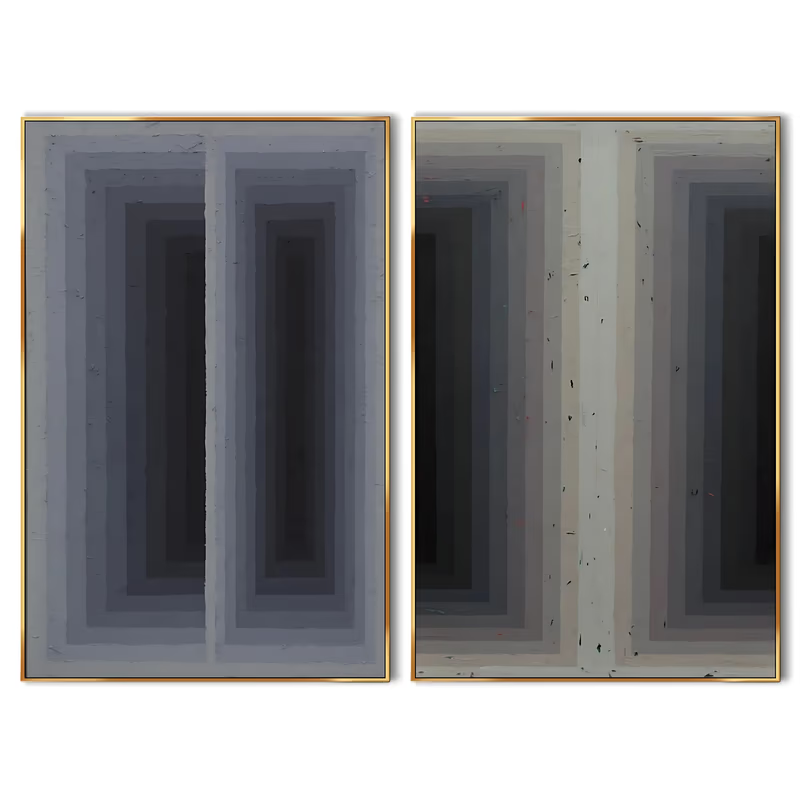
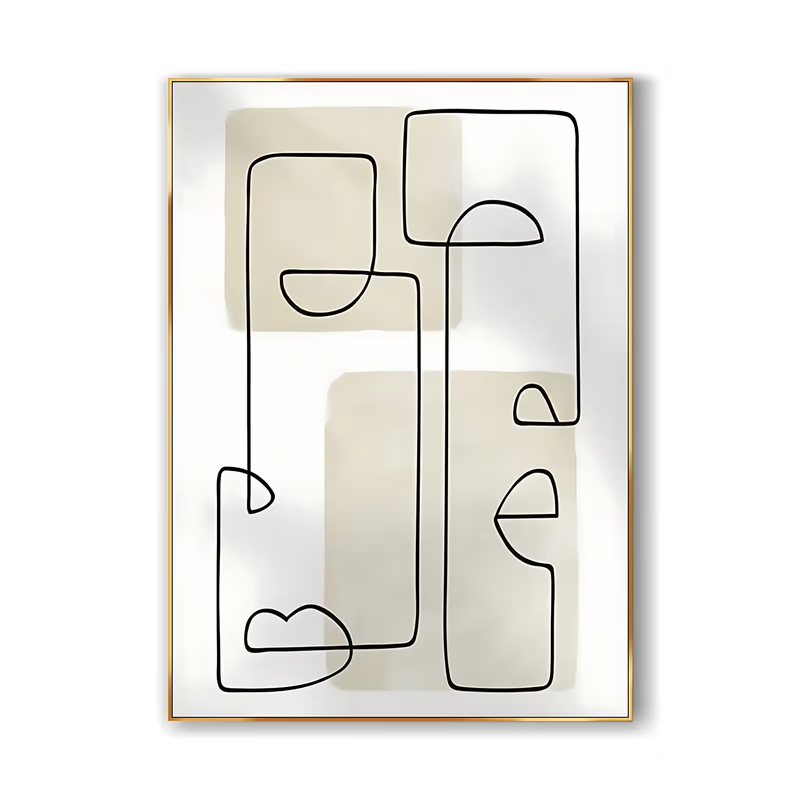
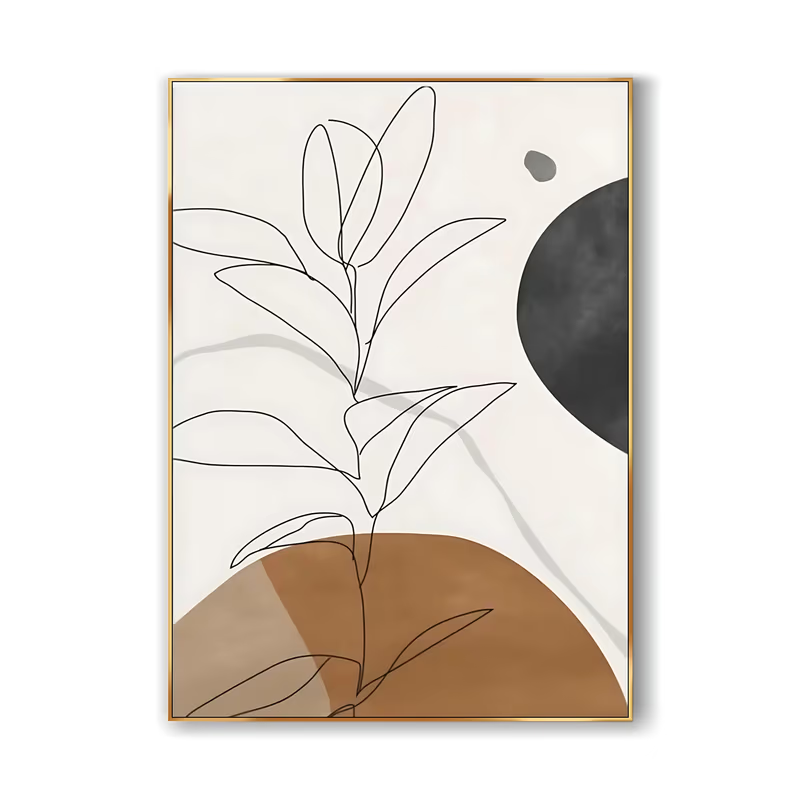
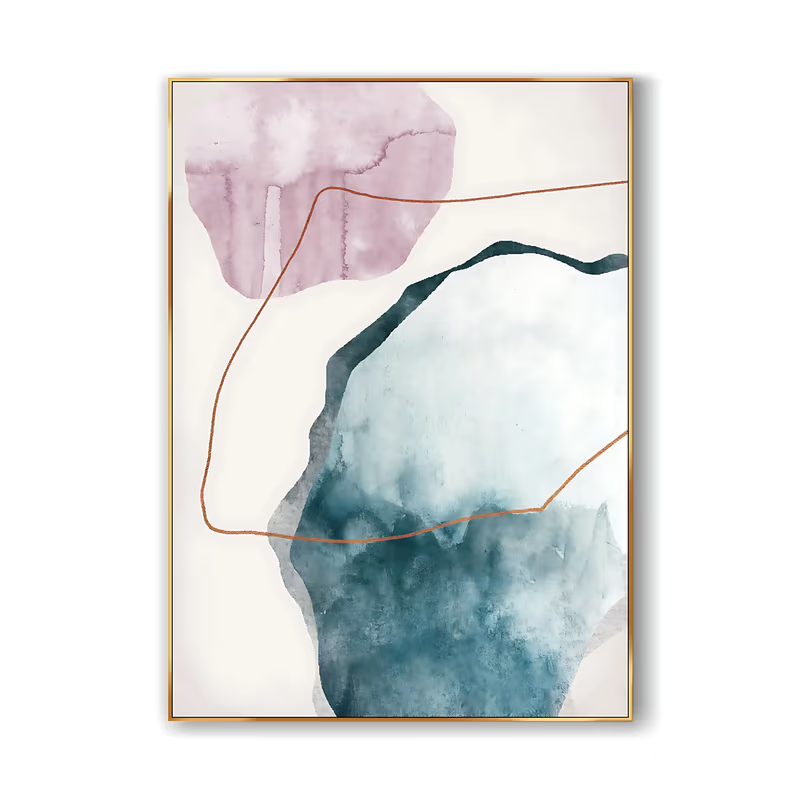
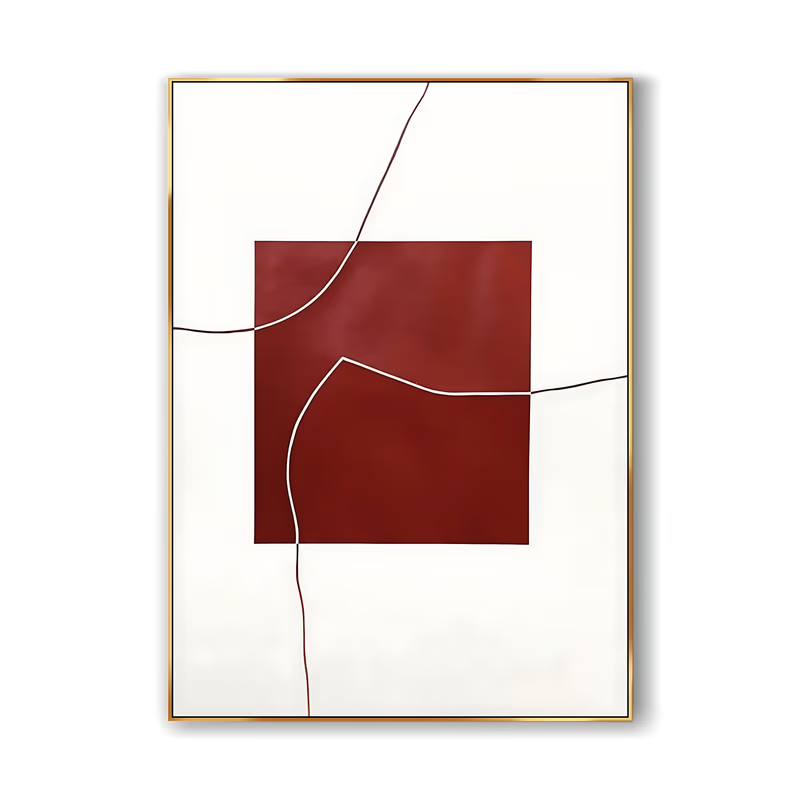
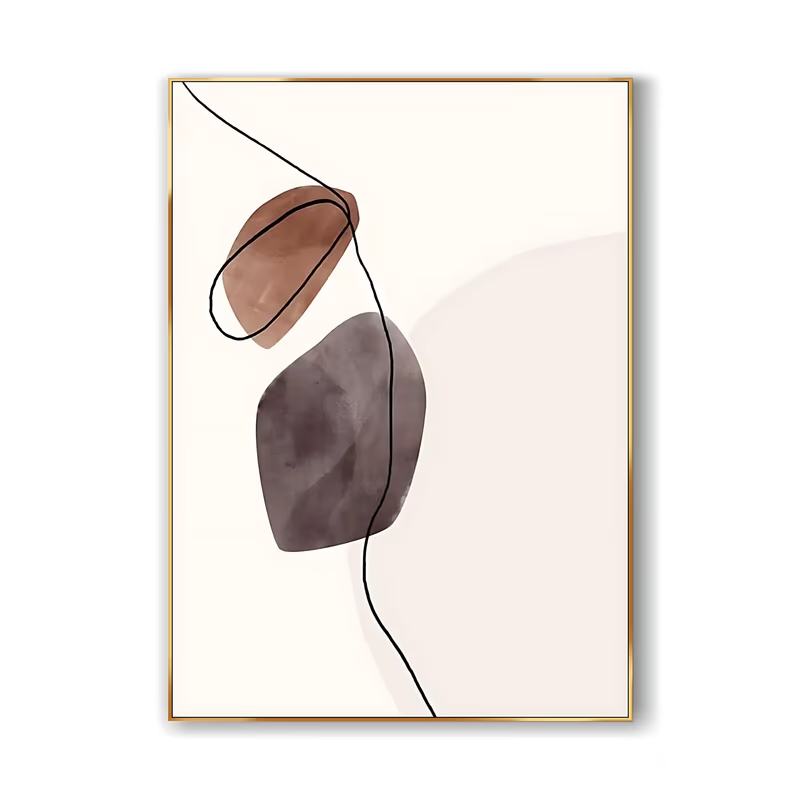
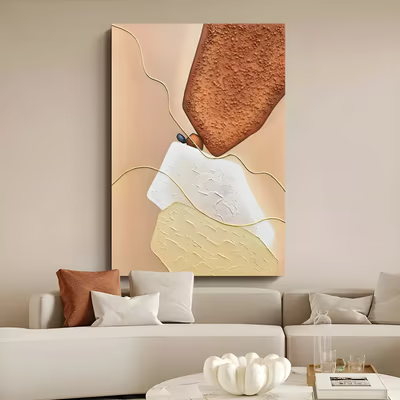
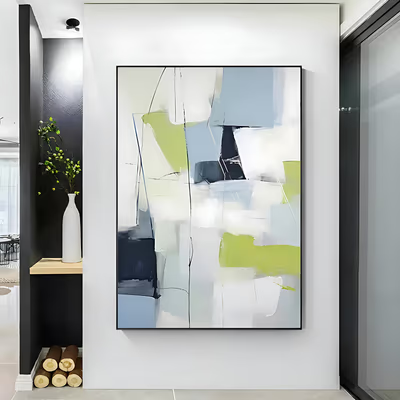
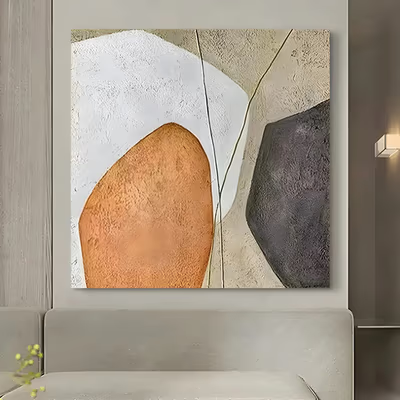
A single arch on terracotta, a thin black line over beige blocks, a deep green wedge on white, a pair of nested rectangles split across a diptych. Lots of open ground and only two or three colours, so they suit calm rooms and repeat well. More in this spirit is in contemporary minimalist art.
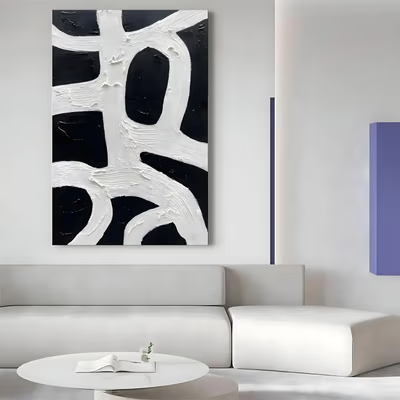
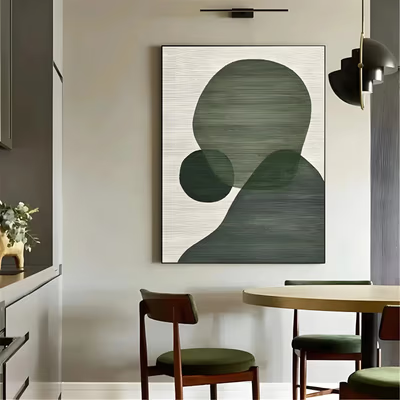
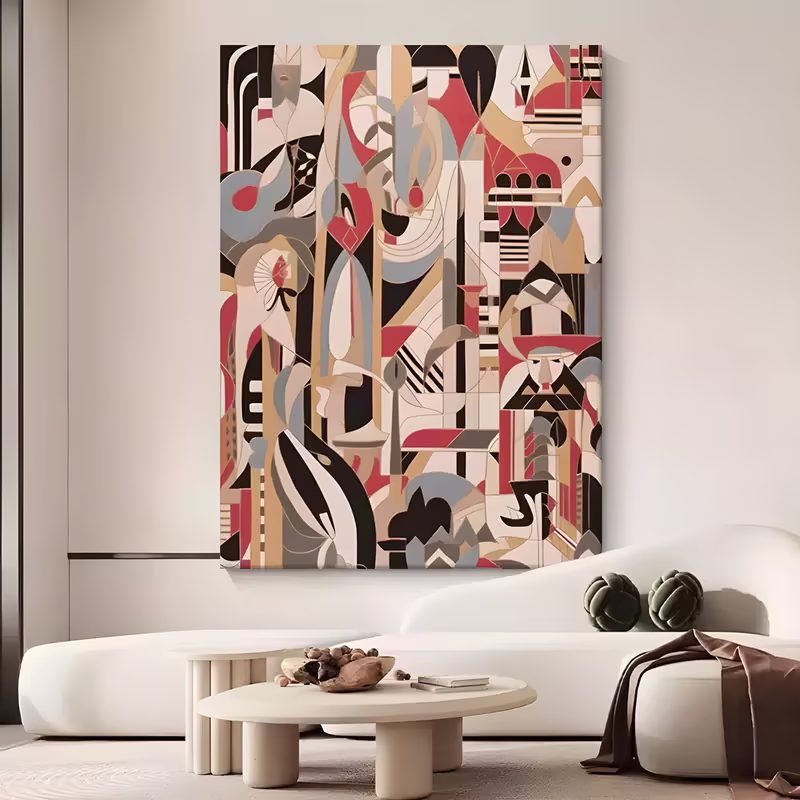
Colour blocks, Bauhaus circles and cubist planes
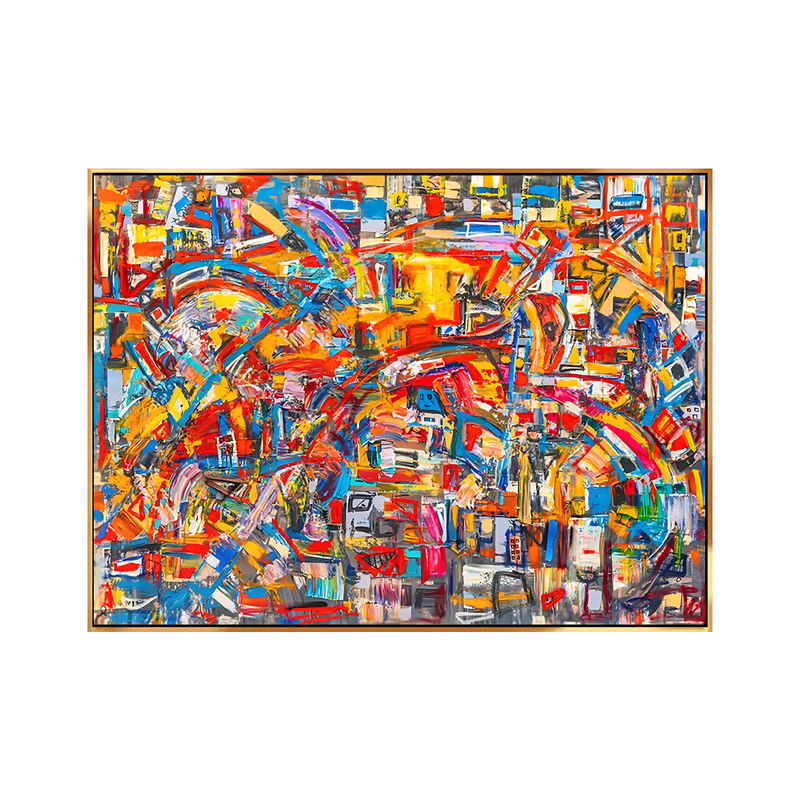
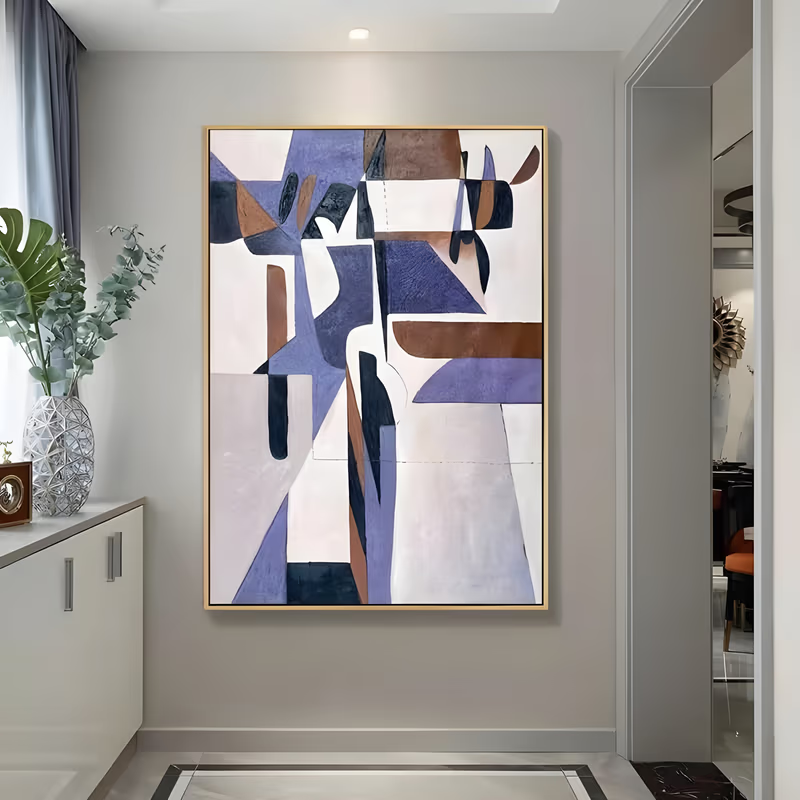
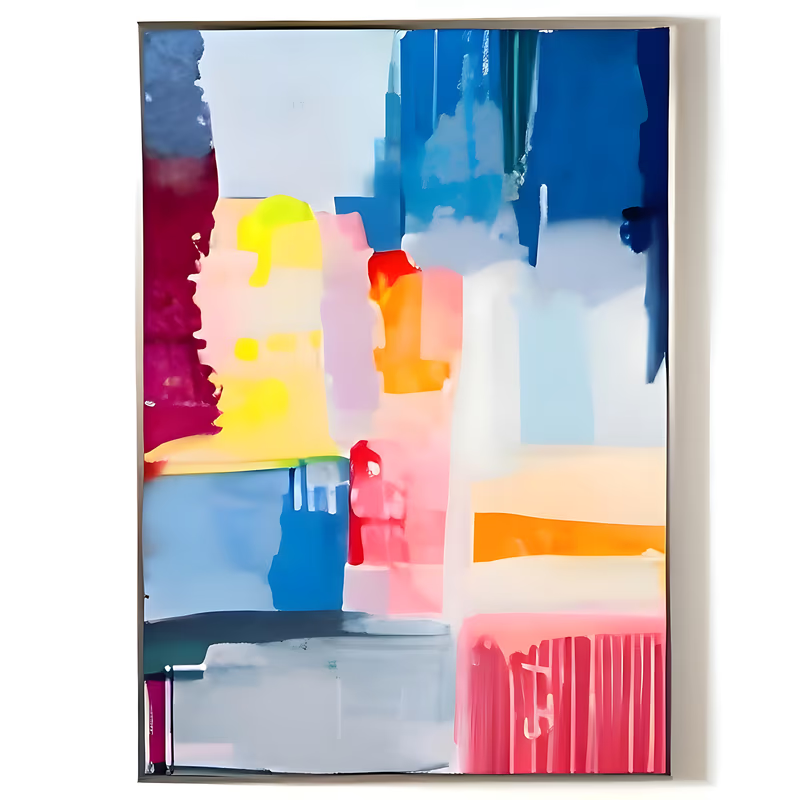
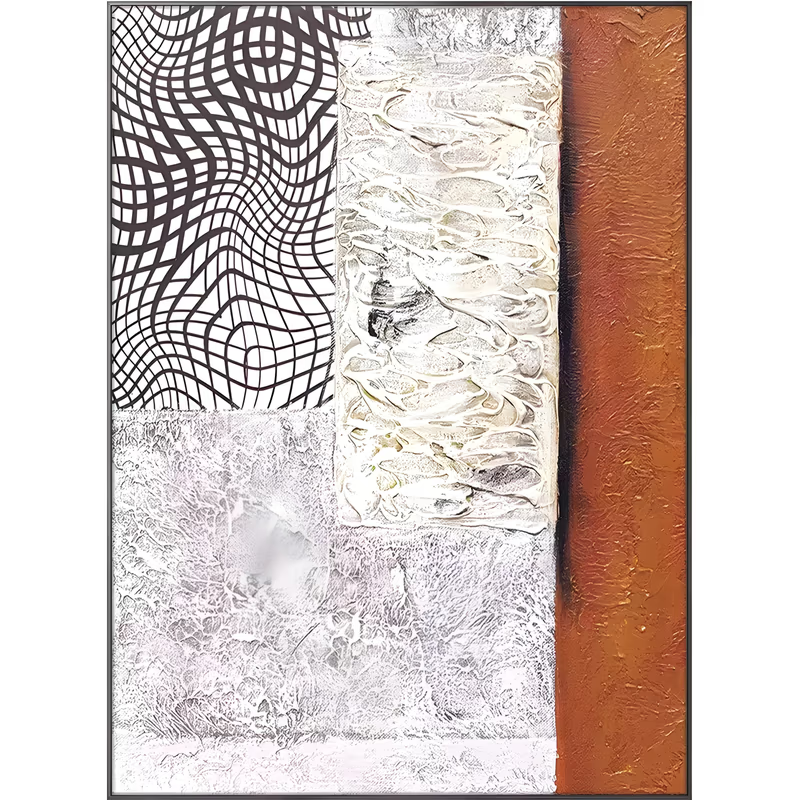
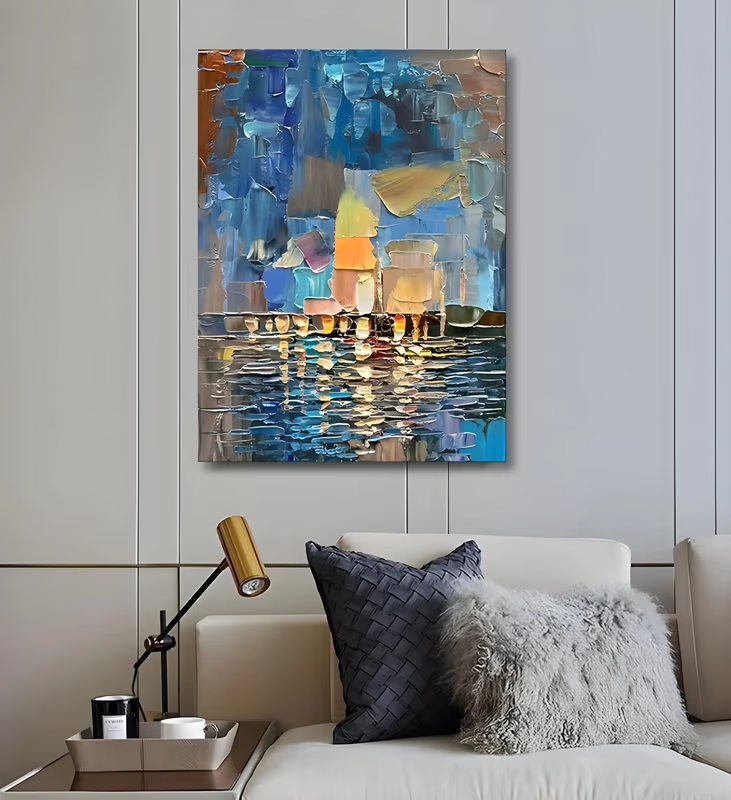
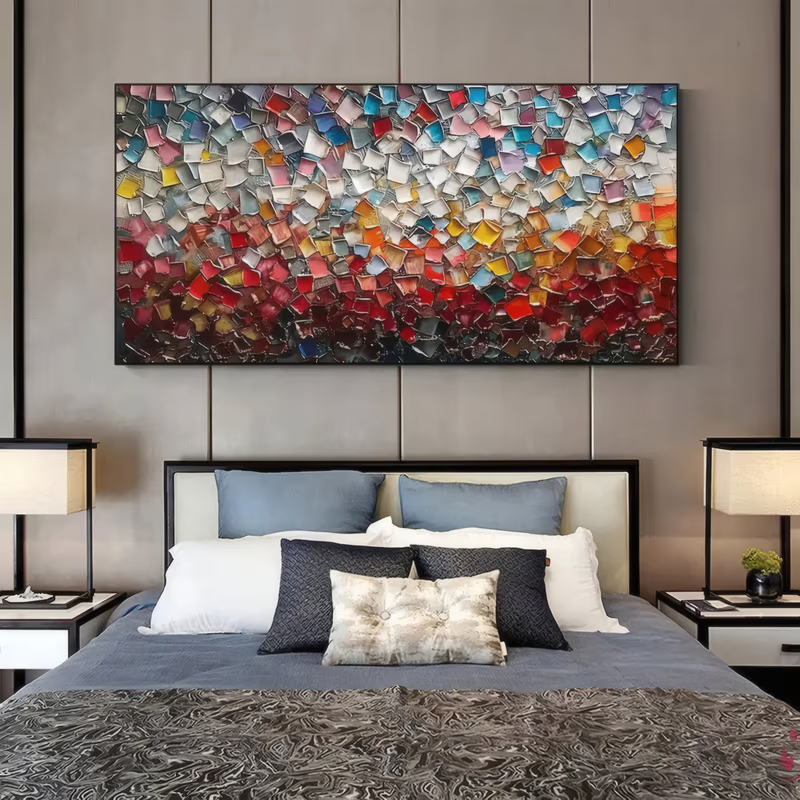
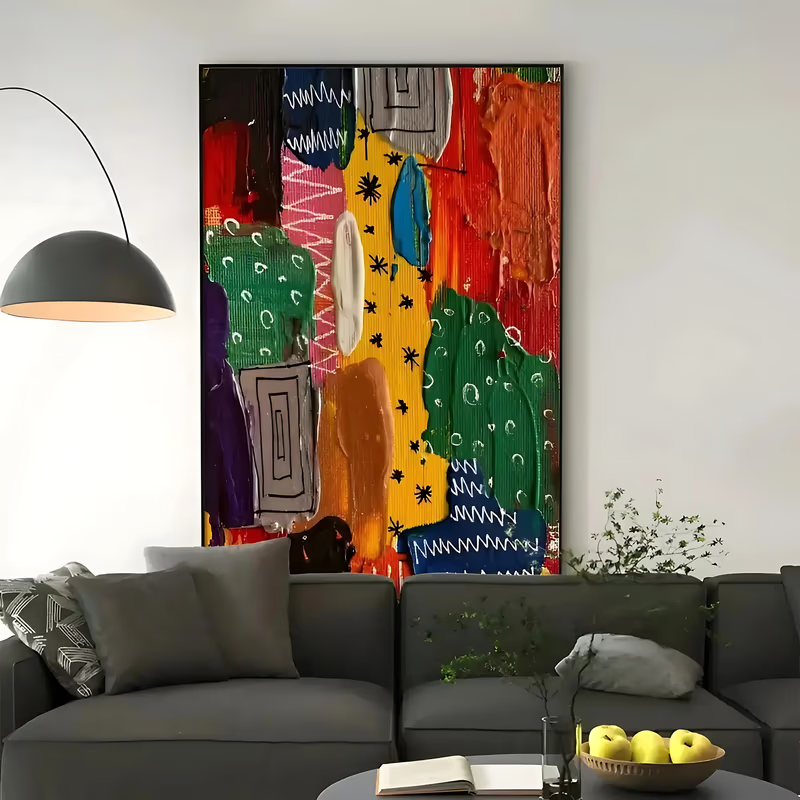
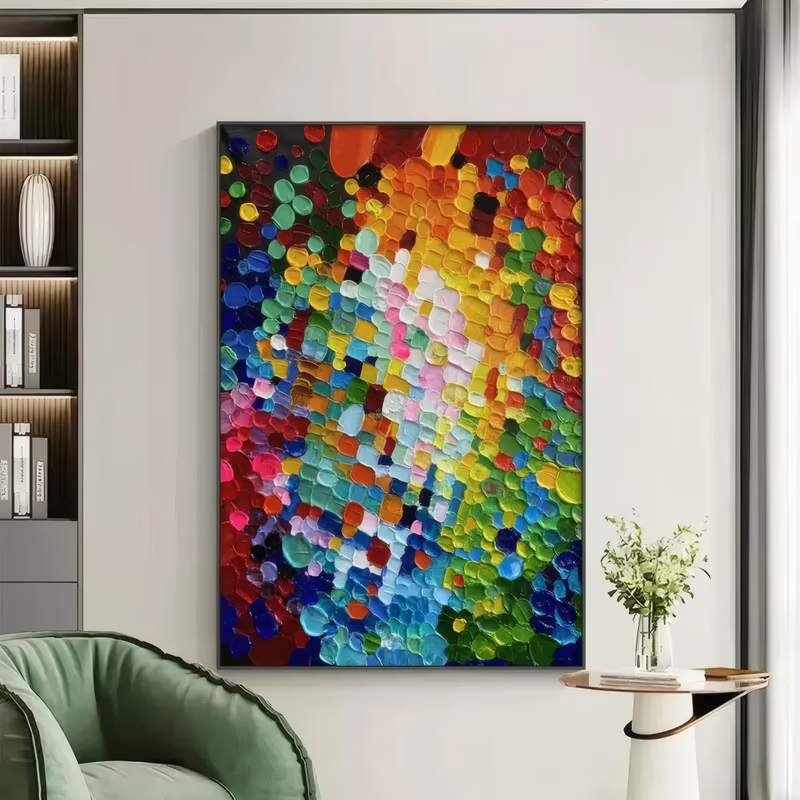
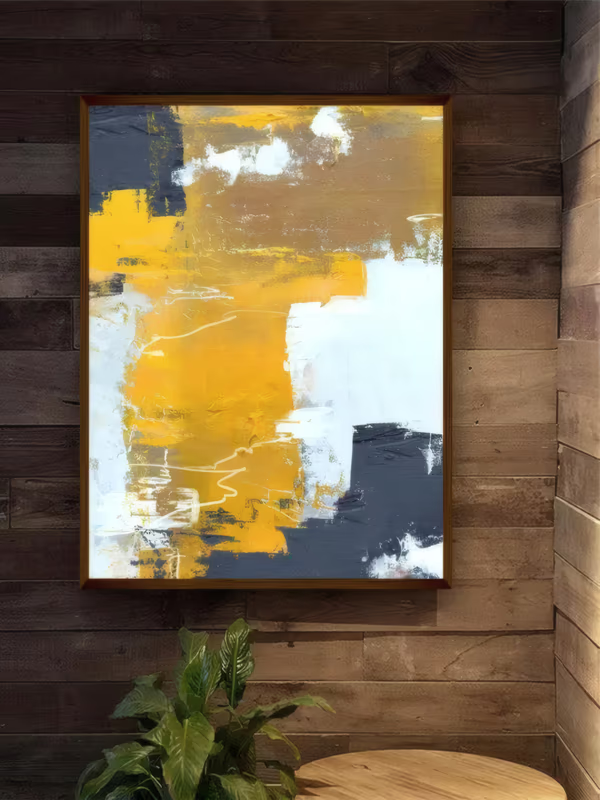
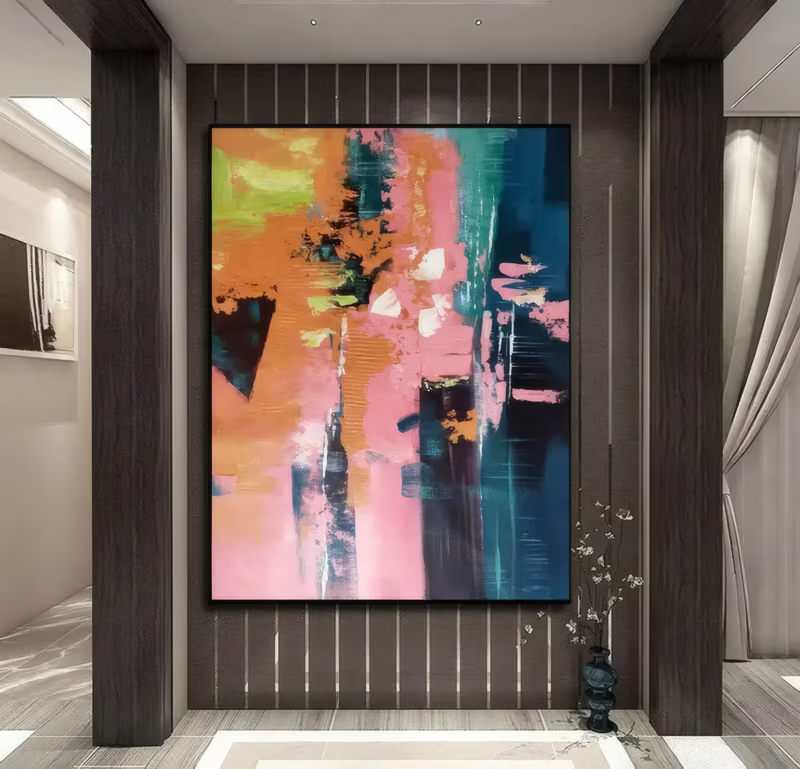
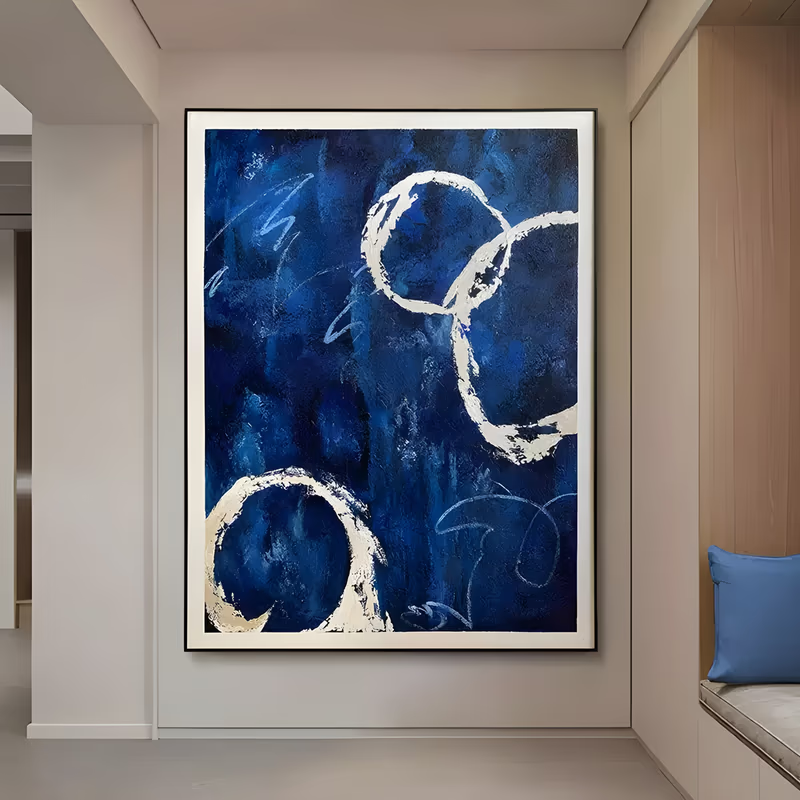
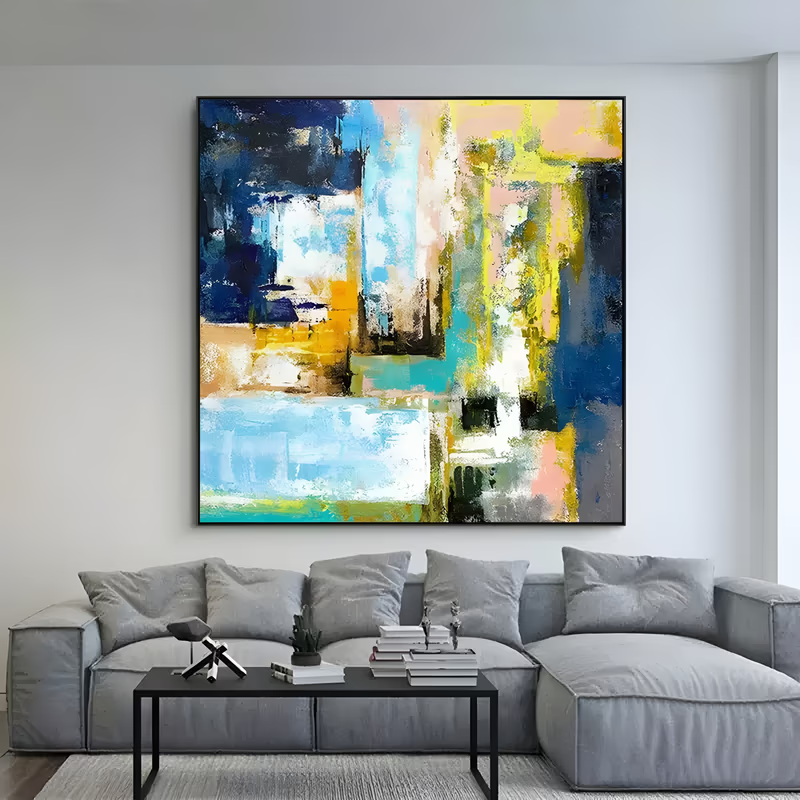
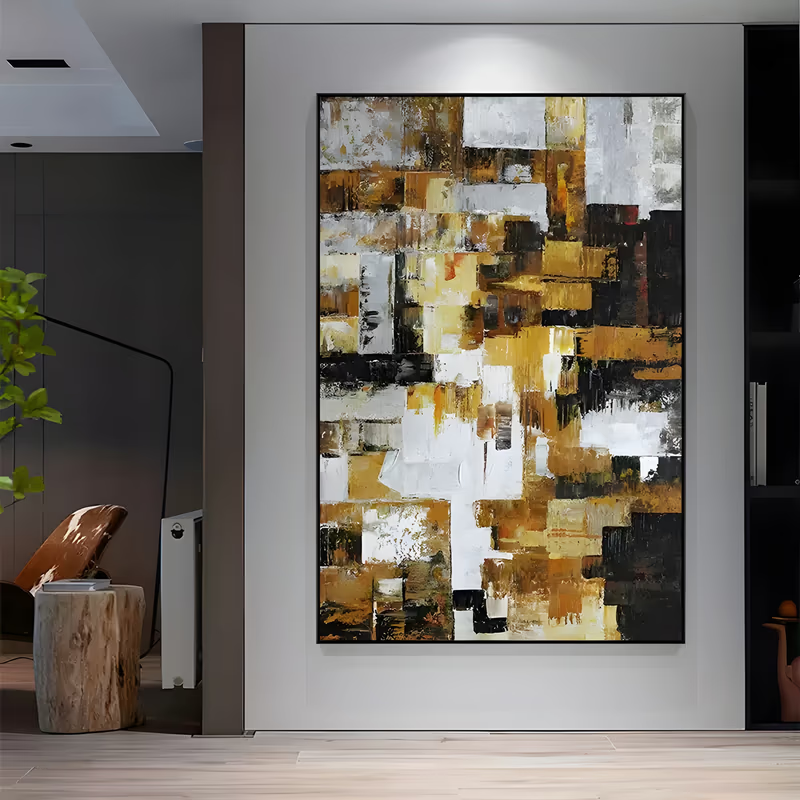
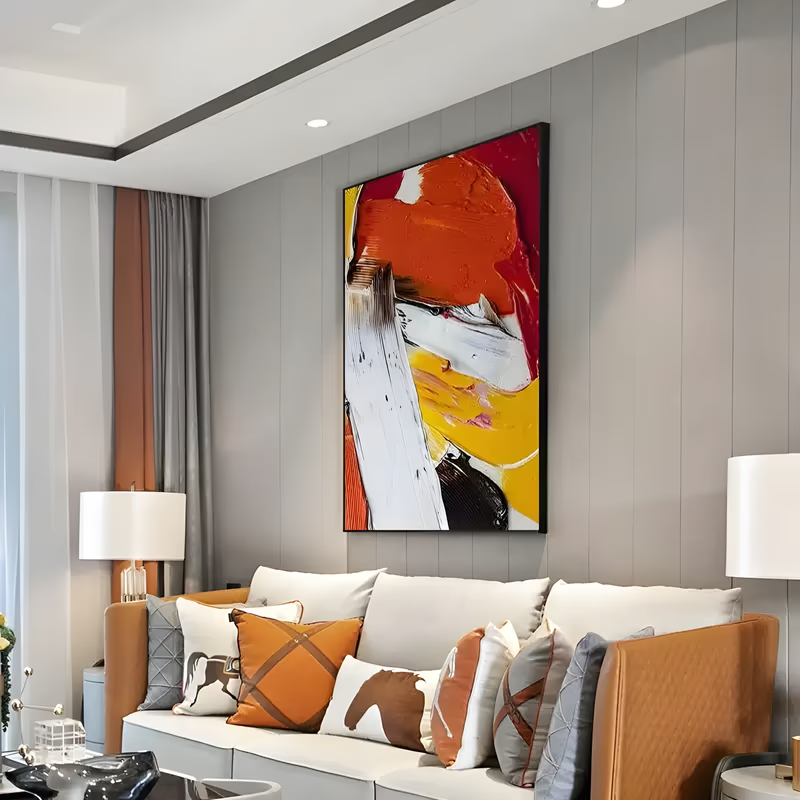
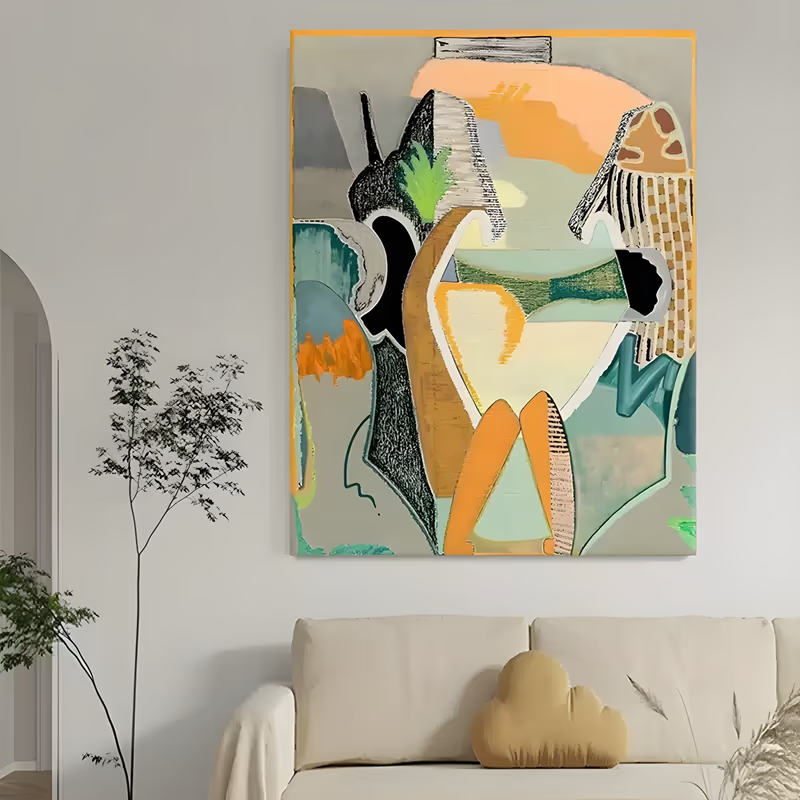
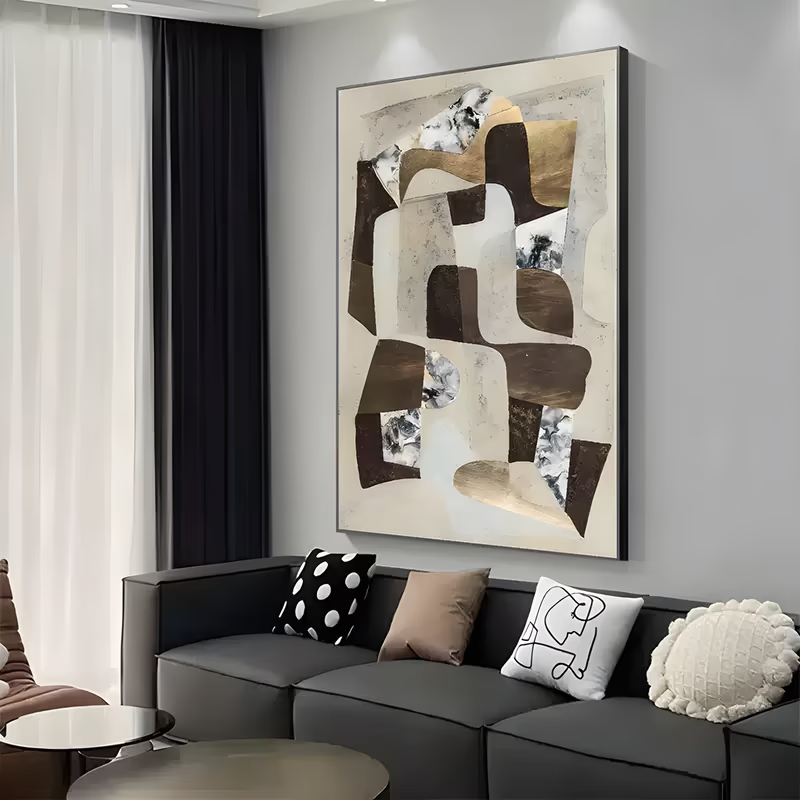
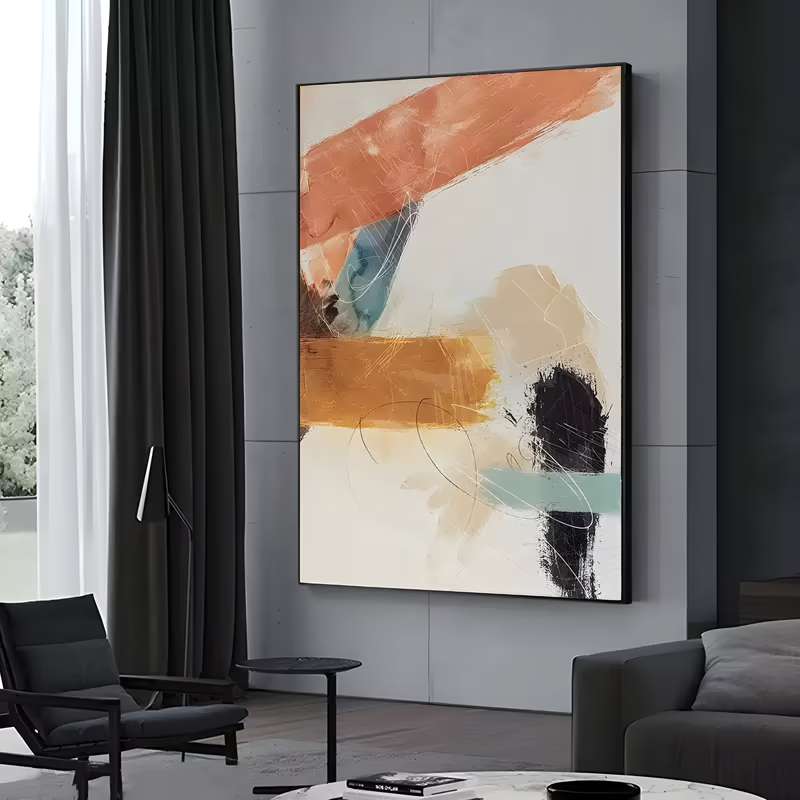
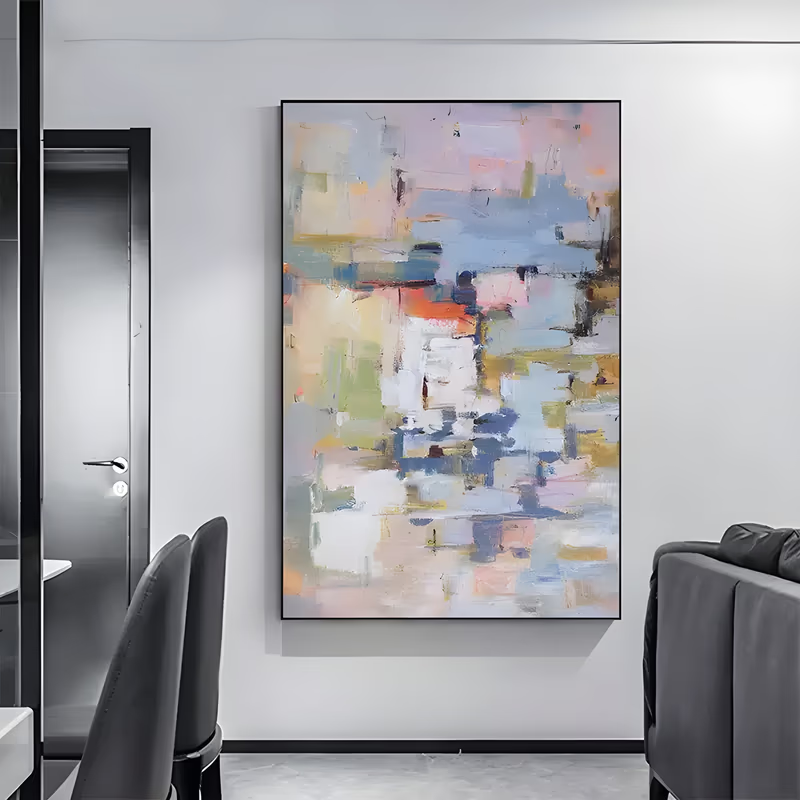
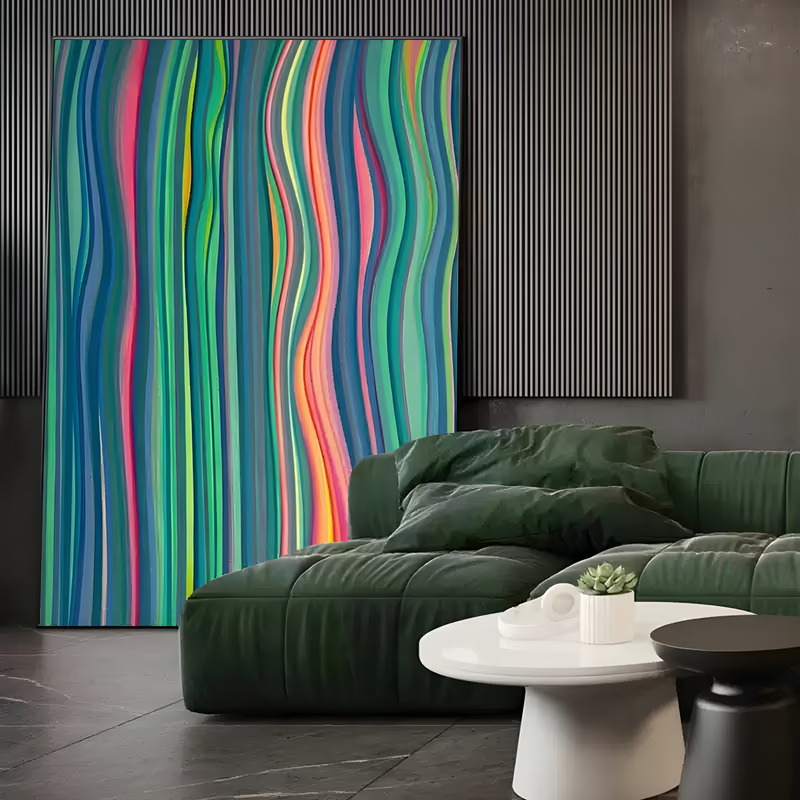
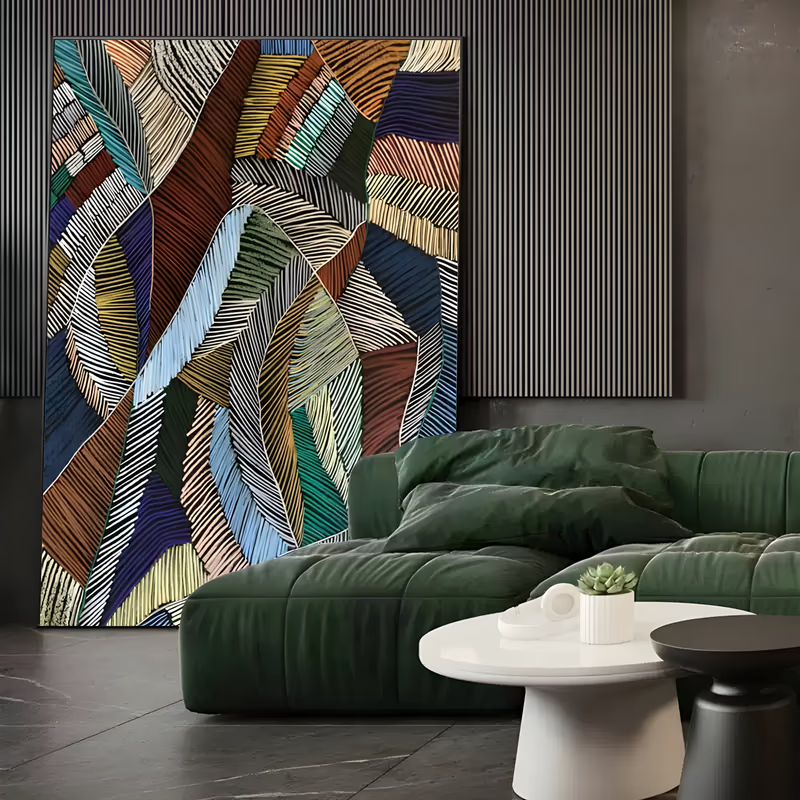
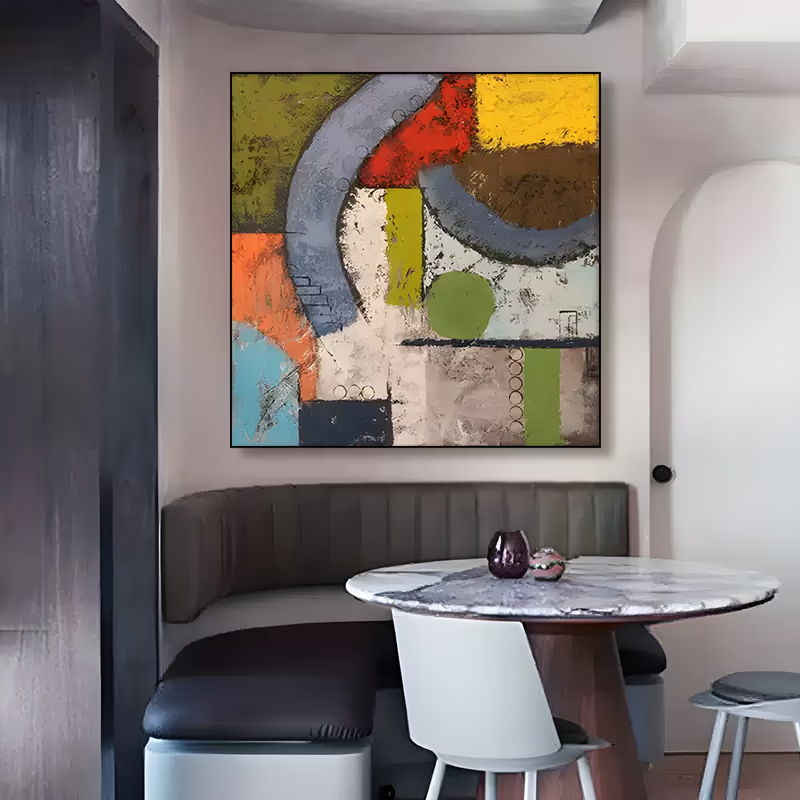
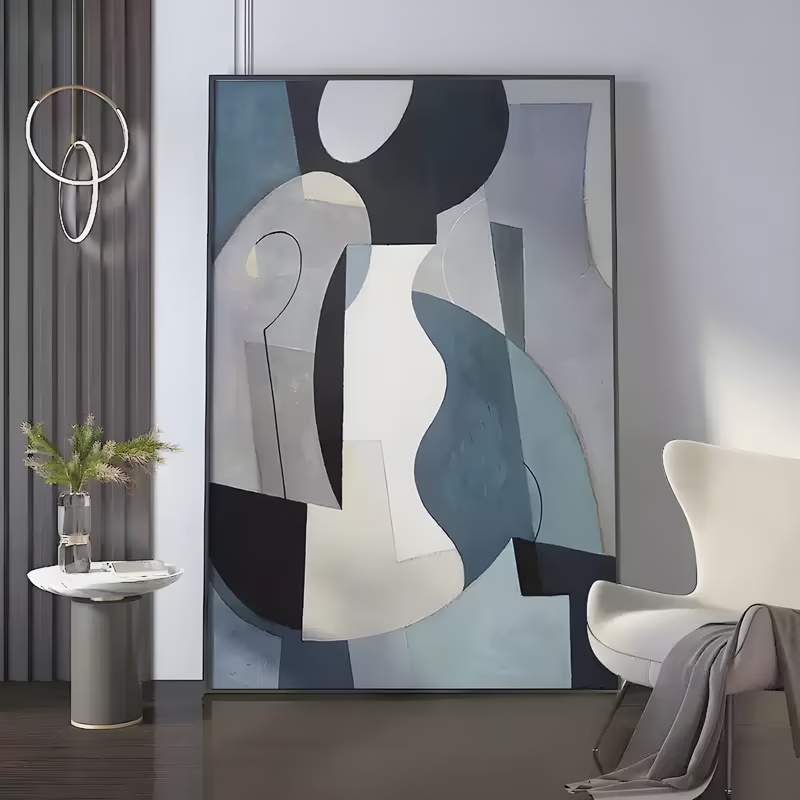
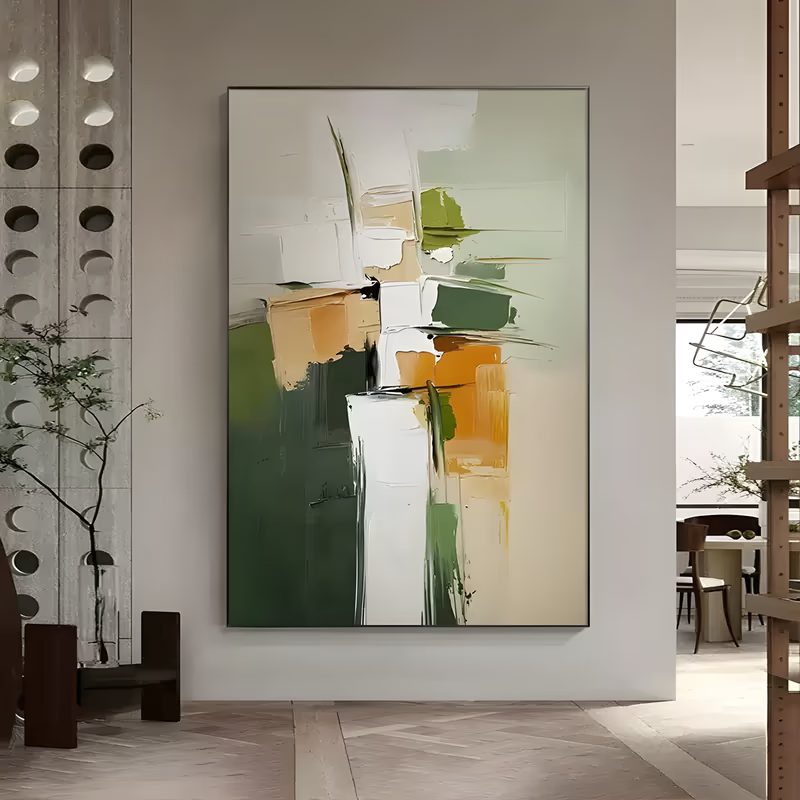
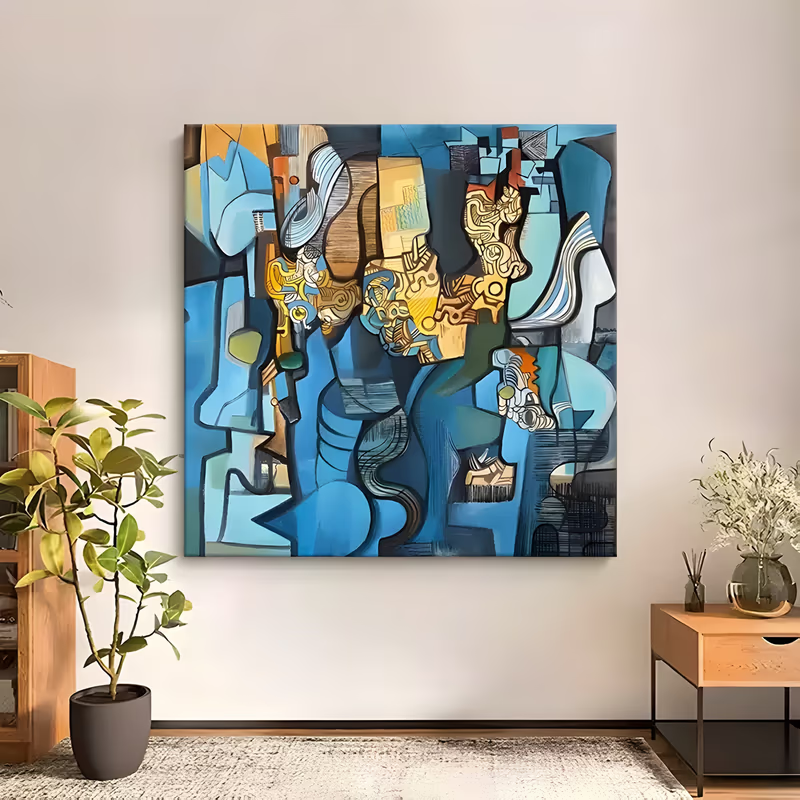
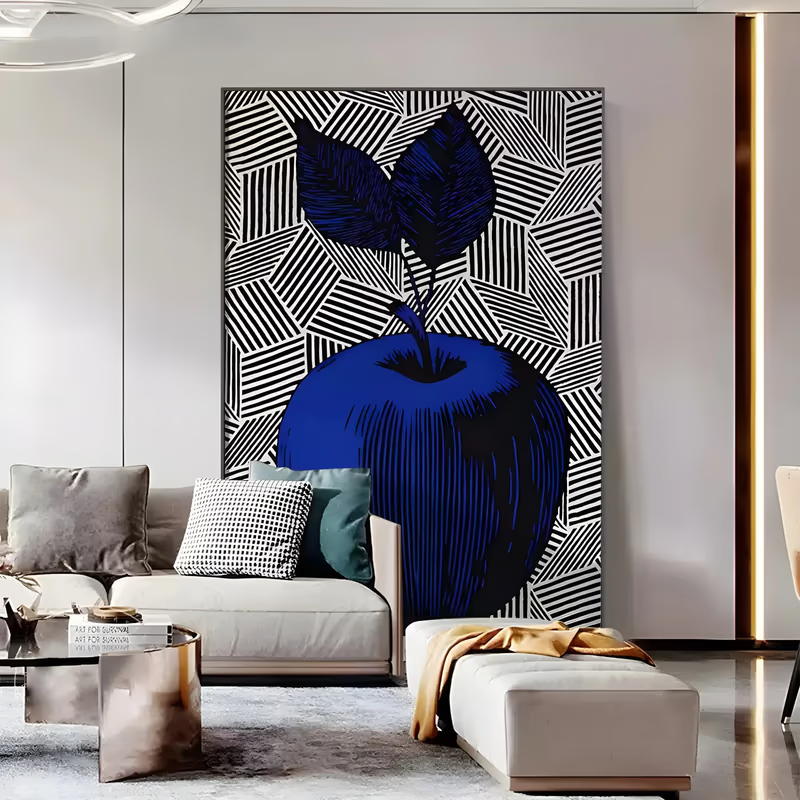
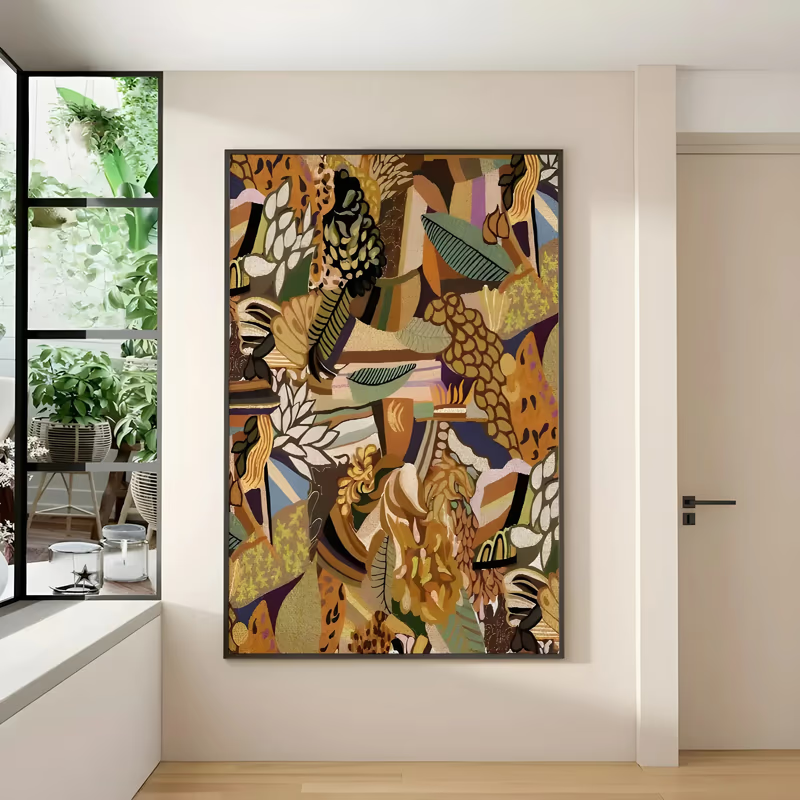
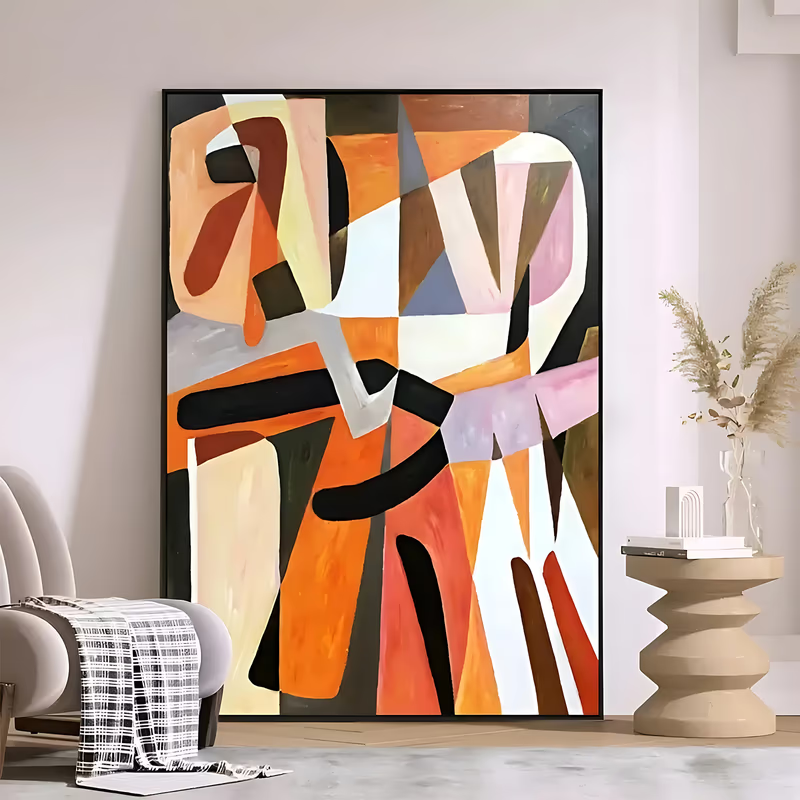
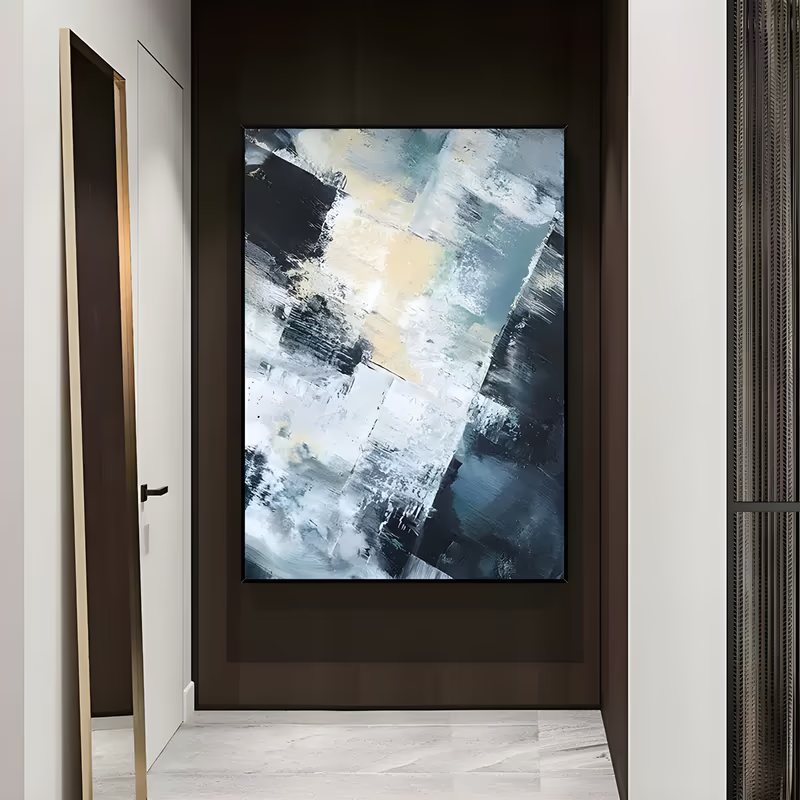
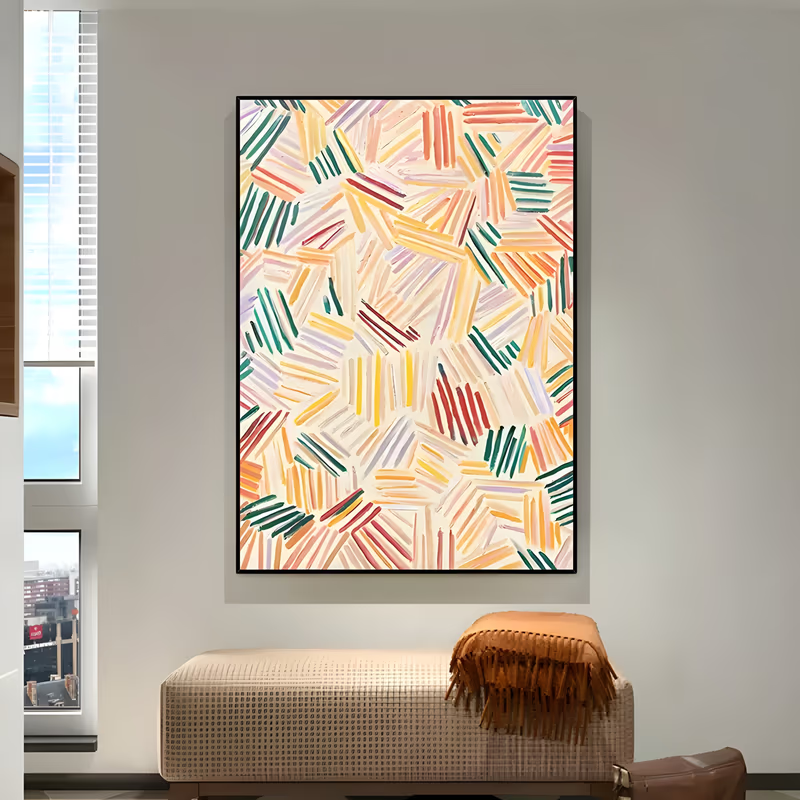
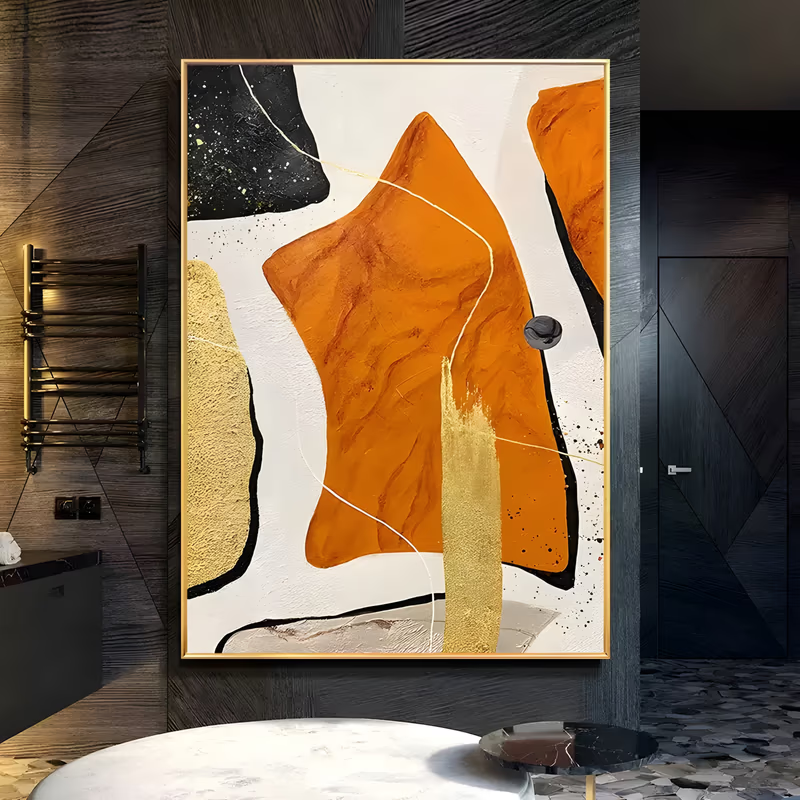
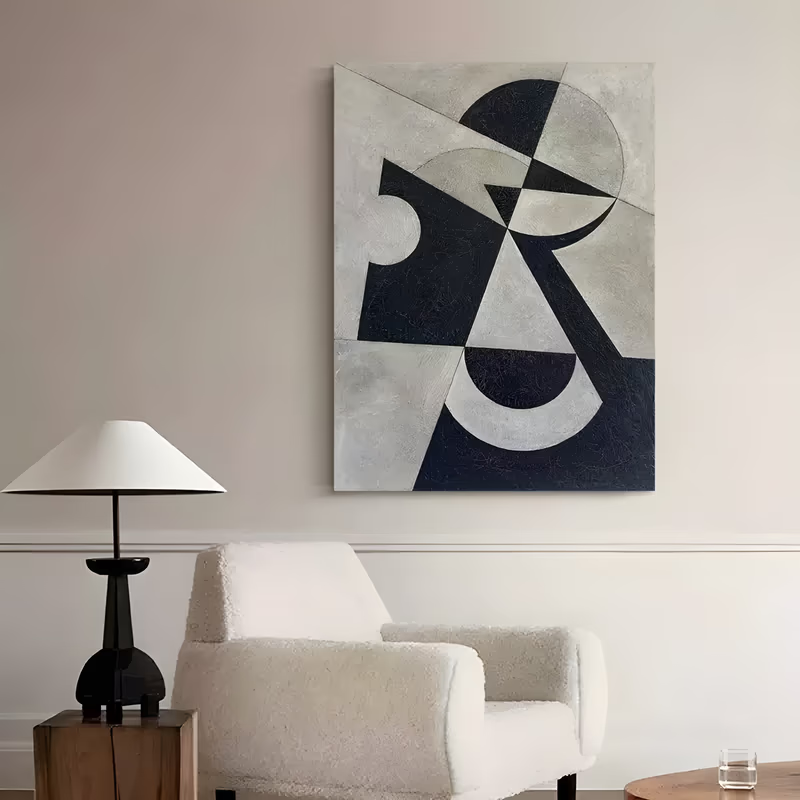
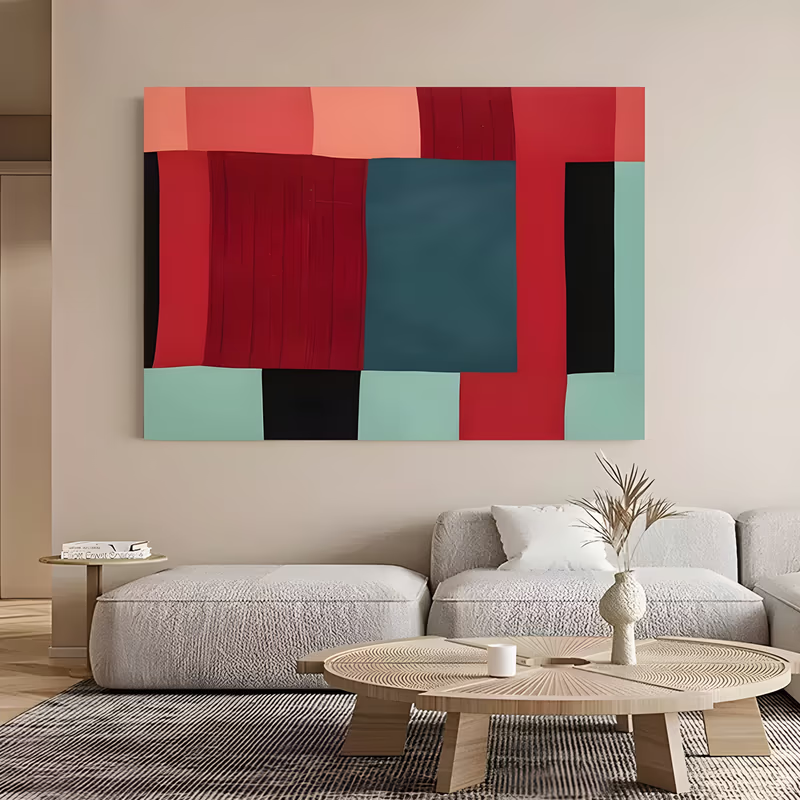
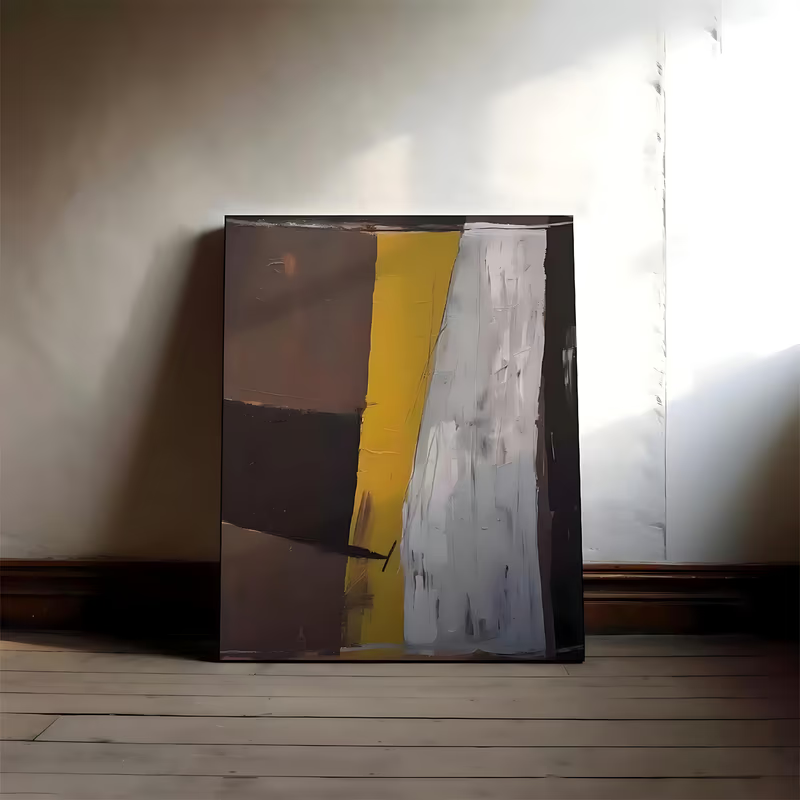
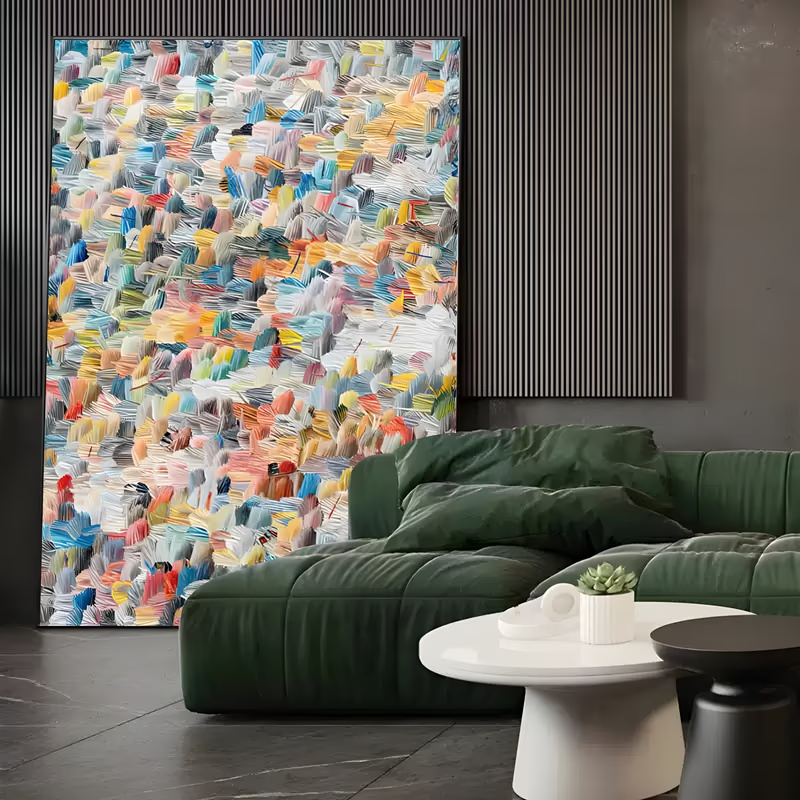
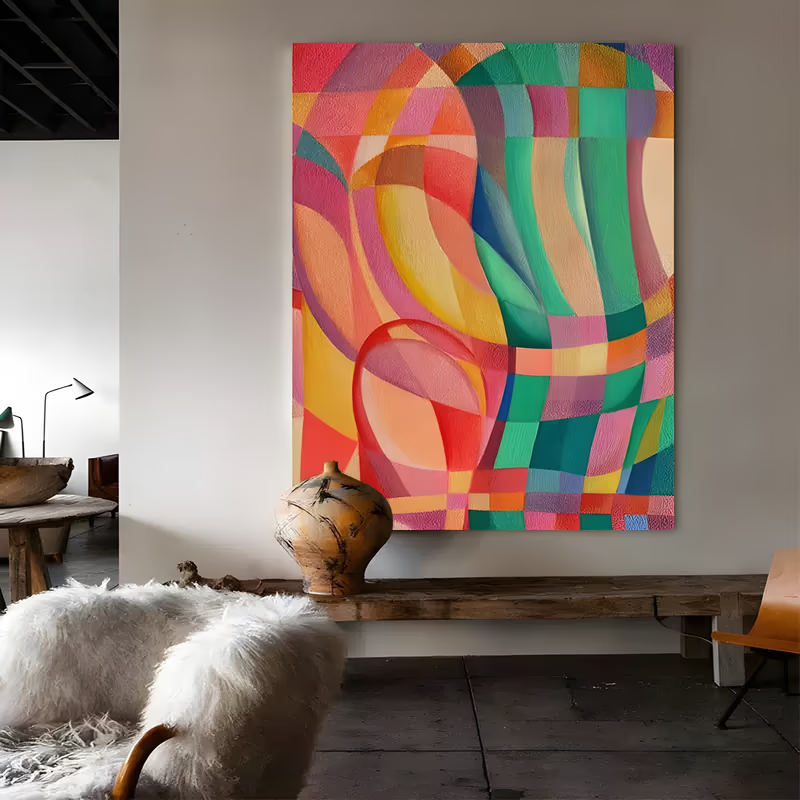
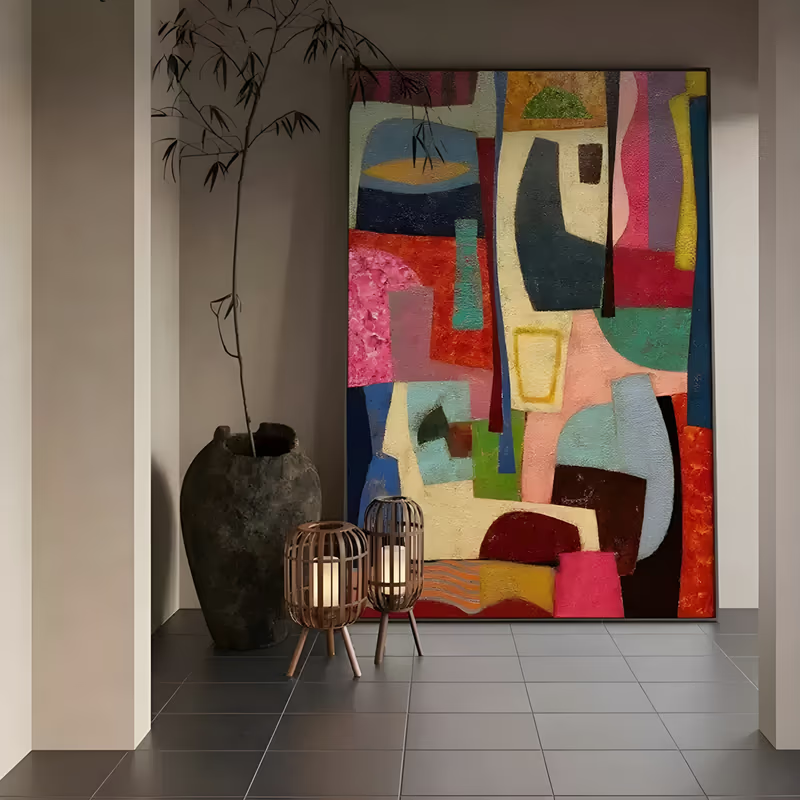
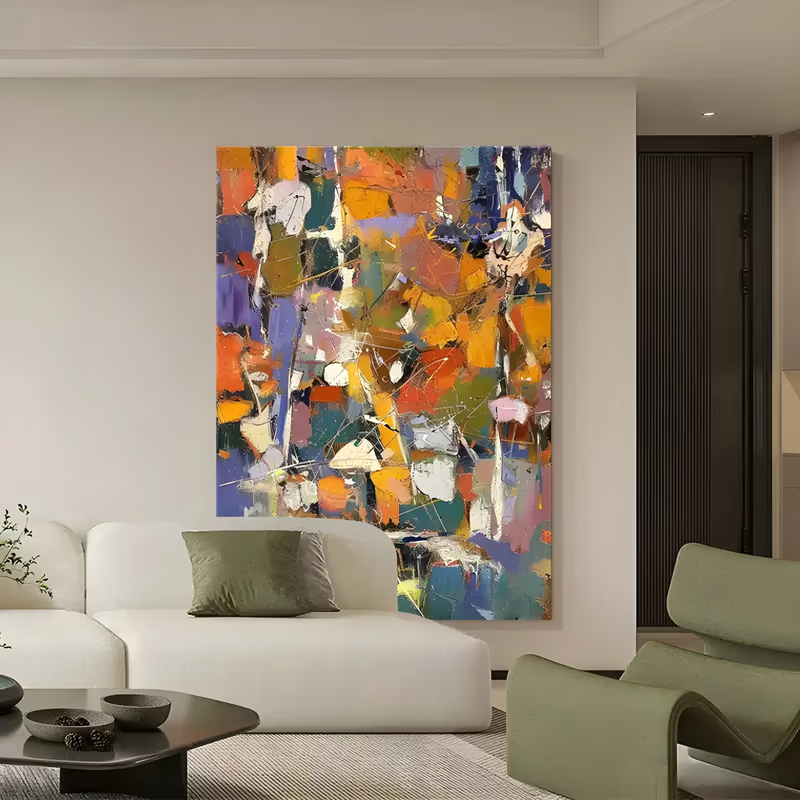
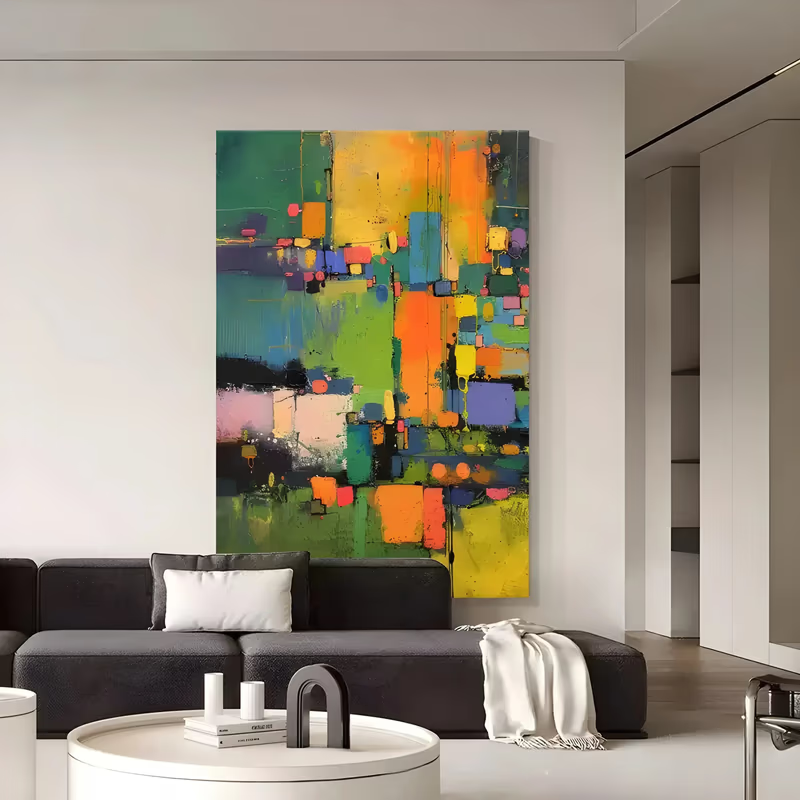
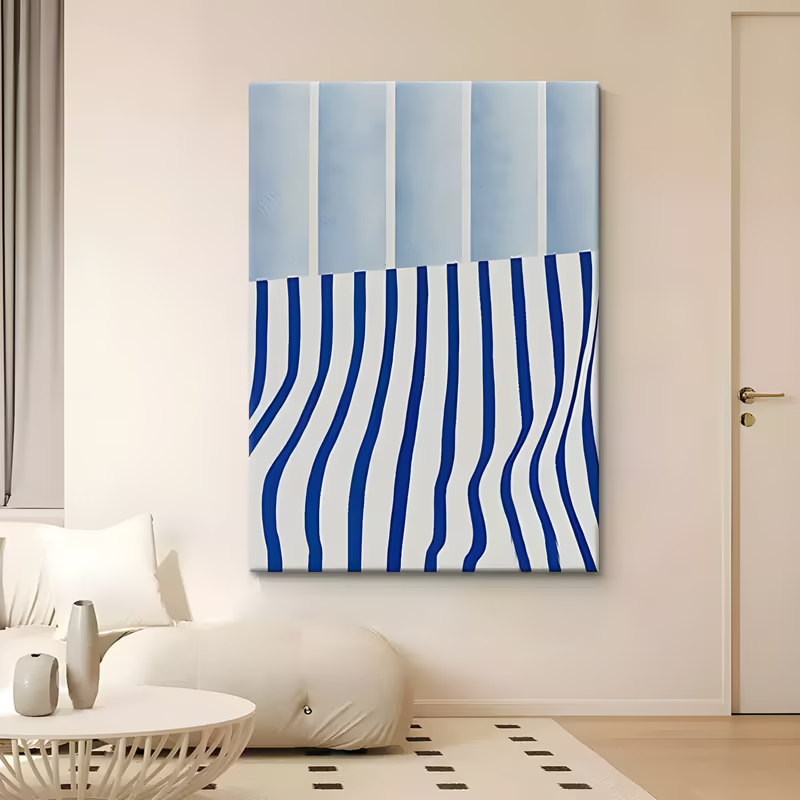
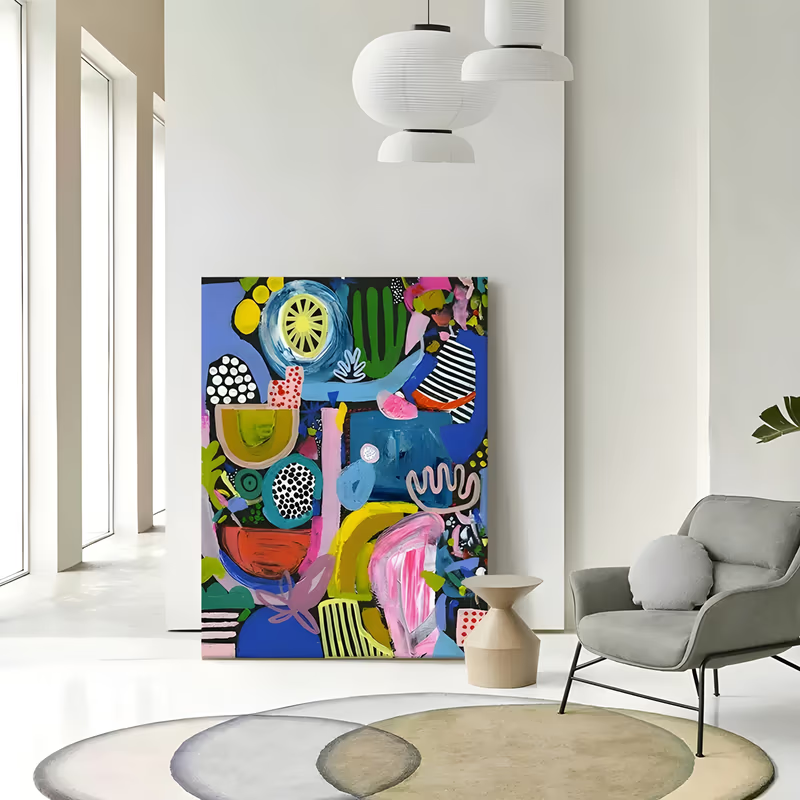
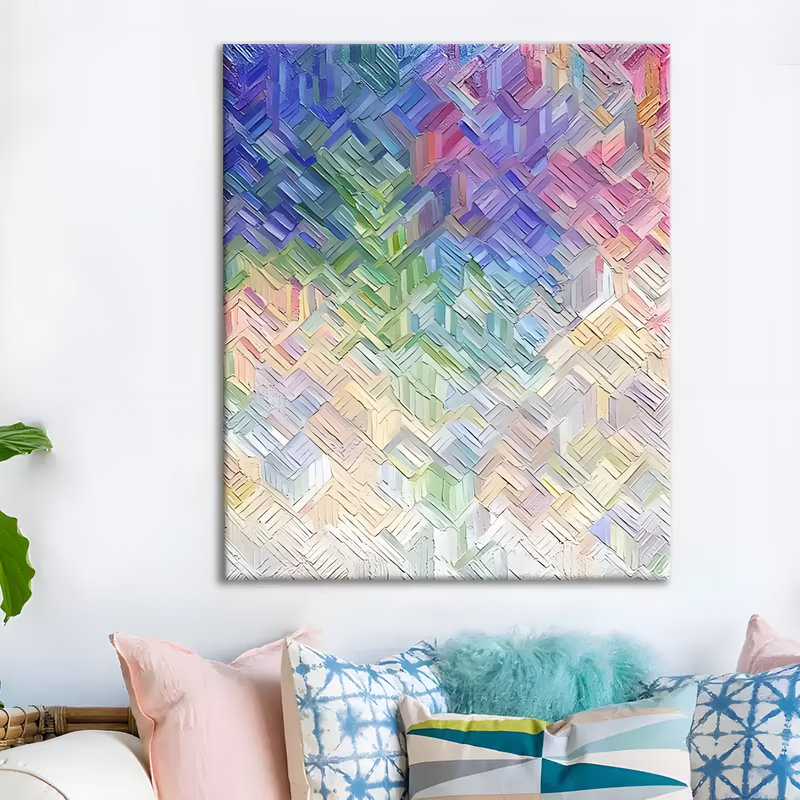
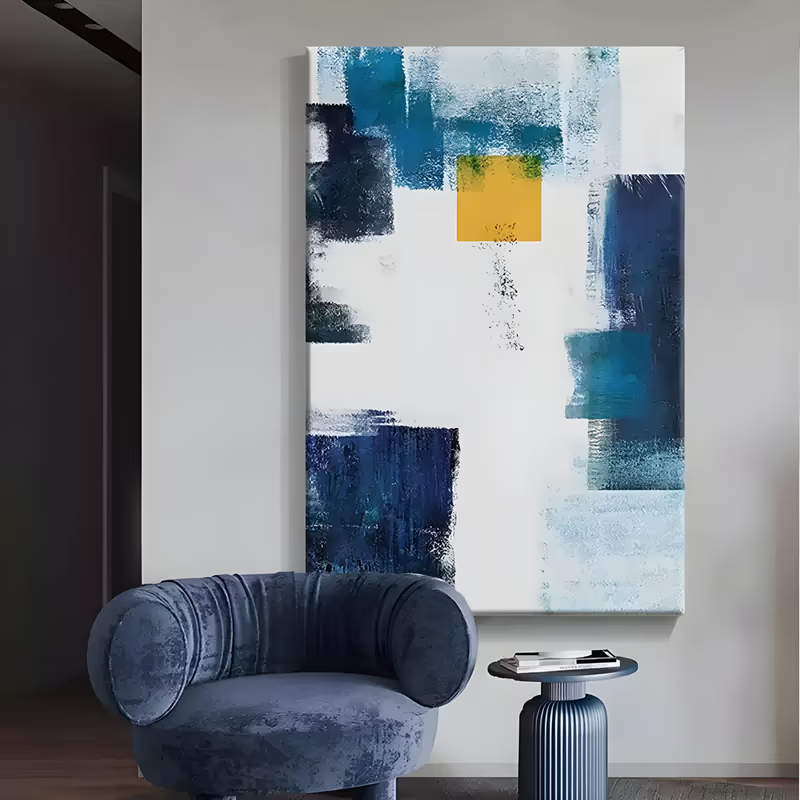
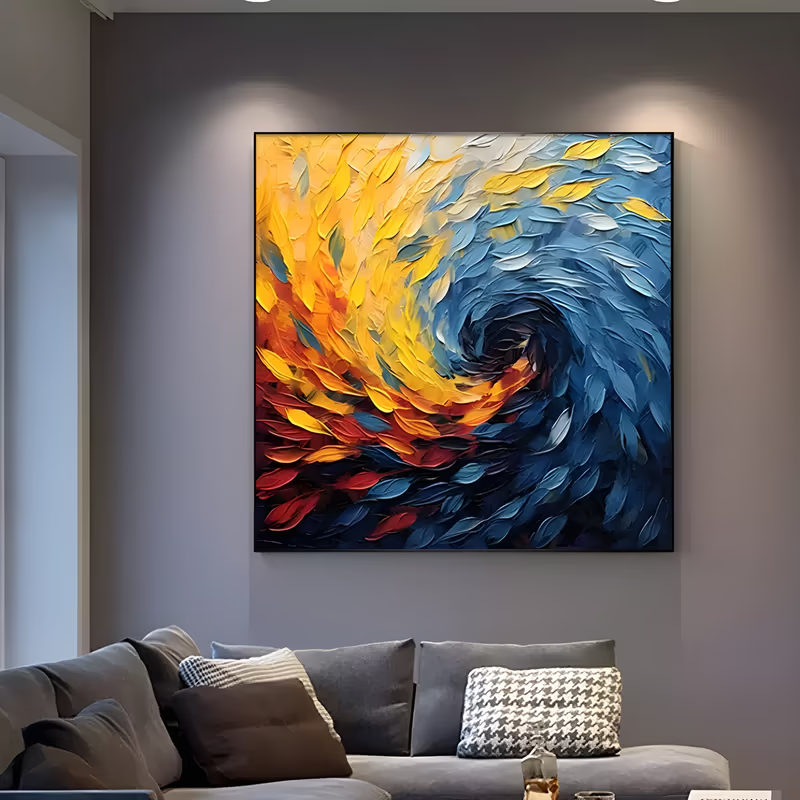
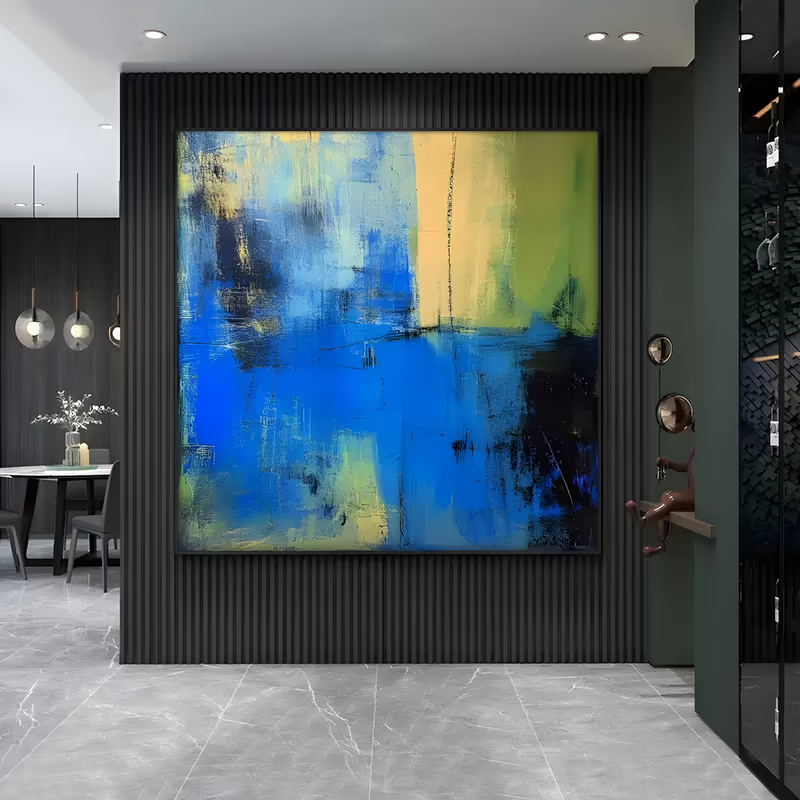
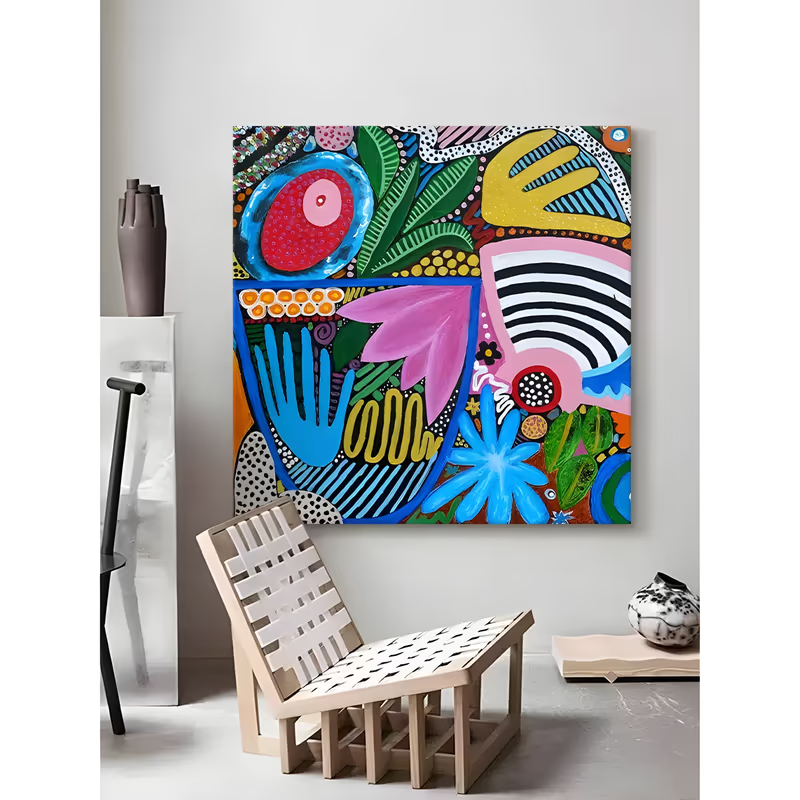
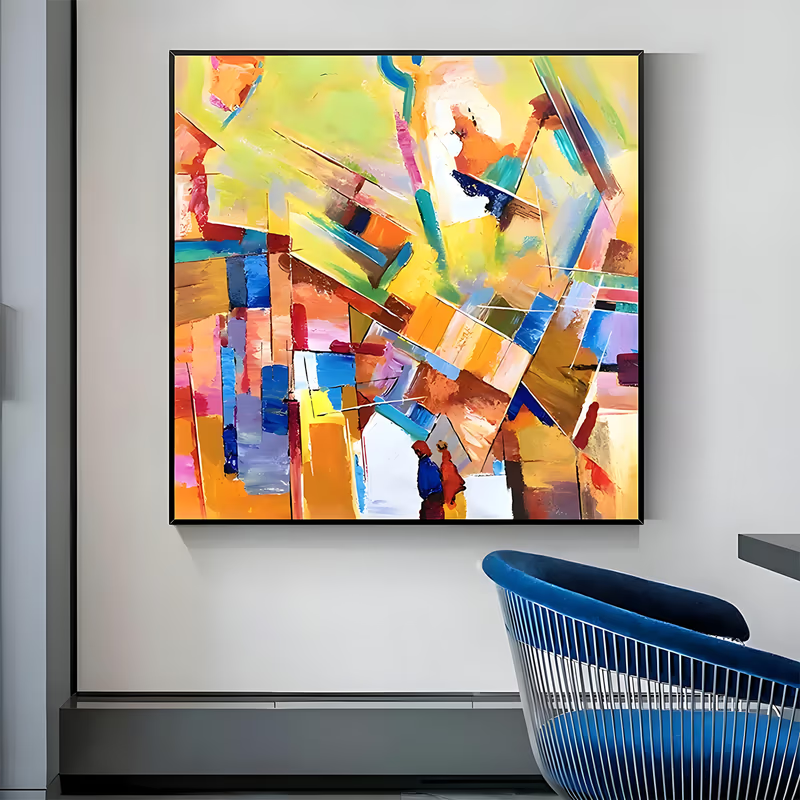
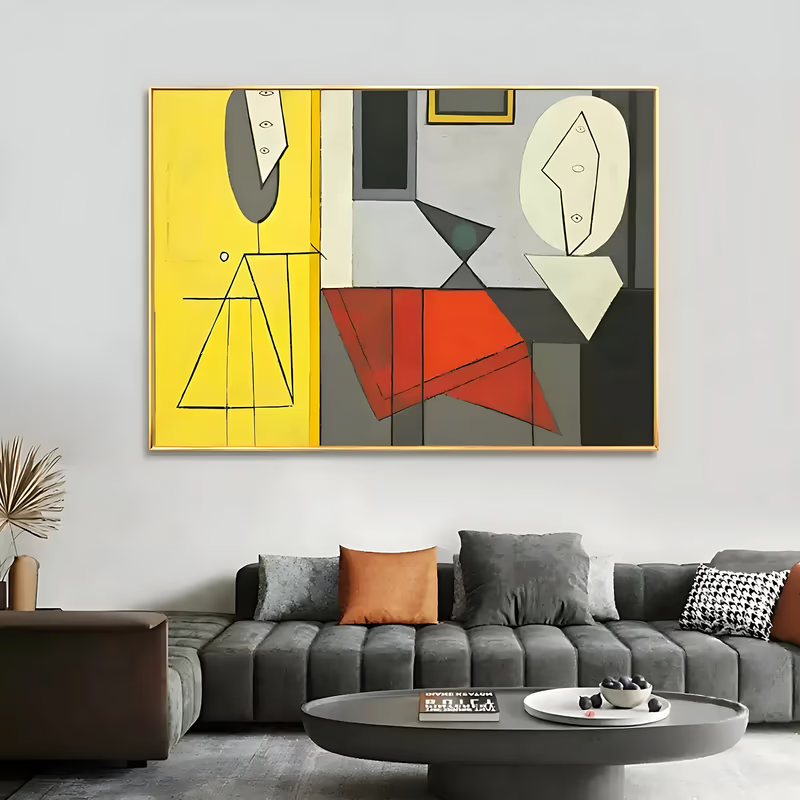
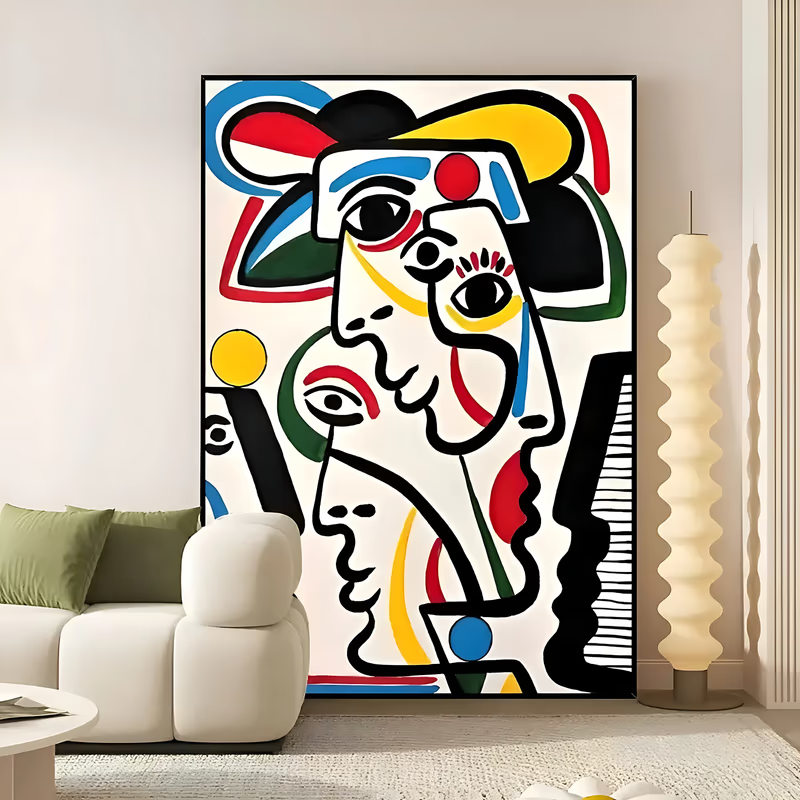
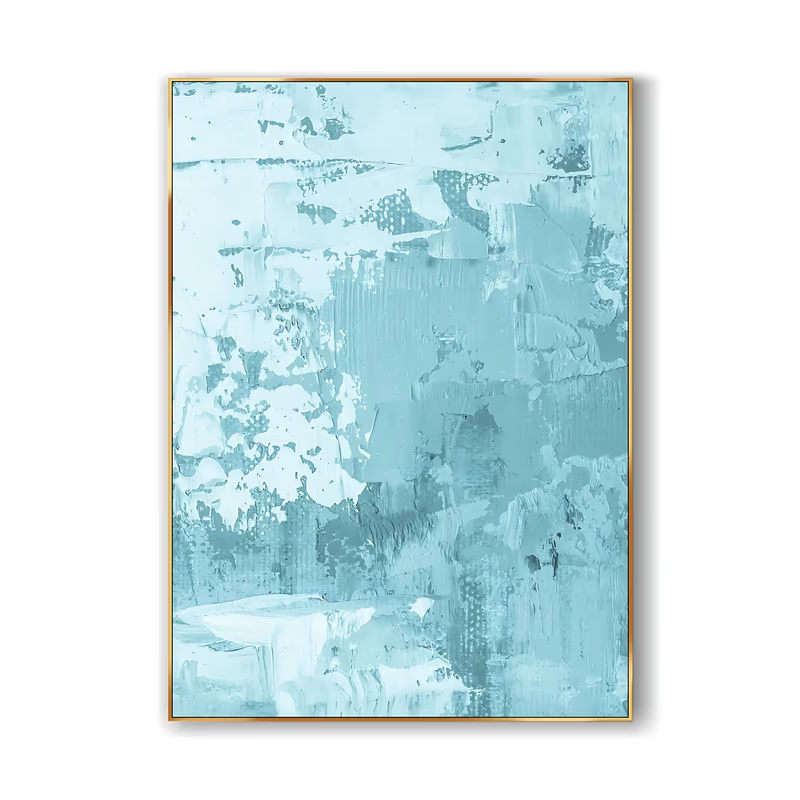
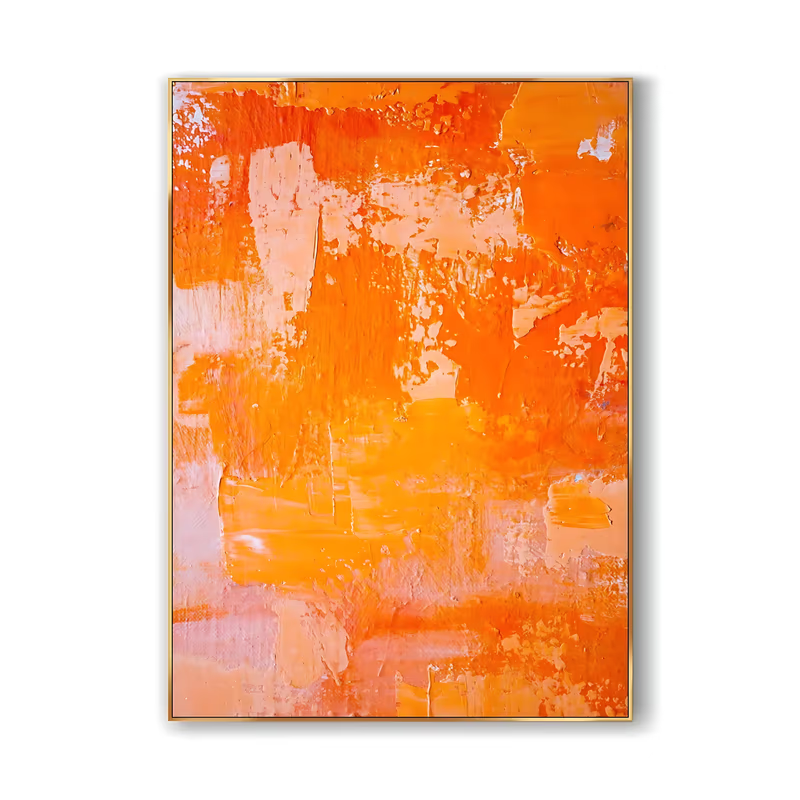
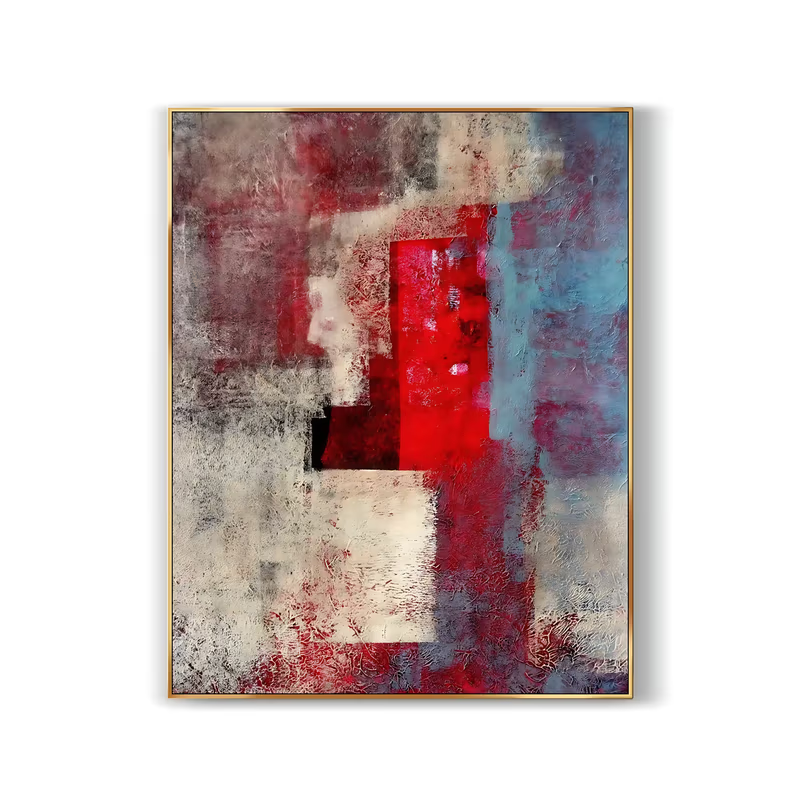
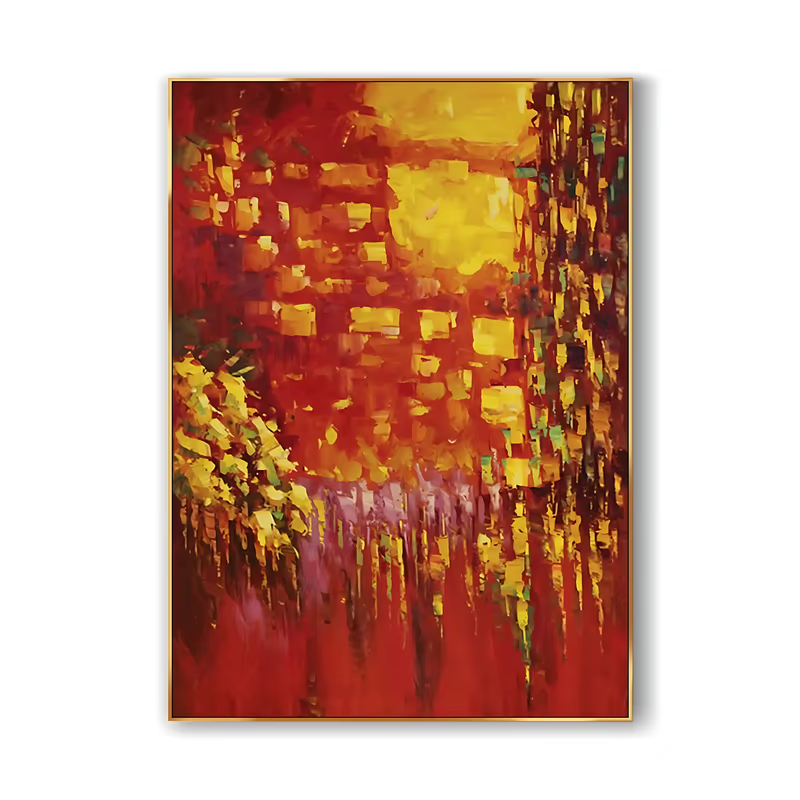
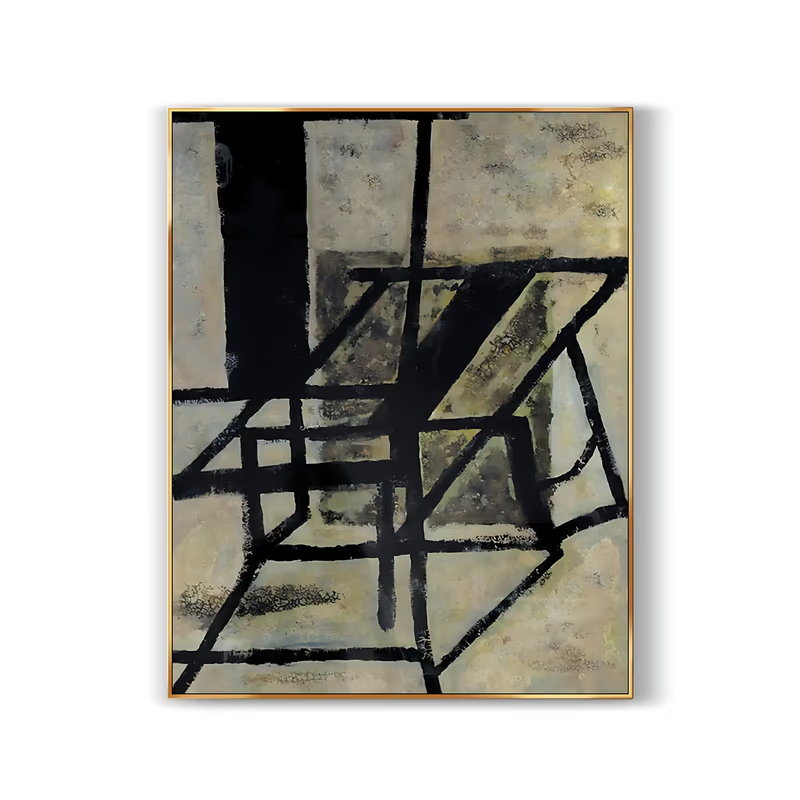
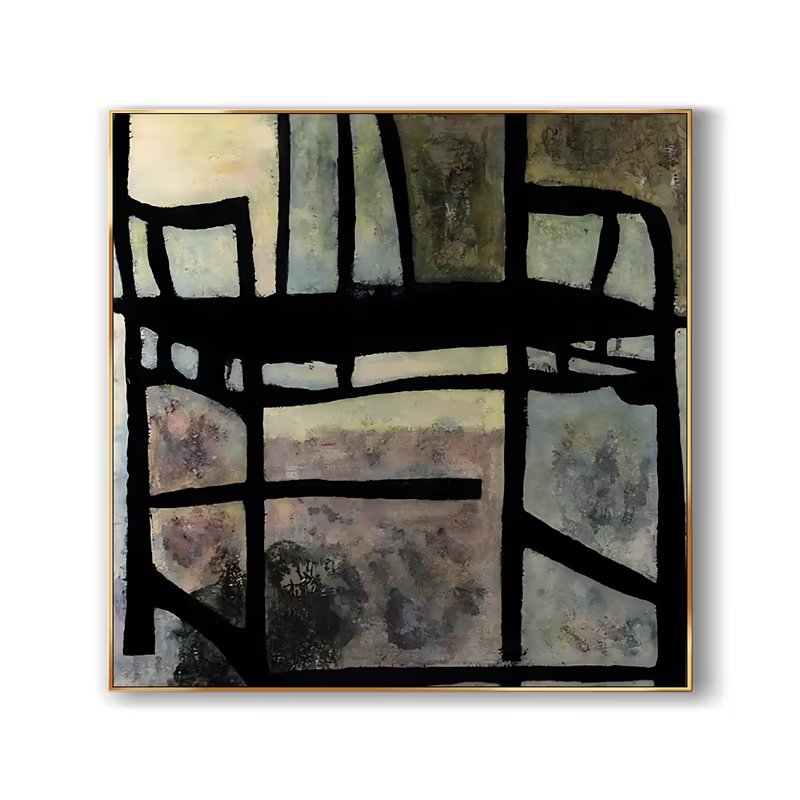
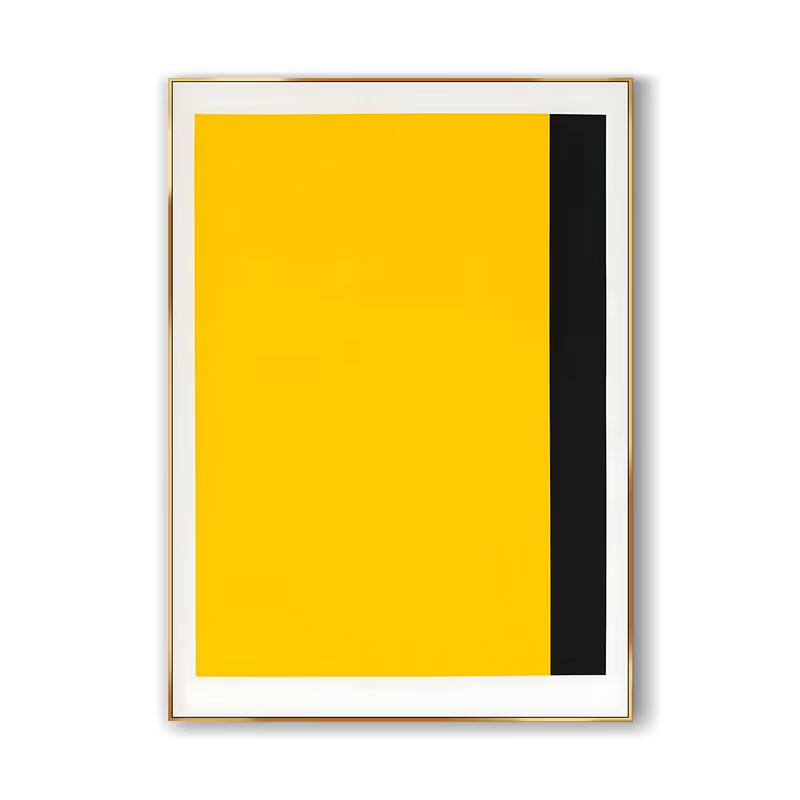
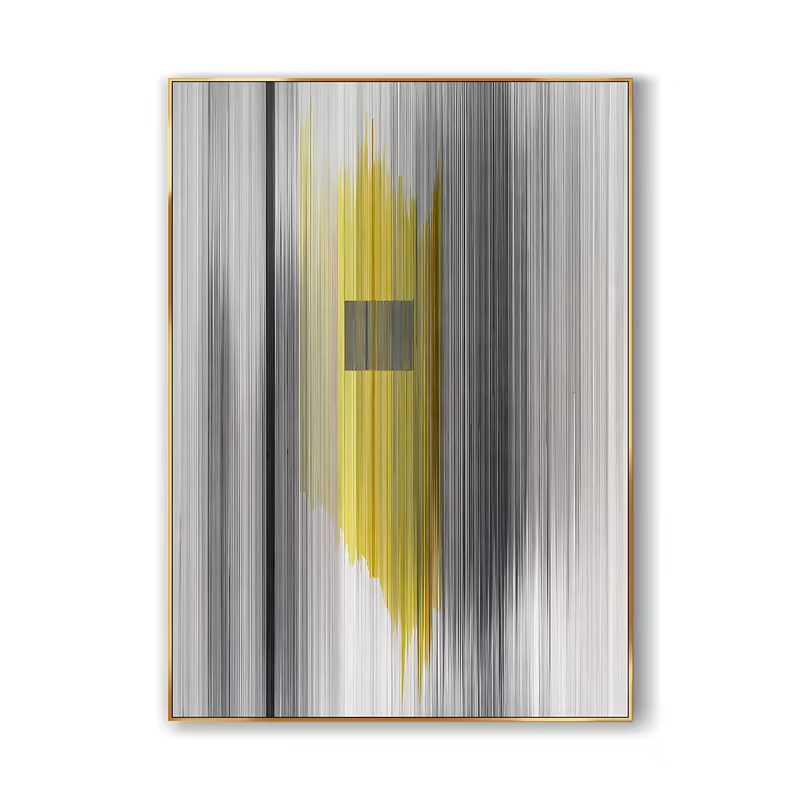
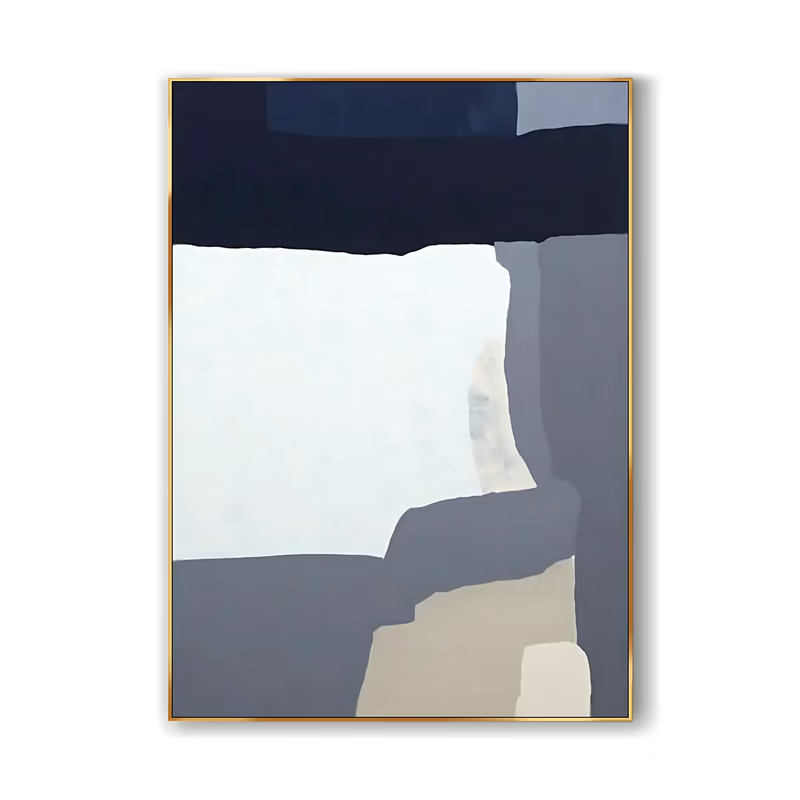
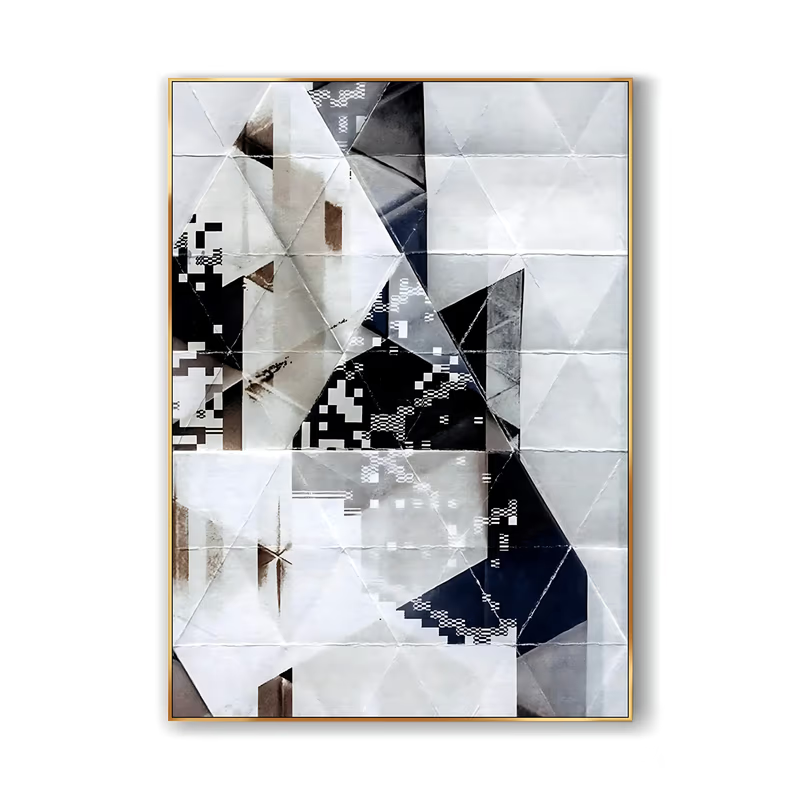
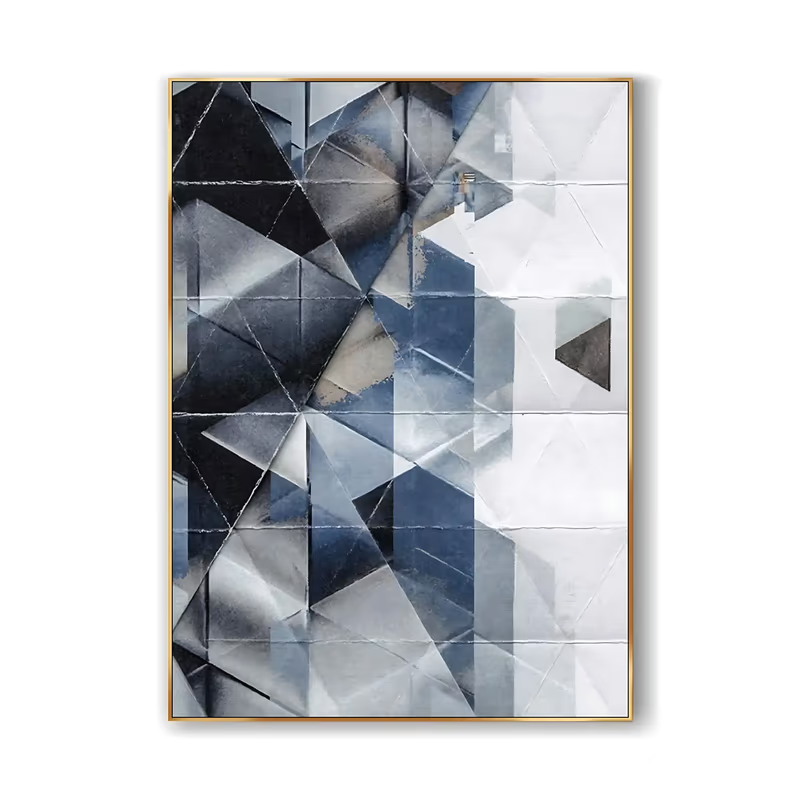
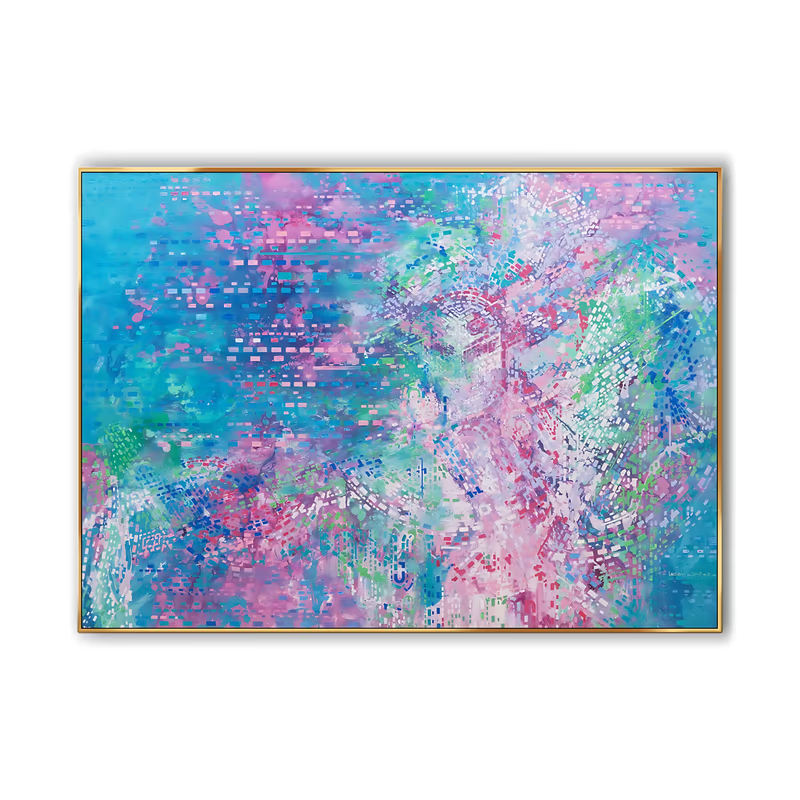
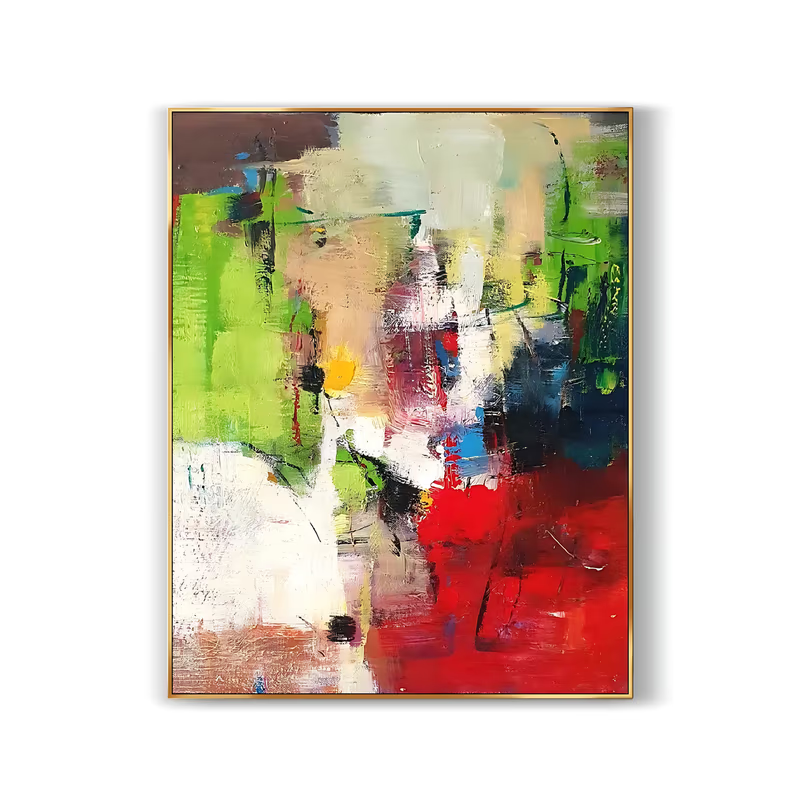
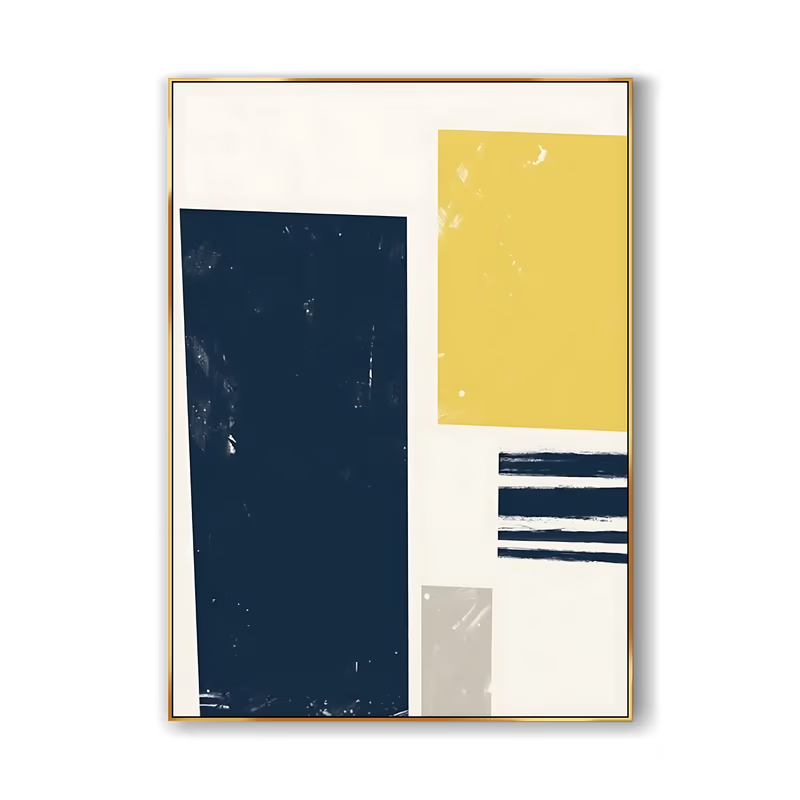
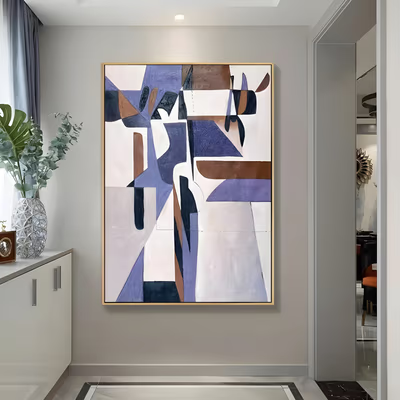
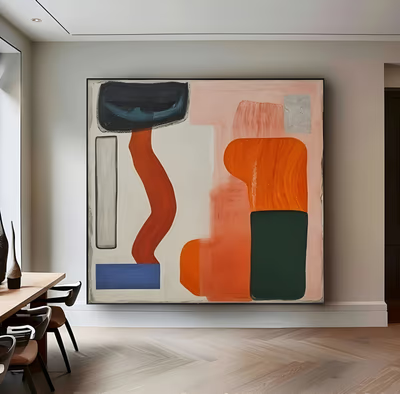
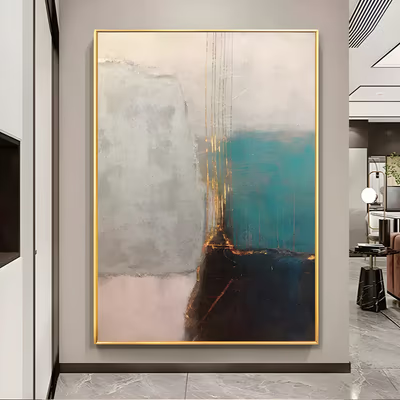
Saturated blocks of cobalt, mustard and crimson, faceted triangles, Bauhaus-style circles, mosaic dabs and optical stripes. These carry the most colour and energy and suit modern living rooms, studios, restaurants and workplaces that want a lift.
Carved plaster relief
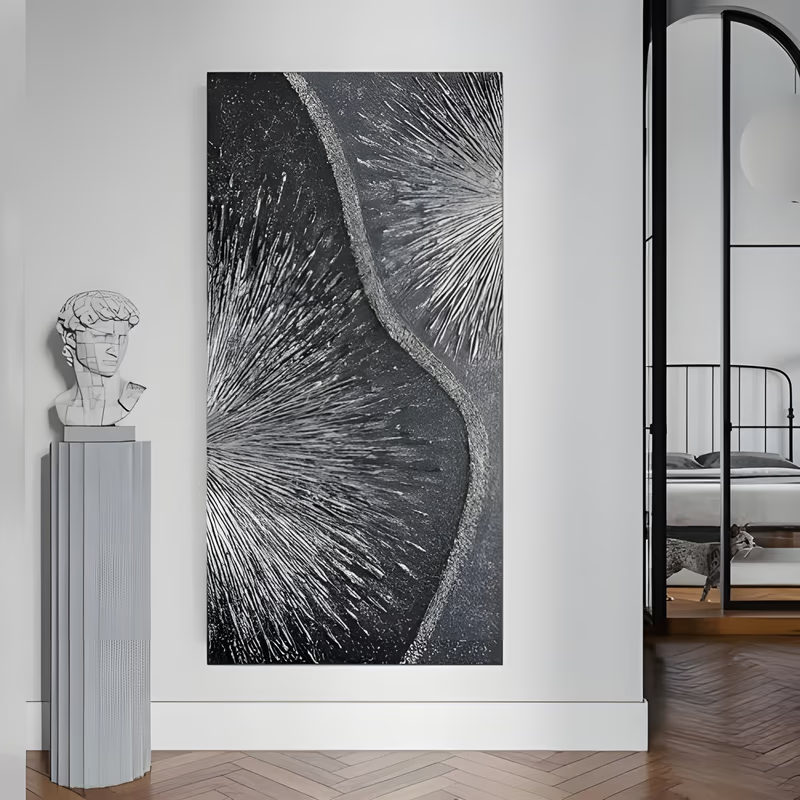
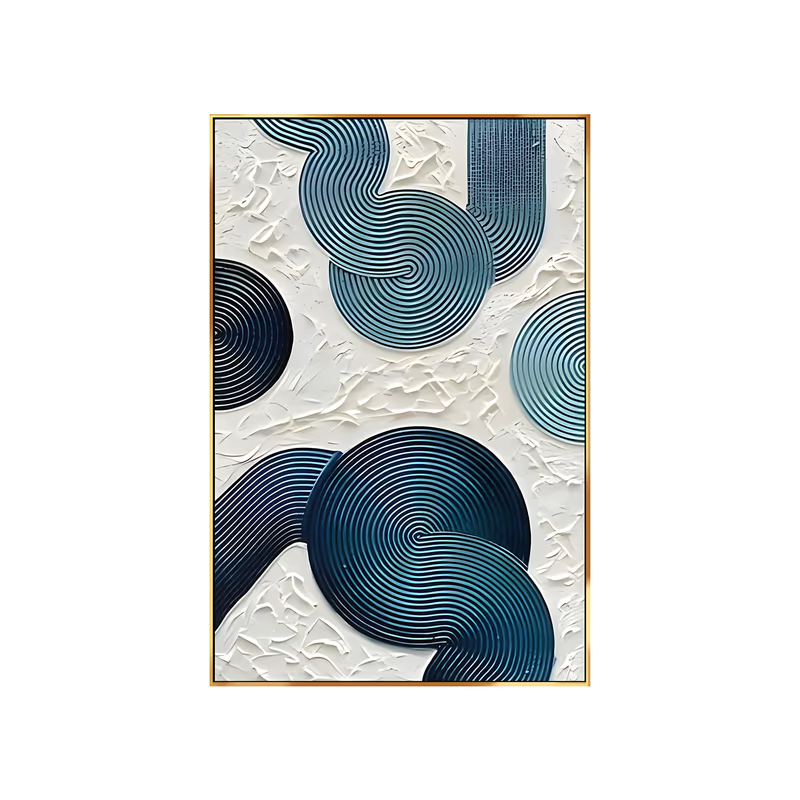
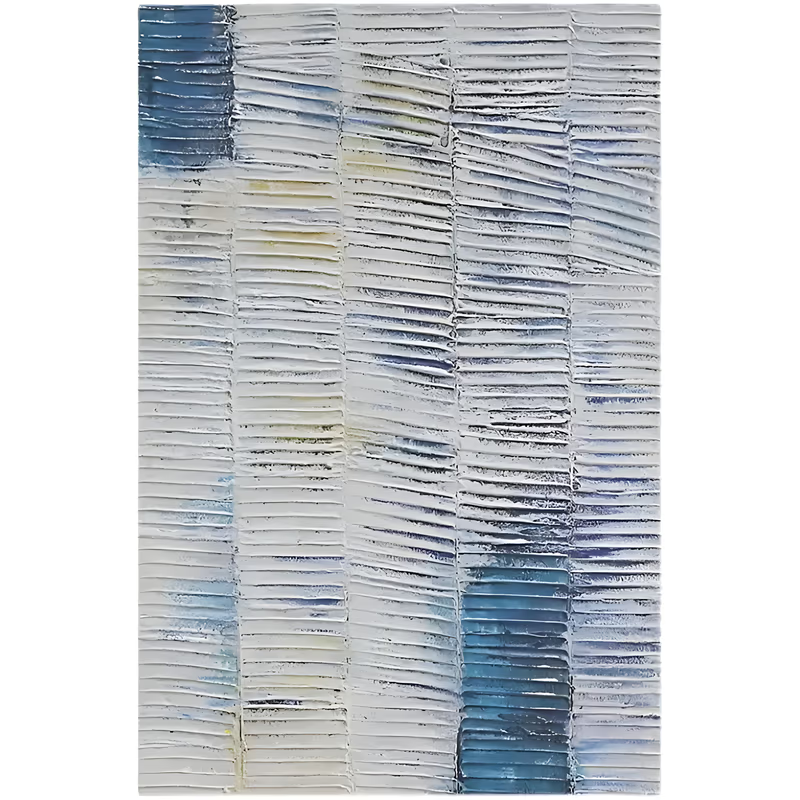
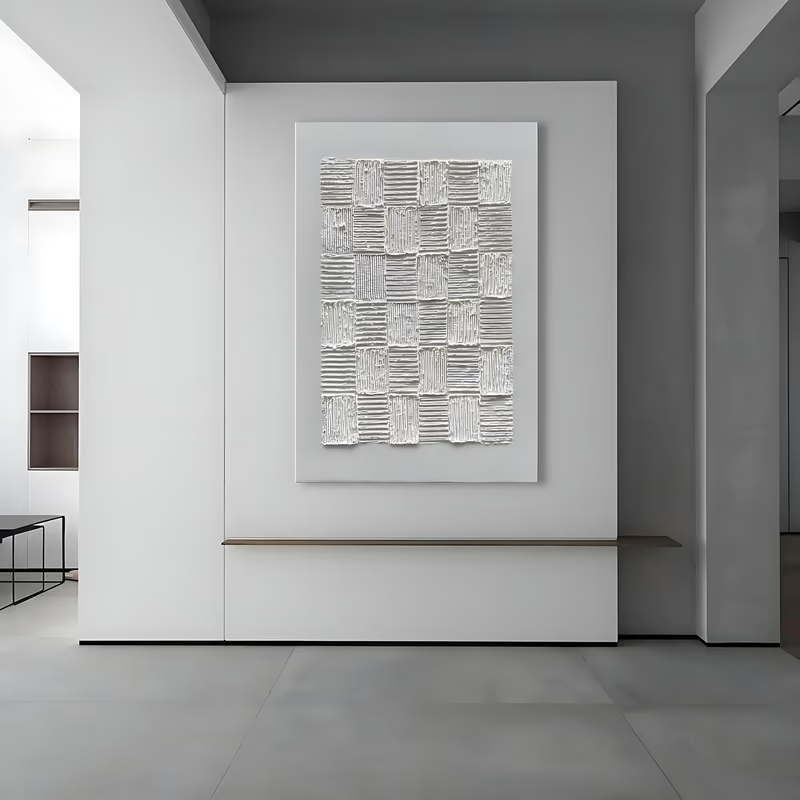
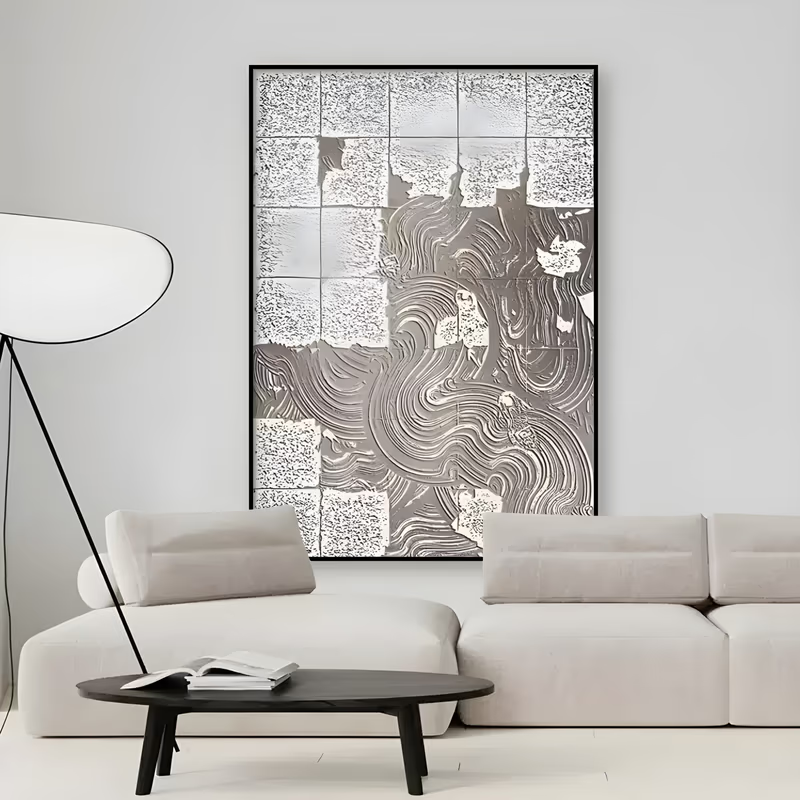
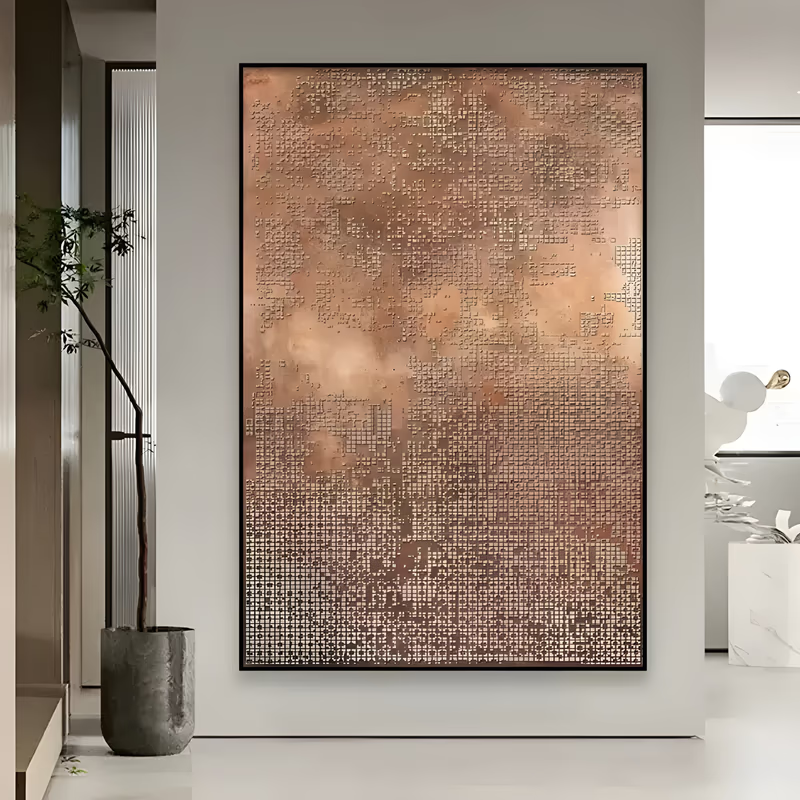
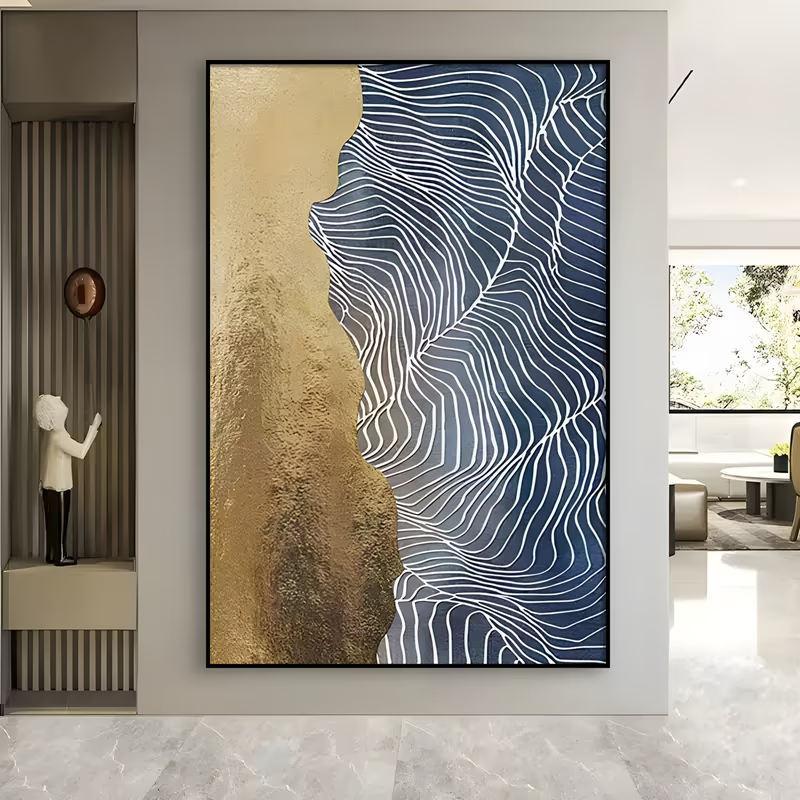
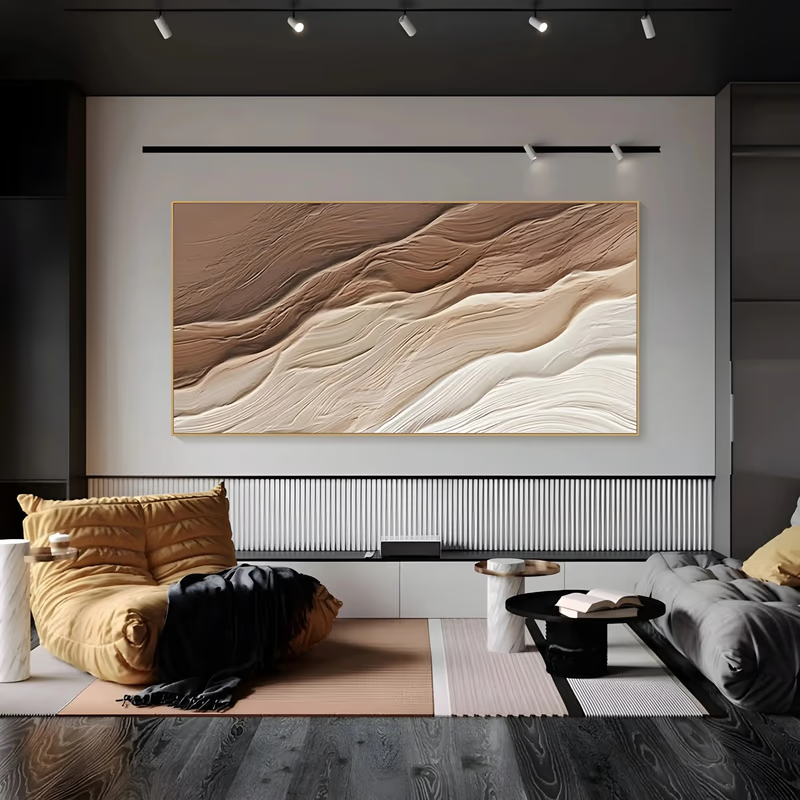
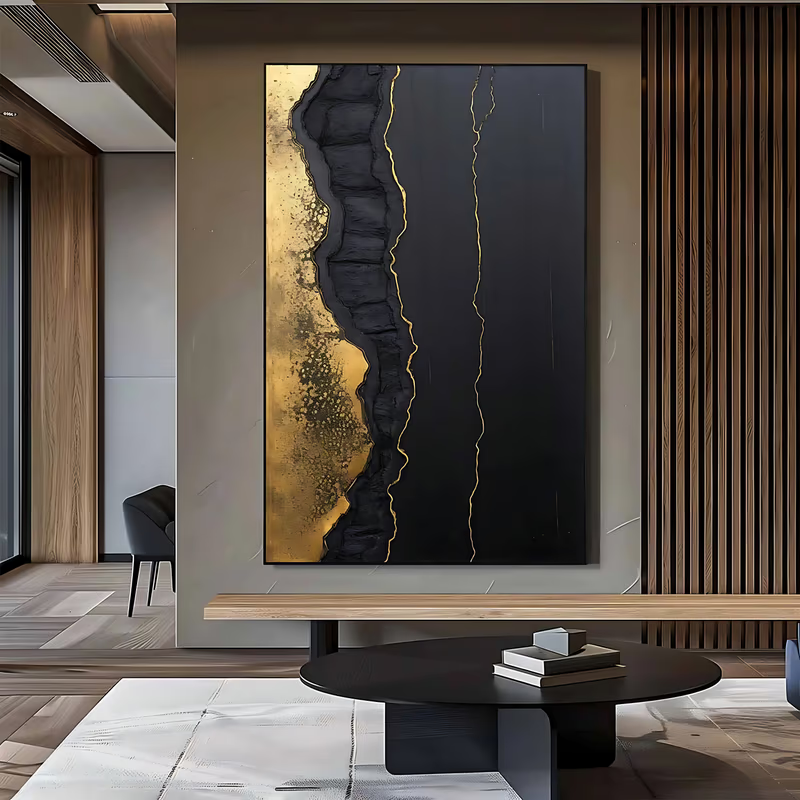
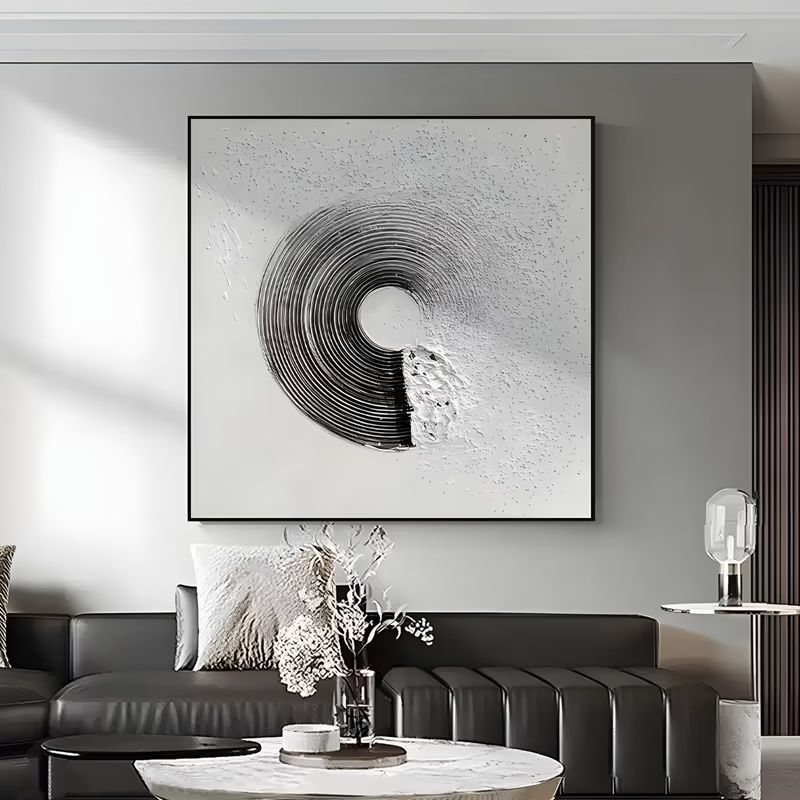
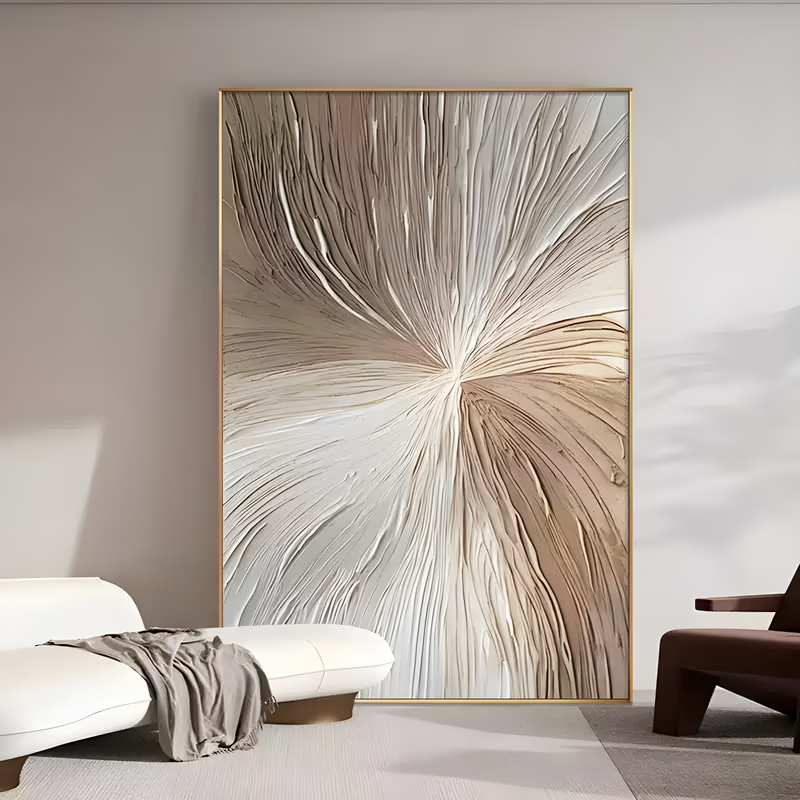
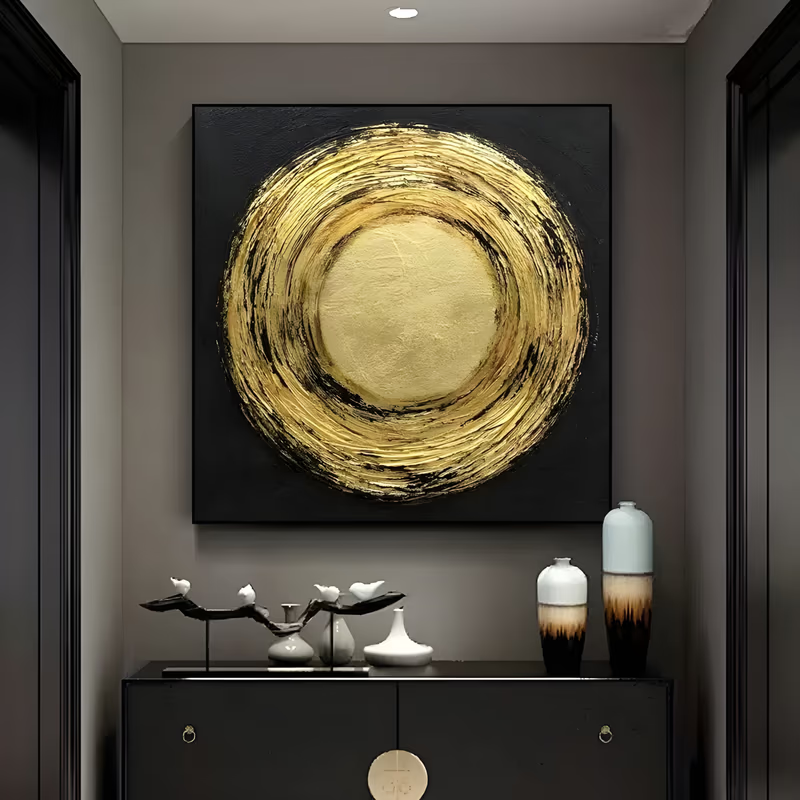
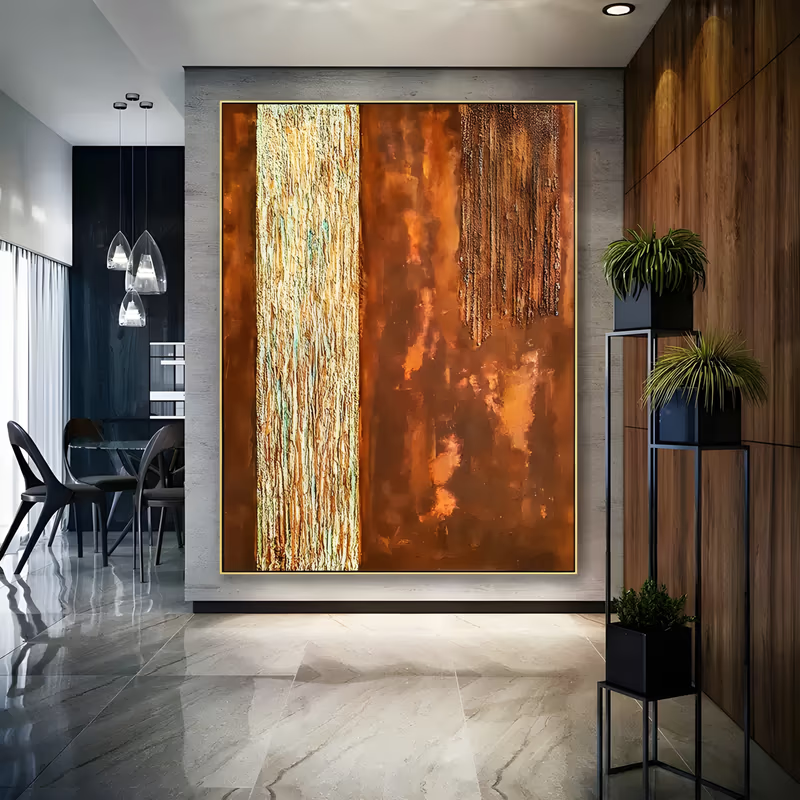
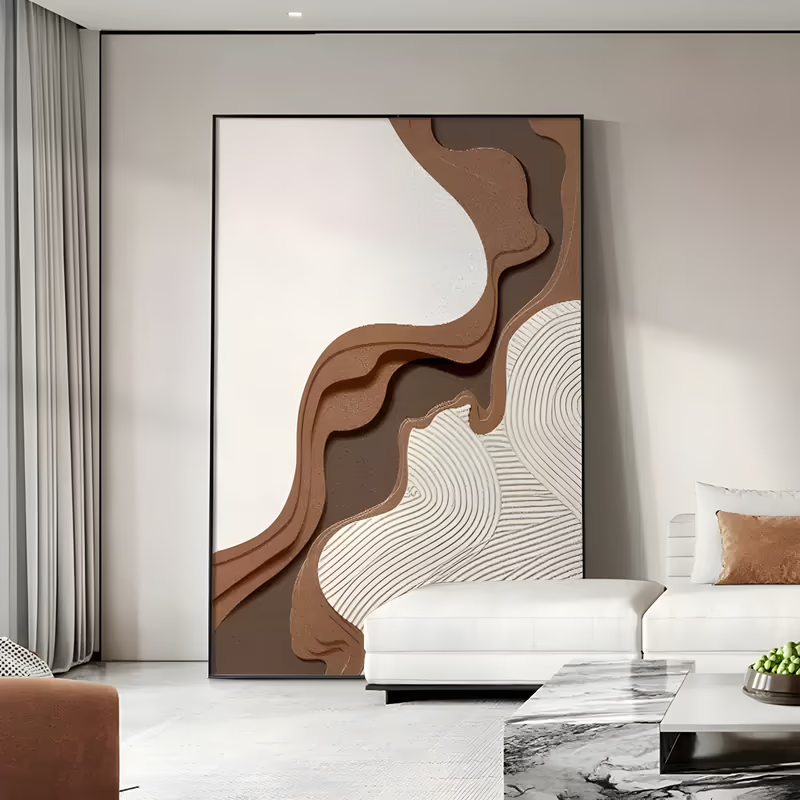
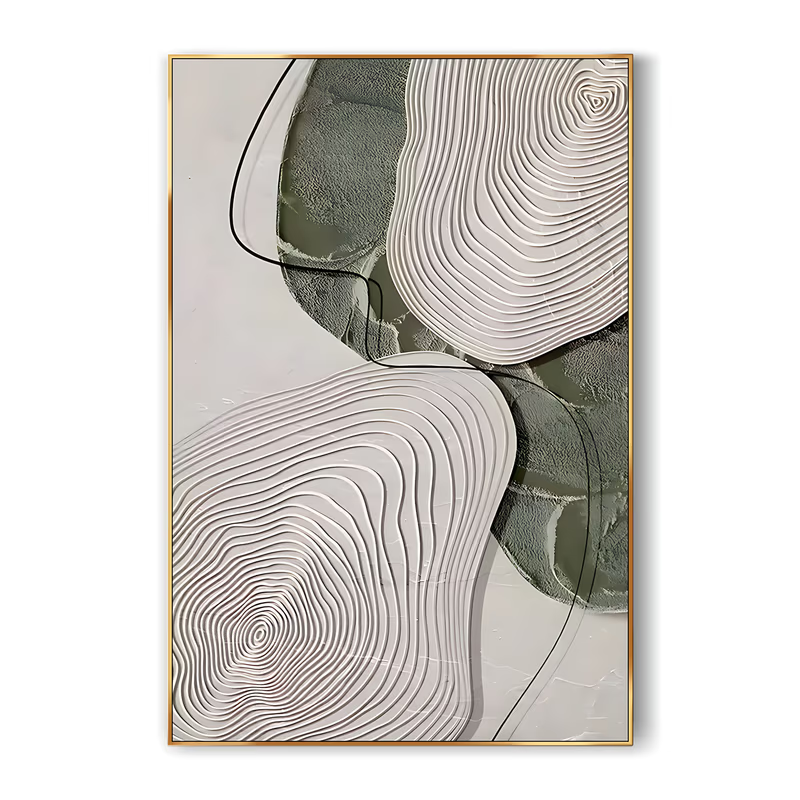
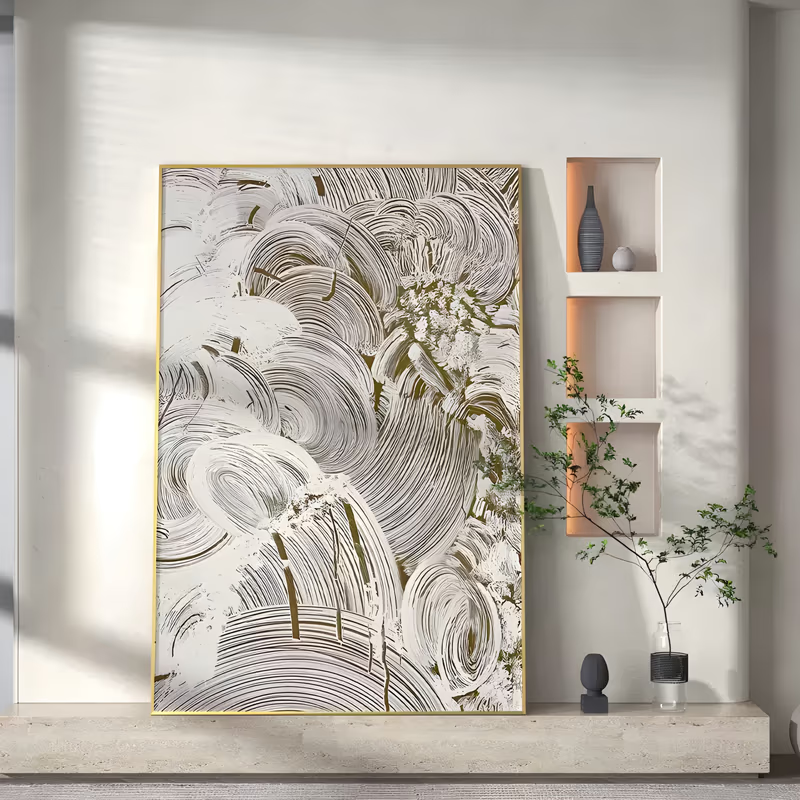
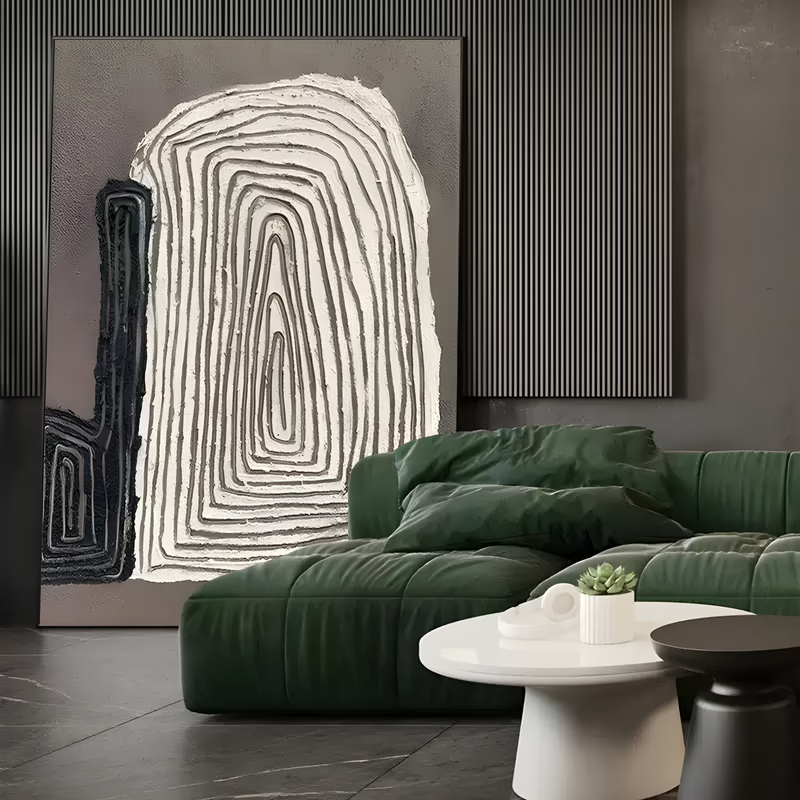
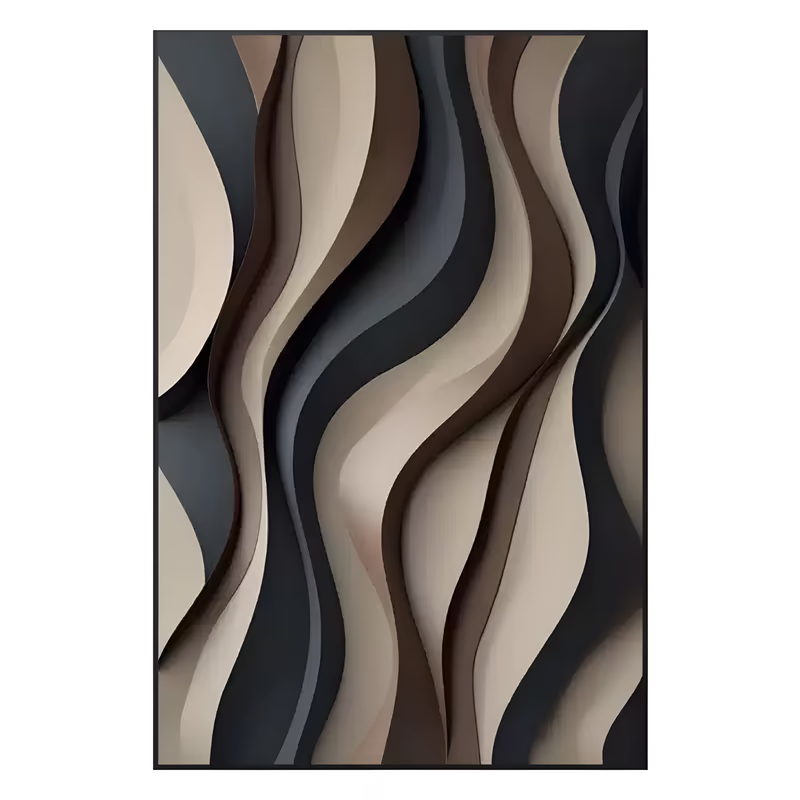
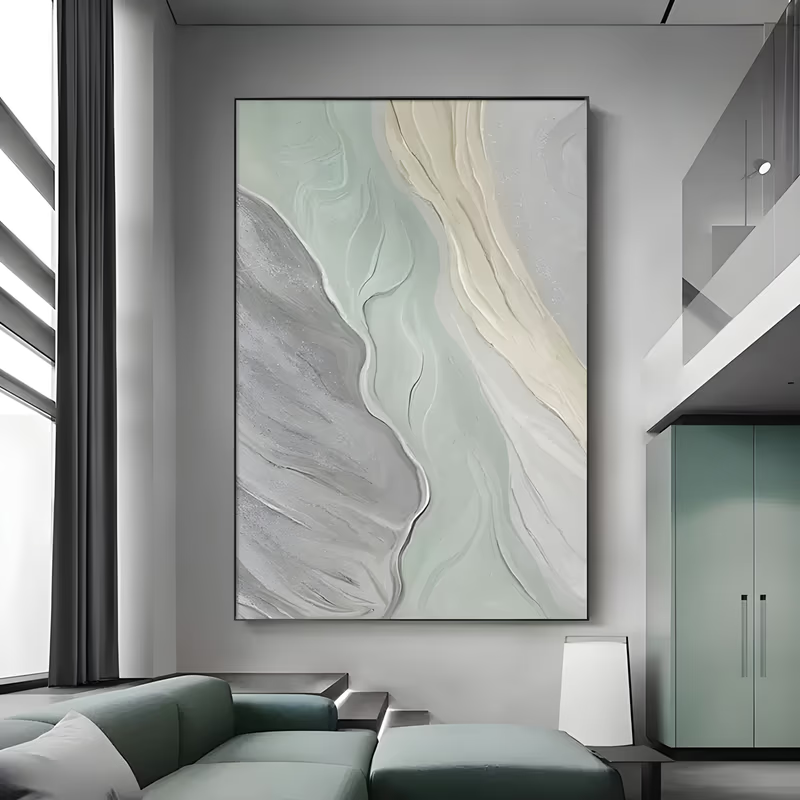
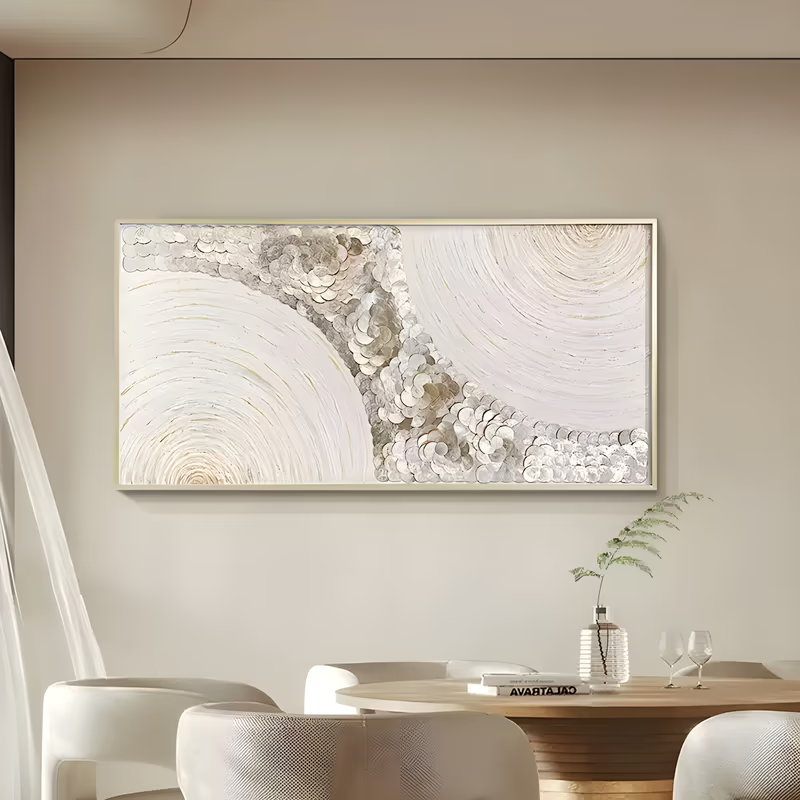
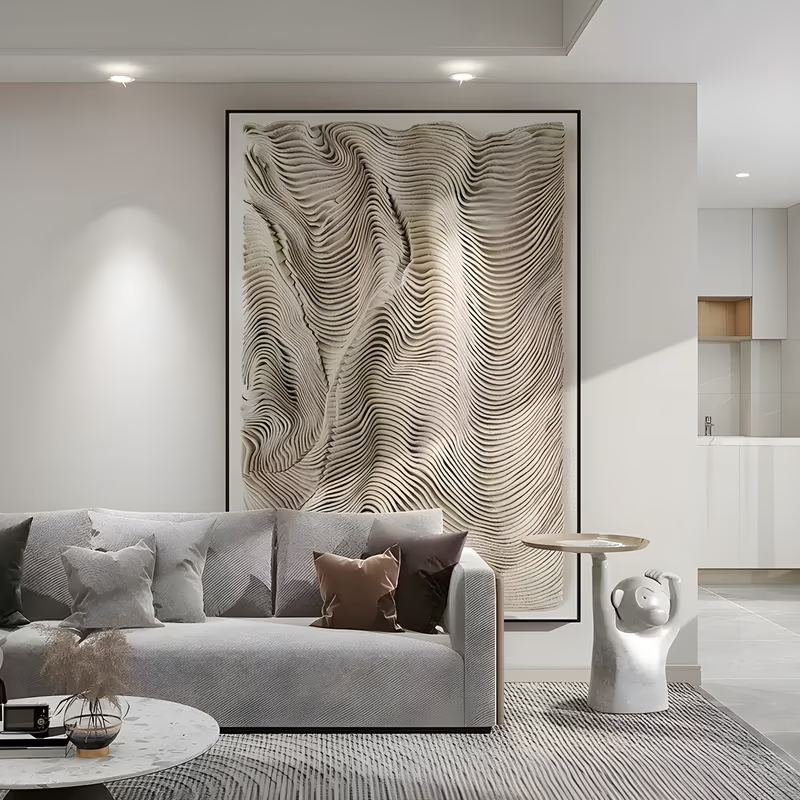
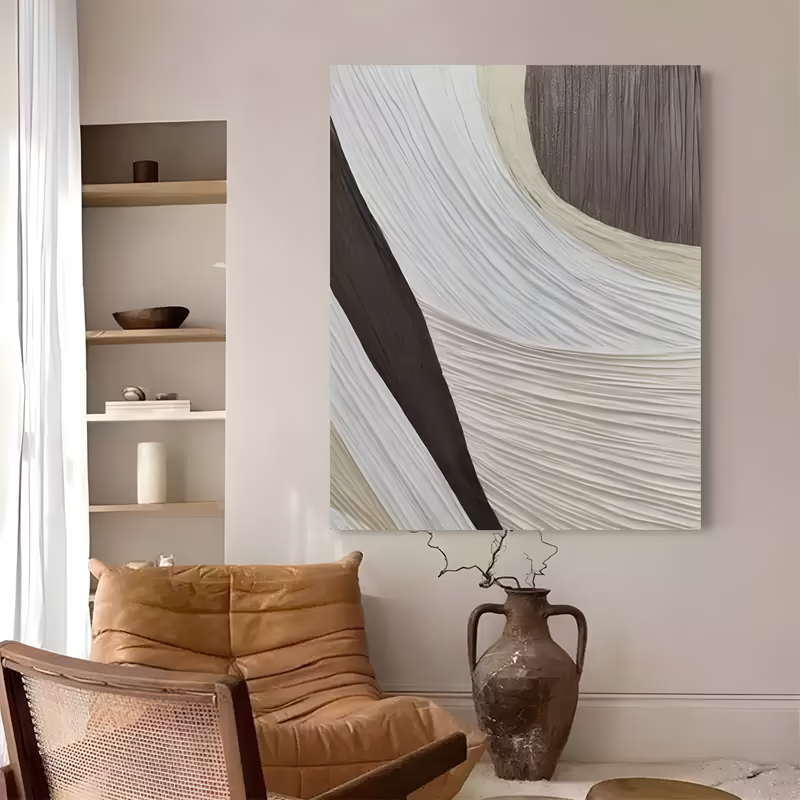
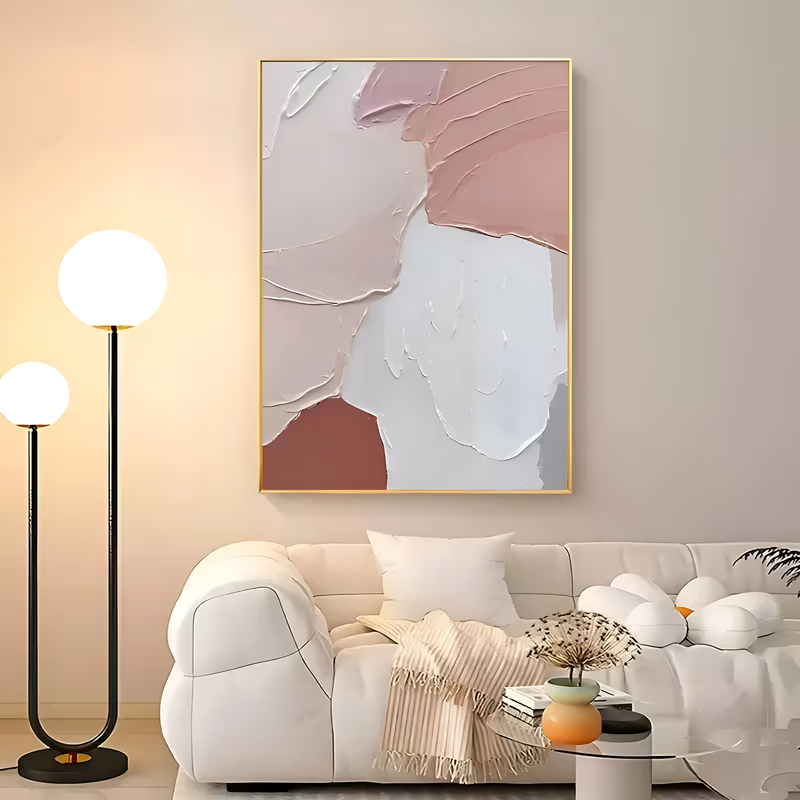
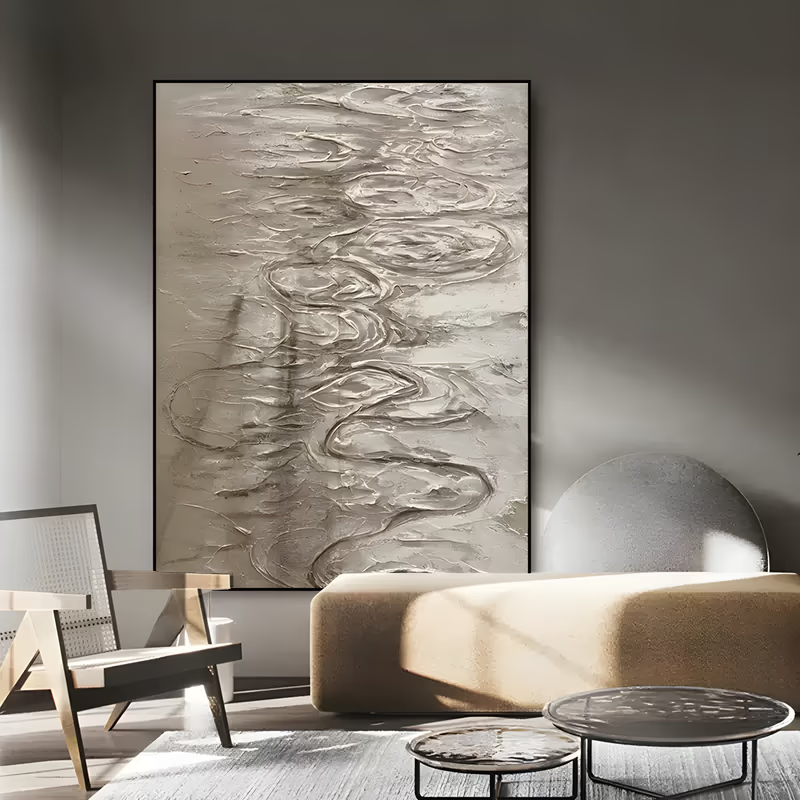
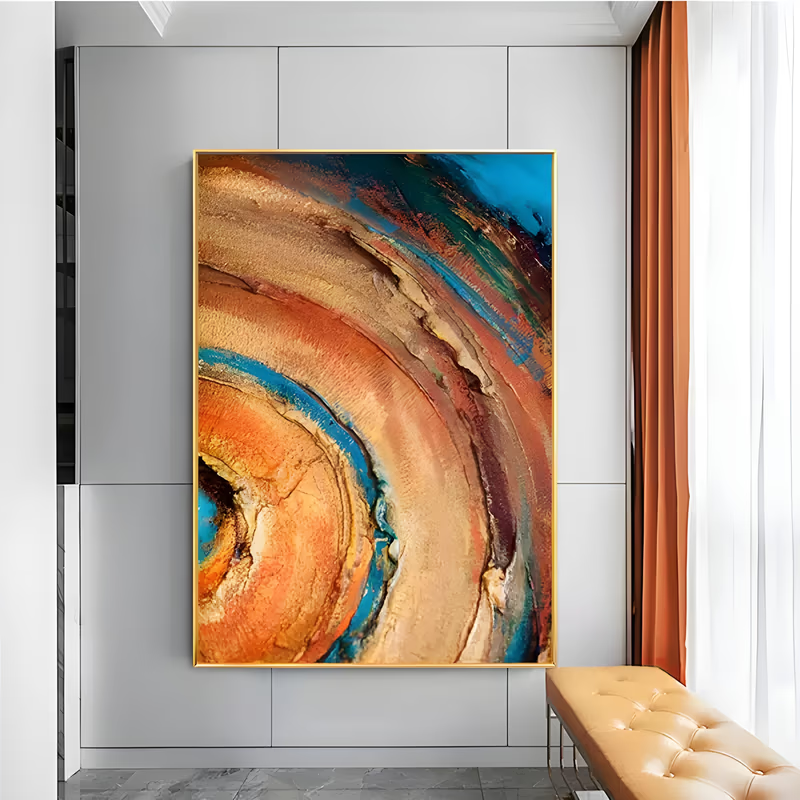
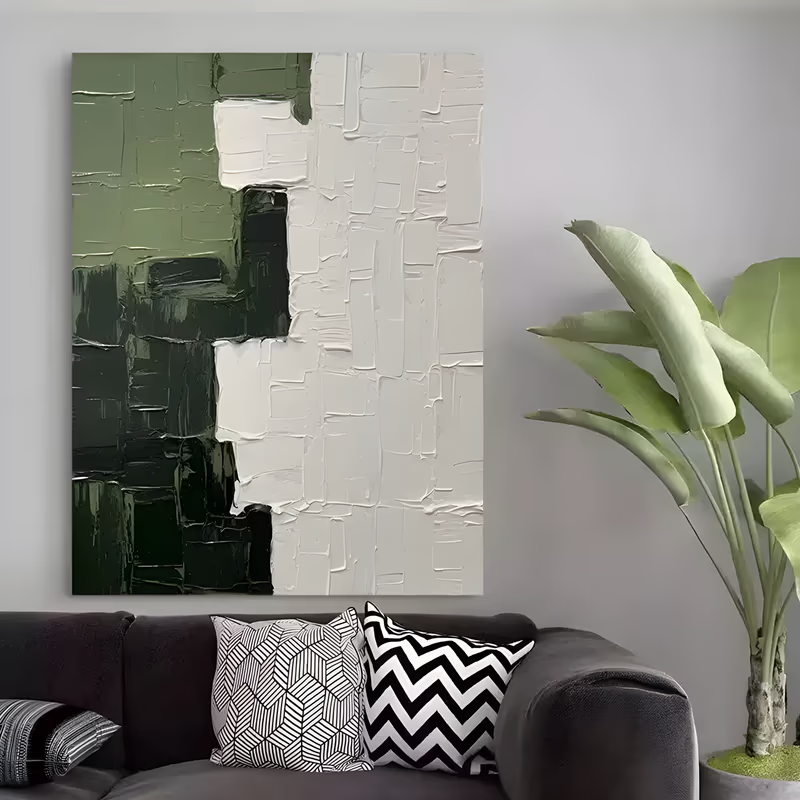
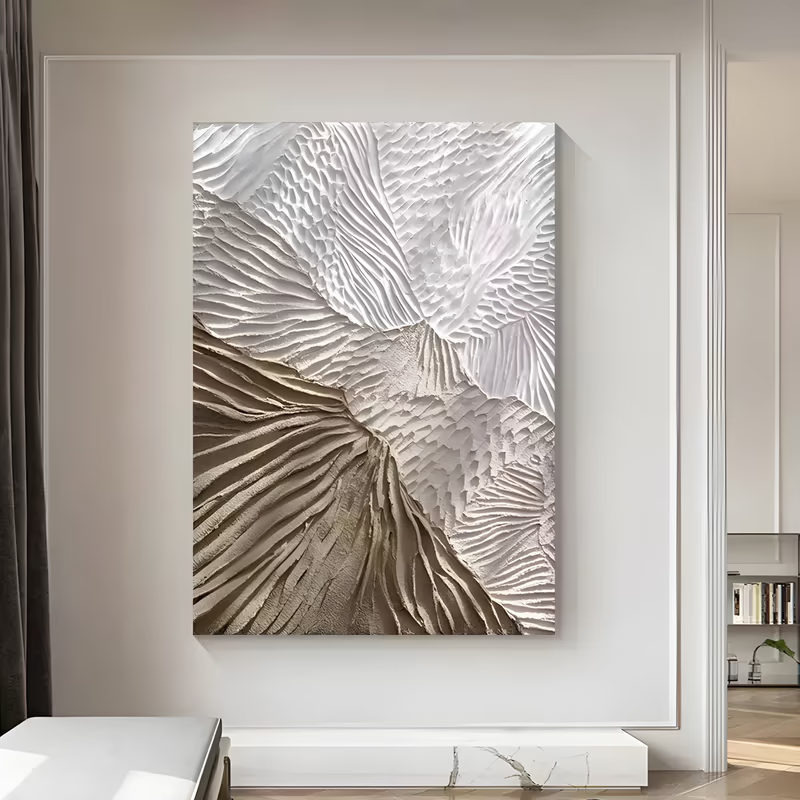
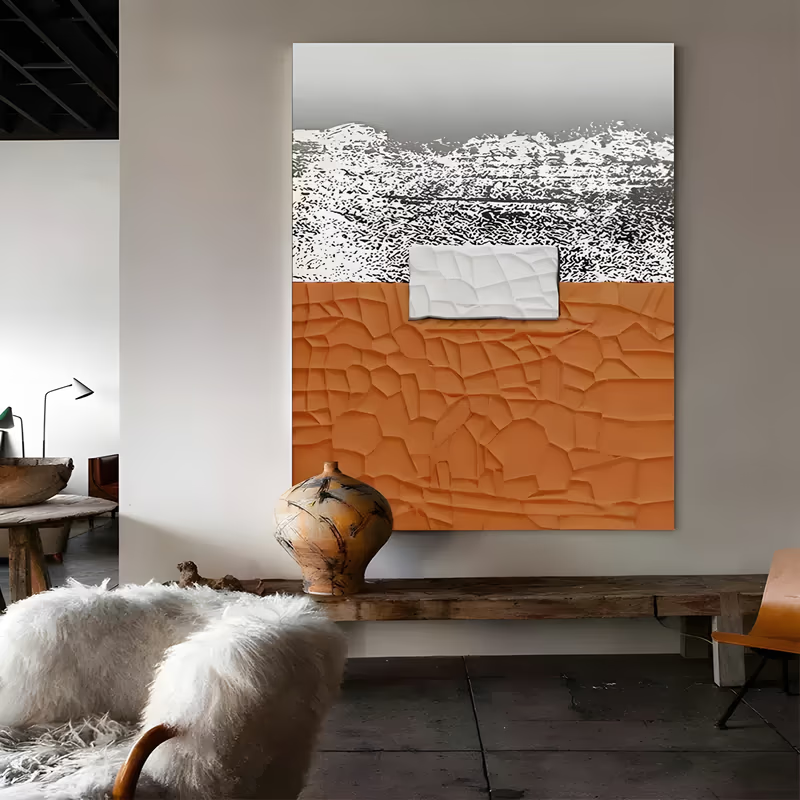
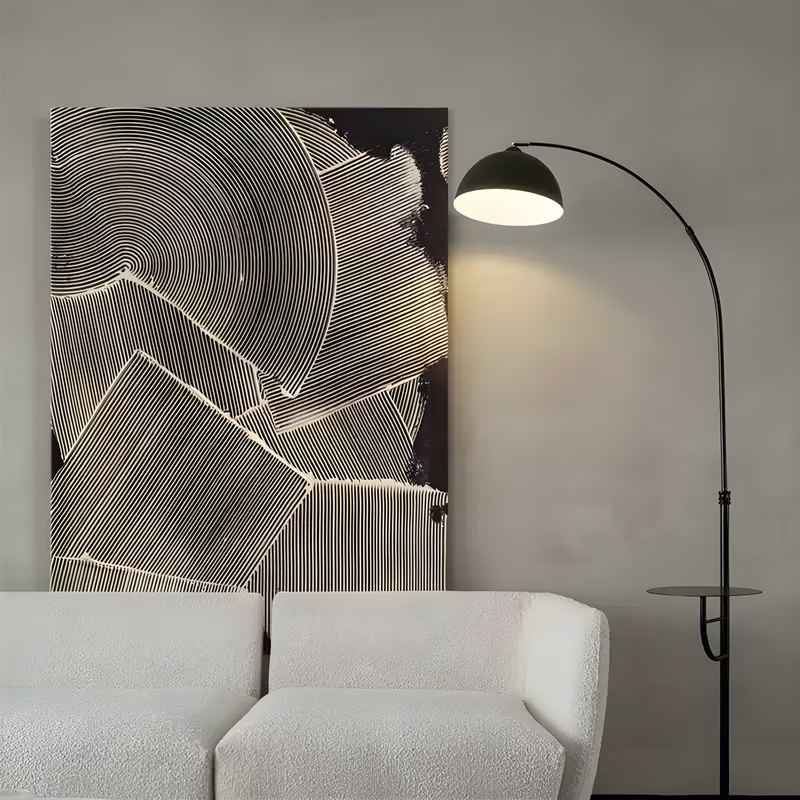
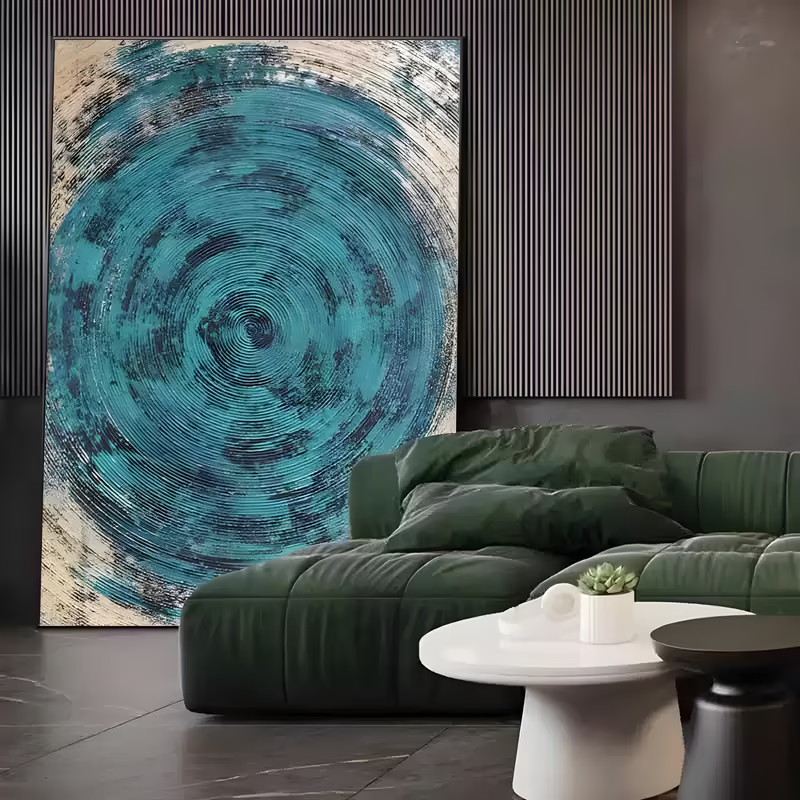
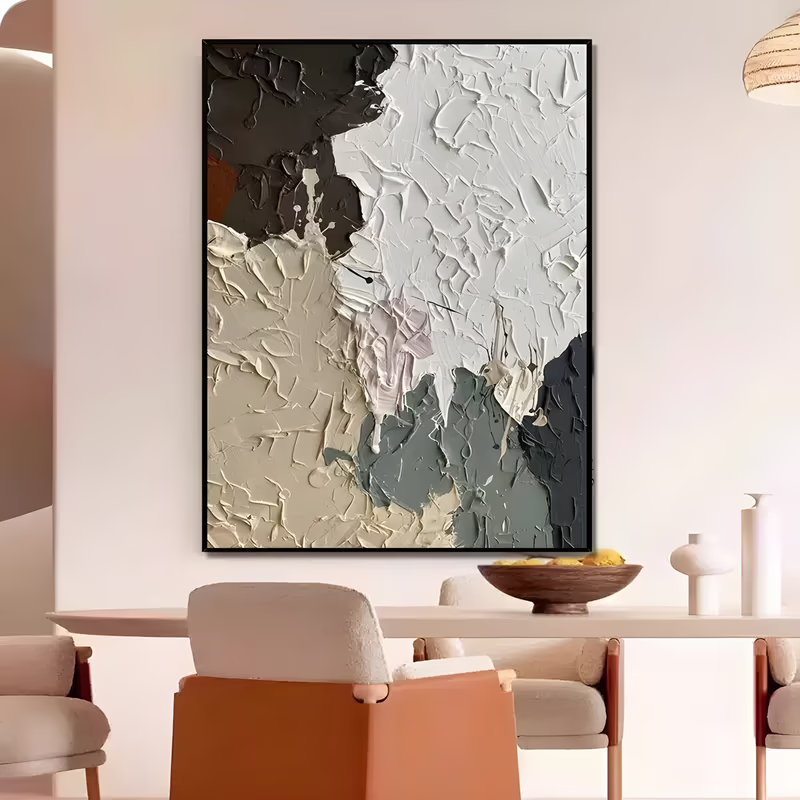
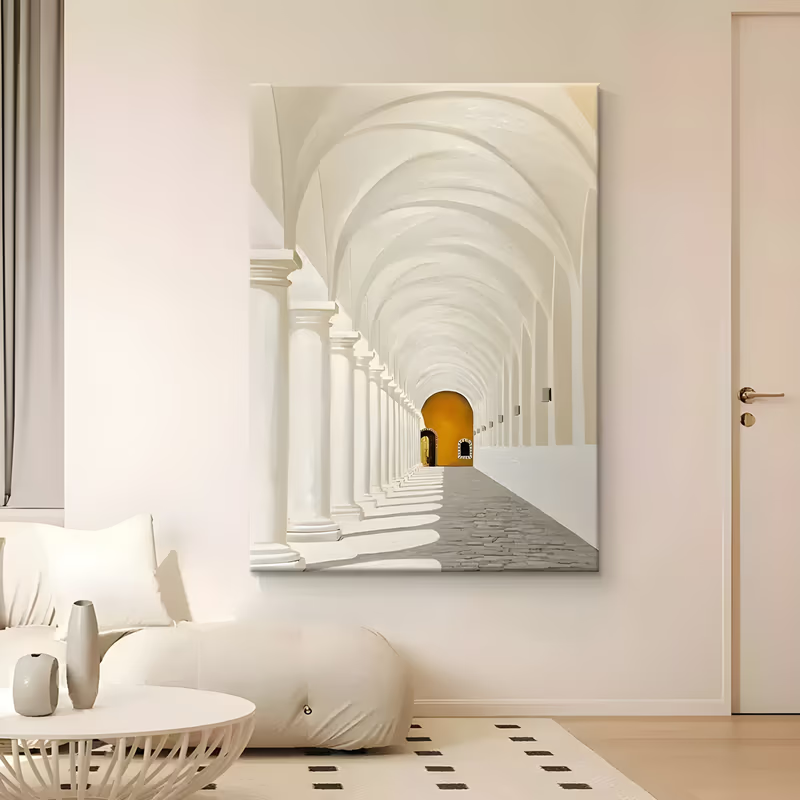
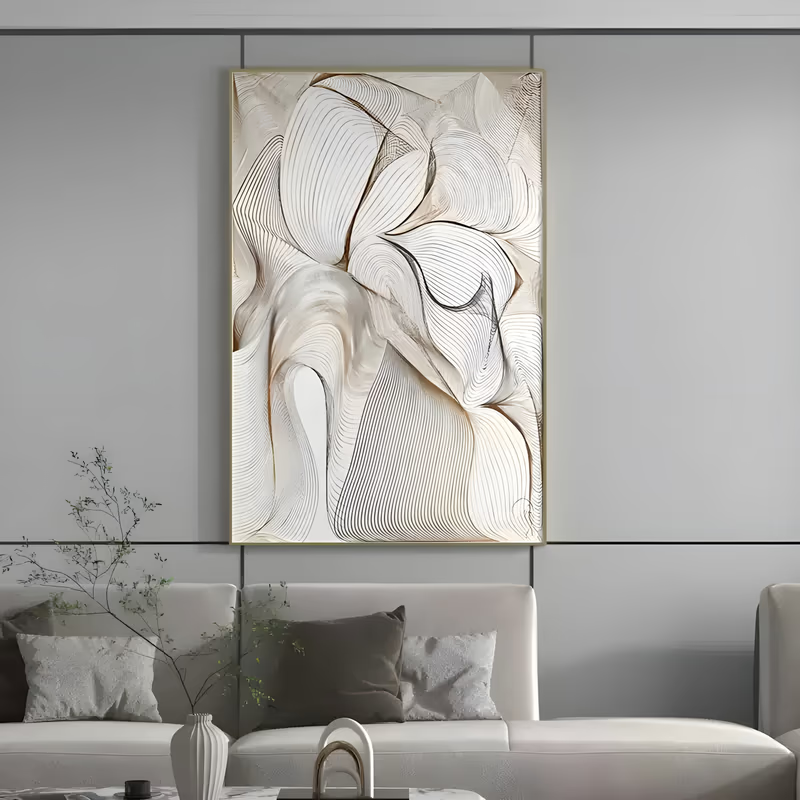
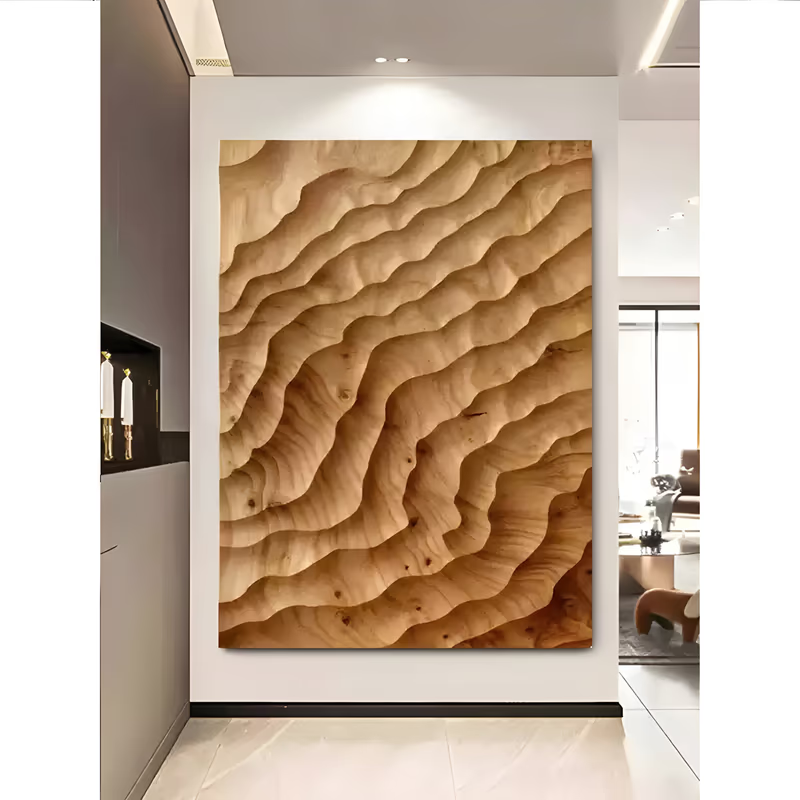
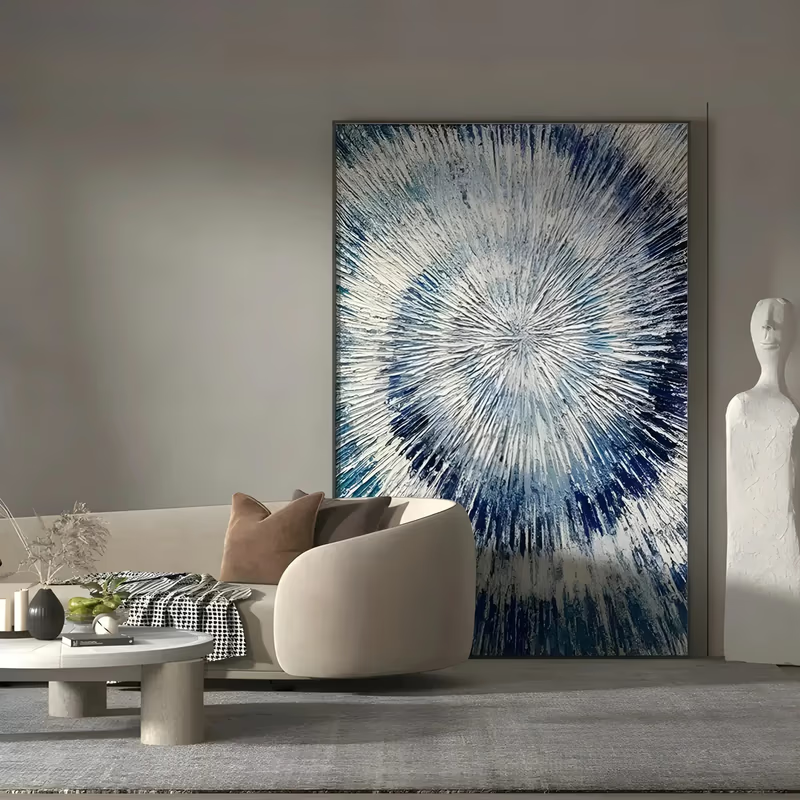
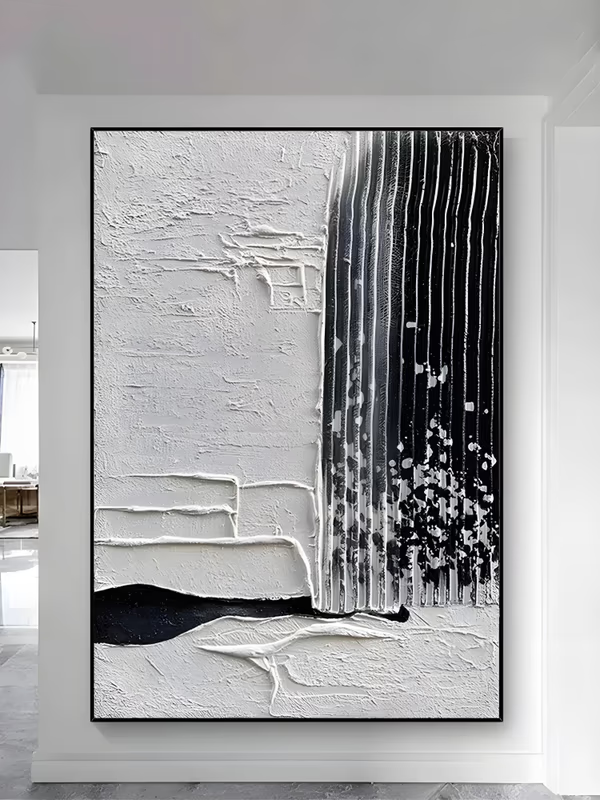
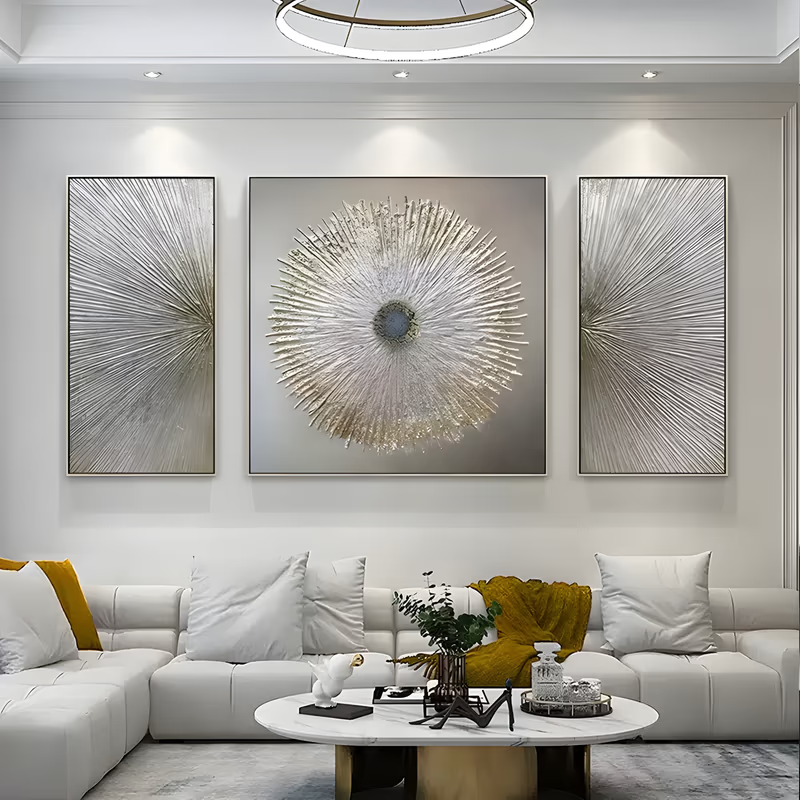
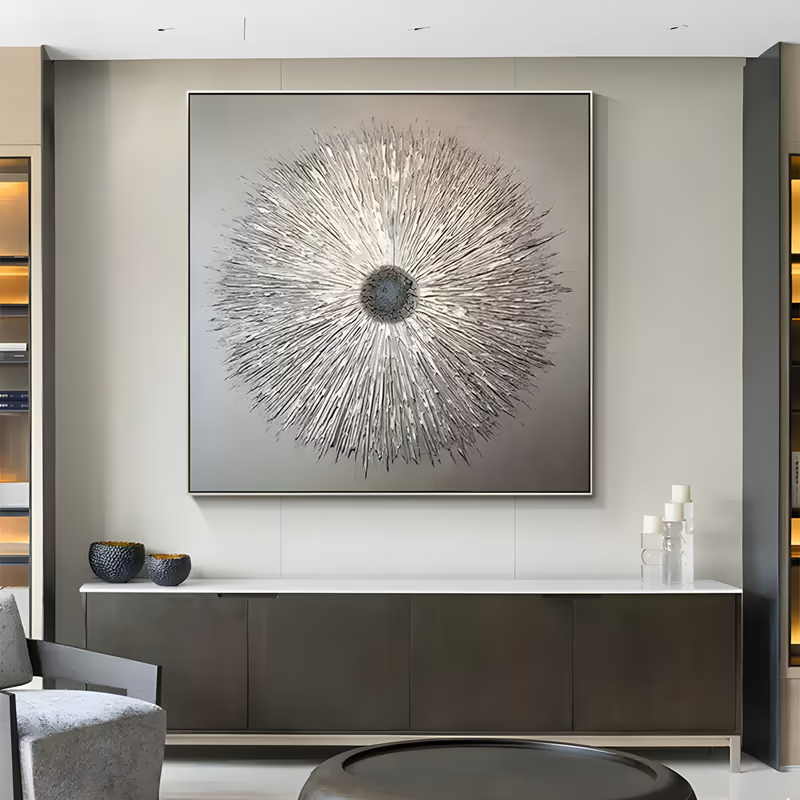
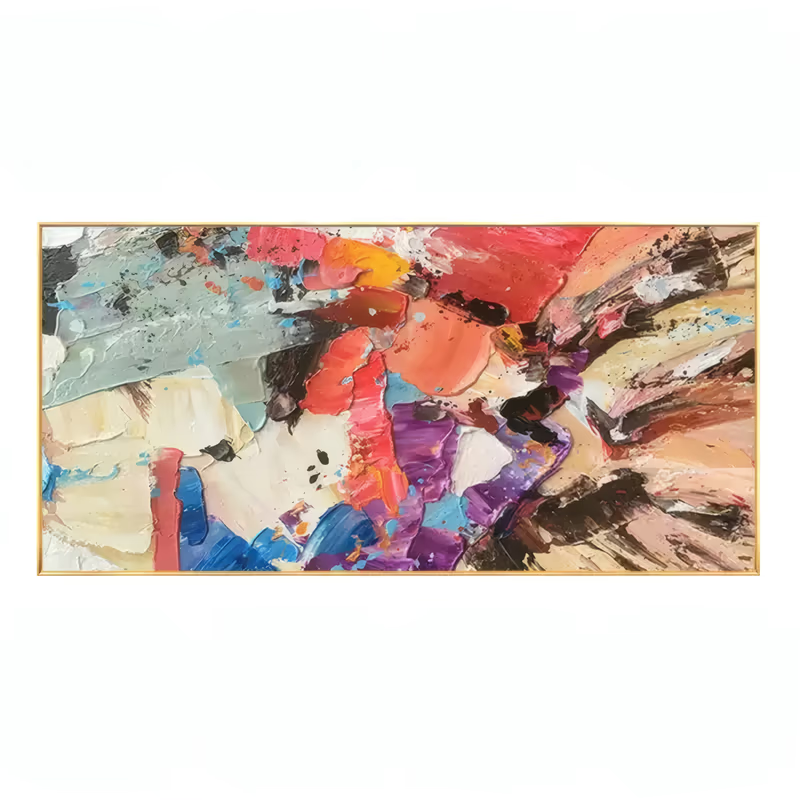
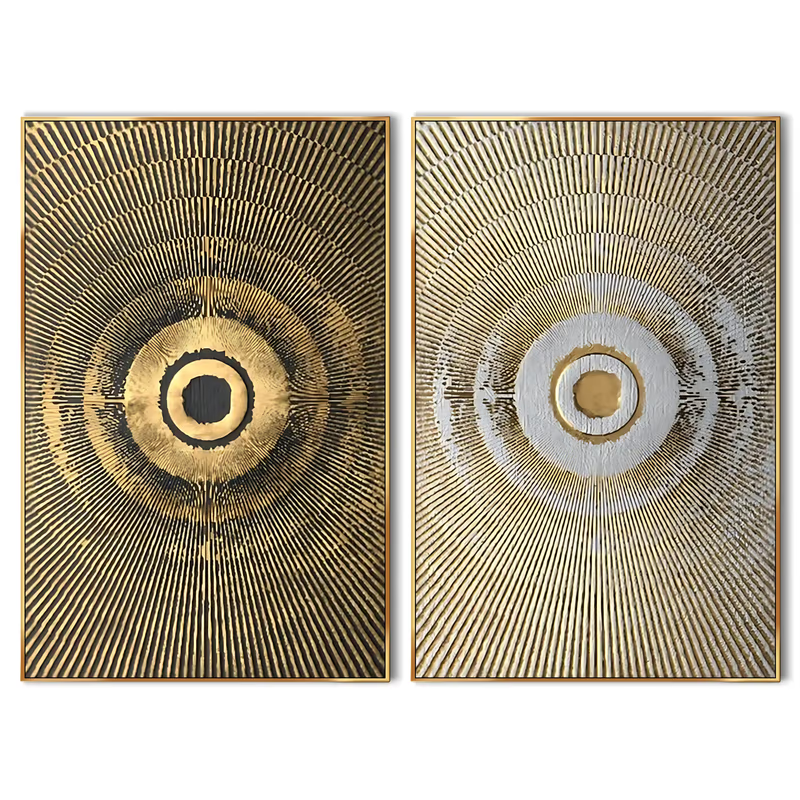
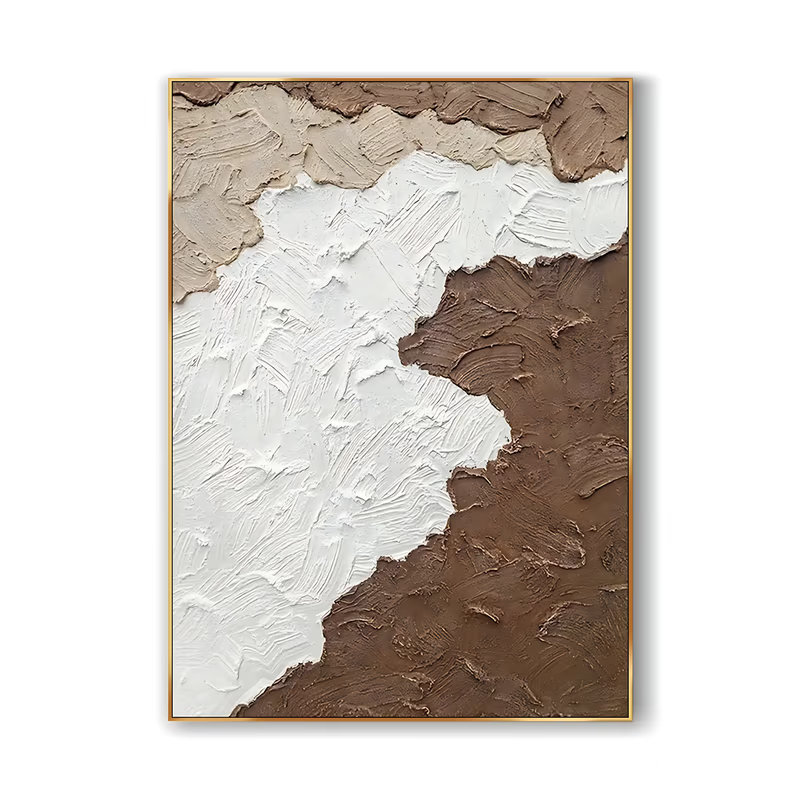
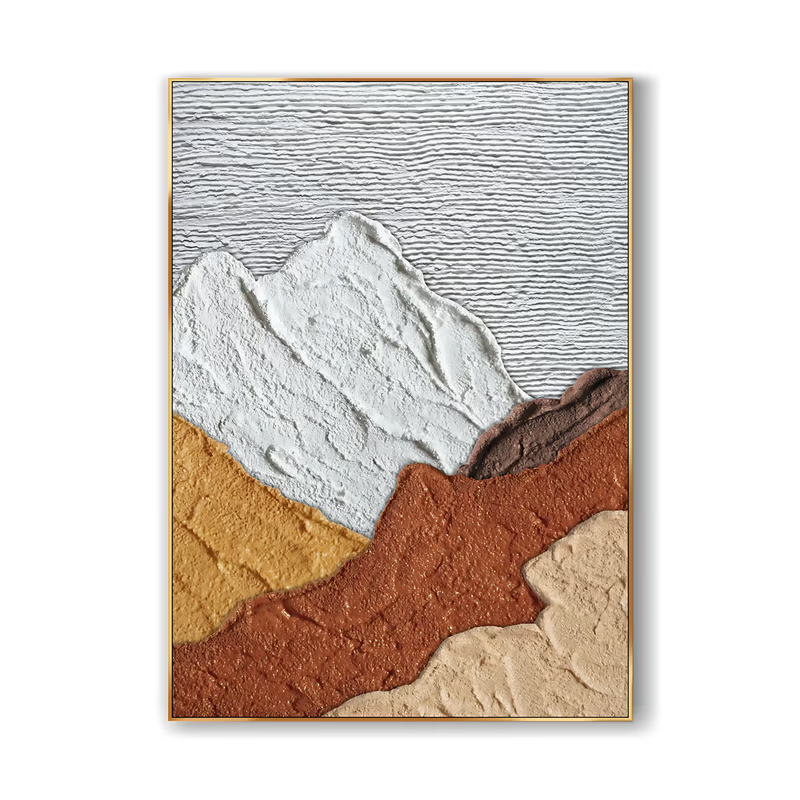
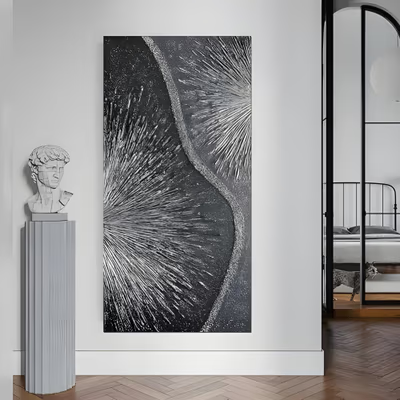
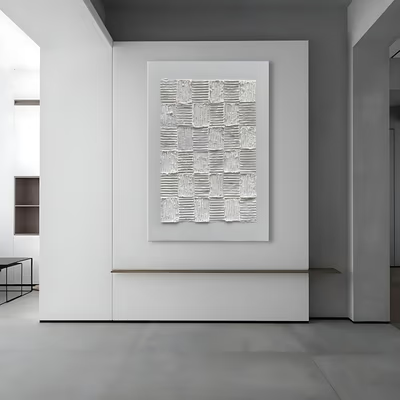
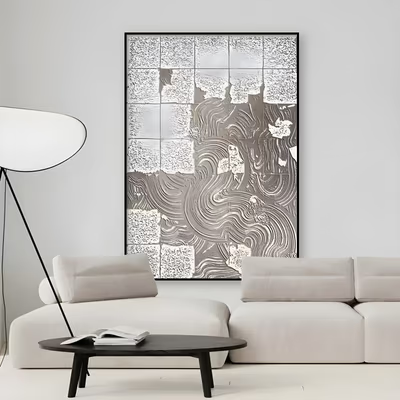
Concentric ridges, combed arches, raised tile grids and silver or gold starbursts built up in plaster and painted. The geometry is cast in shadow, so the piece changes with the light. Ideal for entrances and lobbies; see also textured and plaster art.
Weathered, earthy patchwork
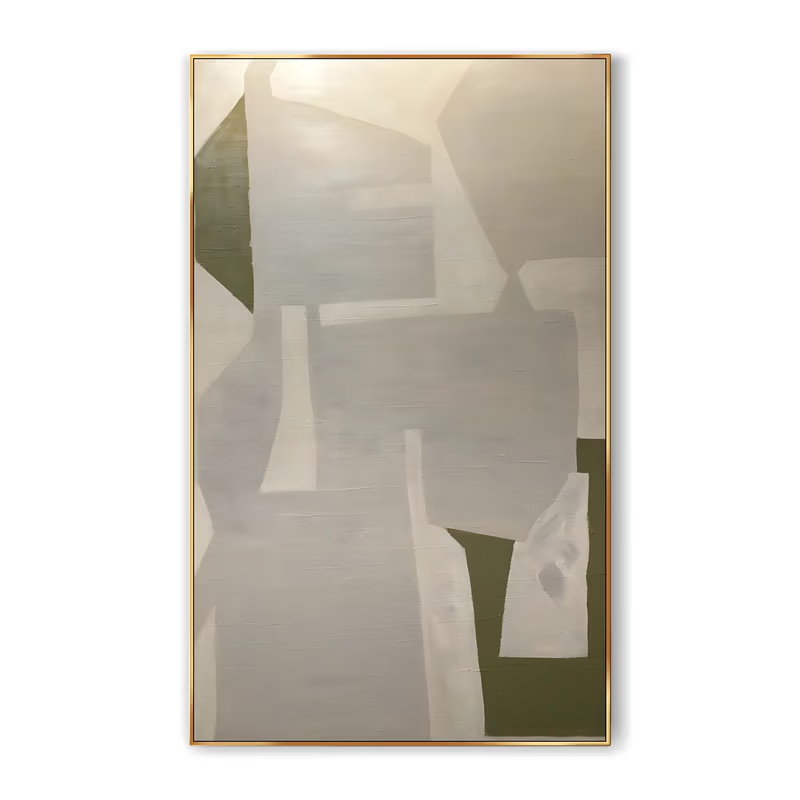
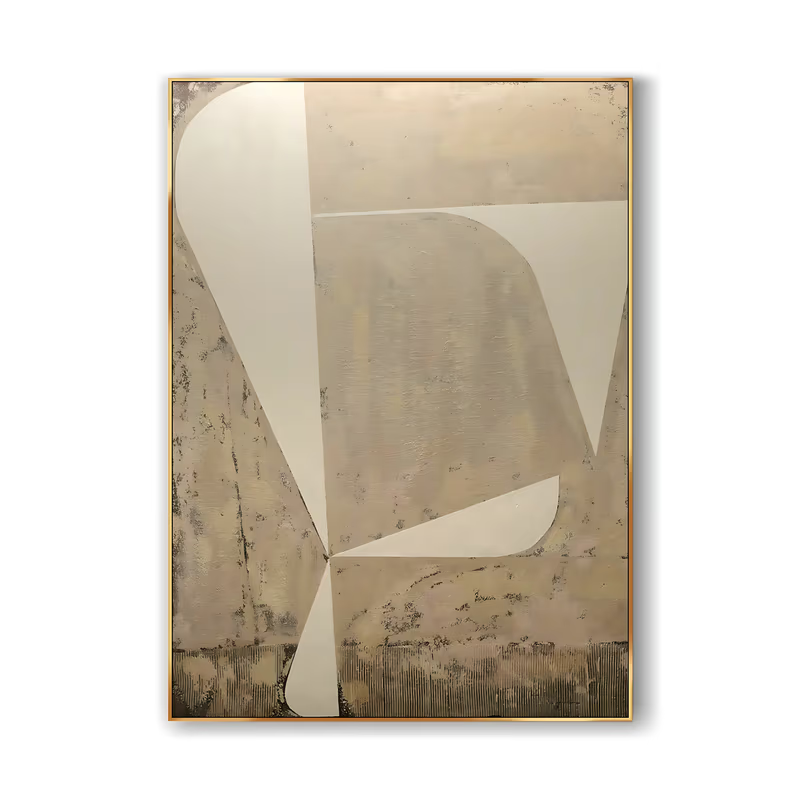
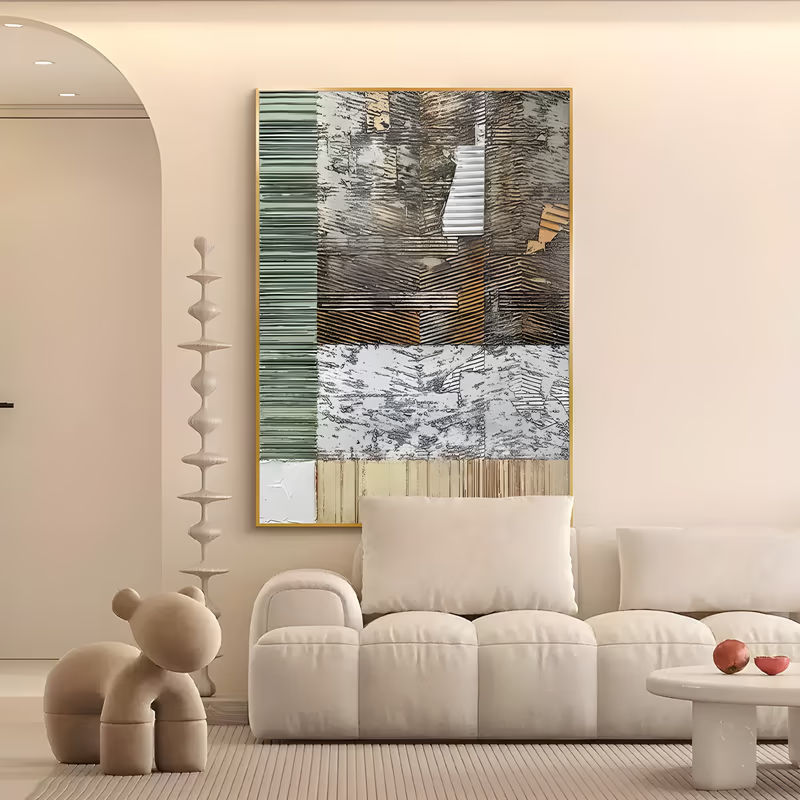
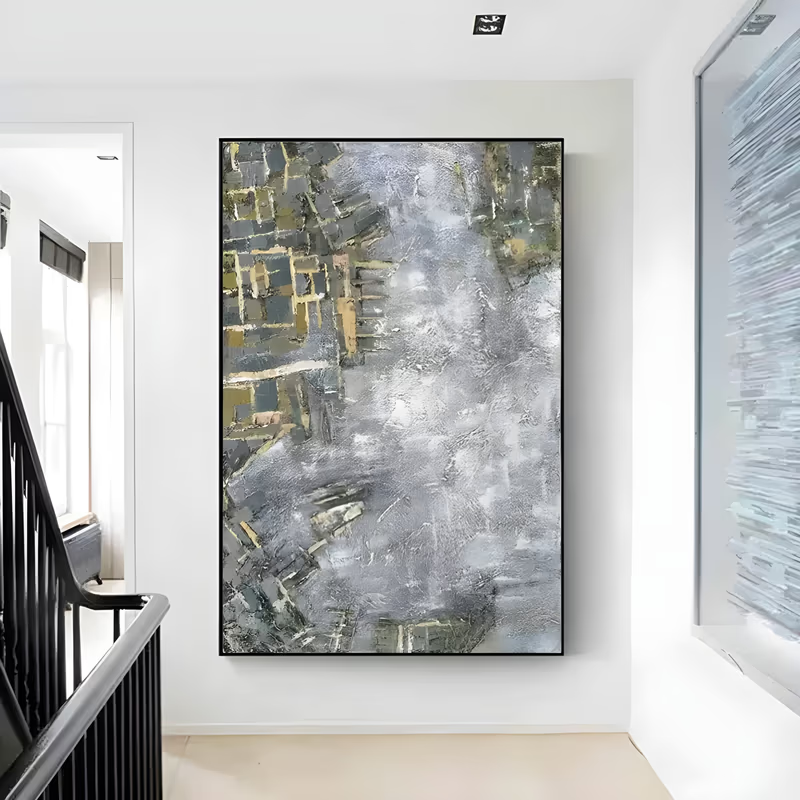
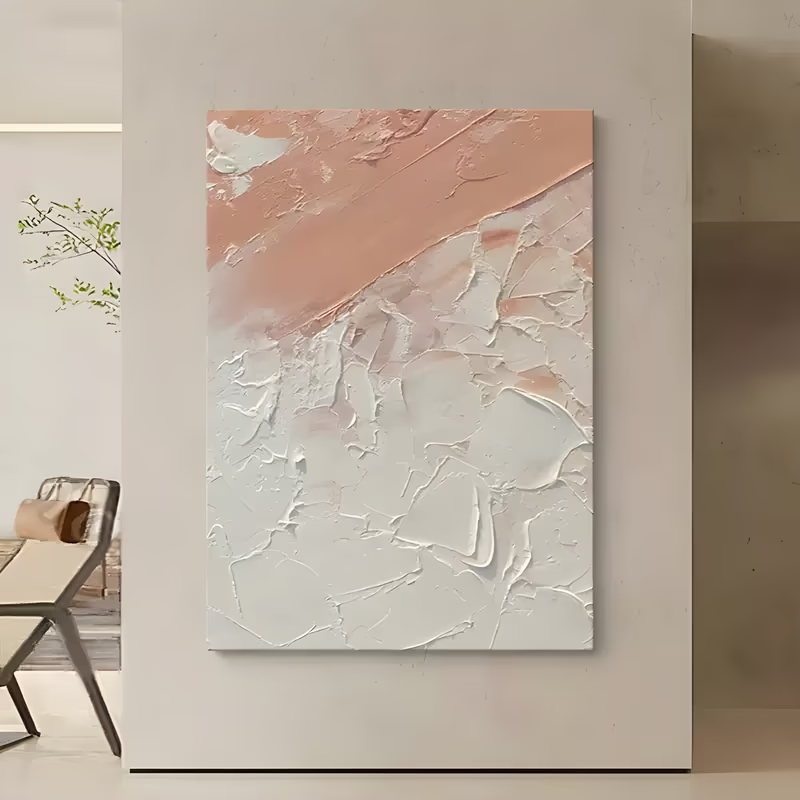
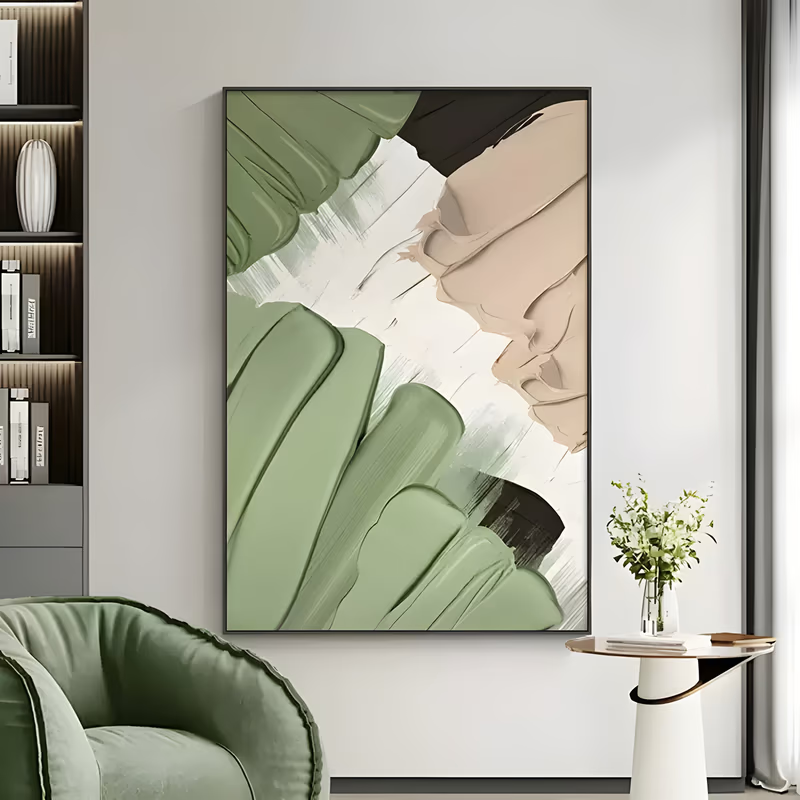
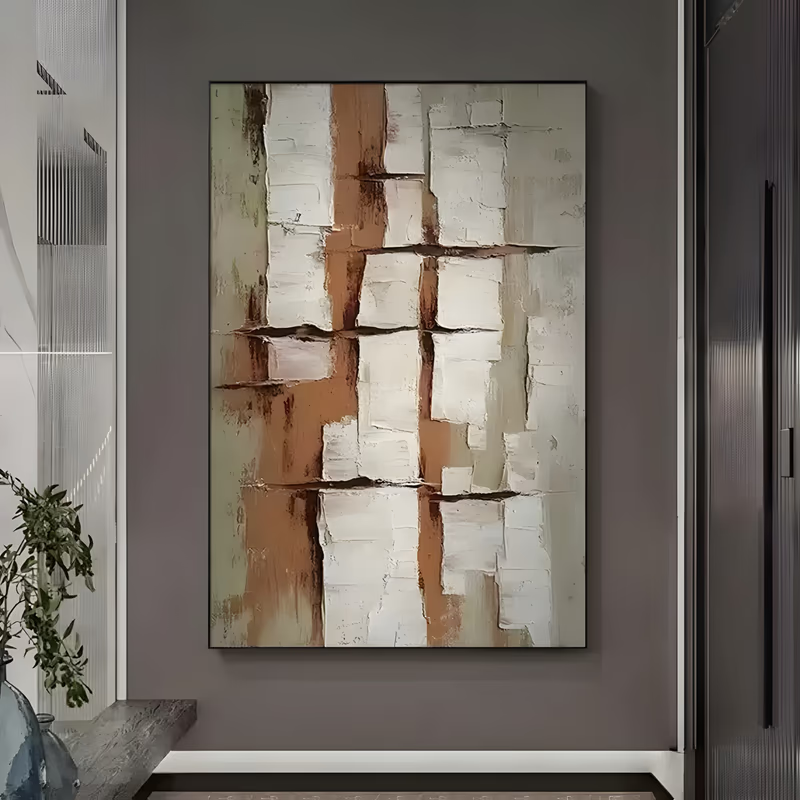
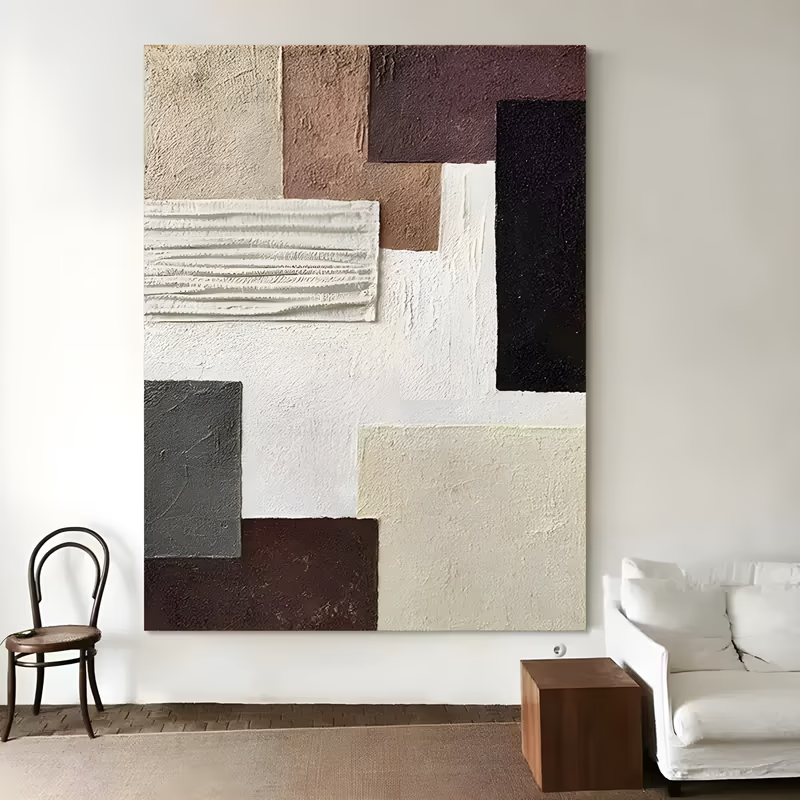
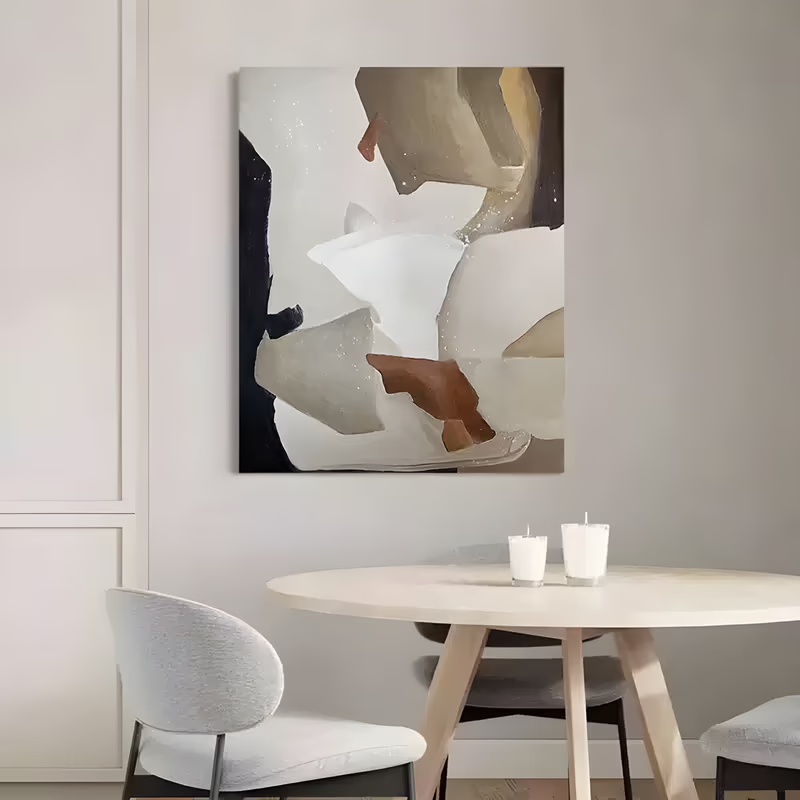
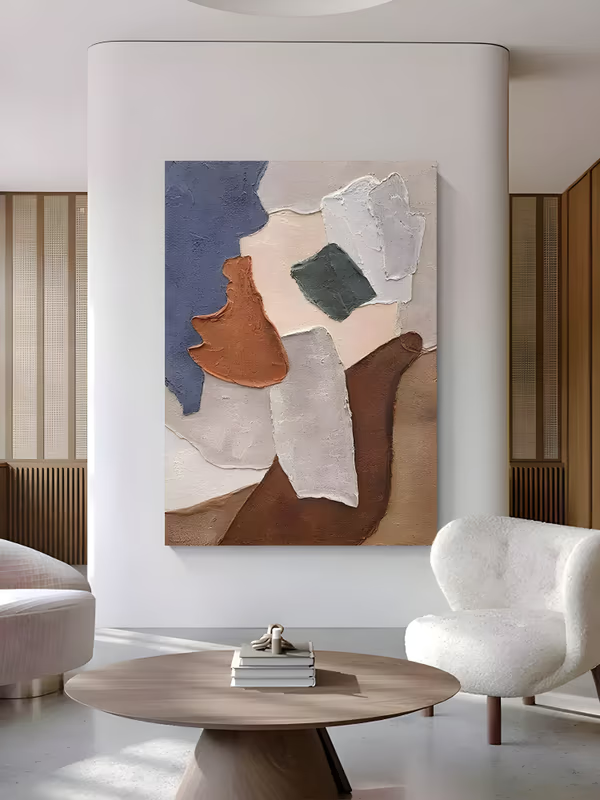
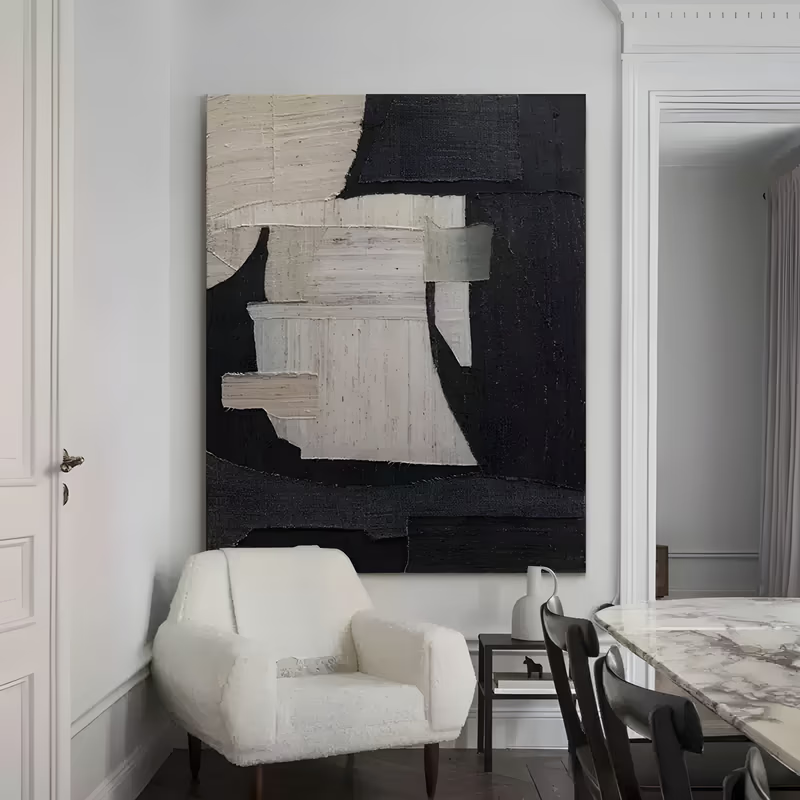
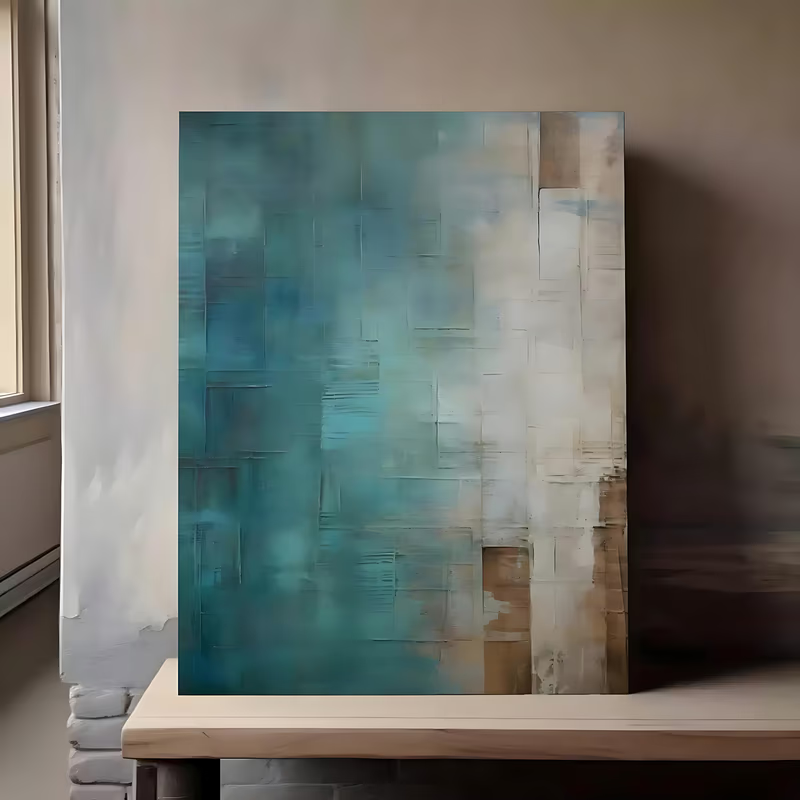
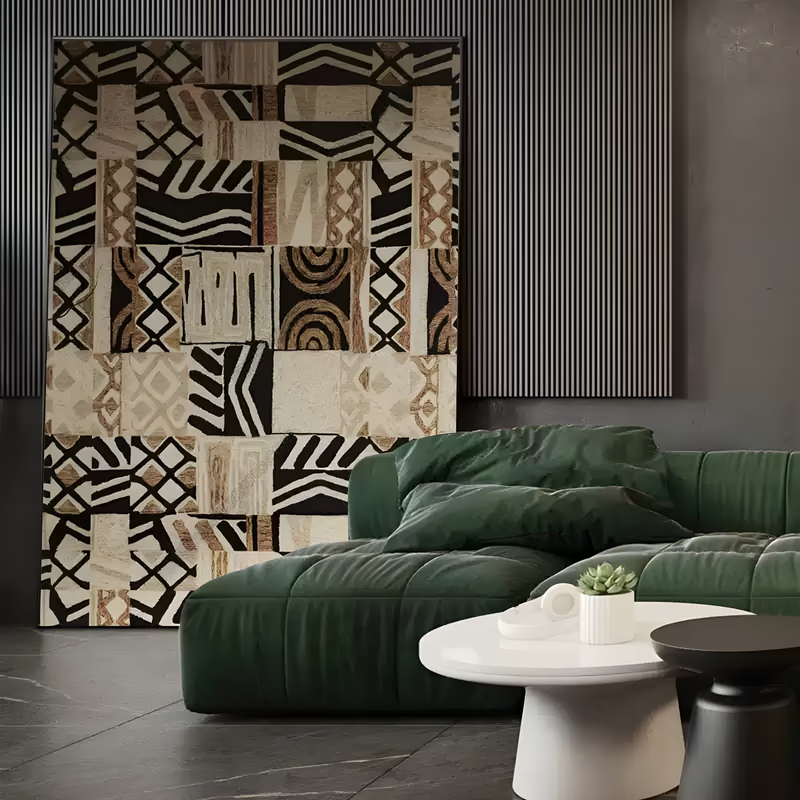
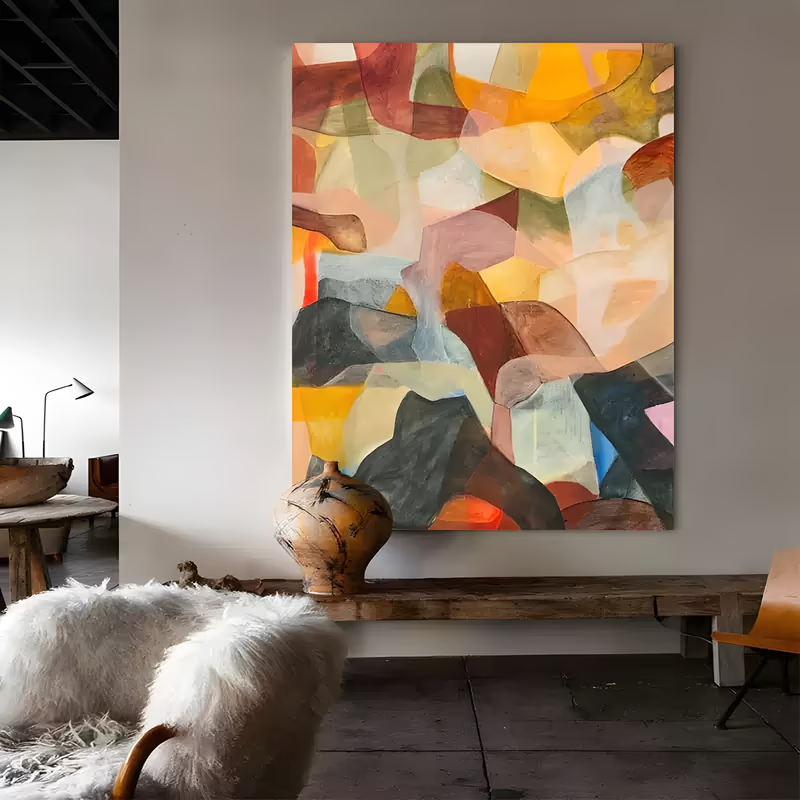
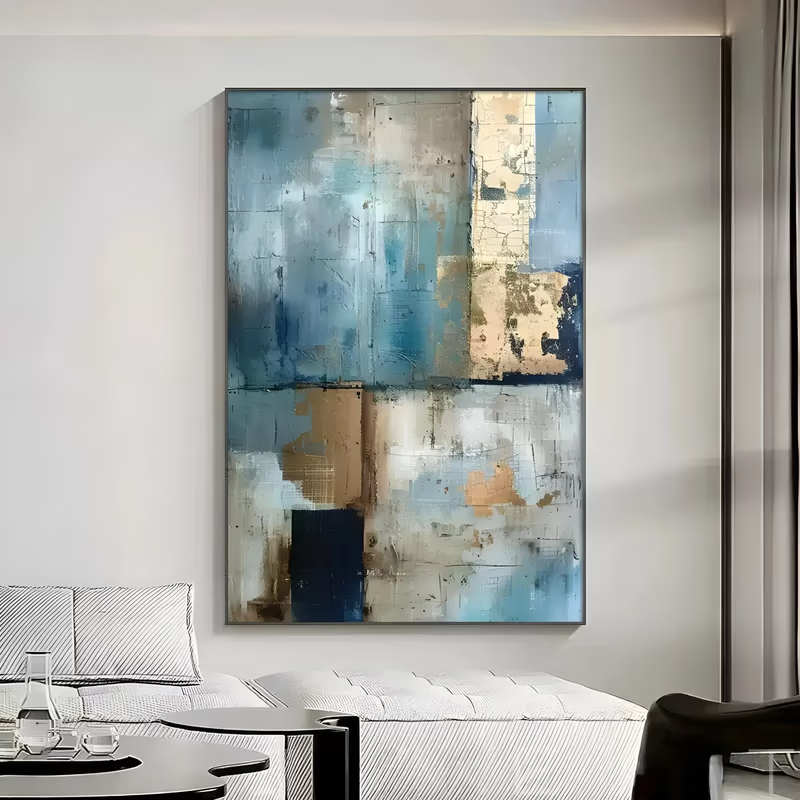
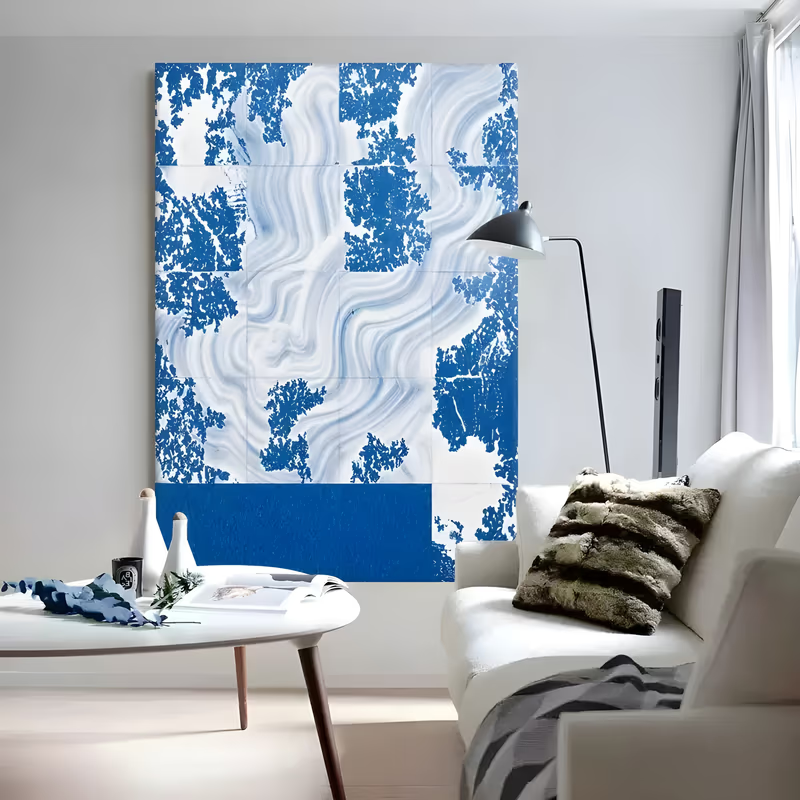
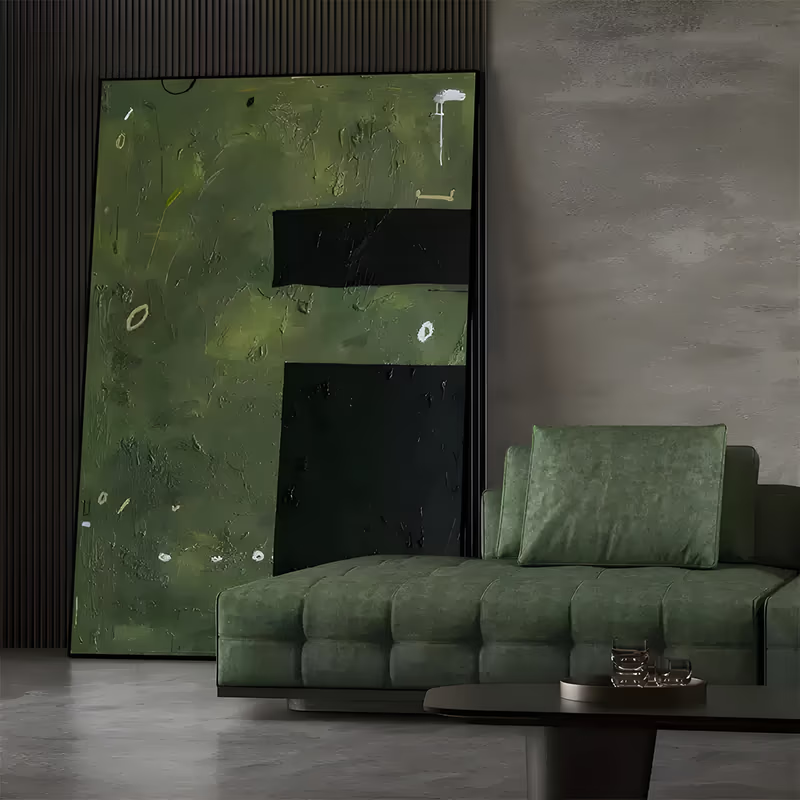
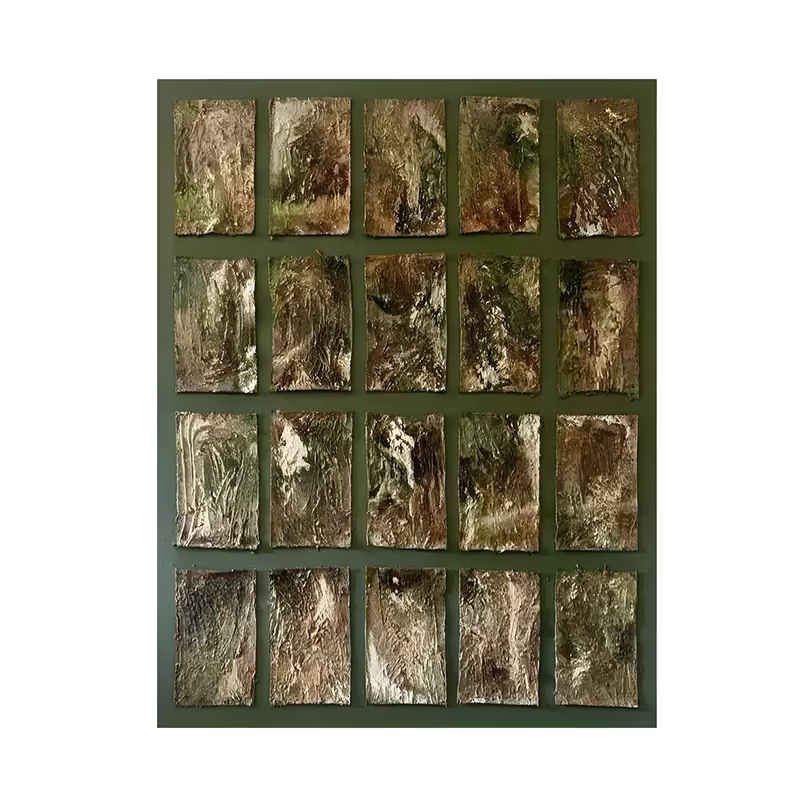
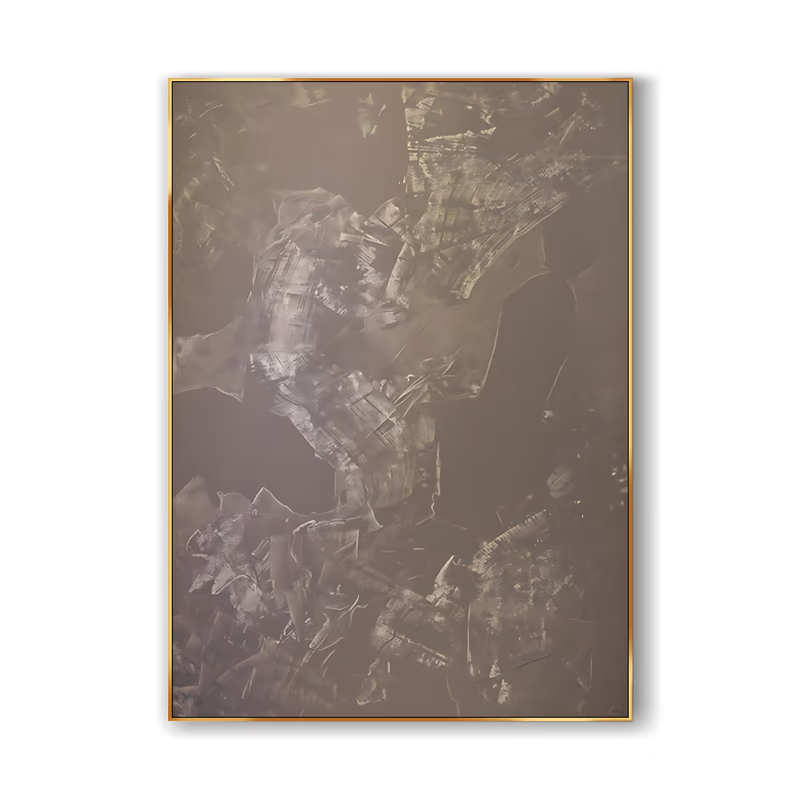
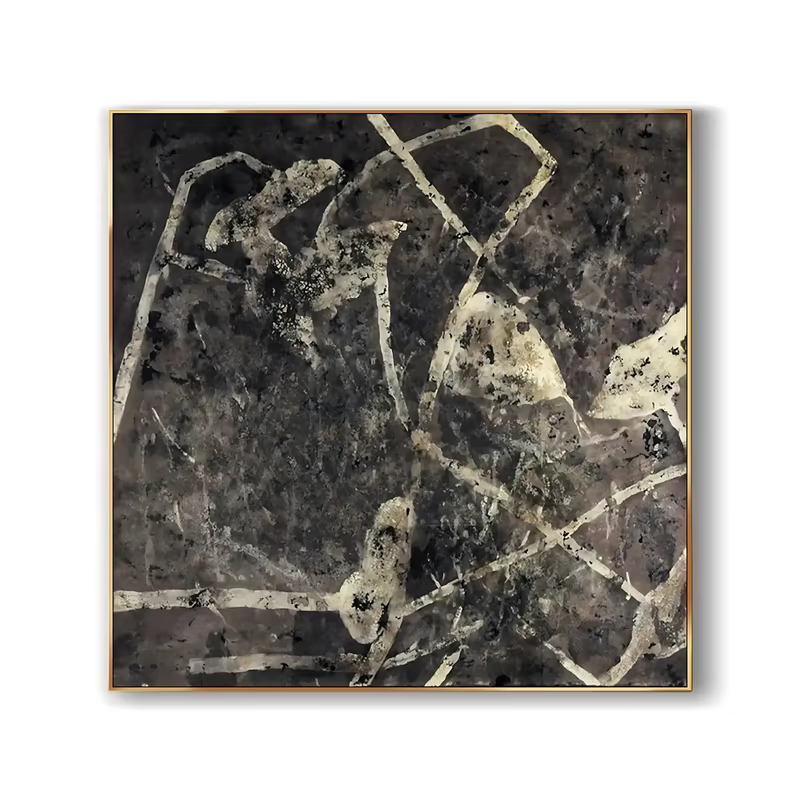
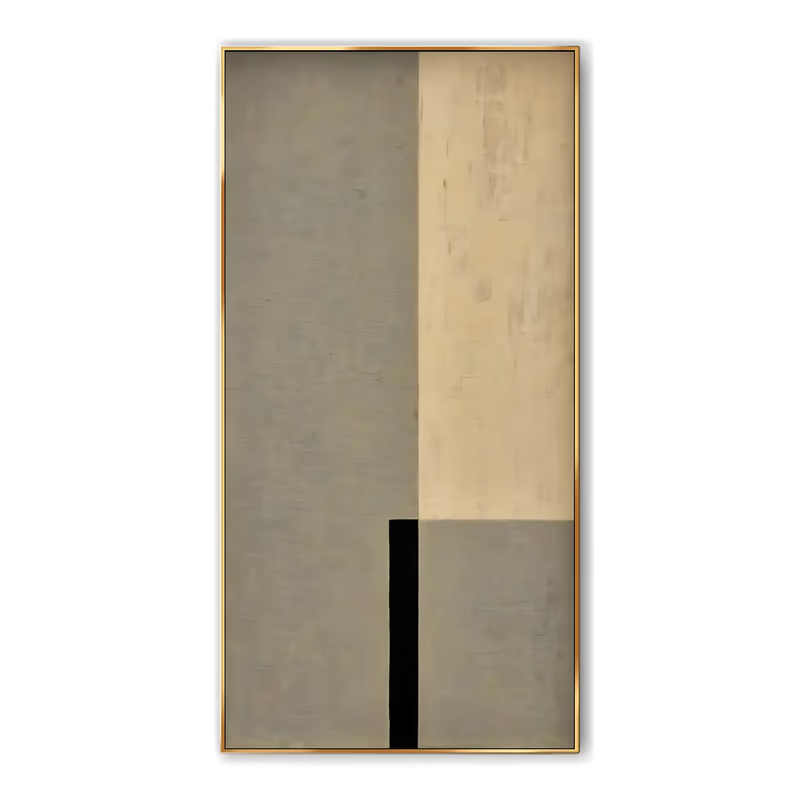
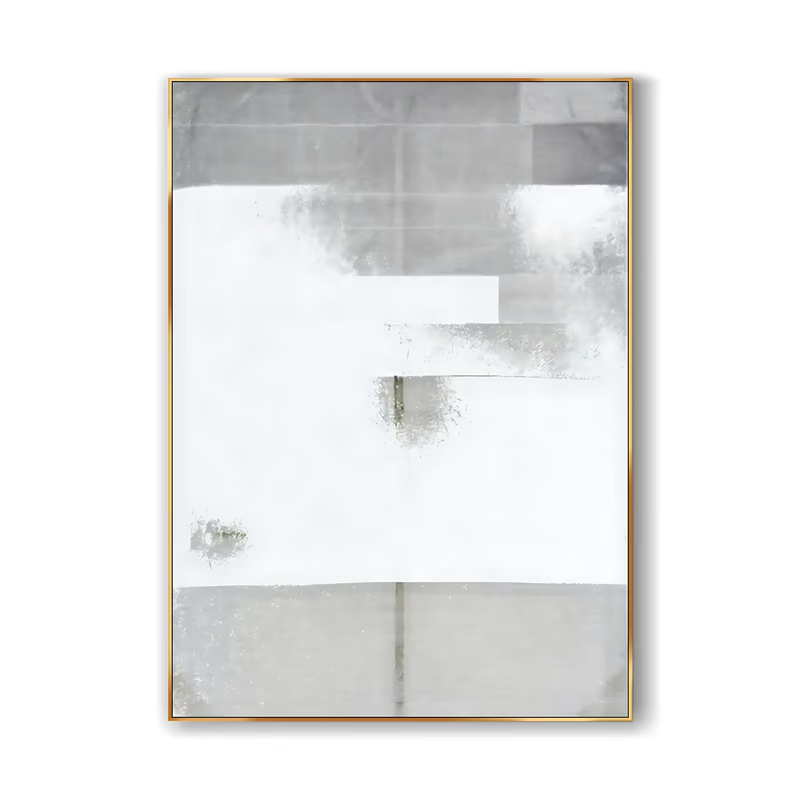
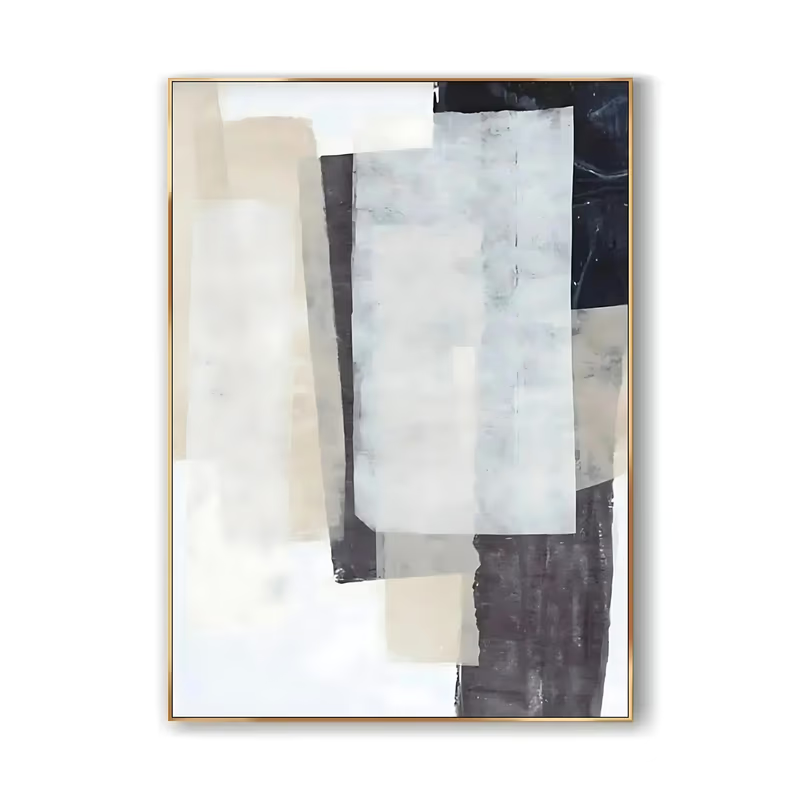
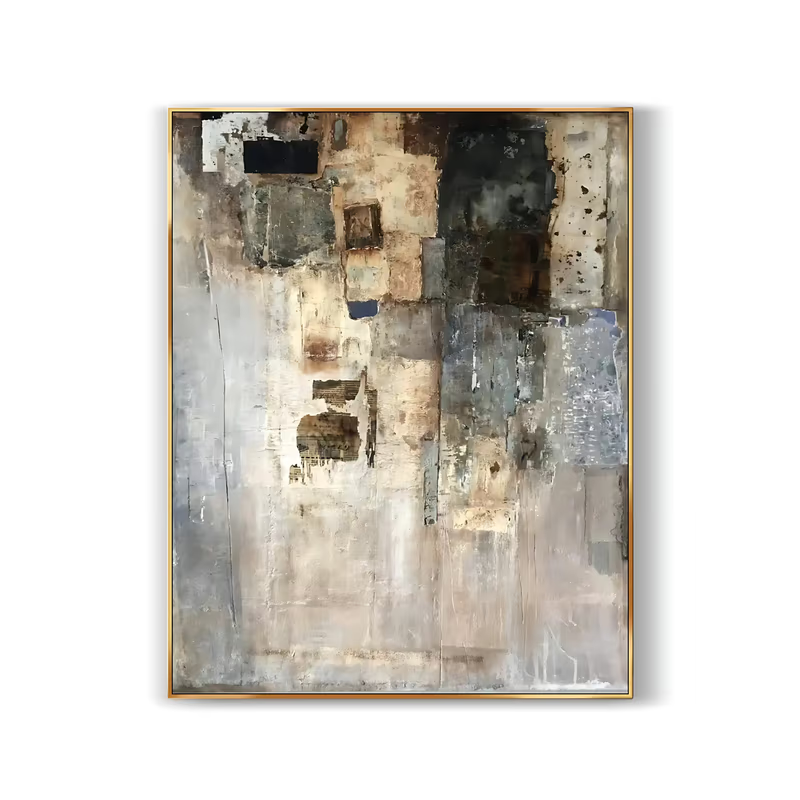
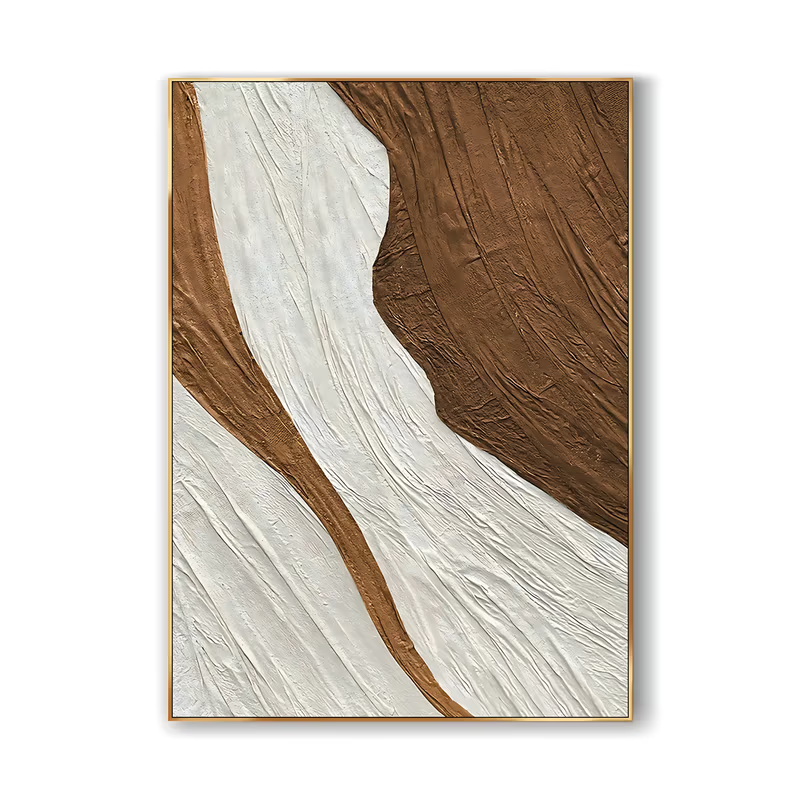
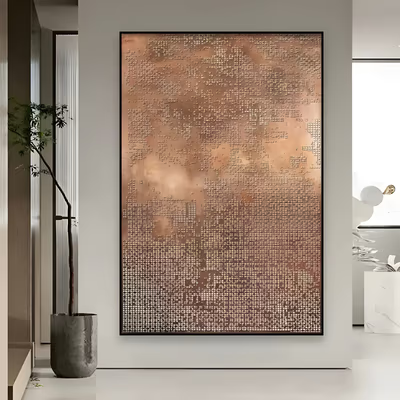
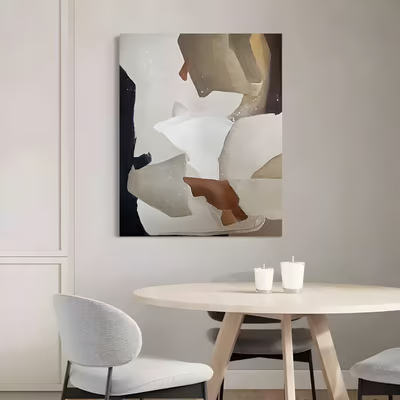
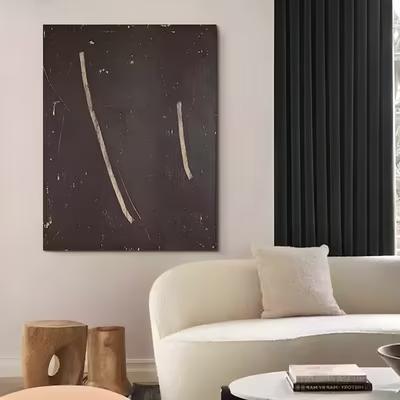
Overlapping greige and olive shapes, chalky patches and soft stone forms on scratched or mottled grounds. Geometry with the edges worn down, made for Japandi and natural-material interiors; the wabi-sabi collection has more.
Which interior styles does geometric wall art suit?
Nearly all modern ones; the trick is to match the shapes and palette to the style, from soft arches in Japandi rooms to crisp black-and-white blocks in contemporary ones.
Japandi and Scandinavian
Rounded forms, arches and pebbles in sand, oat, olive and charcoal, with plenty of space around them. Pale oak or a thin black frame finishes them. Neutral geometric pieces.
Mid-century modern
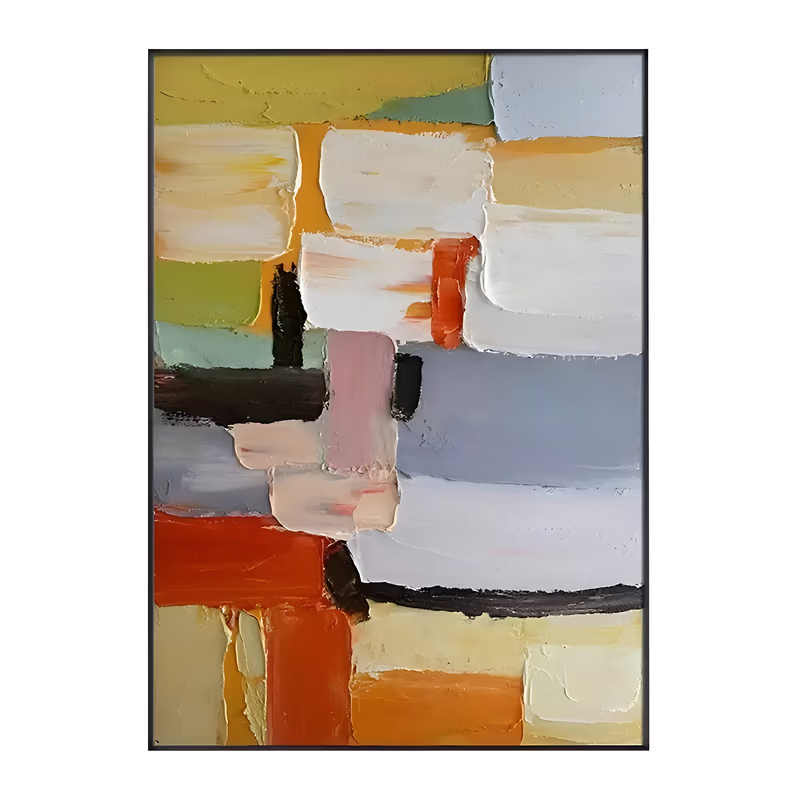
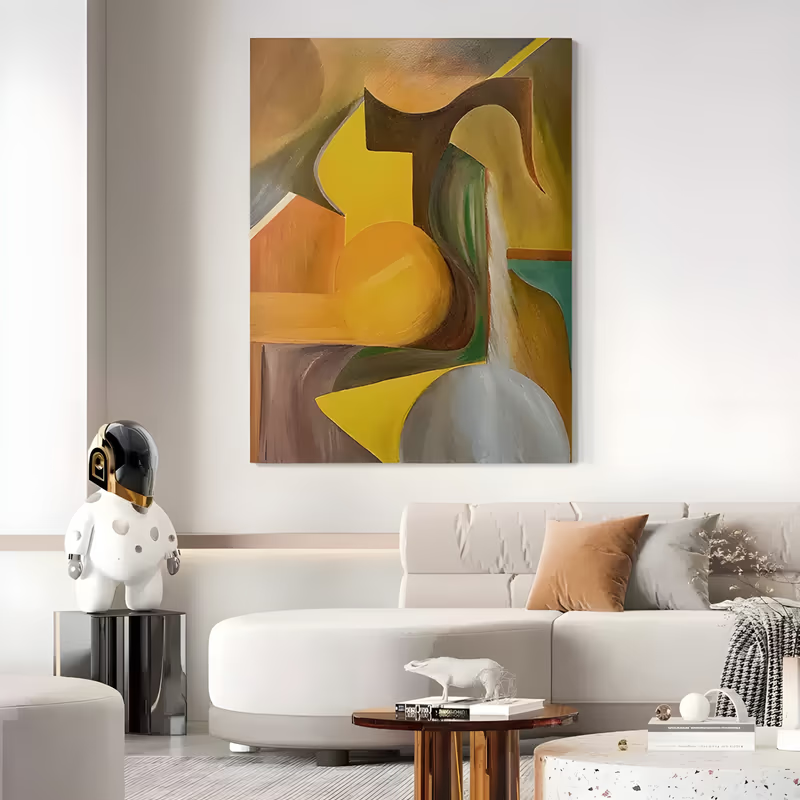
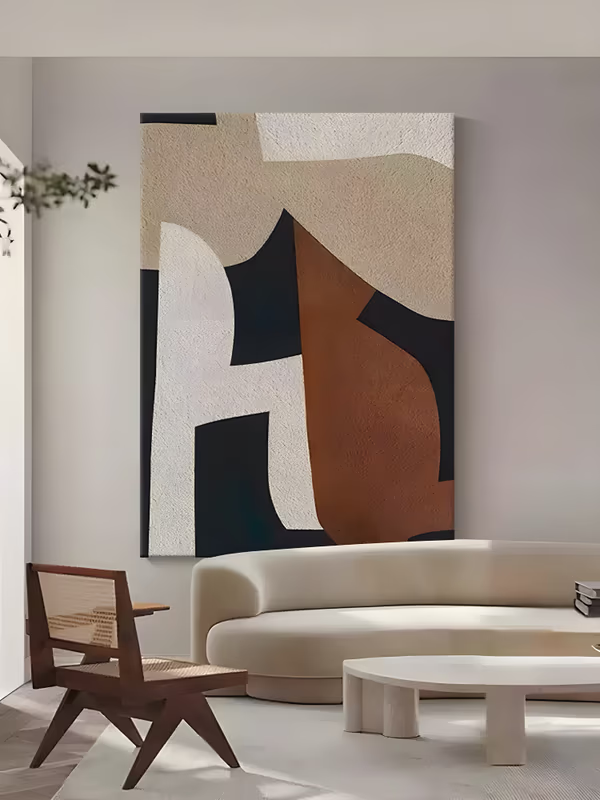
Mustard, rust, teal and navy blocks, half-suns and stacked shapes, which pick up walnut furniture and tapered legs. Warm mid-century colourways.
Contemporary and monochrome
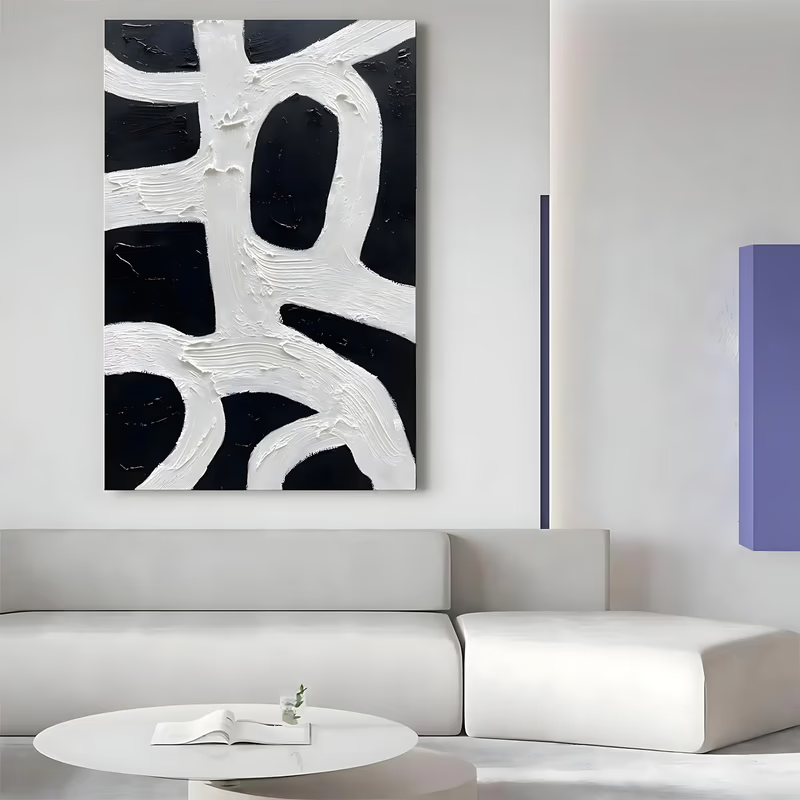
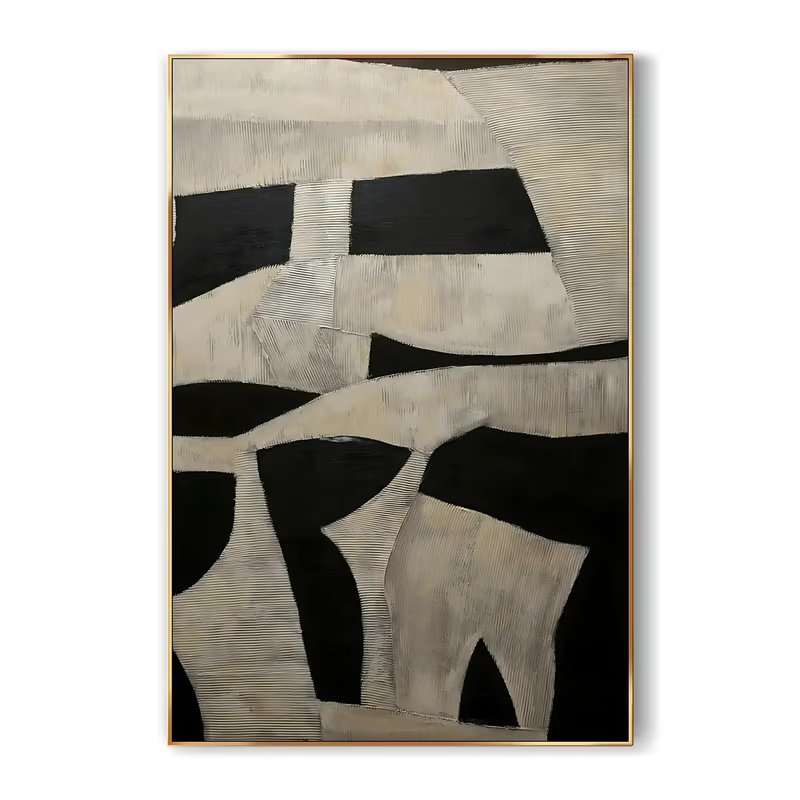
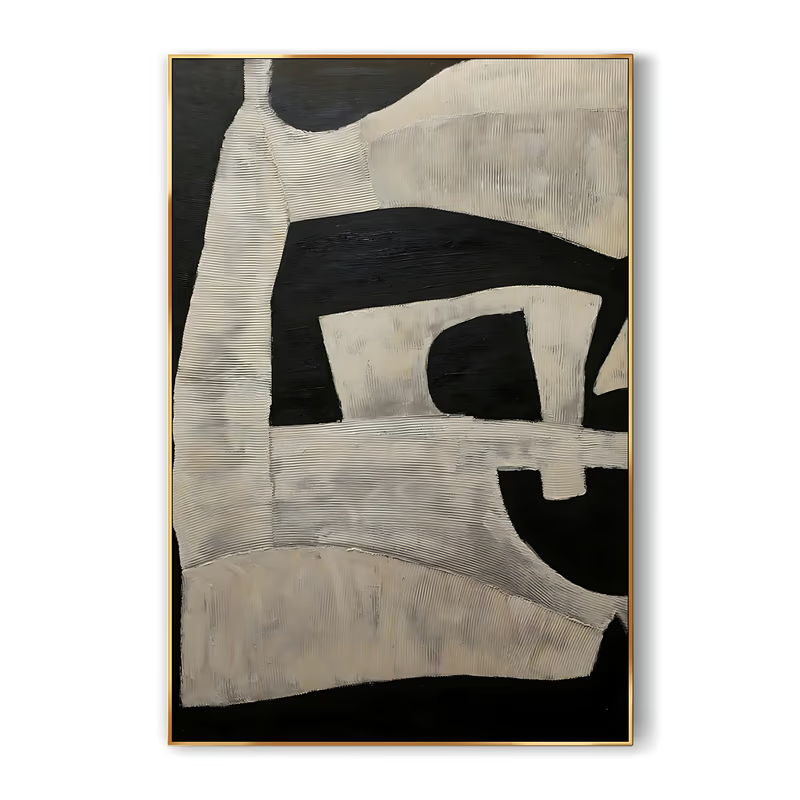
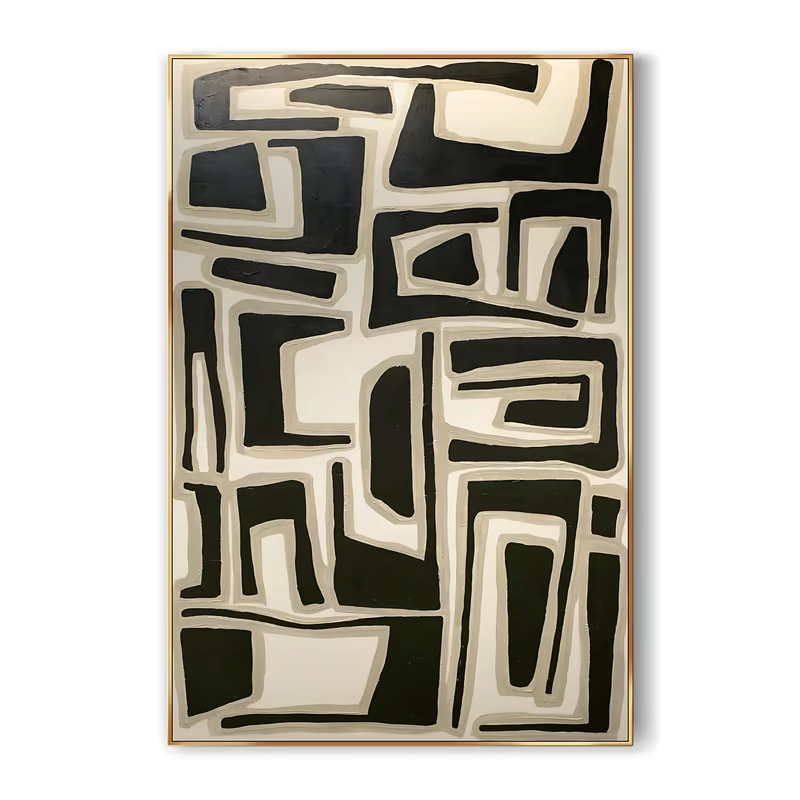
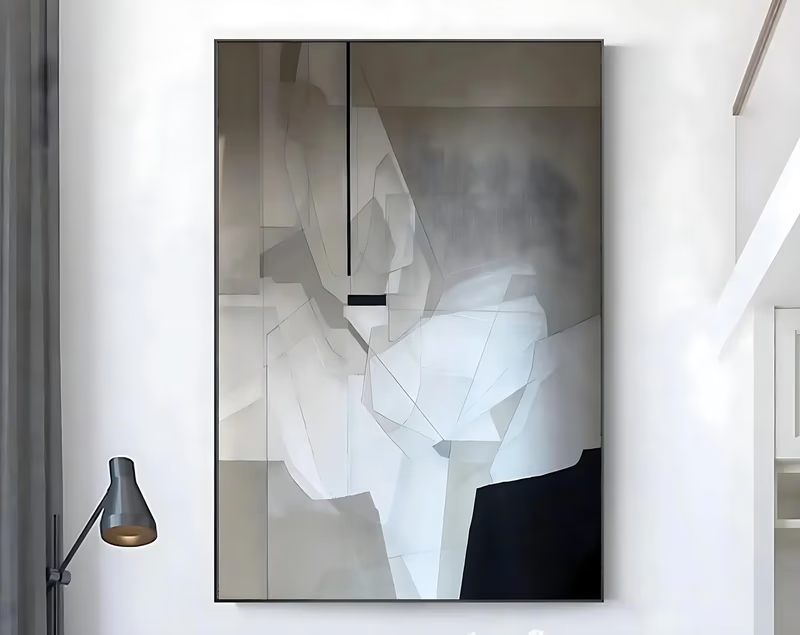
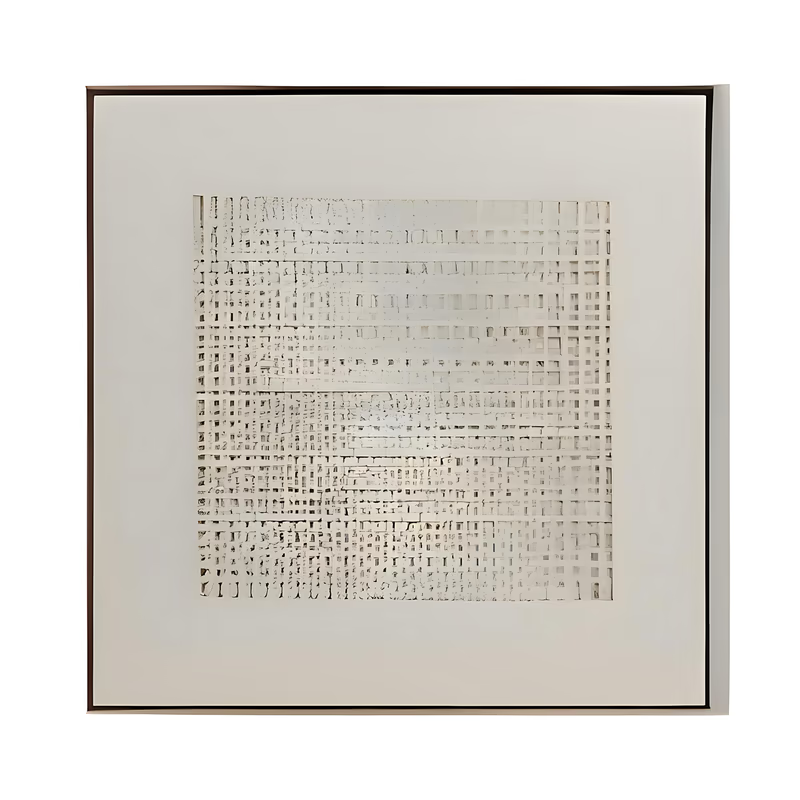
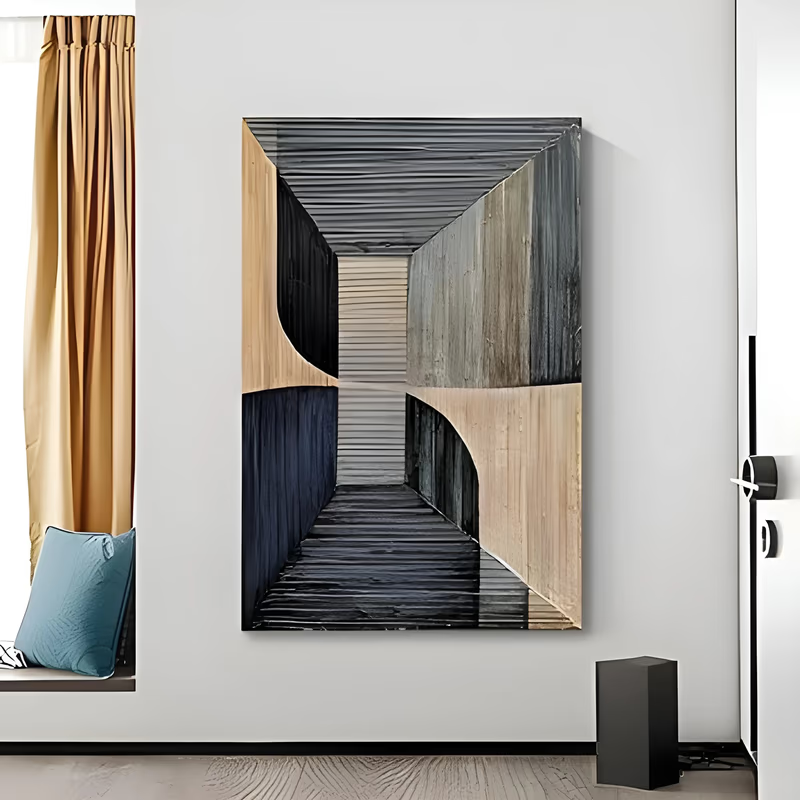
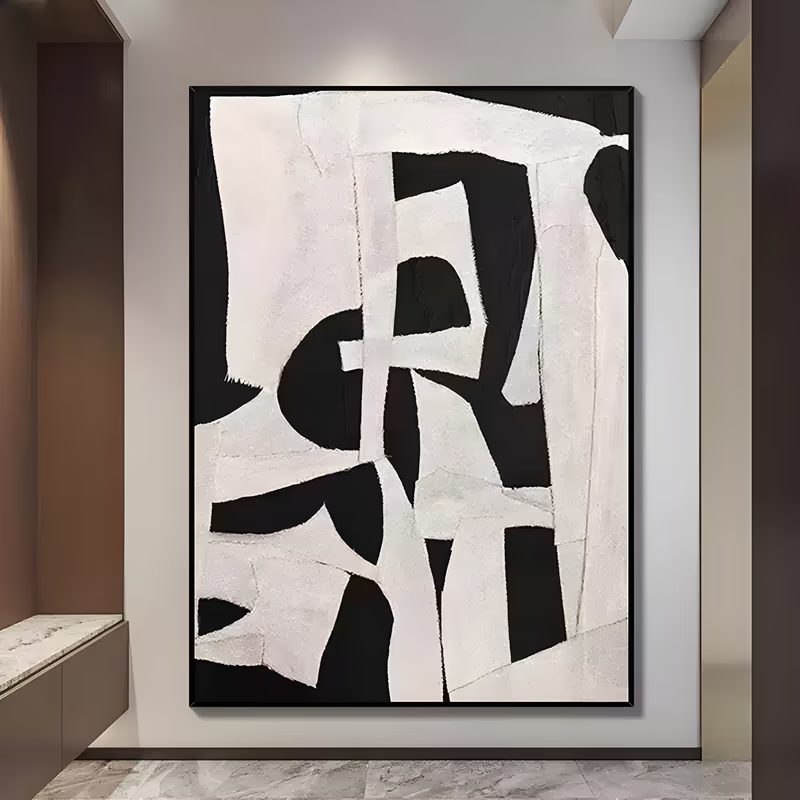
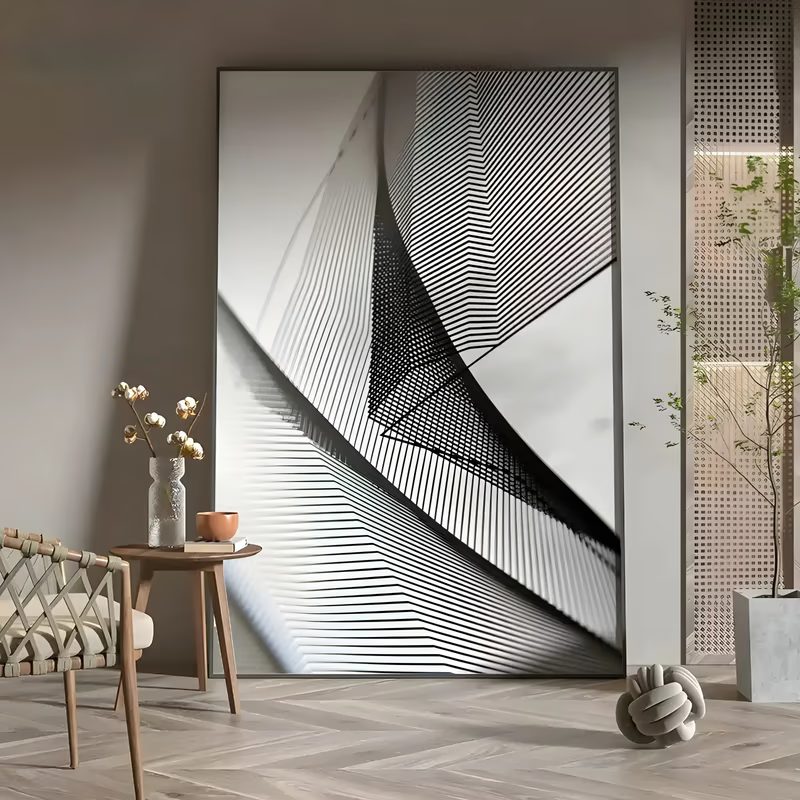
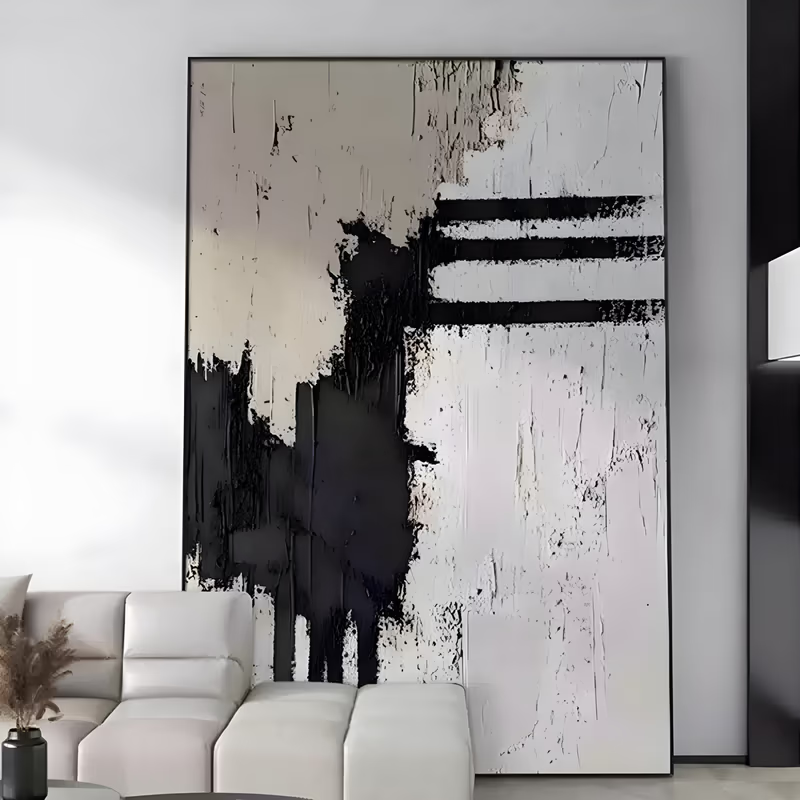
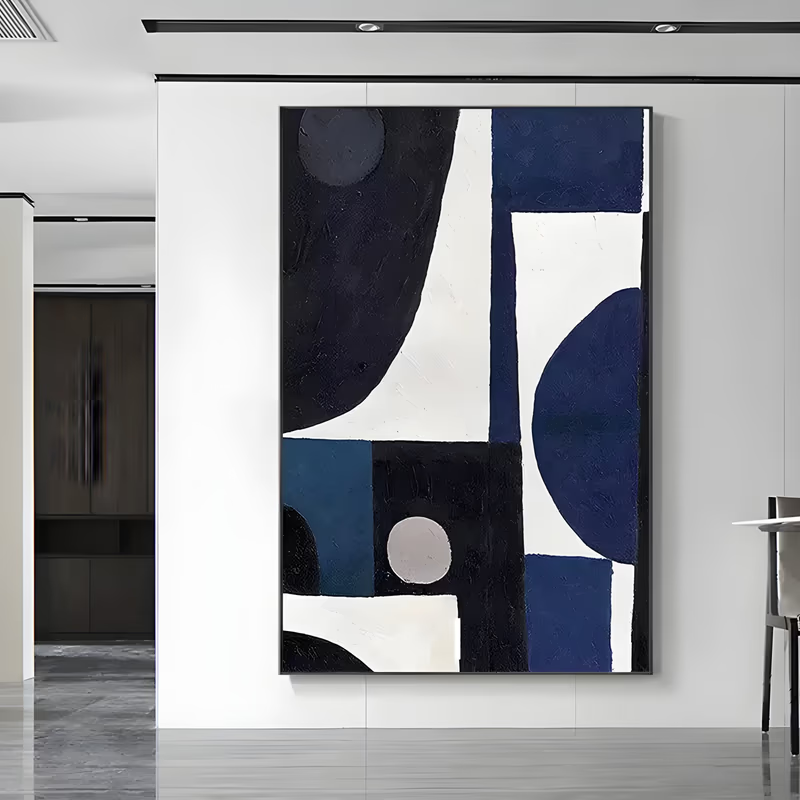
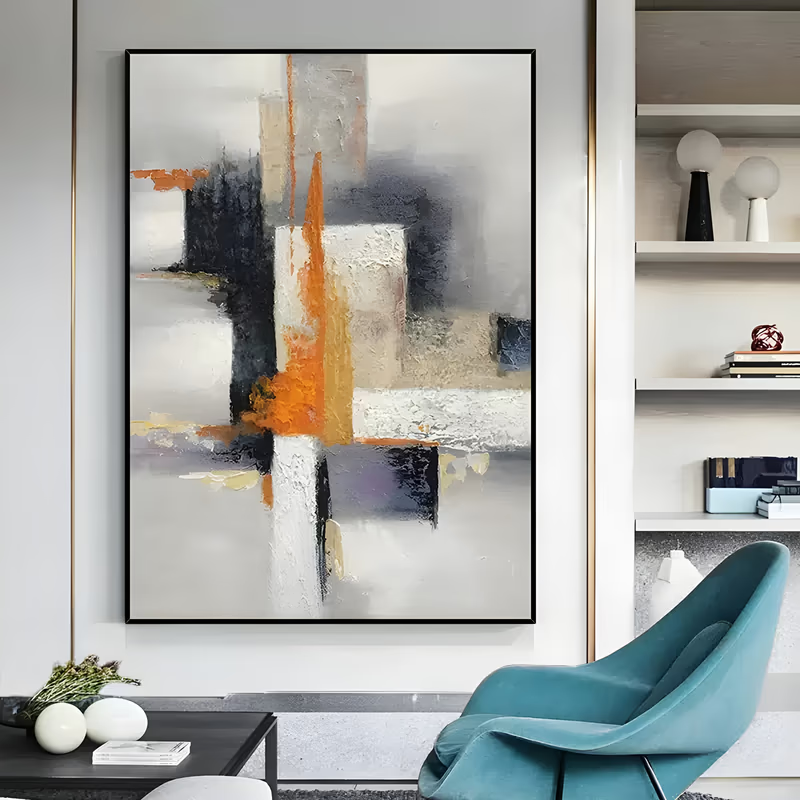
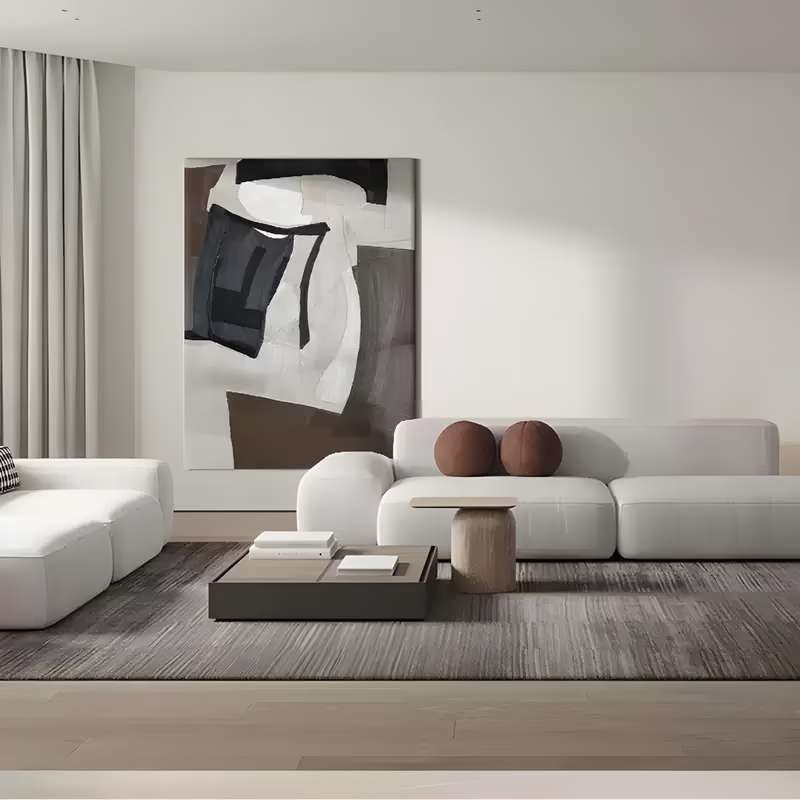
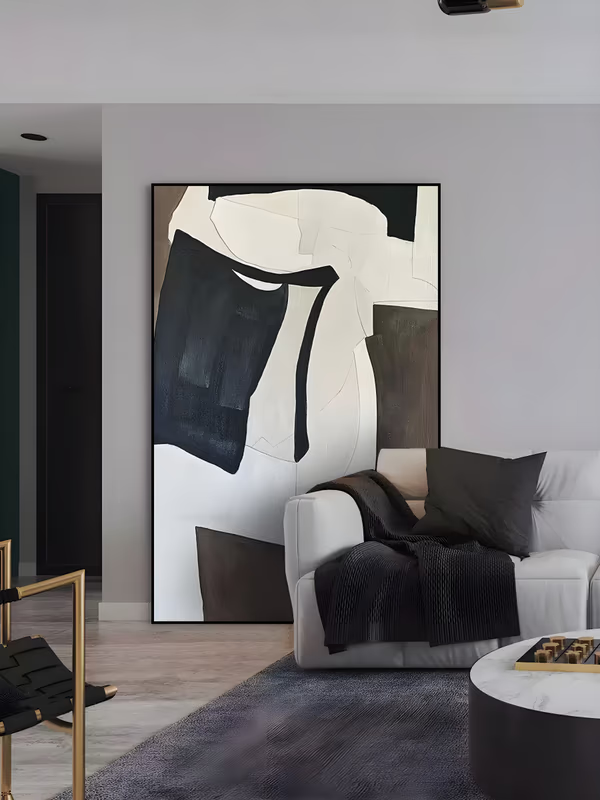
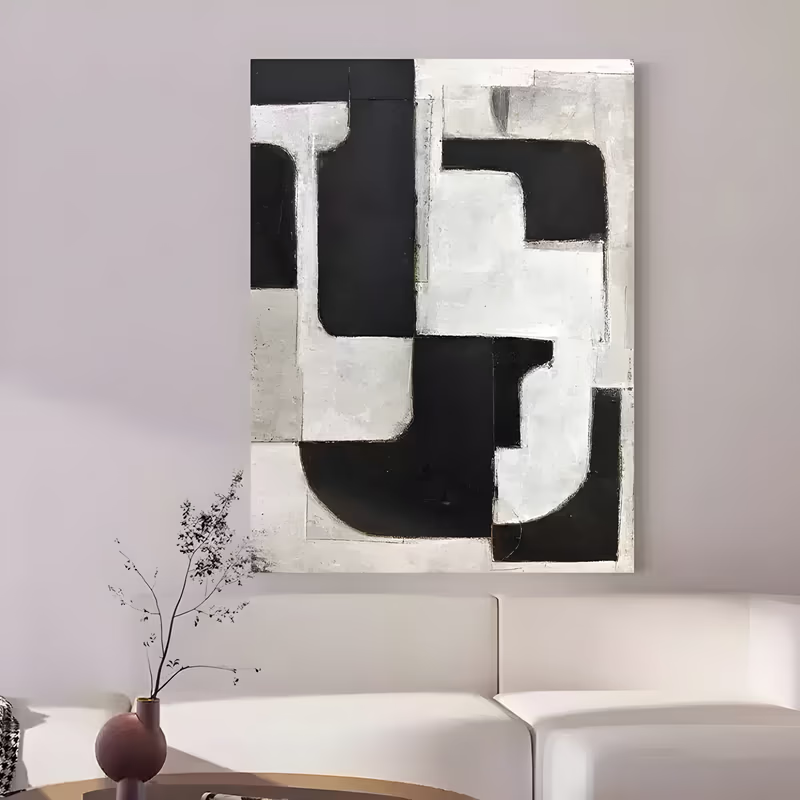
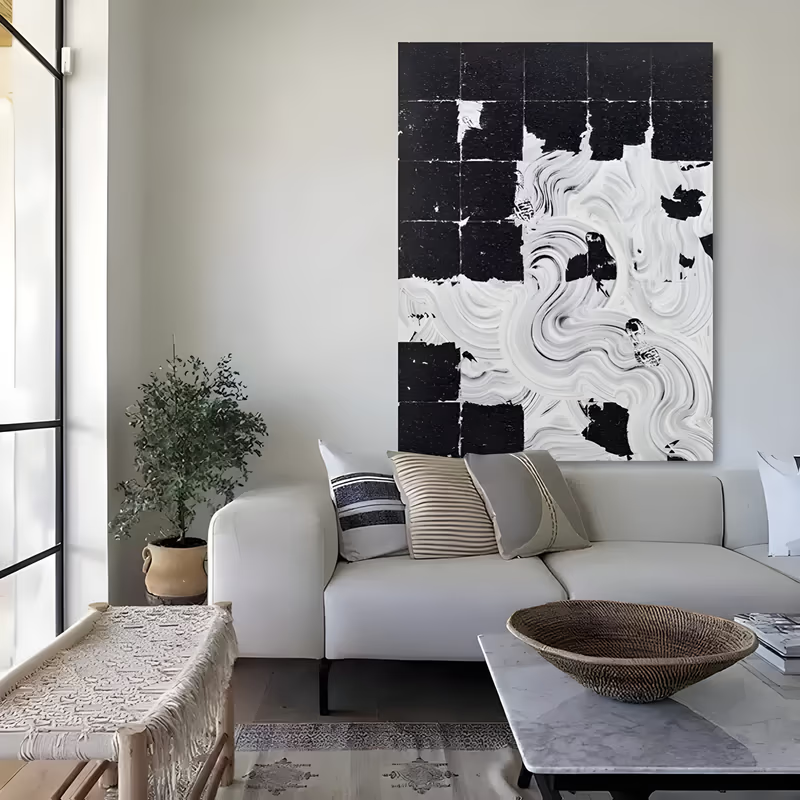
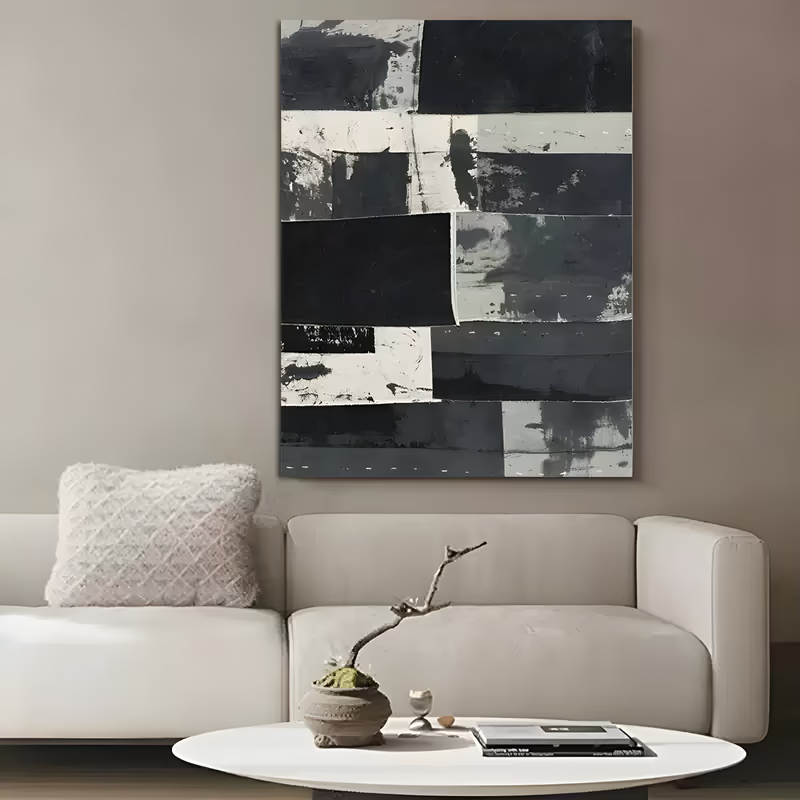
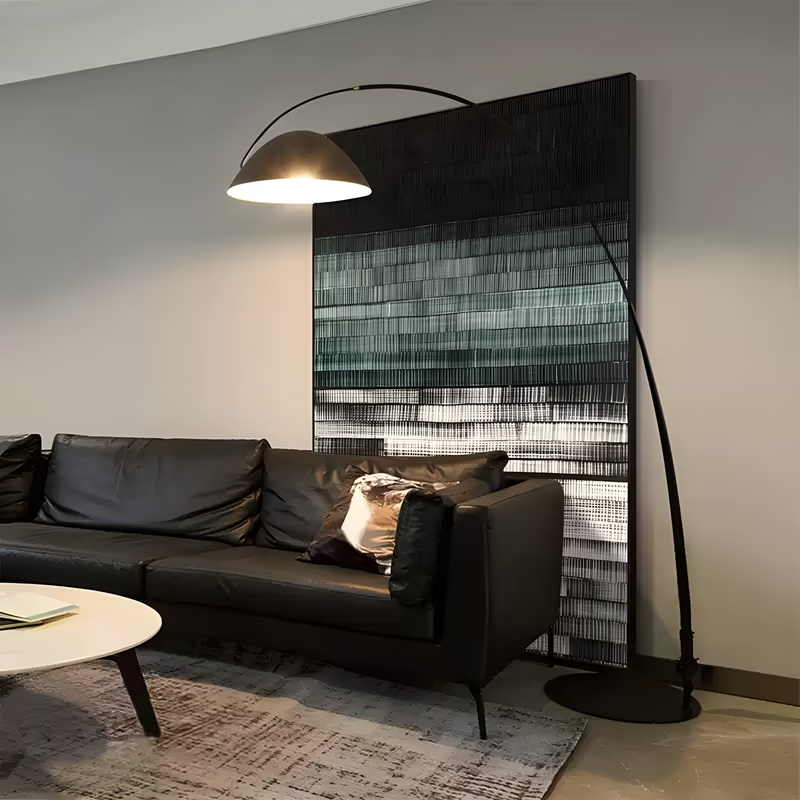
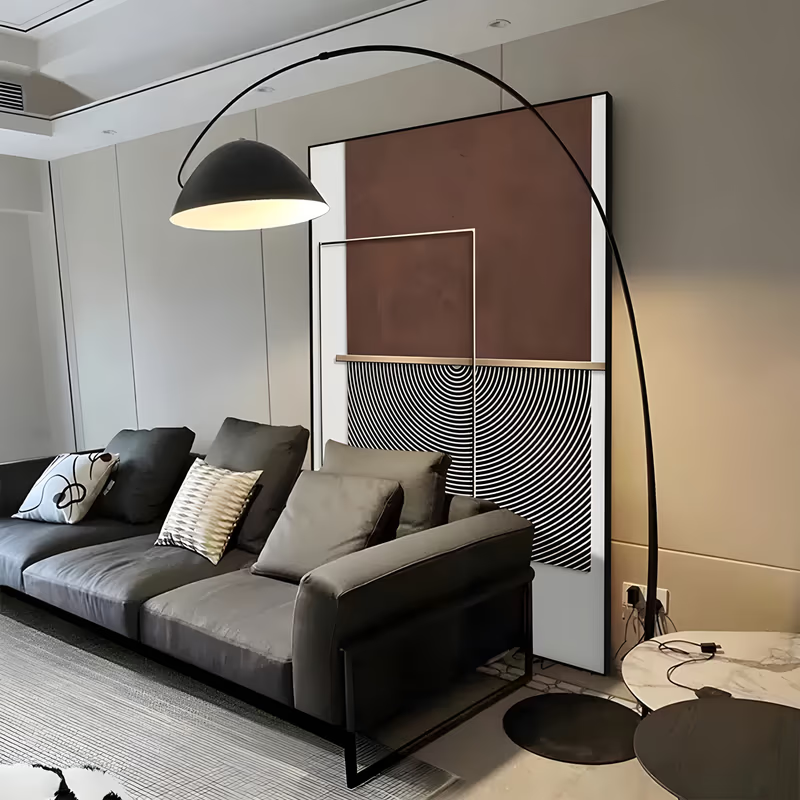
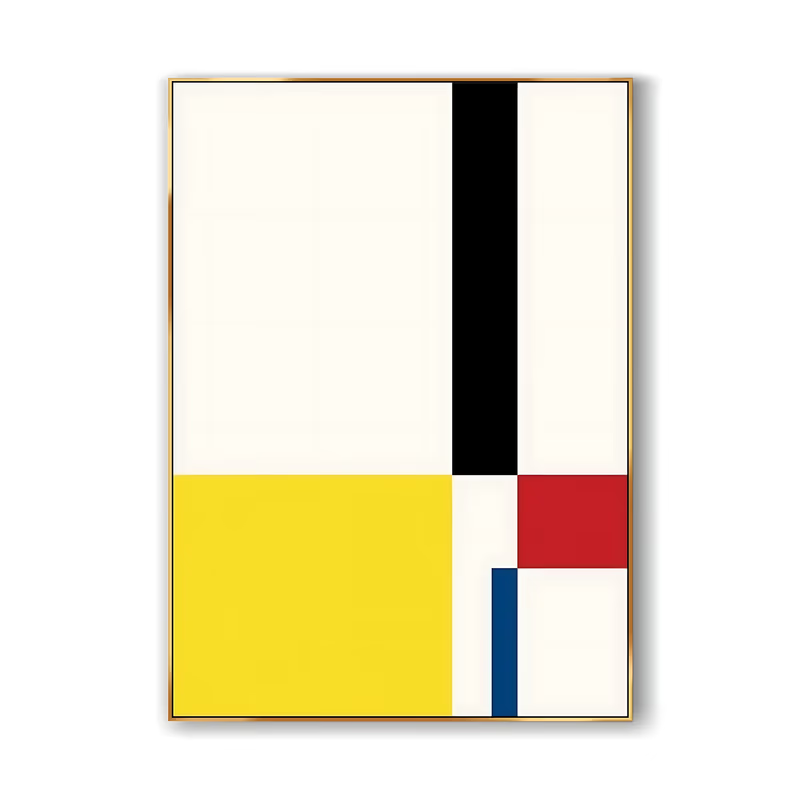
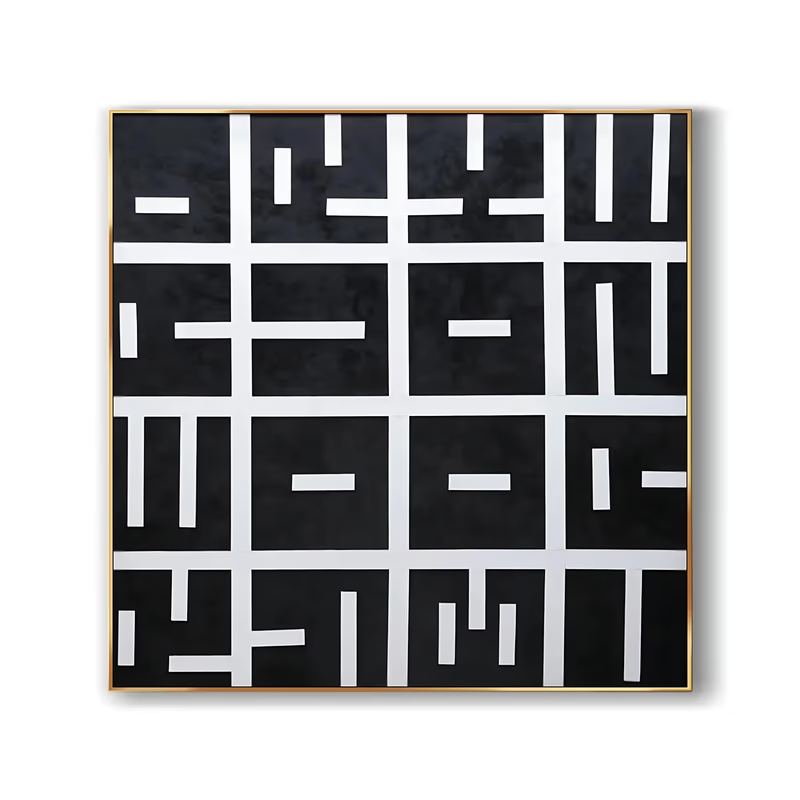
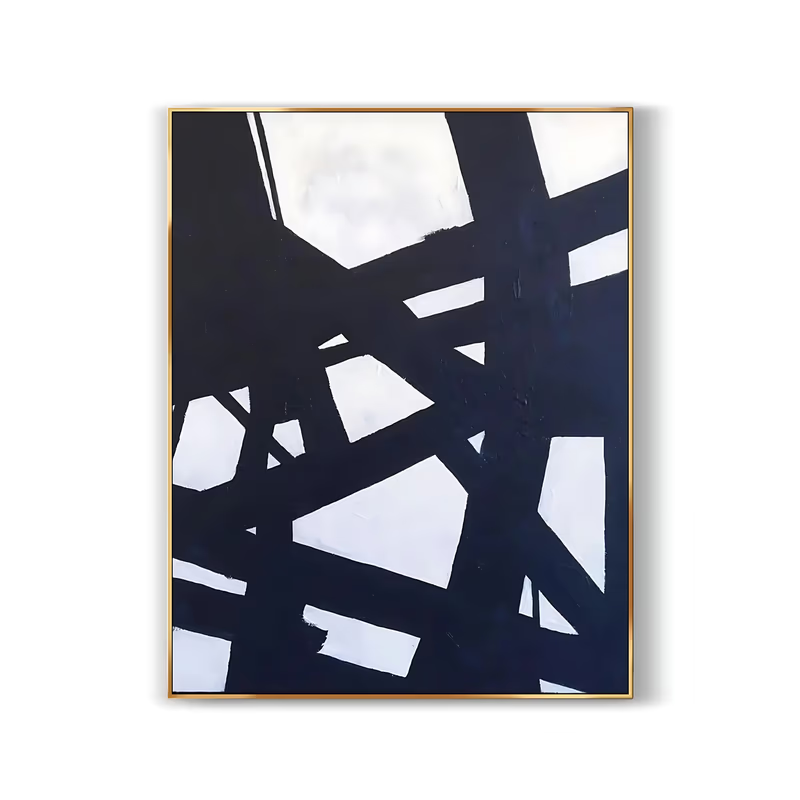
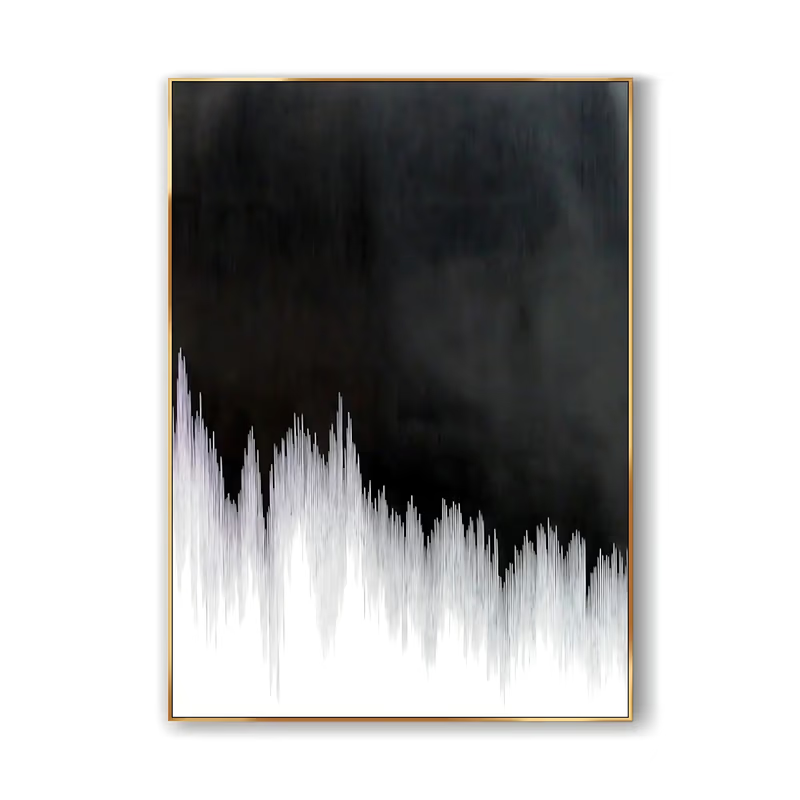
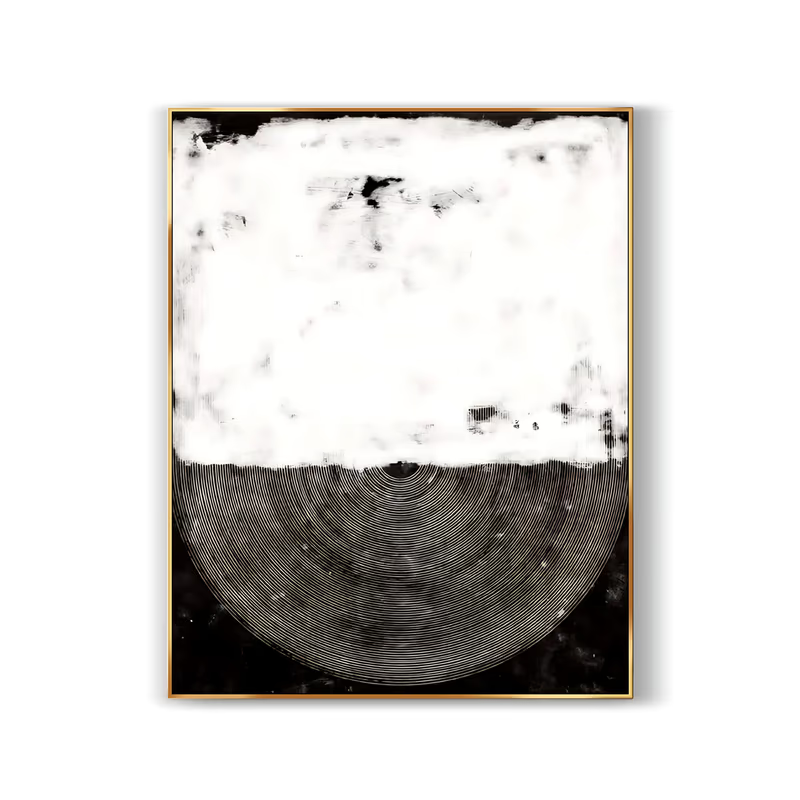
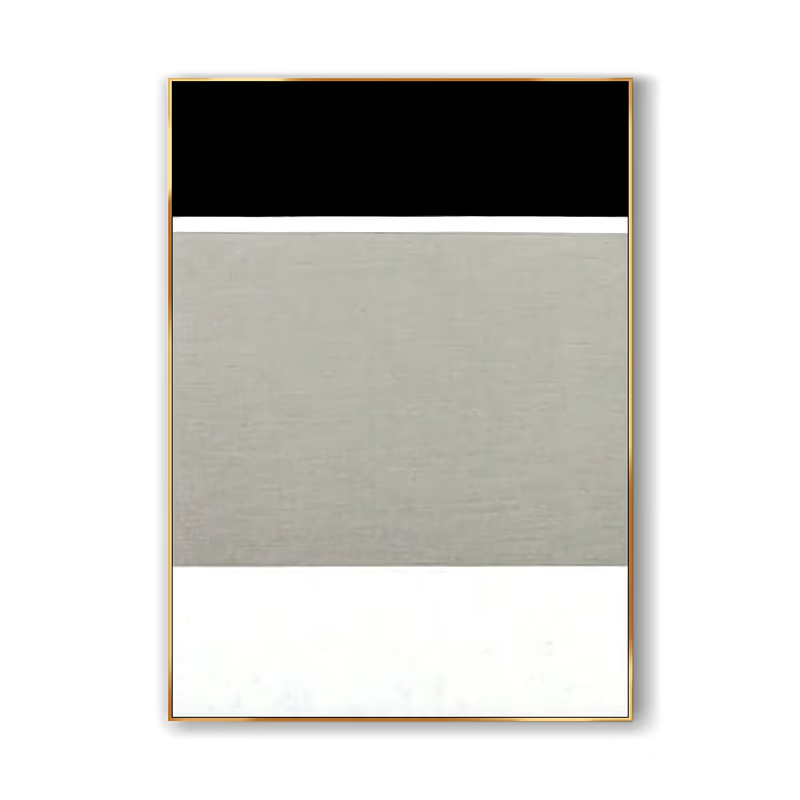
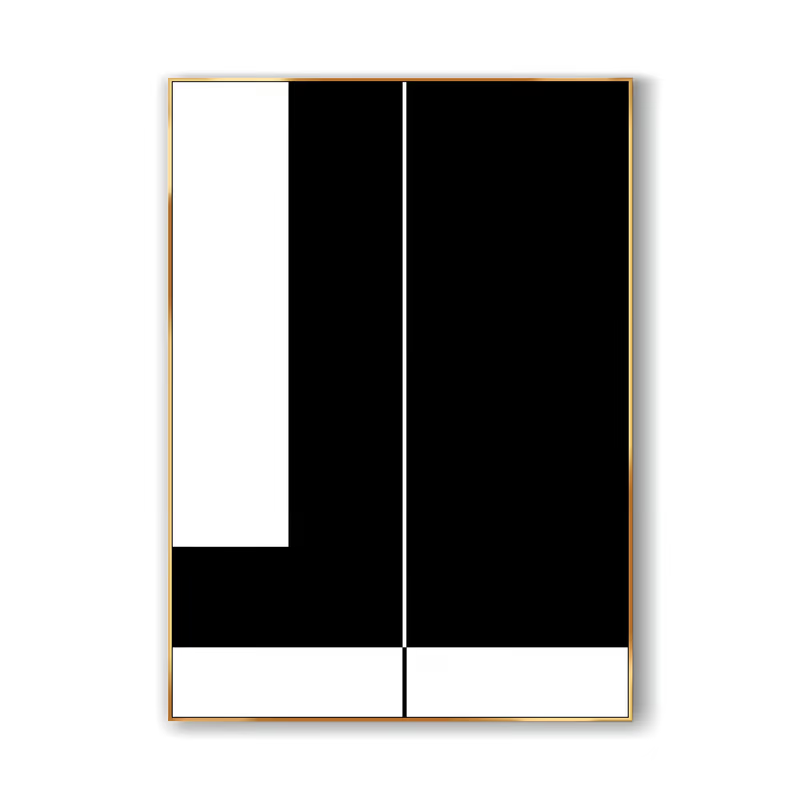
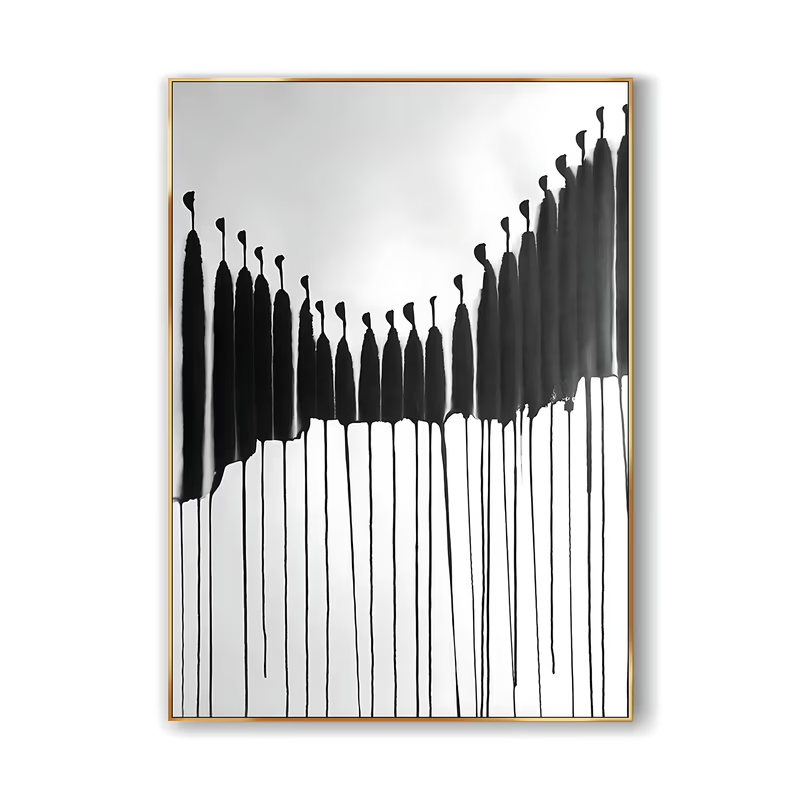
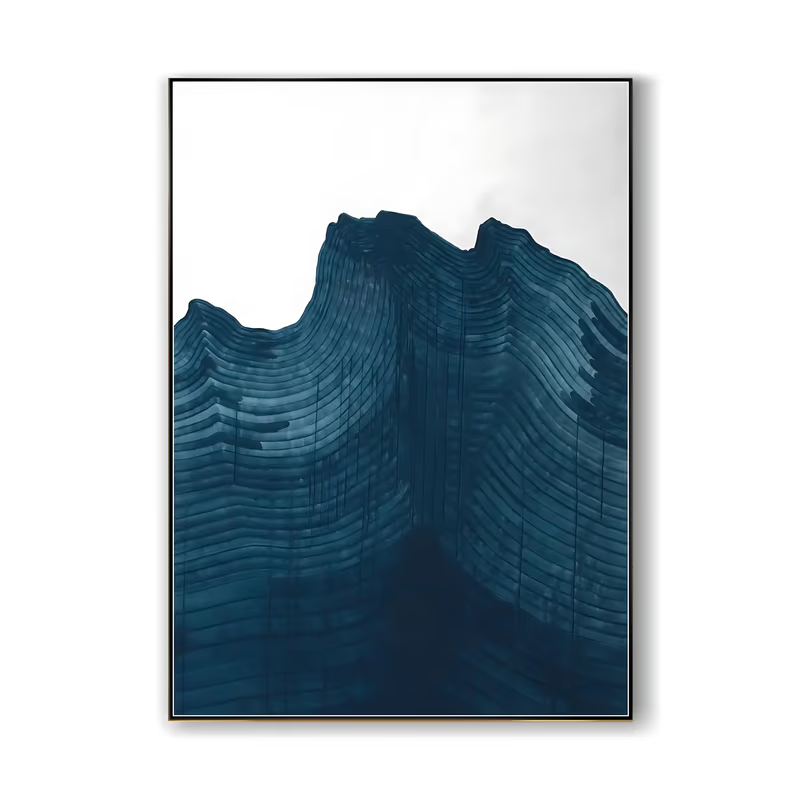
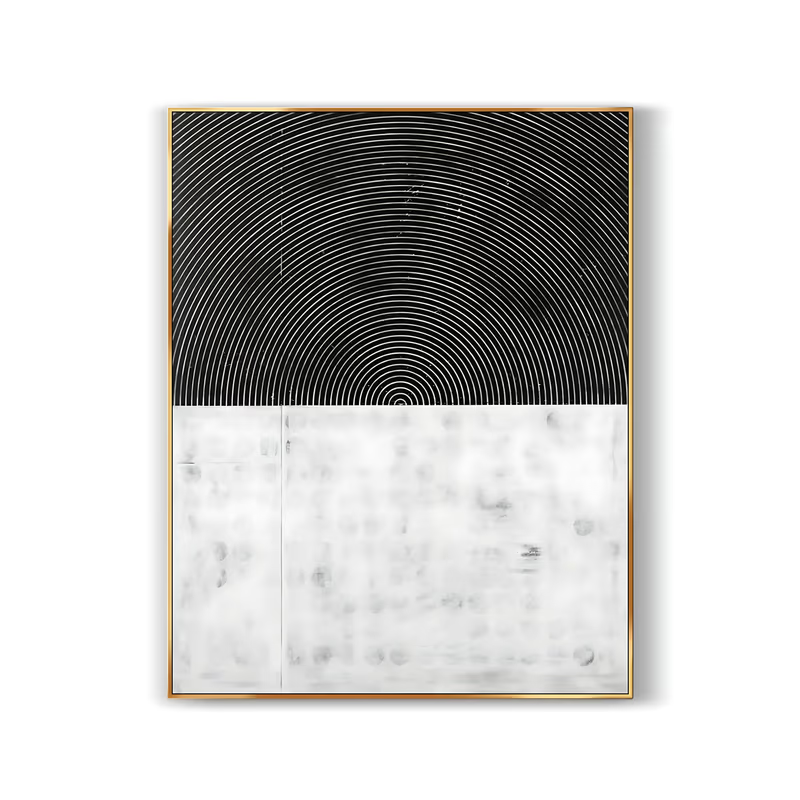
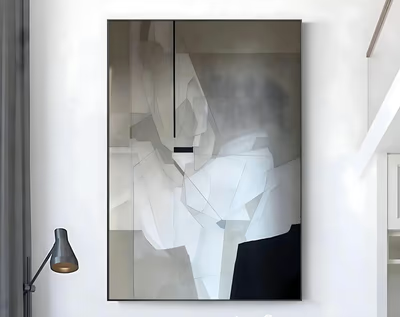
Black, white and grey grids, bands and carved arcs sit with polished concrete, steel and glass. Monochrome geometry.
Art deco and glamour
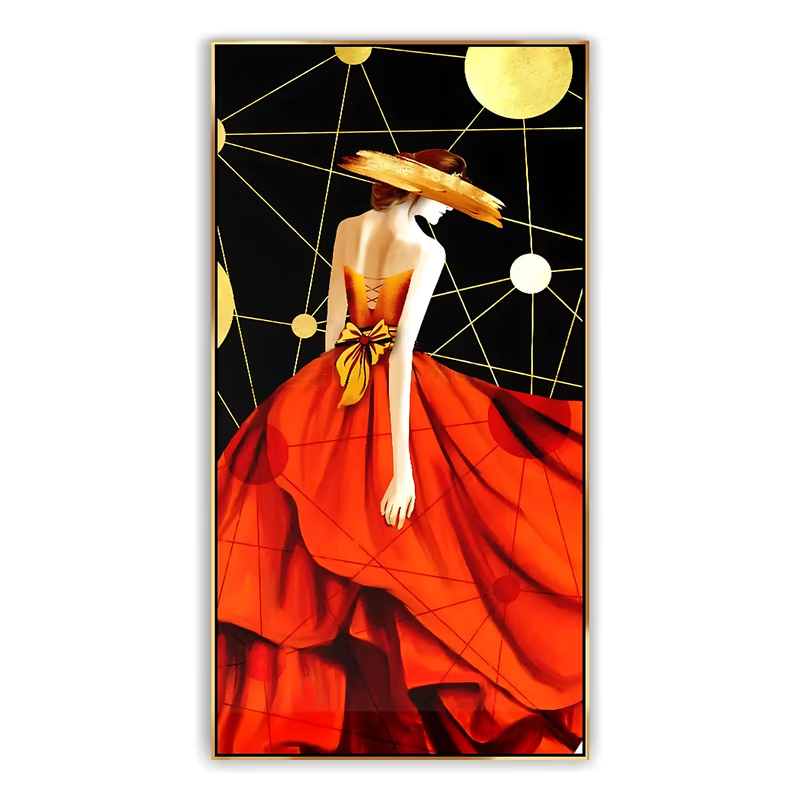
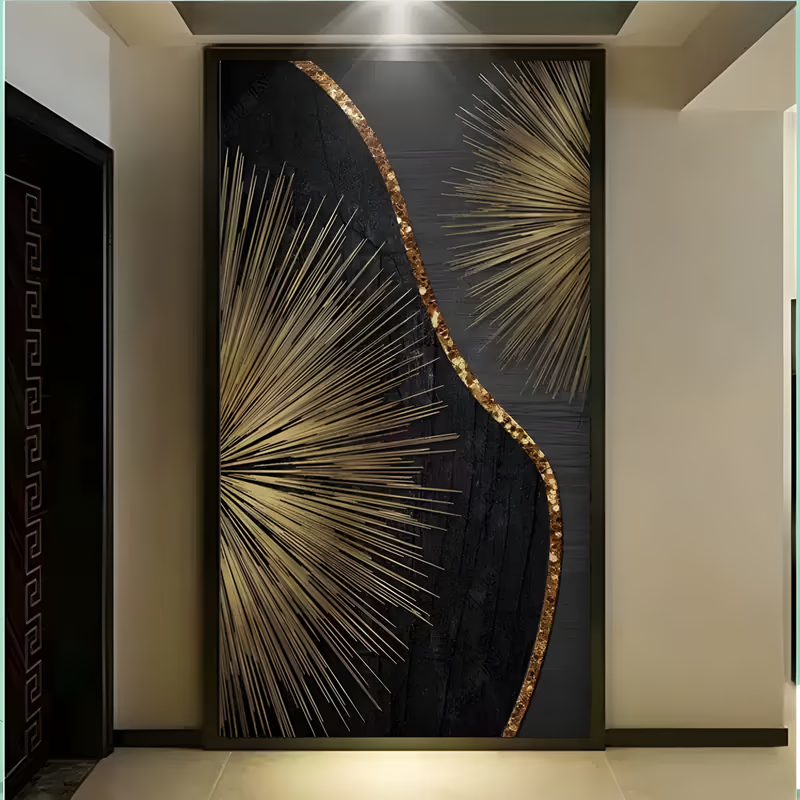
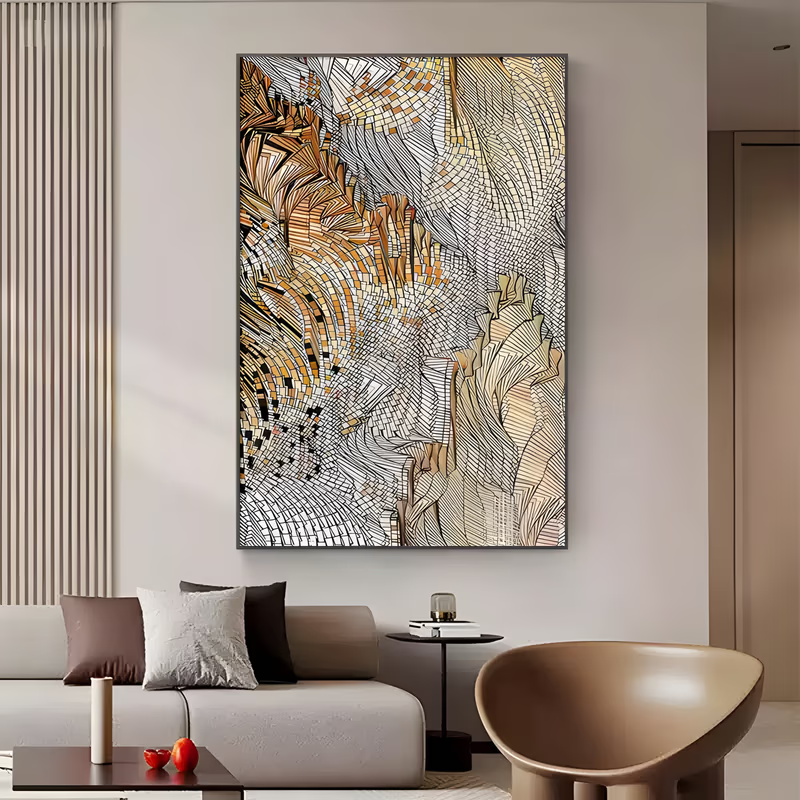
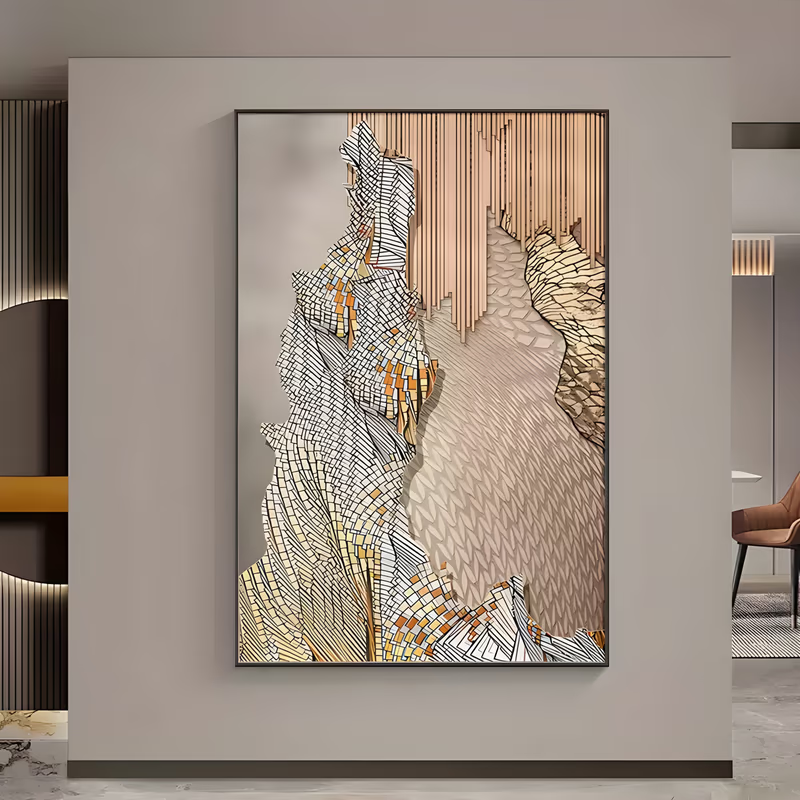
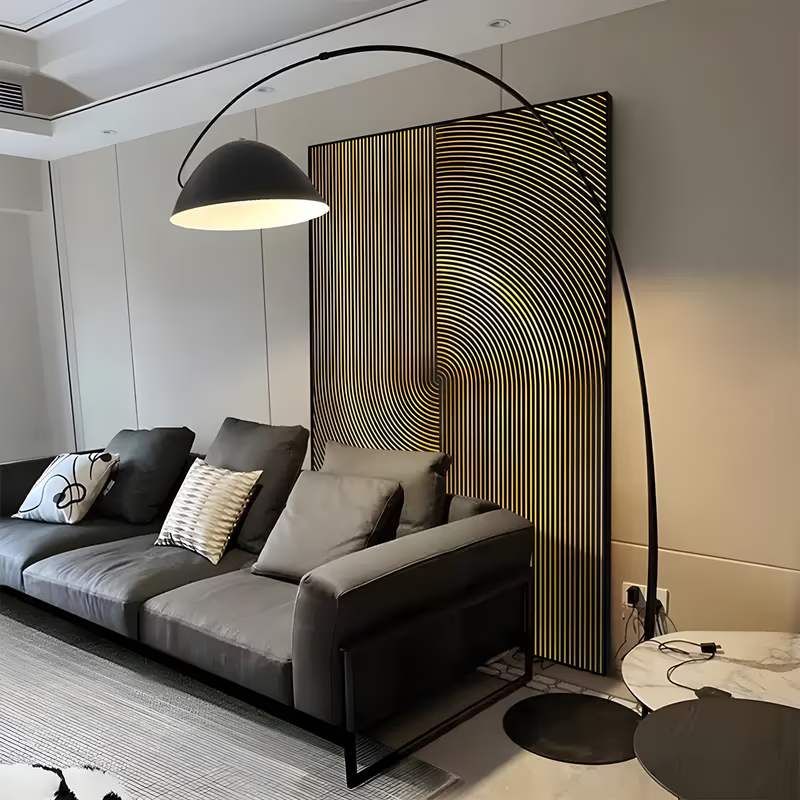
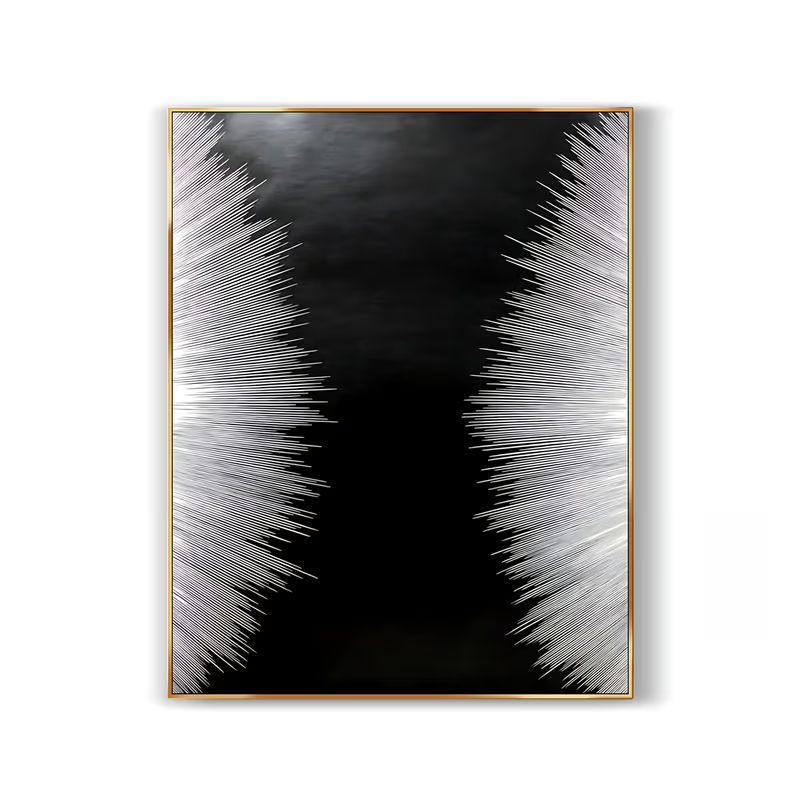
Gold, silver and bronze sunbursts and fans echo brass fittings, velvet and marble, and look their best in a gold or black frame. Metallic geometric art.
Eclectic and maximalist
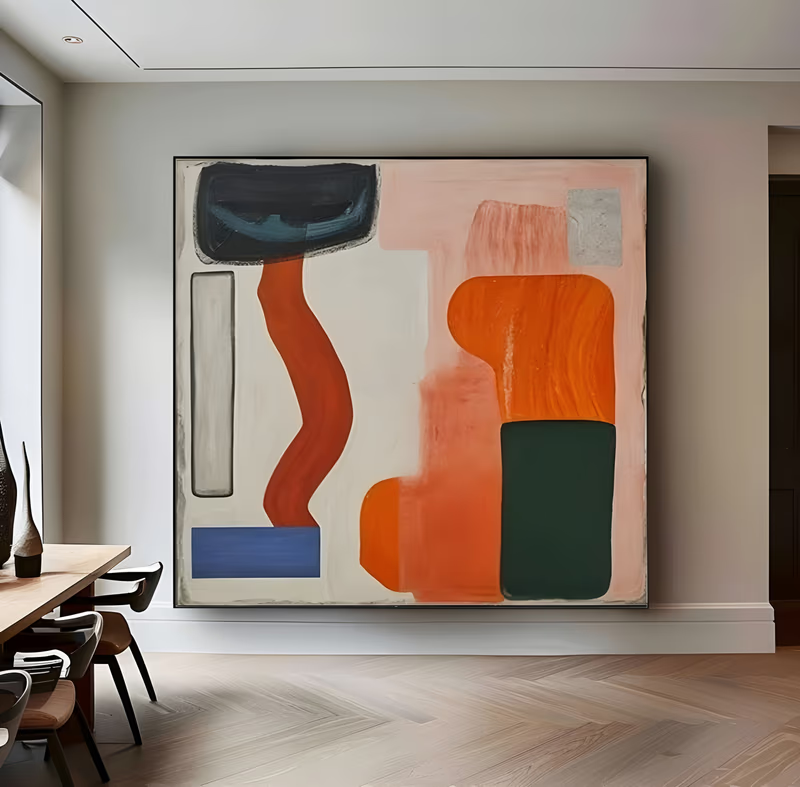
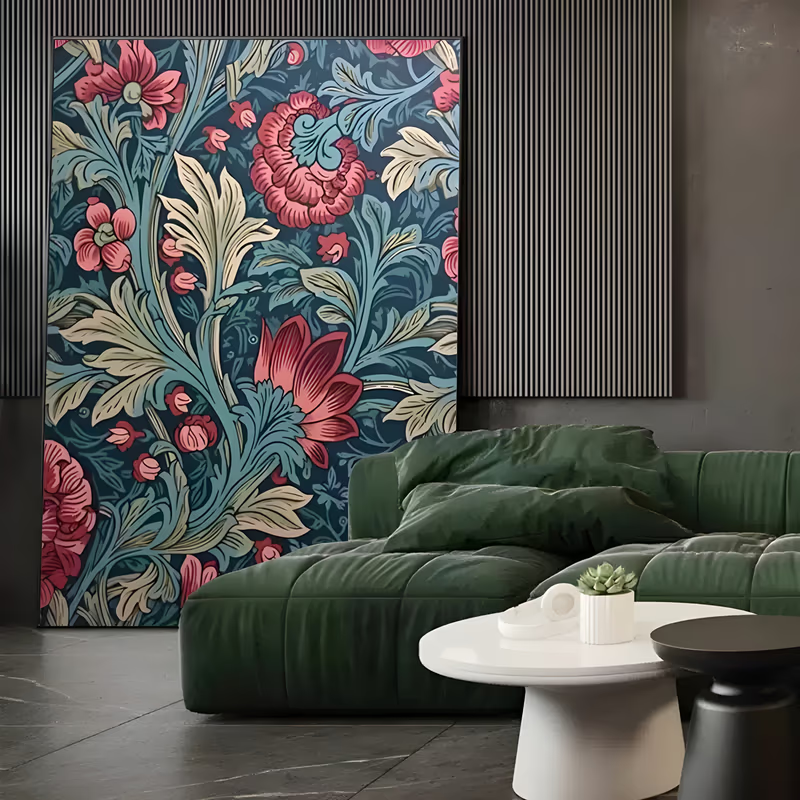
Hot pink, emerald and orange curves or cubist collages bring pattern to rooms that already mix prints. Pair one with plain upholstery so the shapes have room.
Where does geometric wall art work hardest in offices, hotels and homes?
In places that need many pieces that feel related: office floors, boardrooms, hotel guest rooms and corridors, as well as the living rooms and home offices of modern houses.
Geometric work has no subject to tire of and no story to distract, so it holds up on walls that people see every day. In a boardroom a quiet grid or band composition keeps attention on the table; in an open-plan office, colour blocks can mark zones and help people find their way. Geometric art for offices and boardrooms, and the corporate offices page for larger projects.
For hotels, one geometric design can be repainted in several palettes, one per floor or room type. A corridor then reads as a sequence, and guest rooms share a family look without the same canvas appearing twice. Geometric art for guest rooms and corridors. At home, a graphic piece over a desk or a pair of arches in a hallway is enough to set the tone: home office and hallway pieces.
What size should geometric wall art be, and does it work as a pair or set?
Size it to about two-thirds of the furniture below or 60–75% of an open wall, and consider a pair or a set: geometric compositions divide across canvases more cleanly than any other subject.
Hard-edged shapes read clearly from a distance, so geometric art holds a wall at a slightly smaller size than a soft abstract, but a long sofa or a reception desk still wants a wide piece or two canvases side by side. Keep the gap between panels tight, 5–8 cm (2–3 in), so a line or arc can carry across the break. Hang the centre of the group at about 145–152 cm (57–60 in) from the floor.
Diptychs and sets of three are a natural fit: a sunburst split into panels, a band composition repeated in two values, nested rectangles side by side. Because each work is painted to order, a single design can be redrawn as two or three canvases, or stretched into a panoramic format for a headboard or banquette, with the shapes re-proportioned rather than distorted.
How is geometric wall art painted to your palette and approved?
You choose a design, send the colours you need as a paint code, fabric or photo, and approve progress photos at each stage, including the crispness of edges, before the canvas is finished and shipped.
Geometric work is unforgiving about colour: one block that is a shade too warm throws the balance of the whole composition. That is why the palette is fixed with you before painting, block by block if needed, and why you see photos as the layers go down. Nothing continues to the next stage until you have approved it, and the final photograph is approved before dispatch. Plan about 10 days to paint and 5–7 days in transit by DHL, FedEx or UPS, on a route iHomeArt plans for the delivery address. Finished pieces travel rolled, stretched ready to hang, or framed in gold, silver, black, white or wood. Start with a quote, or see custom commissions for a design drawn from your own pattern or logo shapes.