Boardroom art guide · Updated
How to choose art for a boardroom or conference room
Key takeaways
- Hang it where the table looks: the end wall behind the chair at the head of the table, not the screen wall and not the window wall.
- Size it for the far chair: in a room seating 10–14 people, a canvas 150–200 cm (59–79 in) wide still reads from the opposite end of the table.
- Treat the head wall as a camera backdrop: it is what remote clients see; a matte canvas with mid-tone contrast and no glass looks composed on video.
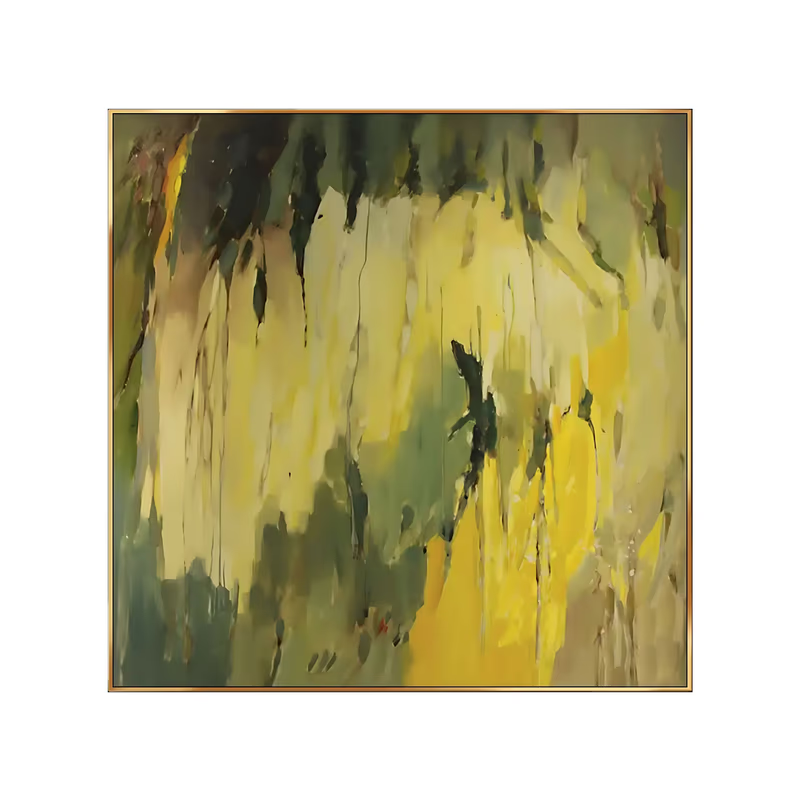
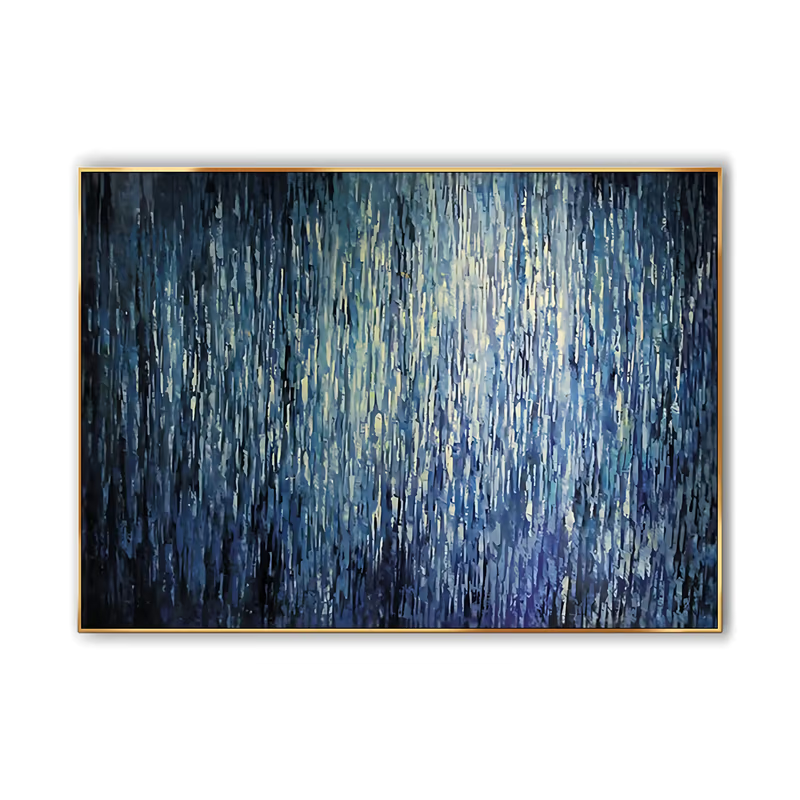
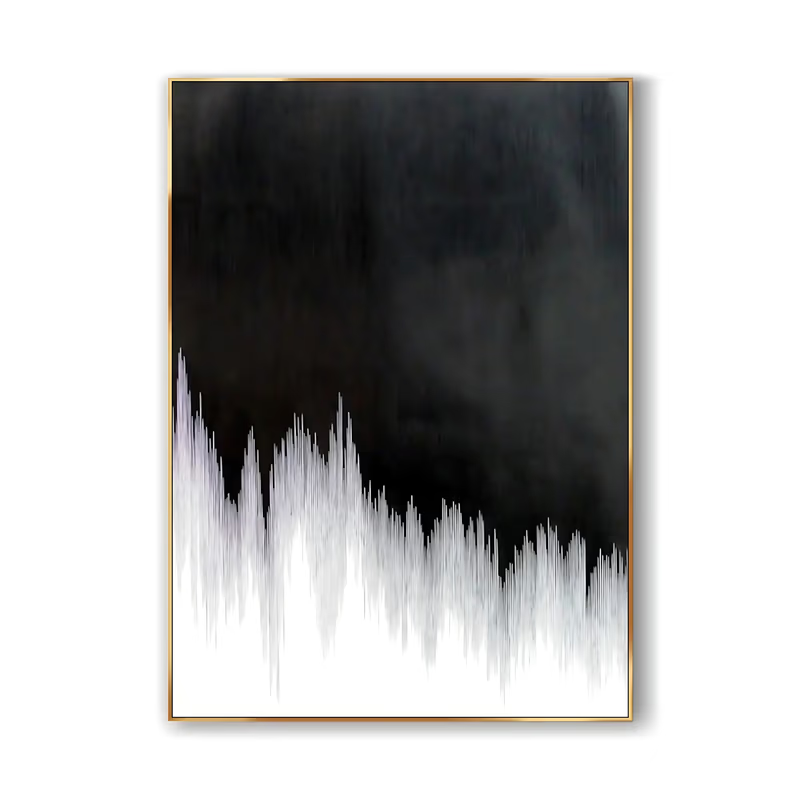
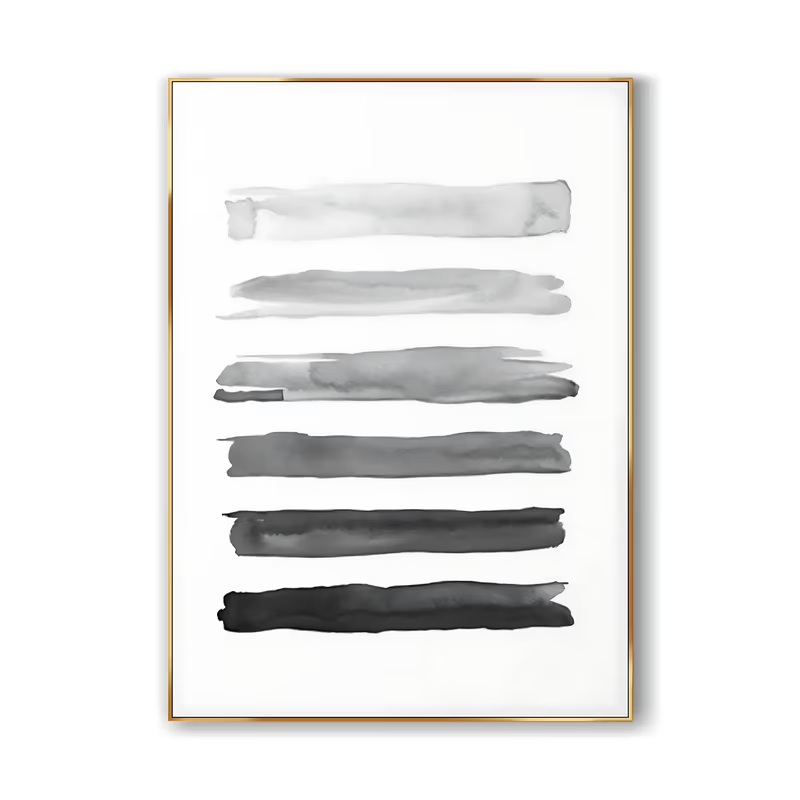
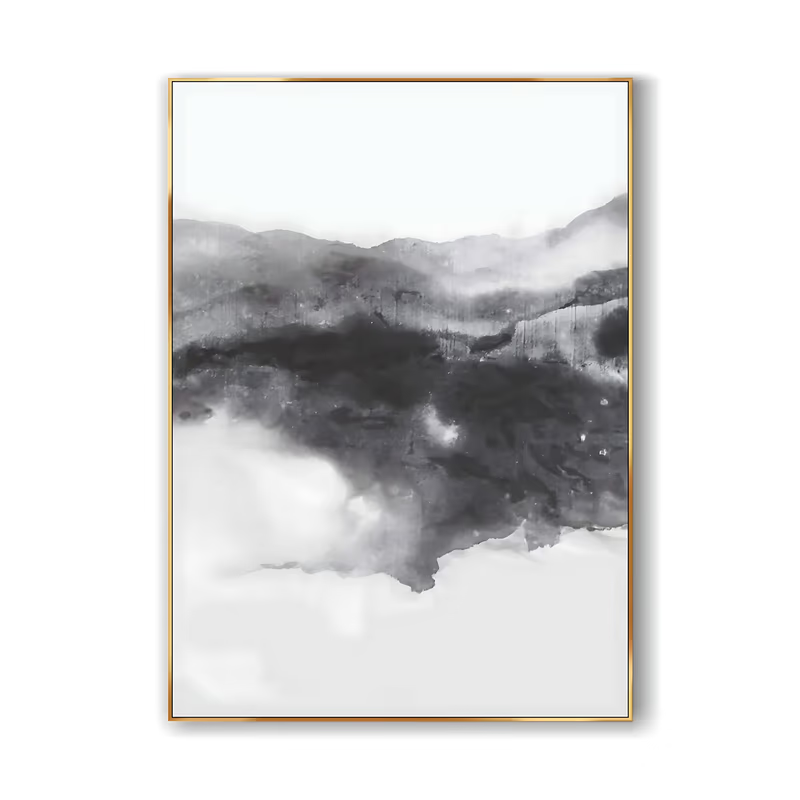
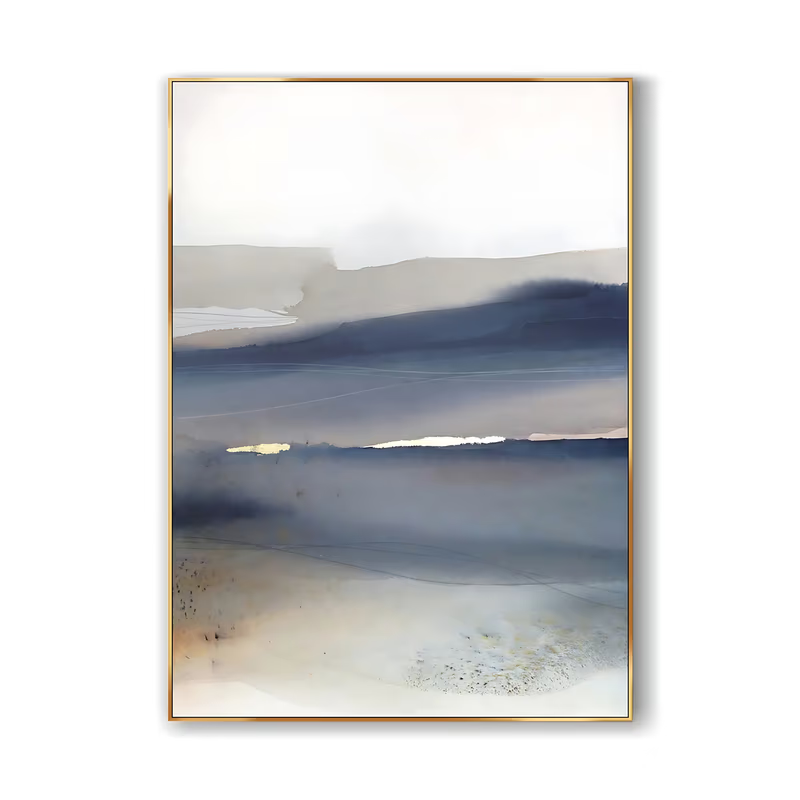
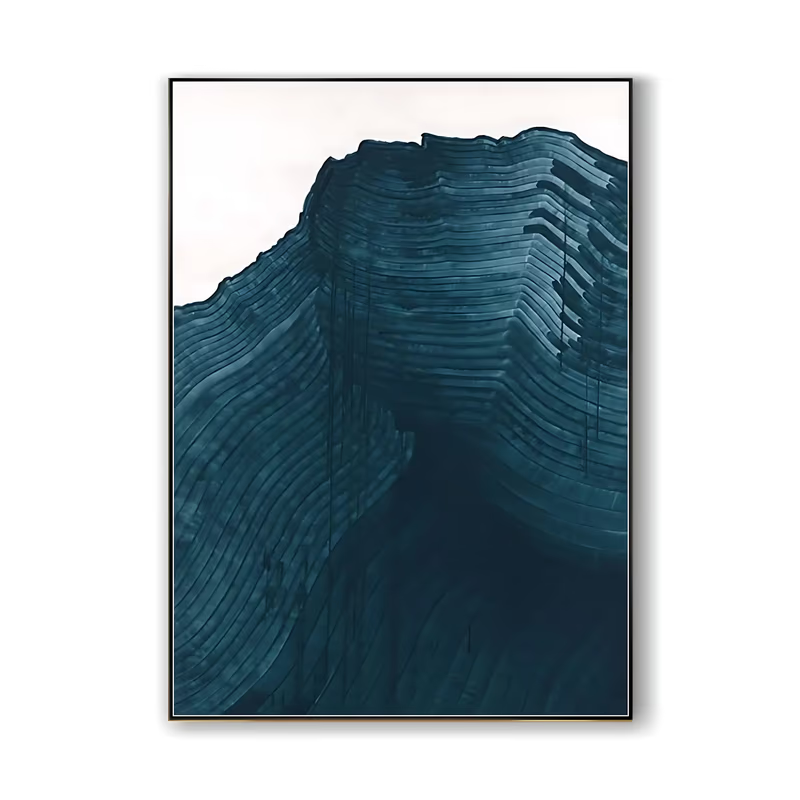
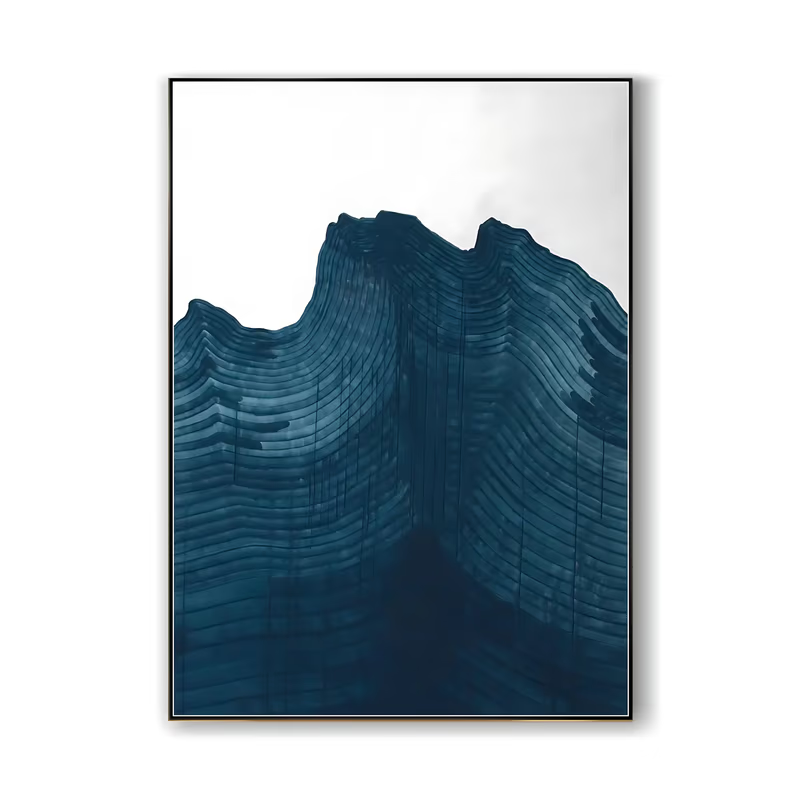
- Give each meeting room its own colourway: one composition in different palettes lets rooms be named, booked and remembered.
What should boardroom art say to clients and visitors?
Boardroom art should say steady, considered and confident: it sets the tone for decisions, so it ought to hold attention in a pause without competing with the person speaking.
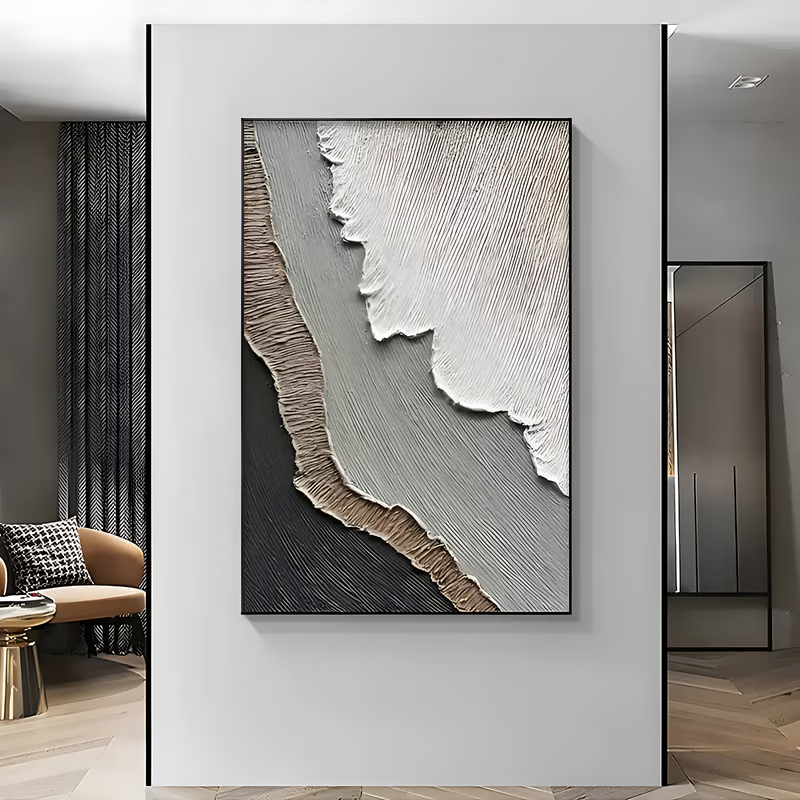
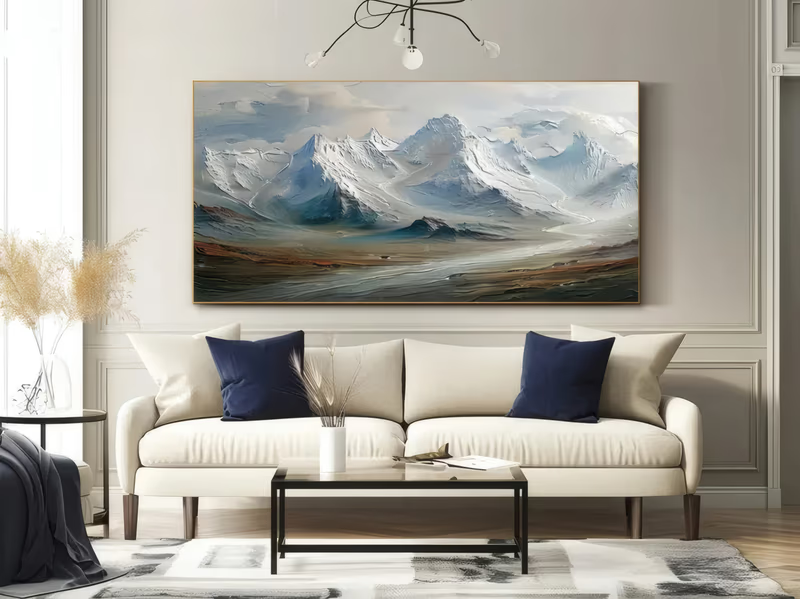
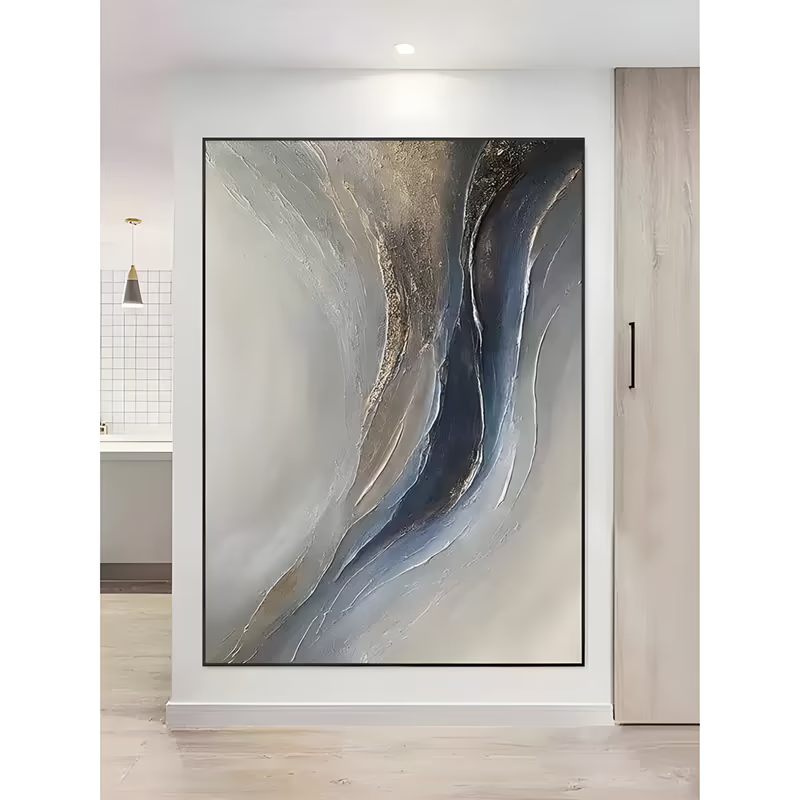
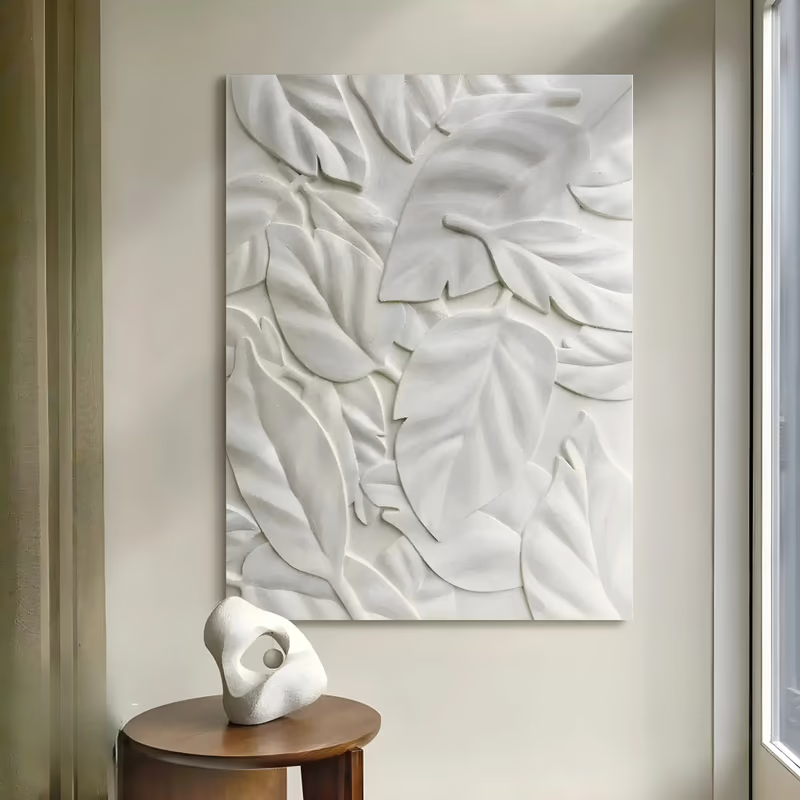
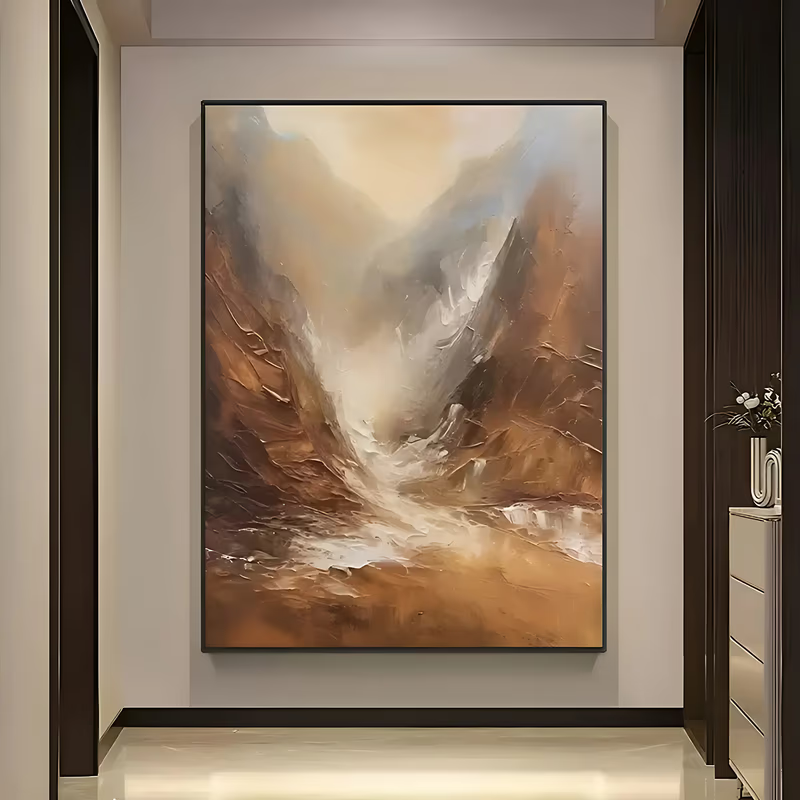
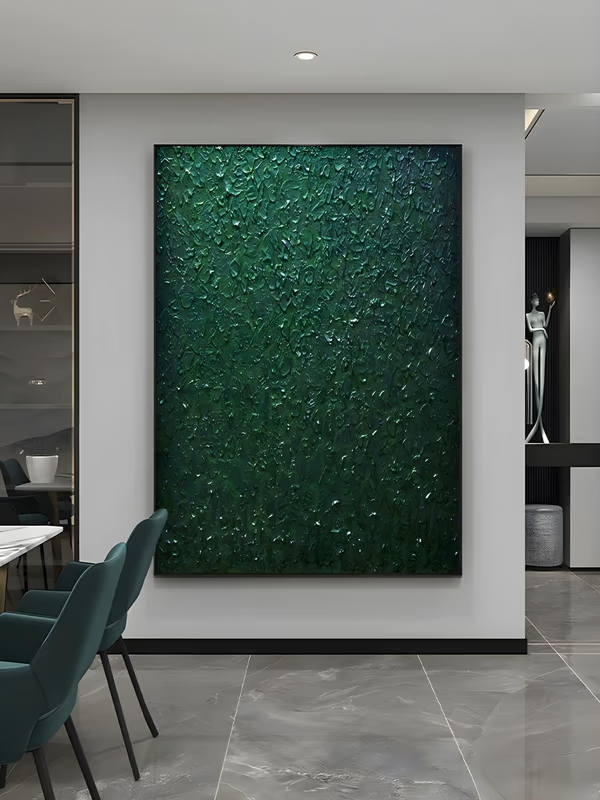
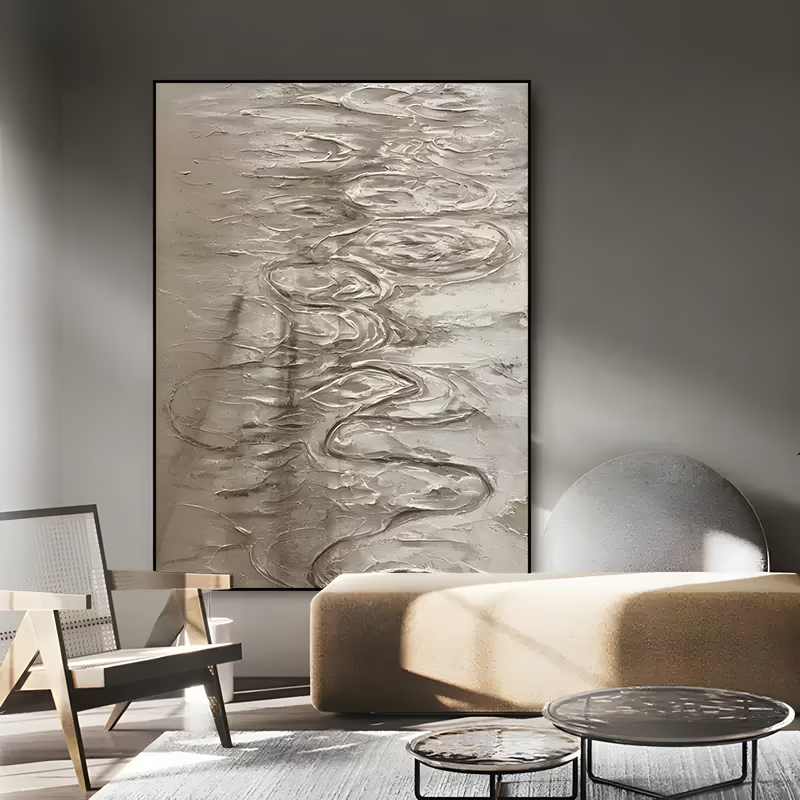
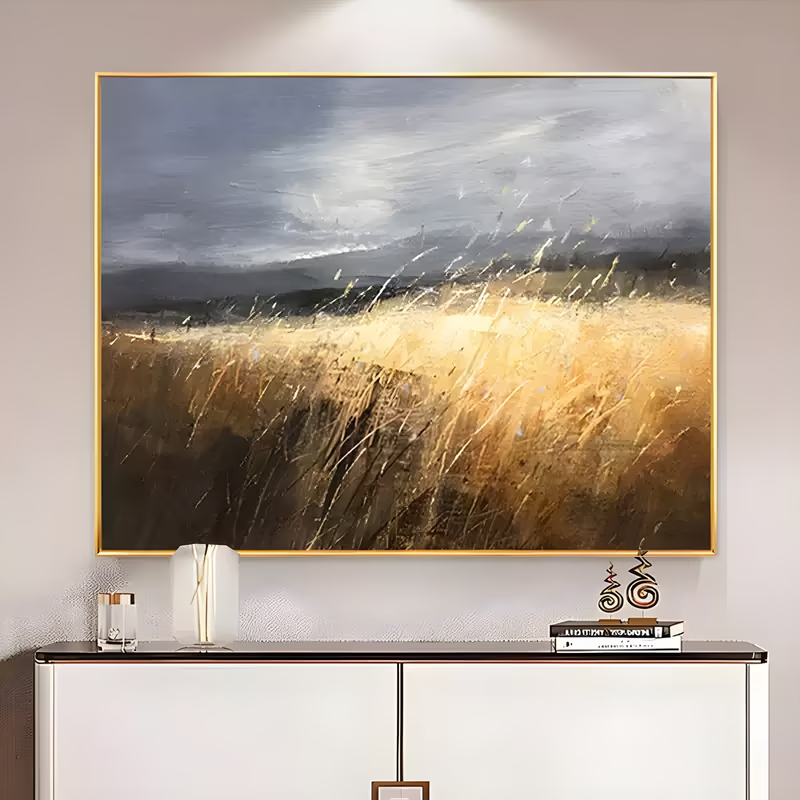
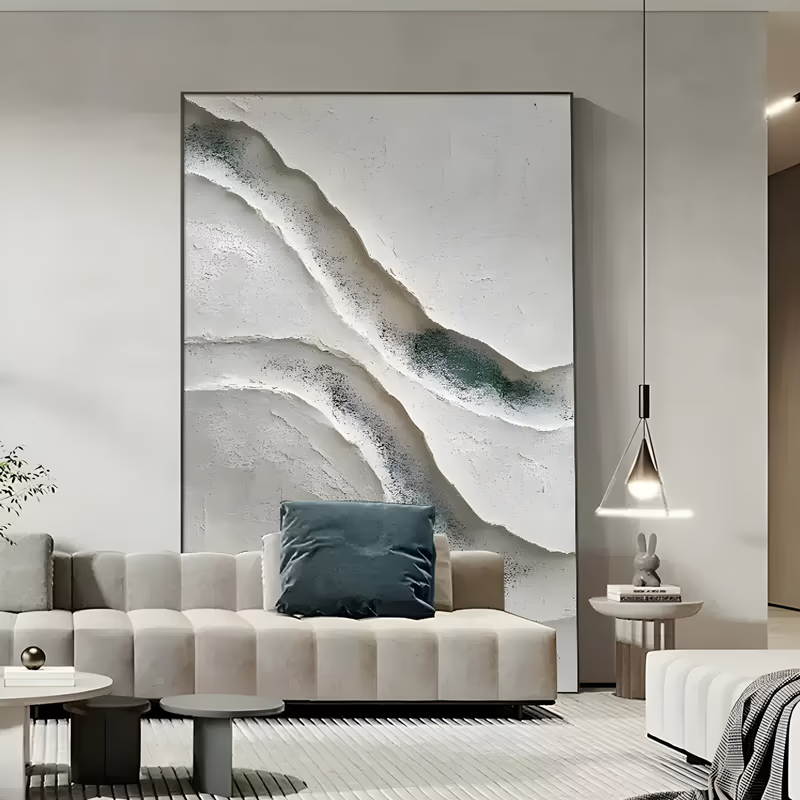
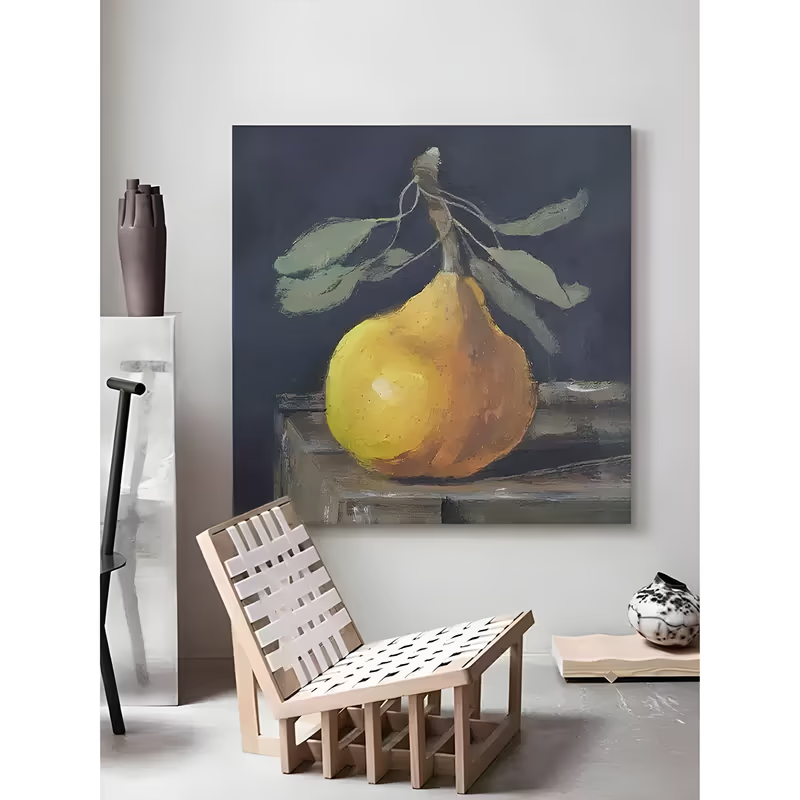
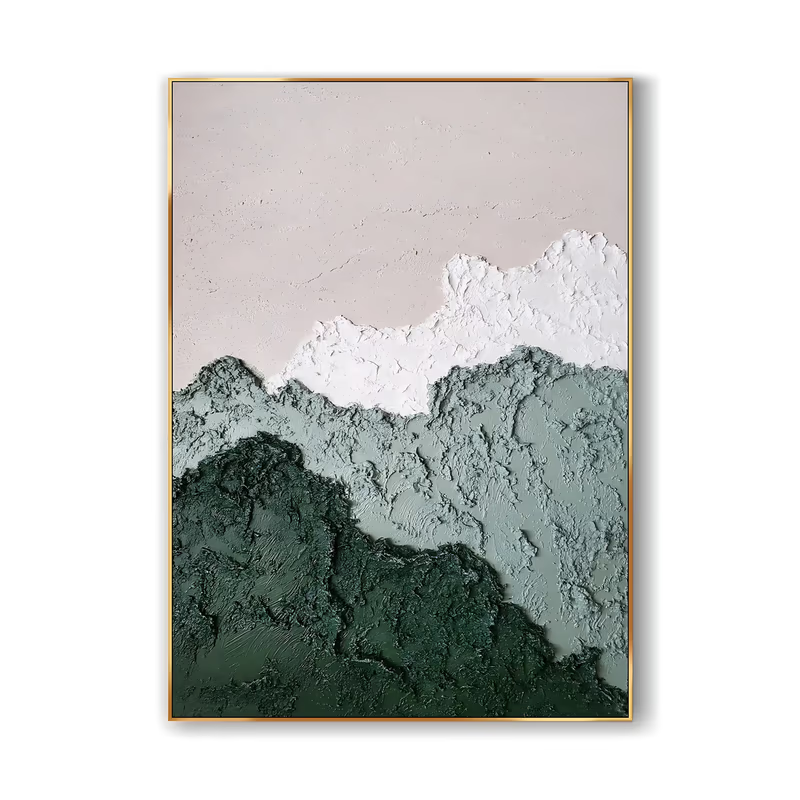
The boardroom is where a company is judged most closely, by investors, clients, partners and new hires on their final interview. Everyone in it has time to look at the walls during a presentation or a long negotiation. That favours work that rewards a second look, such as a landscape with depth or a plaster-relief surface that changes with the light, over pieces that make one loud point and are finished.
Keep subjects broadly shared. Landscapes, horizons, calm water, architectural geometry and animals with presence, such as horses, are common in boardrooms for a reason: they suggest scale, patience and strength without asking anyone to agree with a message. Slogans, politics and provocative figurative work are better kept for spaces where people choose to engage with them.
Which wall should conference room art go on?
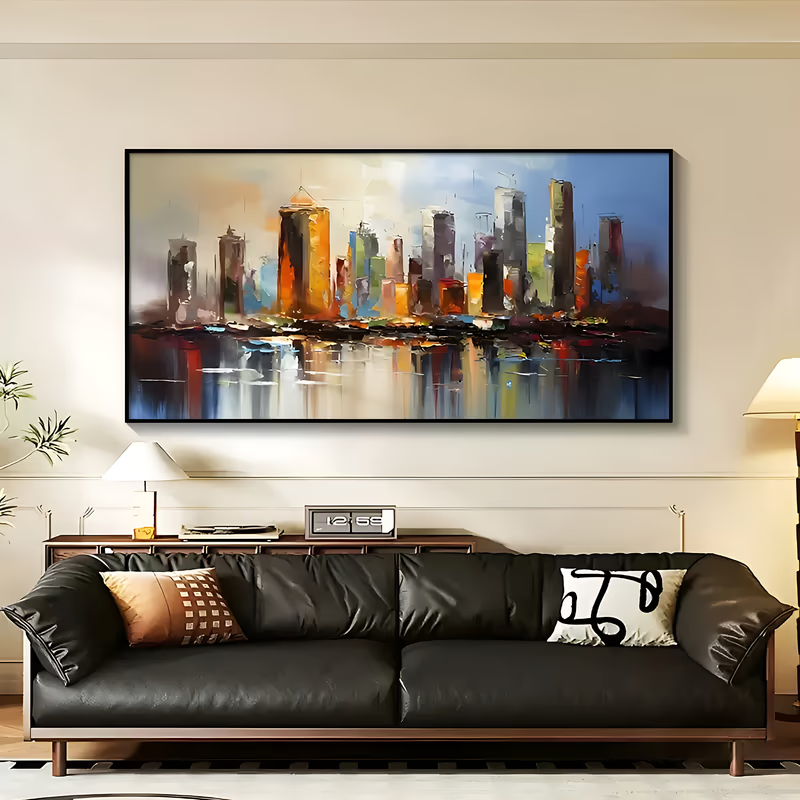
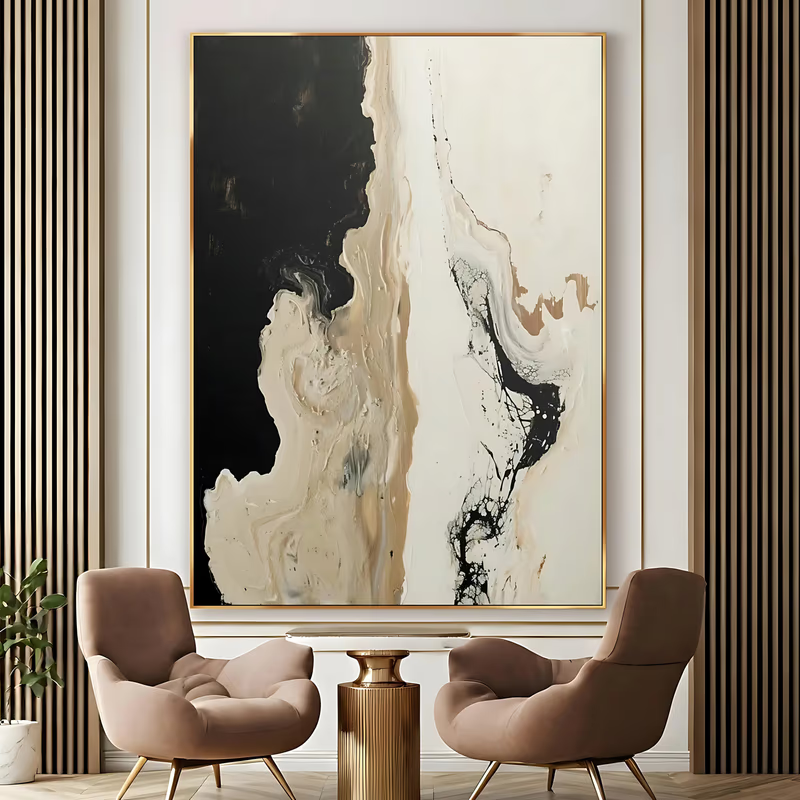
Put conference room art on the end wall behind the head of the table first, then on the long side walls; leave the screen wall and window wall clear.
| Wall | Good for art? | Why |
|---|---|---|
| Head of the table (end wall) | Best | Everyone faces it, it frames the chair, and it is the backdrop the video camera sees |
| Long side walls | Good | Seen in side view by the whole table; suits a pair or a wide panoramic piece above a credenza |
| Screen or presentation wall | Avoid | Competes with slides and video; leave it plain and dark so the screen reads |
| Window wall | Avoid | Backlit by daylight, so art reads as a silhouette and the view is already the feature |
| Glass partition walls | Only on solid sections | Art on glass shows its back to the corridor; use a nearby solid wall or a single freestanding easel piece |
In many rooms the screen and the head of the table sit at opposite ends. If they share a wall, hang the art on the long side wall facing the window instead, where it is lit evenly and visible to everyone at the table.
What kinds of boardroom paintings are there?
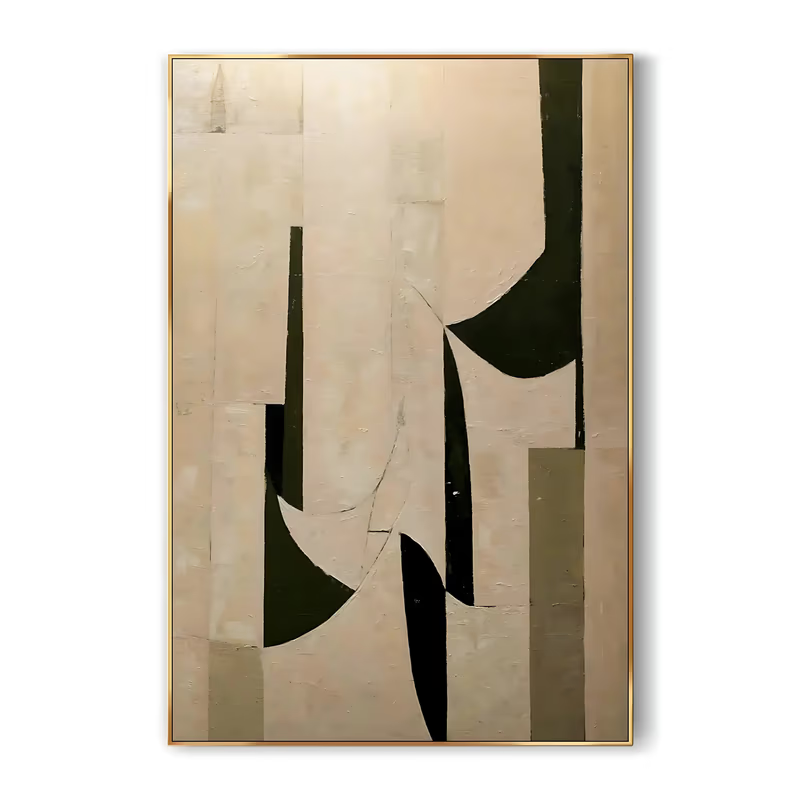
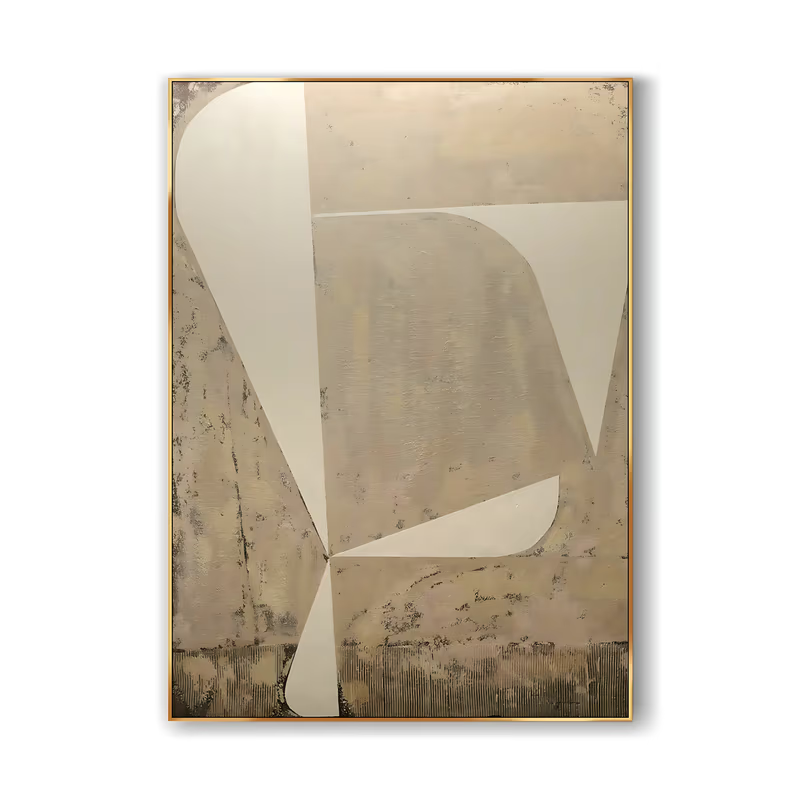
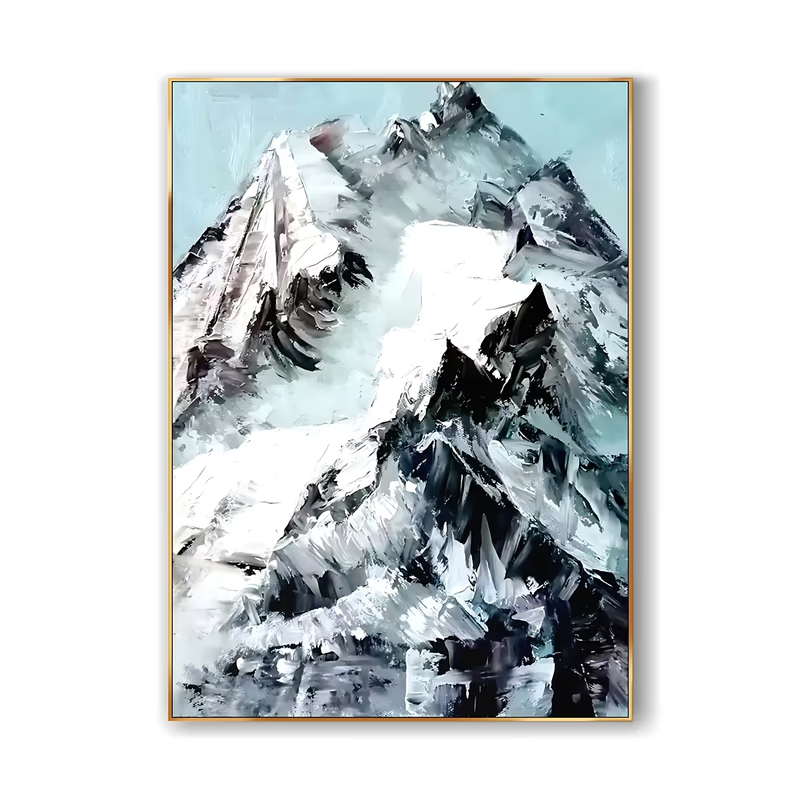
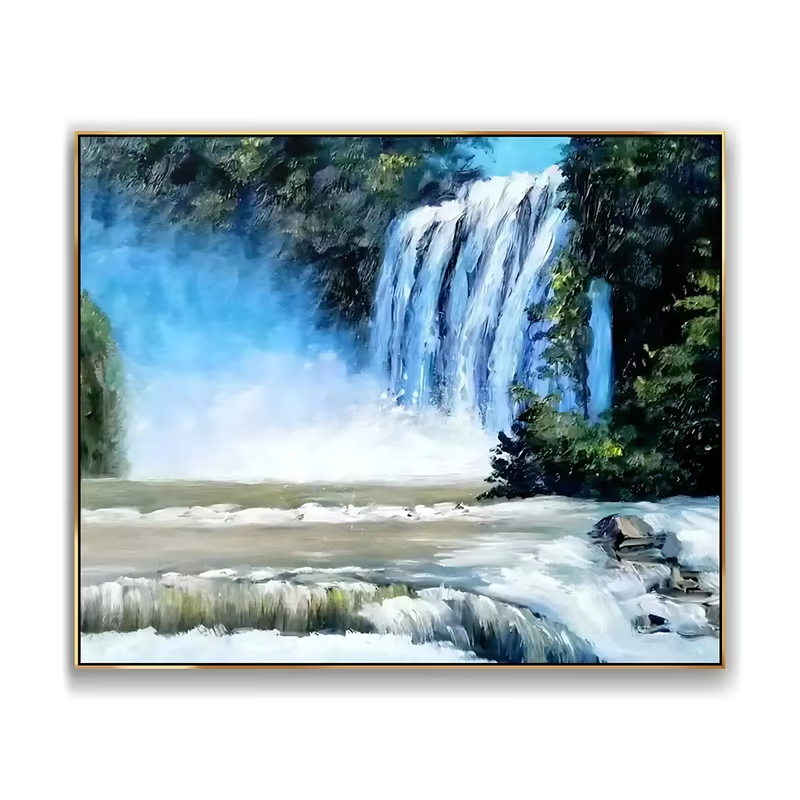
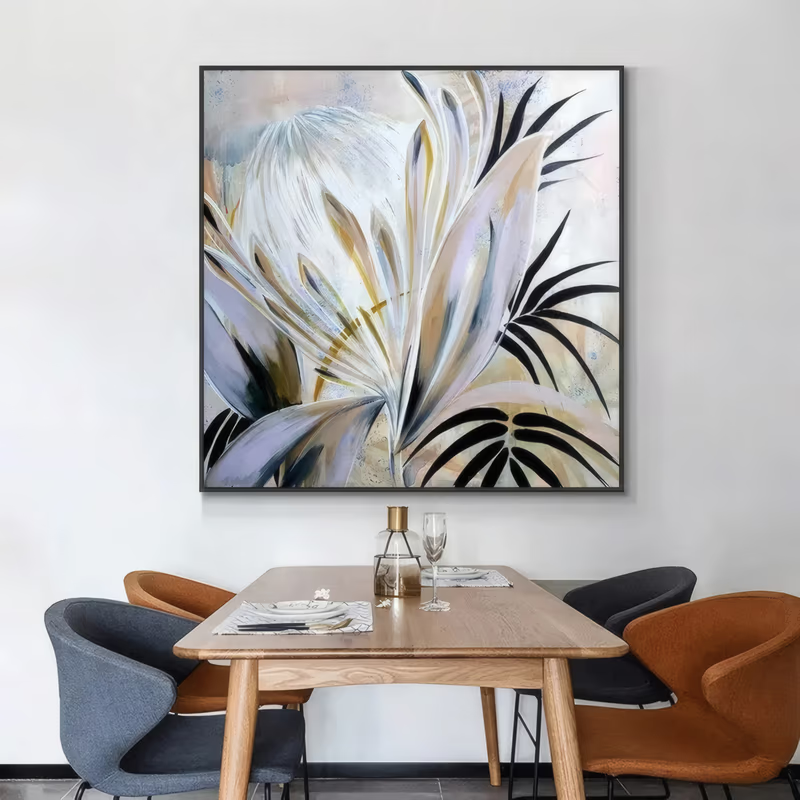
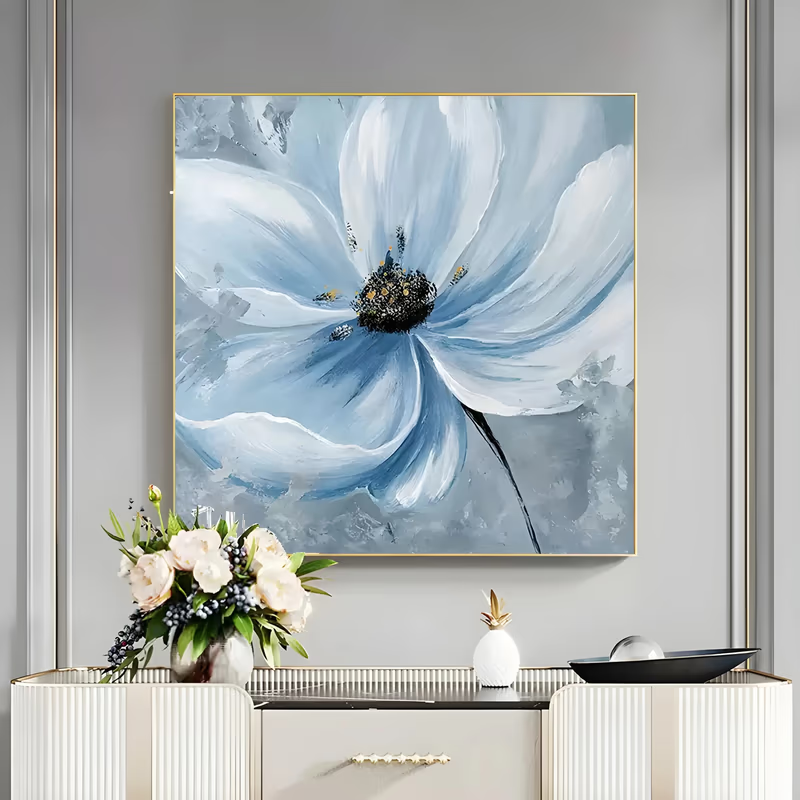
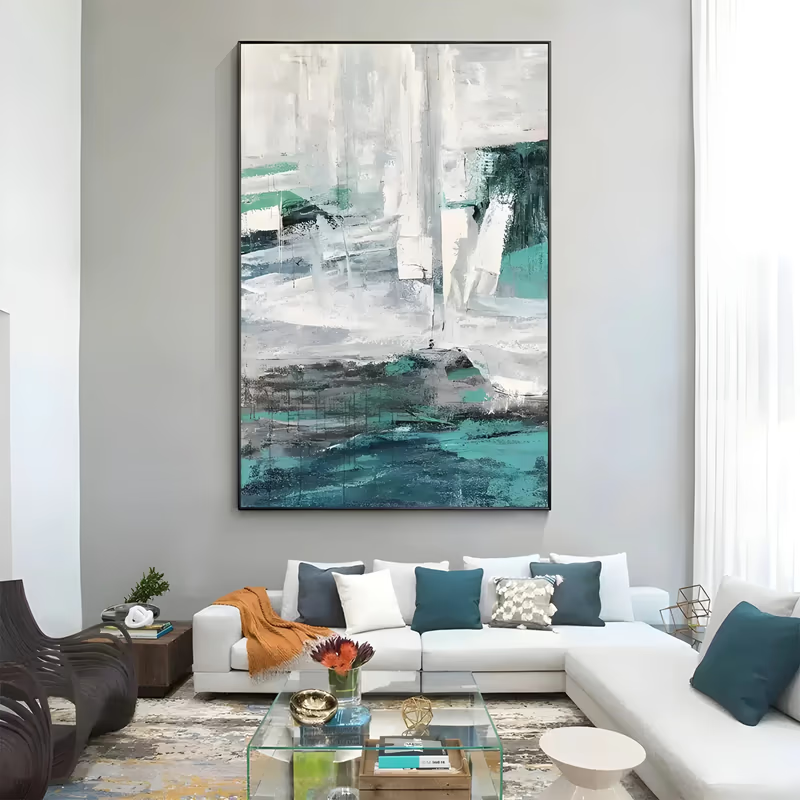
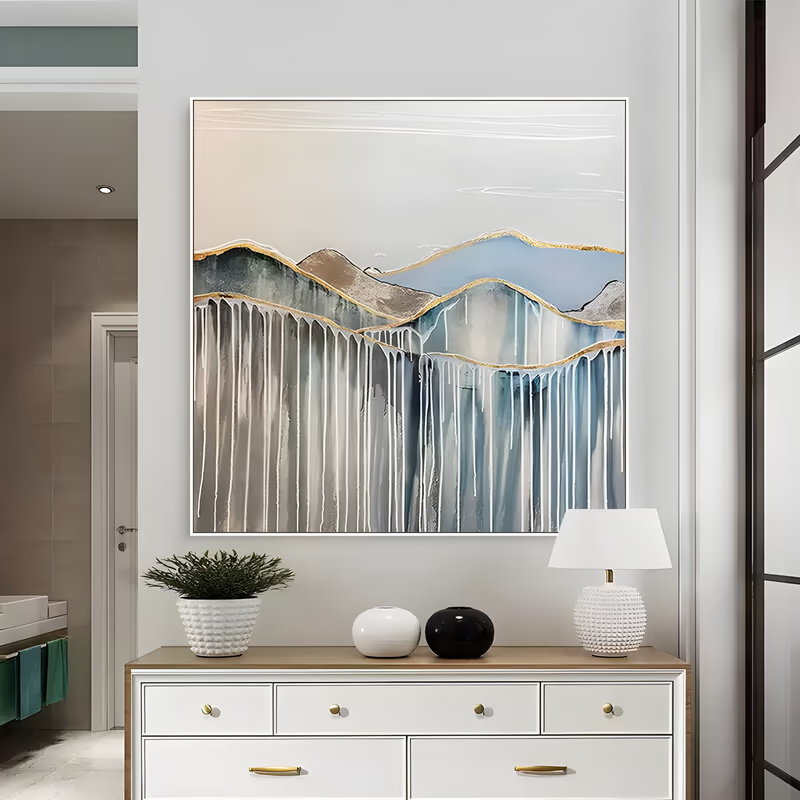
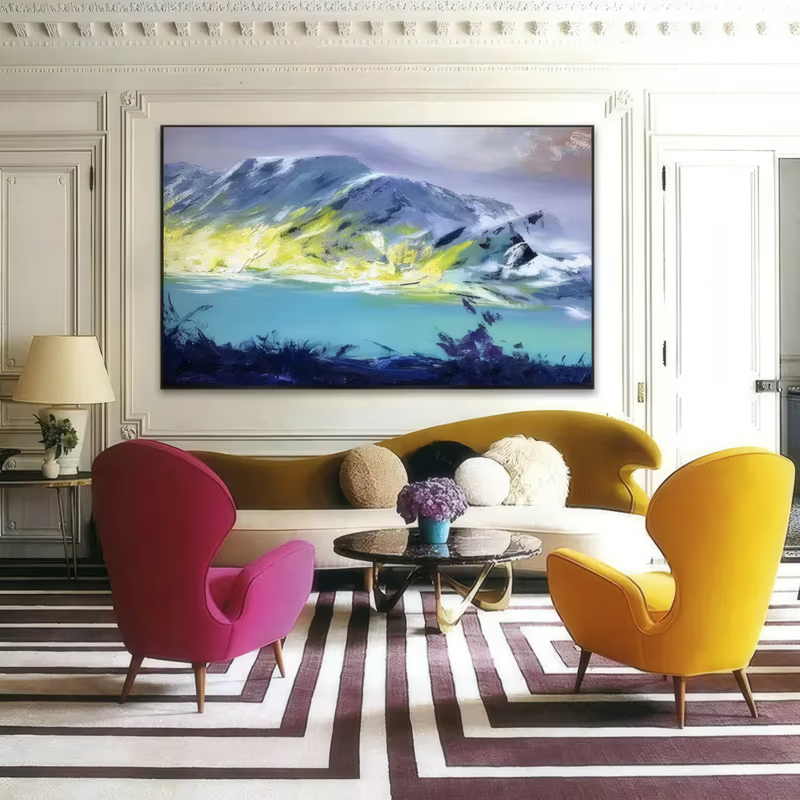
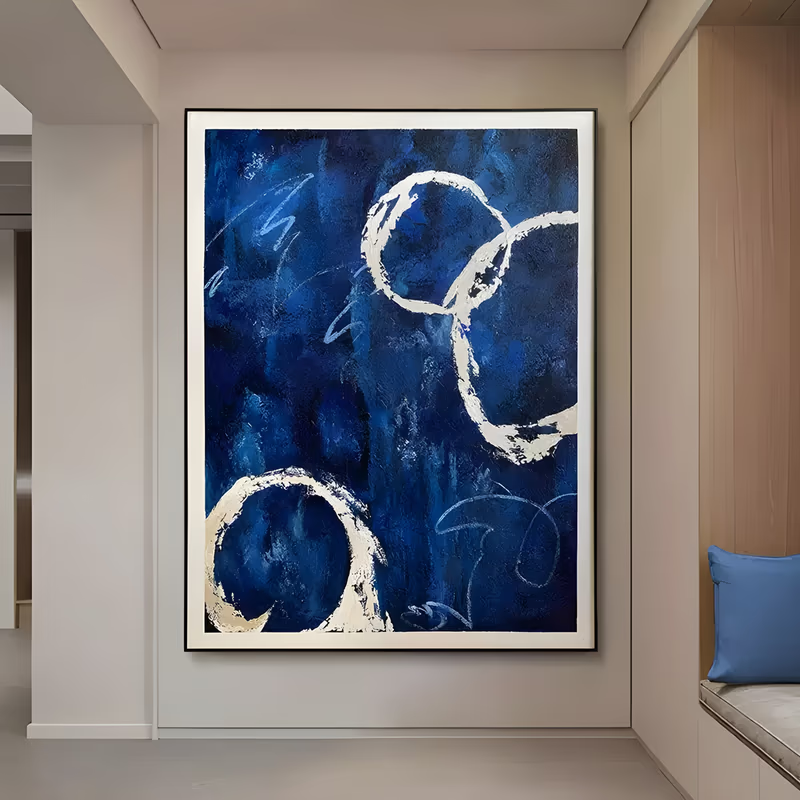
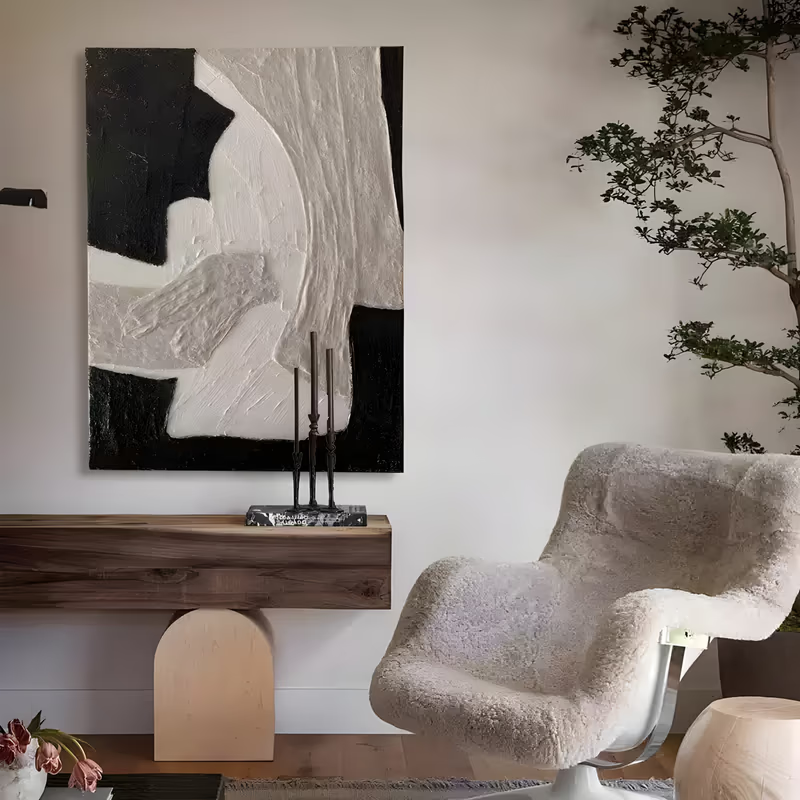
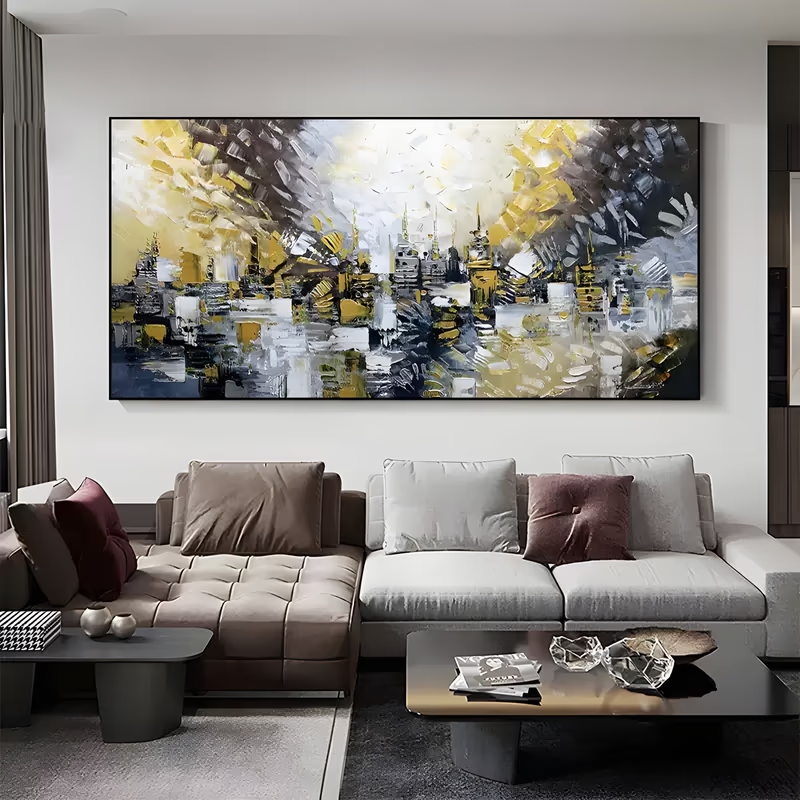
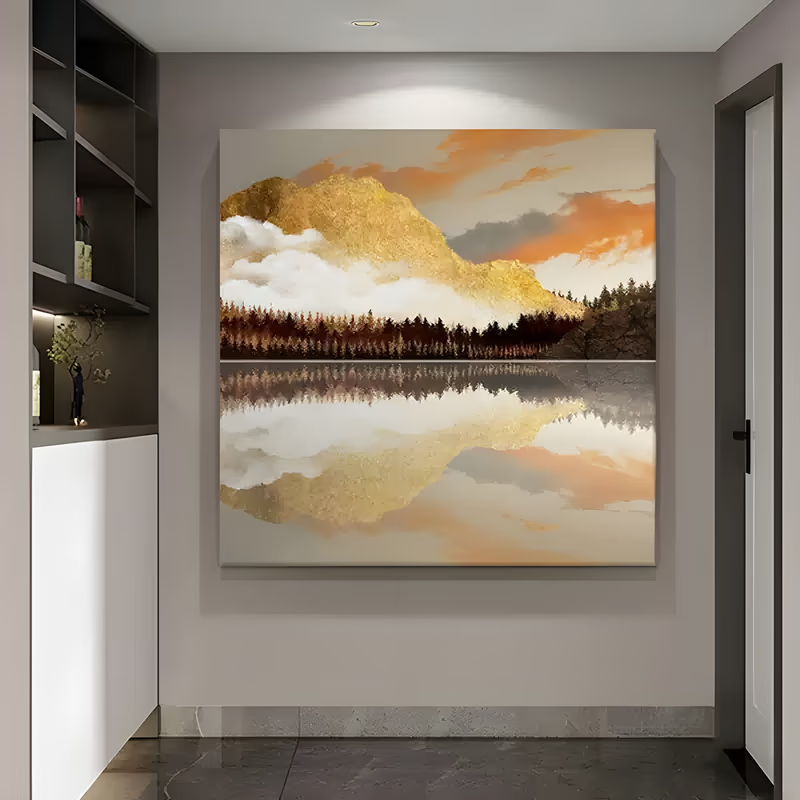
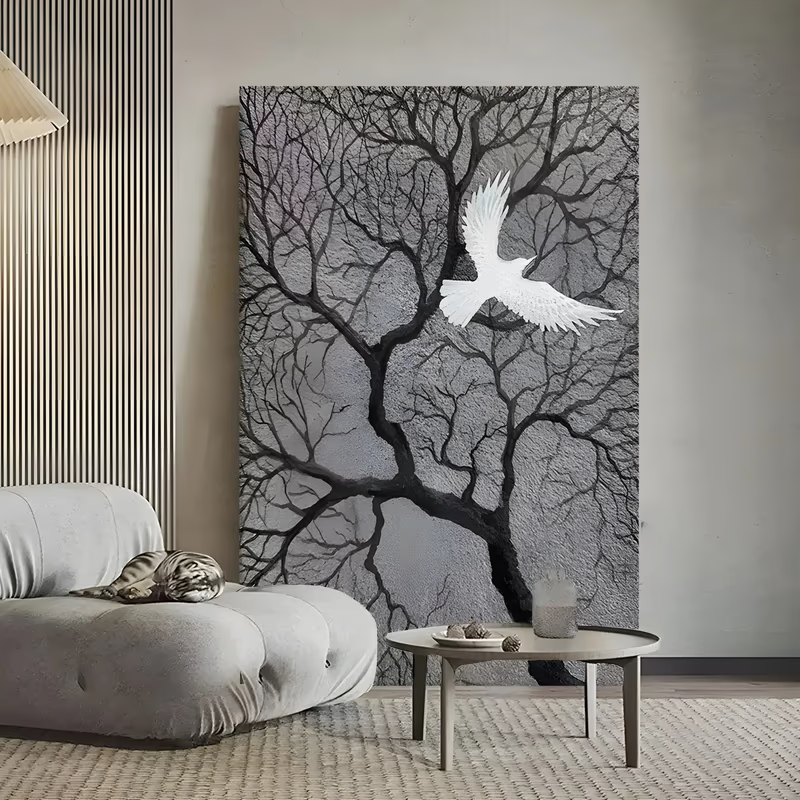
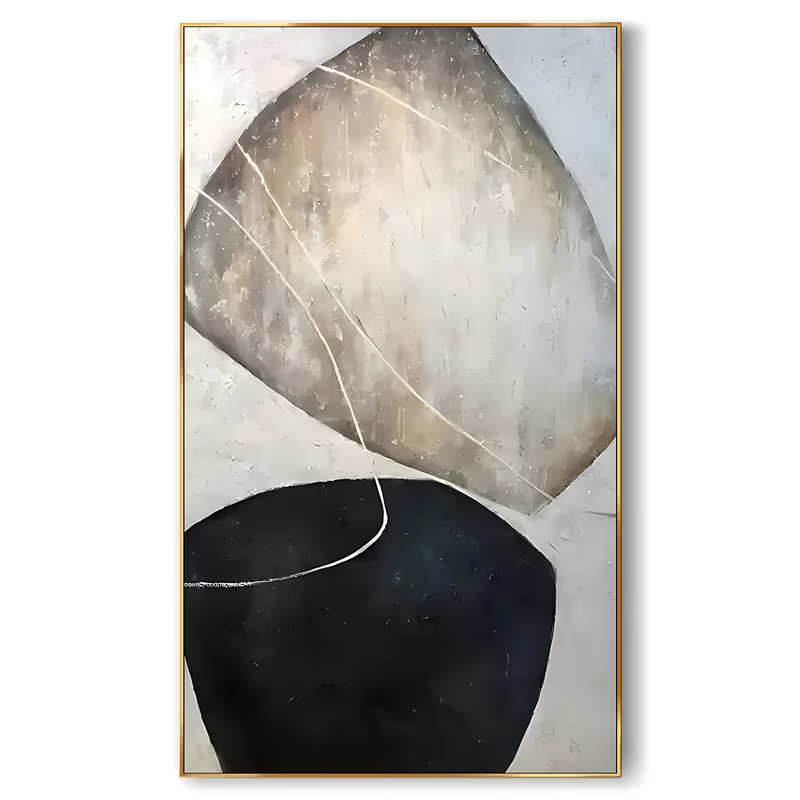
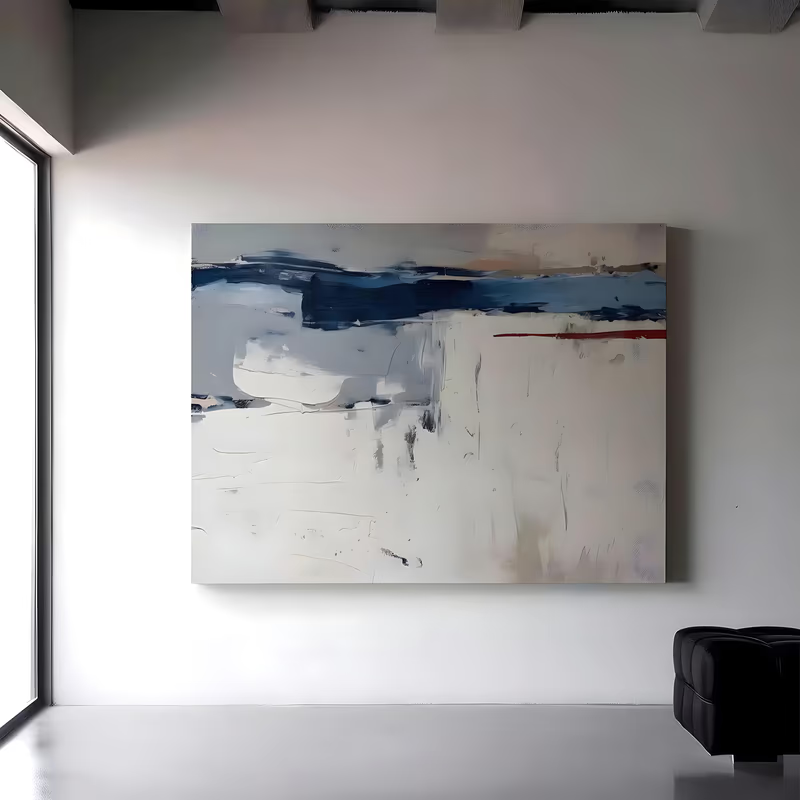
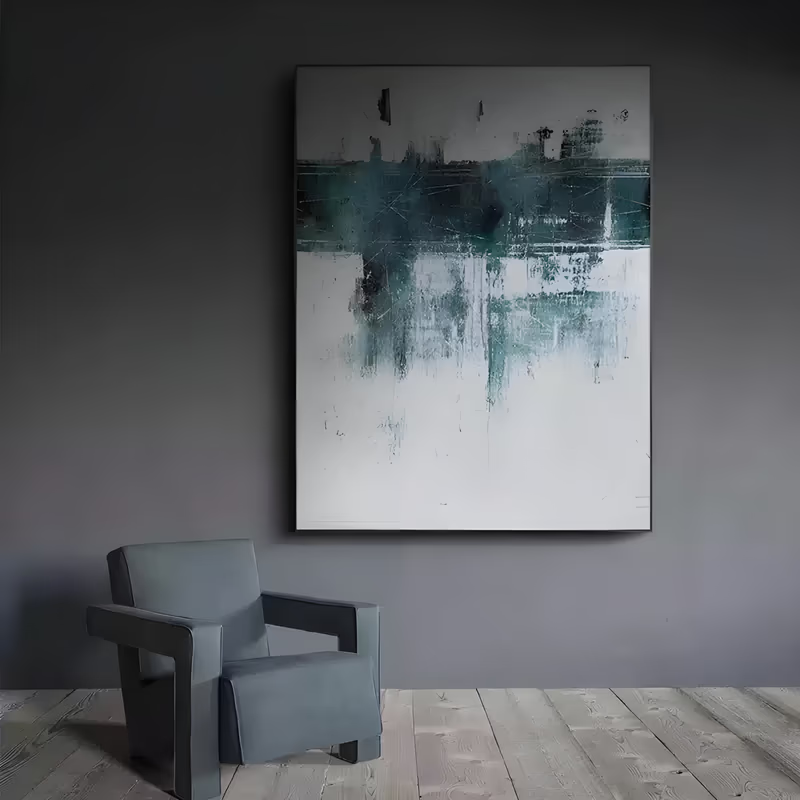
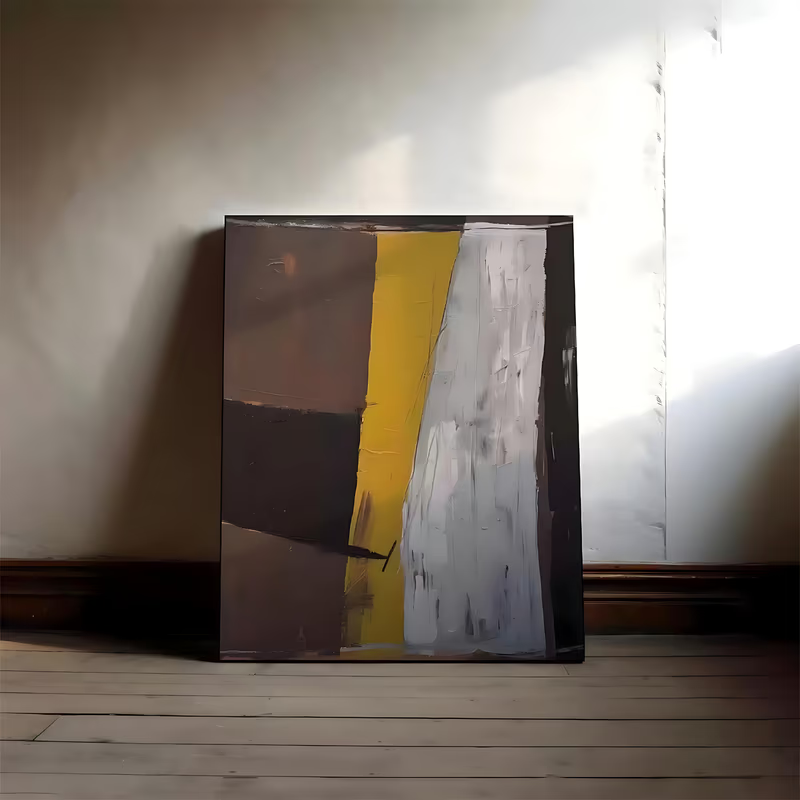
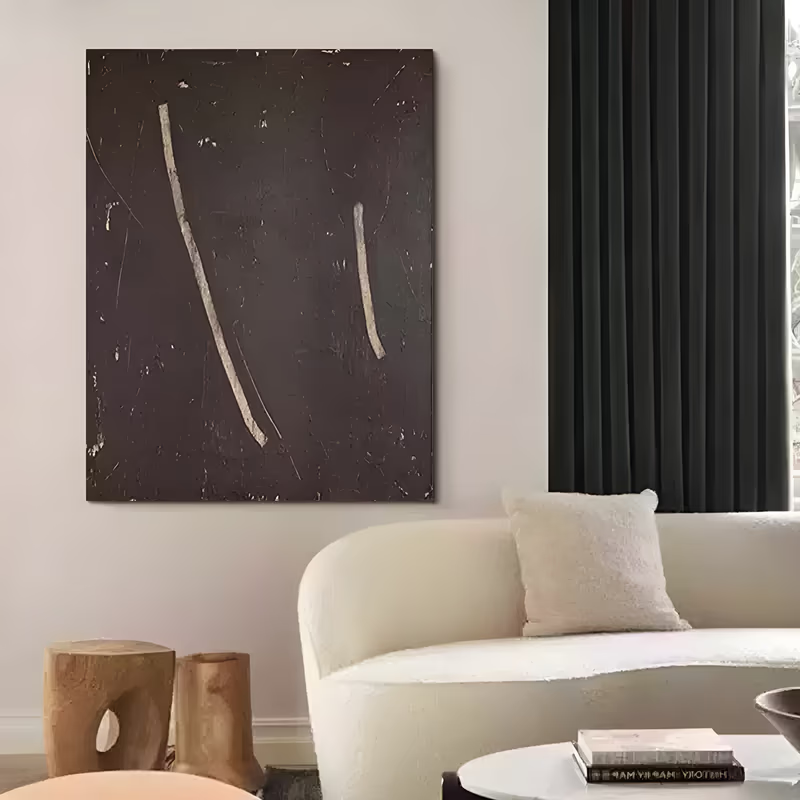
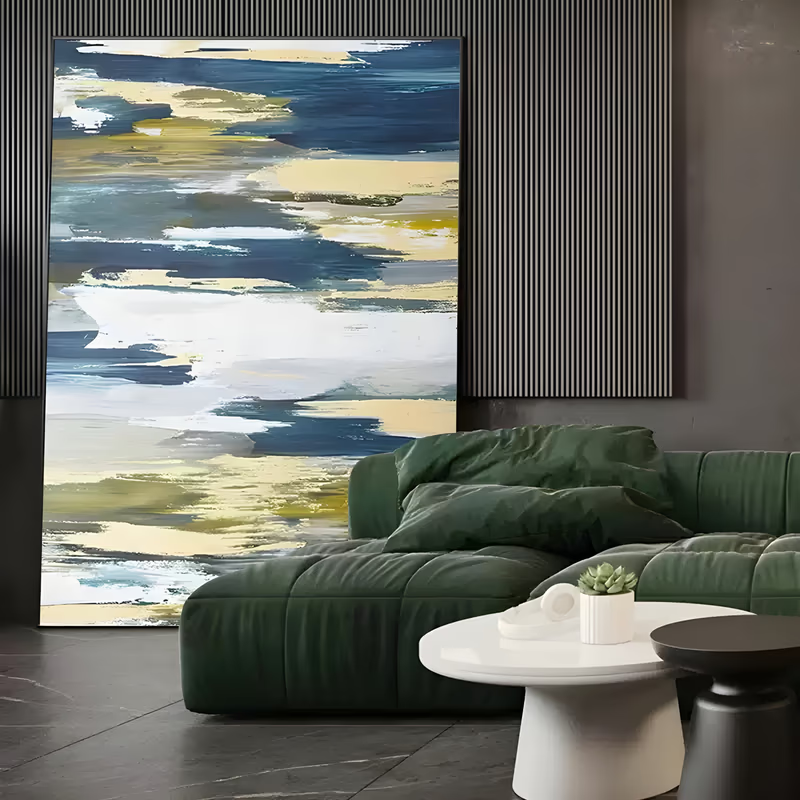
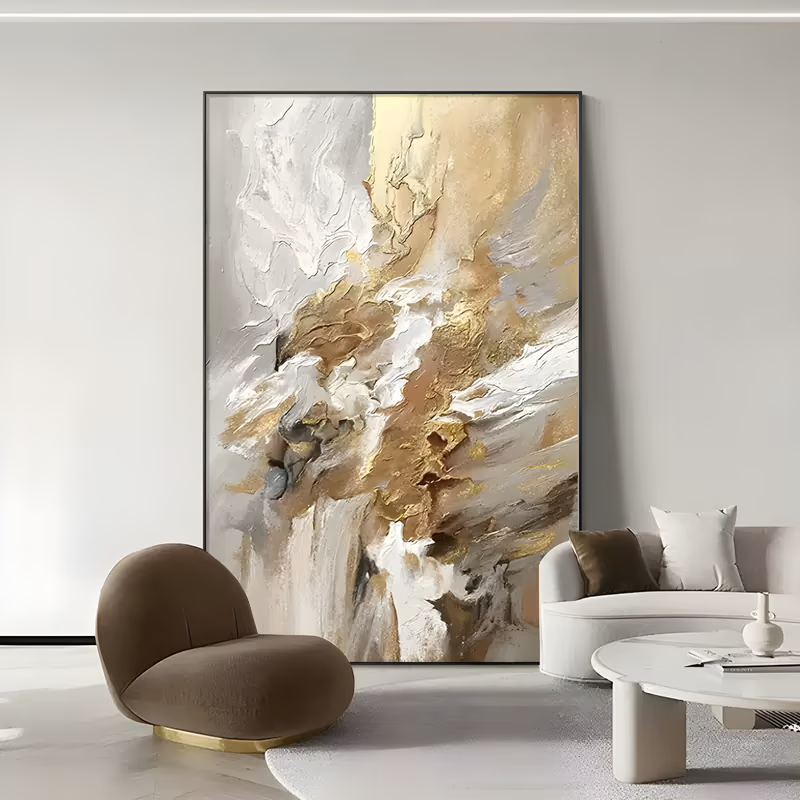
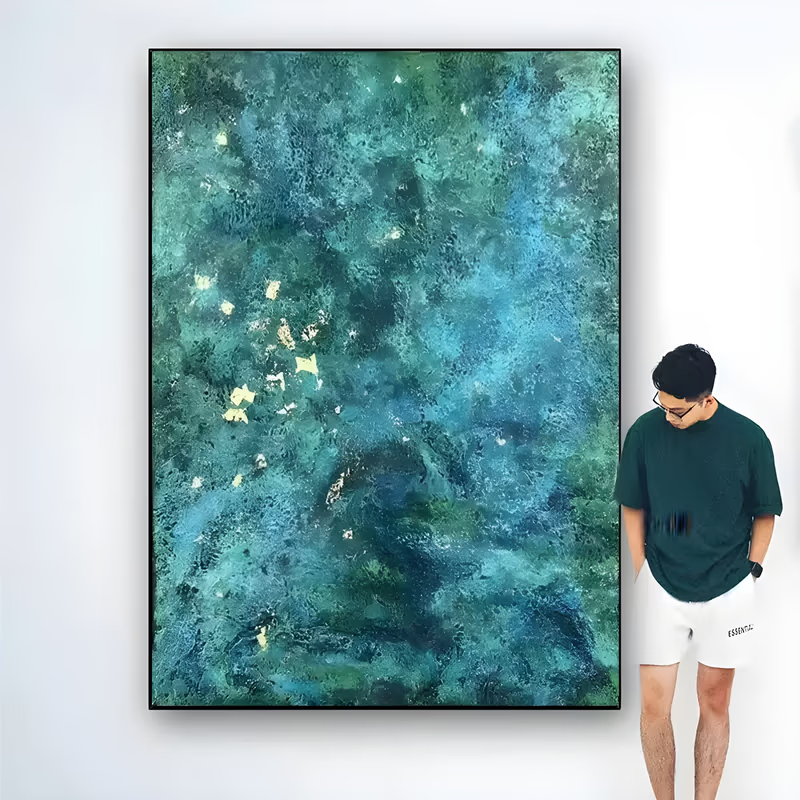
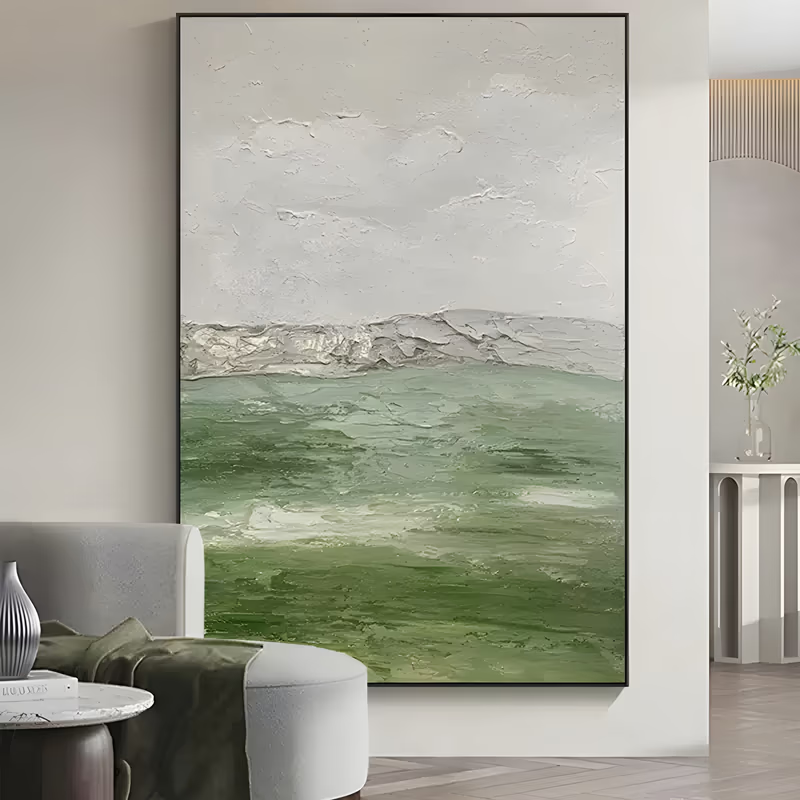
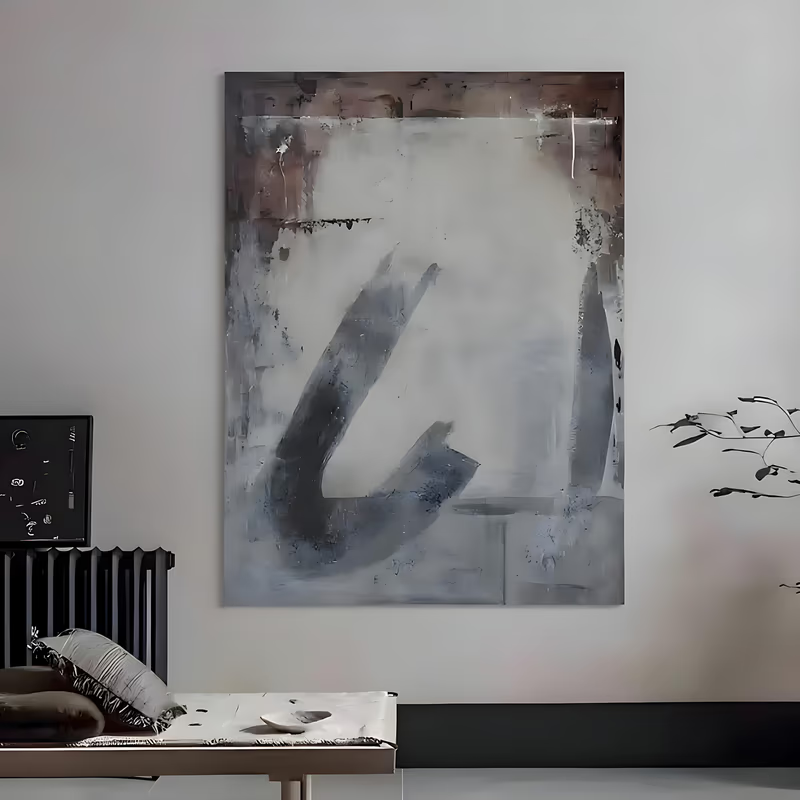
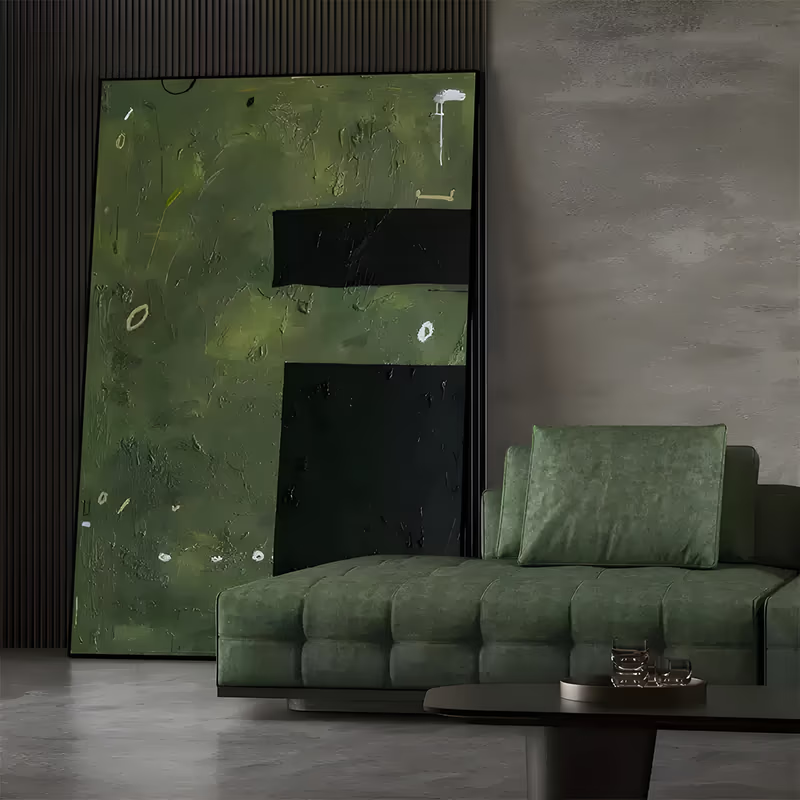
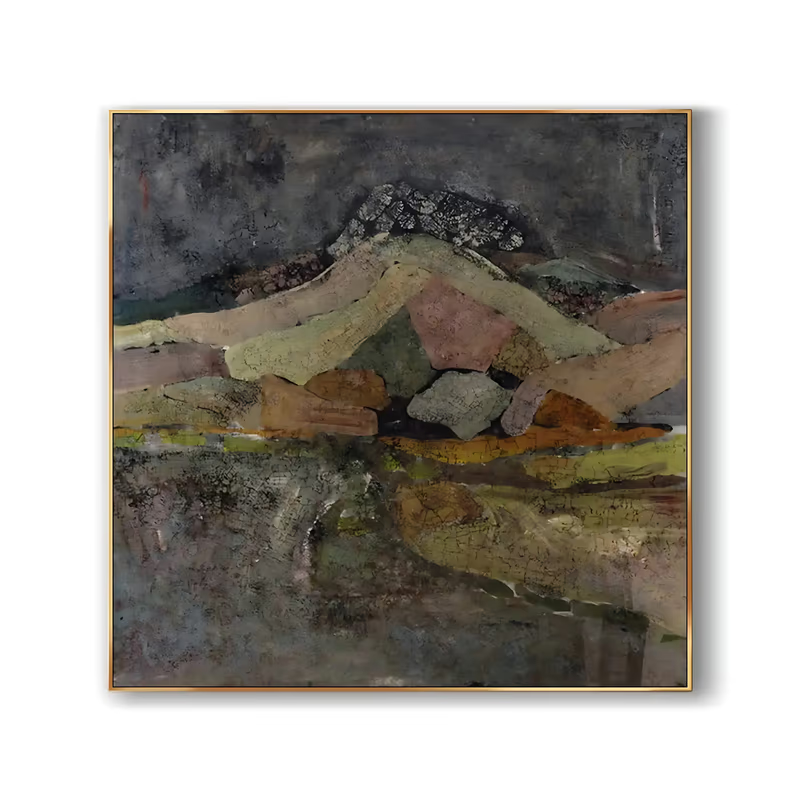
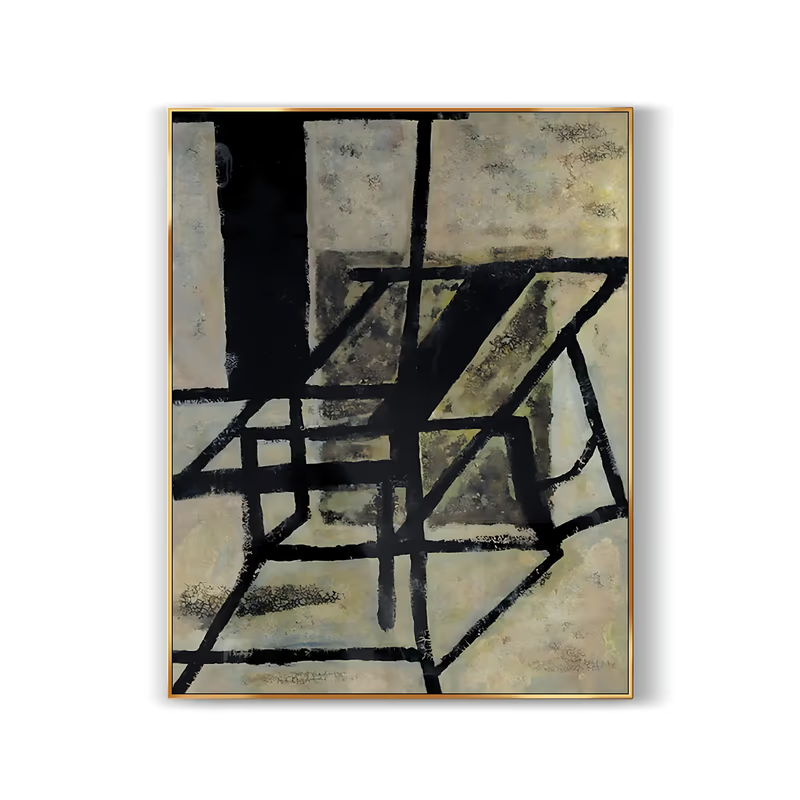
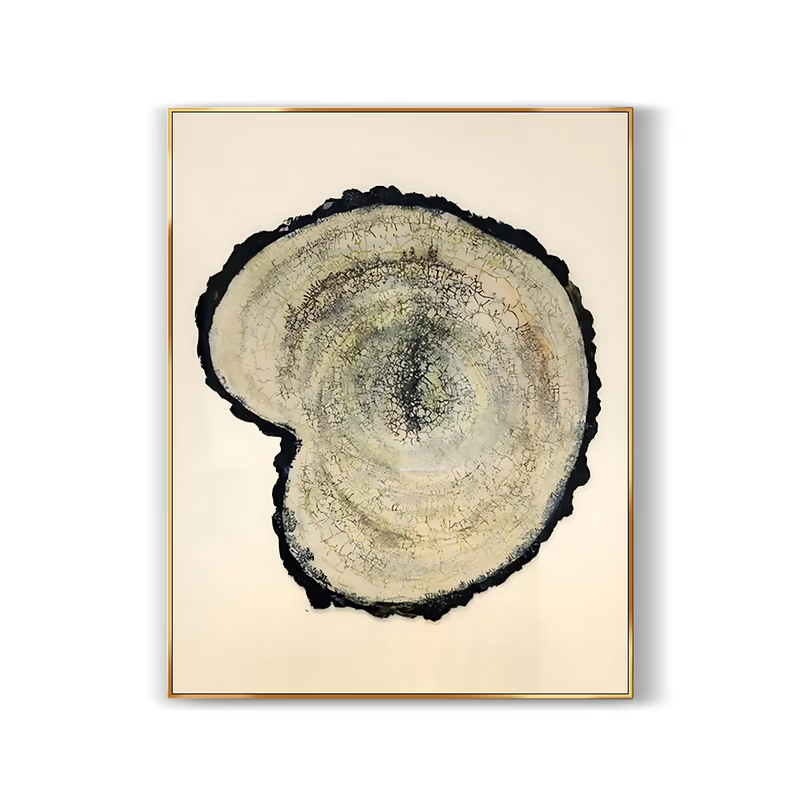
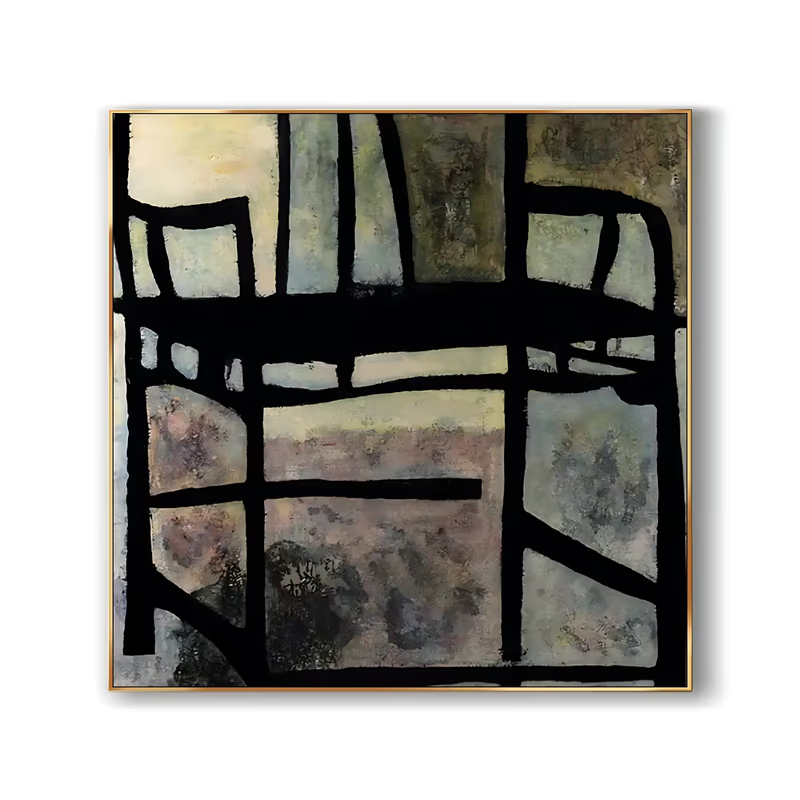
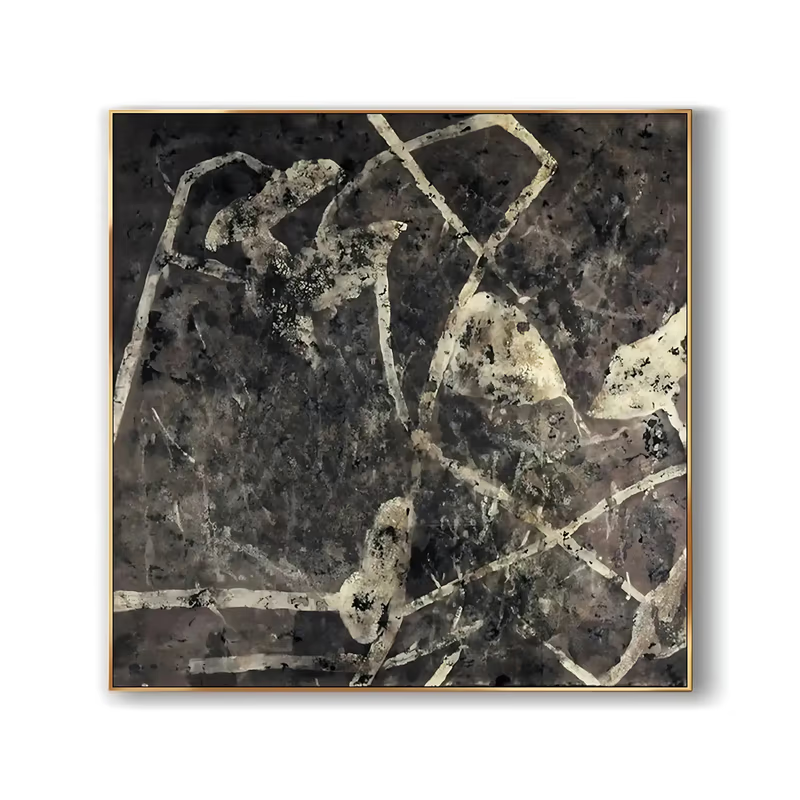
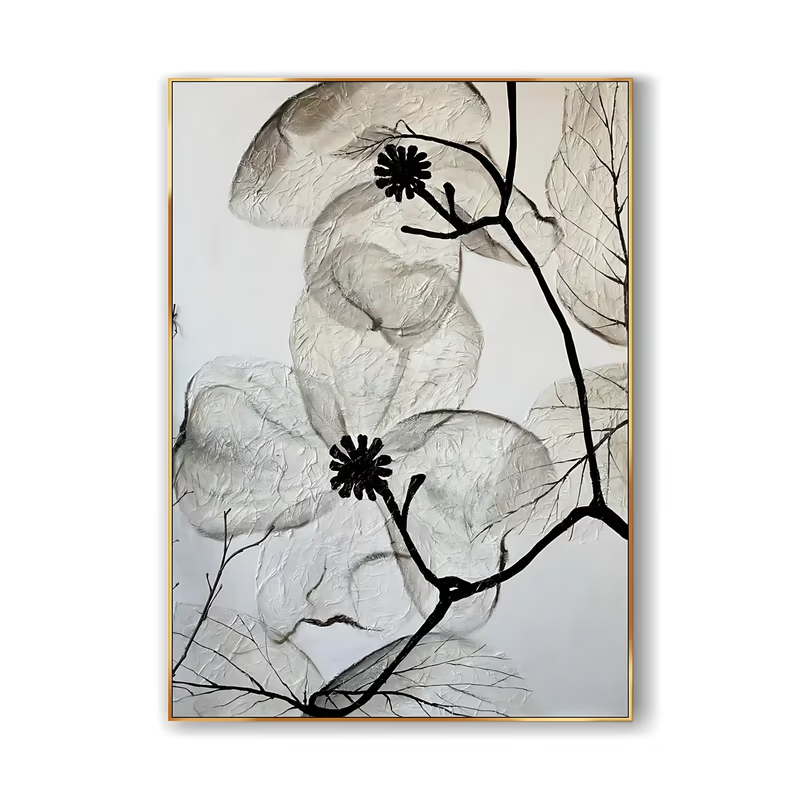
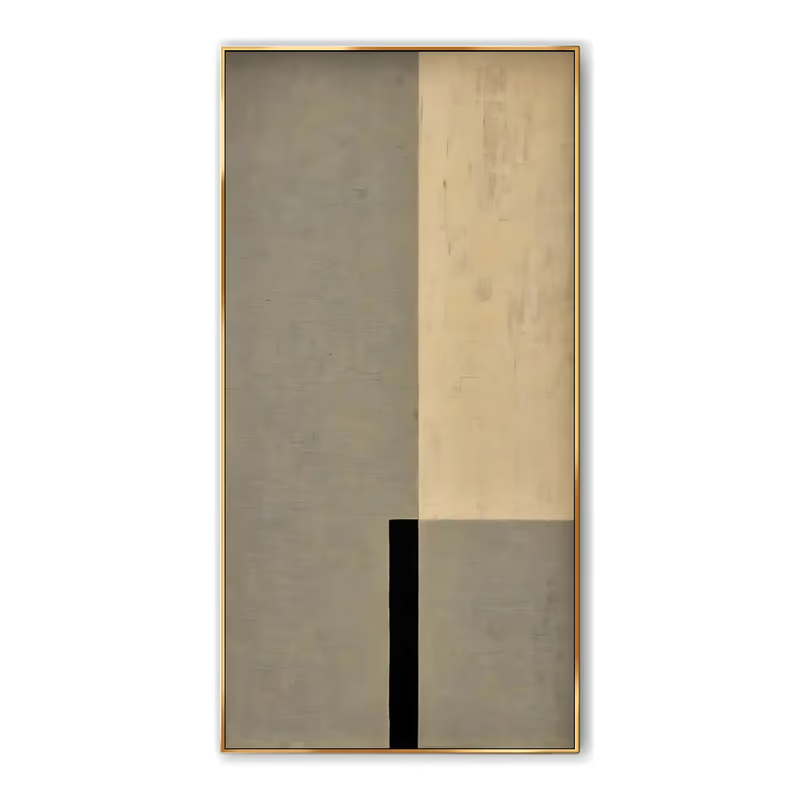
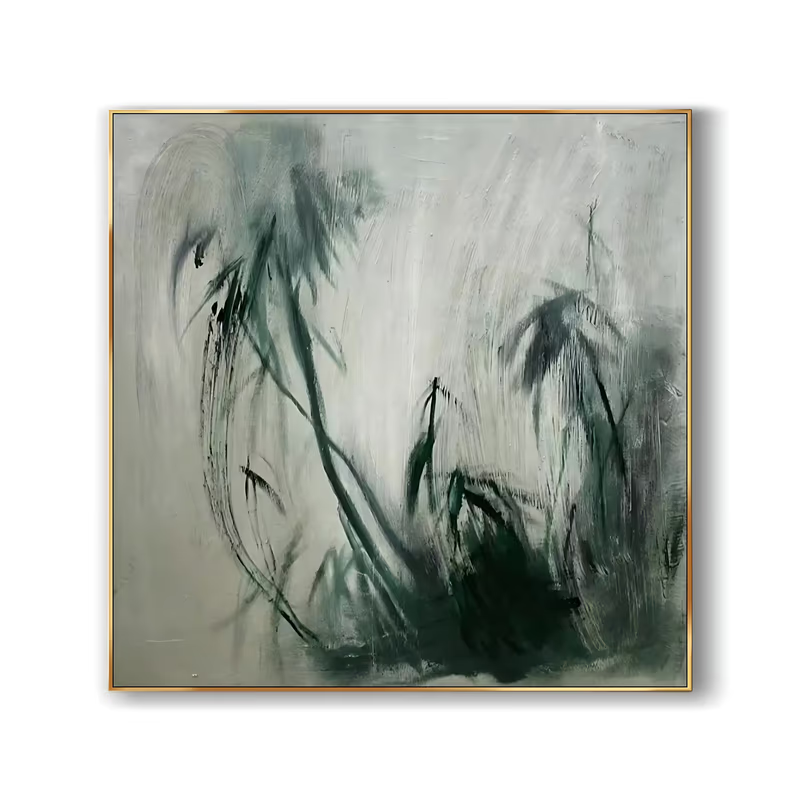
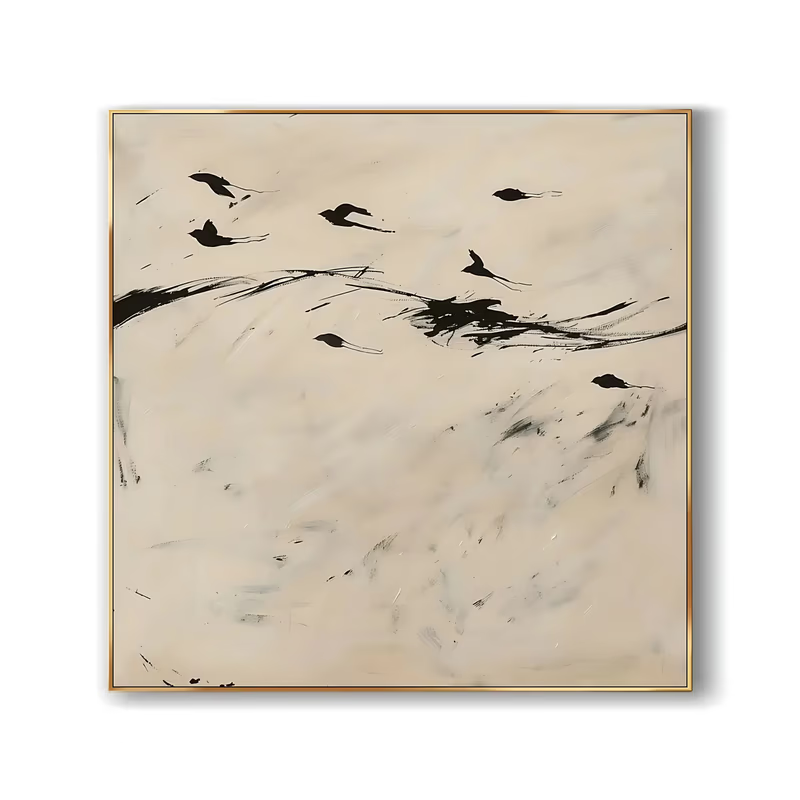
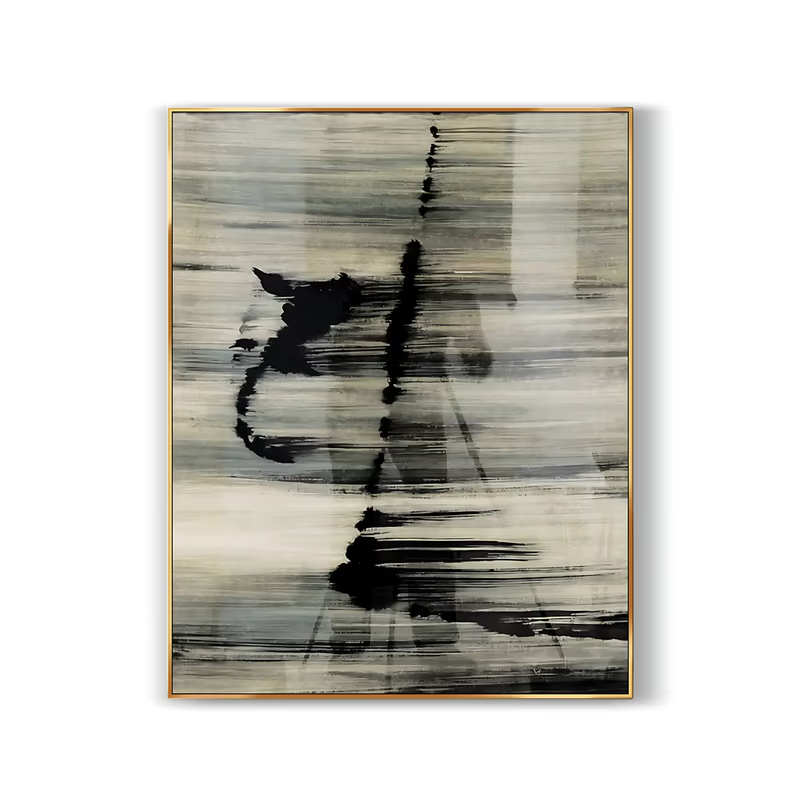
Boardroom paintings here fall into four groups: landscapes and calm seascapes, restrained geometric abstracts, plaster-relief and wabi-sabi neutrals, and animal studies.
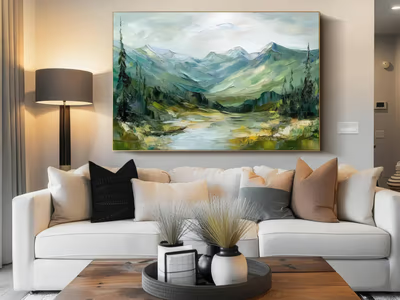
Landscapes and horizons
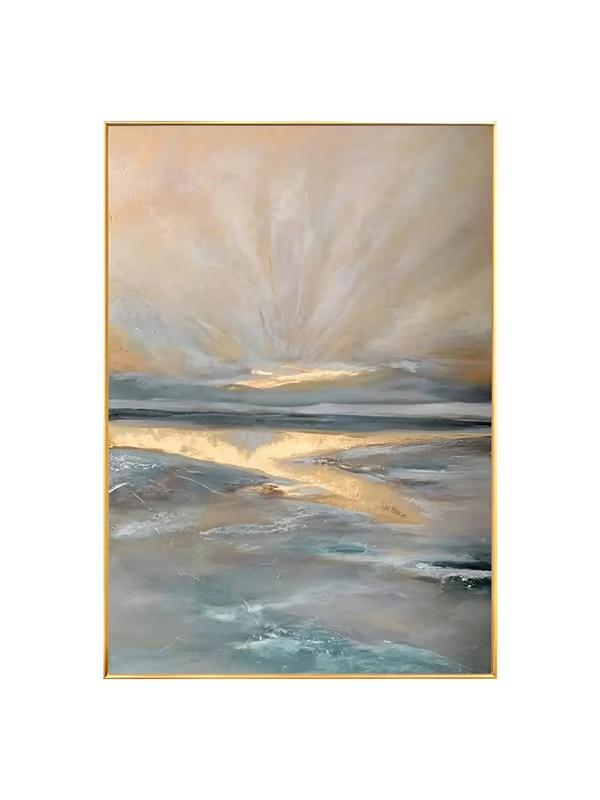
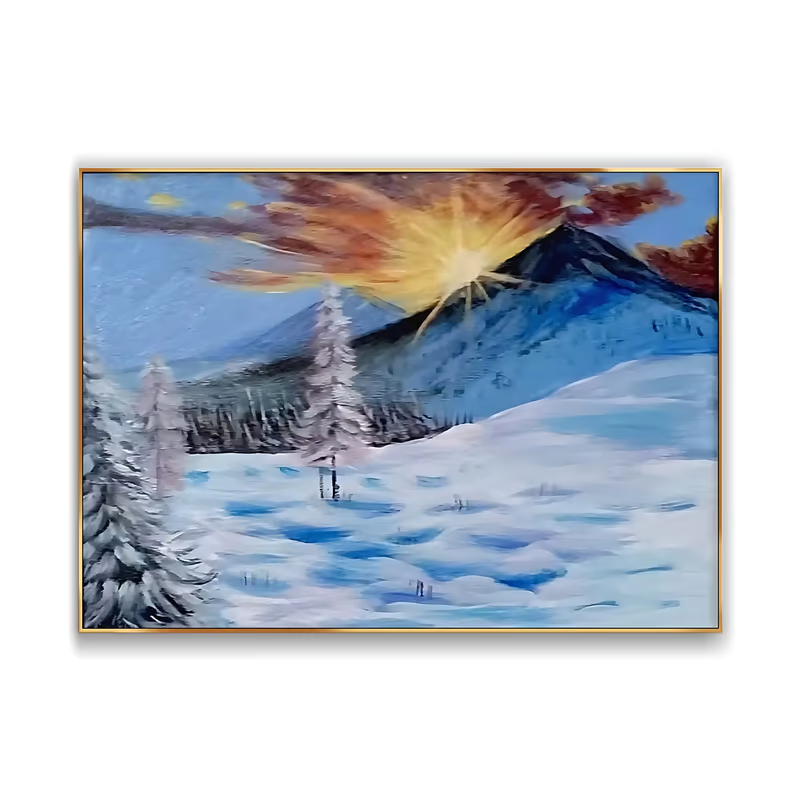
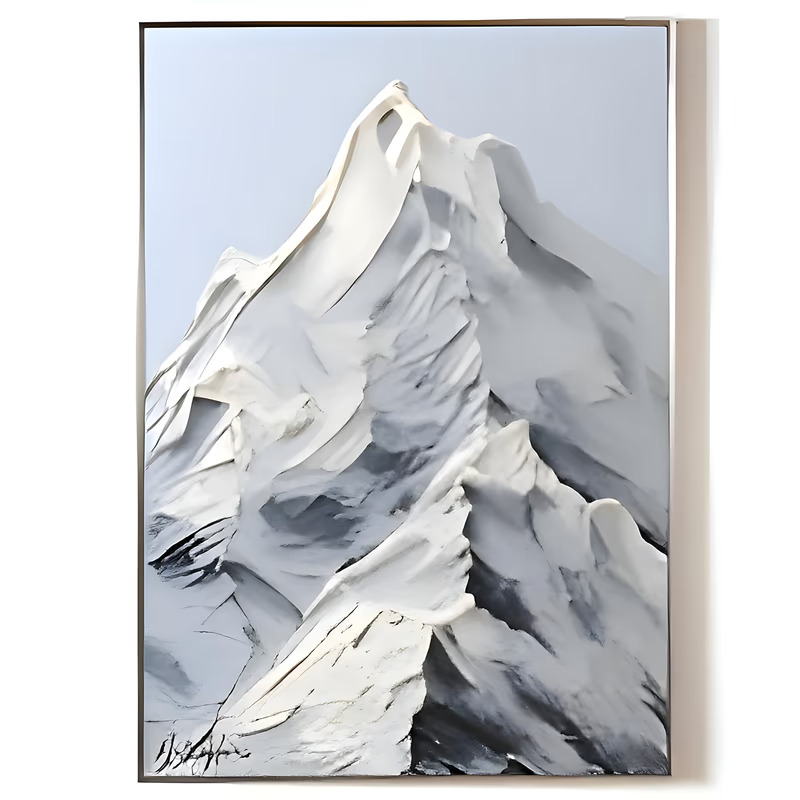
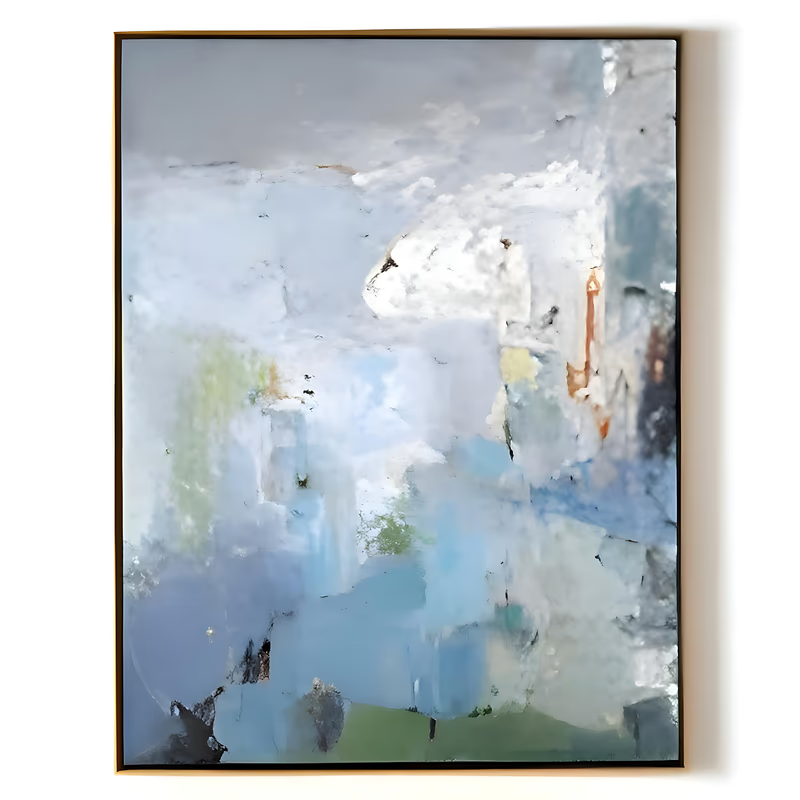
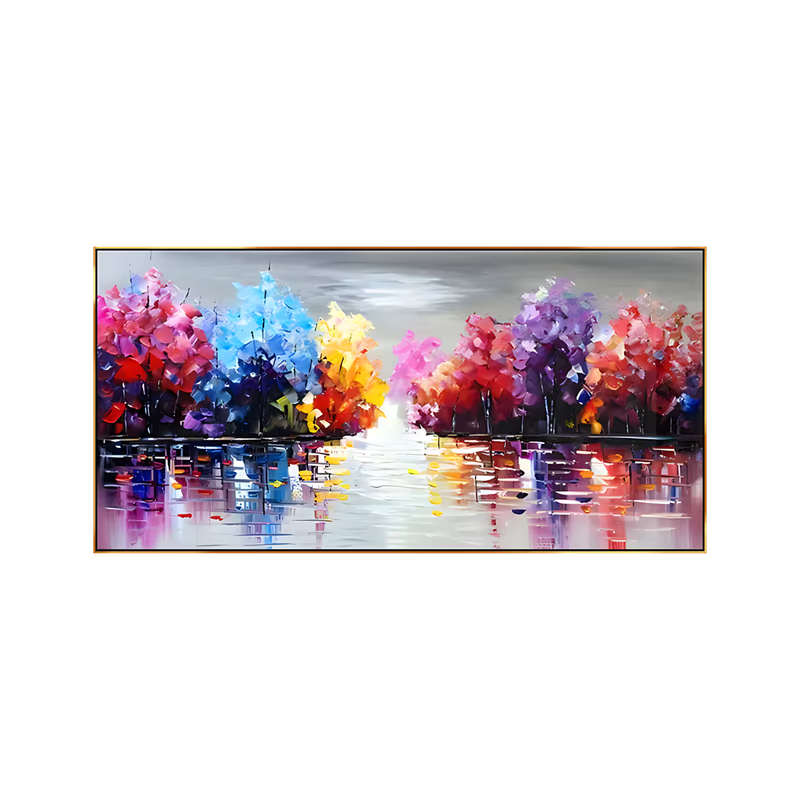
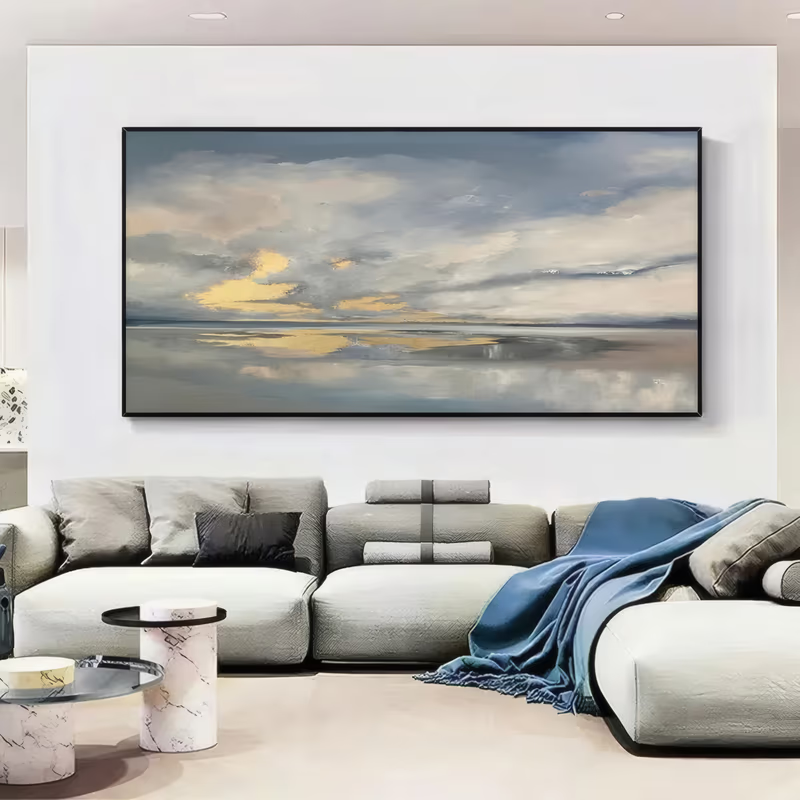
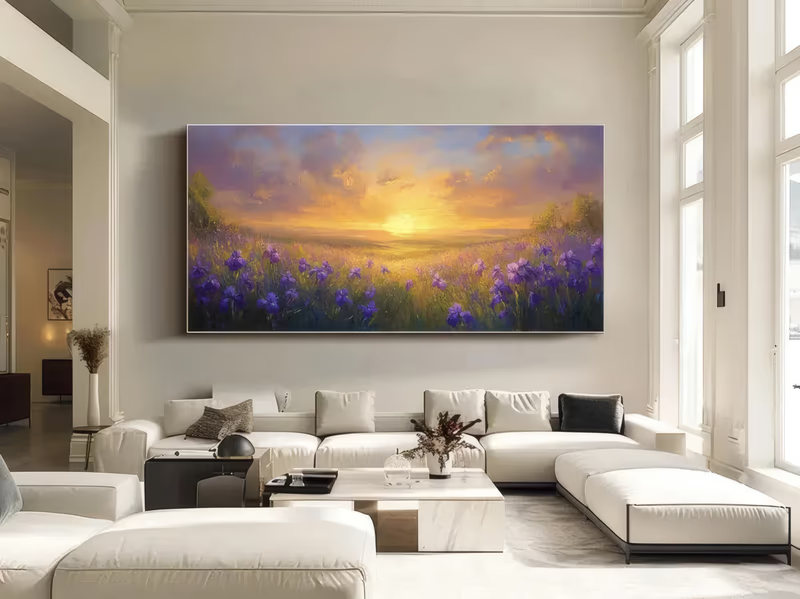
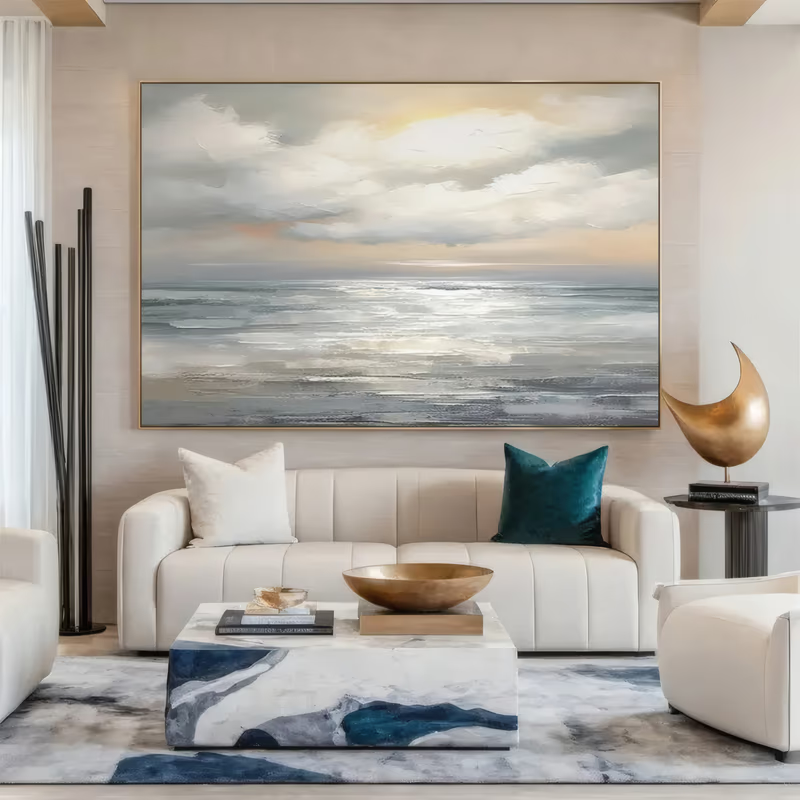
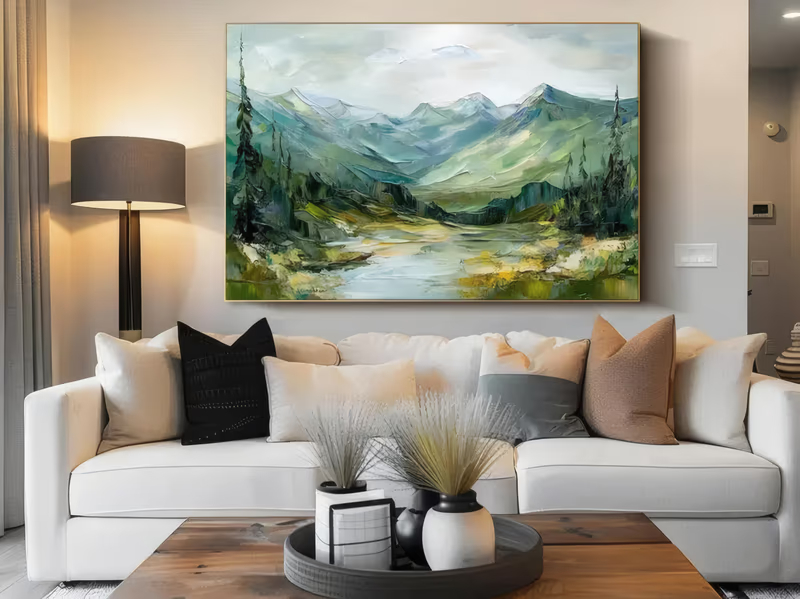
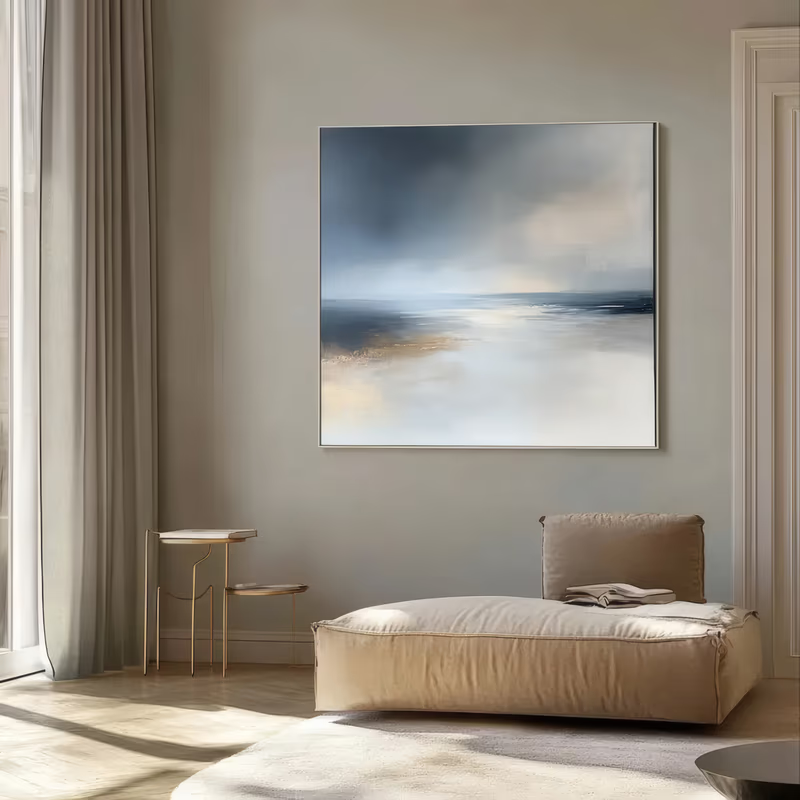
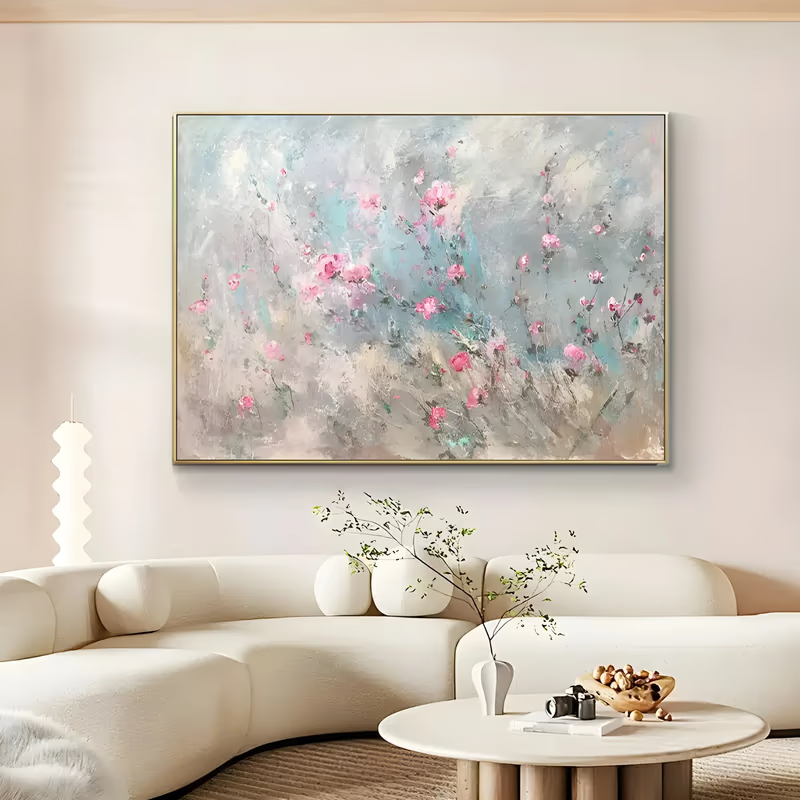
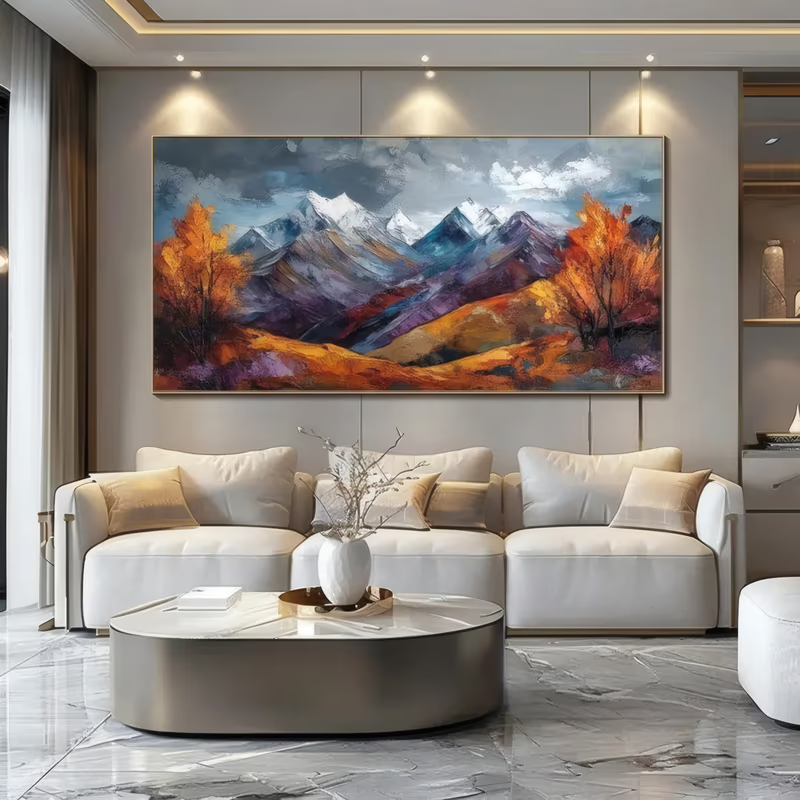
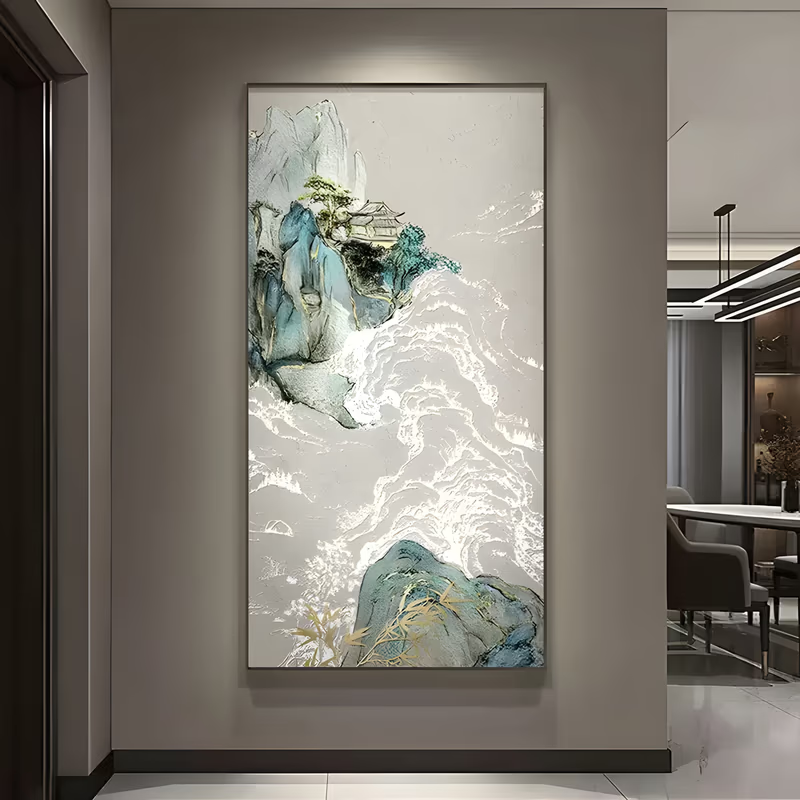
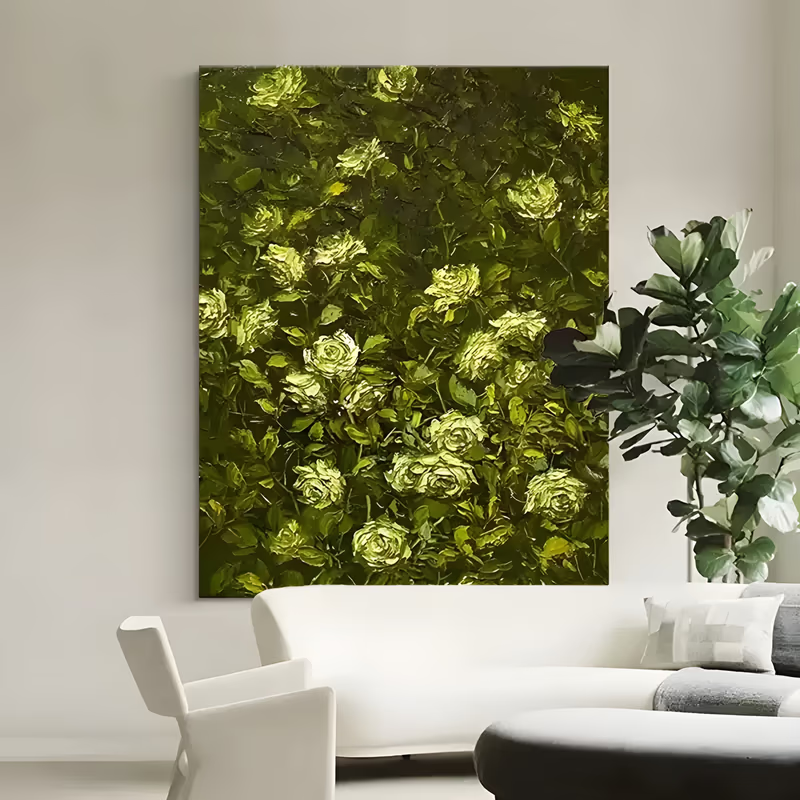
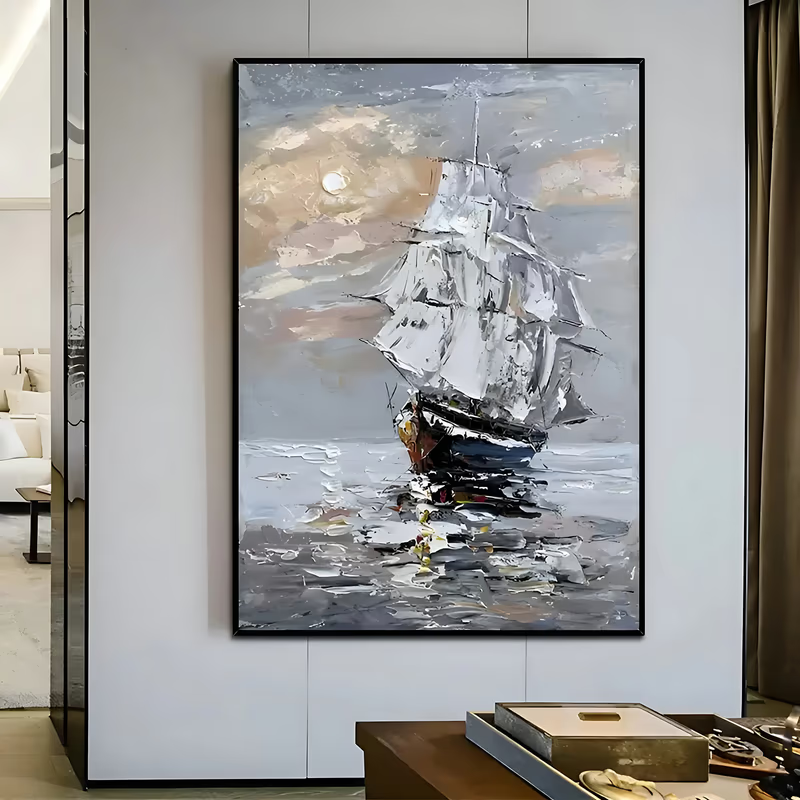
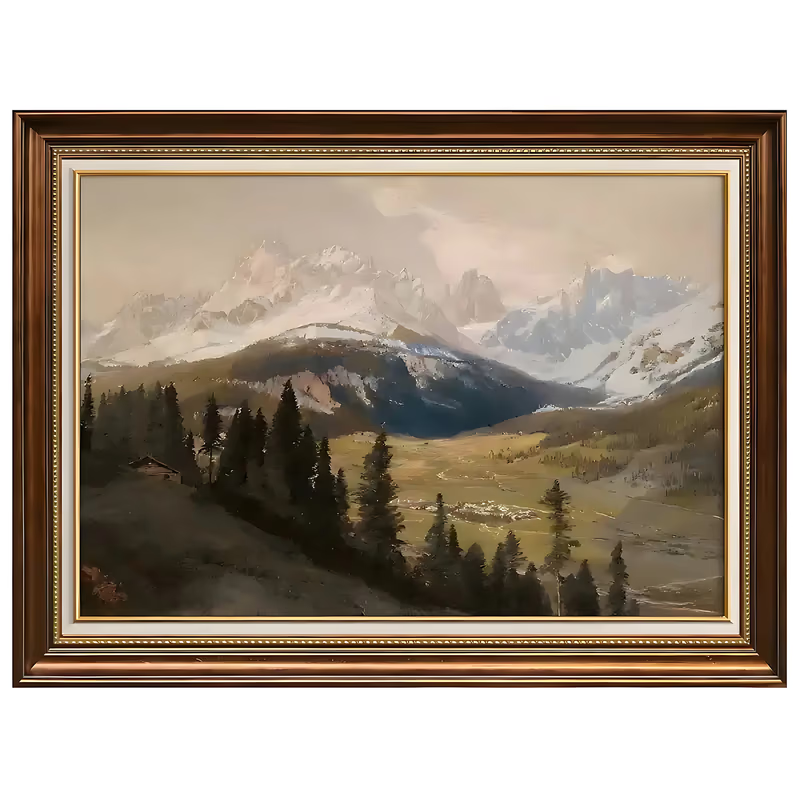
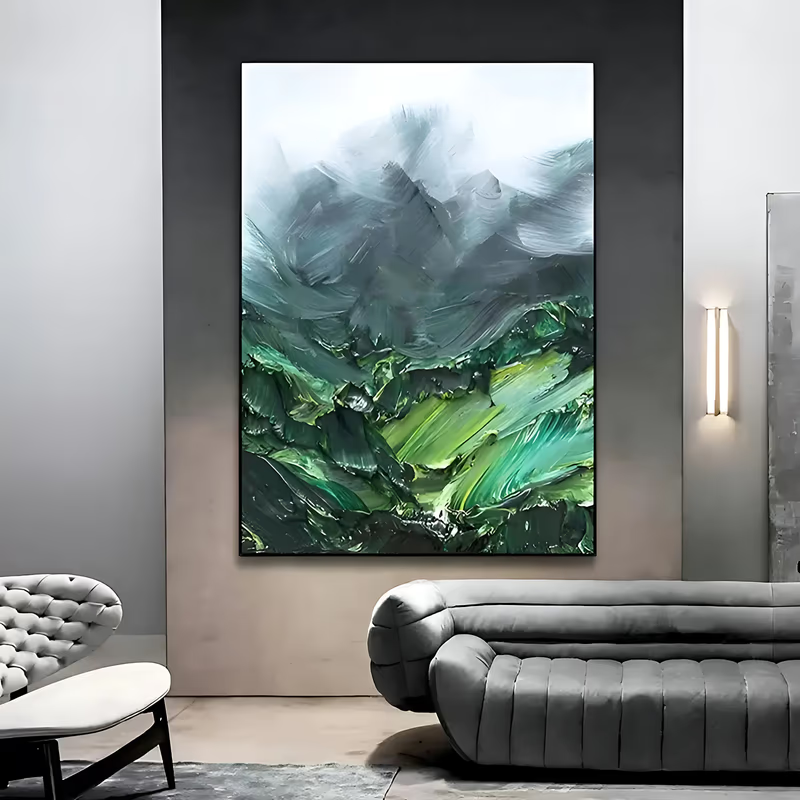
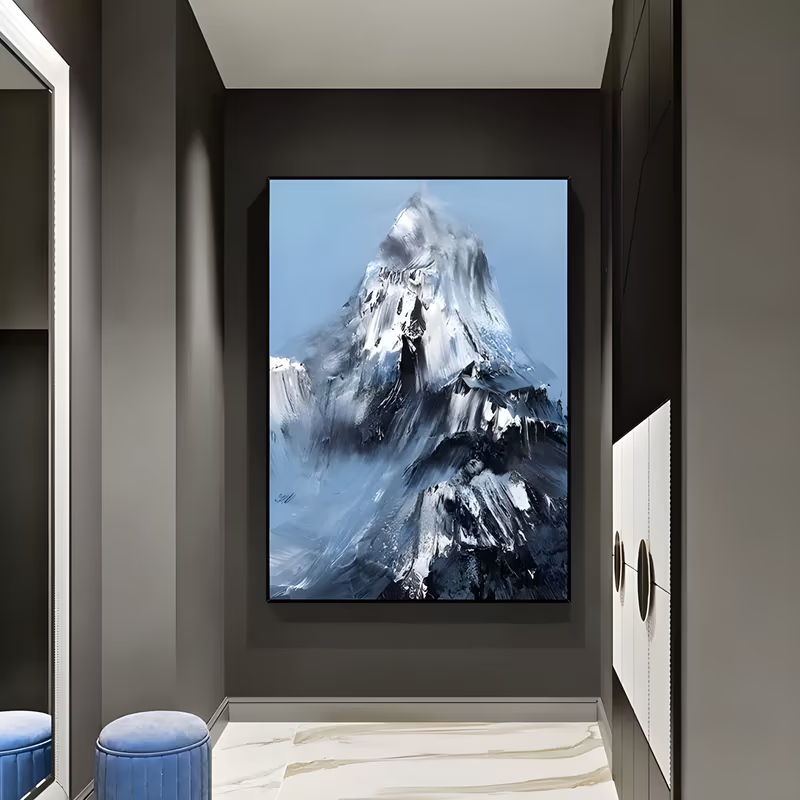
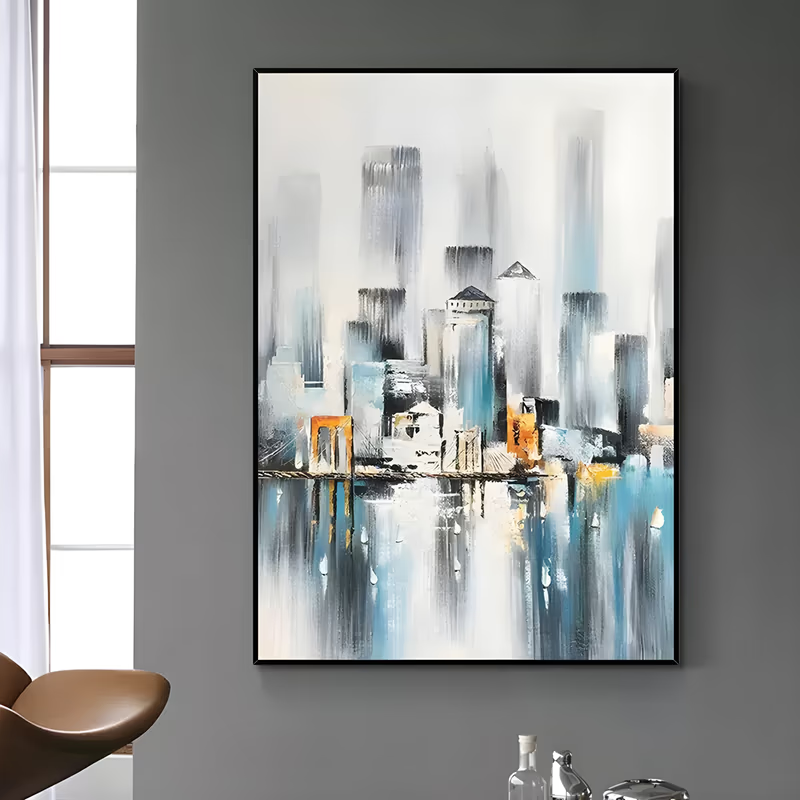
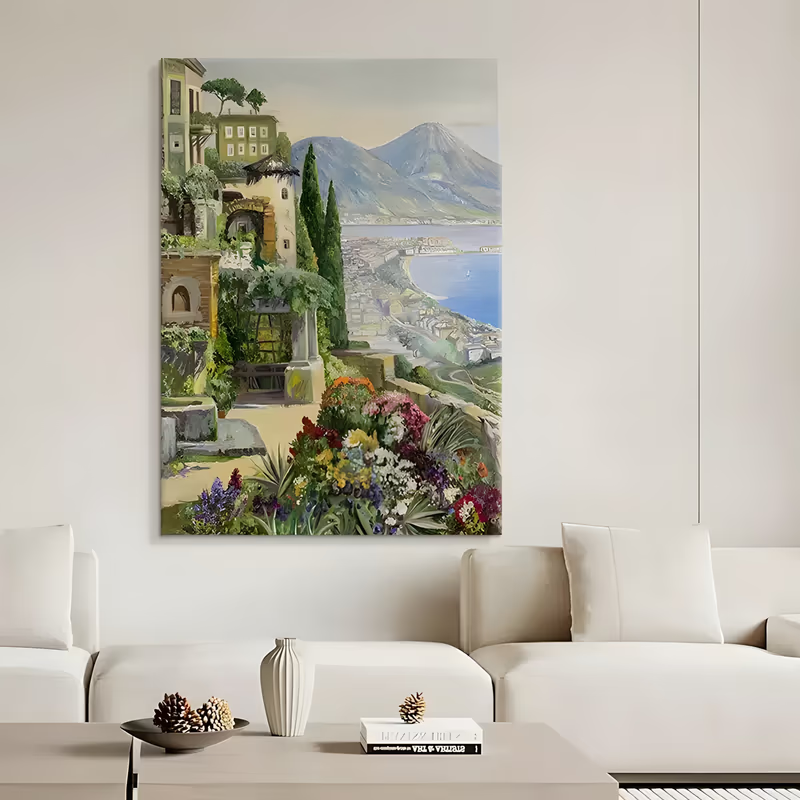
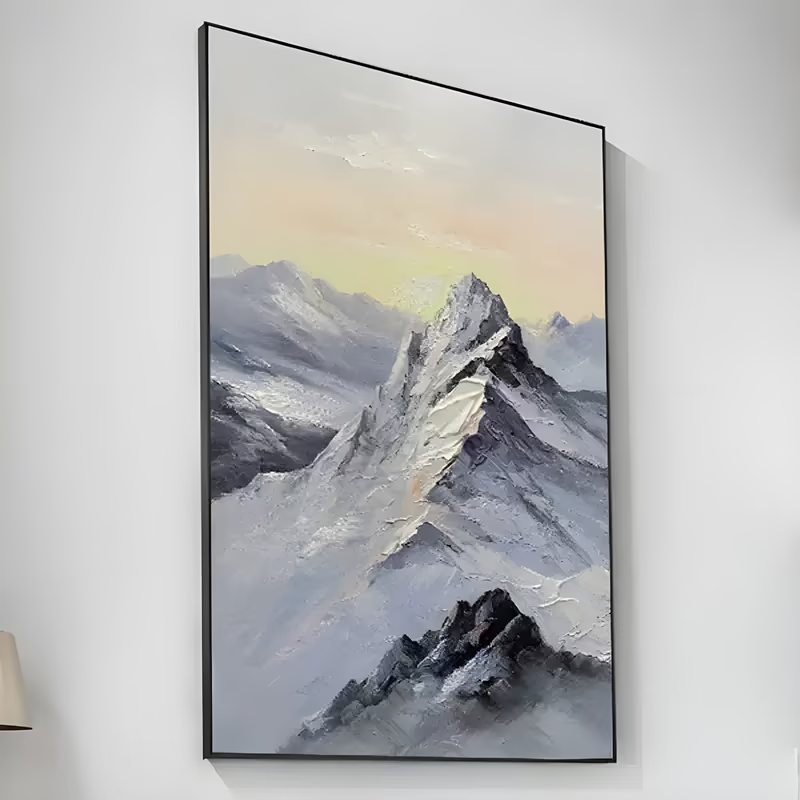
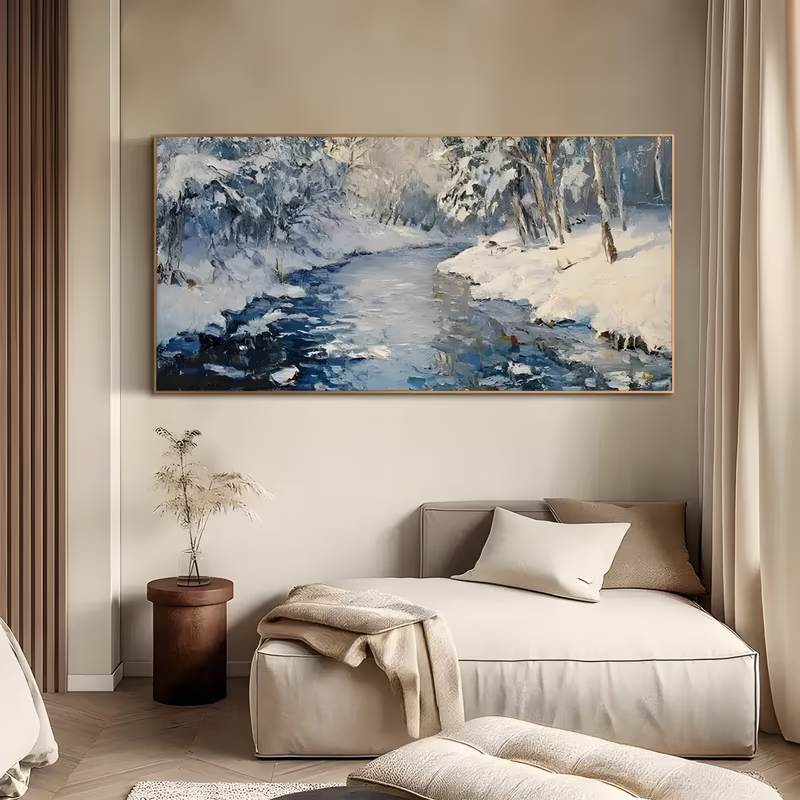
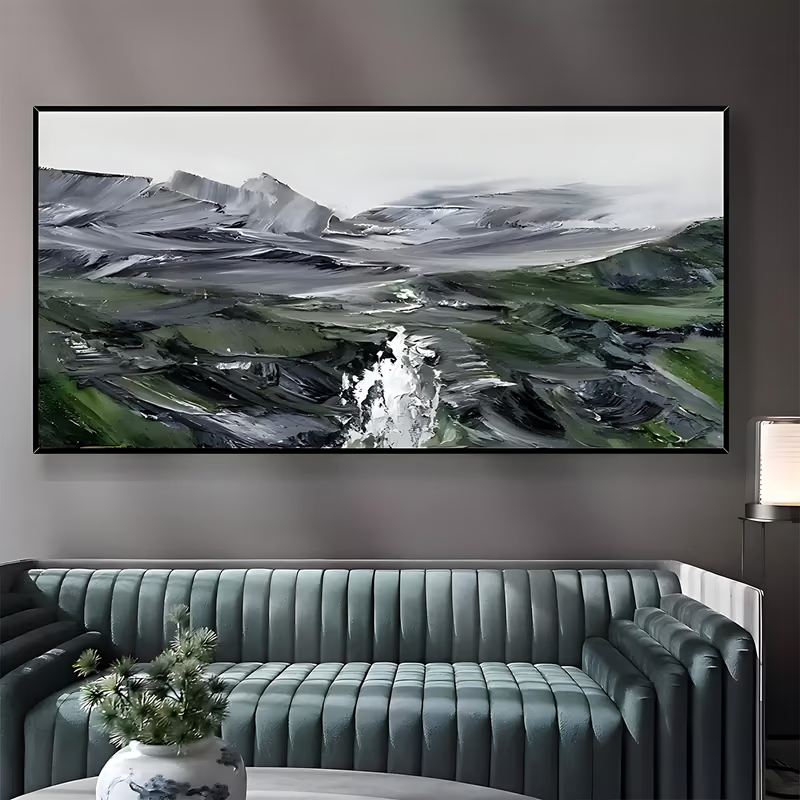
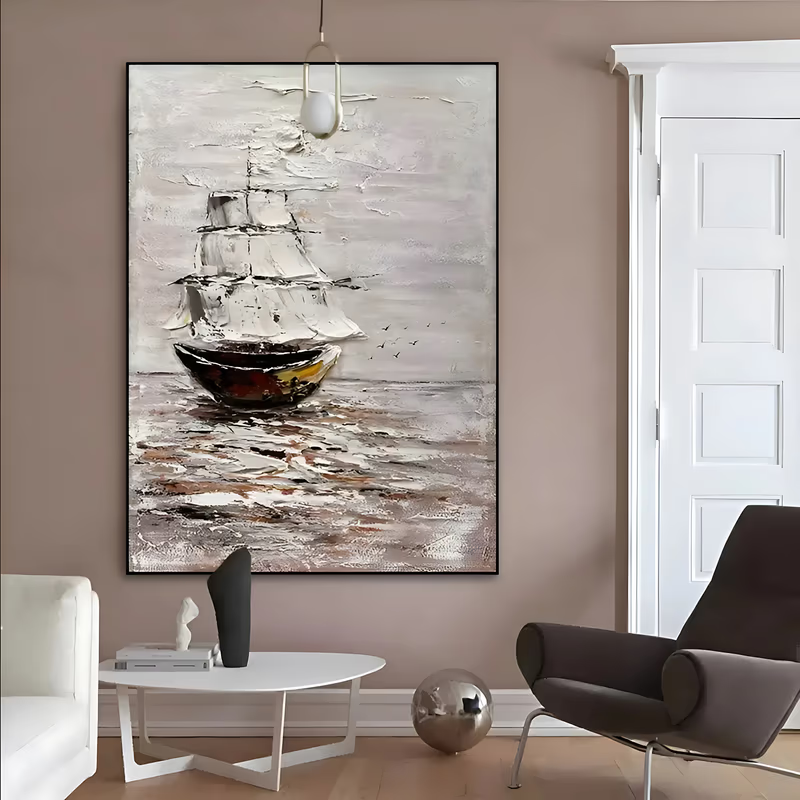
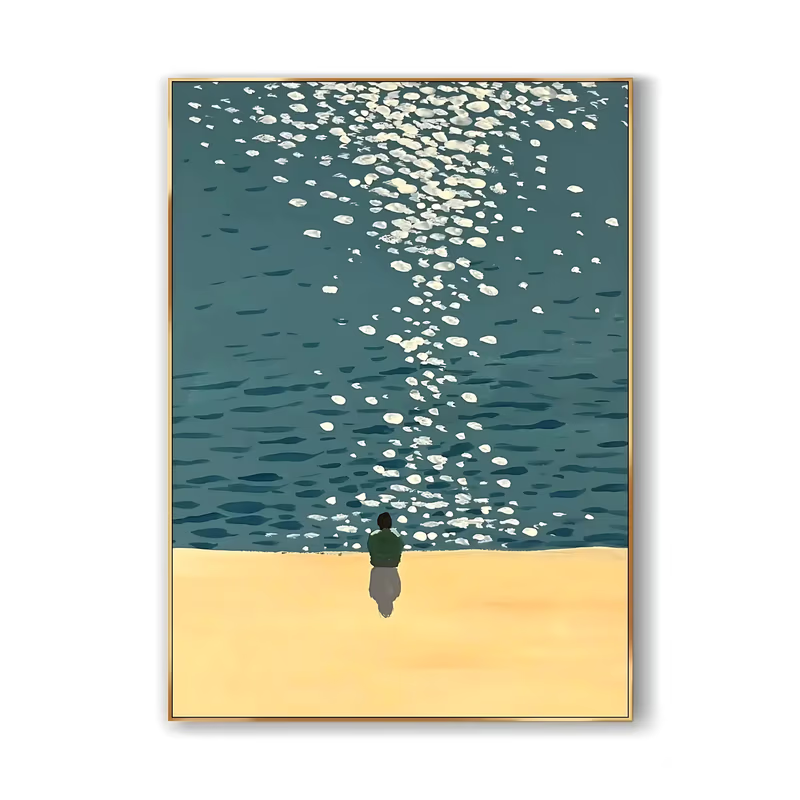
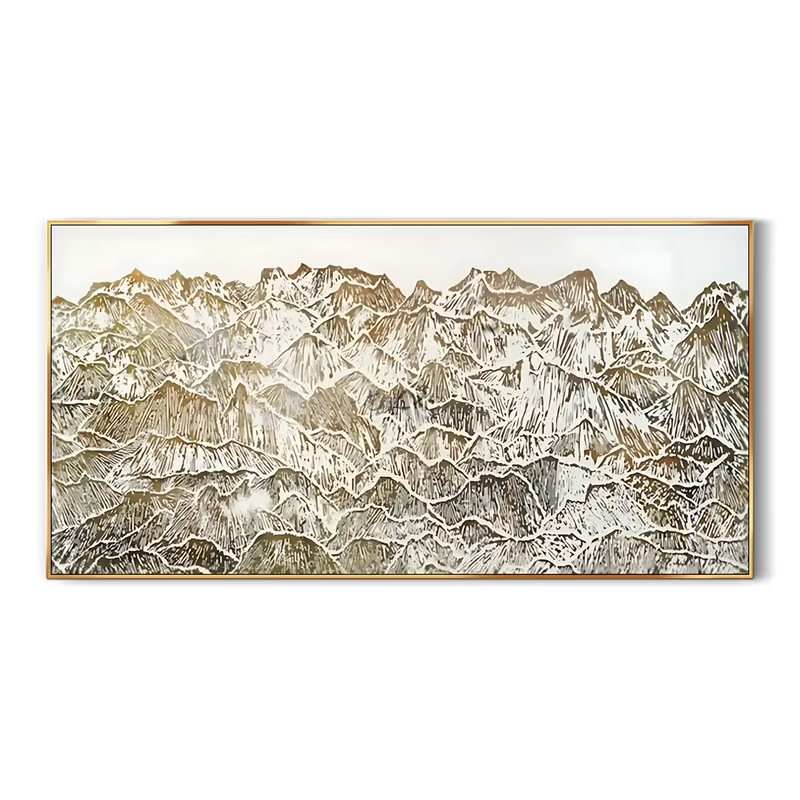
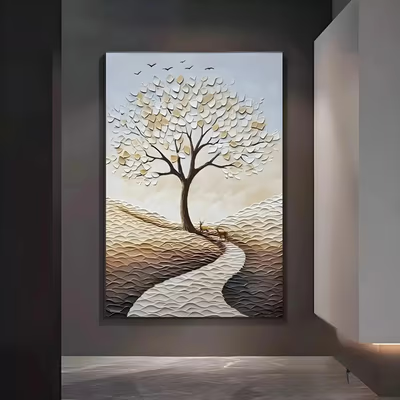
Alpine valleys, misty peaks above green hills, pine woods, snow along a winter stream, a tall ship on a gray sea. A long horizon gives a closed meeting room depth, and impressionist brushwork keeps it from looking like a photograph on the wall.
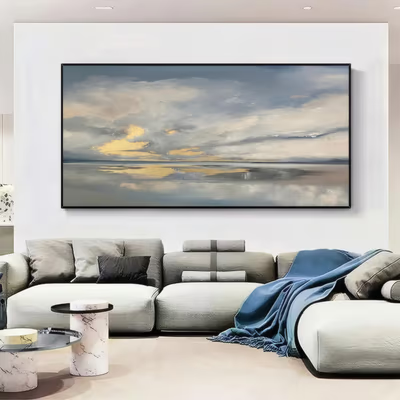
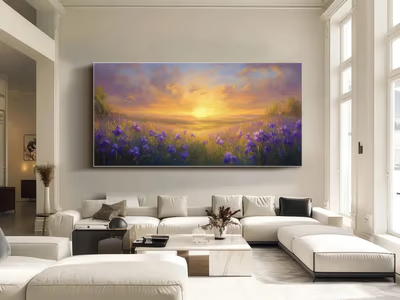
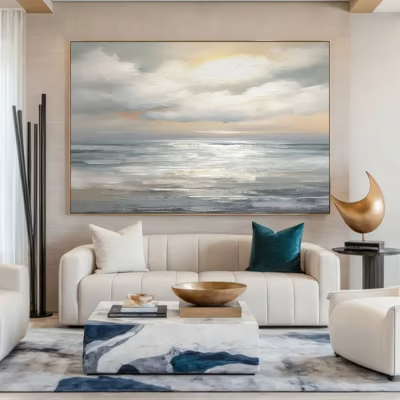
Restrained geometric abstracts
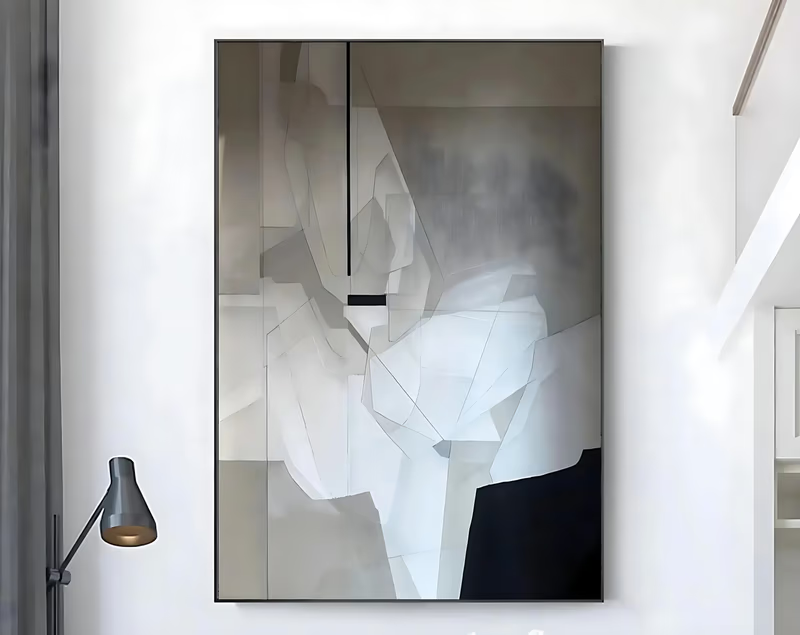
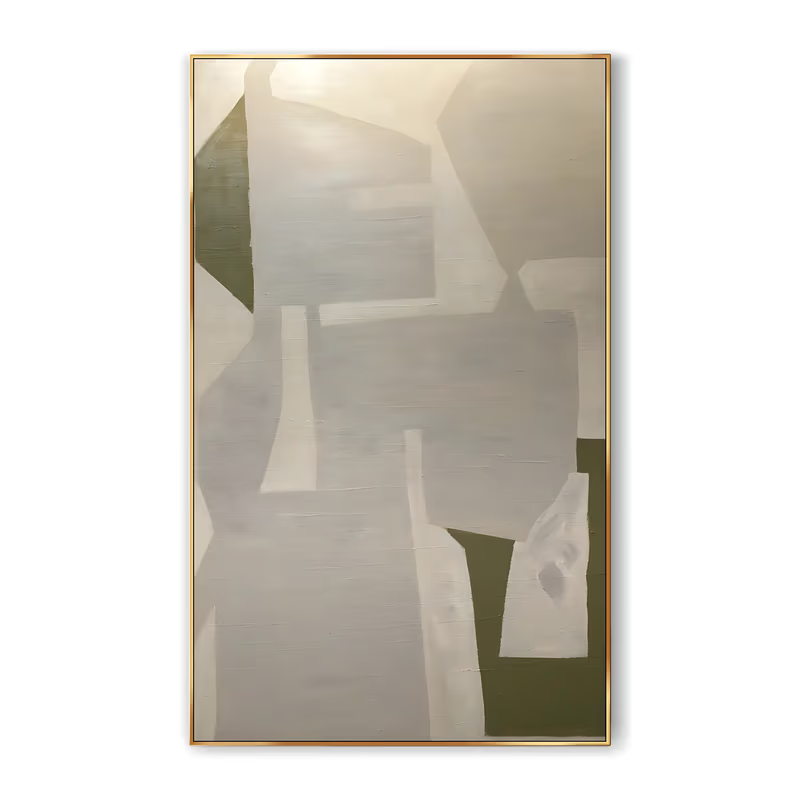
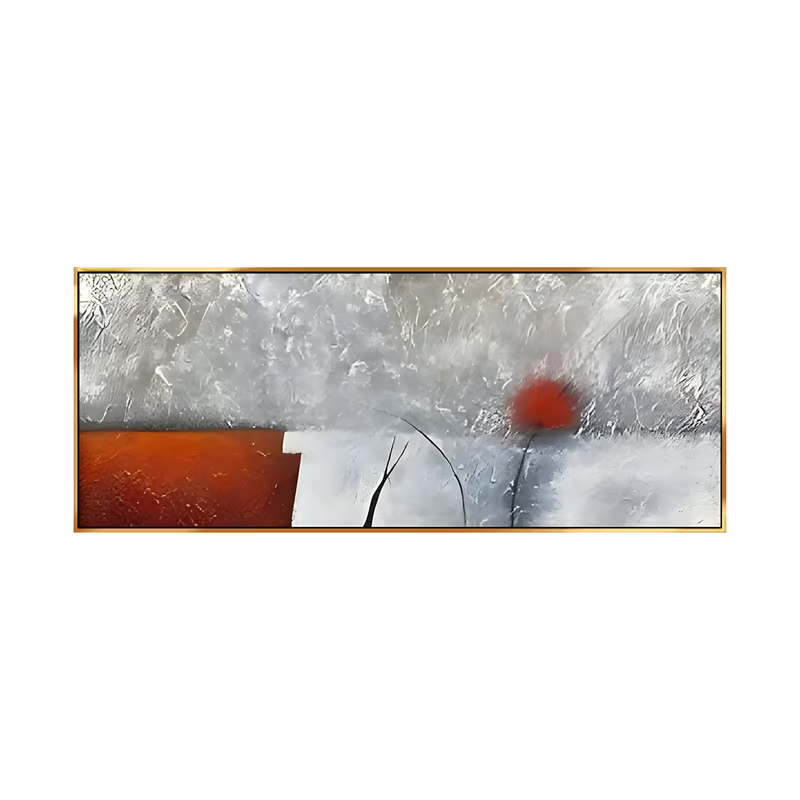
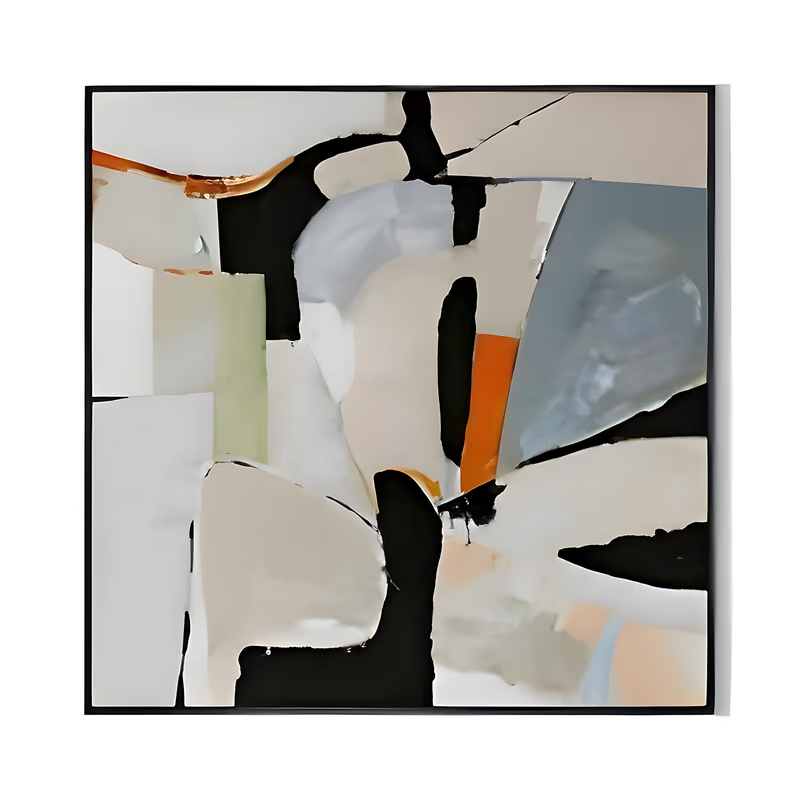
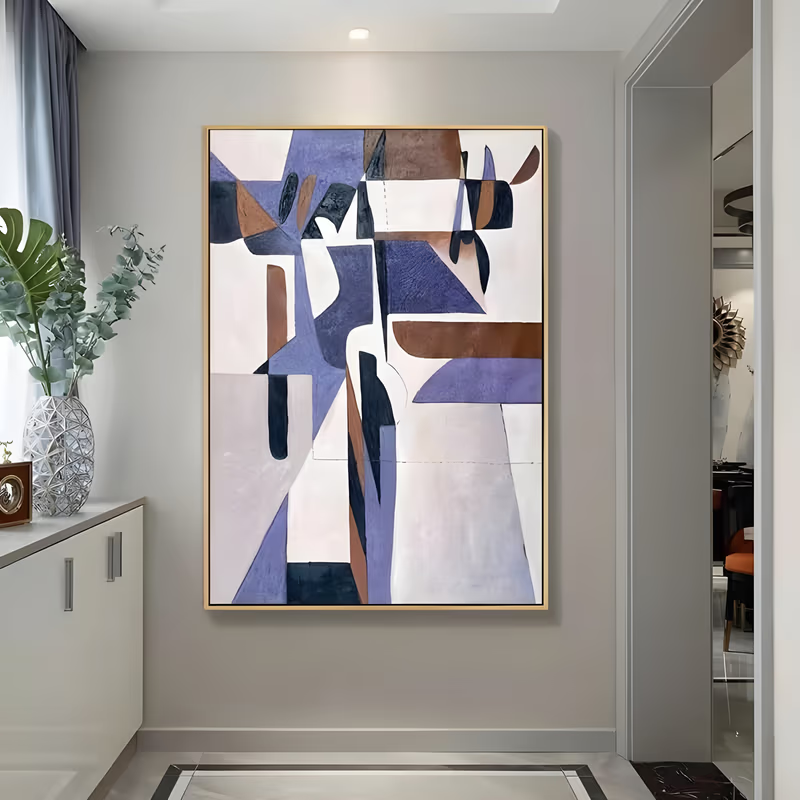
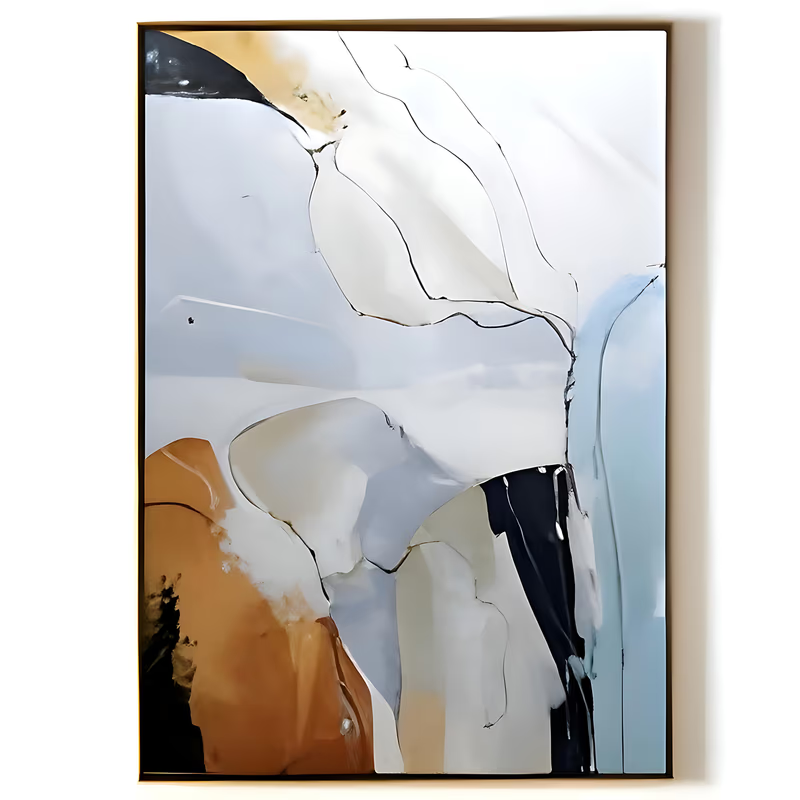
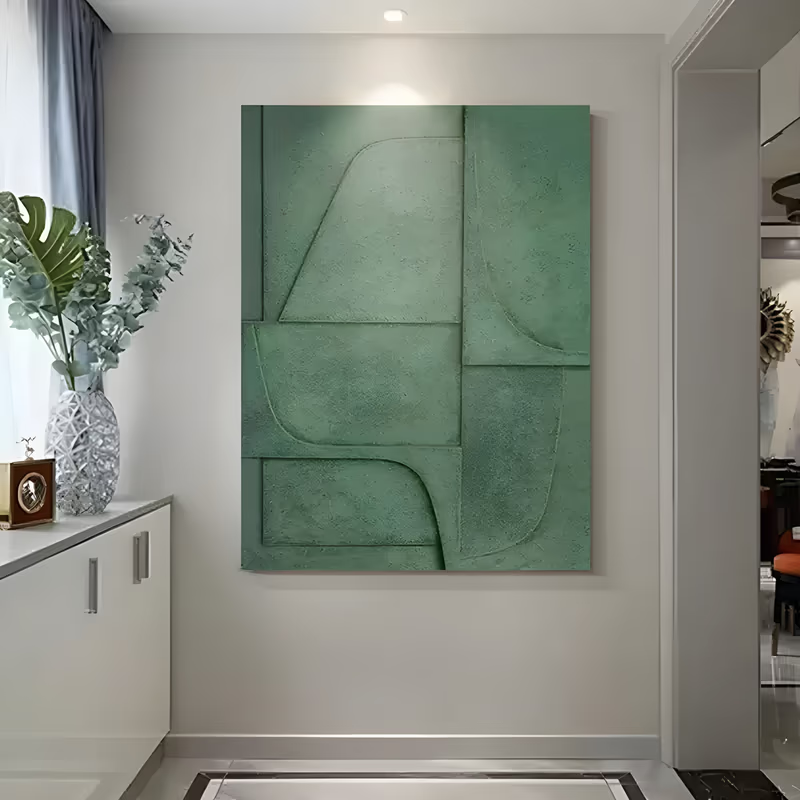
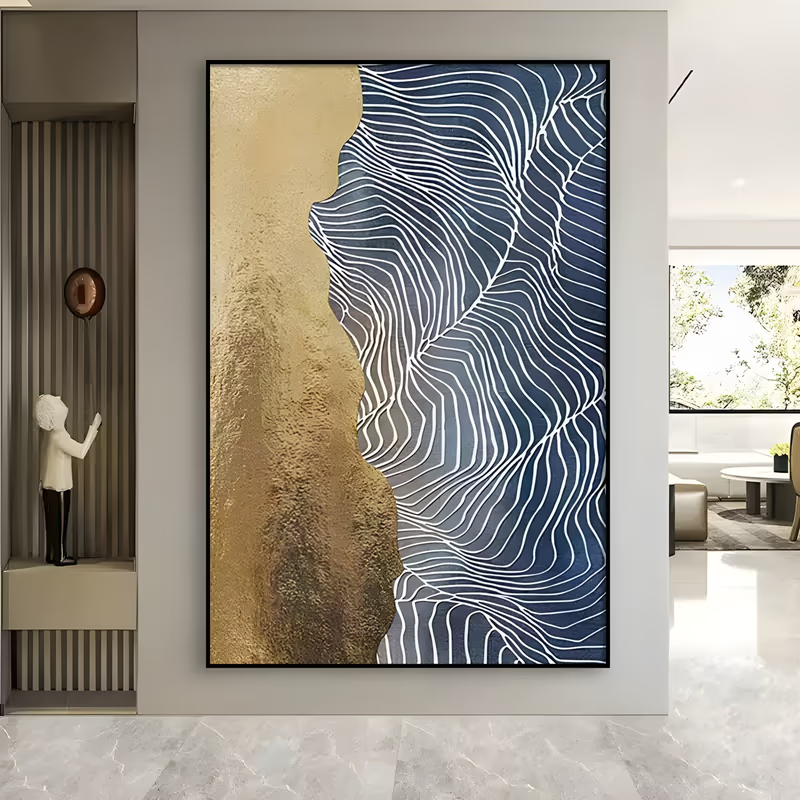
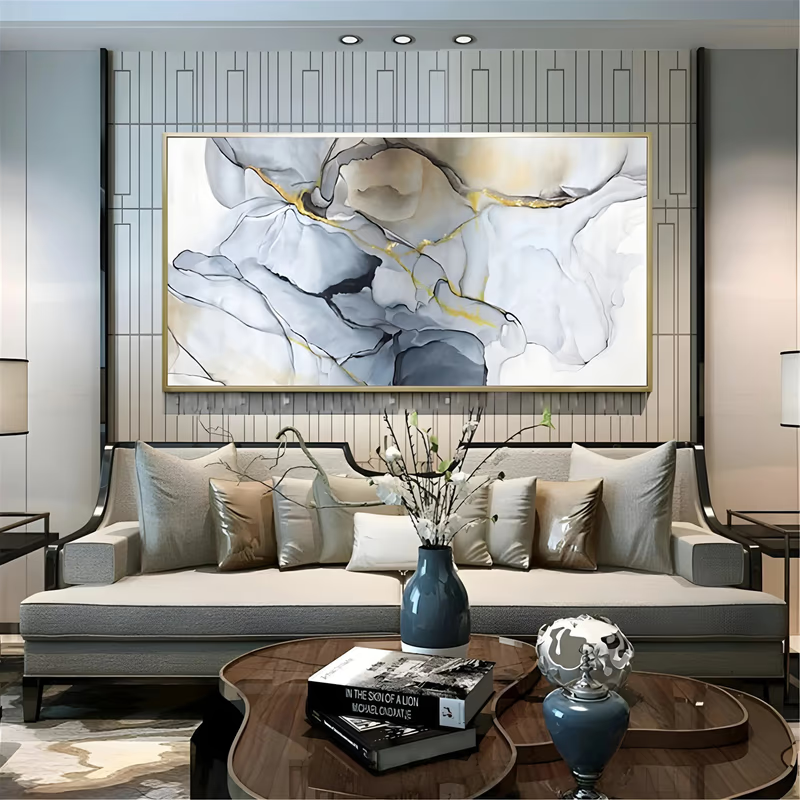
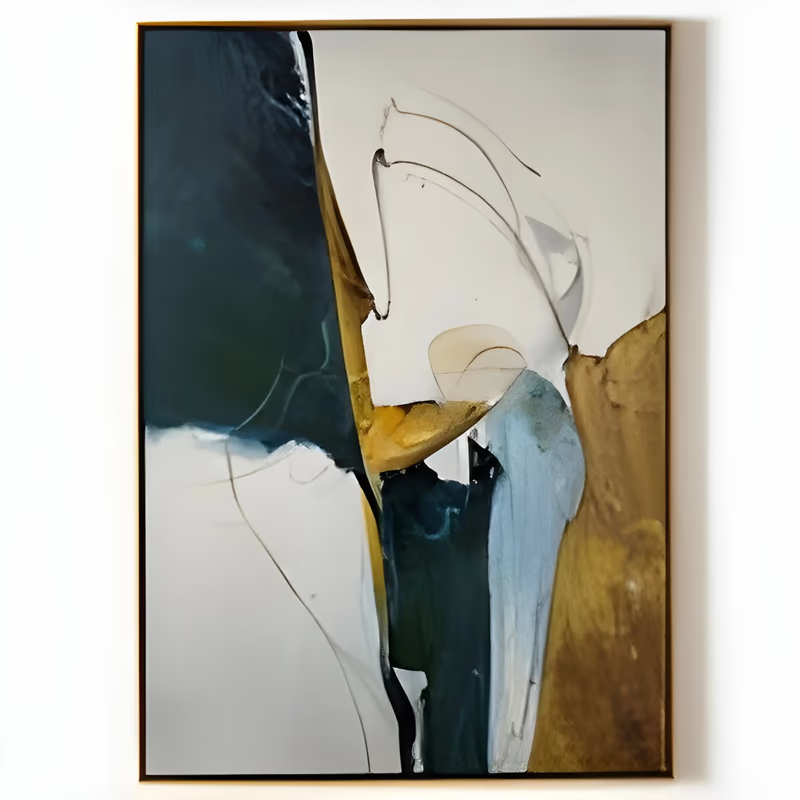
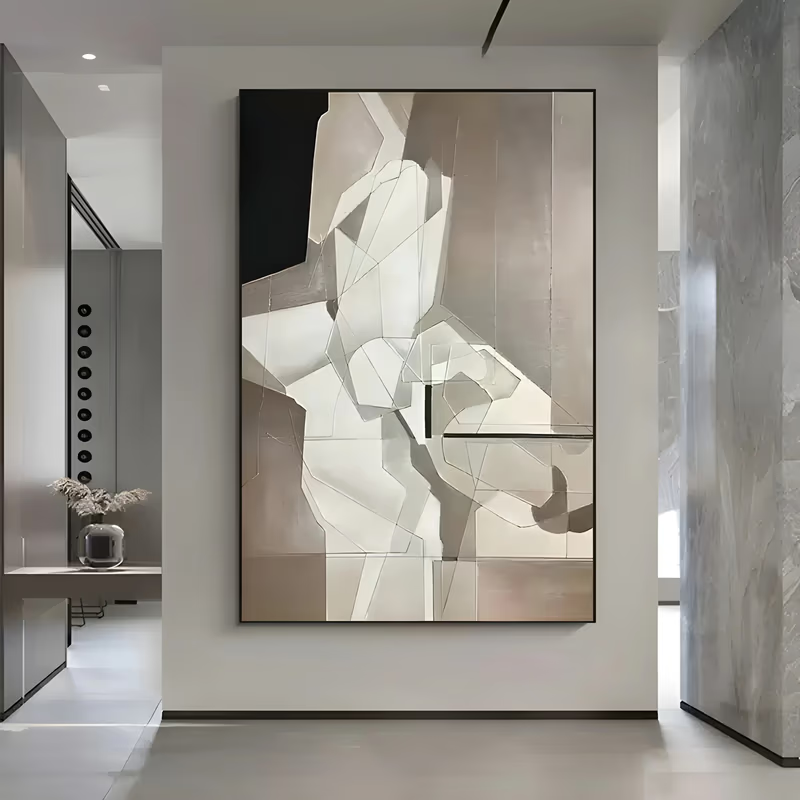
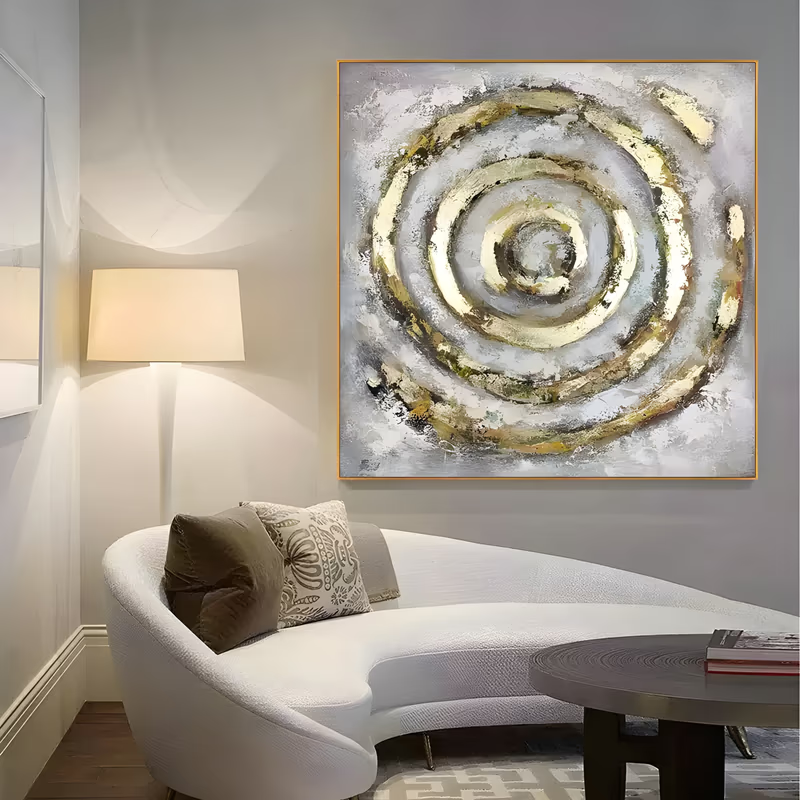
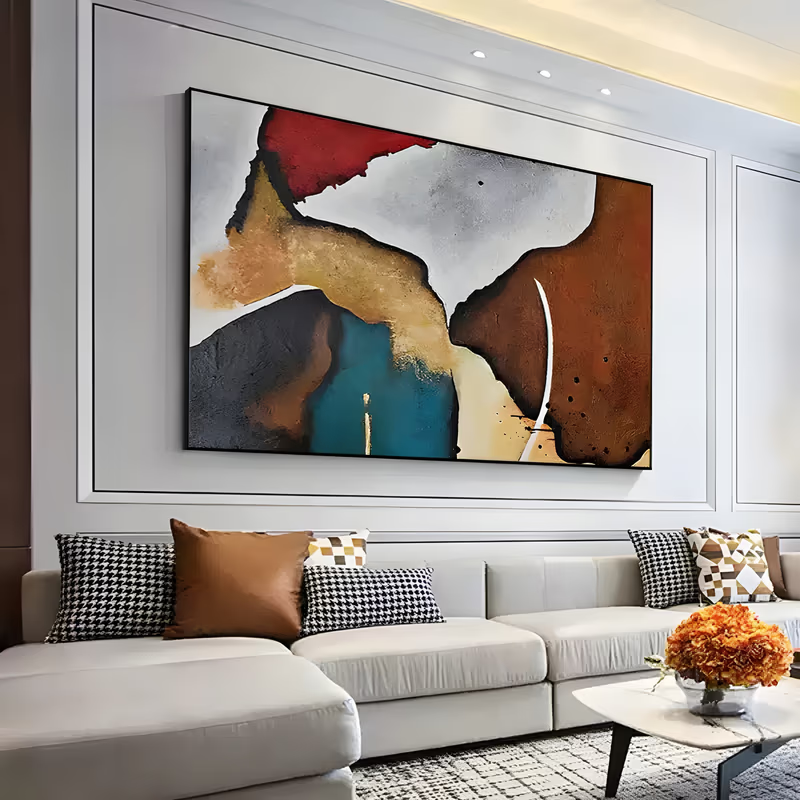
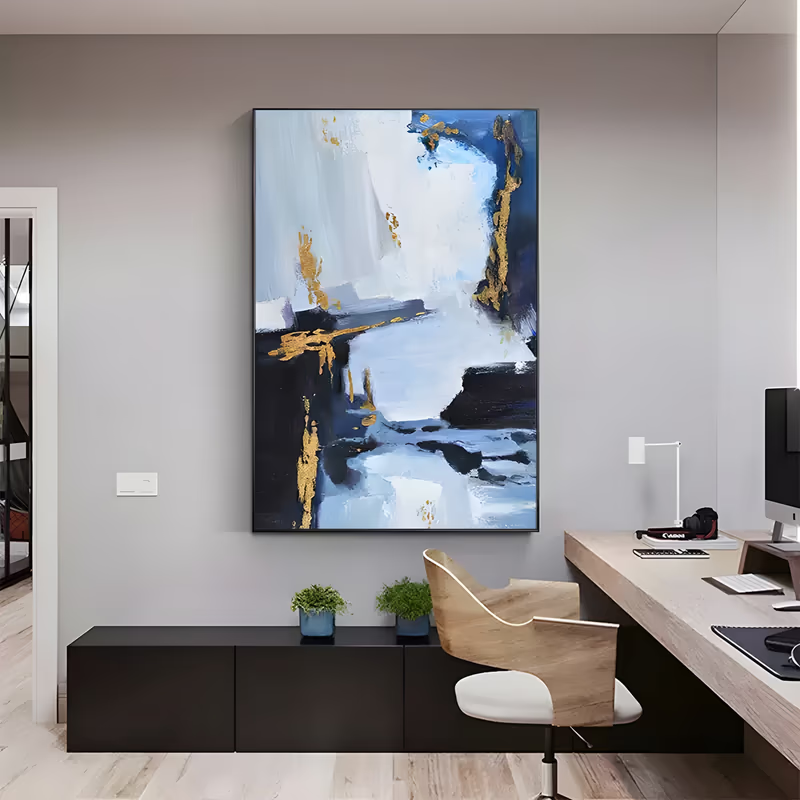
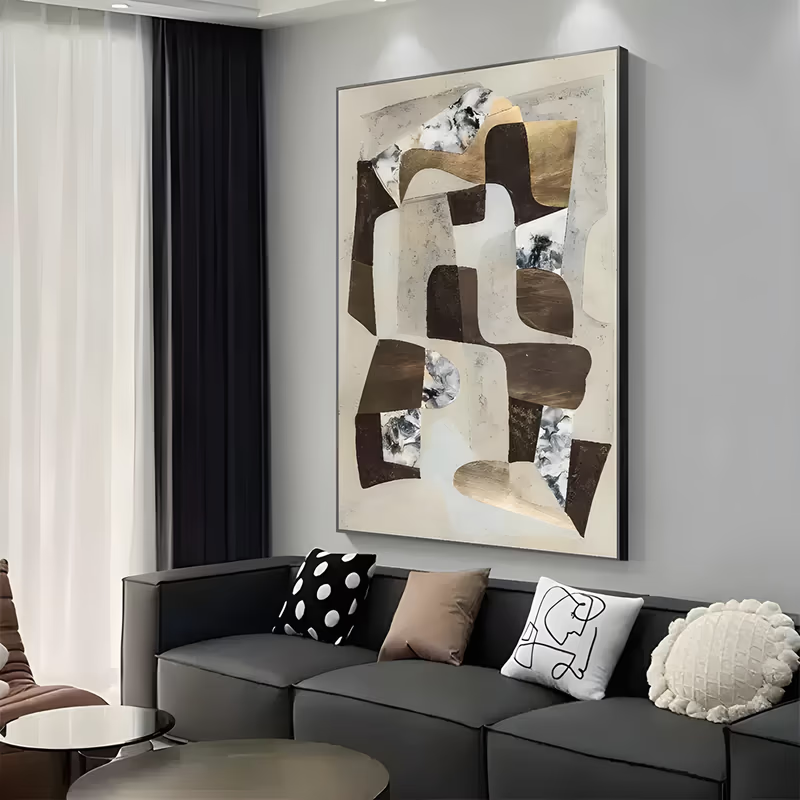
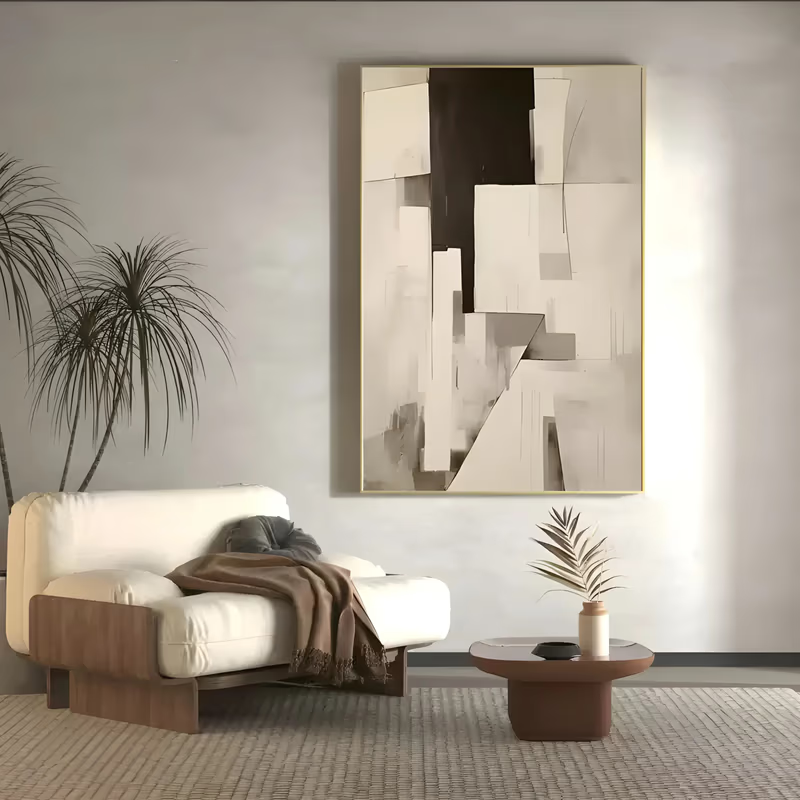
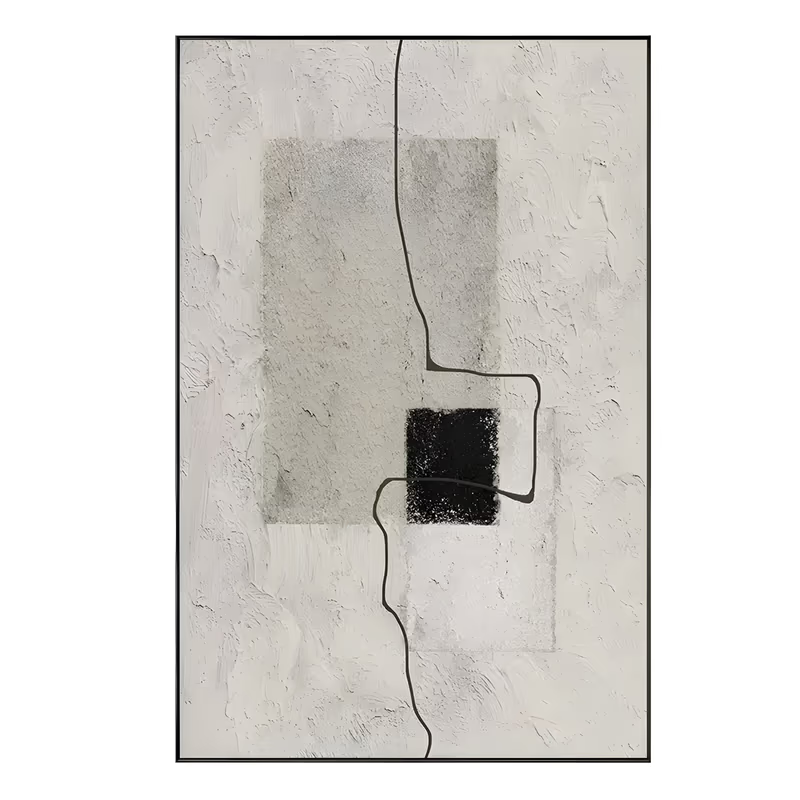
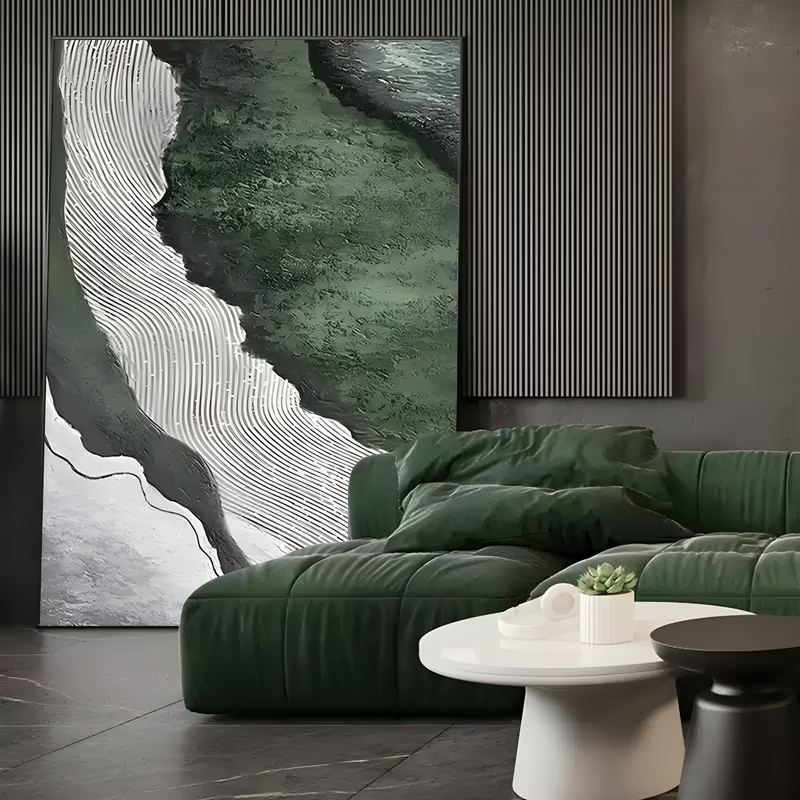
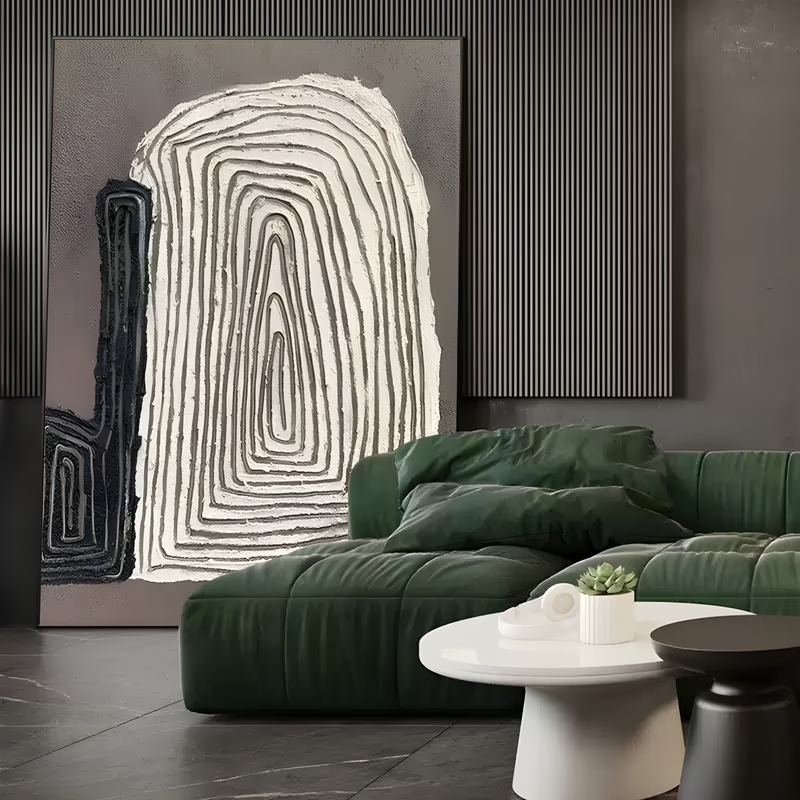
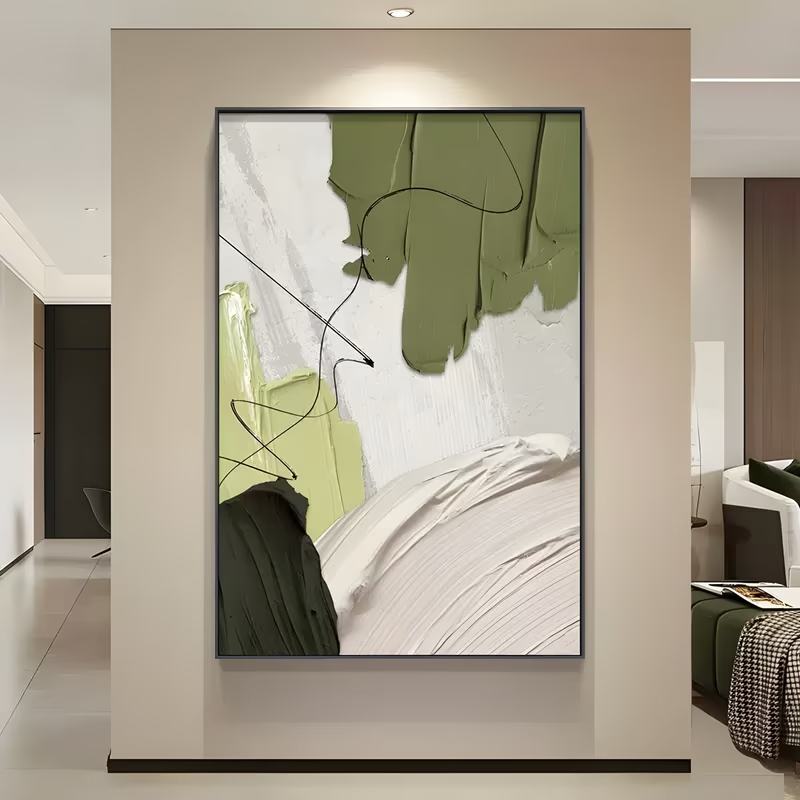
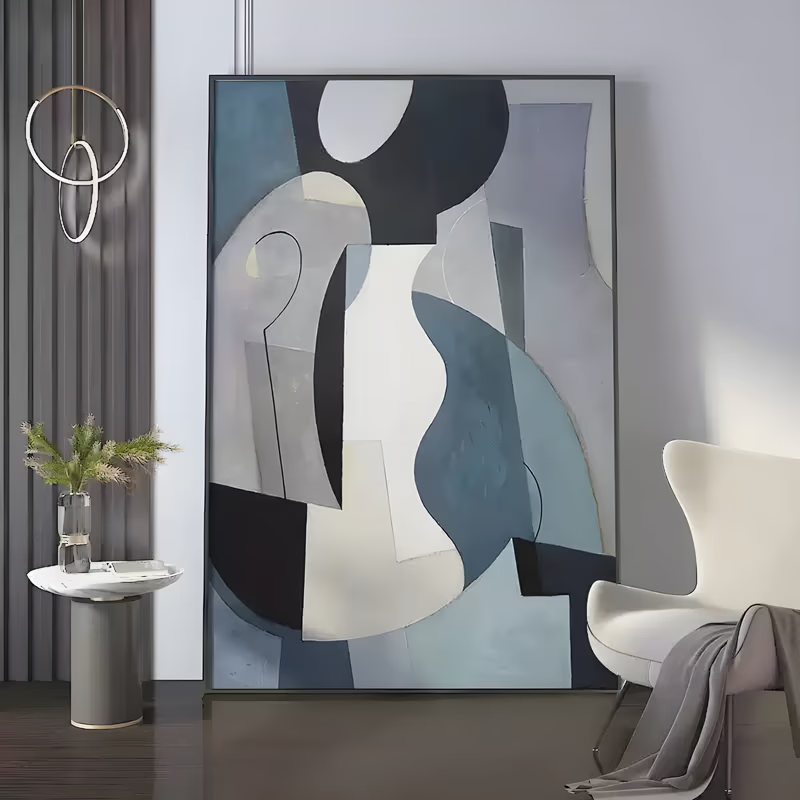
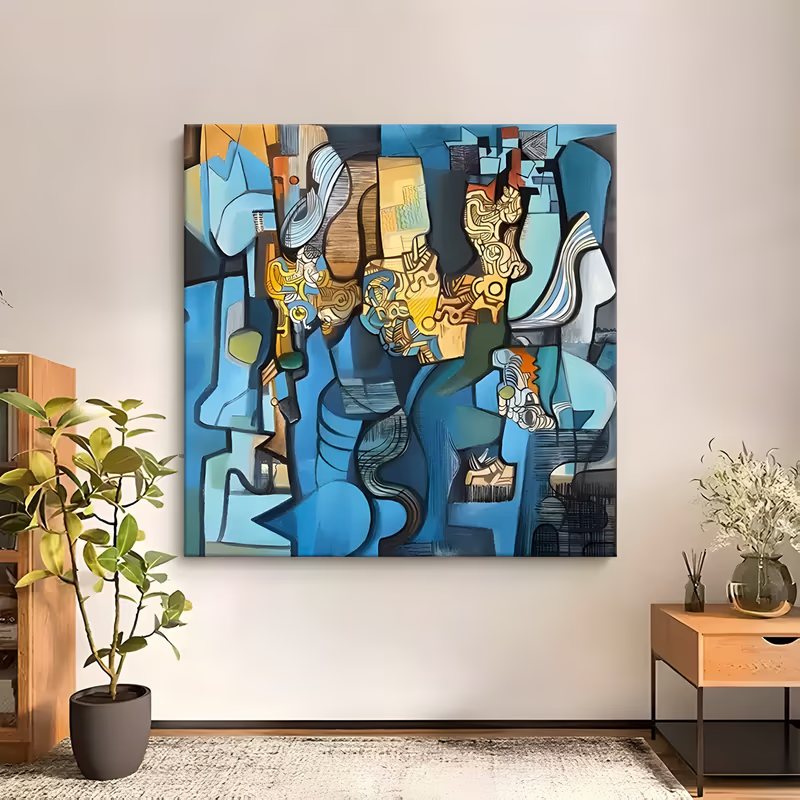
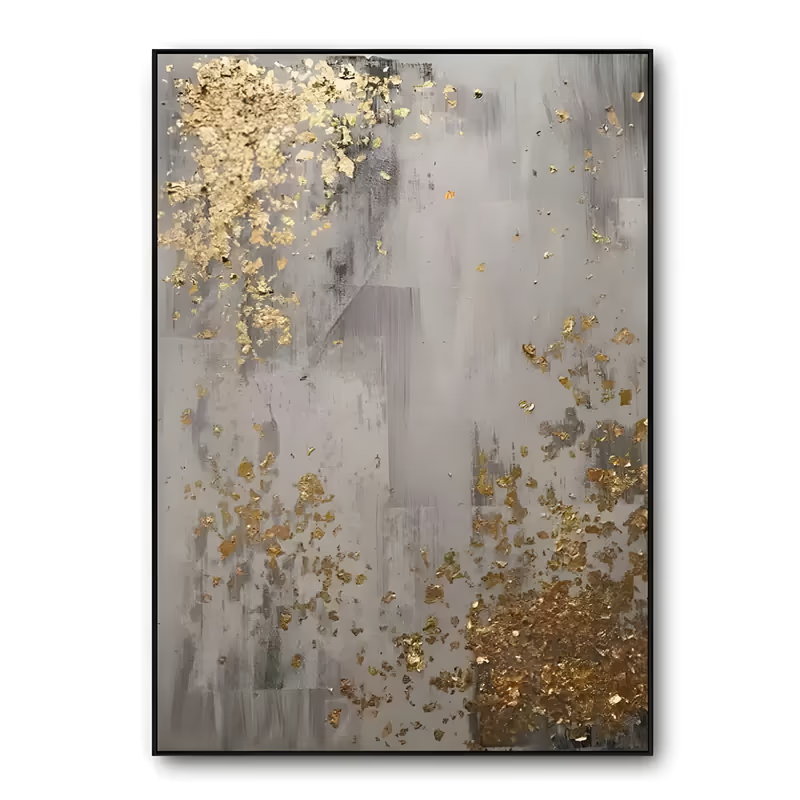
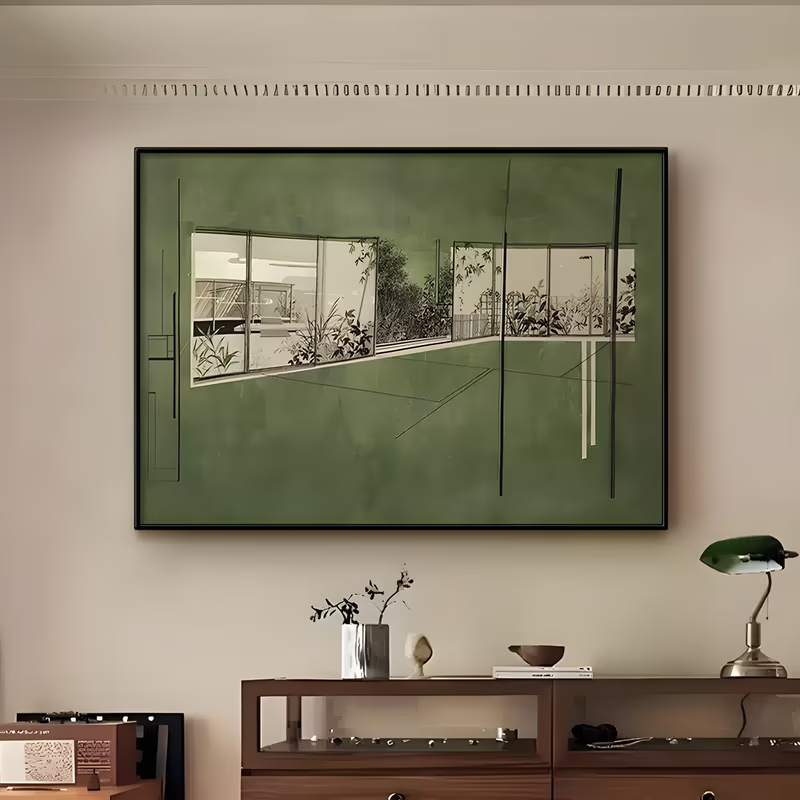
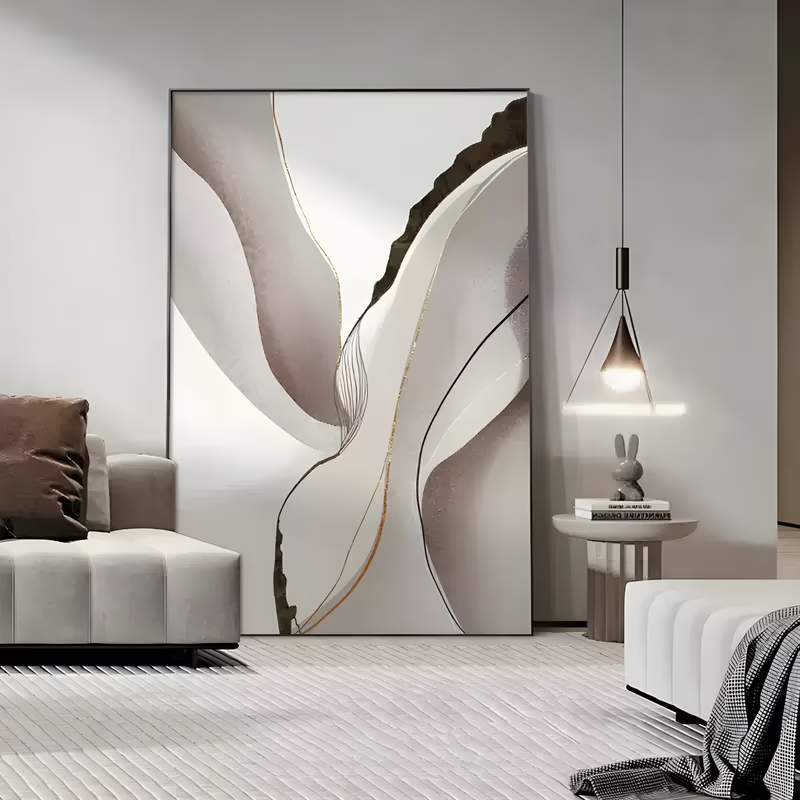
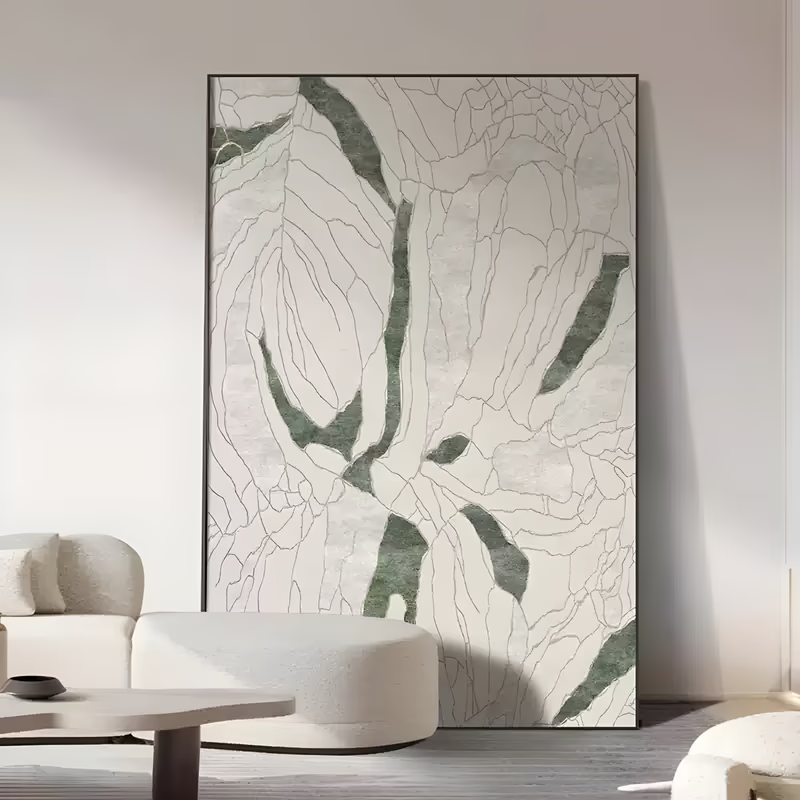
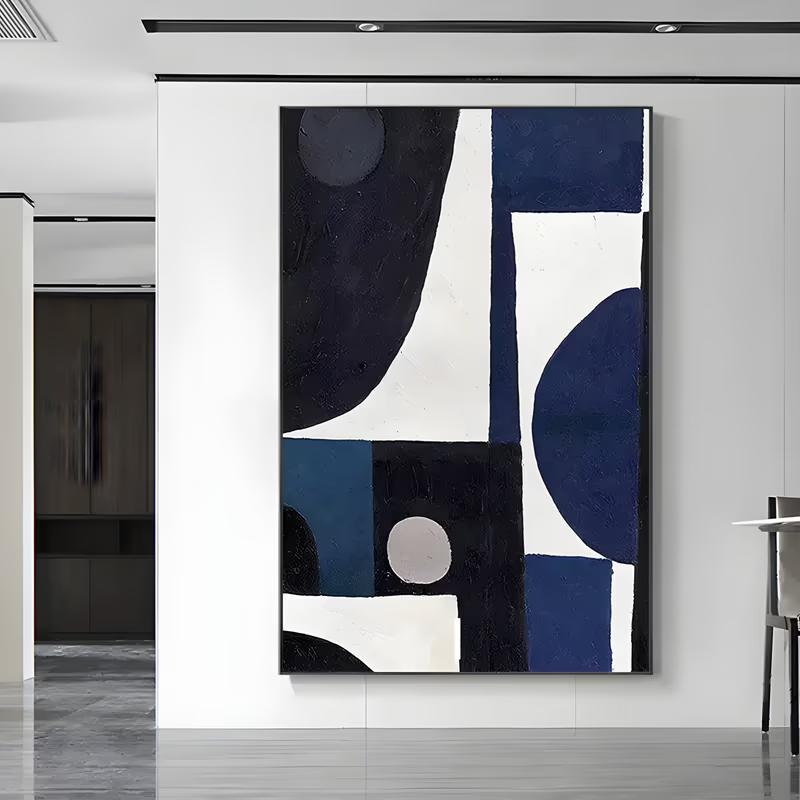
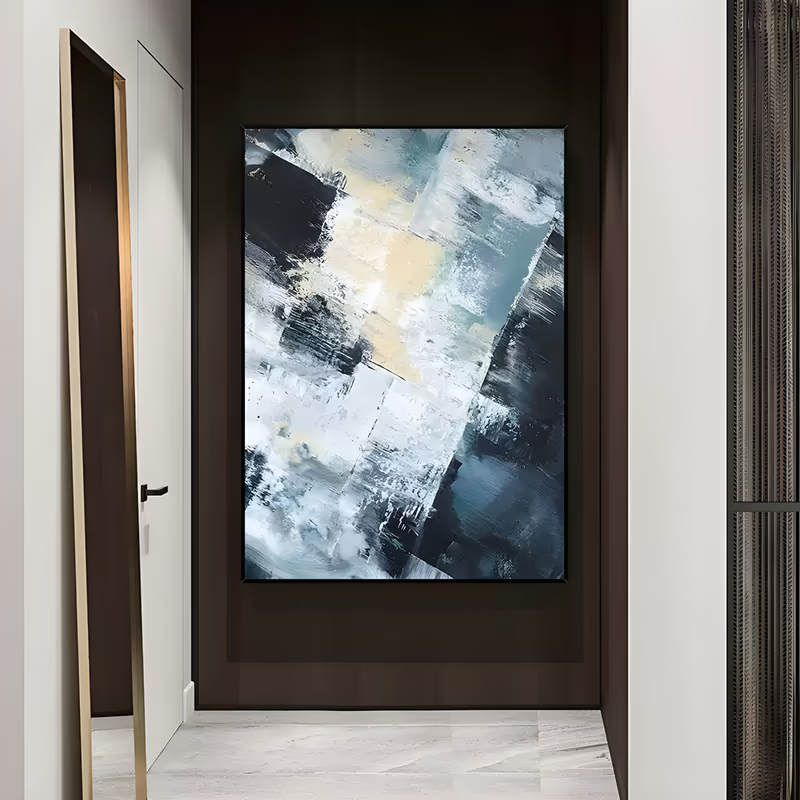
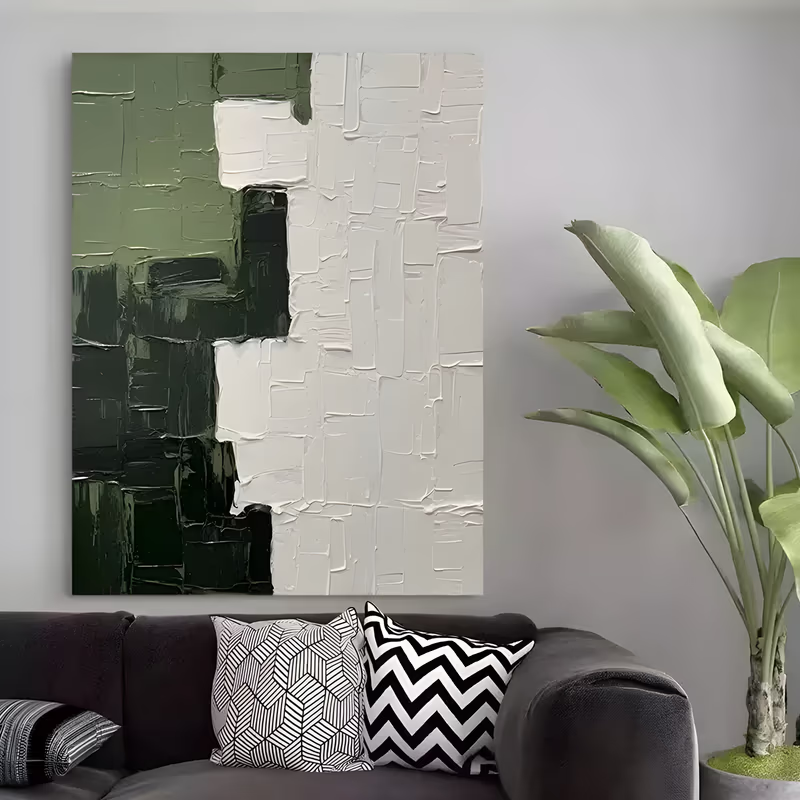
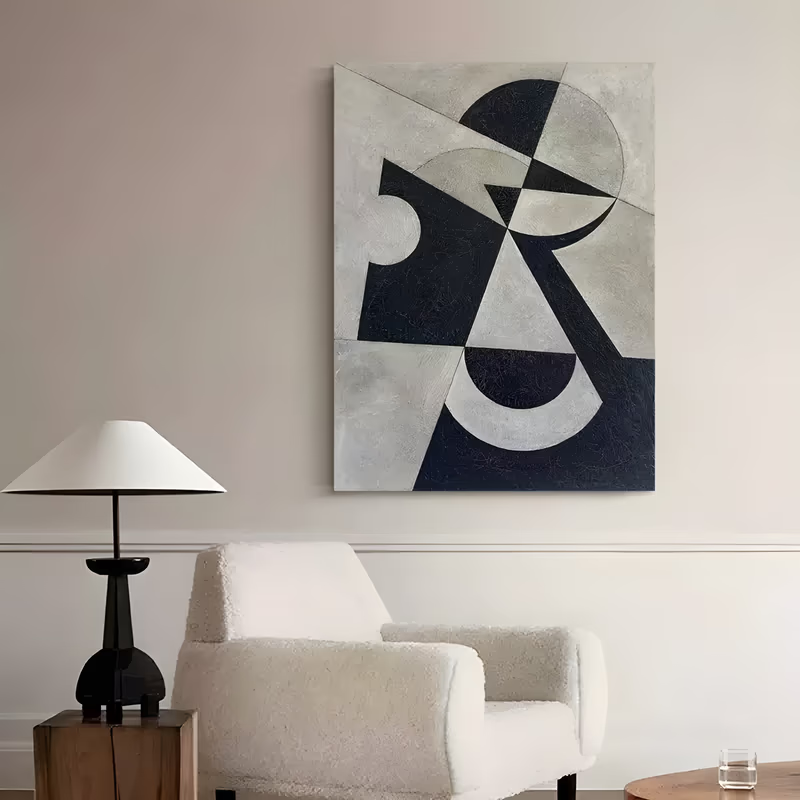
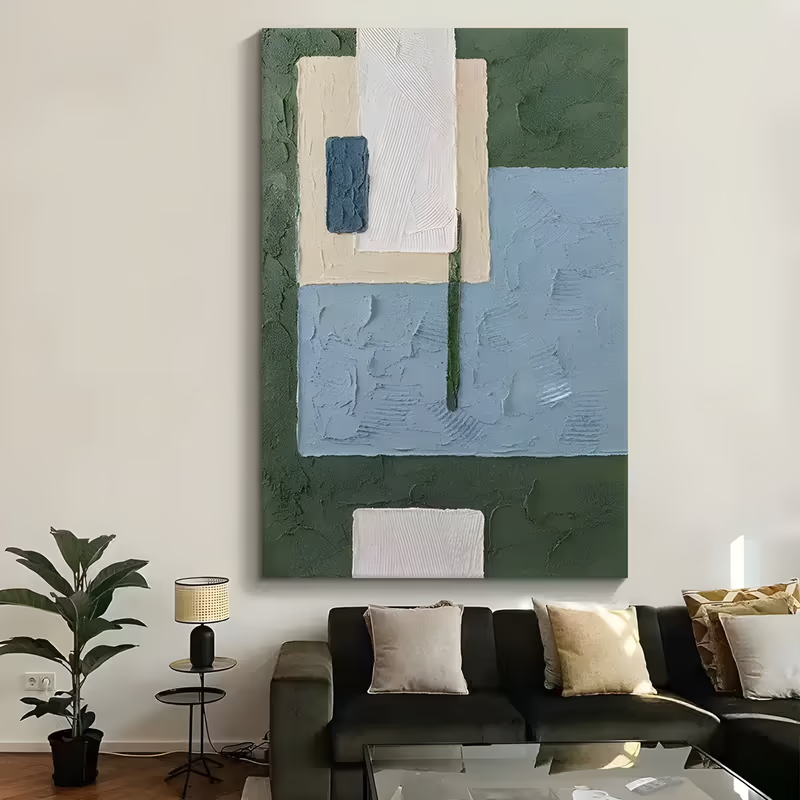
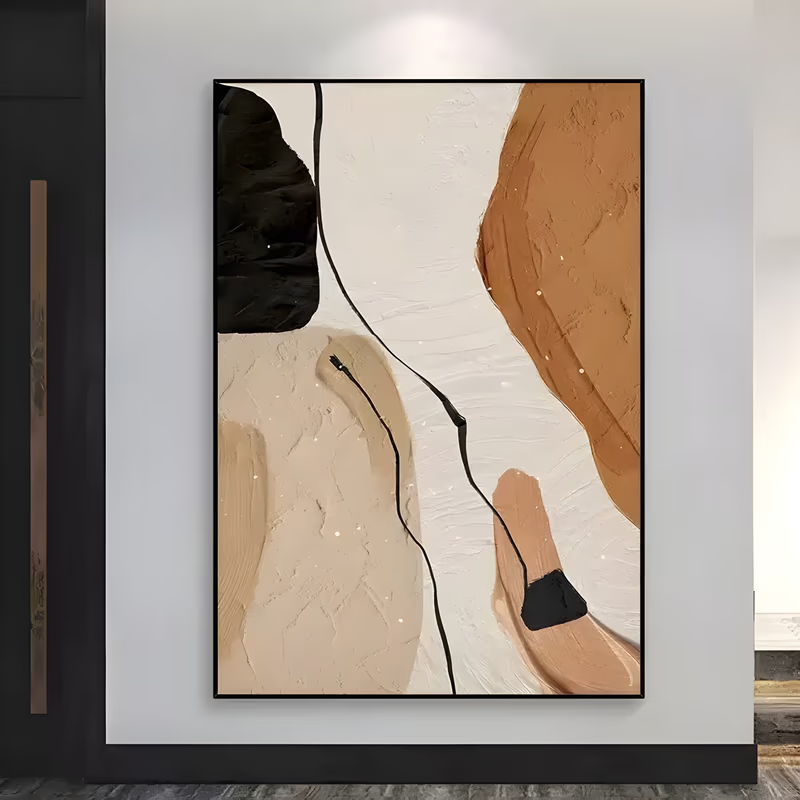
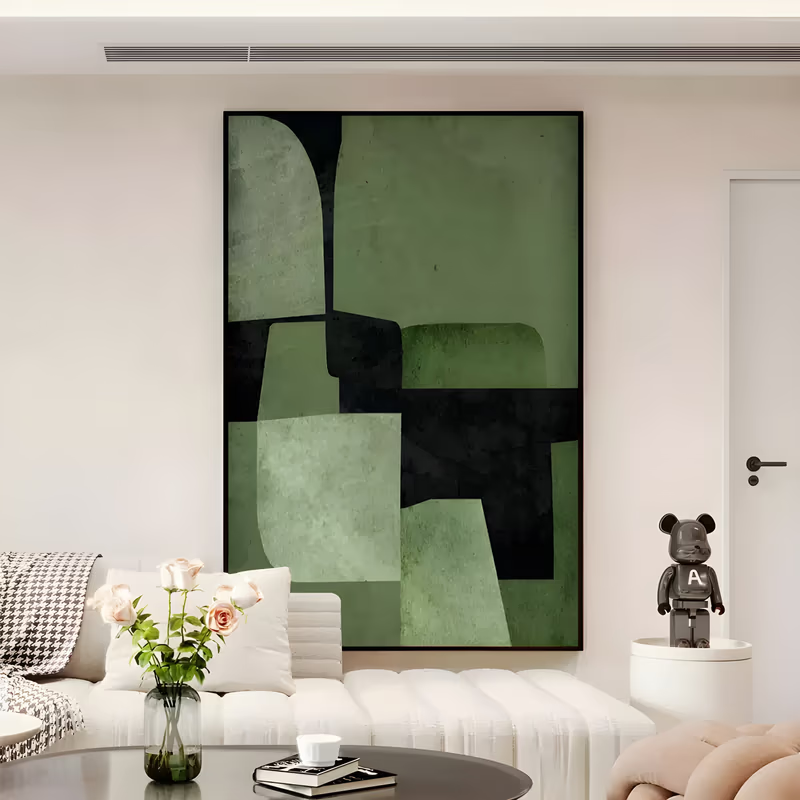
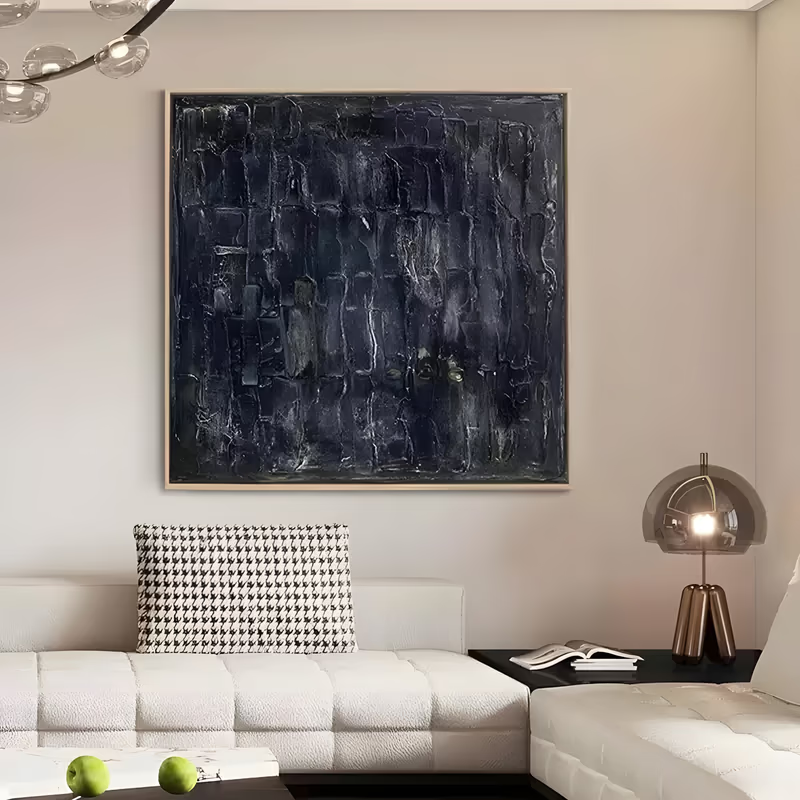
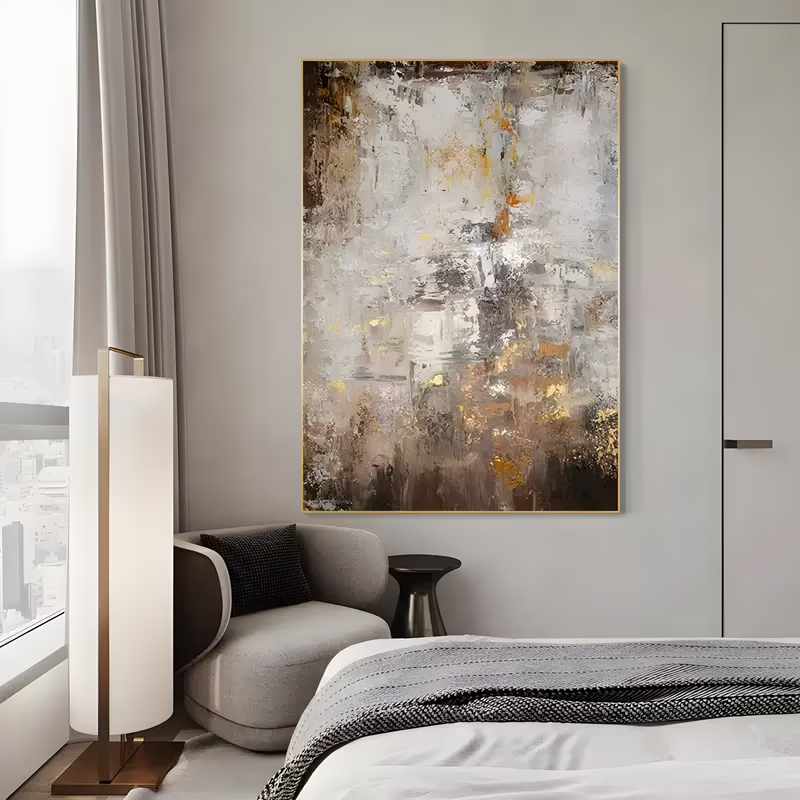
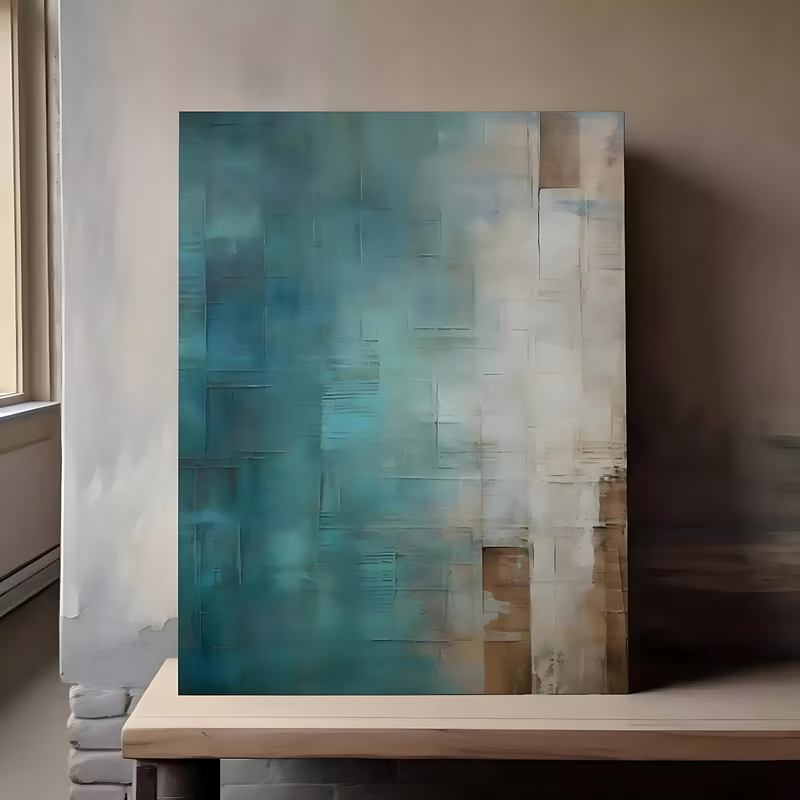
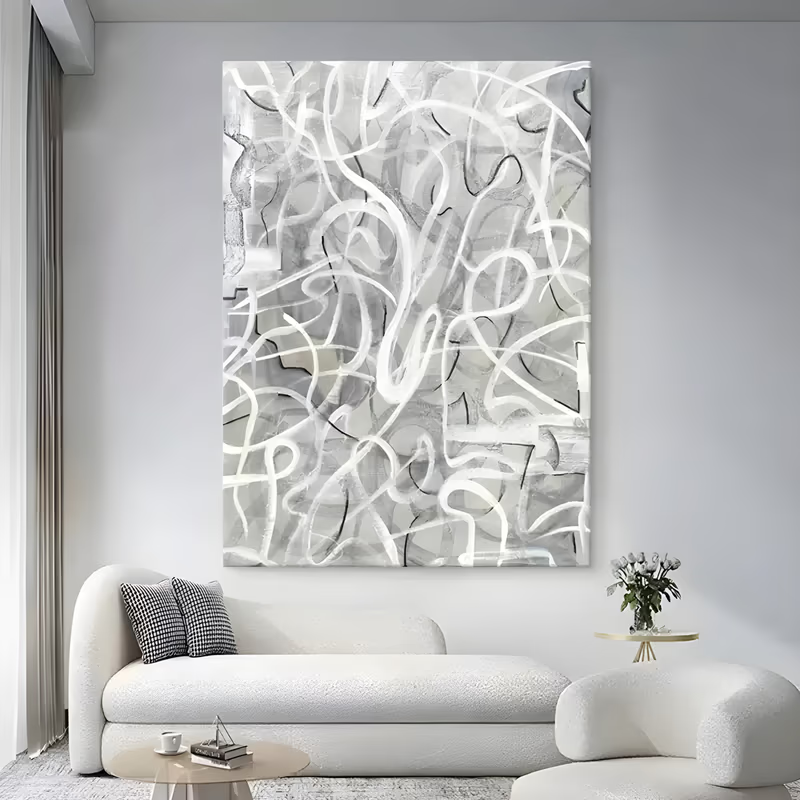
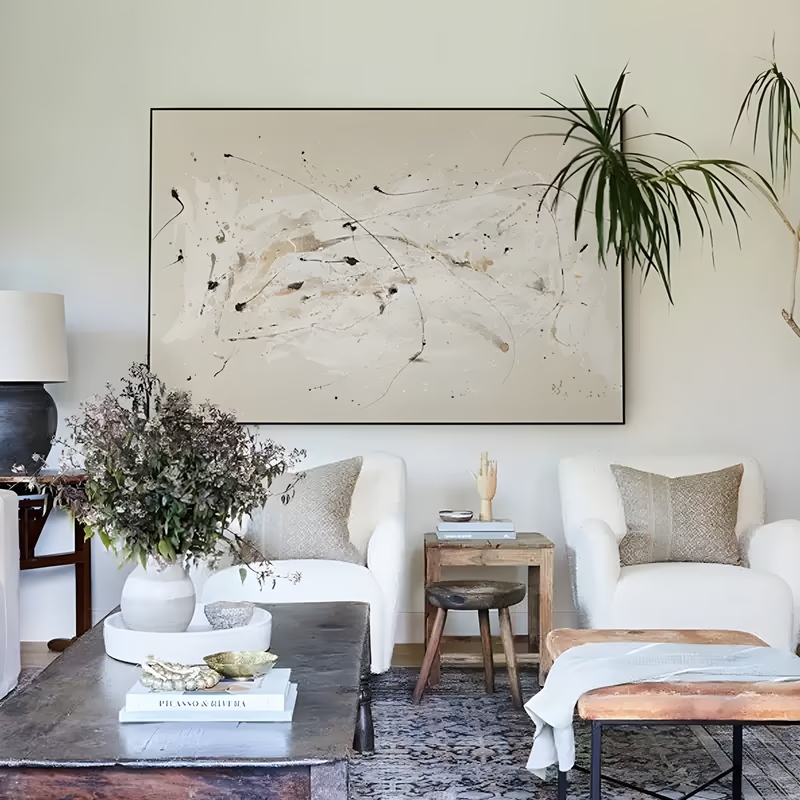
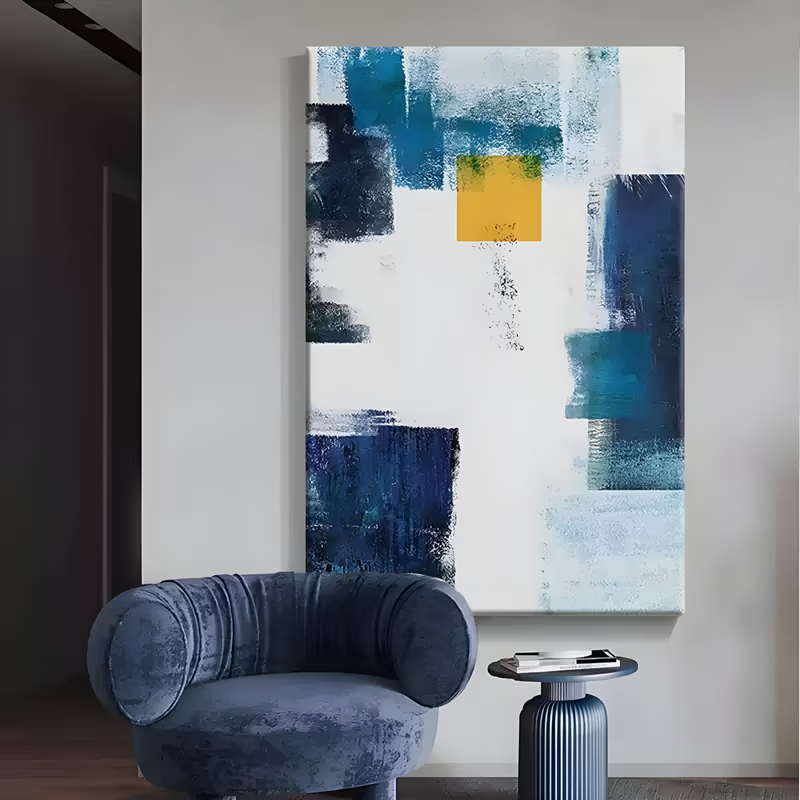
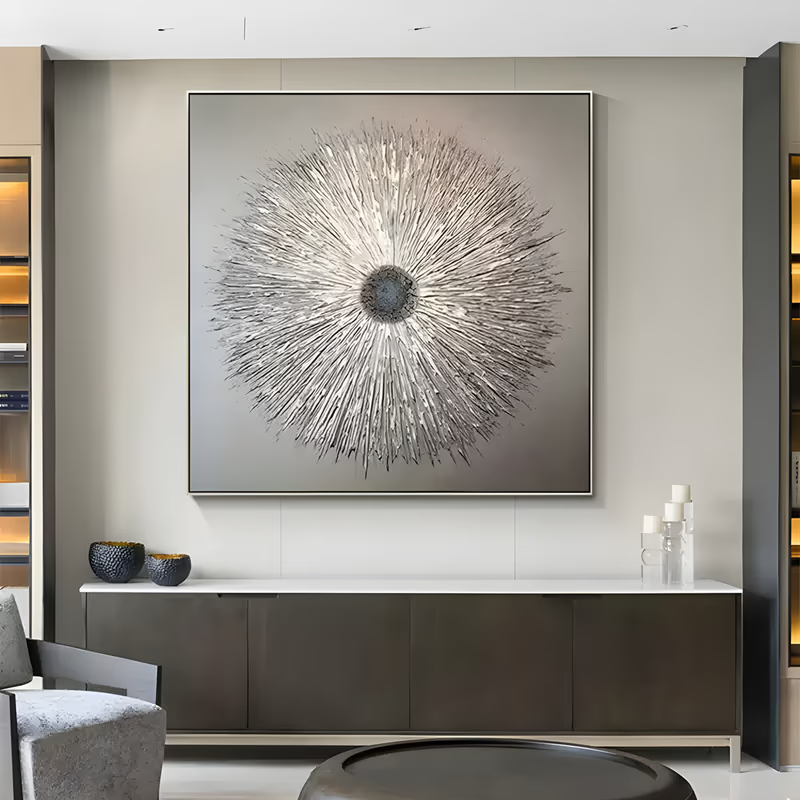
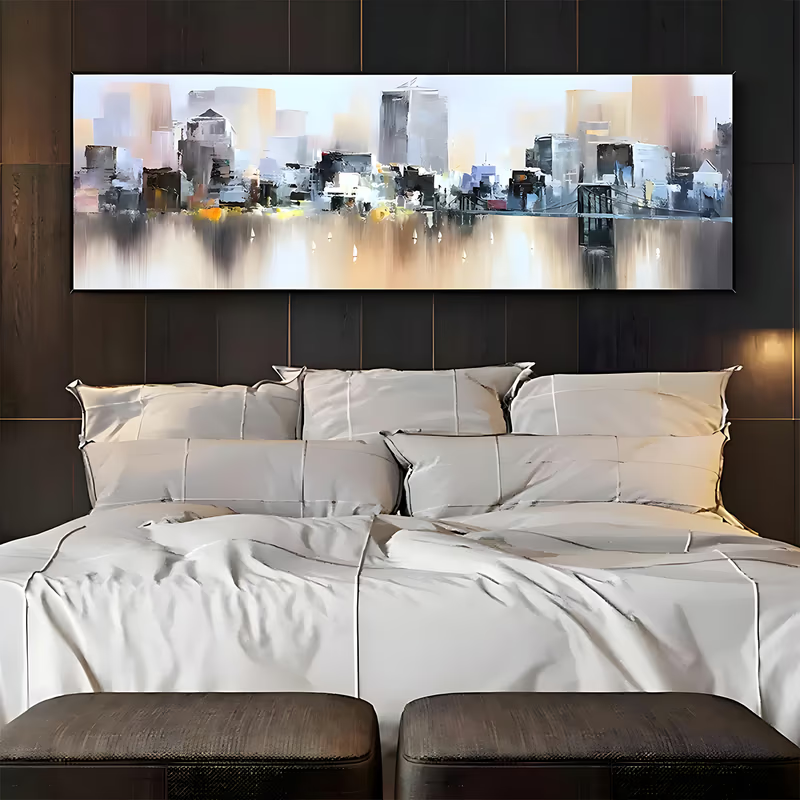
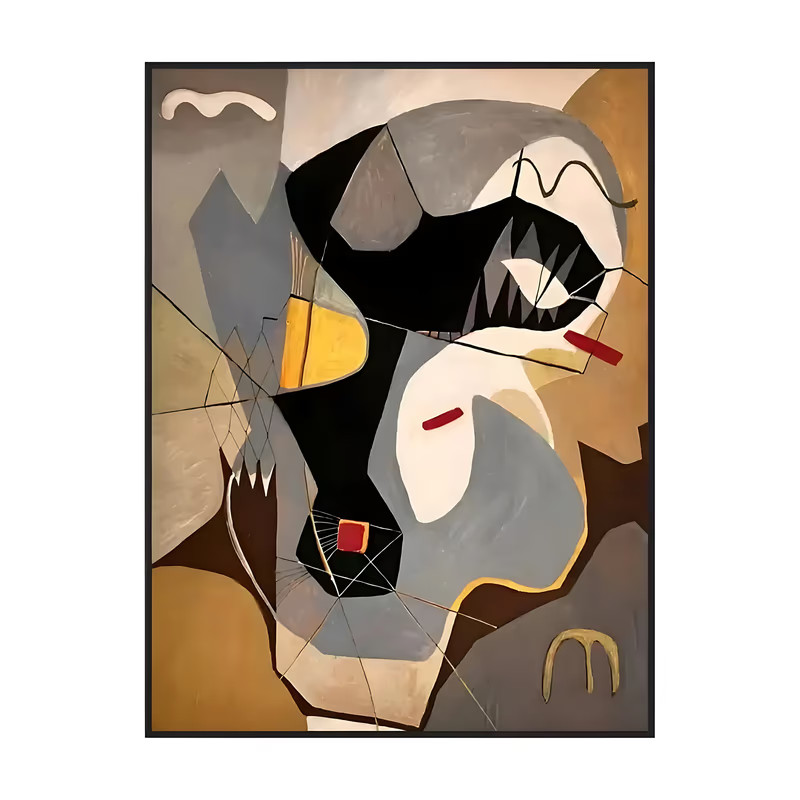
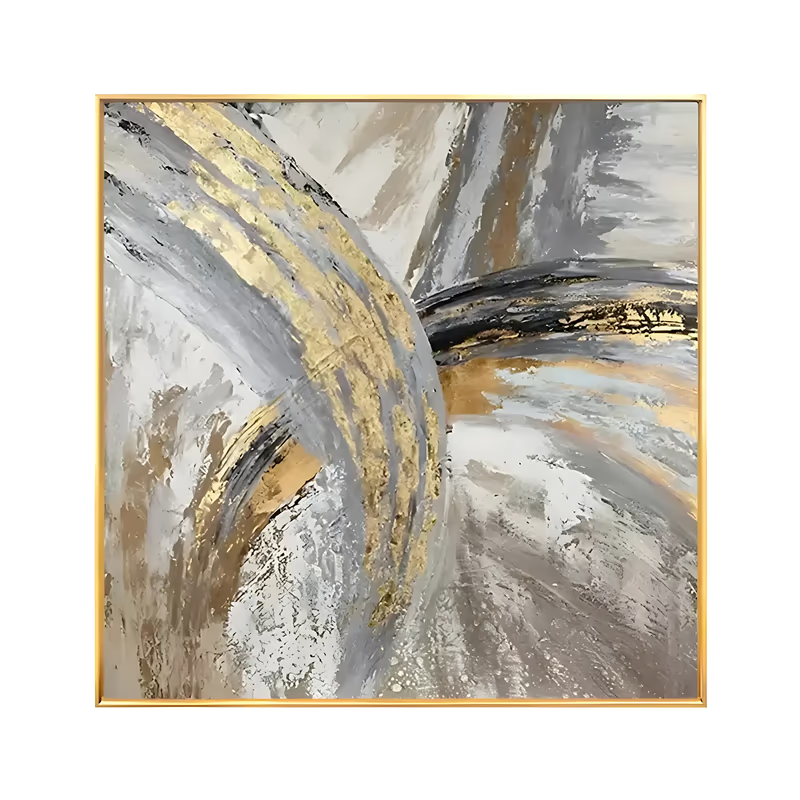
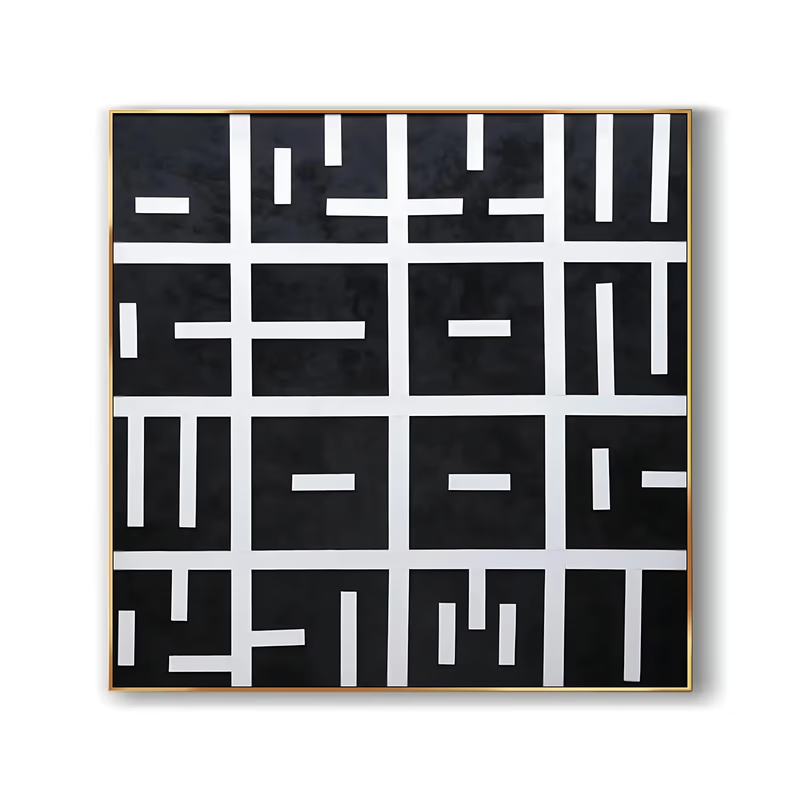
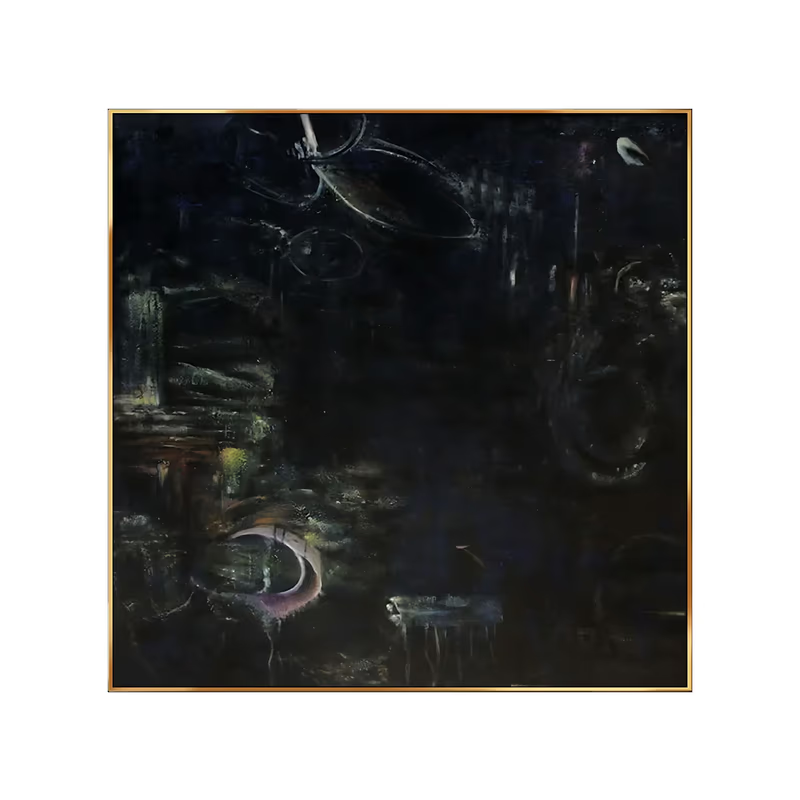
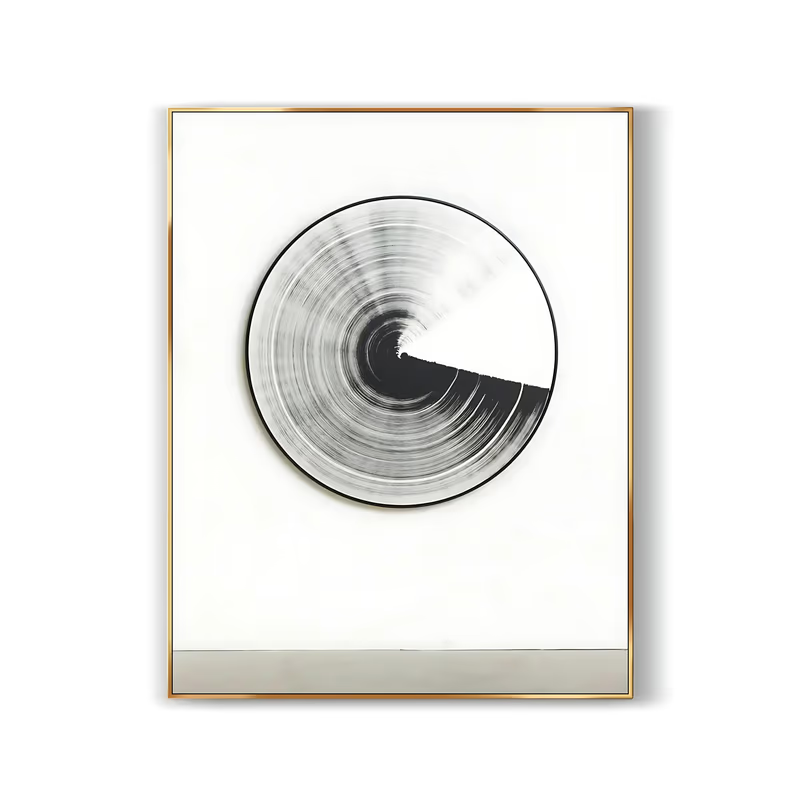
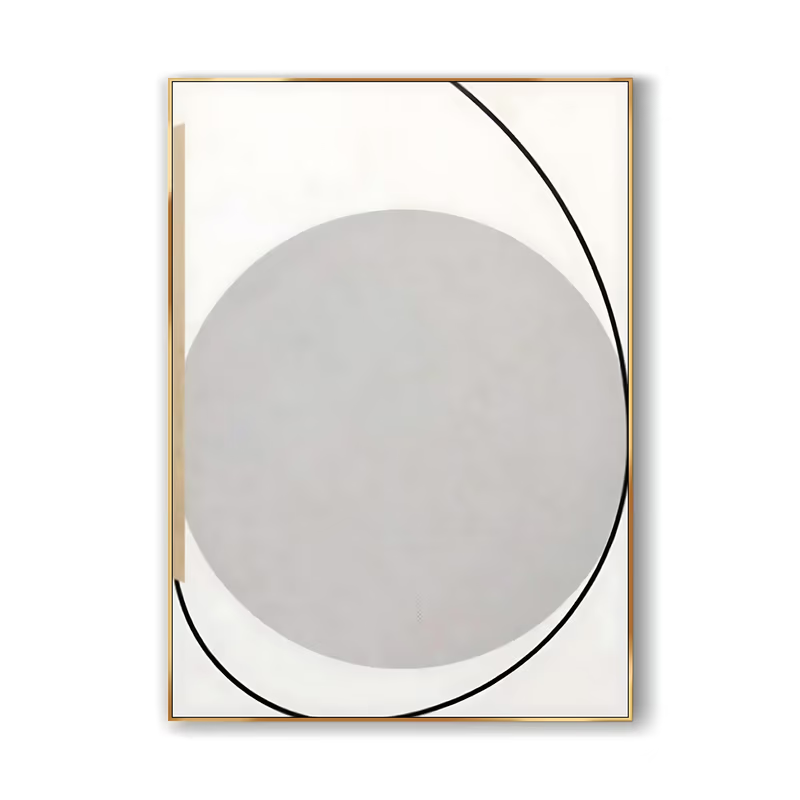
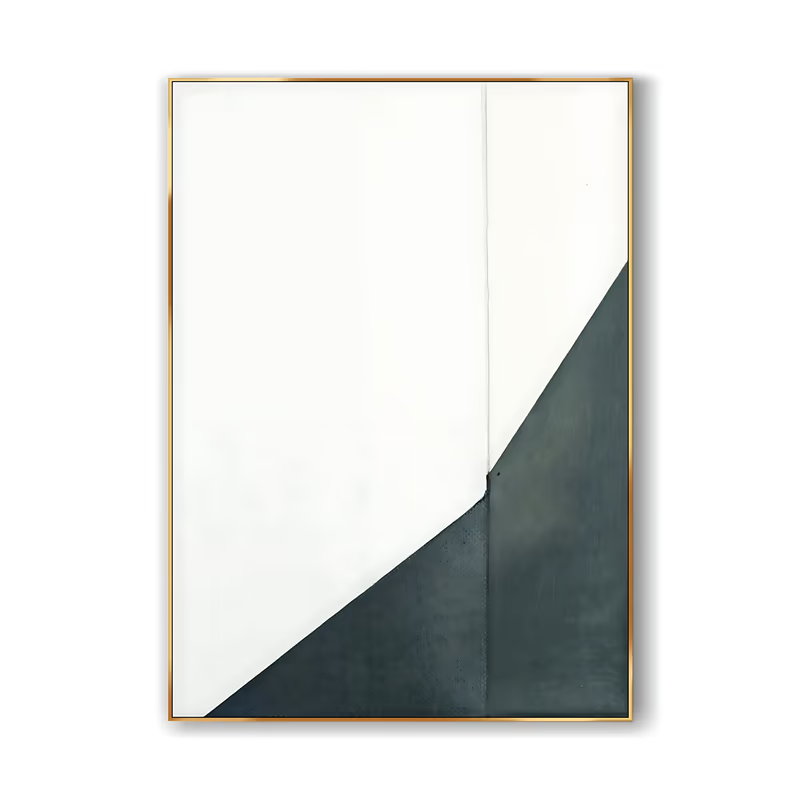
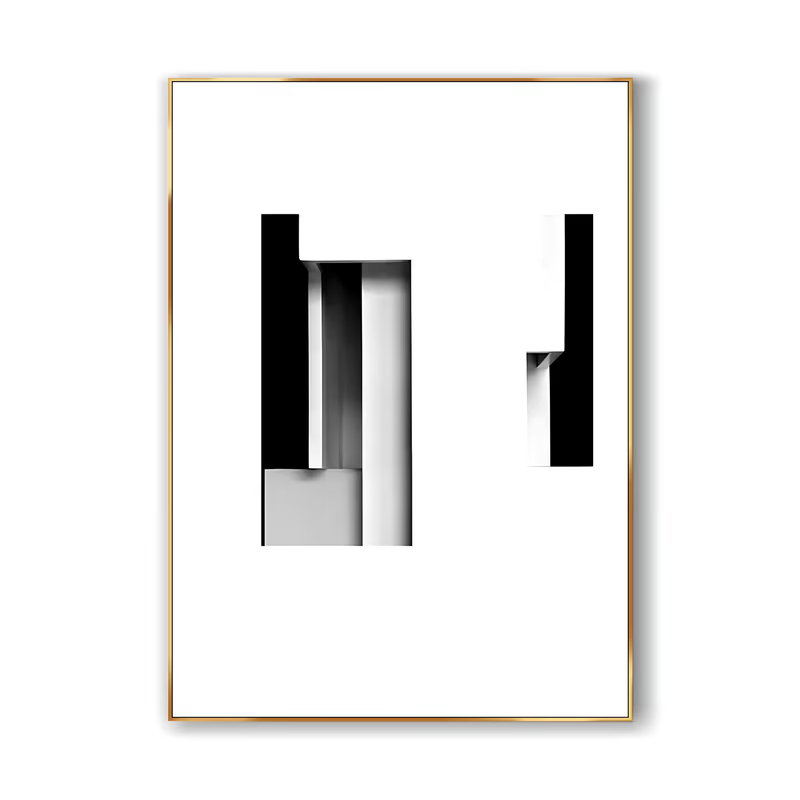
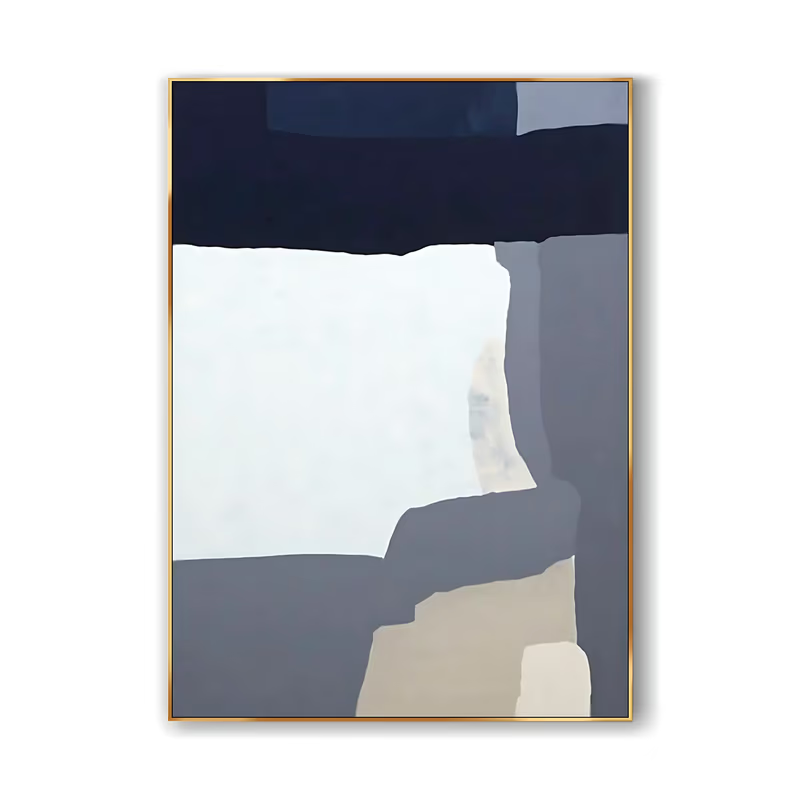
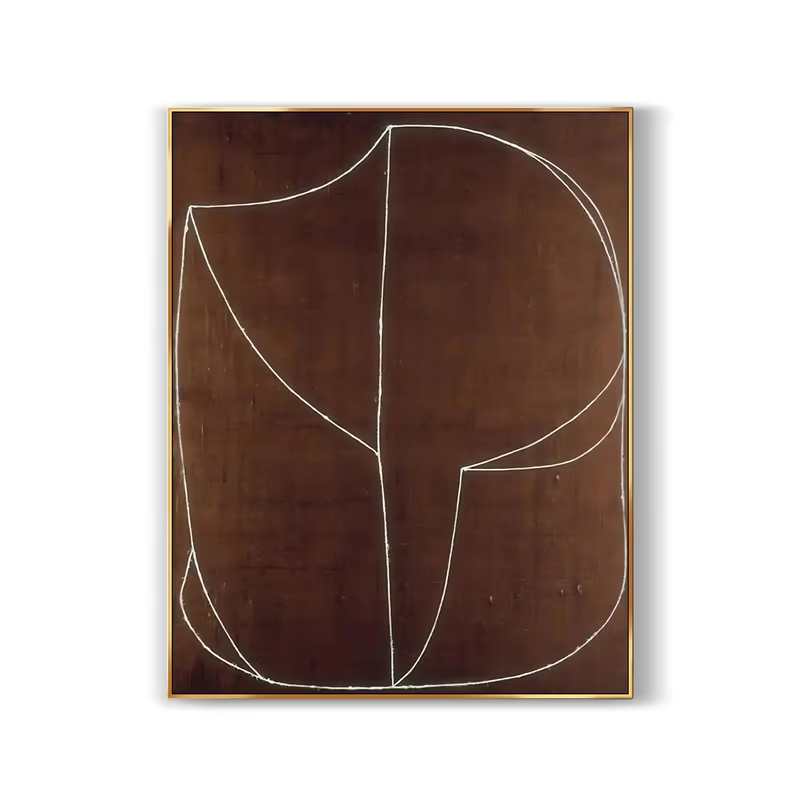
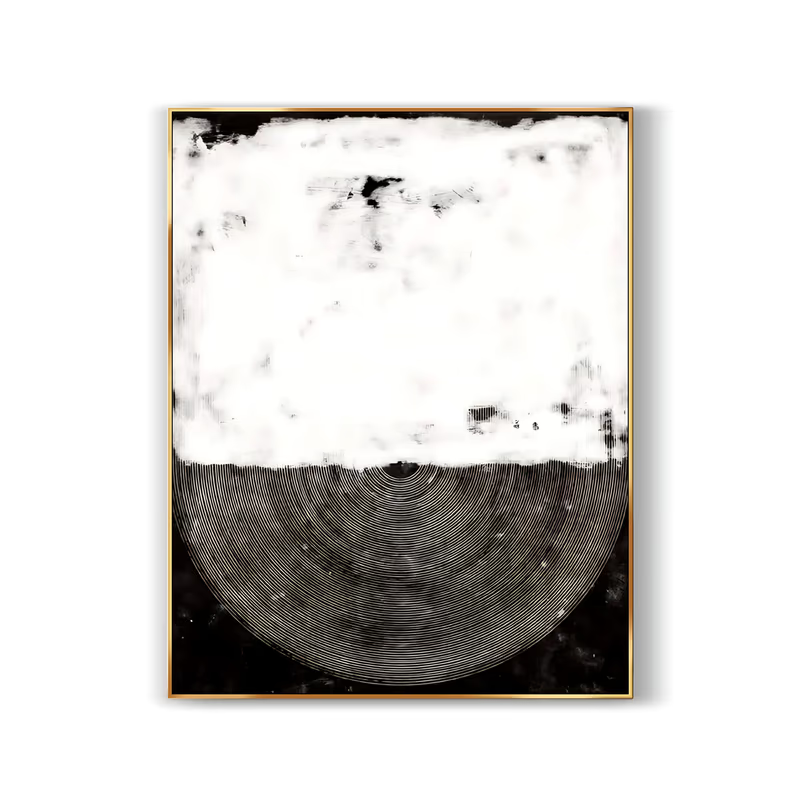
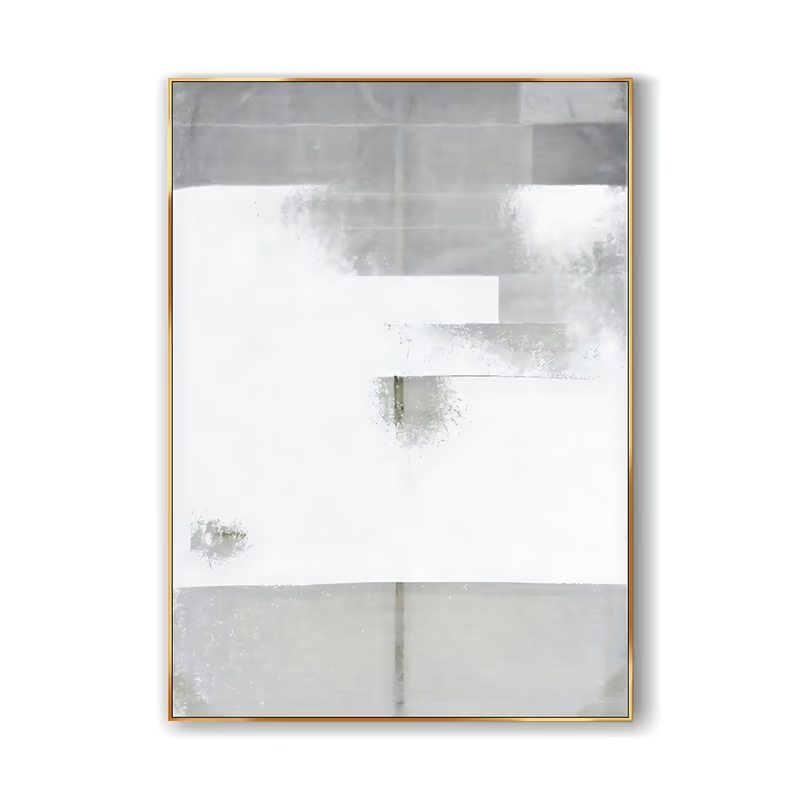
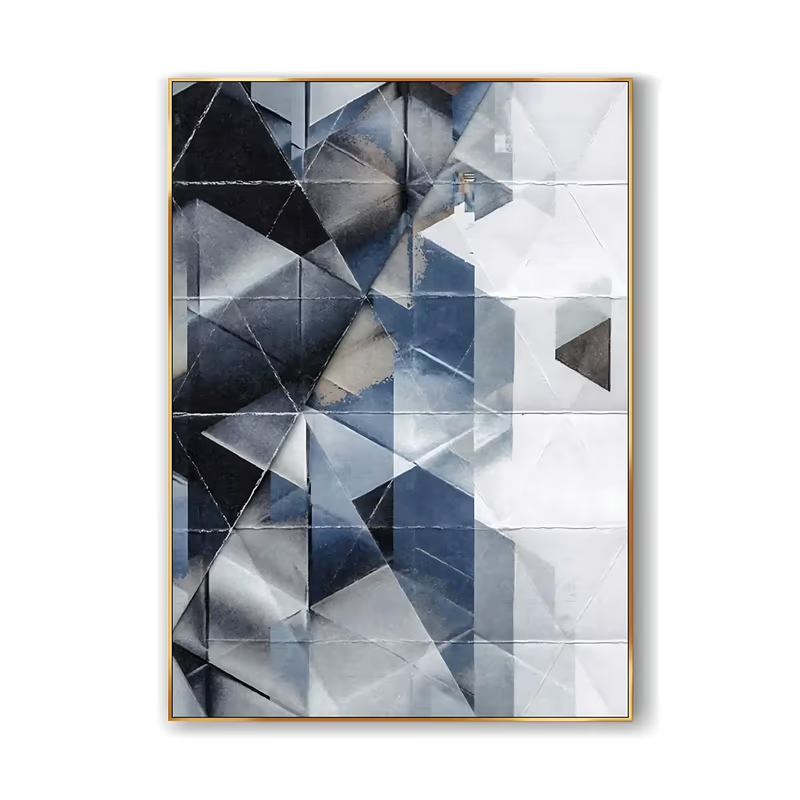
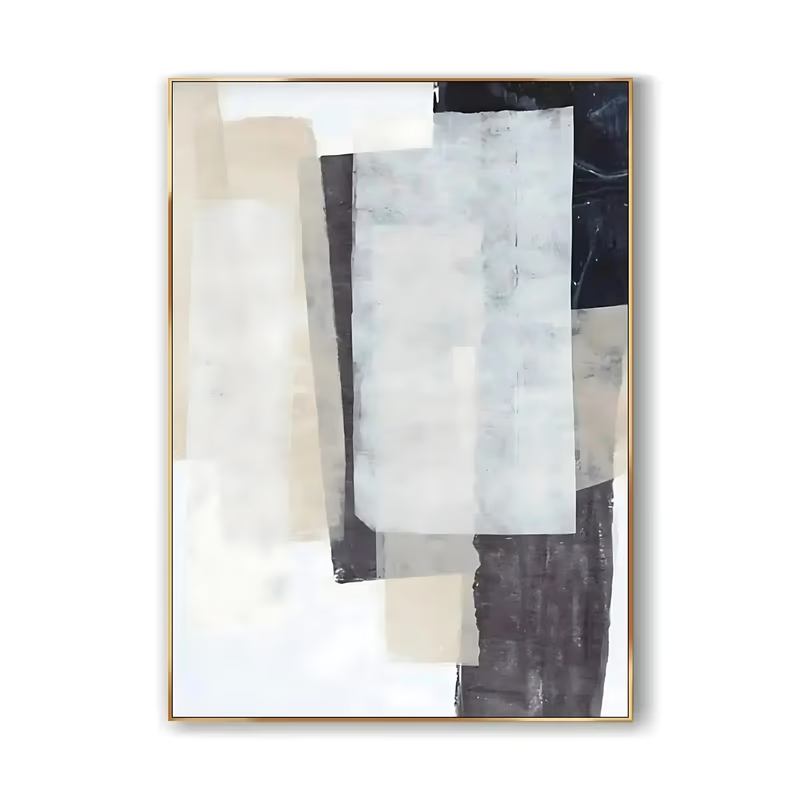
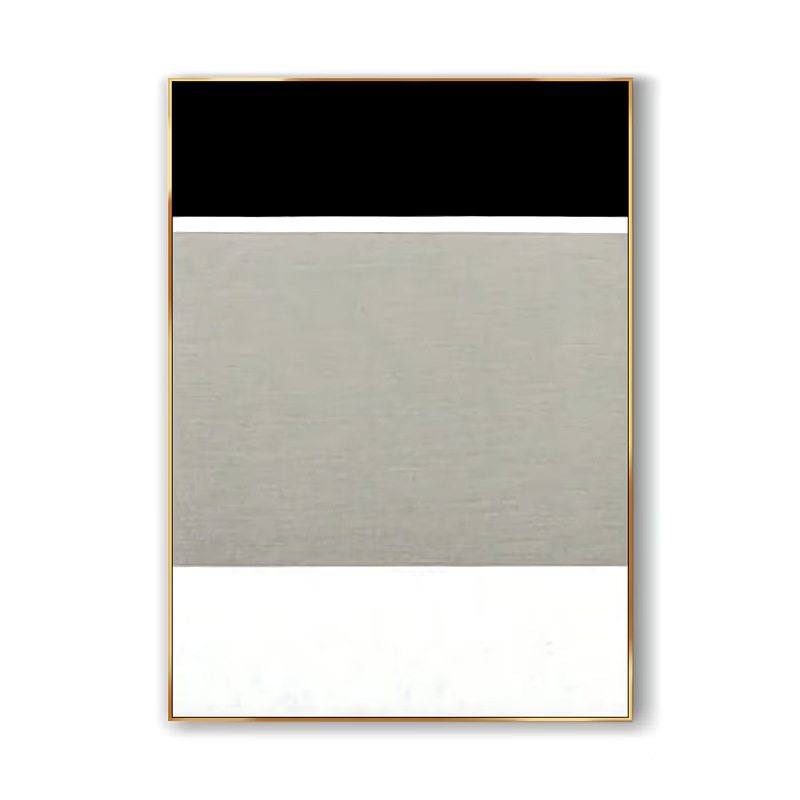
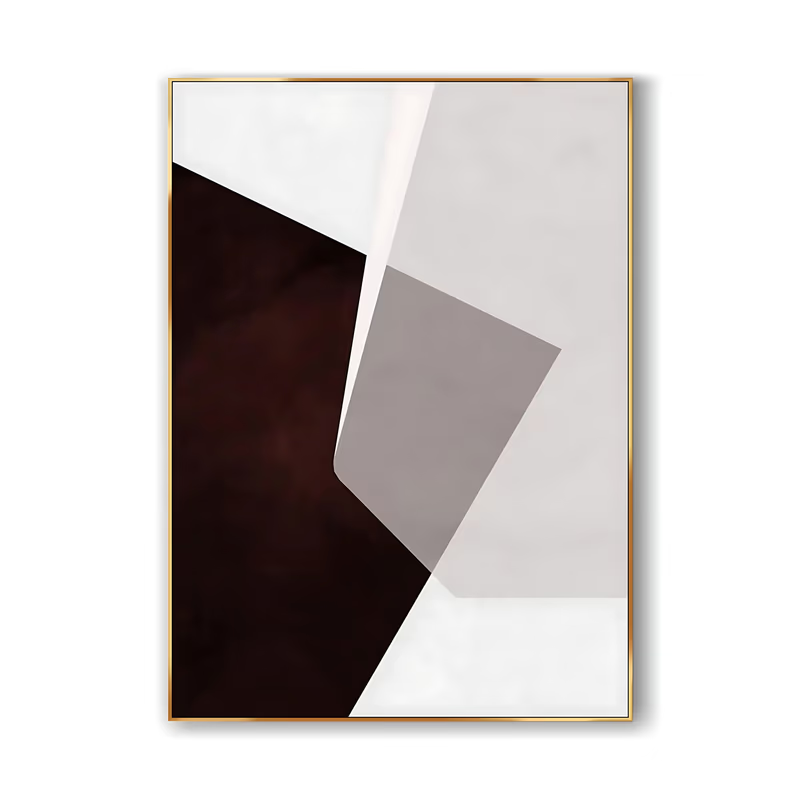
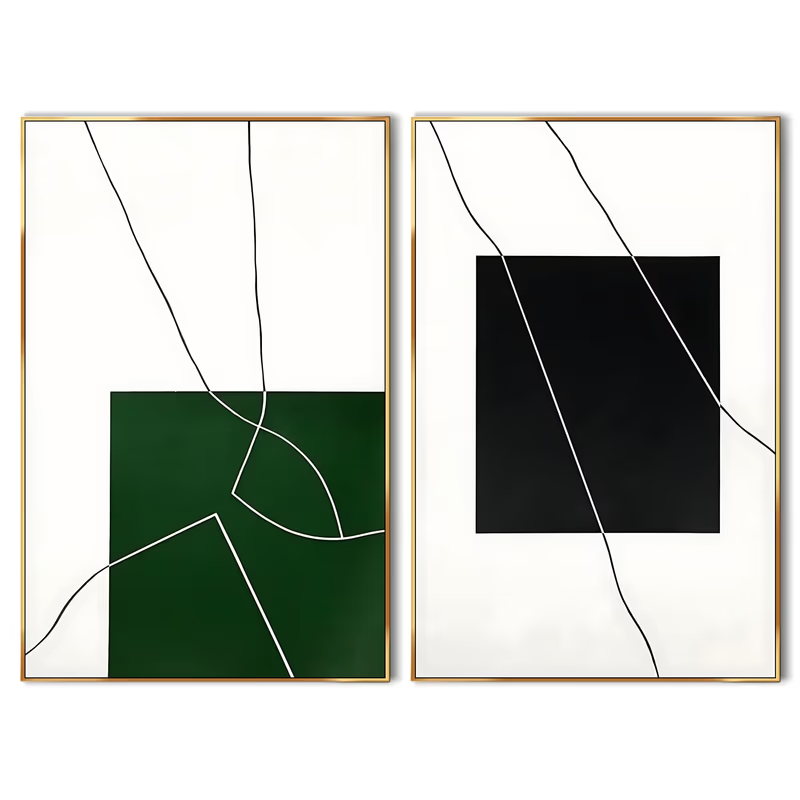
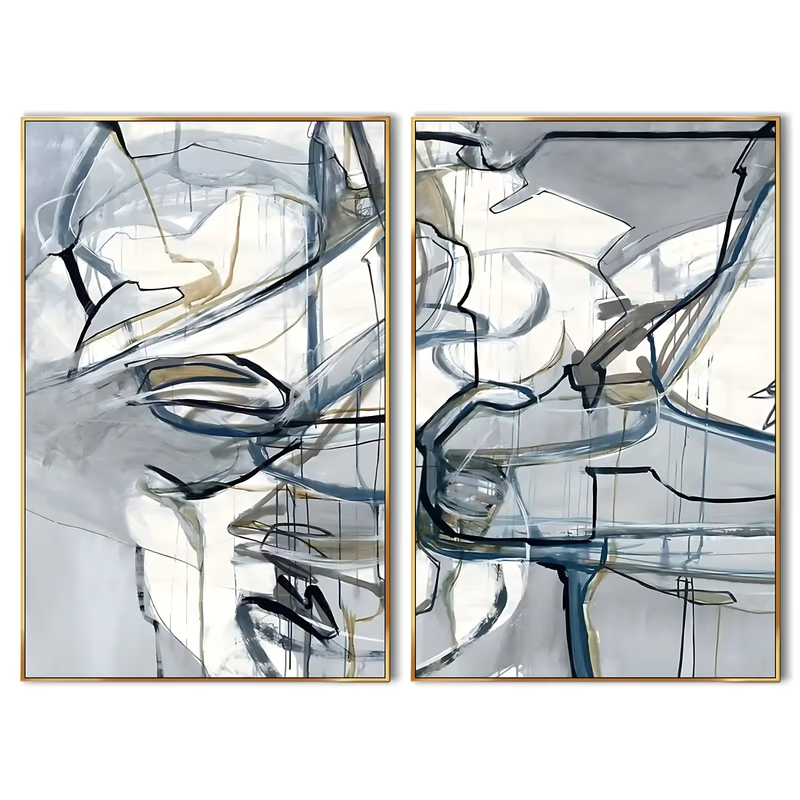
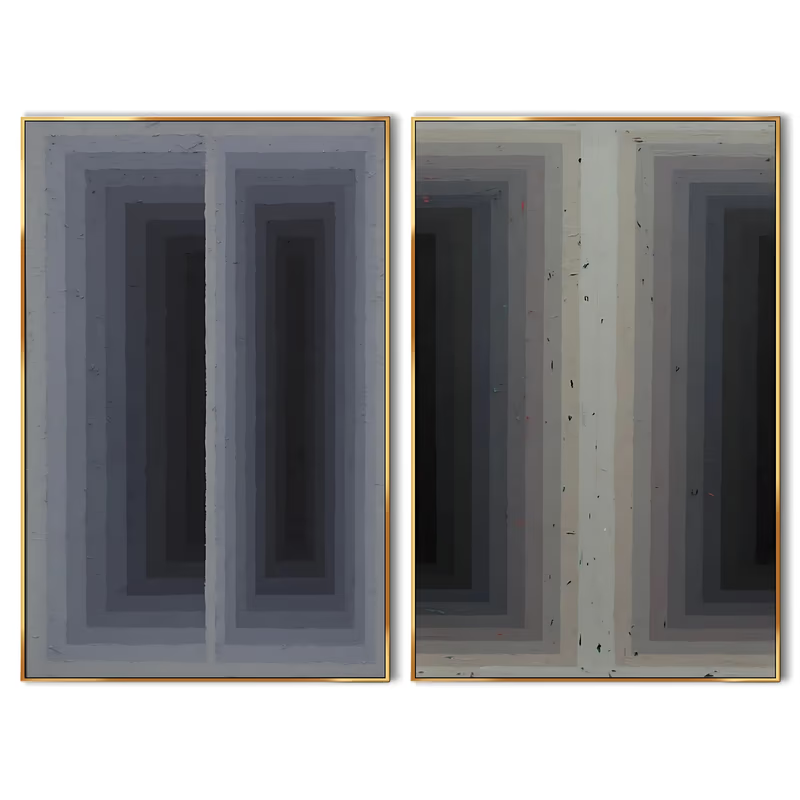
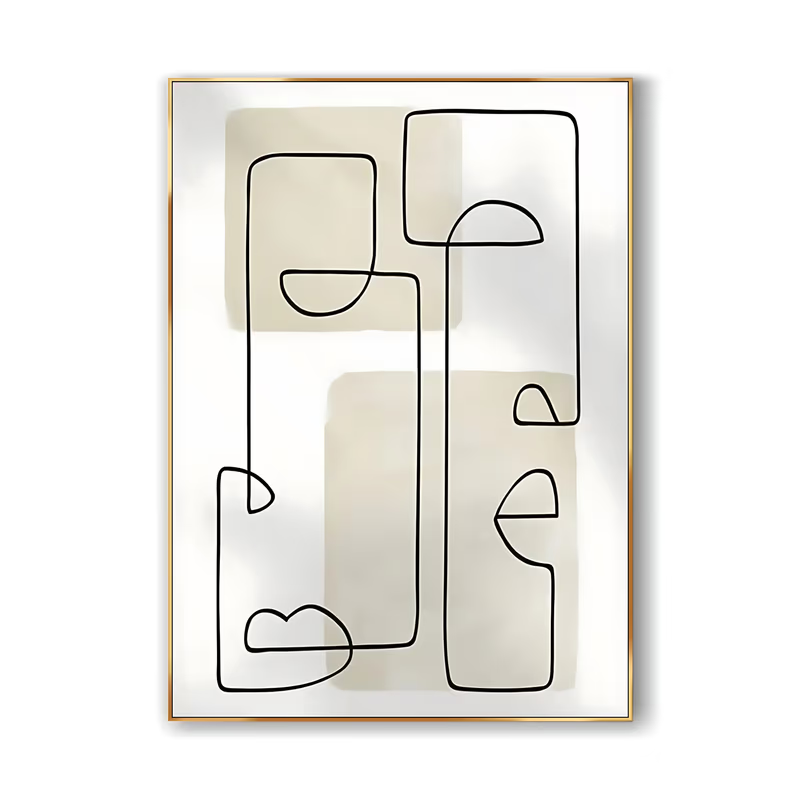
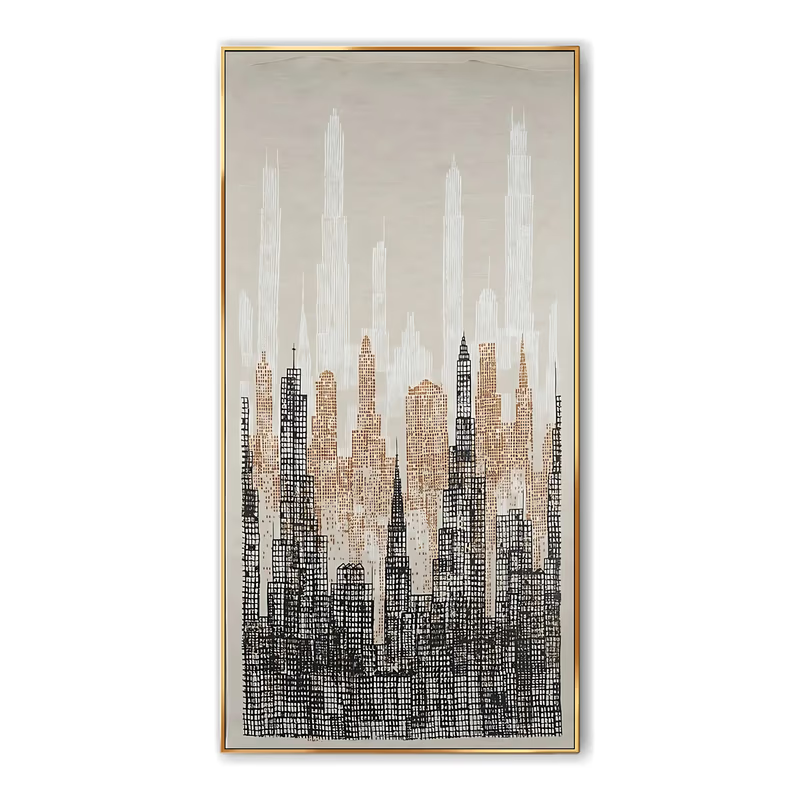
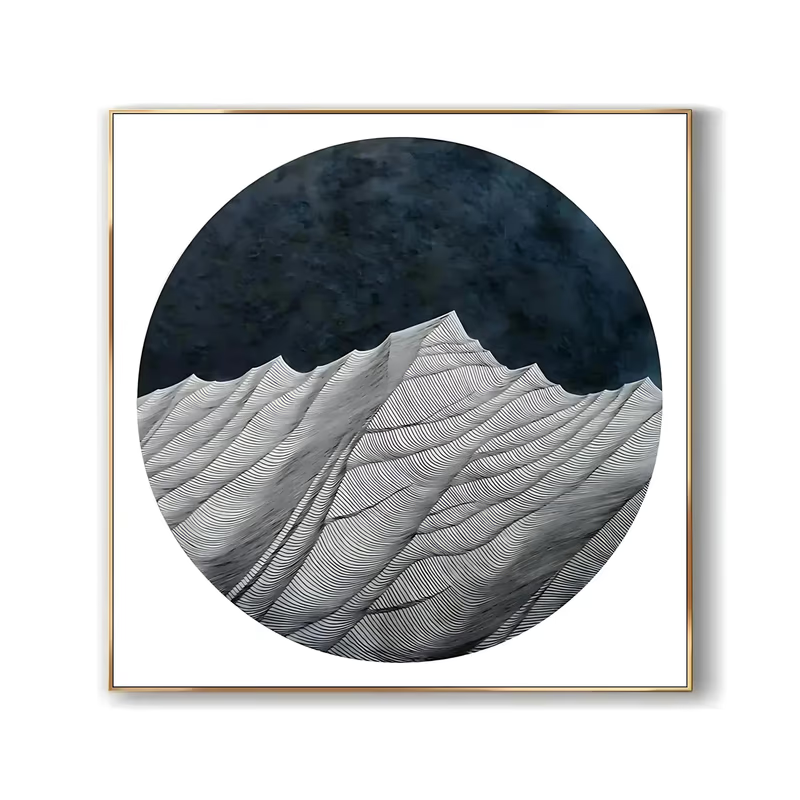
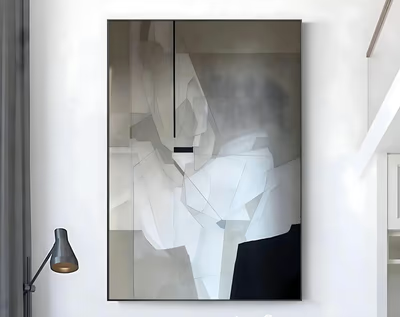
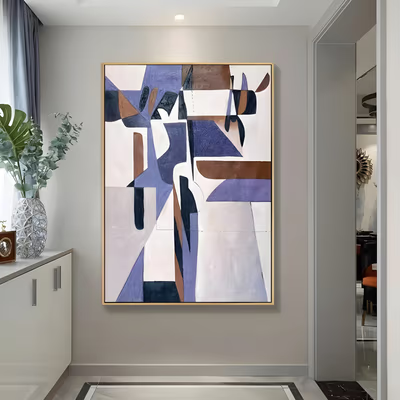
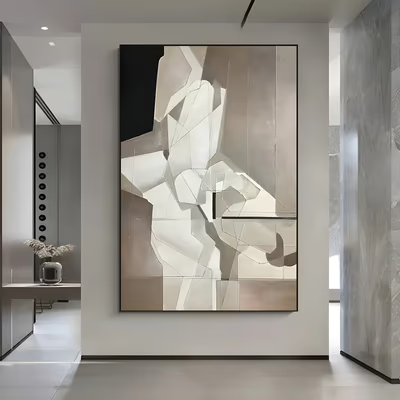
Concentric rings in gold and bronze on gray, Bauhaus circles in charcoal and greige, faceted taupe planes, sage and charcoal blocks. These suit modern glass-and-oak meeting rooms and companies that want to look forward rather than back.
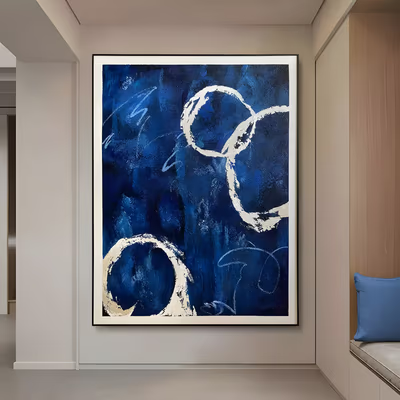
Plaster relief and wabi-sabi neutrals
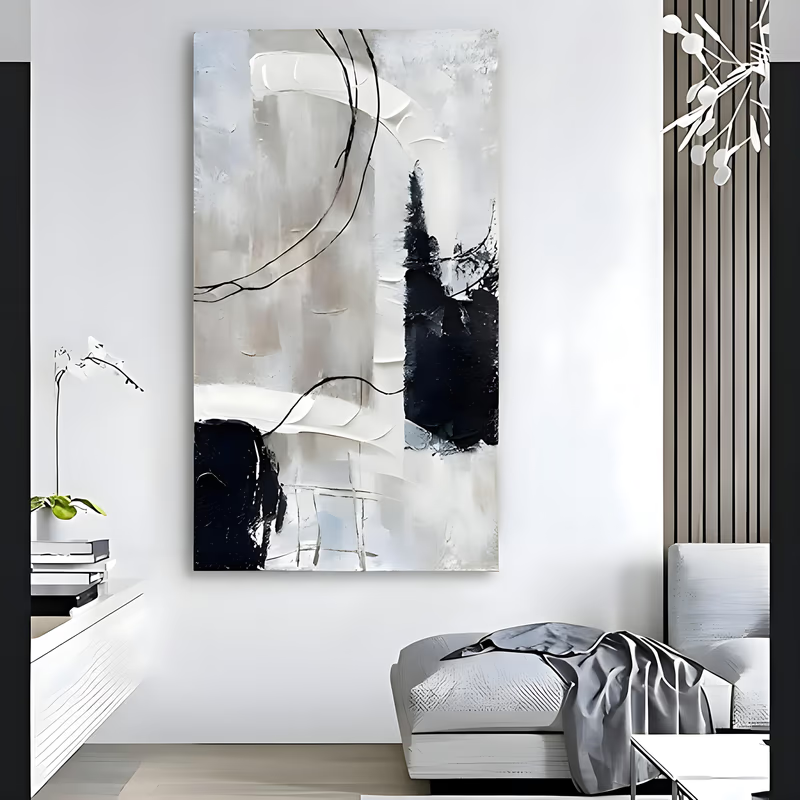
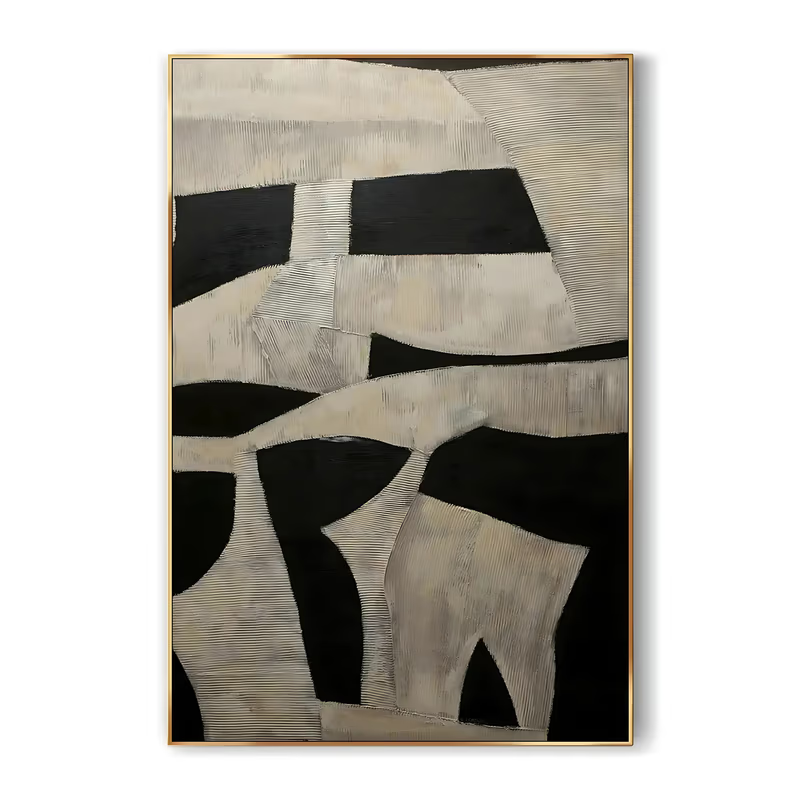
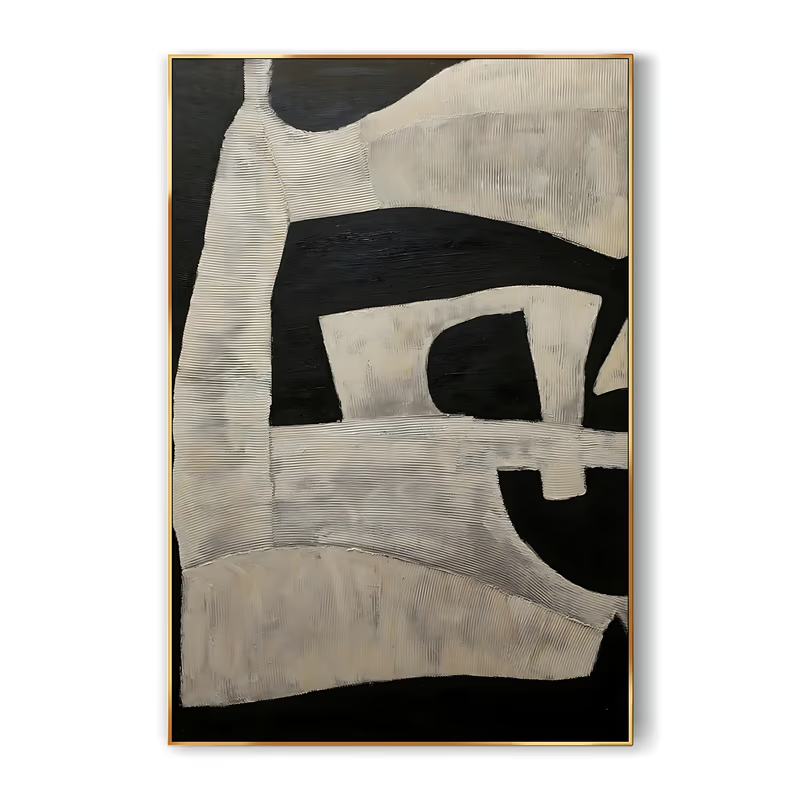
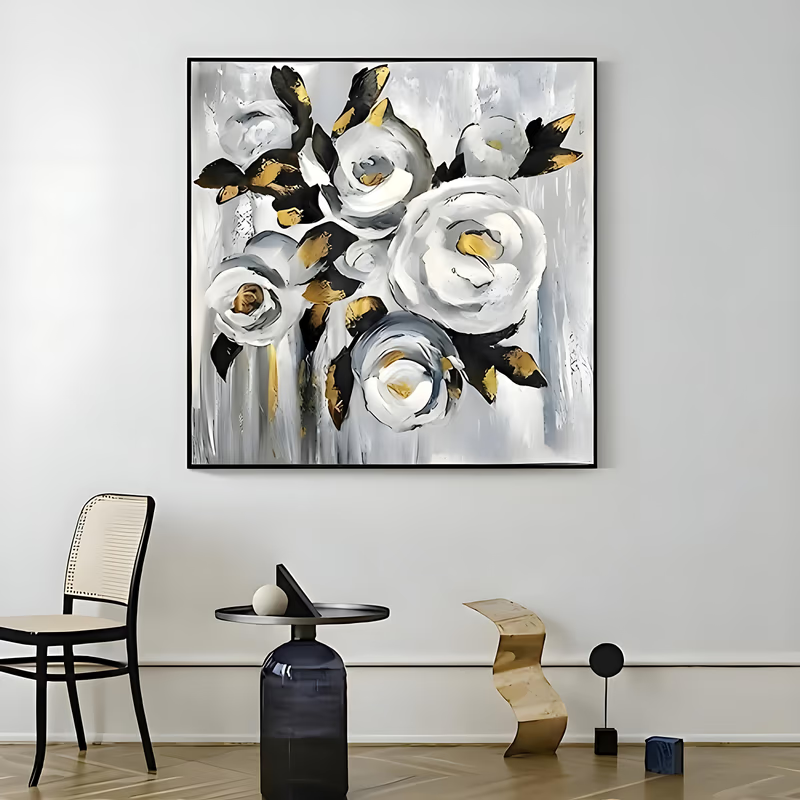
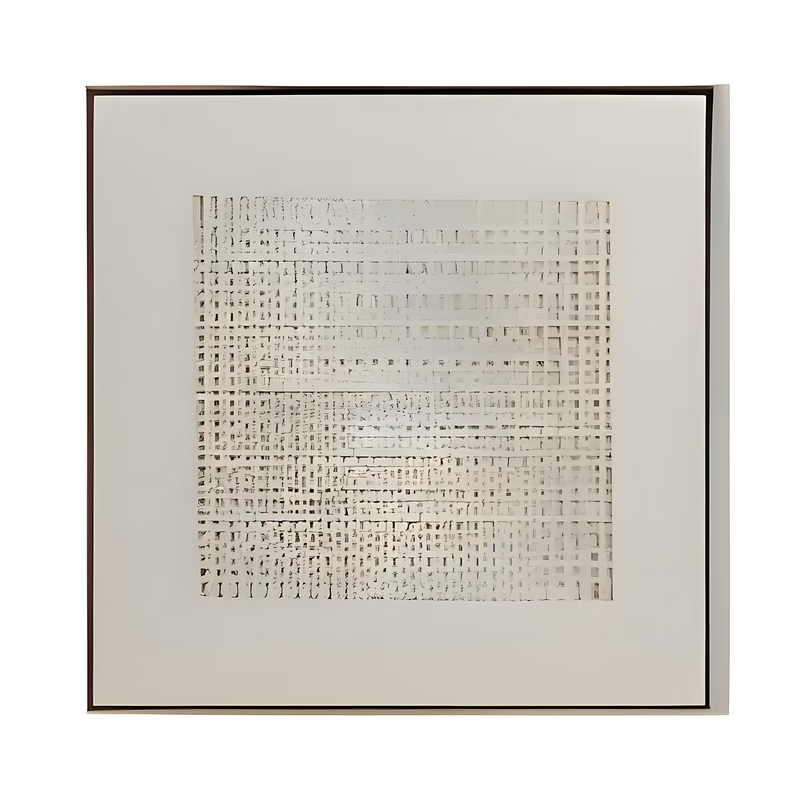
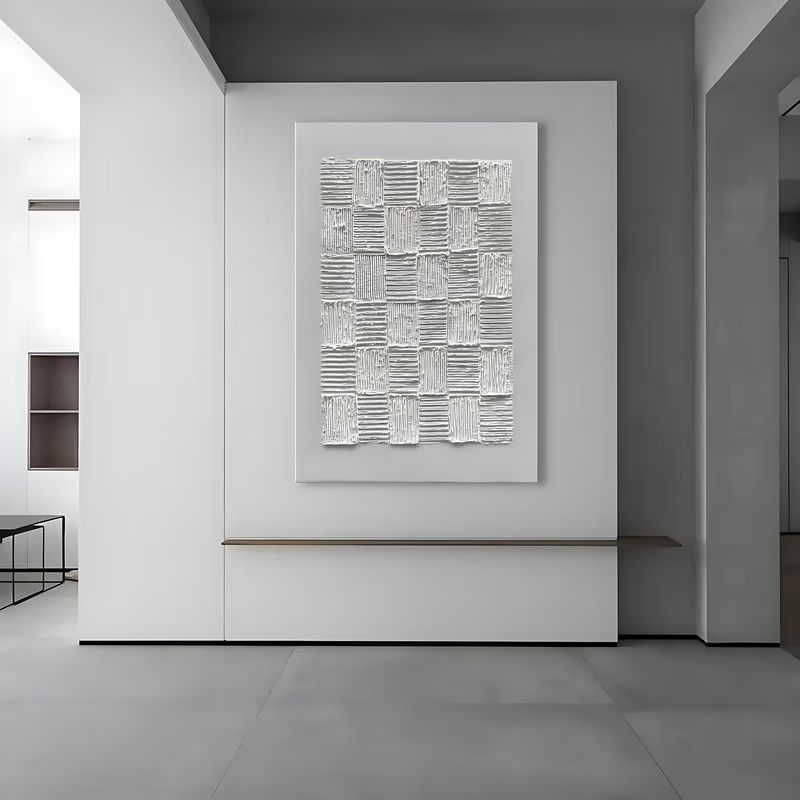
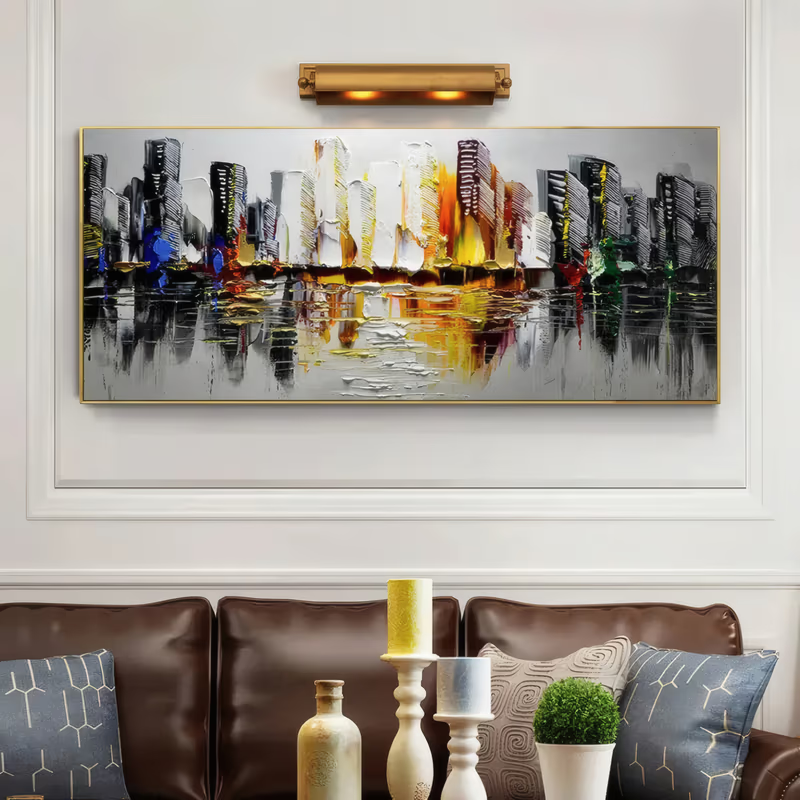
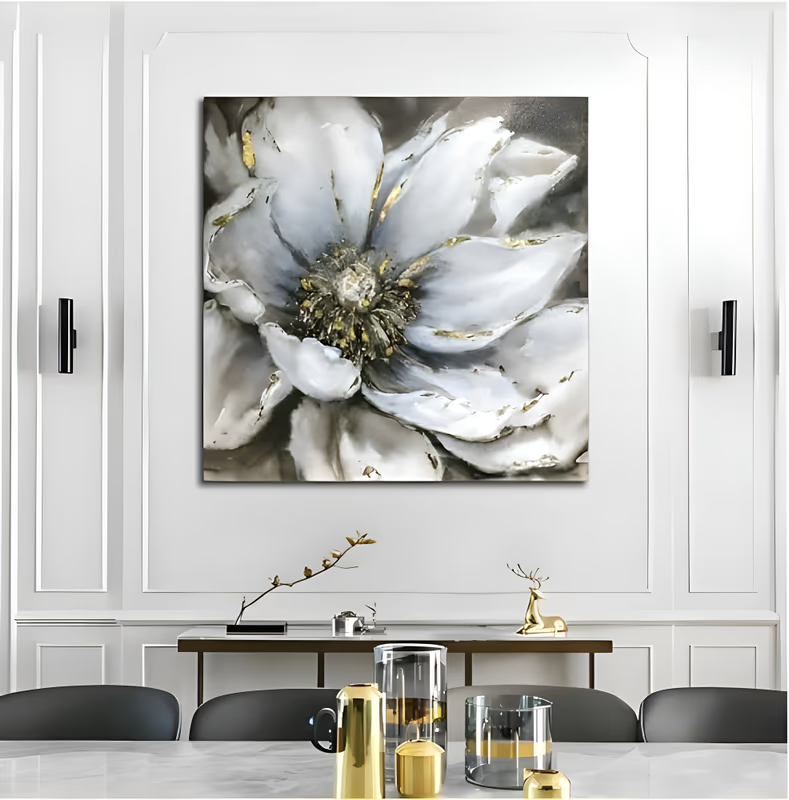
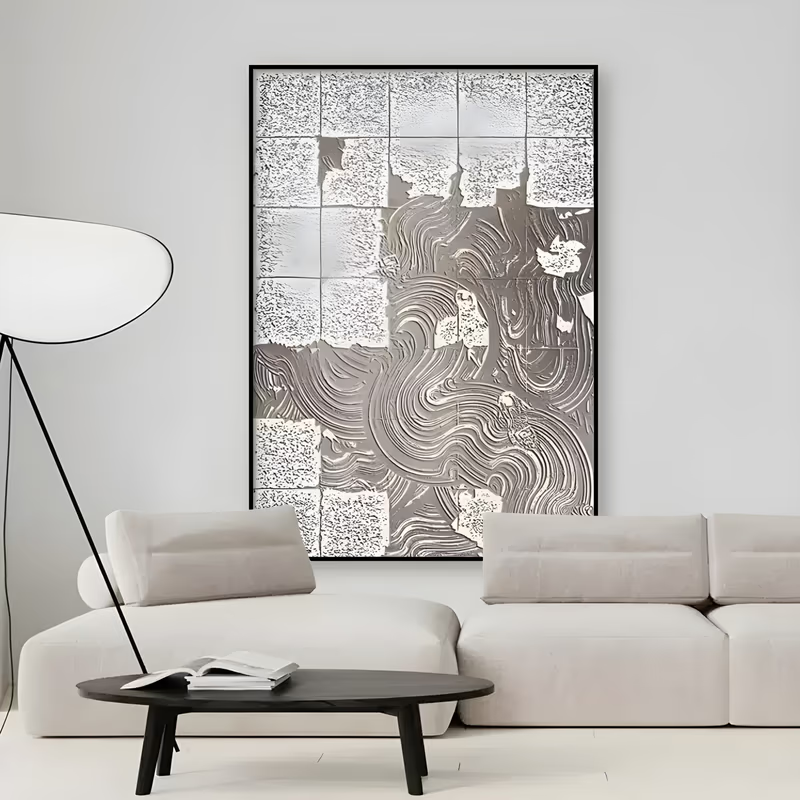
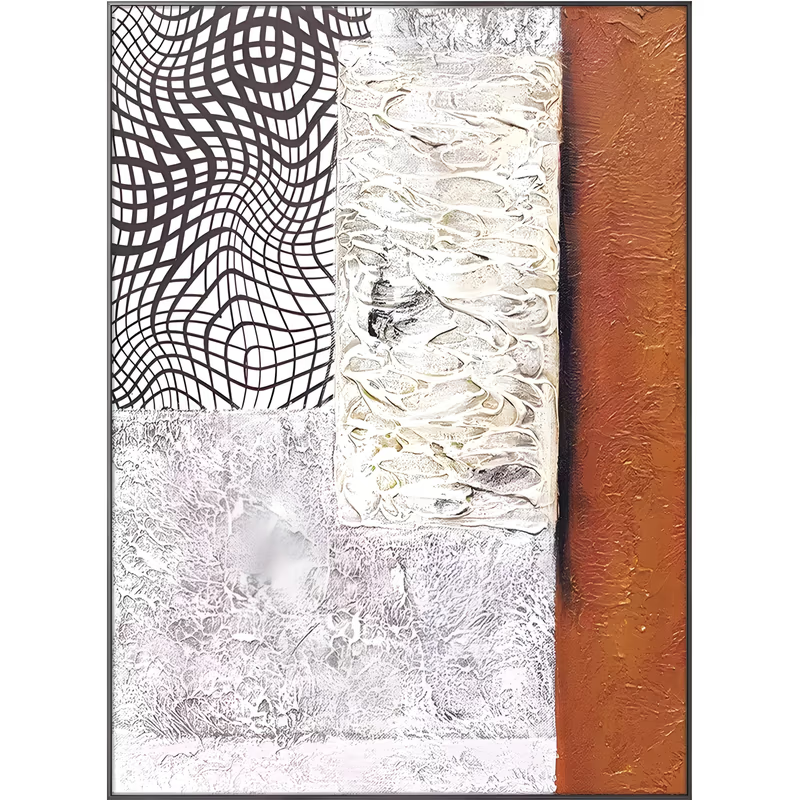
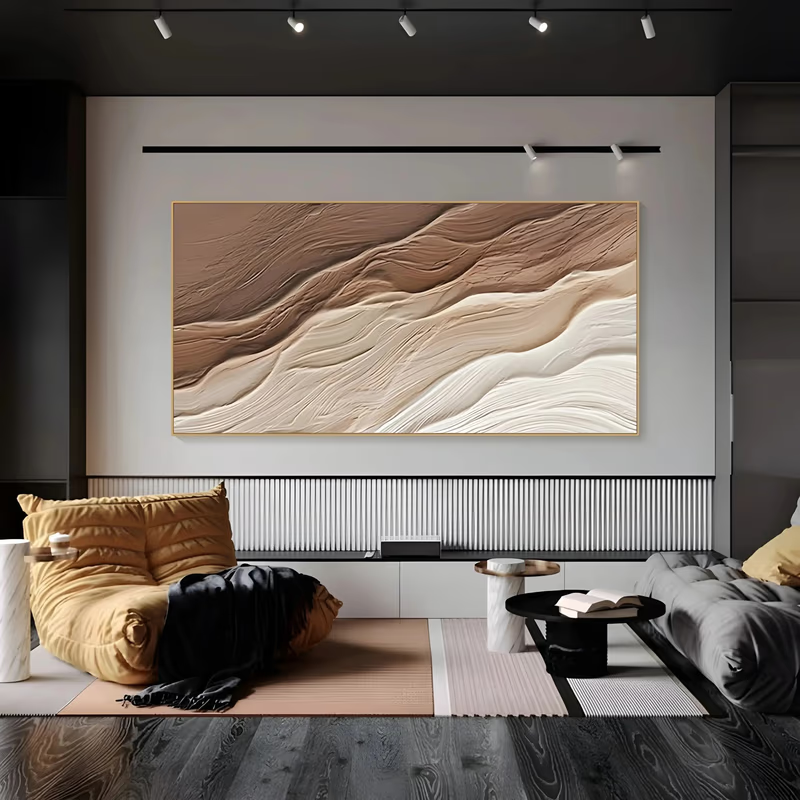
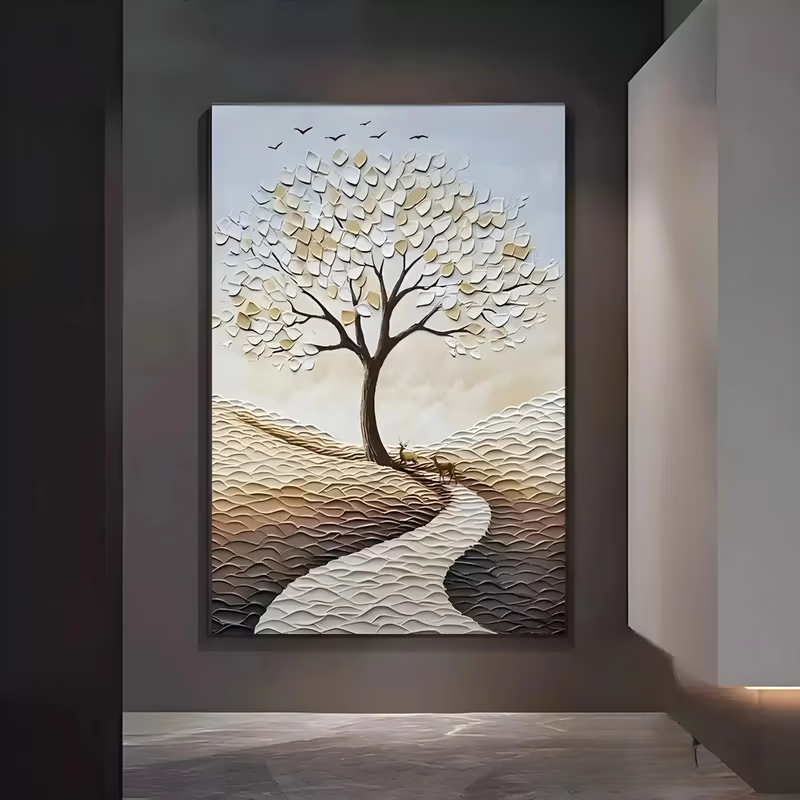
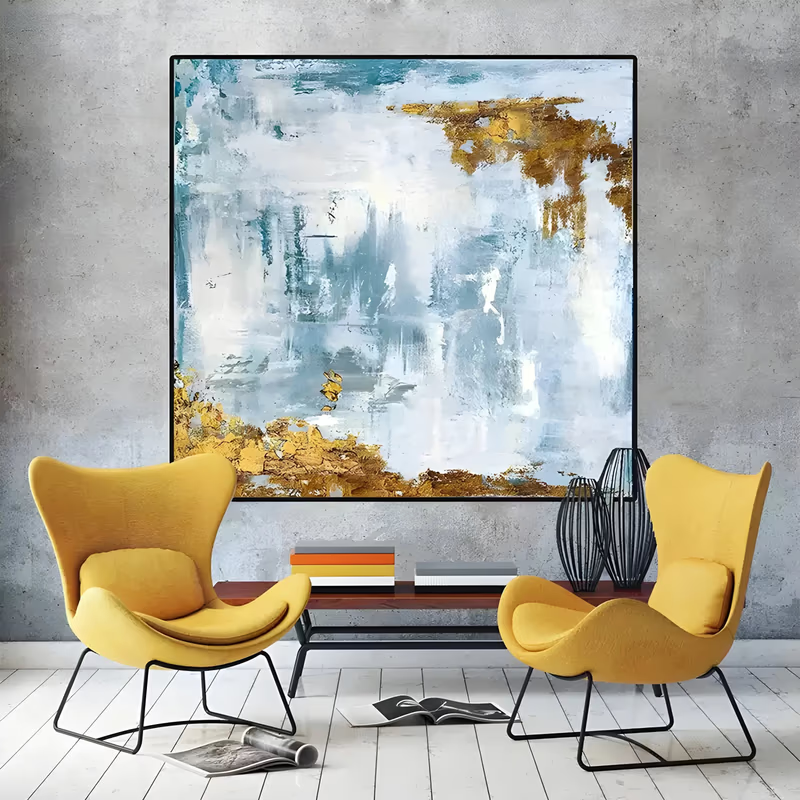
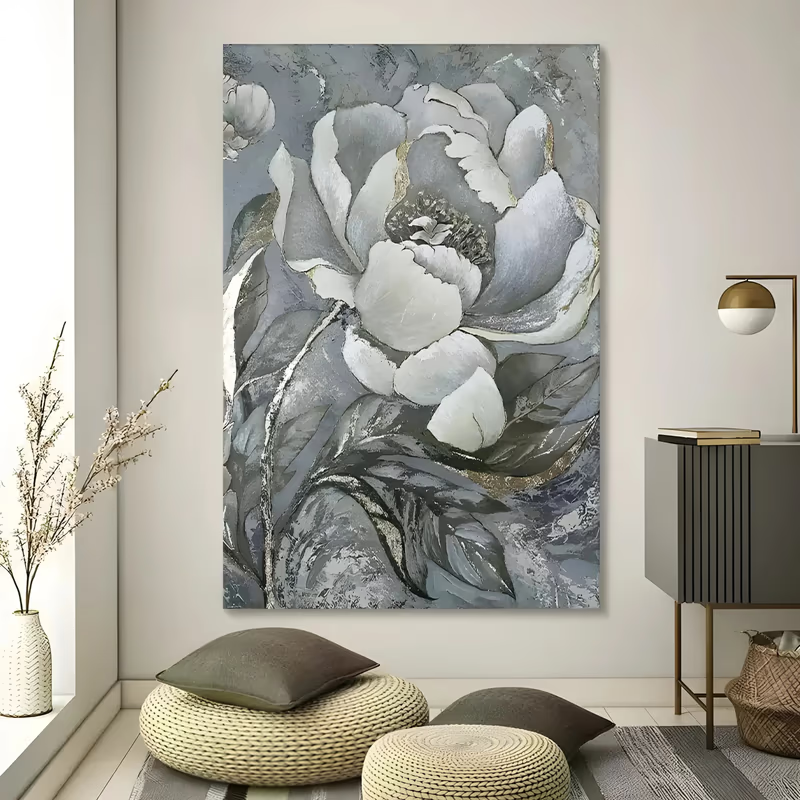
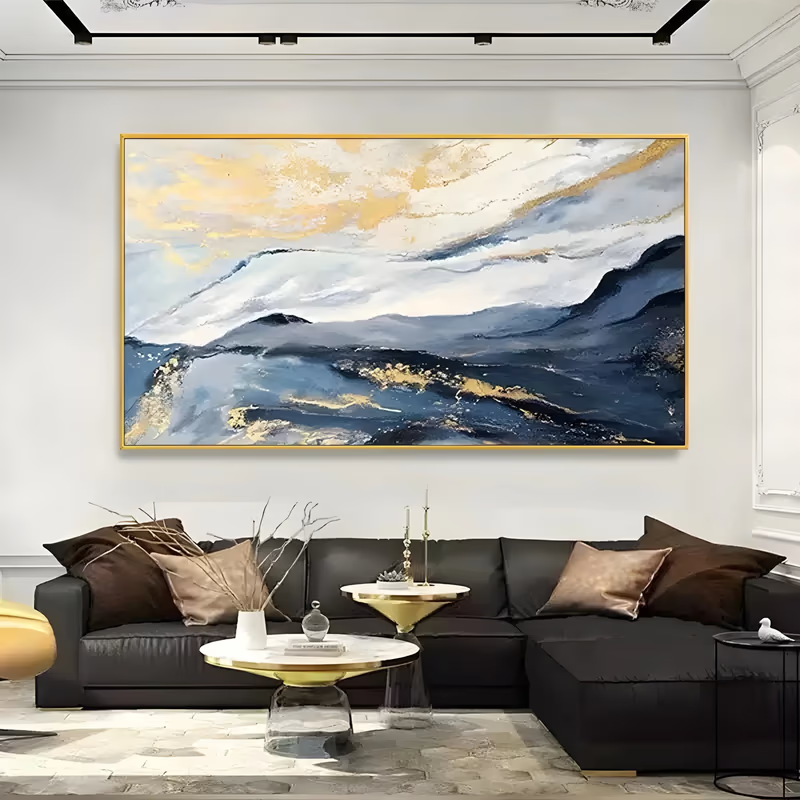
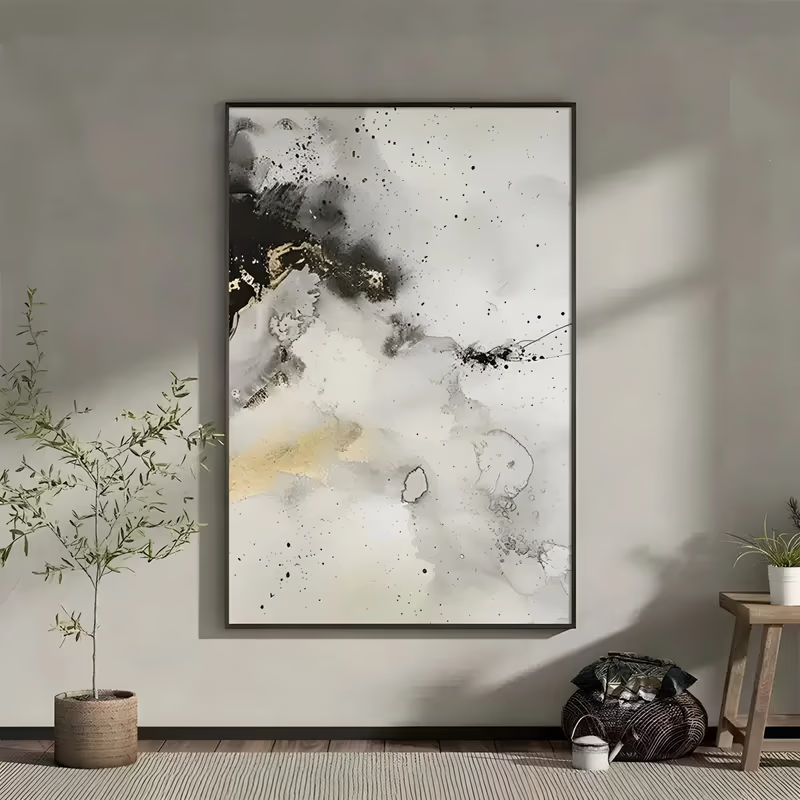
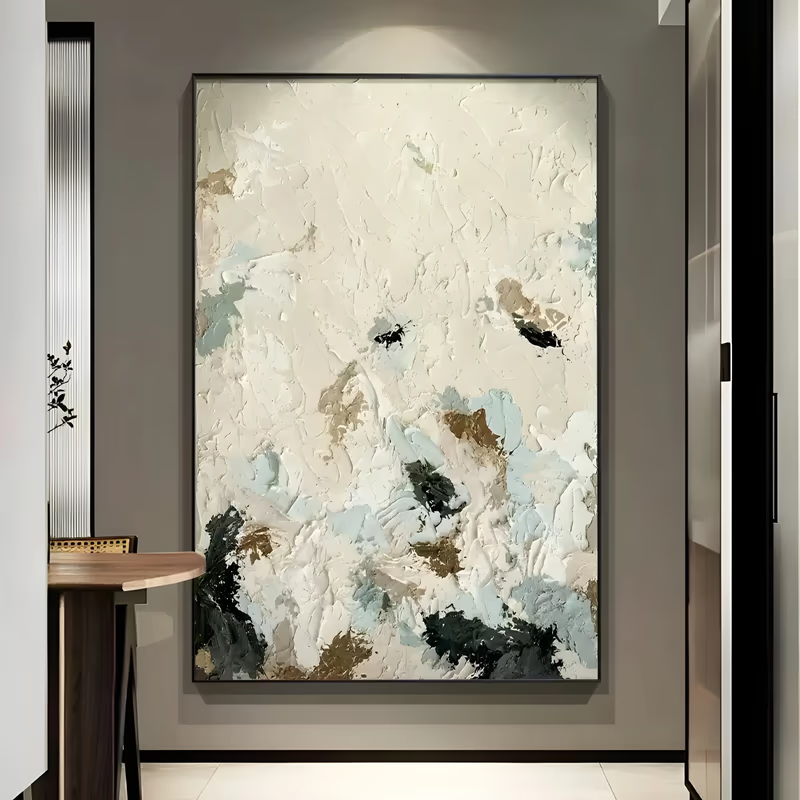
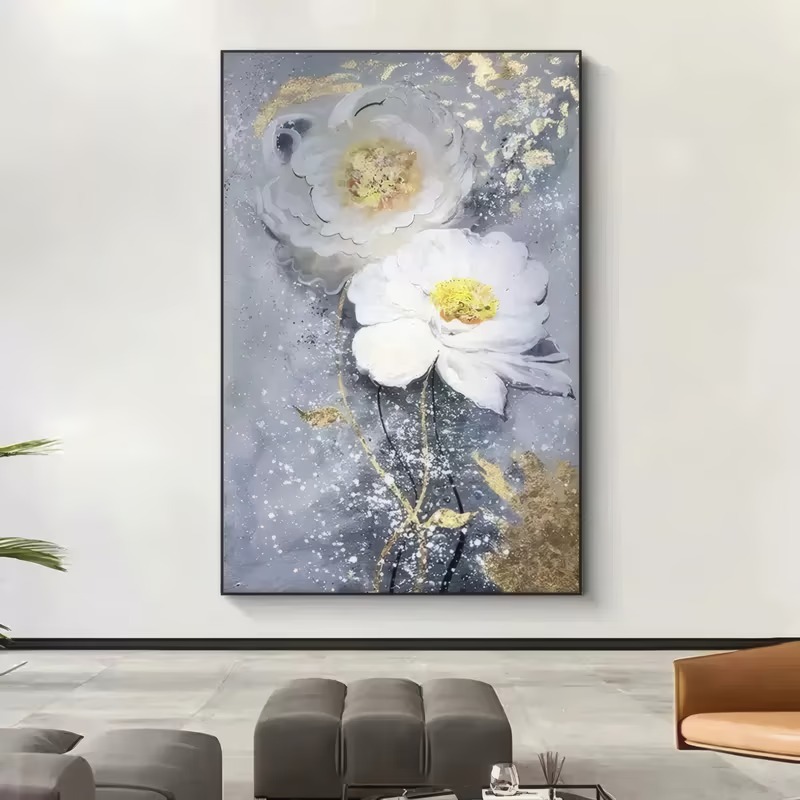
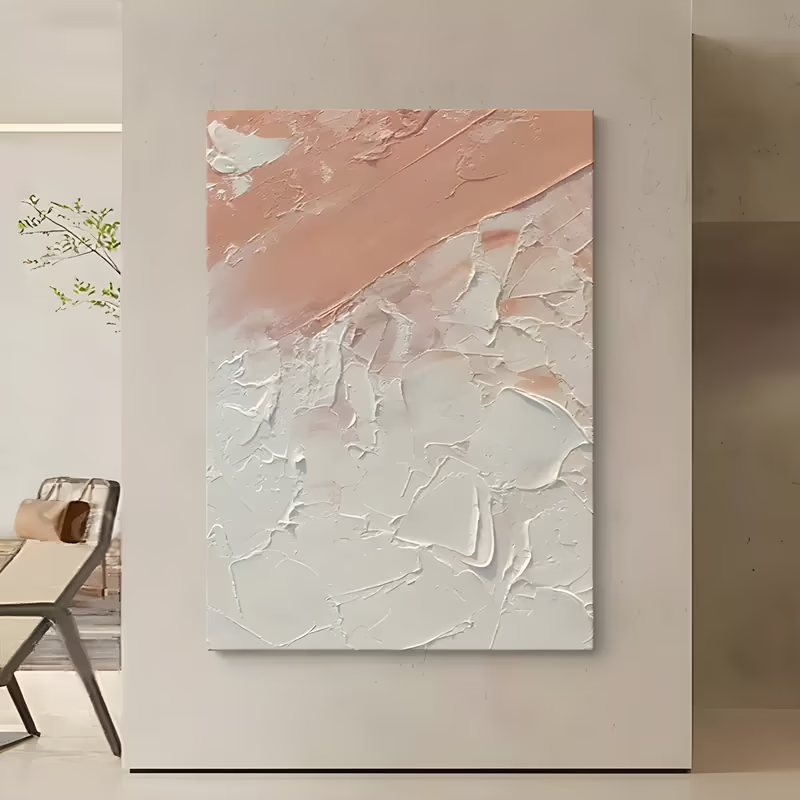
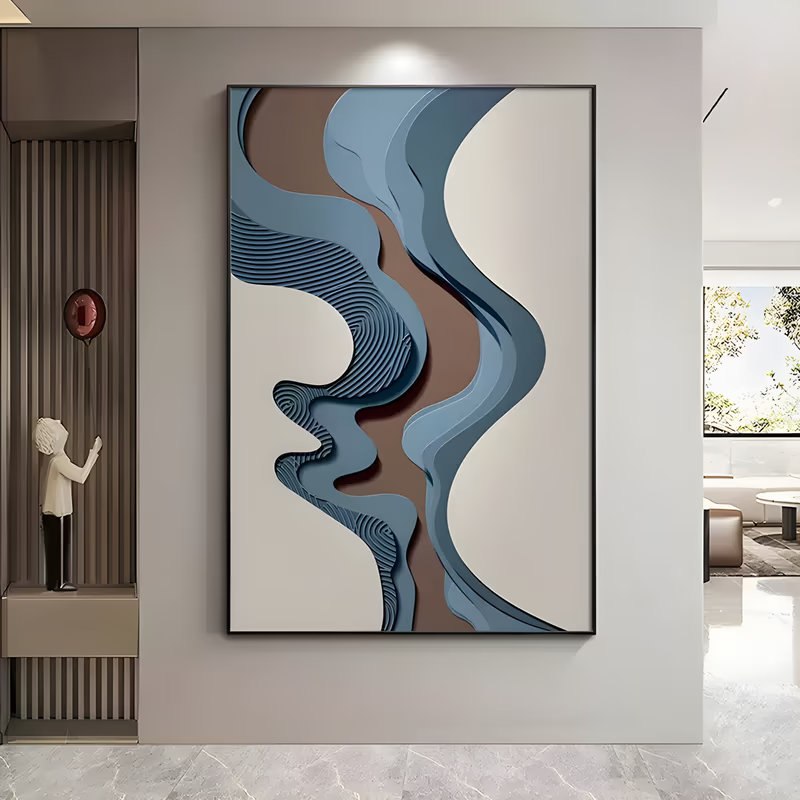
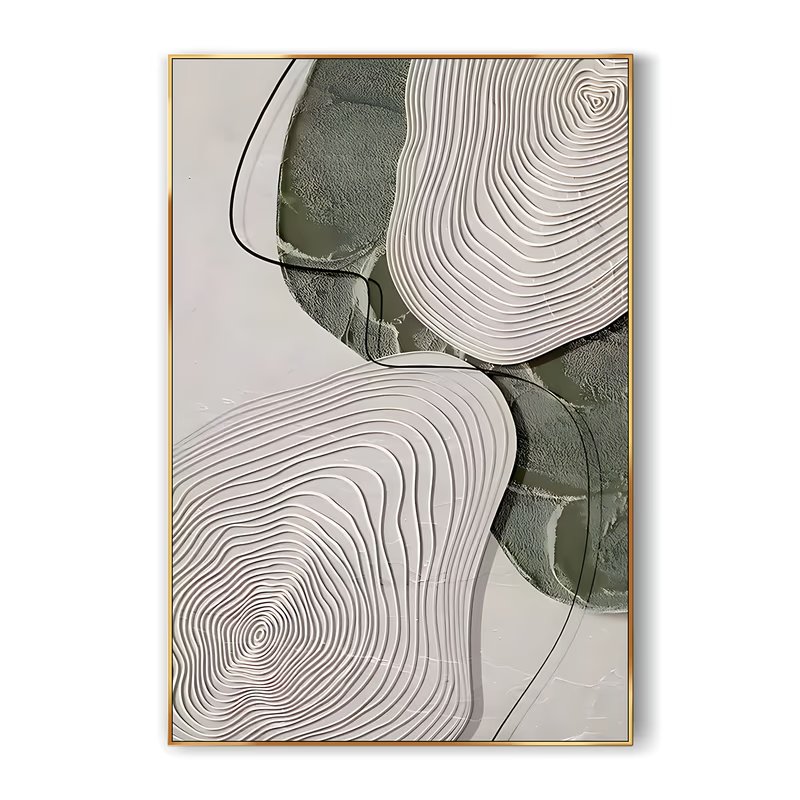
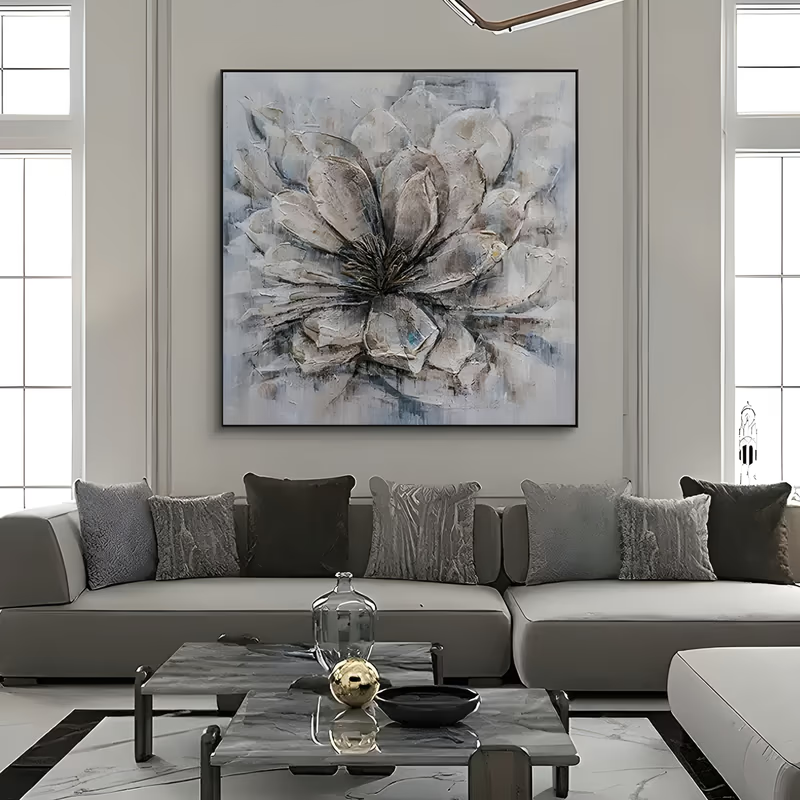
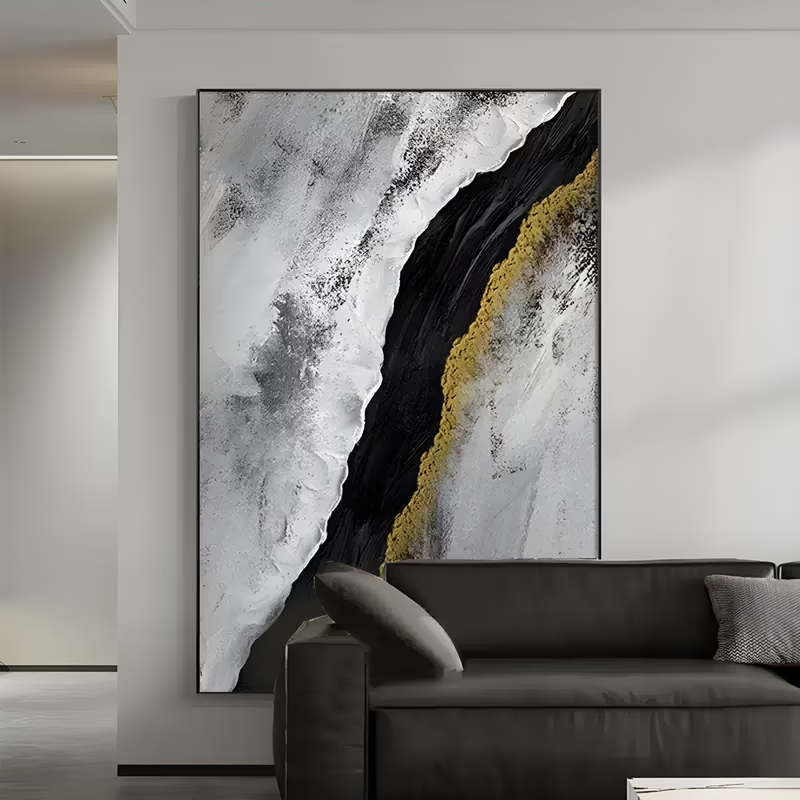
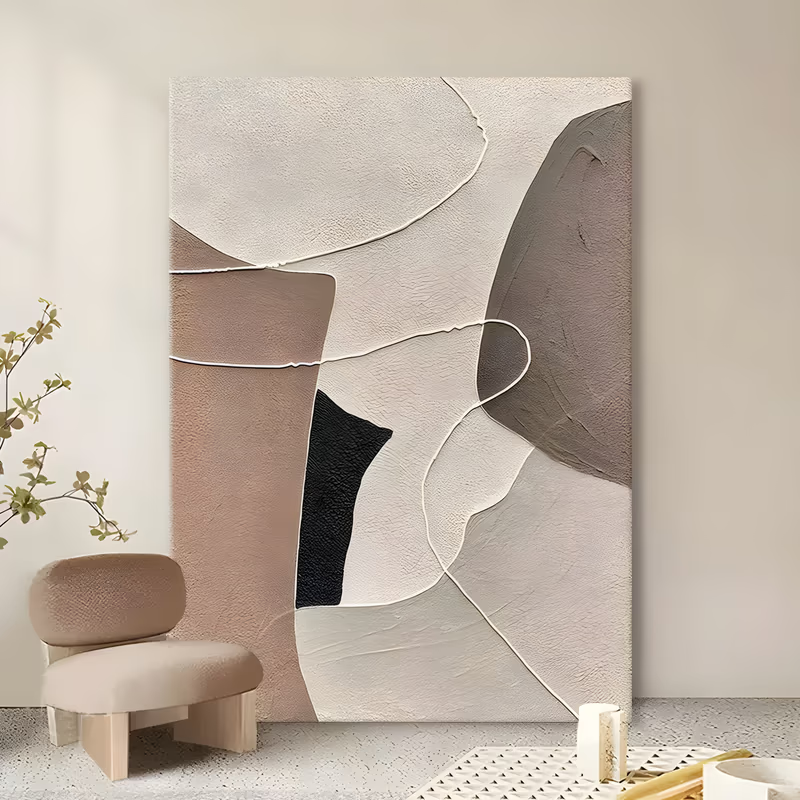
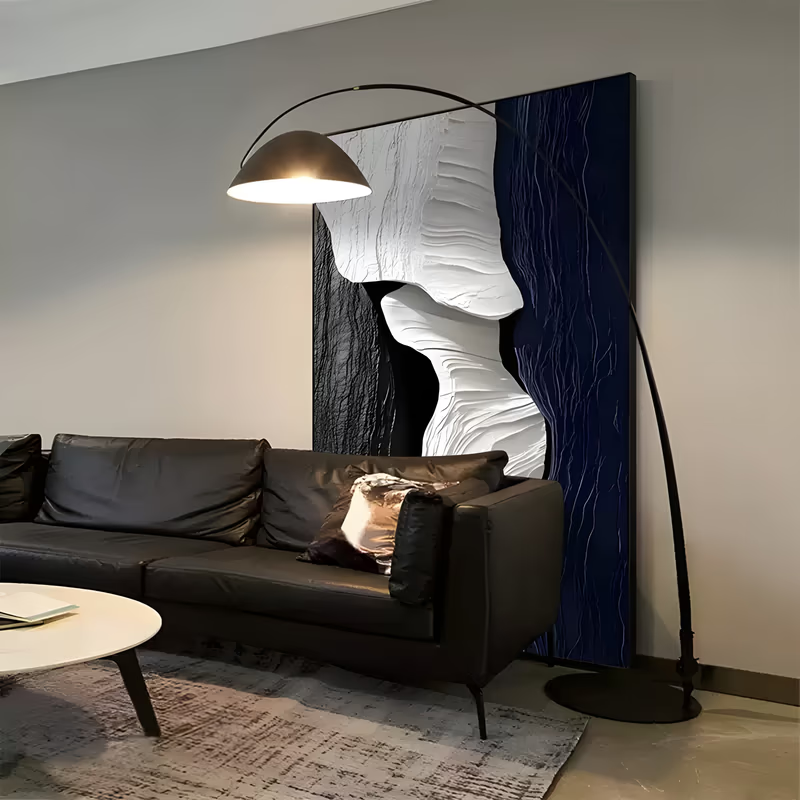
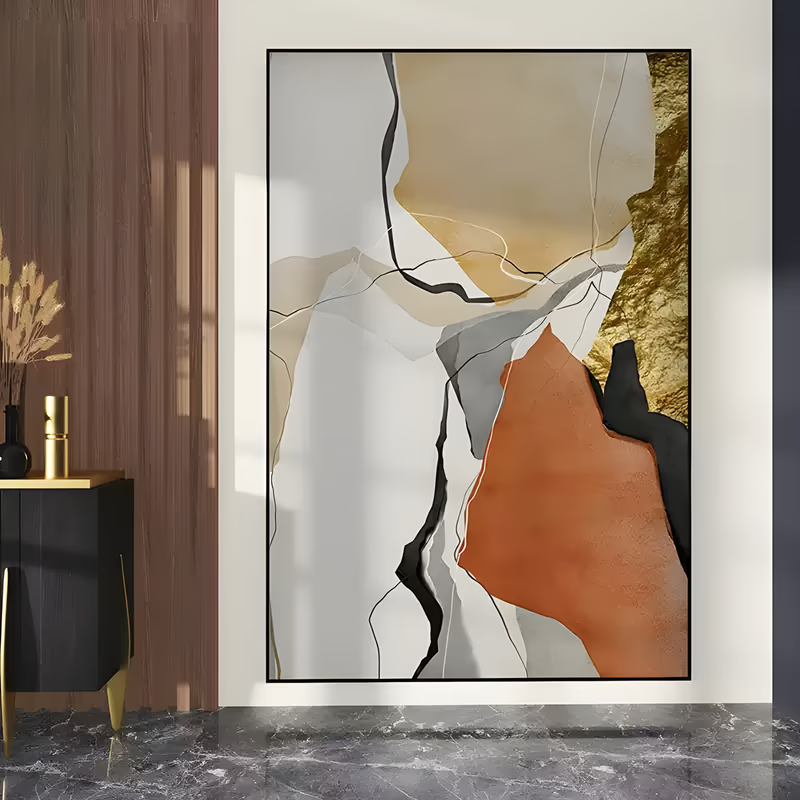
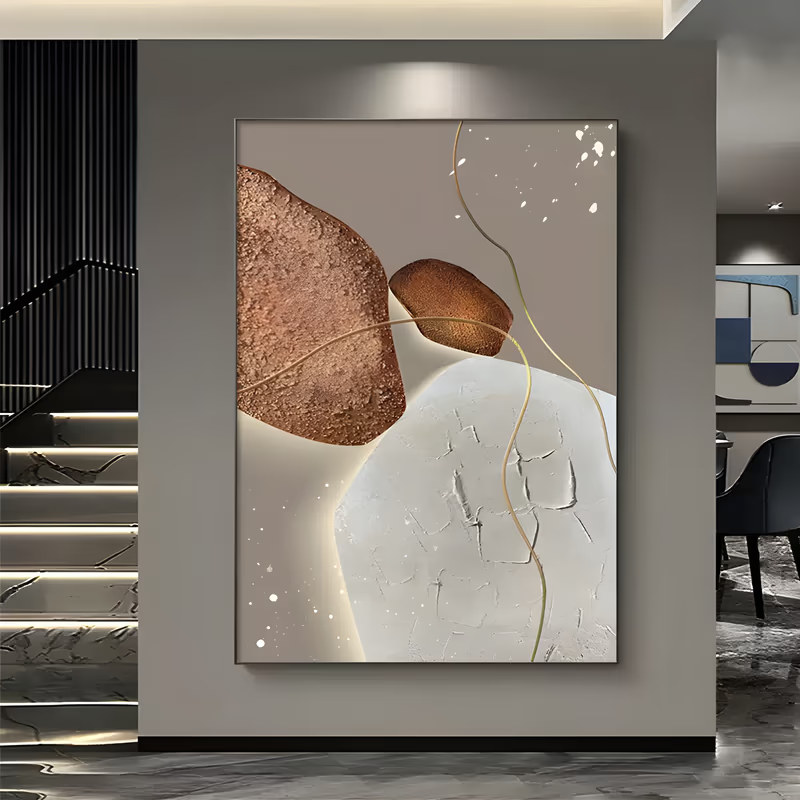
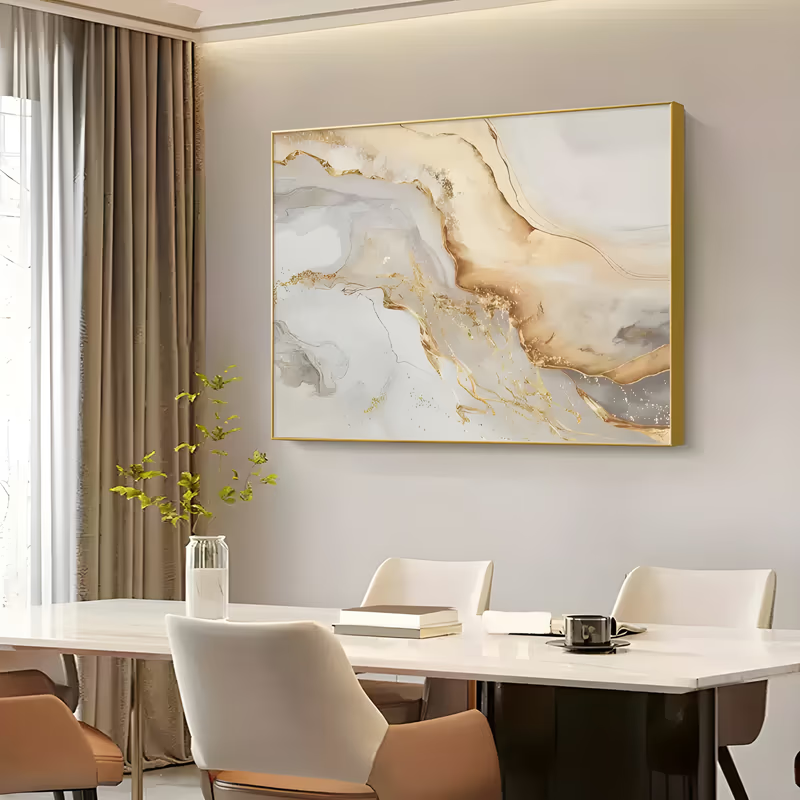
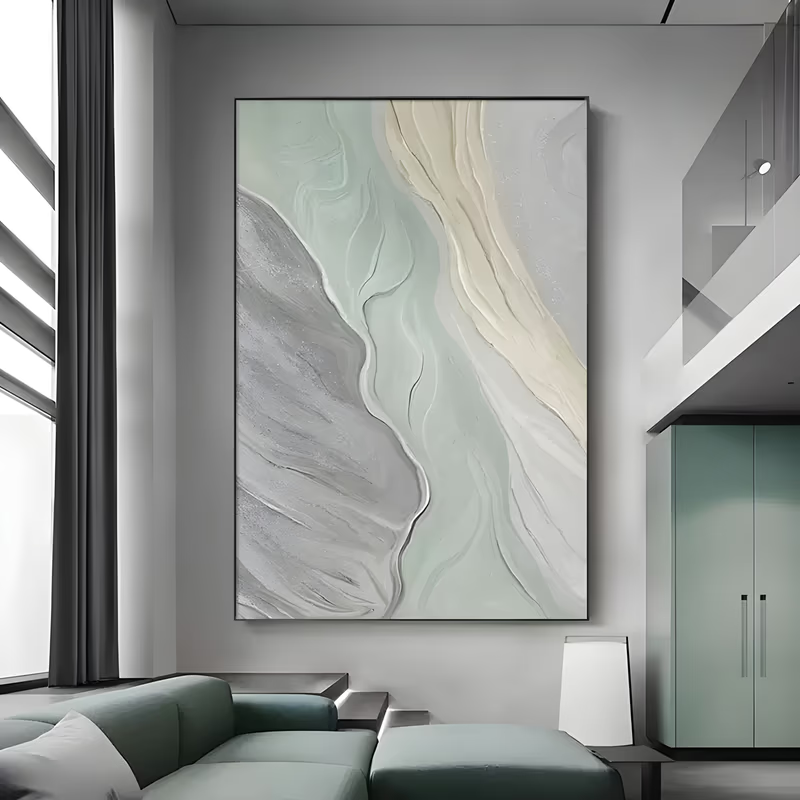
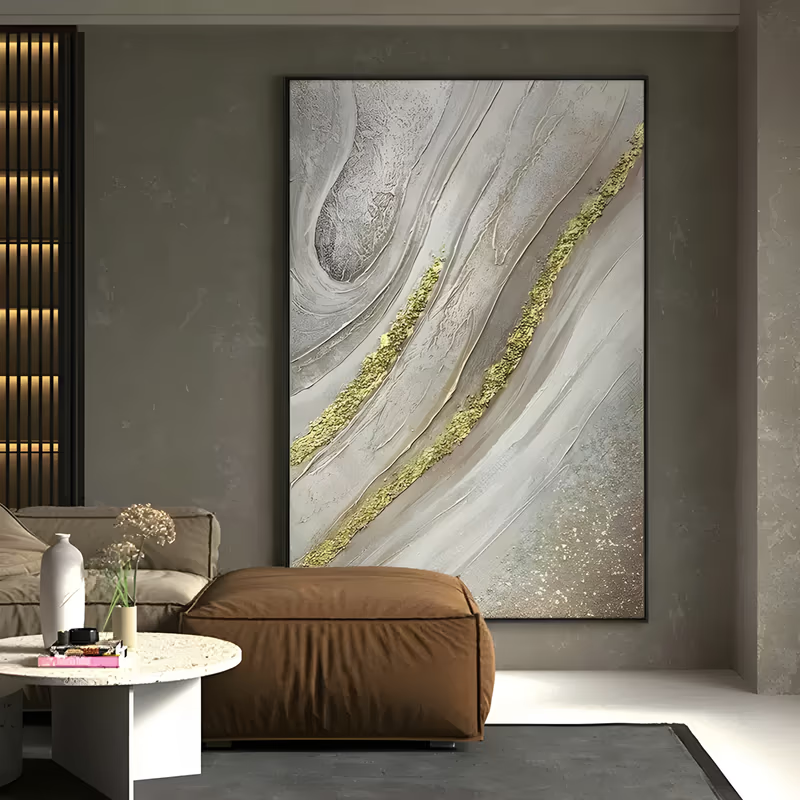
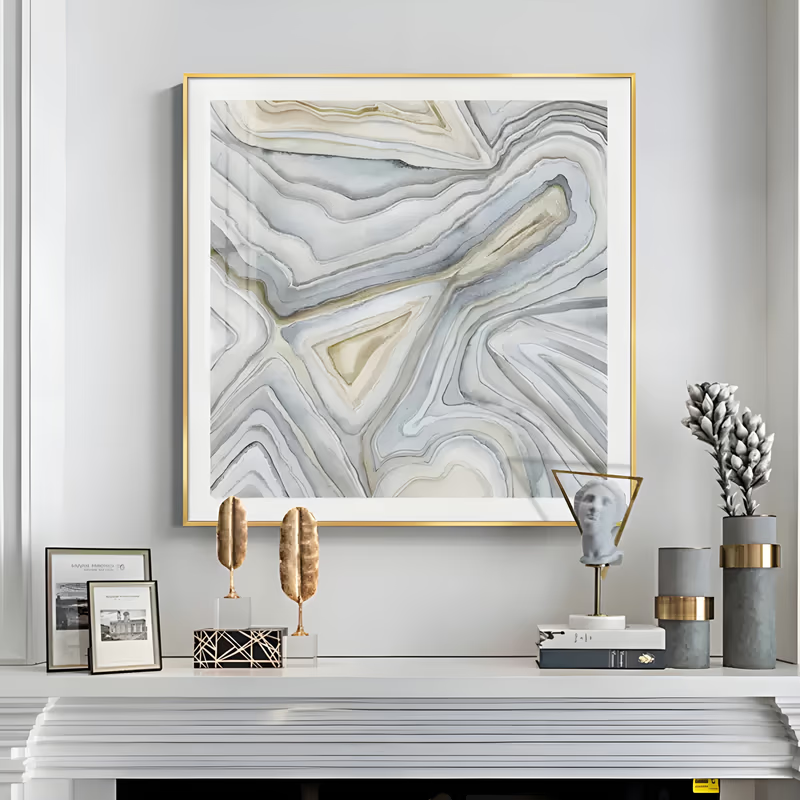
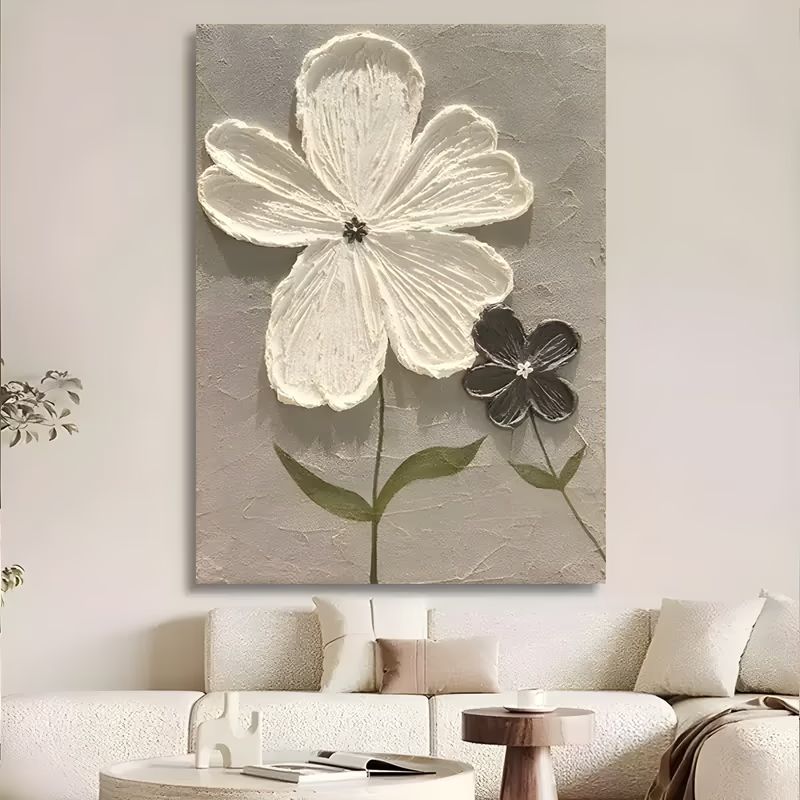
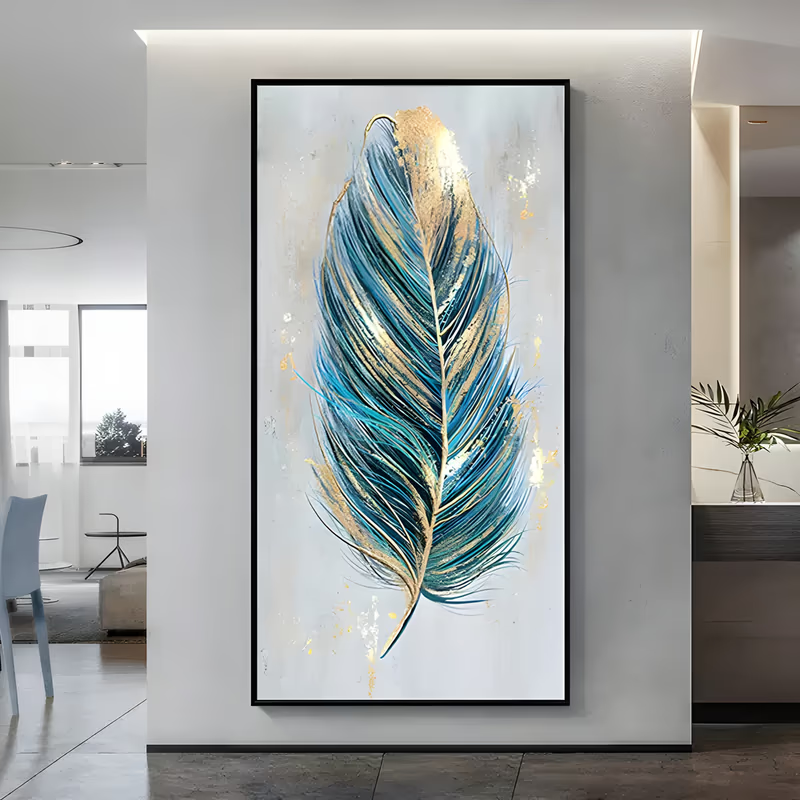
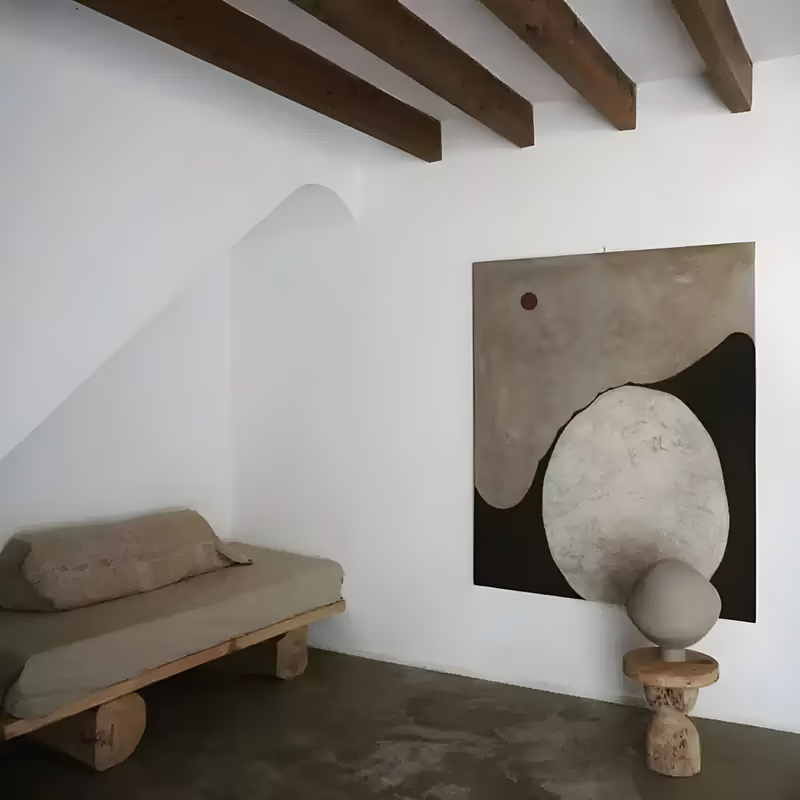
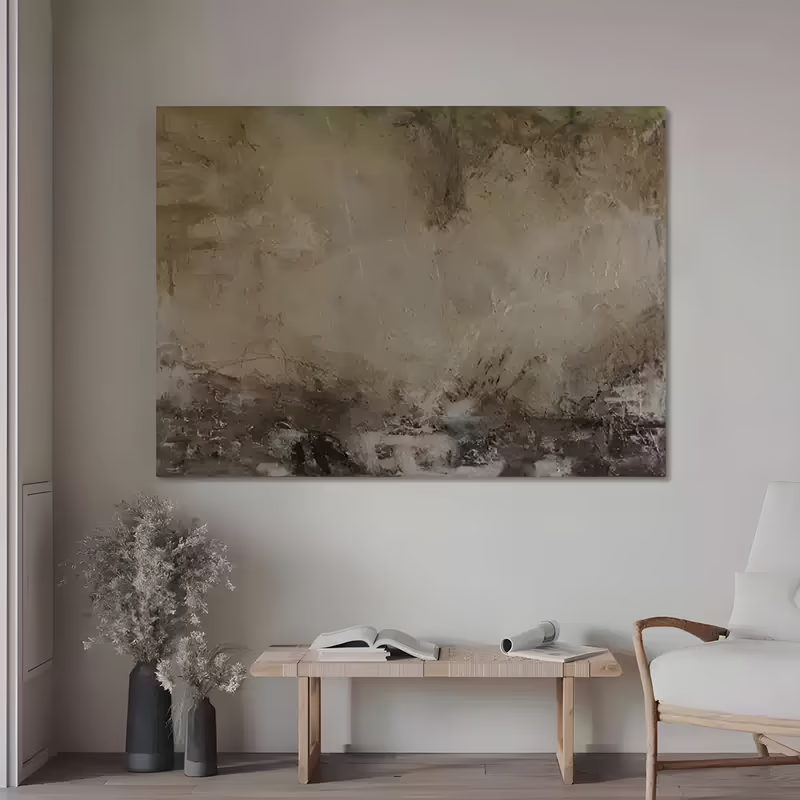
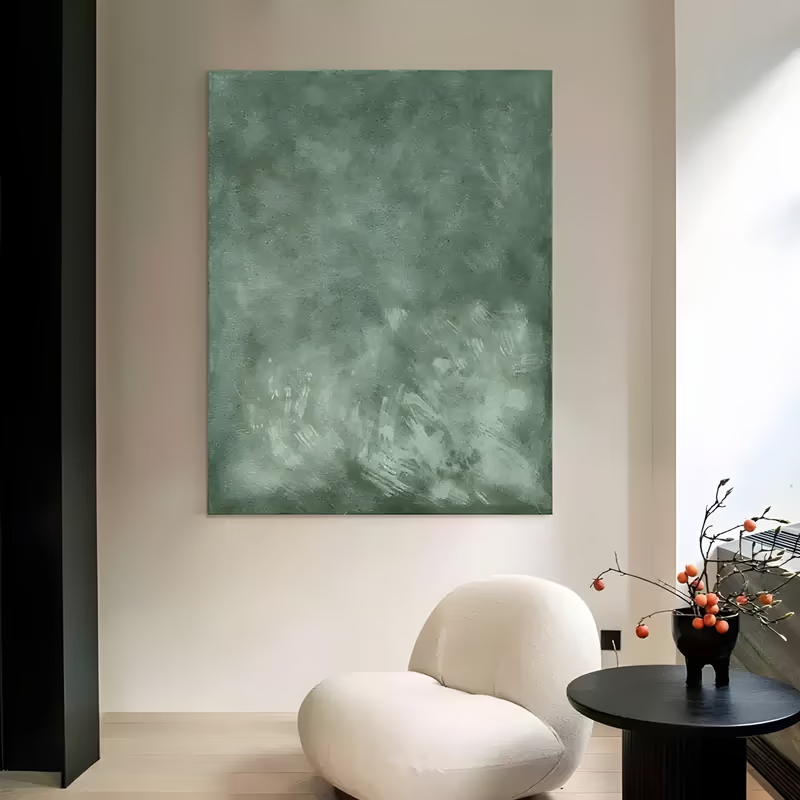
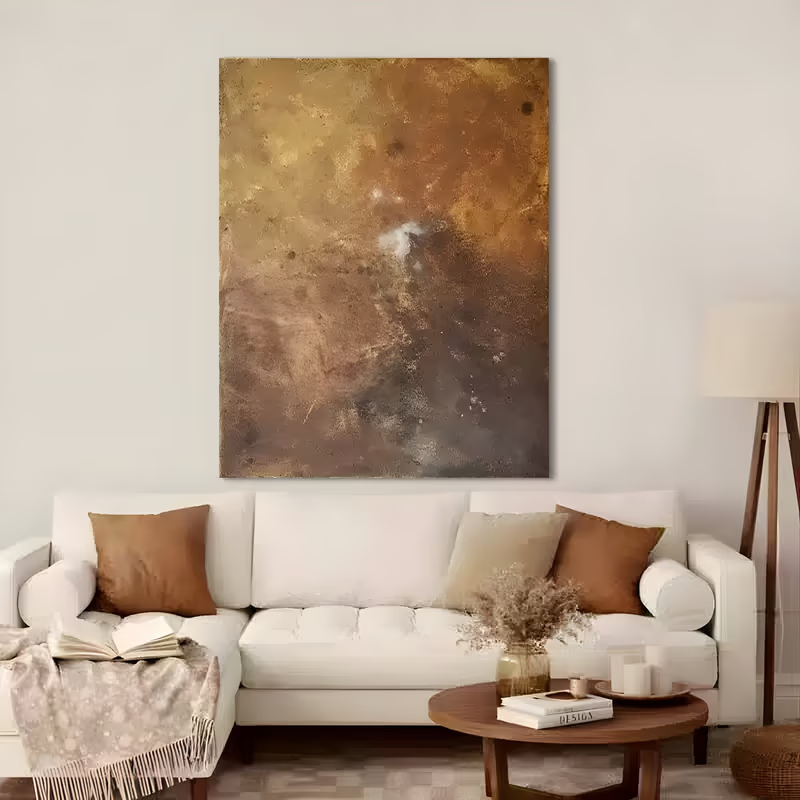
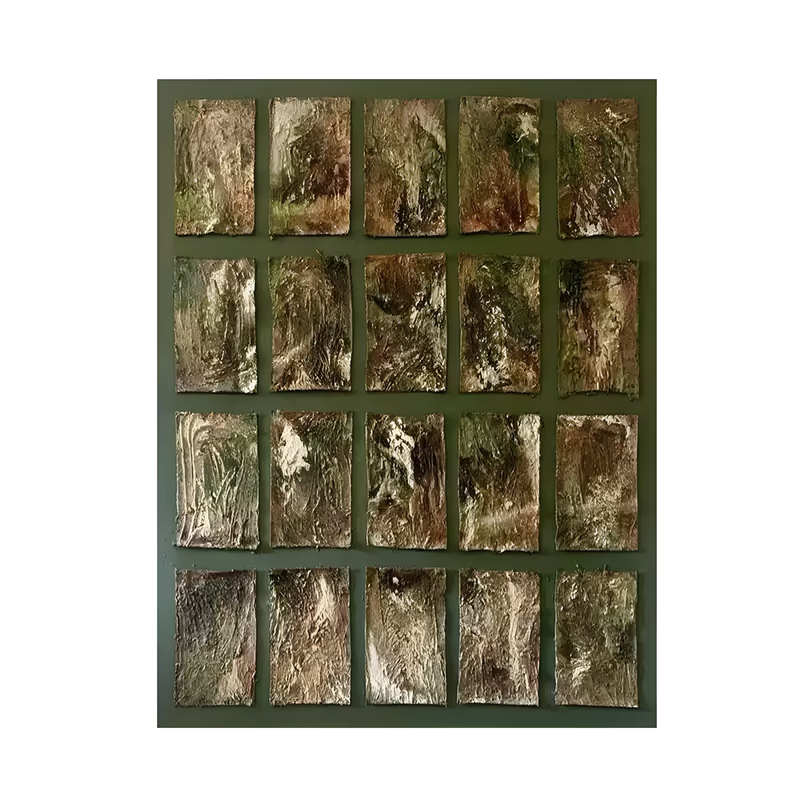
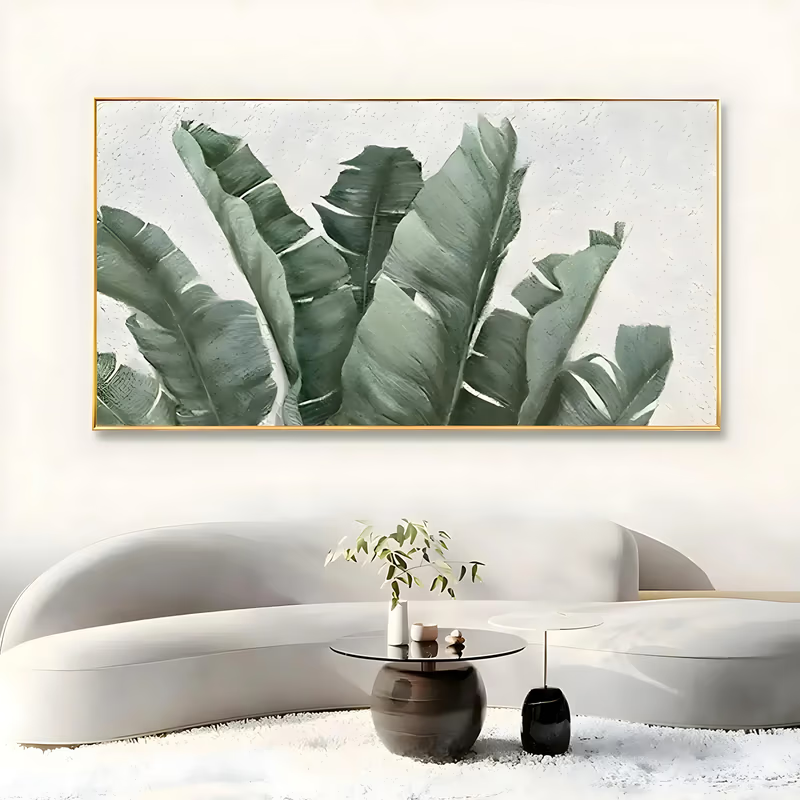
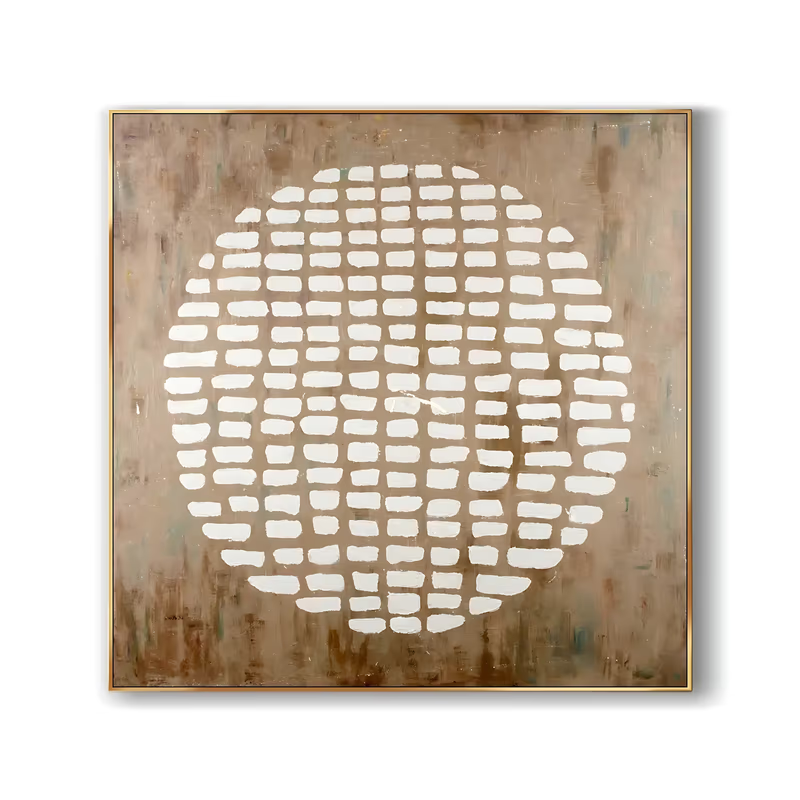
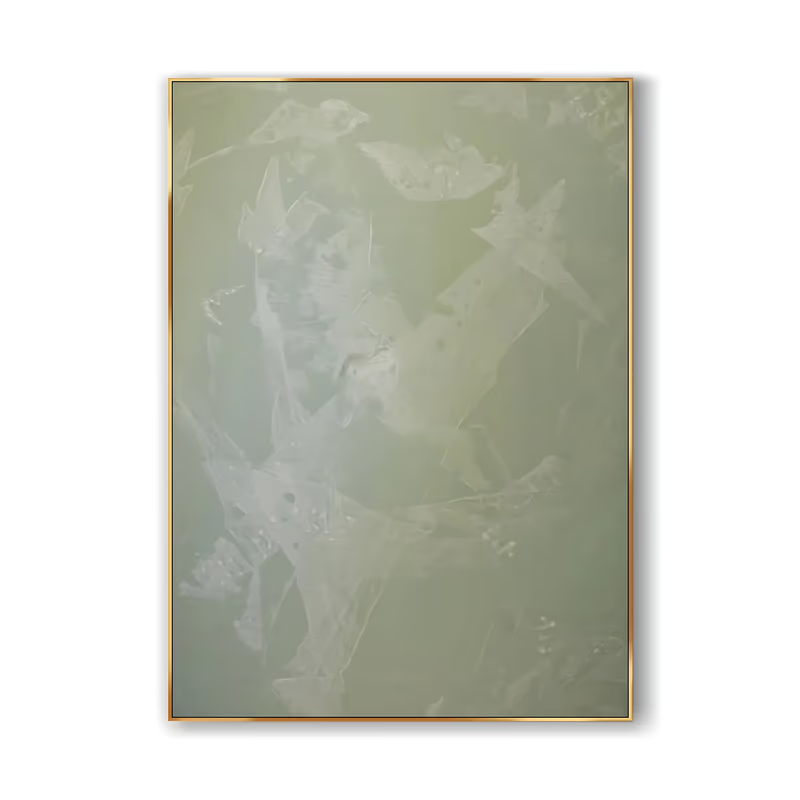
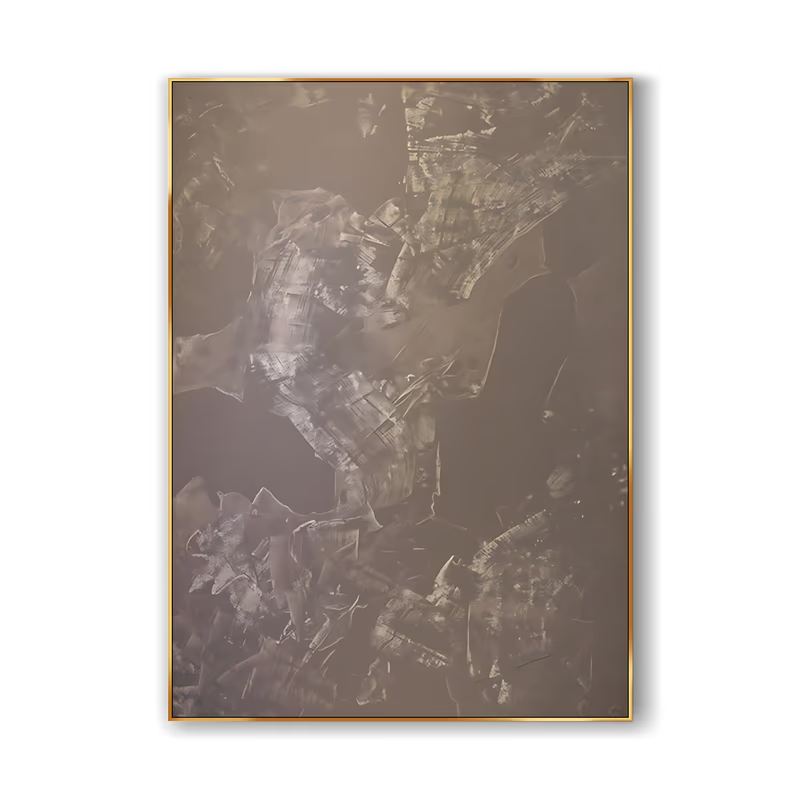
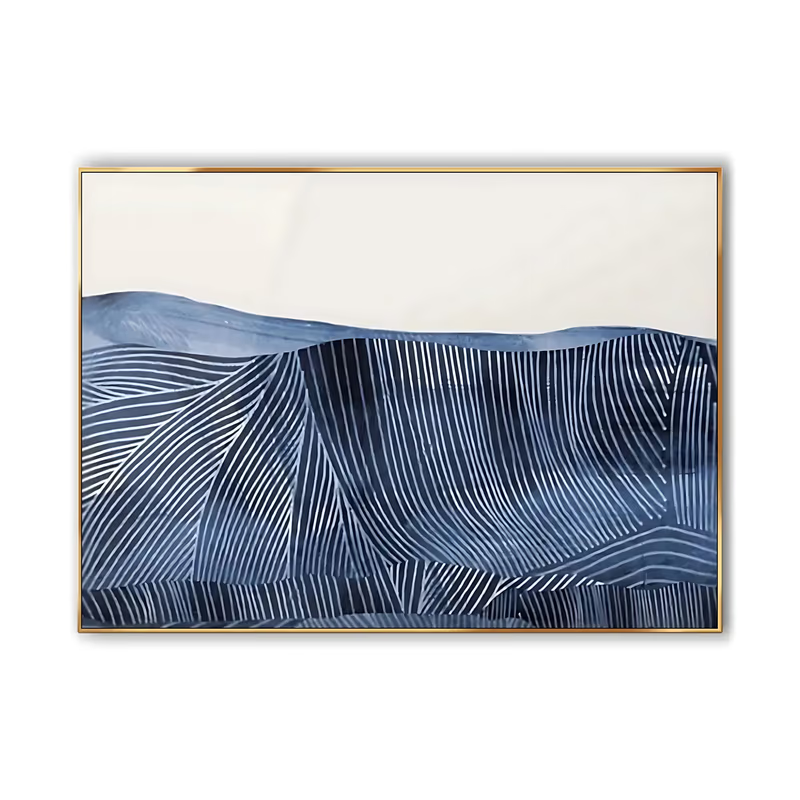
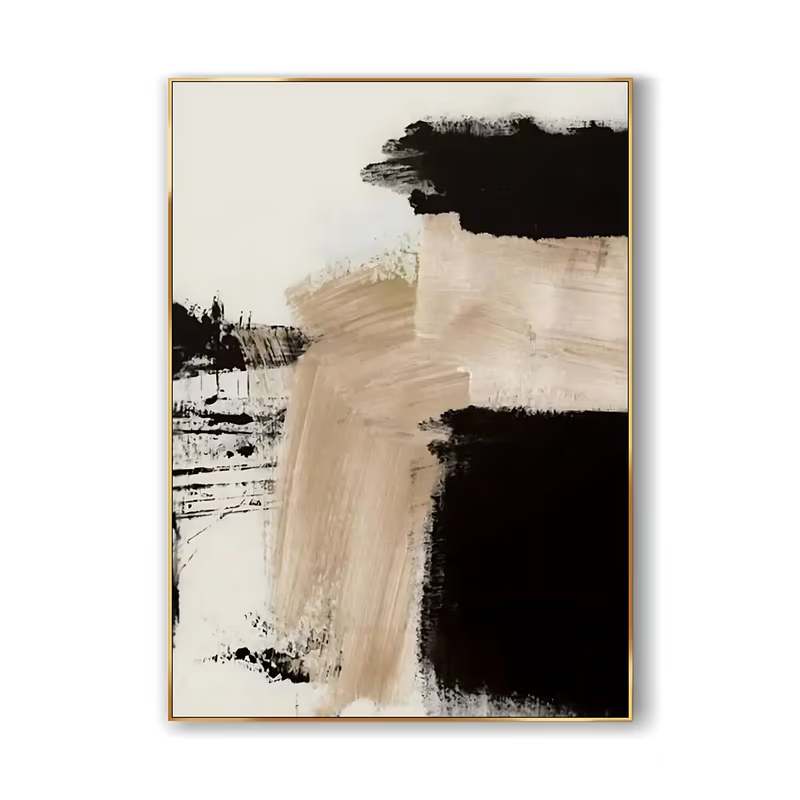
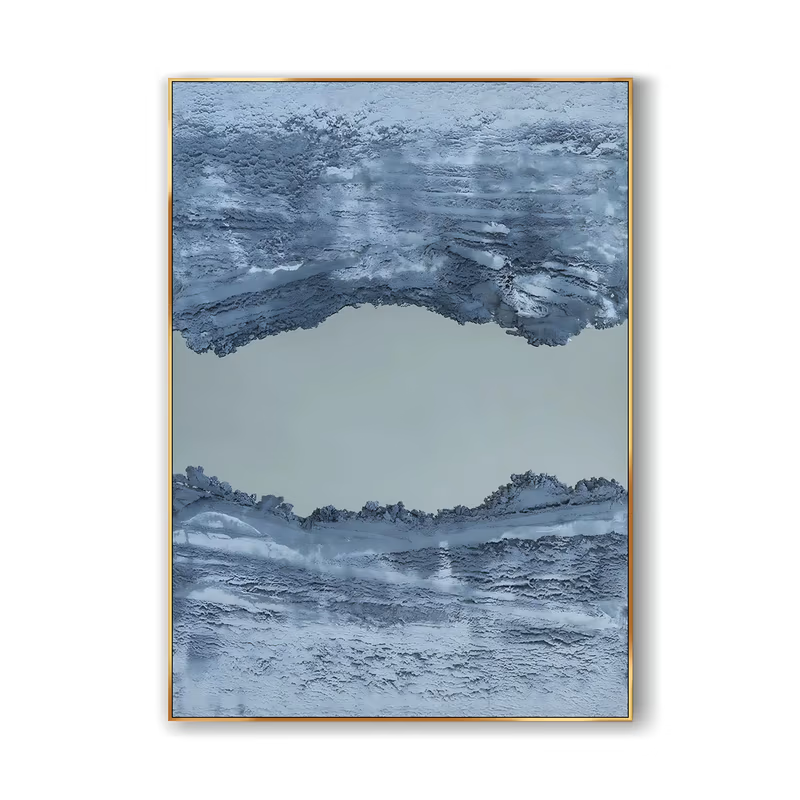
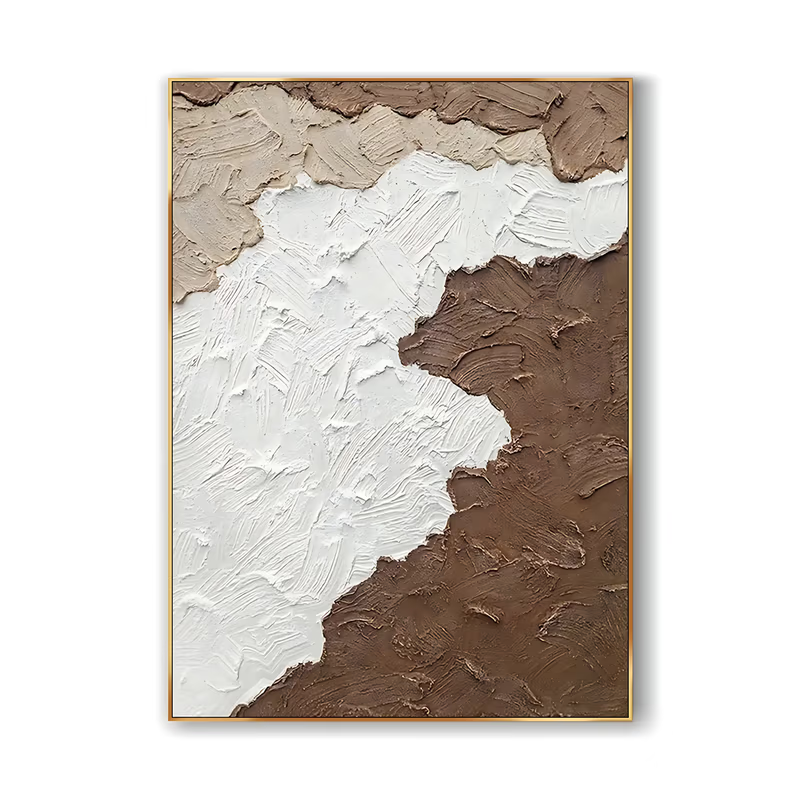
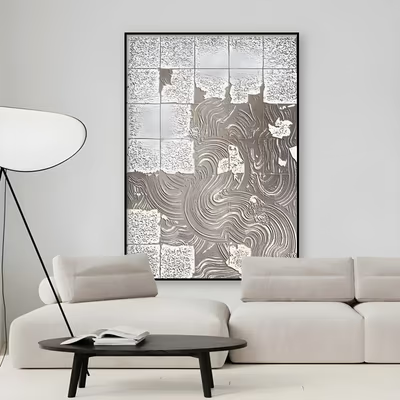
White plaster arches, woven grids in cream and beige, gold-leaf veins through pearl gray, dune ridges in brown and sand. Almost colourless, so they never clash with a brand, yet the relief gives the wall real depth on camera and in person.
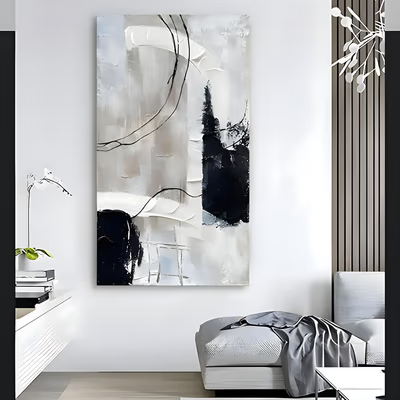
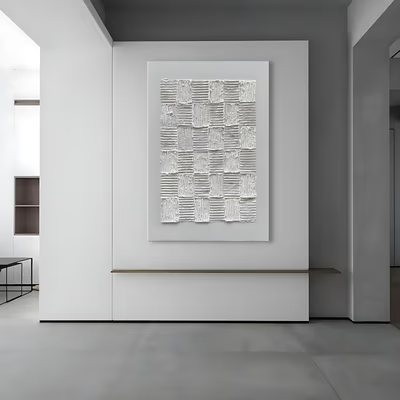
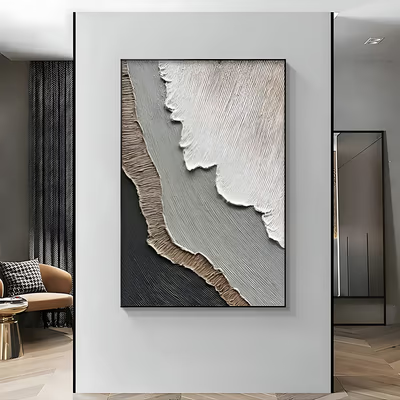
Horses and animal studies
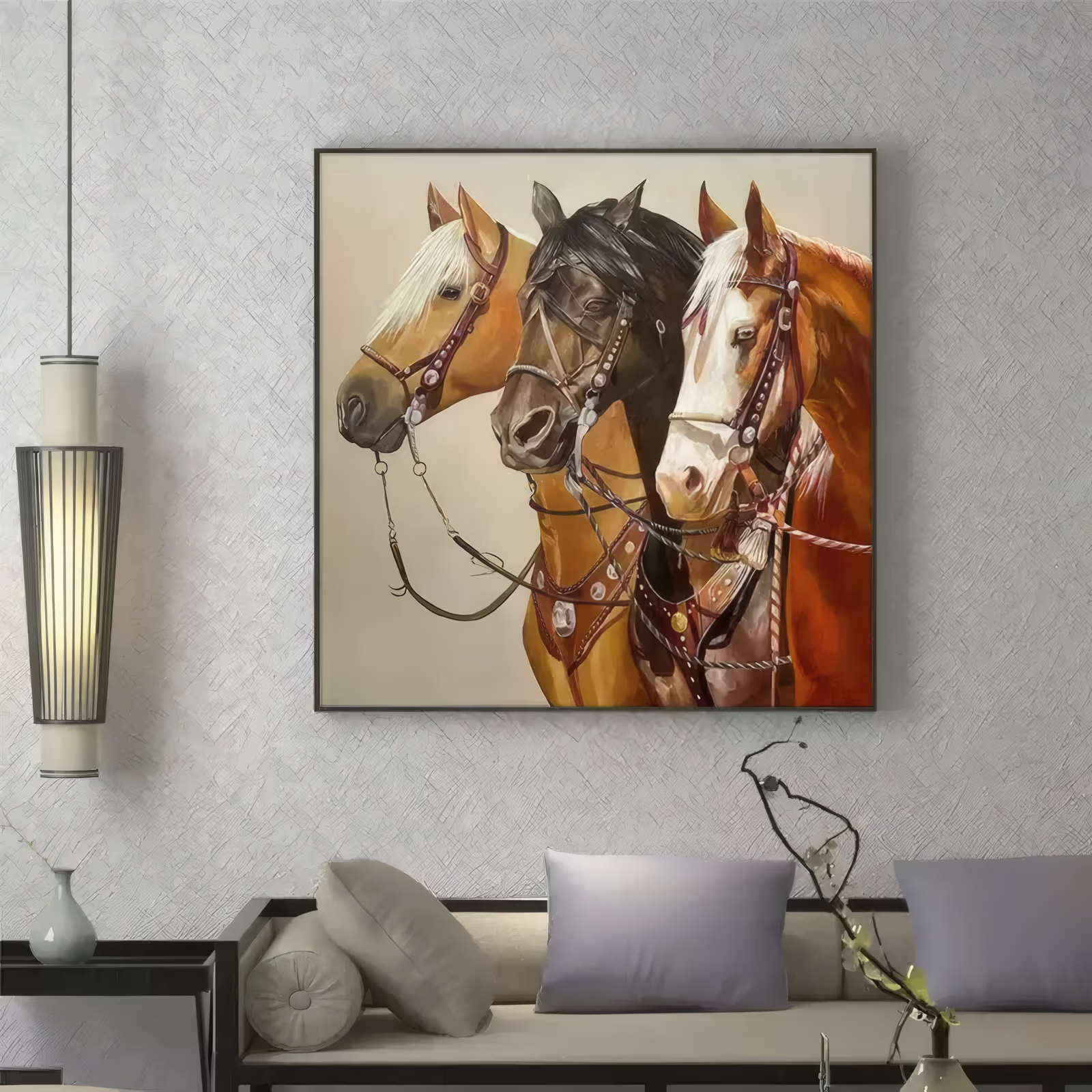
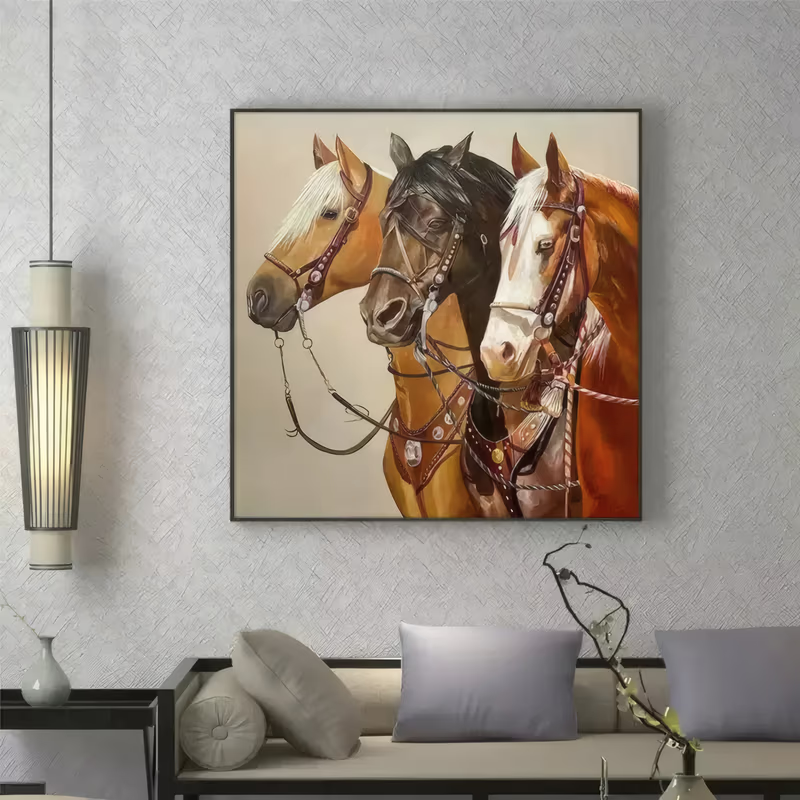
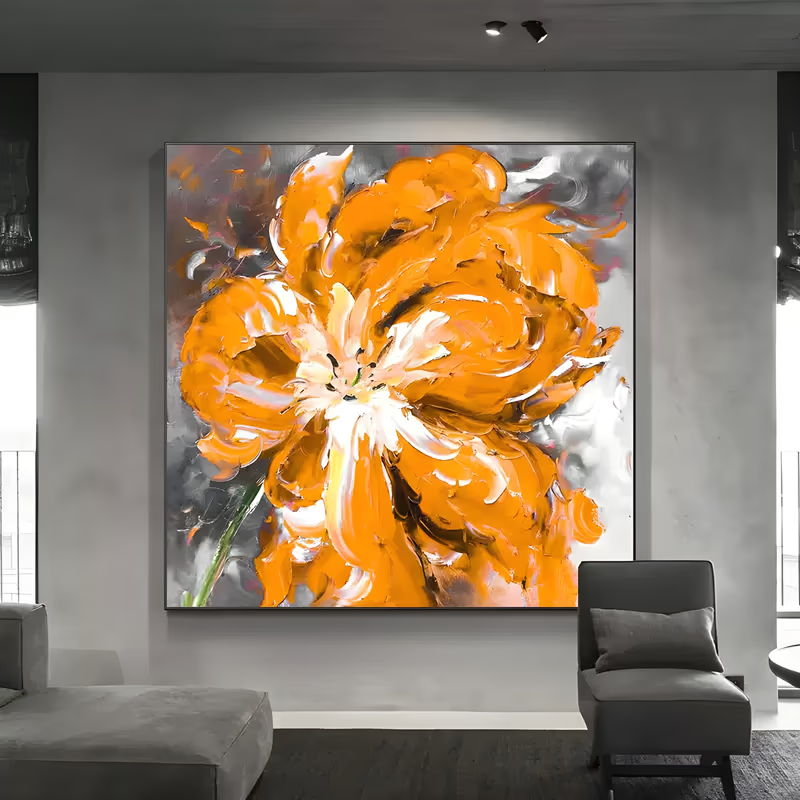
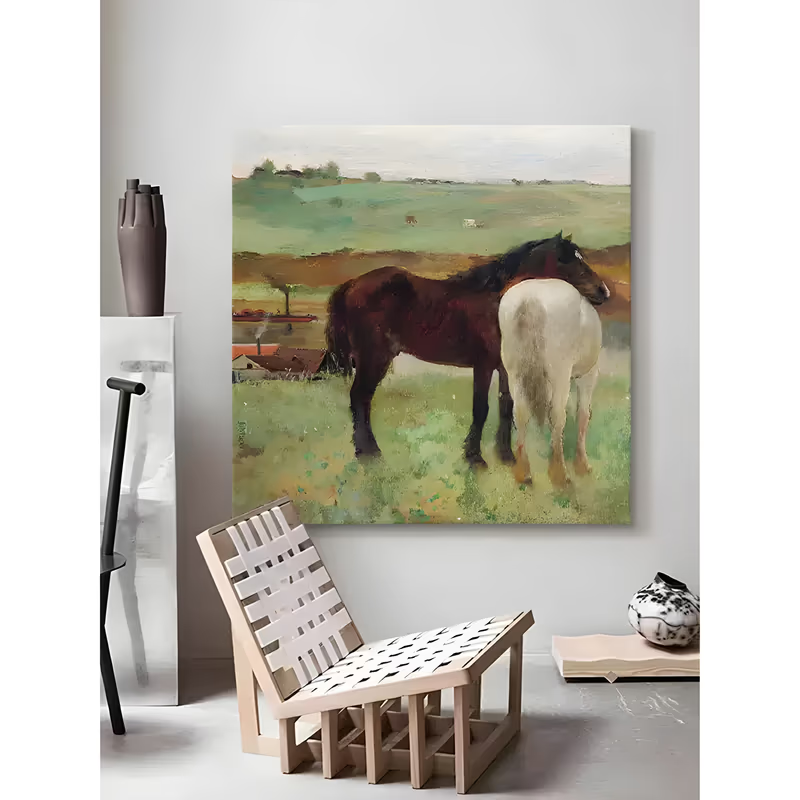
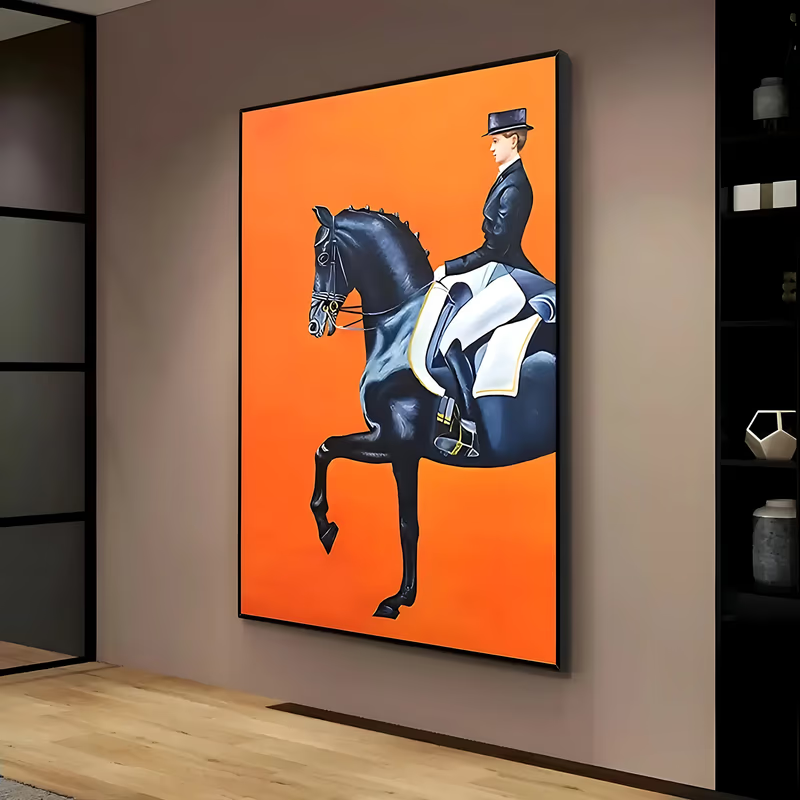
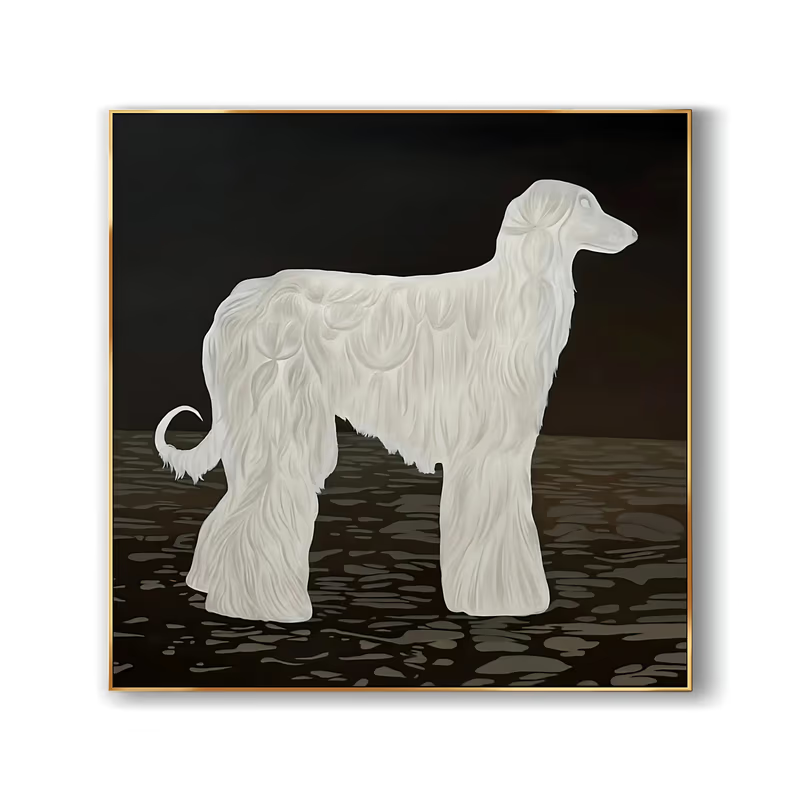
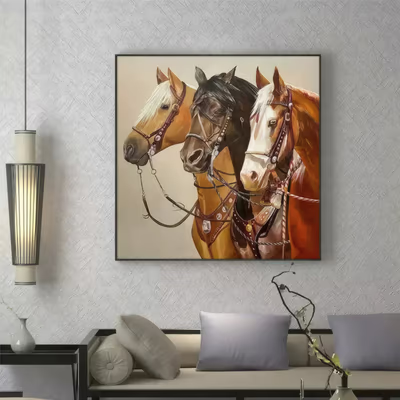
Horse heads in decorated bridles, a black dressage horse on orange, horses in a summer pasture. Horses are a long-standing choice for a boardroom: strong, disciplined and recognisable from the far end of a table. Browse all animal and wildlife paintings.
How big should boardroom art be, and how high should it hang?
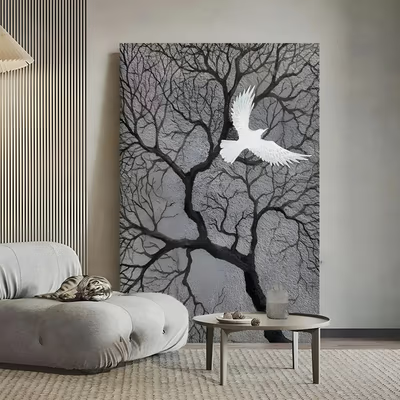
Scale boardroom art to the table: roughly half to two-thirds of the end wall's width, hung lower than in a corridor because everyone looking at it is seated.
A conference table for 10–14 people runs 4–6 m (13–20 ft), so the person at the far end sees the head wall from well across the room. In that room a canvas 150–200 cm (59–79 in) wide holds its own; in a six-person meeting room 90–120 cm (35–47 in) is enough, and anything bigger crowds the space. Over a credenza or sideboard on a long wall, aim for about two-thirds of the furniture's width, with 20–25 cm (8–10 in) between the top of the credenza and the bottom of the frame.
Seated eye height is around 115–125 cm (45–49 in), so centre the canvas at about 140 cm (55 in) from the floor, a little lower than you would in a hallway. The bottom edge should still clear the heads of the people sitting in front of it, roughly 110 cm (43 in) at least, so the art frames the chair rather than sitting behind someone's head.
How does boardroom art look on a video call?
Boardroom art on a video call works when it is matte, mid-toned, uncluttered and placed so the camera frames it beside or behind the head of the table, not cut off at the edge.
In most hybrid meetings the camera sits under the screen at one end and looks down the table to the head wall. That wall is the image remote clients see for the whole call, so check it through the room's own camera before choosing a size: put masking tape on the wall where a canvas would go and look at the video preview. A few rules follow from how cameras behave:
- Avoid glass. Glazed frames reflect ceiling lights and the screen itself. A canvas has no glass, and framing without glazing keeps it that way.
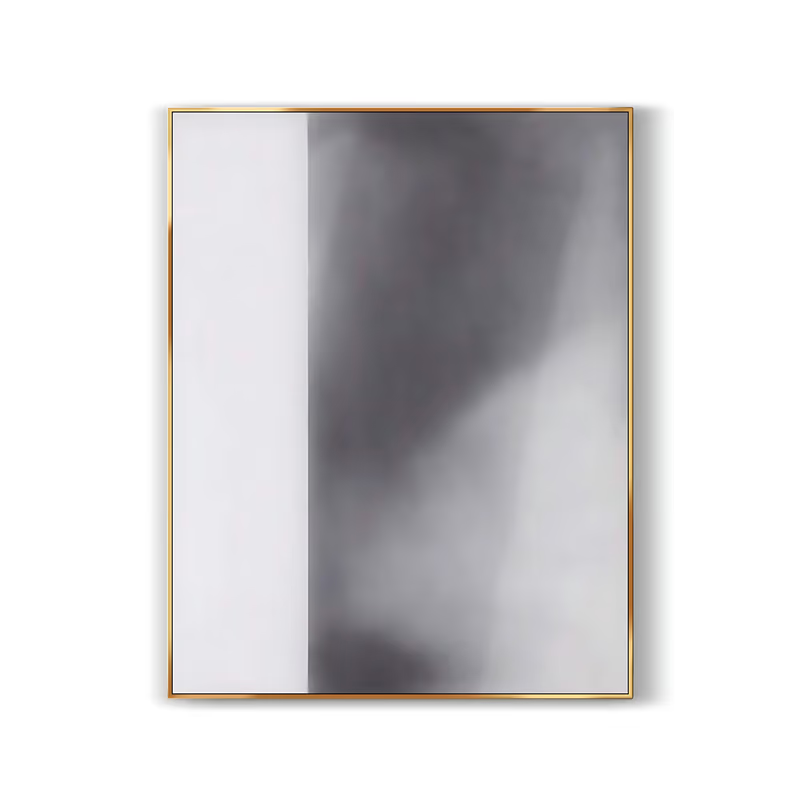
- Keep the tone in the middle. A brilliant white canvas behind the chair can make the camera darken faces; a very dark one can lose its shape entirely. Stone, sage, gray-blue and soft gold sit comfortably between the two.
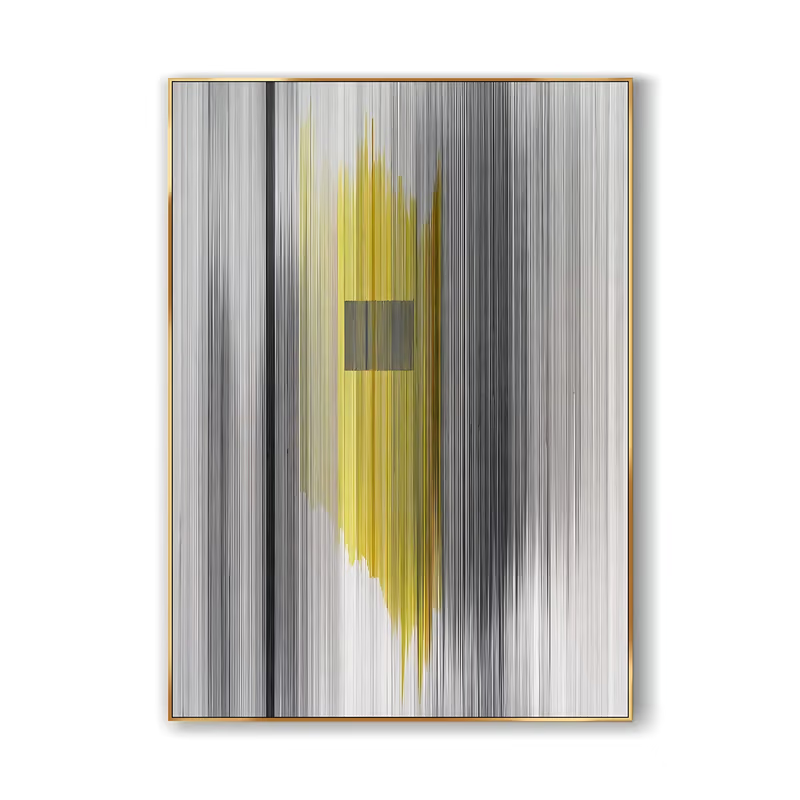
- Skip fine stripes and tight patterns. They shimmer on compressed video. Broad shapes, horizons and soft relief read clearly.
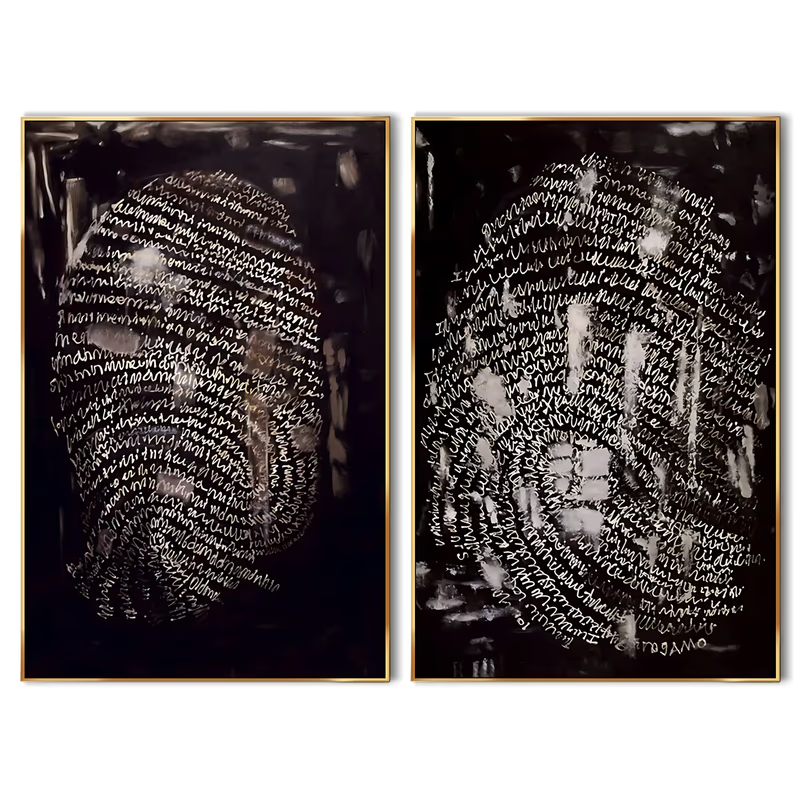
- Let the art sit beside the head, not directly behind it. A canvas offset to one side, or two canvases flanking the chair, frames the speaker instead of crowning them.
Should conference room art use the company's brand colours?
Borrow one or two brand colours as accents in a calm palette rather than painting the whole canvas in brand colours; the art then belongs to the company without looking like a logo.
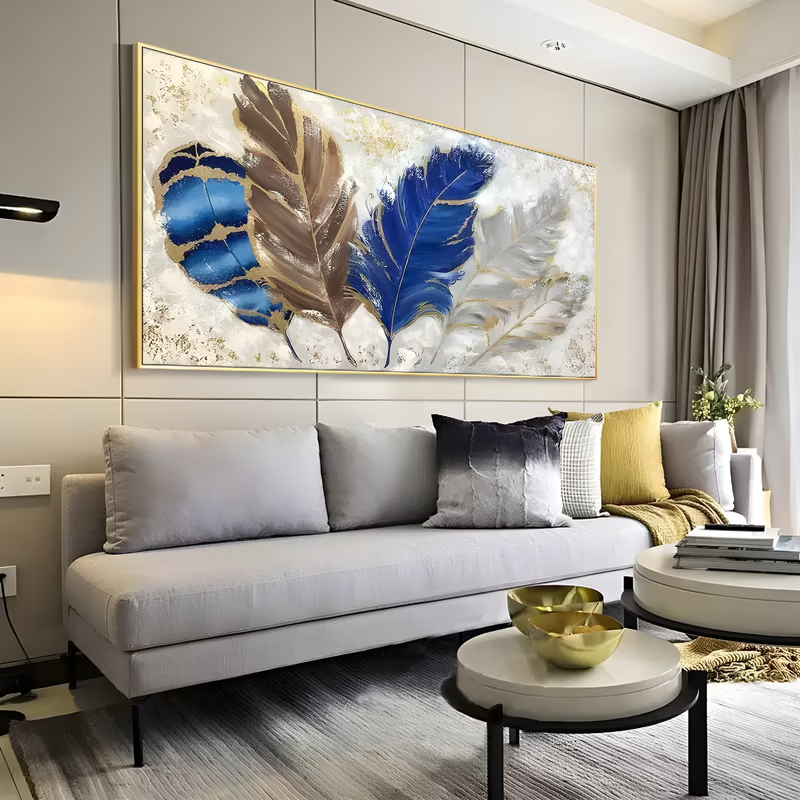
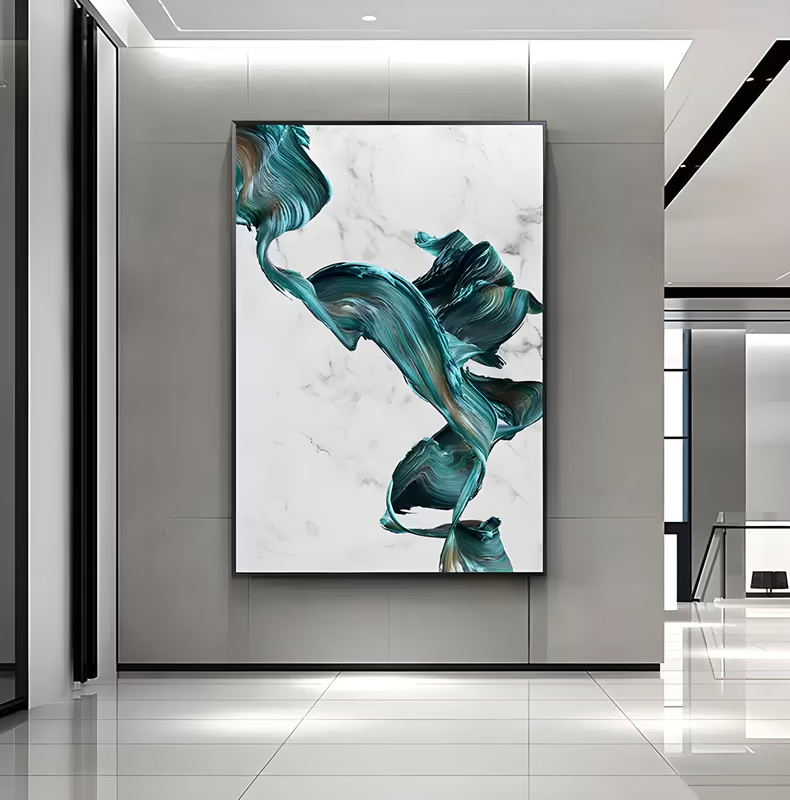
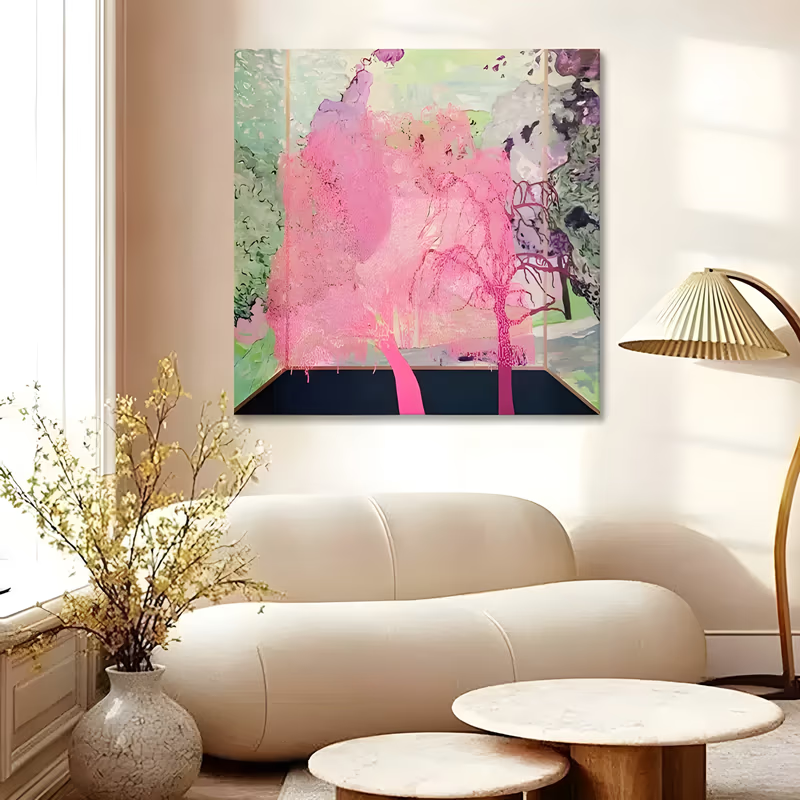
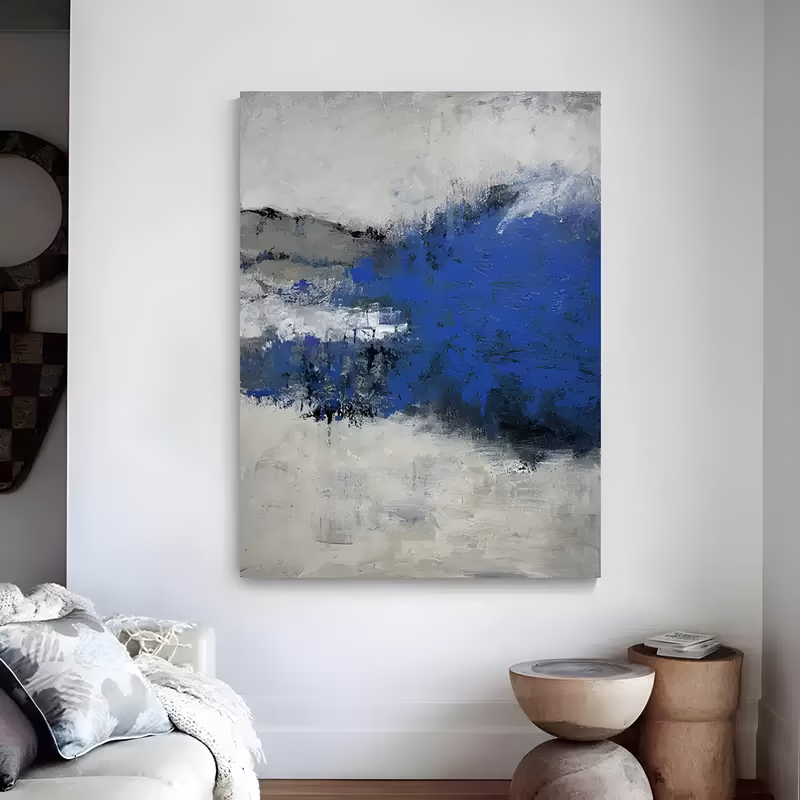
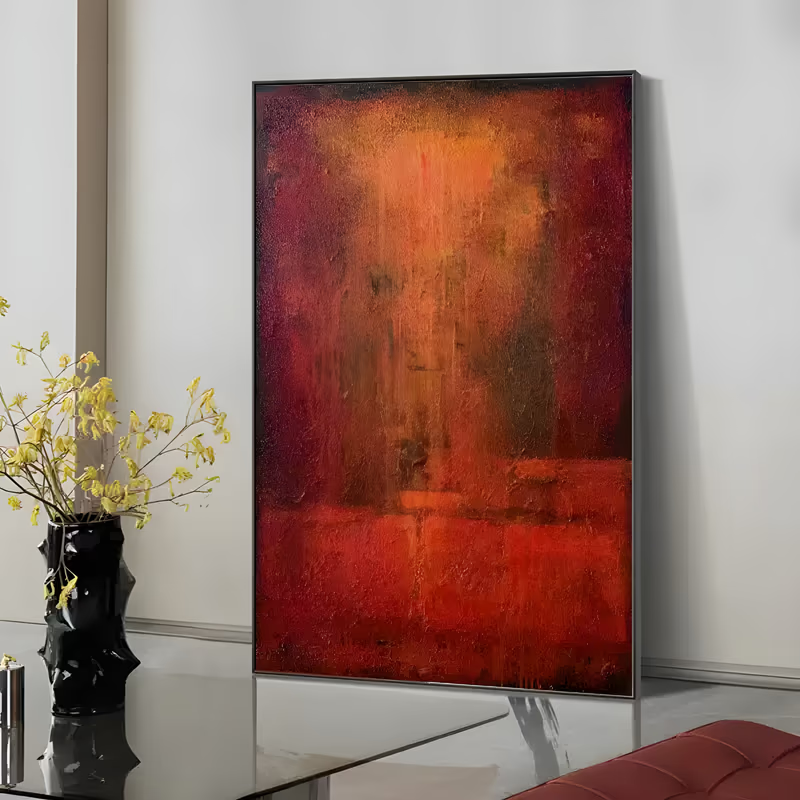
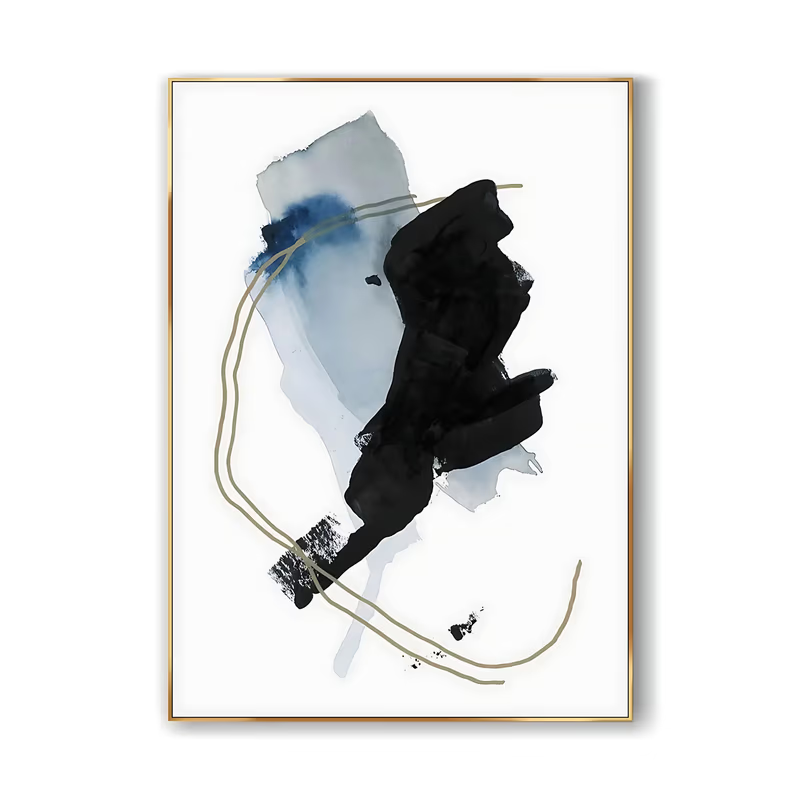
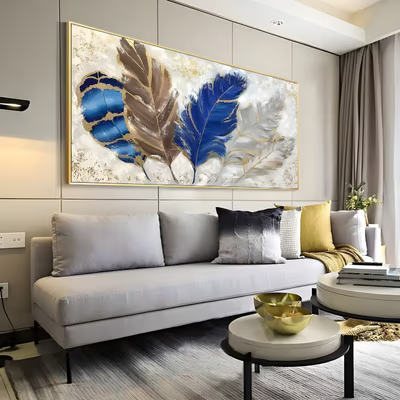
A boardroom is the most formal space in an office, and saturated brand colour at full strength tends to look like signage. A more convincing approach is to take a neutral base, such as gray, beige or white, and let the brand appear in a band of colour, a gold-leaf line or the sky of a landscape. Any work here can be repainted with your colours in that role.
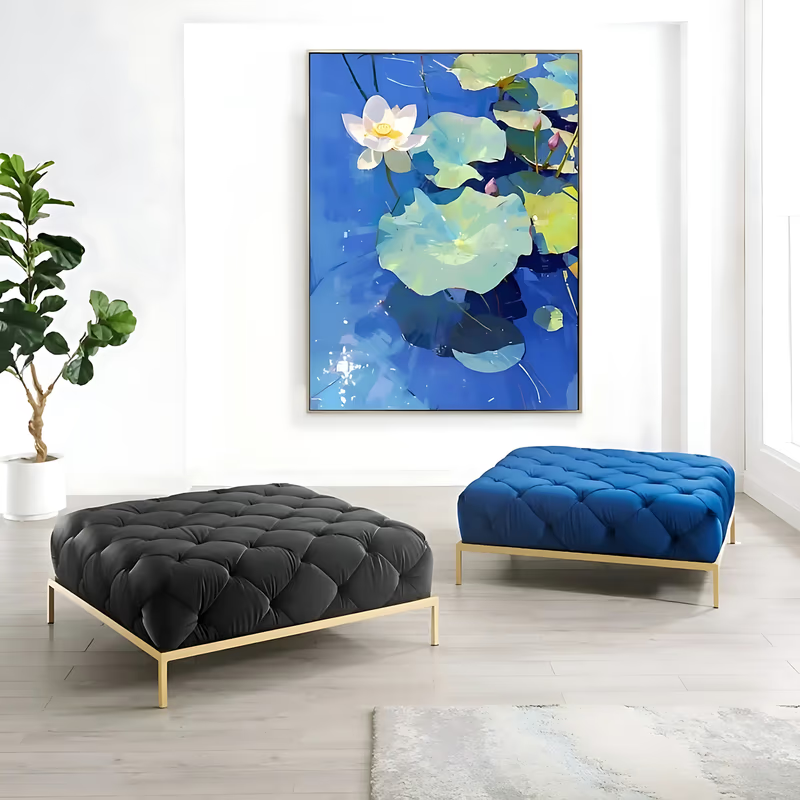
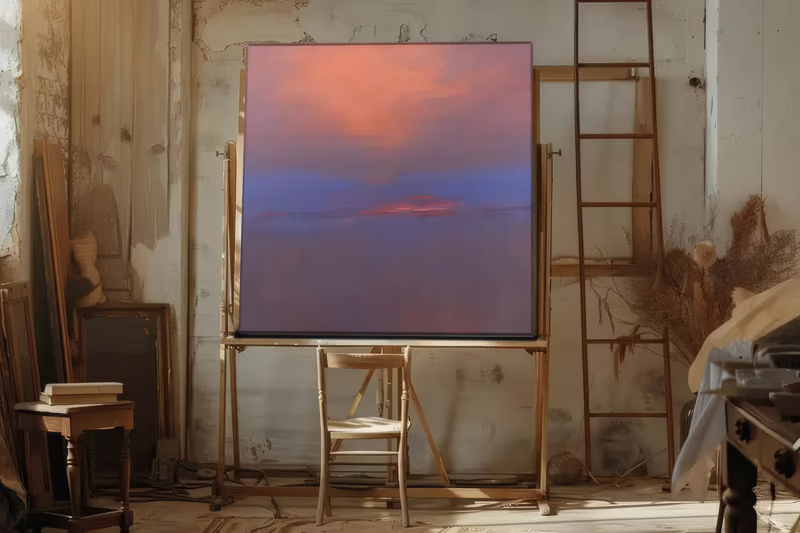
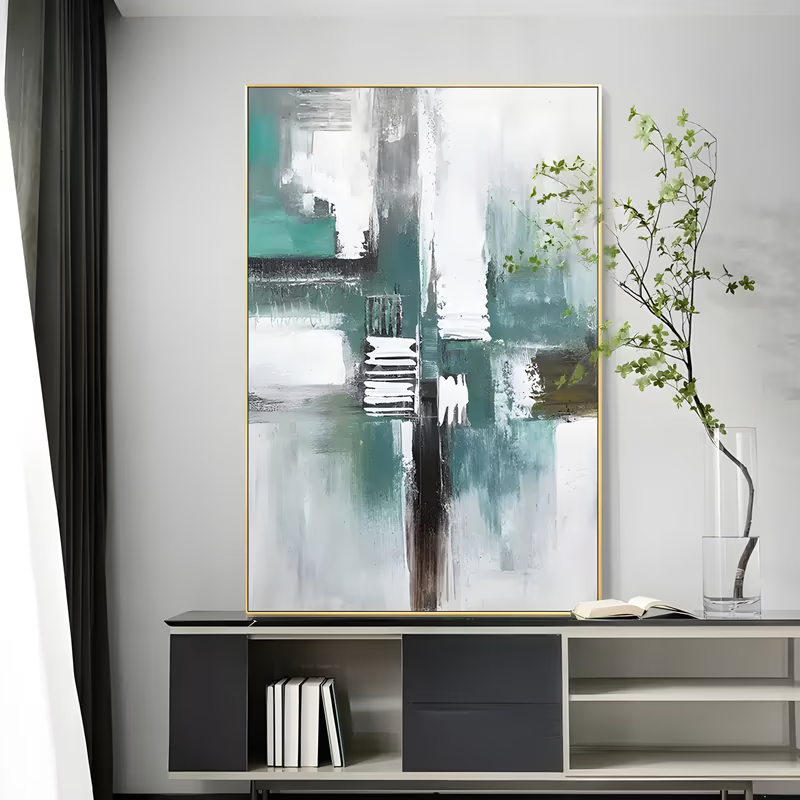
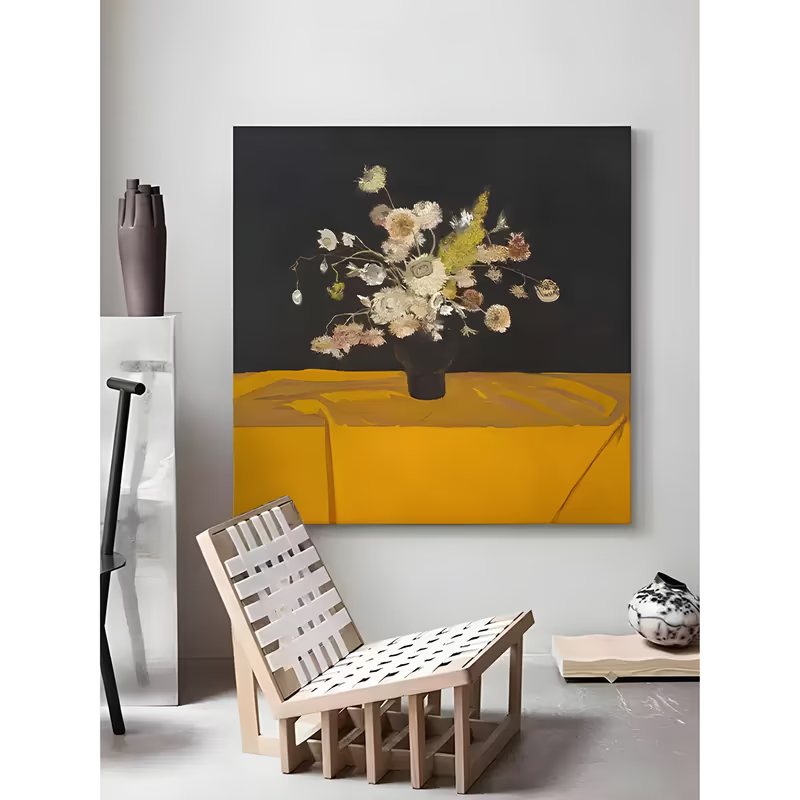
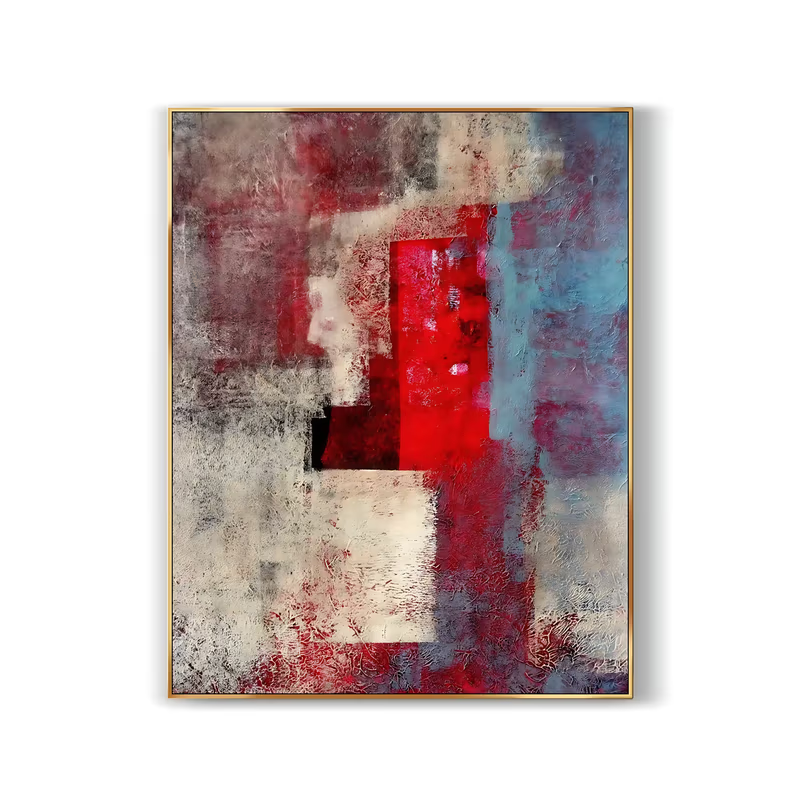
On a floor of meeting rooms, colour can also organise the rooms. Paint one composition in a different colourway for each room and name the rooms after them: the Sage Room, the Navy Room, the Gold Room. Staff remember them, booking systems read clearly, and visitors find their way without a map. For general working areas, which need a different energy, see office wall art.
How do you fit out a floor of meeting rooms with art?
Start with the boardroom piece, approve a sample of the meeting-room series in place, then order the remaining rooms as one run timed to handover.
Corporate headquarters usually have one formal boardroom and several meeting rooms of different sizes. The boardroom deserves its own statement piece. The smaller rooms work best as a series: a shared composition or subject, with a different colourway and size for each, related but not repeated. Schedule the boardroom canvas first; it is the one the leadership team will want to see.
Each piece is about 10 days to paint and 5–7 days in transit, and every stage is photographed so a design or workplace team can approve the whole run from progress photos. The minimum order is one piece, volume pricing starts at 10, and every enquiry is quoted within one business day. More for corporate buyers on art for corporate HQs and professional offices.
How is boardroom art made to fit the room exactly?
Send the wall dimensions, a photo of the room under its normal lighting and any finish samples, and the painting is resized and recoloured before the first brushstroke.
The composition is redrawn to the proportions you need rather than stretched, so a vertical landscape can be painted as a wide panorama for a long wall. The palette can follow a paint code, a carpet or upholstery fabric, or the timber of the table. You see progress photos or video at each stage of painting, nothing moves on to the next stage until you approve it, and the finished piece is photographed for approval before it leaves.
Boardroom canvases are usually supplied stretched and ready to hang, or framed; black and wood frames suit most meeting rooms, and silver, white and gold are available. They can also ship rolled if an installer will stretch them on site. Shipping goes by DHL, FedEx or UPS express, with the cost confirmed before dispatch. Request a quote with your room list, or read about custom sizes and colourways.