
Home office art guide · Updated
How to choose wall art for a home office
Key takeaways
- Two walls, two jobs: the wall you face is for resting your eyes between tasks; the wall behind you is what colleagues and clients see on camera.
- Check the webcam crop first: open the camera preview and mark the visible area with tape, then choose a painting that sits beside your head, not above it.
- Calm on the facing wall, contrast behind: muted blues, greens and neutrals are easy to look at all day; one clear shape behind you reads well on a small video tile.
- Size to the desk: about two-thirds of the desk's width, with the lower edge 20–30 cm (8–12 in) above the desktop or monitor.
What wall art suits a home office?
Home office wall art should suit the work done there: calm, uncluttered pieces for concentration, livelier ones for creative work, and something clear and composed on any wall the camera sees.
A home office is unusual among rooms because it has two audiences. You look at one wall for hours, often in short breaks from a screen. Other people look at a different wall, through a webcam, a few centimetres high on their own screens. Each wall deserves its own decision.
| Wall | Who sees it | What to choose |
|---|---|---|
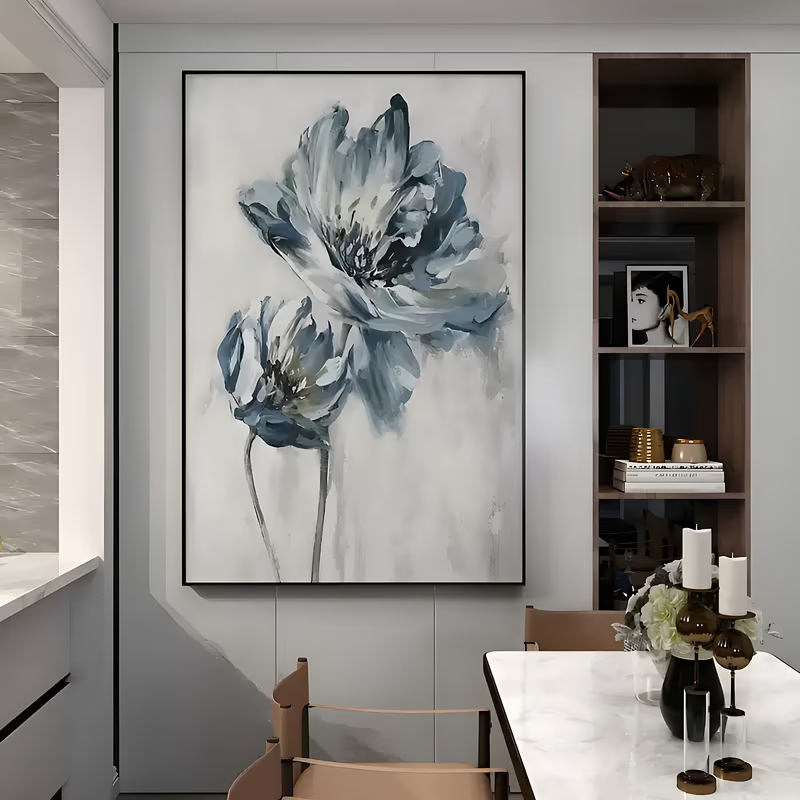
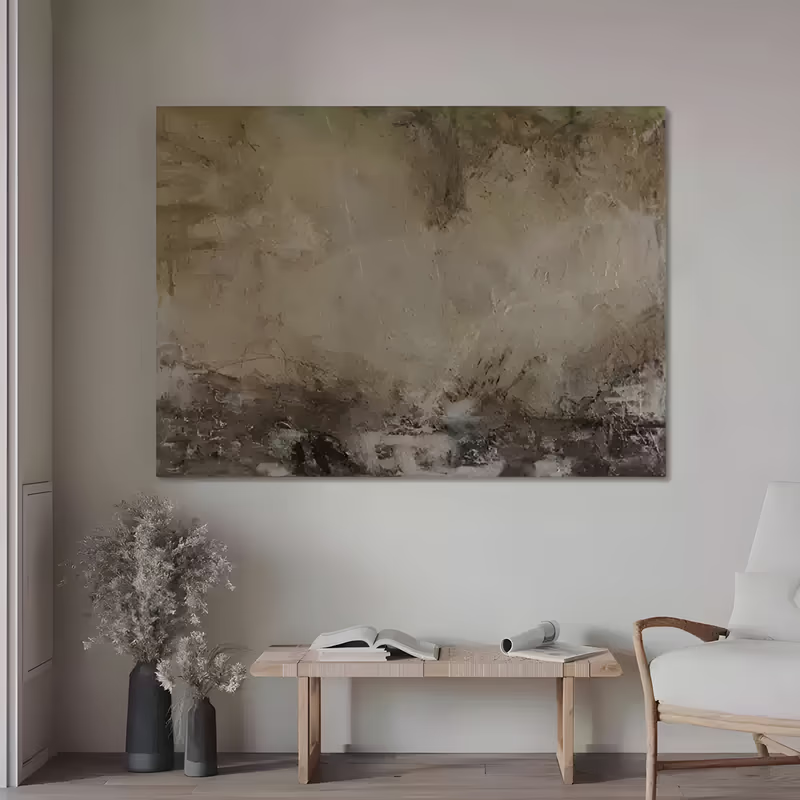
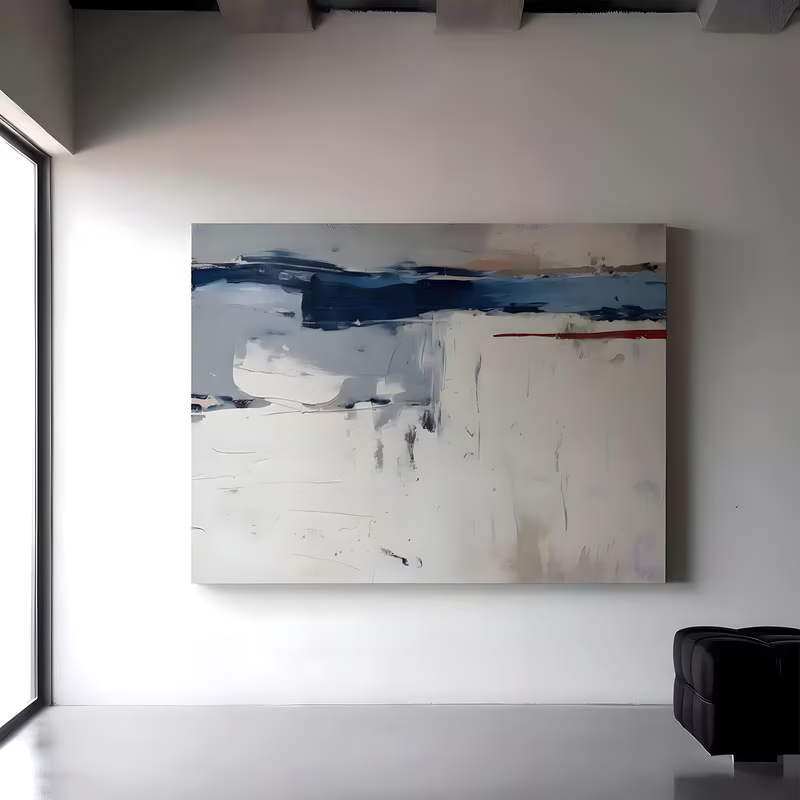
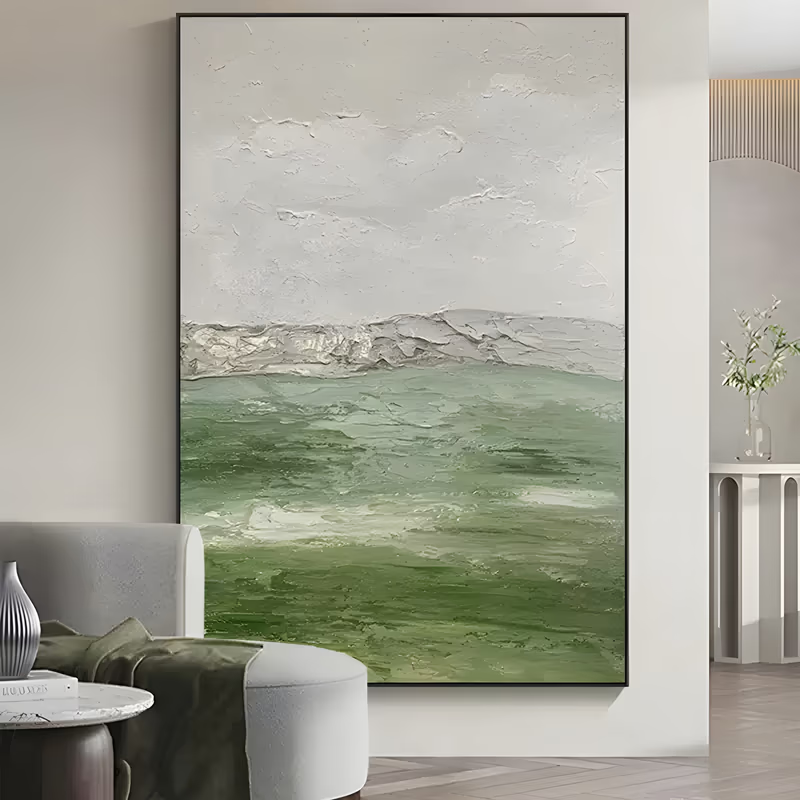
| Facing the desk | You, for hours, between tasks | A restful landscape or soft abstract with depth to rest your eyes on |
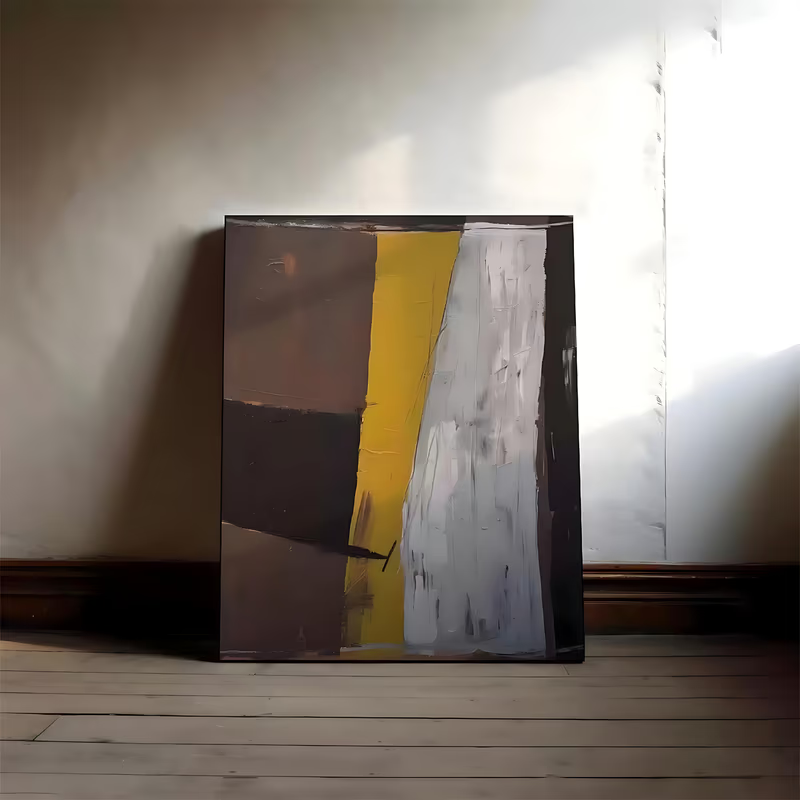
| Behind your chair | Colleagues and clients on video | One composed piece with a clear shape and mid-tone contrast |
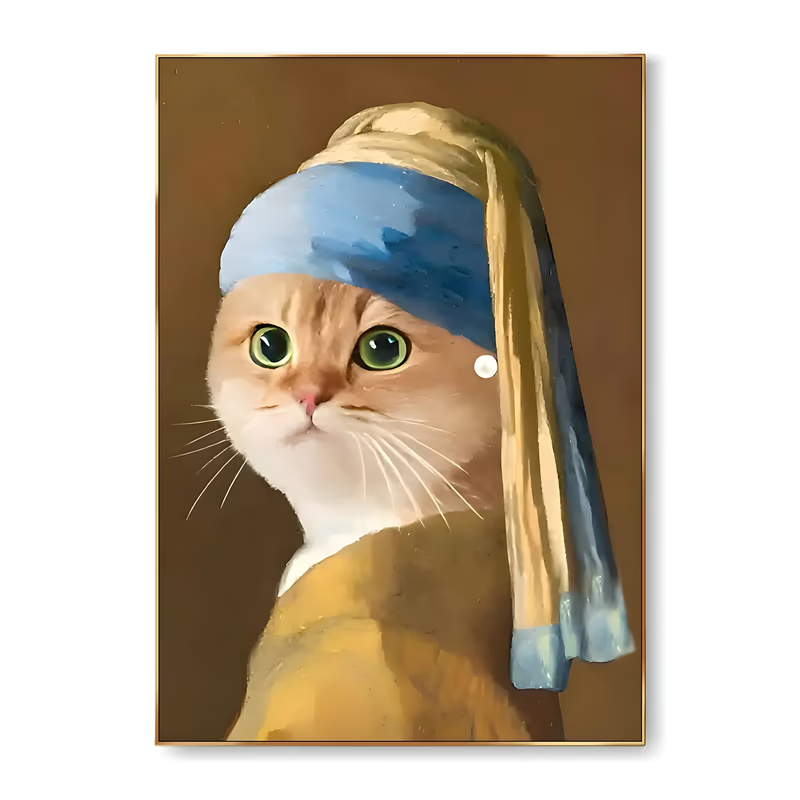
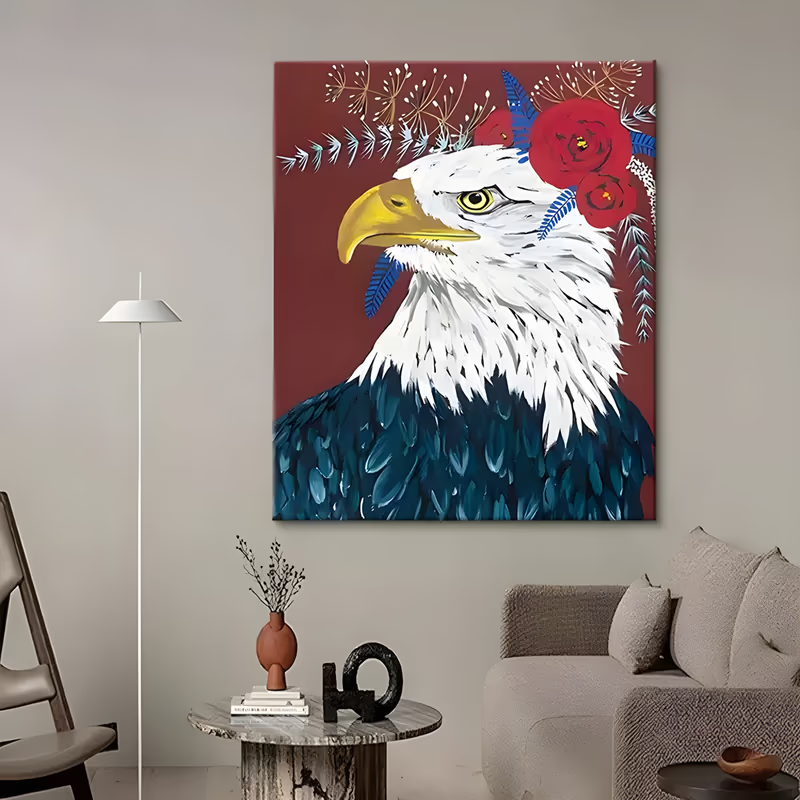
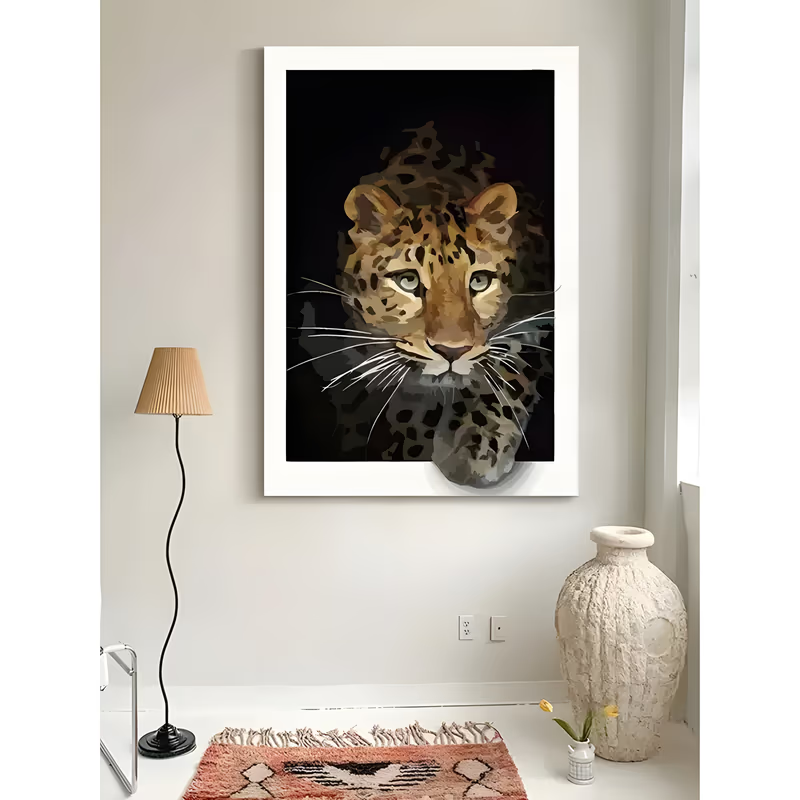
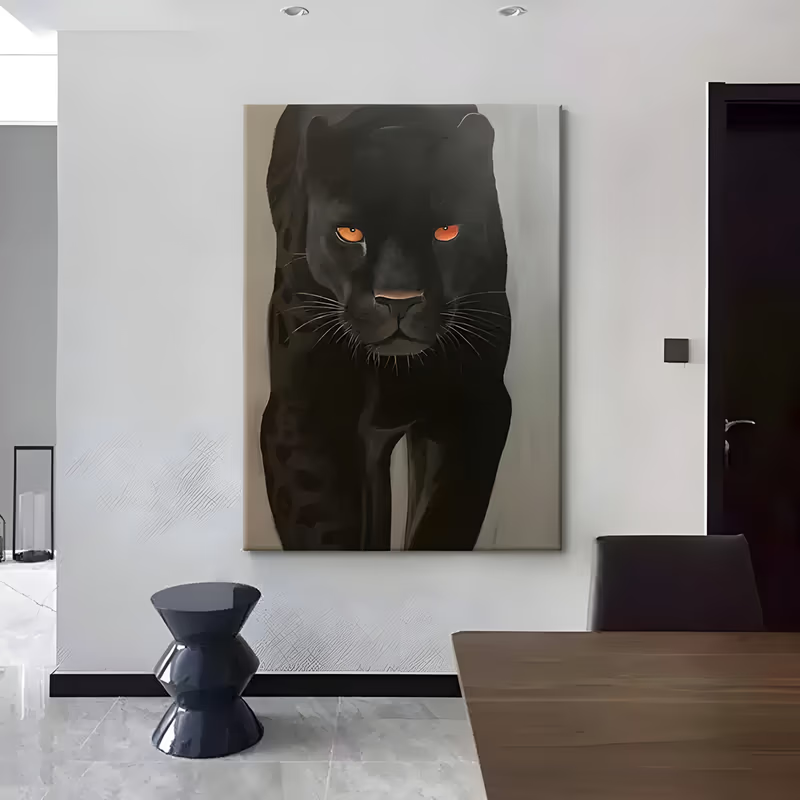
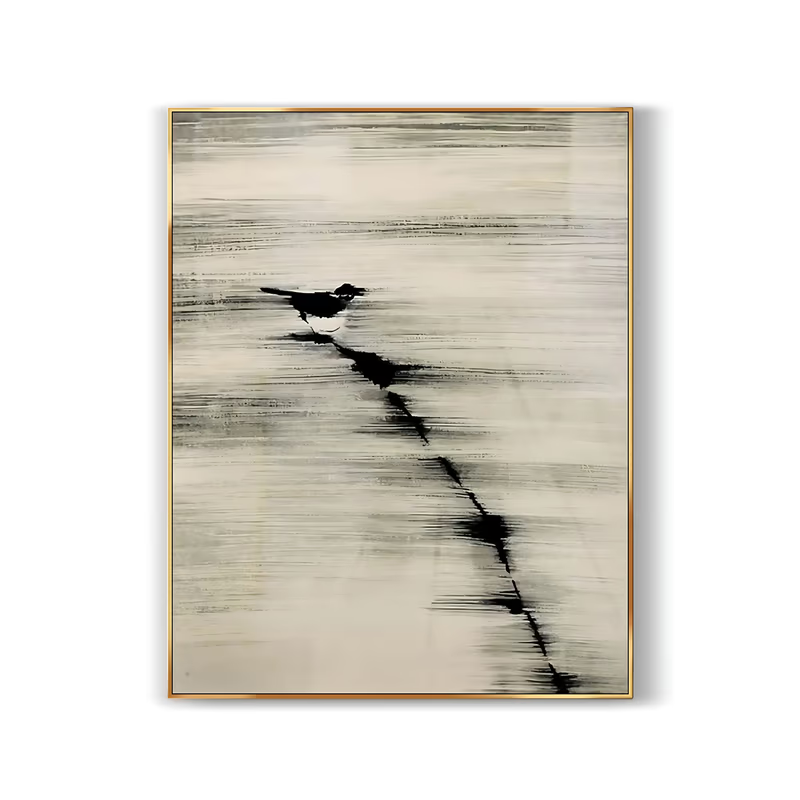
| Beside the desk | You, when you turn or stand | A smaller, more personal piece: an animal study, a city you love |
| Above a sofa or reading chair | You and visitors, in a dual-use room | Something gentler that also suits a guest room or snug |
If the desk faces a blank wall with a monitor in front of it, the space above the screen is mostly hidden; a side wall in your natural line of sight when you look away is often the better place for the painting you will live with.
What home office art looks good on video calls?
On video calls, home office art looks best when it is a single, clearly composed painting placed beside your head, with colours that contrast gently with your hair and clothes and no fine patterns.
Start from the camera, not the wall
Sit where you normally sit, open the camera preview and mark the corners of the visible wall with low-tack tape. Laptop height and screen tilt change that area more than people expect. Most webcams frame a wide 16:9 rectangle, so a tall canvas hung behind you will often appear cropped; that is fine if the visible part still reads as a composition.
Place it off-centre
A painting directly behind your head appears to grow out of it. Set it behind one shoulder, so it fills the empty side of the frame, and let its lower edge sit around shoulder height when you are seated.
Choose what survives compression
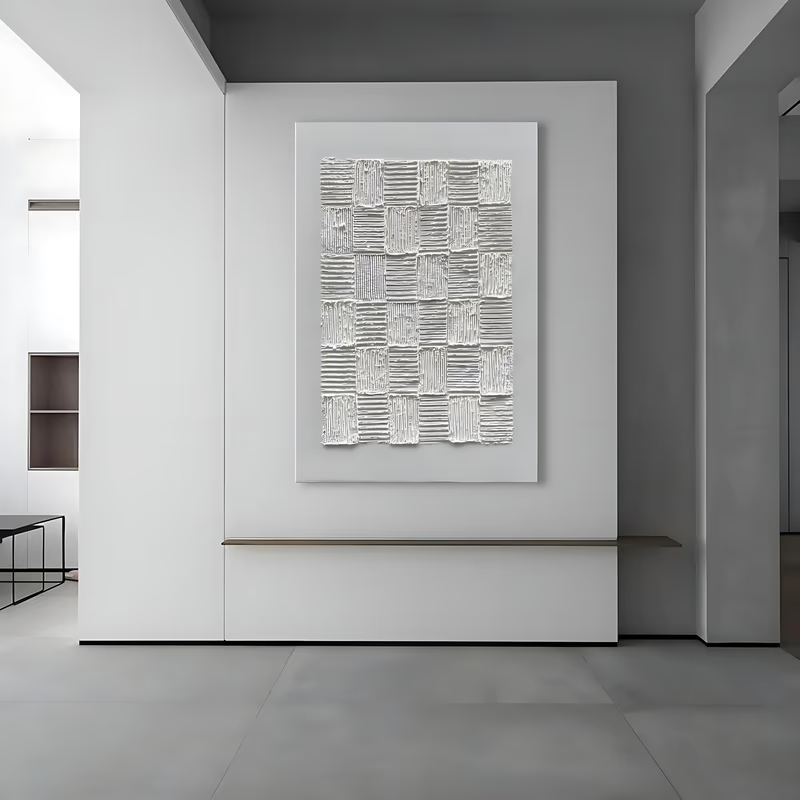
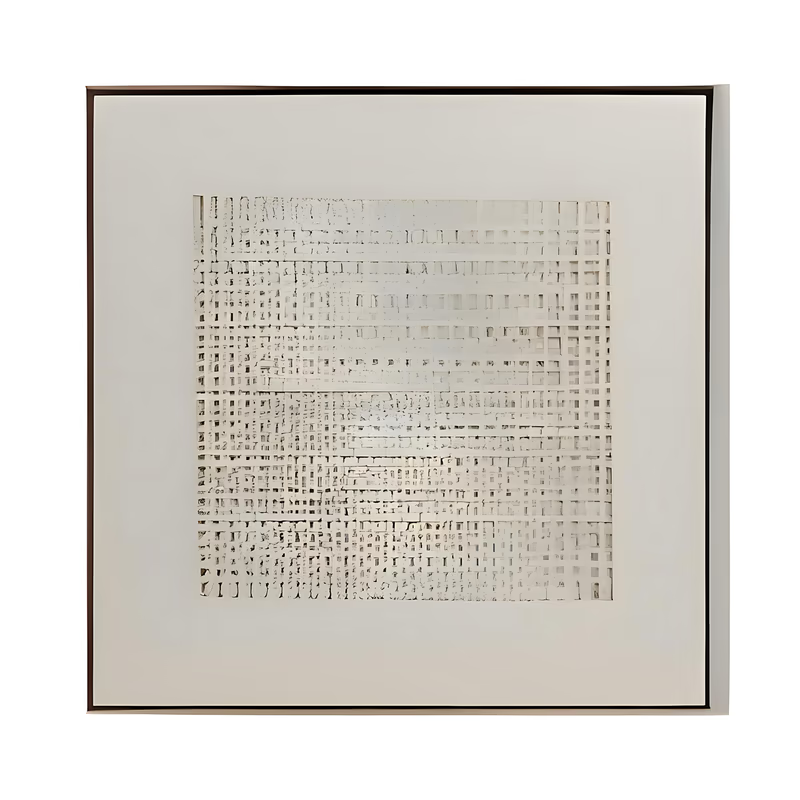
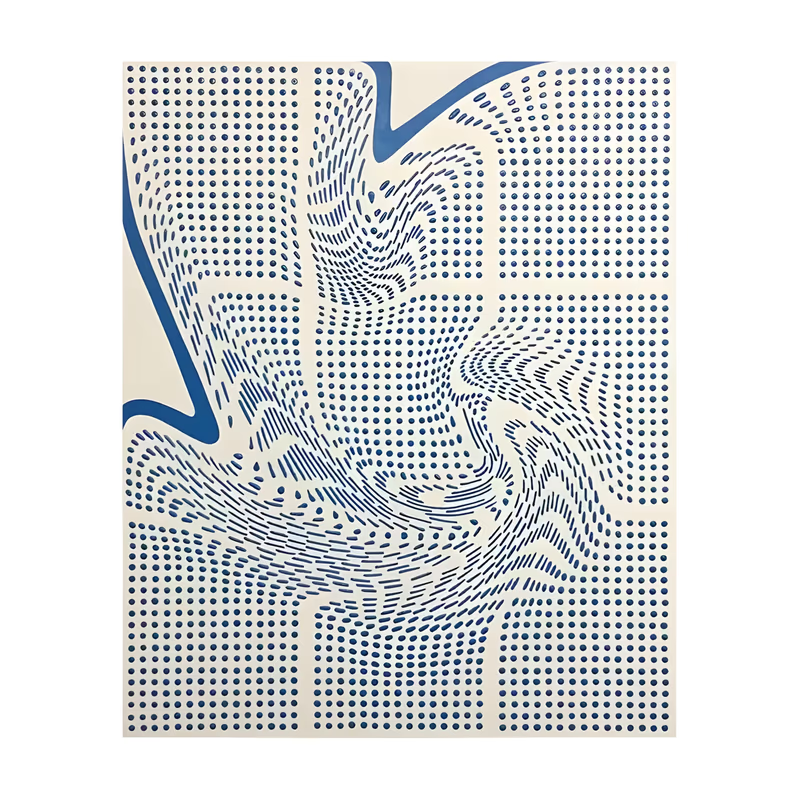
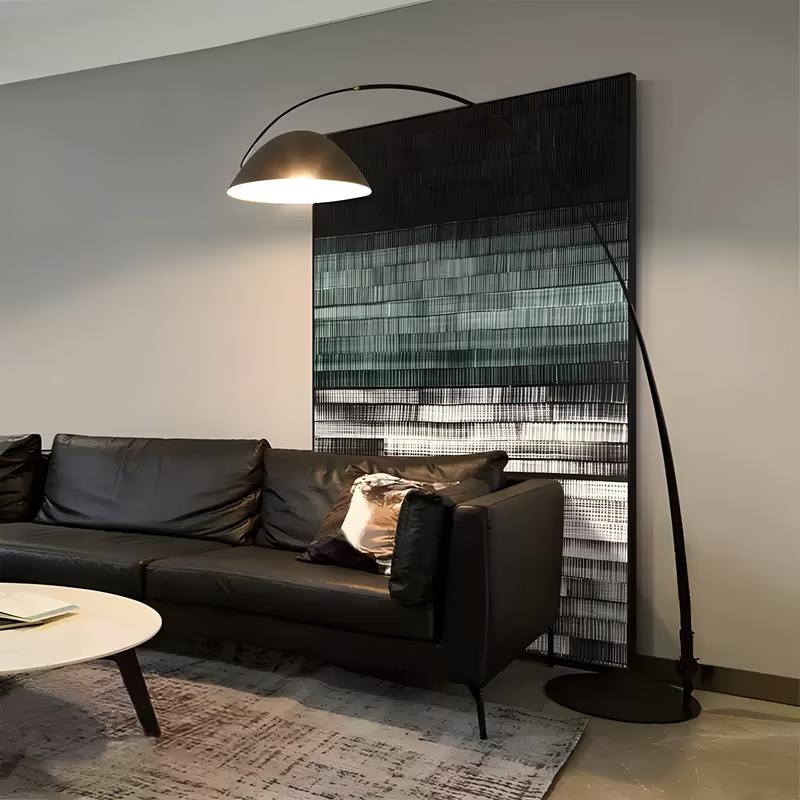
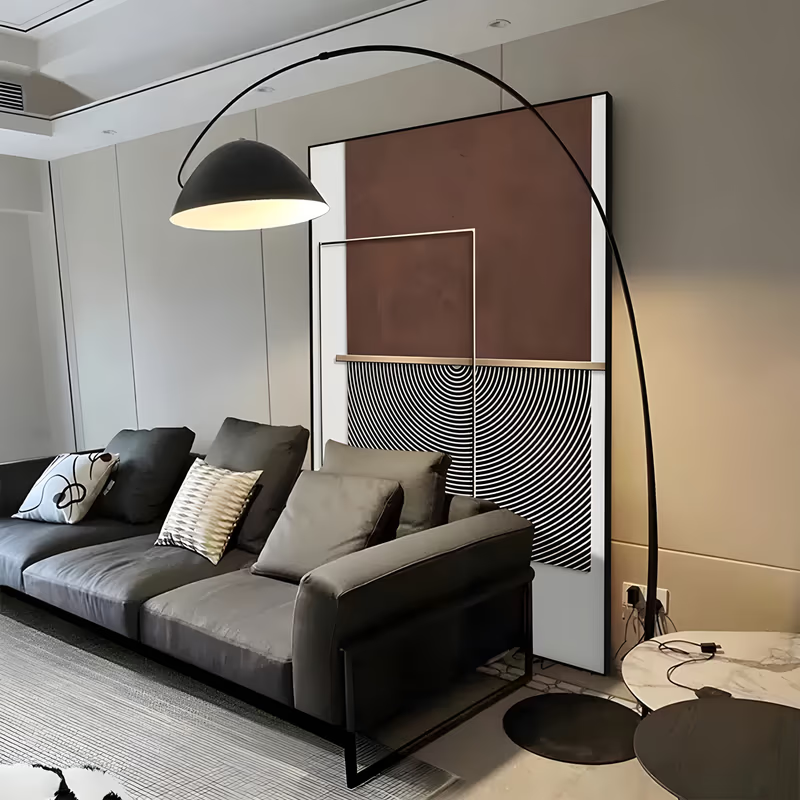
Video calls shrink you to a small tile and compress the image. Bold shapes, colour blocks and soft gradients hold up; tight stripes, fine grids and dense dots can shimmer or smear. Mid-tone backgrounds, neither stark white nor black, keep the camera's exposure on your face.
Light it from the front
A canvas has no glass to mirror a window, but a lamp or ring light behind the camera can still catch glossy passages of paint. Light the room from in front of you and slightly to the side, and keep bright windows out of the frame. Abstracts and geometric home office art are the safest camera choices.
Which colours of home office art help you focus?
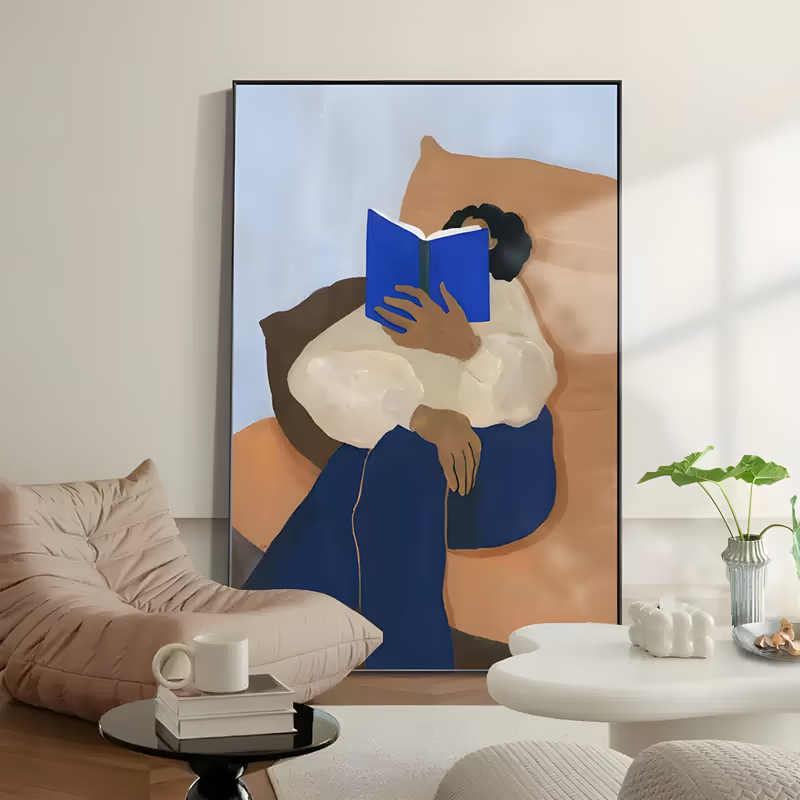
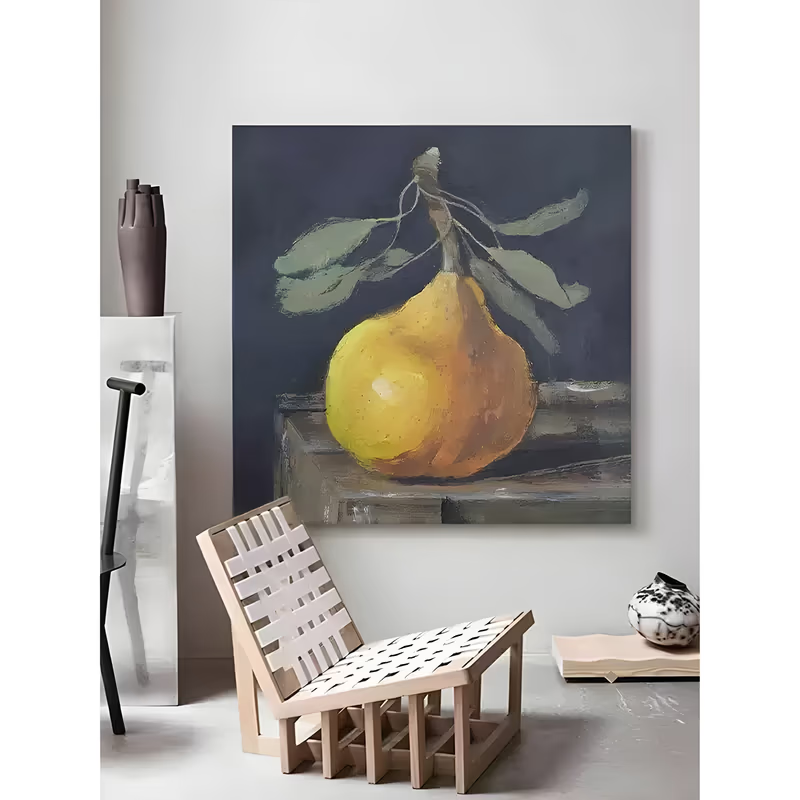
For focused work, most people find muted blues, greens, greys and earth tones the easiest home office art to look at all day; warmer, brighter colours suit creative work and short bursts of energy.
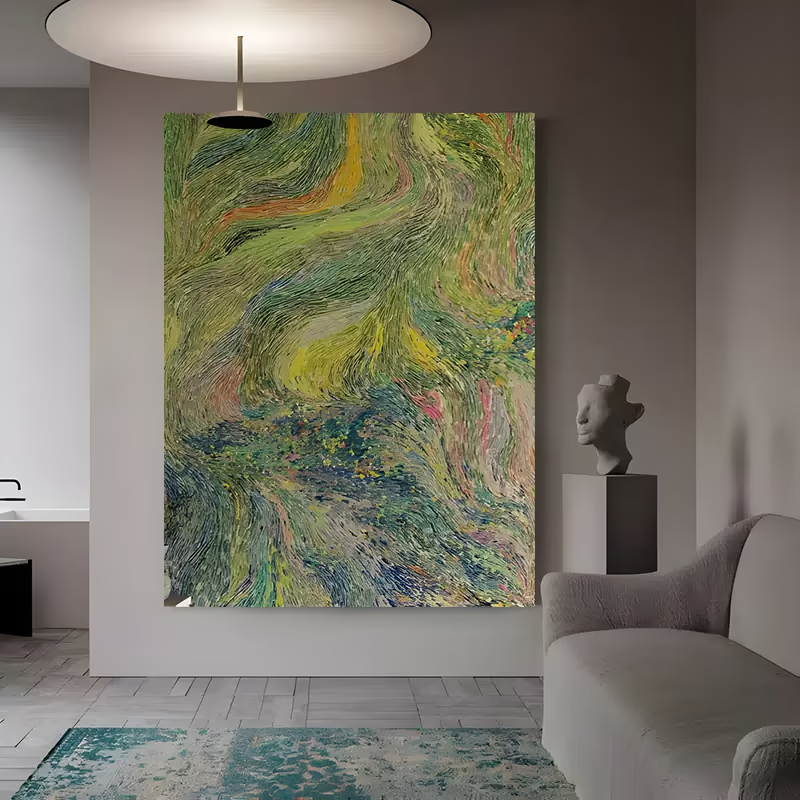
There is no formula that makes one colour productive, and people differ. What is reliable is contrast and busyness: a canvas full of competing colours and sharp edges pulls at the eye, while a quiet palette lets it rest. Think about what you do for most of the day, then match the room to that.
| Kind of work | Palette that suits it | Browse |
|---|---|---|
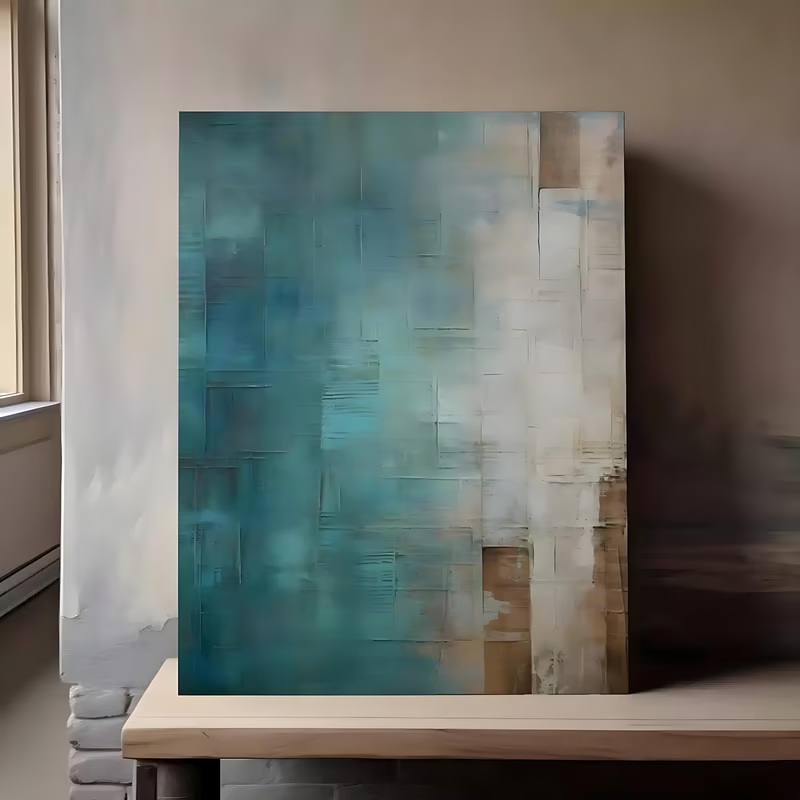
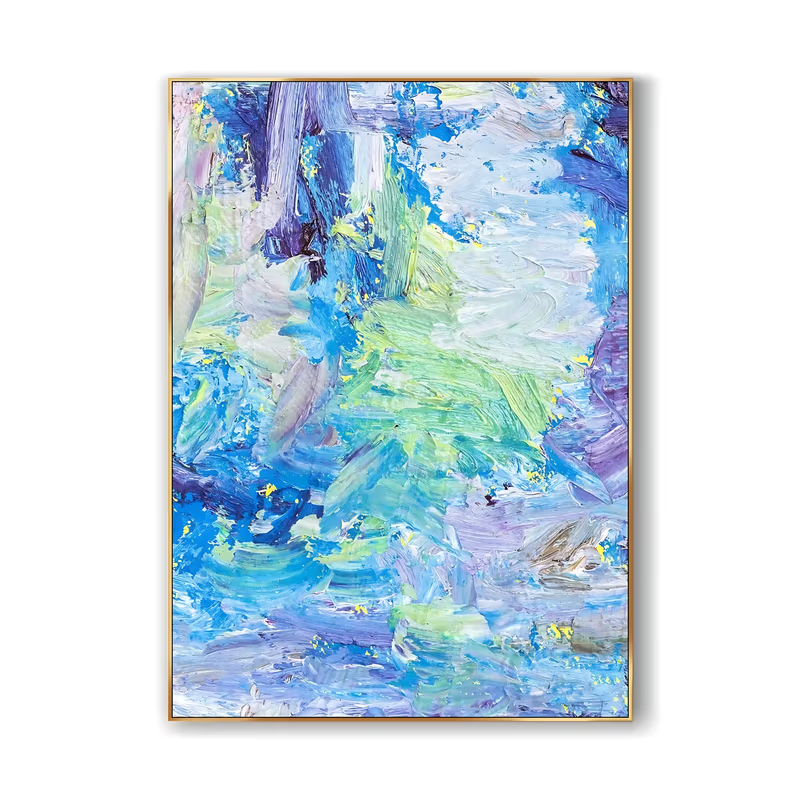
| Writing, analysis, long calls | Soft blue, sage, grey, sand; low contrast | Calming, grey, blue |
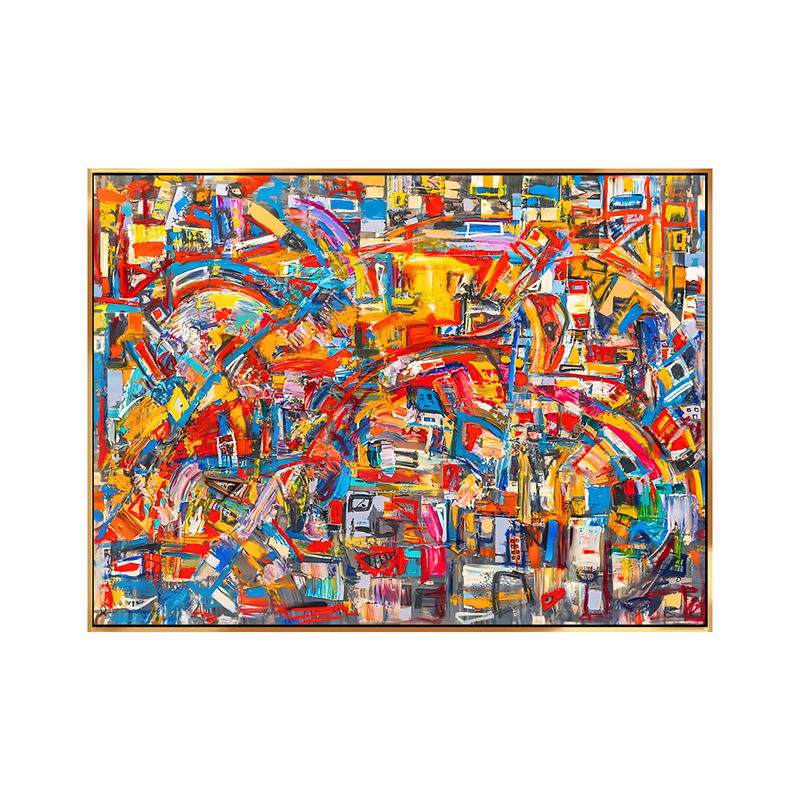
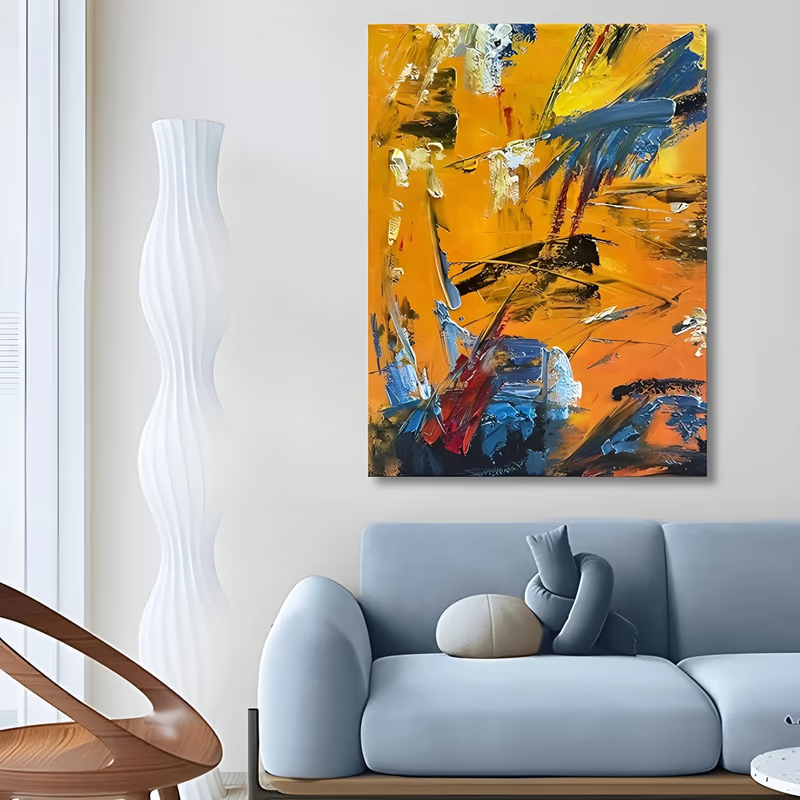
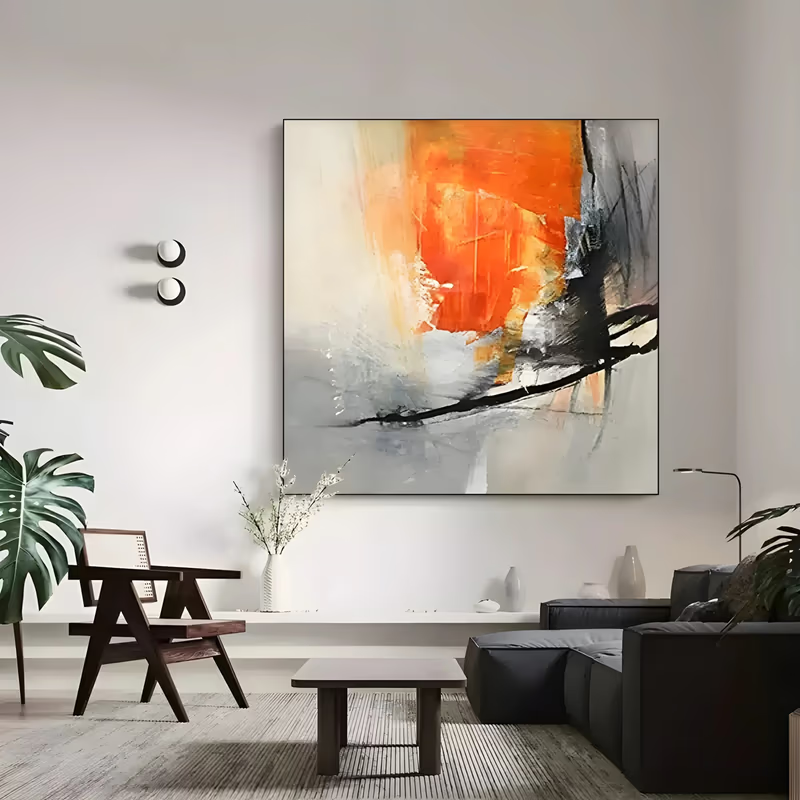
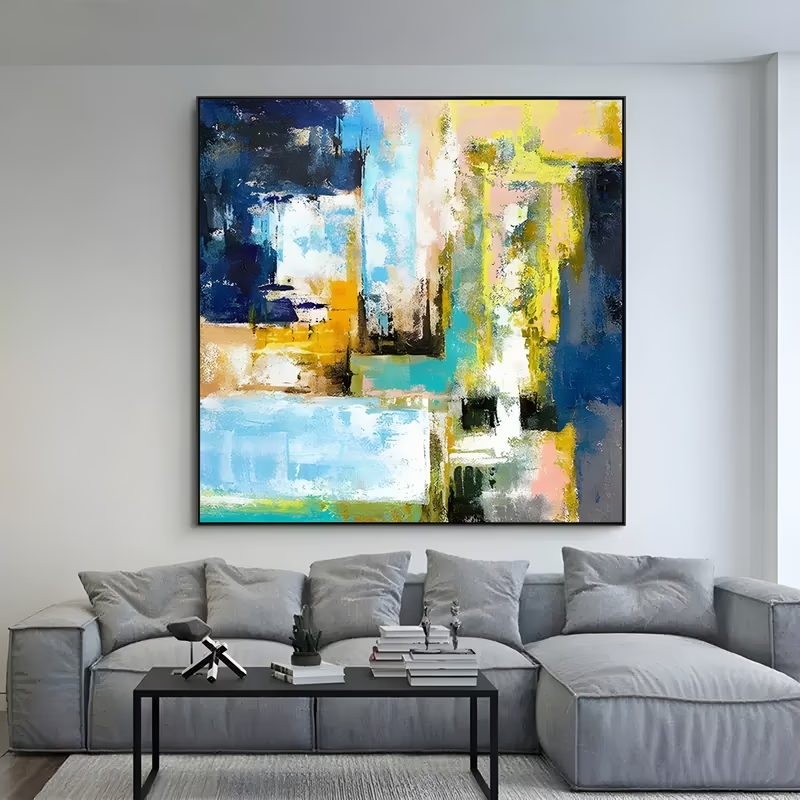
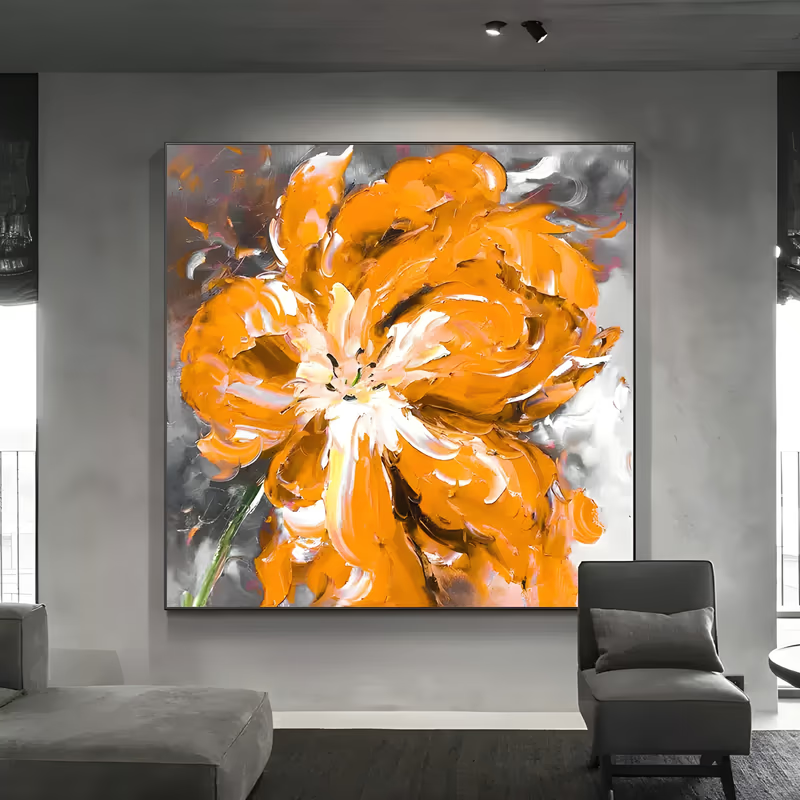
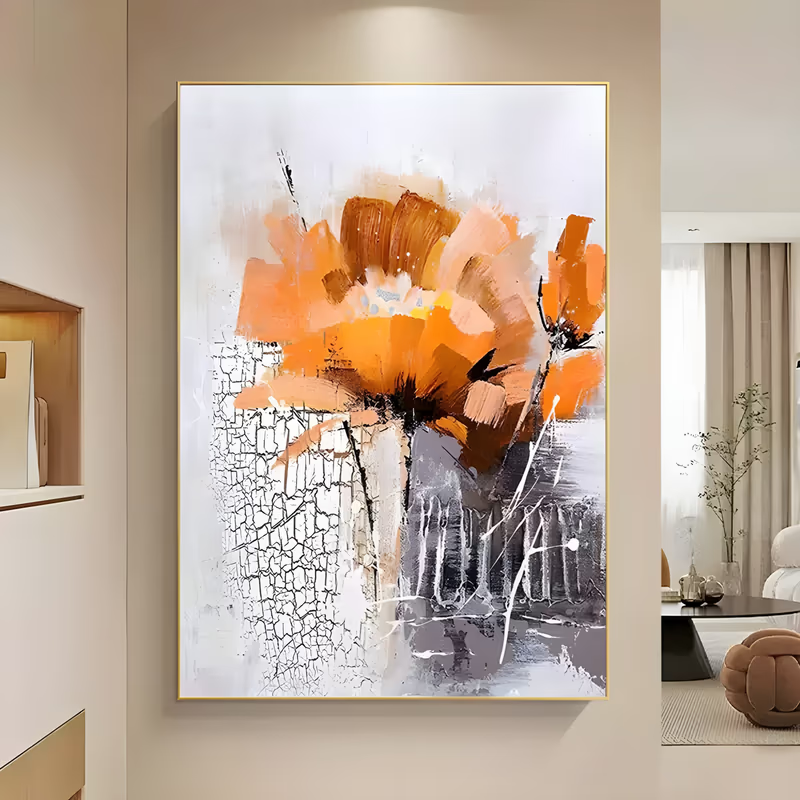
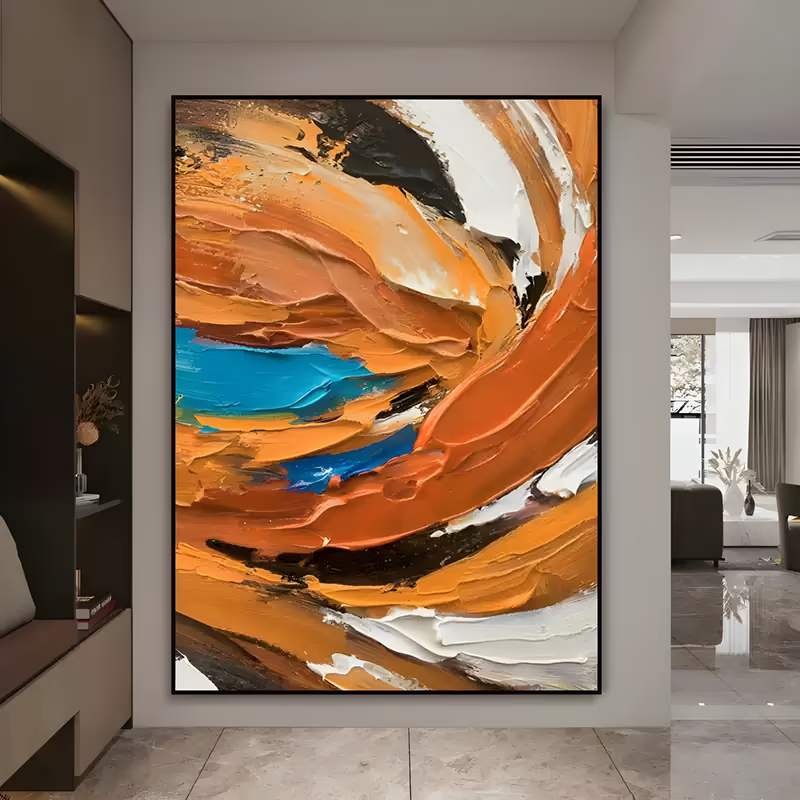
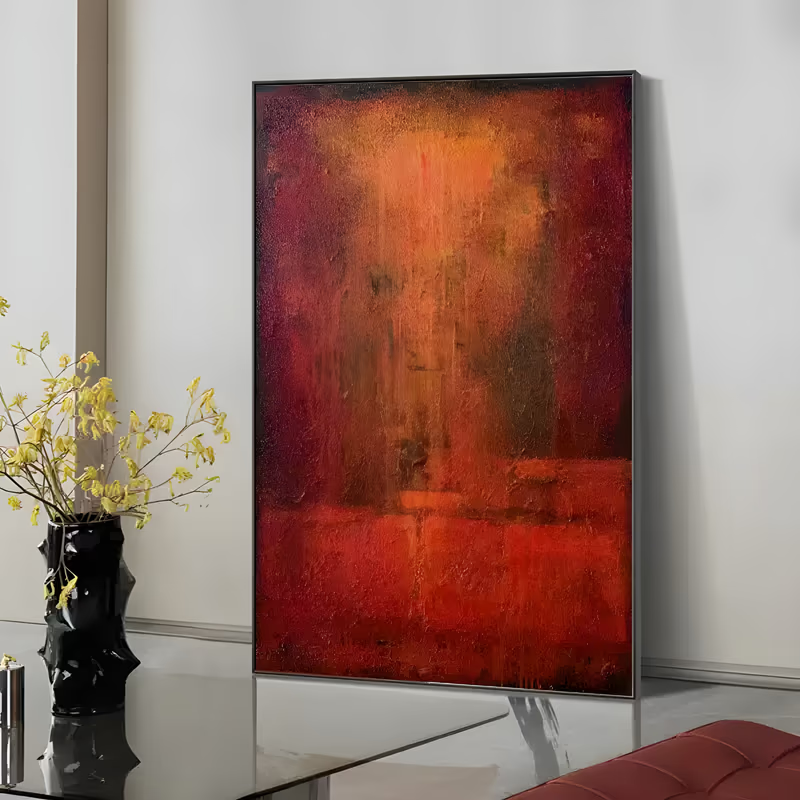
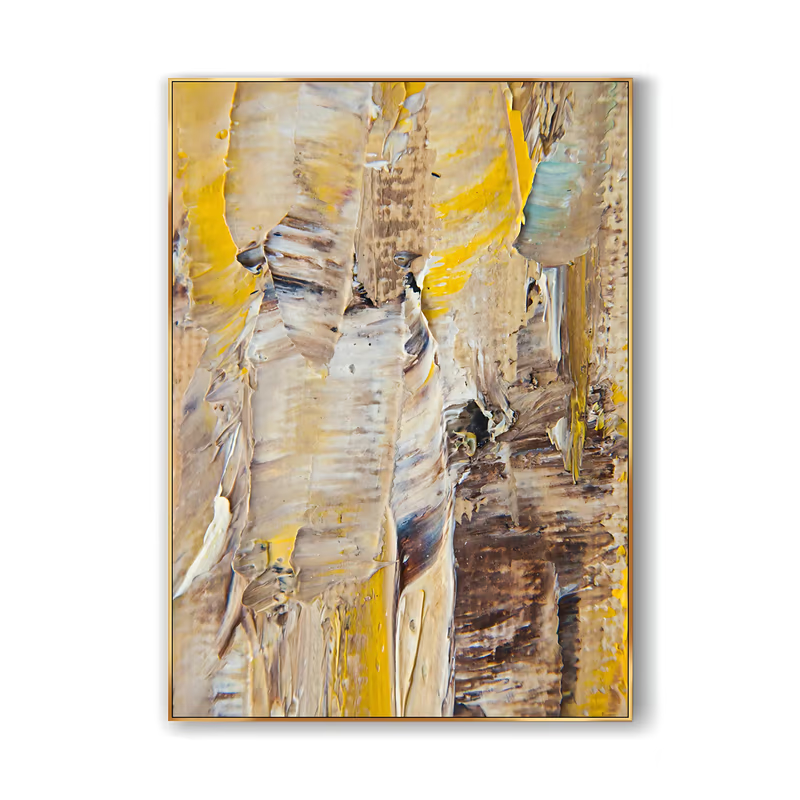
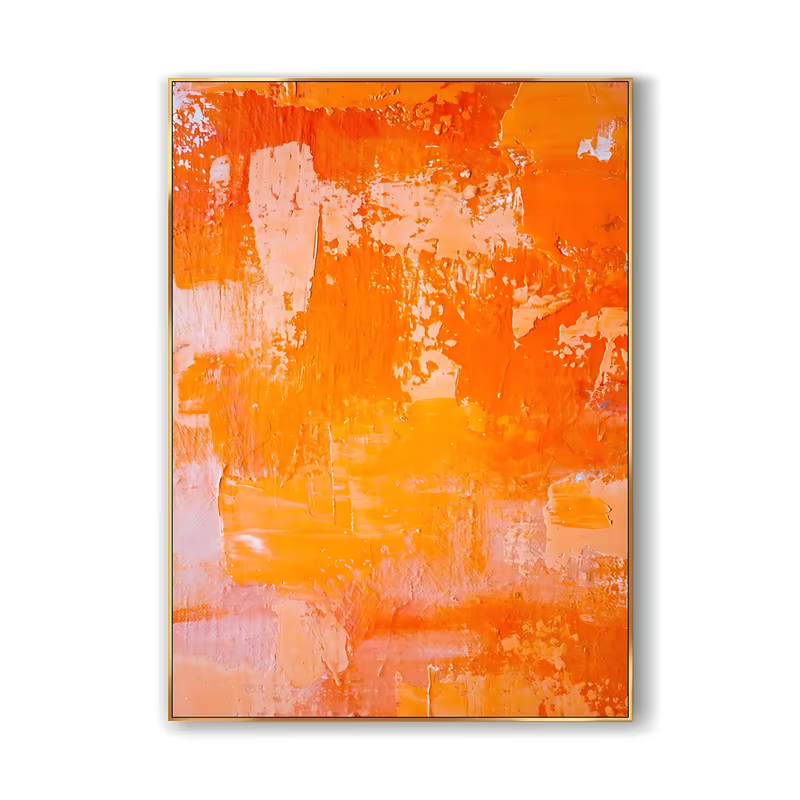
| Design, making, brainstorming | Ochre, orange, coral, one bright accent | Orange, yellow |
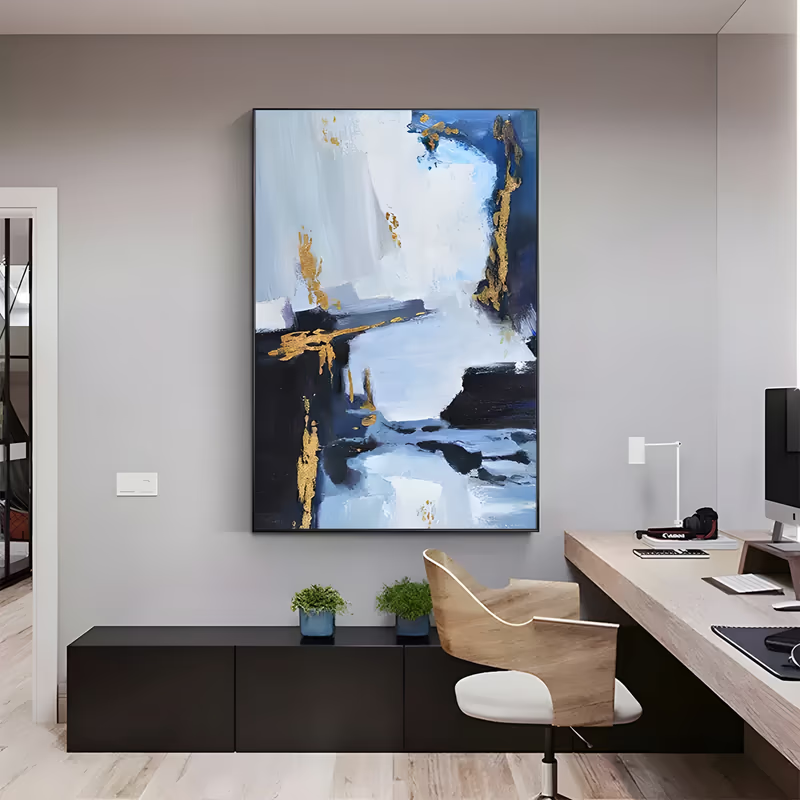
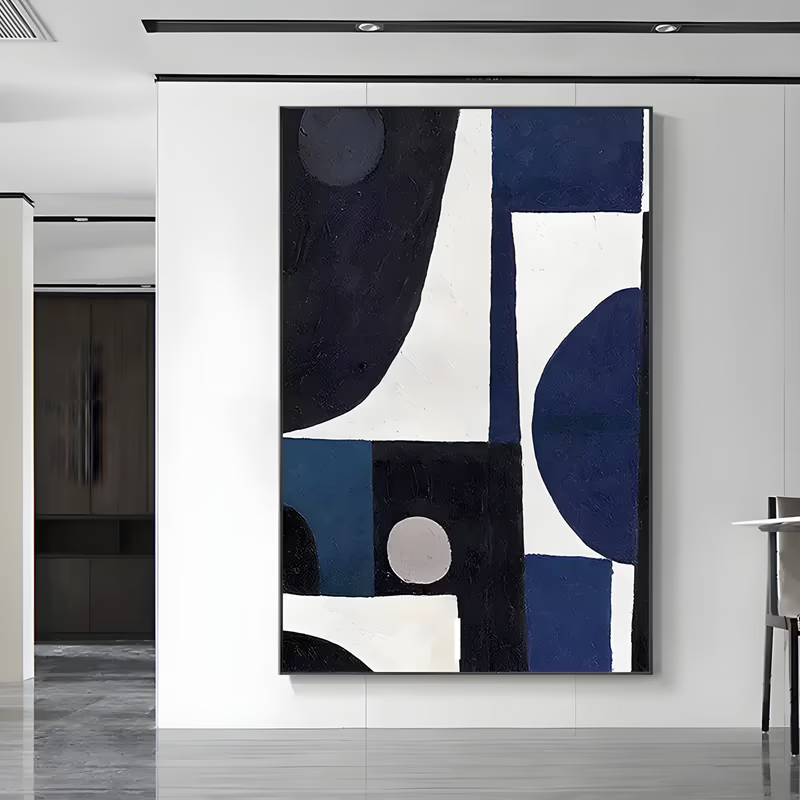
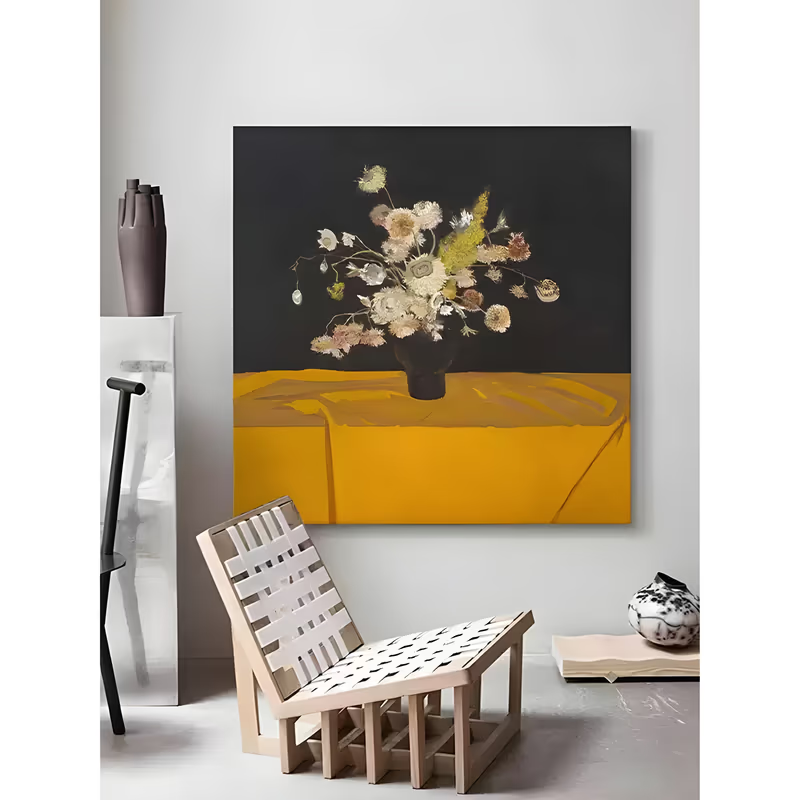
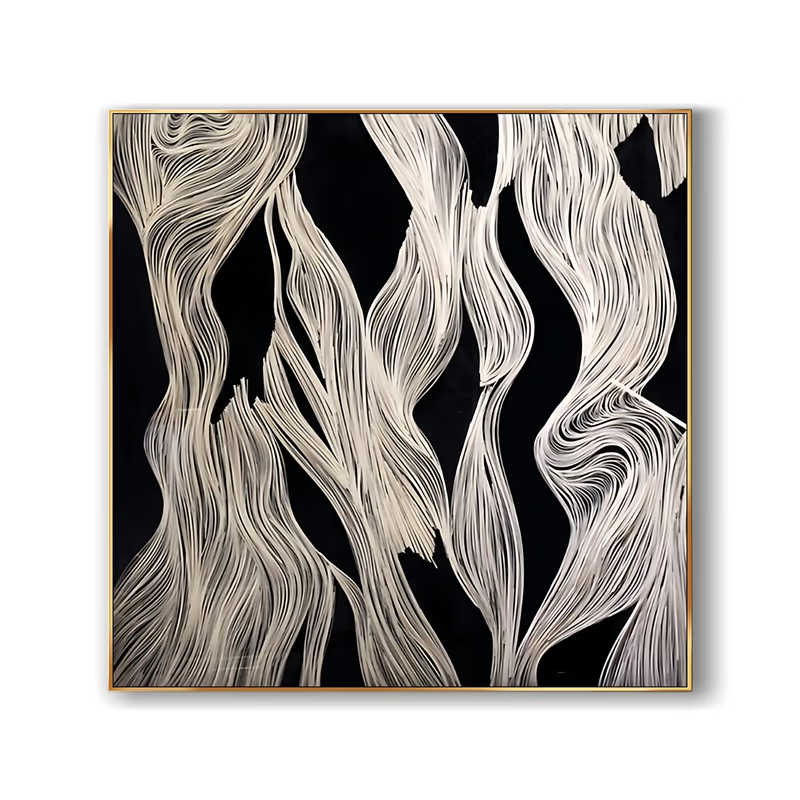
| Client-facing, consulting | Navy, charcoal, black and white with one warm note | Black, bold |
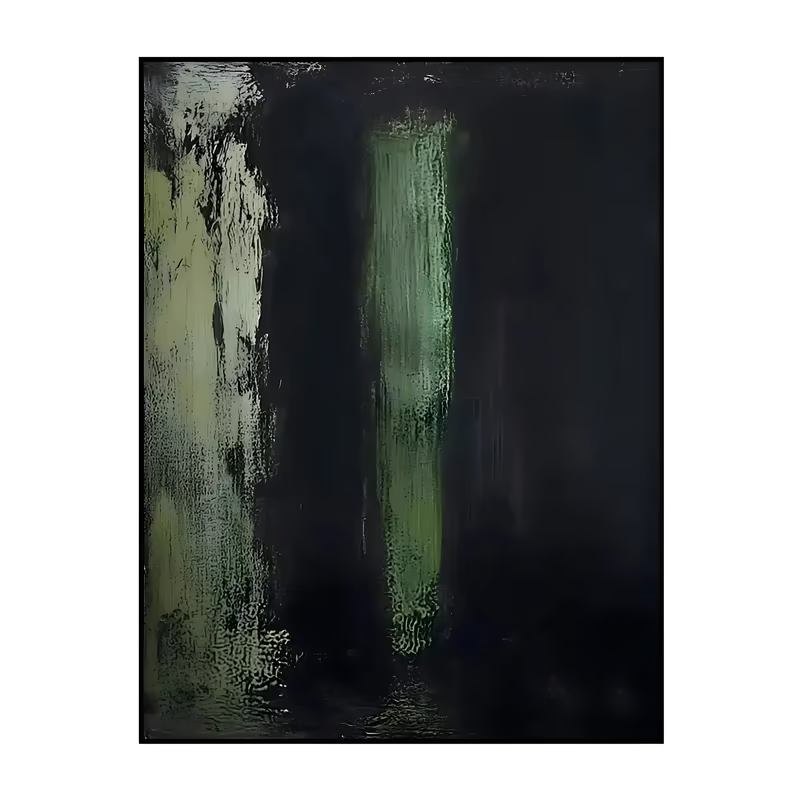
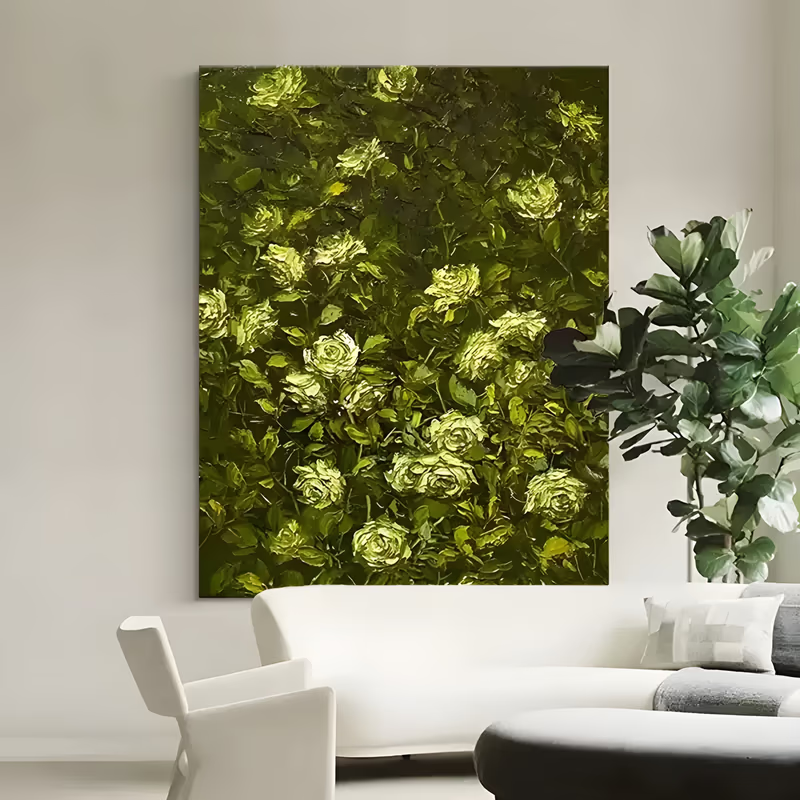
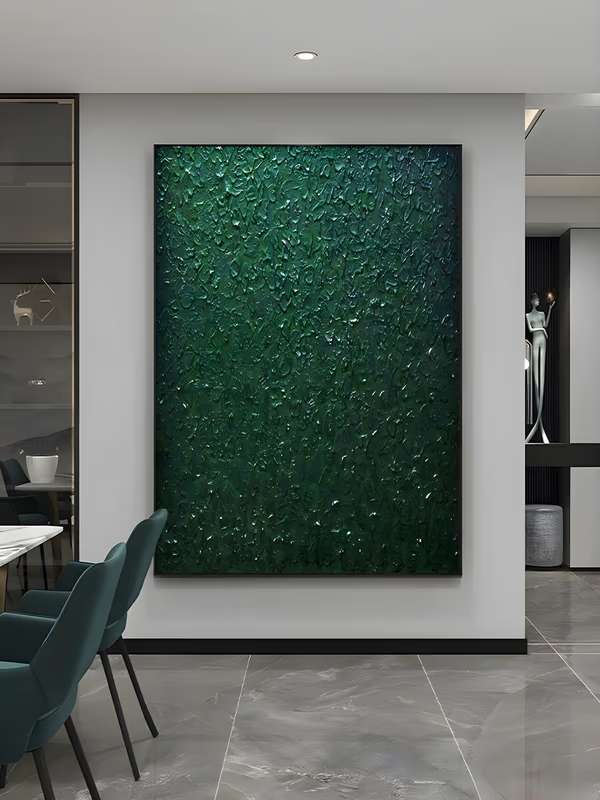
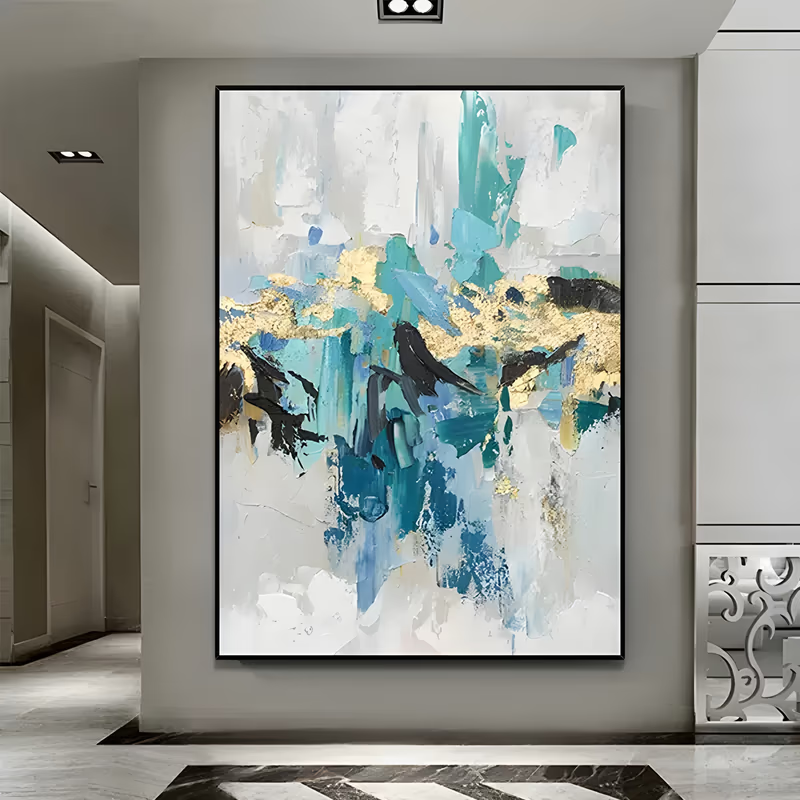
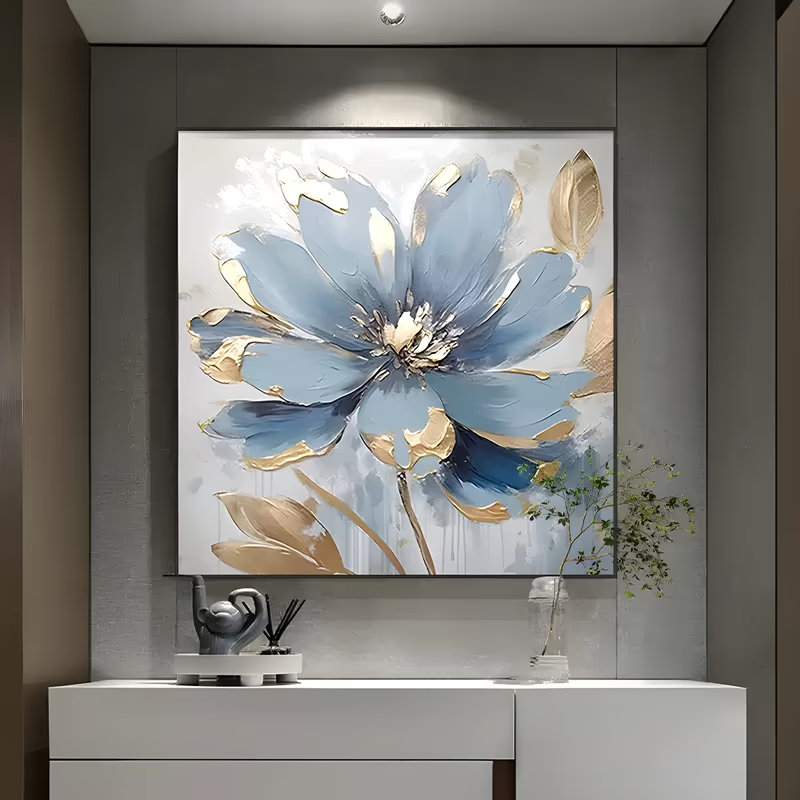
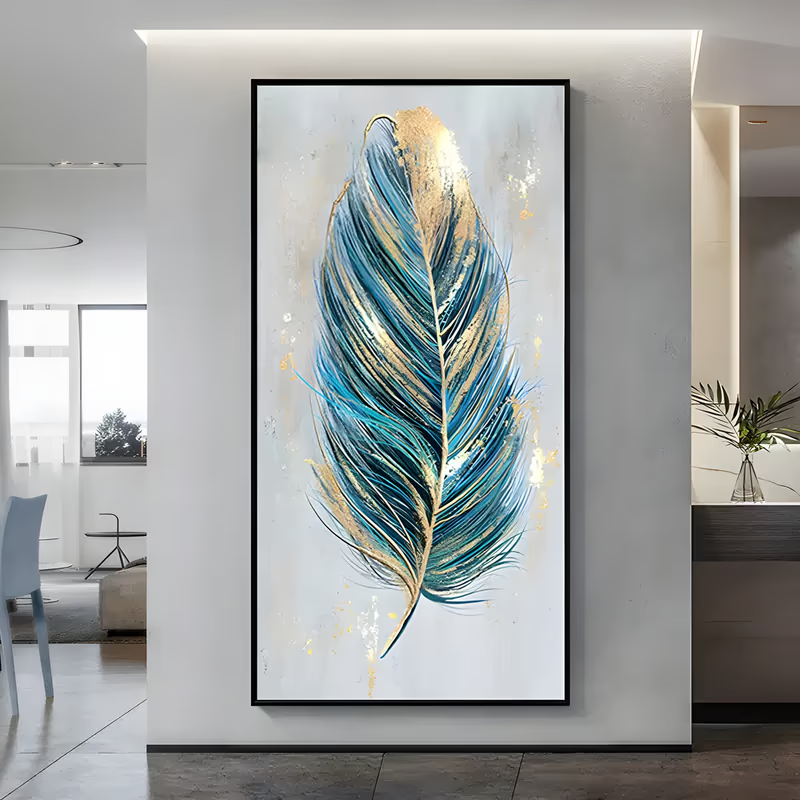
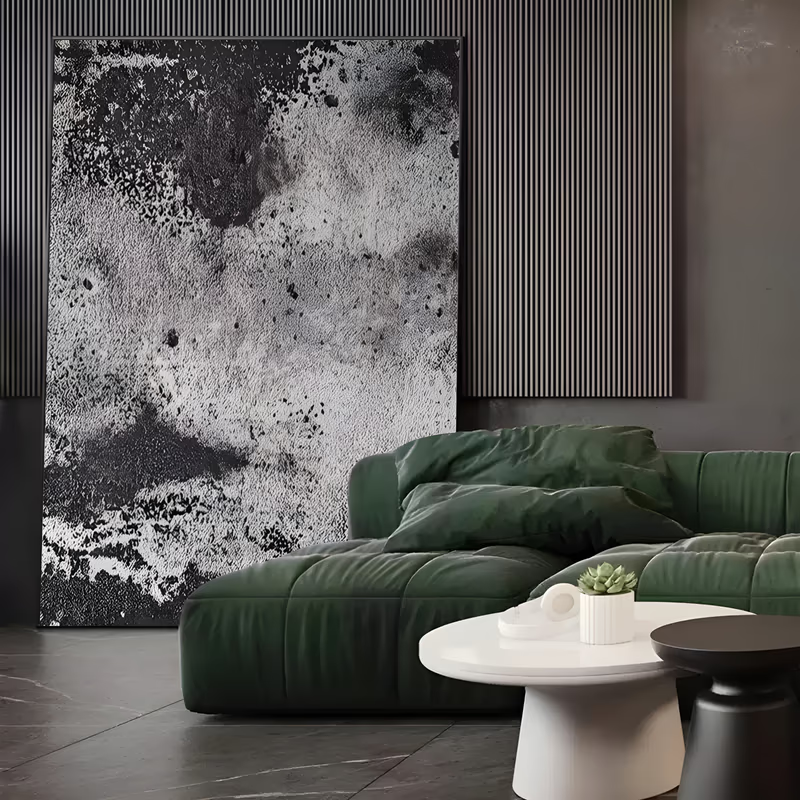
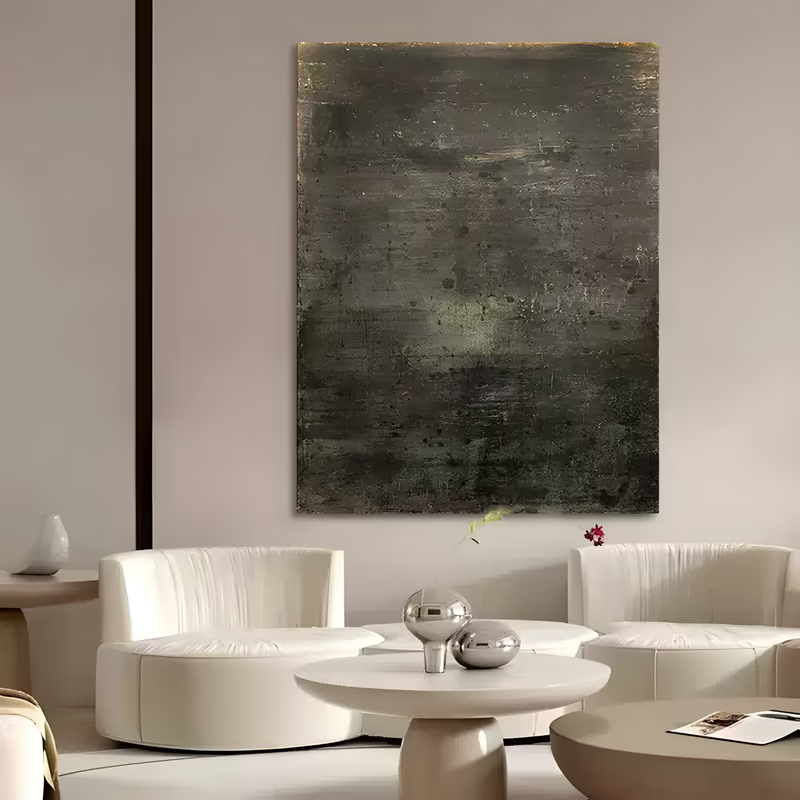
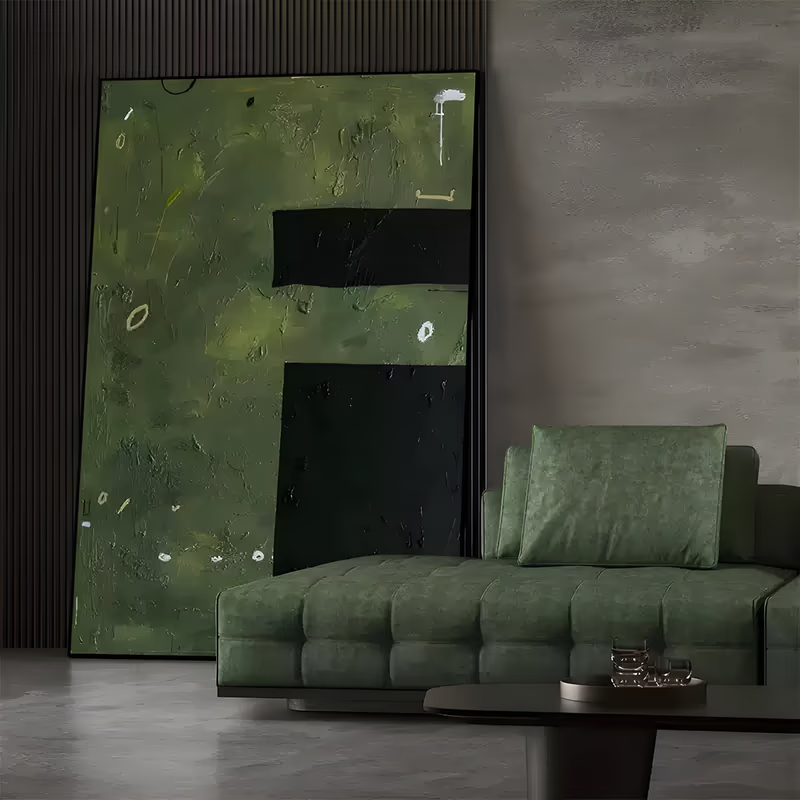
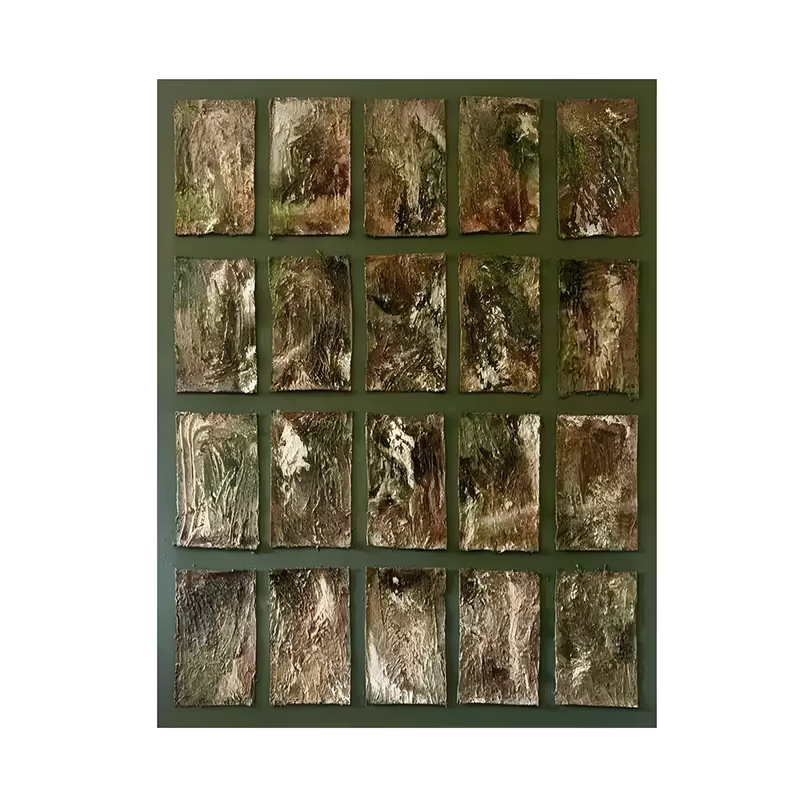
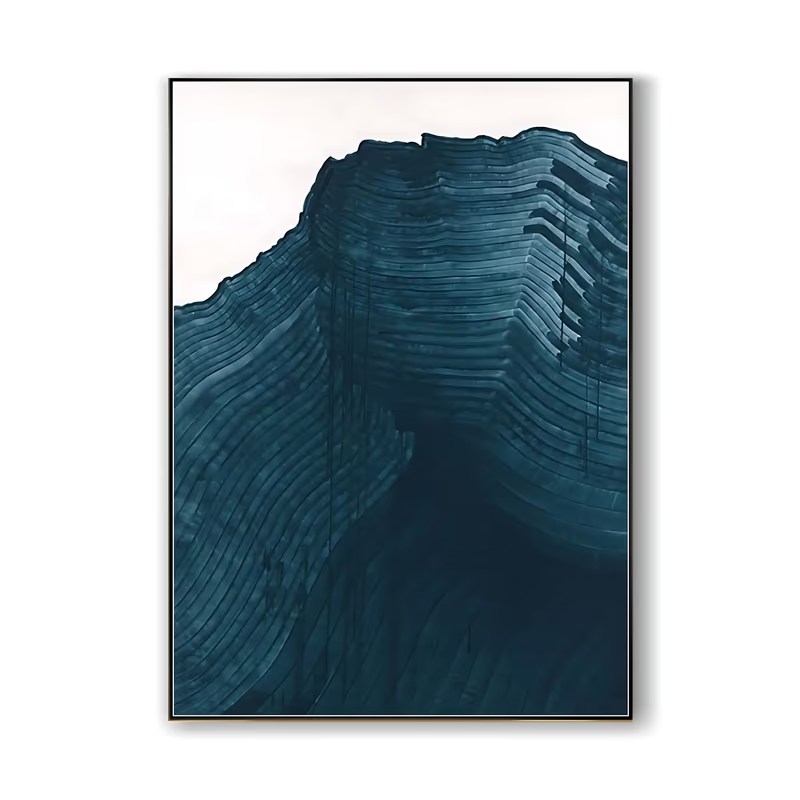
| Evening work in a dark-painted study | Deep teal, forest green, rust, gold leaf | Moody, green |
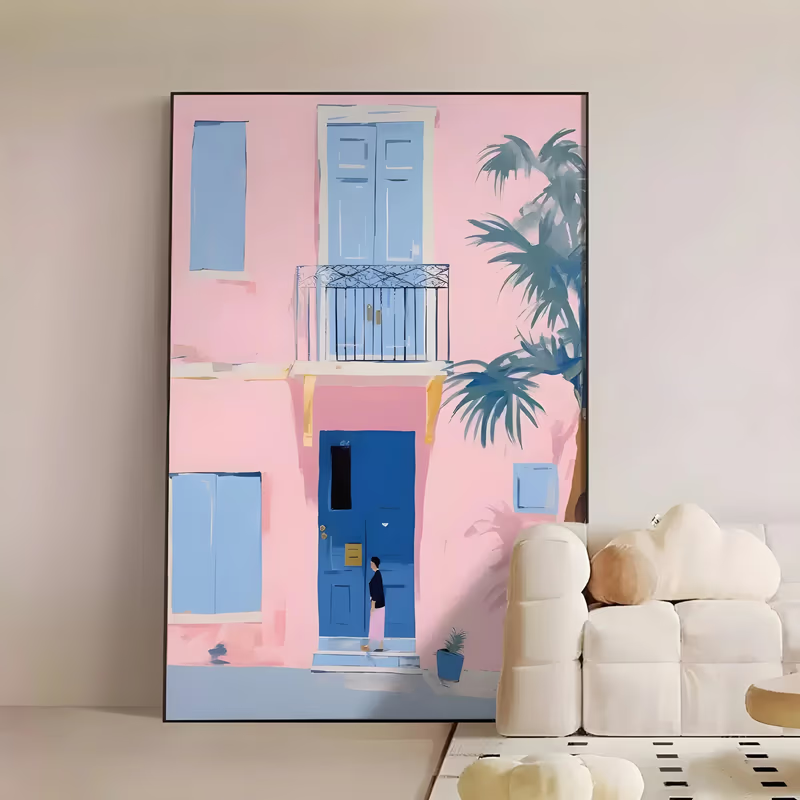
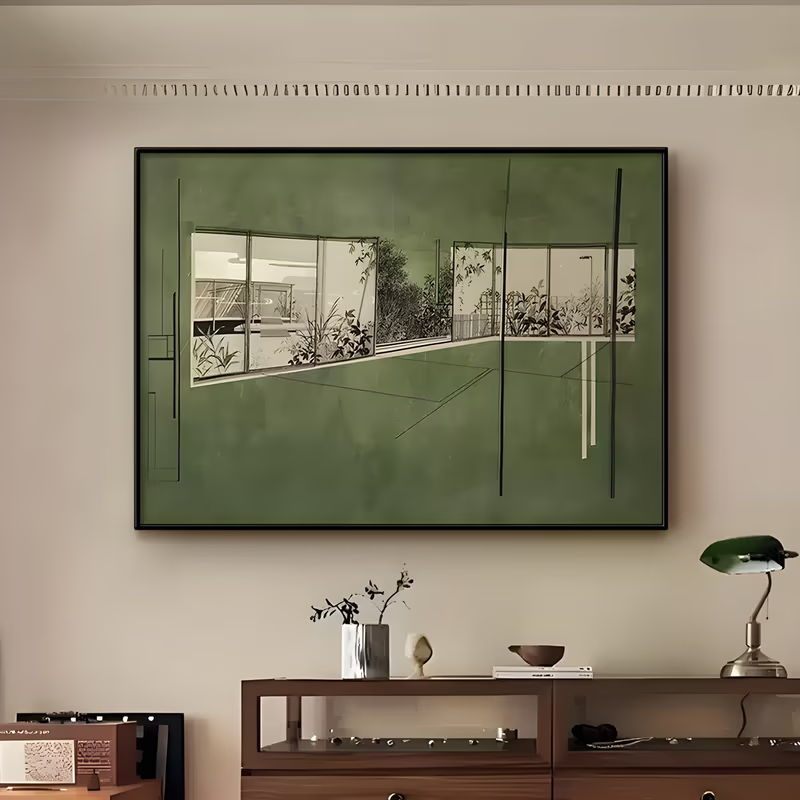
A useful split is to keep the facing wall in the calmer column and let the wall behind you carry a little more contrast, which helps you stand out on camera. For more on palettes, see blue wall art and green wall art.
What kinds of home office art are there?
Home office art falls into four kinds here: geometric and abstract compositions, landscapes, city scenes, and animal or portrait studies.
Geometric and abstract
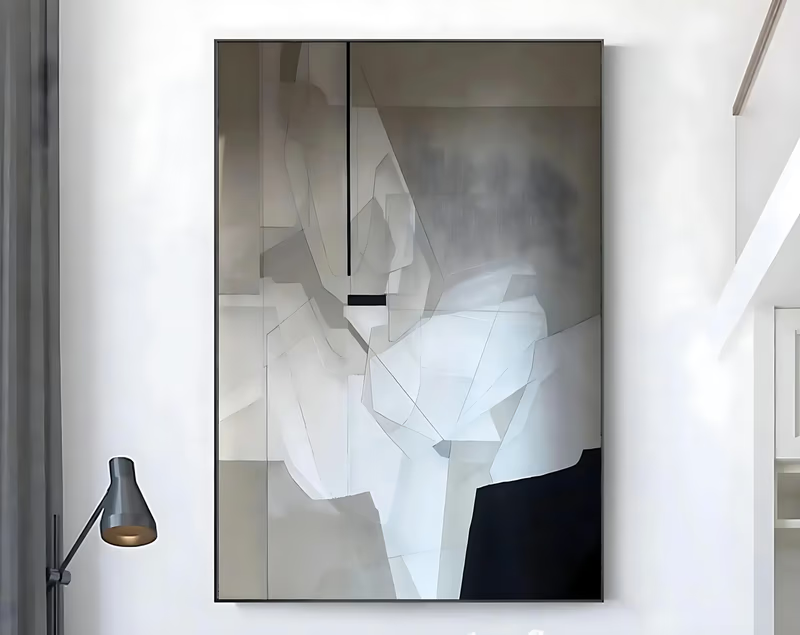
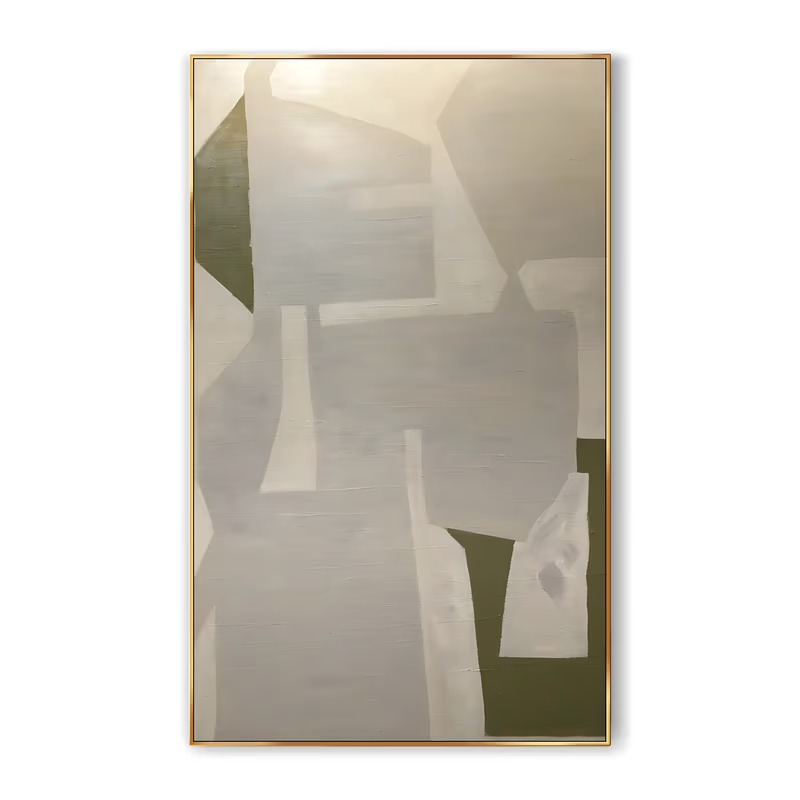
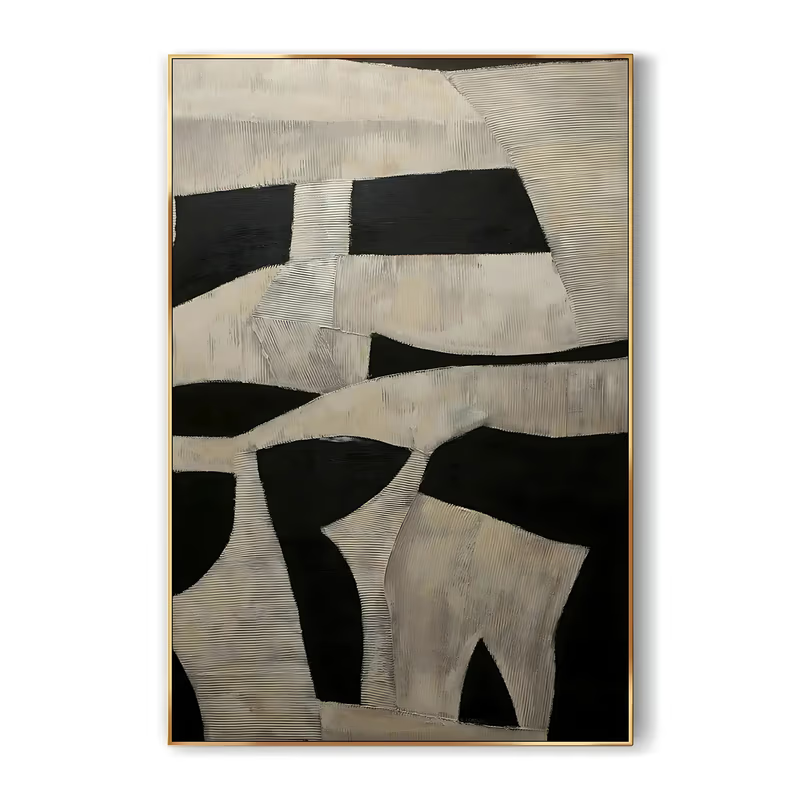
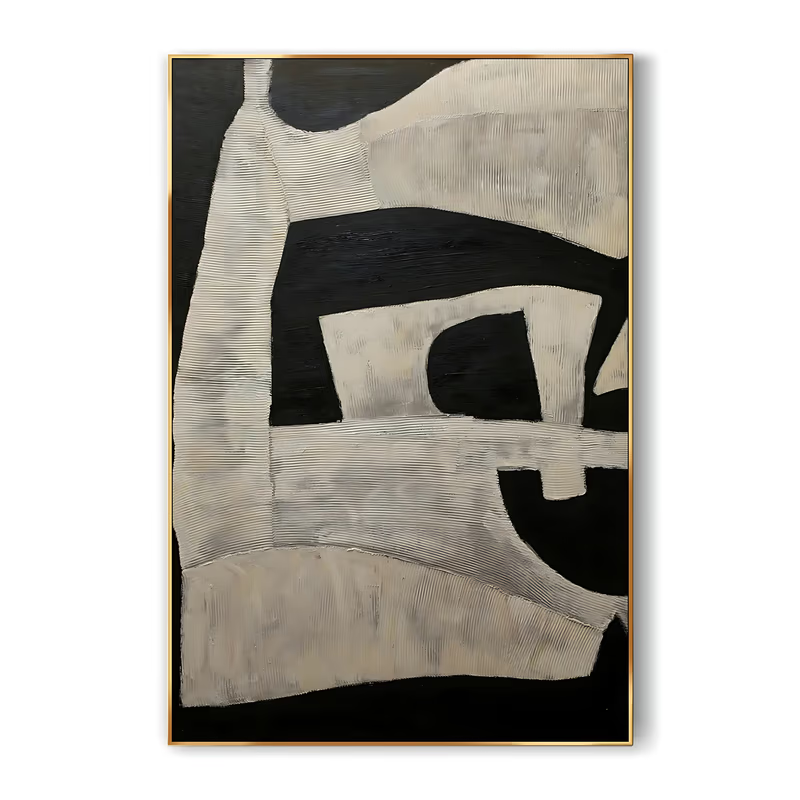
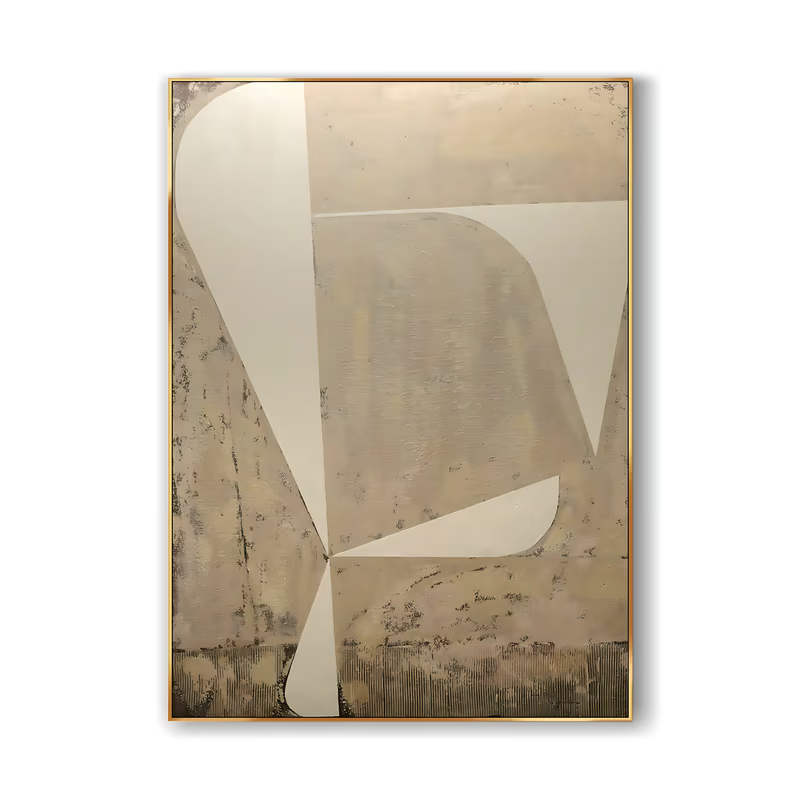
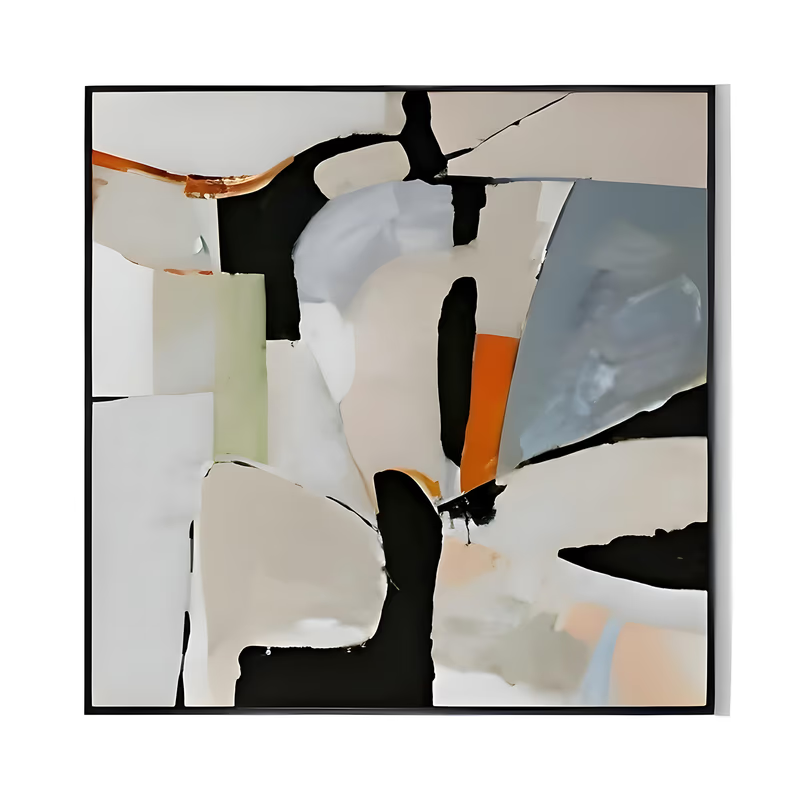
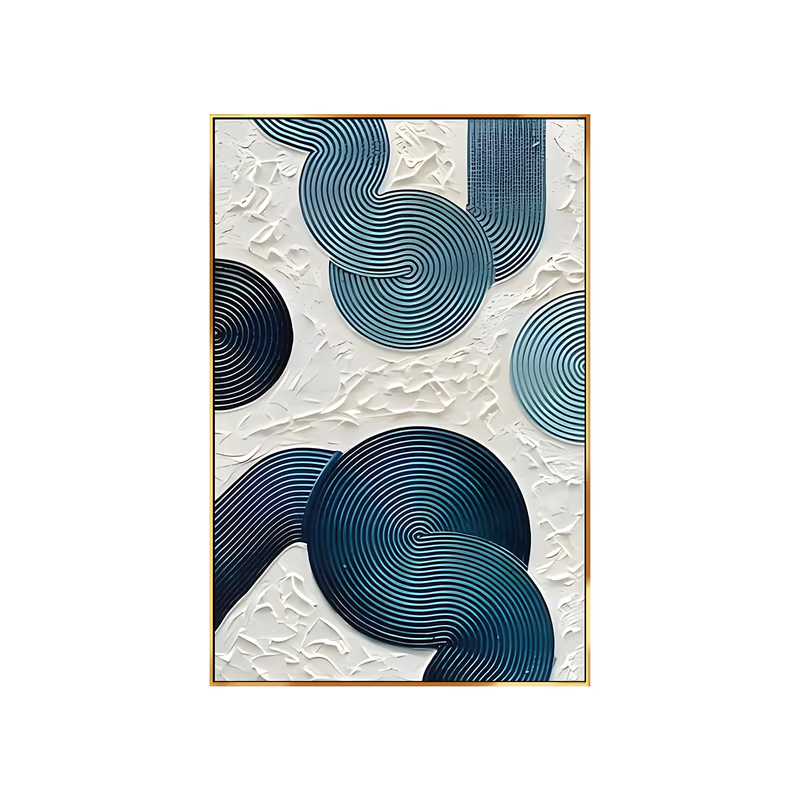
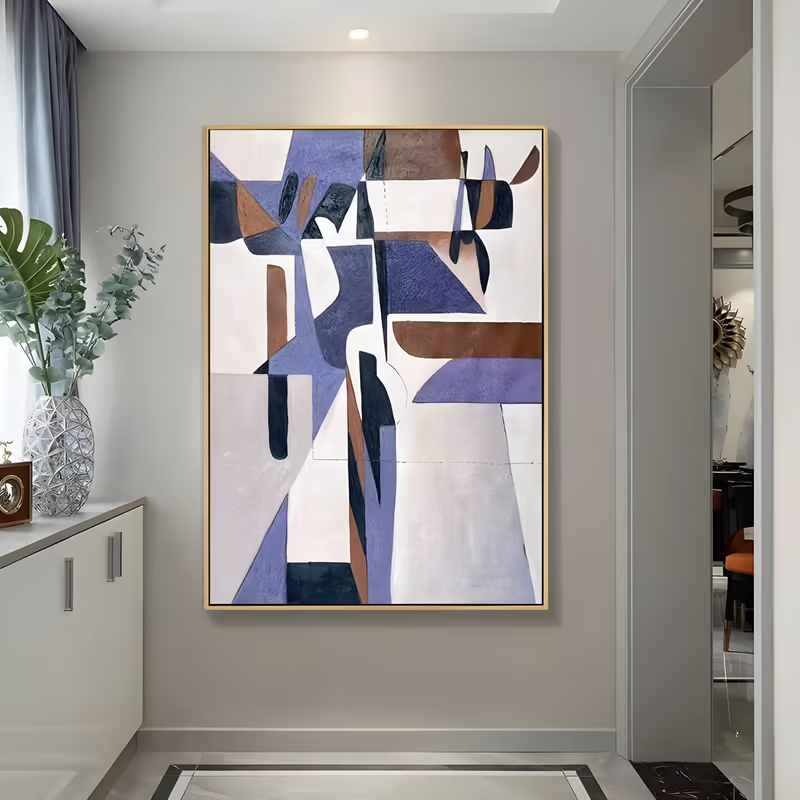
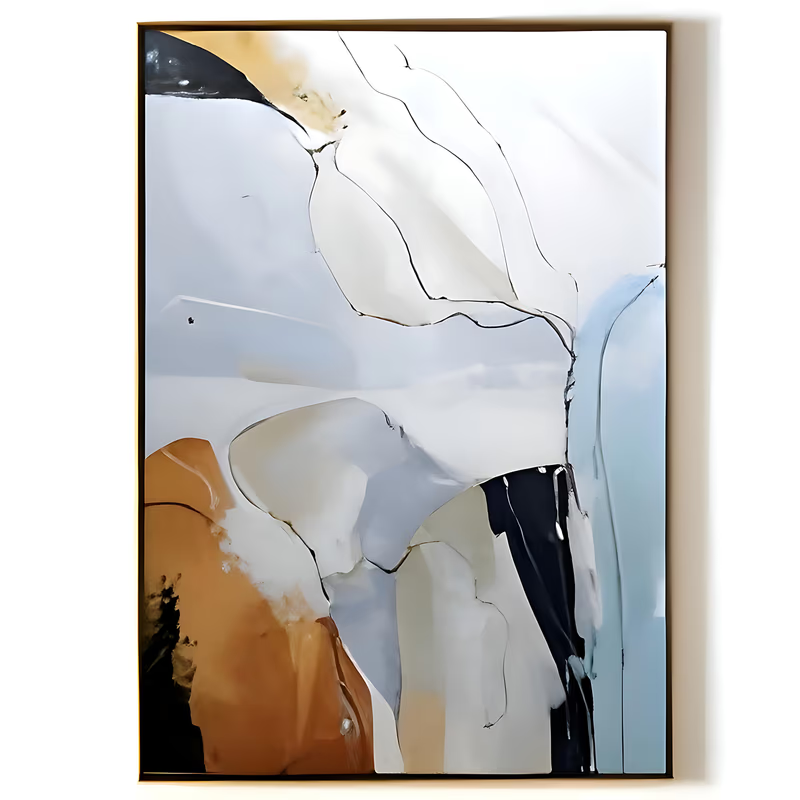
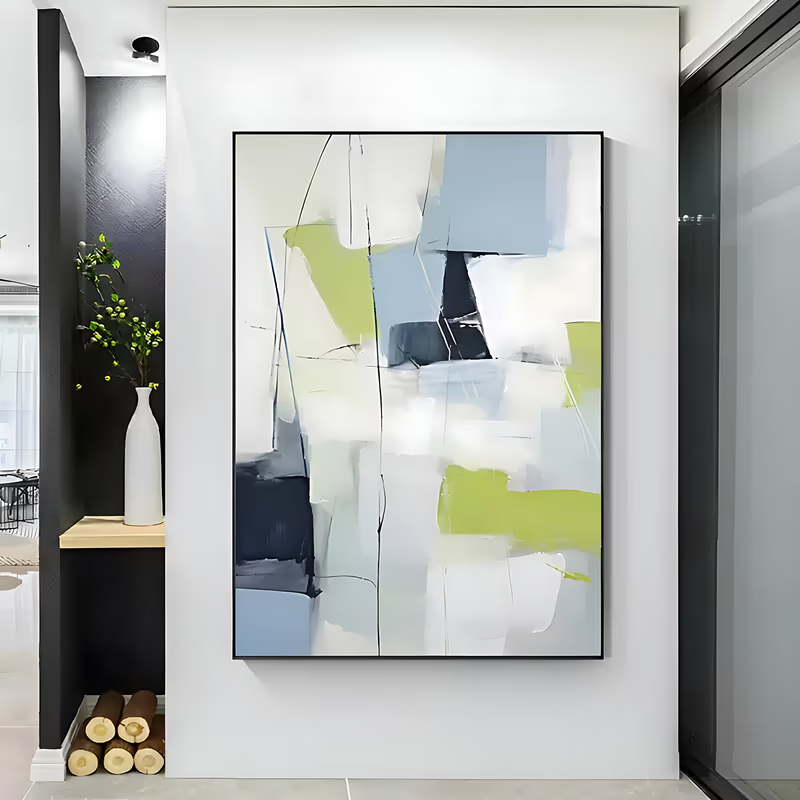
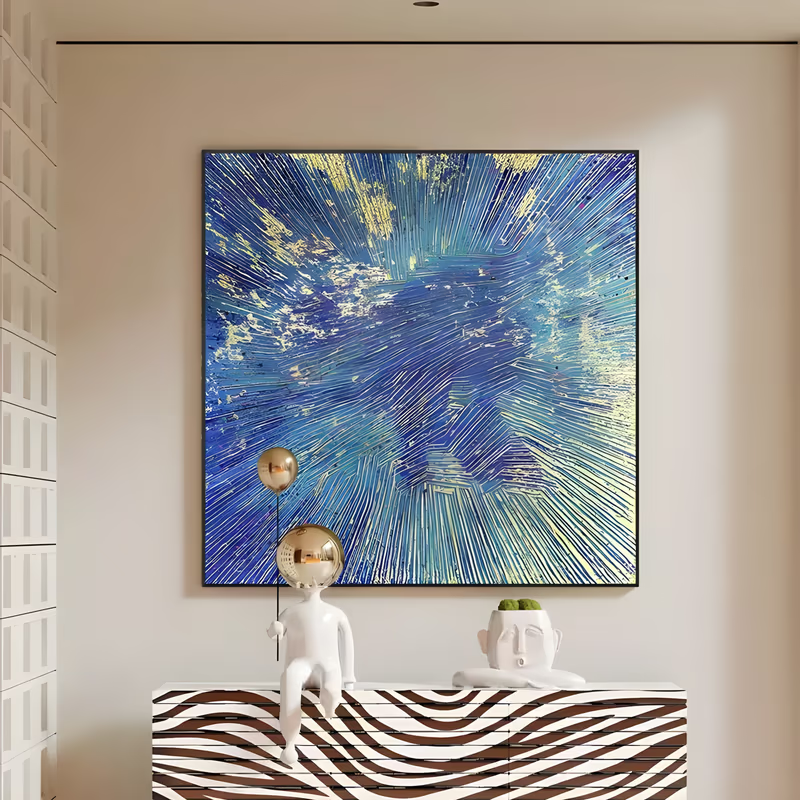
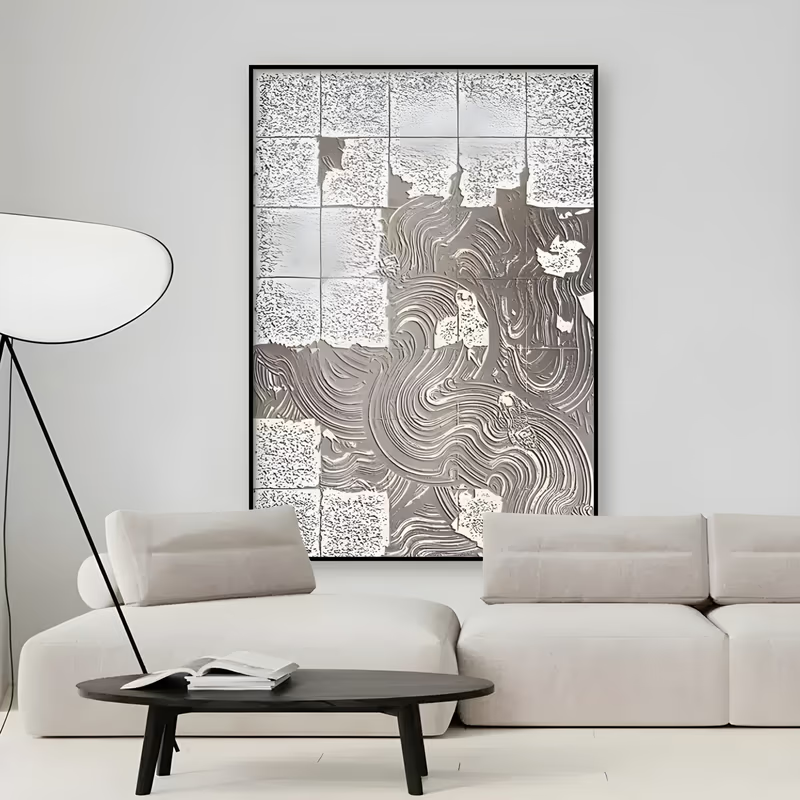
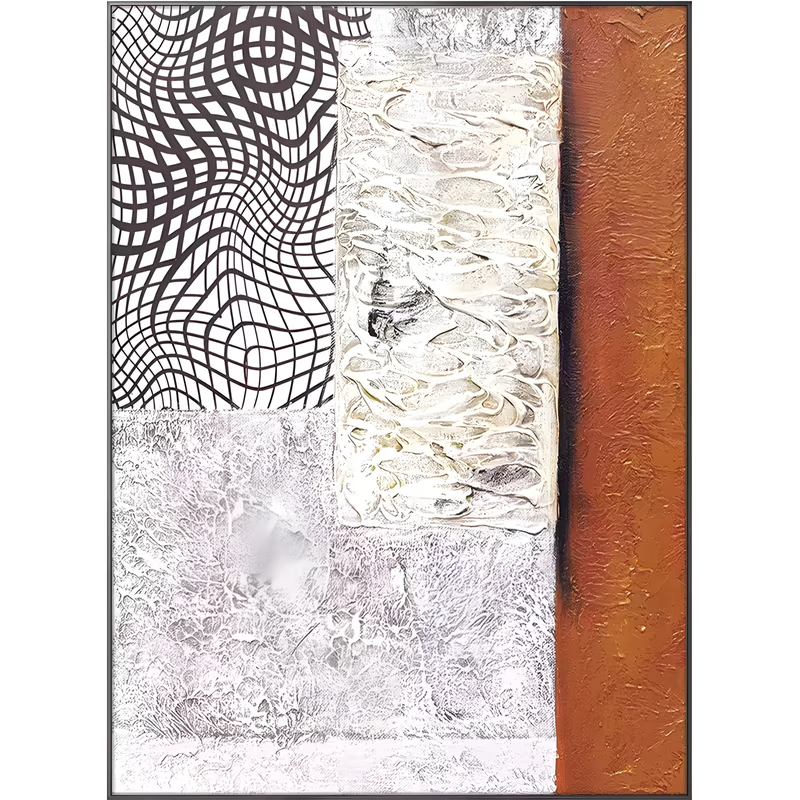
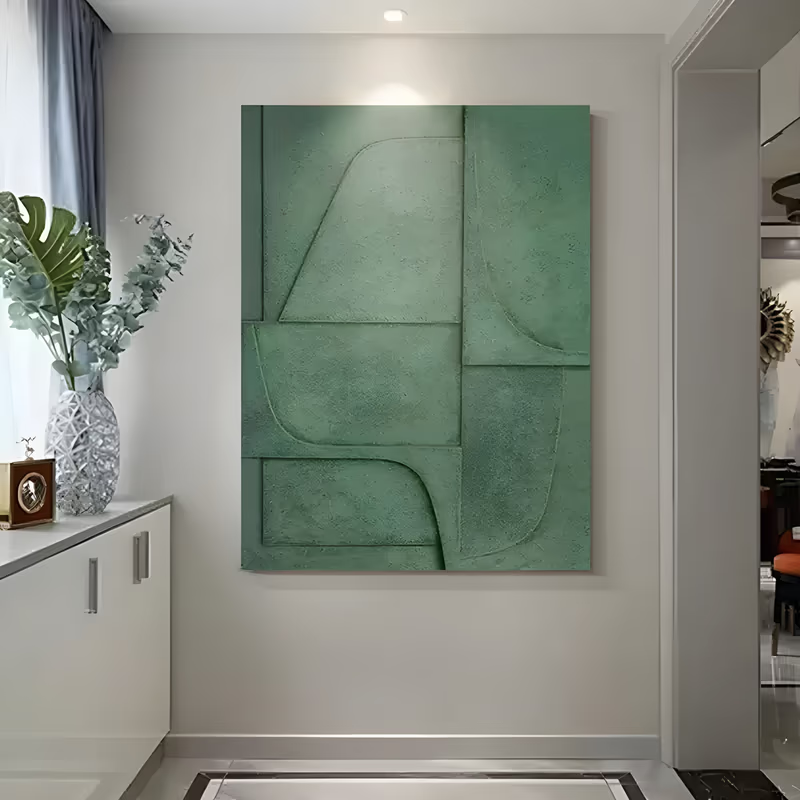
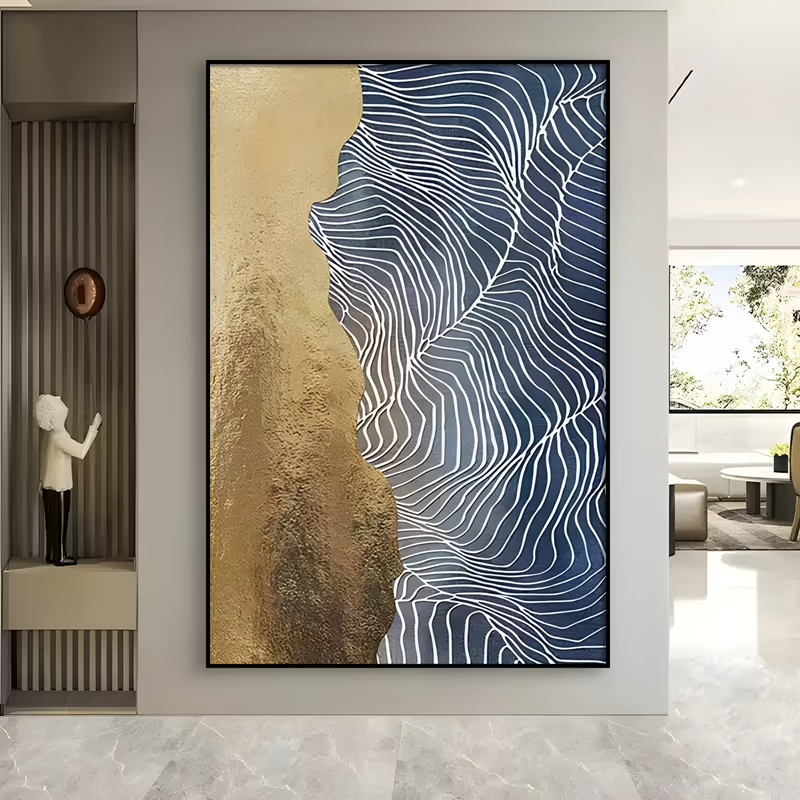
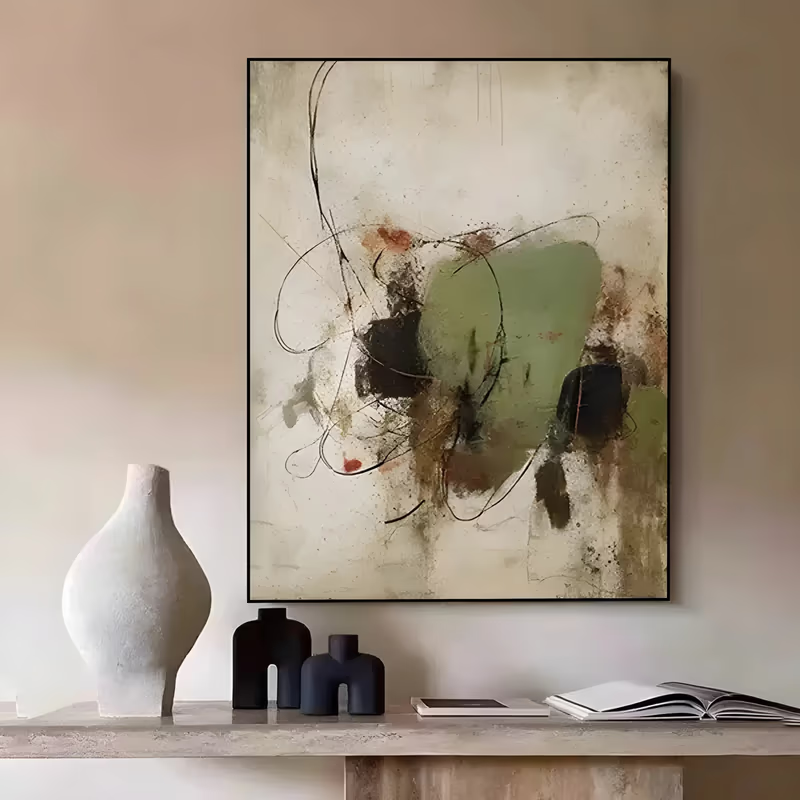
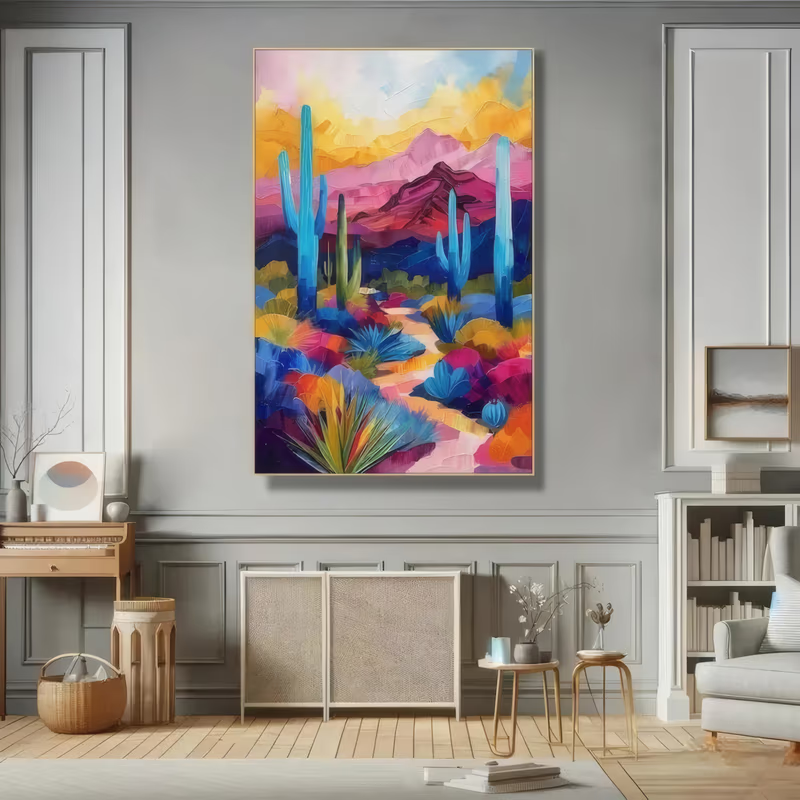
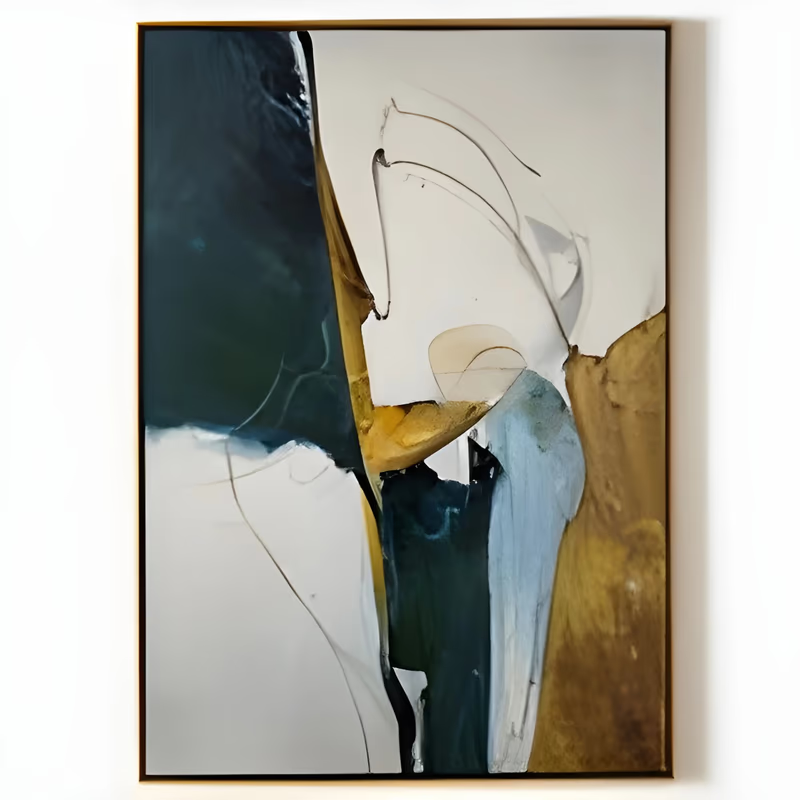
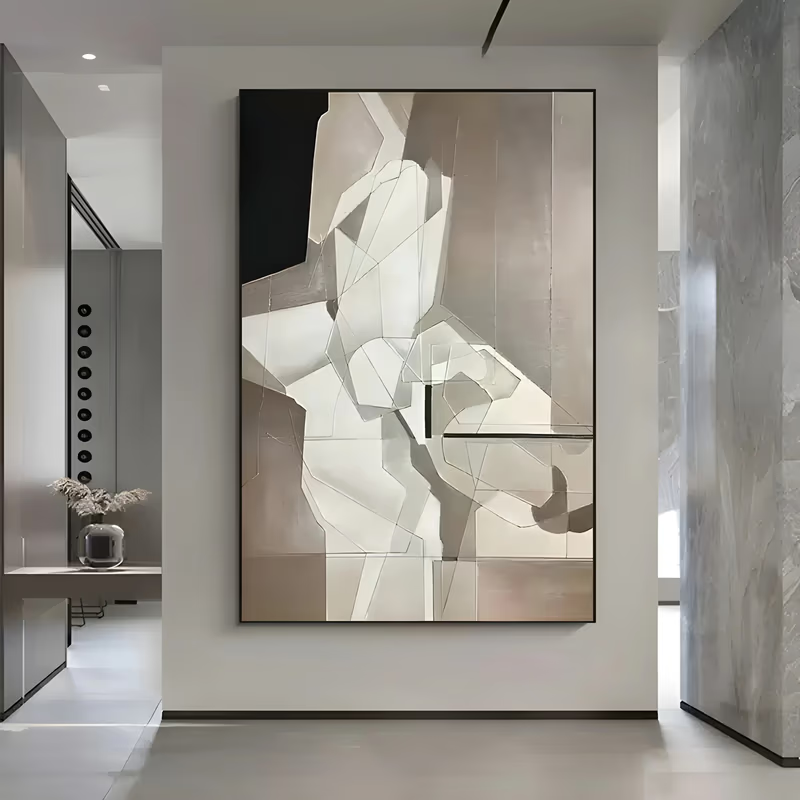
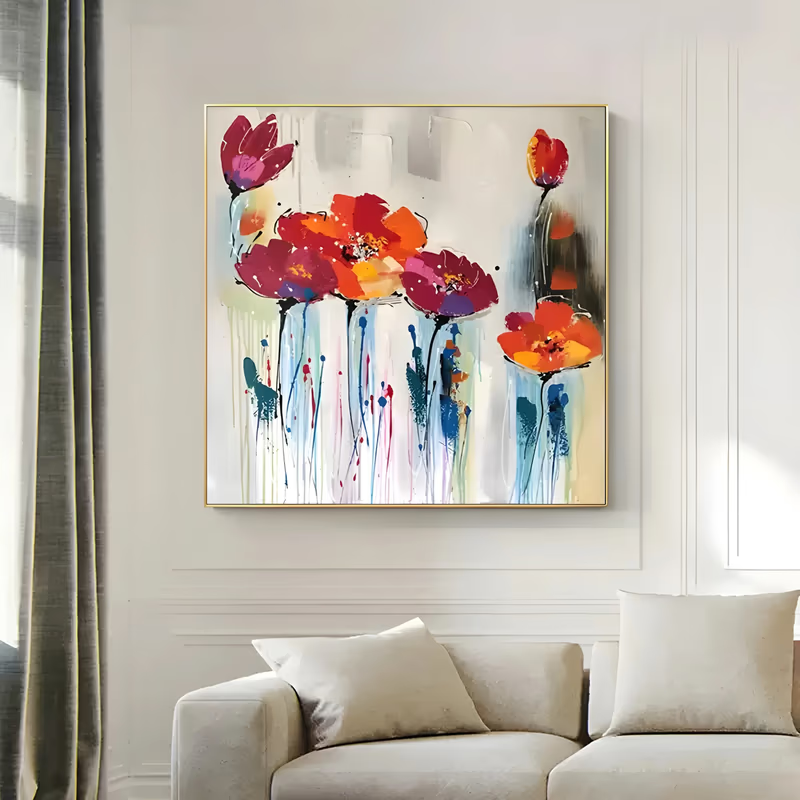
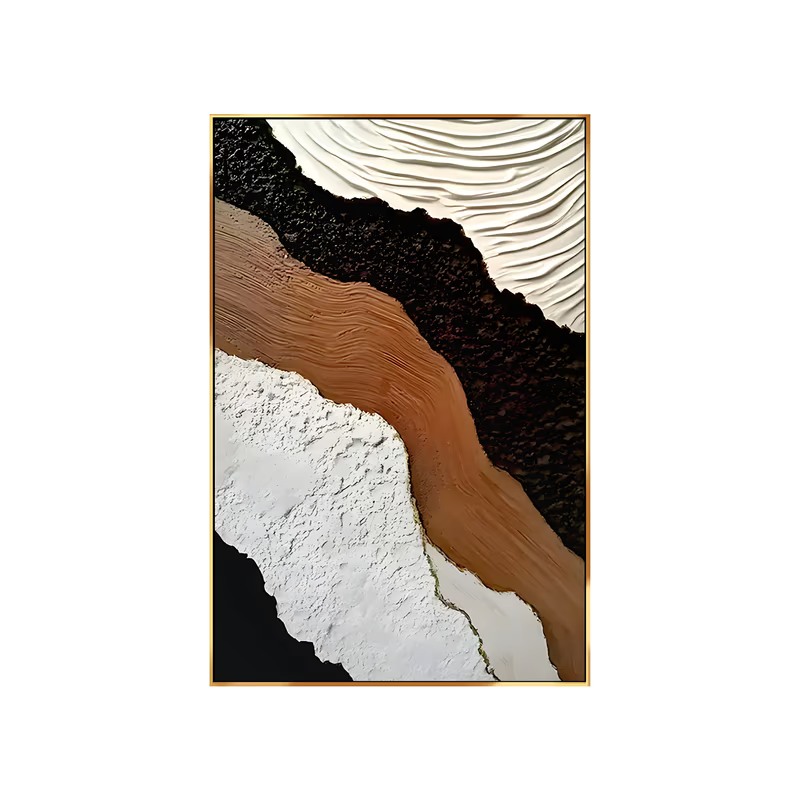
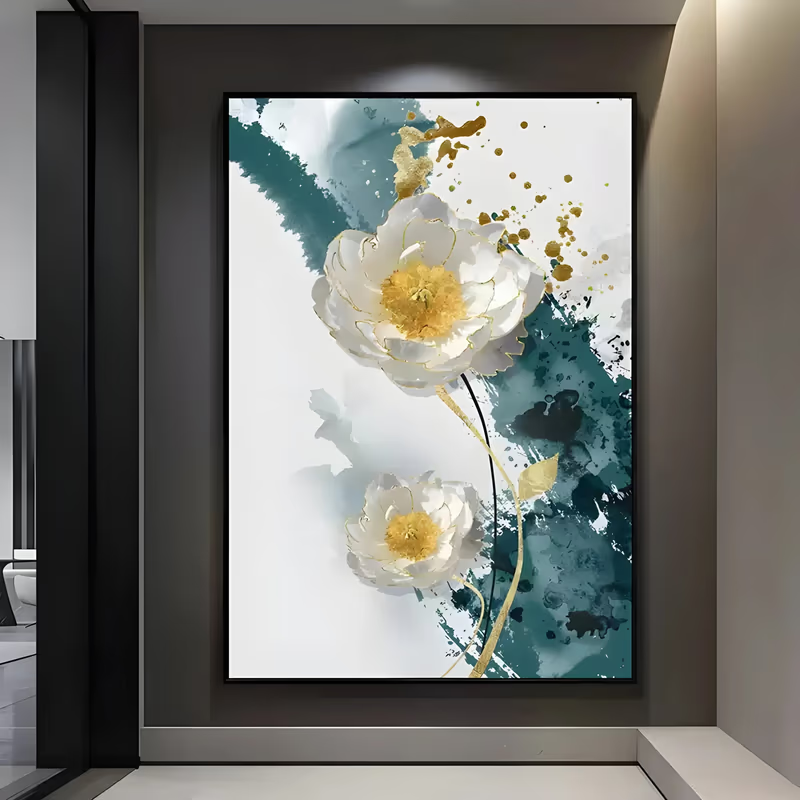
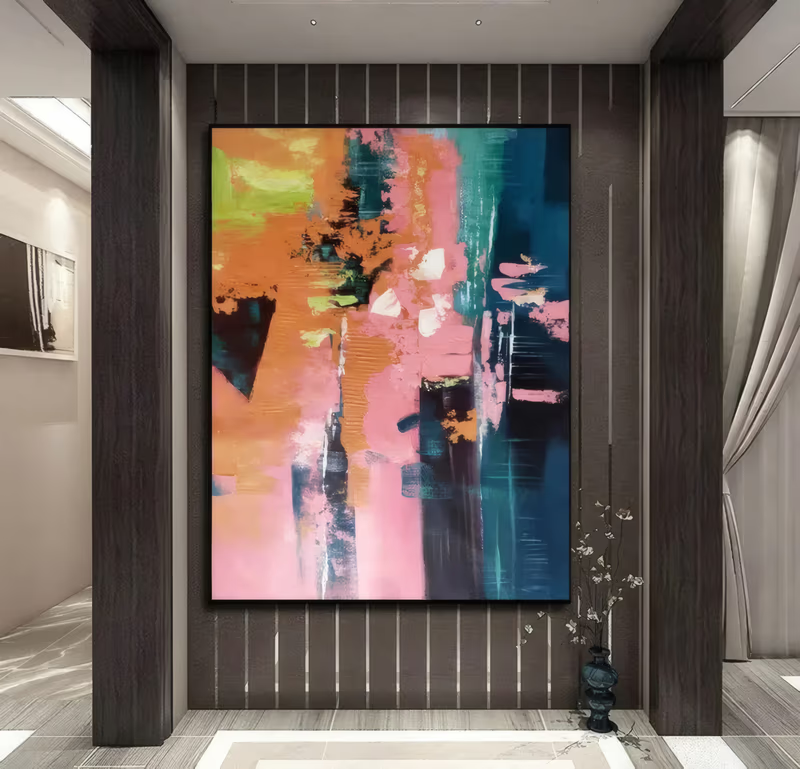
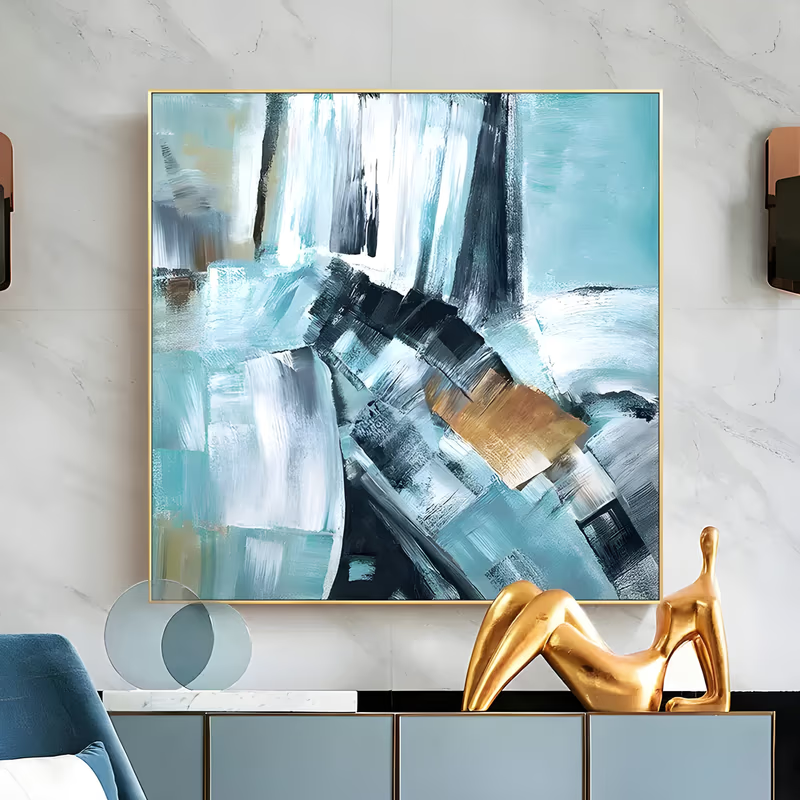
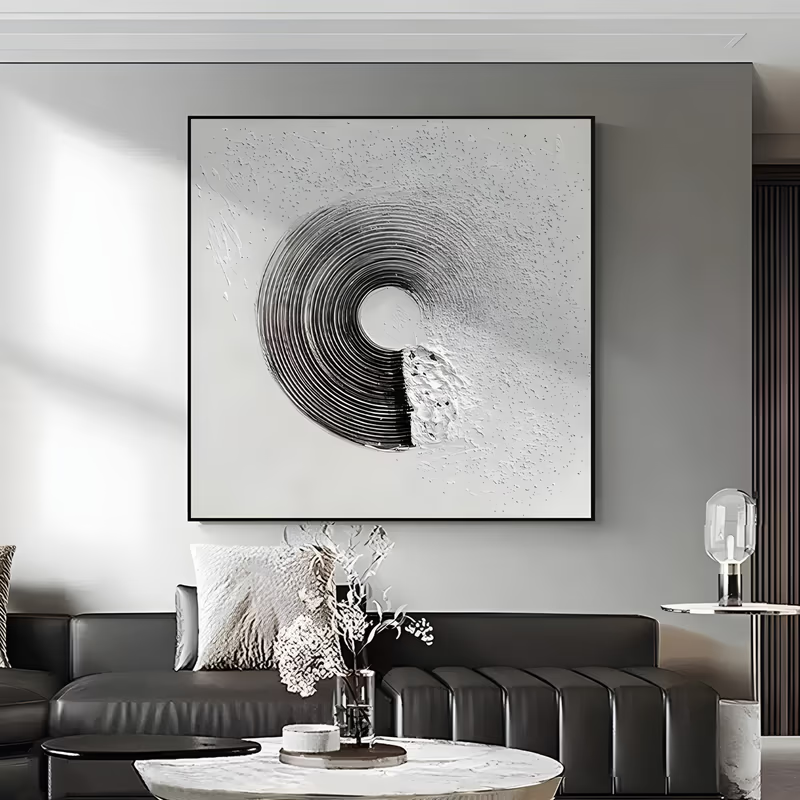
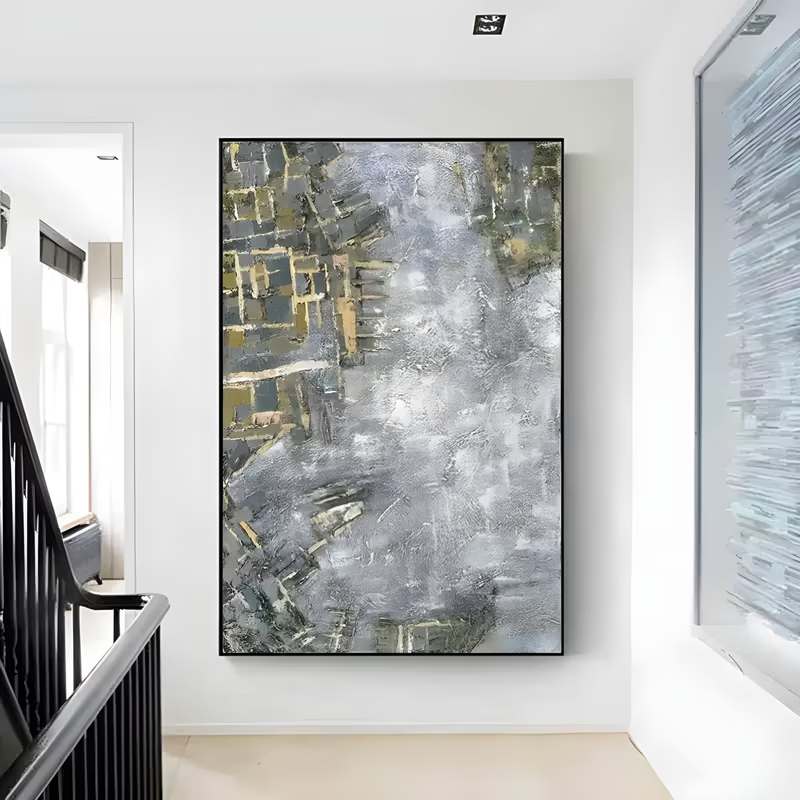
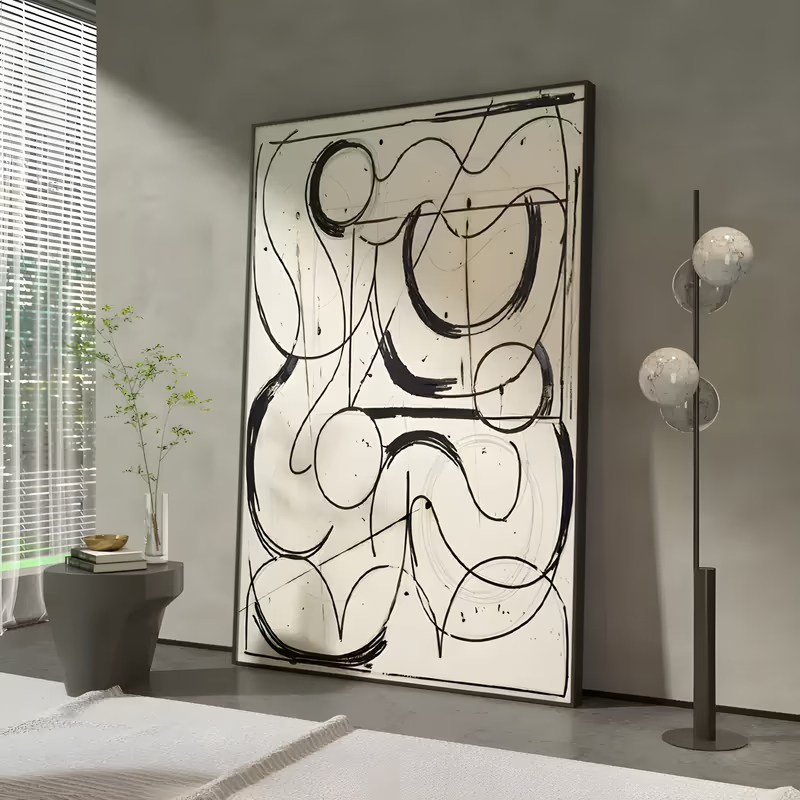
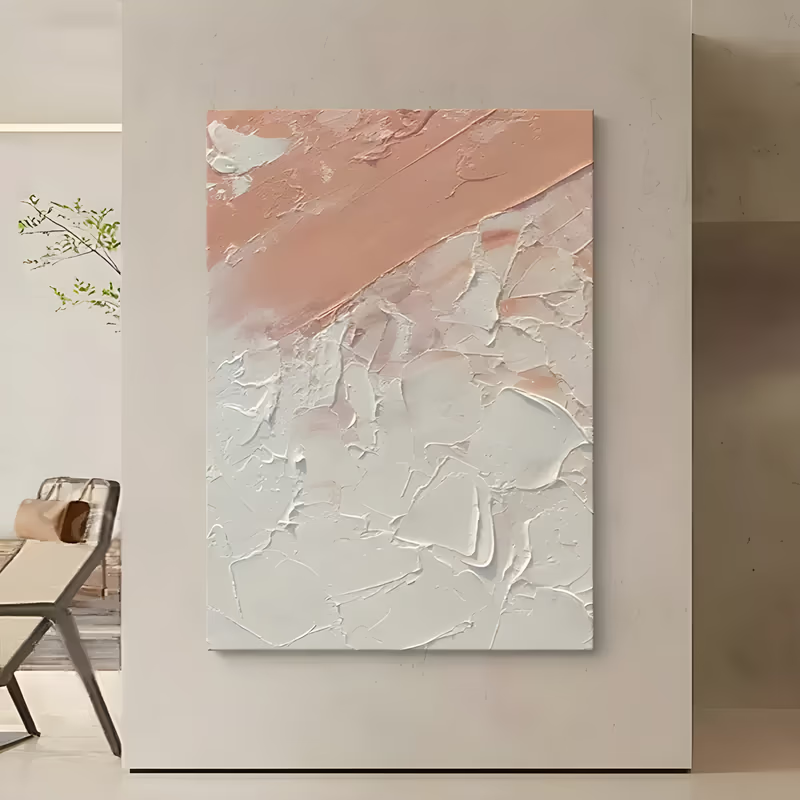
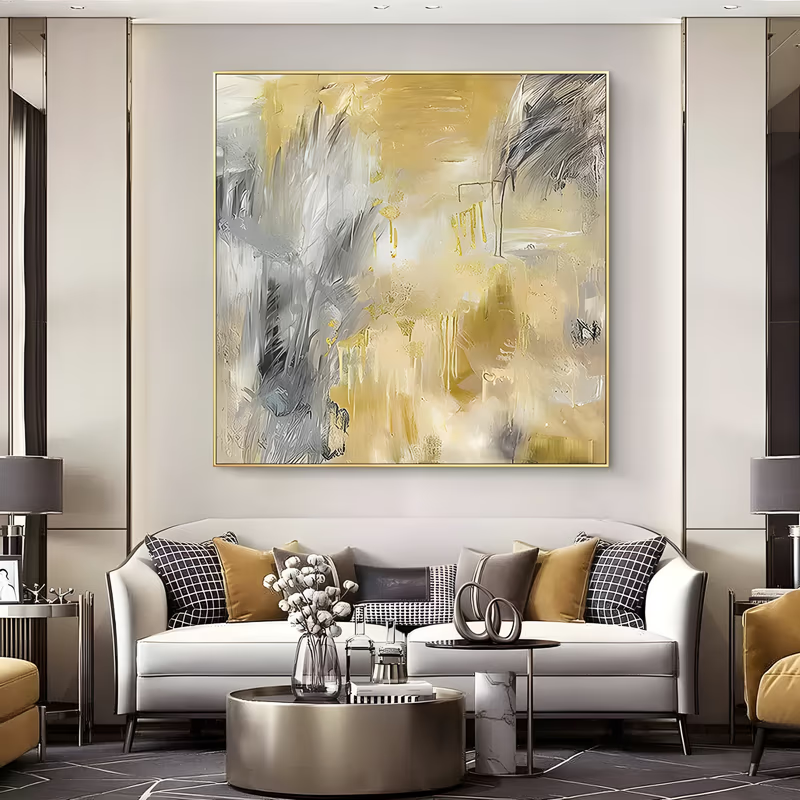
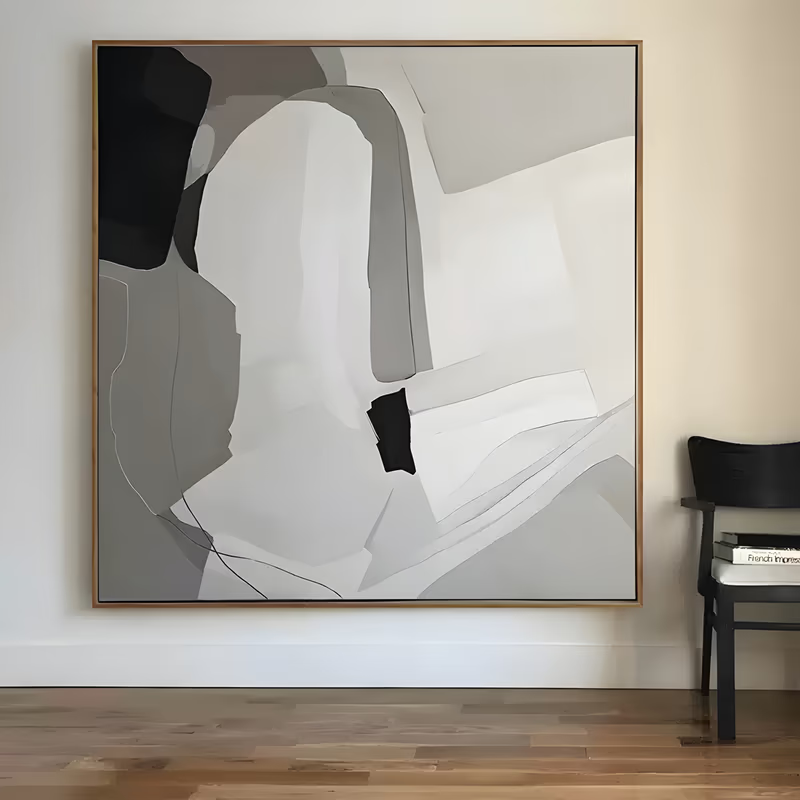
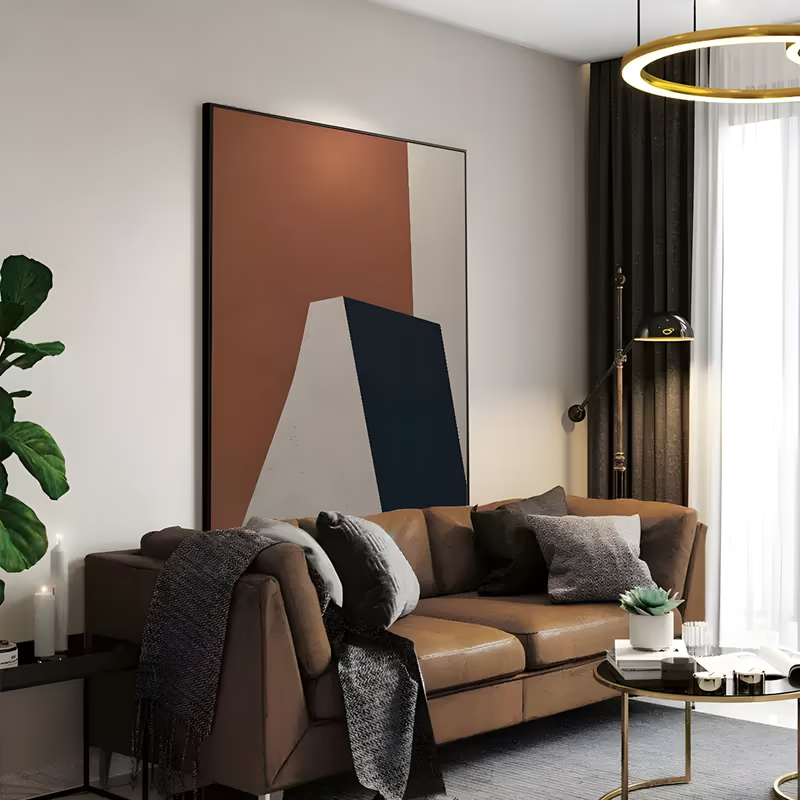
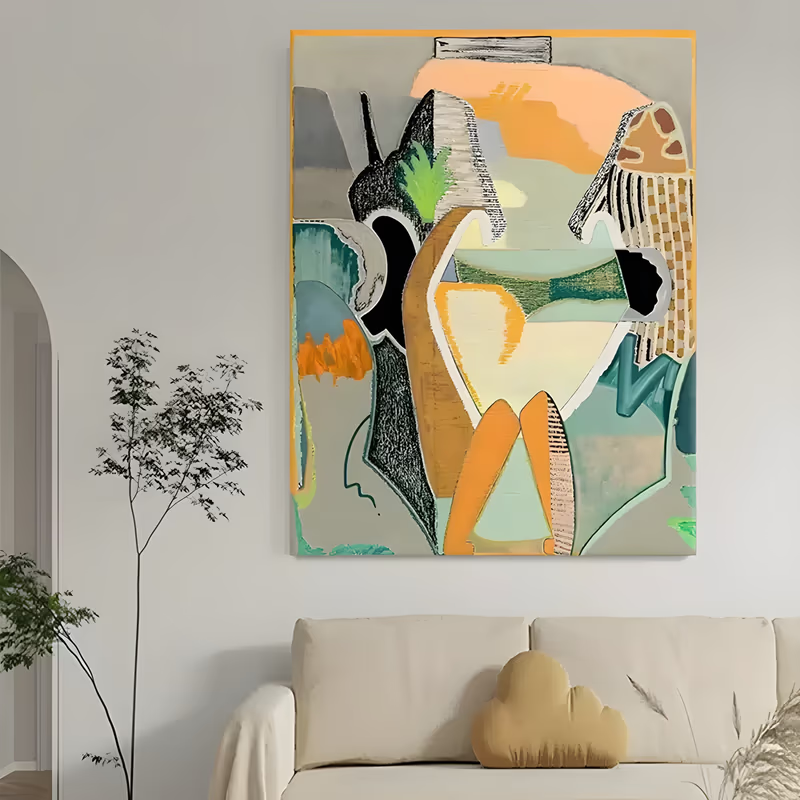
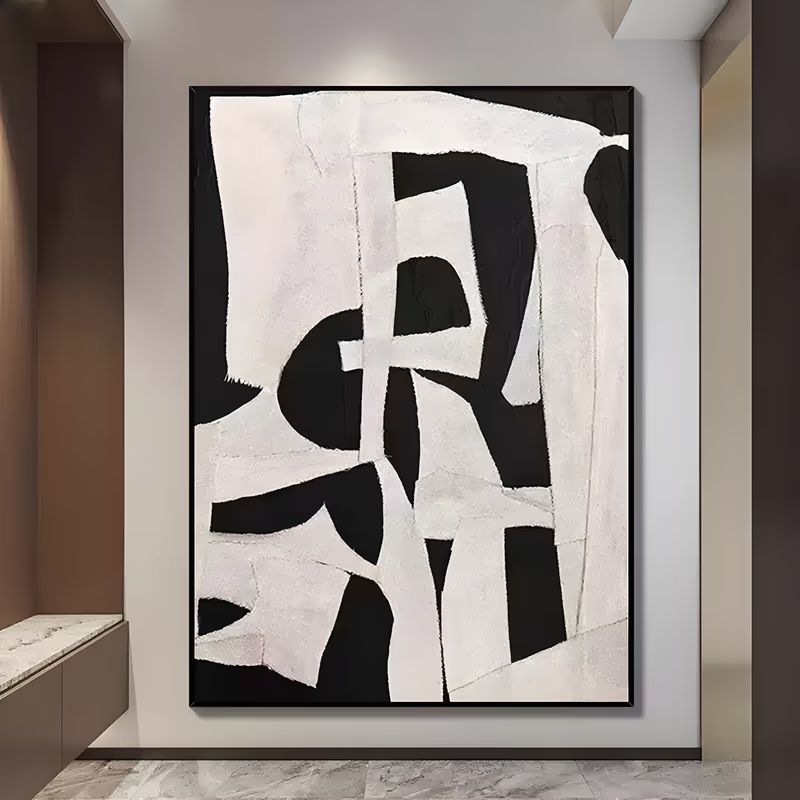
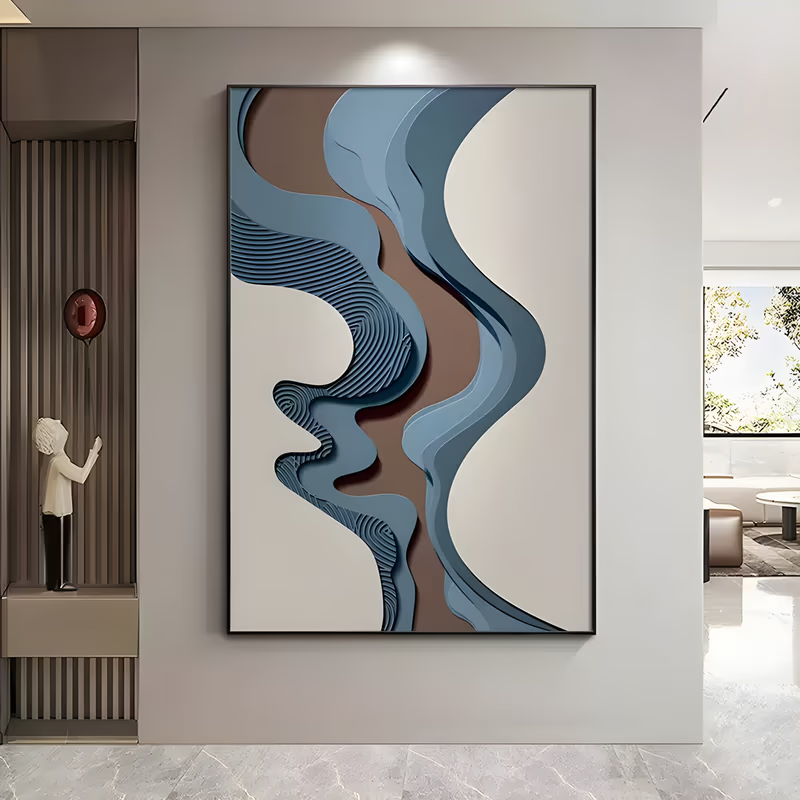
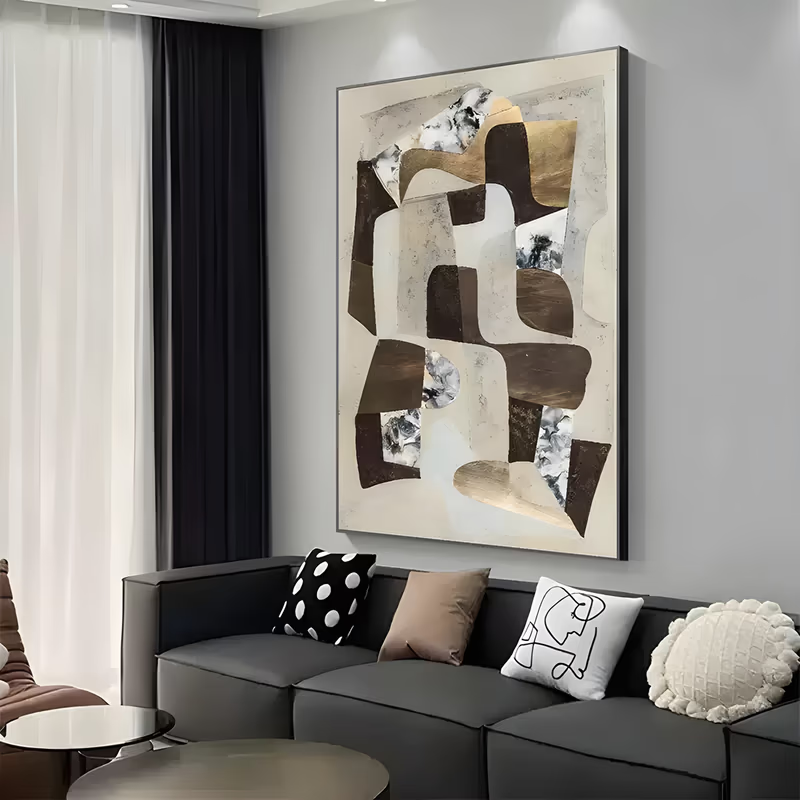
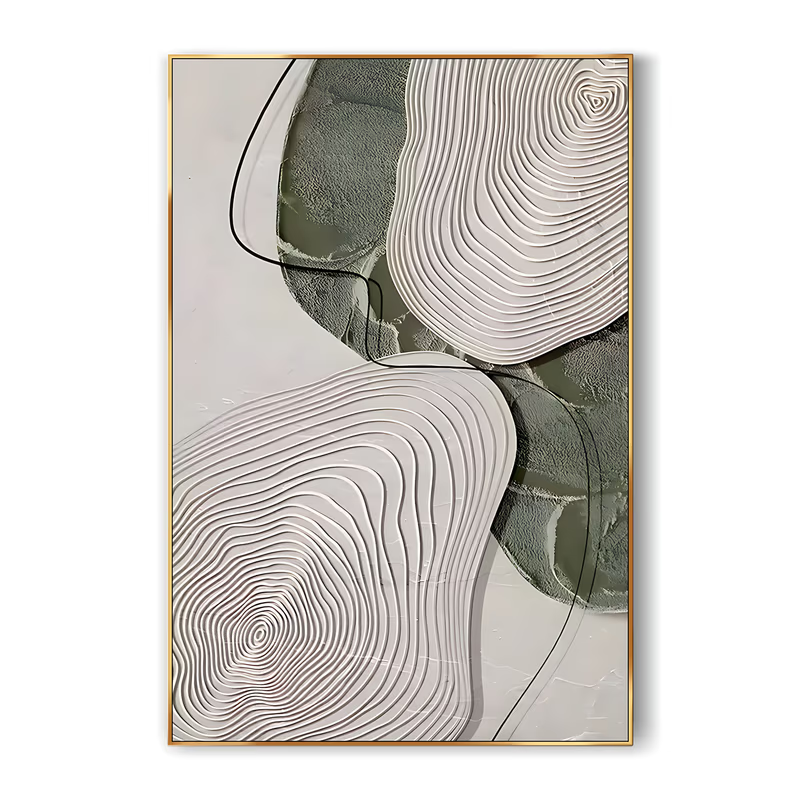
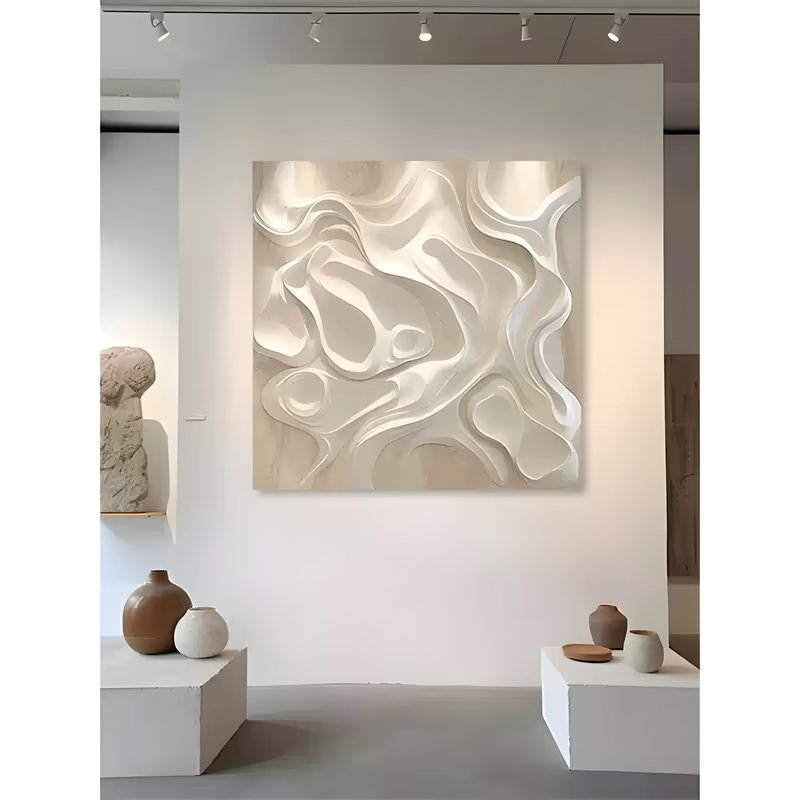
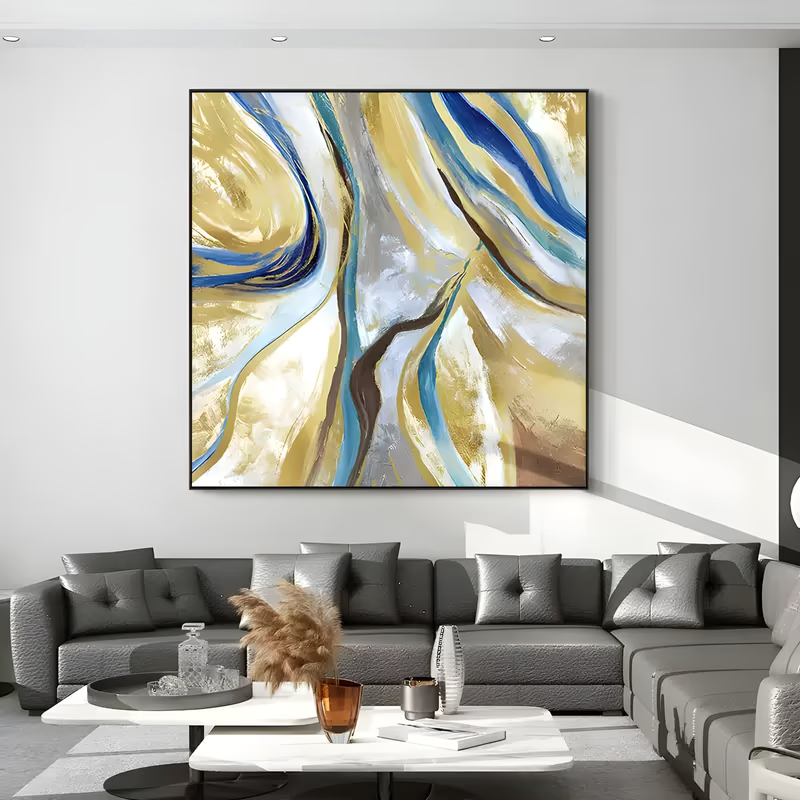
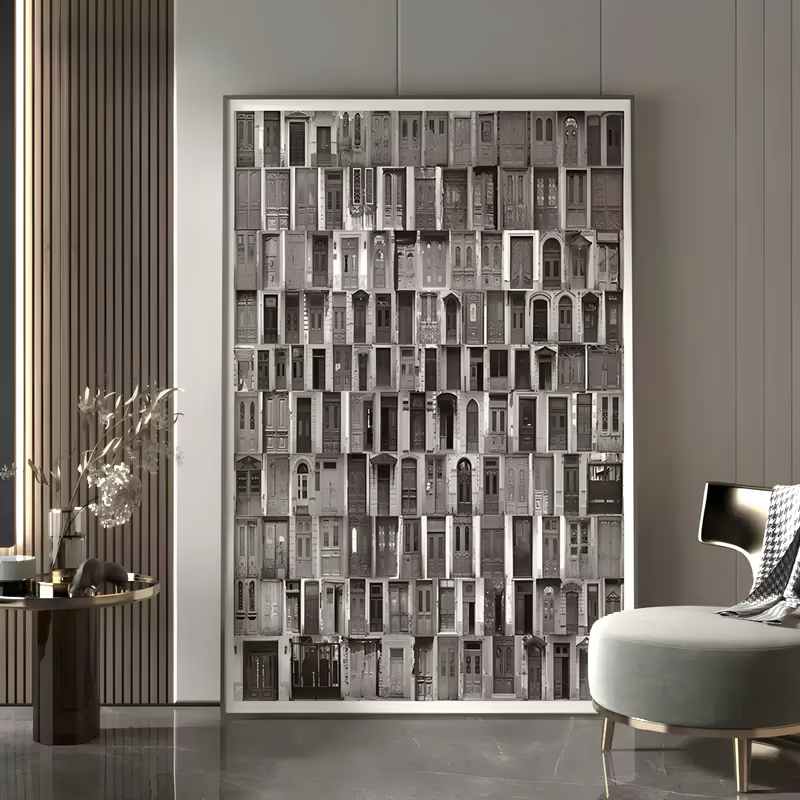
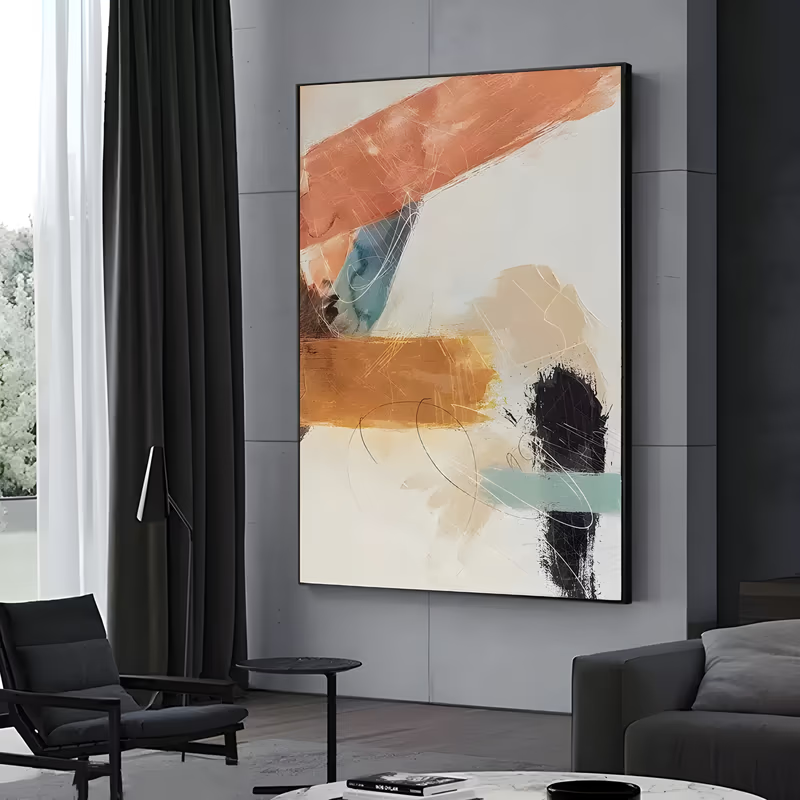
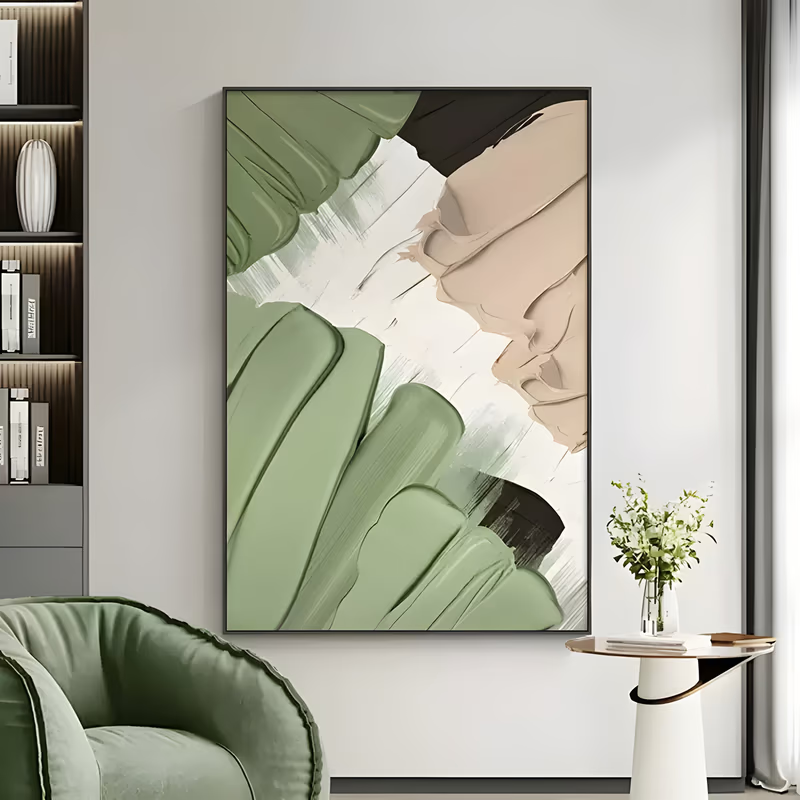
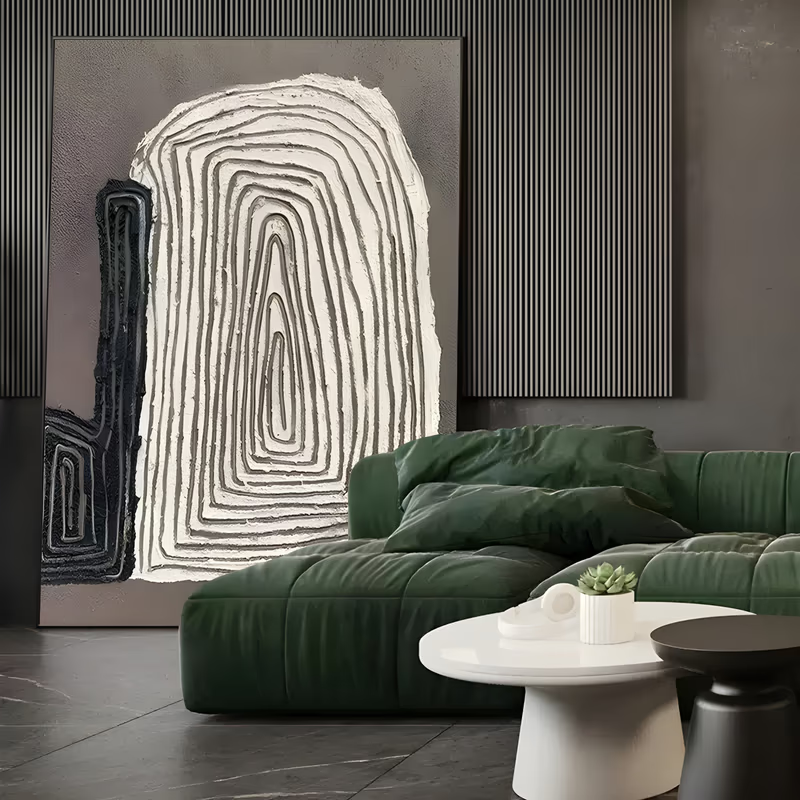
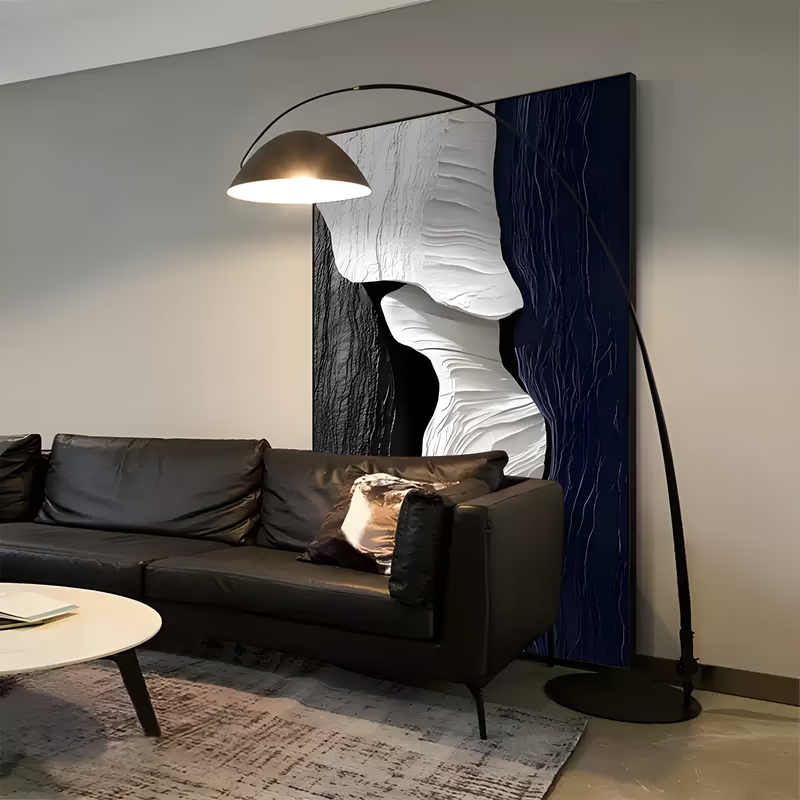
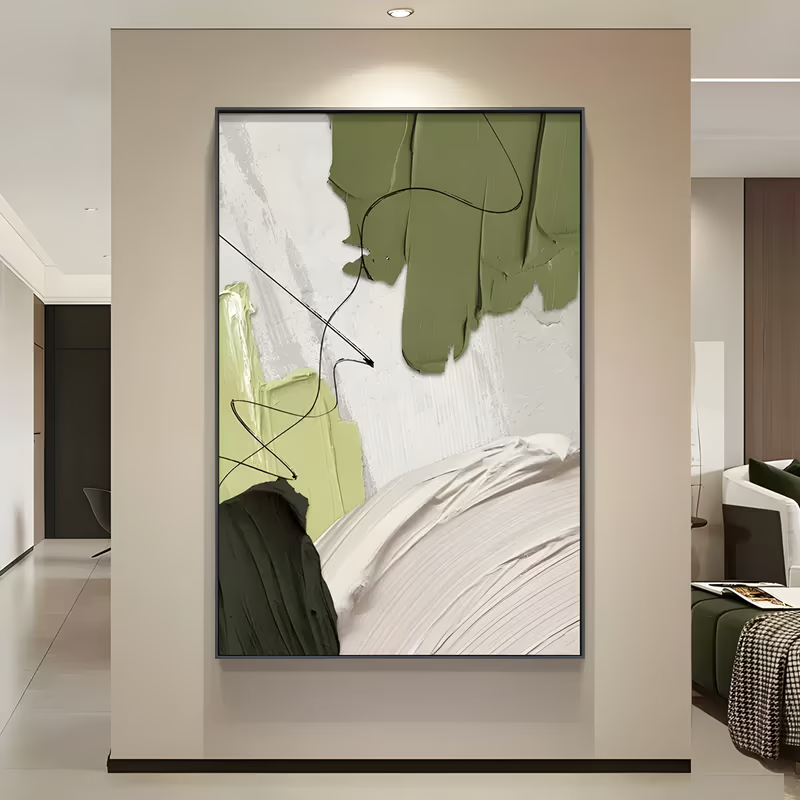
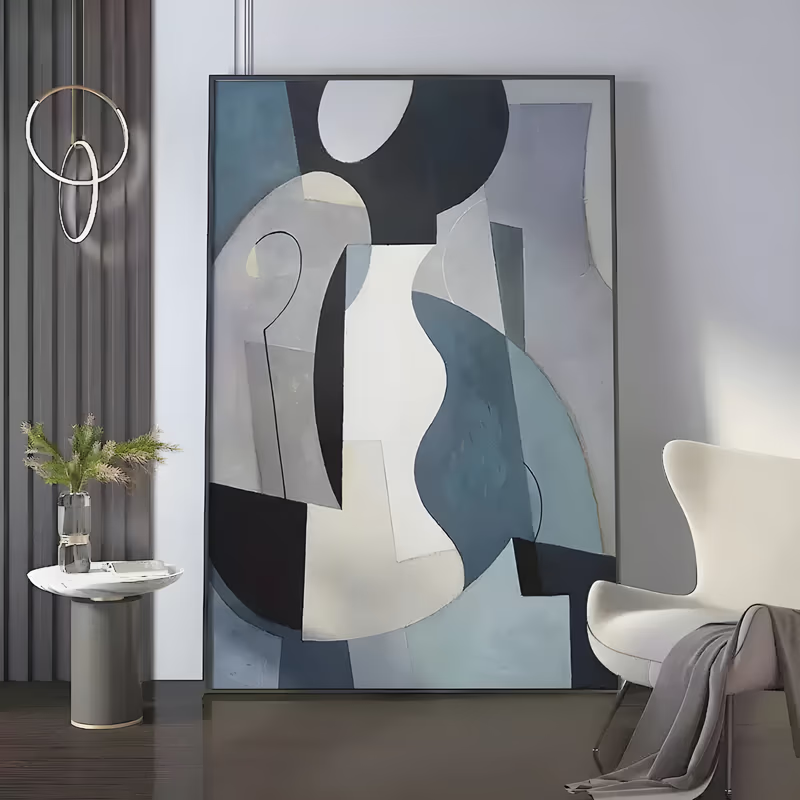
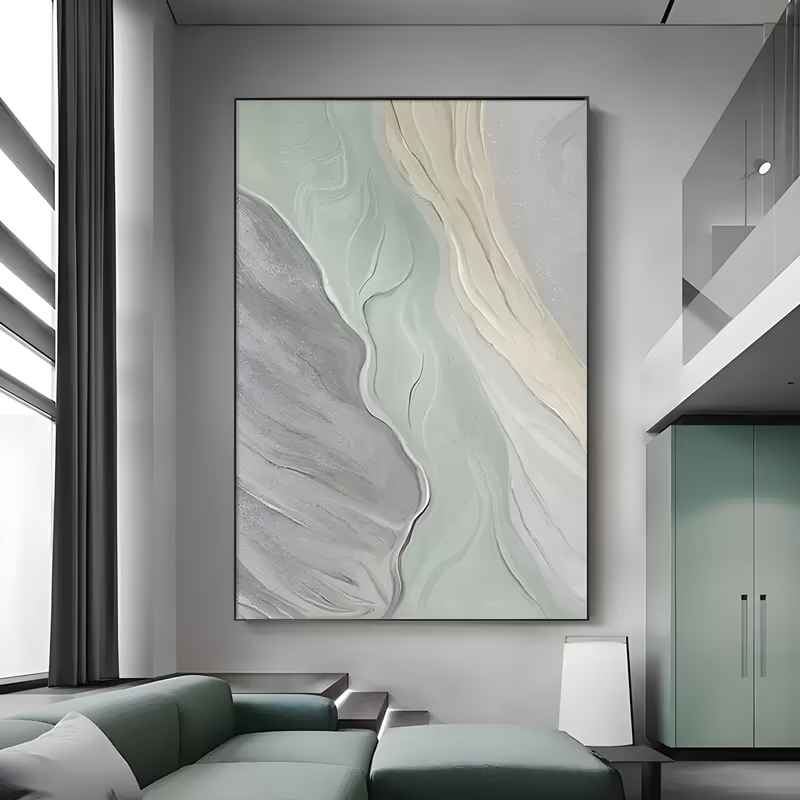
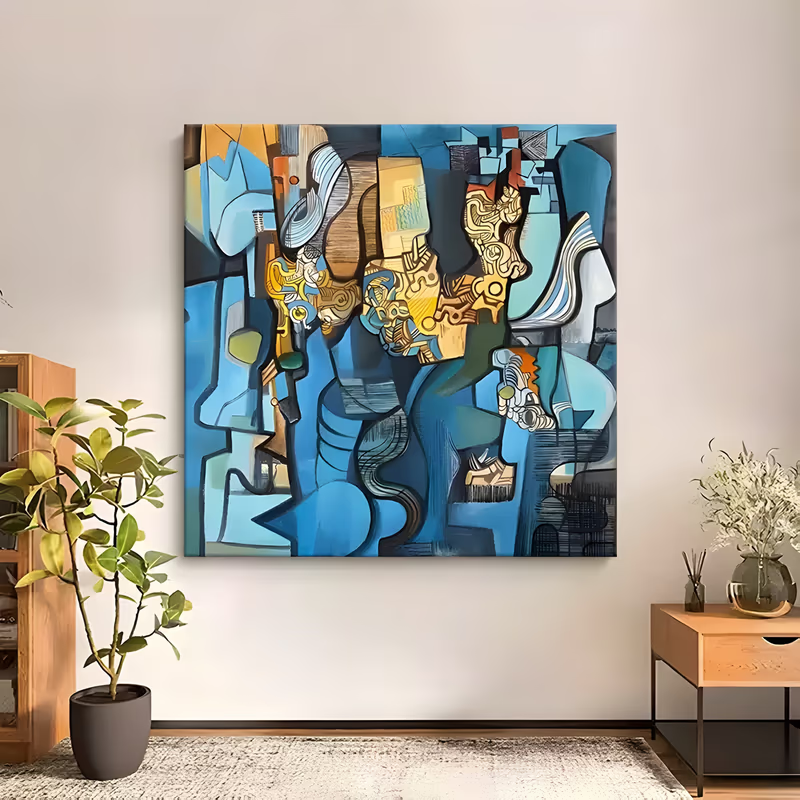
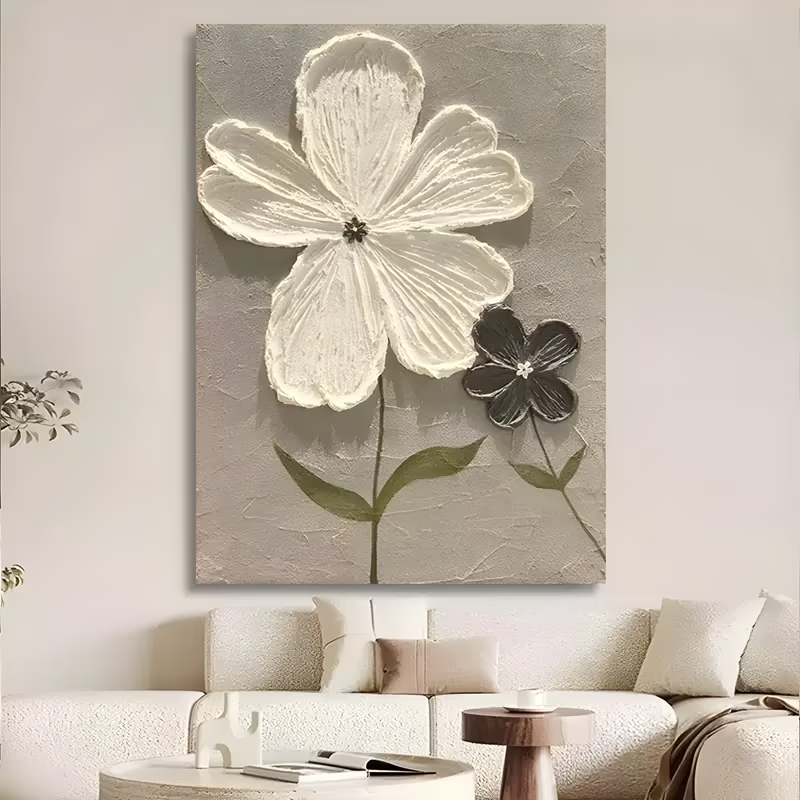
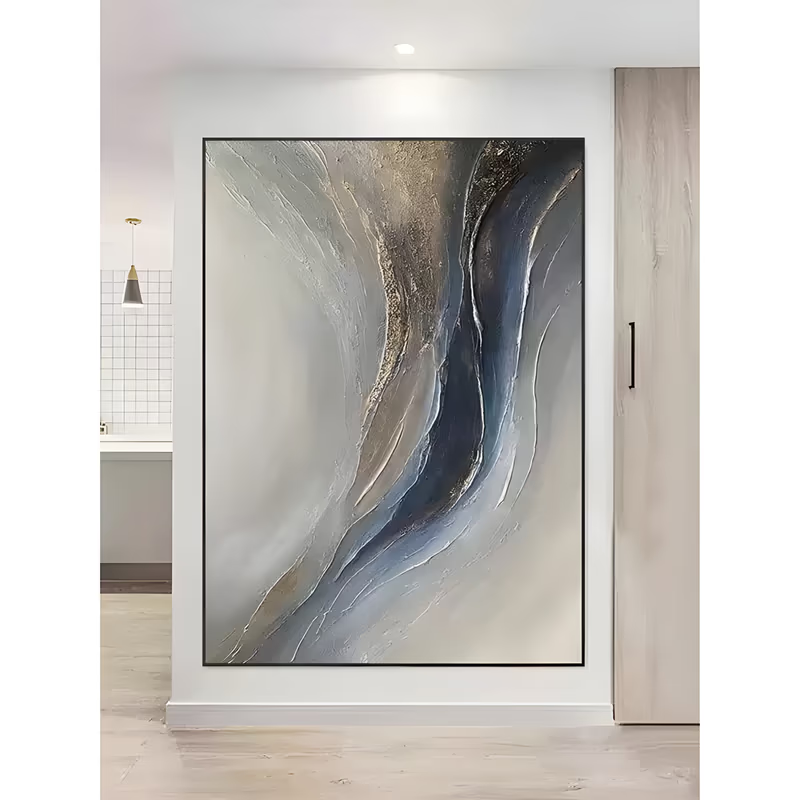
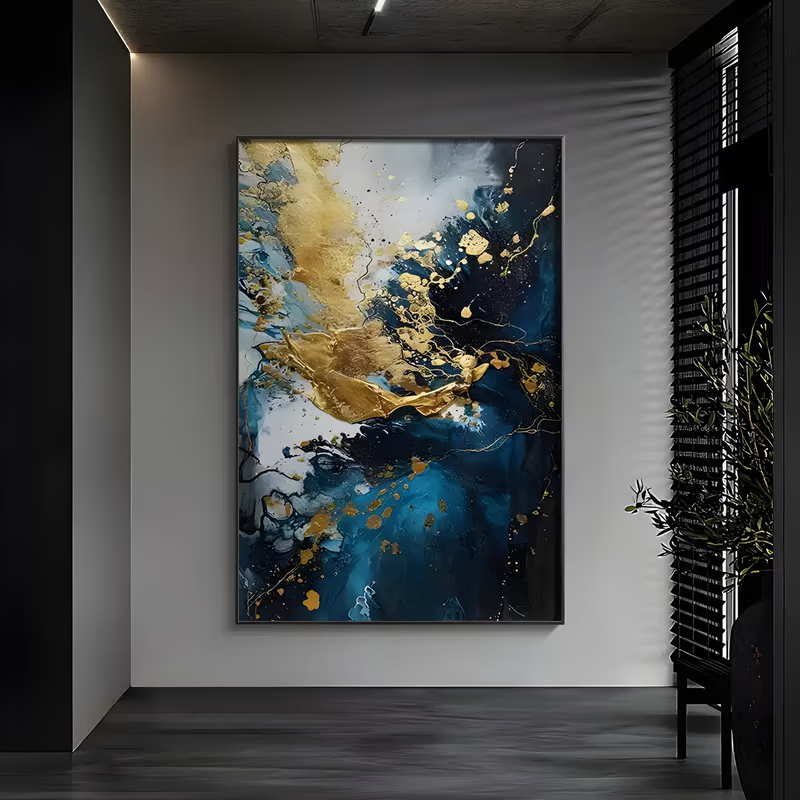
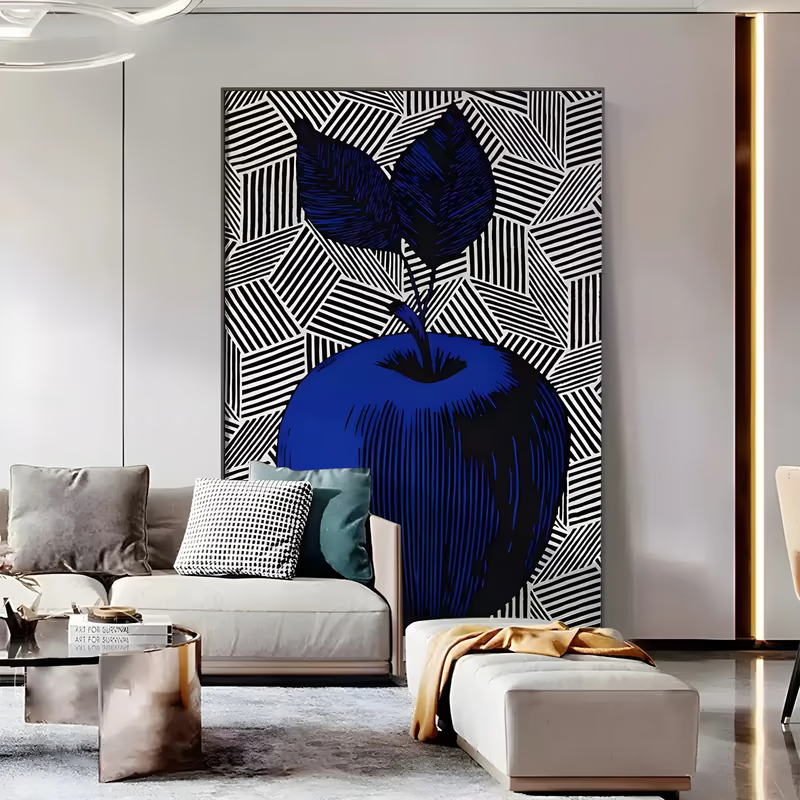
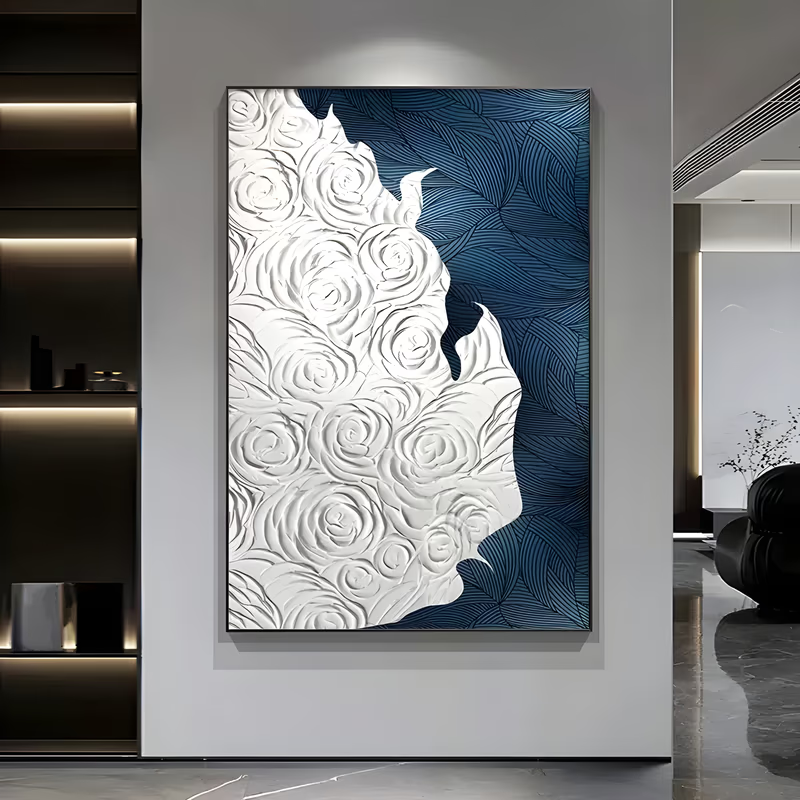
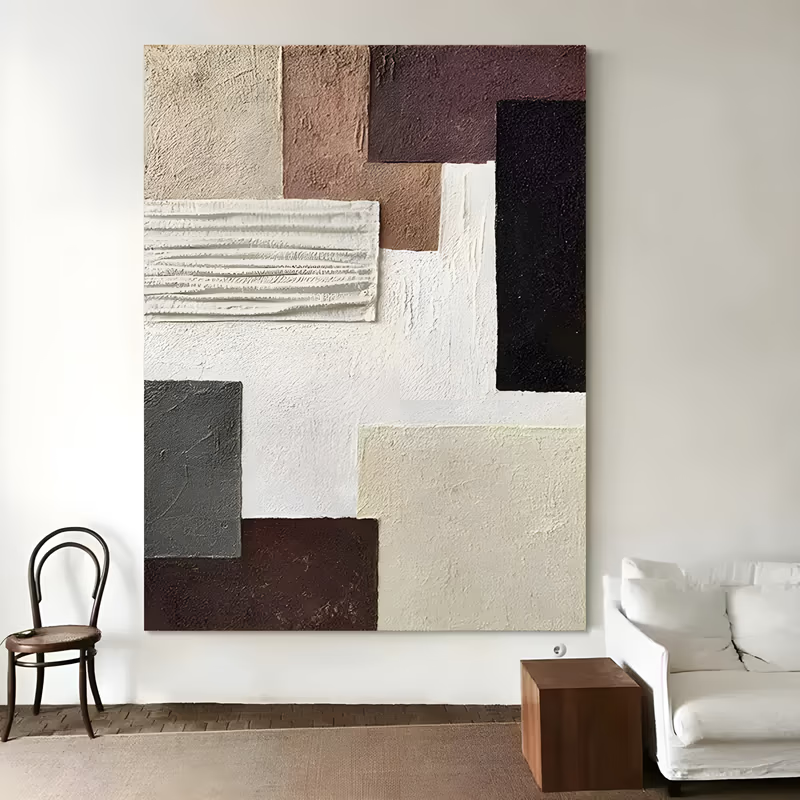
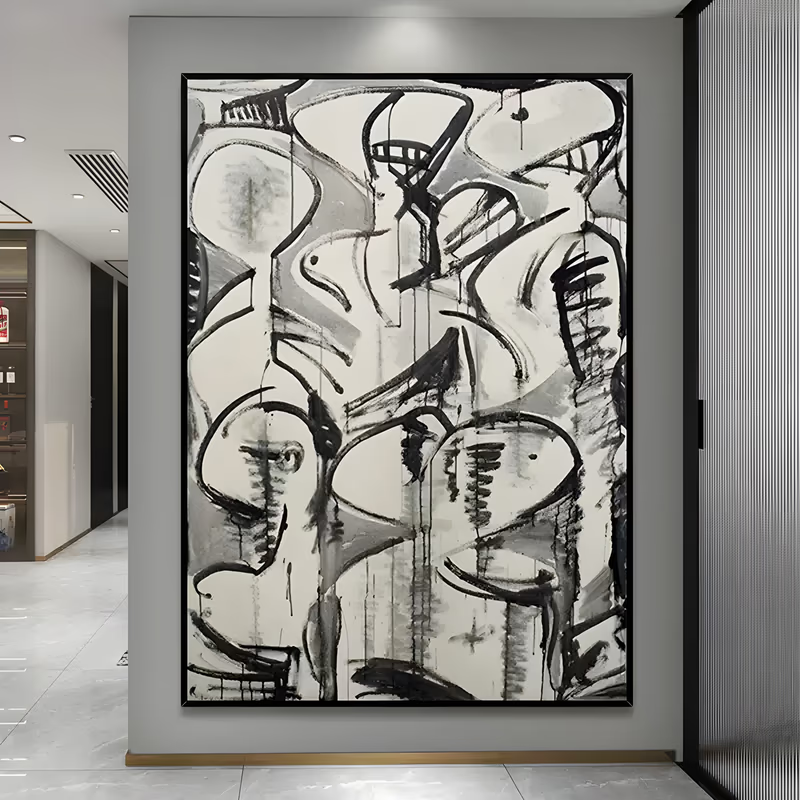
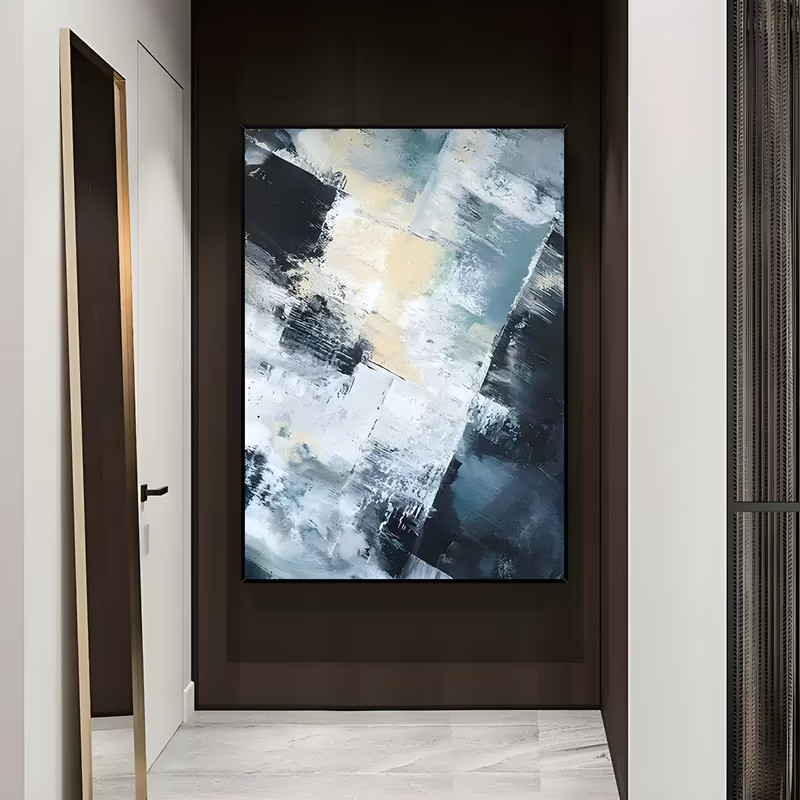
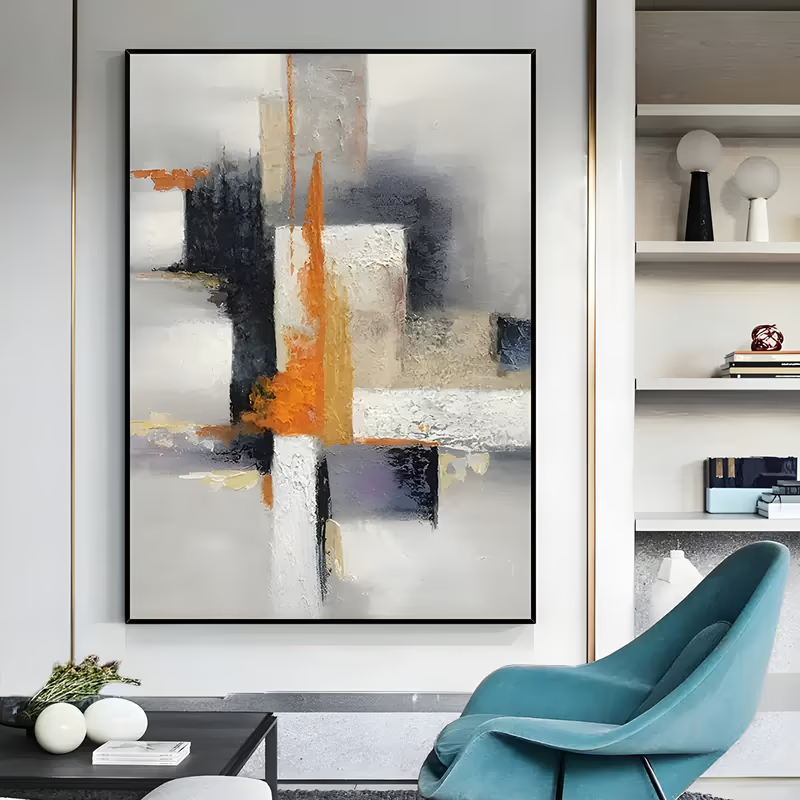
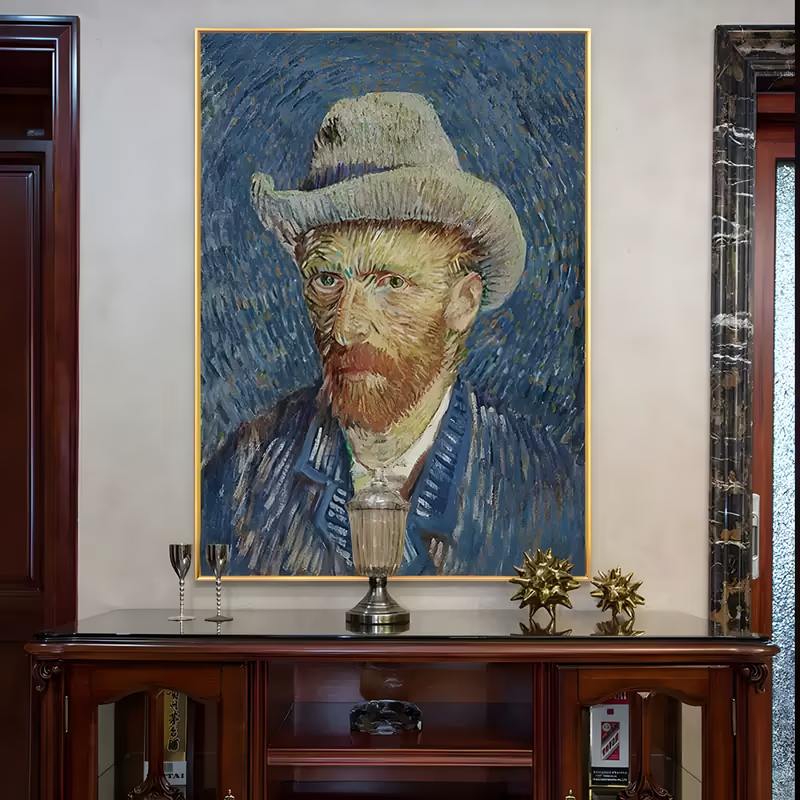
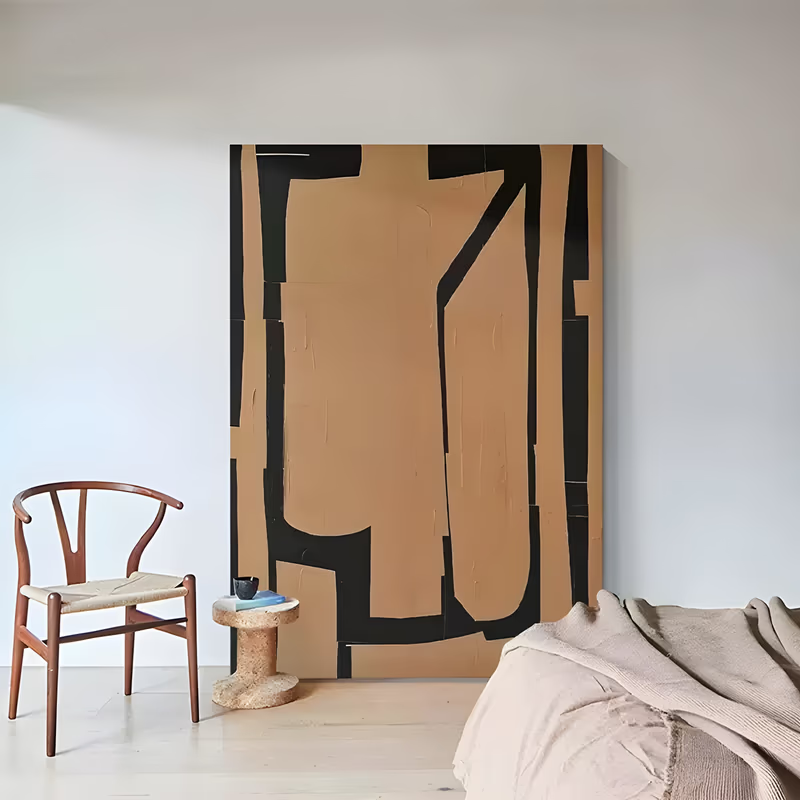
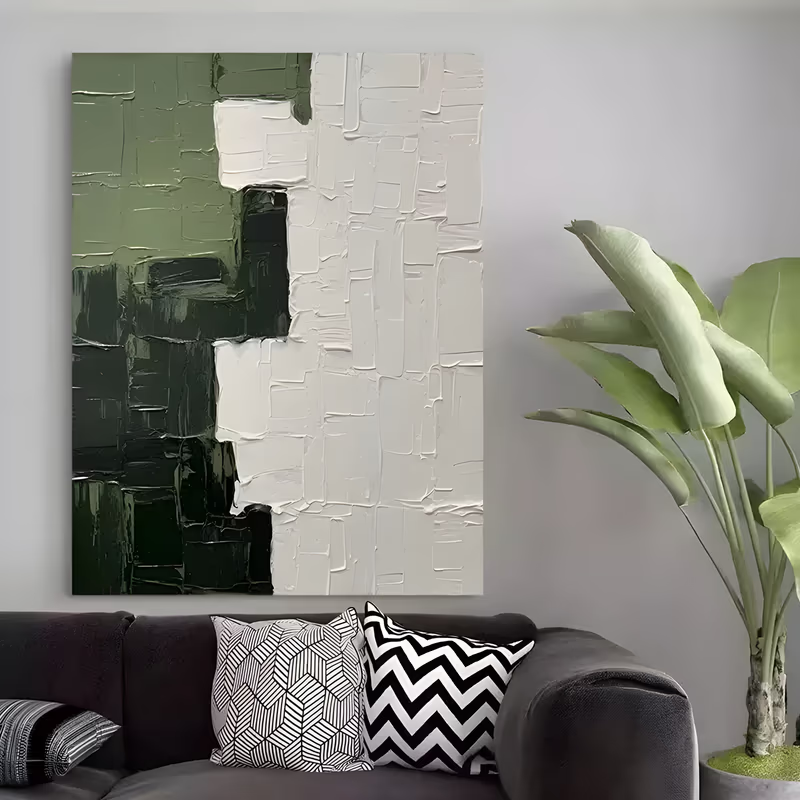
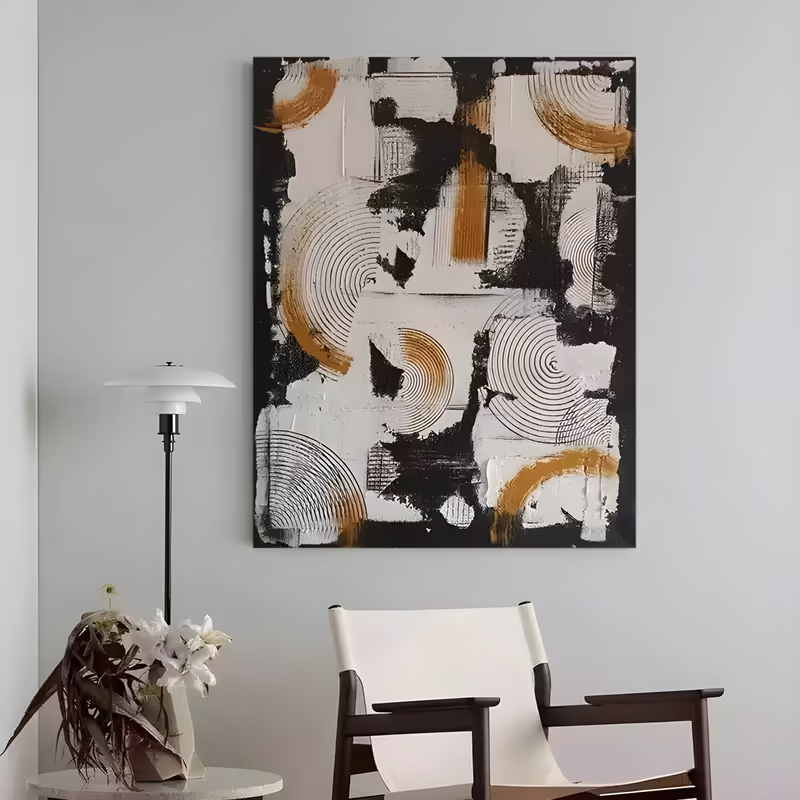
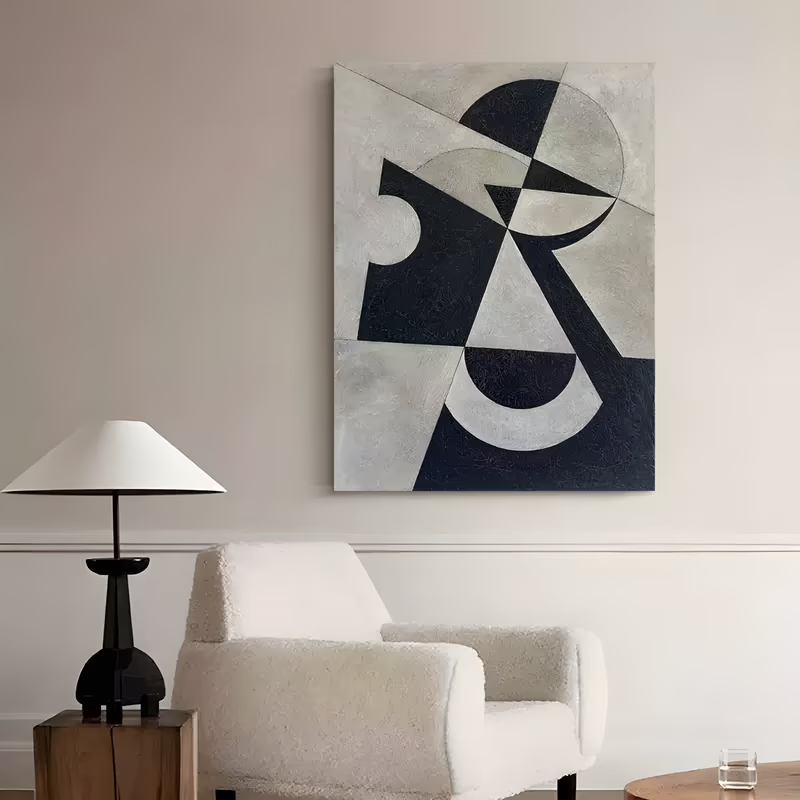
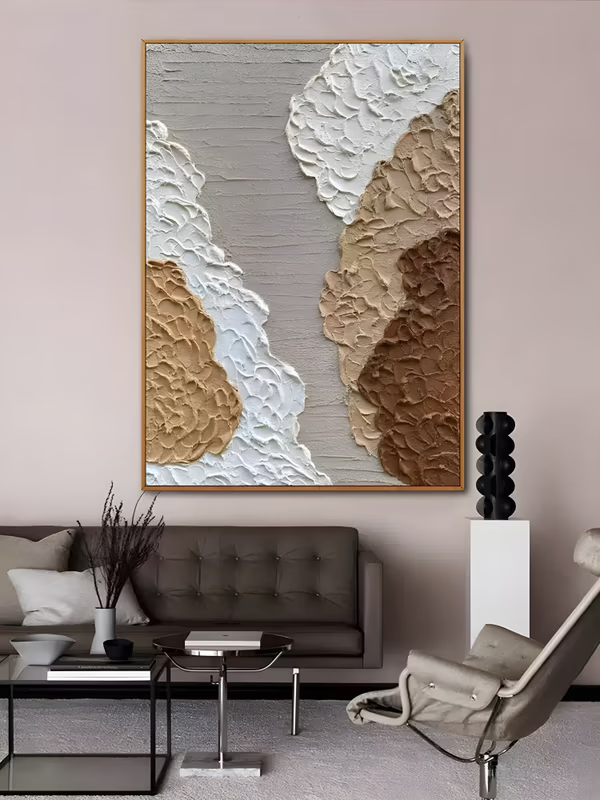
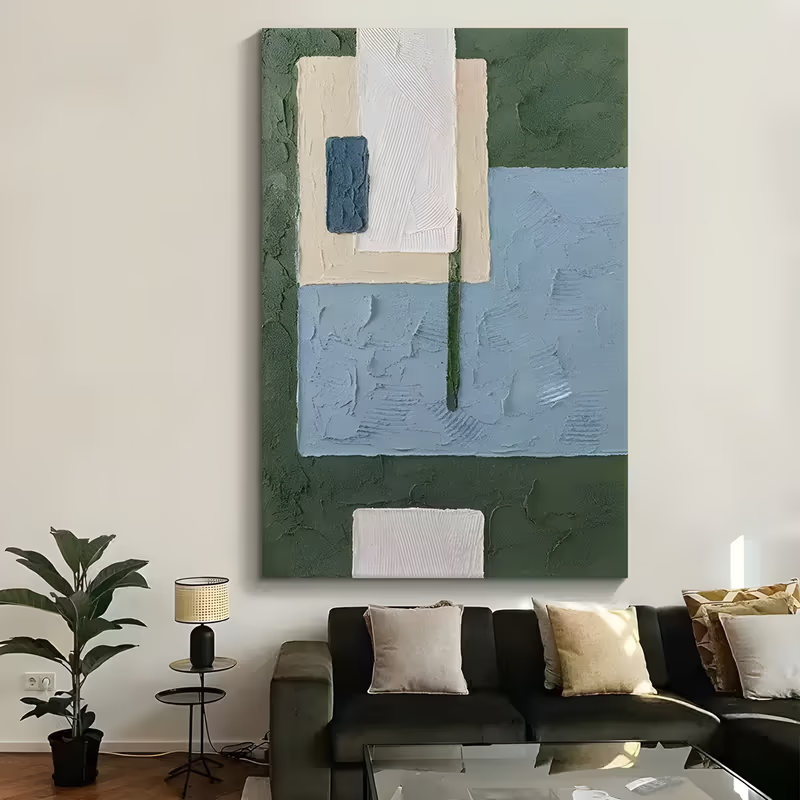
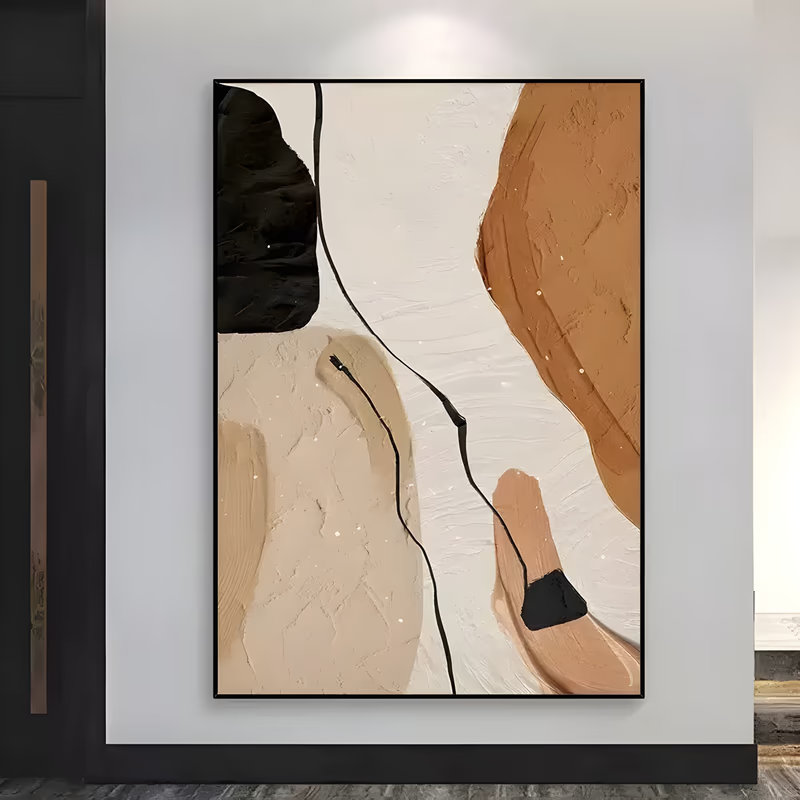
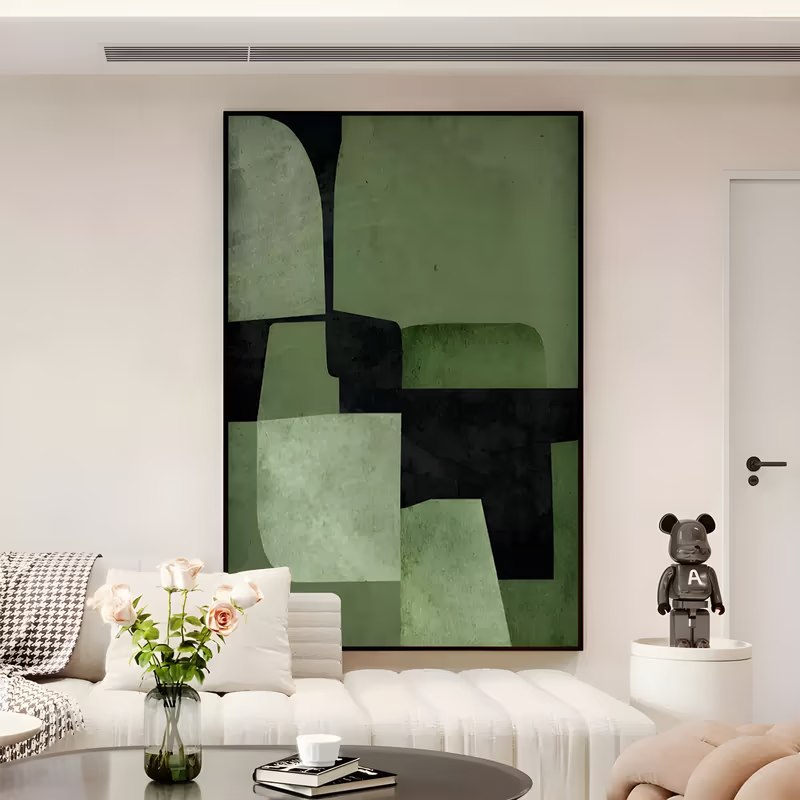
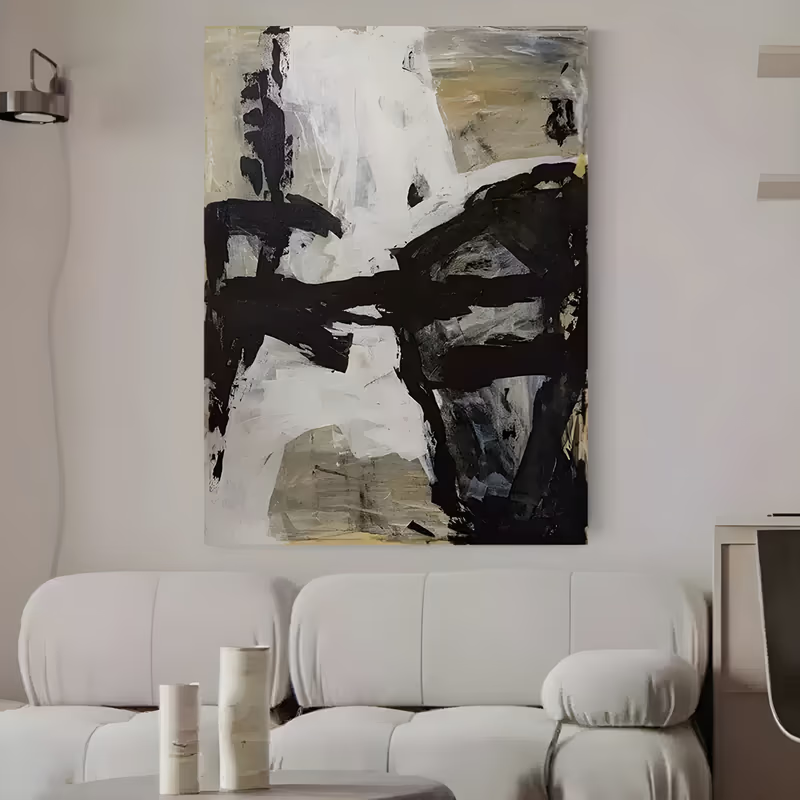
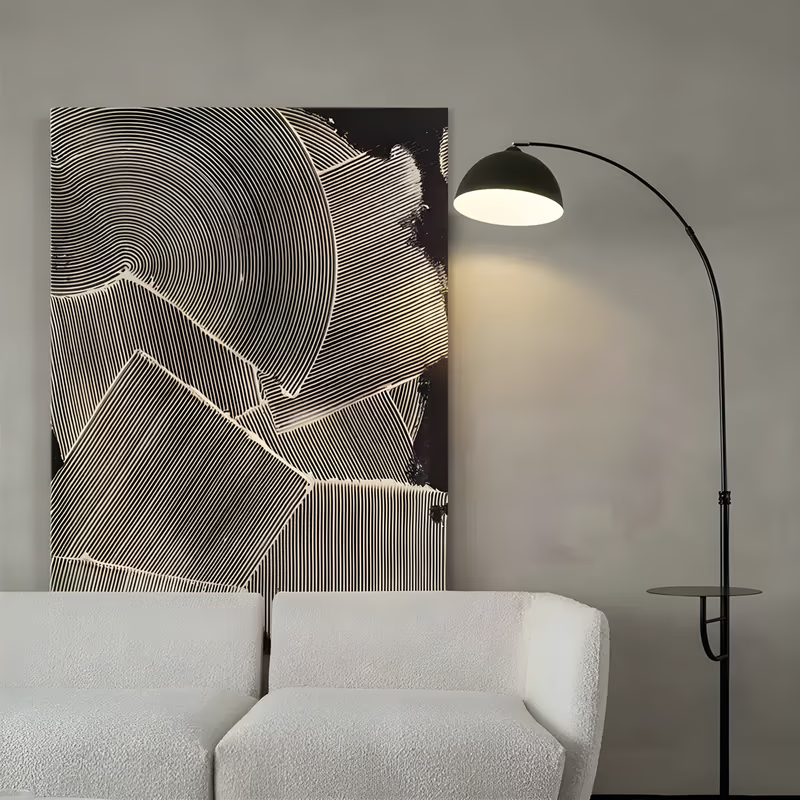
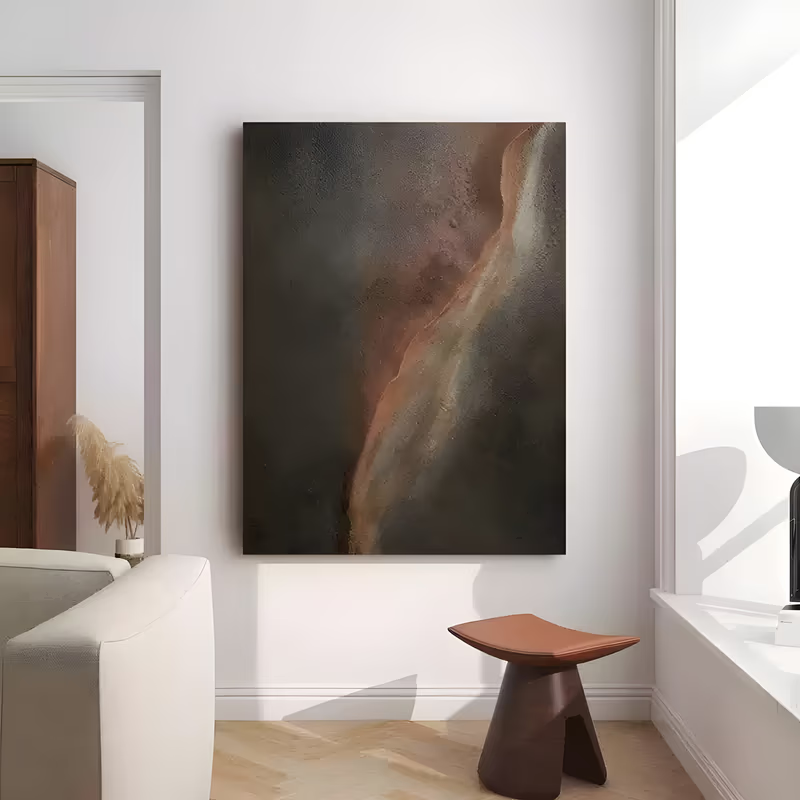
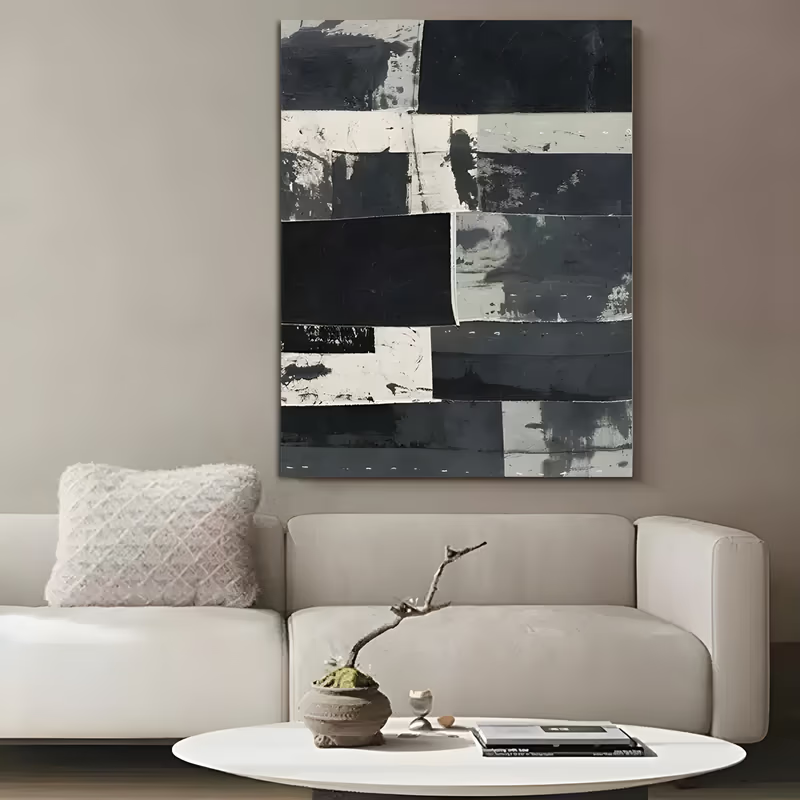
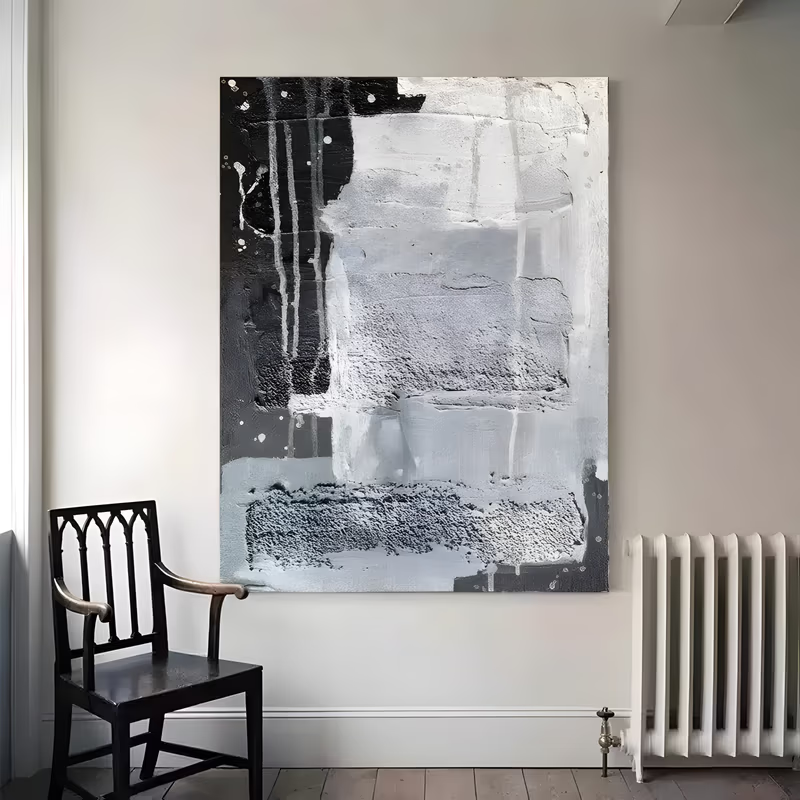
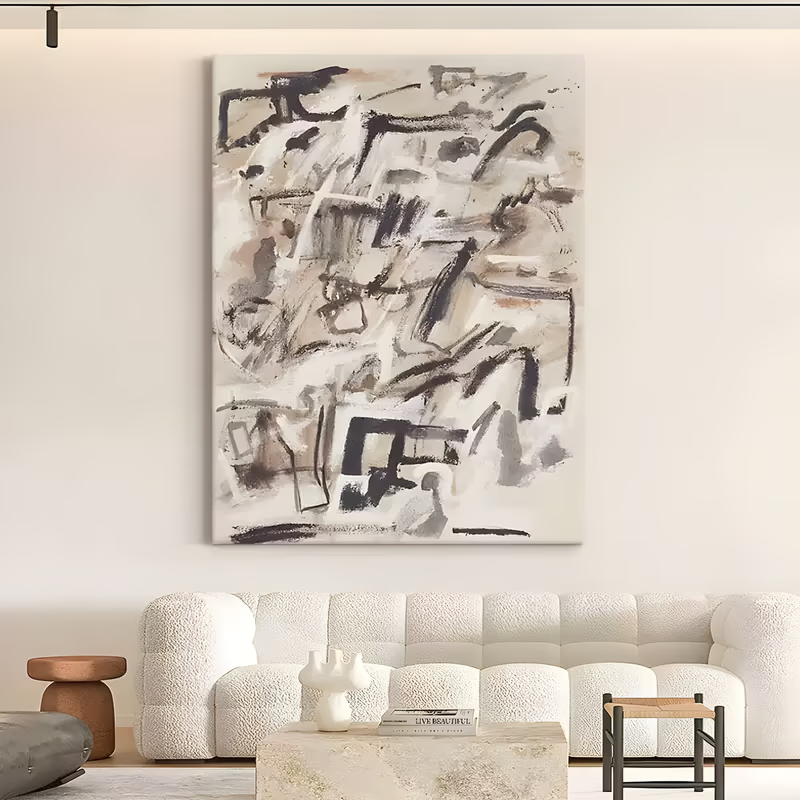
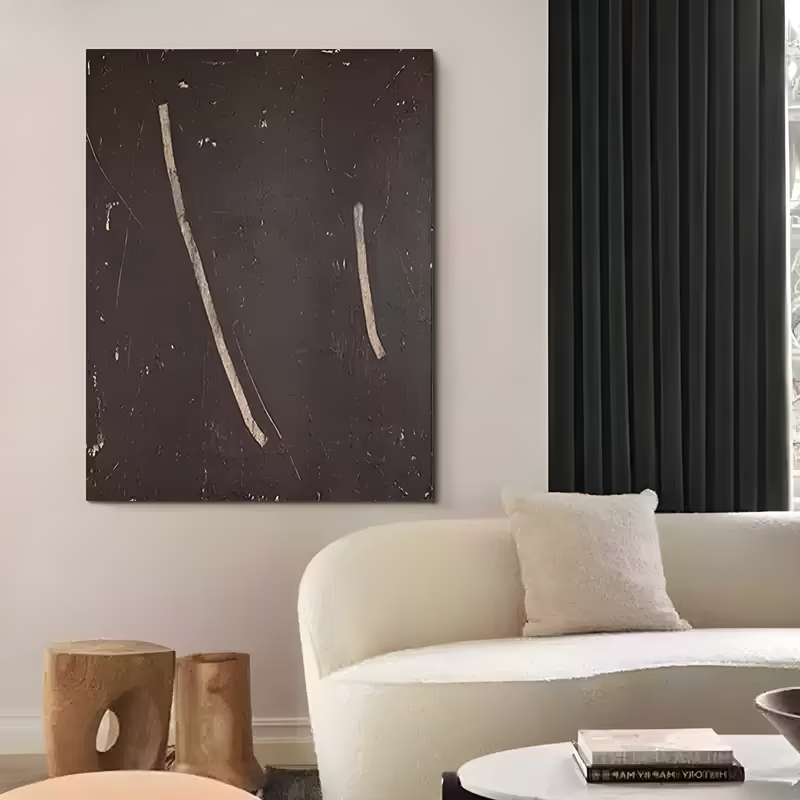
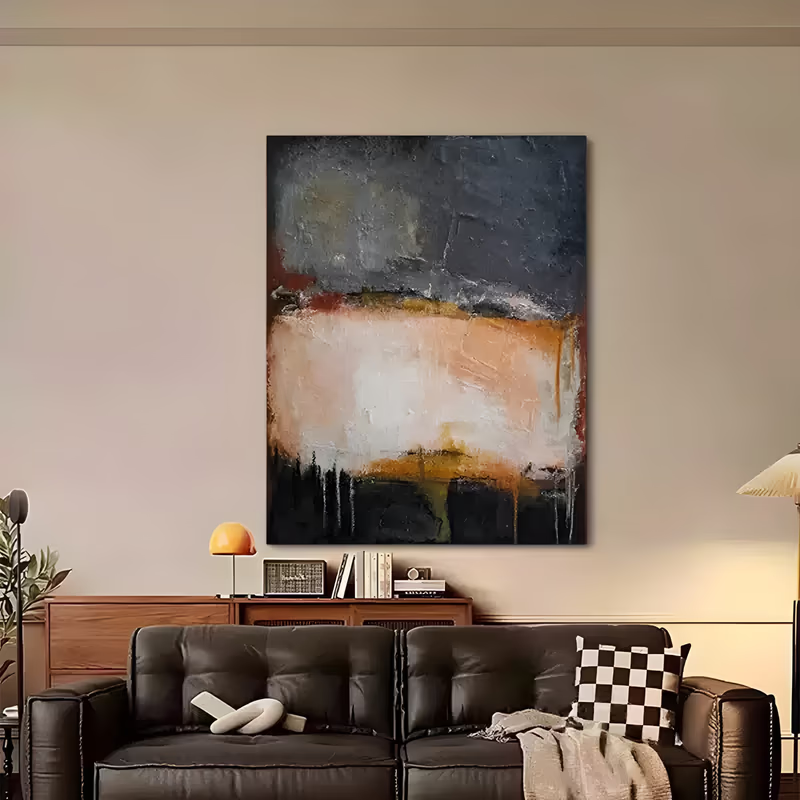
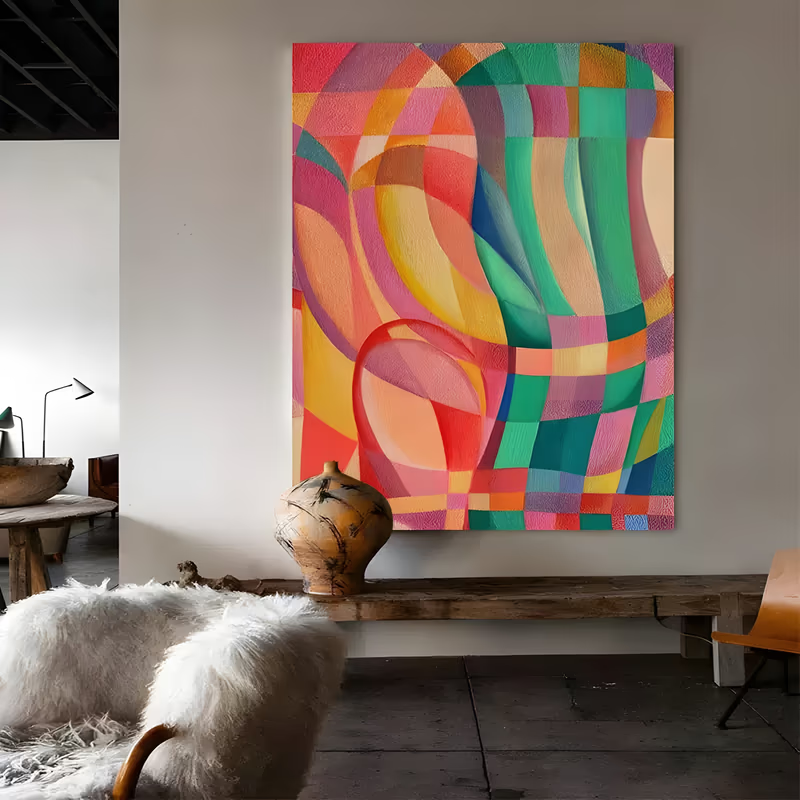
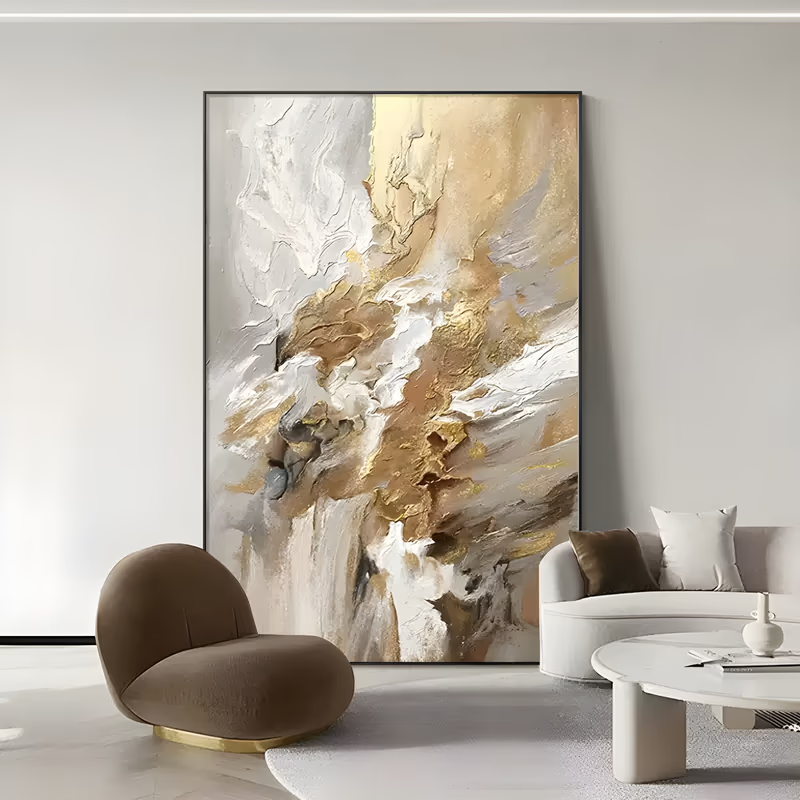
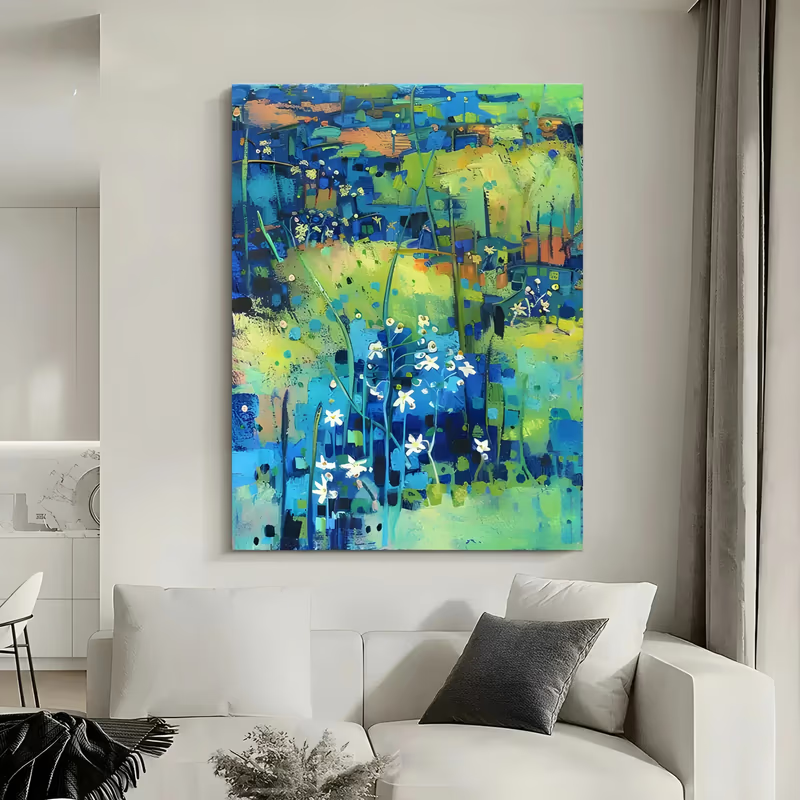
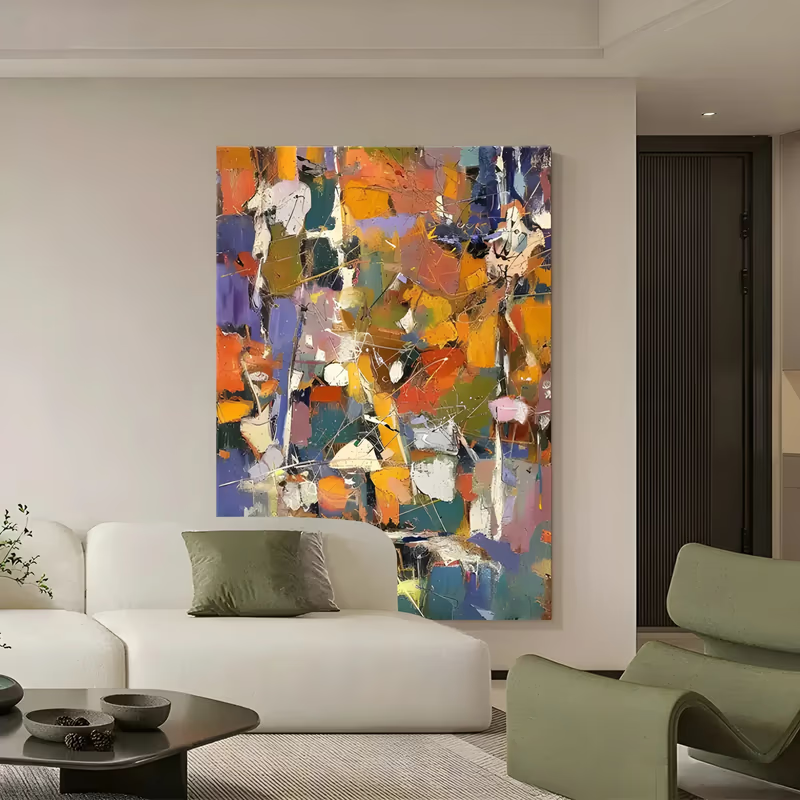
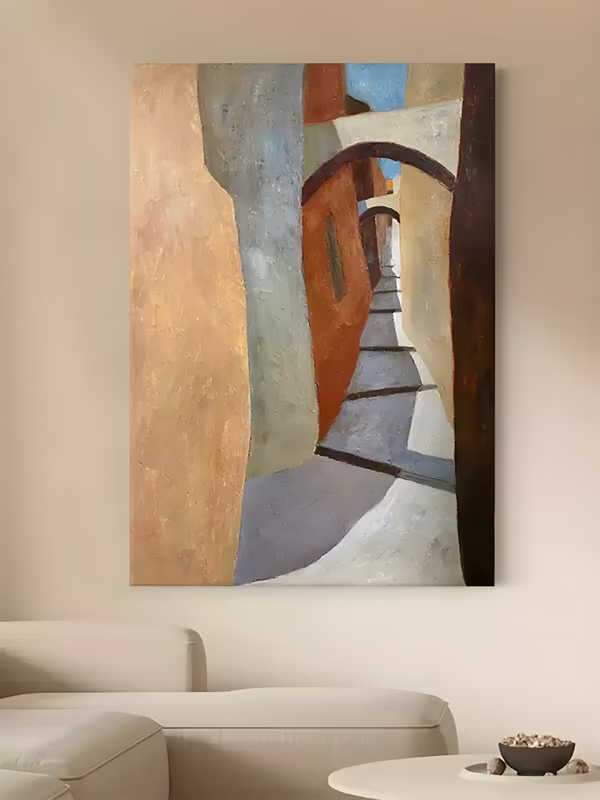
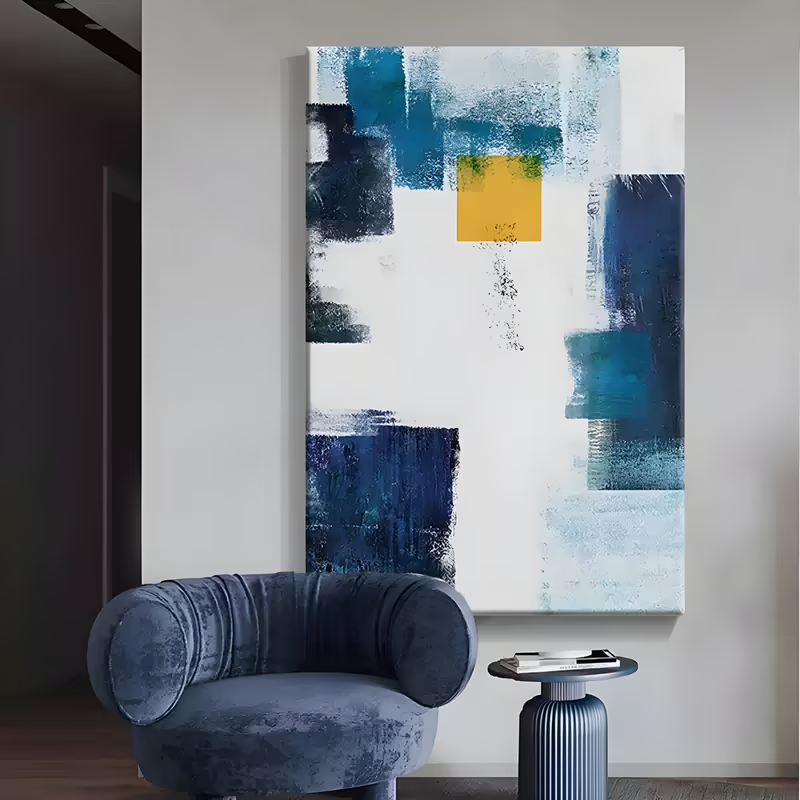
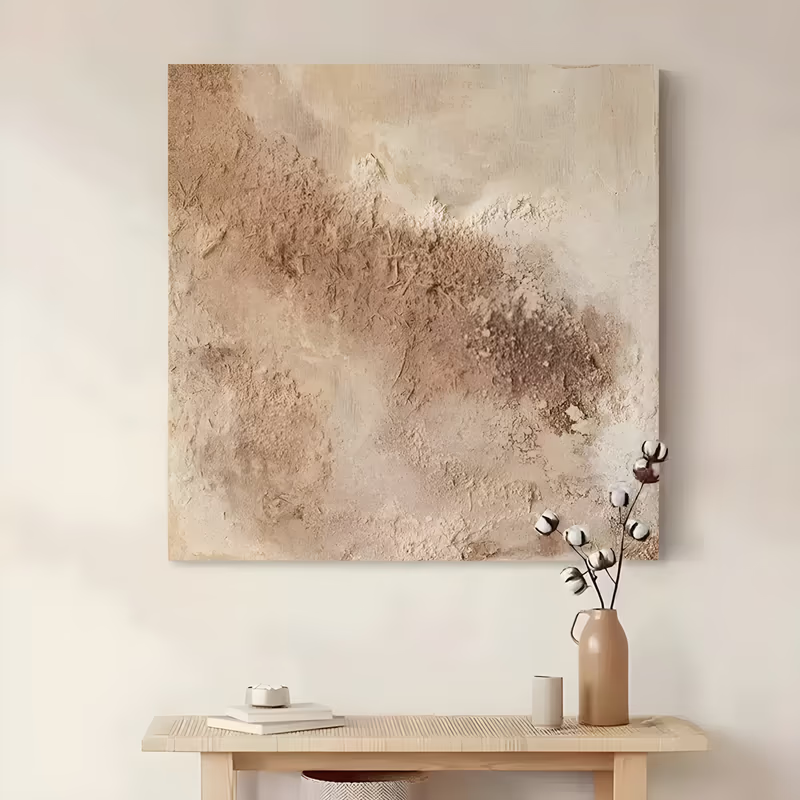
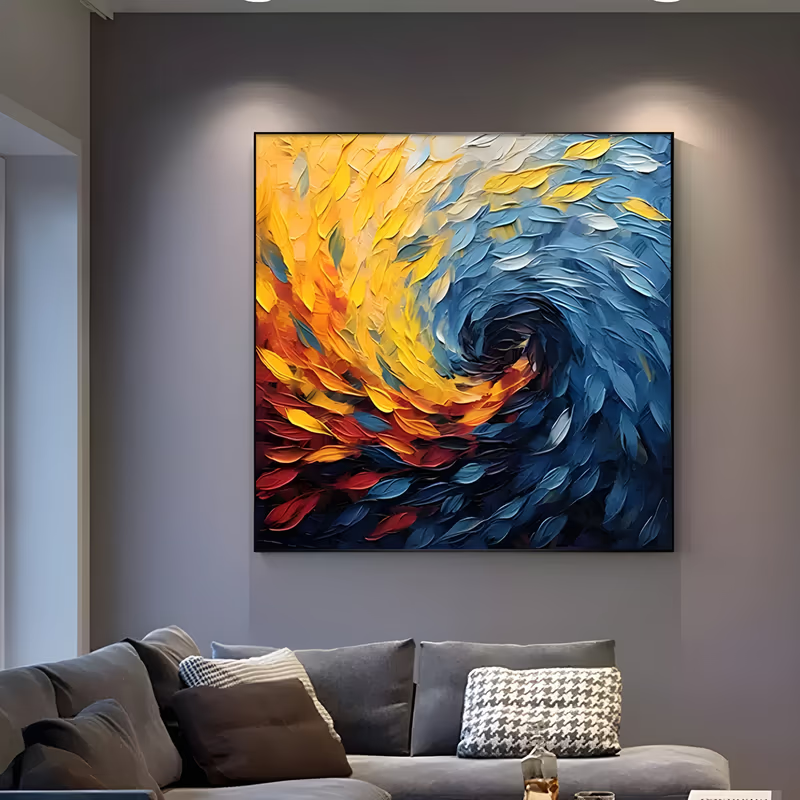
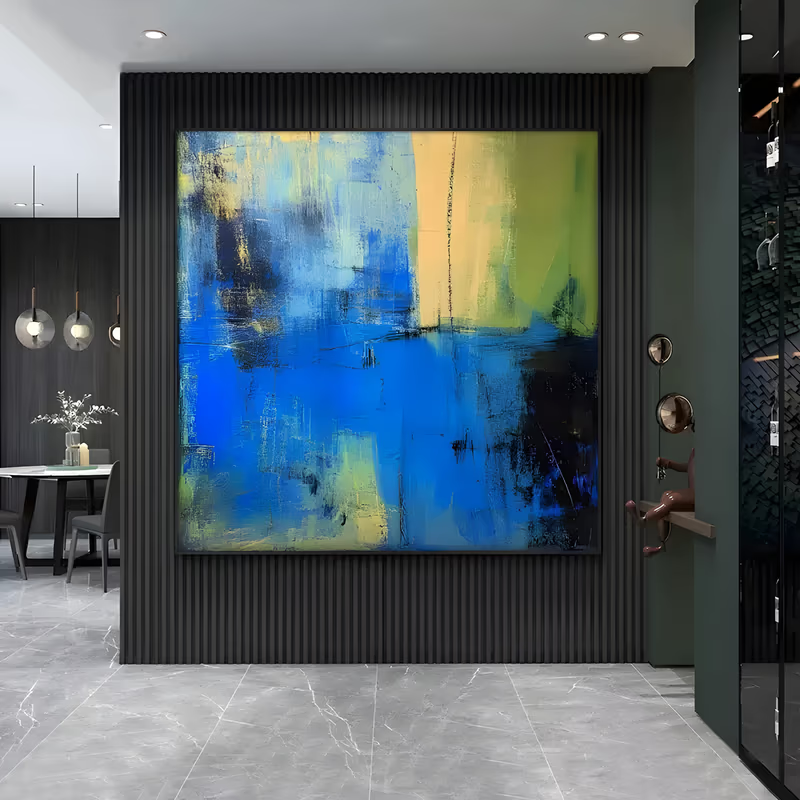
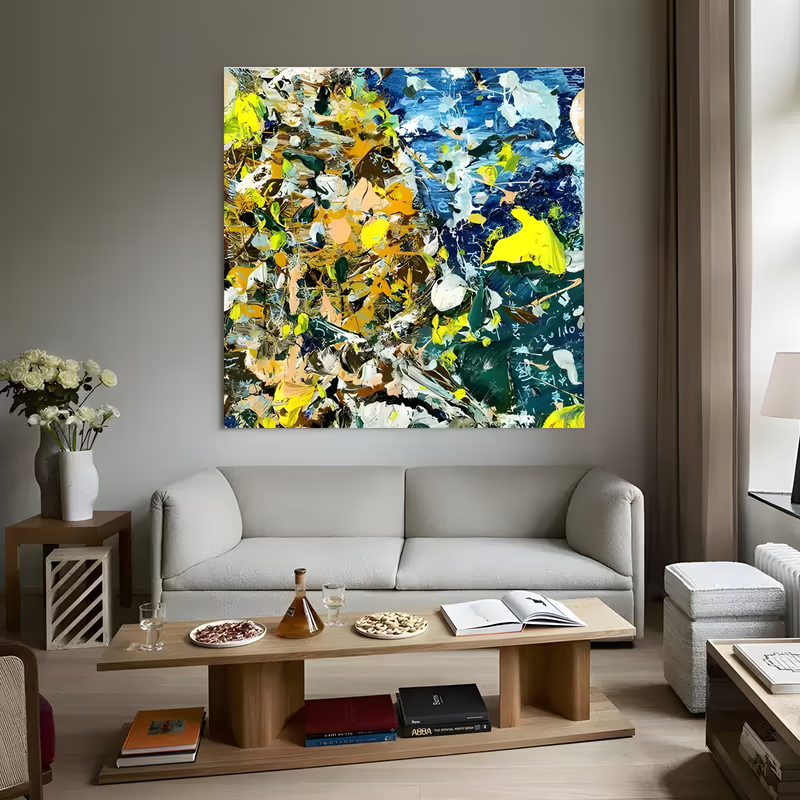
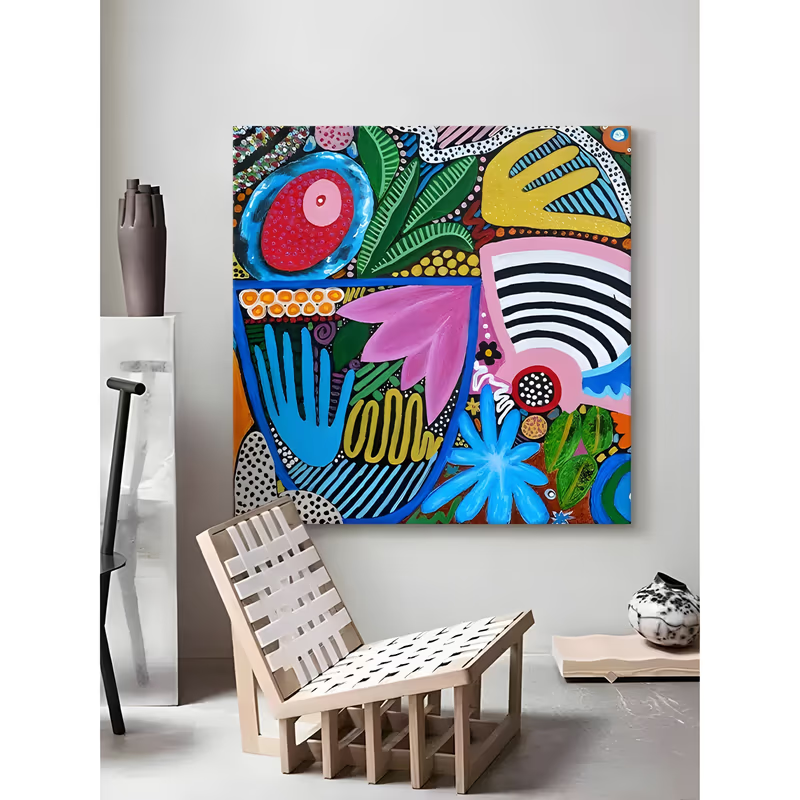
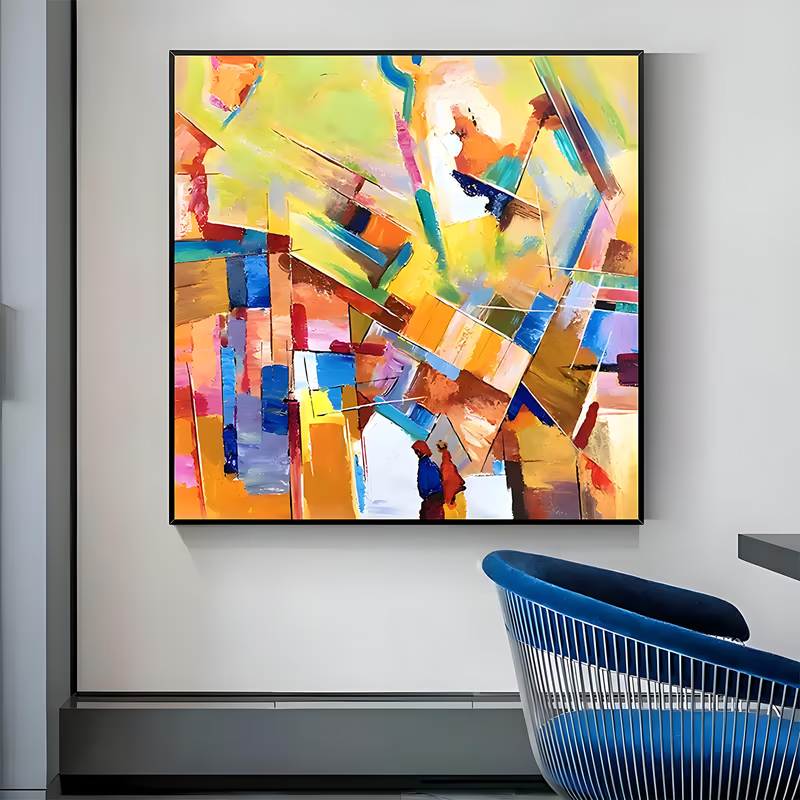
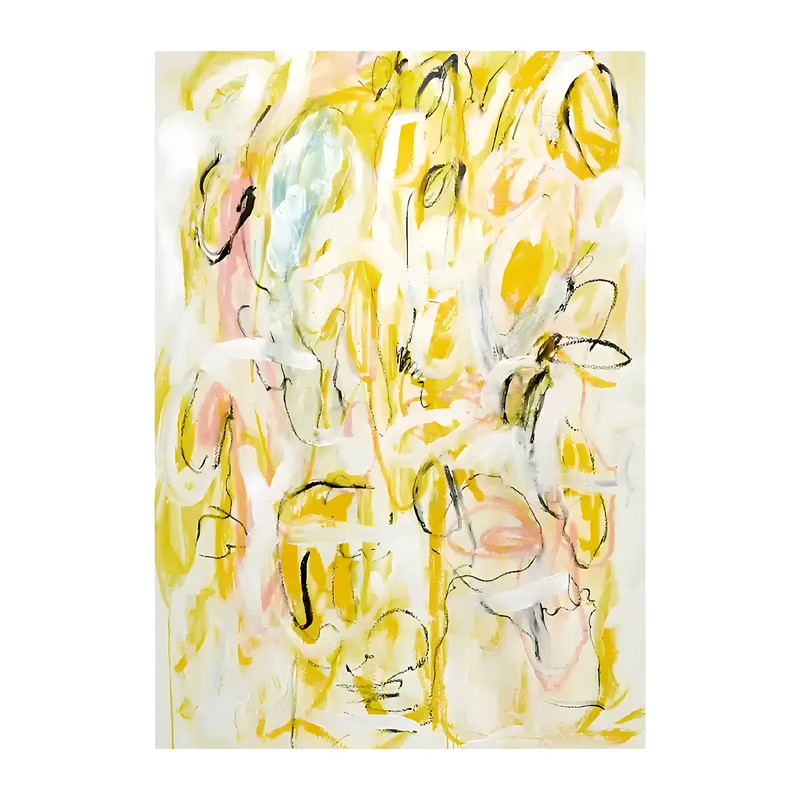
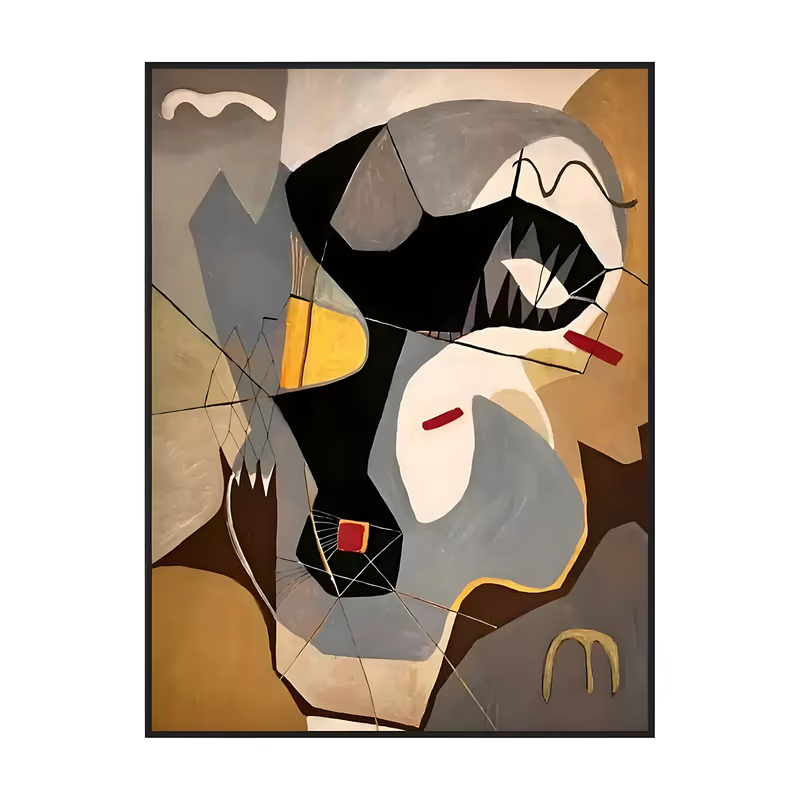
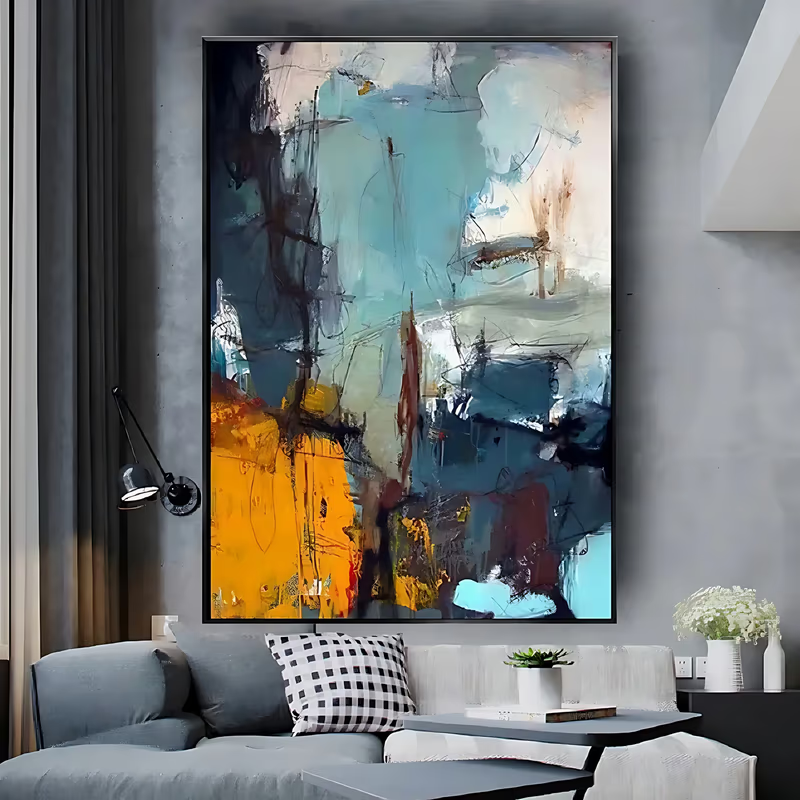
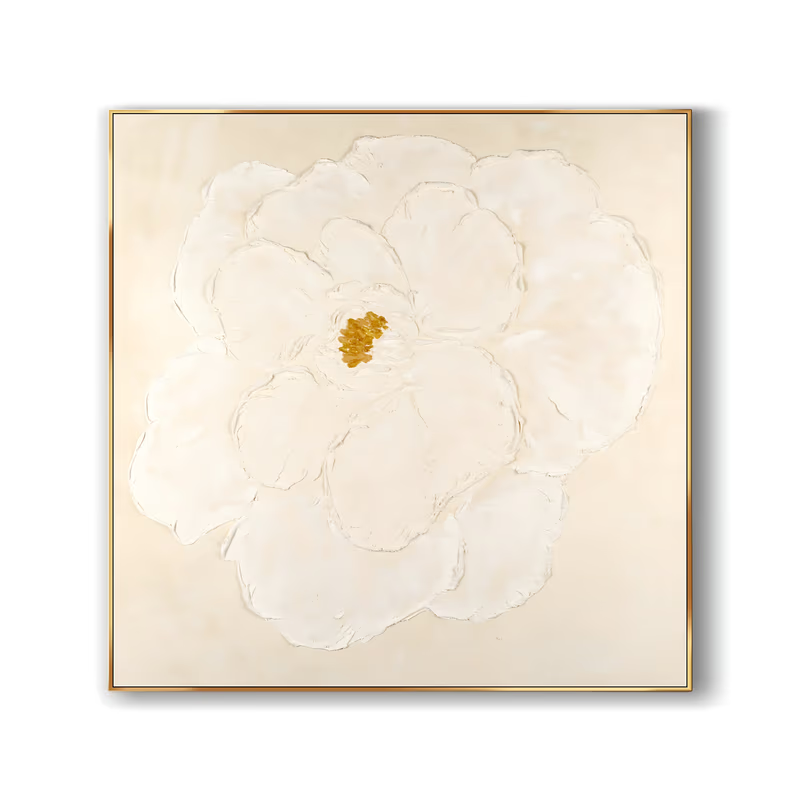
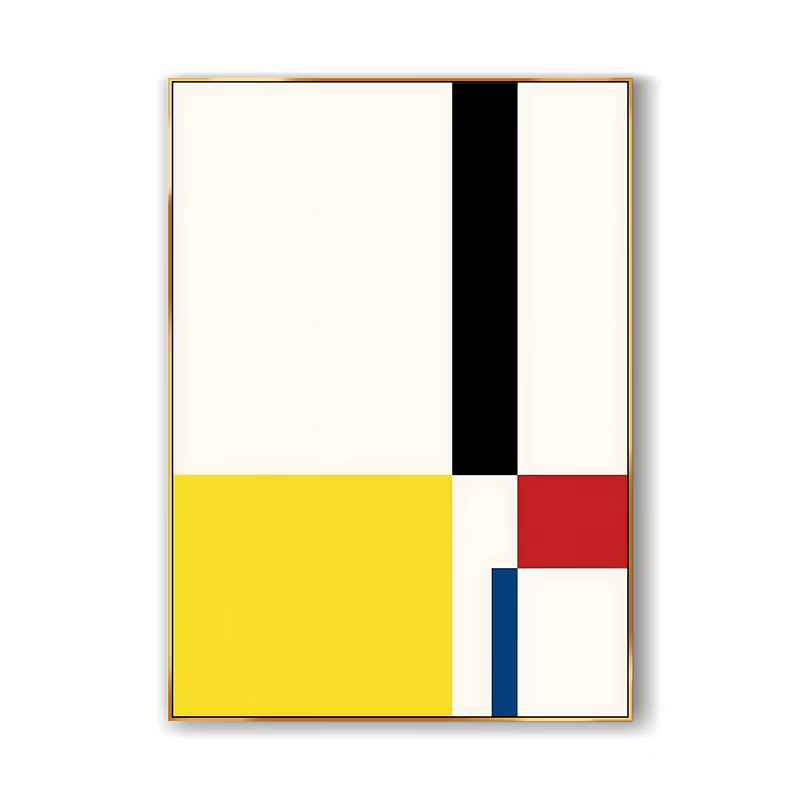
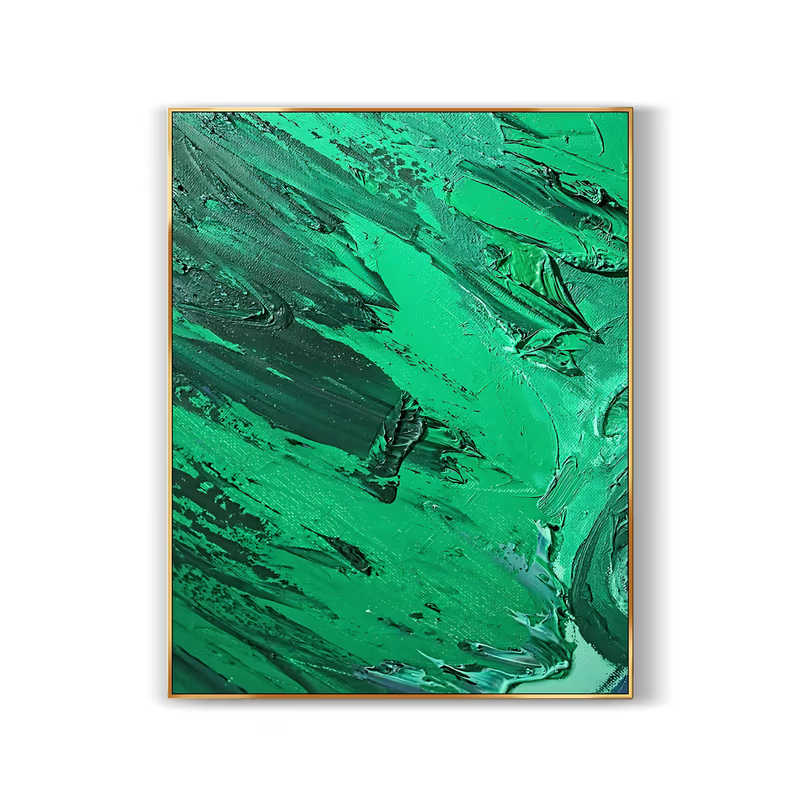
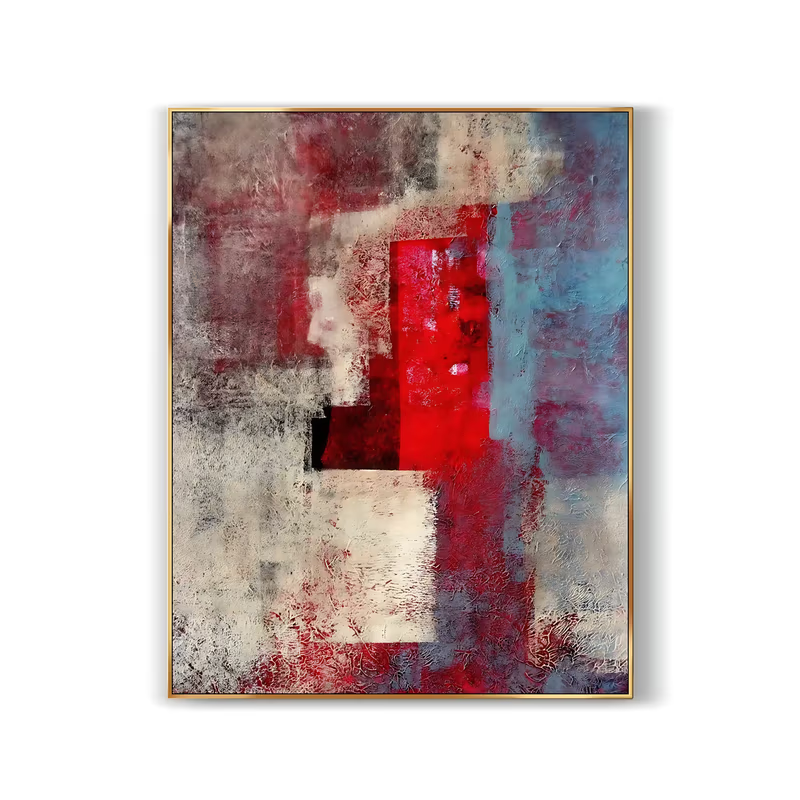
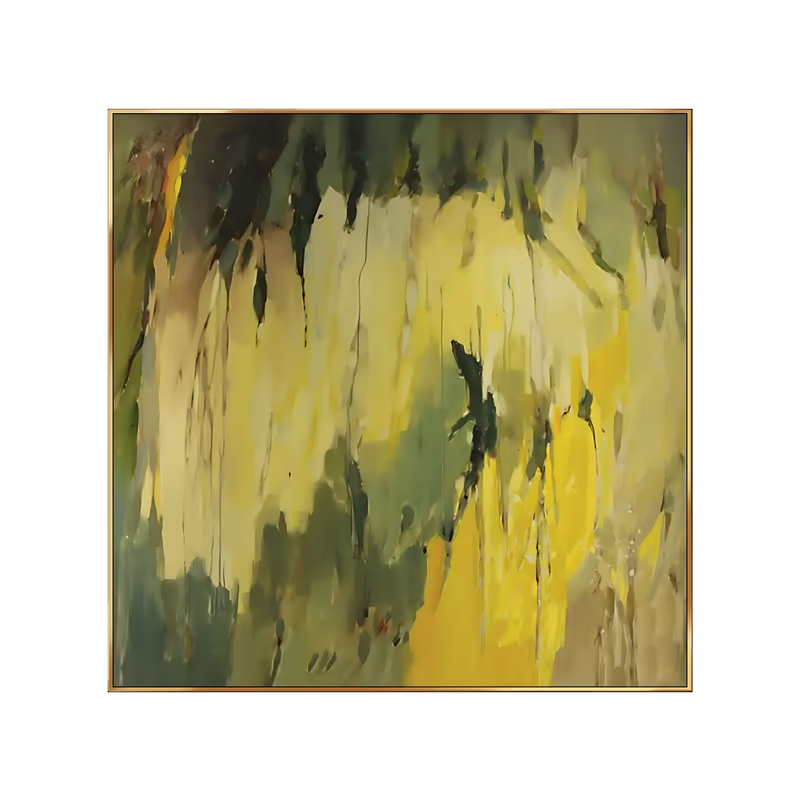
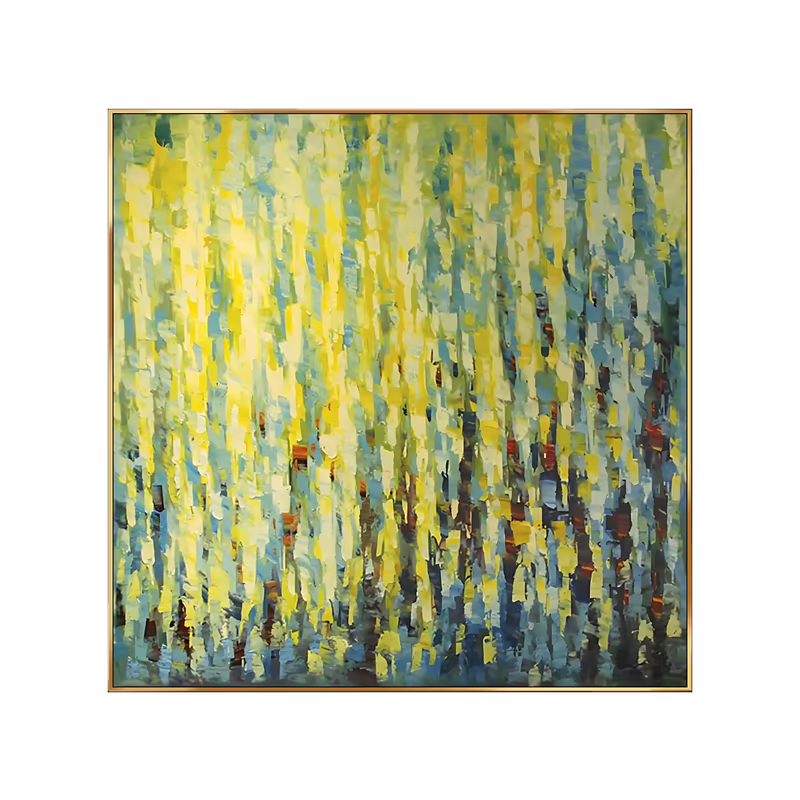
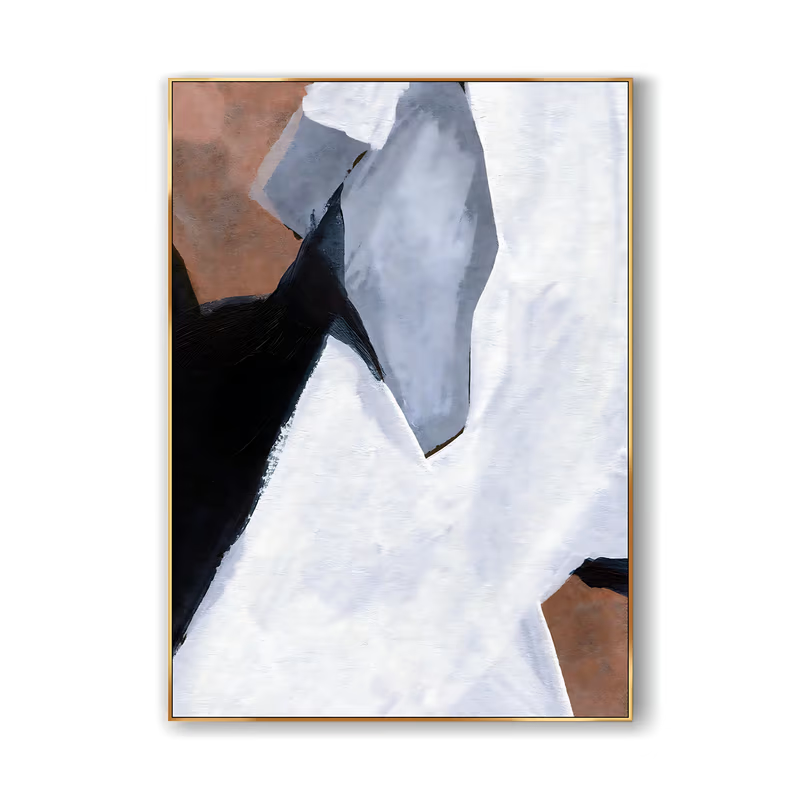
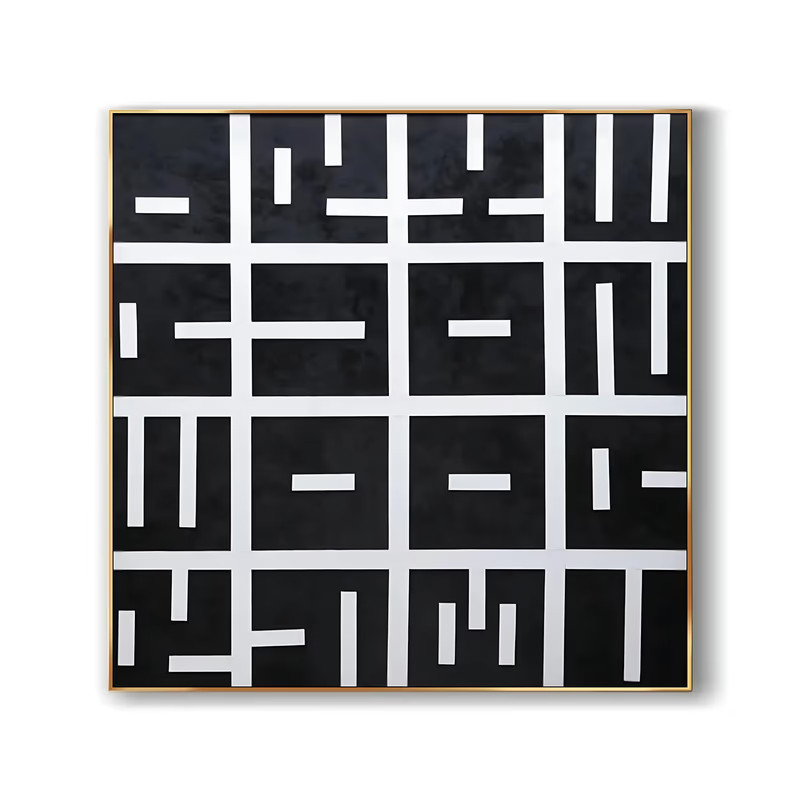
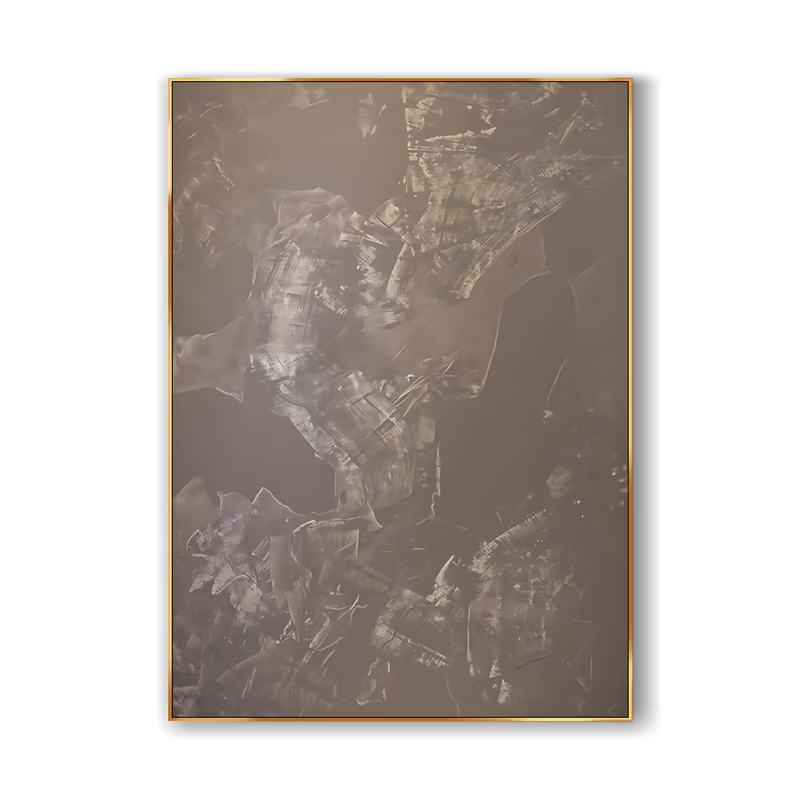
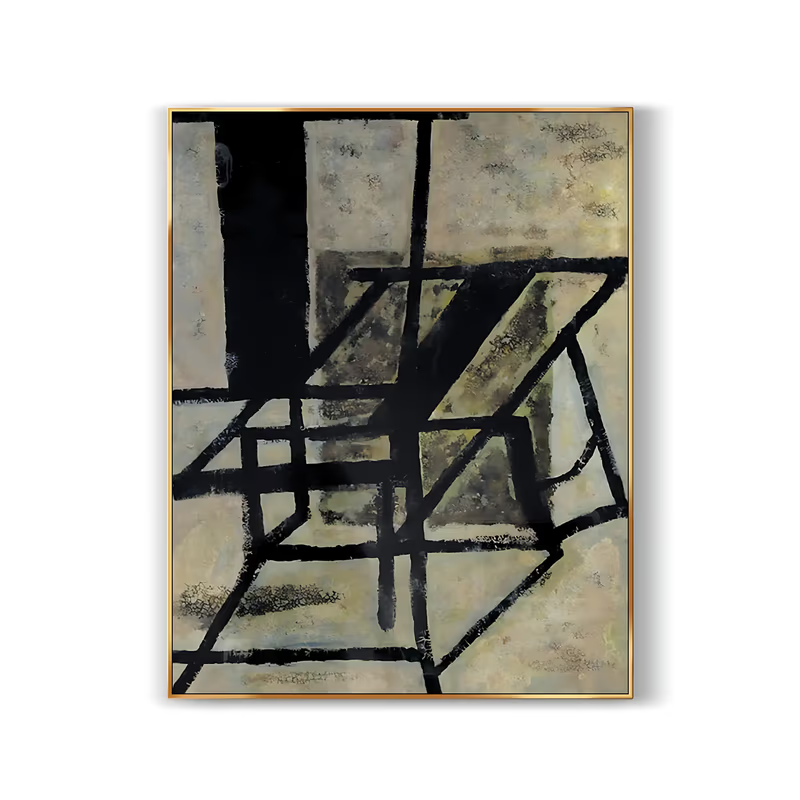
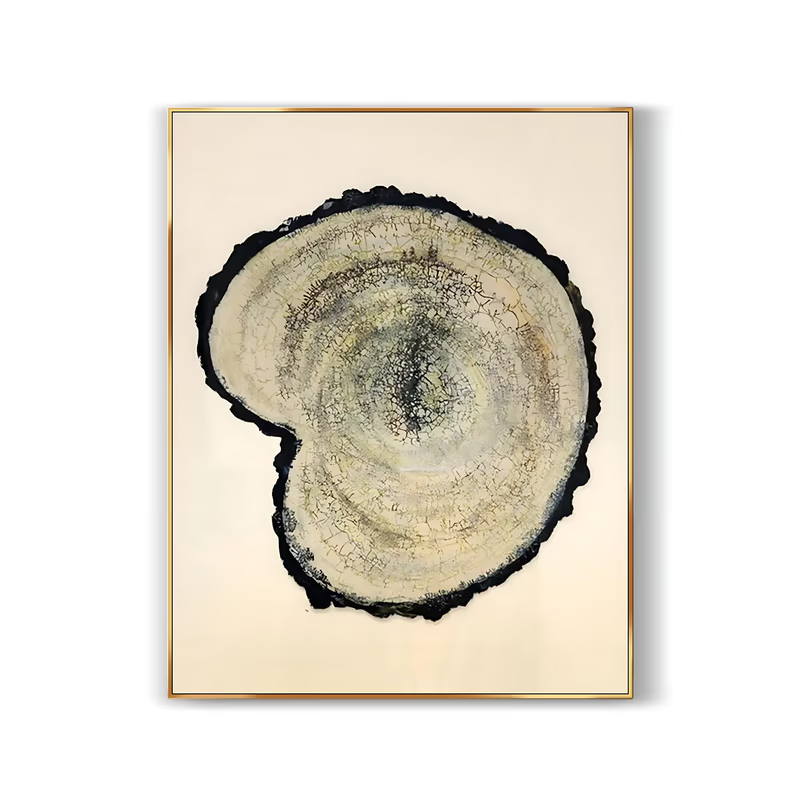
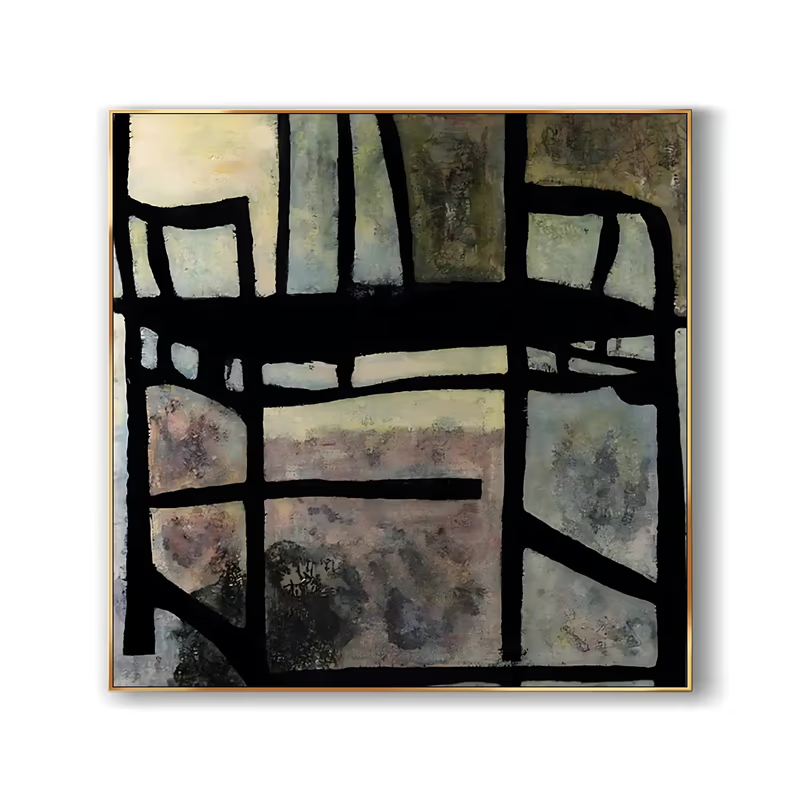
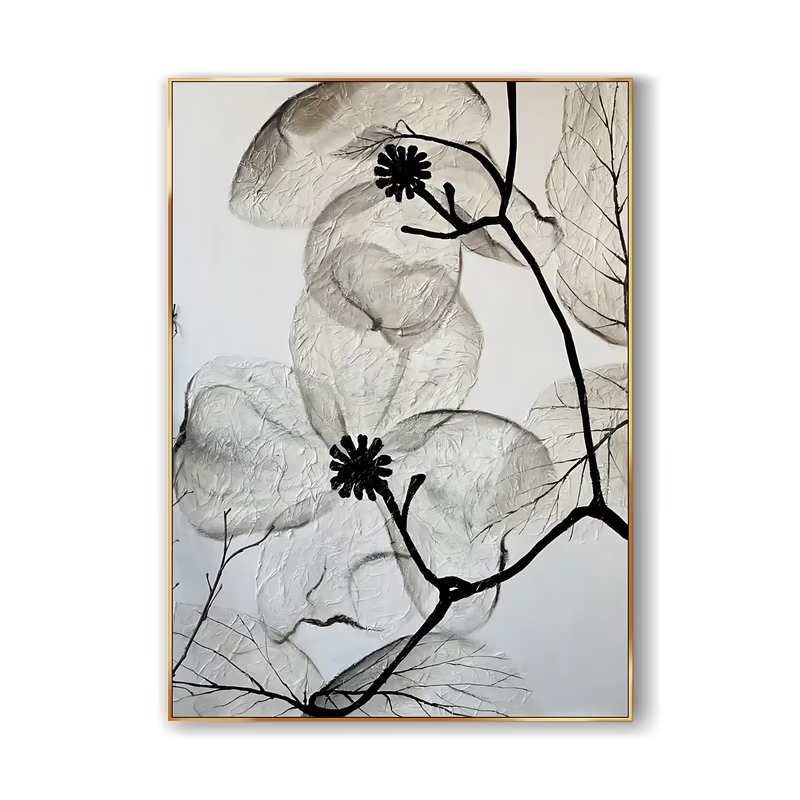
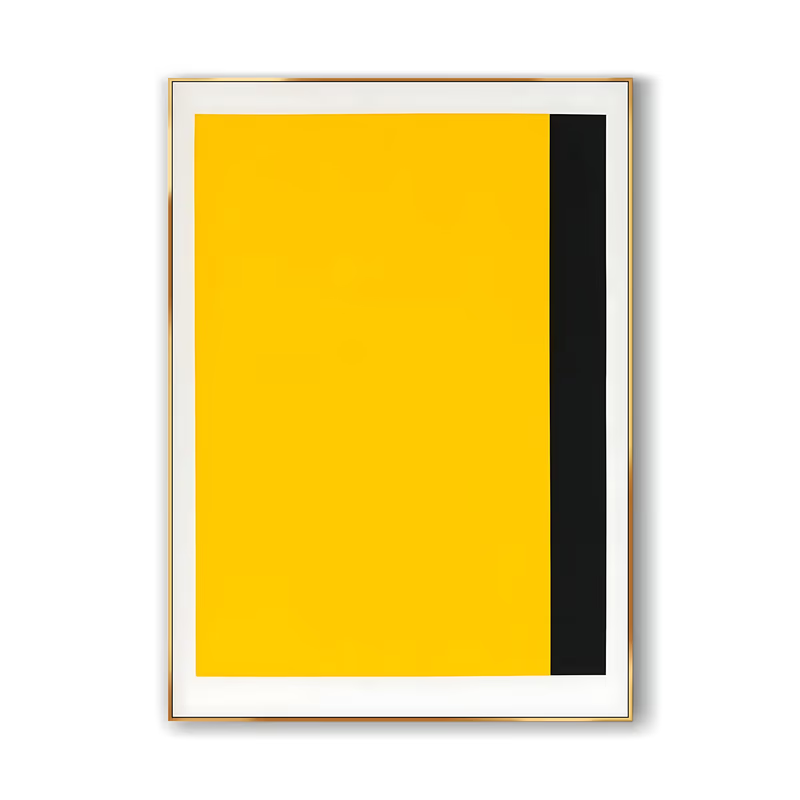
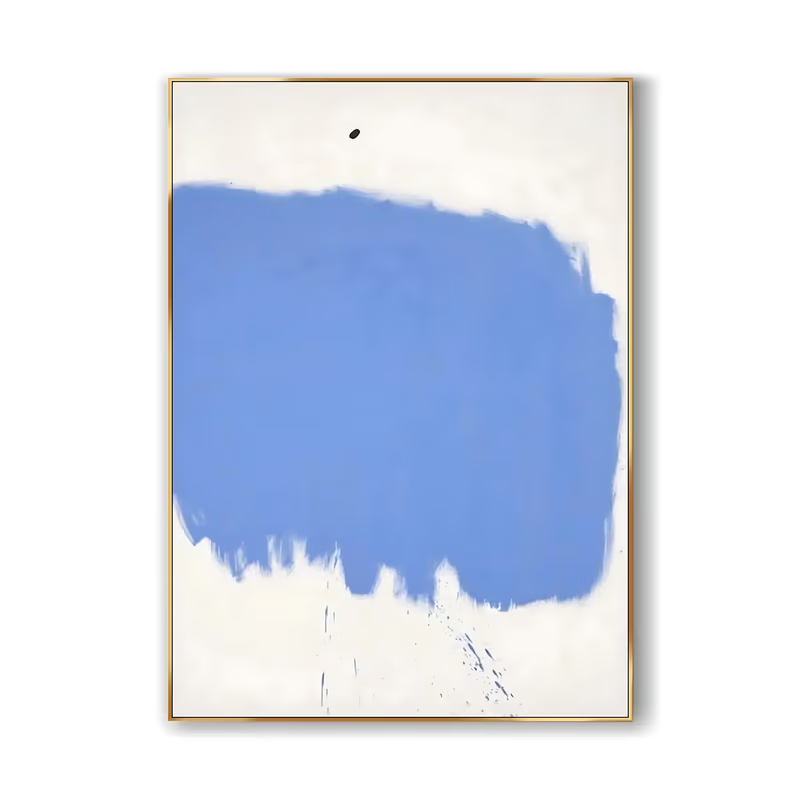
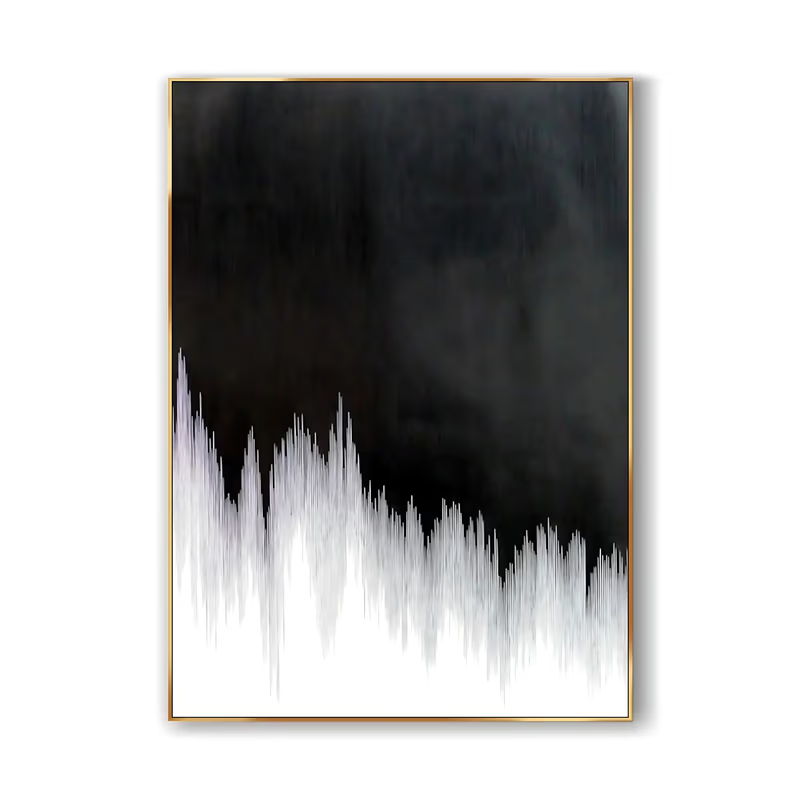
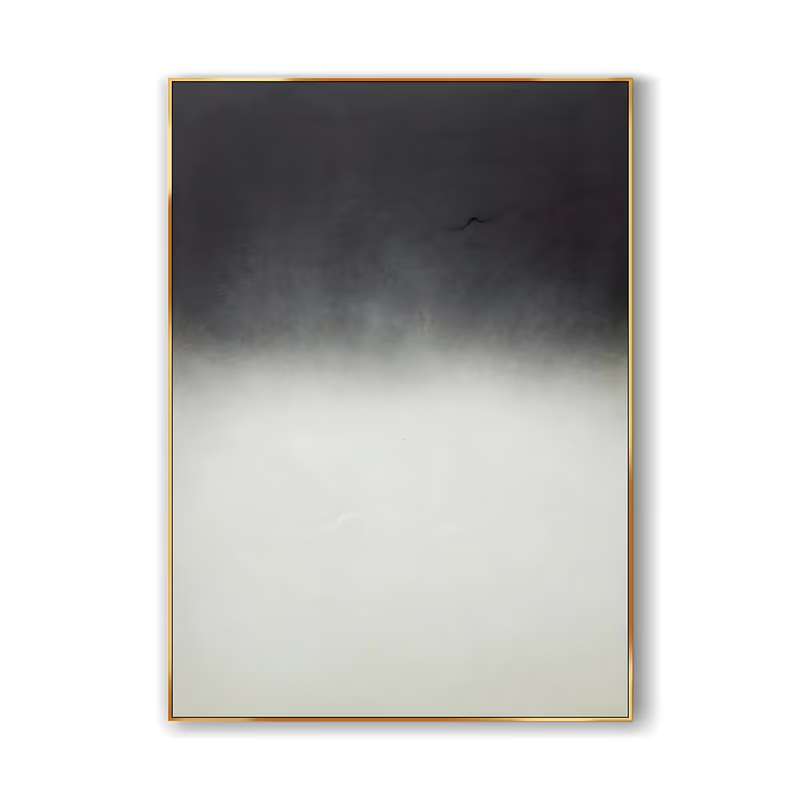
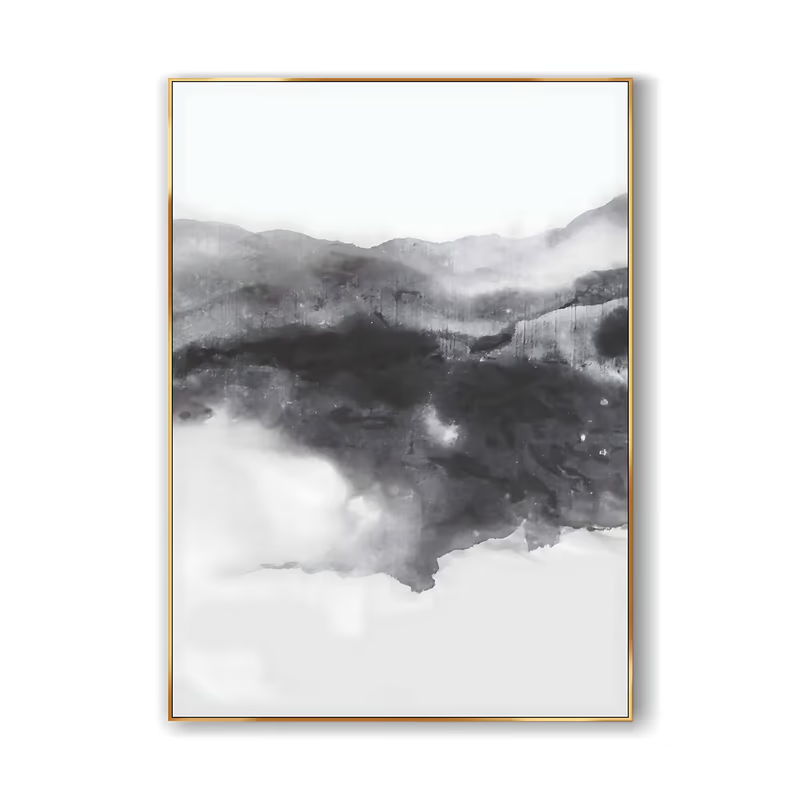
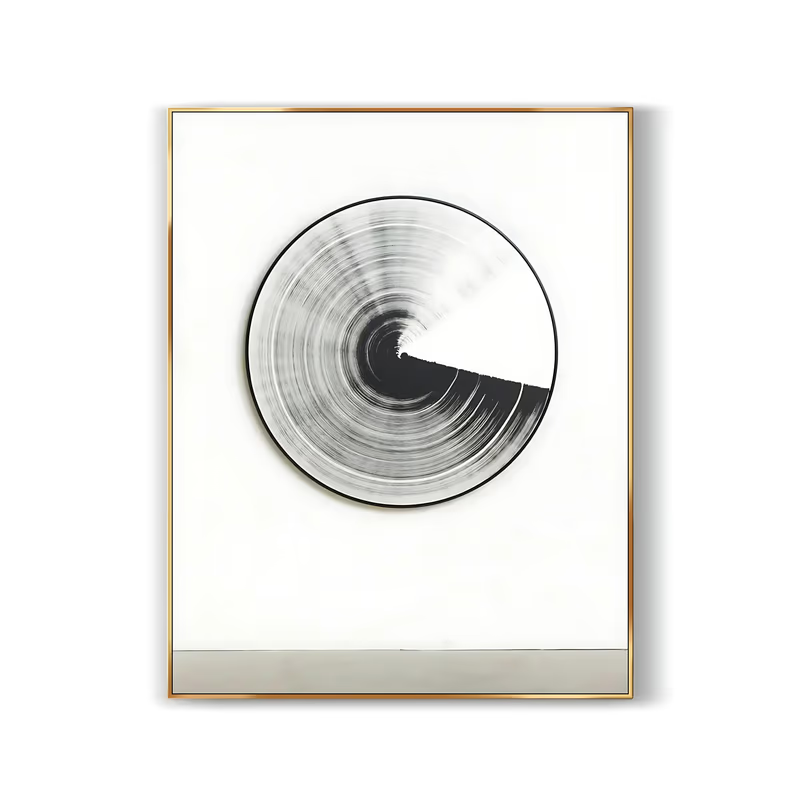
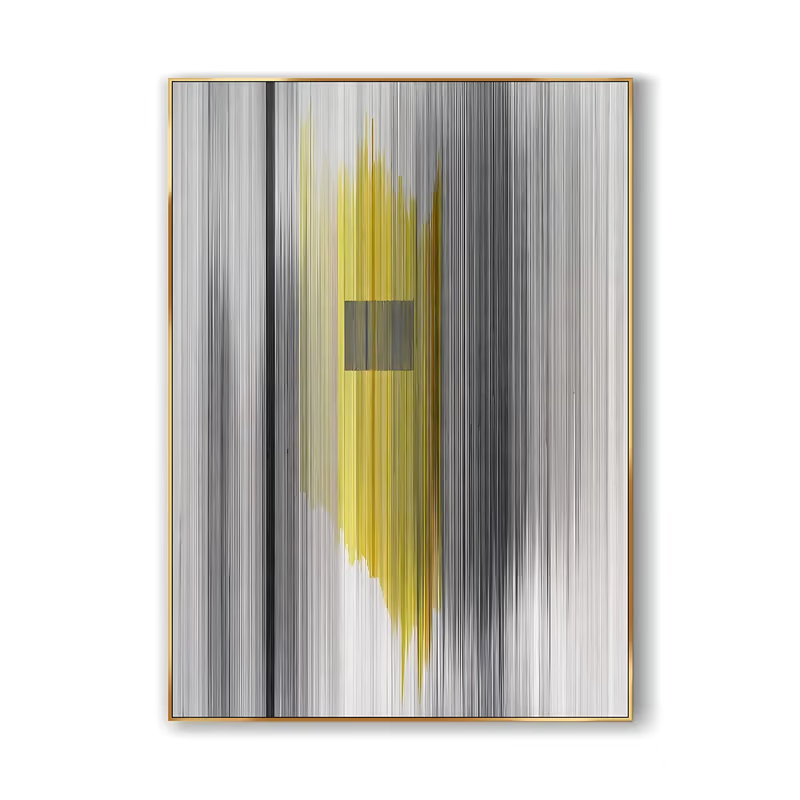
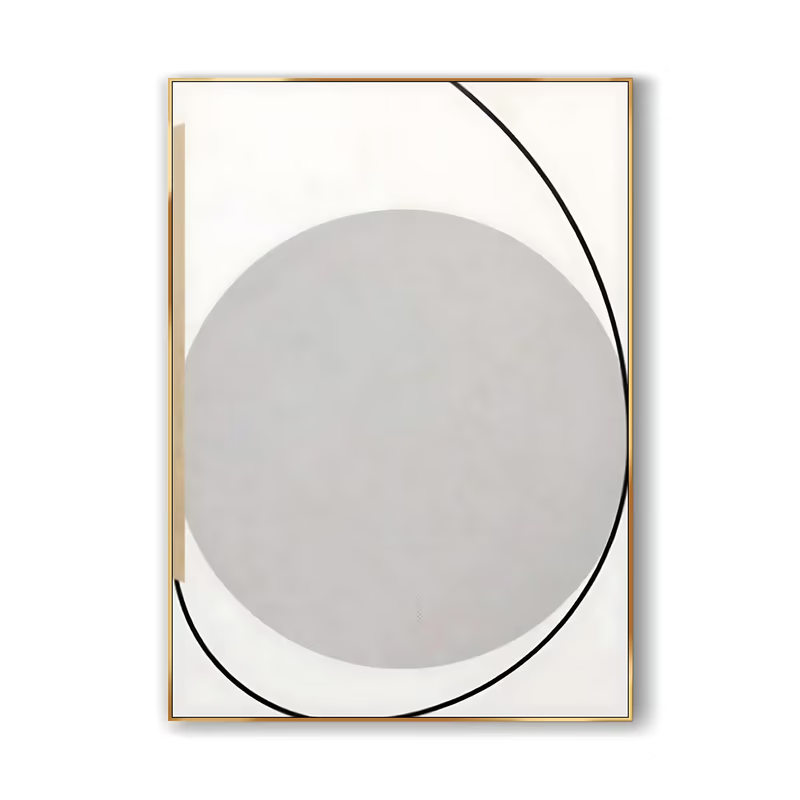
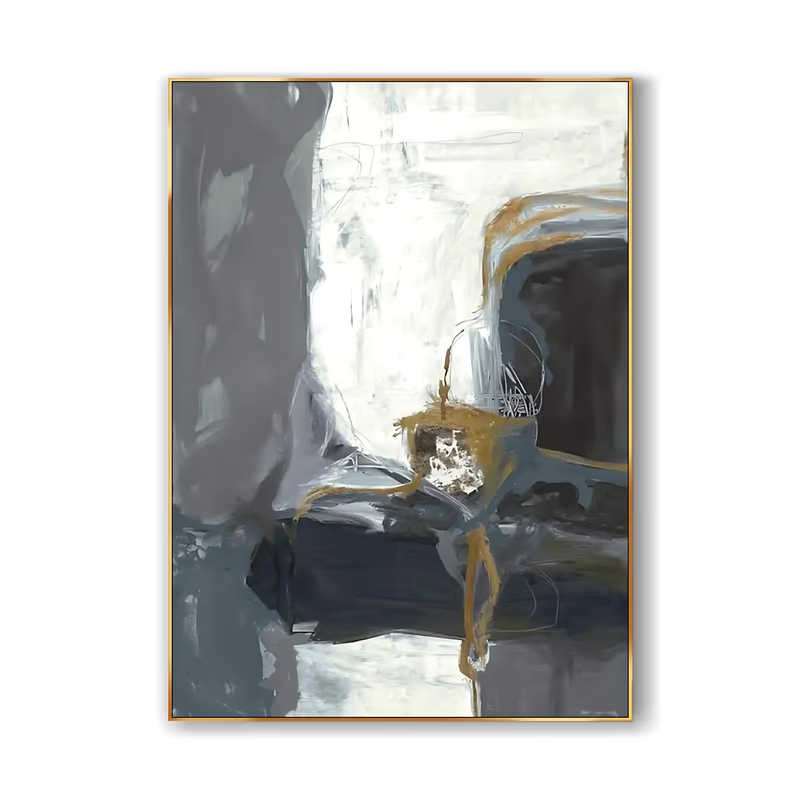
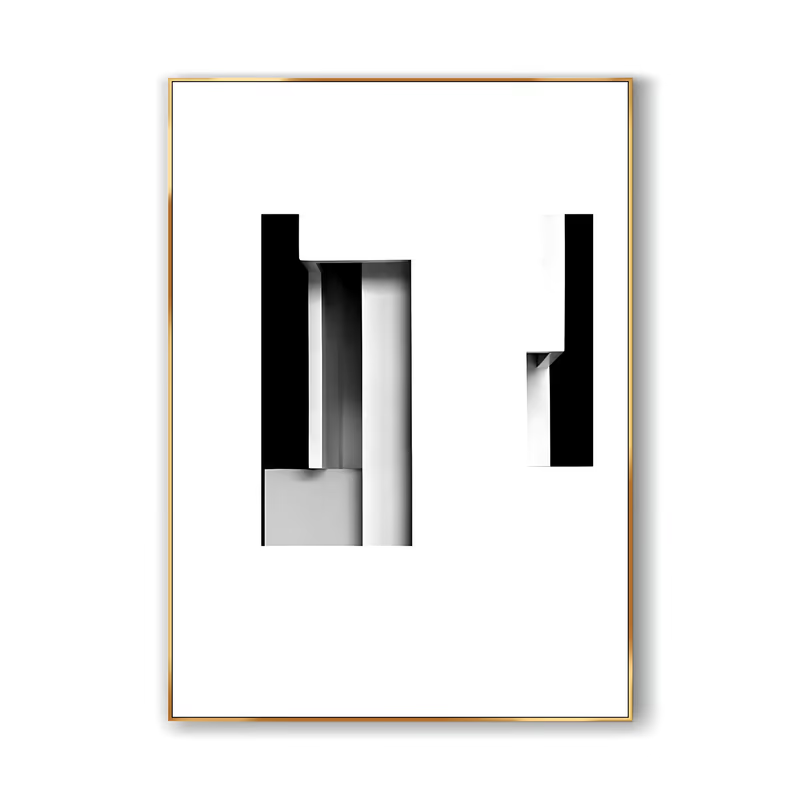
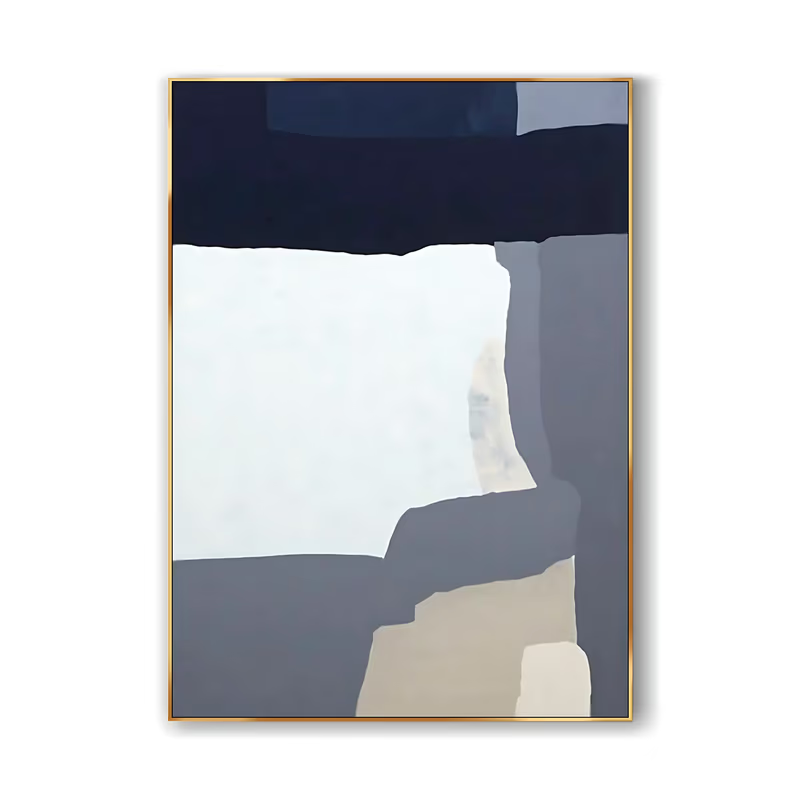
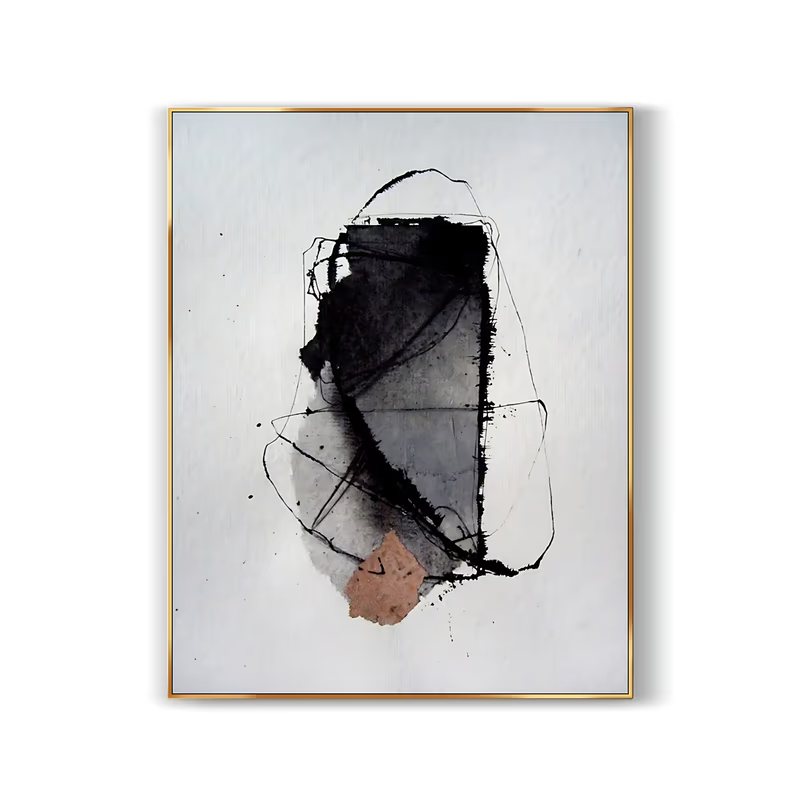
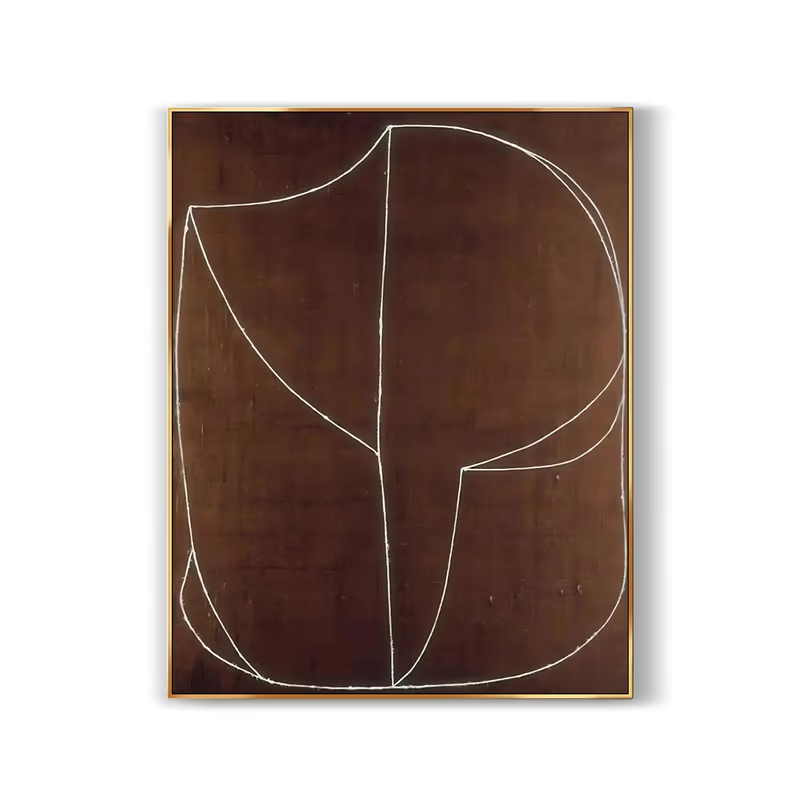
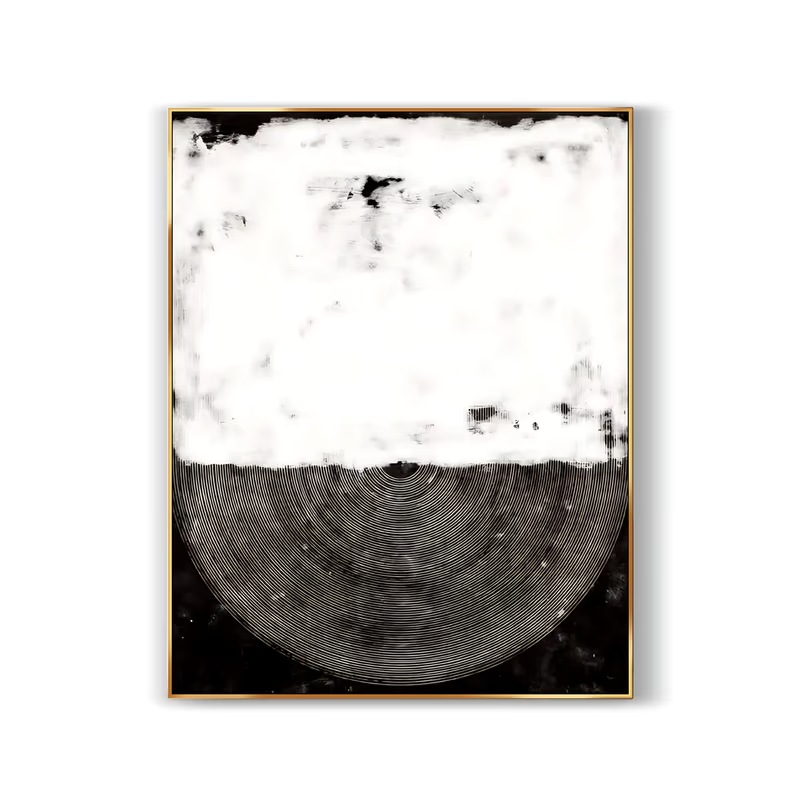
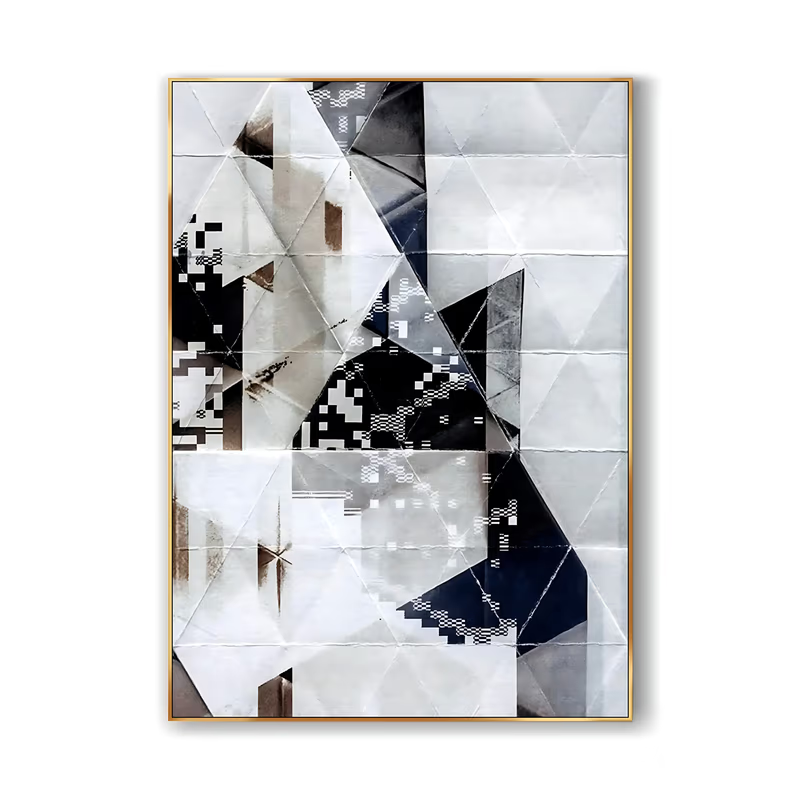
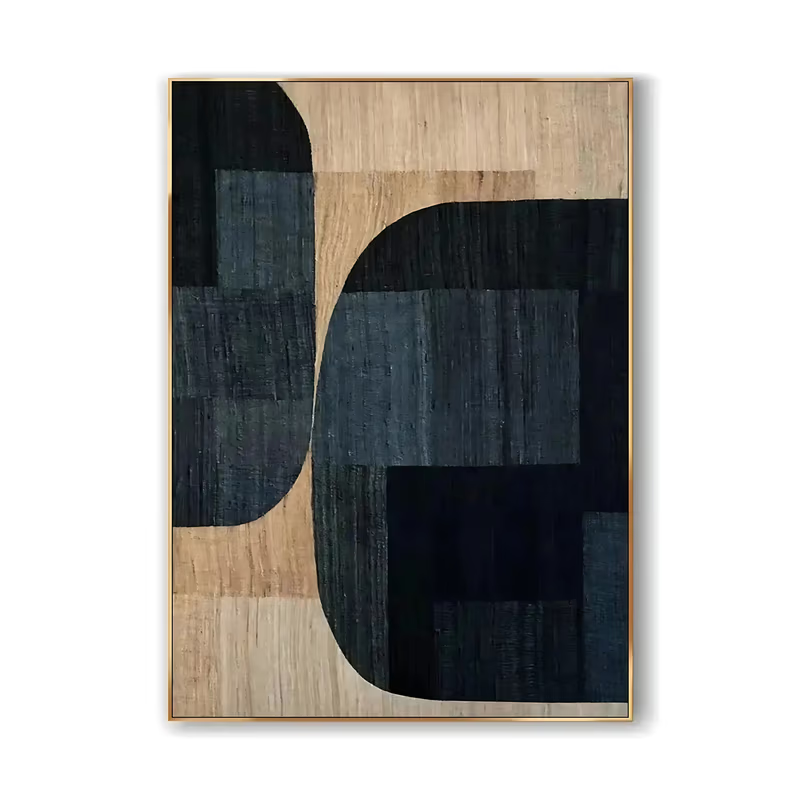
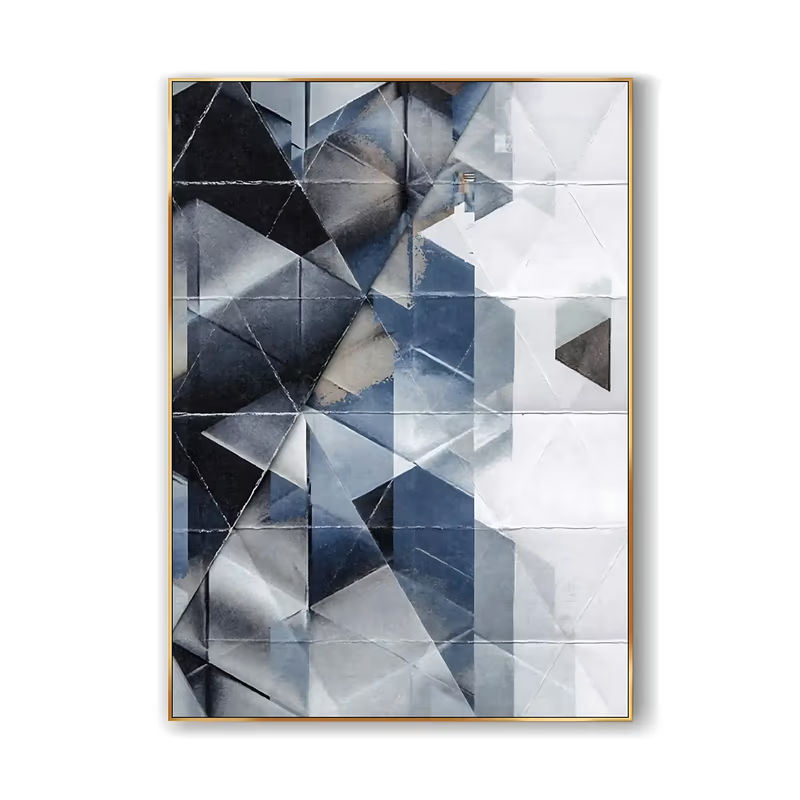
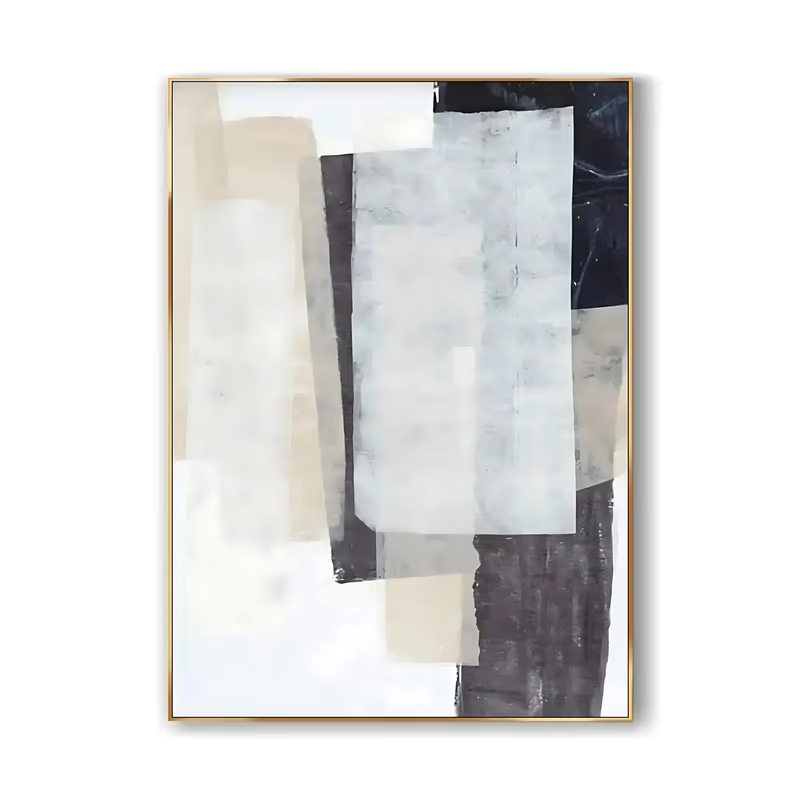
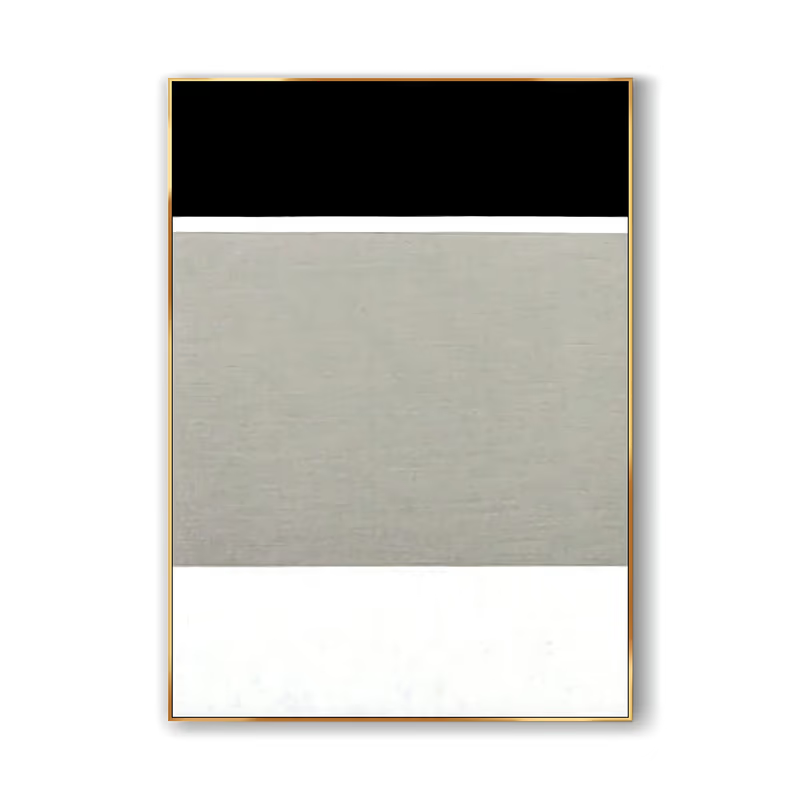
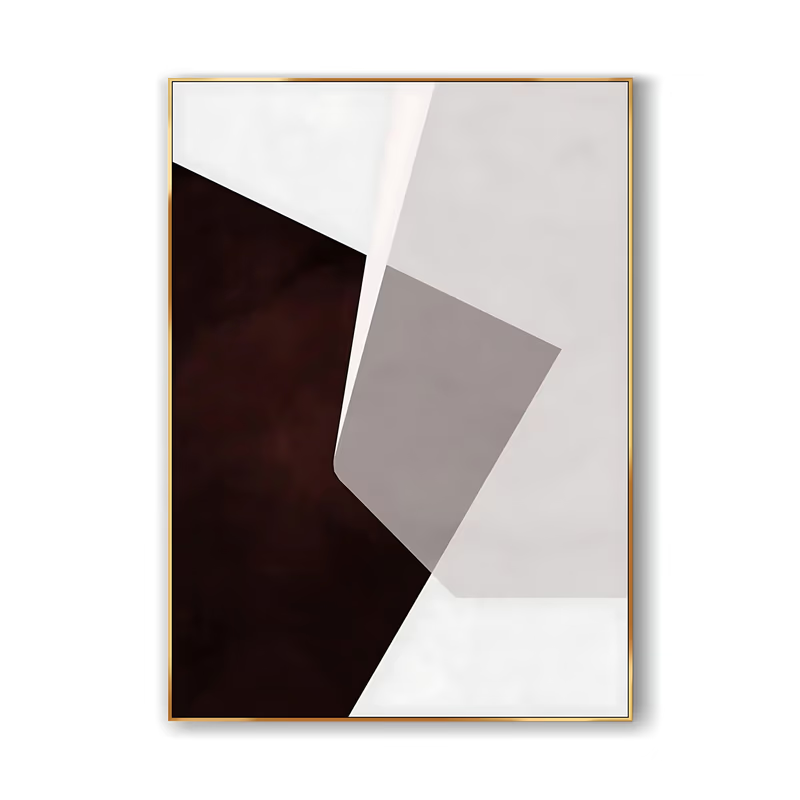
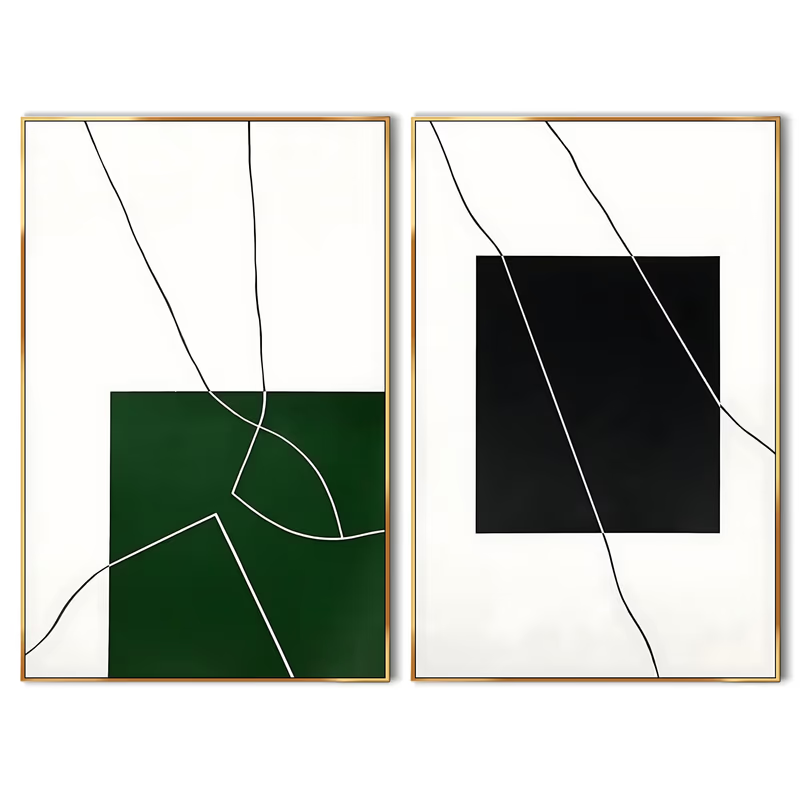
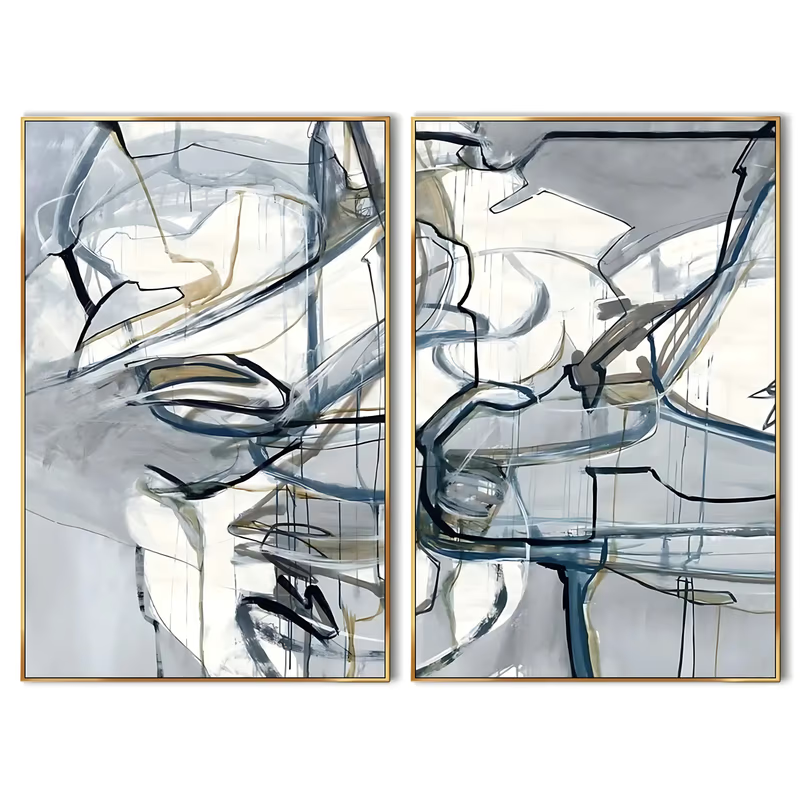
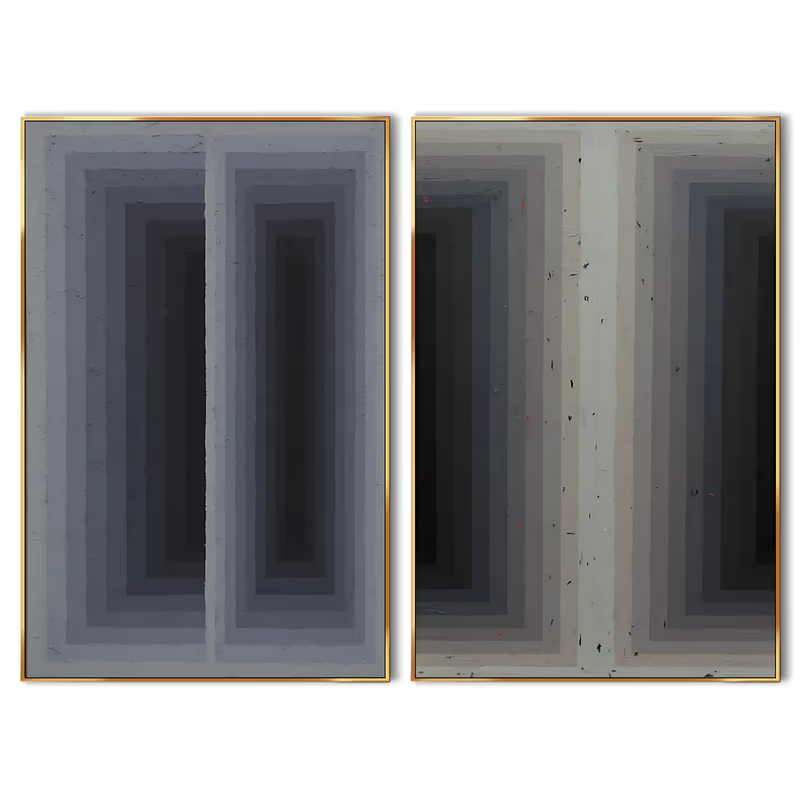
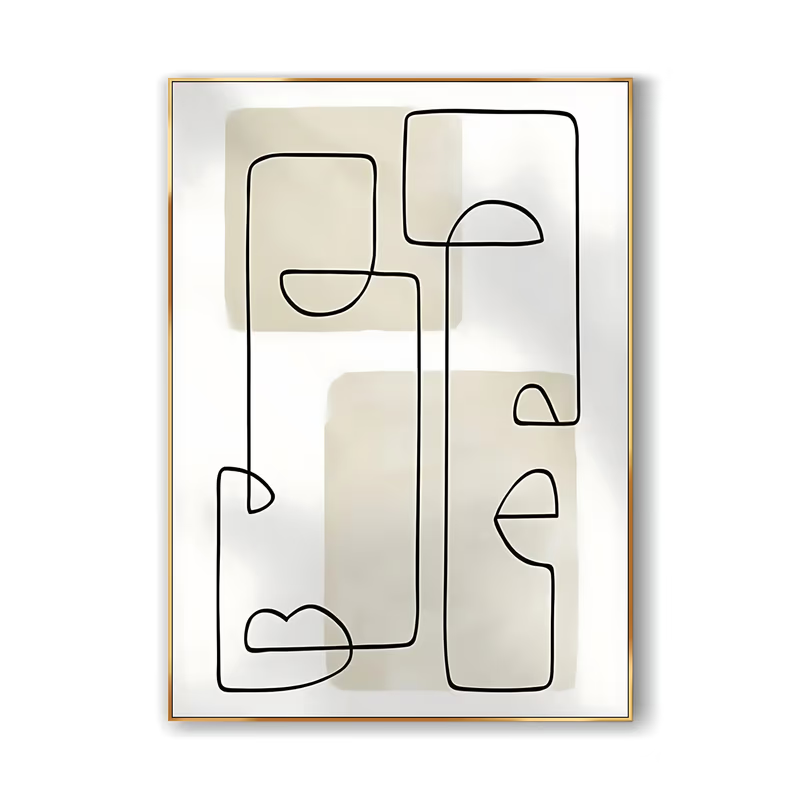
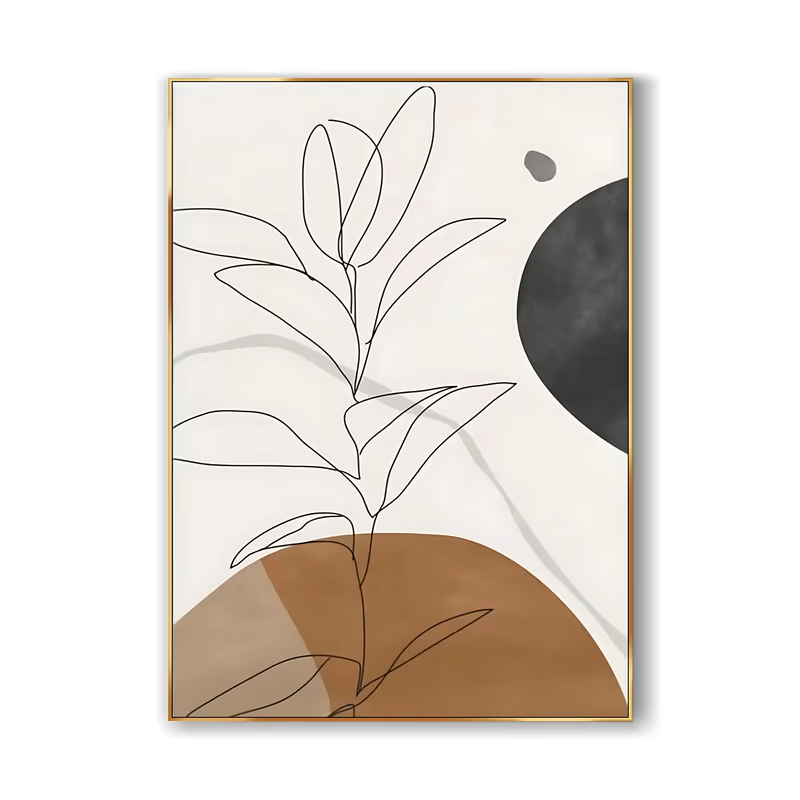
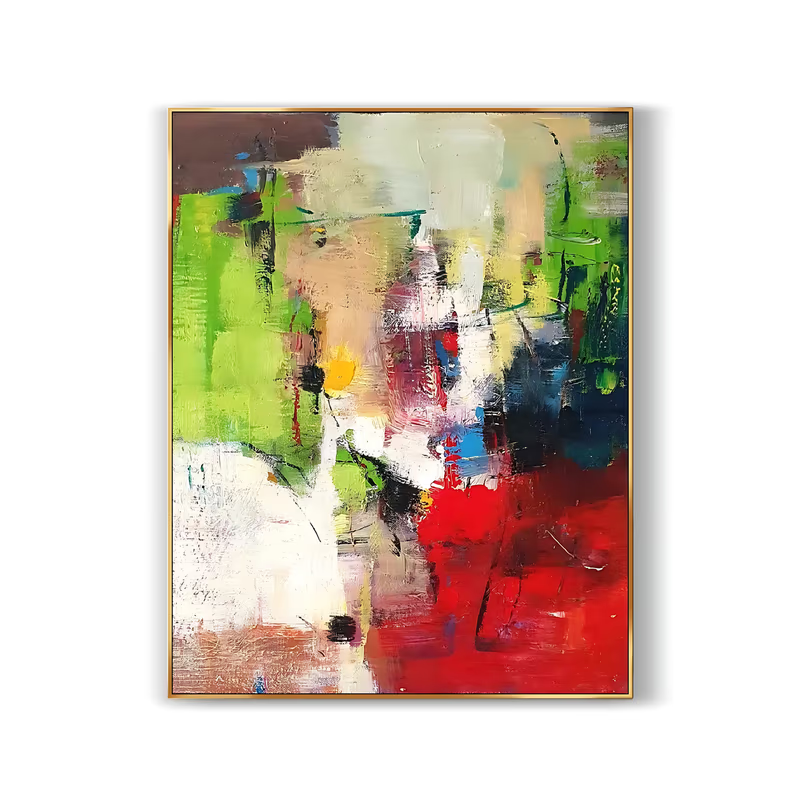
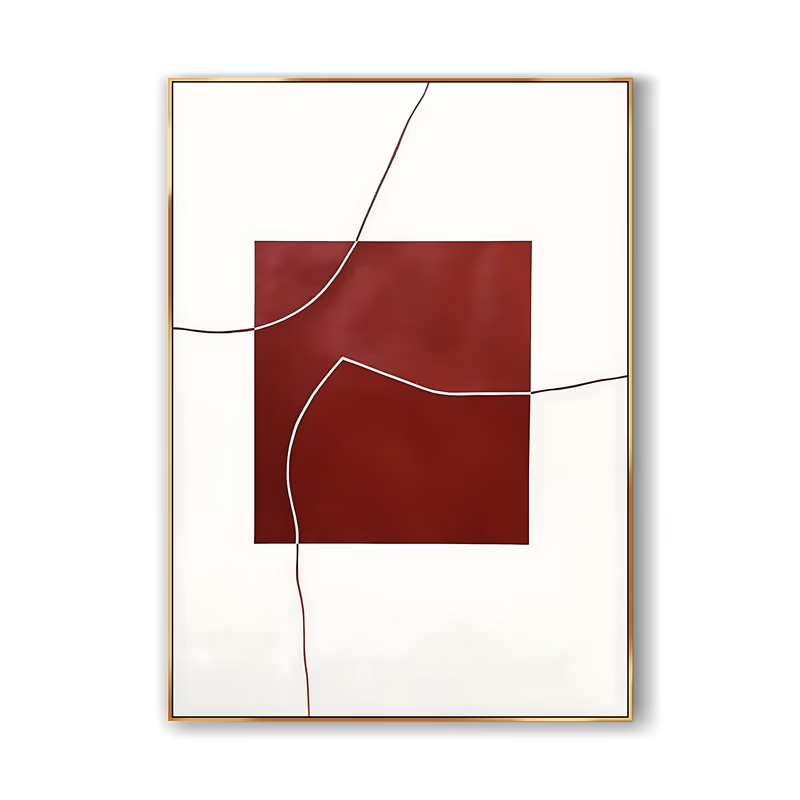
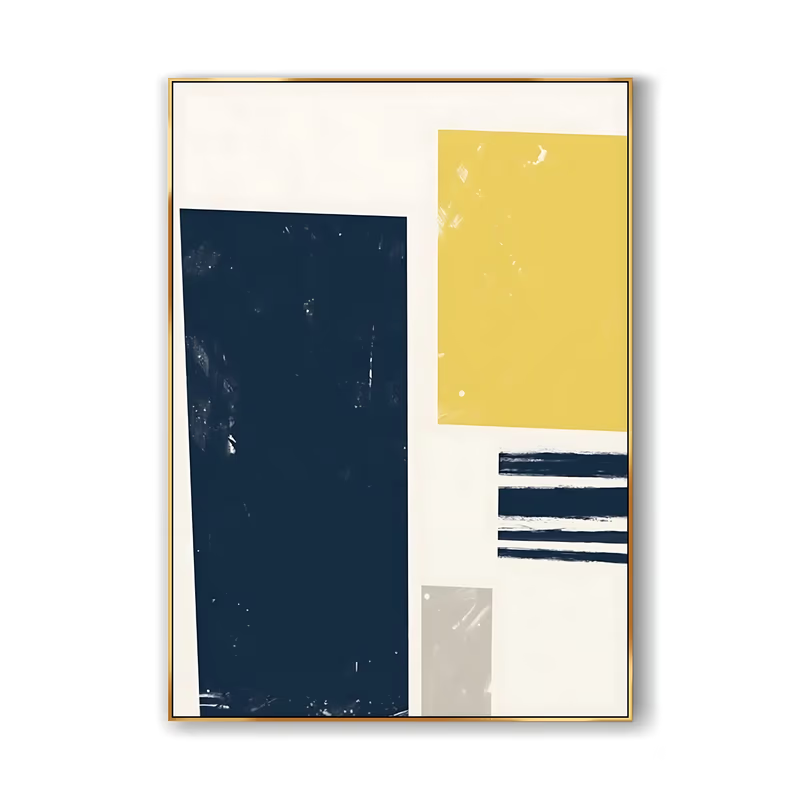
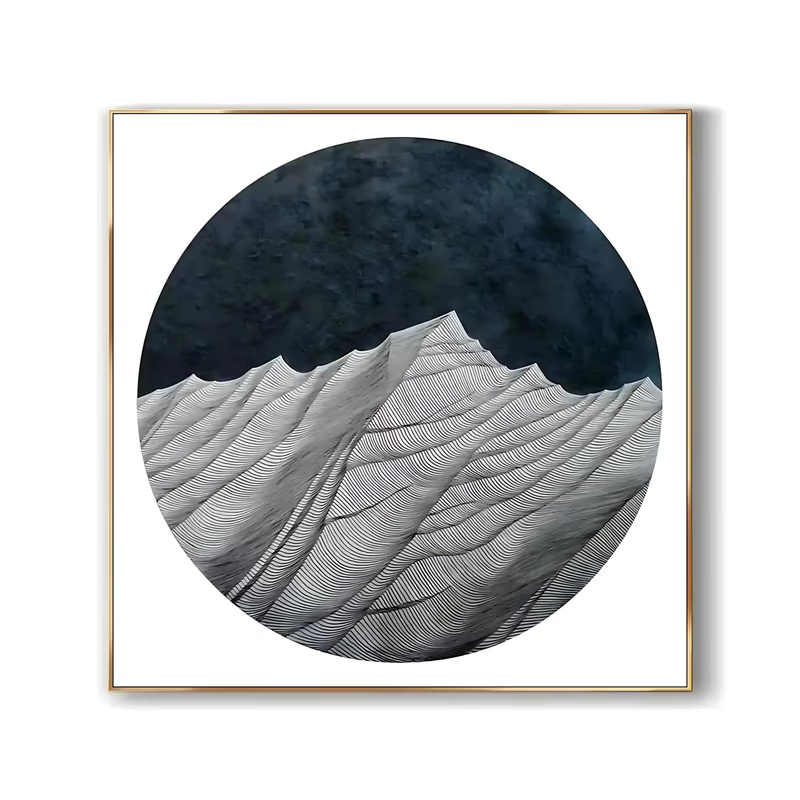
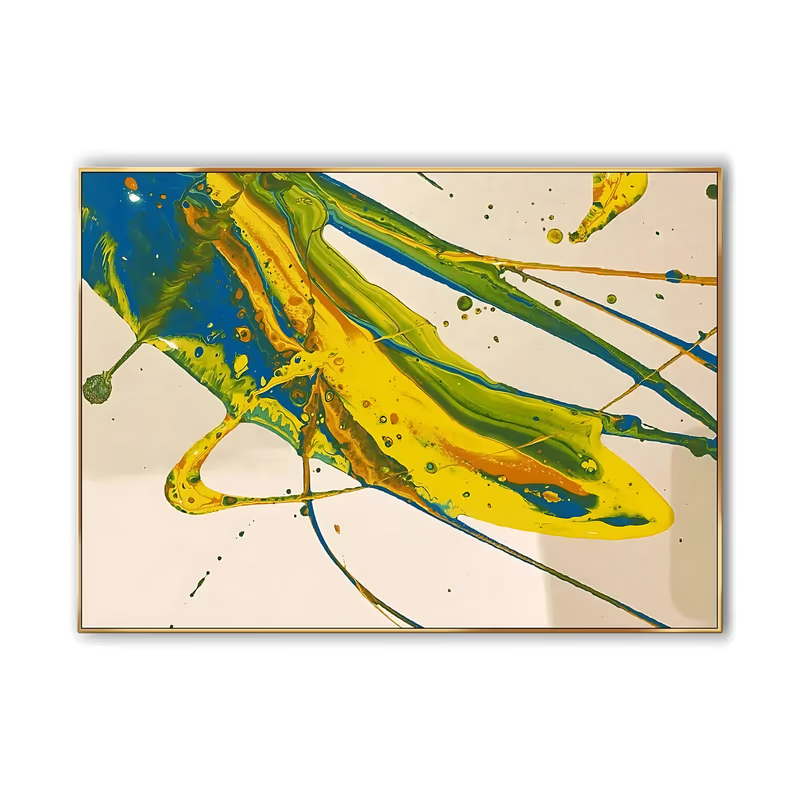
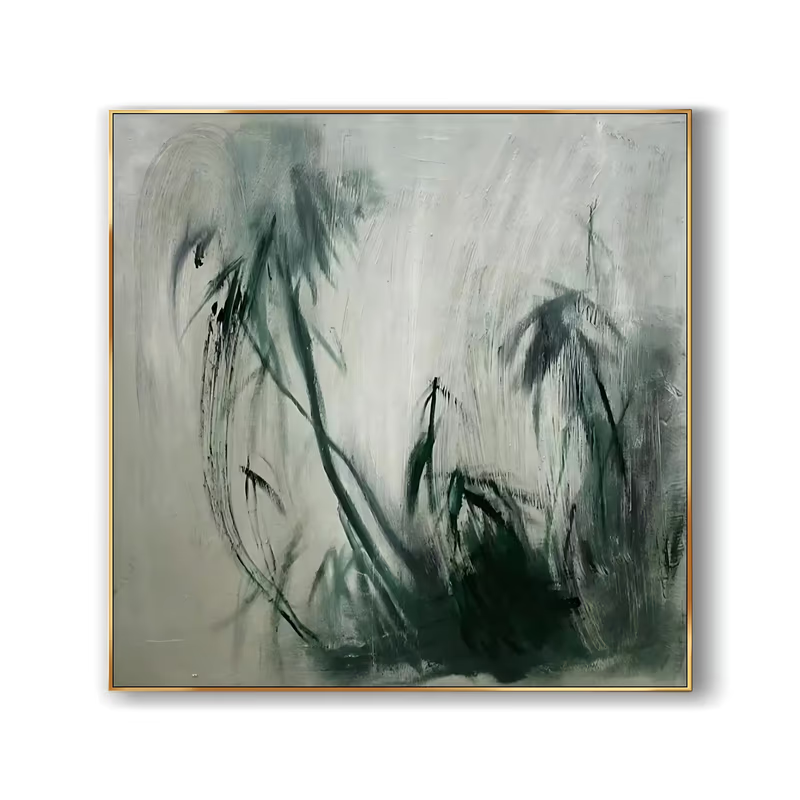
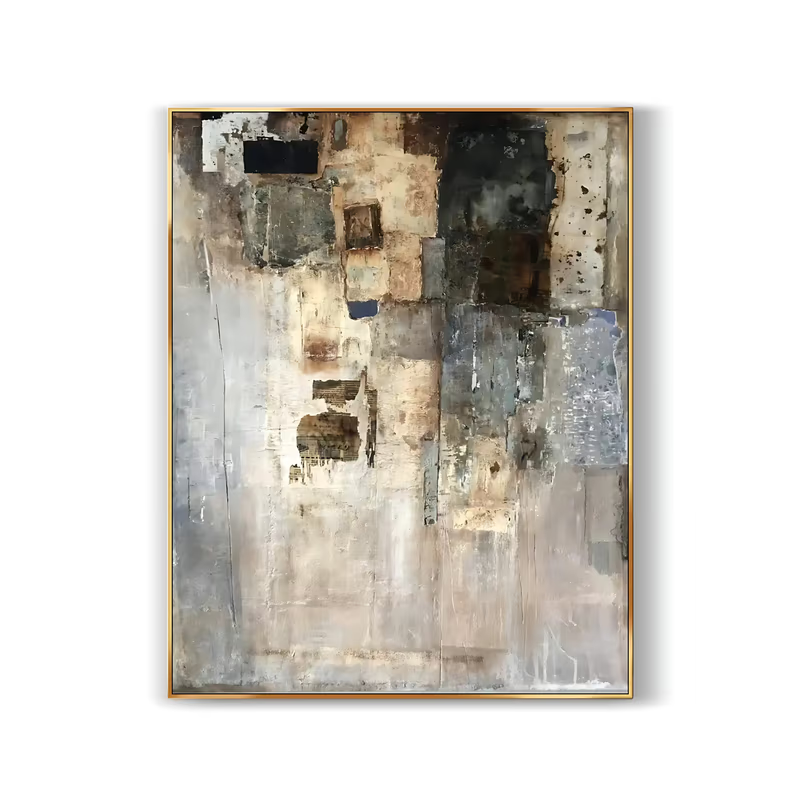
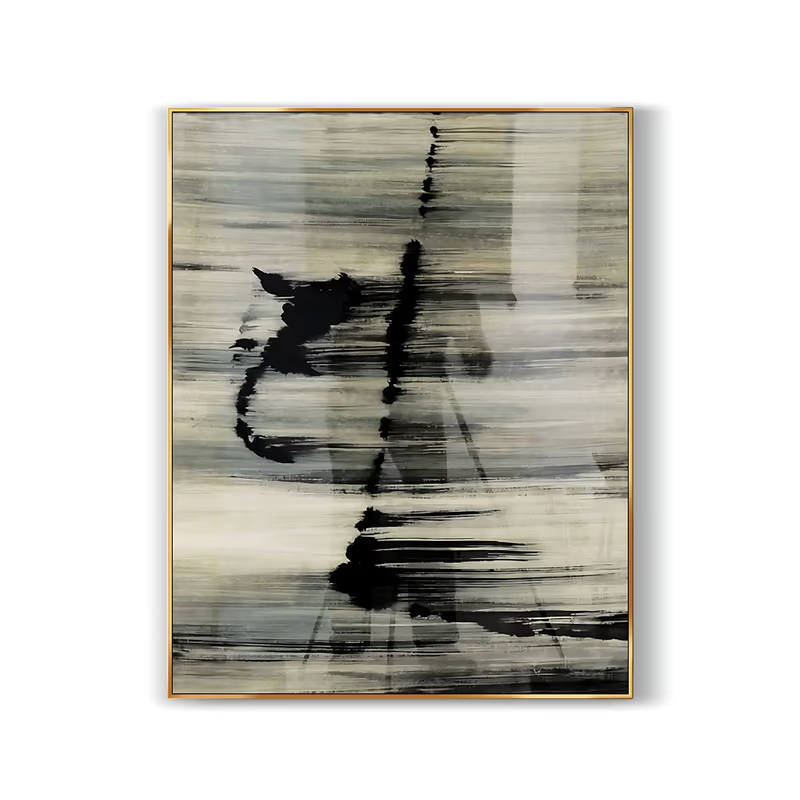
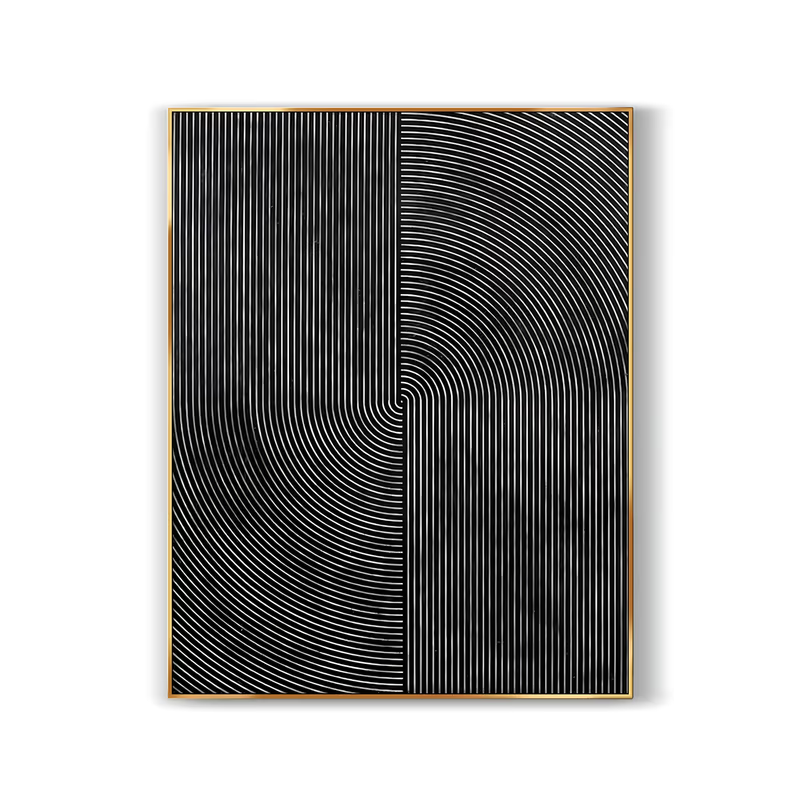
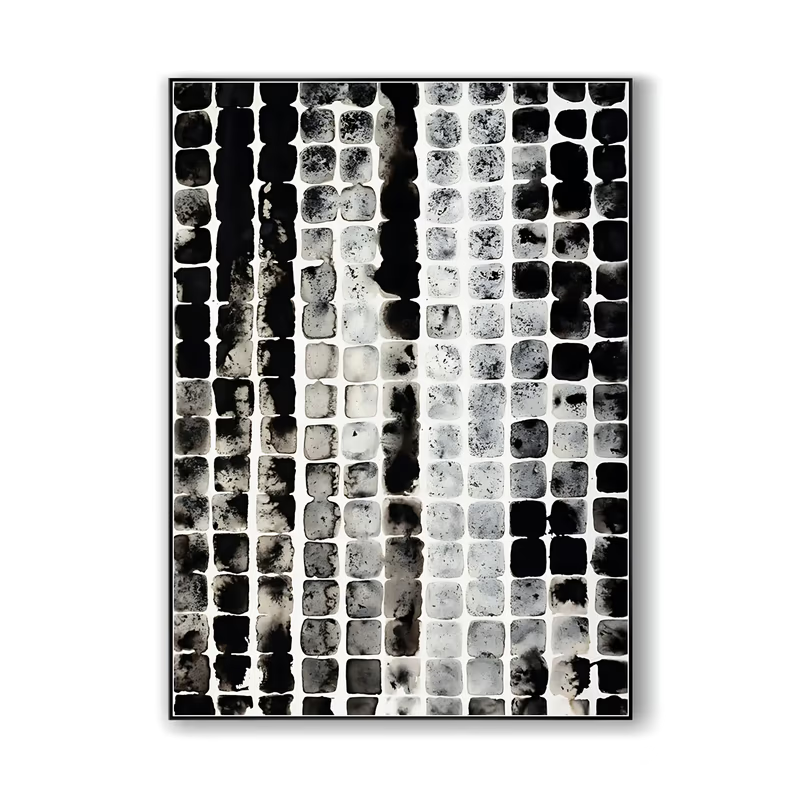
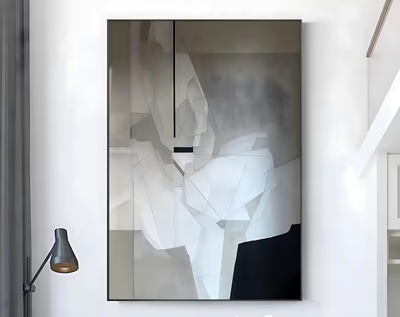
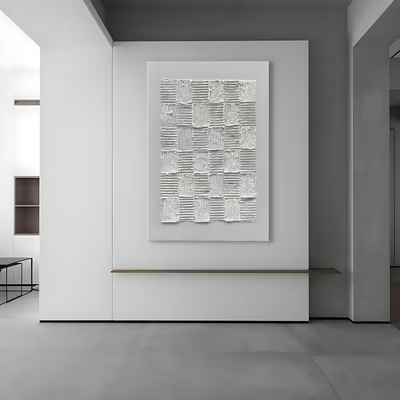
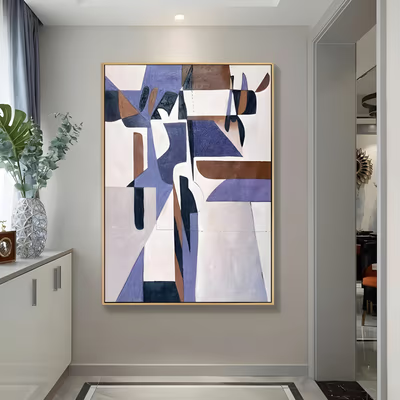
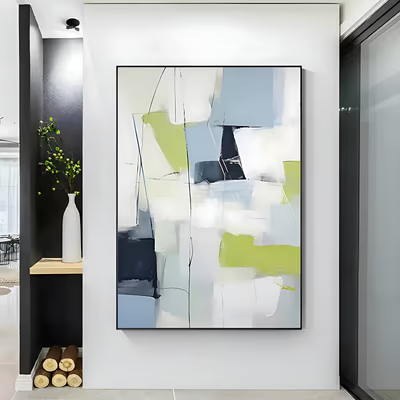
Colour blocks, concentric arcs, cubist planes, plaster ridges, ink loops on a pale ground. Structured and composed, they look deliberate behind a desk and come through cleanly on camera. Minimalist pieces in black, white and one colour suit a sparse, modern study. More abstract art.
Landscapes and skies
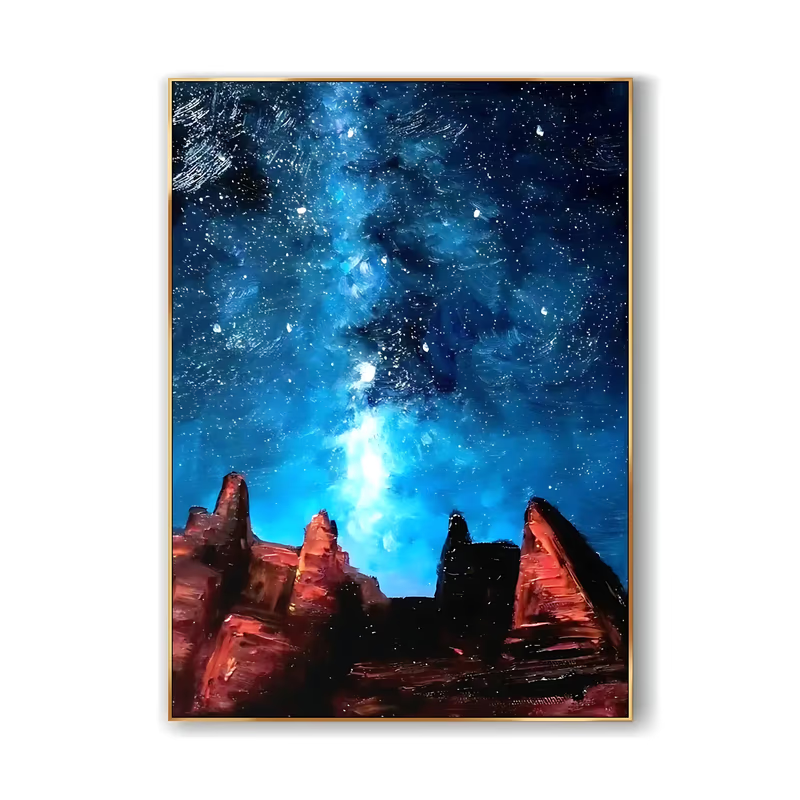
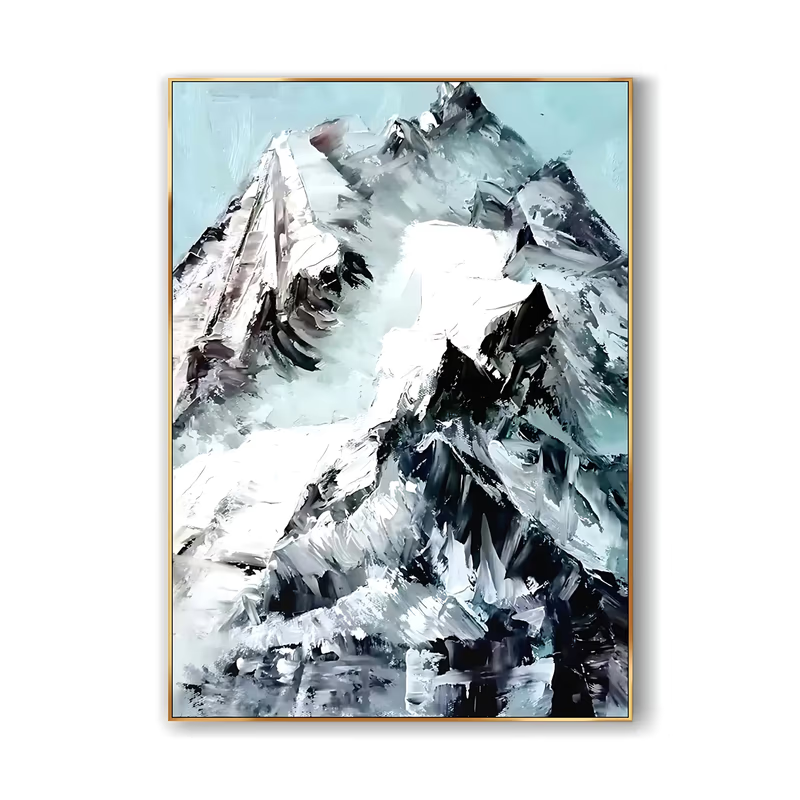
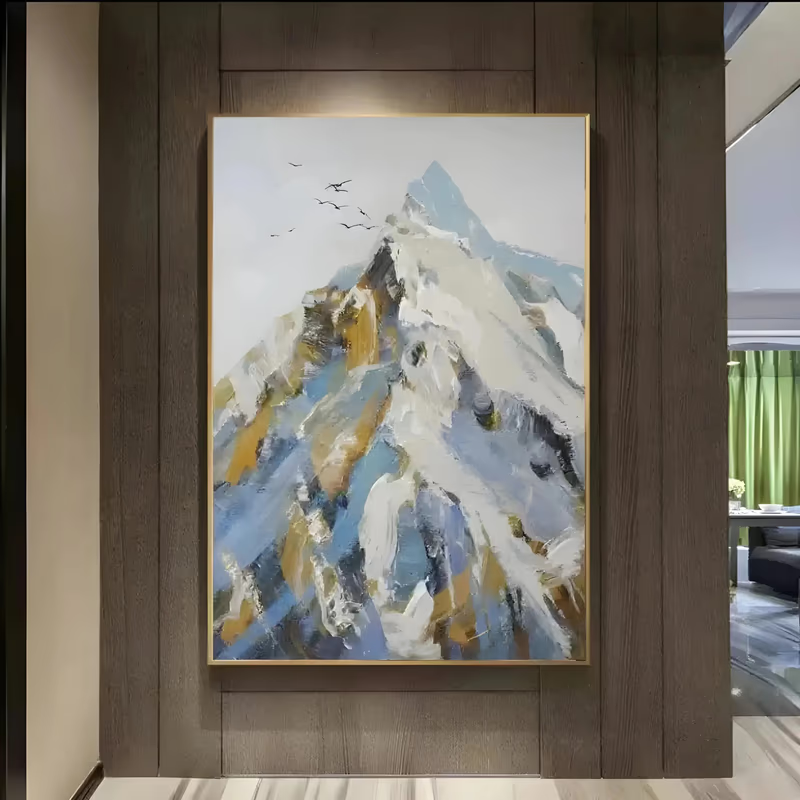
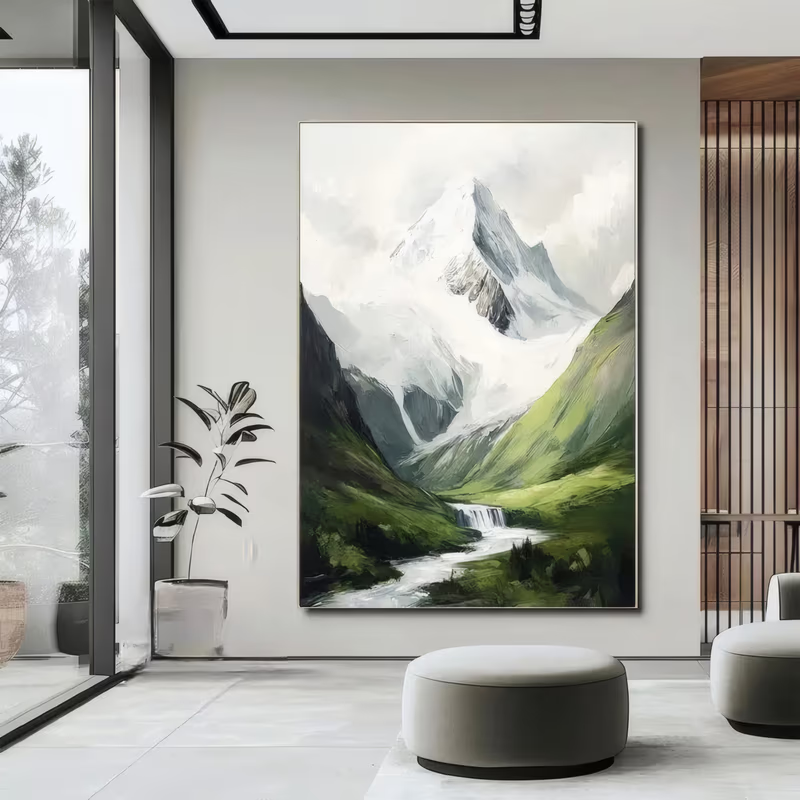
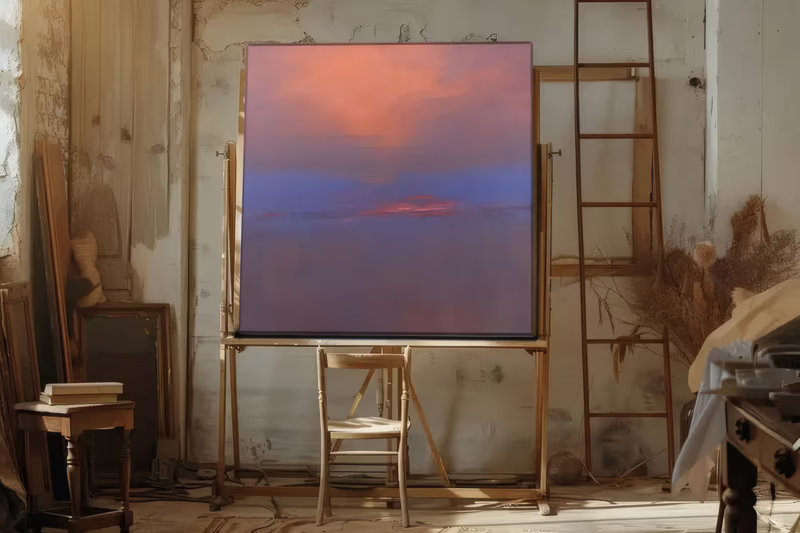
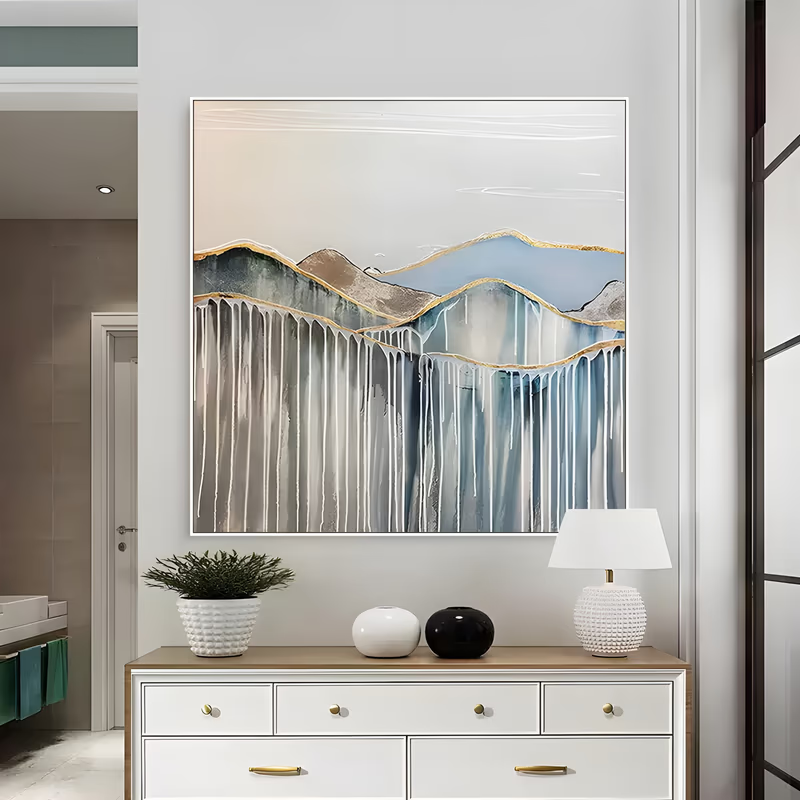
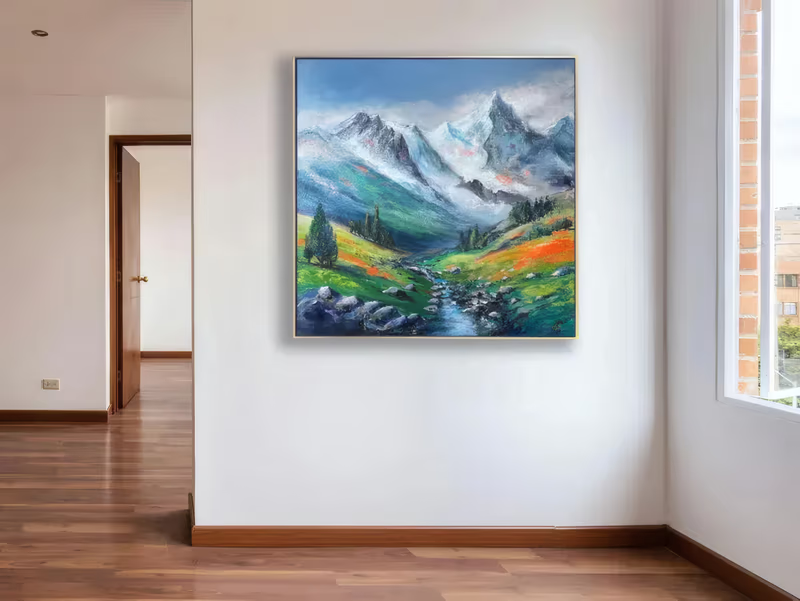
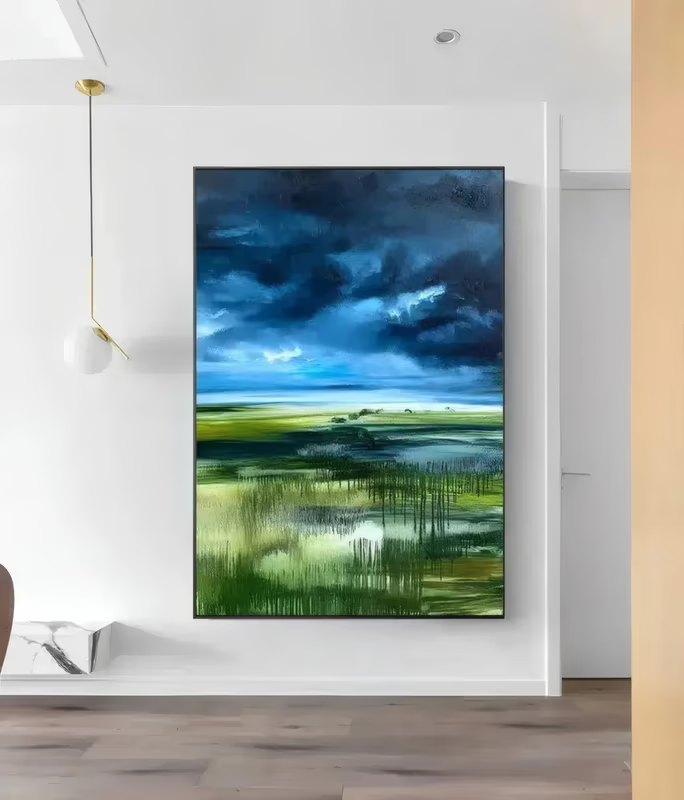
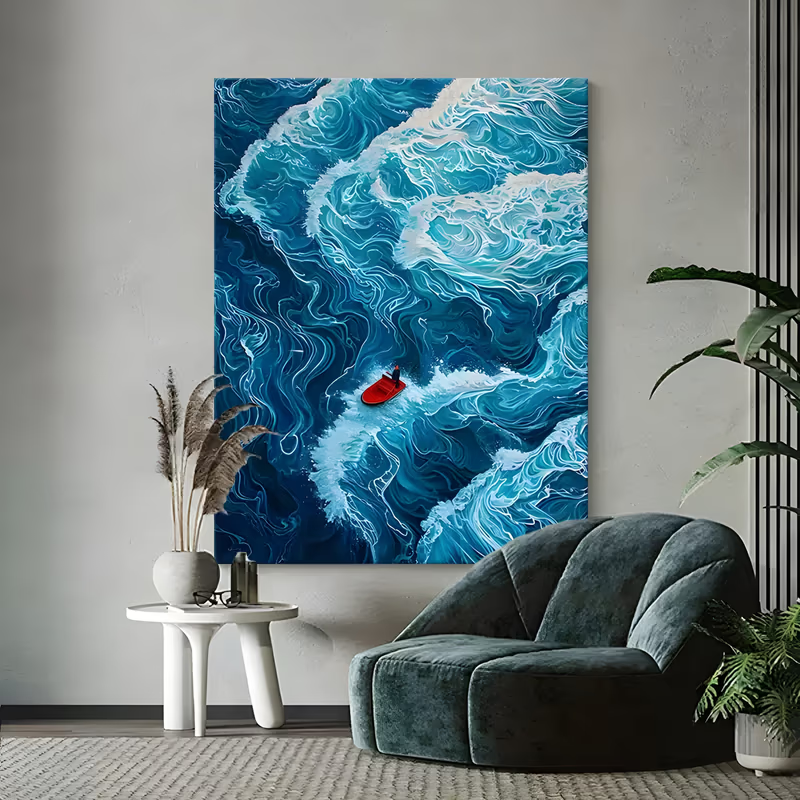
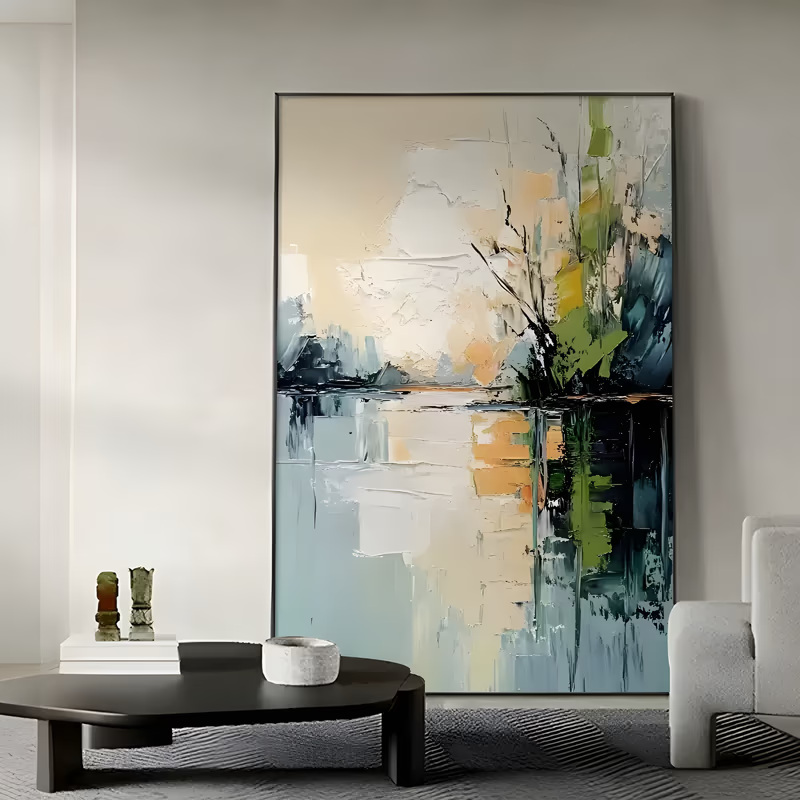
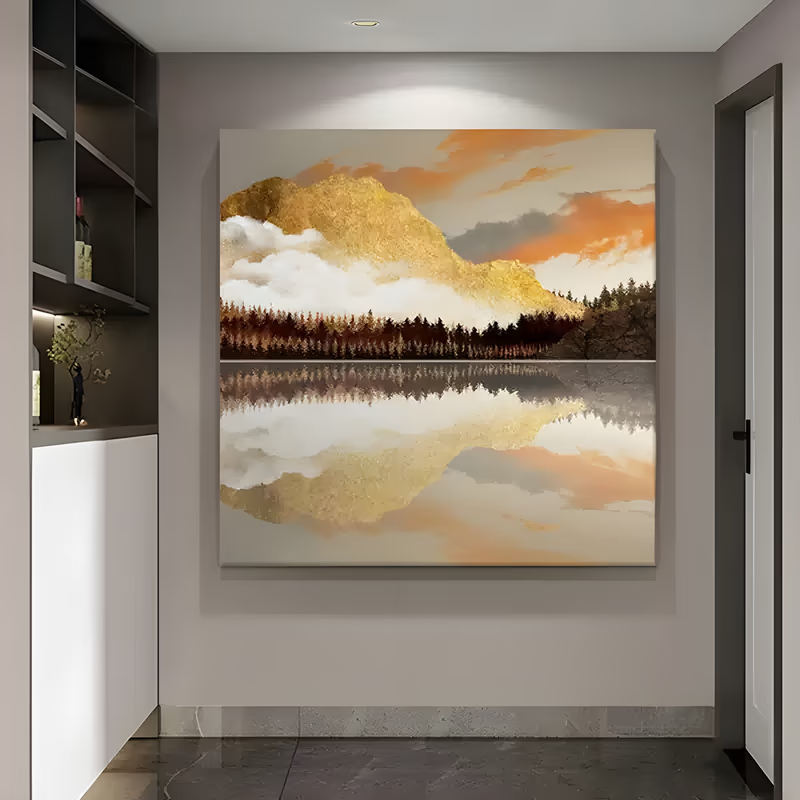
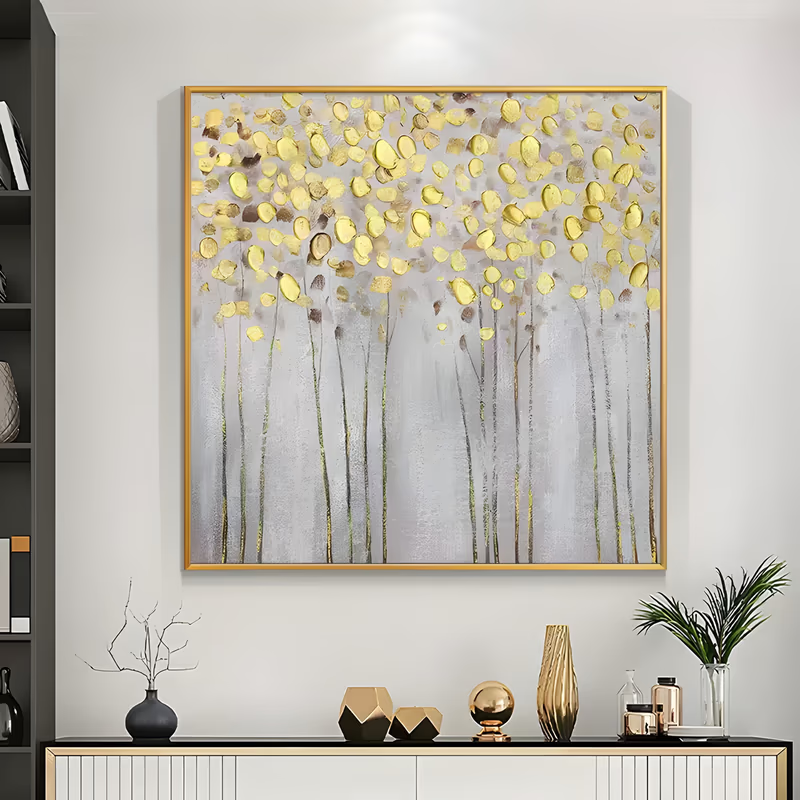
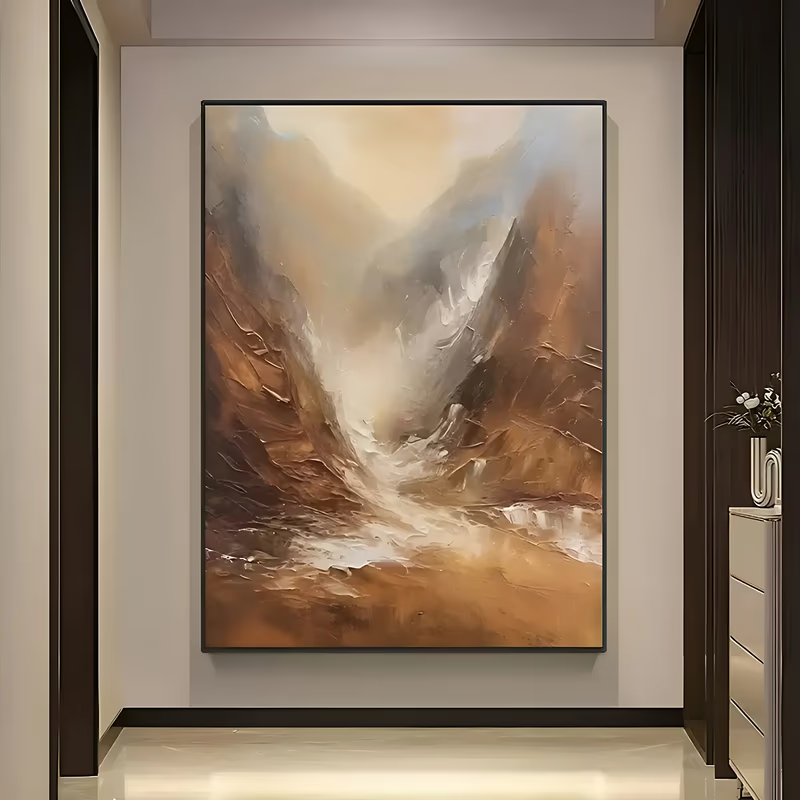
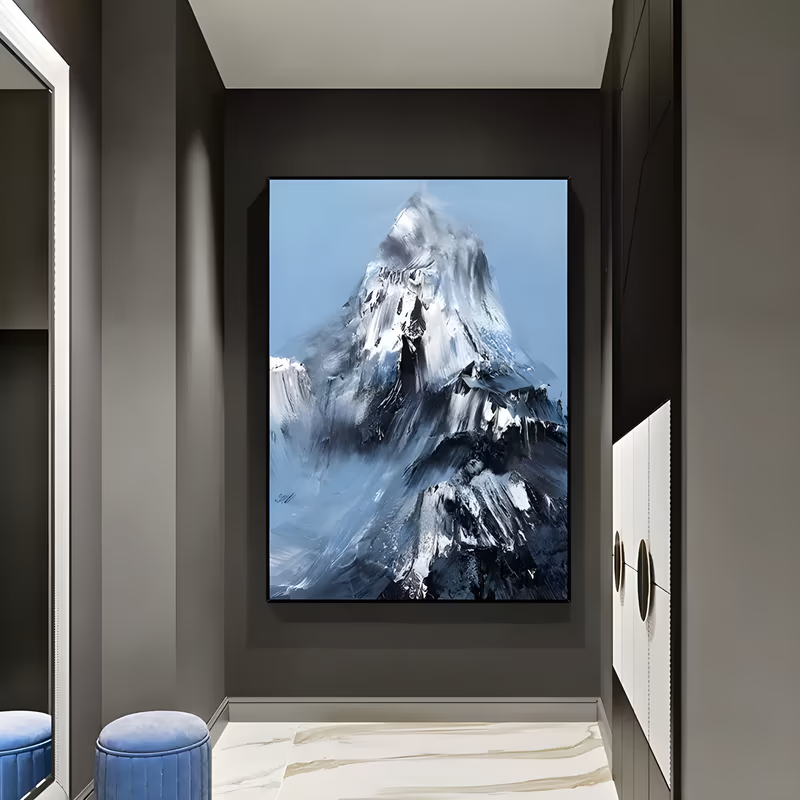
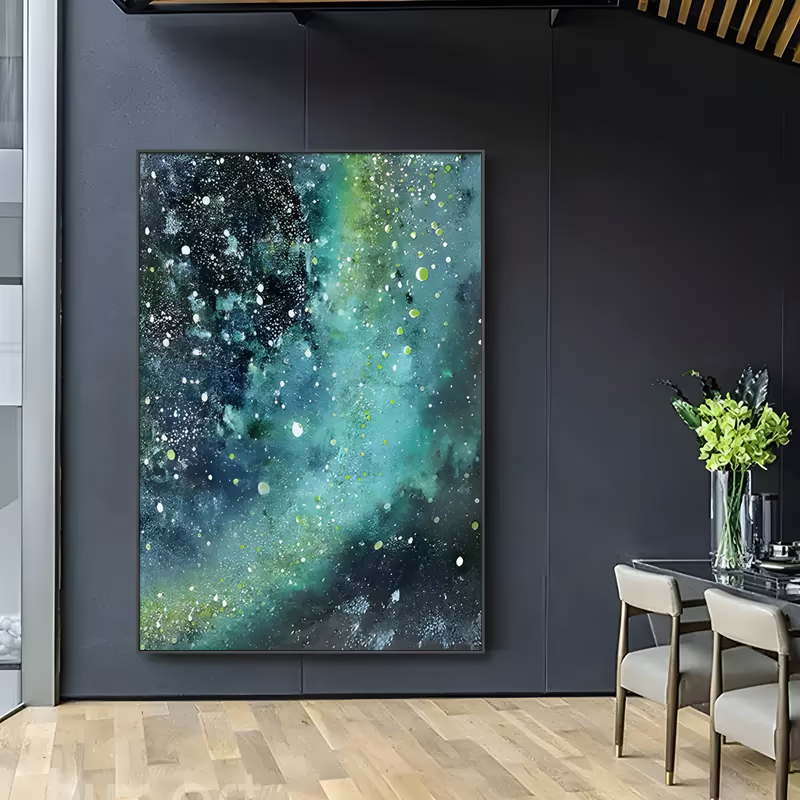
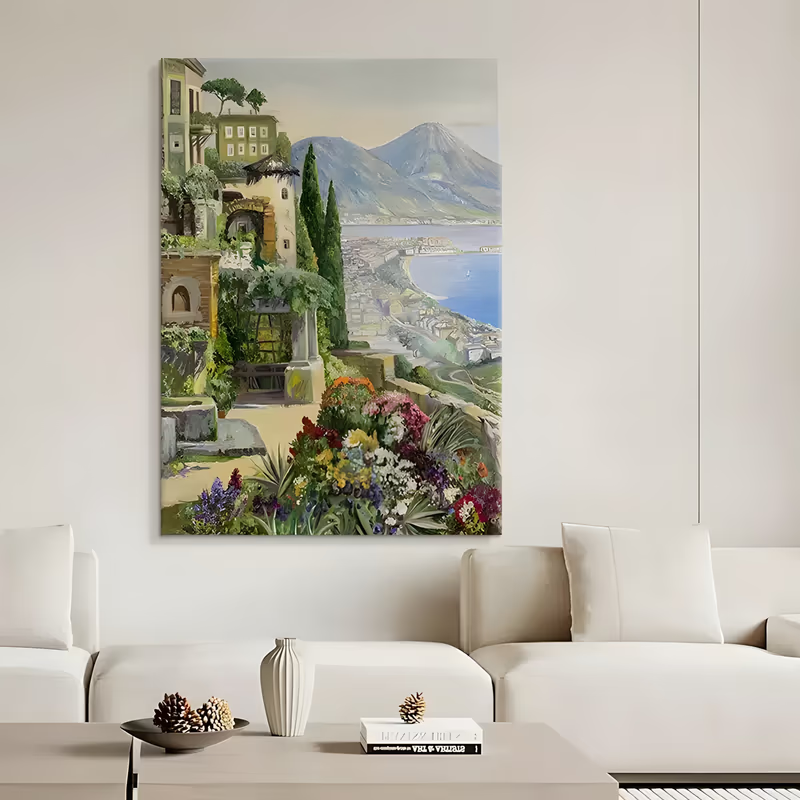
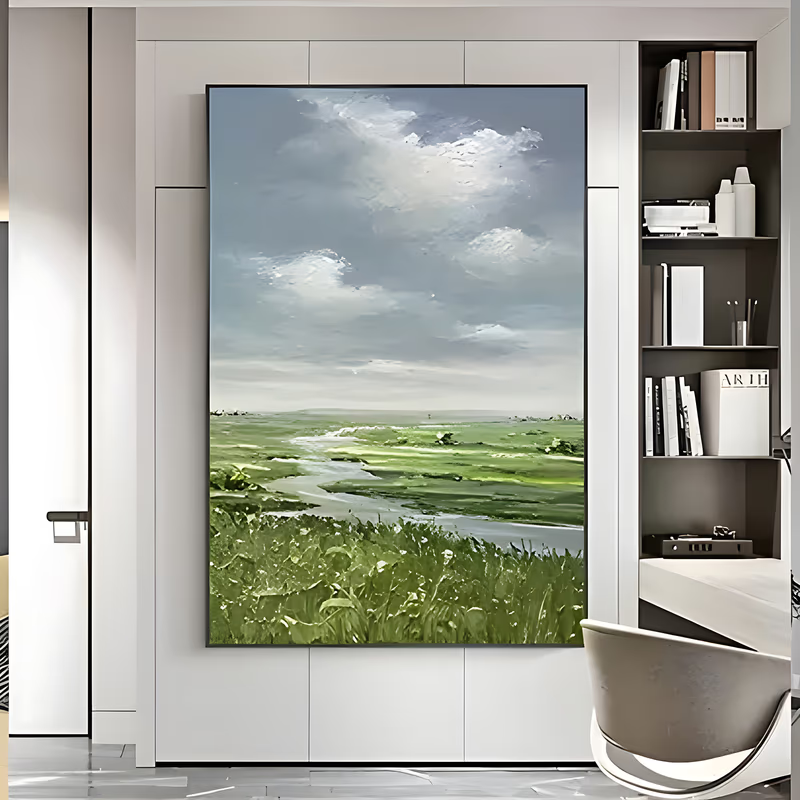
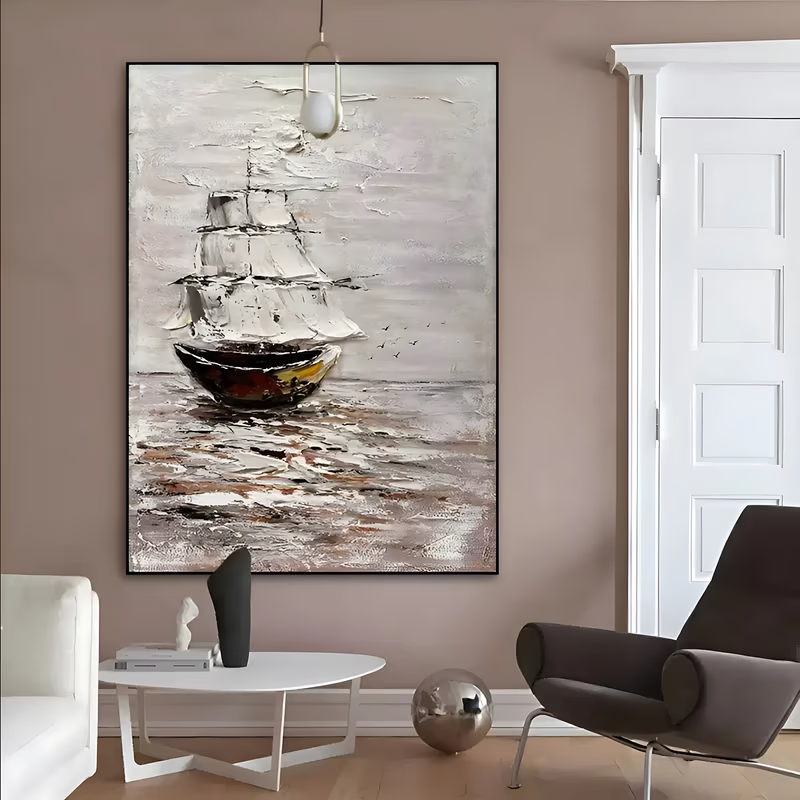
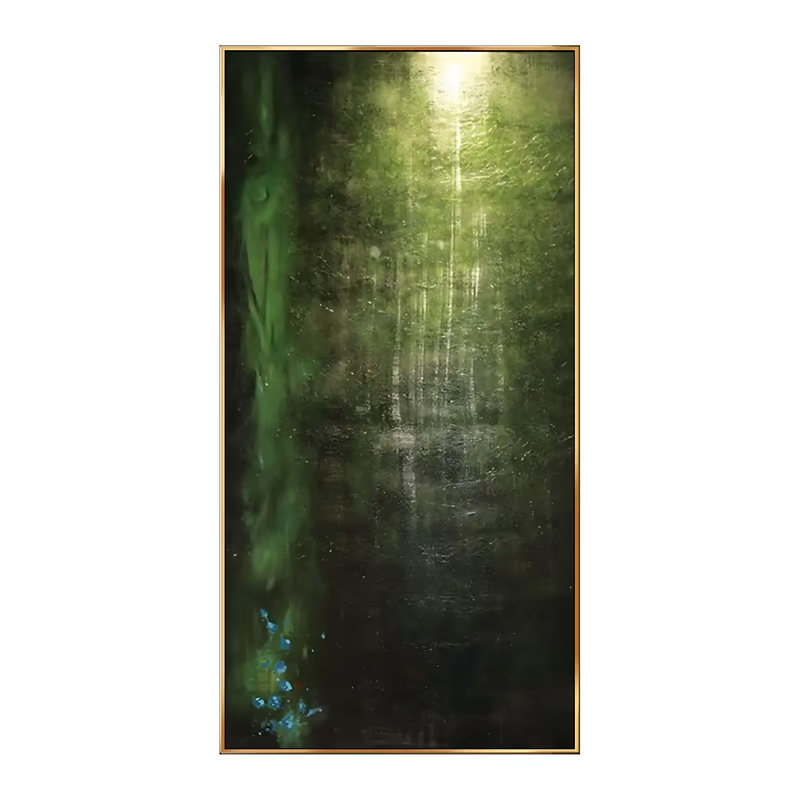
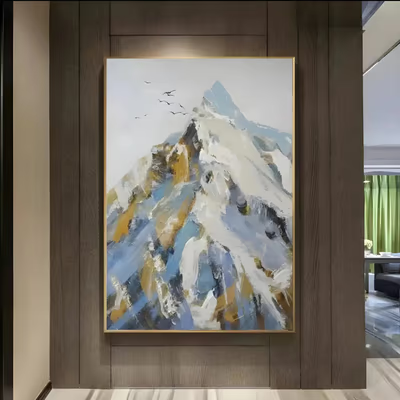
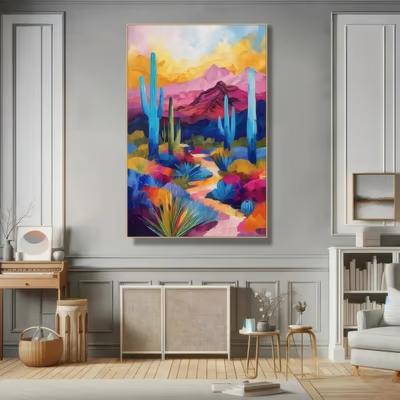
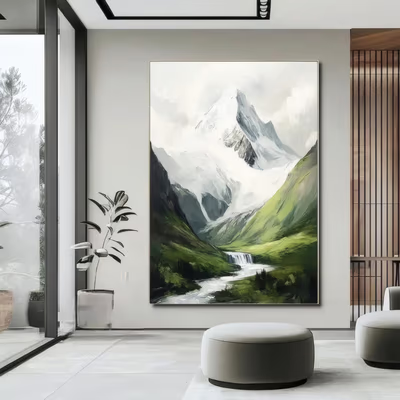
Snowy peaks, still lakes, a Milky Way over red rock, a woodland clearing. A long view on the facing wall gives your eyes somewhere distant to go when you look up from the screen, which a small room with one window rarely offers. Landscapes for a home office.
City scenes
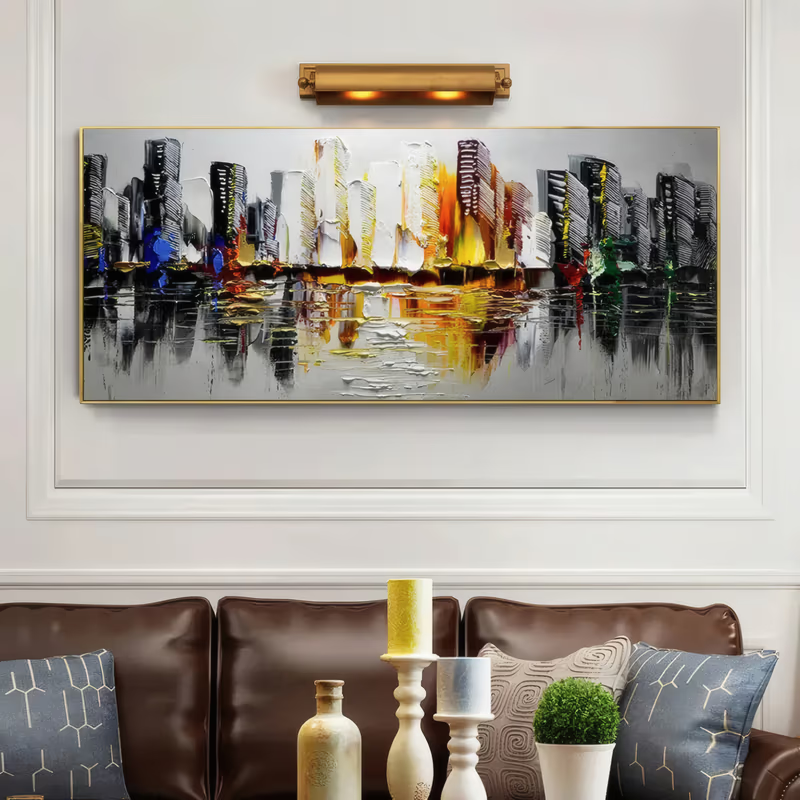
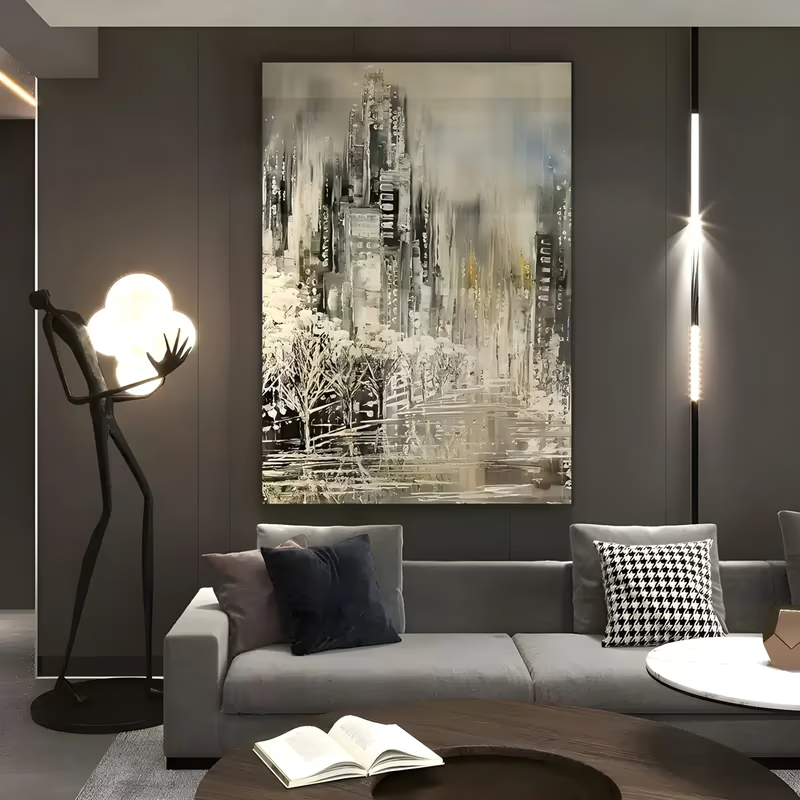
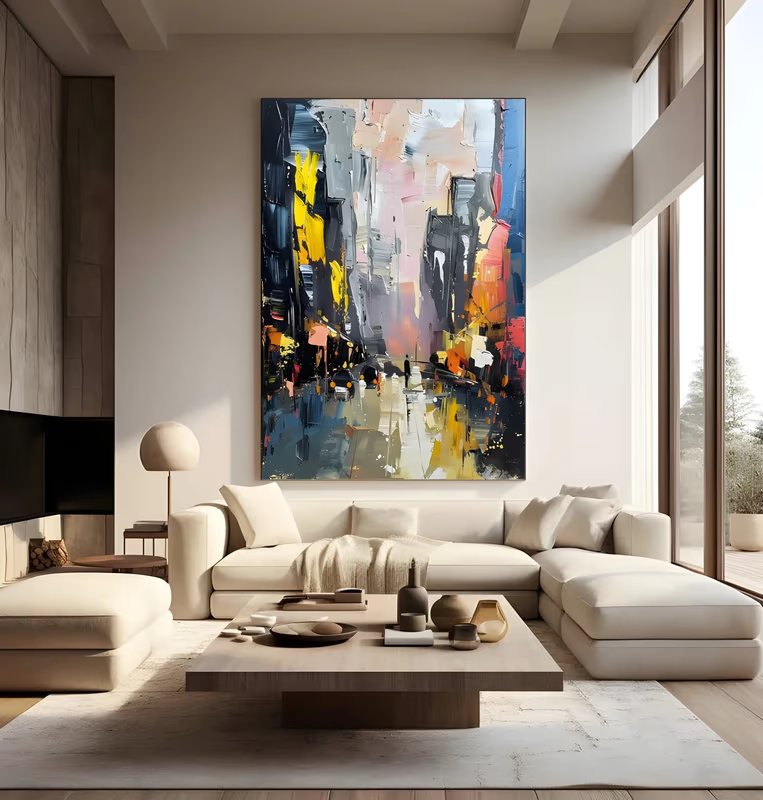
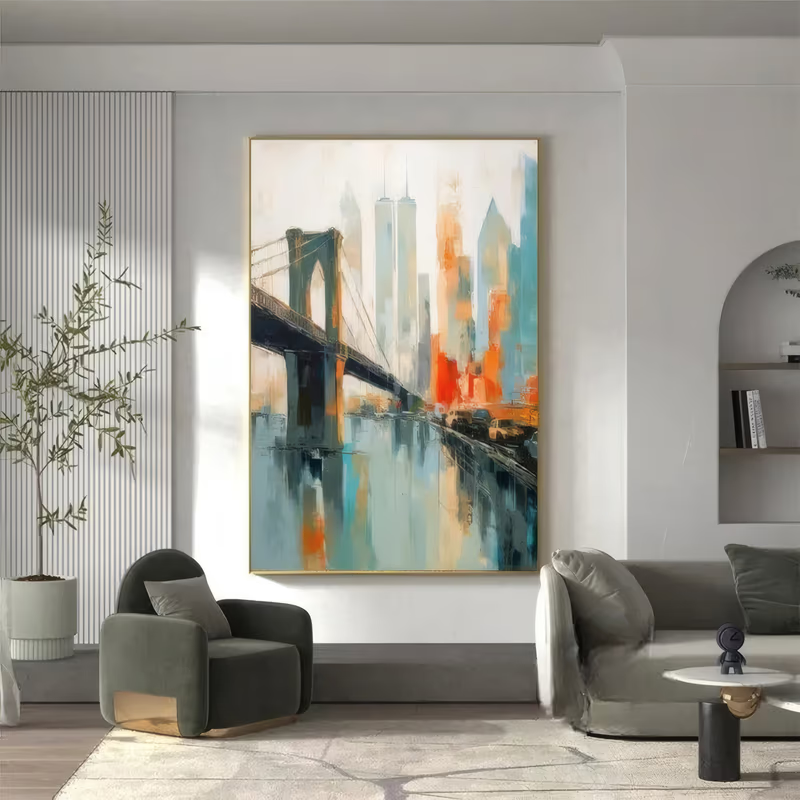
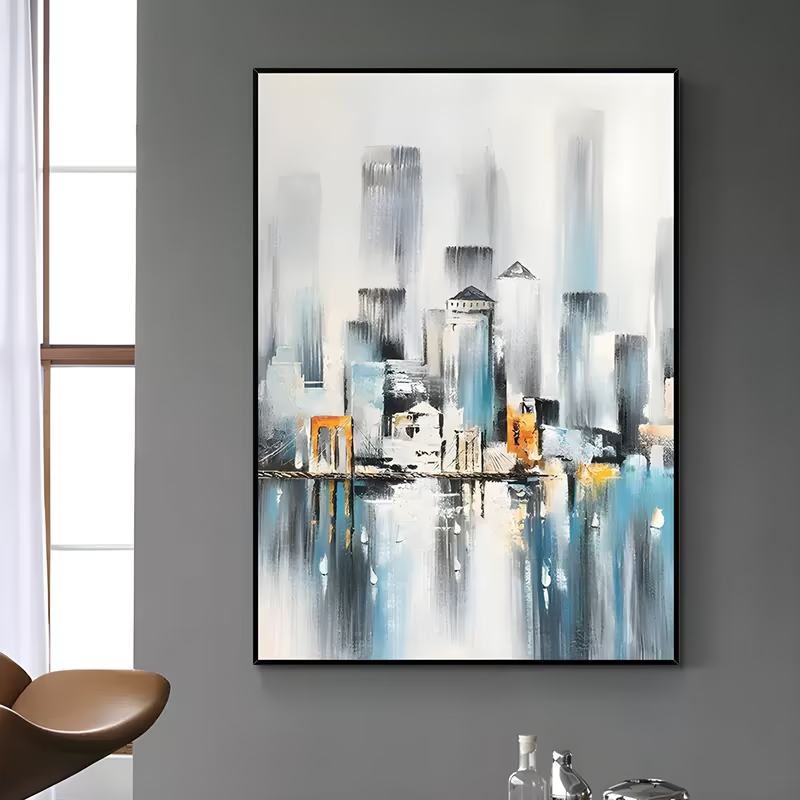
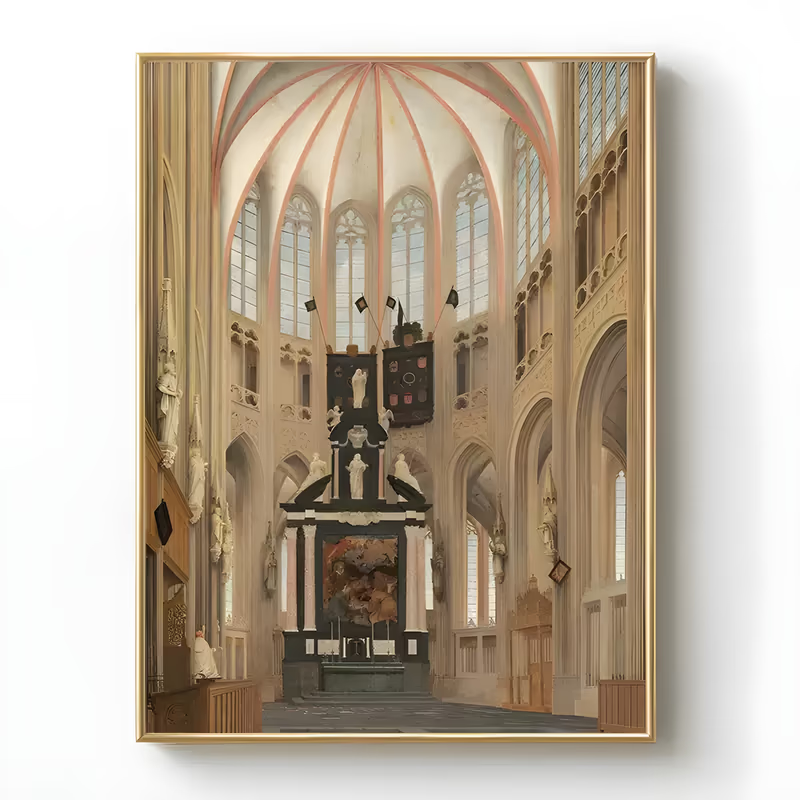
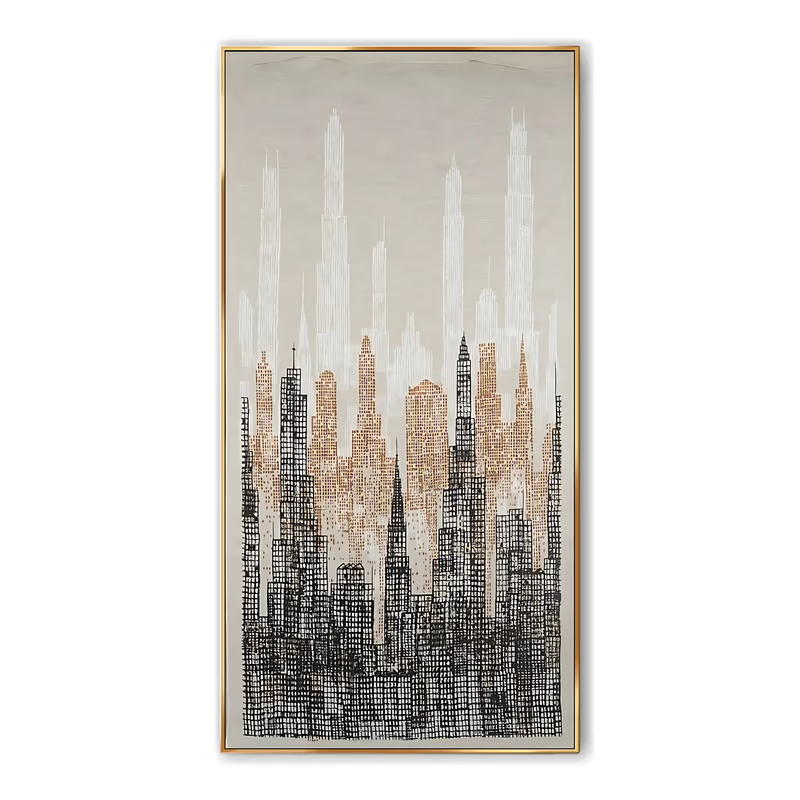
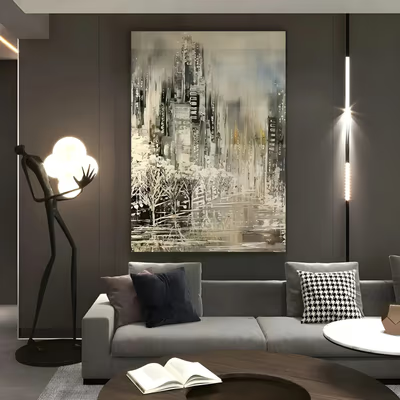
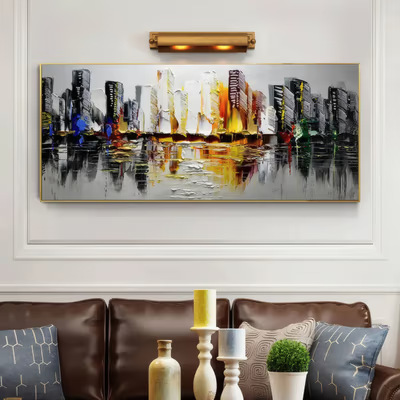
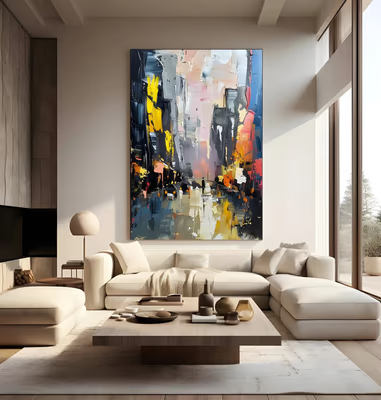
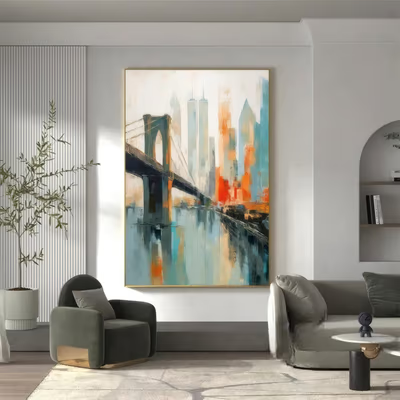
Rain-slicked New York streets at night, skylines with orange reflections, gothic interiors. Urban paintings bring a sense of pace and suit a study with leather, dark wood and books. More cityscapes.
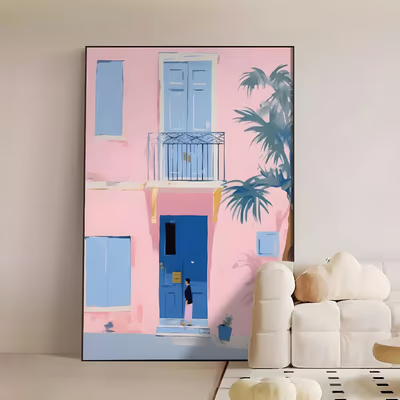
Animals and portraits
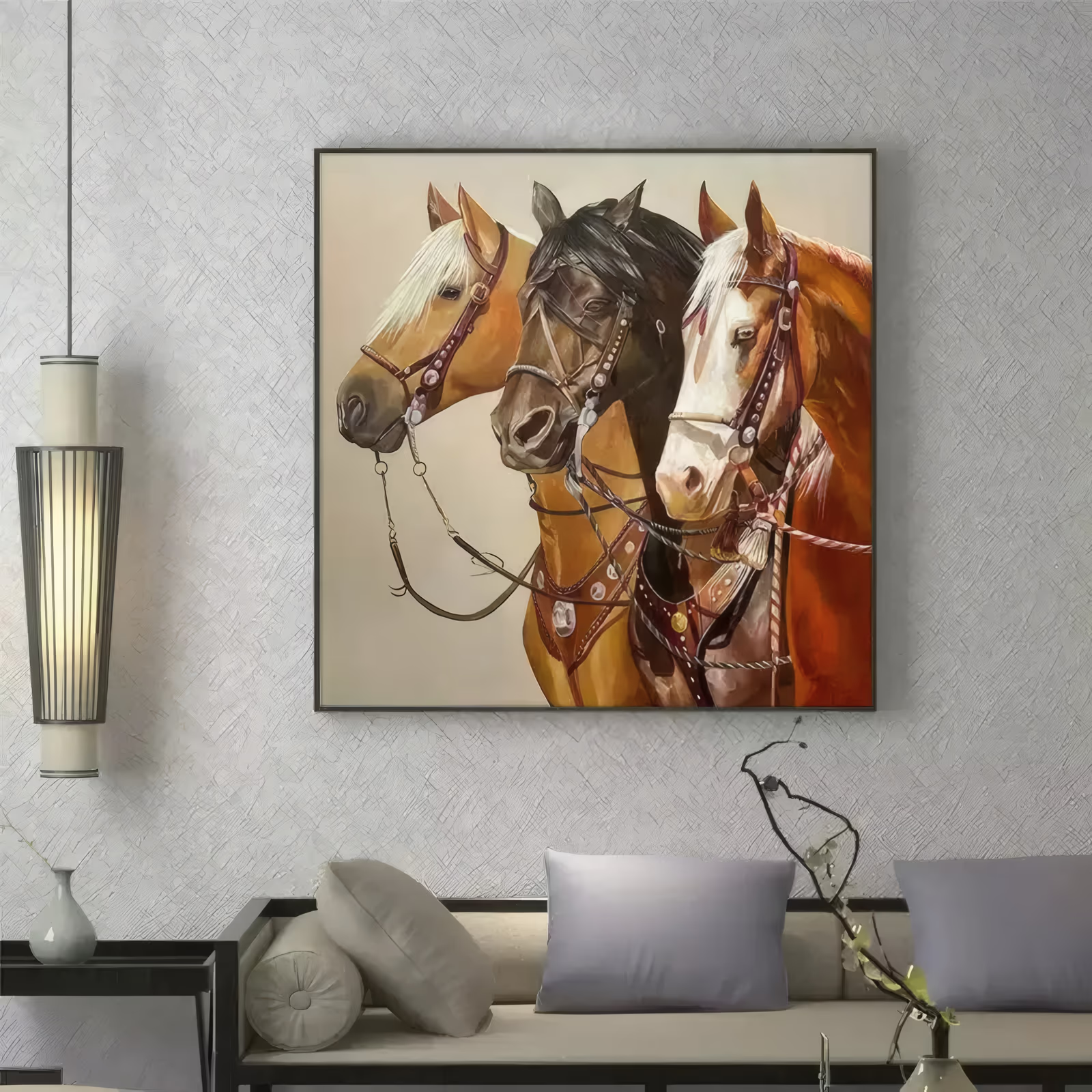
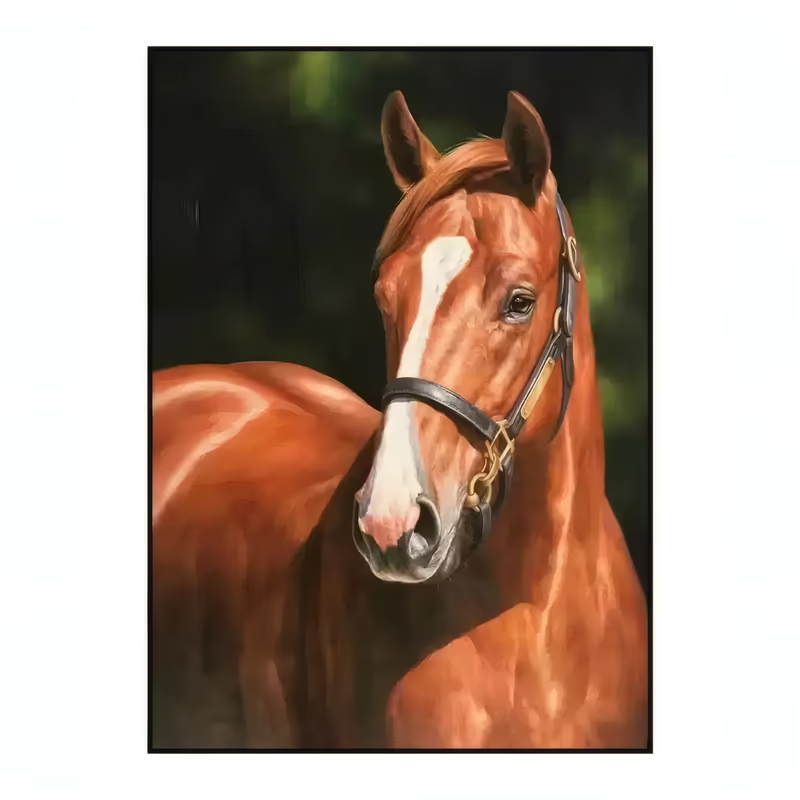
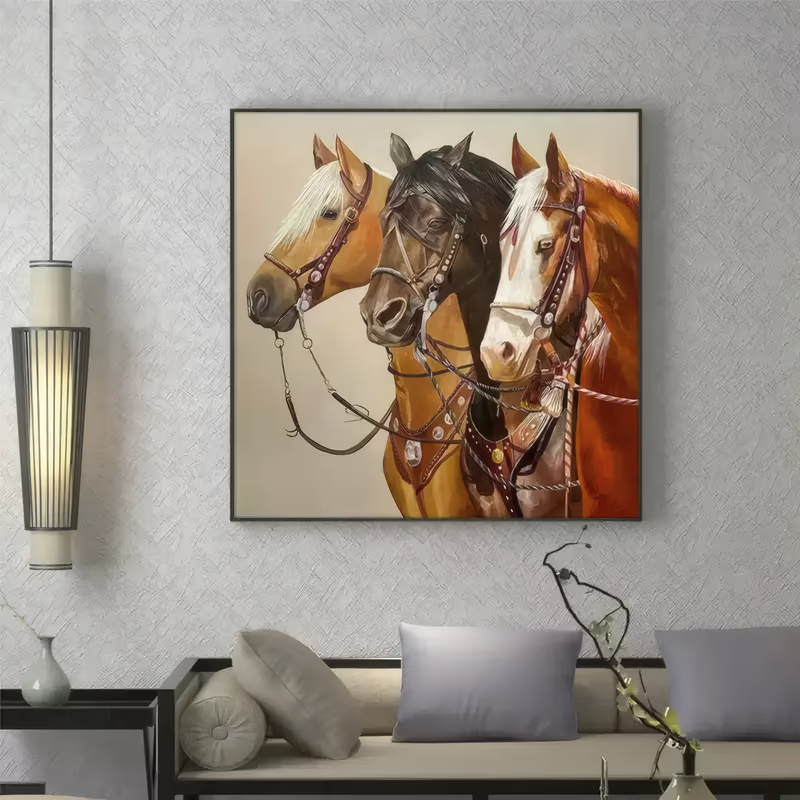
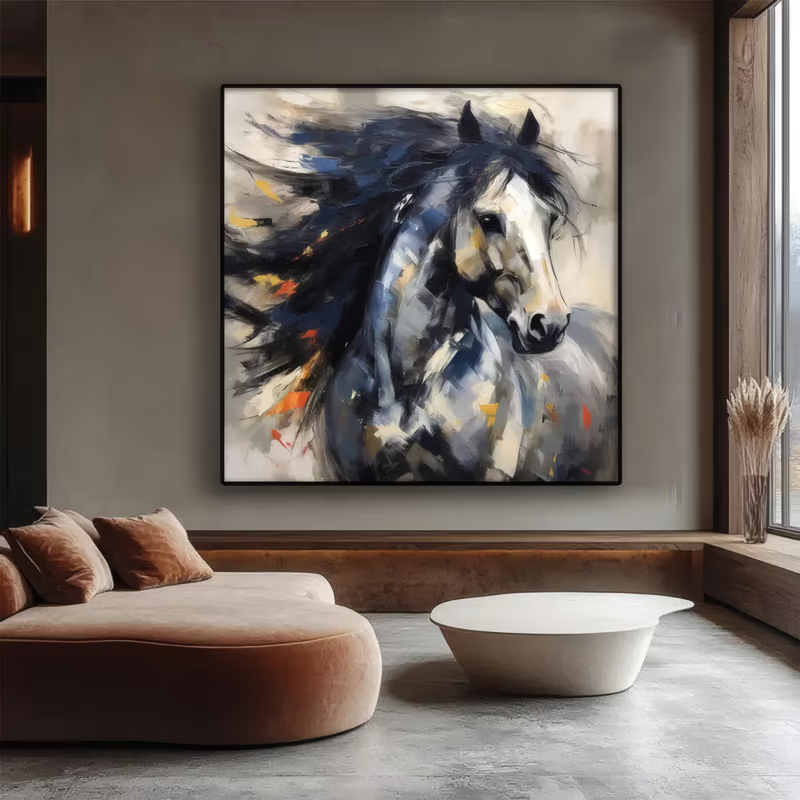
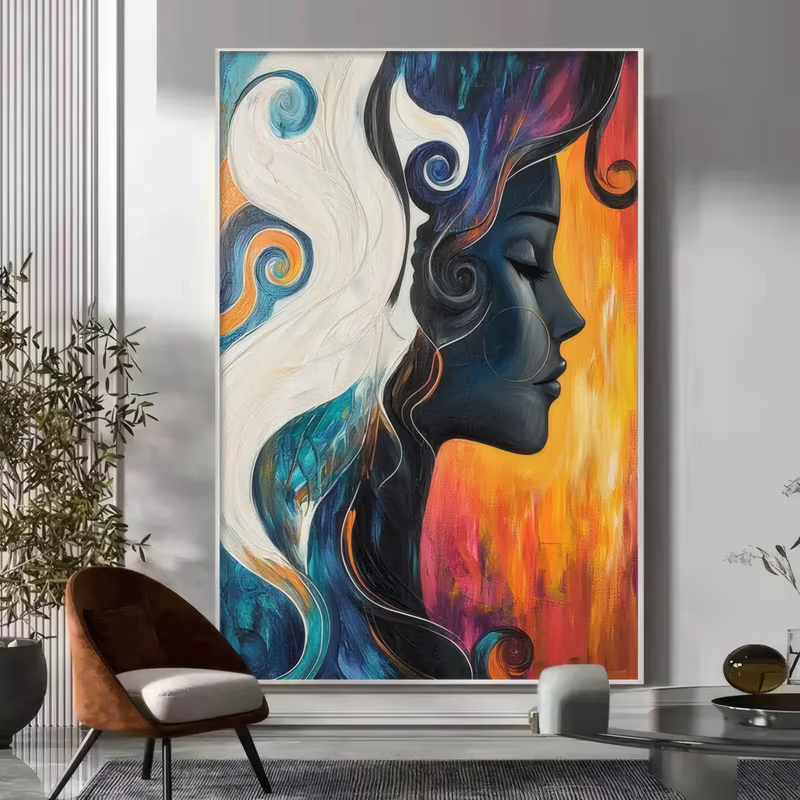
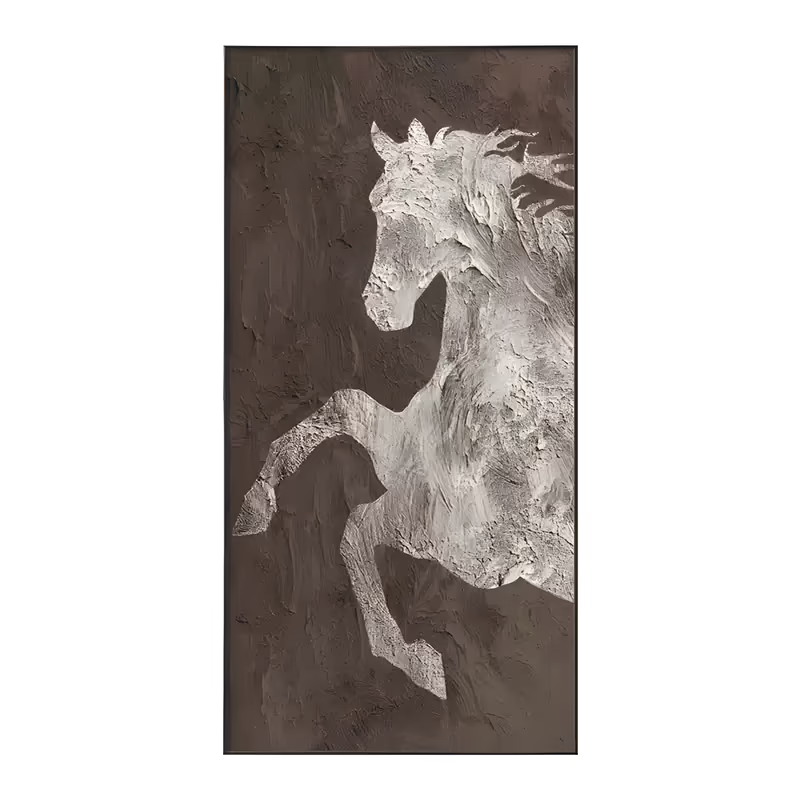
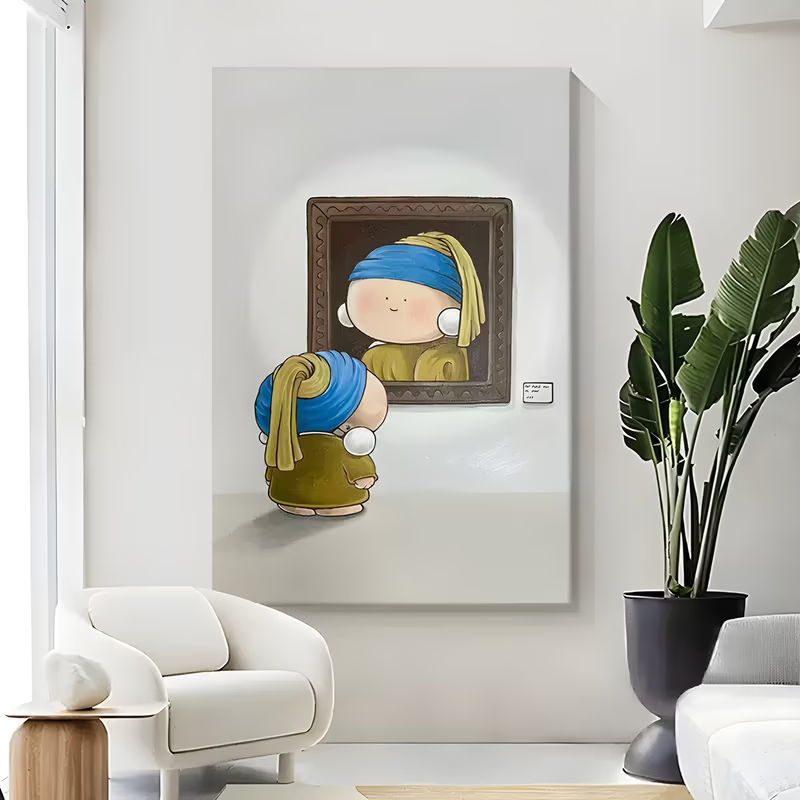
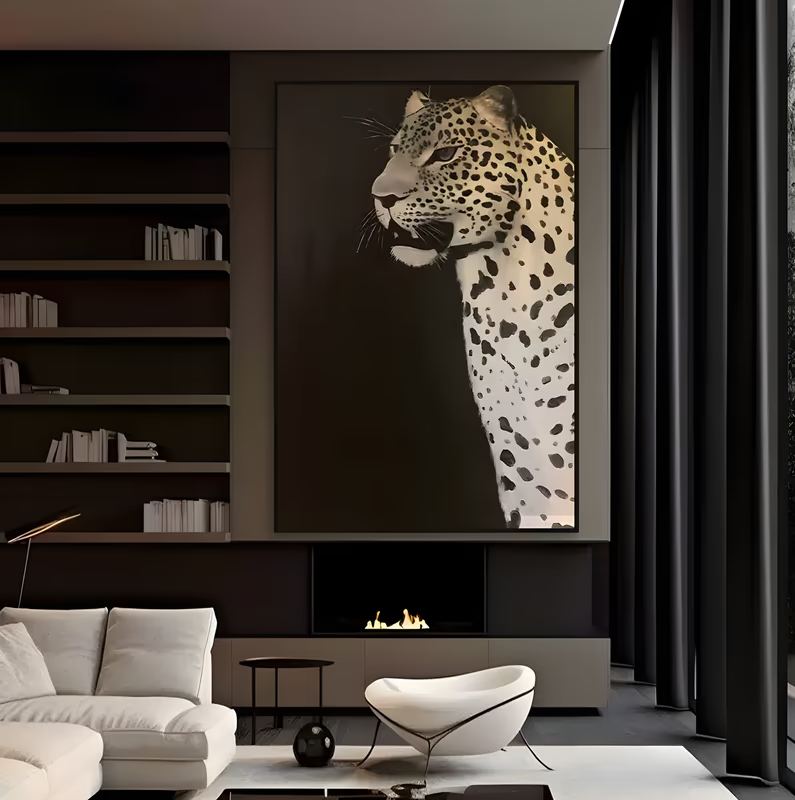
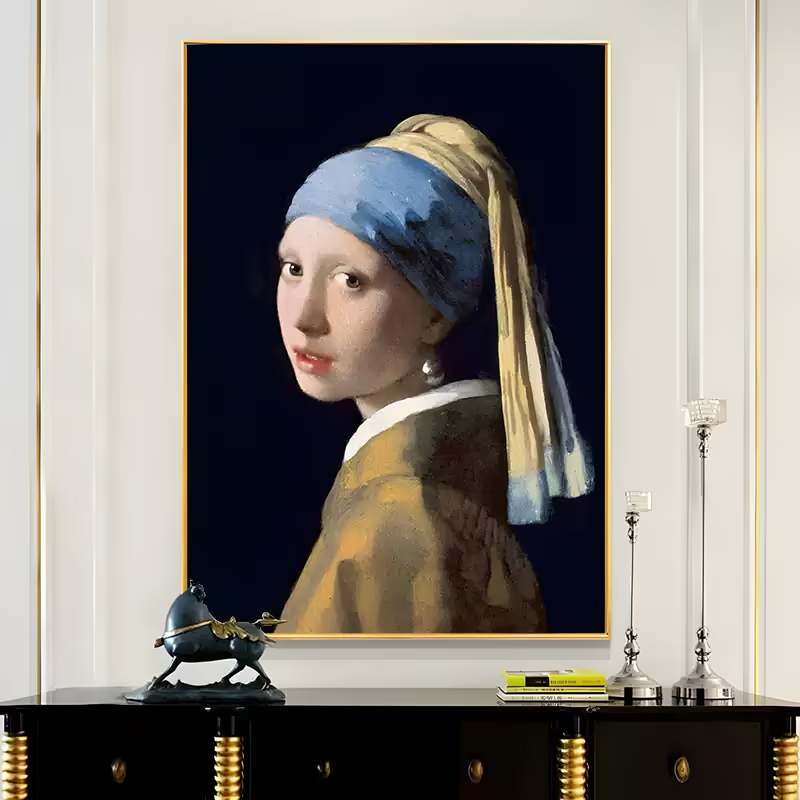
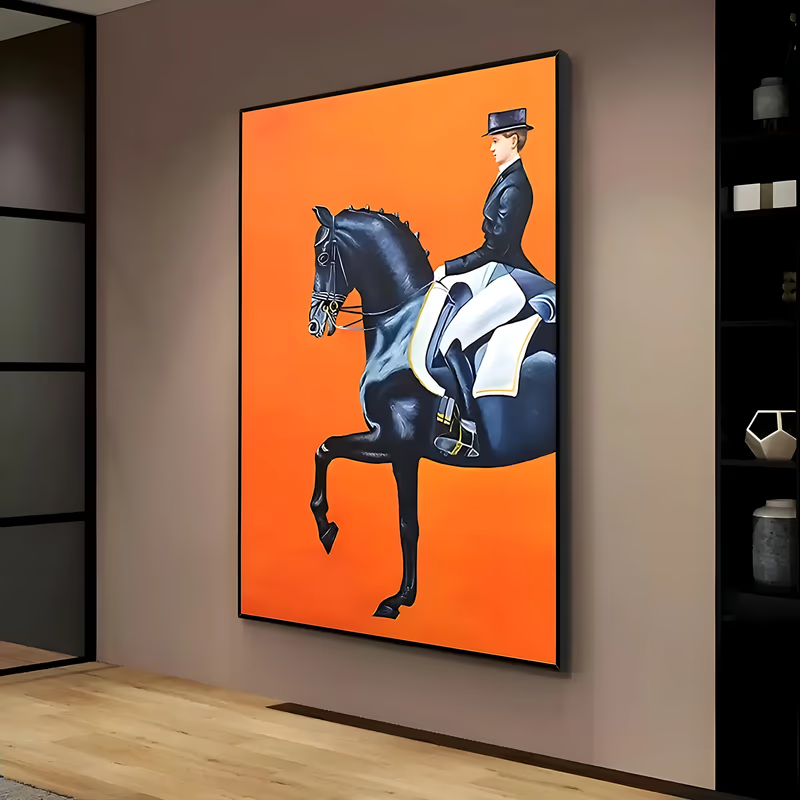
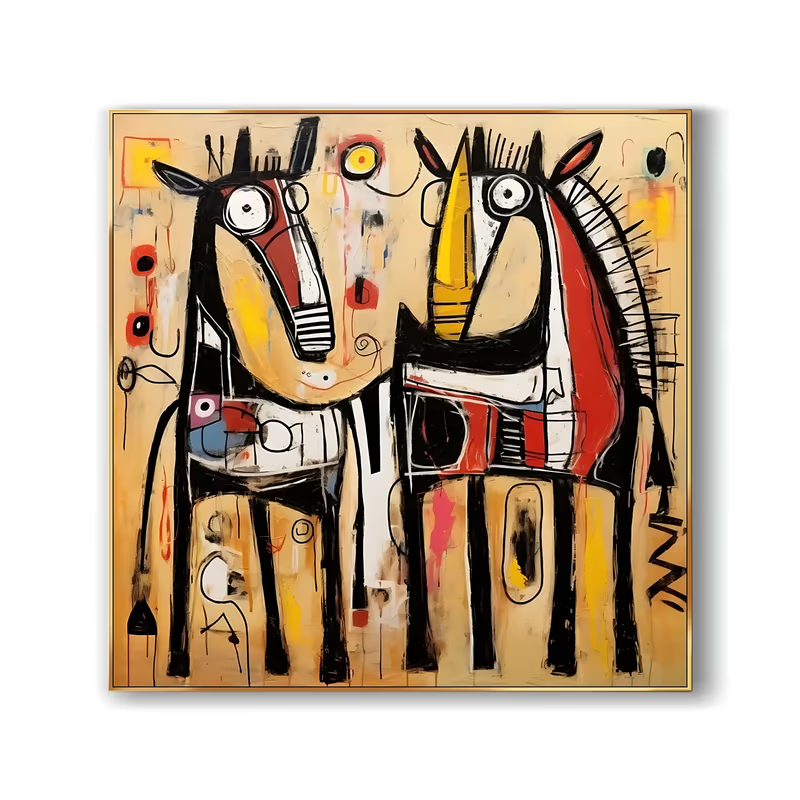
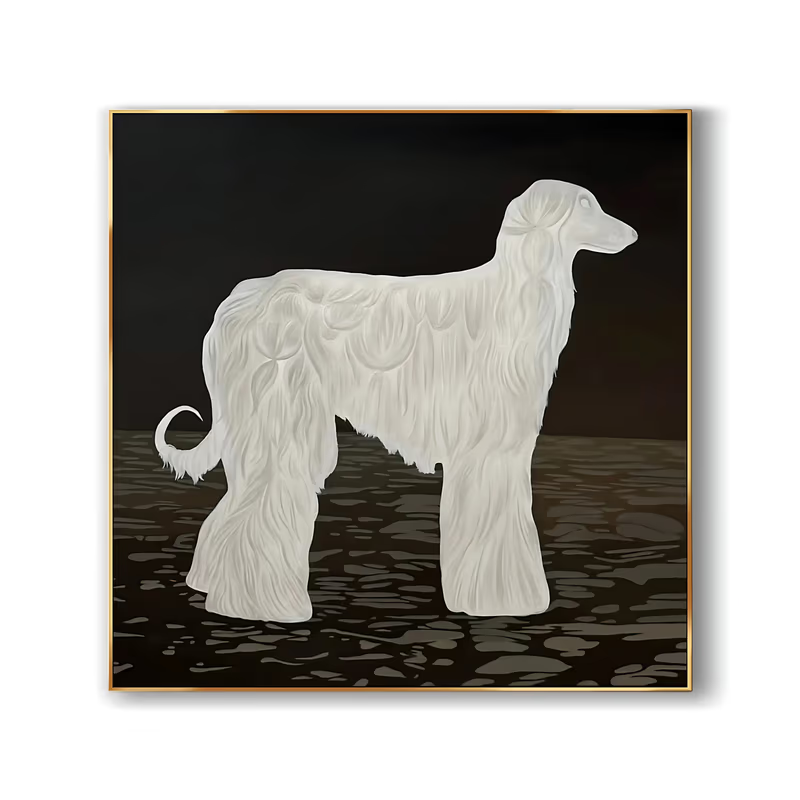
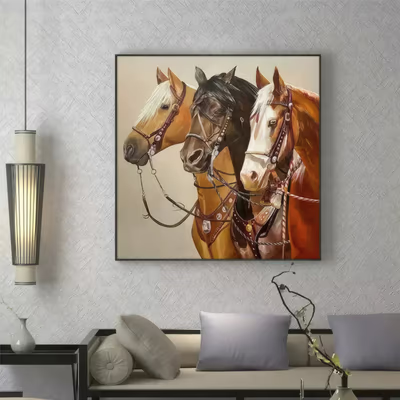
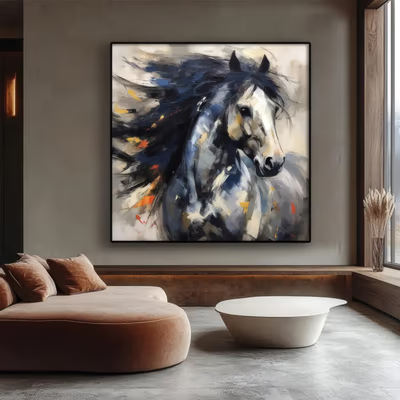
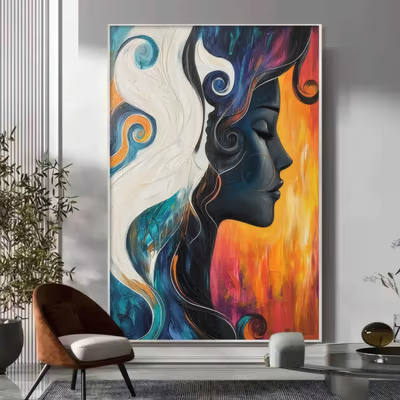
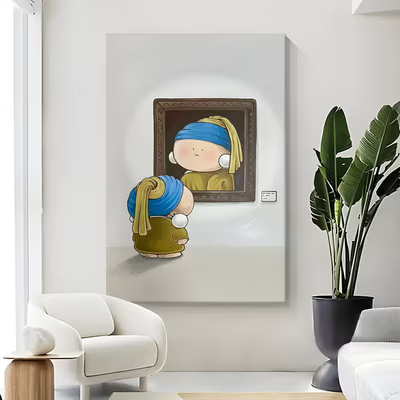
A chestnut horse, a leopard against black, a faceted portrait in a headscarf. A single character piece makes an office feel like yours rather than a meeting room, and gives a video call a talking point. Animal and portrait art.
What size should home office art be, and where should it hang?
Above a desk, choose home office art about two-thirds of the desk's width; on a camera wall, size it so it fills one side of the frame without being cut off at the top.
Above the desk
For a 140 cm (55 in) desk, a canvas 80–95 cm wide balances it. Hang it 20–30 cm (8–12 in) above the desktop, or above the top of a monitor if one stands against the wall. Remember that you will see it from a seated position, so a centre slightly lower than the usual standing eye level of 145–152 cm (57–60 in) often looks right.
Behind your chair
Work out the visible area with the tape test, then aim for a canvas that takes up roughly a third to a half of that rectangle. In a small spare room this is often a square or vertical piece of 50–80 cm; in a larger study with the desk well forward of the wall, a horizontal canvas of 100 cm or more reads well because distance shrinks it on screen.
In a small home office
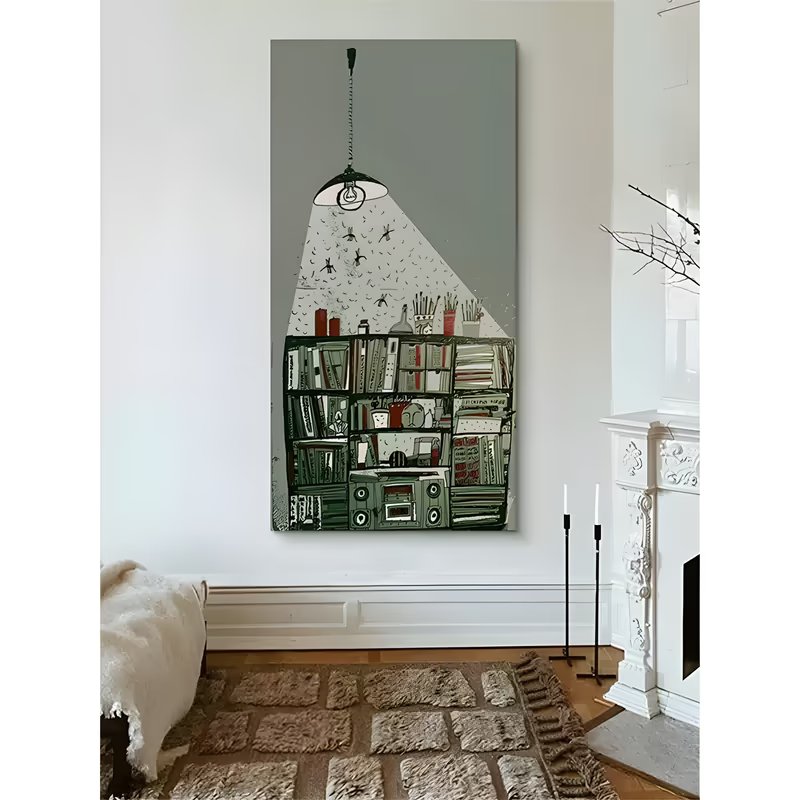
One well-sized painting beats several small frames in a box room, which quickly feels cluttered. If you have shelves behind you, hang the canvas beside them rather than above, so books and art do not compete.
Should a home office have one painting or a group?
A small home office usually works best with one painting or a matched pair; a larger study can take a group, provided the camera wall stays simple.
Behind your chair, a single canvas or two identical-sized pieces side by side look calm and professional on screen. A gallery wall there tends to read as clutter on a video tile, however good each piece is. Groups belong on the walls you see but the camera does not: a side wall, the space above a reading chair, or the wall opposite the desk.
If the office doubles as a guest room, choose art that suits both uses, gentle enough for sleep and composed enough for work; see bedroom wall art. If it is where you meet clients in person, the same logic as a professional office applies: one confident piece, in a palette that fits your brand. Firms furnishing studies, partner offices or a whole floor can browse workspace and office art and art for corporate and professional offices.
How do you order home office art made to your size?
Send the width of the desk or the camera area you marked, a photo of the room, and any colours to match, and the painting is drawn to those proportions before it is painted.
Each home office canvas is painted to order, so the size can follow your webcam frame or the gap between shelves, and the composition is redrawn to suit it rather than stretched. The palette can be moved towards a paint code, a rug or your company colours. As it is painted, you receive photos or video of each stage, and work continues only once you approve; you also approve a photograph of the finished piece before it is sent.
Choose a rolled canvas, a stretched canvas ready to hang, or a frame in gold, silver, black, white or wood; a slim black or wood frame gives a crisp edge on camera. Painting takes about 10 days and delivery 5–7 days, worldwide, by DHL, FedEx or UPS express, and you know the shipping cost before the piece is sent. Request a quote or read about custom commissions.