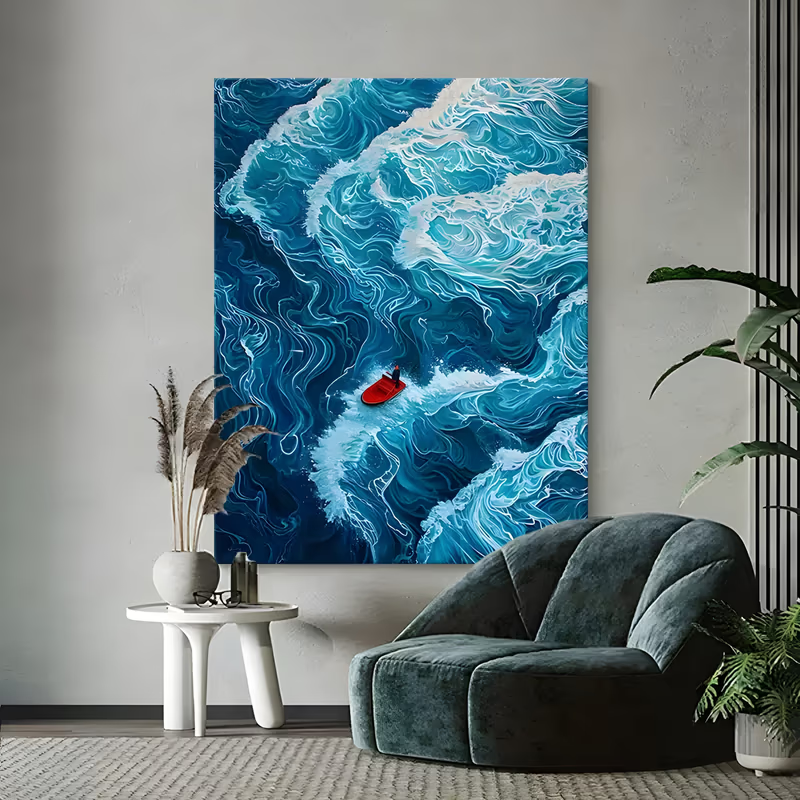
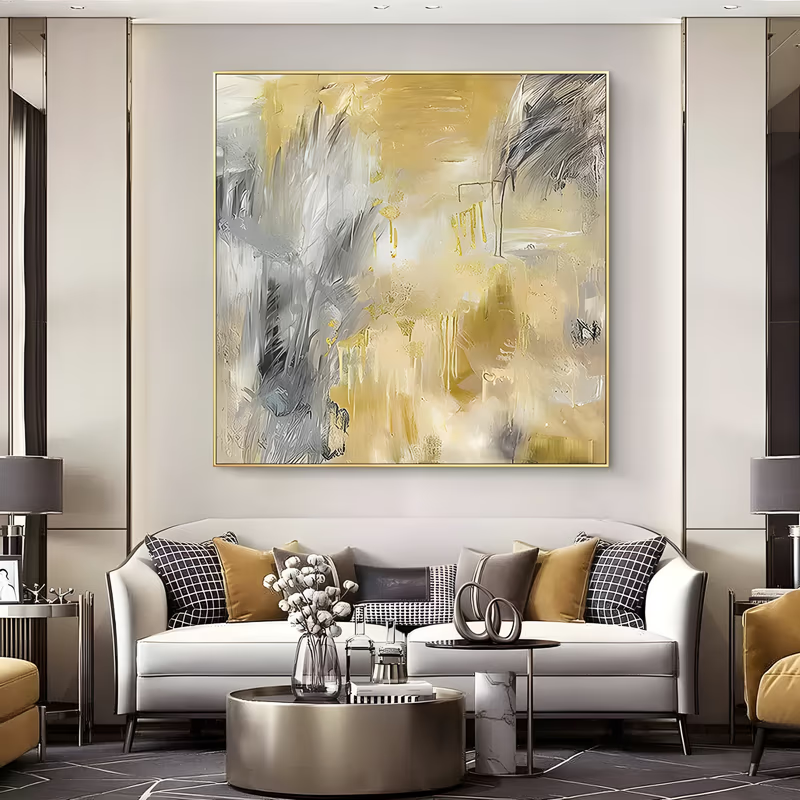
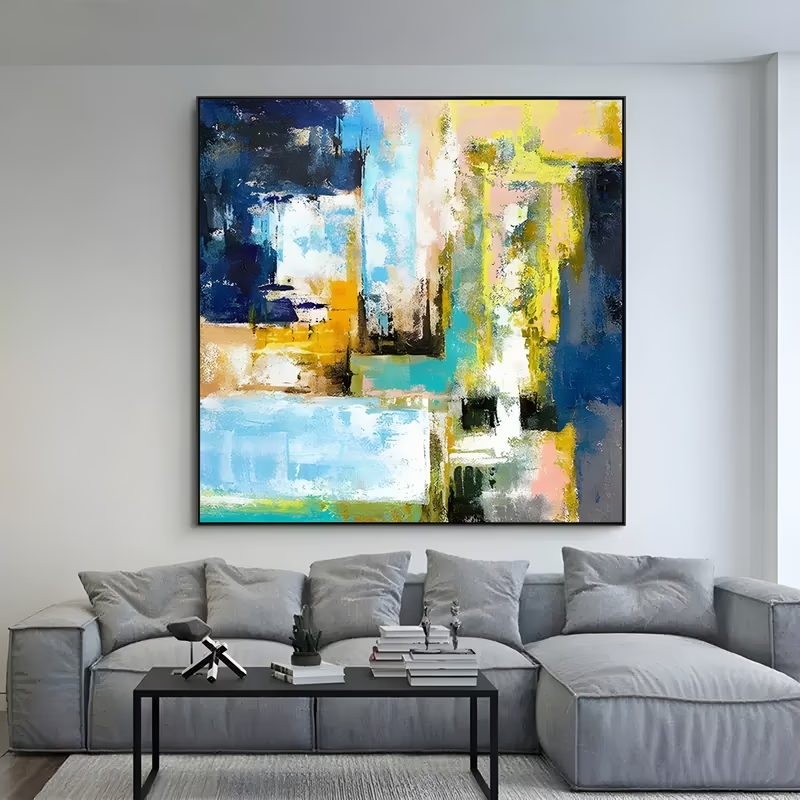
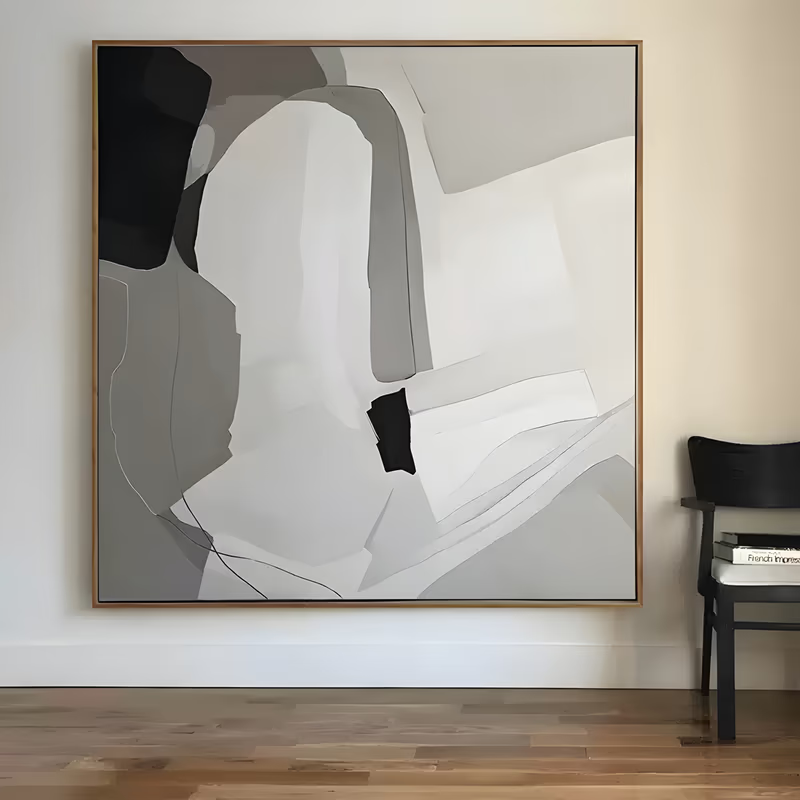
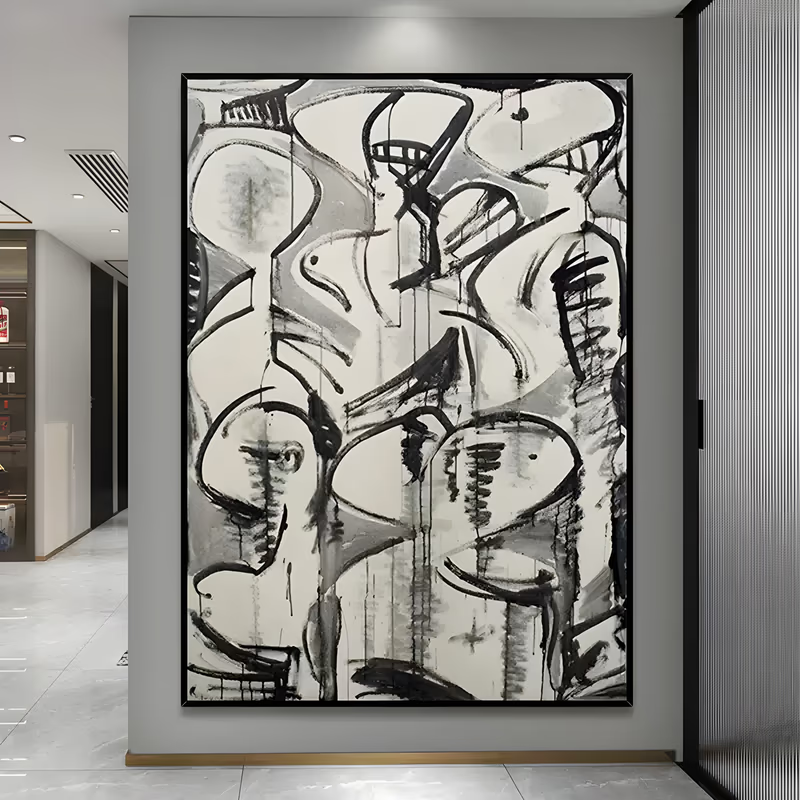
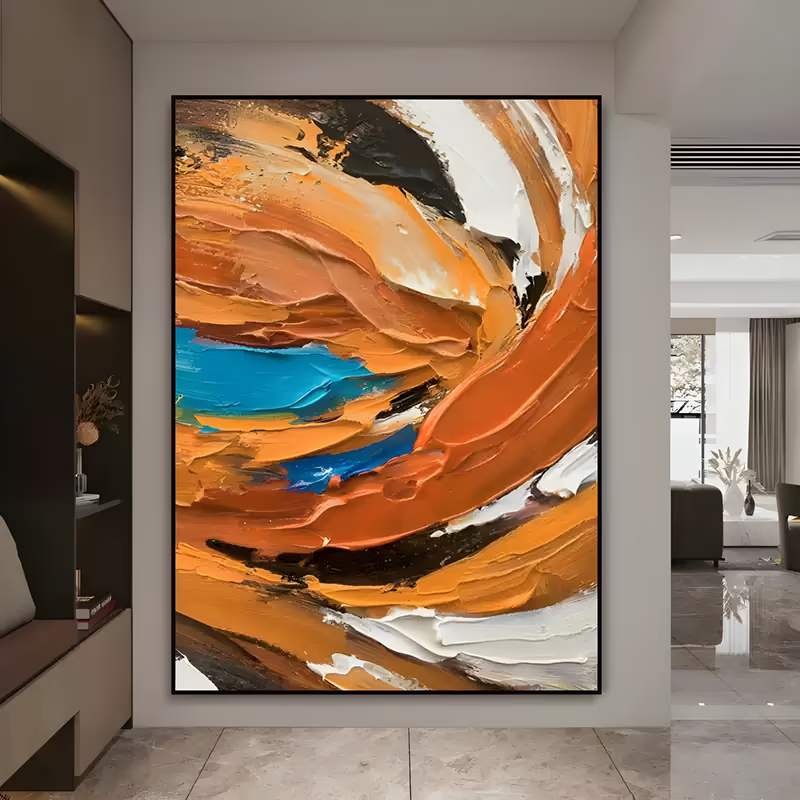
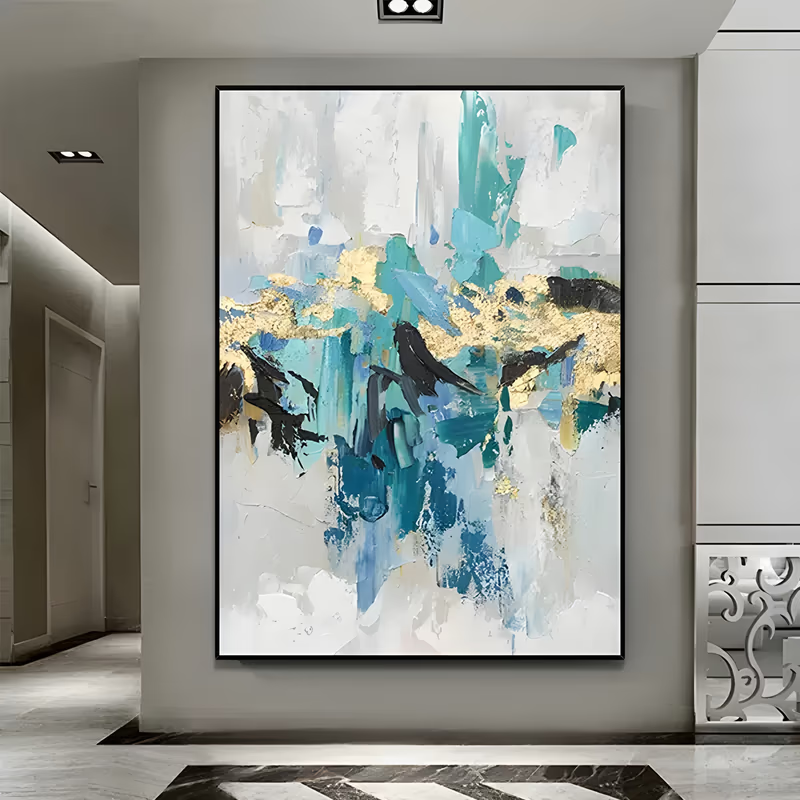
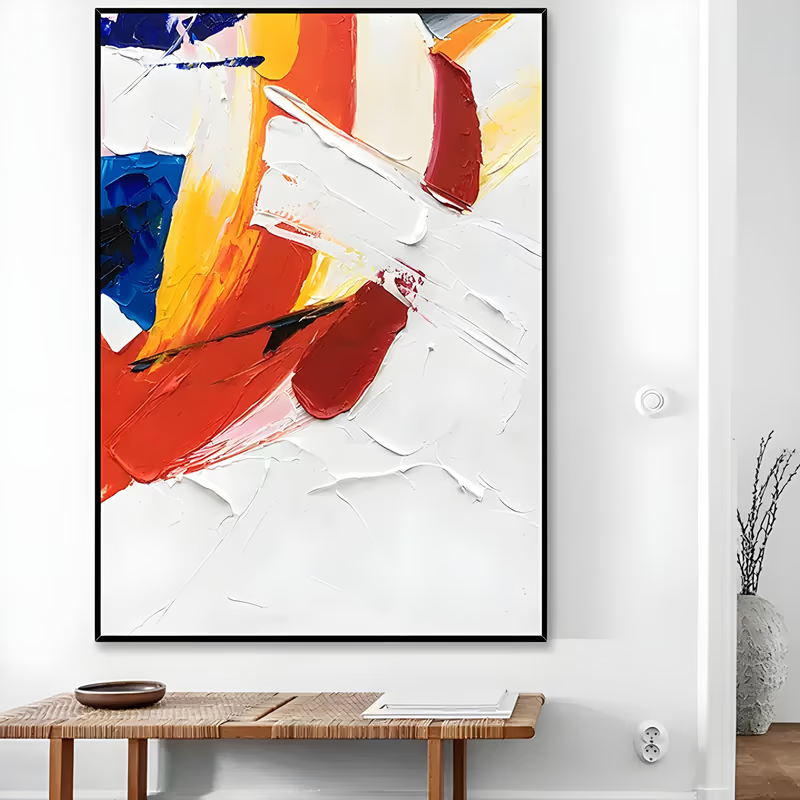
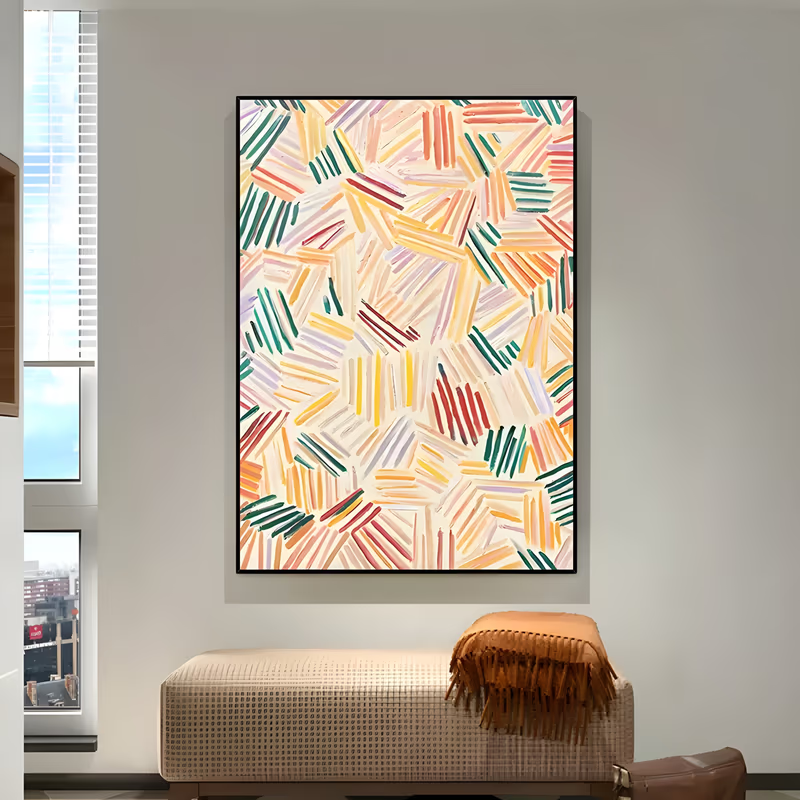
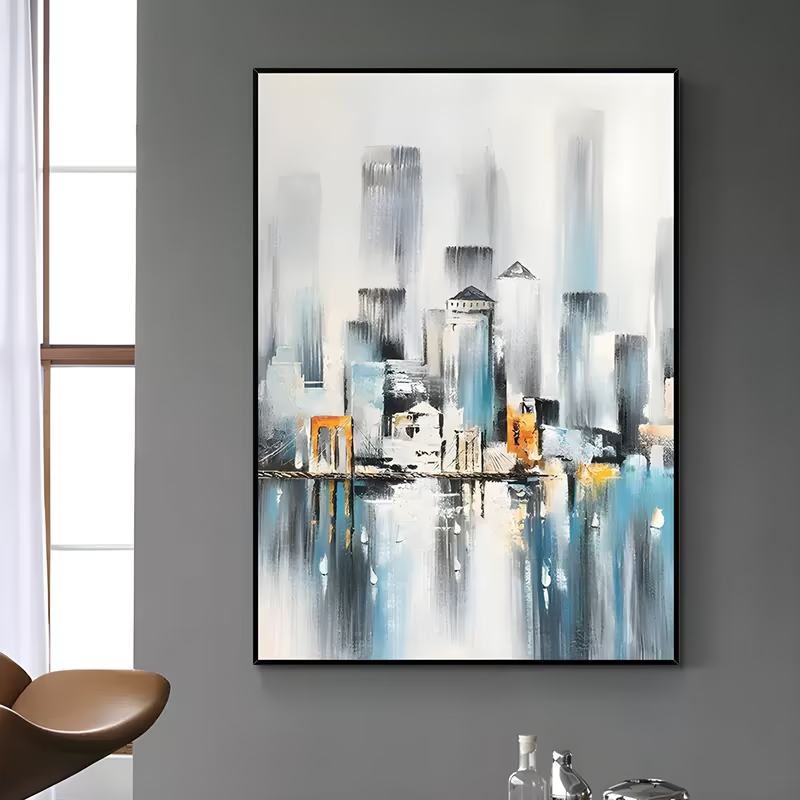
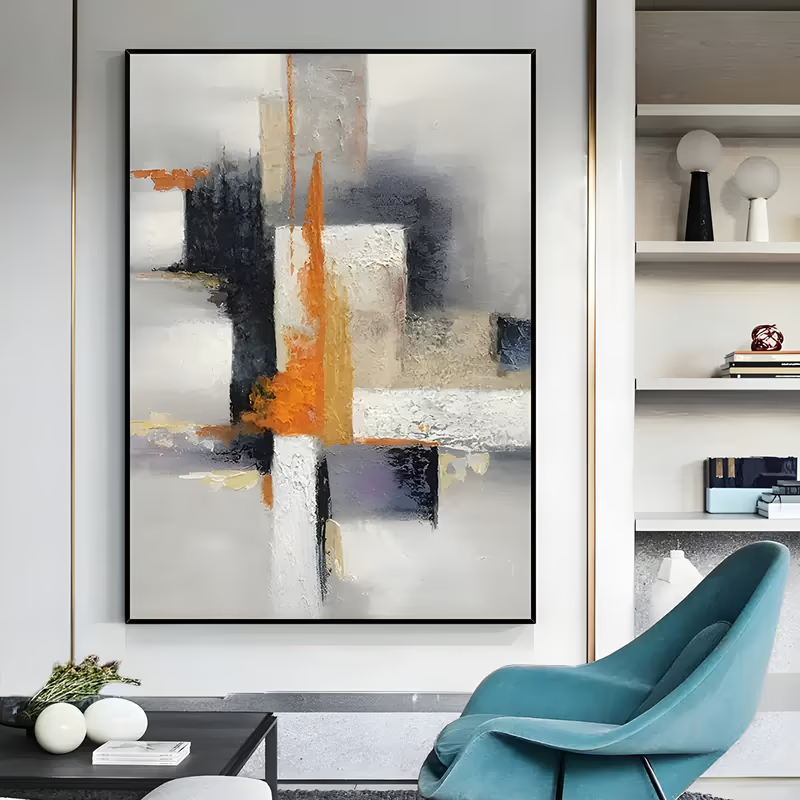
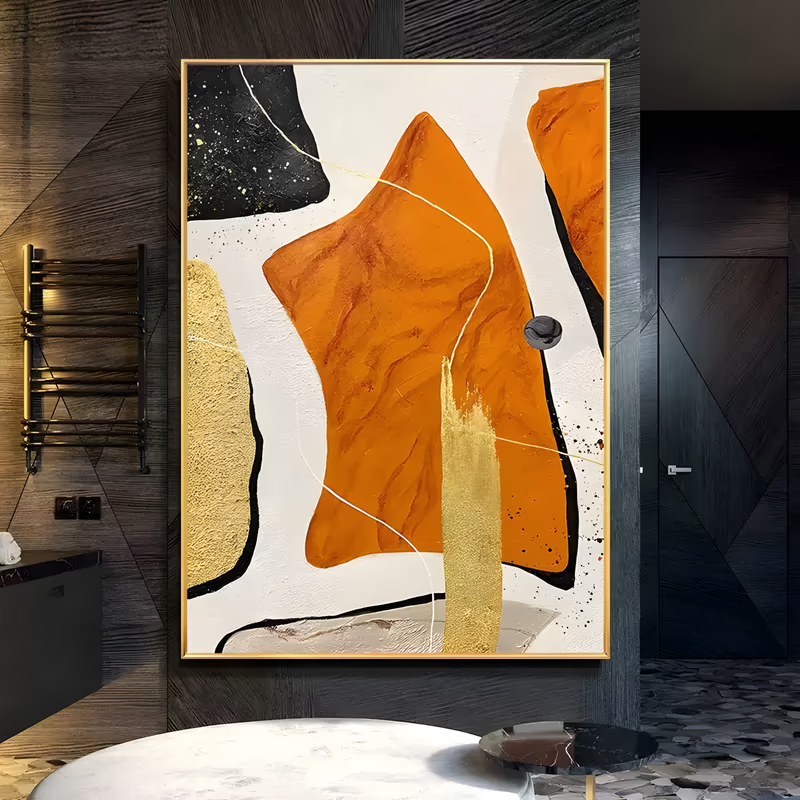
Office art guide · Updated
How to choose wall art for an office floor
Key takeaways
- Match energy to the zone: quiet, low-contrast work where people concentrate; colour and movement where they gather, eat and talk.
- Fewer, larger pieces beat clutter: on an open-plan floor, a steady rhythm of large canvases reads better than dozens of small frames.
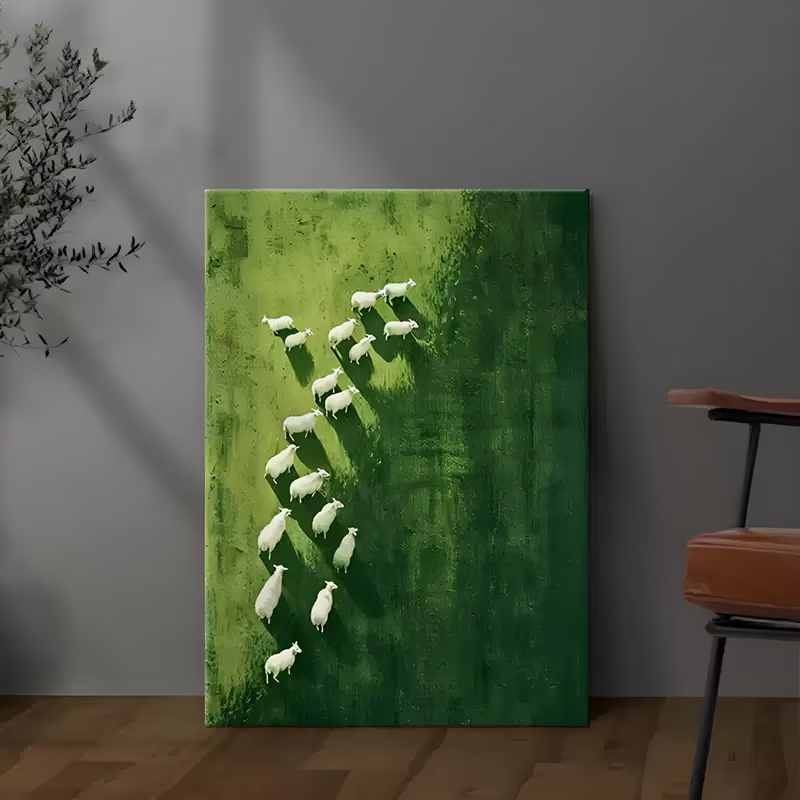
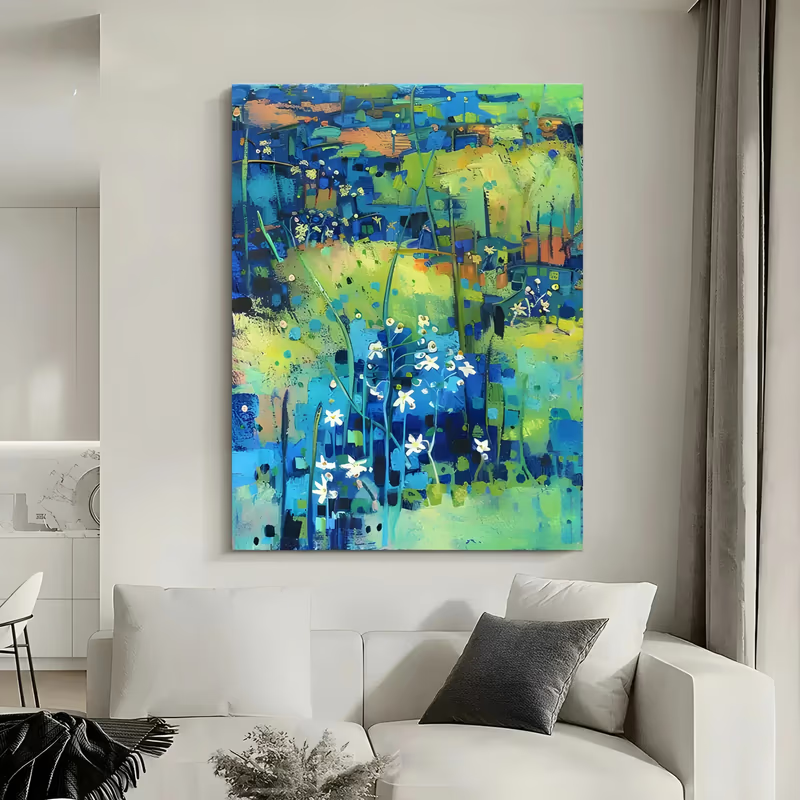
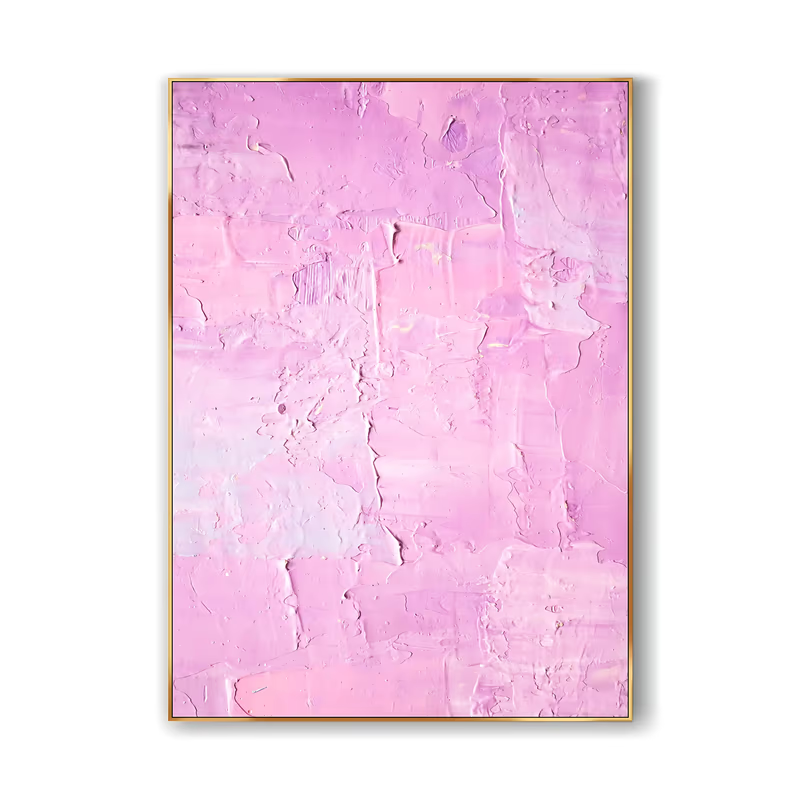
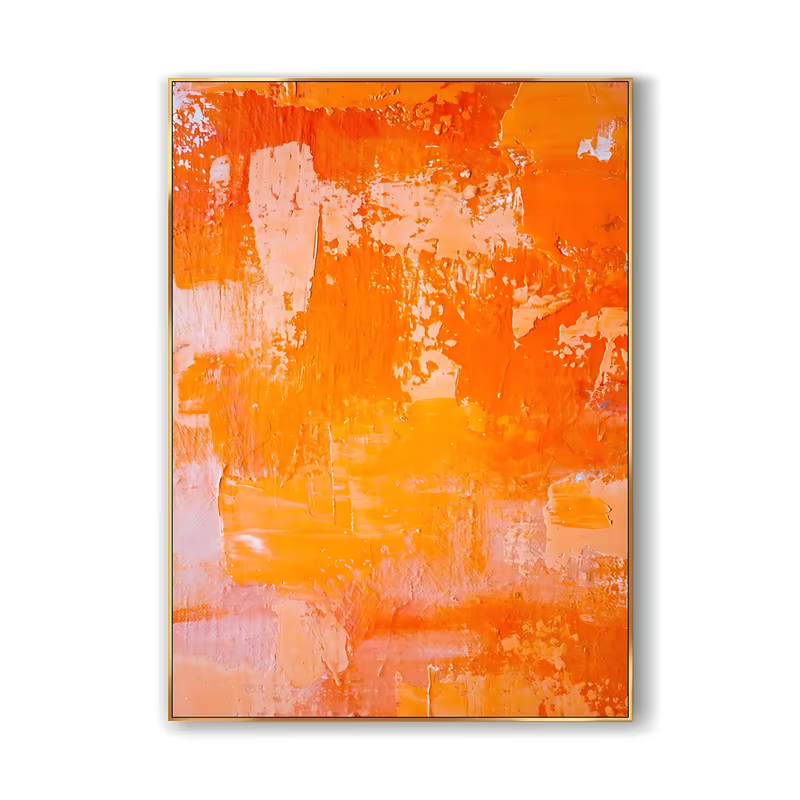
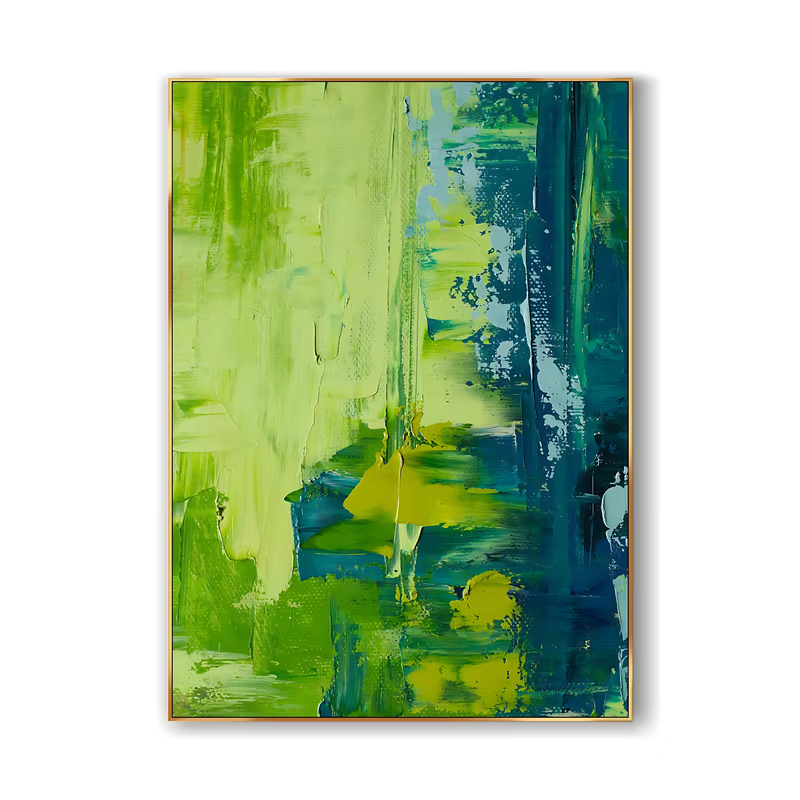
- Use colour to say where you are: one composition painted in a different colourway on each floor turns the art into part of the wayfinding.
- Approve one, then order the floor: hang a sample in the real light, then roll the series out with volume pricing from 10 pieces.
What should office wall art do for a workplace?
Office wall art should give a floor its own character, give tired eyes somewhere to rest away from the screen, and show what the company is like without a single slogan.
An office is mostly white walls, glass, carpet tiles and monitors. Without art, one floor looks like every other floor in the building, and the people who work there spend the day looking at a screen at arm's length. A painting across the room gives the eye a far point to settle on, which is the same habit eye-care advice recommends during long screen sessions: look up, look across, refocus.
Art also says something about the company to staff and to the candidates and visitors who walk through. Bold colour reads as confident and creative, restrained texture as calm and considered, a city skyline as rooted in a place. Choose subjects that most people can live with every day: abstracts, landscapes, cityscapes and nature are safe ground, while politics, religion and anything that needs explaining are best left out of shared space.
Which office wall art suits each zone of a working floor?
Quiet zones need calm, low-contrast work; collaborative and social zones can take colour, scale and movement.
| Zone | What happens there | Art that suits | Start with |
|---|---|---|---|
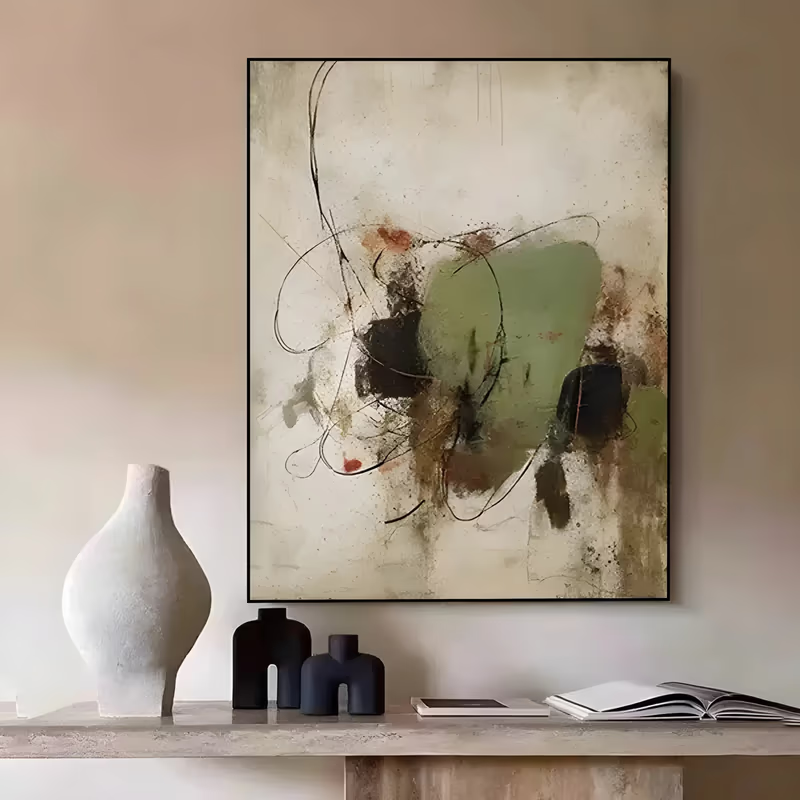
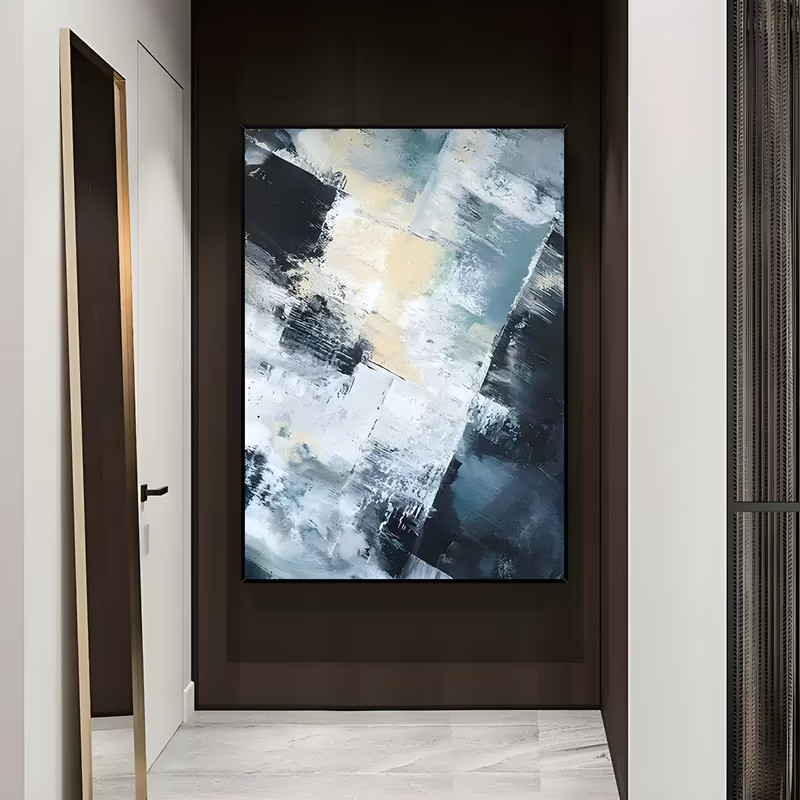
| Focus desks and quiet rooms | Long stretches of concentrated screen work | Soft geometry, textured neutrals, open landscapes | Minimalist, wabi-sabi, calming |
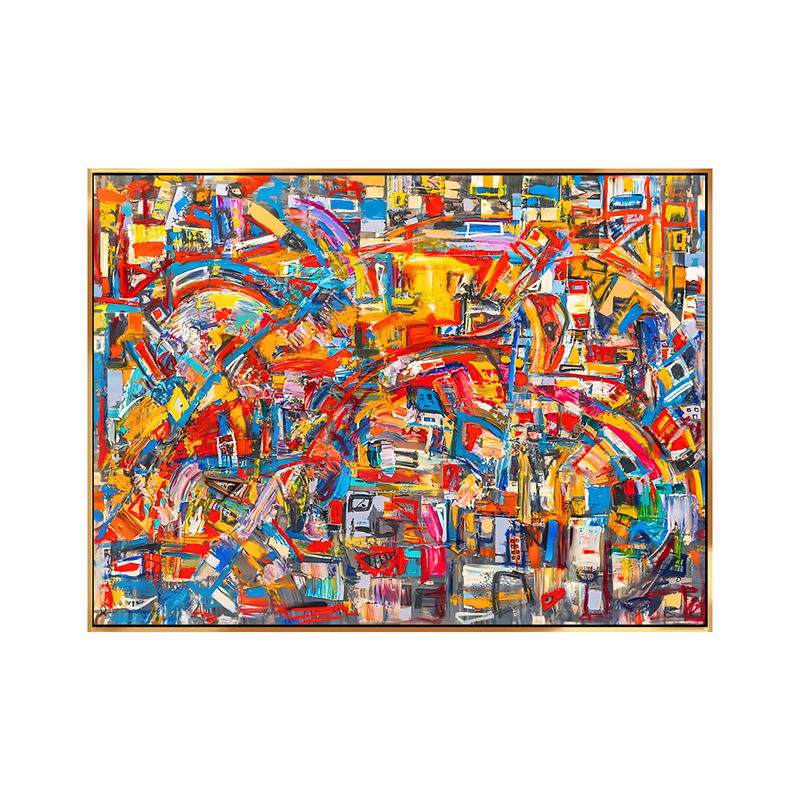
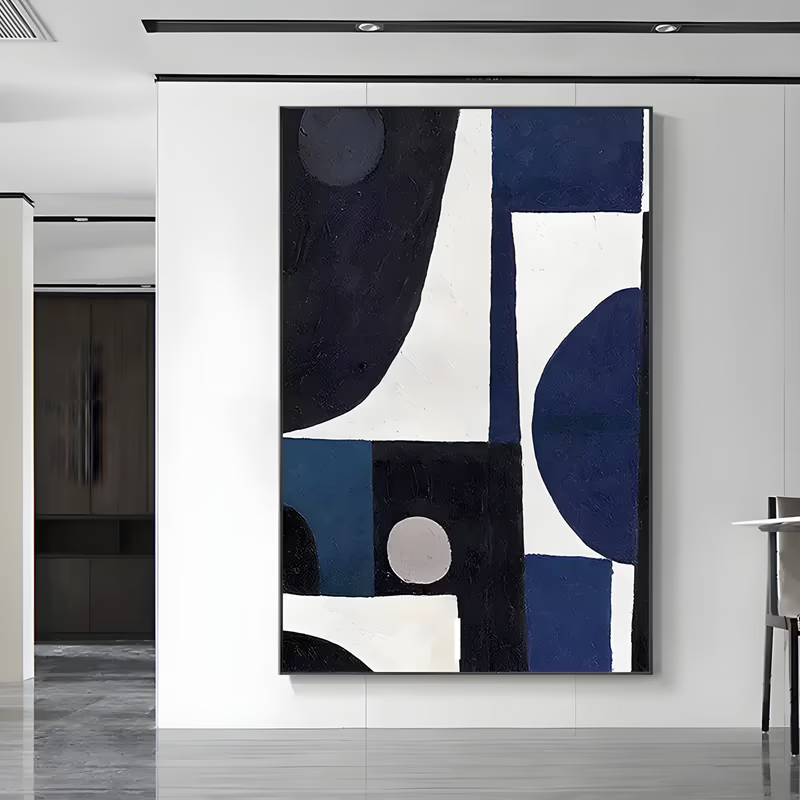
| Collaboration and project areas | Teams standing, talking and sketching at whiteboards | Confident geometric abstracts with a clear shape | Geometric, abstract |
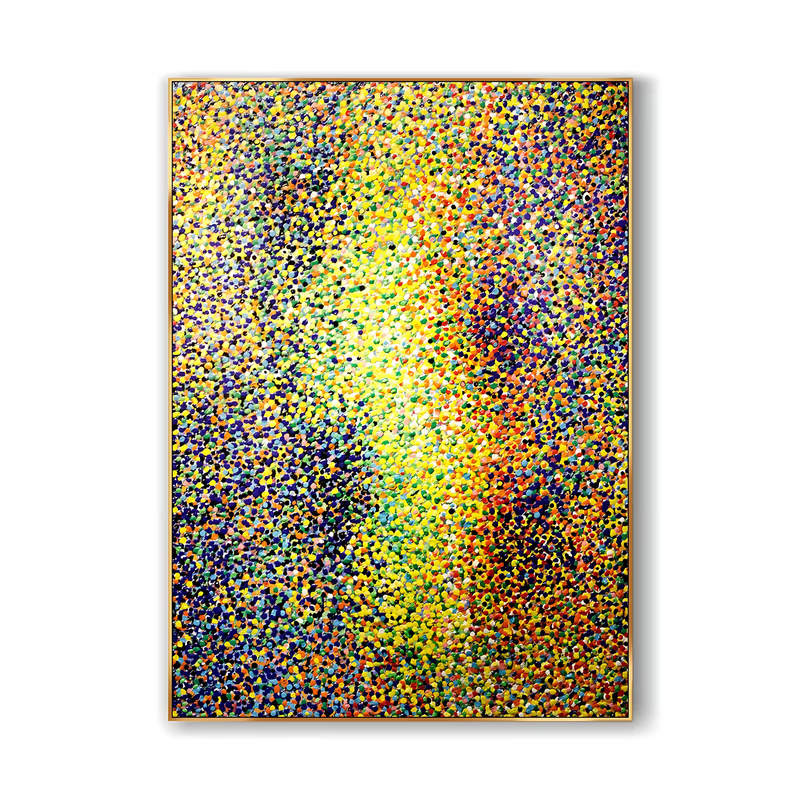
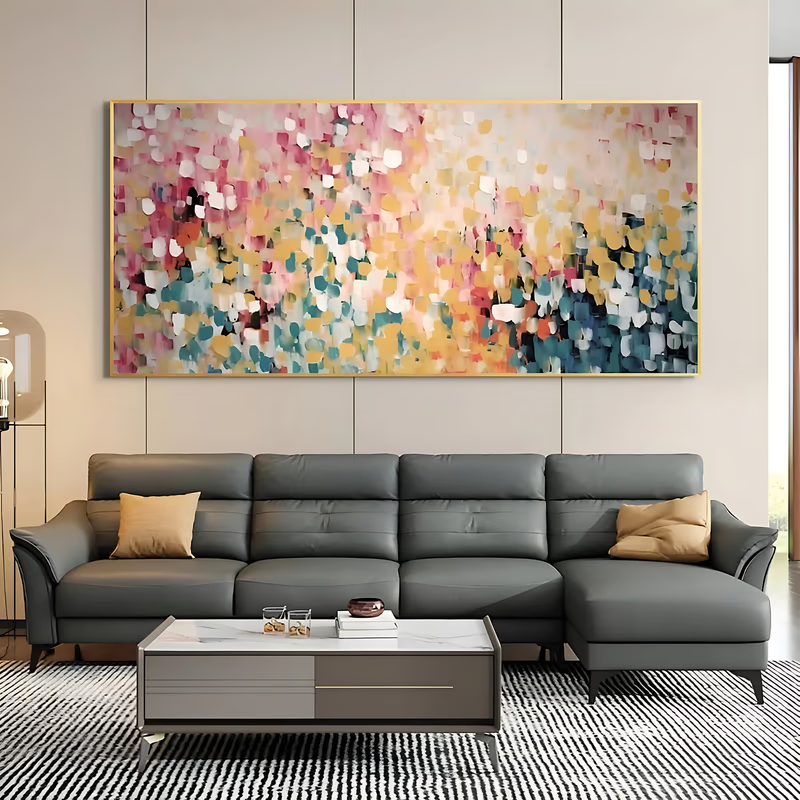
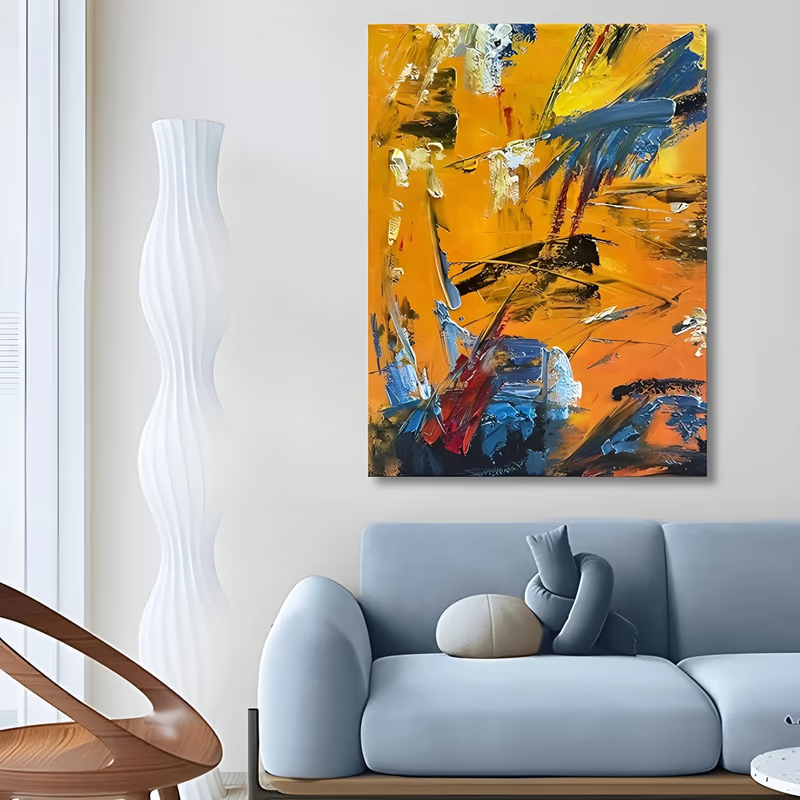
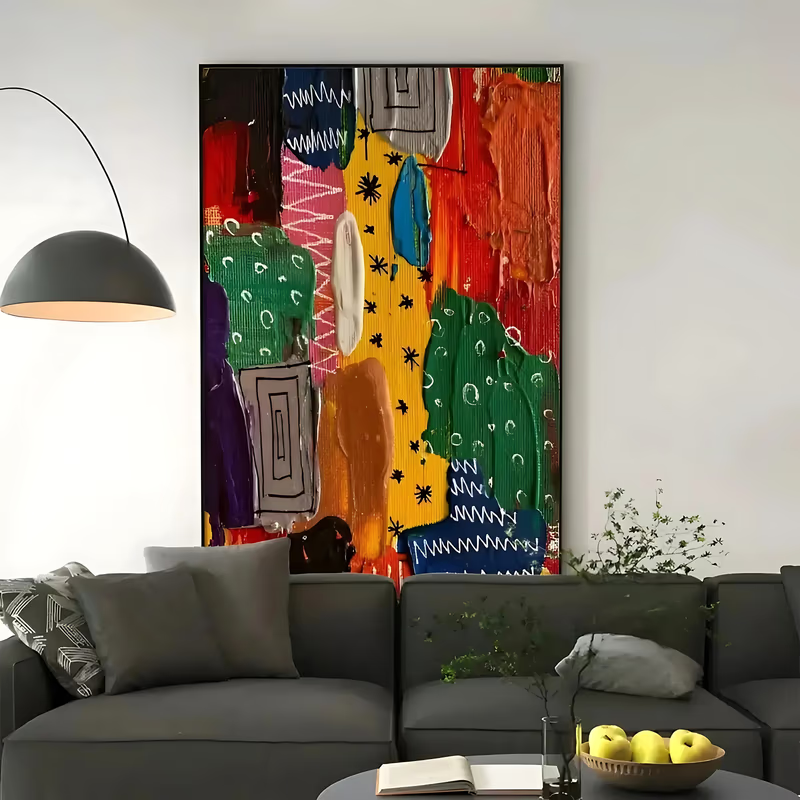
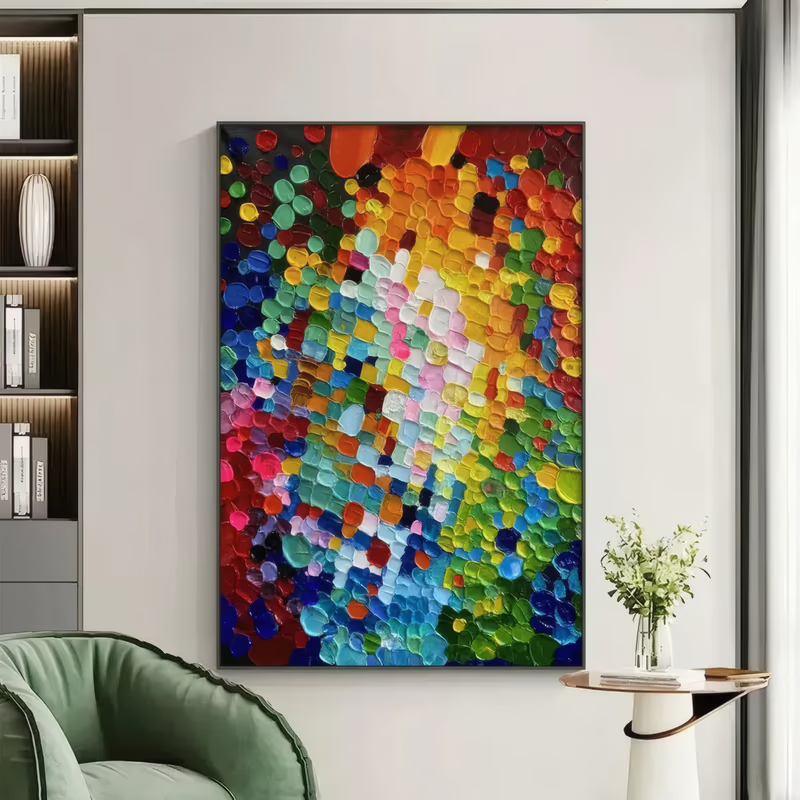
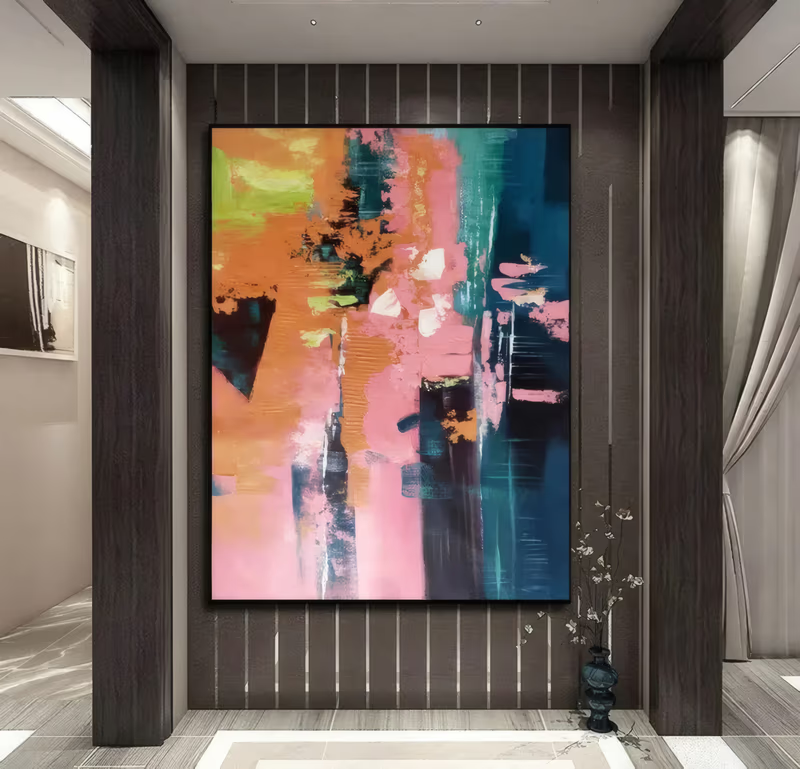
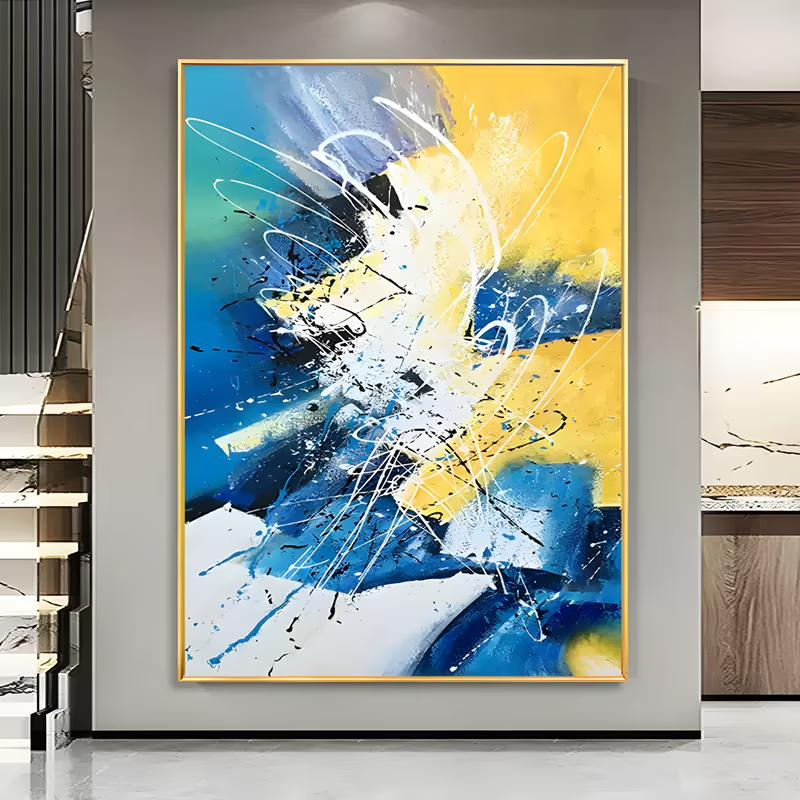
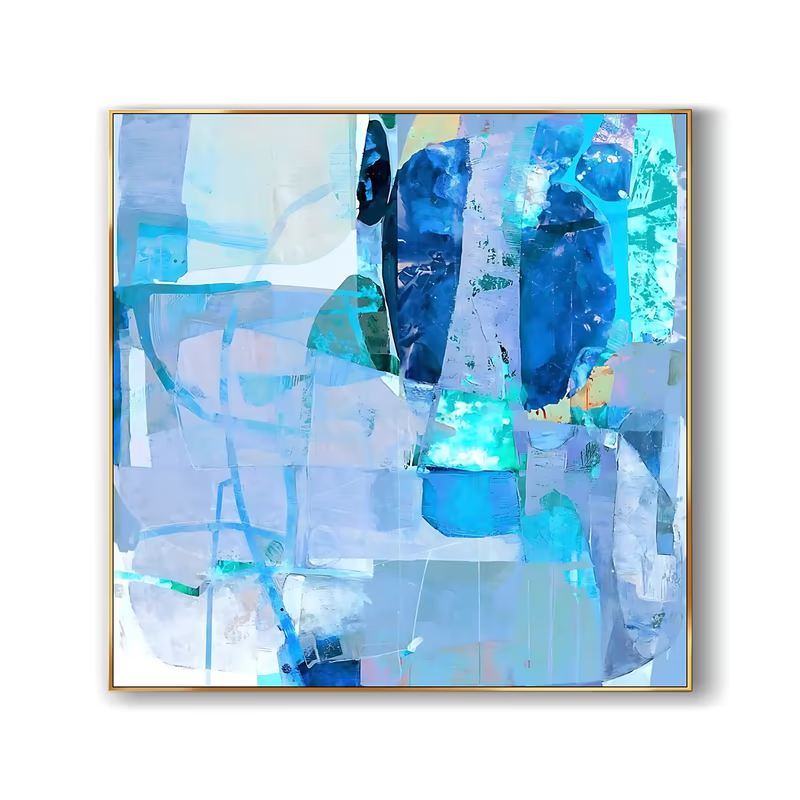
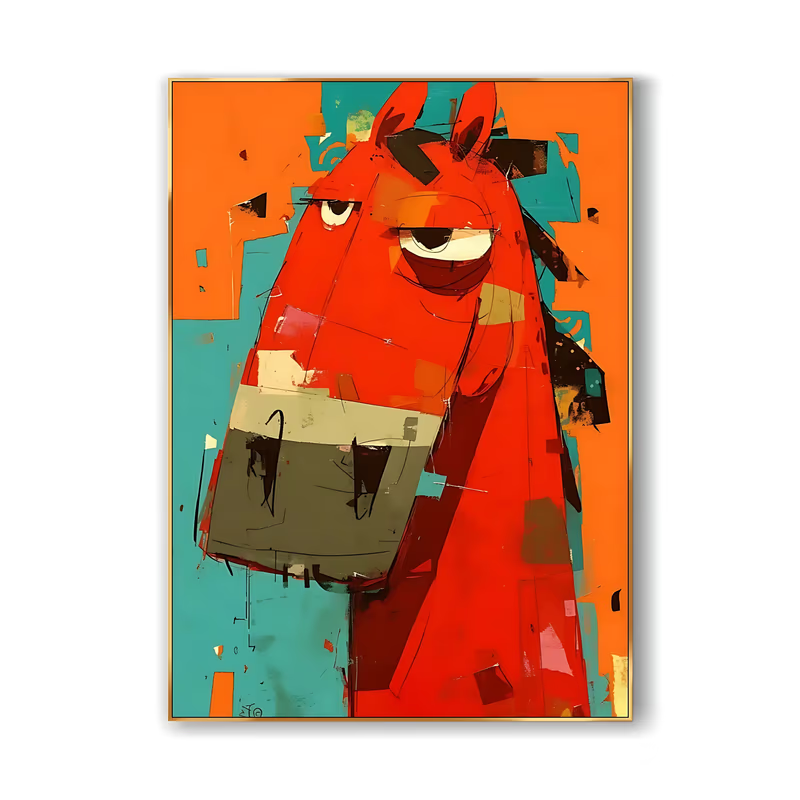
| Kitchen, café and breakout | Breaks, lunch, informal chats | The boldest colour on the floor; playful subjects | Colourful, uplifting |
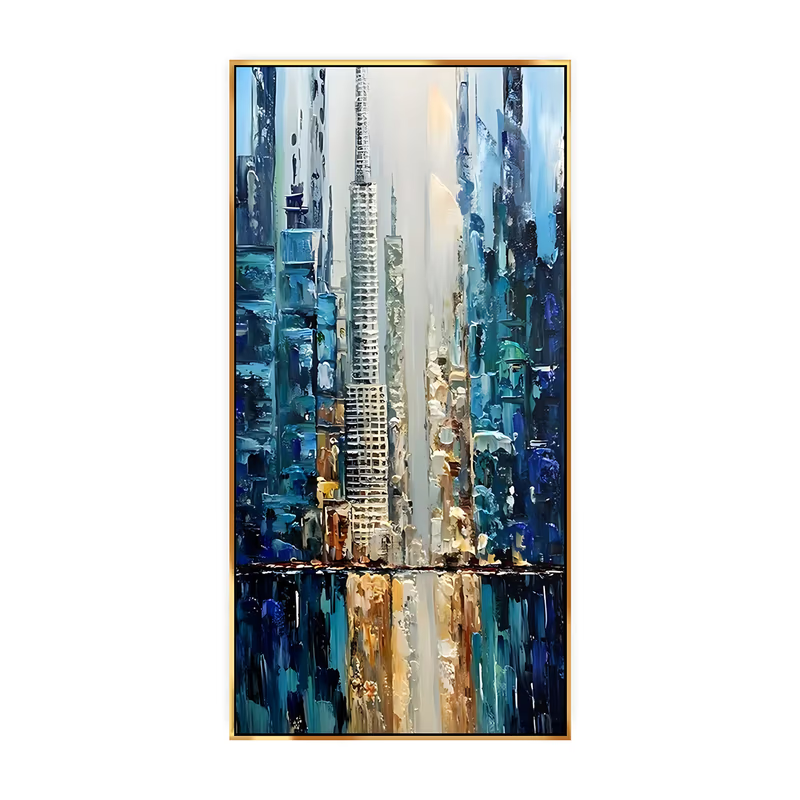
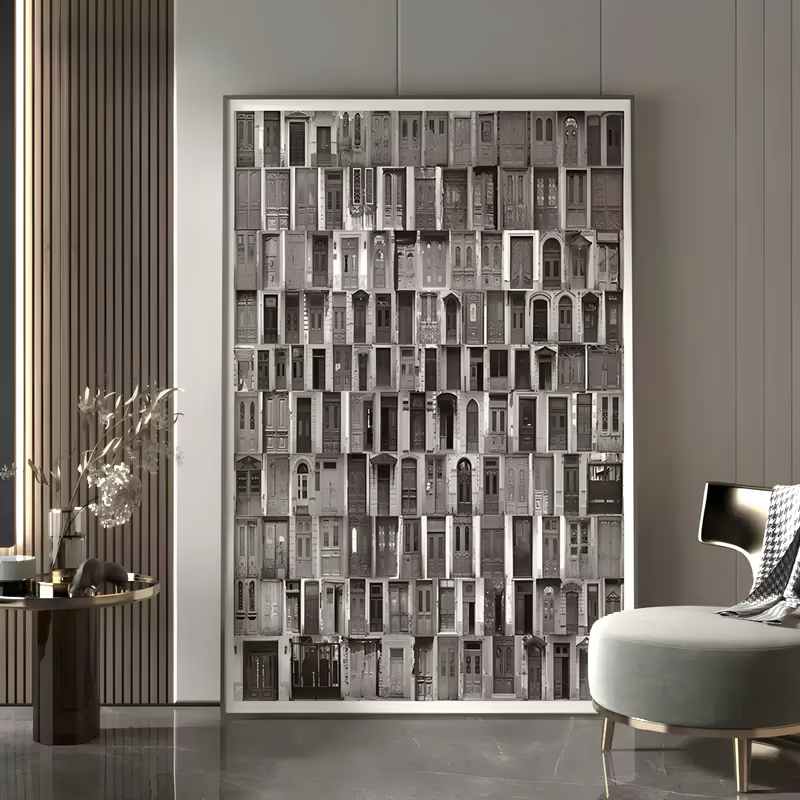
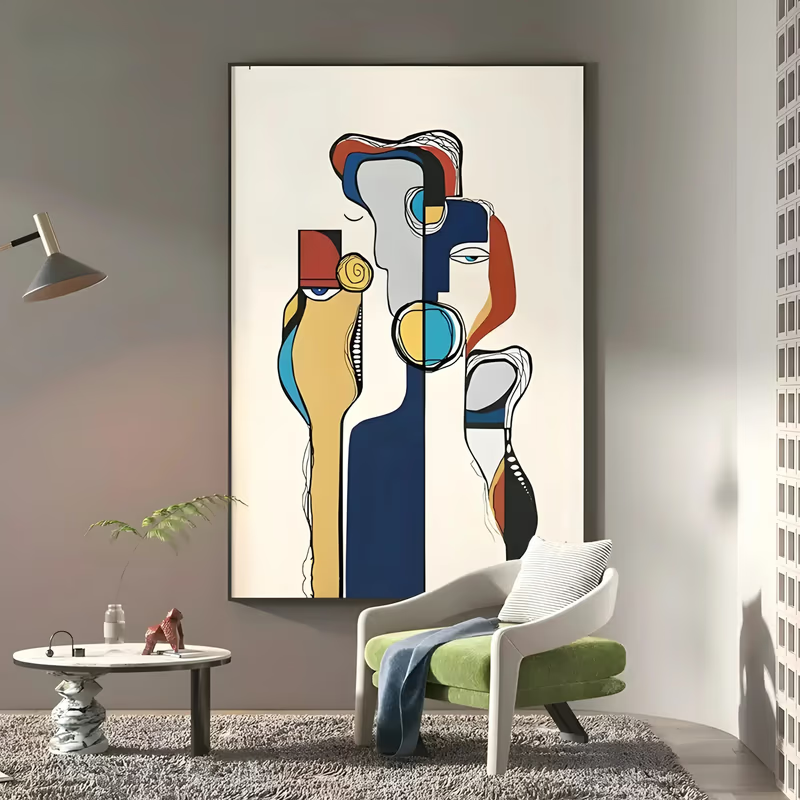
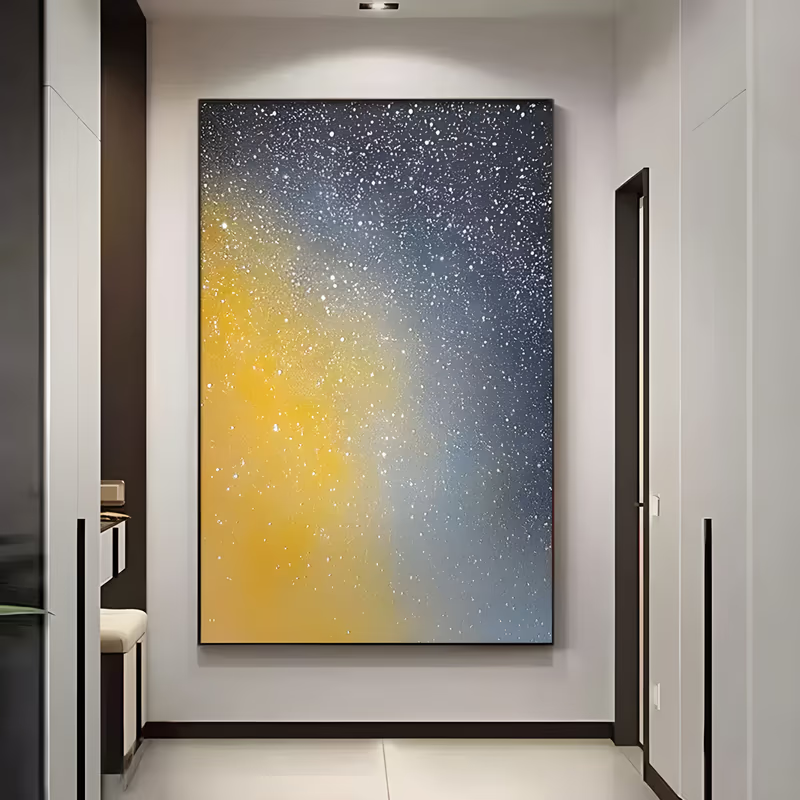
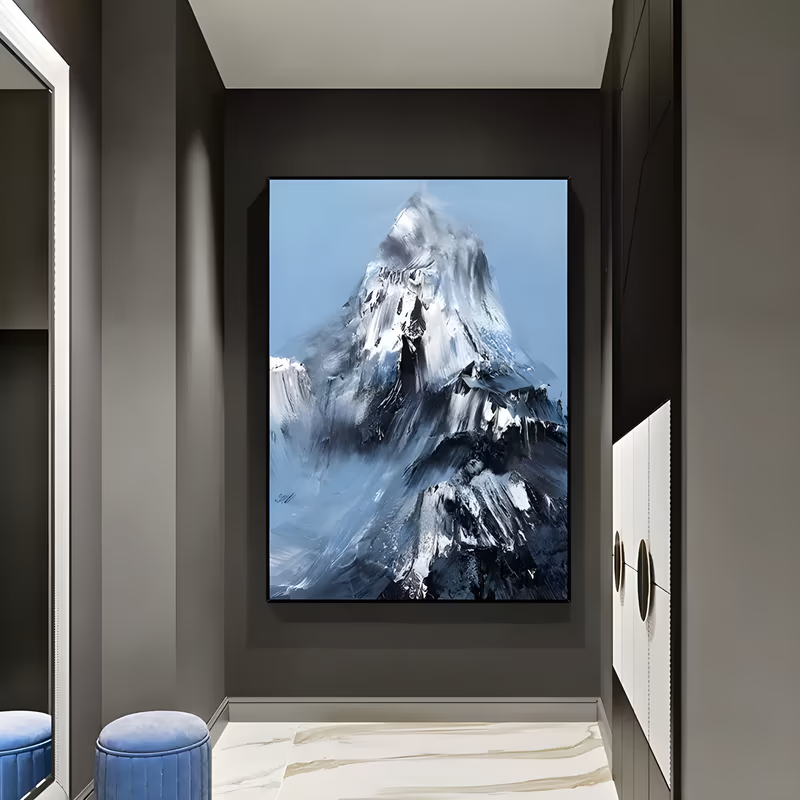
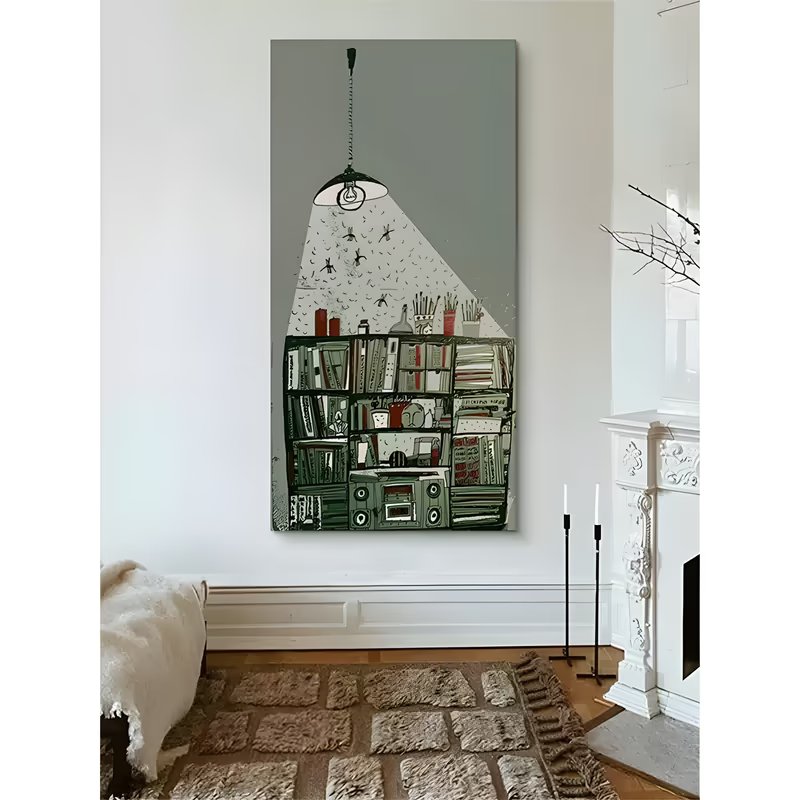
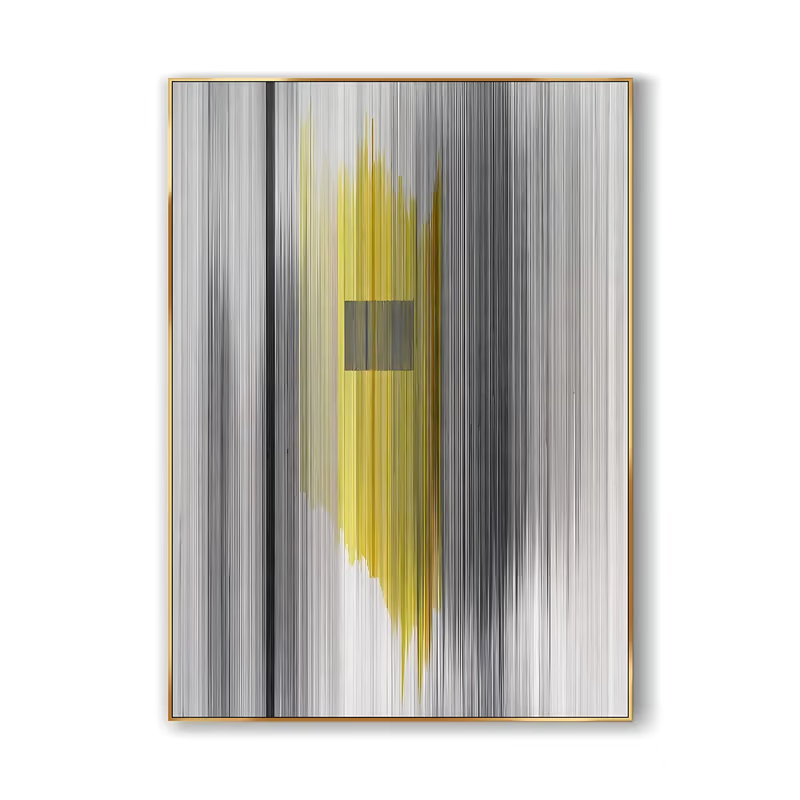
| Corridors and lift lobbies | Passing through, finding the way | A series of related canvases that marks the floor | Tall verticals |
| Phone booths and small focus rooms | Calls and short heads-down work | One small calm canvas, not behind the seat | Peaceful |
Reception and the client-facing meeting rooms have different jobs and their own pages: lobby and reception art for the first impression, and boardroom and conference room art for the rooms where clients sit down and the camera is on.
What kinds of office paintings are there?
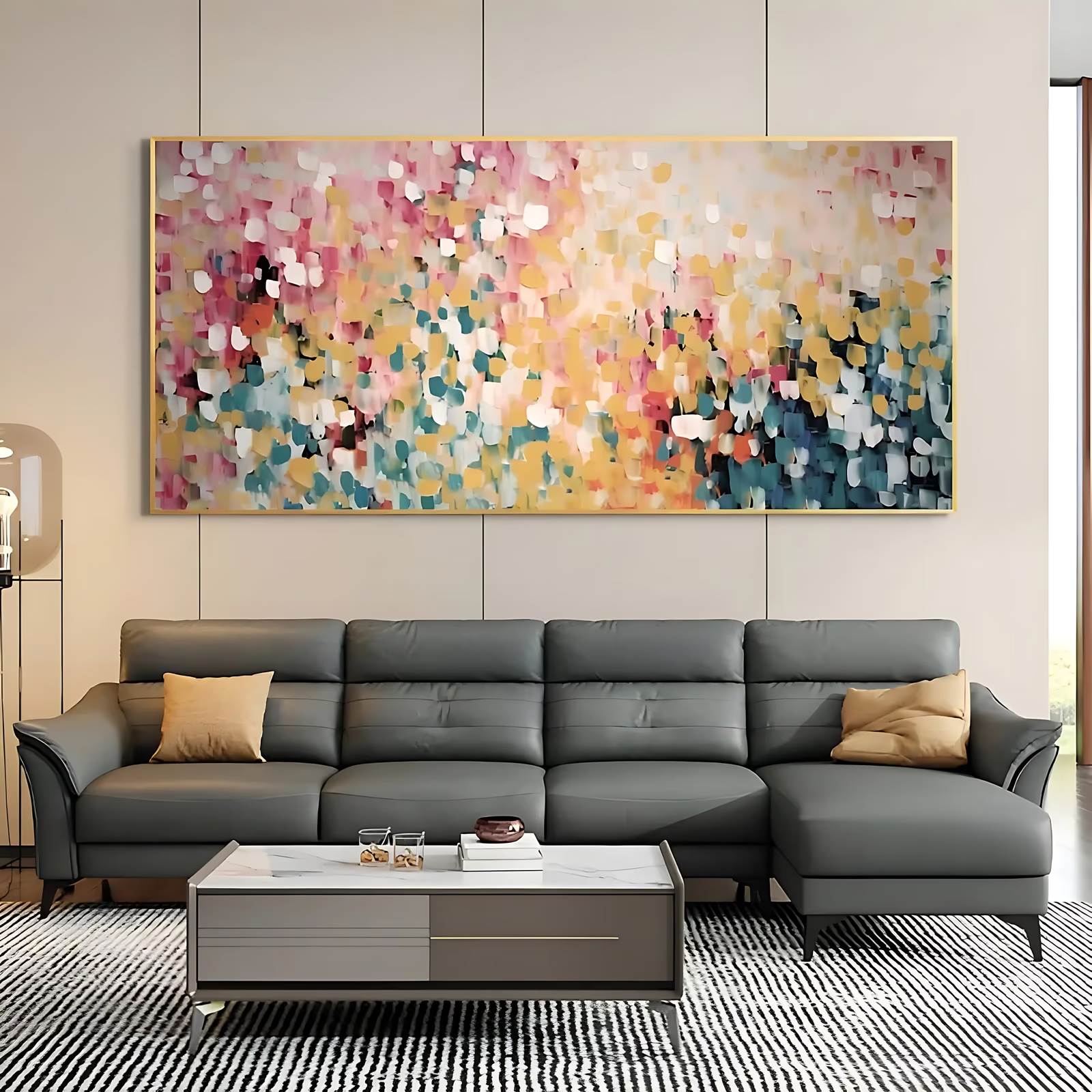
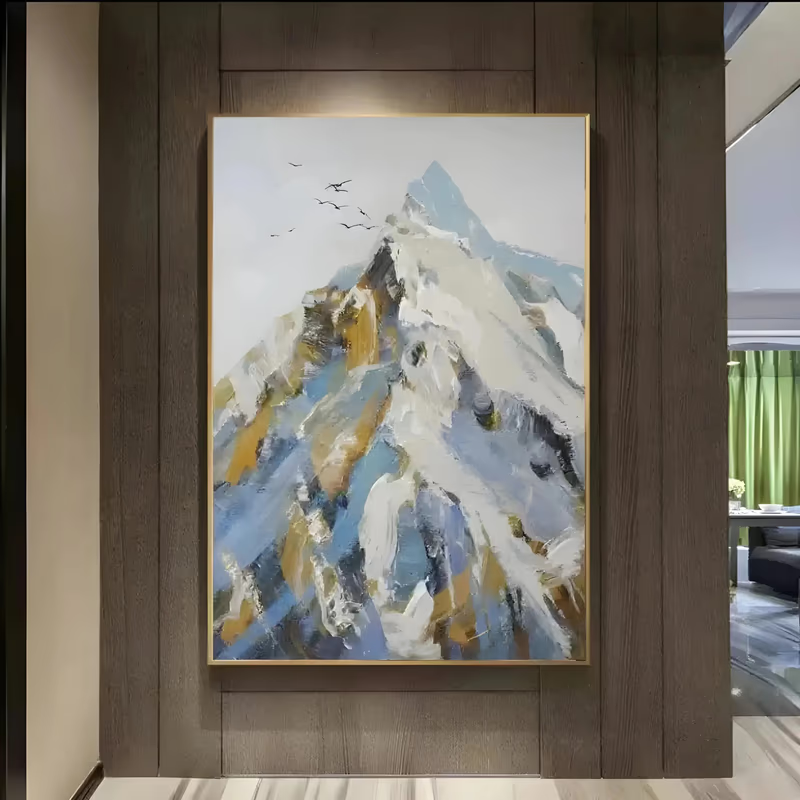
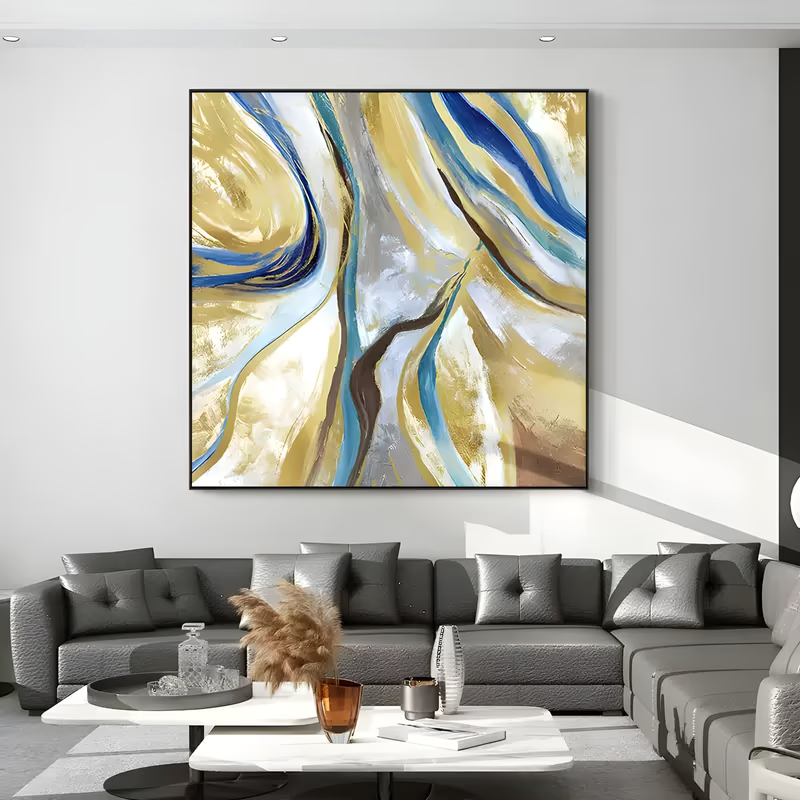
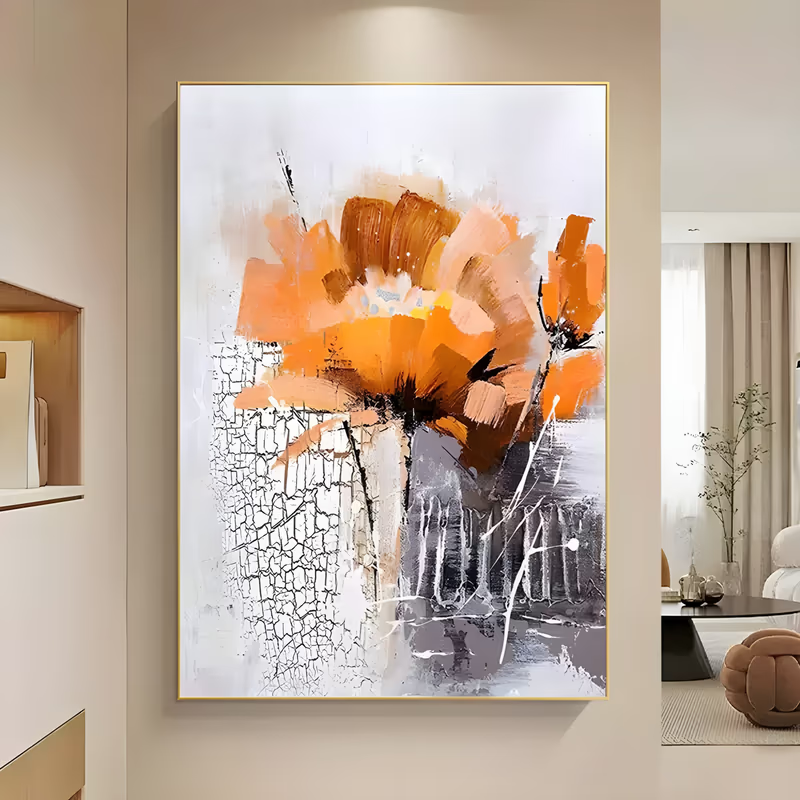
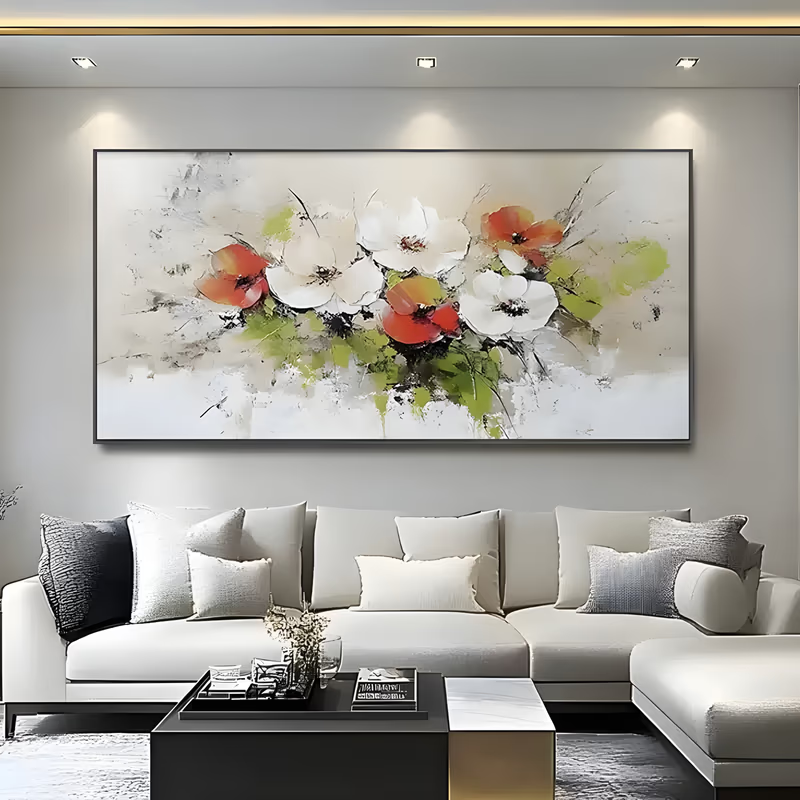
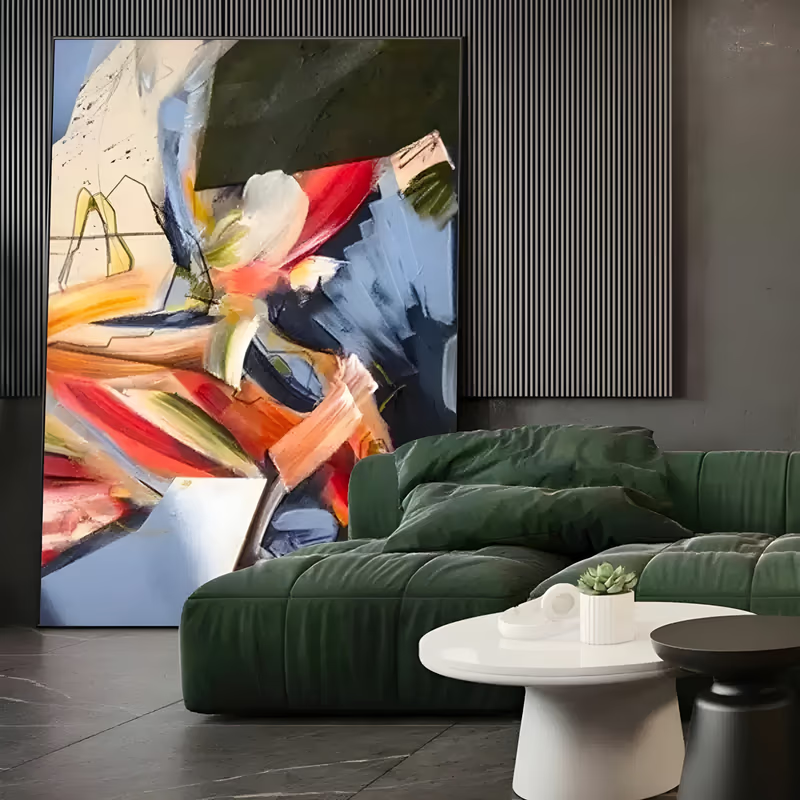
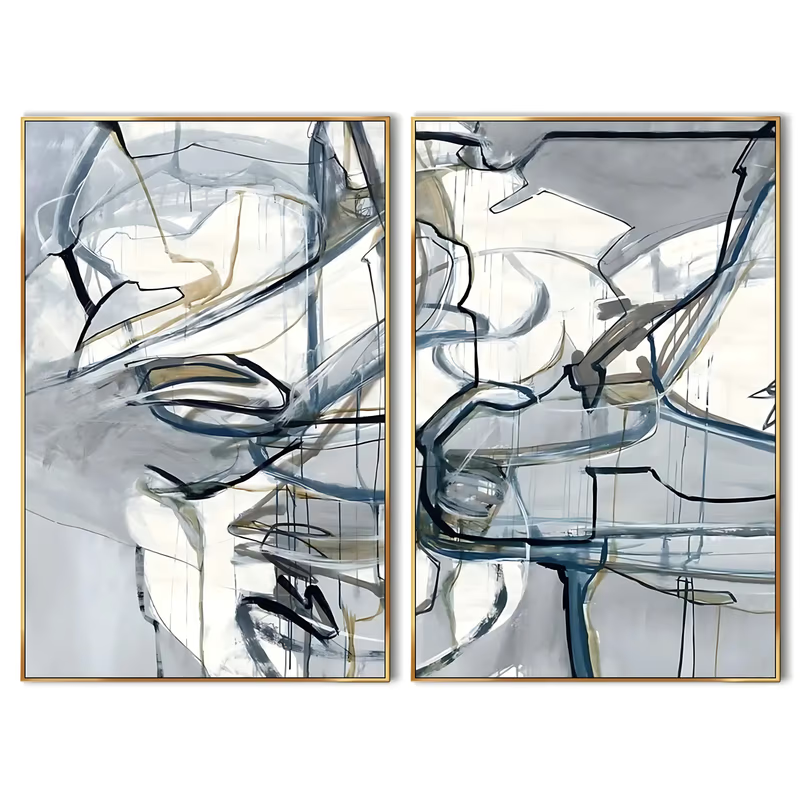
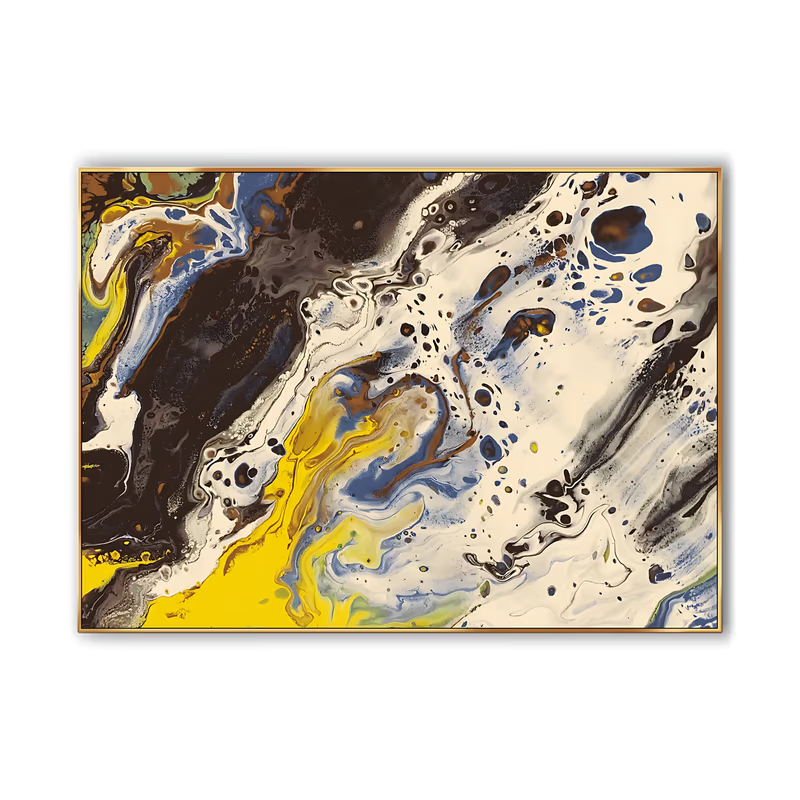
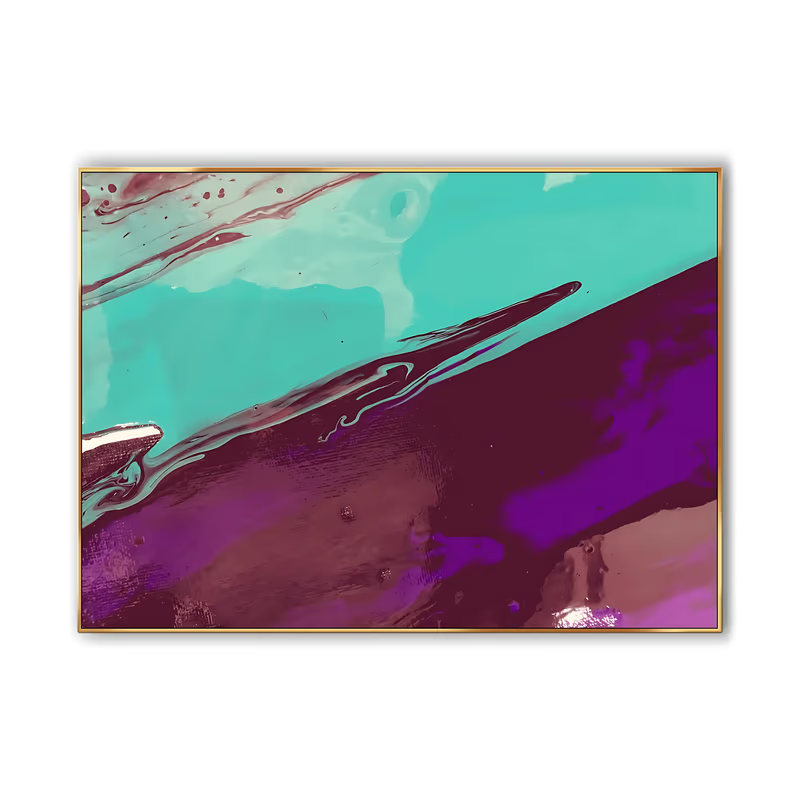
Office paintings here come in four main kinds: geometric and colour-field abstracts, textured and minimalist neutrals, city skylines, and bright colourful work for social spaces.
Geometric and colour-field abstracts
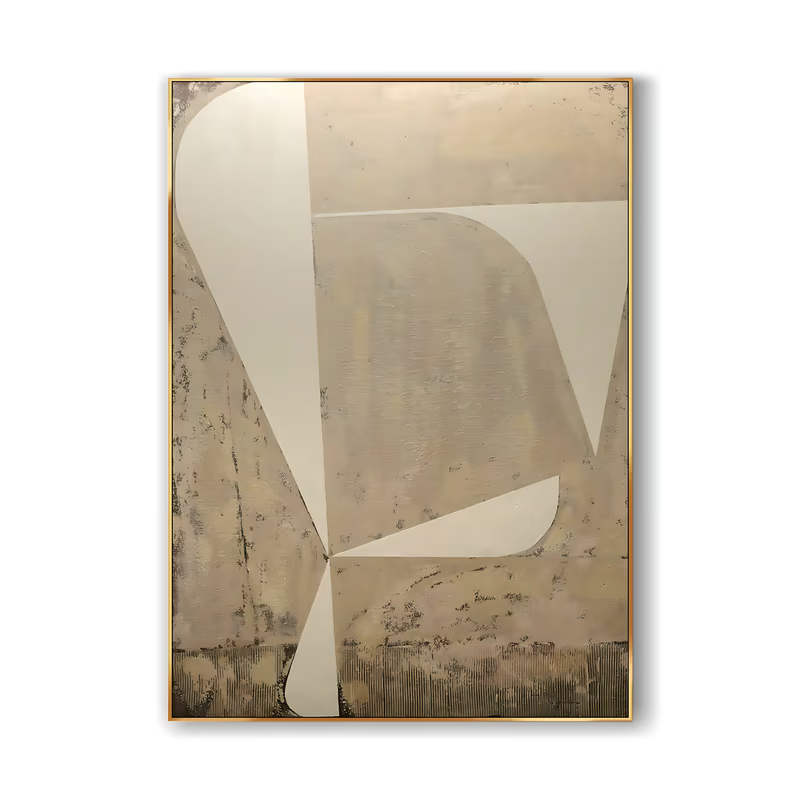
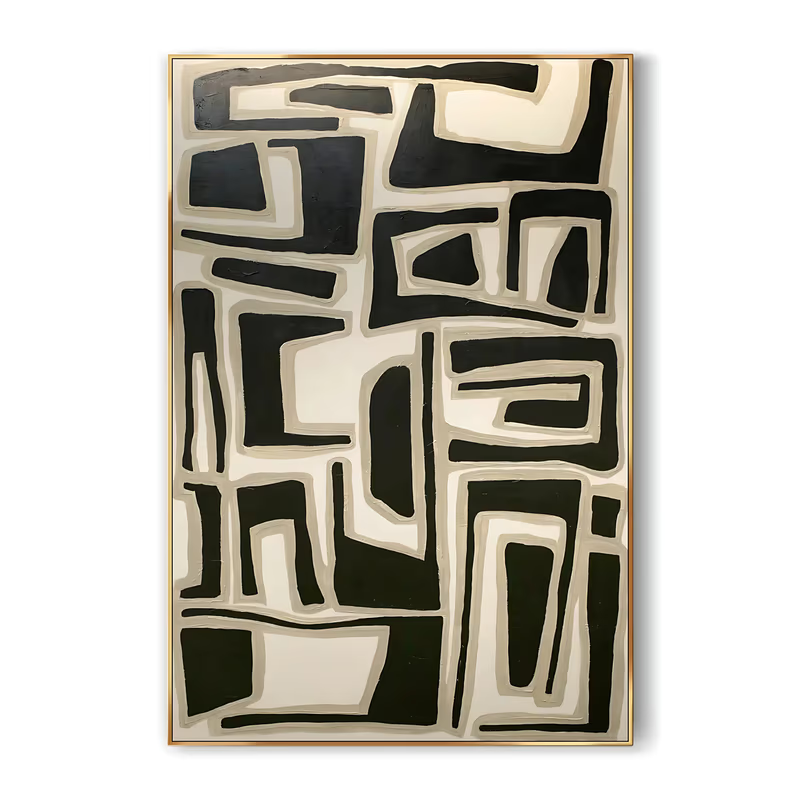
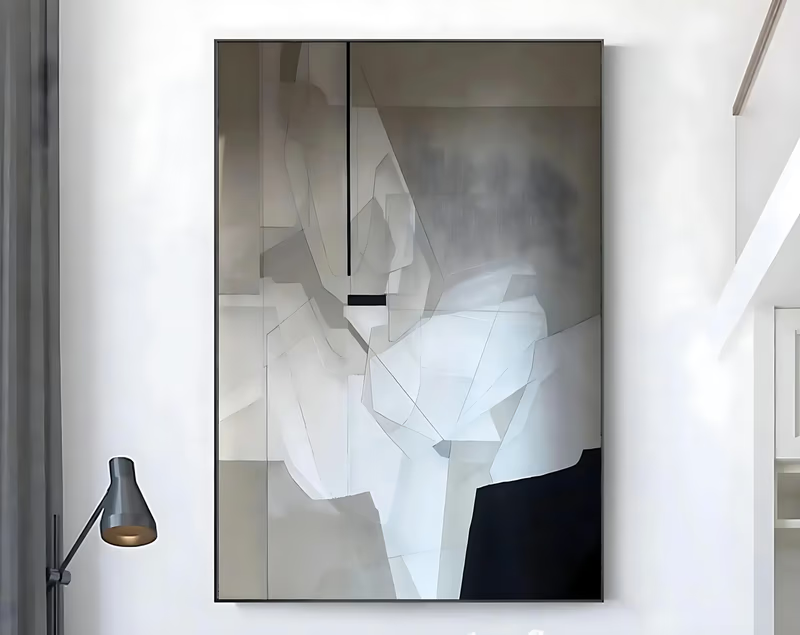
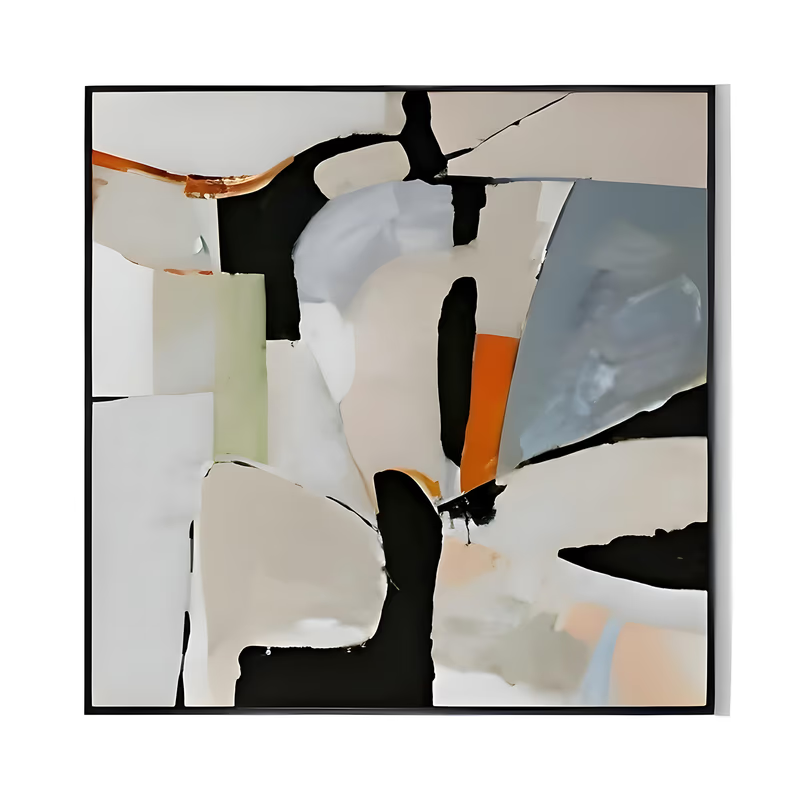
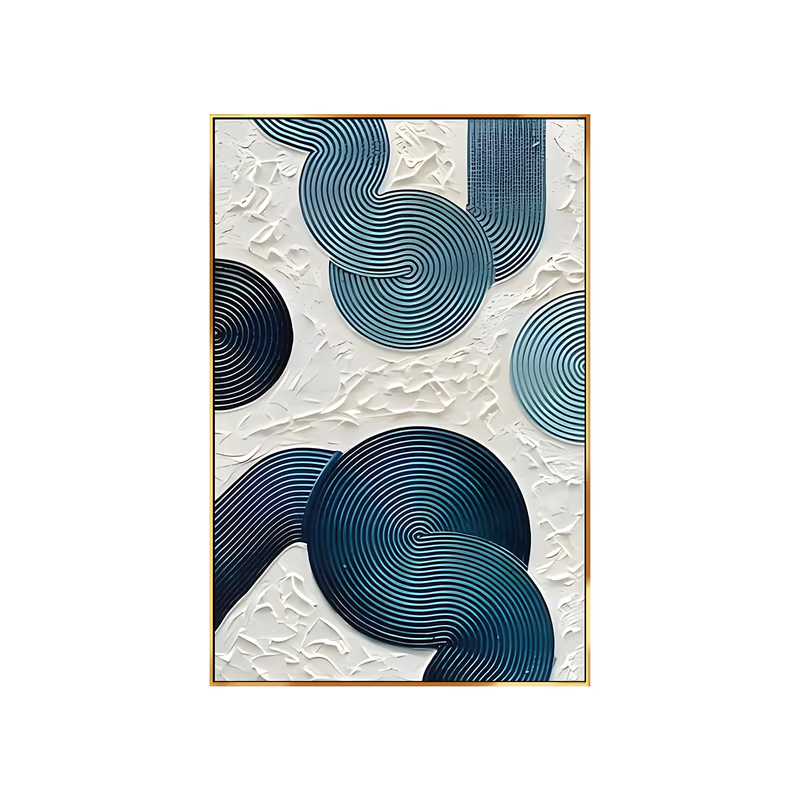
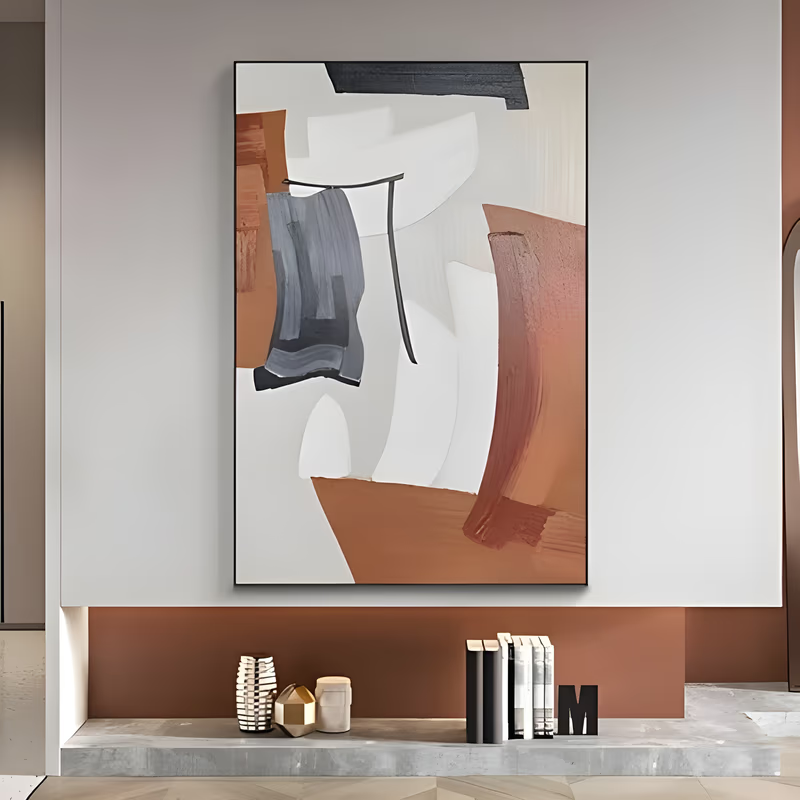
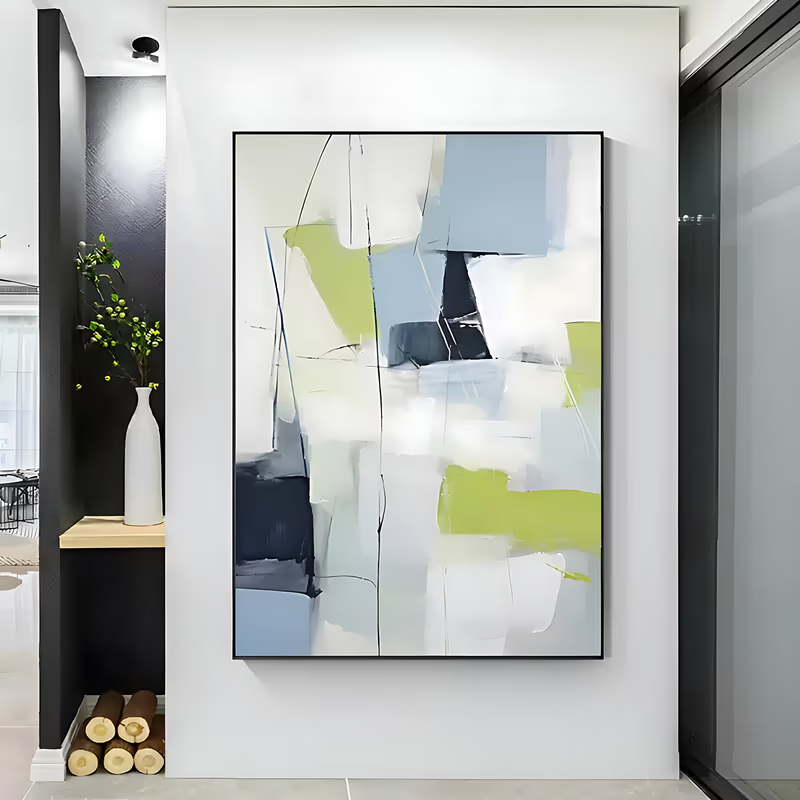
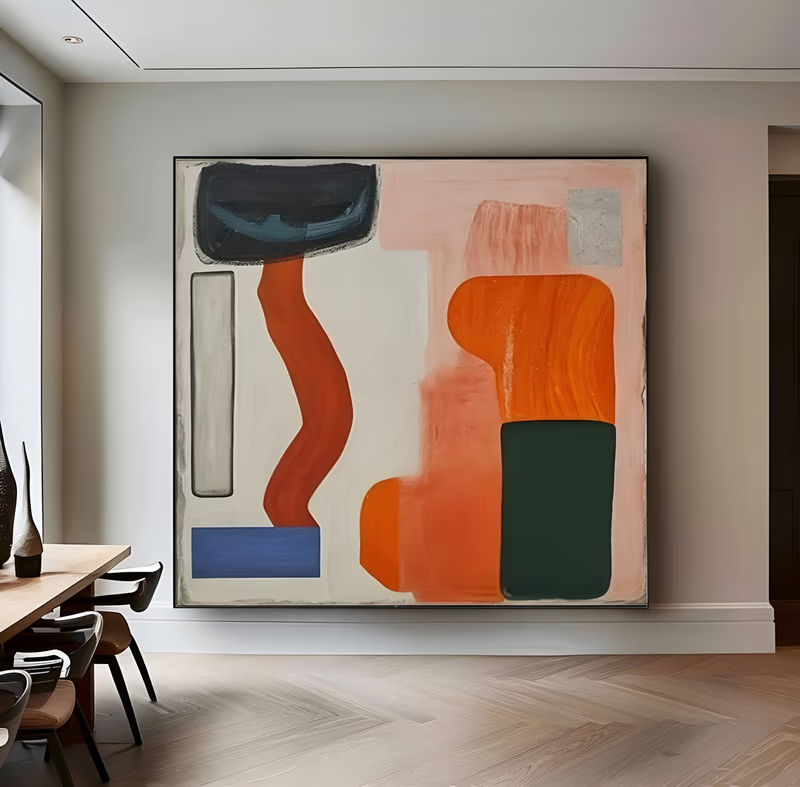
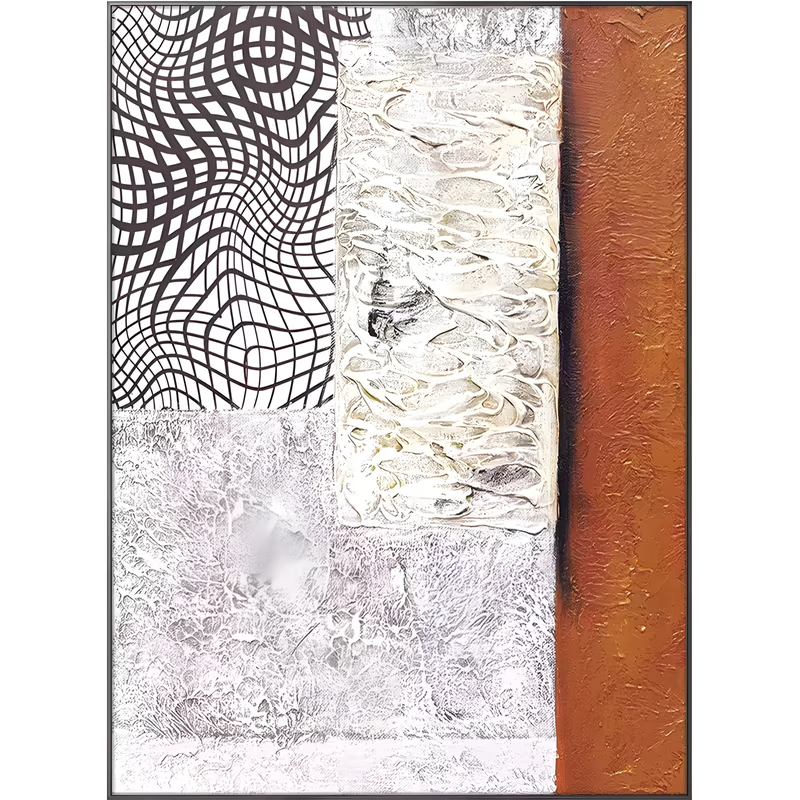
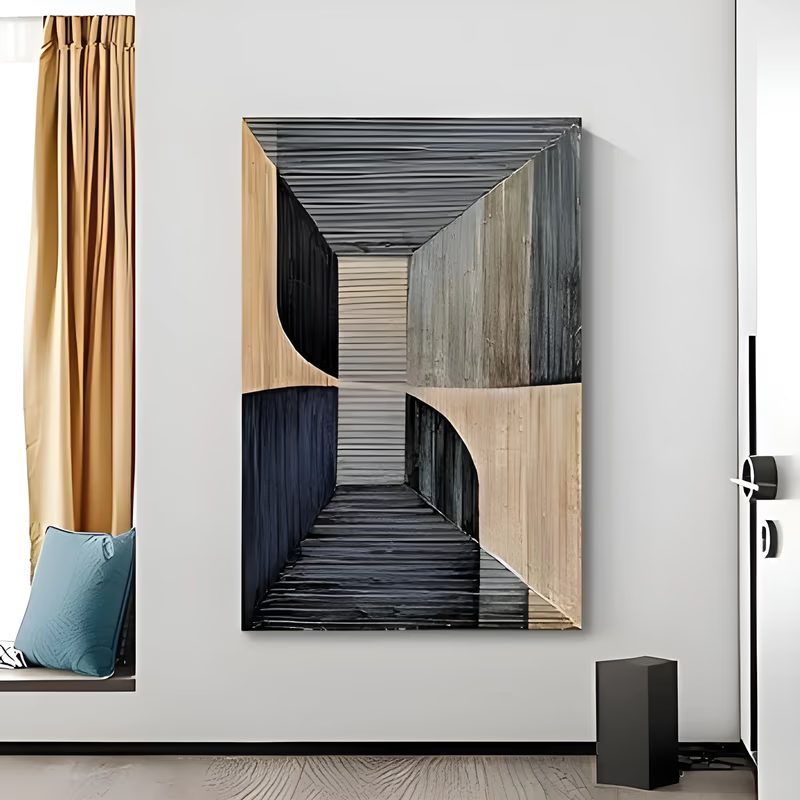
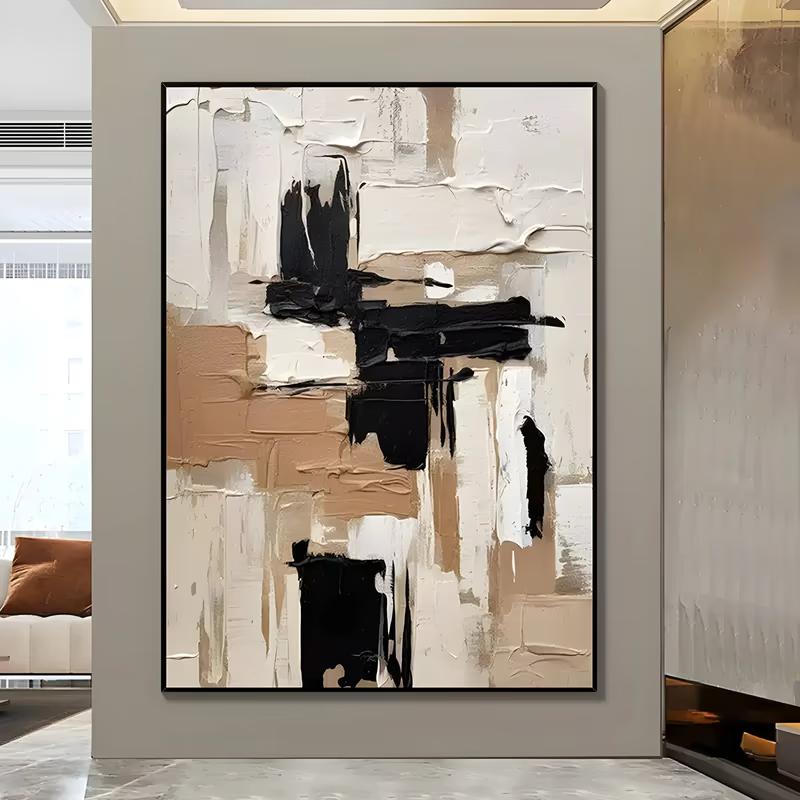
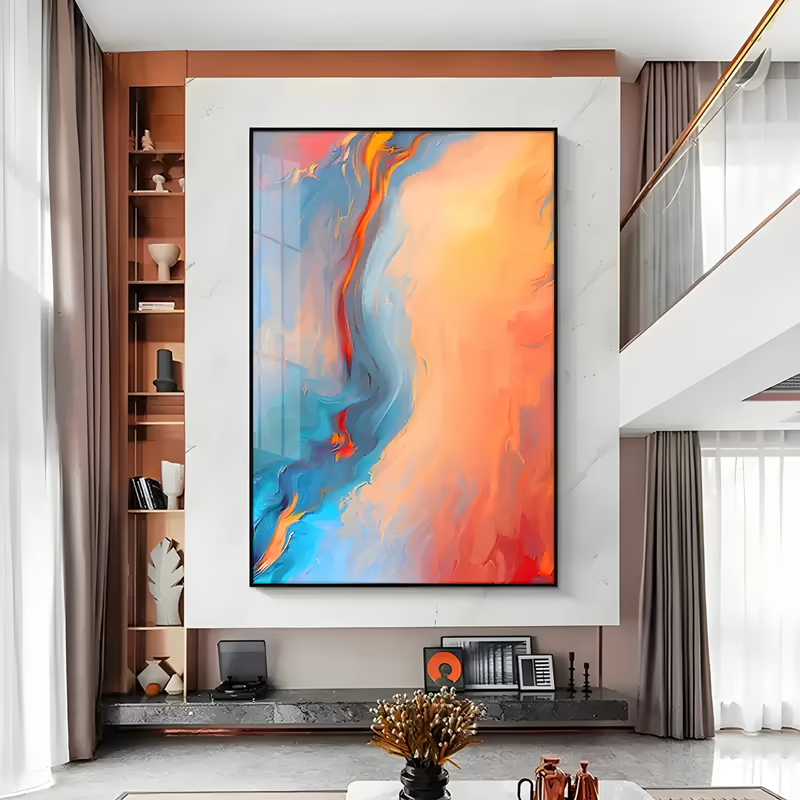
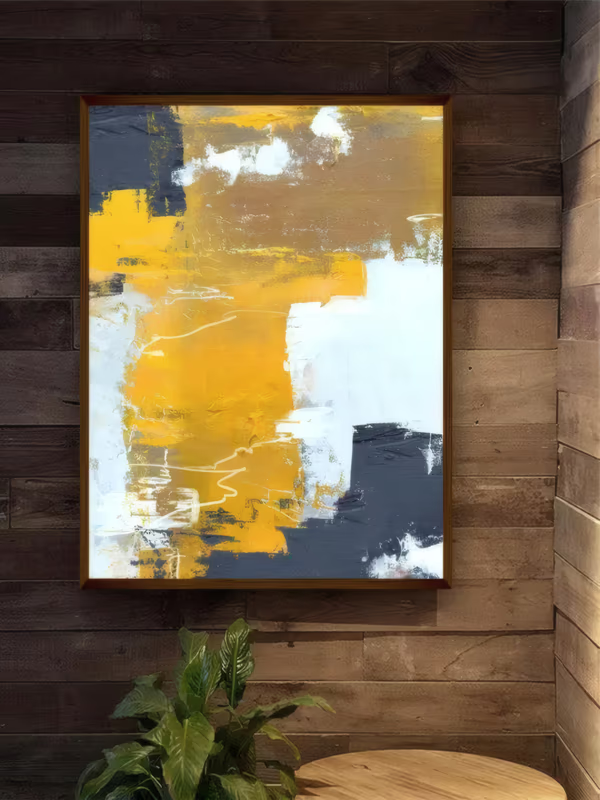
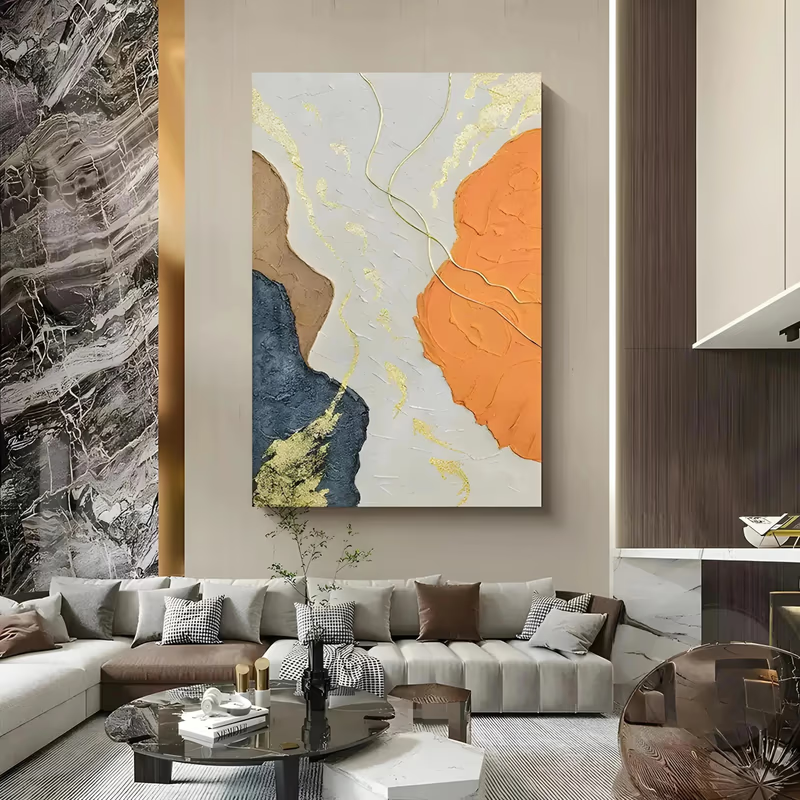
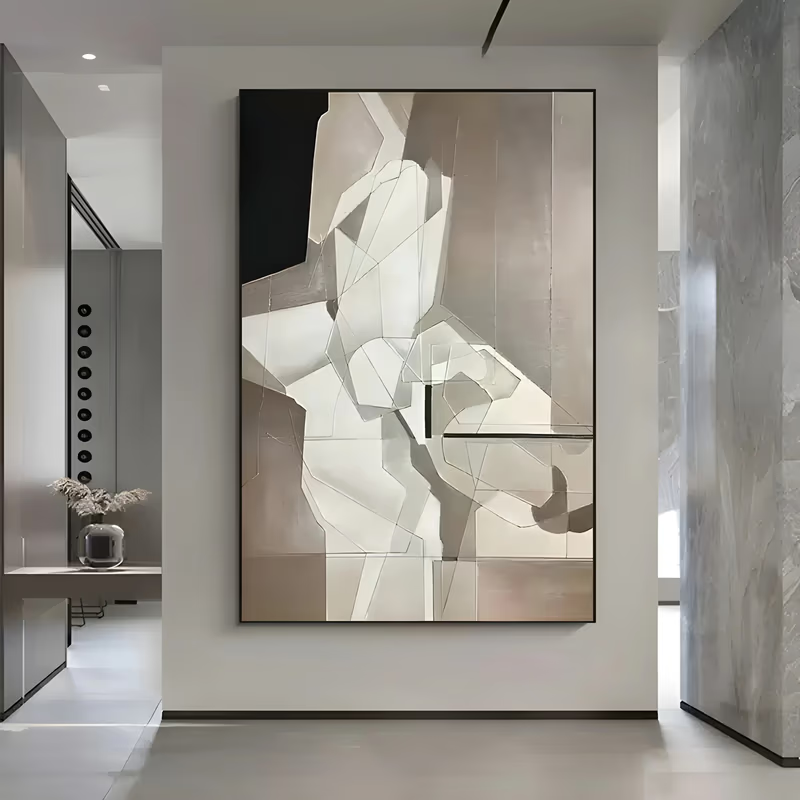
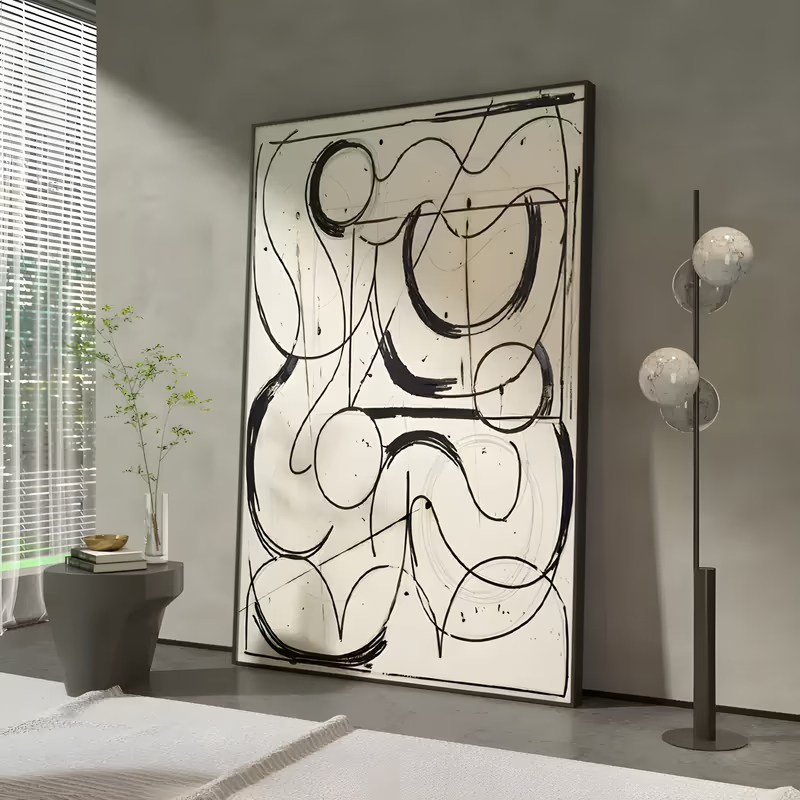
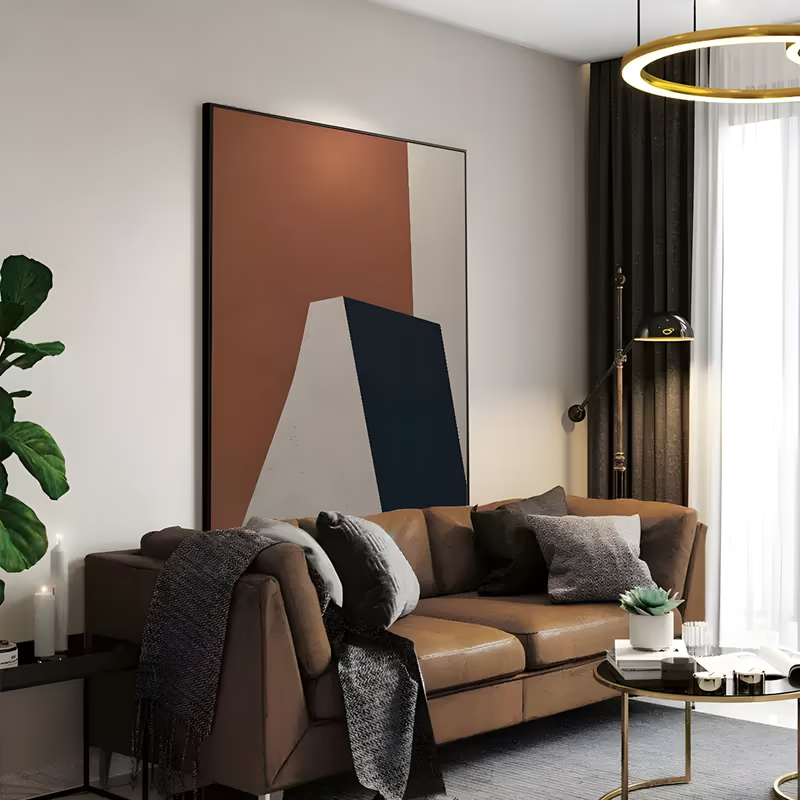
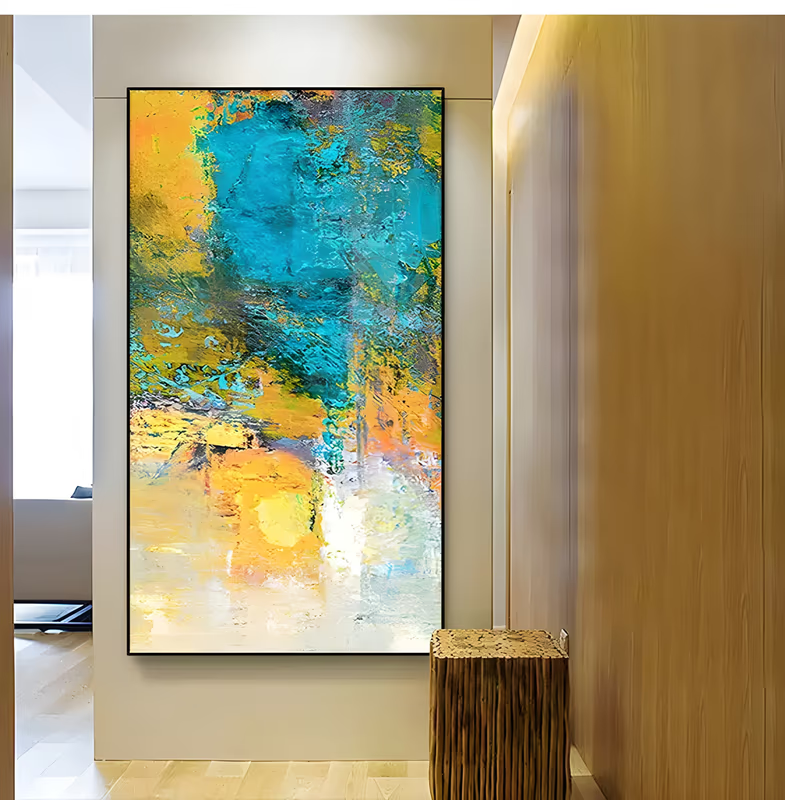
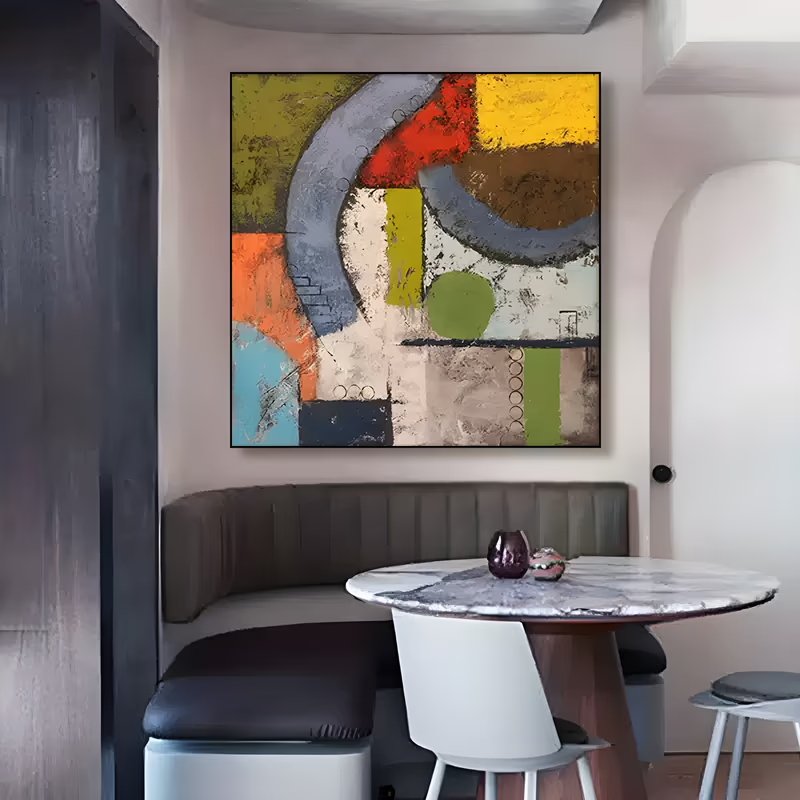
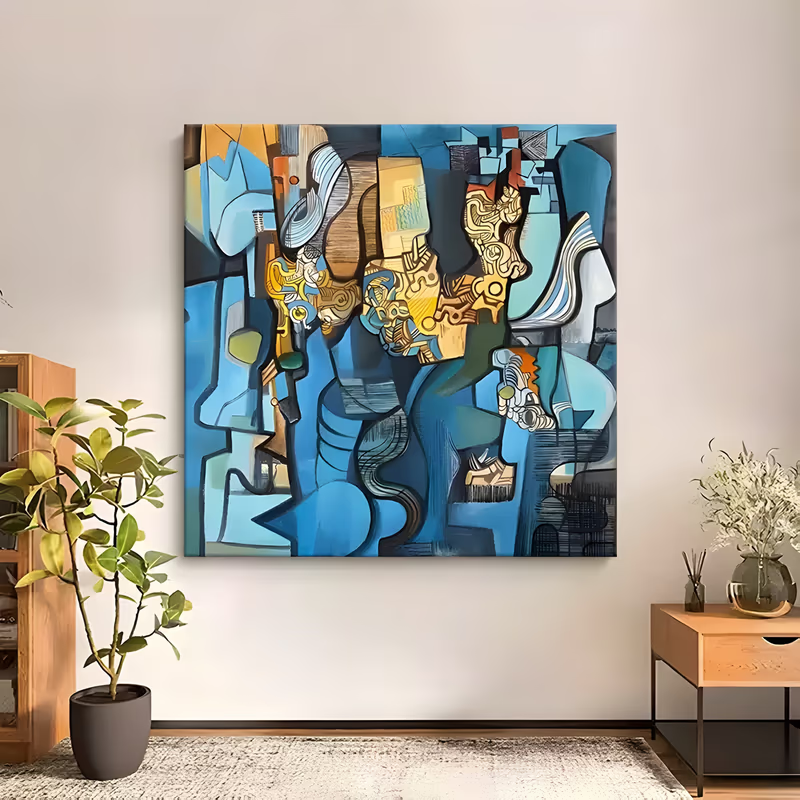
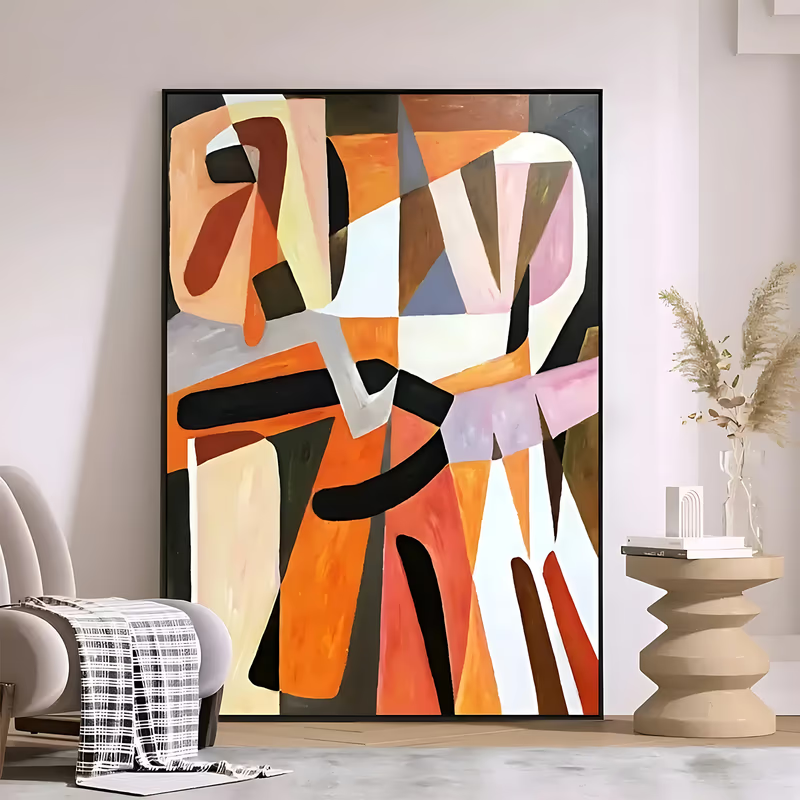
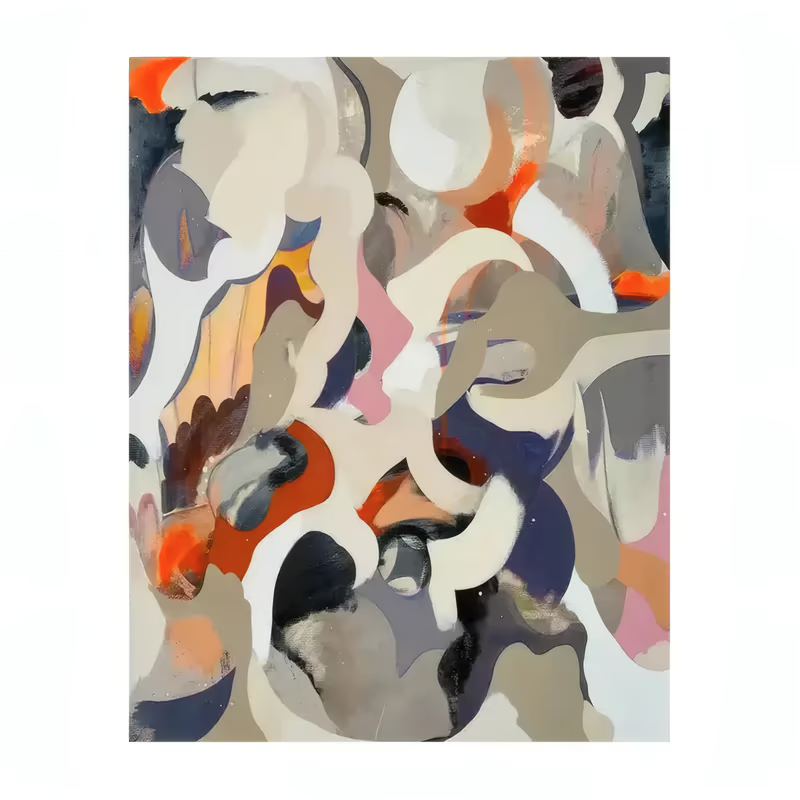
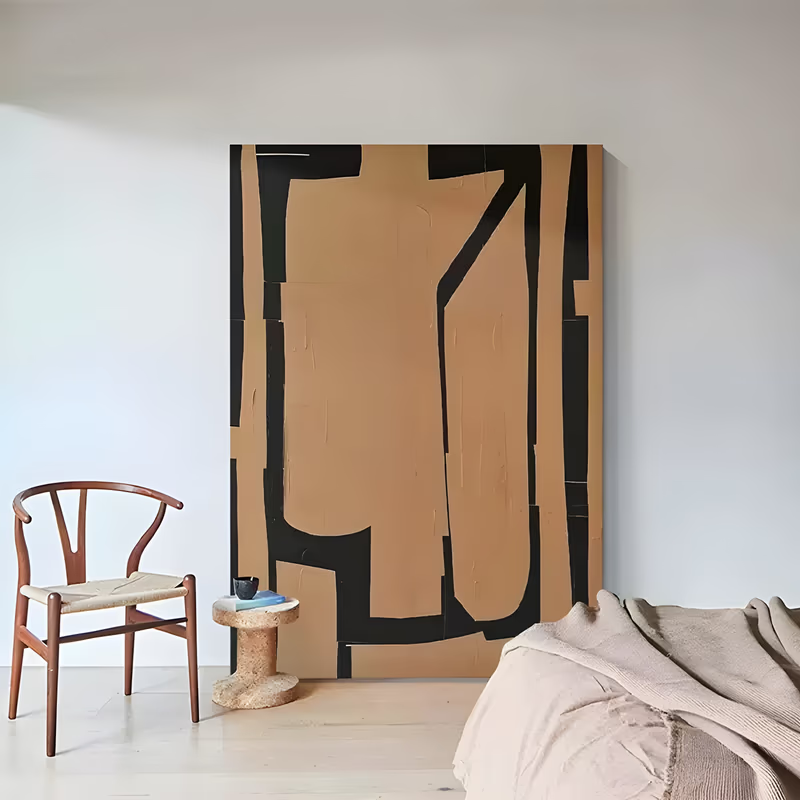
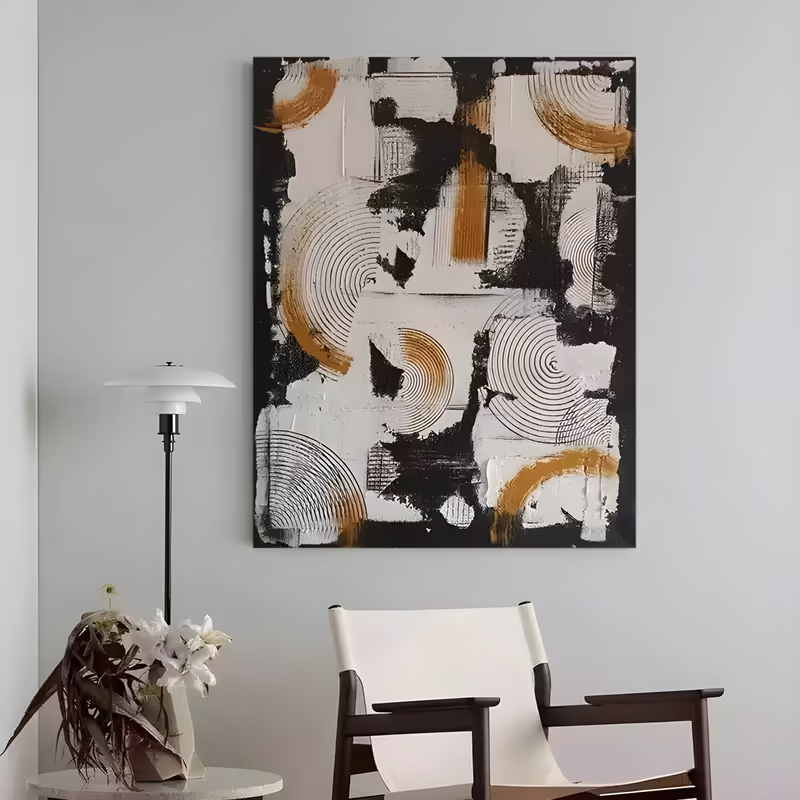
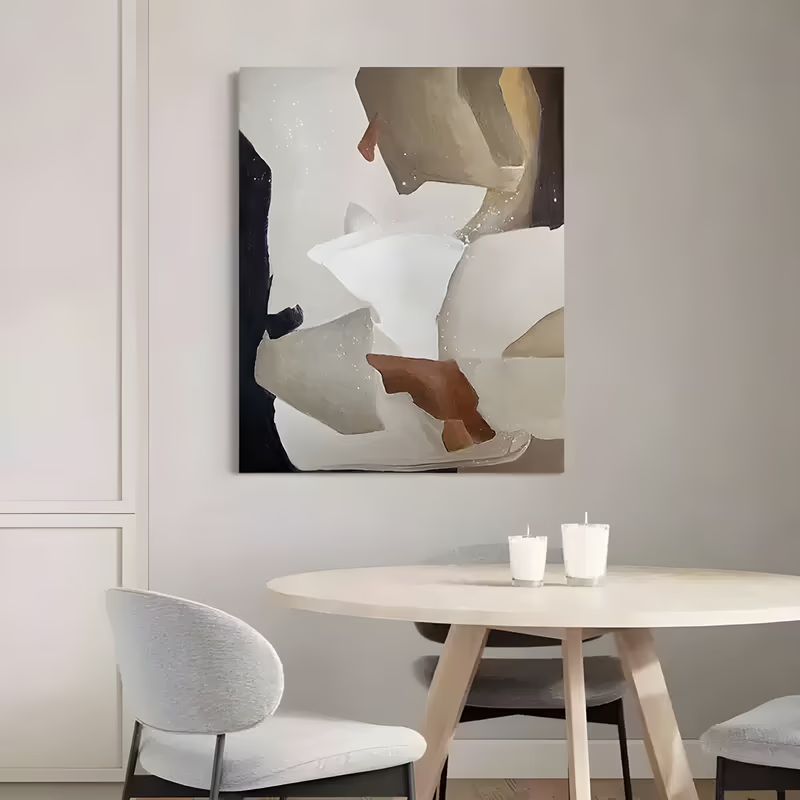
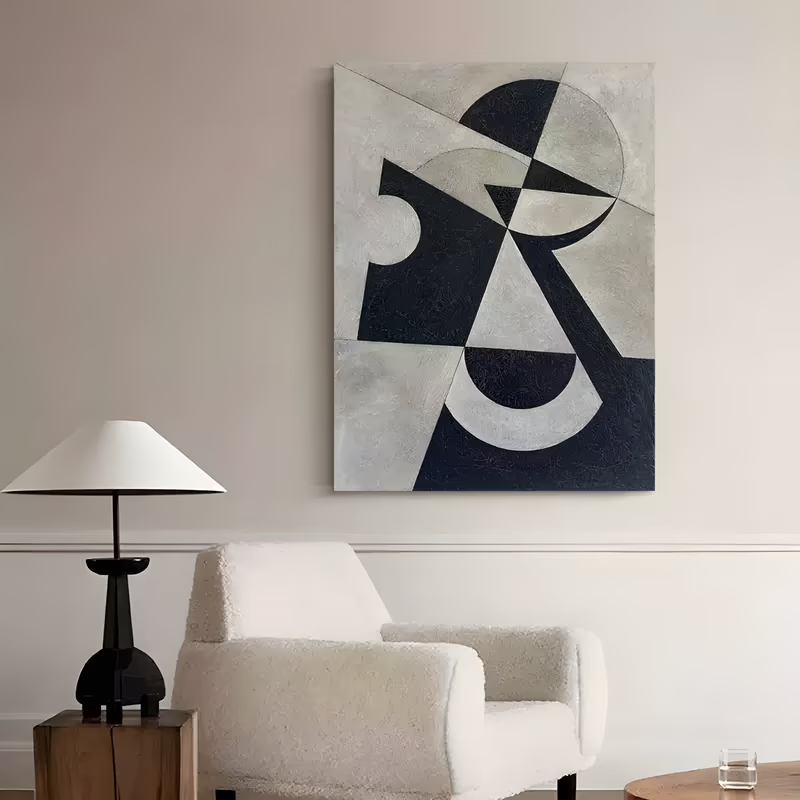
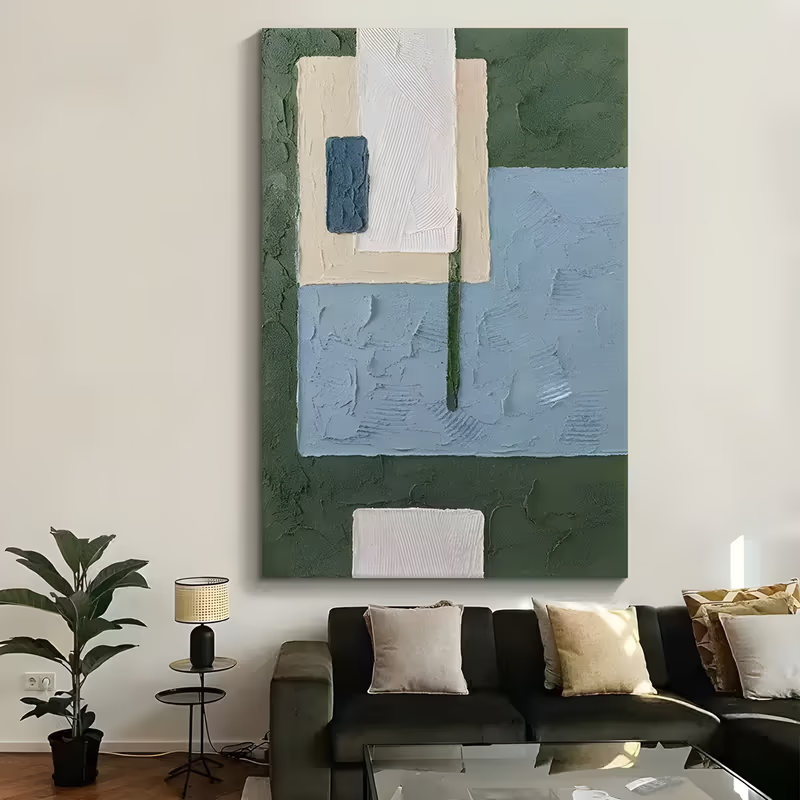
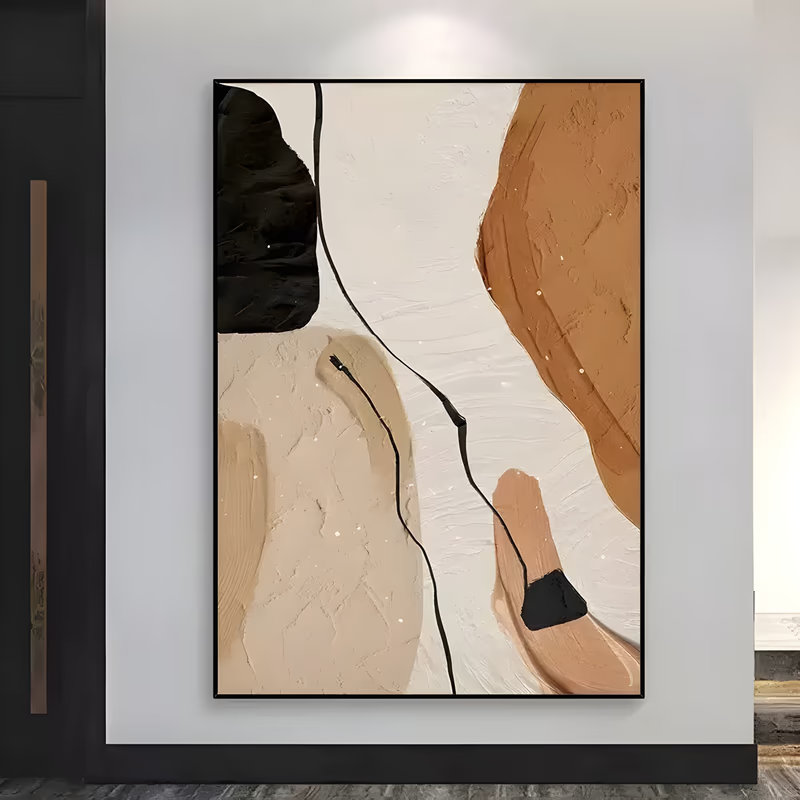
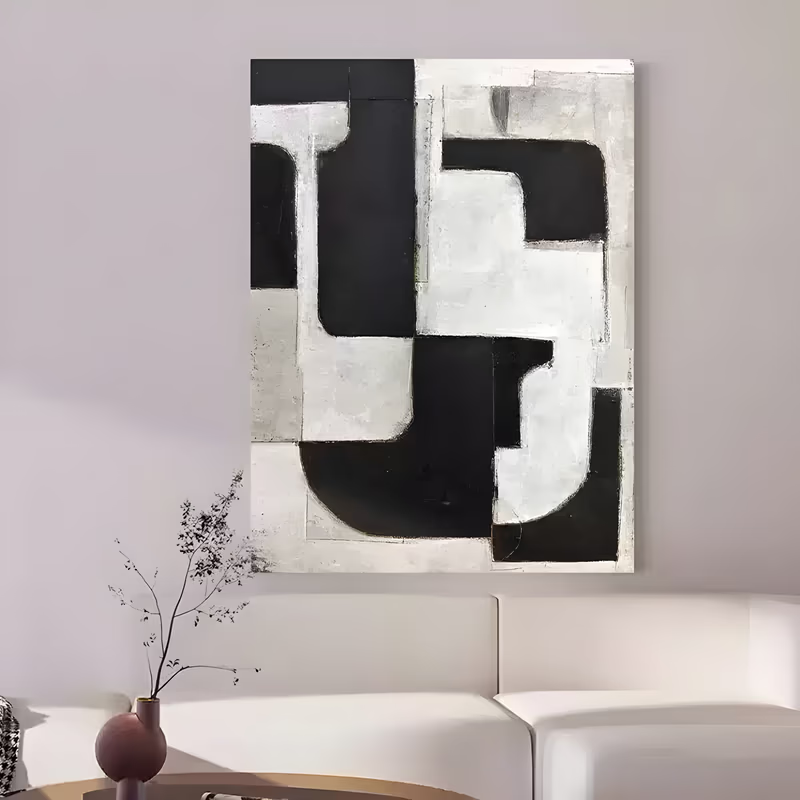
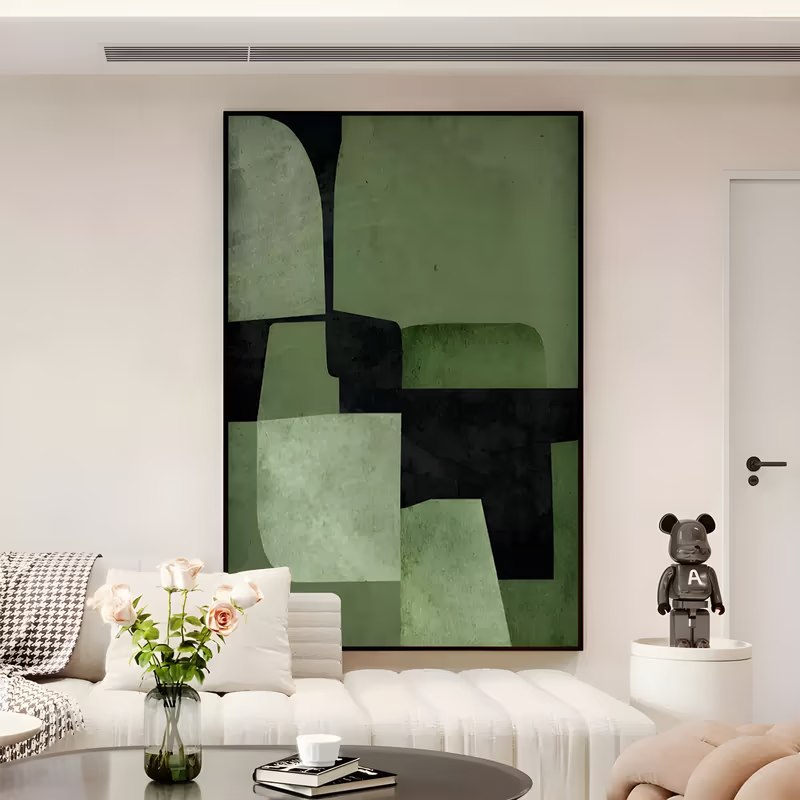
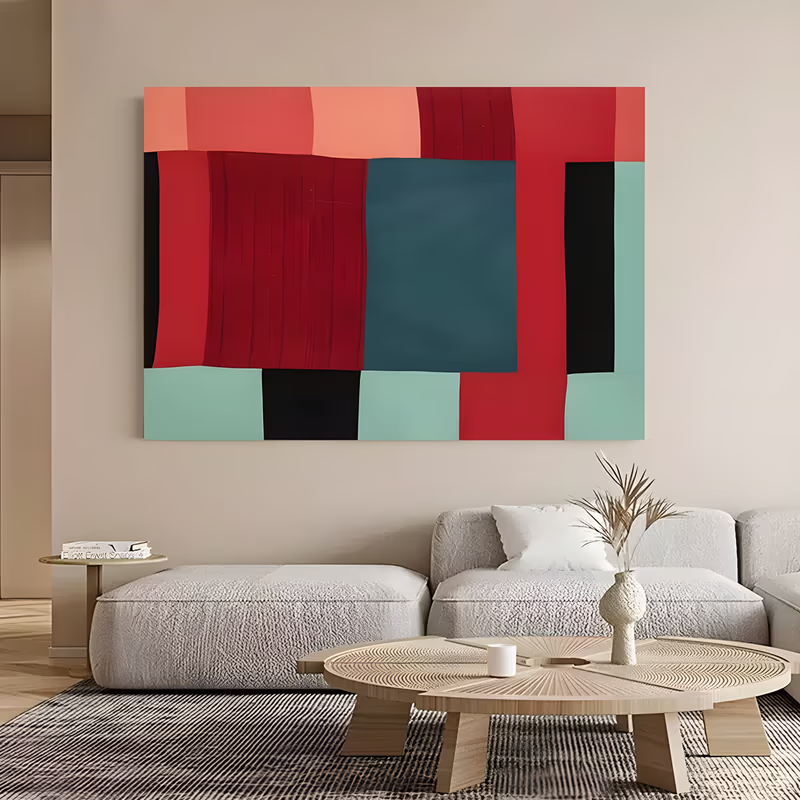
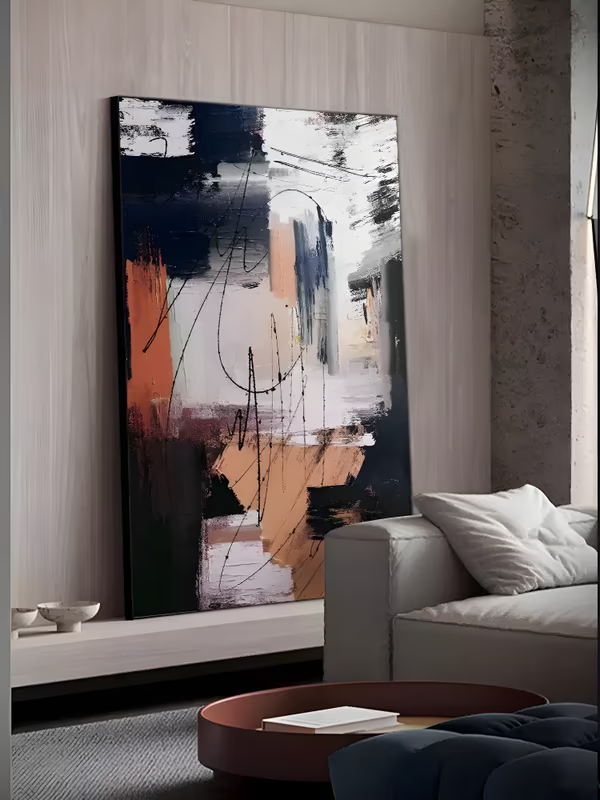
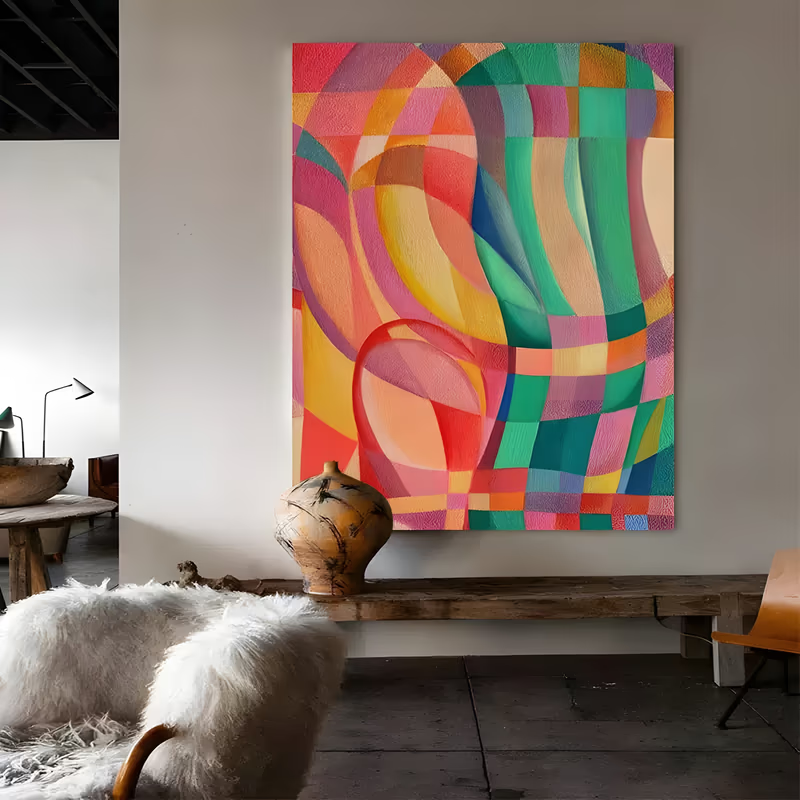
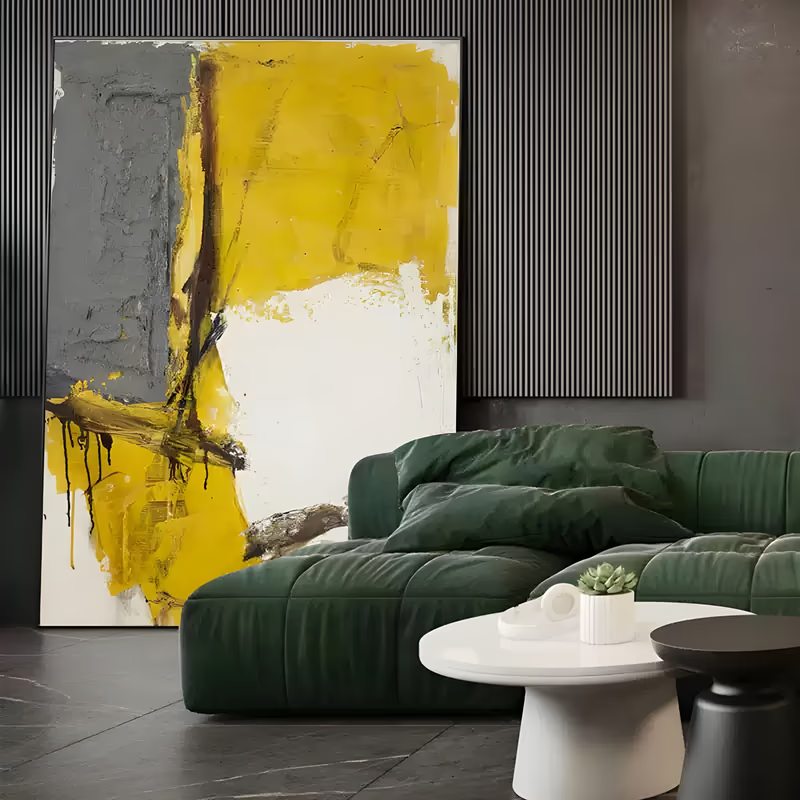
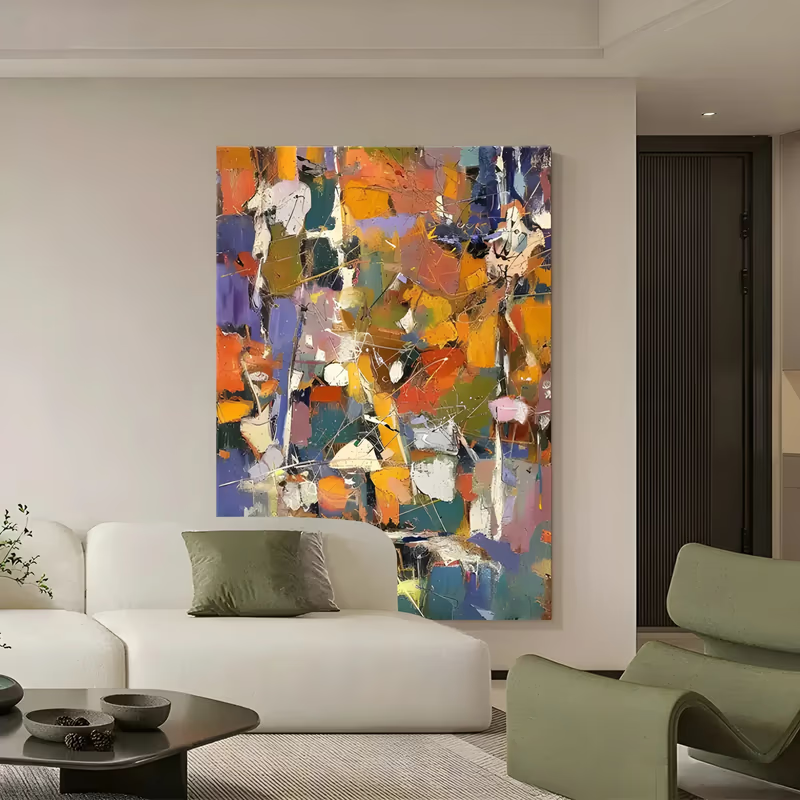
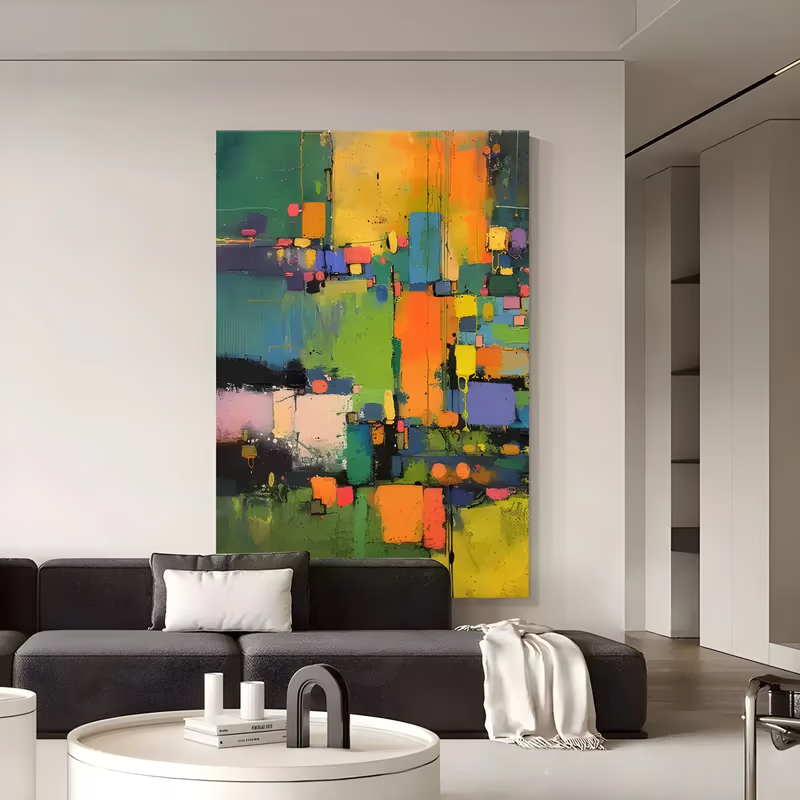
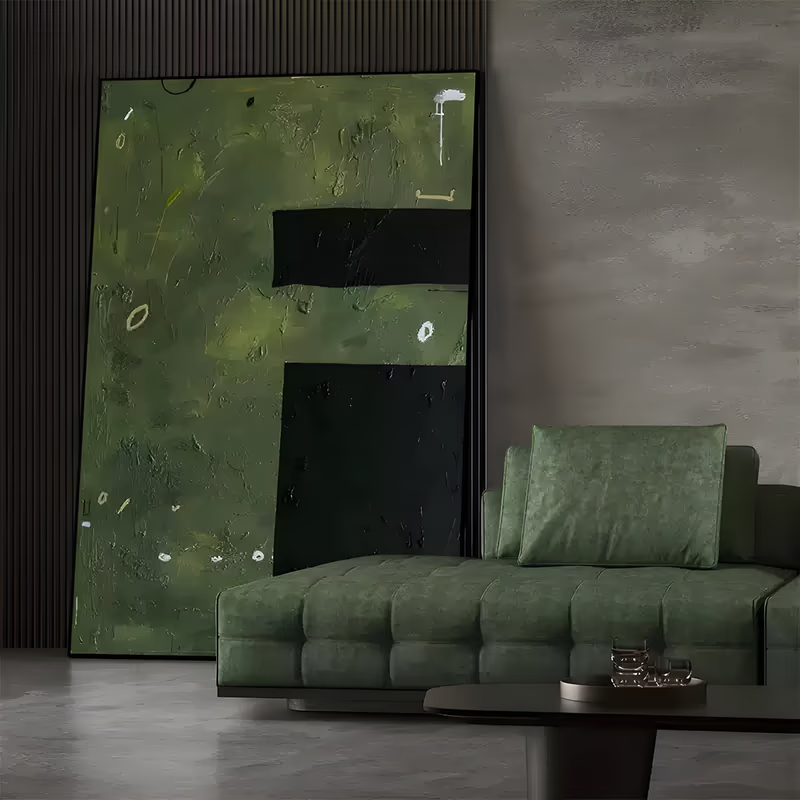
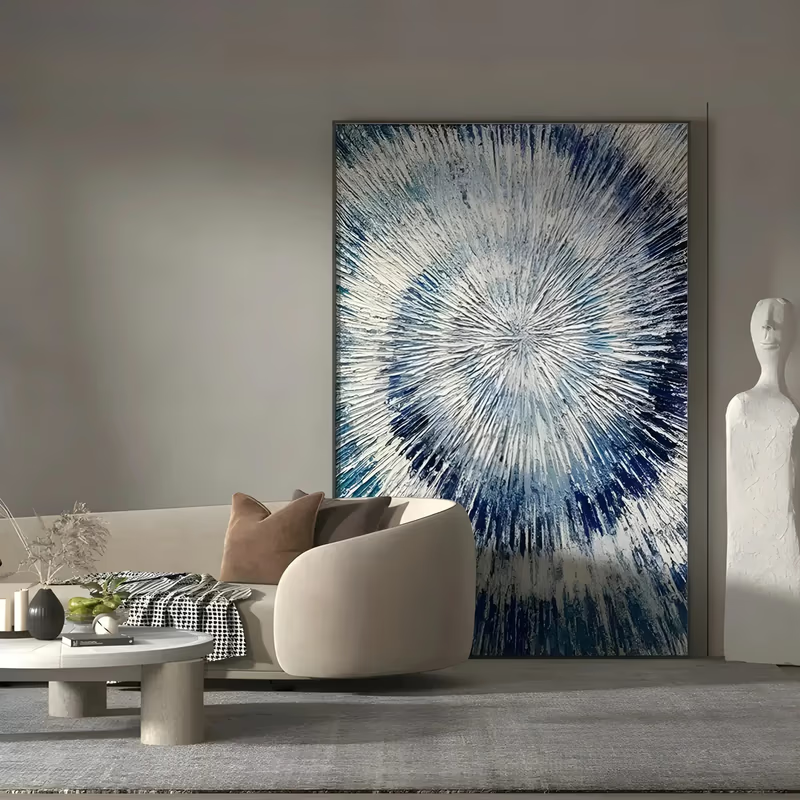
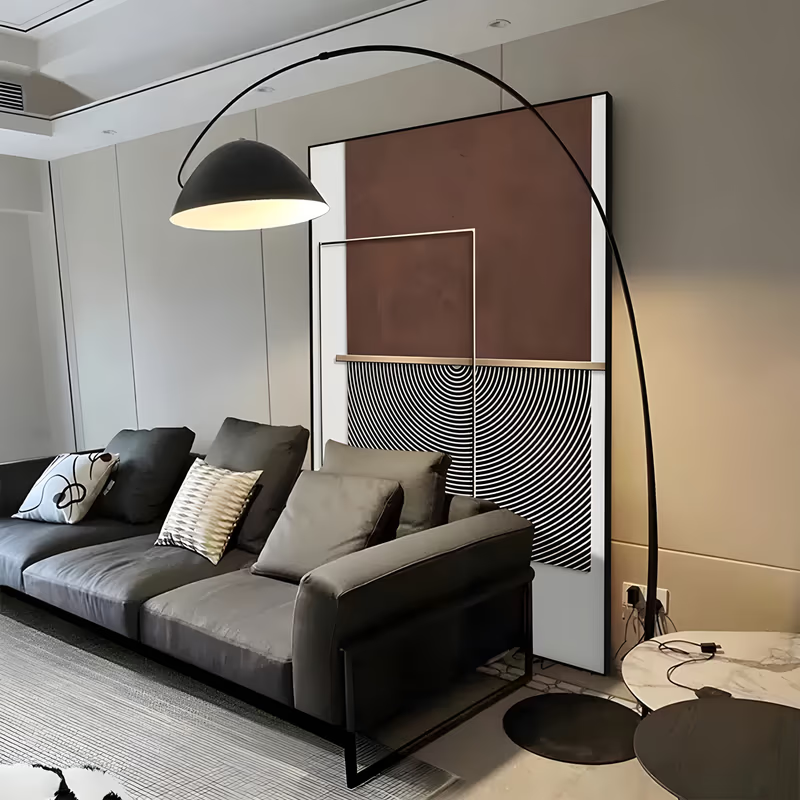
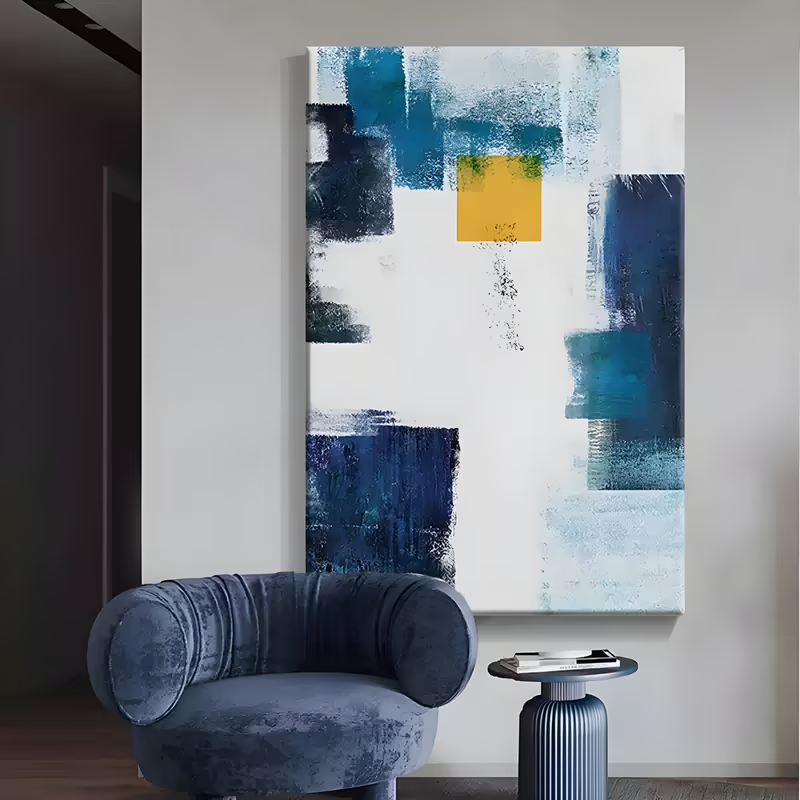
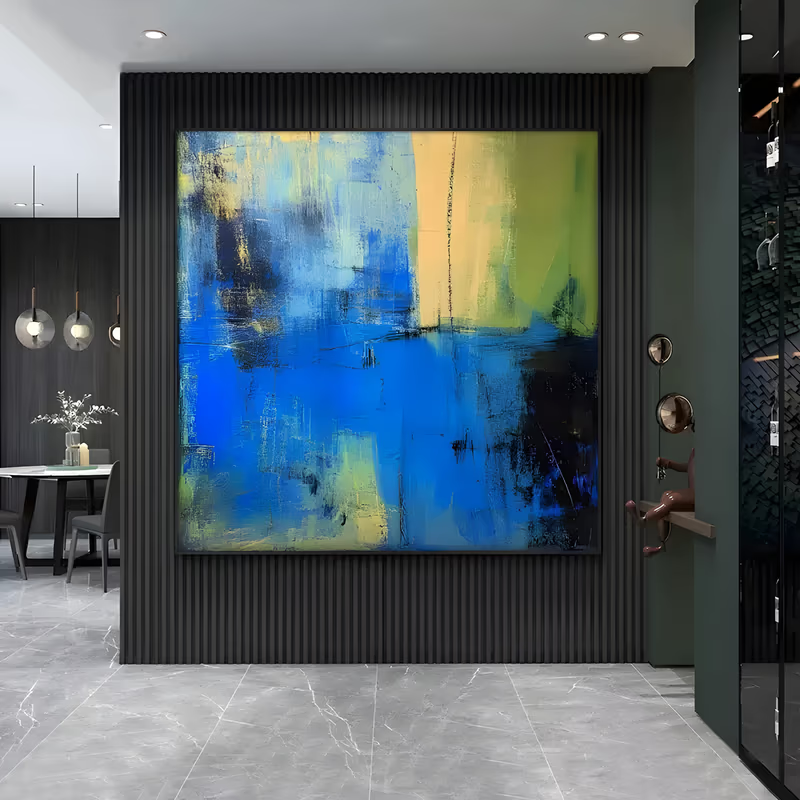
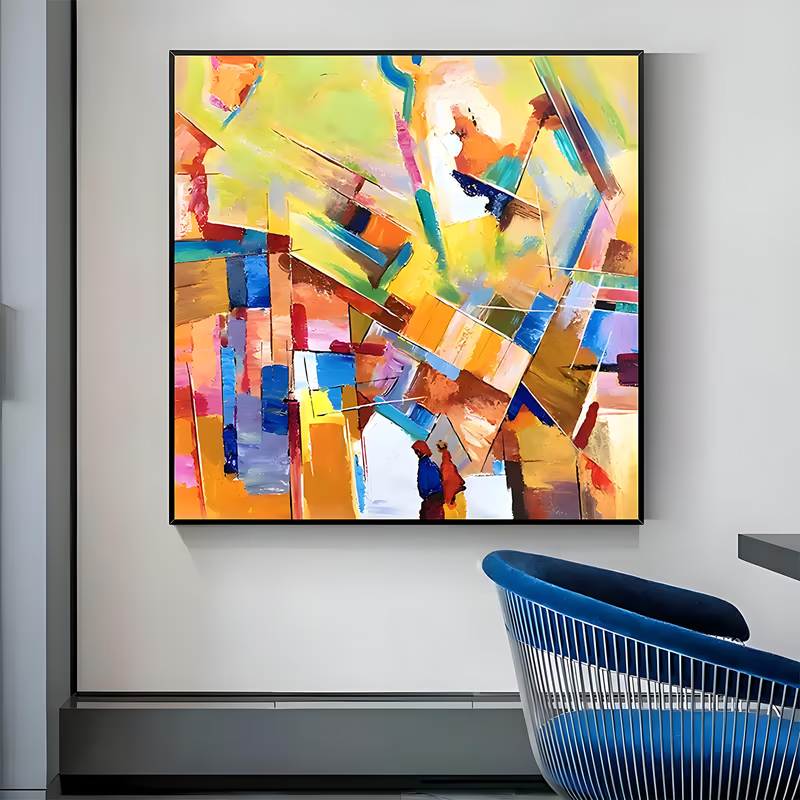
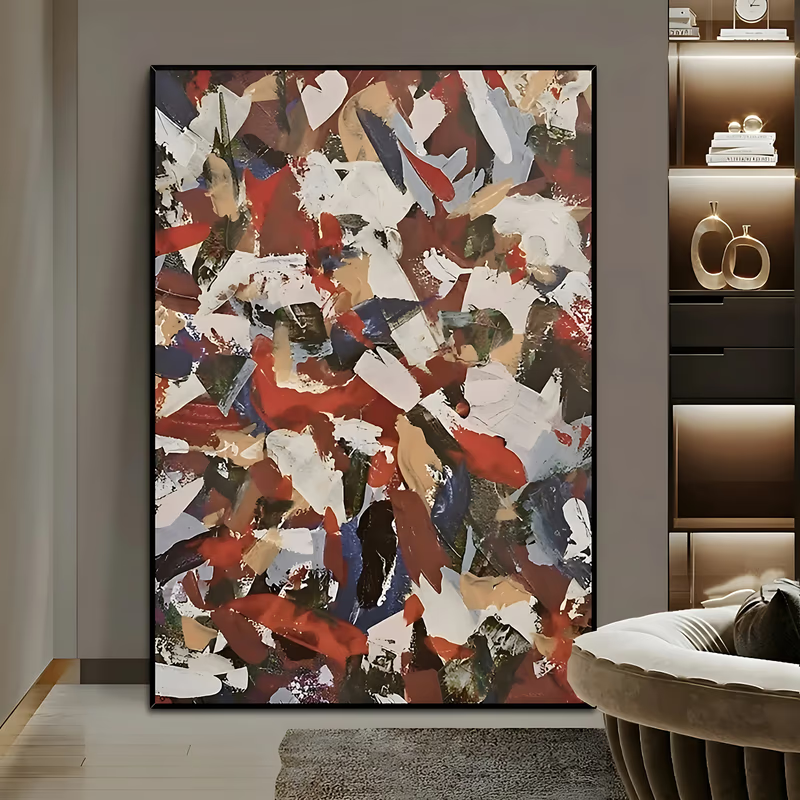
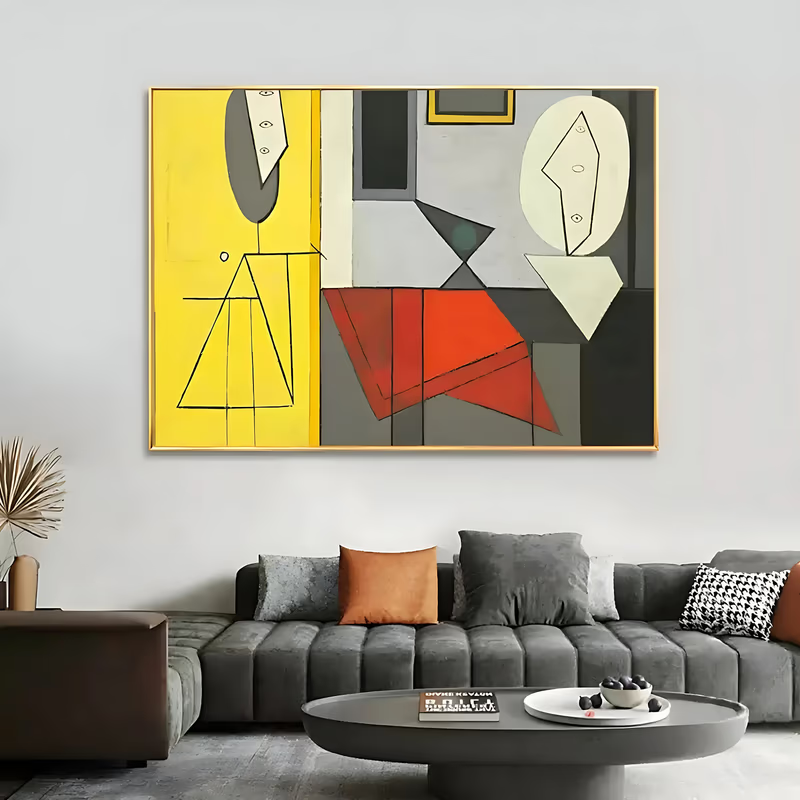
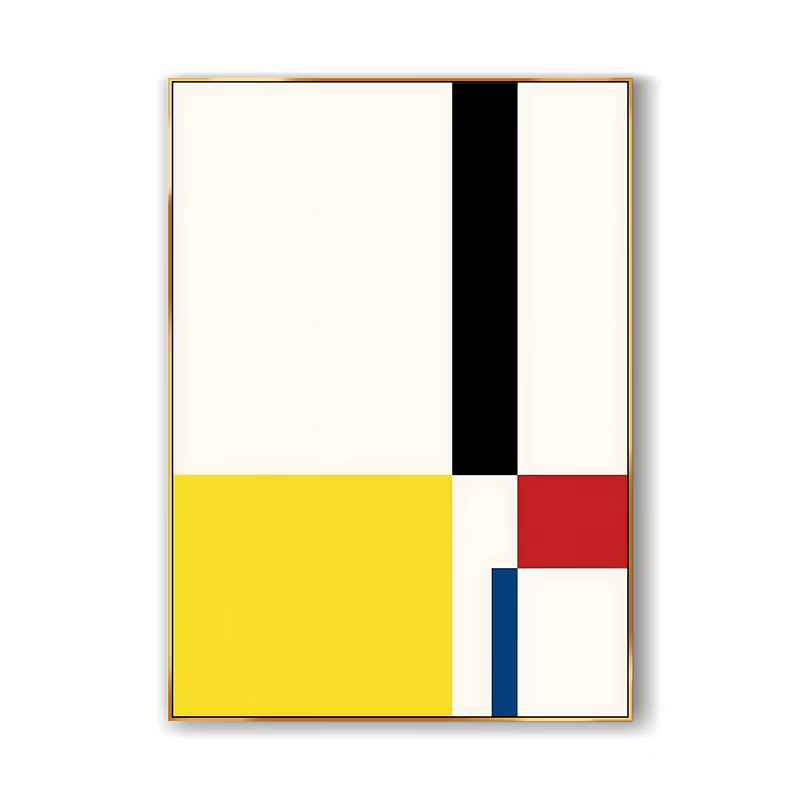
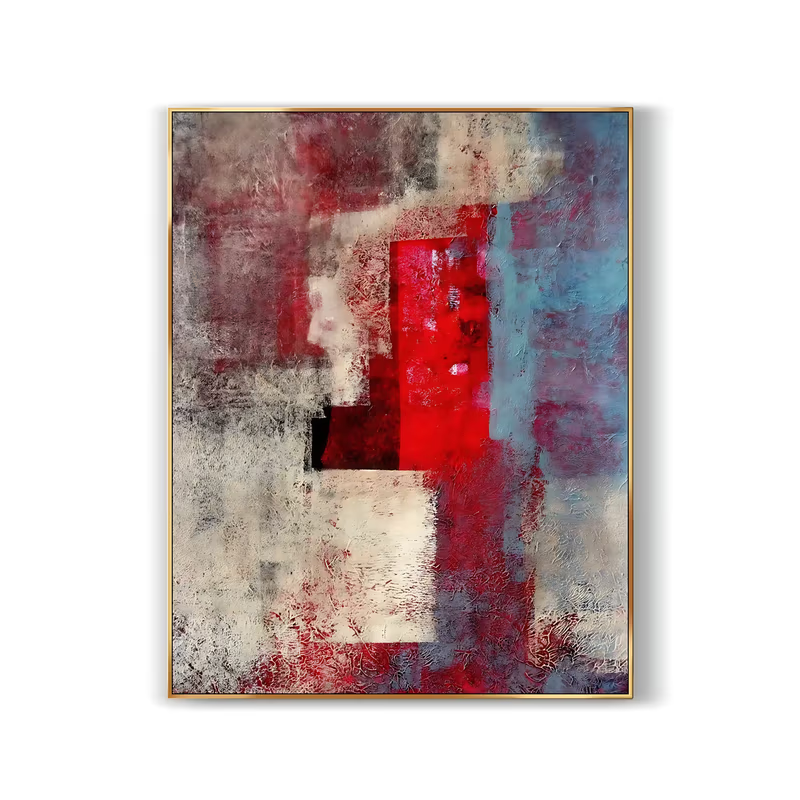
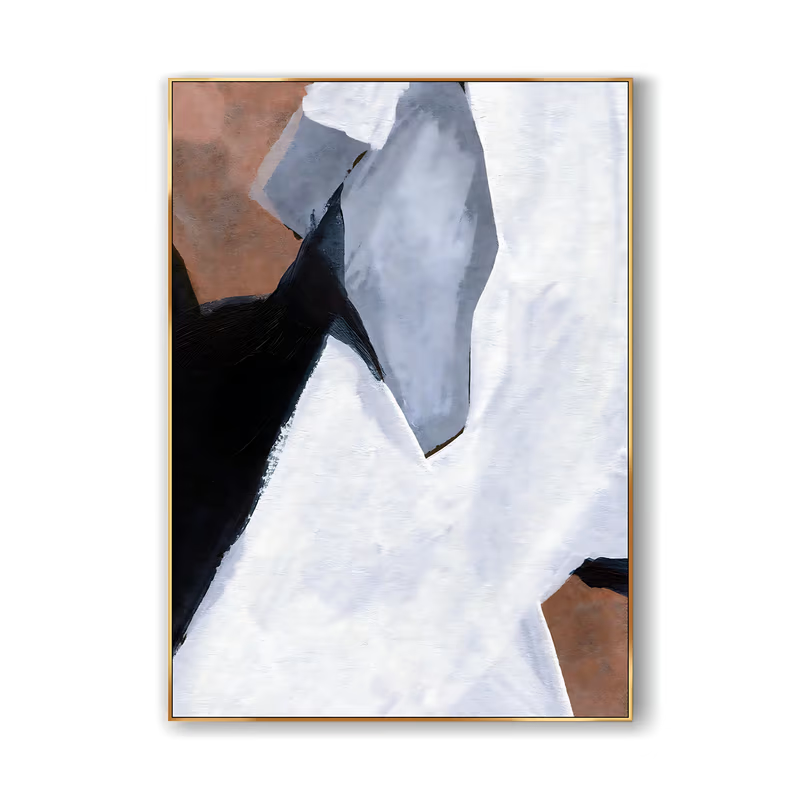
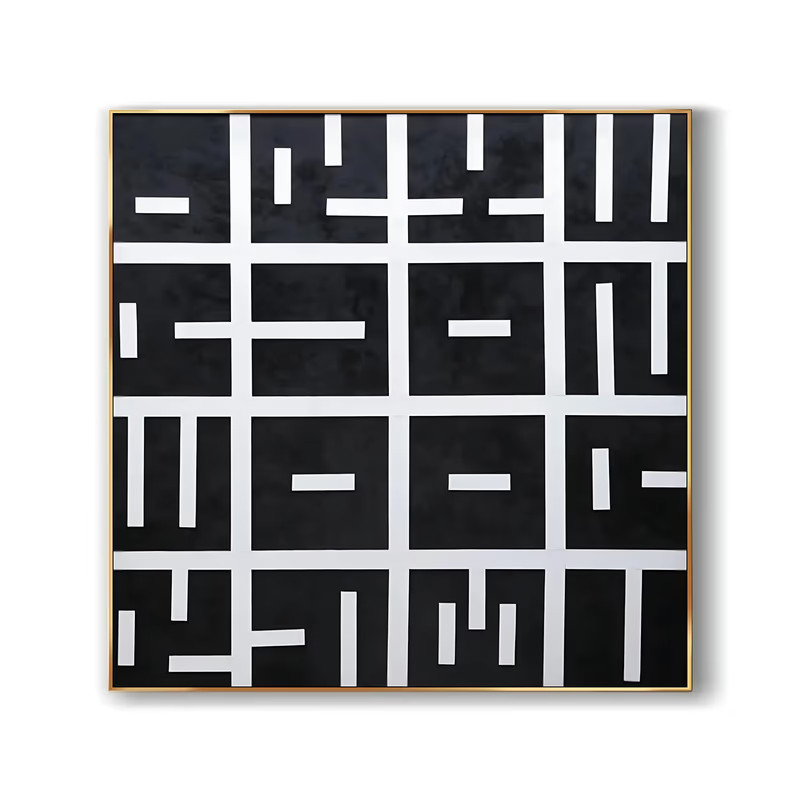
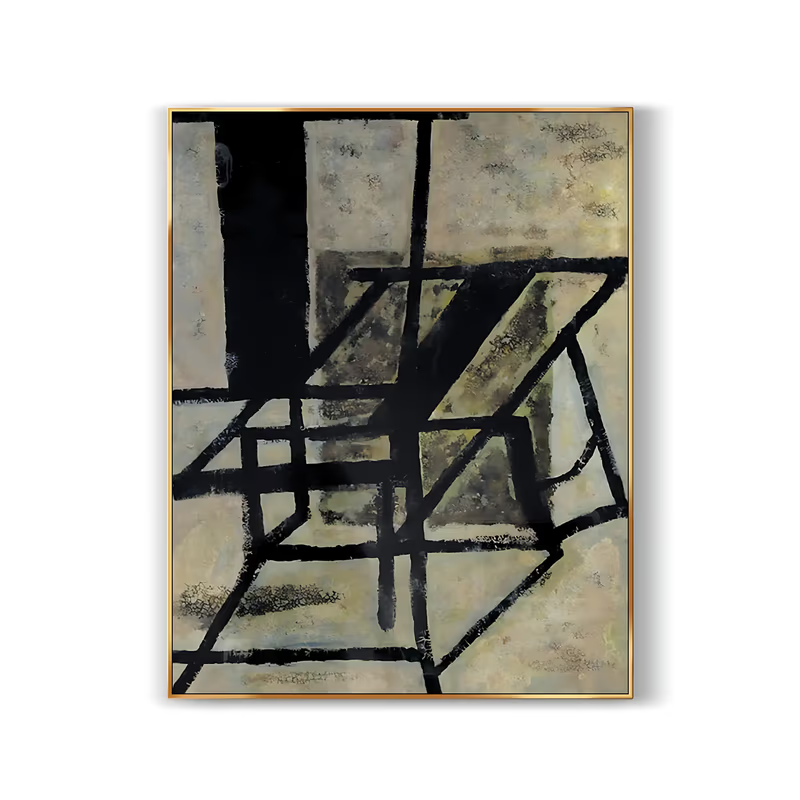
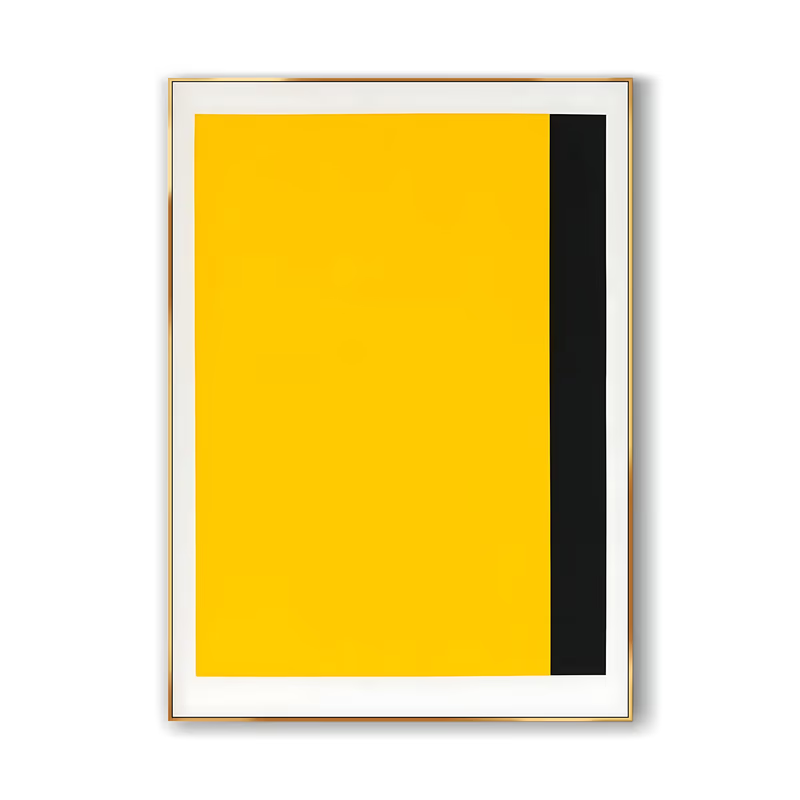
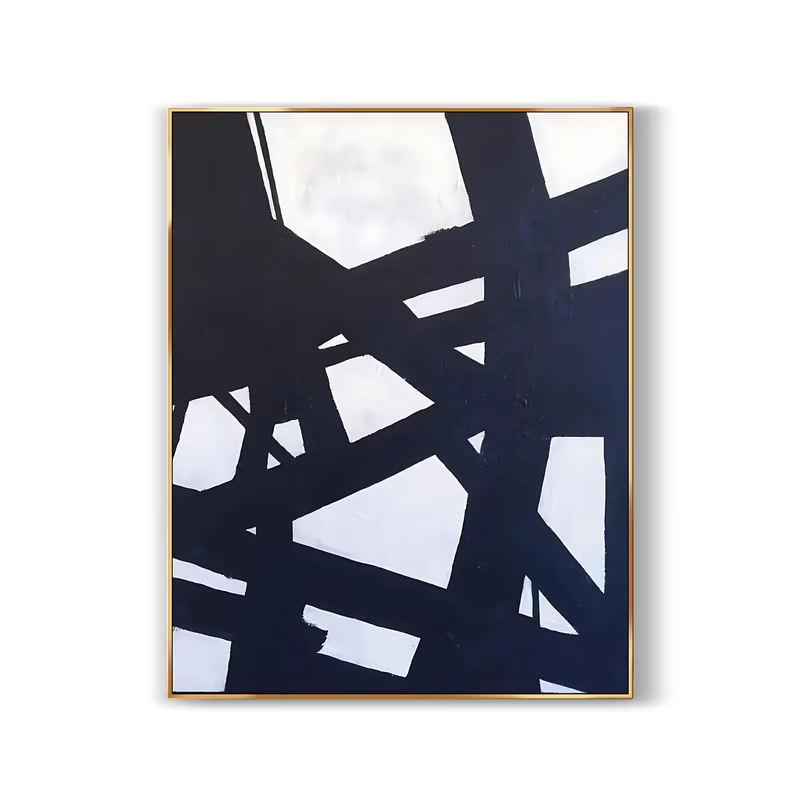
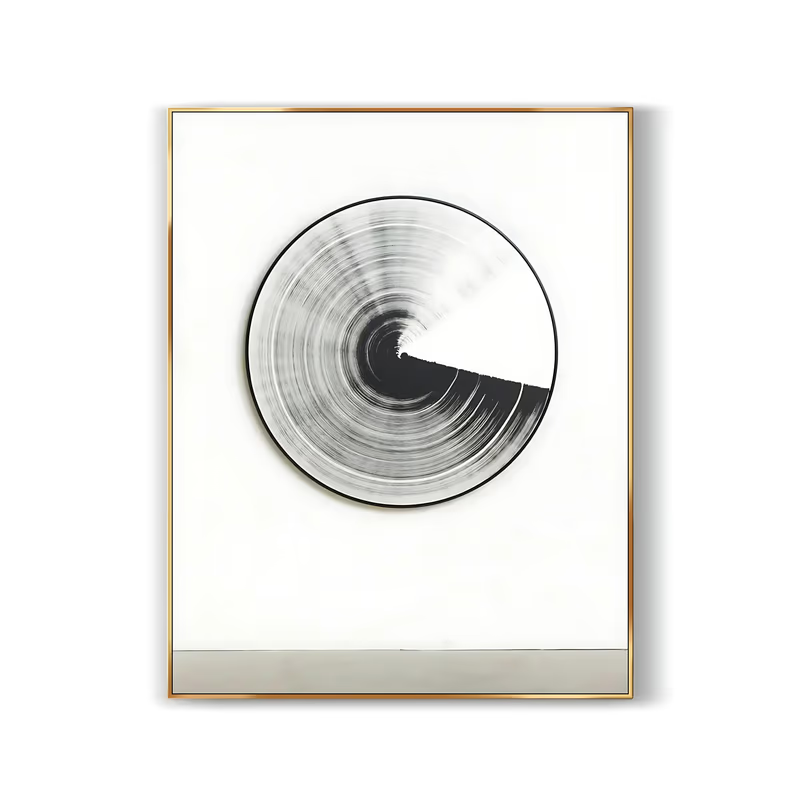
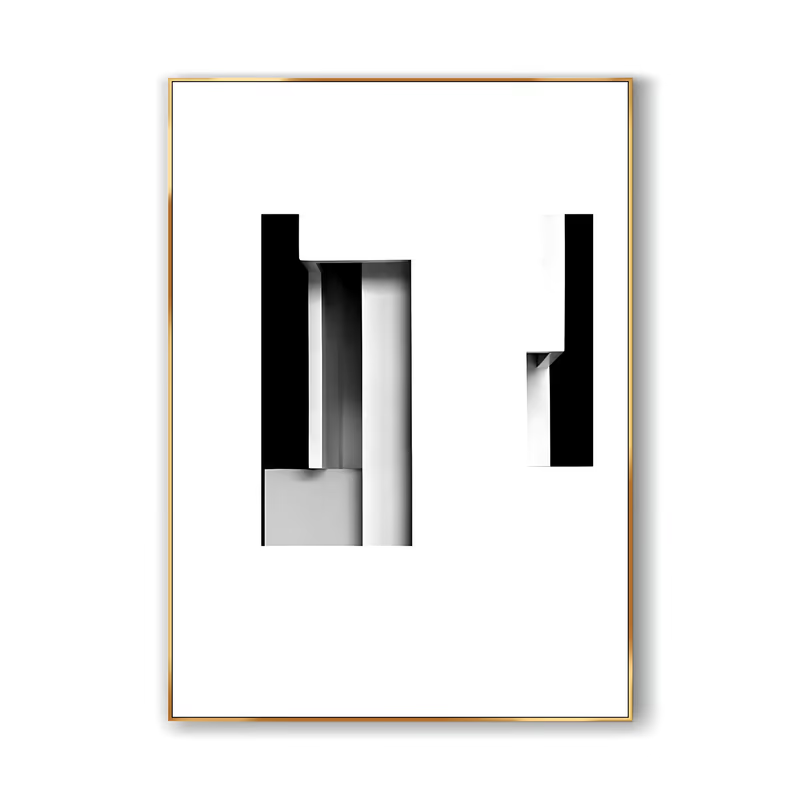
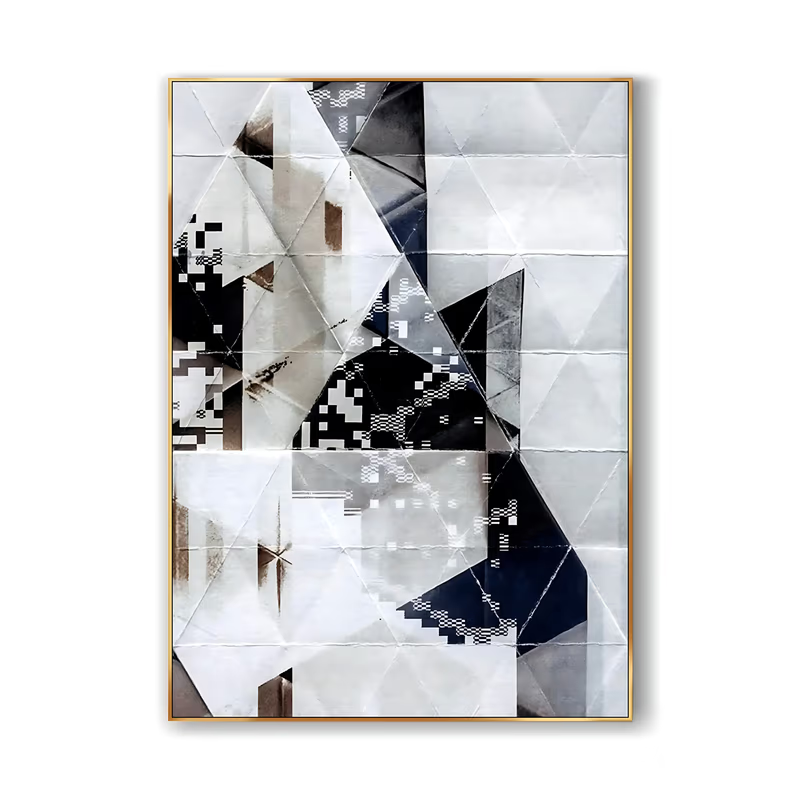
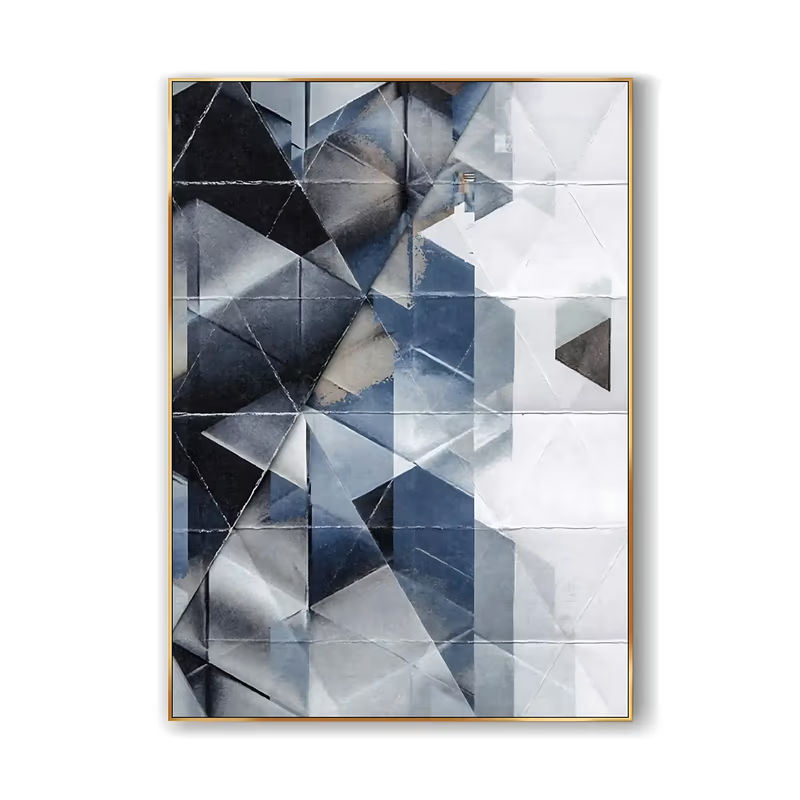
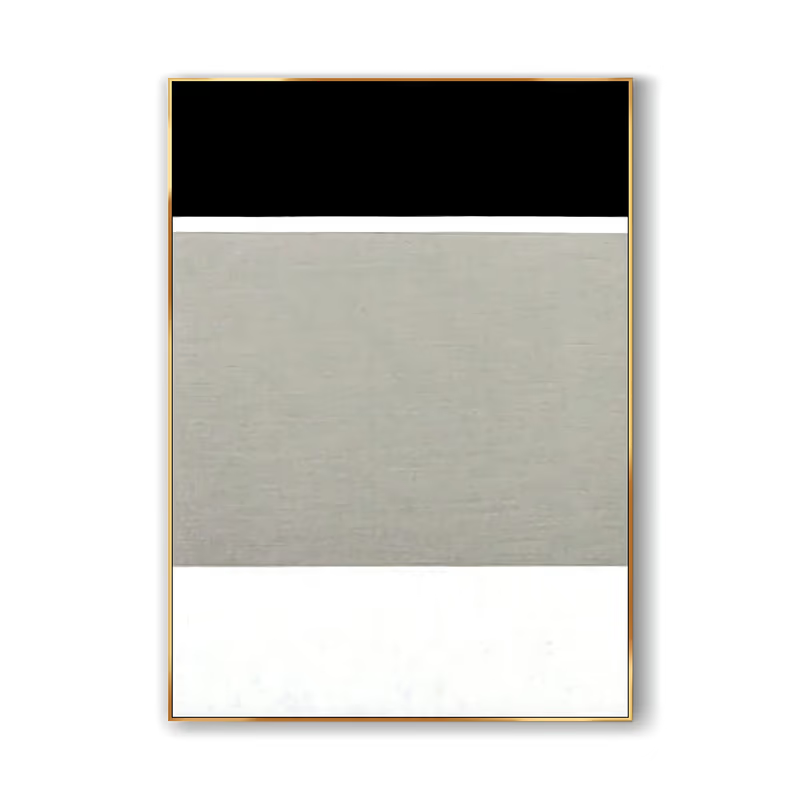
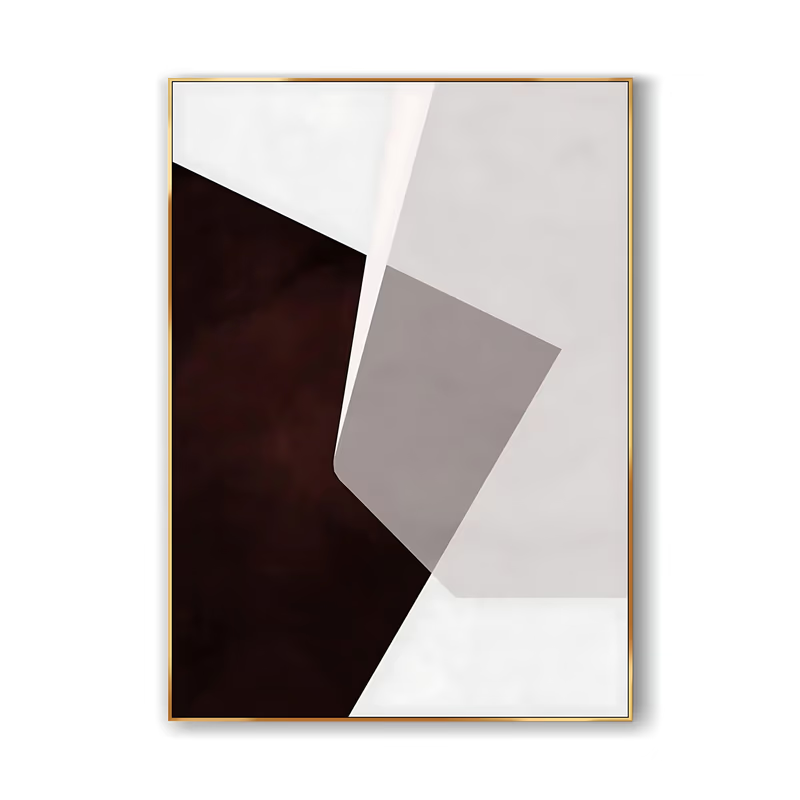
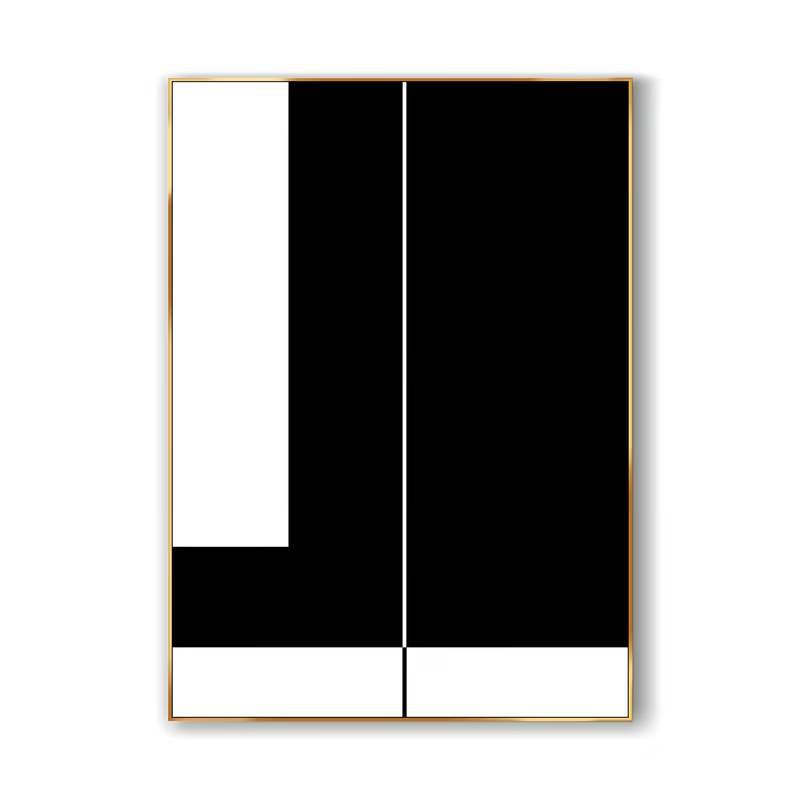
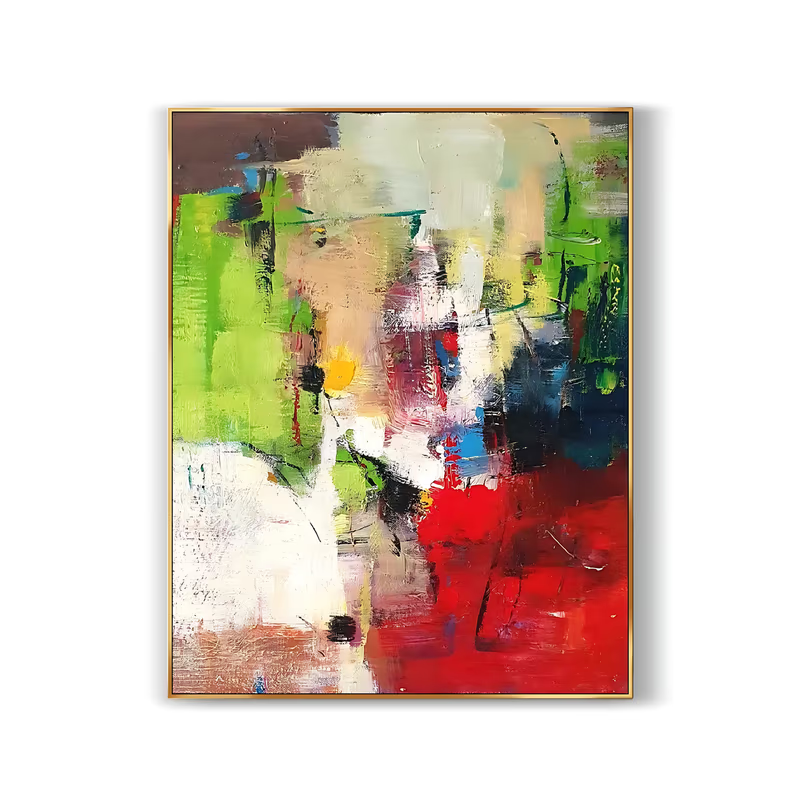
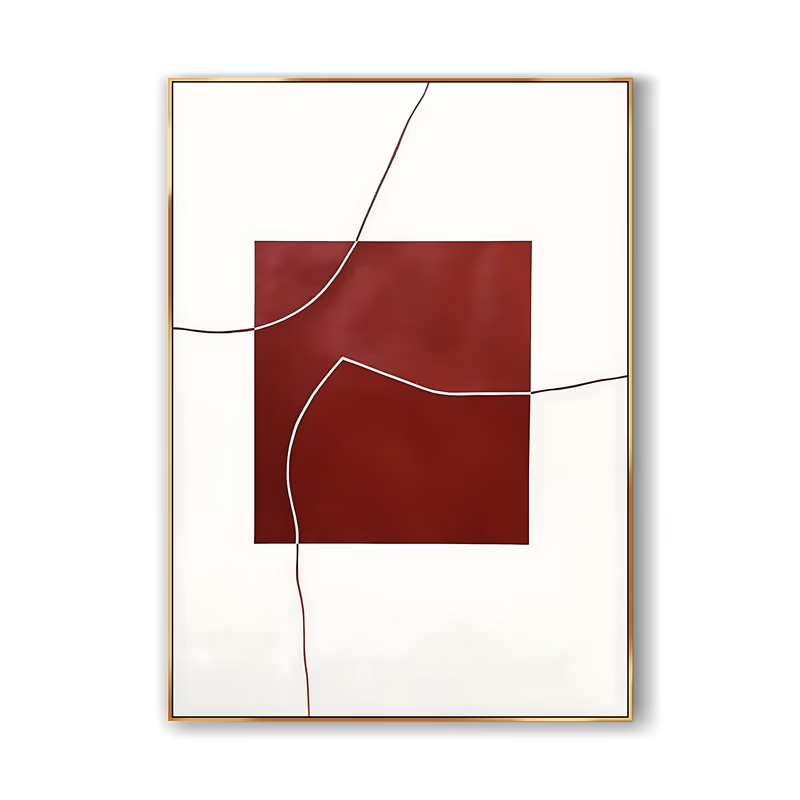
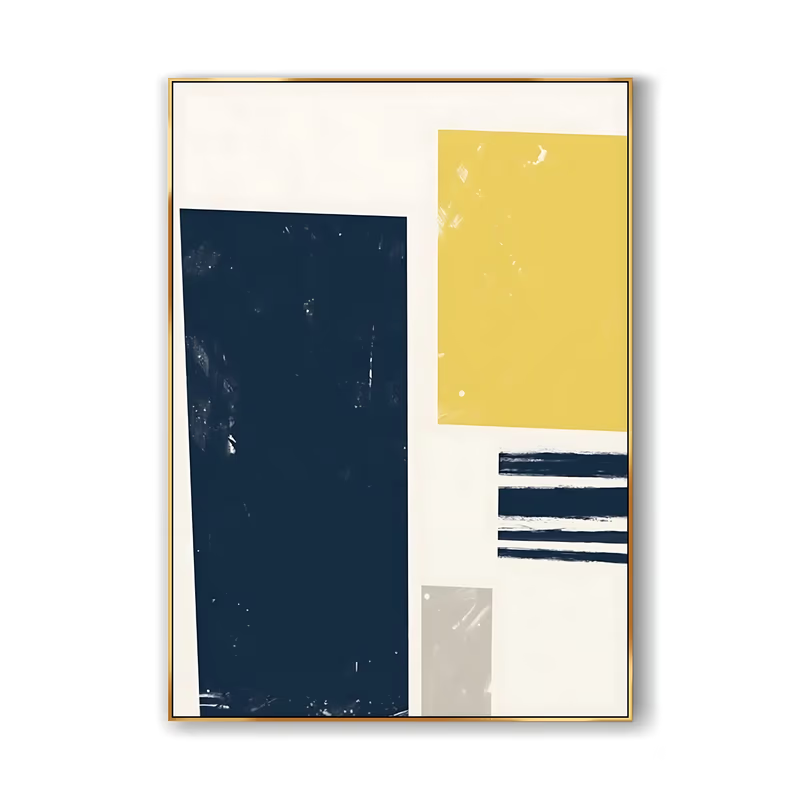
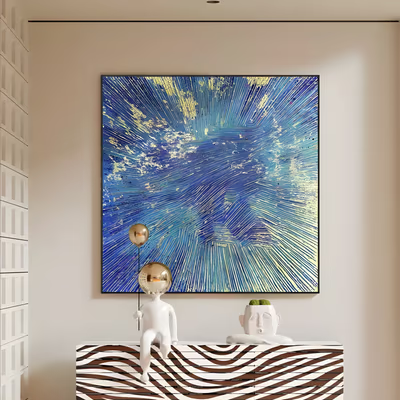
Cut shapes, Bauhaus circles, faceted planes and broad blocks of colour in terracotta, cobalt, charcoal and cream. They have structure without a story, so they sit well beside the straight lines of desks and glazing and stay fresh after months on the same wall.
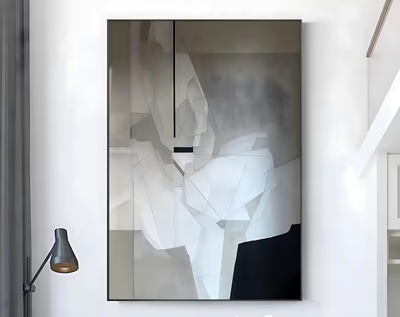
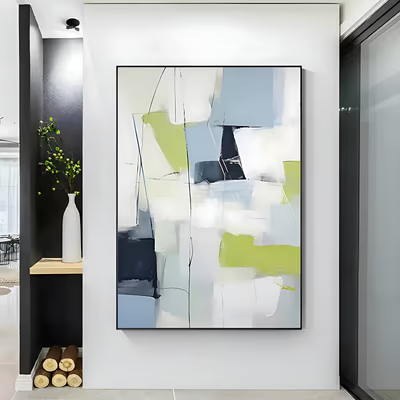
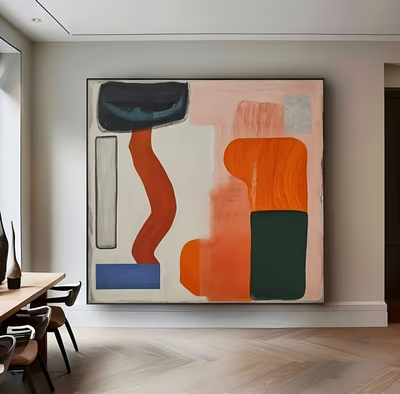
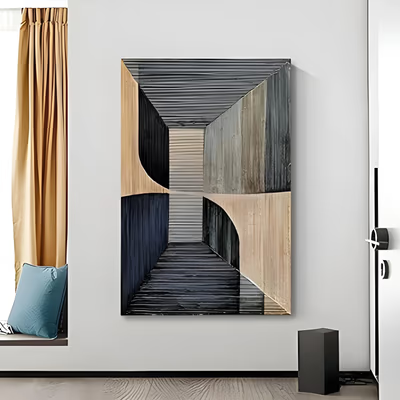
Textured, minimalist and wabi-sabi neutrals
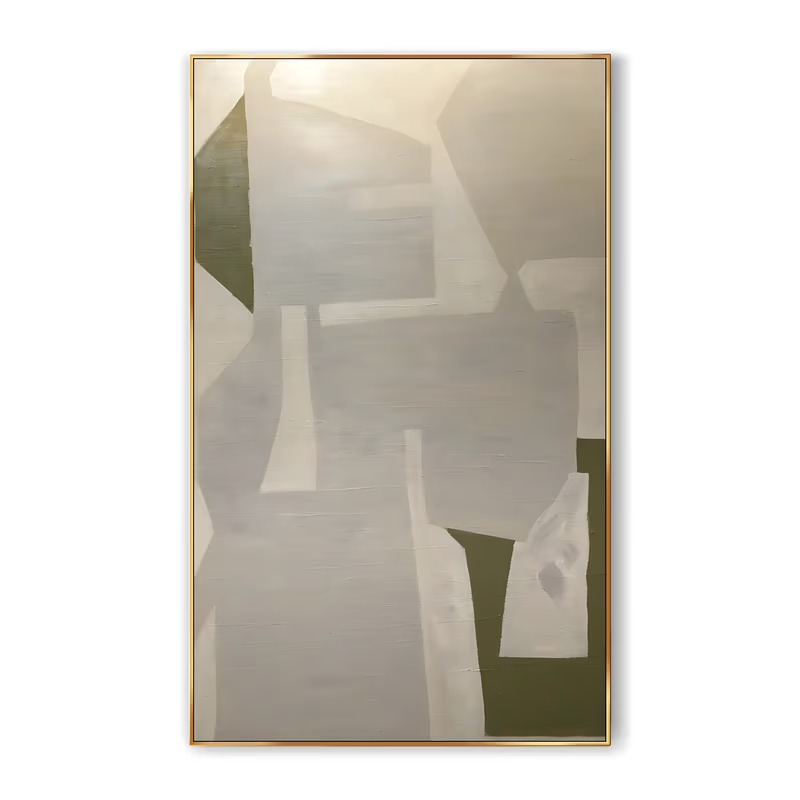
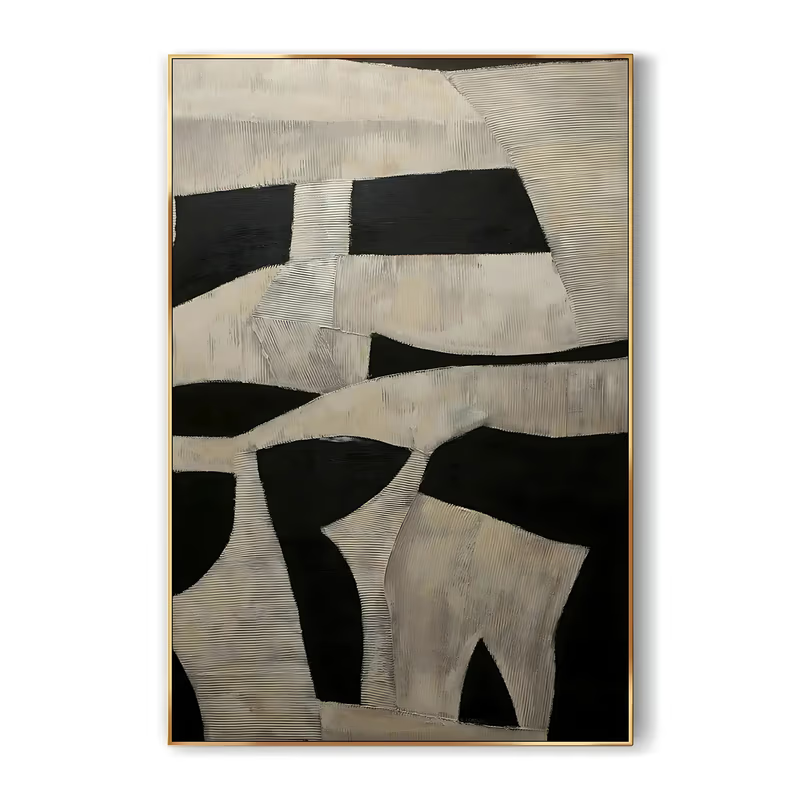
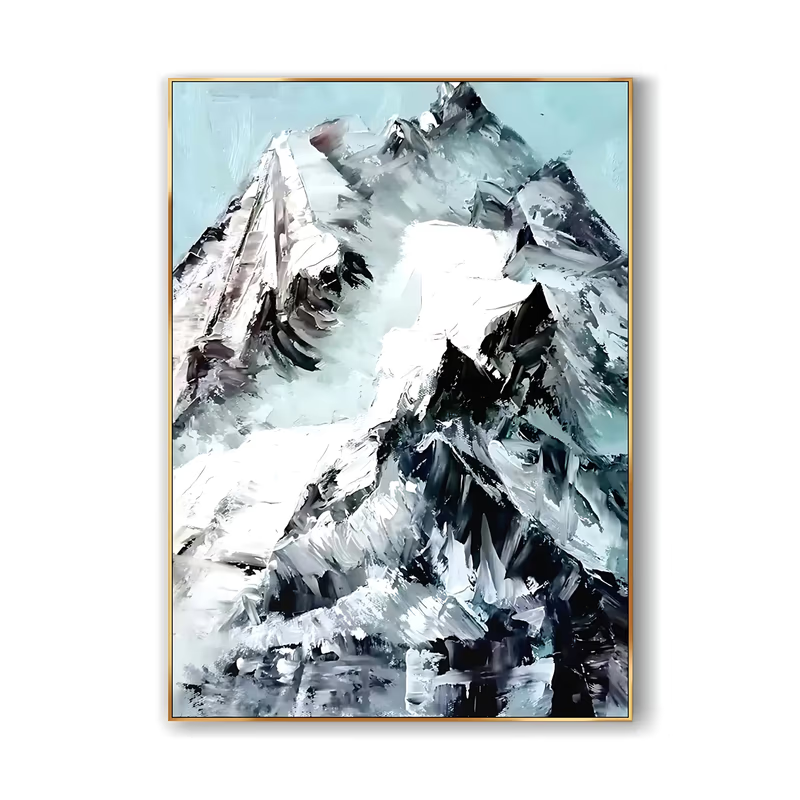
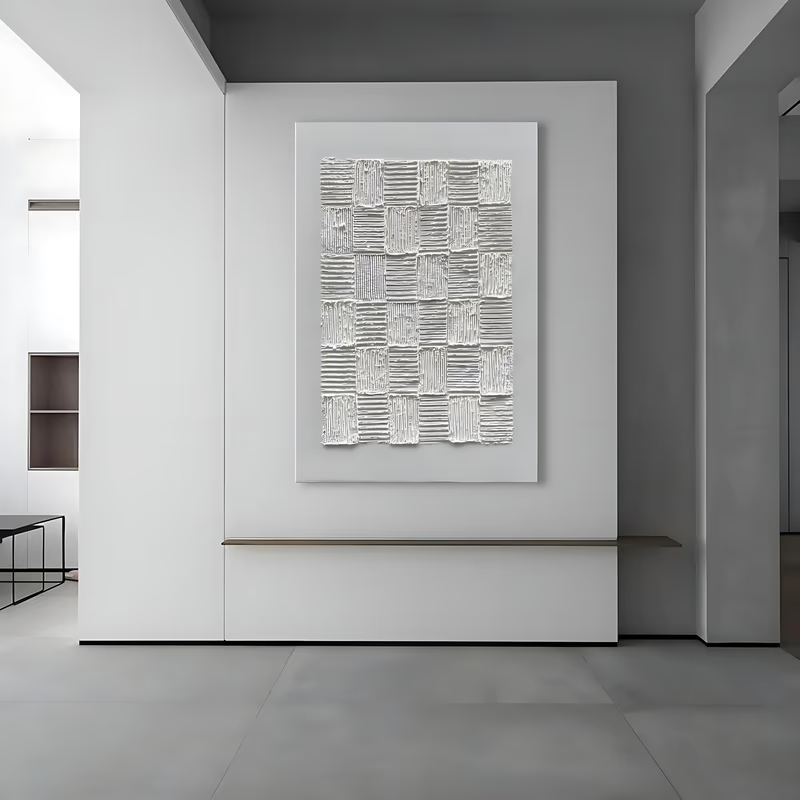
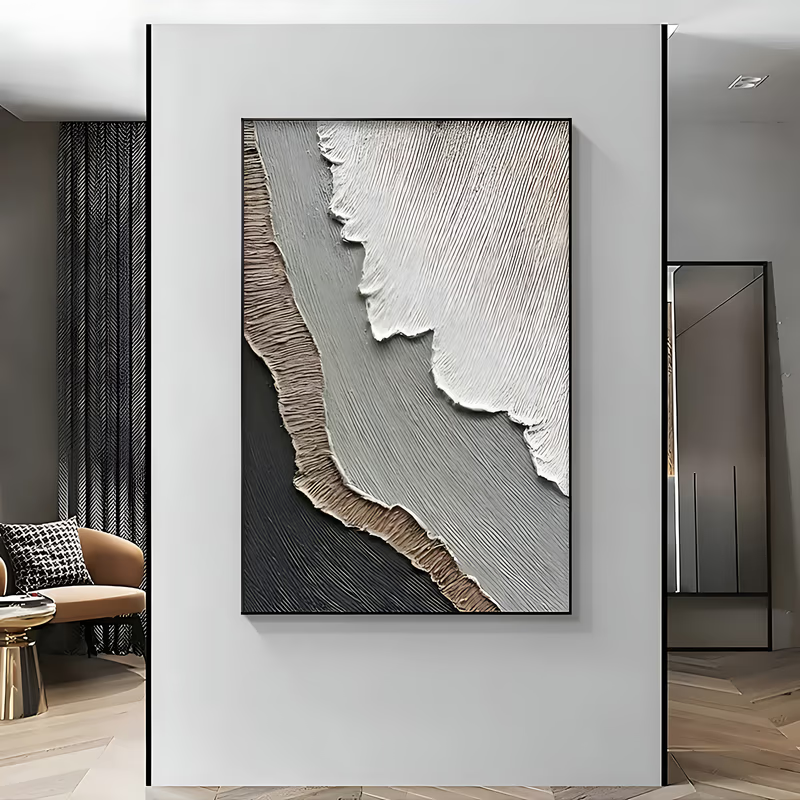
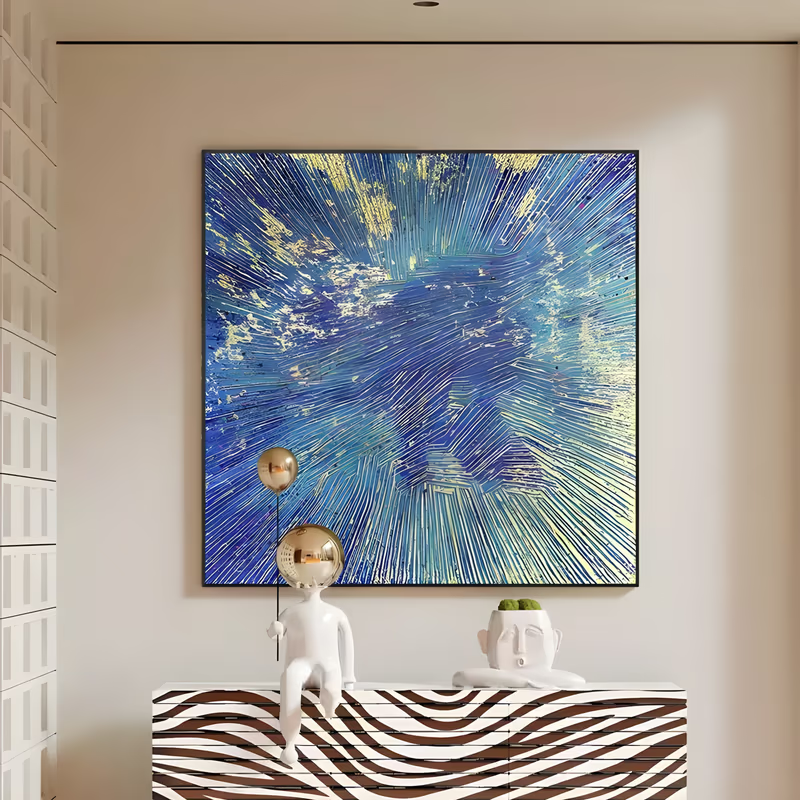
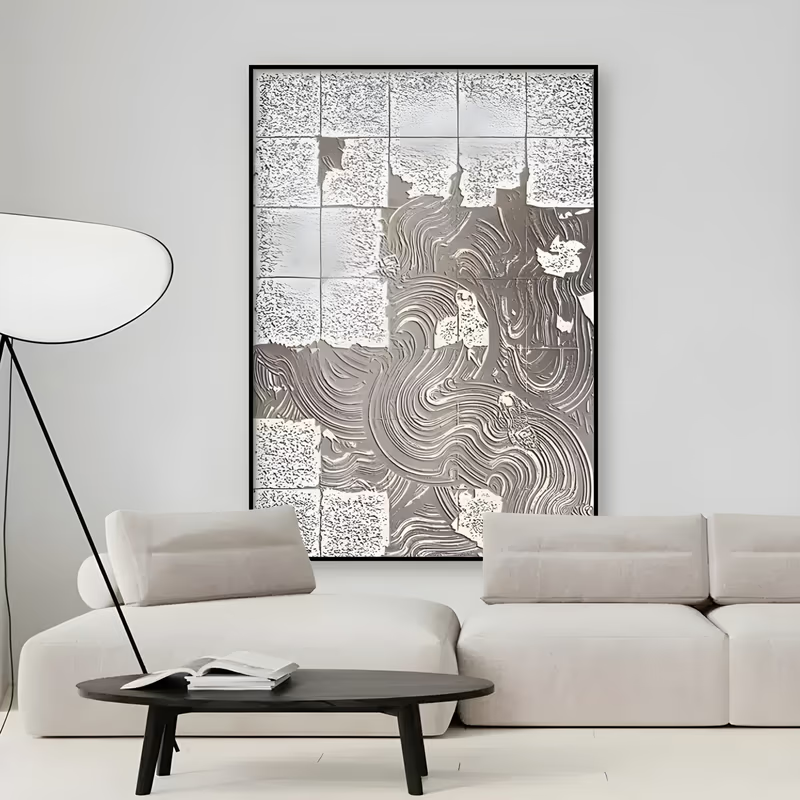
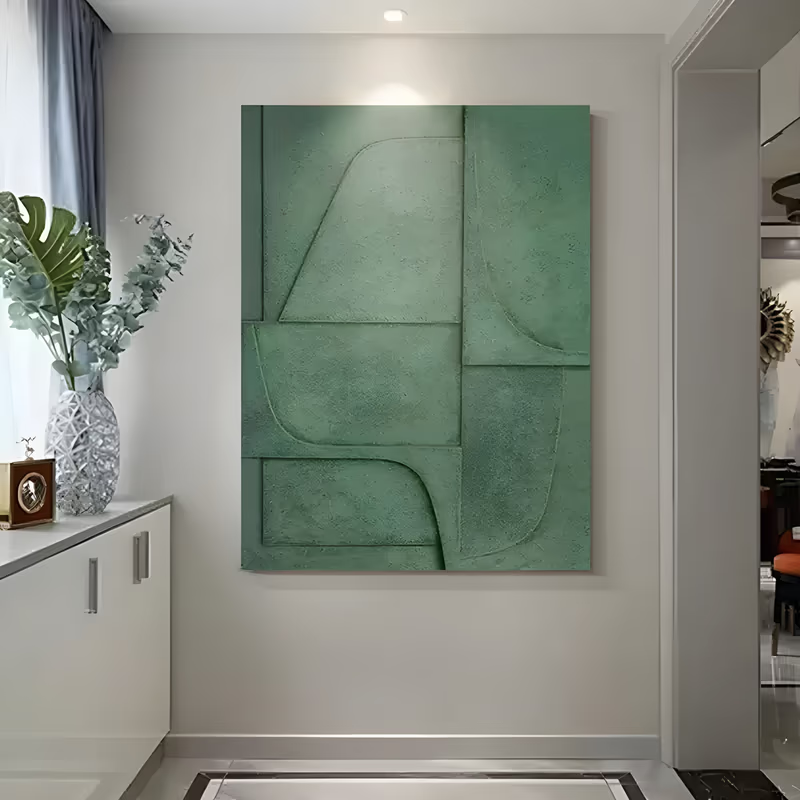
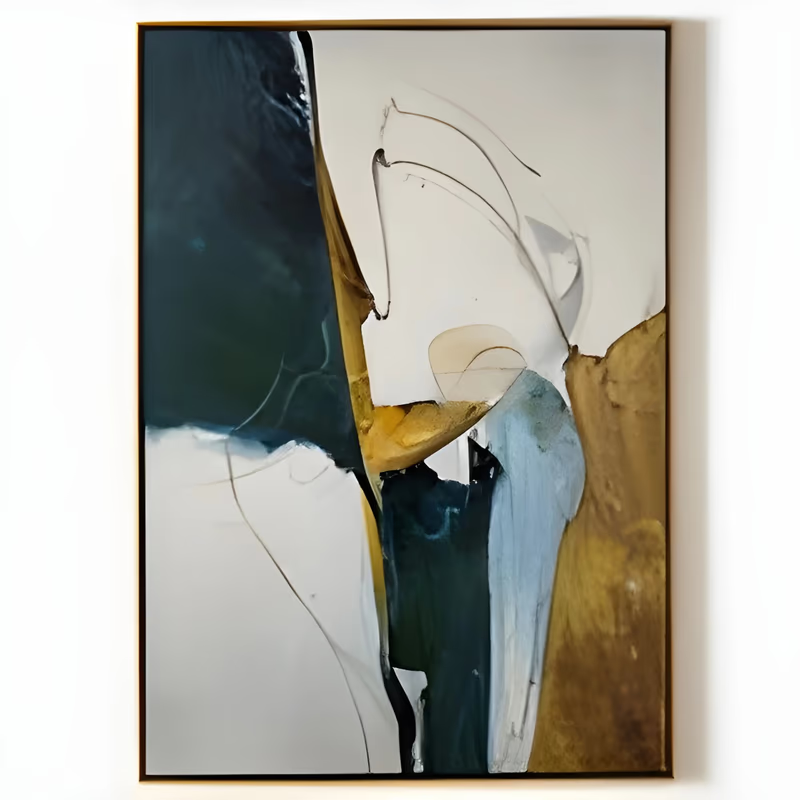
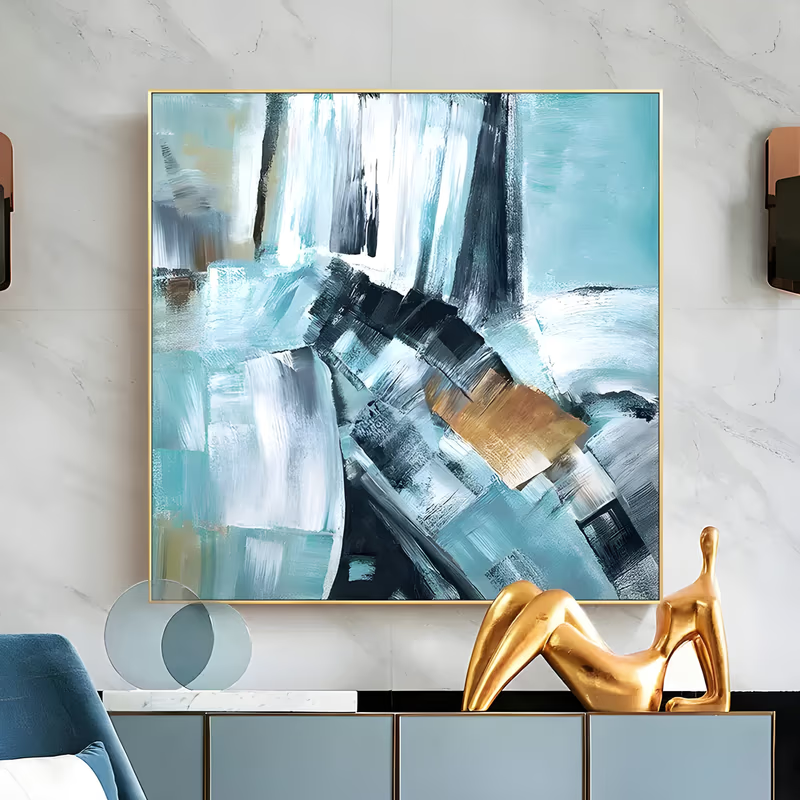
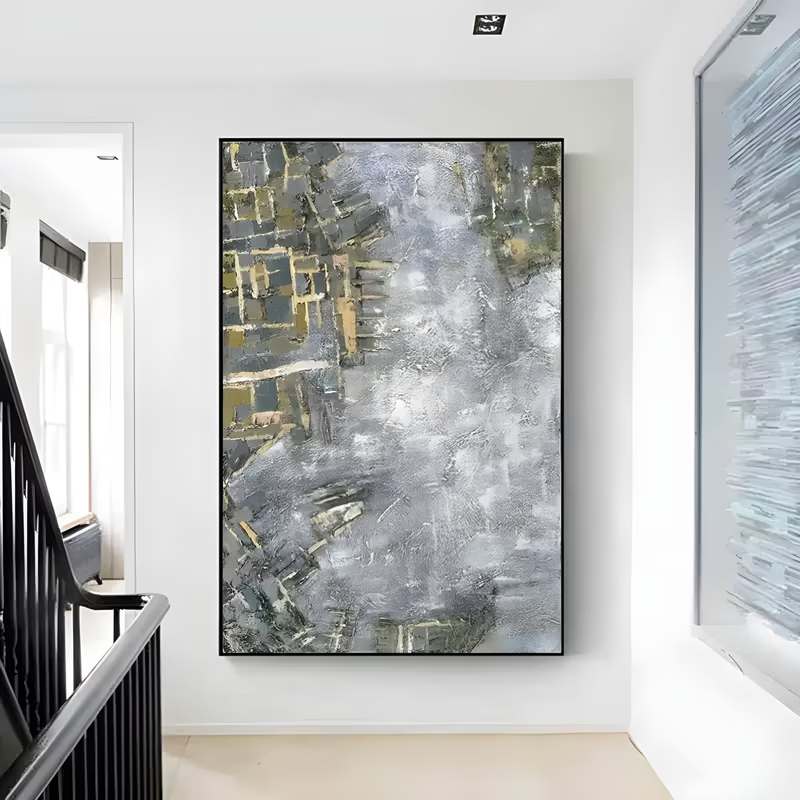
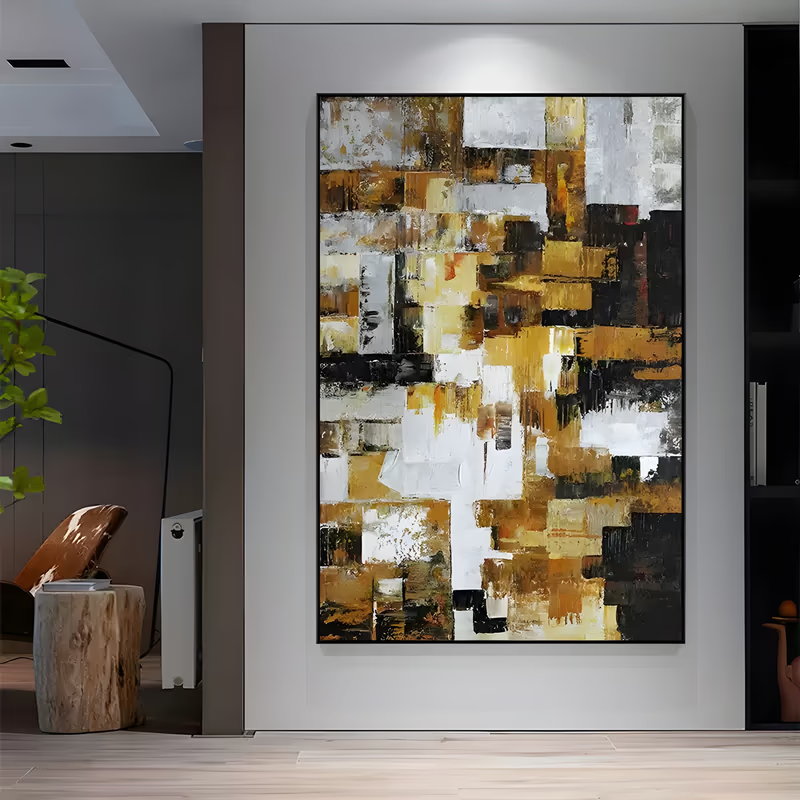
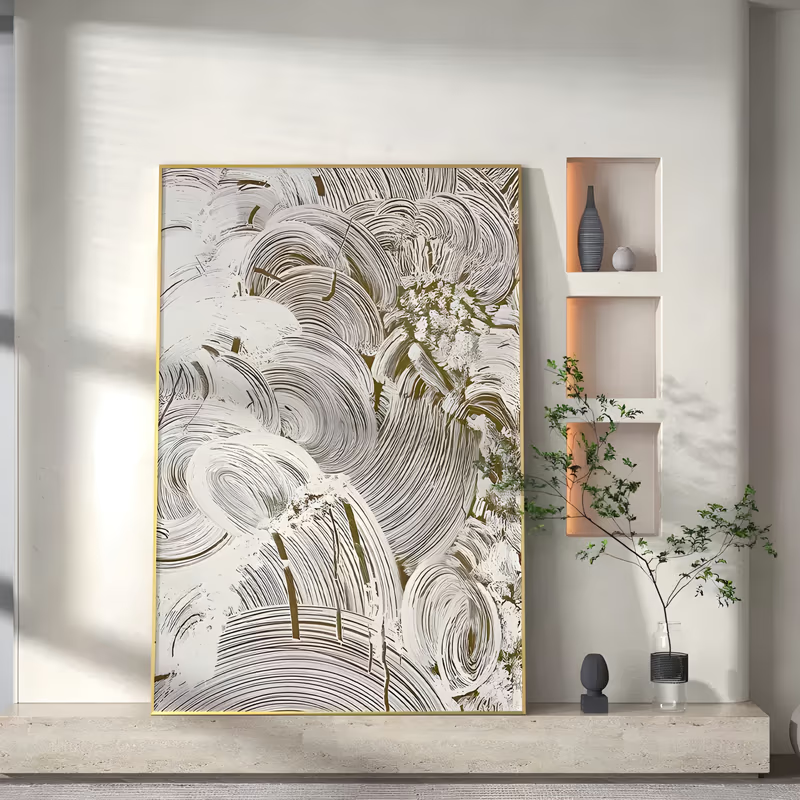
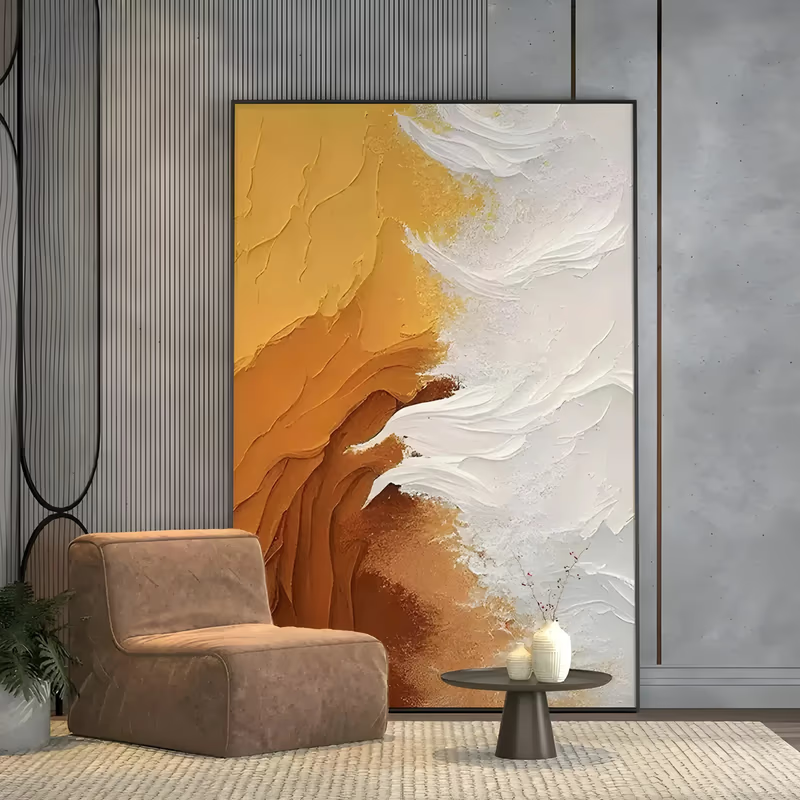
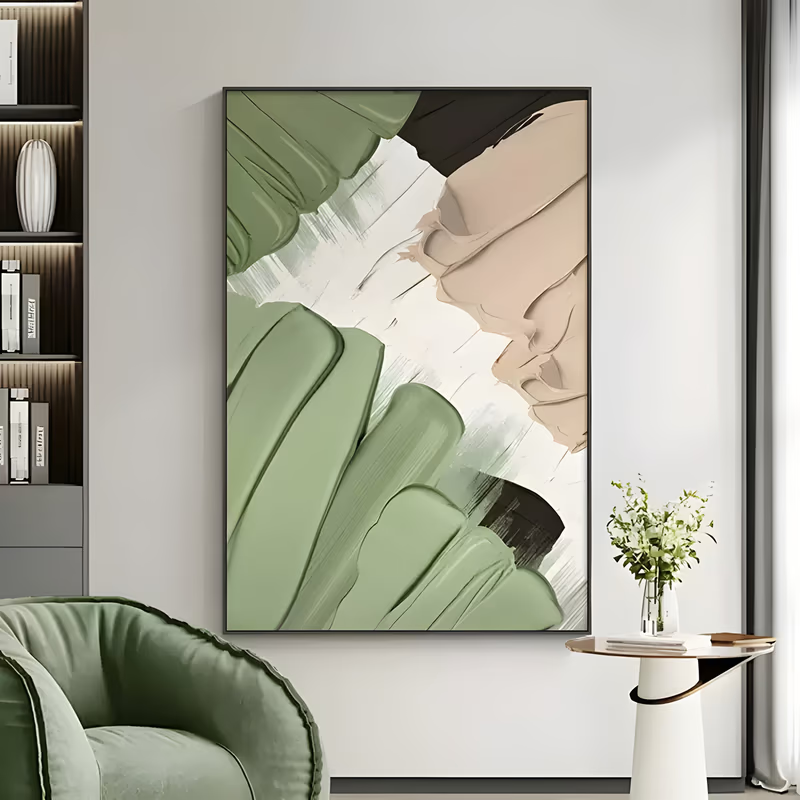
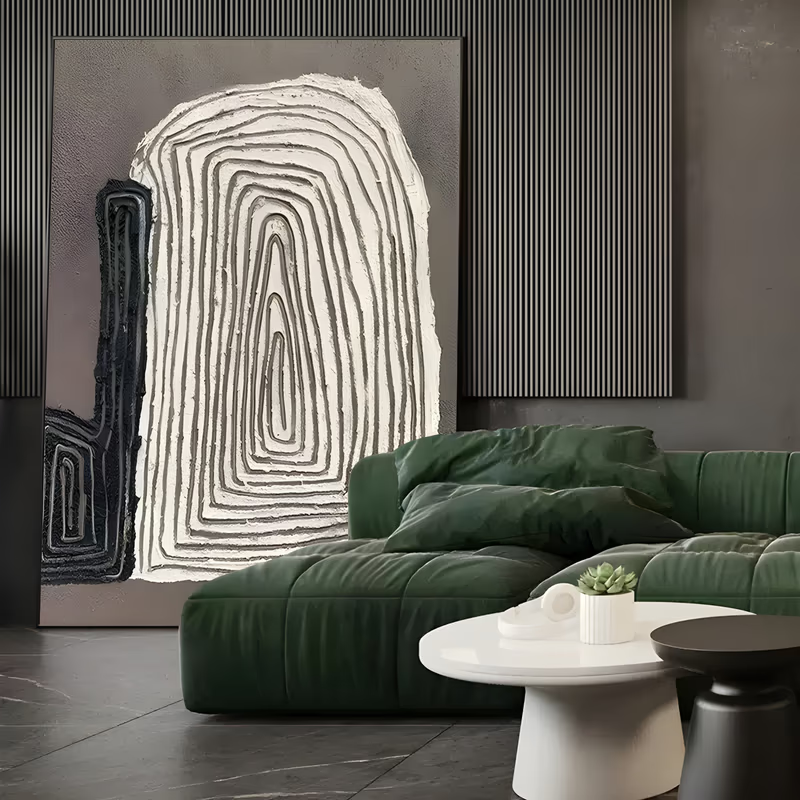
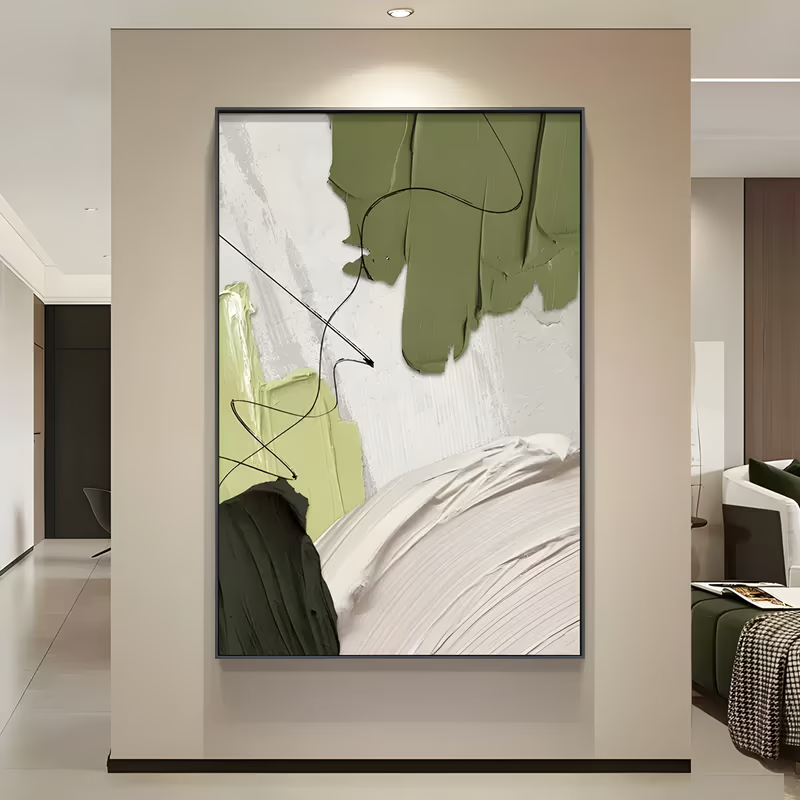
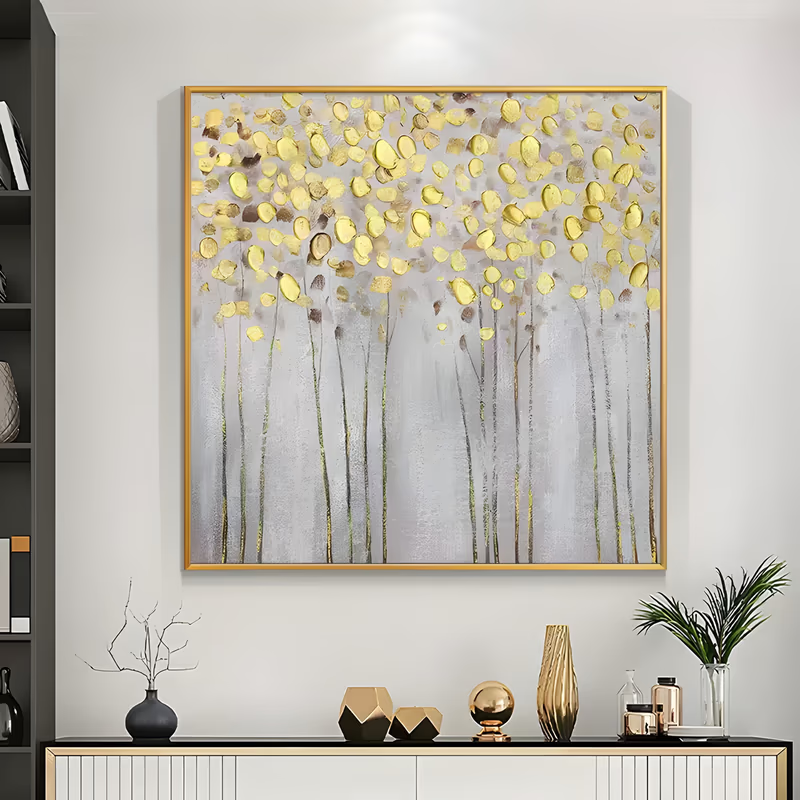
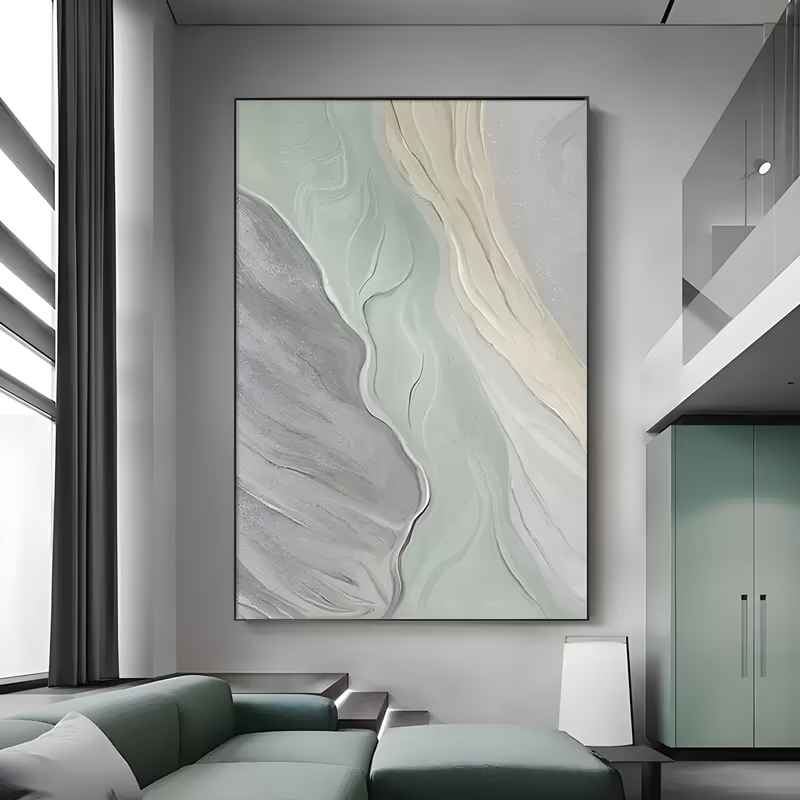
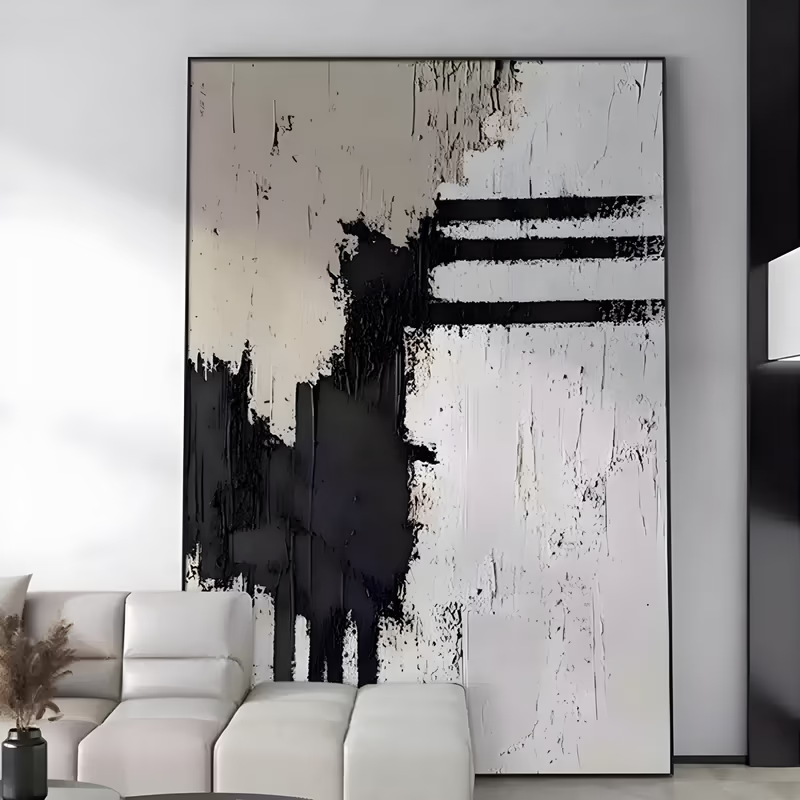
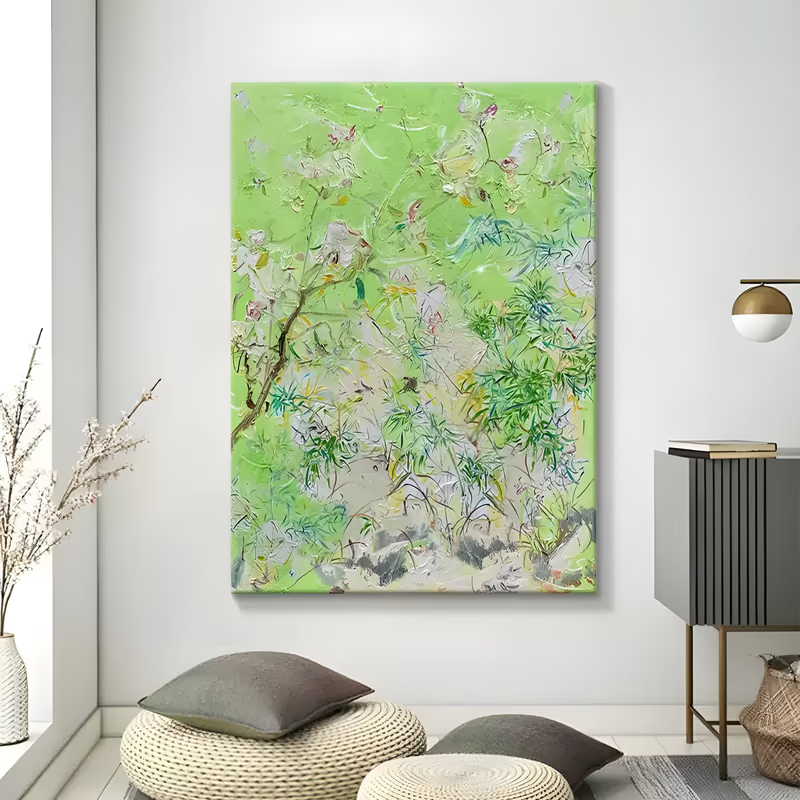
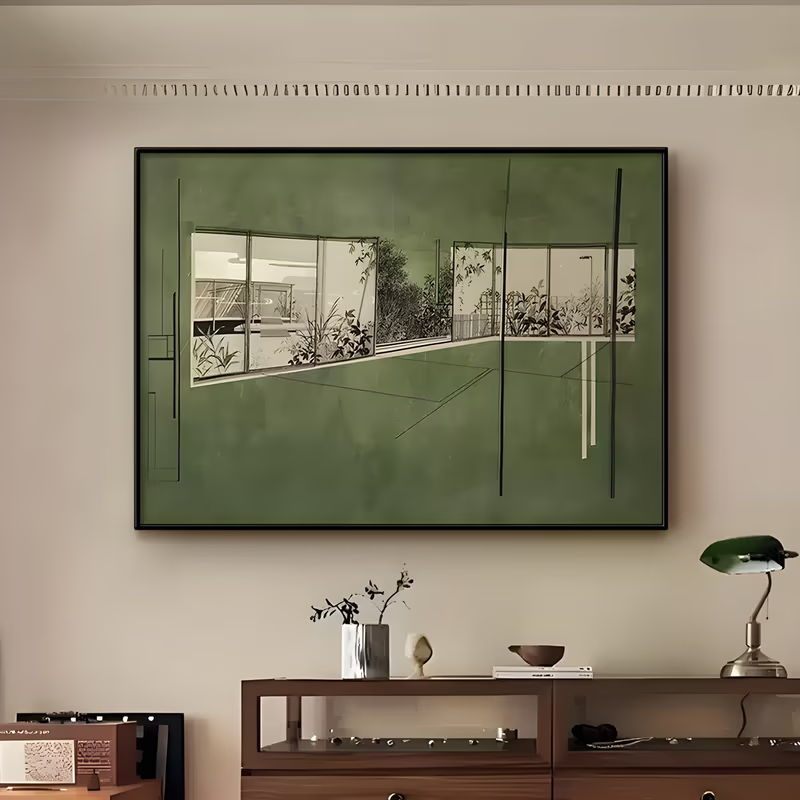
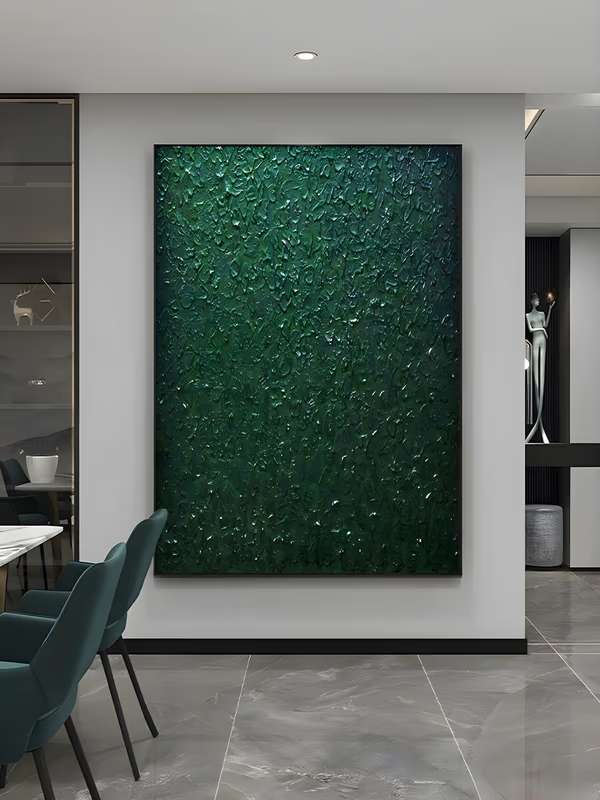
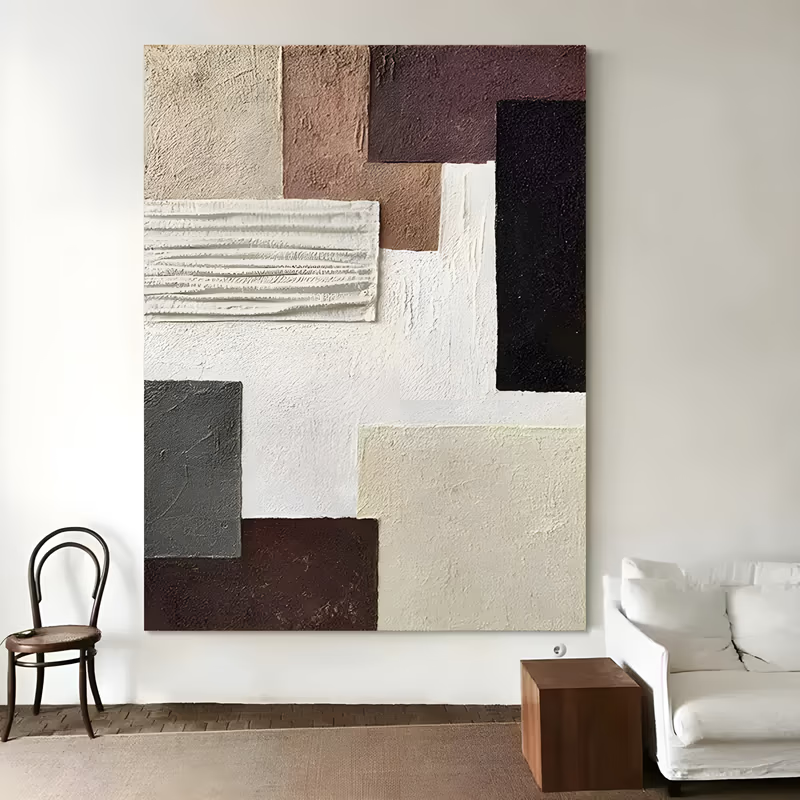
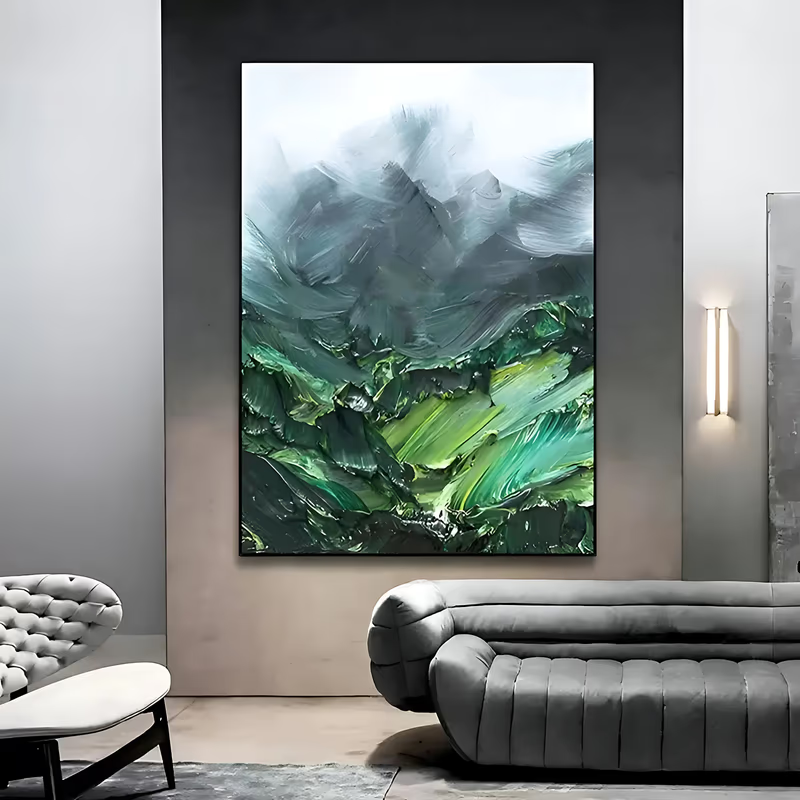
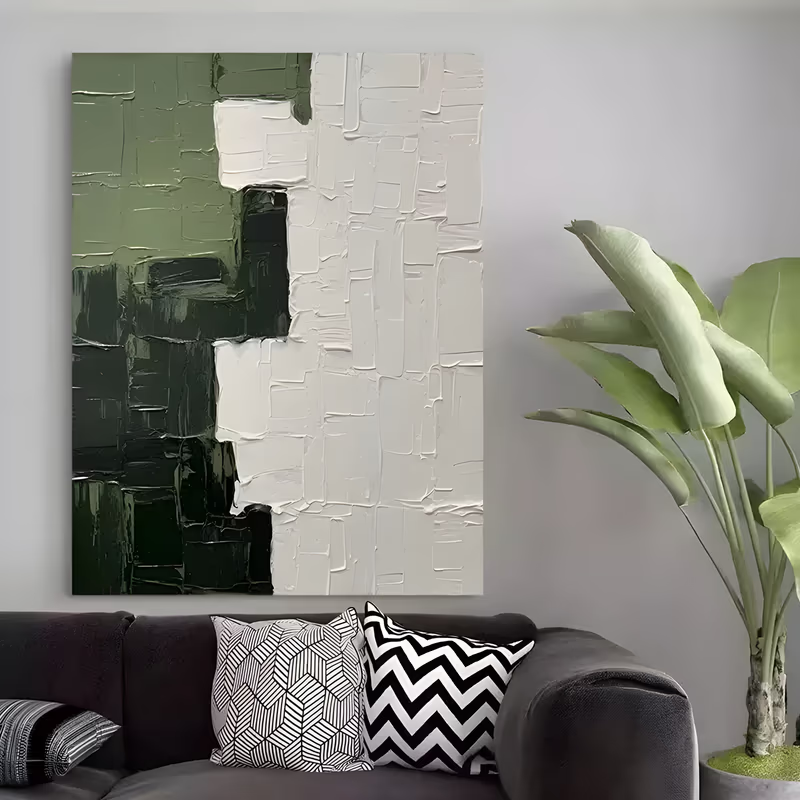
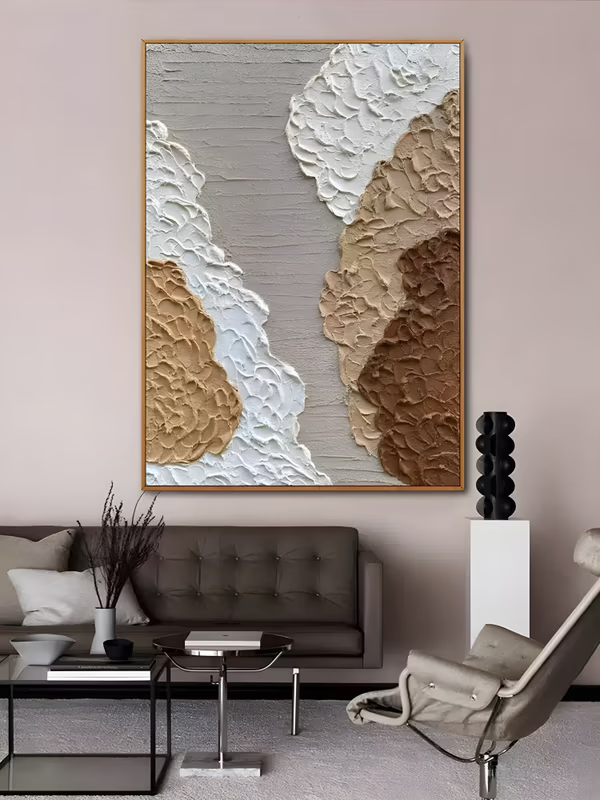
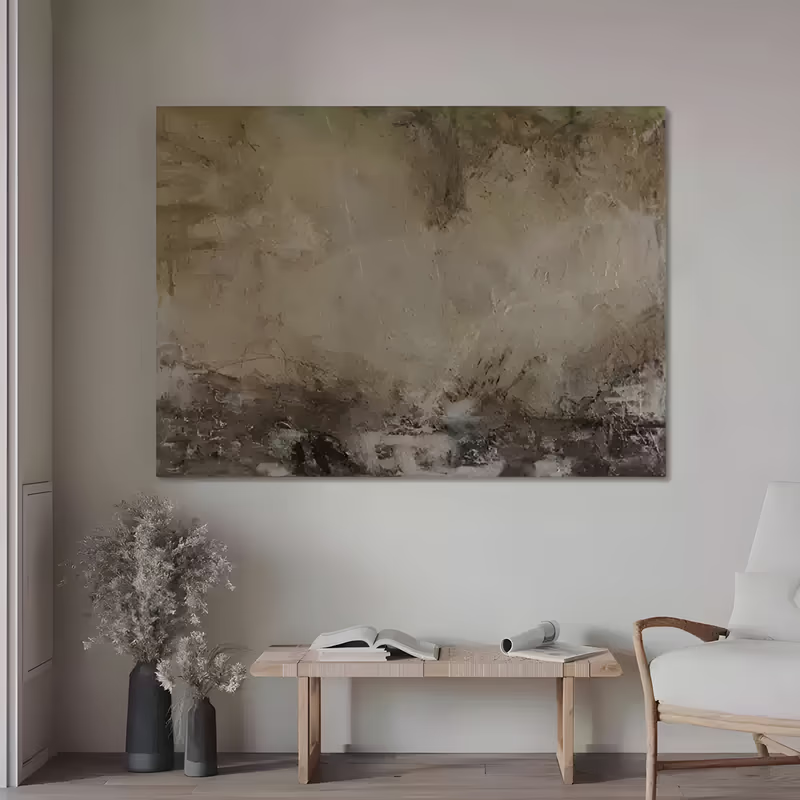
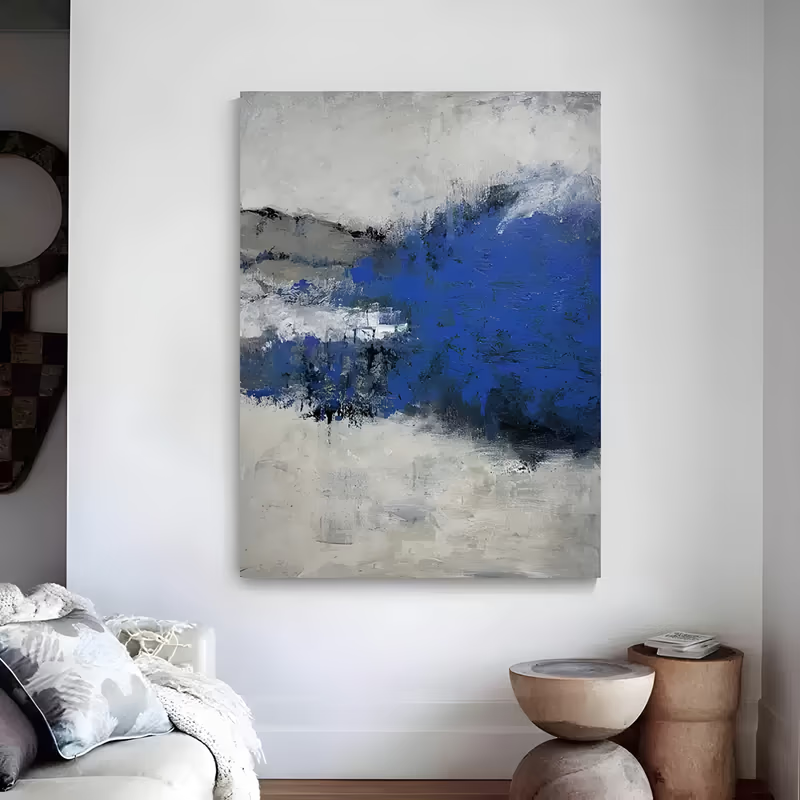
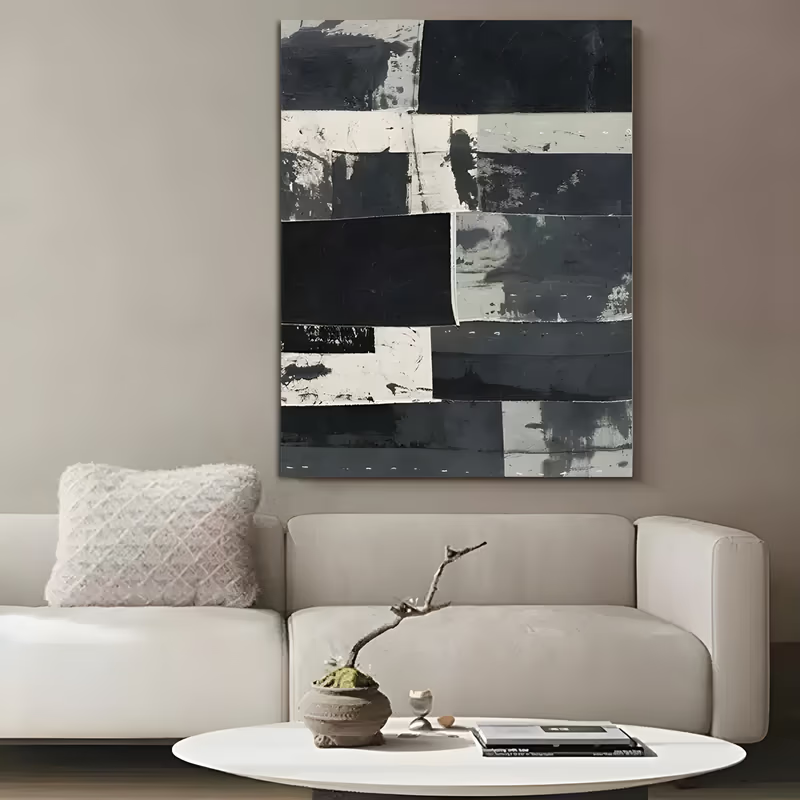
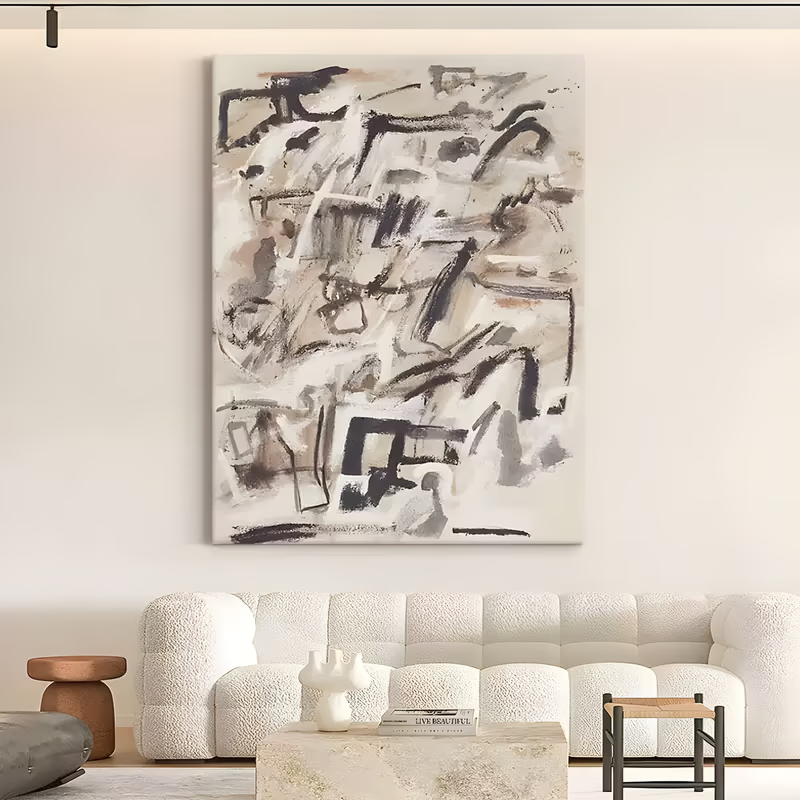
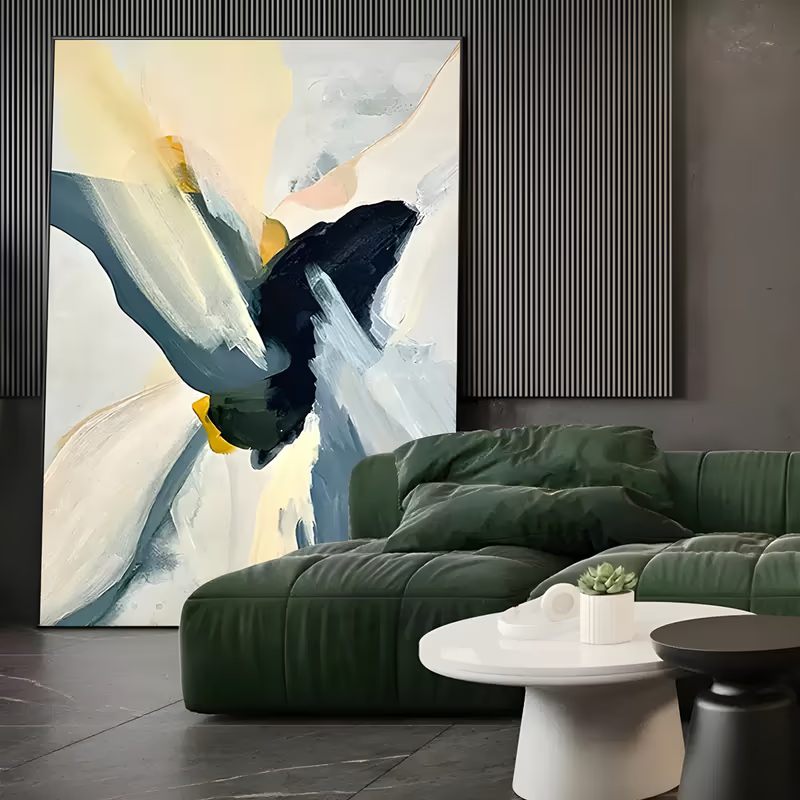
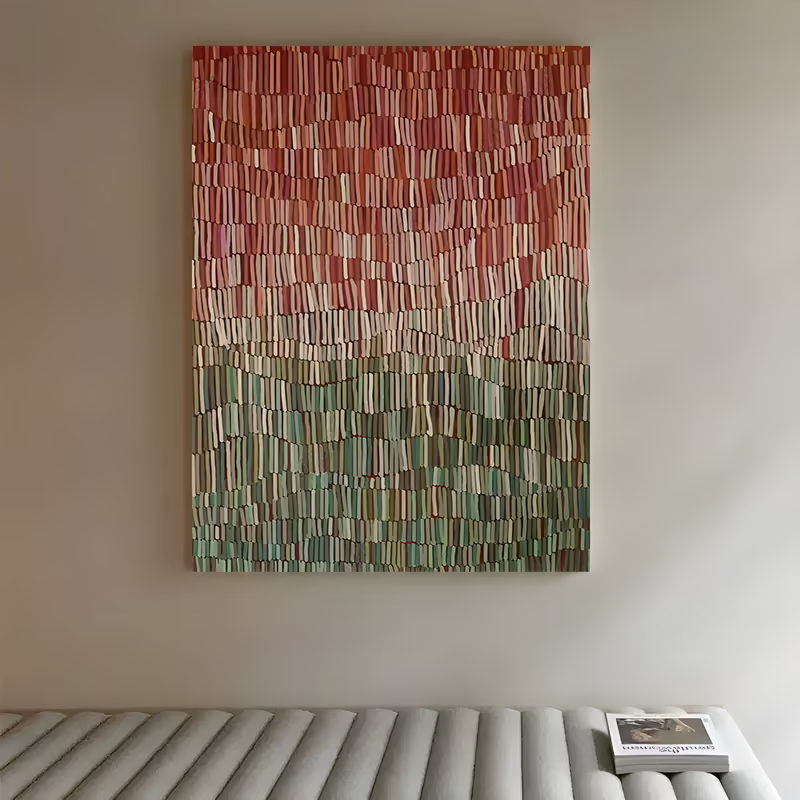
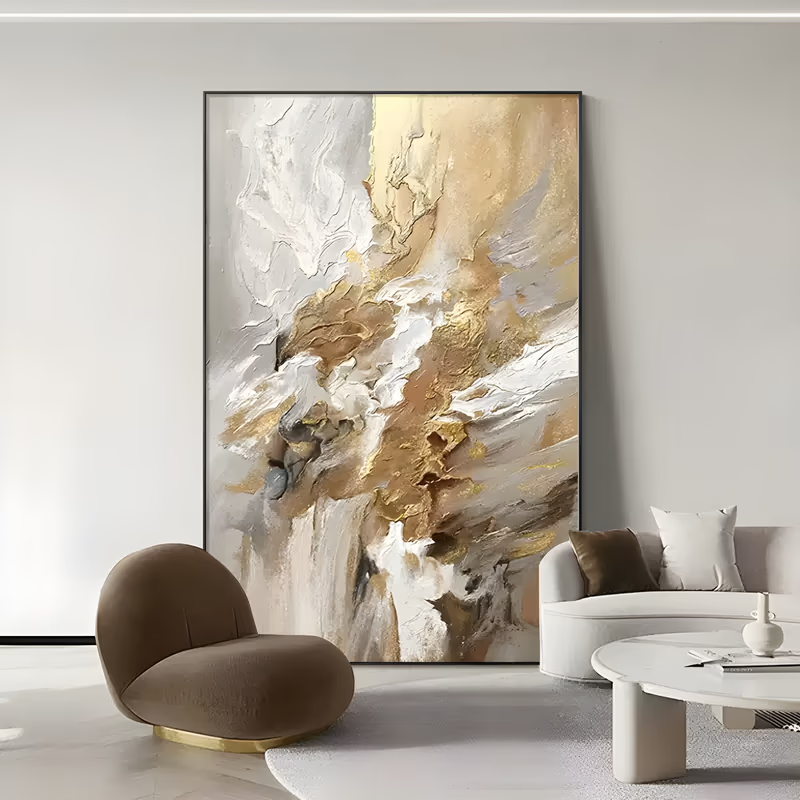
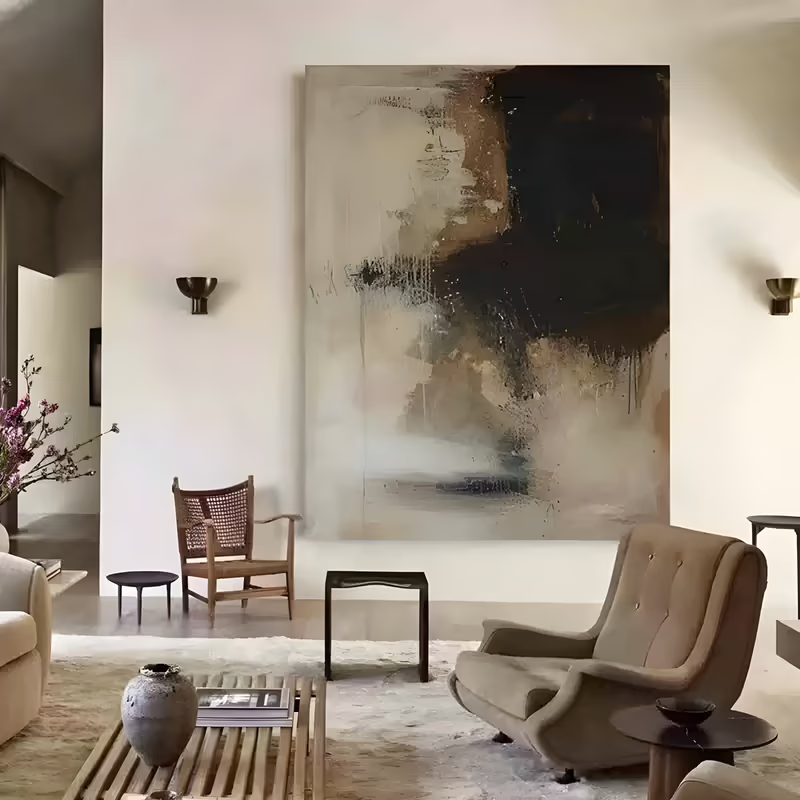
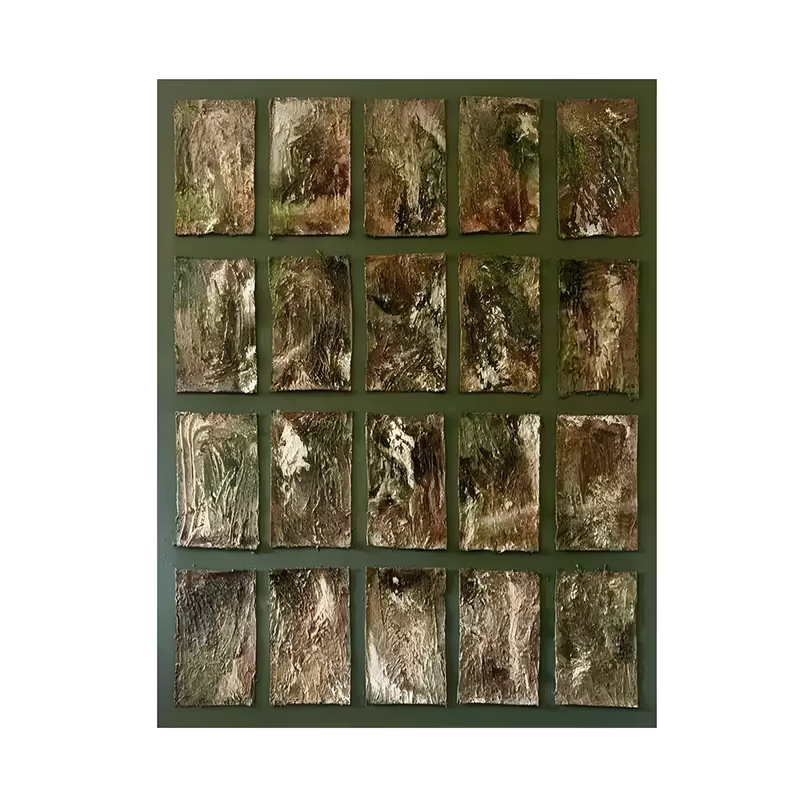
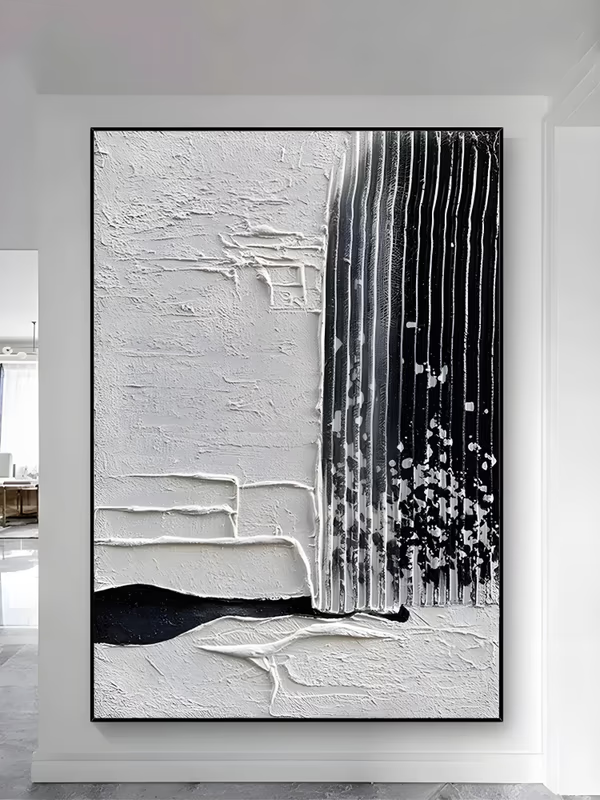
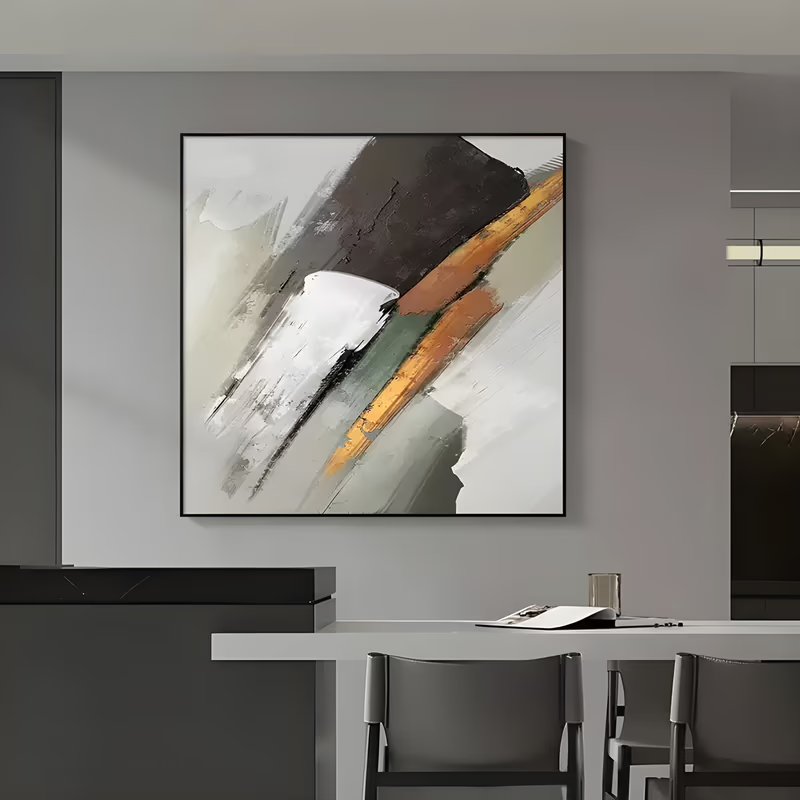
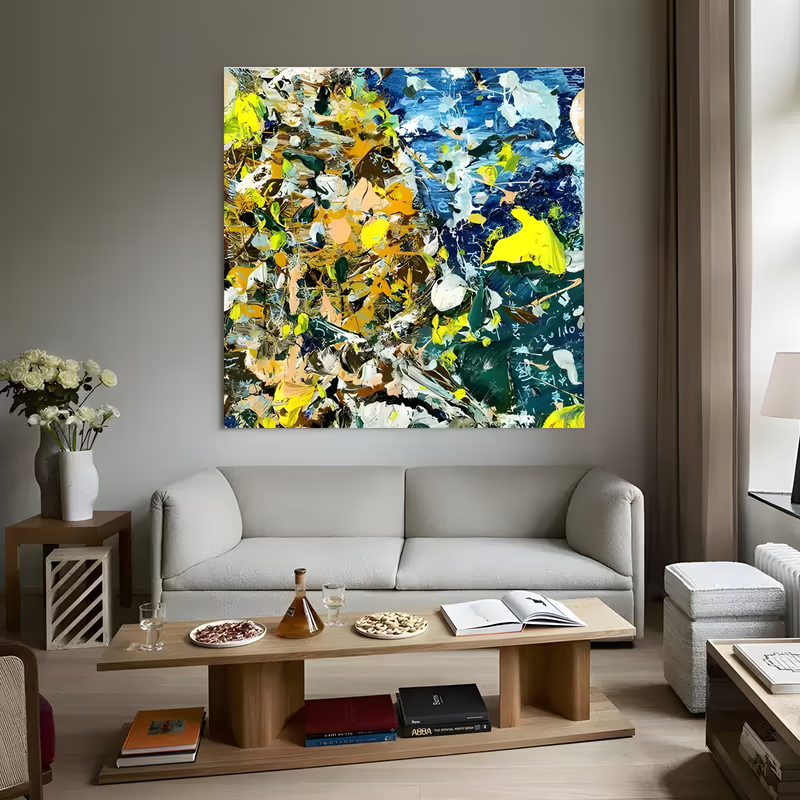
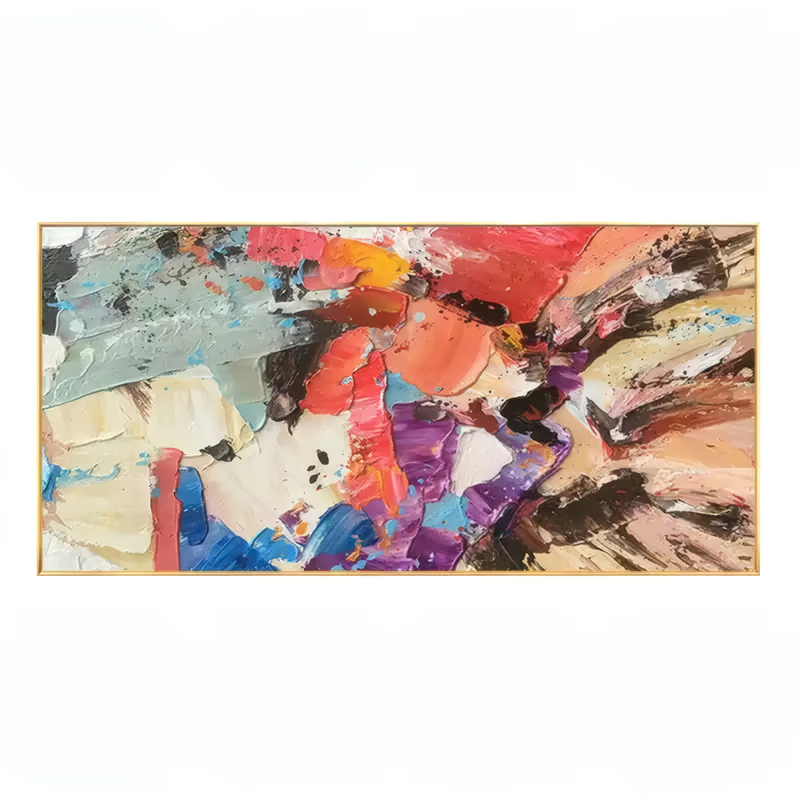
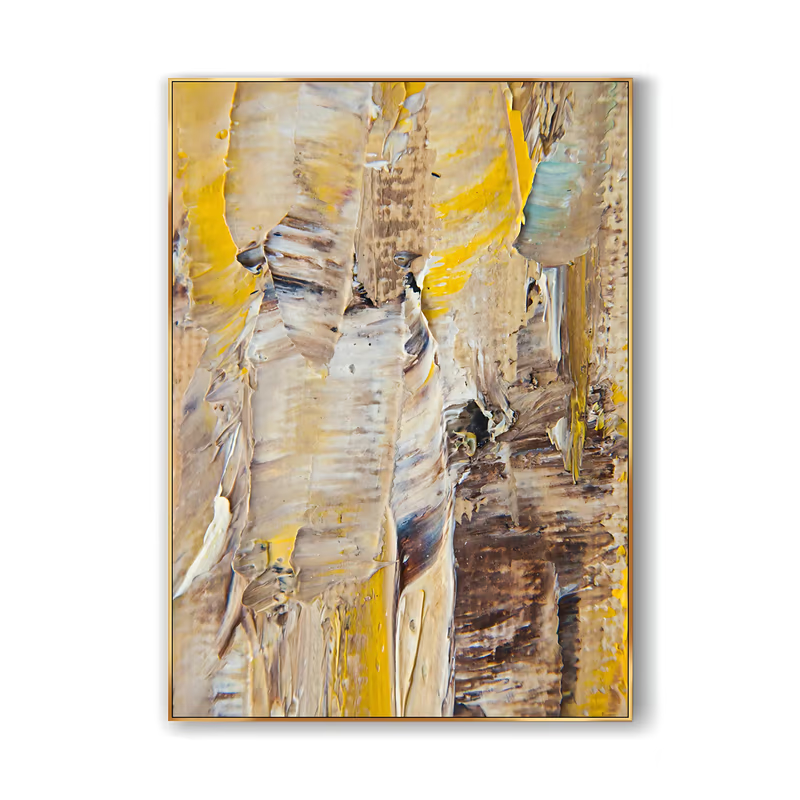
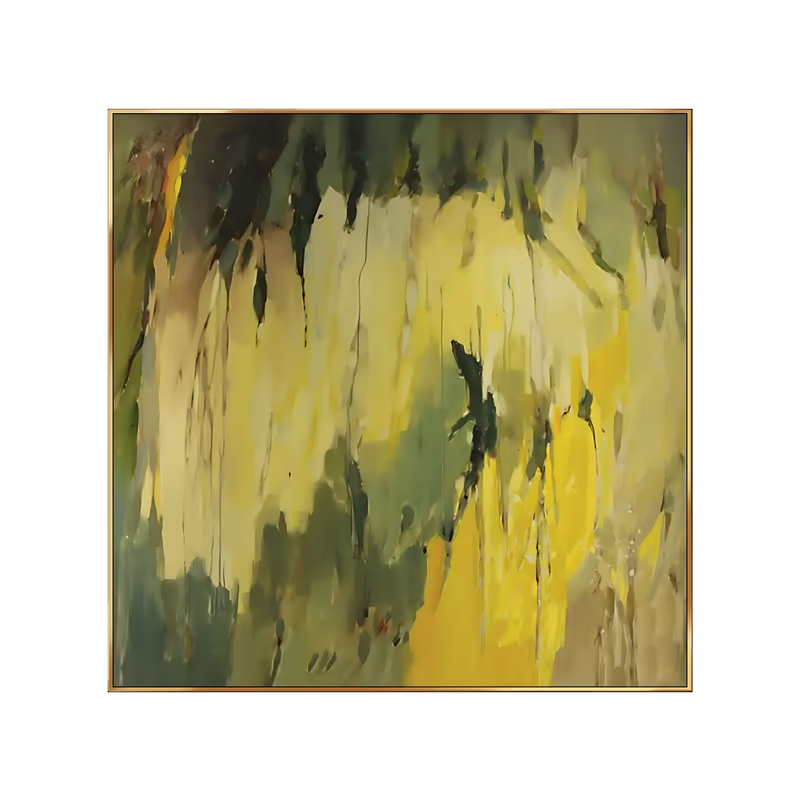
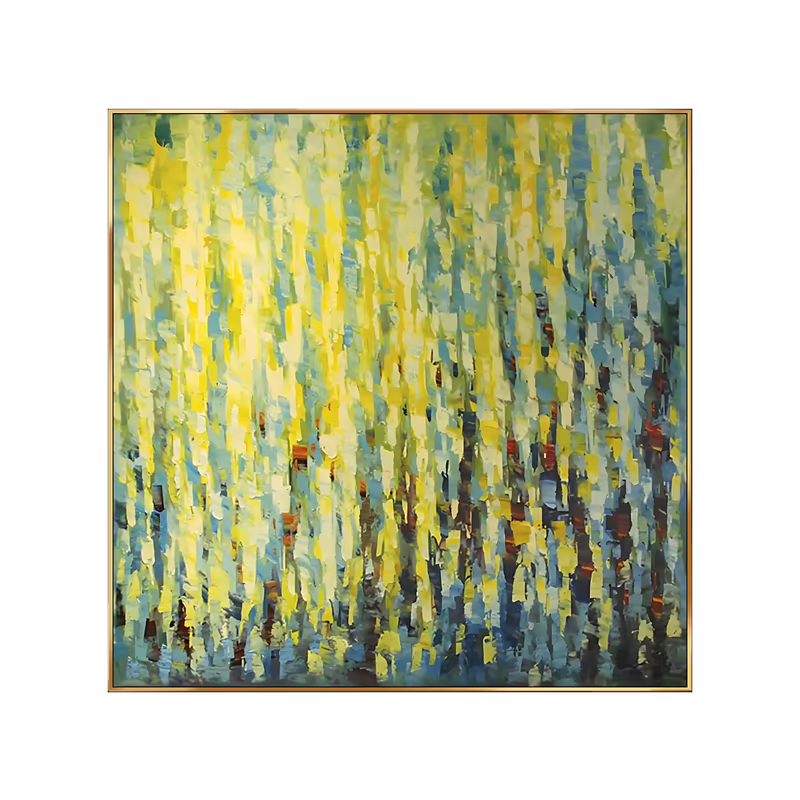
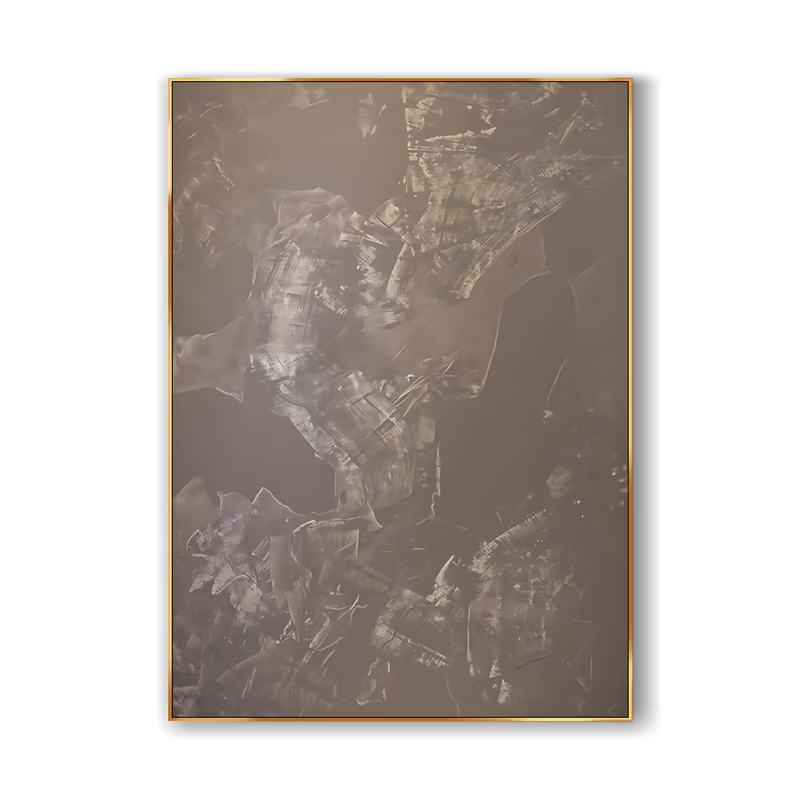
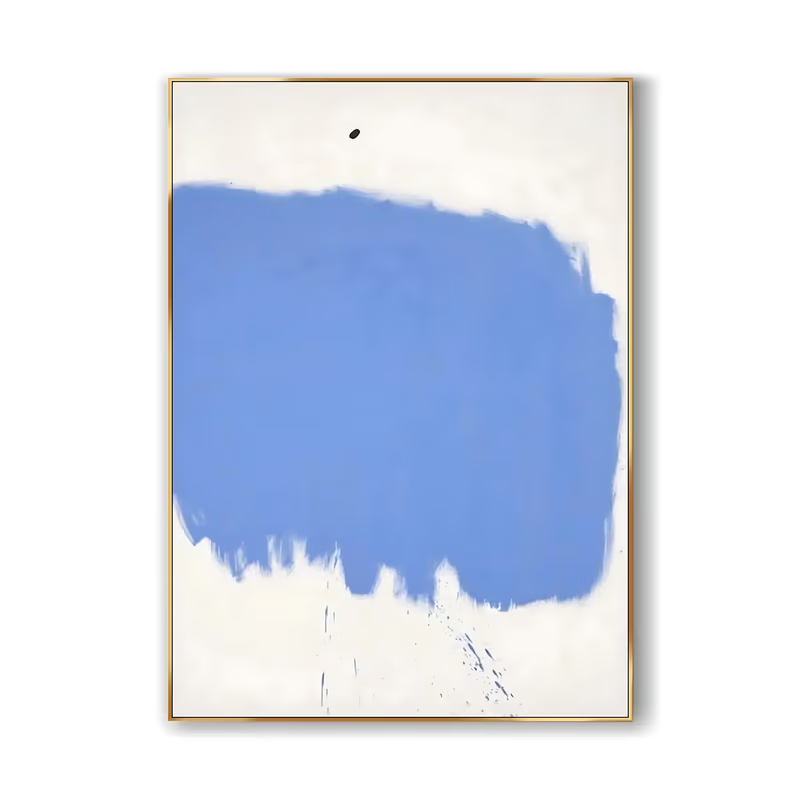
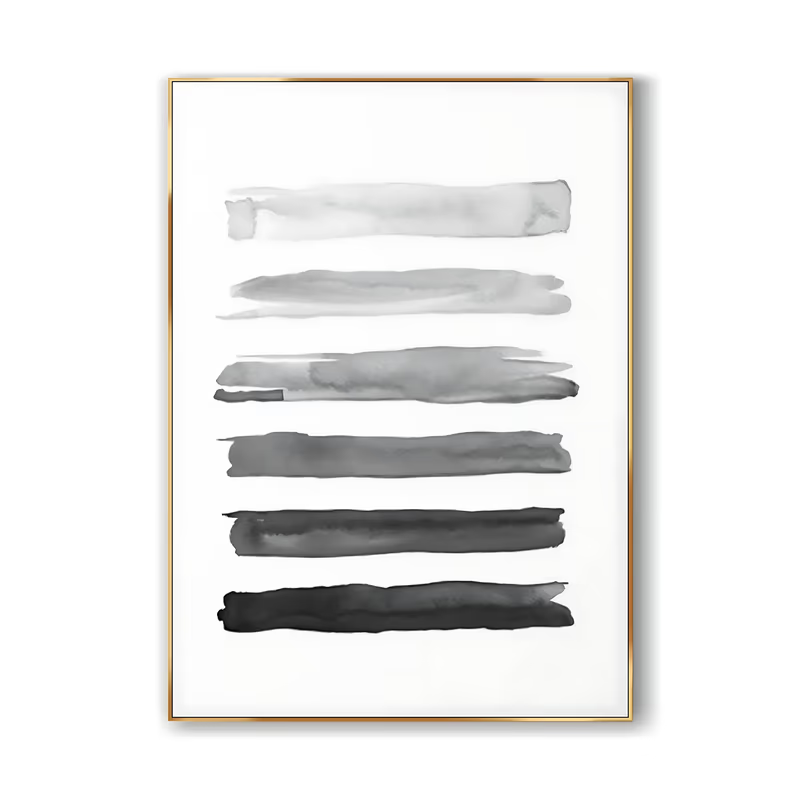
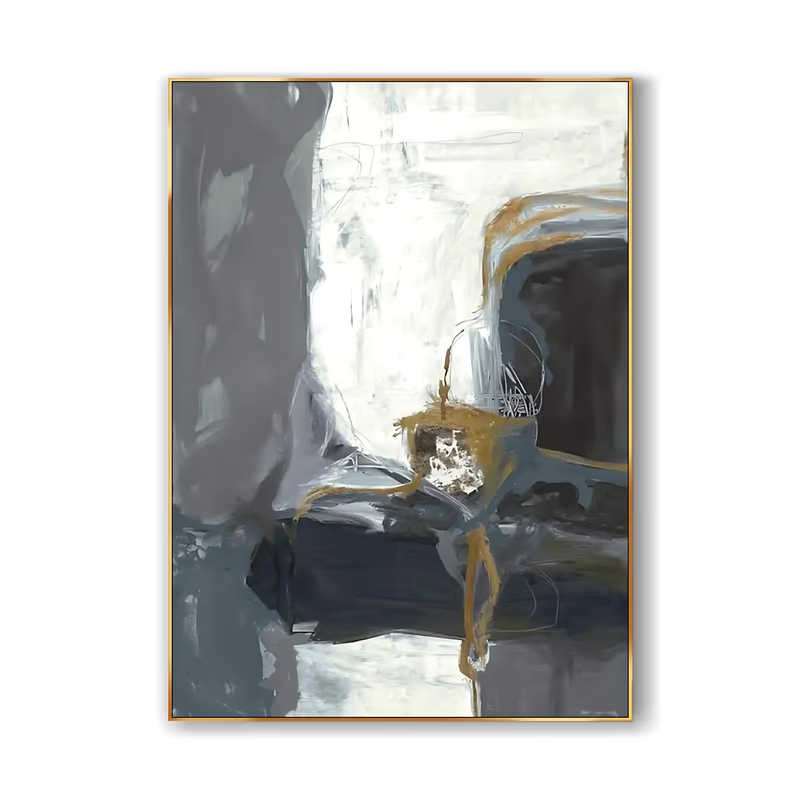
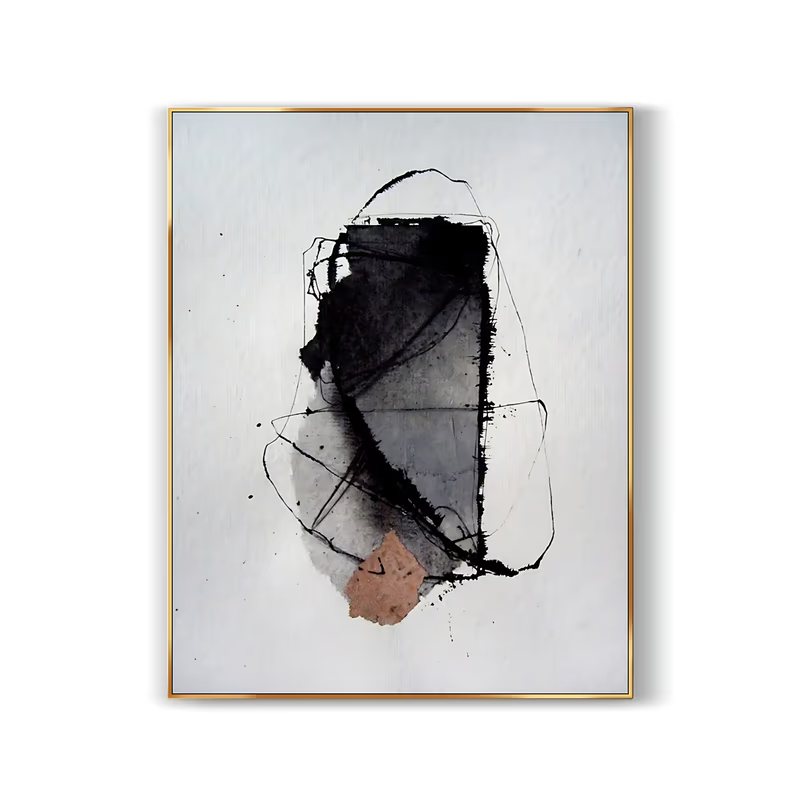
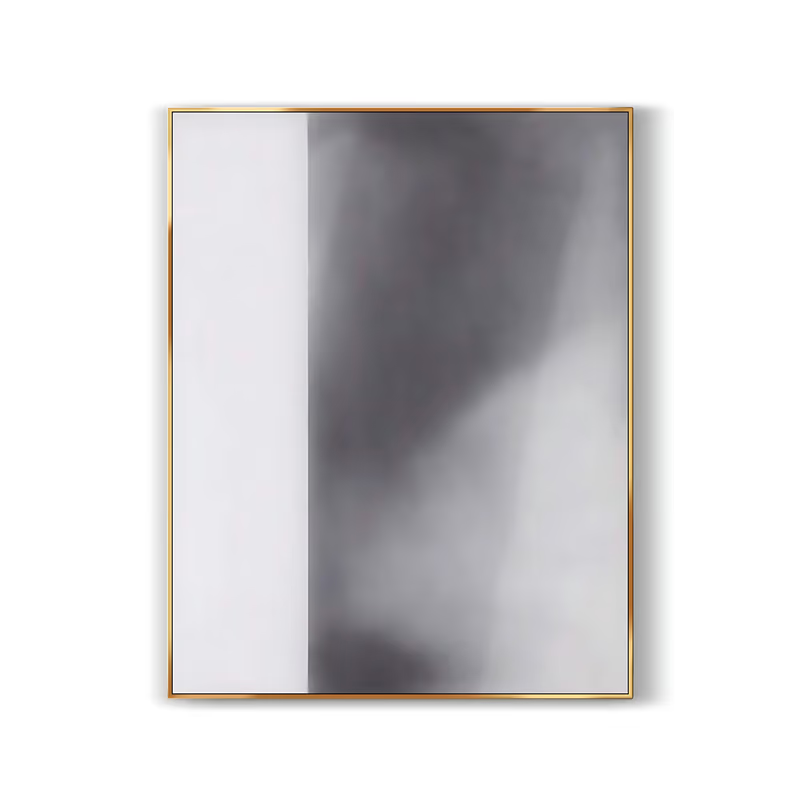
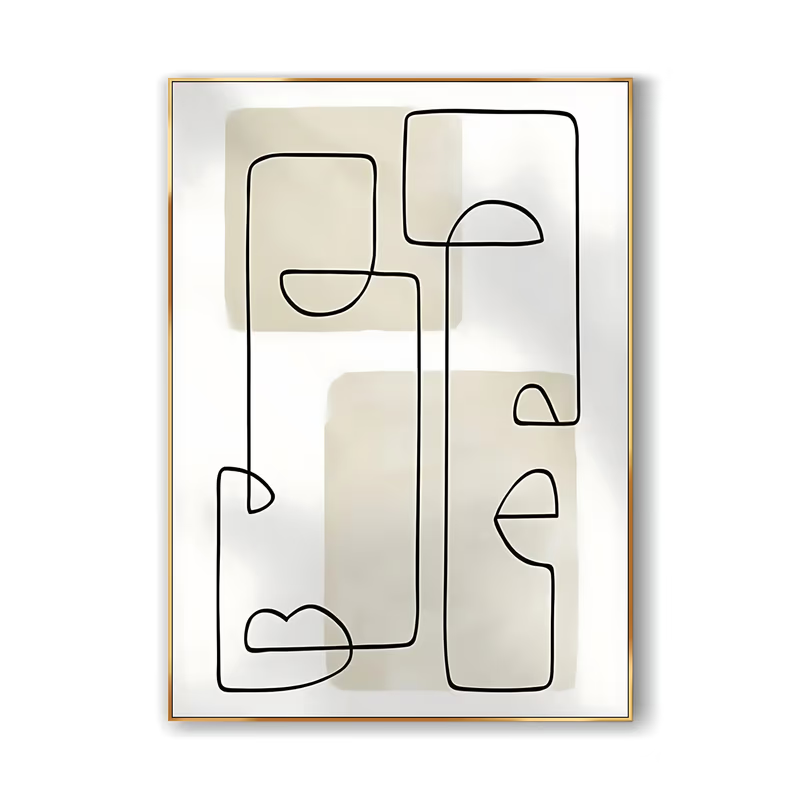
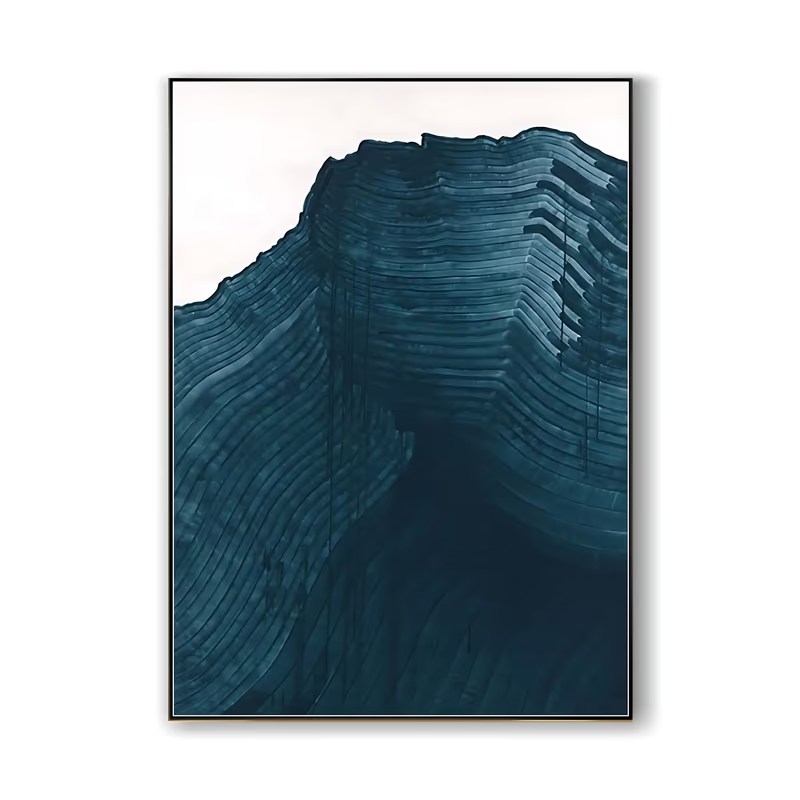
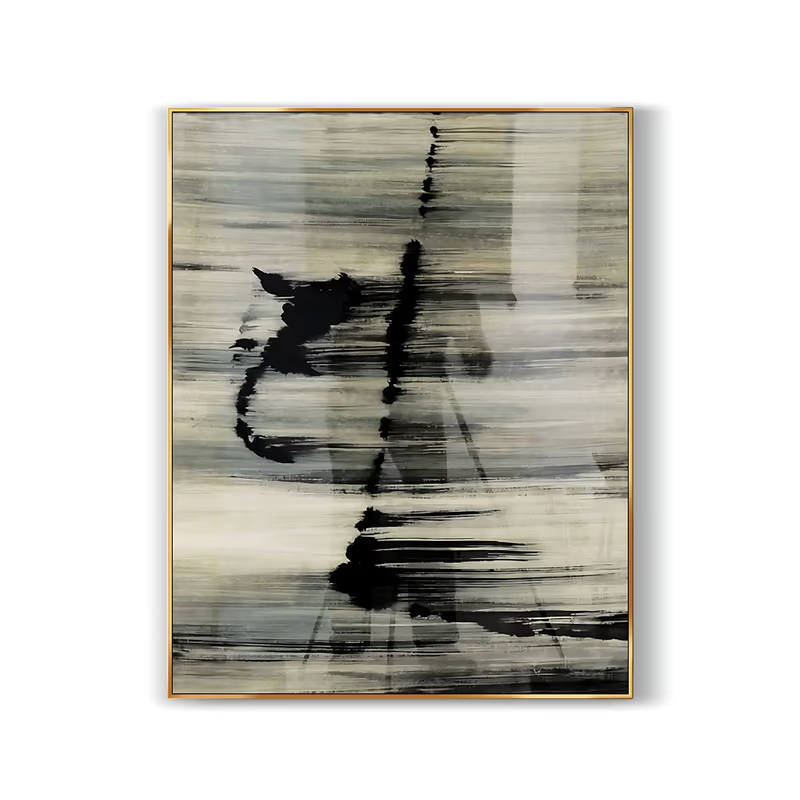
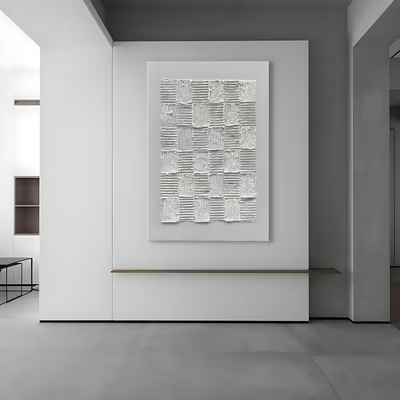
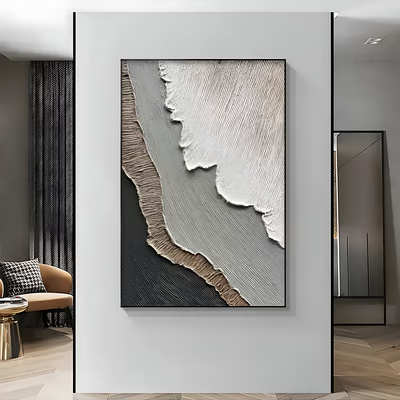
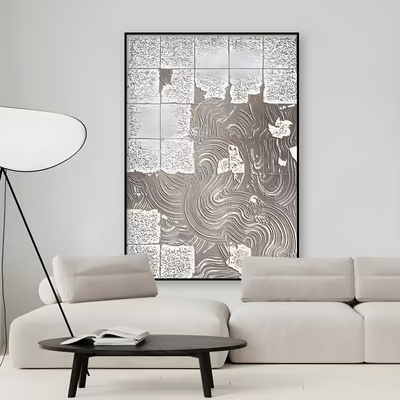
Plaster ridges, palette-knife sweeps and quiet layered shapes in greige, olive, sand and black. These are the right choice for focus zones and for brands whose interiors are already busy with colour, because they add depth without adding noise.
City skylines and urban scenes
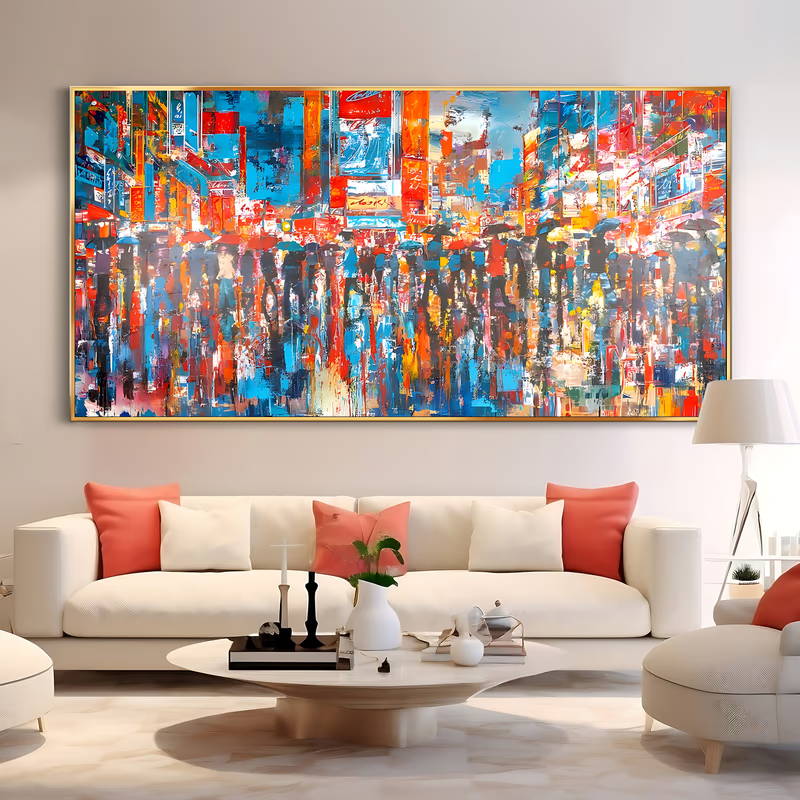
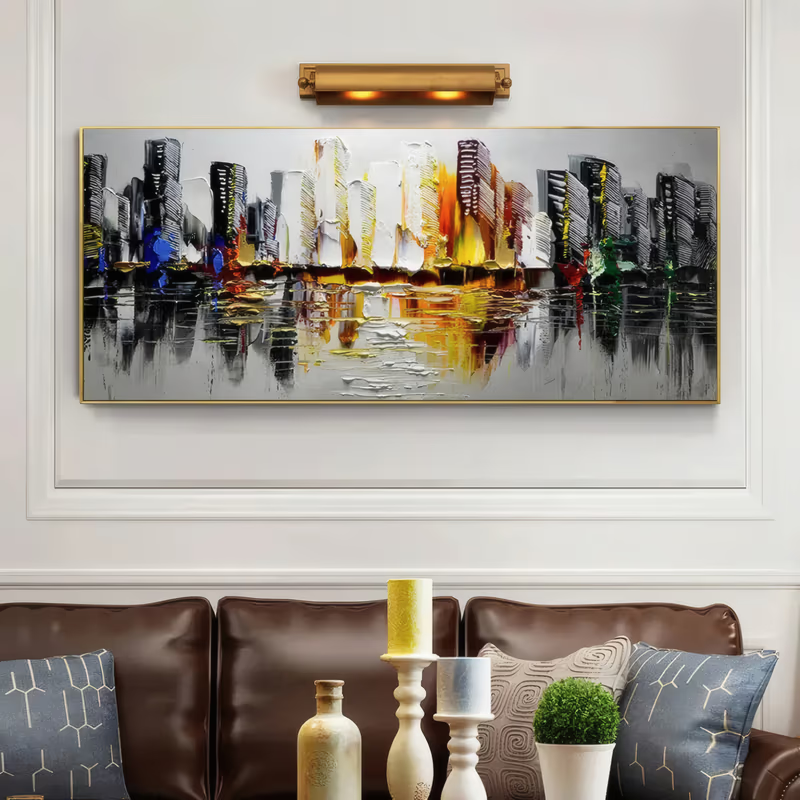
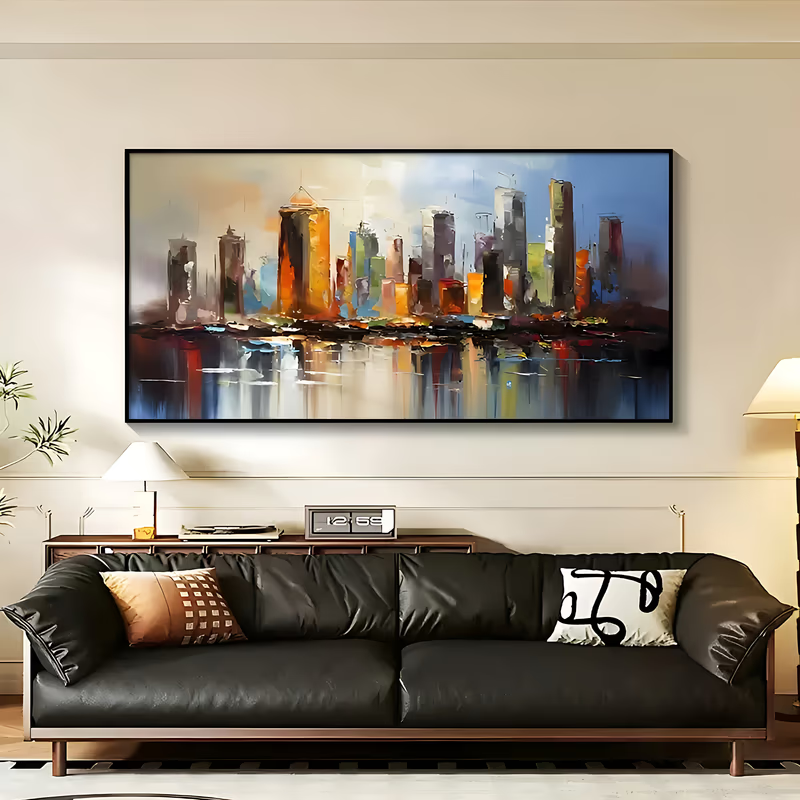
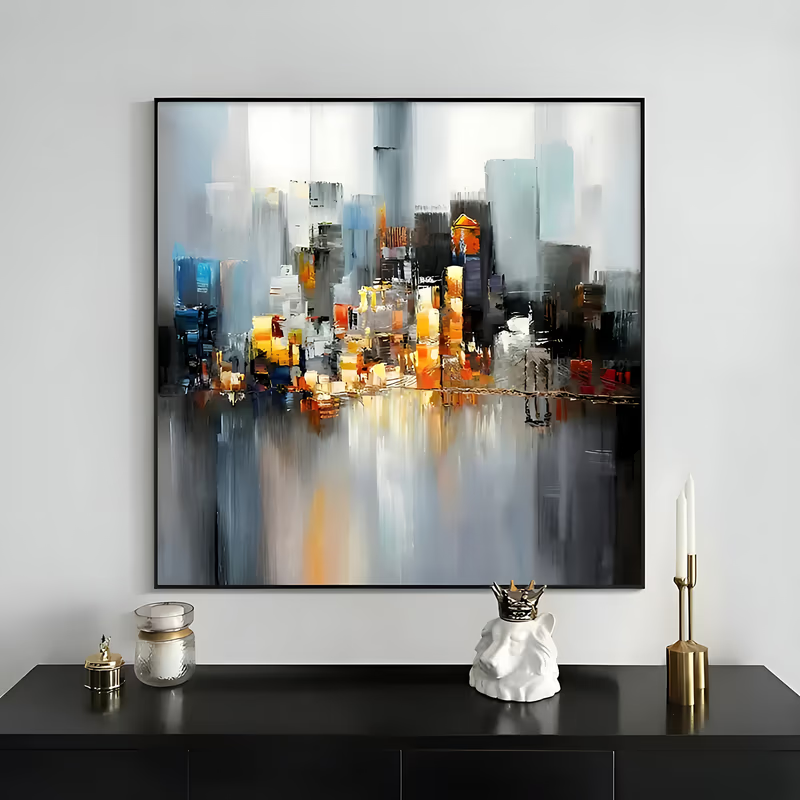
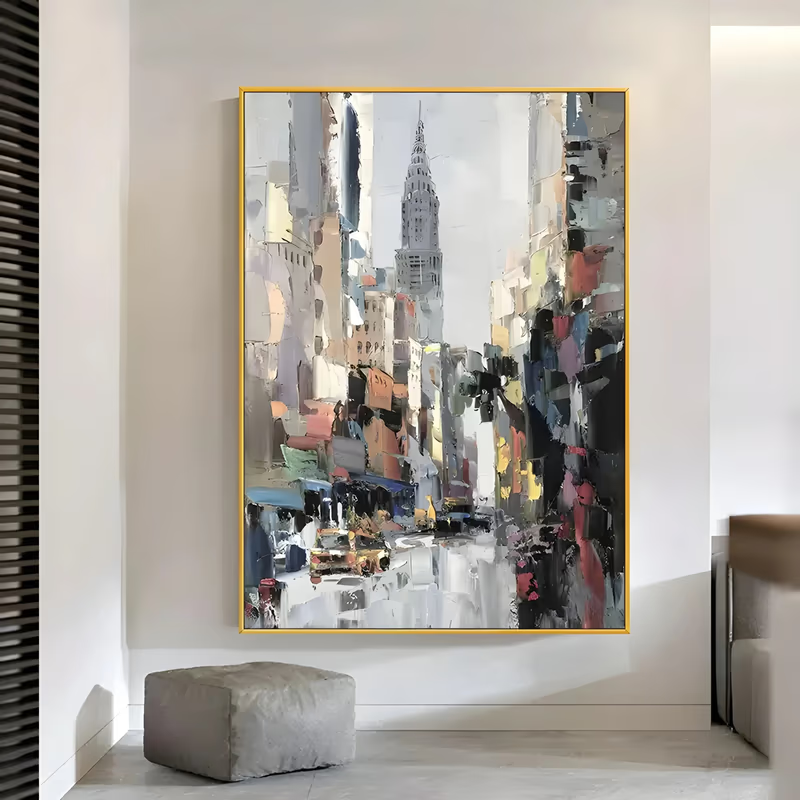
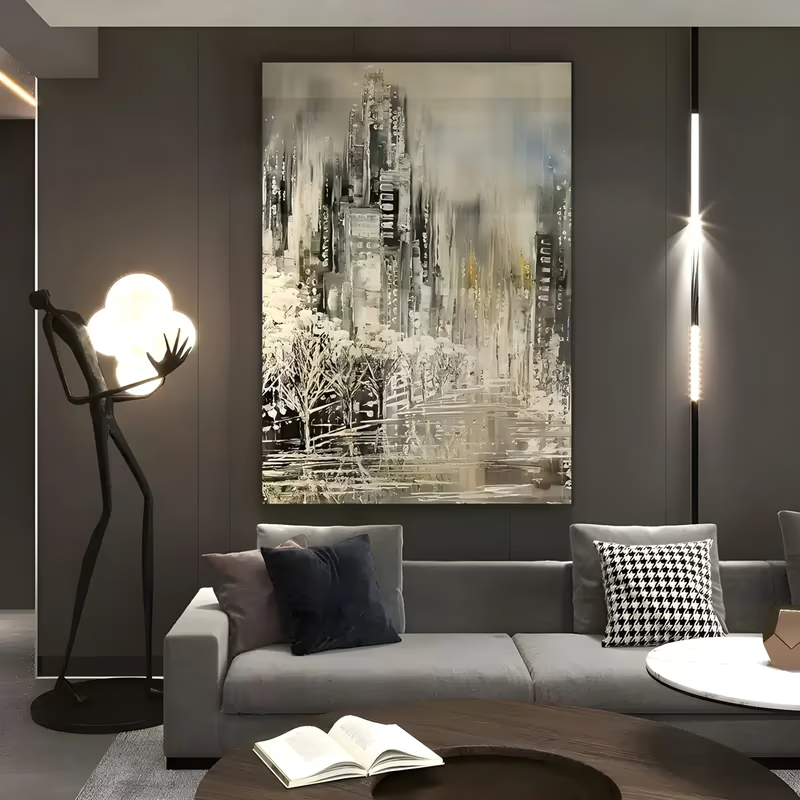
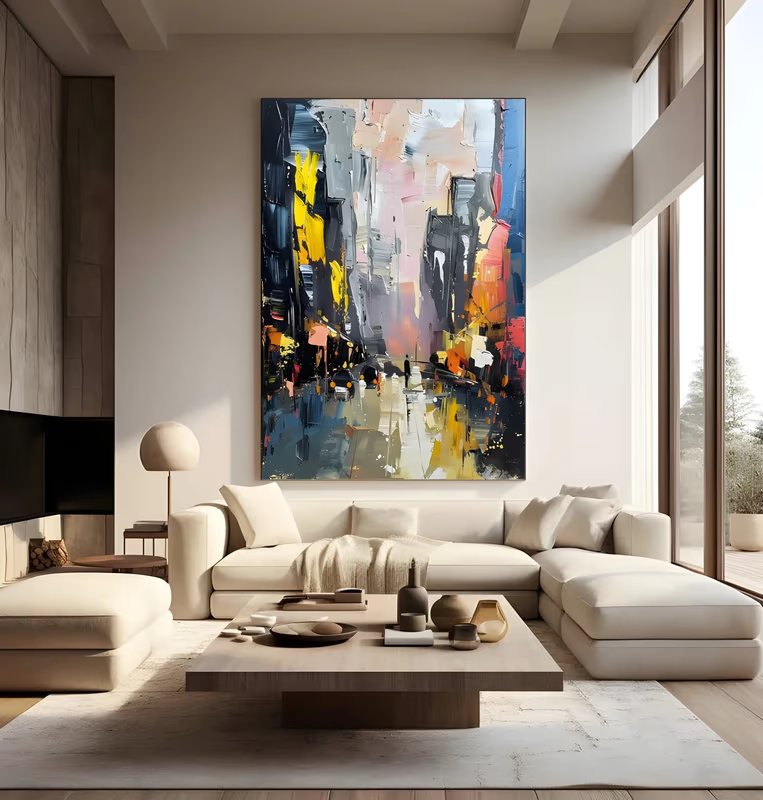
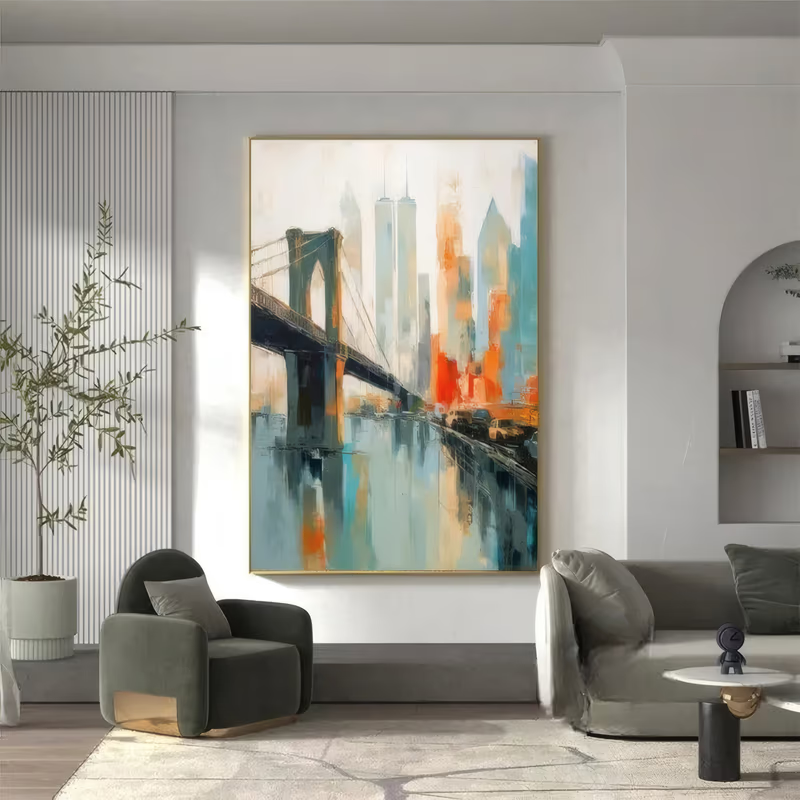
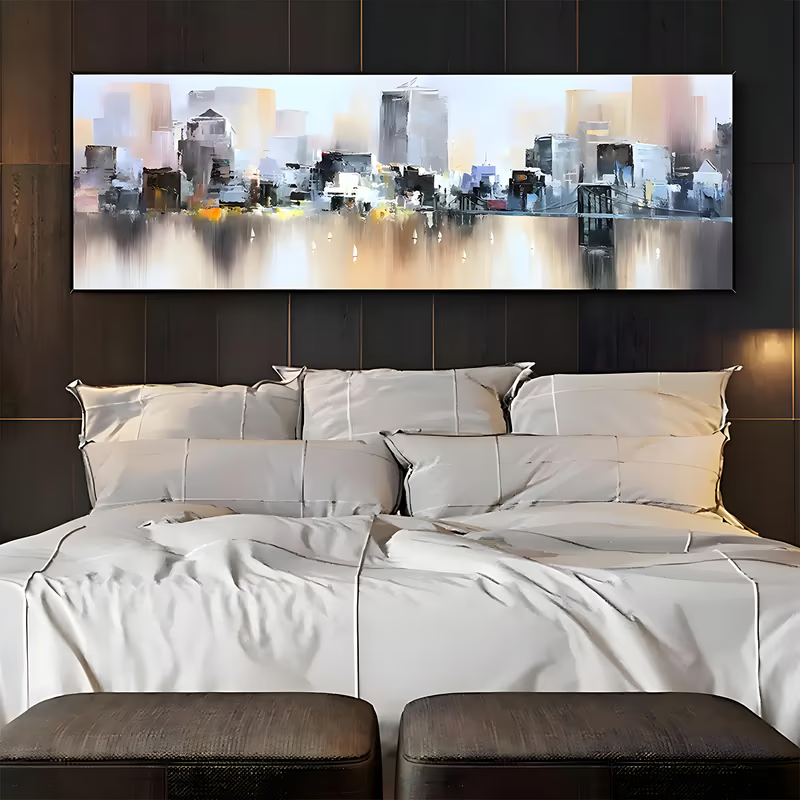
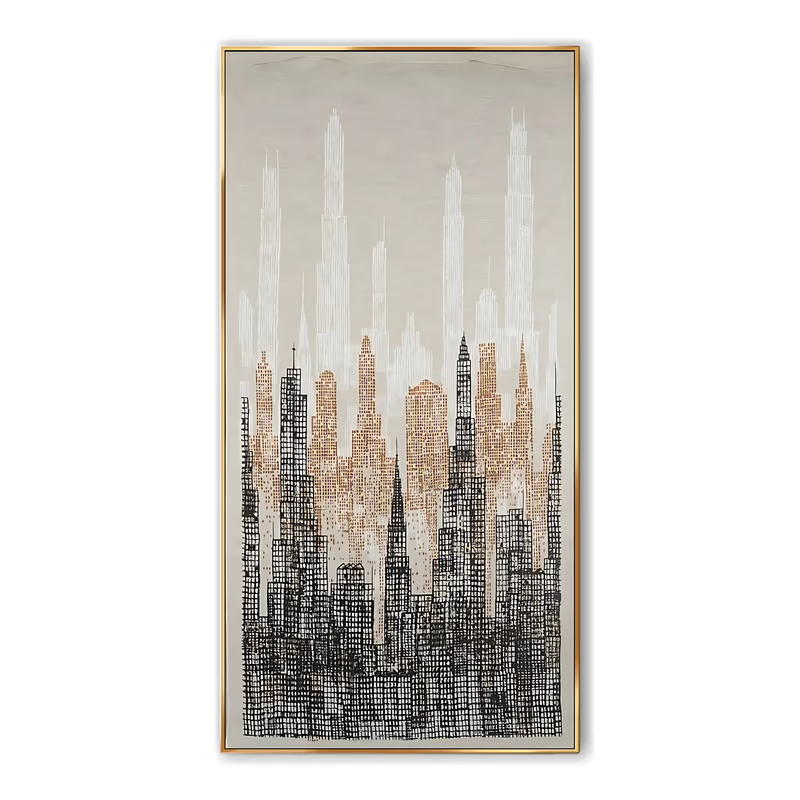
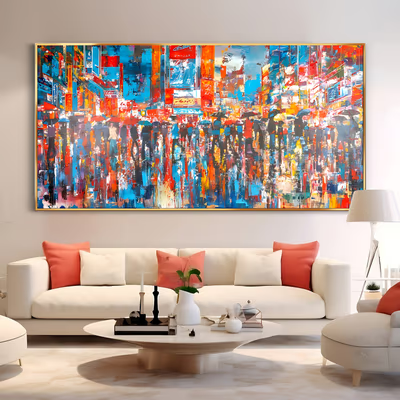
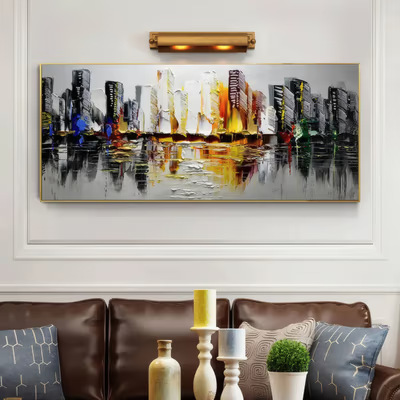
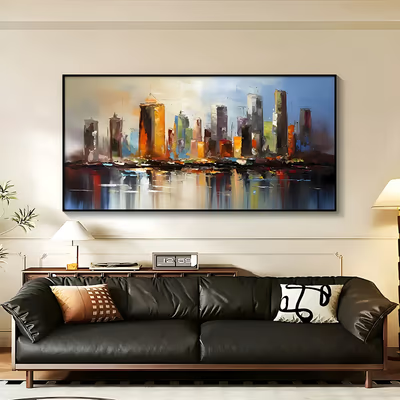
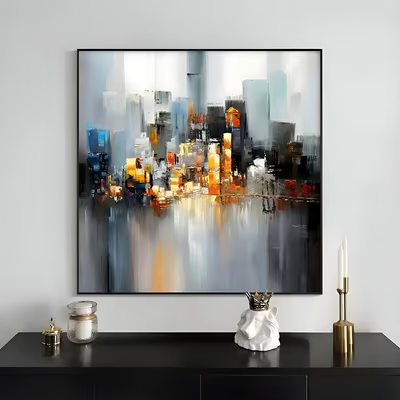
Impressionist and palette-knife cityscapes: waterfront skylines in gray and teal, bridges, bird's-eye streets in red and orange. A skyline connects an office to its city or to the cities a company works with, and it is a natural theme for a corridor series. See all cityscape paintings.
Colourful canvases for breakout spaces
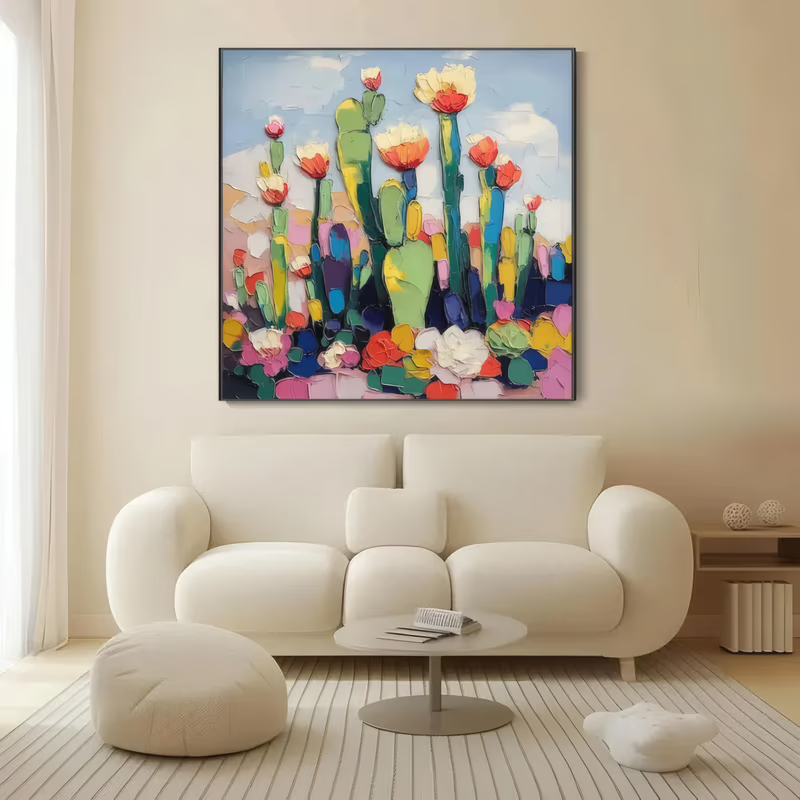
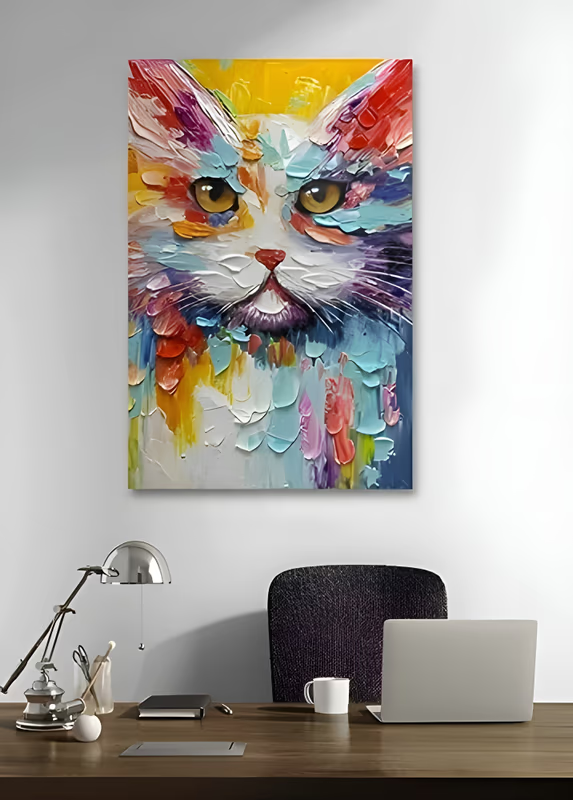
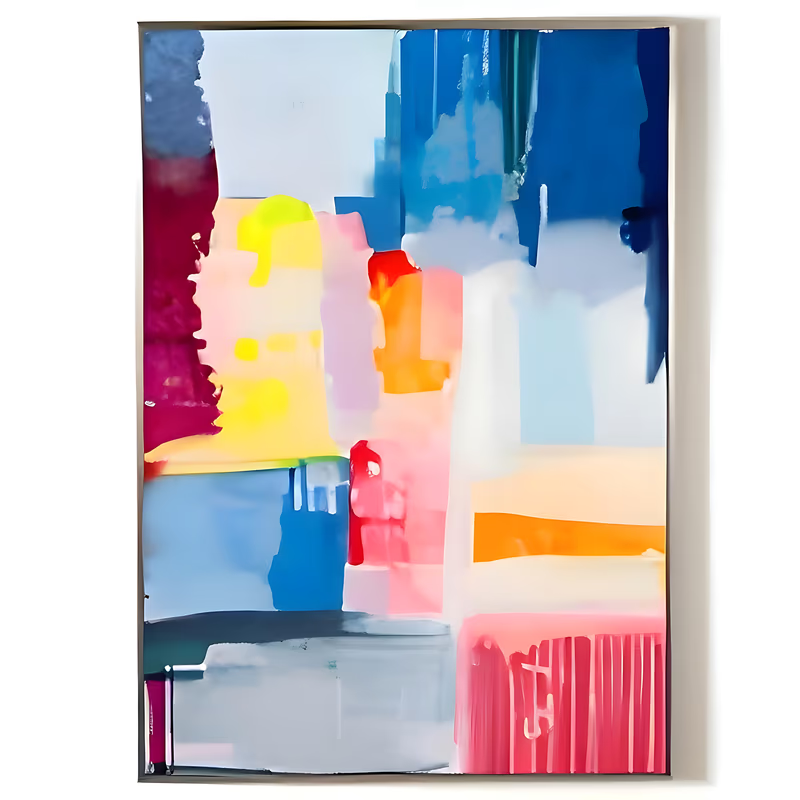
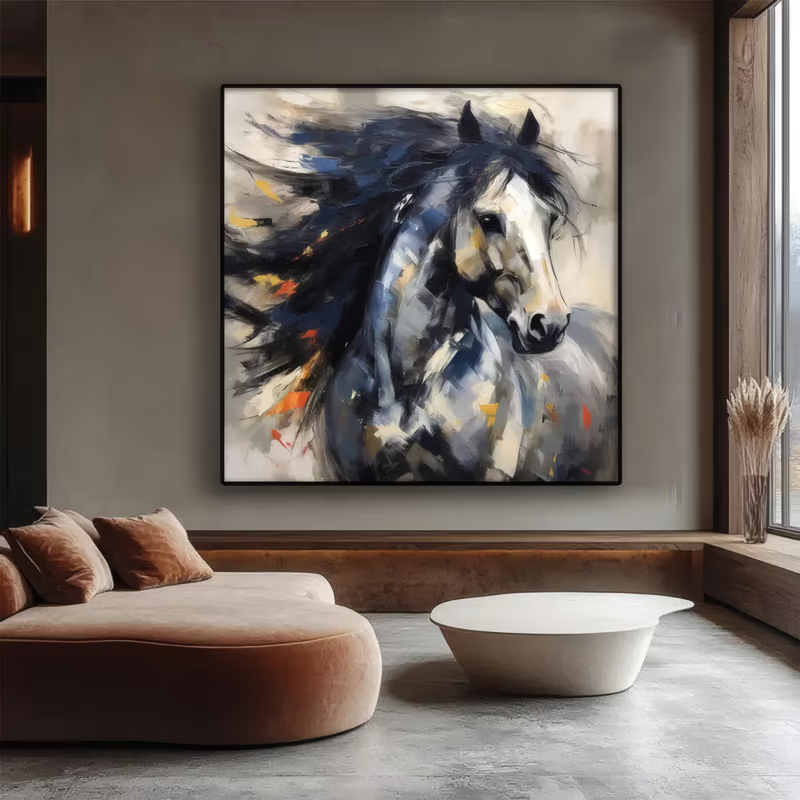
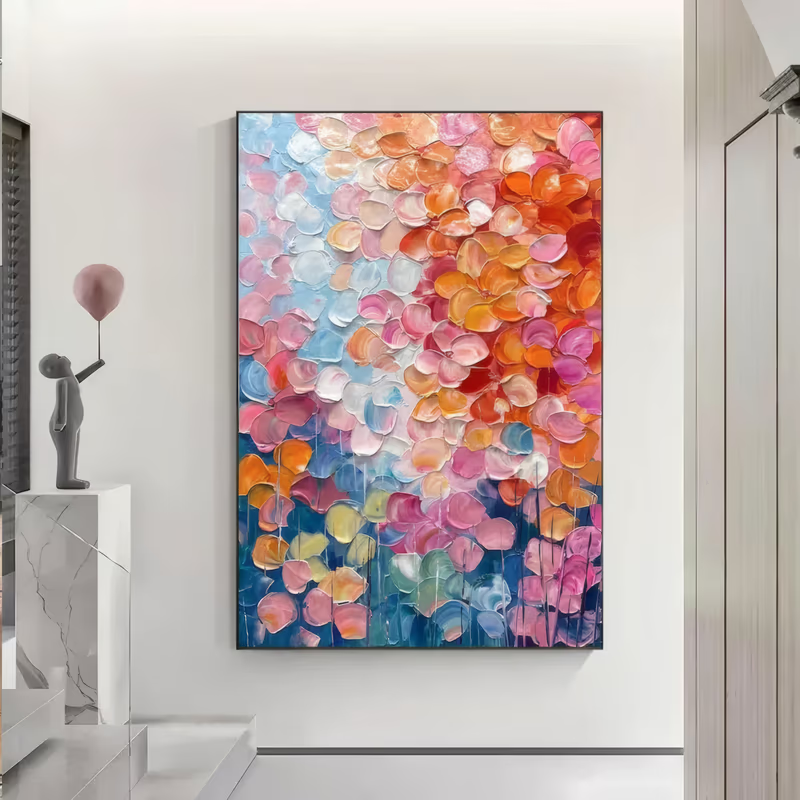
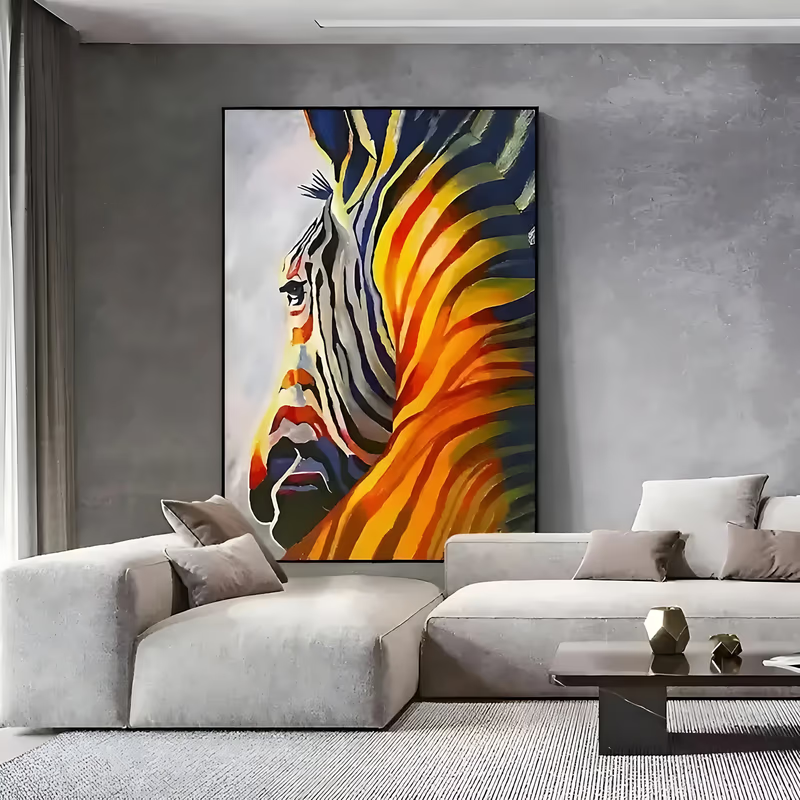
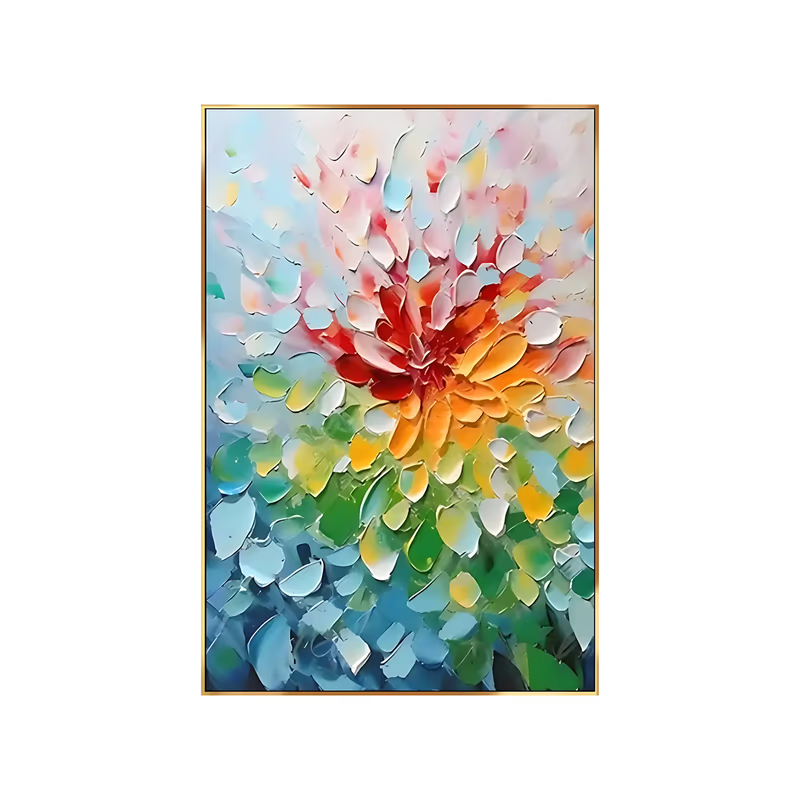
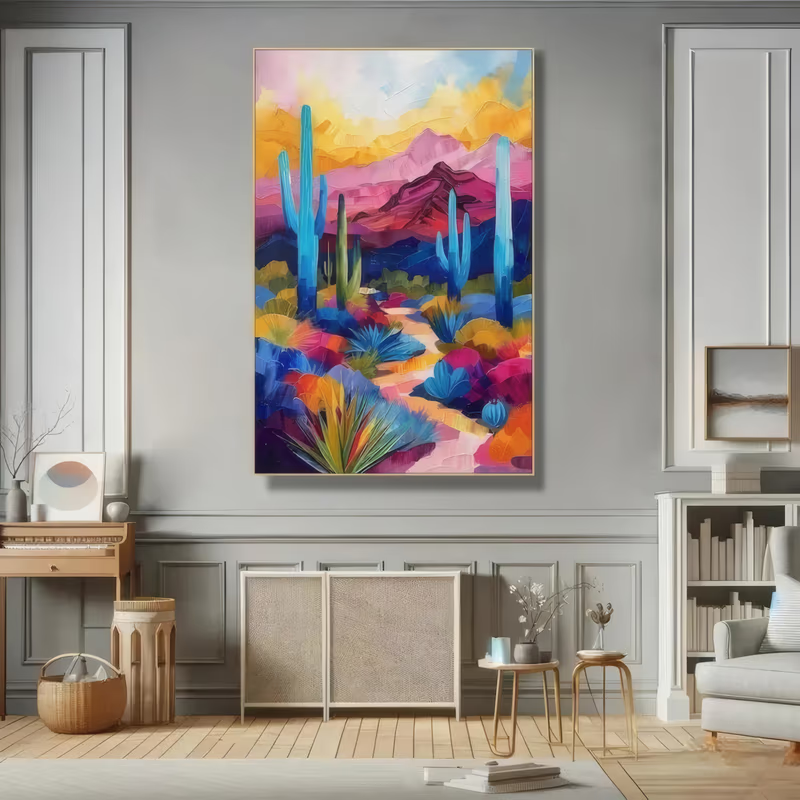
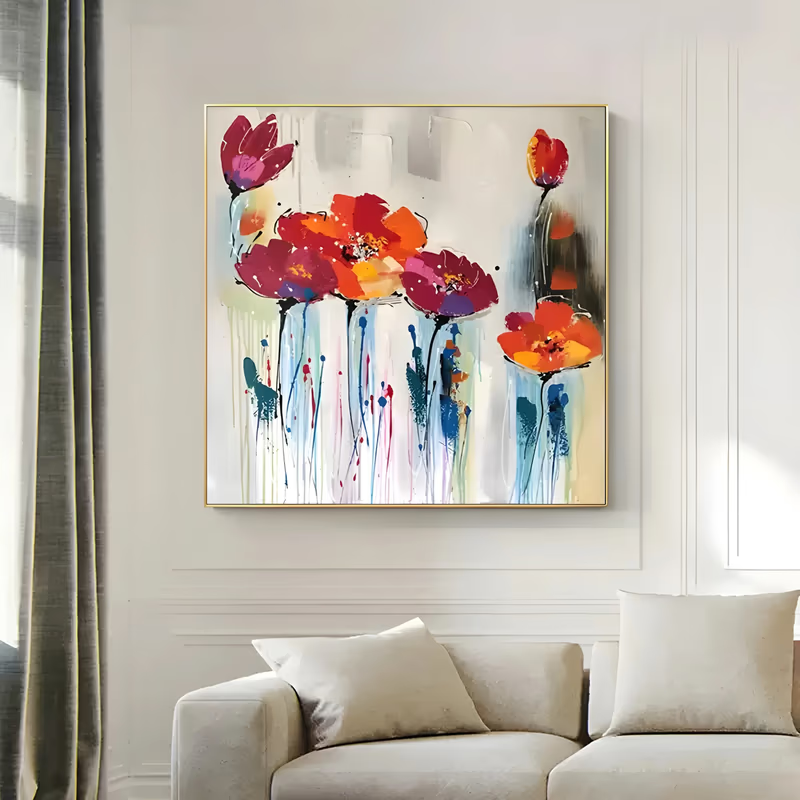
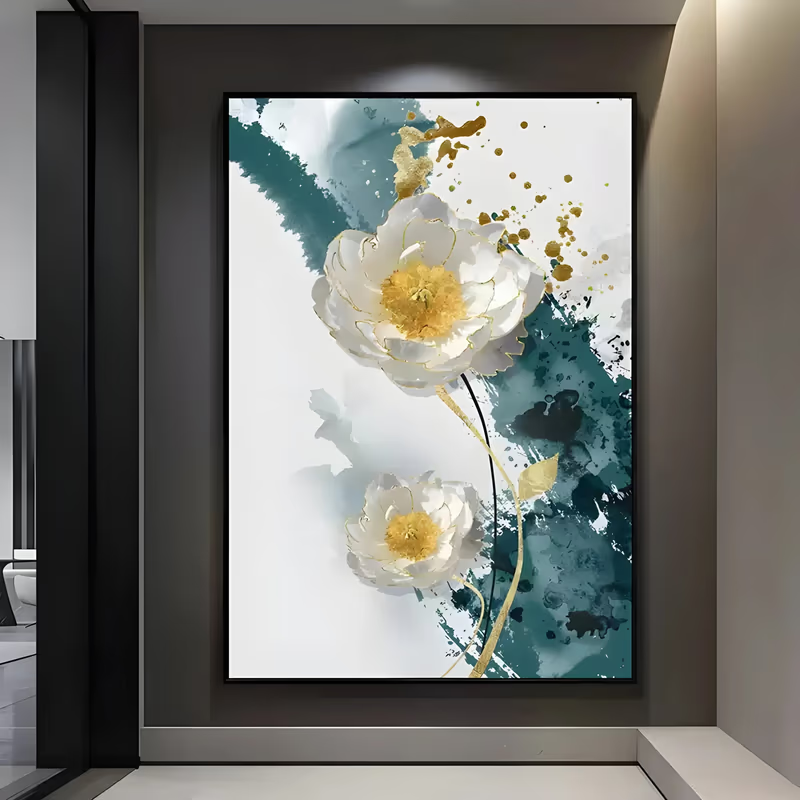
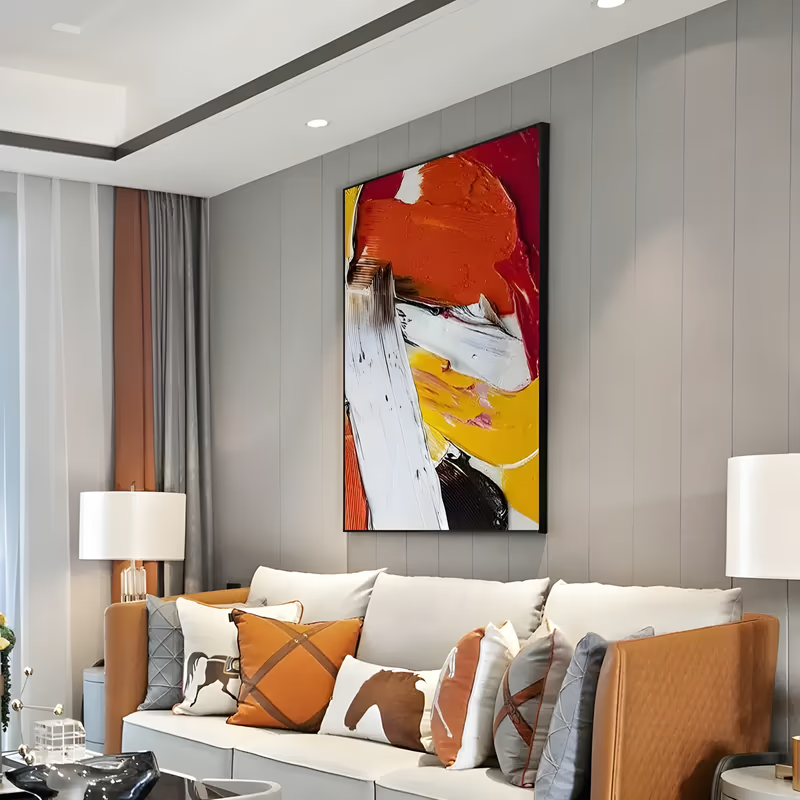
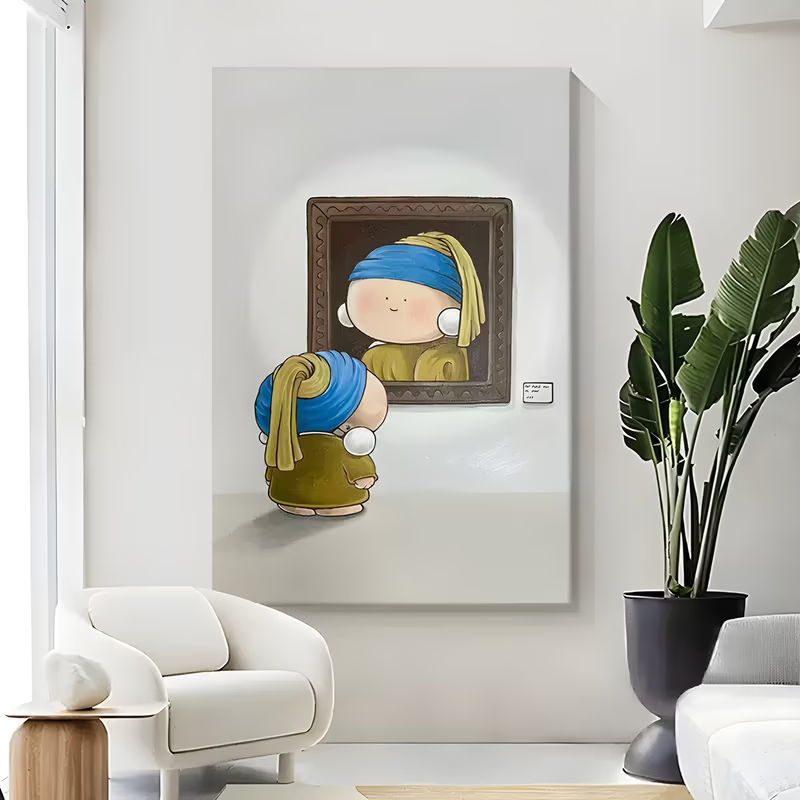
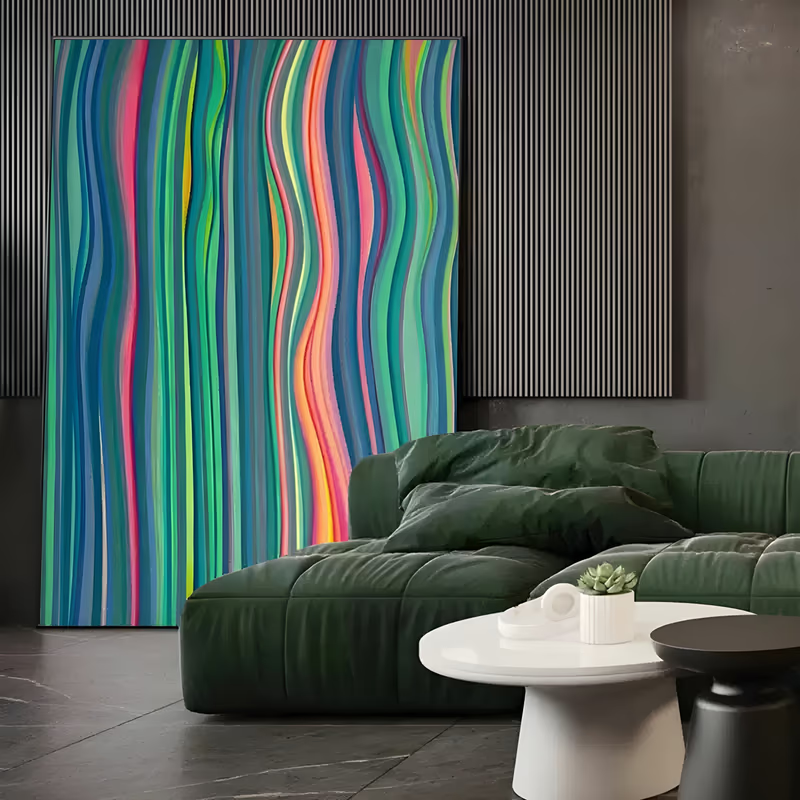
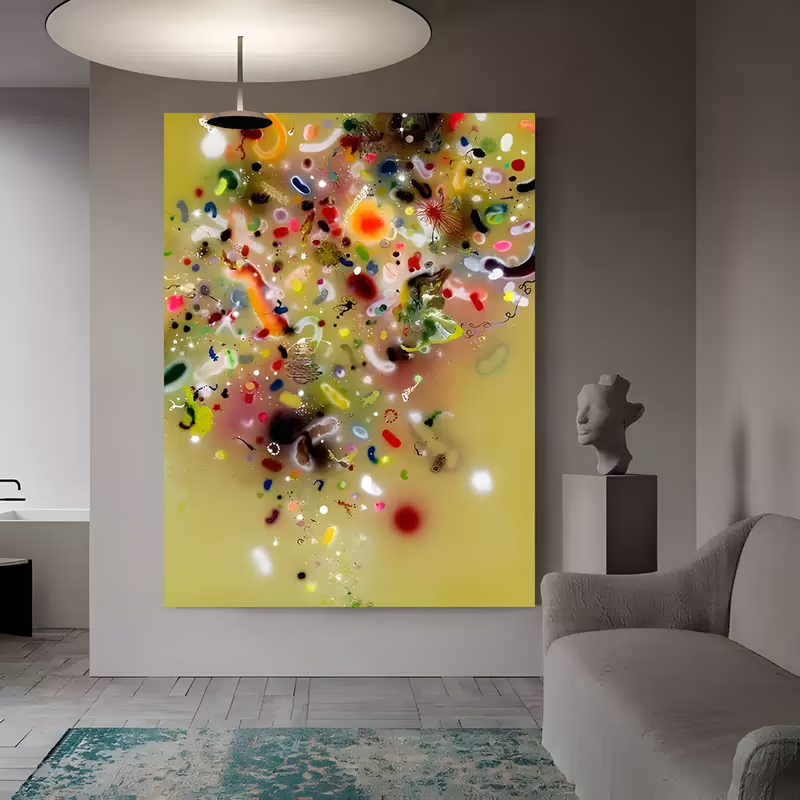
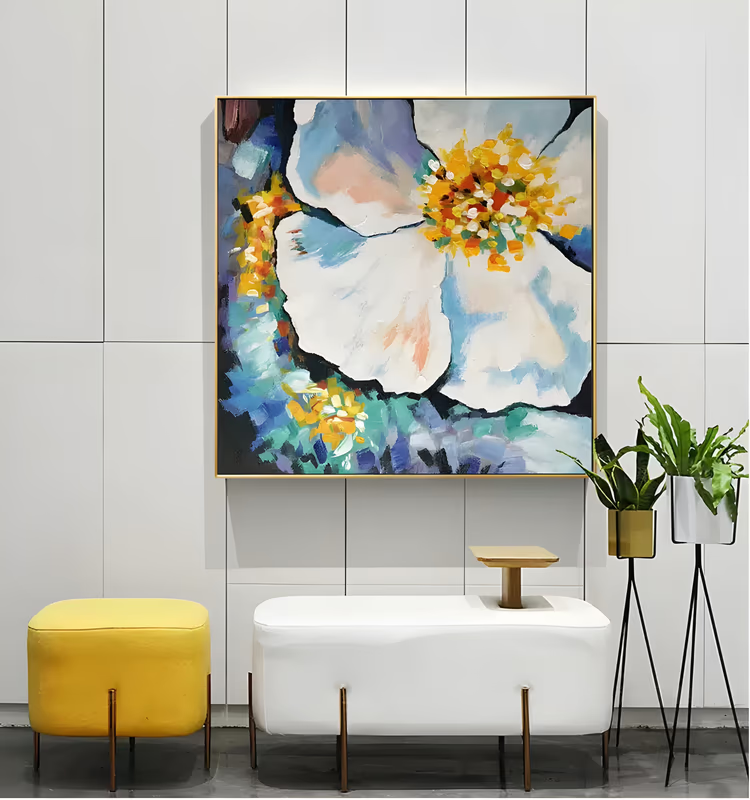
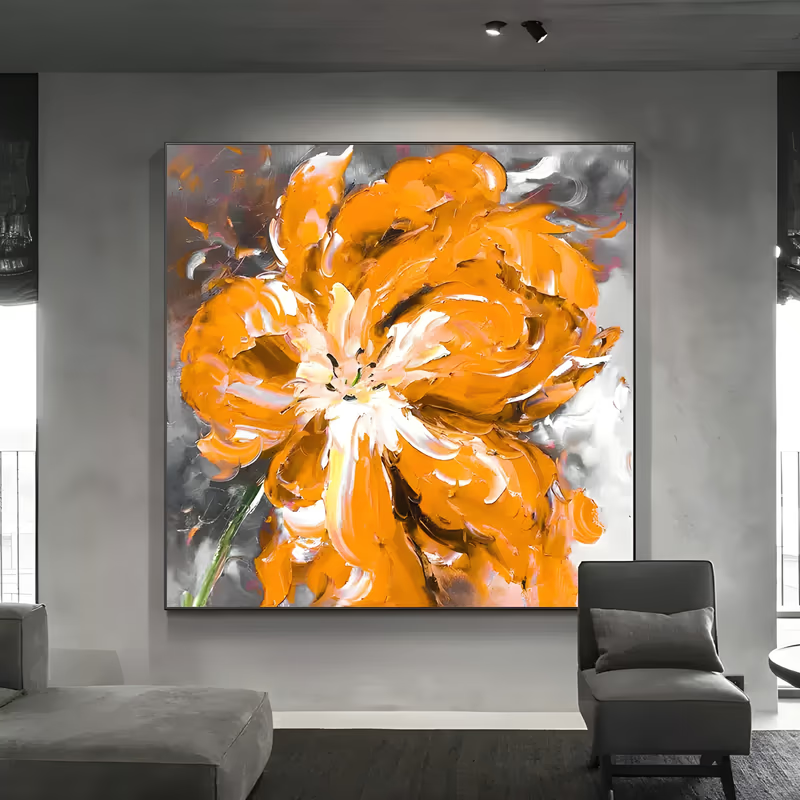
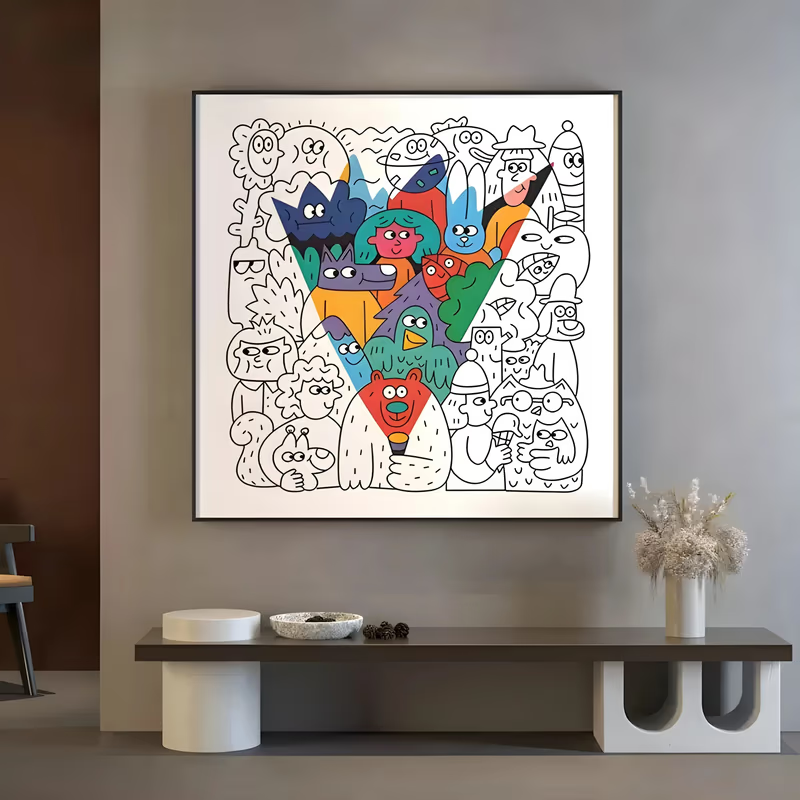
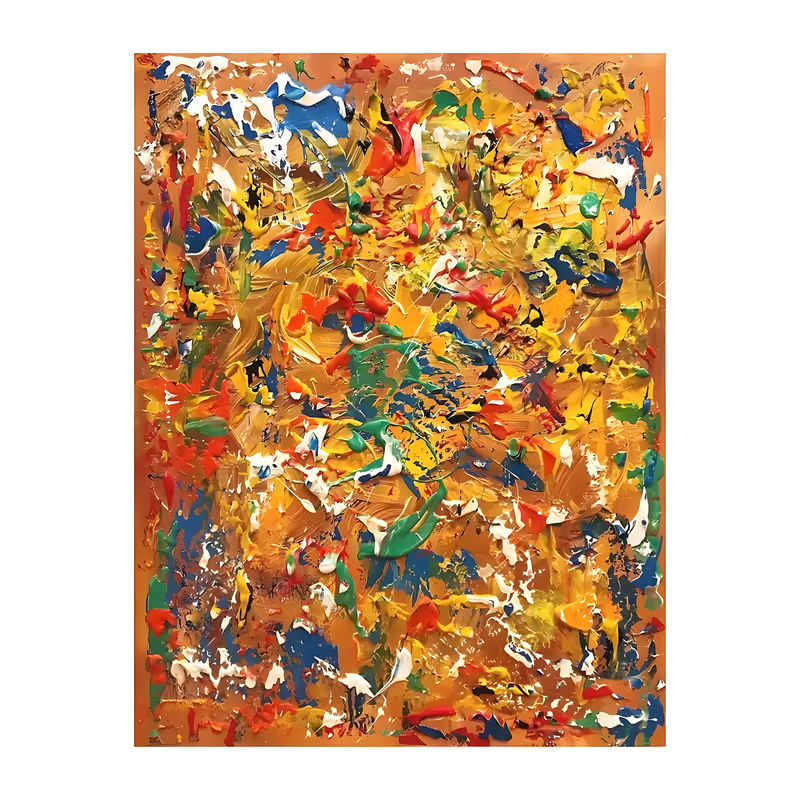
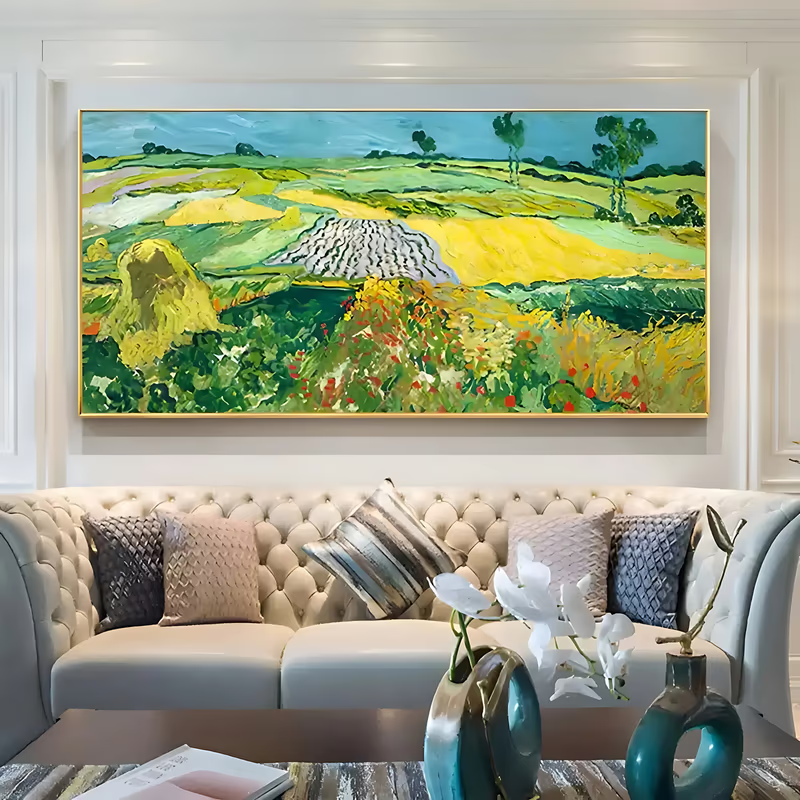
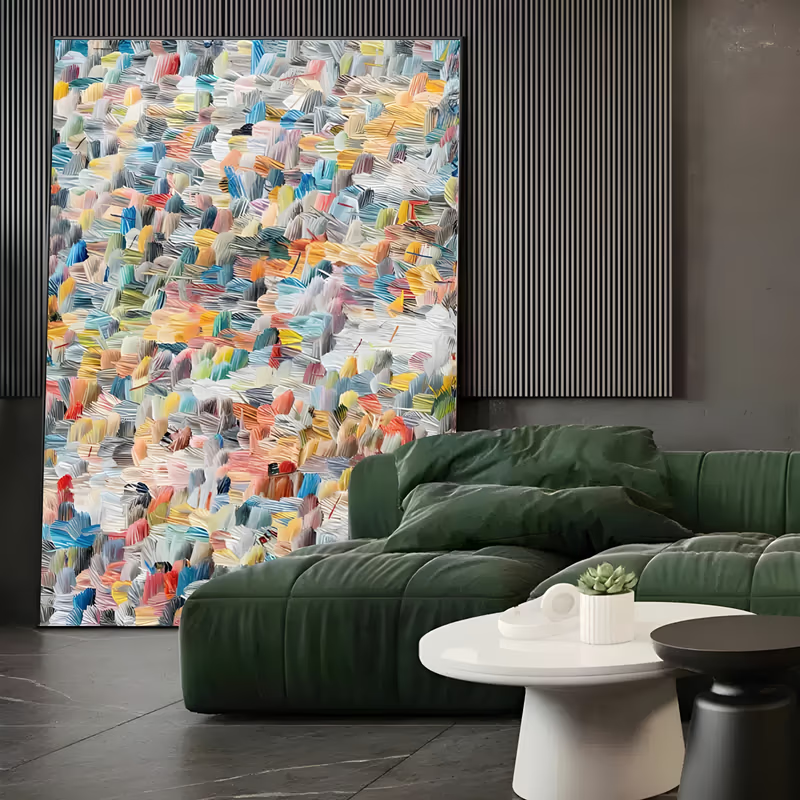
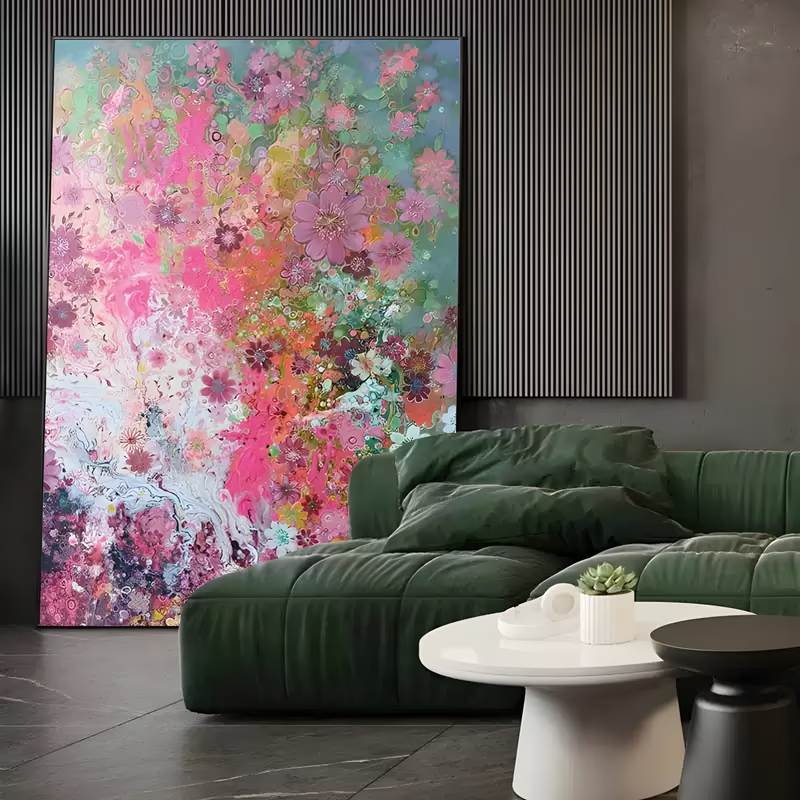
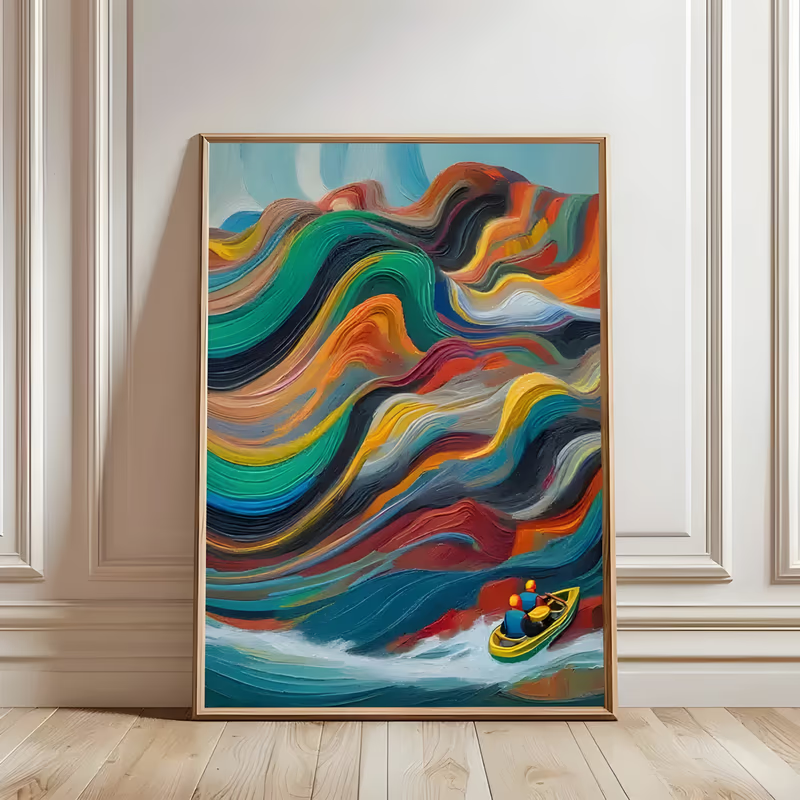
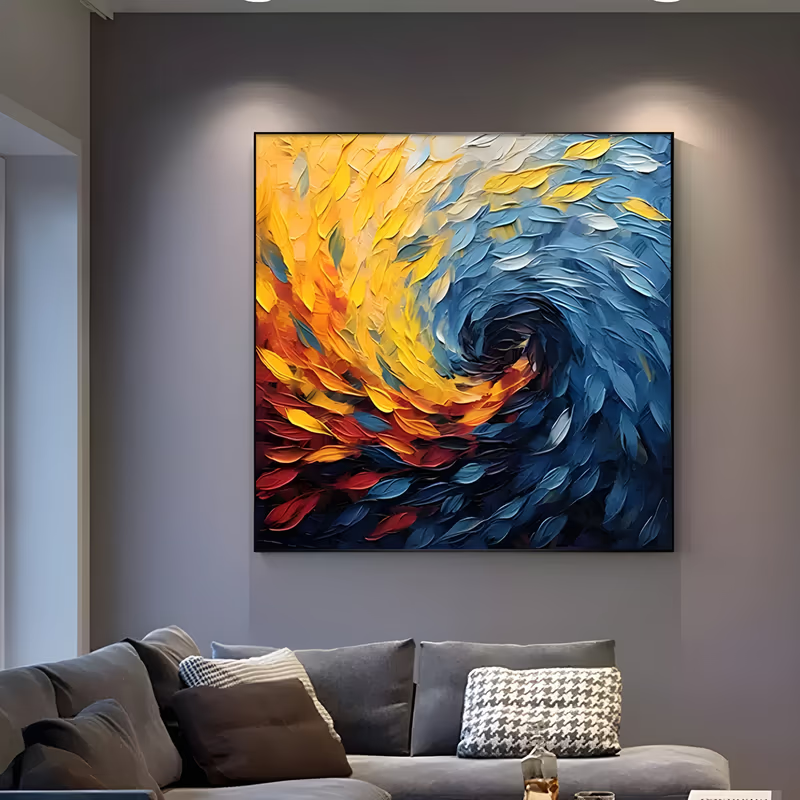
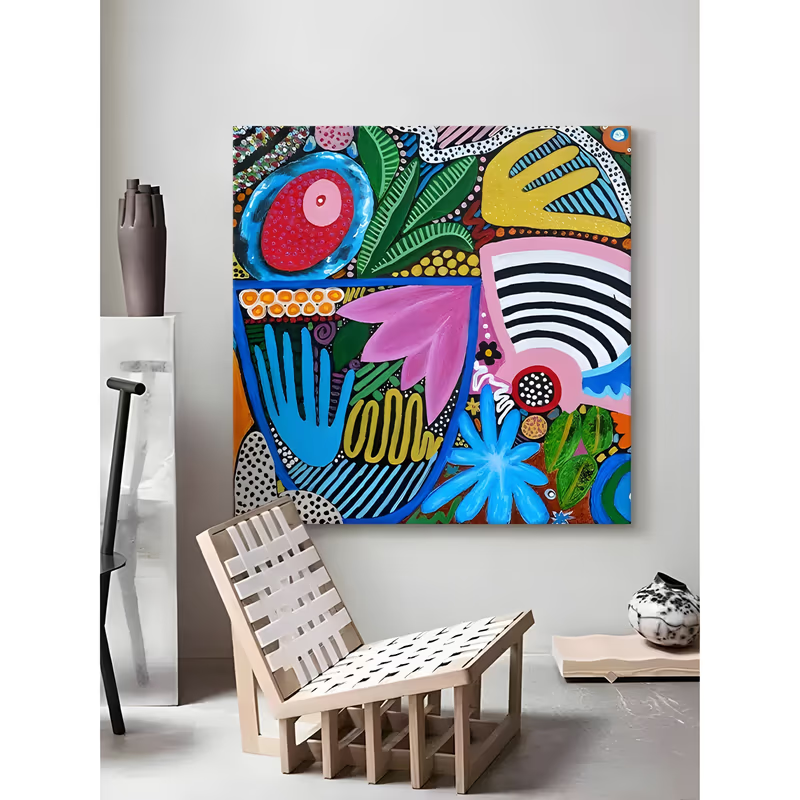
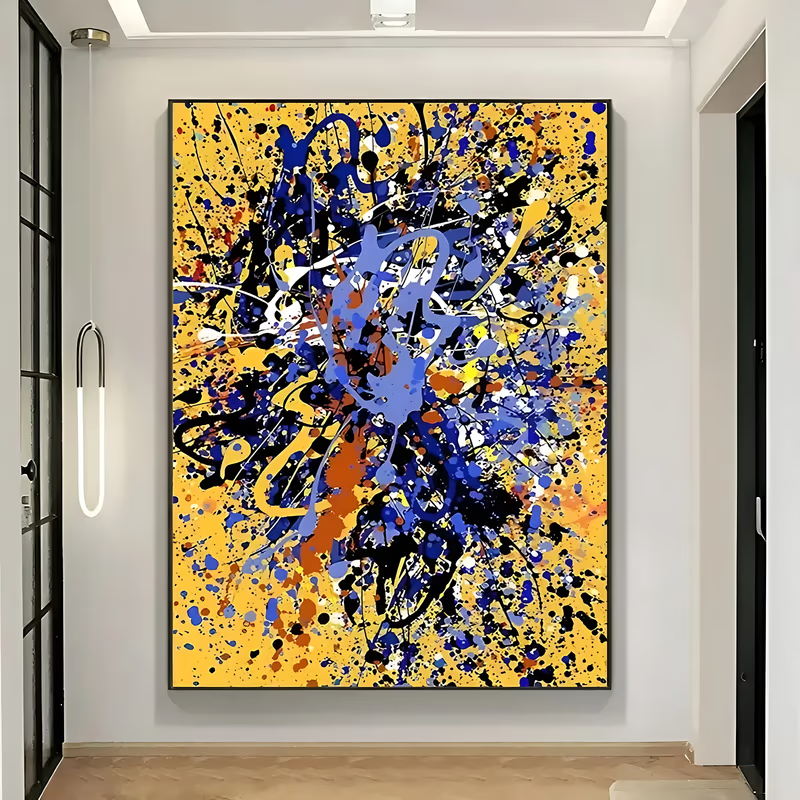
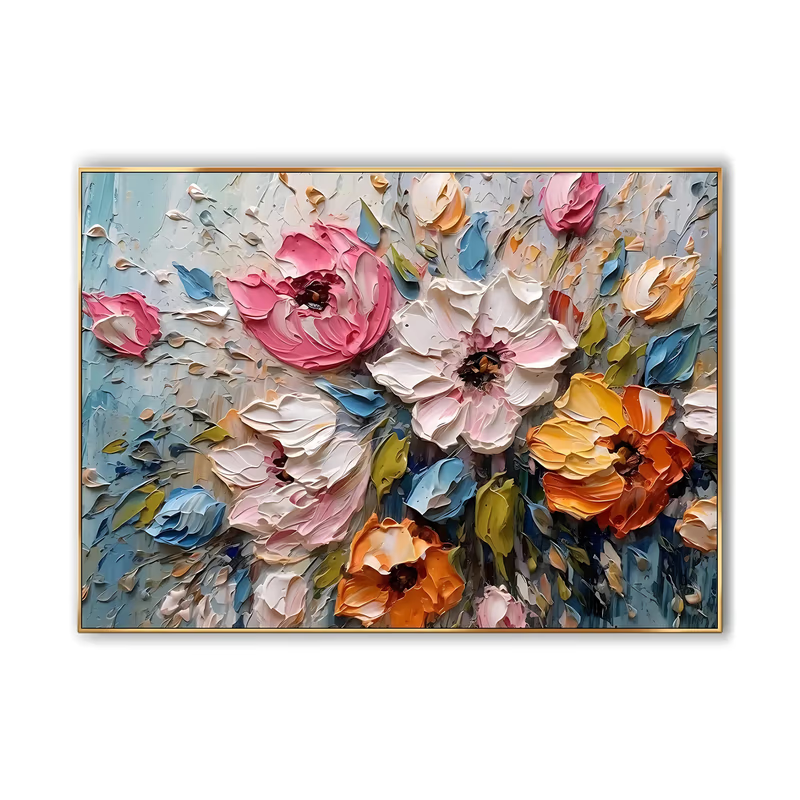
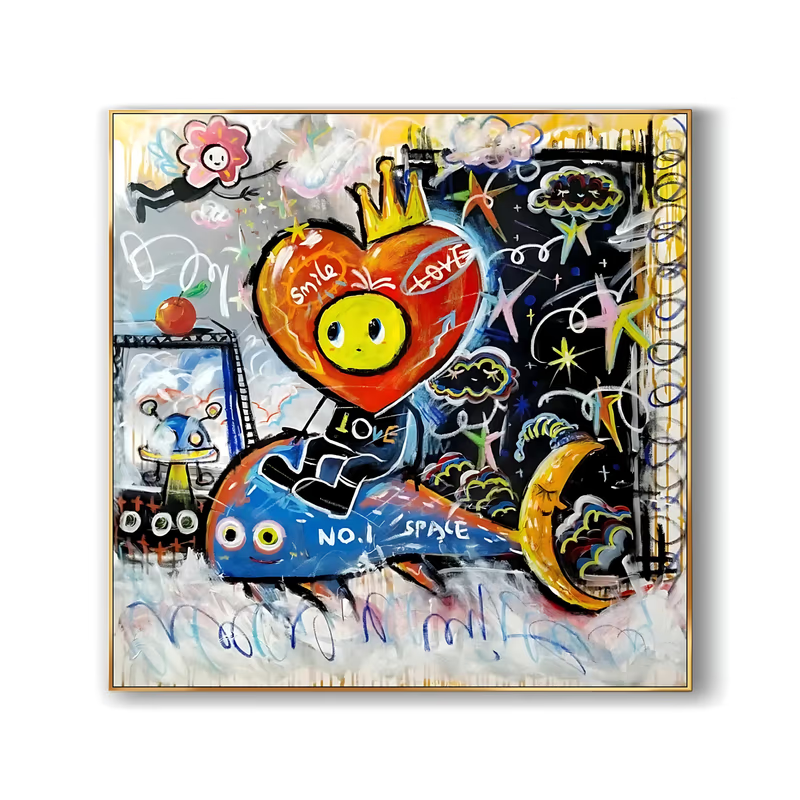
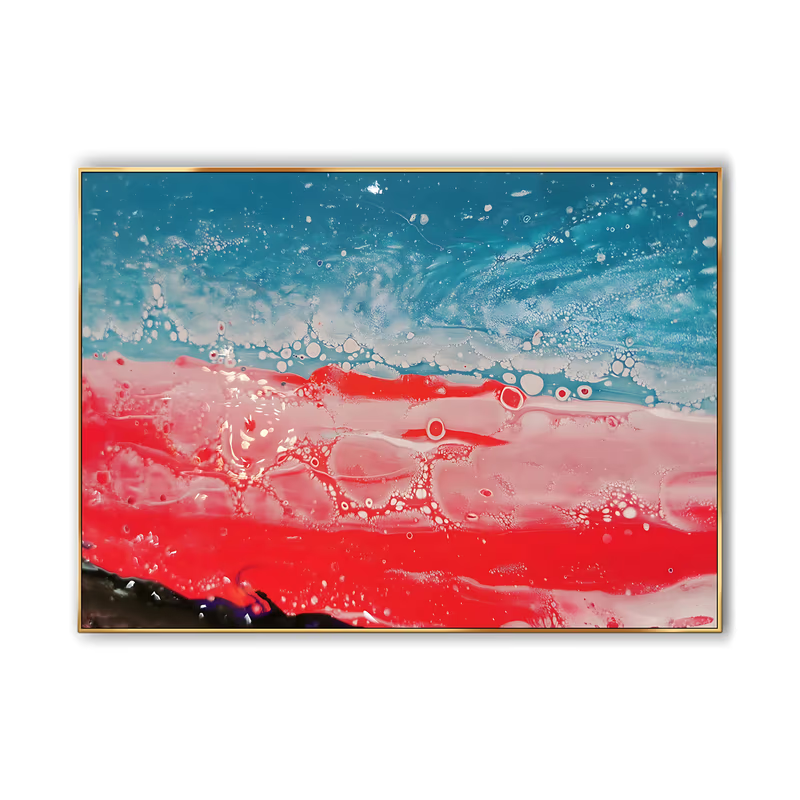
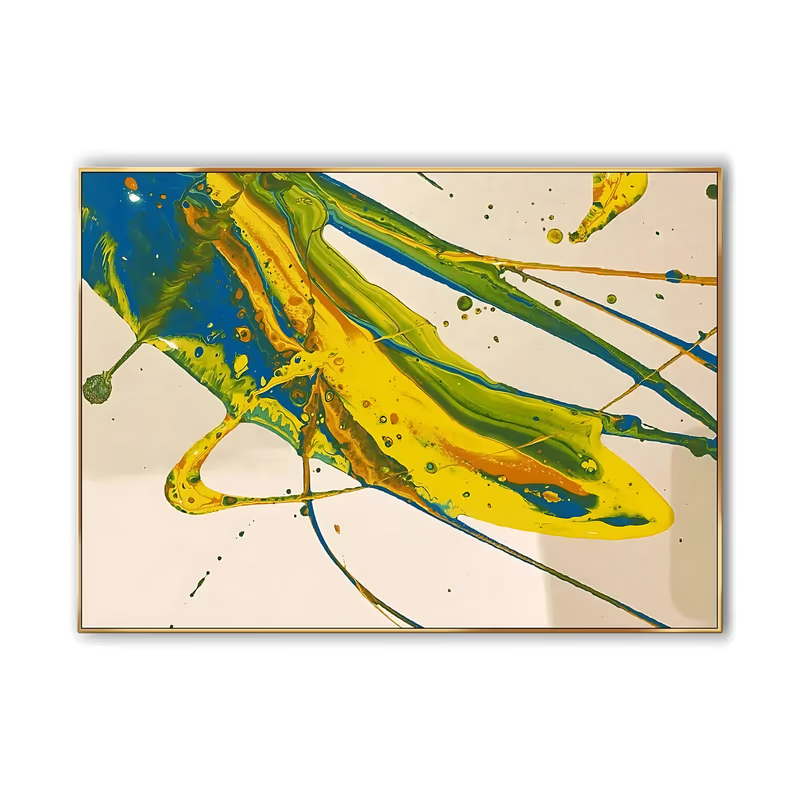
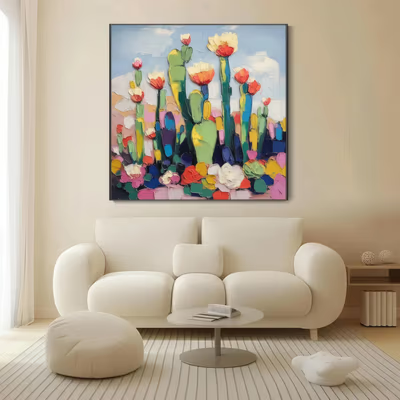
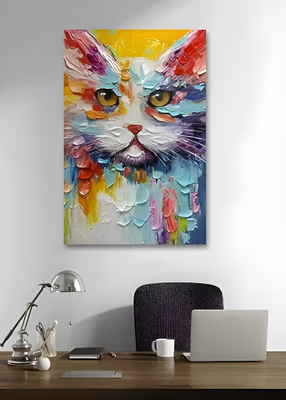
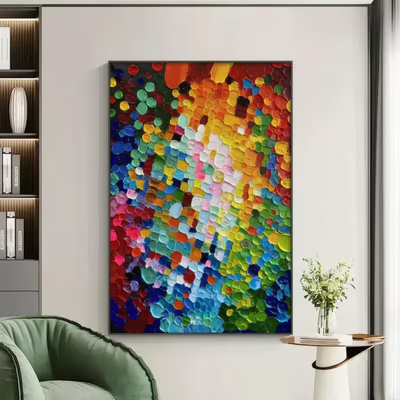
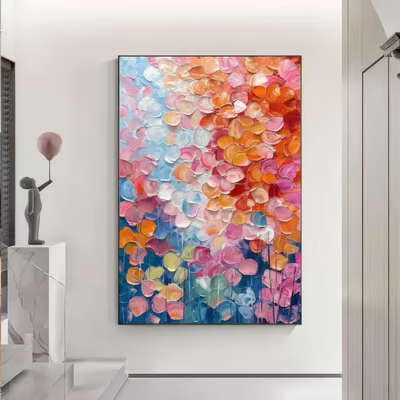
Rainbow petals, knife-painted animals, blooming cacti and bright still lifes. This is the work to put where people take a break, in the kitchen, café or games area, where a jolt of colour is welcome and nobody is trying to concentrate.
Abstract or landscape: which office art is easier to work beside?
Both work, provided the canvas is visually quiet; what distracts people in an office is fine busy detail and hard contrast, not the subject itself.
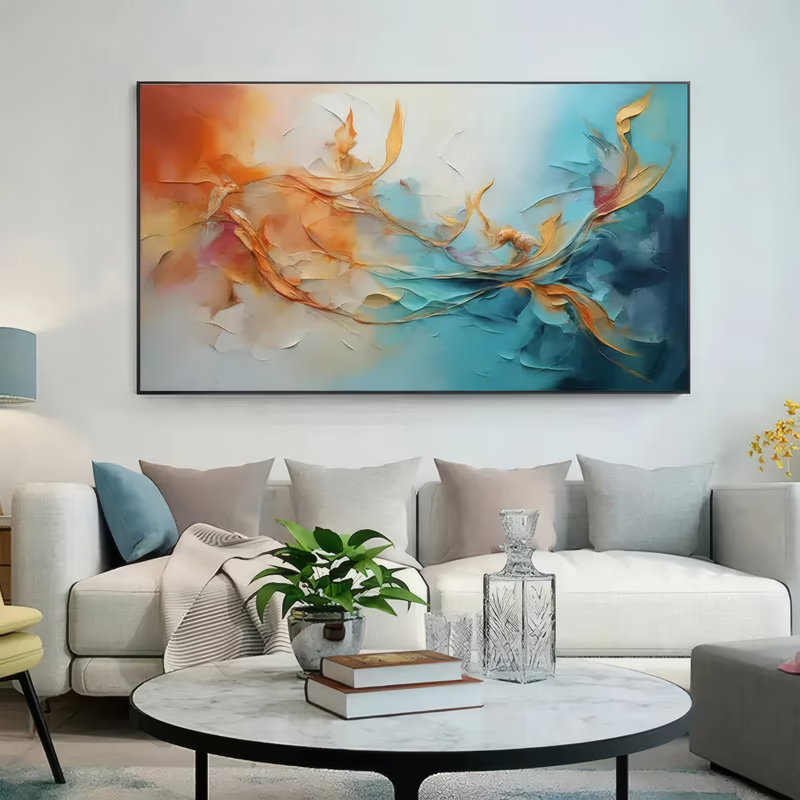
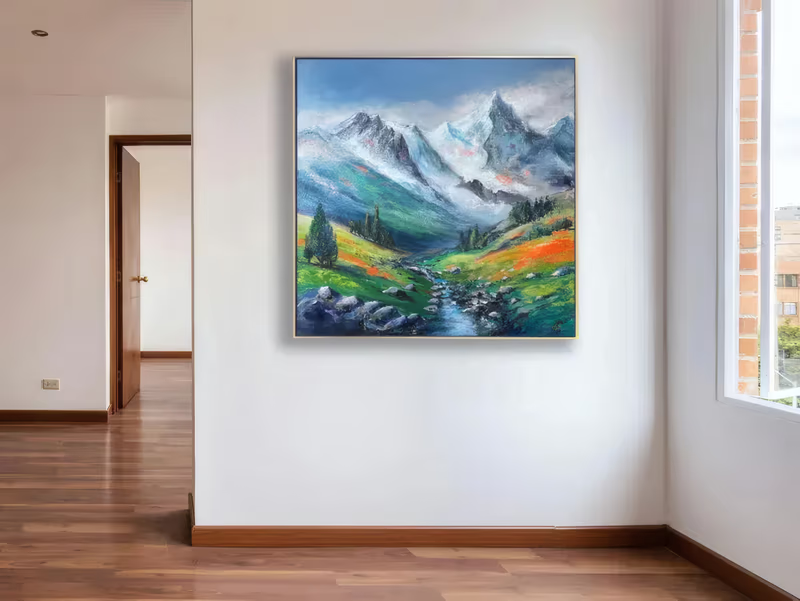
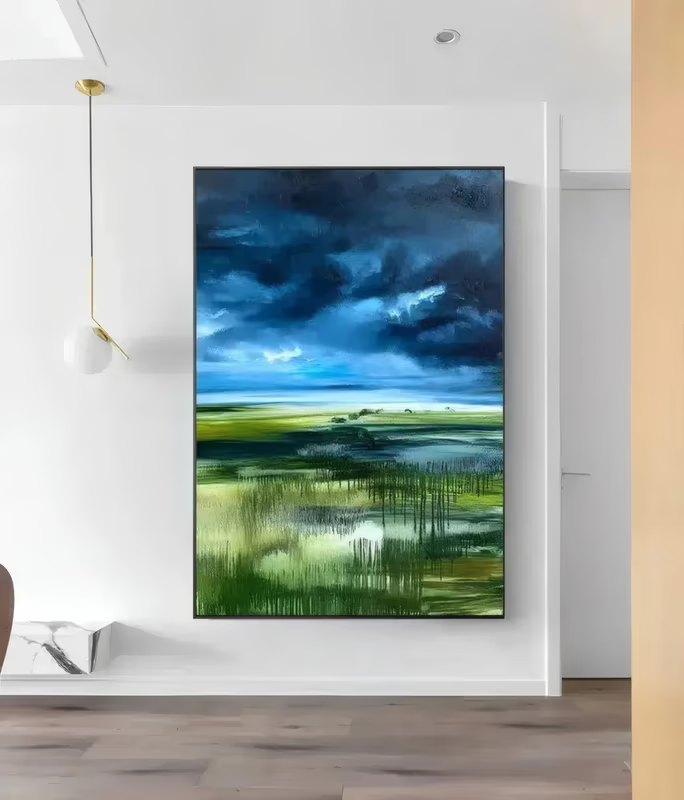
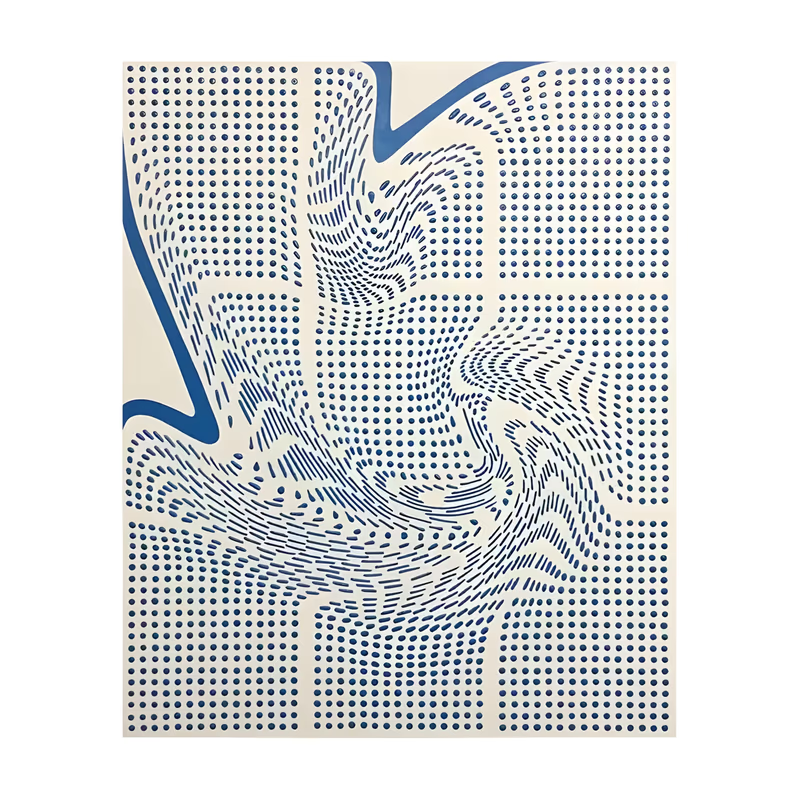
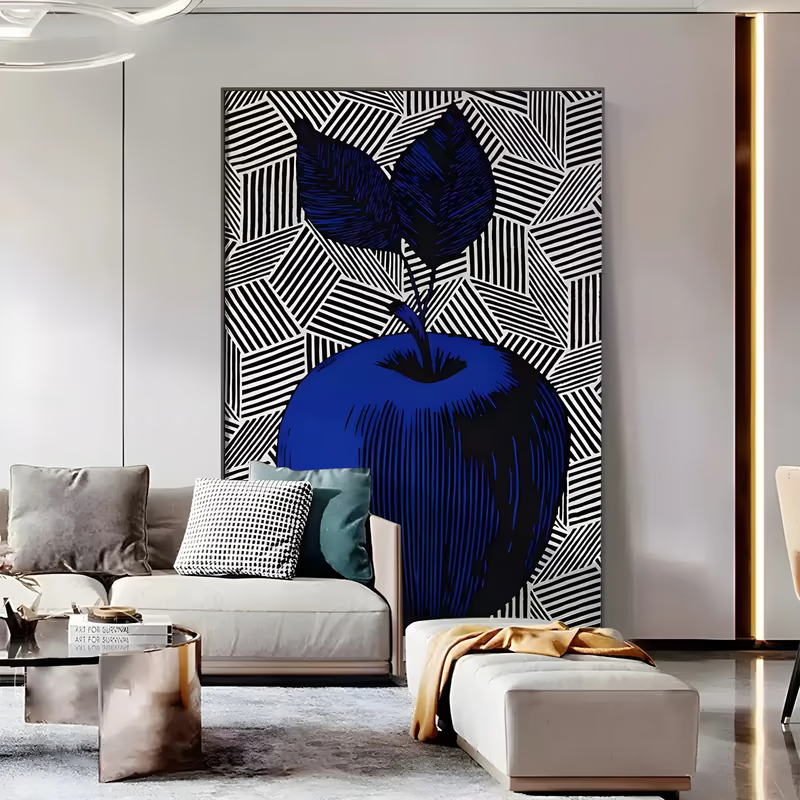
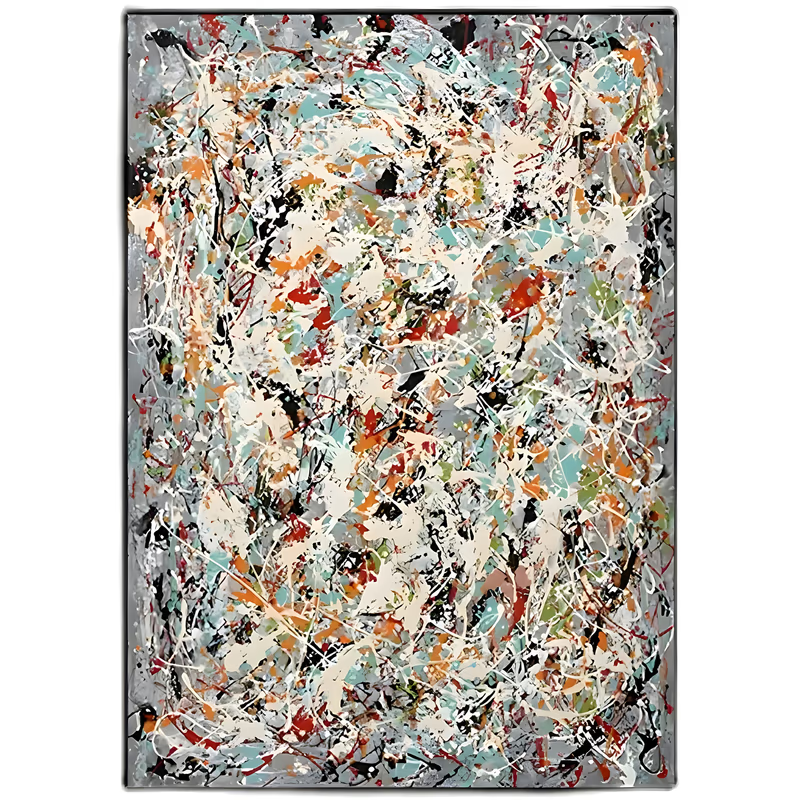
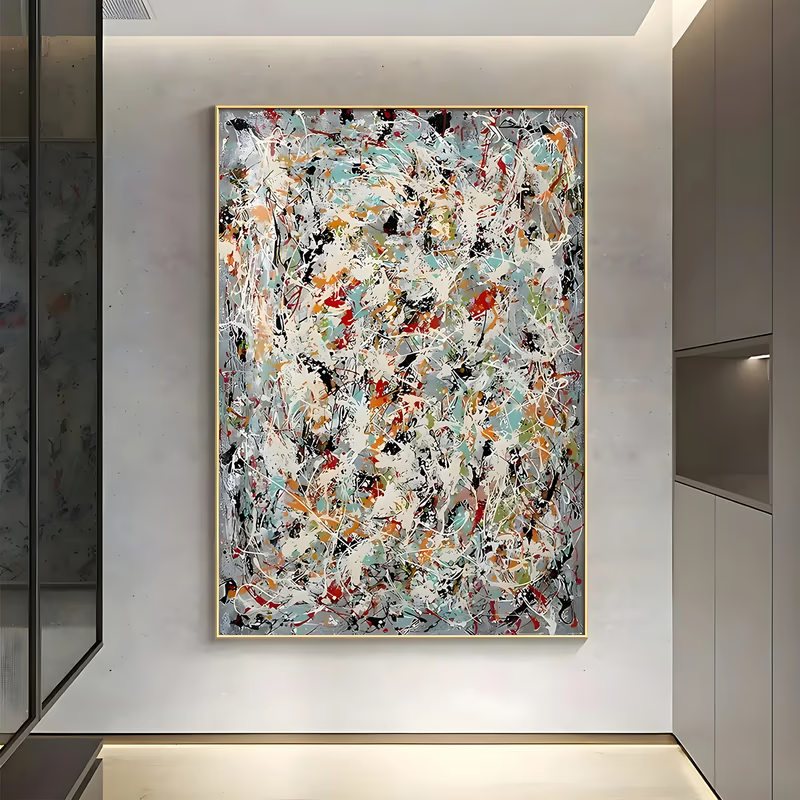
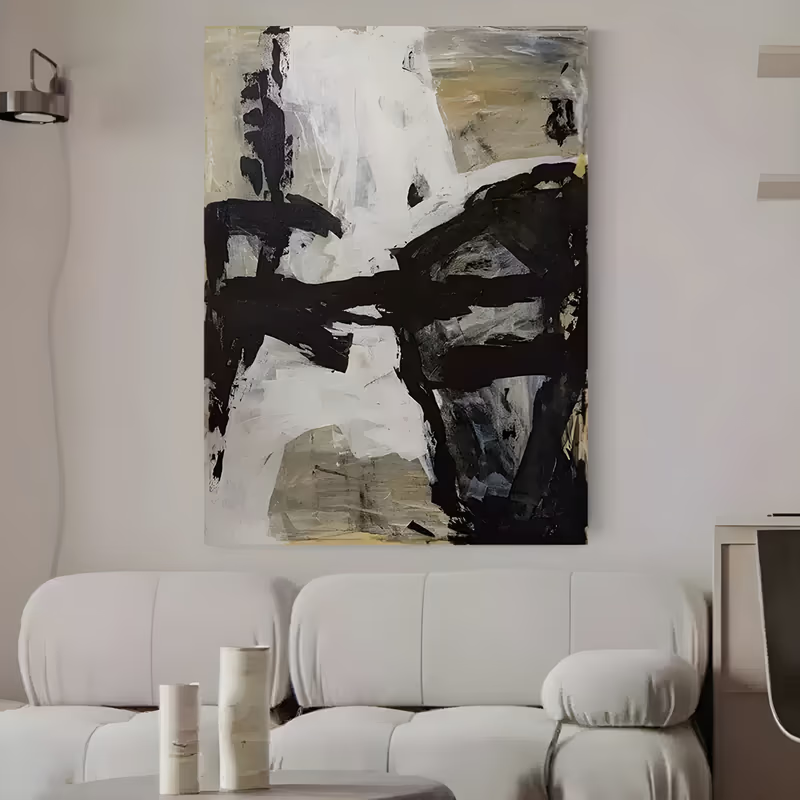
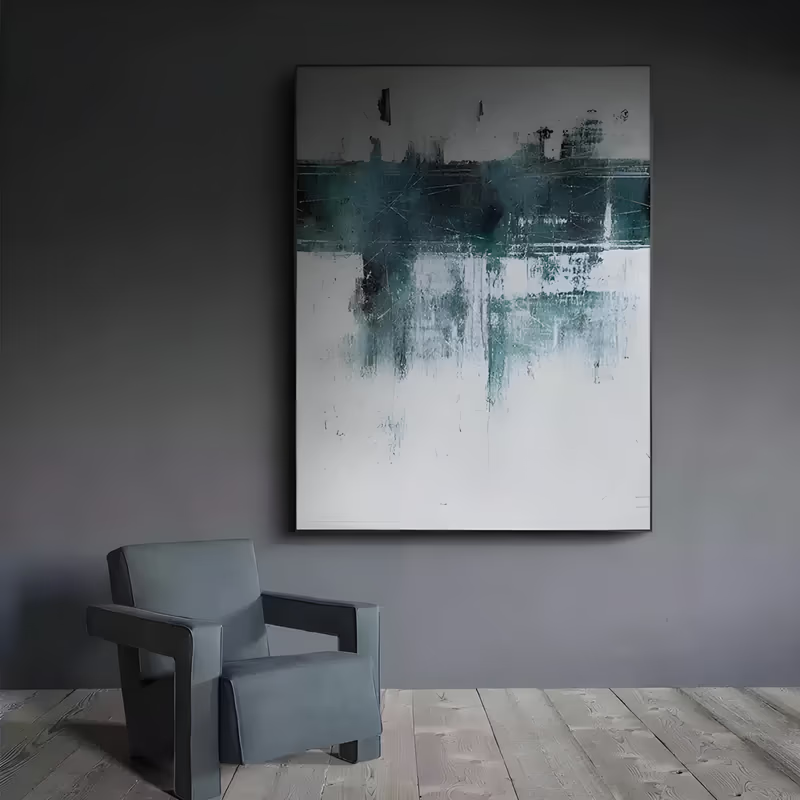
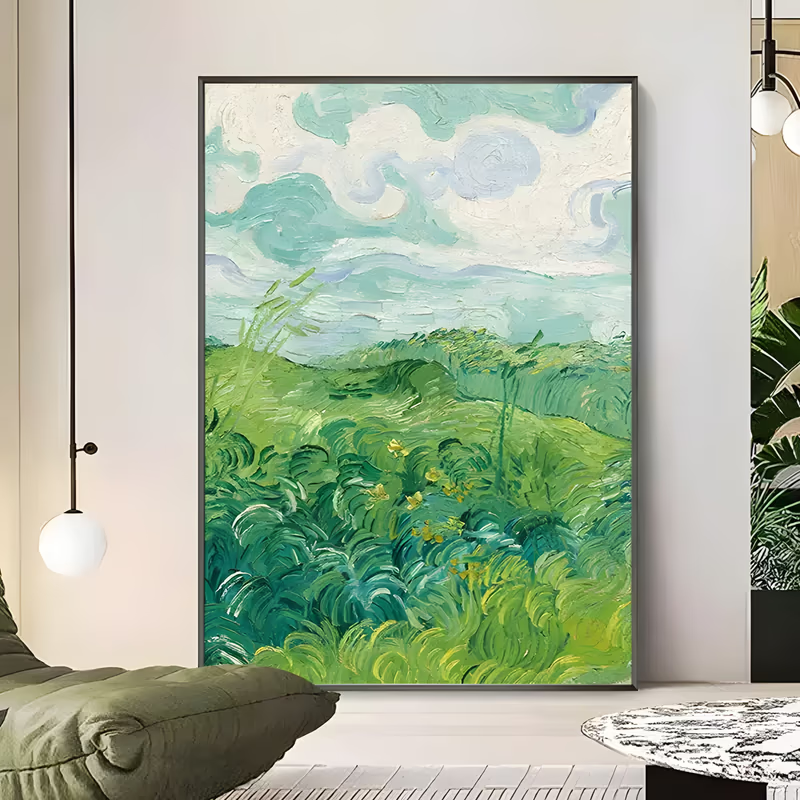
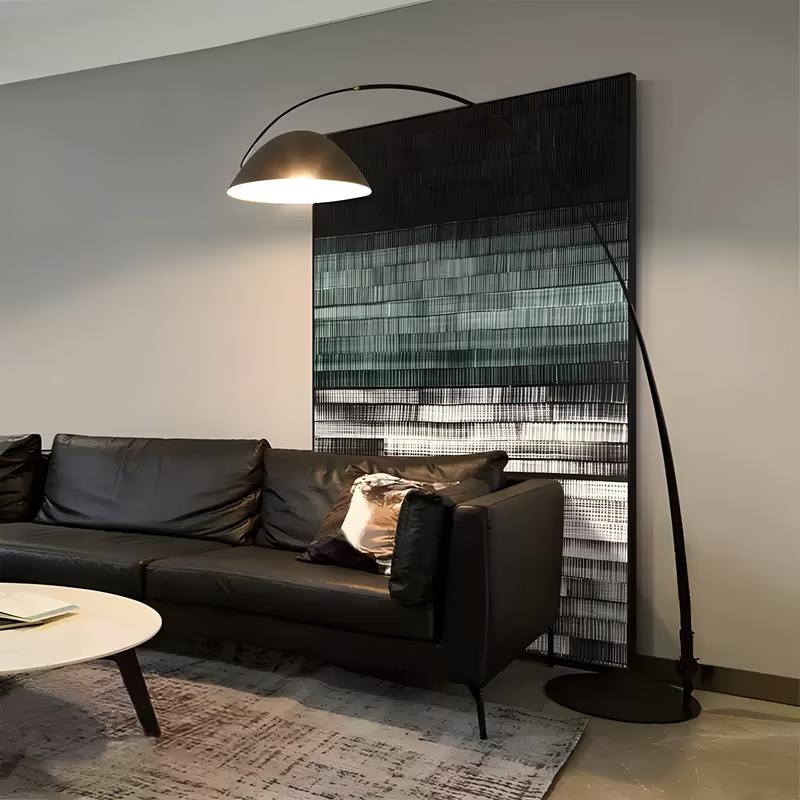
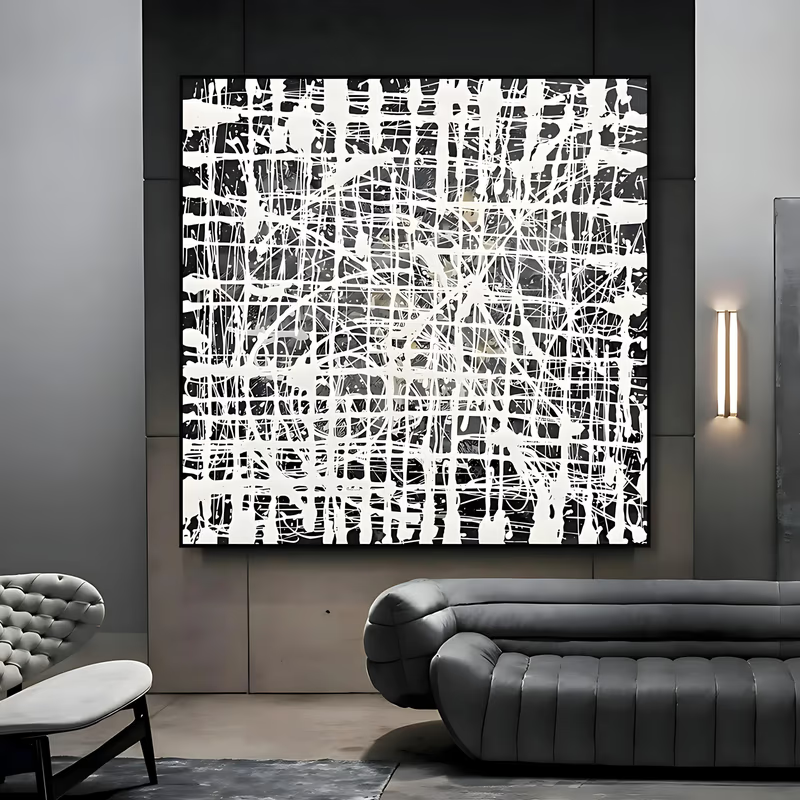
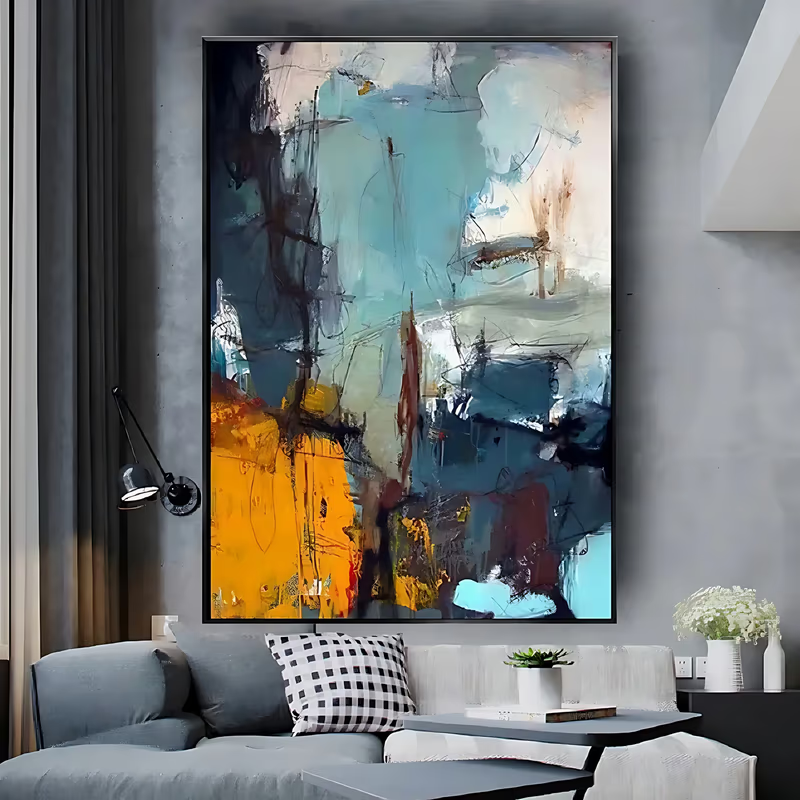
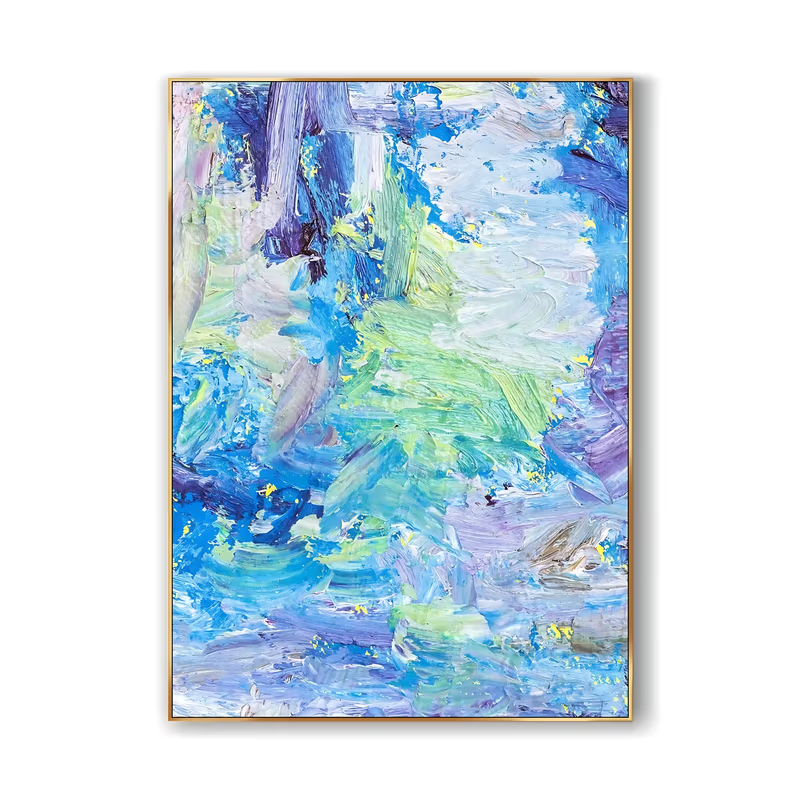
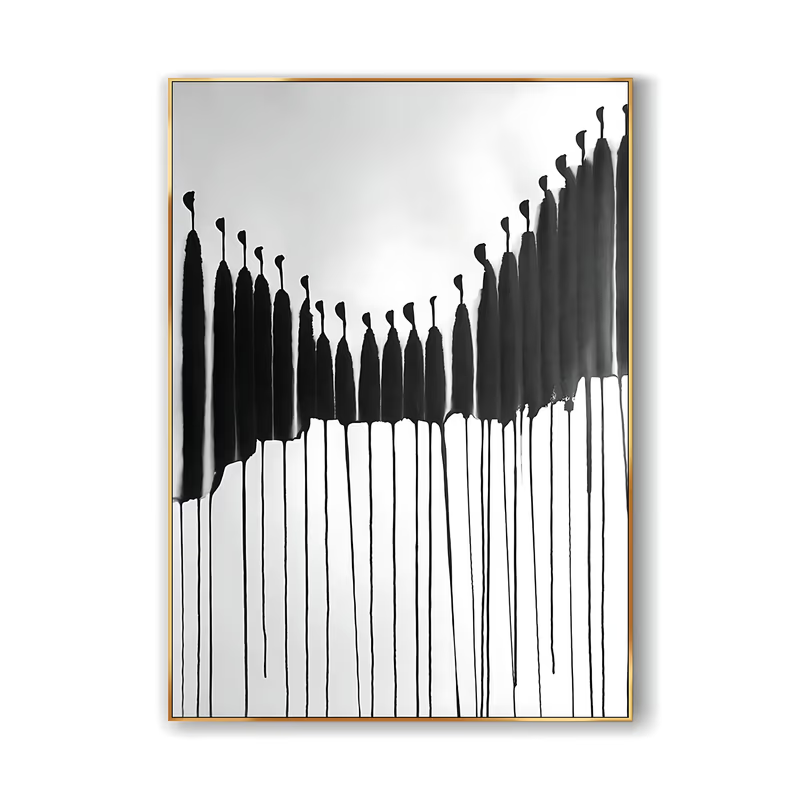
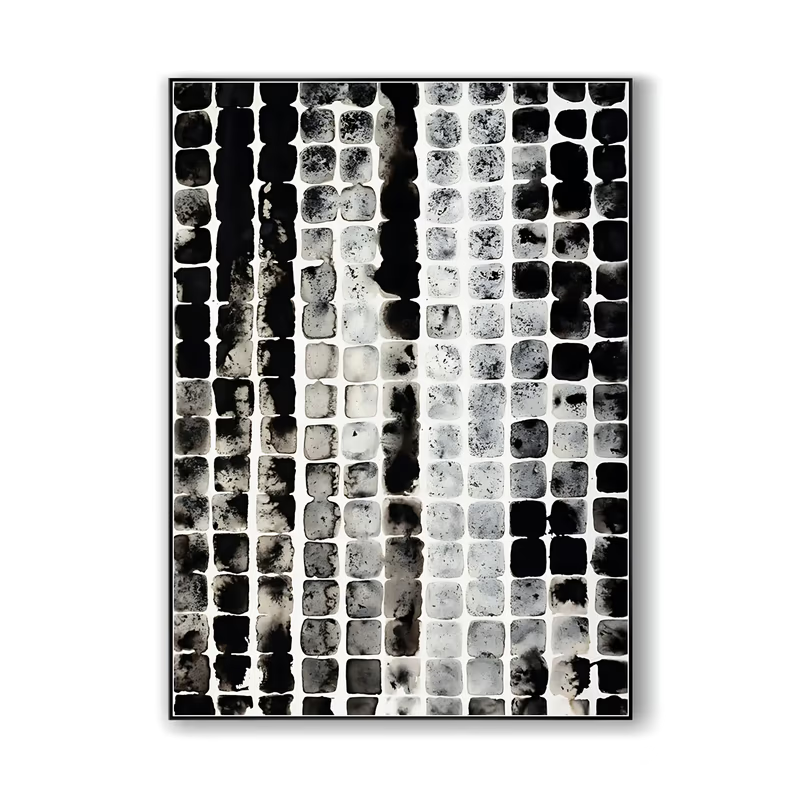
A loose abstract with a few large shapes and a limited palette is easy to work beside, and so is an open landscape with a low horizon and lots of sky. What tires the eye over a working day is dense pattern, tight stripes, many small competing elements and stark black-on-white. Those belong in a corridor or breakout space, where people pass them rather than sit facing them.
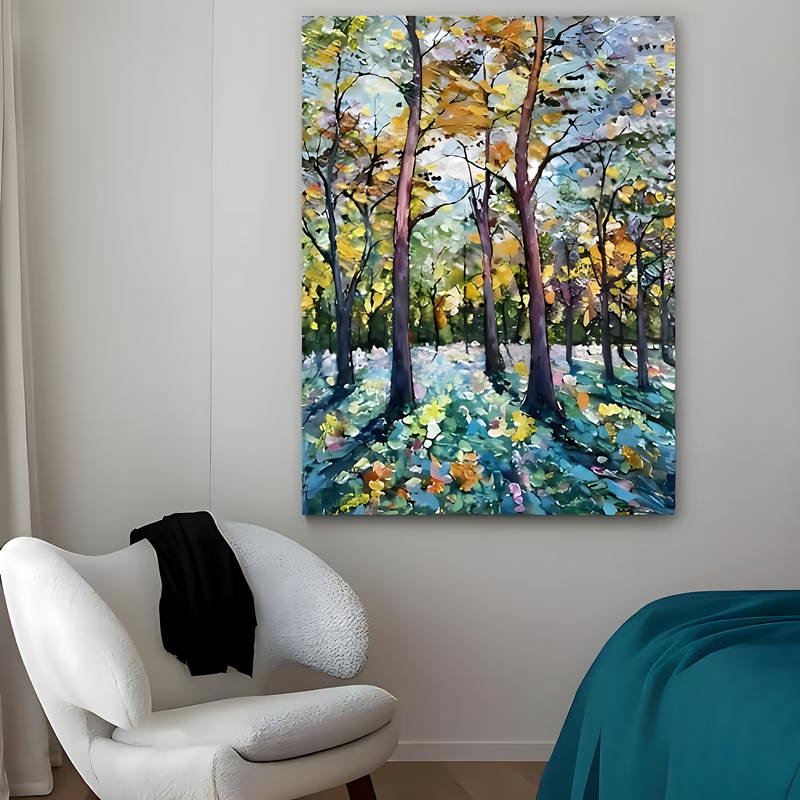
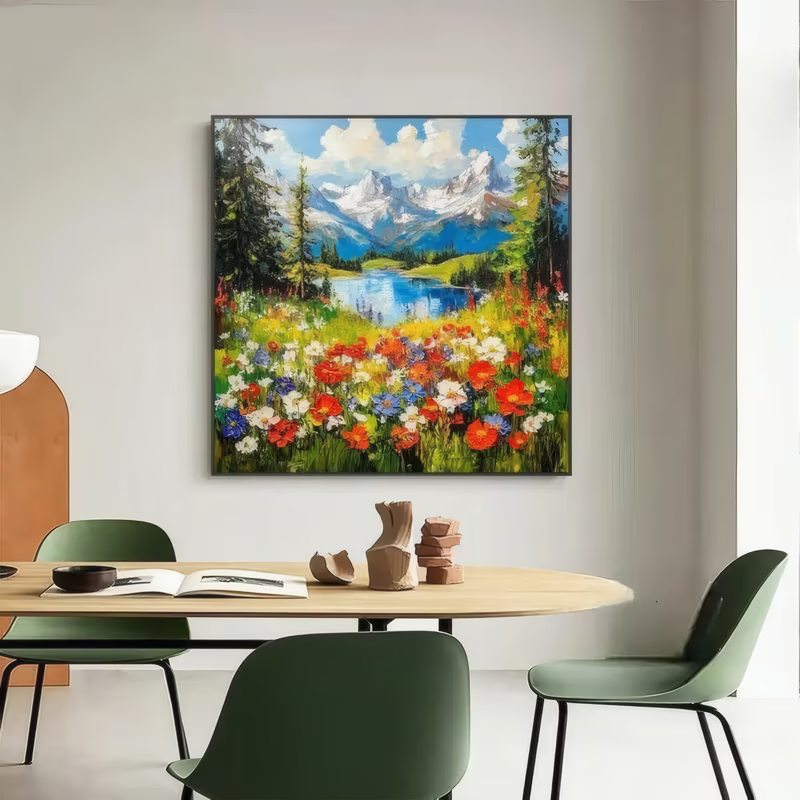
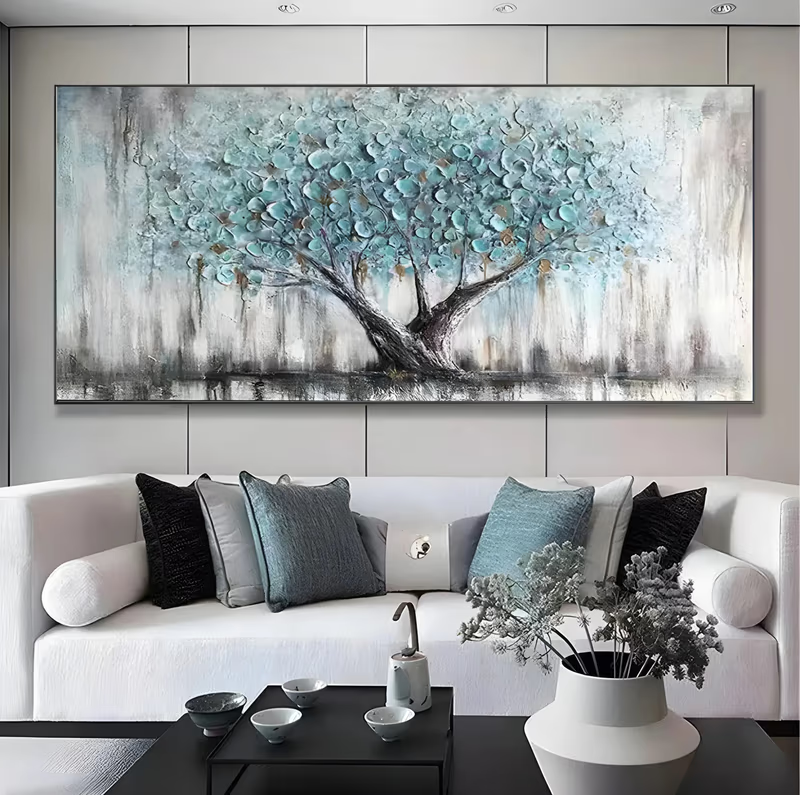
Many people find views of nature restful, and on floors with few windows a landscape can stand in for the view. Teams in creative work often prefer abstracts, which leave room for interpretation. A practical approach for a large office is to use landscapes and soft textures near desks and keep the strongest abstracts for walls people walk towards.
How big should office wall art be on a long wall?
On a long office wall, art should fill roughly half to three-quarters of the clear width you can see from the main viewing point, either as one large canvas or as a measured run of several.
Office walls are seen from further away than walls at home, often from the other side of a 15 m (50 ft) floor plate. A canvas that looks generous in a living room disappears there. Some working numbers:
- Viewing distance: allow at least 1 m (40 in) of canvas width for every 4–5 m (13–16 ft) between the wall and the people who see it most.
- Above desks and credenzas: leave 20–30 cm (8–12 in) between the top of the furniture or screen line and the bottom of the canvas.
- On open walls and in corridors: centre the art about 150–155 cm (59–61 in) from the floor, slightly higher than at home because people see it standing and moving.
- In a series: keep one centre line and one gap, around 40–60 cm (16–24 in), so the run reads as a single piece of architecture.
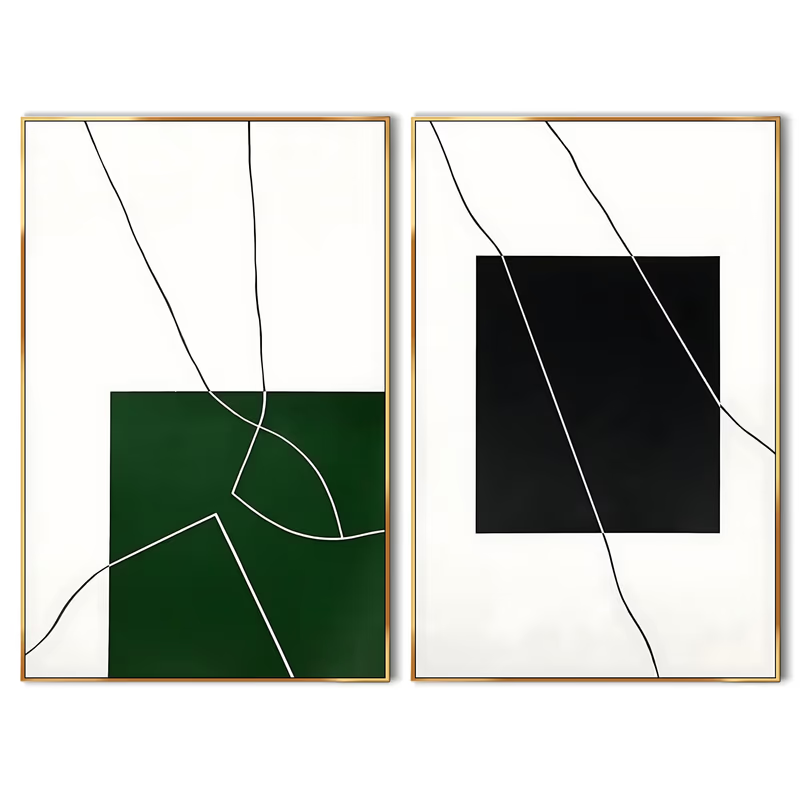
For very long walls, panoramic canvases or a pair painted as one composition across two canvases fill the space without a mural. Anything can be painted larger than shown; see oversized and custom-size art.
How do you plan office art across several floors?
Give each floor its own colourway of a shared theme, so the art makes the building feel like one company while telling people which floor they are on.
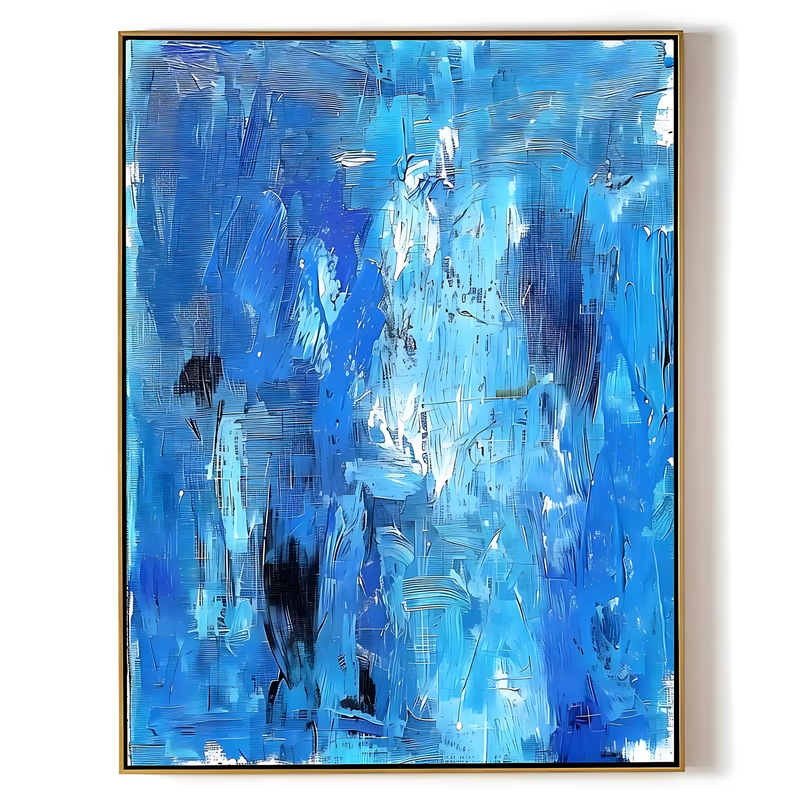
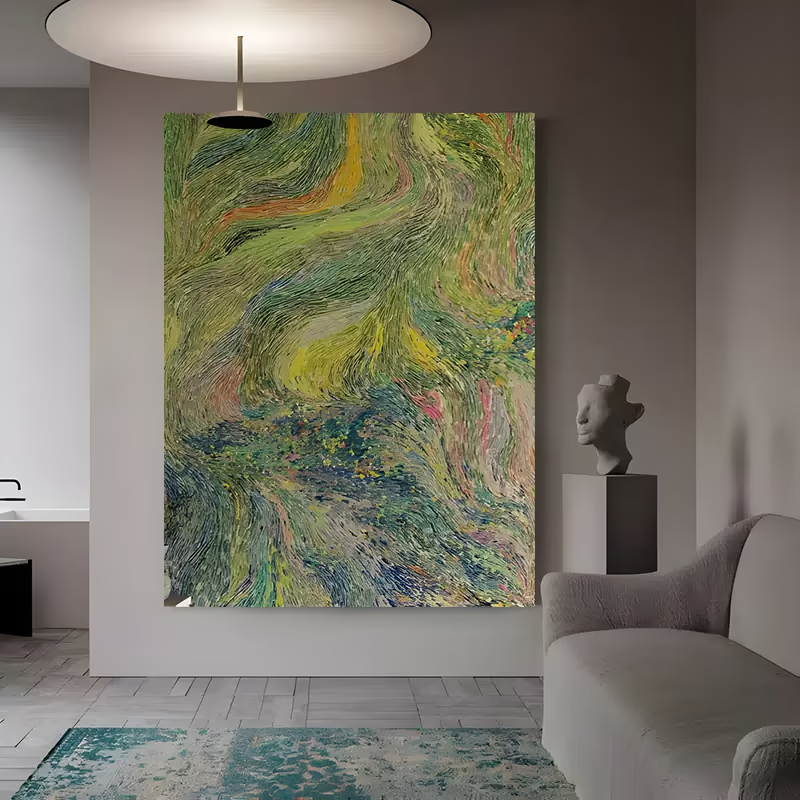
Wayfinding in an office tower is usually left to signs, but art can do much of the work. Choose one or two compositions, for example a skyline and a geometric abstract, and have them painted in a different palette per floor: terracotta on the third, sage on the fourth, cobalt on the fifth. The pieces are related but never repeated, the lift lobby on each floor announces itself, and staff start to say "the green floor" without being told.
The same idea works for a company with offices in several cities: keep the composition, change the colourway or the skyline. One of the colourways can be the brand palette, so the art supports the identity without carrying a logo. Corporate fit-out teams can read more on art for corporate headquarters and professional offices.
How is office wall art supplied for a fit-out or a move?
Agree the plan by zone and floor, approve a sample canvas in the real space, then order the rest in batches timed against the move-in date.
Each piece is painted to order: about 10 days of painting plus 5–7 days in transit. For a fit-out, that means art can be ordered once the wall finishes and lighting are known rather than months ahead, and a sample can be hung on site before the main order is placed. Every piece in the run is photographed at each stage, so a facilities or design team can approve a whole floor from progress photos without visiting a studio.
The minimum order is one piece, volume pricing starts at 10, and every enquiry is quoted within one business day. Procurement teams working to an FF&E schedule can start from art for FF&E procurement.
How do you get office art painted in your brand colours?
Send the brand palette as paint codes or colour references, plus photos of the floor as it is lit, and each canvas is adjusted to those colours before painting starts.
Any work on this page can be repainted in another colourway or redrawn to a new size and proportion, so a geometric abstract in orange and navy can come back in your brand's teal and charcoal, sized exactly to the wall. Progress photos or video arrive at each stage, and the next stage only begins after you approve; you approve a final photograph before dispatch. That review loop matters in offices, where the art will be seen beside branded signage every day.
Canvases ship rolled (the easiest way up a goods lift), stretched without a frame and ready to hang, or framed in black, white, wood, silver or gold. Black and natural wood frames suit most workplaces. Delivery is by DHL, FedEx or UPS express, or by air or sea freight for a whole-floor order, on the route iHomeArt suggests; the transit time depends on it. Request a quote with your floor plan or wall list, or see how custom sizes and colourways work.