Square wall art guide · Updated
How to choose and hang square wall art
Key takeaways
- Square is the shape of symmetry: it suits centred spaces such as a chimney breast, an alcove, the wall between twin lamps or the panel above a desk.
- One square rarely fills a long sofa: over wide furniture, use two or three squares in a row, or a grid, and size the whole group as one shape.
- Keep the gaps identical: in a grid or a row, 5–8 cm (2–3 in) between canvases, with every outer edge aligned, matters more than the exact size of each piece.
- Repeat without repeating: one square composition painted in several colourways makes a grid or a hotel series that is related but never identical.
What makes square wall art different from other shapes?
Square wall art is the only format with no built-in direction, so it feels balanced and still, and it is the easiest shape to pair, group and repeat.
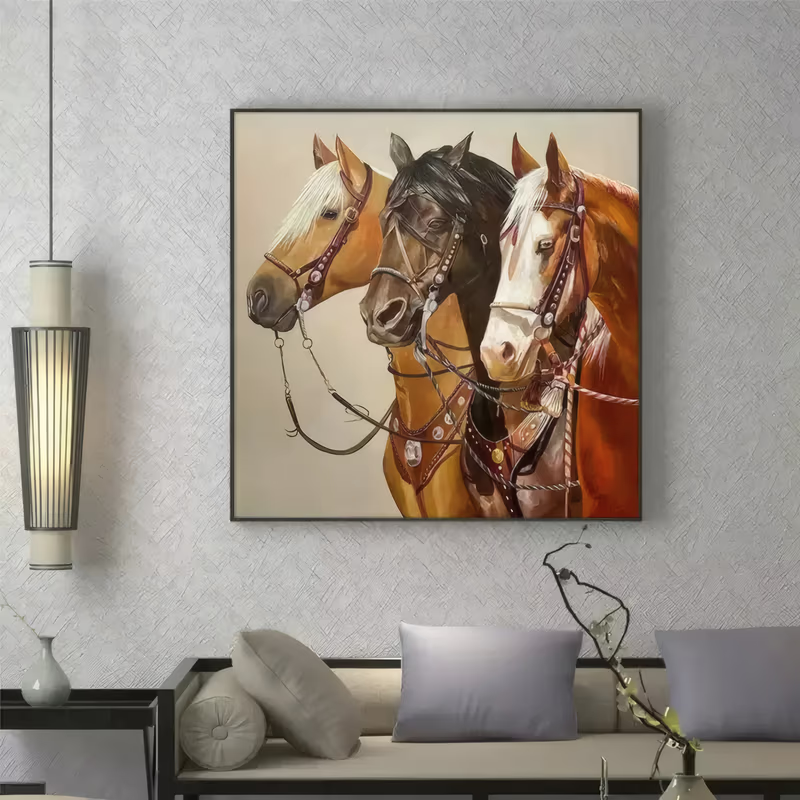
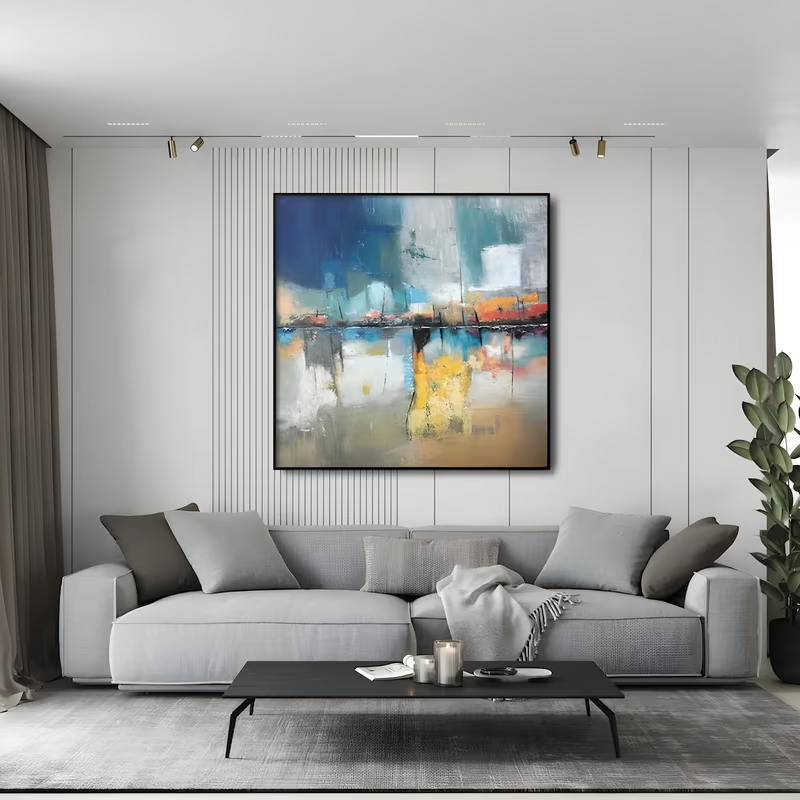
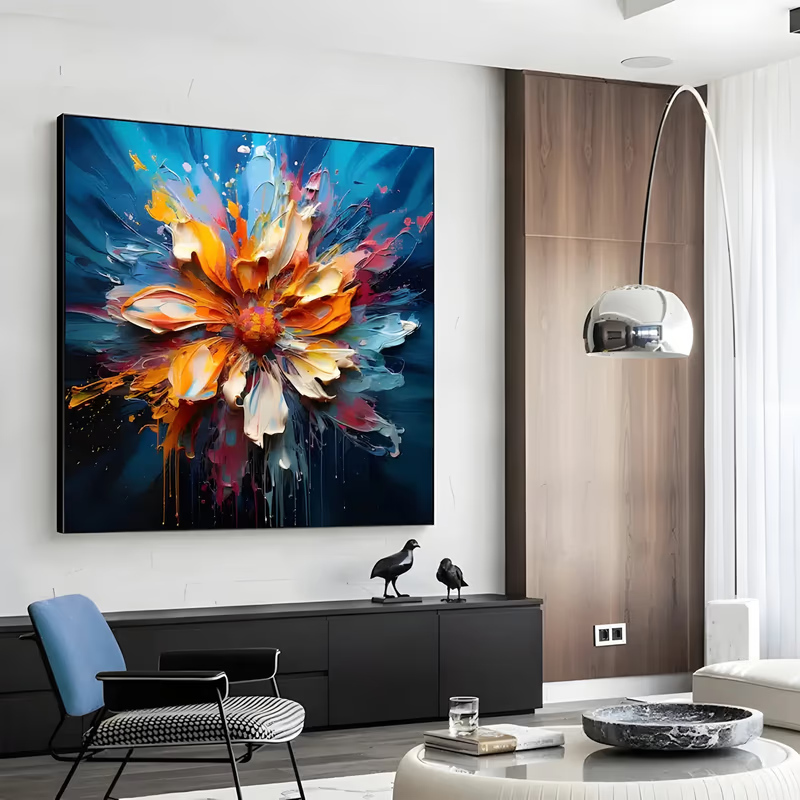
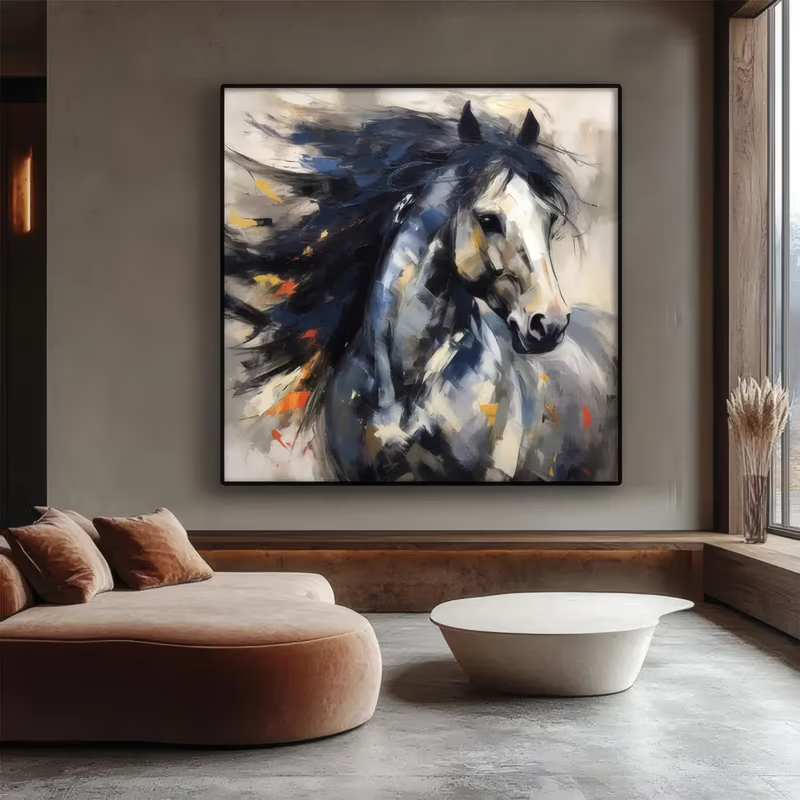
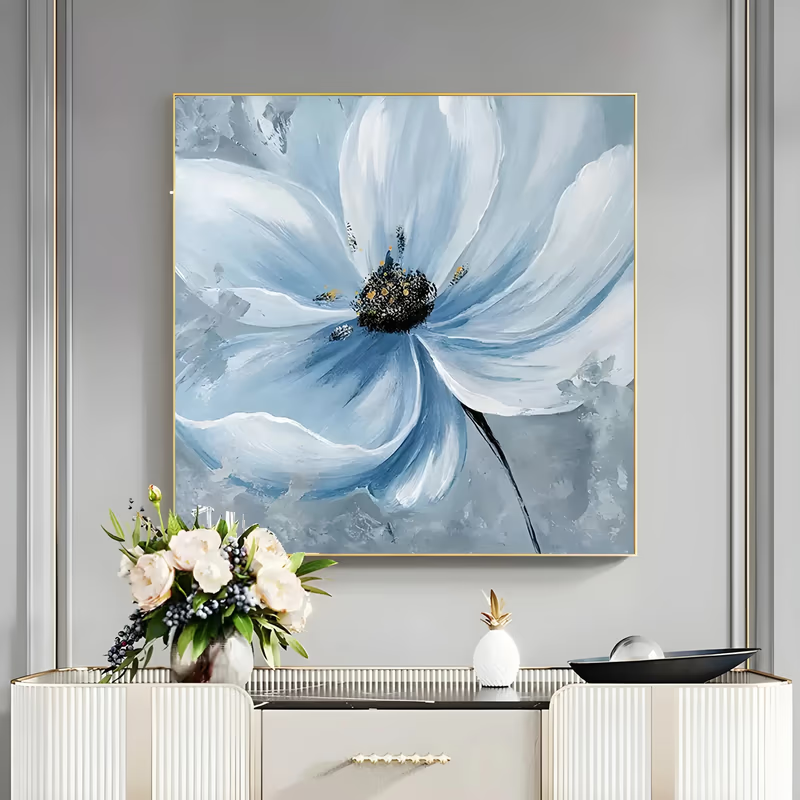
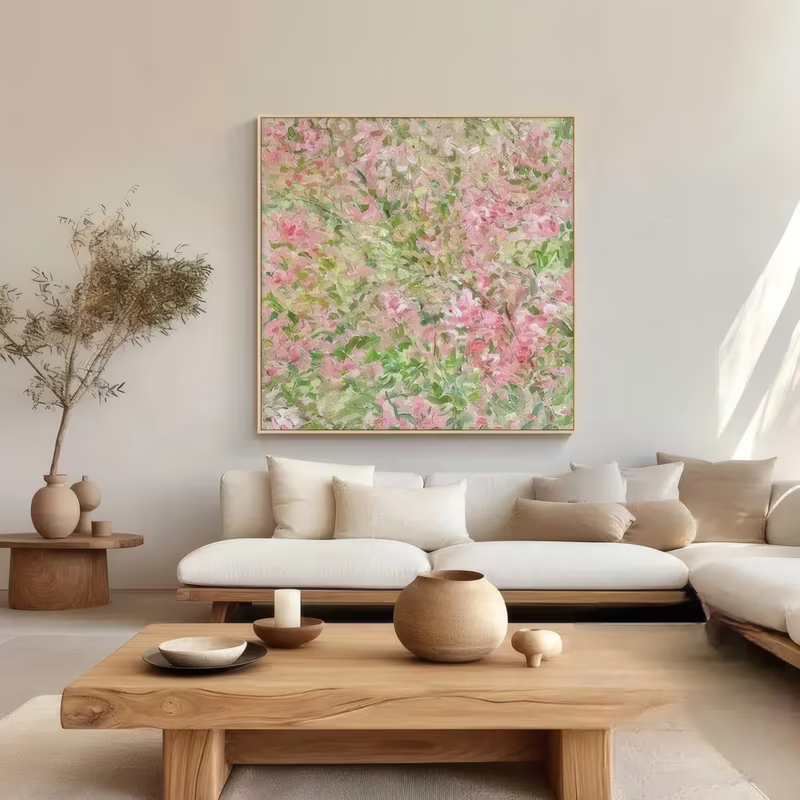
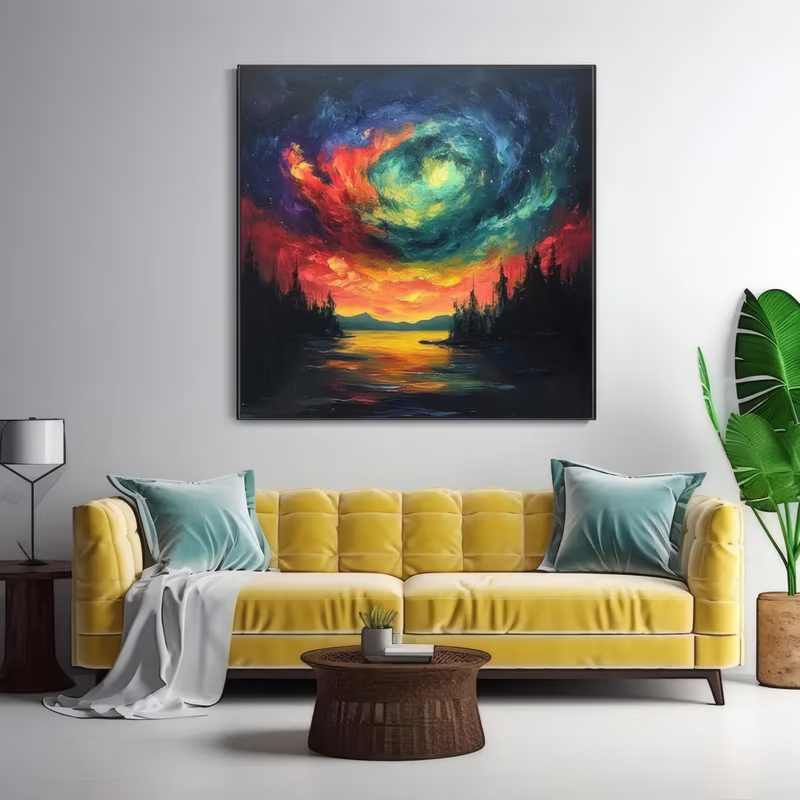
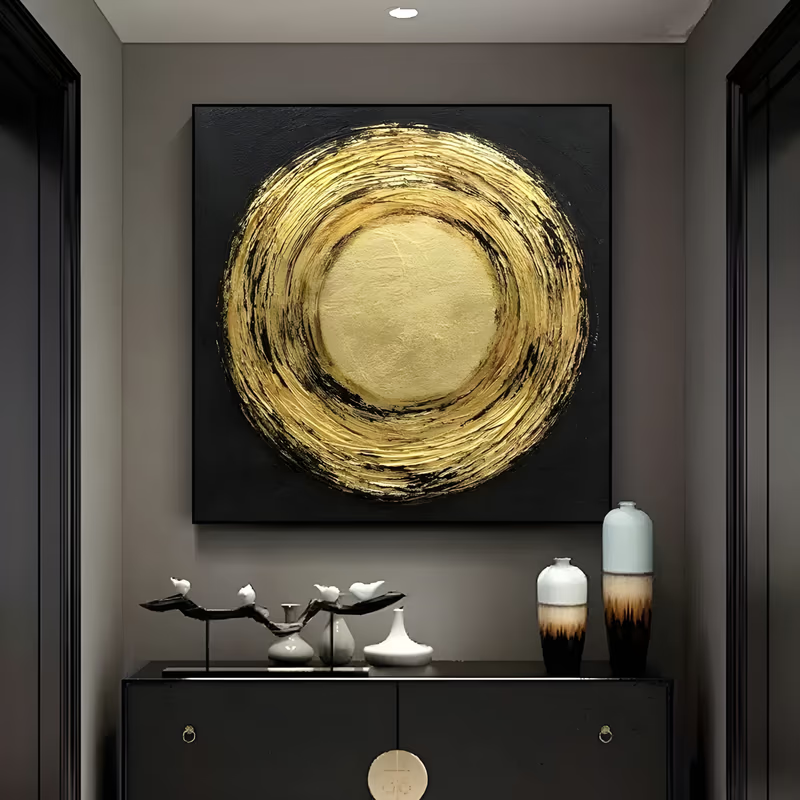
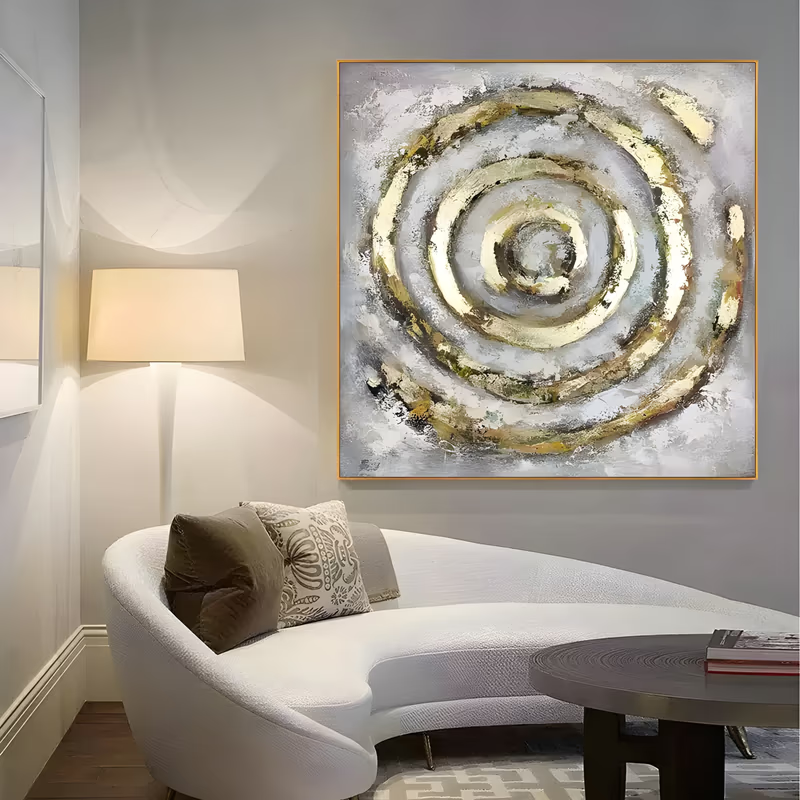
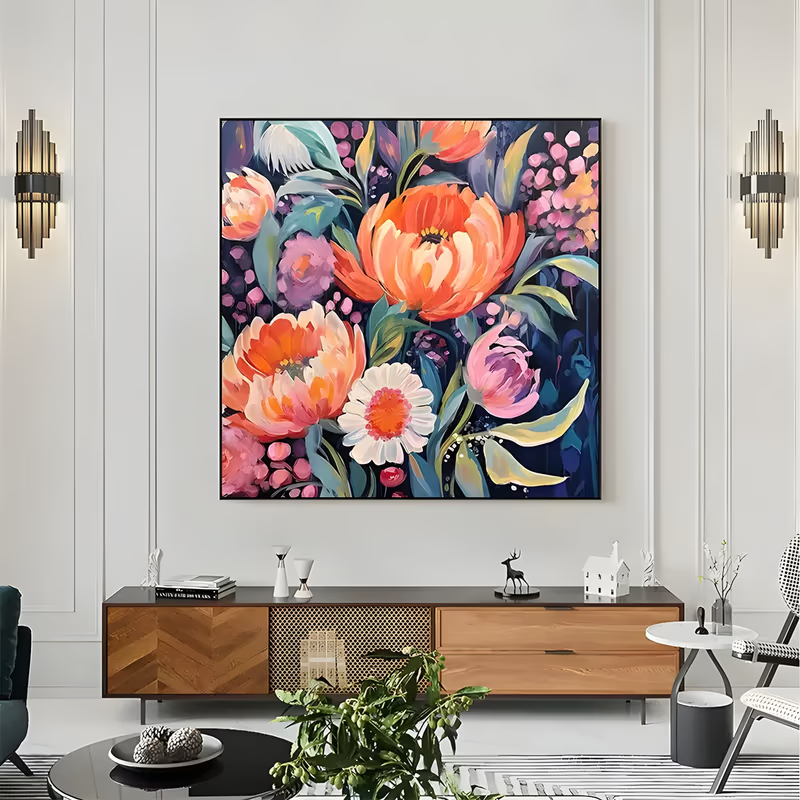
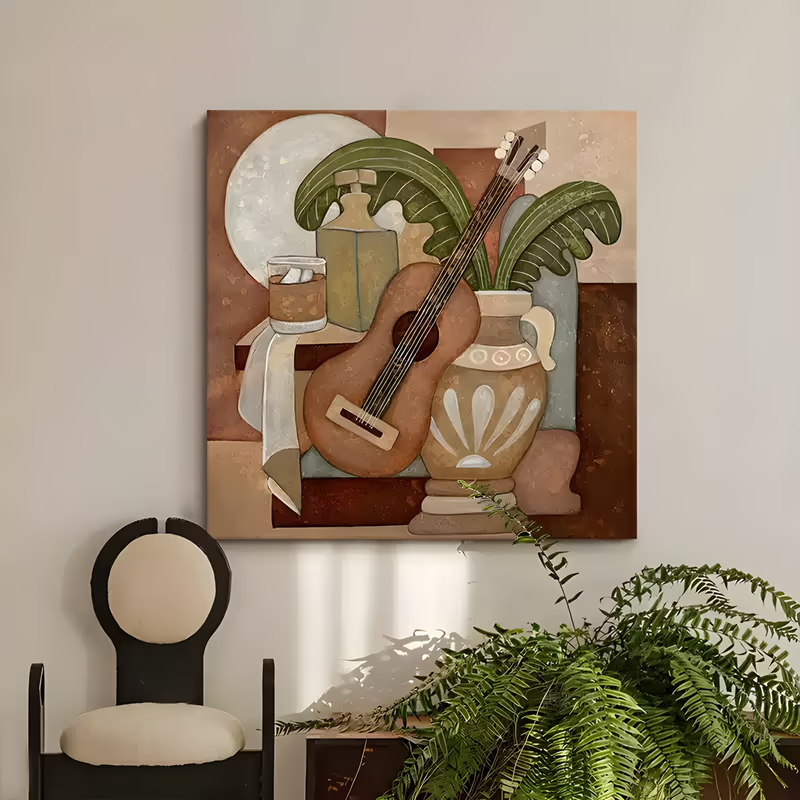
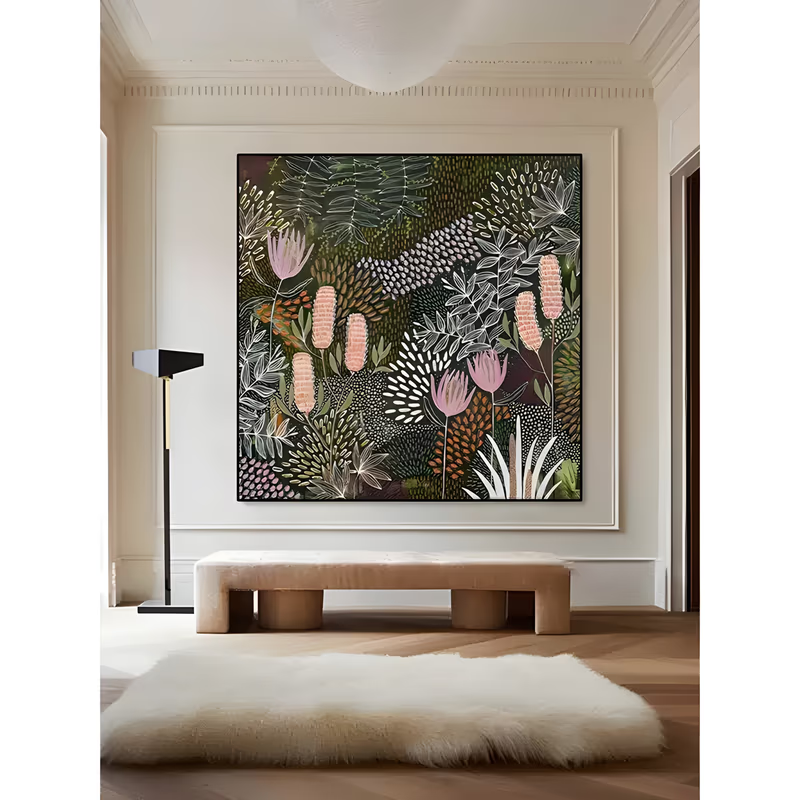
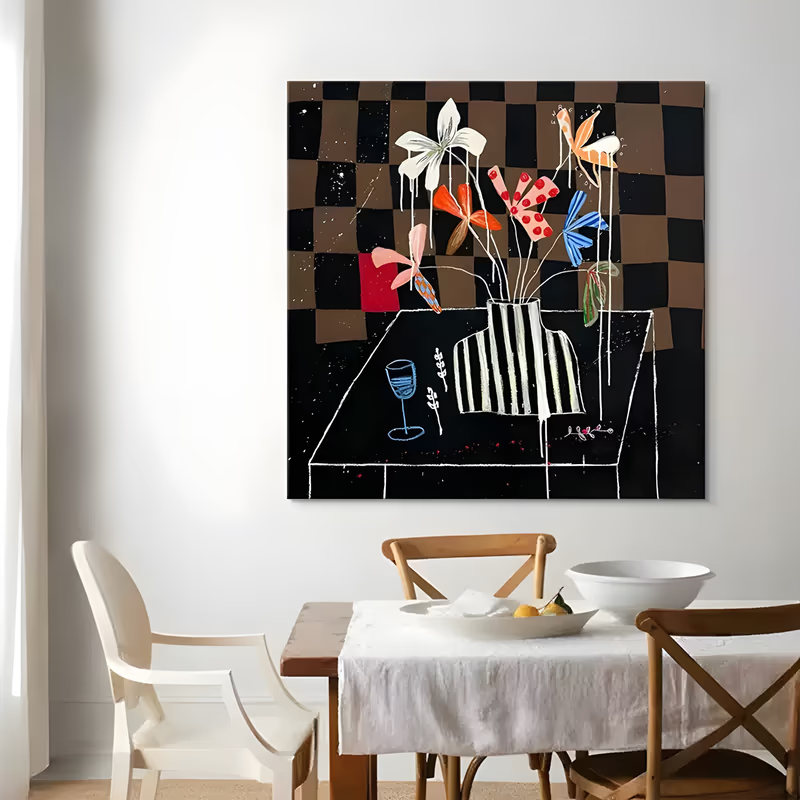
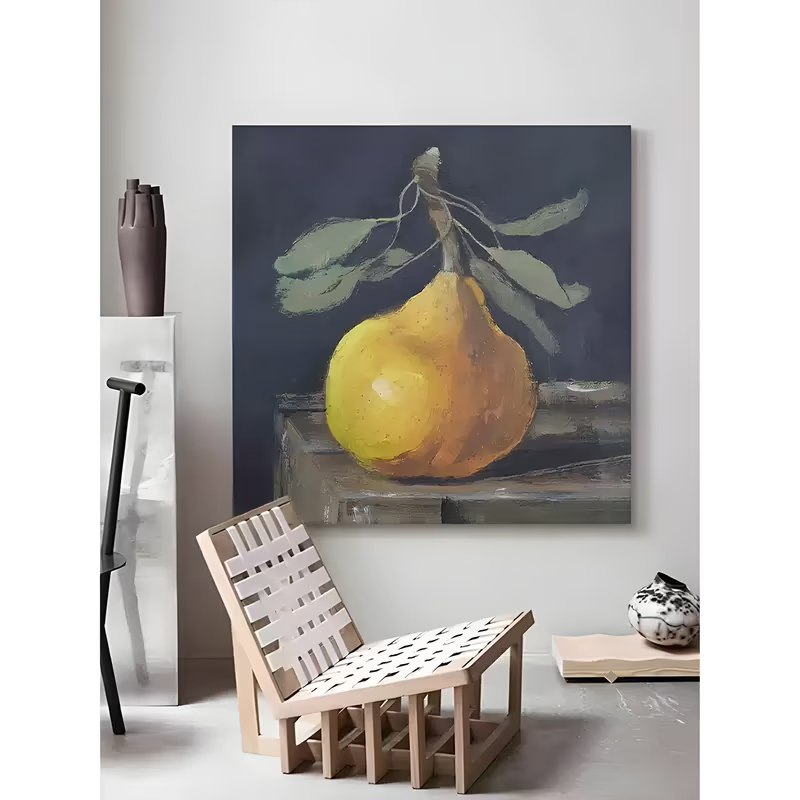
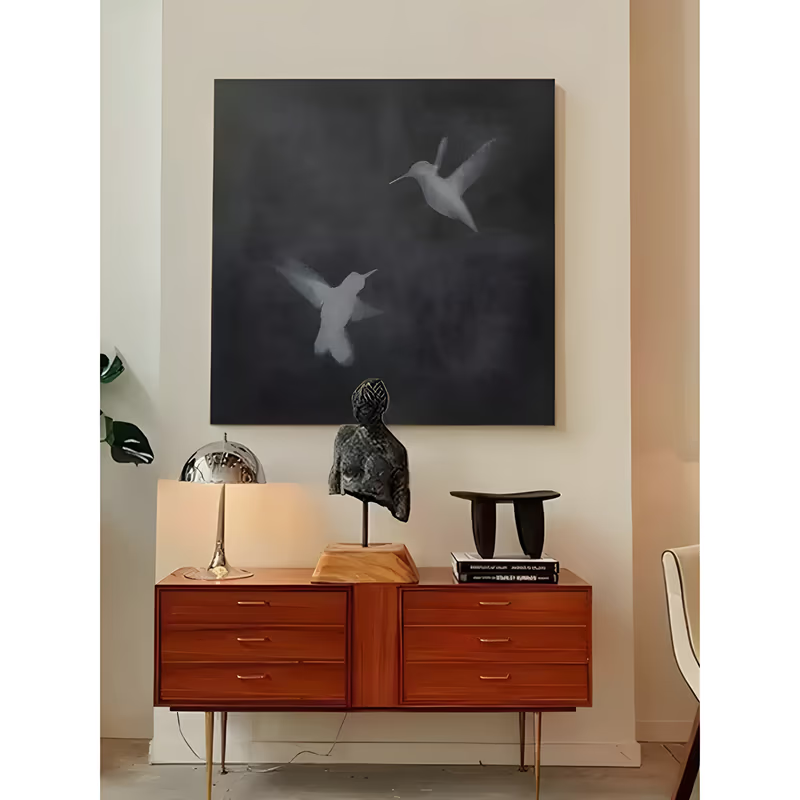
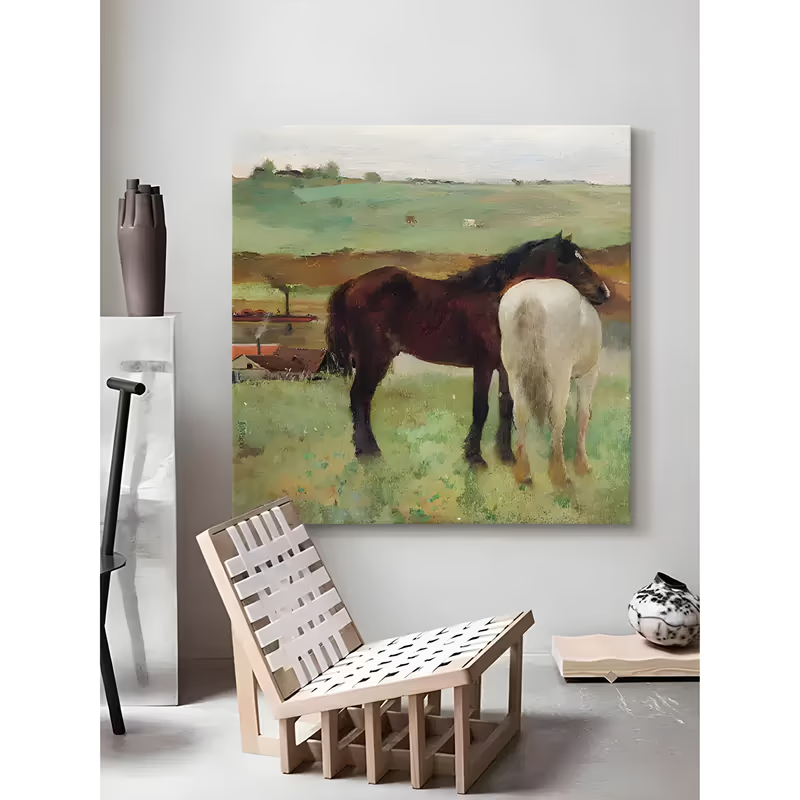
A tall canvas pulls the eye up and a wide one pulls it across; a square holds it in the centre. That makes the format quietly confident: it does not need to echo the furniture beneath it the way a horizontal piece does, and it looks deliberate in a space that is itself symmetrical. Painters compose for this. A square picture usually has one central subject, such as a single bloom, an animal's head or a circular motif, or an all-over pattern that reads the same from any edge.
The same neutrality is what makes squares so useful in numbers. Two identical squares make a calm pair, four make a larger square, and a row of three makes a wide band, all without the awkward mixed proportions of a gallery wall built from rectangles. If the space is clearly tall or clearly wide, though, a vertical or horizontal canvas will fill it better.
Where does square wall art look best?
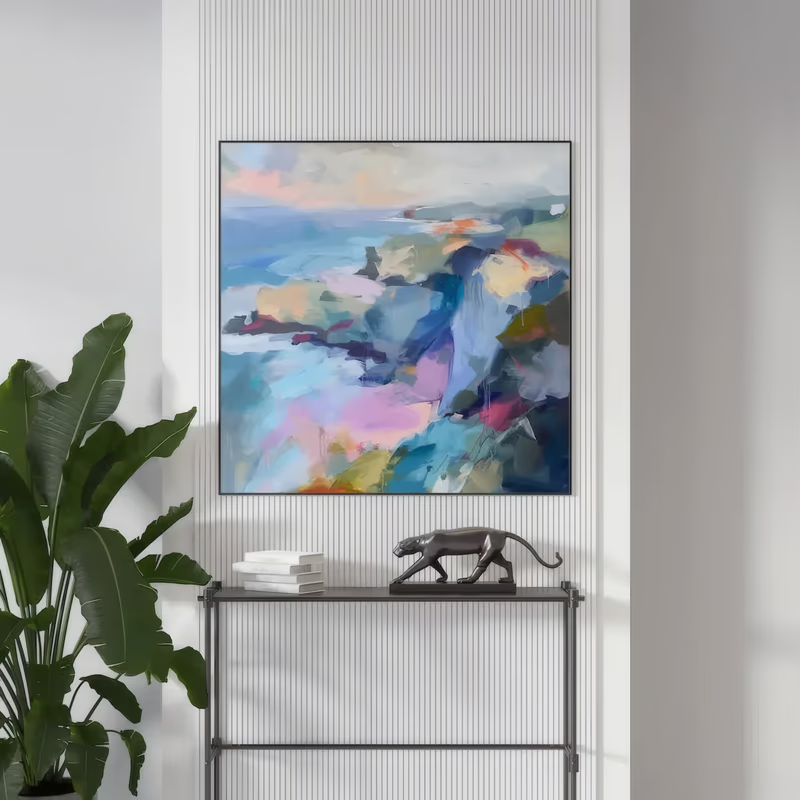
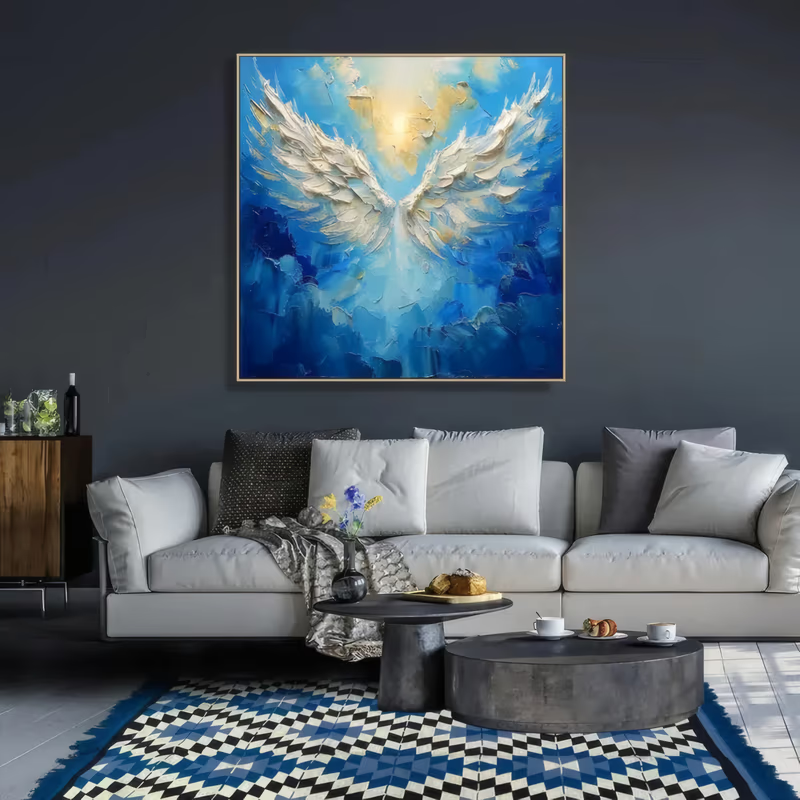
Square wall art looks best in centred, balanced spaces: on a chimney breast, in an alcove or niche, above a desk, nightstand or console, between two lamps or sconces, and in pairs or grids on a wider wall.
| Where | Why square works | Tip |
|---|---|---|
| Chimney breast or mantel | The breast is often close to square above the shelf; a square canvas fits it exactly | Slightly narrower than the shelf, with 15–25 cm clear above it |
| Alcove, niche or recess | Matches the boxed-in shape and keeps even margins on every side | Leave the same margin at the sides and the top |
| Above a desk | A calm, centred view to rest the eyes on between screens | Centre on the desk, not the wall |
| Either side of a bed | A pair over the nightstands frames the bed symmetrically | Centre each one over its nightstand, at the same height |
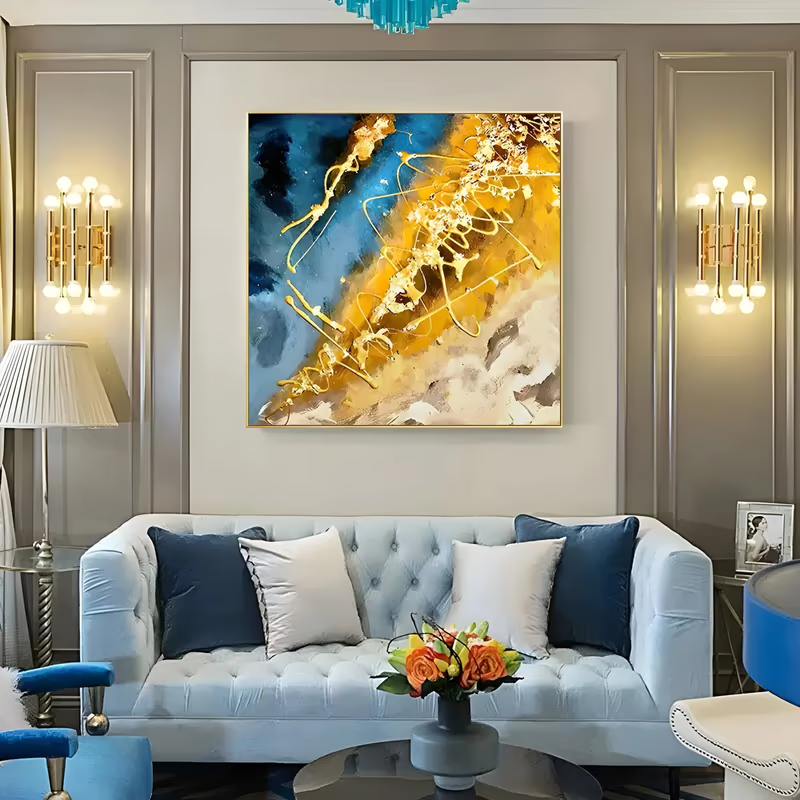
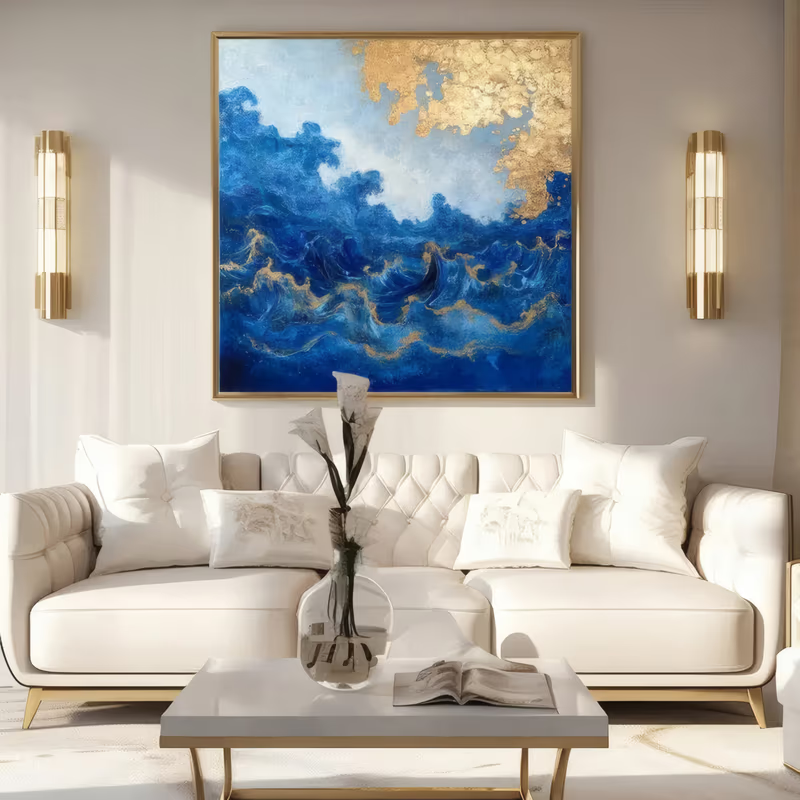
| Between twin lamps or sconces | The symmetry of the lighting is repeated by the canvas | Keep the square narrower than the gap between the fittings |
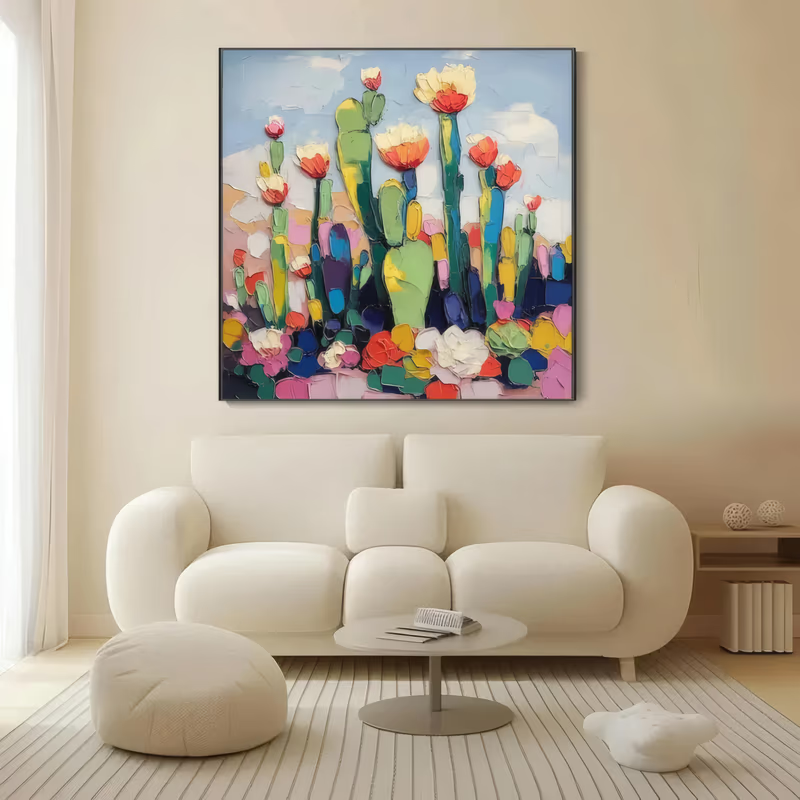
| Feature wall or long furniture | Several squares make a grid or a row that reads as one large piece | Treat the whole group as one shape when sizing |
Squares are also a good answer for small rooms, such as a powder room, a study or a hotel bathroom, where a single compact piece gives a focal point without crowding. You can filter square art for offices or for bedrooms and guest rooms above.
What kinds of square paintings are there?
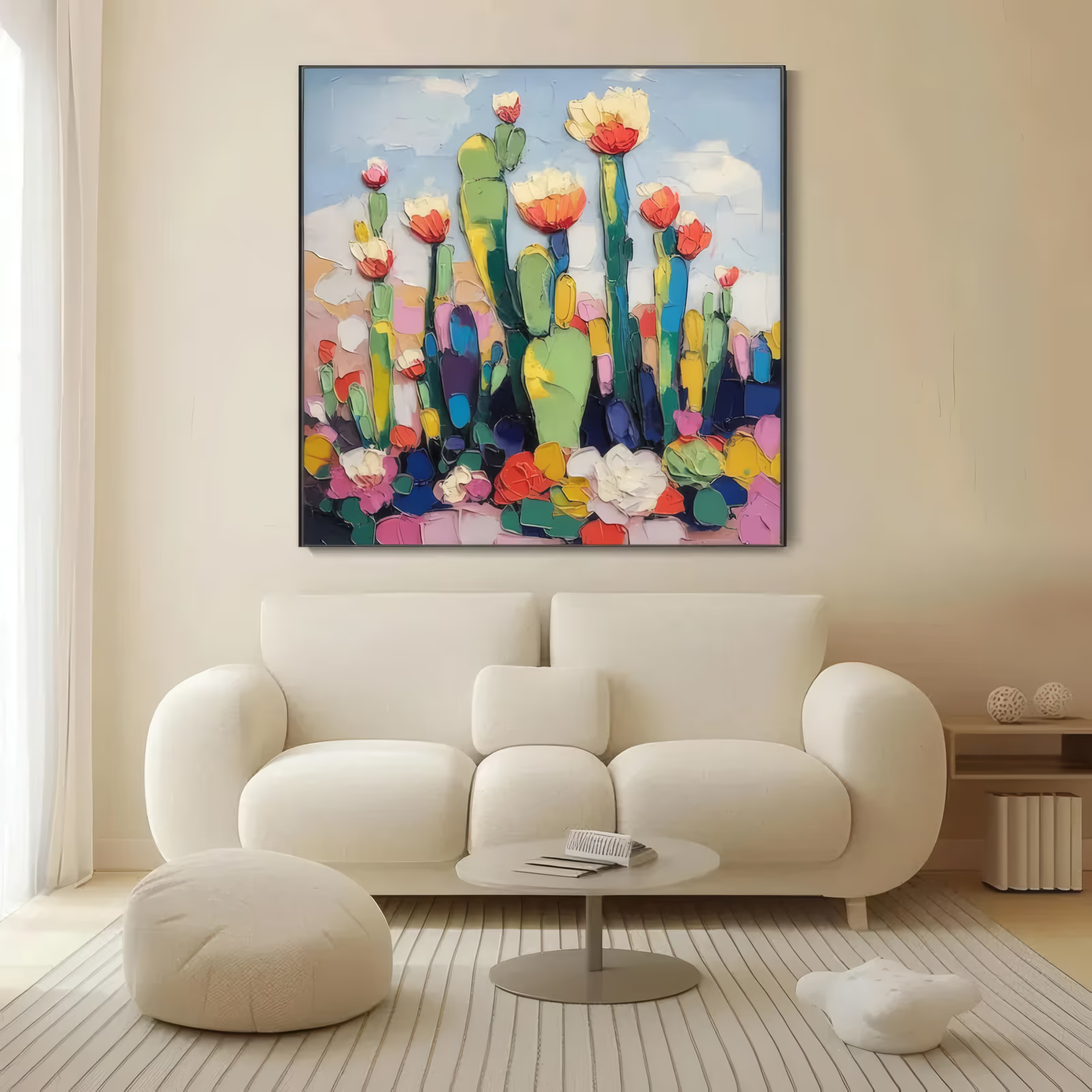
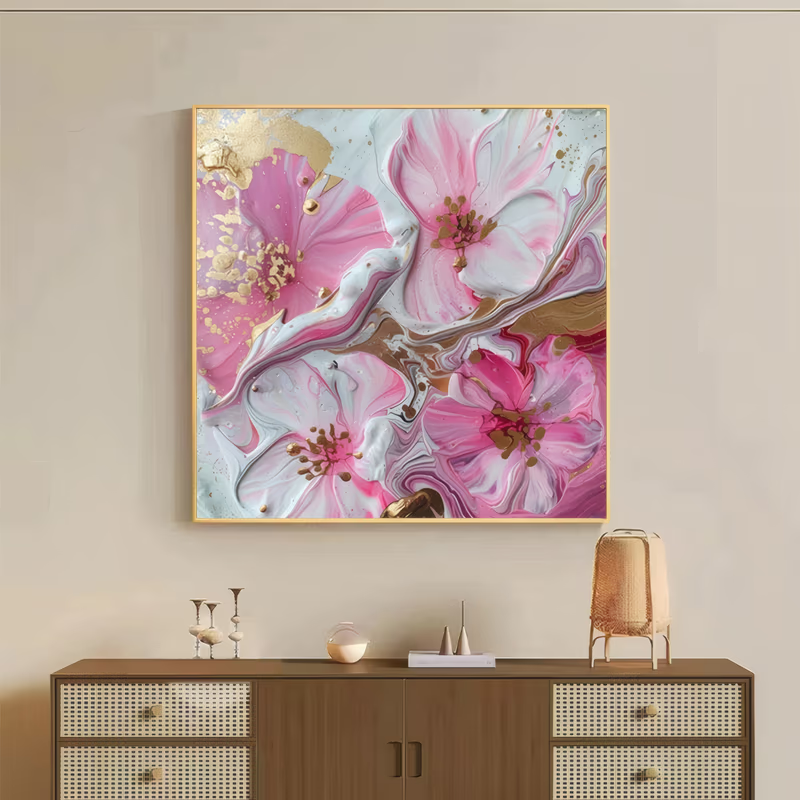
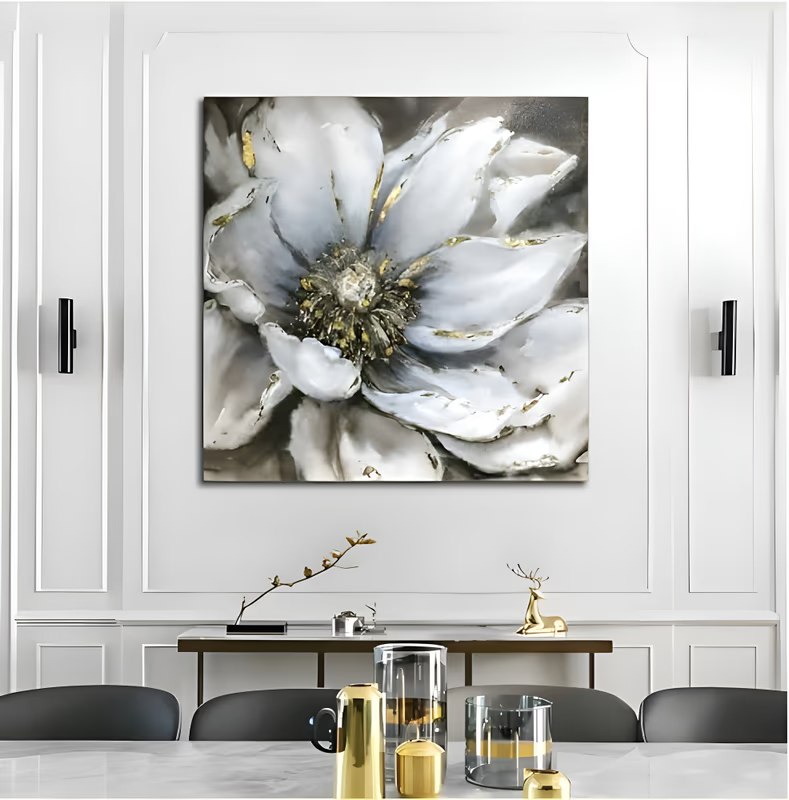
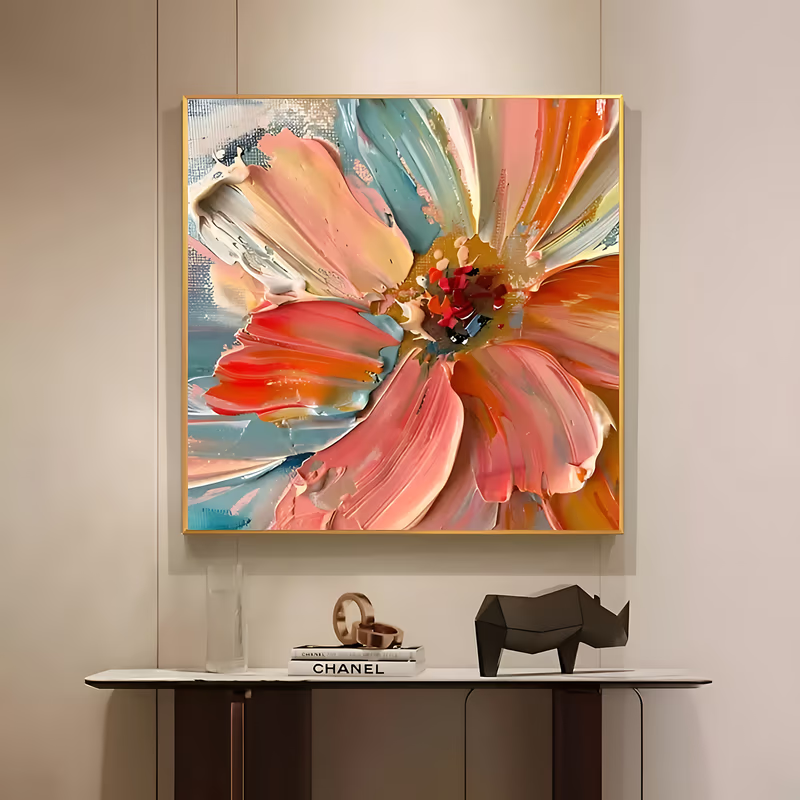
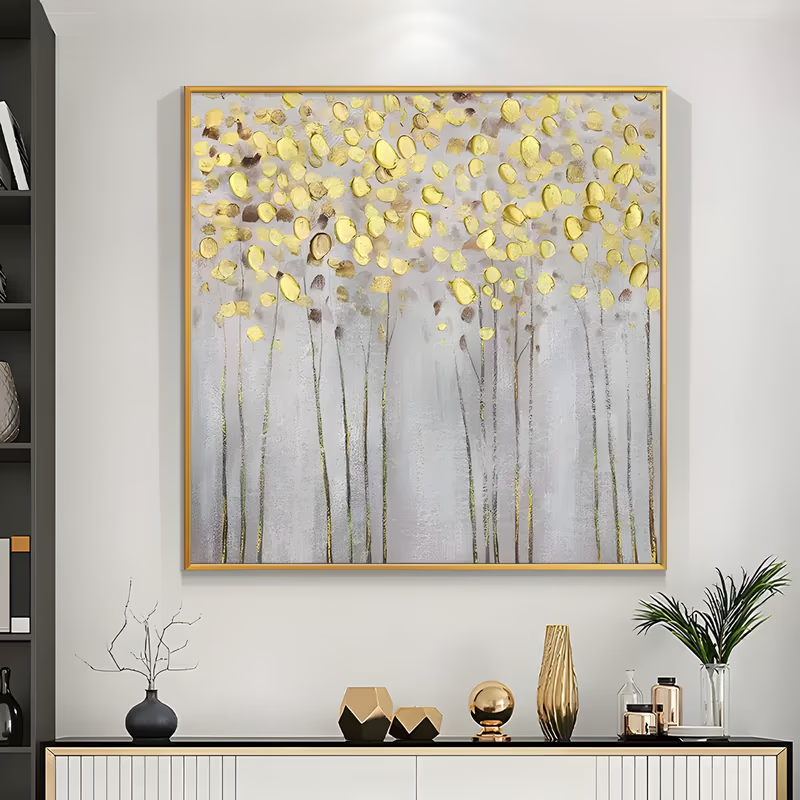
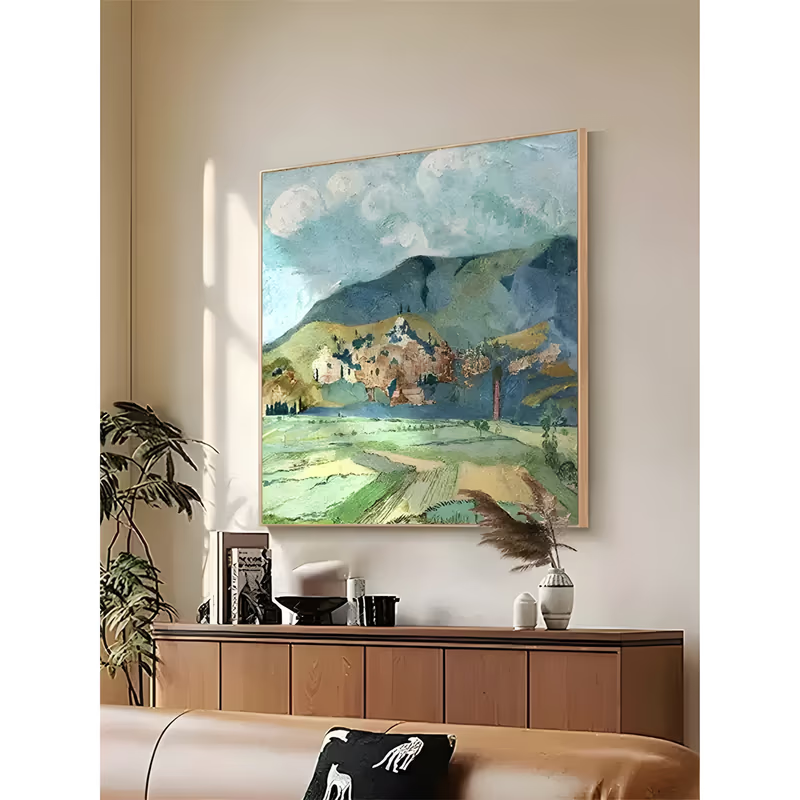
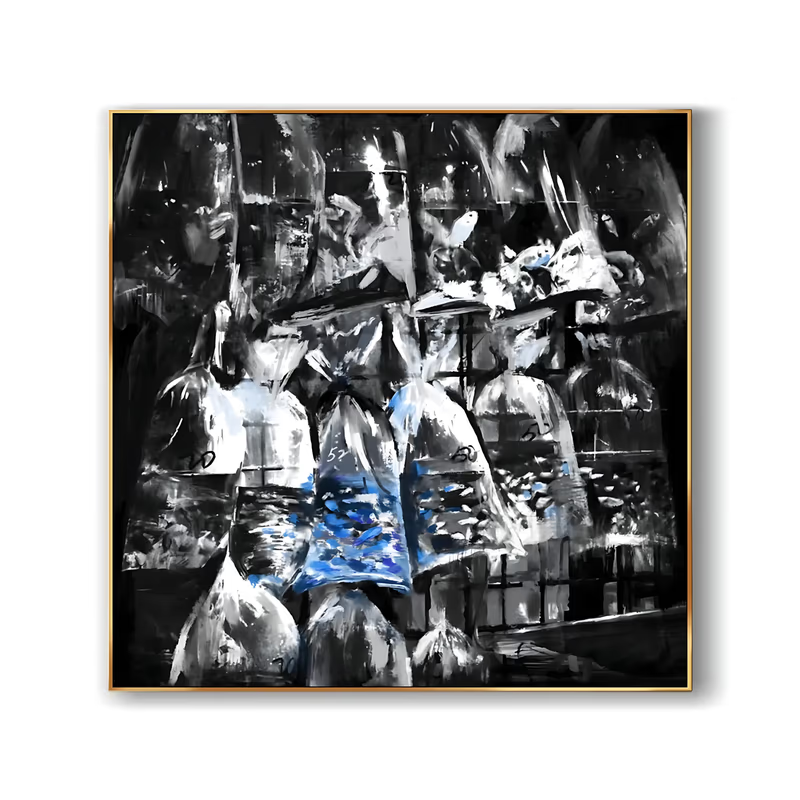
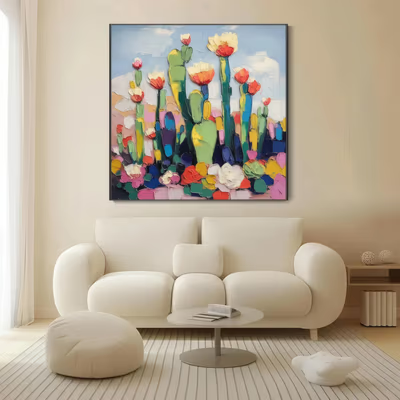
The subjects that suit a square best are centred ones: a single flower or bouquet seen close up, geometric and abstract compositions, animal and figure portraits, and views framed like a window.
Close-up florals
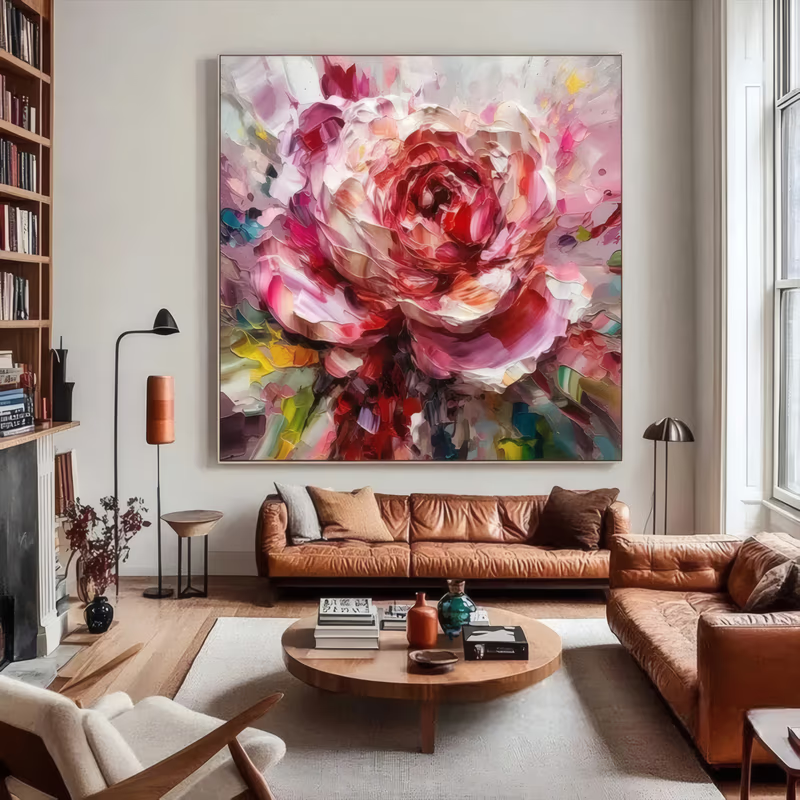
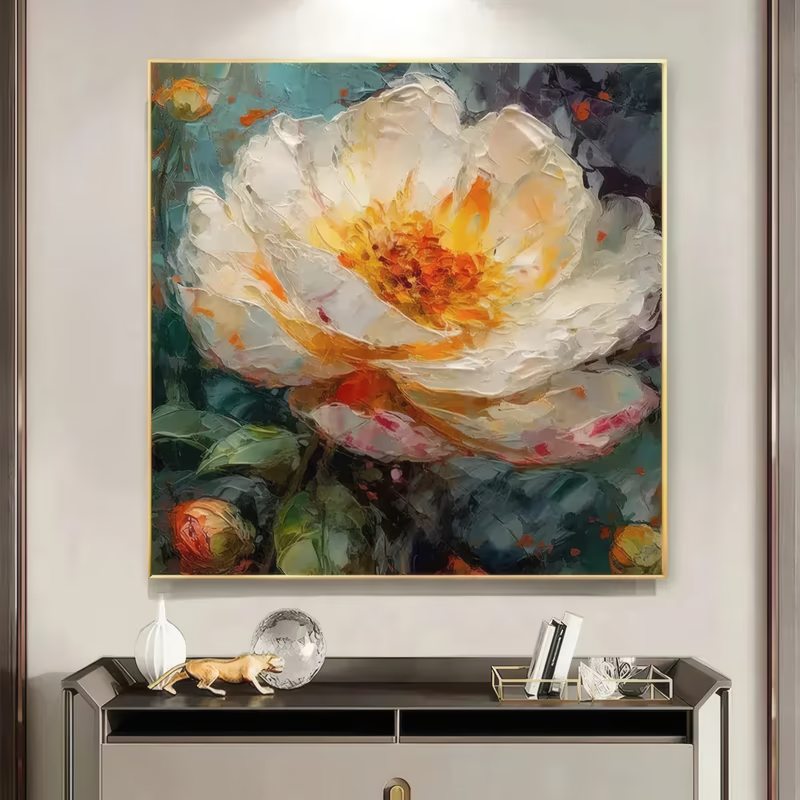
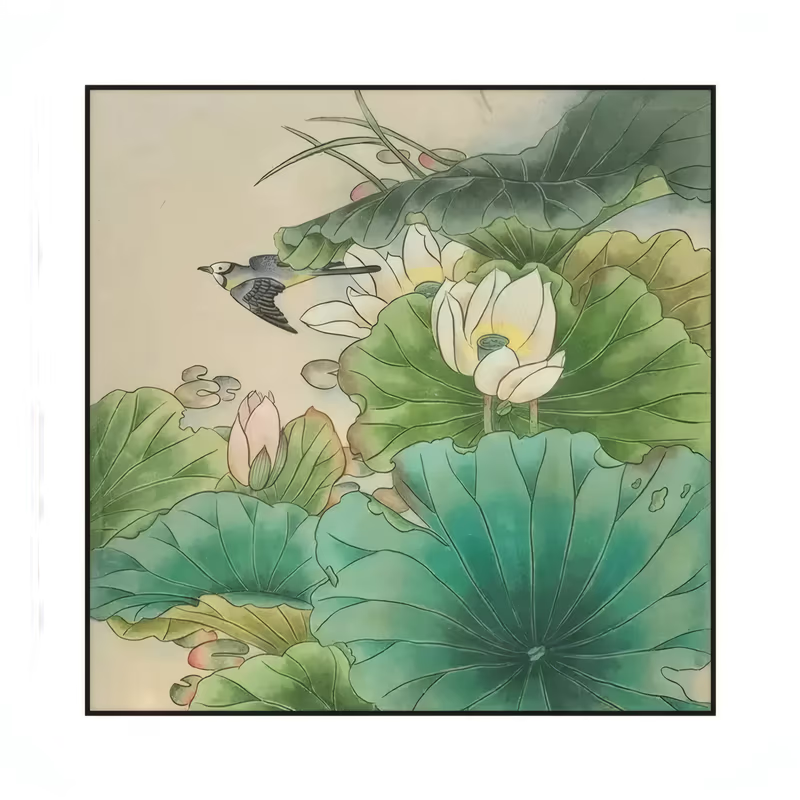
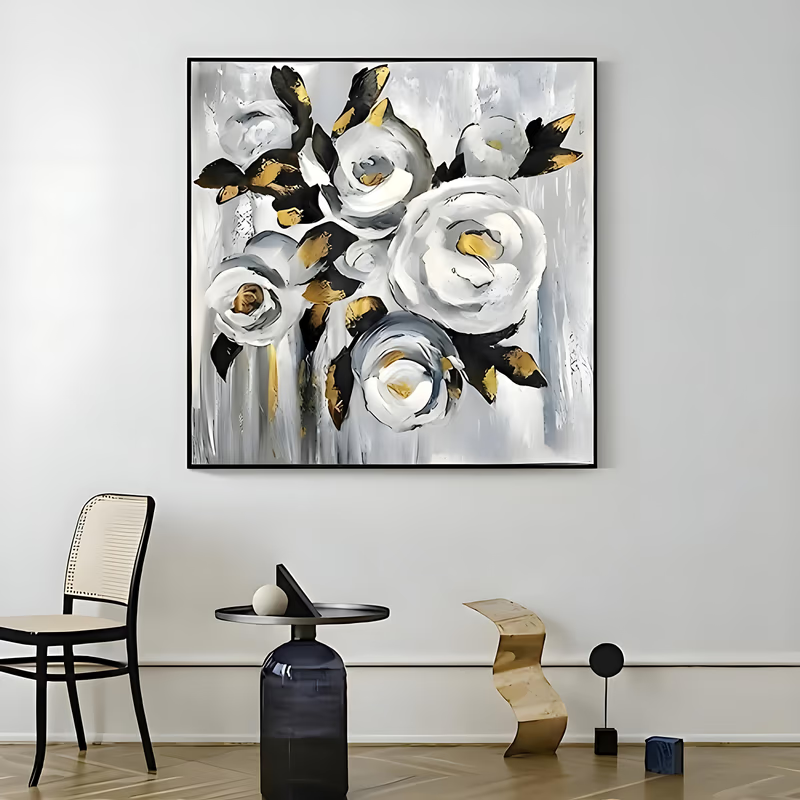
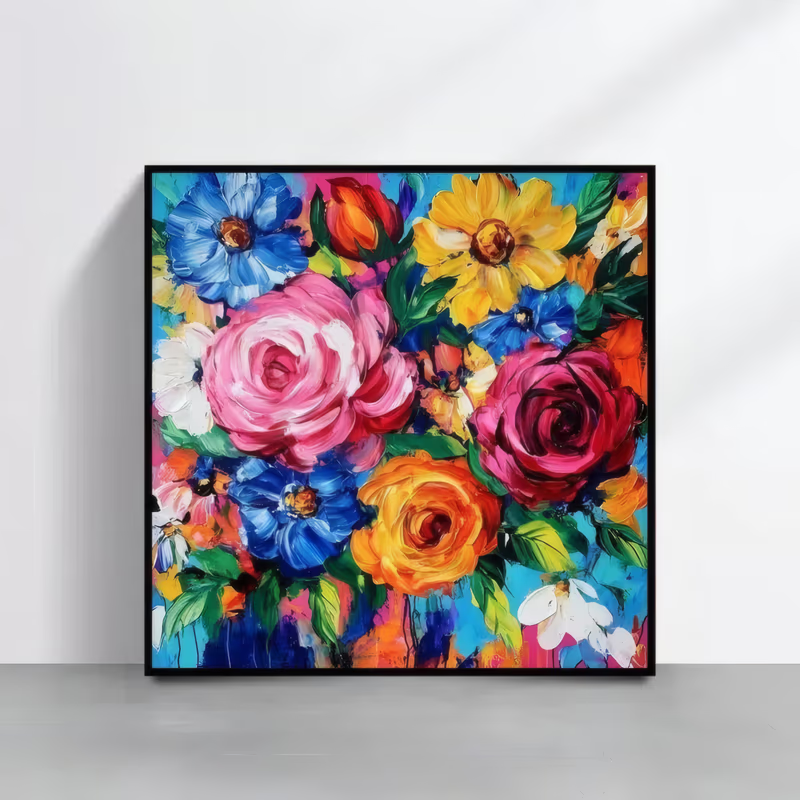
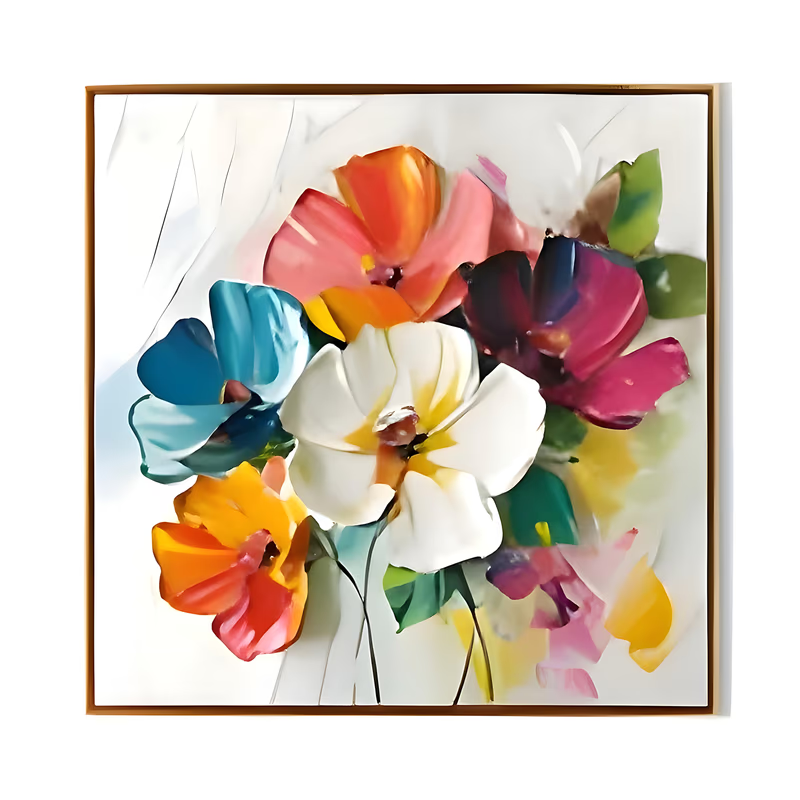
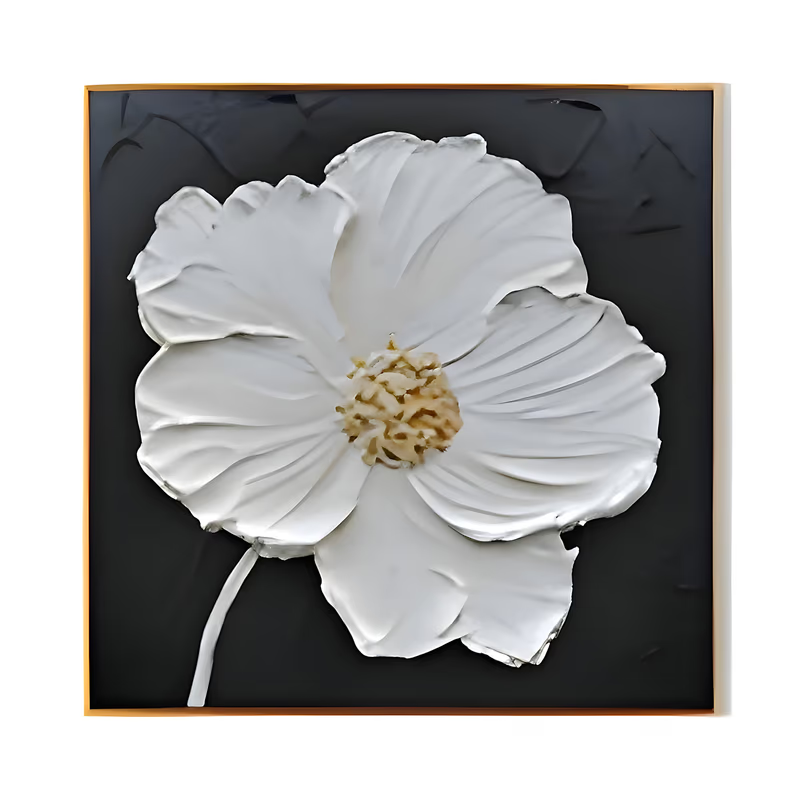
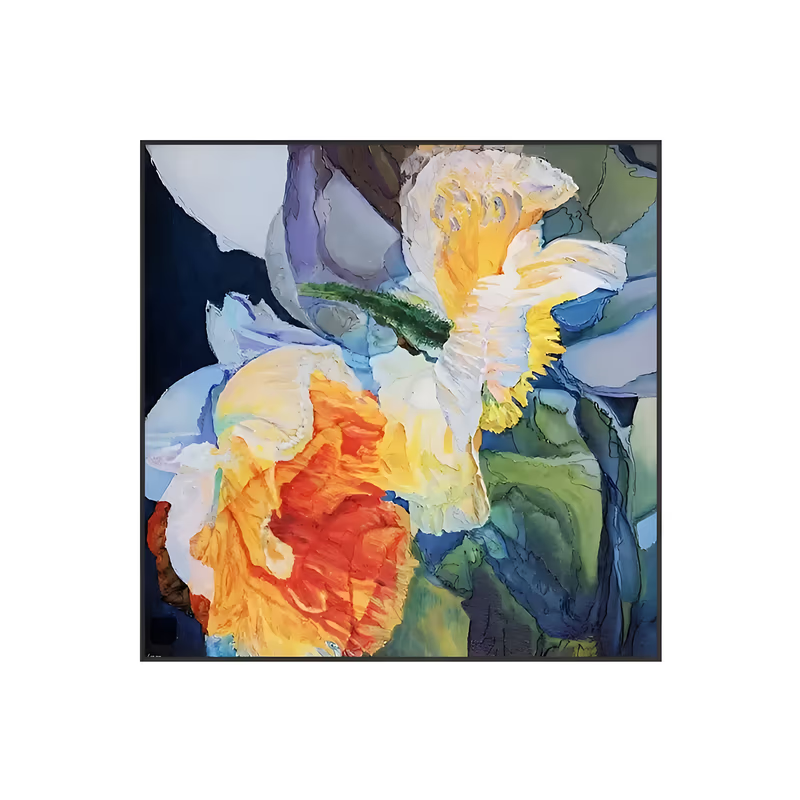
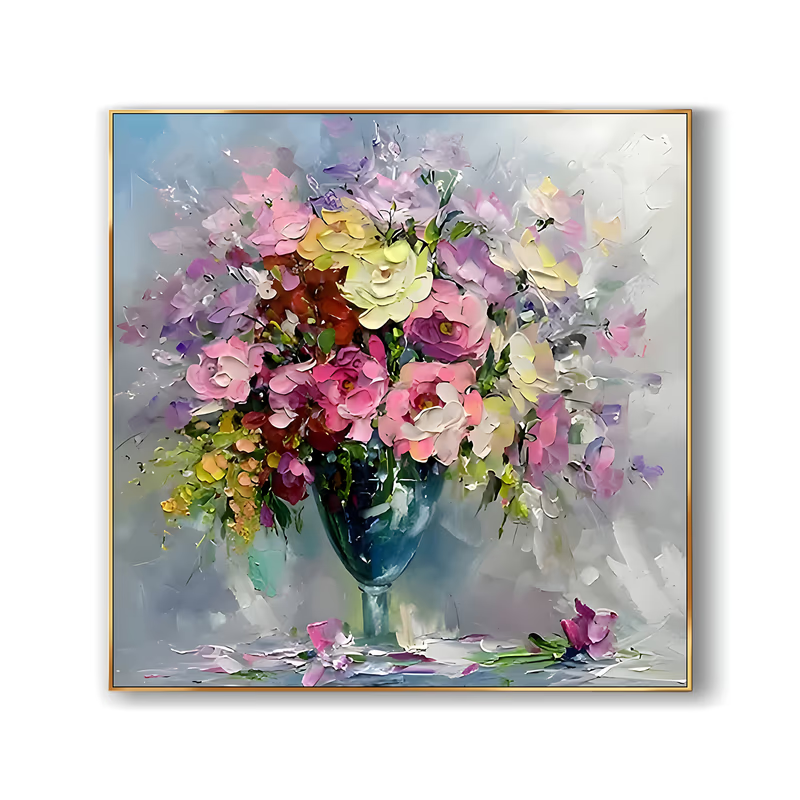
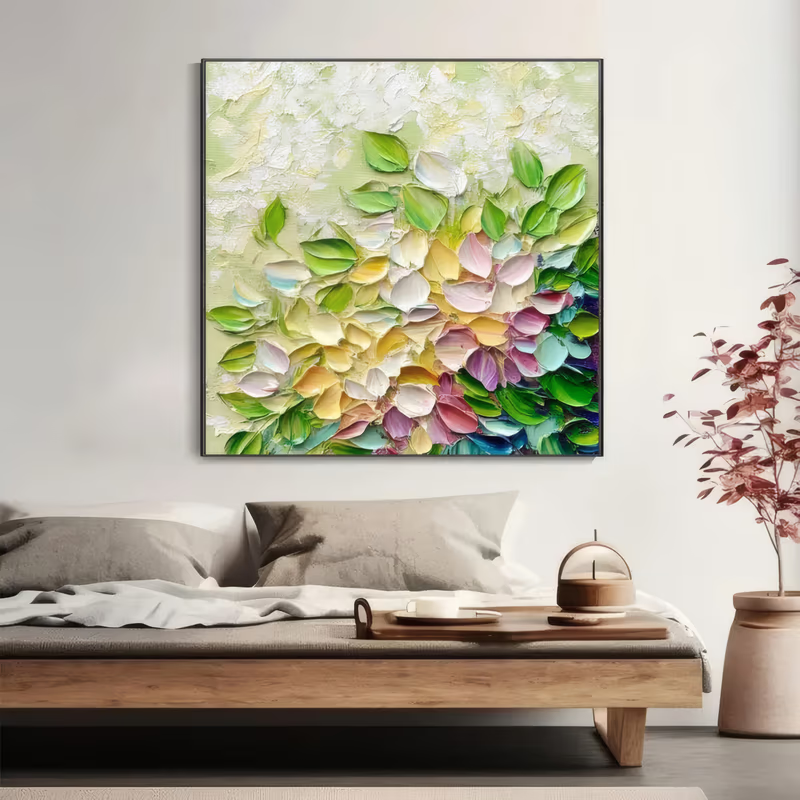
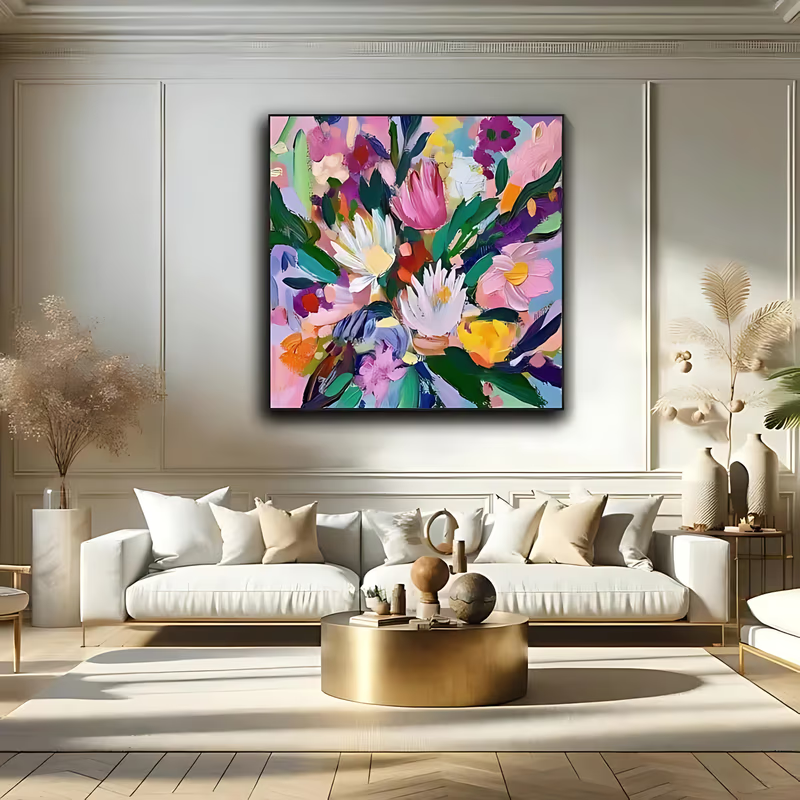
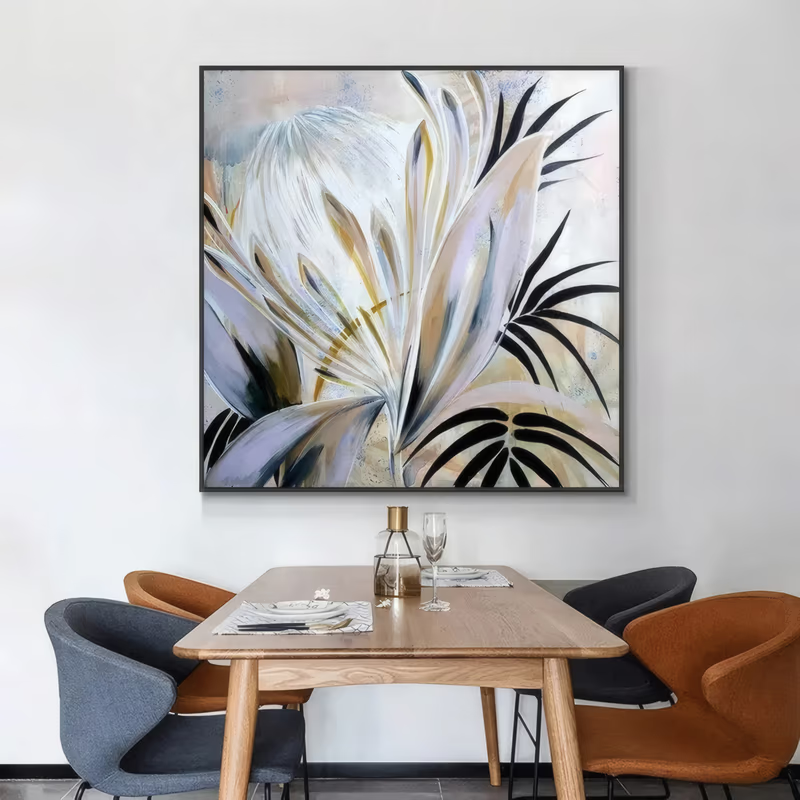
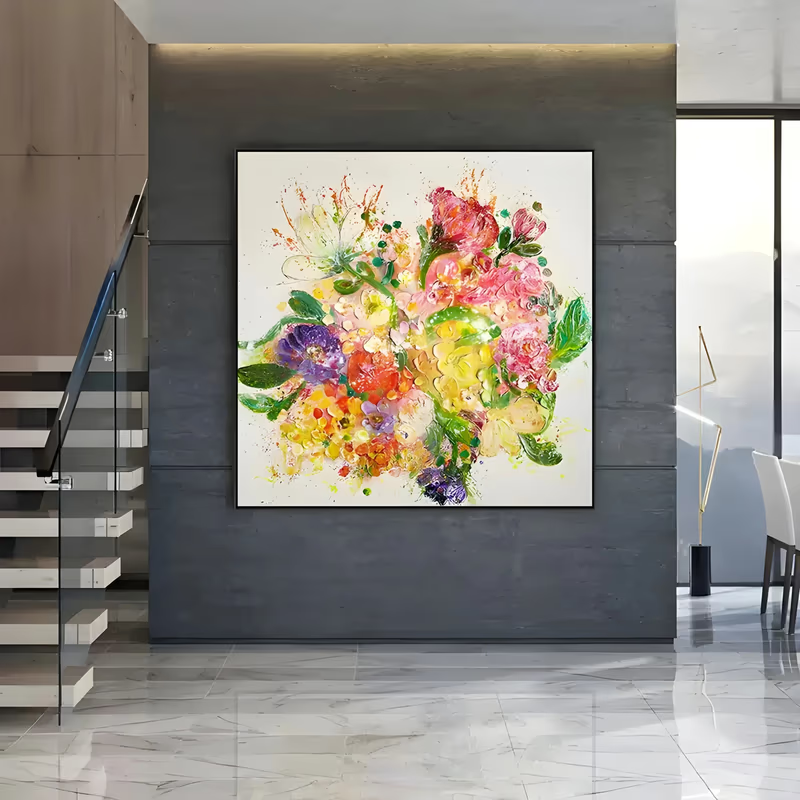
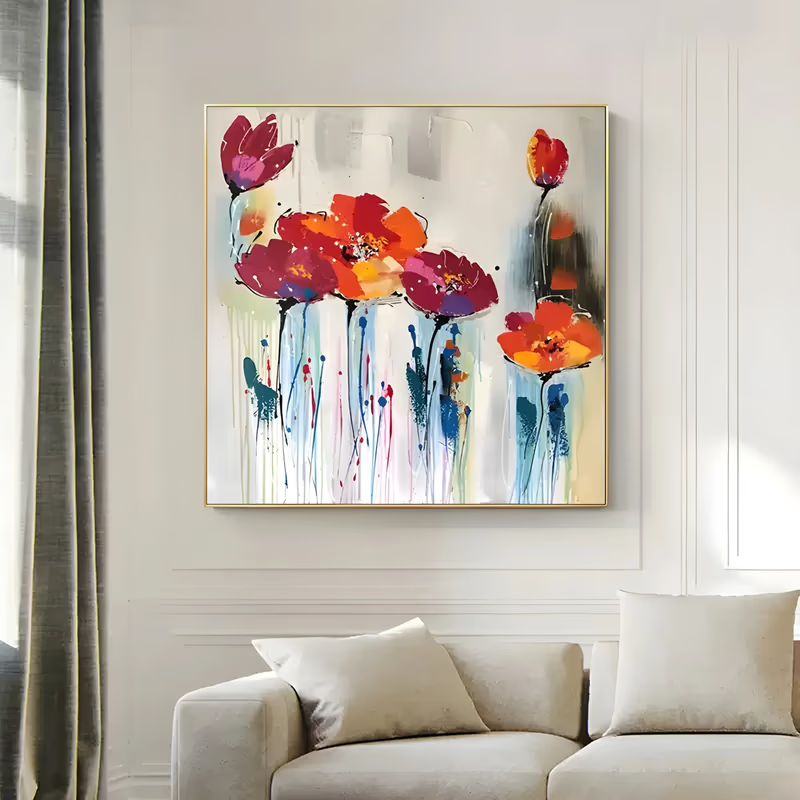
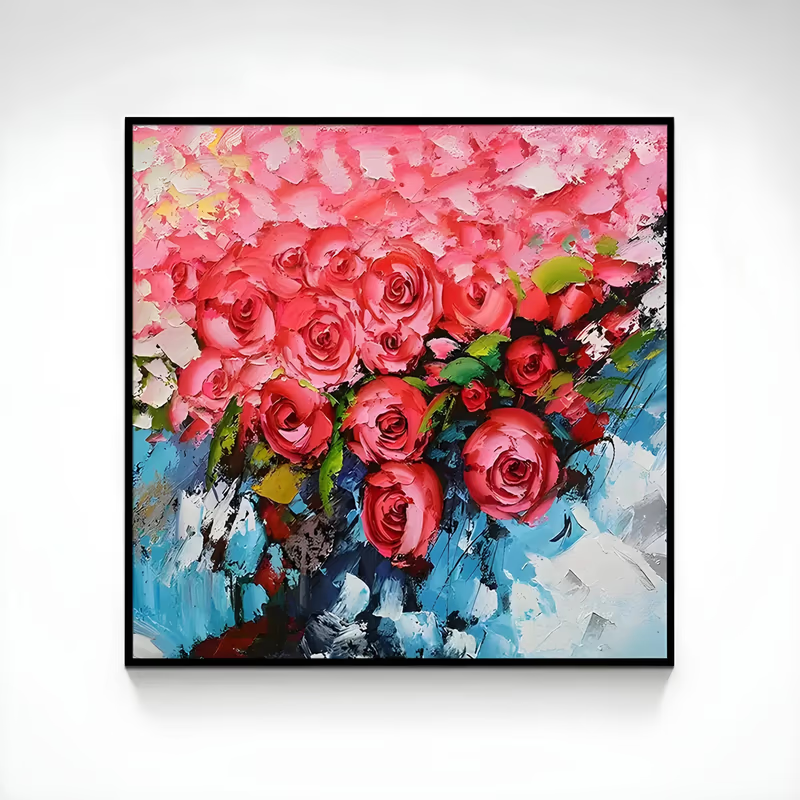
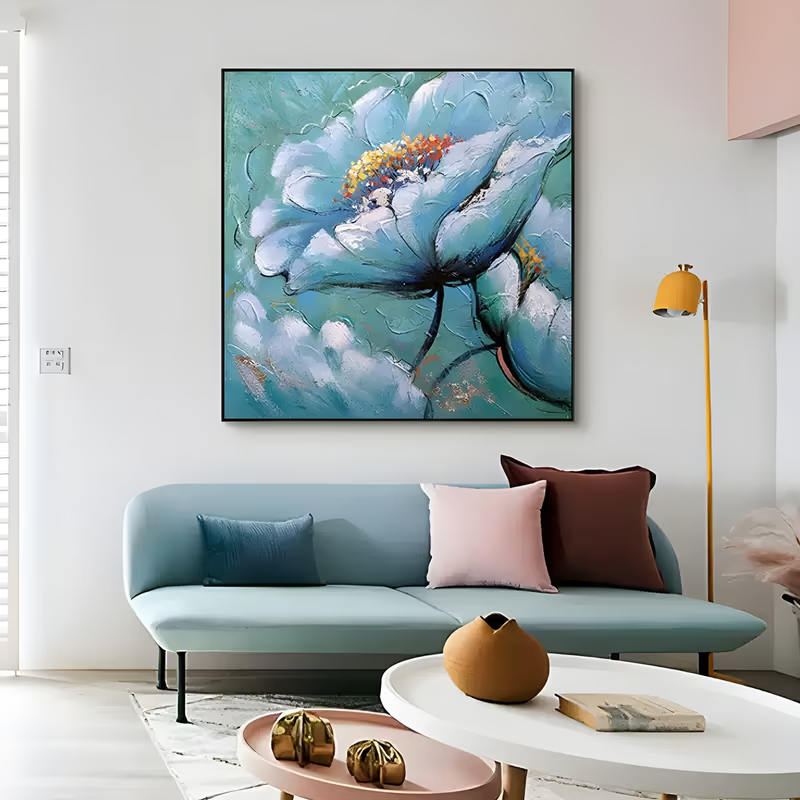
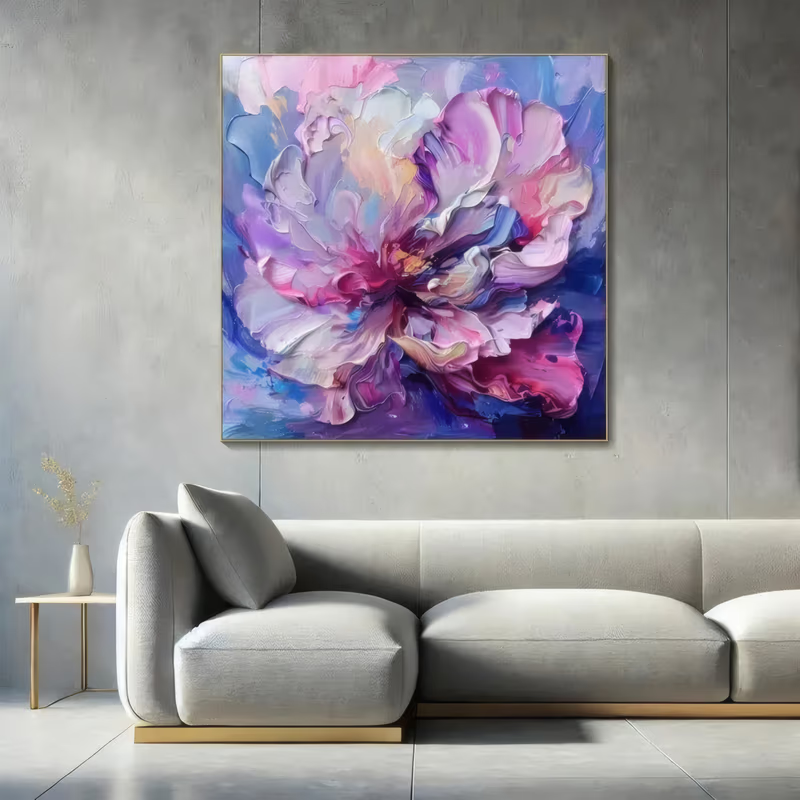
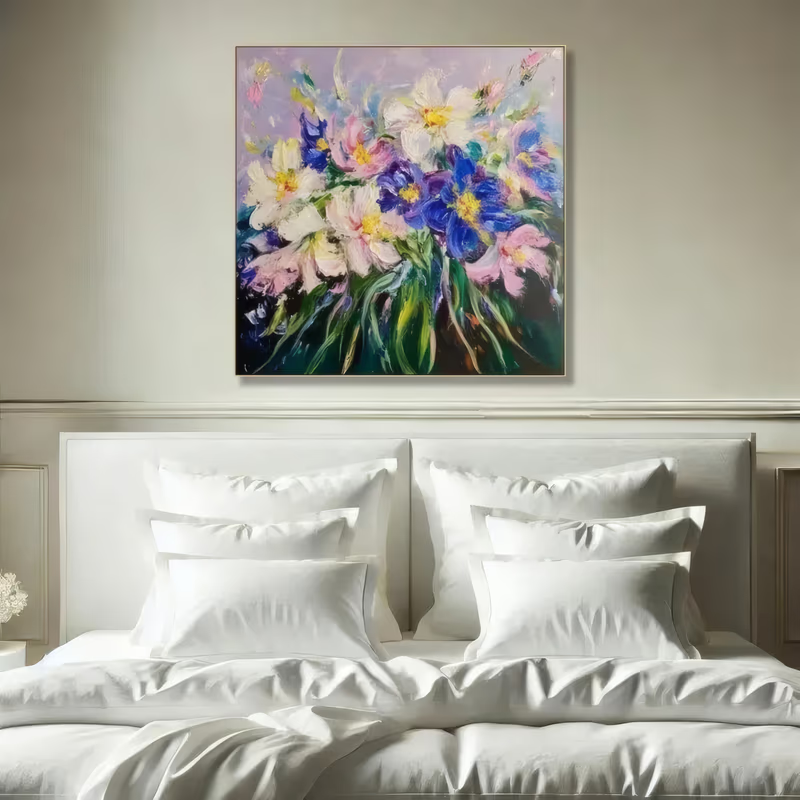
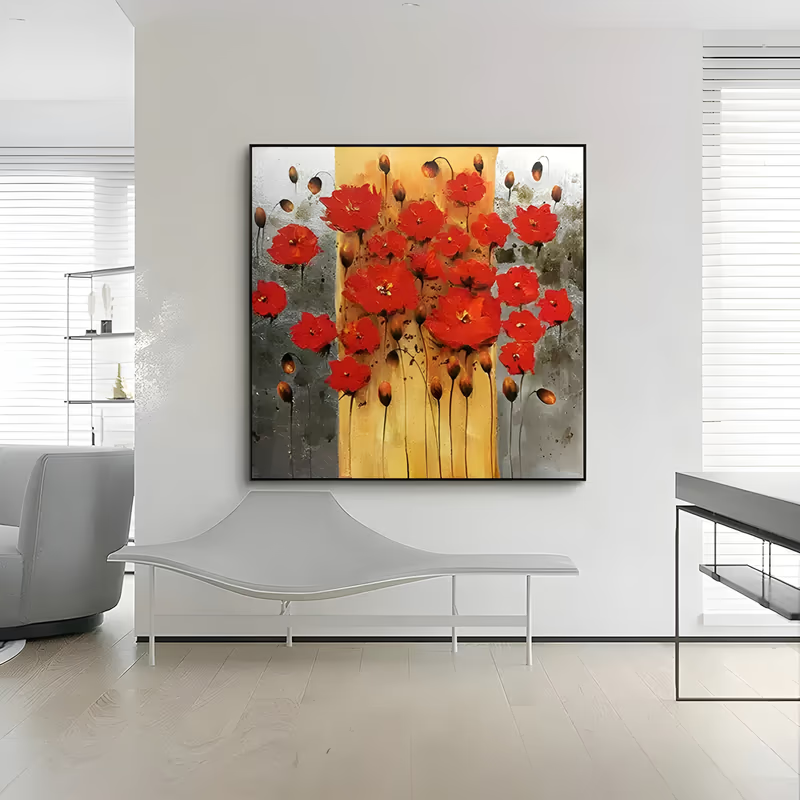
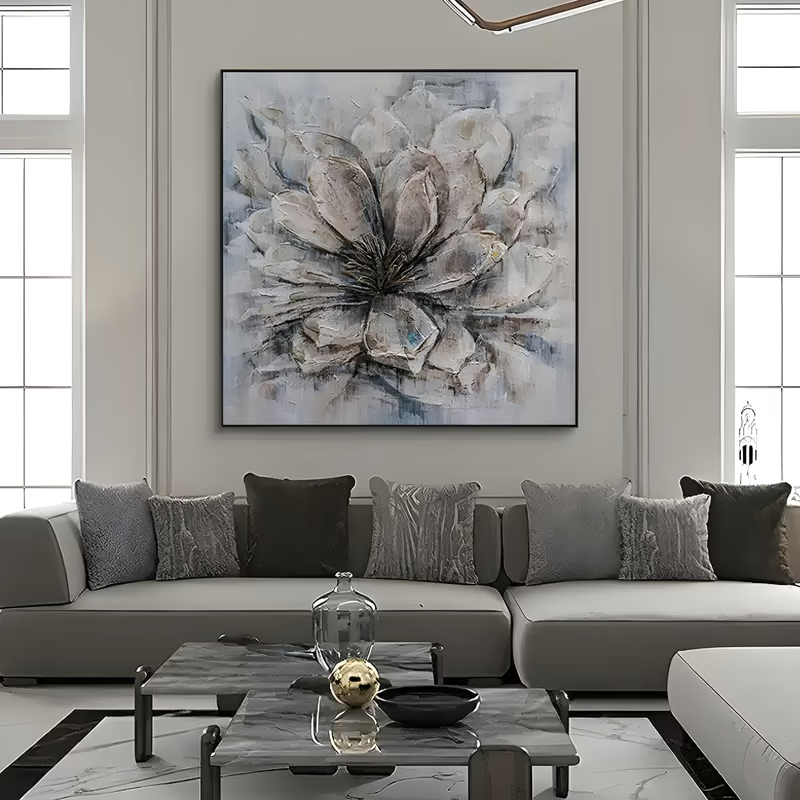
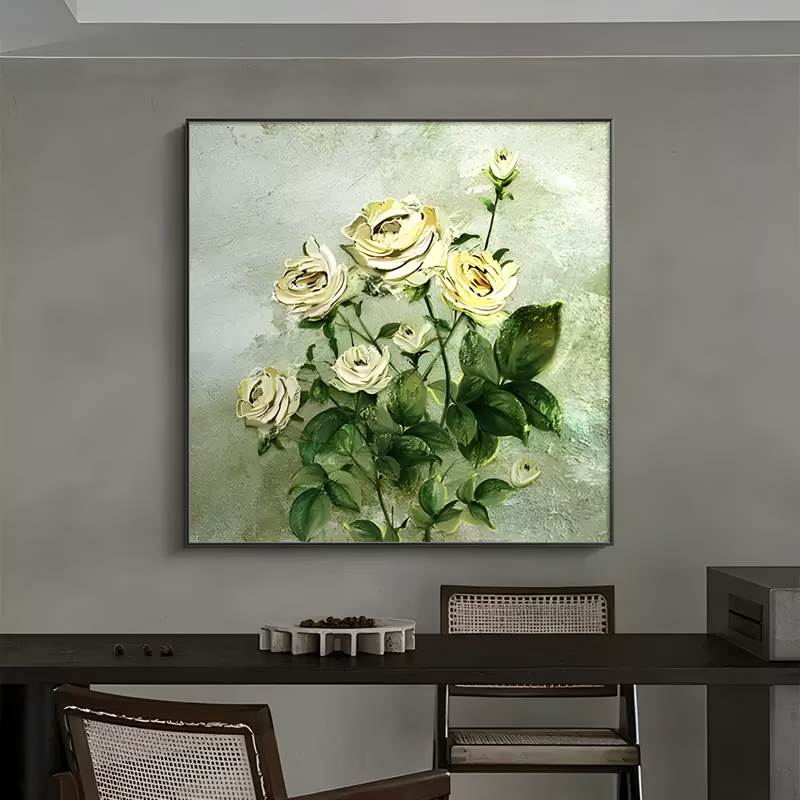
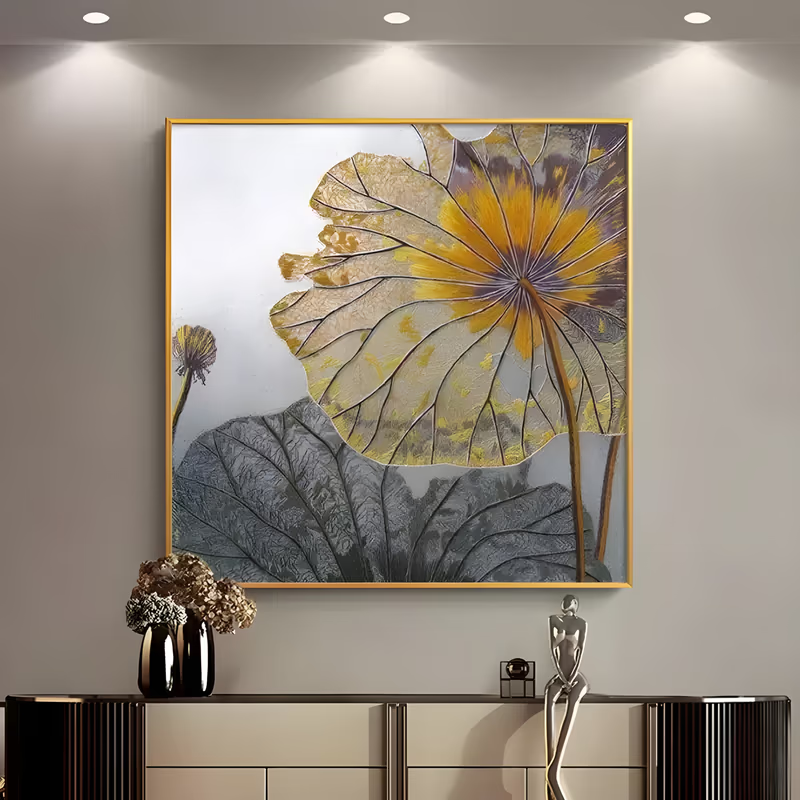
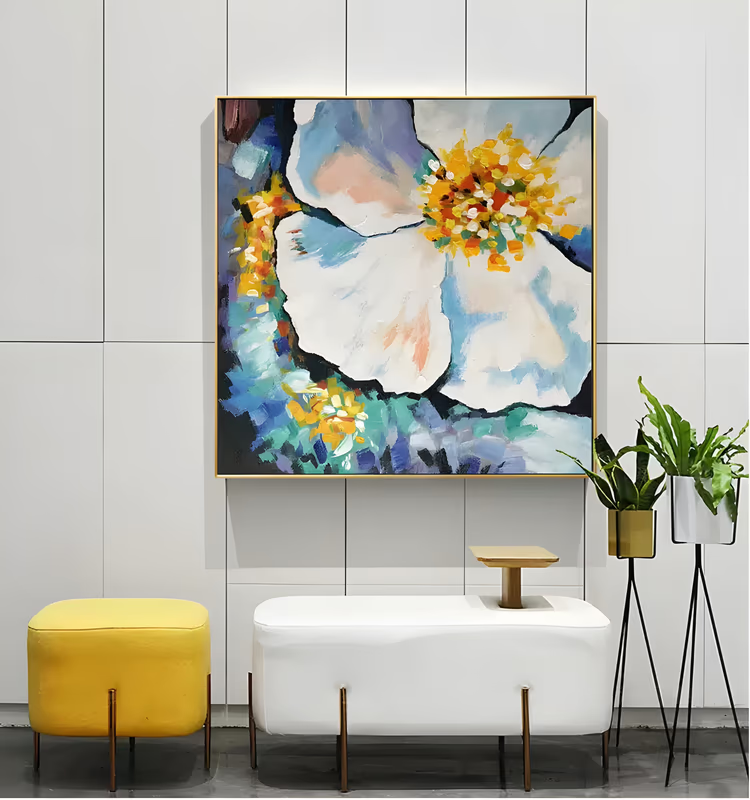
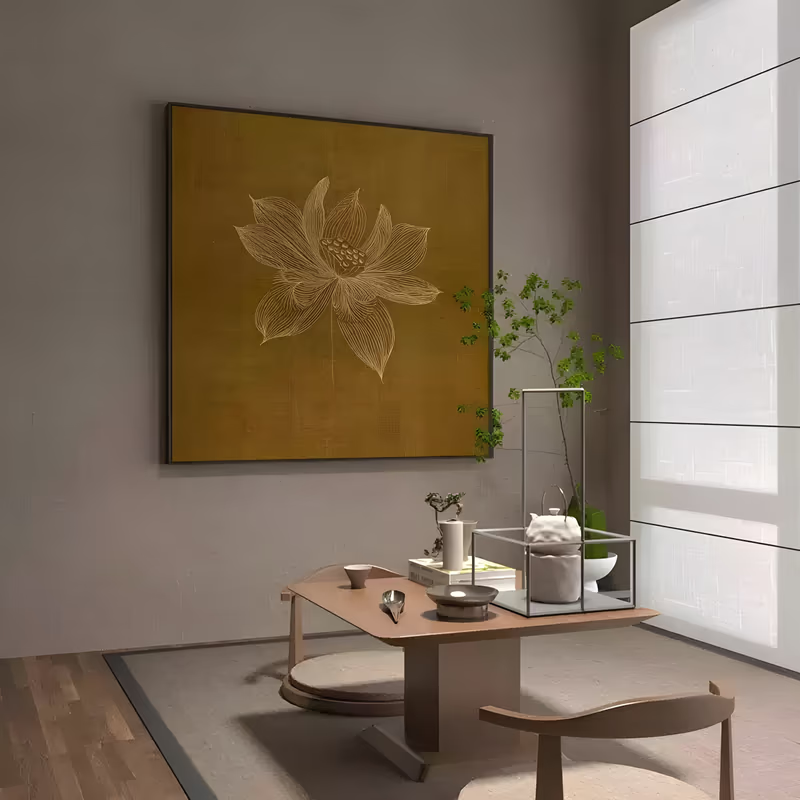
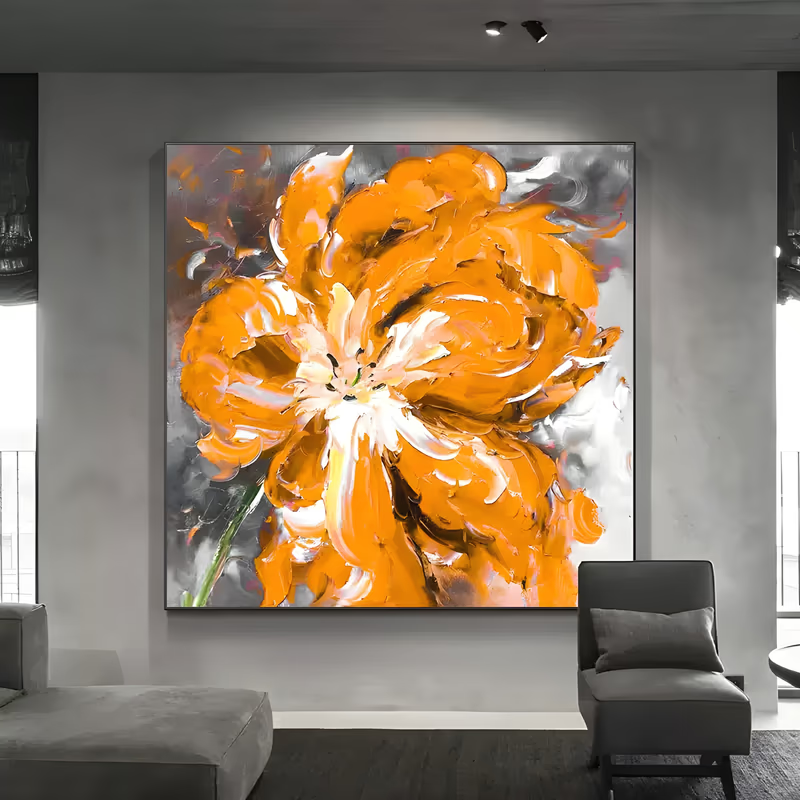
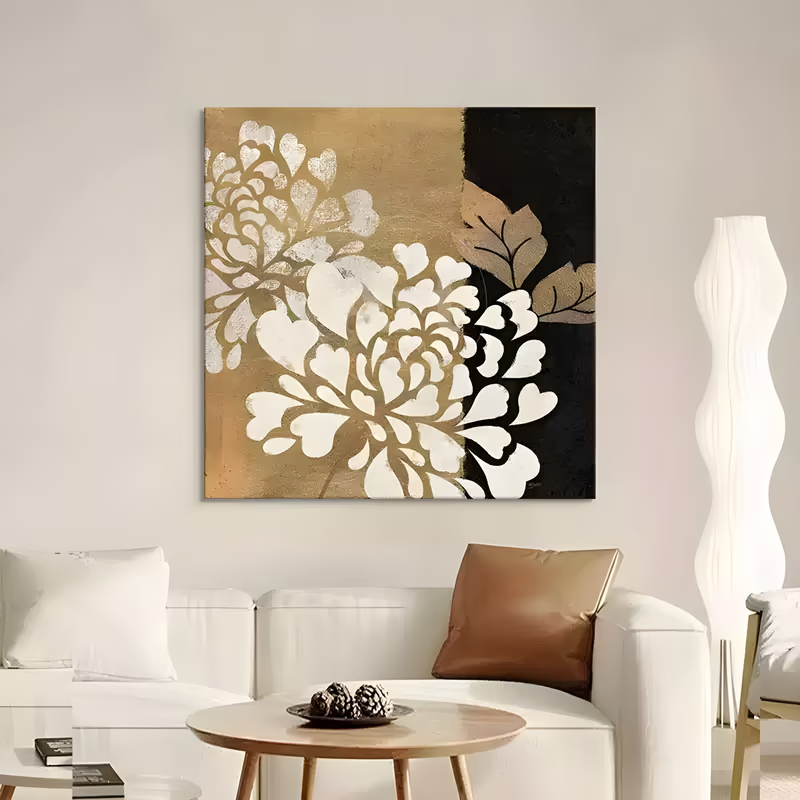
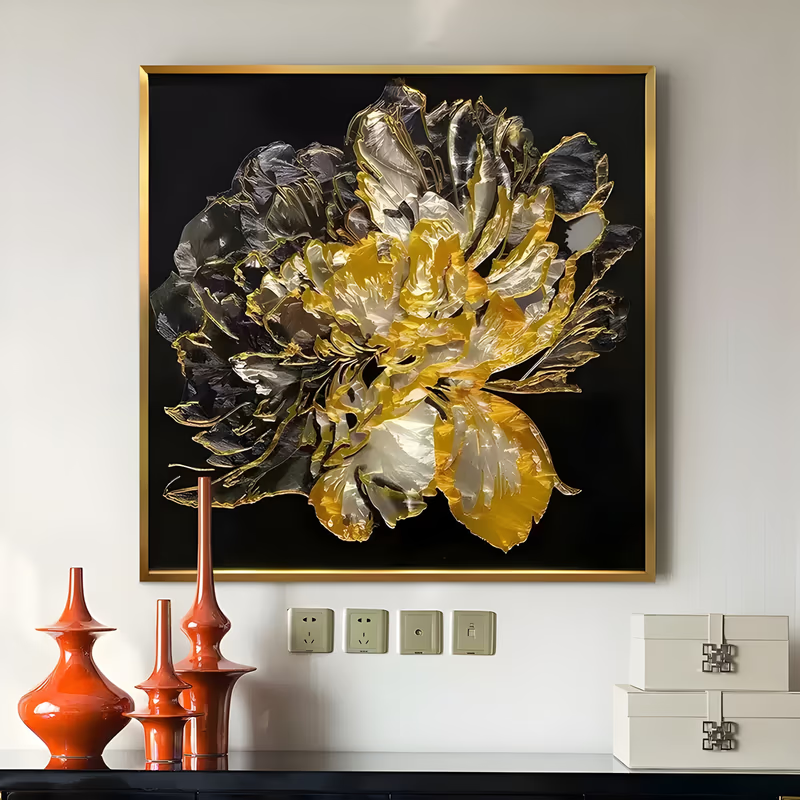
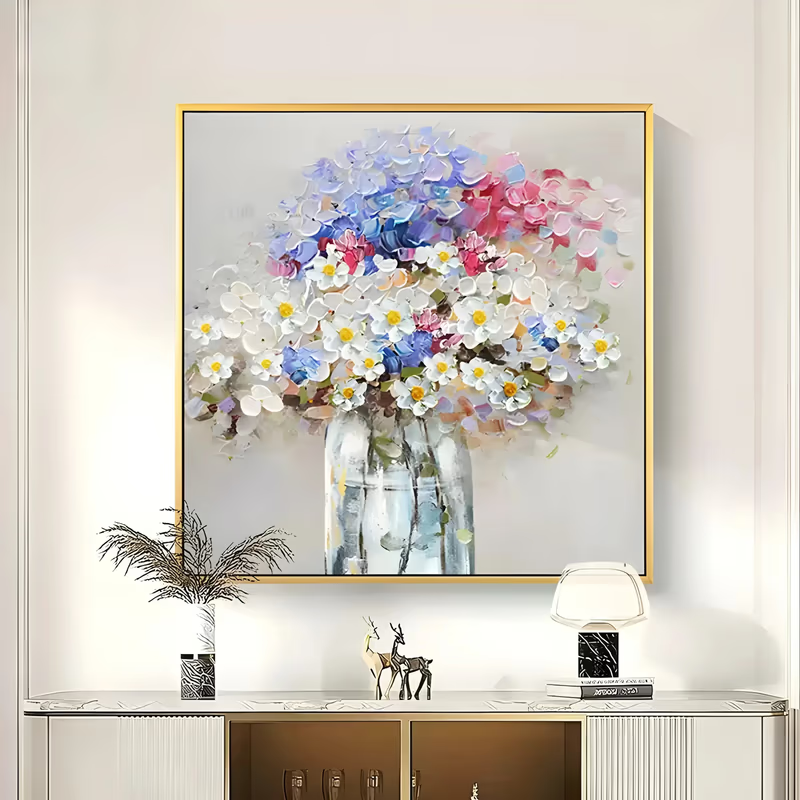
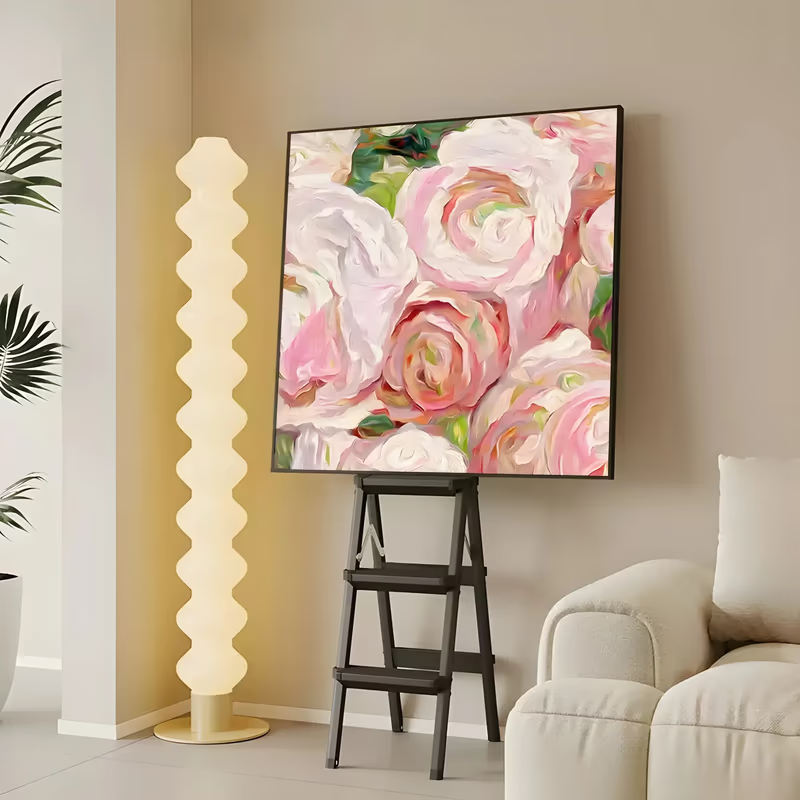
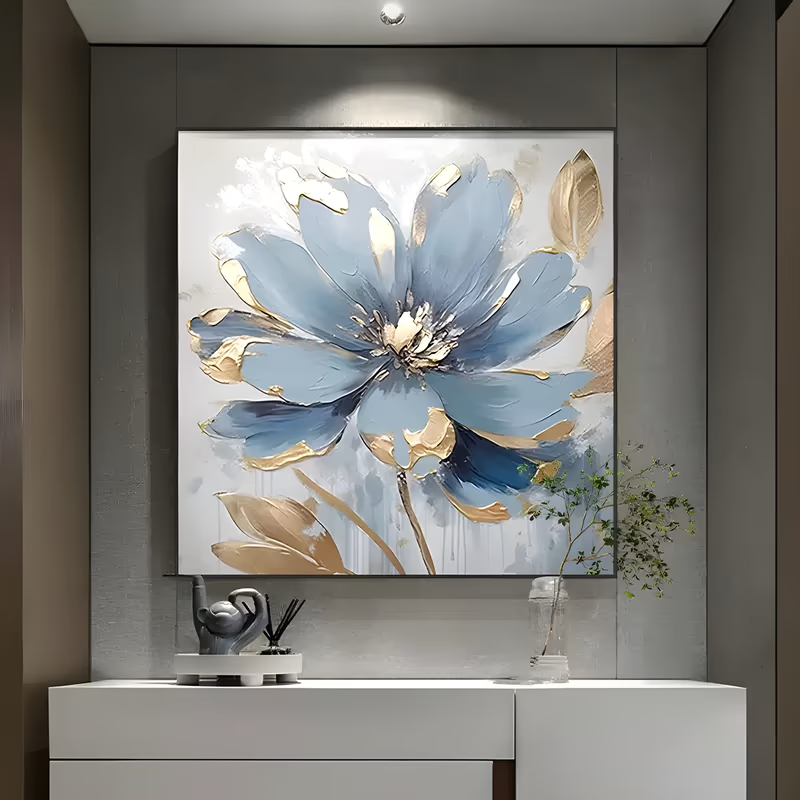
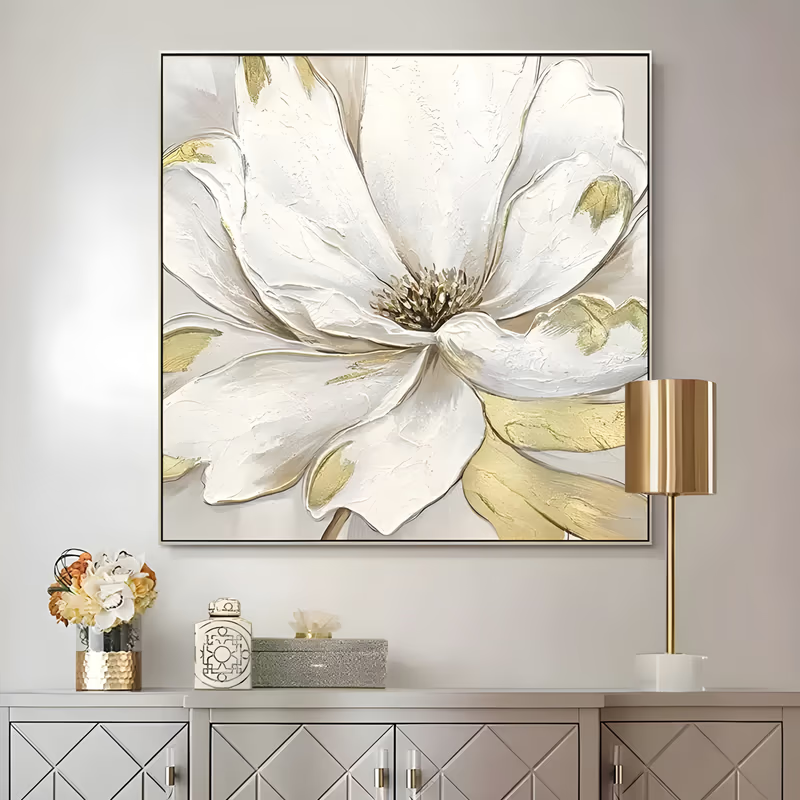
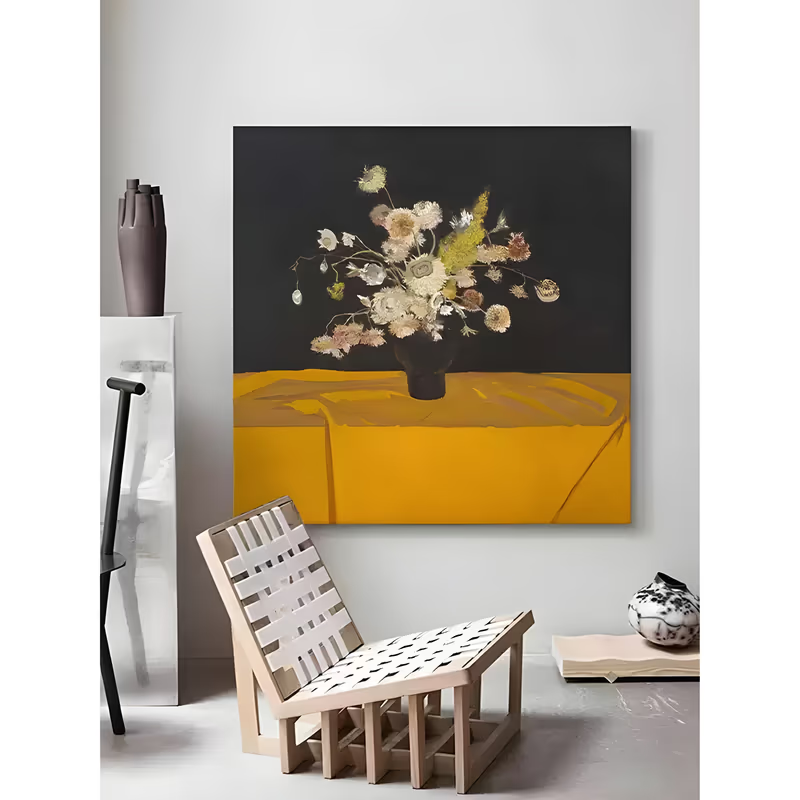
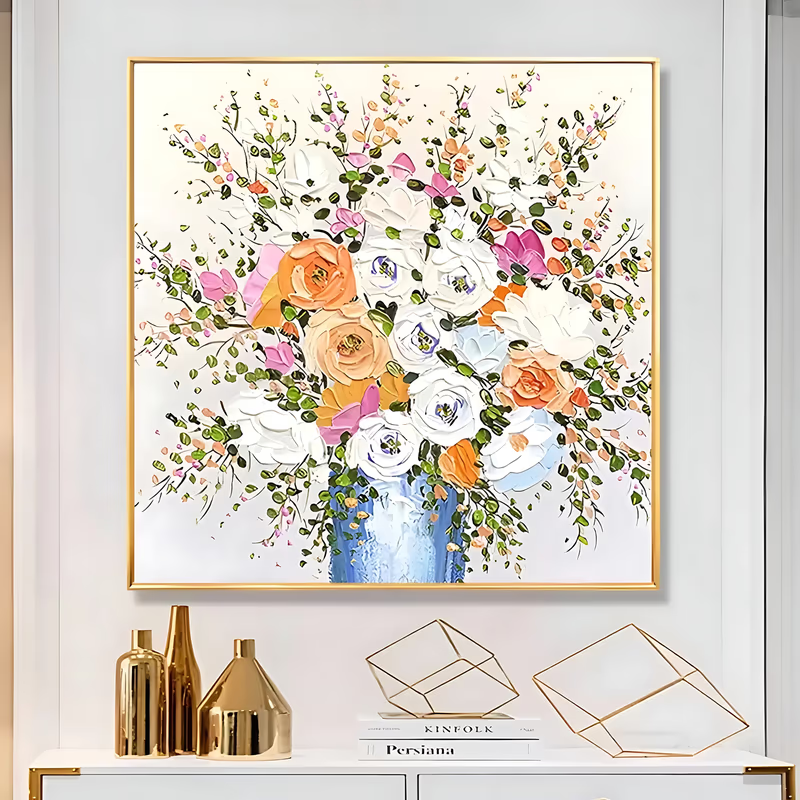
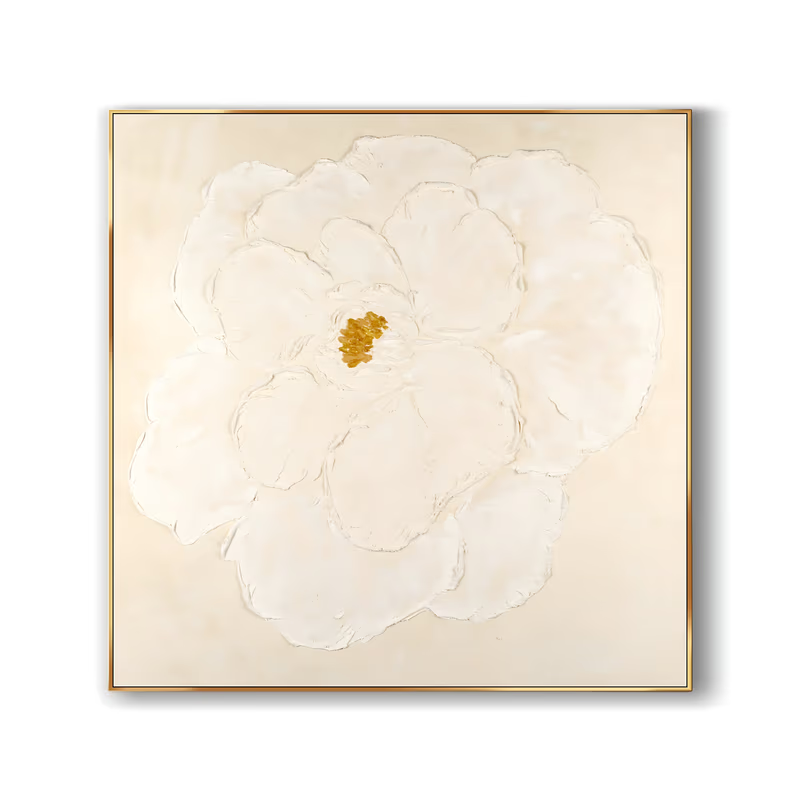
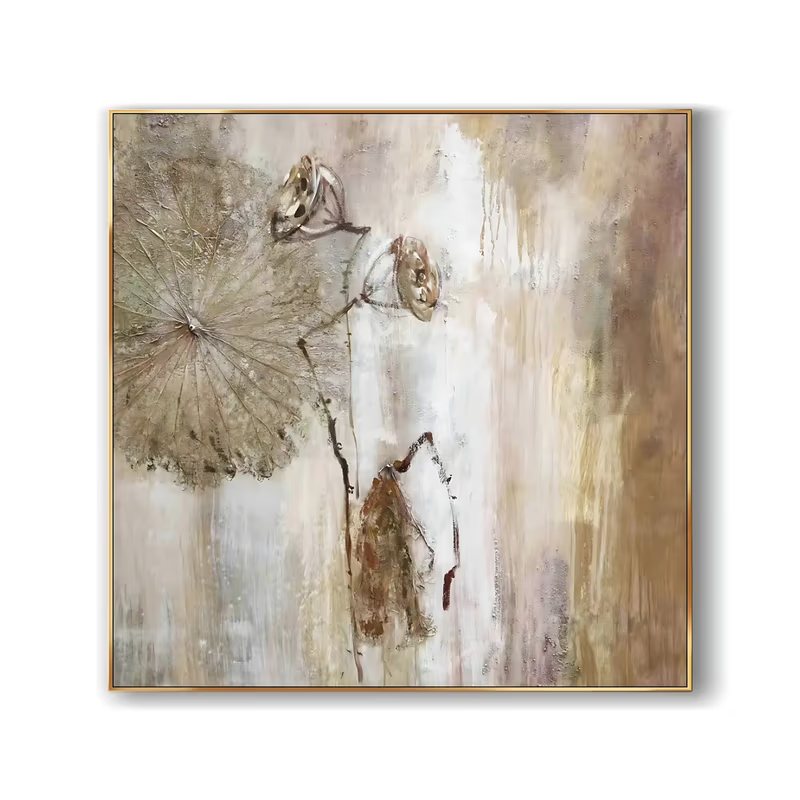
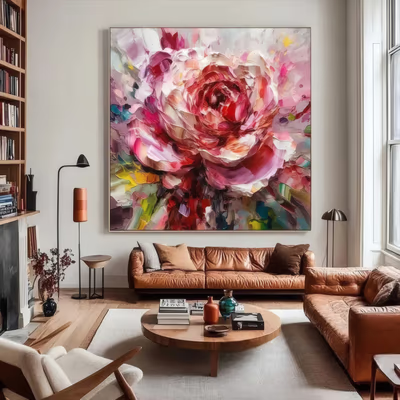
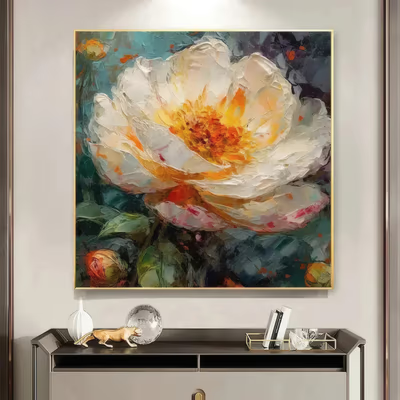
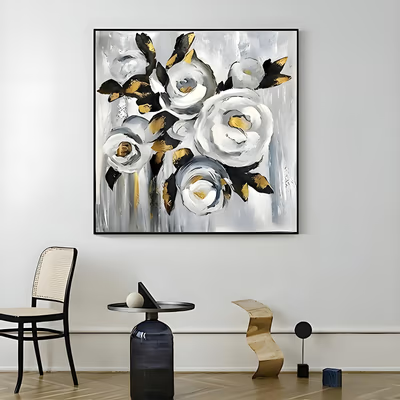
A single peony, rose or lotus filling the canvas, or a bouquet in a vase, is the classic square subject: the bloom sits in the middle and the petals spread to the edges. Quiet enough for a bedroom, rich enough for a restaurant. All square florals.
Geometric and abstract work
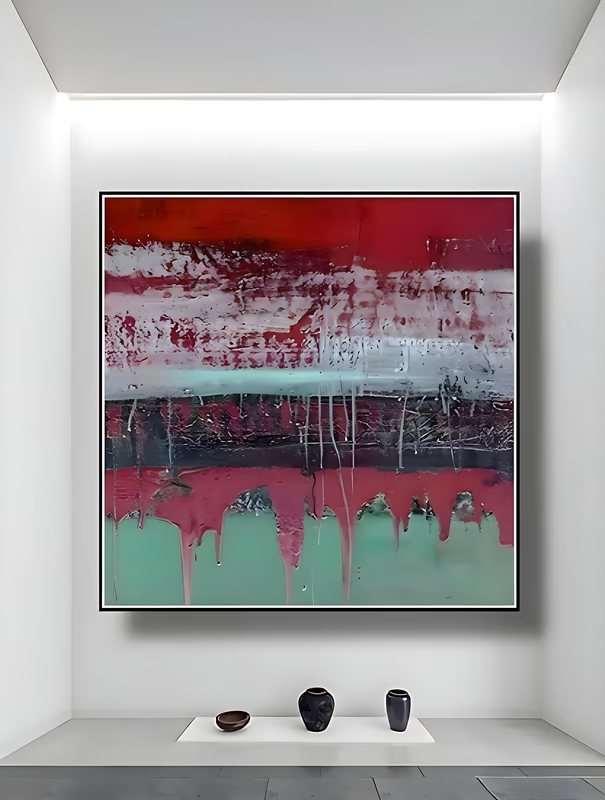
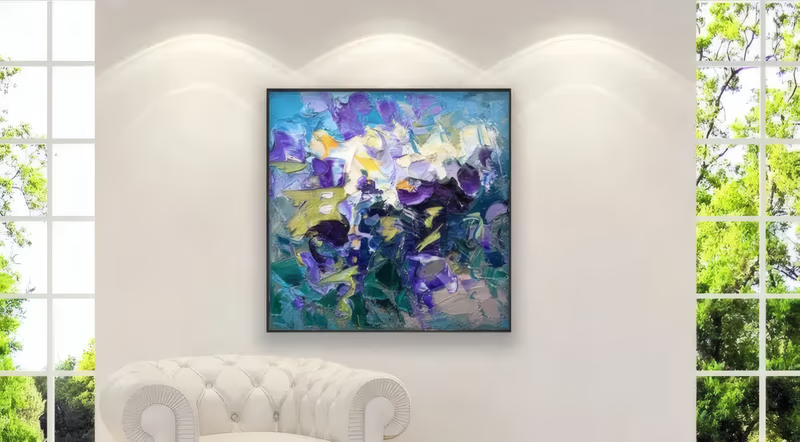
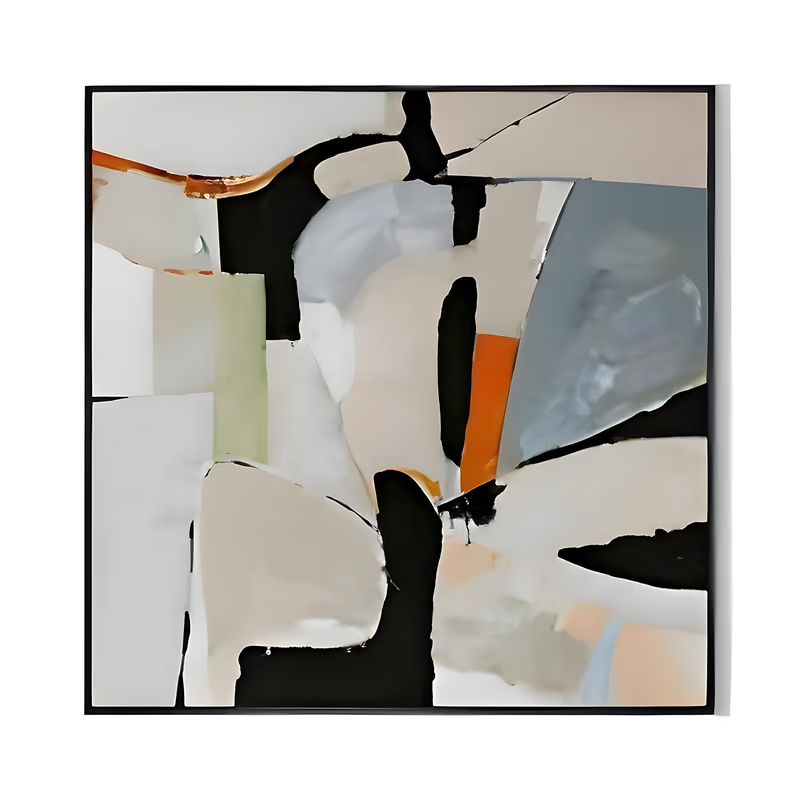
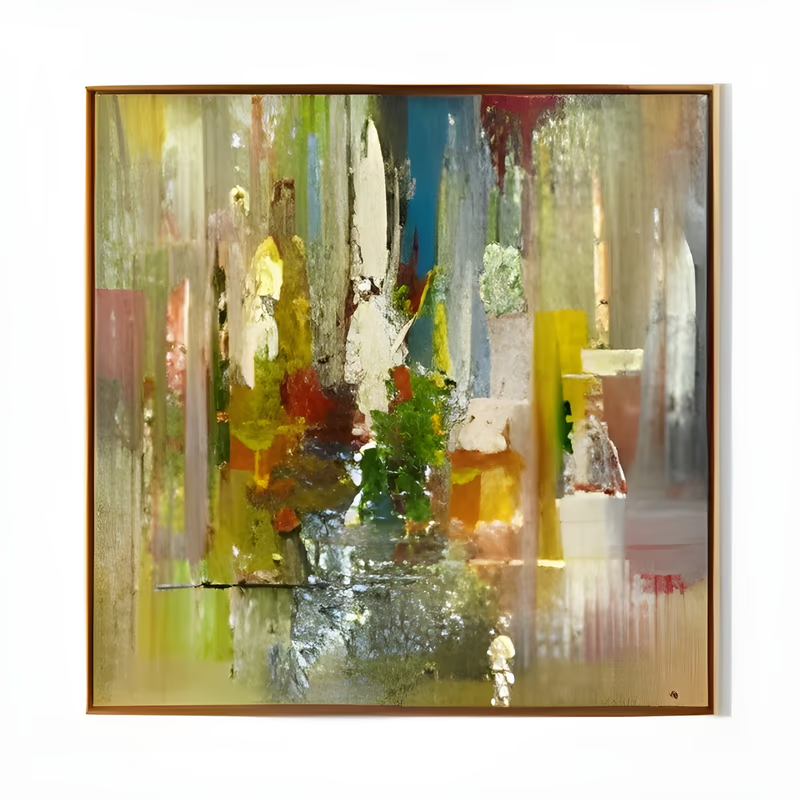
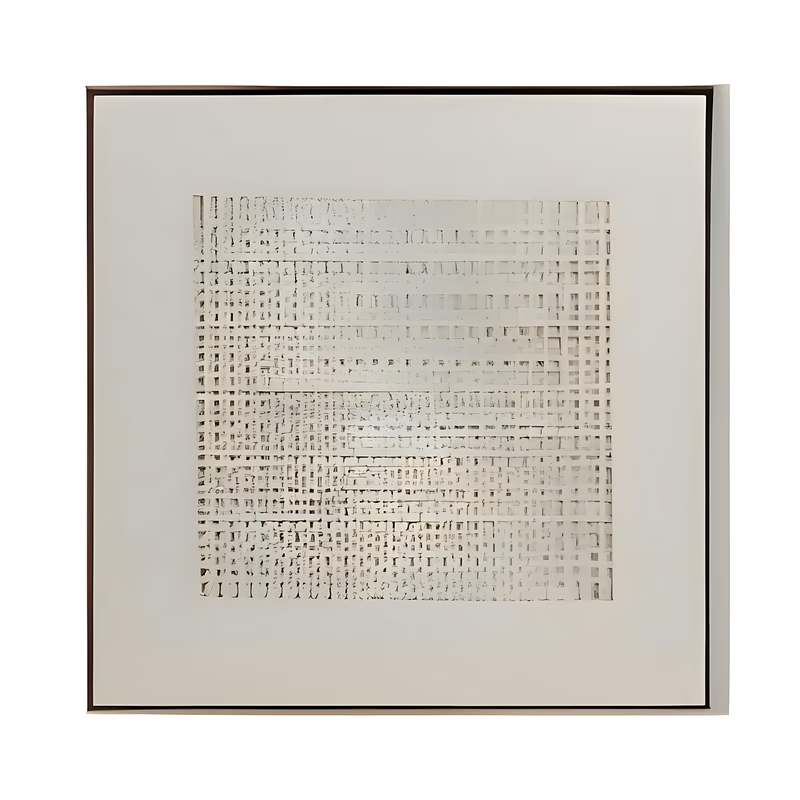
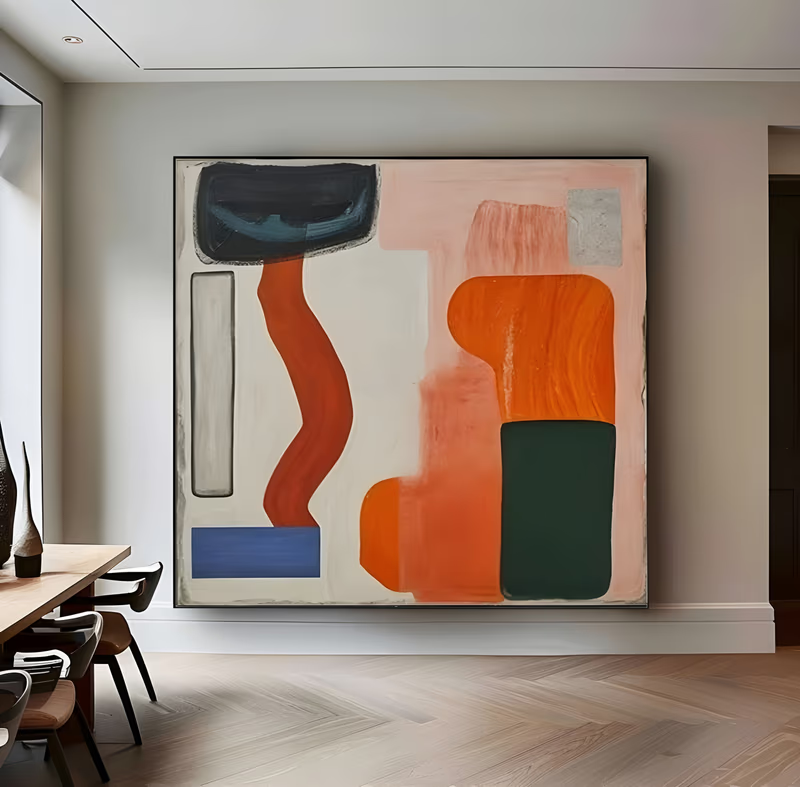
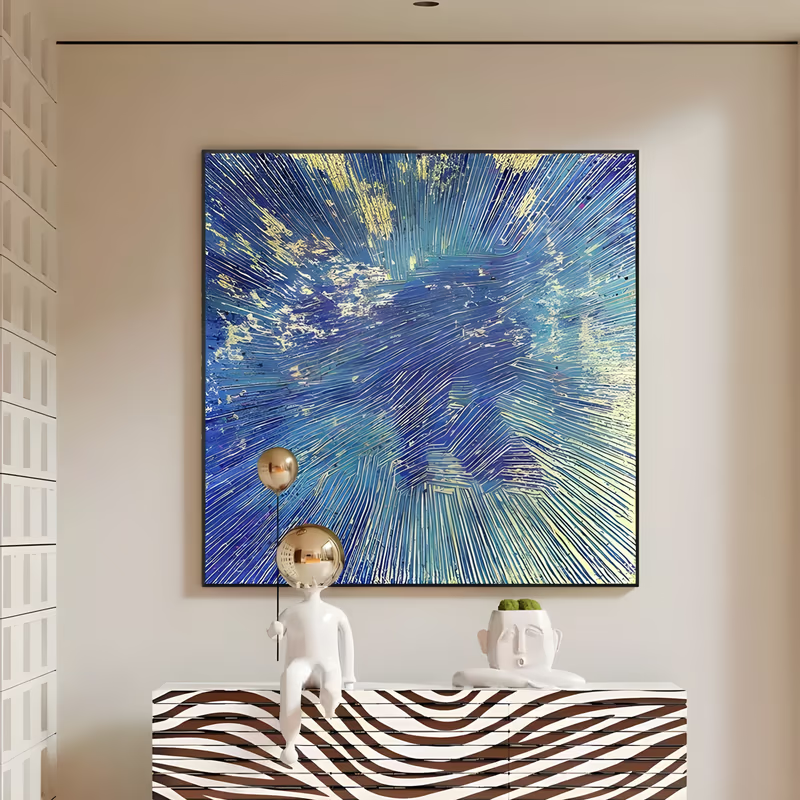
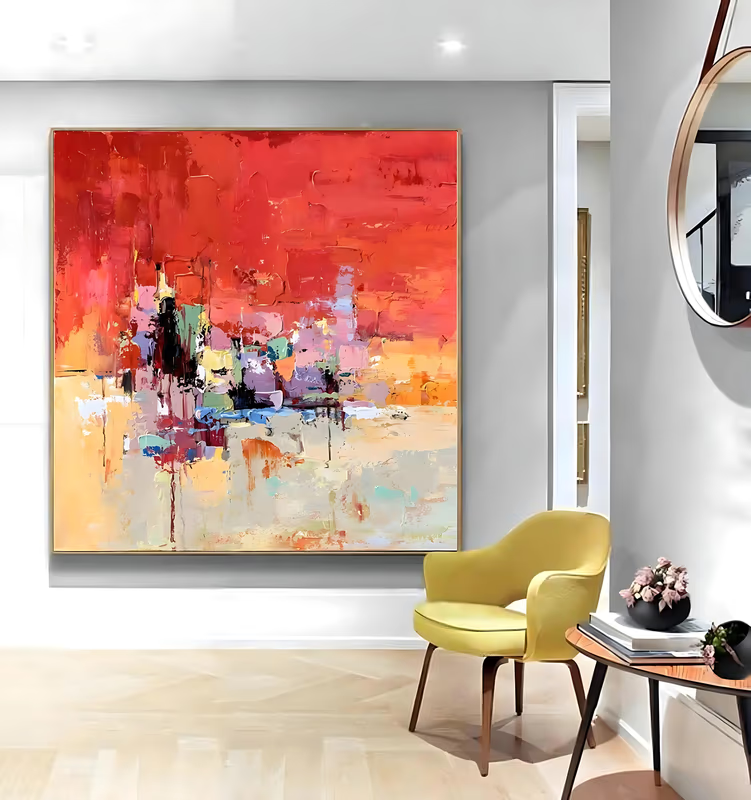
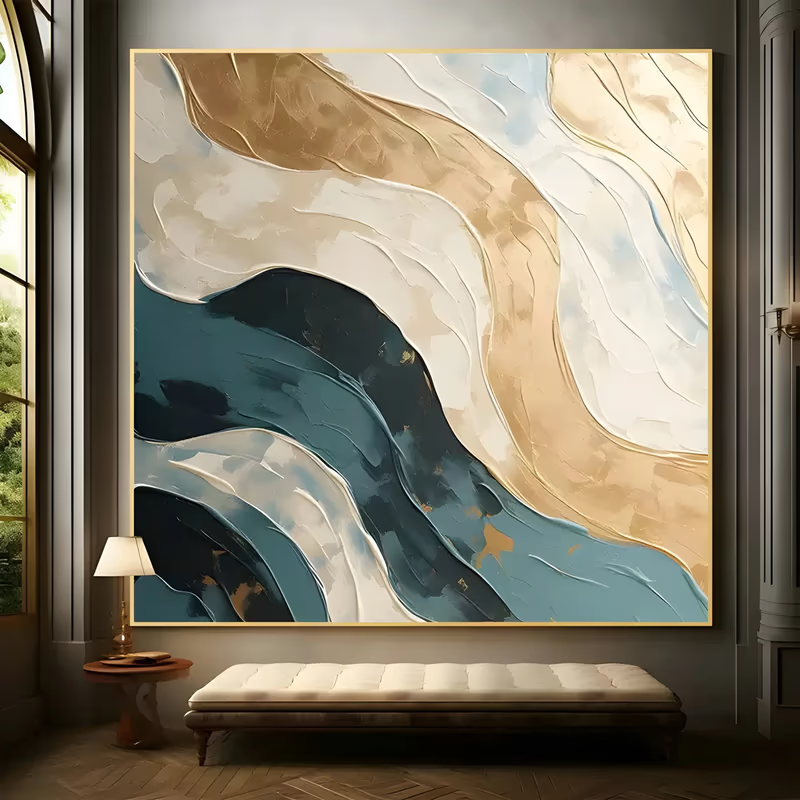
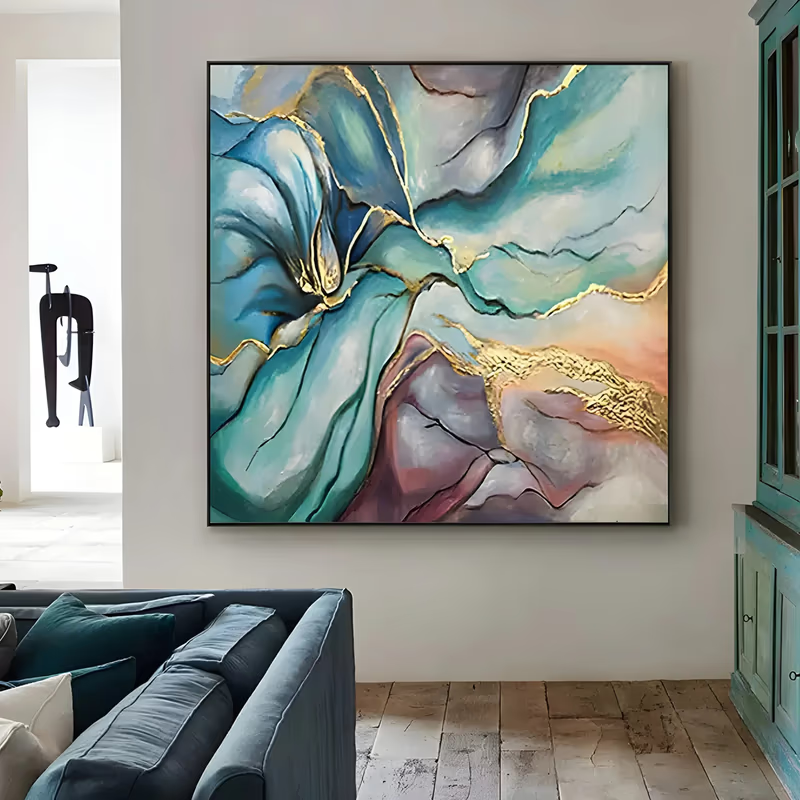
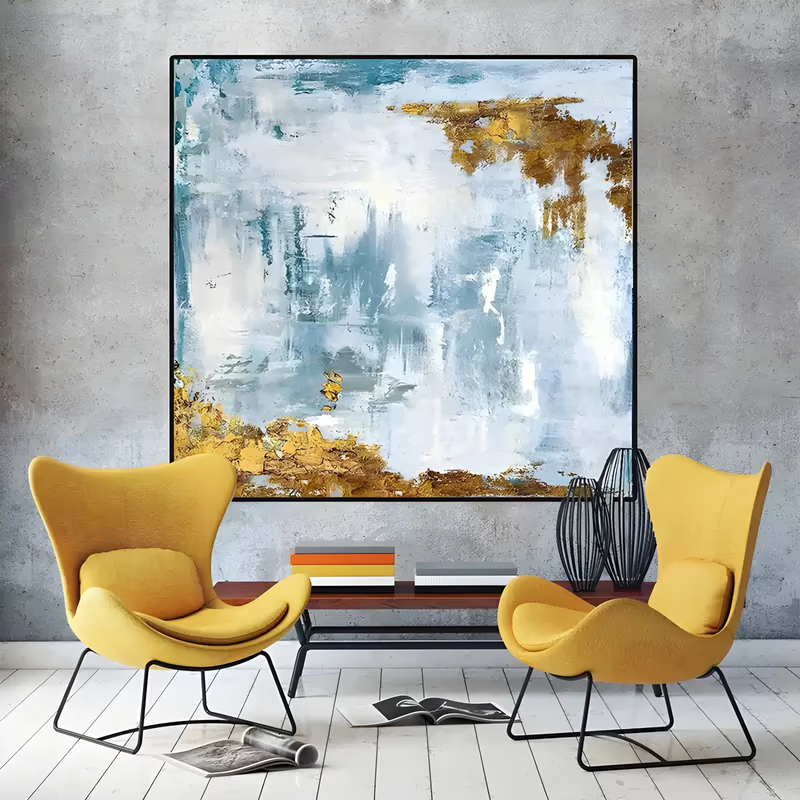
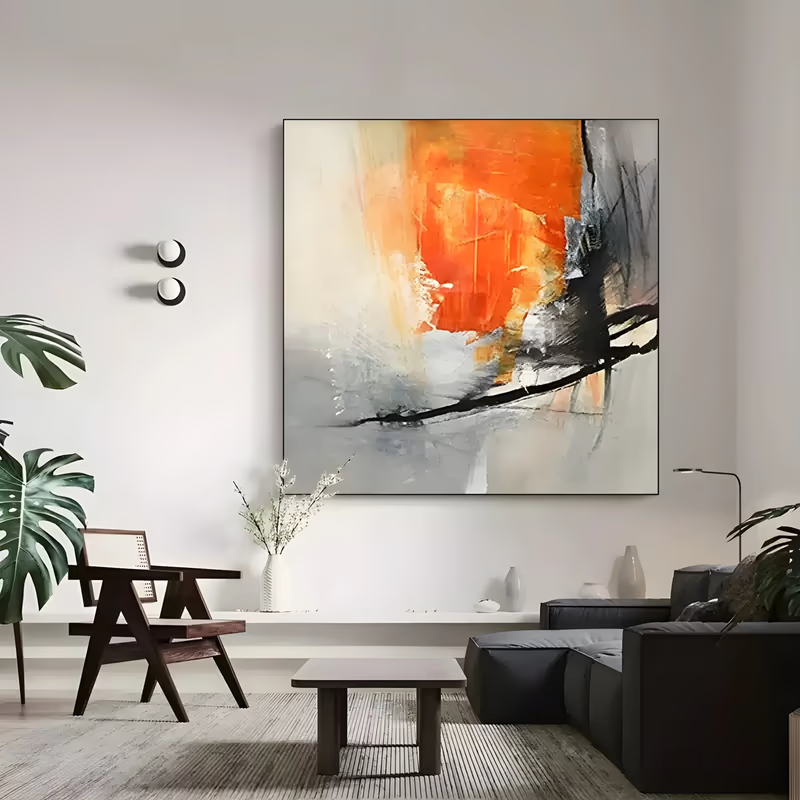
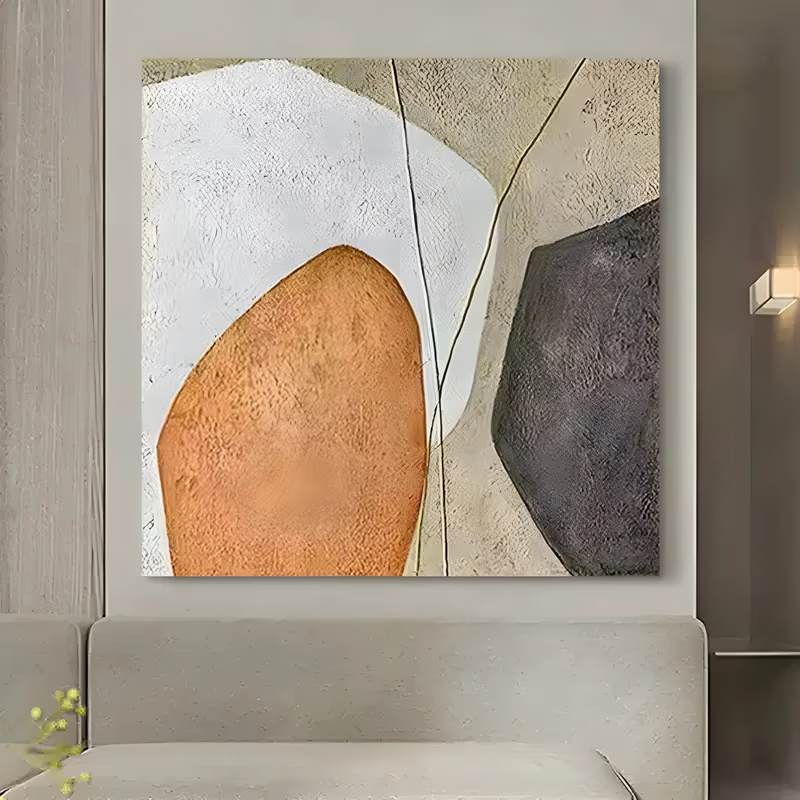
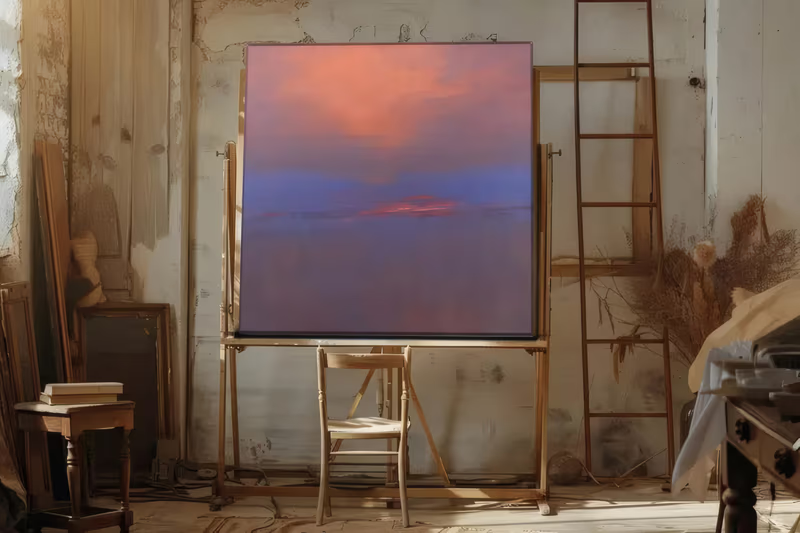
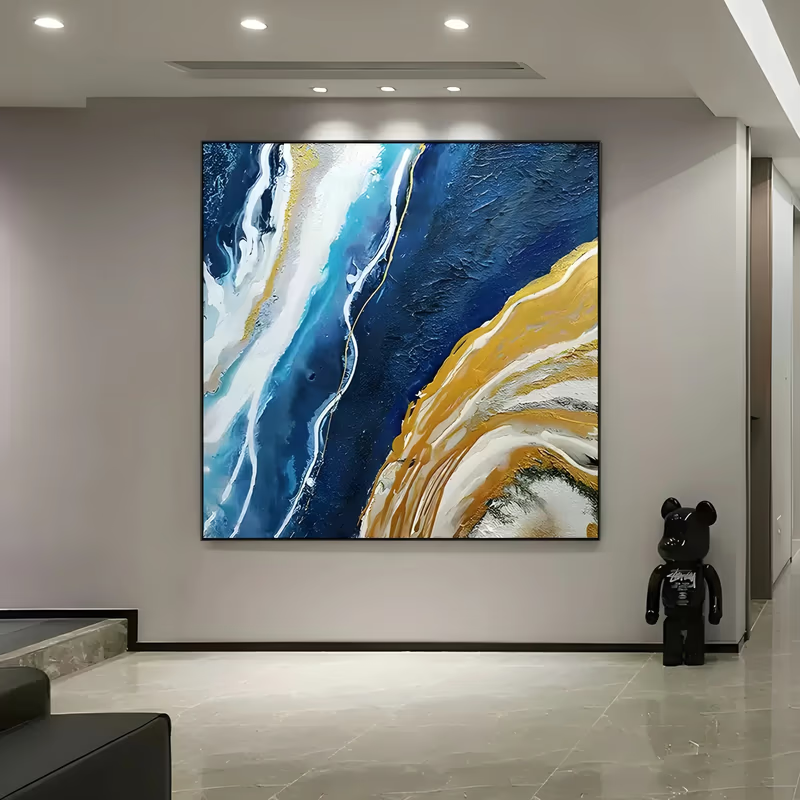
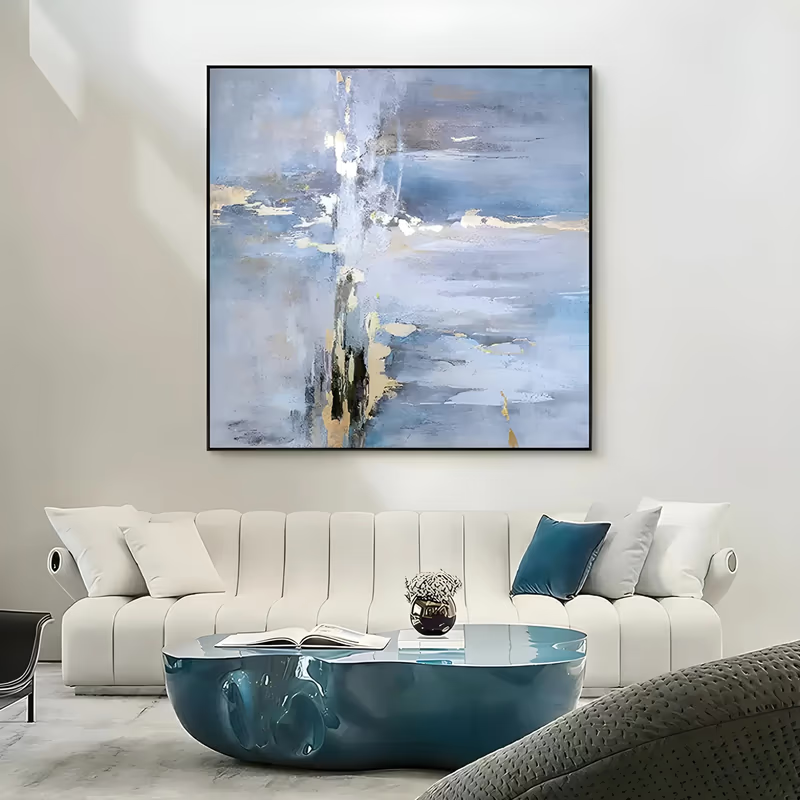
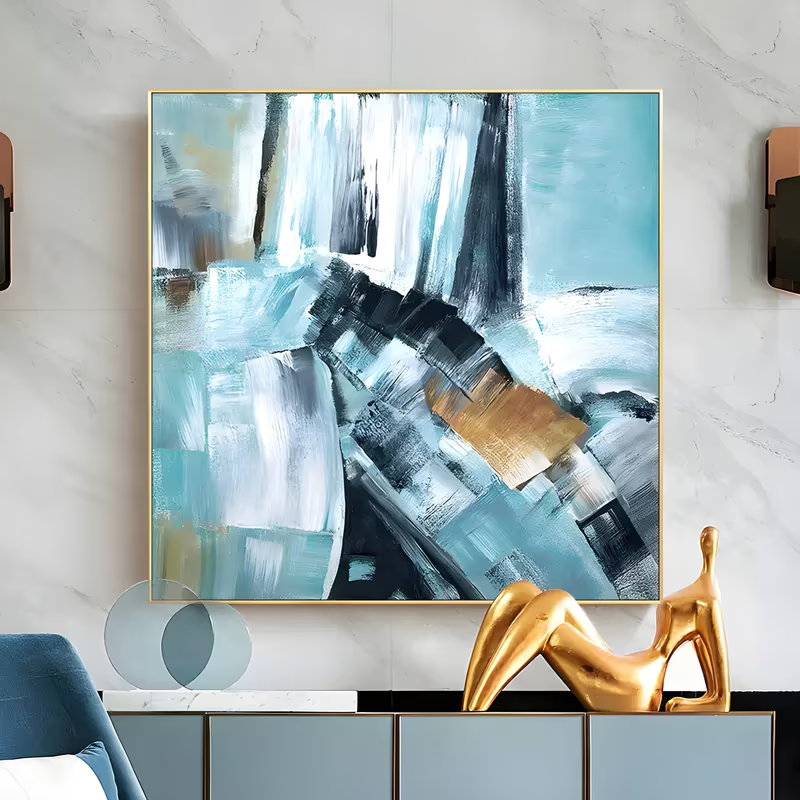
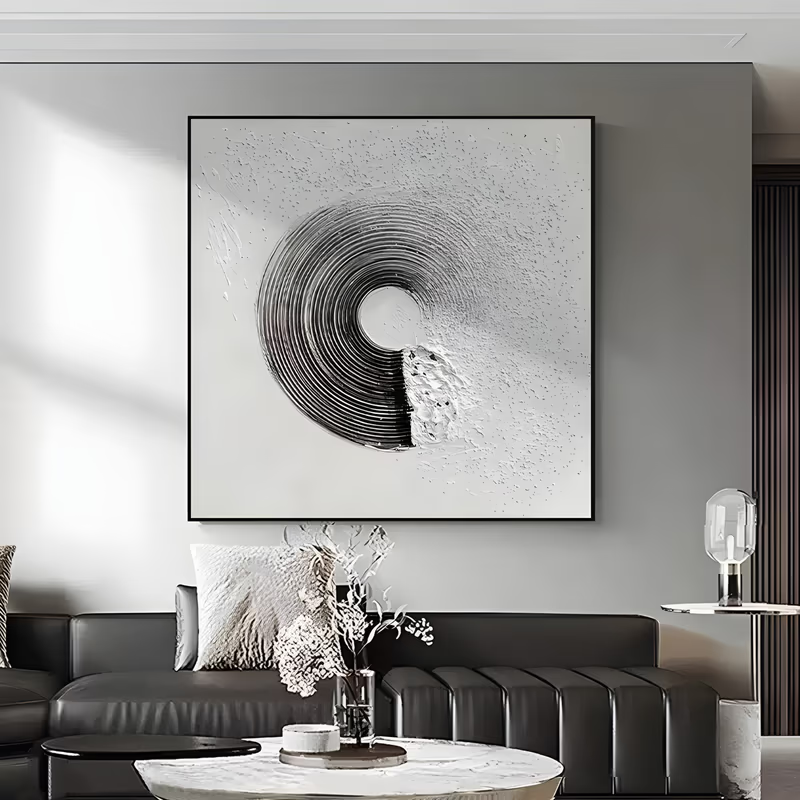
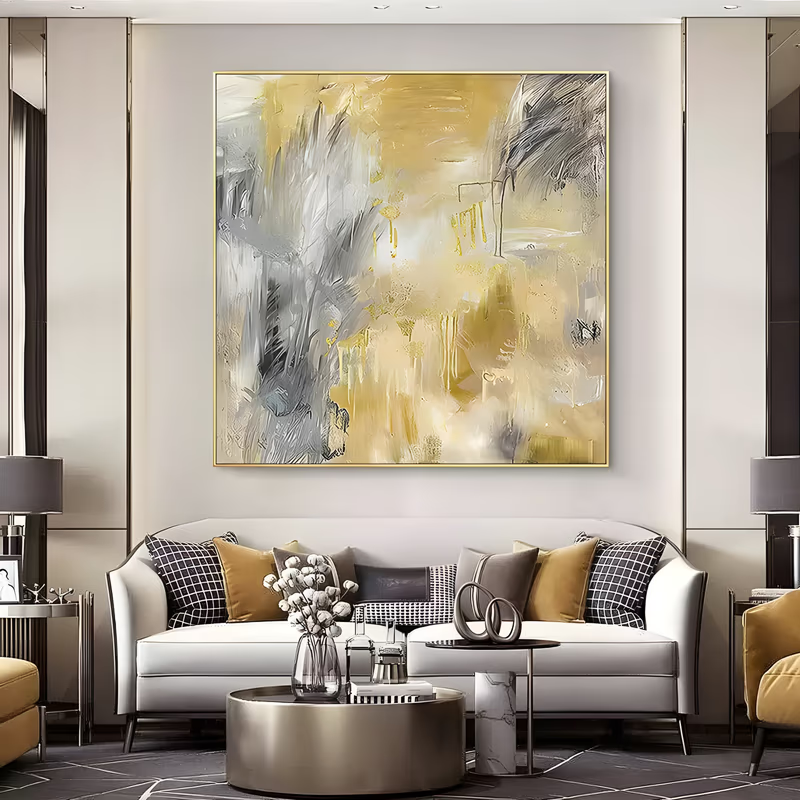
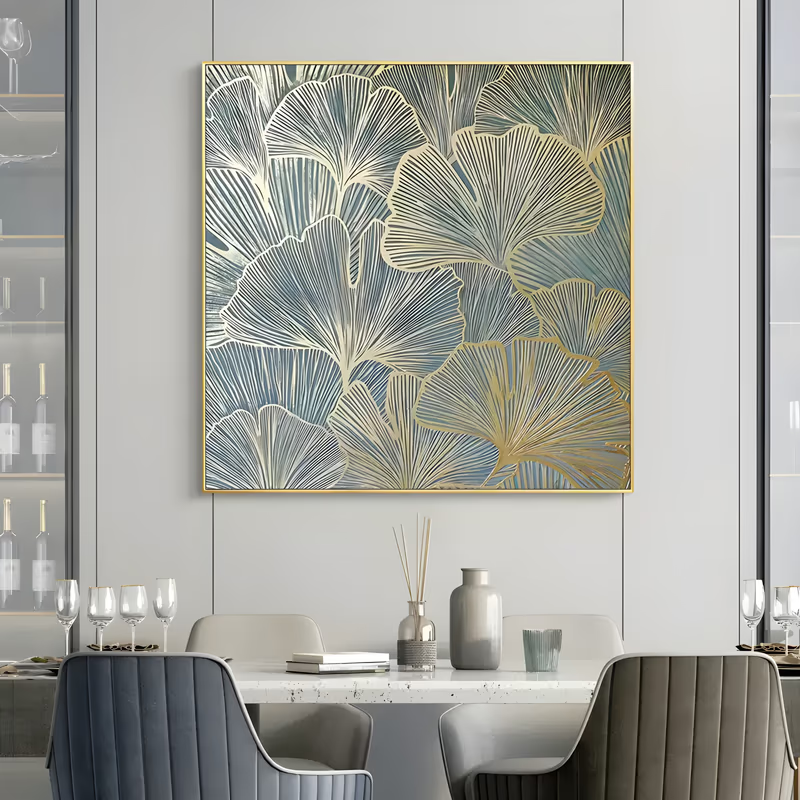
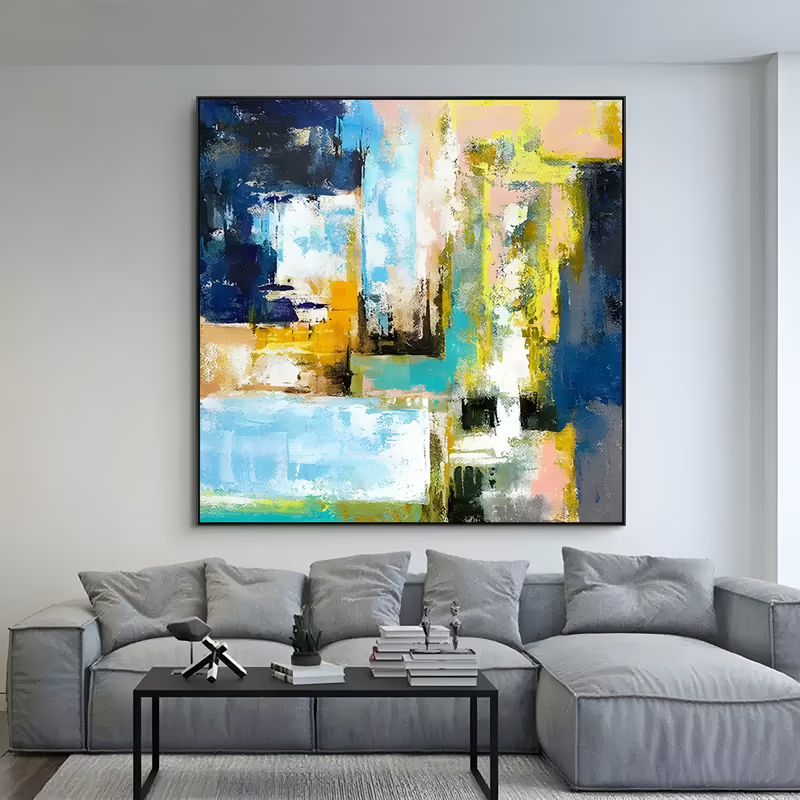
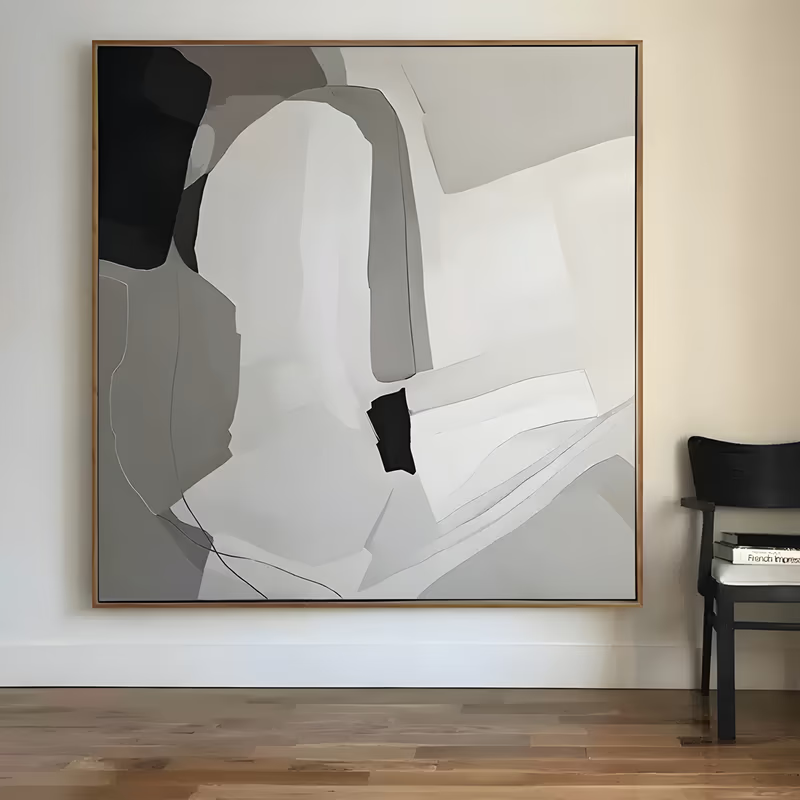
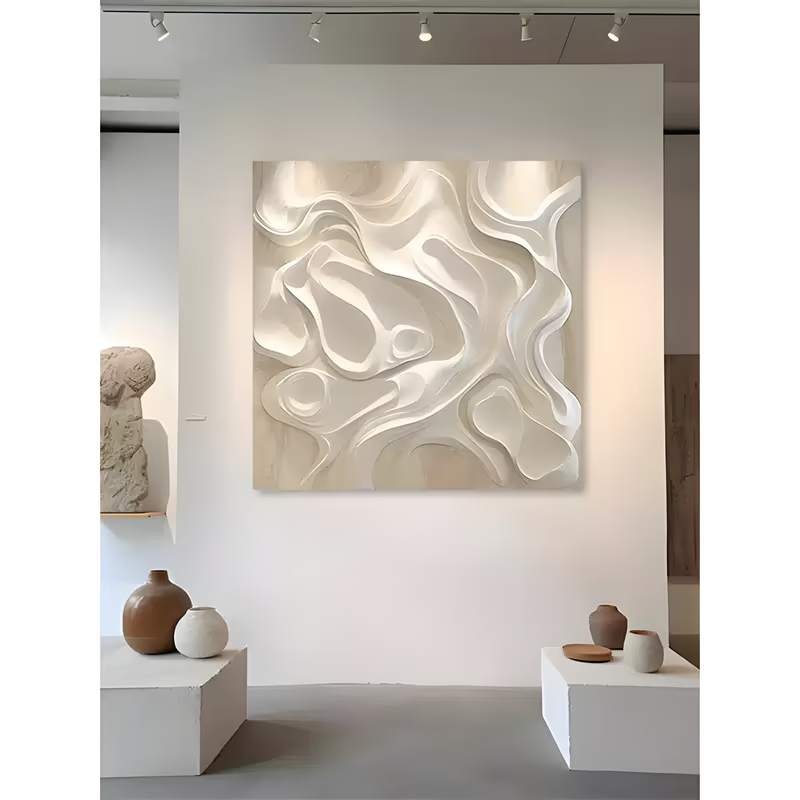
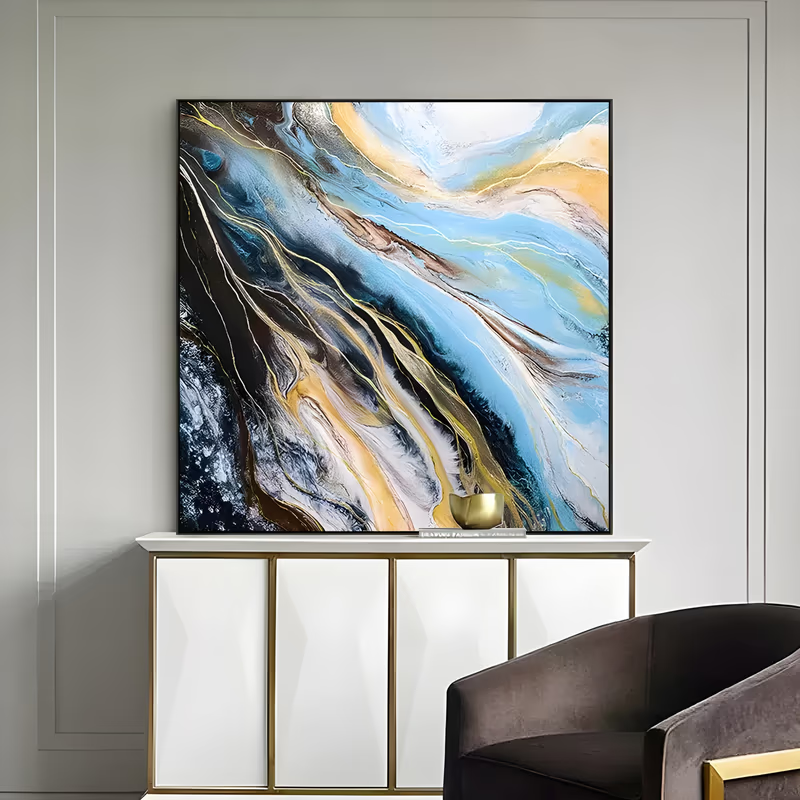
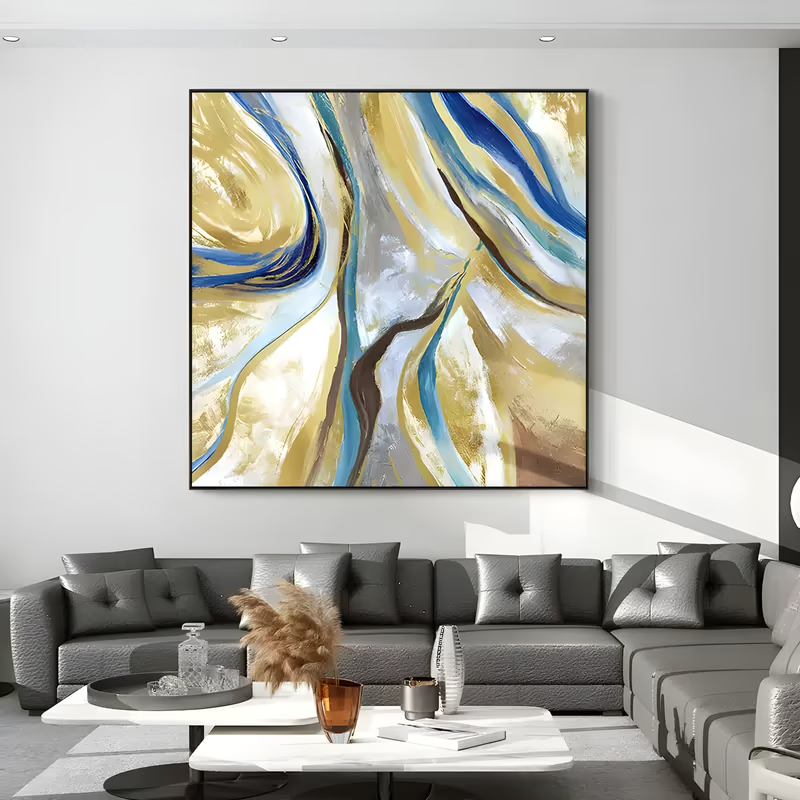
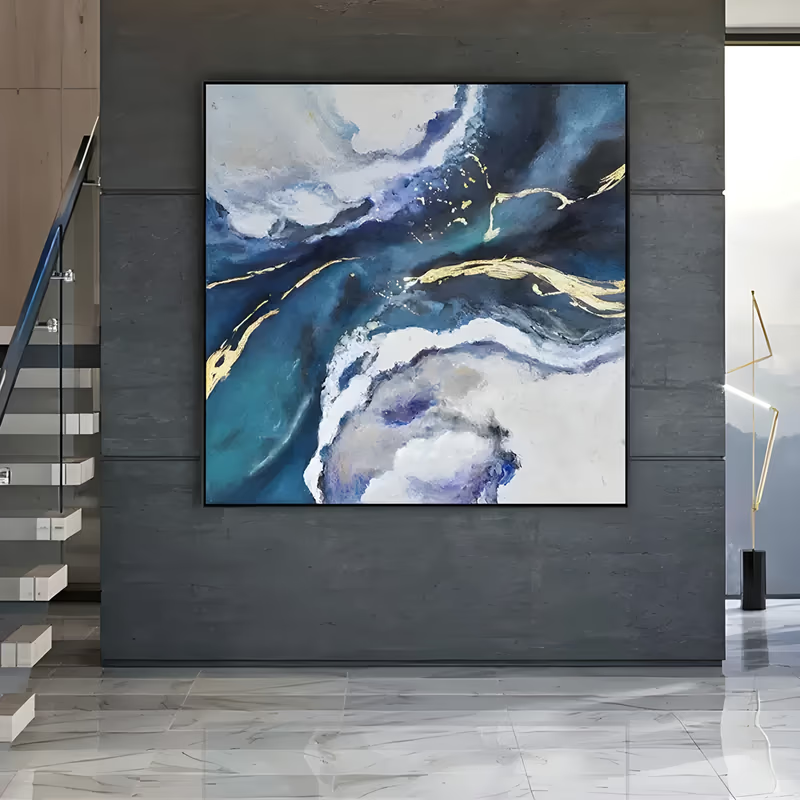
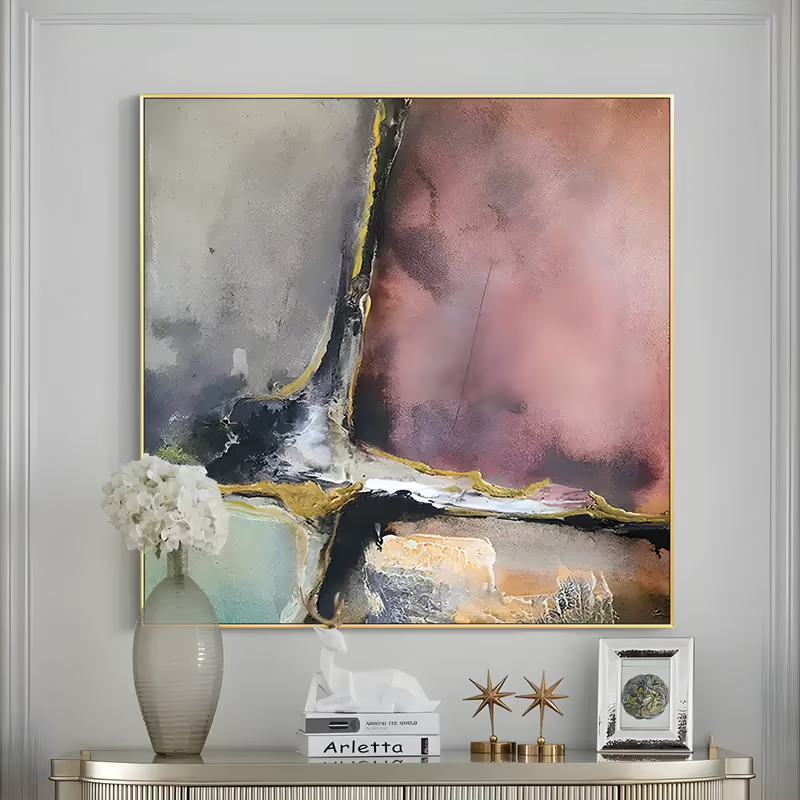
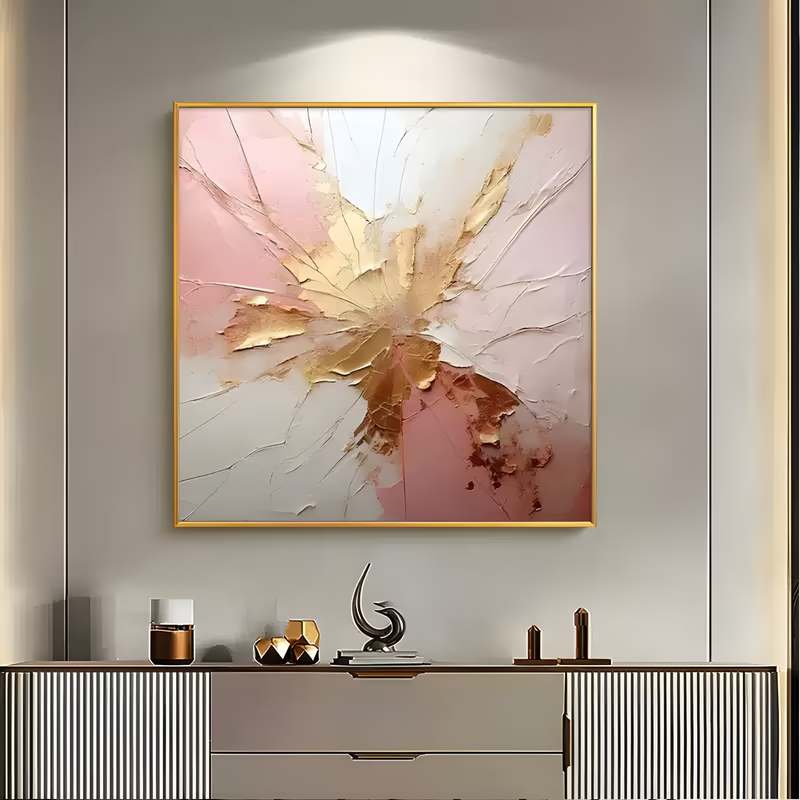
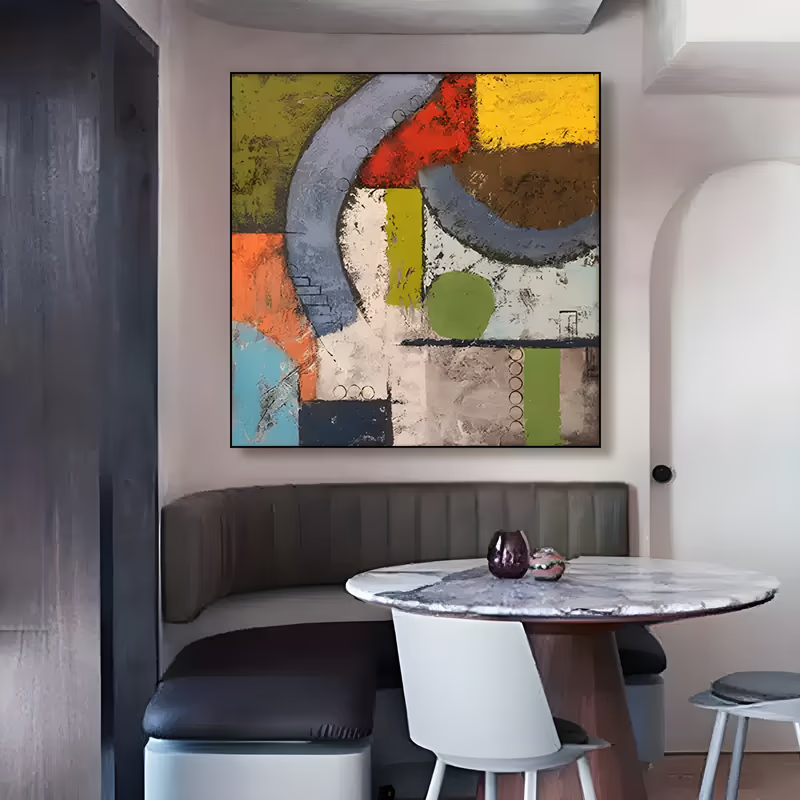
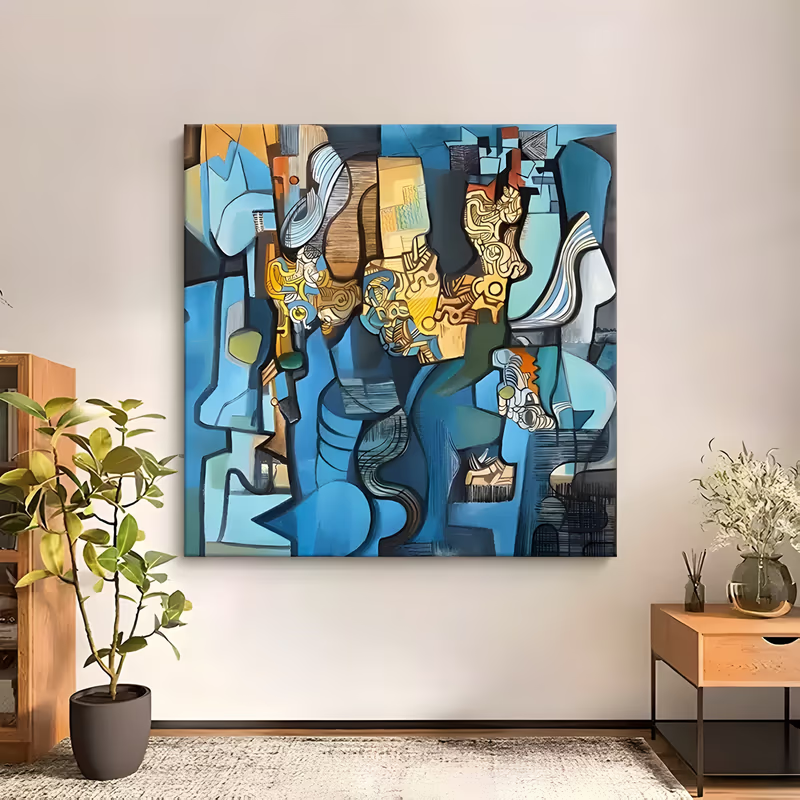
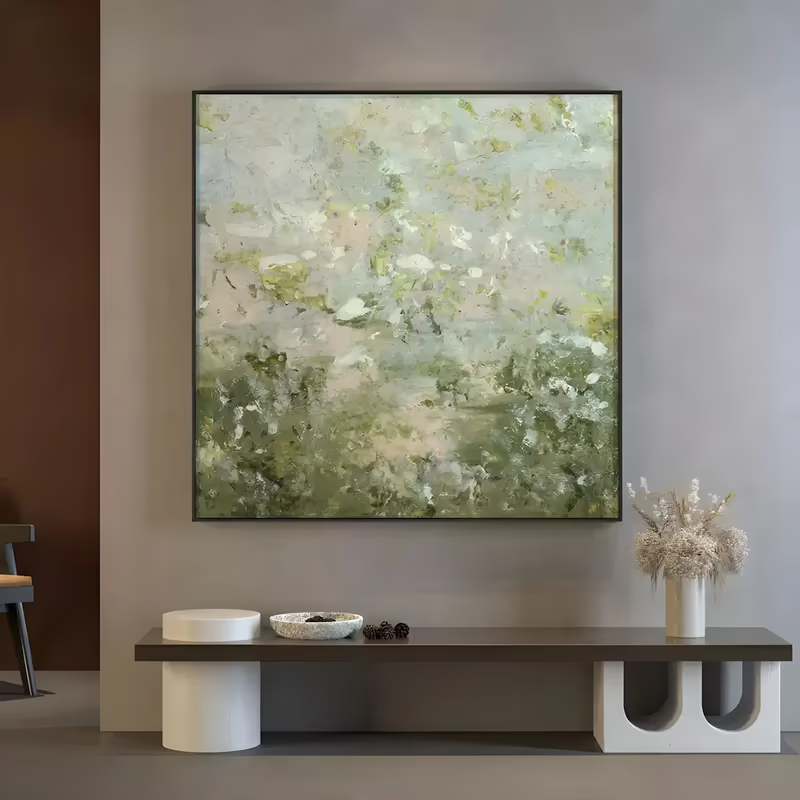
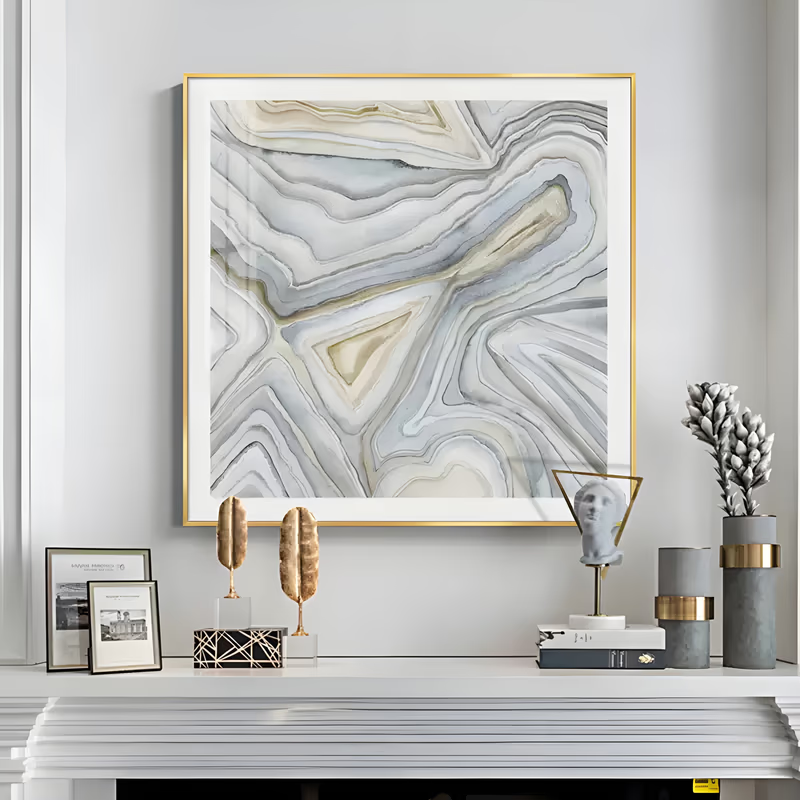
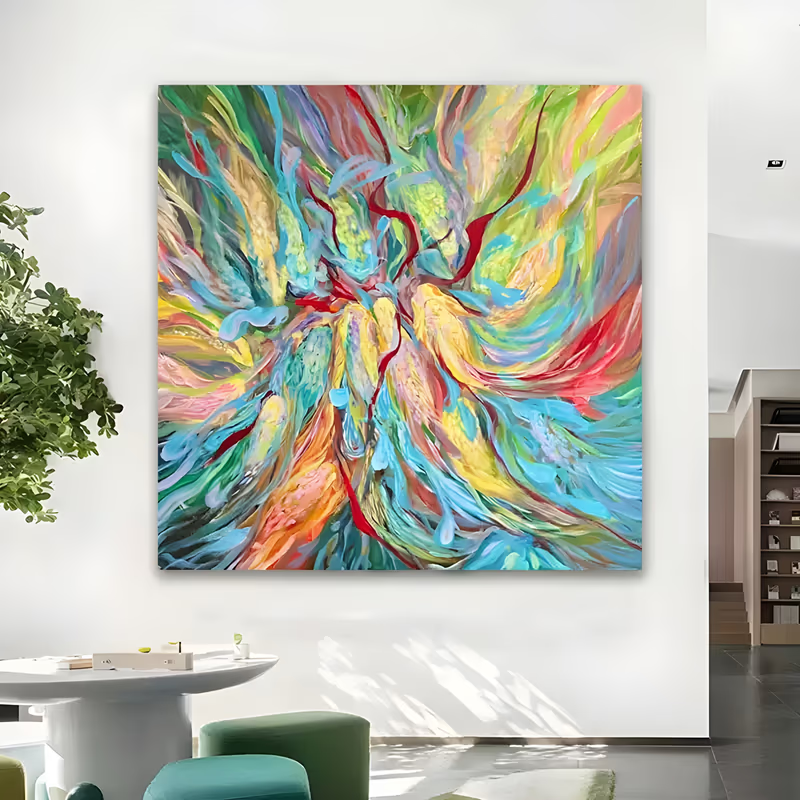
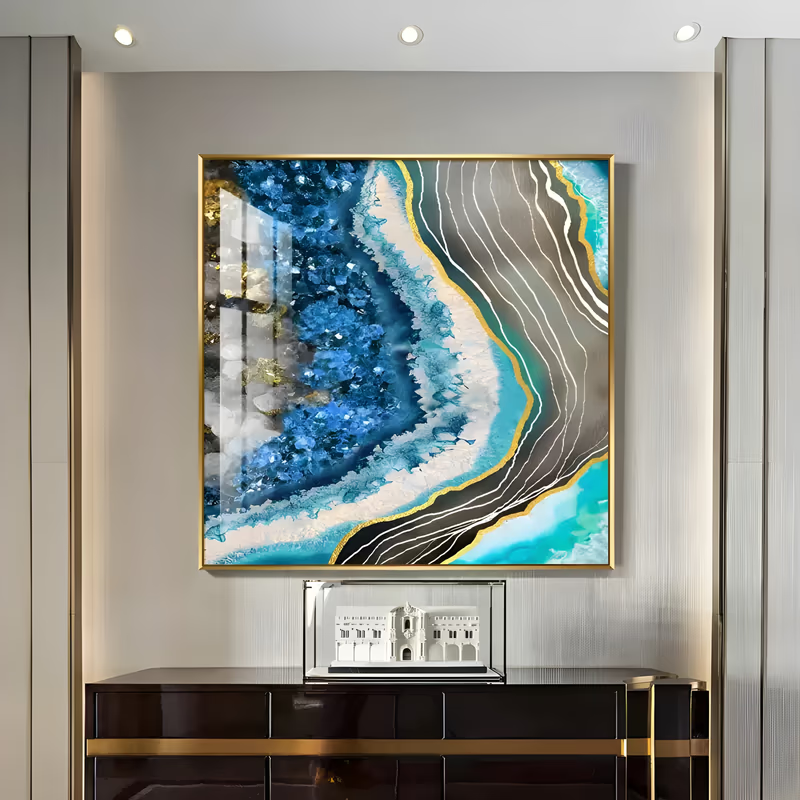
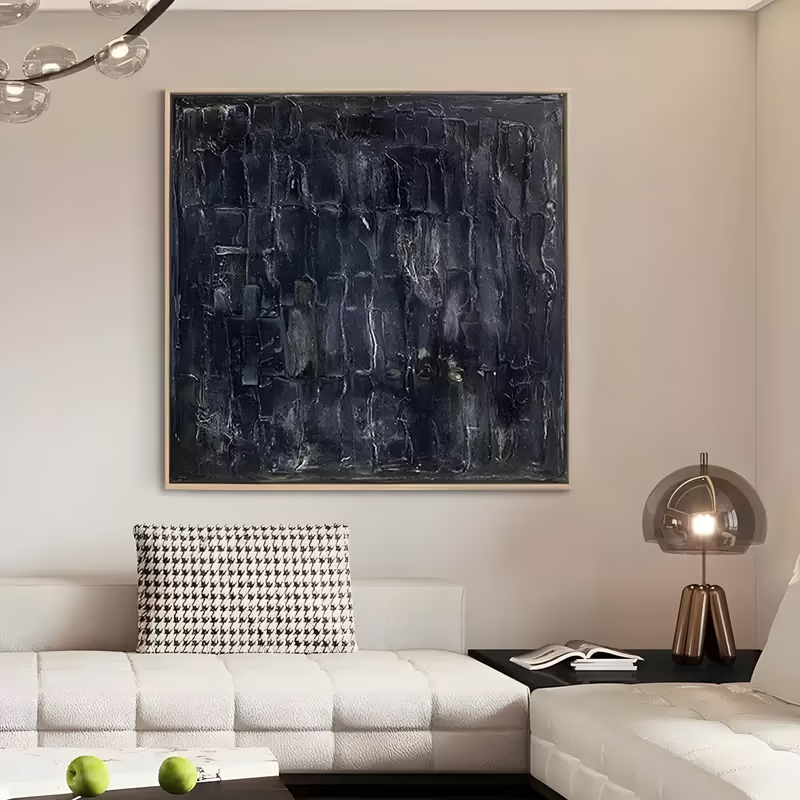
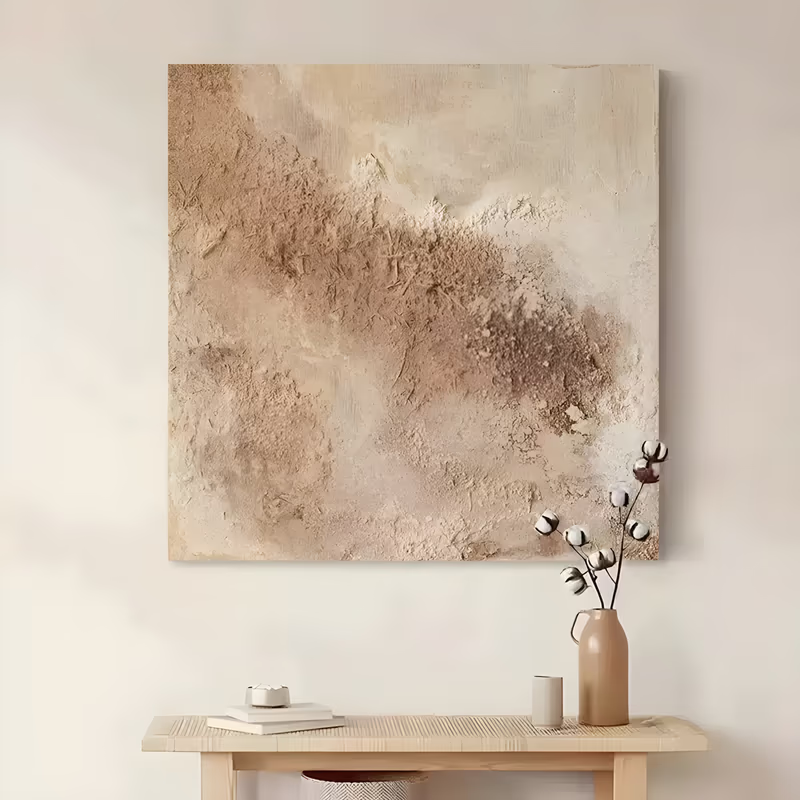
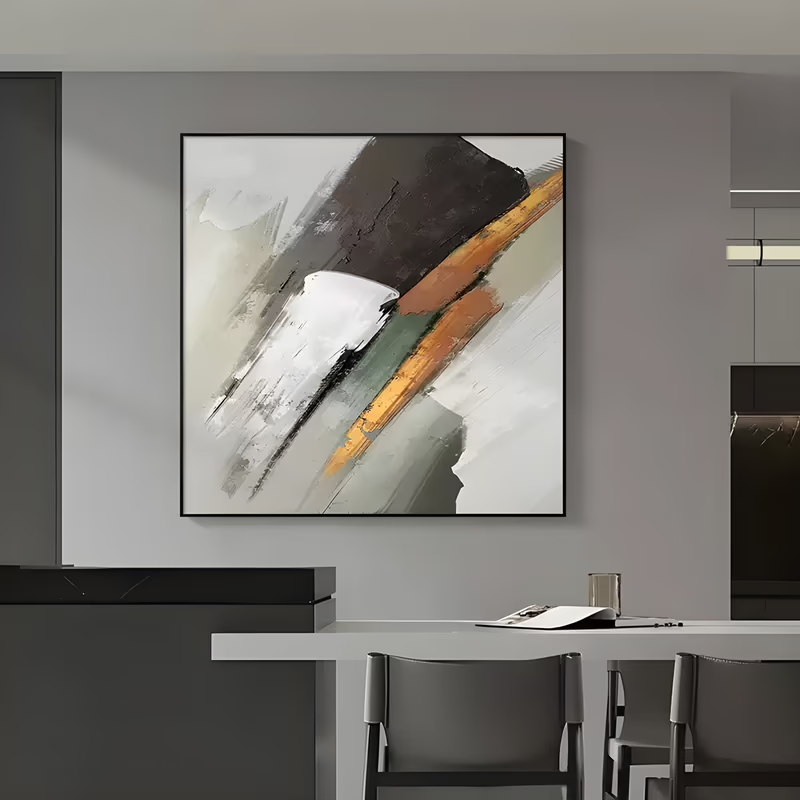
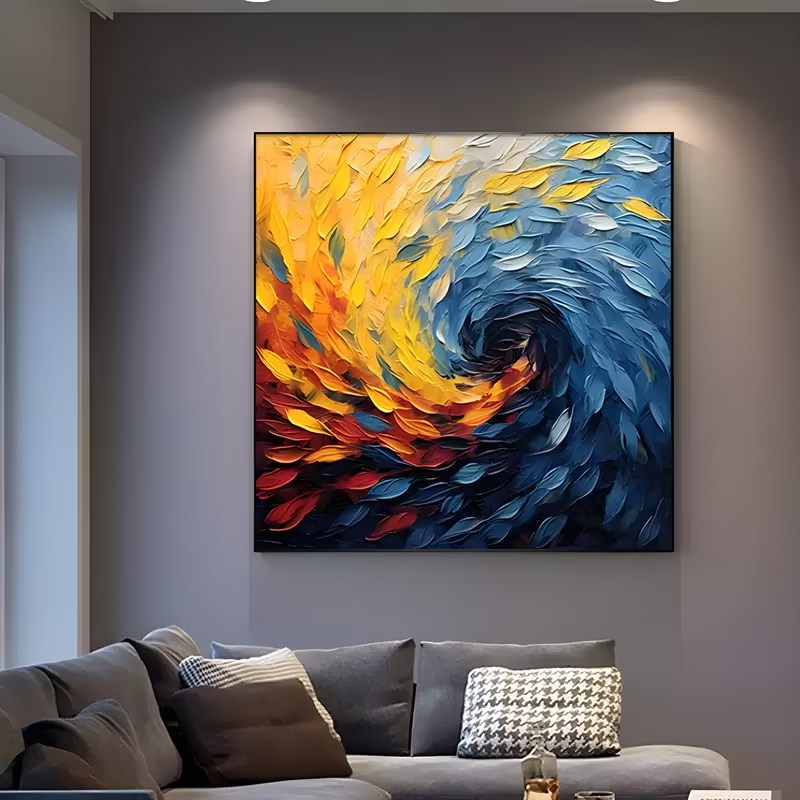
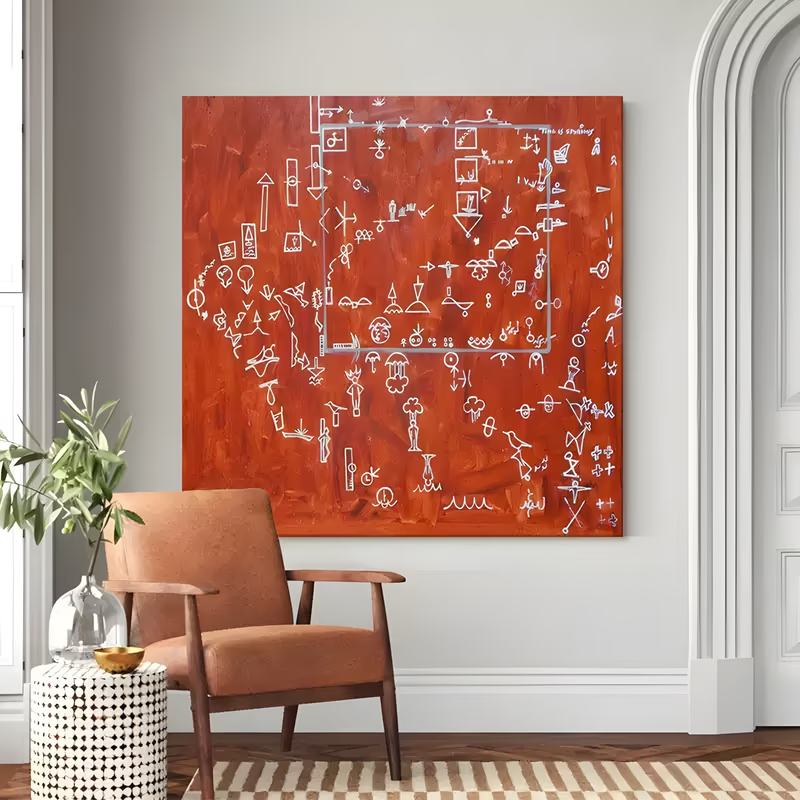
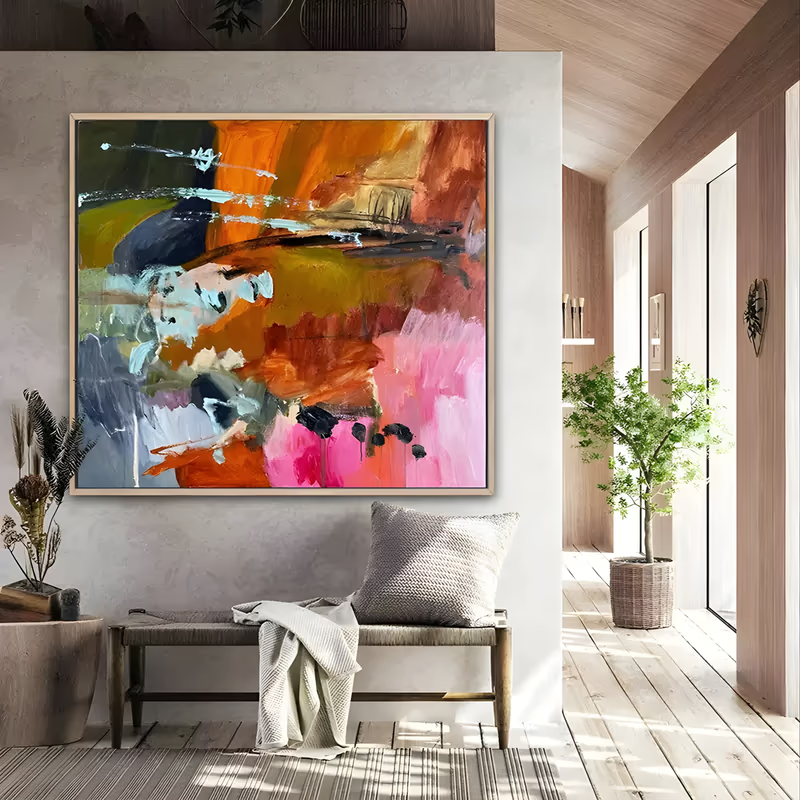
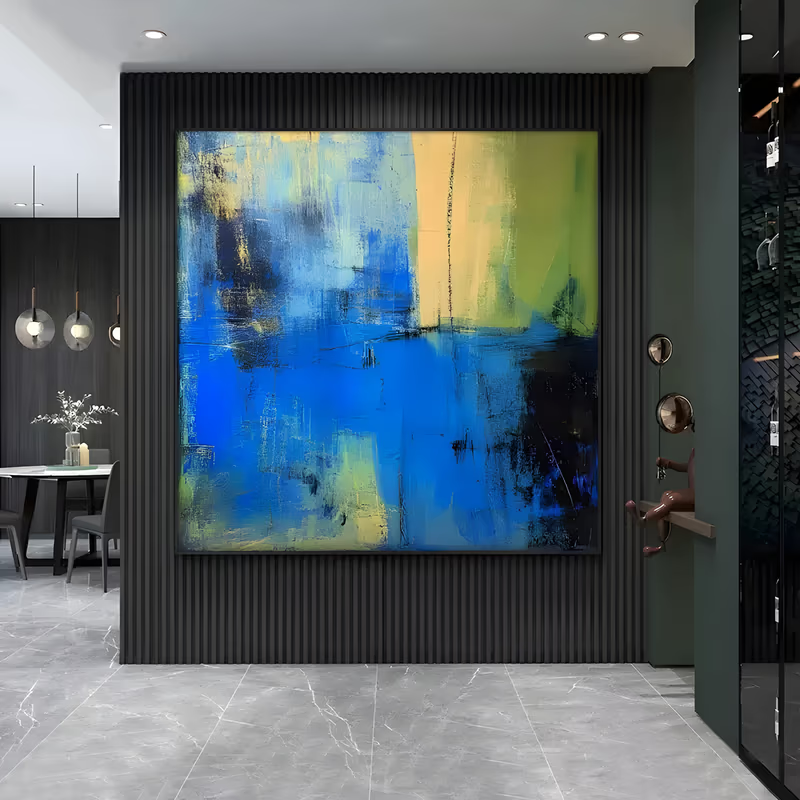
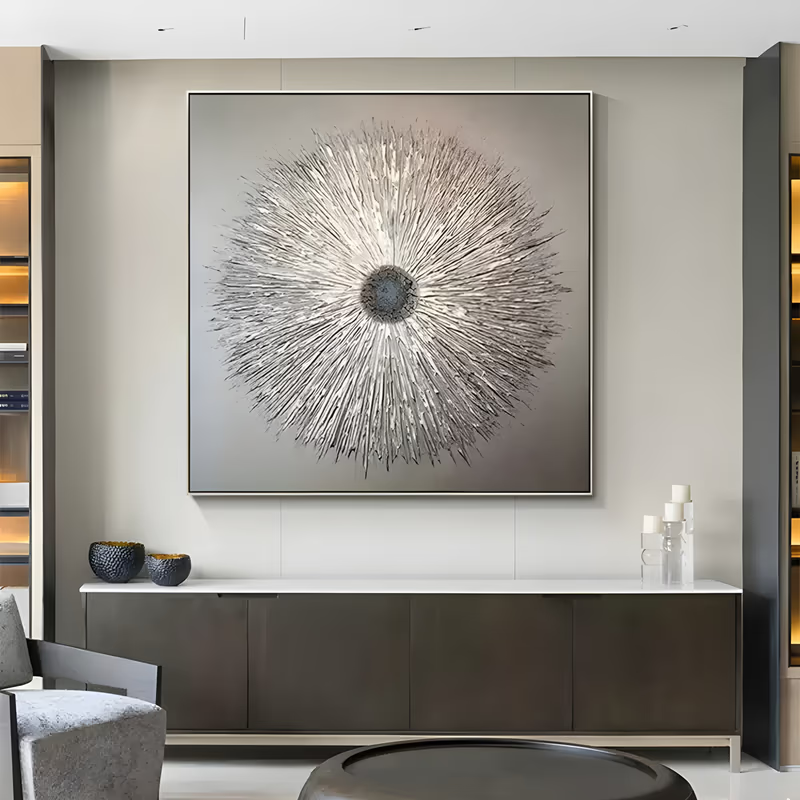
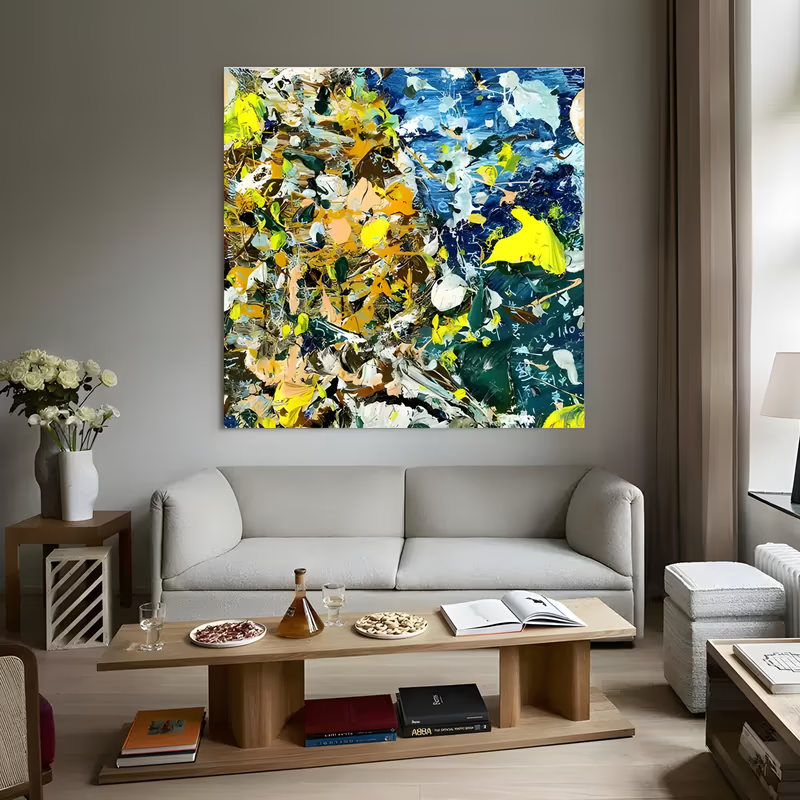
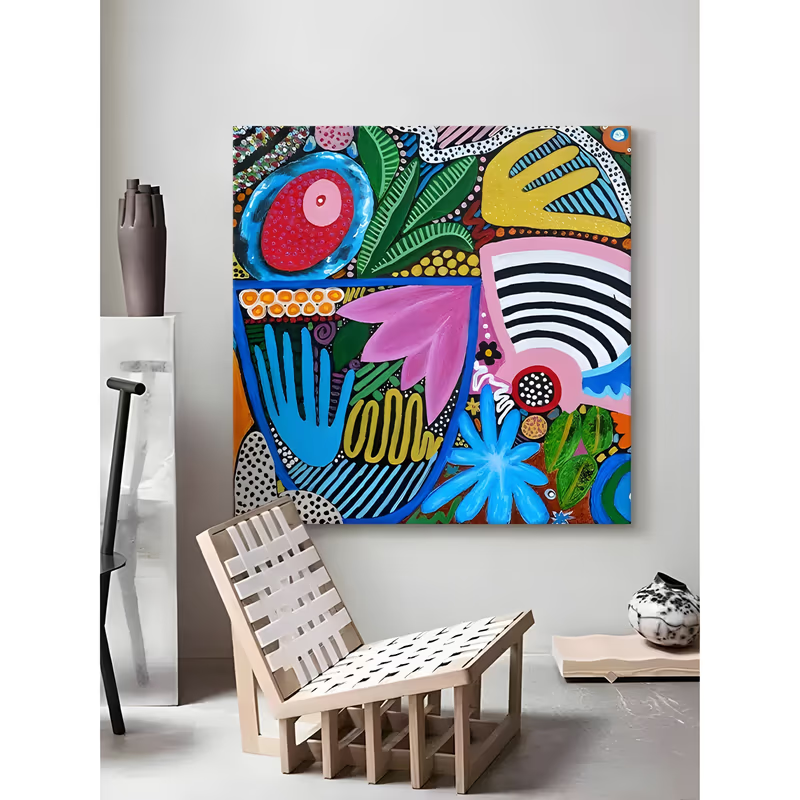
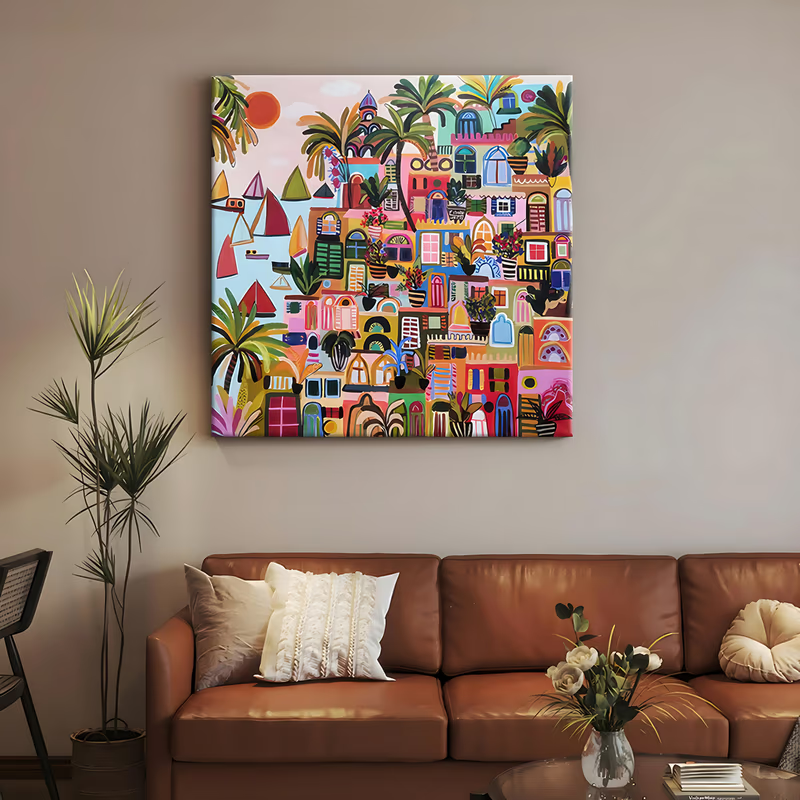
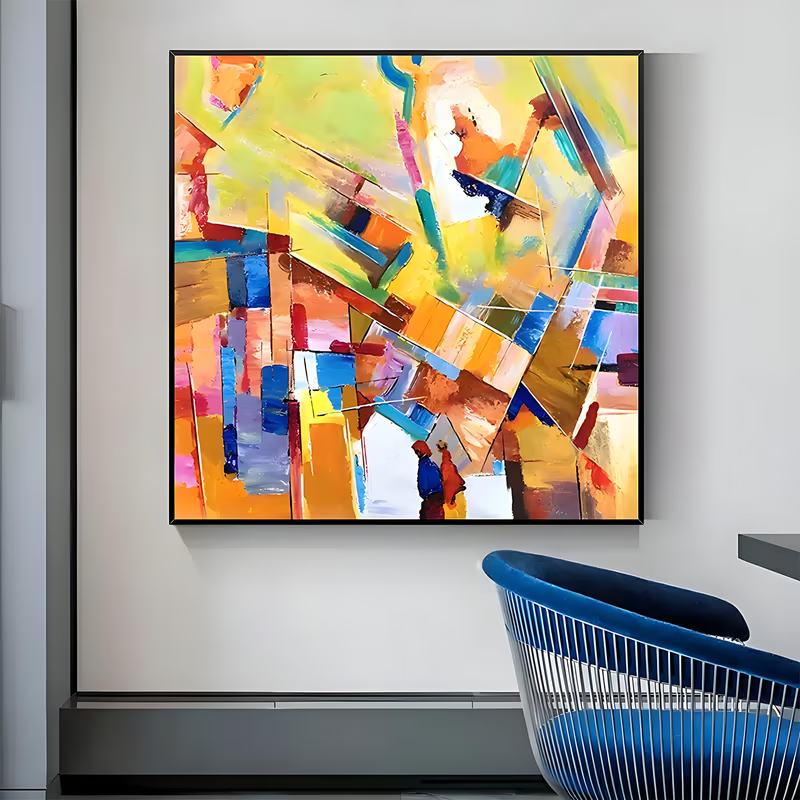
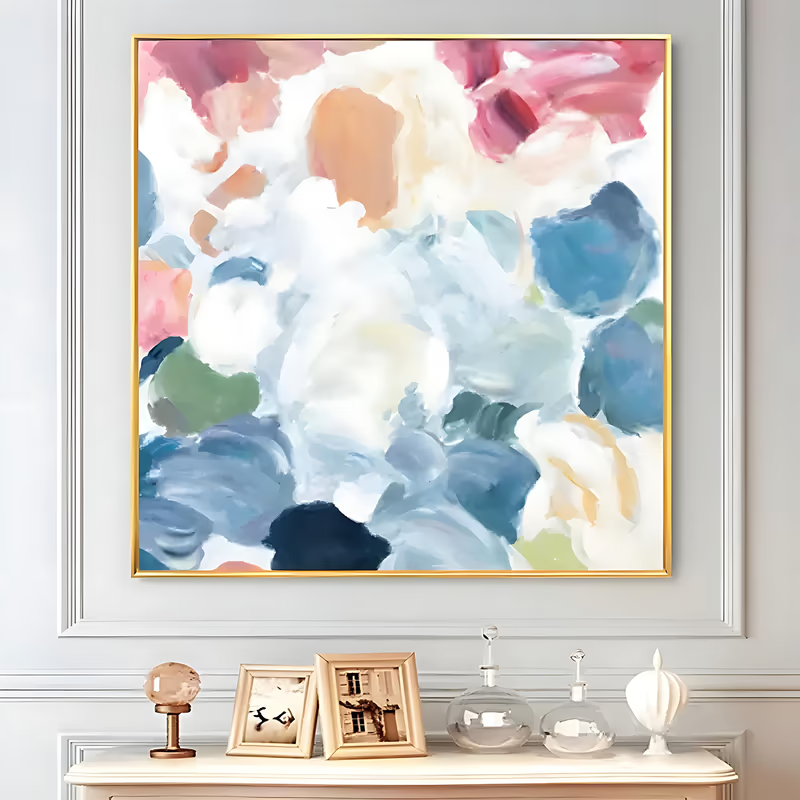
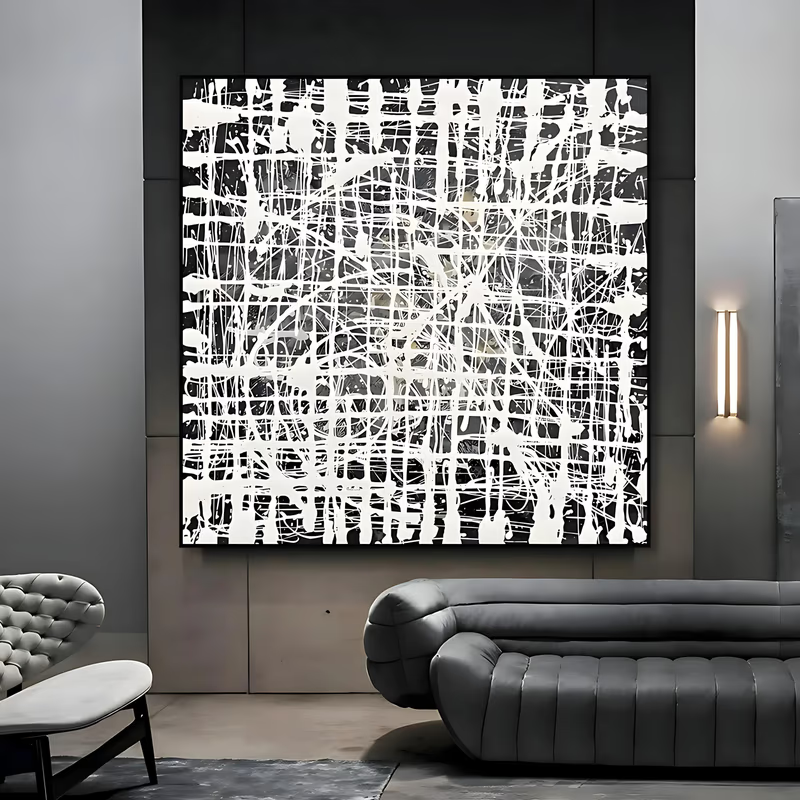
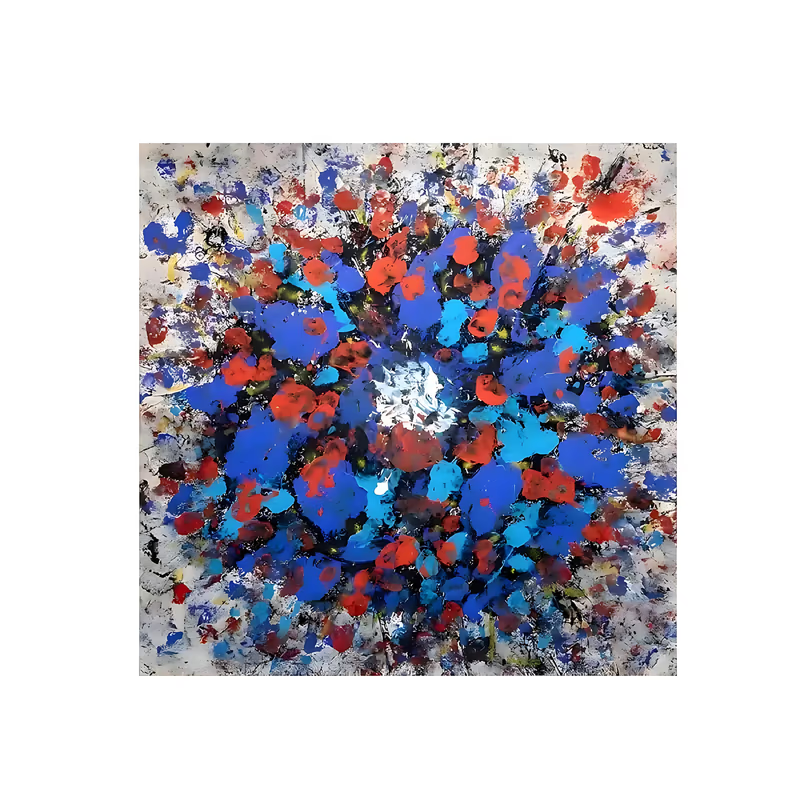
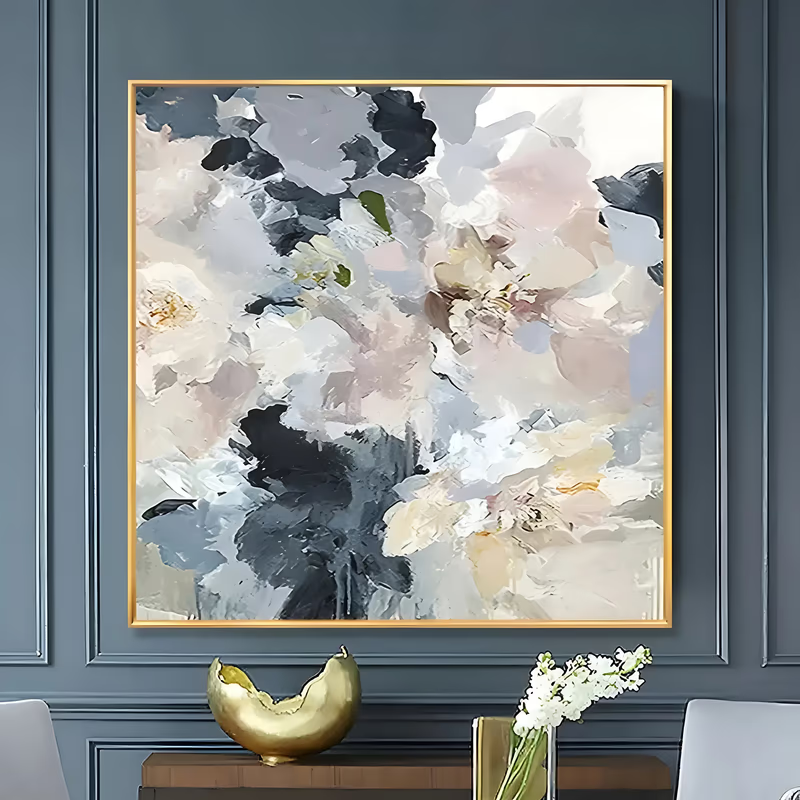
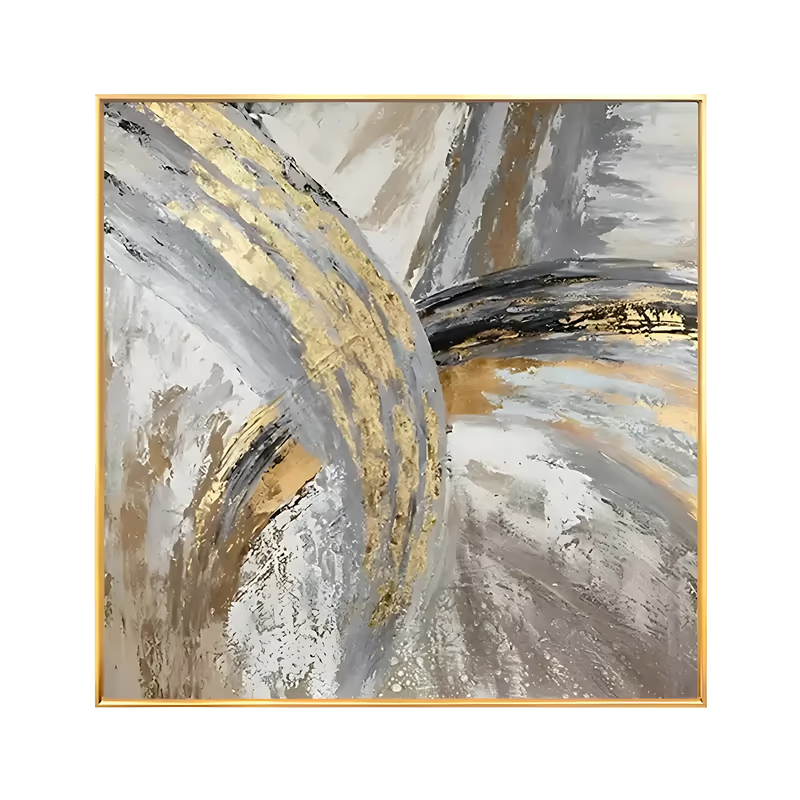
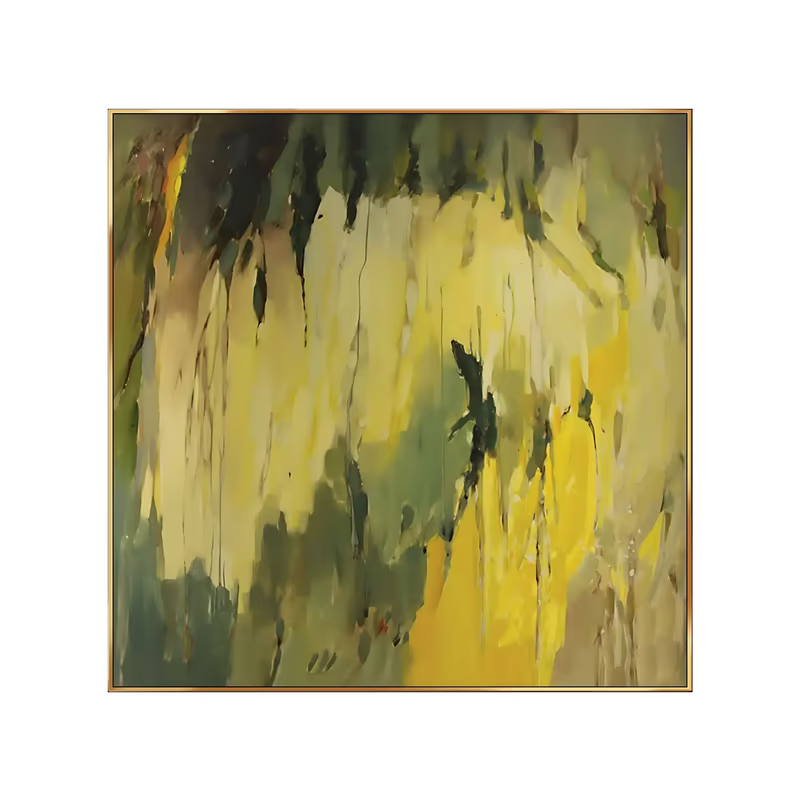
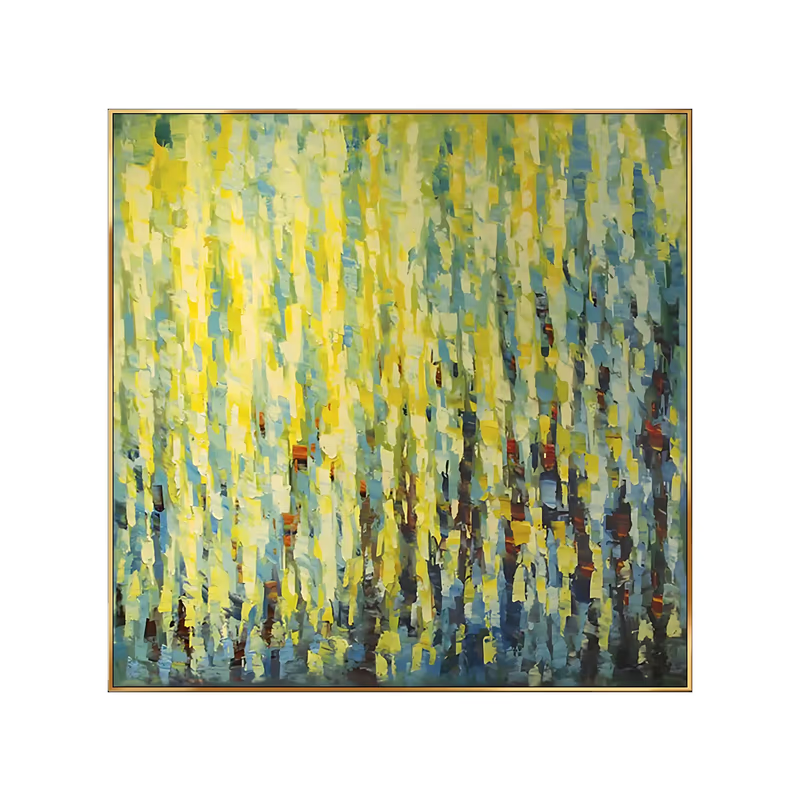
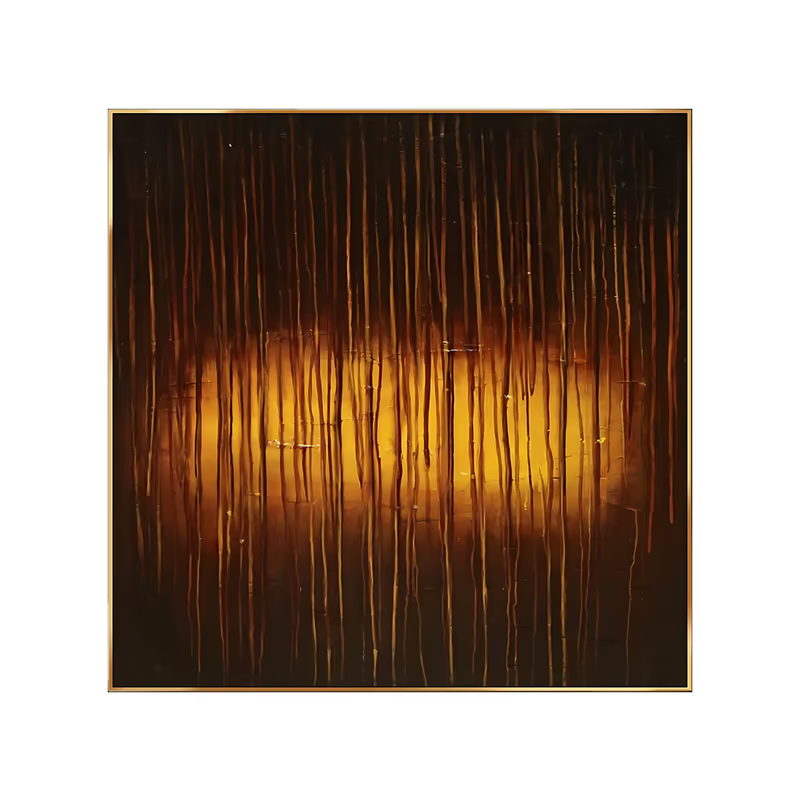
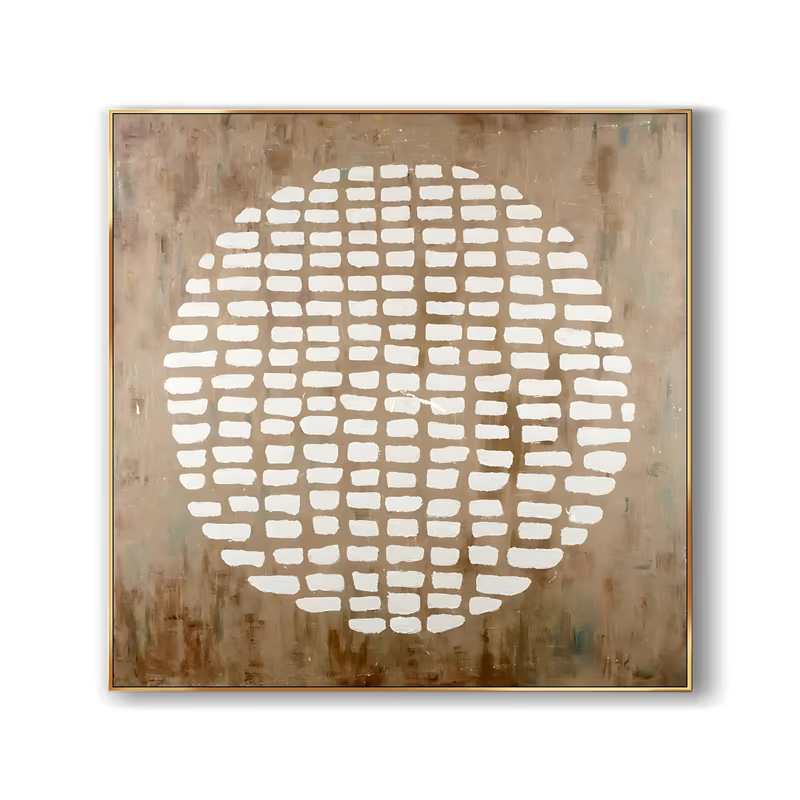
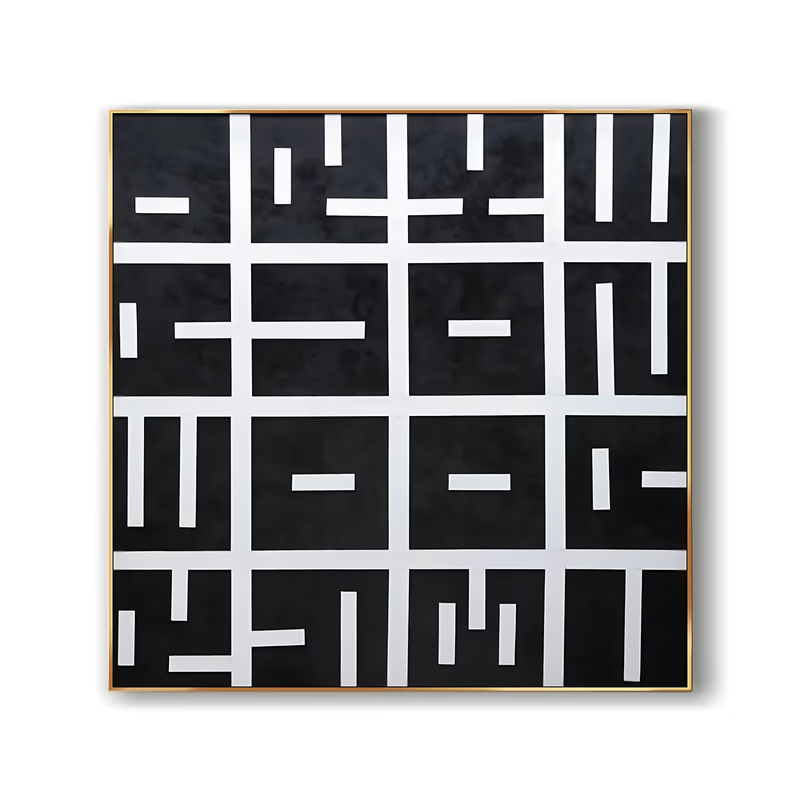
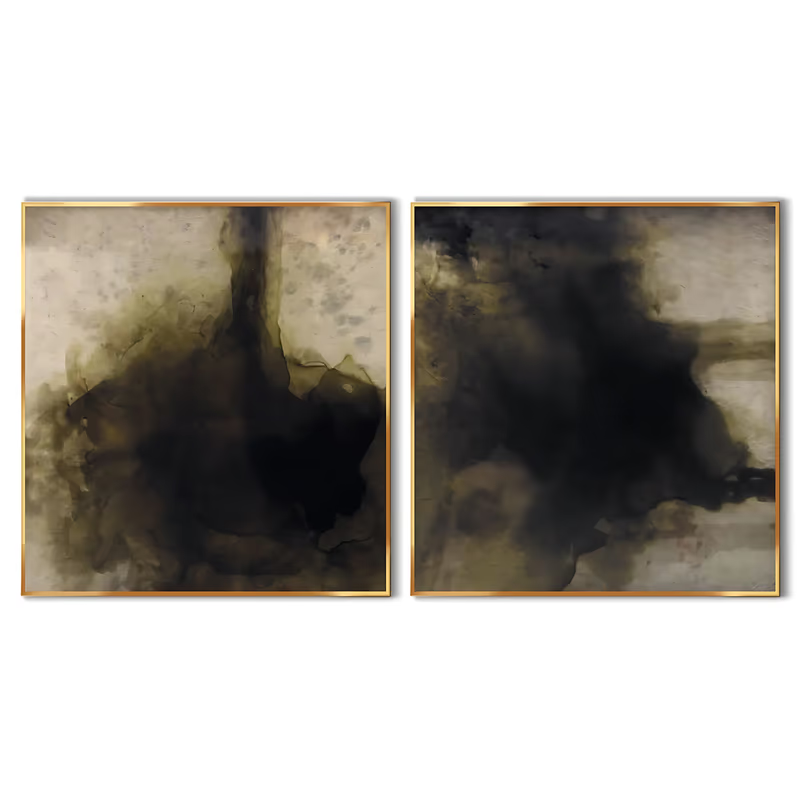
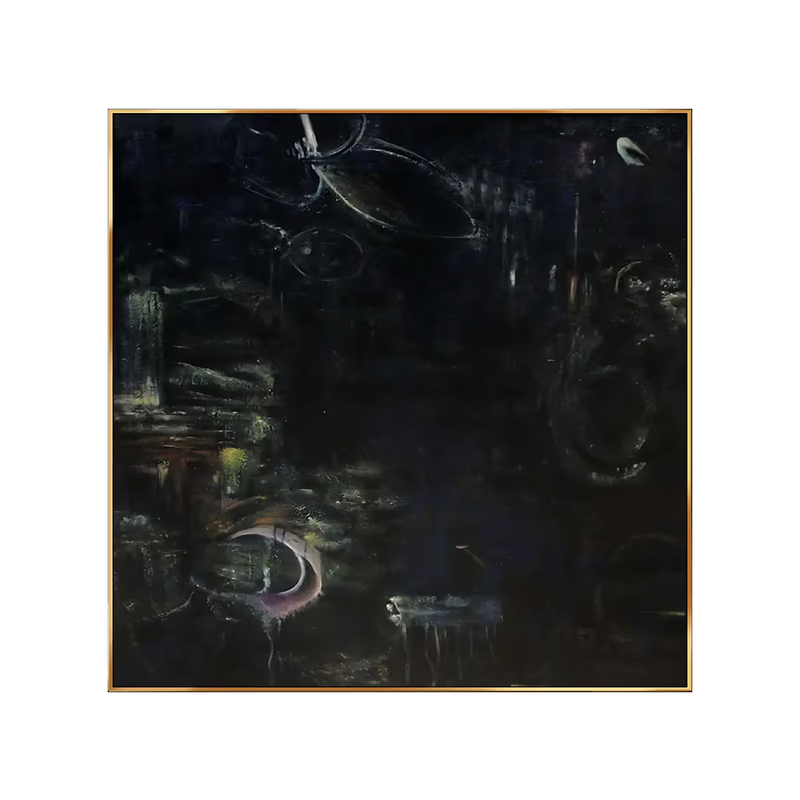
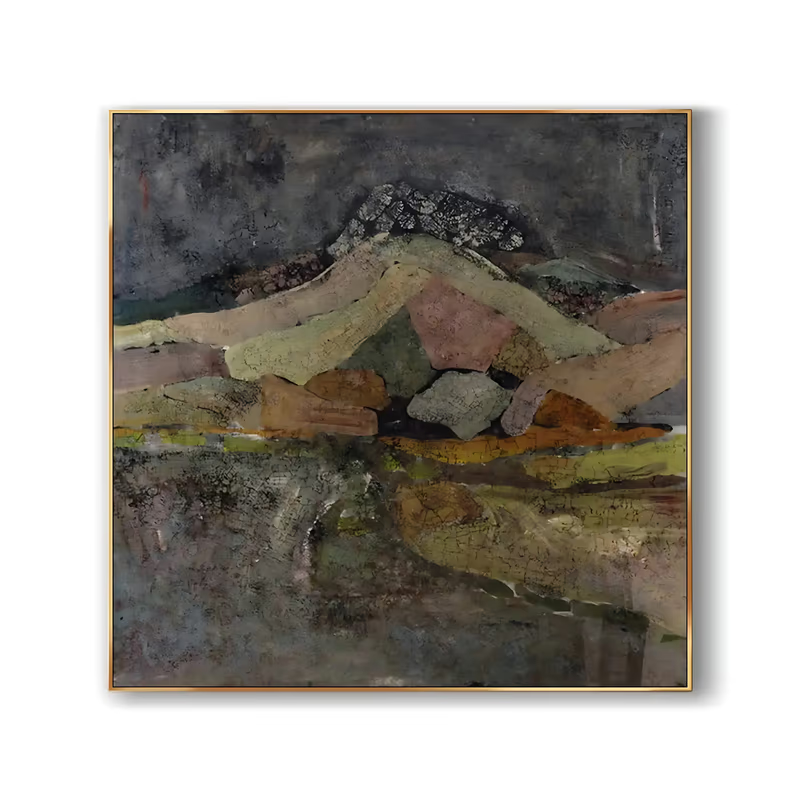
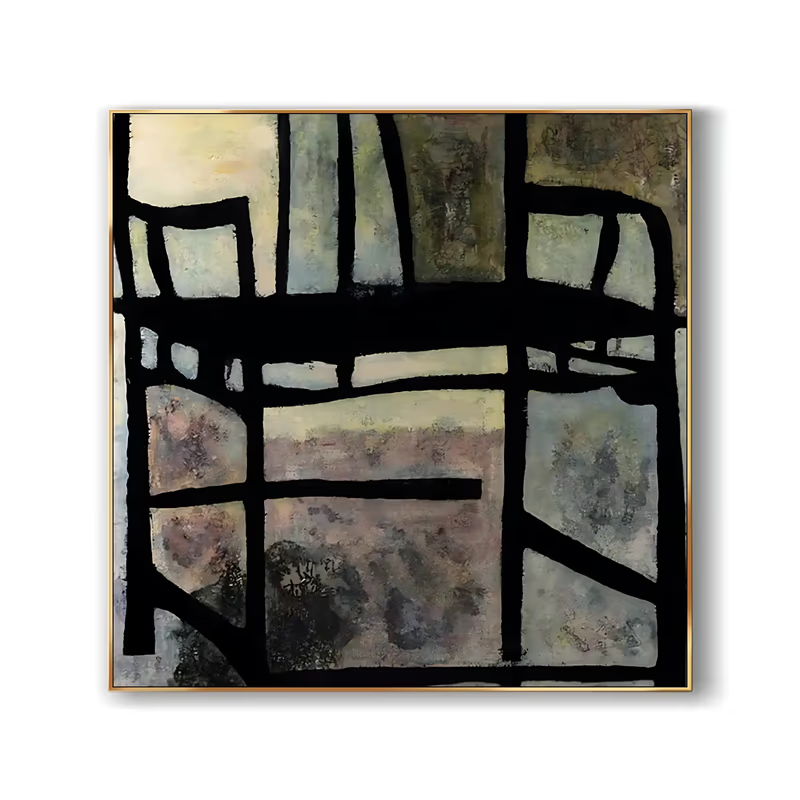
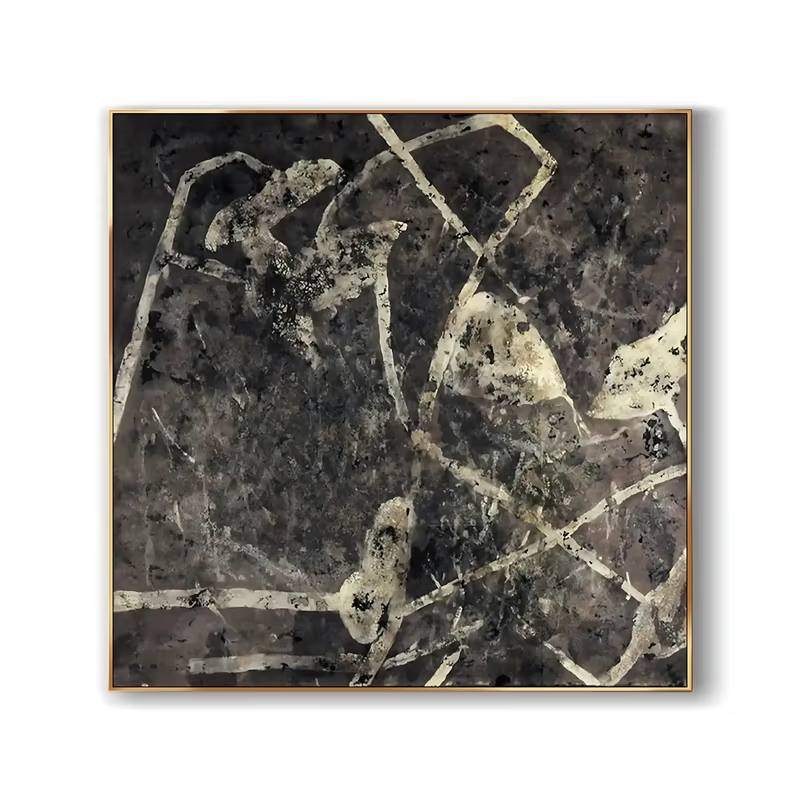
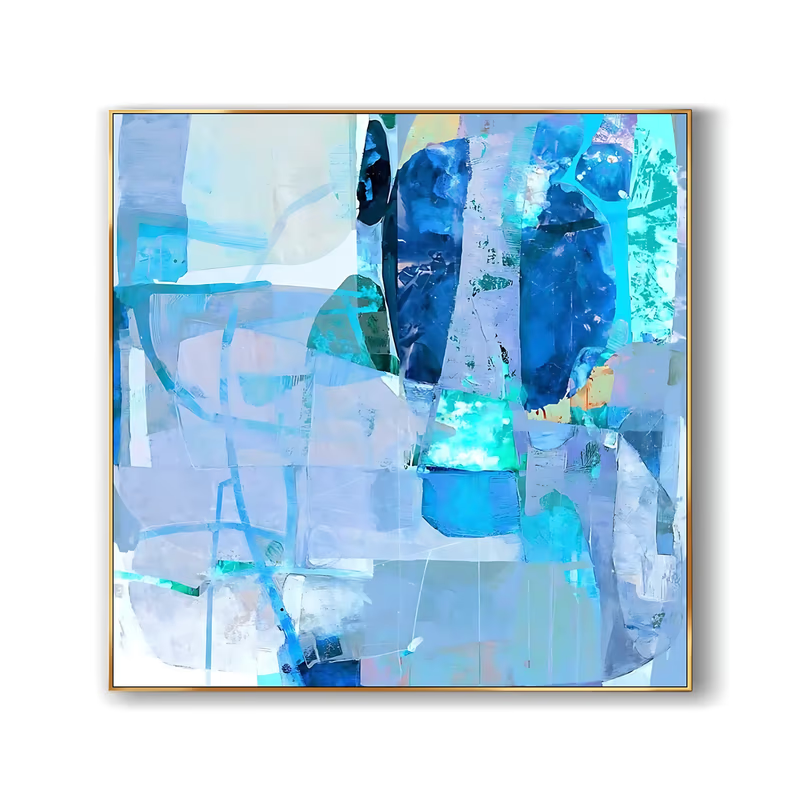
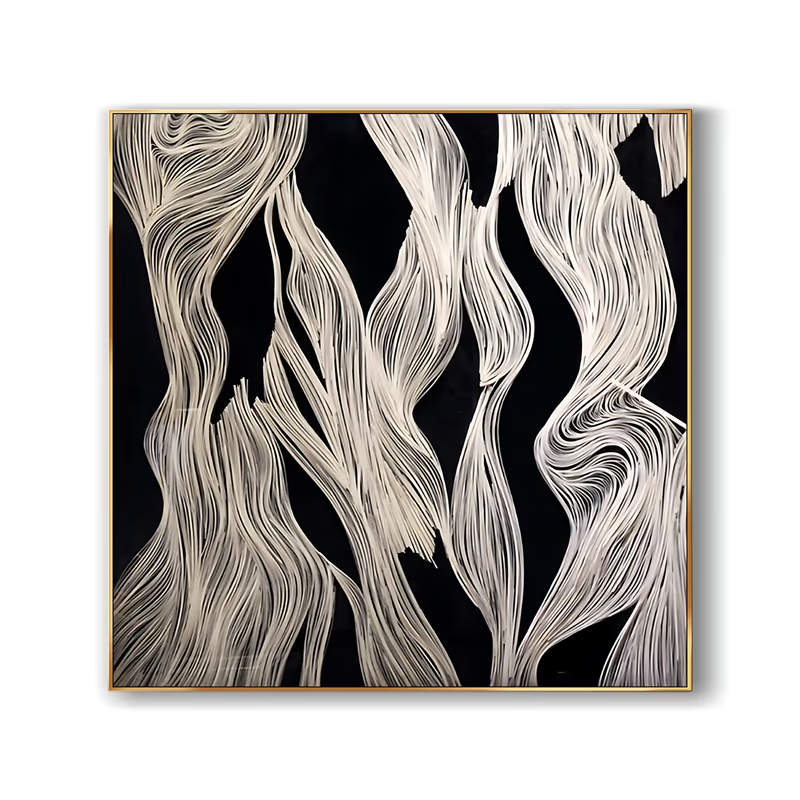
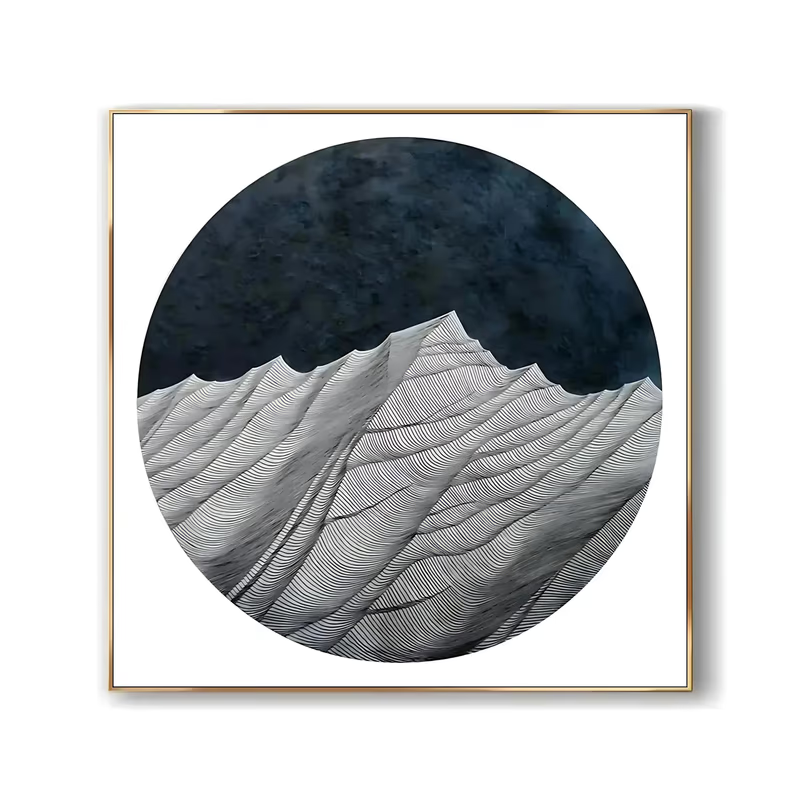
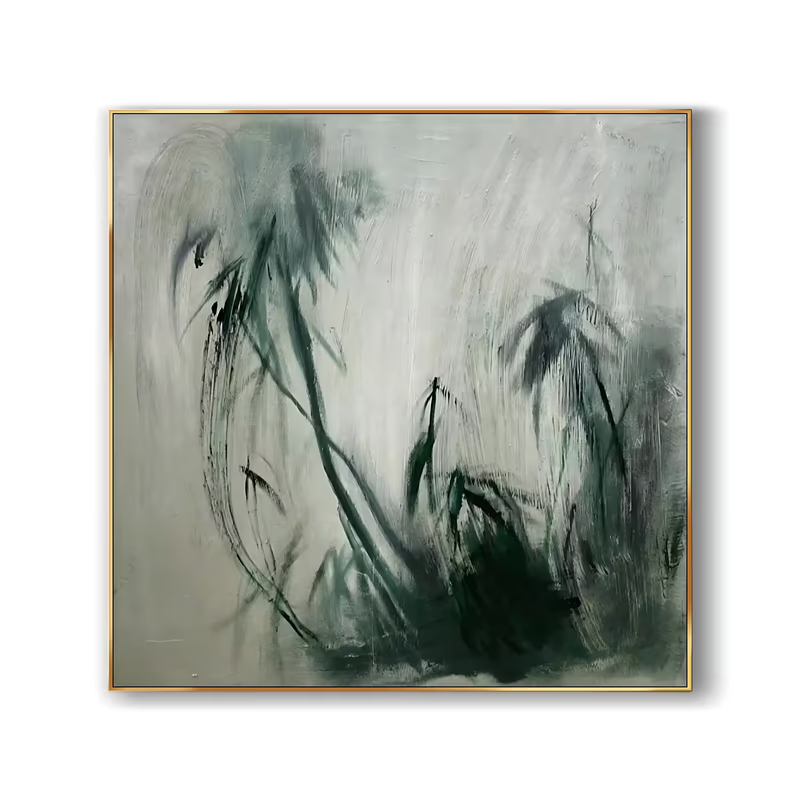
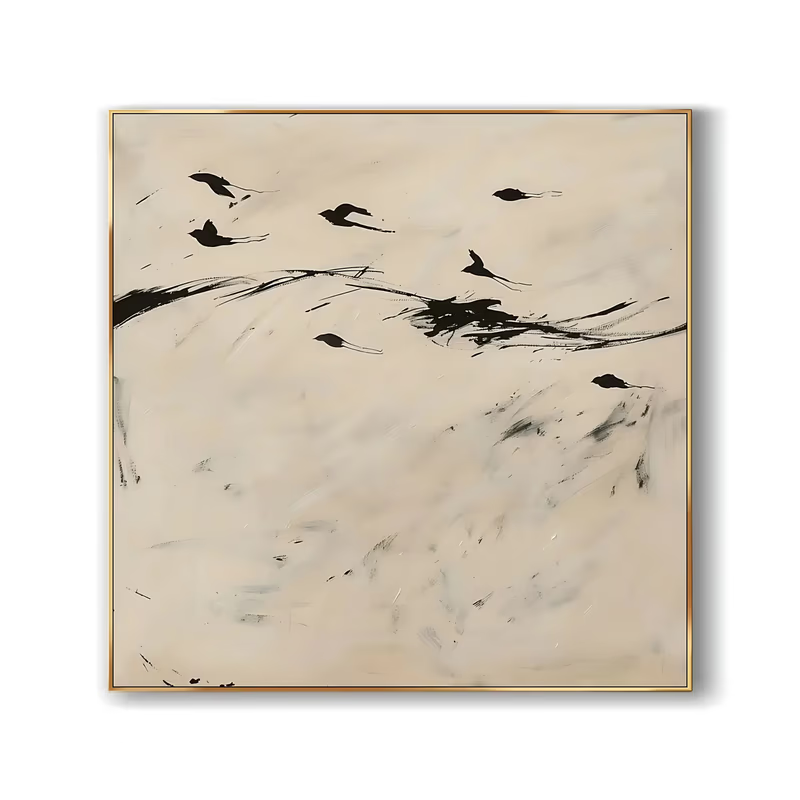
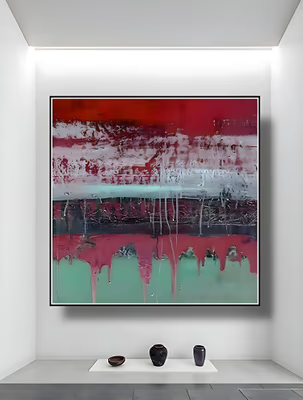
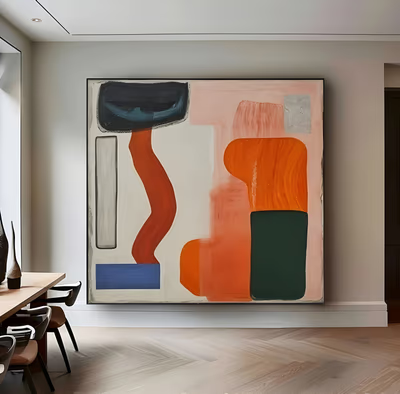
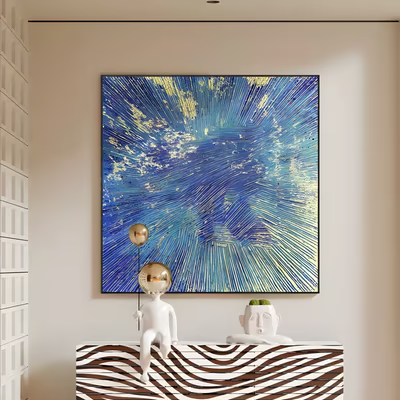
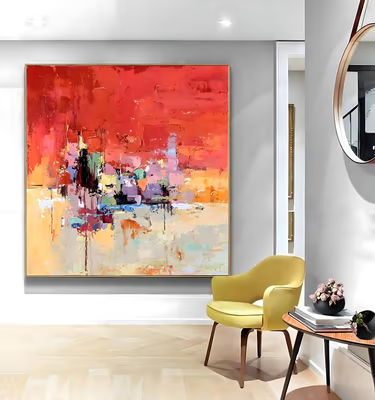
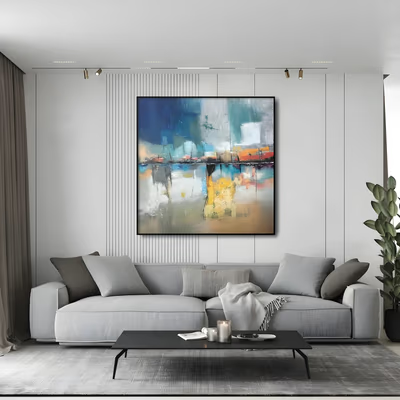
Colour fields, grids, sunbursts, woven plaster and cut shapes are at home in a square, which has no top or bottom to favour. They are the most flexible pieces for grids, offices and modern hotel rooms. Square abstract art.
Animals and figures
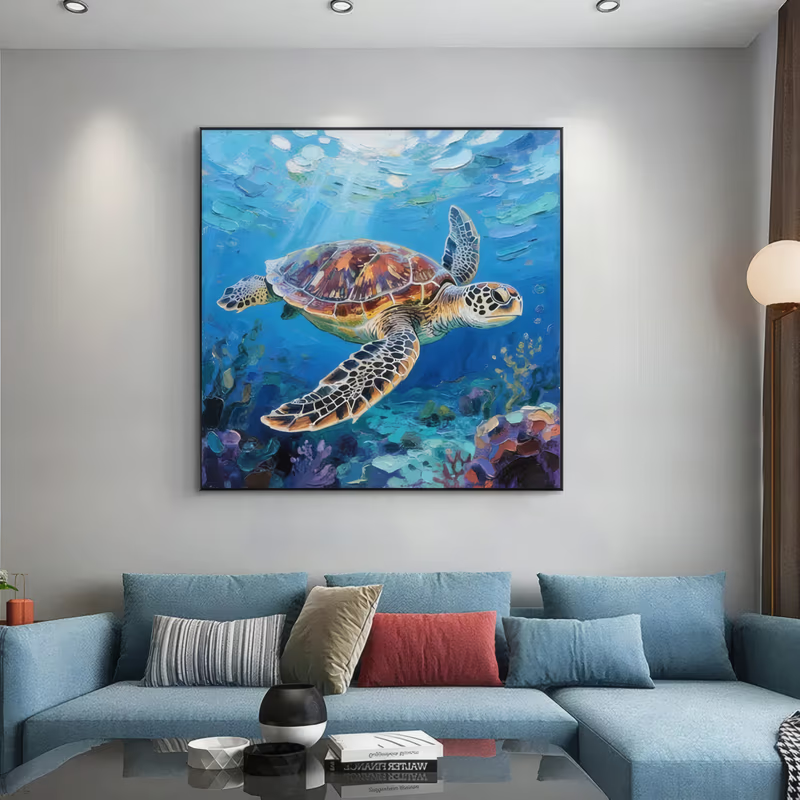
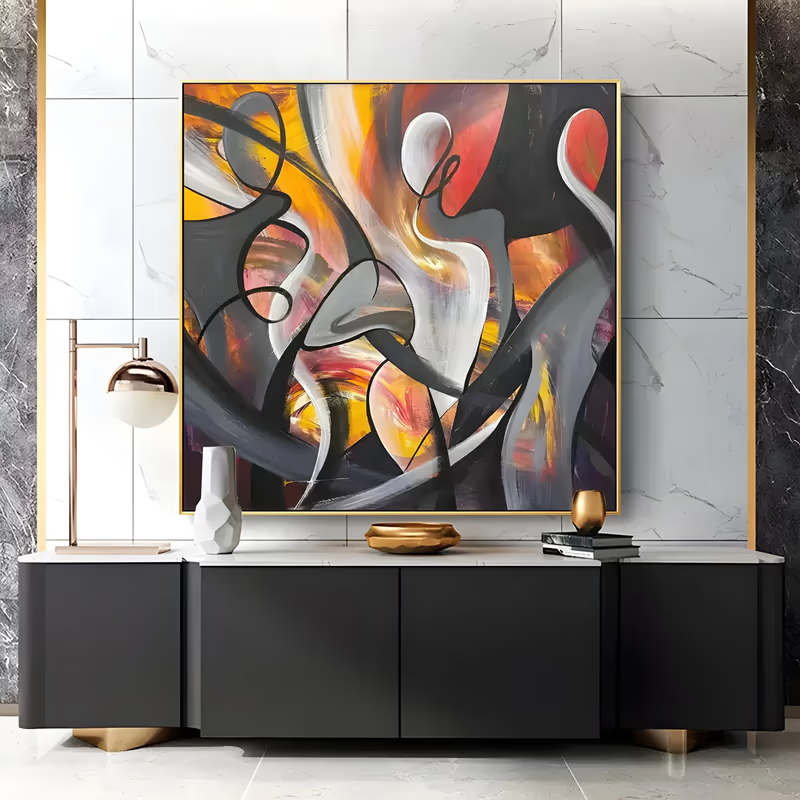
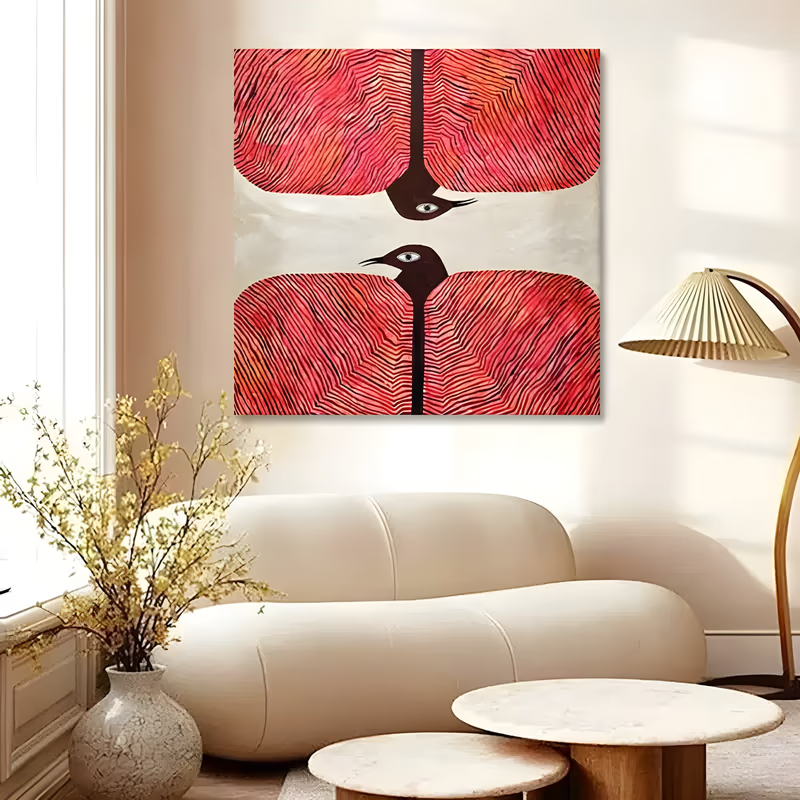
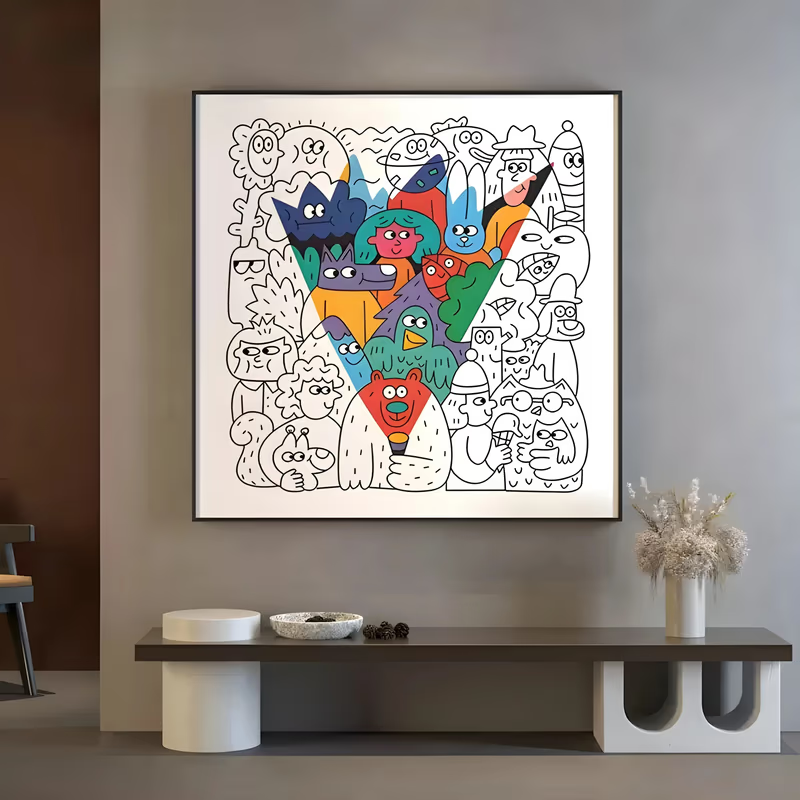
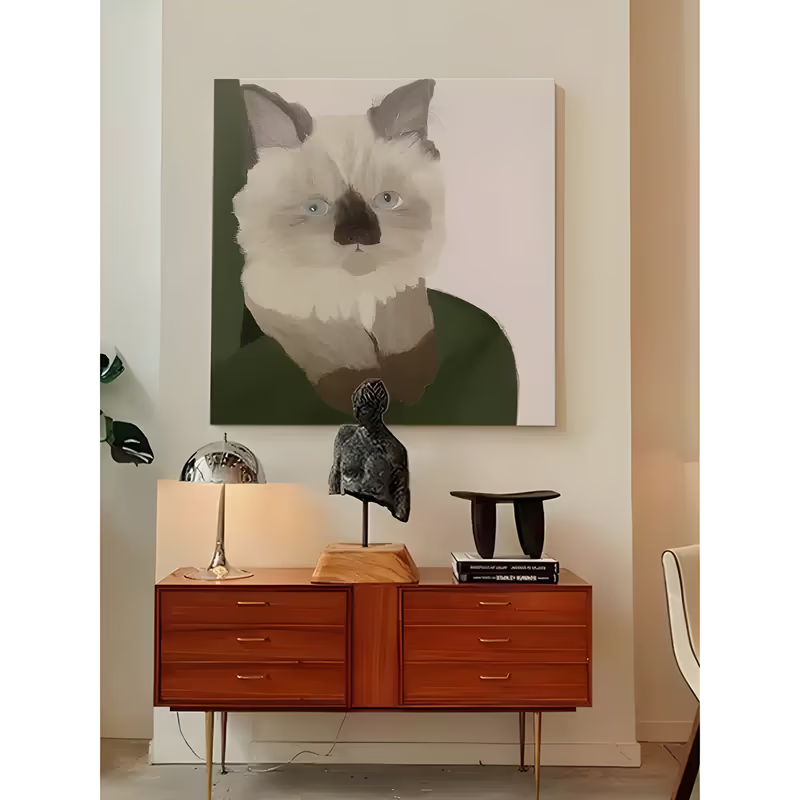
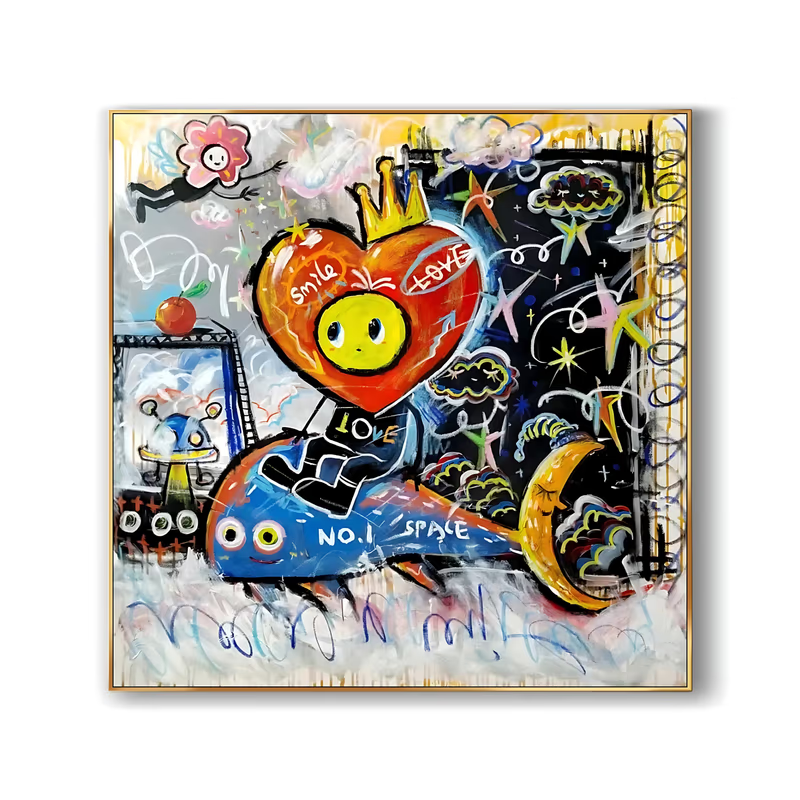
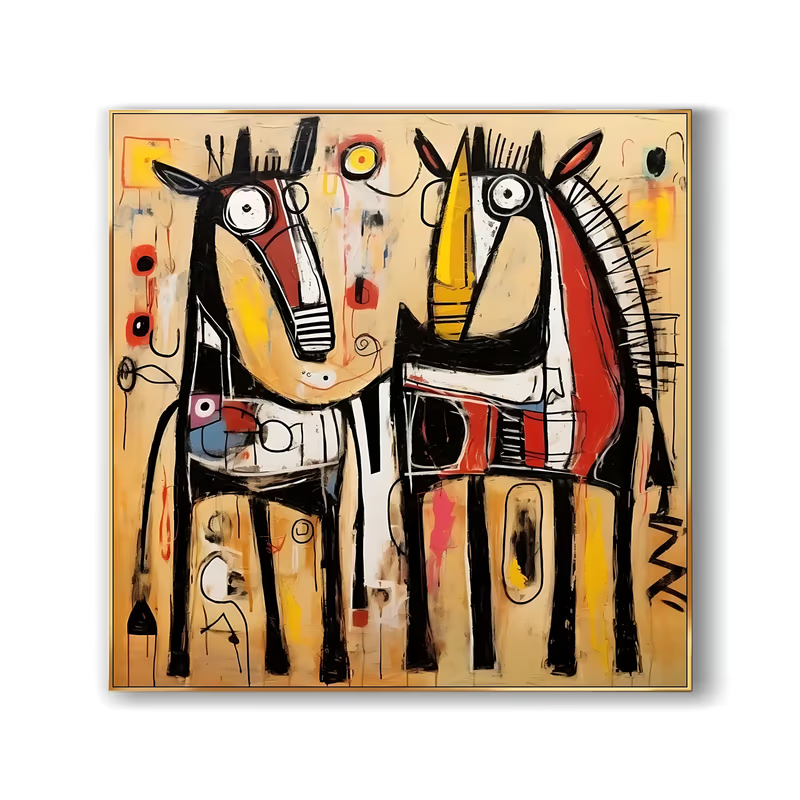
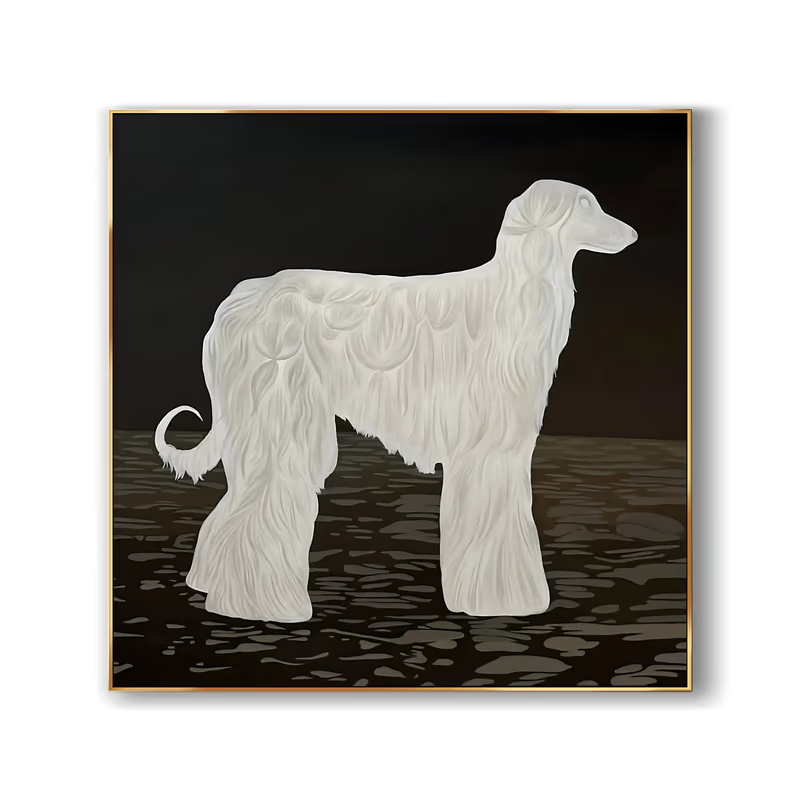
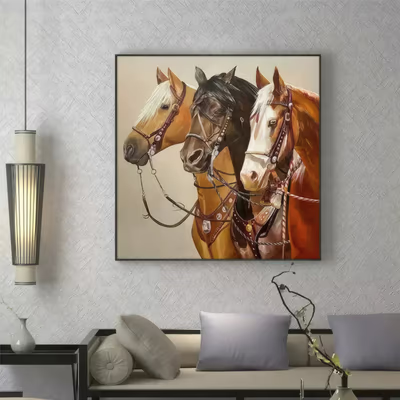
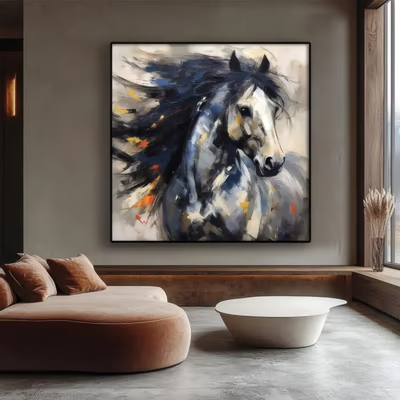
A horse's head, a bird, a sea turtle or a dancing group sits naturally in a square frame, much like a portrait photograph. These bring character to a study, a bar or a child's room.
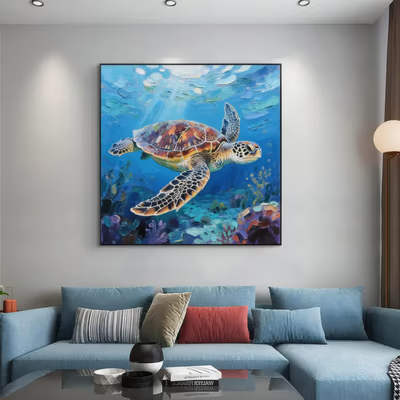
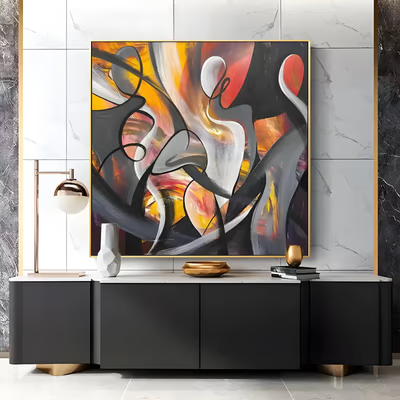
Views, seas and streets
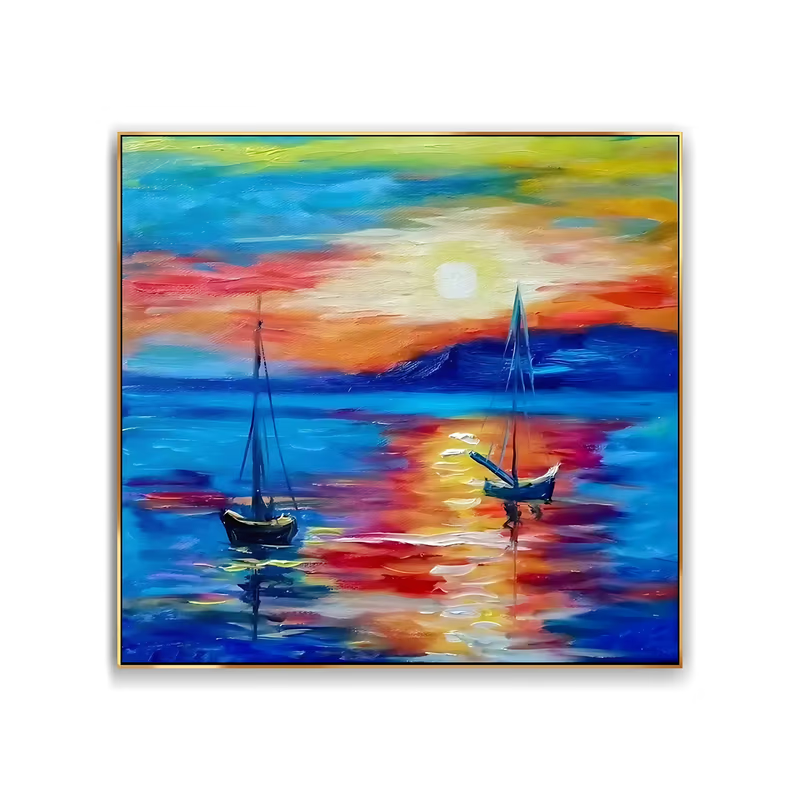
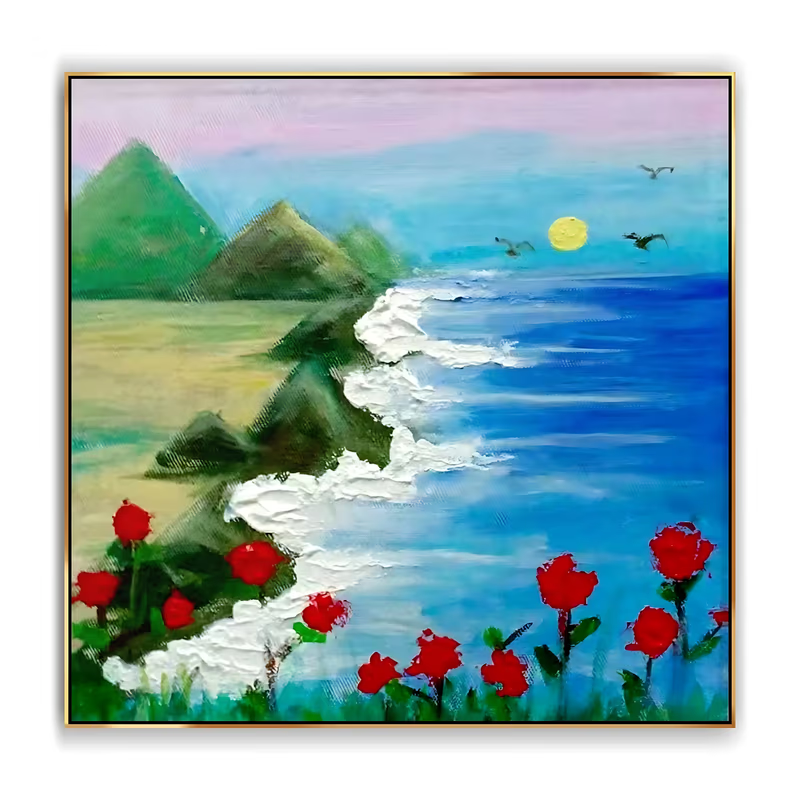
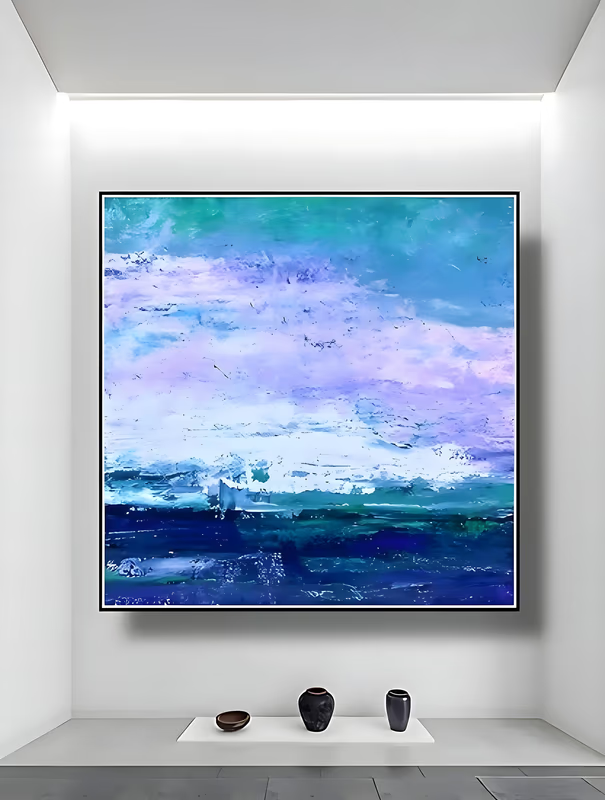
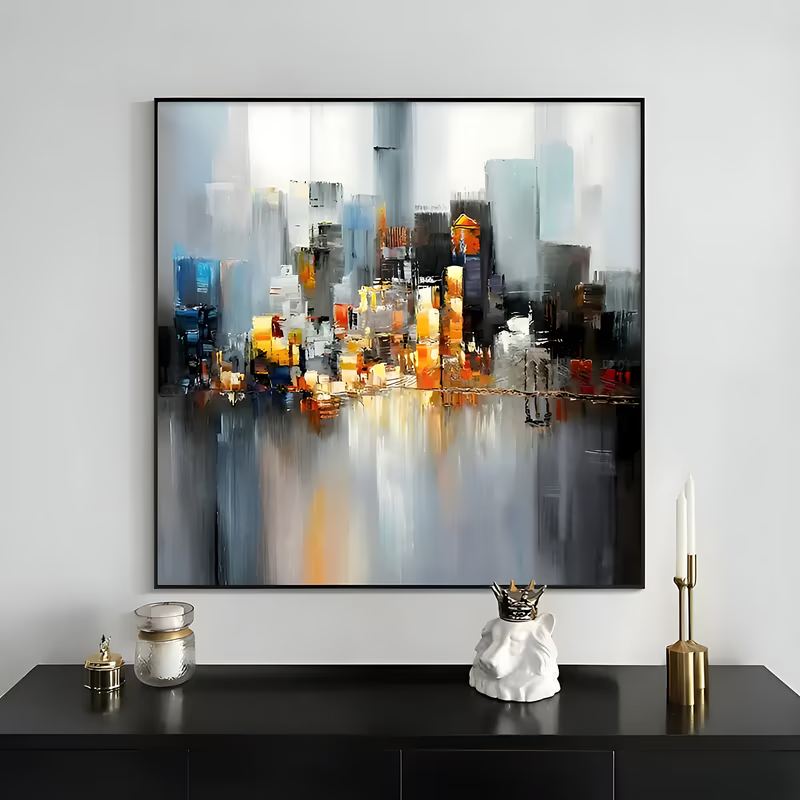
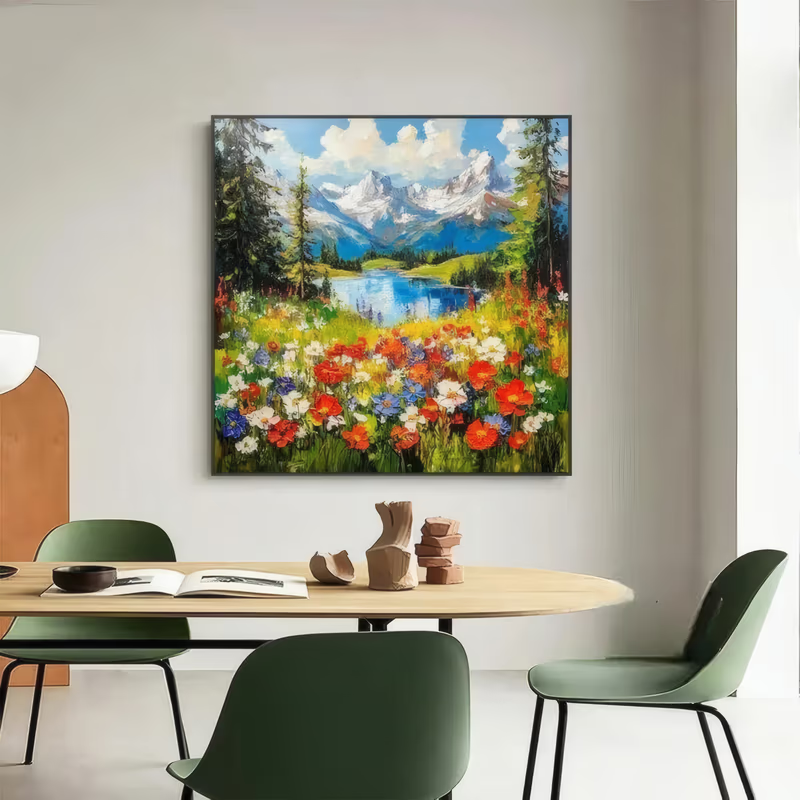
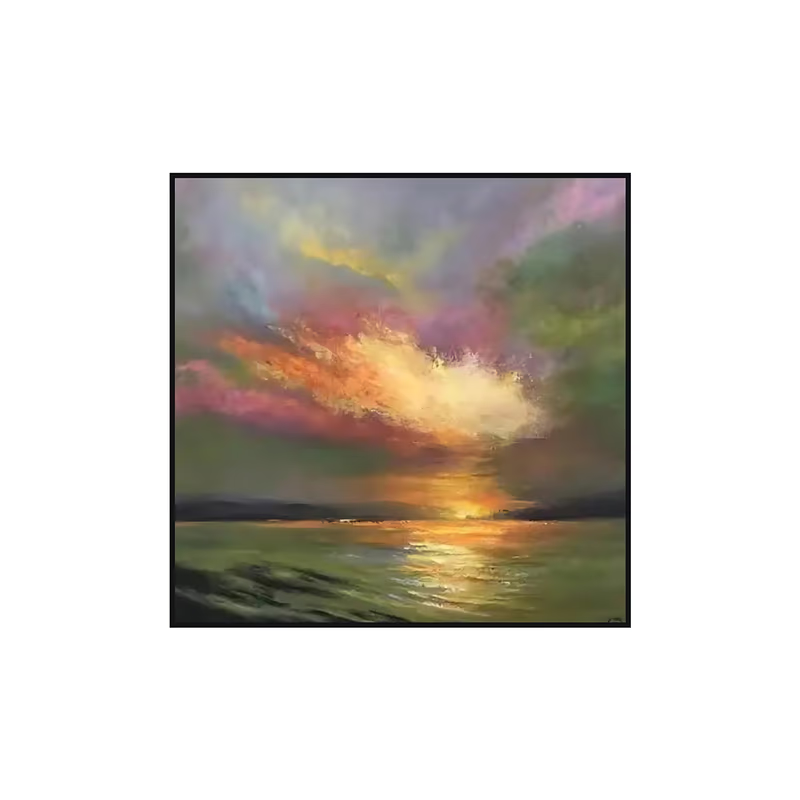
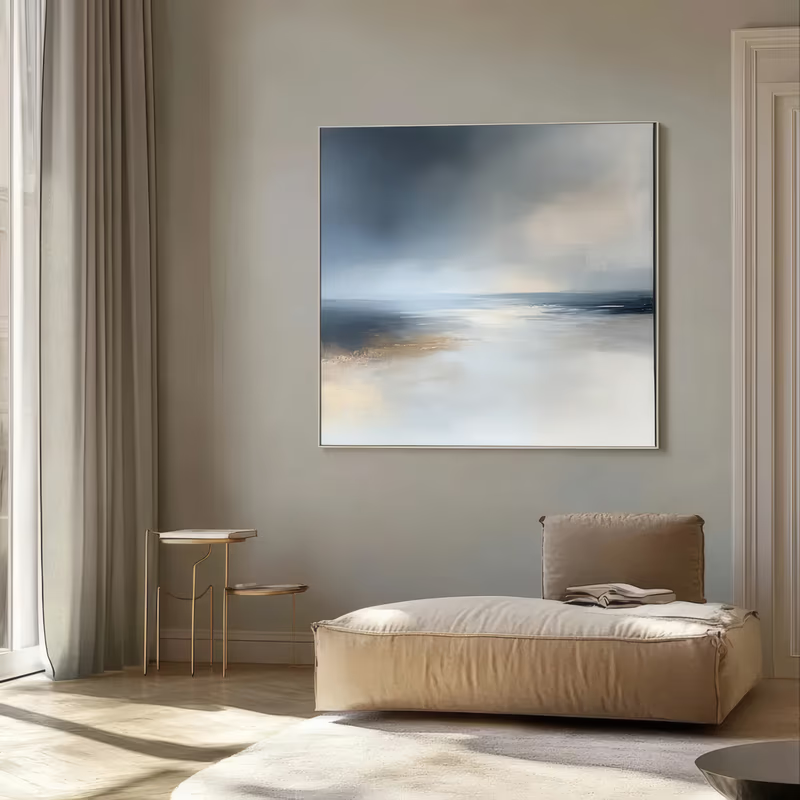
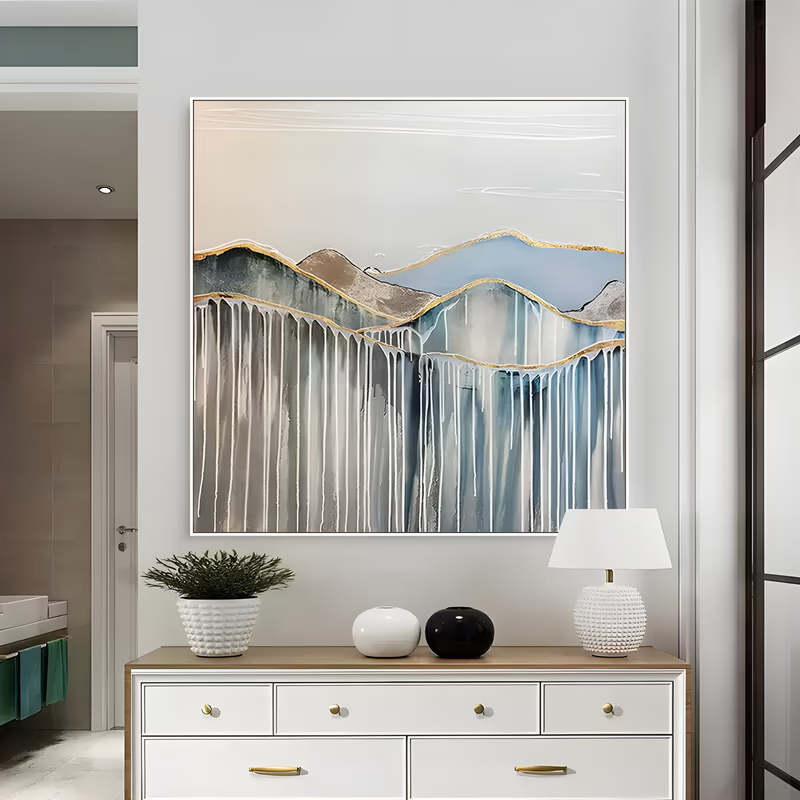
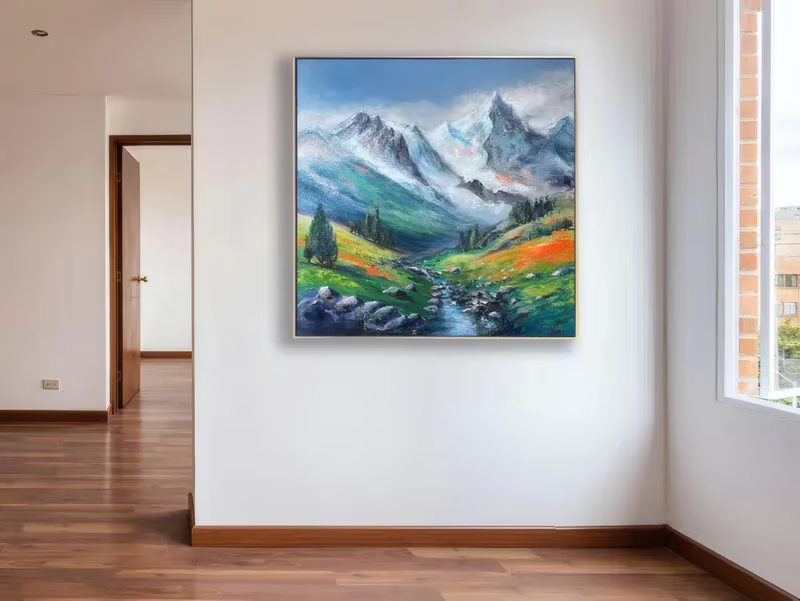
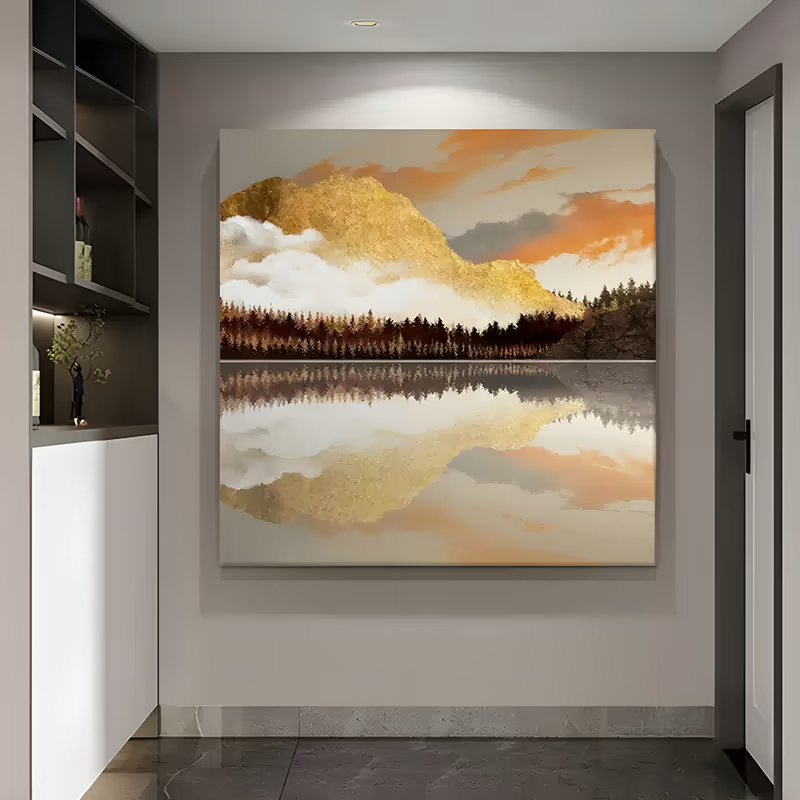
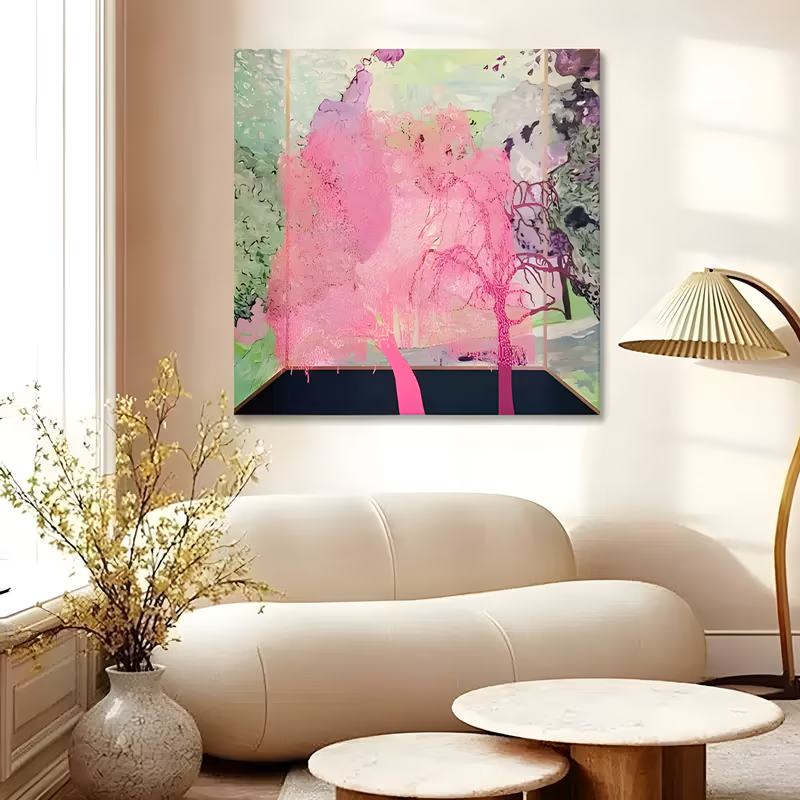
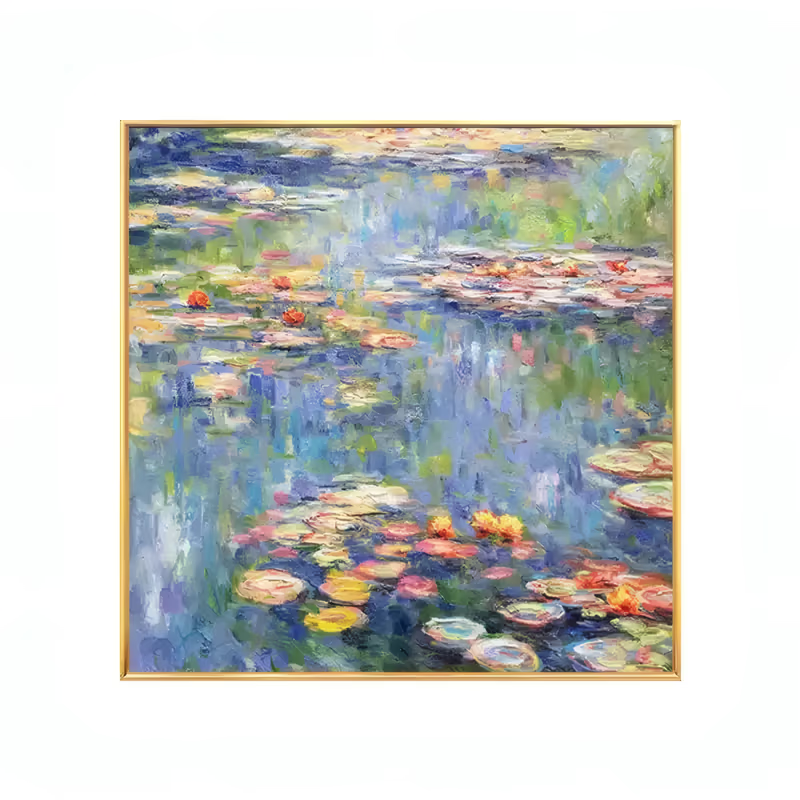
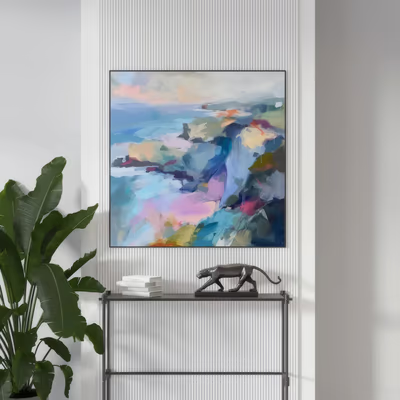
A square landscape, seascape or street at night feels like a view through a small window. Four of them in a grid, perhaps the same place in four lights, make a strong wall for a lounge or a corridor end.
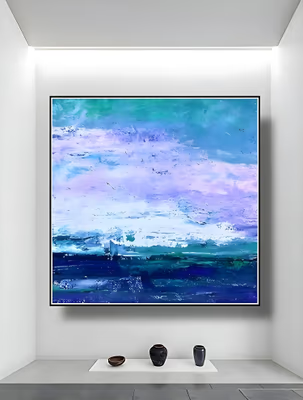
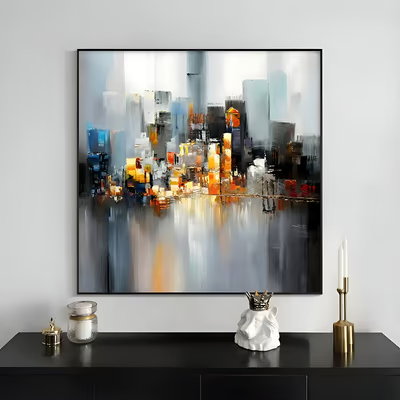
How big should square wall art be?
Size a single square to the space it centres on, about two-thirds of a desk, chest or alcove width, and remember that a square as wide as a long sofa is also that tall, which usually makes a group the better choice there.
A square cannot get wider without getting taller at the same rate, and that is the key to sizing it. Above a console 120 cm (47 in) long, a square of 75–80 cm (30–32 in) looks settled. Above a sofa 220 cm (87 in) long, a single square wide enough to fill two-thirds of it would be about 145 cm (57 in) tall, too tall for most rooms with an ordinary ceiling. That is why squares over sofas and beds usually come in pairs or threes.
Quick guide for a single square
- Above a nightstand or small desk: 40–60 cm (16–24 in).
- Above a console, chest or desk: 60–90 cm (24–35 in).
- Chimney breast or alcove: about two-thirds of the breast or alcove width.
- Bare feature wall: 100–150 cm (39–59 in) or more, centred at about 145–152 cm (57–60 in) from the floor.
The standard sizes on each work run from 61 × 61 cm to 183 × 183 cm. Smaller, larger and in-between sizes are painted to order; very large squares are covered under oversized and custom sizes.
How do you hang square wall art in a grid or a row?
Hang square canvases of identical size with identical gaps, 5–8 cm (2–3 in) for most sizes, align every outer edge, and size and position the whole grid or row as if it were one painting.
Choose the layout from the wall
A row of two or three squares makes a wide band that suits a sofa, a bed or a sideboard. A 2 × 2 grid makes a larger square for a feature wall or a chimney breast. A 3 × 3 grid of smaller squares suits a large, plain wall in a lounge, a restaurant or a lobby. A vertical stack of two or three squares fits a narrow pier between windows.
Size the group as a unit
Add the canvas widths and the gaps together: over furniture, that total should come to about two-thirds of the furniture width; on a bare wall, about two-thirds of the clear wall. Put the centre of the group, not of each canvas, at about 145–152 cm (57–60 in) from the floor, or keep the lowest row 15–25 cm (6–10 in) above the furniture. For canvases larger than about 100 cm, widen the gaps to 8–10 cm so the group does not look crammed.
Plan the images
A grid can be one composition carried across all the canvases, a set of related subjects in one palette, or one square composition painted in several colourways. Cut paper templates to size and tape them up before drilling; misaligned edges show far more in a grid than anywhere else.
How is square art used across hotels, spas and offices?
Square art is the easiest format to roll out across many rooms, because one composition can be painted in several colourways and hung in the same position in every room, desk wall or treatment room.
In a hotel, a square over each desk or a pair over the nightstands gives every room a consistent layout while the colourway changes from floor to floor, so rooms feel related but never repeated. Serviced apartments use the same approach; see serviced apartments and aparthotels. In spas, a calm square in each treatment room fits the small walls and the symmetry of a room built around a bed; see spas and wellness centres. In offices and meeting rooms, squares and grids of abstract work give a modern, ordered look; see corporate offices.
For a large roll-out, the usual route is to approve one sample square first, then order the series. Volume pricing begins at 10 pieces, and every piece in a series is approved from its own progress photos.
Can a rectangular painting be redrawn as a square canvas?
Yes: any work, tall or wide, can be painted as a square, because the composition is redrawn around a centre rather than cut down to fit.
Cropping a wide landscape to a square would cut off one or both sides of the view. Redrawing it moves the elements closer together: the horizon stays, the main tree or boat shifts towards the middle, and the sky or foreground is given a little more depth so the picture balances. A tall floral becomes a fuller, rounder arrangement, and an abstract is reworked so its movement circles rather than runs. The palette and the hand of the original stay the same. Send the code of the piece you like with the square size you need, or start from a photograph of your own; see custom paintings.
How do you order square wall art made to measure?
Send the size of the square (or of each square in a grid) and your colours, and every canvas is painted to order, shown to you at each stage and approved before it ships.
For a grid or a pair, say how many squares and whether they should carry one composition, related subjects or the same piece in different colourways. To fit a scheme, add a paint code, a fabric or a photograph of the room; the palette is adjusted before the first stage. Progress photos or video arrive at each stage, the next stage begins only after you approve, and you sign off a final photograph before dispatch.
Square canvases take about 10 days to paint and 5–7 days in transit by DHL, FedEx or UPS express, routed by iHomeArt, with the shipping cost confirmed before dispatch. Each can be sent rolled, stretched and frameless ready to hang, or framed in gold, silver, black, white or wood; matching frames keep a grid crisp. Plaster and deep relief squares ship stretched or framed, and are rolled only if you accept a thinner texture. Request a quote for one square or a whole grid; replies come within one business day.