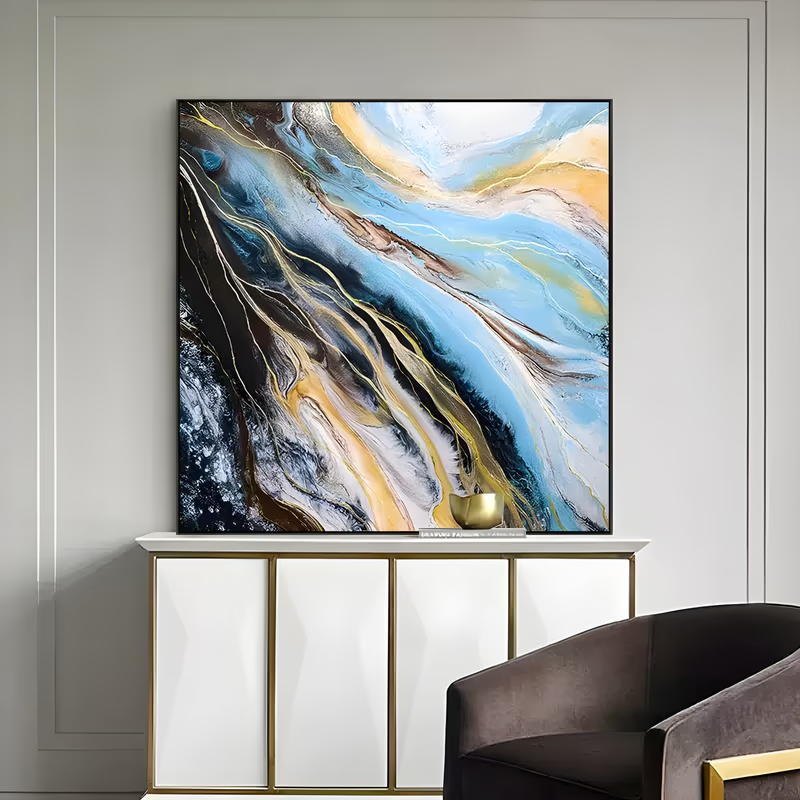

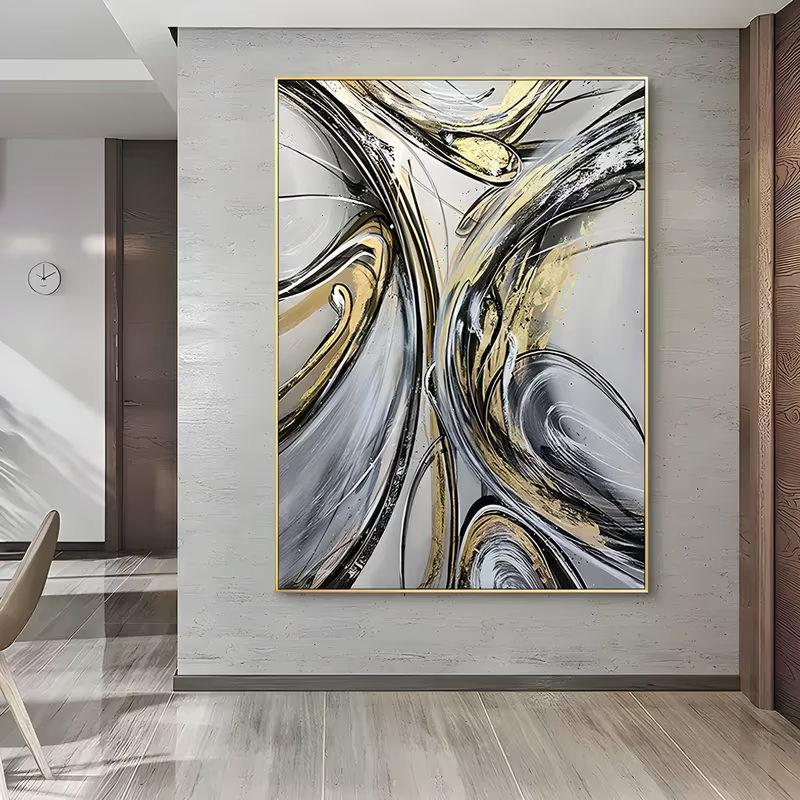
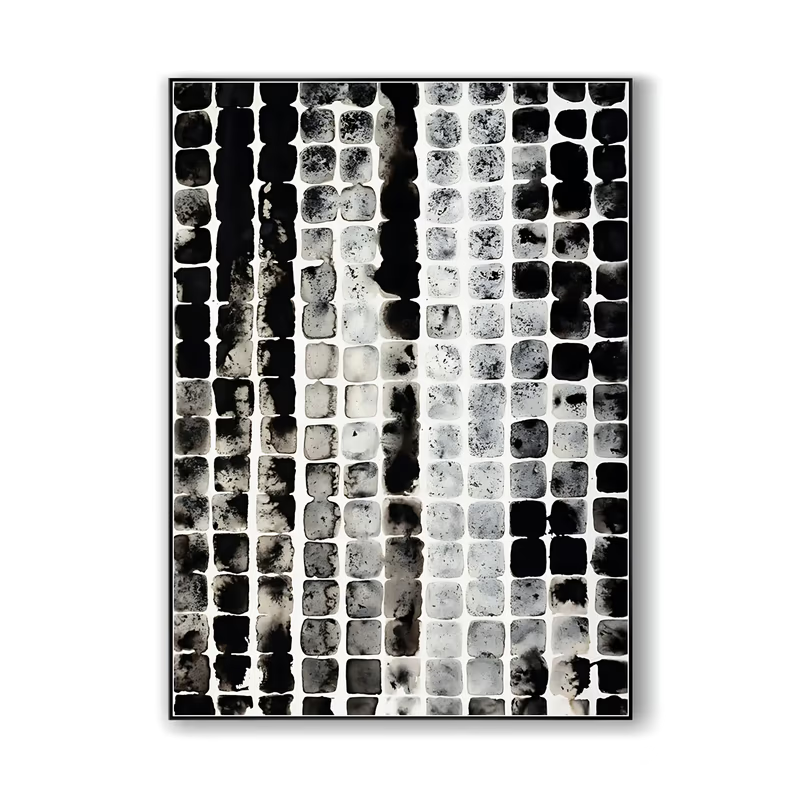
Black wall art guide · Updated
How to use black wall art for contrast and impact
Key takeaways
- Black anchors a room: one black canvas gives a pale scheme a fixed point and makes the colours around it look cleaner and lighter.
- Choose the black by its edge: jet black for graphic, high-contrast pieces; charcoal and ink for softer, layered ones; warm black beside walnut and brass.
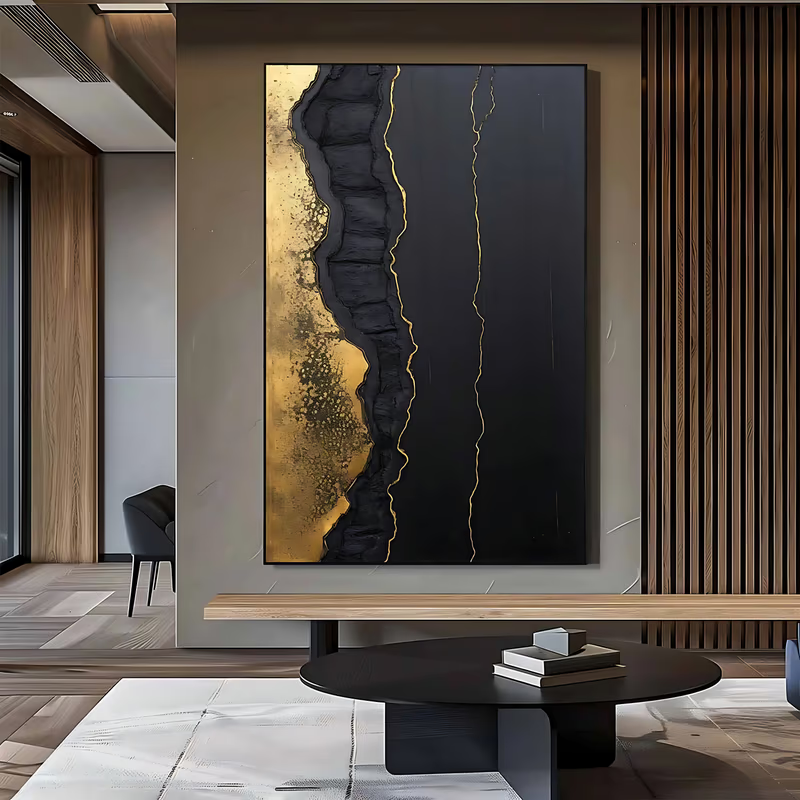
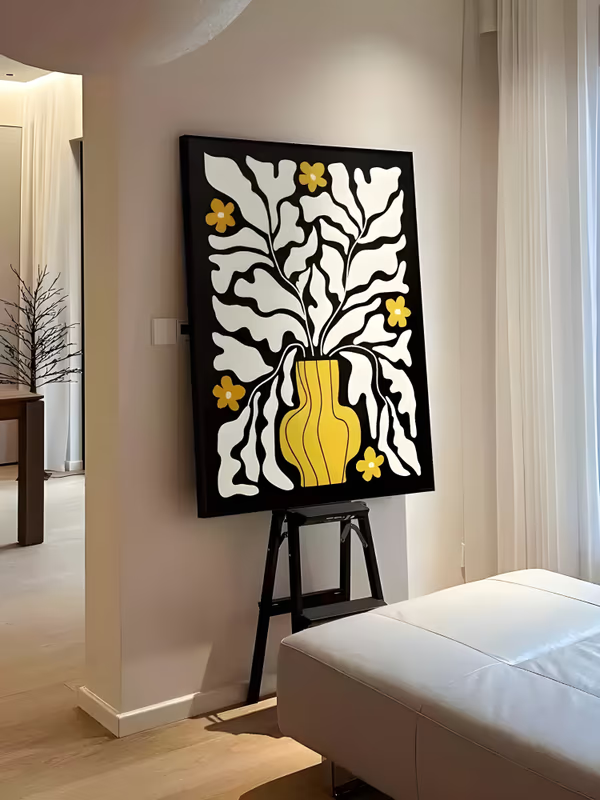
- Contrast is the design: black with white is the sharpest pairing, black with gold the richest, black with one hot accent the boldest.
- It can go smaller: black carries visual weight, so a canvas about half the furniture width still holds a wall, and pairs and grids stay crisp.
What does black wall art do for a room?
Black wall art gives a room an anchor: it adds contrast, weight and a graphic edge, and it makes the colours around it look cleaner and brighter.
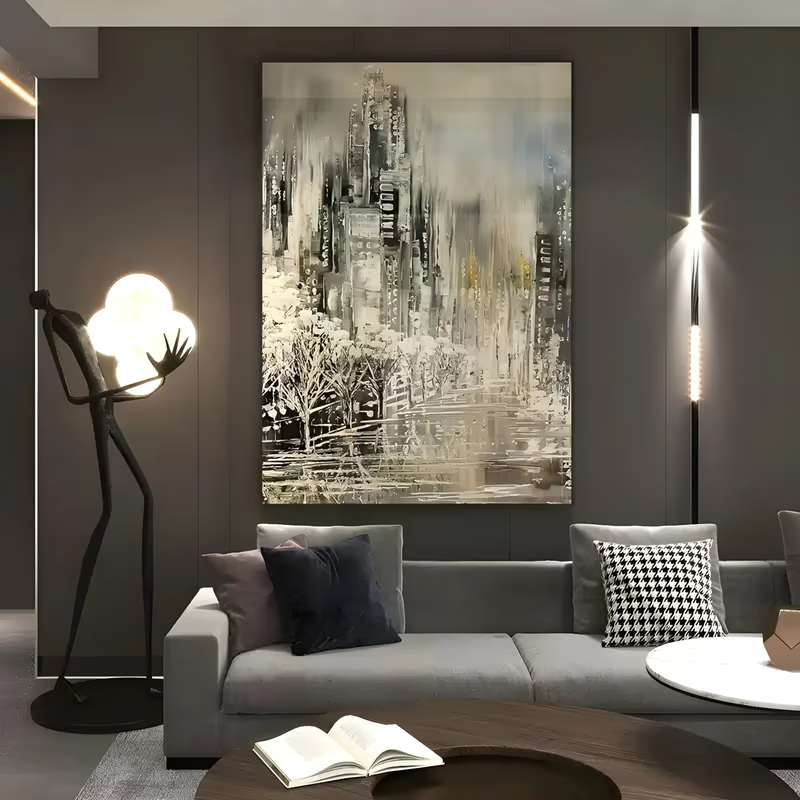
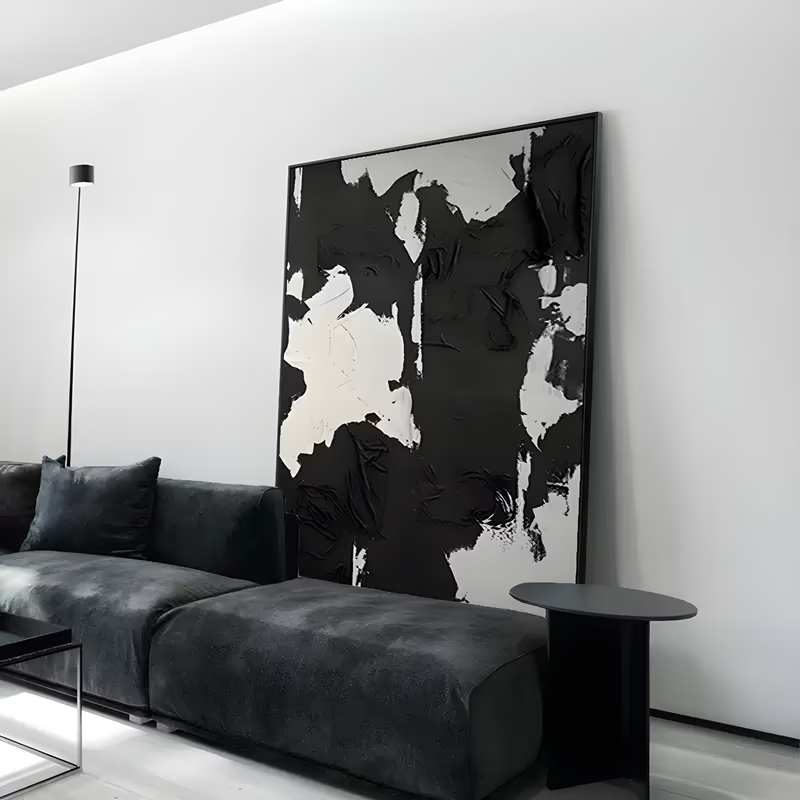
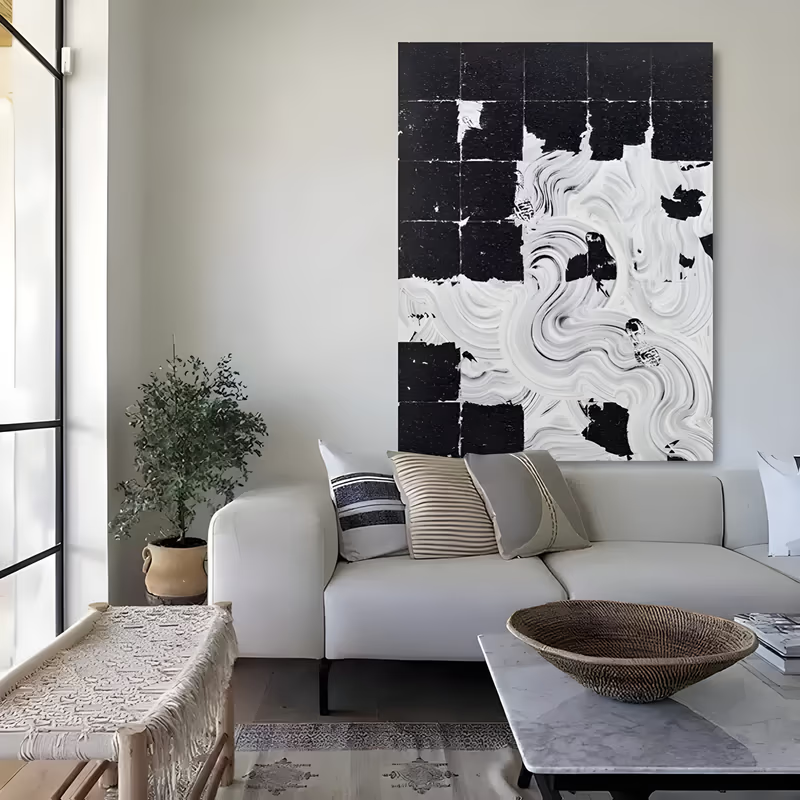
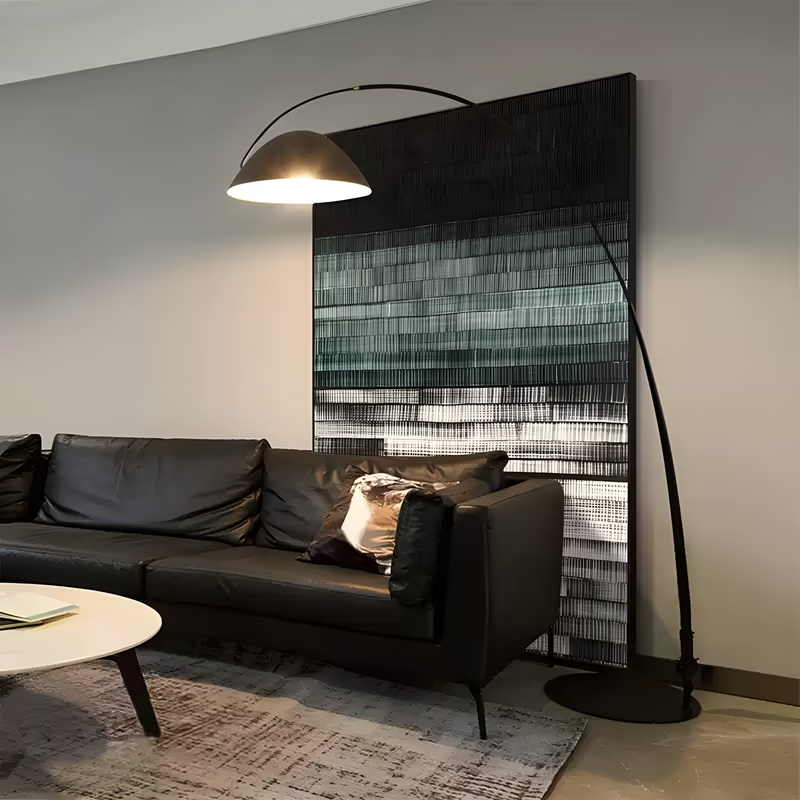
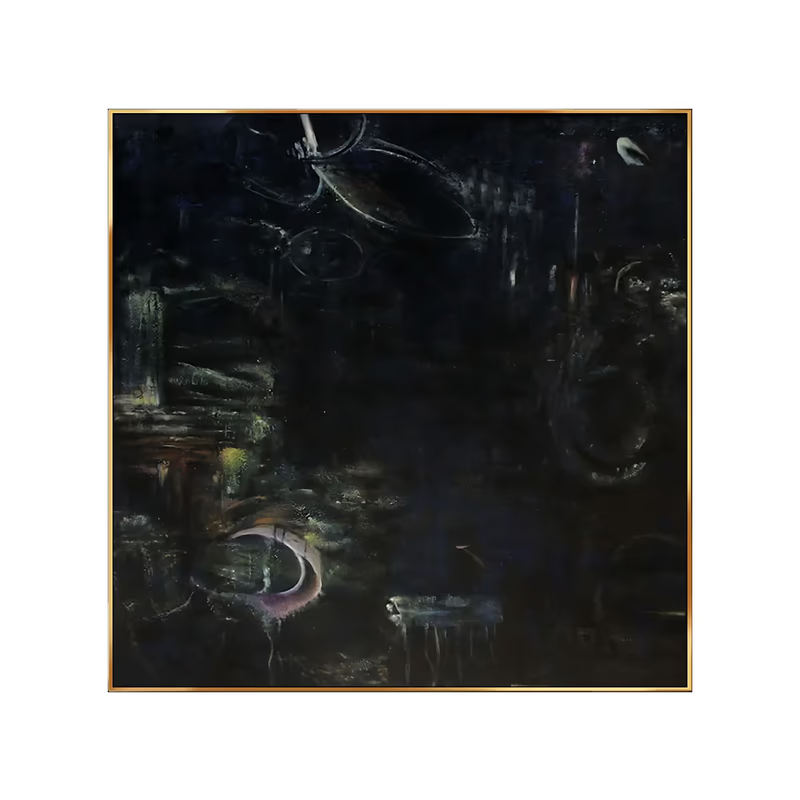
The eye goes first to the darkest point in a room, so a black canvas decides where people look. Against a white, cream or pale grey wall it creates the strongest tonal contrast available, stronger than any colour, which is why black and white art reads so clearly from the far end of a lobby or across an open-plan living space. Black also carries no hue of its own, so it never clashes with upholstery: it simply sharpens whatever is already there.
Designers often use a single black painting the way a writer uses a full stop. A soft, light scheme can drift without one; with one, it looks deliberate. The limit is quantity rather than shade. One black piece per wall gives a room definition; three or four black pieces in a small room start to feel like a gallery after hours.
Does black wall art make a room feel smaller?
Not when it is balanced: a black canvas on a light wall usually makes a room feel more defined rather than smaller, and on a dark wall it can make the wall seem to fall back.
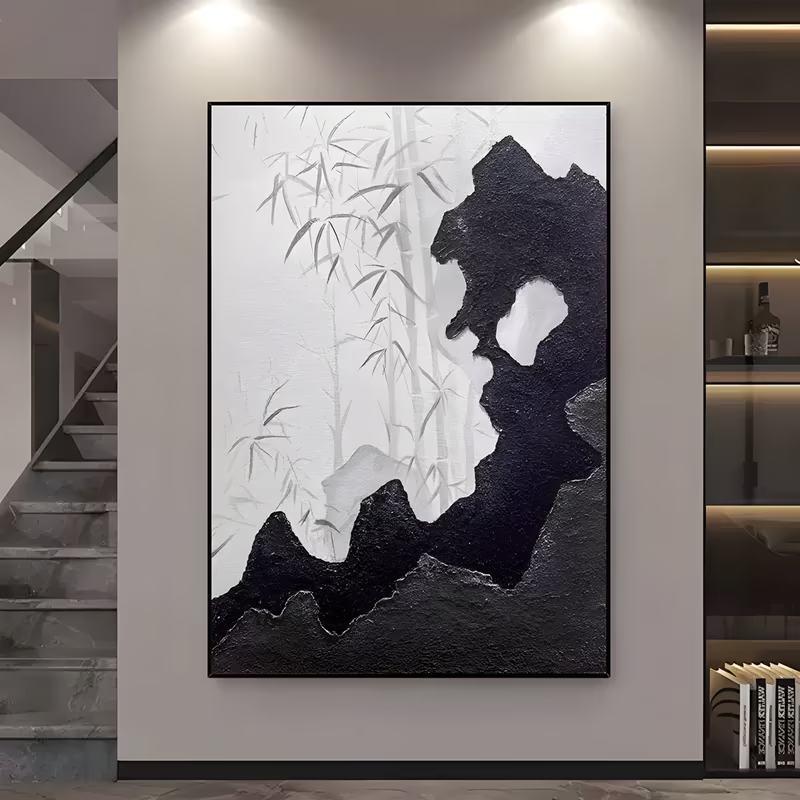
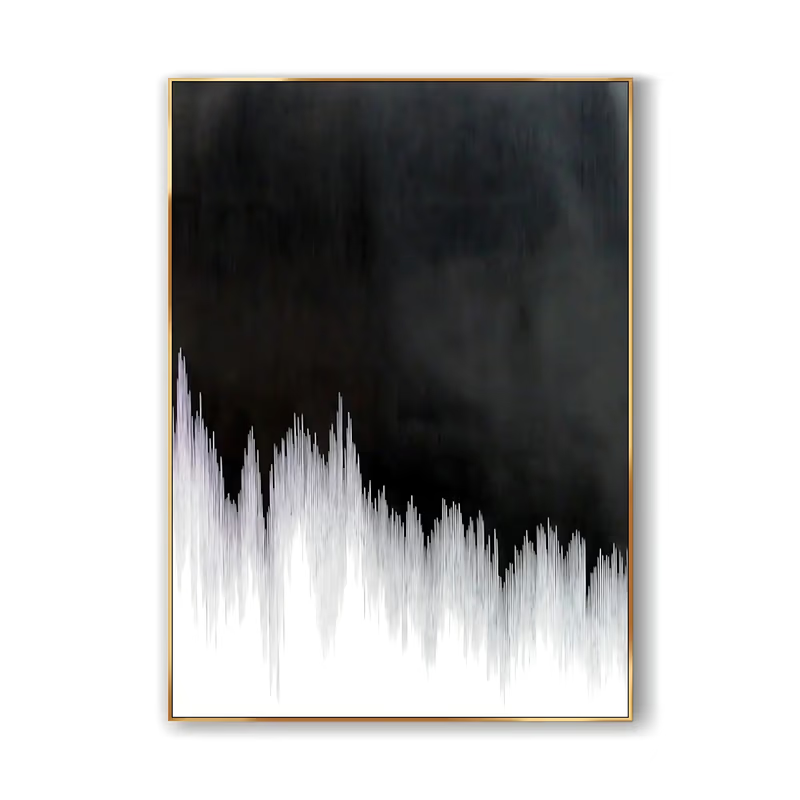
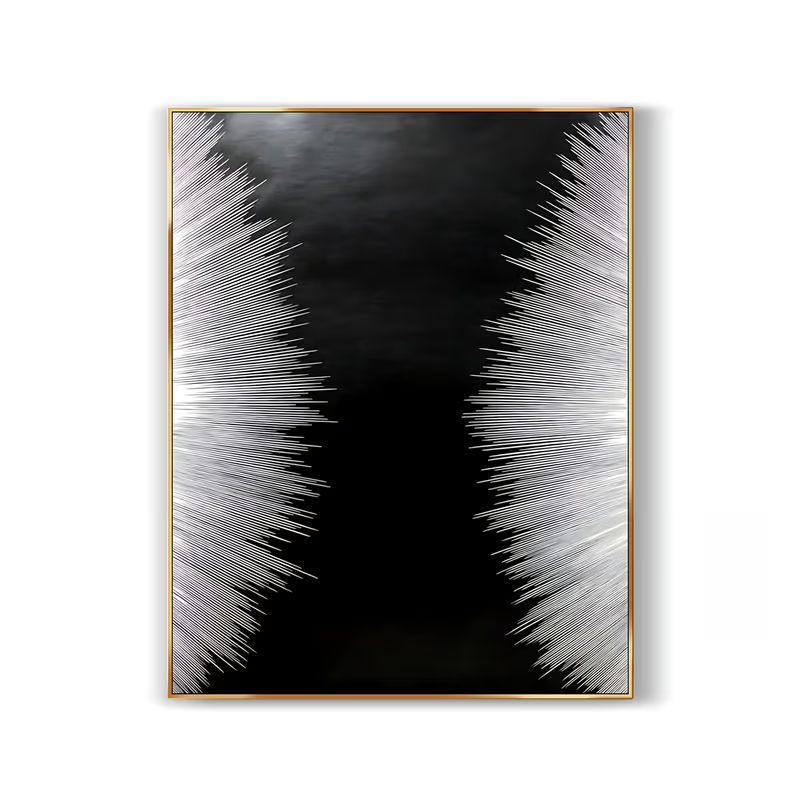
What shrinks a room is dark tone spread across every surface with too little light, not a single black painting. Keep the floor, the large textiles or the ceiling light, and the black canvas will read as a feature rather than a weight. In a small room, choose black art with white line work, or a pale ground carrying black marks, so the painting has air inside it.
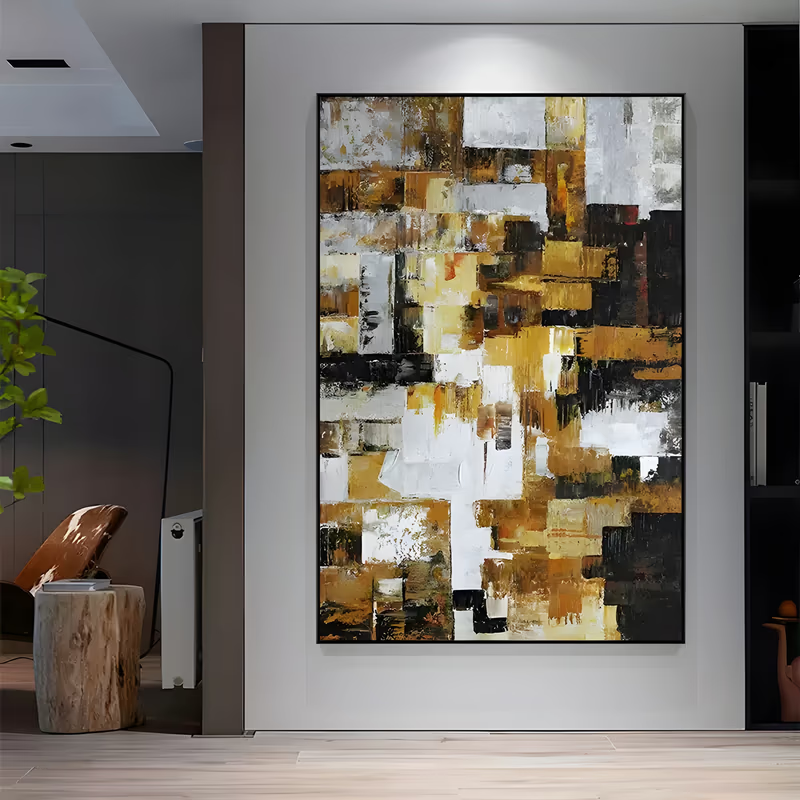
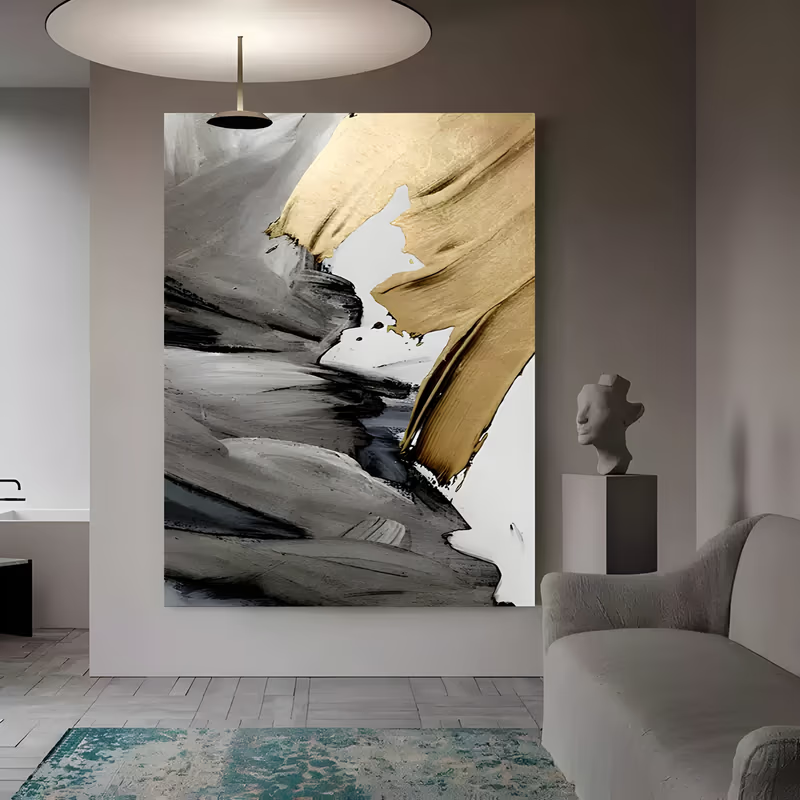
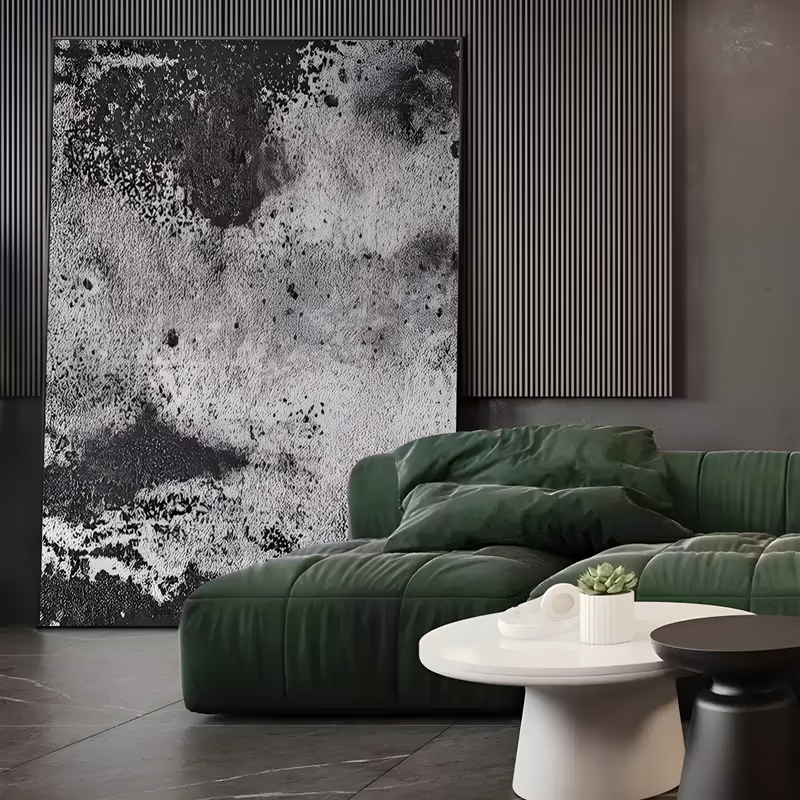
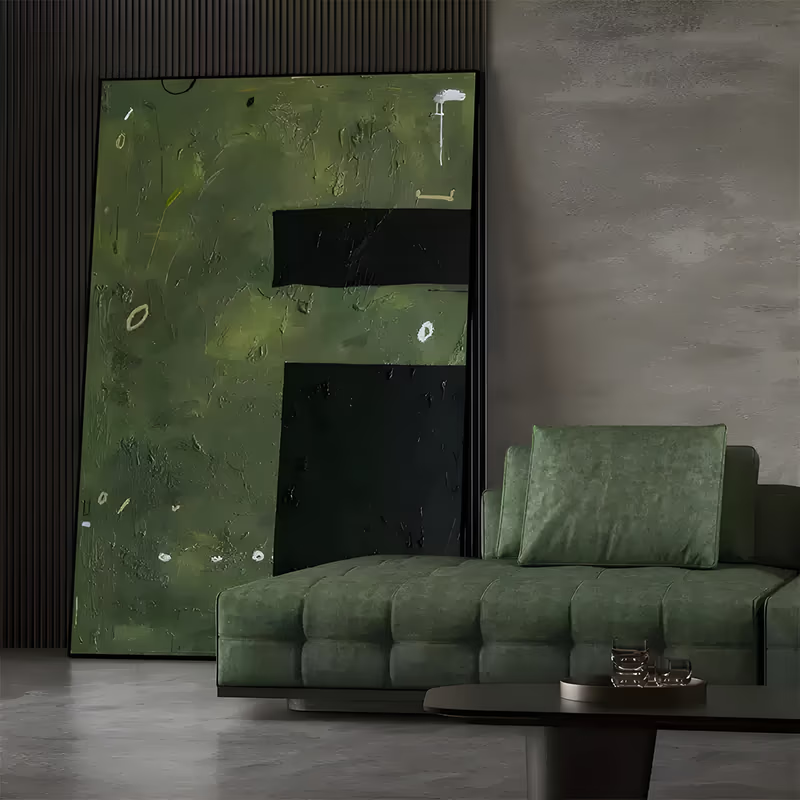
On a wall already painted charcoal, navy or deep green, black art does something different: its edges soften into the wall and the wall itself seems deeper, a tone-on-tone effect used in bars, snugs and dining rooms. Pick a piece with texture, gold or a pale motif so there is still something to see.
Which black is right: jet, charcoal, ink or warm black?
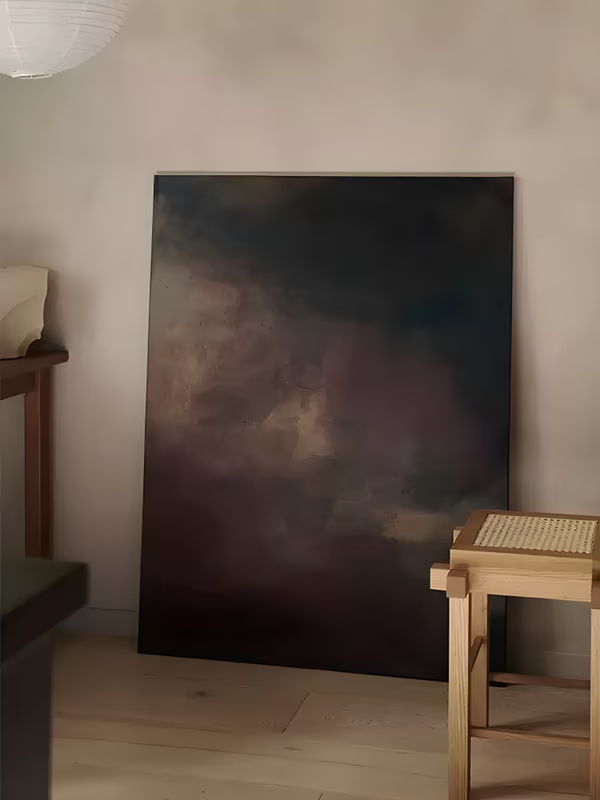
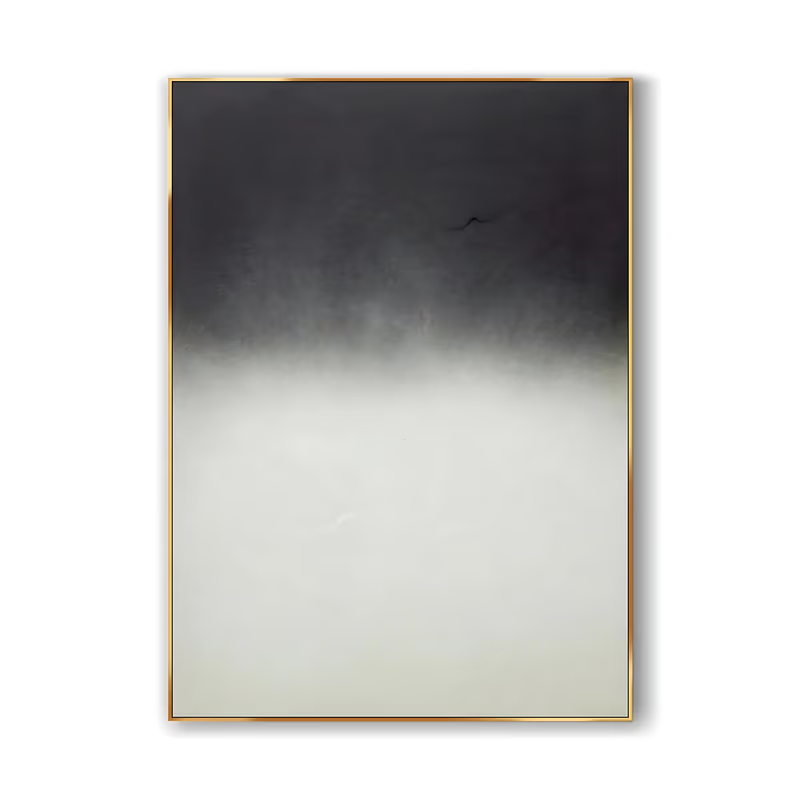
Use jet black for crisp graphic contrast, charcoal for a softer modern look, ink or blue-black for cool evening rooms, and warm black beside wood, leather and brass.
| Black | How it reads | Works with | Rooms |
|---|---|---|---|
| Jet black | Graphic and crisp; maximum contrast | White walls, chrome, glass, marble | Galleries, offices, modern living rooms |
| Charcoal | Softer and mineral; forgiving in daylight | Grey, concrete, oak, linen | Living rooms, meeting rooms, corridors |
| Ink and blue-black | Deep and cool; close to navy after dark | Navy, teal, silver, velvet | Bedrooms, studies, cocktail bars |
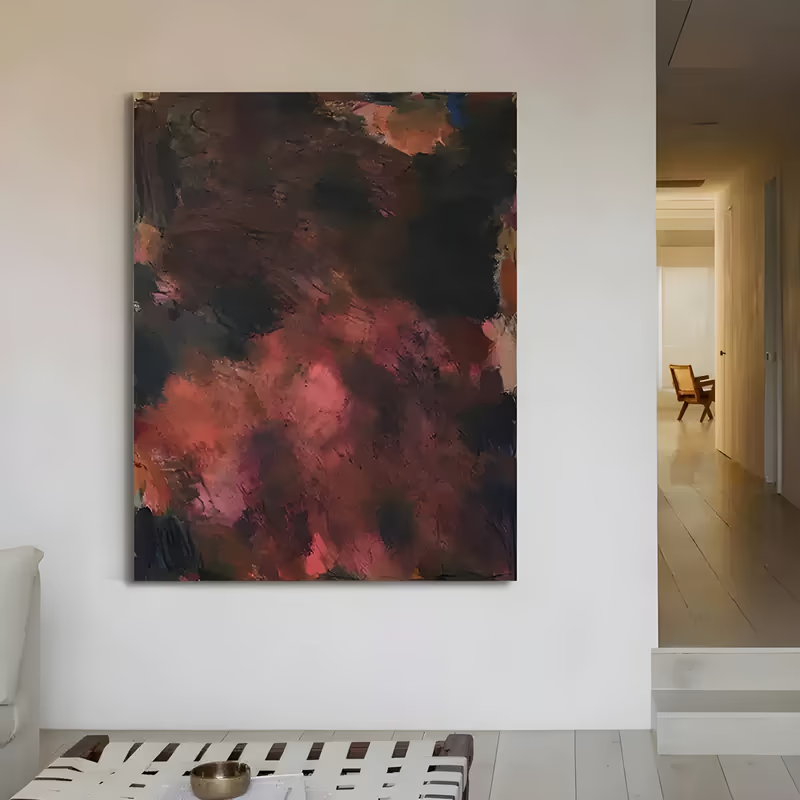
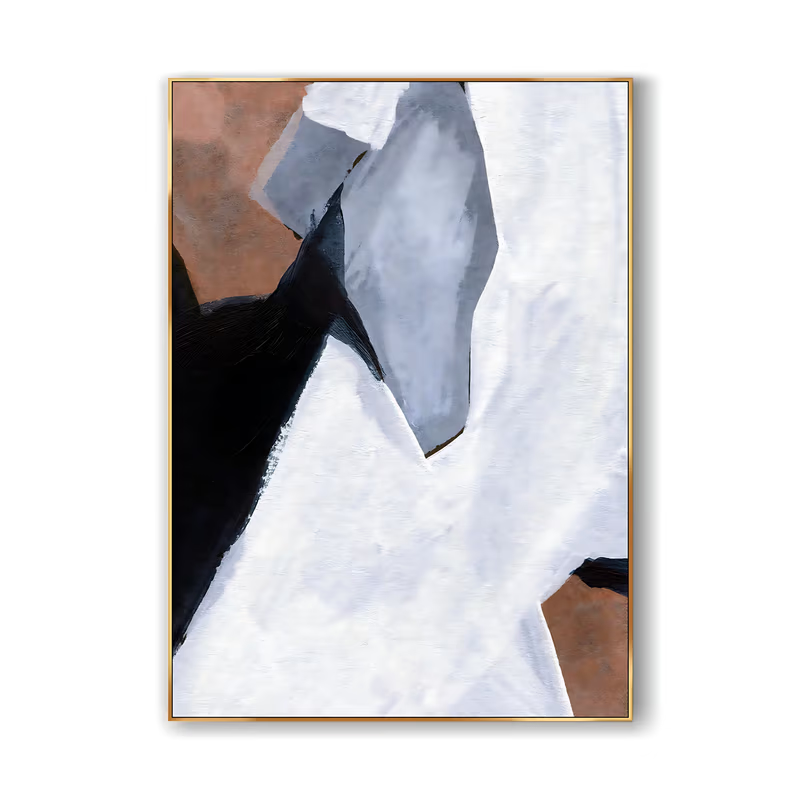
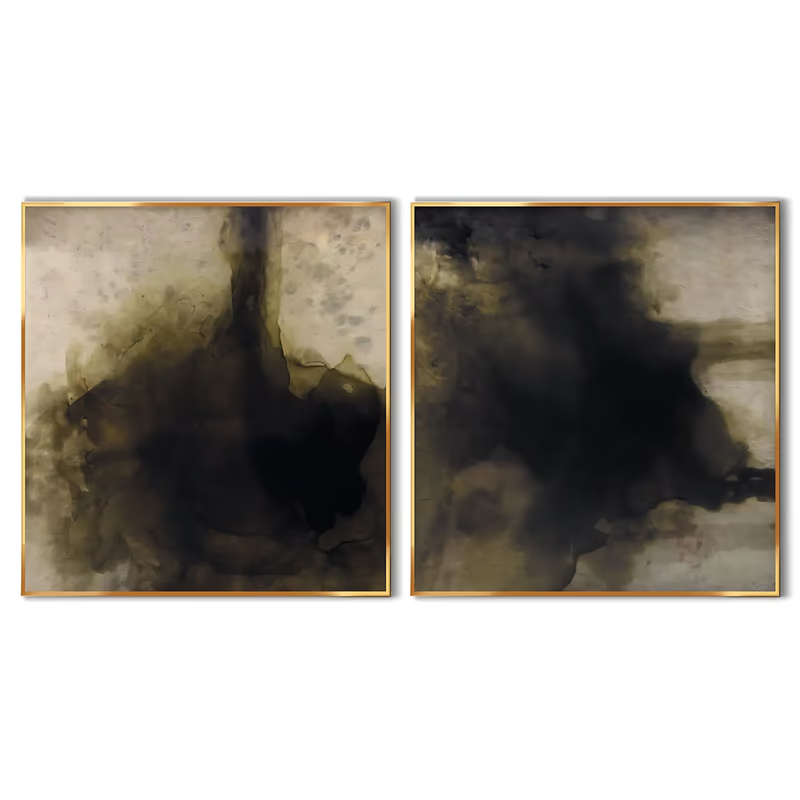
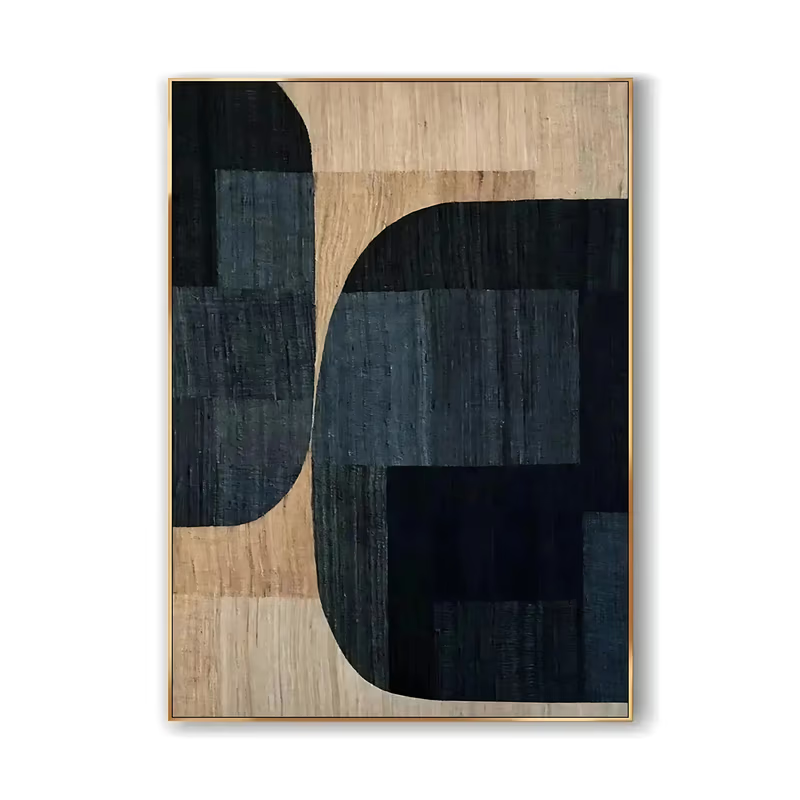
| Warm black and umber | Rich and earthy; quieter than jet | Walnut, leather, brass, terracotta | Dining rooms, restaurants, libraries |
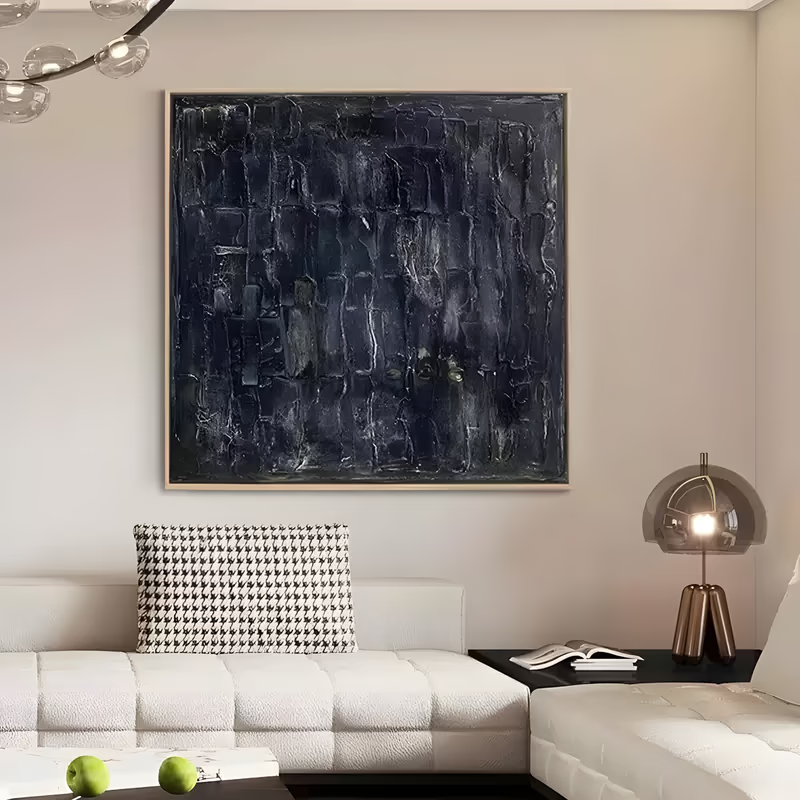
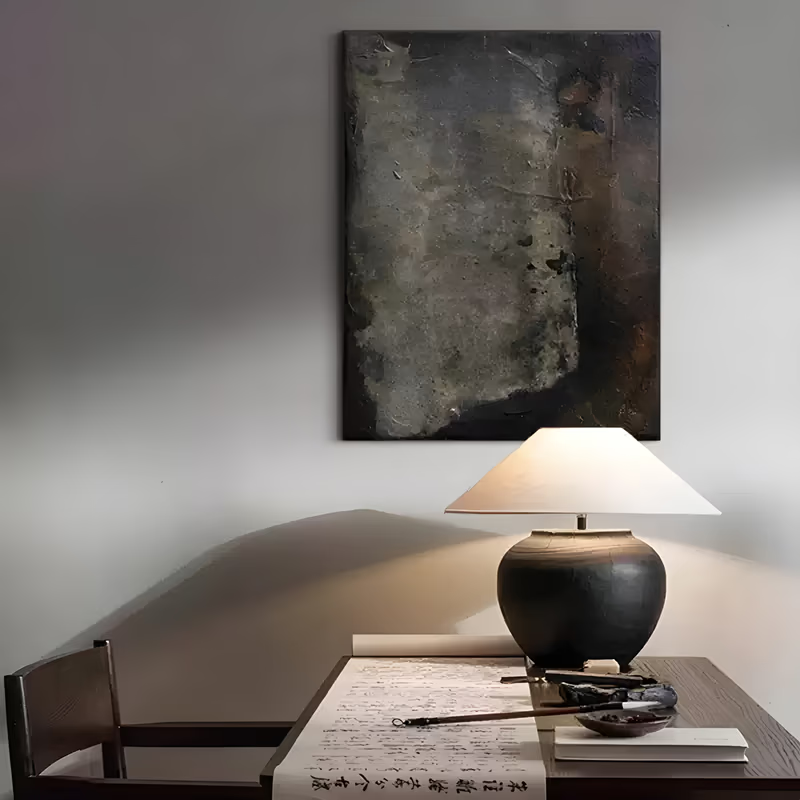
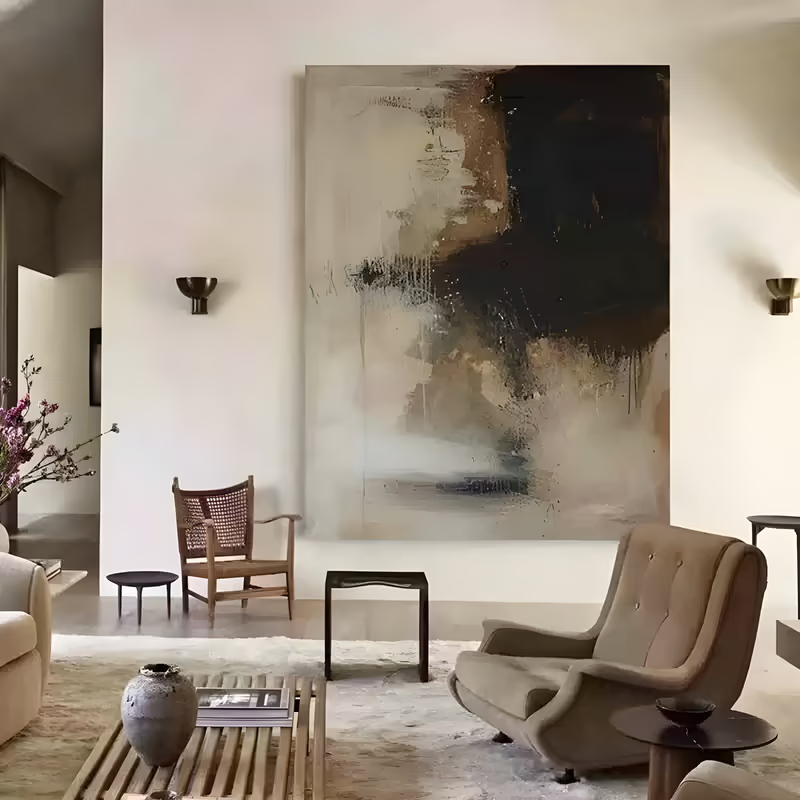
Surface changes the black as much as pigment does. A black plaster field reads as charcoal in daylight because every ridge catches a little light, while smooth brushed black looks deeper and closer to ink. If the room is bright, textured black keeps detail; if it is lit by lamps, smooth black gives the richest dark.
What kinds of black canvas art are there?
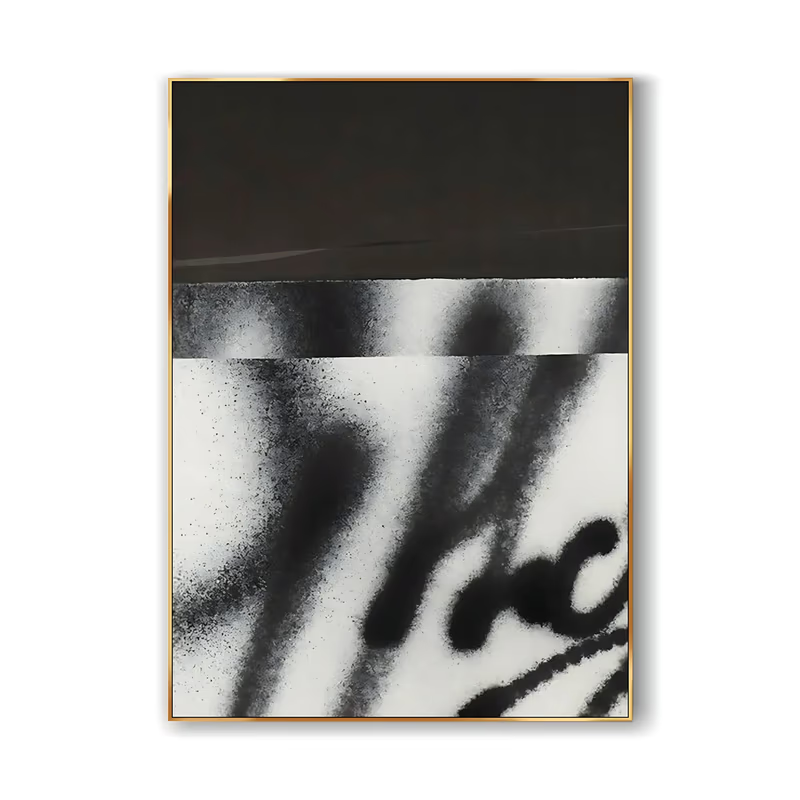
Black canvas art falls into four main kinds: black and white geometric work, animals on black, flowers on black, and black textured relief.
Black and white geometric art
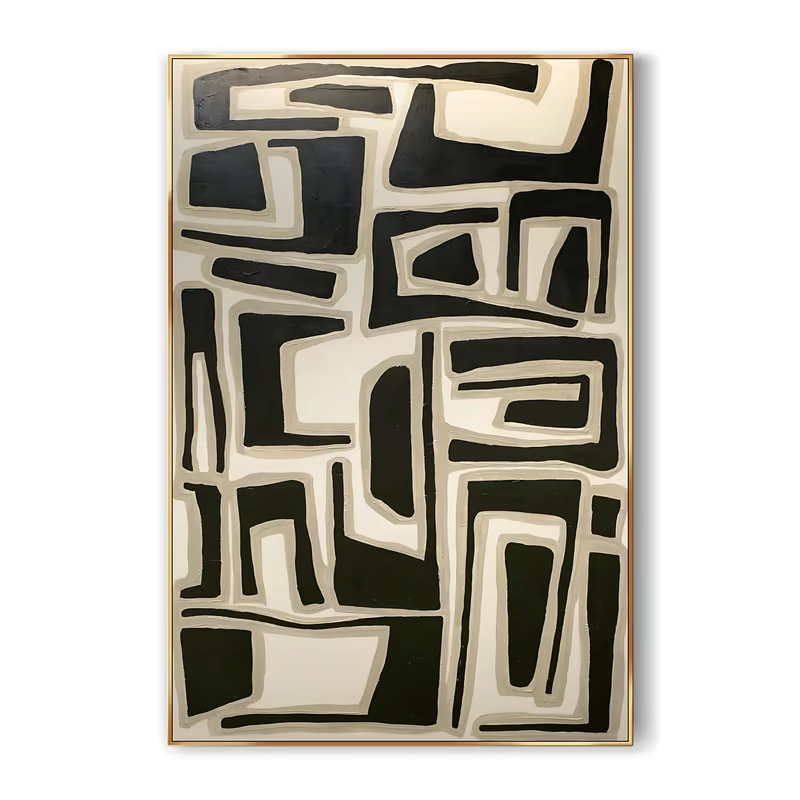
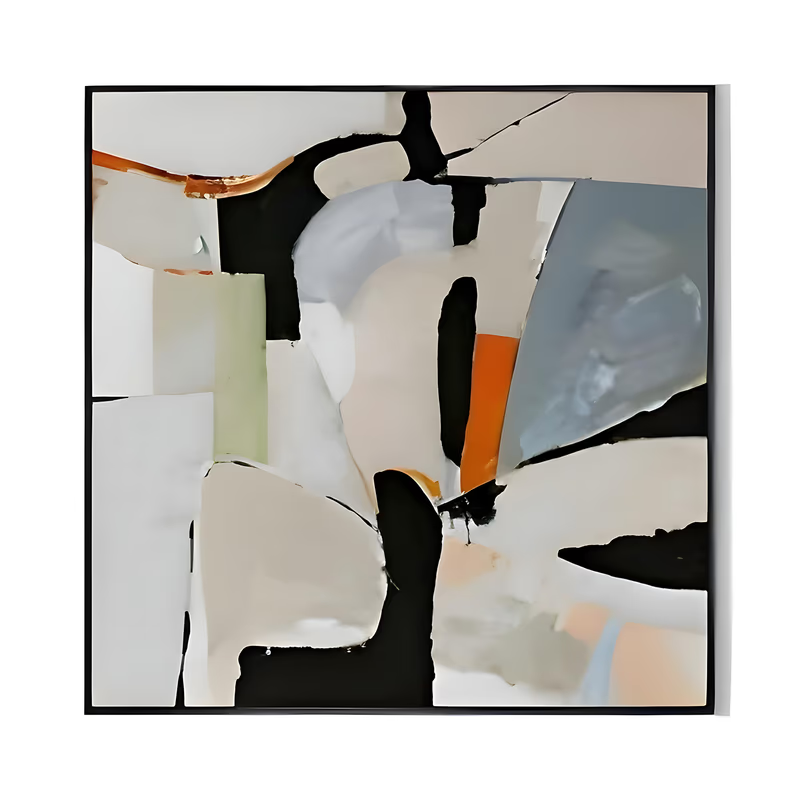
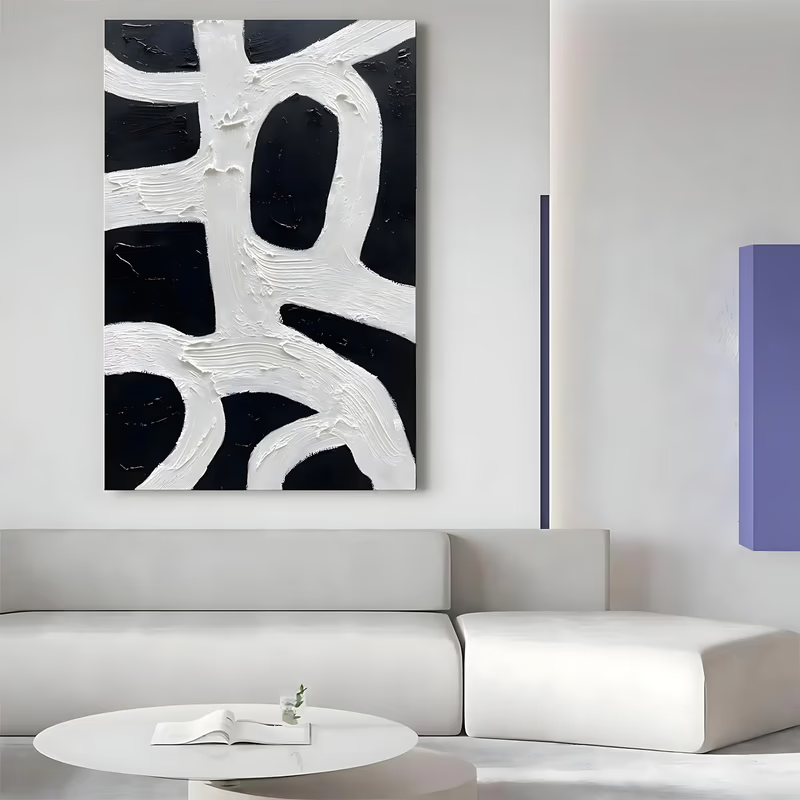
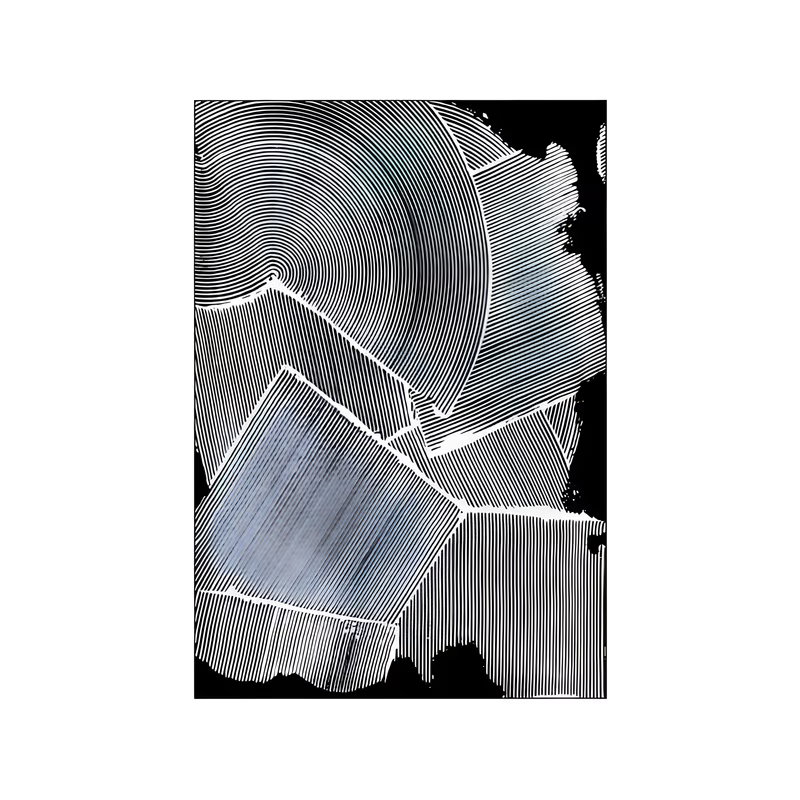
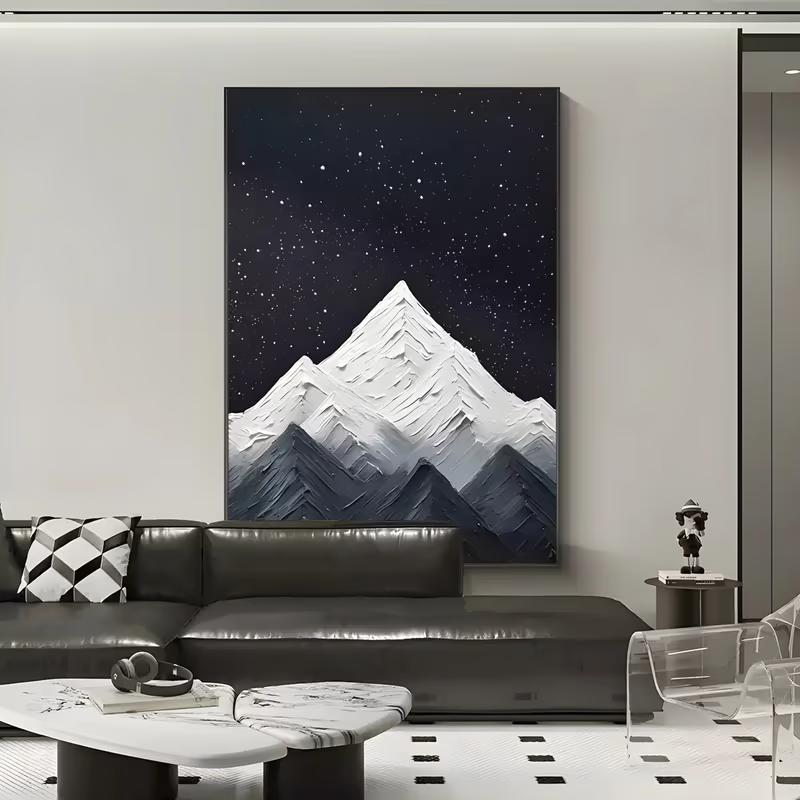
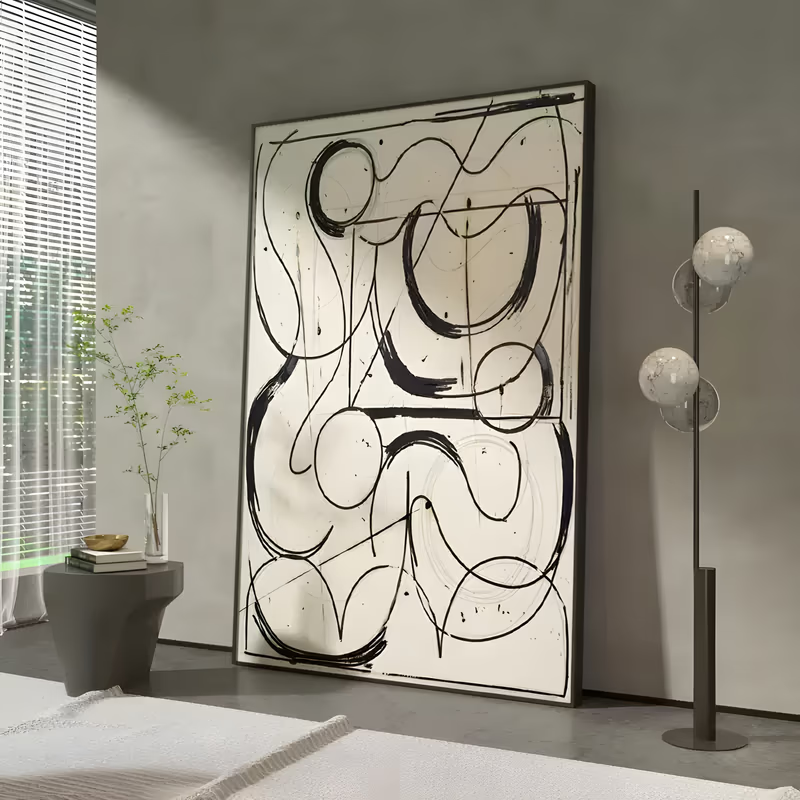
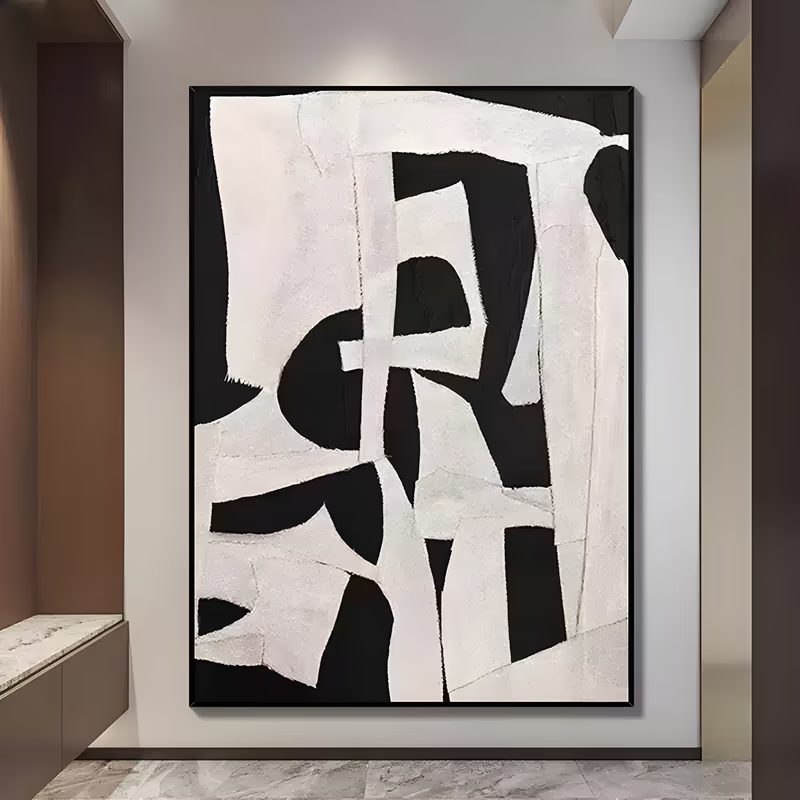
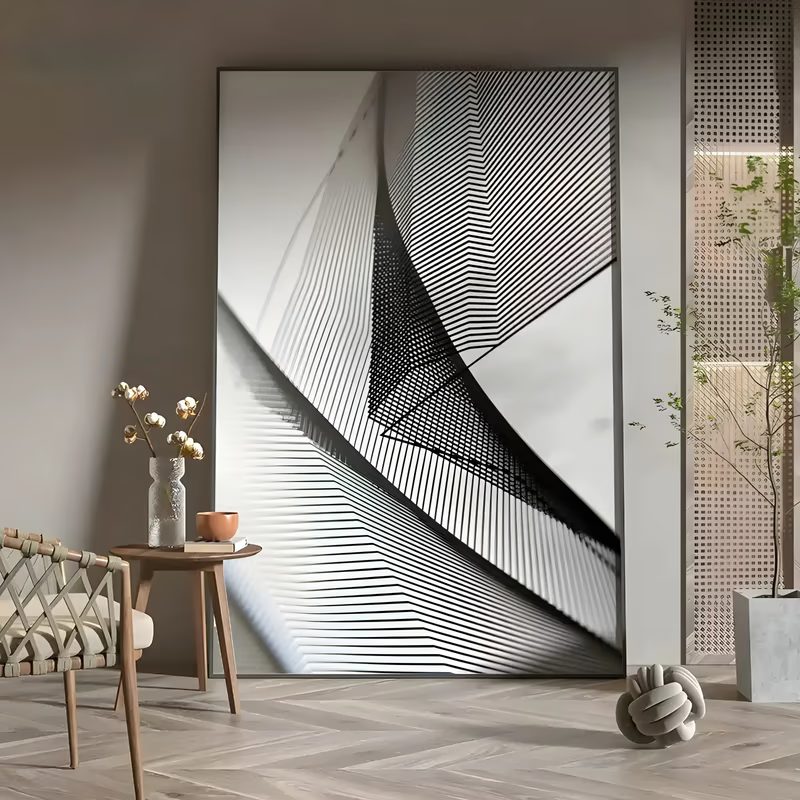
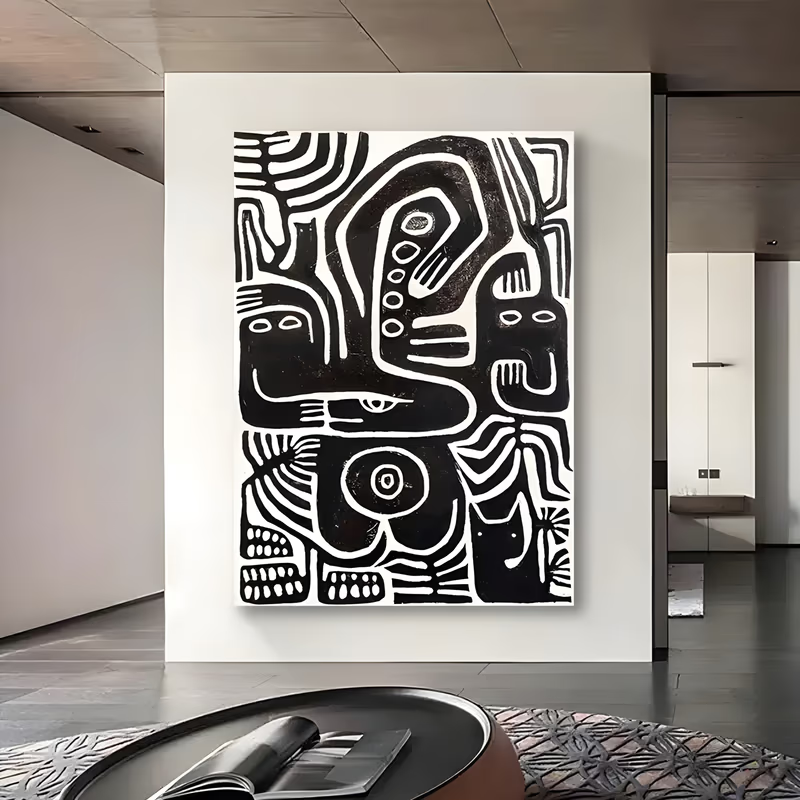
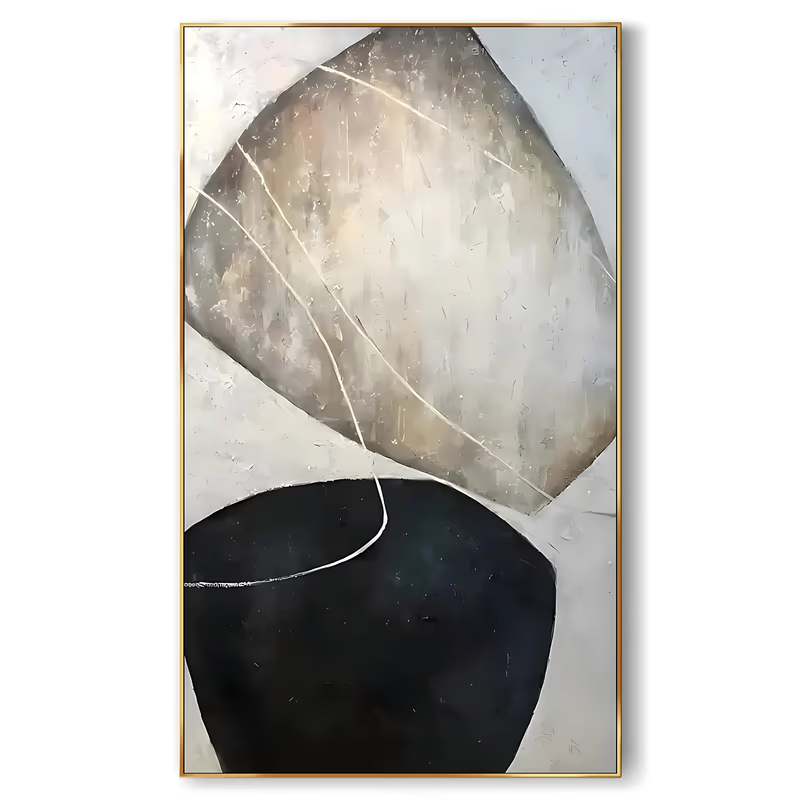
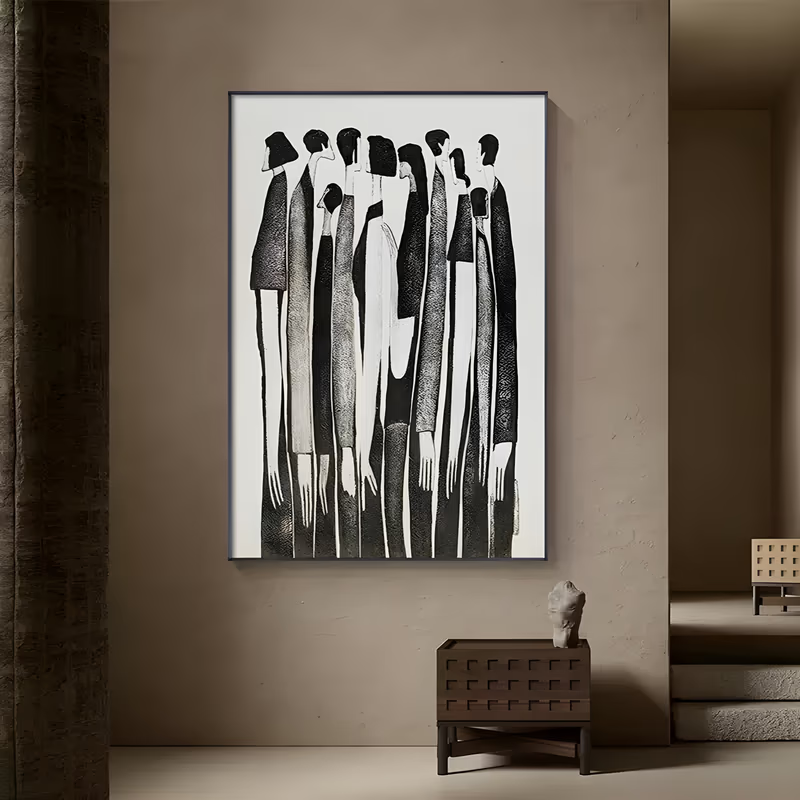
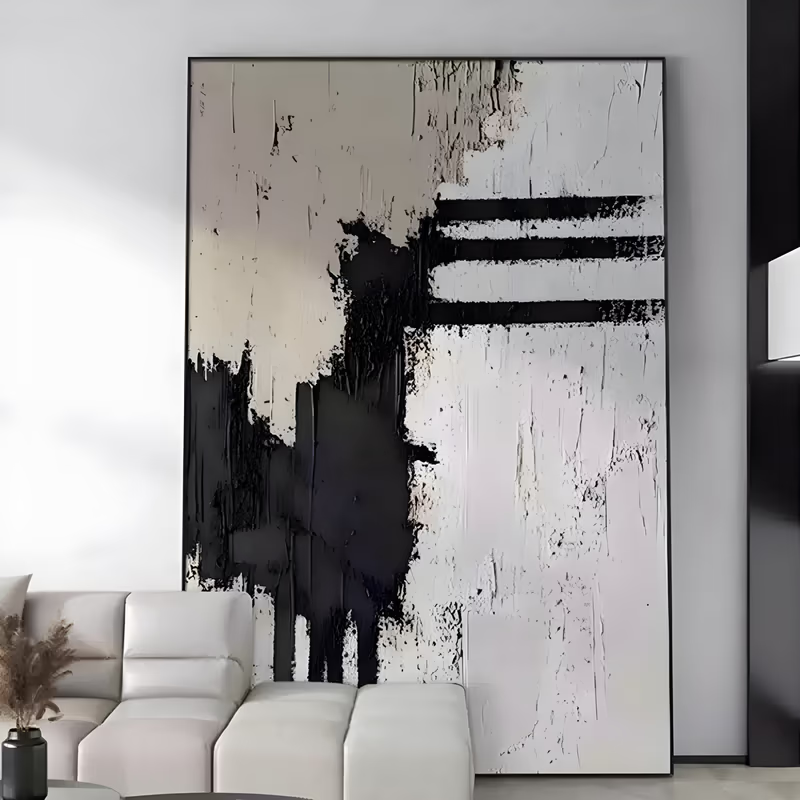
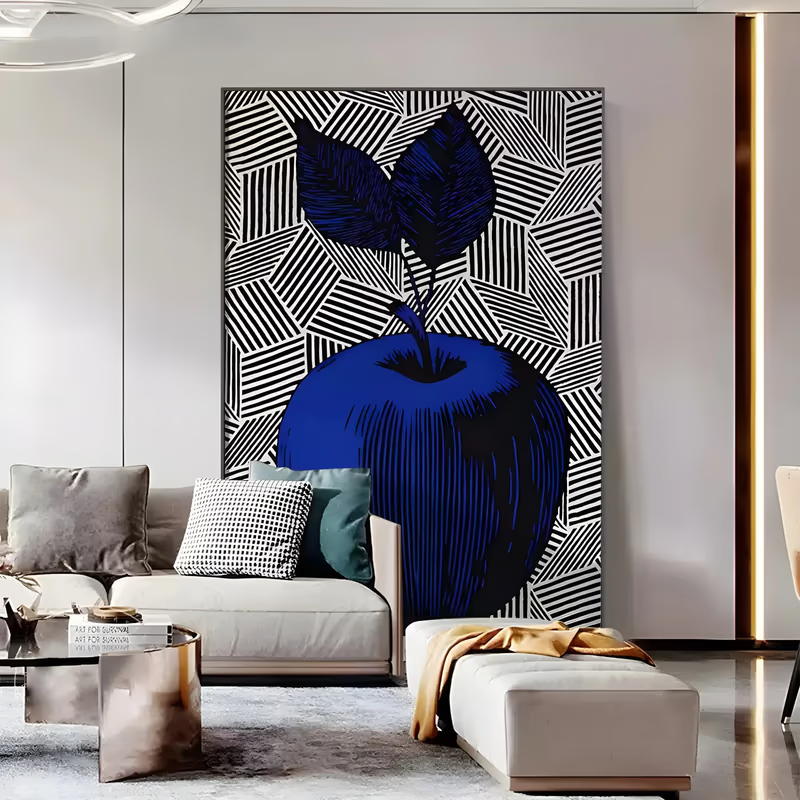
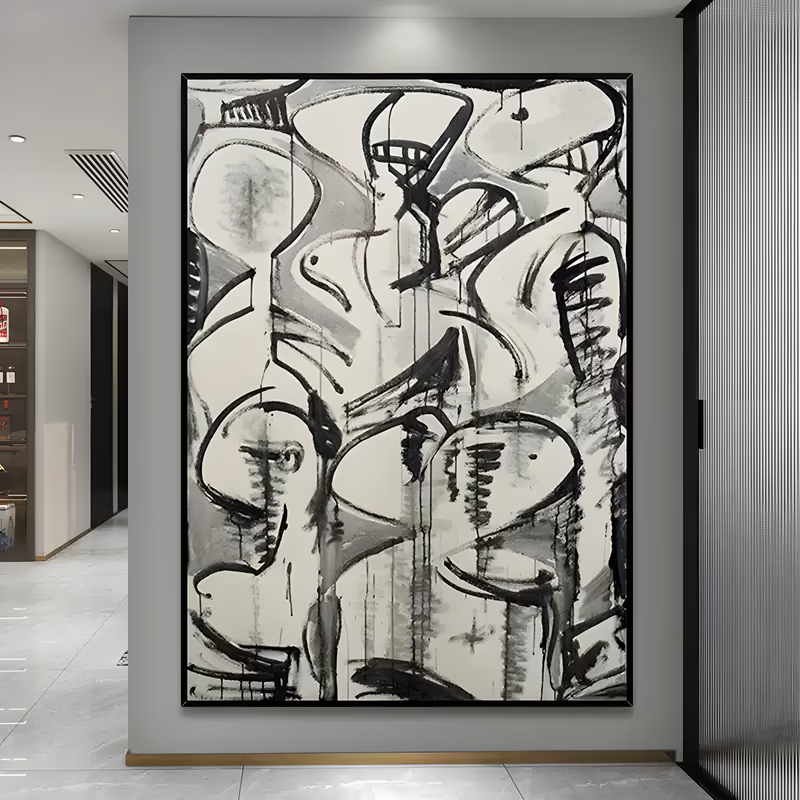
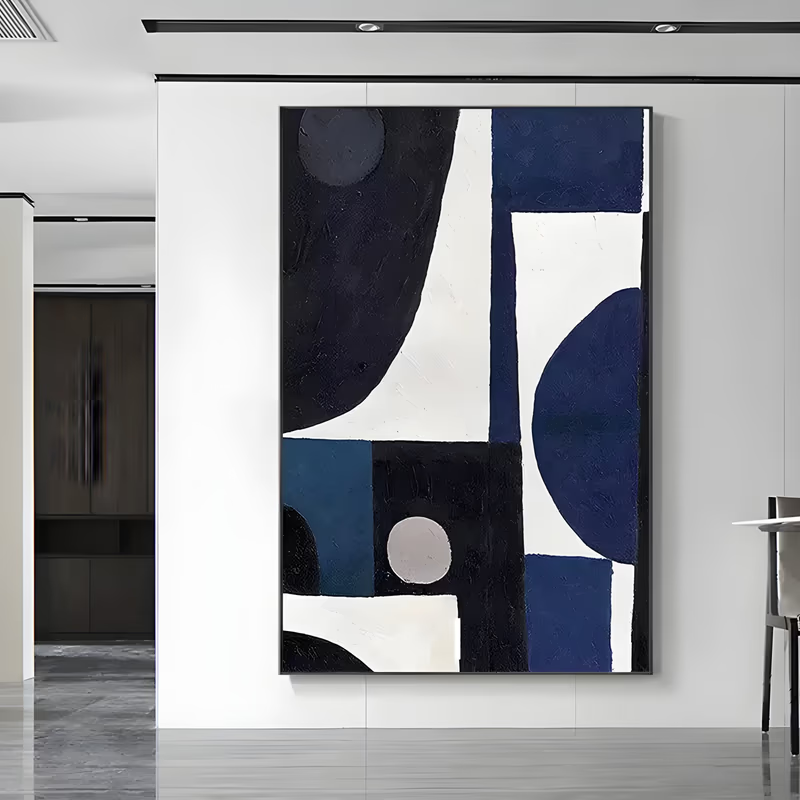
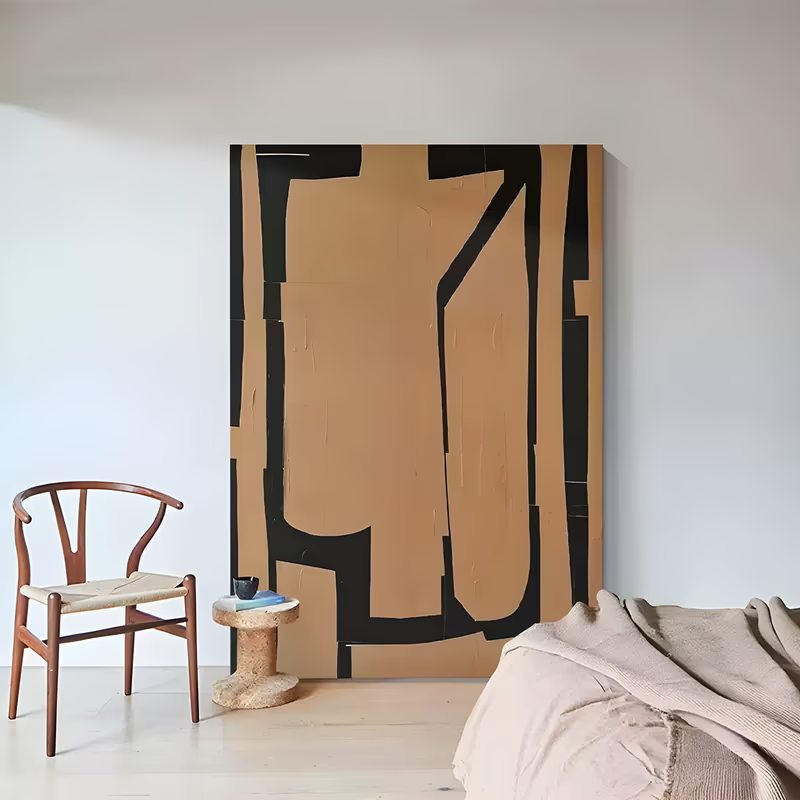
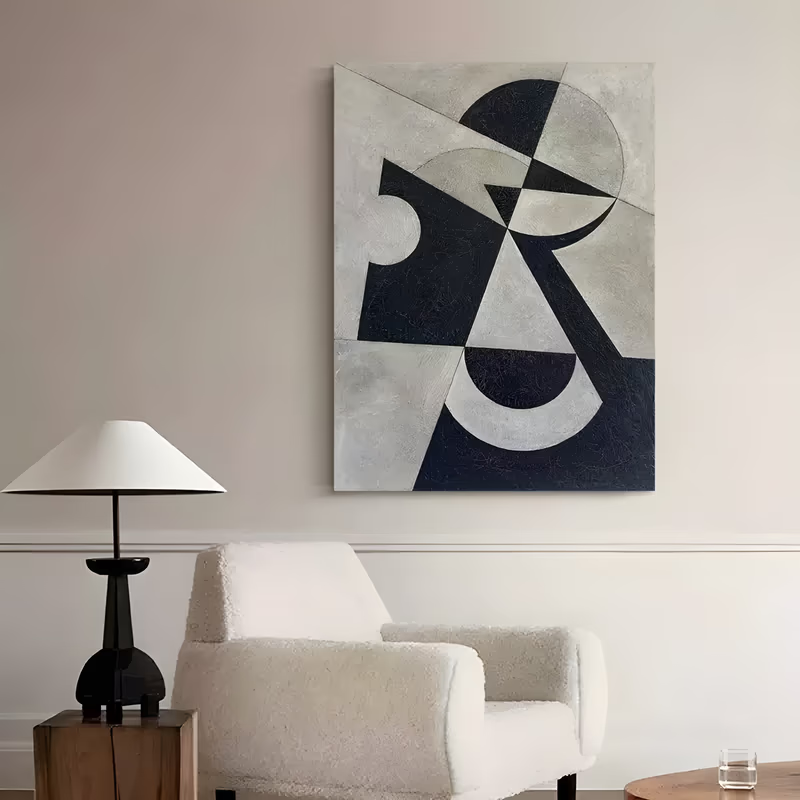
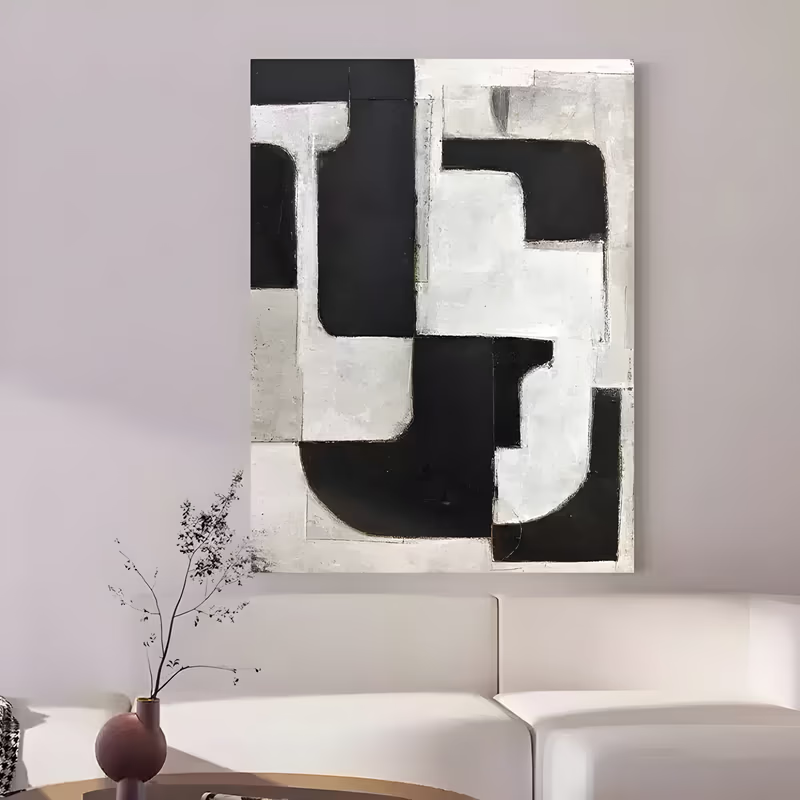
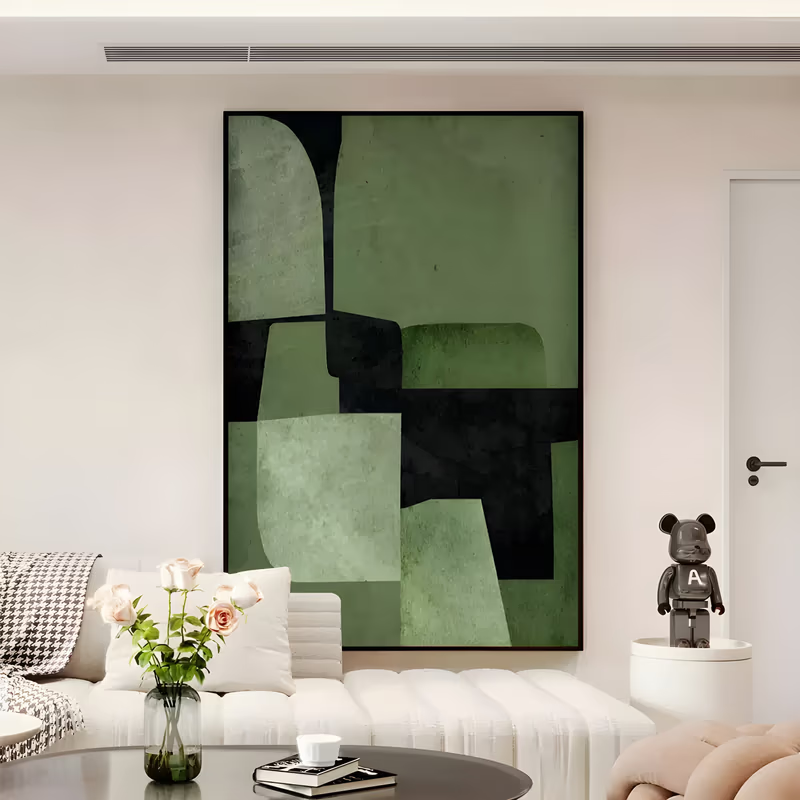
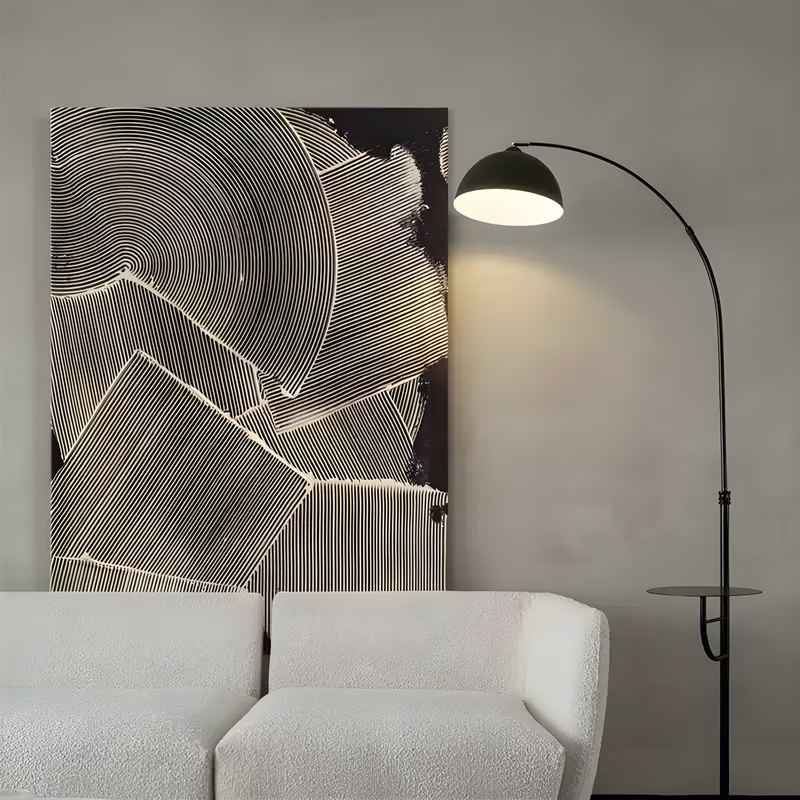
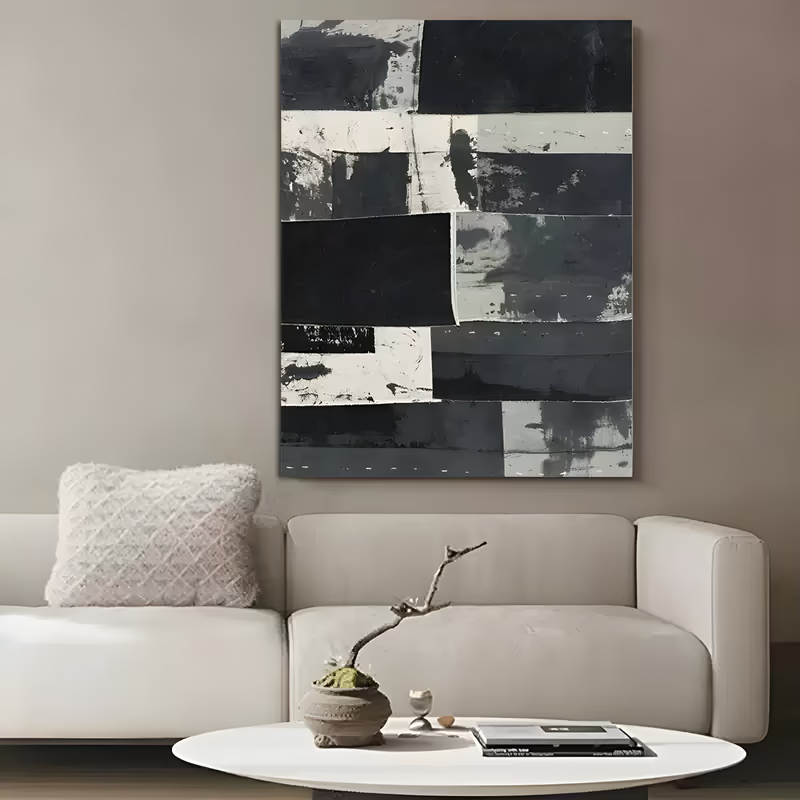
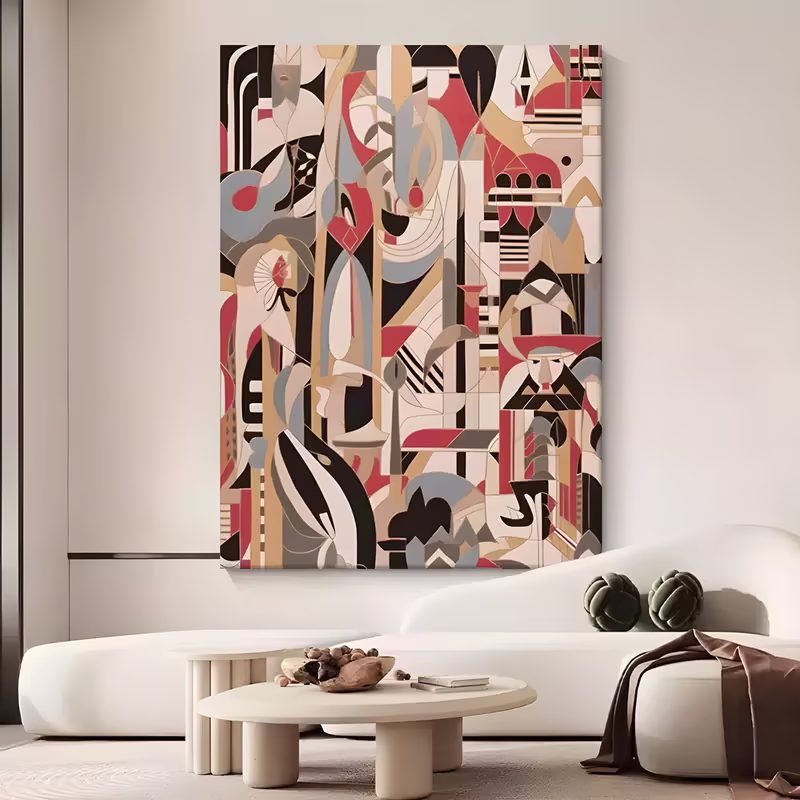
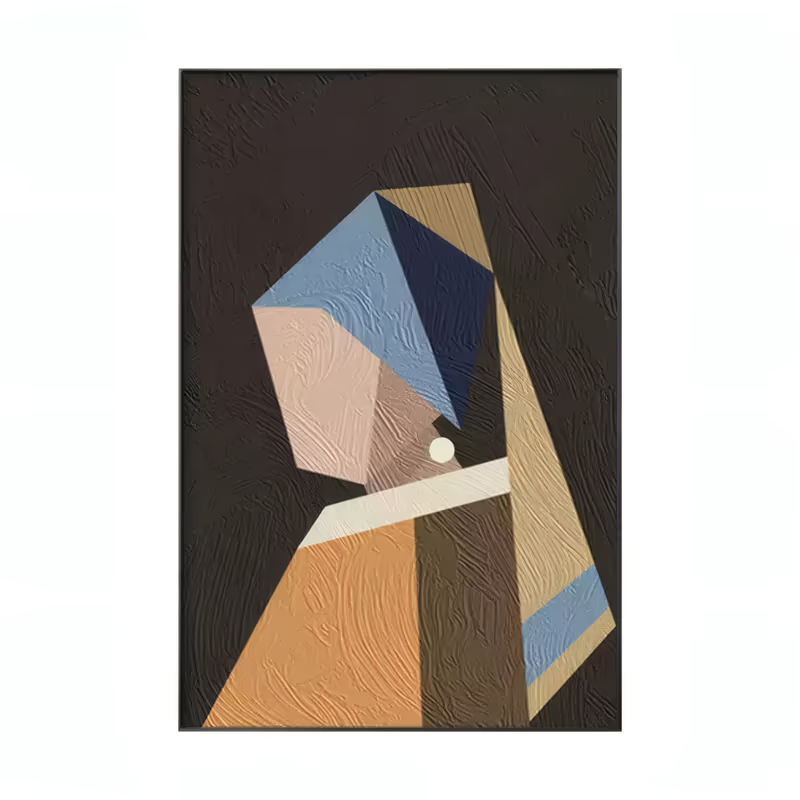
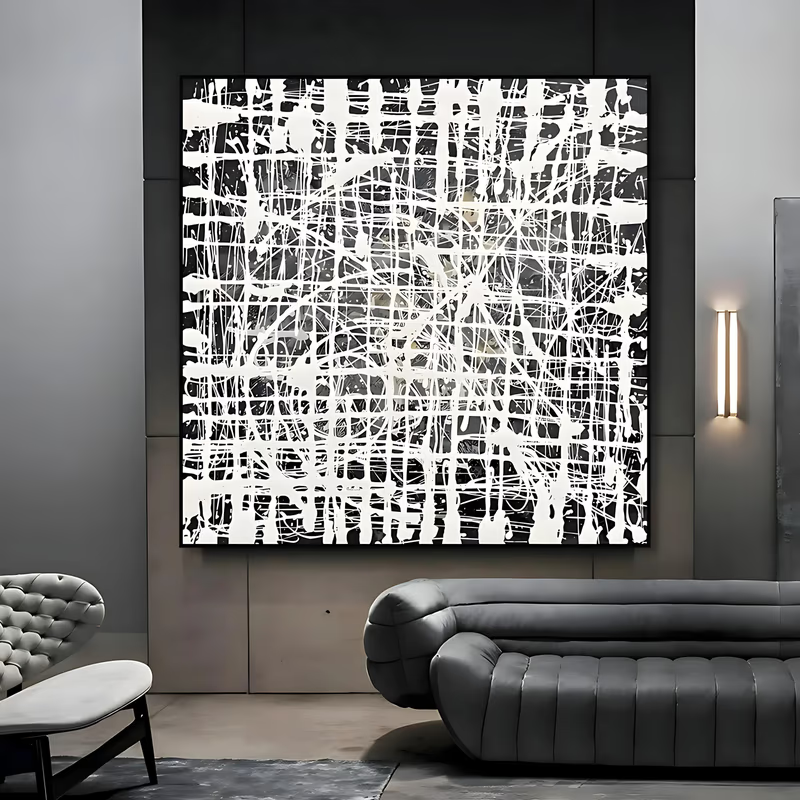
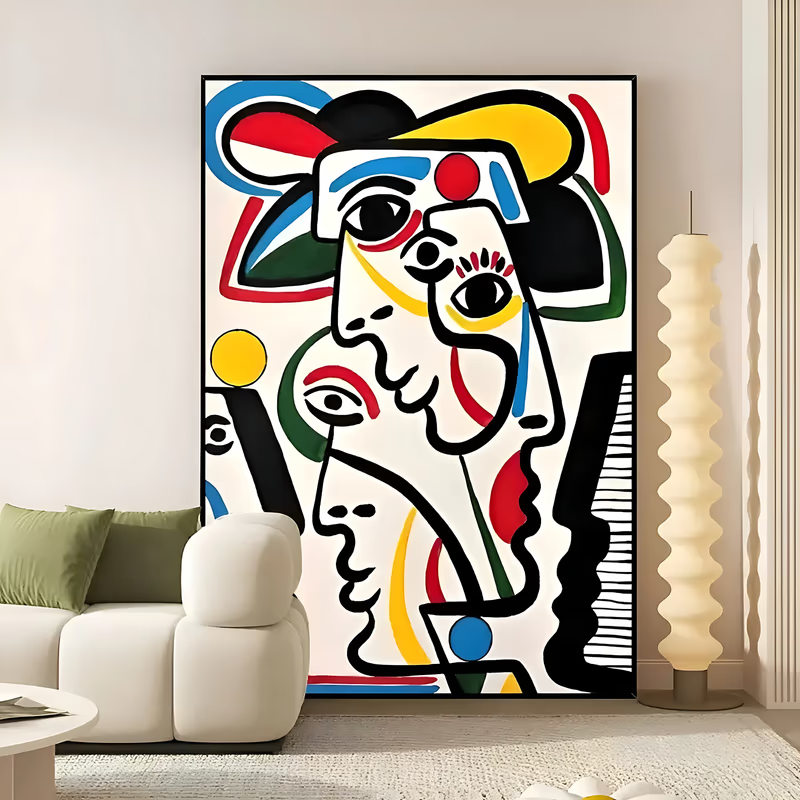
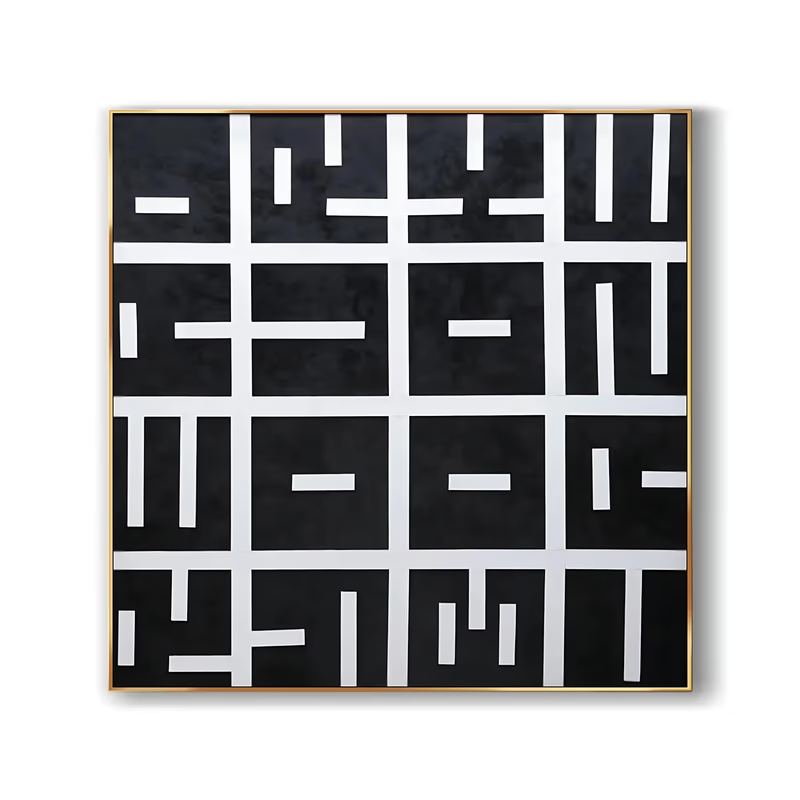
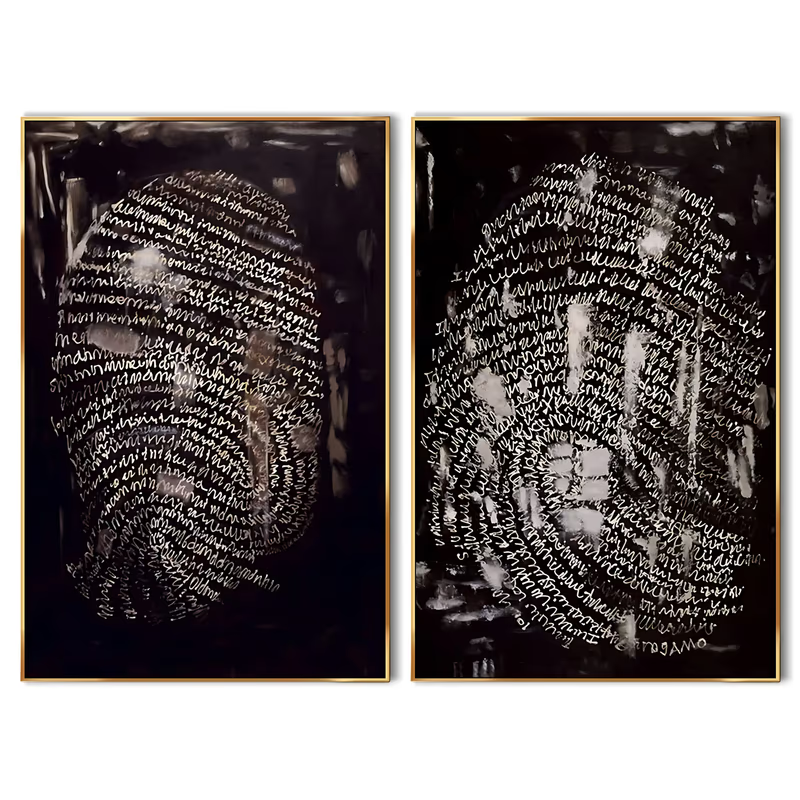
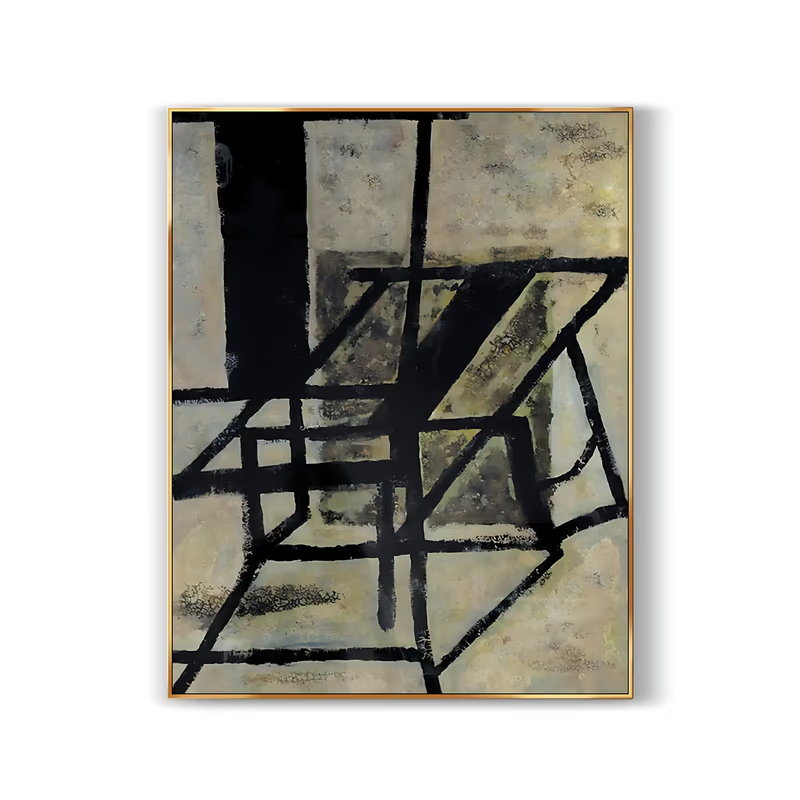
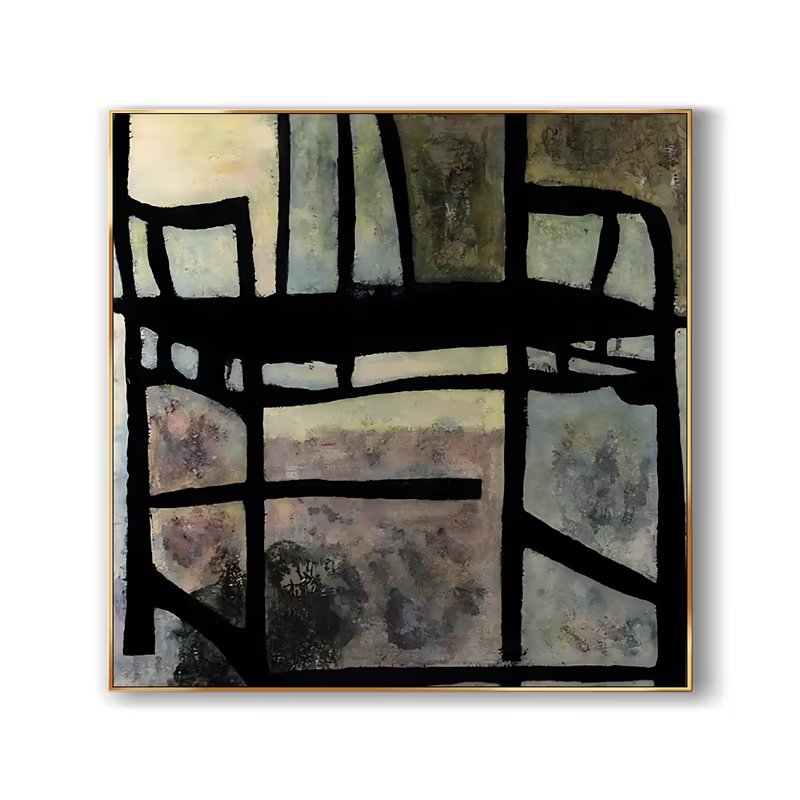
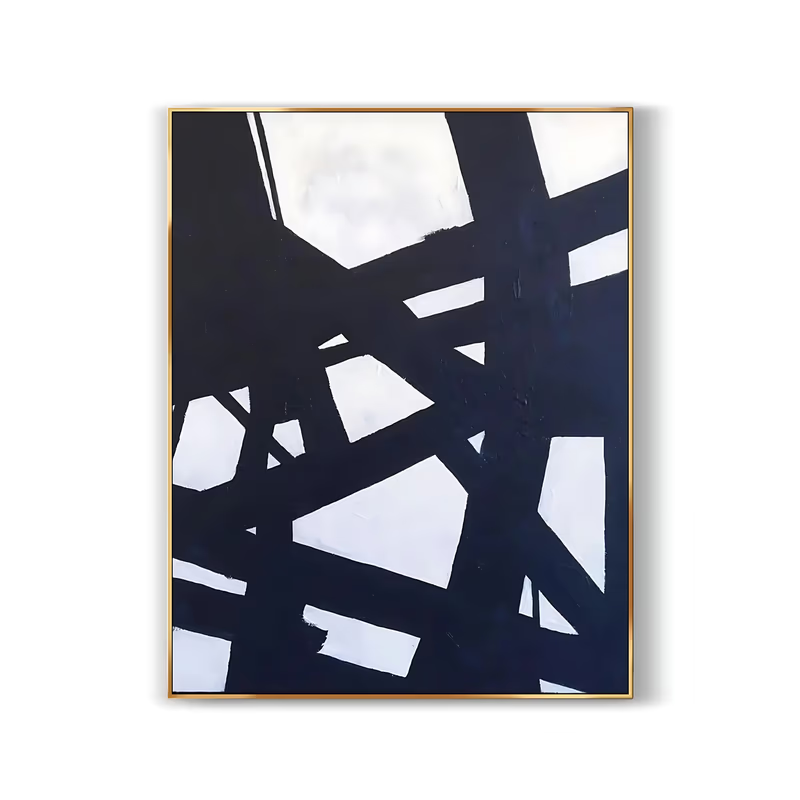
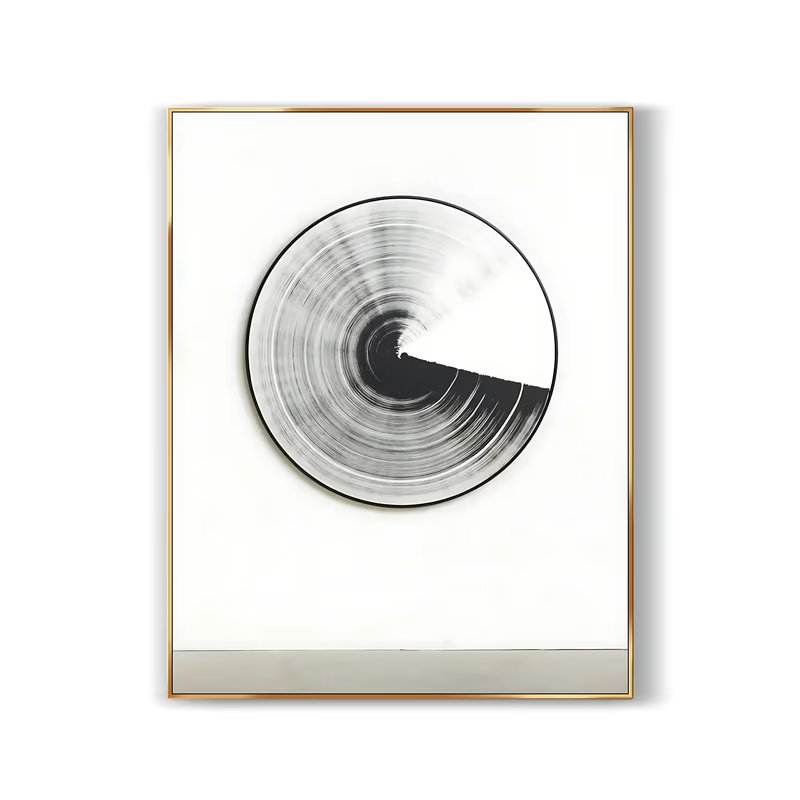
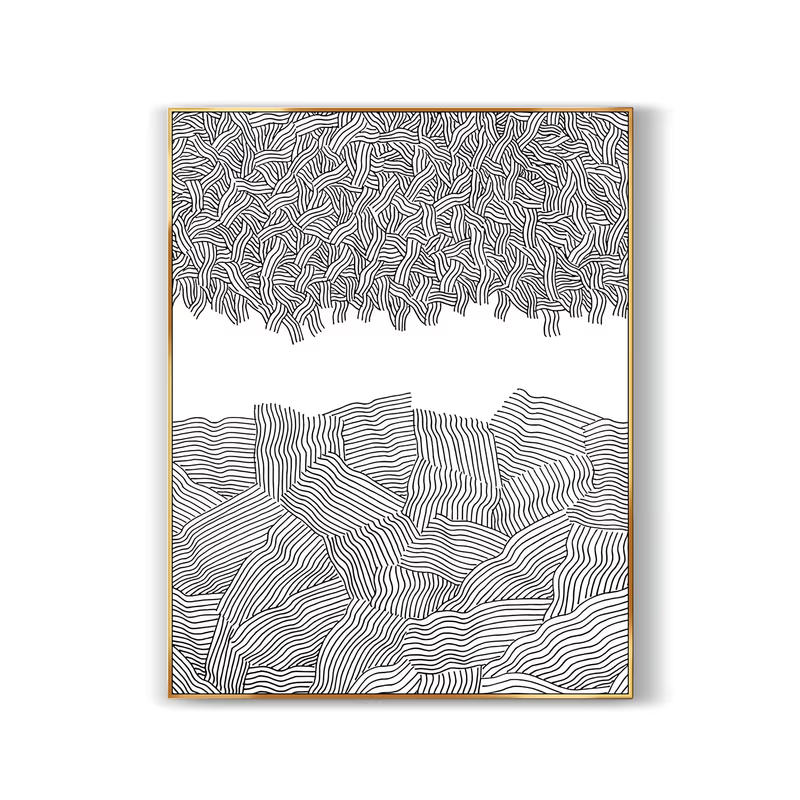
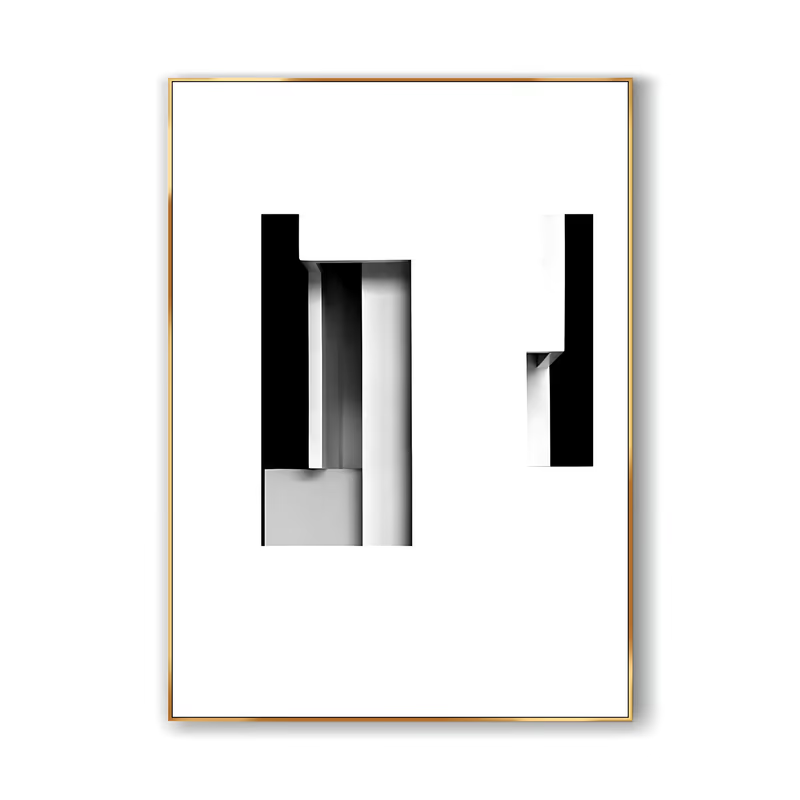
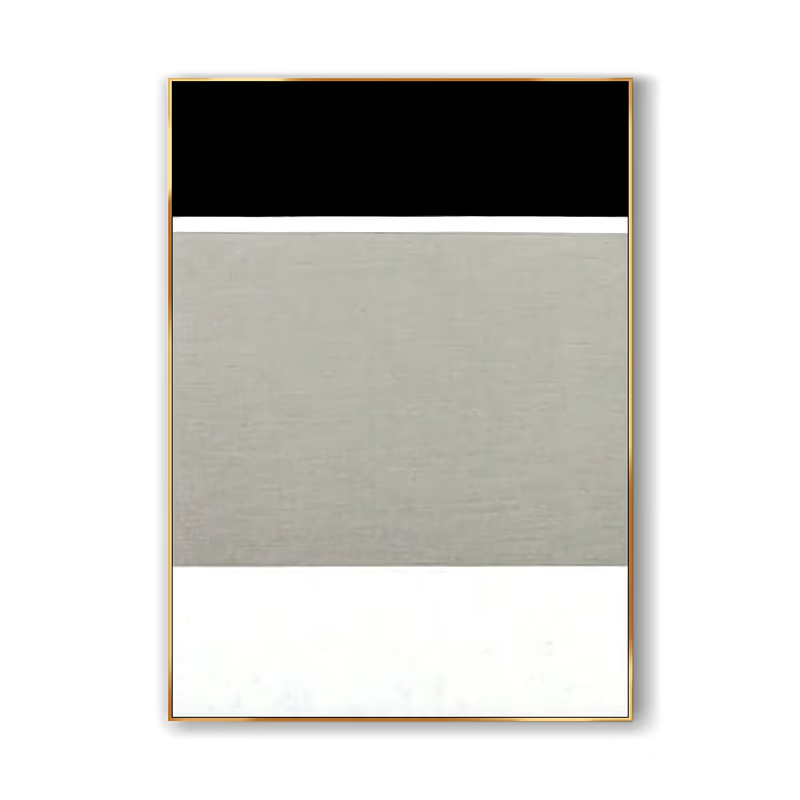
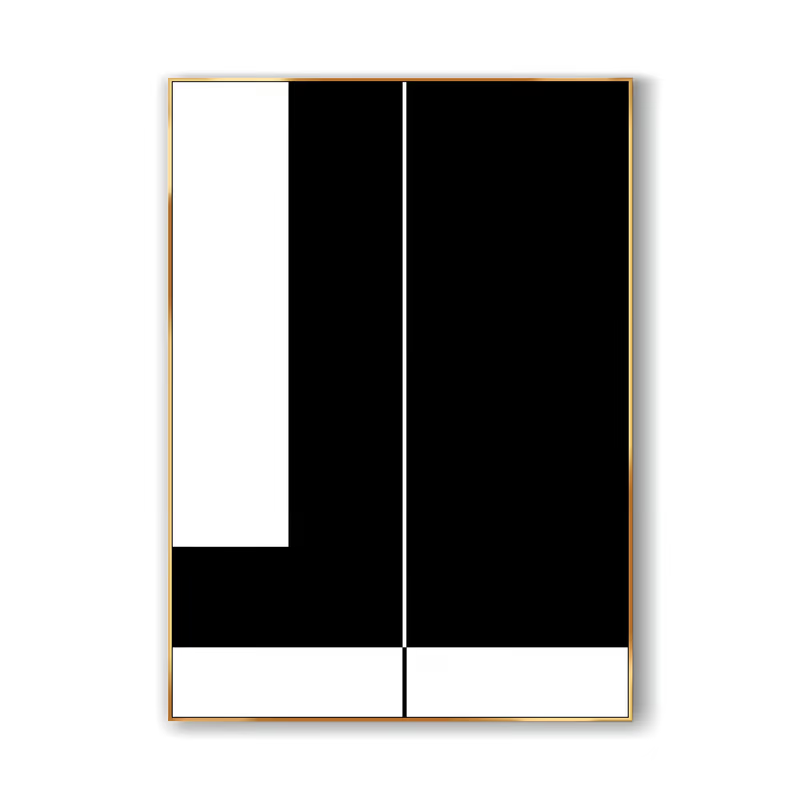
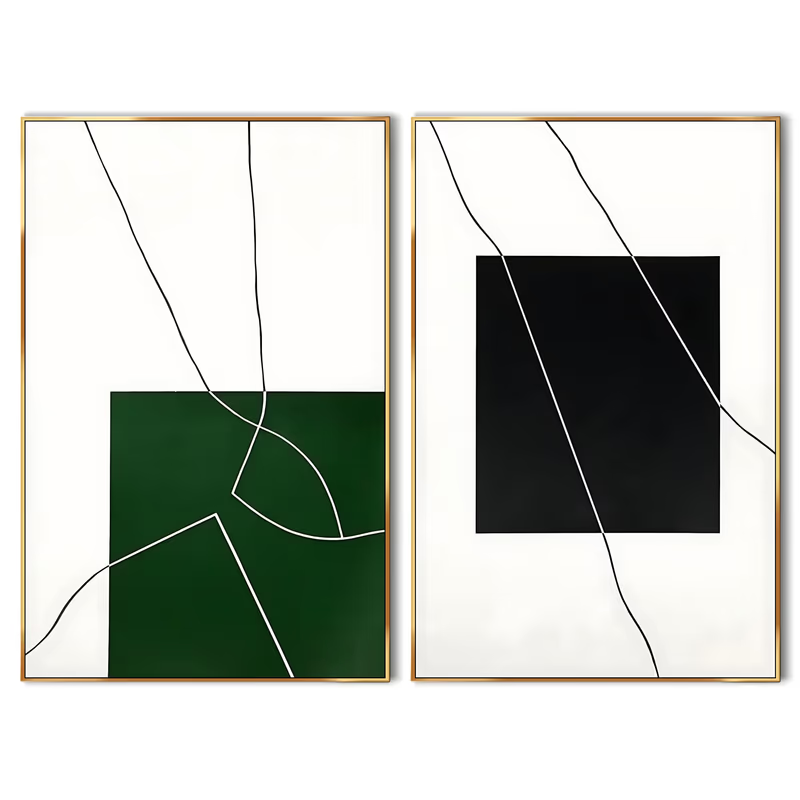
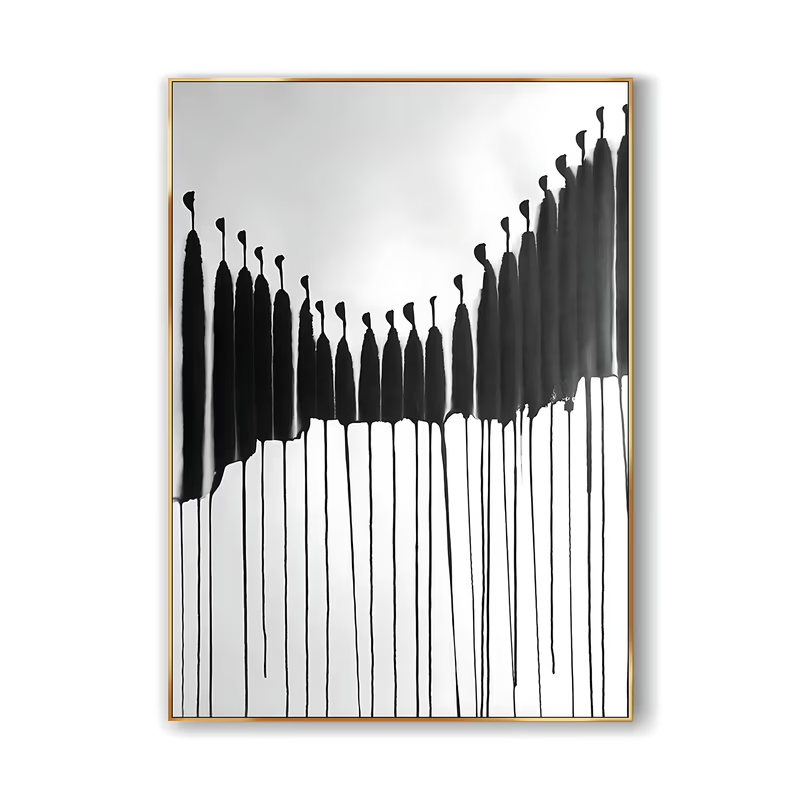
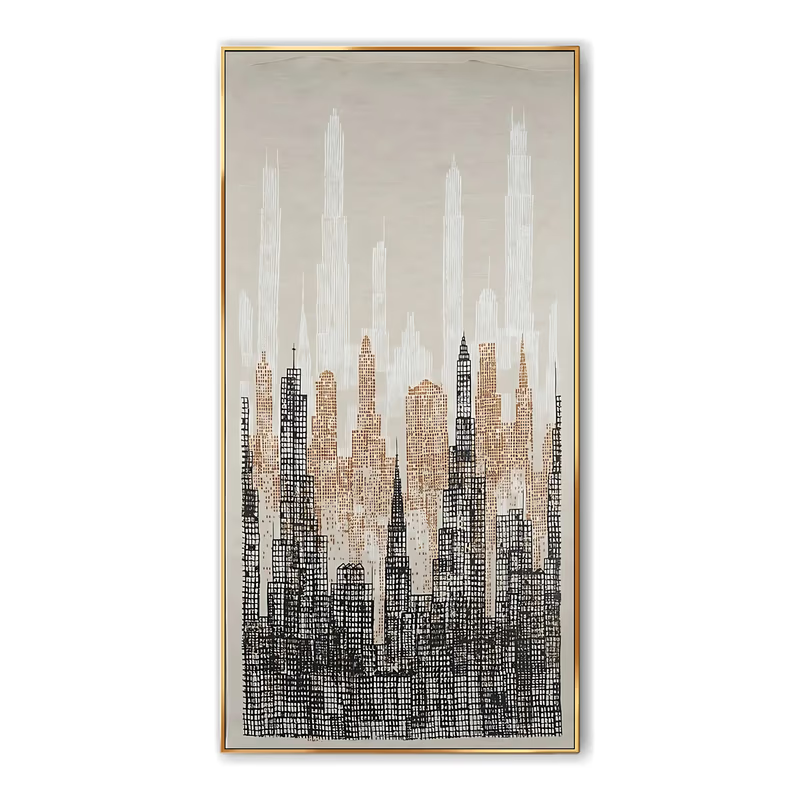
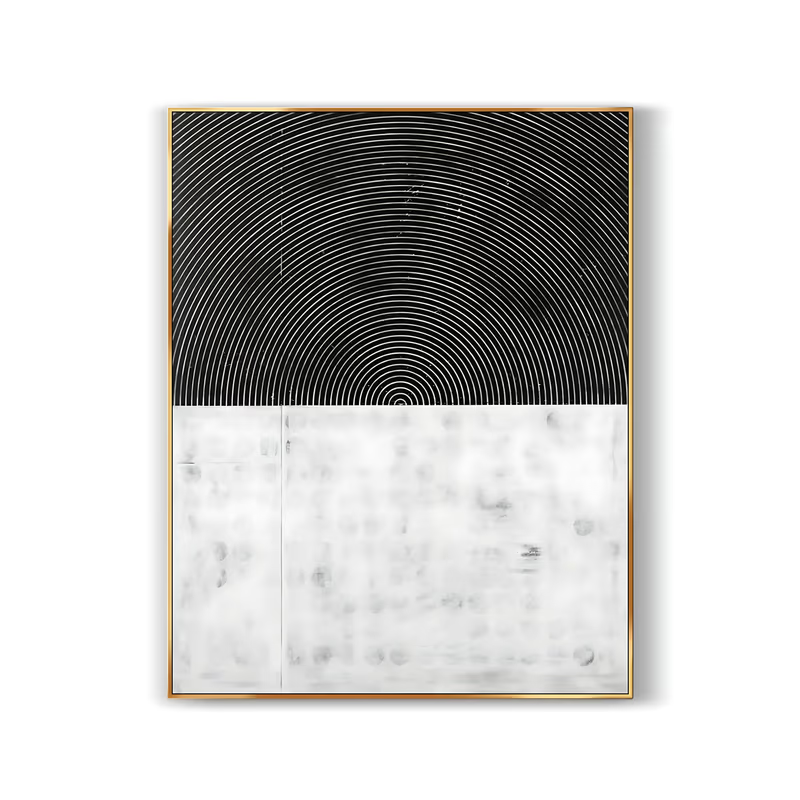
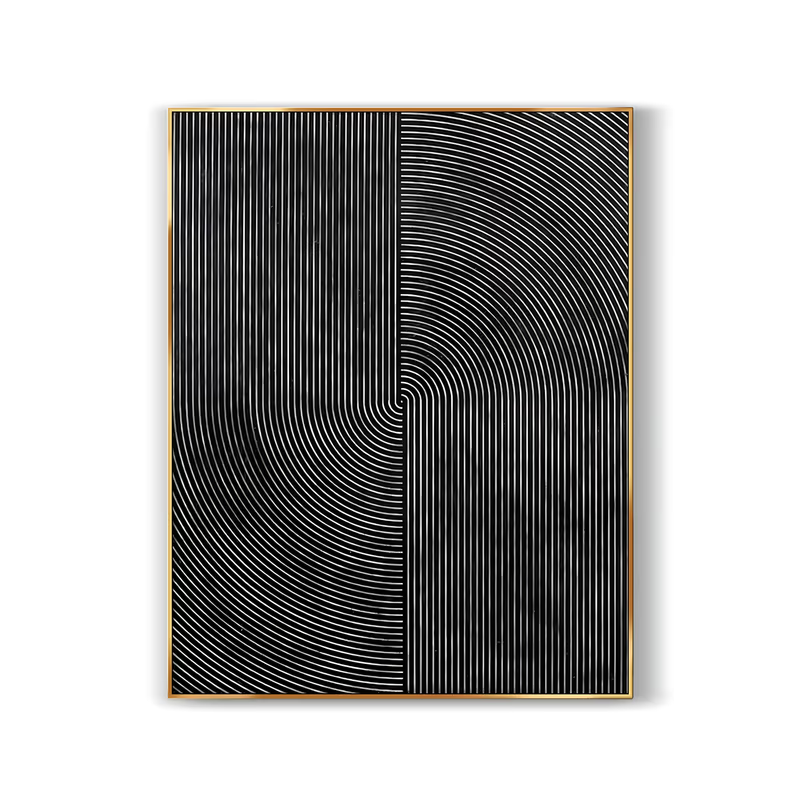
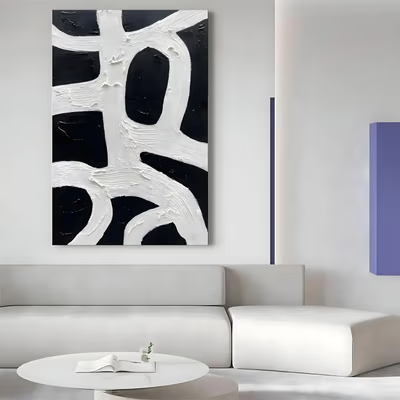
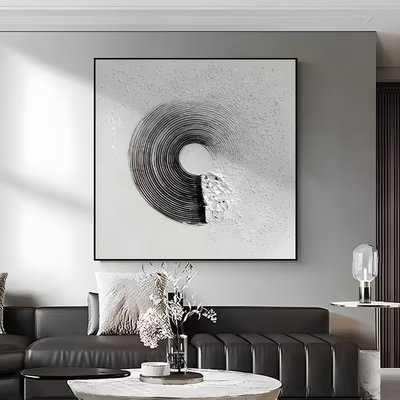
Bauhaus circles, block shapes, grids, stripes and fine optical line work, sometimes with one accent of ochre, olive or terracotta. The most graphic black wall art, made for offices, galleries and modern living rooms, and easy to hang as a pair.
Animal paintings on black
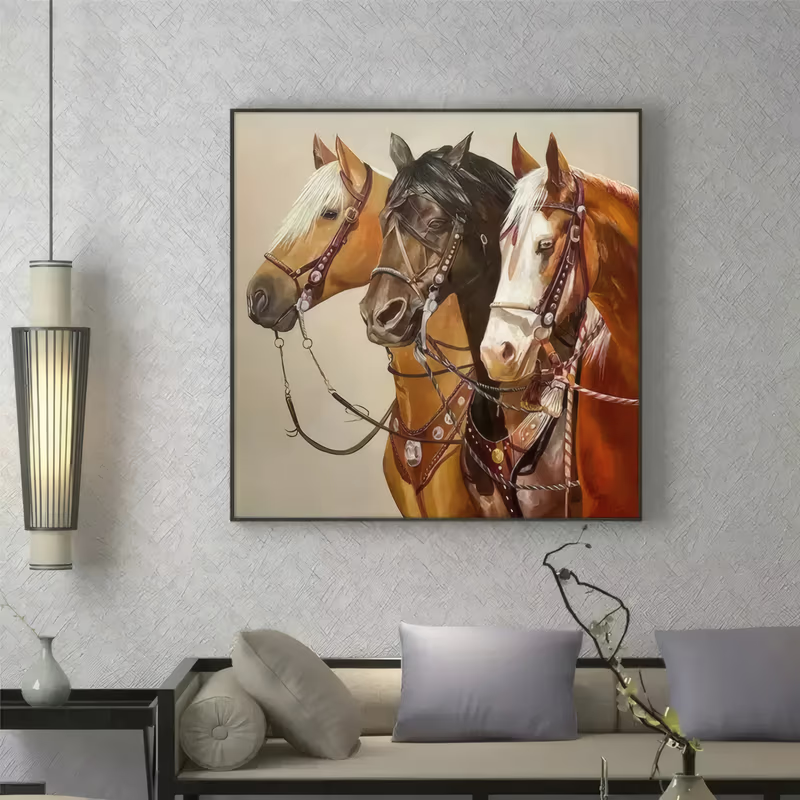
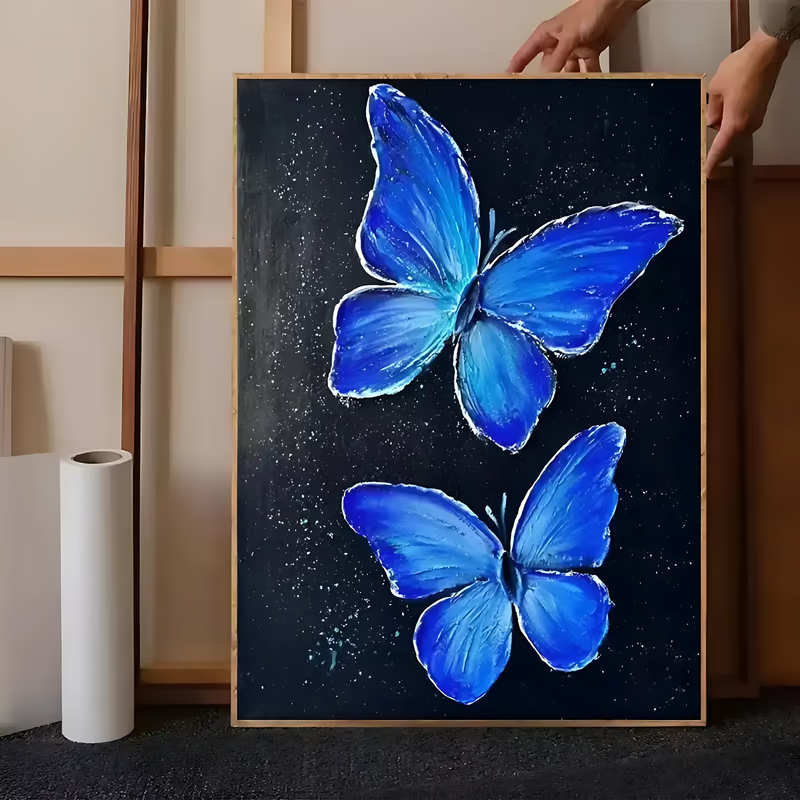
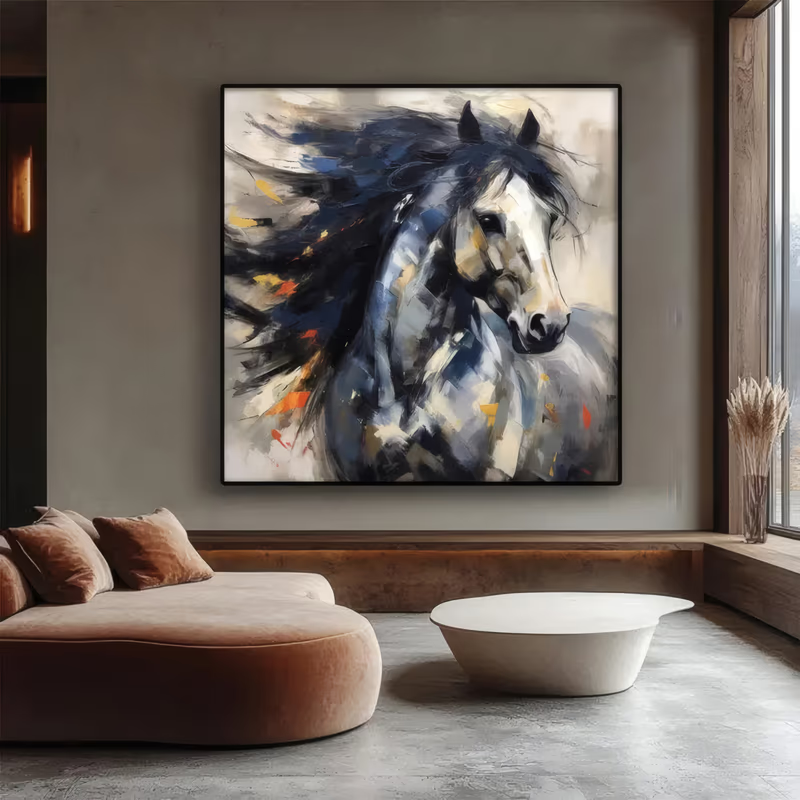
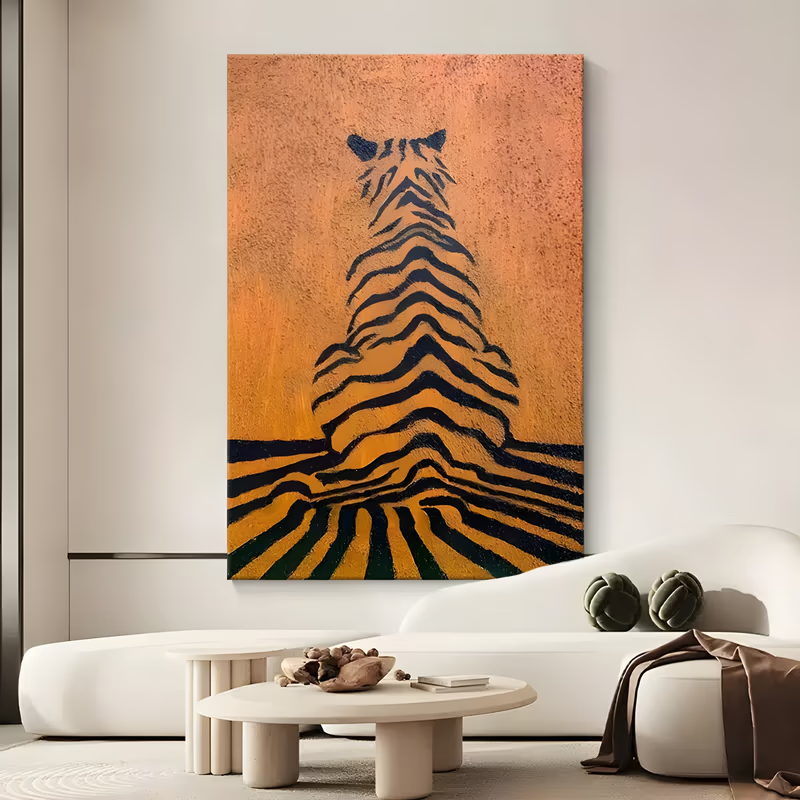
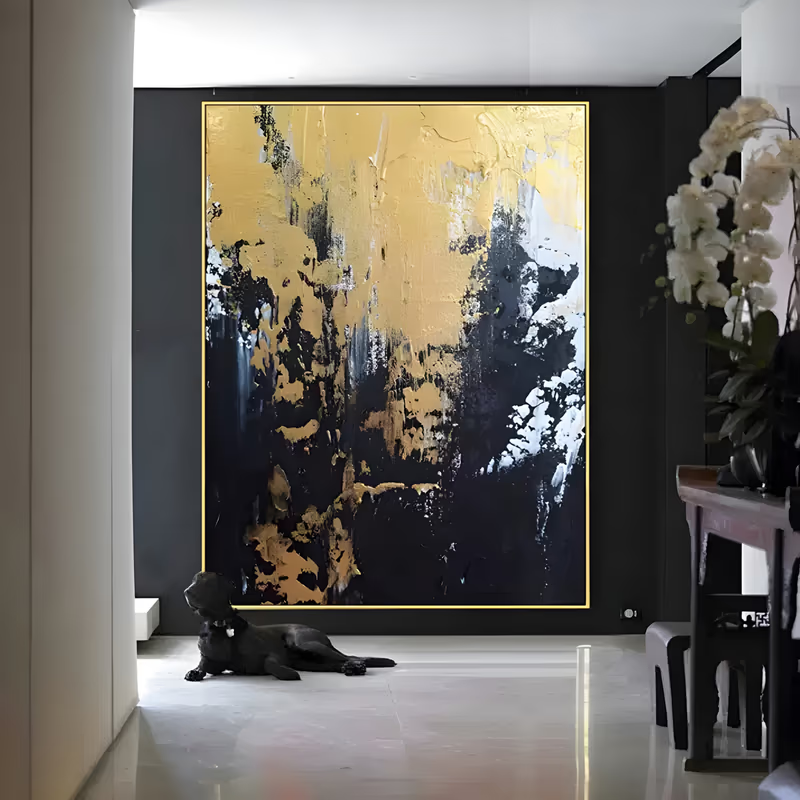
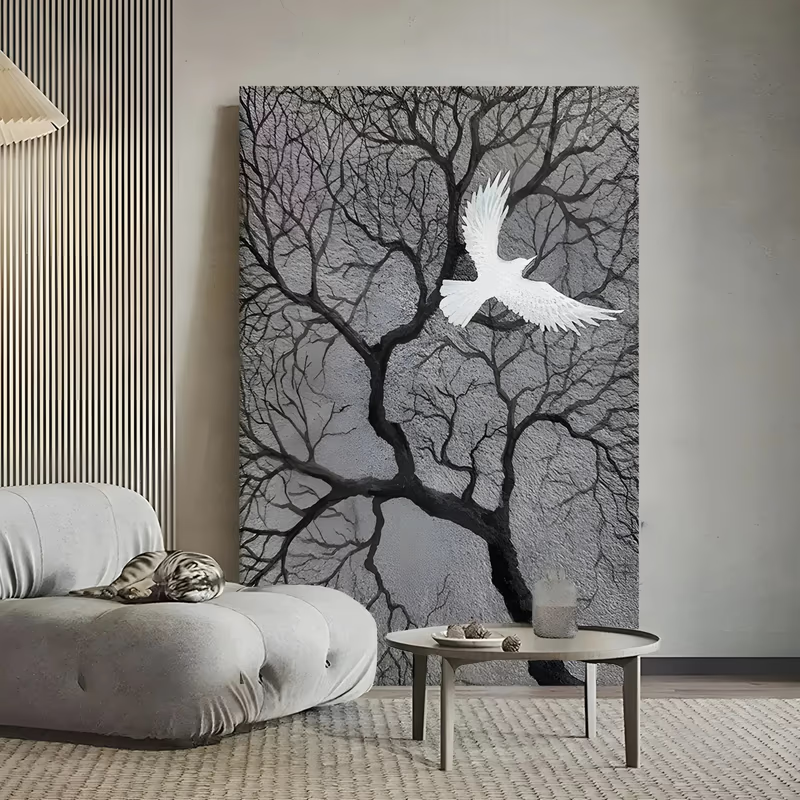
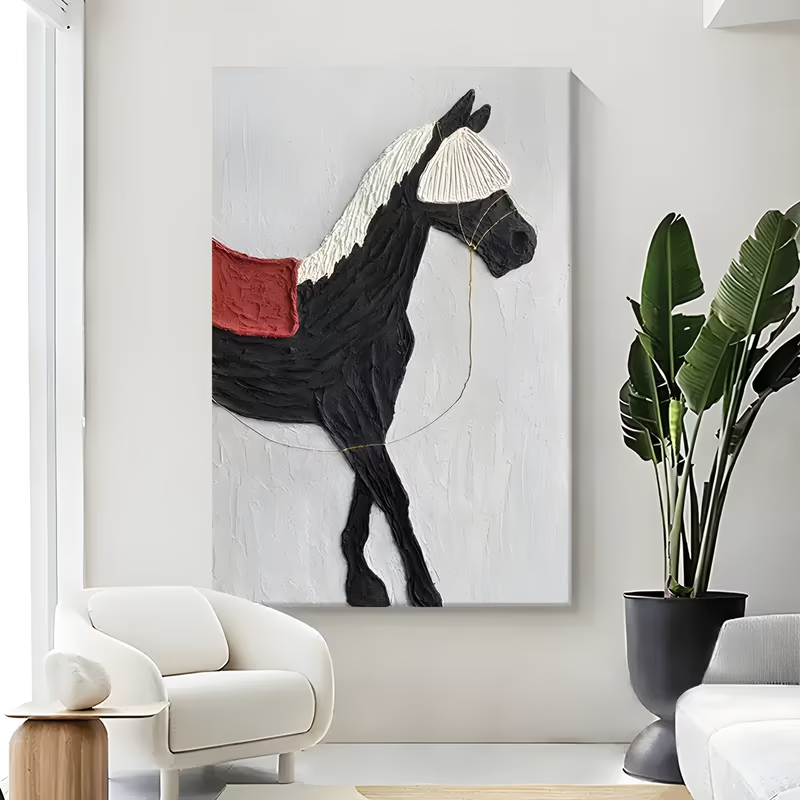
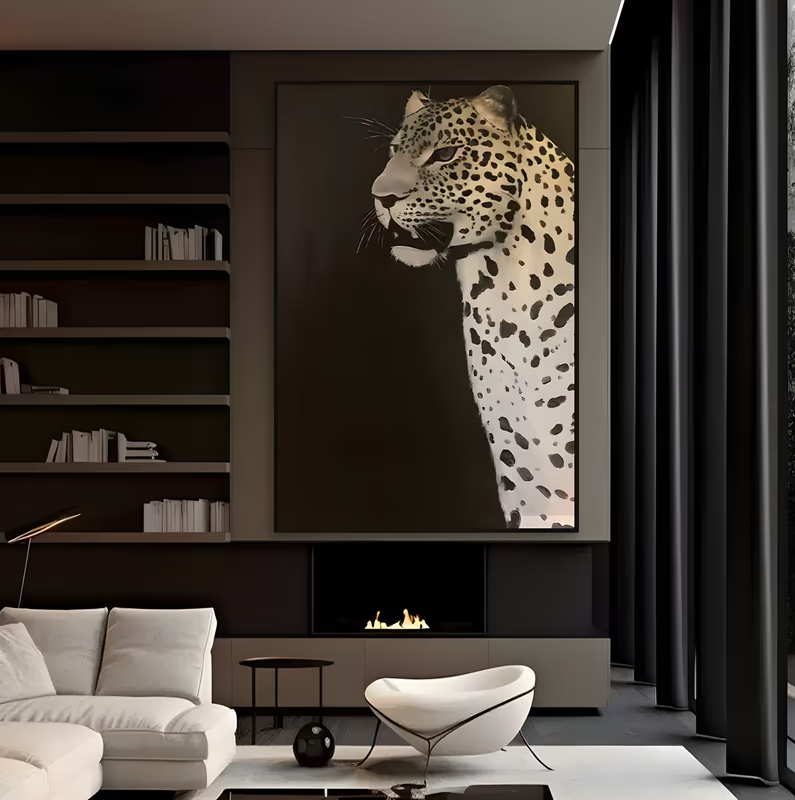
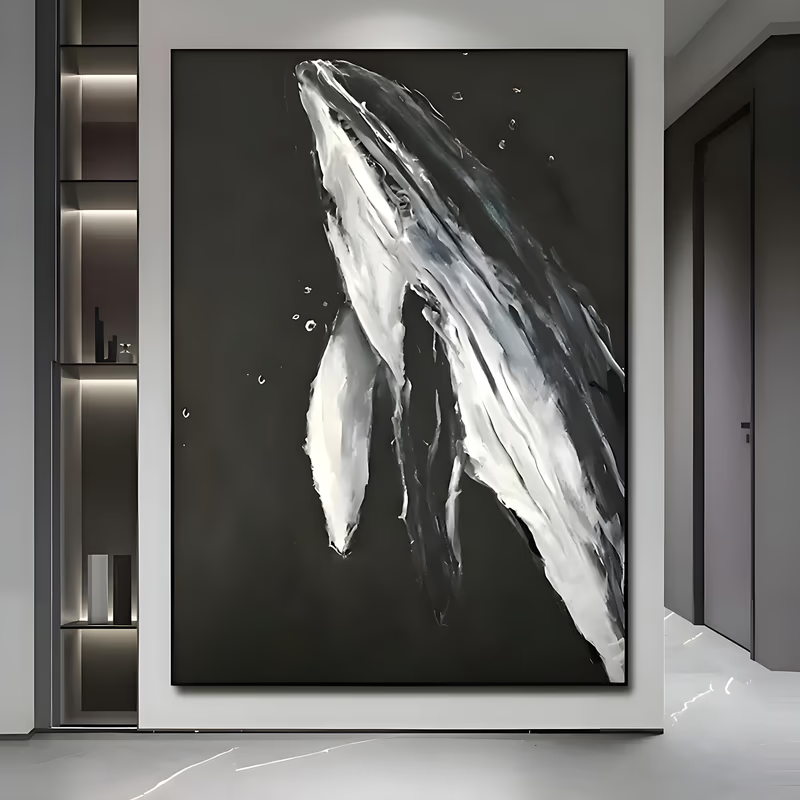
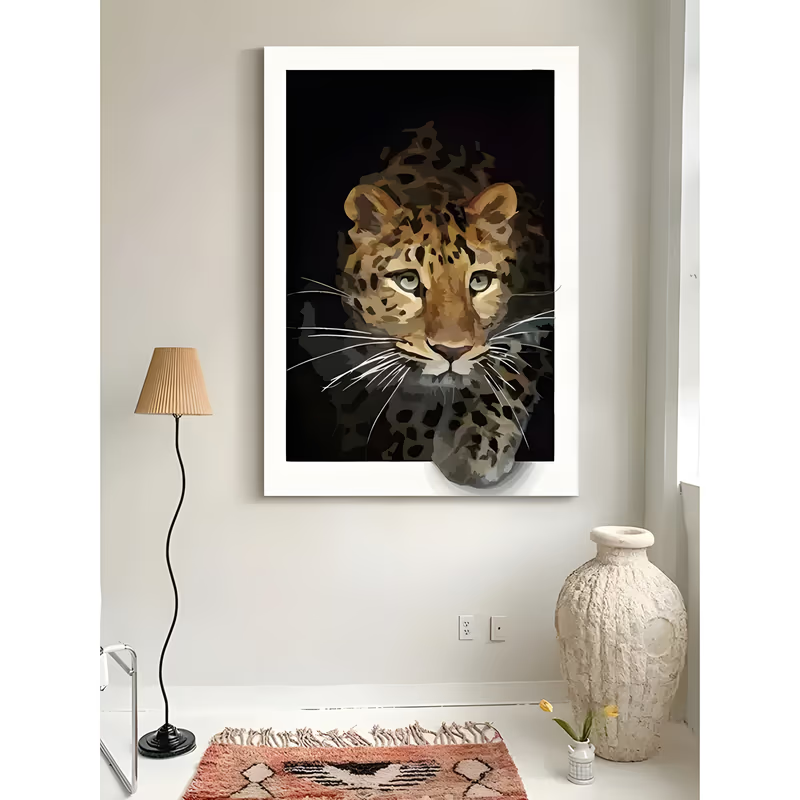
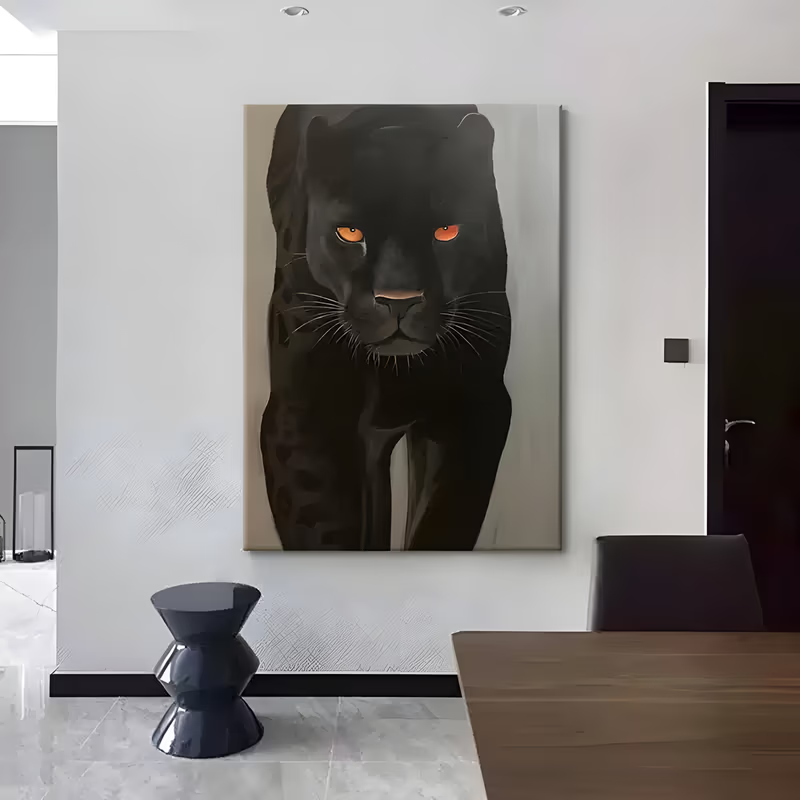
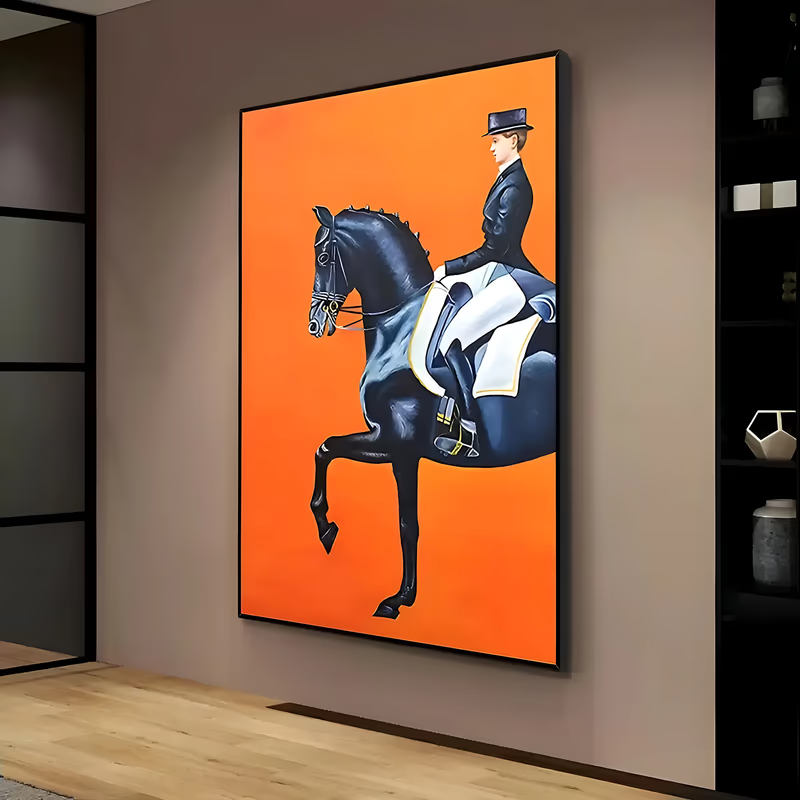
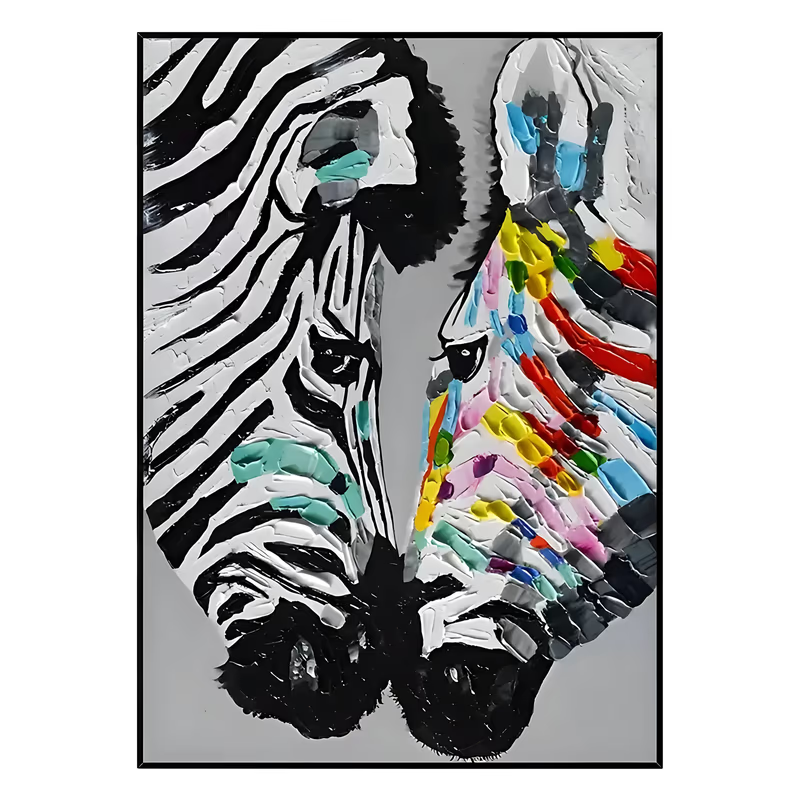
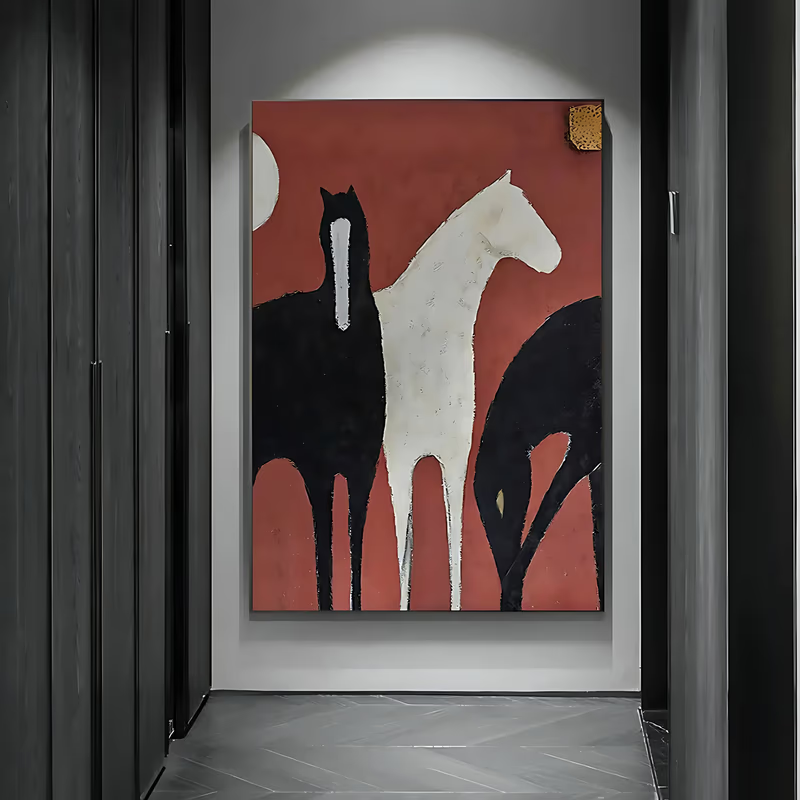
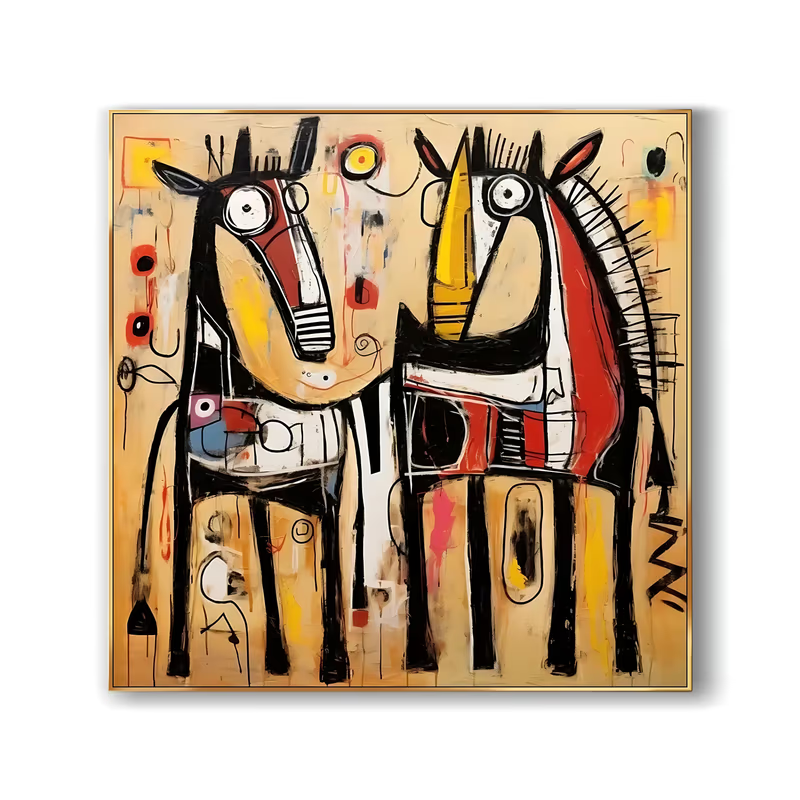
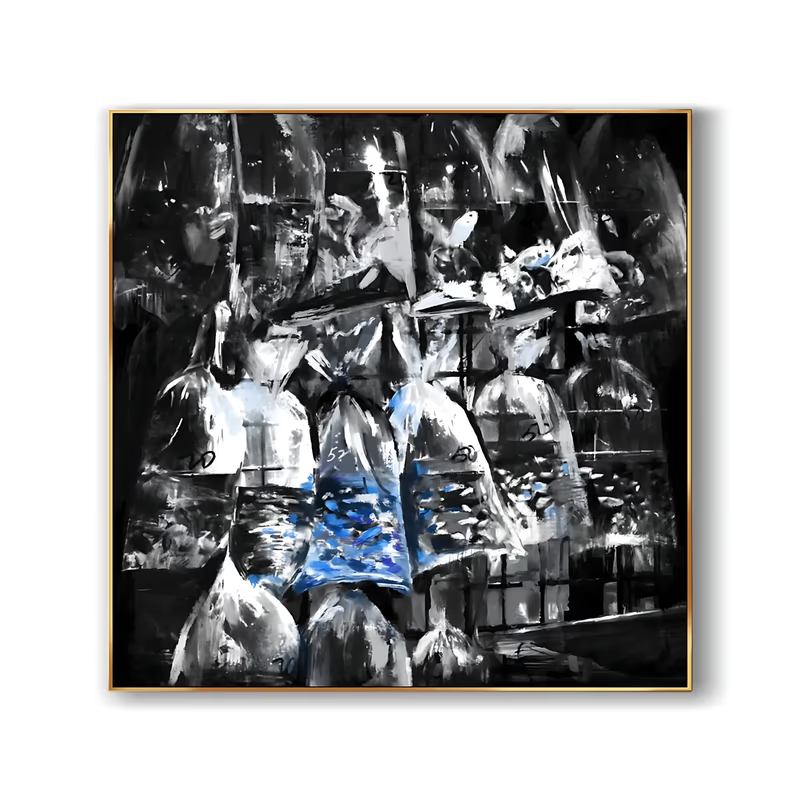
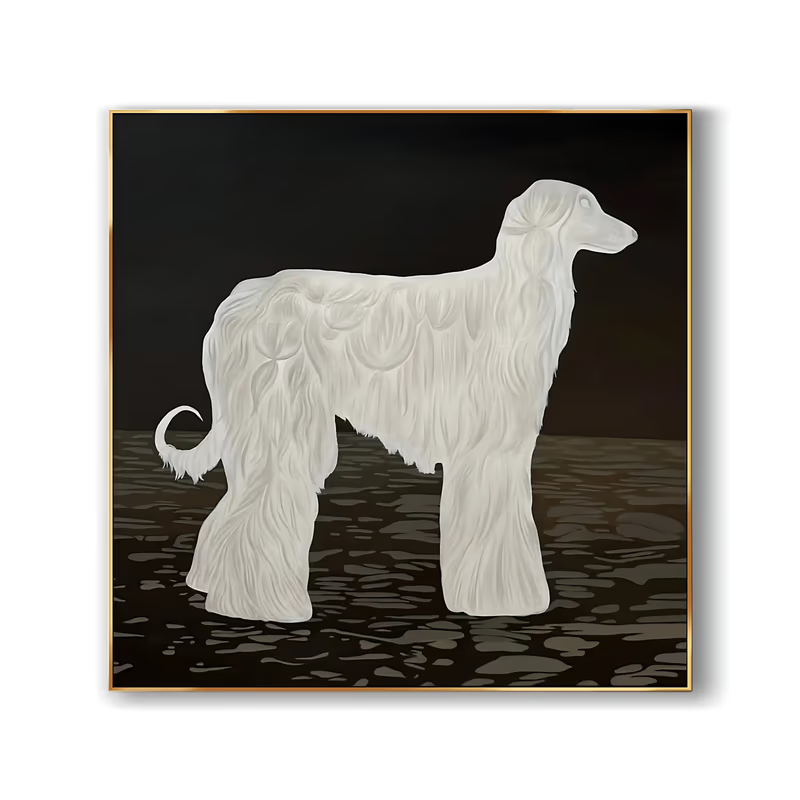
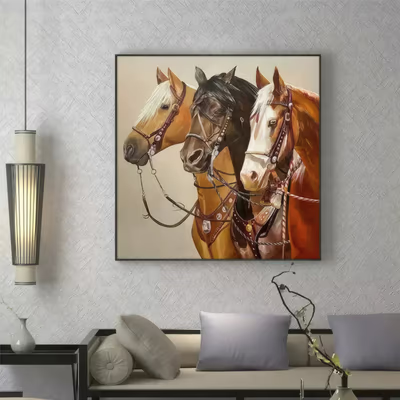
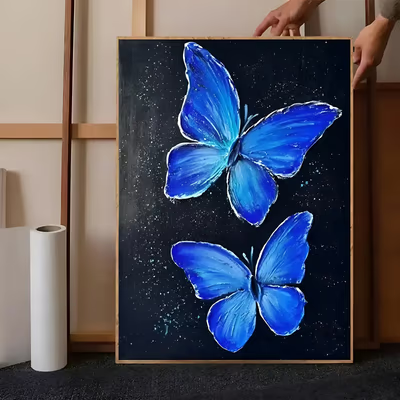
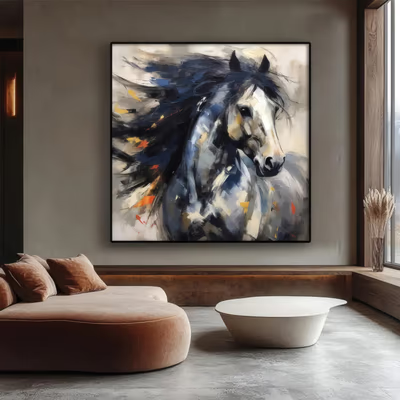
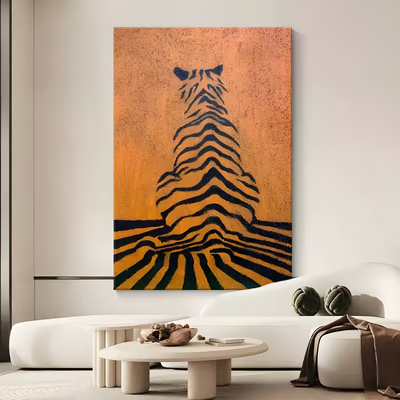
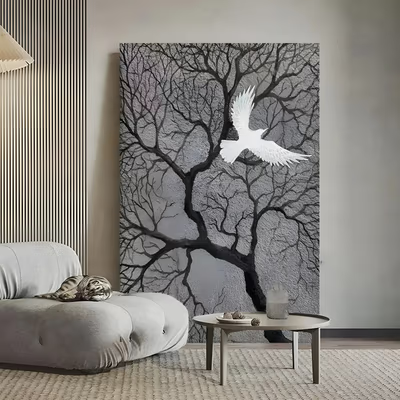
Leopards, panthers and horses emerging from a black ground, a white whale rising out of the dark, electric-blue butterflies. The black removes everything but the subject, which gives these pieces real presence in a study, a bar or an entrance hall.
Flower paintings on black
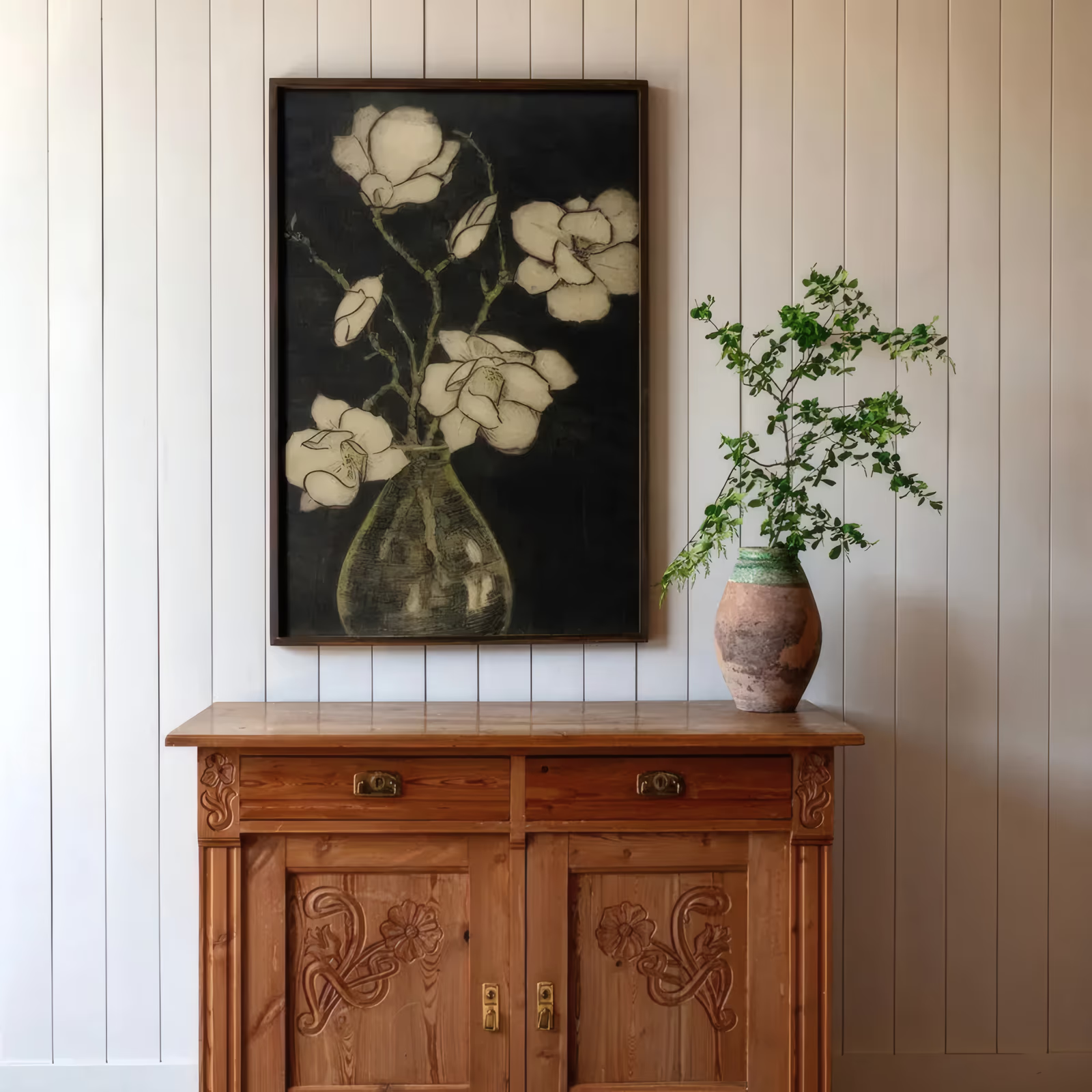
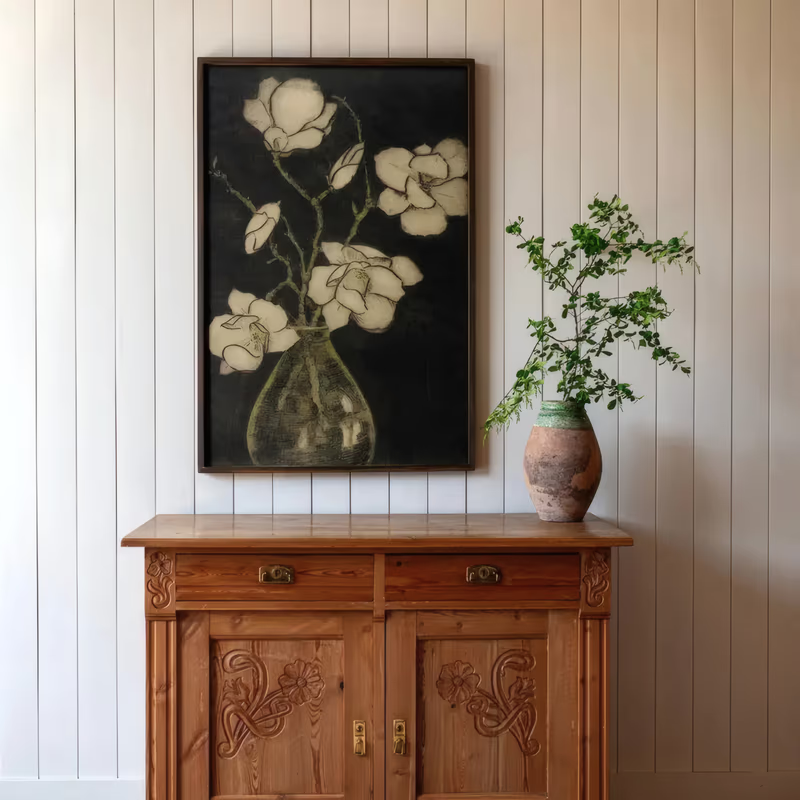
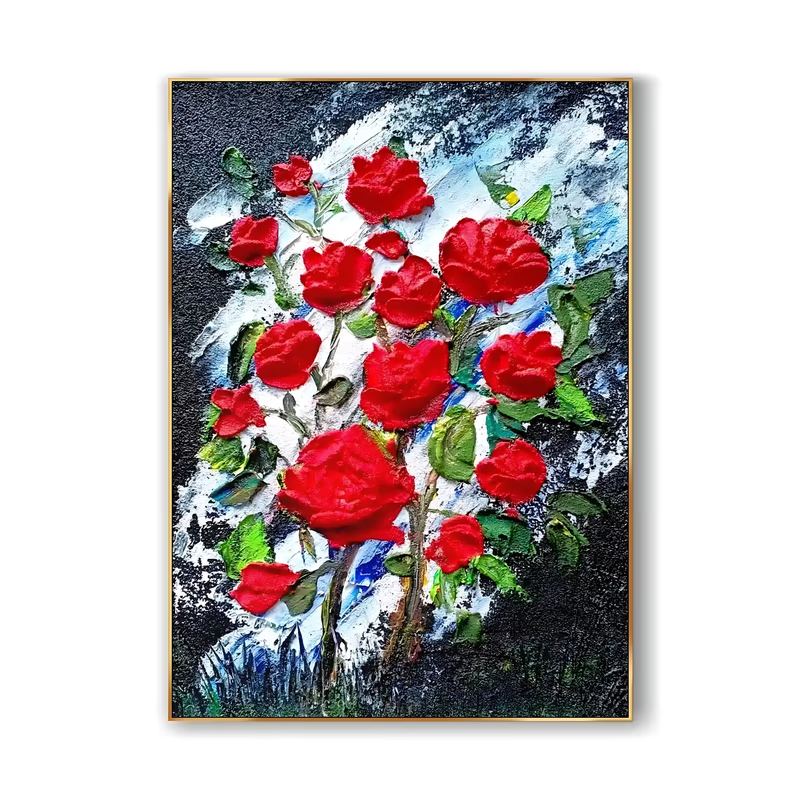
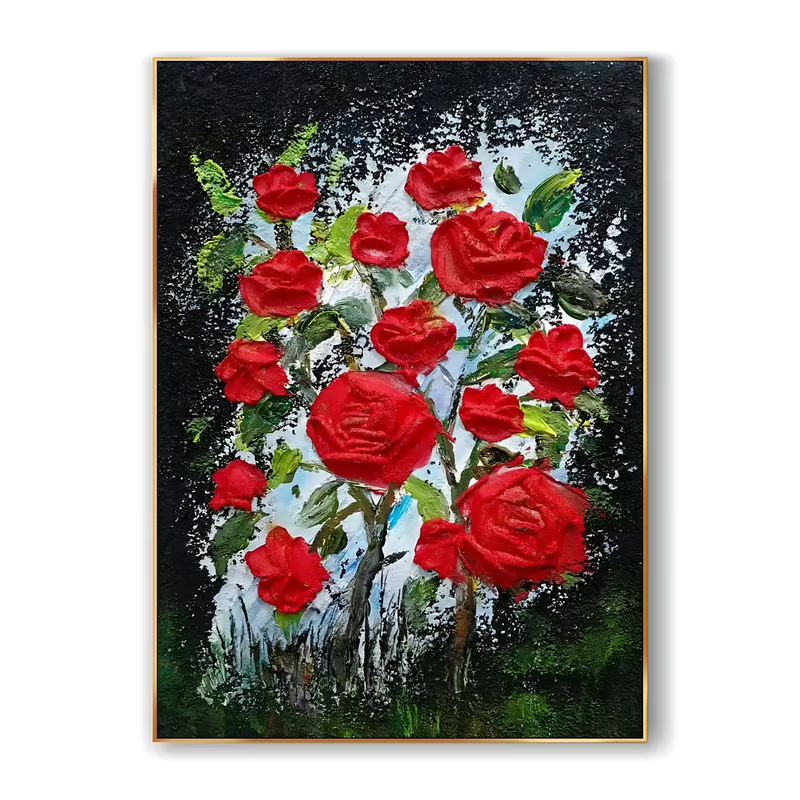
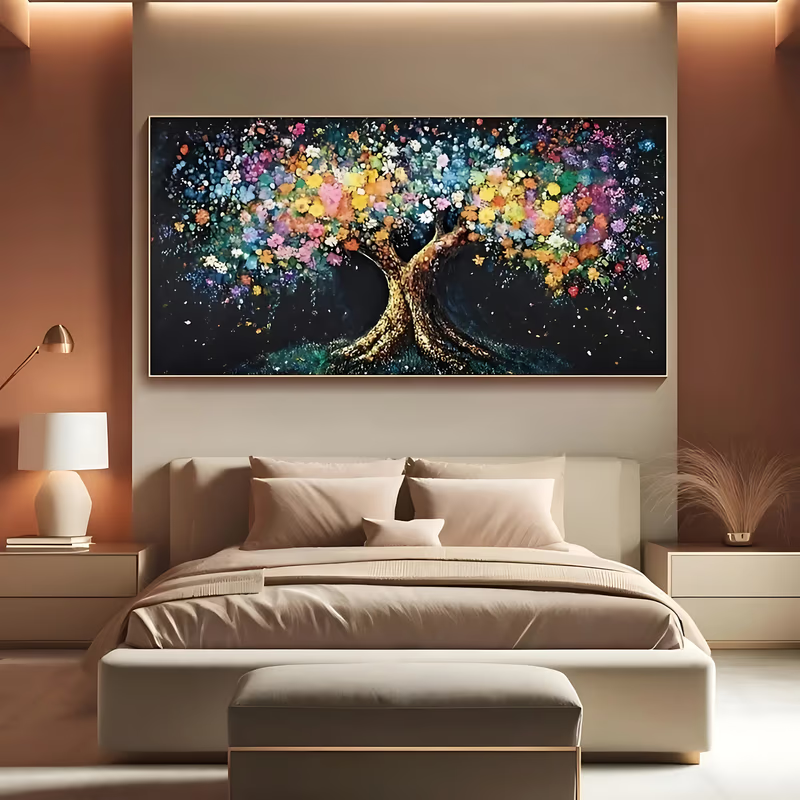
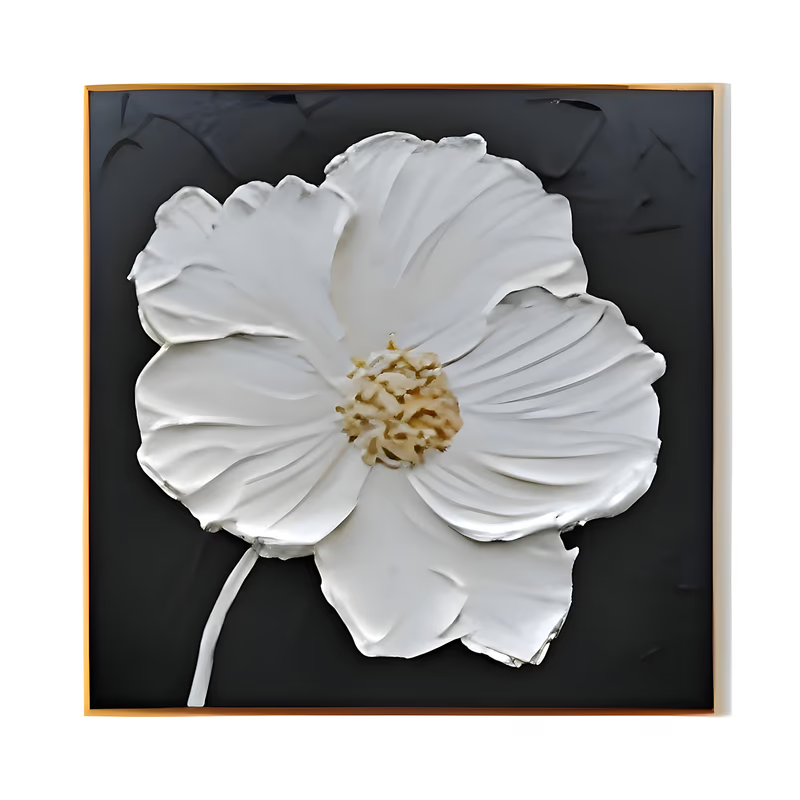
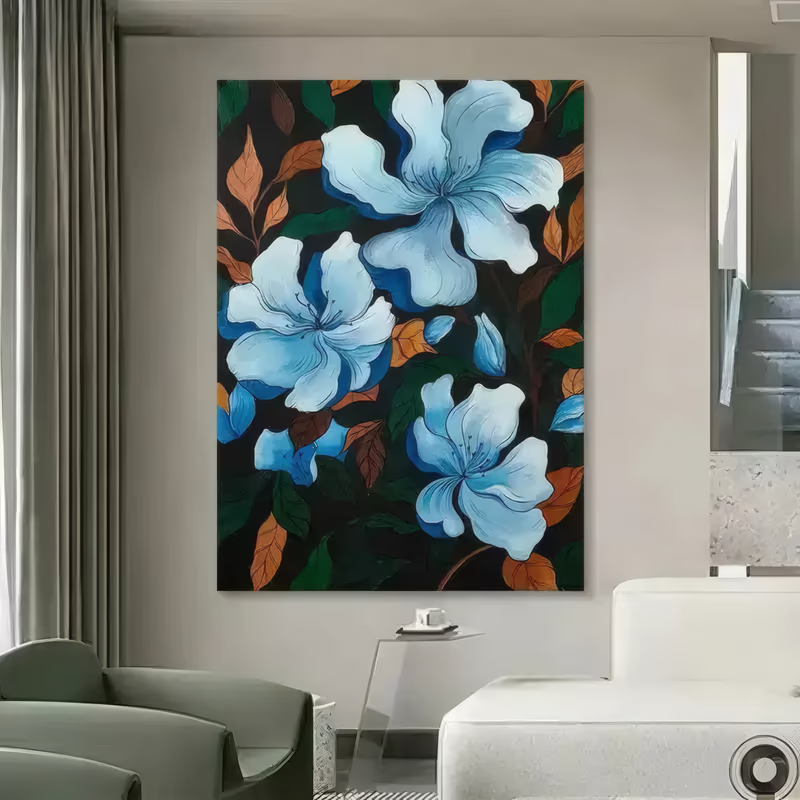
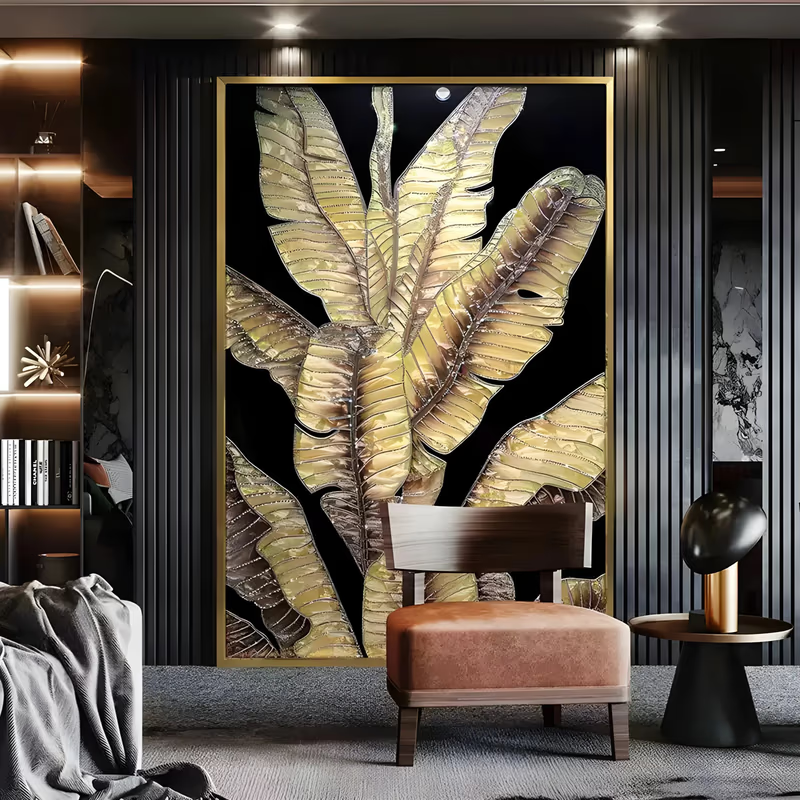
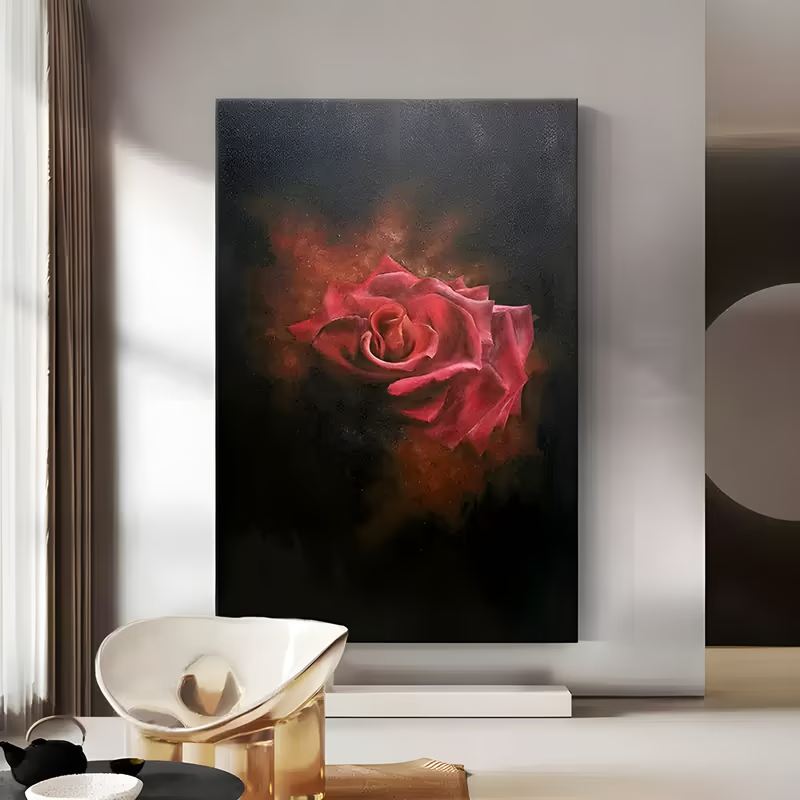
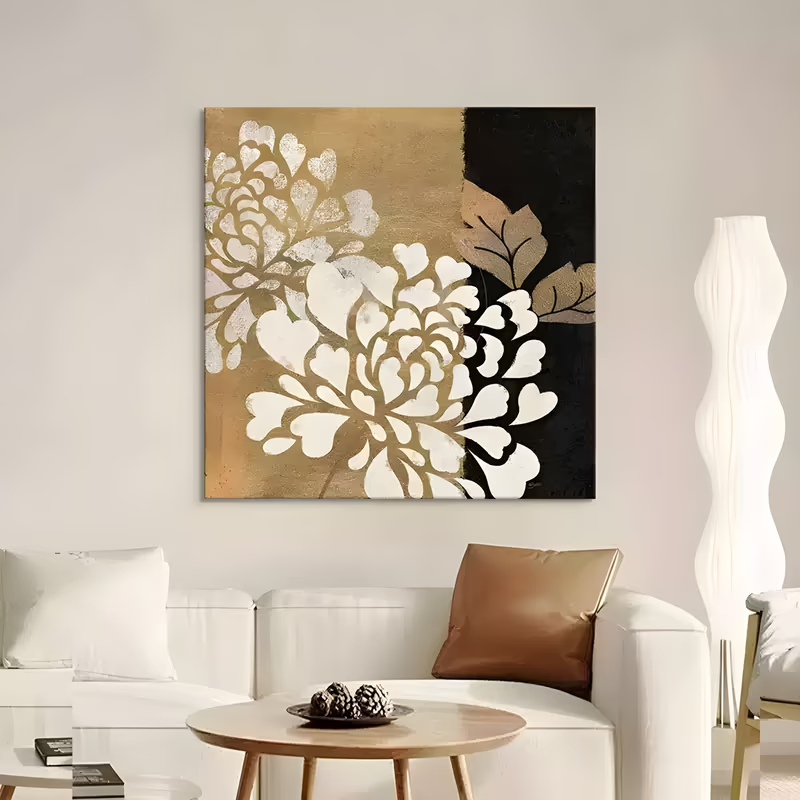
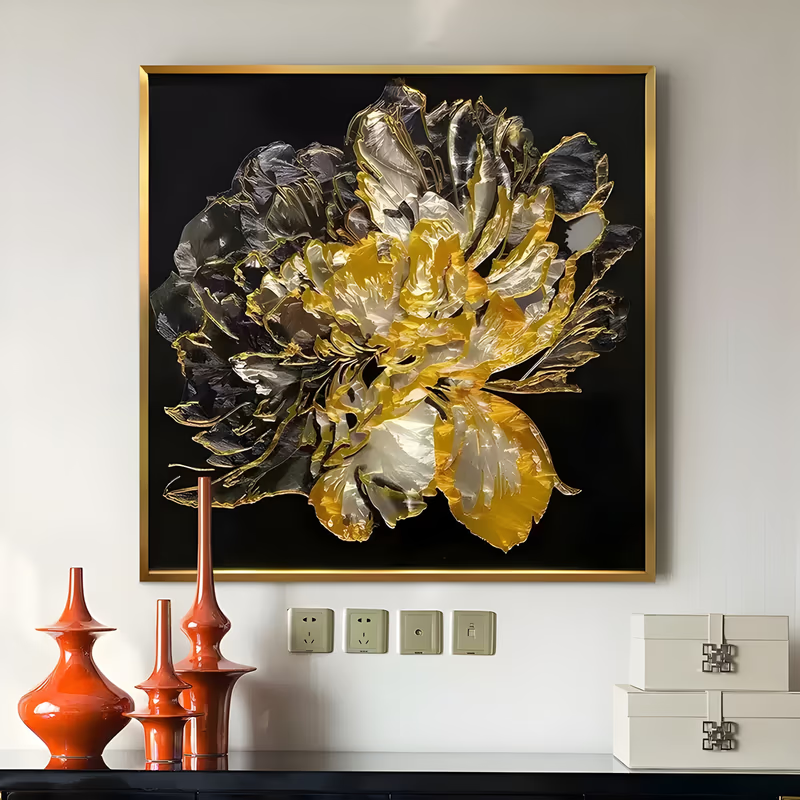
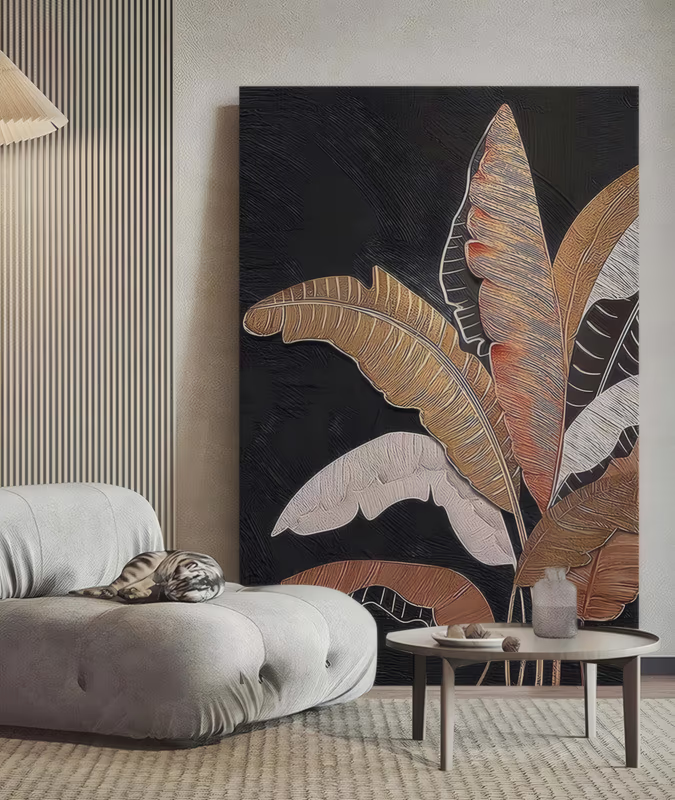
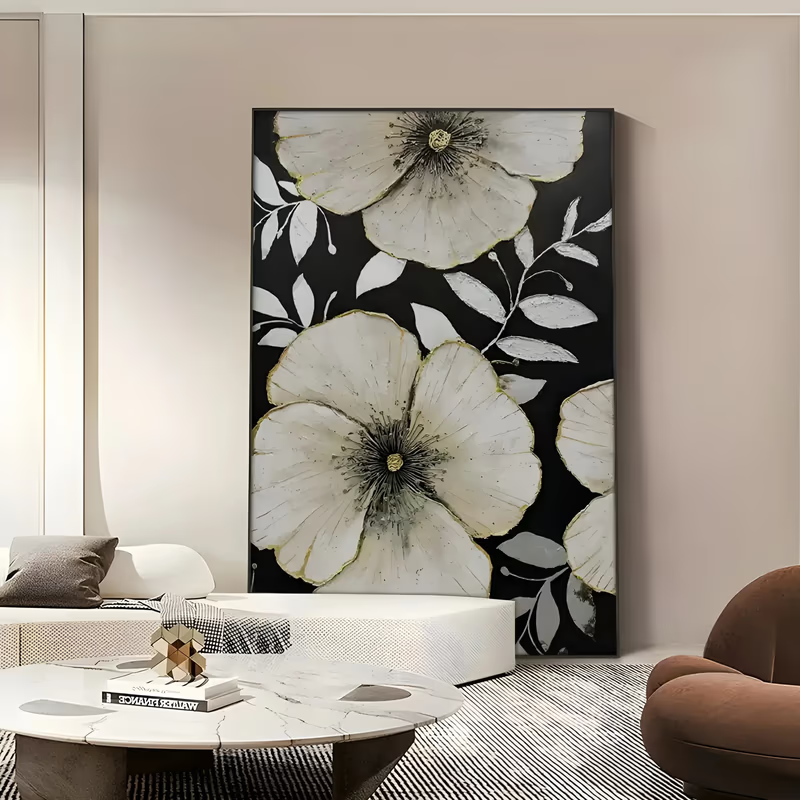
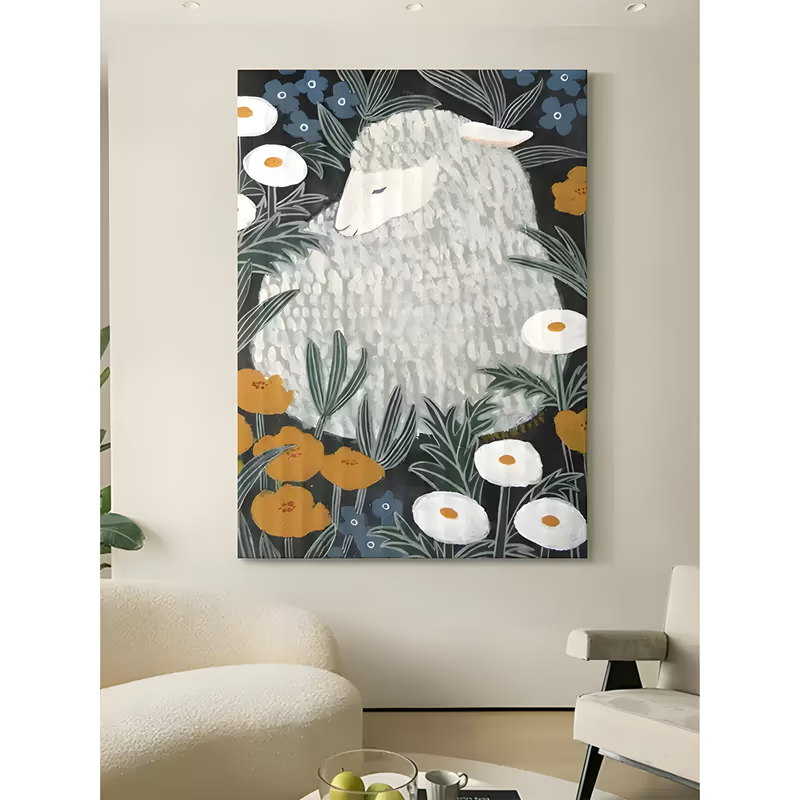
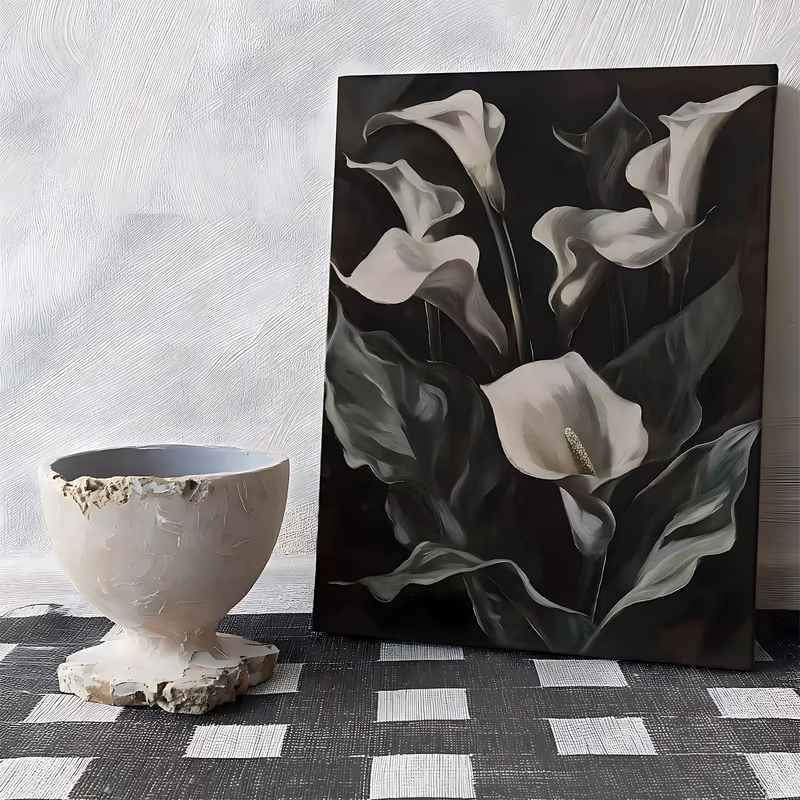
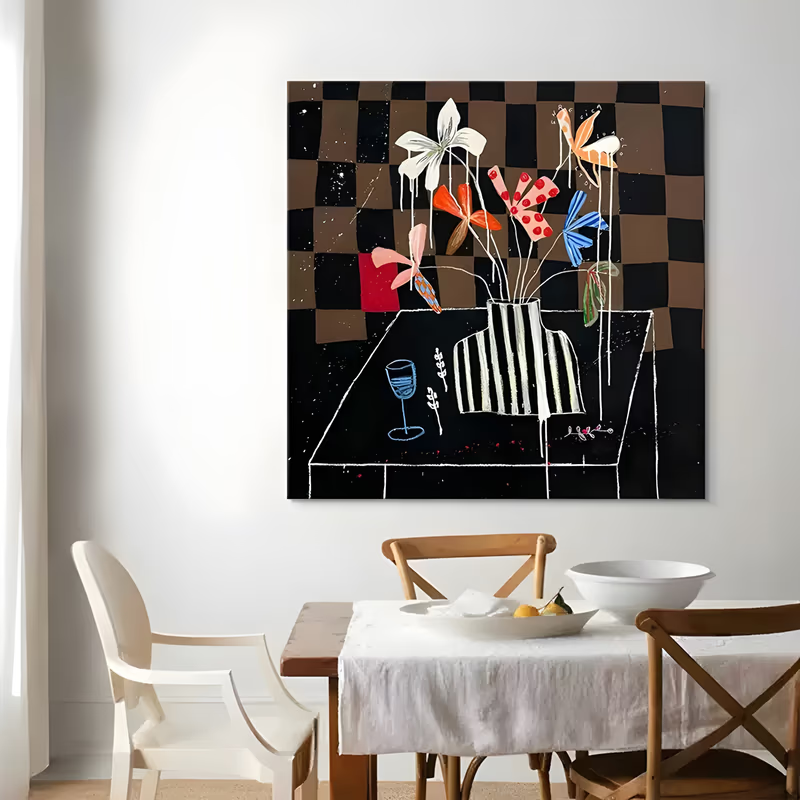
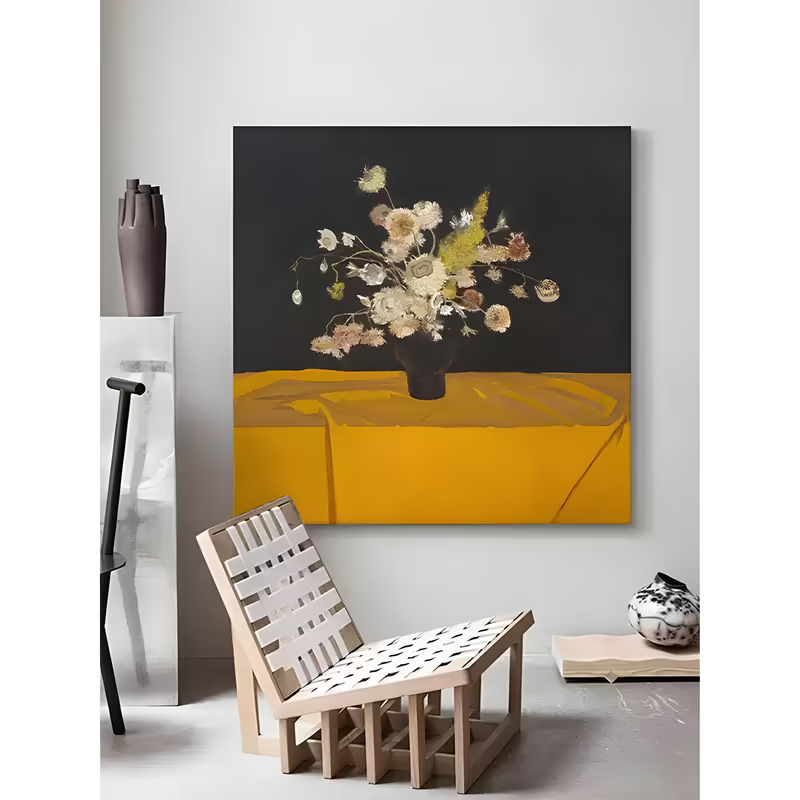
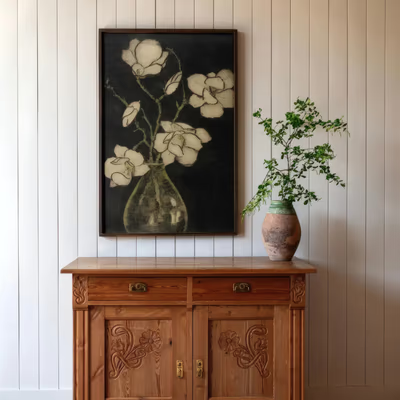
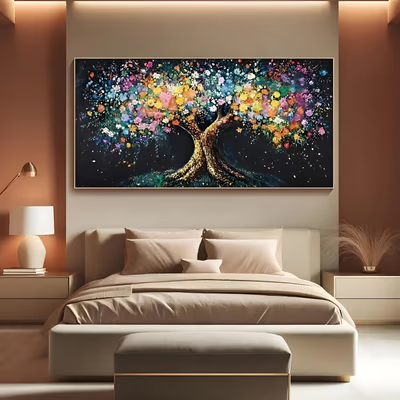
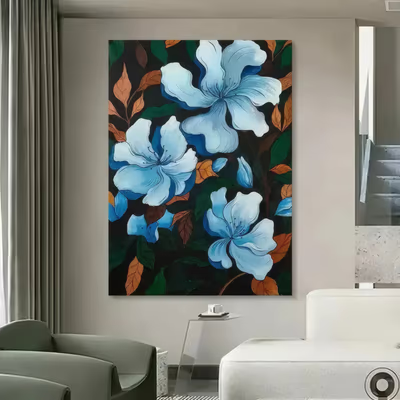
A single red rose, white calla lilies, anemones in plaster, copper and gold palm leaves. Flowers painted on black look lit from within: a darker, more dramatic kind of botanical art for dining rooms, restaurants and moody bedrooms.
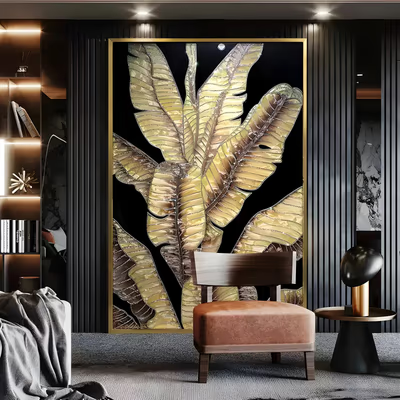
Black textured and plaster art
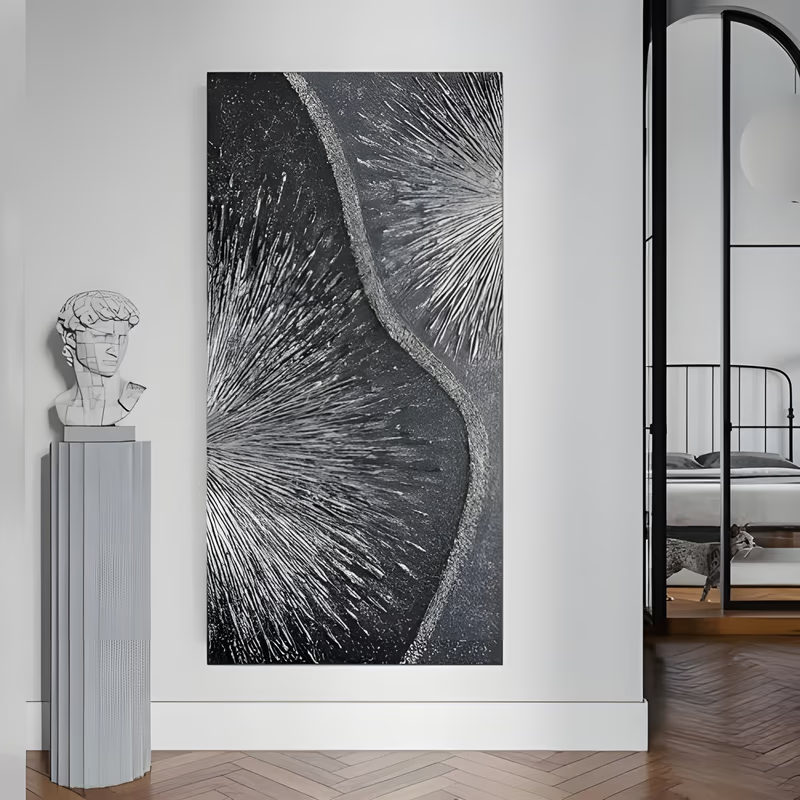
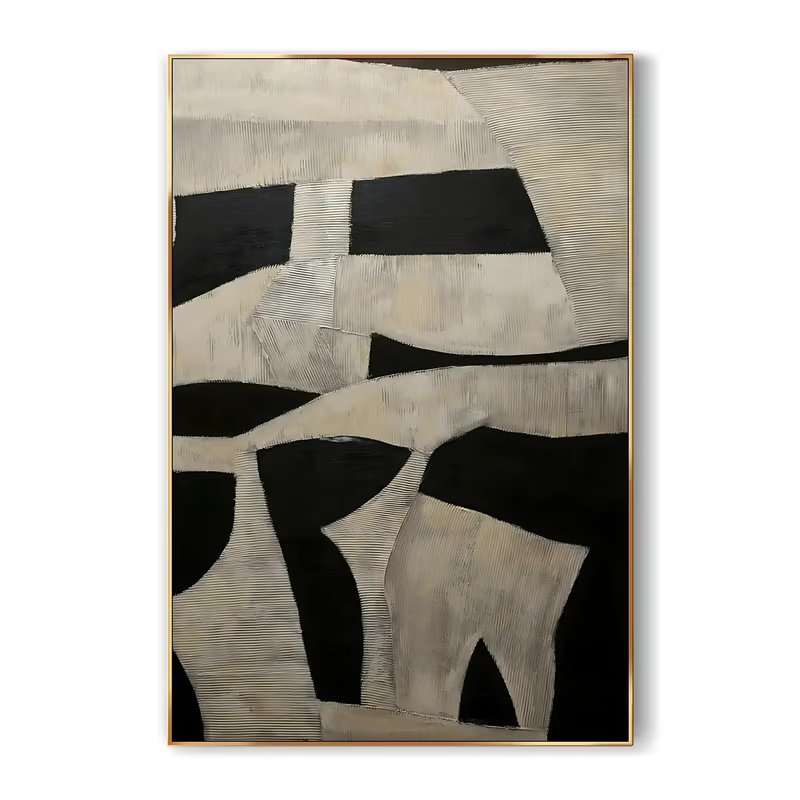
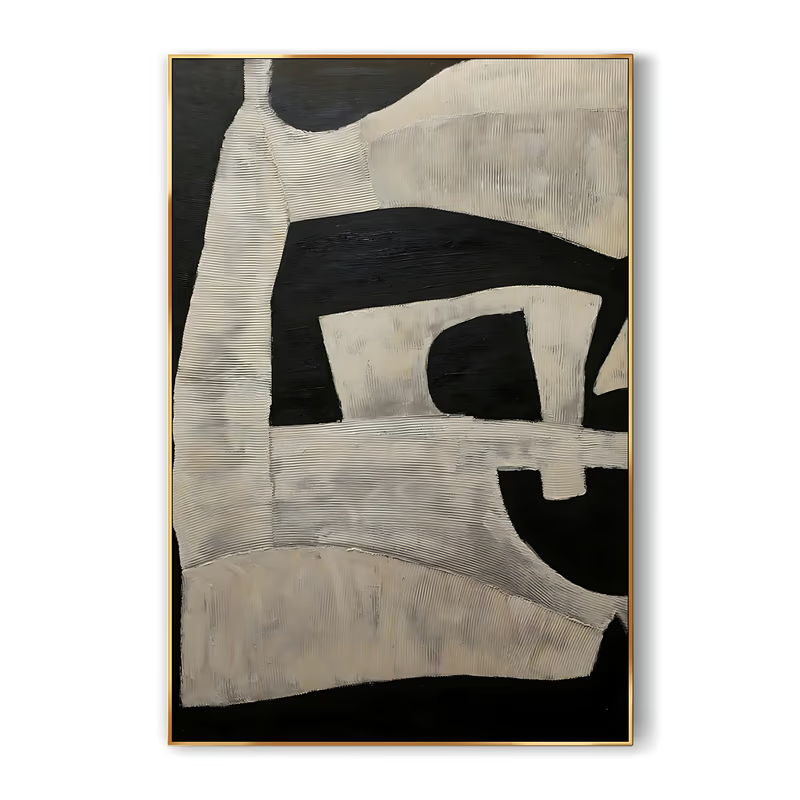
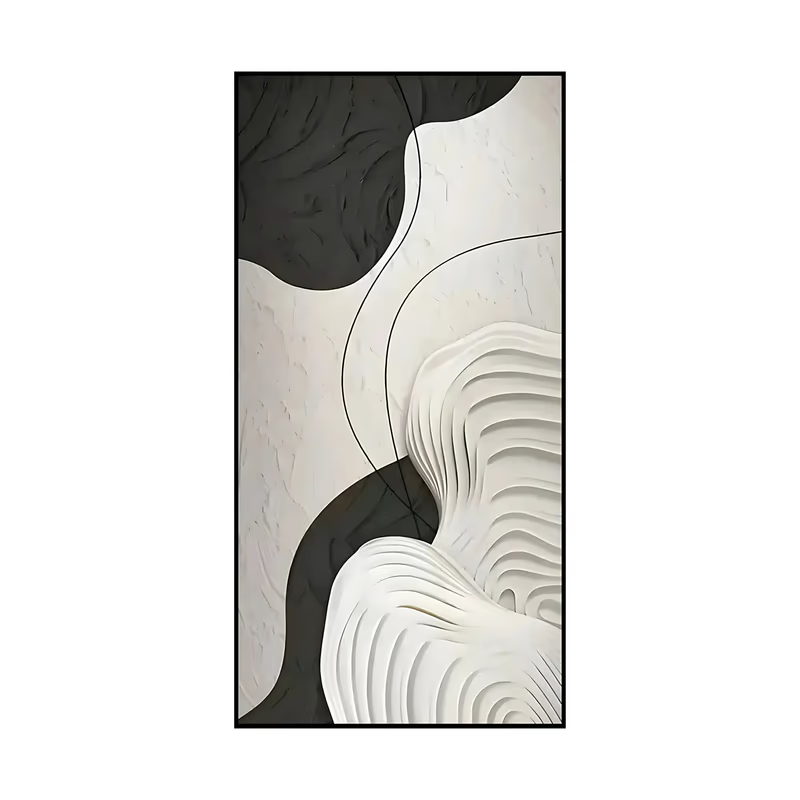
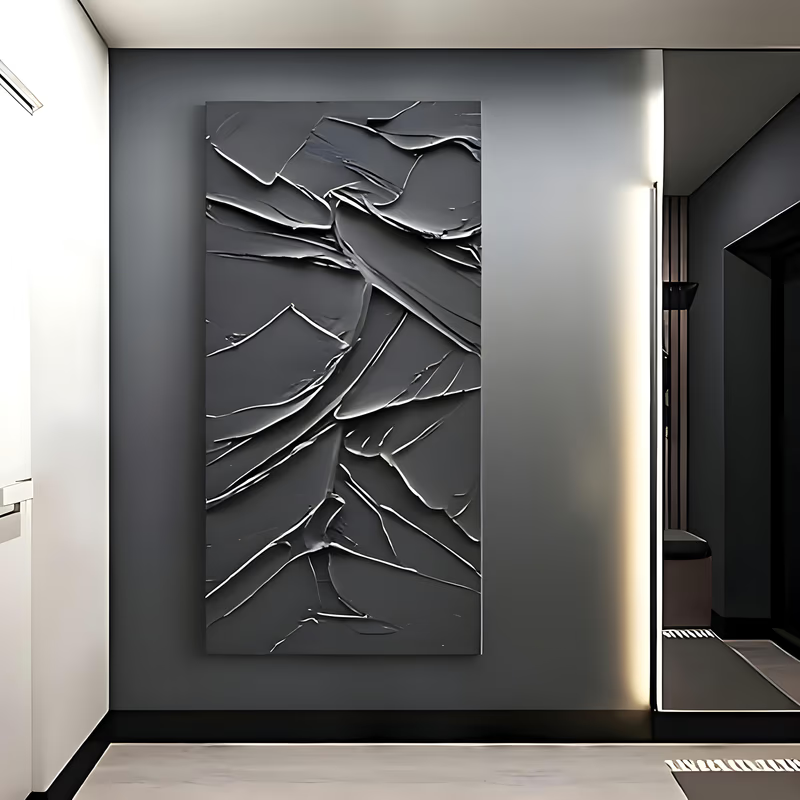
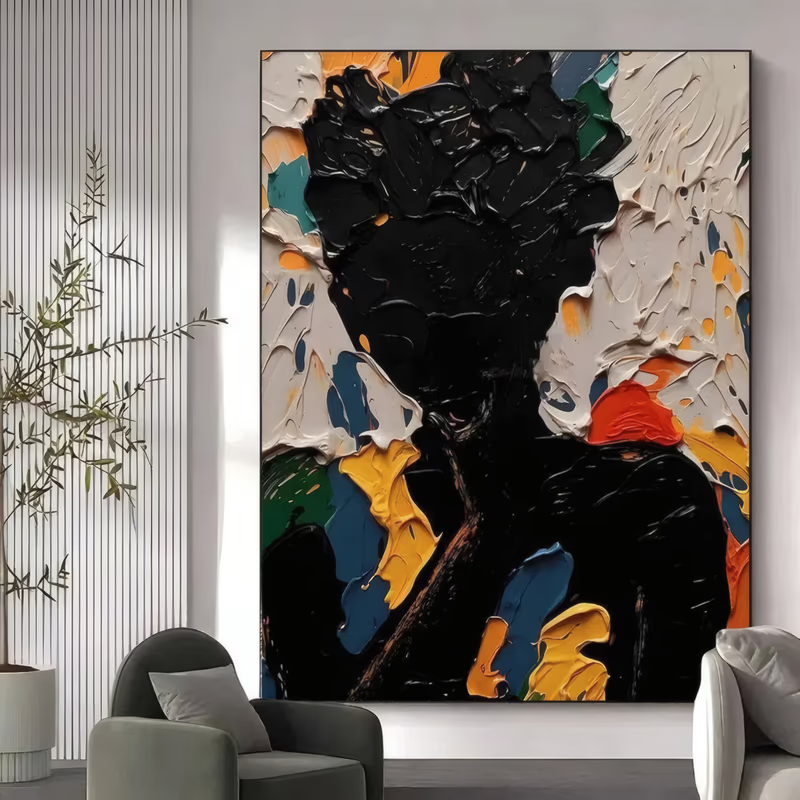
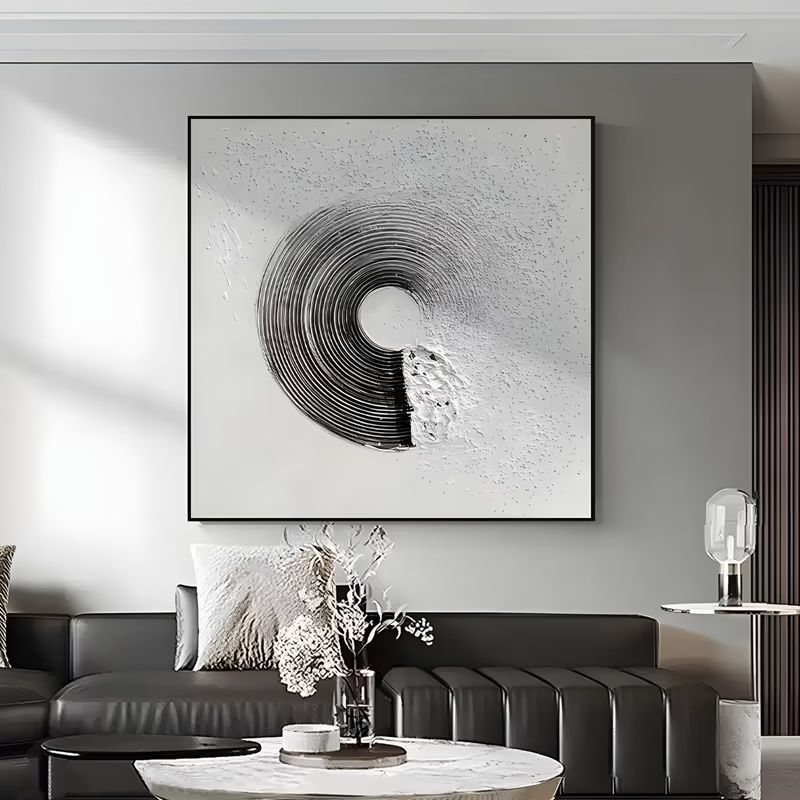
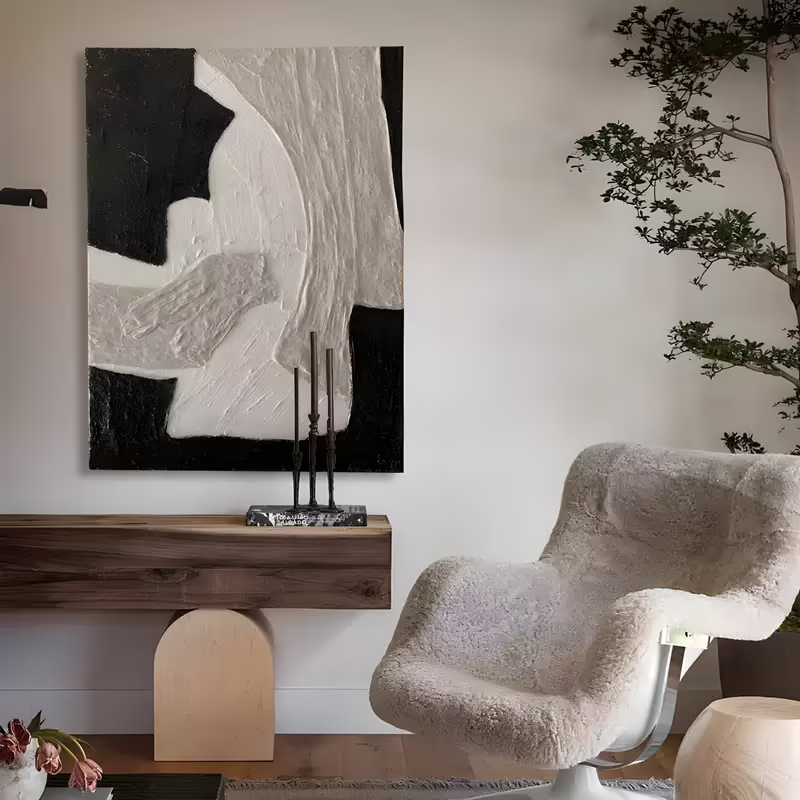
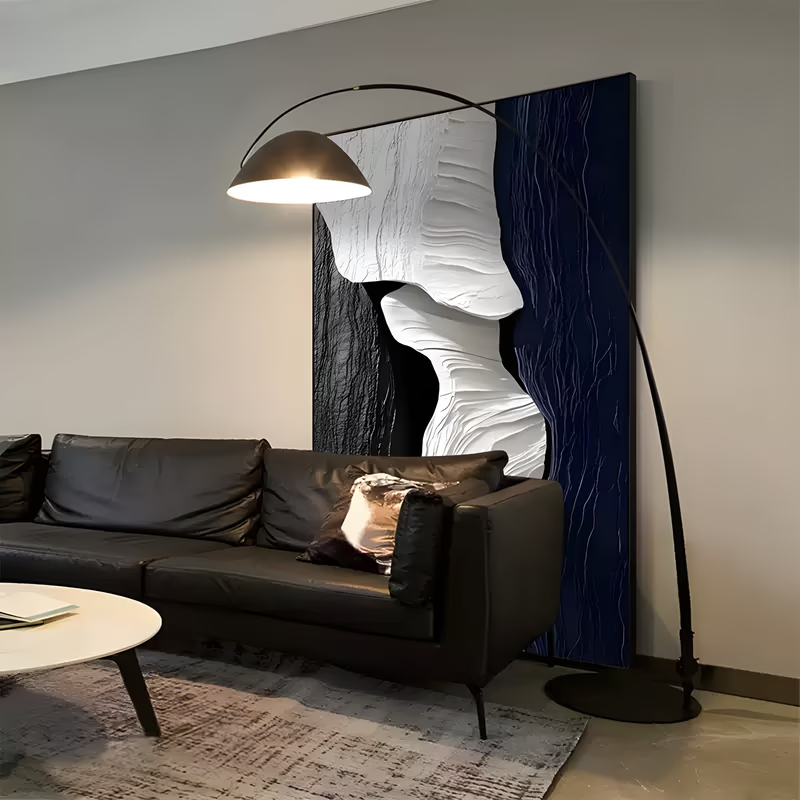
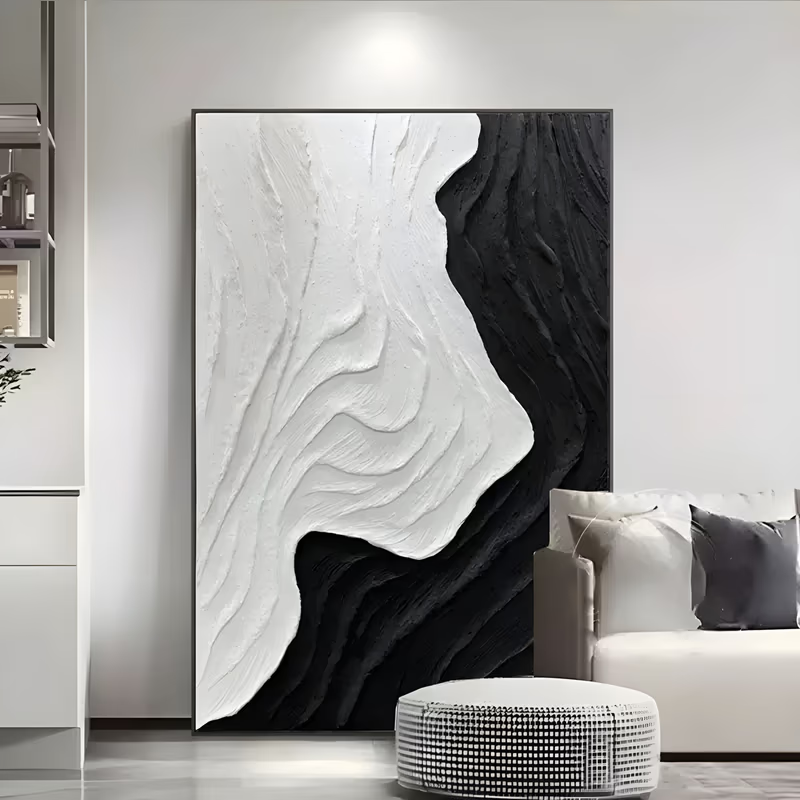
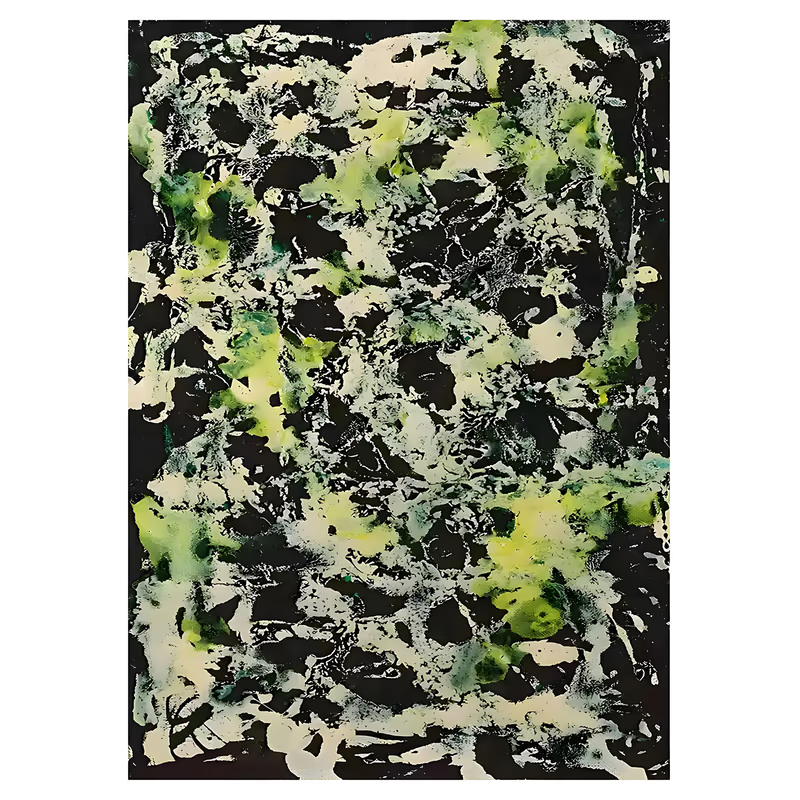
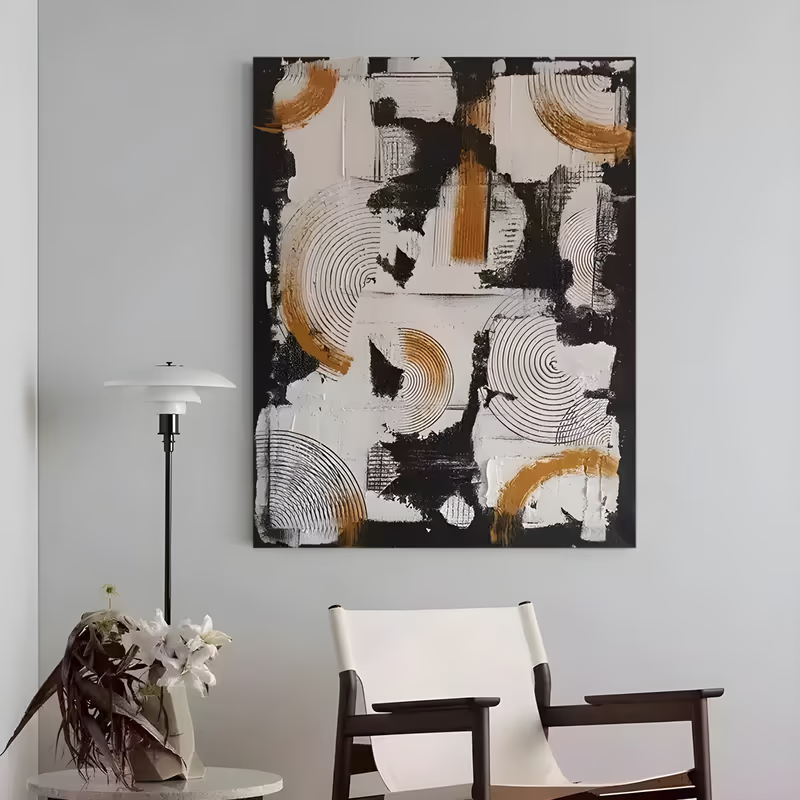
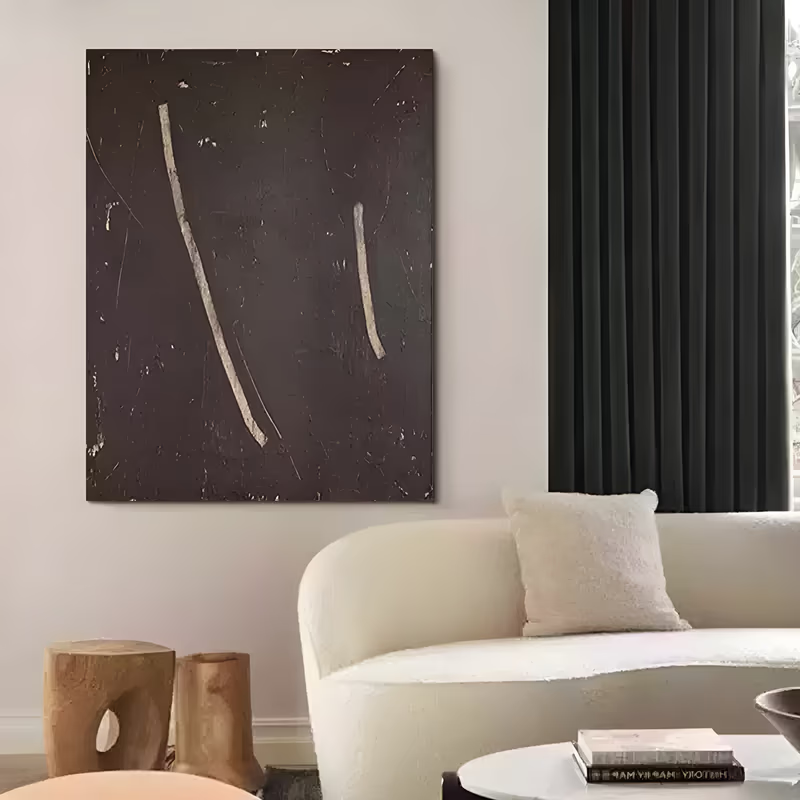
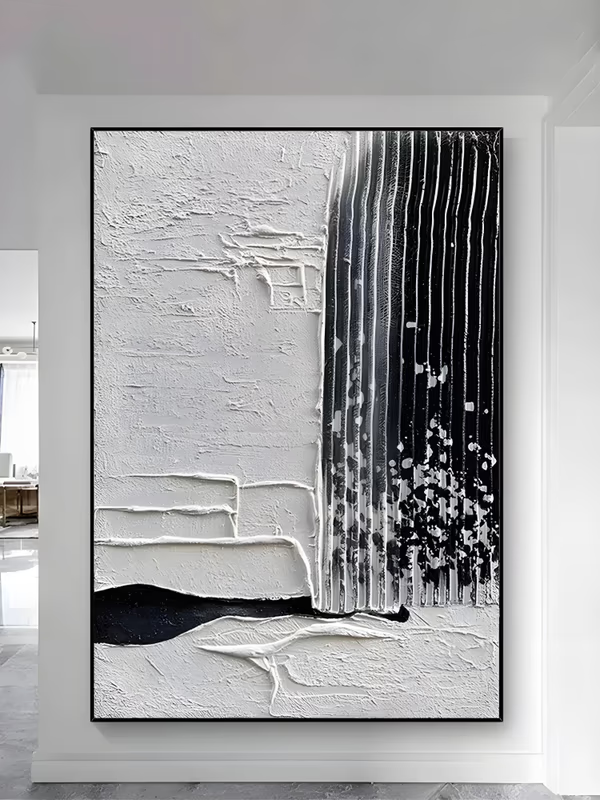
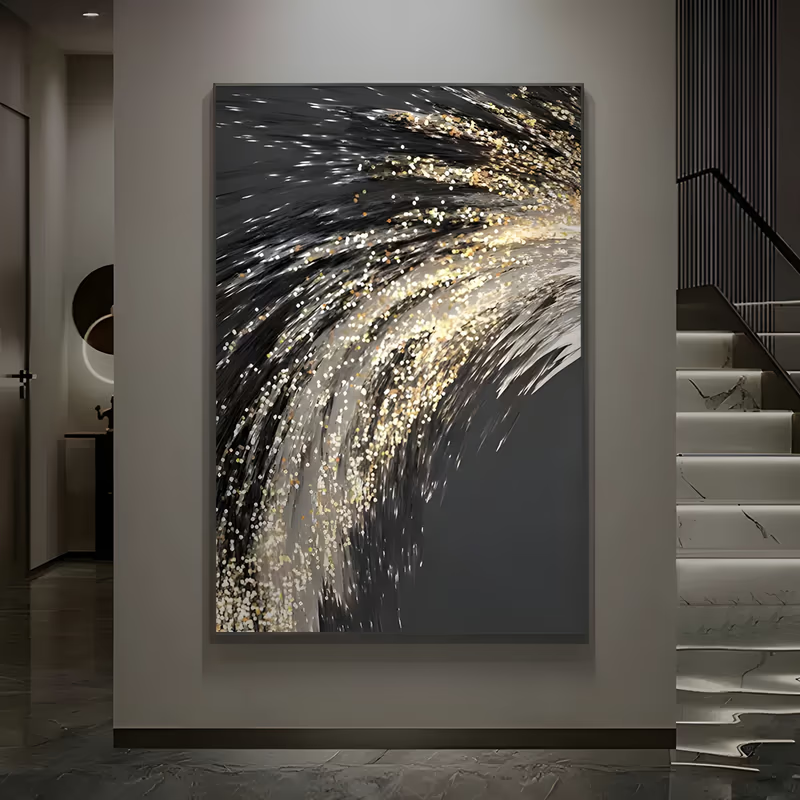
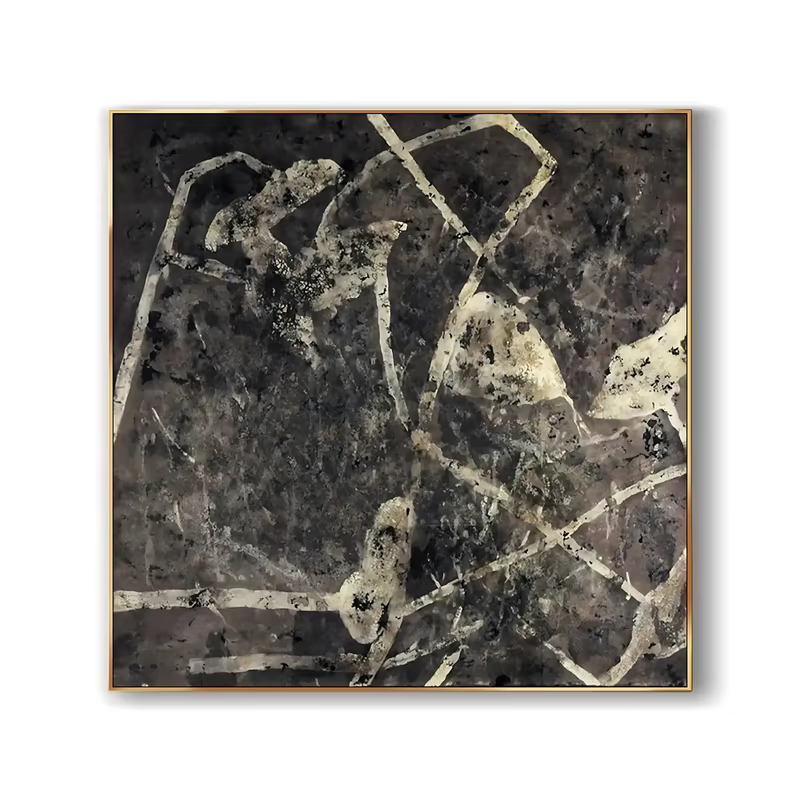
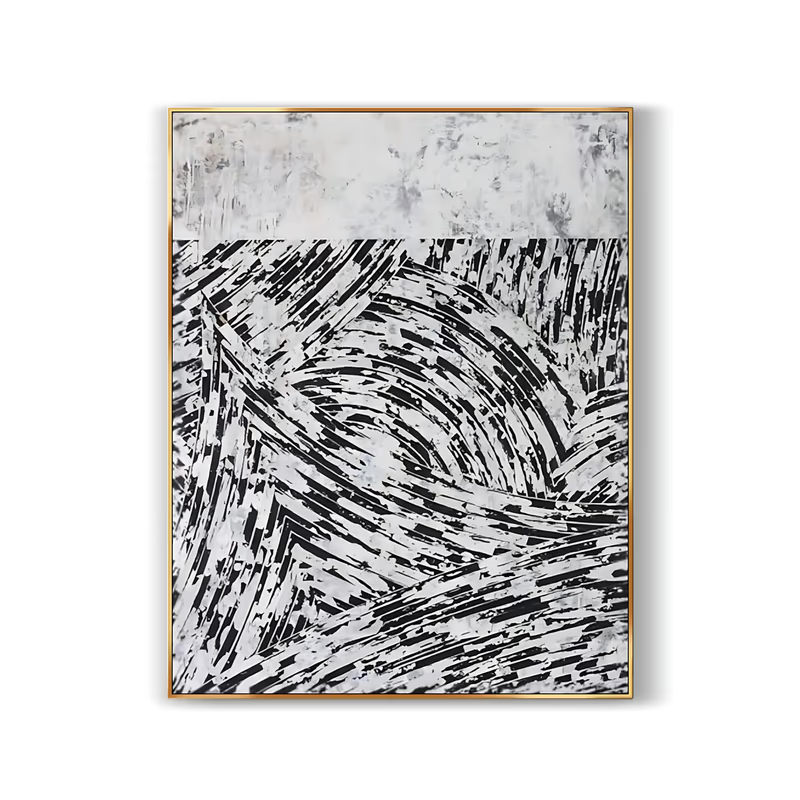
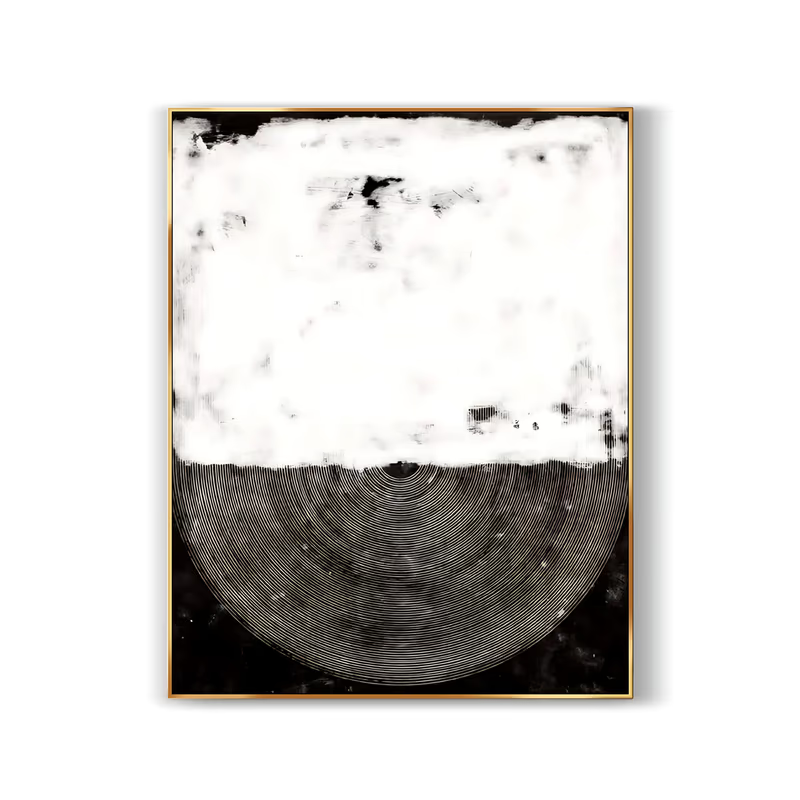
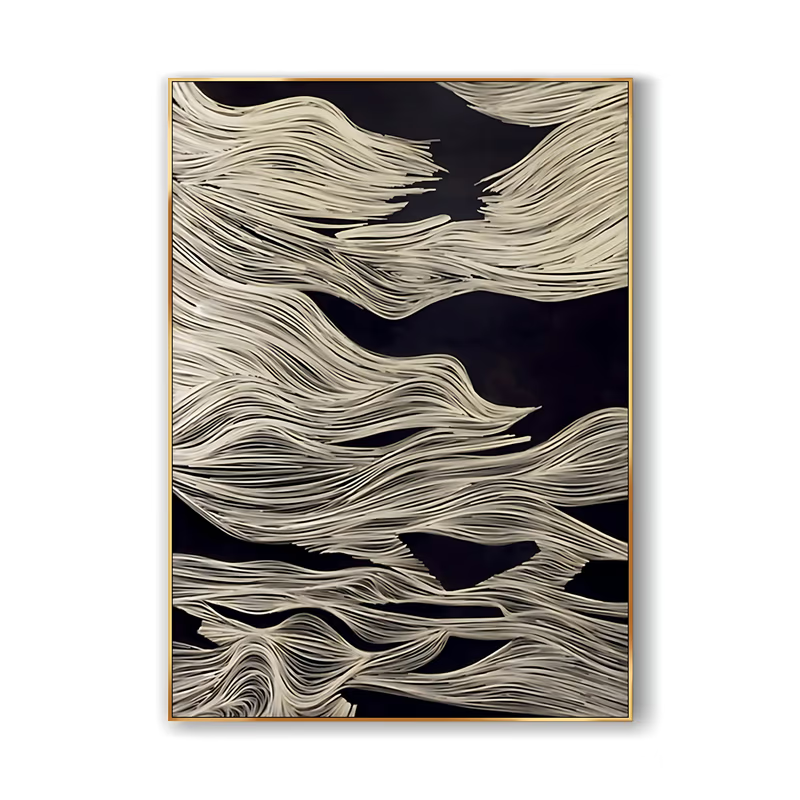
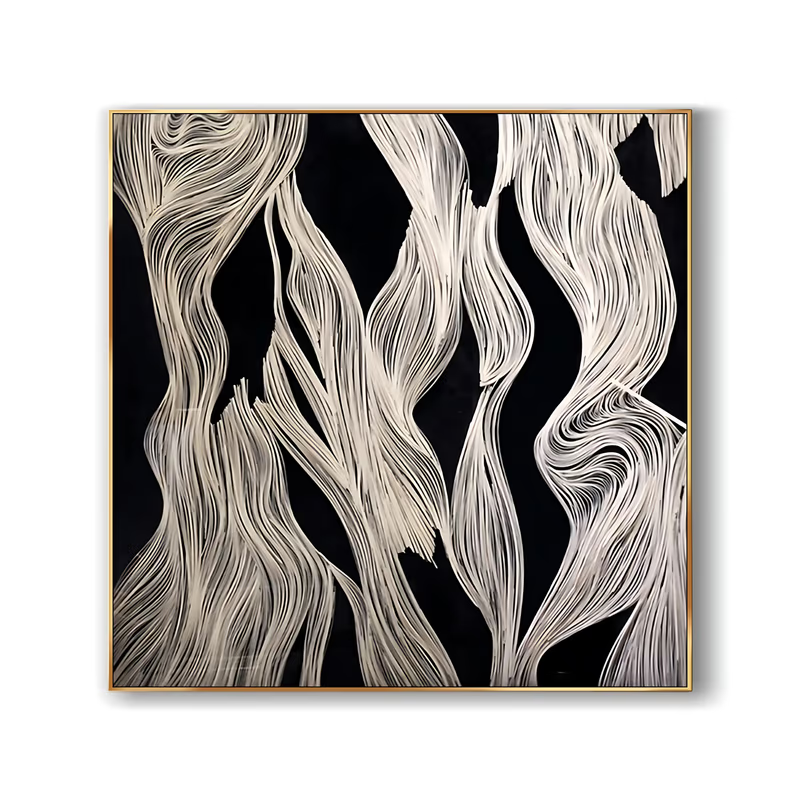
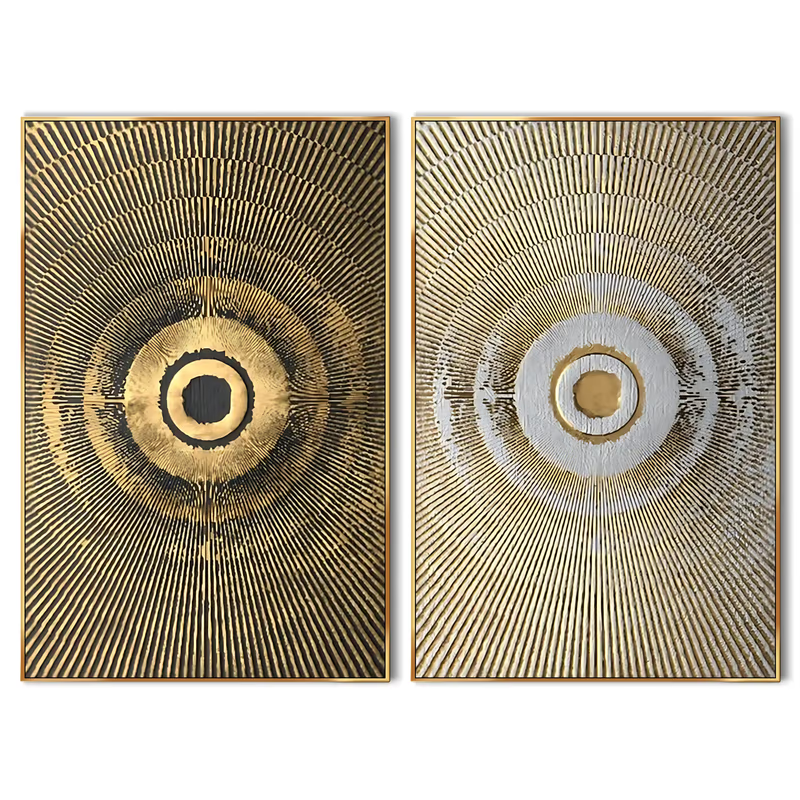
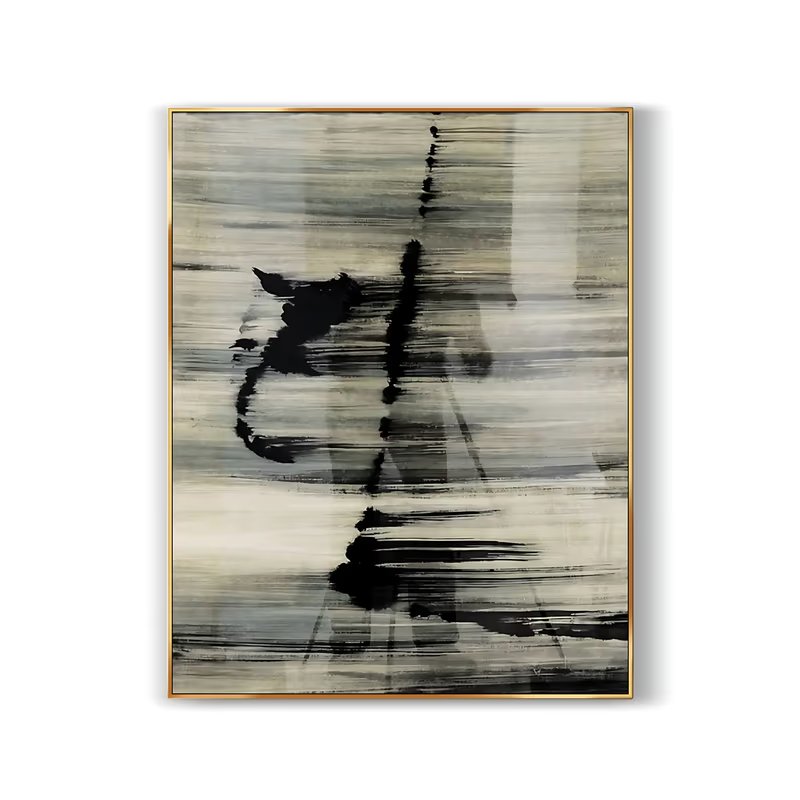
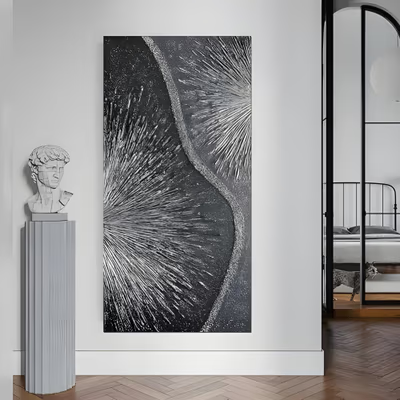
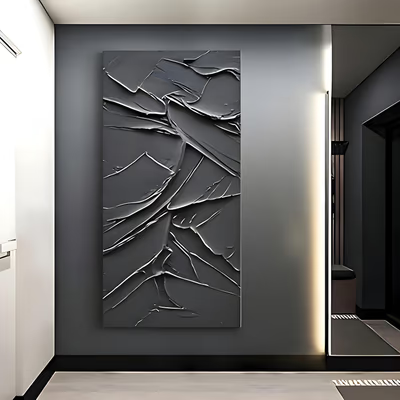
Combed cream ridges on black, carved concentric arcs, monochrome sculpted relief. Black texture is subtler than white texture: it shows when light rakes across it and turns velvety when it does not, which suits rooms that change from day to evening.
Where does black wall art look best?
Black wall art looks best where a room needs a focal point or a sense of occasion: living rooms, home offices, entrance halls, restaurants, bars and lobbies.
Living room
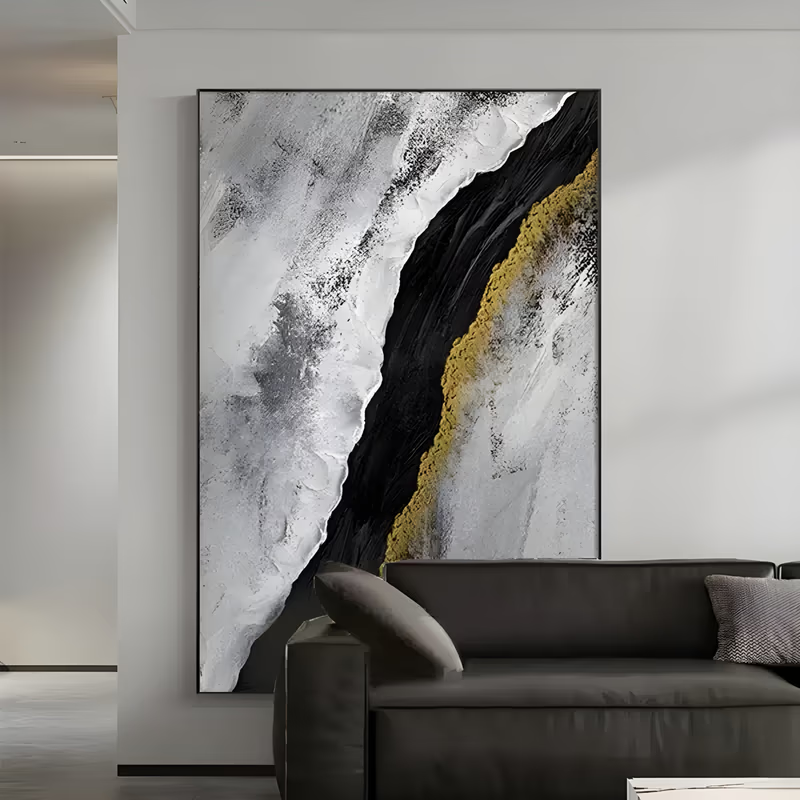
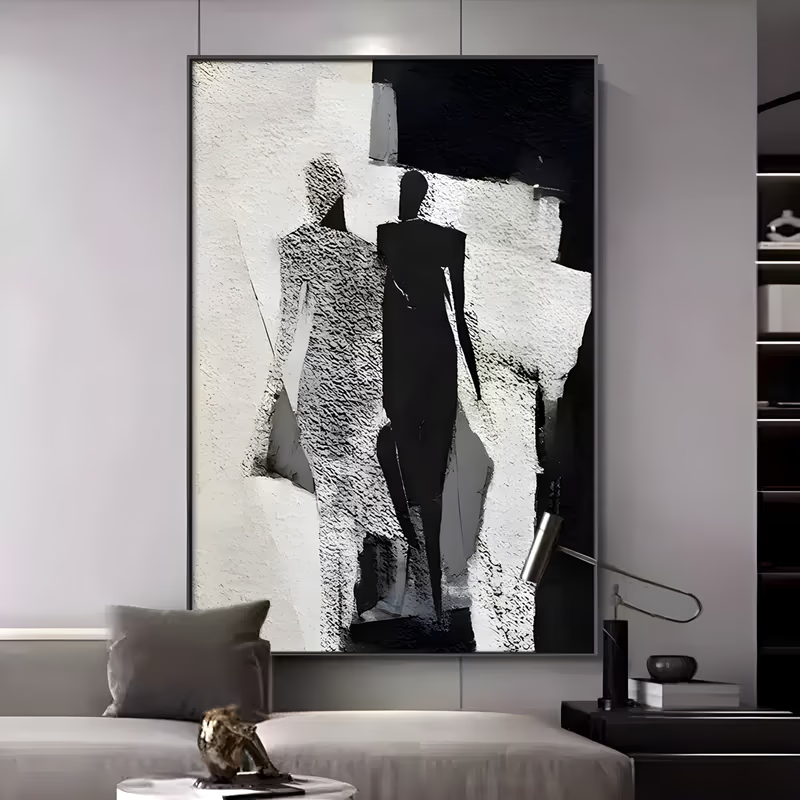
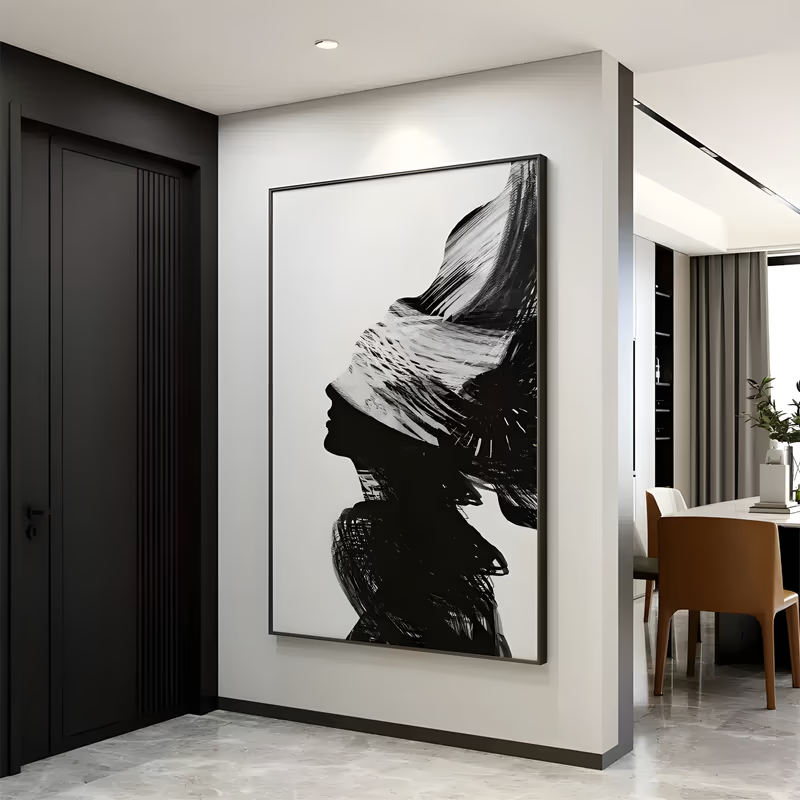
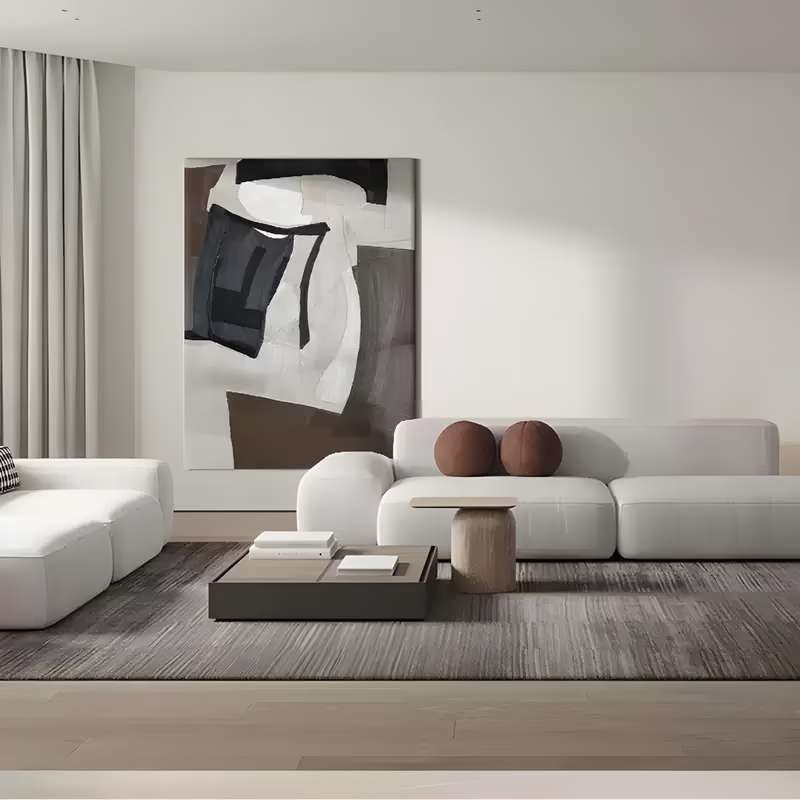
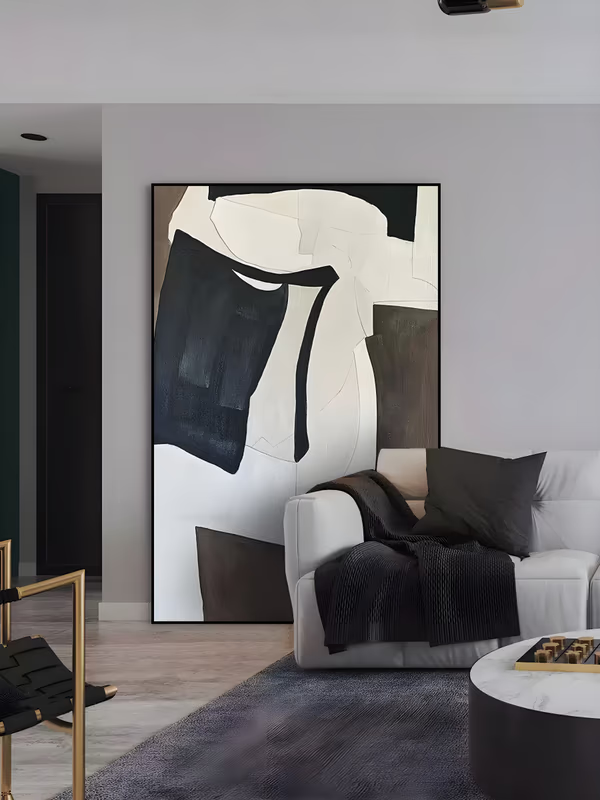
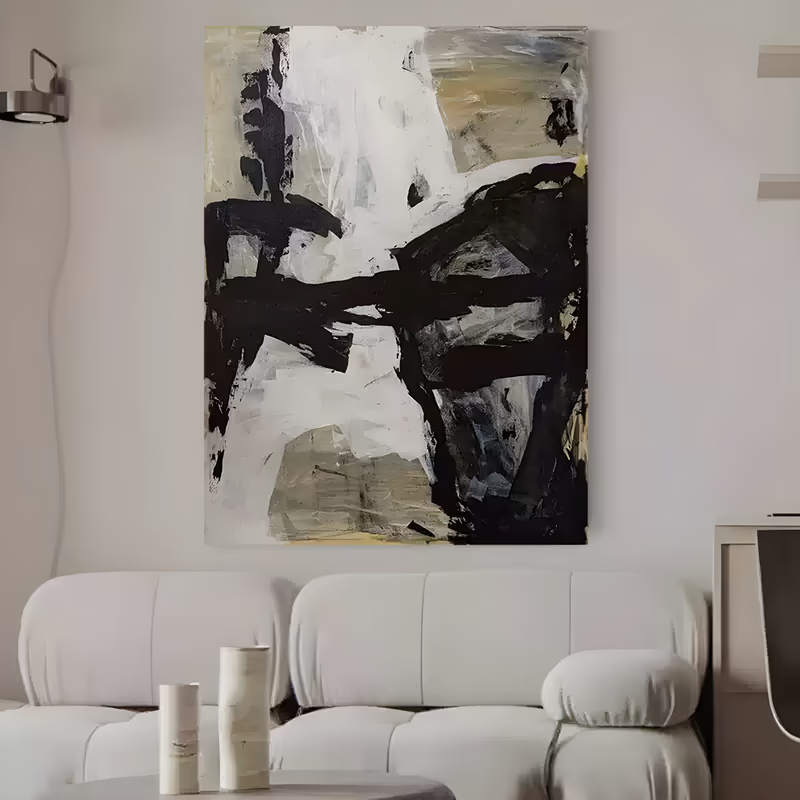
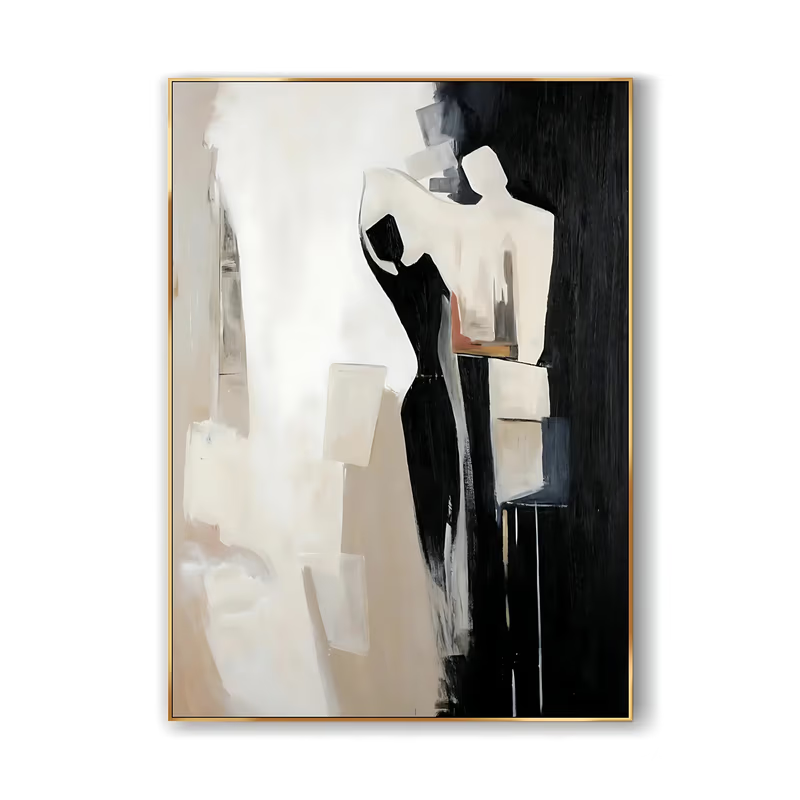
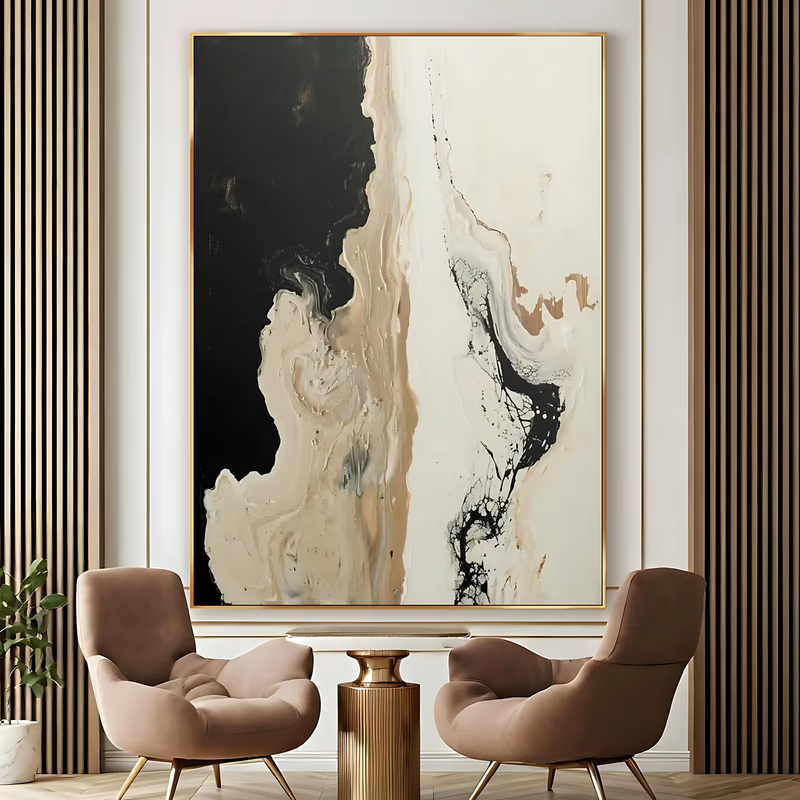
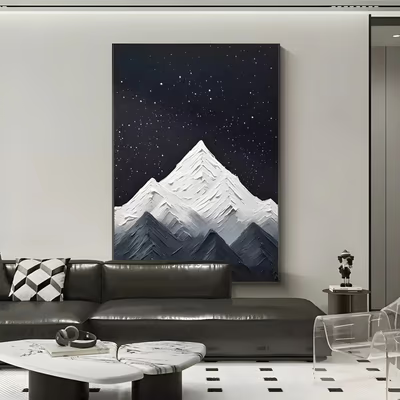
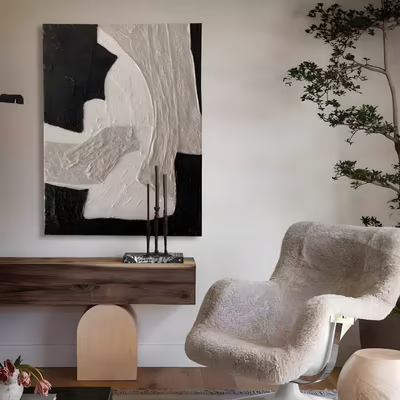
A black and white abstract above a pale sofa gives an open-plan room a centre, and it holds its own against a television or a fireplace. Black art for living rooms.
Home office and study
Geometric black pieces look focused and orderly behind a desk, and they read well on video calls. Black art for offices.
Entrance hall
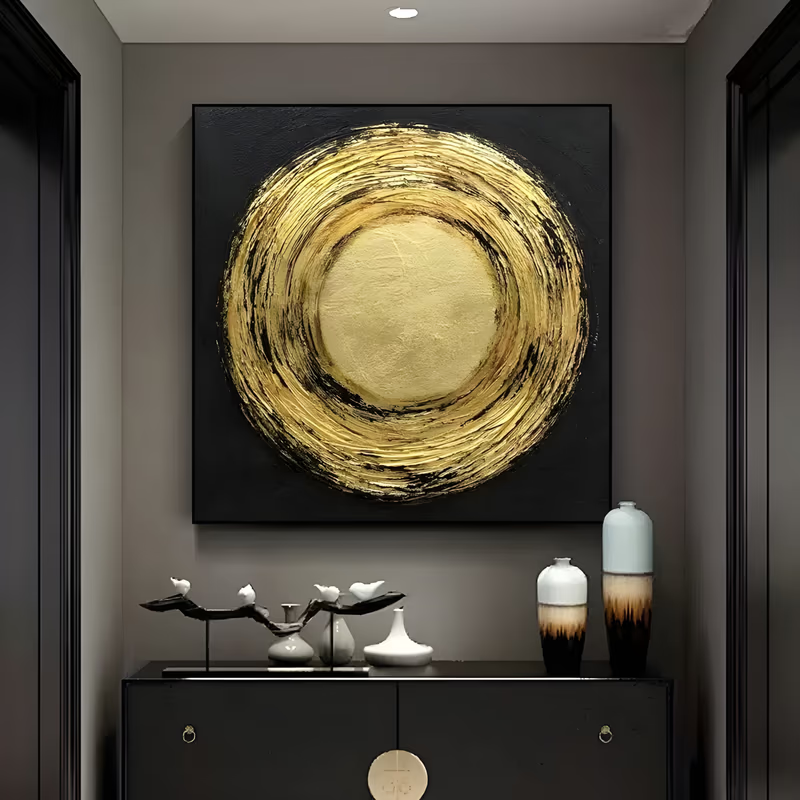
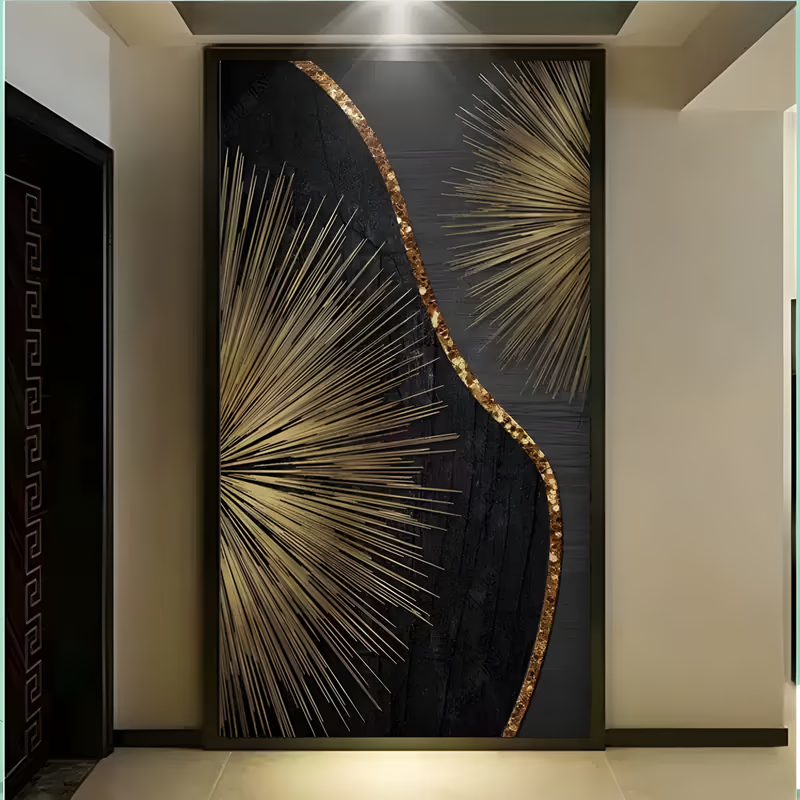
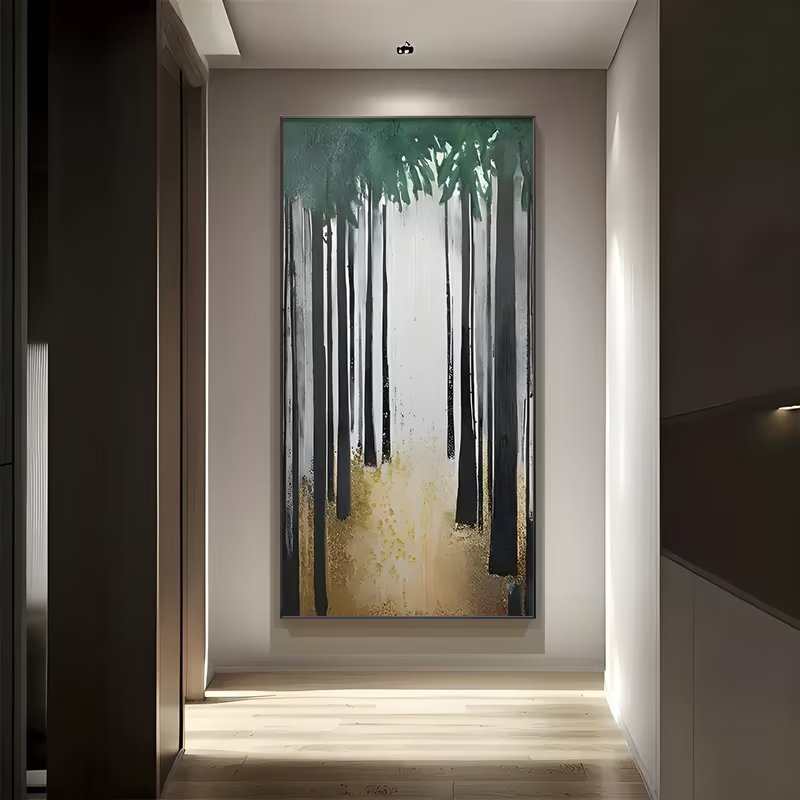
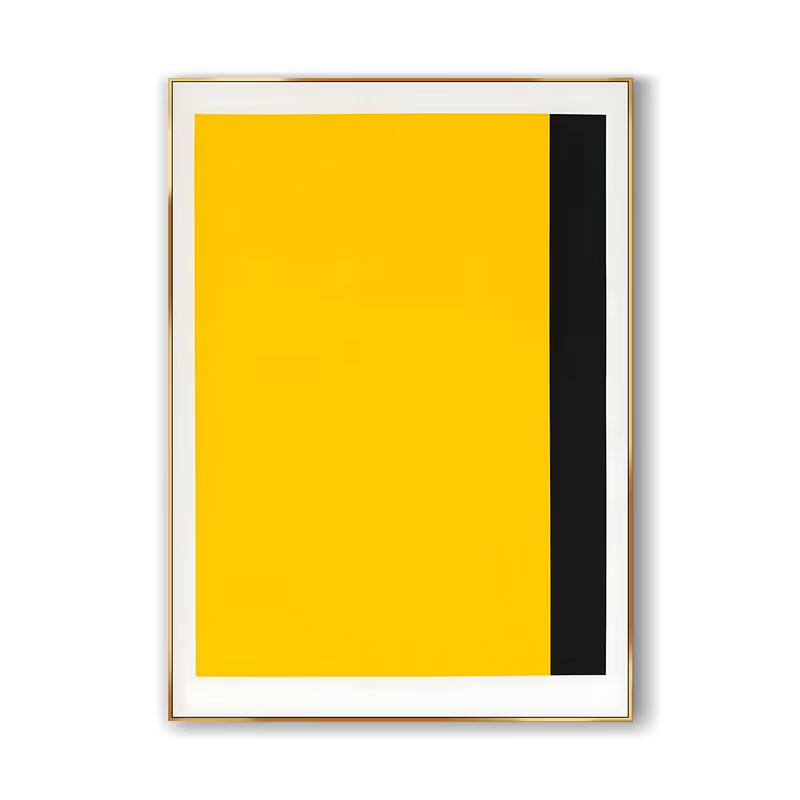
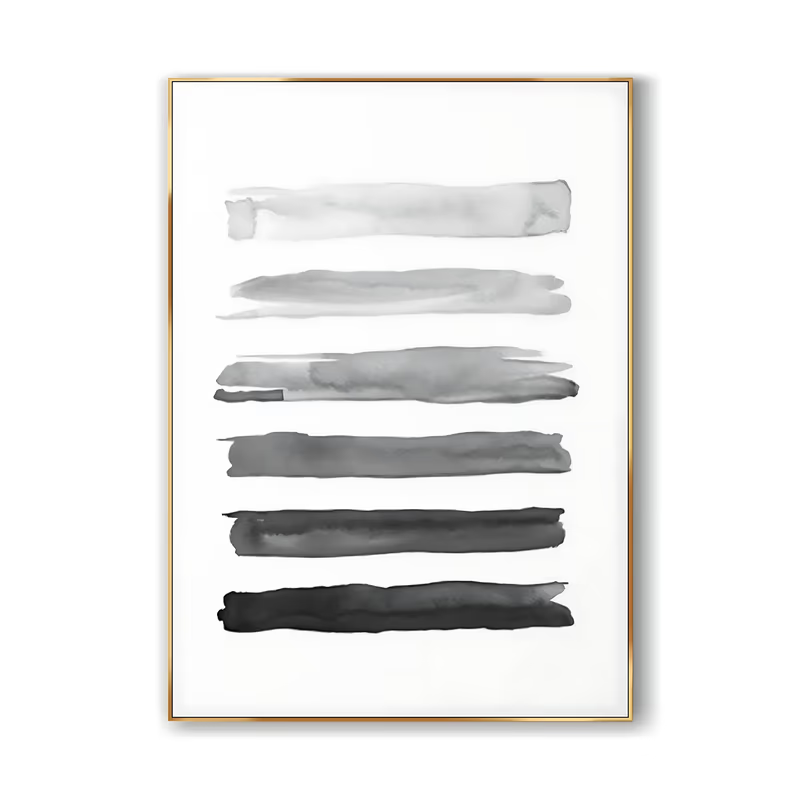
A hallway is passed rather than sat in, so it suits a quick, strong image: a black horse, a gold sunburst, a bold stripe. Black art for entrance halls.
Bedroom
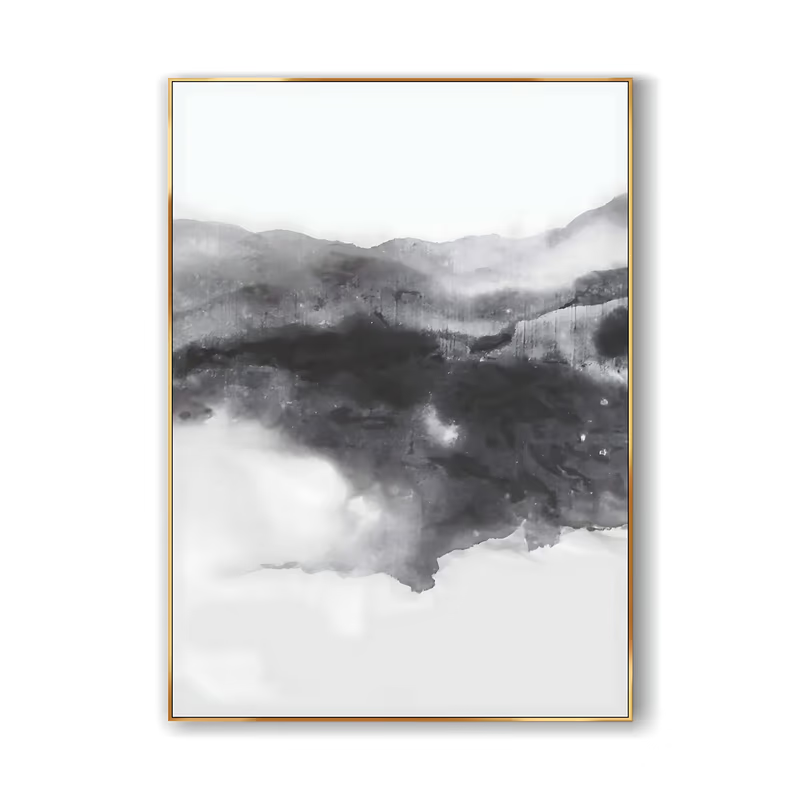
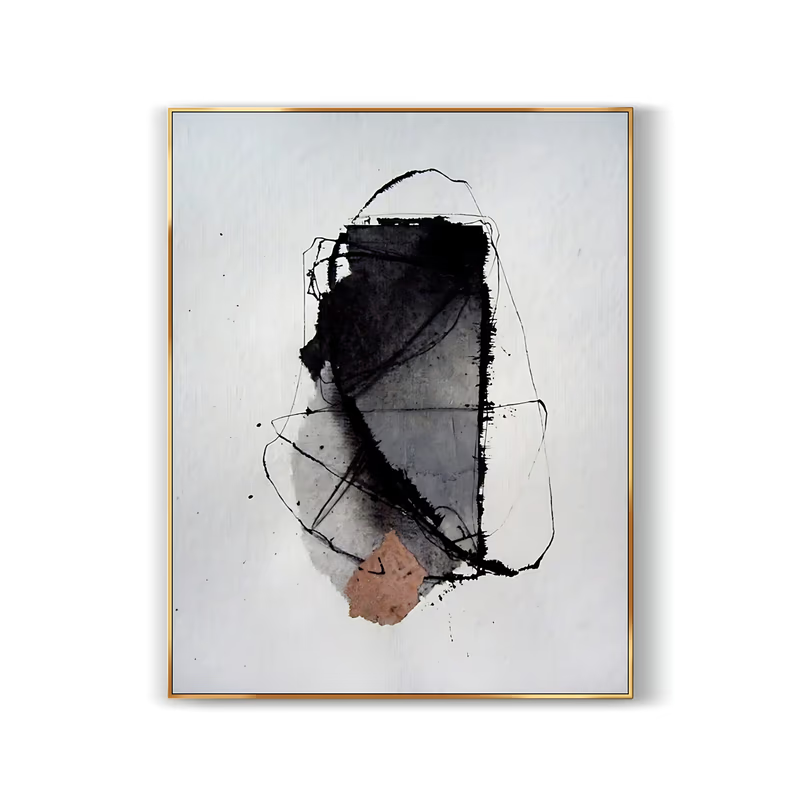
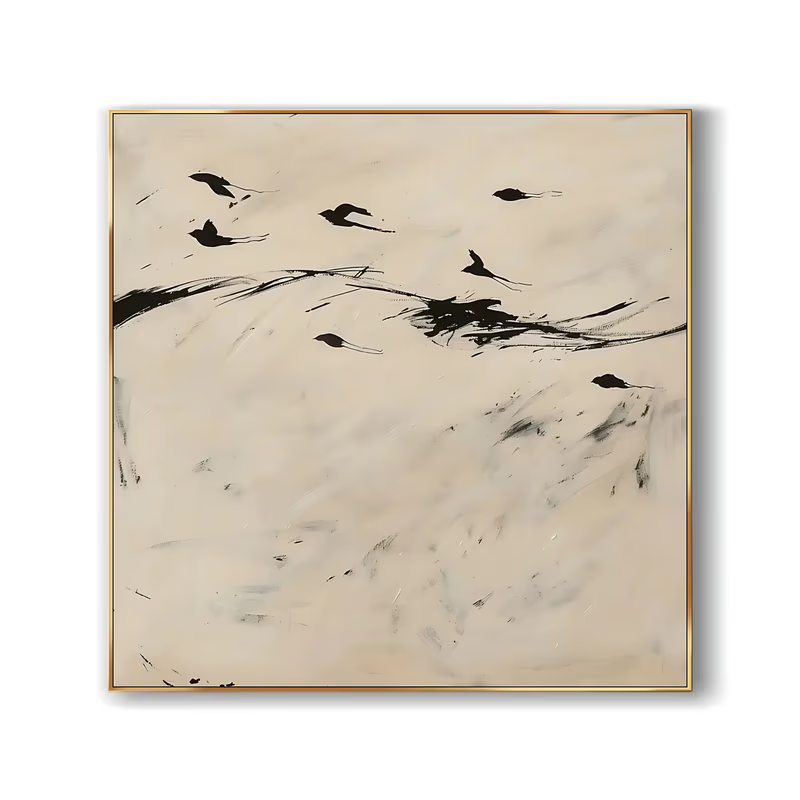
Choose soft black, ink or charcoal, or black ink marks on cream, so the room stays restful at night. Over a light headboard, a black piece grounds the bed. Black art for bedrooms.
Restaurants and bars
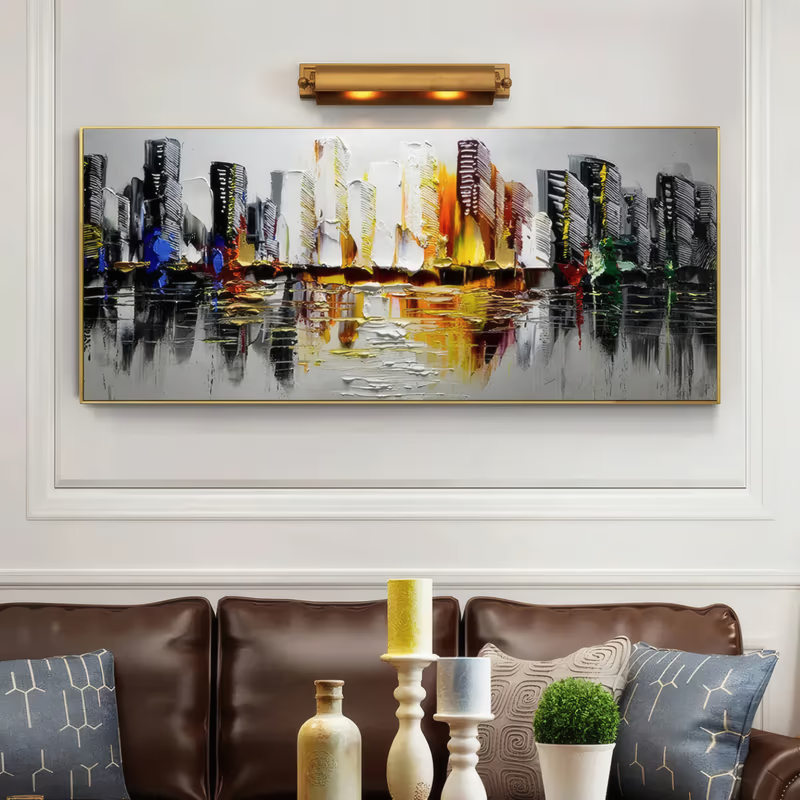
Black grounds with red roses, gold leaf or a lone animal look their best under low, warm light and pendant lamps. Black art for restaurants and dining rooms.
Lobbies, boardrooms and showrooms
Large black and white canvases read from across a reception area and look composed behind a boardroom table or a product display. Black art for lobbies and showrooms.
What colours go with black wall art?
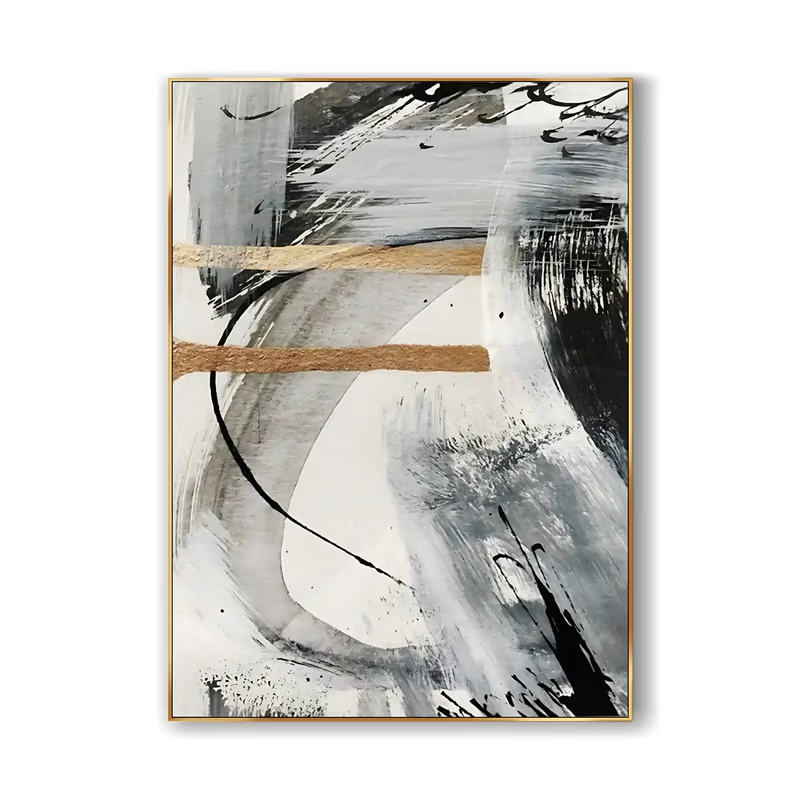
Black wall art goes with almost anything, but three pairings do the most work: black with white for clarity, black with gold or brass for richness, and black with one strong colour for energy.
| Pairing | Effect | Where it suits |
|---|---|---|
| Black and white | Clear, graphic, timeless | Modern homes, offices, galleries |
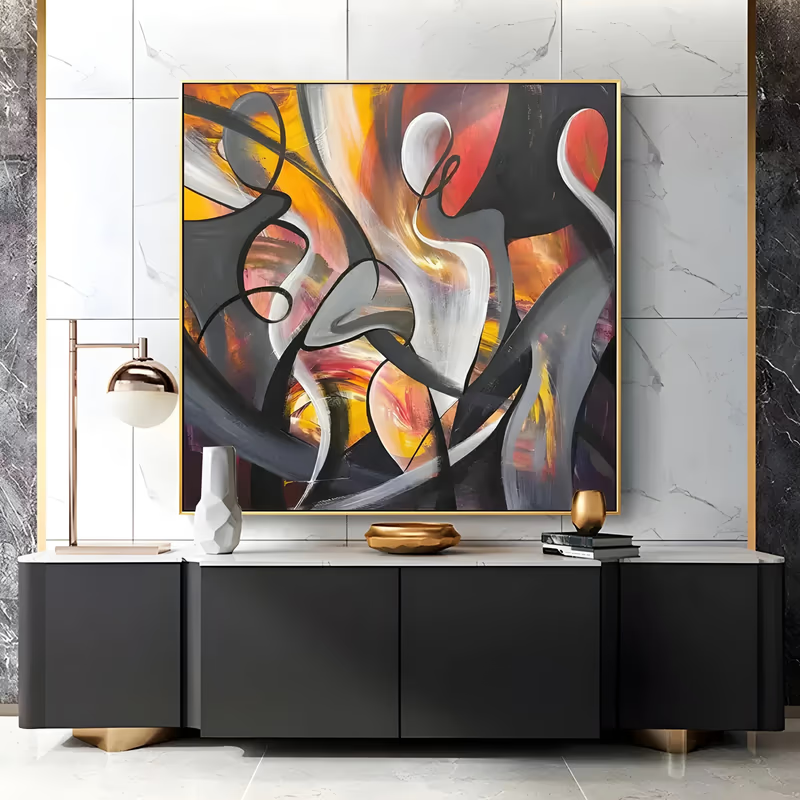
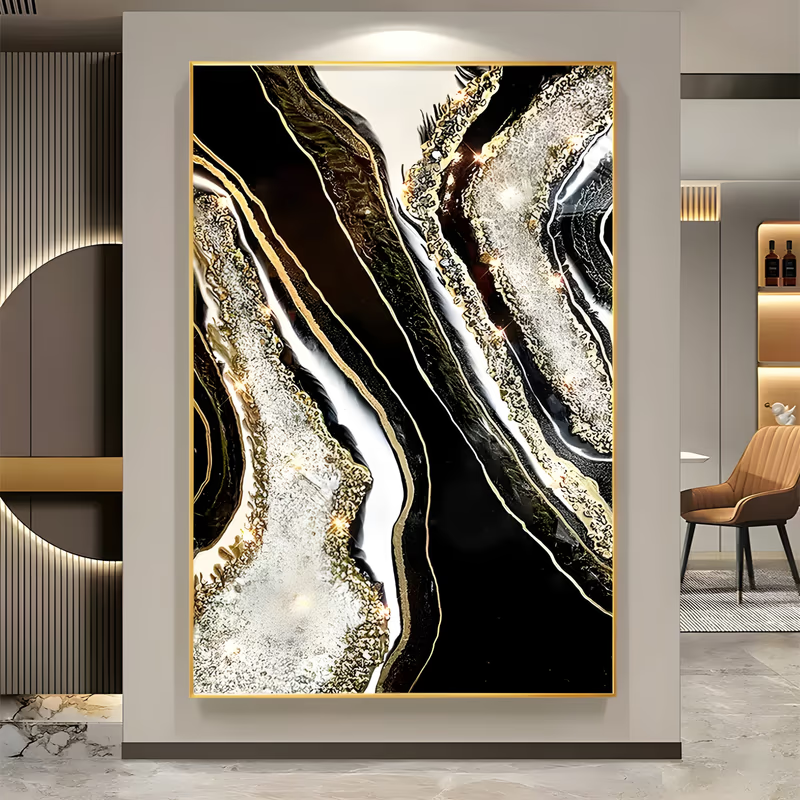
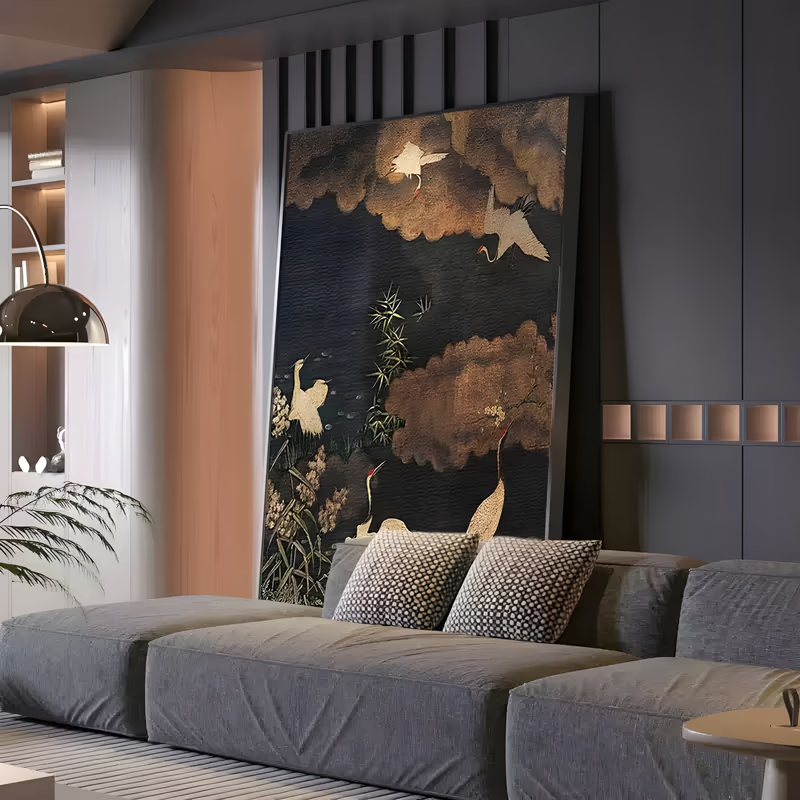
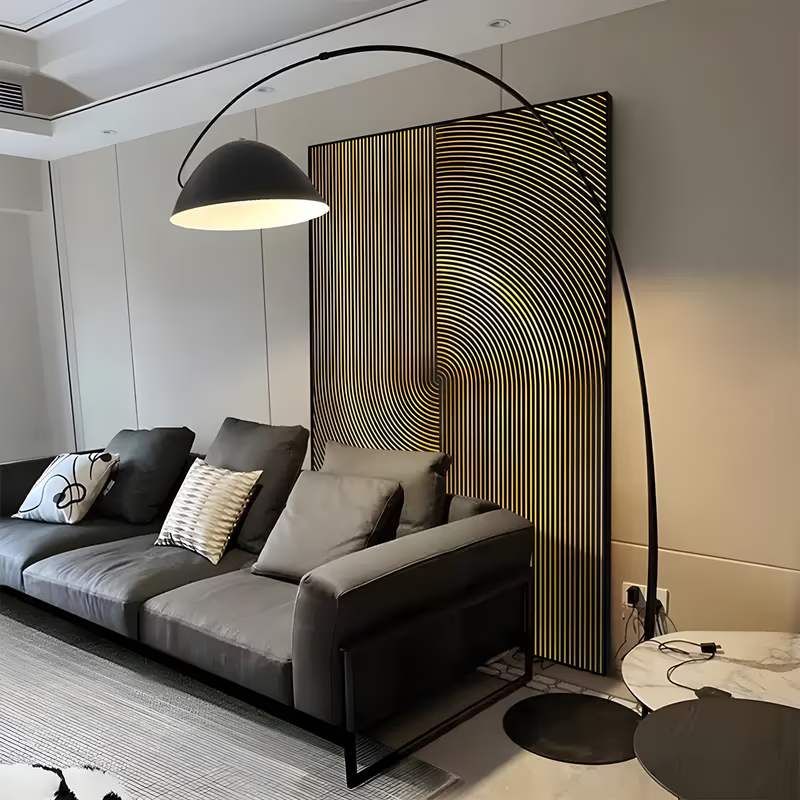
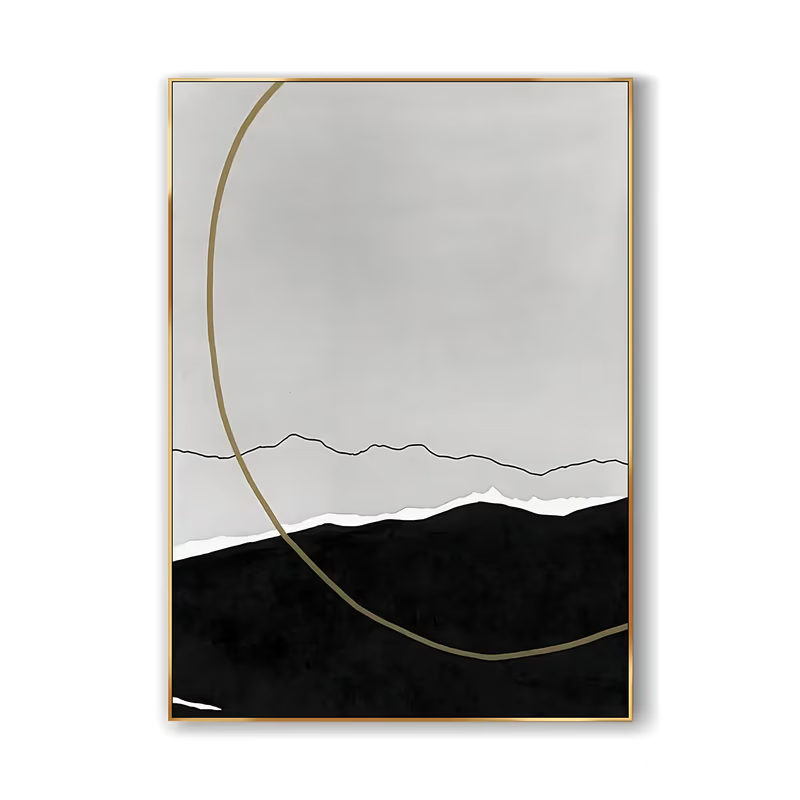
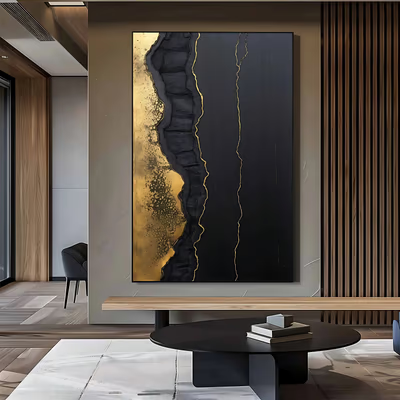
| Black and gold or brass | Rich and formal; glows at night | Dining rooms, bars, hotel lobbies |
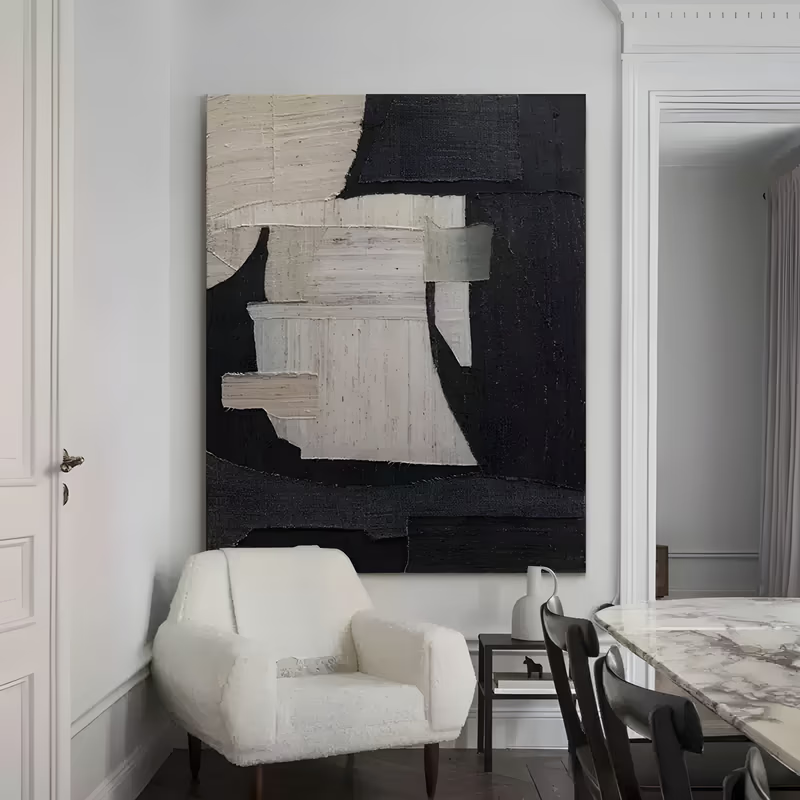
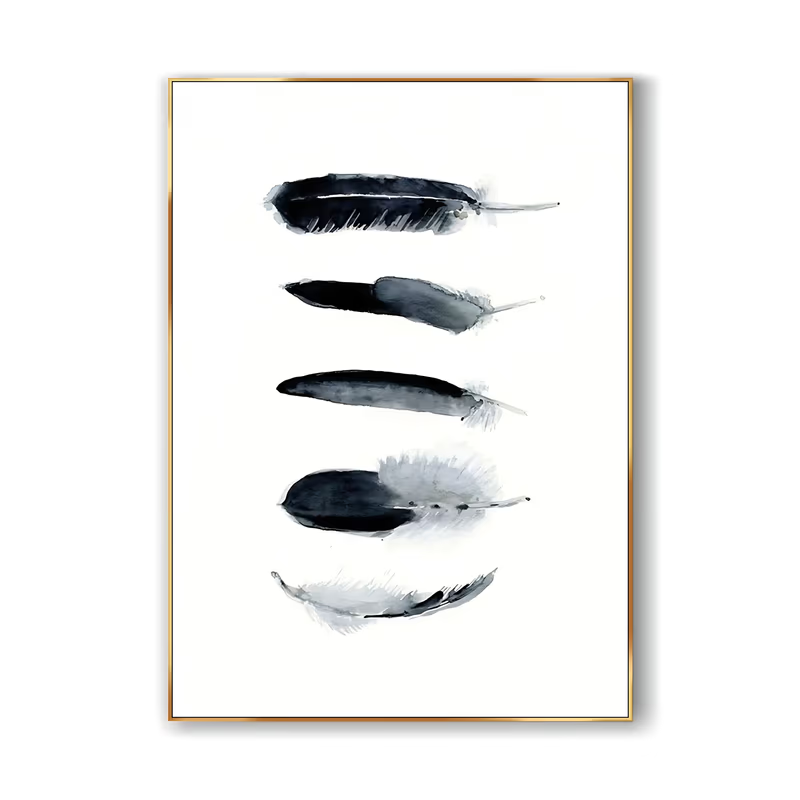
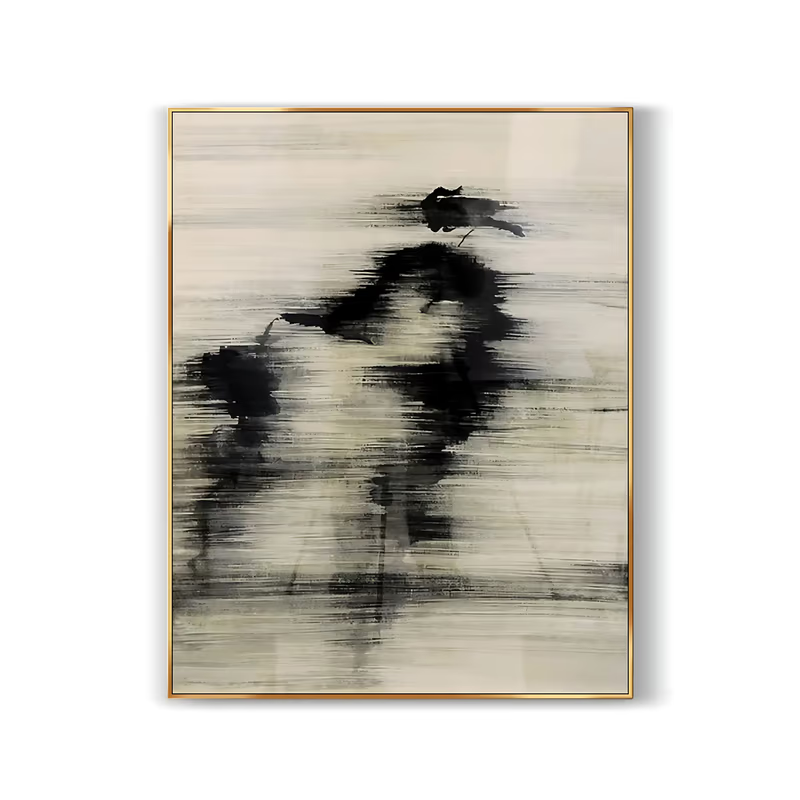
| Black with cream, beige or linen | Soft contrast; calm and natural | Bedrooms, Japandi and wabi-sabi rooms |
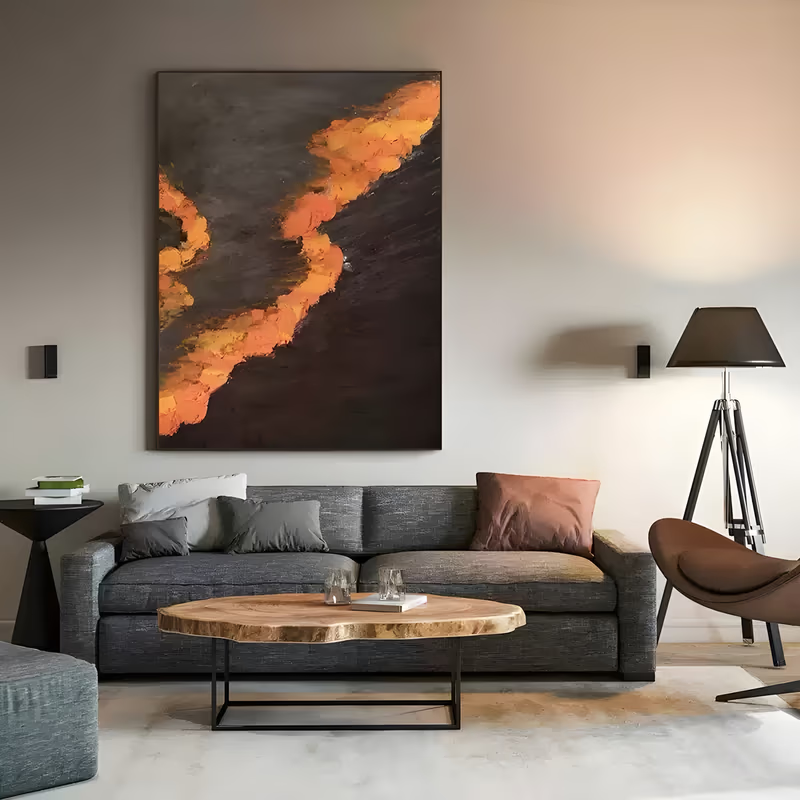
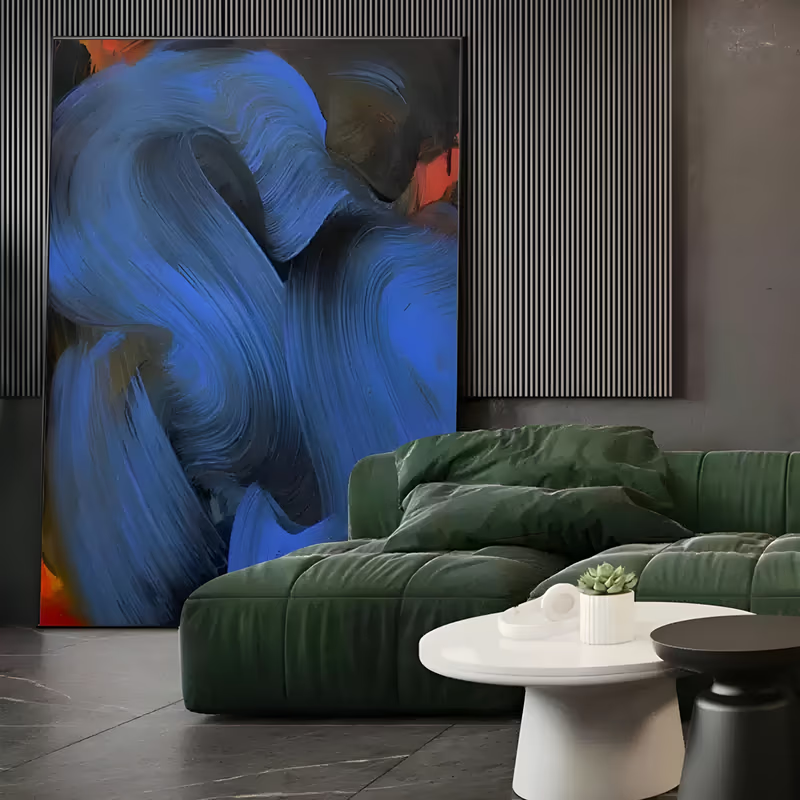
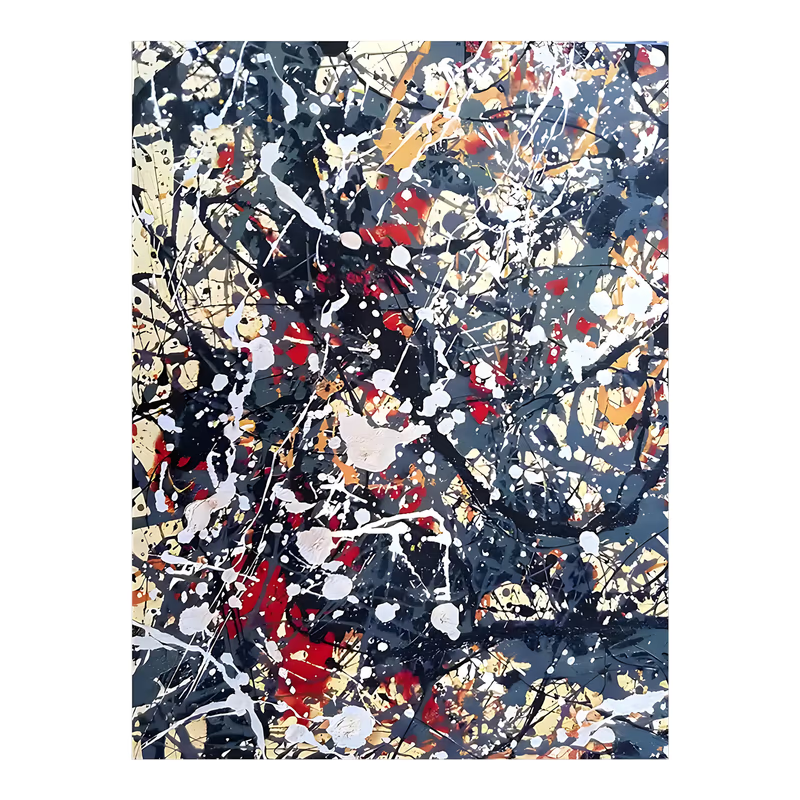
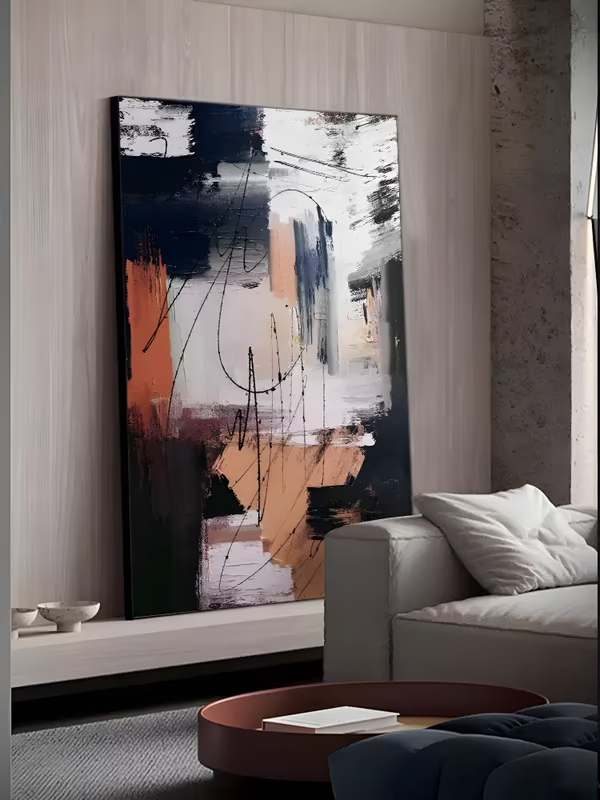
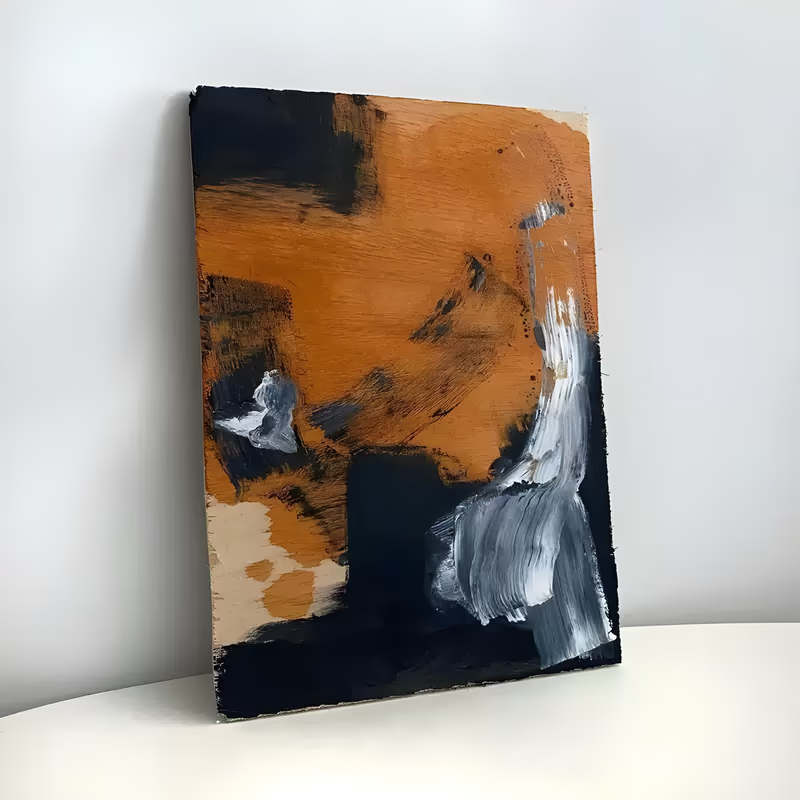
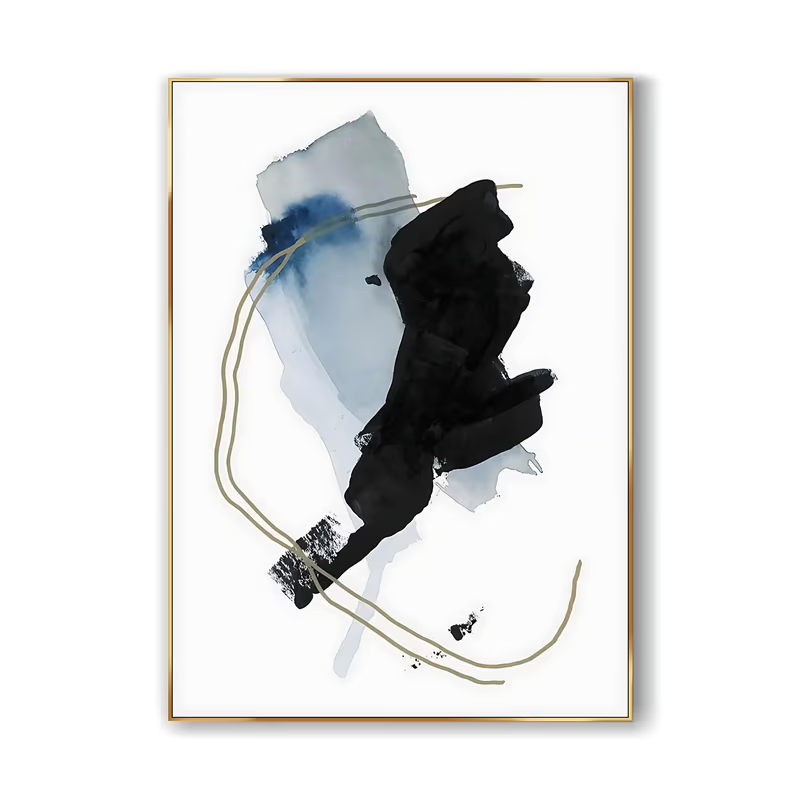
| Black with one hot accent | Bold and energetic: red, orange or cobalt | Restaurants, creative studios, entrance halls |
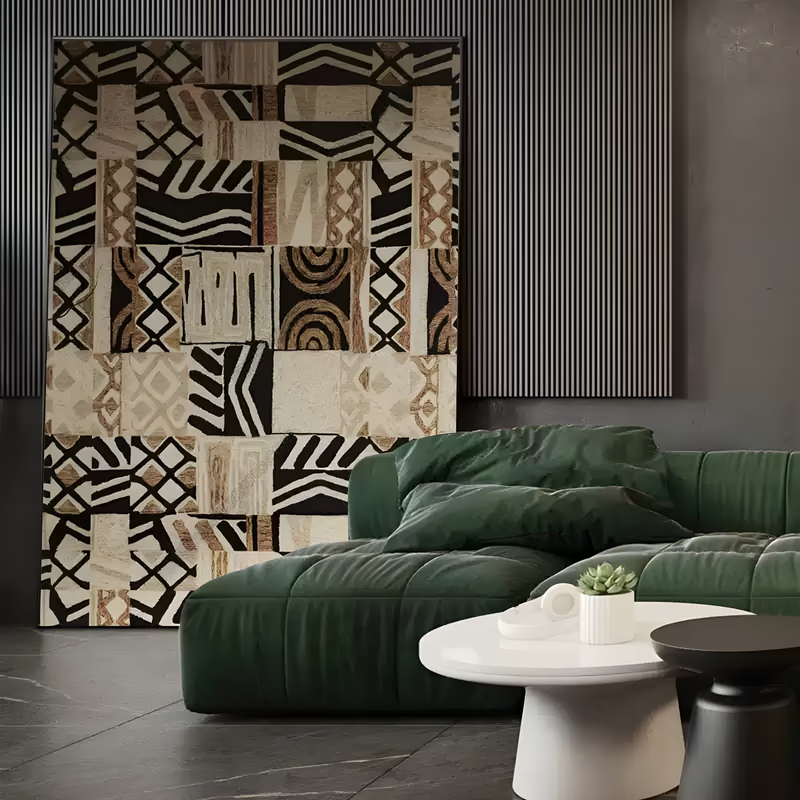
| Black with olive or sage | Earthy and grown-up | Studies, libraries, kitchens |
Repeat the black at least twice more in the room, in a lamp base, a chair frame, a picture rail or the legs of a table, so the painting is part of a rhythm rather than the only dark note. If the painting carries an accent colour, let that colour appear once nearby too, in a cushion or a vase.
How big should black wall art be, and how should you hang it?
Black wall art can be smaller than a pale painting, about half to two-thirds of the furniture width, because the dark field carries the wall; hang its centre 145–152 cm (57–60 in) from the floor.
Visual weight works in black's favour. A dark canvas looks larger than a white one of the same size, so a medium black piece can hold a wall that would need an oversized white one. Leave 15–20 cm (6–8 in) above a sofa or sideboard, and give it clear space on either side so the edge reads sharply.
Black and white geometric pieces look strongest in pairs or grids with equal gaps of 5–8 cm (2–3 in); the pale gaps become part of the design, so measure them carefully, because any misalignment shows more against black. Dark surfaces absorb light, so a black painting needs more light than a pale one to show its texture. A picture light or a spot aimed from above at a steep angle brings it out without glare.
How do you get black wall art made right for your room?
Tell us what the black has to sit against, the wall, the joinery or the fabric, and the depth and warmth of the black, plus any accent colour, are set before painting starts.
Black is not one colour. It can lean blue, brown or green, and a black that looks perfect beside steel can look cold beside walnut. Because every canvas is painted to order, the black can be warmed or cooled, and any accent, a gold edge, a red rose, a cobalt swirl, can be matched to a paint code or fabric. You see progress photos or video at each stage, and nothing moves on until you approve it; a final photograph is approved before dispatch.
Think about the edge when you choose a finish. A black canvas in a black frame reads as one solid block; frameless on a pale wall it looks crisp and modern; a gold, silver, white or wood frame draws a fine line around it. The painting can also be sent rolled for framing locally or stretched and ready for the wall.