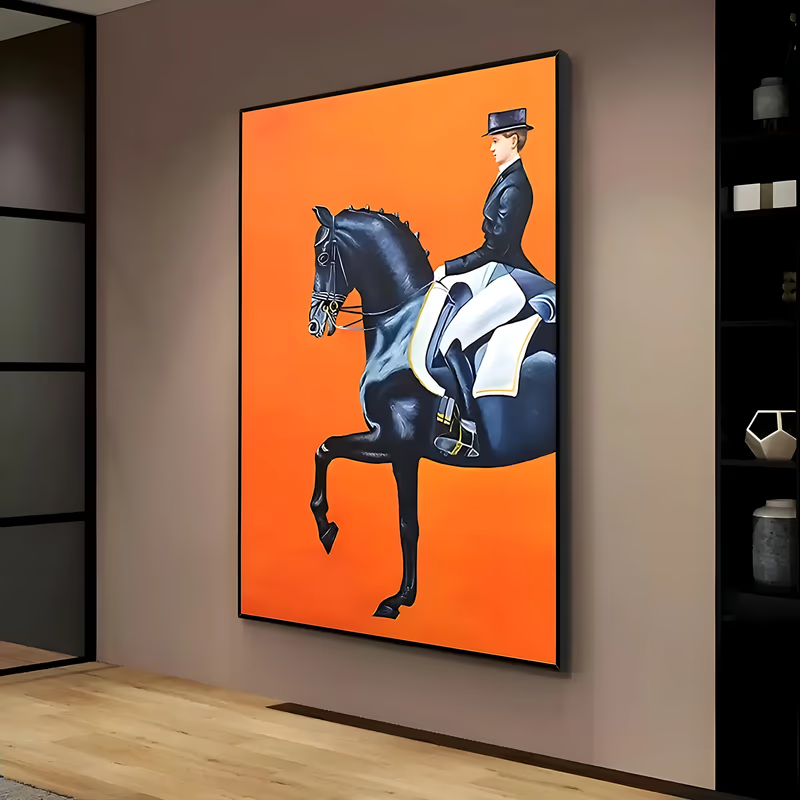
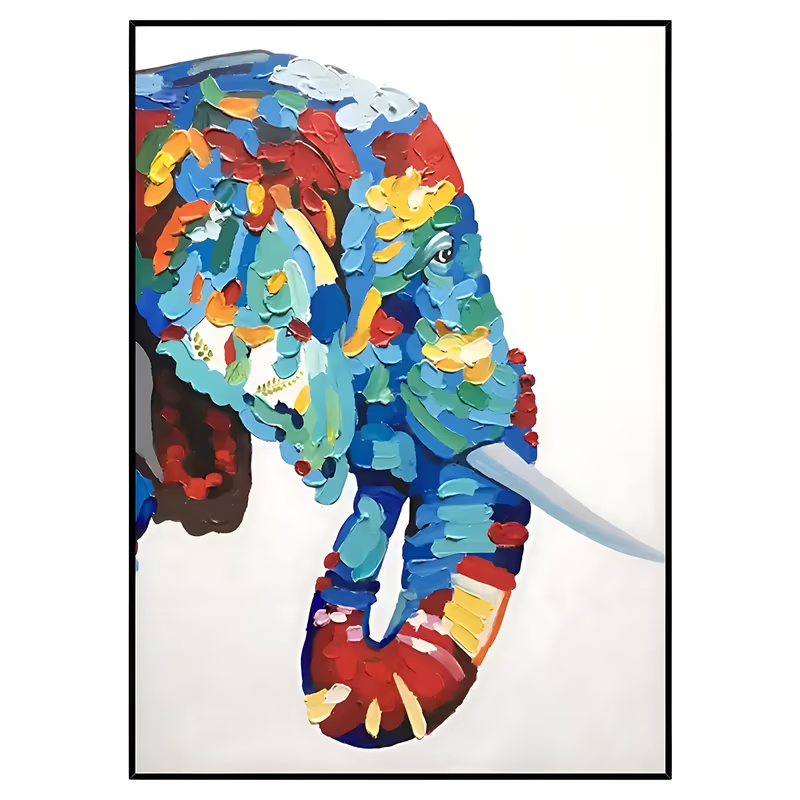
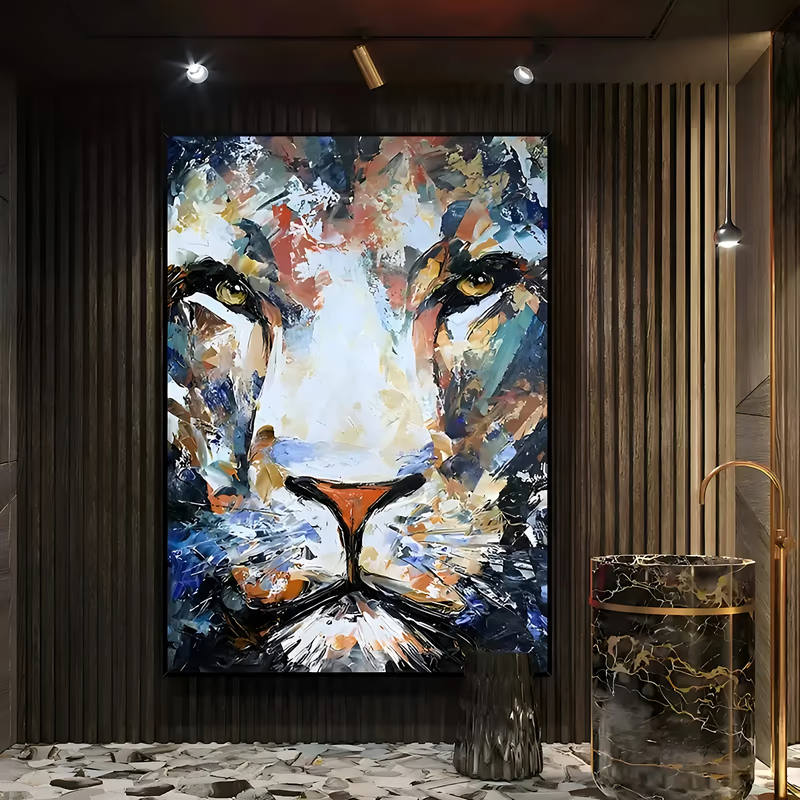
Animal art guide · Updated
How to choose animal wall art with character
Key takeaways
- An animal is a presence, not a scene: a face or a gaze holds attention, so one strong animal painting usually outweighs several smaller ones.
- Rendering decides the tone: lifelike portraits feel grand, sculpted relief feels architectural, palette-knife colour feels playful, ink strokes feel calm.
- Face the animal into the room: a horse or bird looking or moving toward the centre draws people in; one facing the door or a window leads the eye out.
- Scale to life size or beyond: a horse head or a leopard painted larger than life reads as confident; a small one reads as decoration.
What makes animal wall art different from other subjects?
Animal wall art has a face and a gaze, so it engages the viewer the way a portrait does and gives a room character that flowers or landscapes cannot.
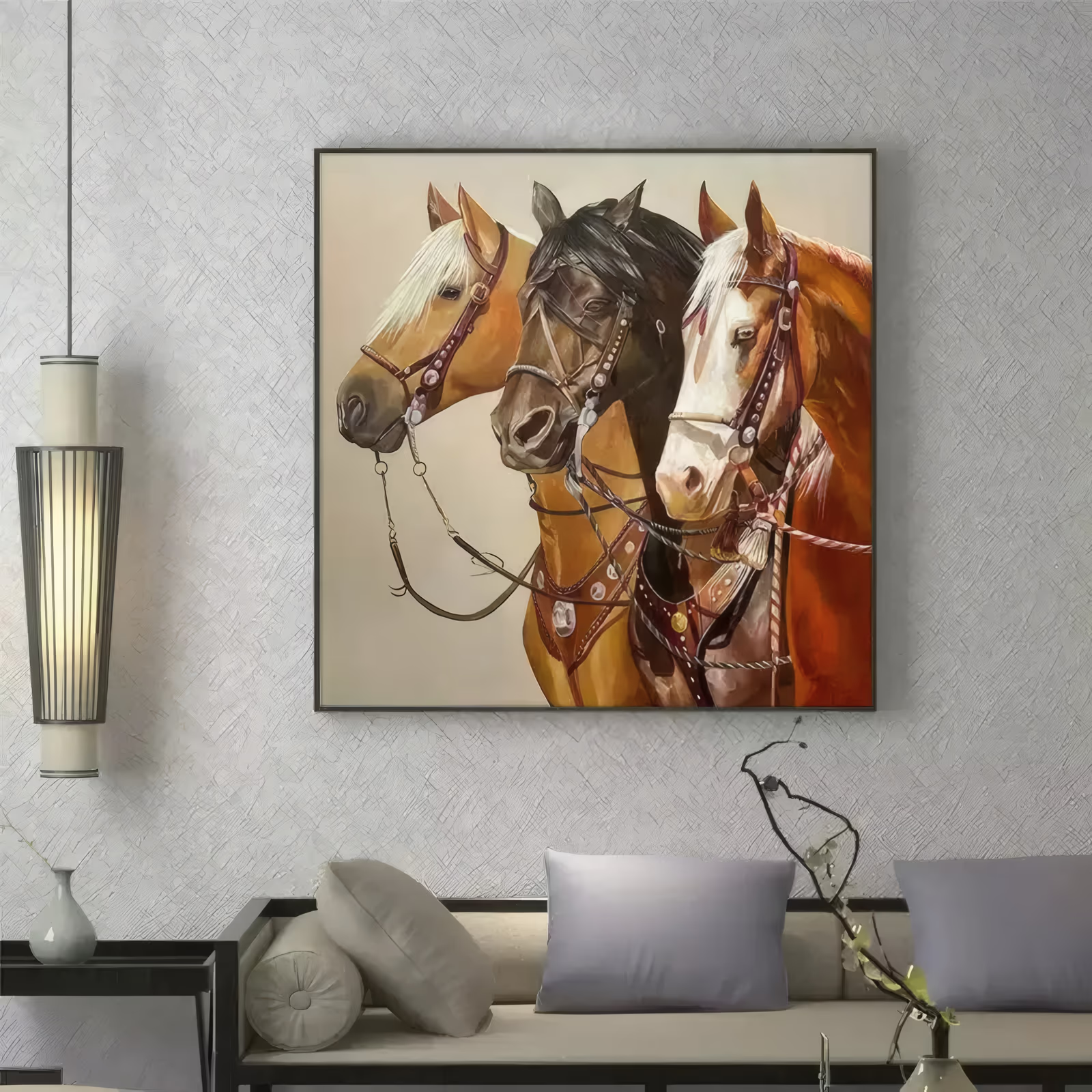
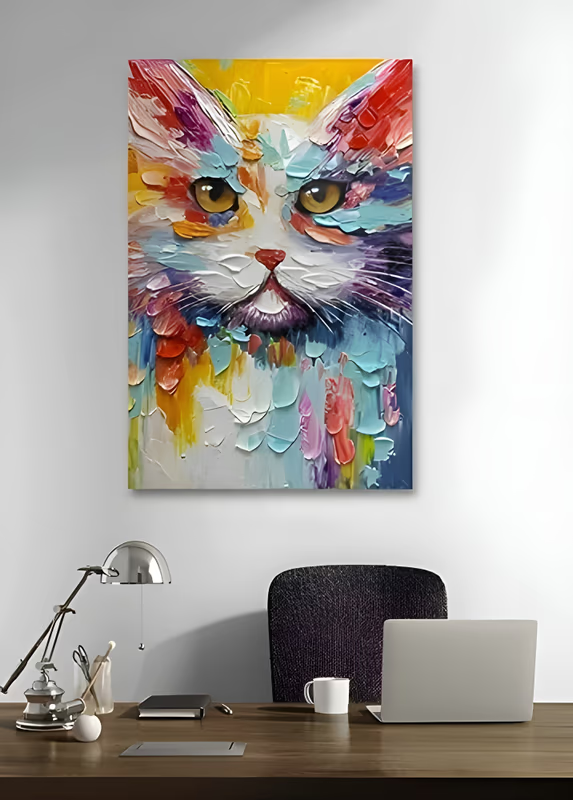
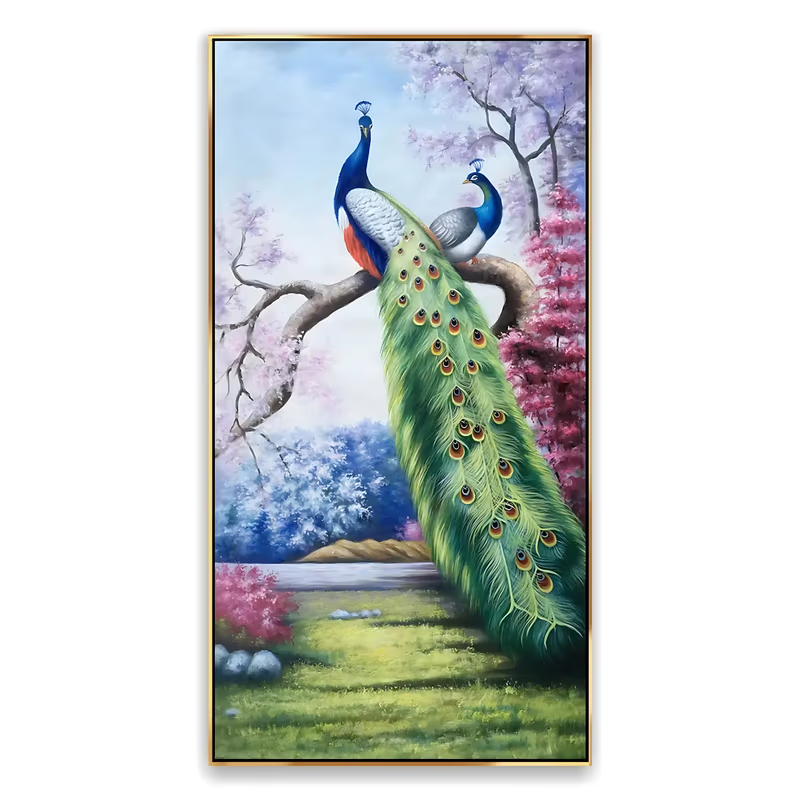
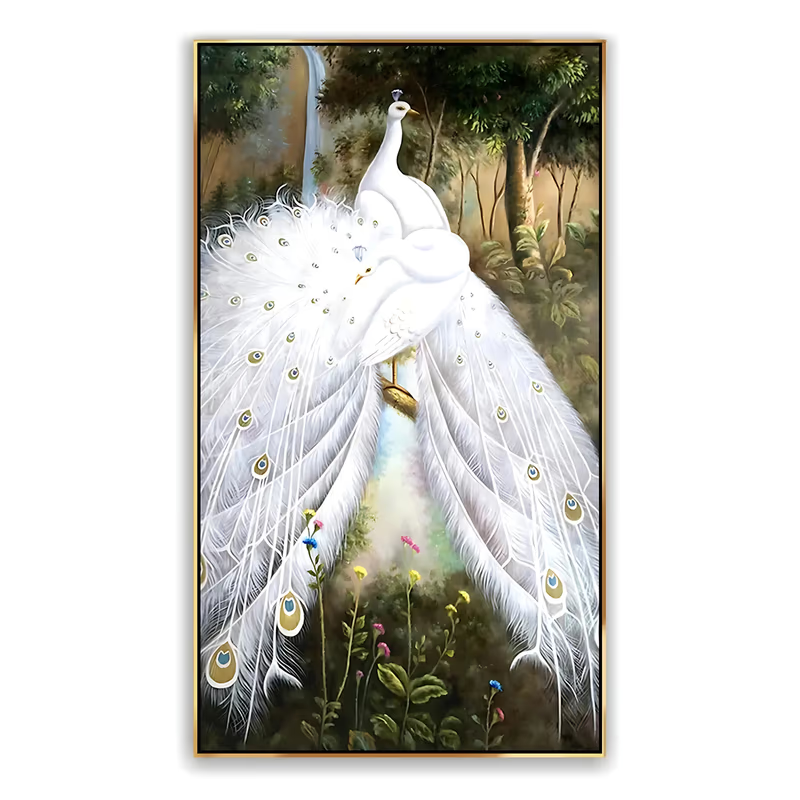
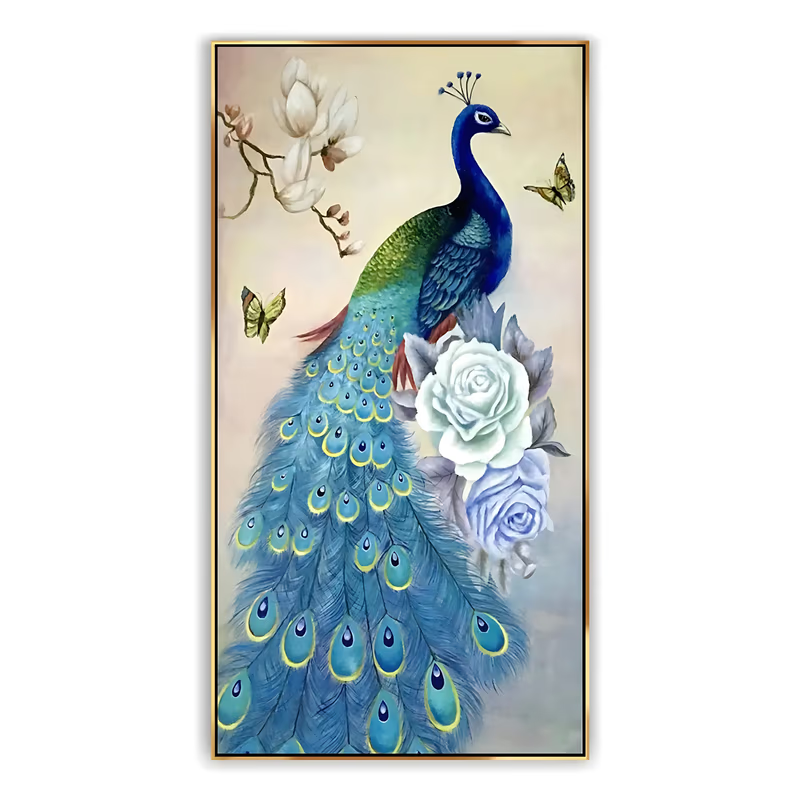
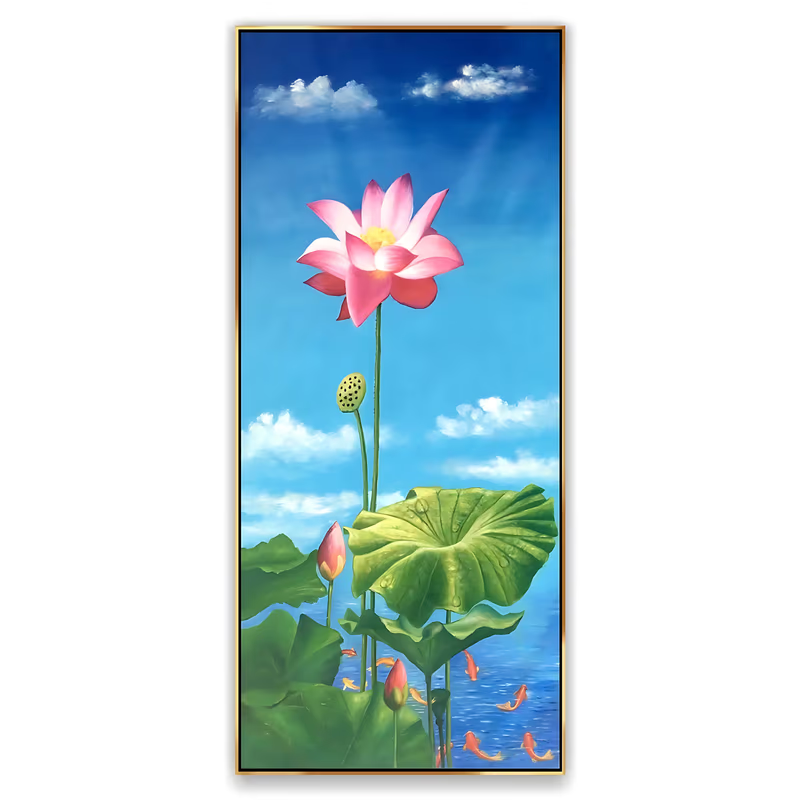
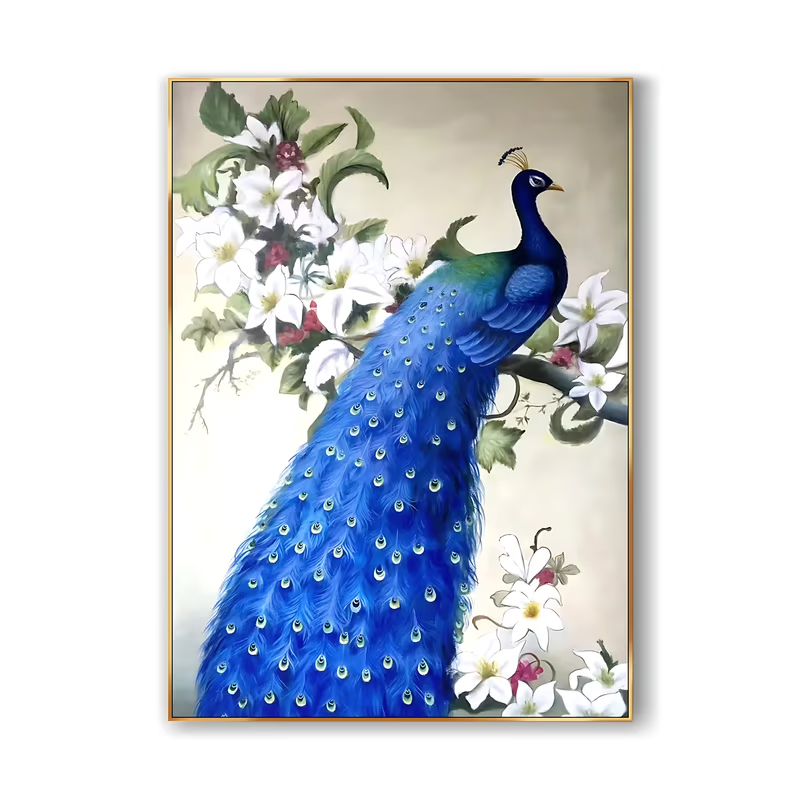
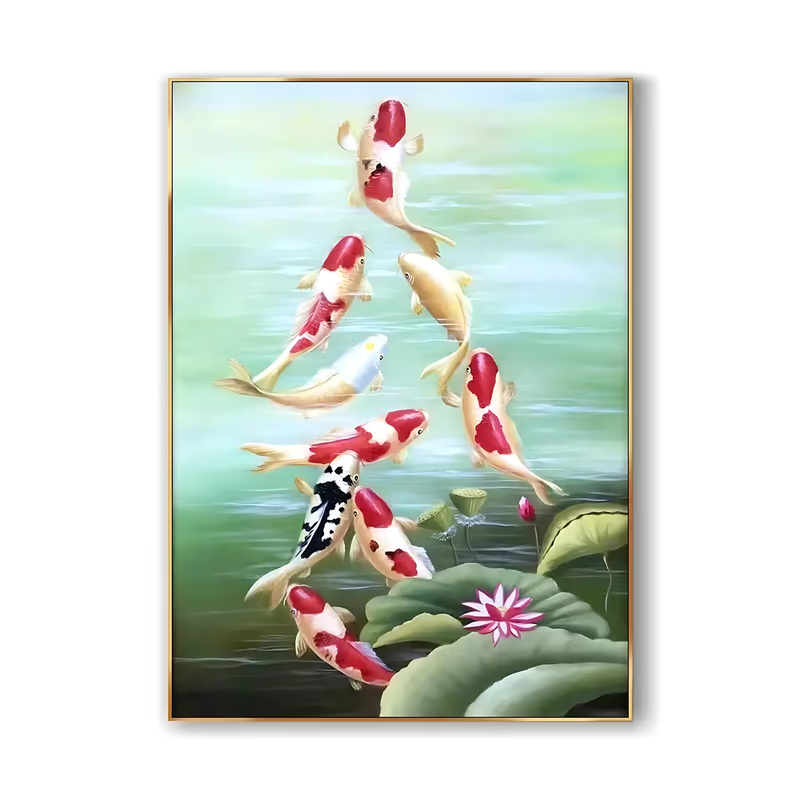
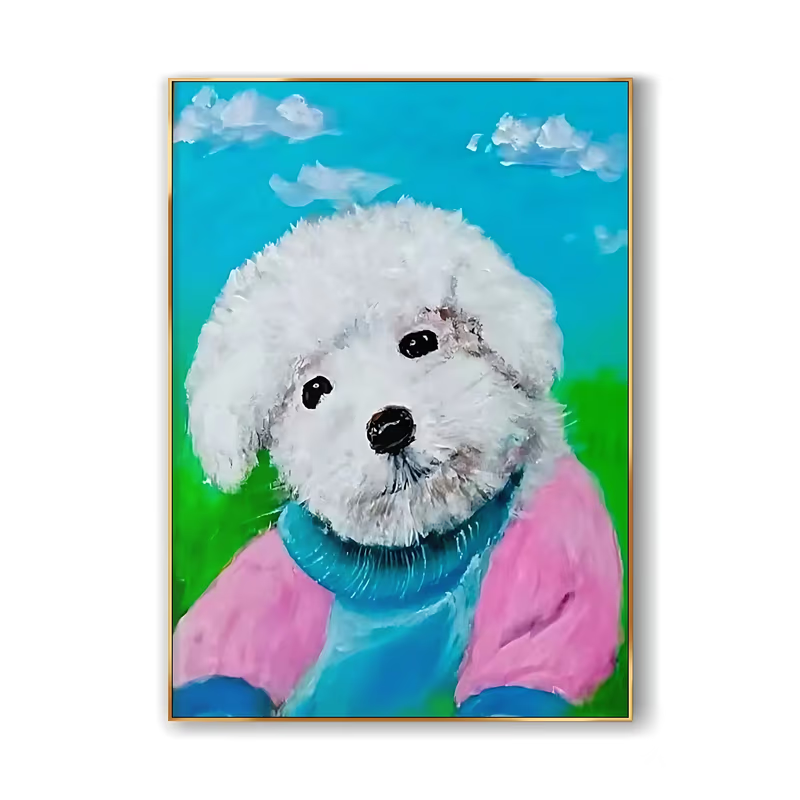
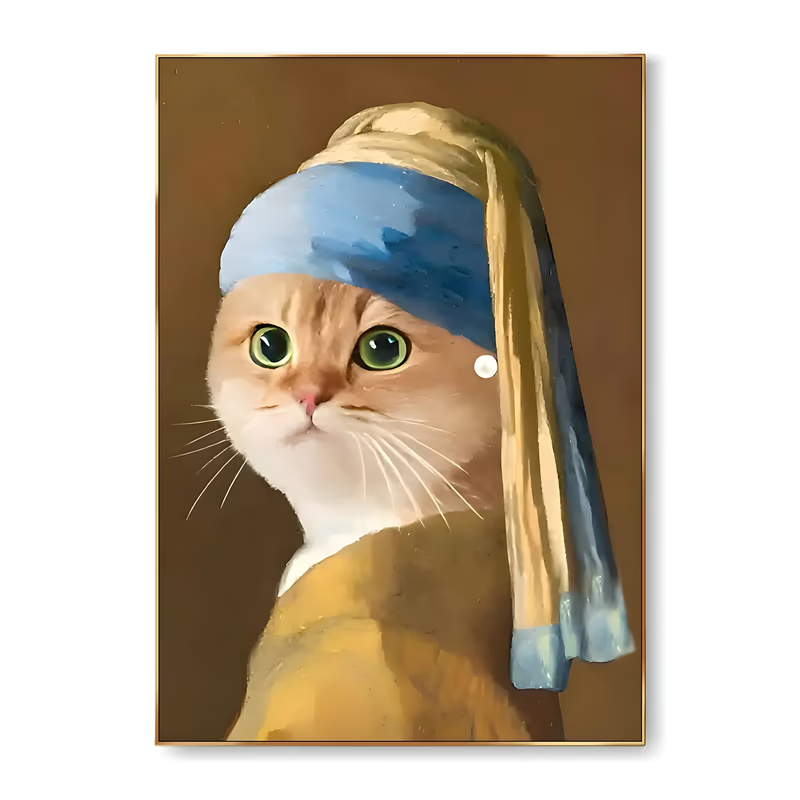
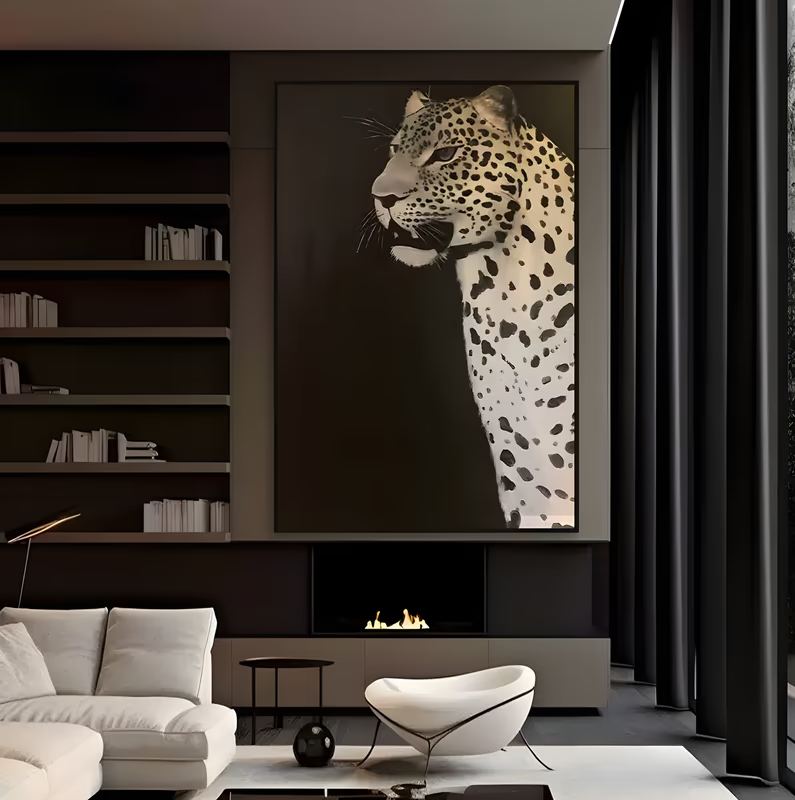
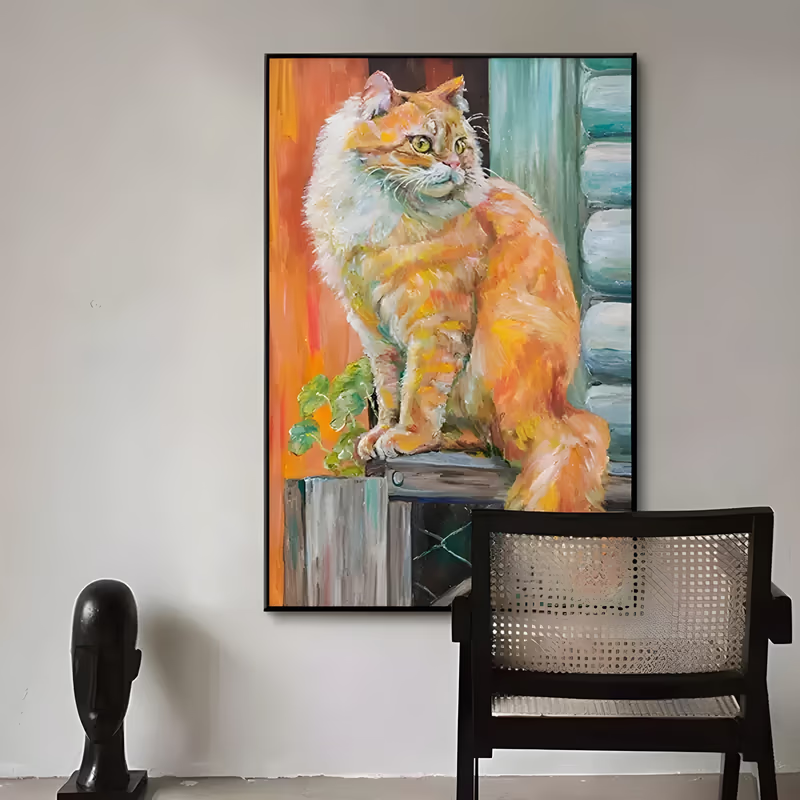
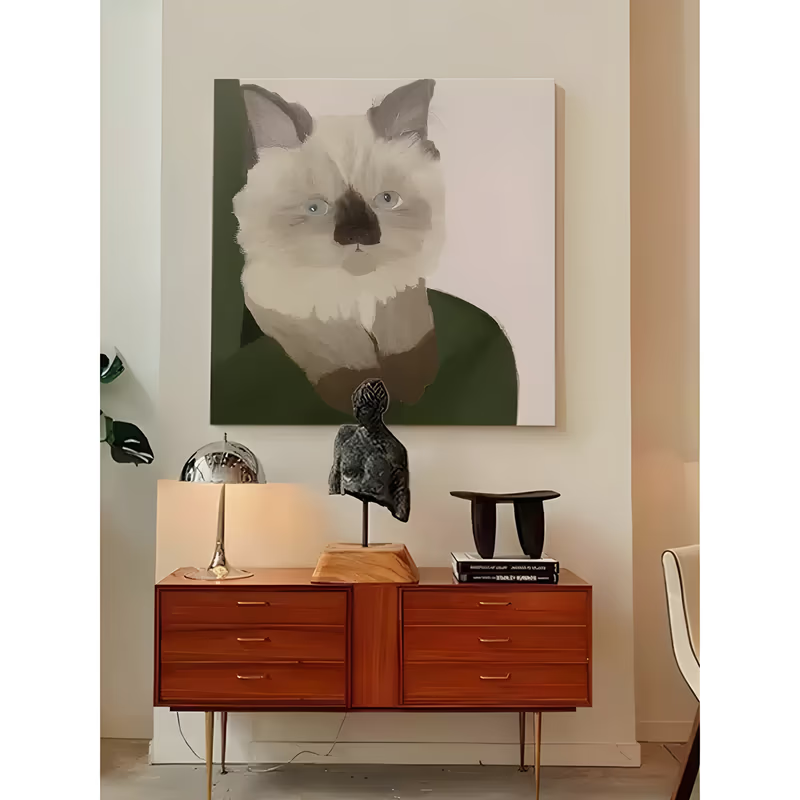
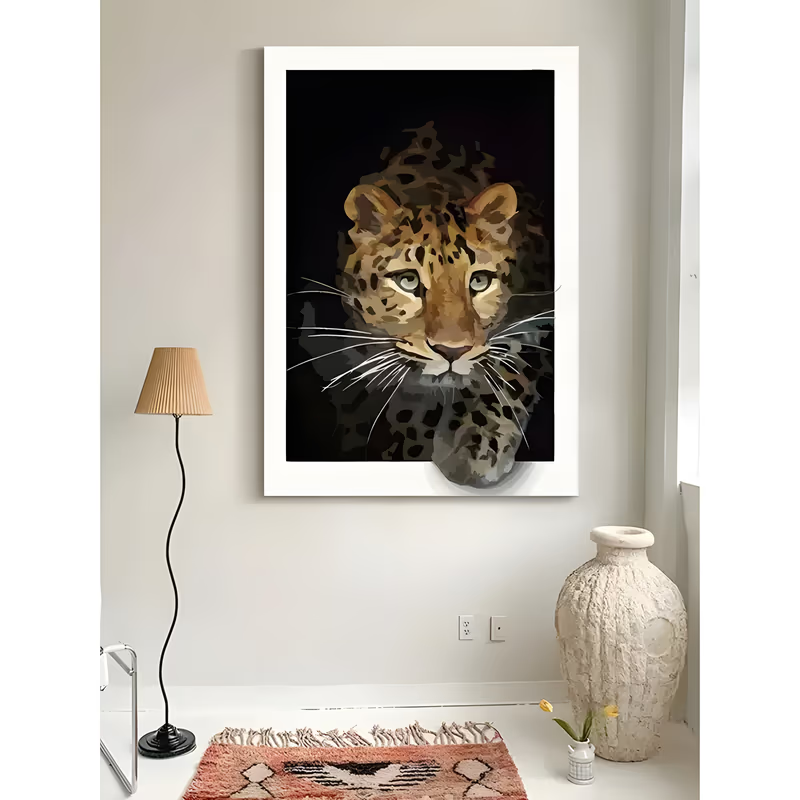
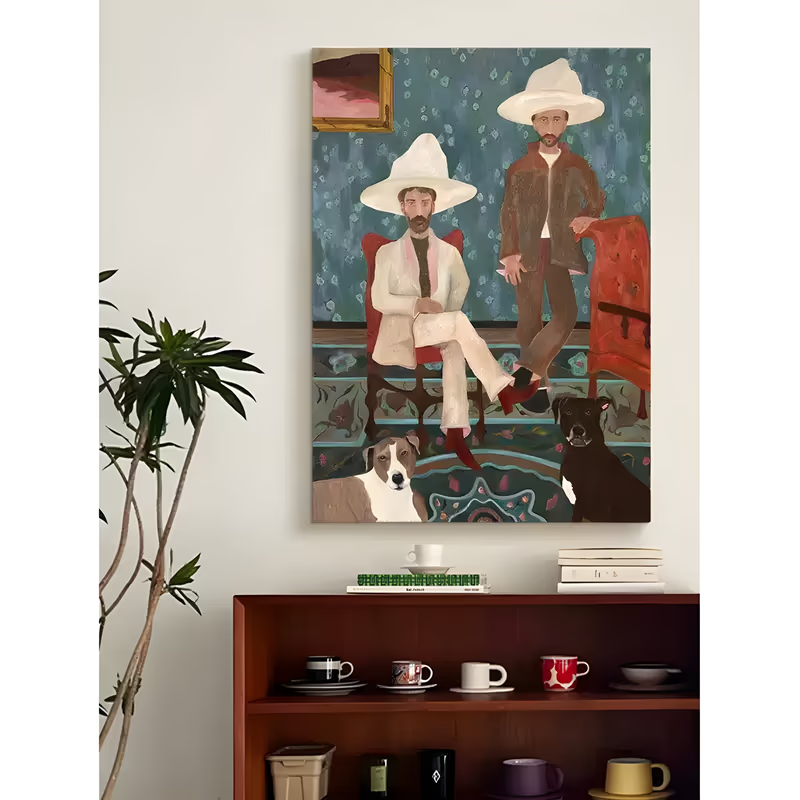
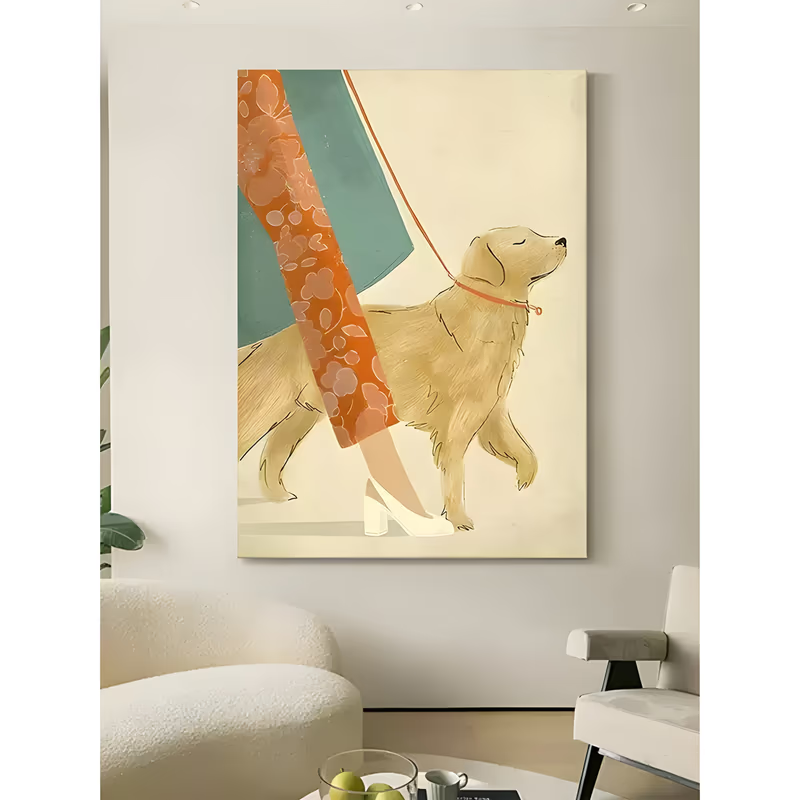
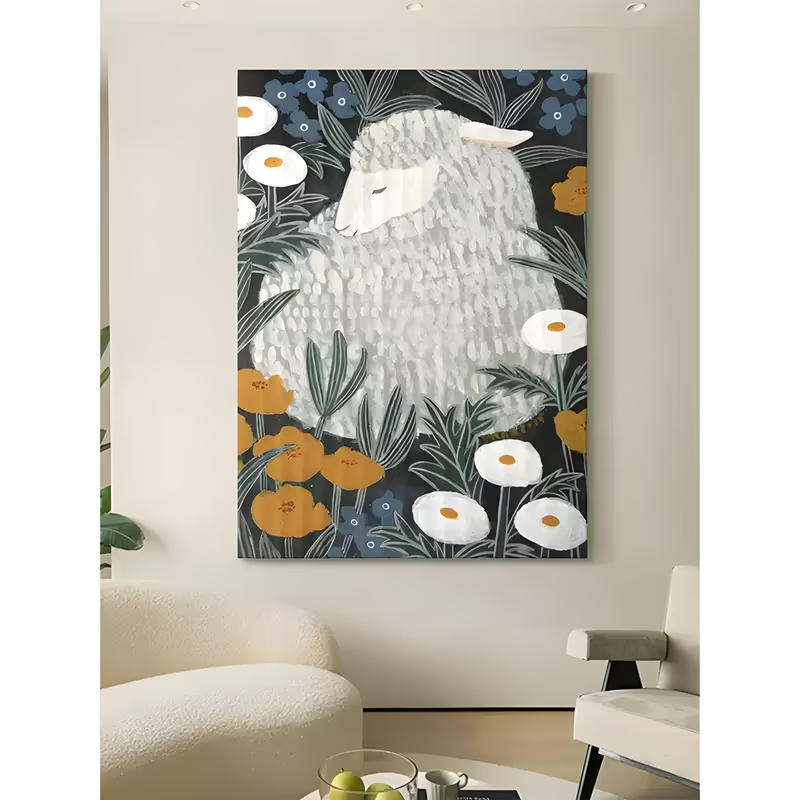
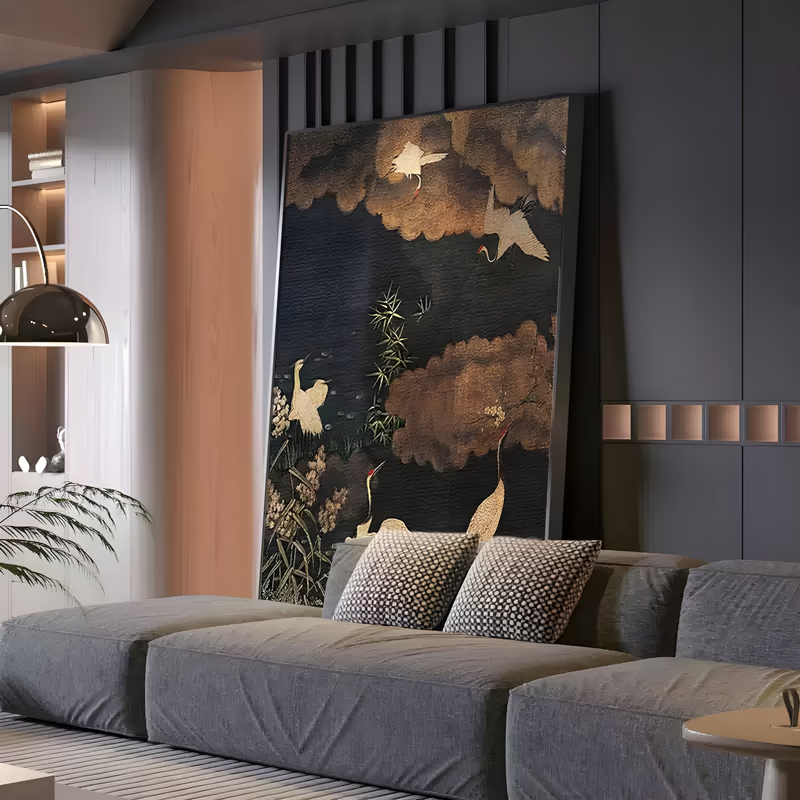
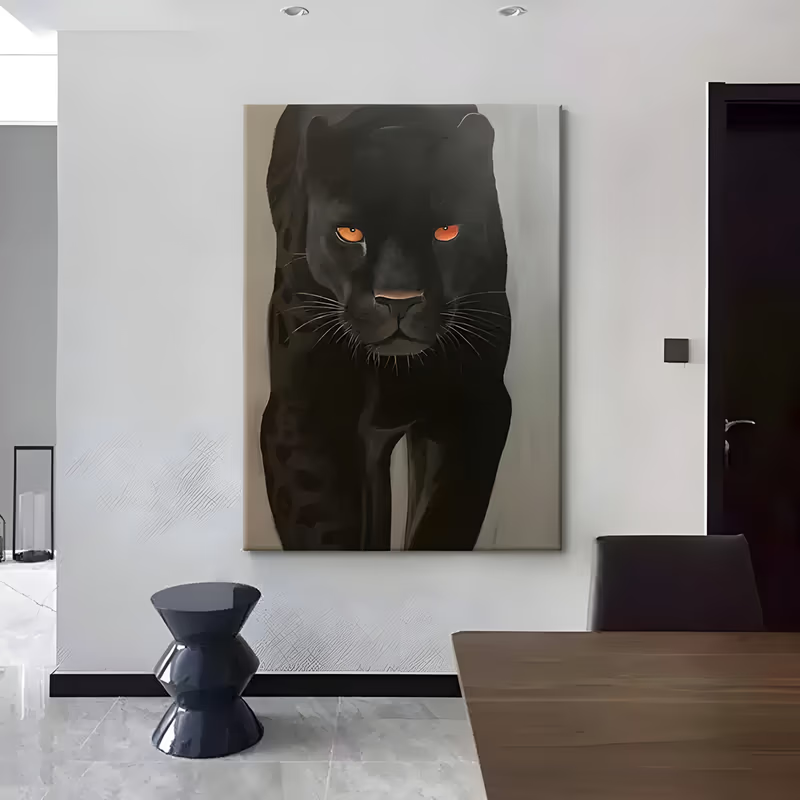
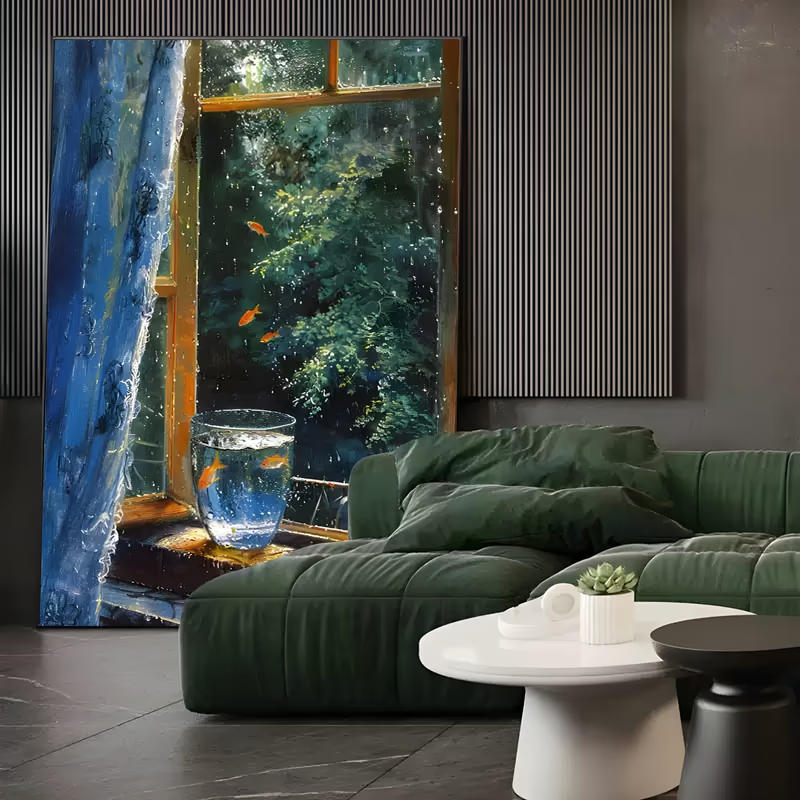
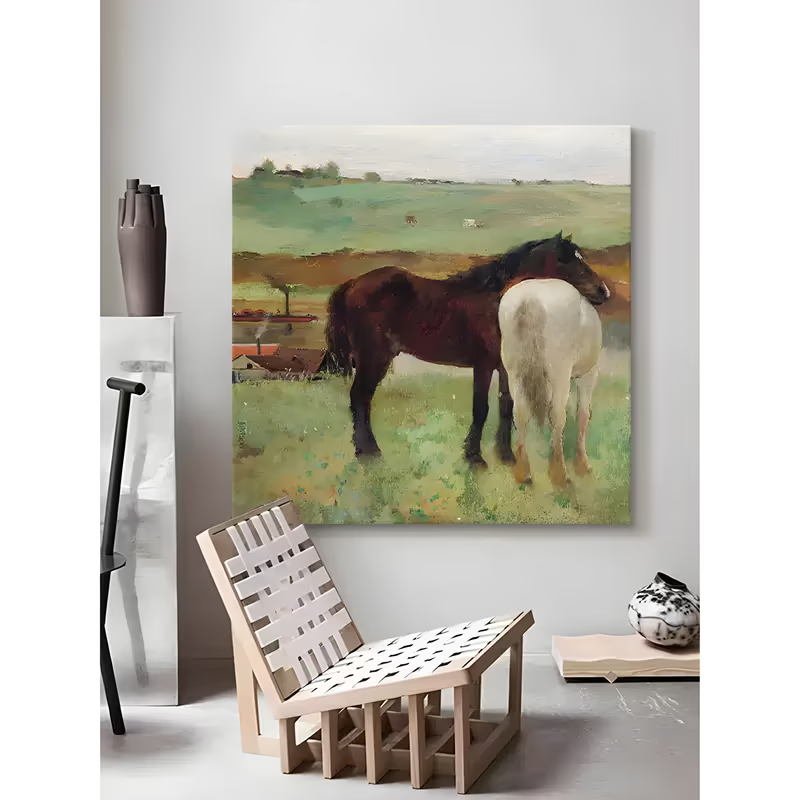
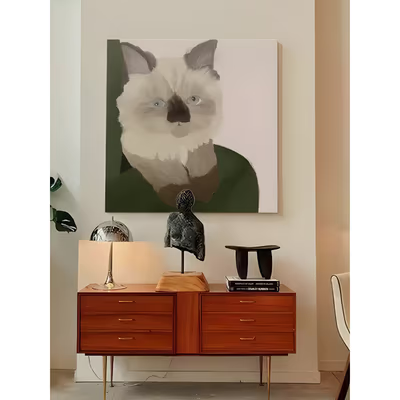
People read eyes before anything else in a picture. A horse turning its head, a leopard emerging from black or a cat staring out of the canvas creates a small moment of contact every time someone walks in. That is why animal art makes such reliable focal points in living rooms, studies, restaurants and lobbies, and why it suits rooms that would otherwise feel impersonal. Animals also carry associations people enjoy: the energy of horses, the elegance of cranes and peacocks, the calm of fish moving through water, the humour of a dog in a sweater. Choose the creature for the character you want the room to have.
Which animal painting suits your room?
Choose the animal for the character the space needs: horses for energy and confidence, birds for lightness, koi for calm, big cats for drama, pets for warmth and humour.
| Animal | Character and traditional associations | Where it works |
|---|---|---|
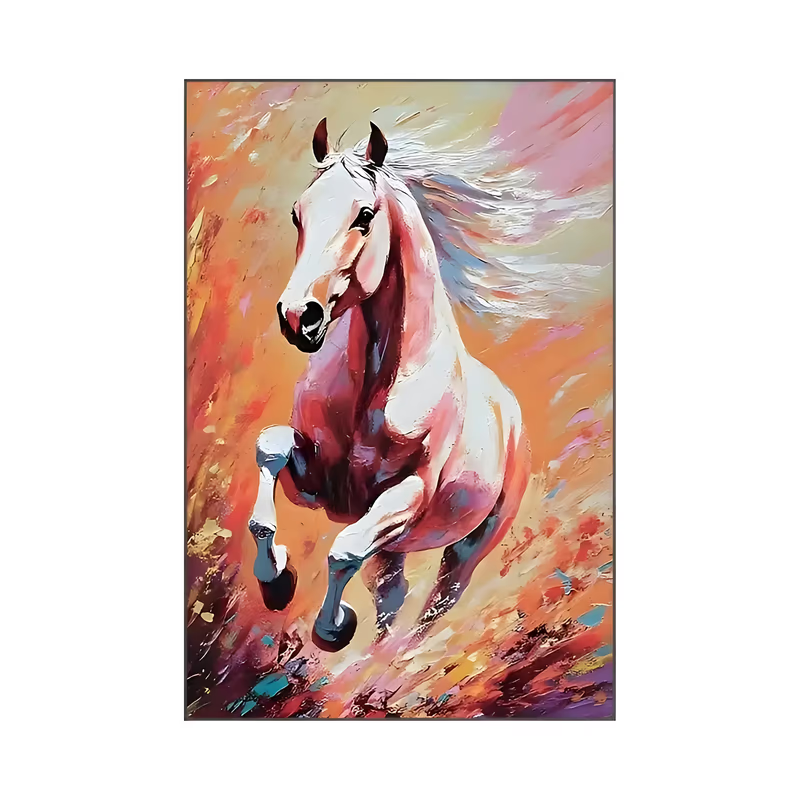
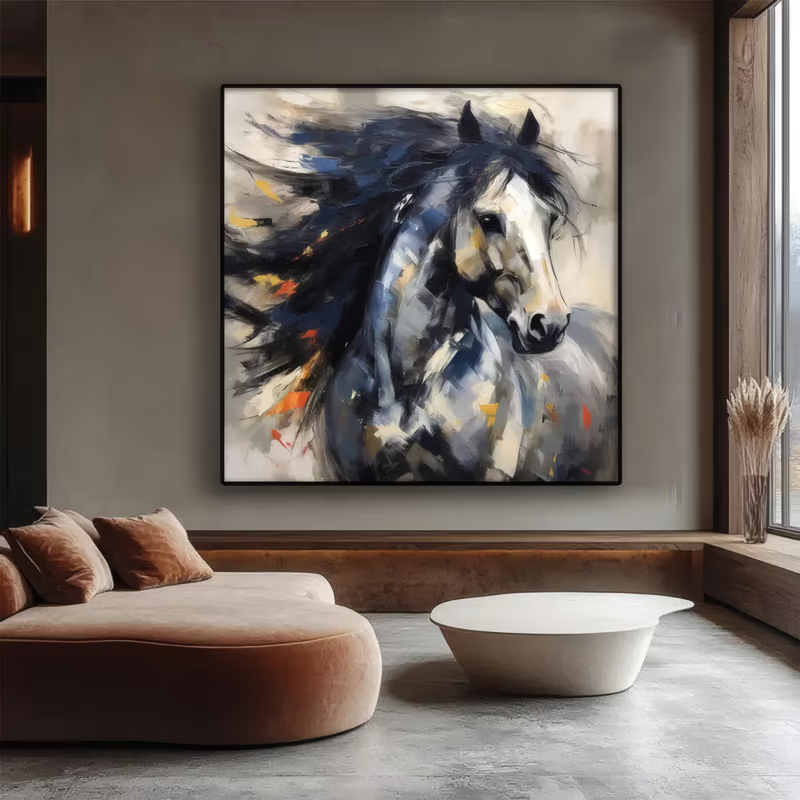
| Horses | Energy, freedom and success; a galloping horse is a classic of Chinese and Indian decorative tradition | Studies, offices, living rooms, equestrian and country hotels |
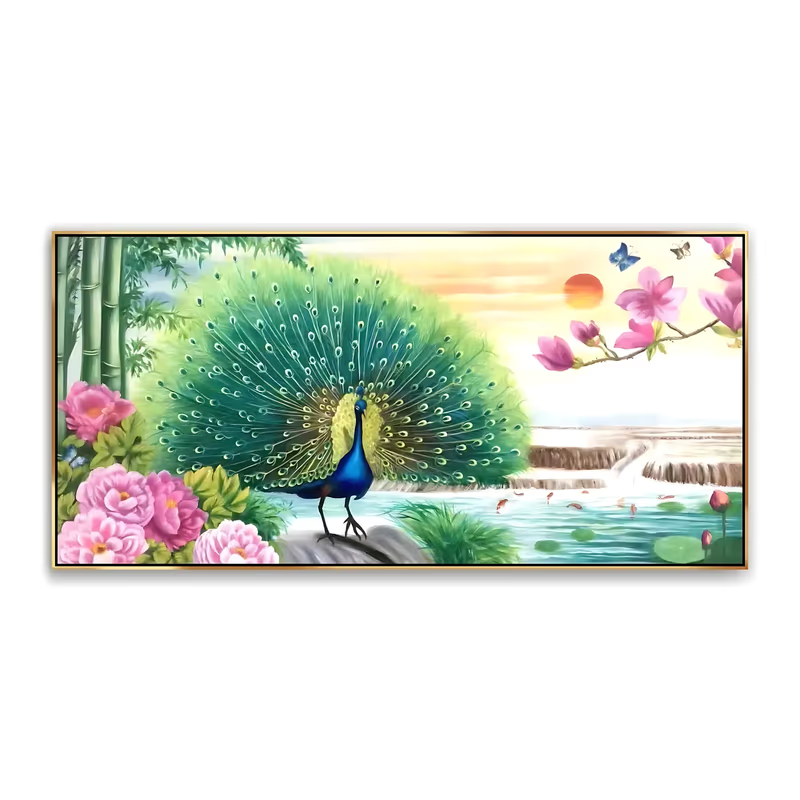
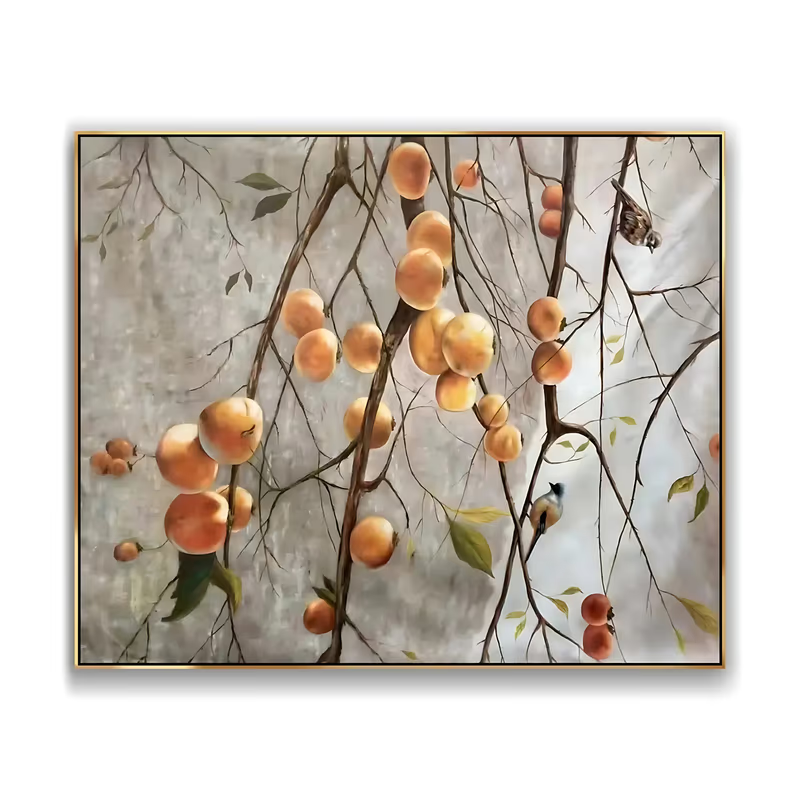
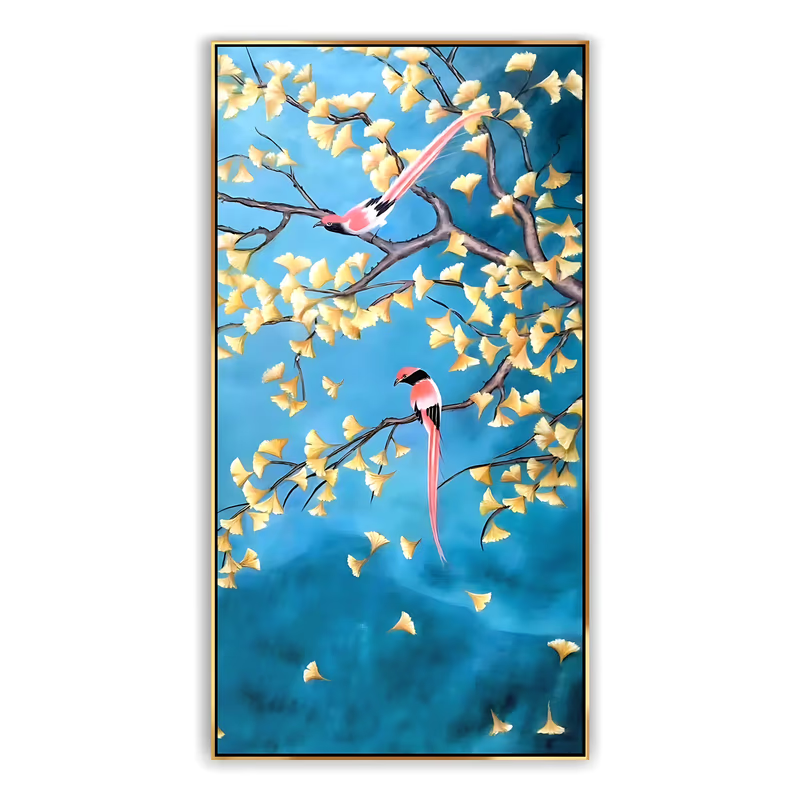
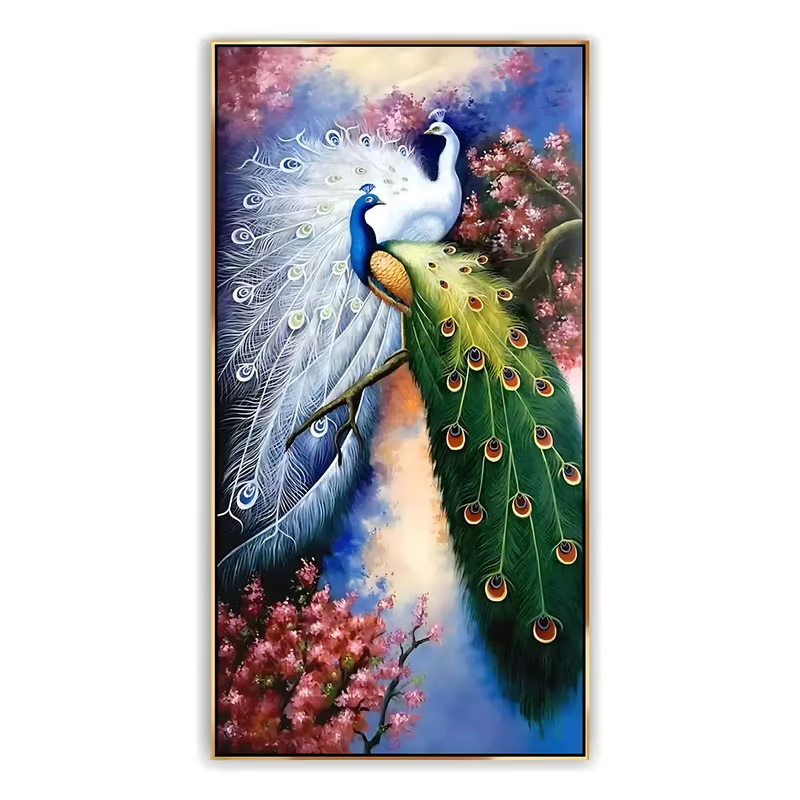
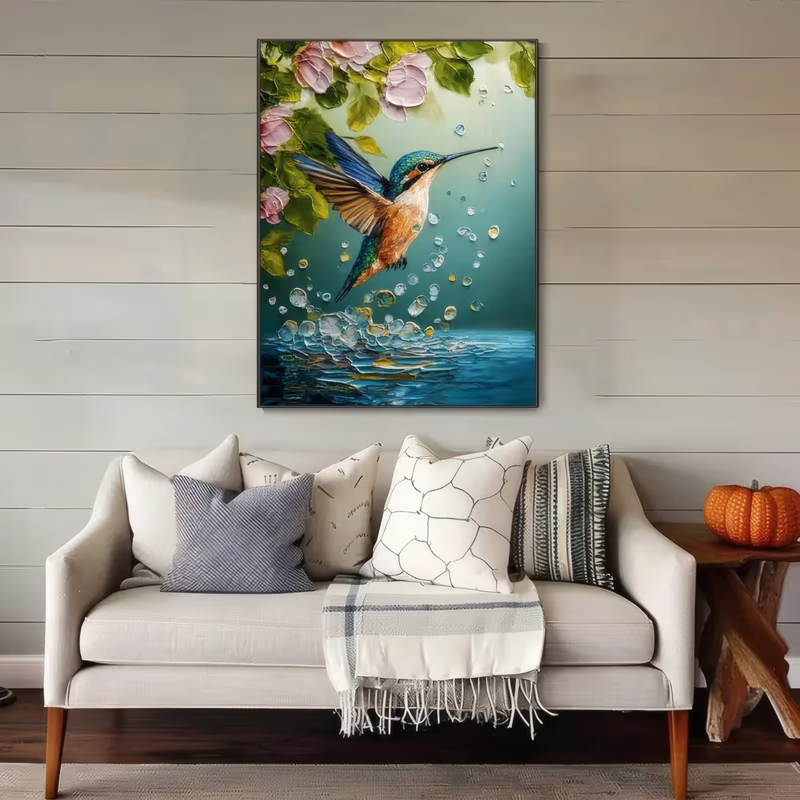
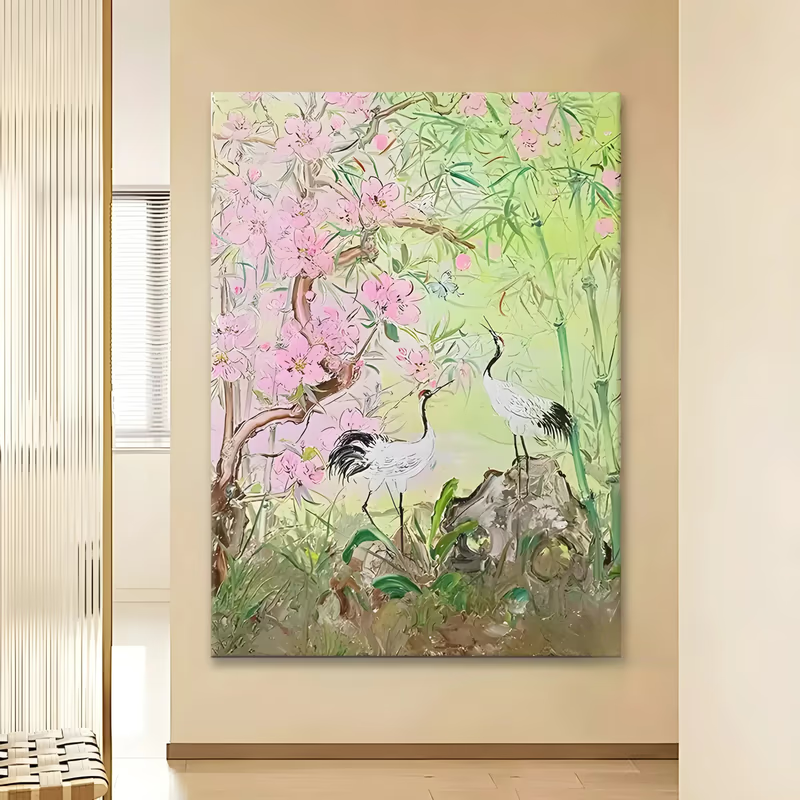
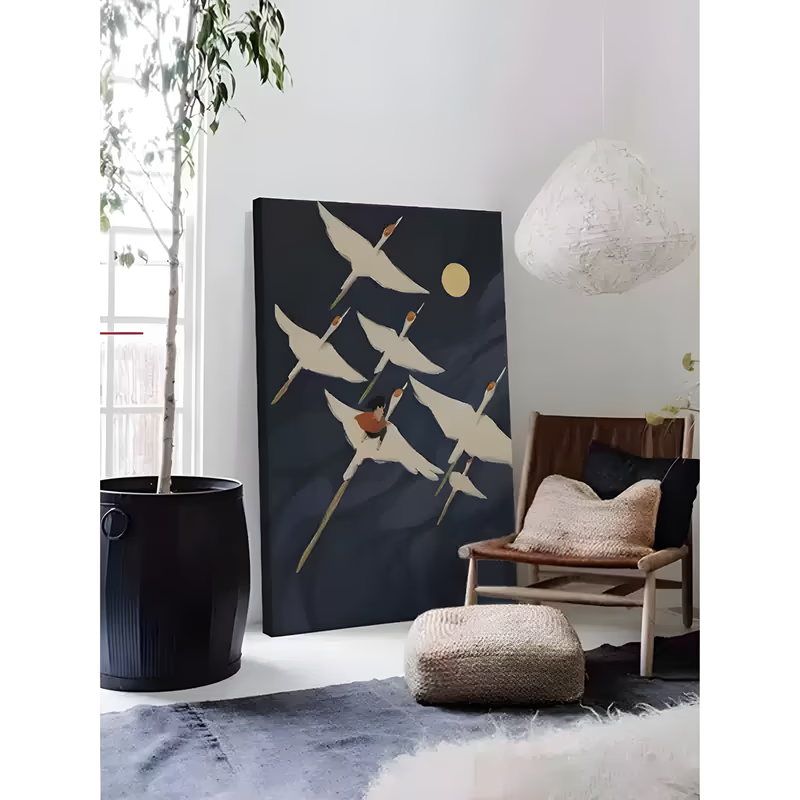
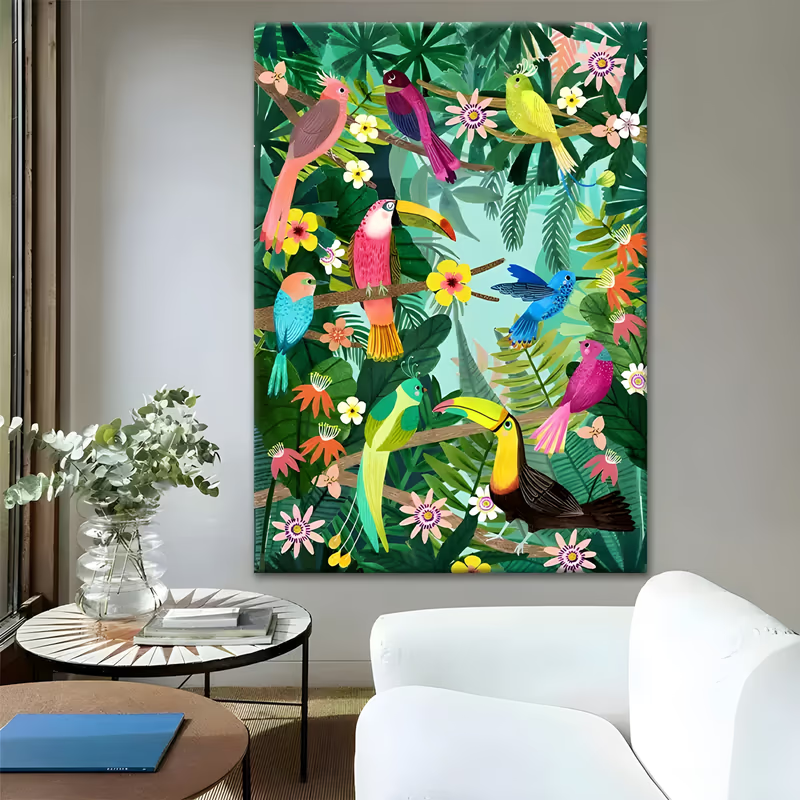
| Peacocks, cranes and songbirds | Beauty and grace; the crane stands for long life in East Asian art | Living rooms, dining rooms, lobbies, bedrooms |
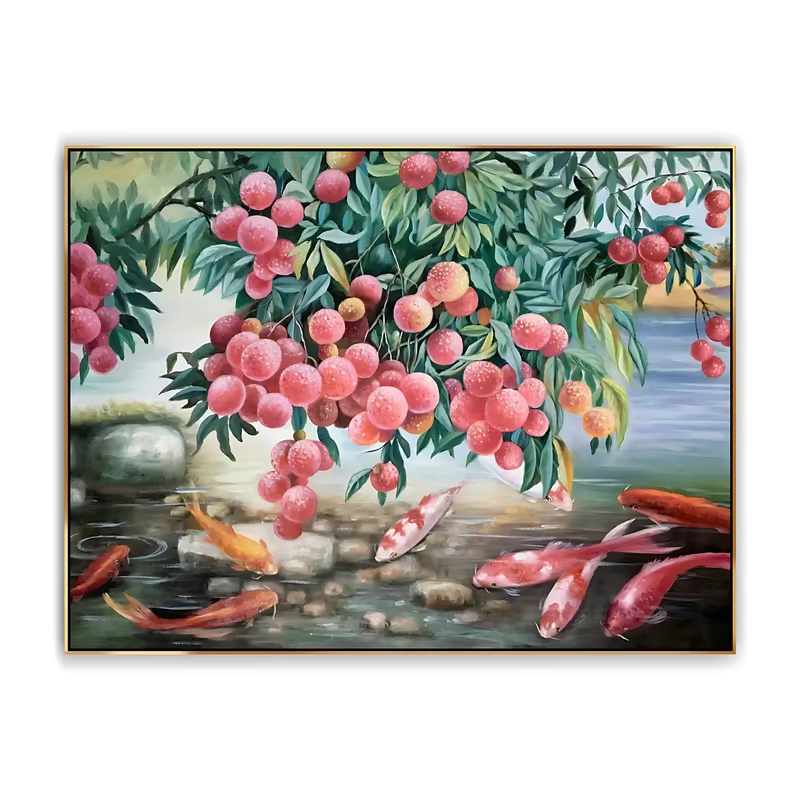
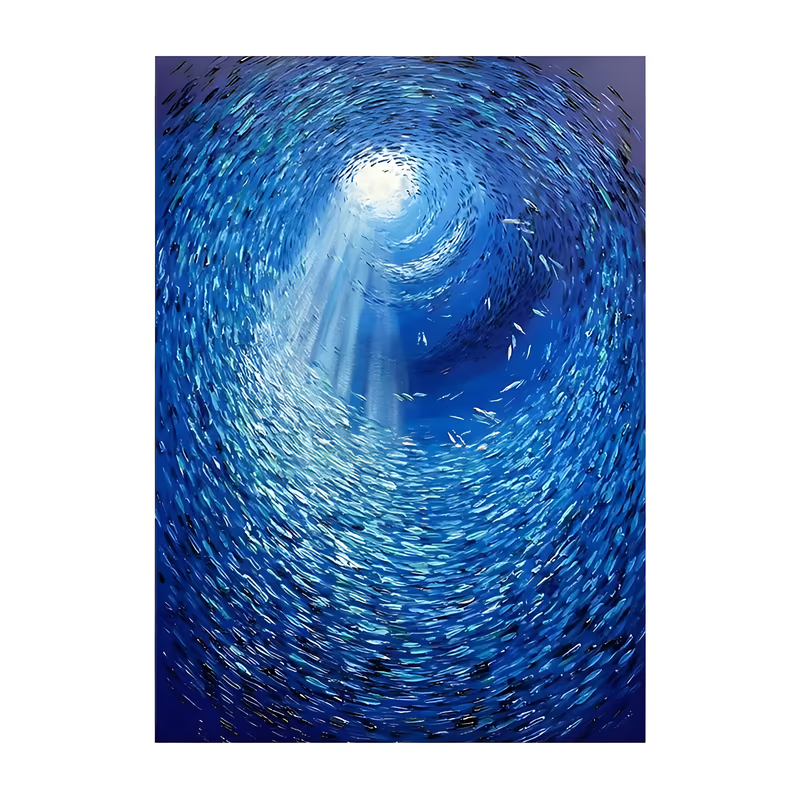
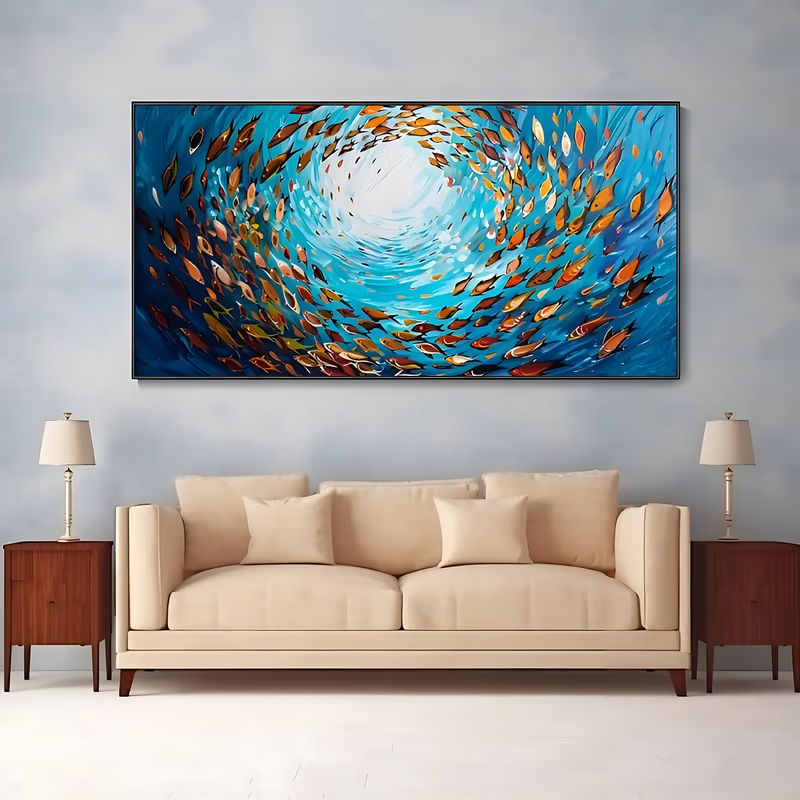
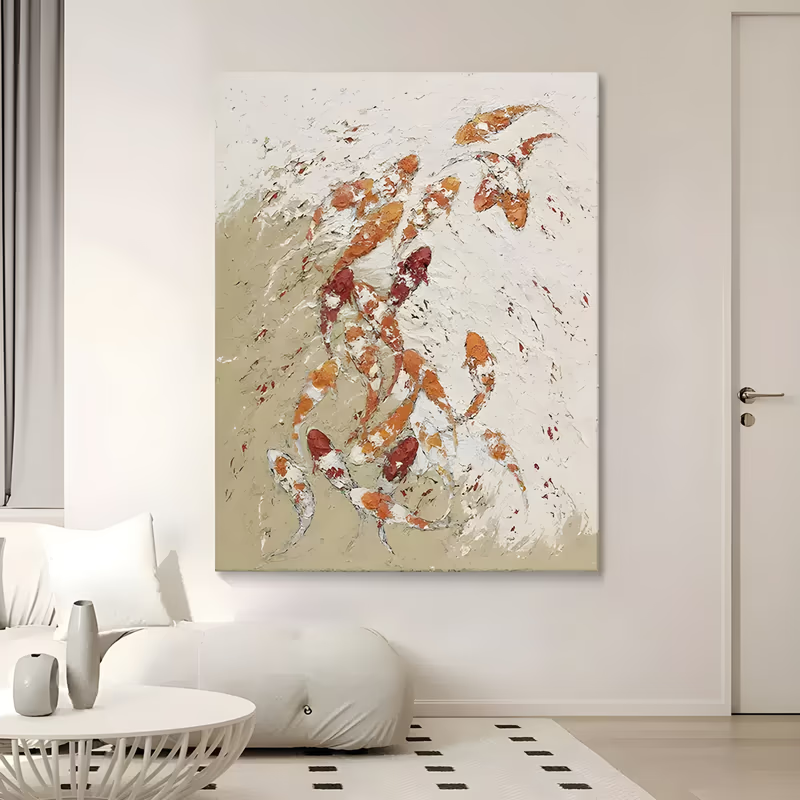
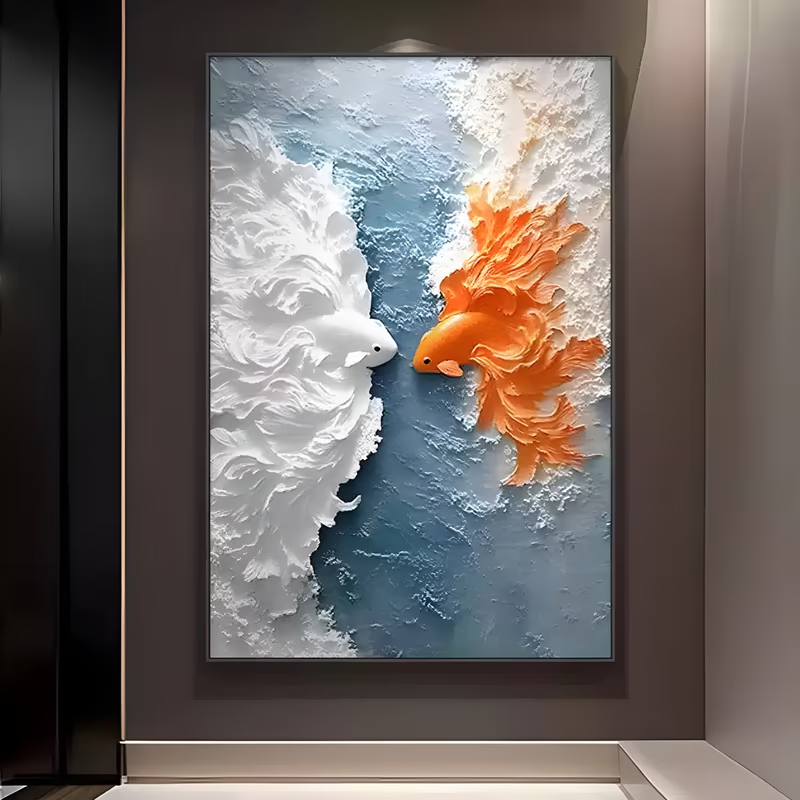
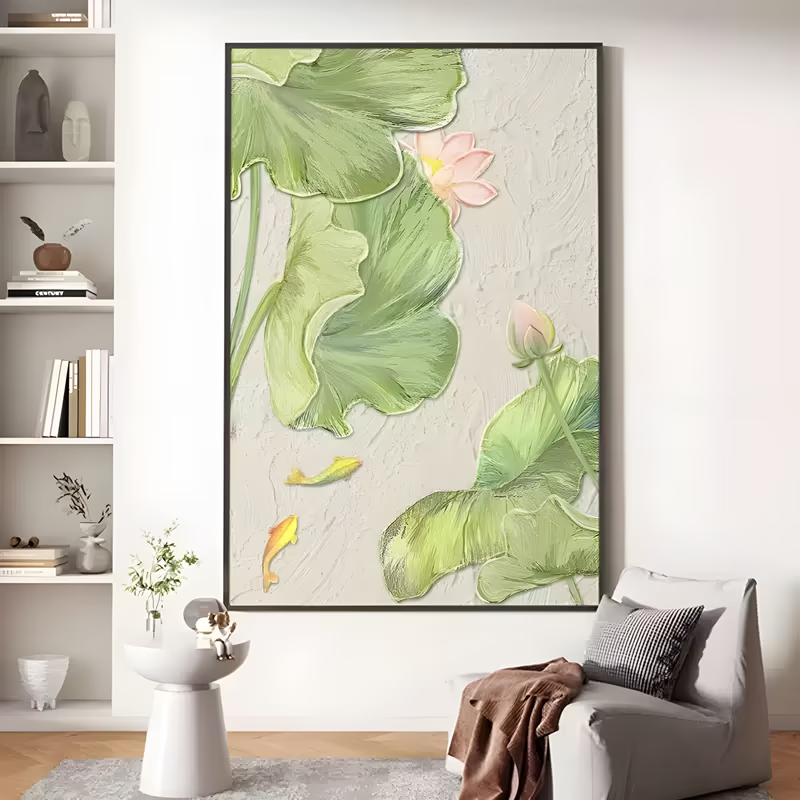
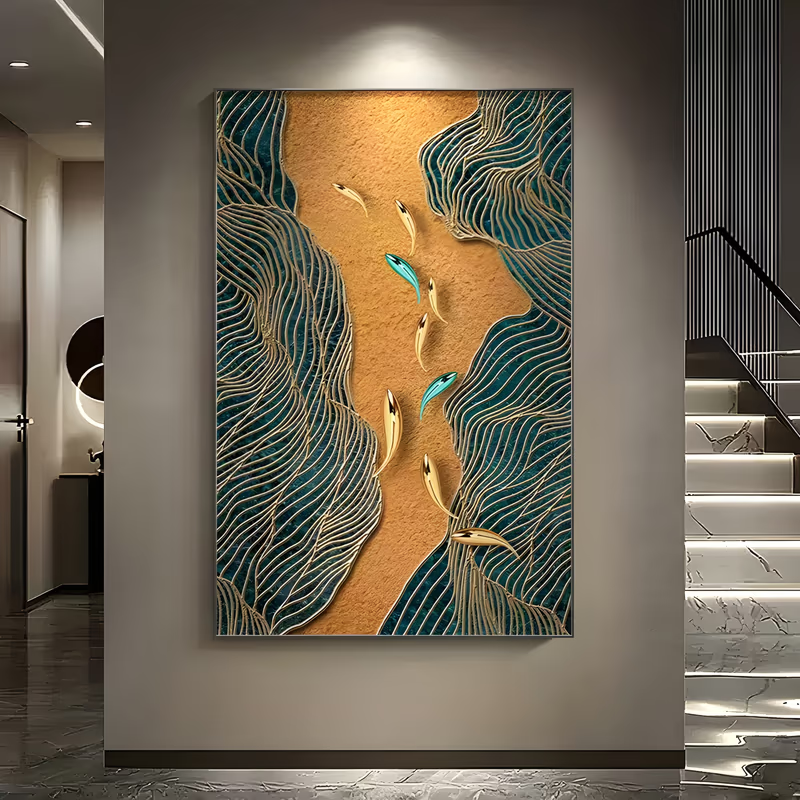
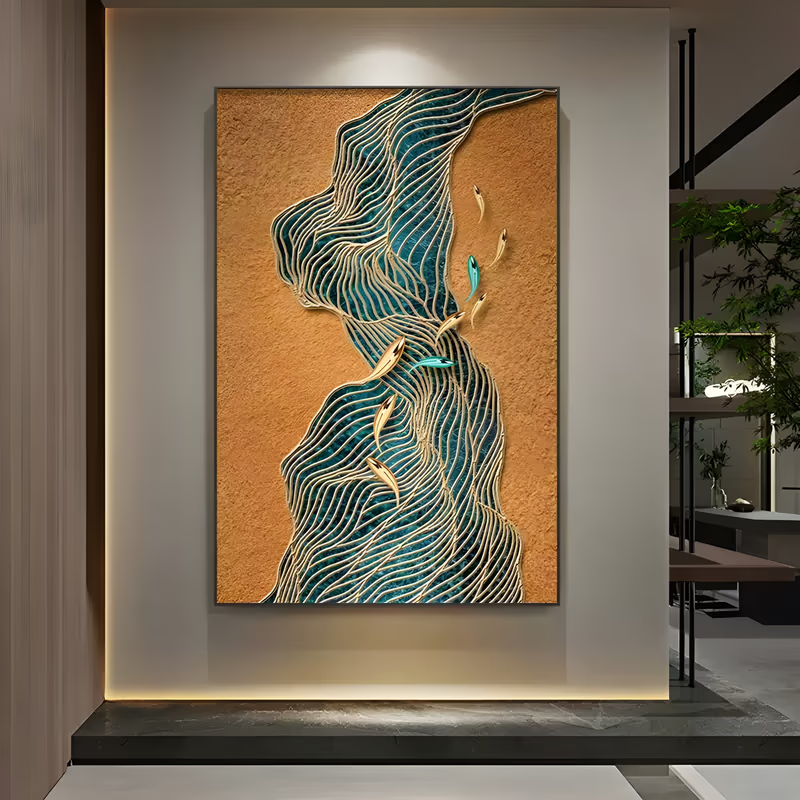
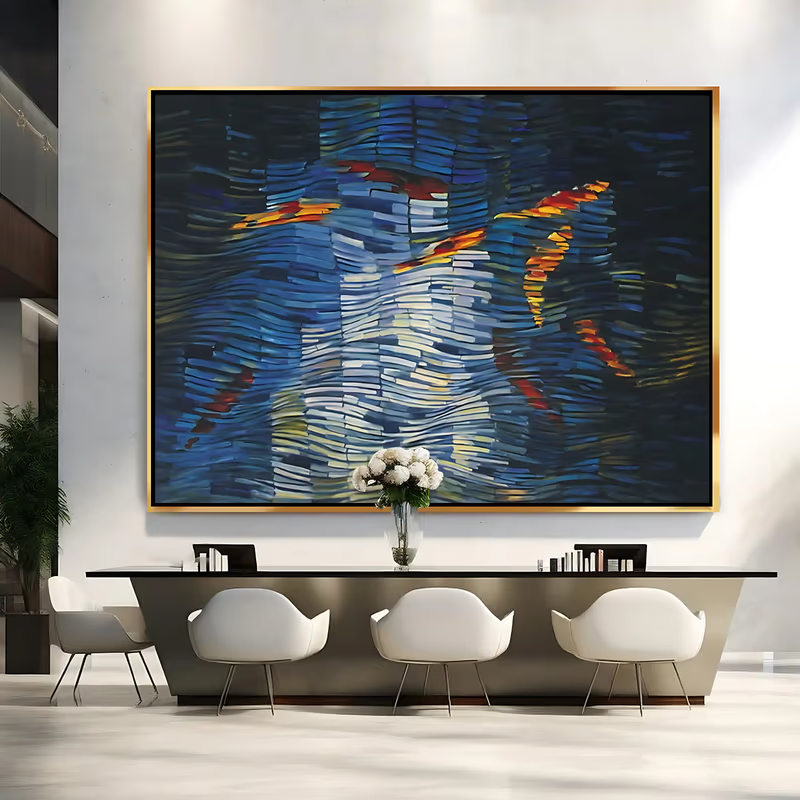
| Koi and other fish | Calm movement; koi are linked with perseverance and abundance | Bathrooms, spas, entrance halls, restaurants |
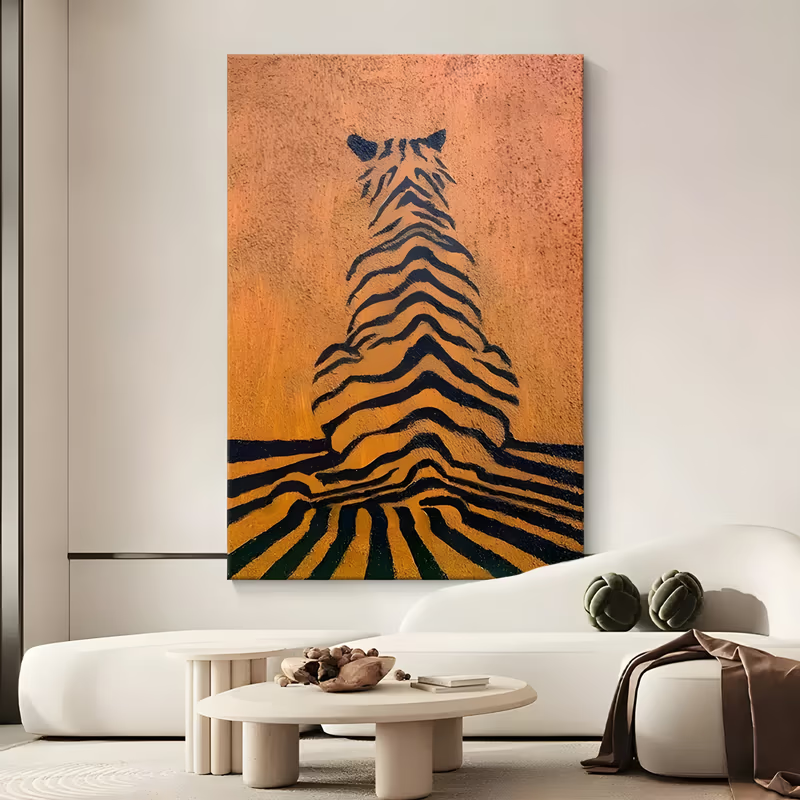
| Leopards, panthers, tigers and lions | Power and drama; striking against dark walls | Bars, lounges, dressing rooms, statement walls |
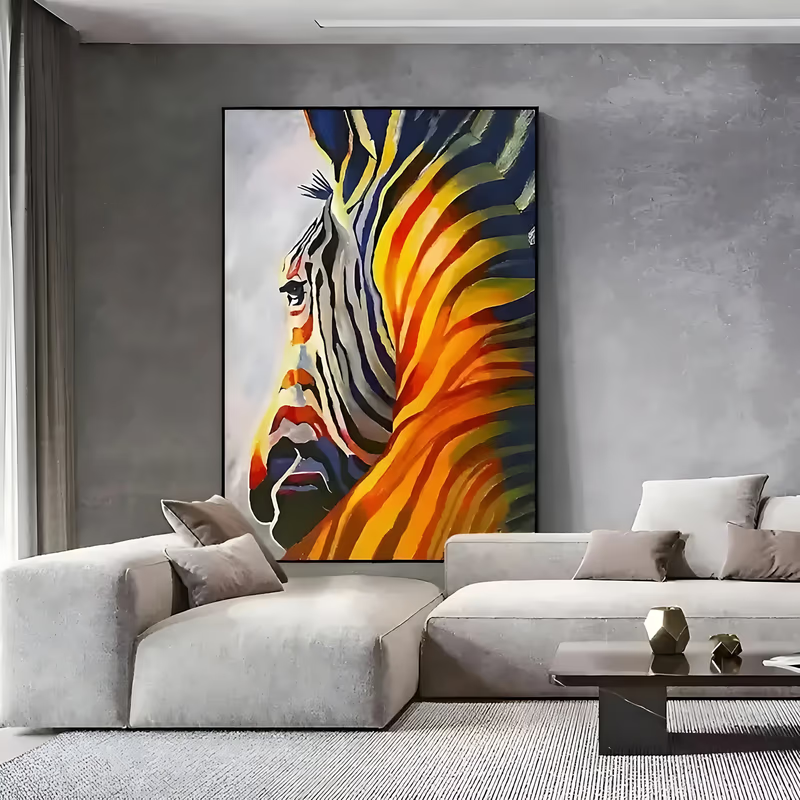
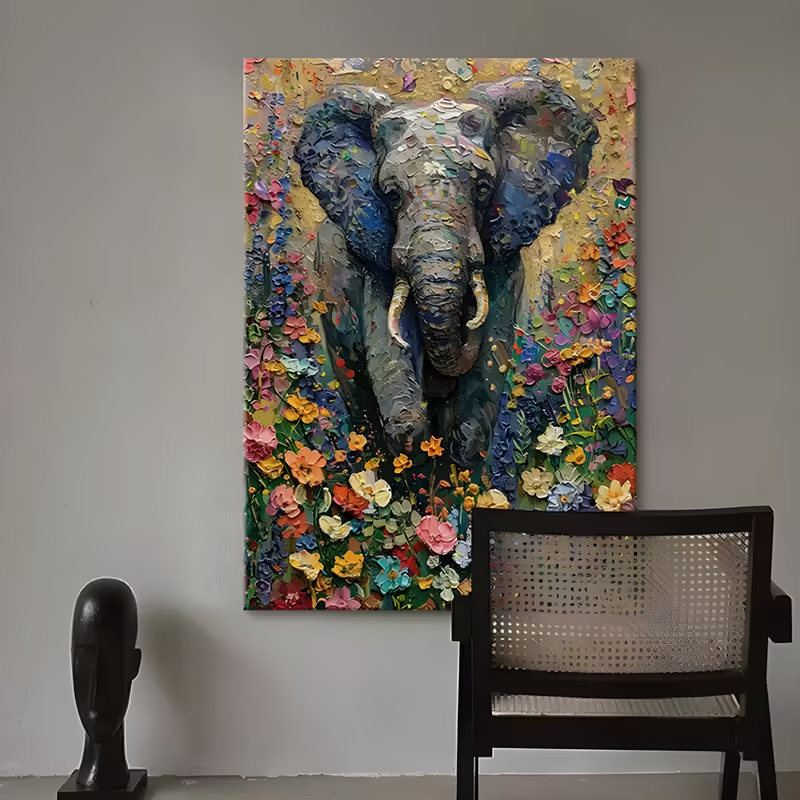
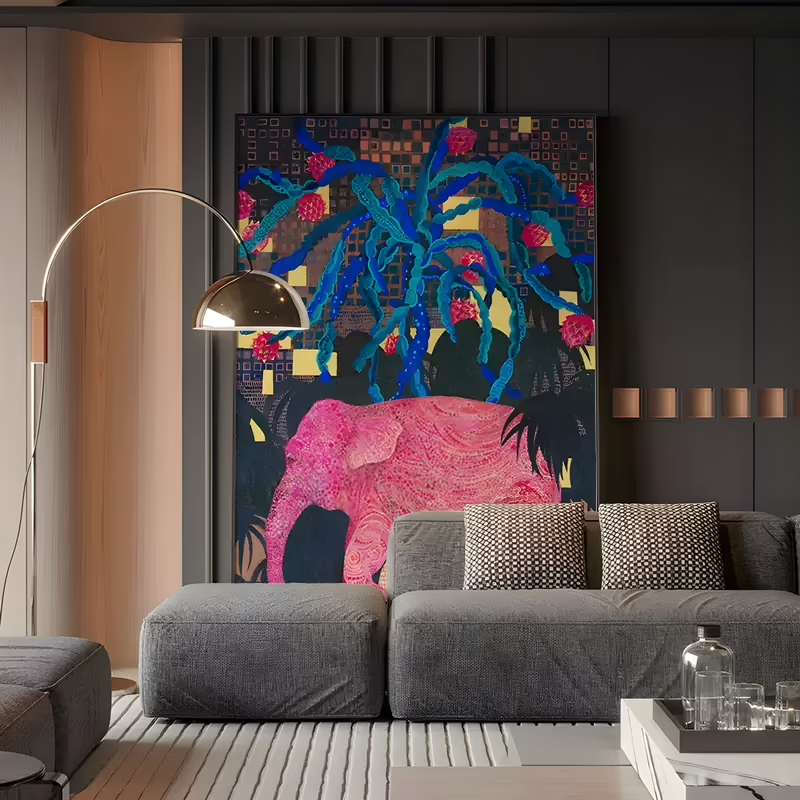
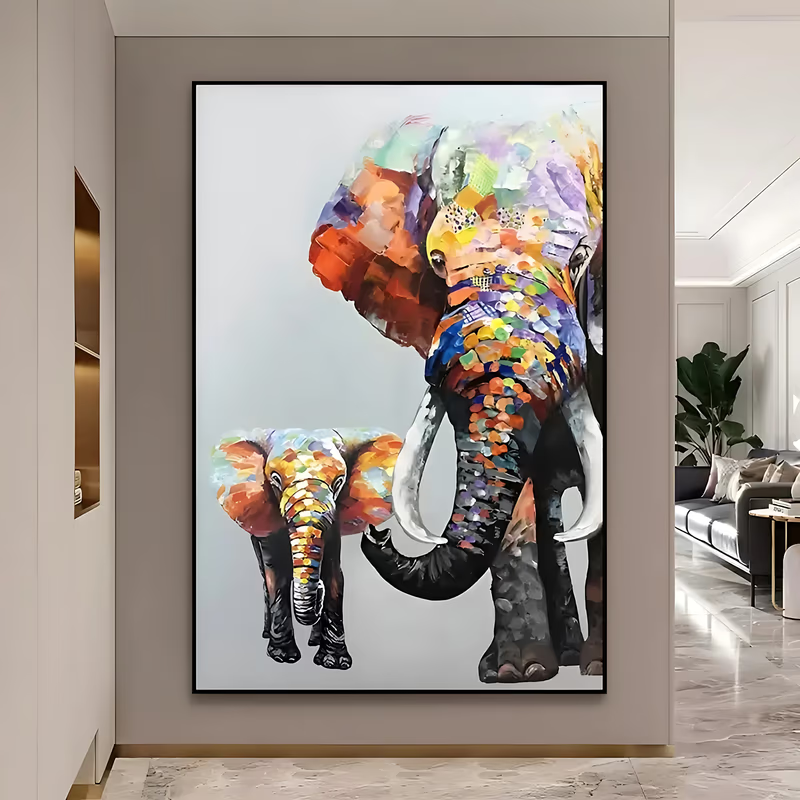
| Elephants, zebras and giraffes | Gentle strength, safari warmth or bright humour | Living rooms, family rooms, children's rooms, safari lodges |
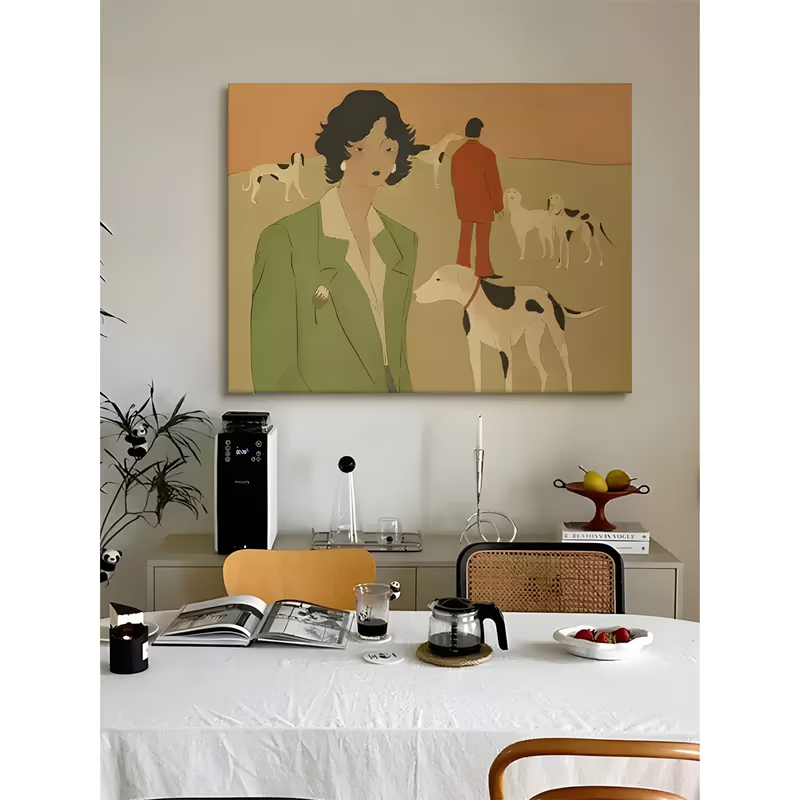
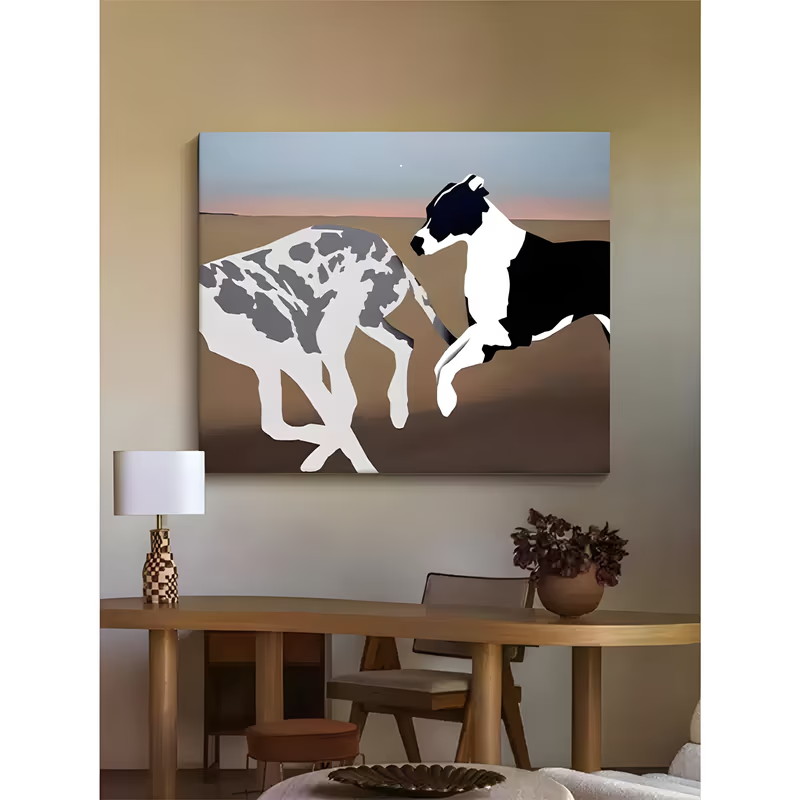
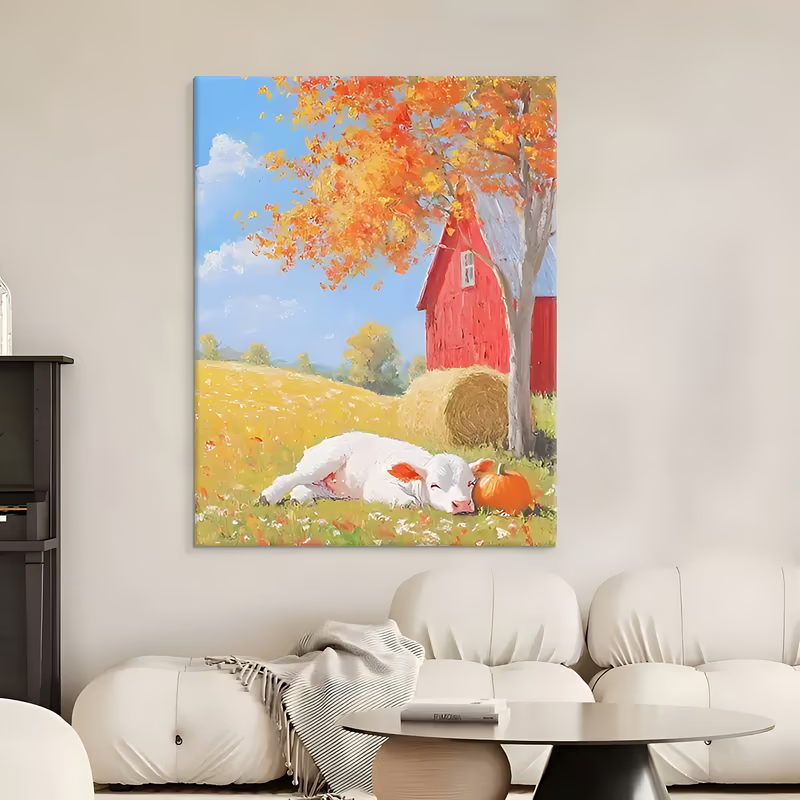
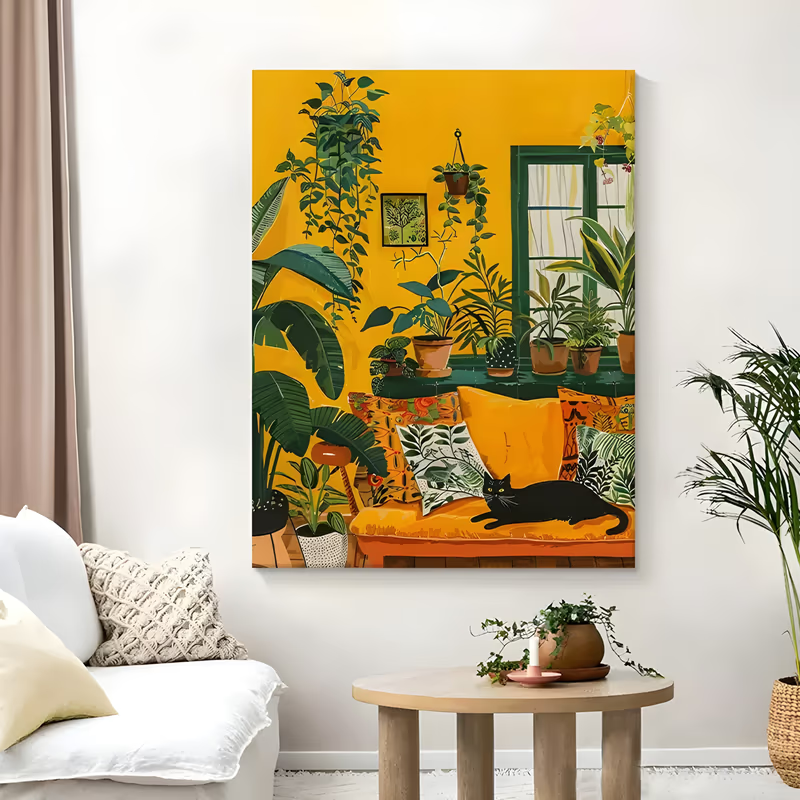
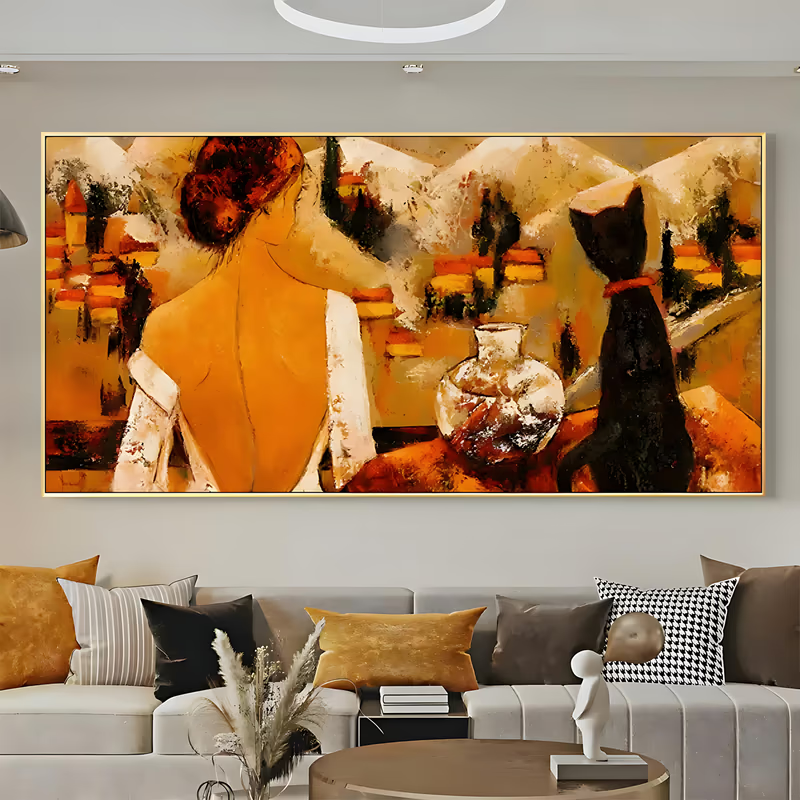
| Cats and dogs | Warmth, wit and home | Kitchens, hallways, reading nooks, pet-friendly hotels |
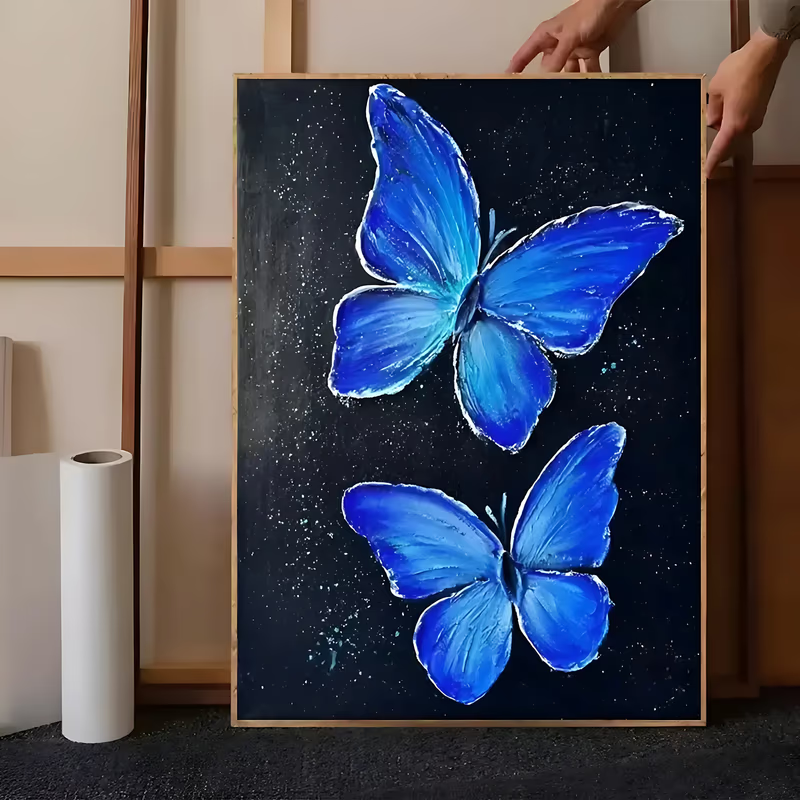
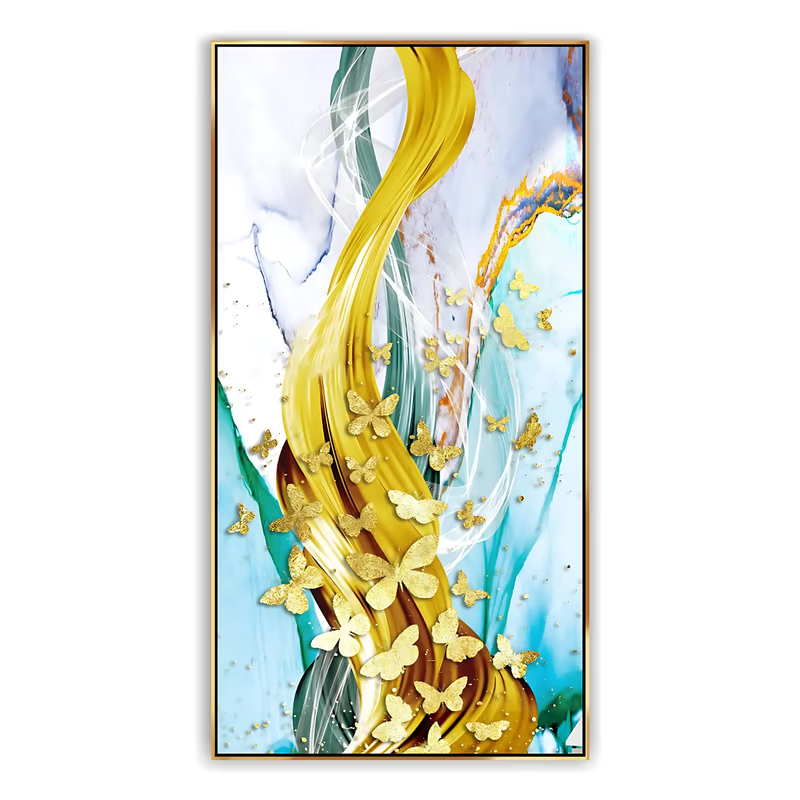
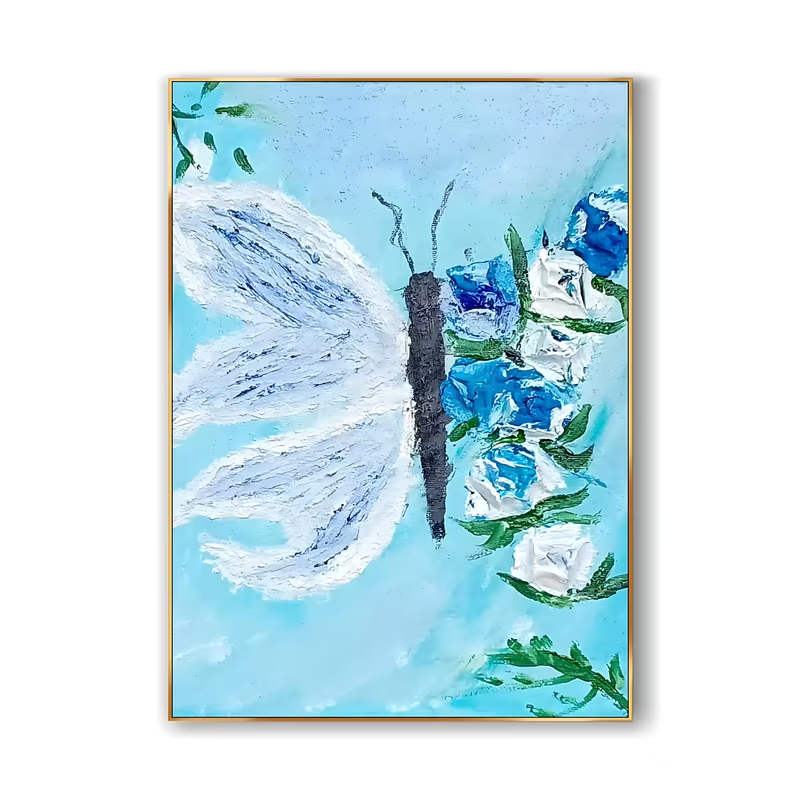
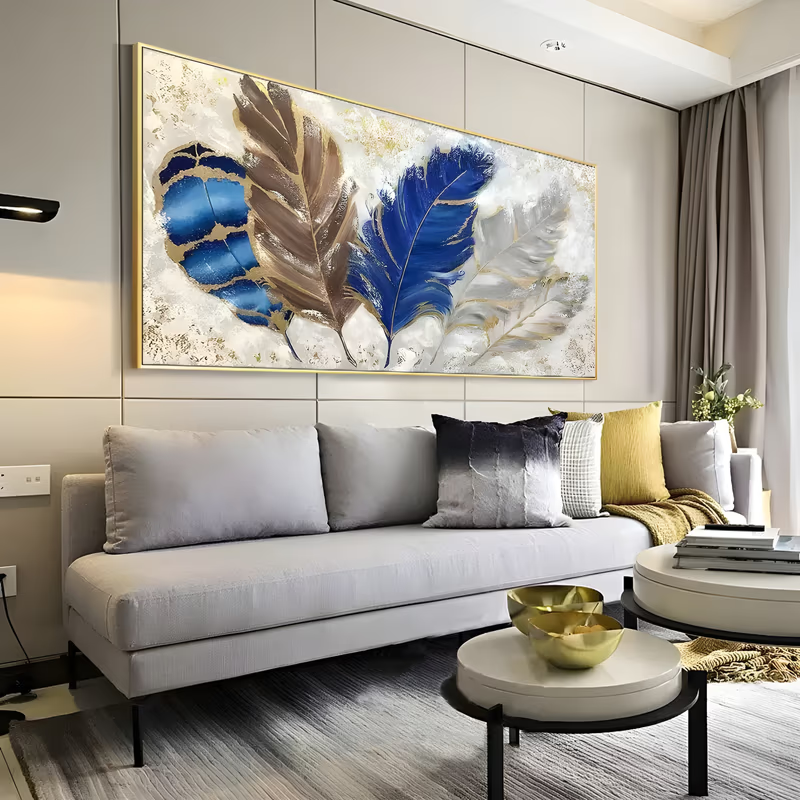
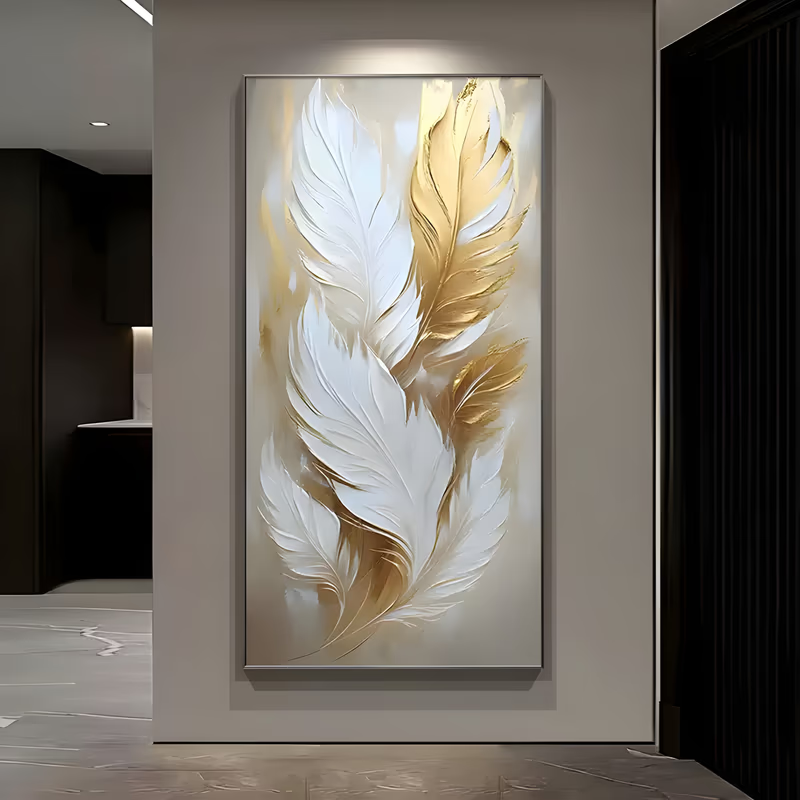
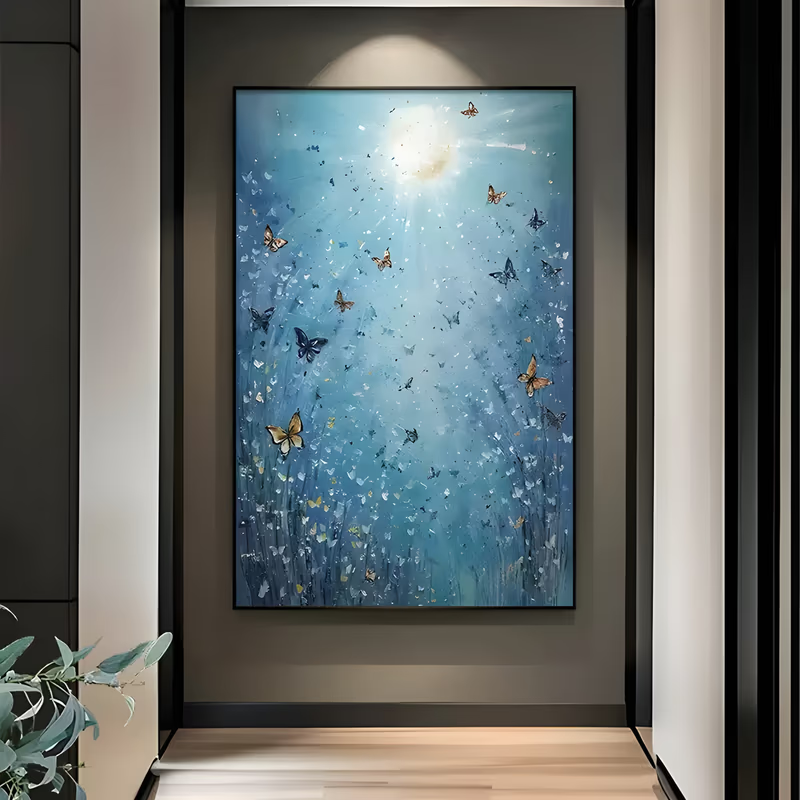
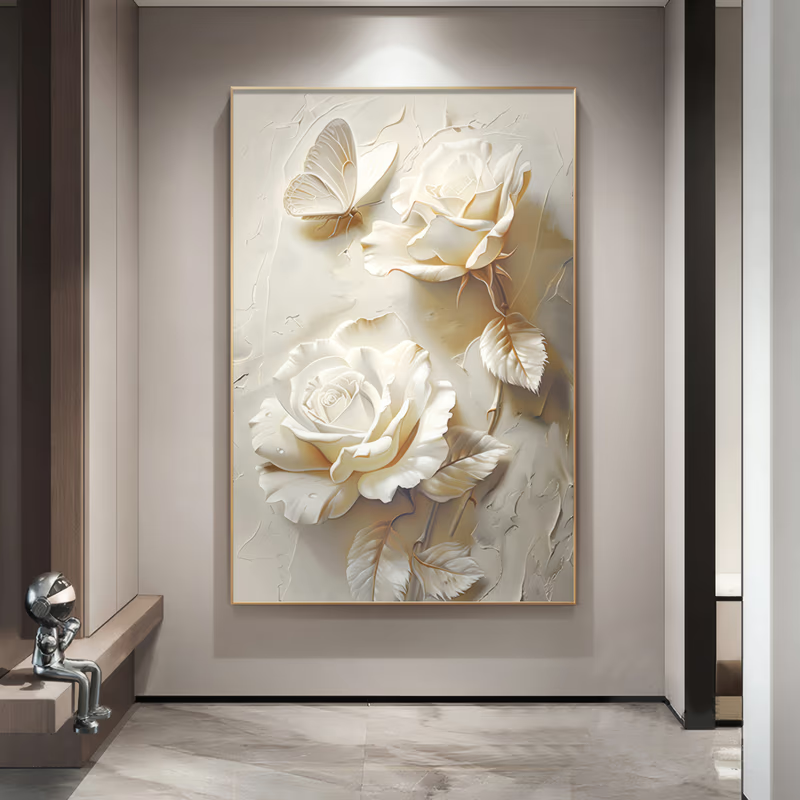
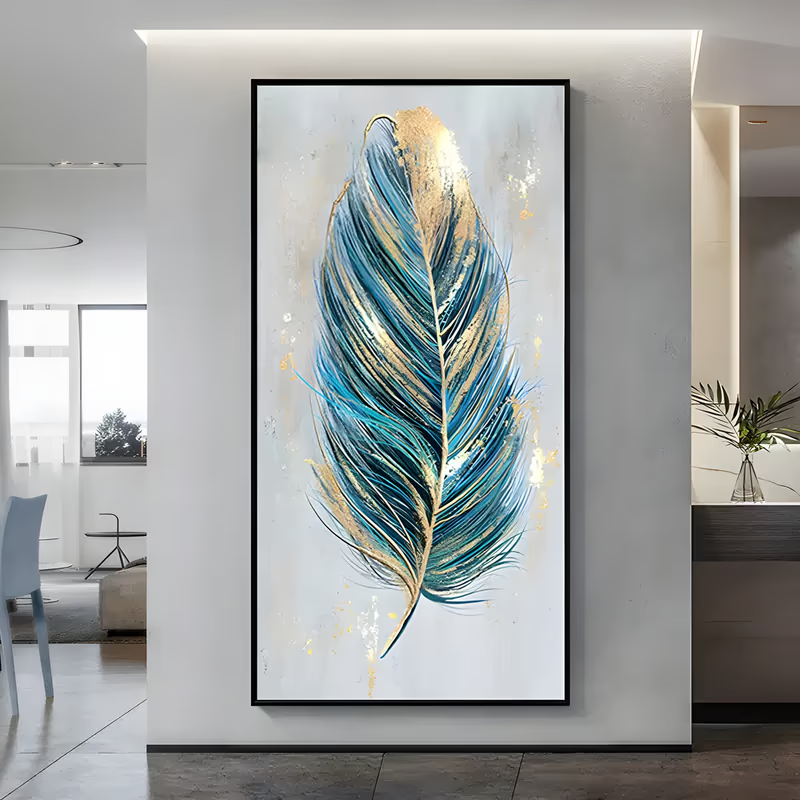
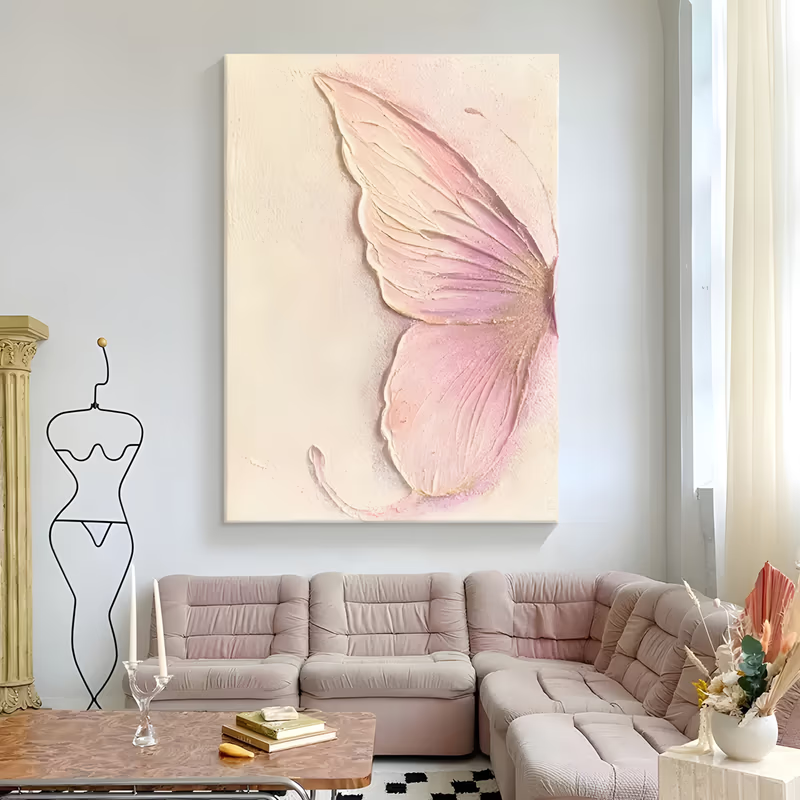
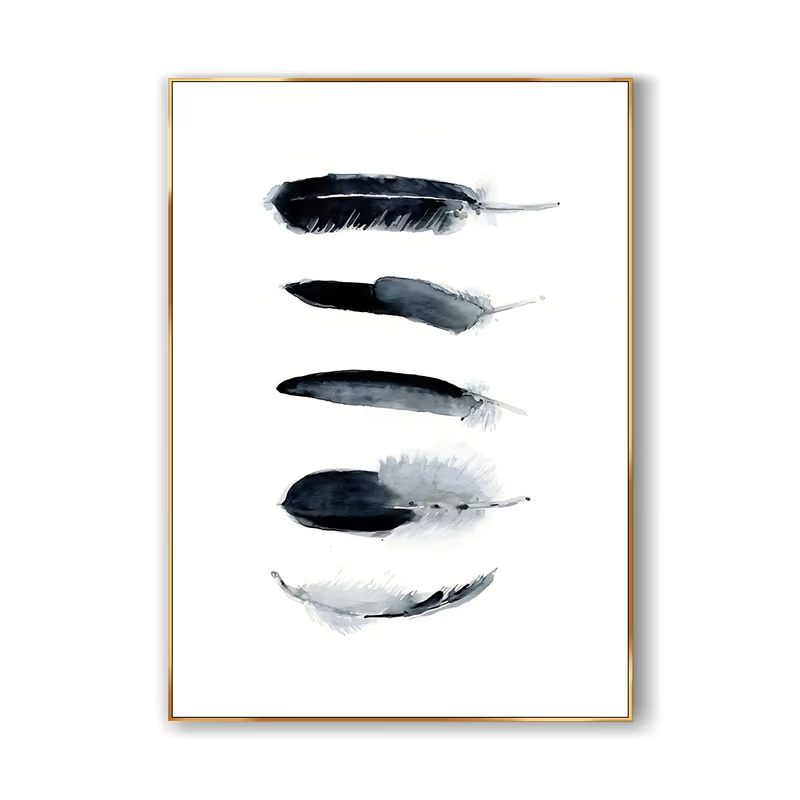
| Butterflies and feathers | Lightness and change; the gentlest animal motifs | Bedrooms, dressing rooms, spa corridors |
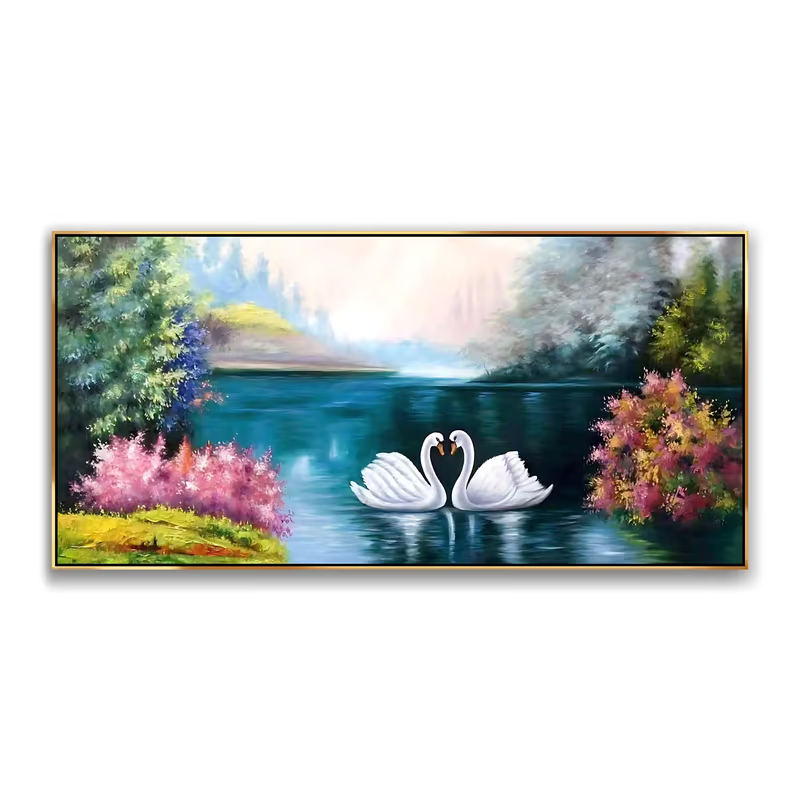
Associations differ by culture, and some feng shui writers prefer predators in offices rather than bedrooms. Treat them as stories that add meaning, not rules. Browse by mood: bold animal art, peaceful animal art or warm and homely.
What kinds of animal paintings are there?
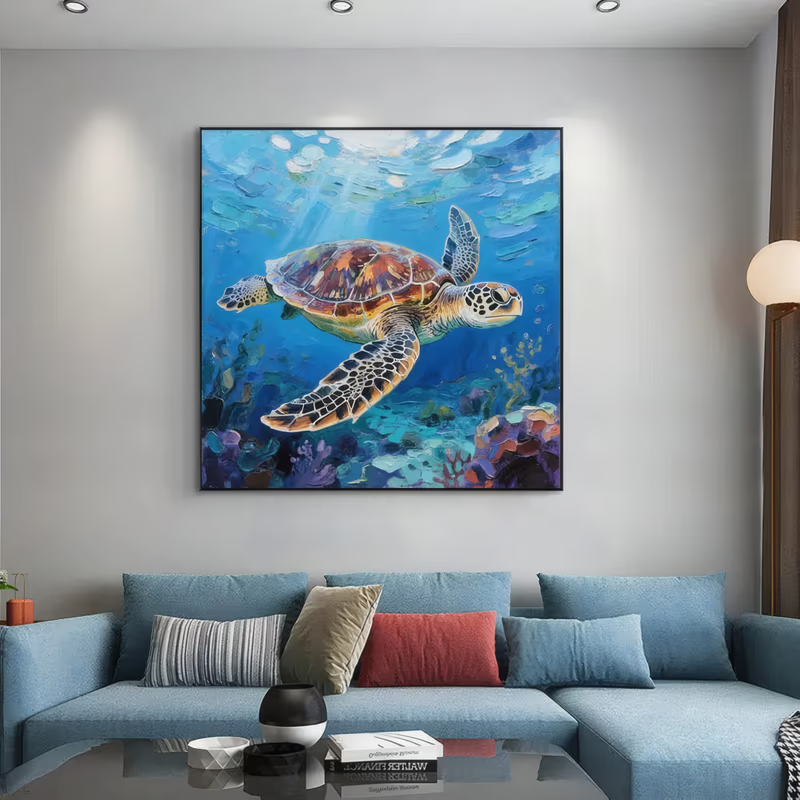
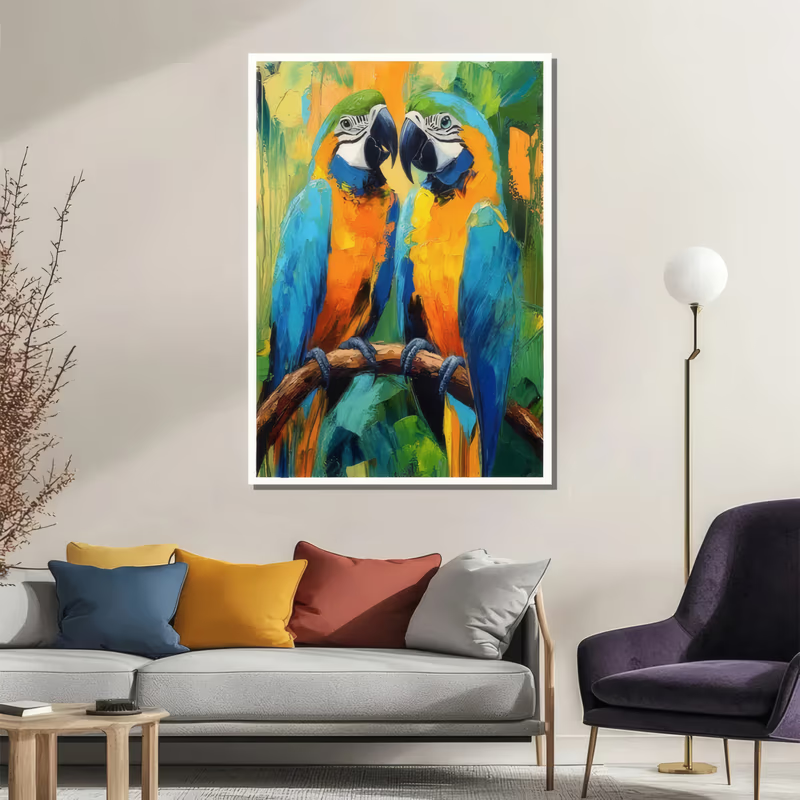
The animal paintings here come in four renderings: lifelike portraits, bright palette-knife colour, sculpted plaster relief, and minimal ink-like studies.
Lifelike animal portraits
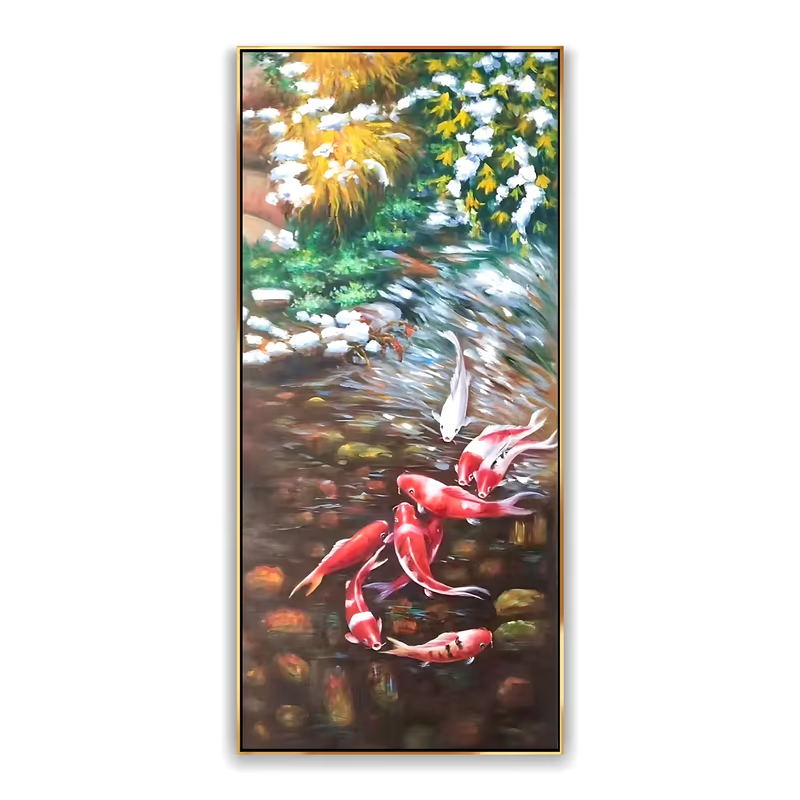
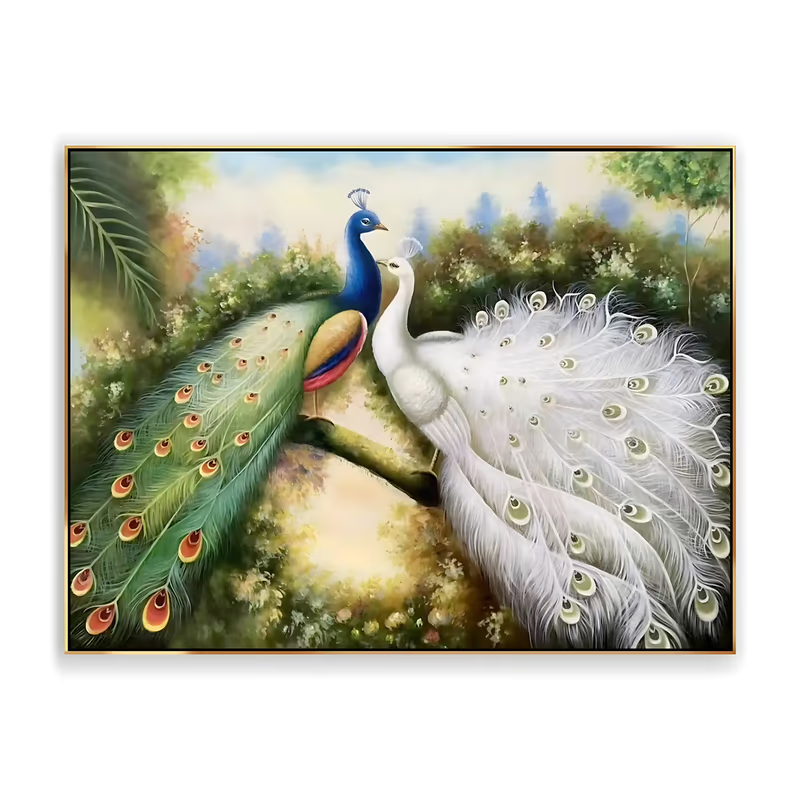
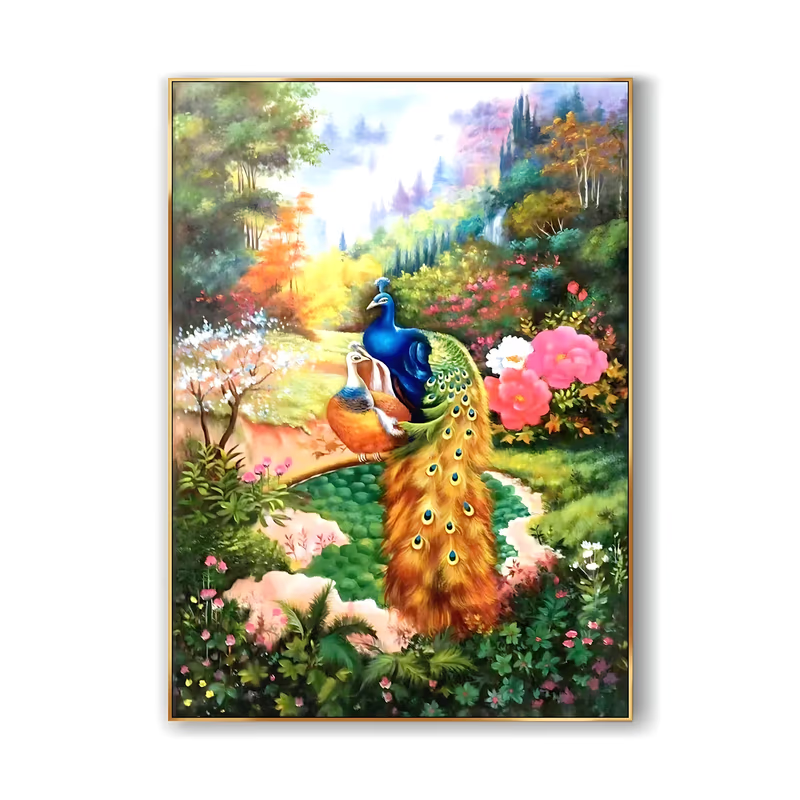
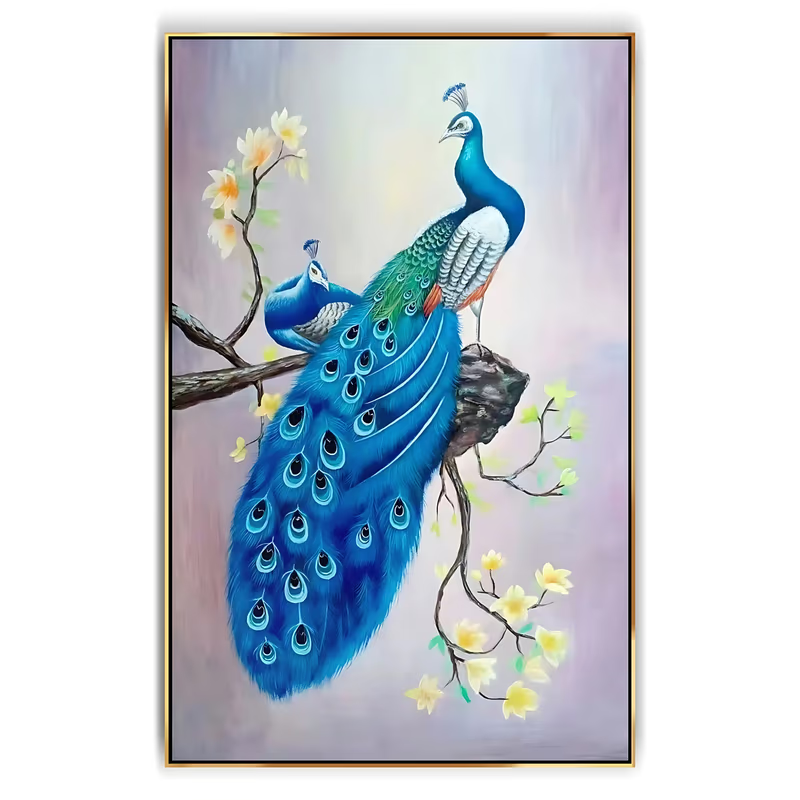
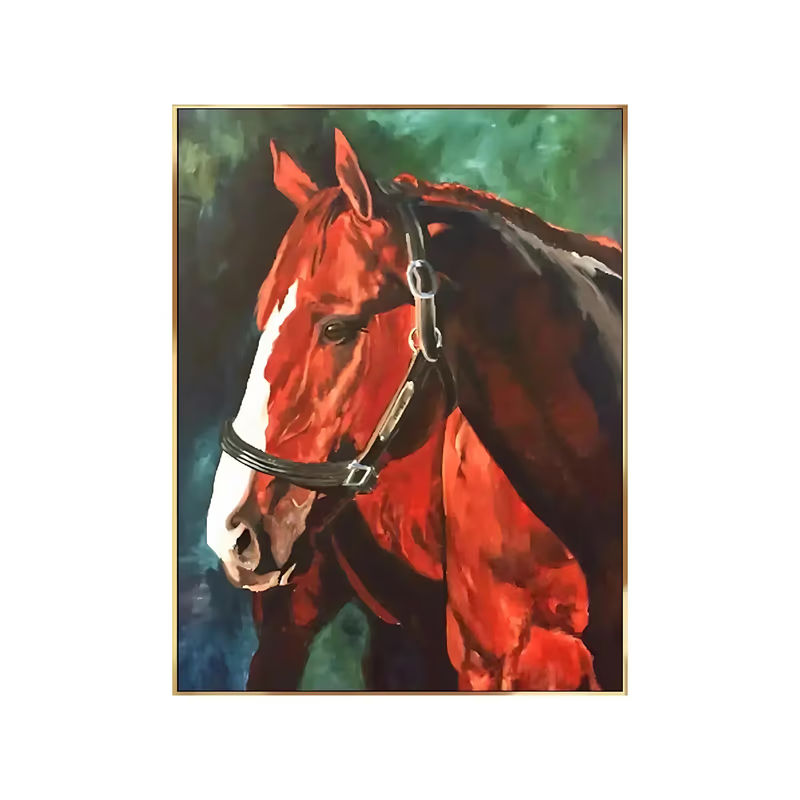
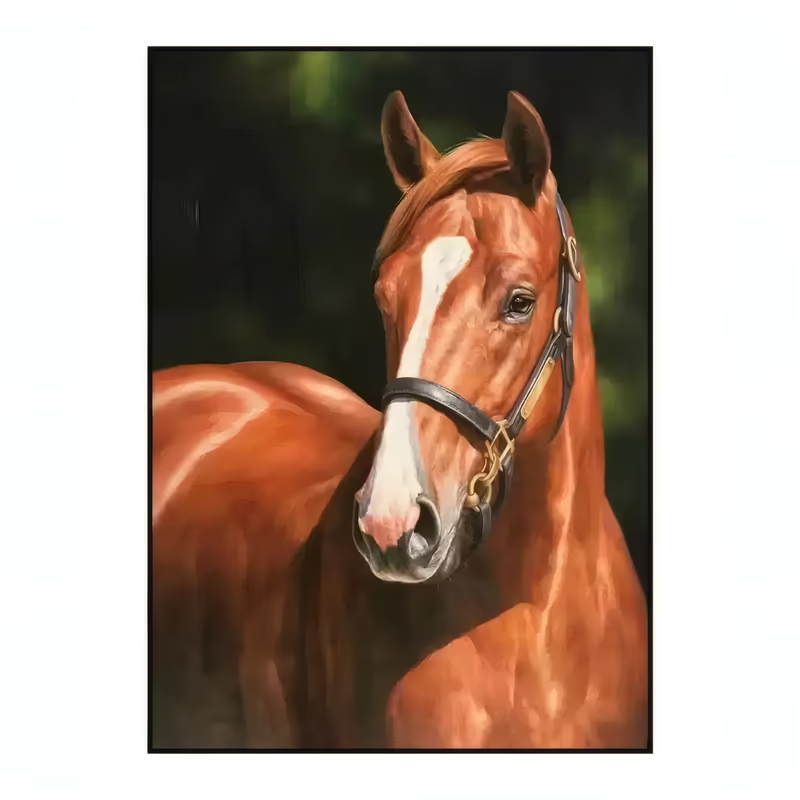
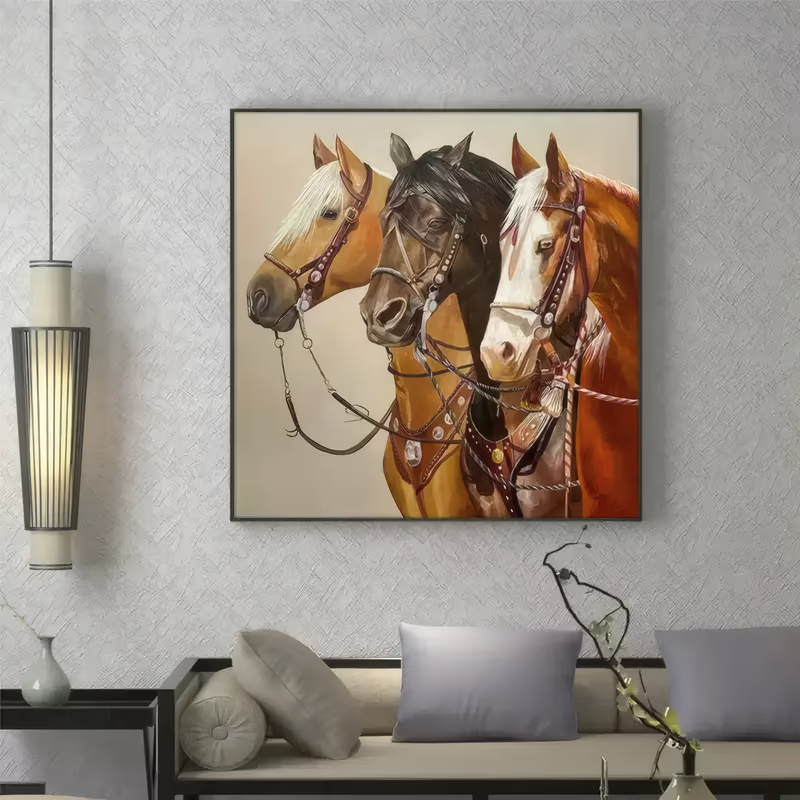
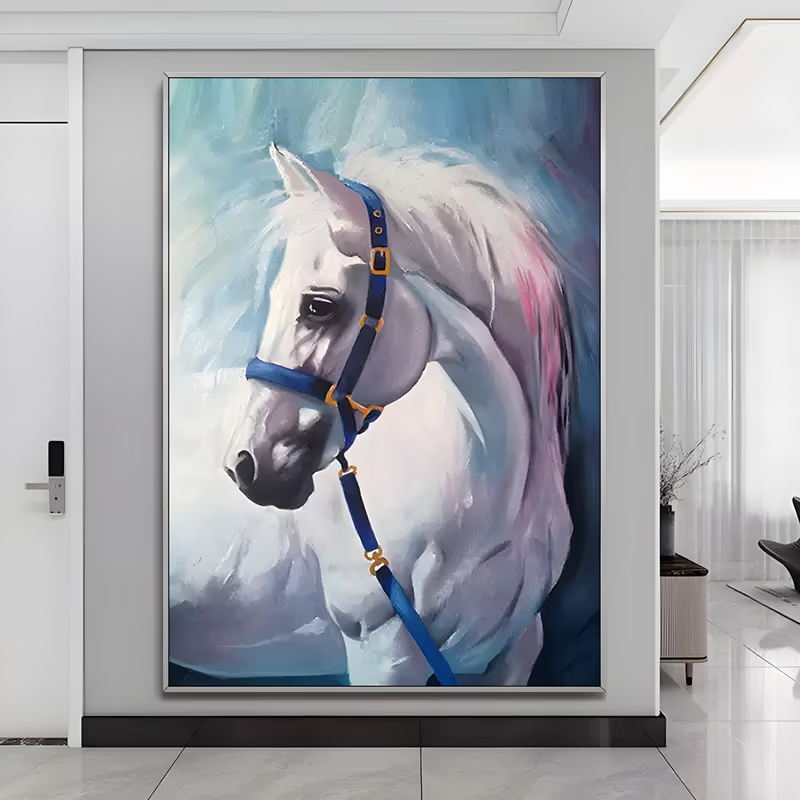
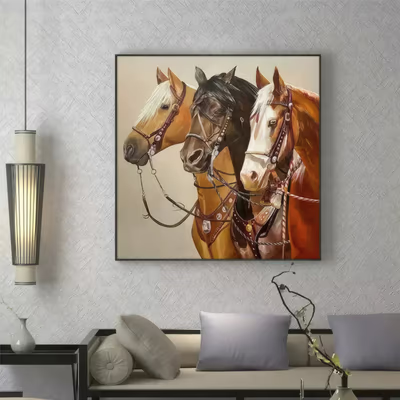
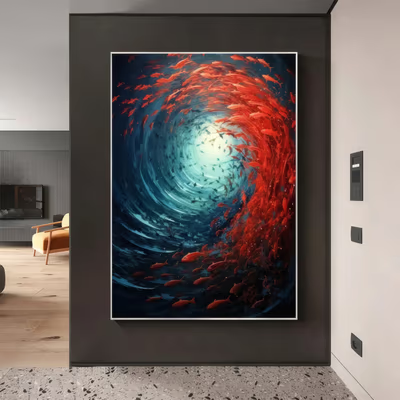
Hyperreal horse heads in decorated bridles, peacocks in full display, a leopard emerging from black, koi in a rocky stream: every hair and scale rendered. These have the gravity of a classical portrait and suit formal living rooms, studies, lobbies and members' clubs. See the hyperrealism style.
Bright palette-knife animals
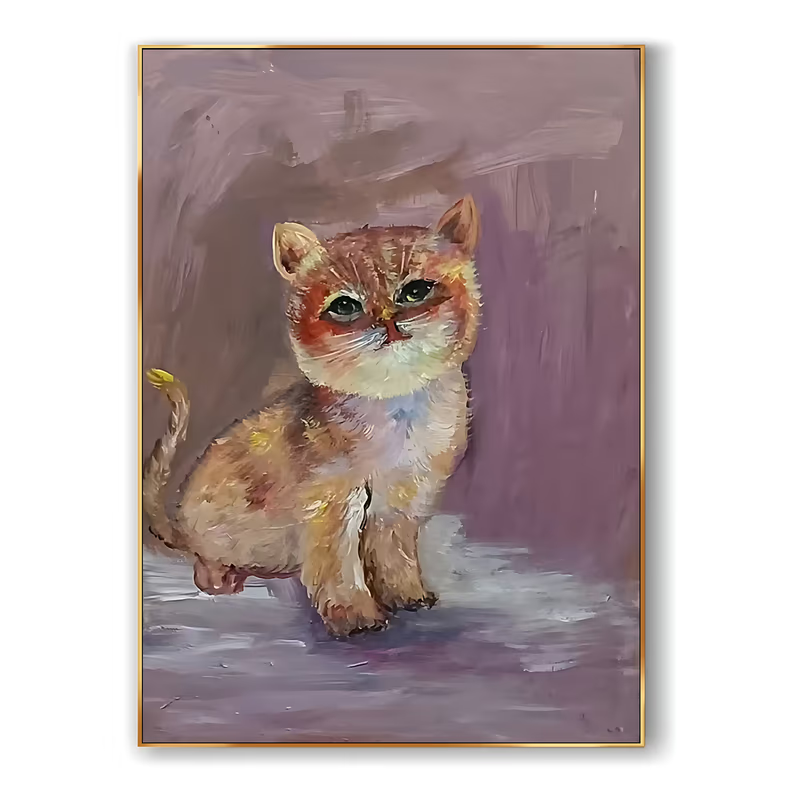
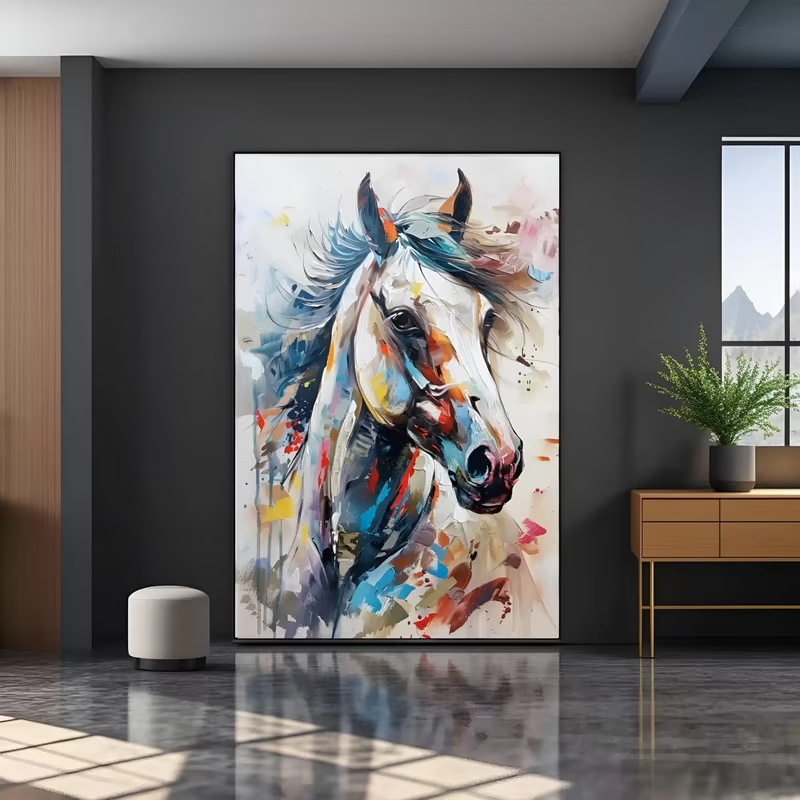
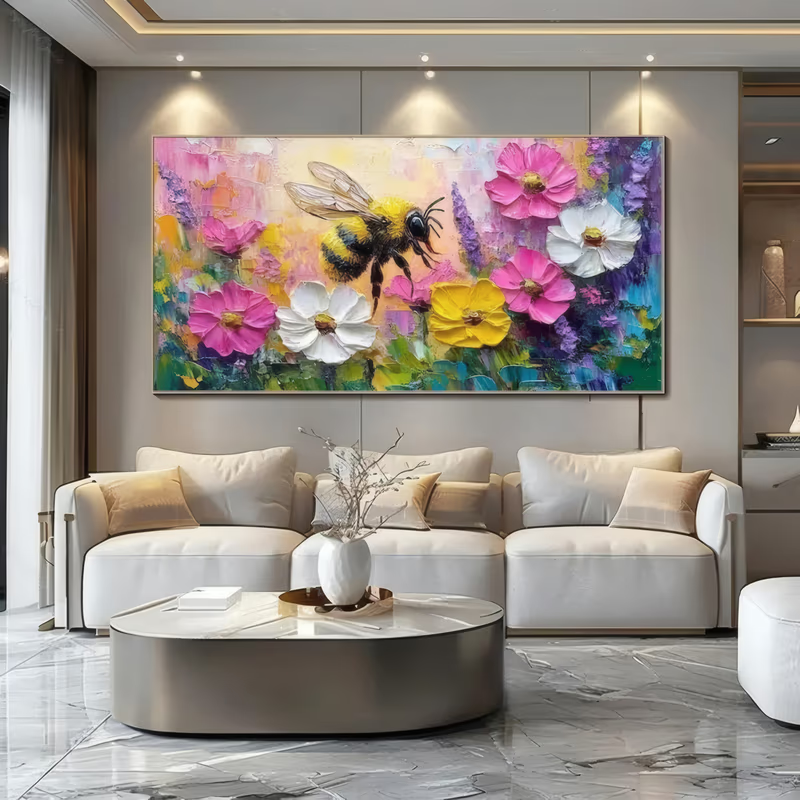
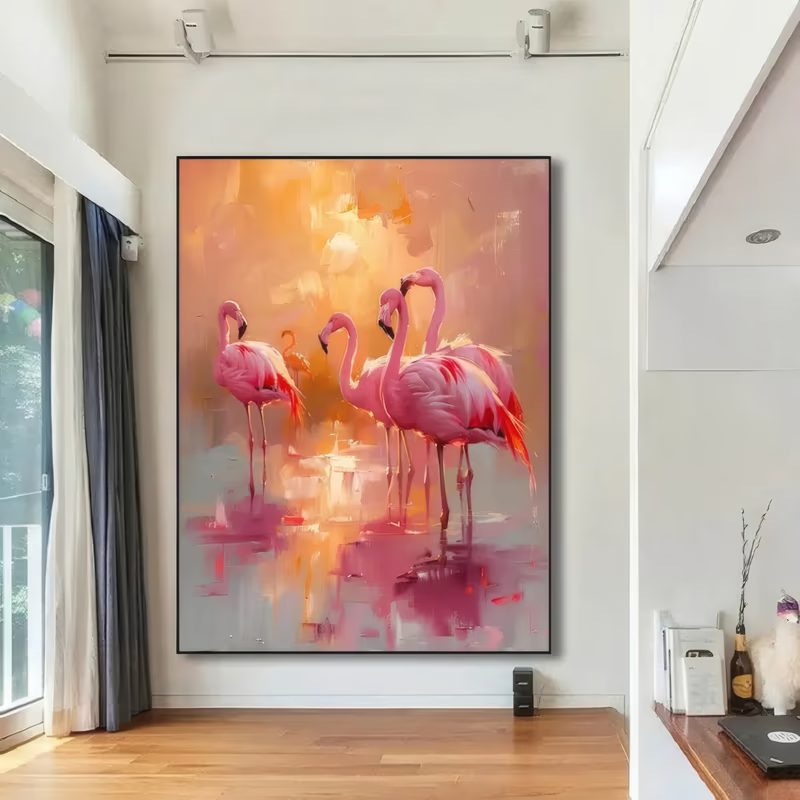
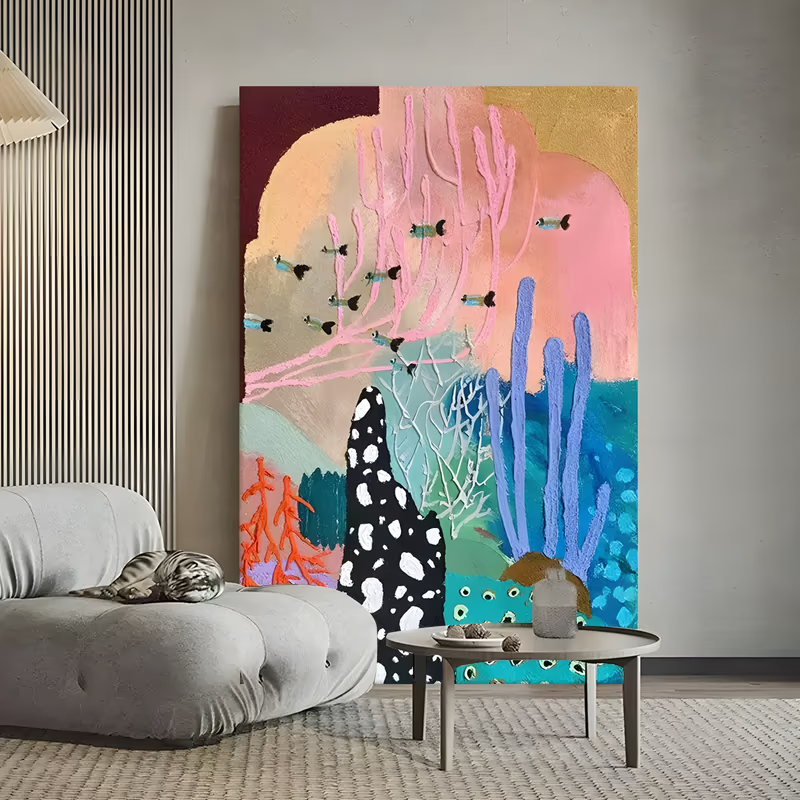
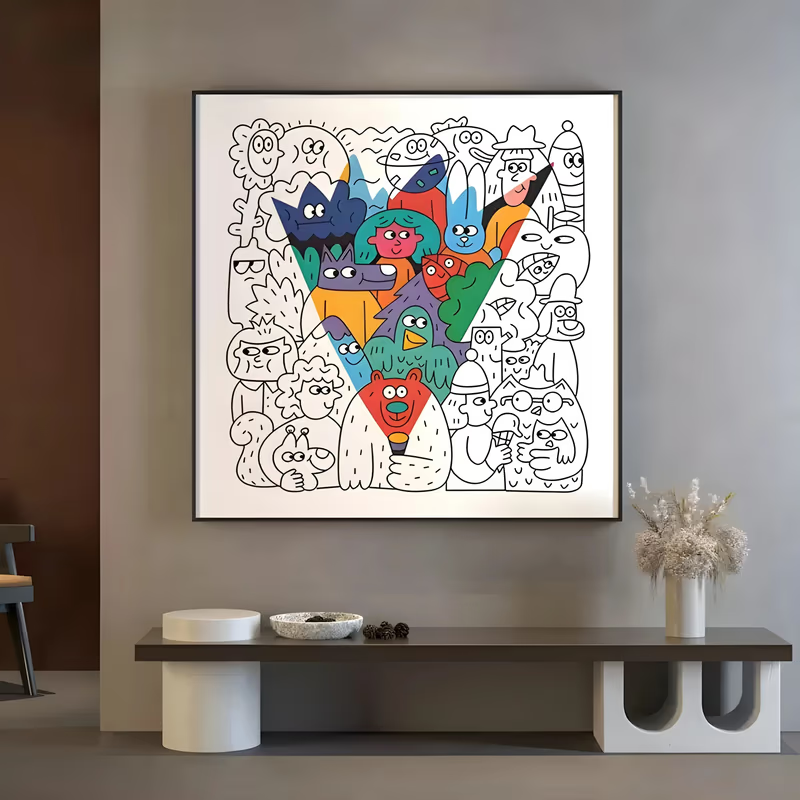
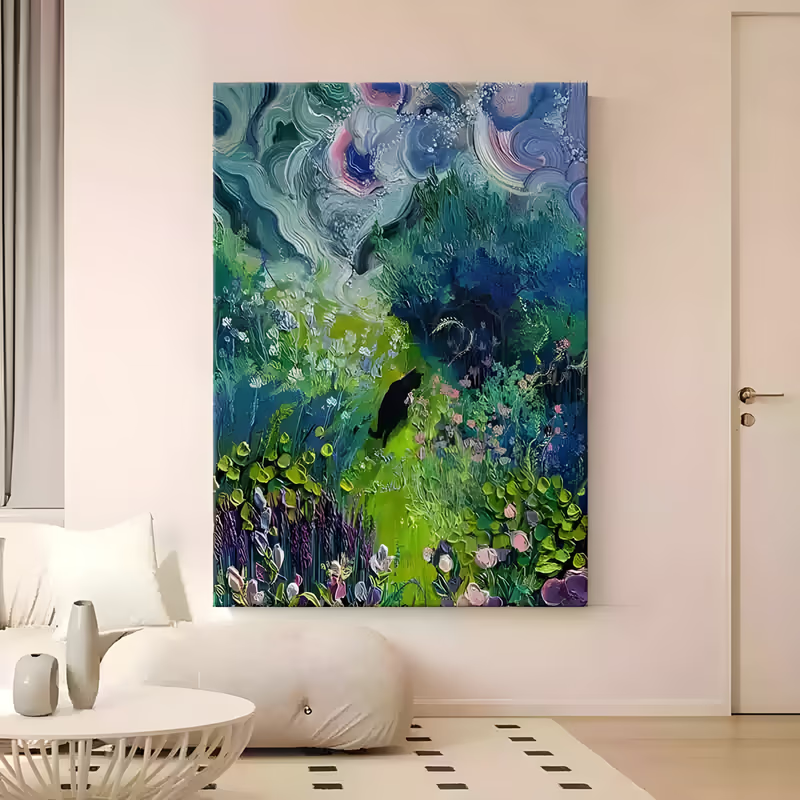
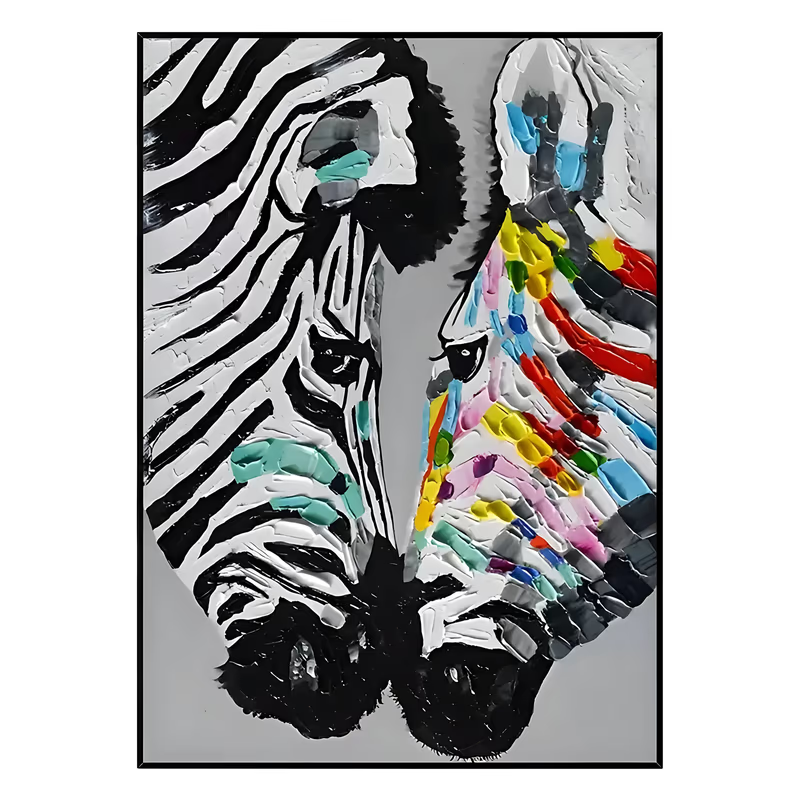
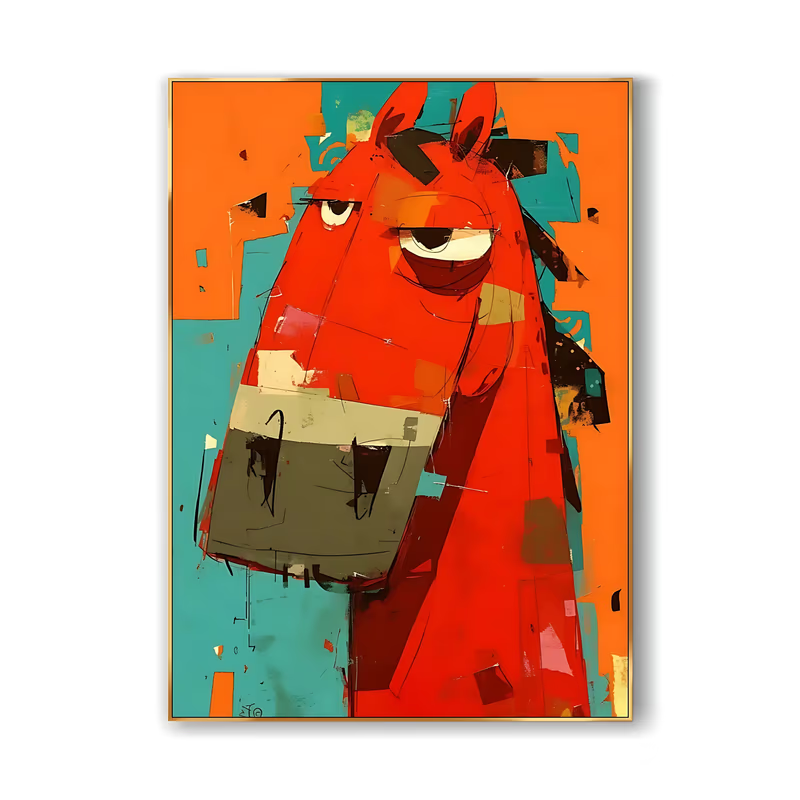
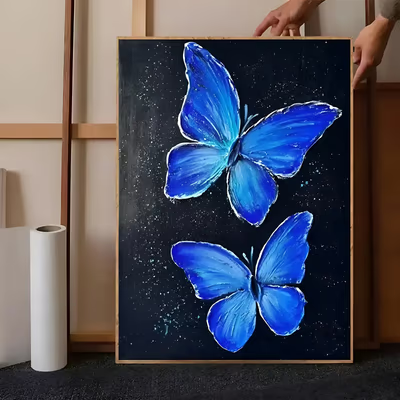
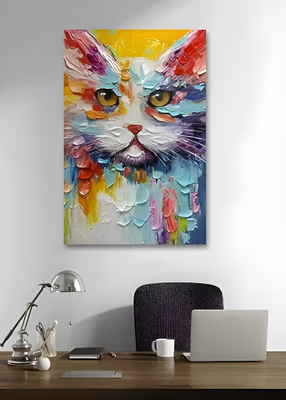
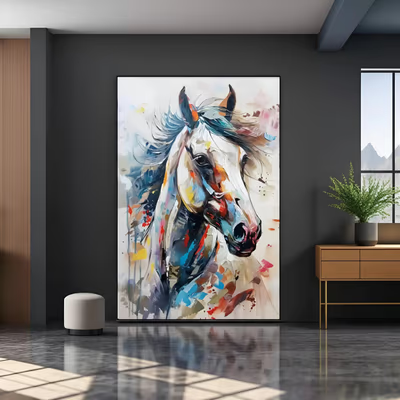
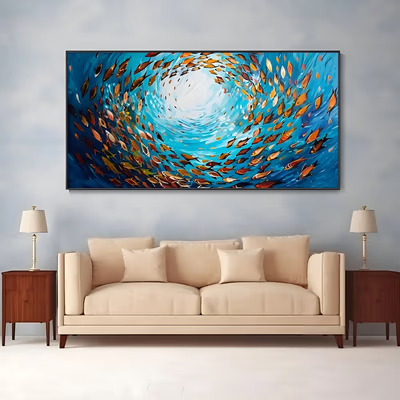
Knife-stroke lions, elephants, zebras and horses in rainbow colour, flamingos at sunset and cartoon cats and dogs. Joyful and graphic, they lift family rooms, restaurants, cafés and children's spaces.
Sculpted animal relief
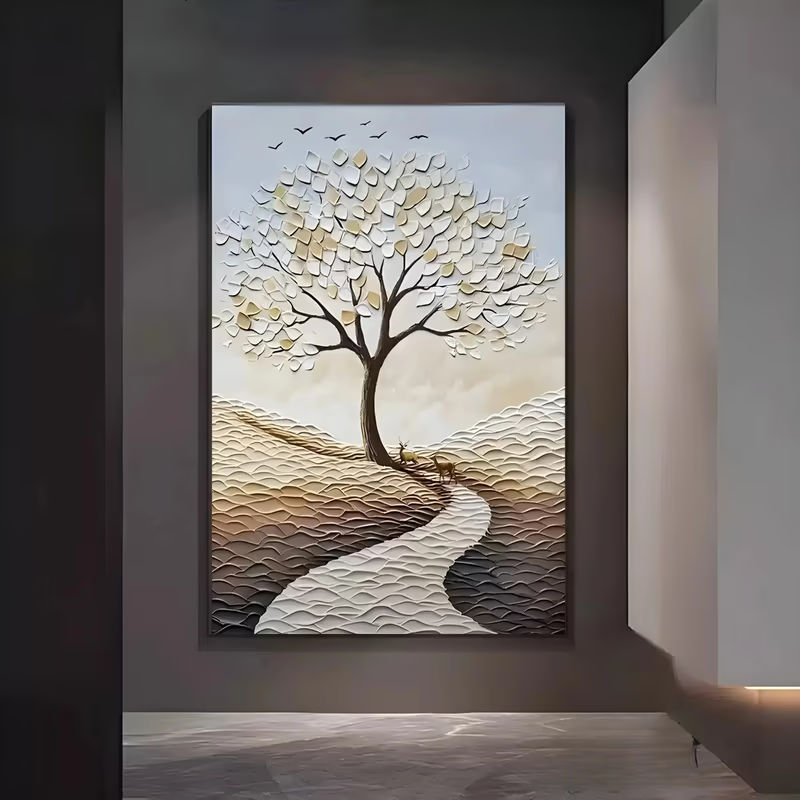
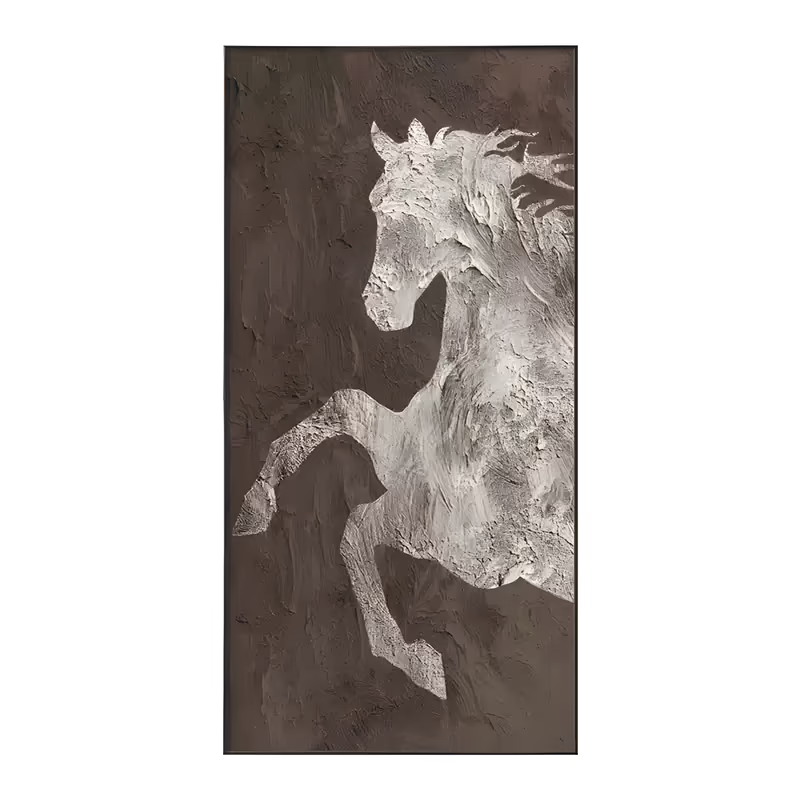
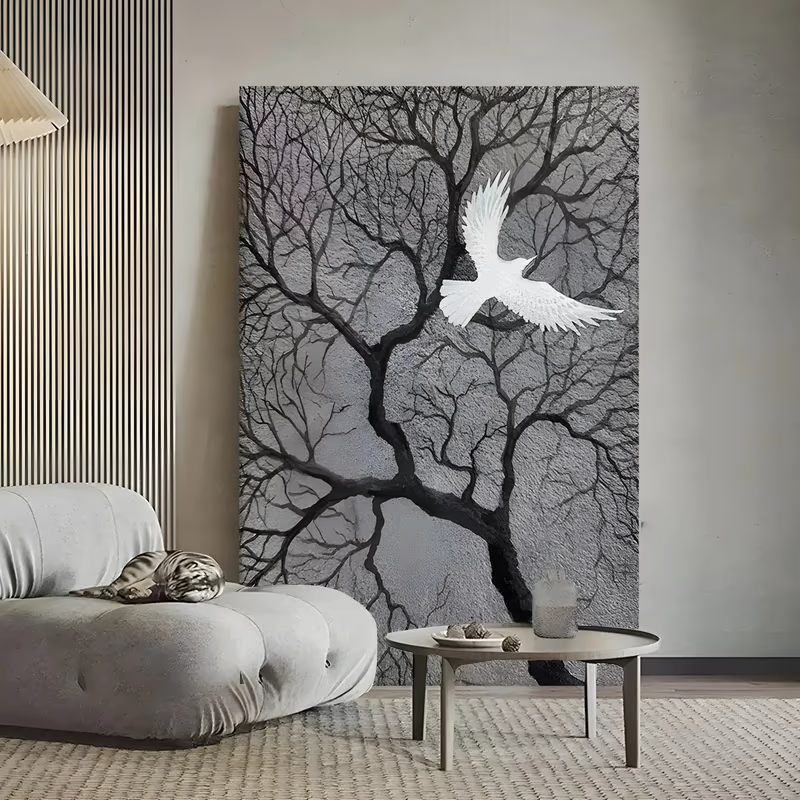
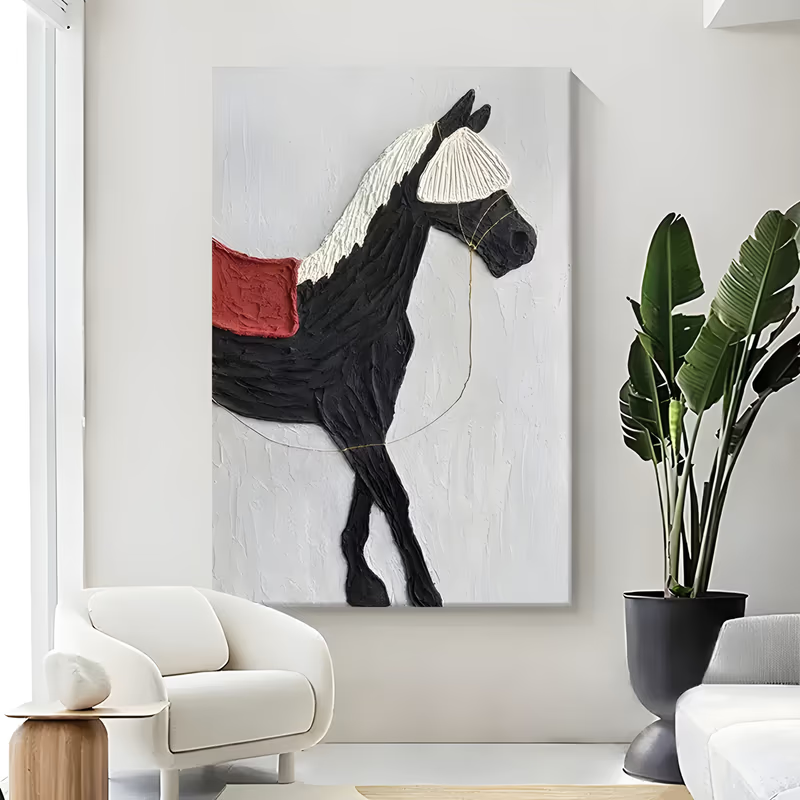
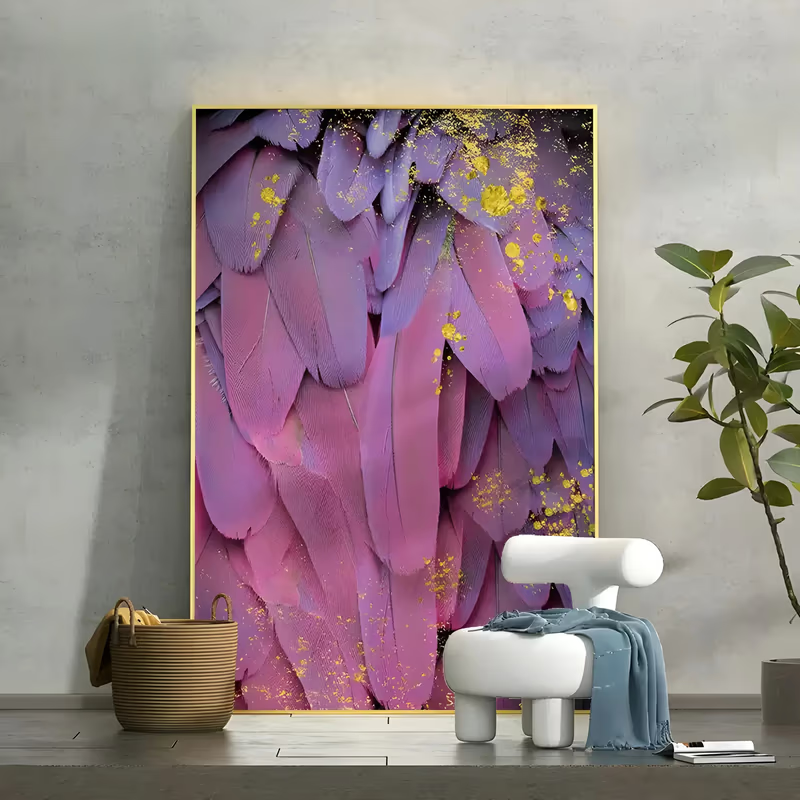
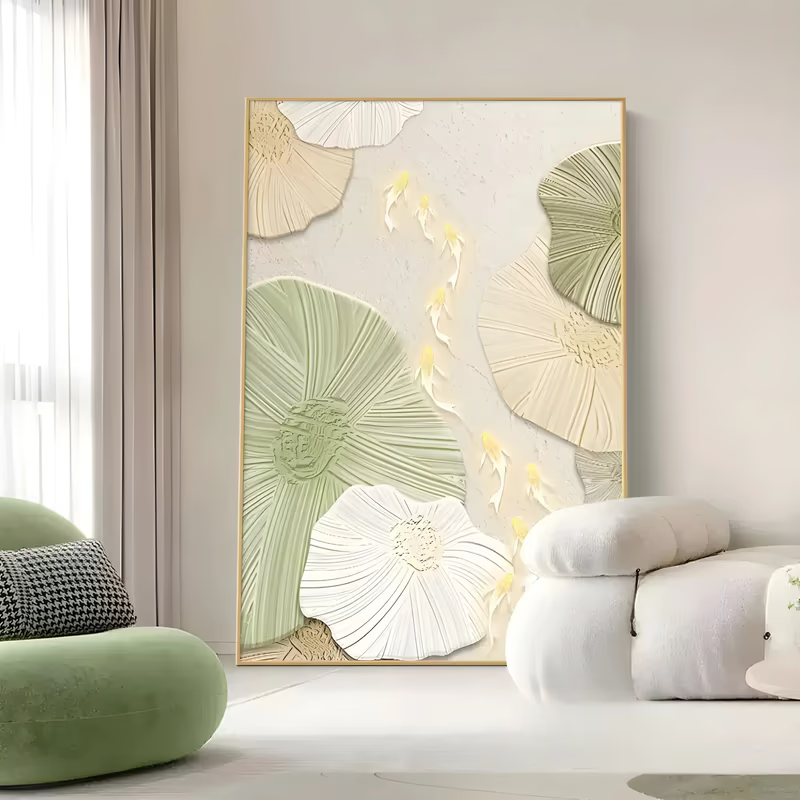
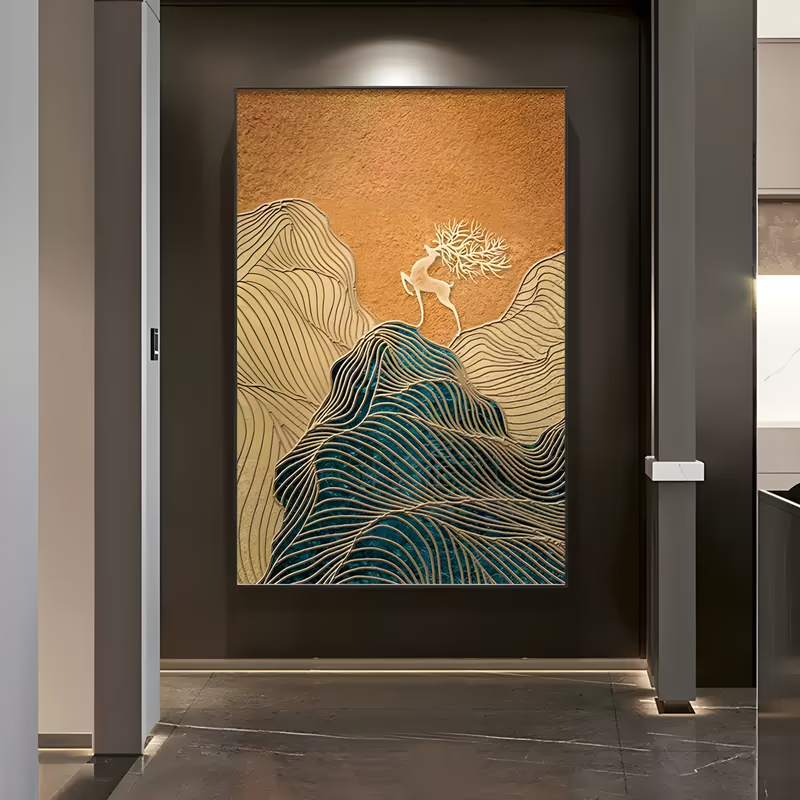
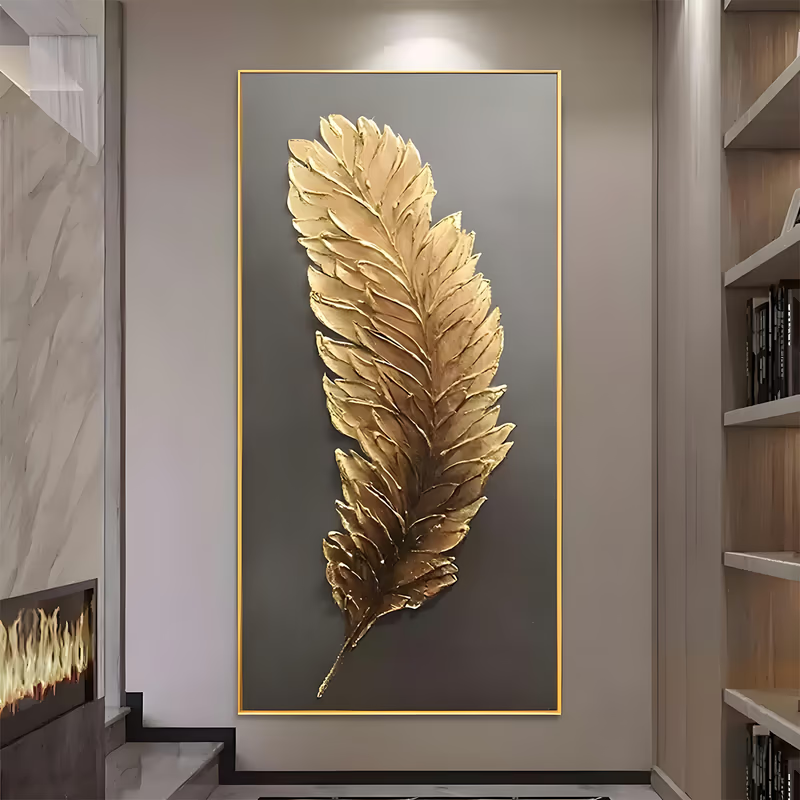
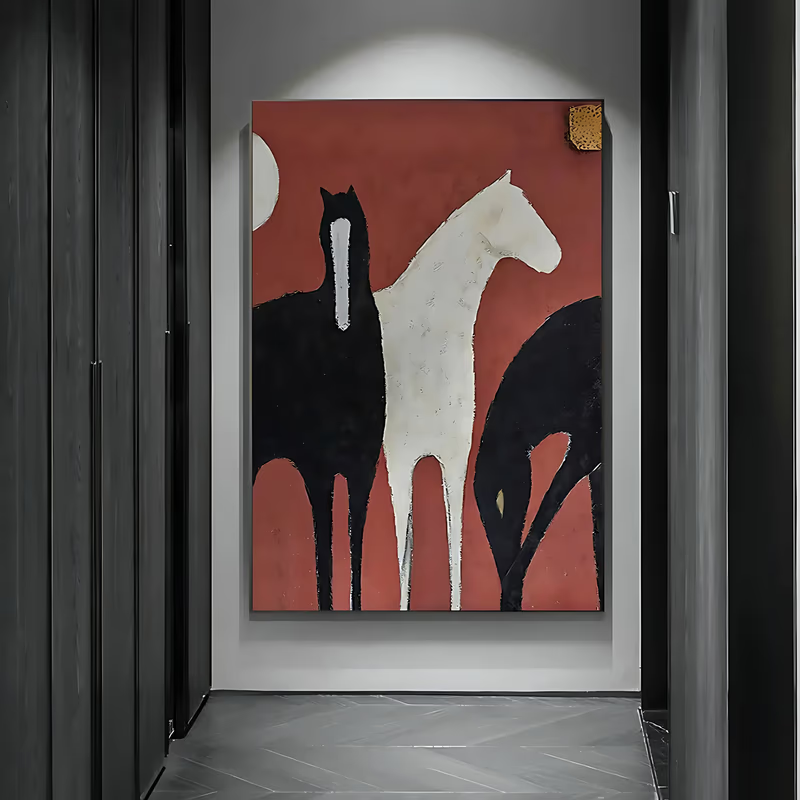
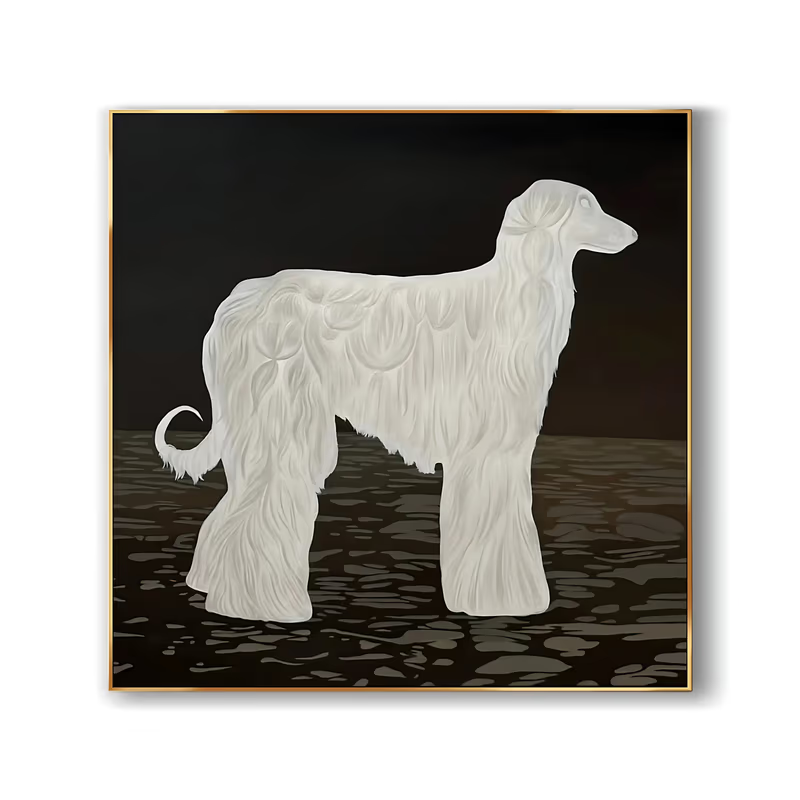
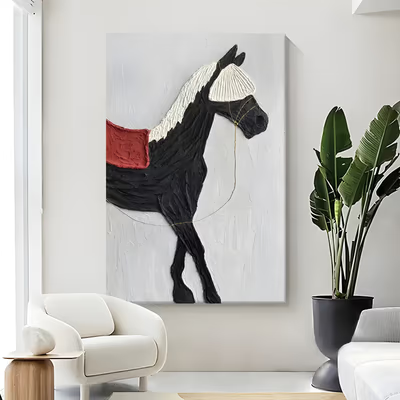
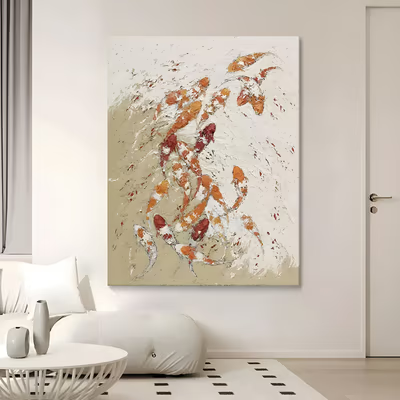
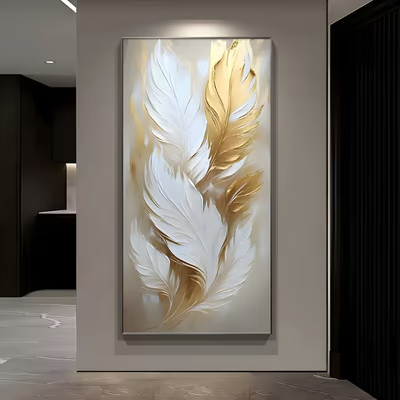
A rearing white plaster horse on dark brown, koi with raised fins, gold feathers on graphite, a white stag on contoured hills. Sculpted relief turns the animal into an object on the wall and suits modern lobbies and minimal interiors. More in textured art.
Minimal and wabi-sabi animals
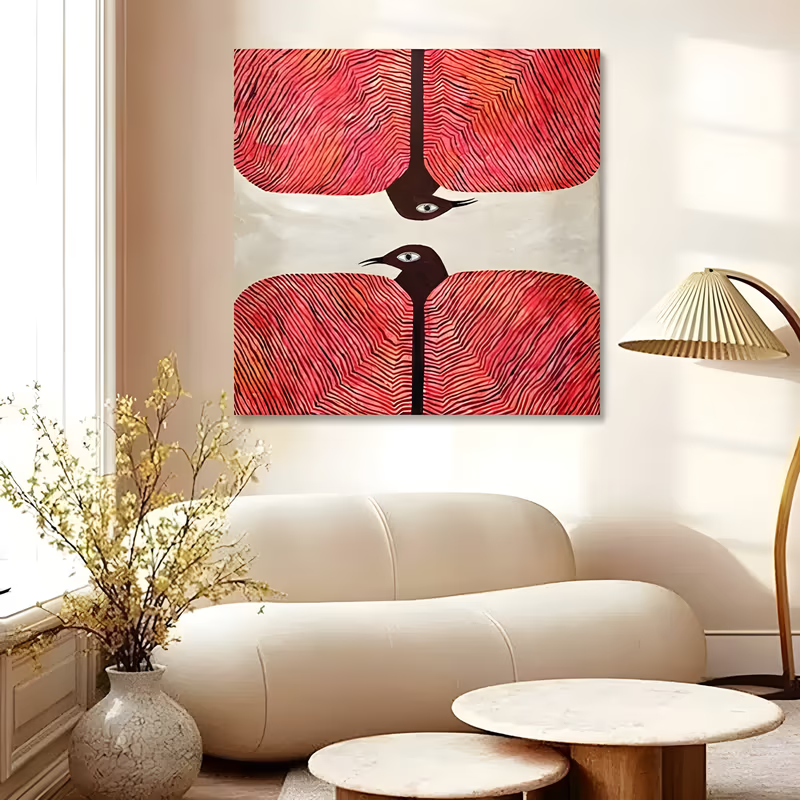
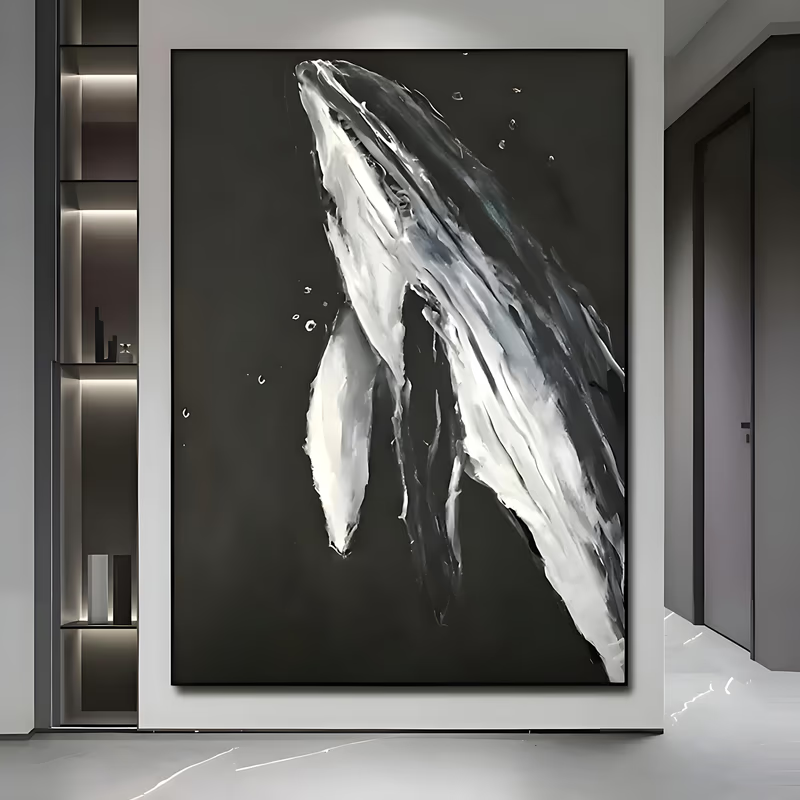
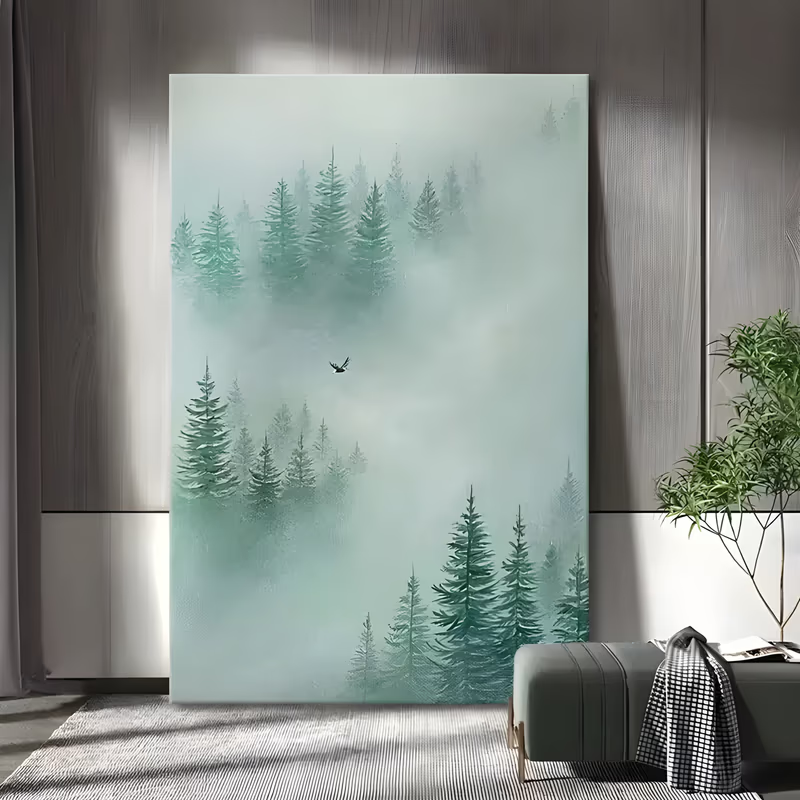
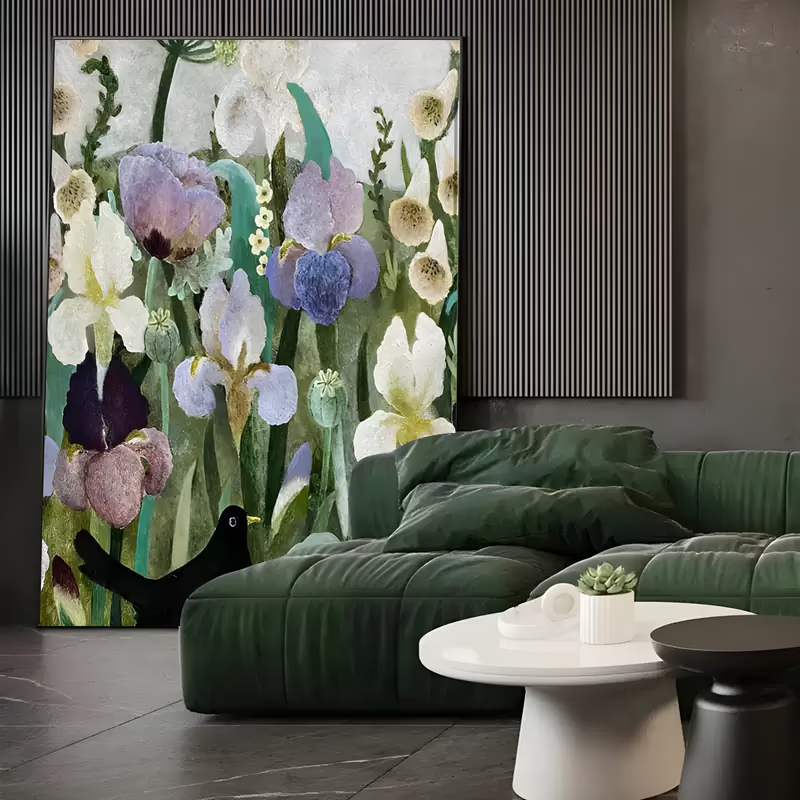
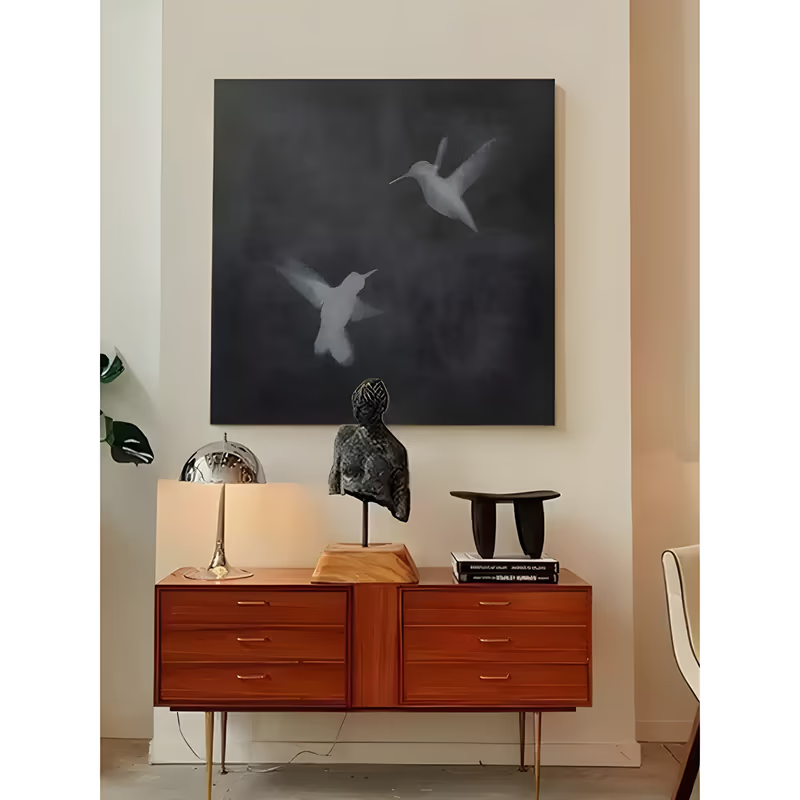
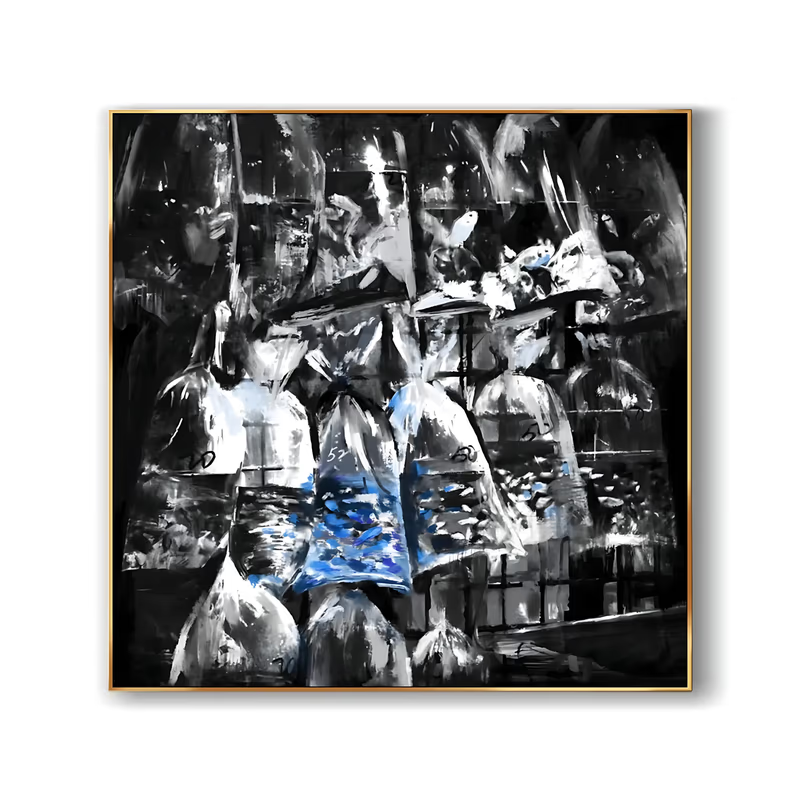
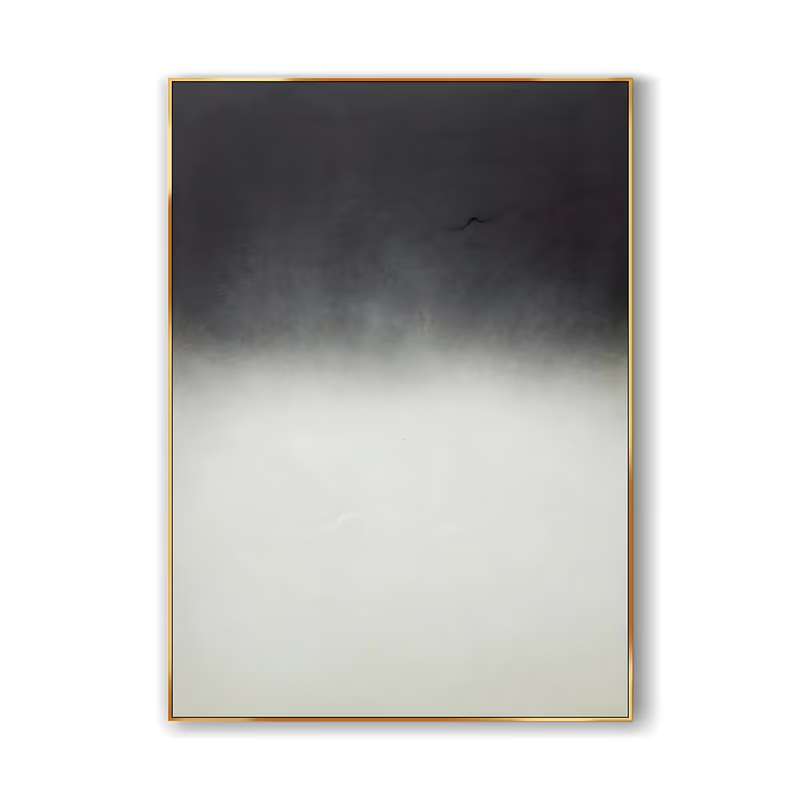
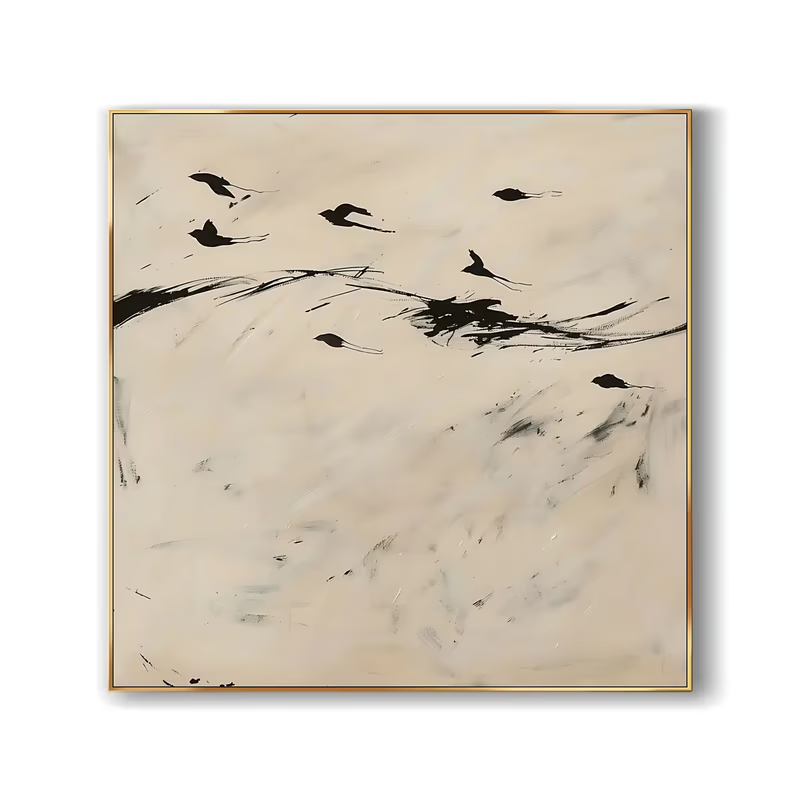
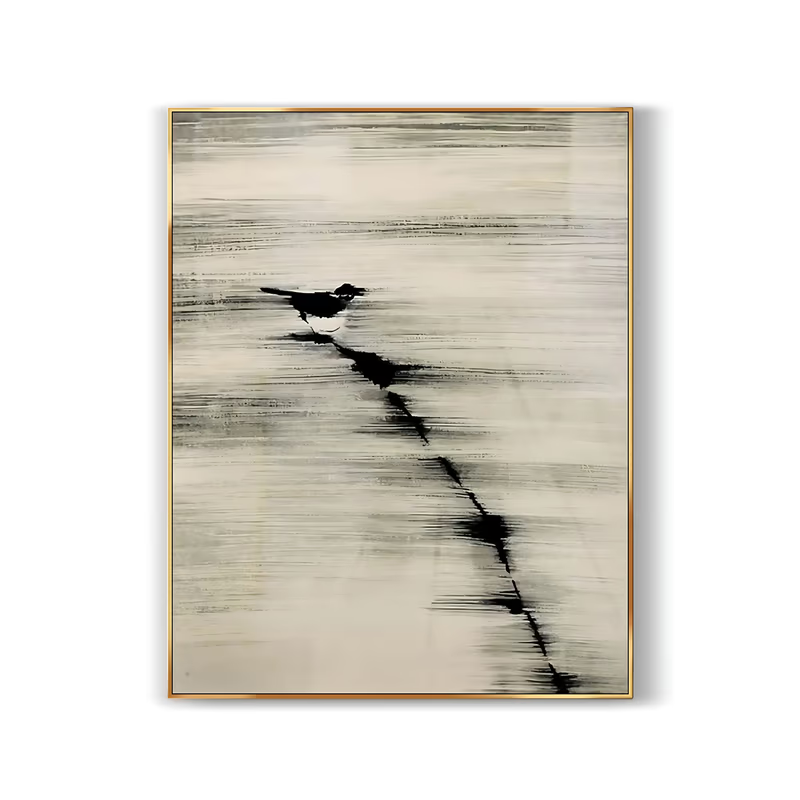
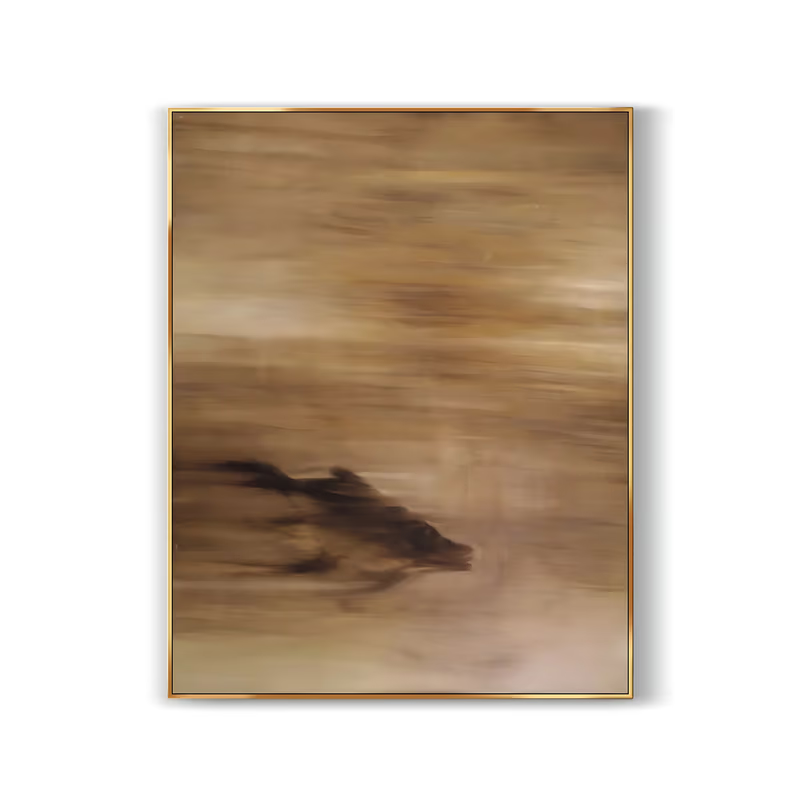
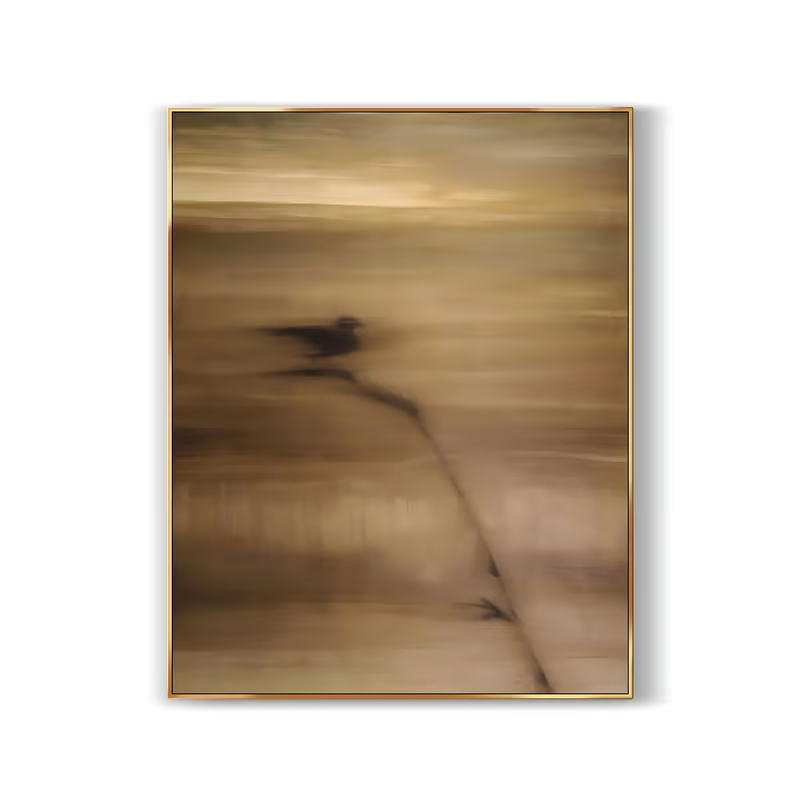
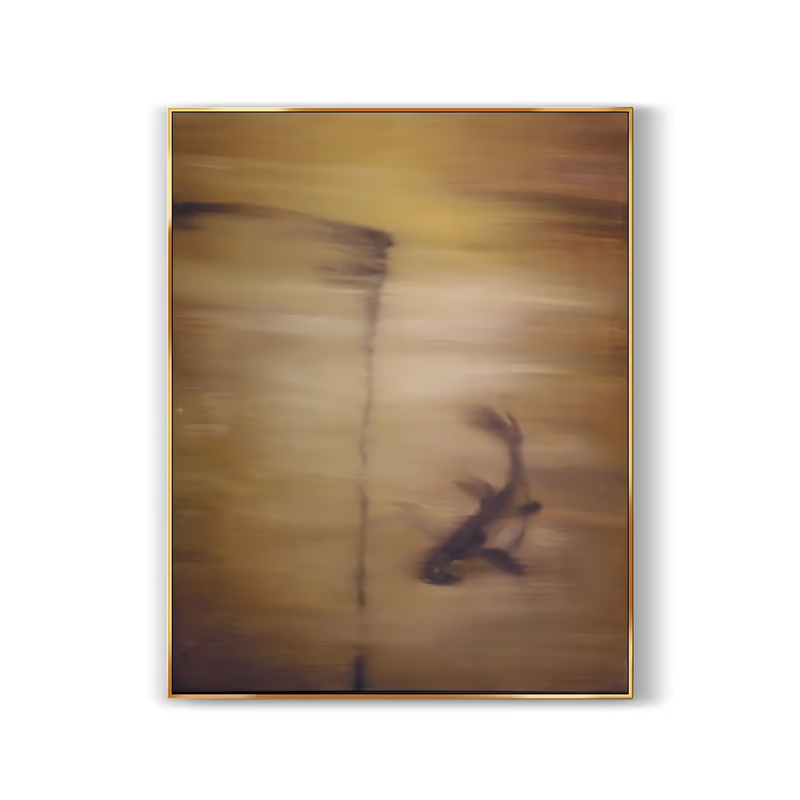
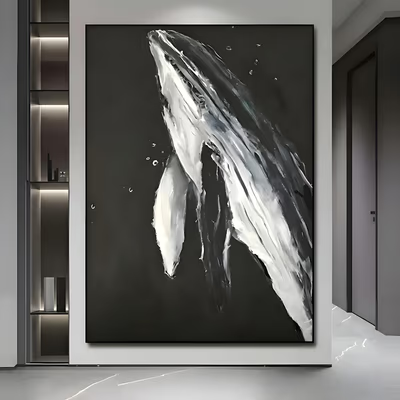
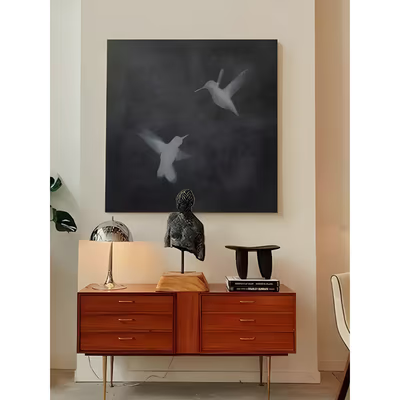
A flock of ink-black birds on cream, a blurred fish in sepia haze, two pale hummingbirds on charcoal, a white whale rising from black. Few strokes, quiet colour and lots of space: the most restful animal art, for bedrooms, spas and Japandi rooms.
Where does animal wall art work best?
Animal wall art works best where a room needs a personality: the main living-room wall, a study, a dining room or bar, an entrance hall and a hotel lobby.
Living room
A horse, an elephant or a pair of peacocks over the sofa becomes the conversation piece. Animal art for living rooms.
Study and home office
Horses and big cats bring confidence to a desk wall; a quiet bird study suits a reading room. Animal art for home offices.
Entrance and hallway
A tall portrait of a horse or a crane greets visitors and holds a narrow wall. Animal art for hallways.
Bedroom and children's rooms
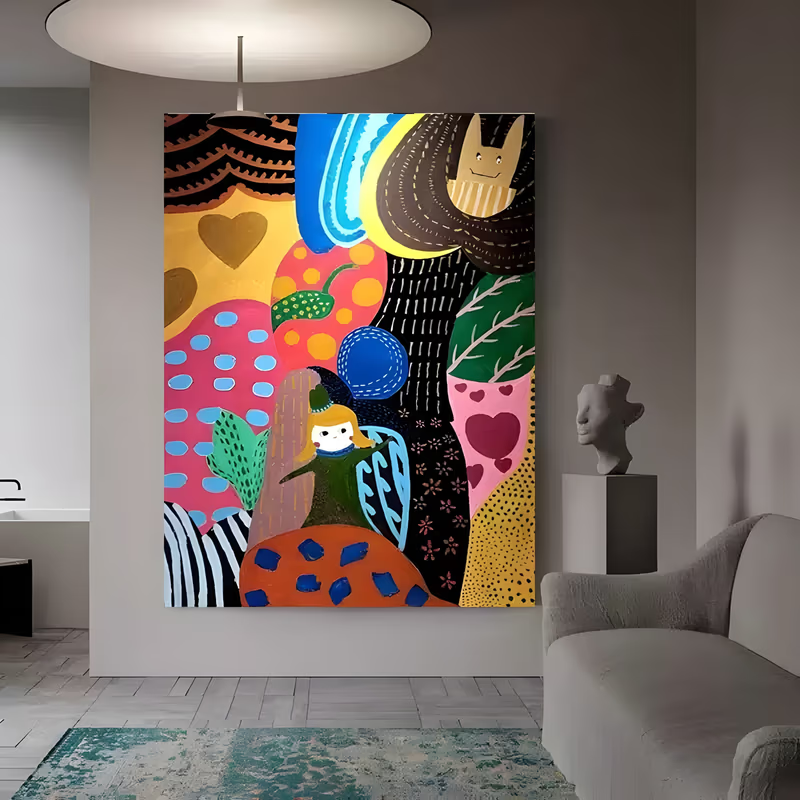
Birds, butterflies and soft-toned pets suit adults' bedrooms; playful knife-painted giraffes and cartoon dogs suit children. Animal art for bedrooms.
Restaurants, bars and lobbies
A leopard over a bar or a koi wall in a dining room is memorable and photographs well. Animal art for hospitality, and the restaurant and bar buyer page.
Which way should an animal painting face?
Hang an animal painting so the animal looks or moves toward the centre of the room, or toward the people entering it, never straight at a corner, a door or a window.
A gaze is a direction, and the viewer follows it. A horse facing into the room draws people toward the seating; the same horse hung facing the doorway seems to be leaving. On either side of a bed, fireplace or console, a pair works best when the animals turn toward each other, as two cranes or two horses do, framing the space between them. A running animal needs room ahead of it: hang it where the empty wall lies in front of the movement, not behind it. In a corridor, animals walking in the direction people walk make the route feel easier. When a composition faces the wrong way for your wall, the painting can be mirrored before it is painted.
How big should animal wall art be?
Paint the animal at life size or larger: a horse head or big cat portrait at 90–150 cm (35–59 in) tall reads as confident, while a small one looks like a souvenir.
Animal portraits are mostly vertical, which suits piers, alcoves and the wall beside a door. For a lobby or restaurant feature, an oversized horse or leopard can run 180 cm (71 in) or more and still feel natural, because people know the real size of the animal and accept it. Small creatures behave differently: birds, butterflies and fish look best in groups or in a wide canvas with plenty of open ground around them. Over furniture, keep the usual rule of about two-thirds of the width and 15–25 cm (6–10 in) of clearance. Pairs and trios of related animals, varied but in one palette, are the easiest way to fill a long wall. See vertical animal art or square pieces.
How is an animal painting made to order and approved?
You choose the animal and the size, the colours are adjusted to your scheme, and each stage is shown to you for approval before the painter continues.
Any catalogue piece can be painted in another colourway: a chestnut horse on teal can become a black horse on stone grey, a pink elephant can turn sage. The direction the animal faces can be reversed, and the background darkened or lightened for your walls. Progress photos or video arrive at each stage, nothing moves on without your approval, and you approve a final photograph of the finished animal before it is packed. It travels rolled, stretched ready to hang, or framed in gold, silver, black, white or wood. An original from your own reference, such as a photograph of a horse, can be discussed as a commission. Request a quote.