
Seascape guide · Updated
How to choose a seascape painting for your room
Key takeaways
- Choose the sea state first: still water and soft horizons rest a room; rolling swell keeps it lively; breaking surf and storms make a statement.
- Match the view to the wall: a low, wide horizon opens a long wall; an aerial beach or a tall wave fits a narrow pier or a corridor.
- Keep coastal from turning themed: one strong painting and a palette taken from it outperform anchors, shells and striped cushions.
- Set the horizon near eye level: hang so the painted sea line sits roughly where a seated or standing viewer looks, and the canvas reads like a window.
What sets a seascape painting apart from other ocean wall art?
A seascape painting makes the sea itself the subject, so its job is to carry light, weather and distance into a room rather than to tell a story or decorate a beach theme.
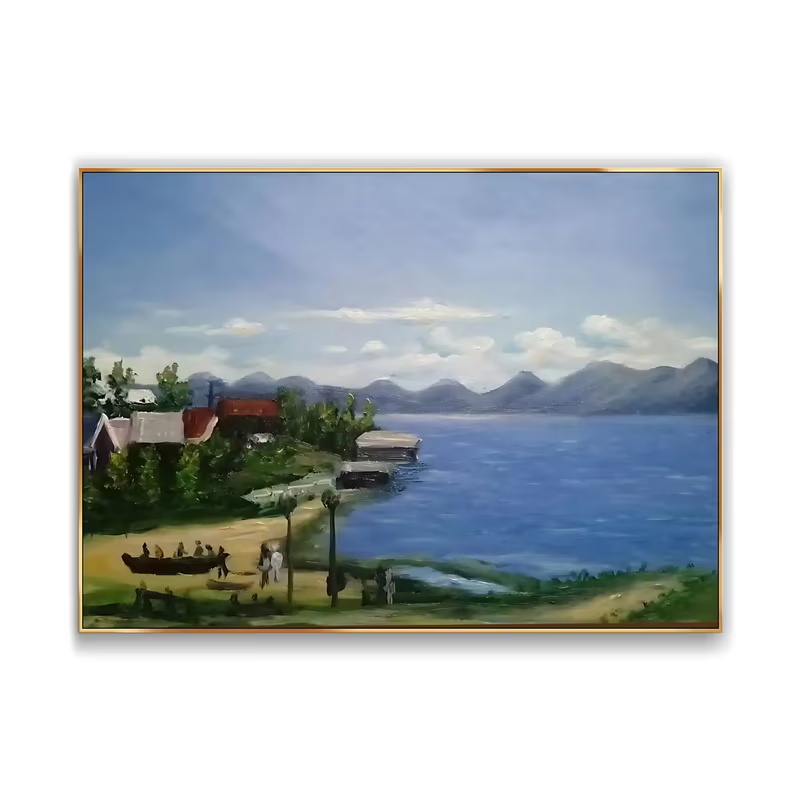
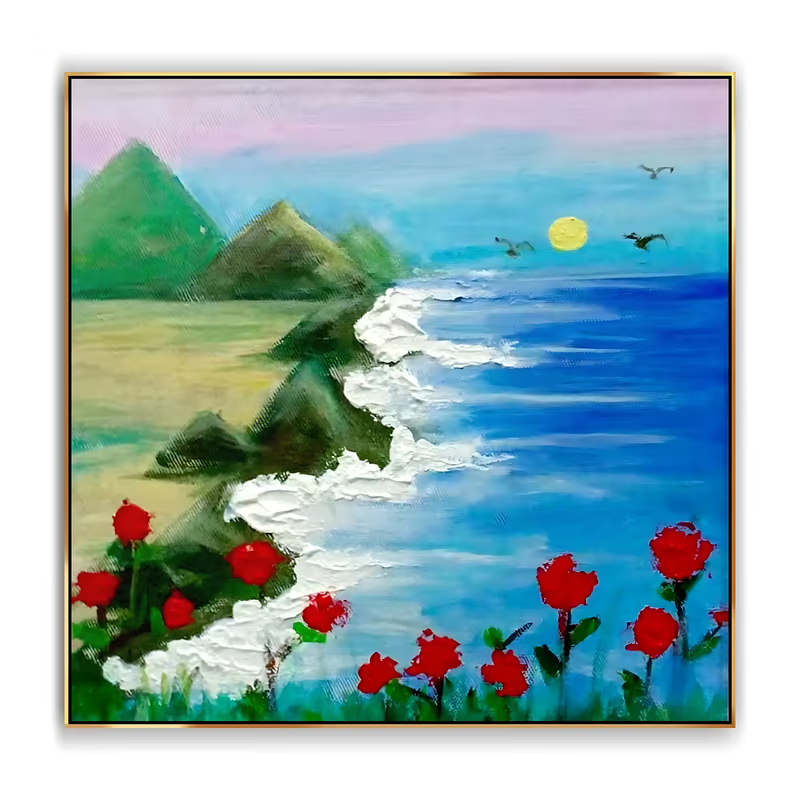
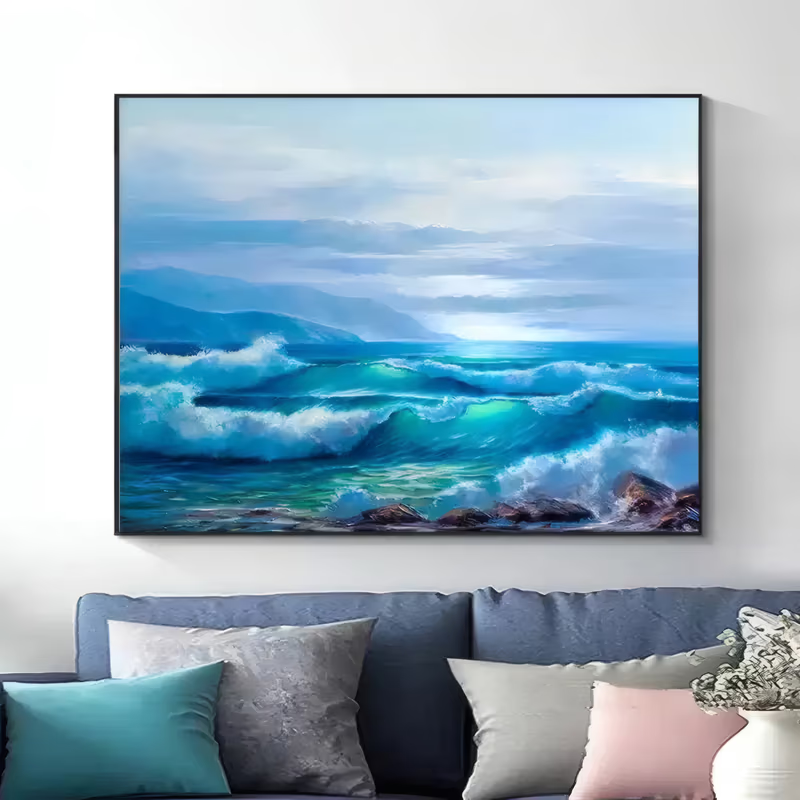
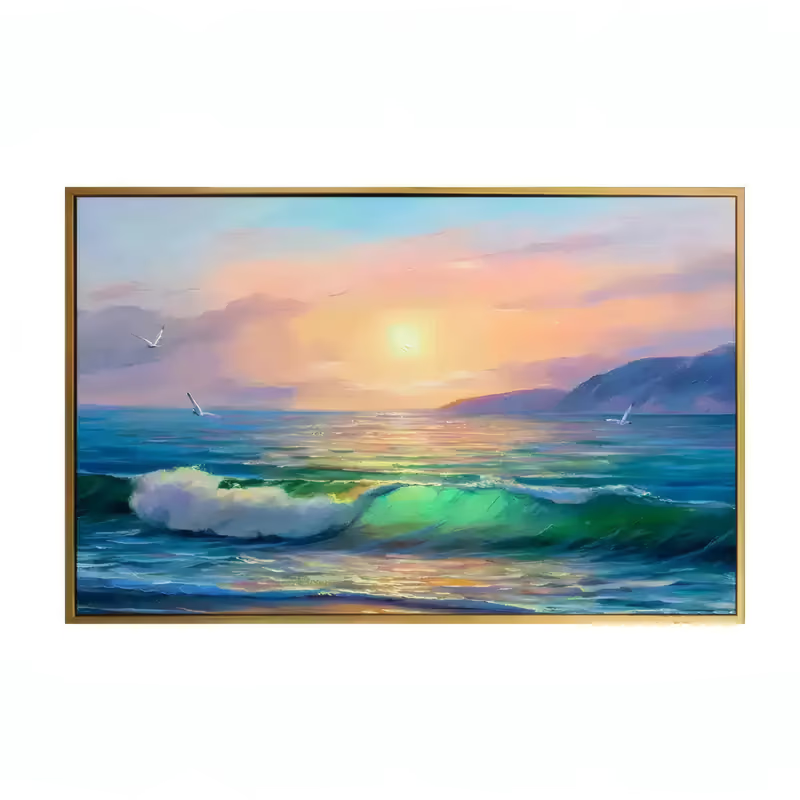
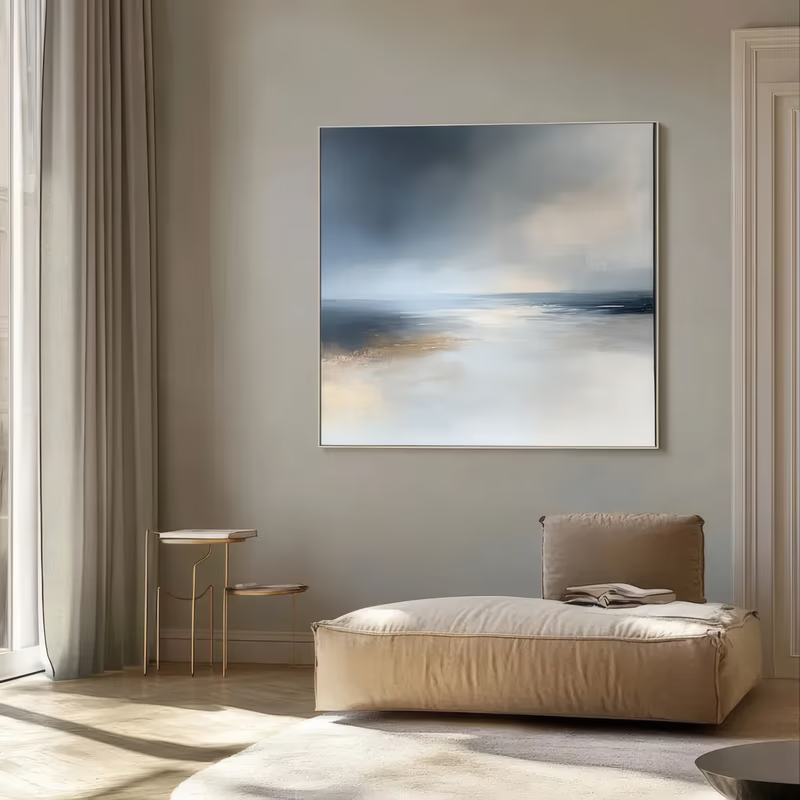
Art historians separate the seascape from marine painting, where a ship and its voyage are the point, and from coastal decor, where the shoreline is a backdrop for props. In a true seascape the water, sky and light do the work. That is why a good one still reads in a city flat or a windowless meeting room: it gives the eye a long view and a horizon to rest on. Boats, figures, cliffs or a lighthouse can appear, but they stay small against the water. The paintings here follow that idea, from sunlit open sea to close studies of a single breaking wave.
Calm sea or breaking waves: which seascape suits the mood of your room?
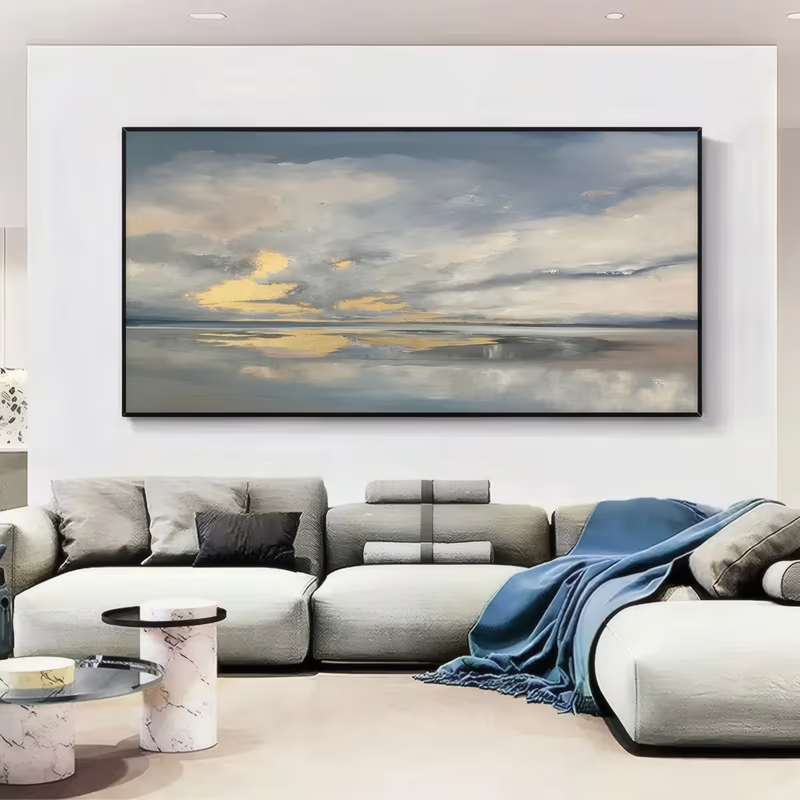
Pick still water for rooms where people rest, rolling swell for everyday living spaces, and breaking surf or storm light for walls that should hold attention.
| Sea in the painting | What it does to a room | Where it works |
|---|---|---|
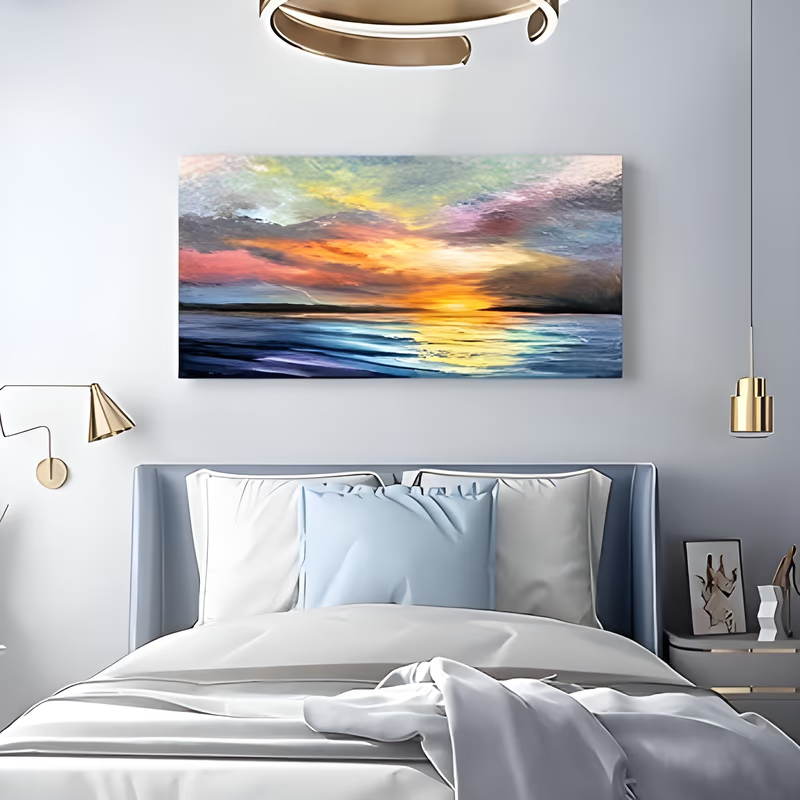
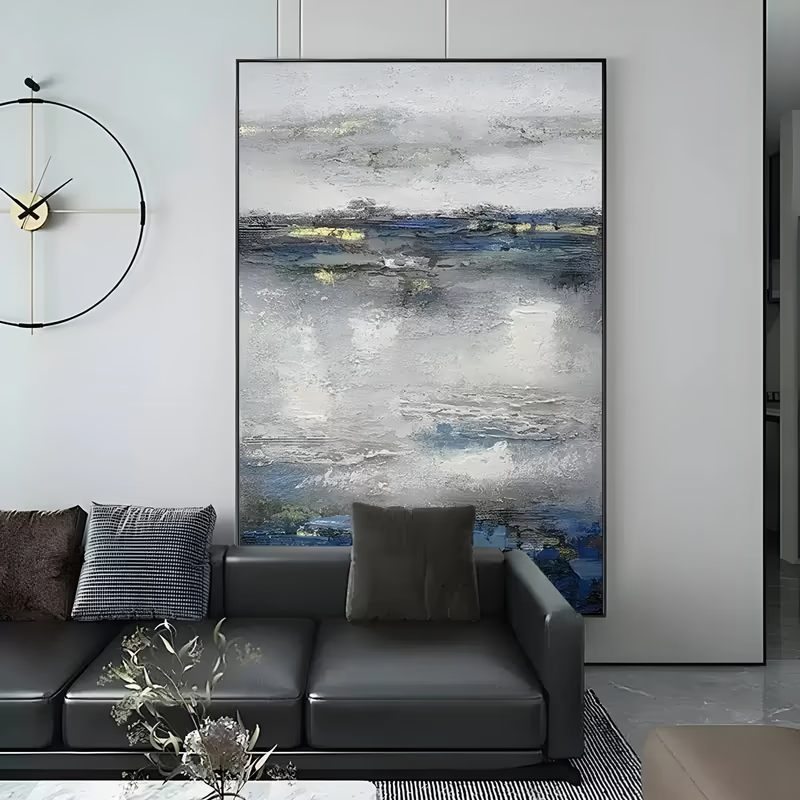
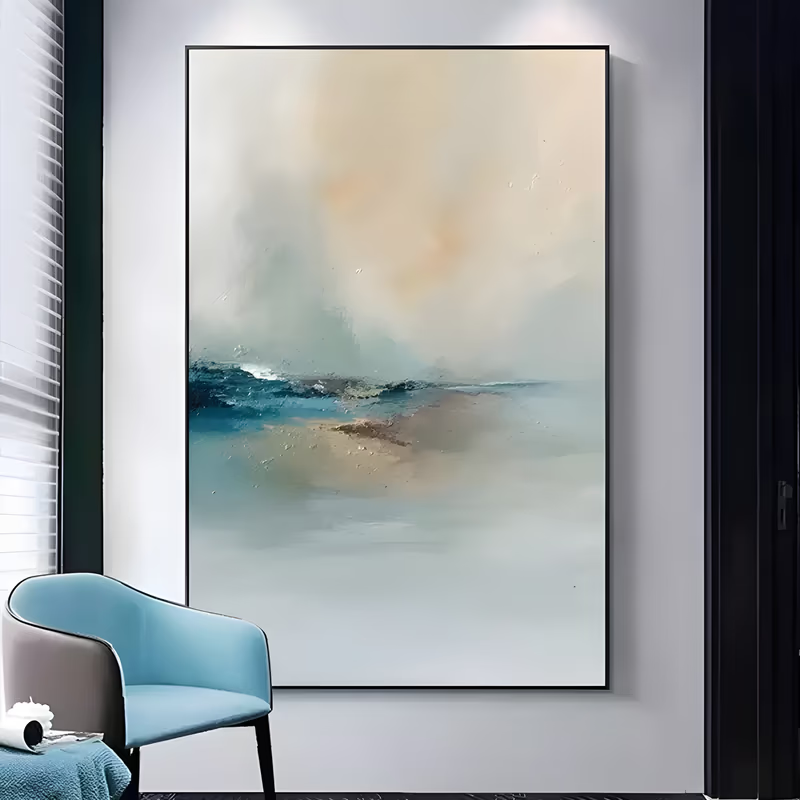
| Still water, mist, a low sun on the horizon | Slows the eye; almost meditative; recedes into the wall | Bedrooms, guest rooms, spa treatment rooms, bathrooms |
| Gentle swell and long shoreline | Soft movement without tension; easy to live with every day | Living rooms, hotel corridors, reception seating |
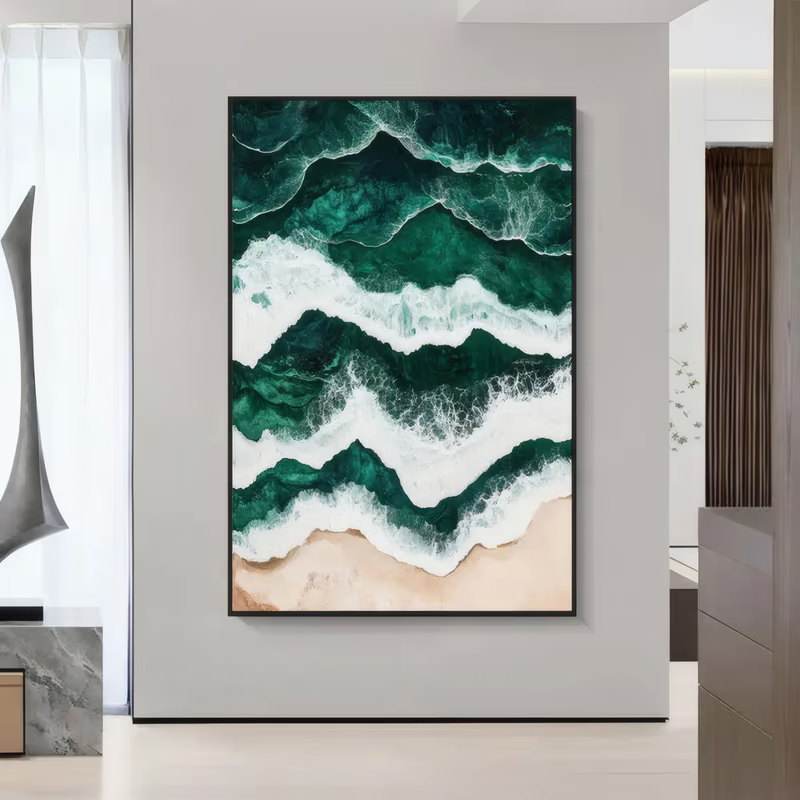
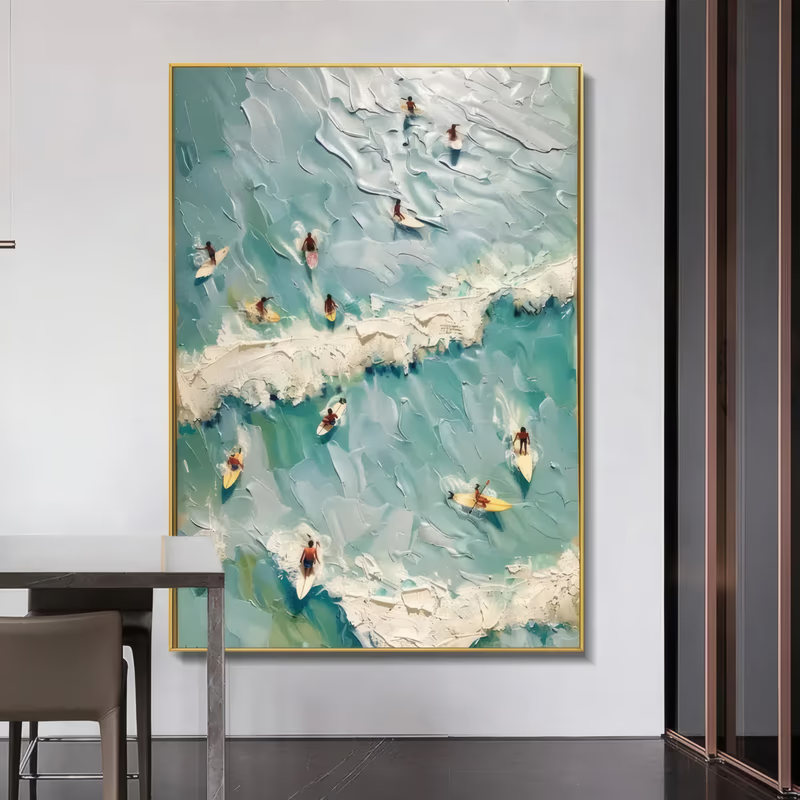
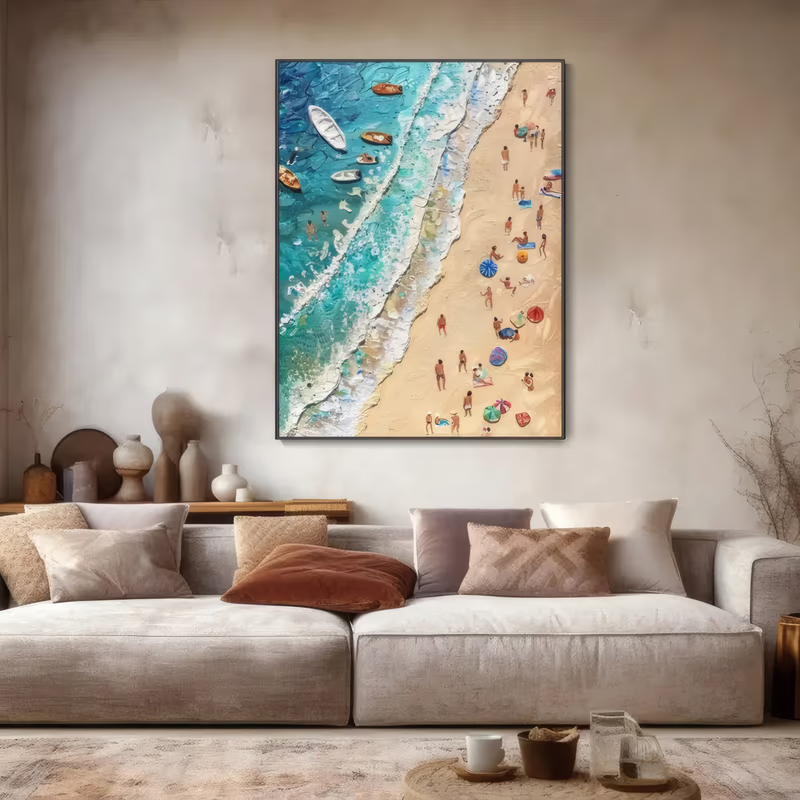
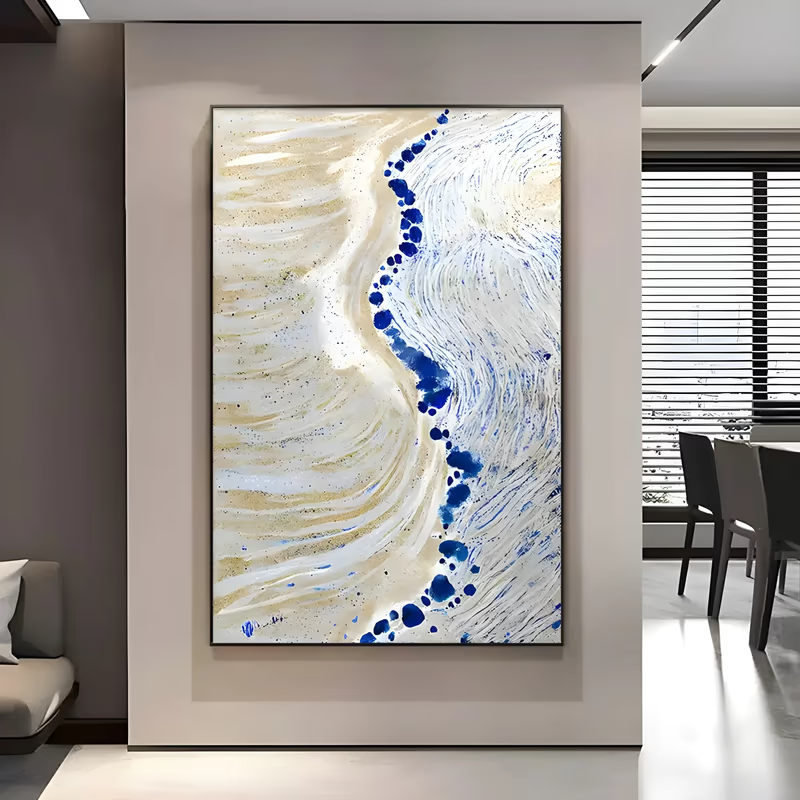
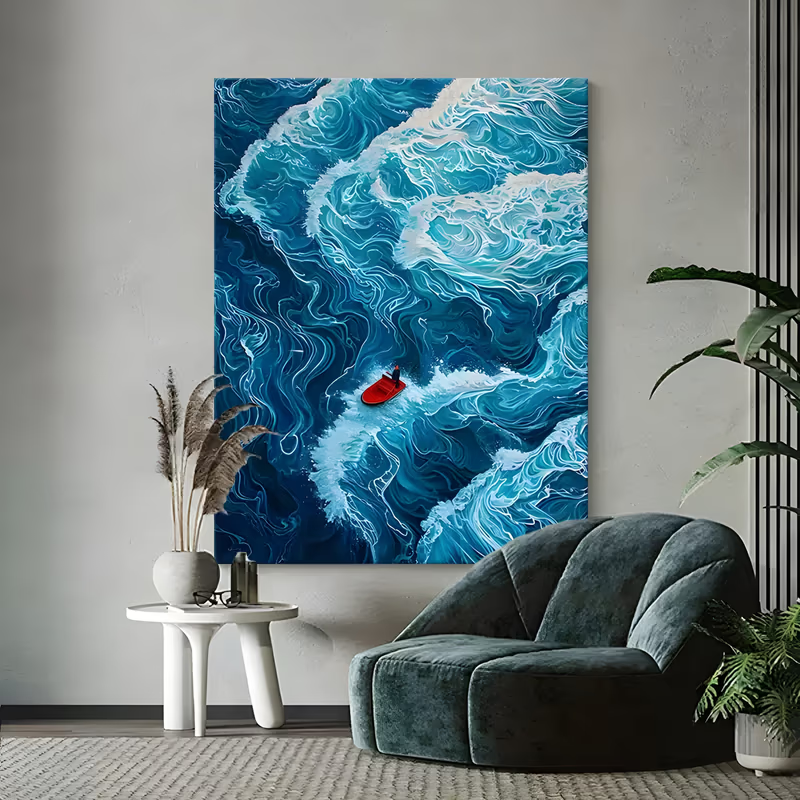
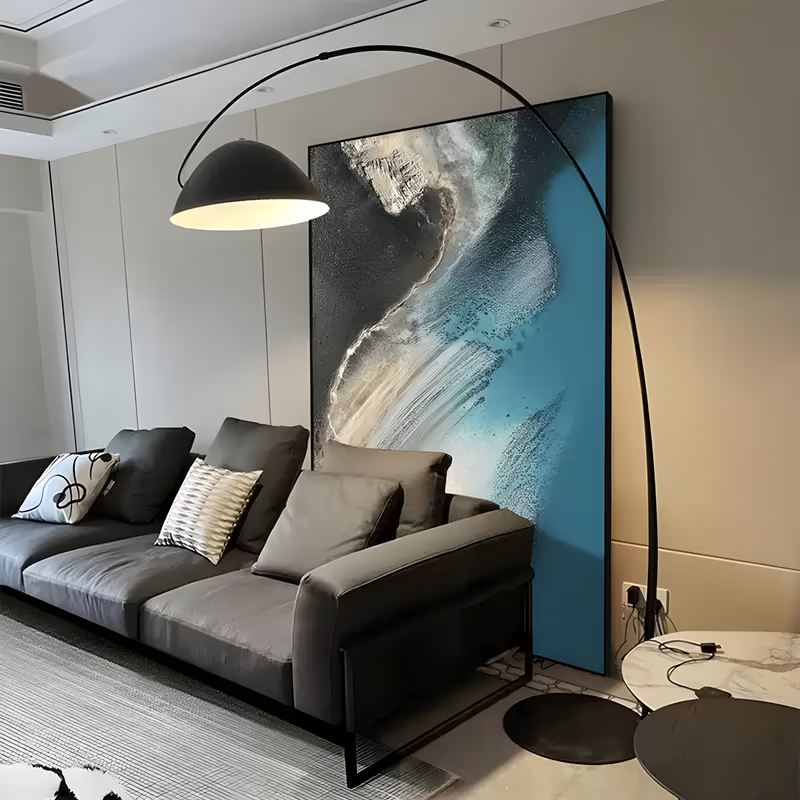
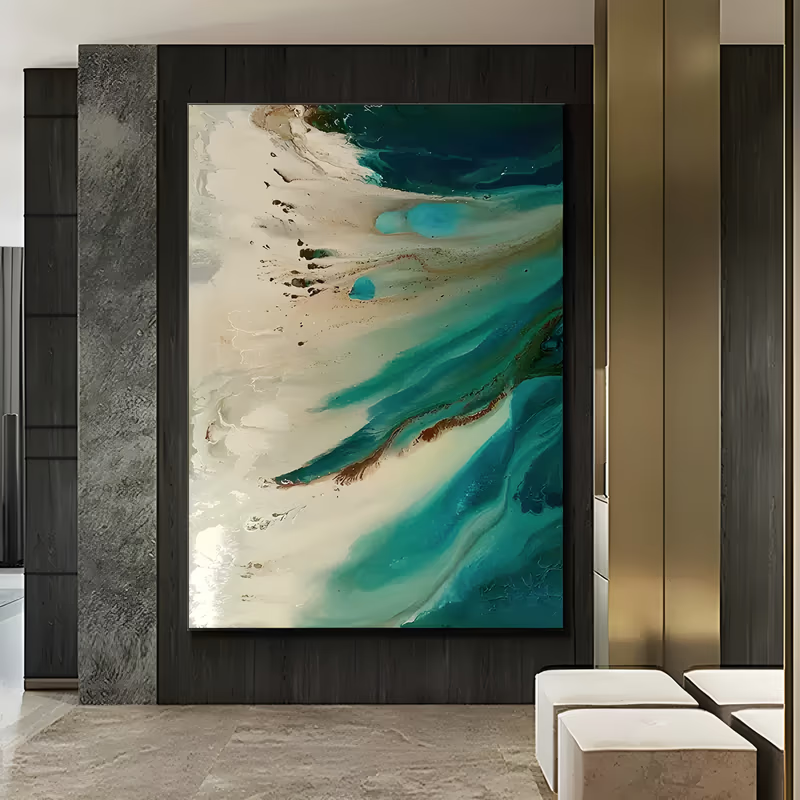
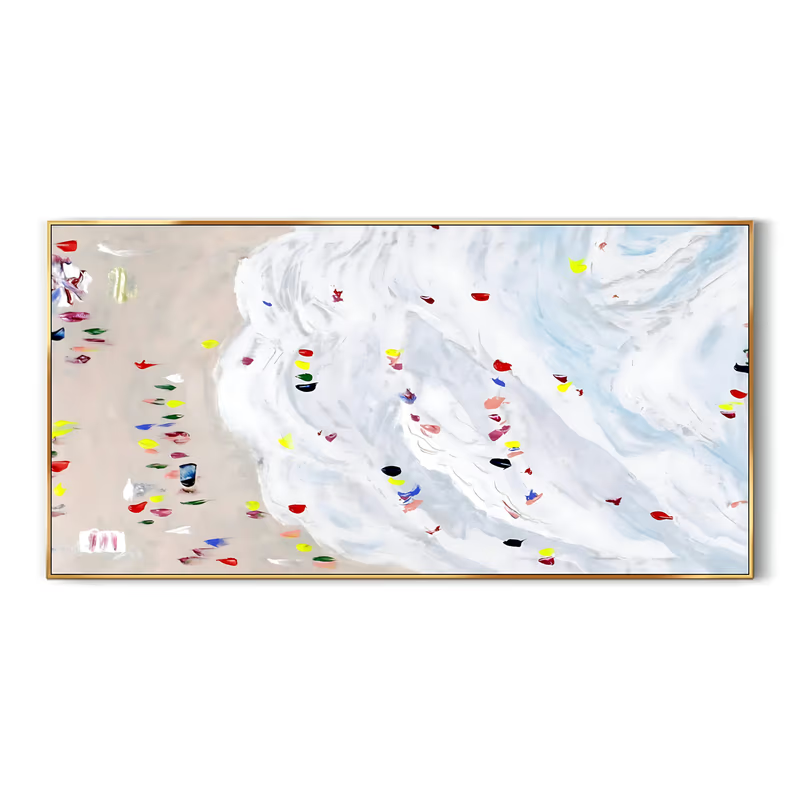
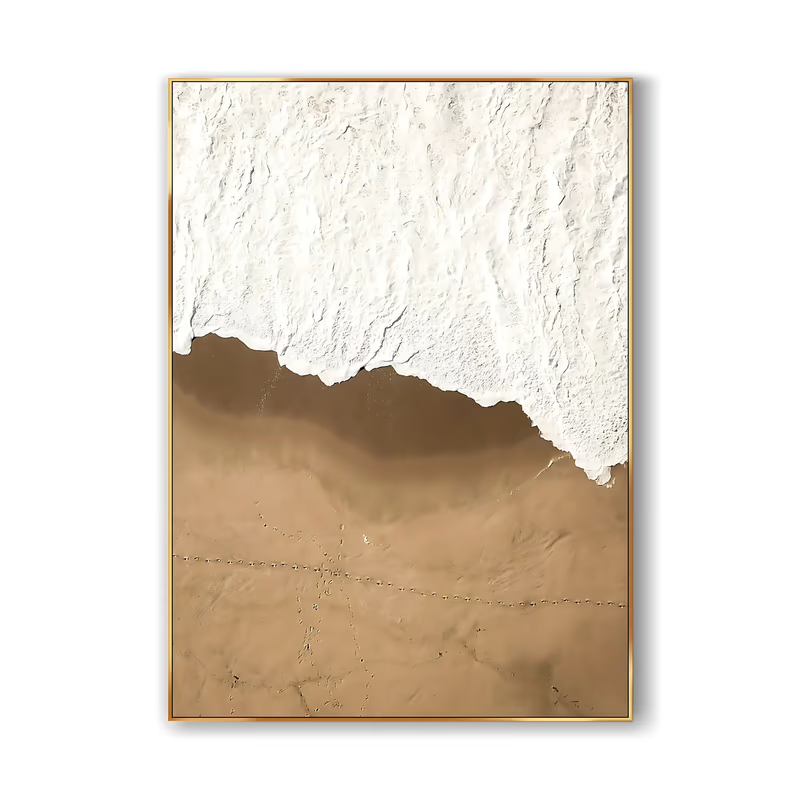
| Aerial beach, surf seen from above | Graphic and modern; reads as pattern up close and as a beach from across the room | Entrances, stairwells, bathrooms, beach-club bars |
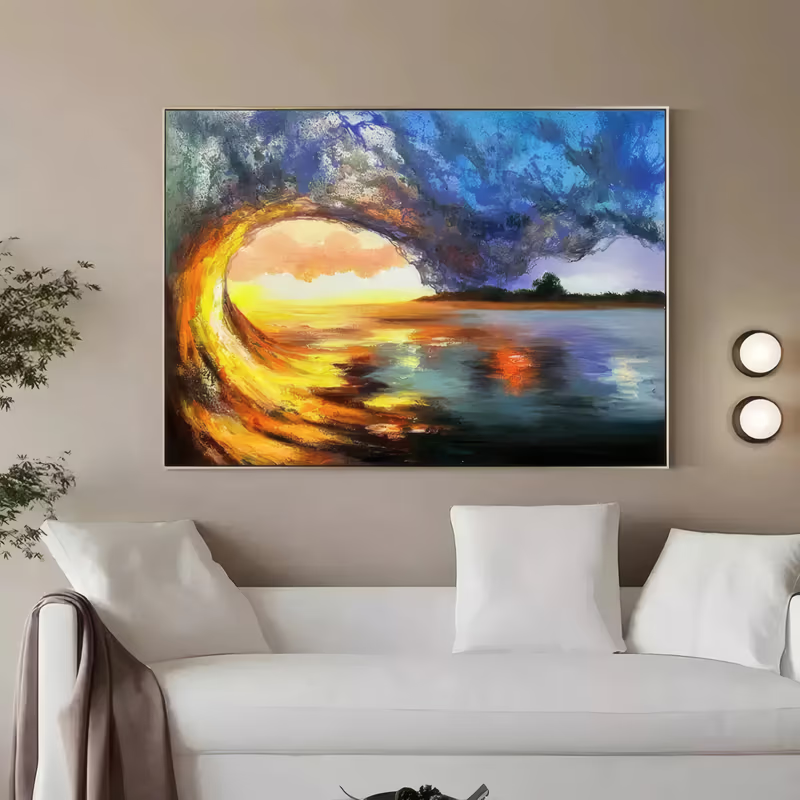
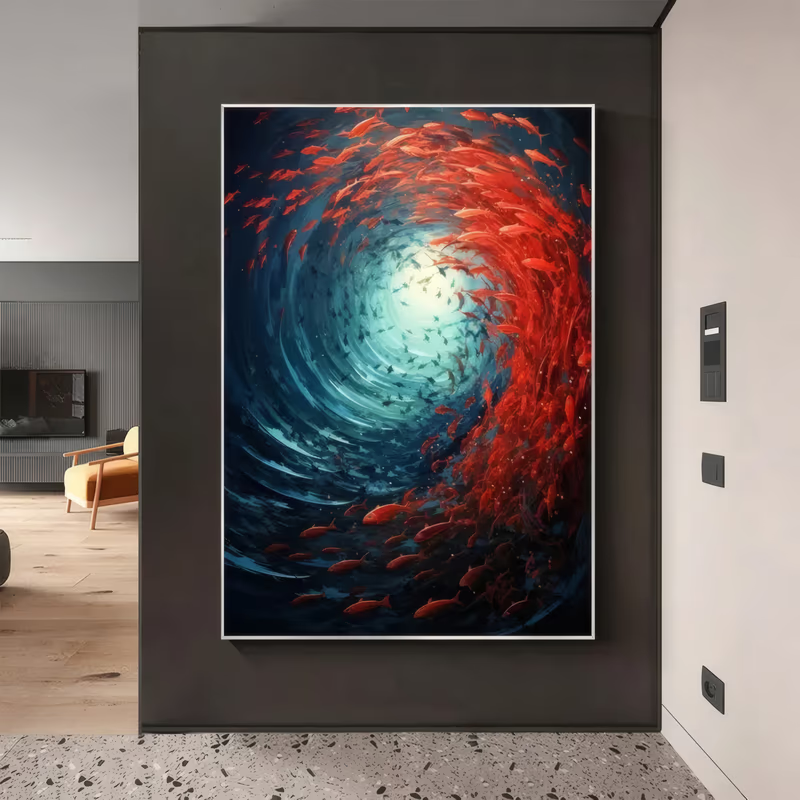
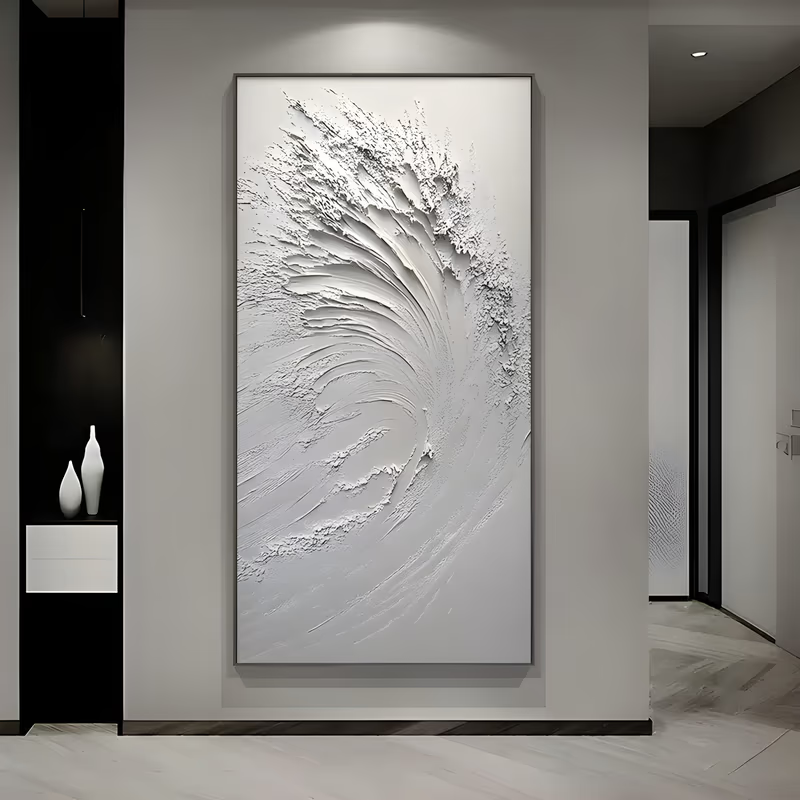
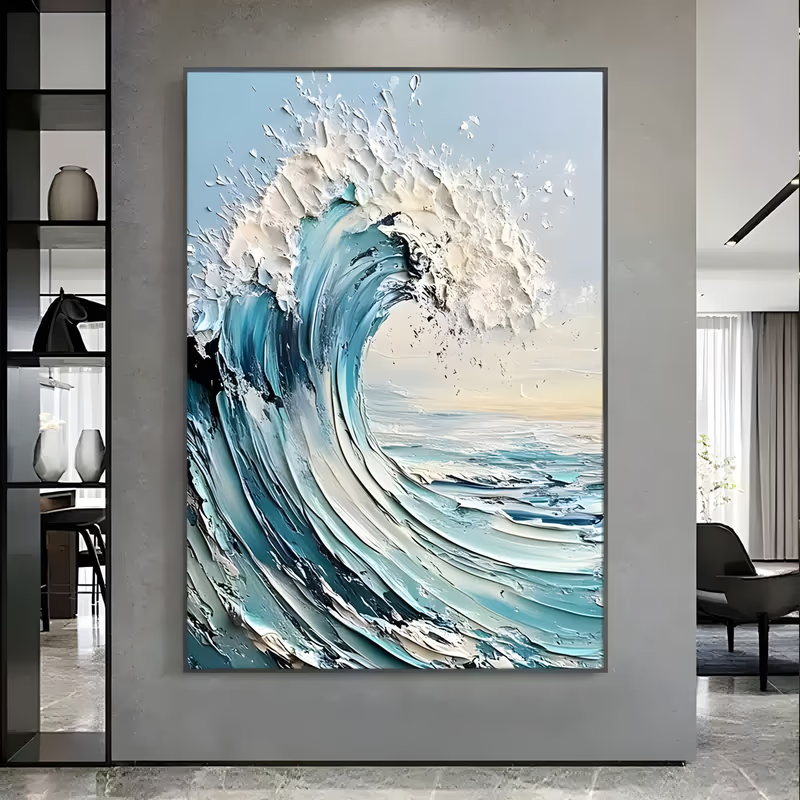
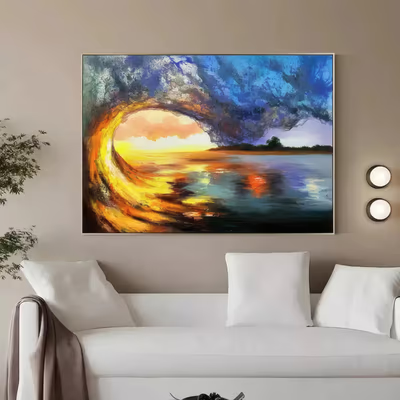
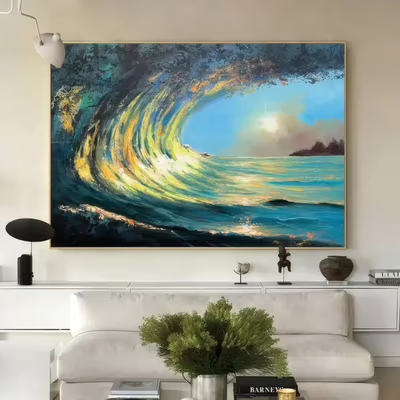
| Breaking wave or curling barrel | Energy and drama; a single focal point | Lobbies, restaurants, a feature wall in an open-plan room |
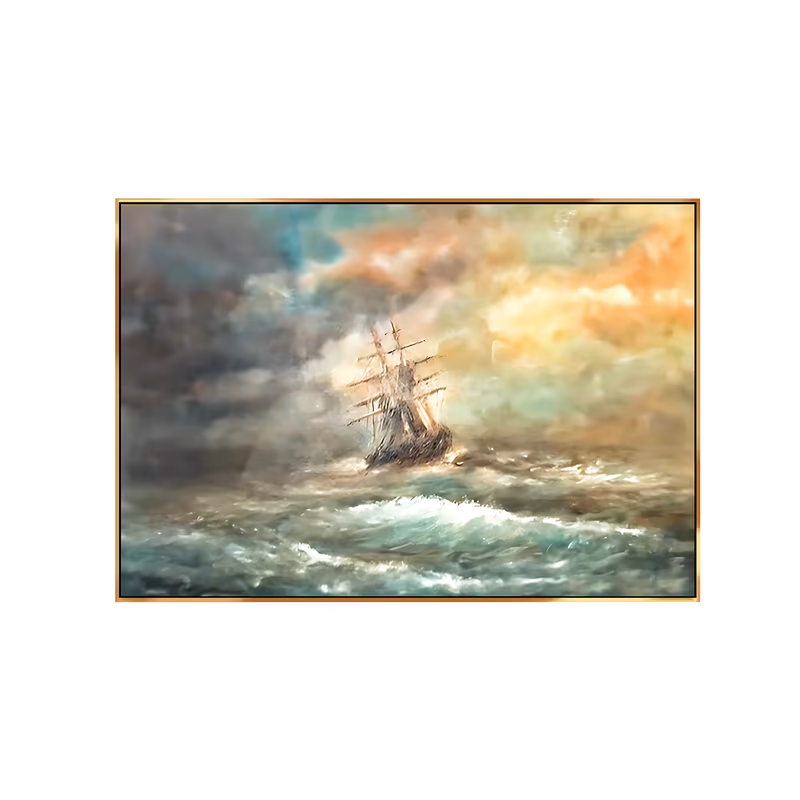
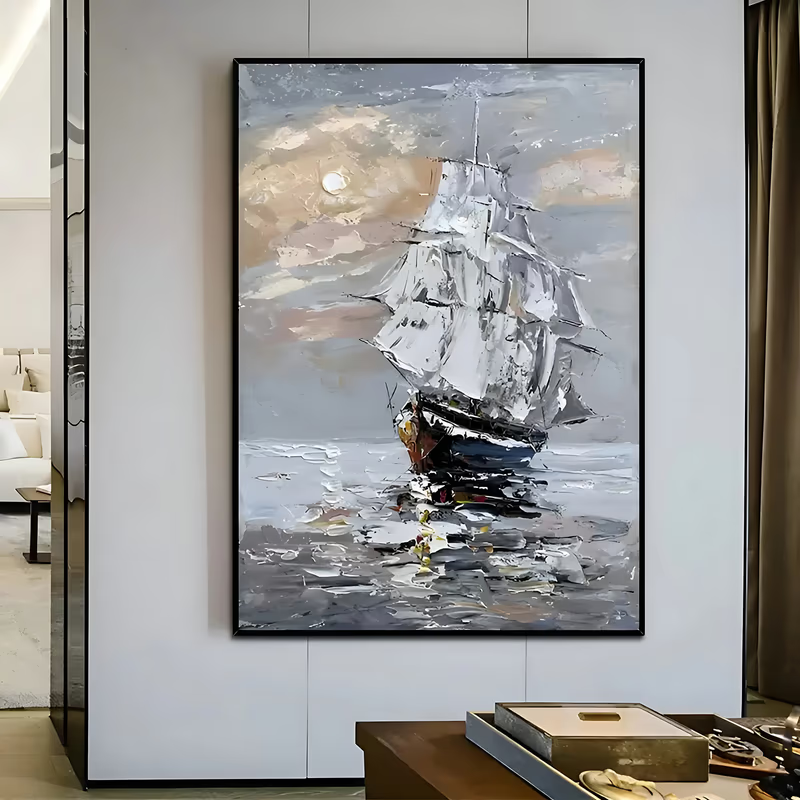
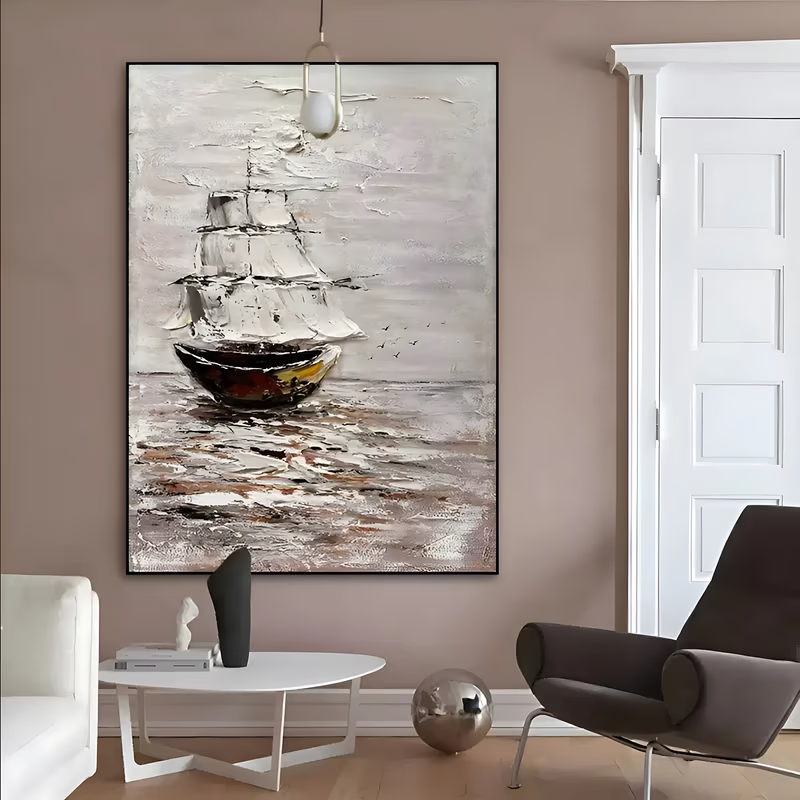
| Storm light, tall ships, dark water | Moody and weighty; best in low lamplight | Bars, studies, libraries, members' lounges |
Feng shui tradition makes the same distinction: practitioners generally accept quiet water in a bedroom but advise against turbulent waves there, keeping active water for living and entrance areas. Whatever your view of that, the practical rule matches it. Filter by calming and peaceful seascapes or by dramatic and bold seascapes to see the two ends of the range.
What kinds of seascape paintings are there?
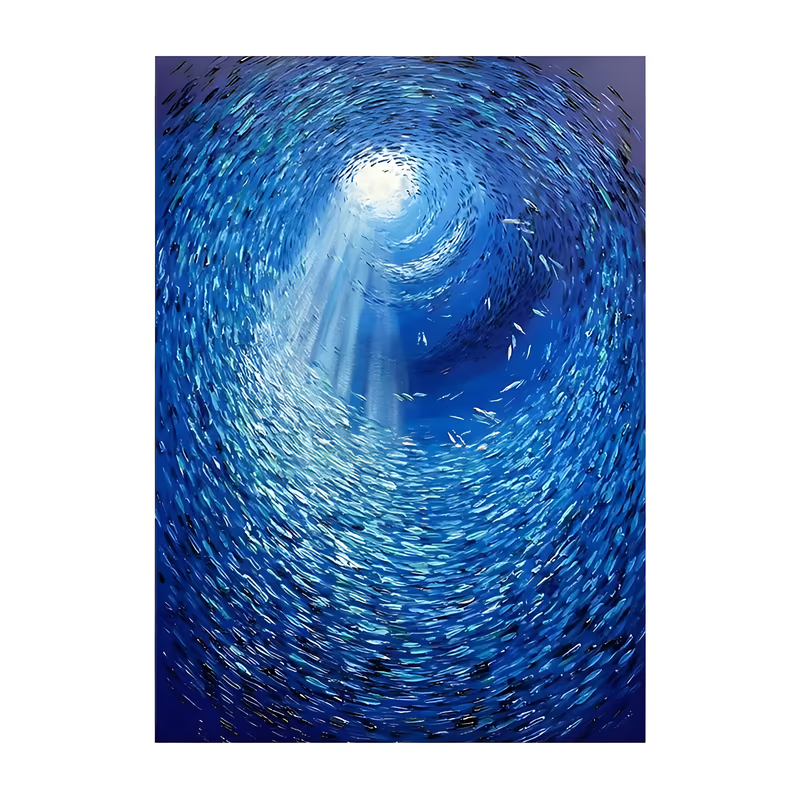
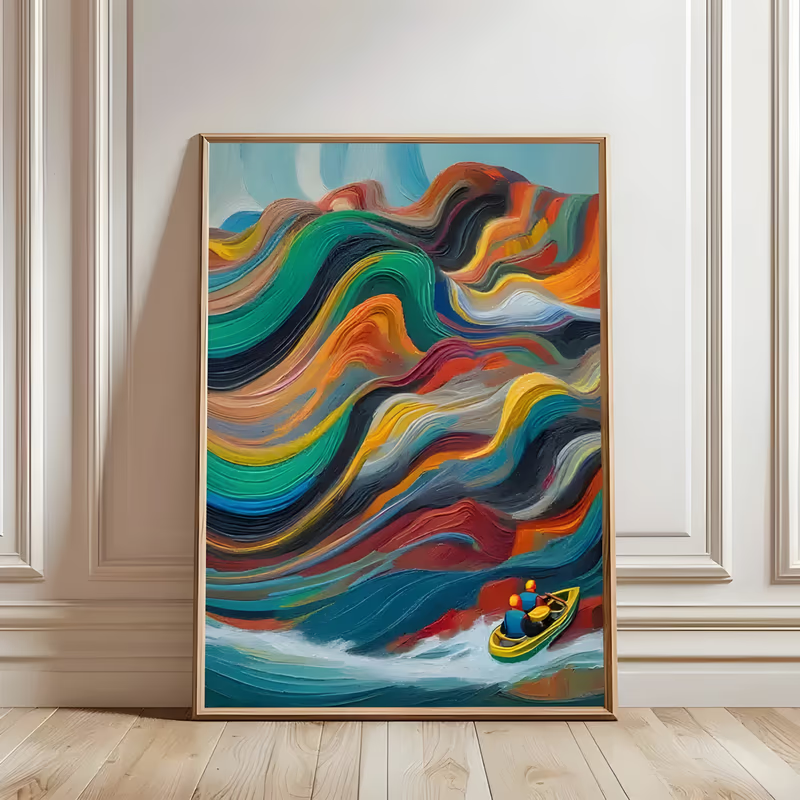
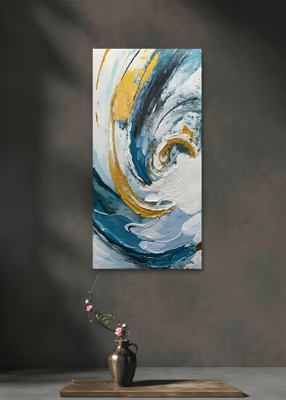
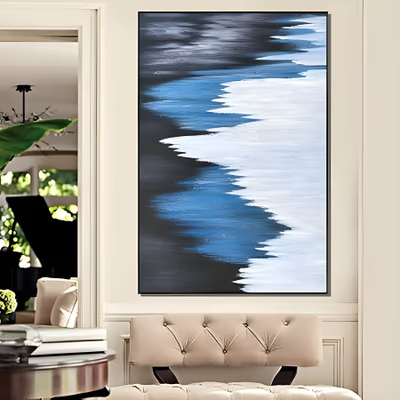
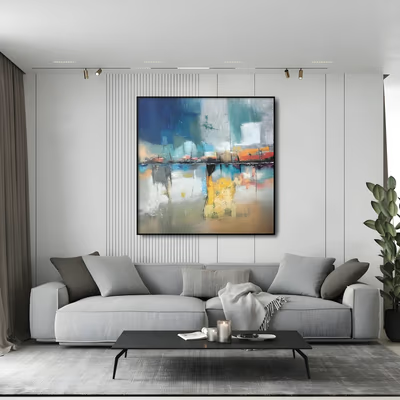
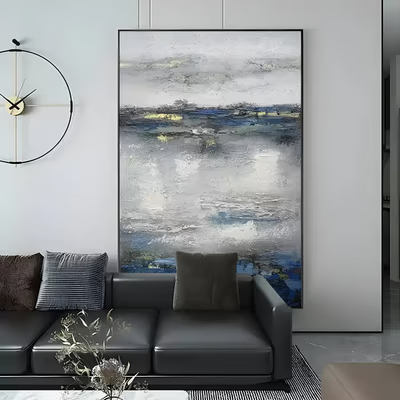
The seascapes here fall into four families by technique: impressionist sea light, sculpted plaster surf, realistic waves and abstract ocean colour.
Impressionist sunsets, horizons and harbours
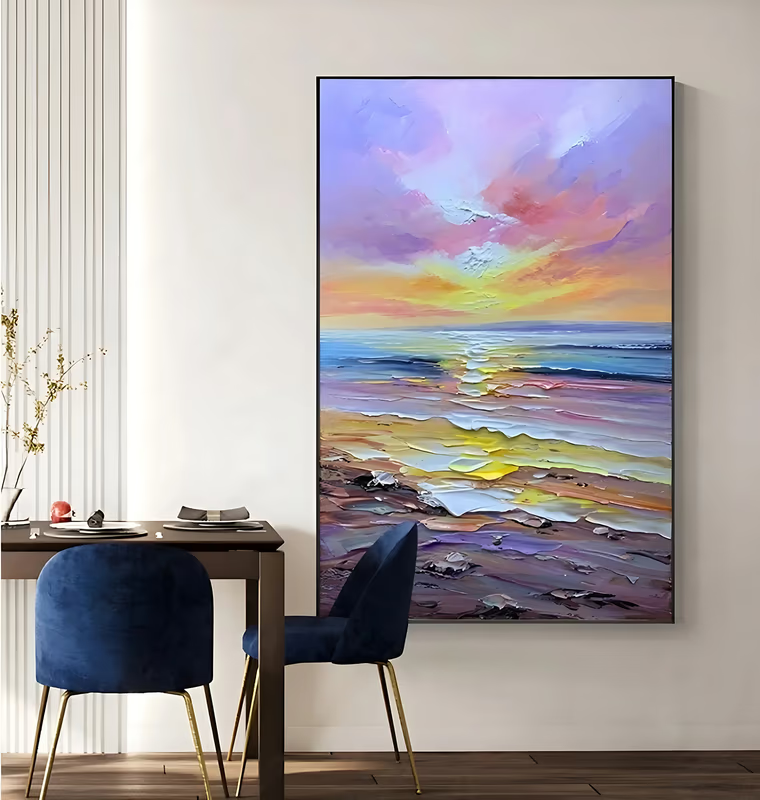
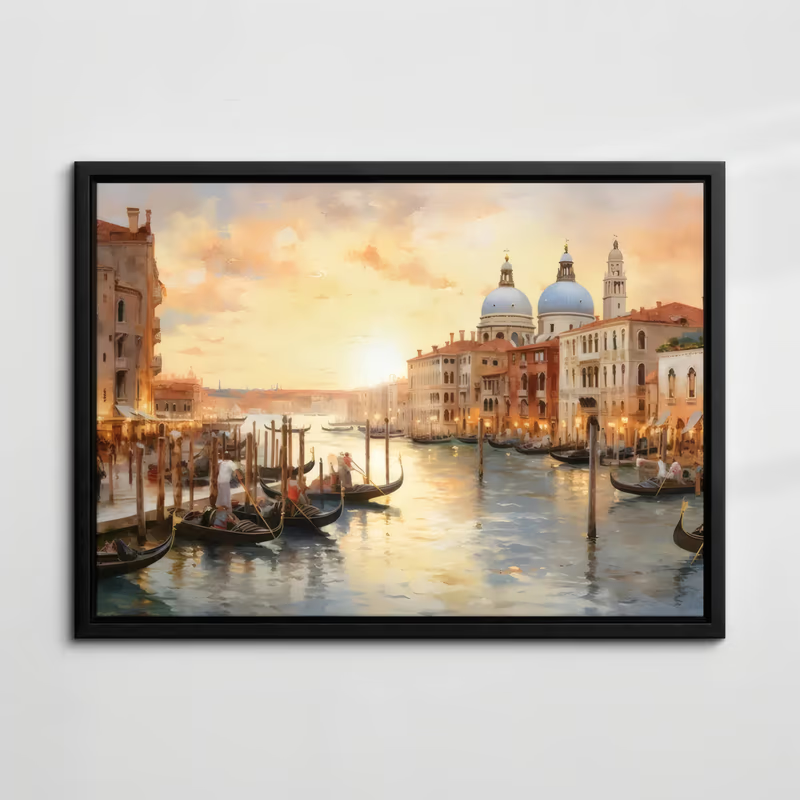
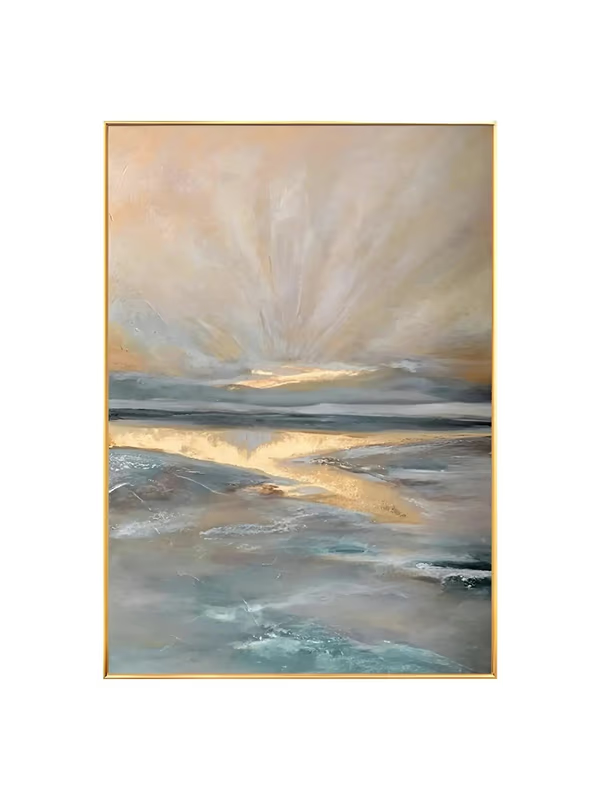
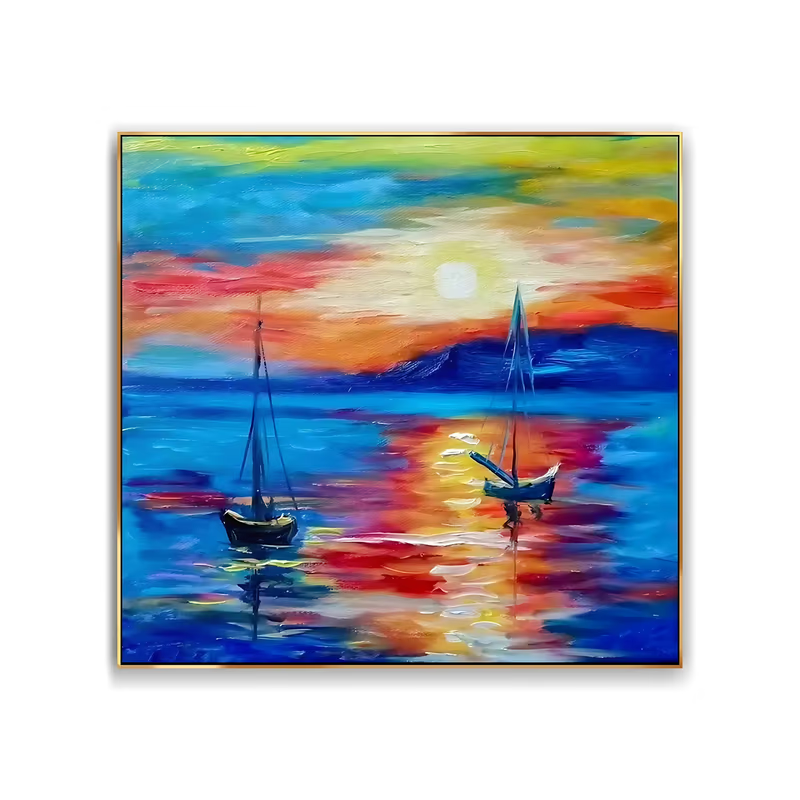
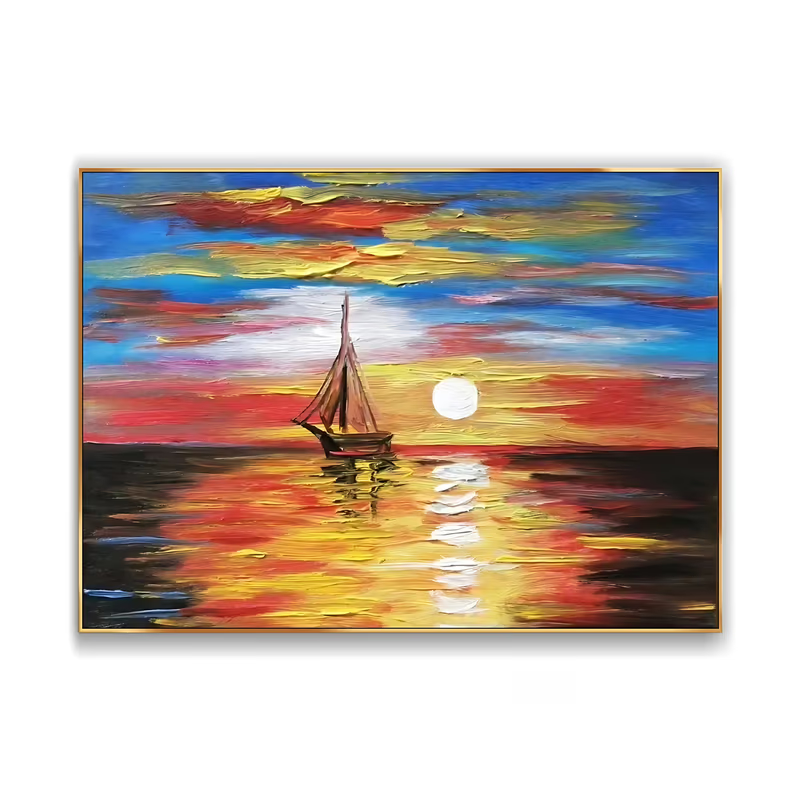
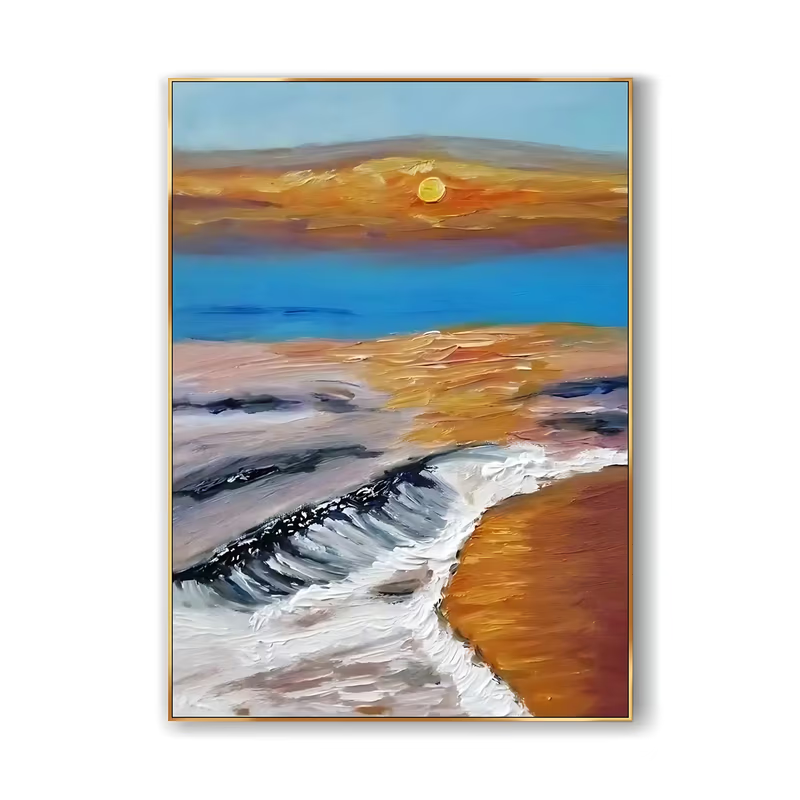
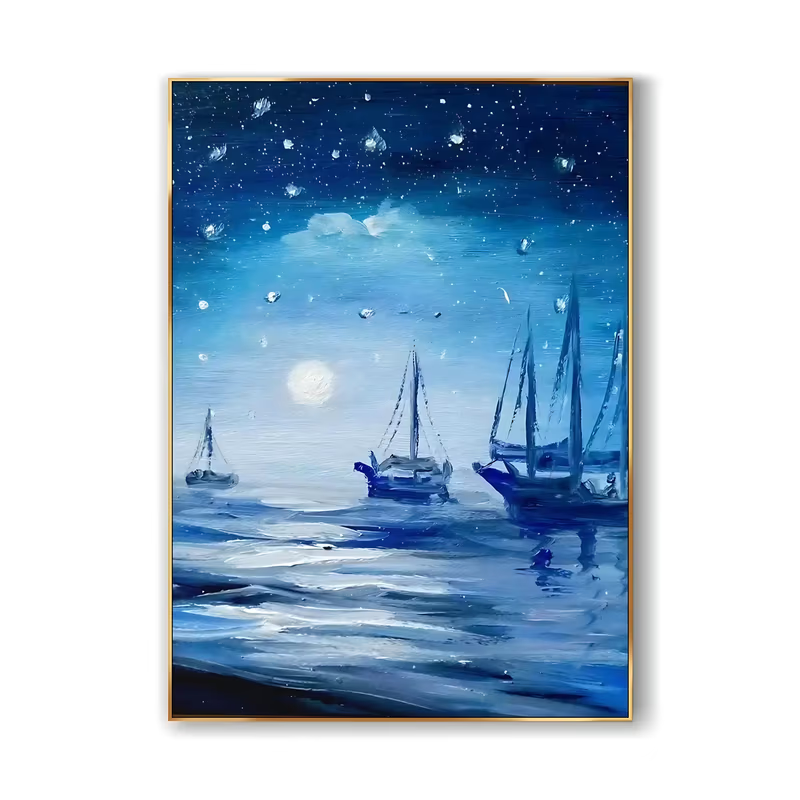
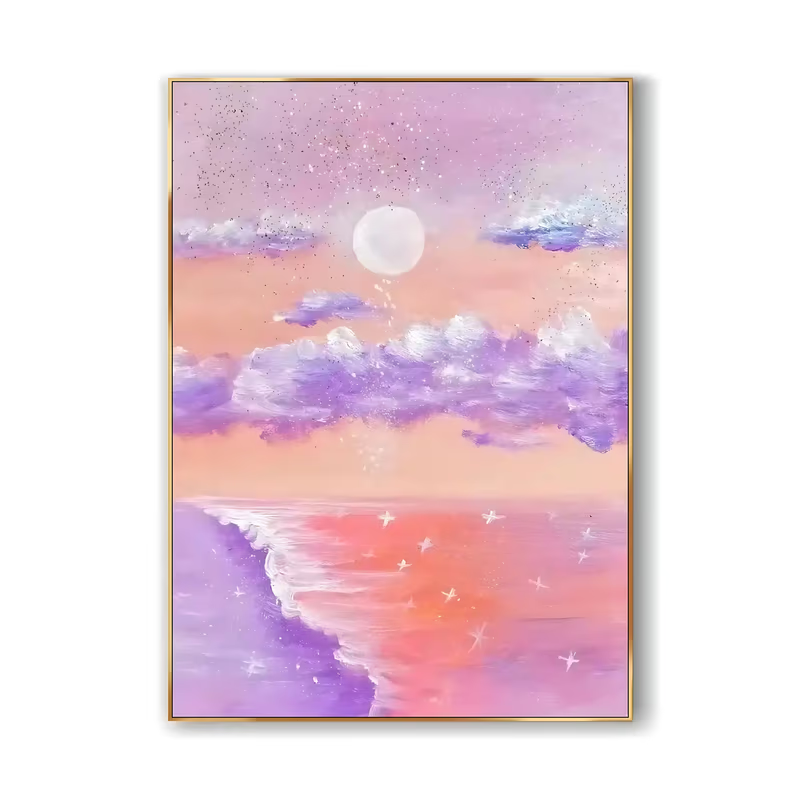
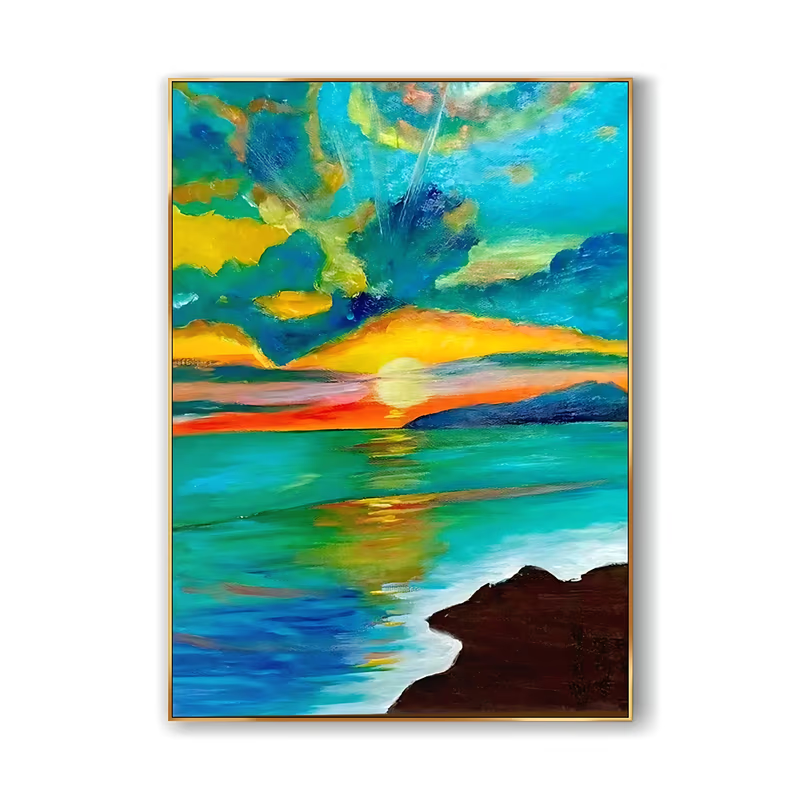
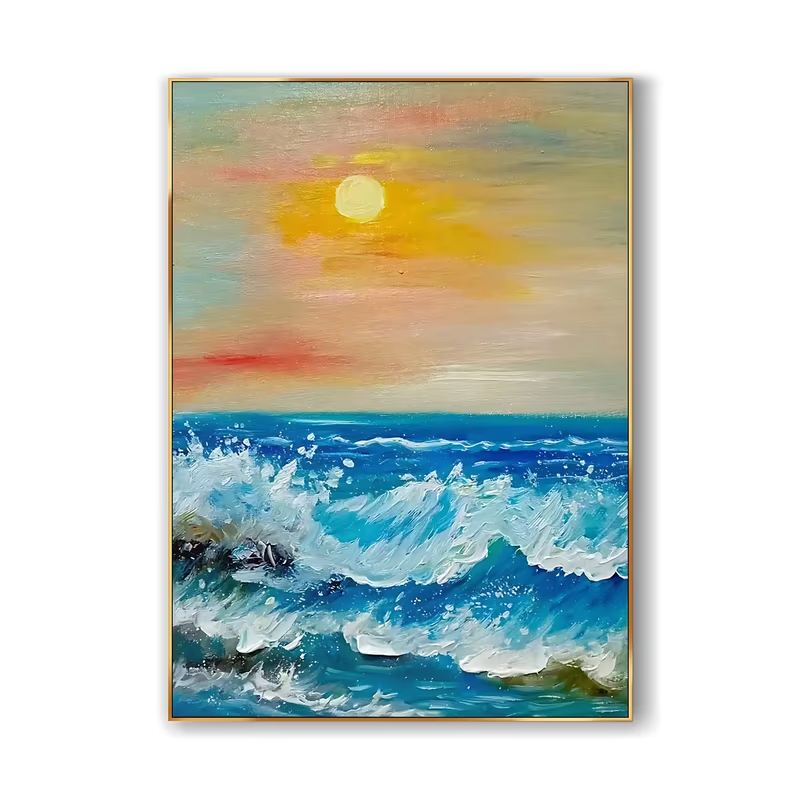
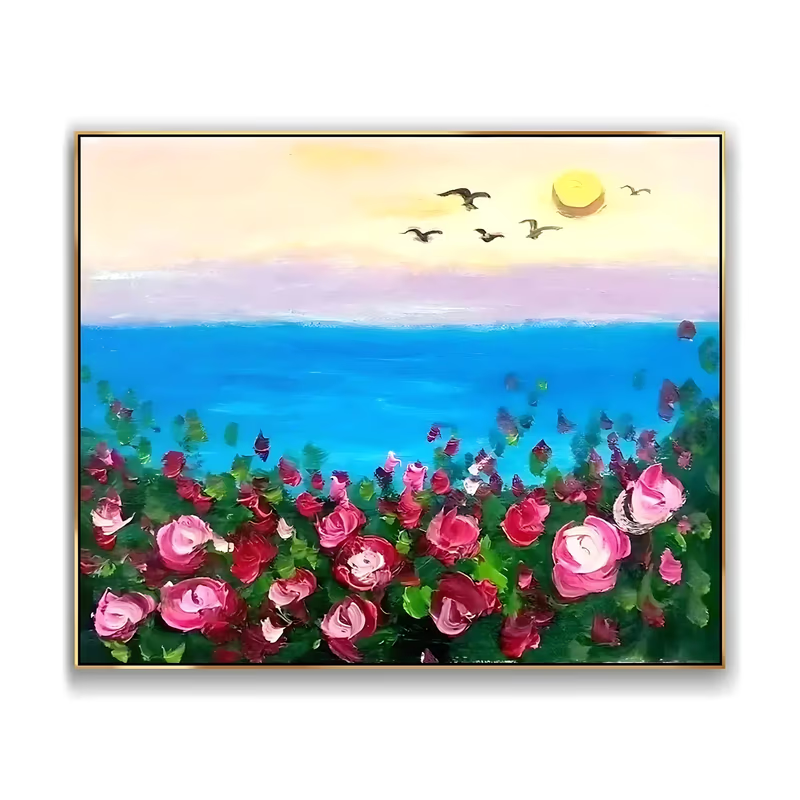
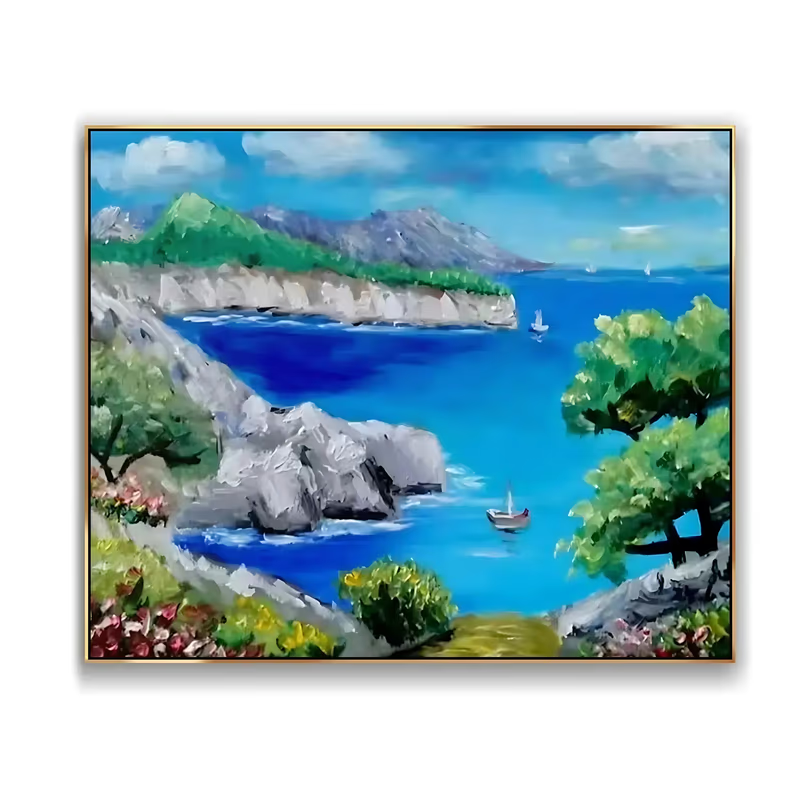
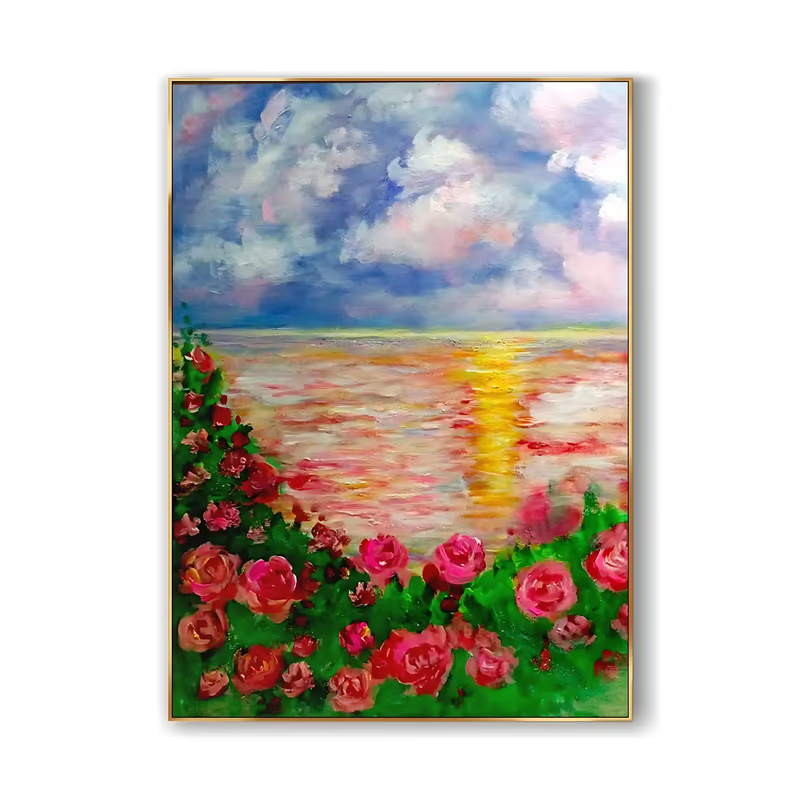
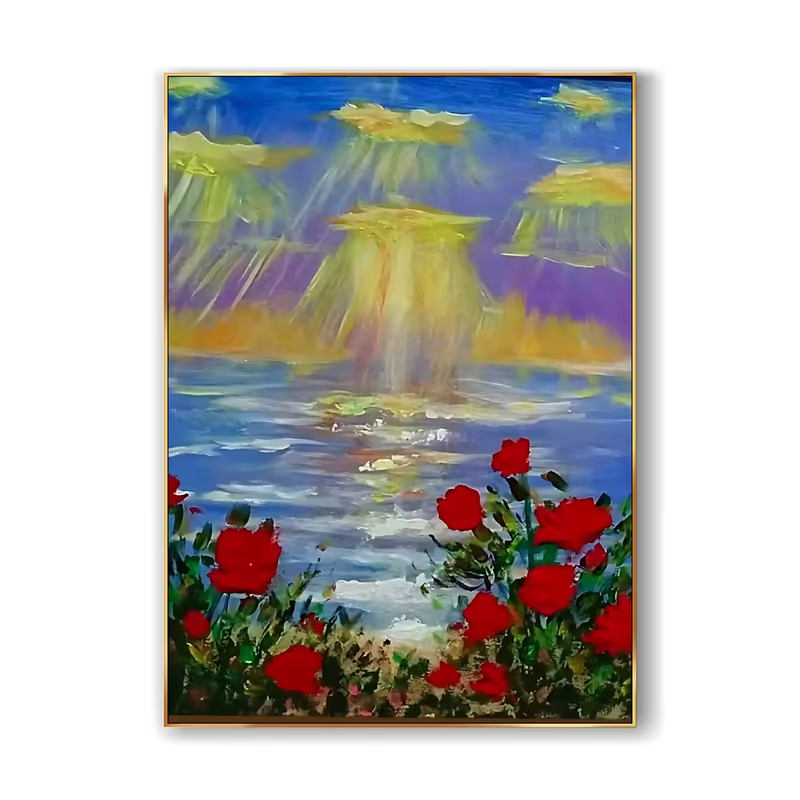
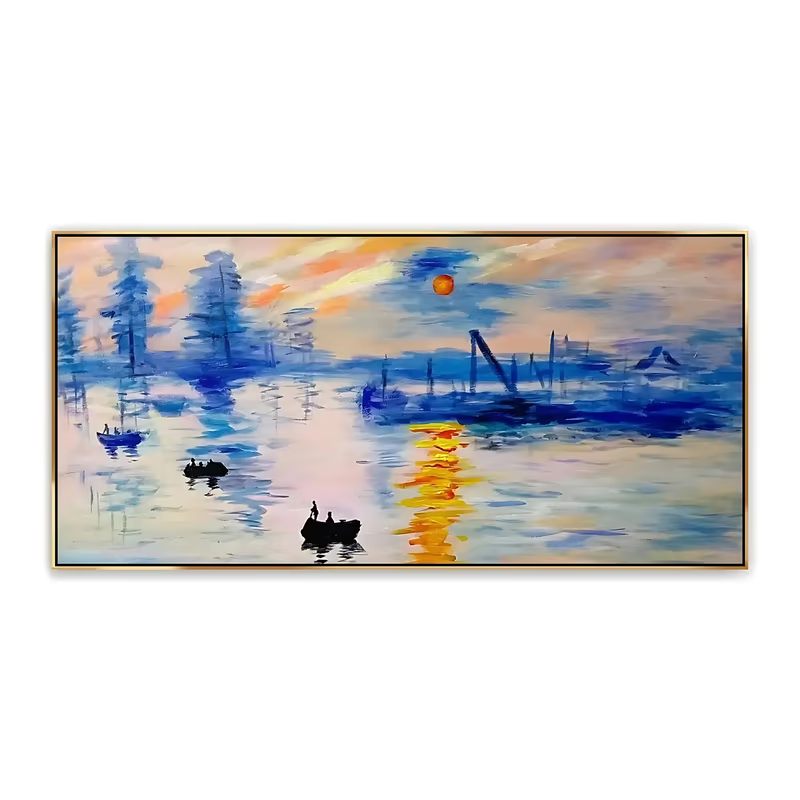
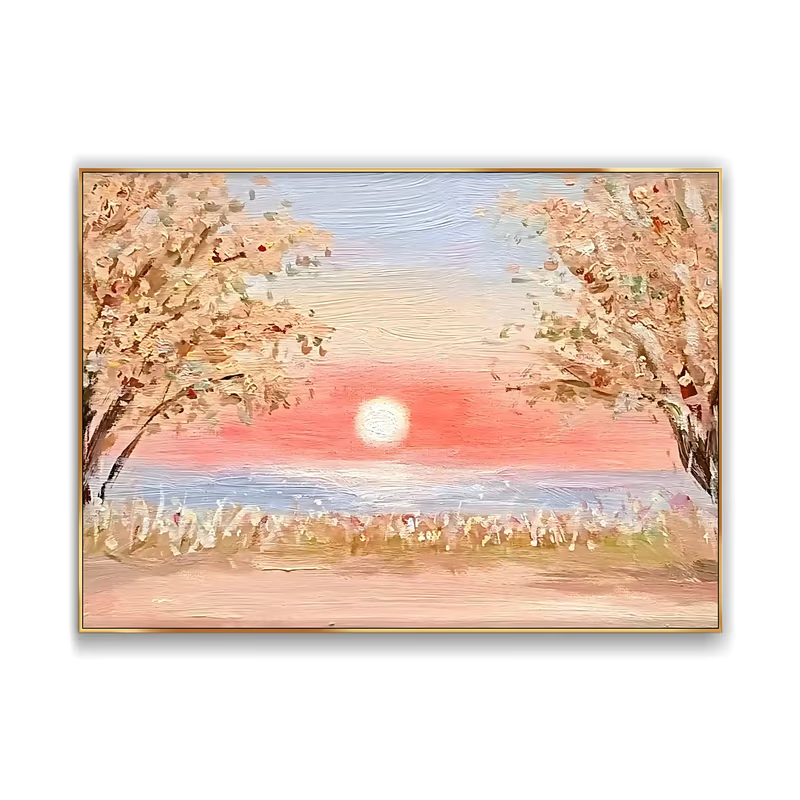
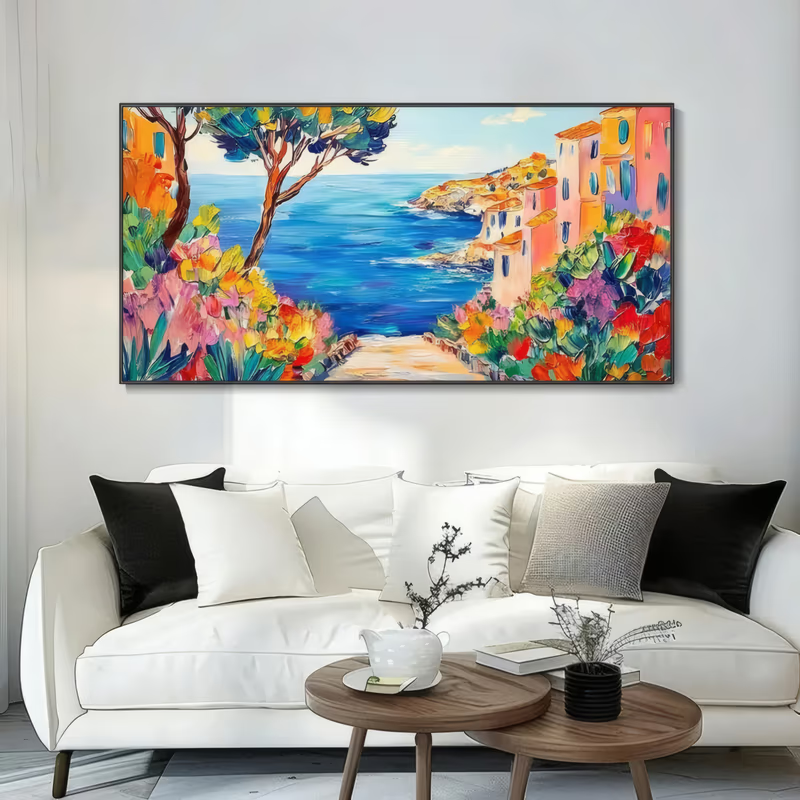
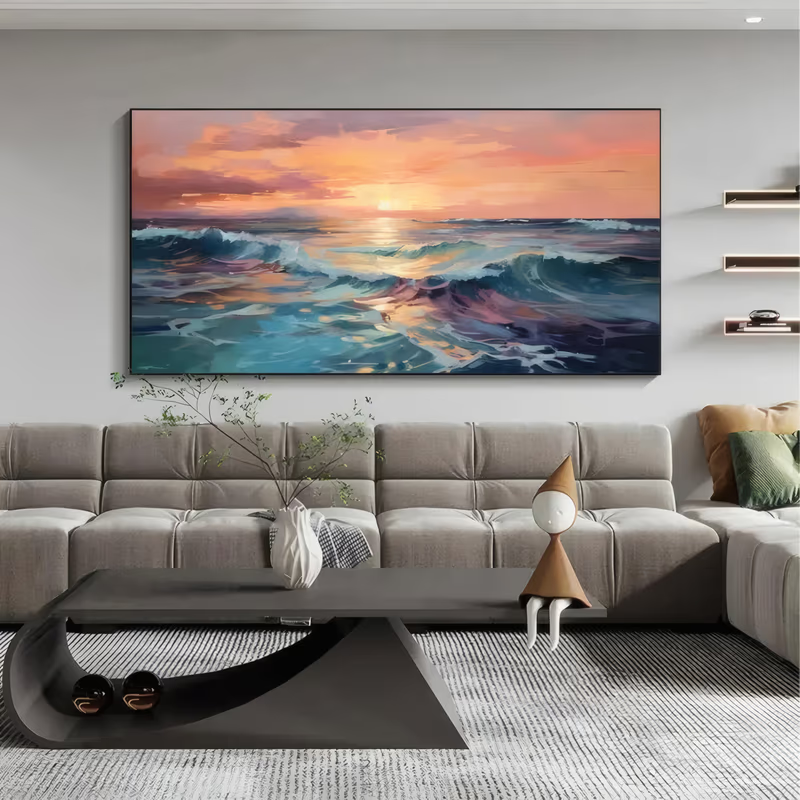
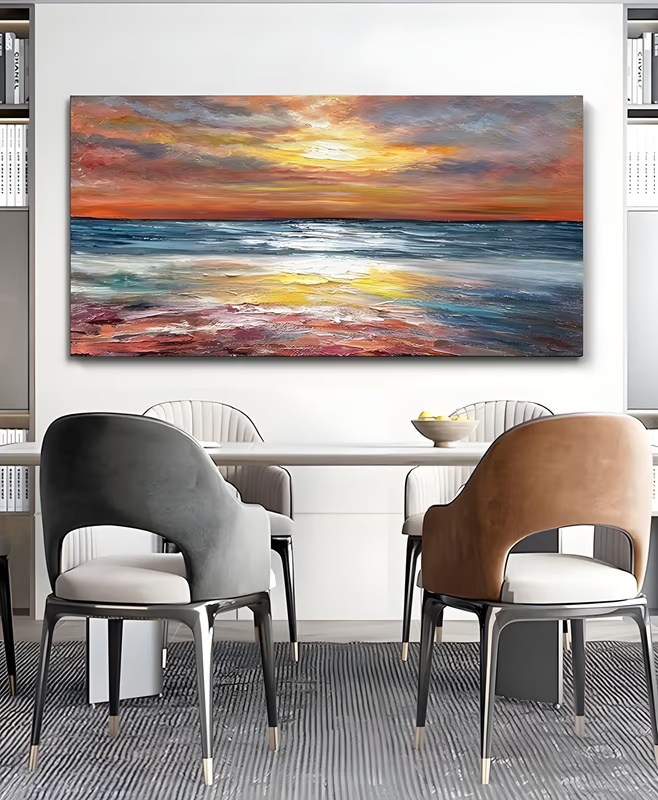
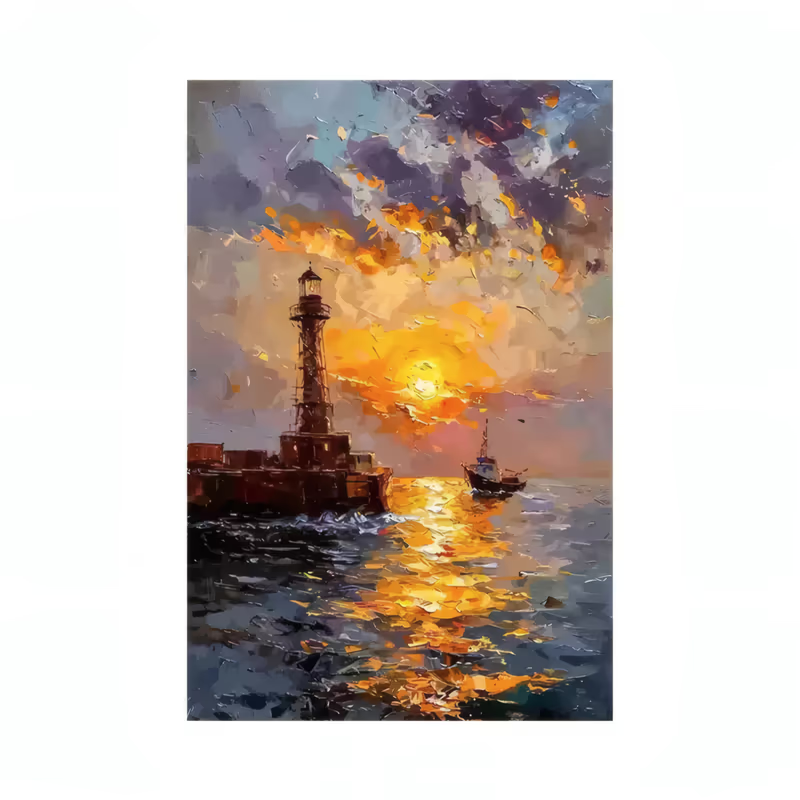
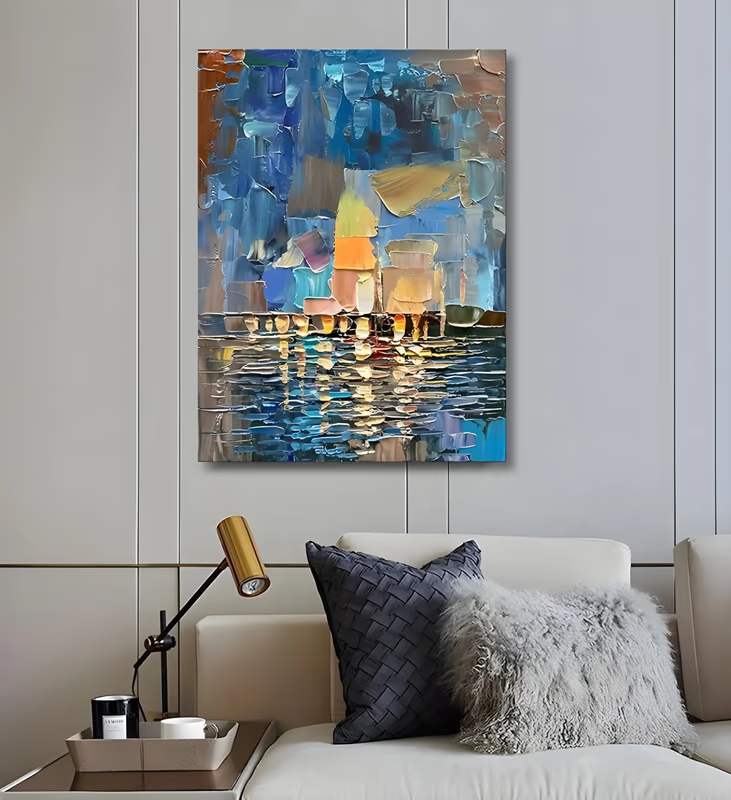
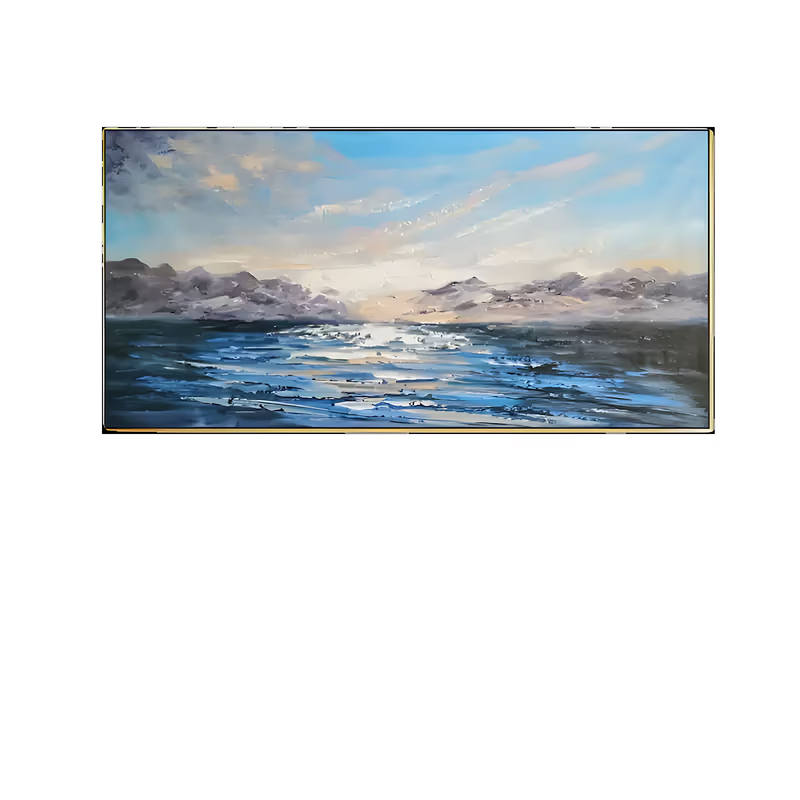
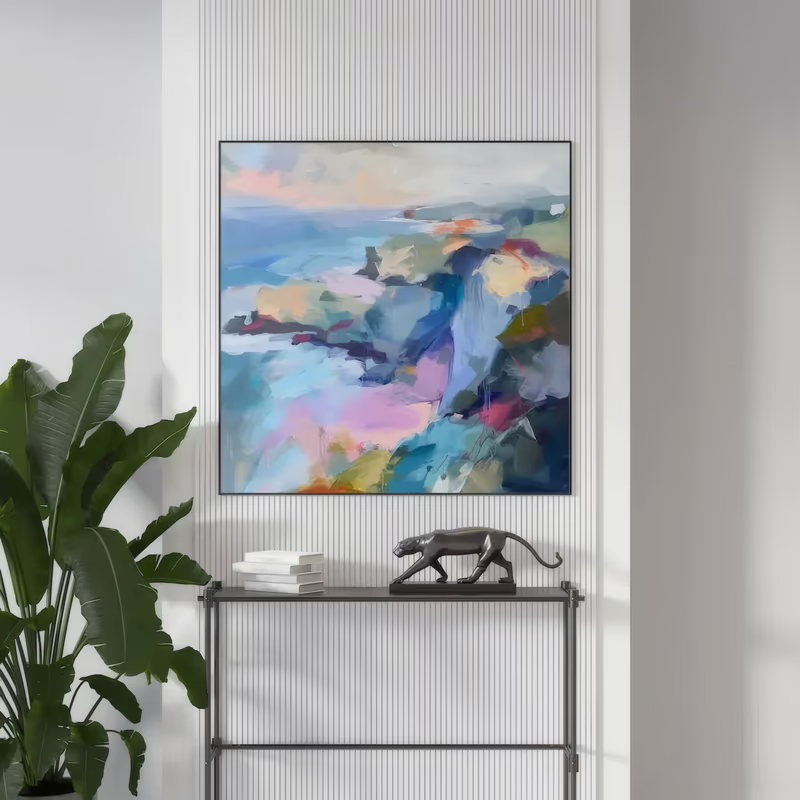
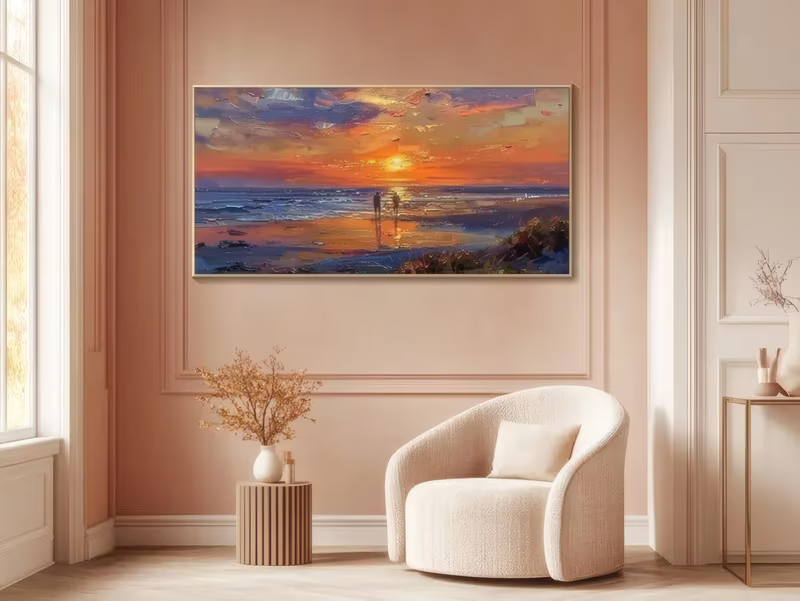
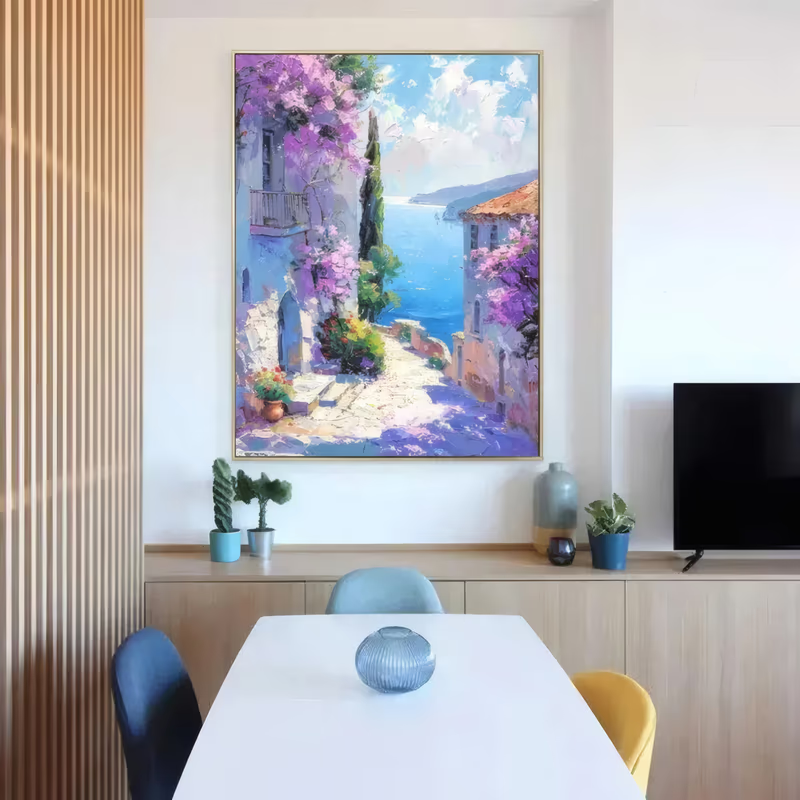
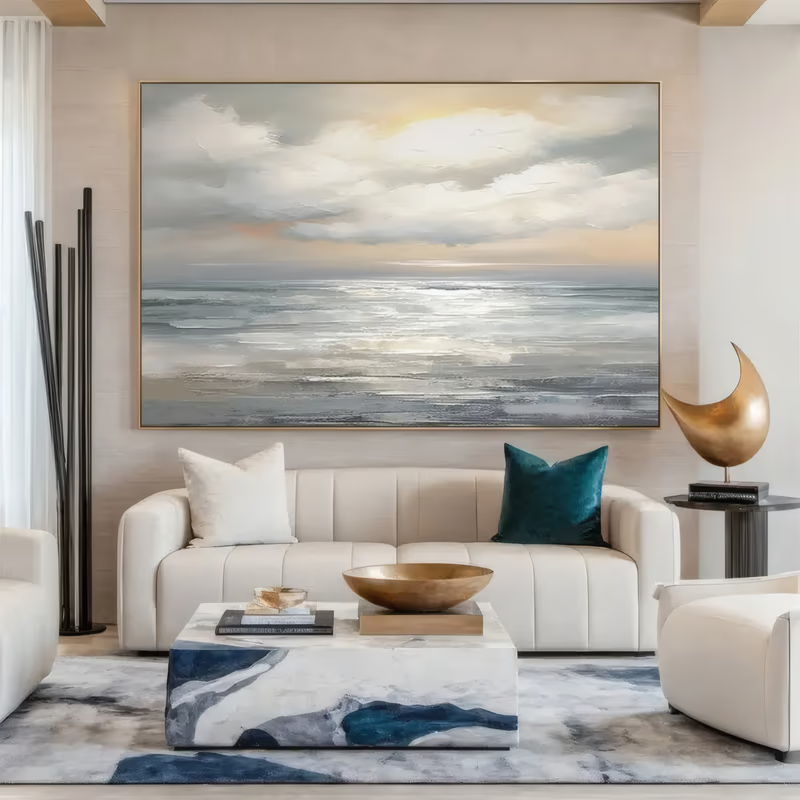
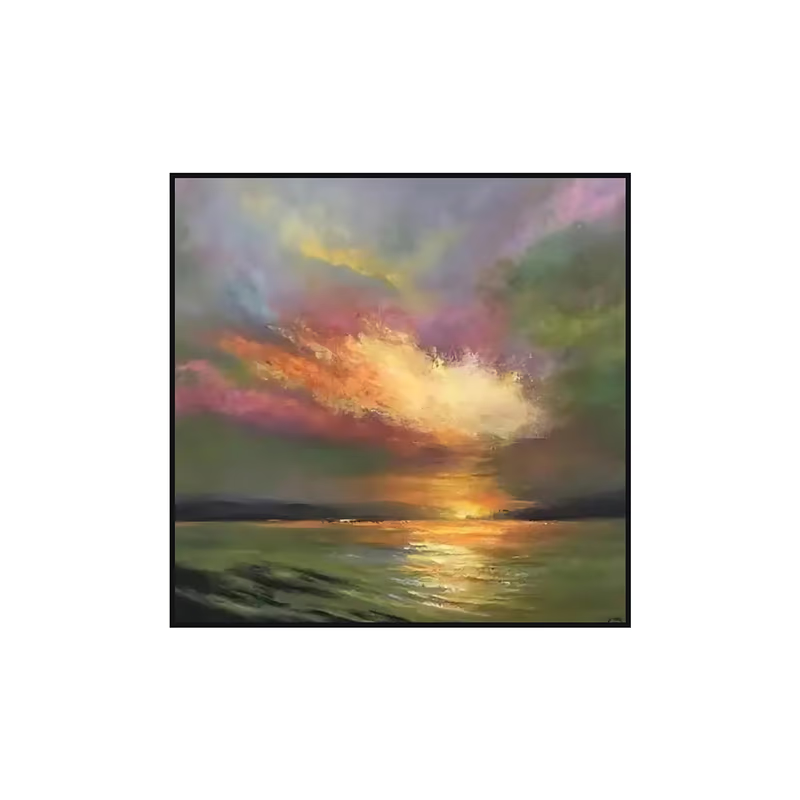
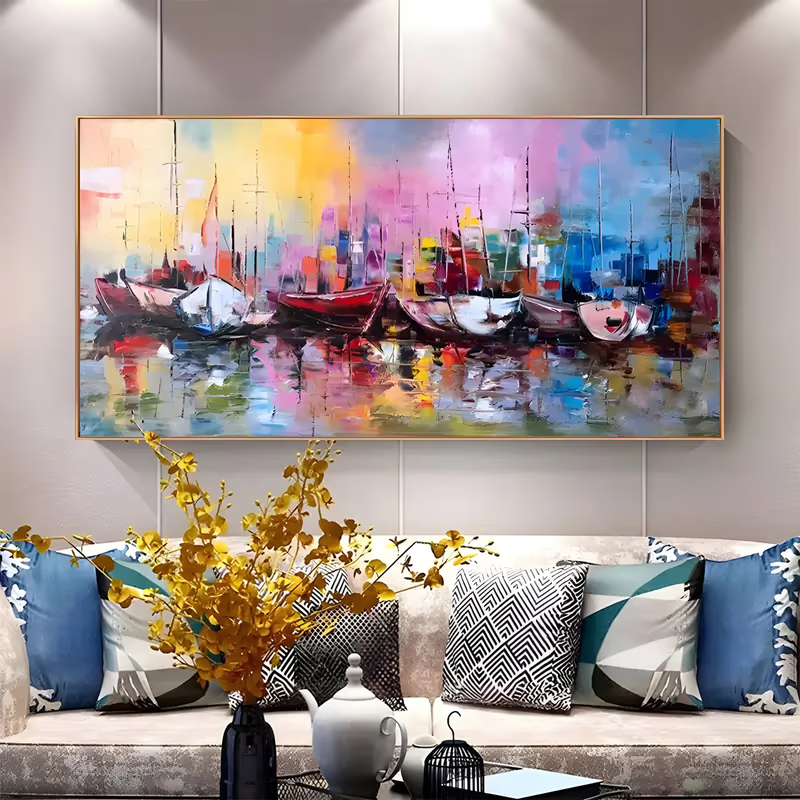
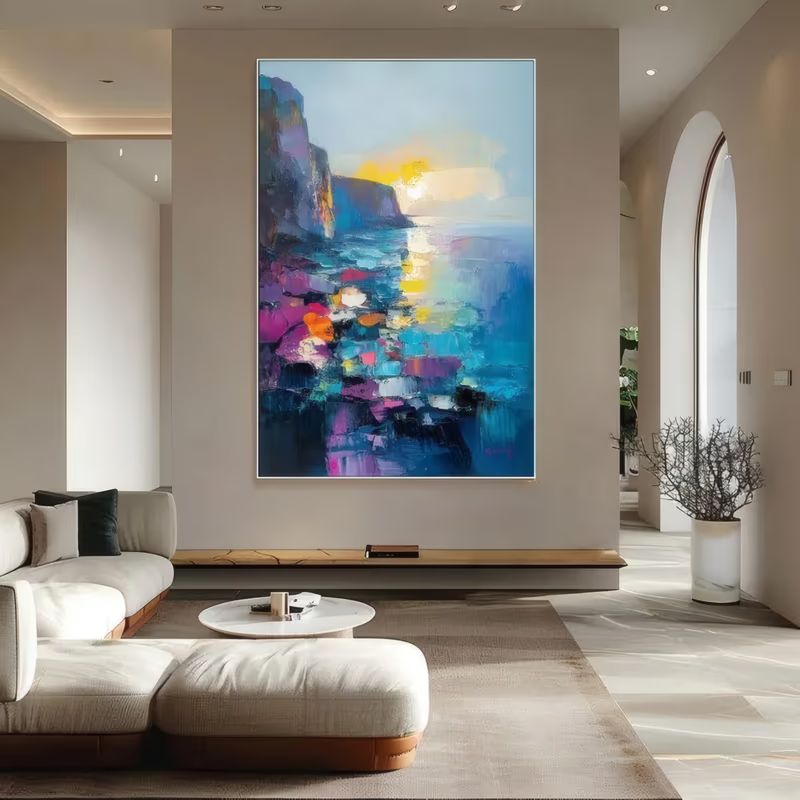
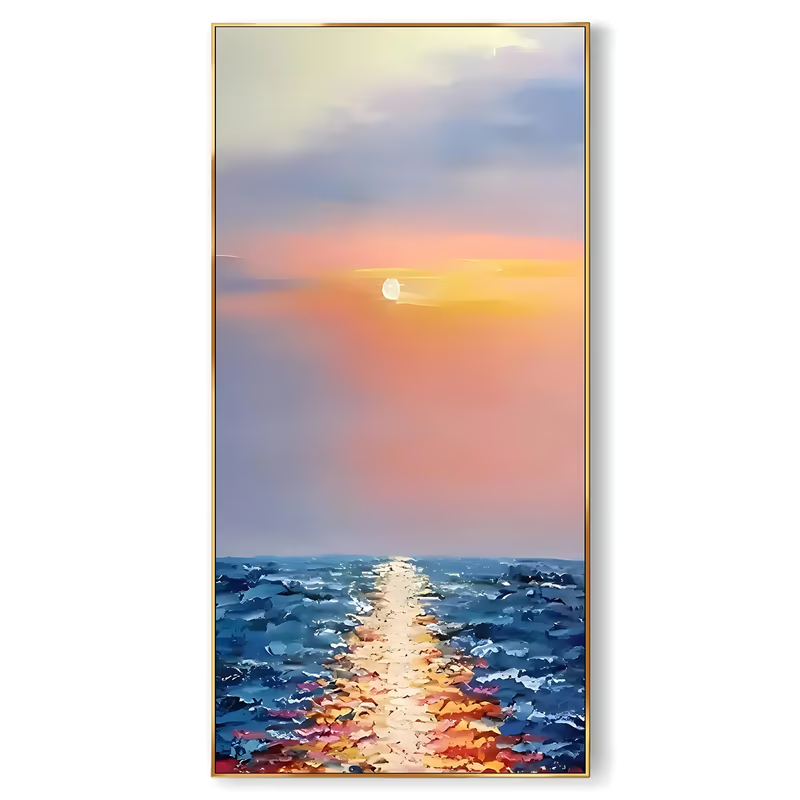
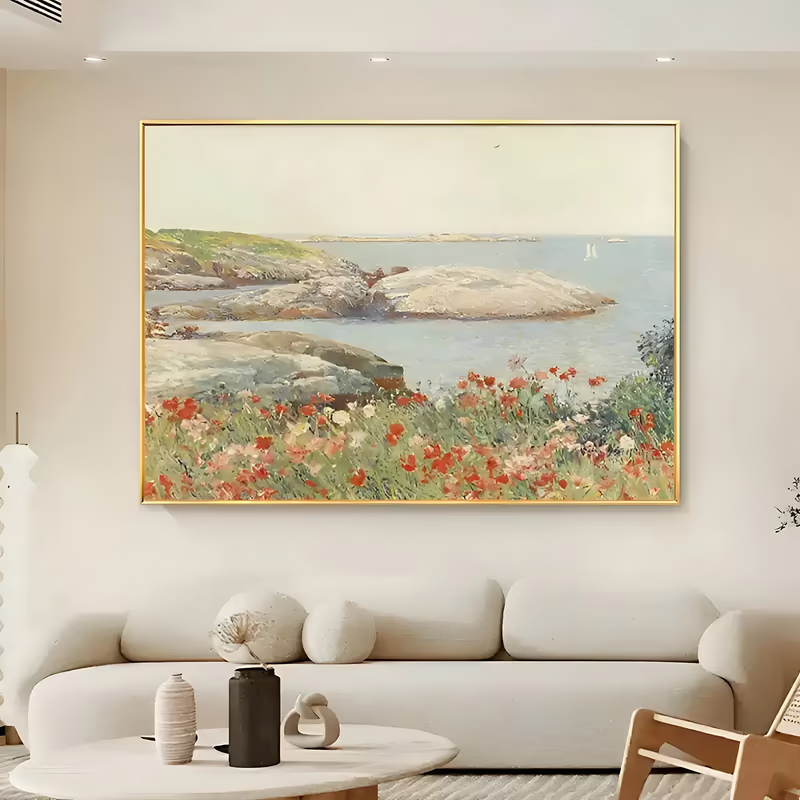
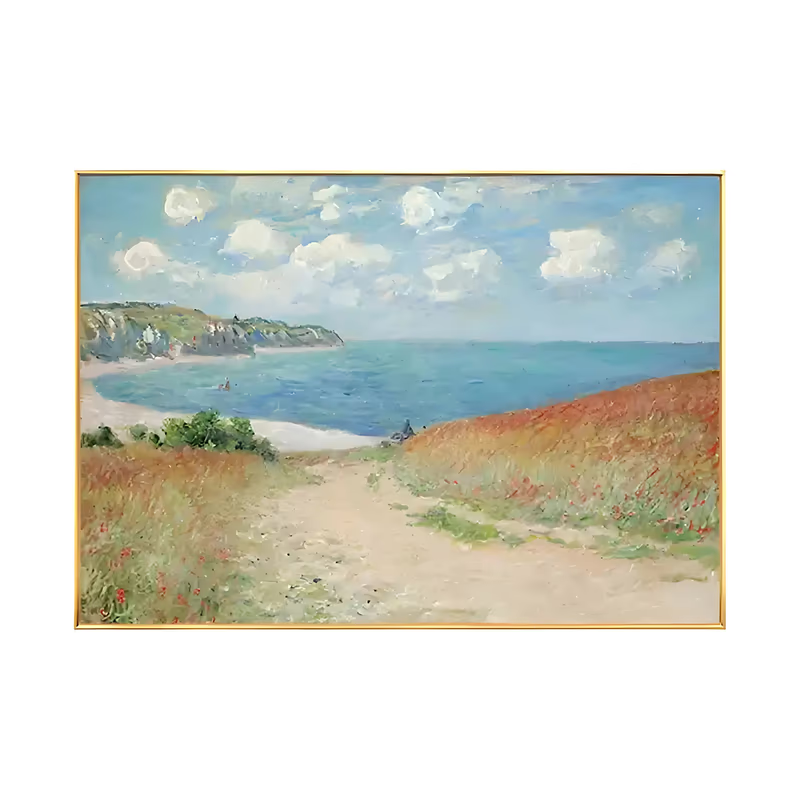
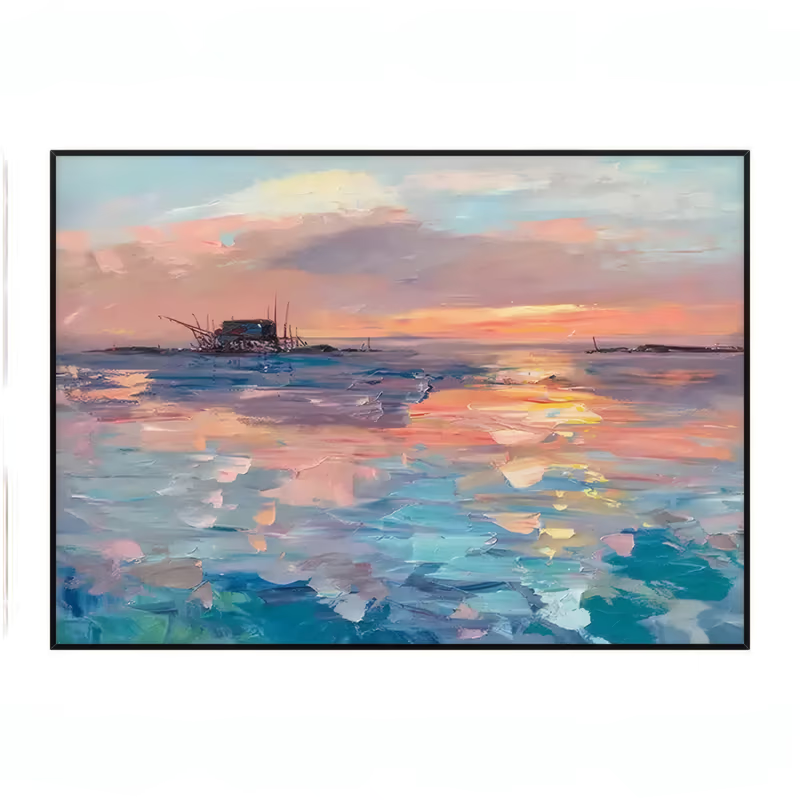
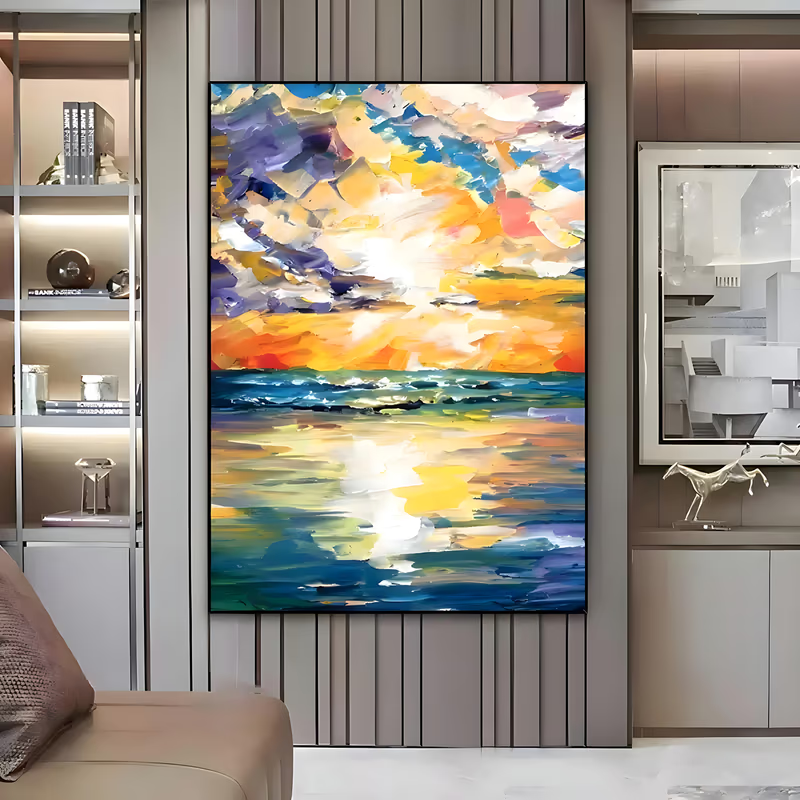
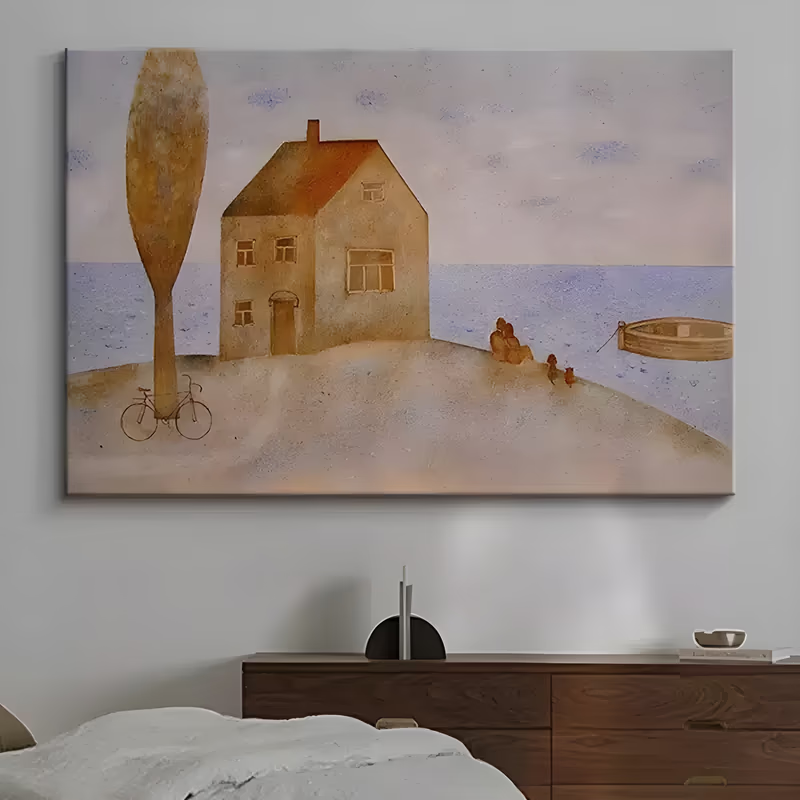
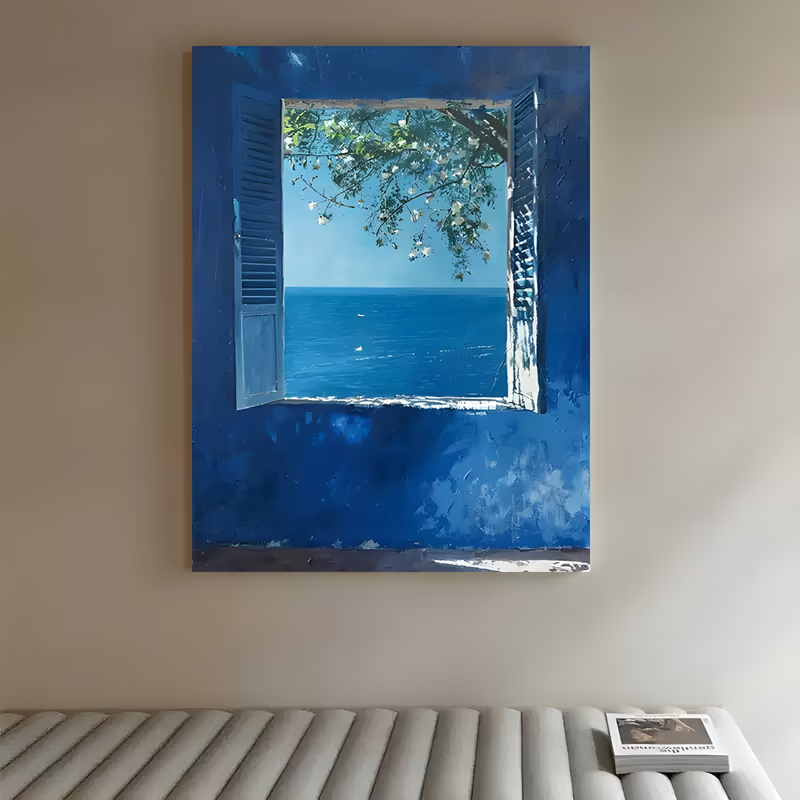
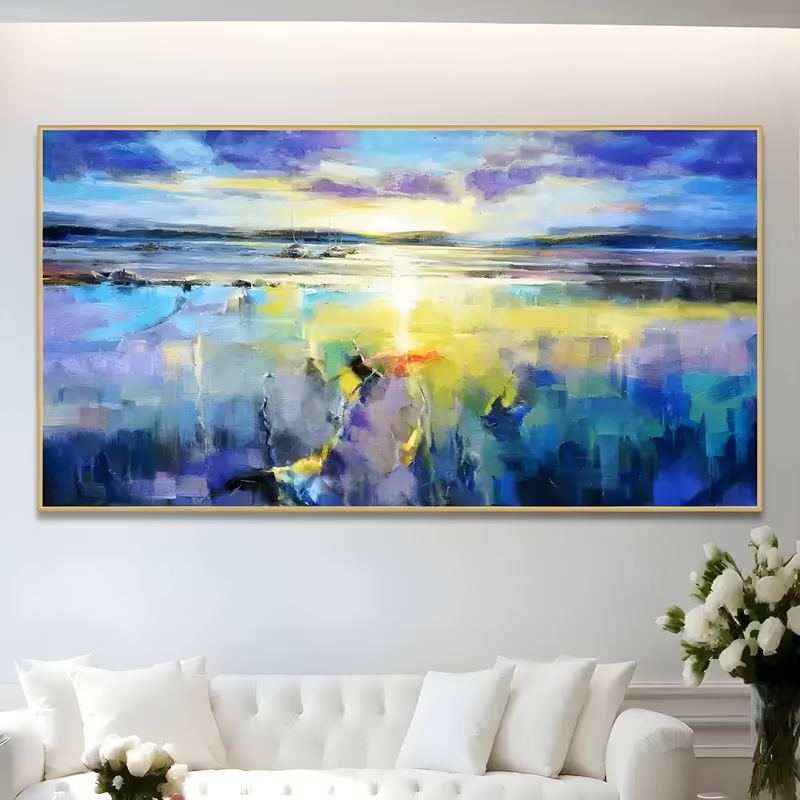
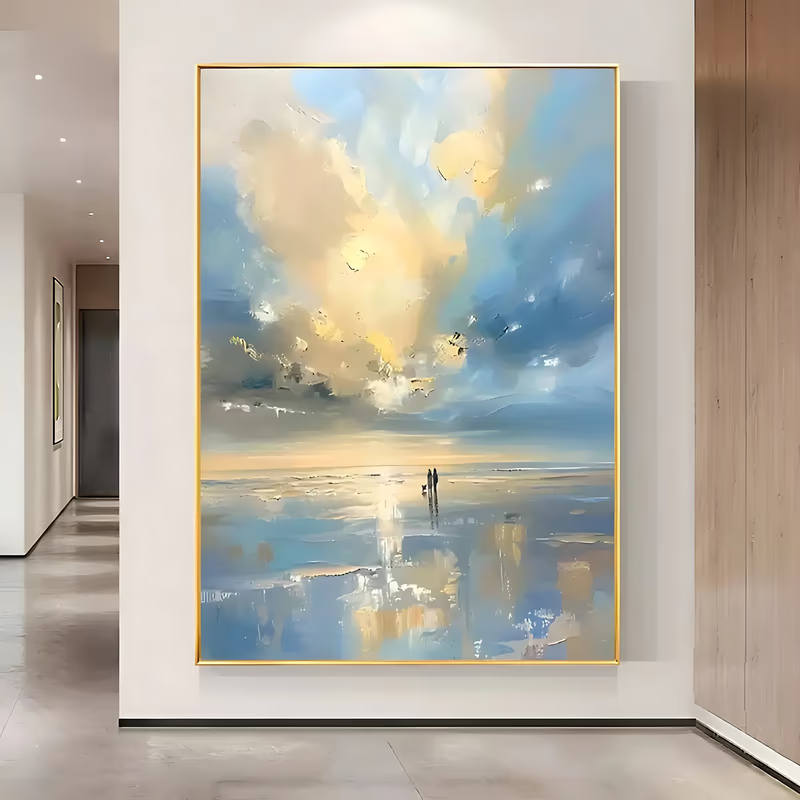
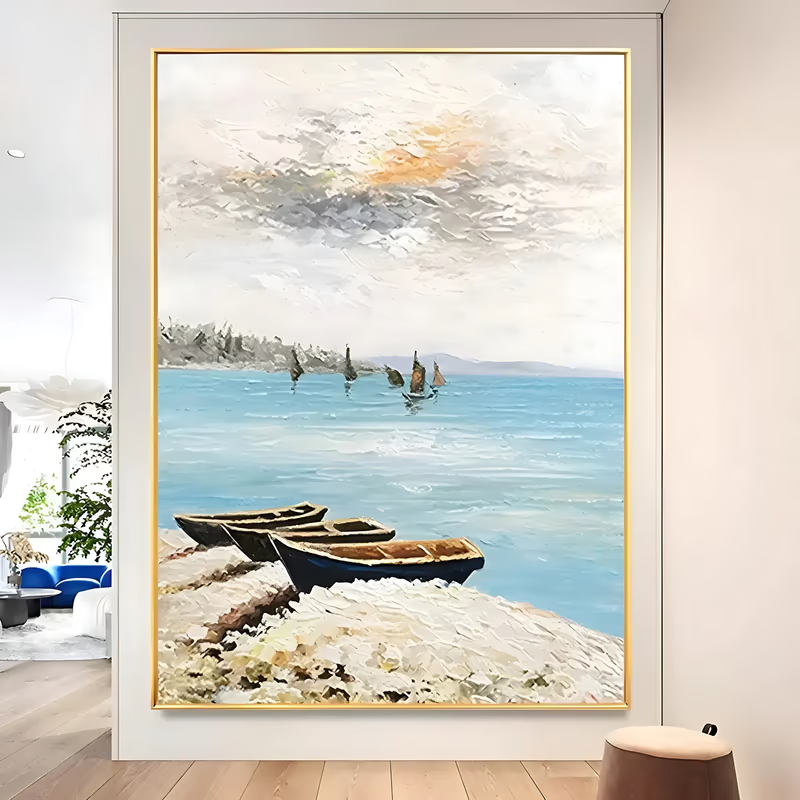
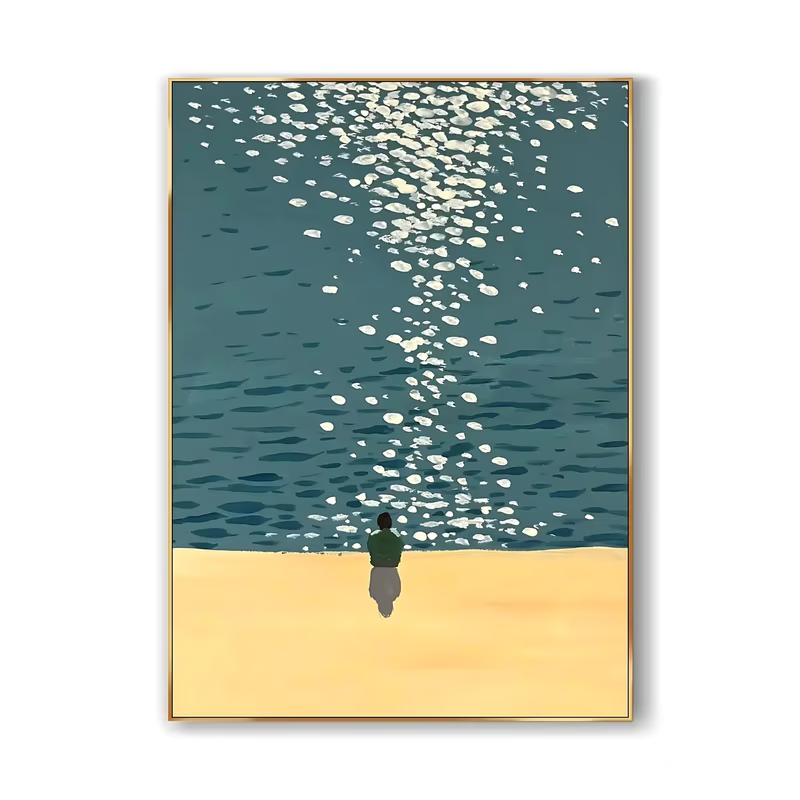
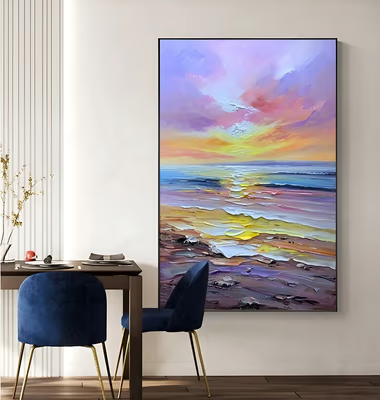
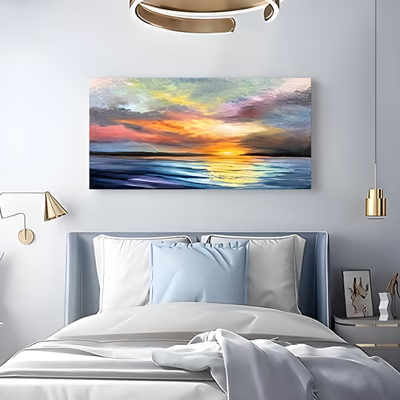
Loose brushwork and broken colour describe light on water rather than every ripple: a gold sun path across a lavender sea, sailboats moored on a dusk bay, a misty harbour at sunrise, a Mediterranean cove under white cliffs. These are the most versatile seascapes for homes and guest rooms. See the impressionist style for the wider range.
Sculpted waves and aerial beaches
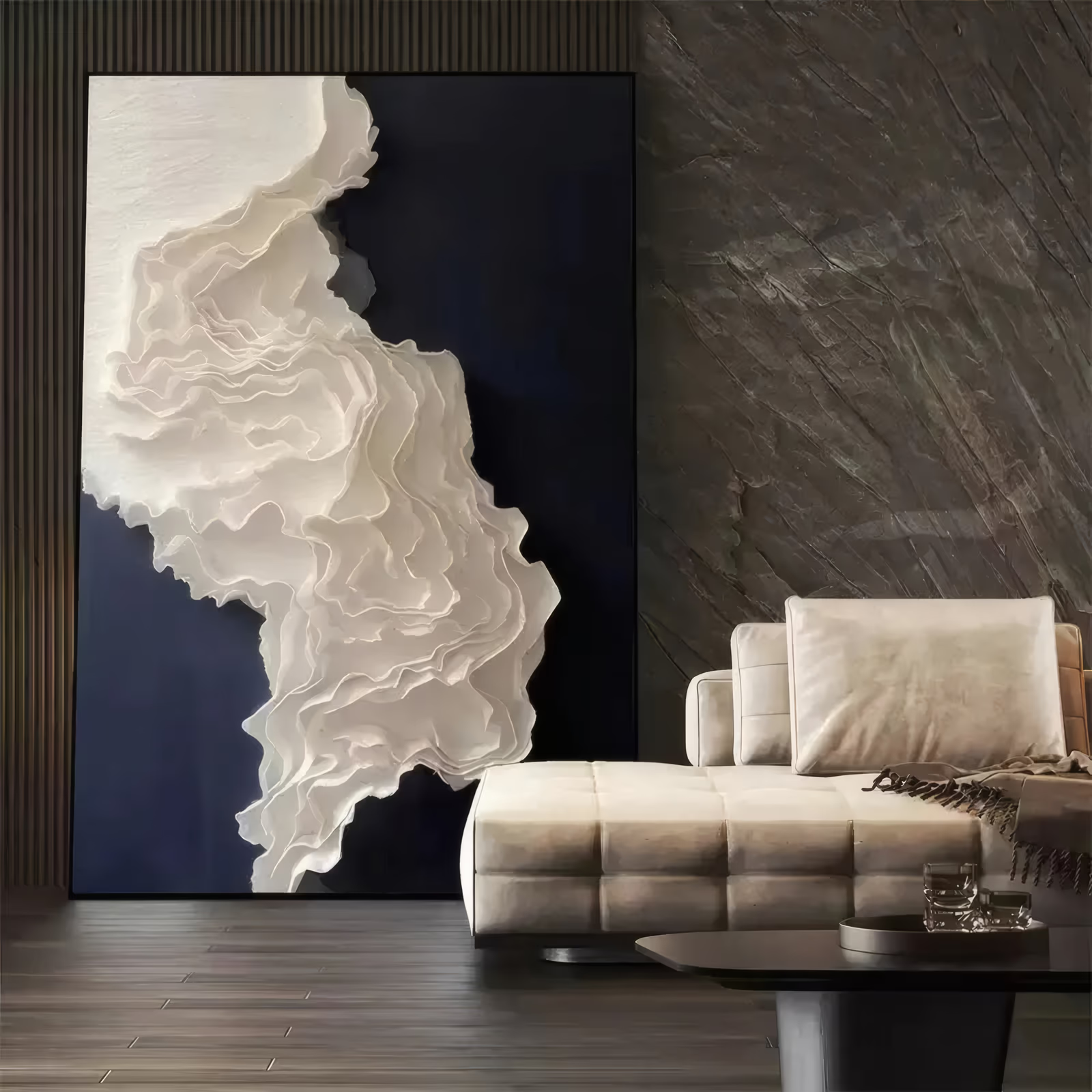
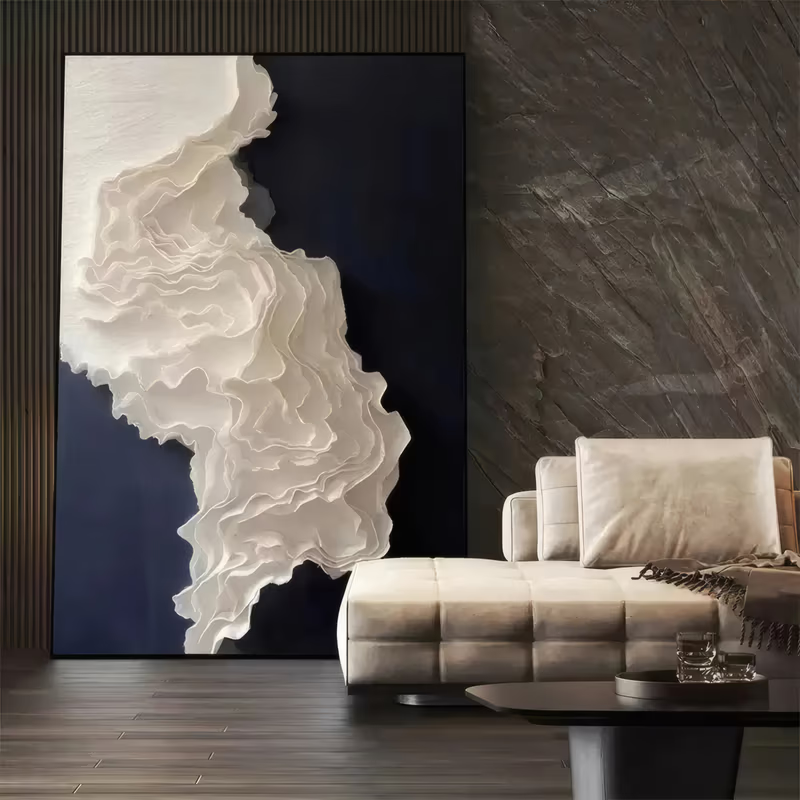
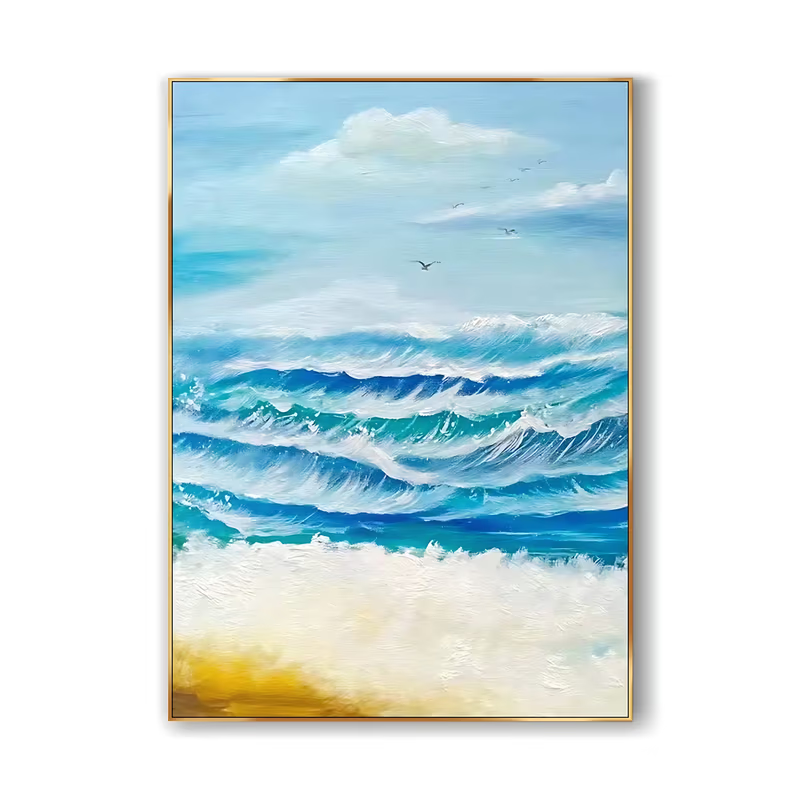
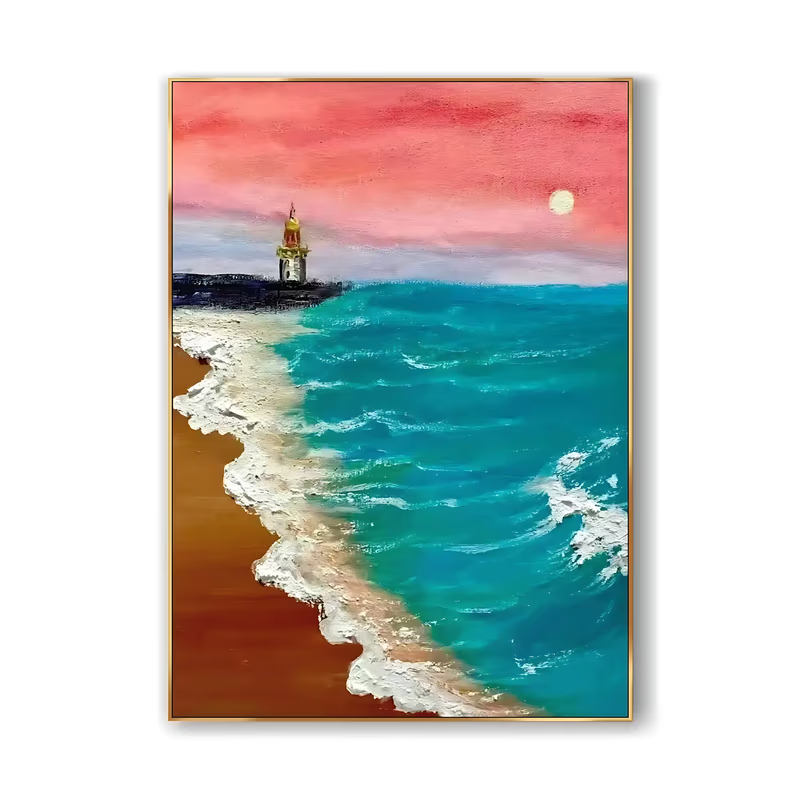
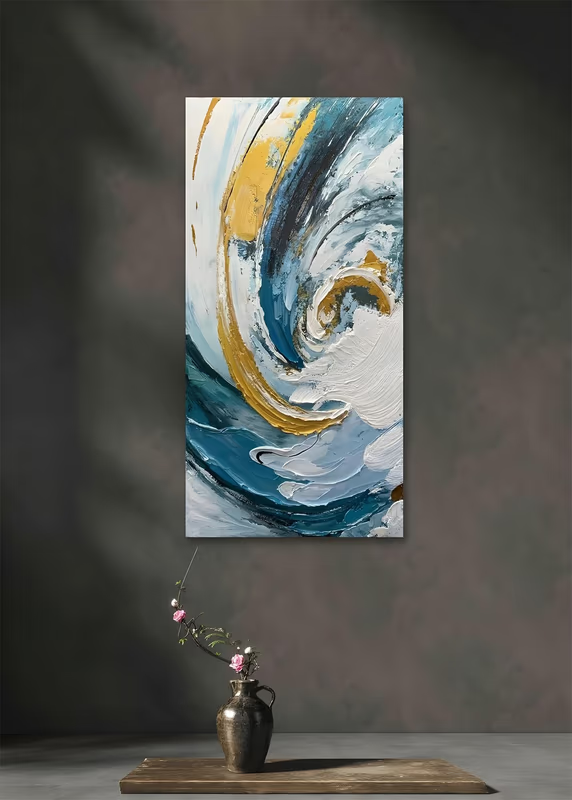
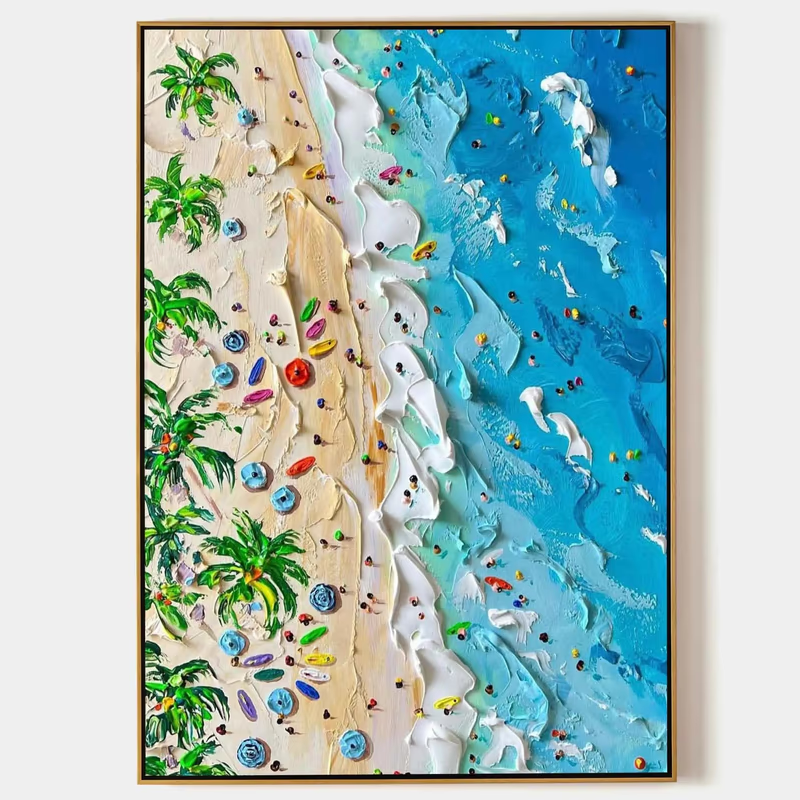
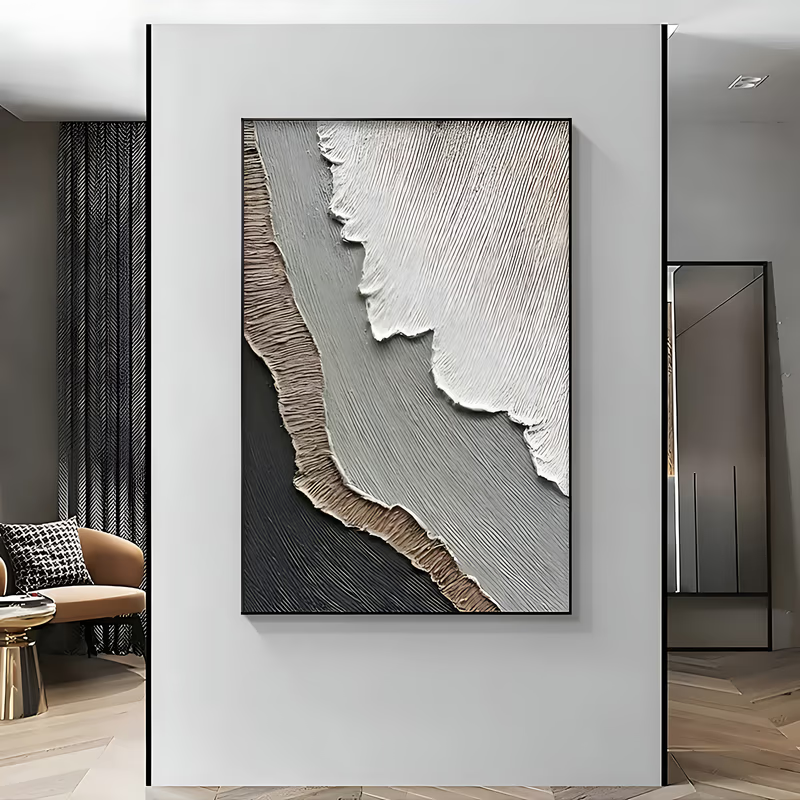
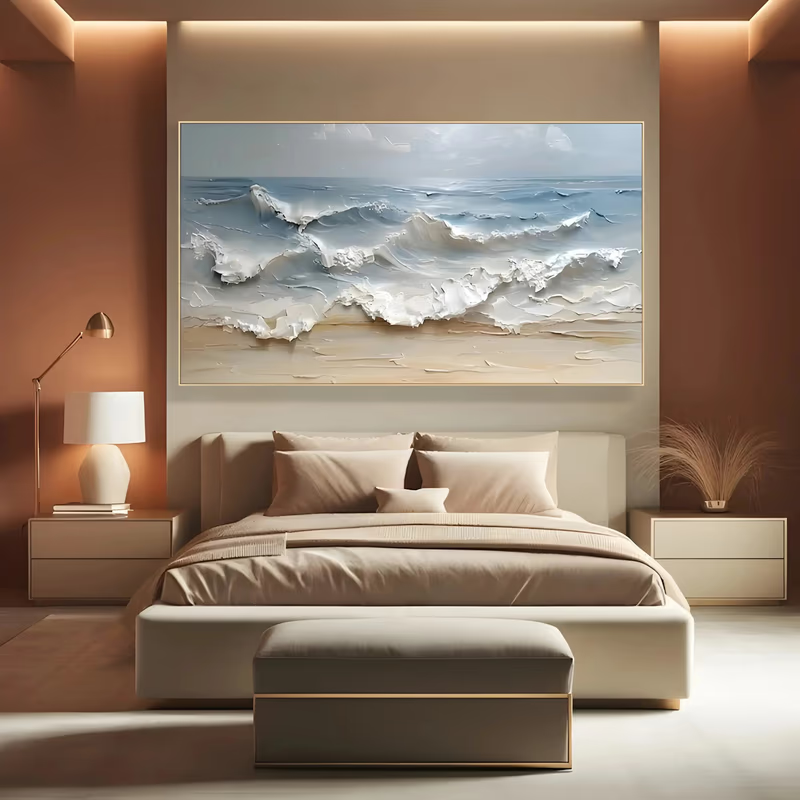
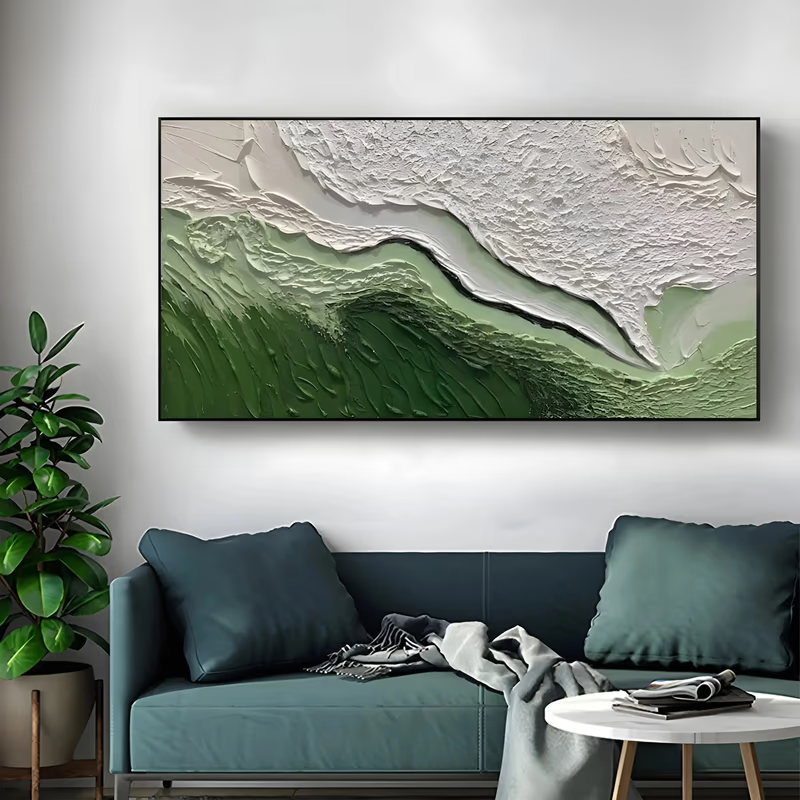
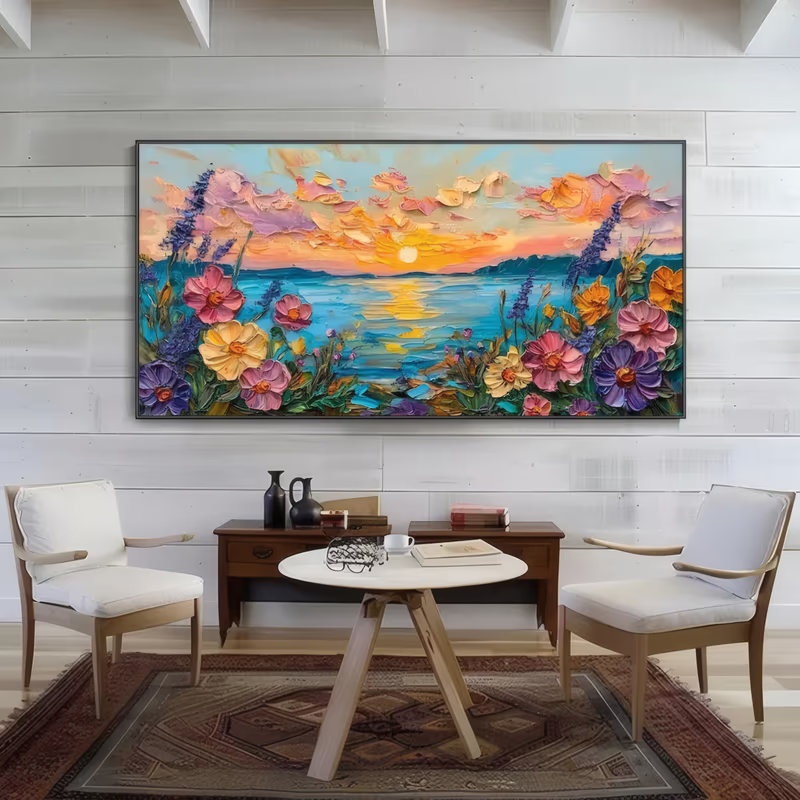
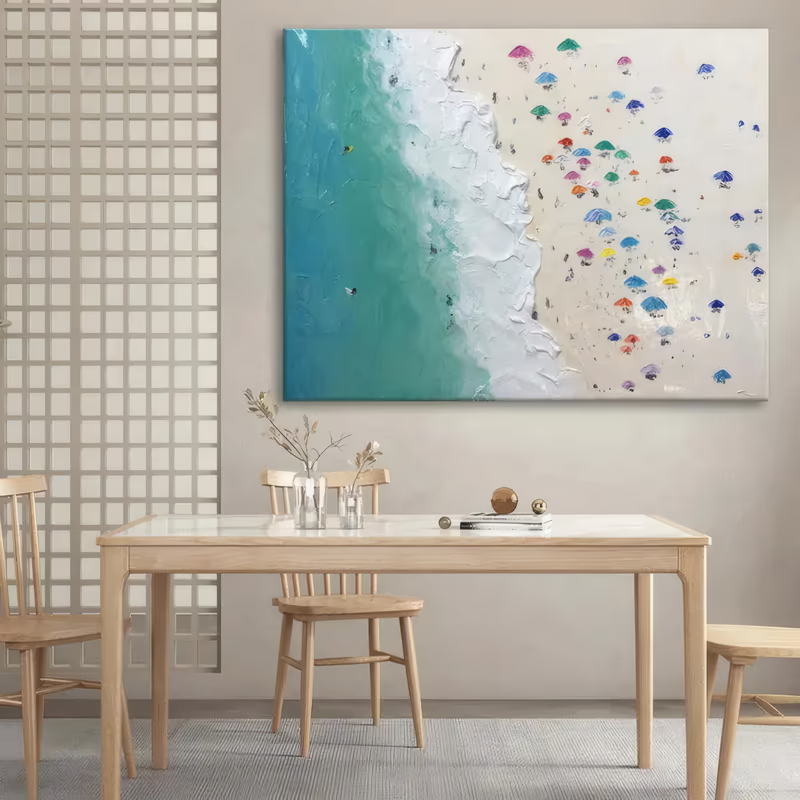
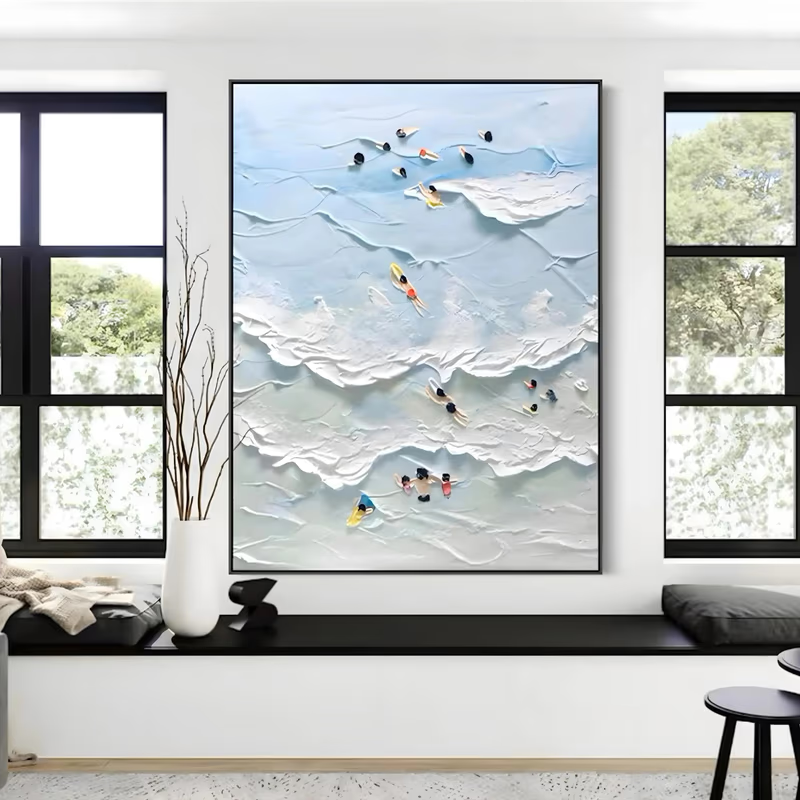
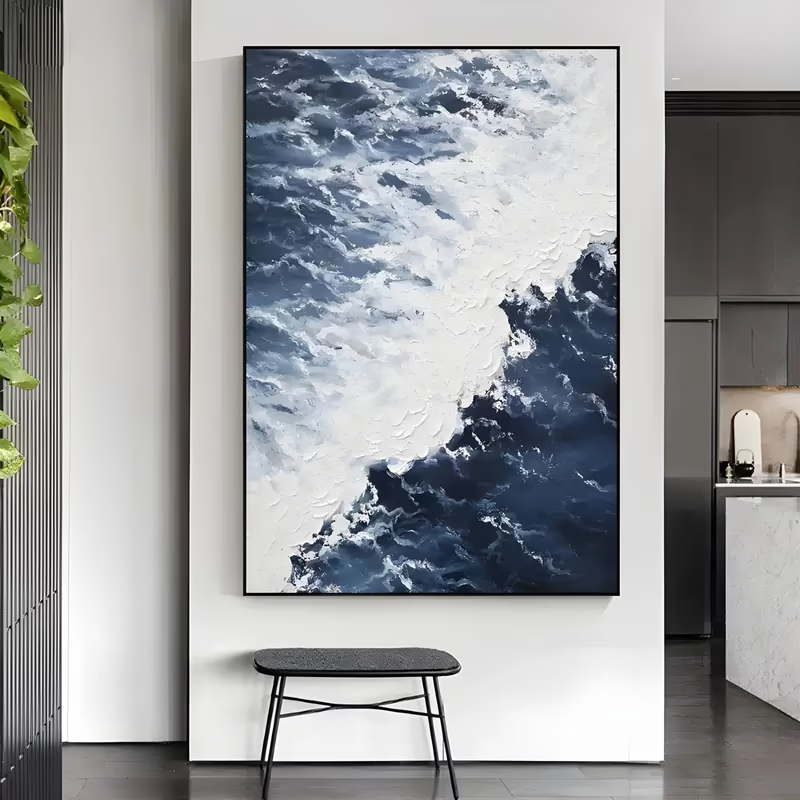
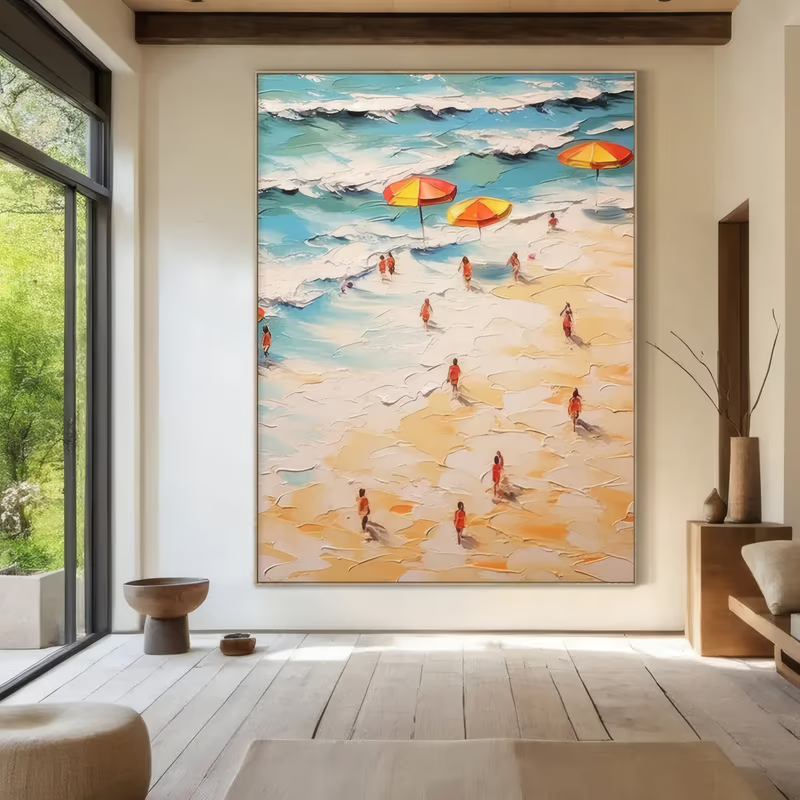
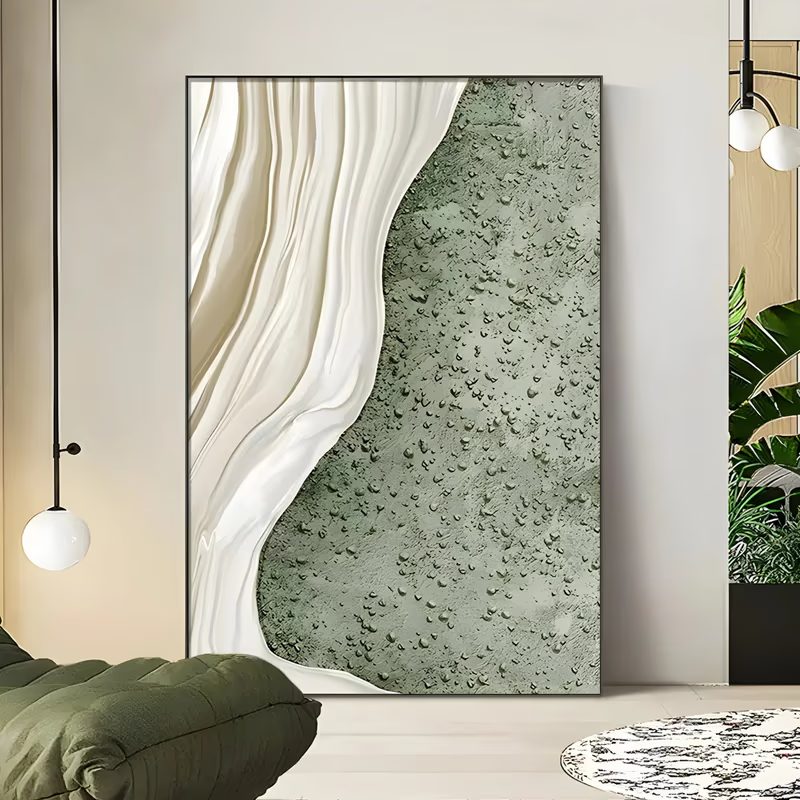
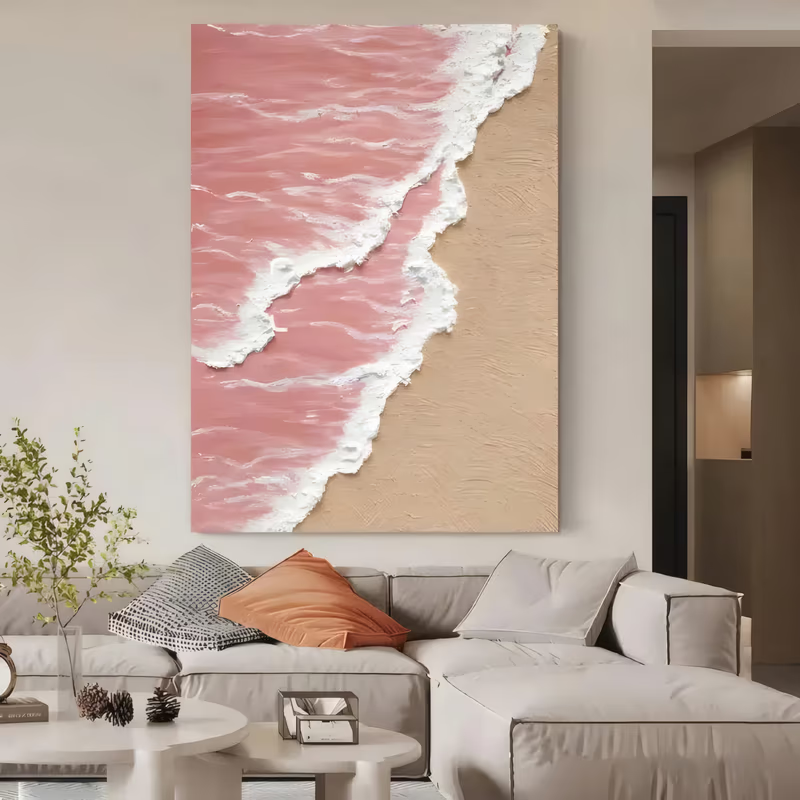
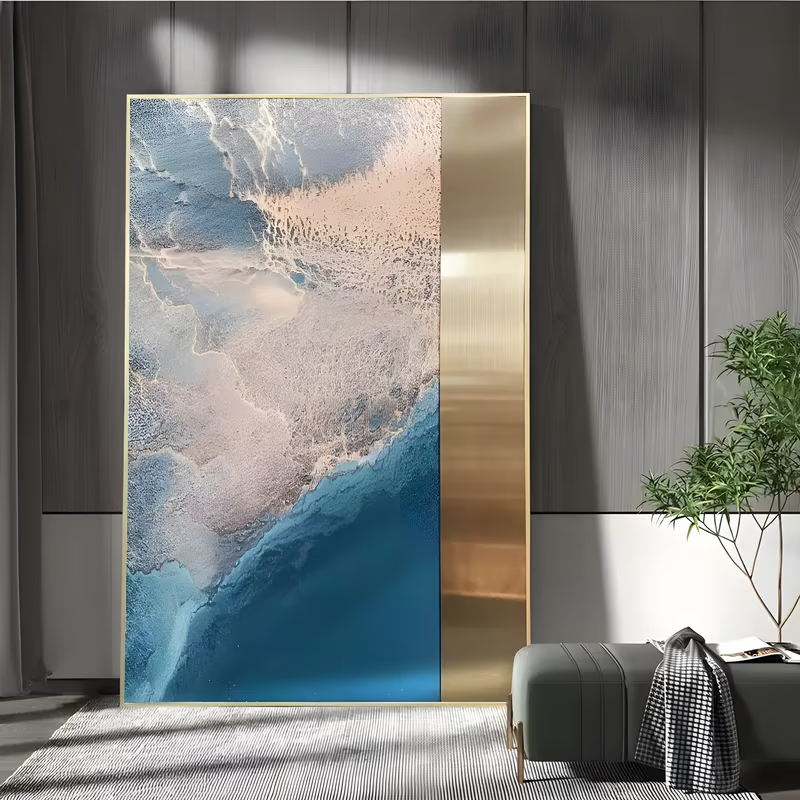
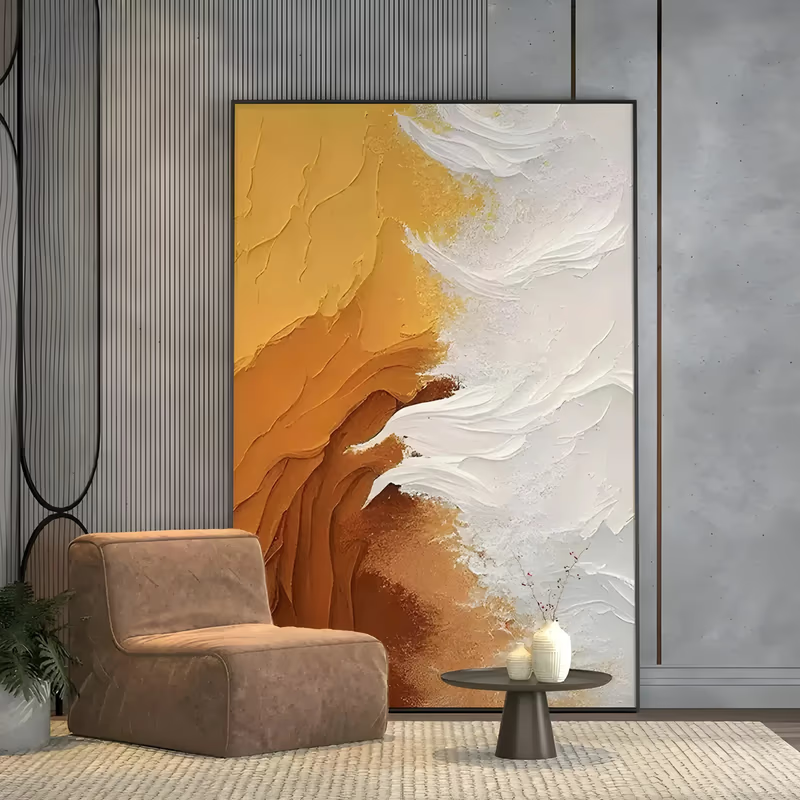
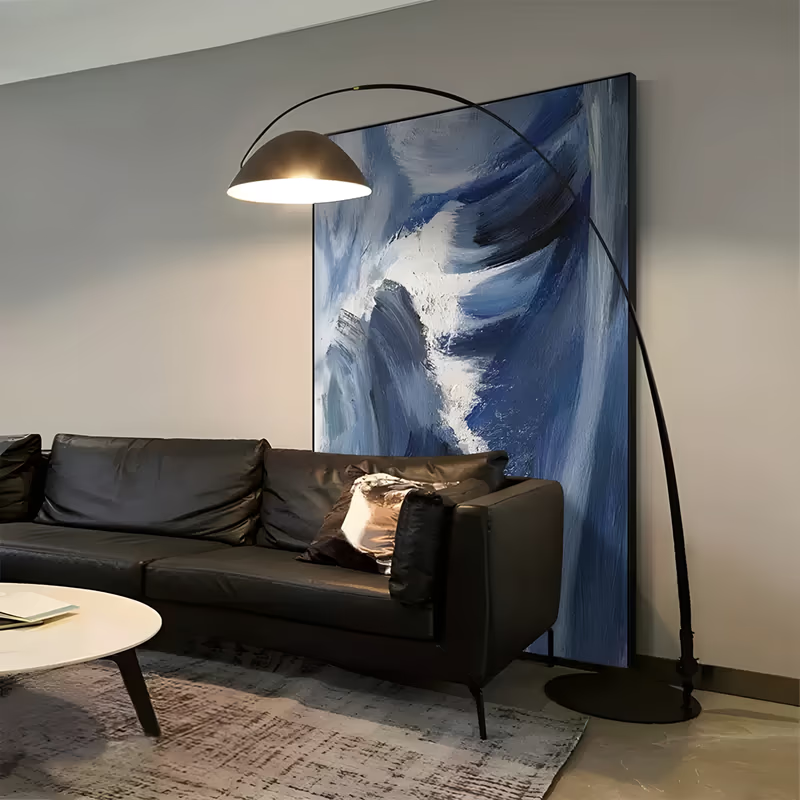
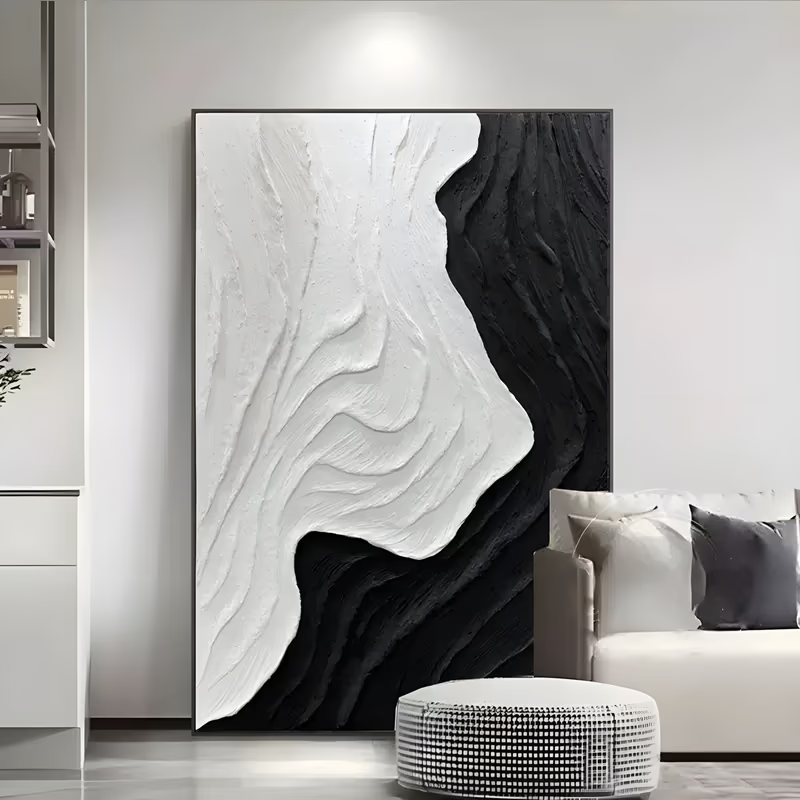
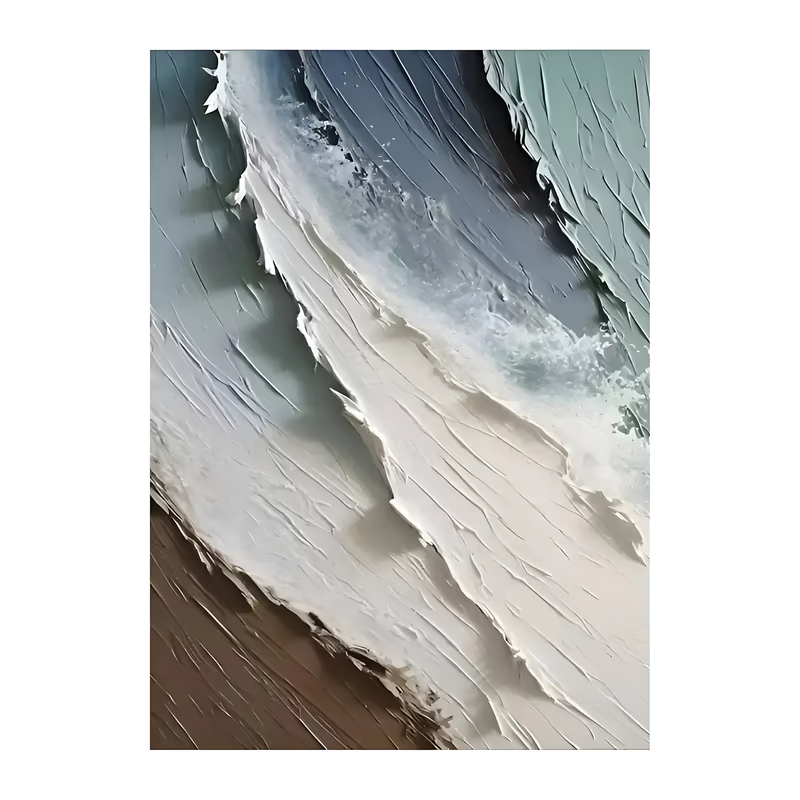
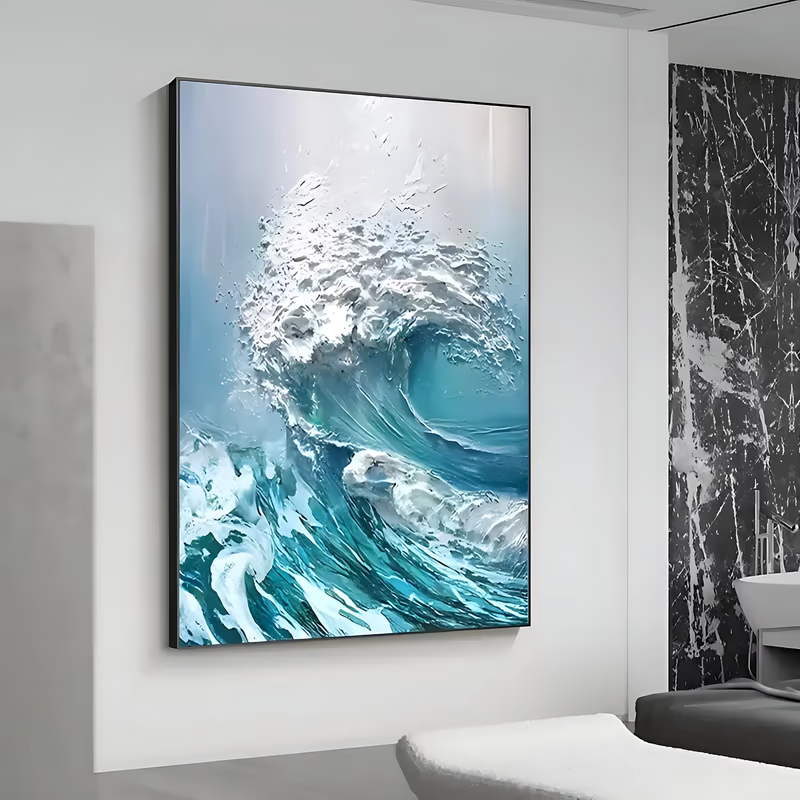
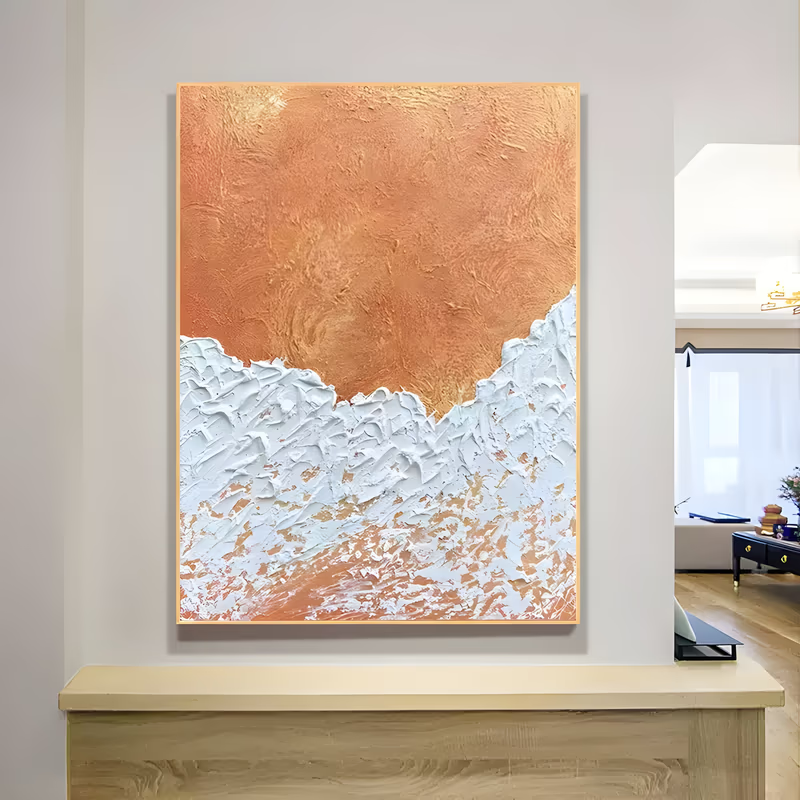
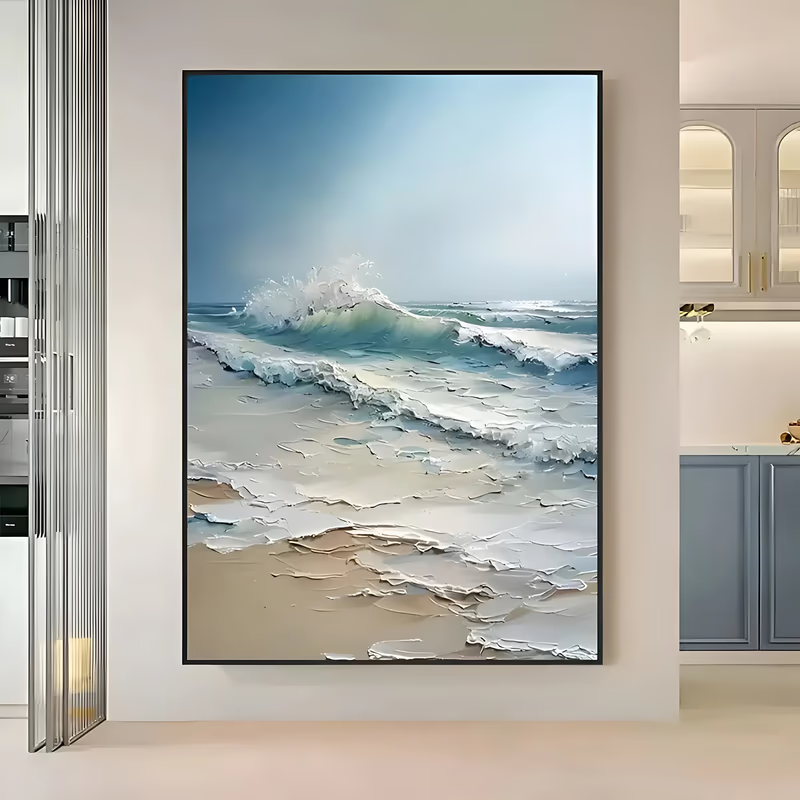
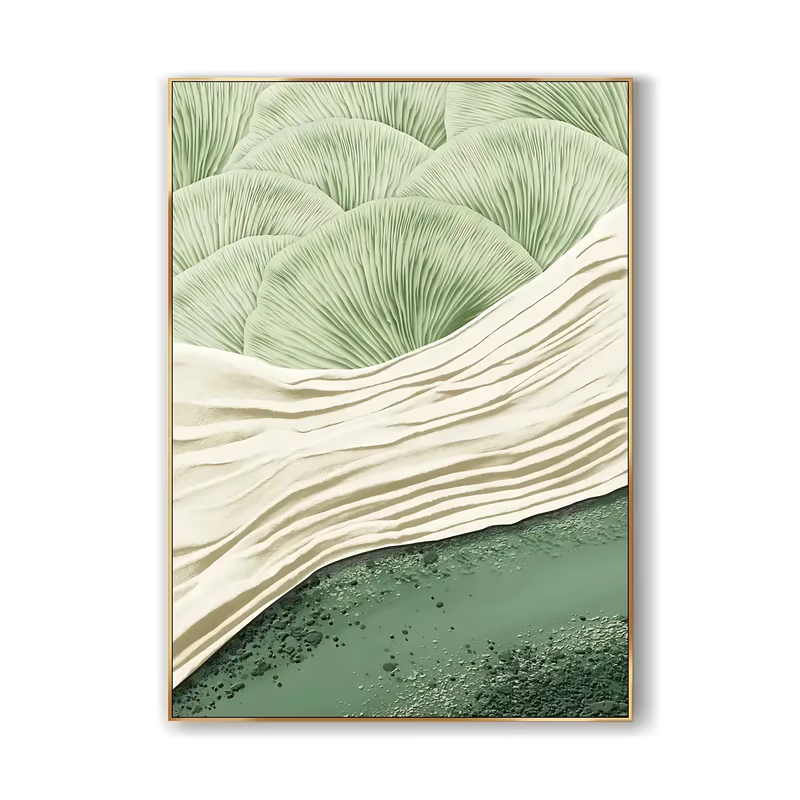
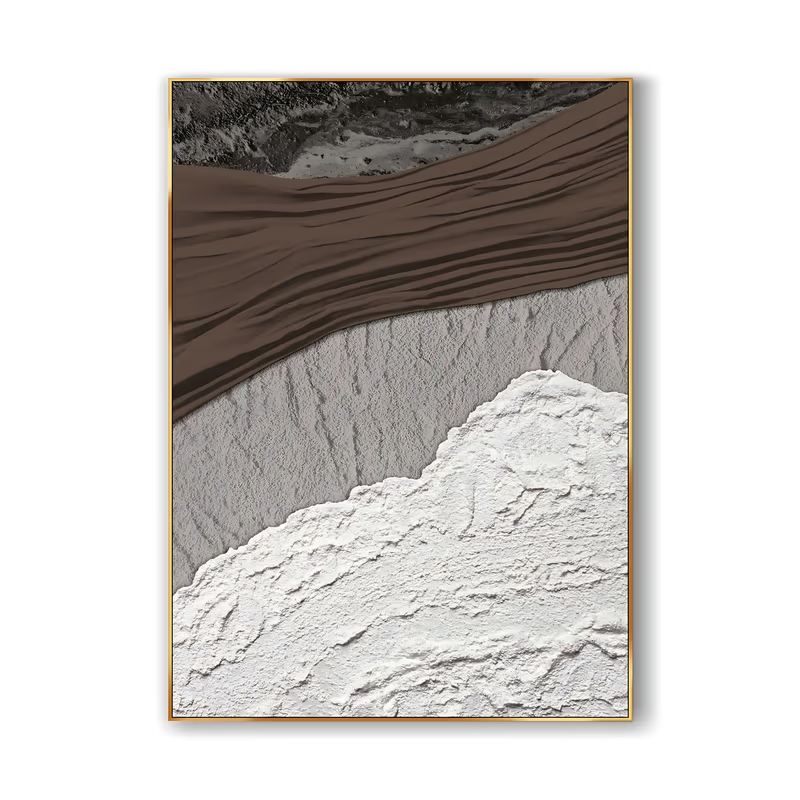
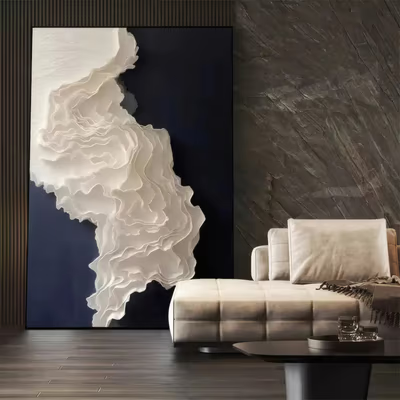
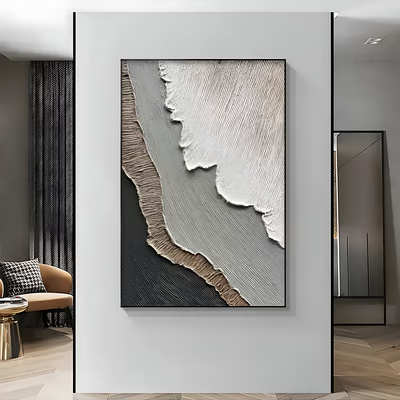
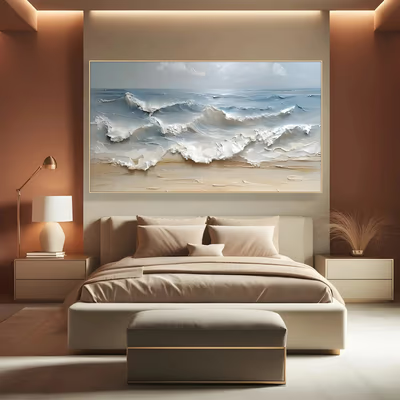
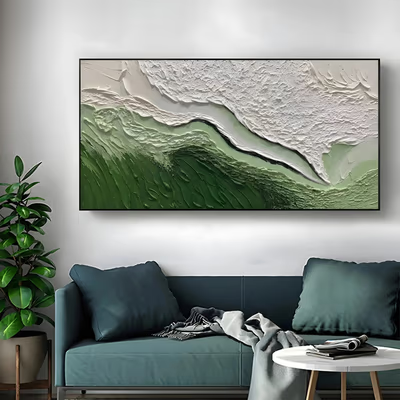
Plaster and heavy acrylic paste are built up so foam crests and surf lines physically stand off the canvas, often in white on navy, sage, sand or terracotta. Seen from above, beaches become a pattern of turquoise water, umbrellas and tiny swimmers. Side light from a window or a wall washer makes the relief cast real shadows, so these pieces change through the day.
Realistic waves and underwater scenes
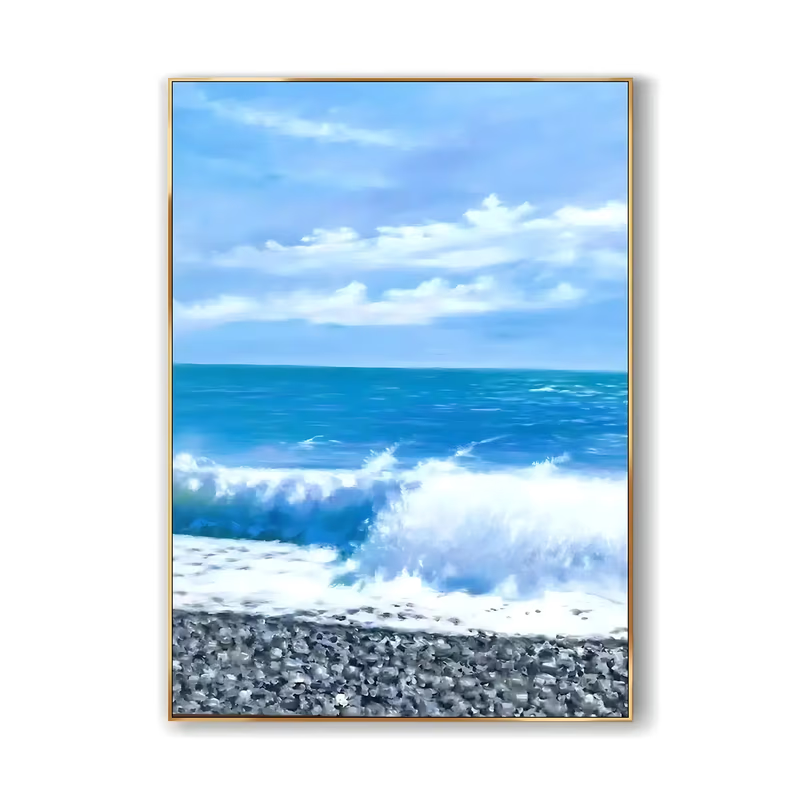
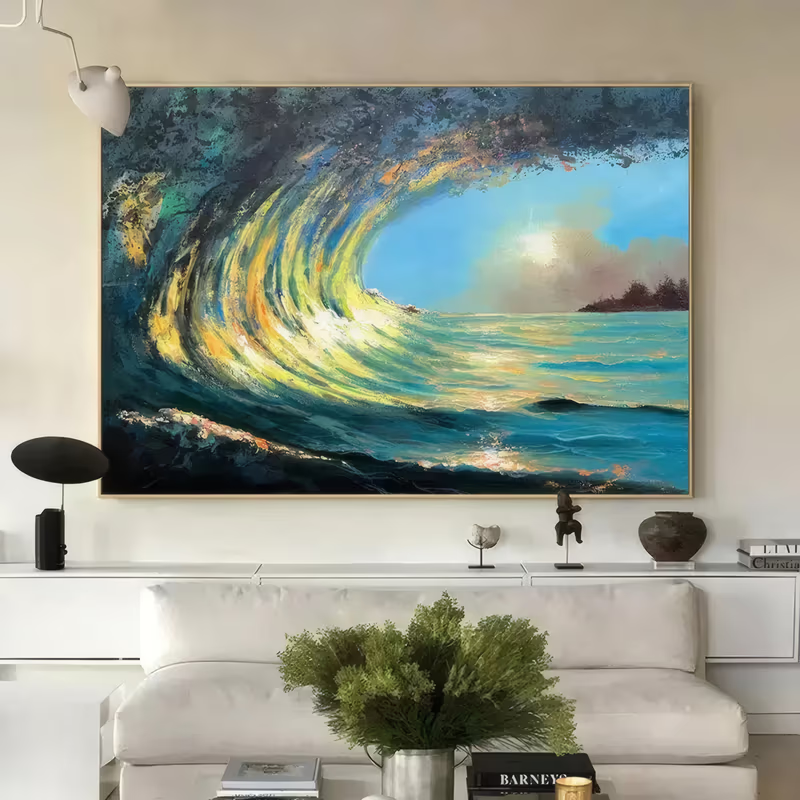
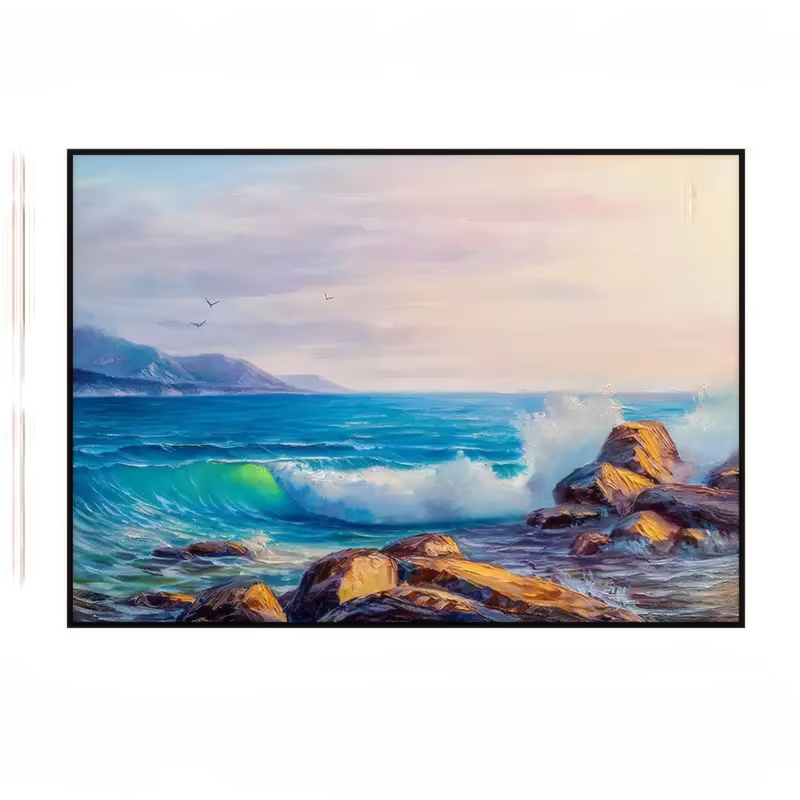
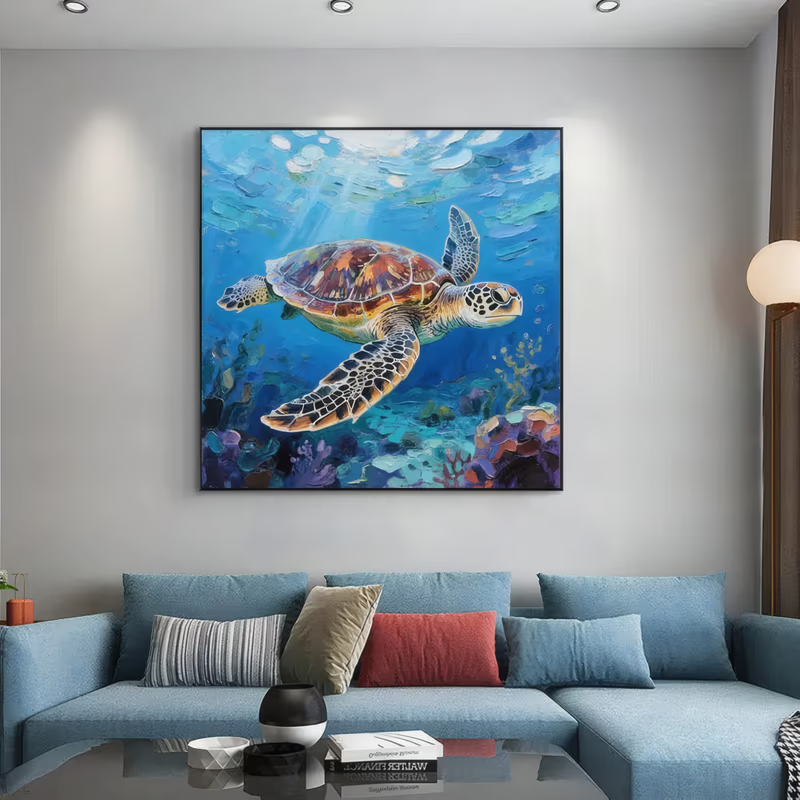
Hyperreal painting shows translucent green water, the curl of a wave over golden rocks, a pebble shore or a sea turtle over a coral reef. Detail rewards close viewing, which suits spa corridors, bathrooms and guest-room walls seen from a bed.
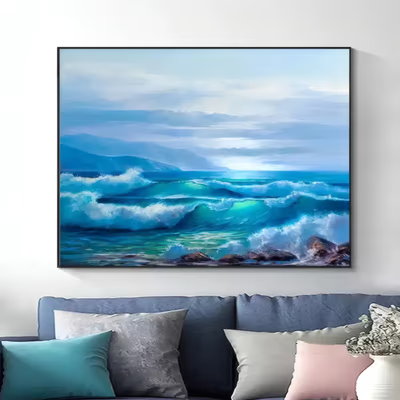
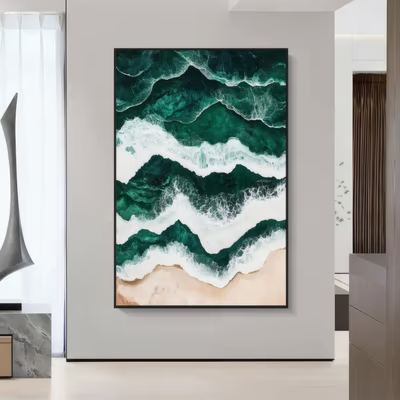
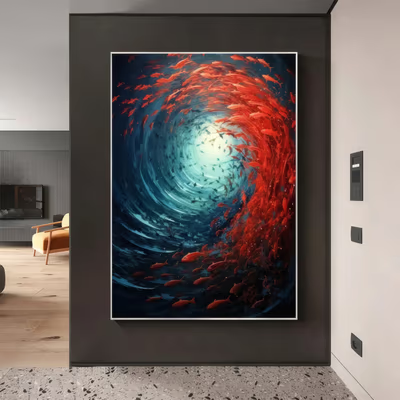
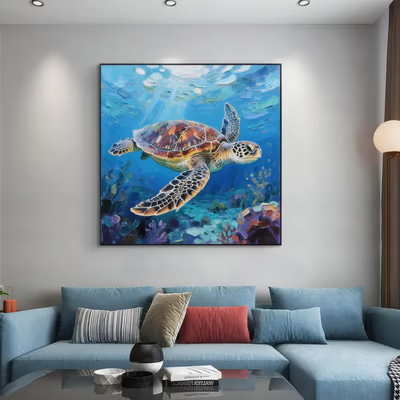
Abstract ocean art
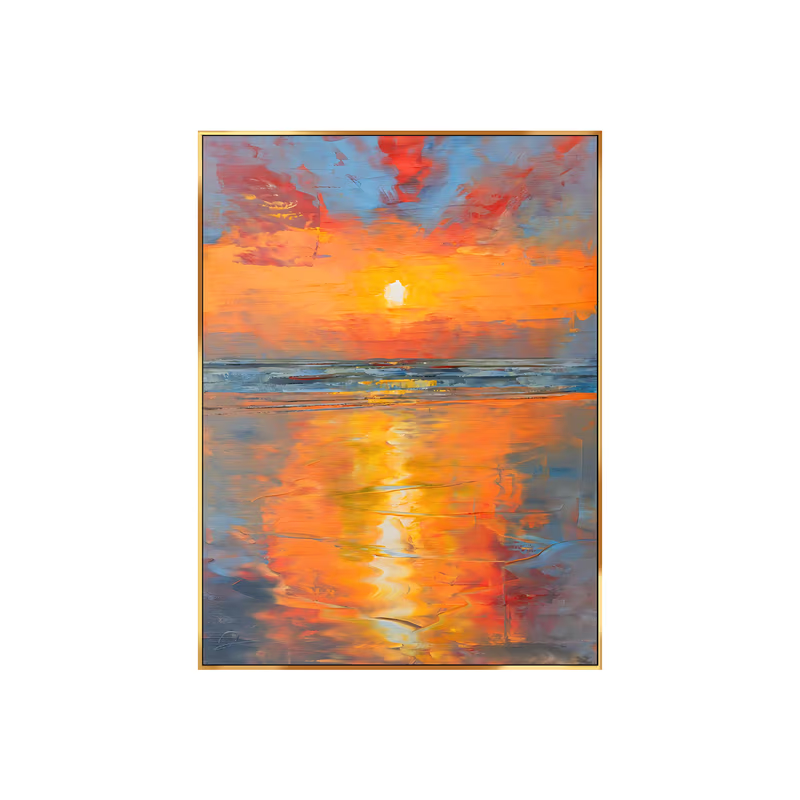
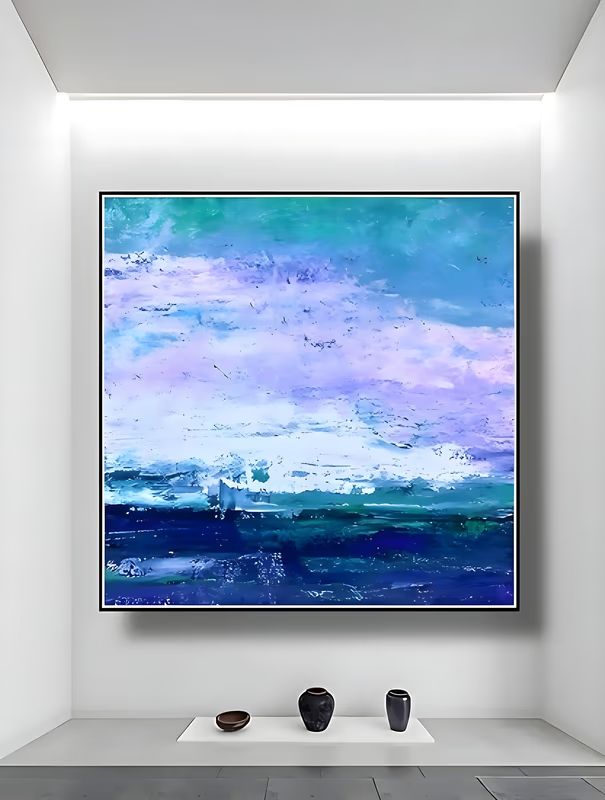
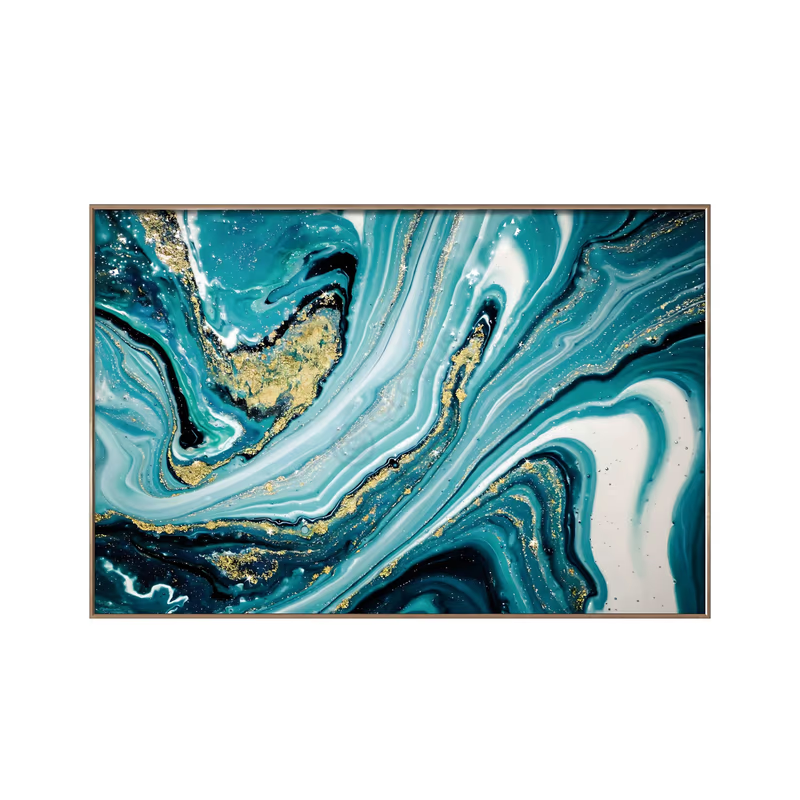
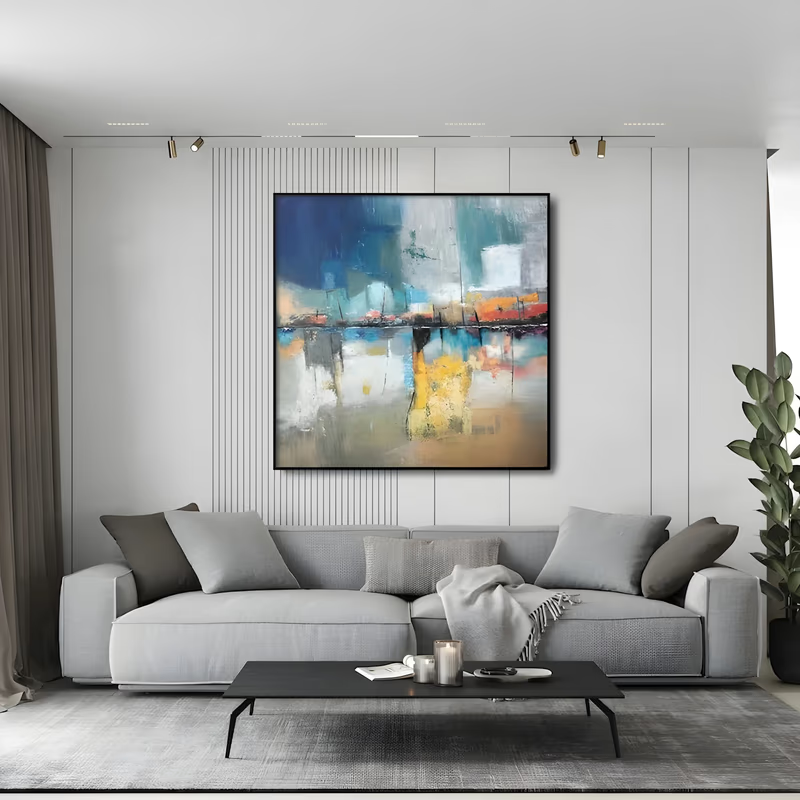
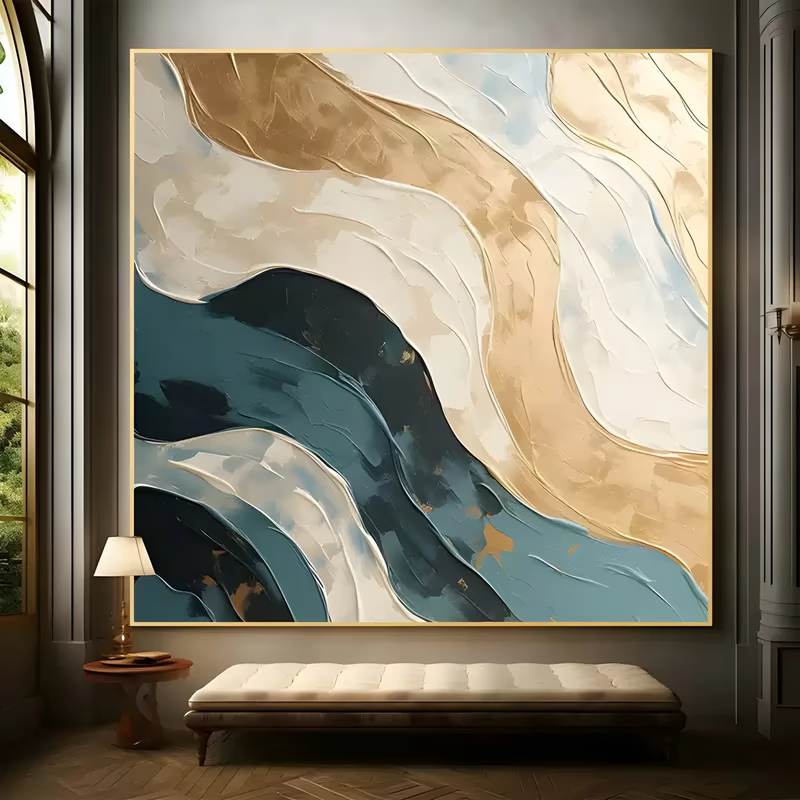
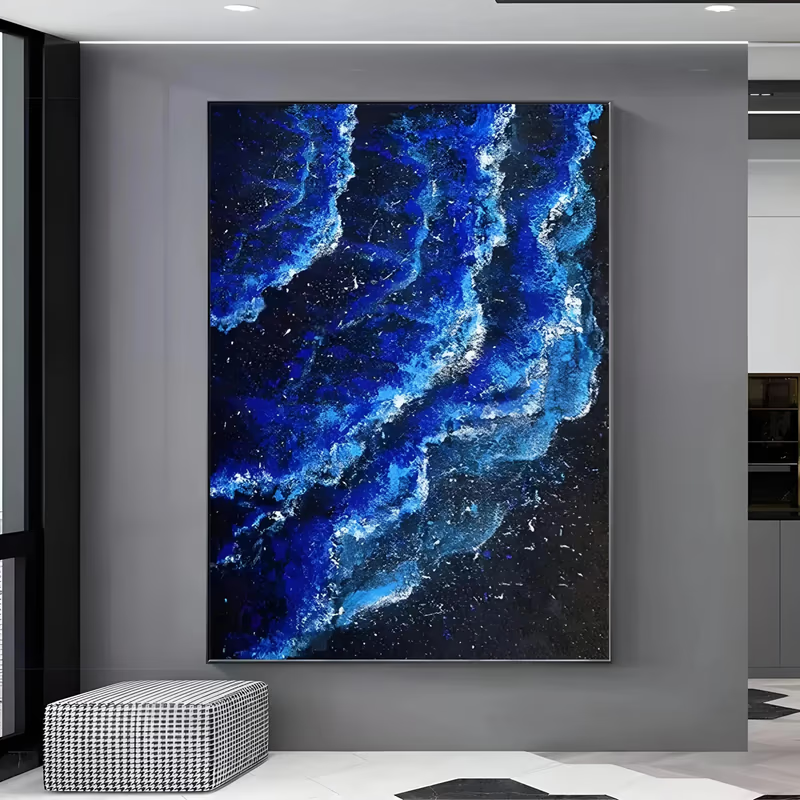
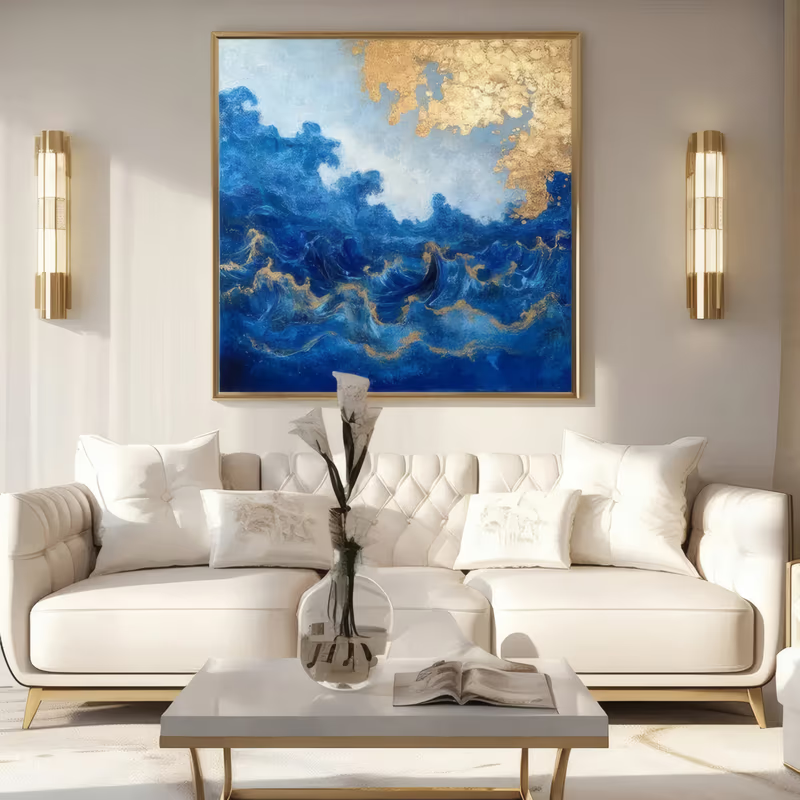
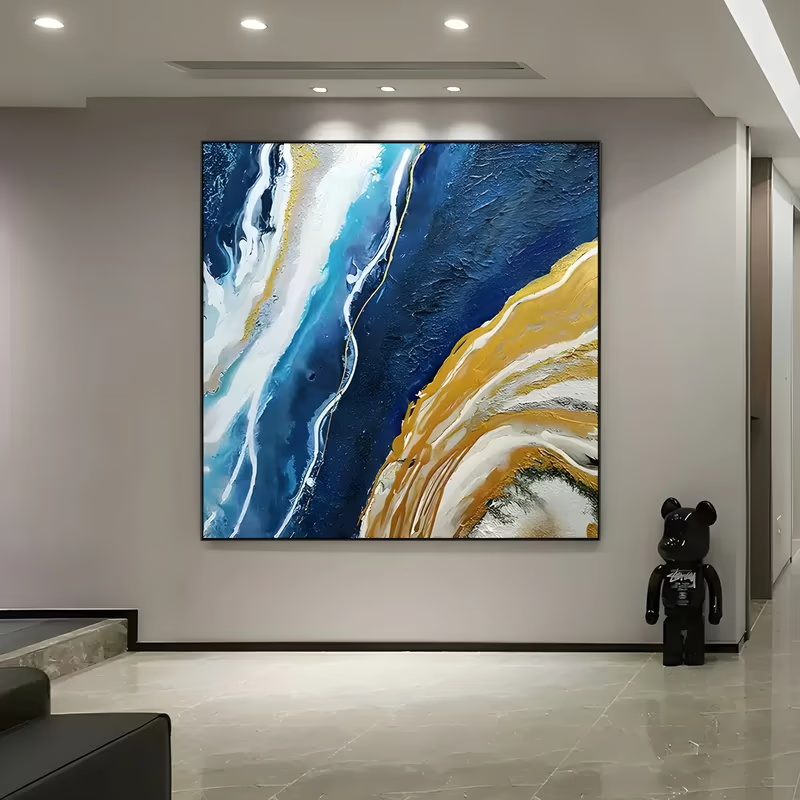
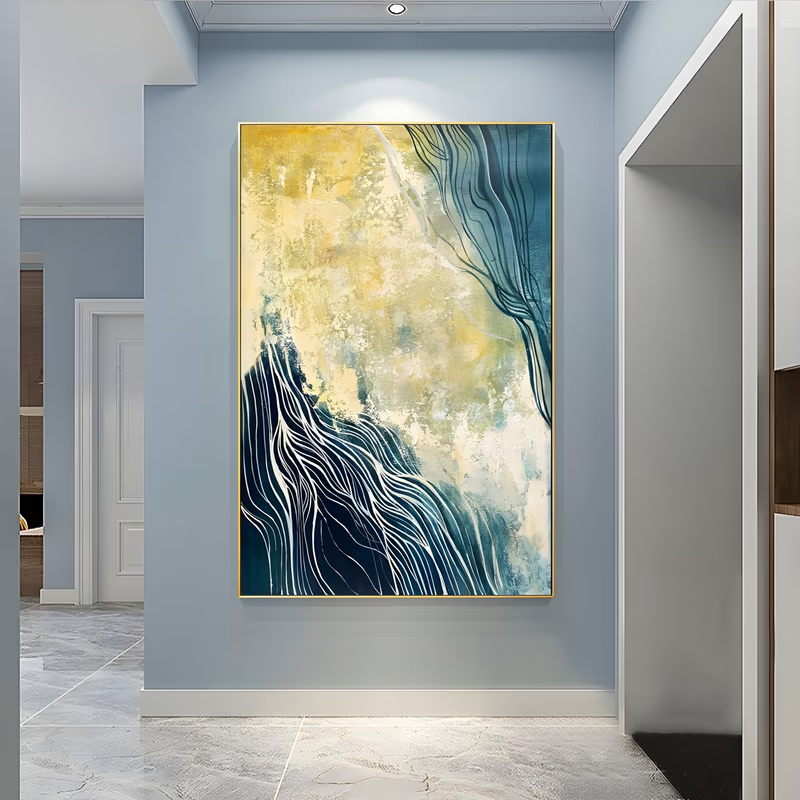
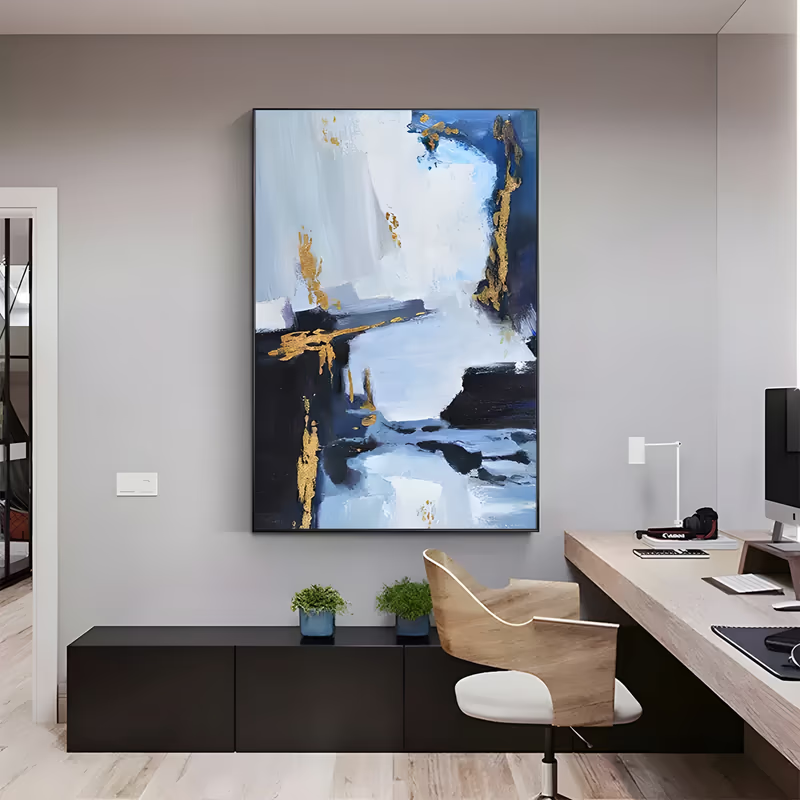
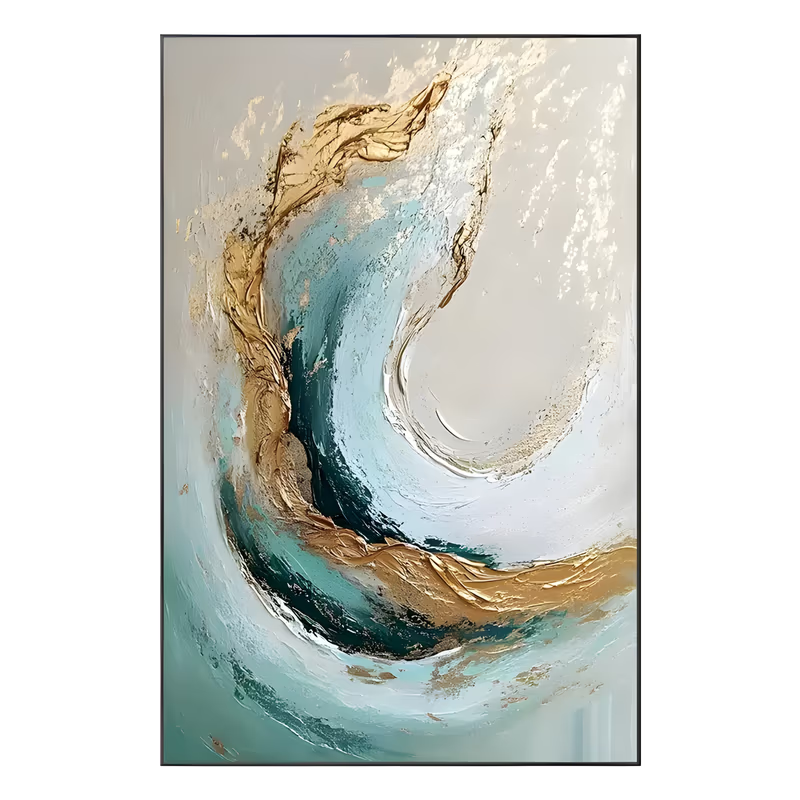
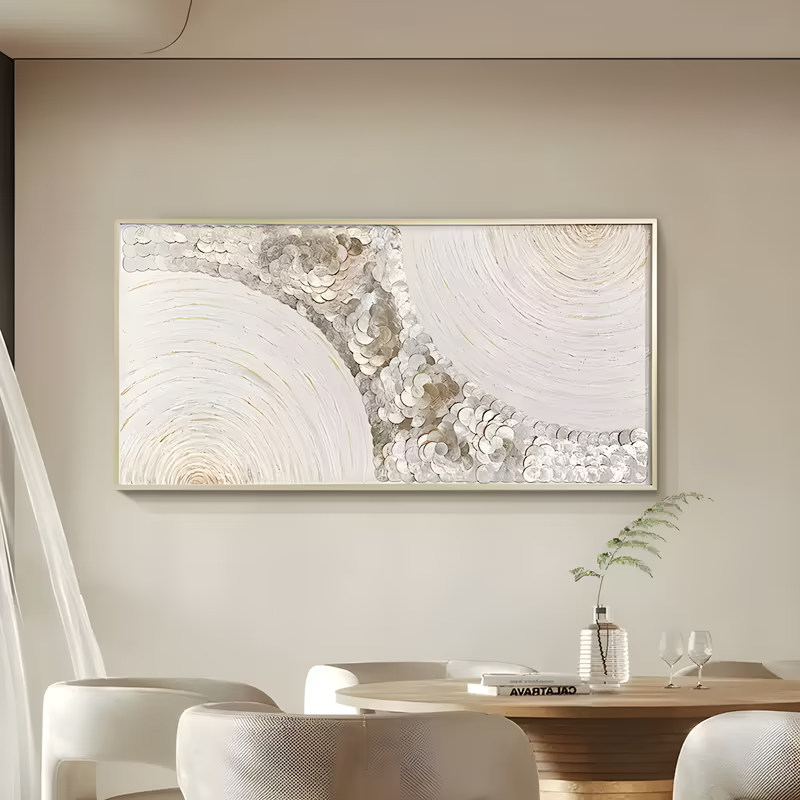
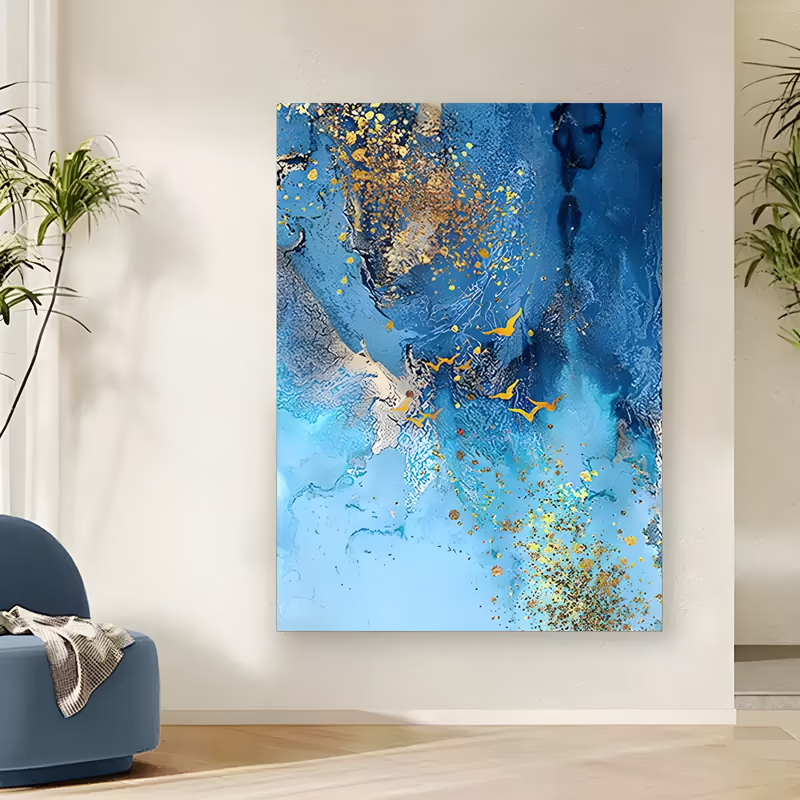
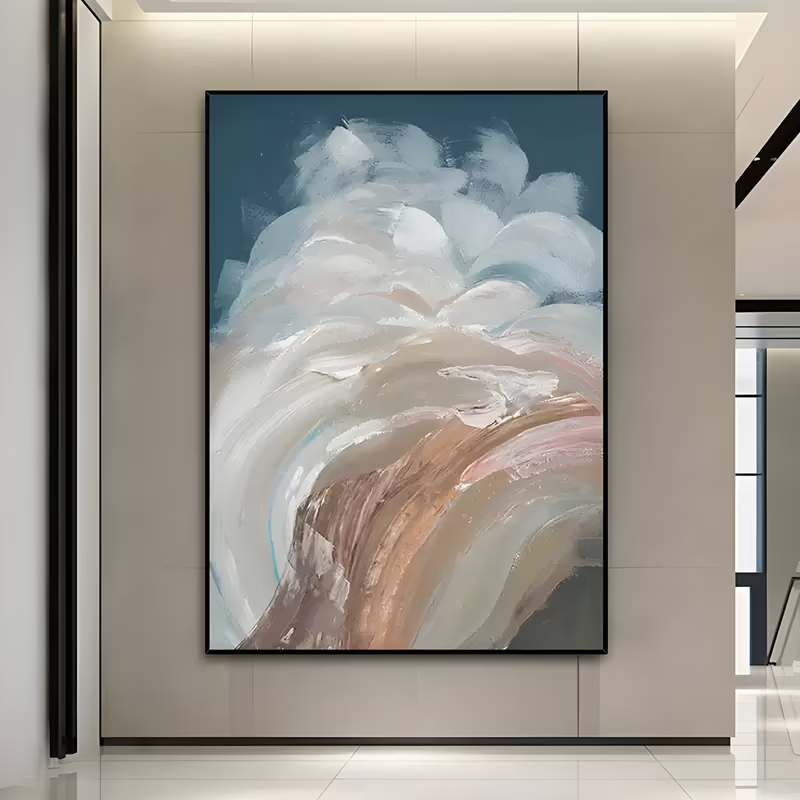
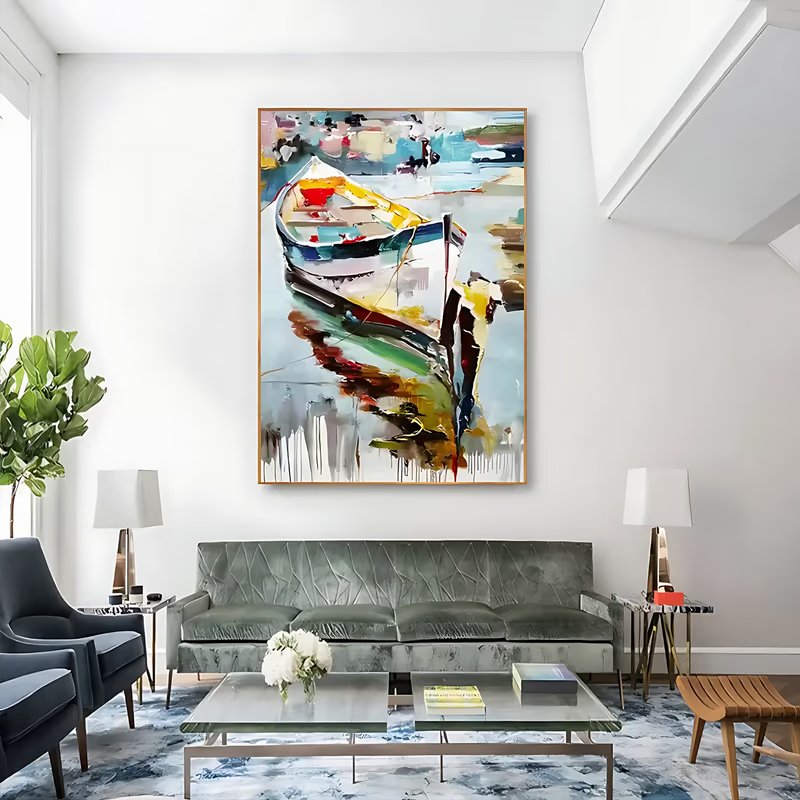
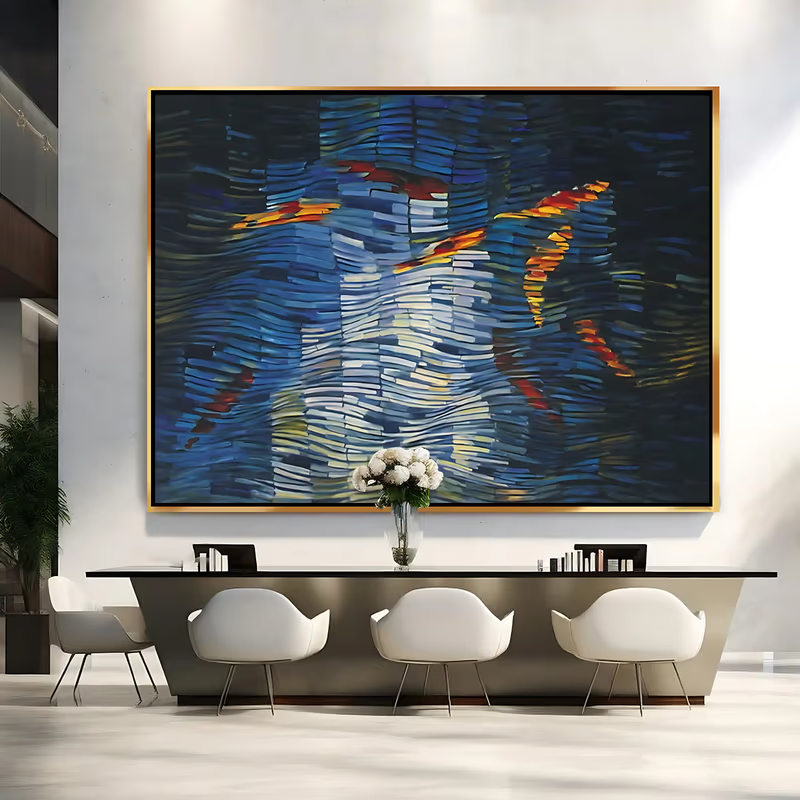
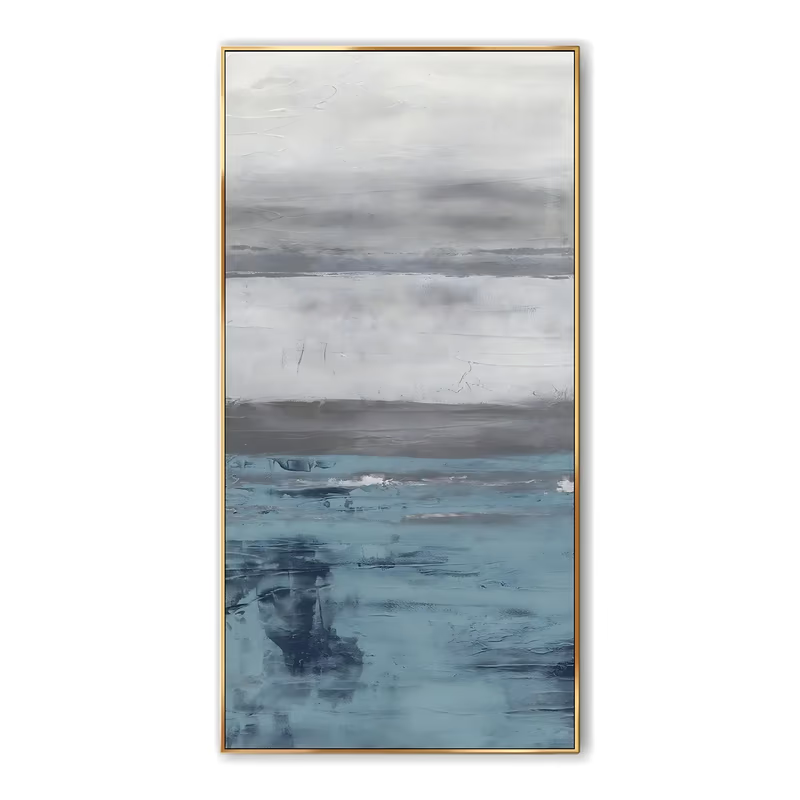
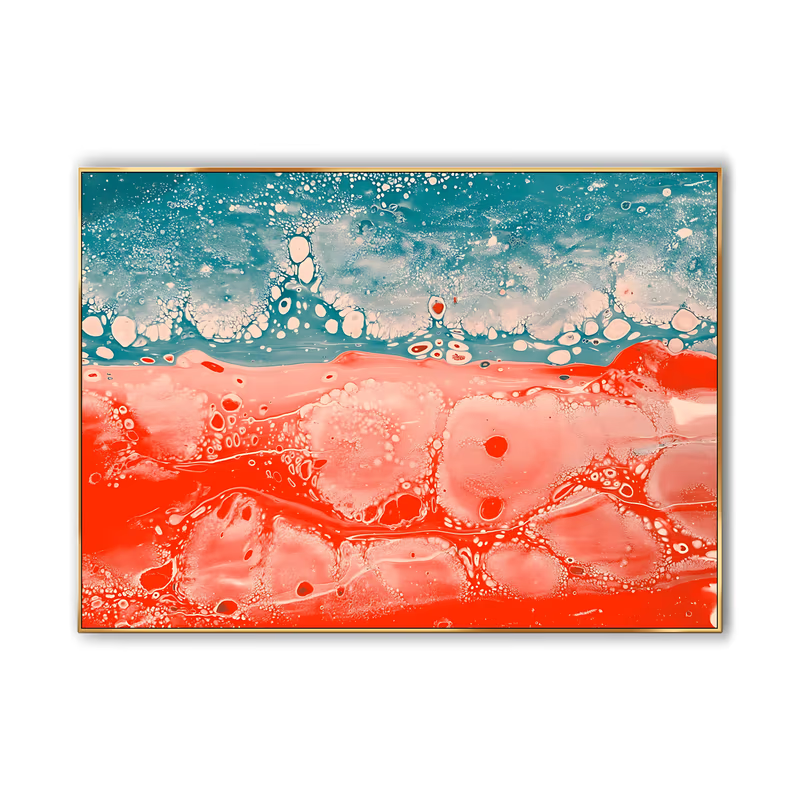
Fluid pours, gold leaf, marbled navy and sweeping teal strokes keep only the memory of the sea: its colour, its movement, a horizon band. This is the choice for contemporary interiors, offices and lobbies where a literal beach would feel out of place. The abstract style has more.
Where does ocean wall art work best, beyond the beach house?
Ocean wall art works anywhere a room needs a long view: over a sofa or bed, in bathrooms and spas, and in hotel rooms, corridors and restaurants that have no sea outside.
Living room
A wide horizon over the sofa gives an inland or city room the depth of a window. Seascapes for living rooms.
Bedroom and guest room
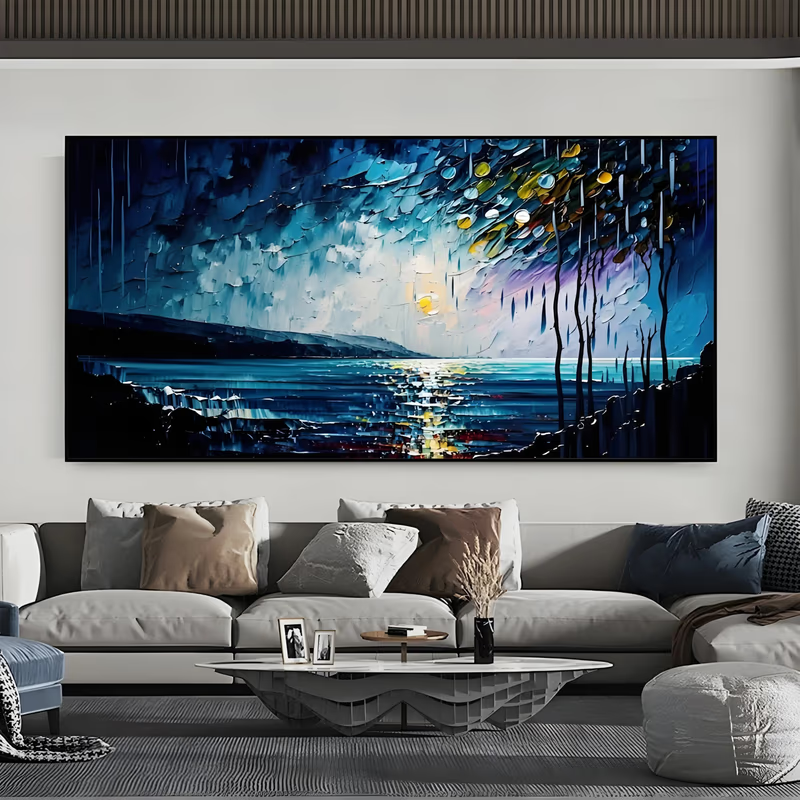
Still water, pale skies and moonlit bays are among the most restful images to fall asleep facing. Seascapes for bedrooms and guest rooms.
Bathroom and spa
Sea imagery belongs with water, but keep the canvas out of splash range and choose a framed piece where ventilation is weak. Seascapes for bathrooms and spas, and the spa and wellness buyer page.
Hotels, resorts and restaurants
A resort that faces the sea can echo it indoors; a city hotel can borrow it. Sculpted surf behind a reception desk, sunset seascapes along a corridor and a moody harbour over a bar all work. Seascapes for hospitality, and see resort villas and beach hotels.
How do you keep coastal wall art from looking like a theme?
Let one good seascape set the palette and leave out the props: the painting carries the sea, so the room only needs its colours and materials.
Coastal rooms go wrong when every object repeats the message: rope, anchors, shells, striped cushions and a sign that says beach. A painted sea is enough. Take two colours from the canvas into textiles and keep the rest of the room in natural materials. The table pairs the most common sea palettes with surfaces that suit them.
| Sea palette | Walls and large surfaces | Accents that work |
|---|---|---|
| Turquoise and sand | Warm white, limewash, pale oak, rattan | Terracotta, natural linen, brass |
| Navy and white surf | Crisp white, light grey, whitewashed wood | Polished chrome, indigo, a touch of red |
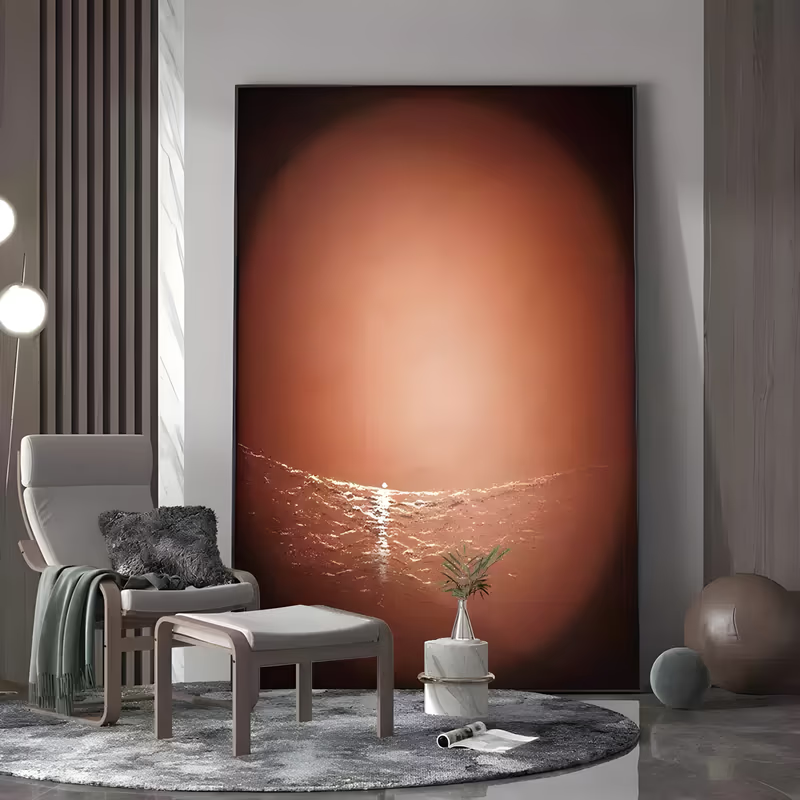
| Sunset coral and gold | Cream, greige, walnut | Ochre, rust, gold frames |
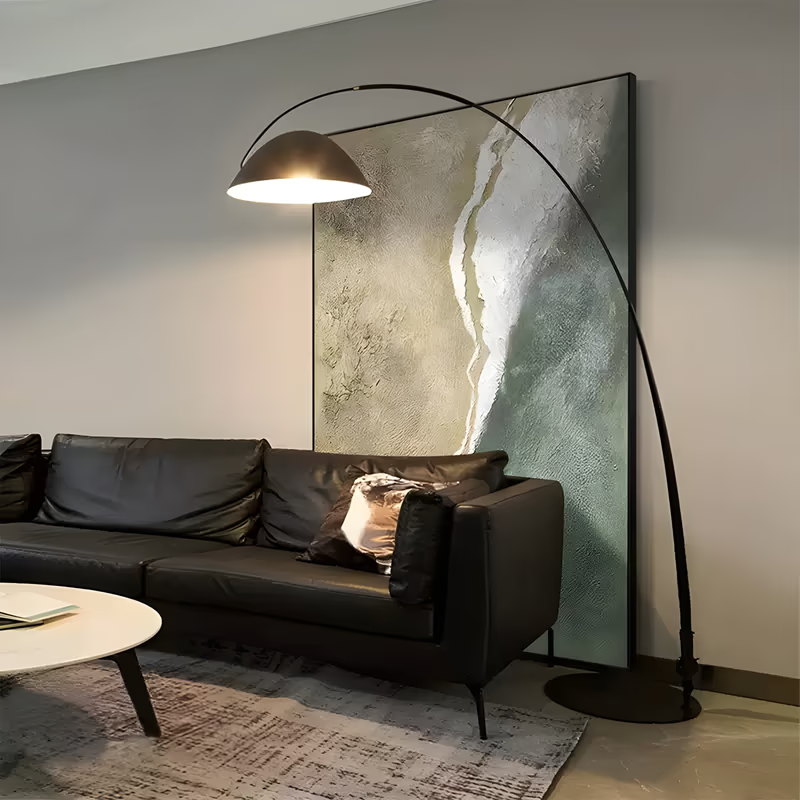
| Grey-green northern sea | Stone, putty, smoked oak | Charcoal, sage, wool and leather |
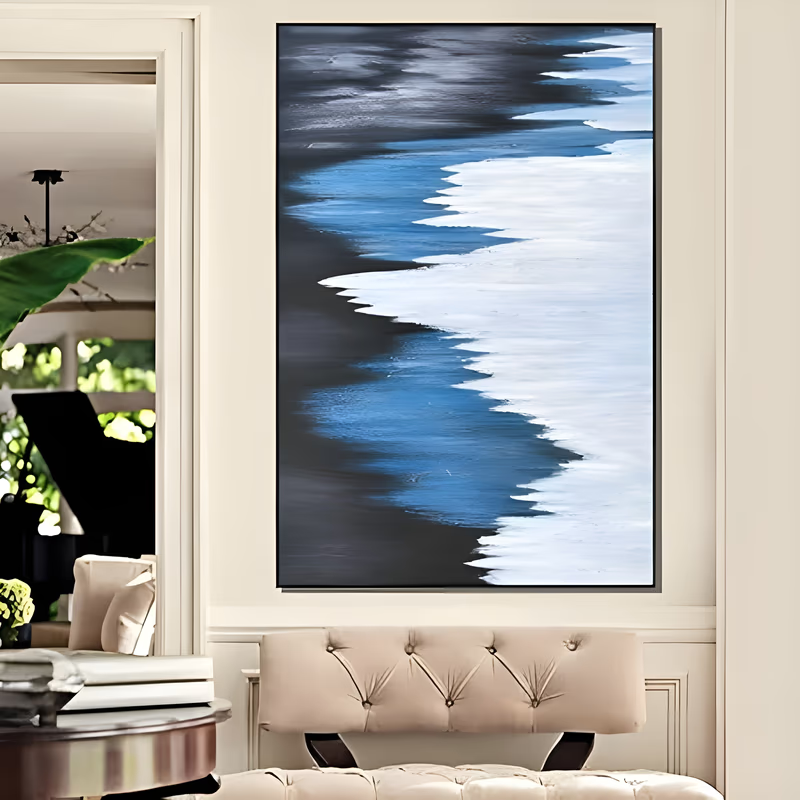
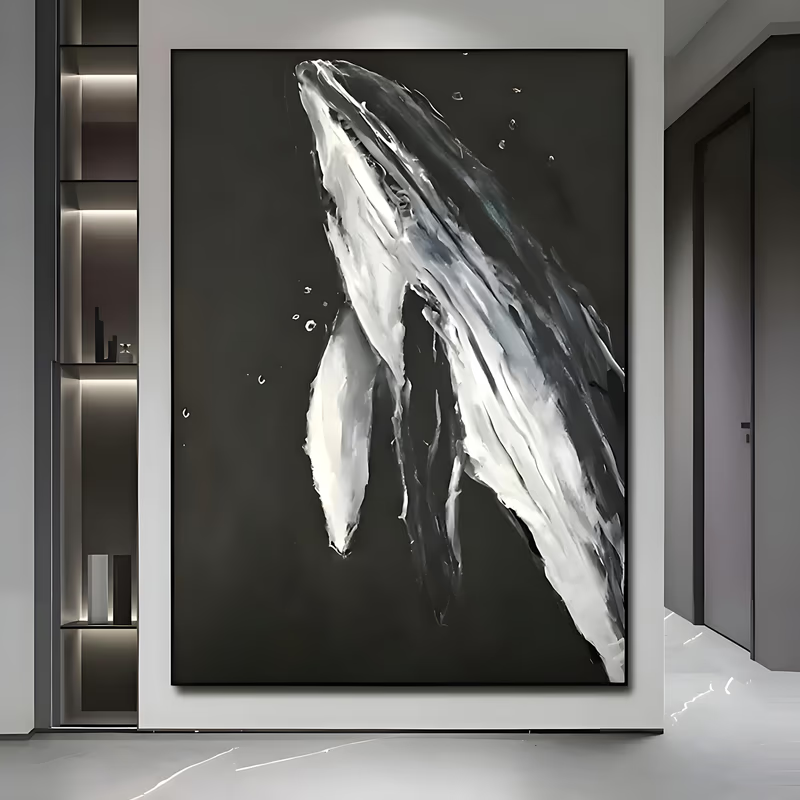
Sculpted white waves on a dark ground are the easiest way into a modern interior, since they read as texture first and sea second. If your scheme is already set, browse by colour, for example blue wall art or teal wall art.
What size seascape do you need, and where should its horizon sit?
Choose a width of about two-thirds of the furniture below, then hang the canvas so its painted horizon falls close to the eye level of the person who will look at it most.
The horizon is what makes a seascape behave like a window. Over a sofa, where people sit, a horizon a little lower than usual feels natural; in a corridor or lobby, where people stand and walk, set it nearer 150–160 cm (59–63 in) from the floor. A low horizon with a big sky feels open and calm; a high horizon with more water feels closer and more immersive.
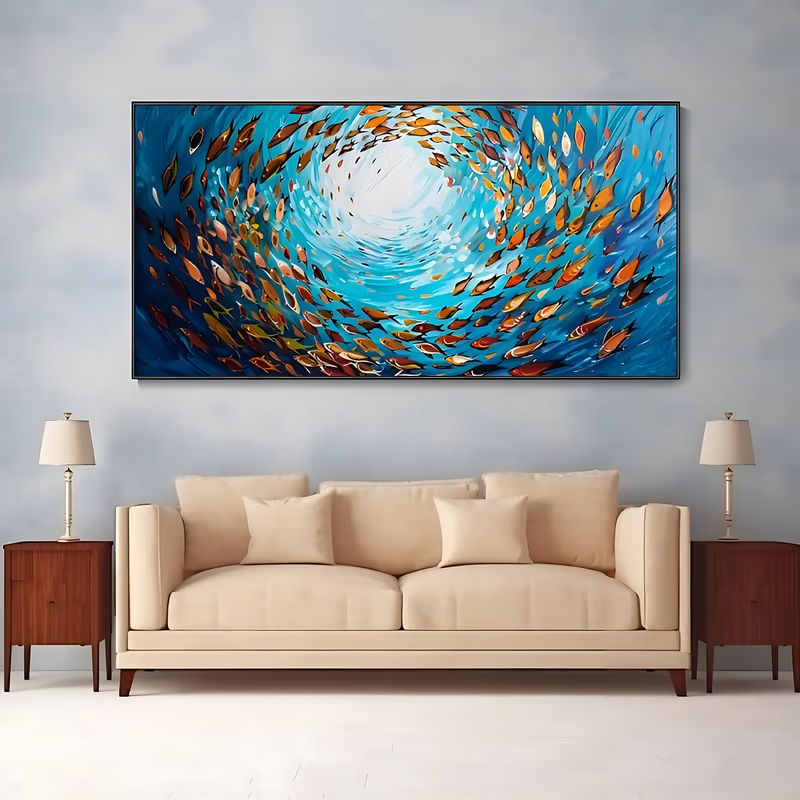
Format follows the wall. A panoramic seascape suits a headboard wall, a banquette or a long corridor run. A vertical seascape, such as a tall wave or an aerial shoreline, fits a narrow pier between windows or the wall beside a door. In a large lobby, measure the distance from which most guests first see the wall: at 8–10 m (26–33 ft) a painting needs to be at least 180–200 cm (71–79 in) across to register. Every piece is painted to the size you give, and the composition is redrawn to the new proportions rather than stretched.
How is a made-to-order seascape painting approved before it ships?
You agree the size and the sea colours first, then approve progress photos at each stage, and nothing moves on until you say so.
Send a photo of the wall, its width and a paint code or fabric swatch, and the water, sky and sand can be warmed or cooled to match: turquoise pushed toward teal, a sunset softened to blush, a navy sea lifted to cobalt. Any catalogue seascape can be painted in another colourway, and a series for a hotel floor can be varied so each room's piece is related without repeating. Painting takes about 10 days and each stage is shown in photos or video before the next starts; a final photograph is approved before dispatch. The canvas then ships rolled, stretched and ready to hang, or framed in gold, silver, black, white or wood. 3D plaster and deep relief pieces are the exception: they travel stretched or framed, and are only rolled if you agree to have the texture made thin enough for transport. Ask for a quote or read about custom sizes and colourways.