Minimalist art guide · Updated
How to choose minimalist wall art
Key takeaways
- Less, but larger: one generous minimalist canvas does more for a calm room than several small ones.
- The empty space is part of the picture: where the motif sits, and how much open ground surrounds it, is the composition; keep that ratio when you change the size.
- Stay in one colour family: tonal neutrals, black and white, or earth tones with a single accent keep minimalist art restful.
- Hand-painted ground, not blank canvas: brush, comb and trowel marks in the background give a minimal piece warmth that a flat print cannot.
What is minimalist wall art?
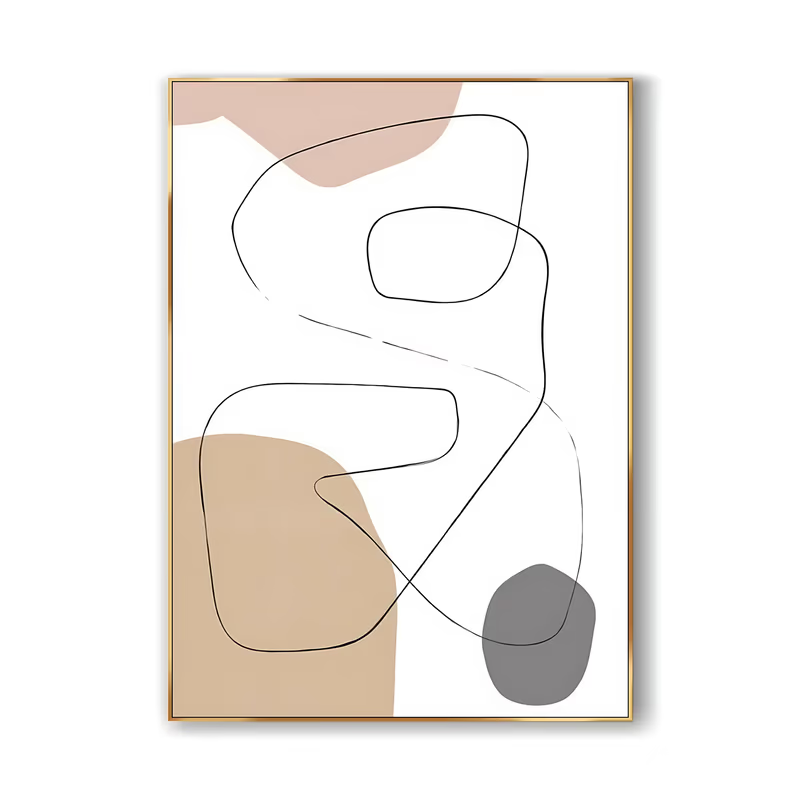
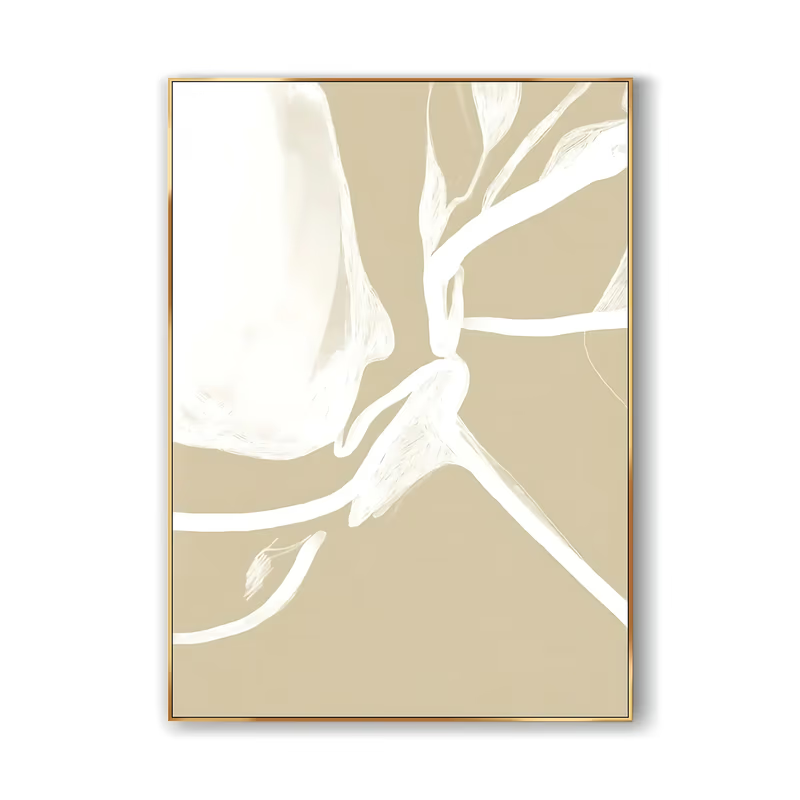
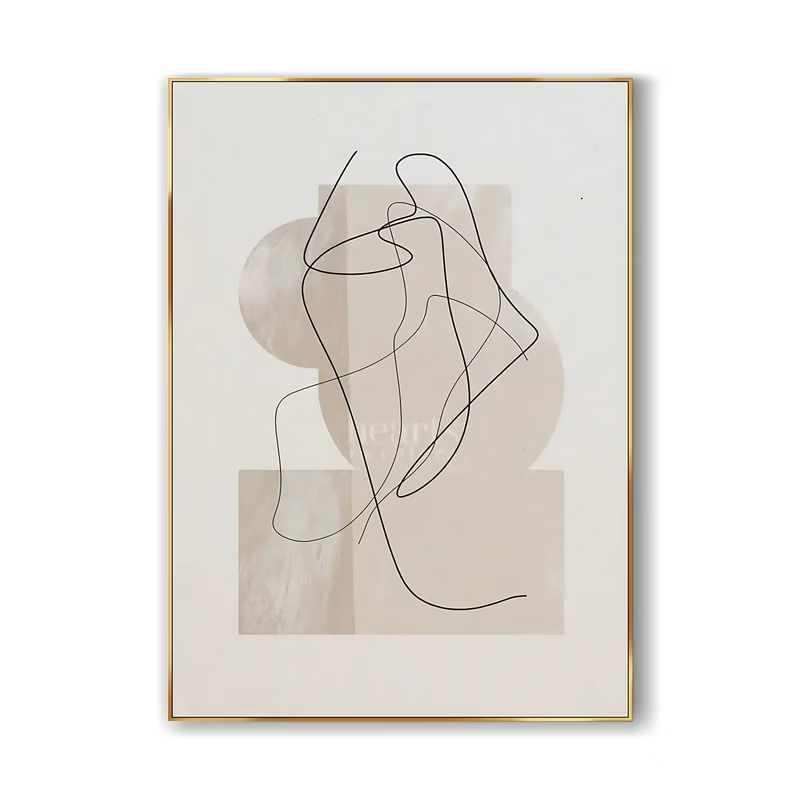
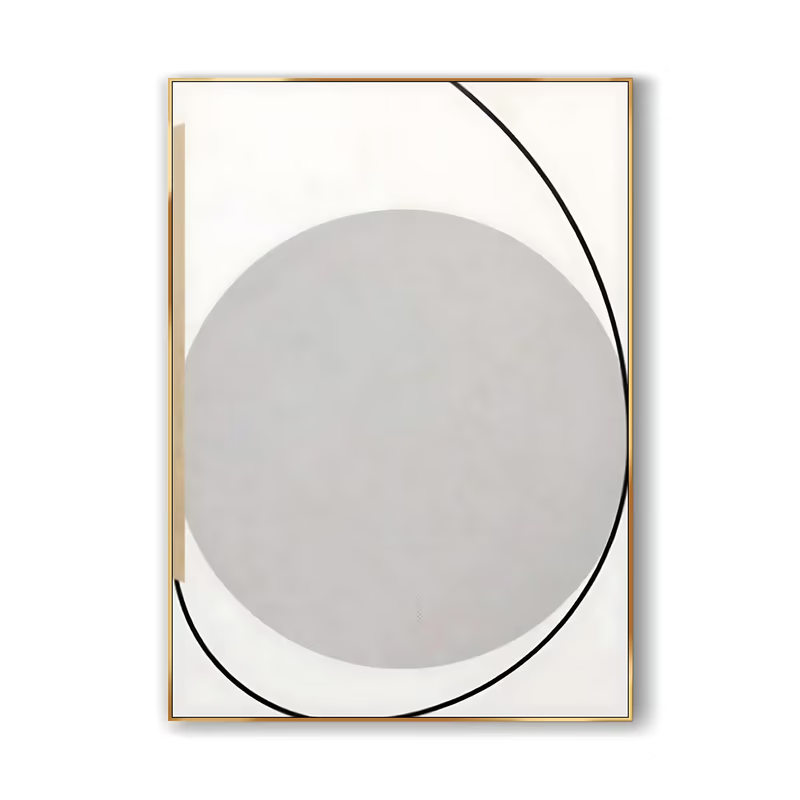
Minimalist wall art reduces a picture to a few essential elements, usually one motif, two or three colours and a lot of open space, so the wall feels calm and ordered.
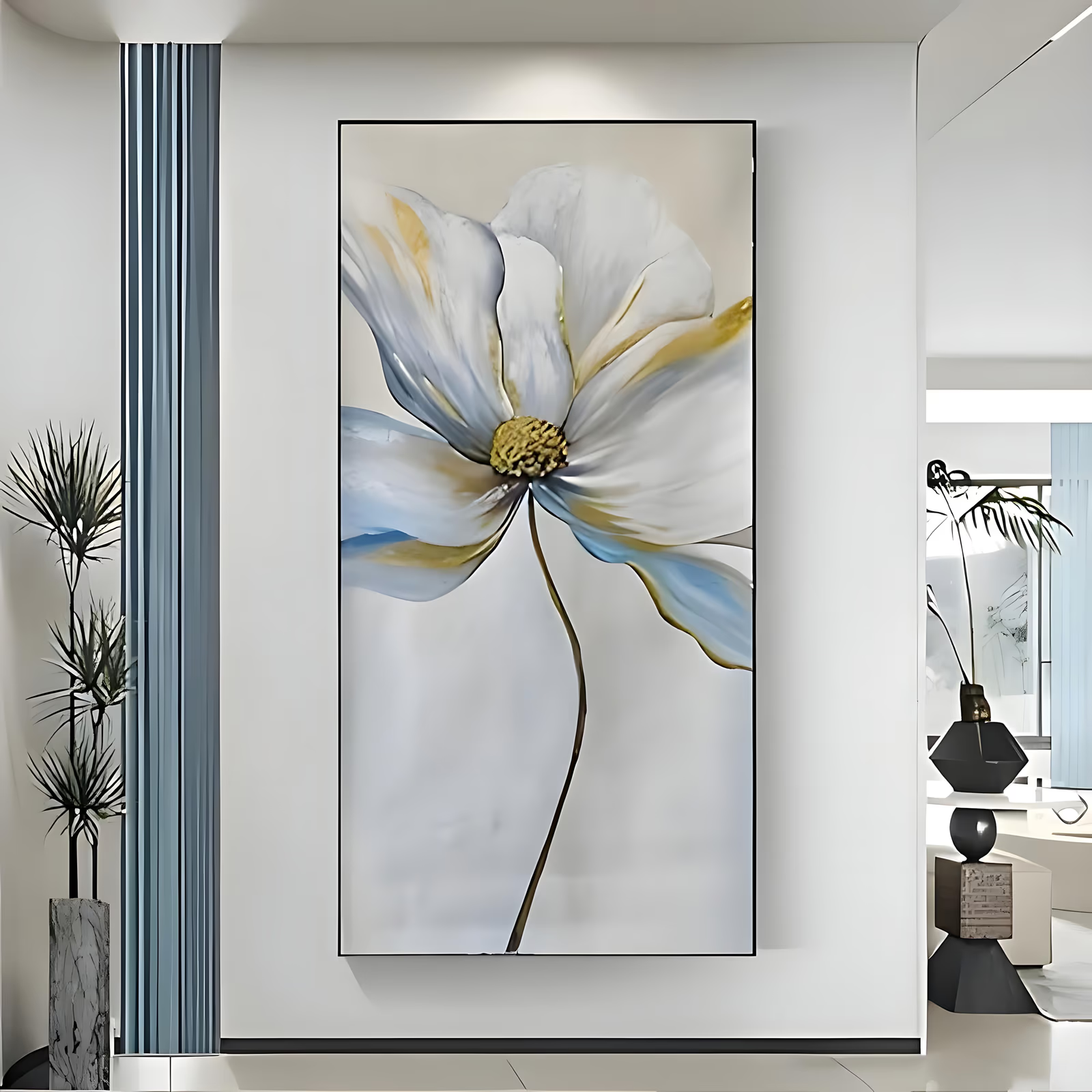
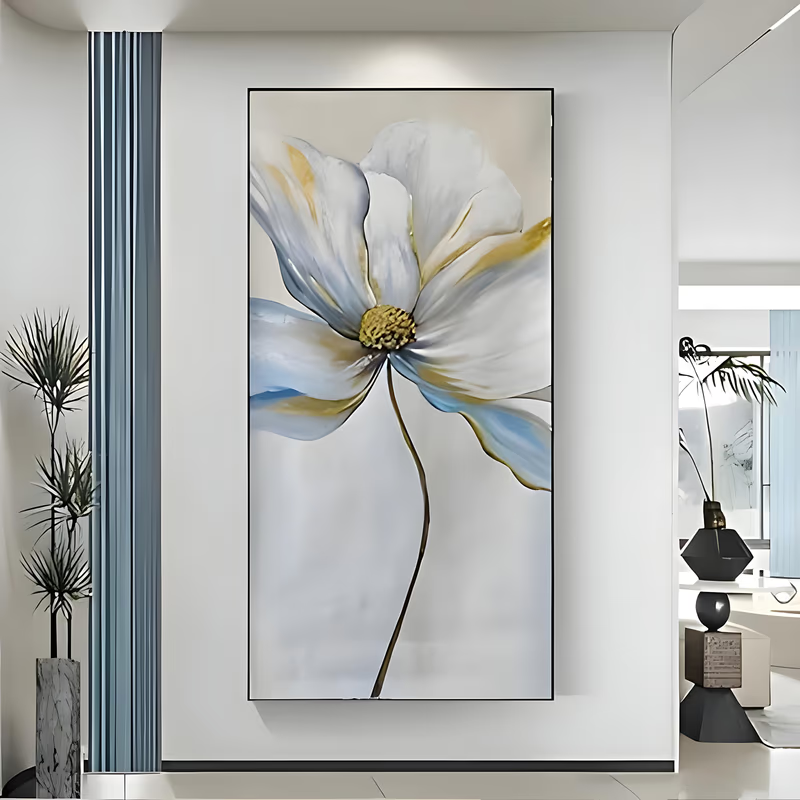
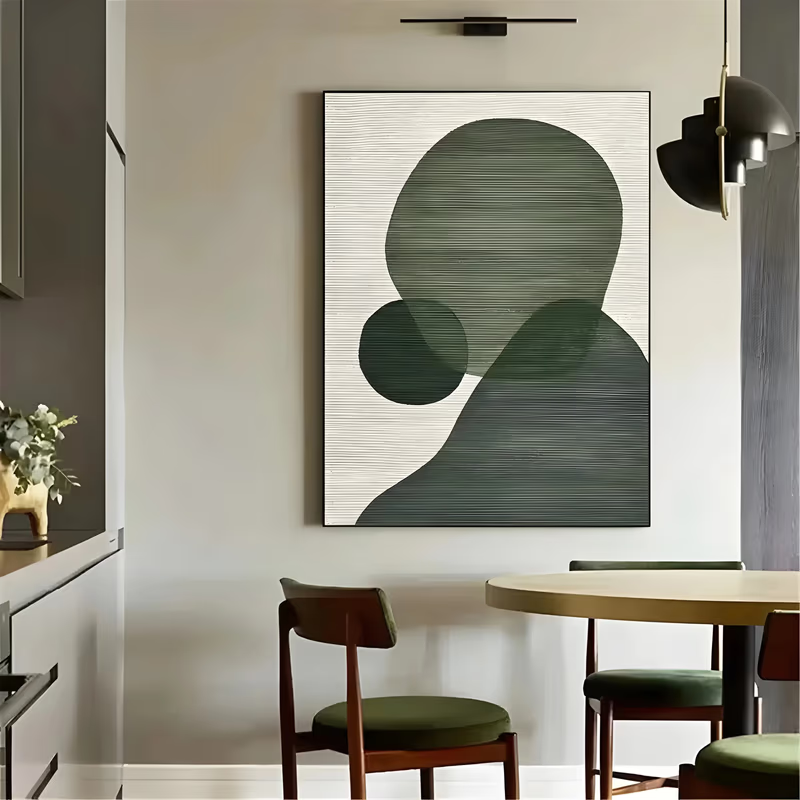
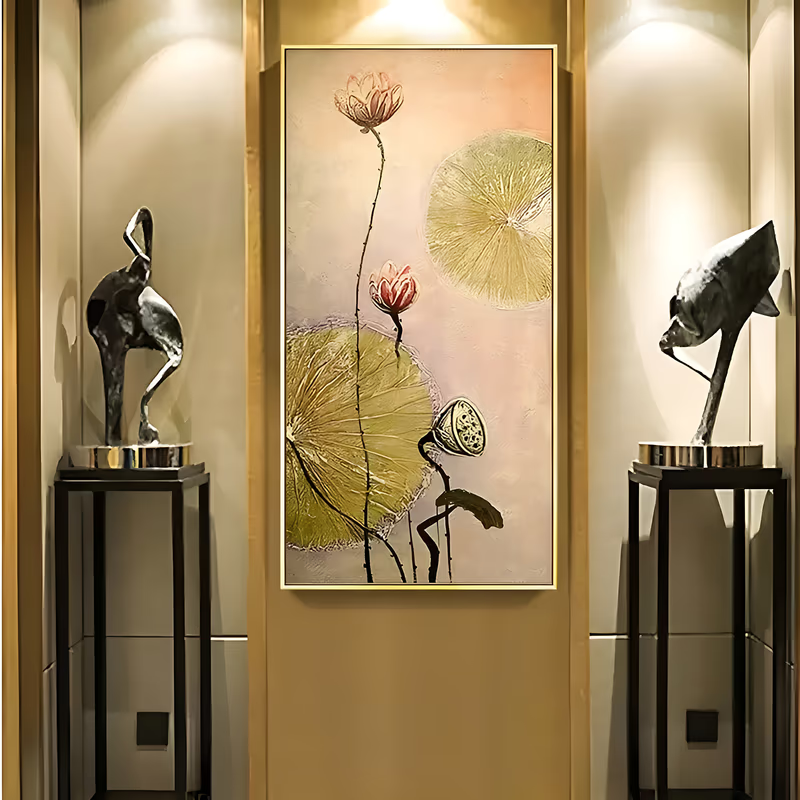
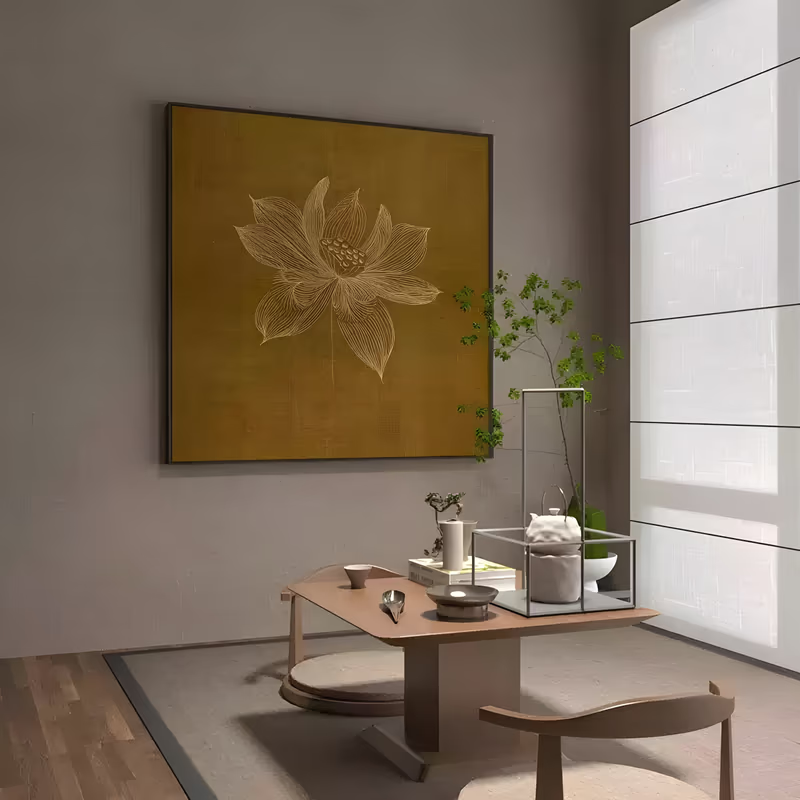
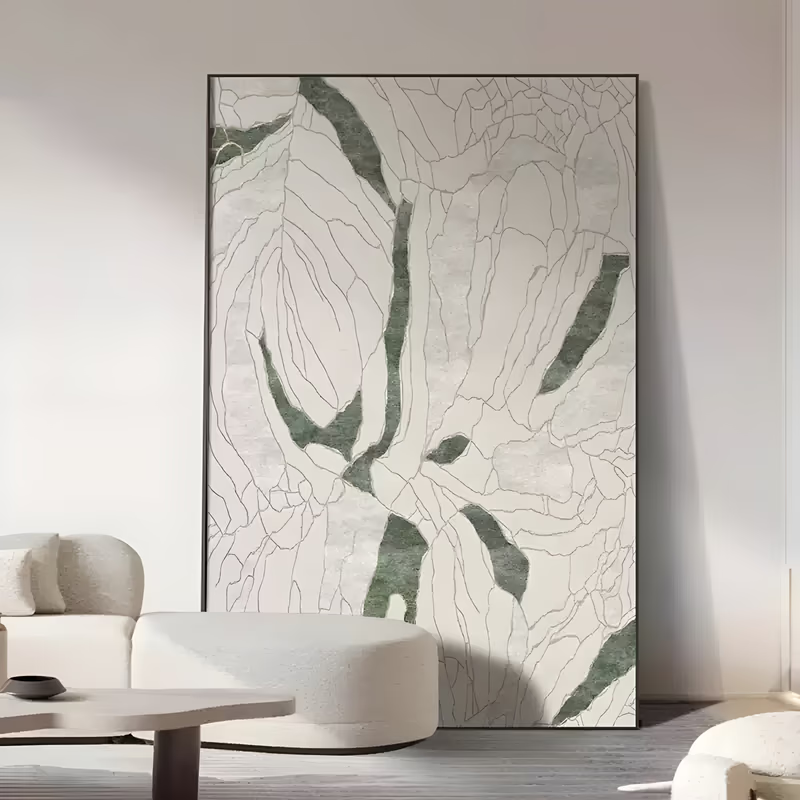
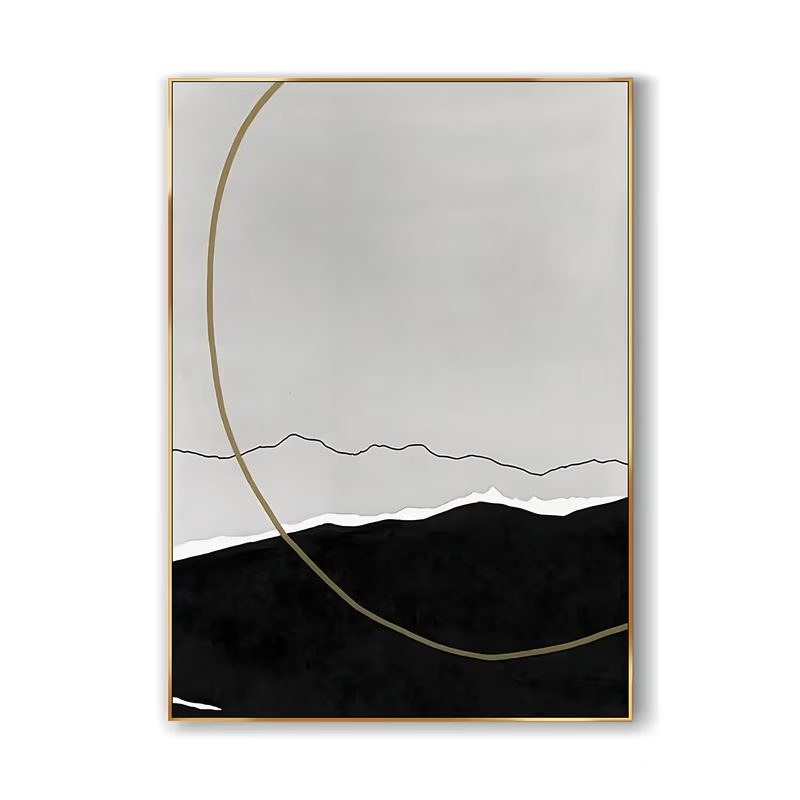
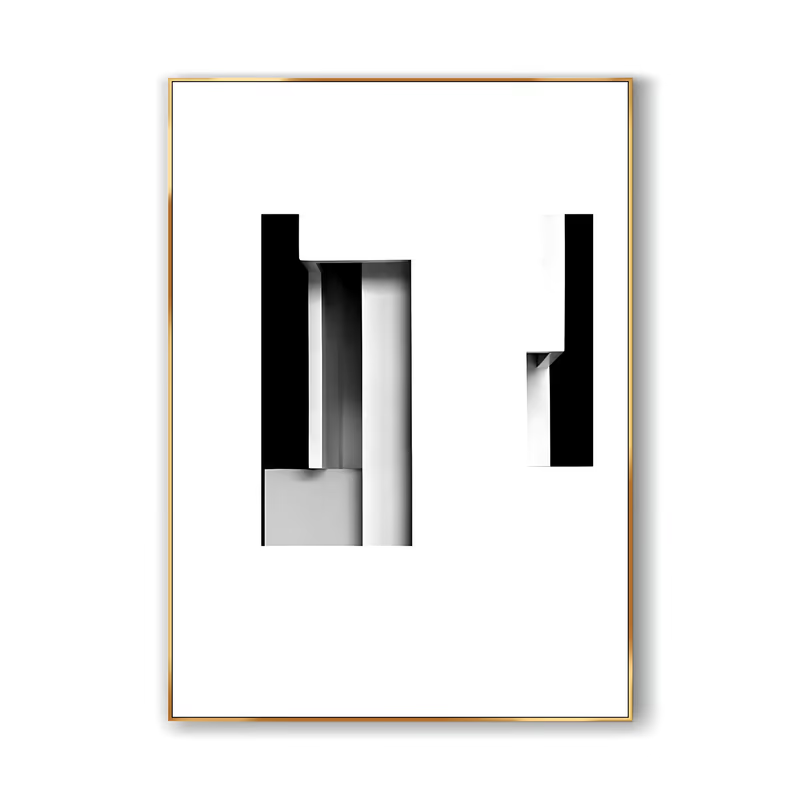
The minimal art movement of the 1960s stripped painting down to colour, shape and surface. Today's minimalist wall art keeps that discipline but is warmer and more decorative: a single white poppy, a lotus drawn in fine gold line on ochre, three overlapping green circles on a ribbed off-white ground, a band of terracotta arches. Nothing is there by accident, and nothing competes with the one idea.
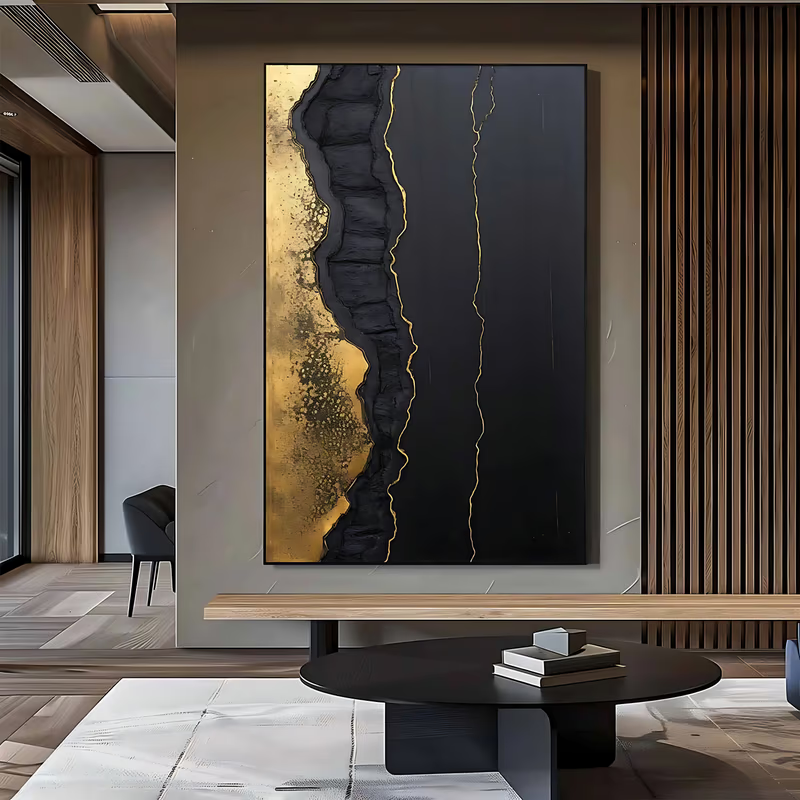
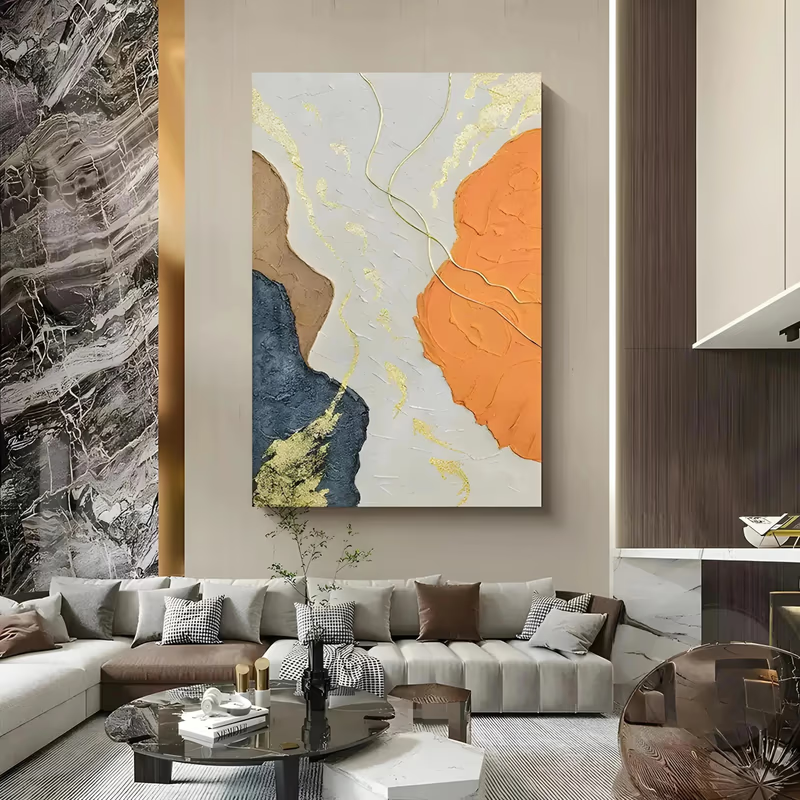
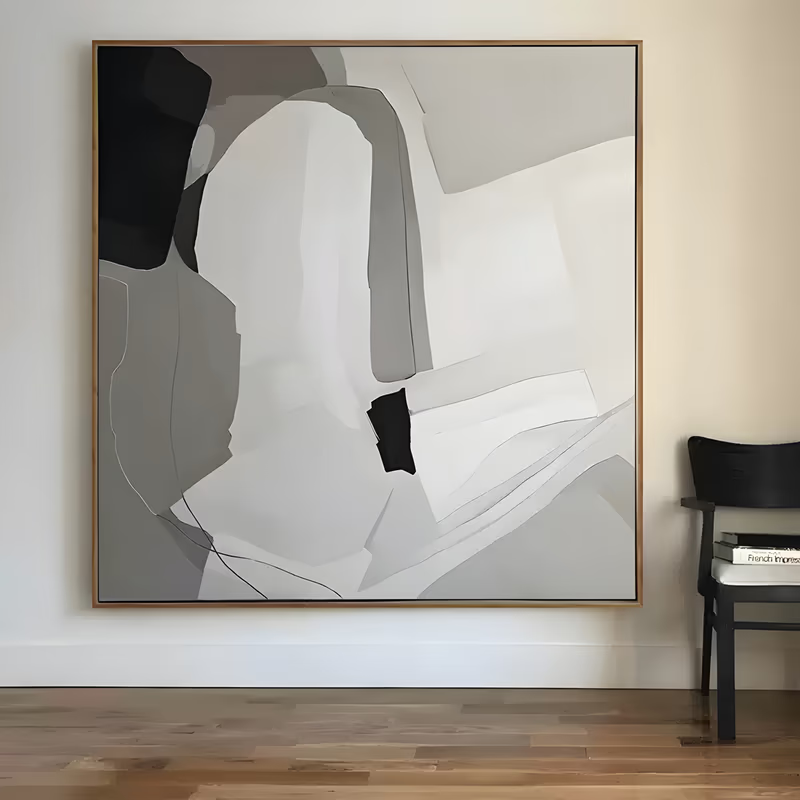
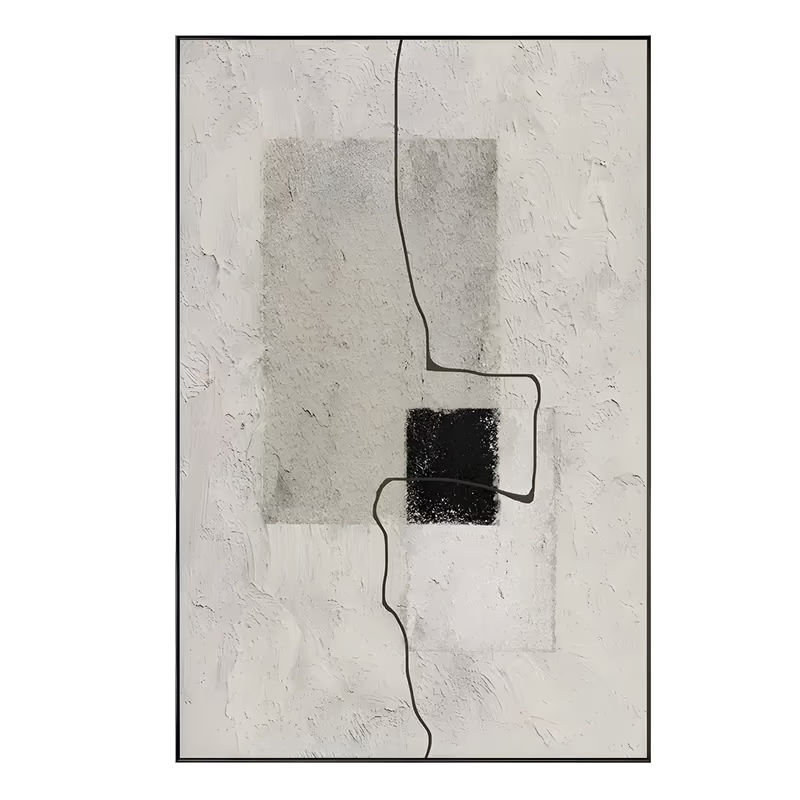
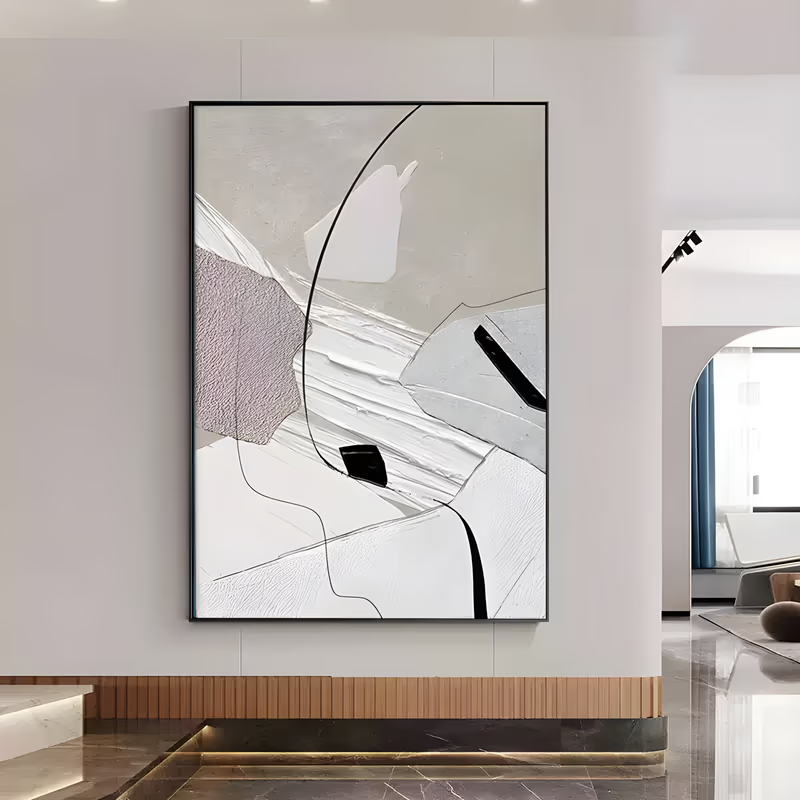
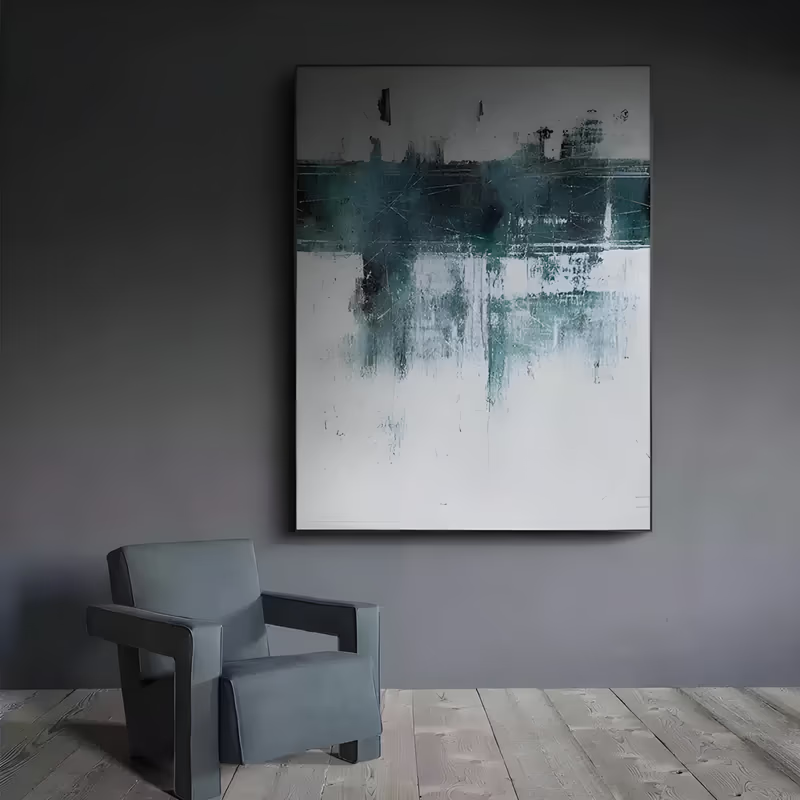
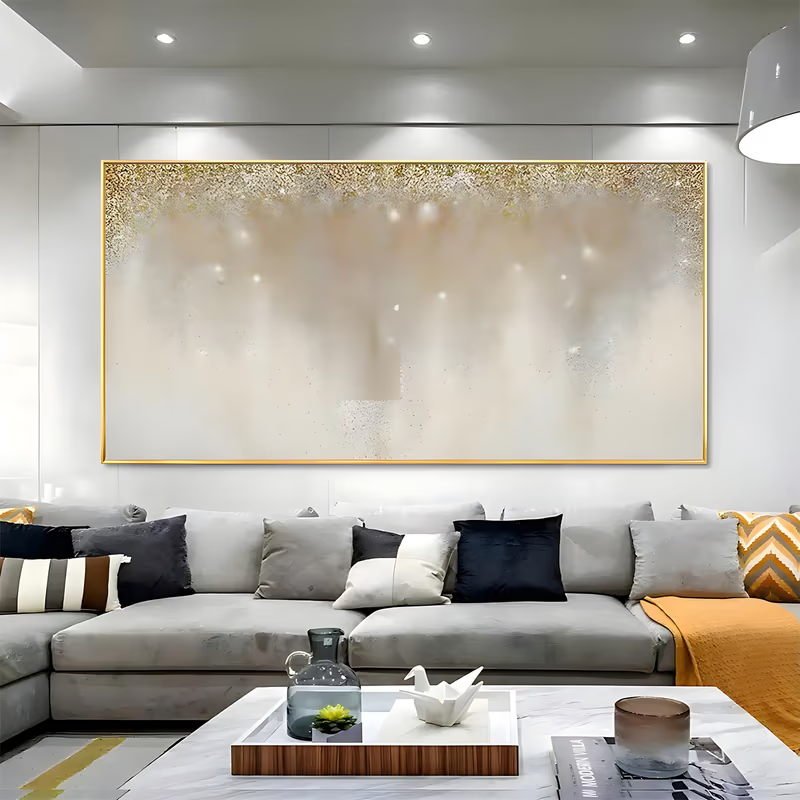
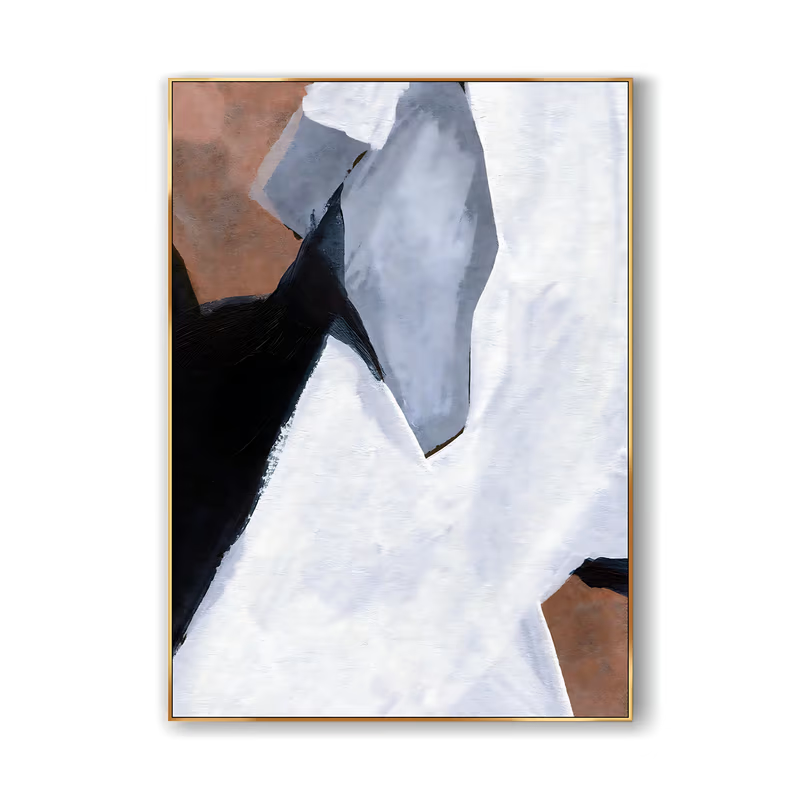
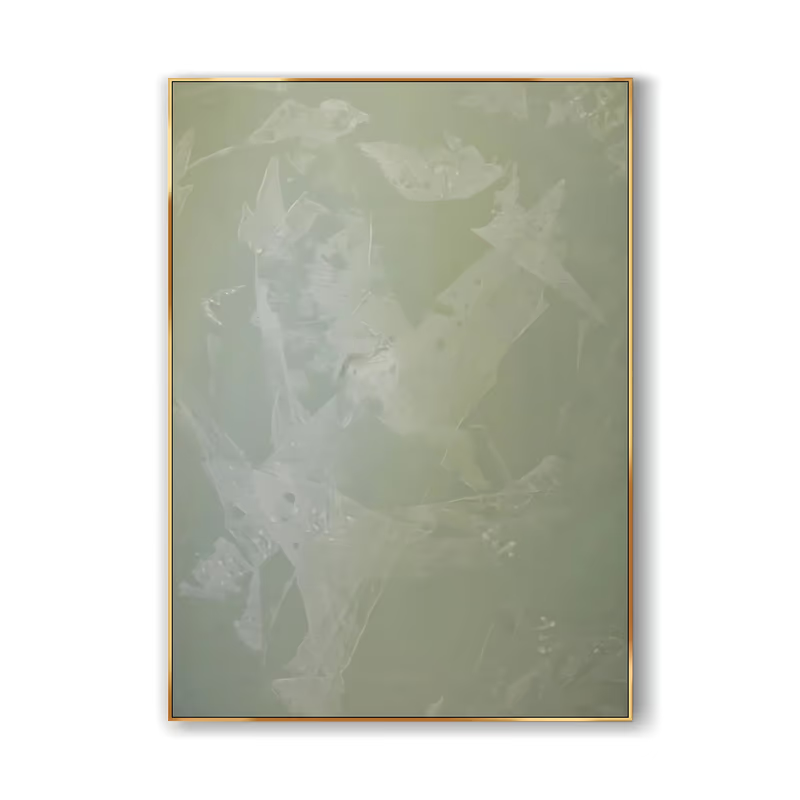
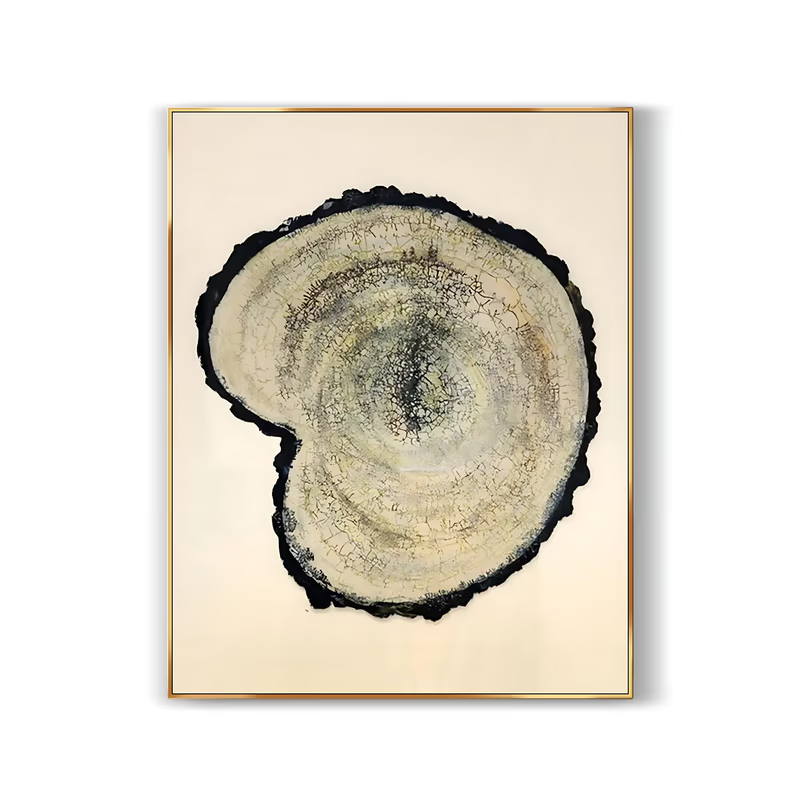
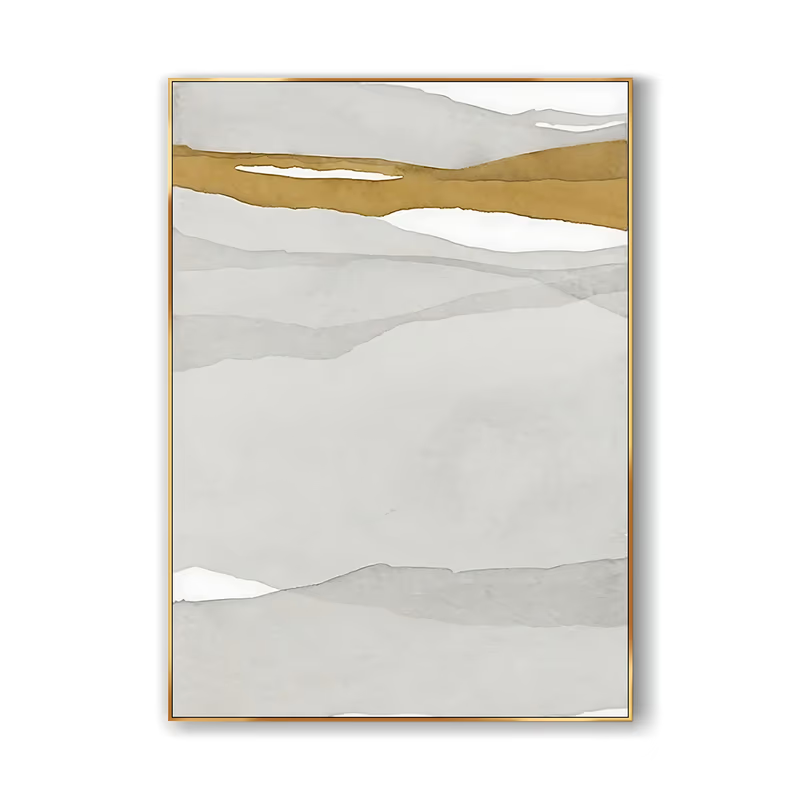
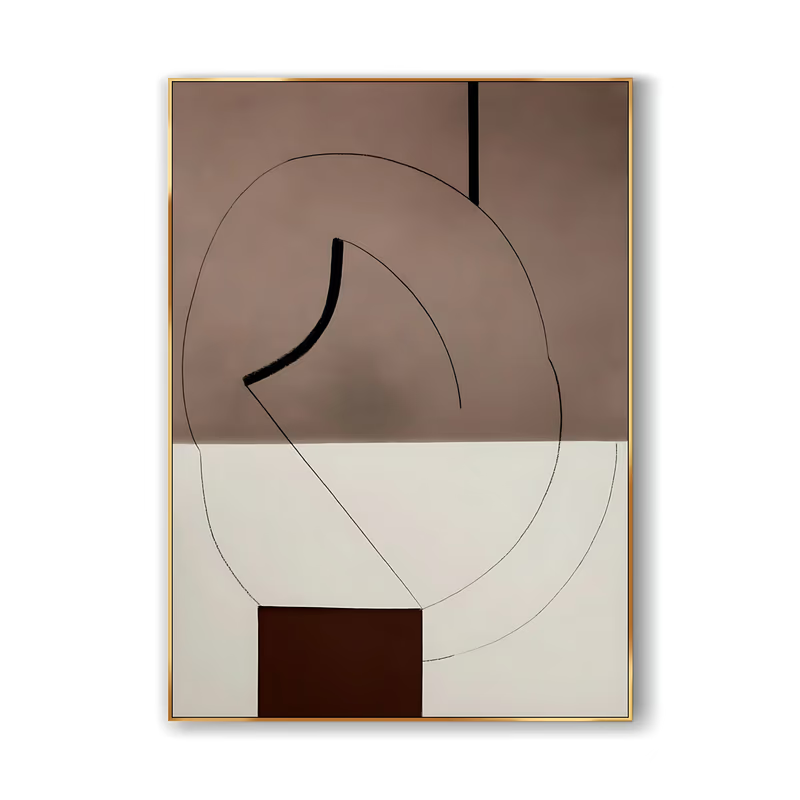
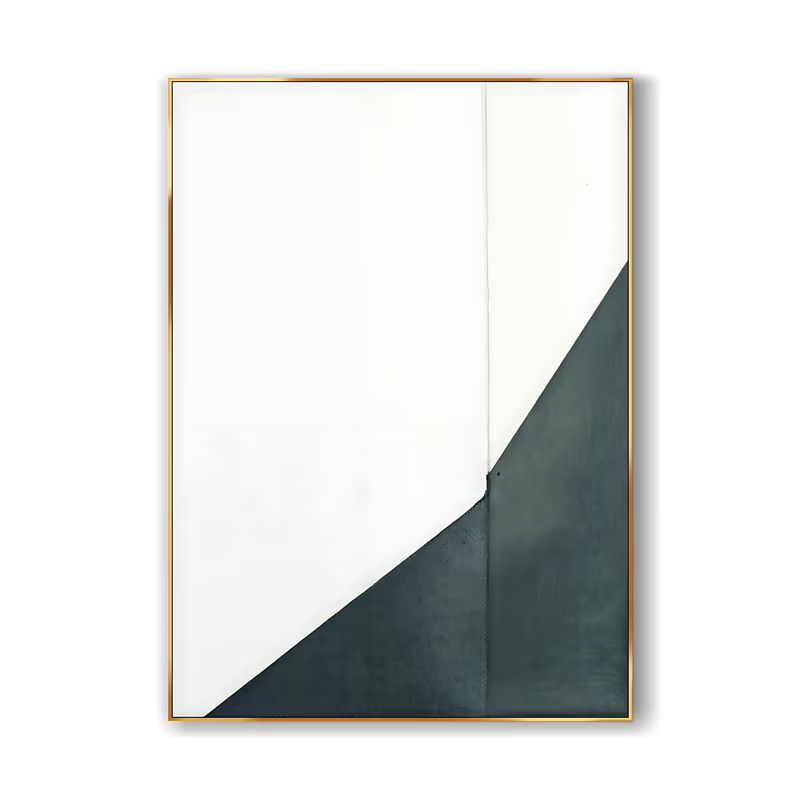
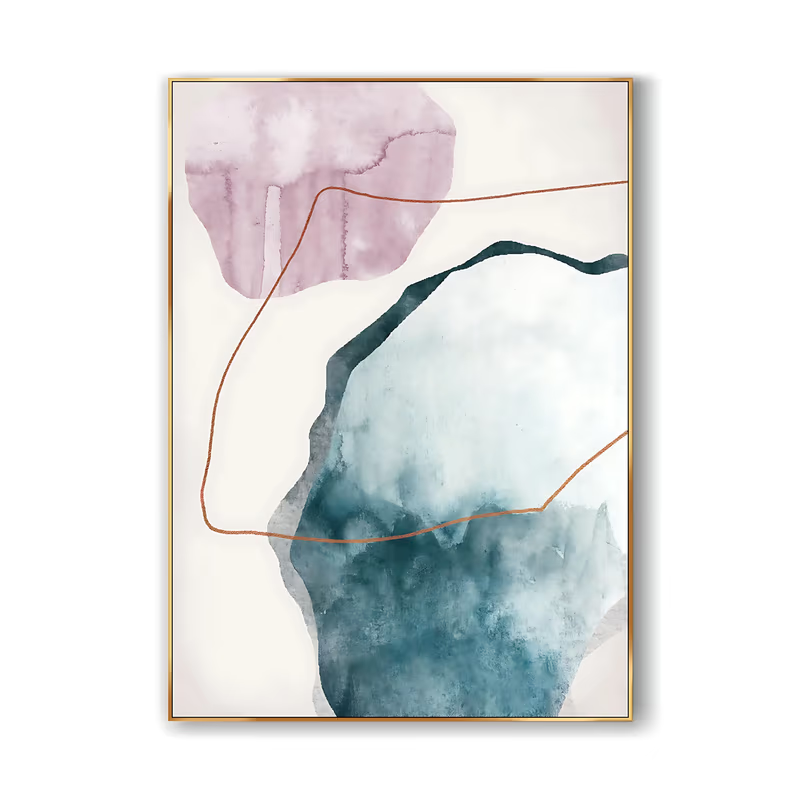
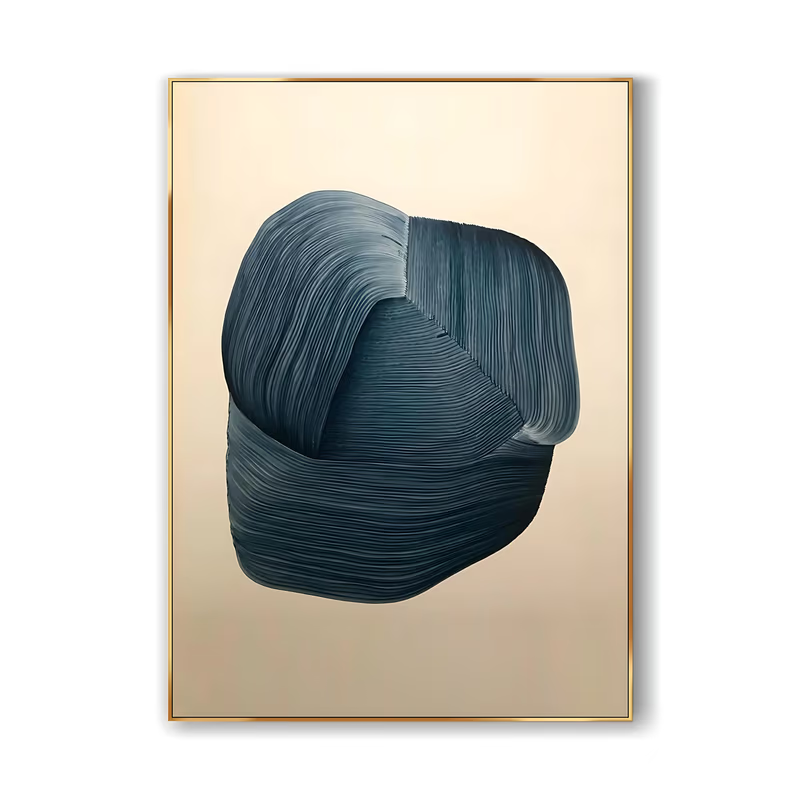
What separates a good minimal piece from a merely empty one is the quality of the space around the motif. On the canvases here, that space is hand-worked: soft gradients, raked brush striations, combed plaster, a few drawn pencil lines. It reads as calm from across the room and rewards a closer look.
How is minimalist art different from abstract and textured art?
Minimalist art is defined by restraint, abstract art by free colour and gesture, and textured art by physical relief; a piece can share traits, but its main idea belongs to one of them.
| Minimalist | Abstract | Textured | |
|---|---|---|---|
| Main idea | Few elements, open space, balance | Colour, mark and movement | Relief you can see and touch |
| Number of colours | Usually two or three | Anything from two to a dozen | Often tone-on-tone |
| Surface | Mostly flat or lightly worked | Layered, knifed, poured | Built up and sculpted |
| Energy on the wall | Quiet, ordered | From calm to loud | Calm, changes with light |
| Typical rooms | Bedrooms, offices, spas, guest rooms | Living rooms, lobbies, restaurants | Bedheads, spas, lobbies with side light |
Overlaps are common: a minimal arch may be raised in plaster, and a minimal colour field is technically abstract. If the first thing you notice is how little is there, it belongs here.
What kinds of minimalist paintings are there?
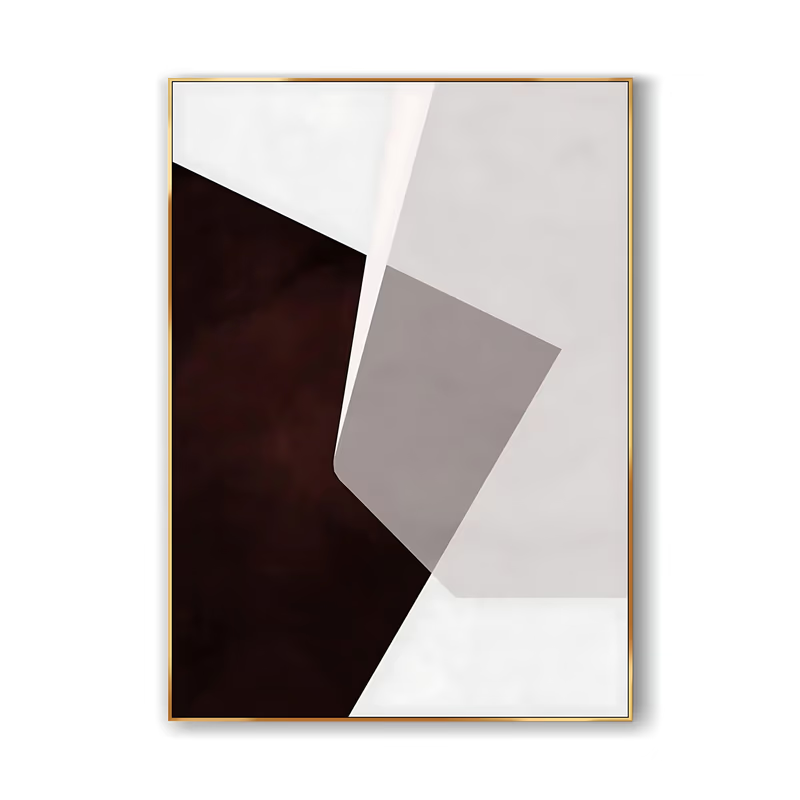
Minimalist art on this page comes in four kinds: geometric shapes and colour bands, single botanicals, quiet landscapes and animals, and figures drawn in a few strokes.
Minimalist arches, circles and colour bands
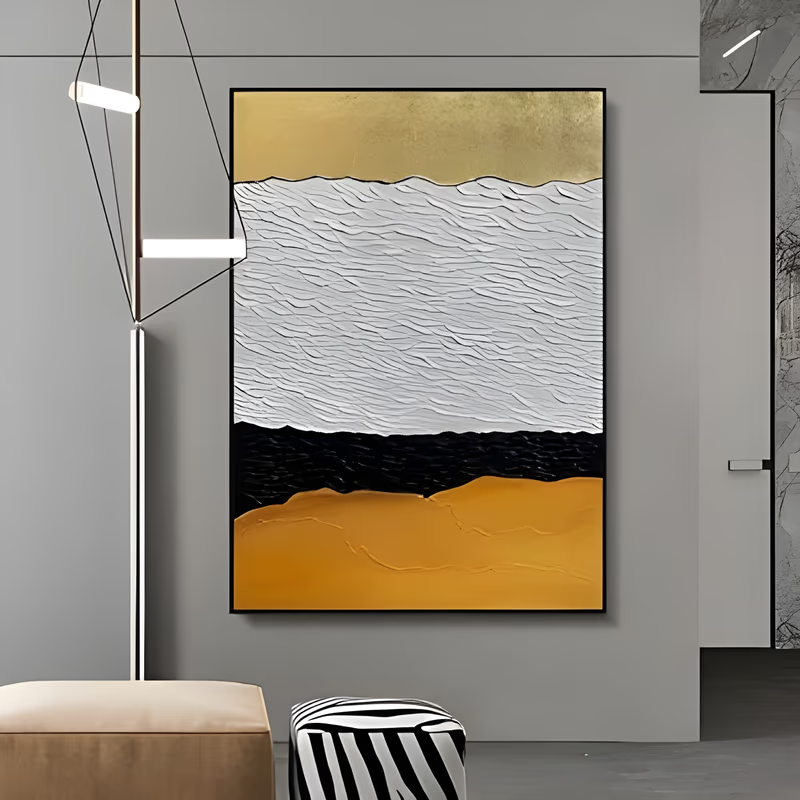
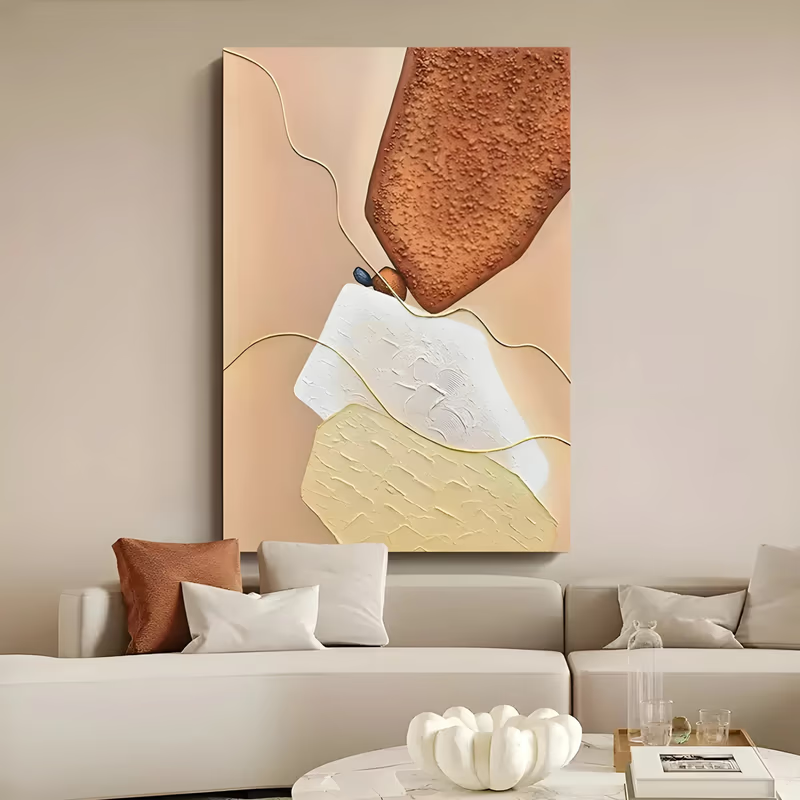
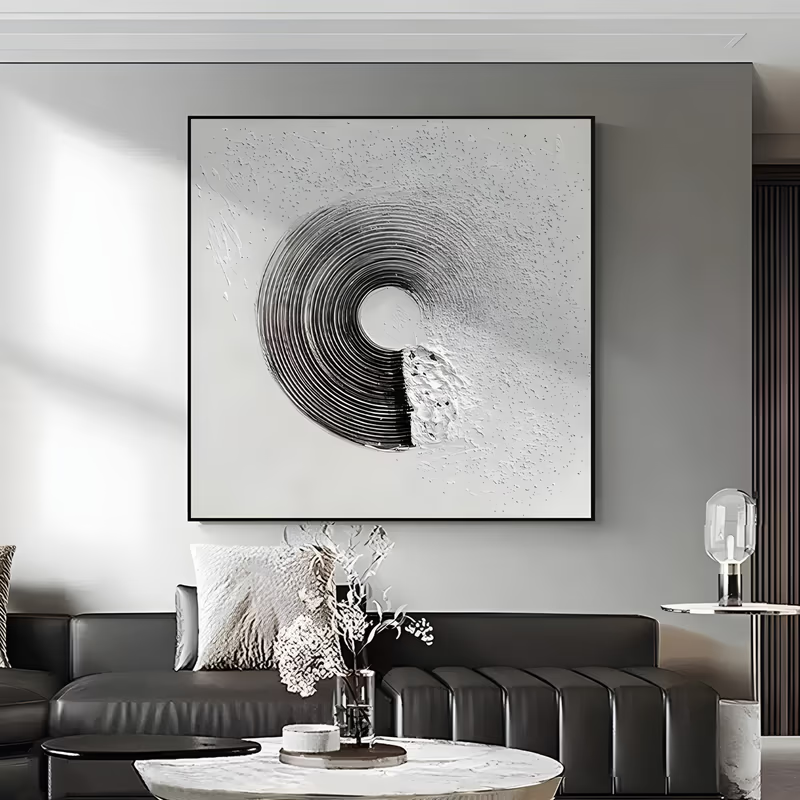
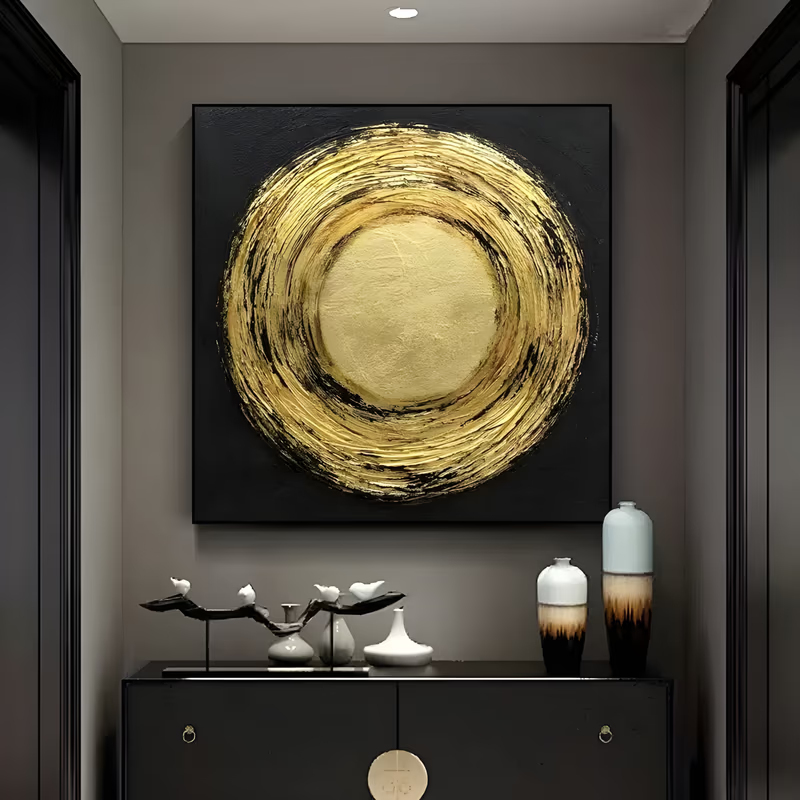
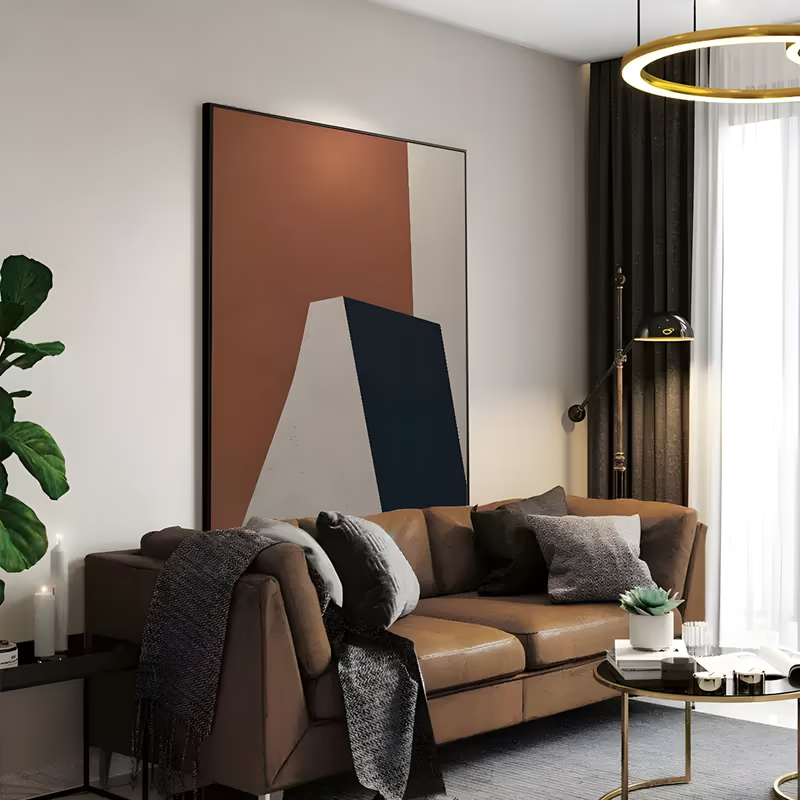
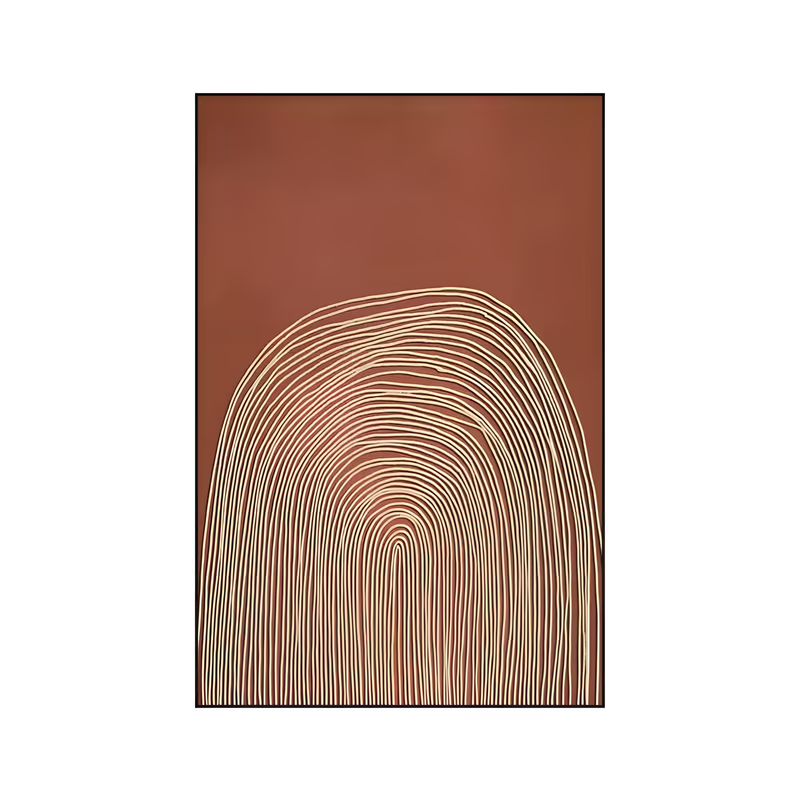
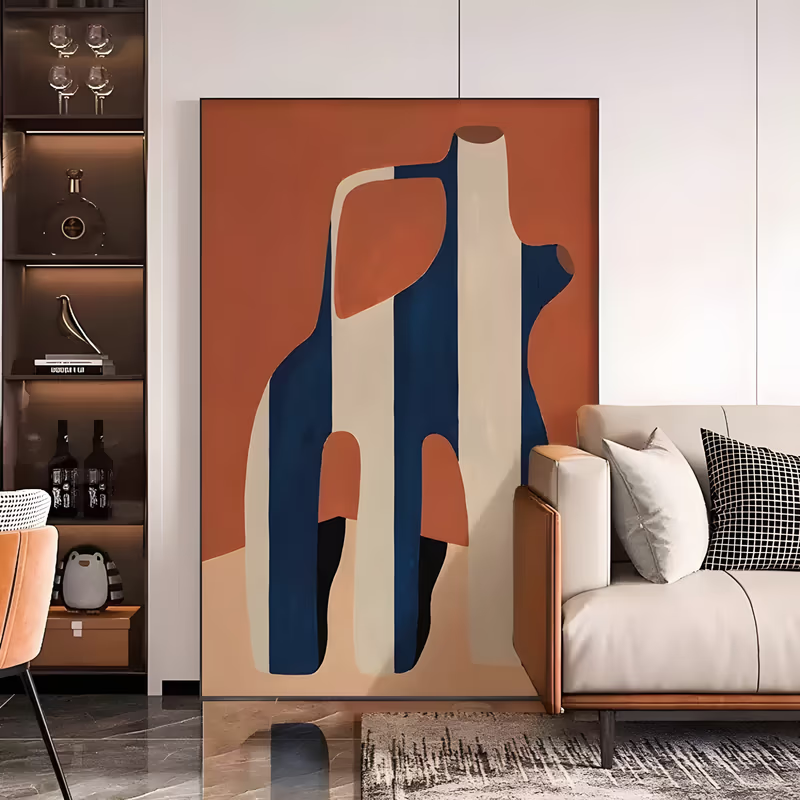
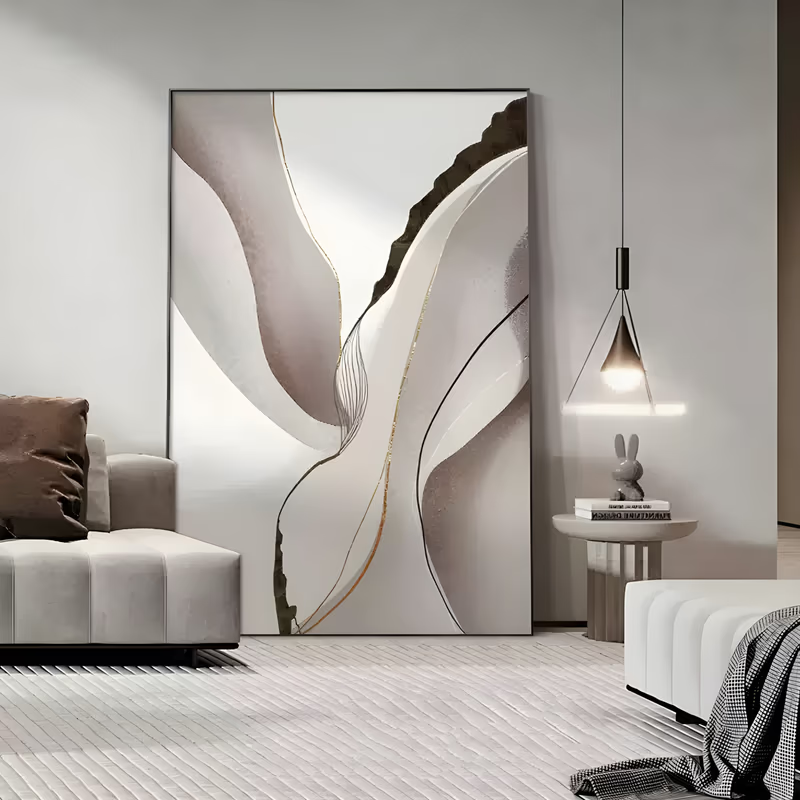
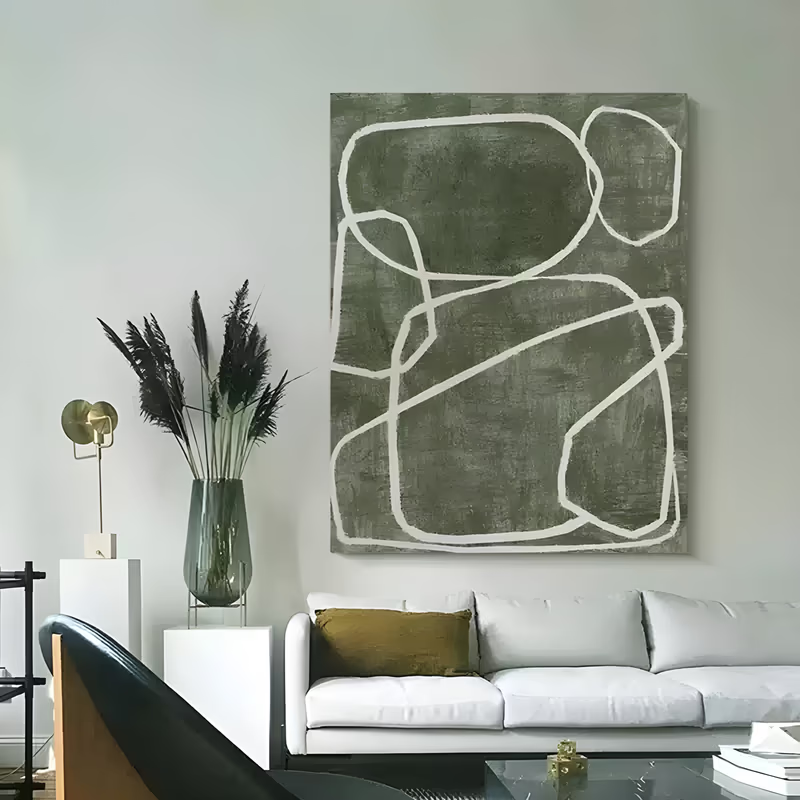
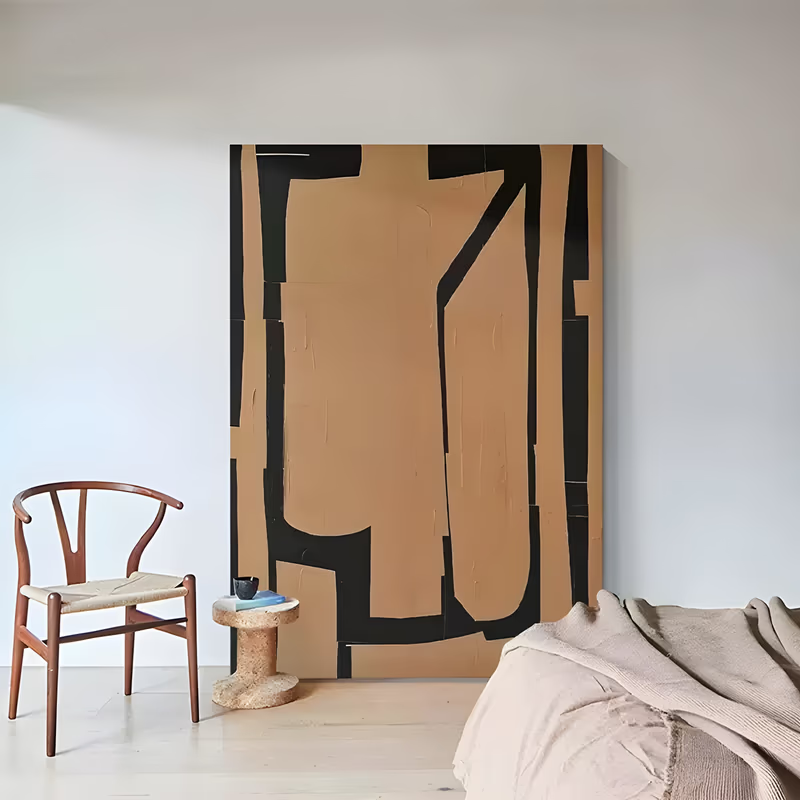
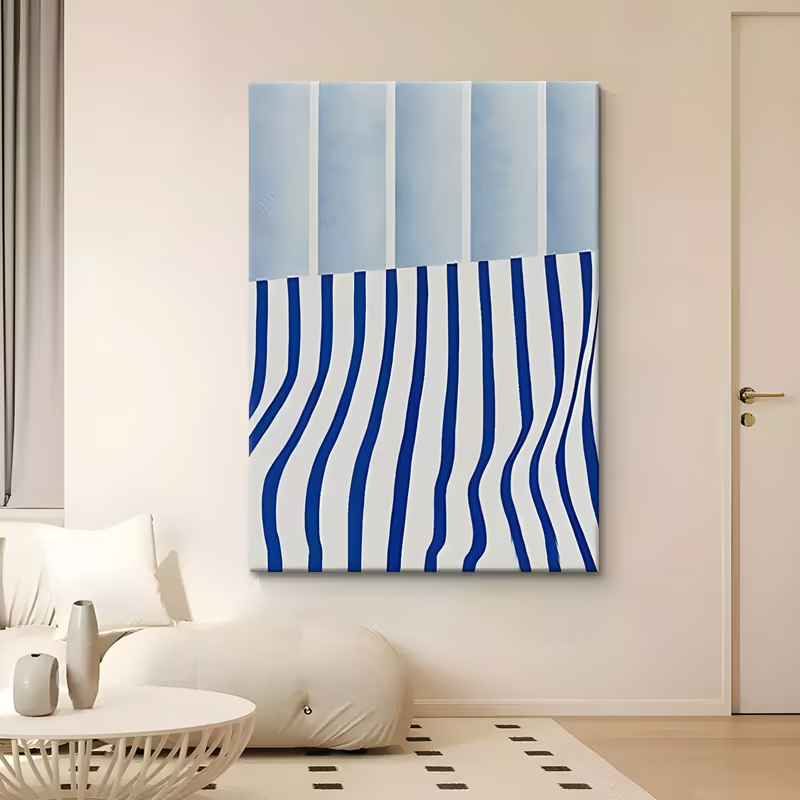
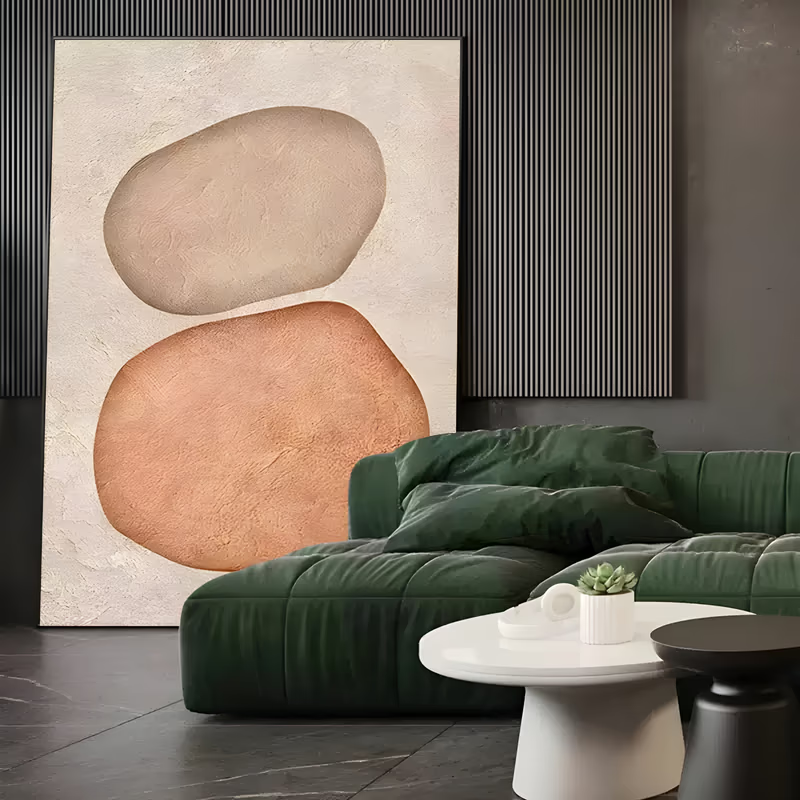
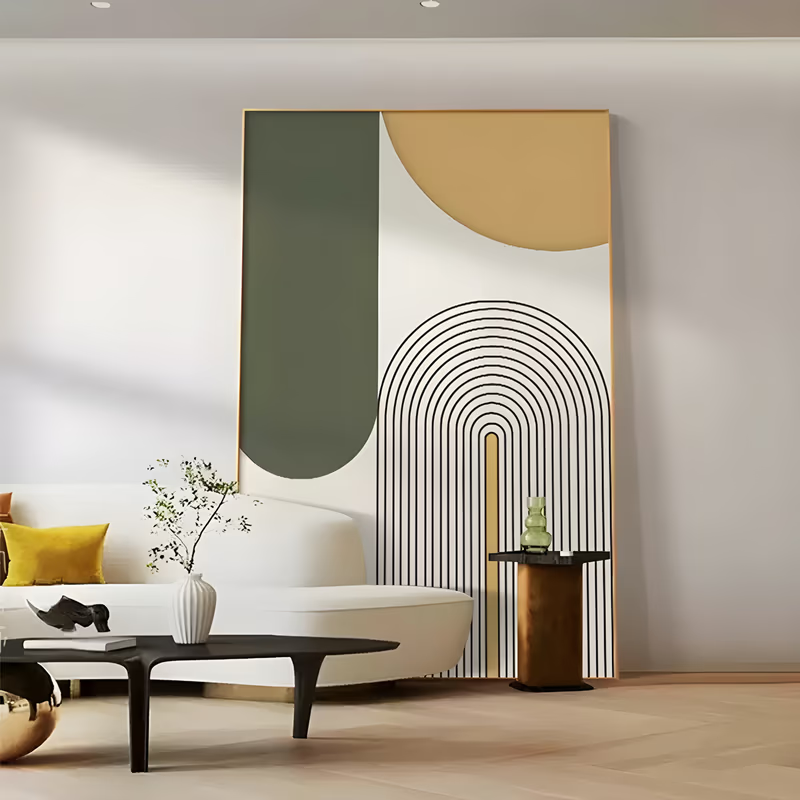
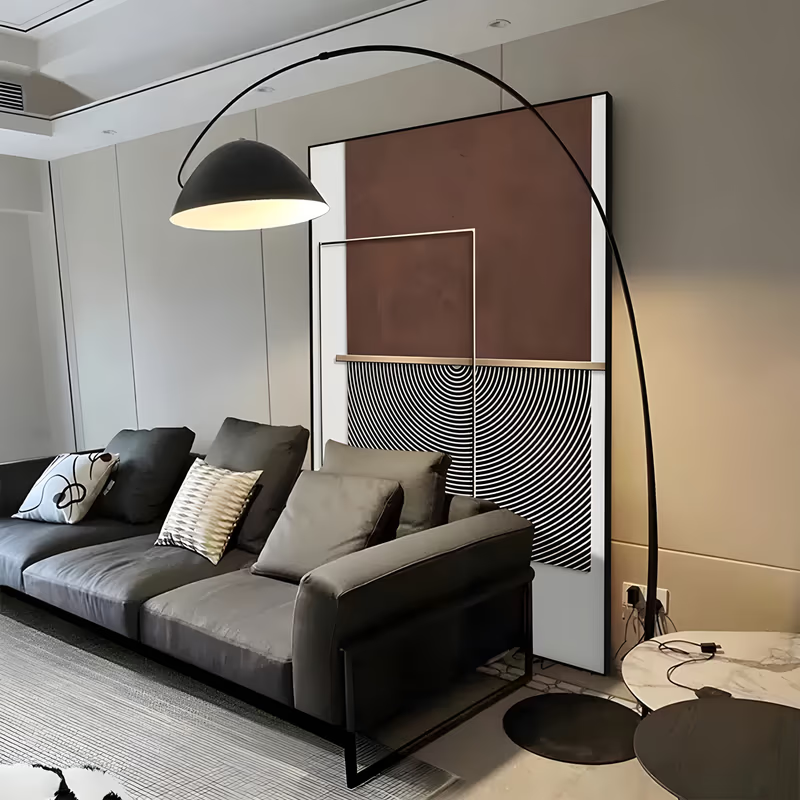
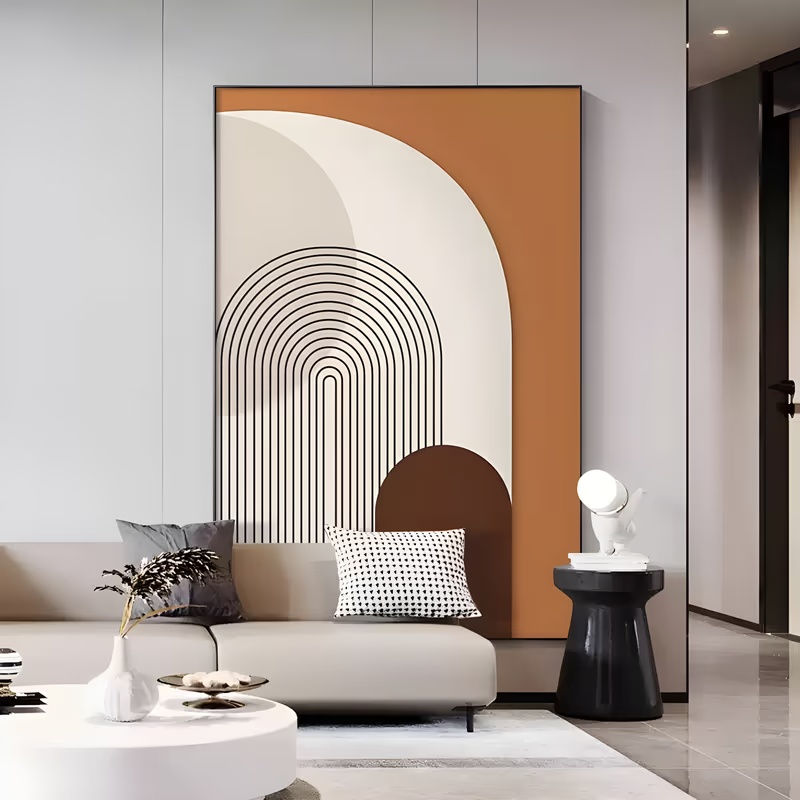
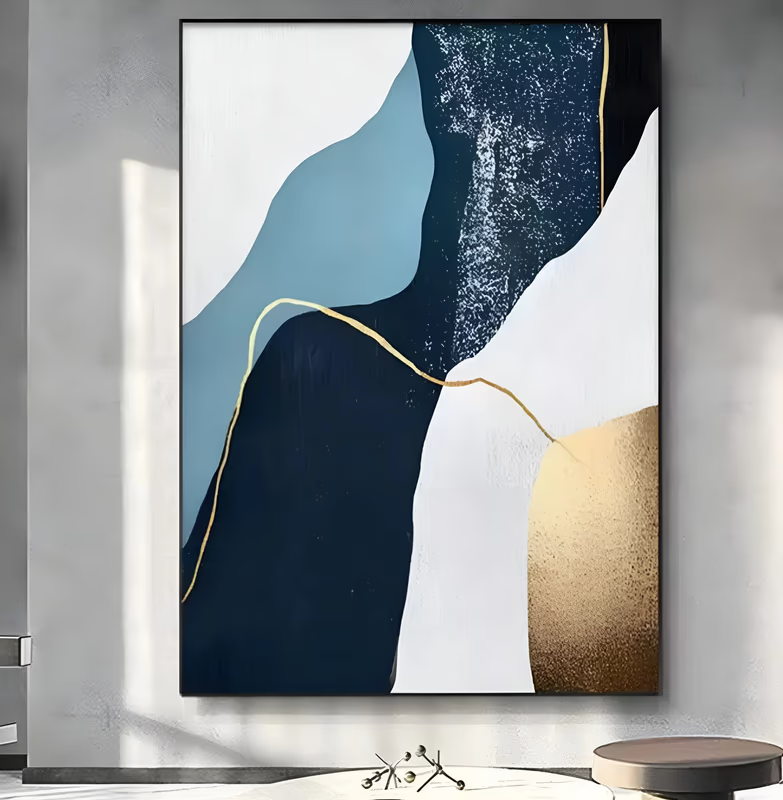
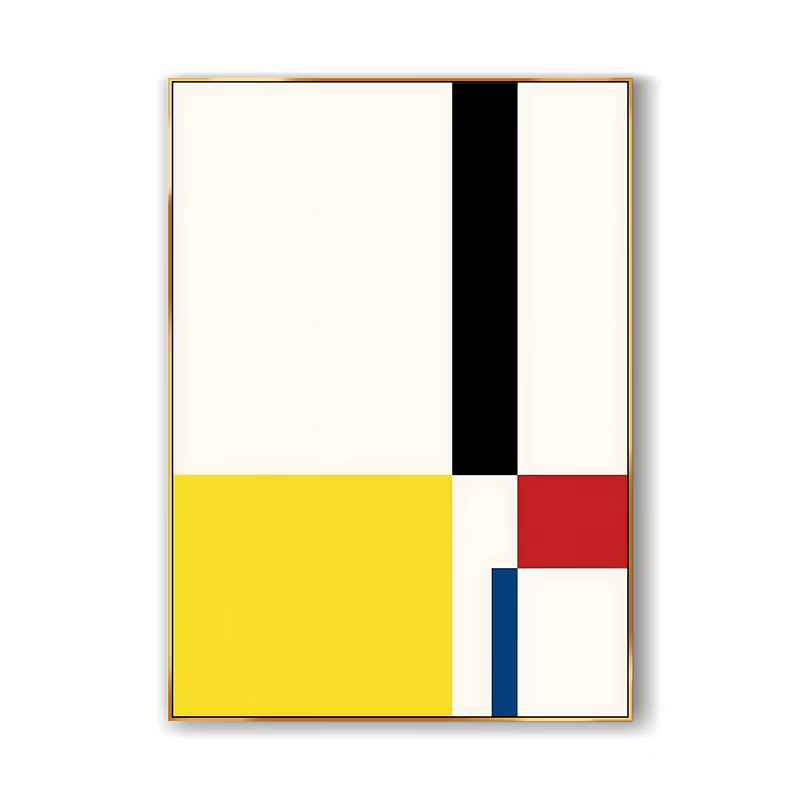
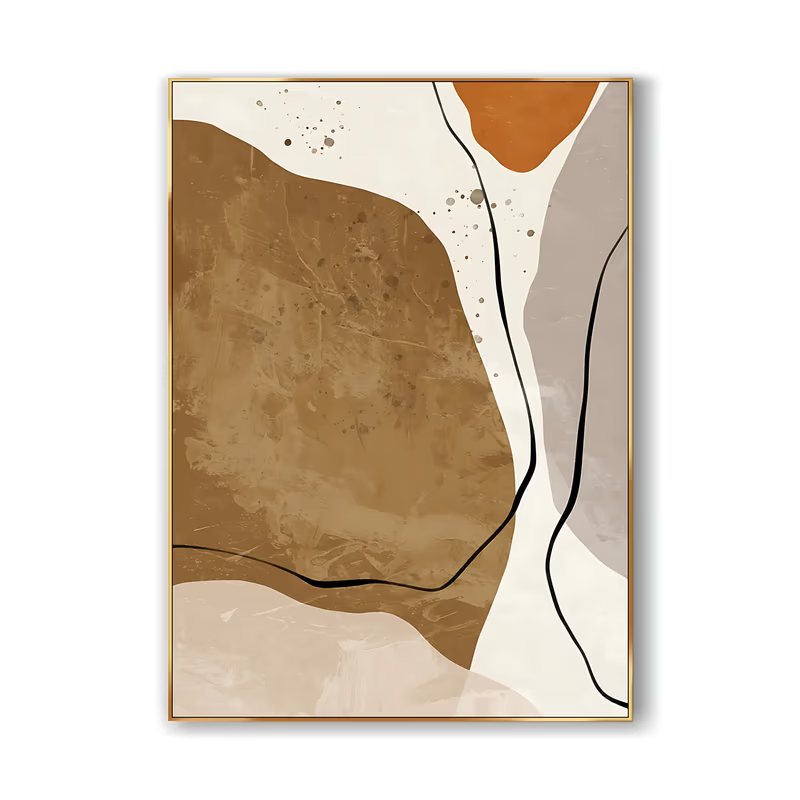
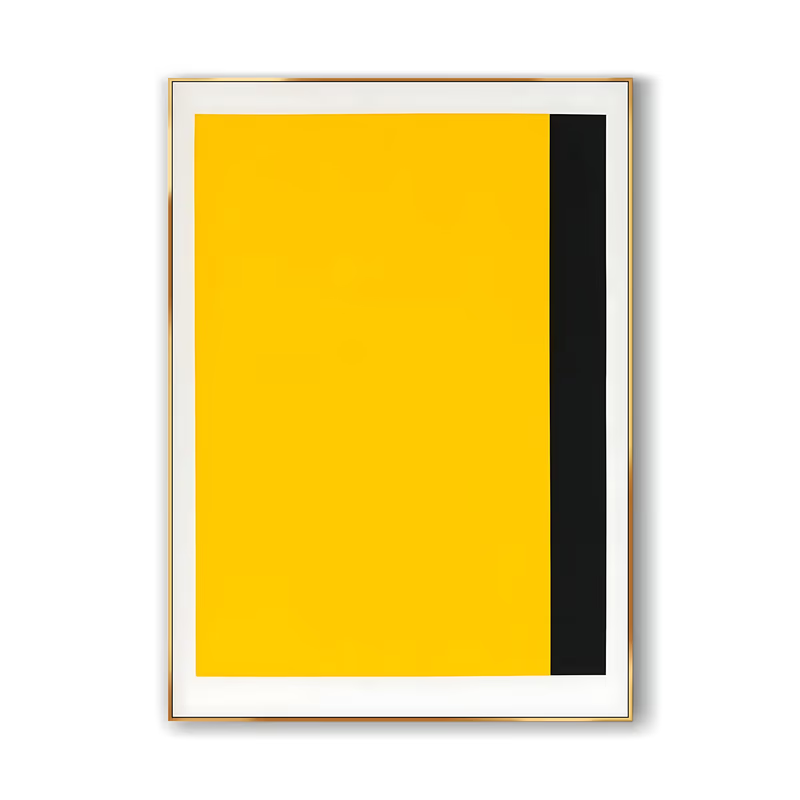
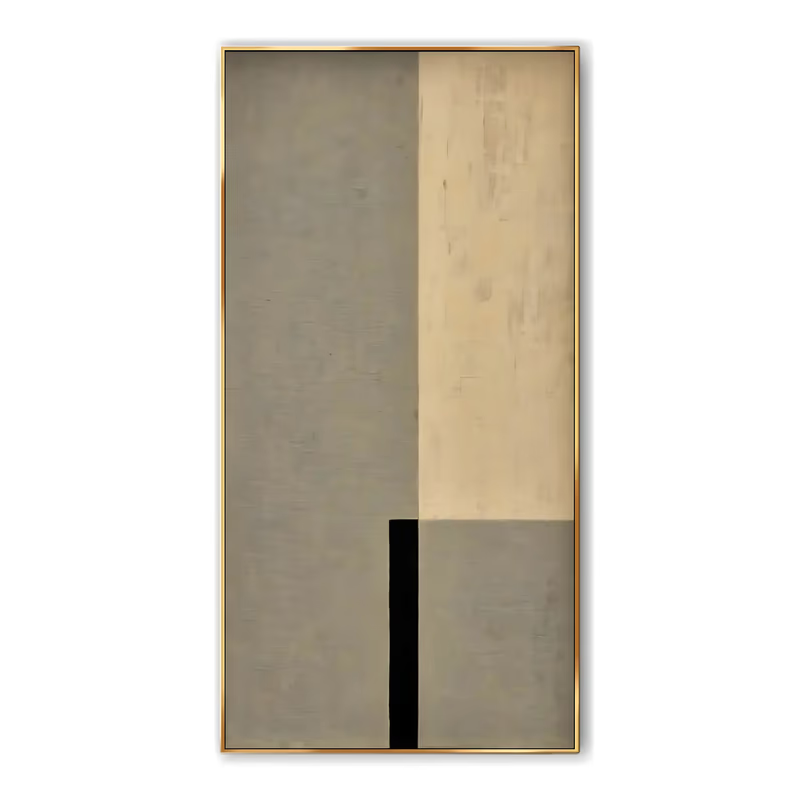
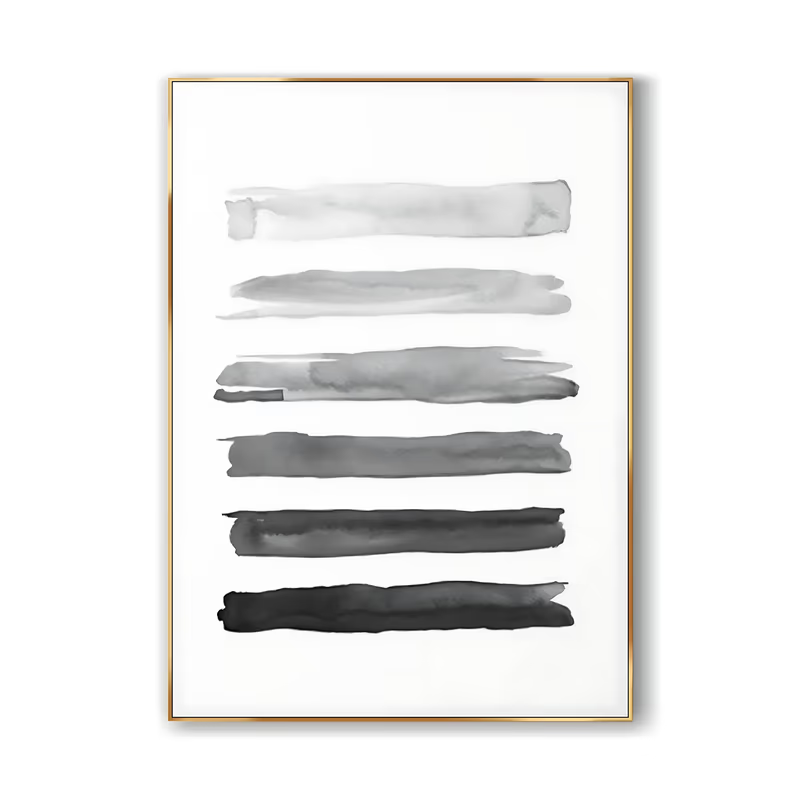
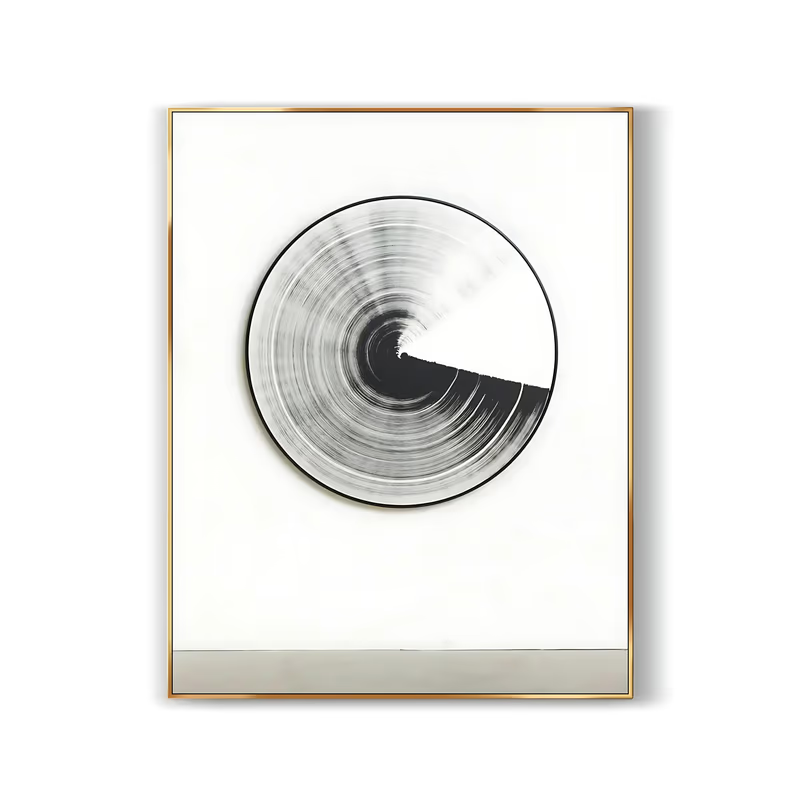
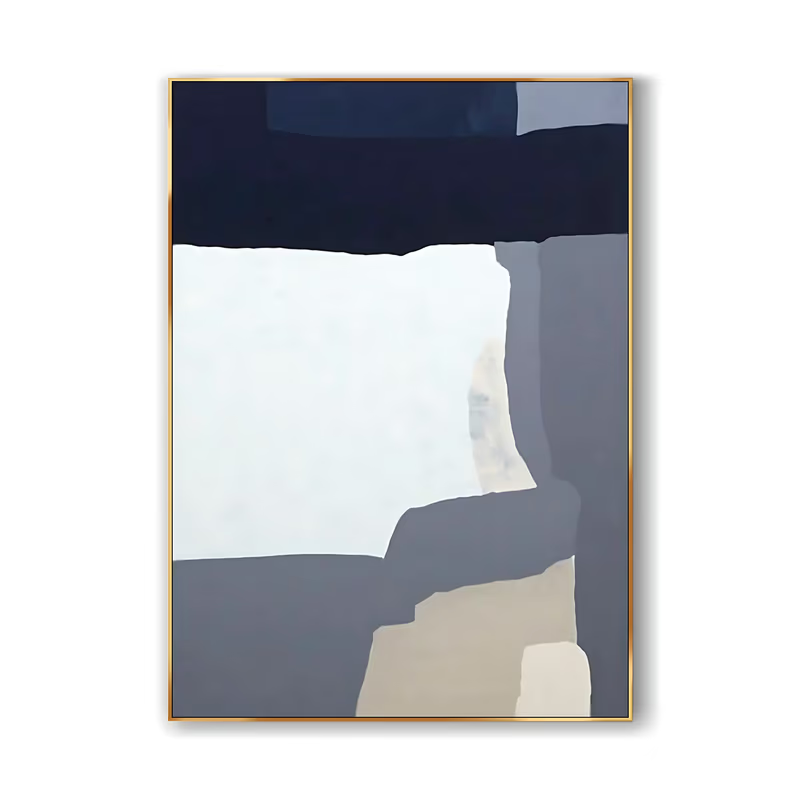
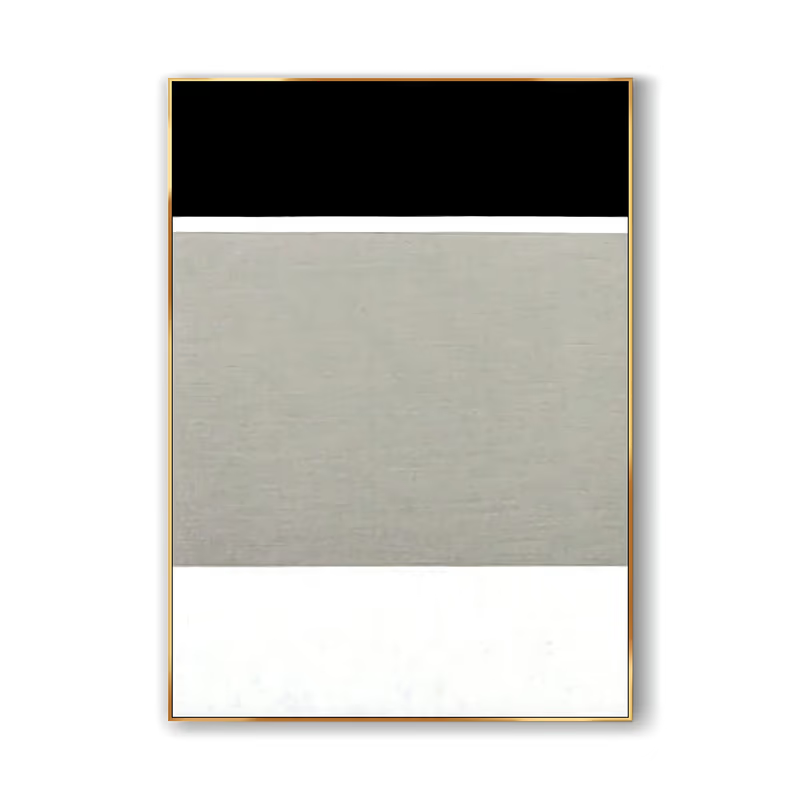
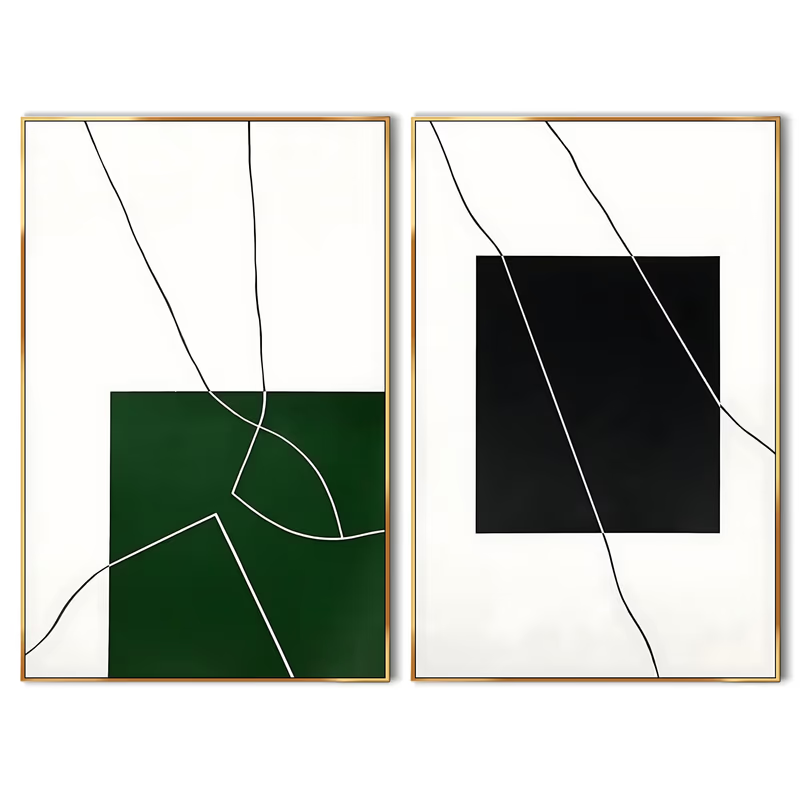
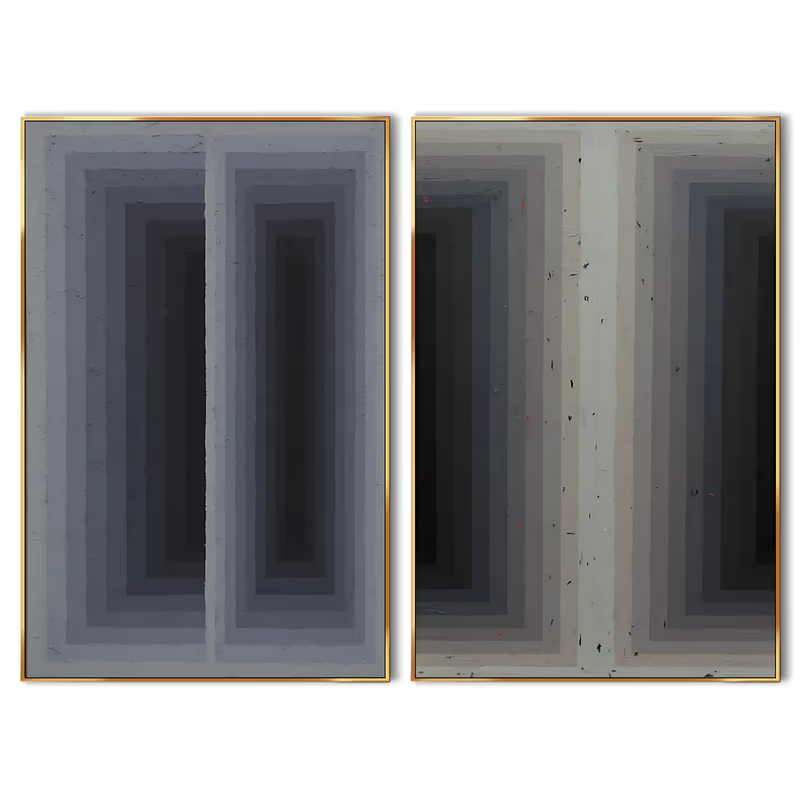
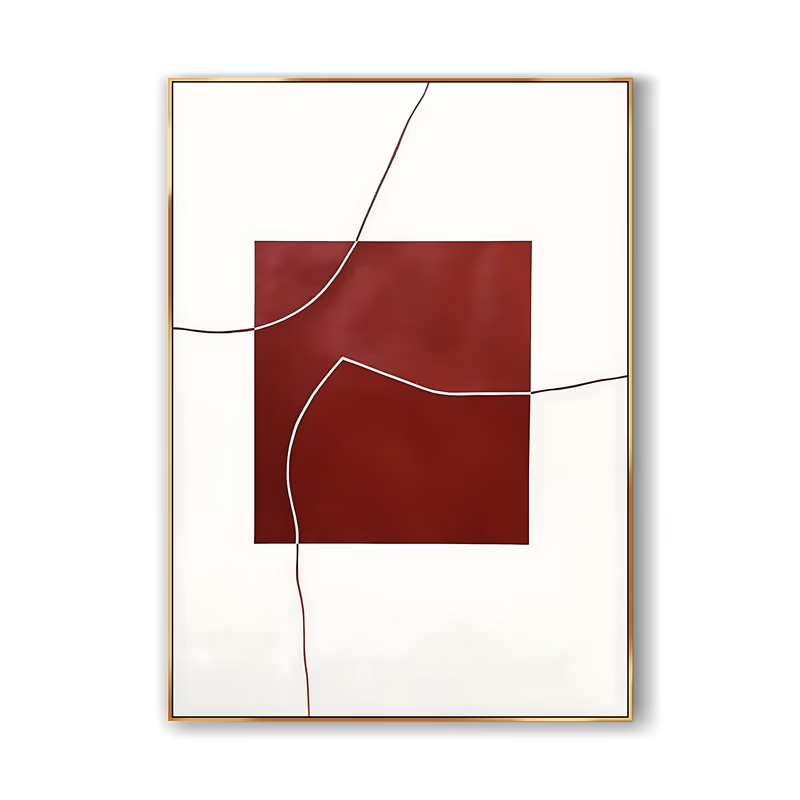
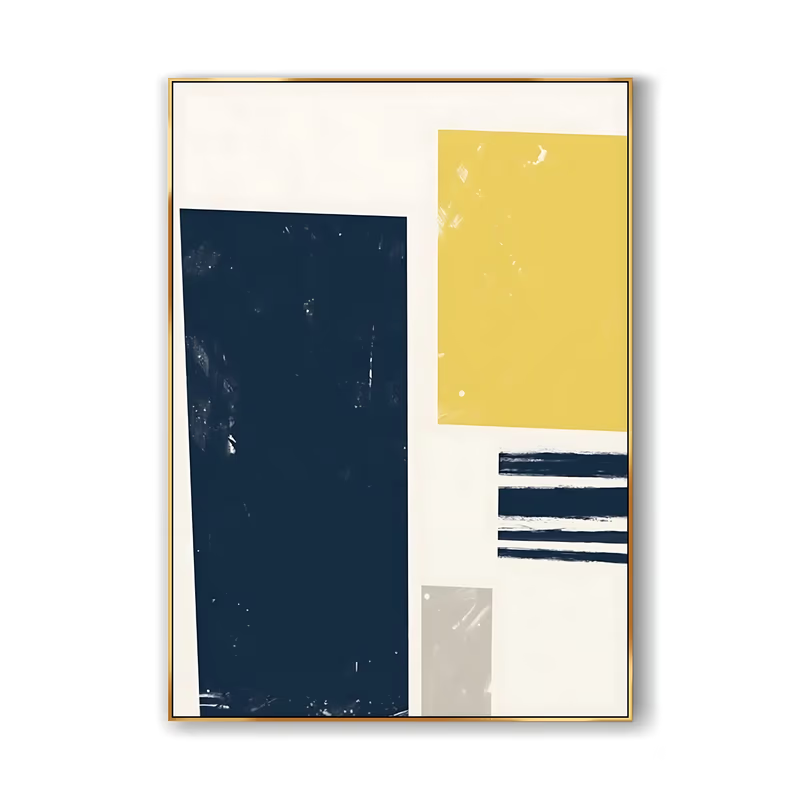
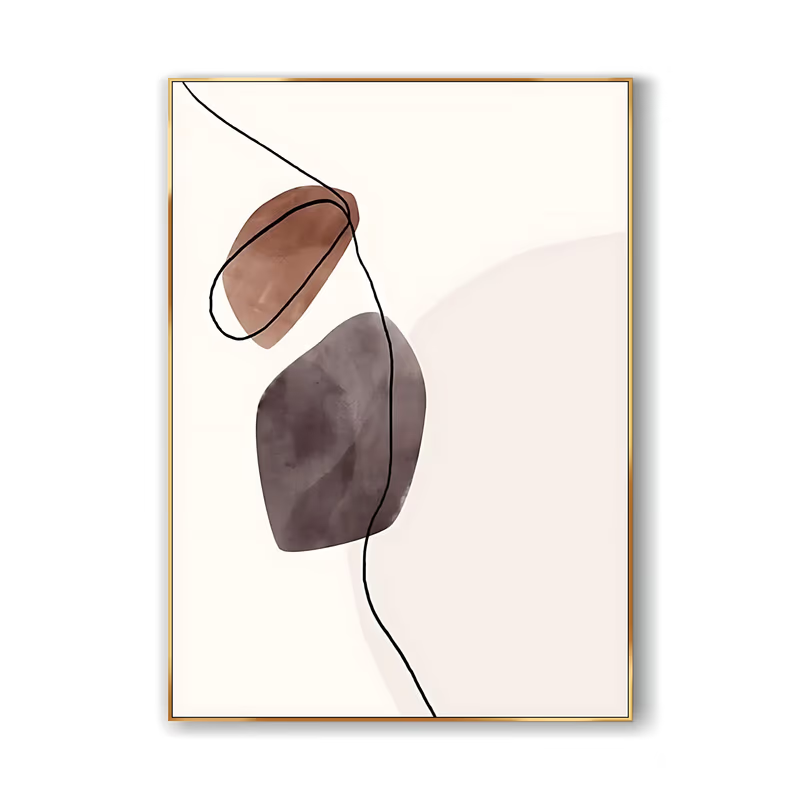
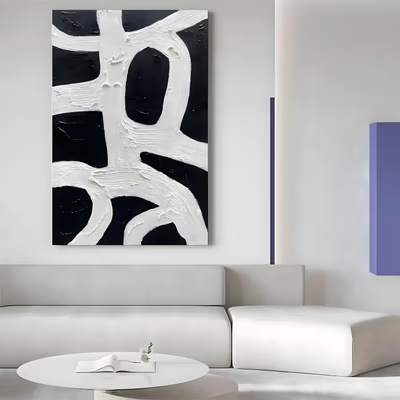
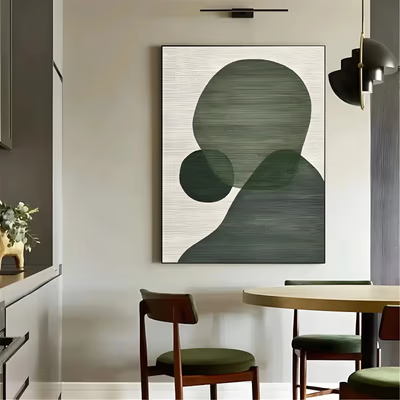
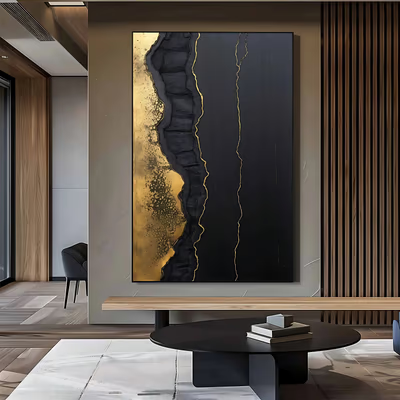
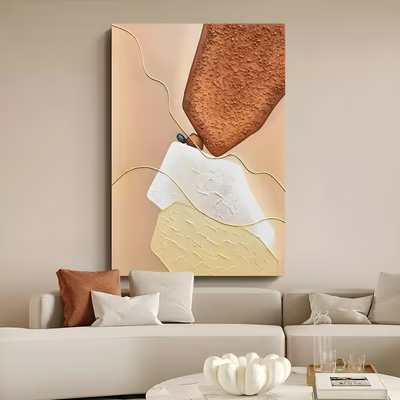
Concentric arches on terracotta, stacked organic shapes, a gold sun disc on black, horizontal bands of gold, plaster, black and ochre. The most architectural kind, at home in offices, meeting rooms and modern living rooms.
Single blooms and botanical line work
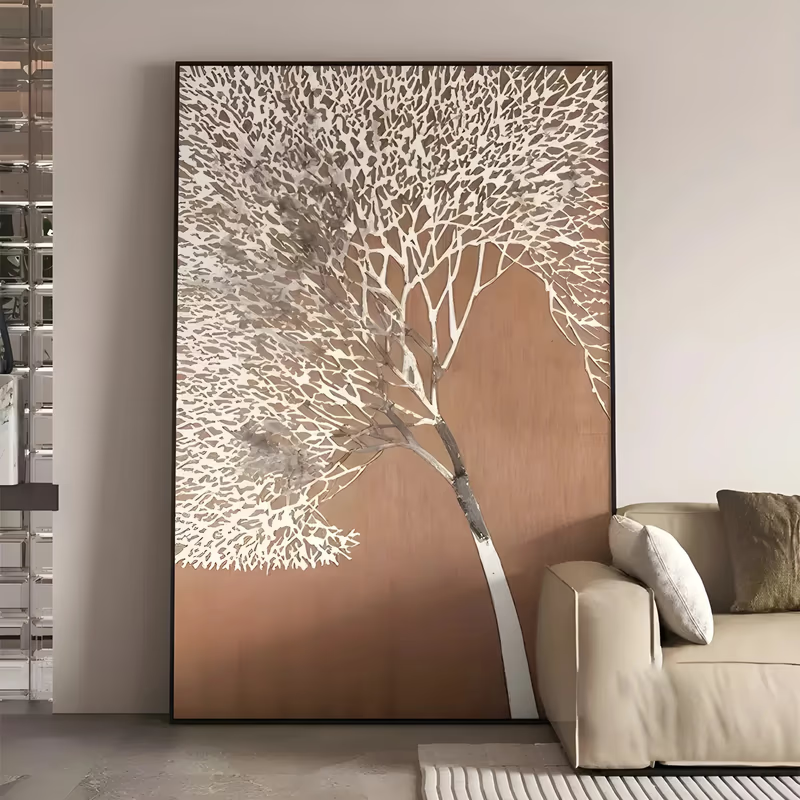
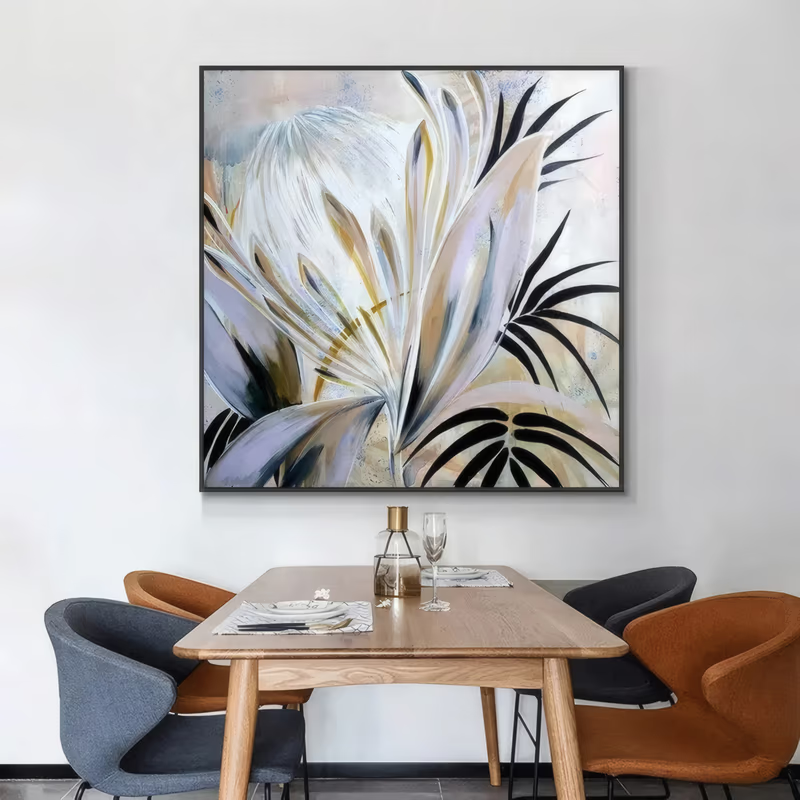
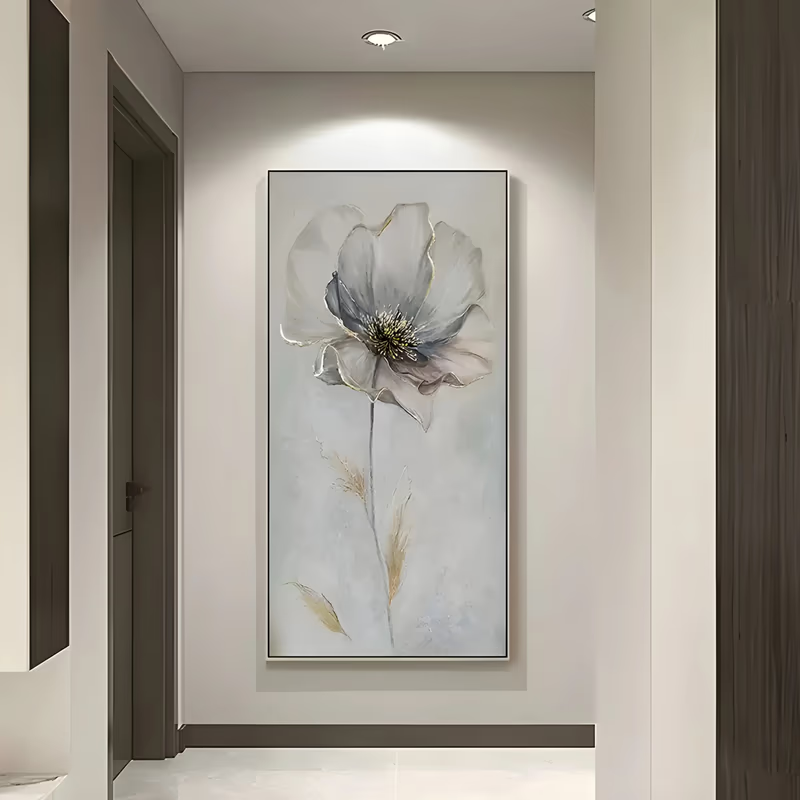
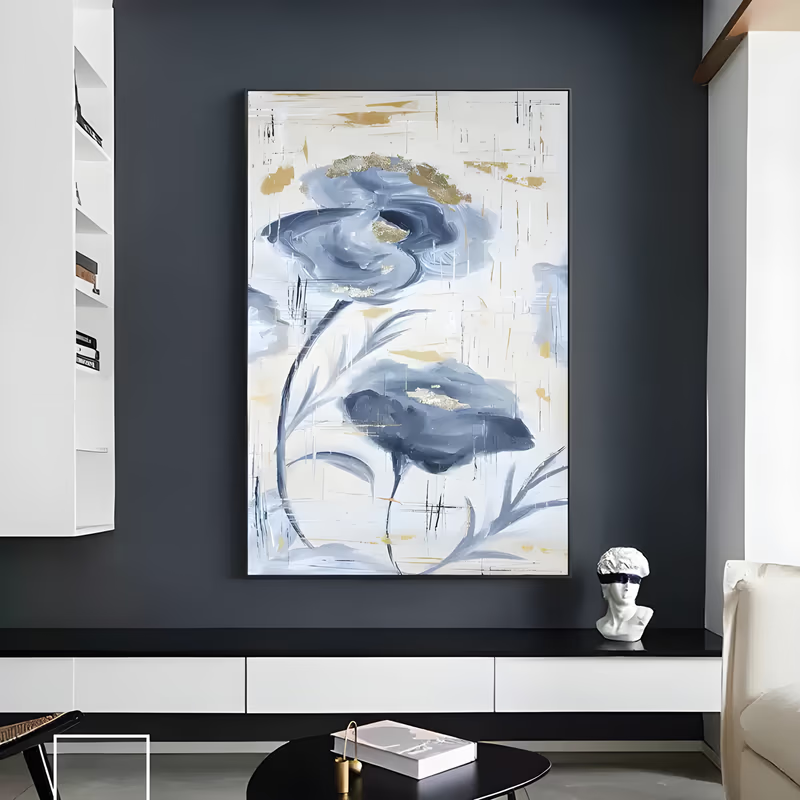
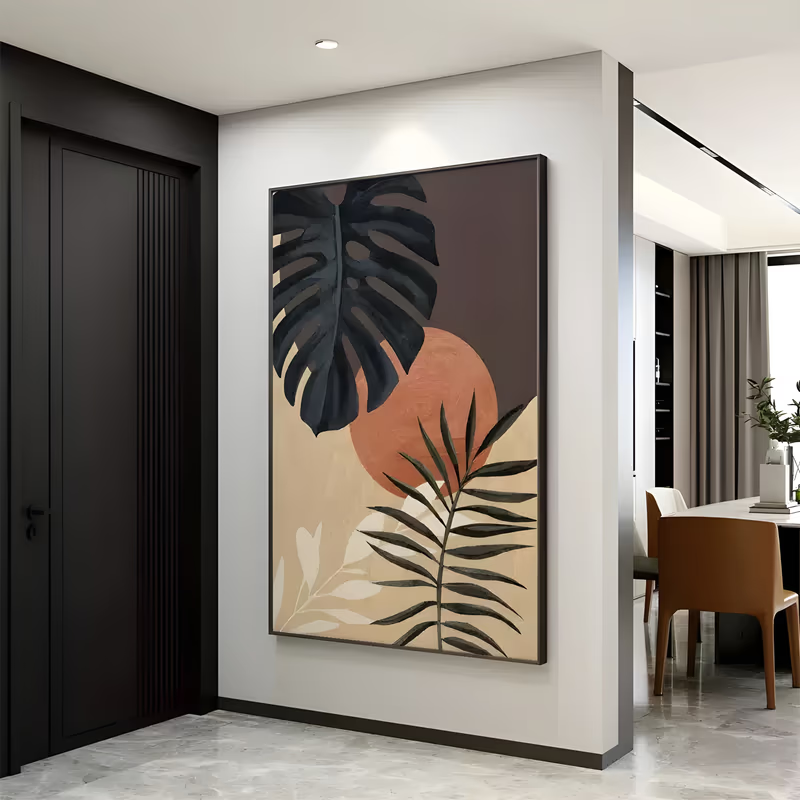
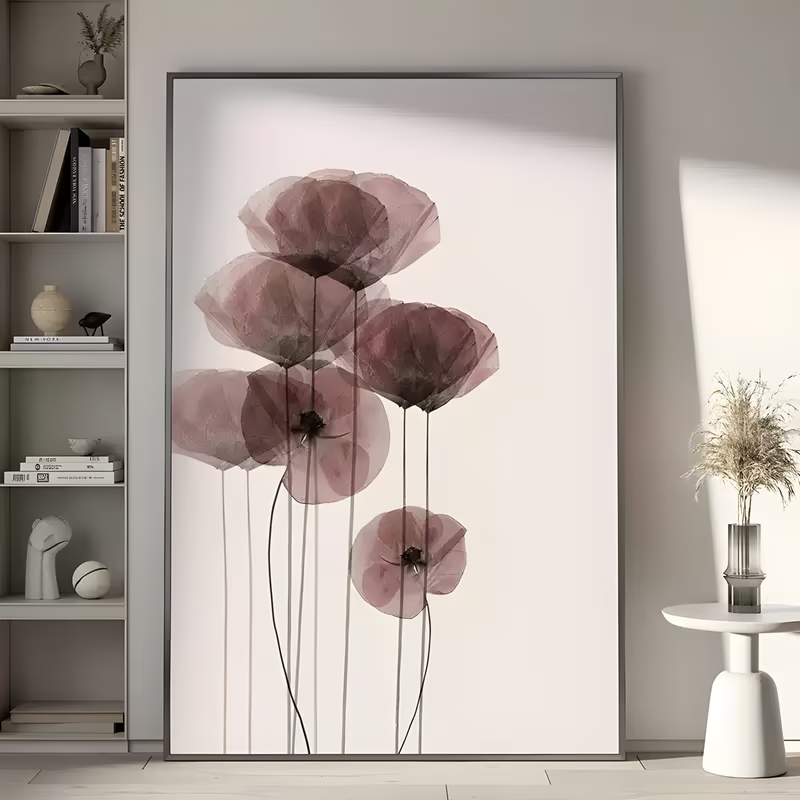
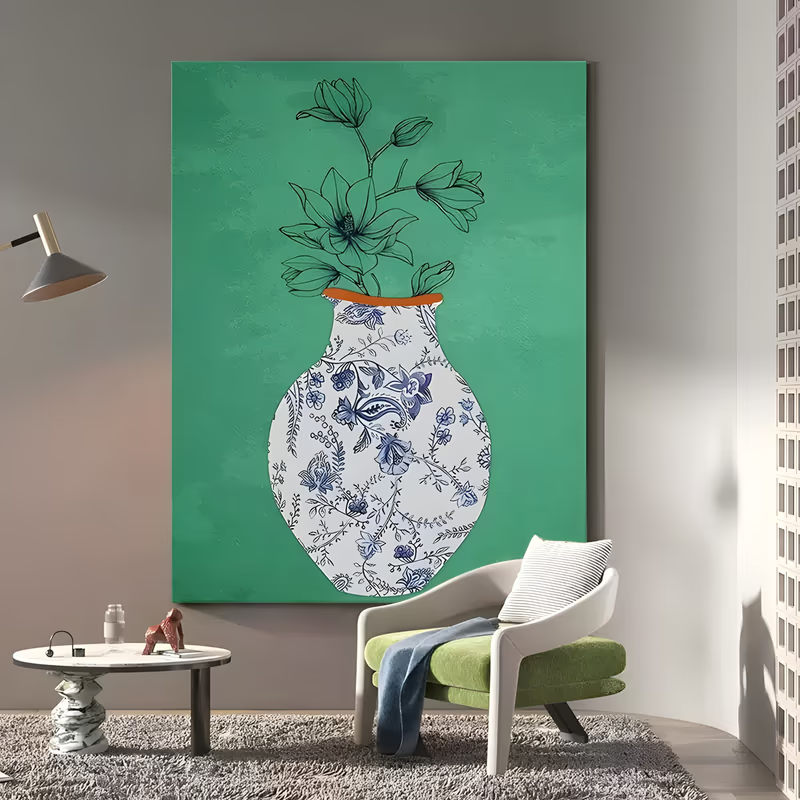
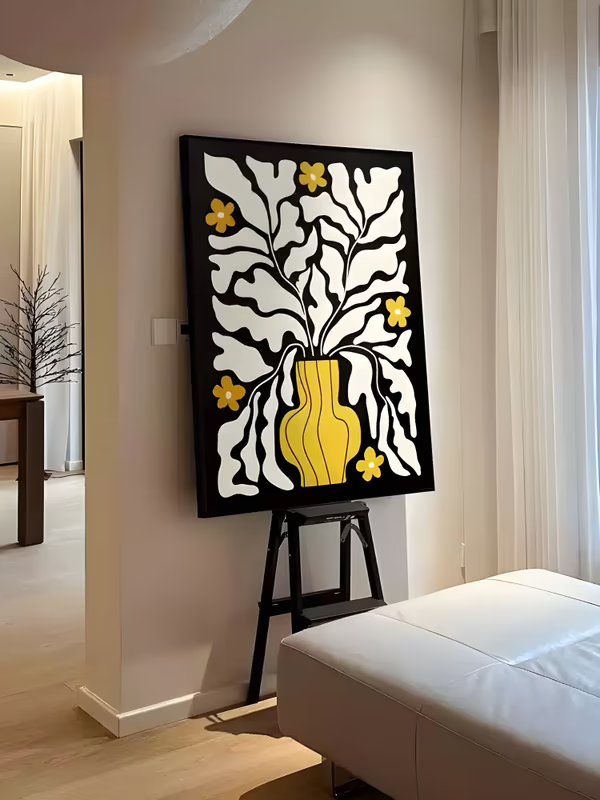
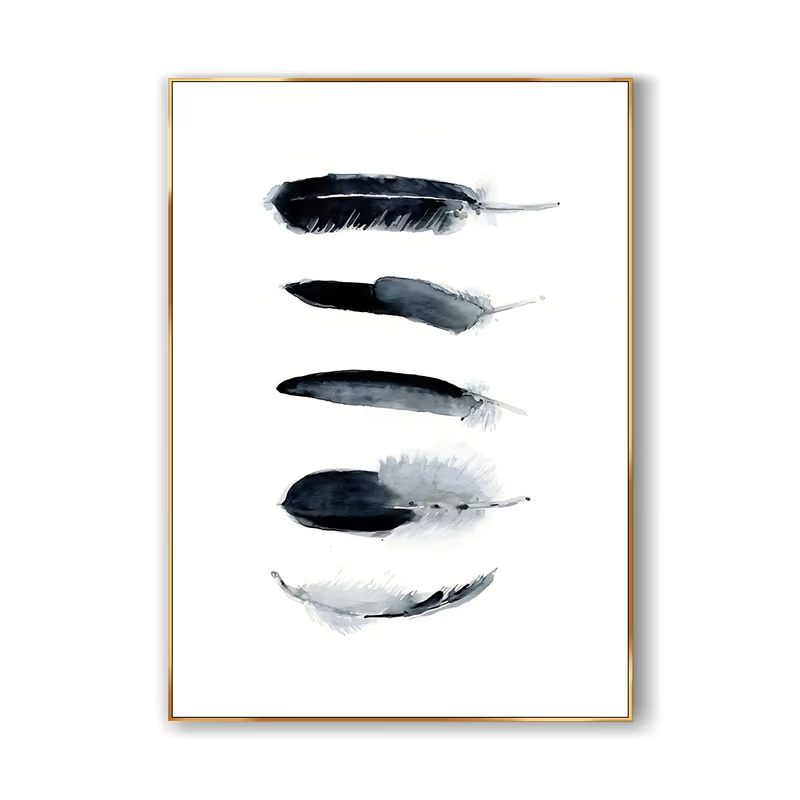
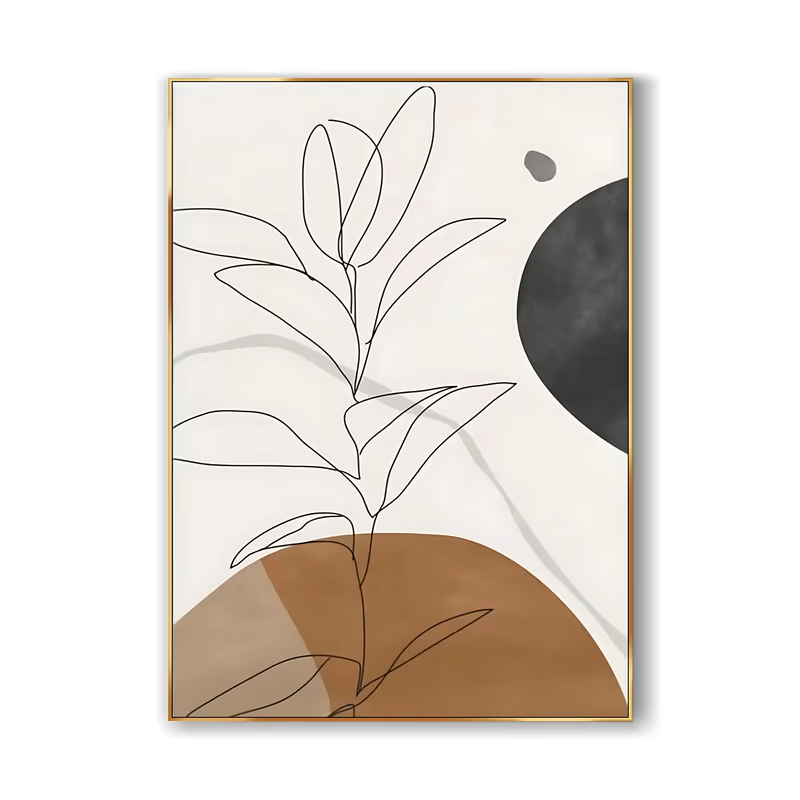
One poppy, a birch sprig, a lace-like tree, a lotus in gold line, palm fronds in silhouette. A single plant on open ground is the gentlest way into minimalism and a natural choice over a bed or in a spa.
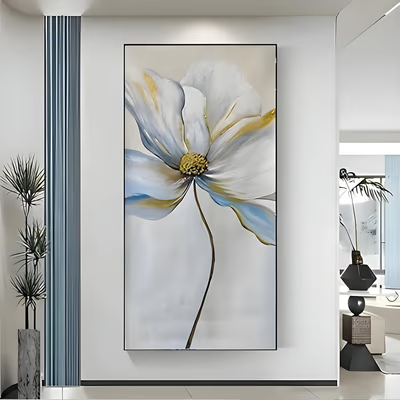
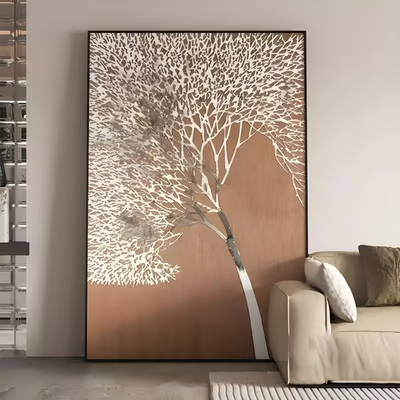
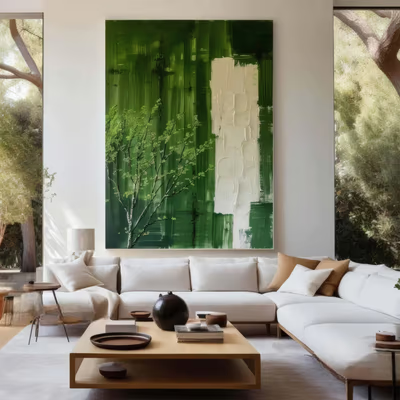
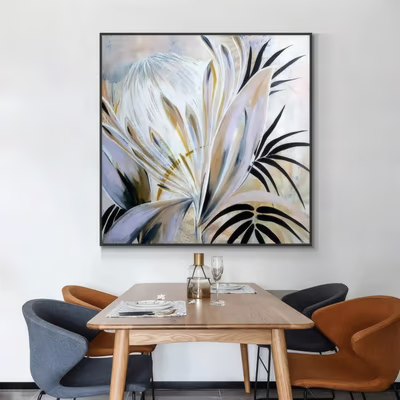
Quiet landscapes and animals
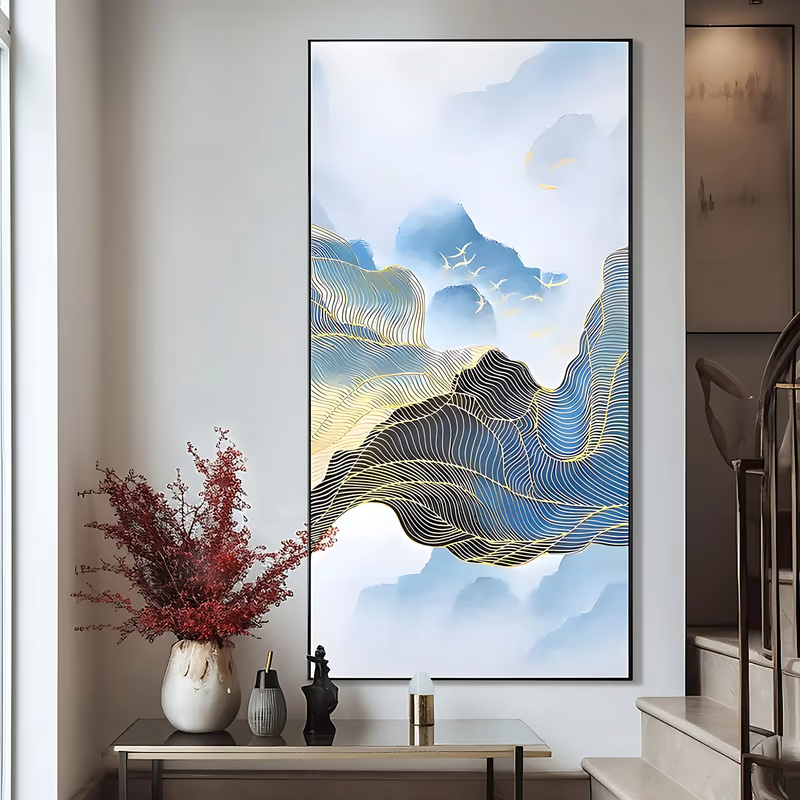
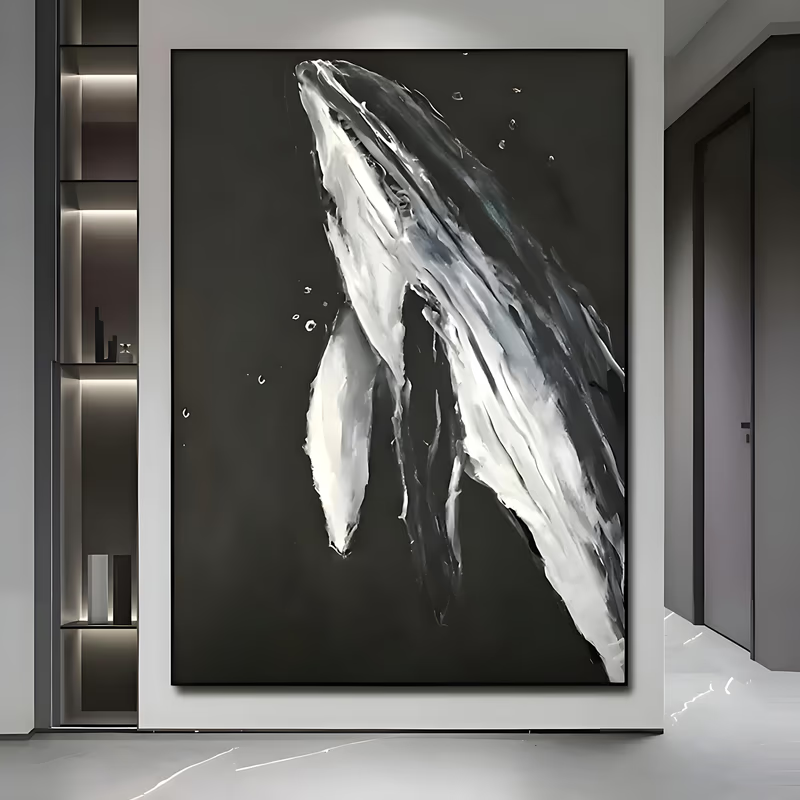
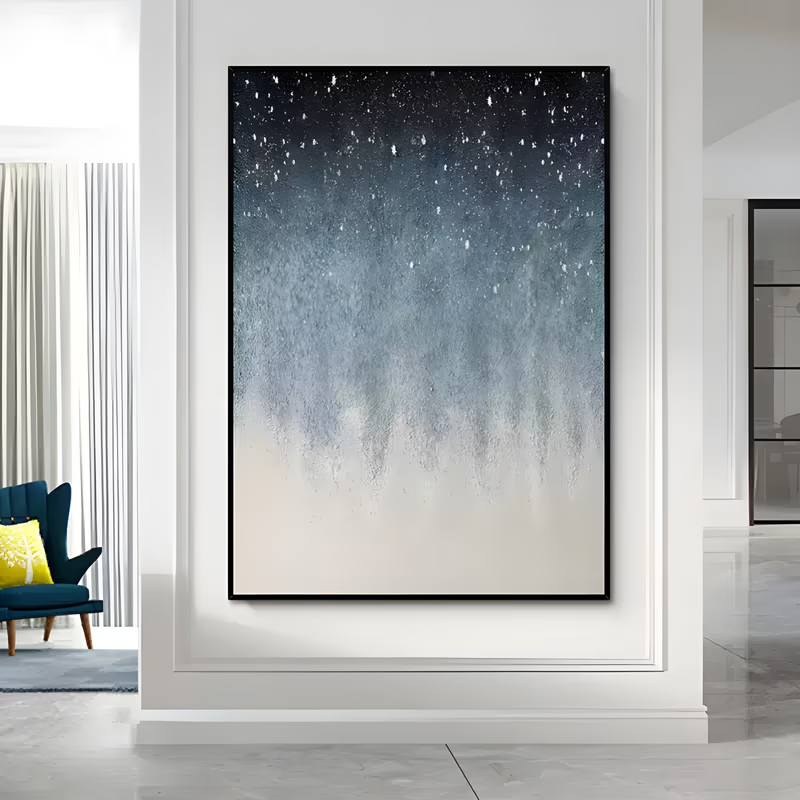
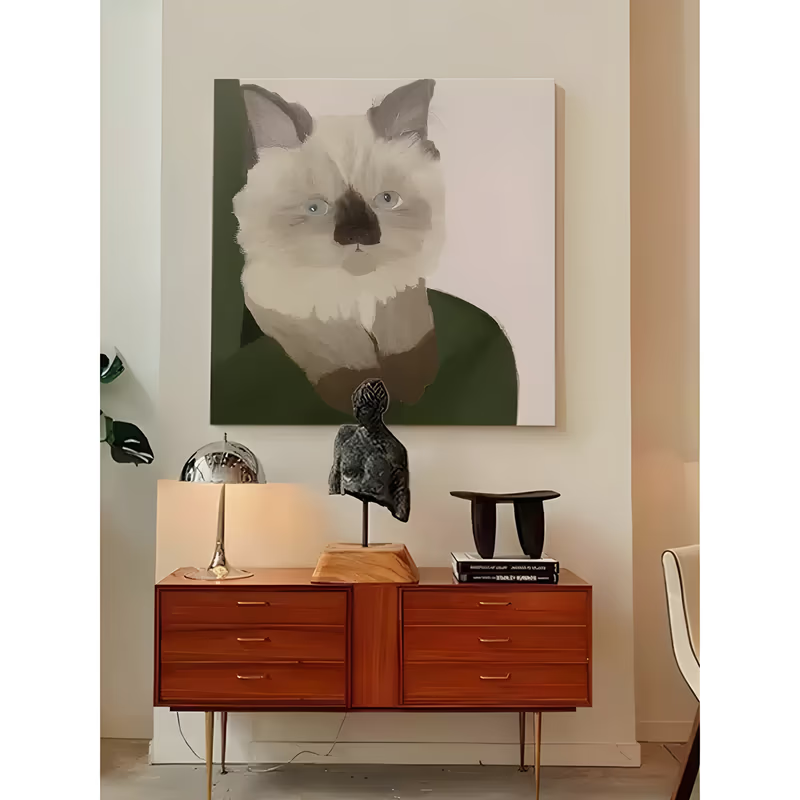
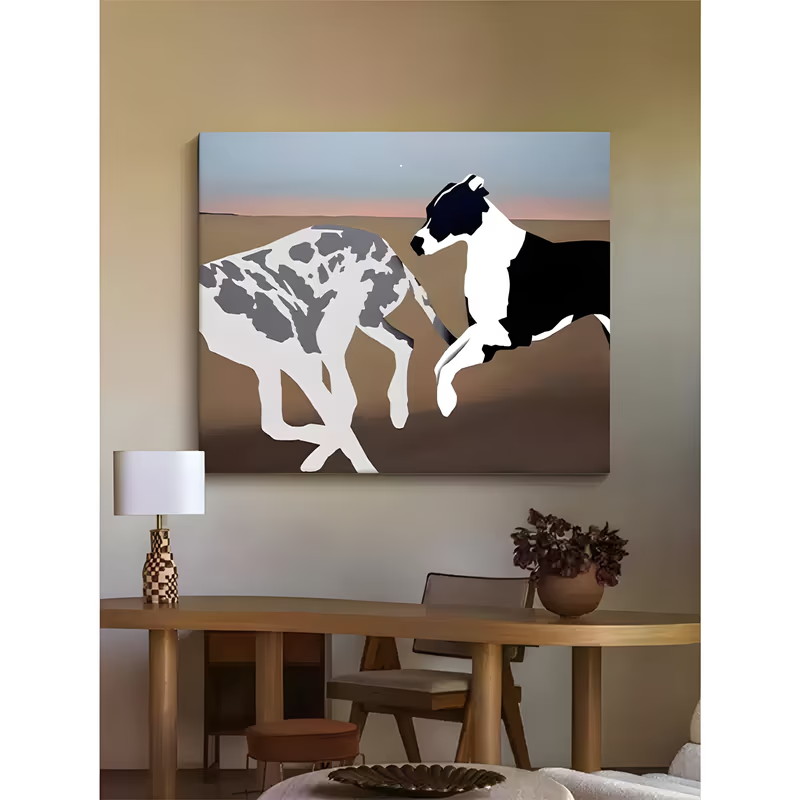
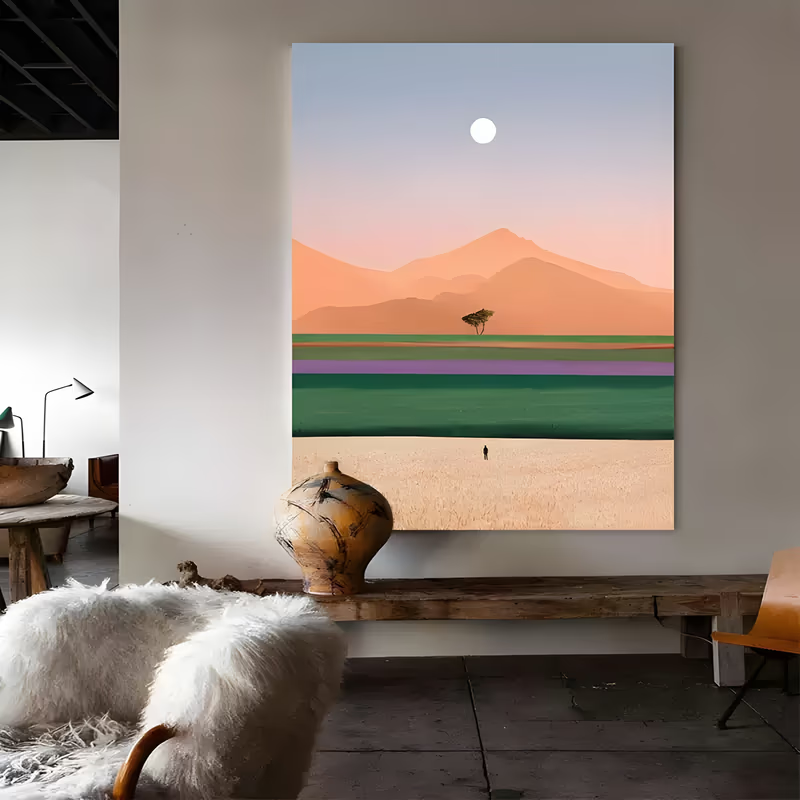
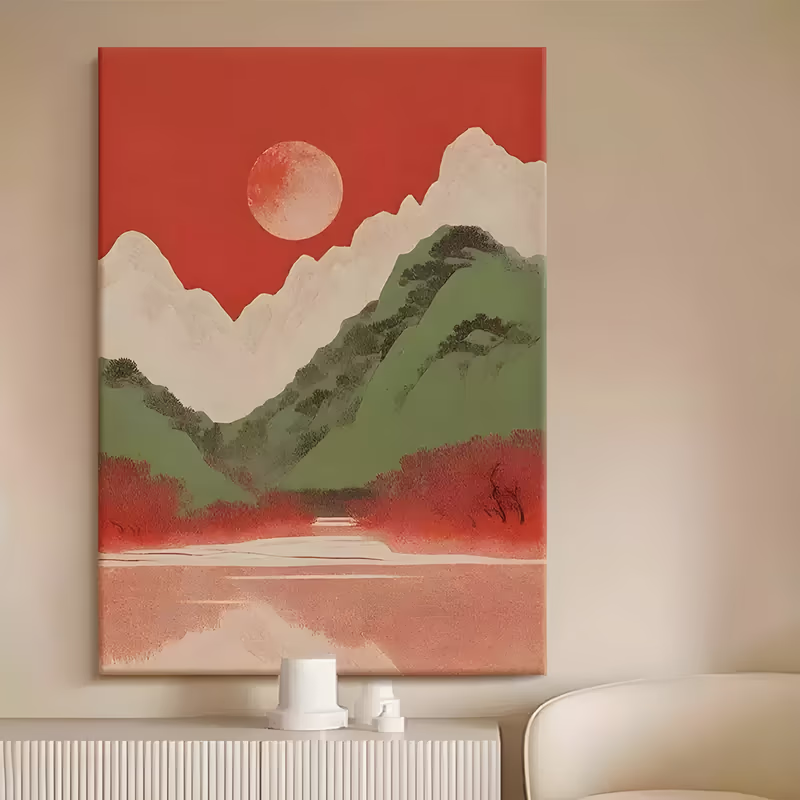
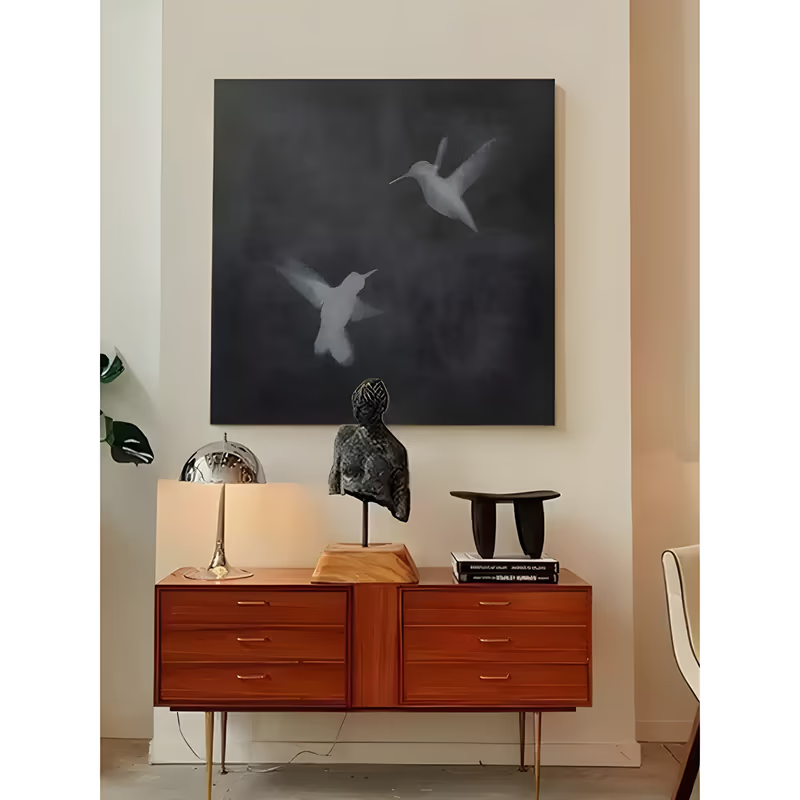
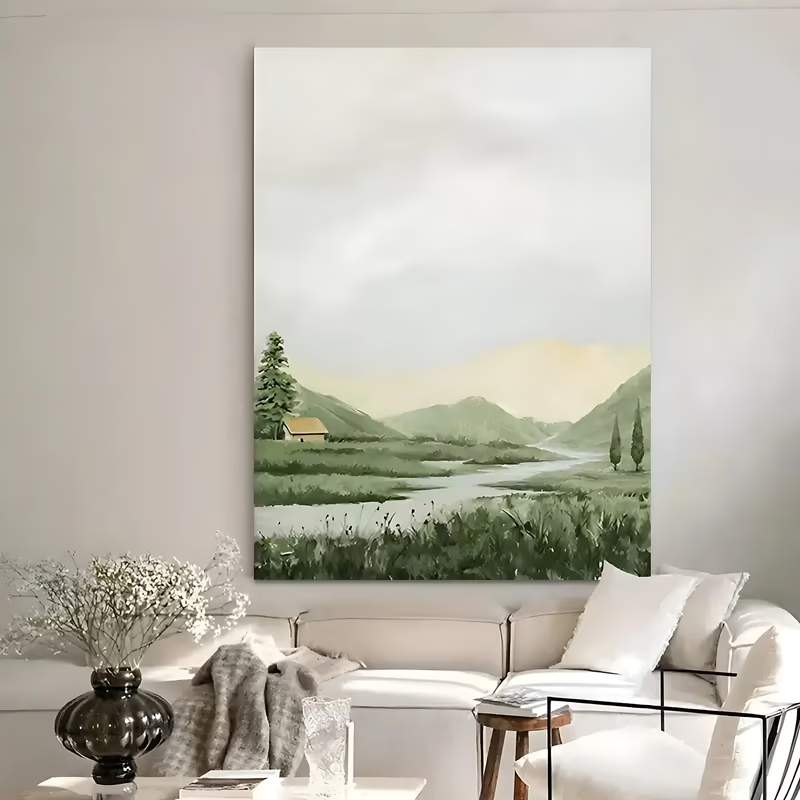
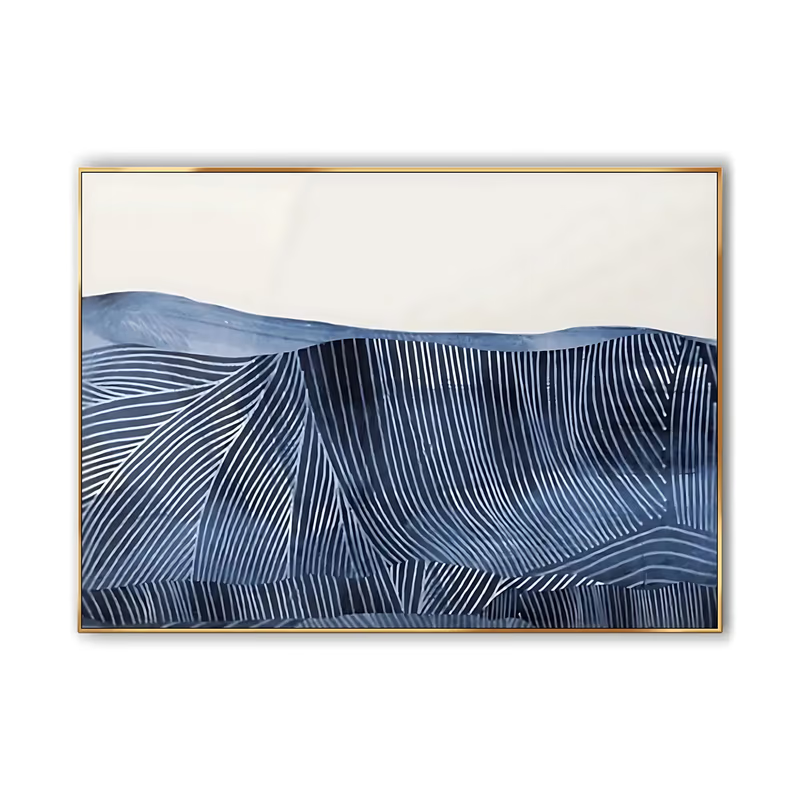
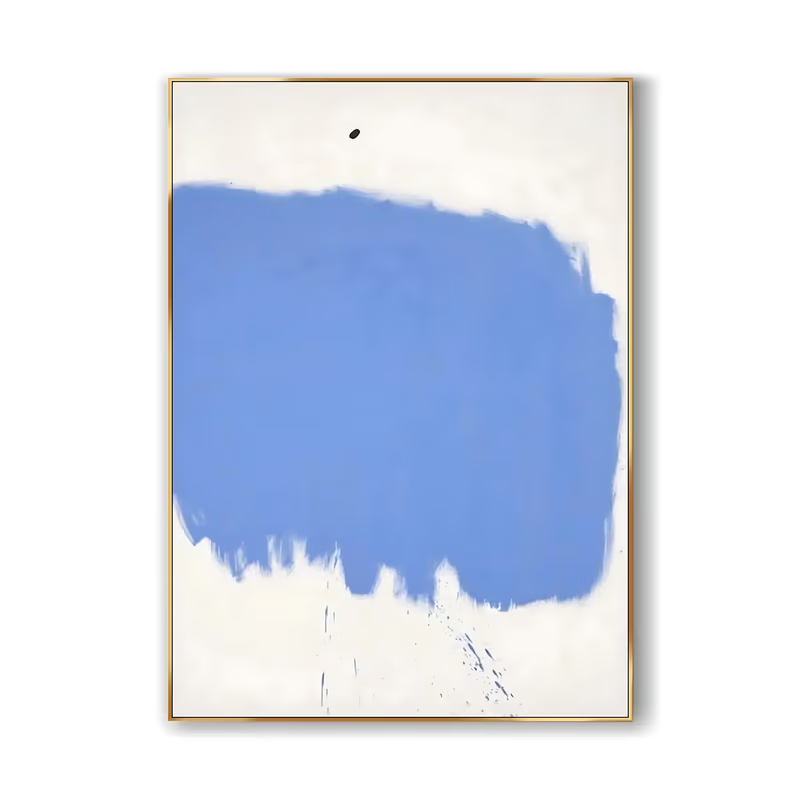
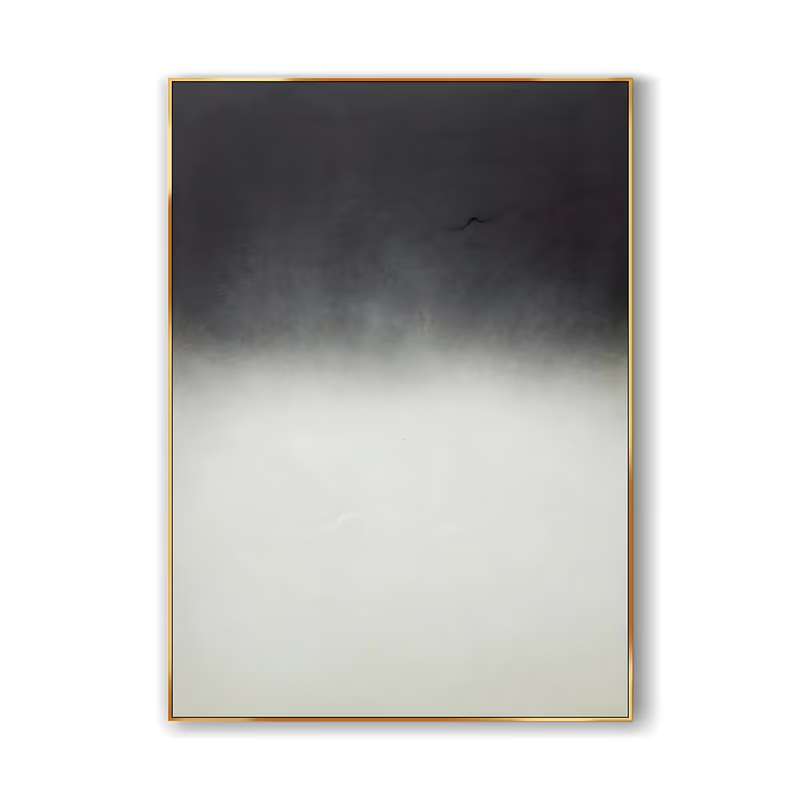
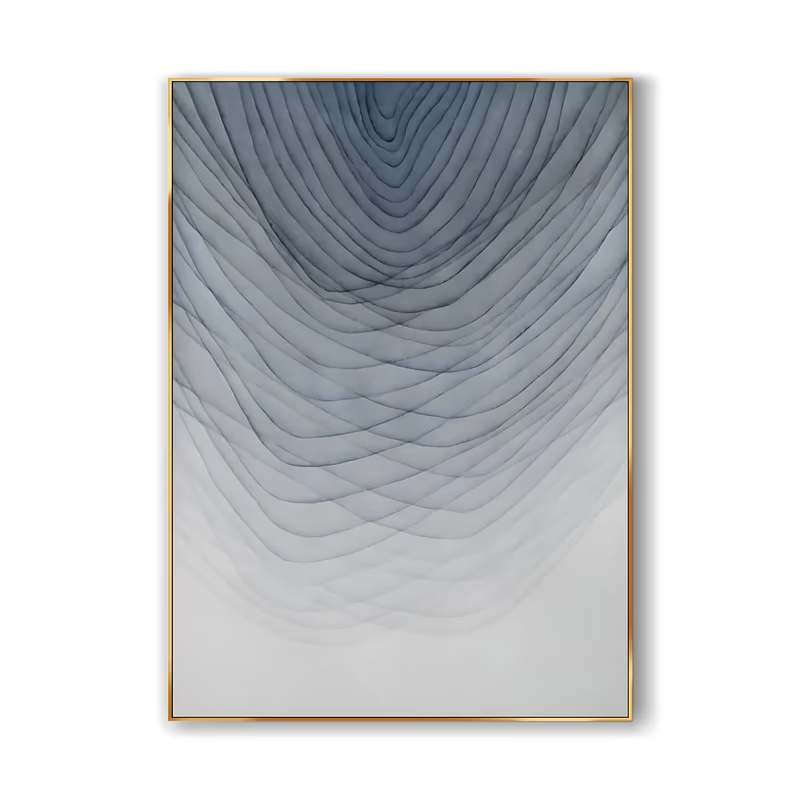
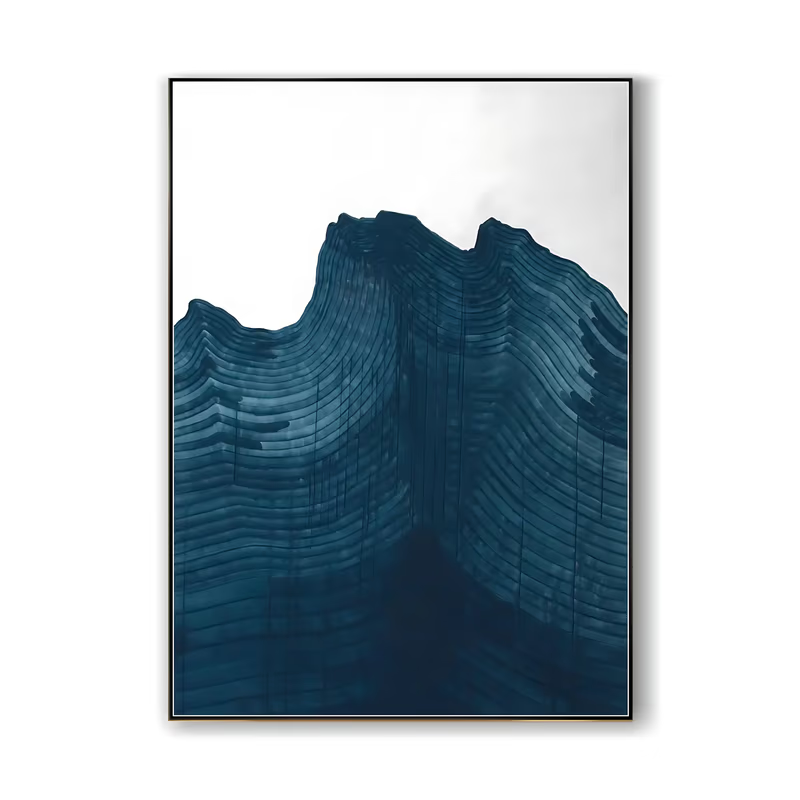
Misty blue ridges with a drift of birds, a navy night sky dissolving into cream, a whale rising through darkness. These keep a hint of the outdoors while staying spare, which suits guest rooms, corridors and reading corners.
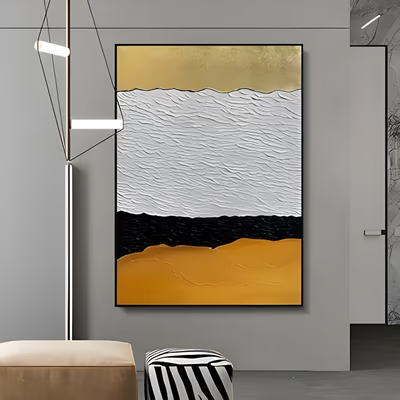
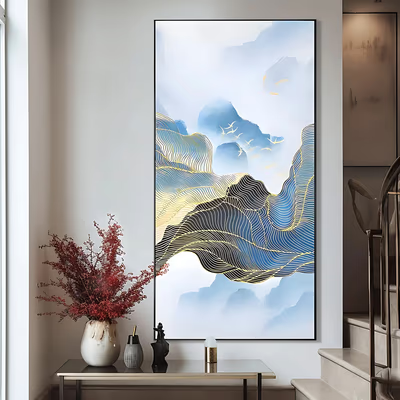
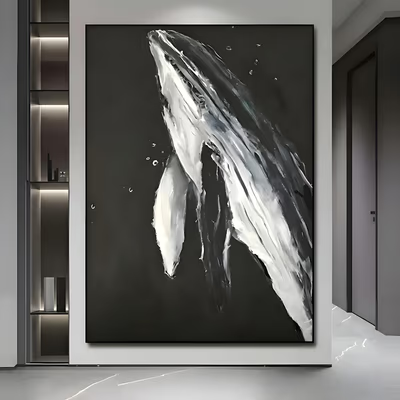
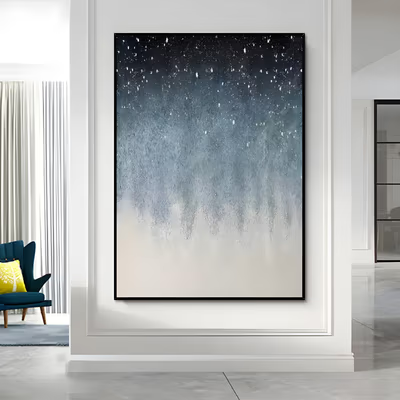
Figures and folk motifs in a few strokes
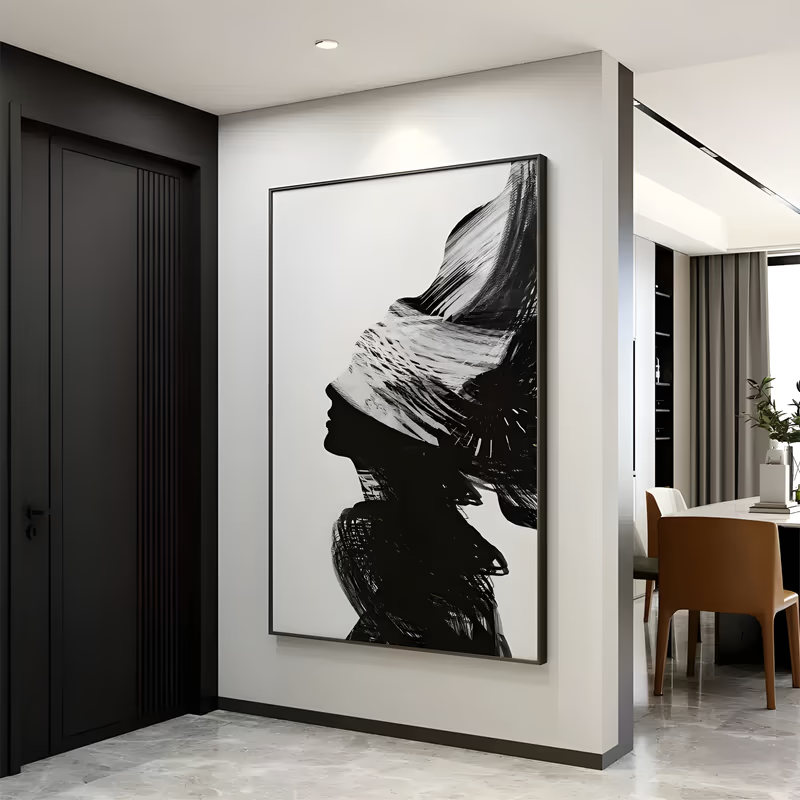
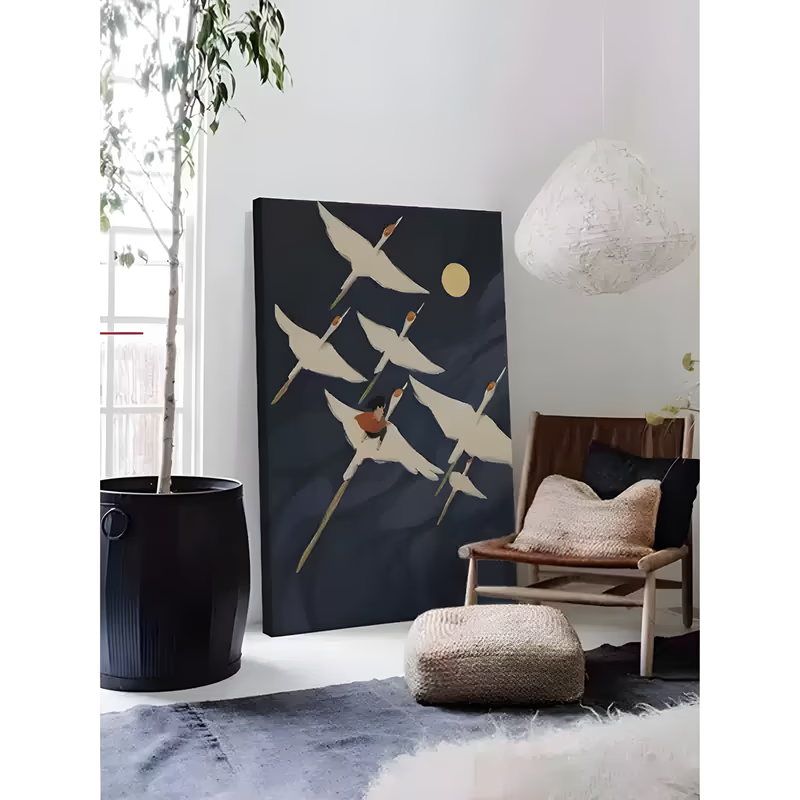
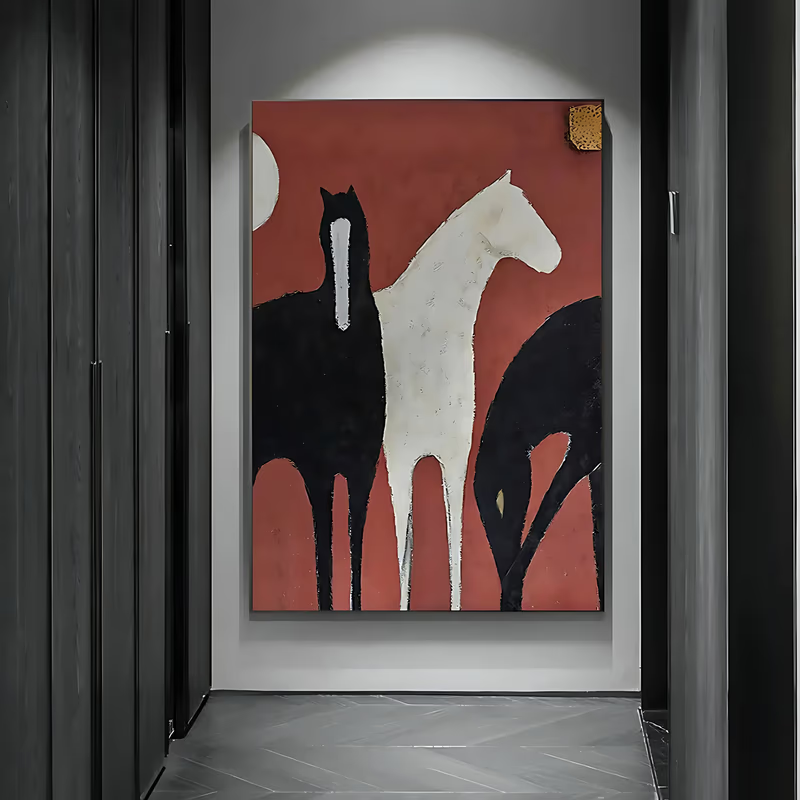
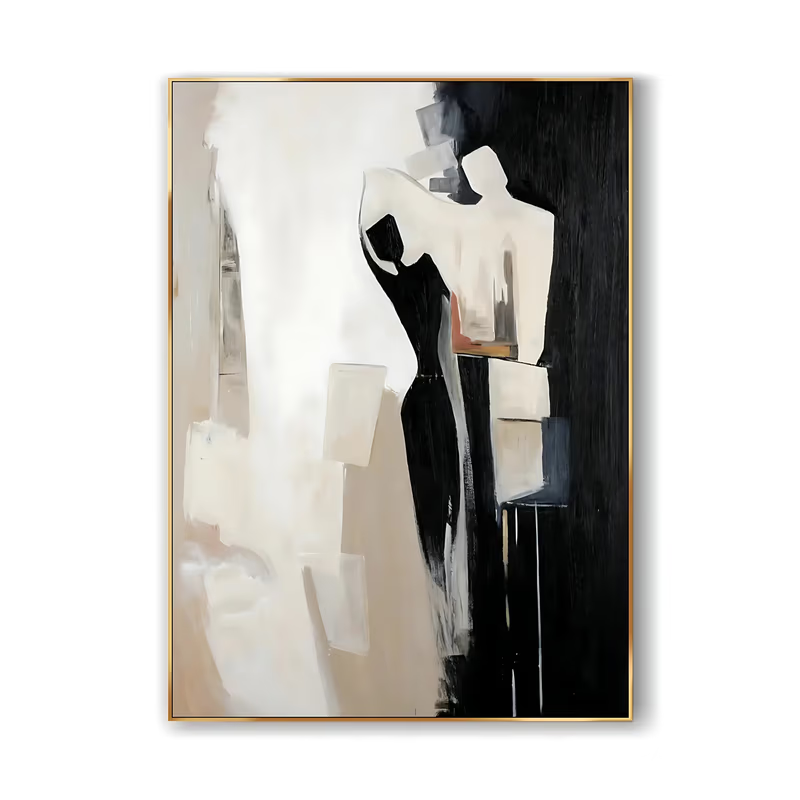
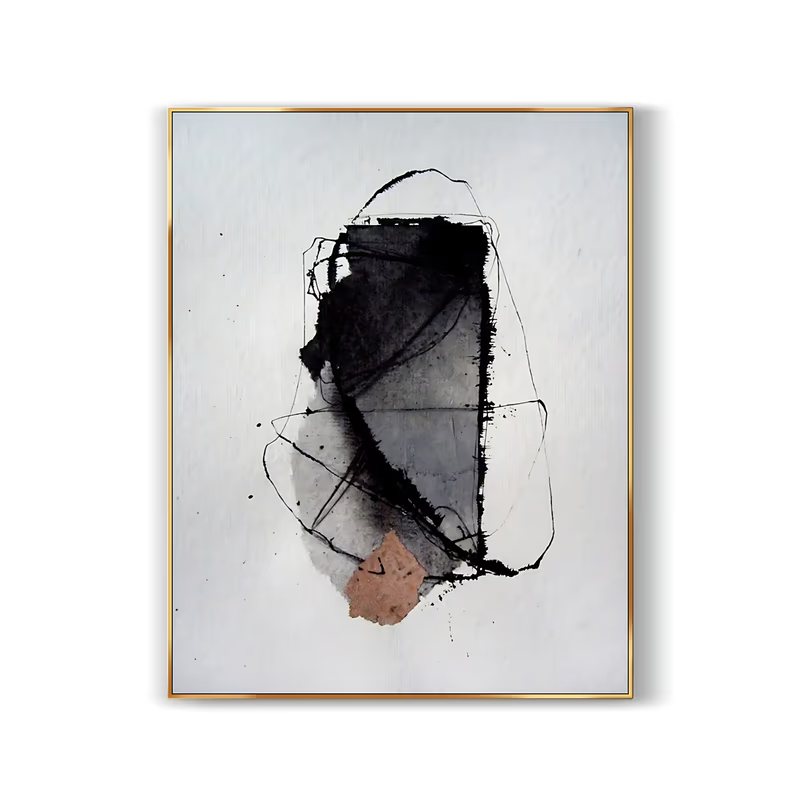
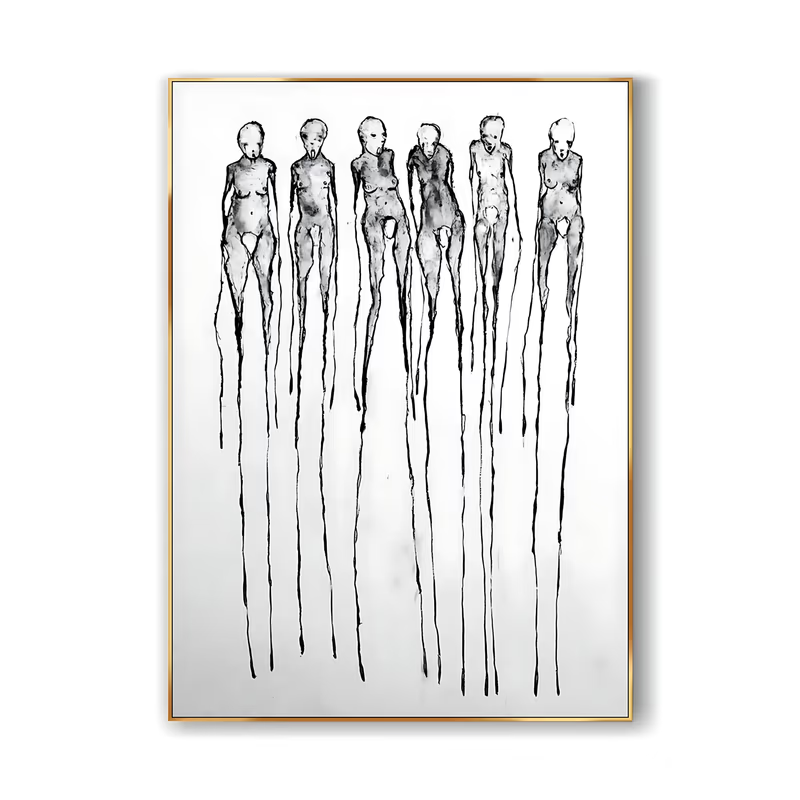
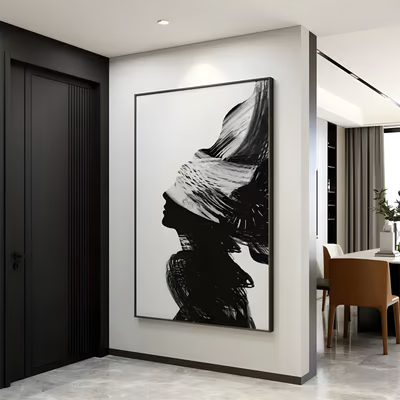
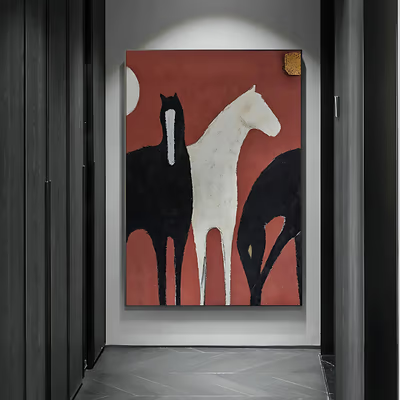
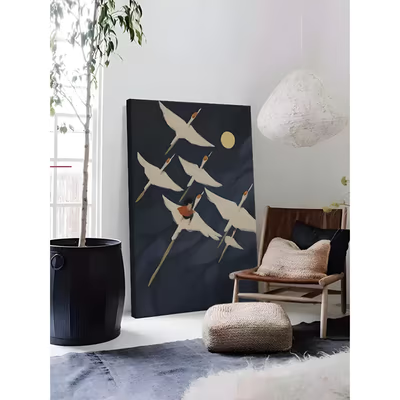
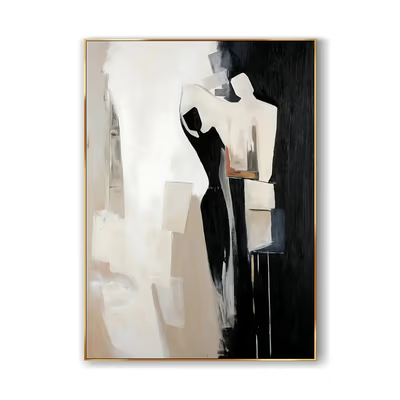
A woman's profile in black ink under a sweeping hat, two figures in black and cream, three horses on a terracotta field, a child riding a flock of cranes past the moon. Graphic and characterful, good for entrance halls, dressing rooms, restaurants and boutiques.
Which interior styles suit minimalist wall art?
Minimalist wall art belongs in Japandi, Scandinavian, warm minimal and contemporary interiors, and it calms a busier room by giving the eye one clear place to rest.
| Interior style | Minimalist piece that fits | Palette |
|---|---|---|
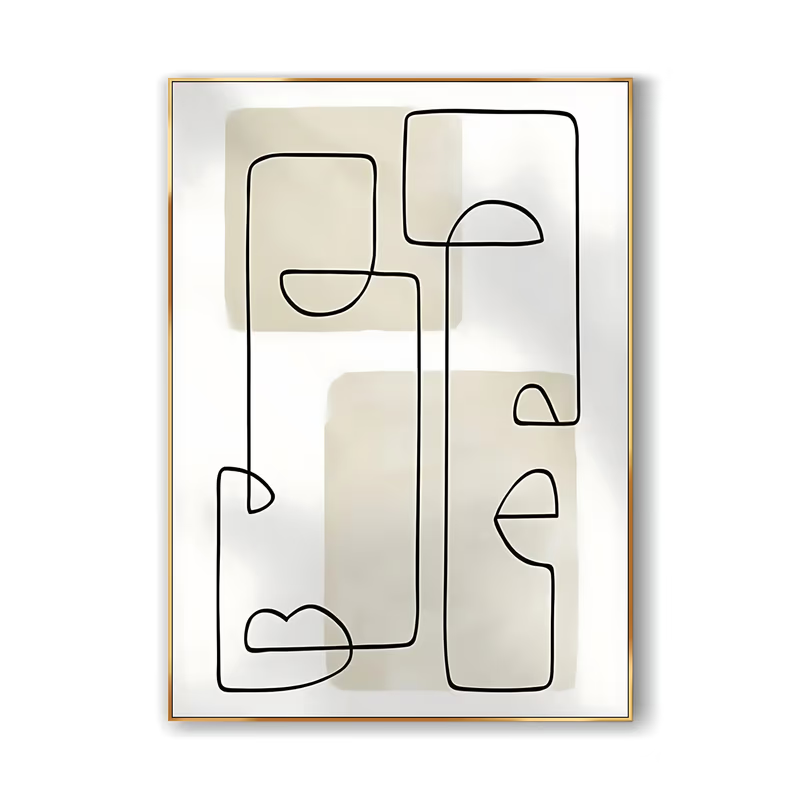
| Japandi | A single branch or ink-brushed figure, imperfect hand-drawn lines | Oatmeal, charcoal, muted green |
| Scandinavian | Soft circles and planes, a pale botanical | White, light grey, sage, pale wood tones |
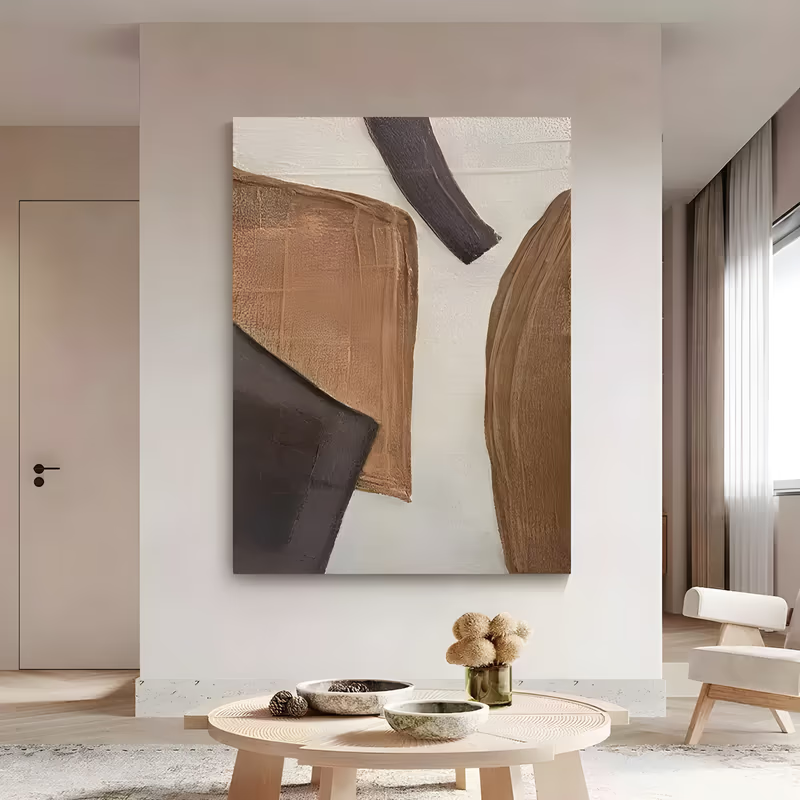
| Warm minimal | Arches, sun discs and rounded shapes | Terracotta, sand, cream, rust |
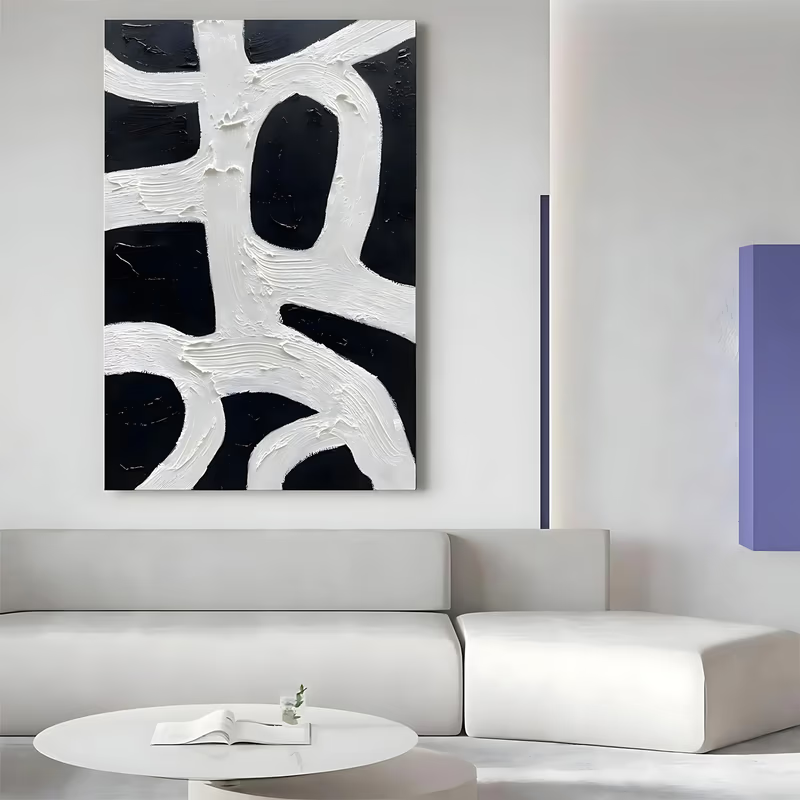
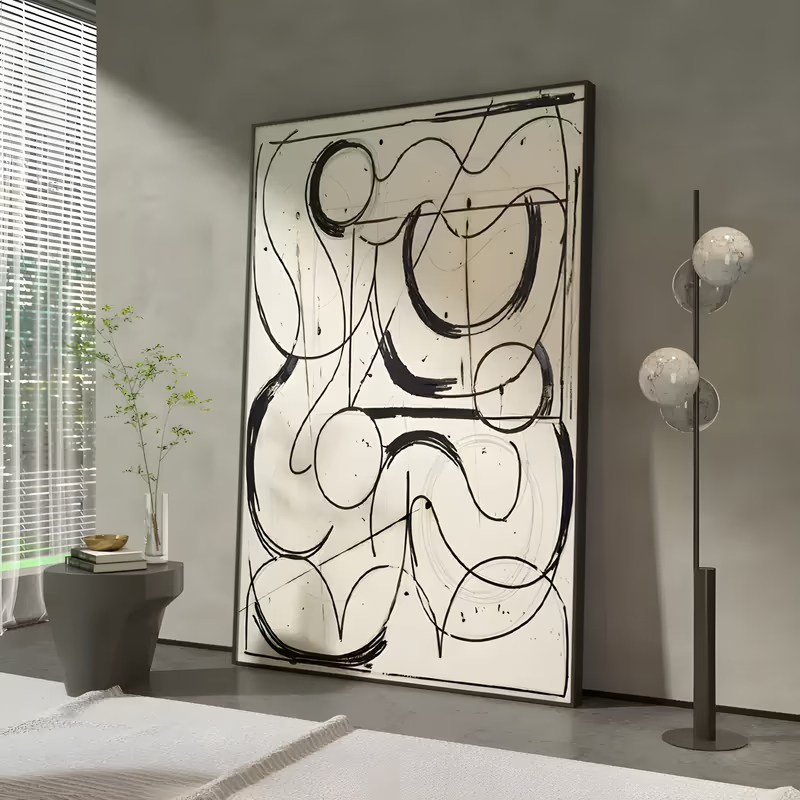
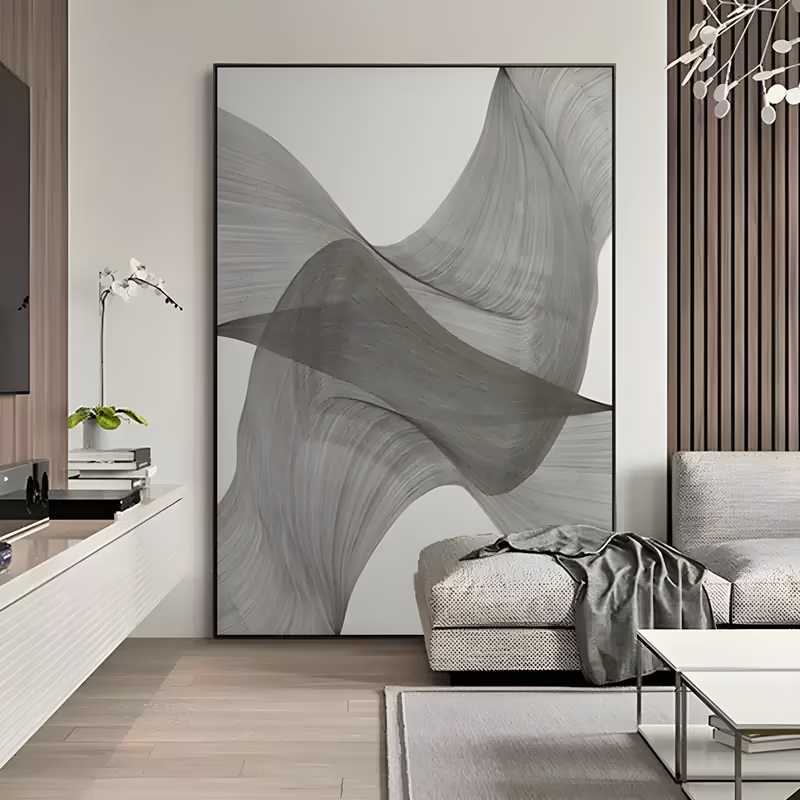
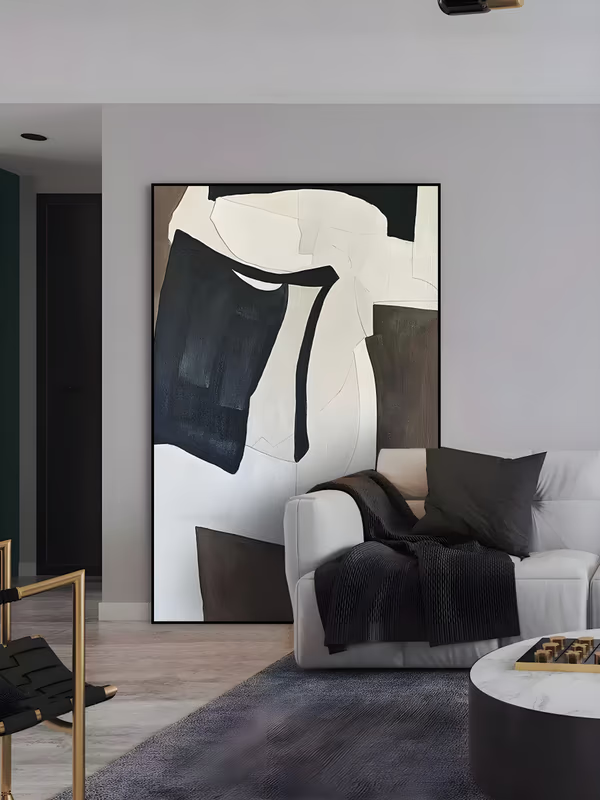
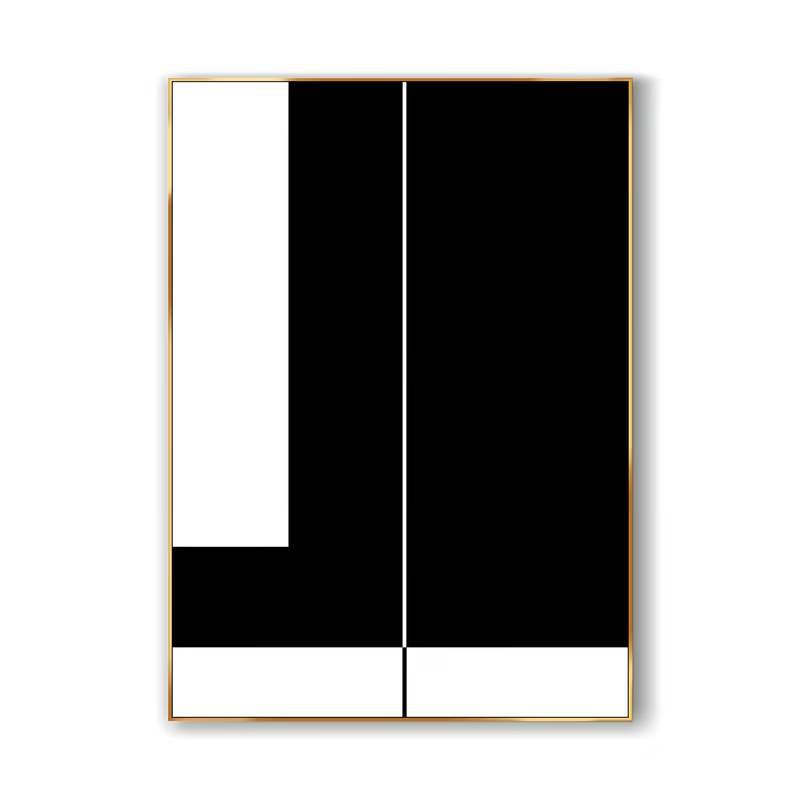
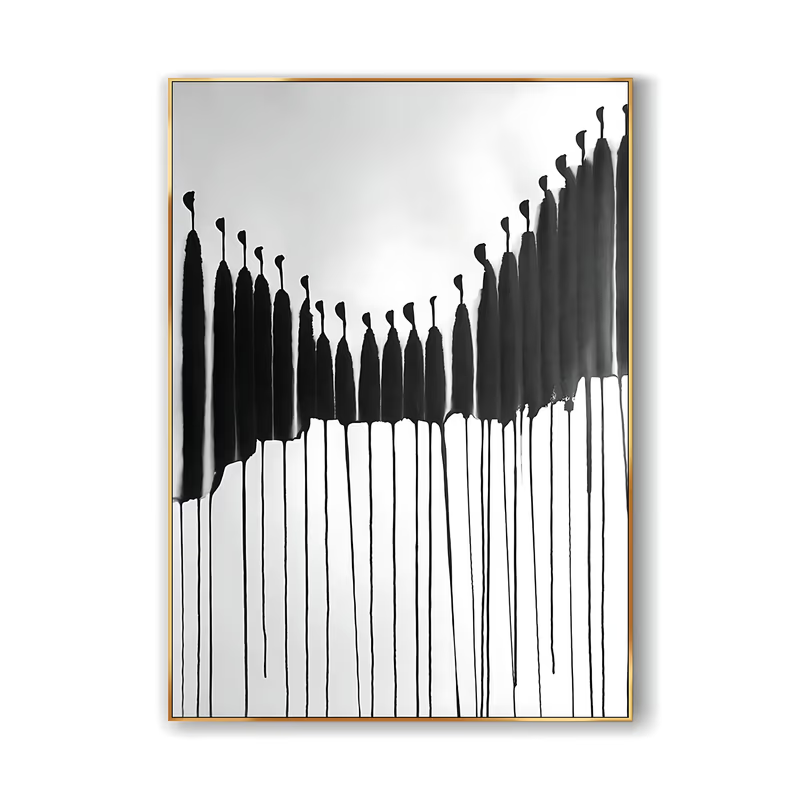
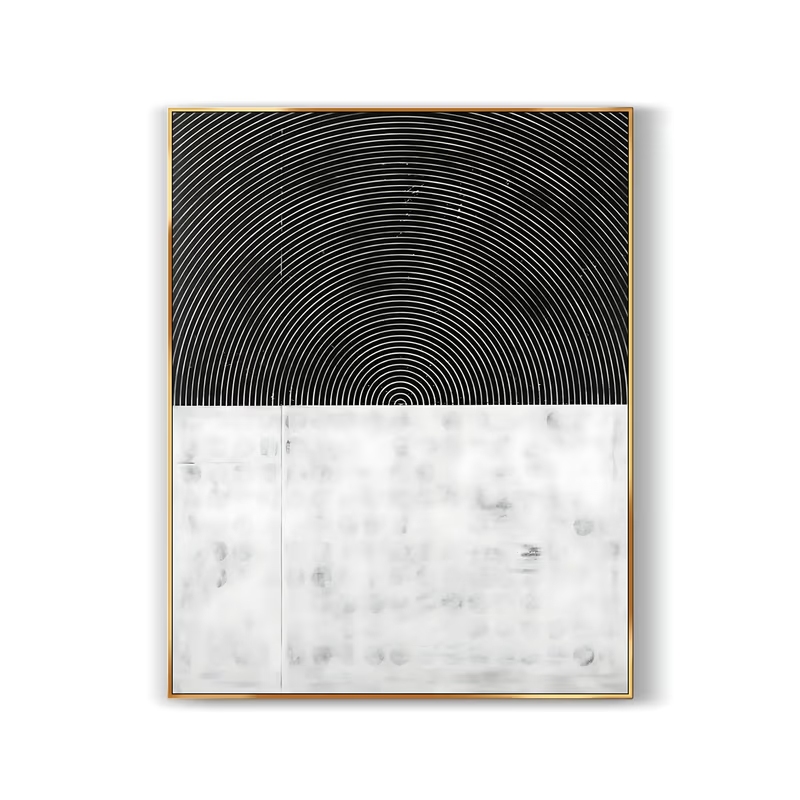
| Contemporary monochrome | Bold loops or bands in black on white | Black, white, one grey |
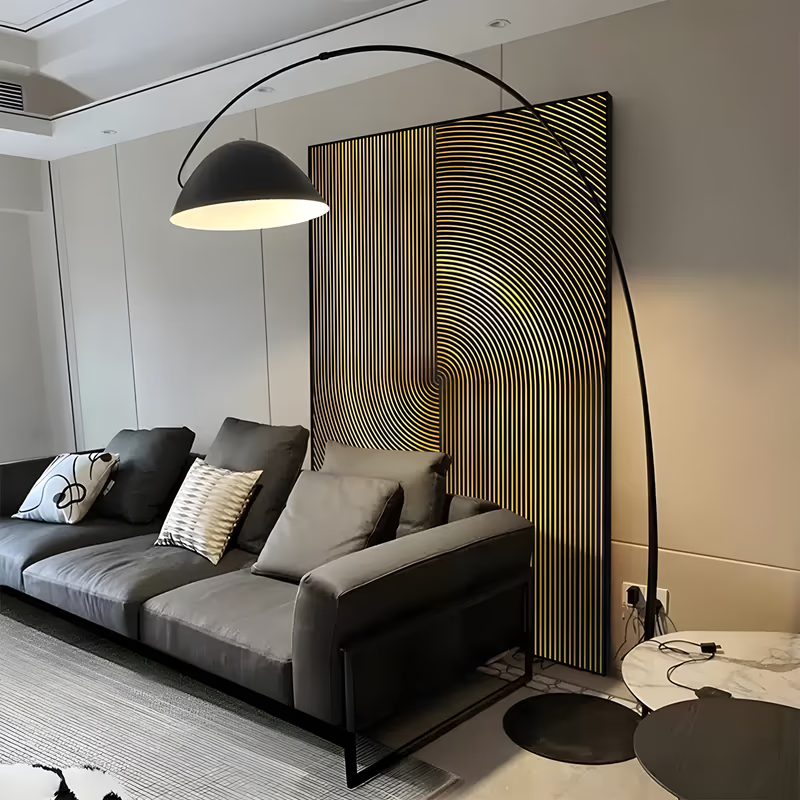
| Modern luxury hotel | Gold leaf edge on black, gold line lotus | Black, gold, ivory |
In a maximalist or traditional room, a minimal canvas works as a pause: one quiet piece among patterned fabrics stops the room tipping into clutter. Keep its frame simple so the restraint shows.
Which colours work best in minimalist art?
Keep to one colour family plus, at most, one accent: tonal neutrals, black and white, or warm earth tones with a touch of gold.
Minimalism does not have to mean white. The palettes that work best on the wall are limited rather than colourless:
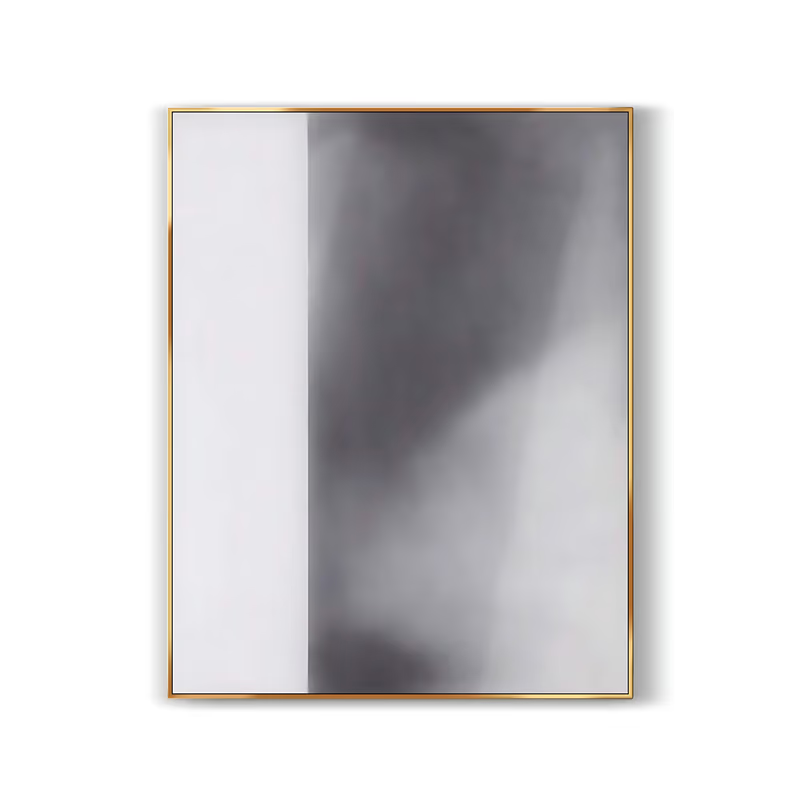
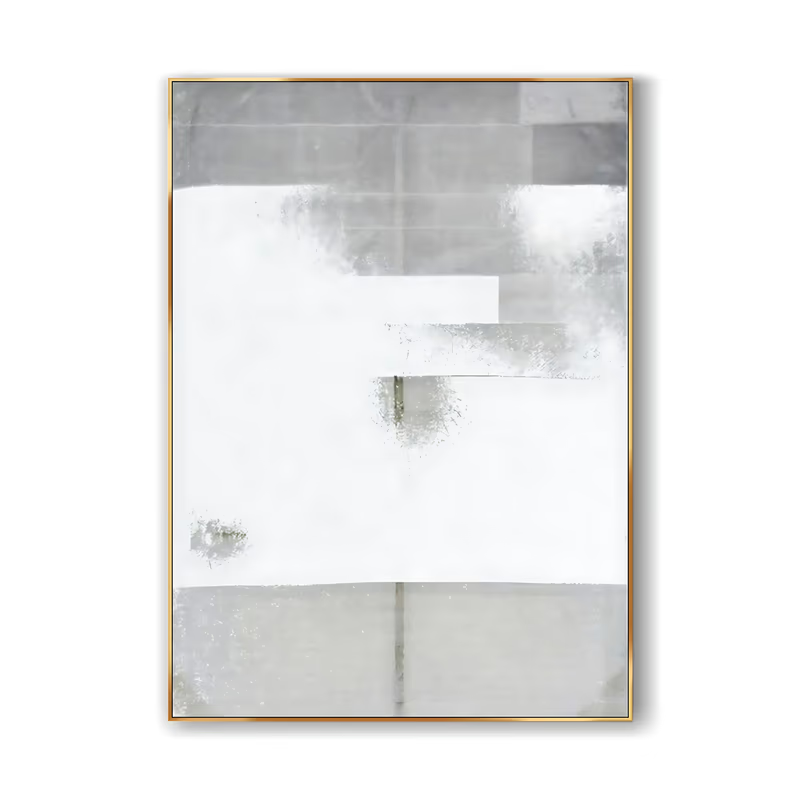
- Tonal neutrals. White, cream and beige pieces that sit almost into a pale wall, with the motif drawn in a slightly darker tone. The calmest choice for bedrooms and spas.
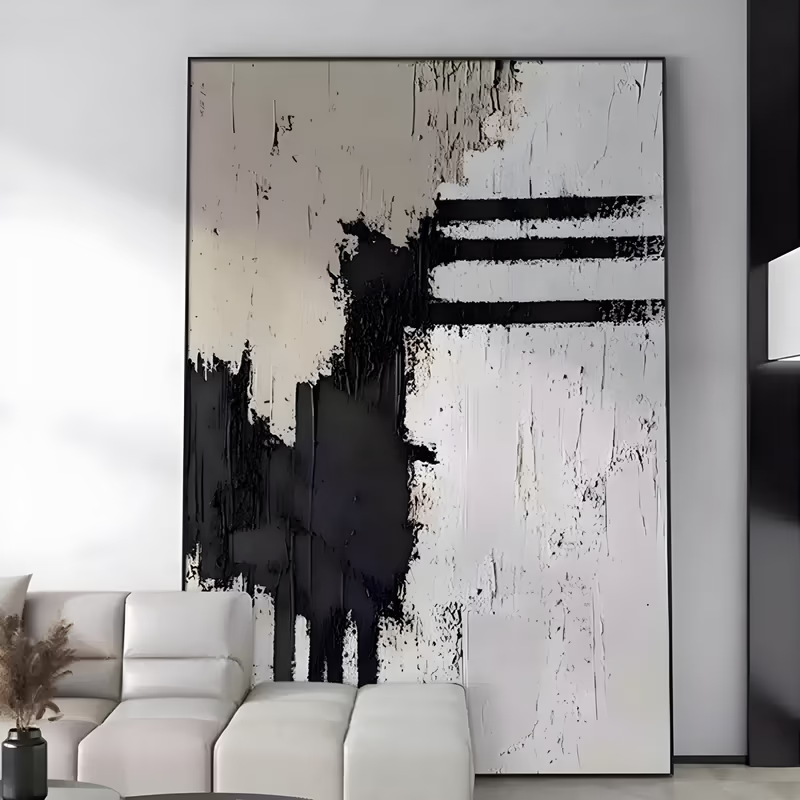
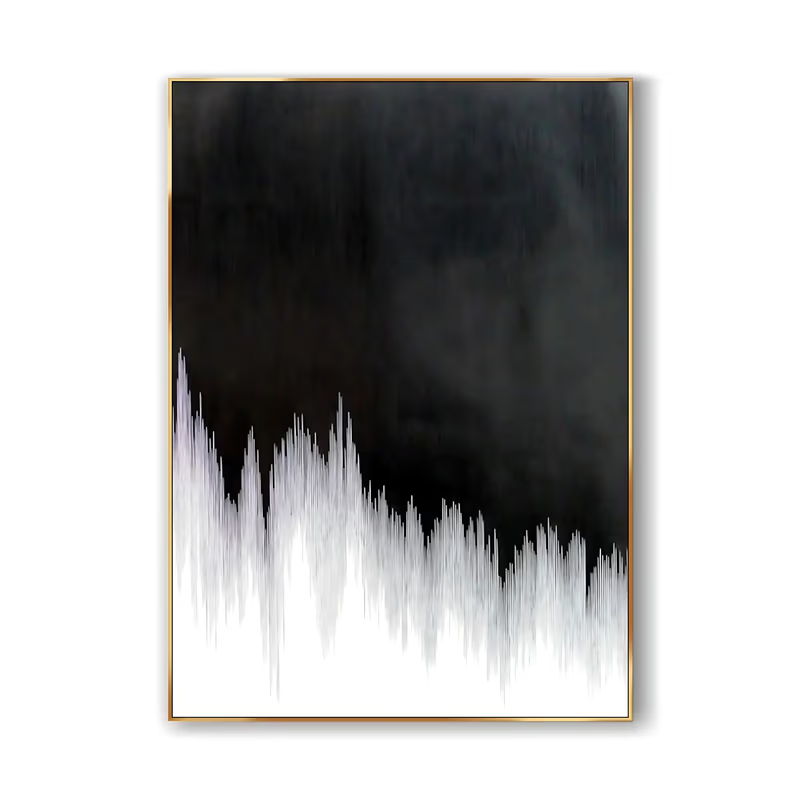
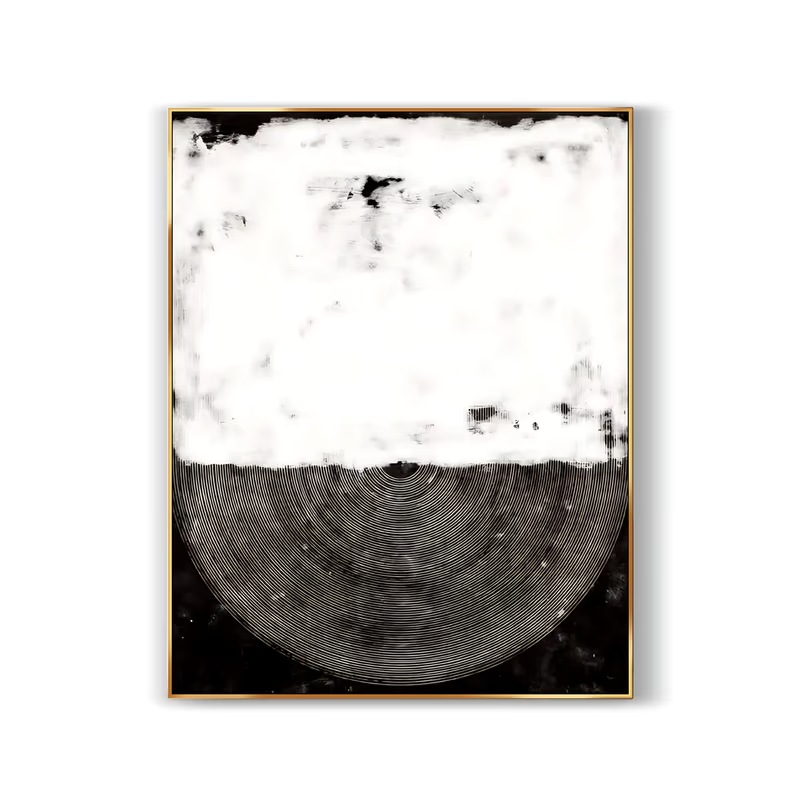
- Black and white. Black-led minimalist art gives the strongest graphic punch; one piece is usually enough per wall.
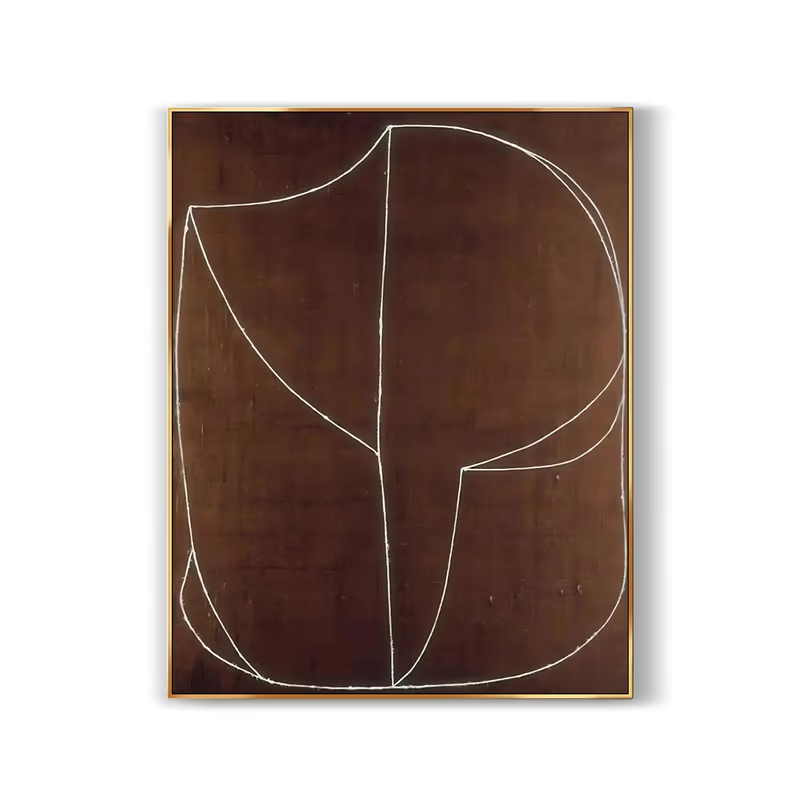
- Earth tones. Terracotta, brown and rust make minimalism feel warm, especially in dining rooms and Mediterranean schemes.
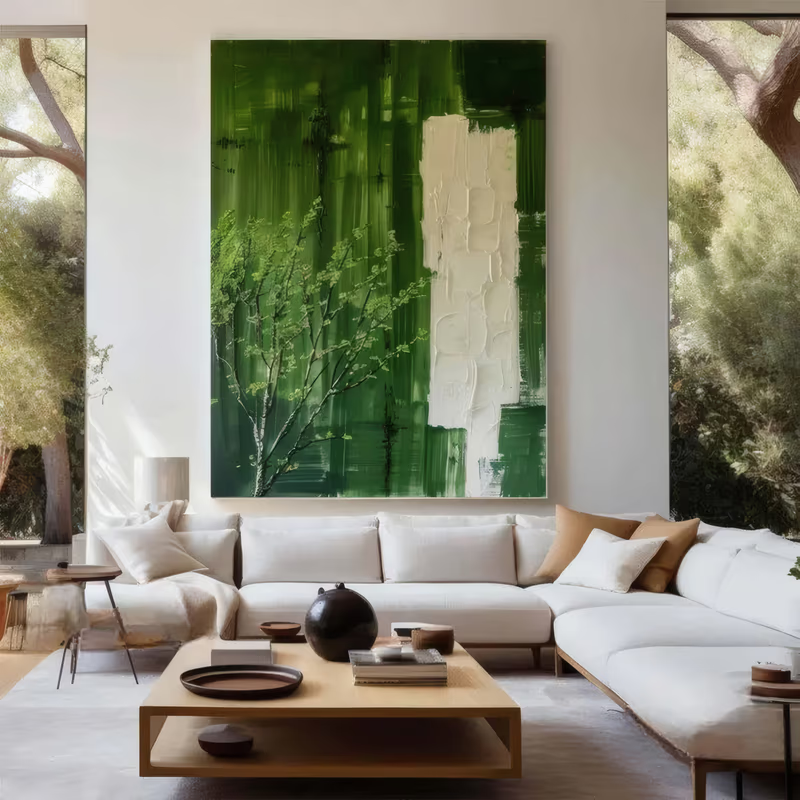
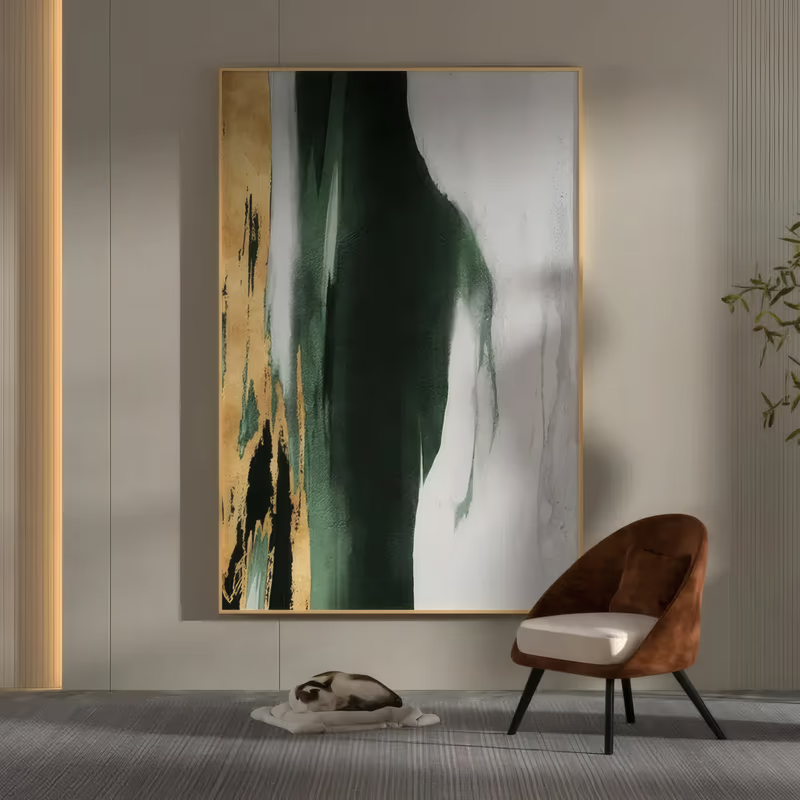
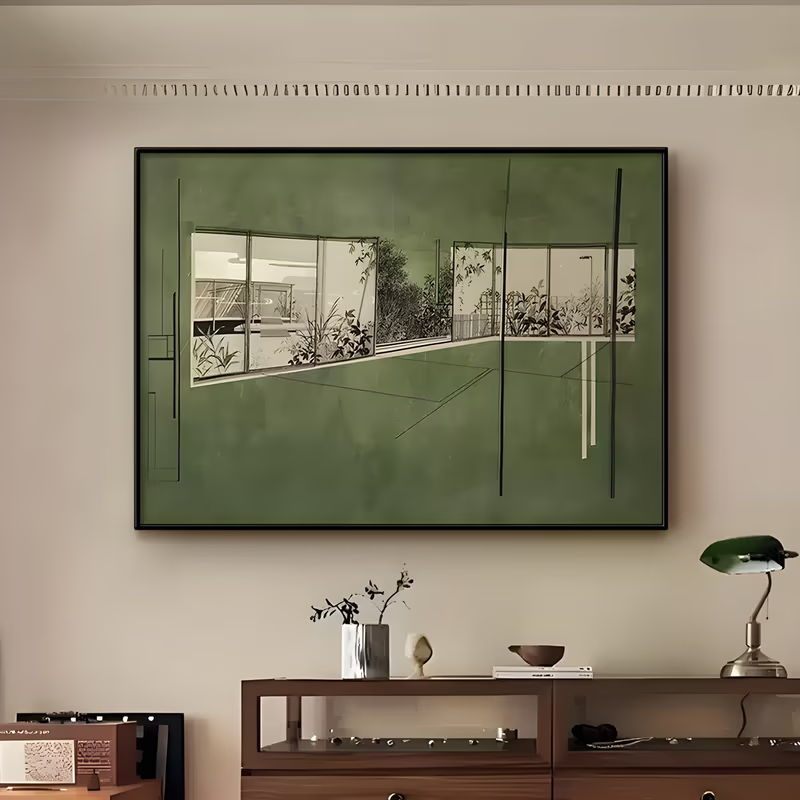
- Green and gold. Sage, olive and emerald grounds, often with gold leaf, bring nature in without pattern.
Pick up the wall colour or the main fabric in the painting's background, and let the motif carry the single contrasting note.
How big should minimalist art be, and how many pieces should you hang?
Go bigger than you think and hang fewer: one large minimalist canvas, or a pair, usually beats a cluster of small ones.
A small minimal piece on a large wall looks like something forgotten; the same composition at scale looks intentional. Over a bed or sofa, aim for art about two-thirds to three-quarters of the furniture width. Nearly all the minimalist works here are vertical, so for a wide wall, hang two tall canvases side by side with a narrow, even gap, or three in a row over a long sideboard. Leave plenty of plain wall around the group, at least a hand's width more than feels necessary.
Keep the centre of the art at about 145–150 cm (57–59 in) from the floor in living areas, and lower over a bed or desk so the piece relates to the furniture. A gallery wall of many small works works against minimalism; if you want more than three pieces, use them in a sequence along a corridor rather than all on one wall.
Where does minimalist art work best in hotels, offices and spas?
Minimalist art is at its best where people need to rest or focus: hotel guest rooms, spa treatment rooms, meeting rooms and private offices.
In a guest room, a single minimal canvas over the bed or desk gives the room character without visual noise, and it photographs cleanly for booking sites. In spas and wellness spaces, soft tonal pieces support the quiet that treatment rooms are built for. In meeting rooms and offices, simple geometry looks composed and professional and does not distract from a screen or a conversation.
Minimal compositions also make strong series. One motif, such as an arch, a circle or a botanical stem, can be repainted in different colourways for each floor or room type, so a building feels coherent while every room has its own piece. See guest-room art programmes, serviced apartments and corporate offices.
How is a minimalist painting resized and approved?
When a minimalist piece is painted in a new size, the layout is redrawn so the motif keeps its position and its share of open space, and you approve that layout and each later stage from progress photos.
With so few elements, a small shift changes everything: a poppy that sits high on a tall canvas feels light, the same poppy centred feels static. So the first thing you see is the composition drawn up at your size, with the motif placed and the empty ground measured. Then the background is laid in, then the motif, then the final details such as gold lines. Each stage waits for your approval, and you approve a photograph of the finished canvas before it is packed.
The palette can follow a paint code, a fabric or a stone sample. The canvas ships rolled, stretched ready to hang, or framed in gold, silver, black, white or wood; a plain black, white or wood frame keeps a minimalist piece clean. Start with a quote request.