Realistic art guide · Updated
How to choose hyperrealistic paintings for an interior
Key takeaways
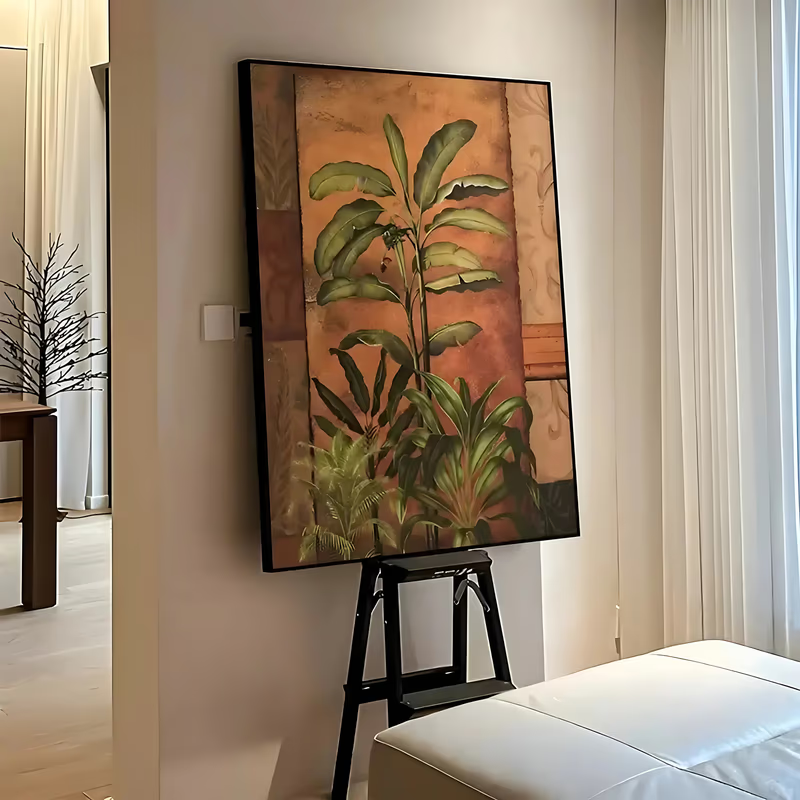
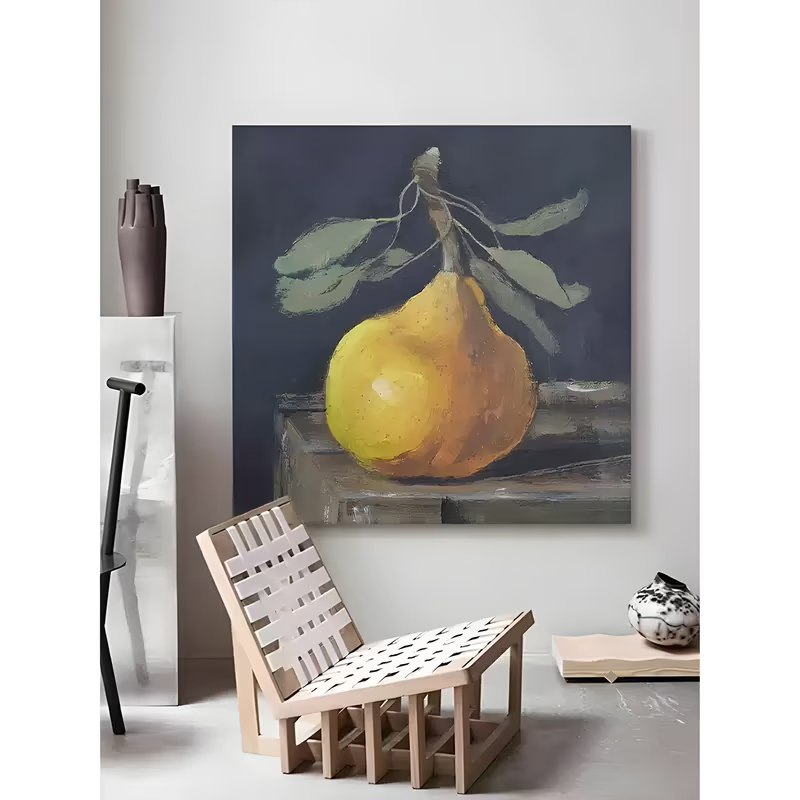
- Detail rewards closeness: hang realistic paintings where people stop or pass near them, such as dining walls, corridors, beside a reading chair.
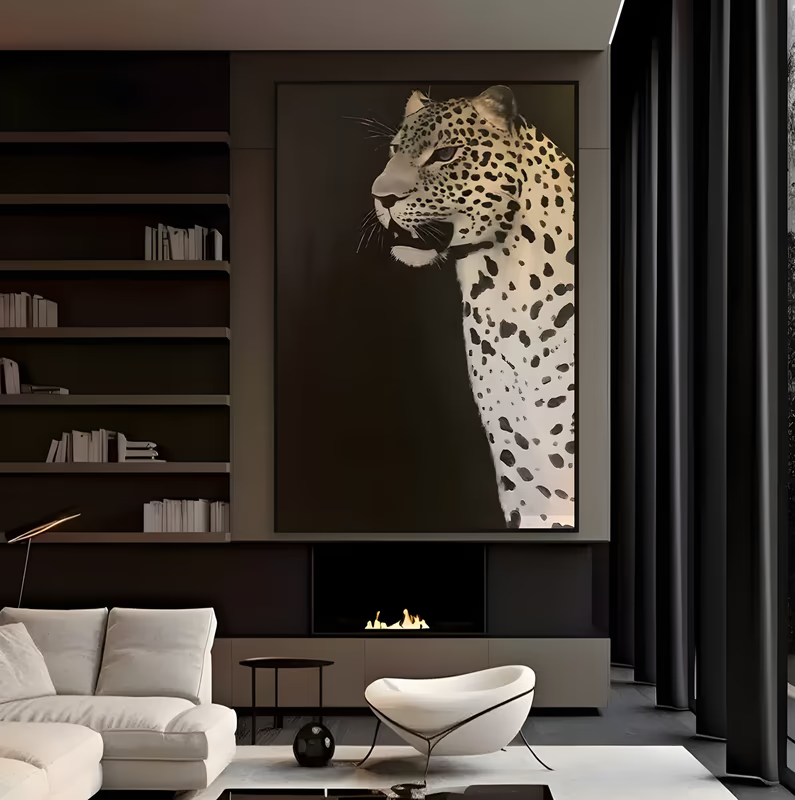
- The subject sets the register: peacocks and koi feel Asian-inspired and formal, horses and leopards feel clubby, single blooms feel serene.
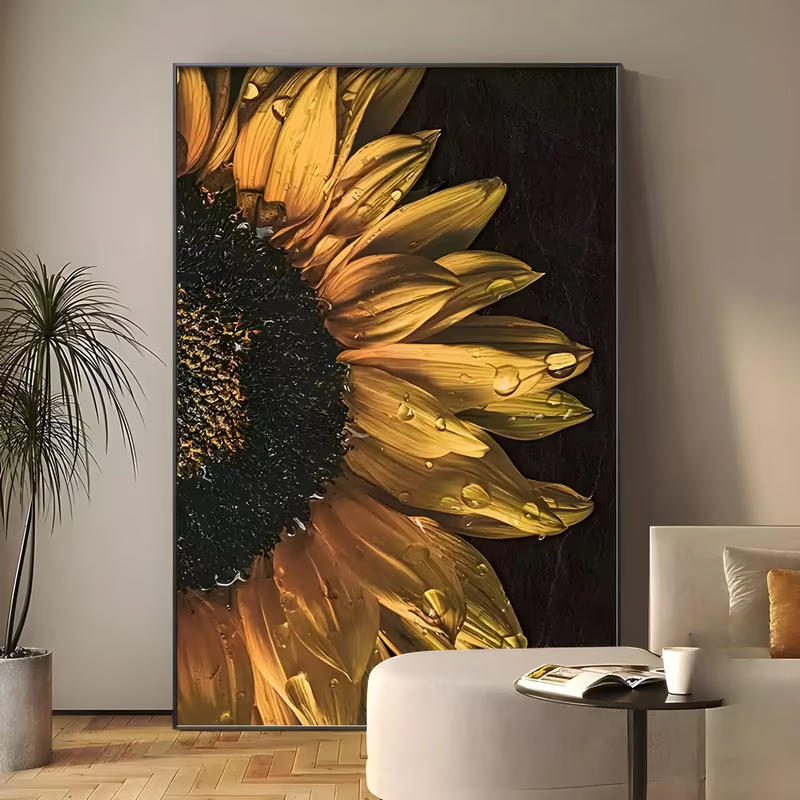
- Dark grounds need careful light: angle a warm light at about 30 degrees so highlights glow and glare stays off the surface.
- Approve it stage by stage: drawing, block-in and final detail are each checked on photographs before the painter moves on.
What are hyperrealistic paintings?
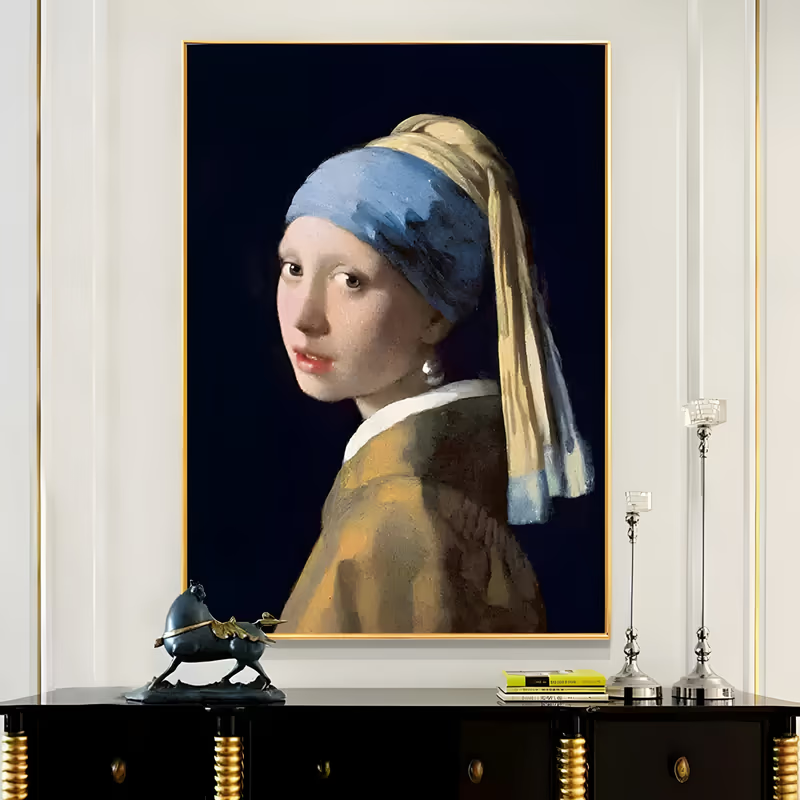
Hyperrealistic paintings are rendered in such fine detail that, from a normal viewing distance, they can be mistaken for photographs, yet they often sharpen colour, light and texture beyond what a camera records.
Photorealism, which emerged in the late 1960s and 1970s, set out to copy a photograph as exactly as possible. Hyperrealism grew from it but takes more liberty: painters use the photographic look as a starting point, then heighten the gleam on a feather, the translucency of a wave or the velvet of a petal to make an image feel more vivid than life. Realism is the wider family: accurate, lifelike painting without the requirement to fool the eye.
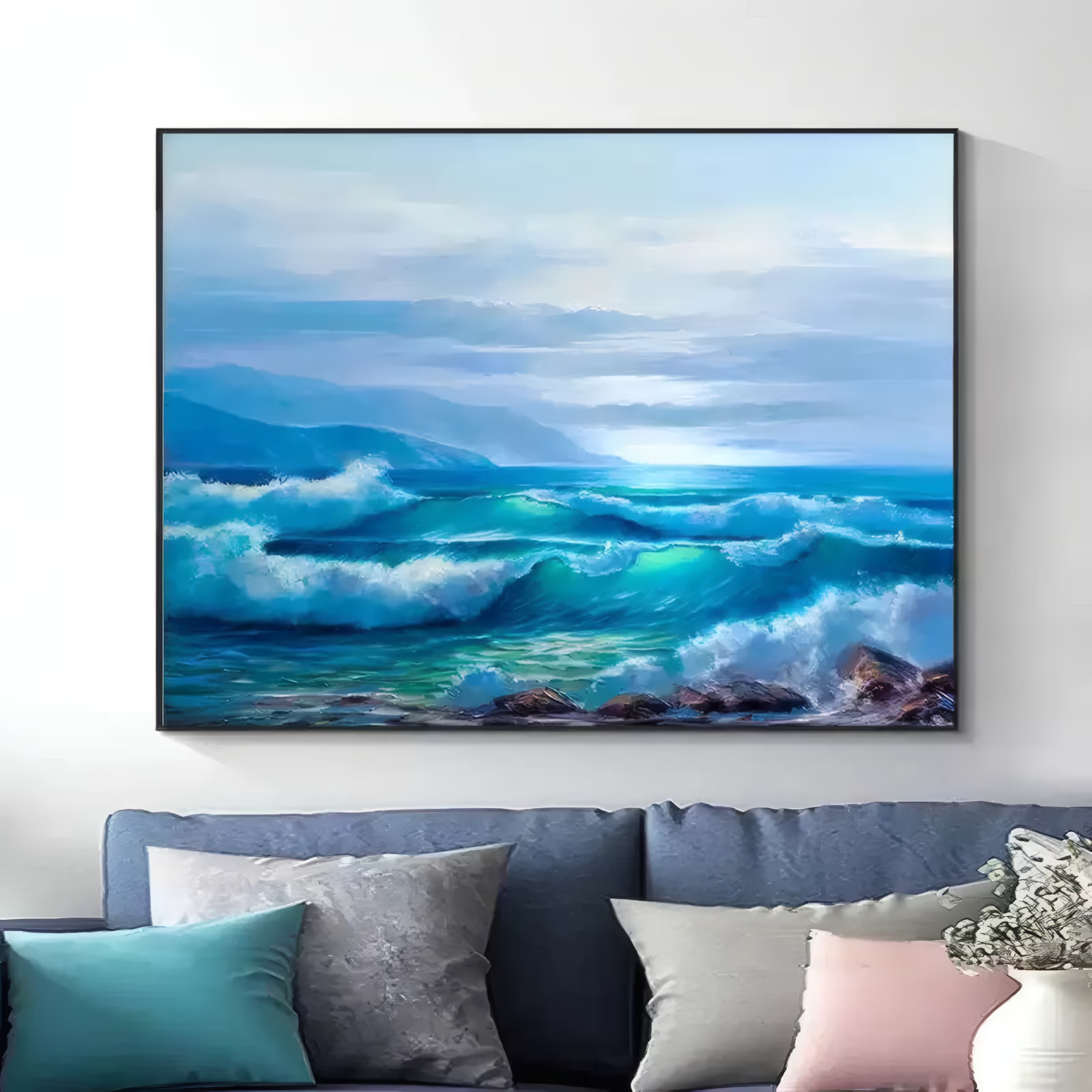
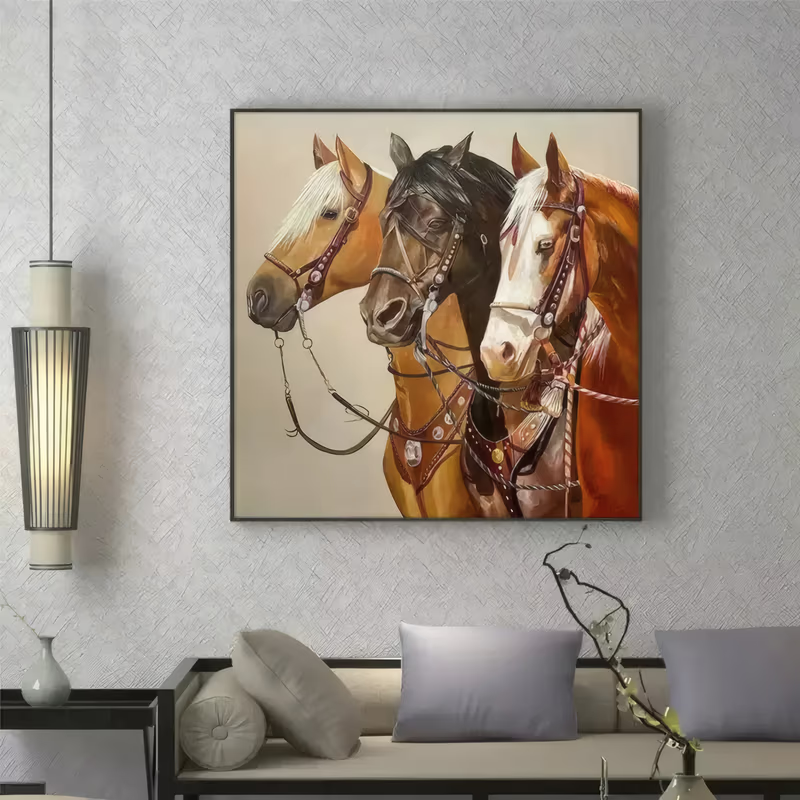
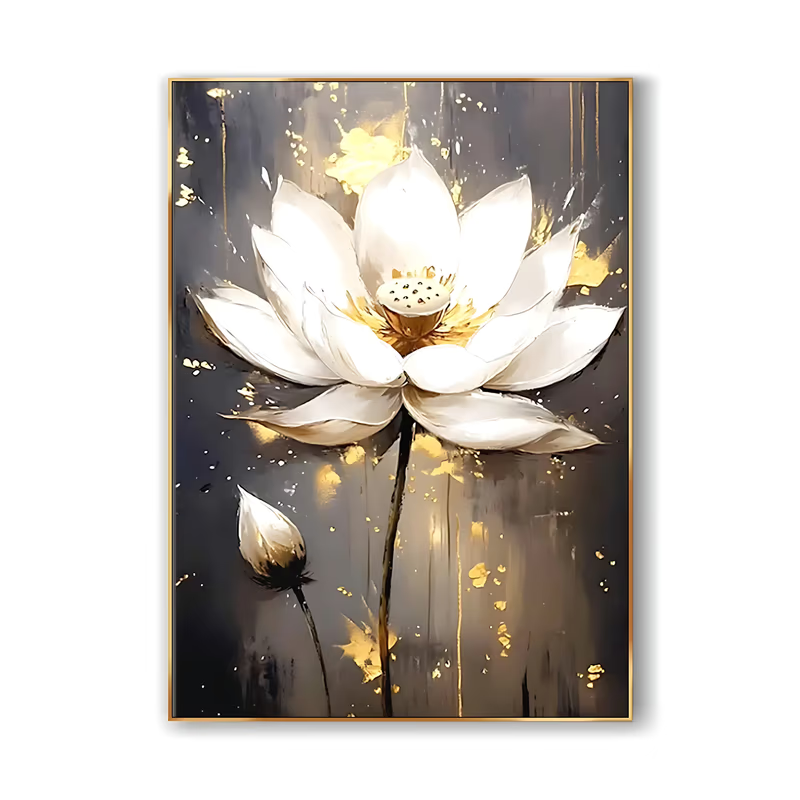
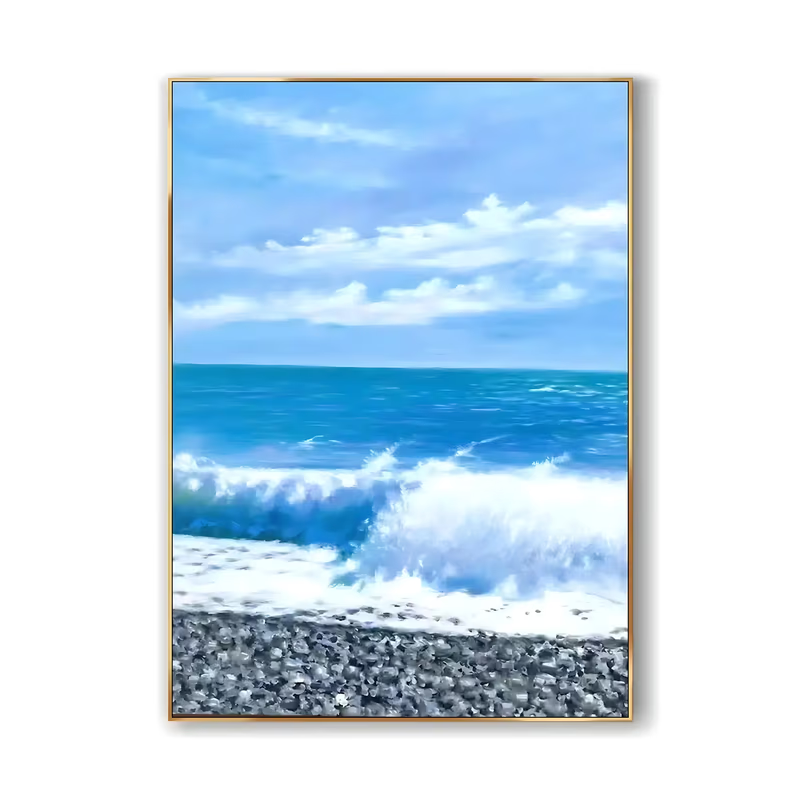
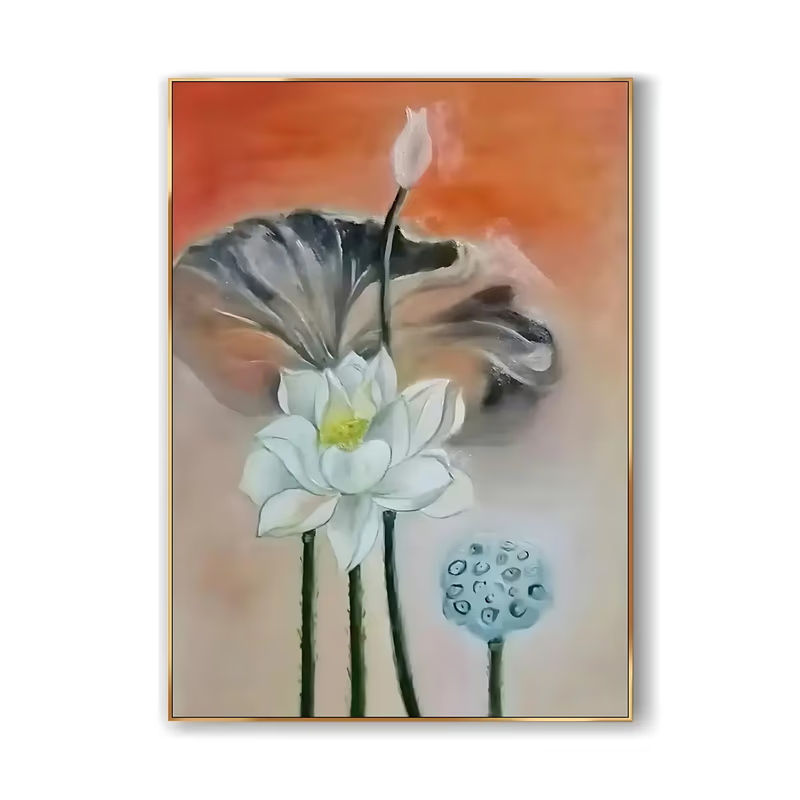
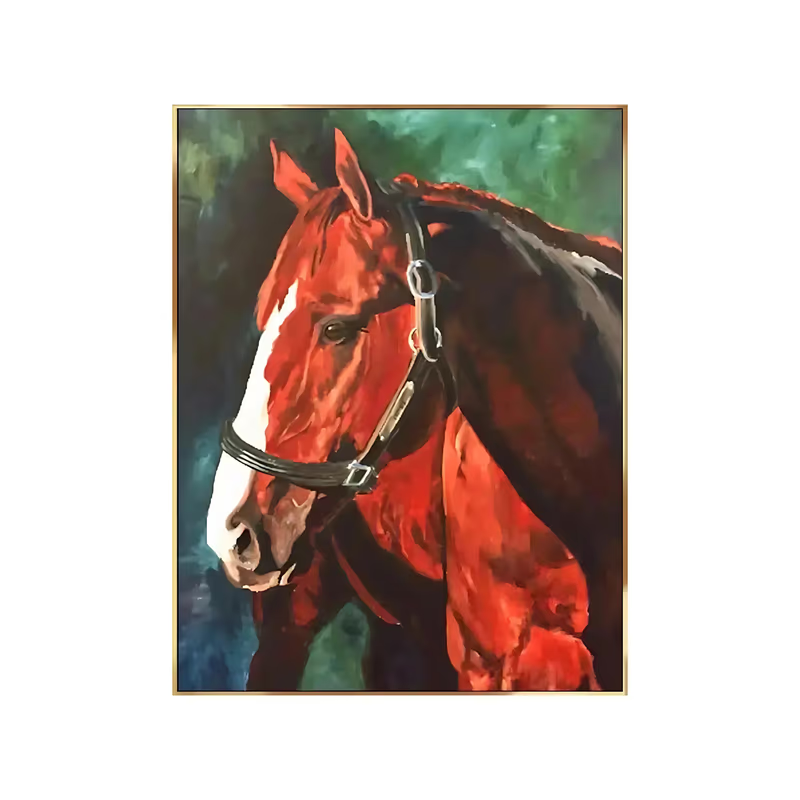
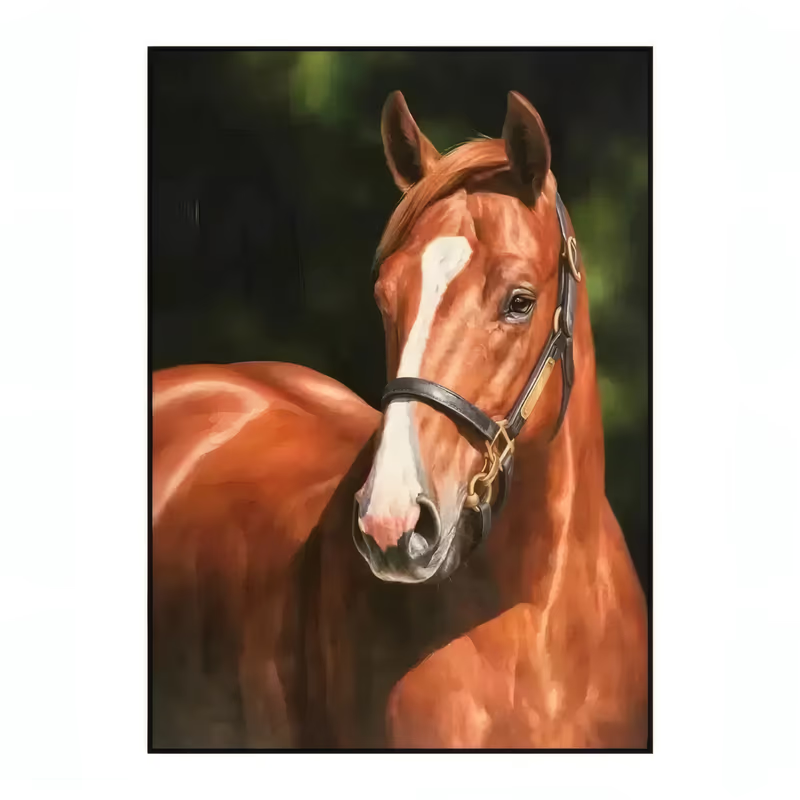
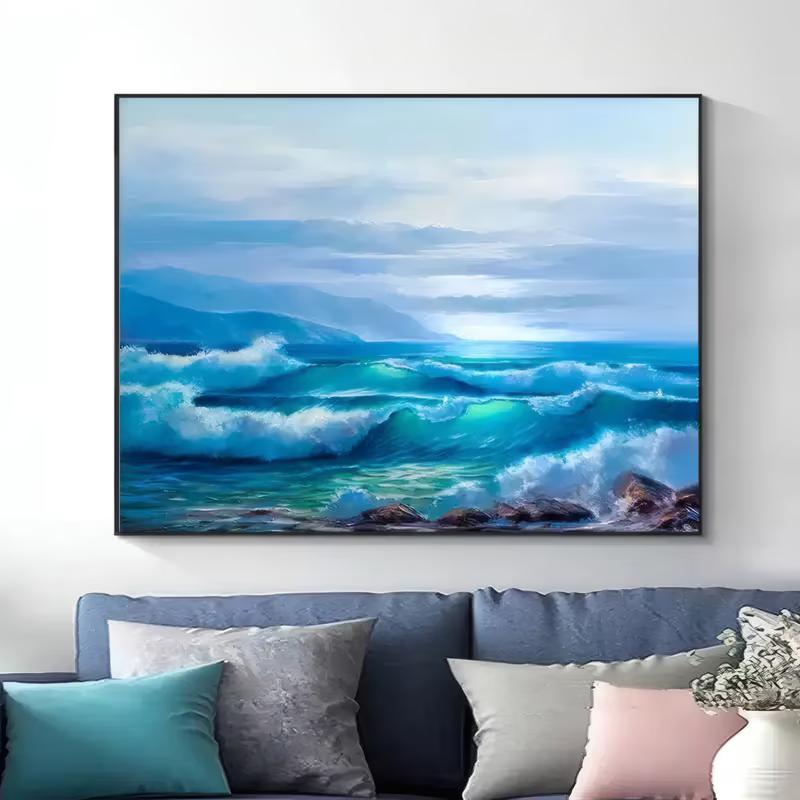
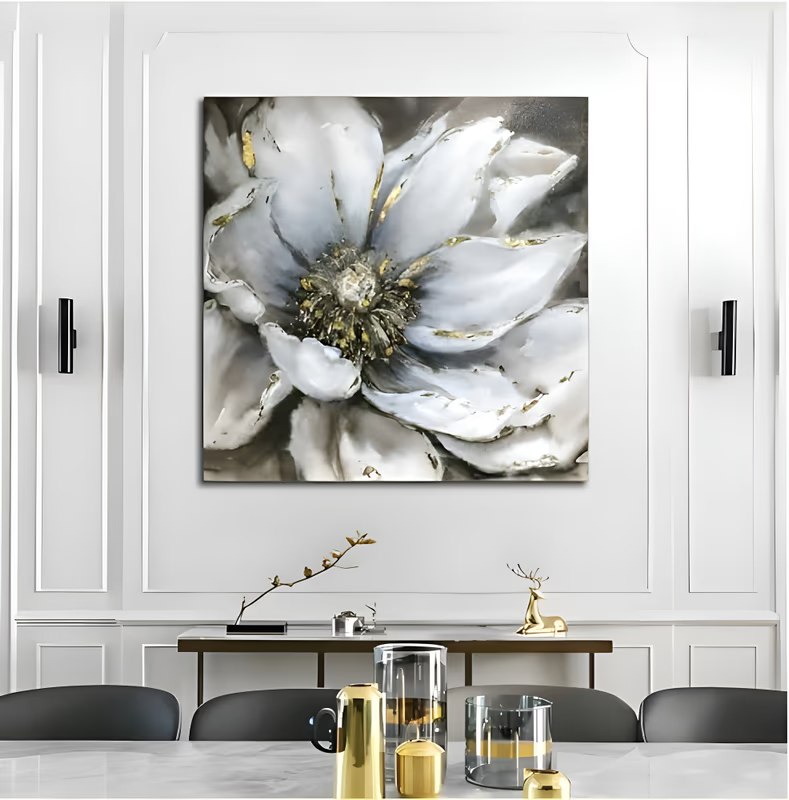
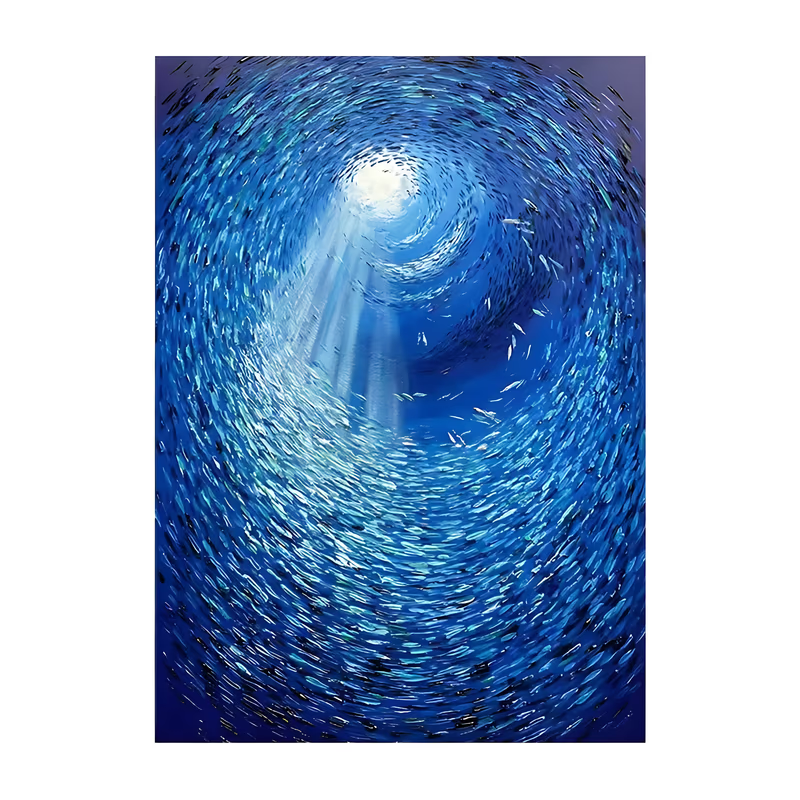
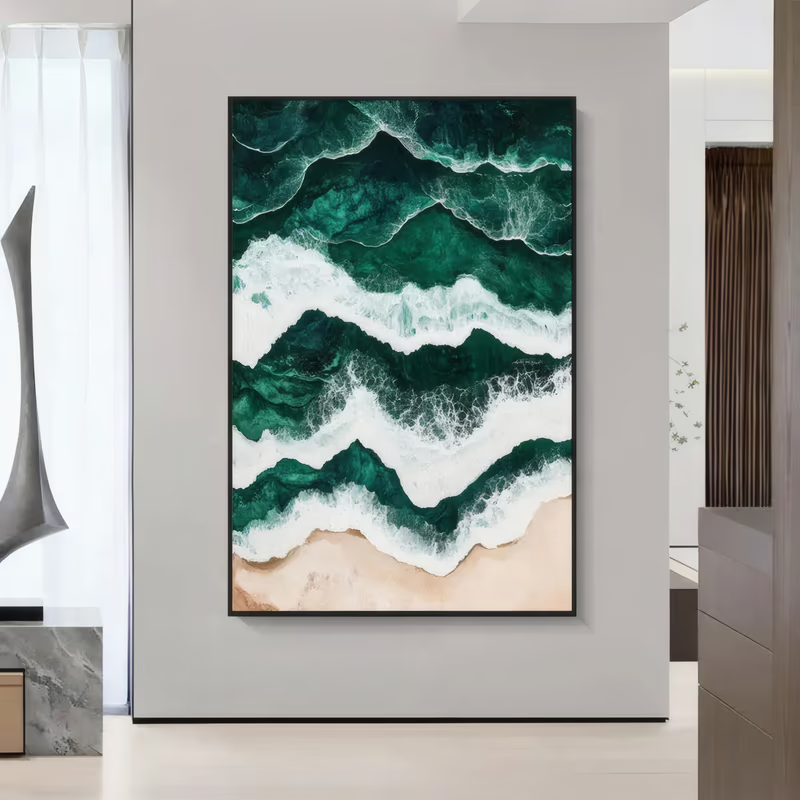
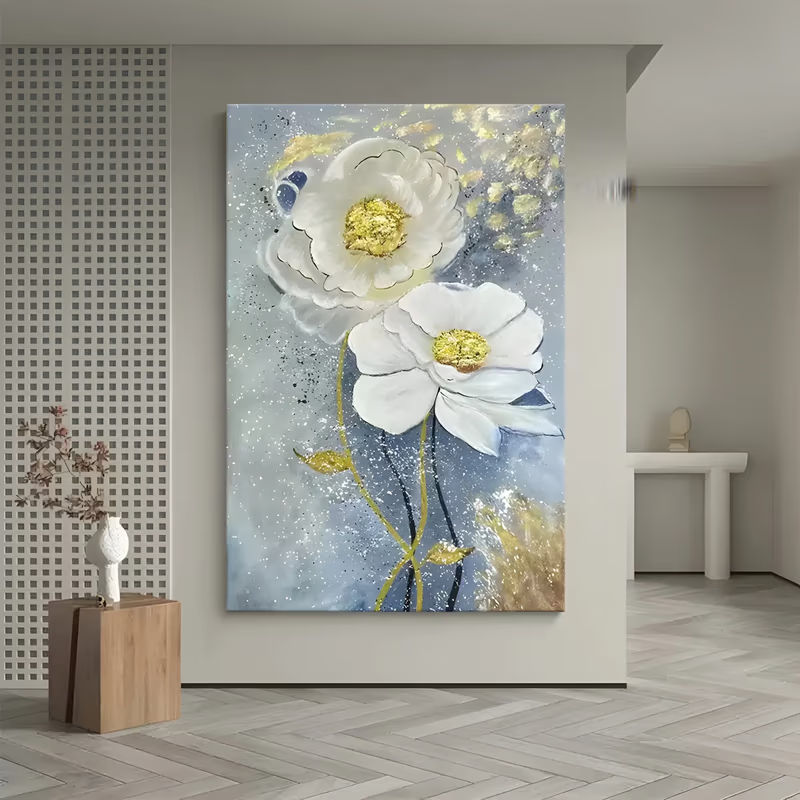
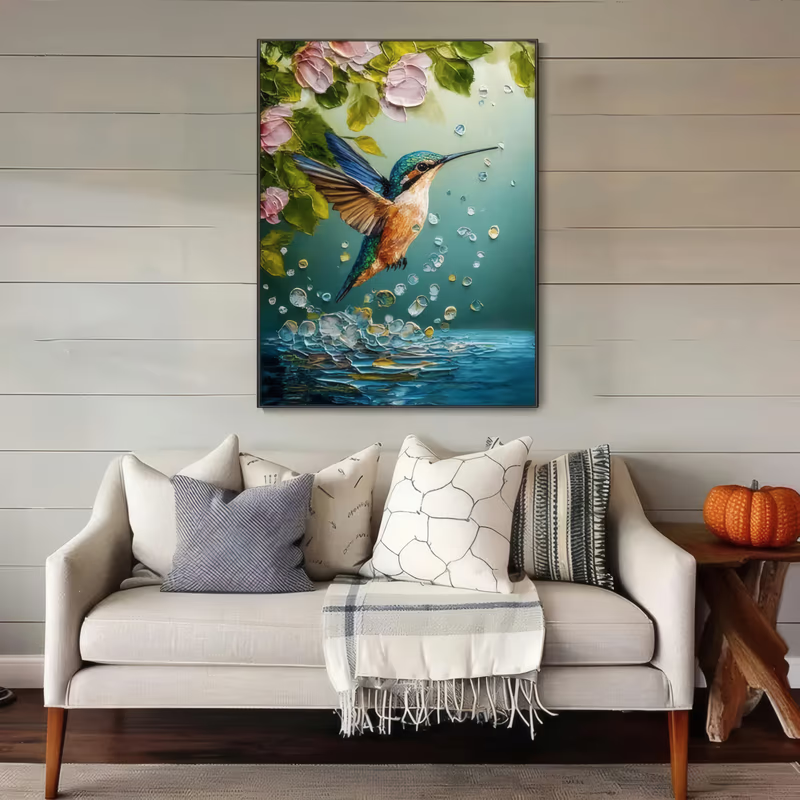
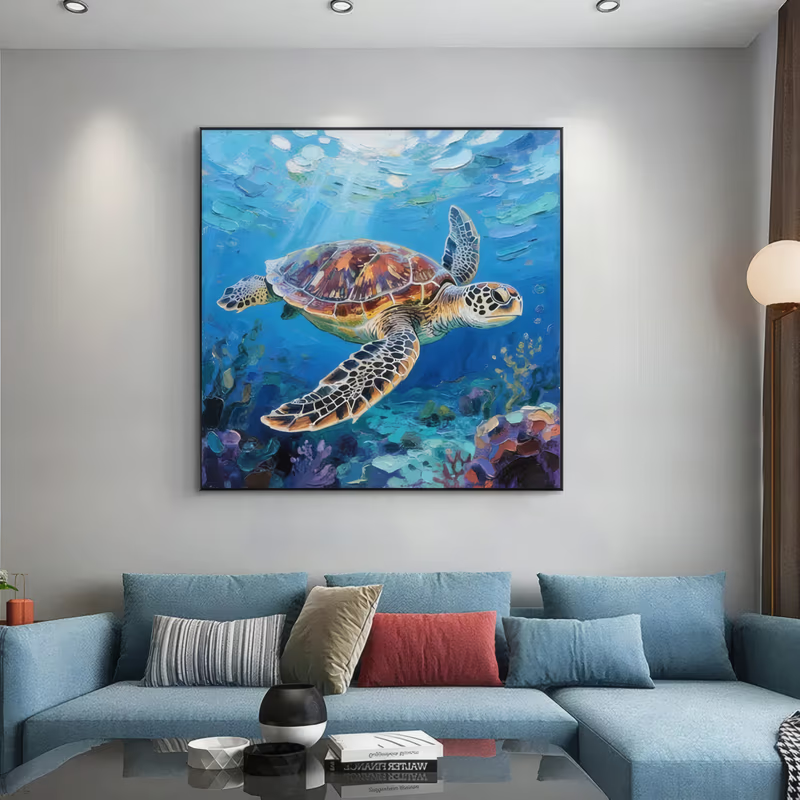
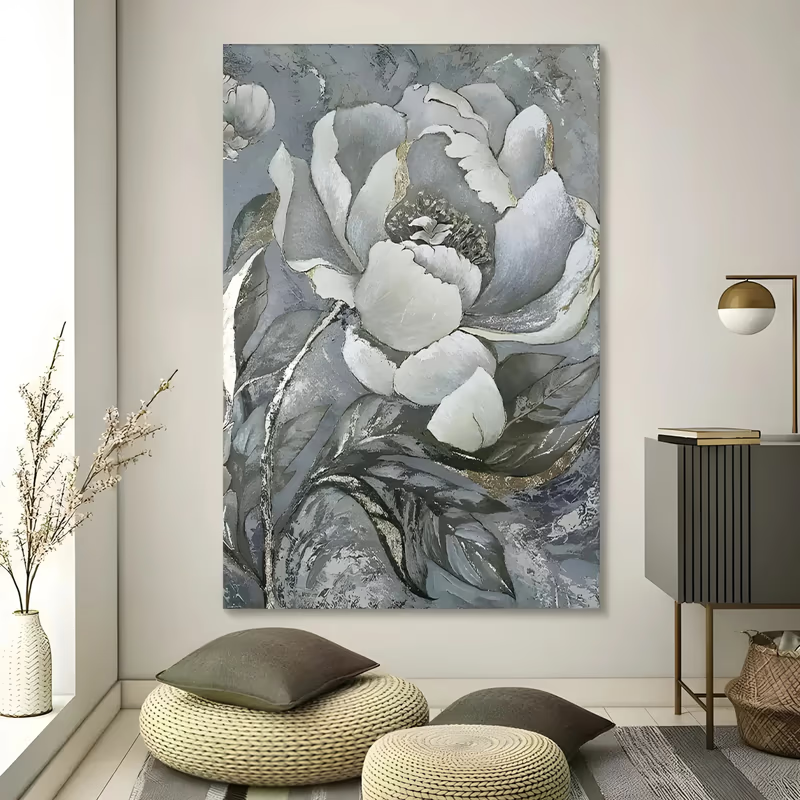
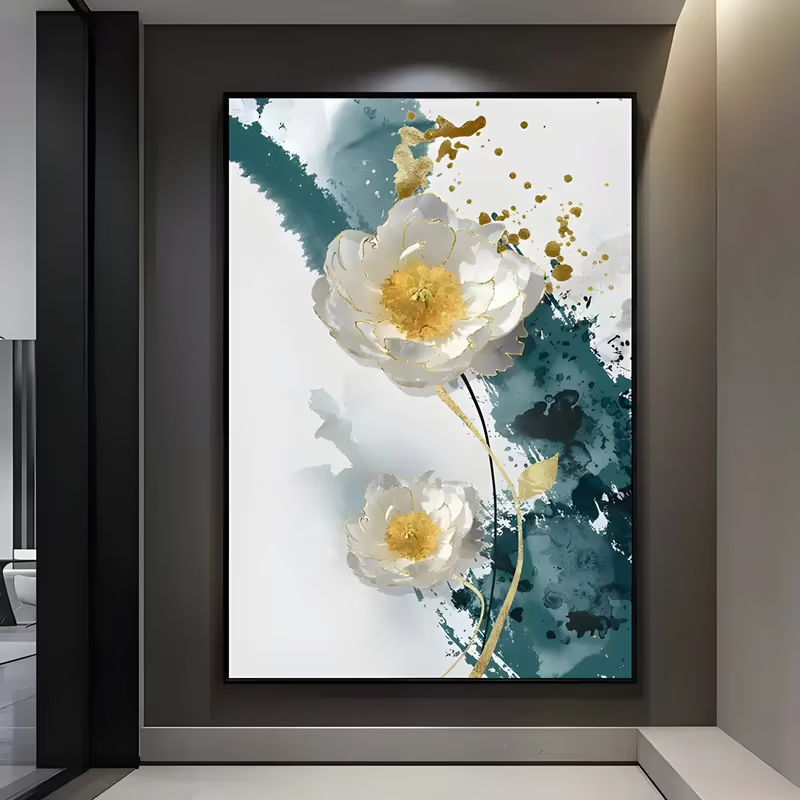
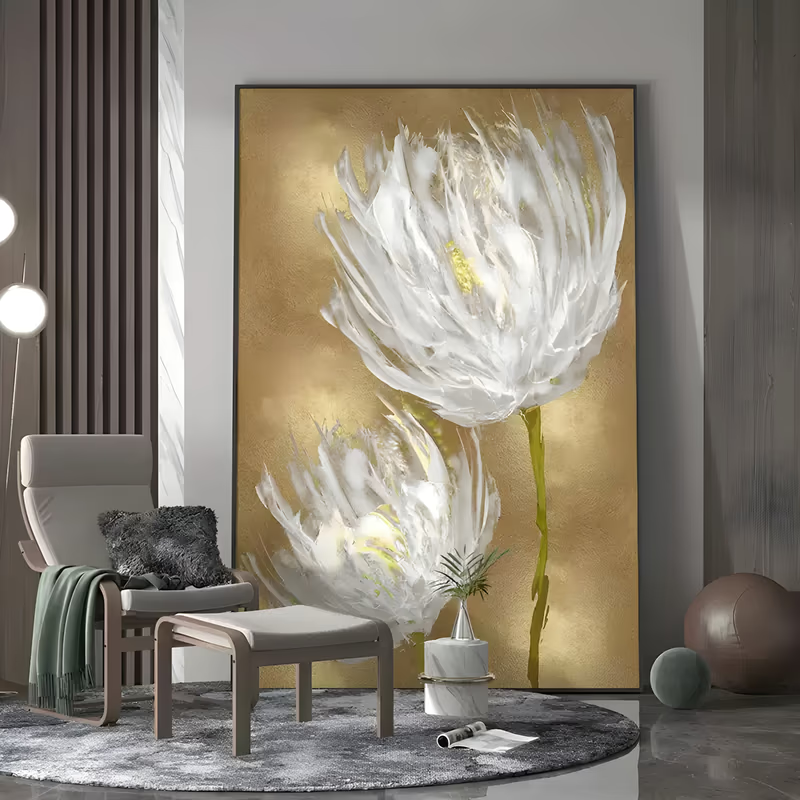
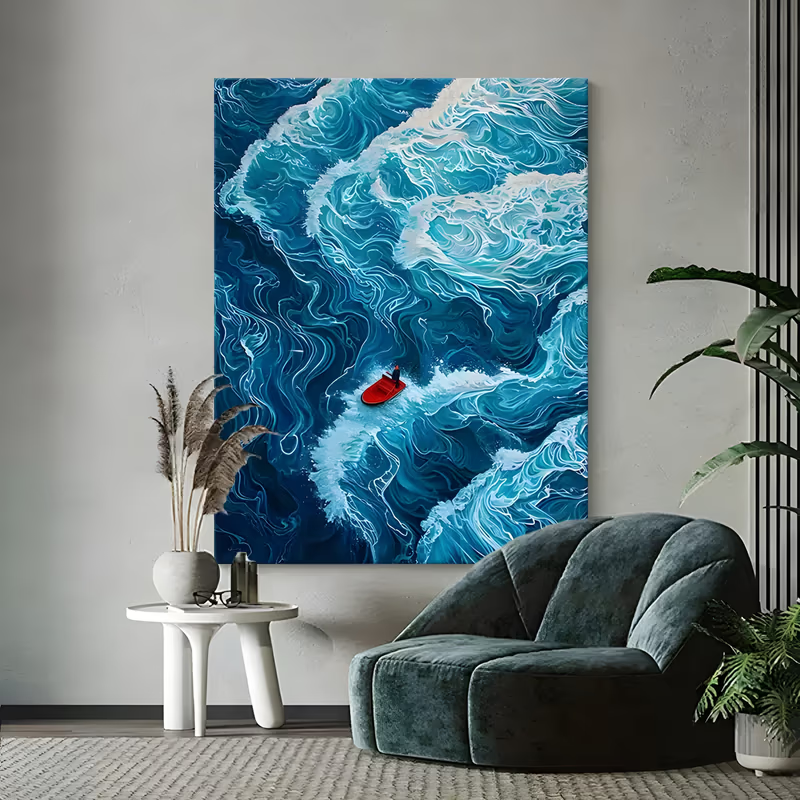
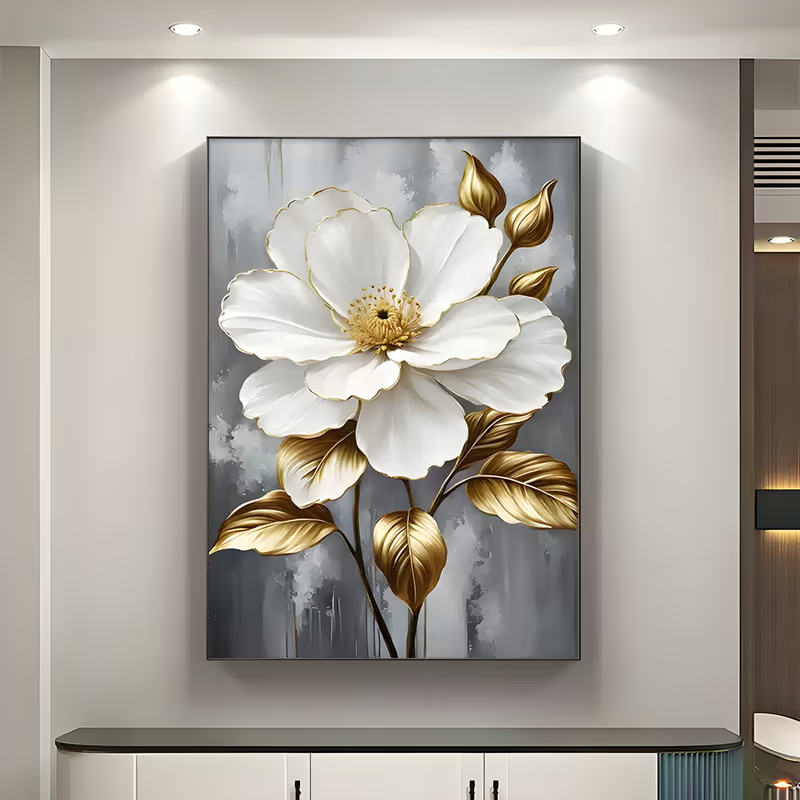
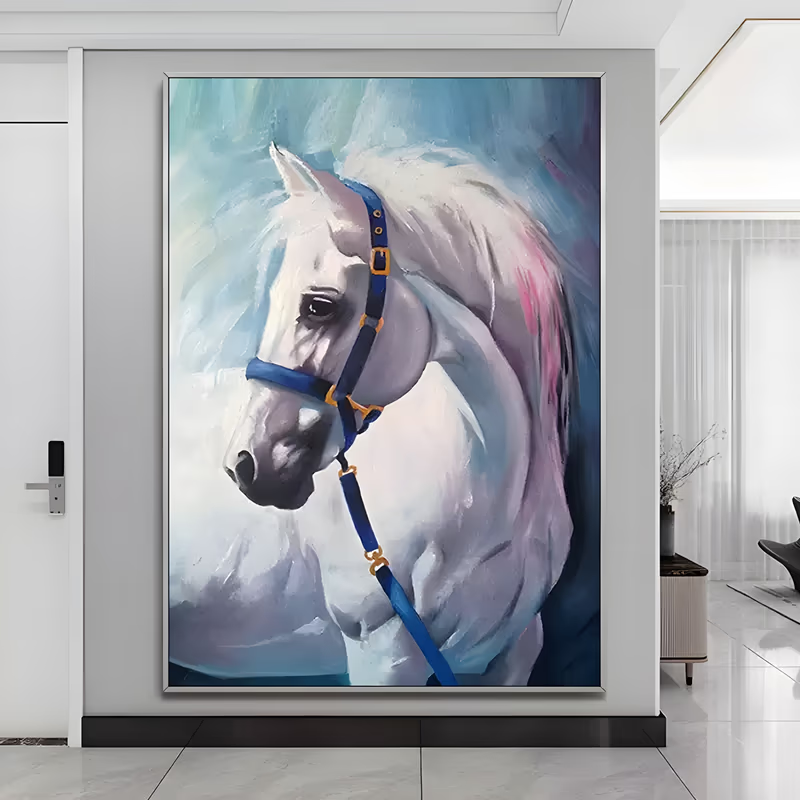
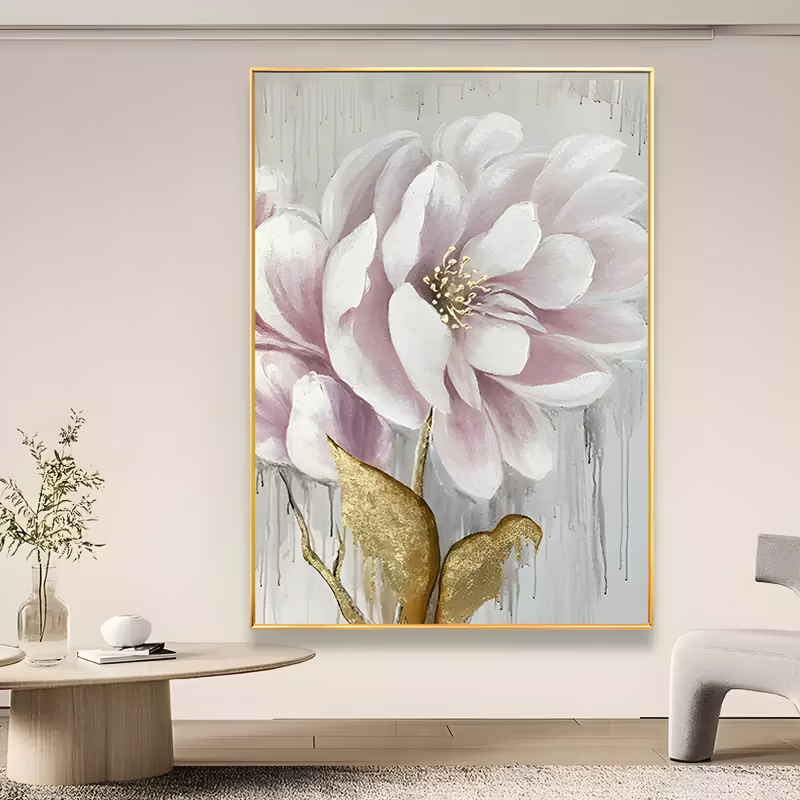
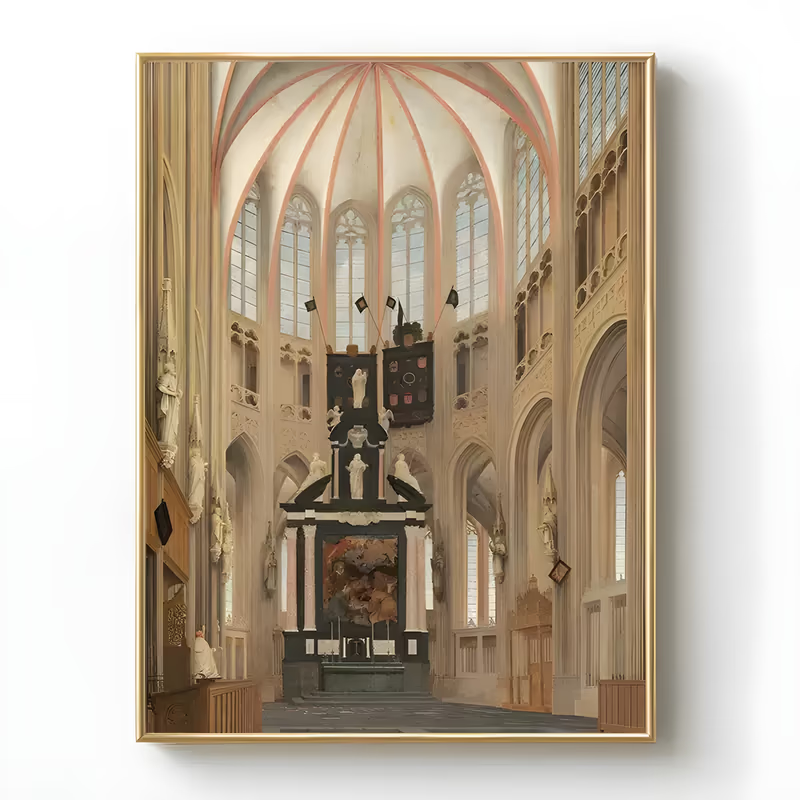
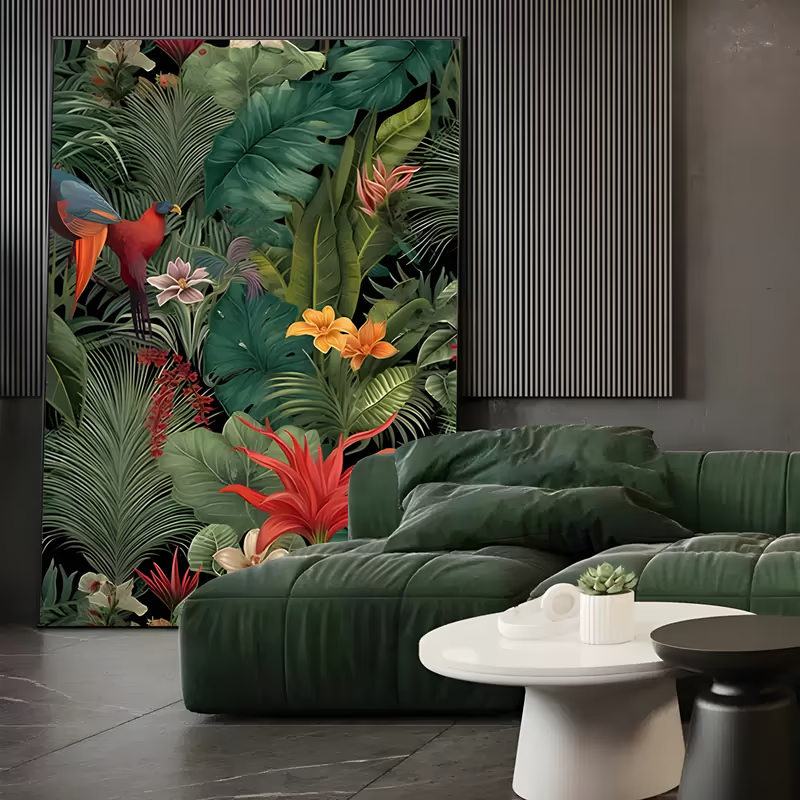
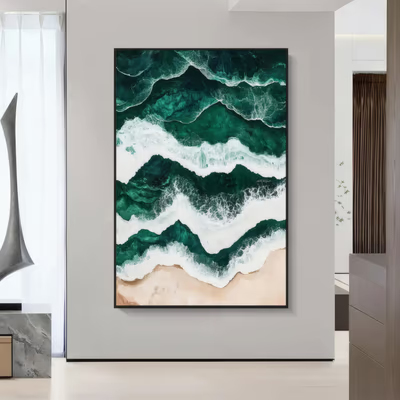
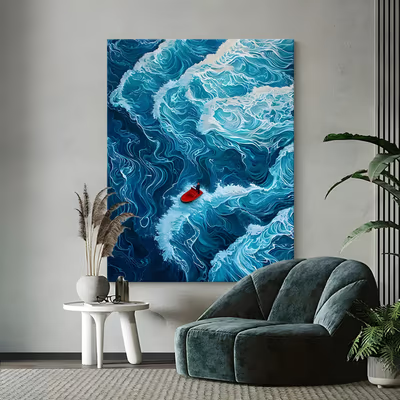
The works on this page span that range. Some are photo-sharp, such as a breaking wave, a chestnut horse in a leather halter or a sea turtle over a reef. Others are realist subjects set on decorative grounds, a white peony edged in gold leaf or a lotus on charcoal streaks, where the bloom is lifelike and the background is deliberately painterly.
How can you tell a hand-painted realistic canvas from a print?
Look at the surface at an angle: a hand-painted realistic canvas shows brush edges, built-up highlights and varied sheen, while a print is perfectly flat and evenly matte or glossy.
| What to check | Hand-painted original | Printed reproduction |
|---|---|---|
| Surface in raking light | Slight ridges where highlights and edges are laid on | Uniform, with canvas weave showing evenly through |
| Highlights | Small raised touches of lighter paint on eyes, water, petals | Same height as everything else |
| Colour depth | Layers glow, darks are rich and slightly reflective | Darks can look dull or slightly grey |
| Metal leaf | Real flakes that shift as you move | Printed gold that stays the same colour |
| Edges of the canvas | Paint wraps or stops by hand, unevenly | Image mirrored or cropped by machine |
Every piece here is painted by hand for its order, so these signs are present in each canvas. The difference matters most for realistic art, because the quality of the illusion depends on paint, not ink: a highlight that physically catches light reads as wet, glossy or alive in a way a printed one cannot.
What kinds of hyperrealistic paintings are there?
Hyperrealistic paintings here fall into four kinds: Asian-inspired birds and koi, single-bloom botanicals, animal portraits, and waves and landscapes.
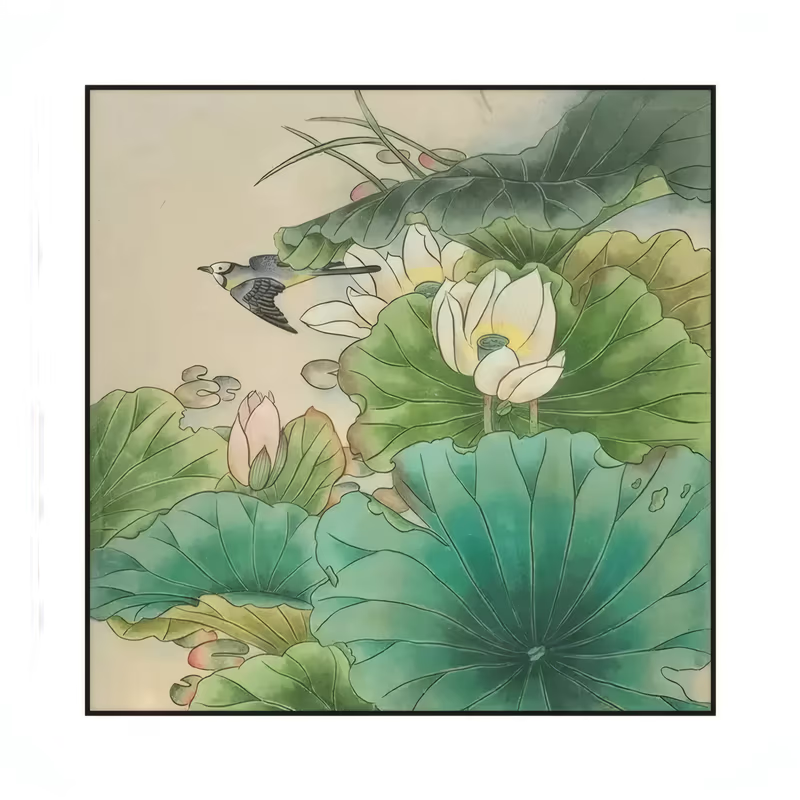
Peacocks, koi, cranes and lotus
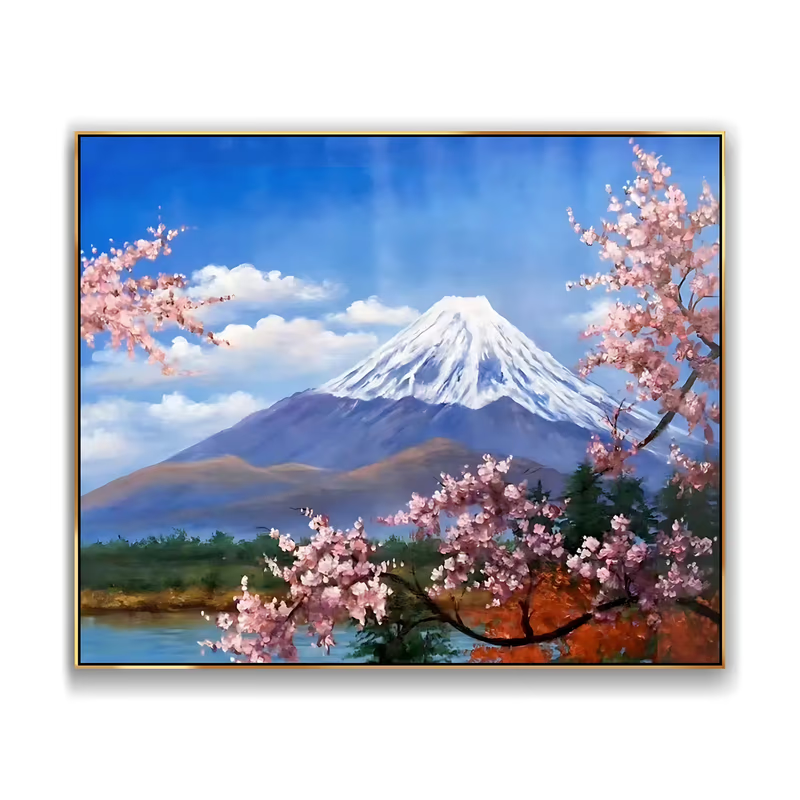
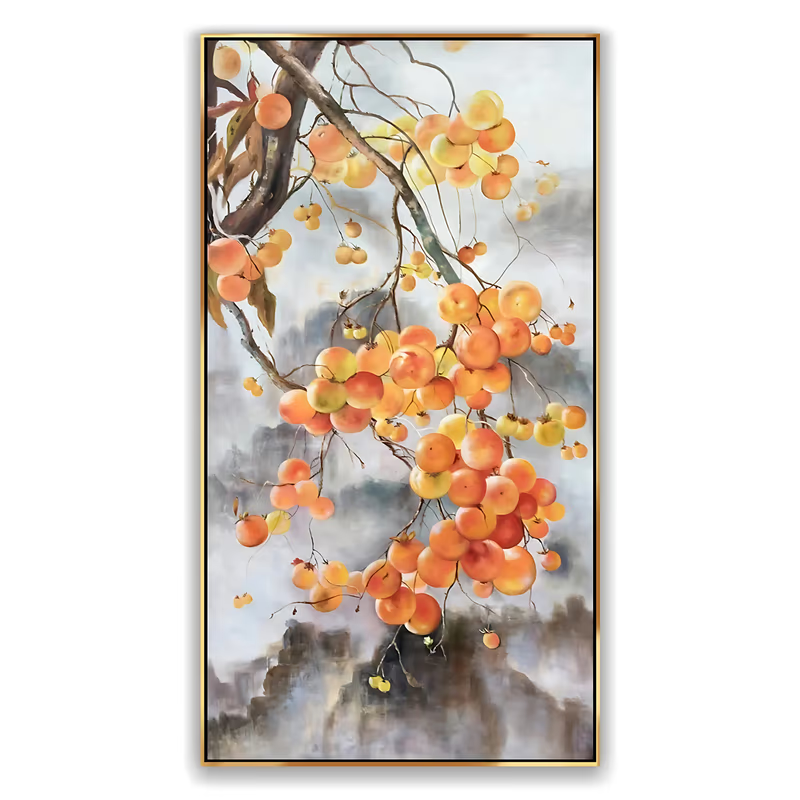
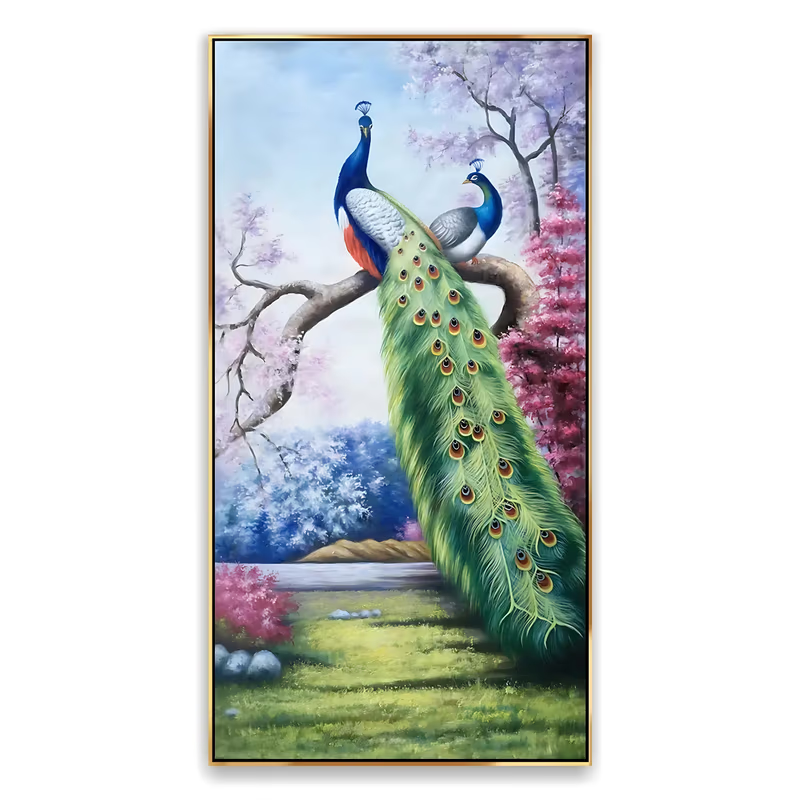
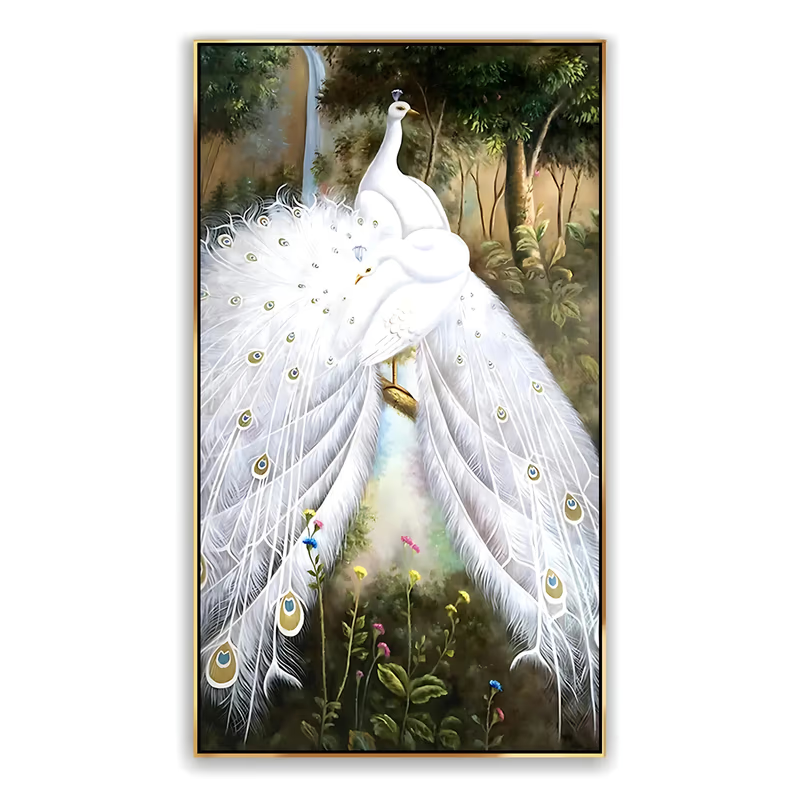
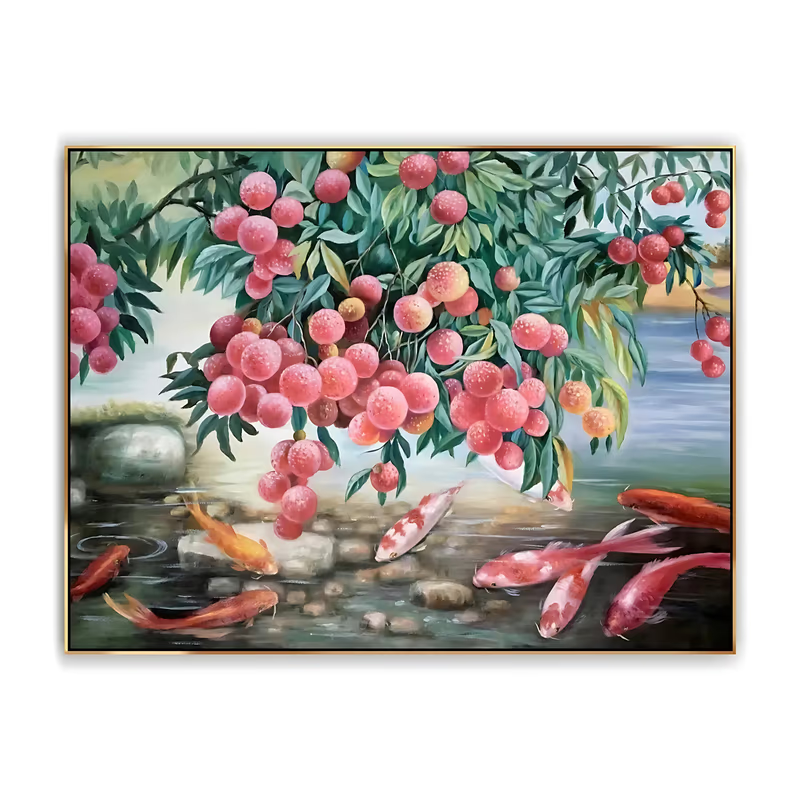
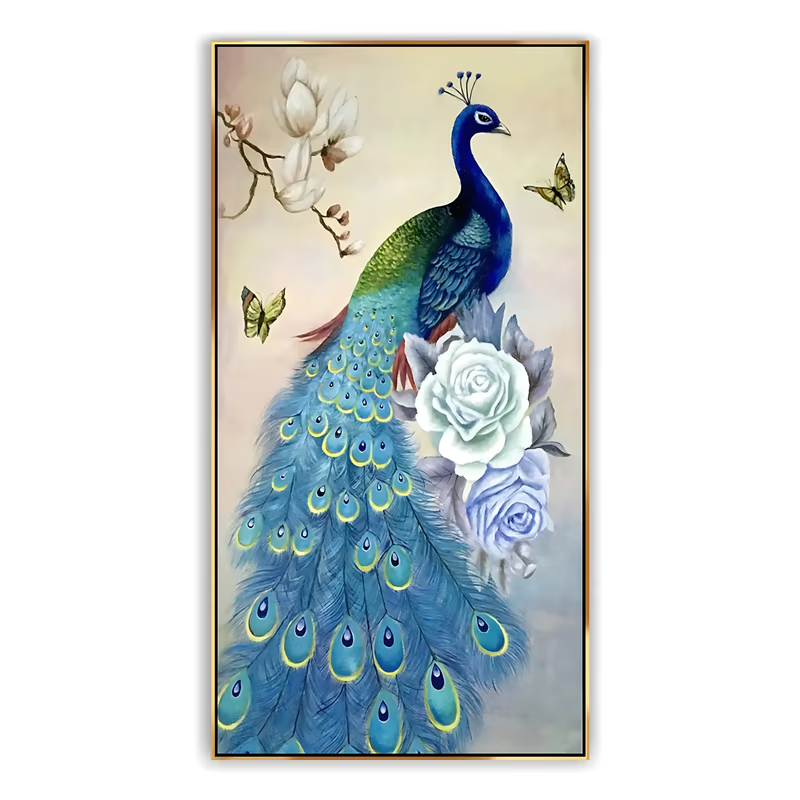
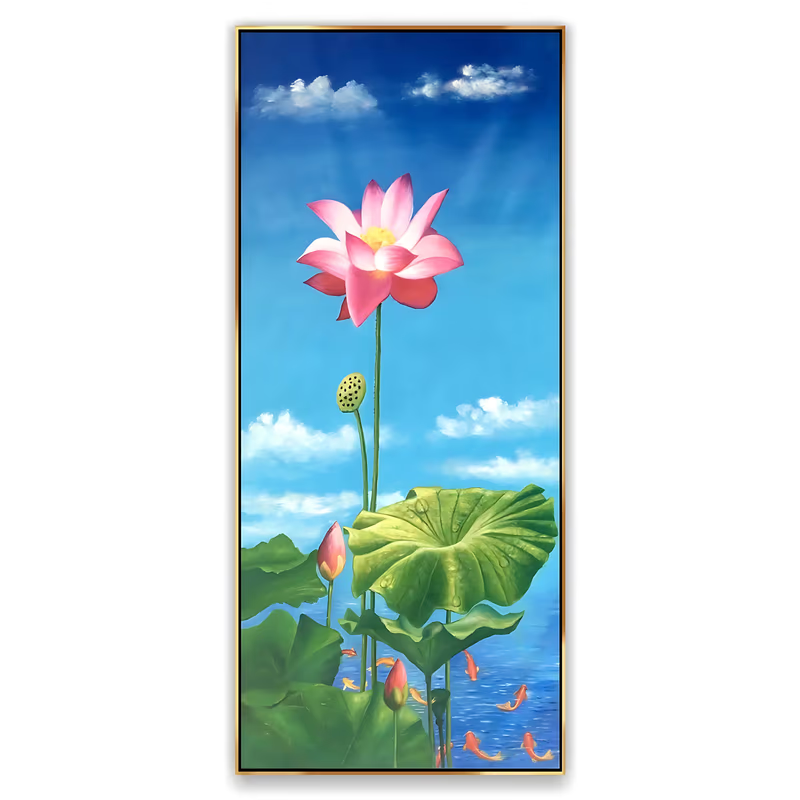
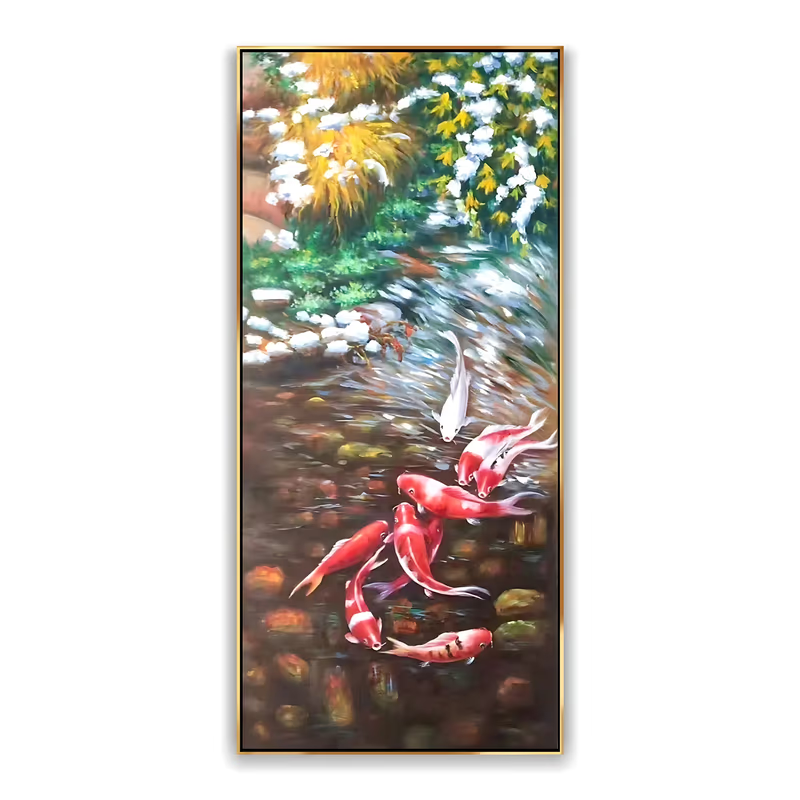
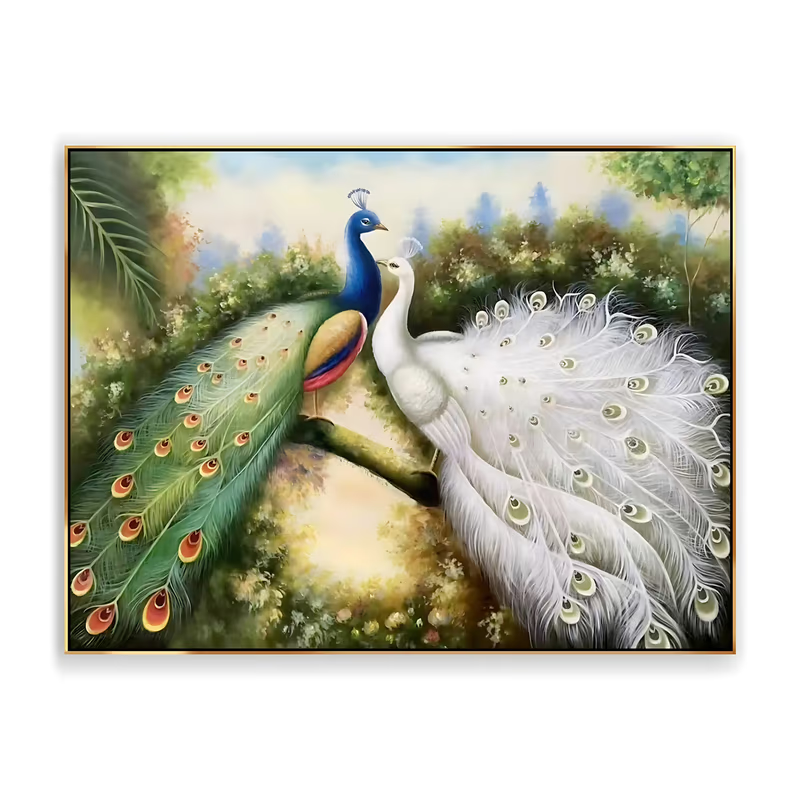
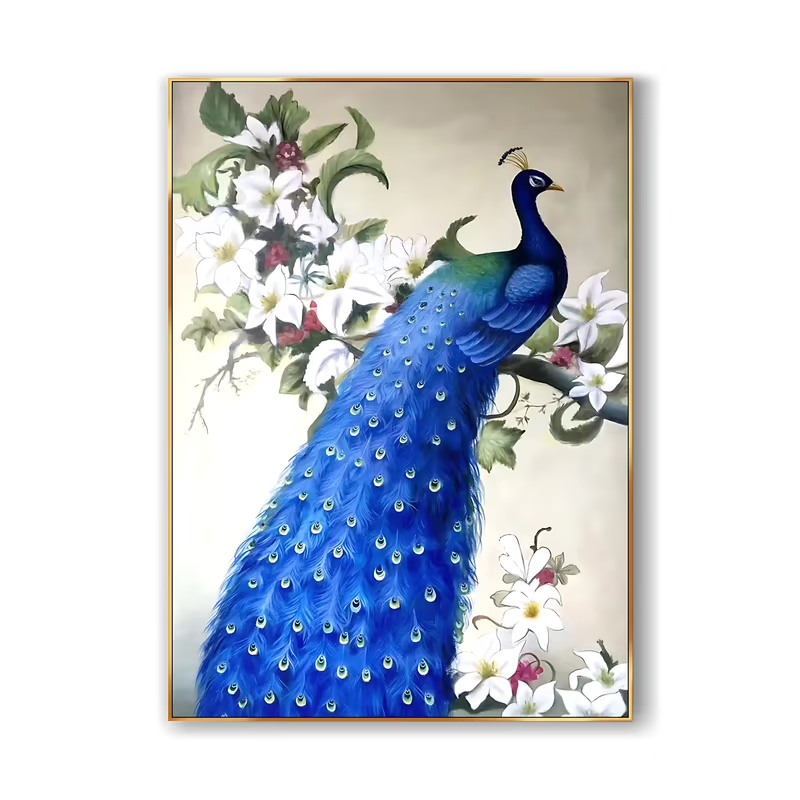
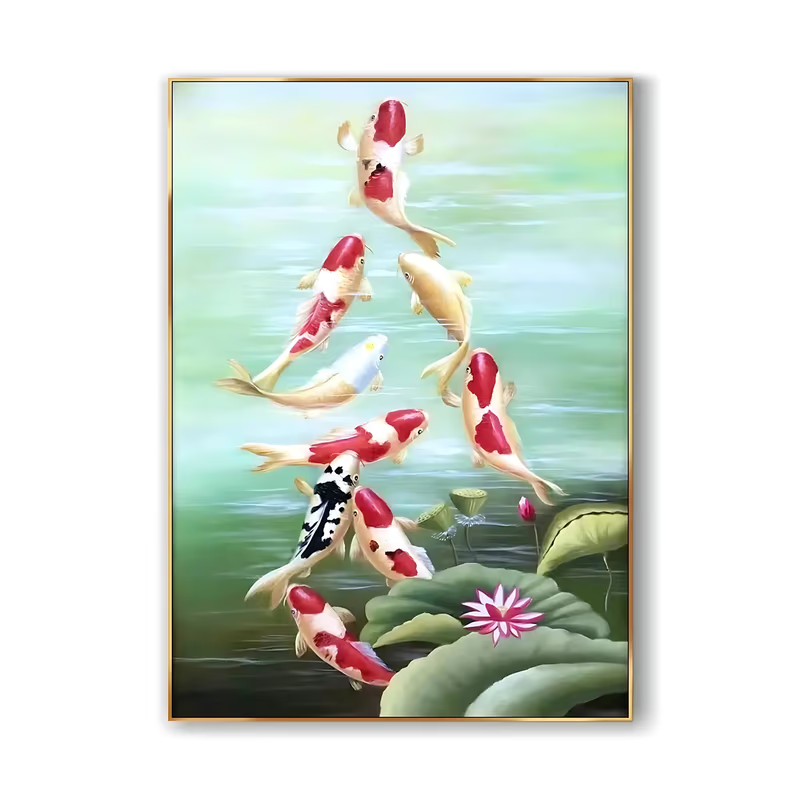
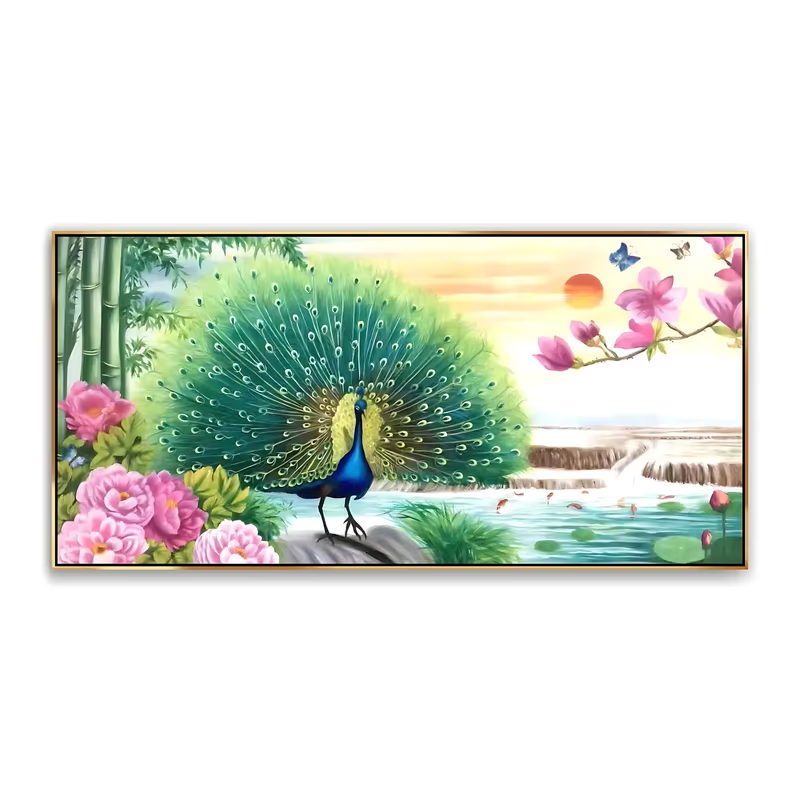
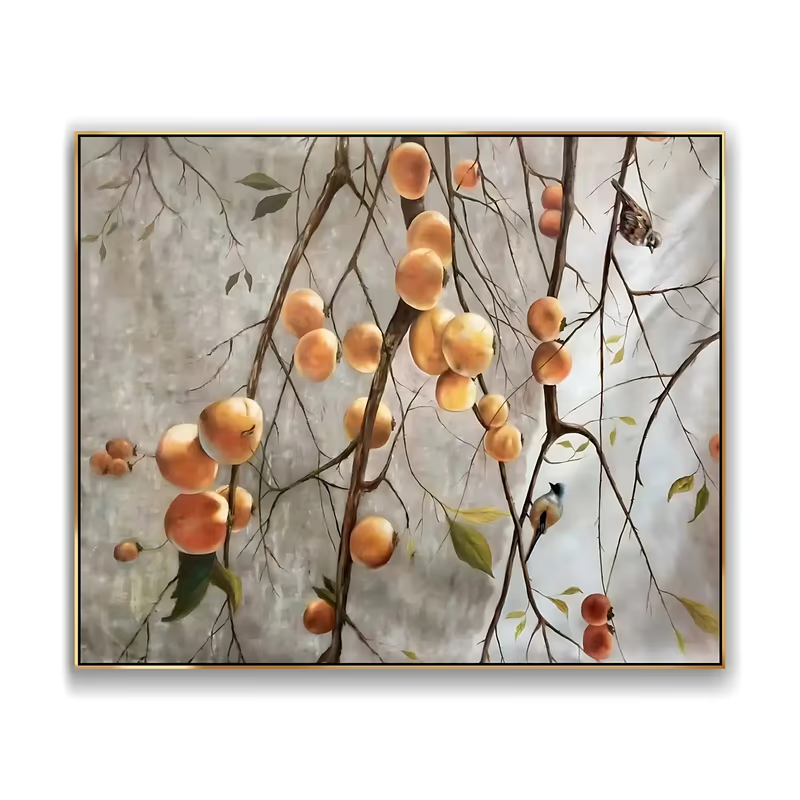
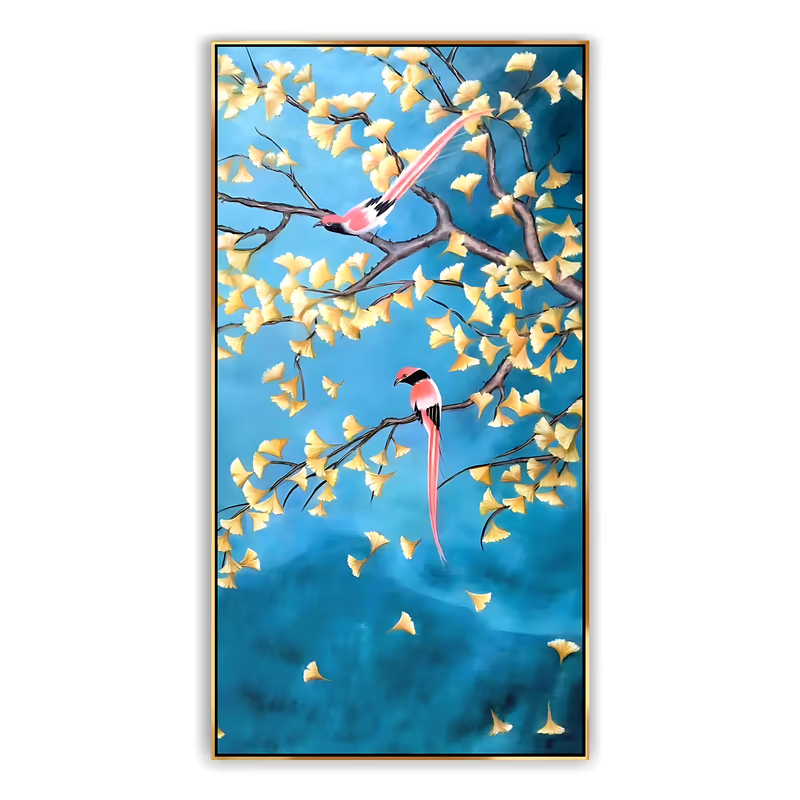
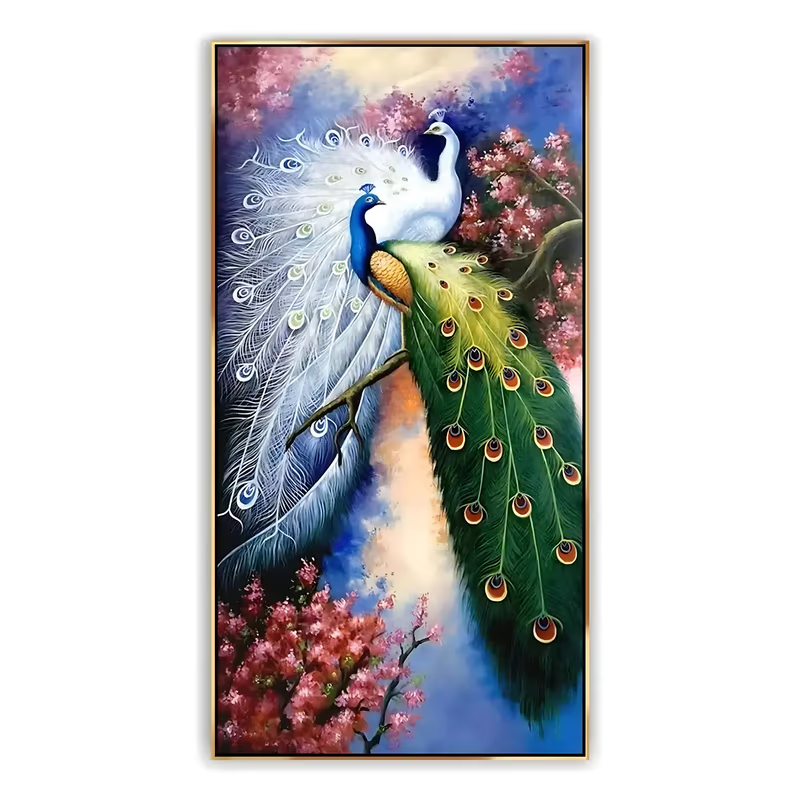
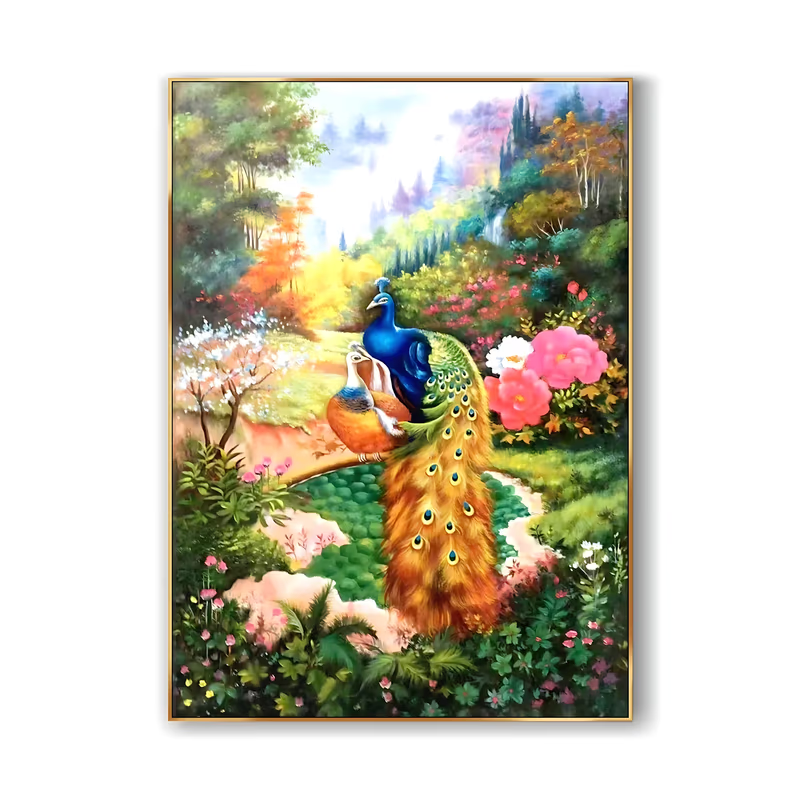
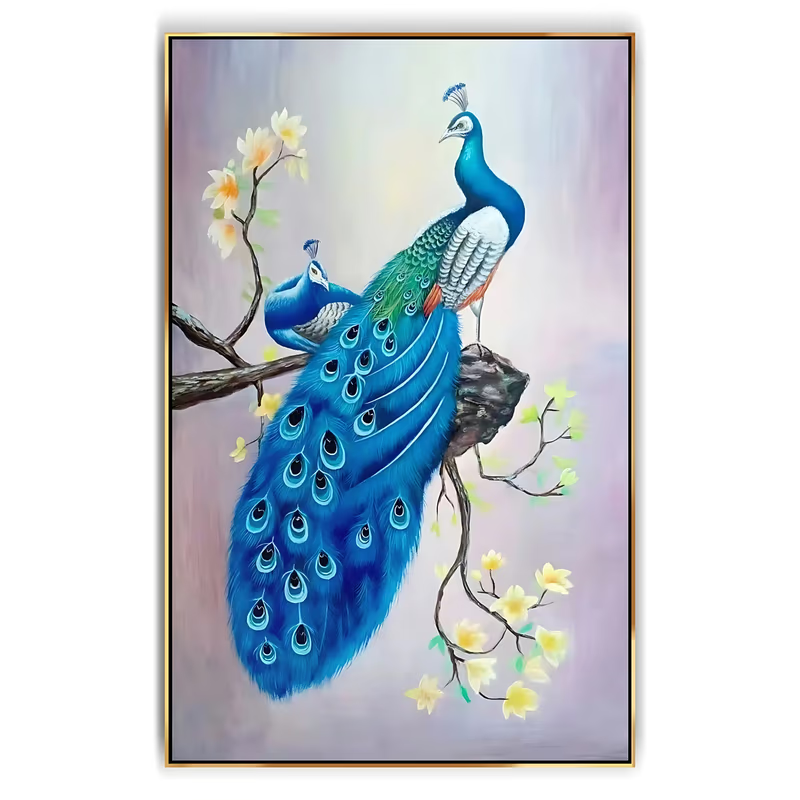
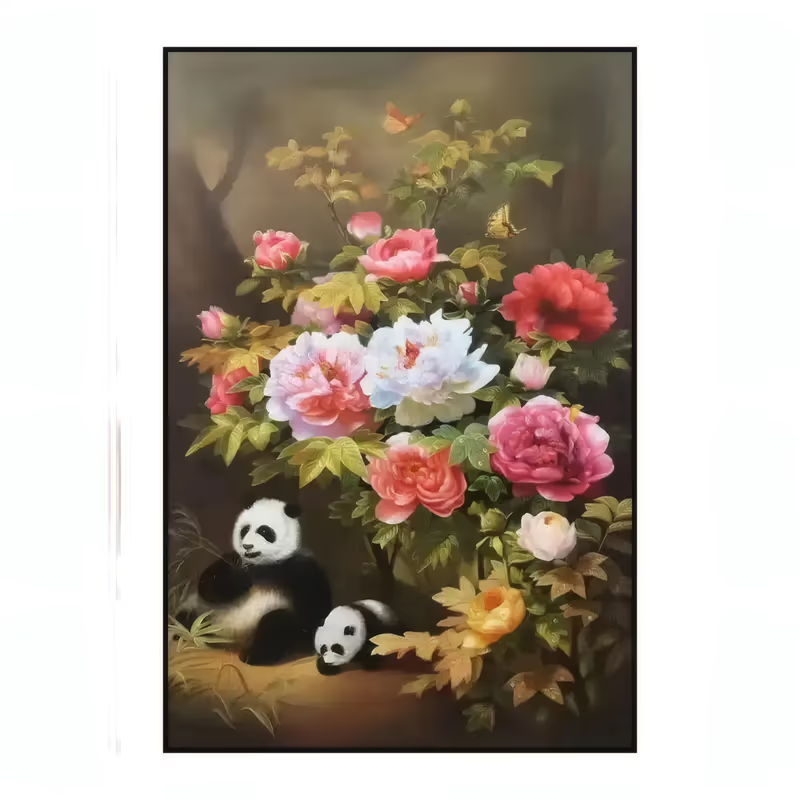
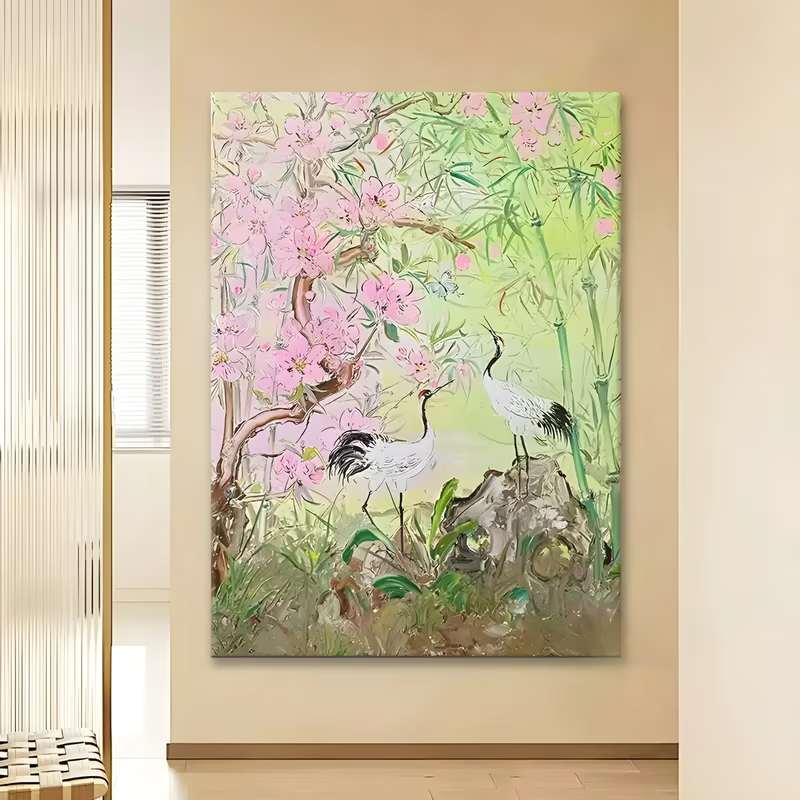
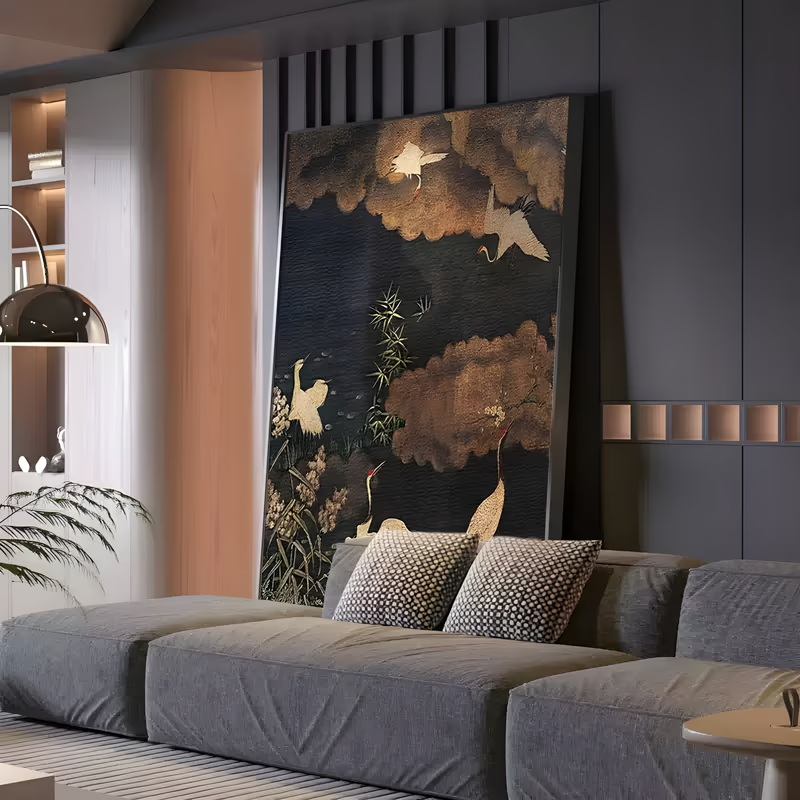
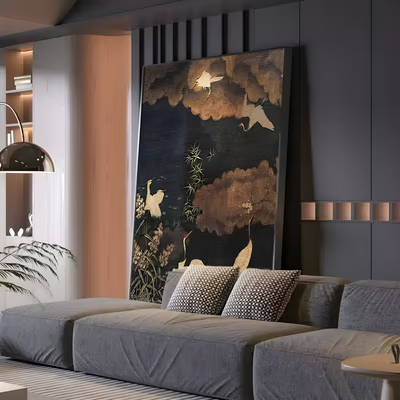
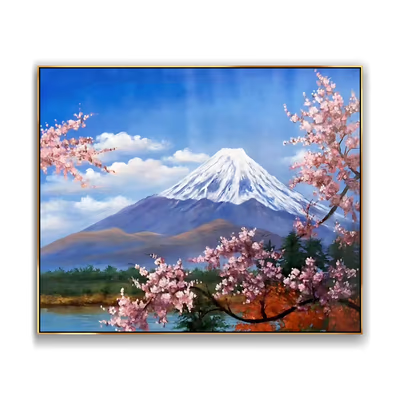
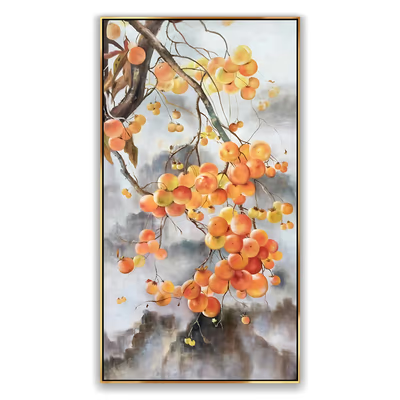
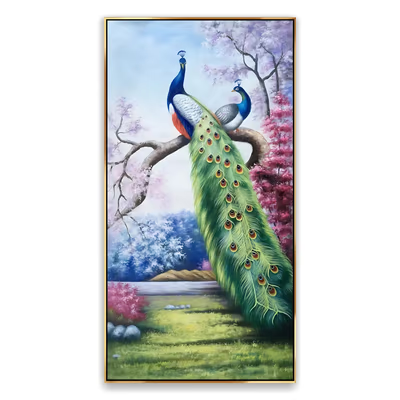
Blue and white peacocks trailing long tails among blossom, koi rising through green water past lotus pads, red-crowned cranes, pandas under peonies, Mount Fuji framed by cherry blossom and persimmon boughs above misty hills. Formal and auspicious in mood, these suit dining rooms, hotel lobbies, restaurants and Asian-inspired homes. See also cultural and folk art.
Single-bloom botanicals
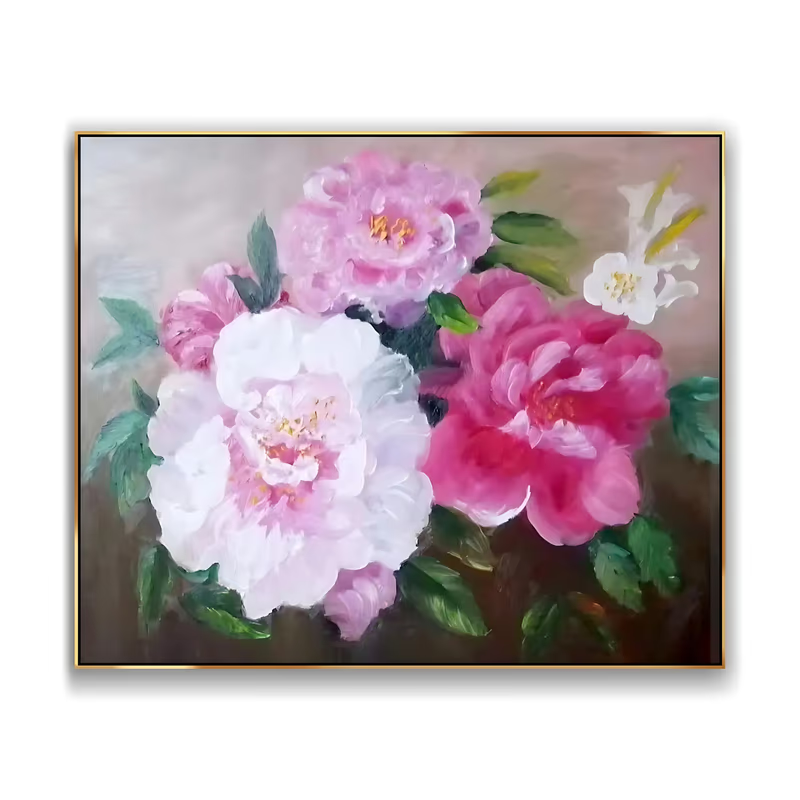
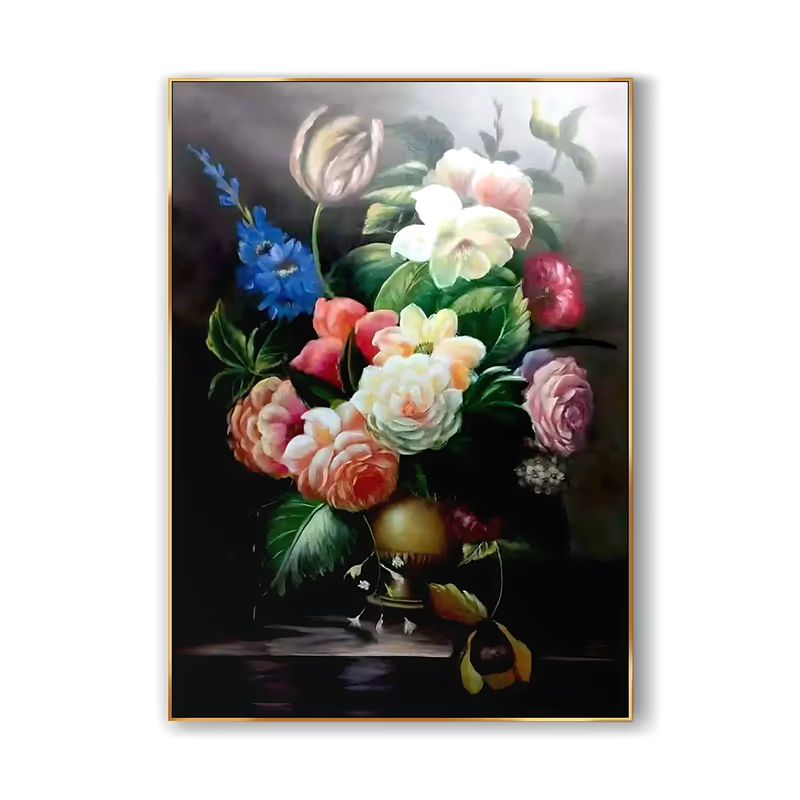
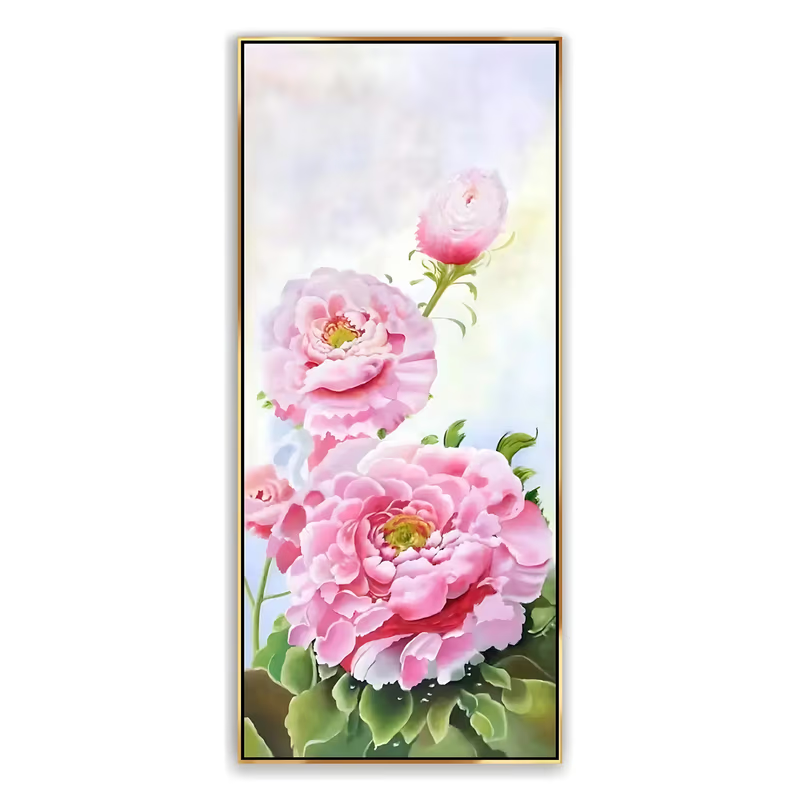
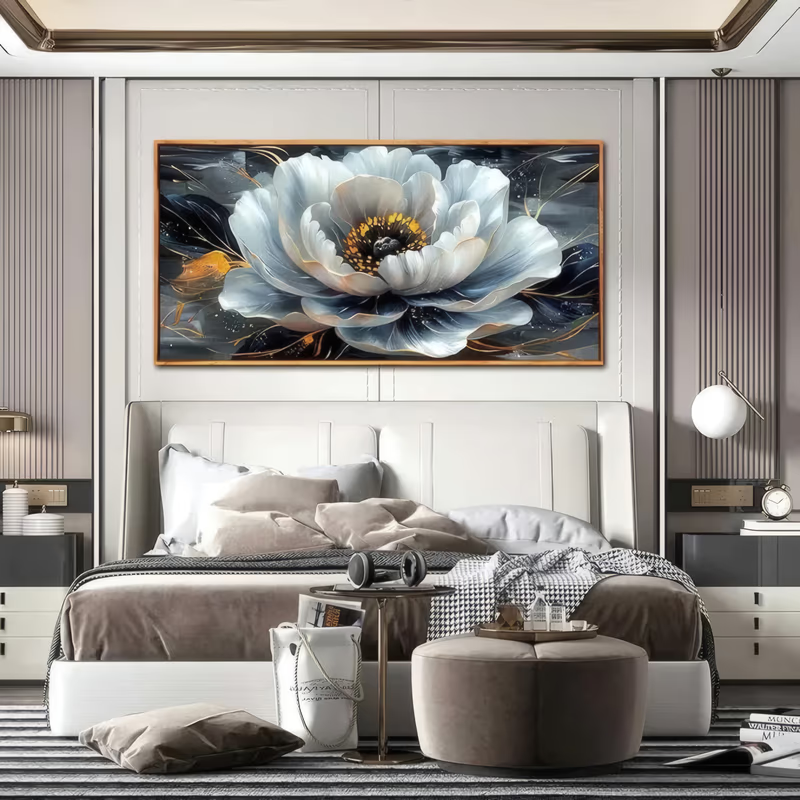
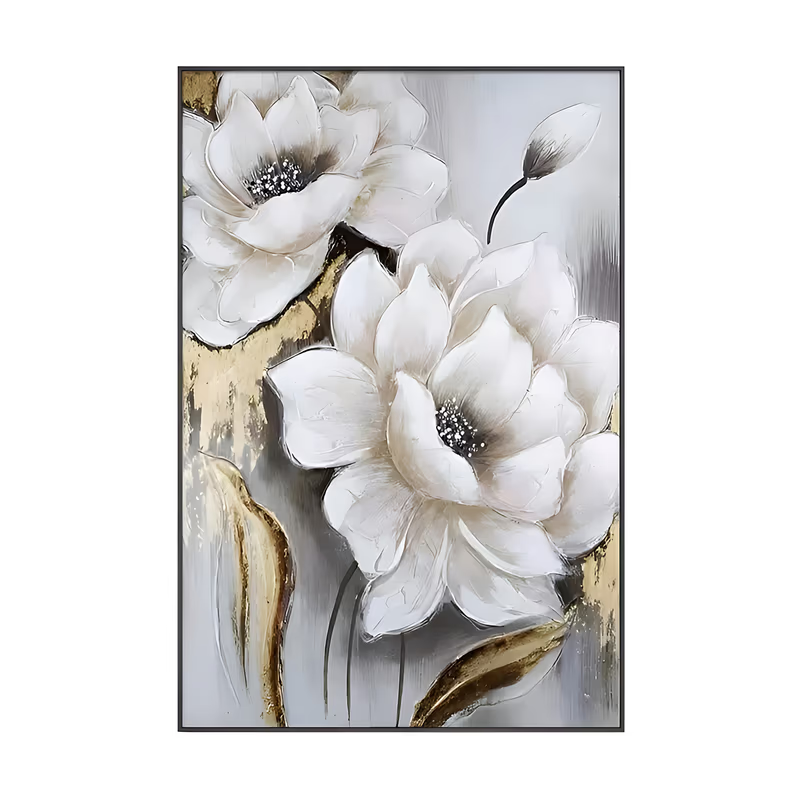
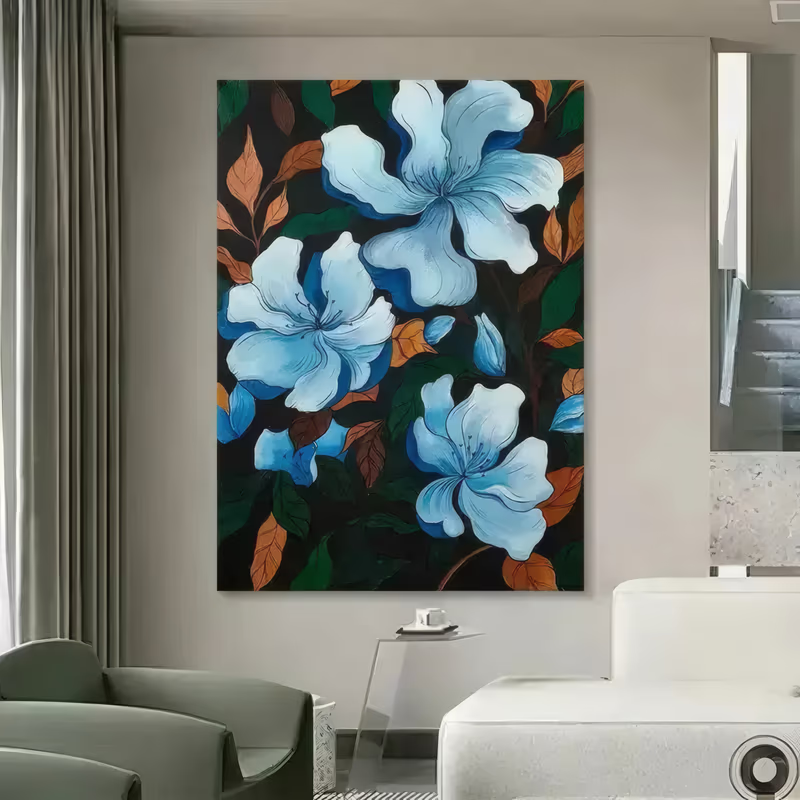
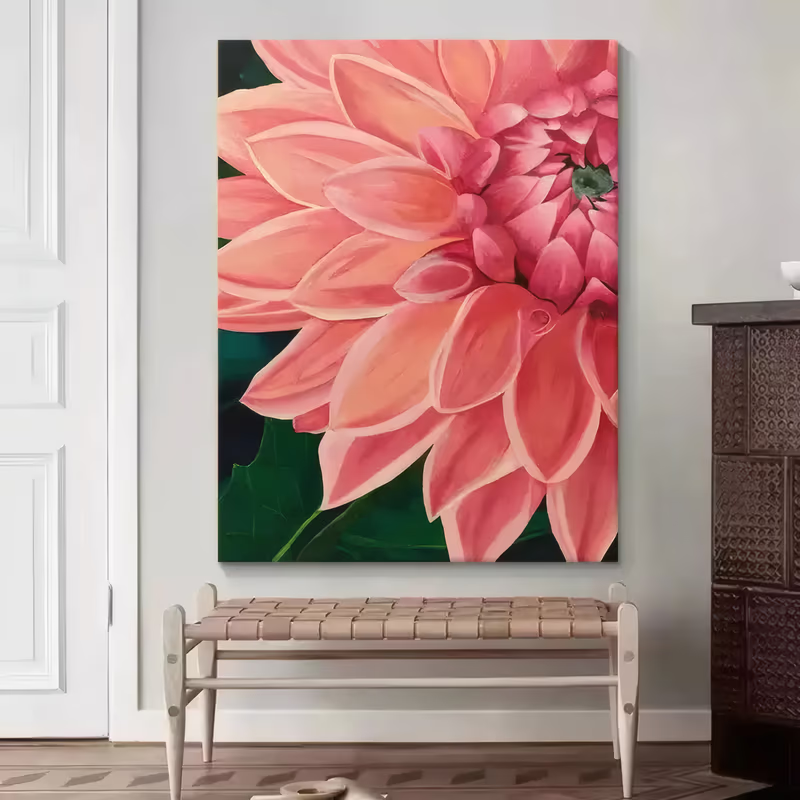
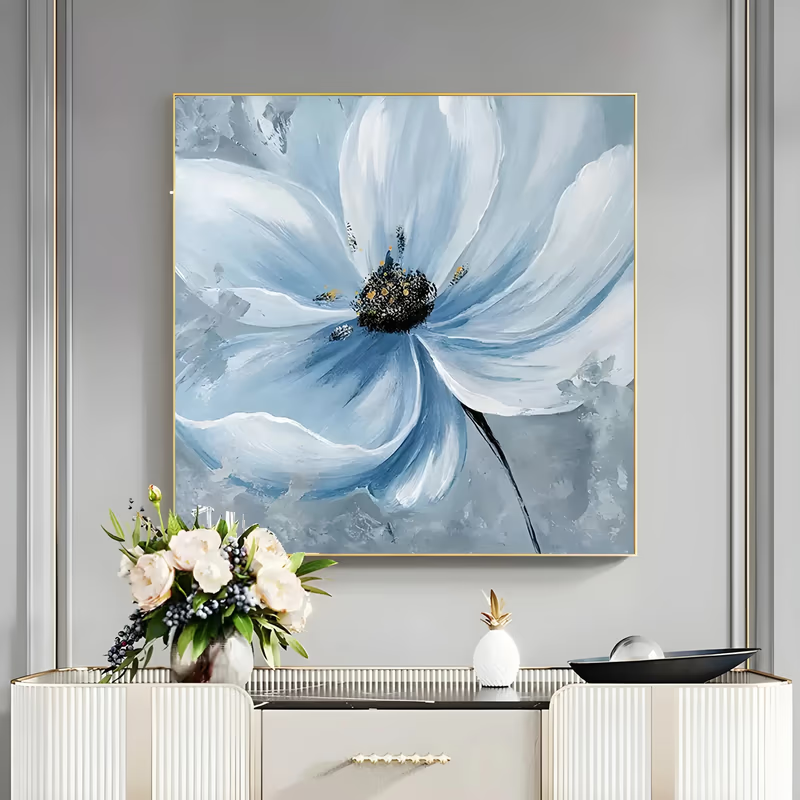
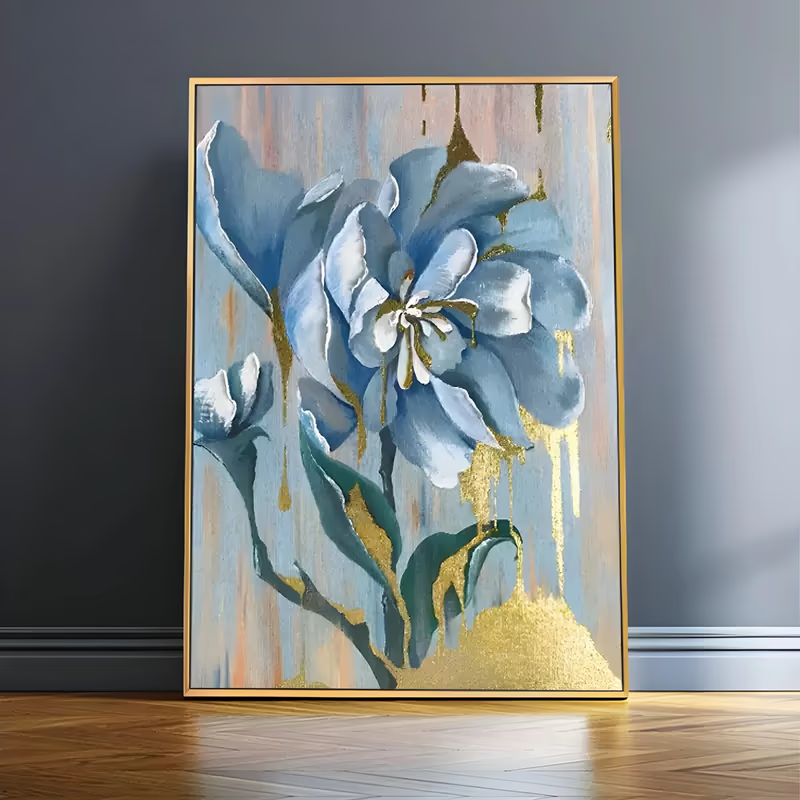
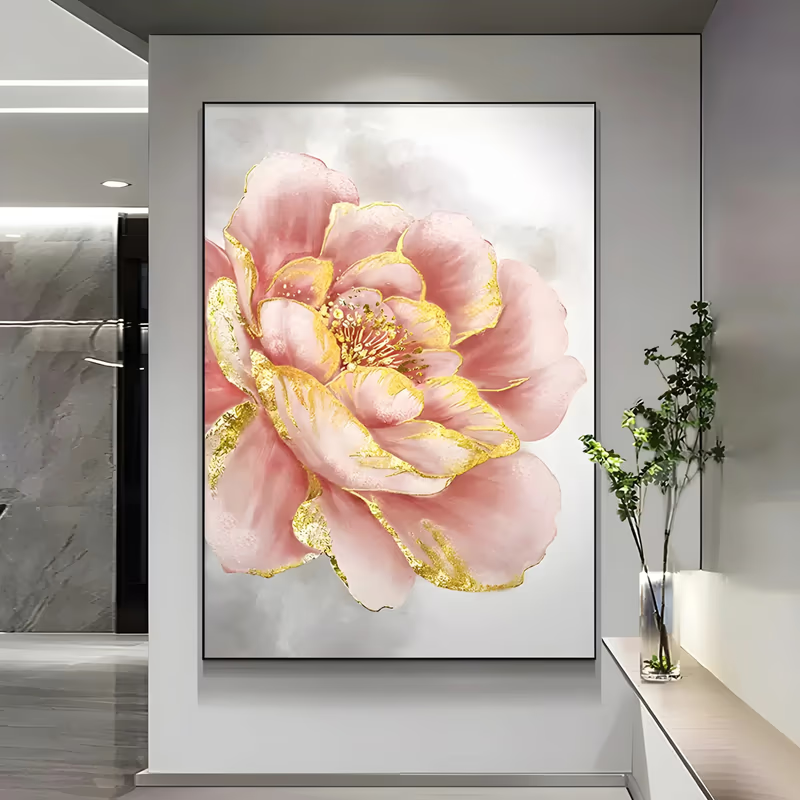
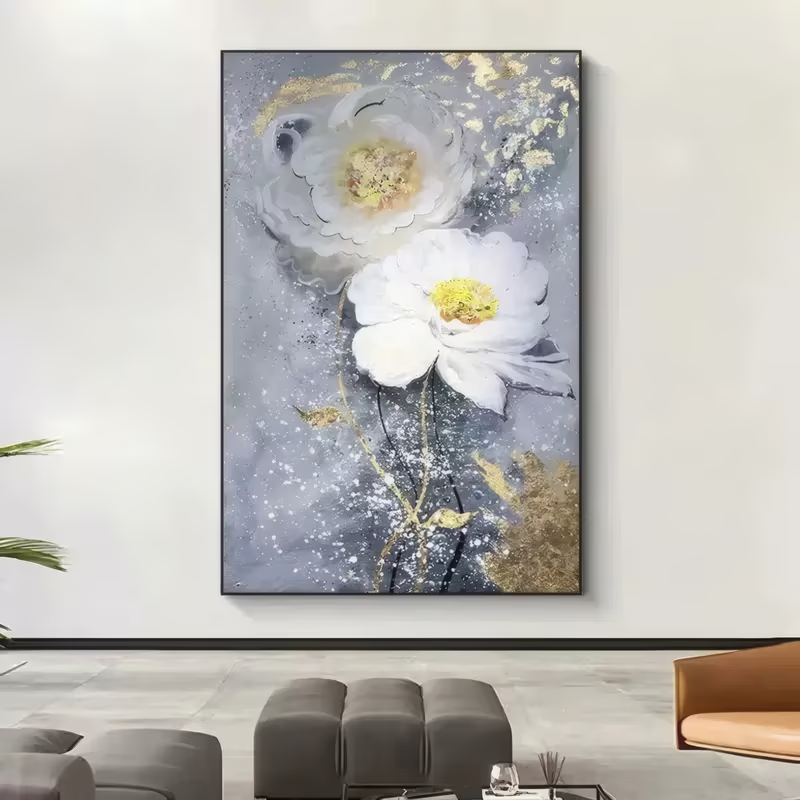
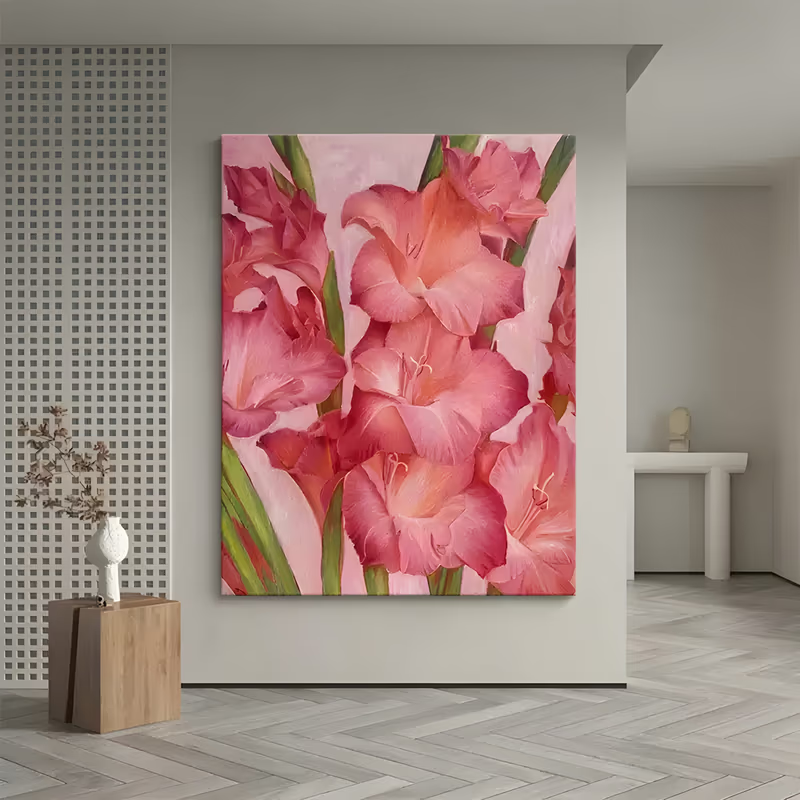
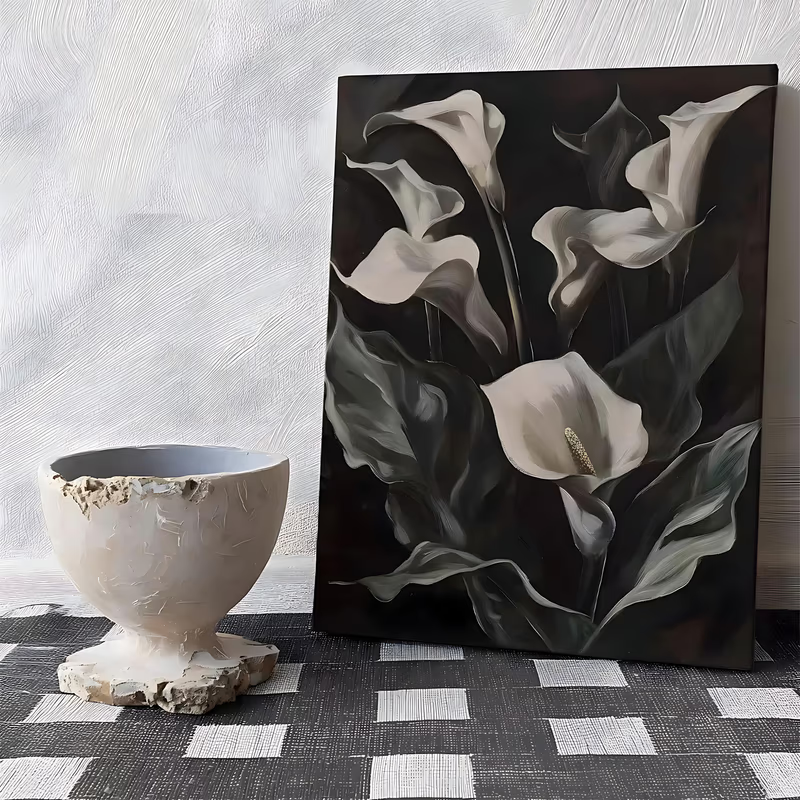
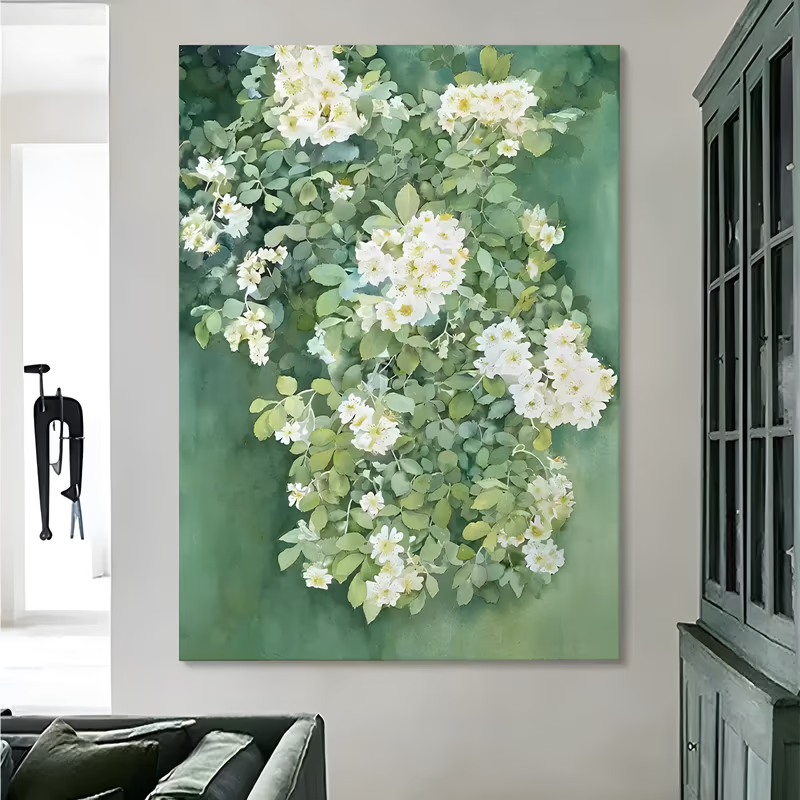
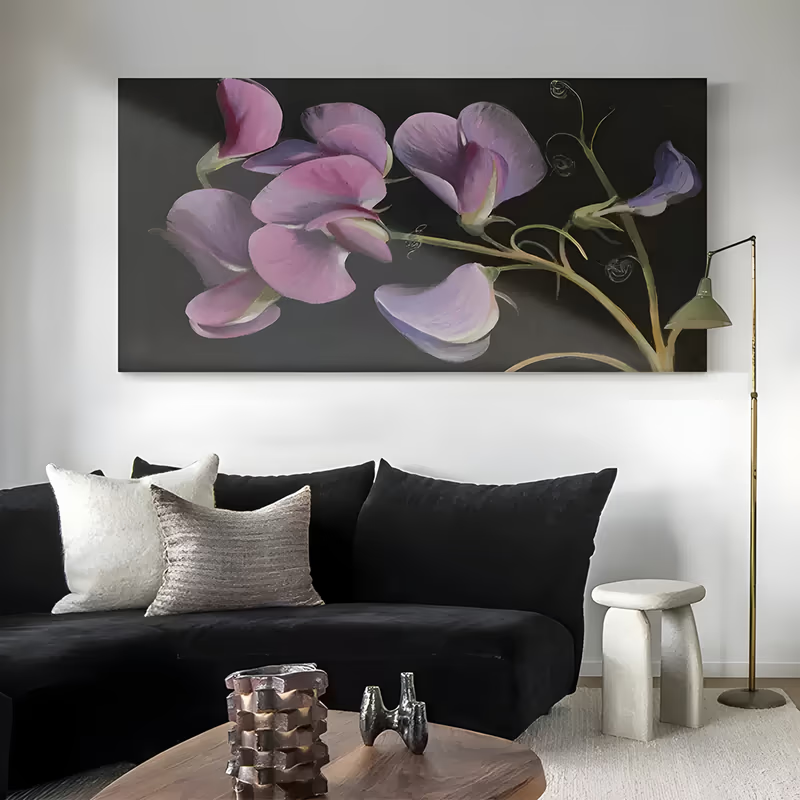
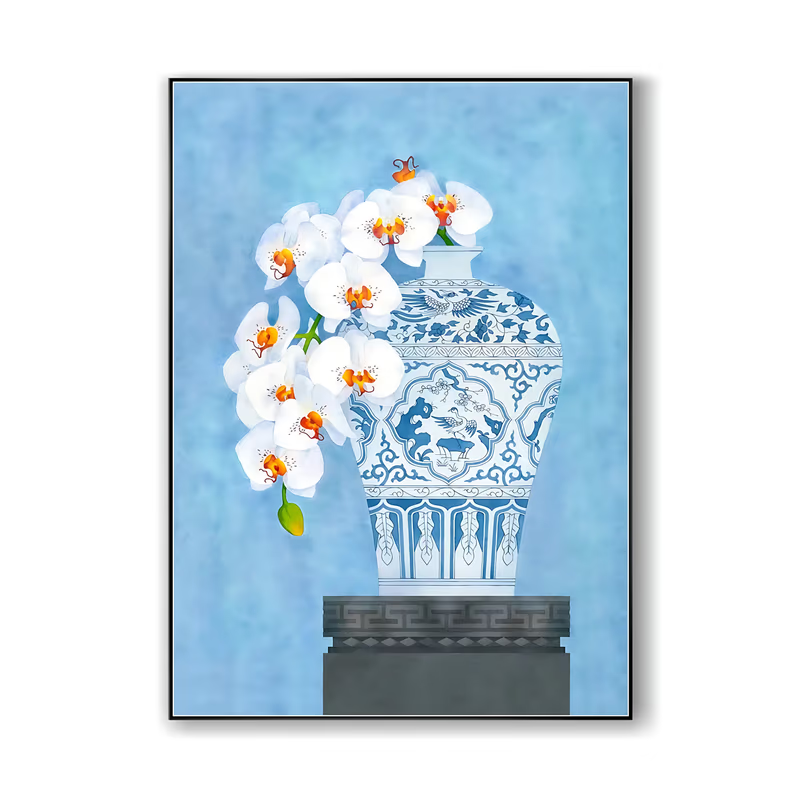
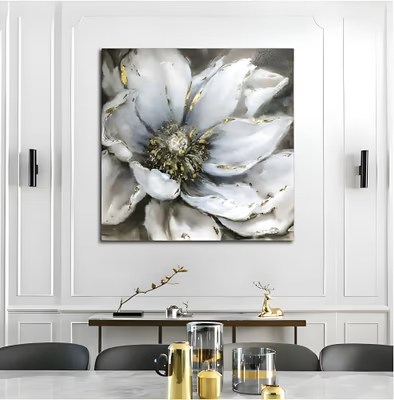
One peony, camellia, lily, dahlia or rose painted large and close, often with gold or silver leaf on the petals and a soft grey or black ground. Calm and luxurious, they work over a bed, in a powder room, along a hotel corridor or in a spa.
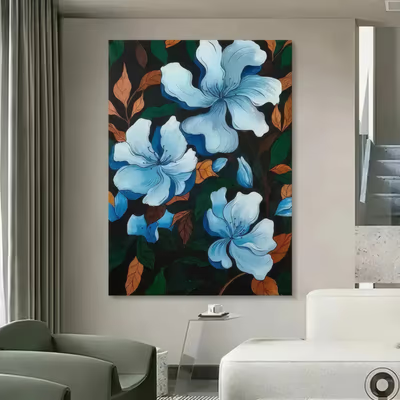
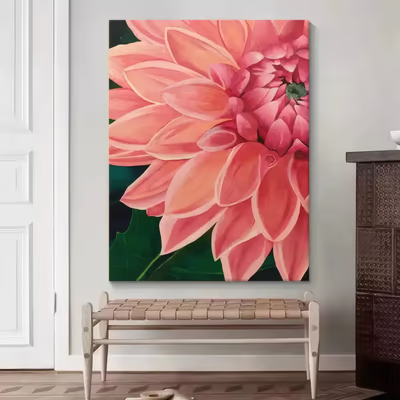
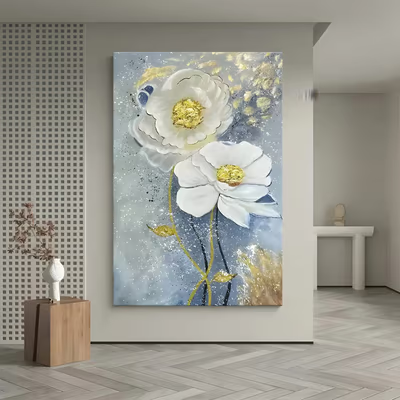
Animal portraits
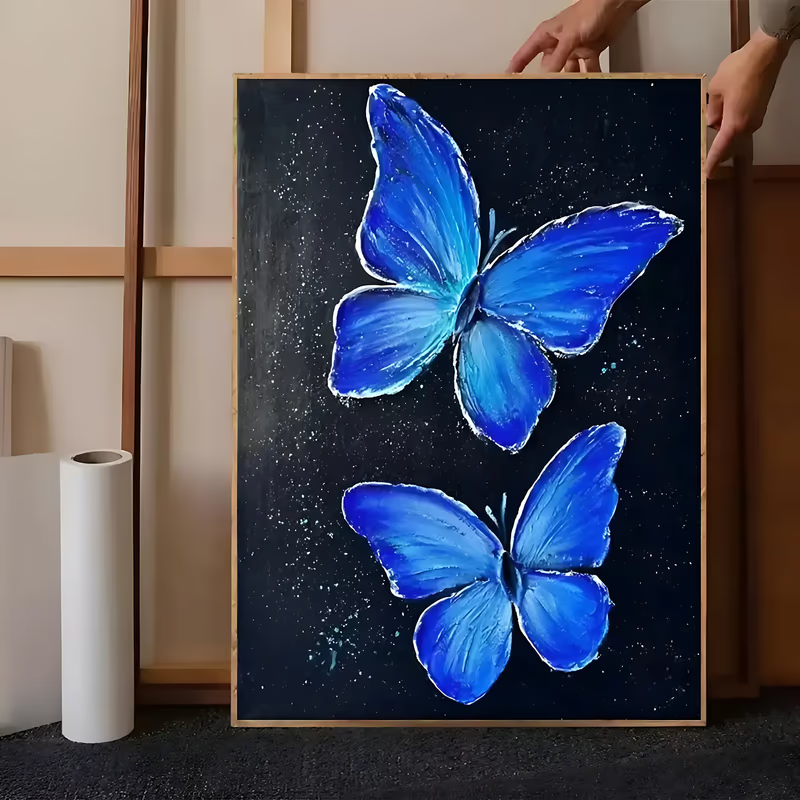
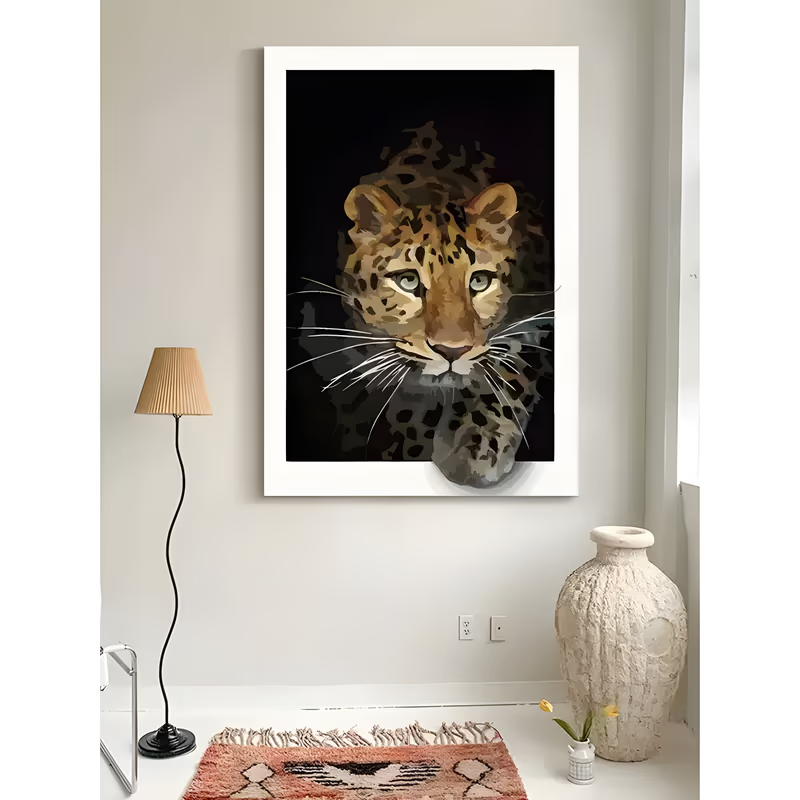
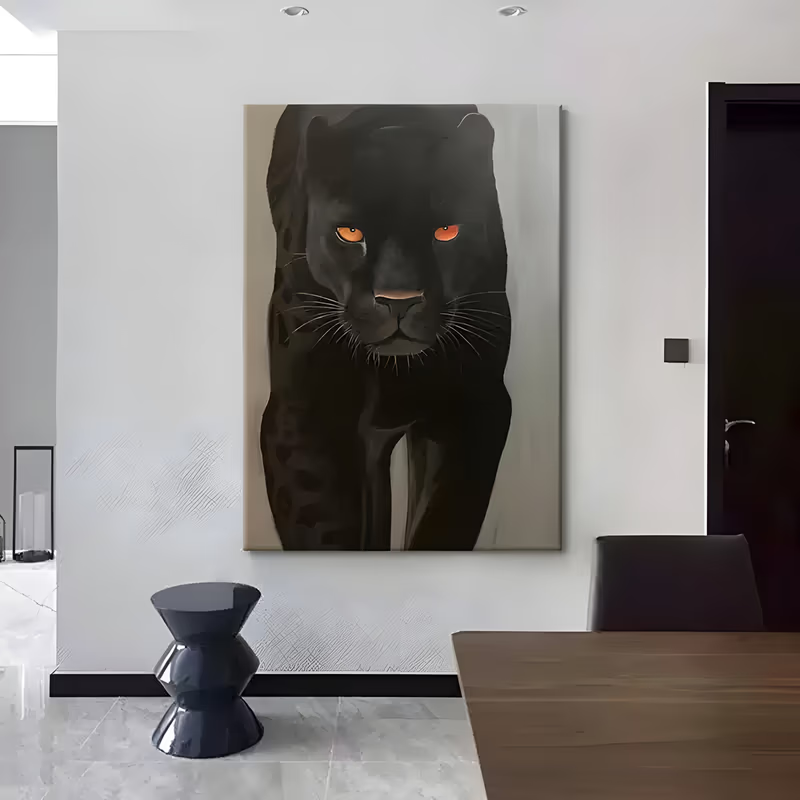
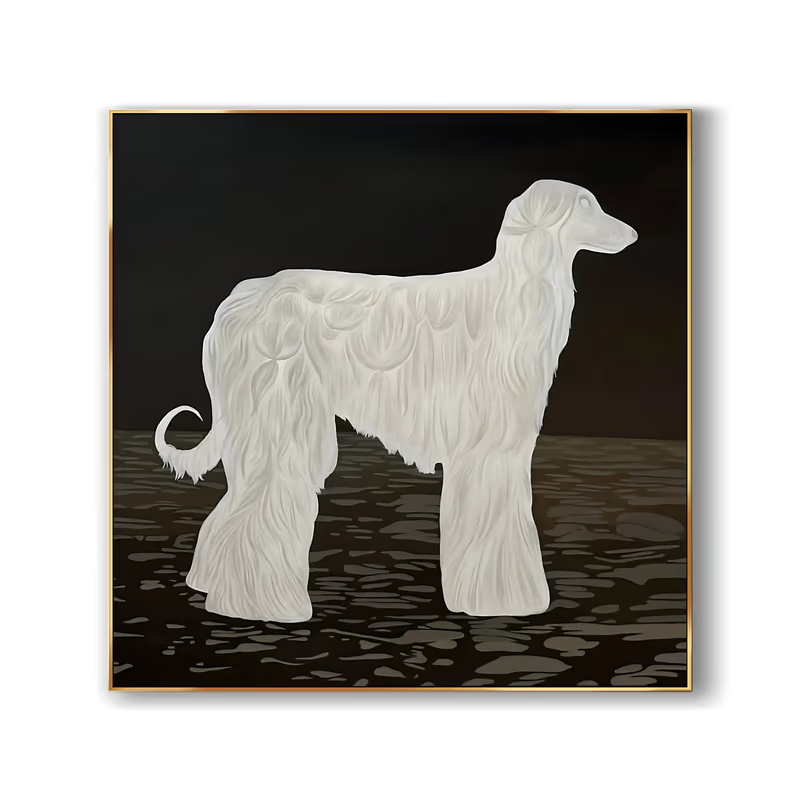
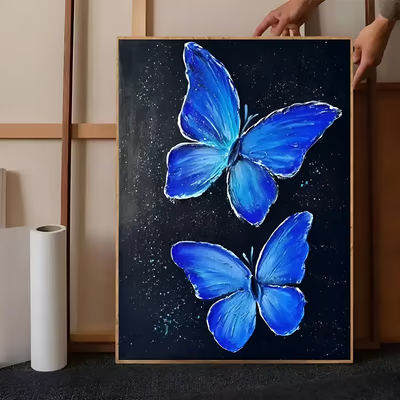
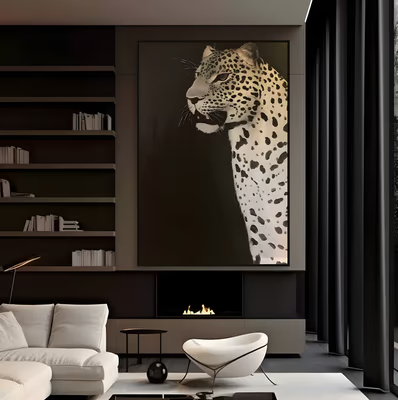
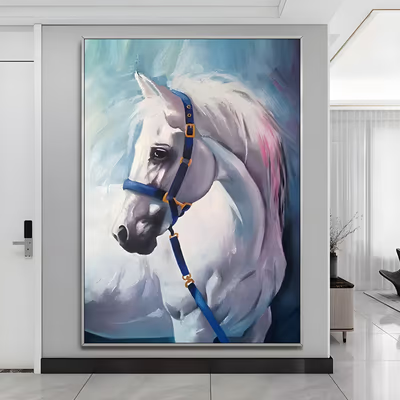
Chestnut and white horses in fine bridles, leopards and a black panther emerging from dark grounds, electric blue butterflies, an Afghan hound, puppies in a garden. They bring a library, study or club-style lounge to life. See also animal paintings.
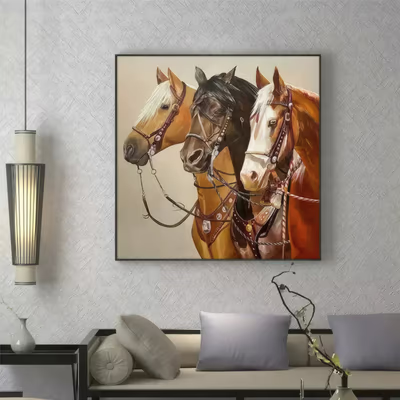
Waves, mountains and trees
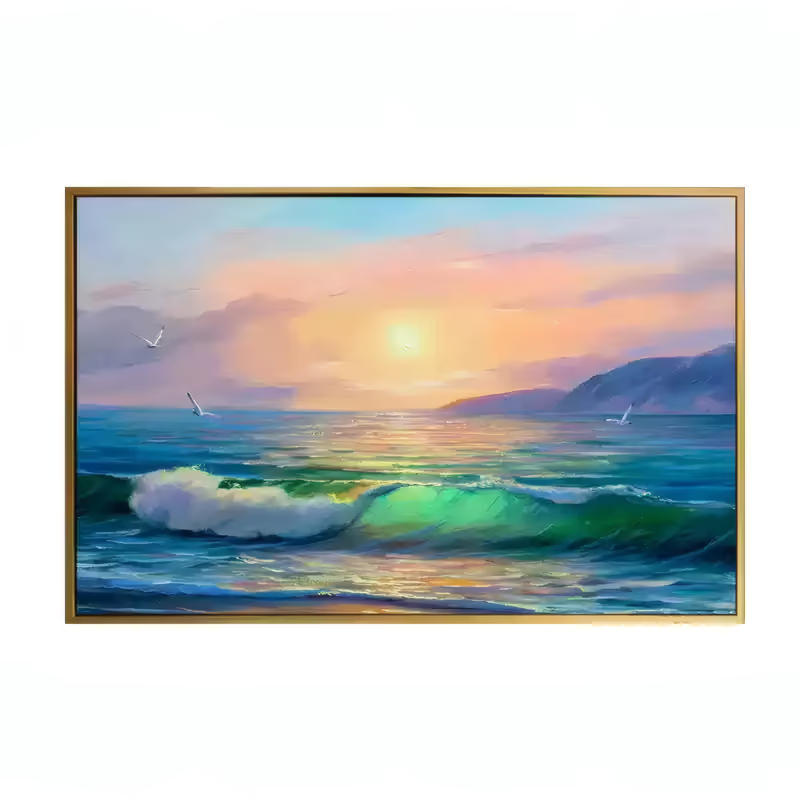
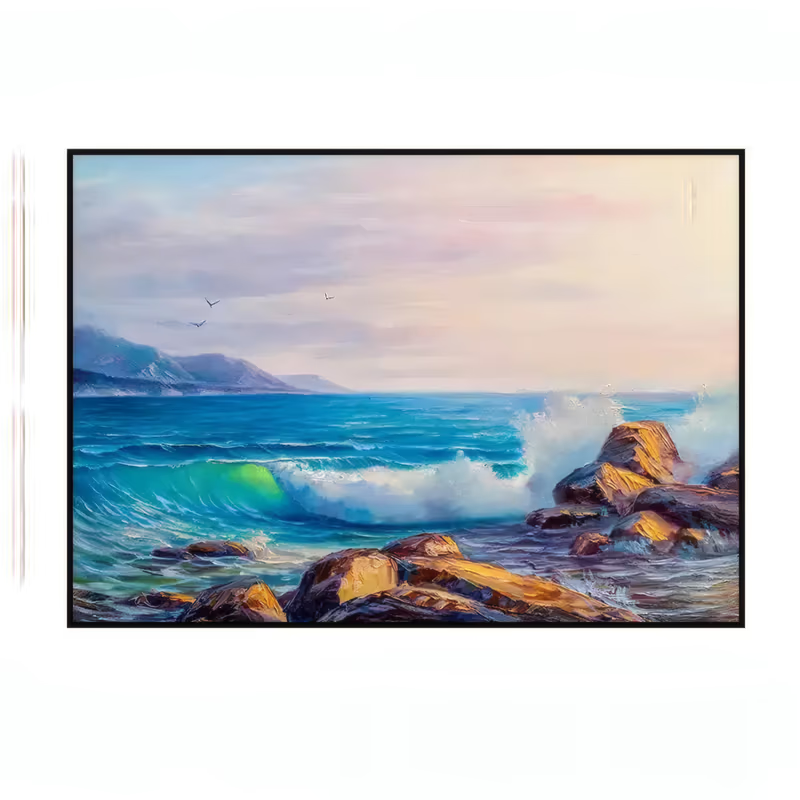
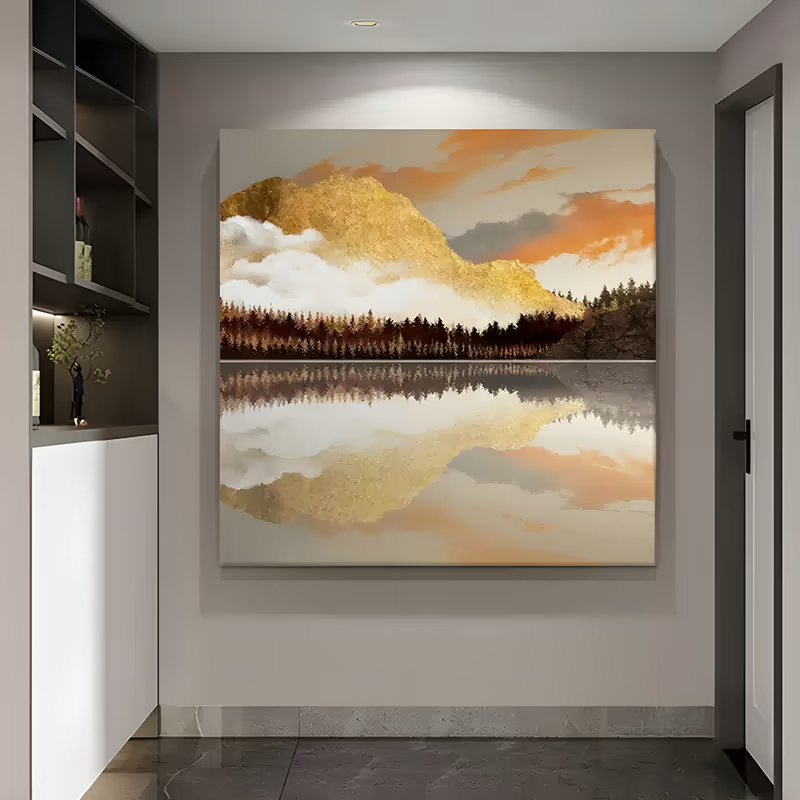
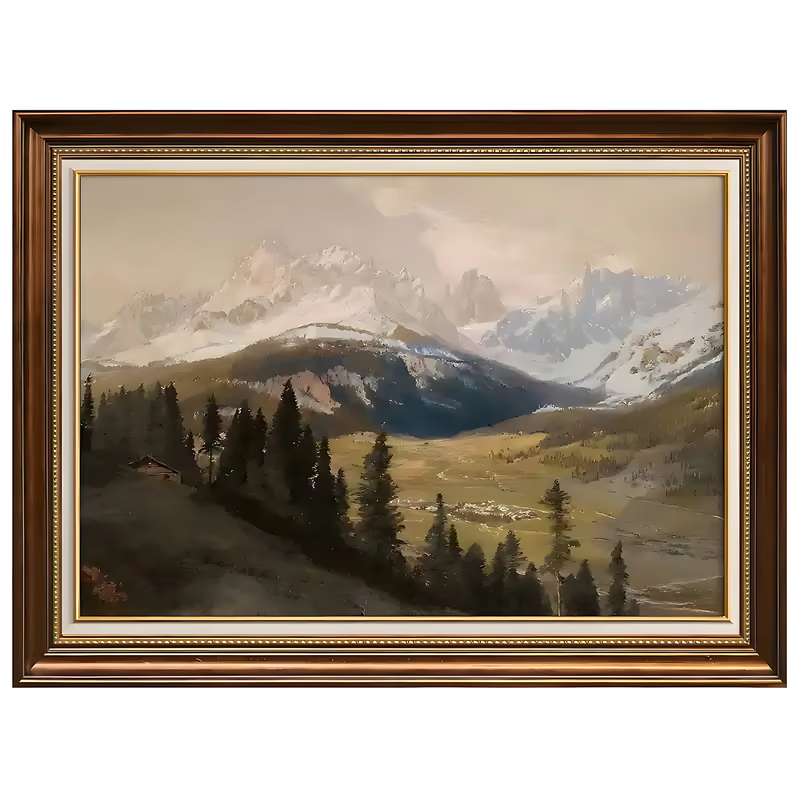
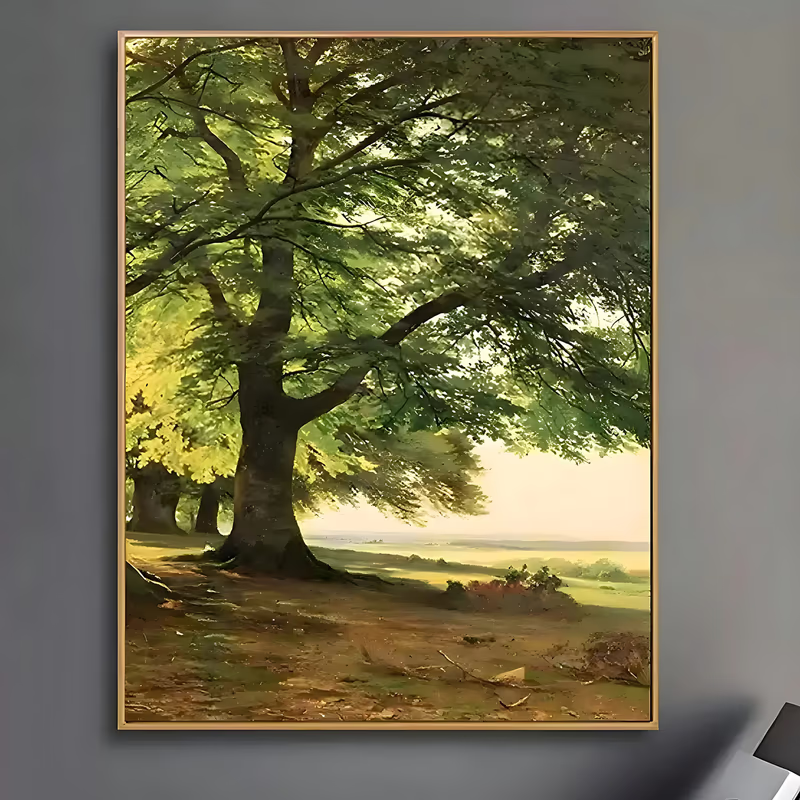
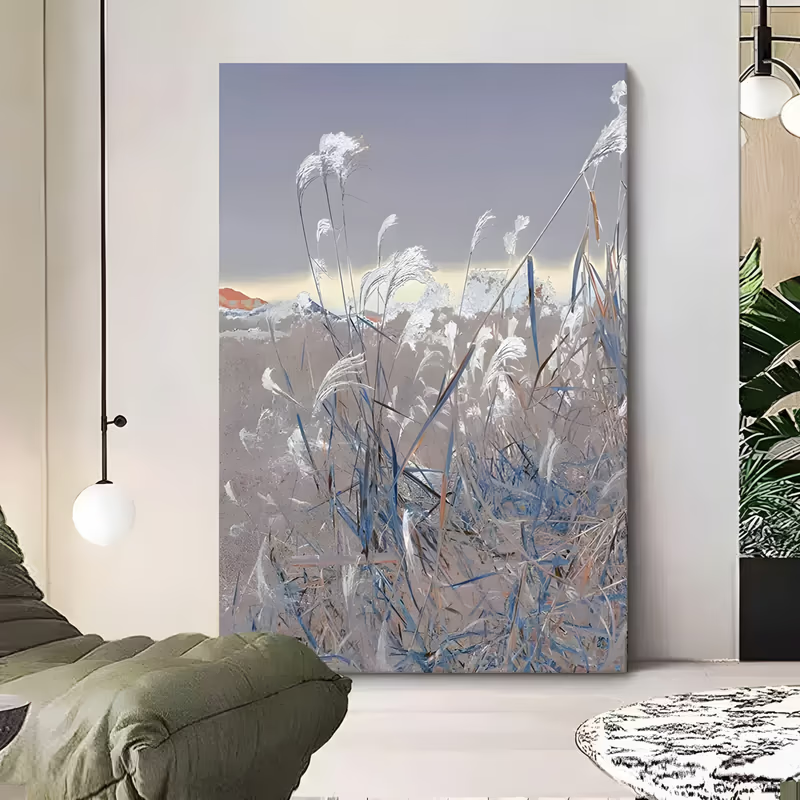
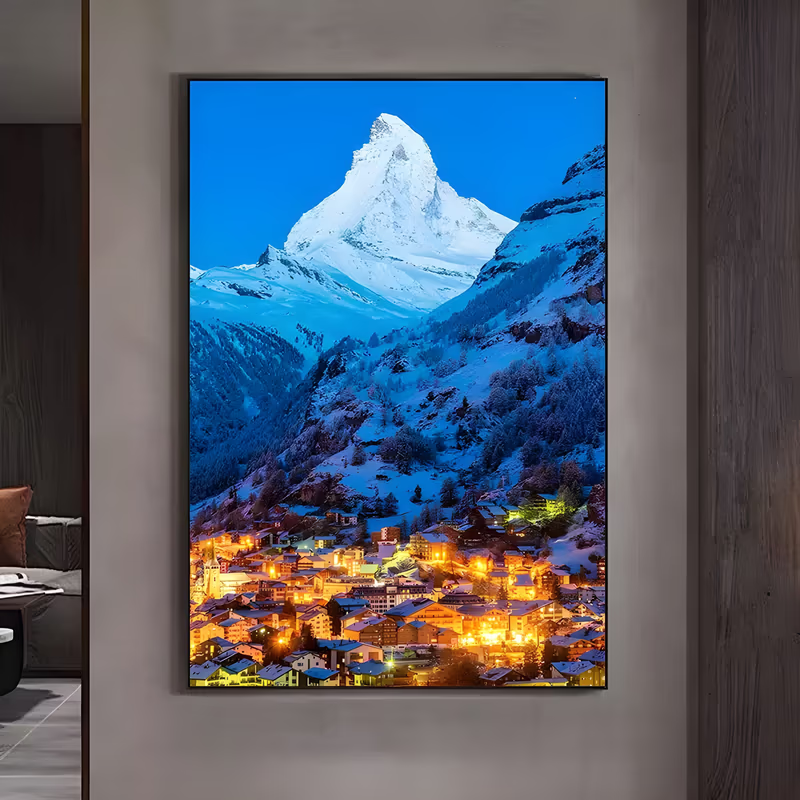
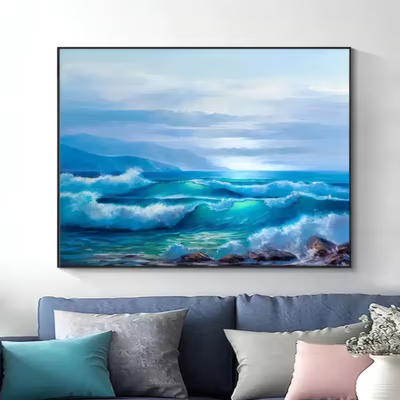
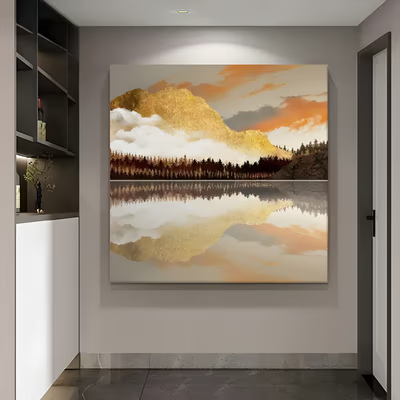
Turquoise waves curling over pebbles, aerial views of surf on sand, snow-capped Dolomite and Matterhorn peaks, sunlit oaks on a heath. Each opens a wall like a clear window and suits living rooms, offices and guest rooms.
Which interiors suit realistic wall art?
Realistic wall art is most at home in traditional, transitional and Asian-inspired interiors, and in a modern room it works best as a single, dark-grounded piece that reads as craftsmanship rather than decoration.
| Interior style | Realistic subjects that suit it | Finish that helps |
|---|---|---|
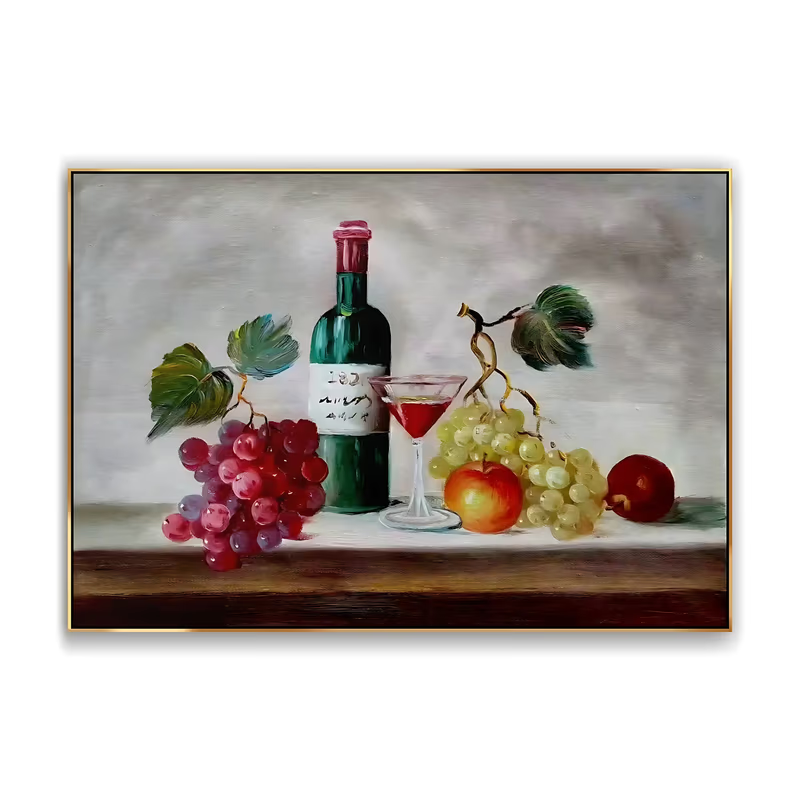
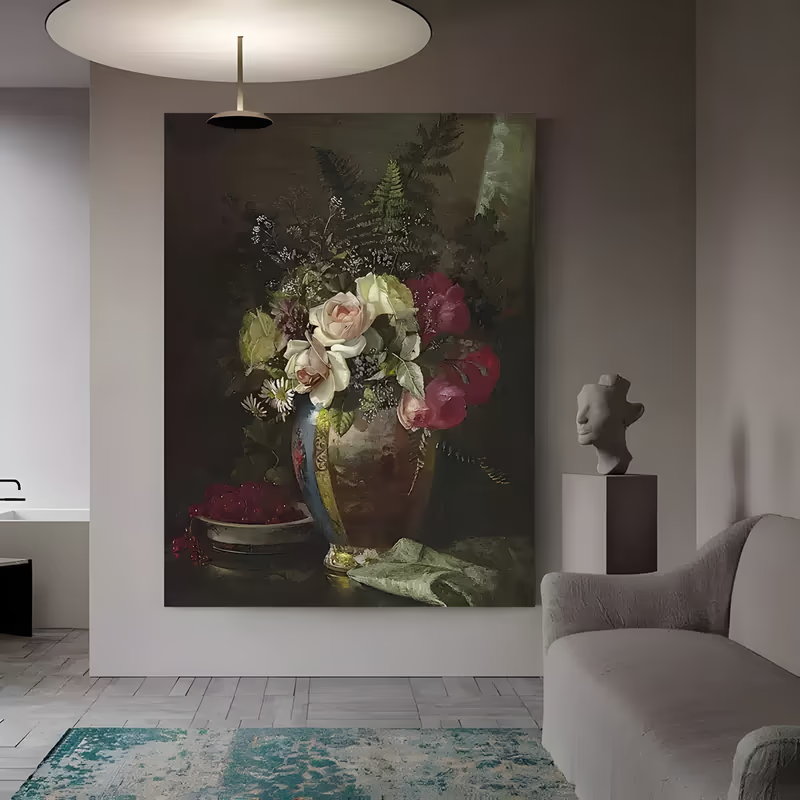
| Traditional and modern classic | Peacocks, horses, still lifes, florals in urns | Gold or dark wood frame |
| Transitional | Single peonies and lilies with gold leaf, soft grey grounds | Silver, white or slim gold frame |
| Asian-inspired and chinoiserie | Koi, lotus, cranes, blossom, persimmons | Black or dark wood frame; panoramic formats |
| Coastal and resort | Breaking waves, turquoise water, sea turtles | White or natural wood, or frameless |
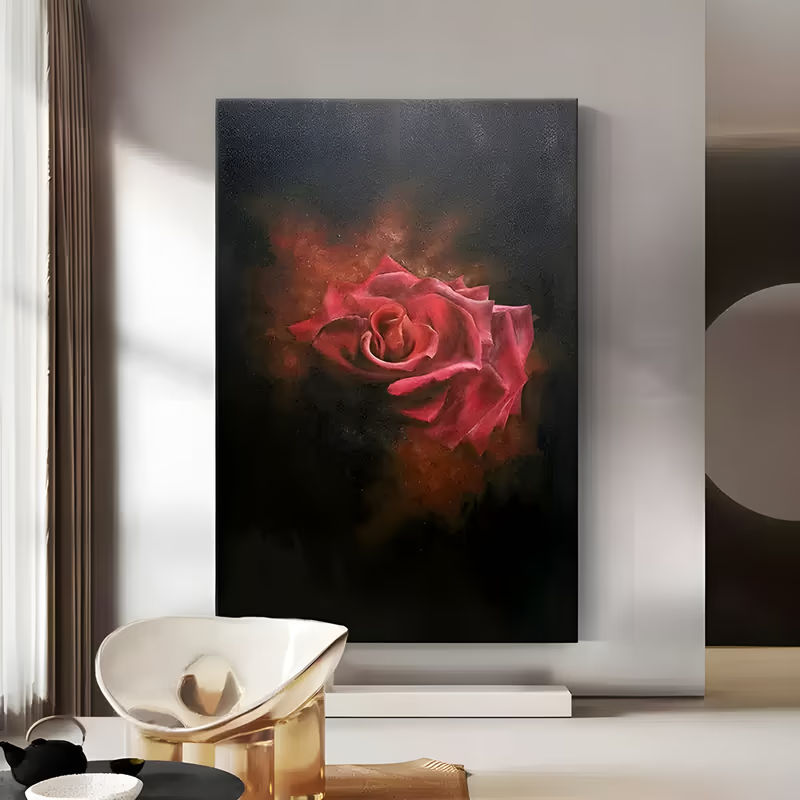
| Modern and minimalist | One subject on black: a leopard, a red rose, calla lilies | Thin black frame or frameless |
| Club, library and study | Horses, panthers, hounds, alpine views | Dark wood or antique gold frame |
If you like the subject but want looser handling, impressionist paintings treat similar flowers and landscapes with visible, broken brushwork. For realism paired with deep surface relief, look at textured art.
How big should realistic paintings be, and where should they hang?
Size realistic paintings to the distance they will be seen from: their detail is meant to be read, so they suit walls people approach, and they need to grow larger where viewers stay far away.
A common design rule is to stand back about one and a half to two times the diagonal of a painting to see it whole. For a realistic piece, that means a 100 cm (39 in) canvas looks right across a dining table or from a sofa a few steps away, while a lobby wall seen from the entrance needs a much larger format or a bold, simple subject such as a single peacock or a wave. Put the middle of the picture at roughly 150 cm (59 in) from the floor so eyes, petals and water sit at eye level.
Places where realistic art shines: dining rooms, where guests sit close for hours; corridors and lift lobbies, which people walk past at arm's length; beside a reading chair; over a console in an entrance hall. Realistic art for dining and living rooms; for corridors and lobbies; for guest rooms and bedrooms.
How should you light hyperrealistic paintings?
Light hyperrealistic paintings with a warm, focused light angled at about 30 degrees from the wall, so highlights sparkle and the dark areas stay deep without glare.
Realistic paintings depend on contrast between light and shadow, and many of these sit on black or charcoal grounds. A ceiling downlight placed too close to the wall rakes across the surface and shows every brush ridge; one placed too far away bounces glare off the darks. Around 30 degrees is the usual sweet spot. A warm-white source around 2700–3000K flatters gold leaf, wood tones and skin-like warmth in fur and petals; cooler light suits blue seascapes and white flowers.
Avoid direct afternoon sun, which flattens the illusion and is hard on any painting over the years. In hotels and restaurants, a dedicated picture light or a gimbal spot turns a realistic canvas into the room's set piece after dark.
How is a realistic painting made to order and checked?
A realistic painting is checked in stages, the drawing, the block-in of colour and the final detail, with photographs at each step and nothing continuing until you approve.
Realism leaves little room for surprises, which is why approval matters. You see the composition before colour goes on, then the main tones, then the finishing passes where feathers, petals and water gain their sharpness. Each stage arrives as progress photos or video, the next begins only after your approval, and a final photograph is approved before dispatch.
The palette can be changed to your scheme, a paint code or a fabric: a blue peacock can become teal and gold, a grey-ground peony can move to cream. Size is redrawn to your proportions rather than stretched. For an original from your own photograph or reference, see custom and commission. The finished canvas ships rolled, stretched ready to hang, or framed in gold, silver, black, white or wood; request a quote to begin.