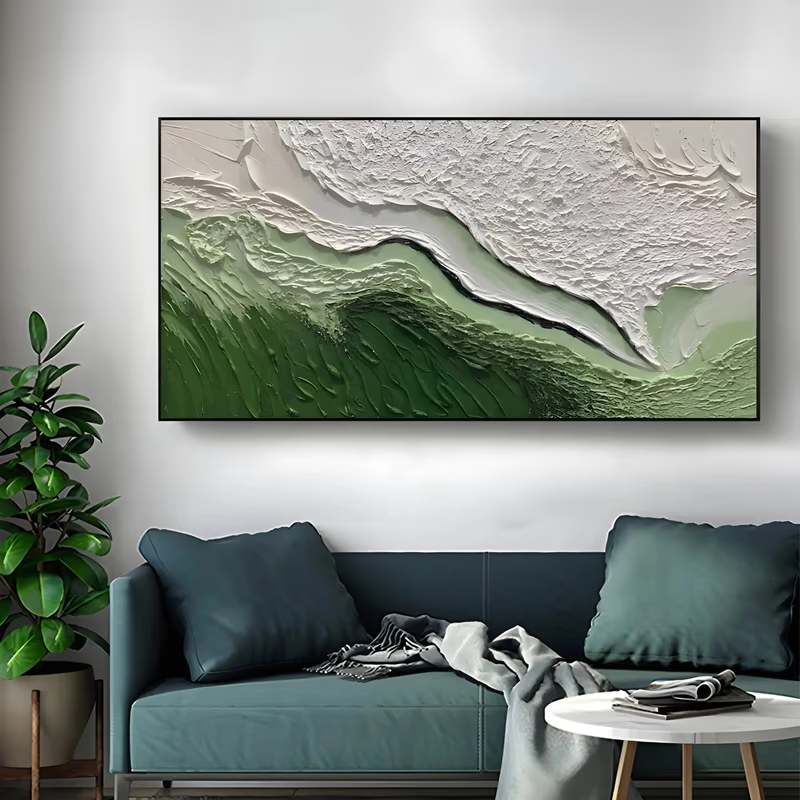
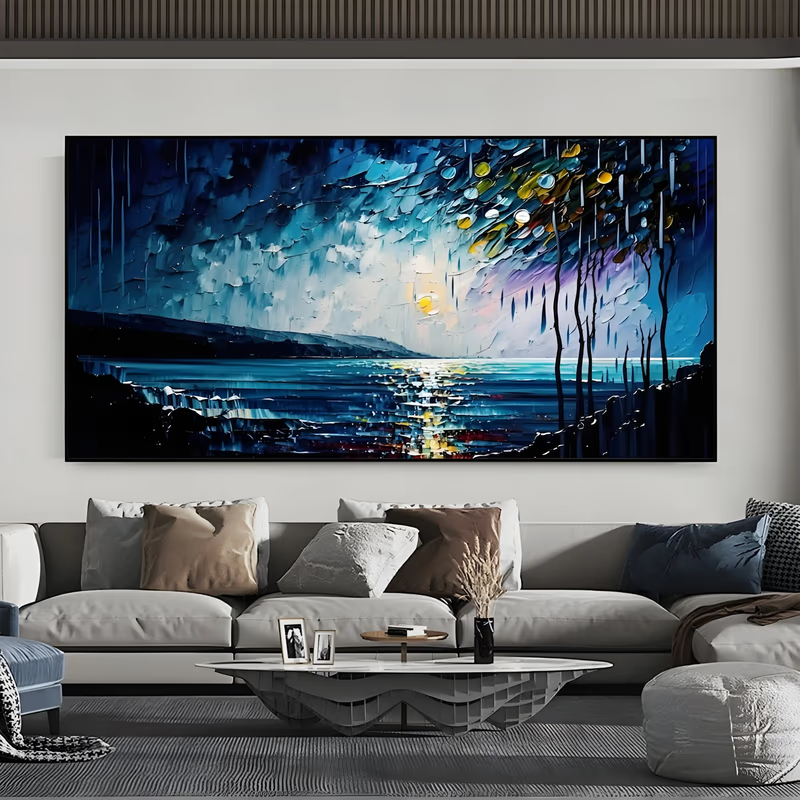
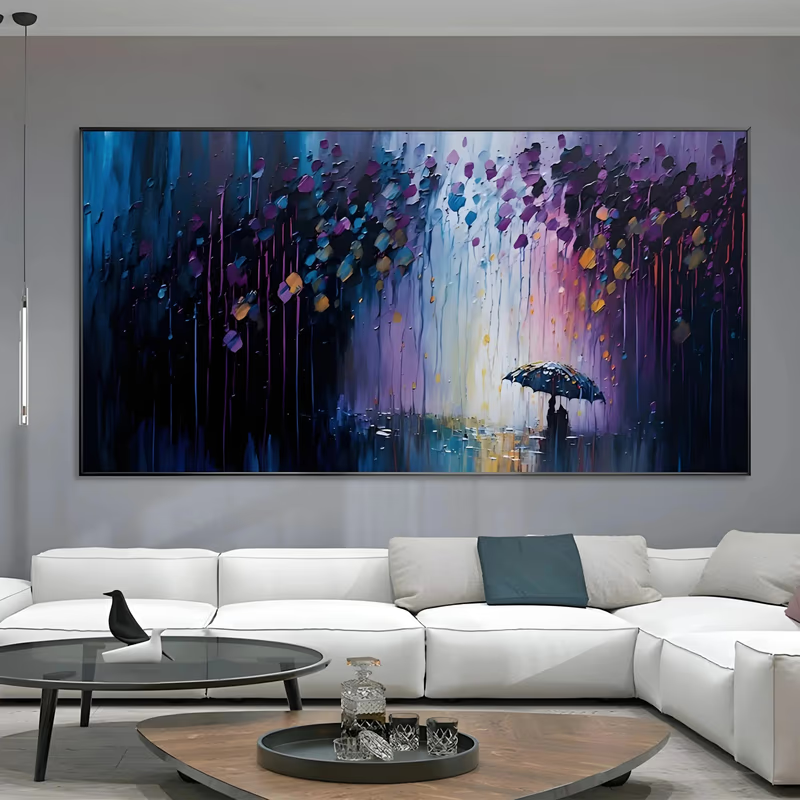
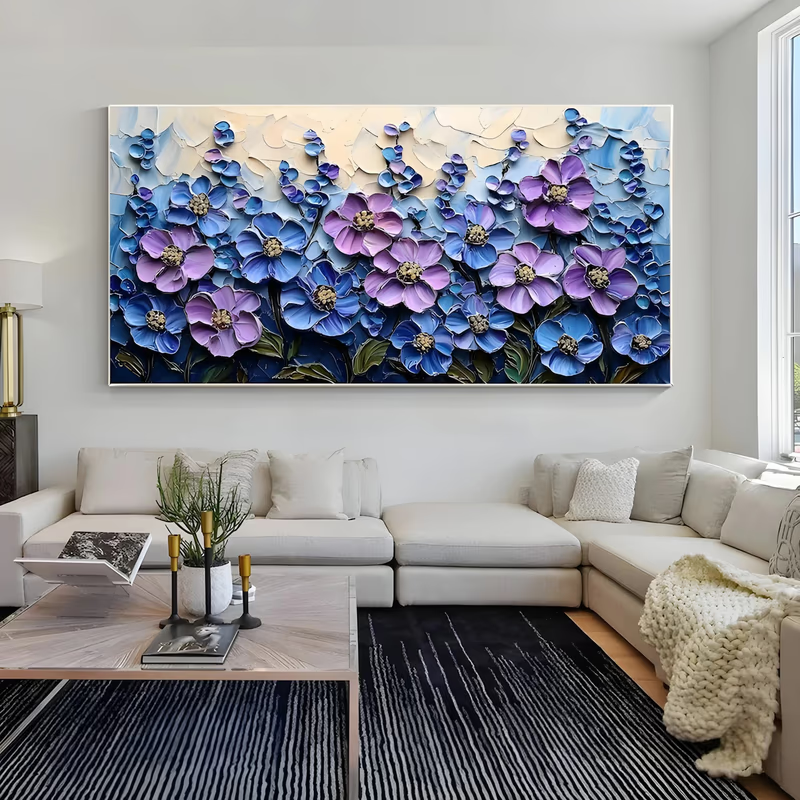
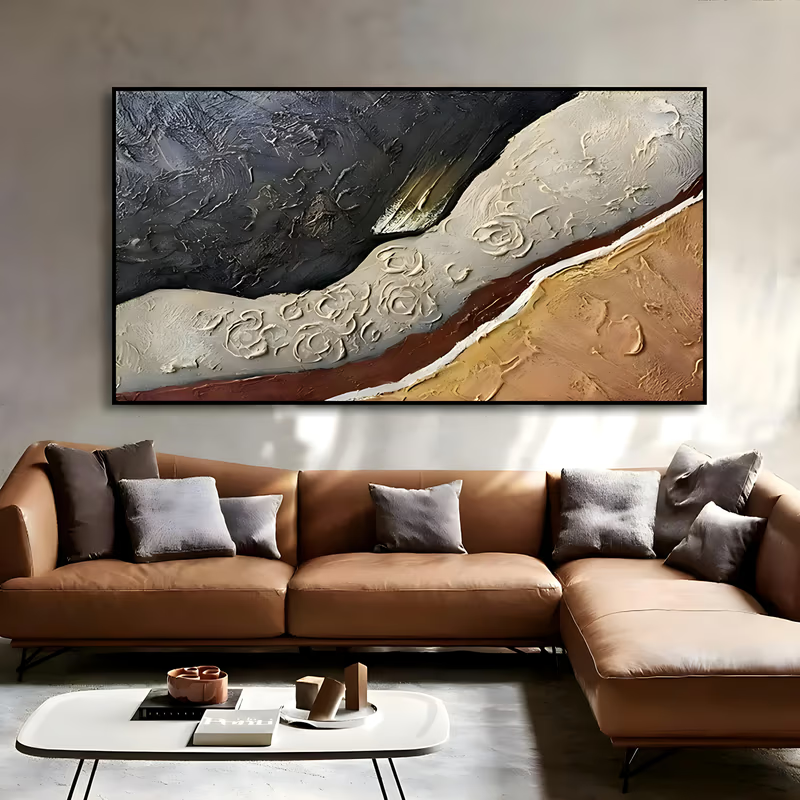
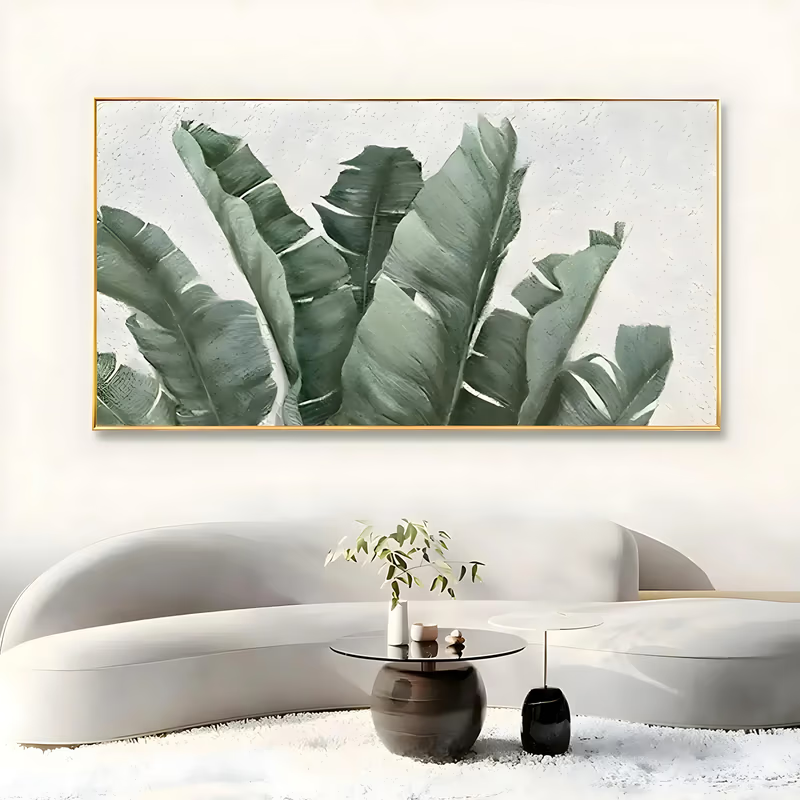
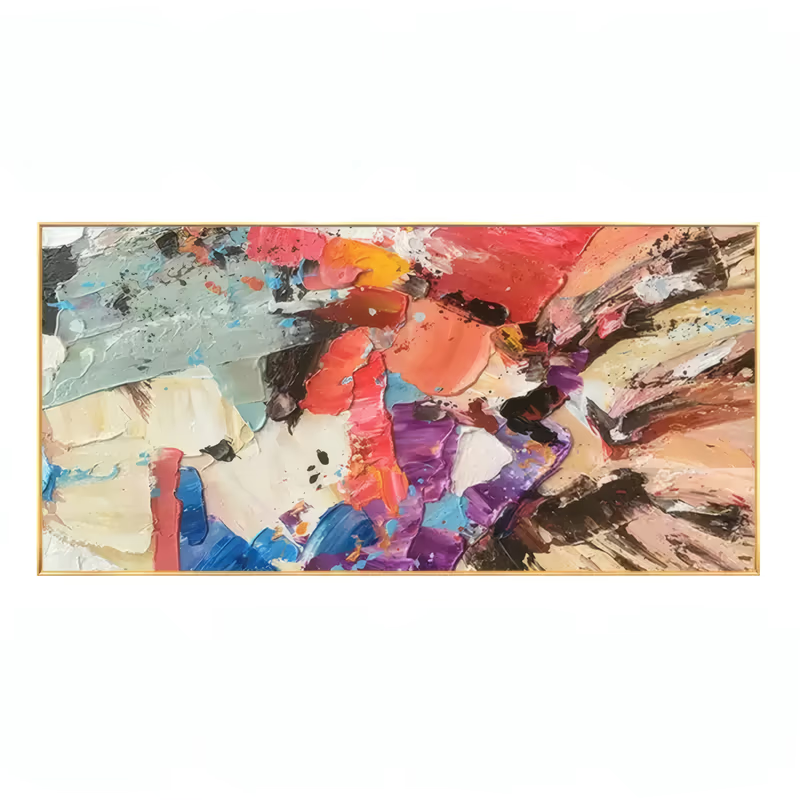
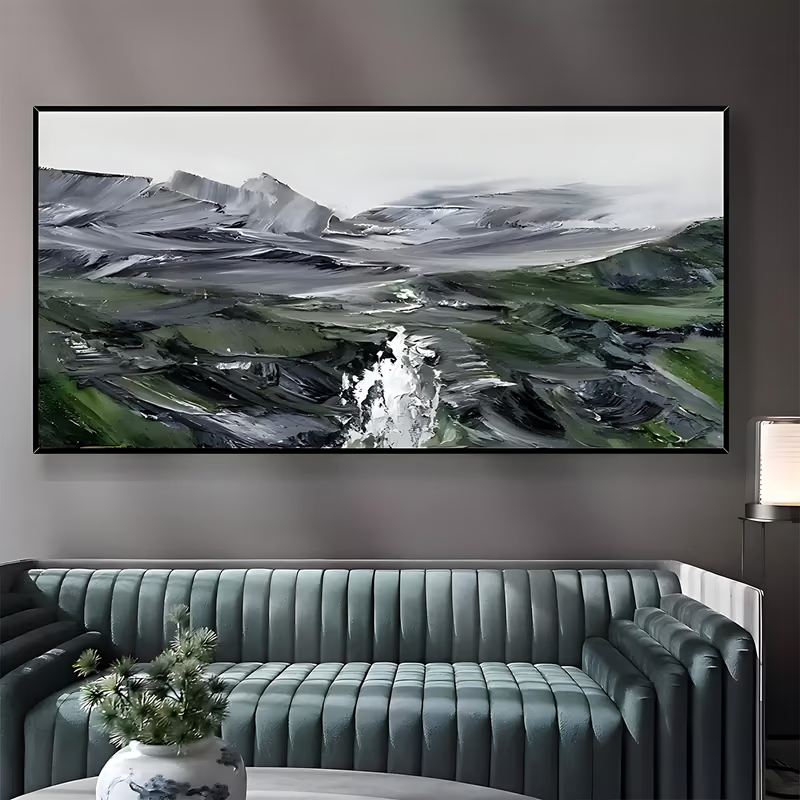
Panoramic wall art guide · Updated
How to choose panoramic wall art for a long wall
Key takeaways
- Panoramic starts at 2:1: a canvas twice as wide as it is tall is a standard panorama; at 3:1 it becomes a band that is read by letting the eye travel along it.
- It belongs above long furniture: king beds, banquettes, corner sofas, credenzas and reception desks are the walls a panoramic canvas solves best.
- One canvas reads as a view, three as a sequence: choose a single panoramic piece for an unbroken wall and a triptych where doors, columns or transport limits break it up.
- Long is composed, not stretched: the scene is redrawn with more horizon and a focal point placed off-centre, so it holds the full length of the wall.
What counts as panoramic wall art?
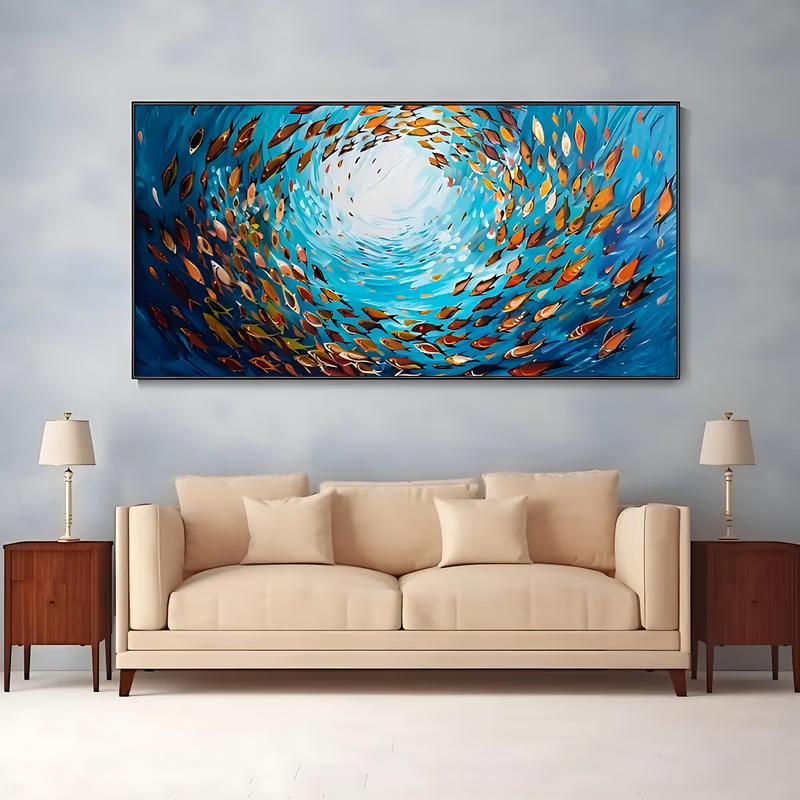
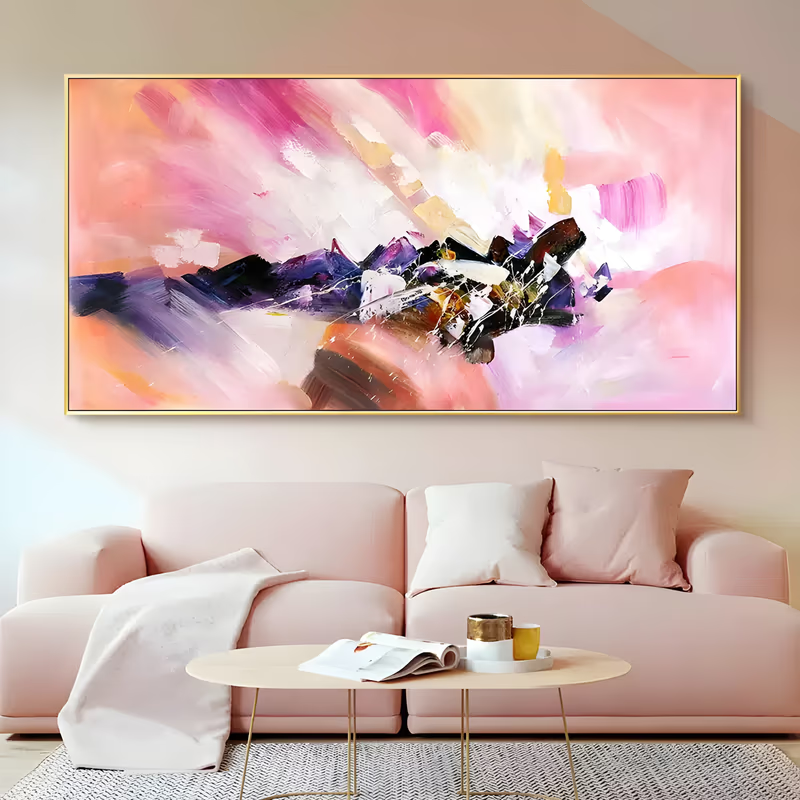
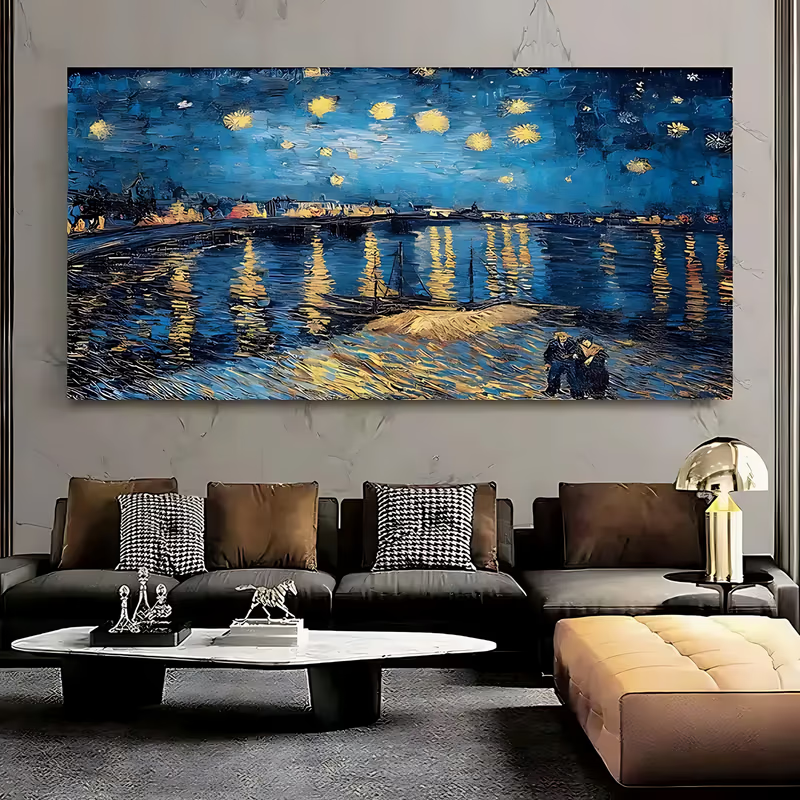
Panoramic wall art is any canvas at least twice as wide as it is tall; a 2:1 ratio is the standard panorama and 3:1 is the long, low band most people picture.
The name comes from photography, where a panorama is a view too wide to take in at a glance. A painting in this format behaves the same way: you do not see it all at once, you scan it, and that slow reading is what makes it restful over a bed and impressive along a lobby wall. Below about 2:1, a wide canvas reads as an ordinary horizontal painting; above about 4:1 it starts to feel like a frieze.
The standard sizes listed on each panoramic work run from about 91 × 46 cm (36 × 18 in) at 2:1 to 254 × 127 cm (100 × 50 in), with long 3:1 options such as 183 × 61 cm and 229 × 76 cm in between. Because each canvas is painted to order, any other length is possible, including pieces several metres long; see oversized and custom sizes.
Where does panoramic wall art work best?
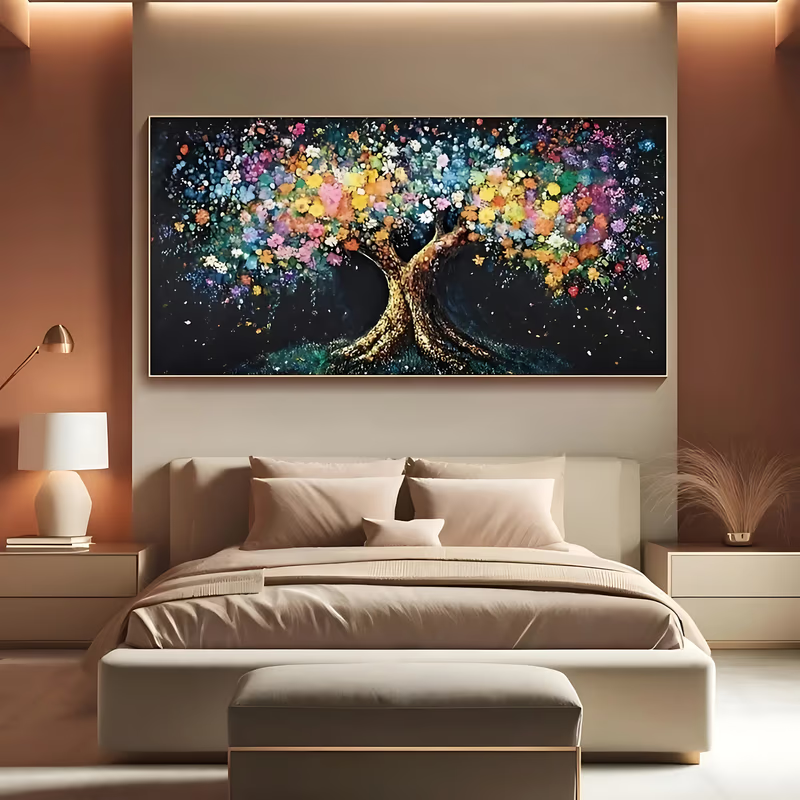
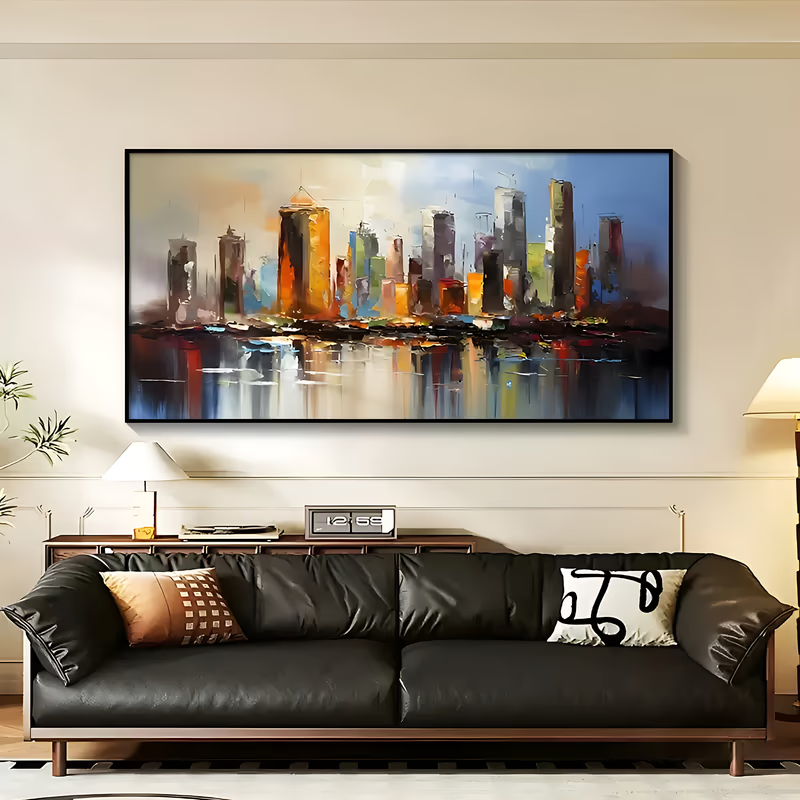
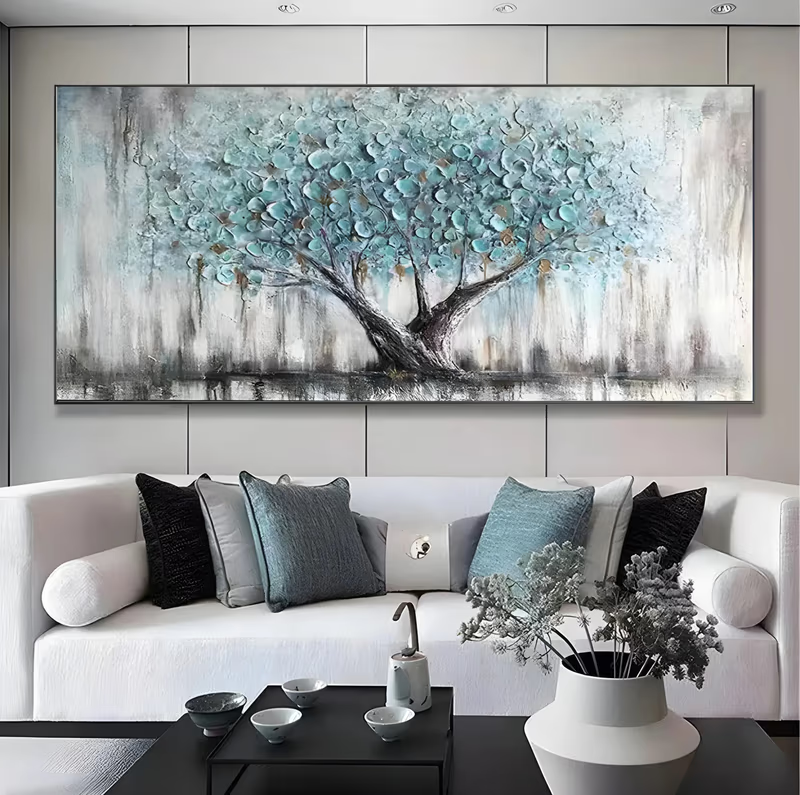
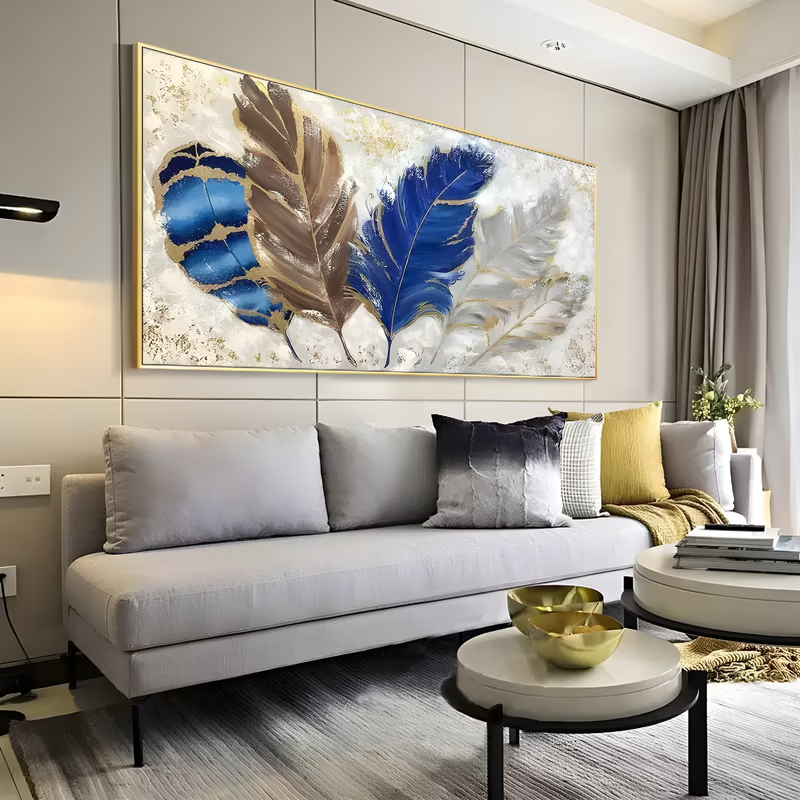
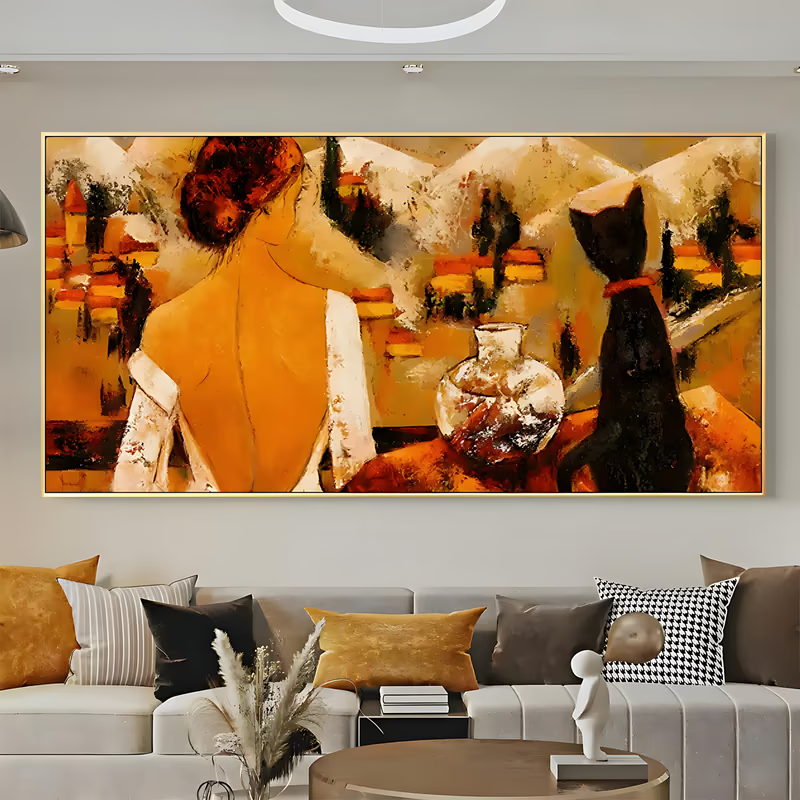
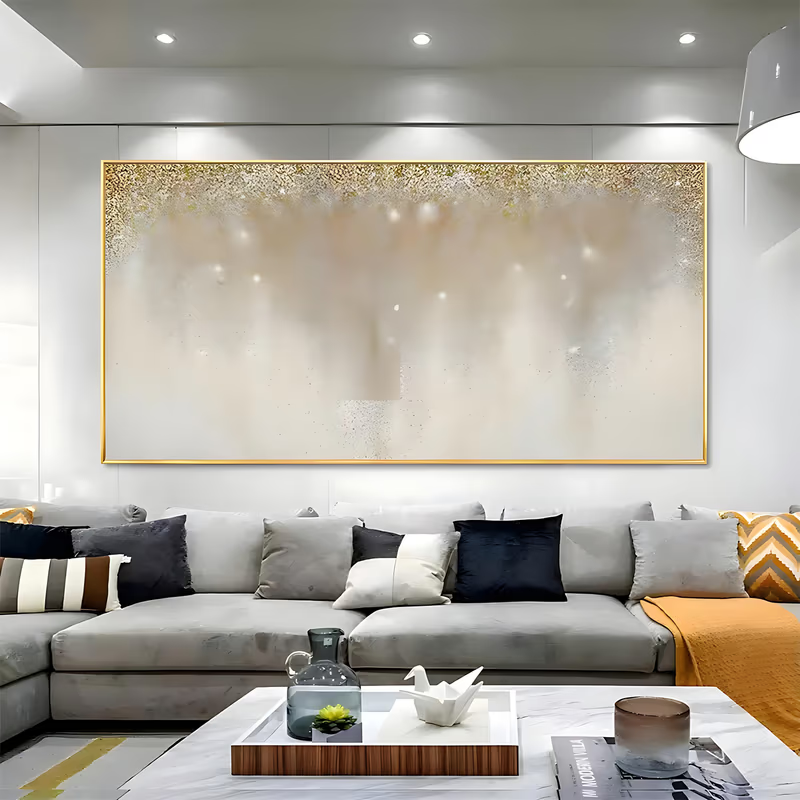
Panoramic wall art works best wherever a long surface runs along a wall: above a king bed, a banquette, a long or corner sofa, a sideboard or credenza, a reception desk, and along corridors and lift lobbies.
| Where | Why a panoramic canvas works | Ratio that usually suits |
|---|---|---|
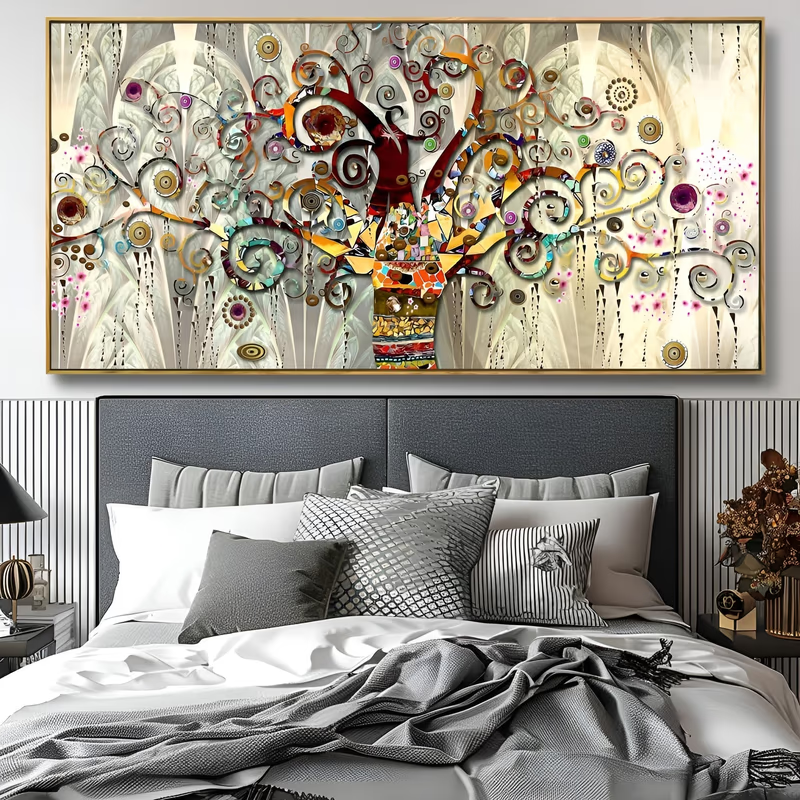
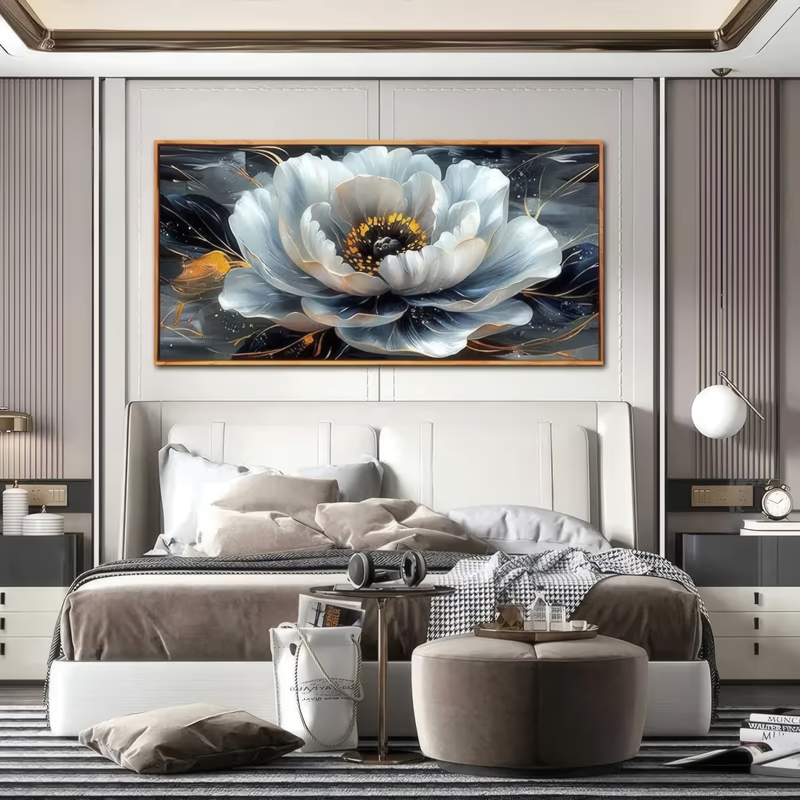
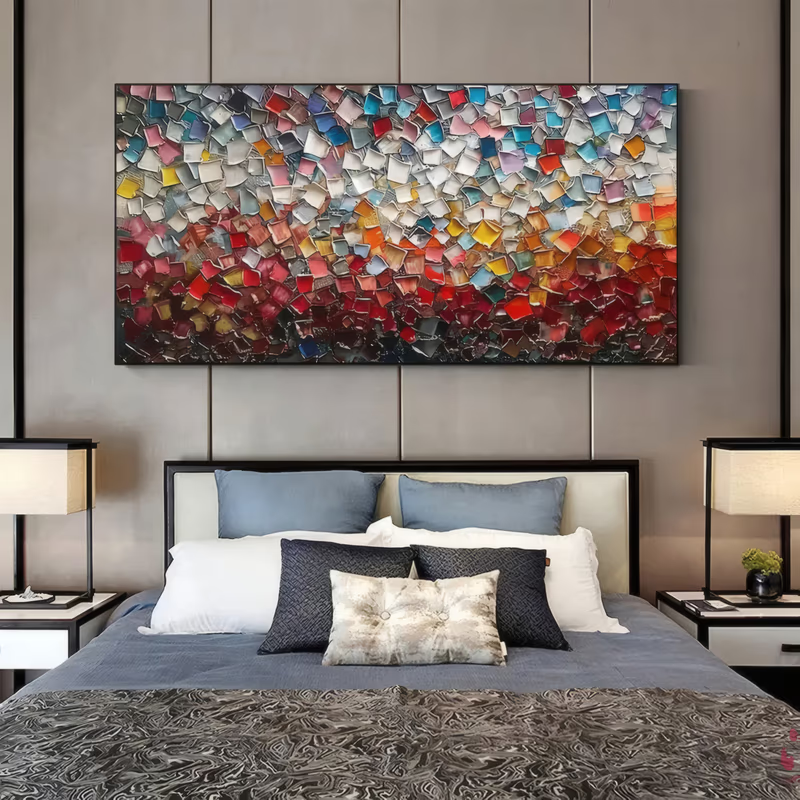
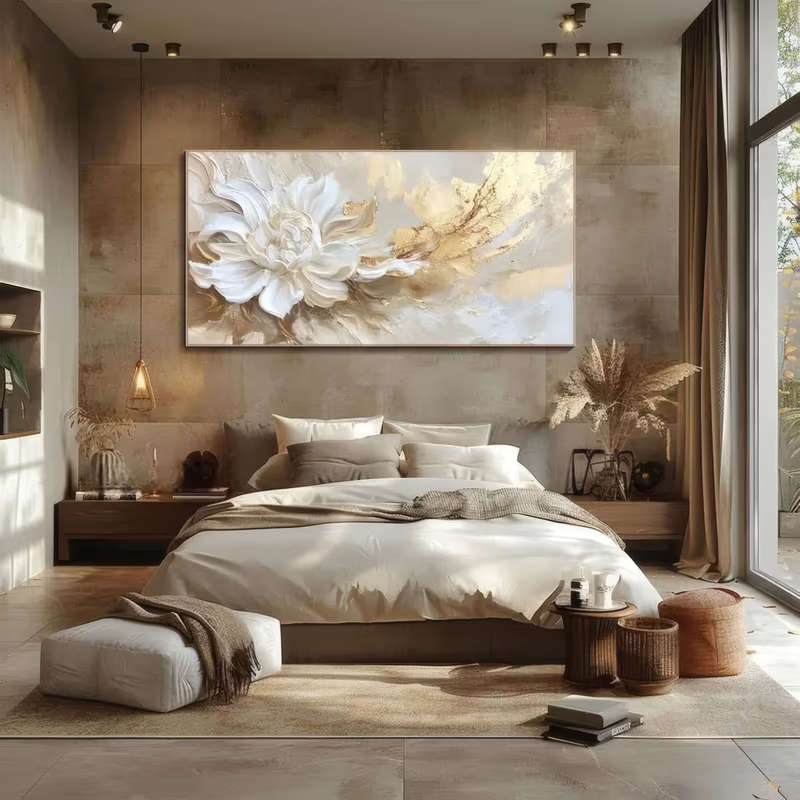
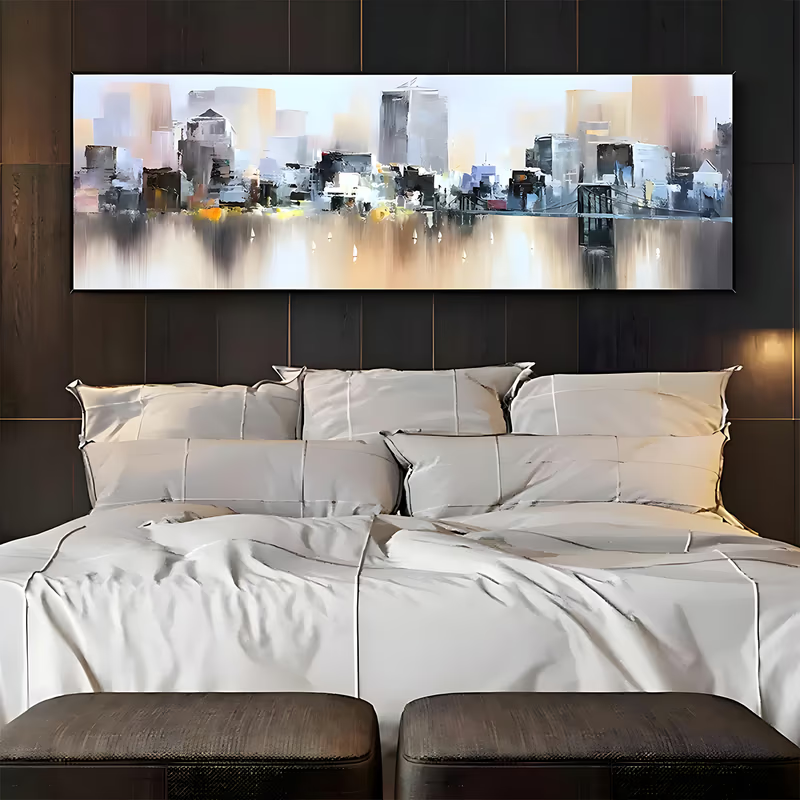
| Above a king or super-king bed | Matches the long line of the headboard and stays clear of the ceiling | 2:1 to 3:1, about the headboard's width |
| Banquette or booth run | One band over the whole seat ties the tables together | 3:1 or longer, most of the bench length |
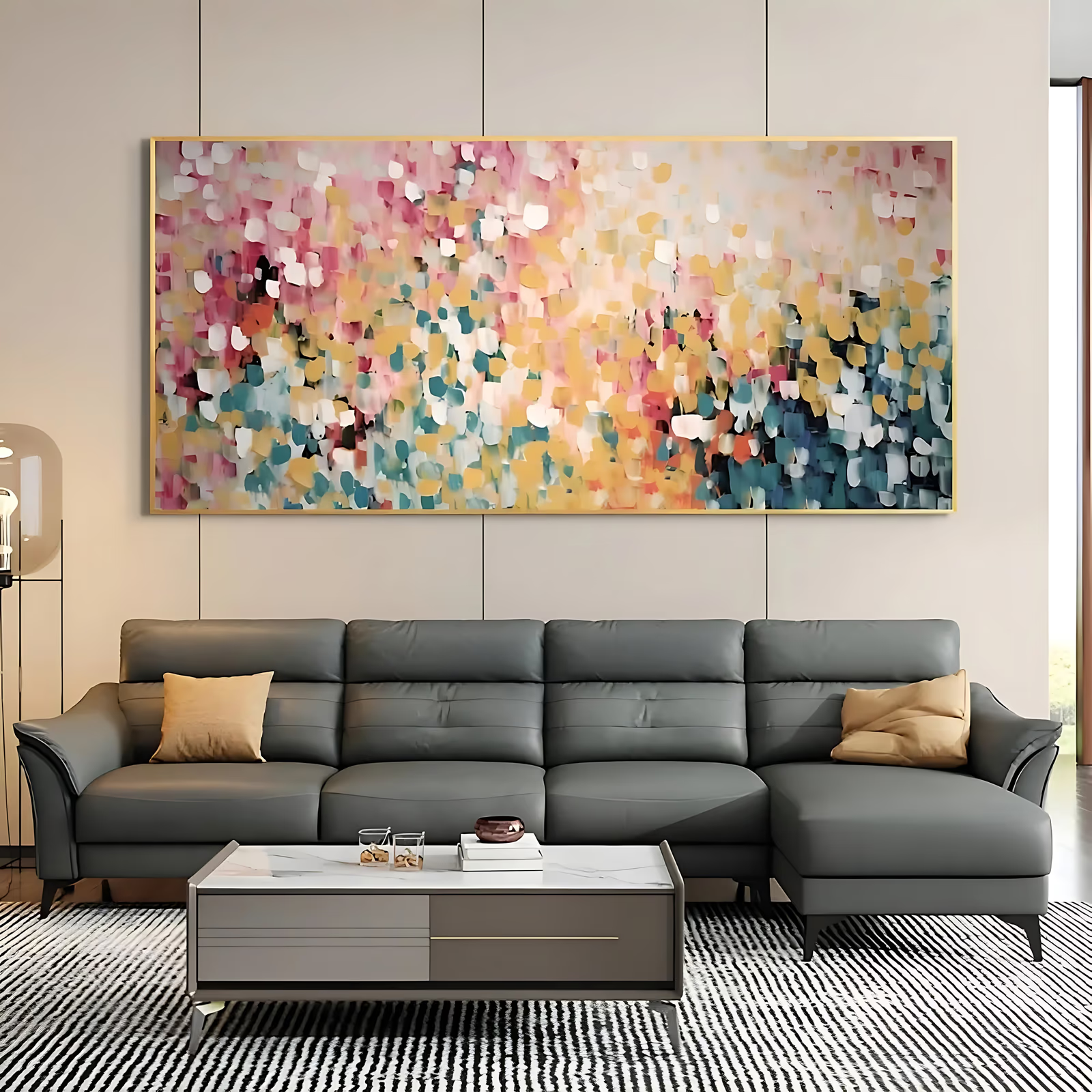
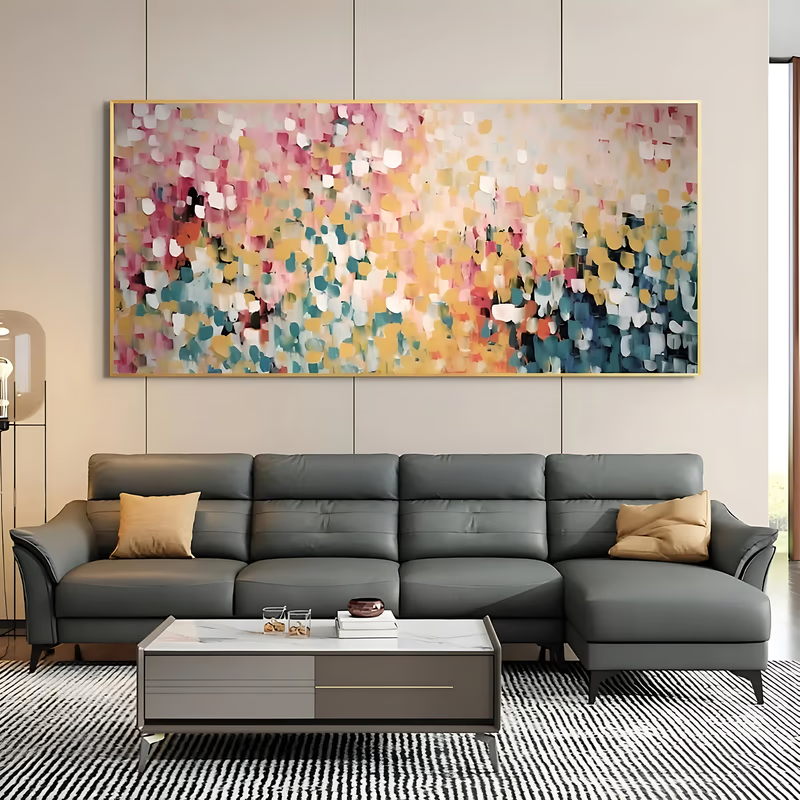
| Corner or modular sofa | A single wide piece fills the long side without crowding the room | 2:1 to 2.5:1 |
| Reception desk wall | Frames the desk and reads from the entrance | 2:1 to 3:1, a little shorter than the desk or the wall behind it |
| Corridor, lift lobby, gallery walk | Is read while walking past, like a view from a train window | 3:1 and longer |
| Boardroom or dining room long wall | Echoes the long table and gives the room a horizon | 2:1 to 3:1 |
Panoramic pieces are also a good fit for rooms with low ceilings, where there is width to use but little height. You can filter panoramic art for lobbies, for restaurants and dining rooms or for bedrooms and guest rooms above.
What kinds of panoramic paintings are there?
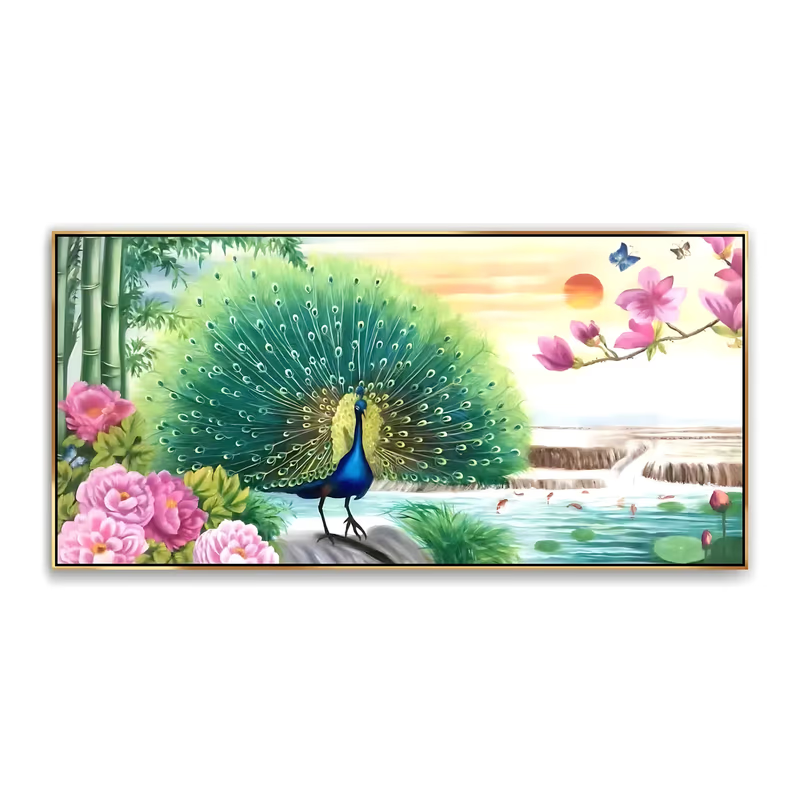
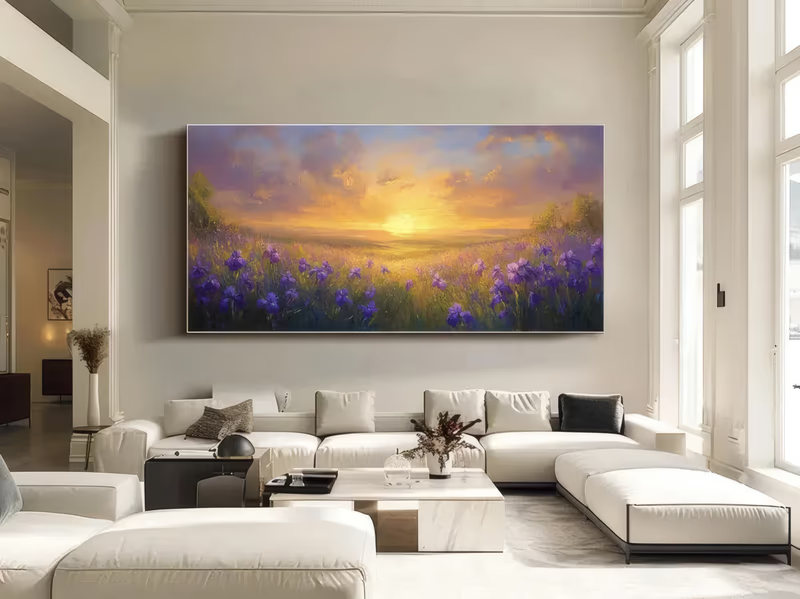
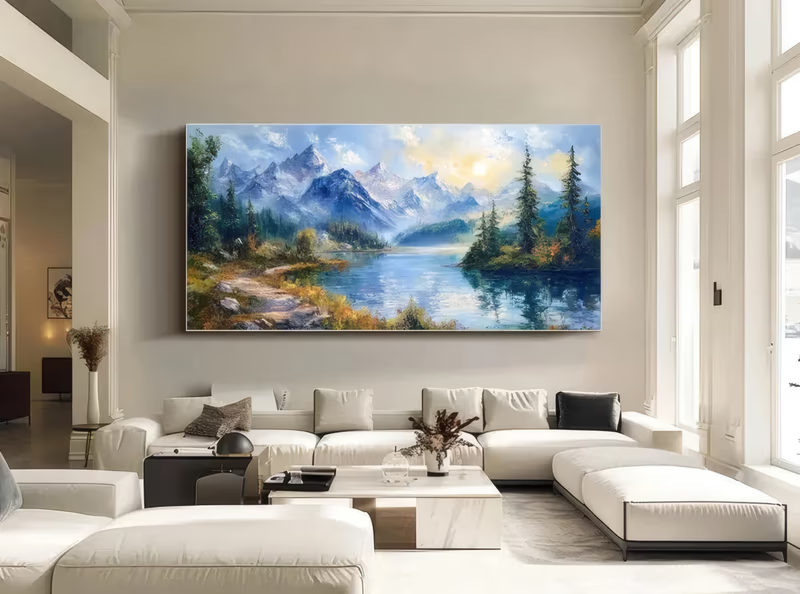
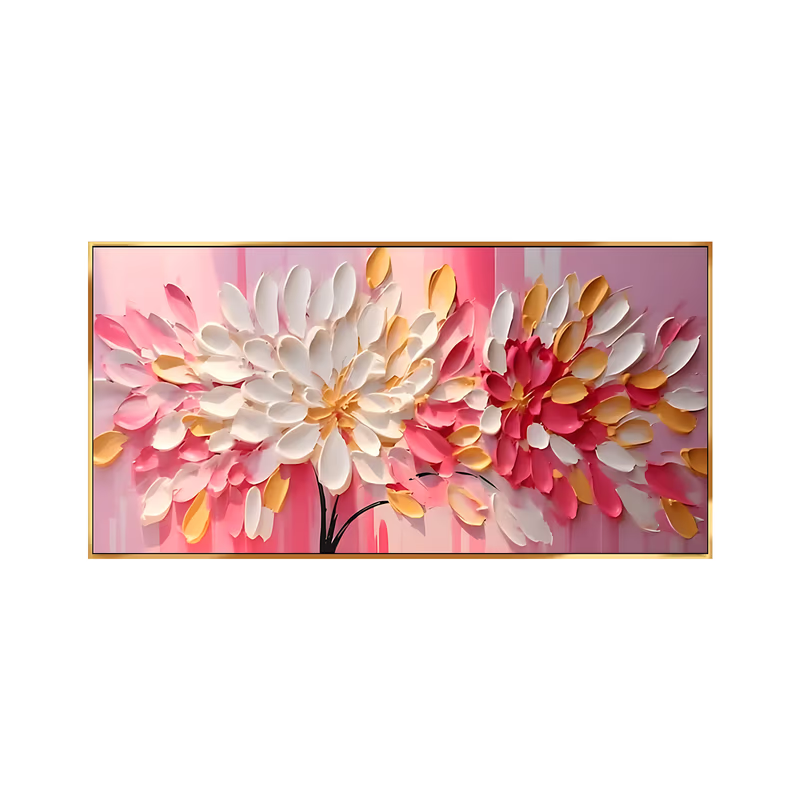
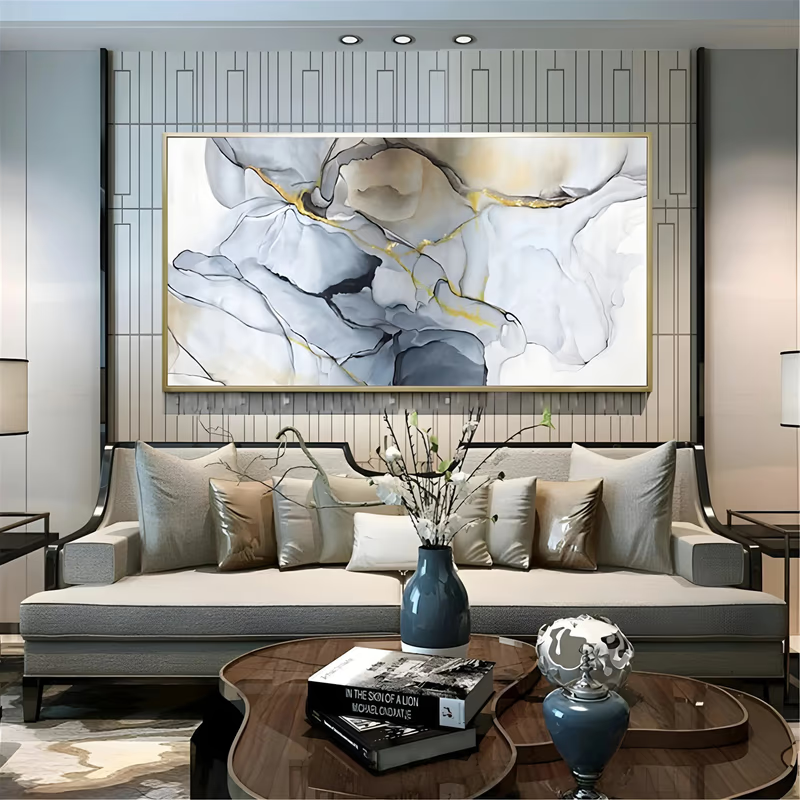
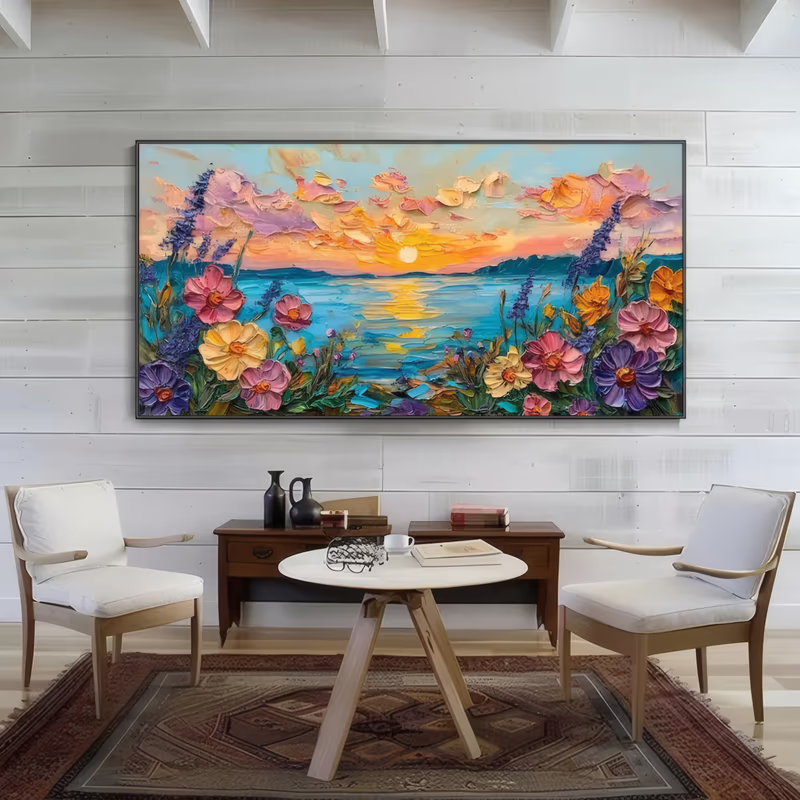
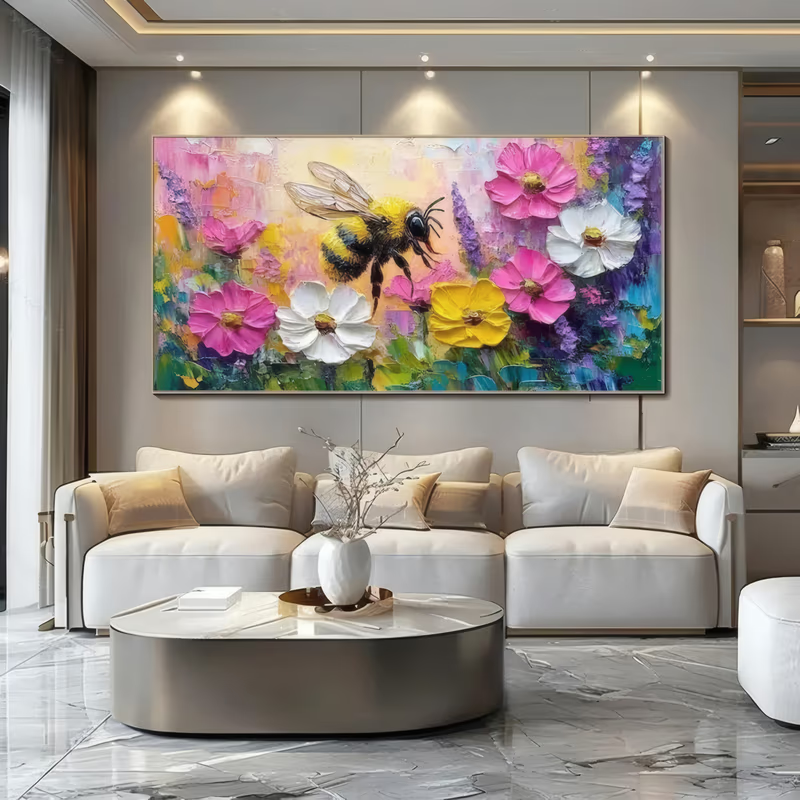
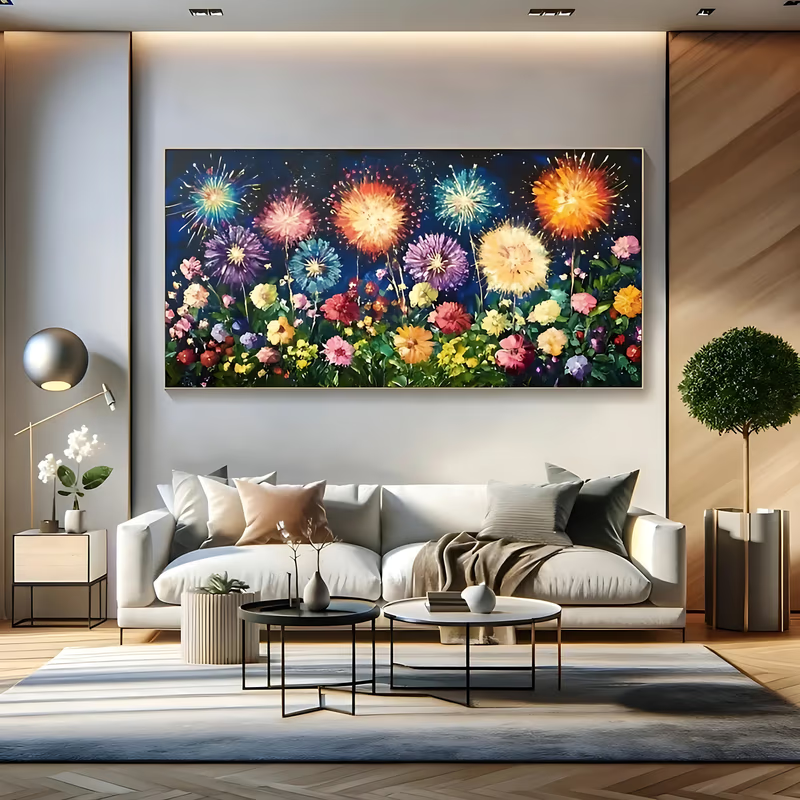
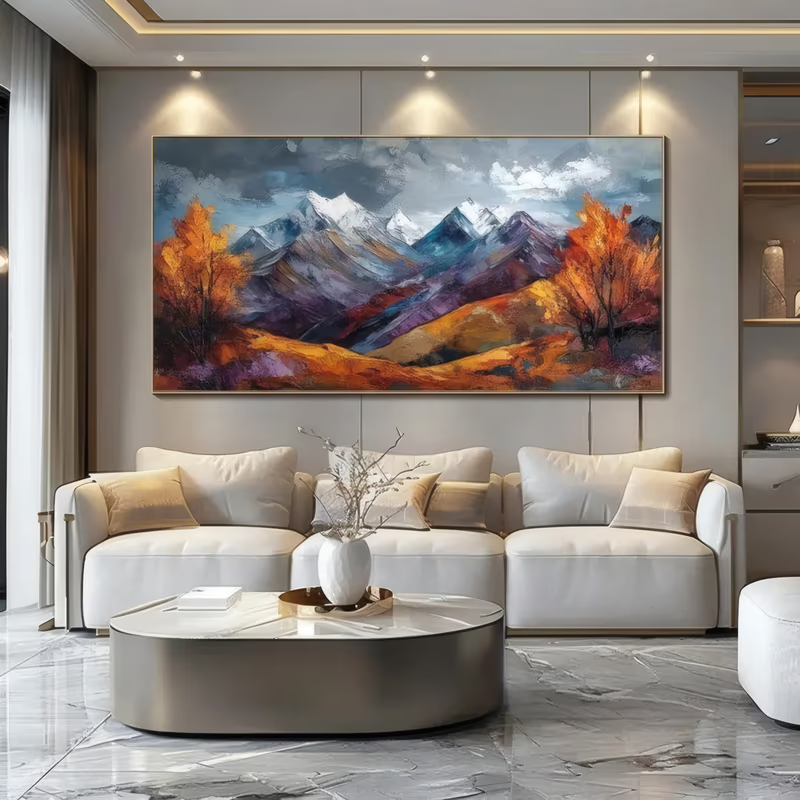
The subjects that suit a panoramic canvas are the ones that stretch out: skylines and harbours, mountain and sea horizons, flower meadows and long bouquets, and abstract or relief bands.
Skylines, streets and harbours
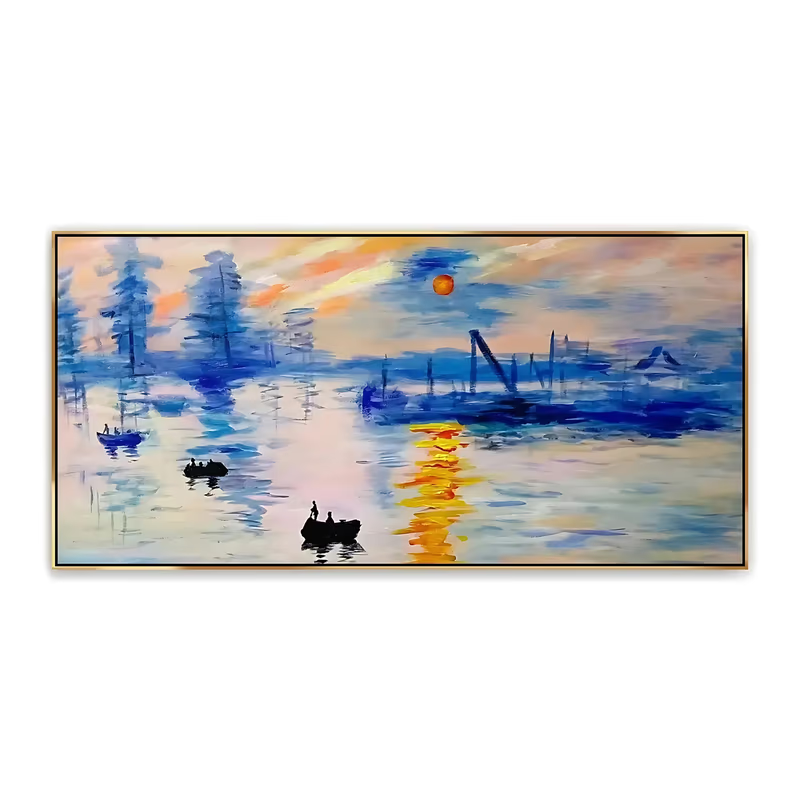
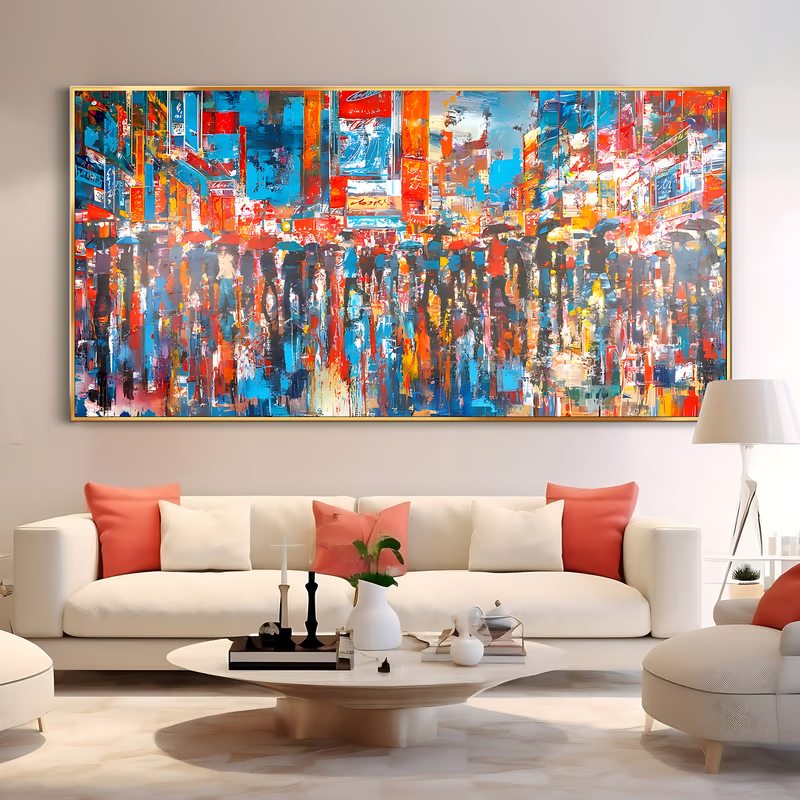
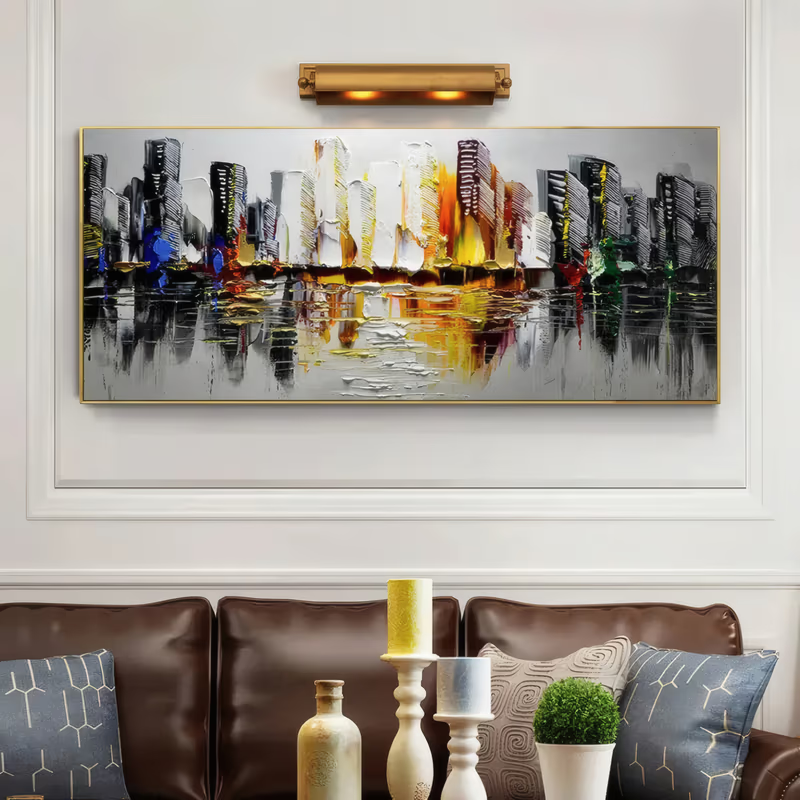
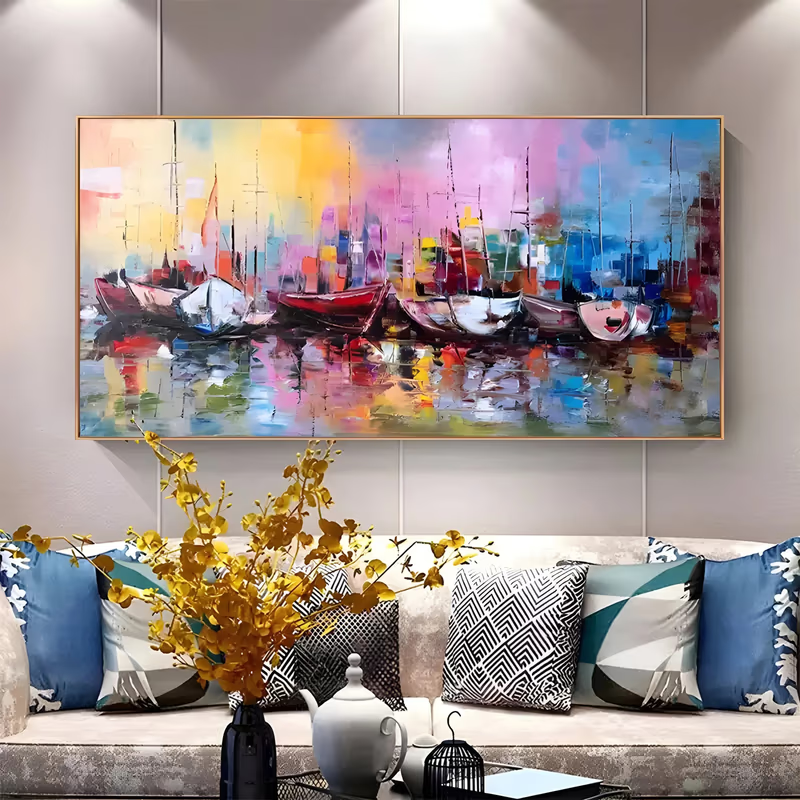
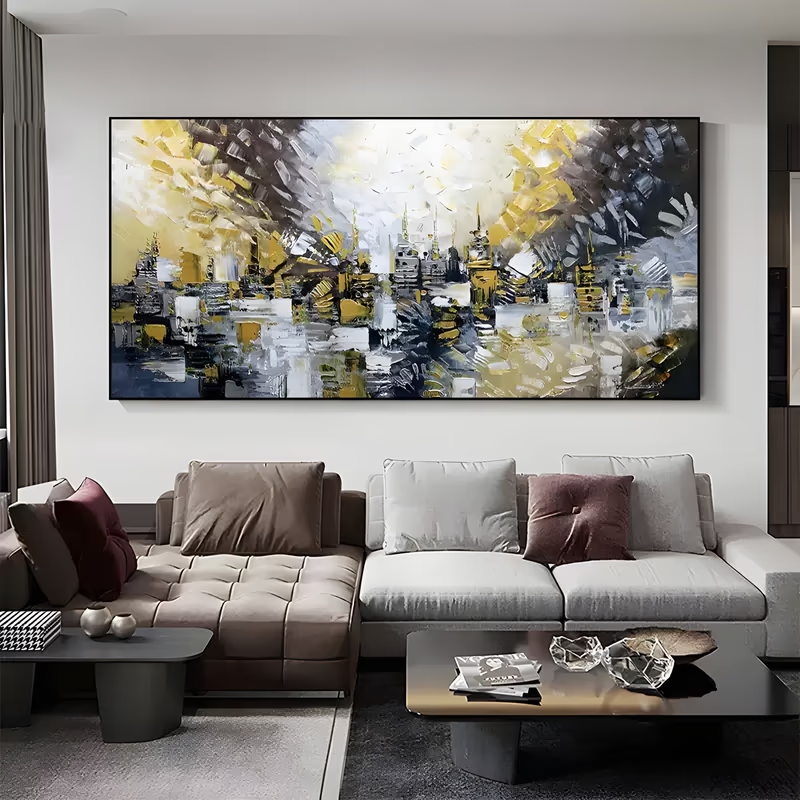
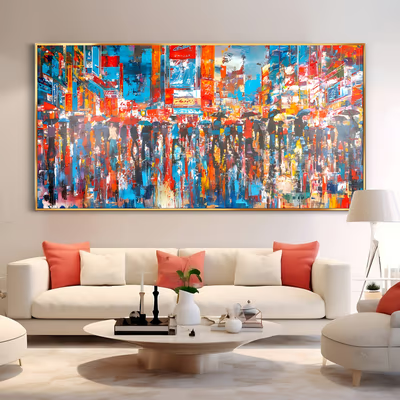
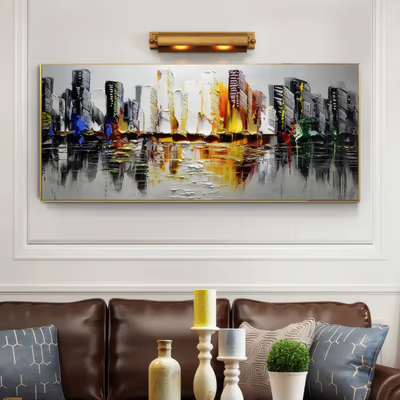
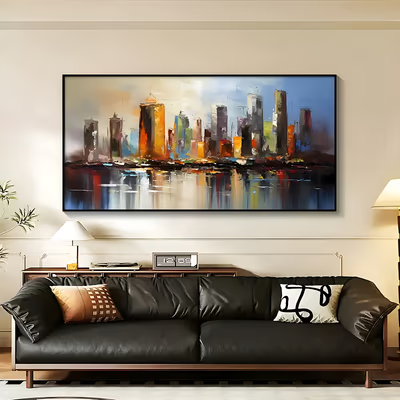
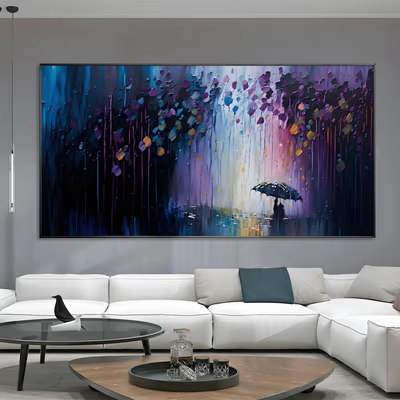
A city waterfront, a rainy street or a row of moored boats is naturally long. These suit hotel lobbies, offices and bars, where a panoramic city view gives a sense of place. Panoramic cityscapes.
Mountain, lake and sea horizons
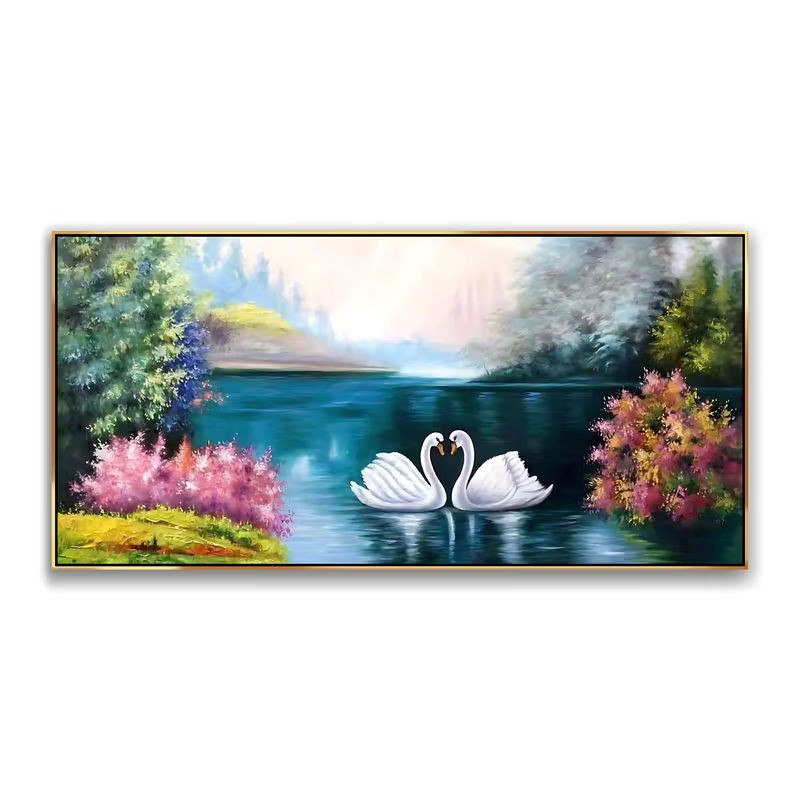
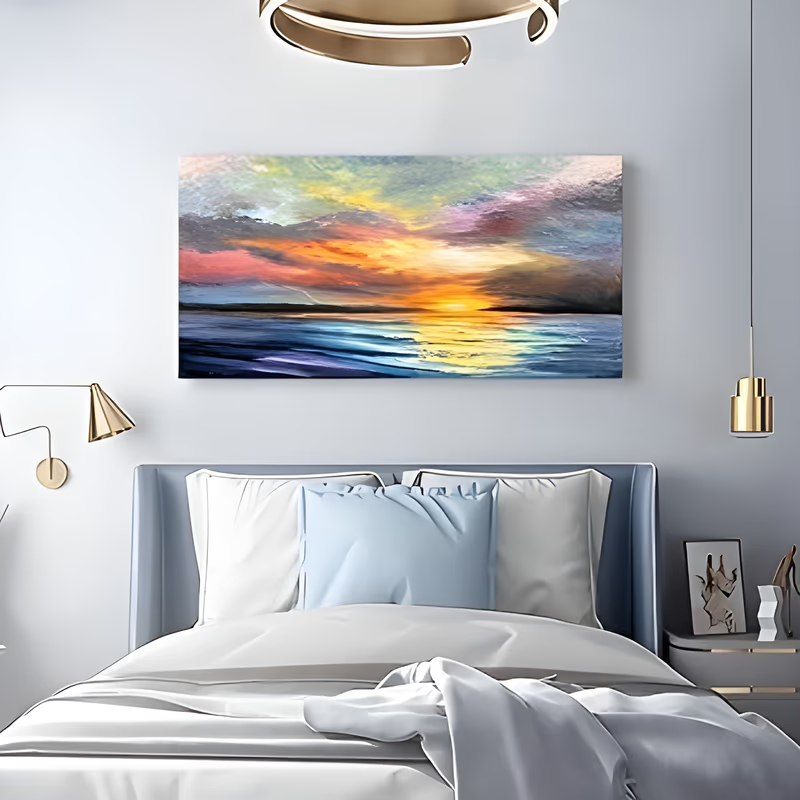
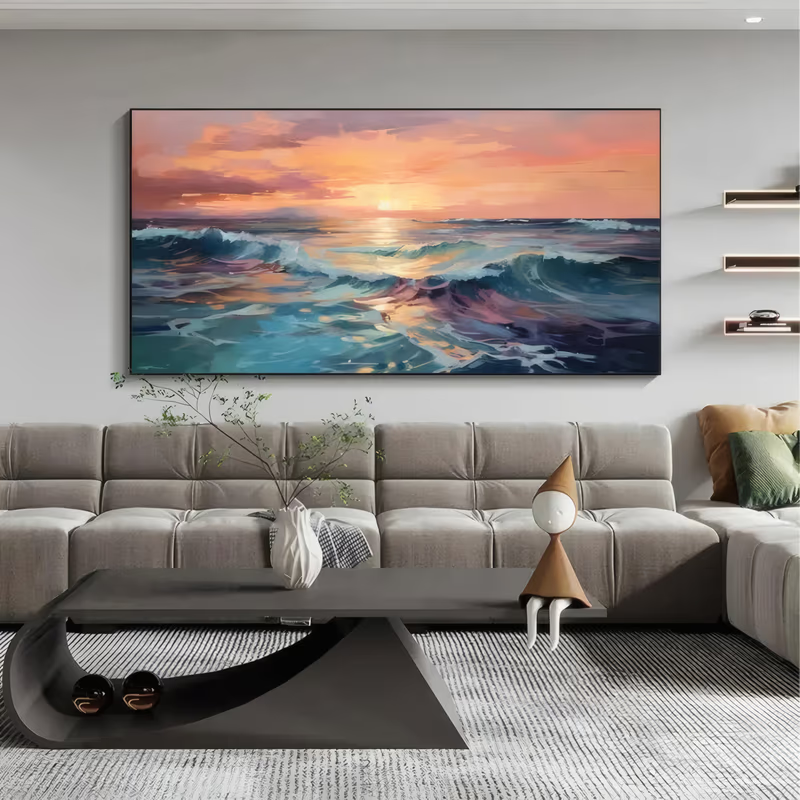
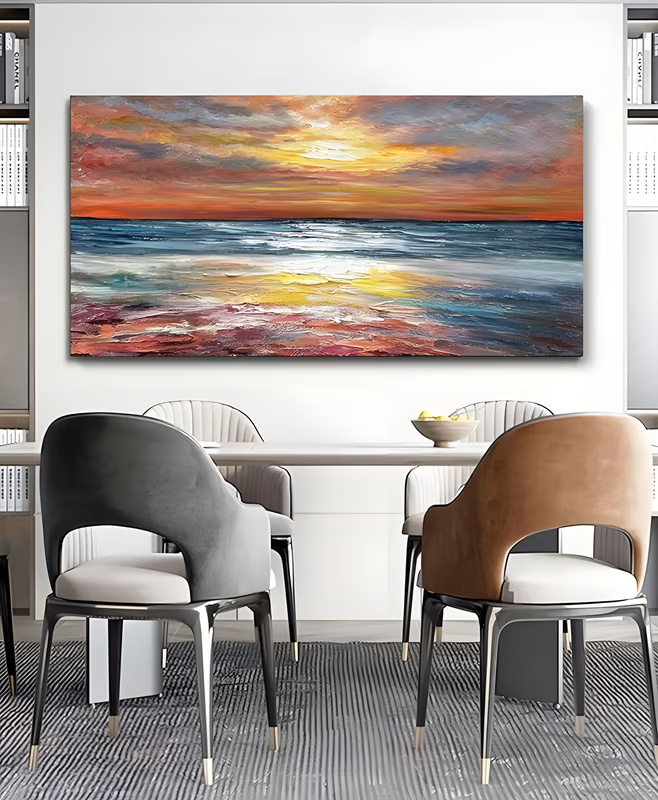
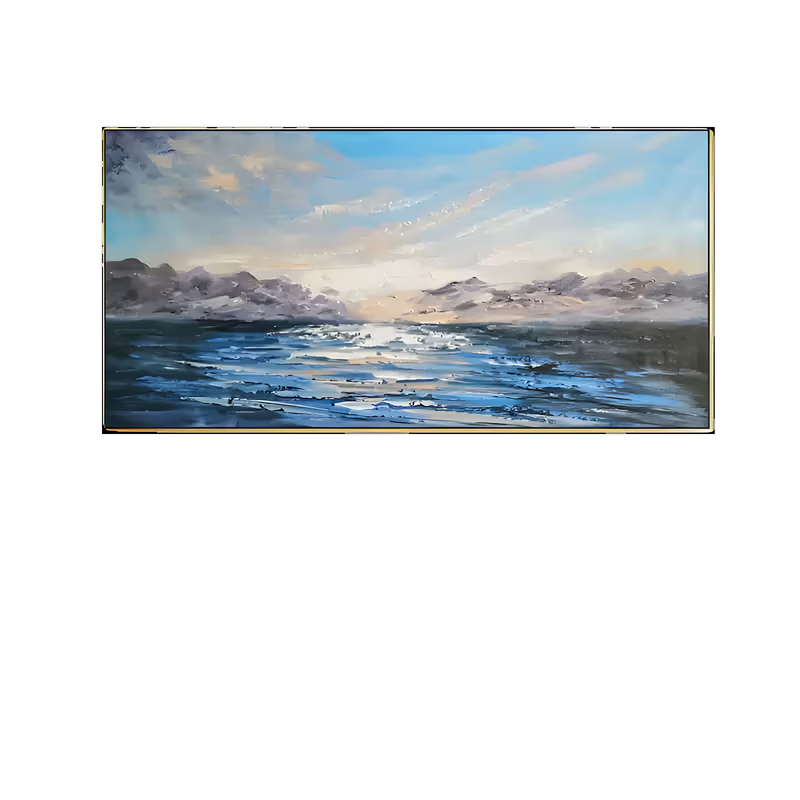
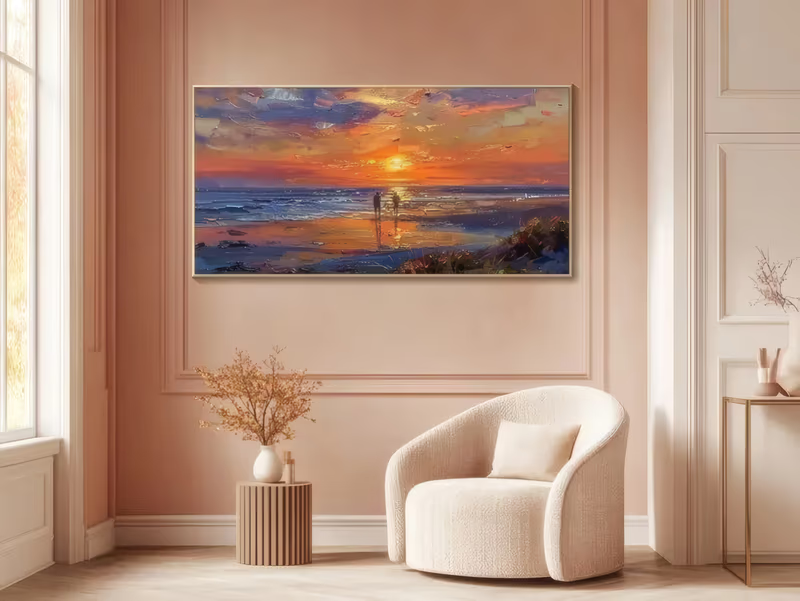
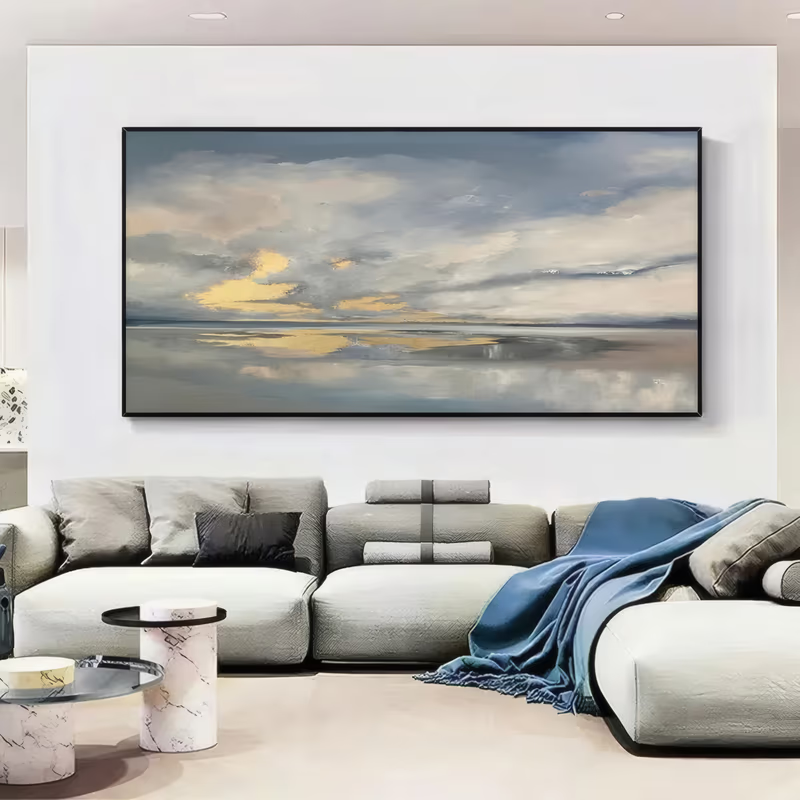
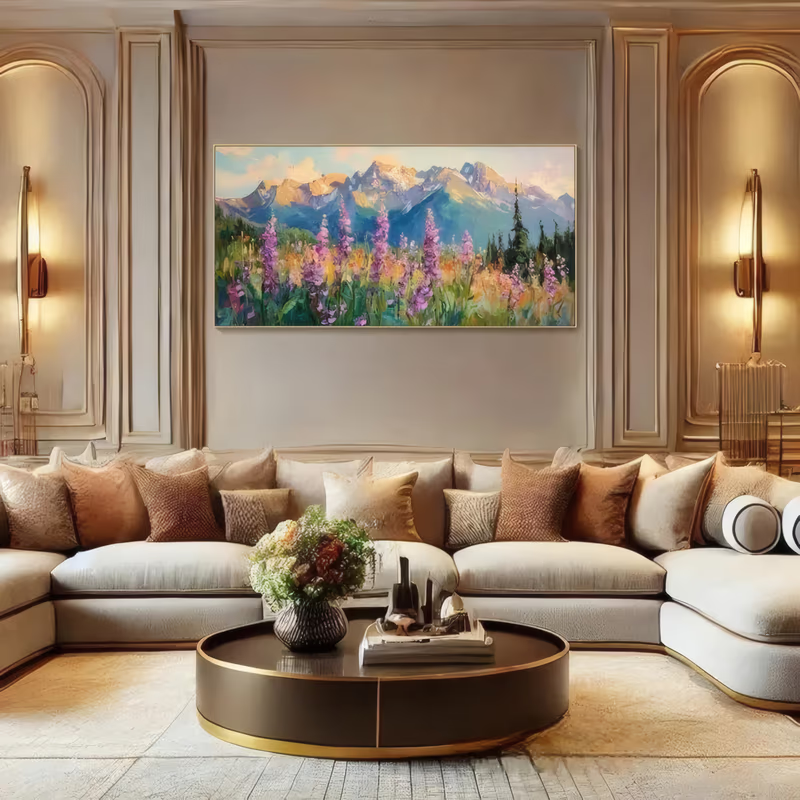
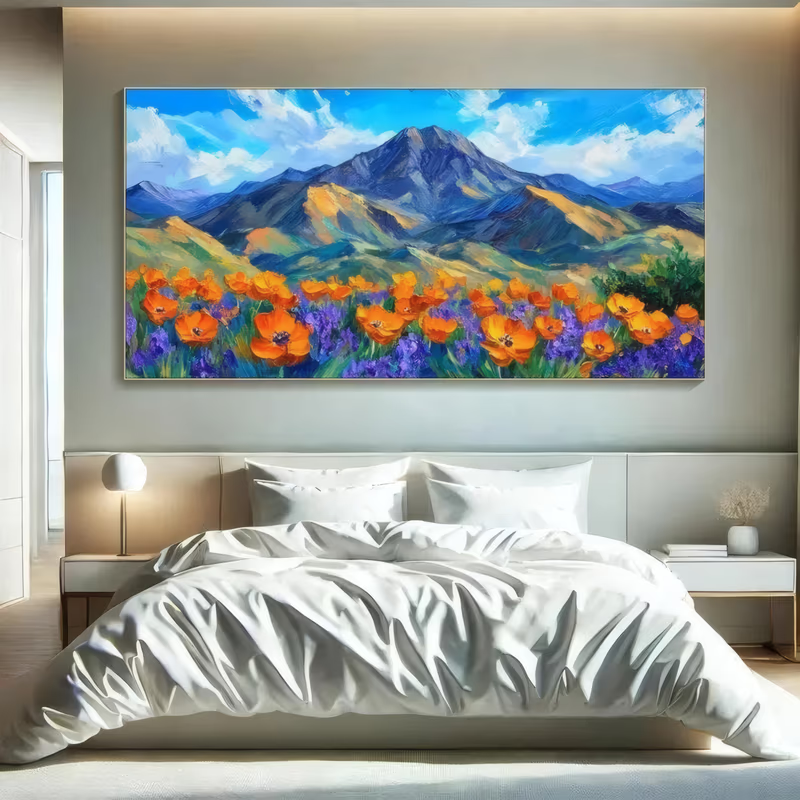
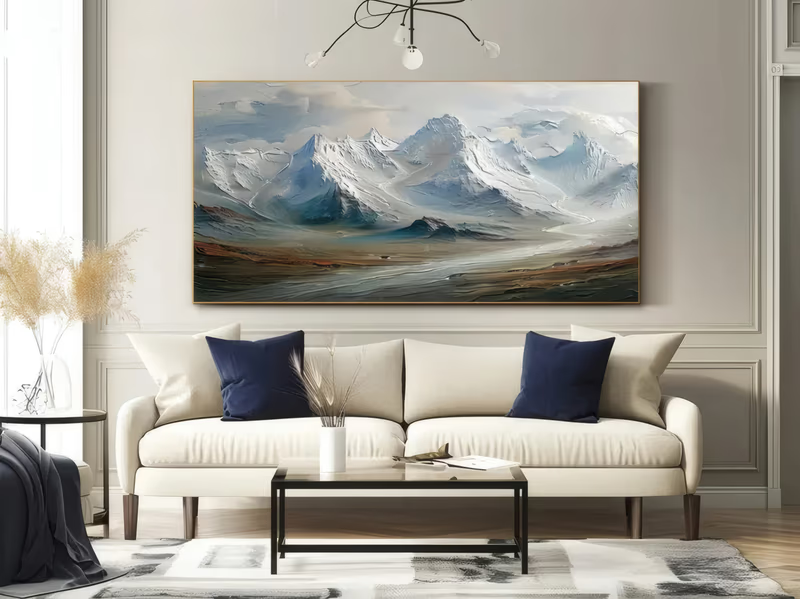
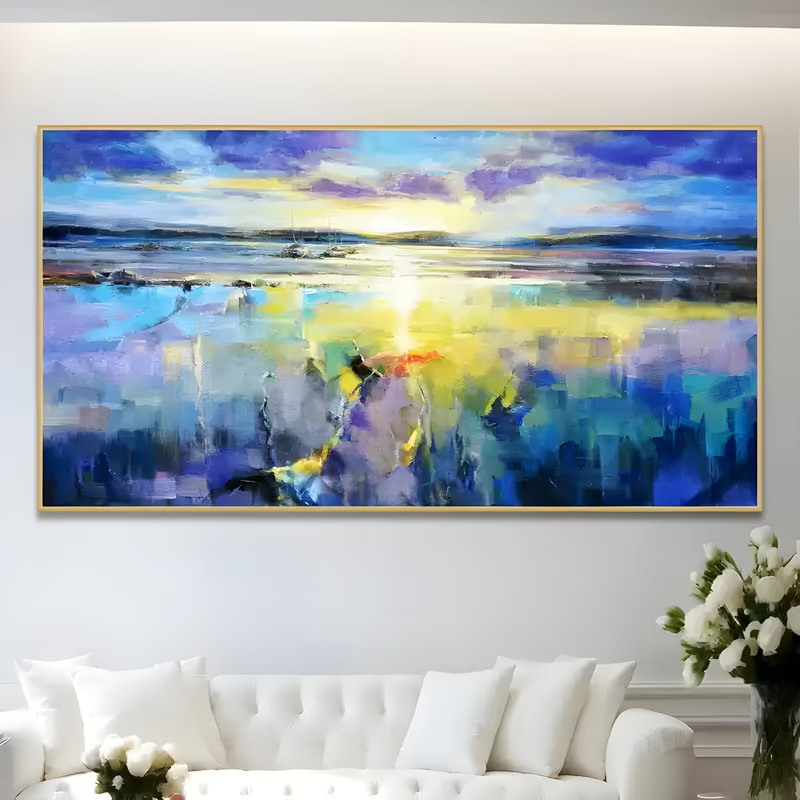
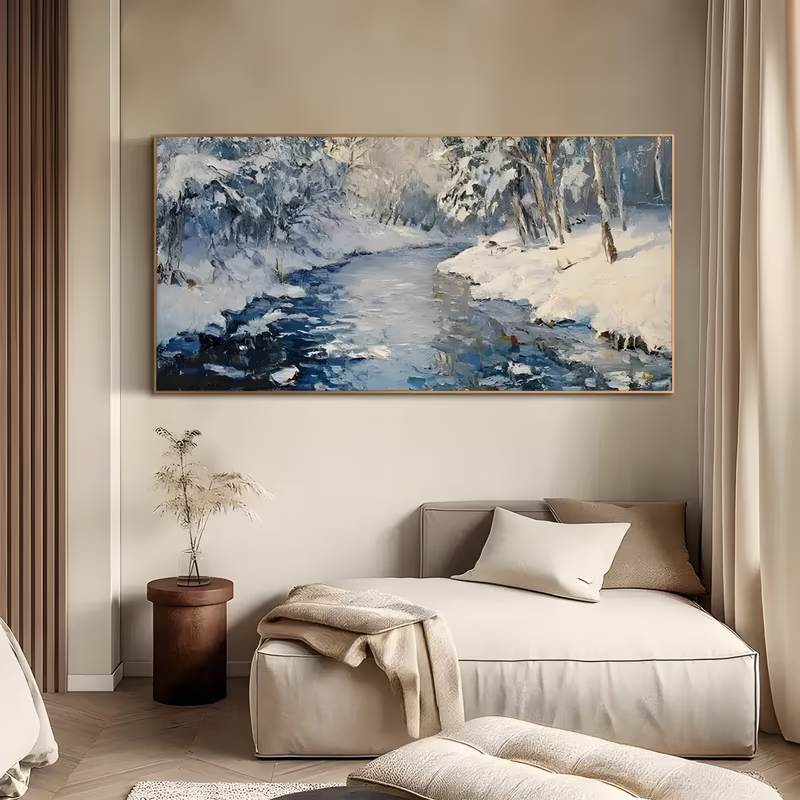
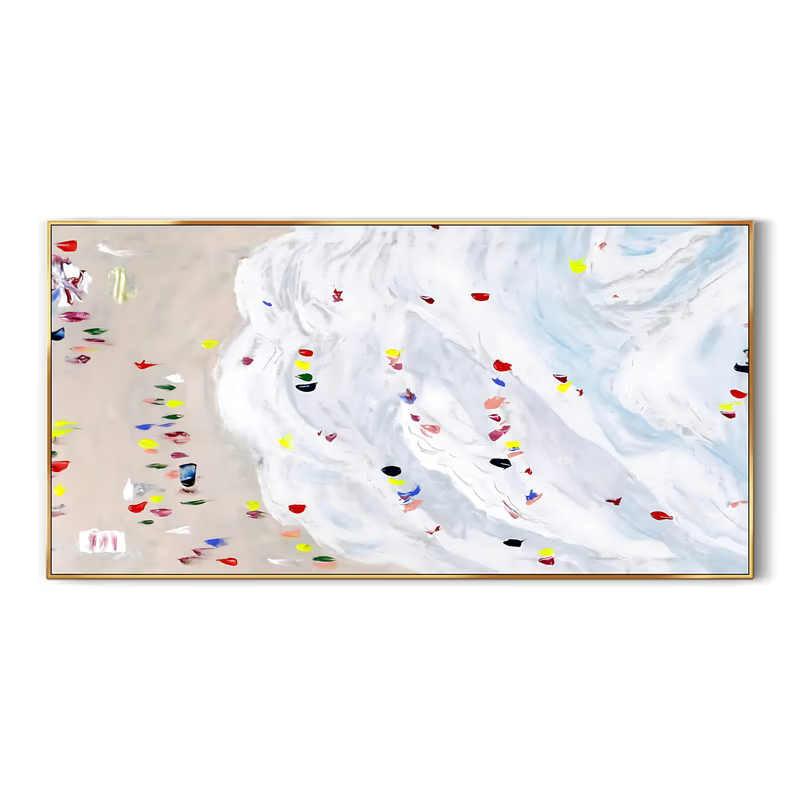
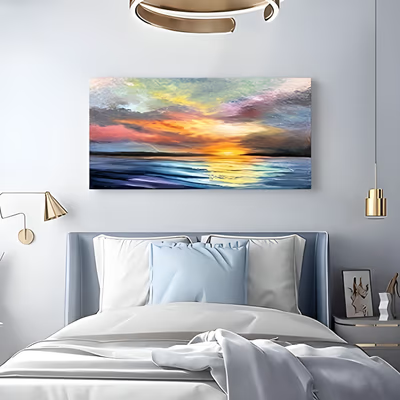
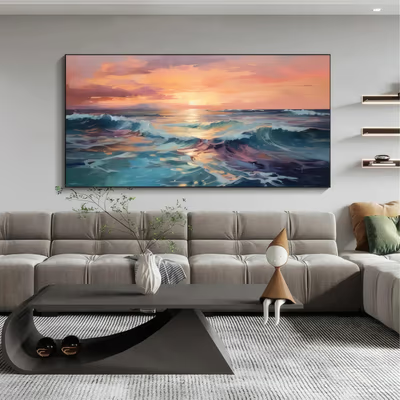
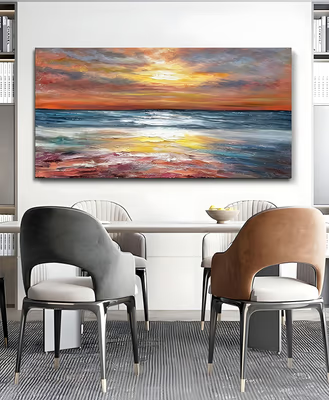
A low horizon carried across the whole canvas is the purest panoramic subject: alpine lakes, snowy ranges, estuaries at sunset, rolling waves. They calm a bedroom or a spa and give a windowless room a view.
Flower meadows and long bouquets
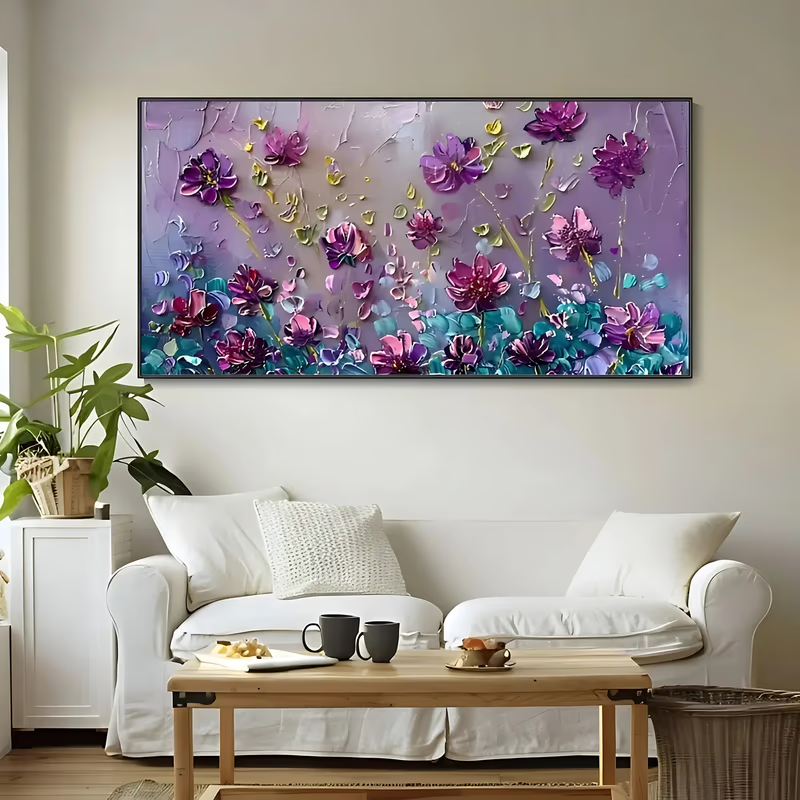
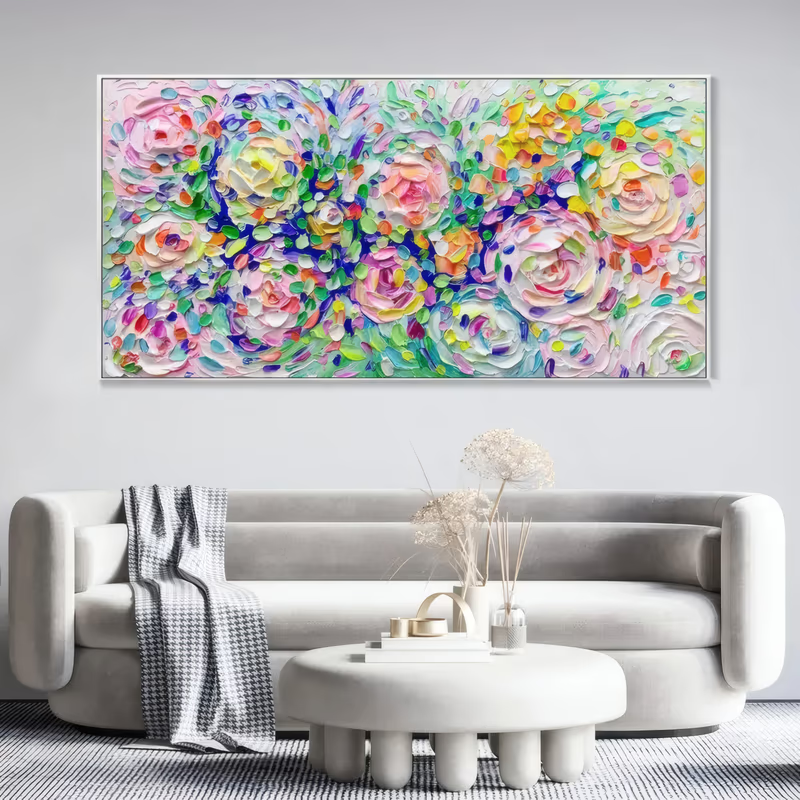
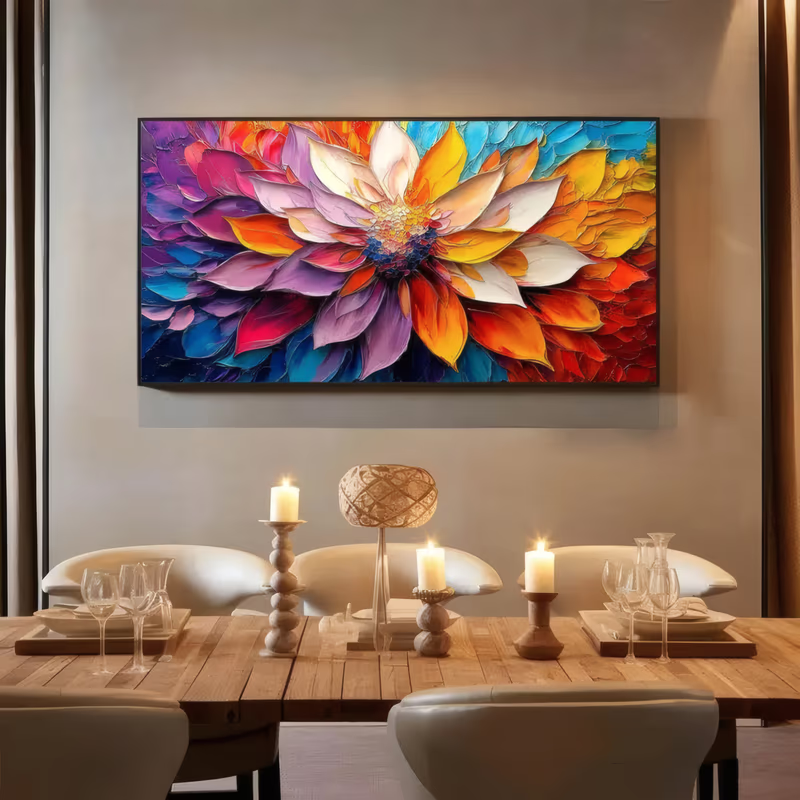
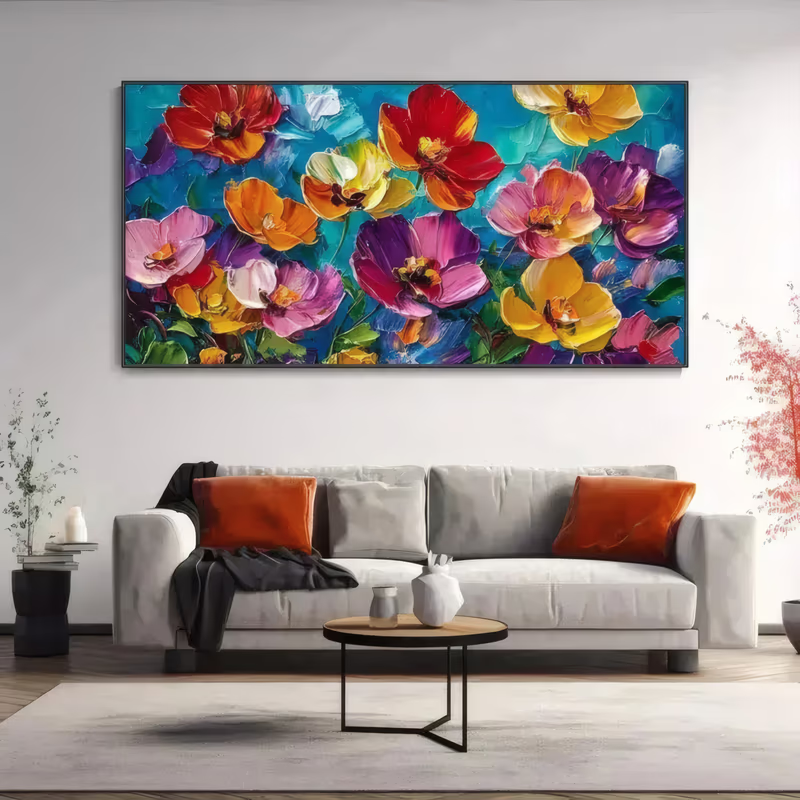
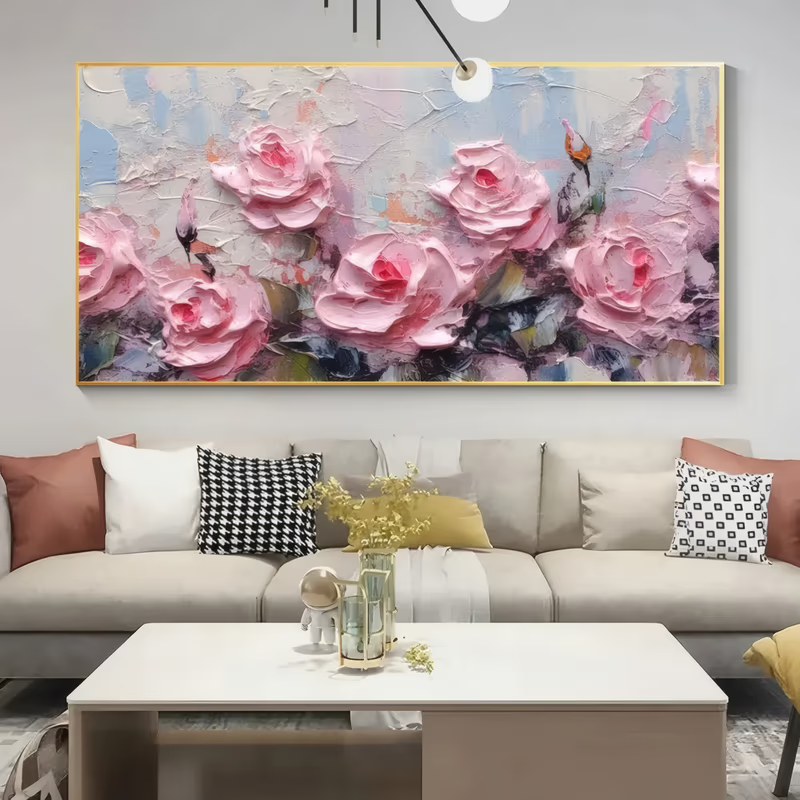
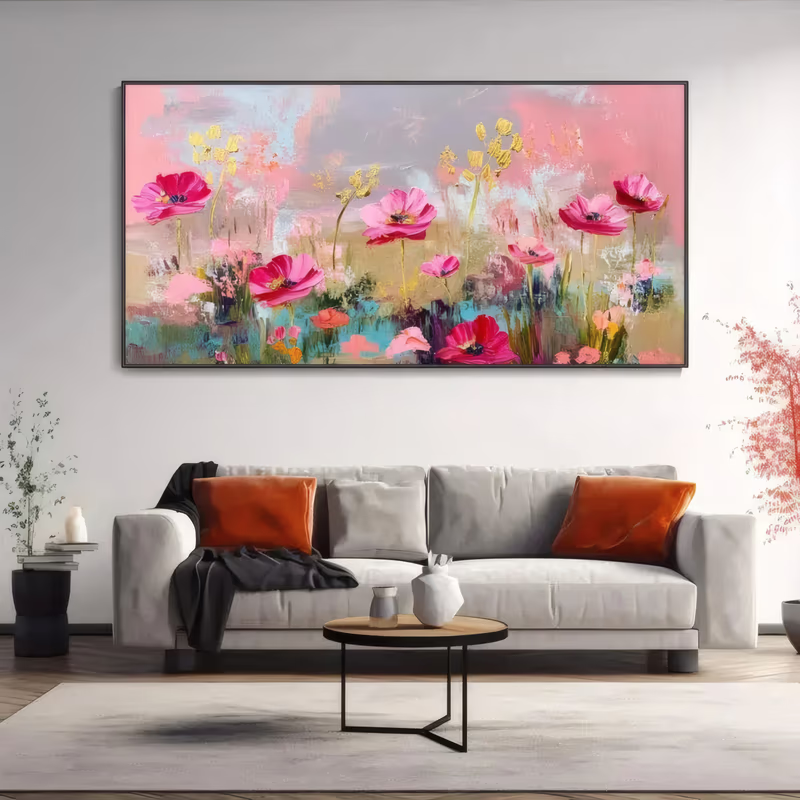
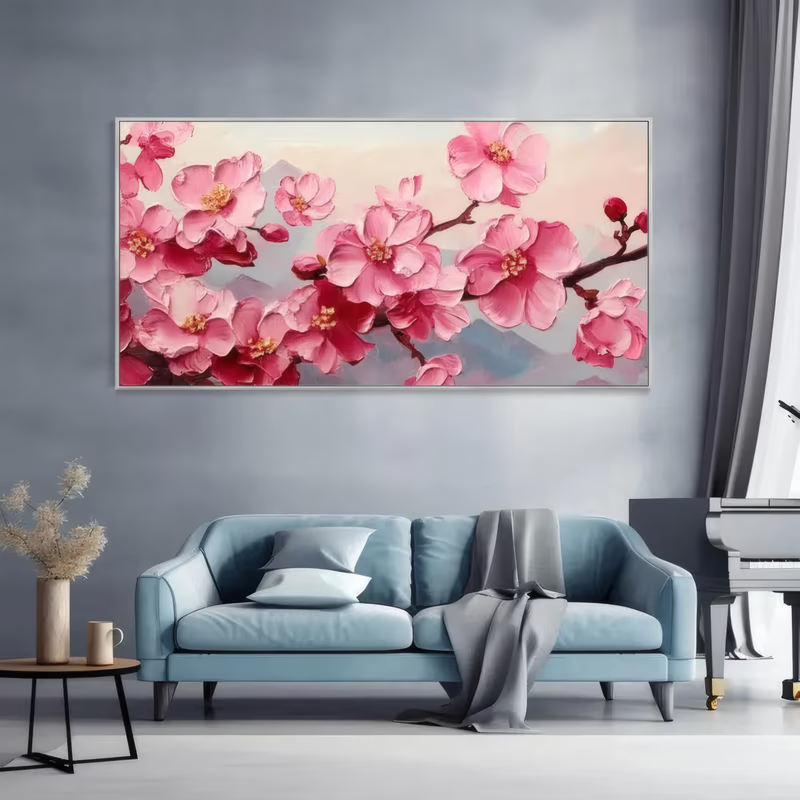
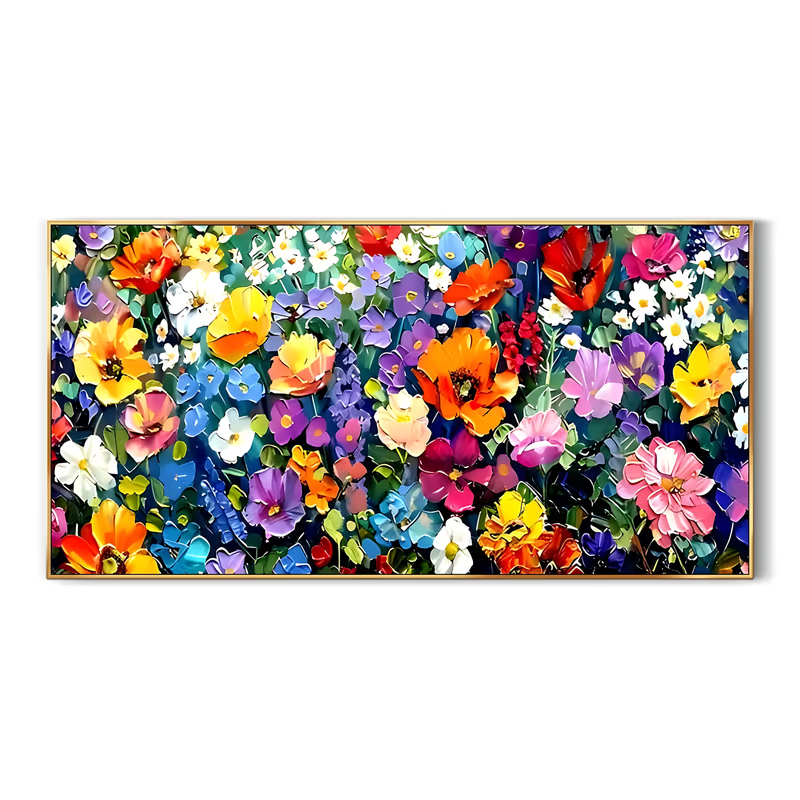
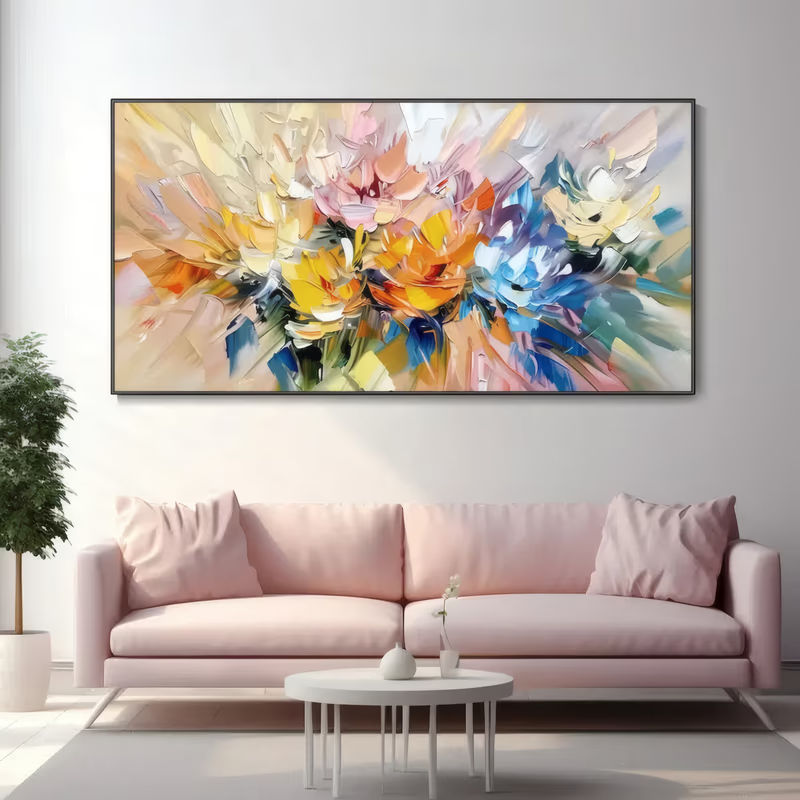
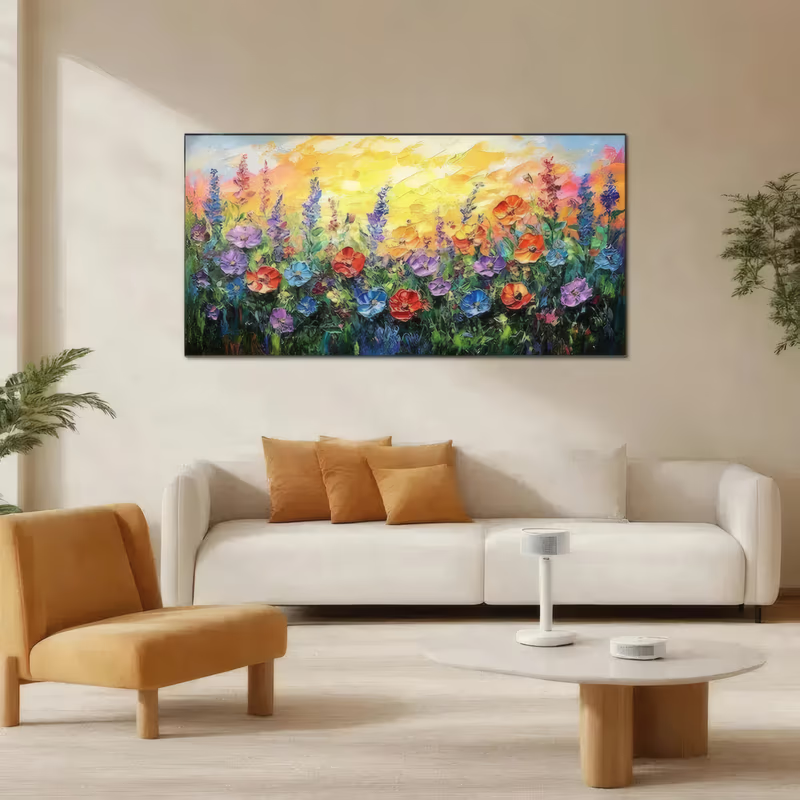
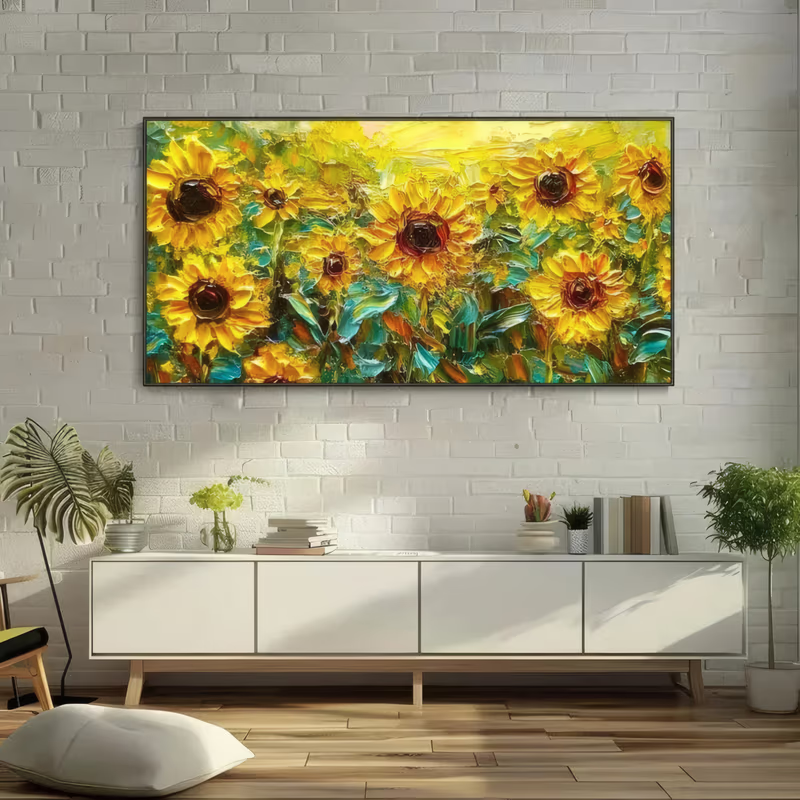
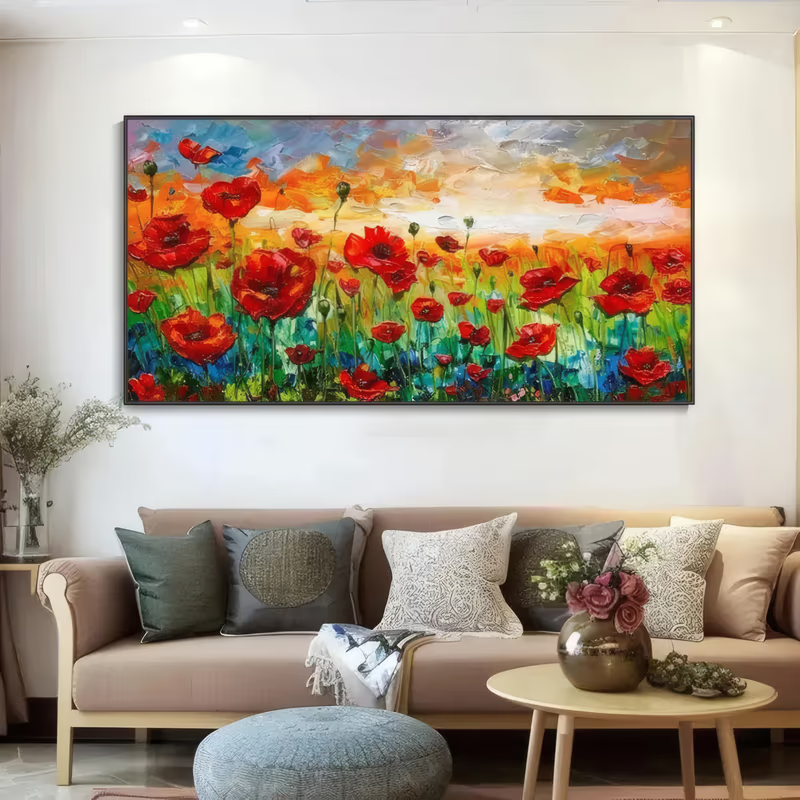
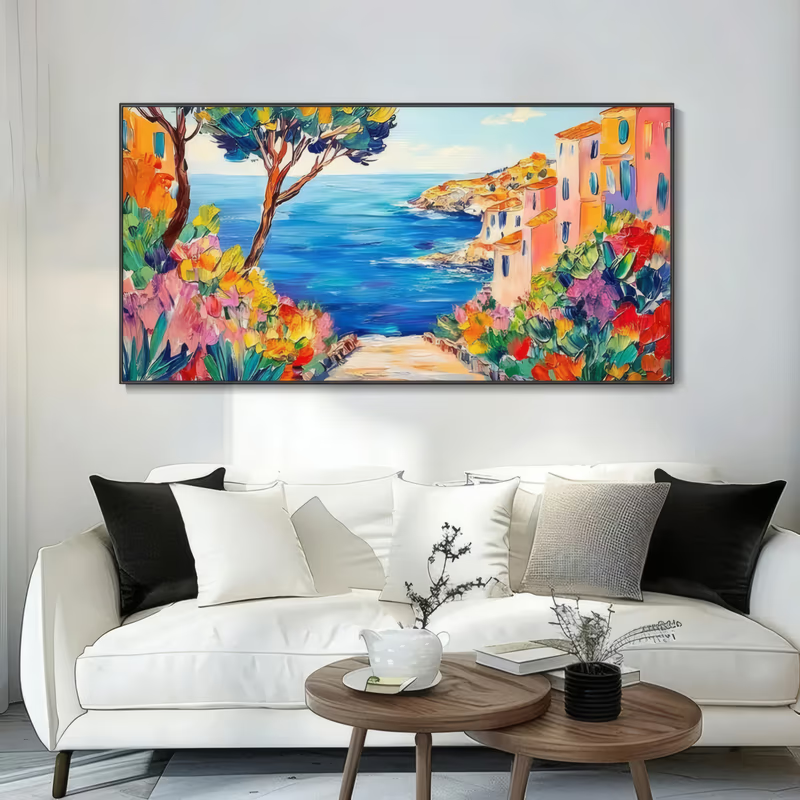
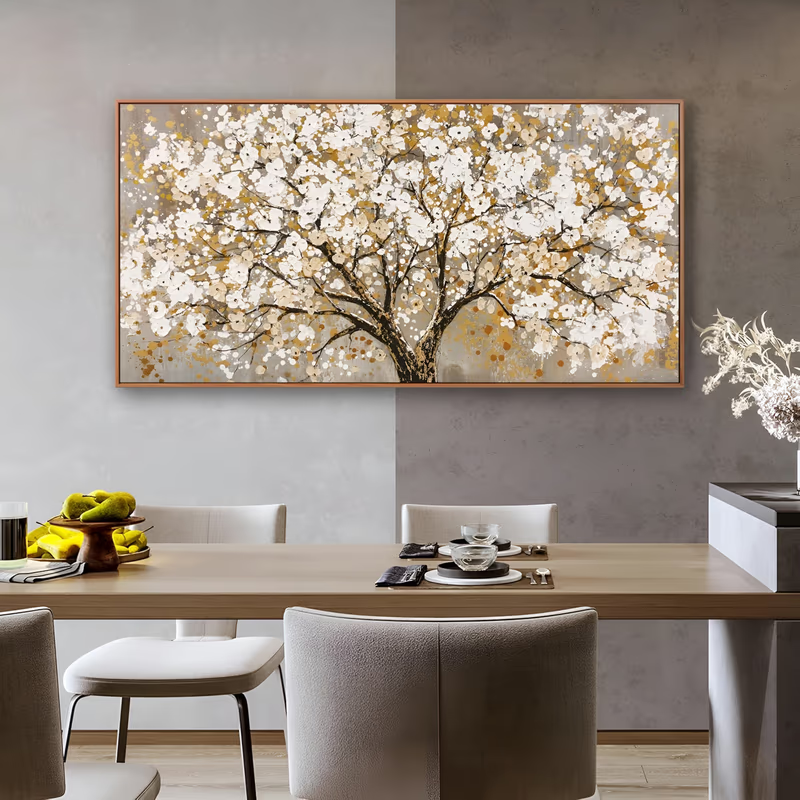
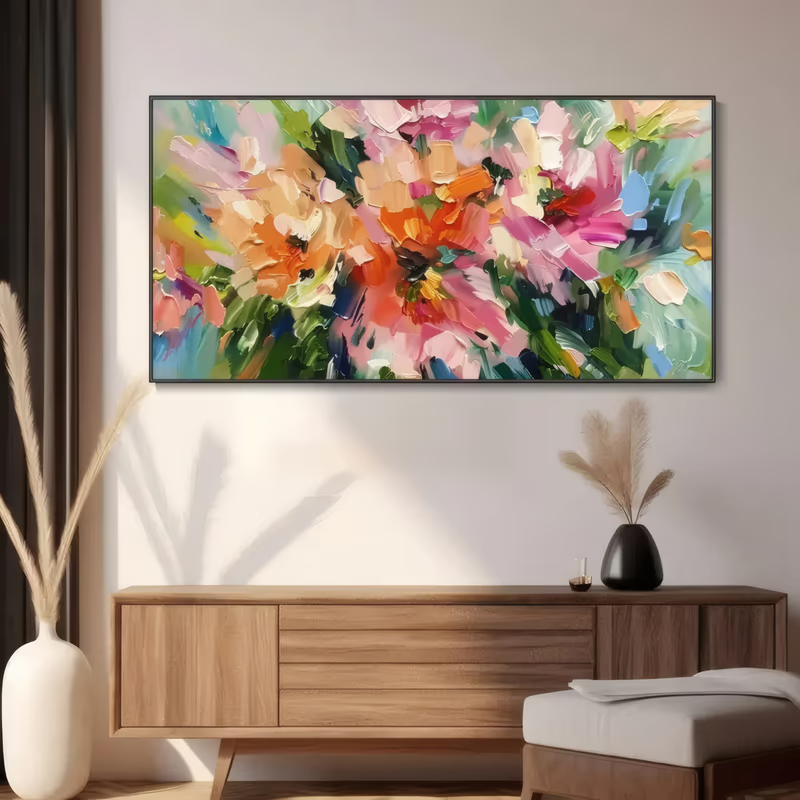
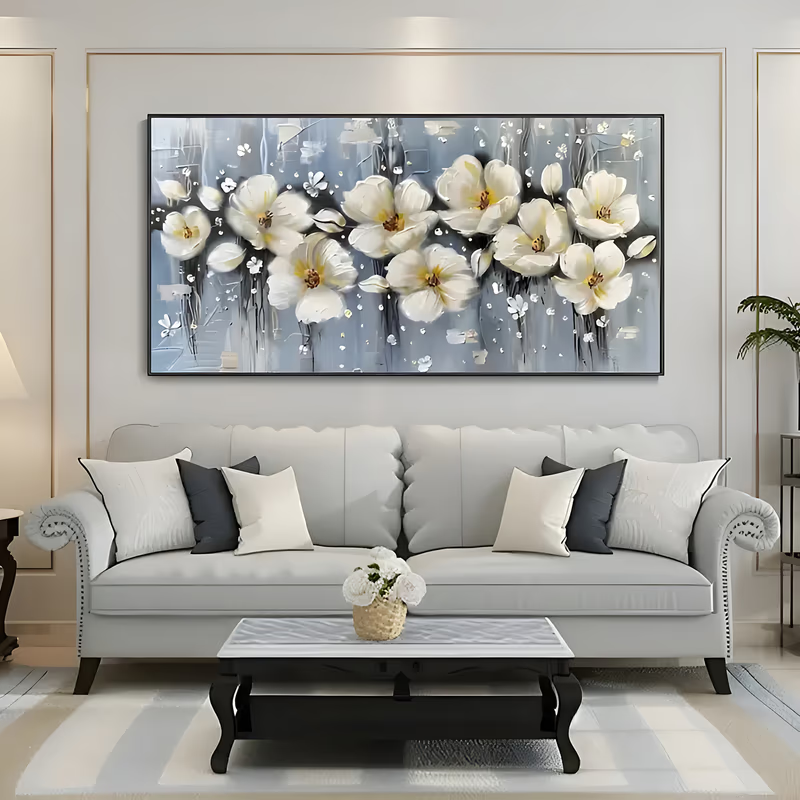
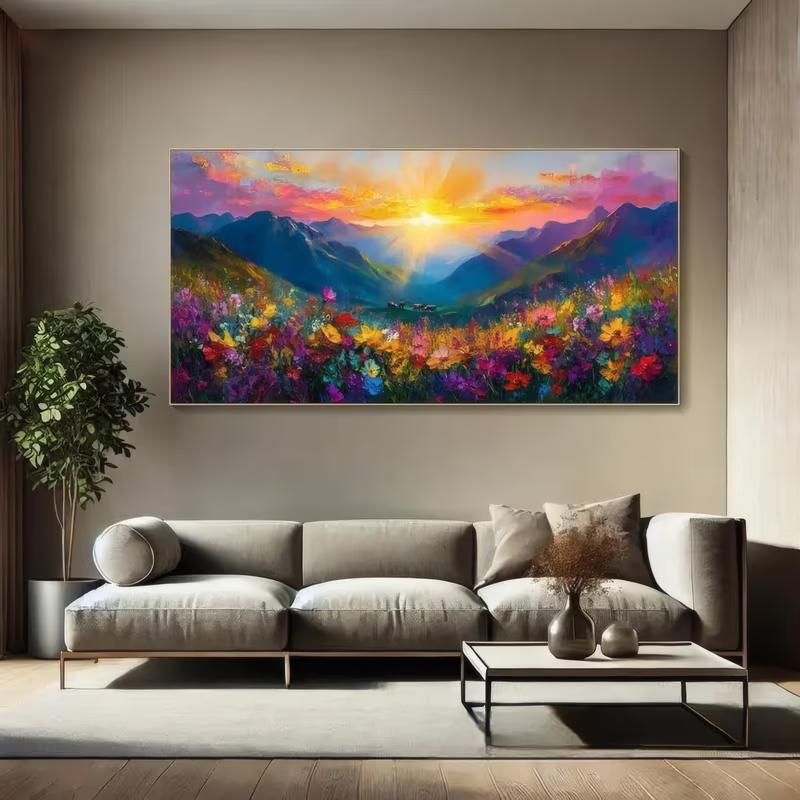
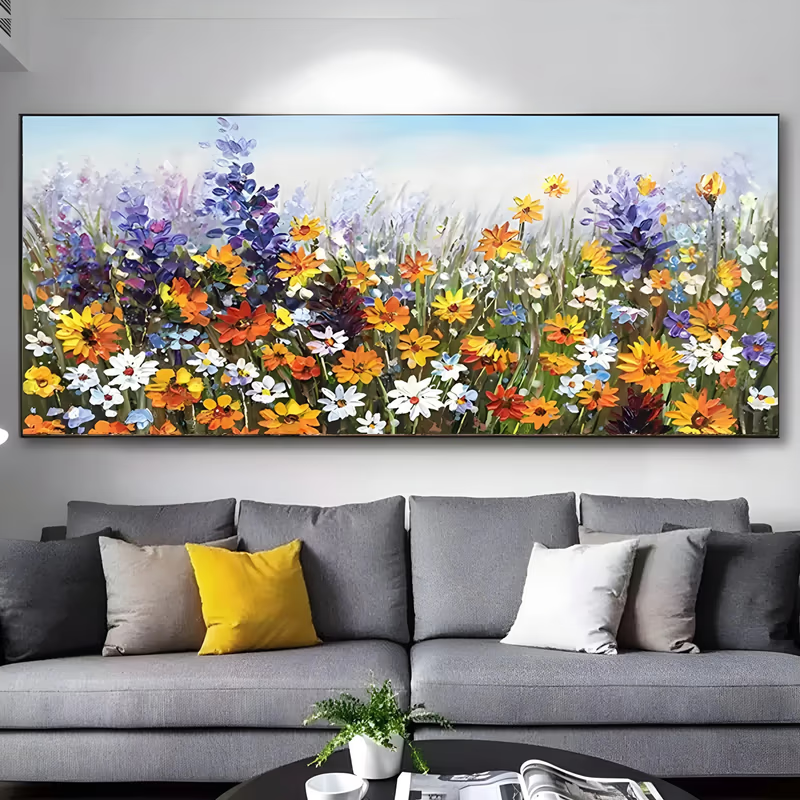
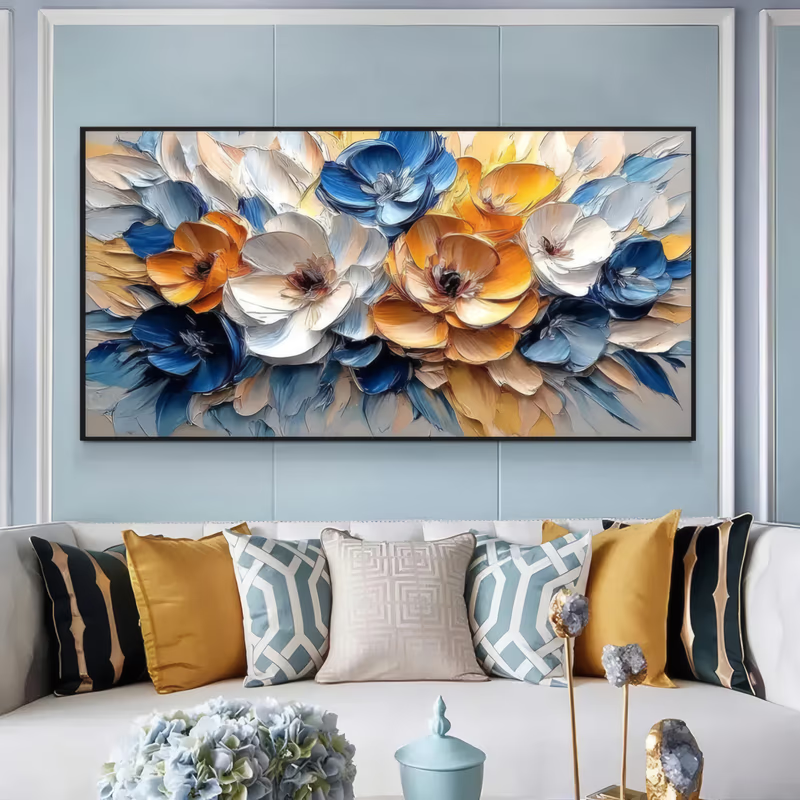
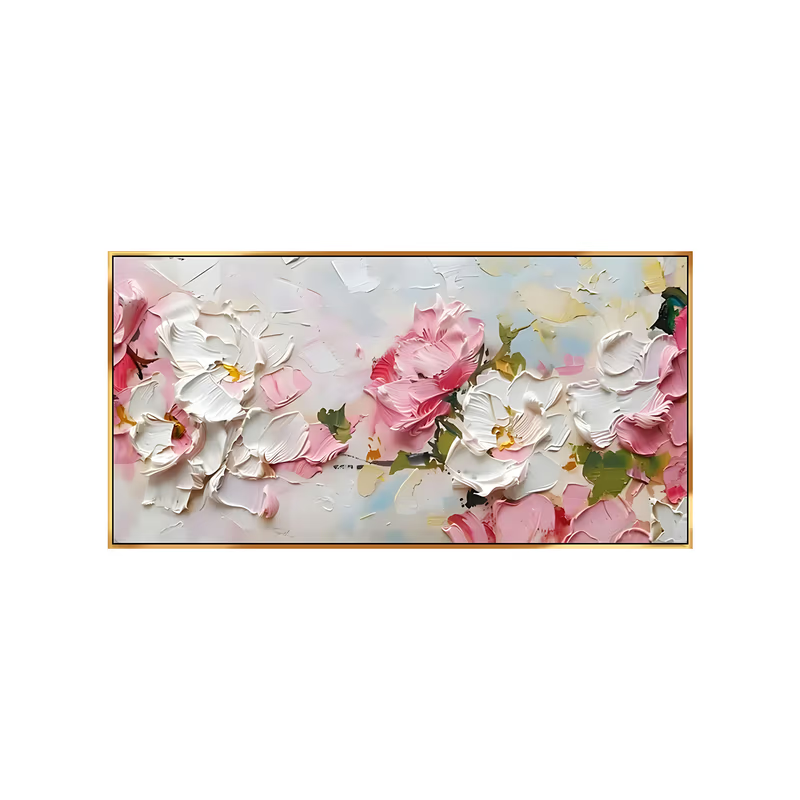
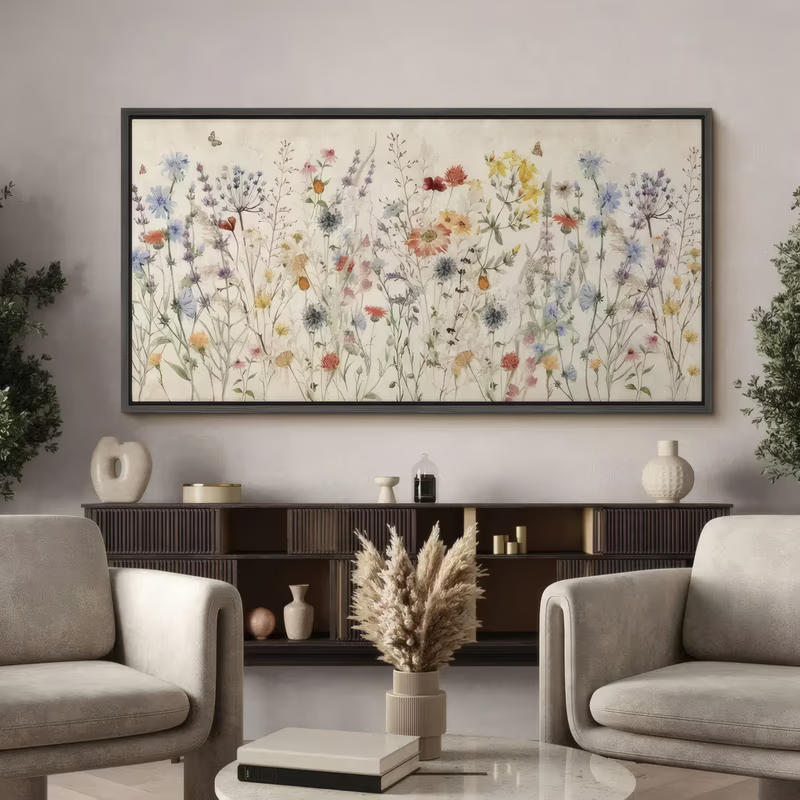
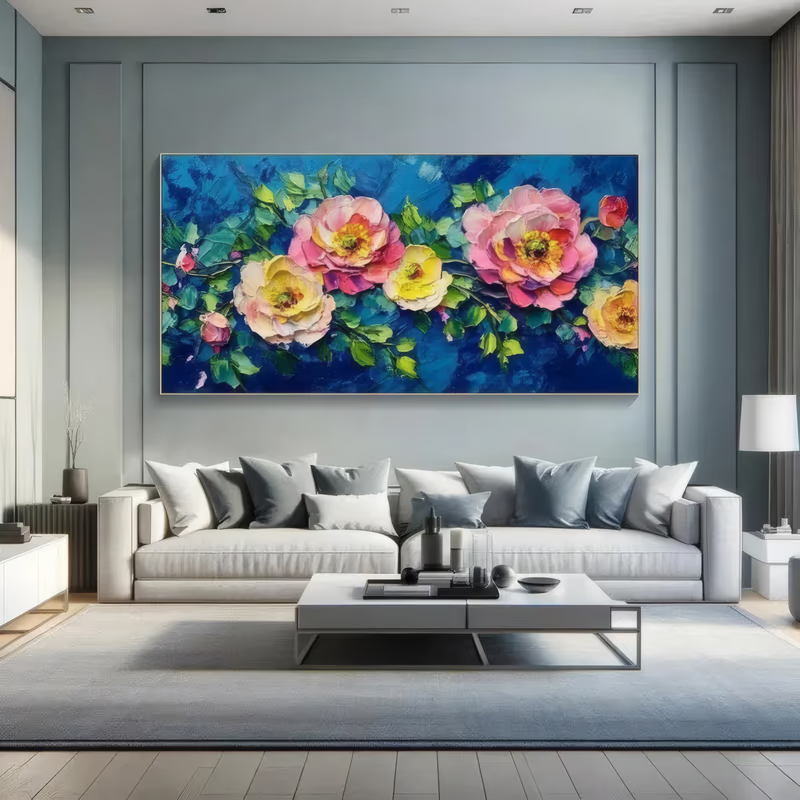
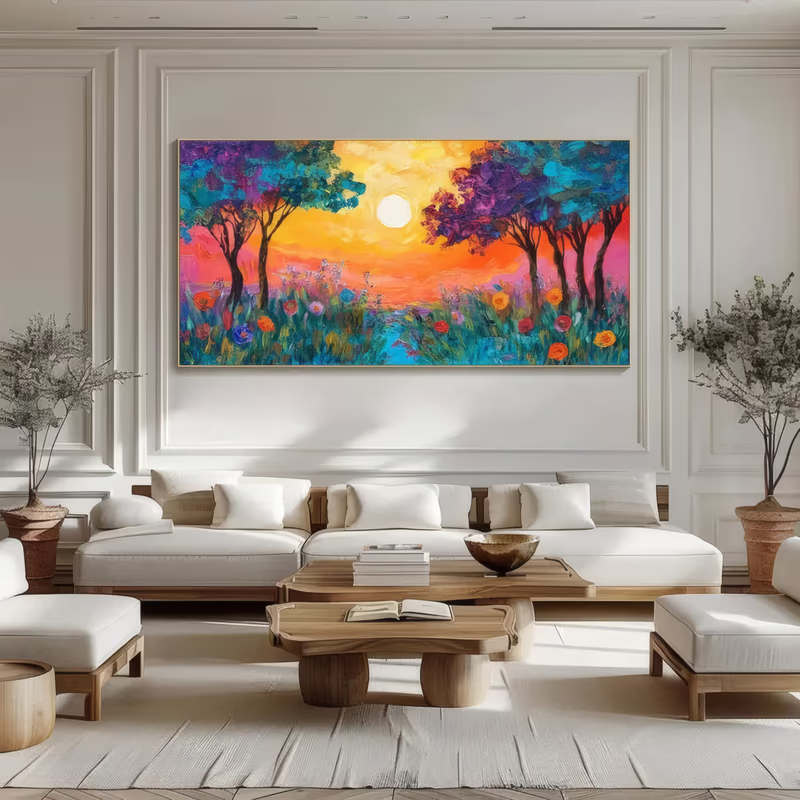
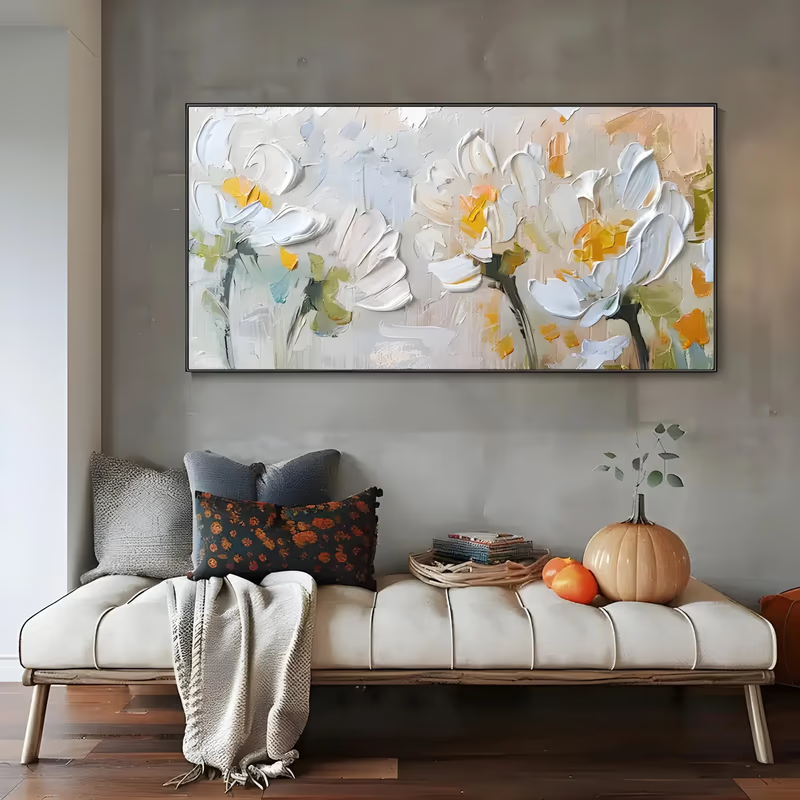
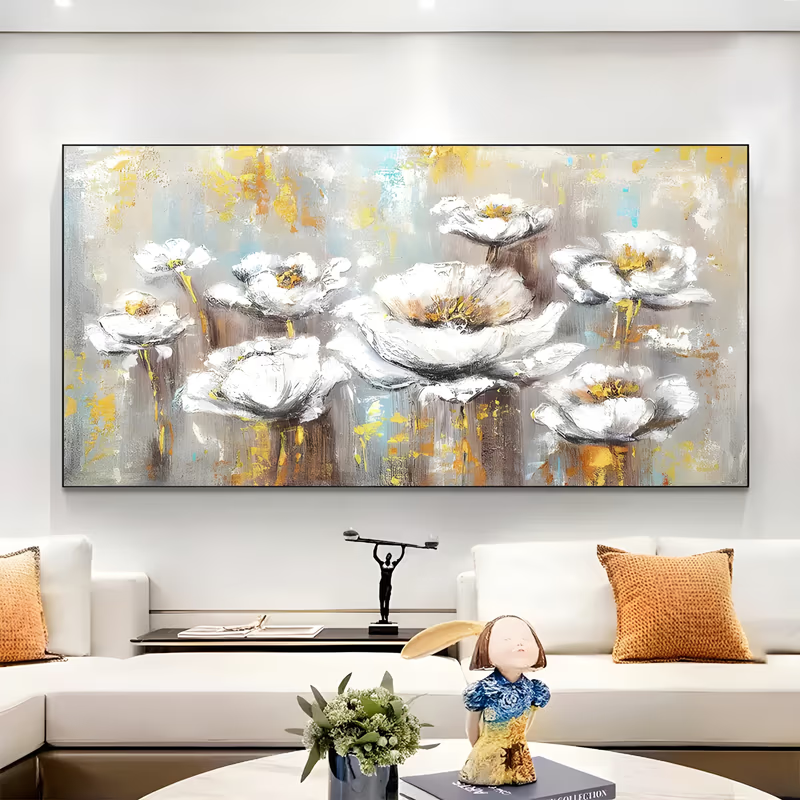
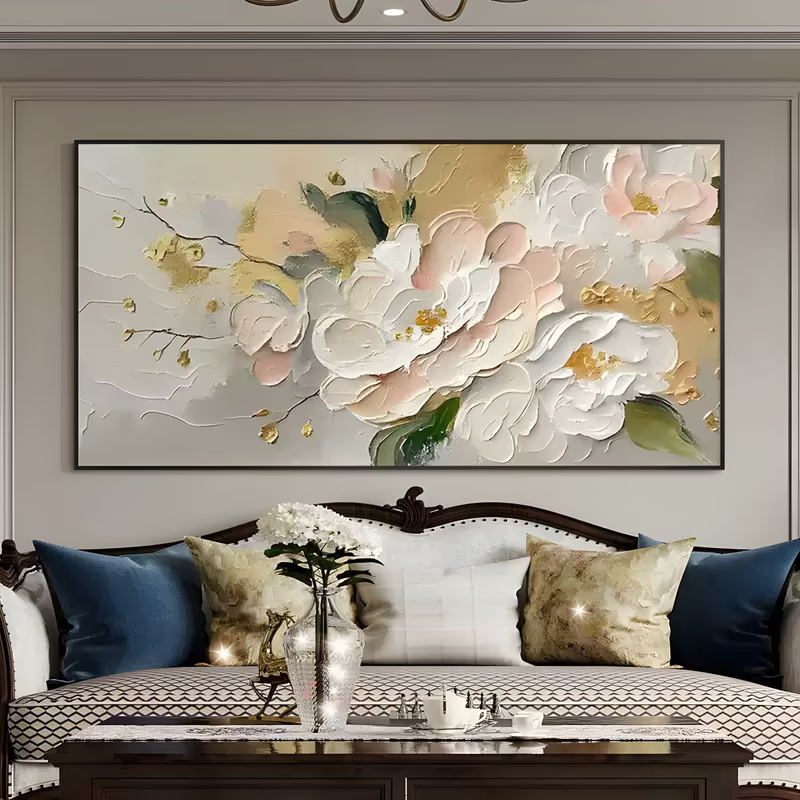
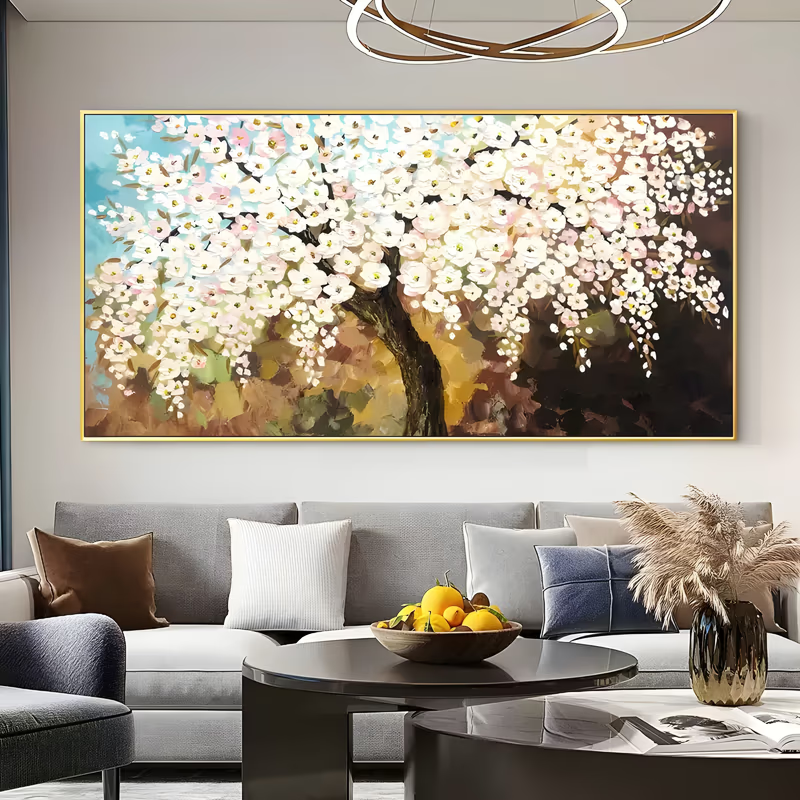
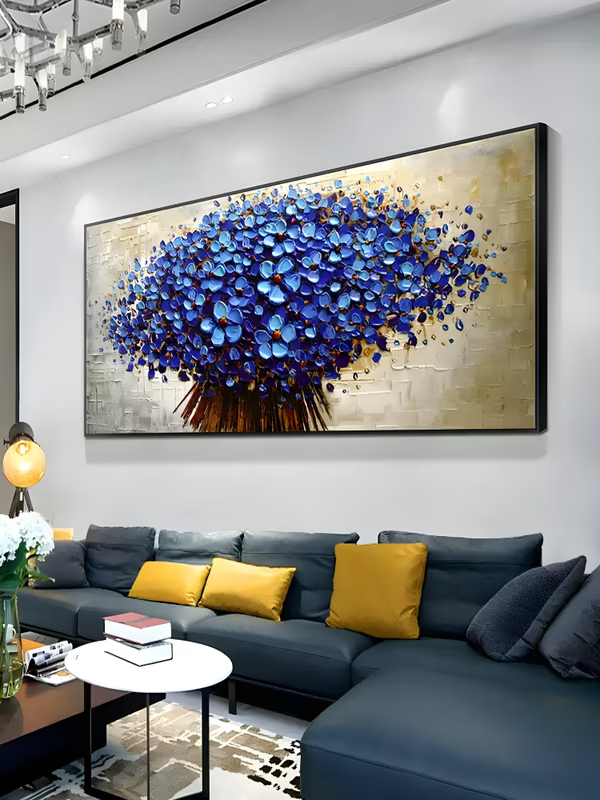
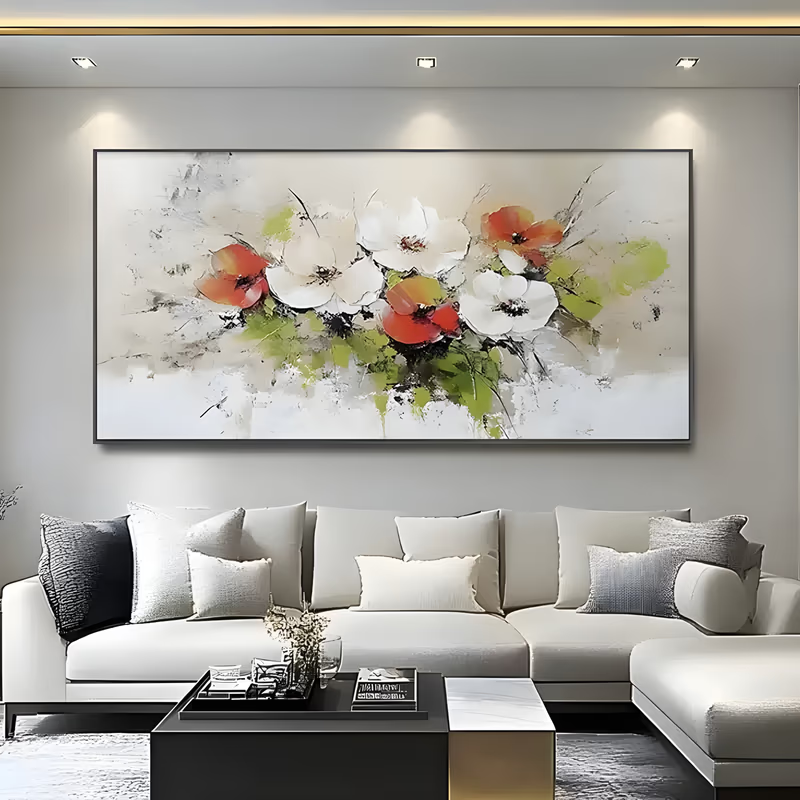
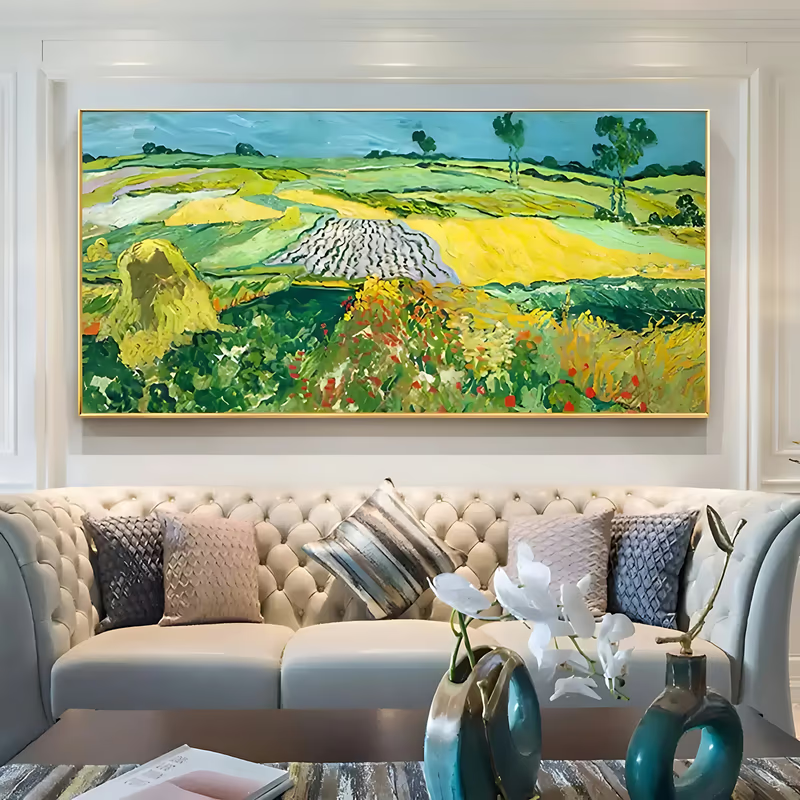
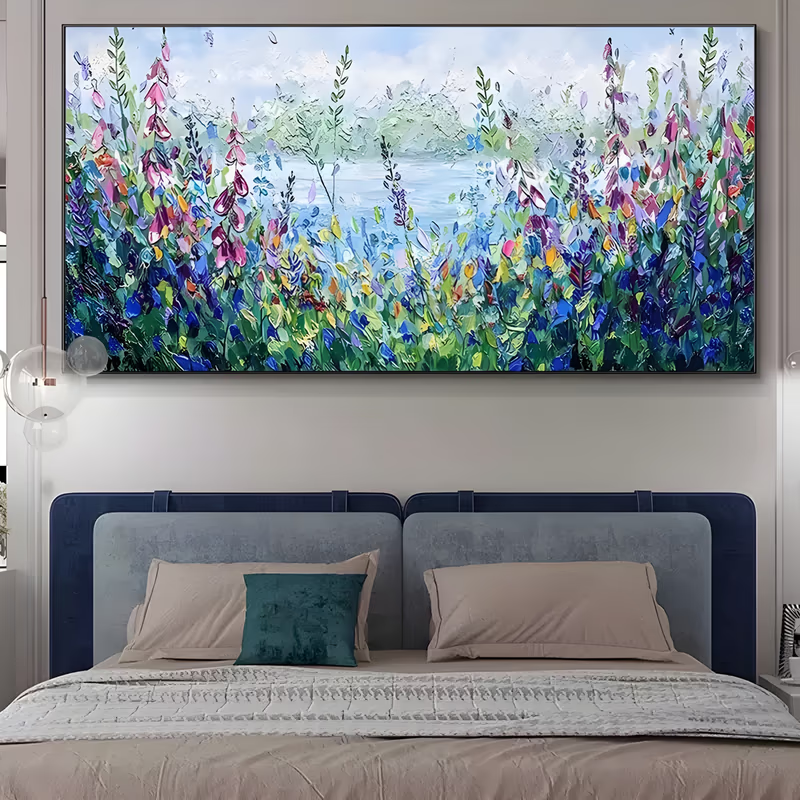
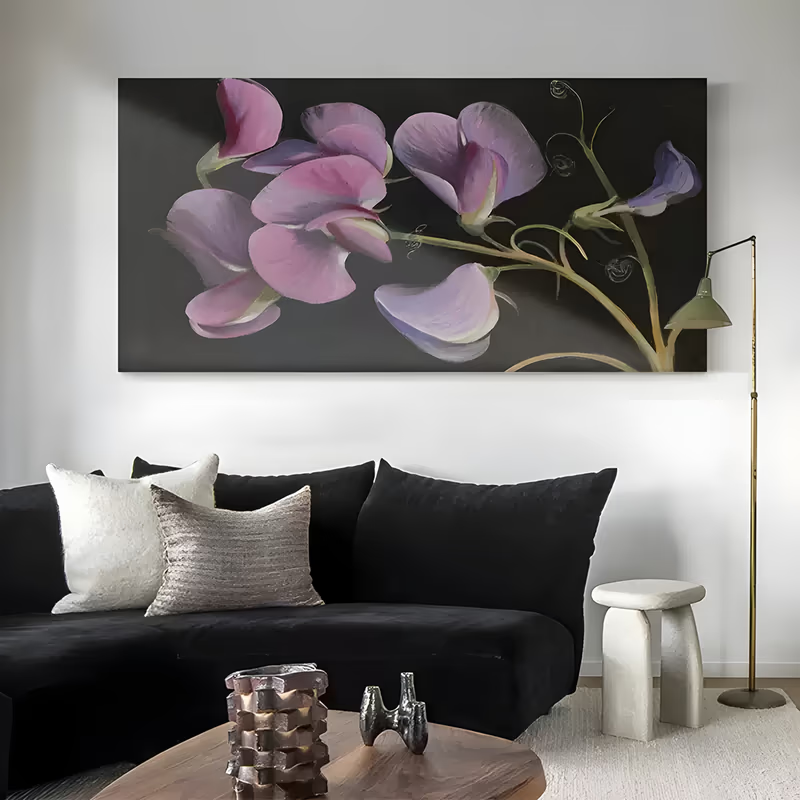
Fields of poppies and lupins, rows of roses, blossom branches and wide arrangements fill a long canvas with incident from end to end. They are especially strong over a sideboard, a banquette or a headboard. Panoramic florals.
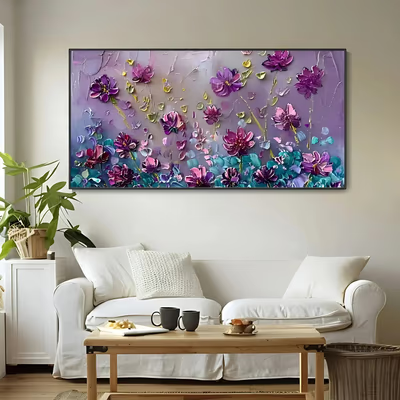
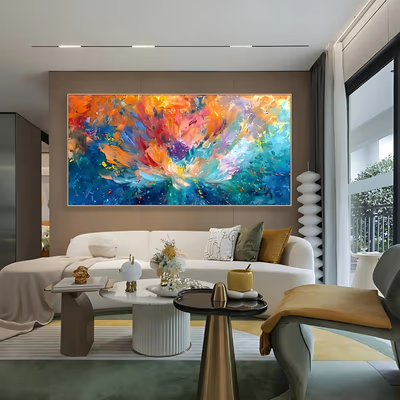
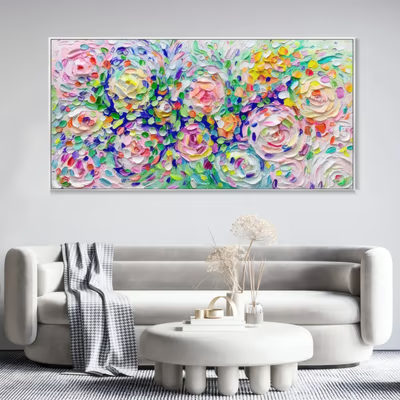
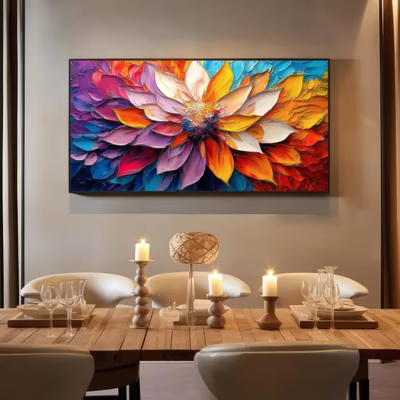
Abstract bands and relief
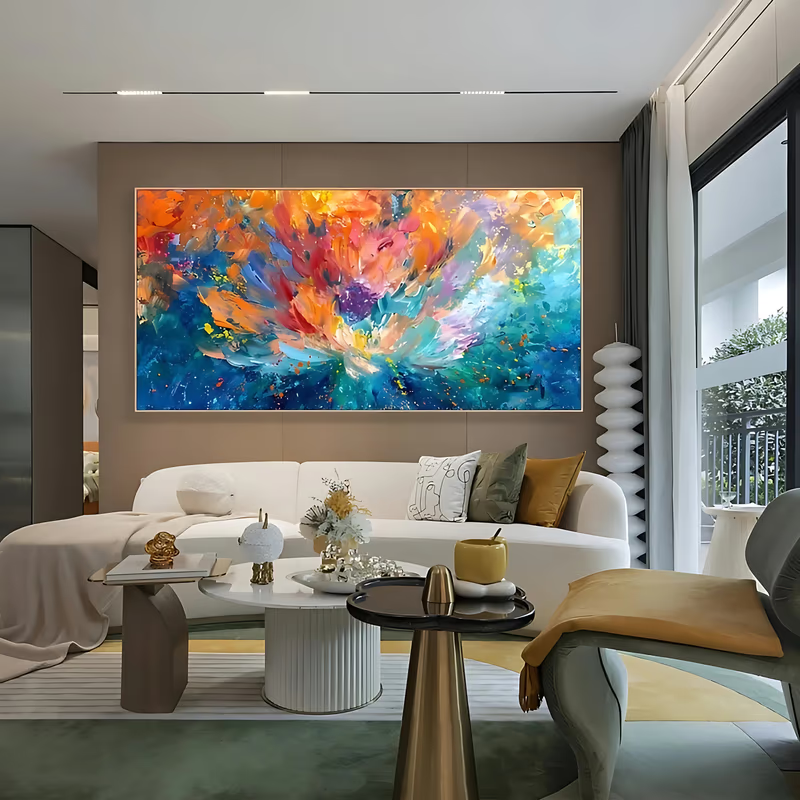
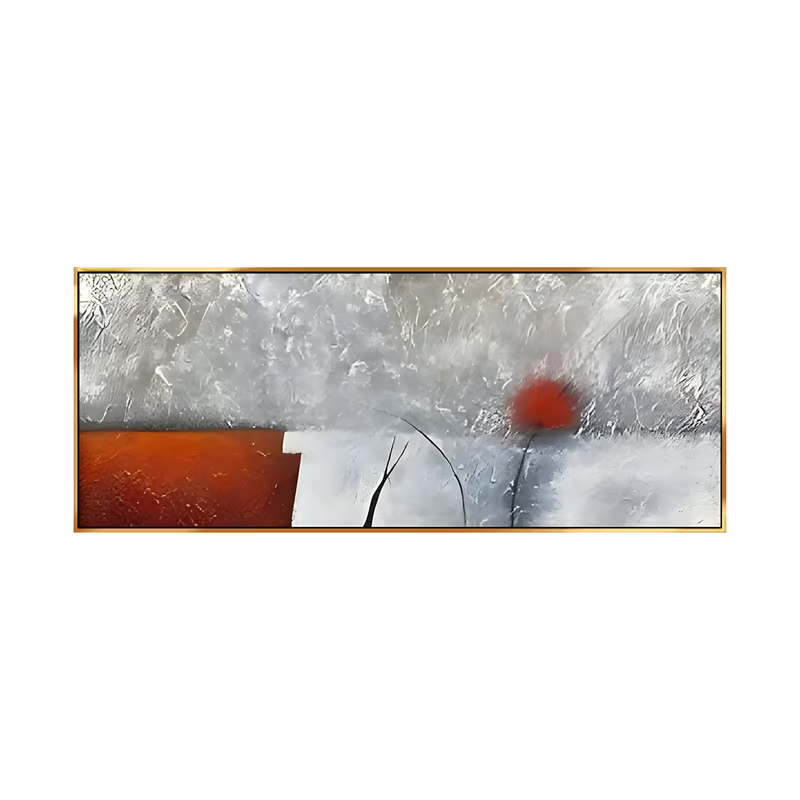
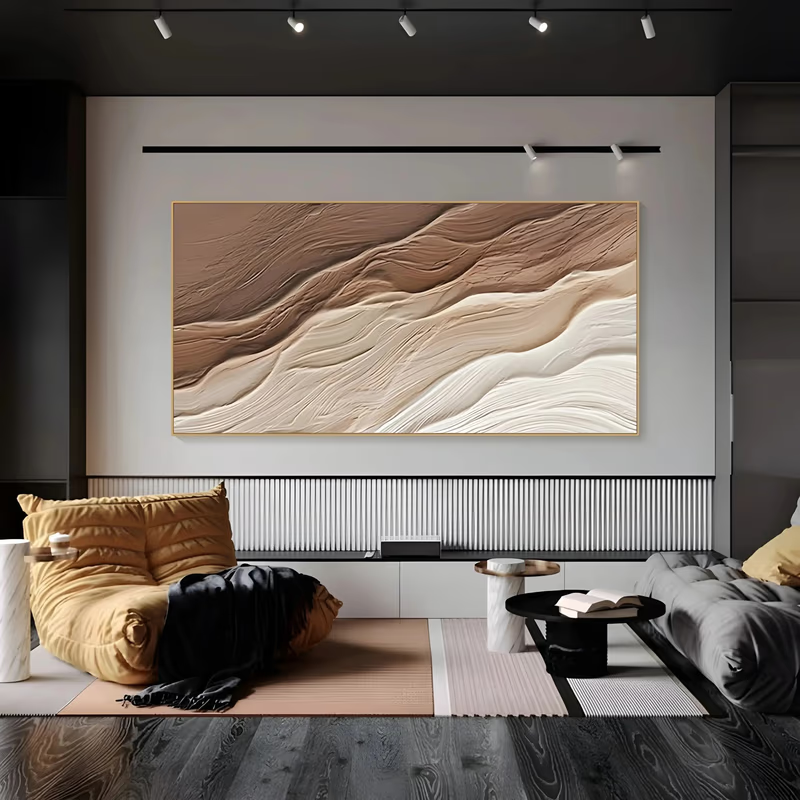
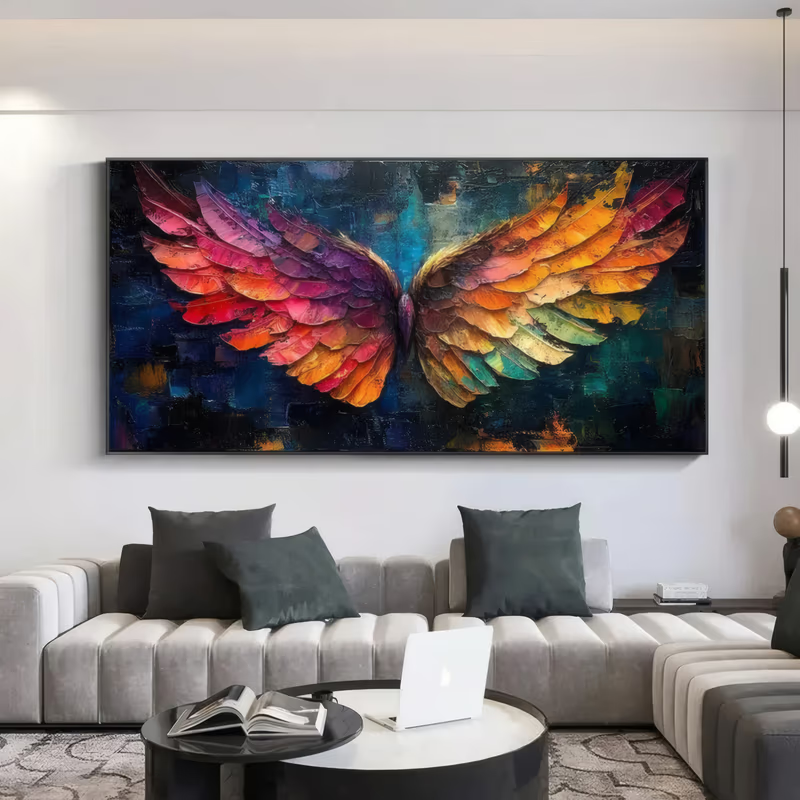
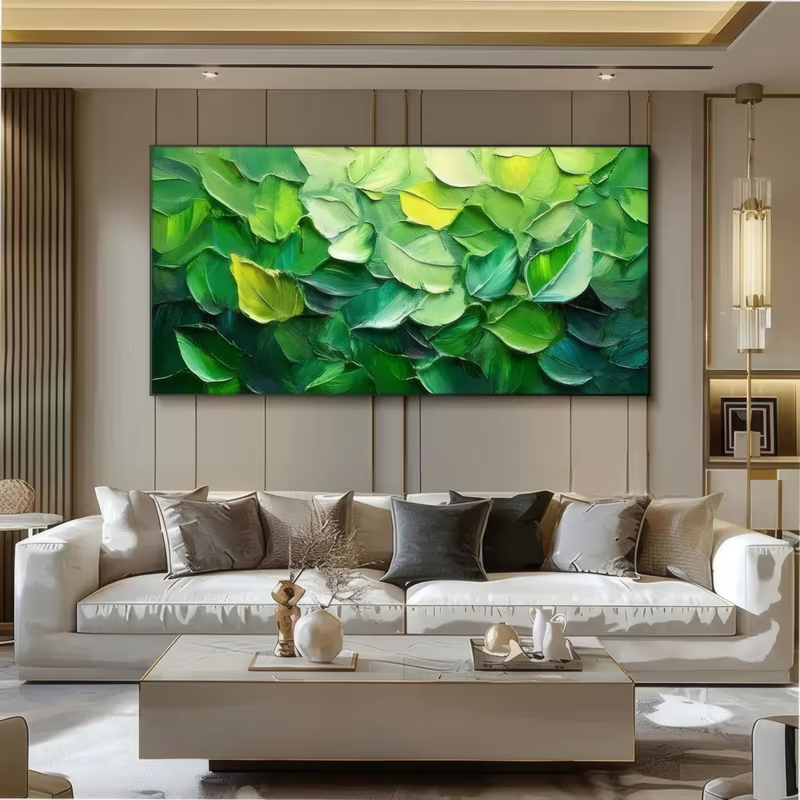
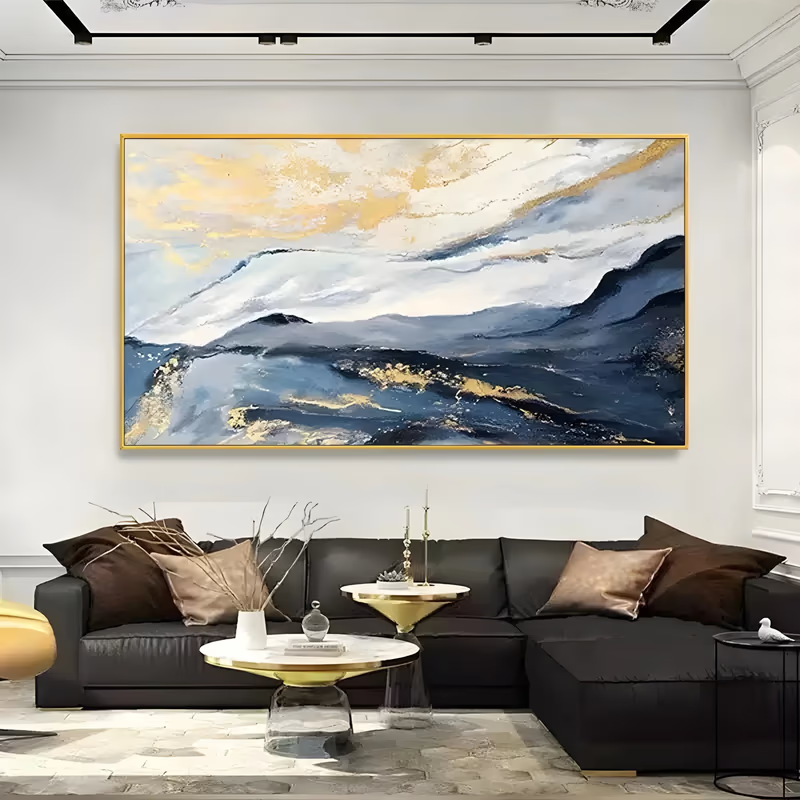
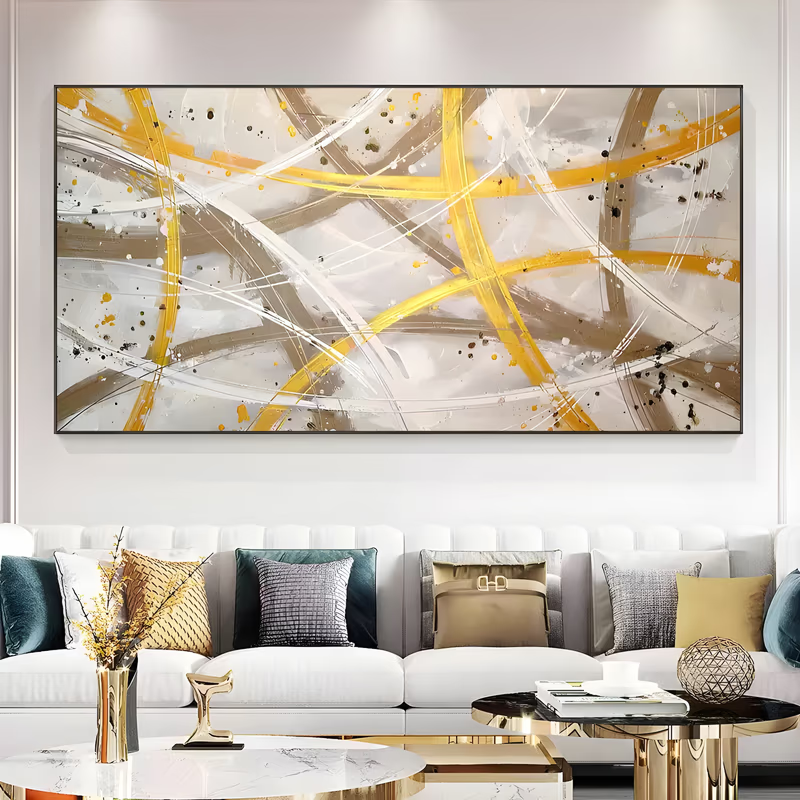
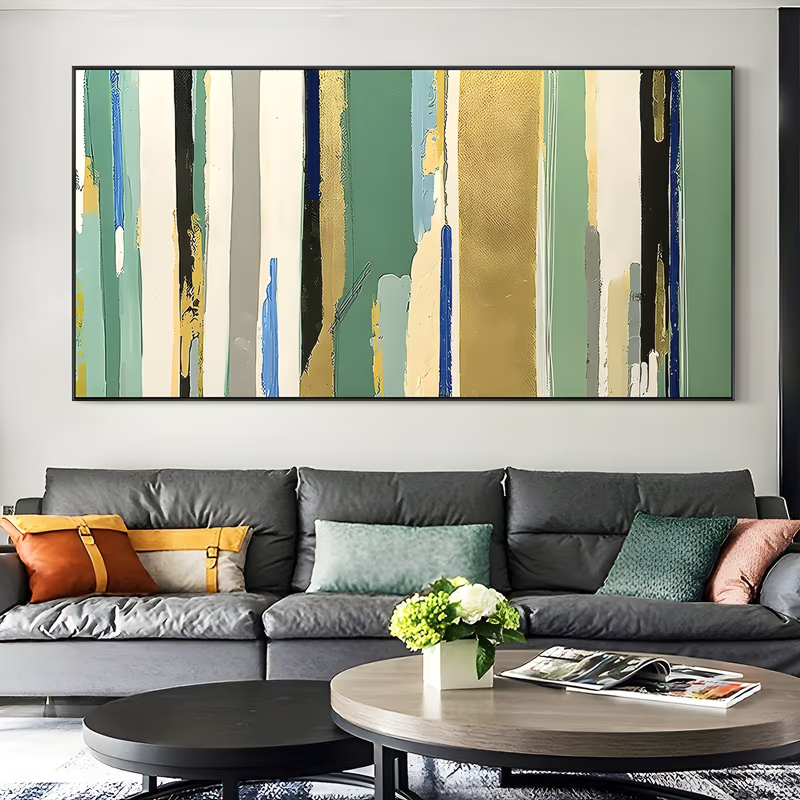
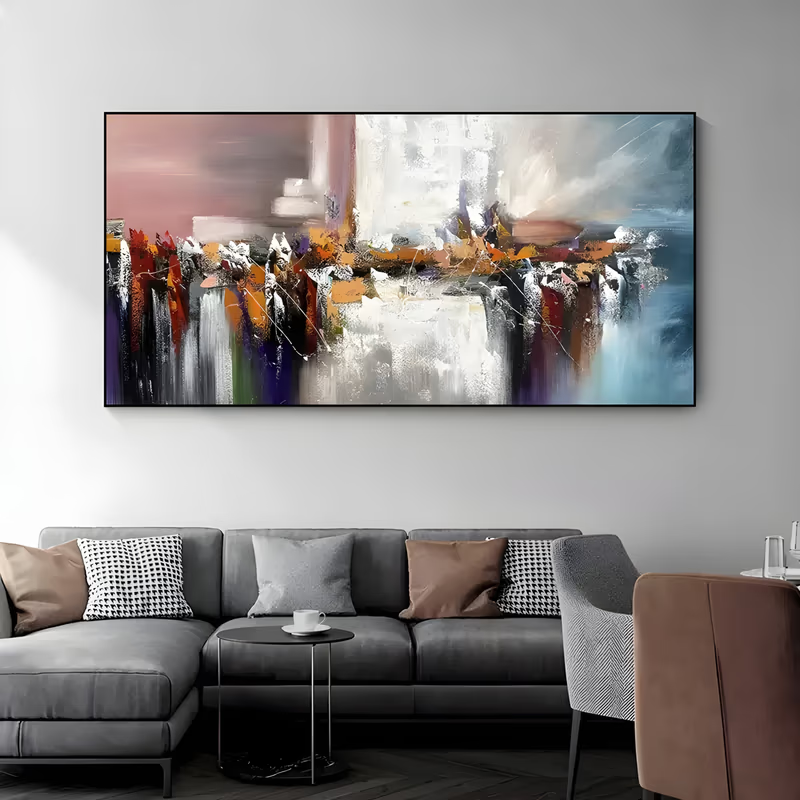
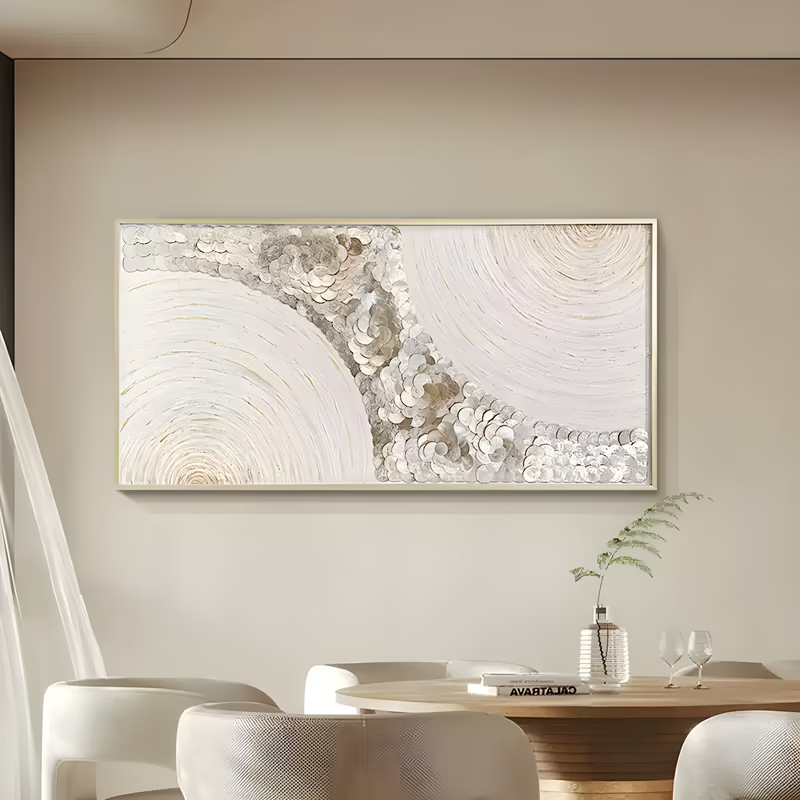
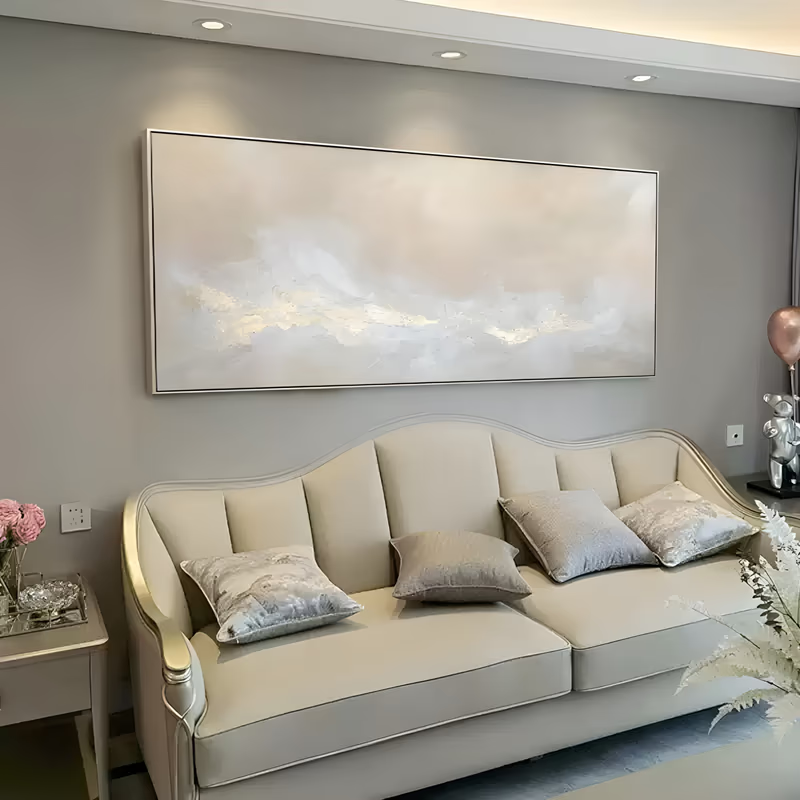
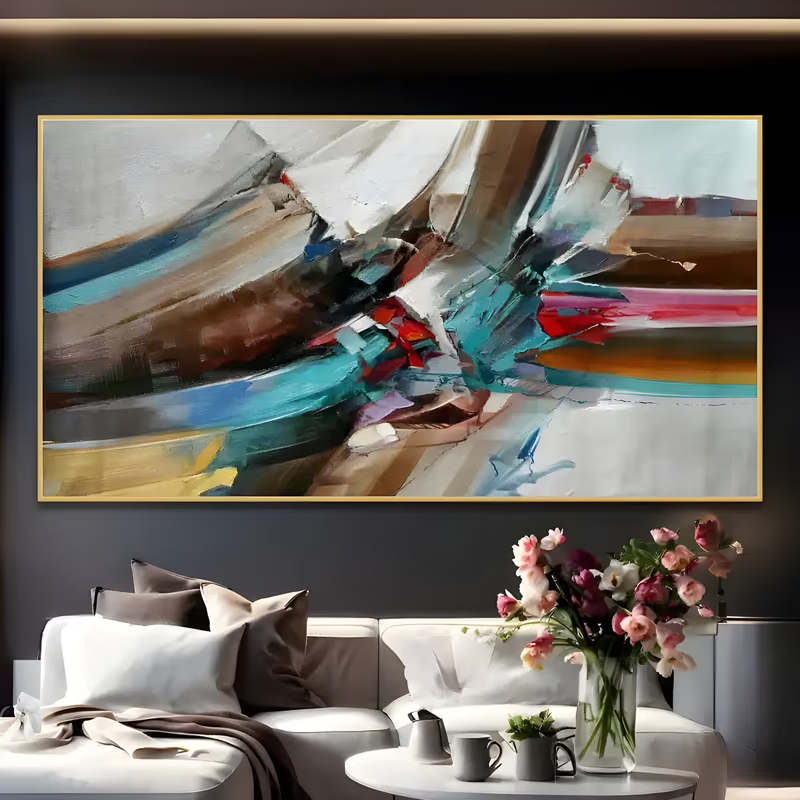
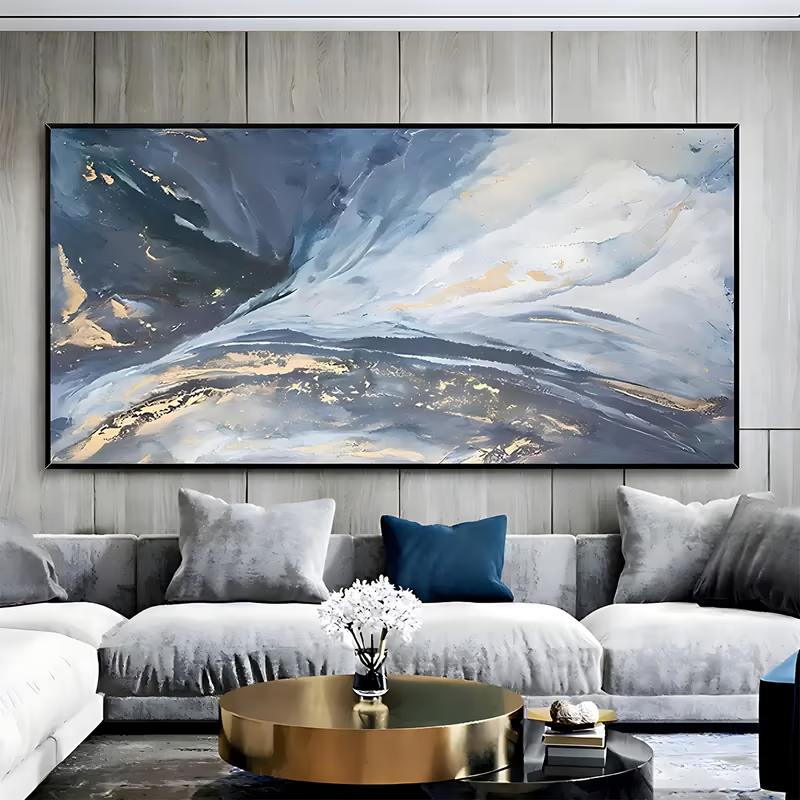
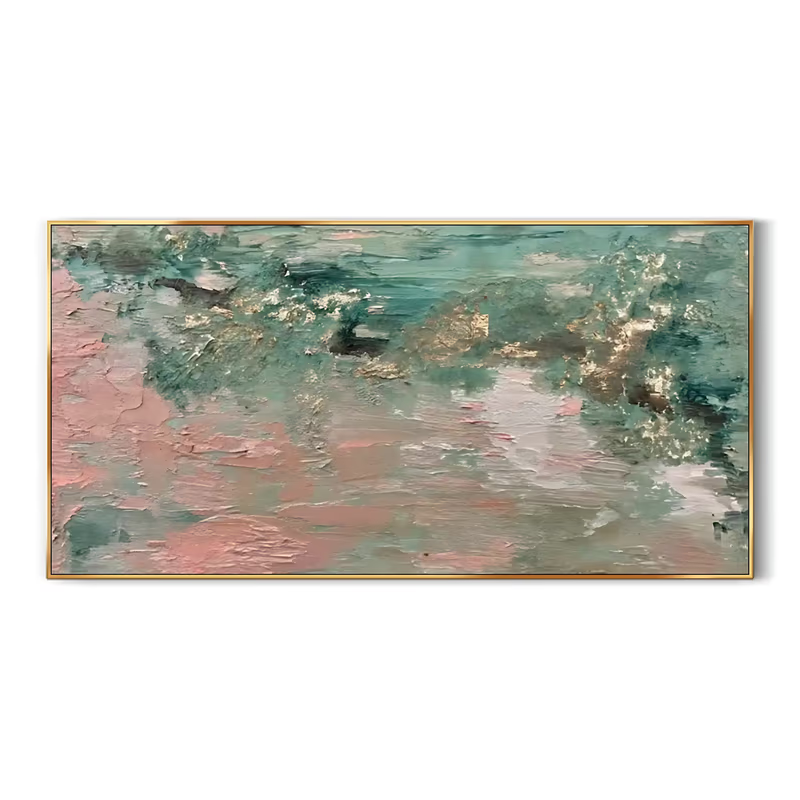
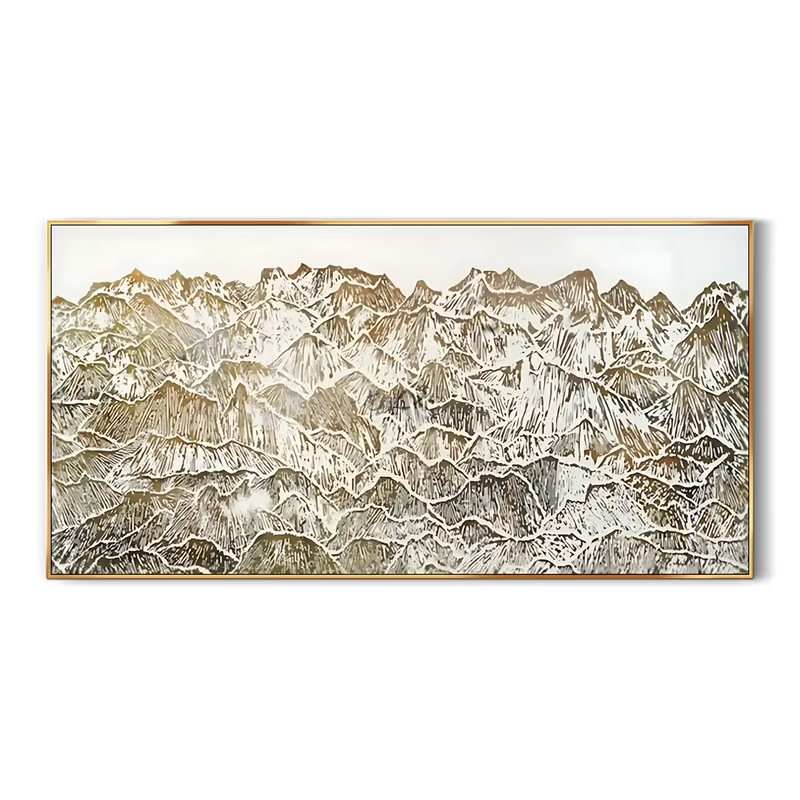
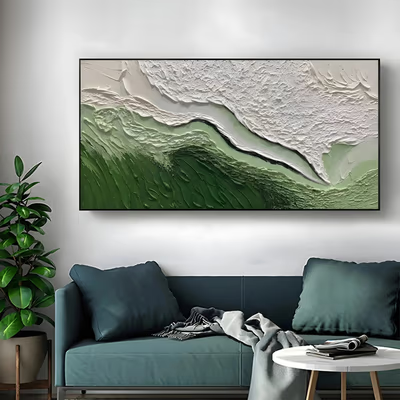
Marbling, sweeping arcs, colour stripes and plaster ridges work as a long band of colour and texture. Side light raking along a relief panel makes it change through the day, which suits lobbies and meeting rooms. Panoramic textured art.
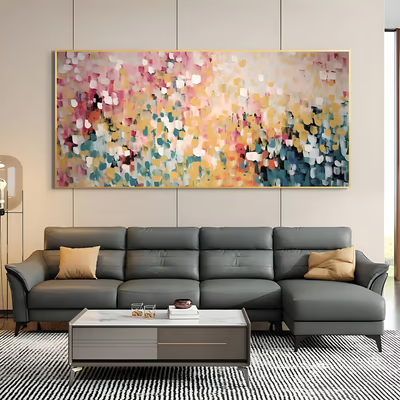
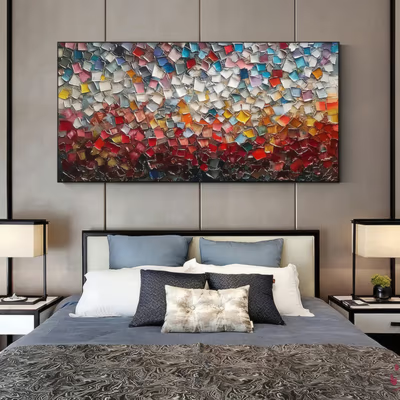
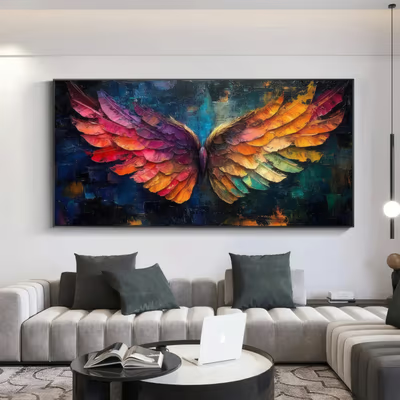
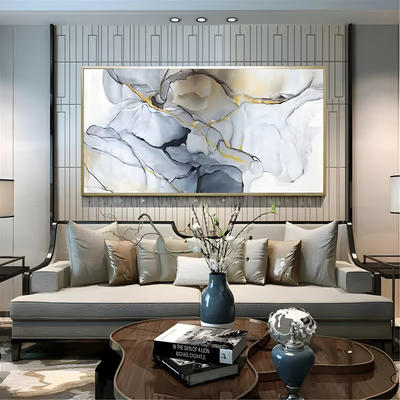
How big should panoramic wall art be, and how high should it hang?
Take the length from the furniture or the clear wall (most of it, but not all), take the ratio from the height available, and hang a panoramic canvas low, close to the furniture it belongs to.
Length
Over a bed, a panoramic canvas looks right at roughly the headboard's width, or a little less. Over a banquette or a long sofa, aim for about three-quarters of the seat. On a bare wall in a corridor or lobby, leave a clear margin at each end of at least 30 cm (12 in), more in a large space, so the canvas does not appear to run into the corners.
Ratio from height
Measure the wall between the top of the furniture and the ceiling. Where that gap is generous, a 2:1 canvas keeps enough height to hold the wall; where it is shallow, as above a high headboard or under a low ceiling, a 3:1 band fits without crowding. A canvas only 40–50 cm (16–20 in) tall on a very long wall can look thin from a distance, so in a big lobby go longer and taller together.
Height on the wall
Because it is long and low, a panoramic piece looks best hung close to its furniture: 15–25 cm (6–10 in) above a sofa or headboard, a touch more above a banquette so heads rest clear of it. On a bare wall, the centre goes at about 145–152 cm (57–60 in) from the floor. In a lobby seen from far away, the piece can sit higher and should grow with the viewing distance.
One panoramic canvas or a triptych: which is better?
Choose one panoramic canvas for a continuous, unbroken wall and a triptych where the wall is interrupted, the run is very long, or the pieces must pass through tight doors and lifts.
| Single panoramic canvas | Triptych (three panels) | |
|---|---|---|
| How it reads | One continuous view; the strongest effect | One image in three beats, with gaps as pauses |
| Best walls | Unbroken runs above beds, sofas, desks and banquettes | Walls broken by a column, a switch or a door; very long runs |
| Handling | Long stretcher bars; needs room to carry and hang | Three smaller panels, easier through doors and lifts |
| Hanging | Two fixing points, levelled once | Three pieces to align, with equal gaps of 5–8 cm |
Either way, the composition is planned for the full length, so a triptych is one picture divided into three panels, not three separate paintings. For a long run of separate pieces in a hotel or office corridor, see the corridor series page.
How is a painting redrawn as a panoramic canvas?
To make a panoramic version, the painter extends the scene sideways and rebalances it, adding horizon, sky and incident along the length, rather than cropping the top and bottom off a standard picture.
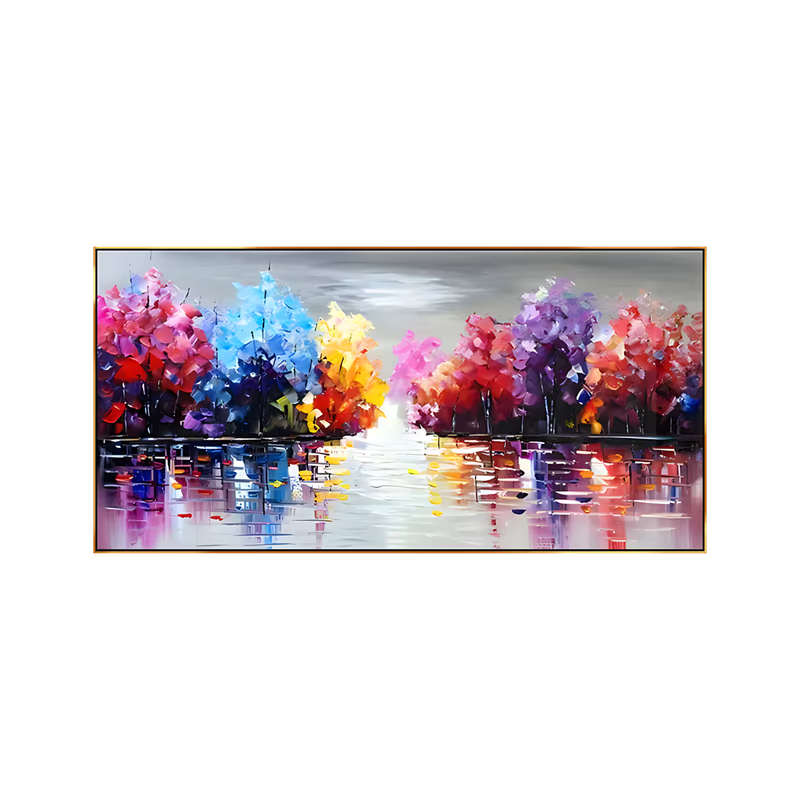
A panoramic picture is read from one end to the other, so it needs events along the way: a cluster of trees, a boat, a break in the clouds, a brighter patch of flowers. The main focal point usually sits about a third of the way in from one end rather than dead centre, which leads the eye along the canvas. A square or vertical catalogue work can be rebuilt like this, with its colours and brushwork kept true to the original. If the piece you like is on the vertical or square pages, send its code with the length you need. A panoramic painting of your own view, city or coastline is also possible; see custom paintings.
How are long horizontal canvases shipped and hung?
A long horizontal canvas can ship rolled, to be stretched near the site, or arrive stretched and ready to hang or framed; plaster and deep relief panels always travel stretched or framed unless a thinner texture is agreed.
Rolled is the most compact way to send a very long canvas, and many buyers have it stretched or framed close to where it will hang. If you prefer it ready to hang, it ships stretched without a frame, or framed in gold, silver, black, white or wood. Shipping is arranged worldwide by DHL, FedEx or UPS express, or by air or sea freight for a larger order; iHomeArt suggests the best route, the transit time depends on it, and the cost is confirmed before dispatch. Thick textured and relief pieces cannot be rolled without flattening them, so they ship stretched or framed, and are rolled only if you agree to a texture made thin enough for transport.
On the wall, hang a long canvas from two fixing points at the same level rather than one central hook, so it stays straight, and check it with a spirit level. Measure the doors, stairs and lifts on the way to the wall before choosing a single stretched piece over a triptych.
How do you order panoramic wall art for a home or a project?
Send the length and height you need, the work or the subject, and your colours; the panoramic canvas is painted to measure and approved stage by stage before it ships.
A photograph of the wall with its furniture helps settle the ratio. To match a scheme, send a paint code, a fabric or a room photo, and the palette is adjusted before painting starts. You receive progress photos or video at each stage, the next stage only starts once you approve, and a final photograph is approved before dispatch. Painting takes about 10 days, and the canvas is then with you after 5–7 days by DHL, FedEx or UPS express.
For hotels, restaurants and offices, a panoramic piece is often the lobby or banquette centrepiece of a wider order; see lobby statement art and restaurant groups and bars. One piece is the minimum, volume pricing starts at 10 pieces, and every piece is sold outright. Ask for a quote; you will hear back within one business day.