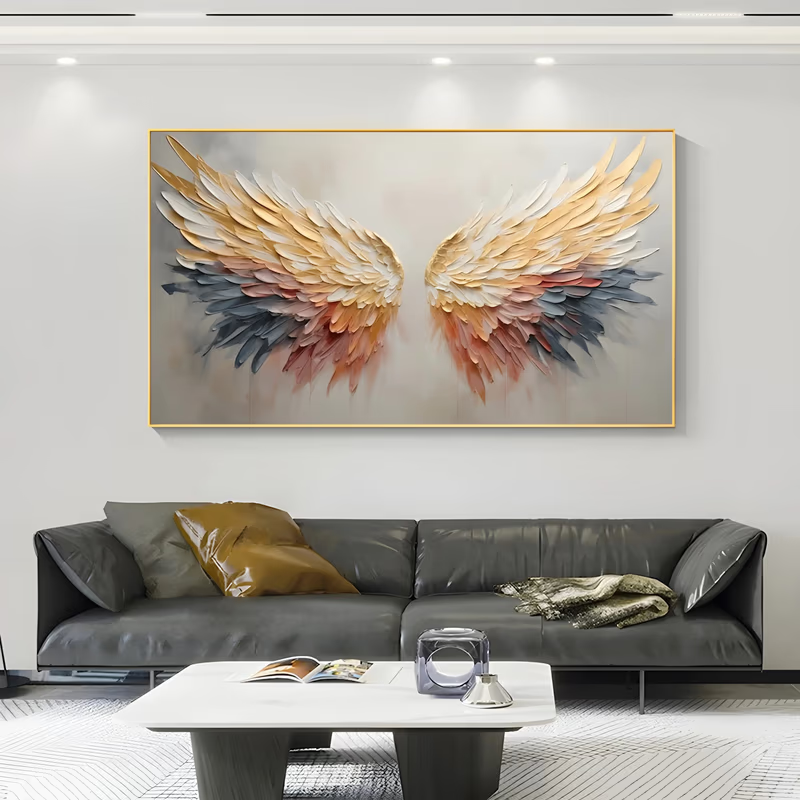
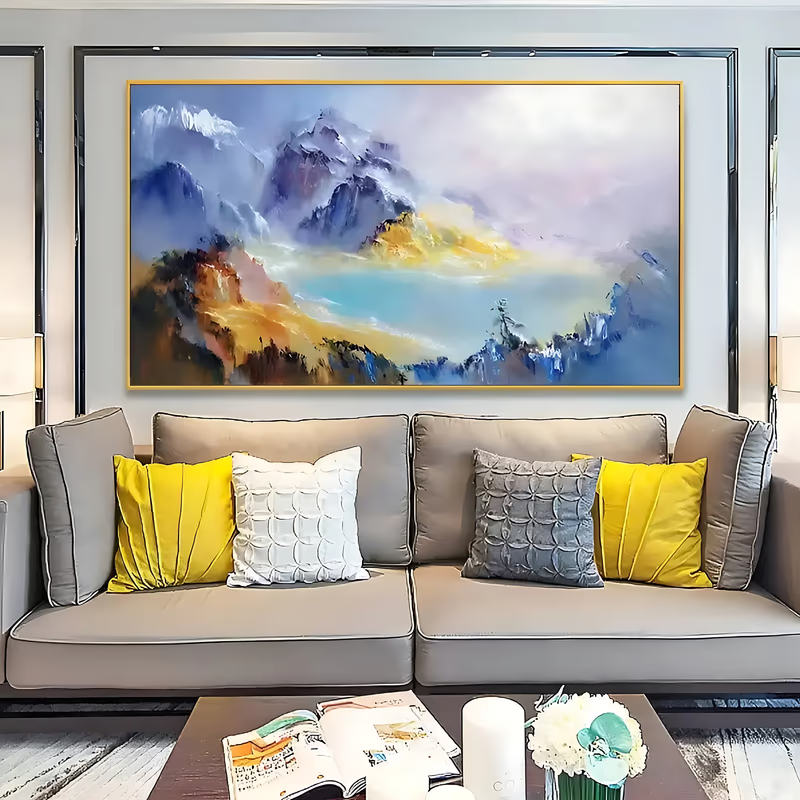
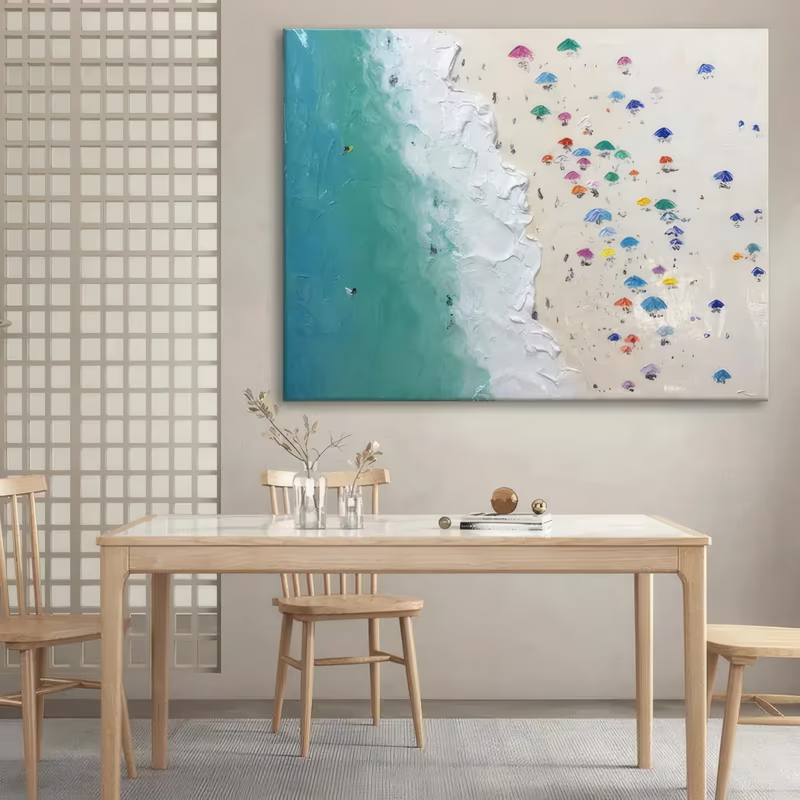
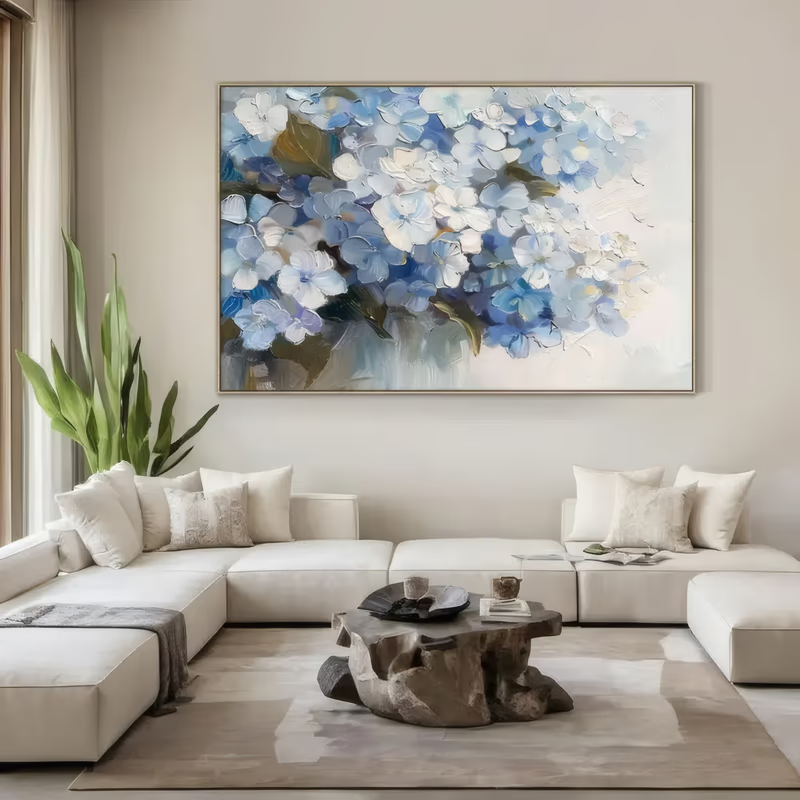
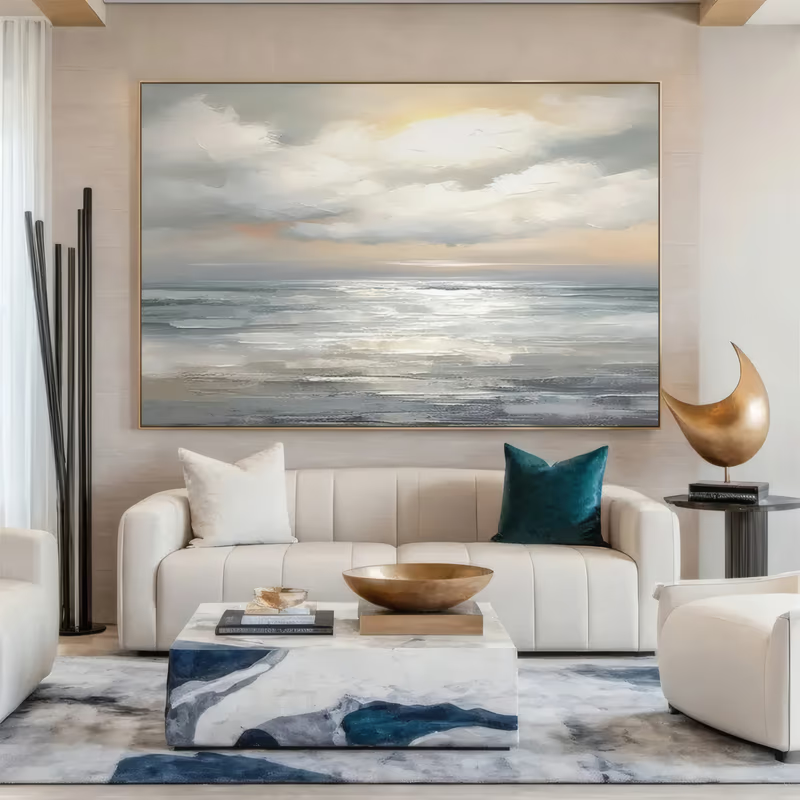
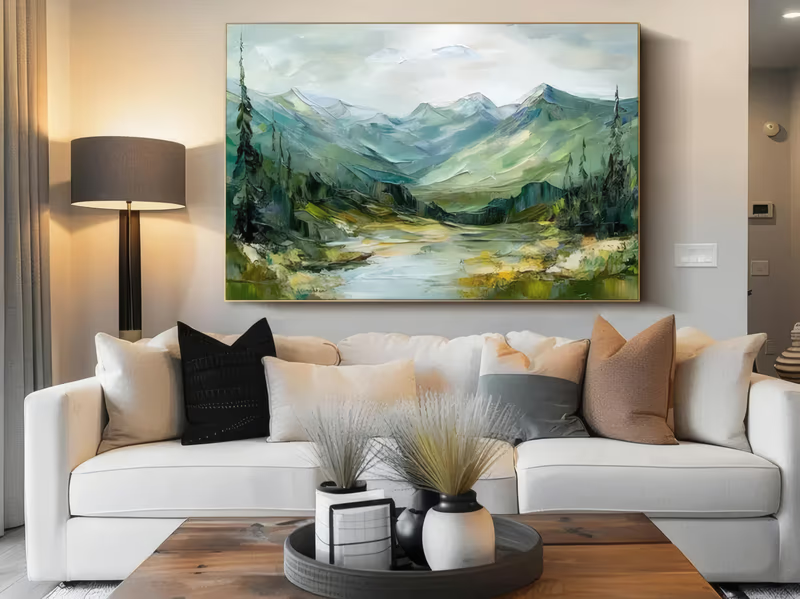
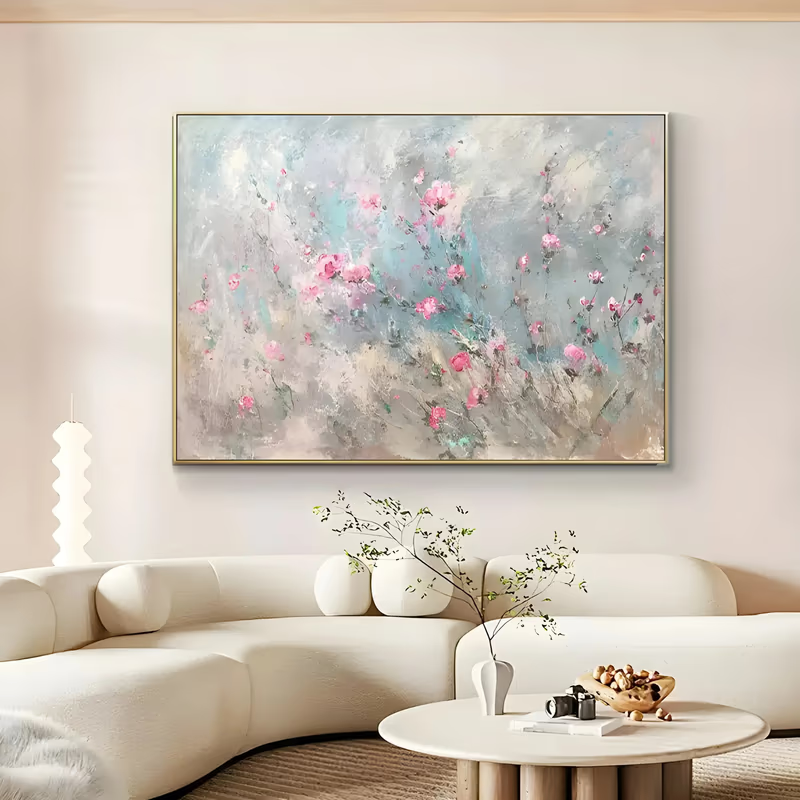
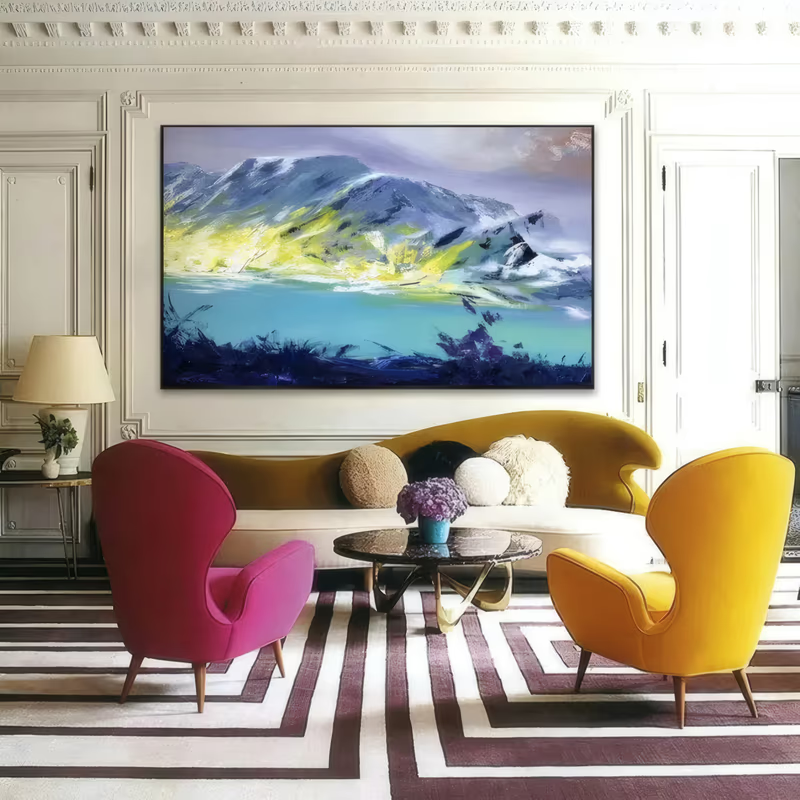
Horizontal wall art guide · Updated
How to choose horizontal wall art for your wall and furniture
Key takeaways
- Wide walls want wide art: when the space above the furniture is longer than it is tall, a horizontal canvas fills it in one move and steadies the room.
- Choose the ratio, not just the size: a near-square 5:4 sits compactly over a chest; 3:2 reads as a classic view over a sofa; 2:1 and longer is panoramic.
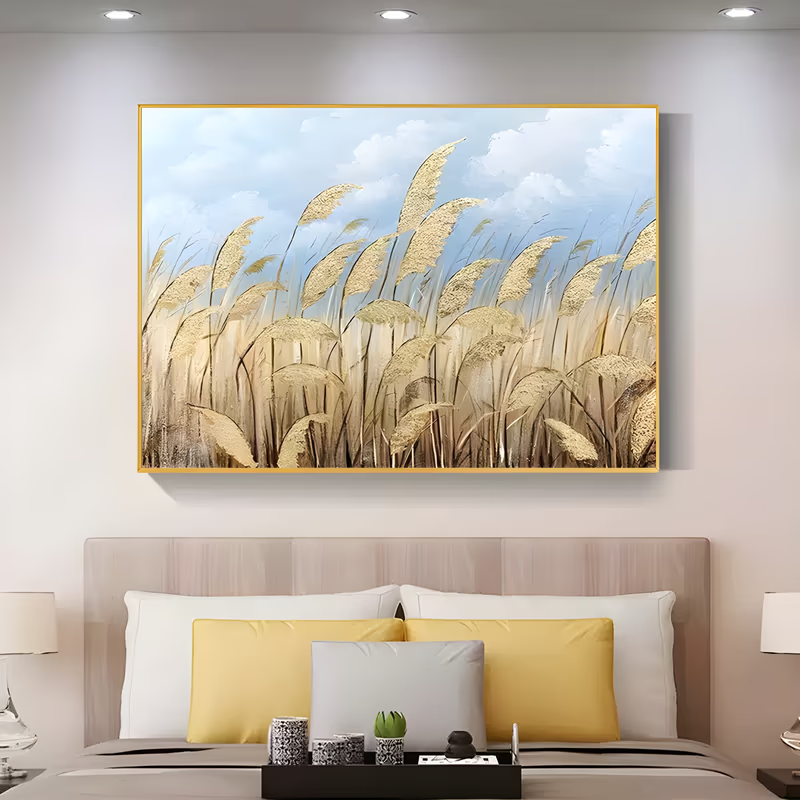
- Fill the gap above the furniture: let the canvas take roughly half to two-thirds of the clear height between the furniture and the ceiling, with its lower edge 15–25 cm above the top.
- Any painting can go wide: a tall work is redrawn with more horizon and space at the sides, so nothing is cropped and nothing is stretched.
When is horizontal wall art the right choice?
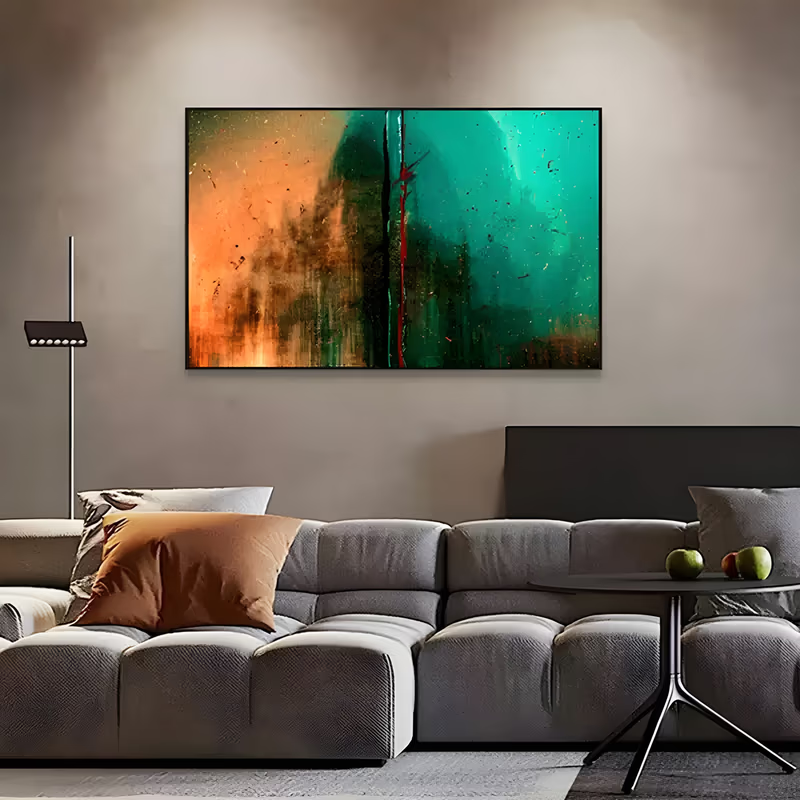
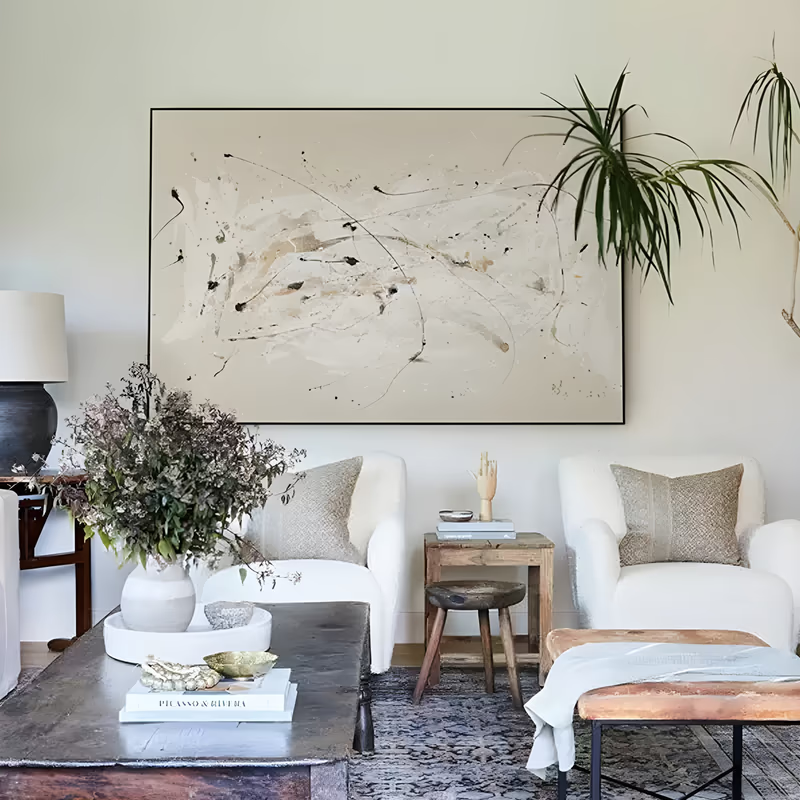
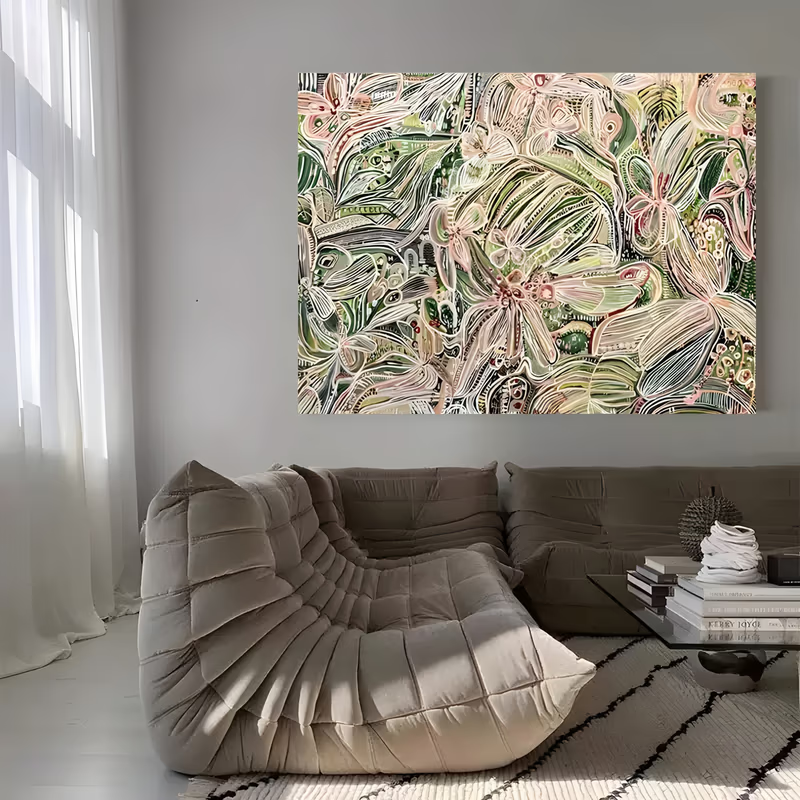
Choose horizontal wall art when the space you are filling is wider than it is tall, which is the case above almost every sofa, bed, sideboard, desk and dining table.
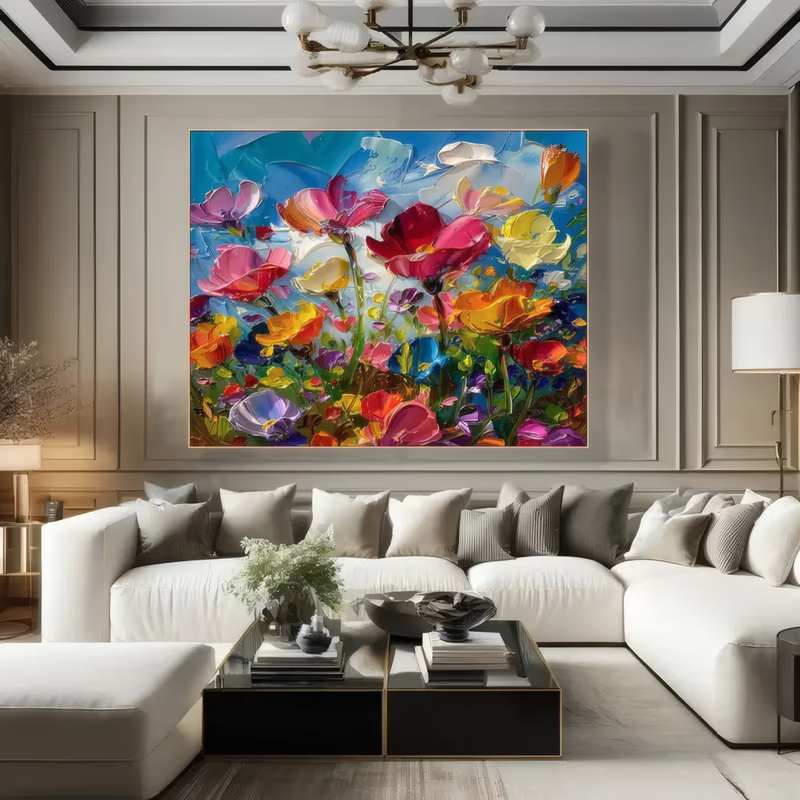
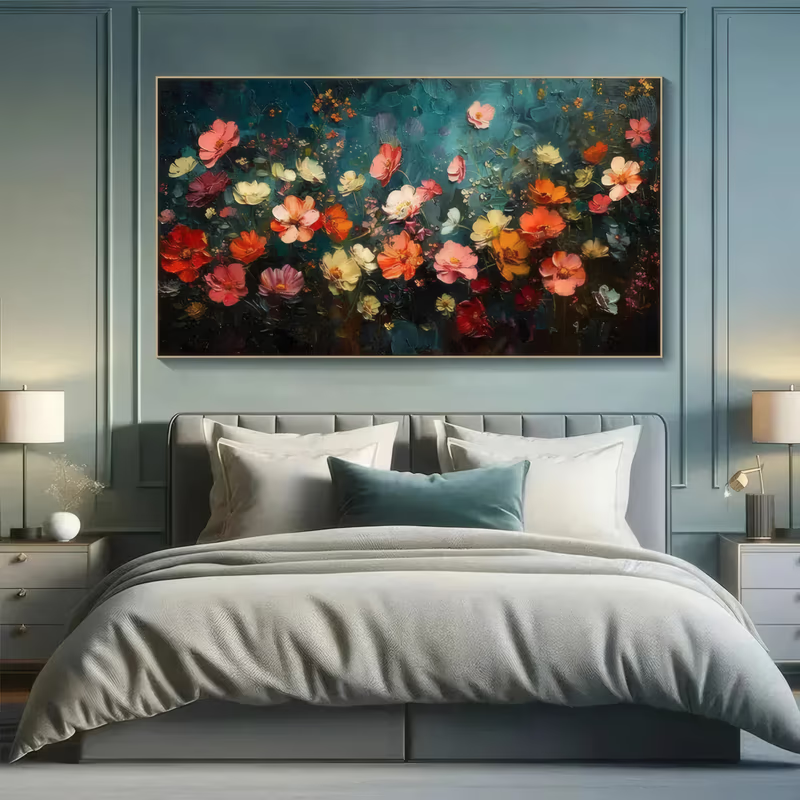
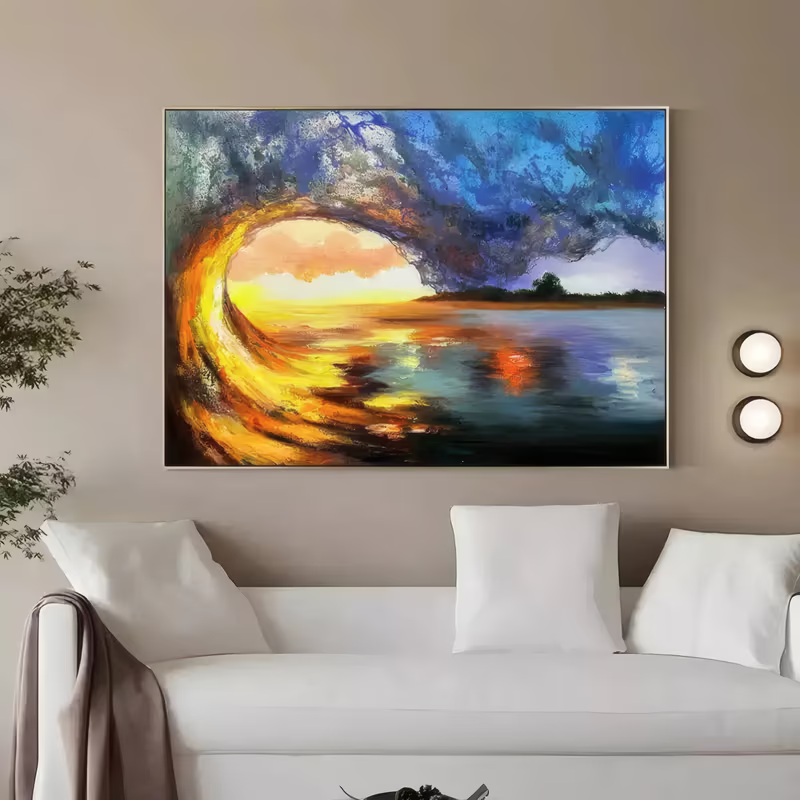
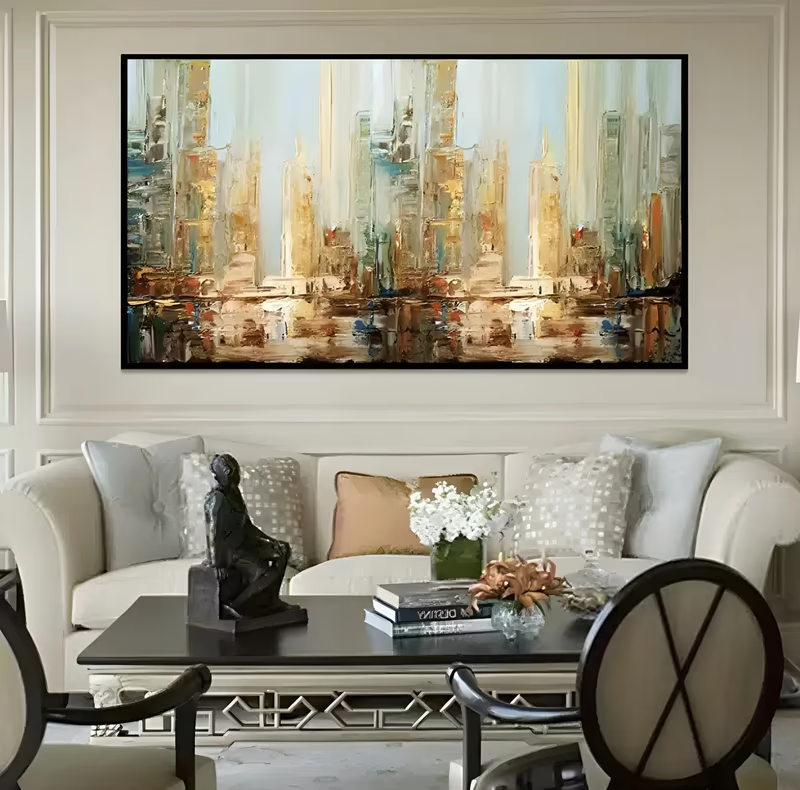
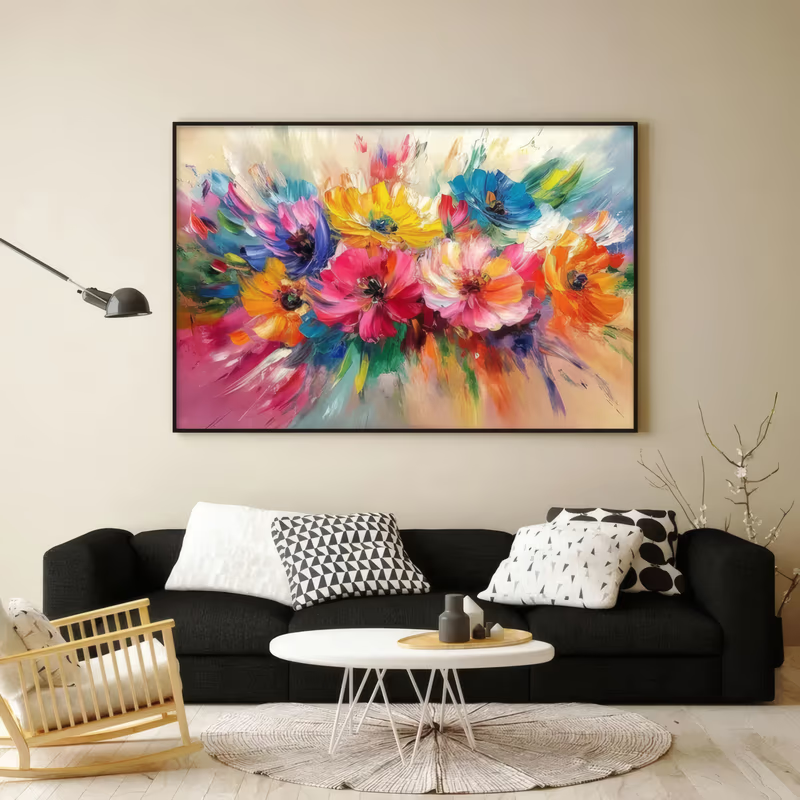
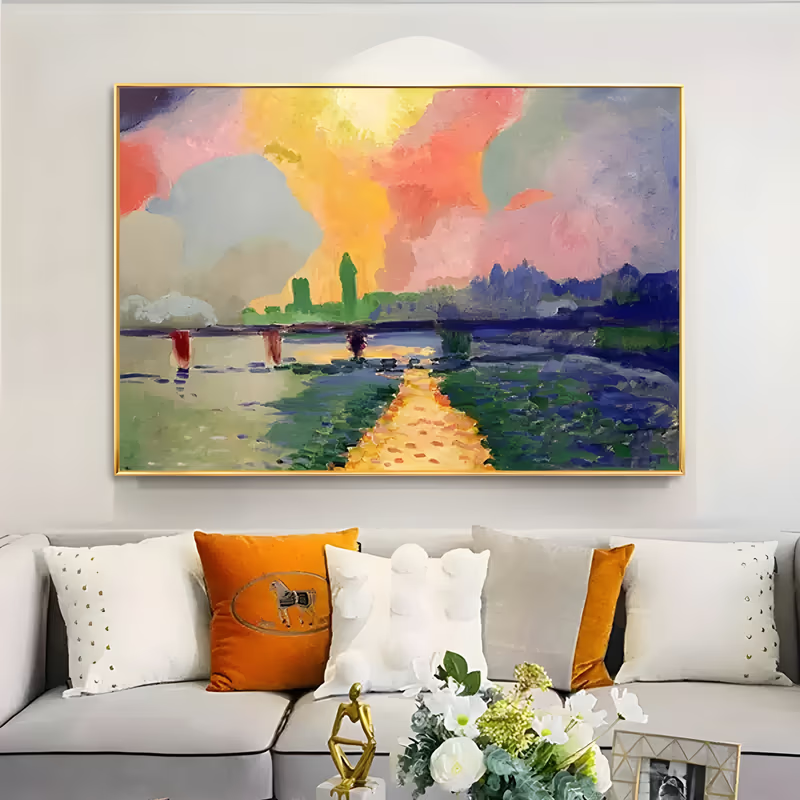
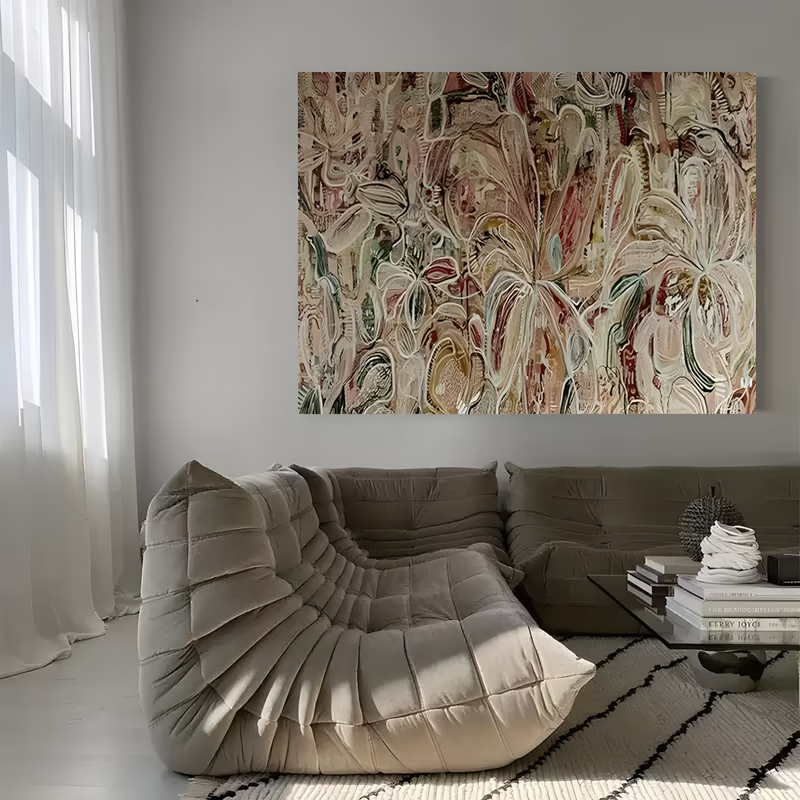
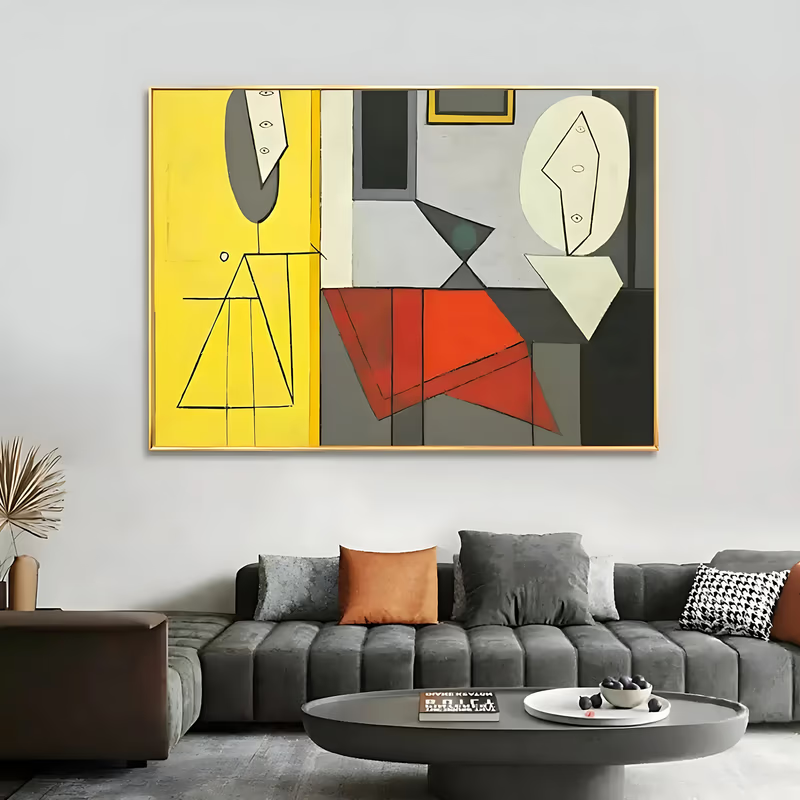
Furniture is mostly long and low, and the art that hangs above it works best when it repeats that line. A landscape-format canvas makes a single unit with the sofa or the headboard below it; a tall canvas in the same place looks like it is standing on the furniture rather than belonging to it. That is why horizontal is the default for living rooms and dining rooms, and why so many hotel rooms put a wide piece over the bed.
The format also changes how a room feels. A wide composition with a strong horizon line reads as calm and settled, and it draws the eye sideways, so a room can seem a little broader. Under a low ceiling, a horizontal piece keeps the wall from feeling cramped, because it does not compete with the height. If the space is a narrow panel between openings, look at vertical wall art instead.
Horizontal, panoramic or a set: which wide format fits your wall?
Pick the ratio from the shape of the space: a standard horizontal canvas runs from about 5:4 to 3:2, panoramic starts around 2:1, and a pair or trio covers a long wall in sections.
| Format | Width to height | How it reads | Where it fits |
|---|---|---|---|
| Gentle horizontal | About 5:4 to 4:3 | Compact and almost square; strong on its own | Chests, consoles, desks, a fireplace with a wide chimney breast |
| Classic horizontal | About 3:2 | The proportion of a view through a window | Sofas, beds, sideboards, the wall behind a desk |
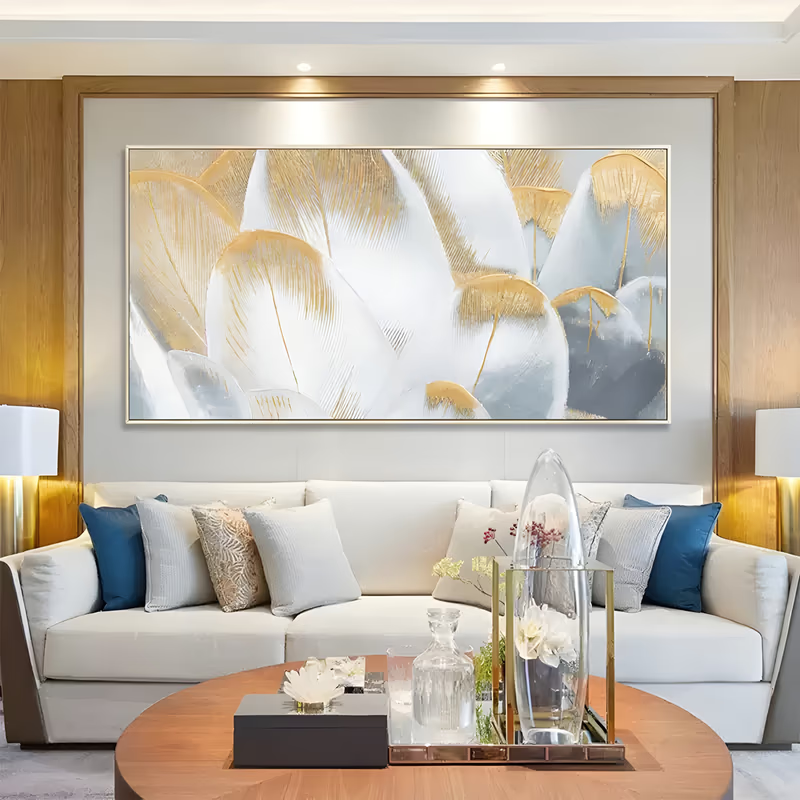
| Panoramic | 2:1 to 3:1 | Long and low; read by moving the eye along it | Headboards, banquettes, long sofas, corridors; see panoramic wall art |
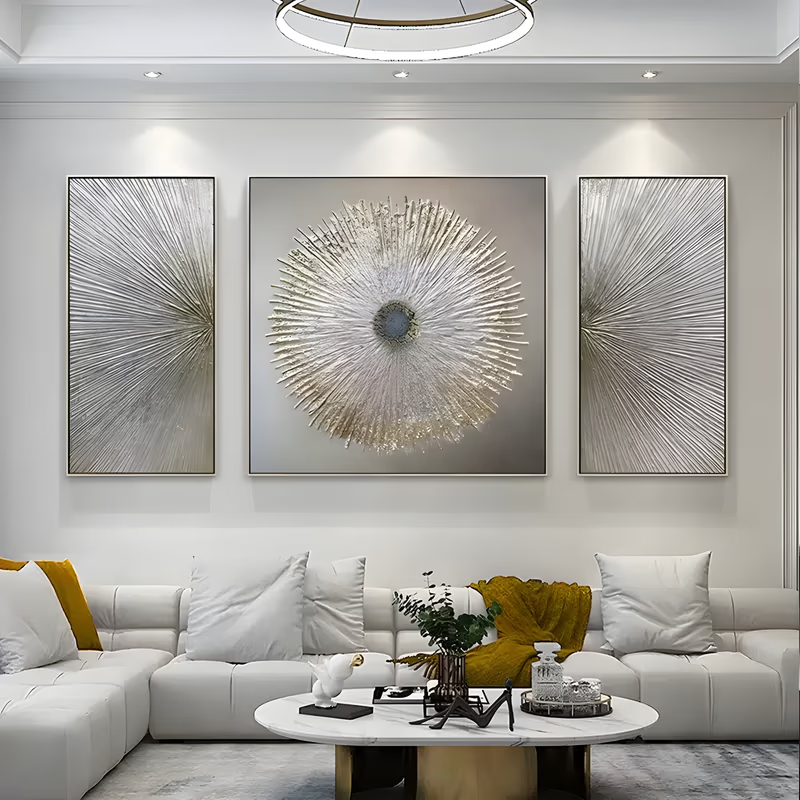
| Pair or trio of horizontals | Two or three canvases, 5–8 cm apart | One idea in sections; lighter on the wall | Very long walls, walls broken by a column or a switch |
A quick test: cut a sheet of paper to the proportion you are considering and tape it to the wall at the right size, or mark the outline with low-tack tape. The ratio that looks right from the door is usually the one to order. Because every piece here is painted to order, you are not limited to the standard sizes listed on each work, which run from about 61 × 51 cm to 203 × 153 cm.
What kinds of horizontal paintings are there?
The subjects made for a wide format are the ones that spread sideways: landscapes and seascapes with a horizon, long bouquets and branches, scenes with several figures or animals, and abstract fields of colour.
Landscapes and seascapes
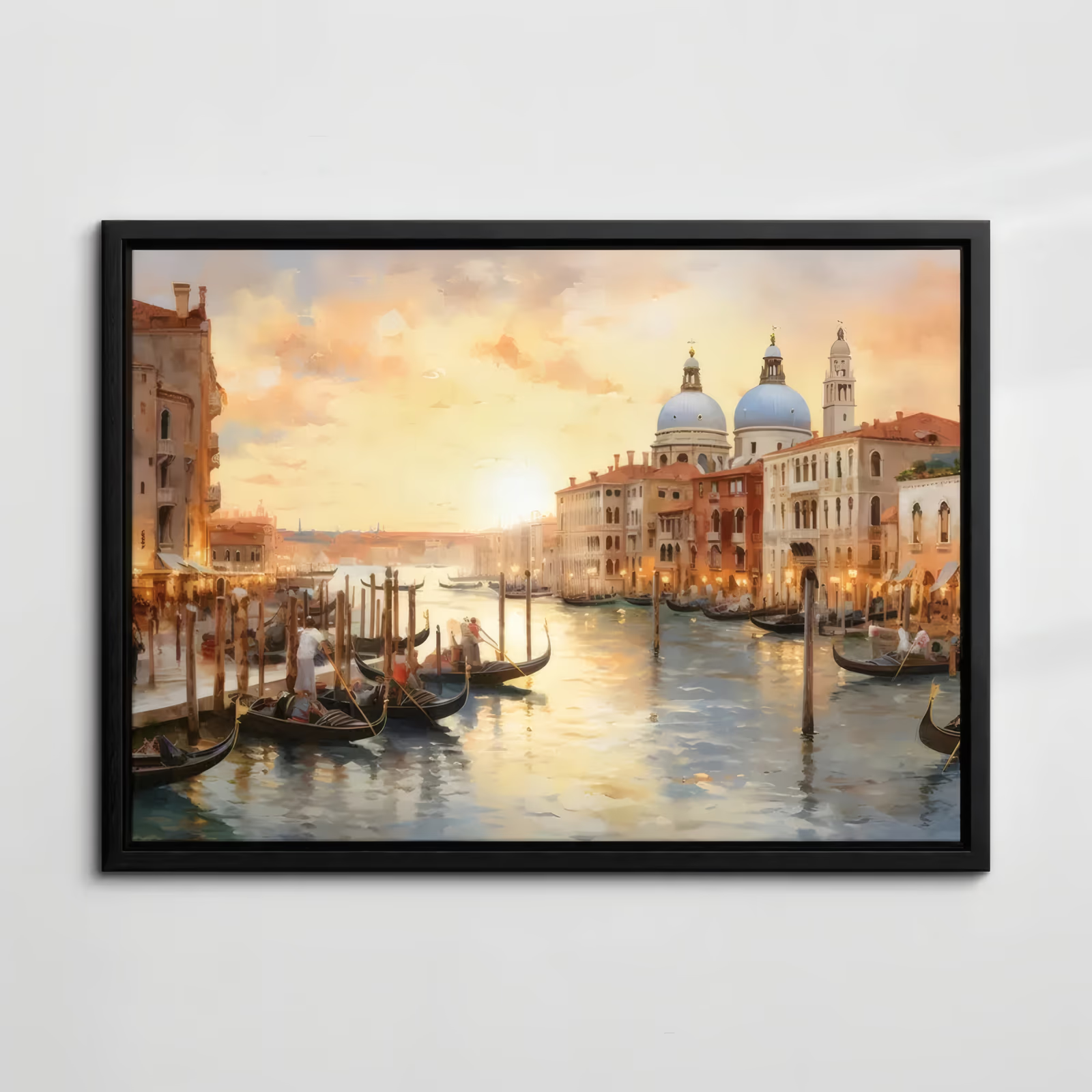
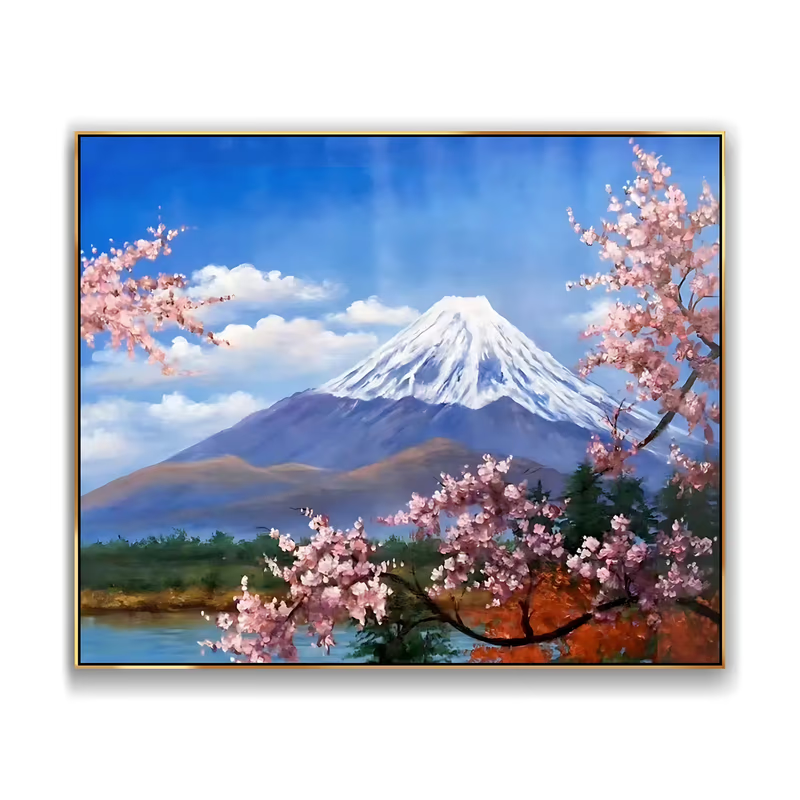
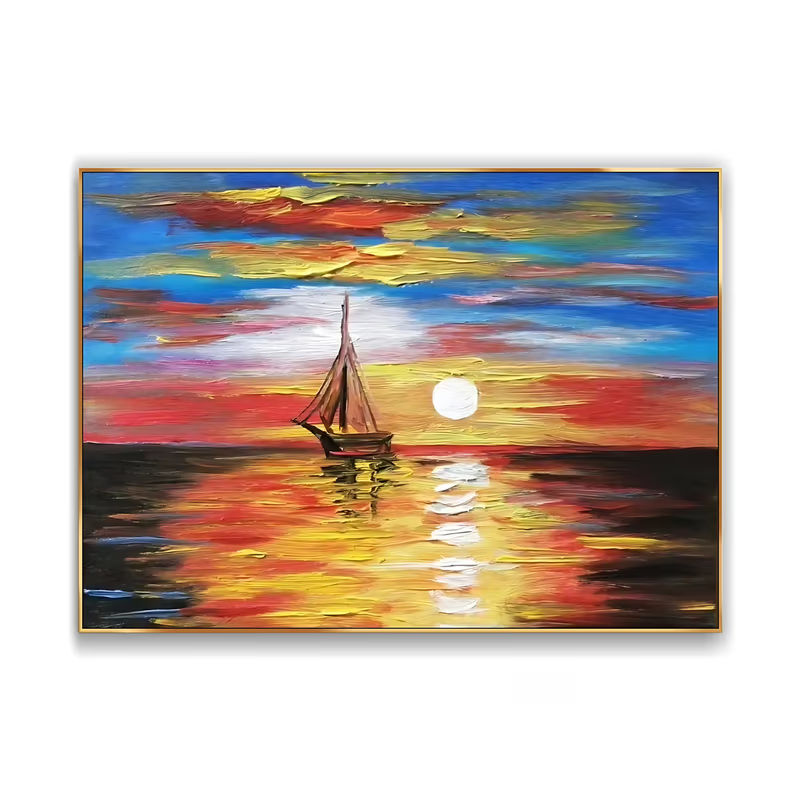
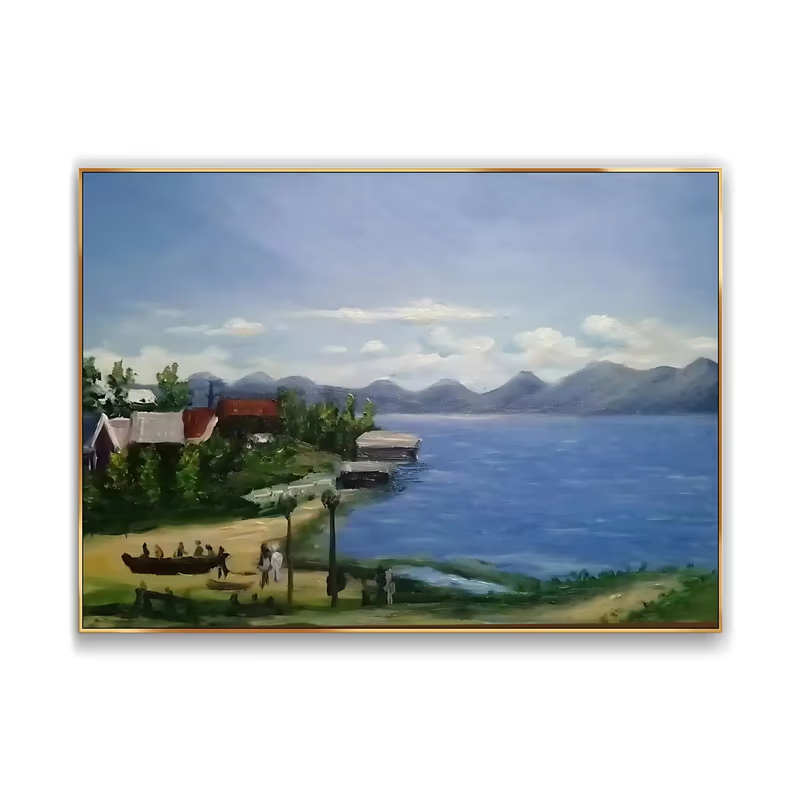
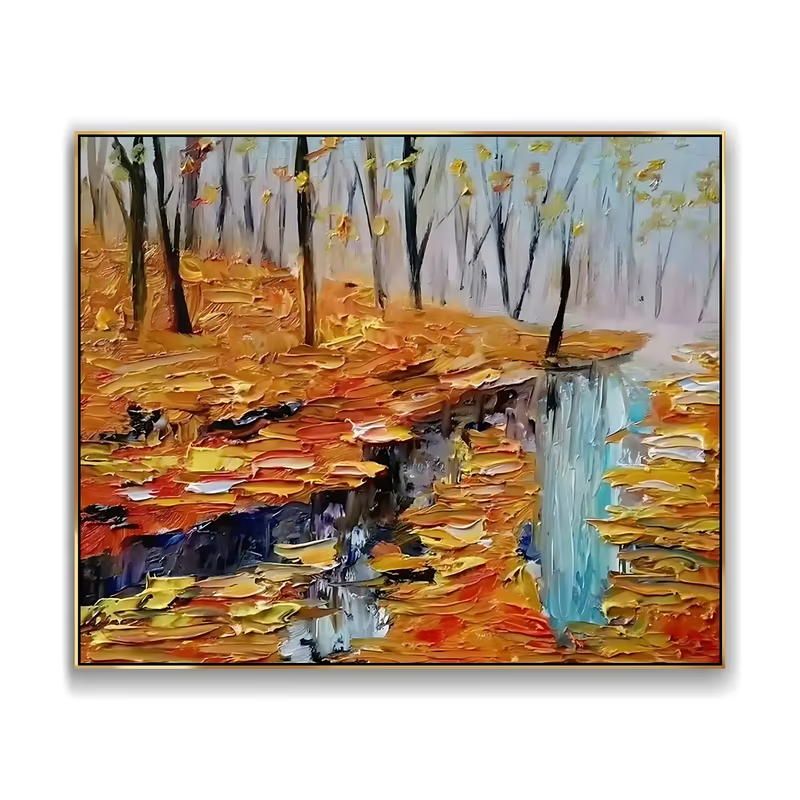
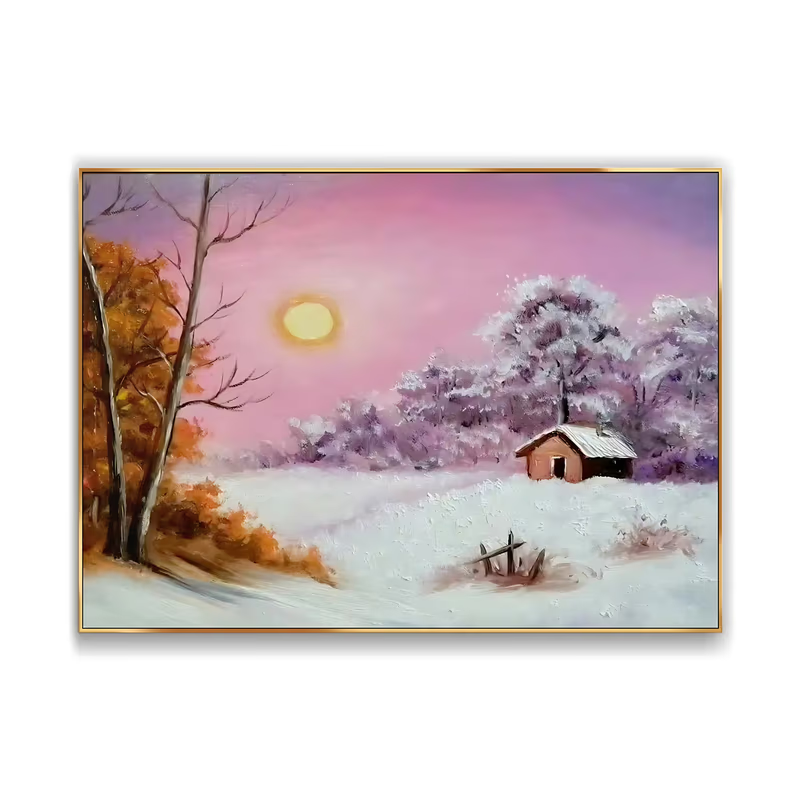
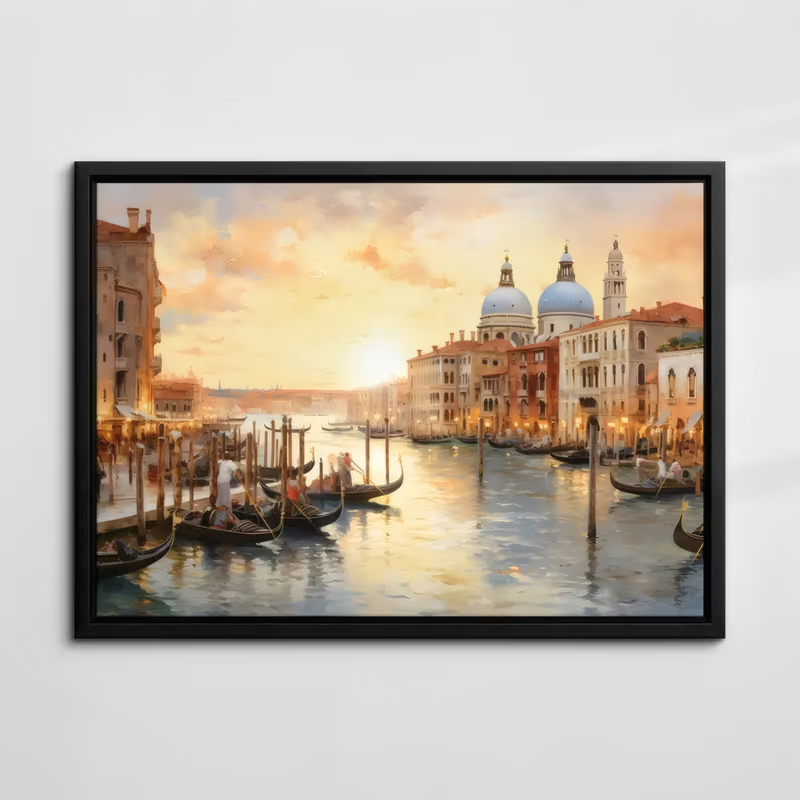
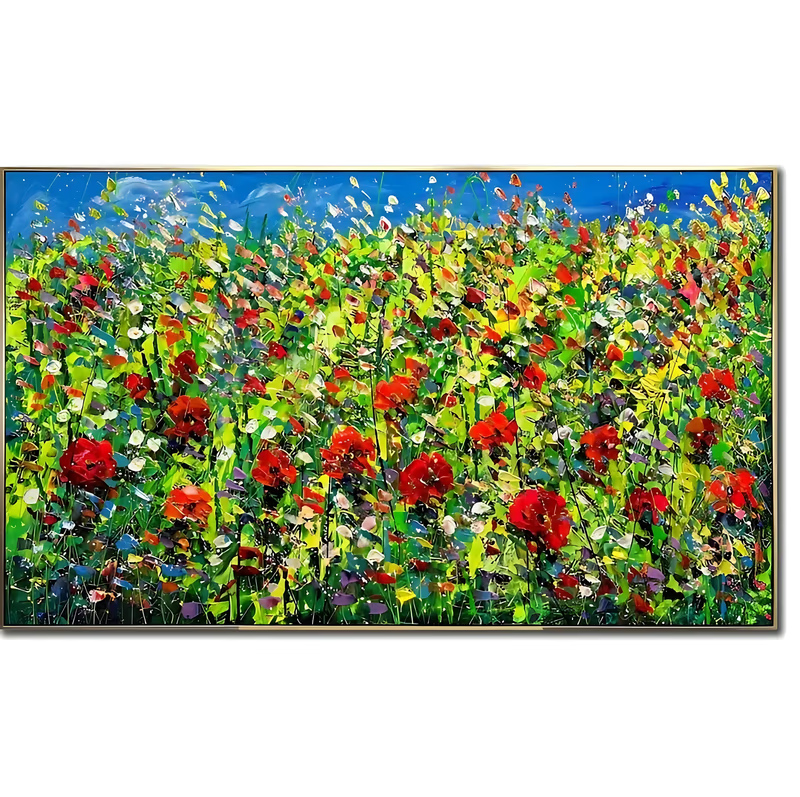
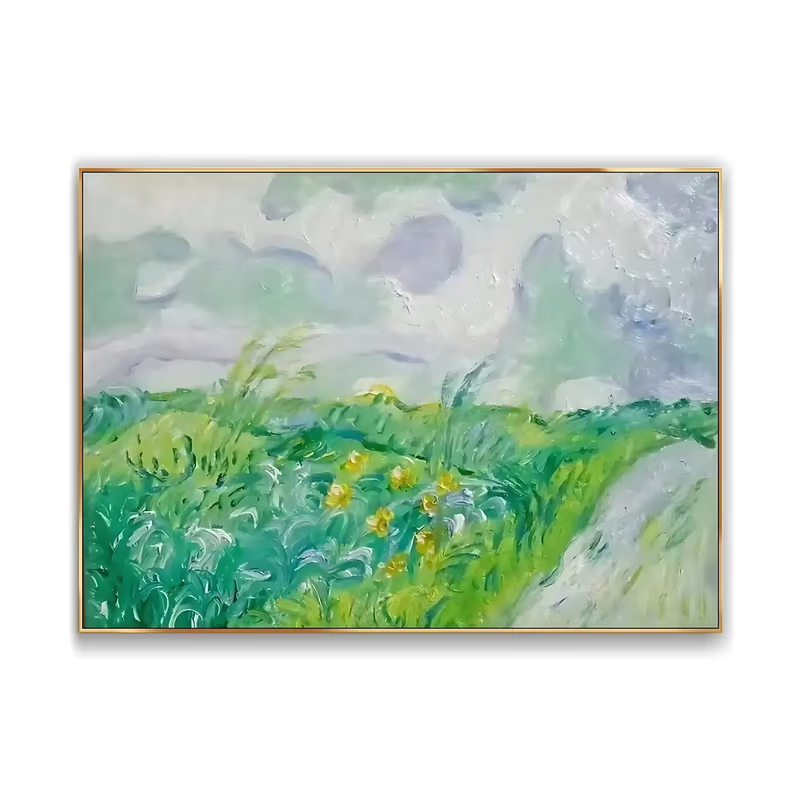
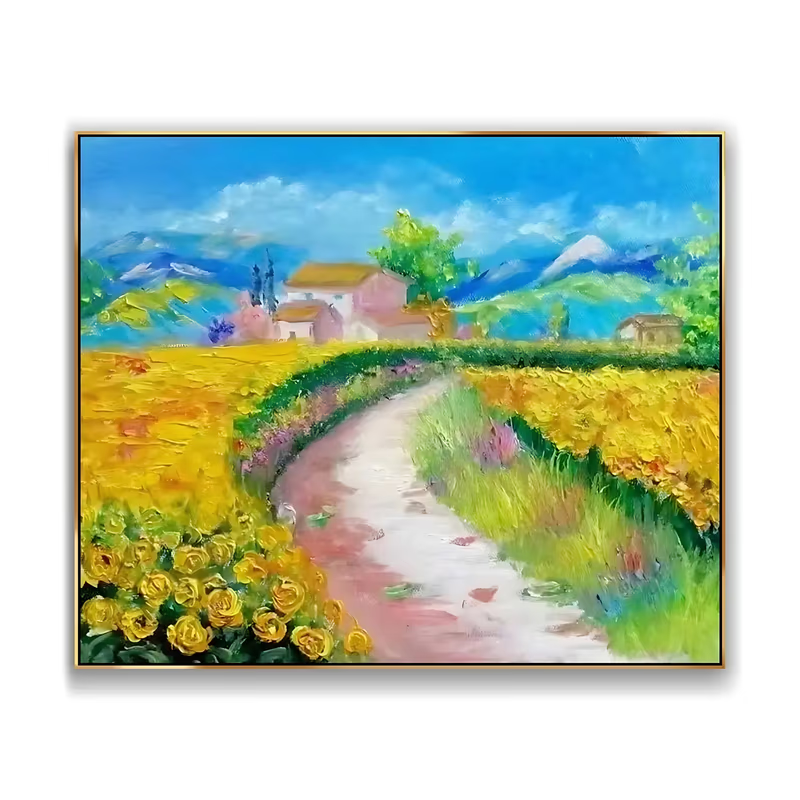
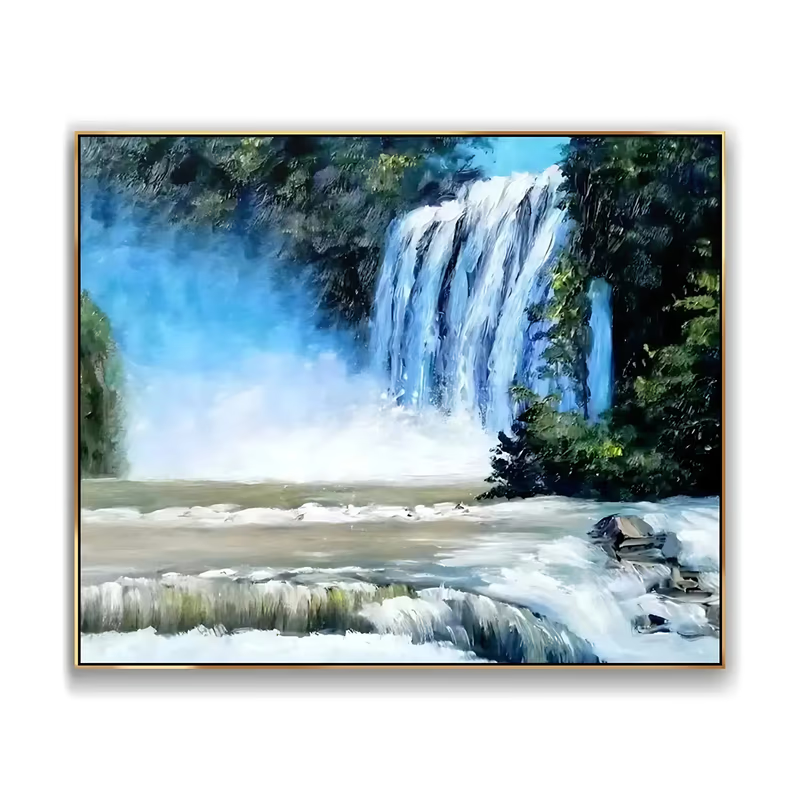
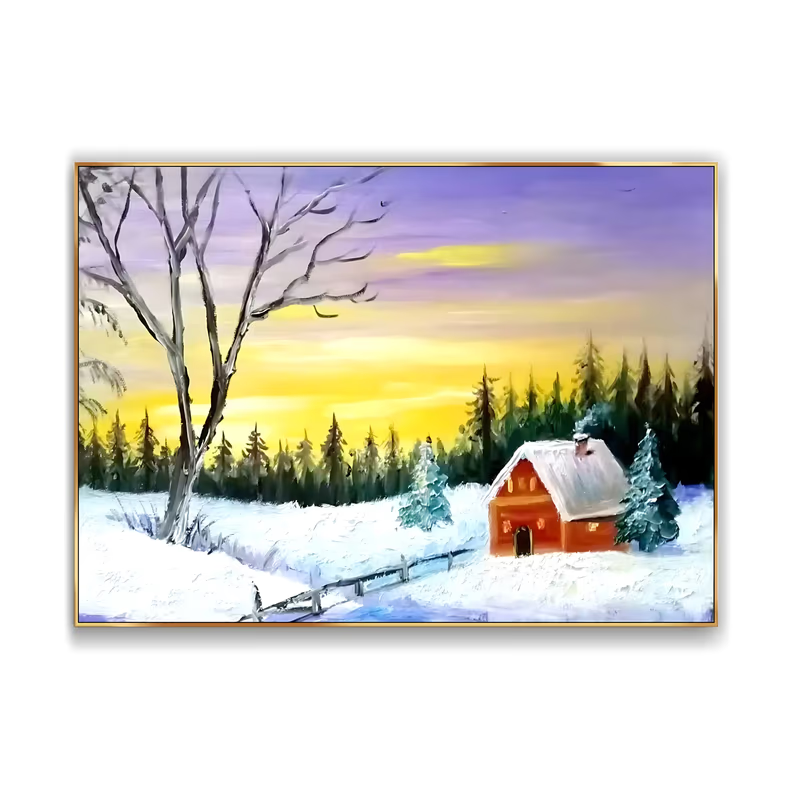
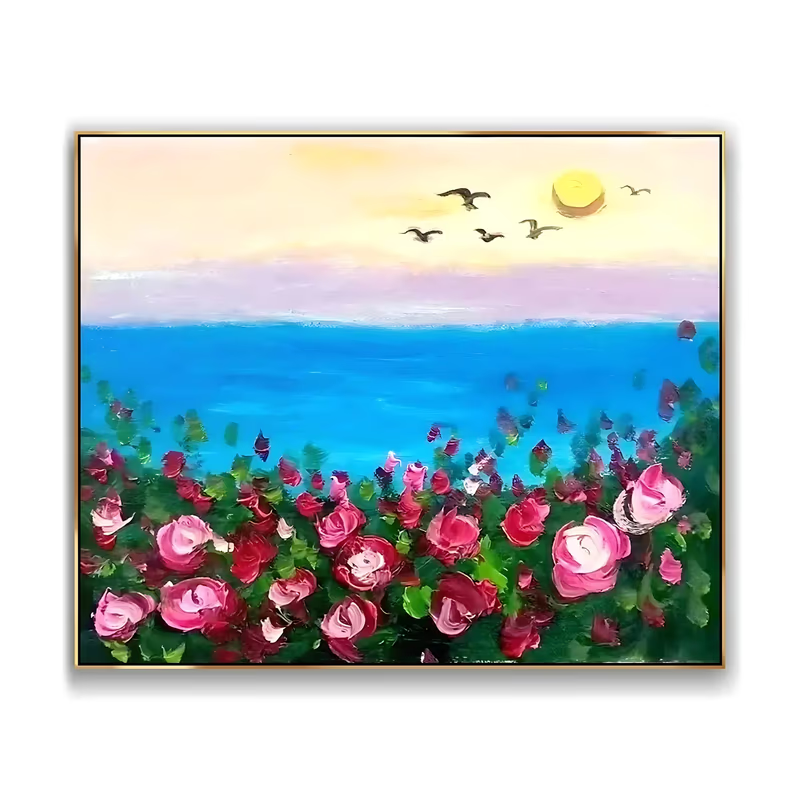
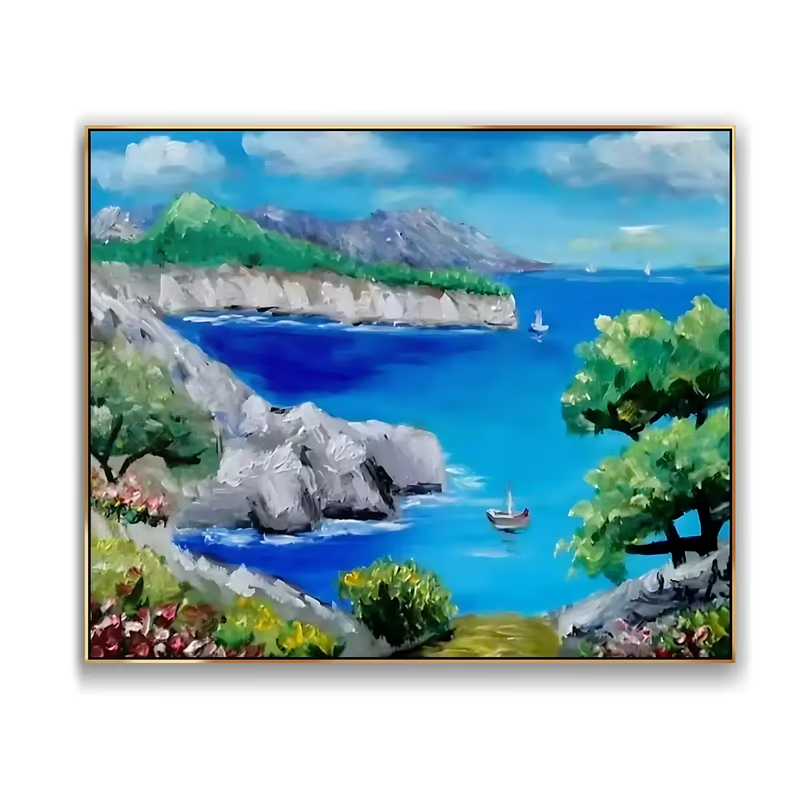
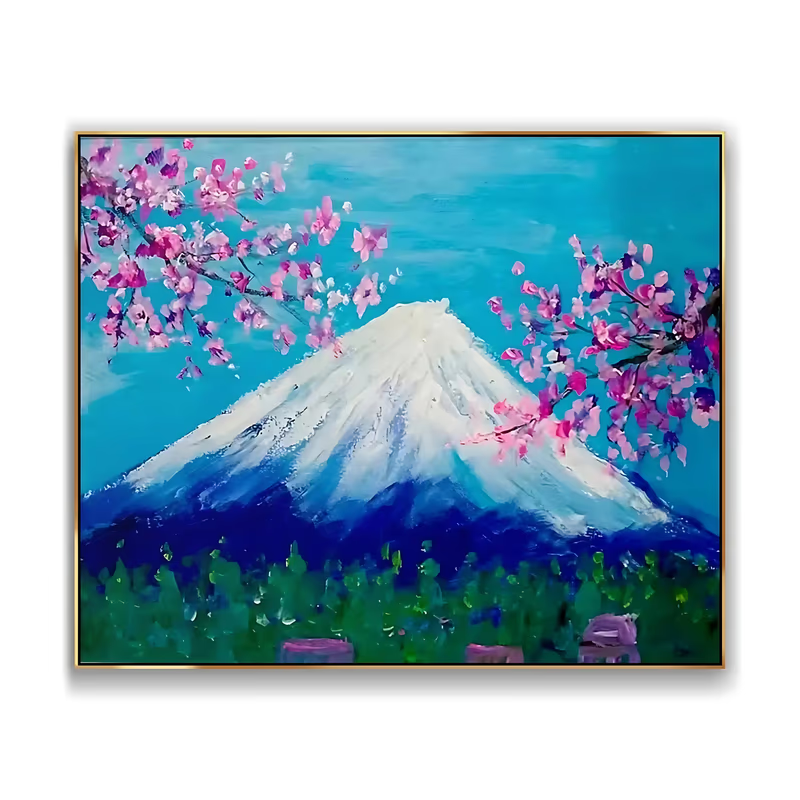
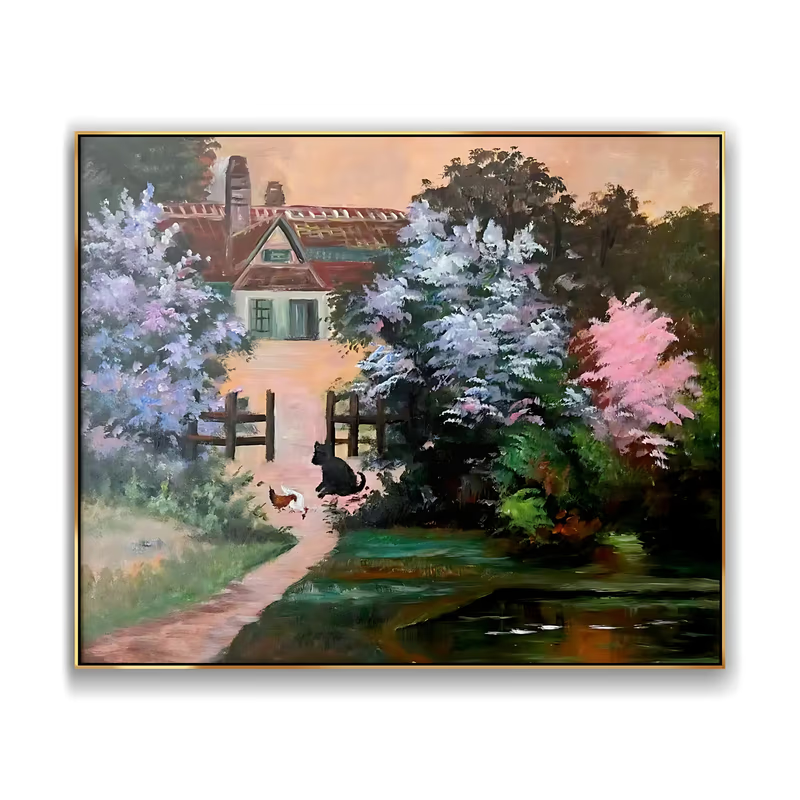
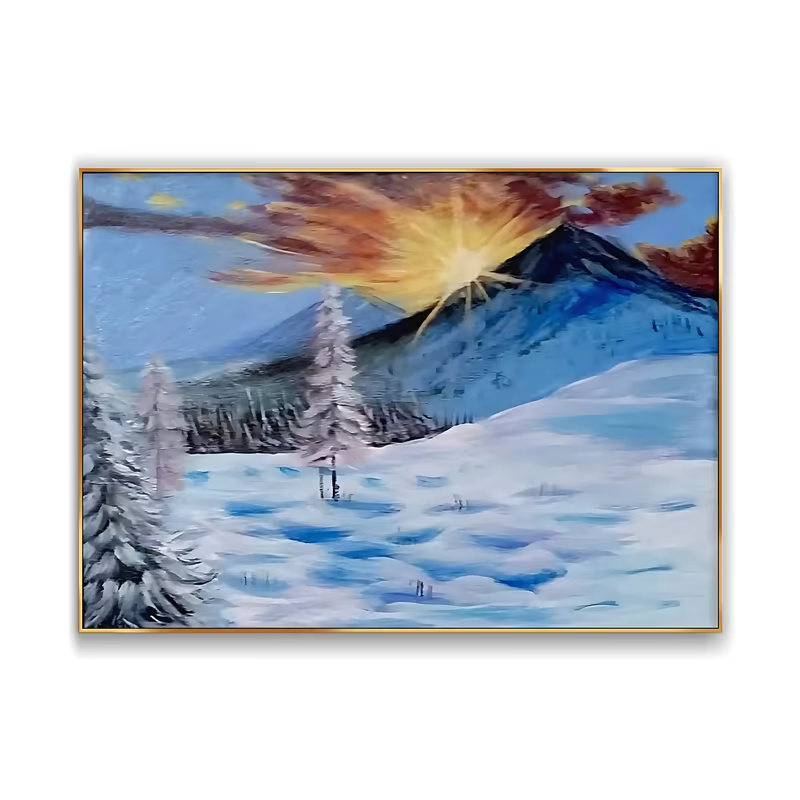
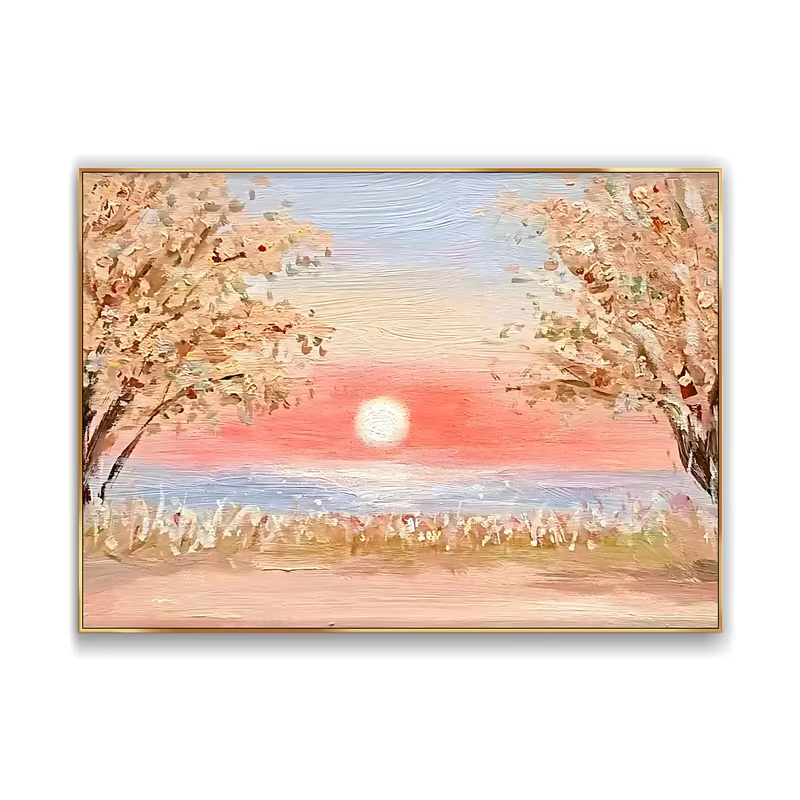
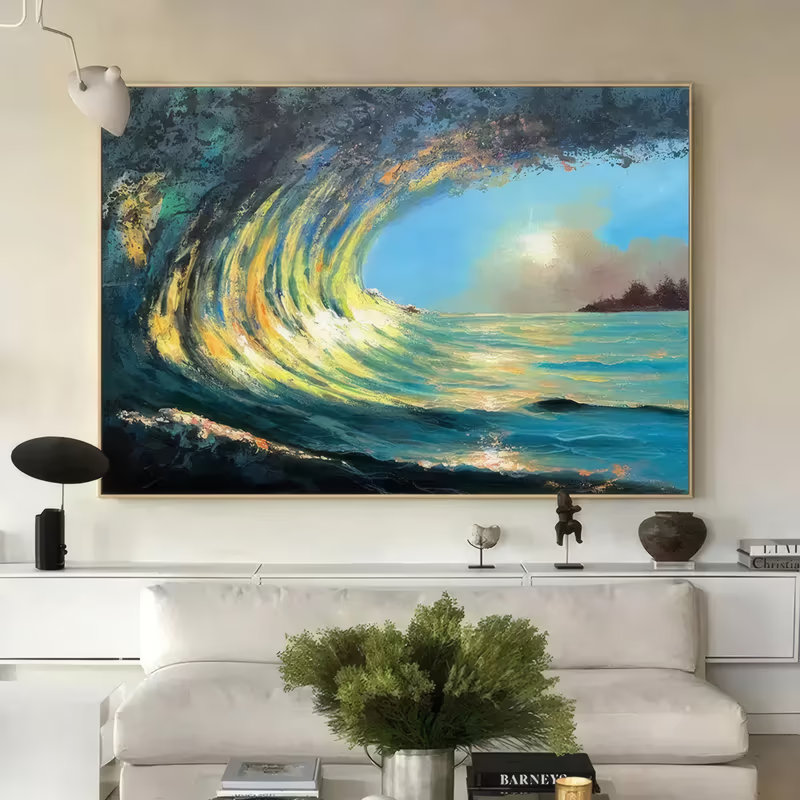
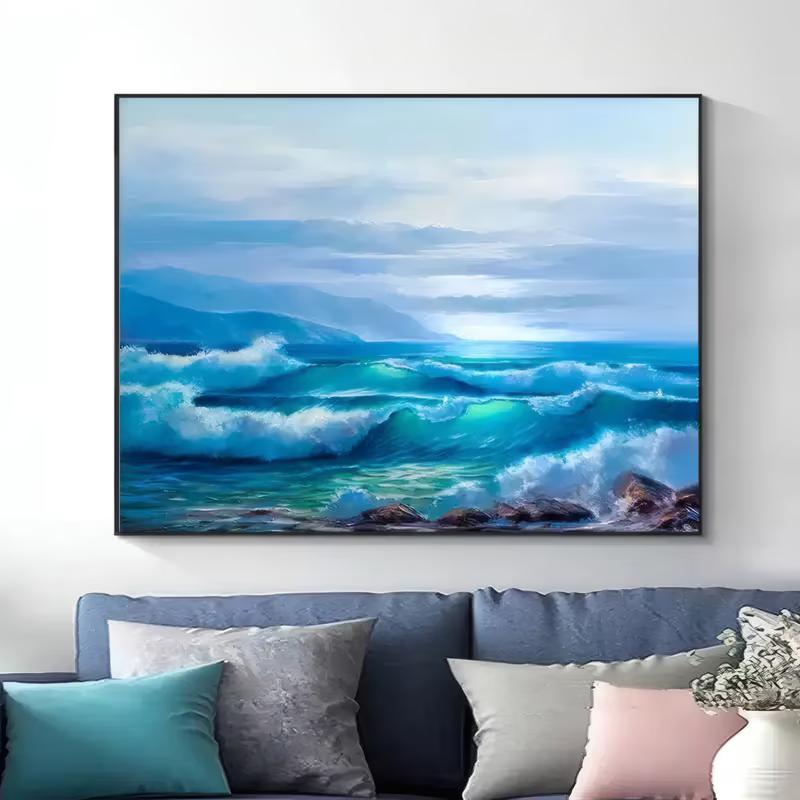
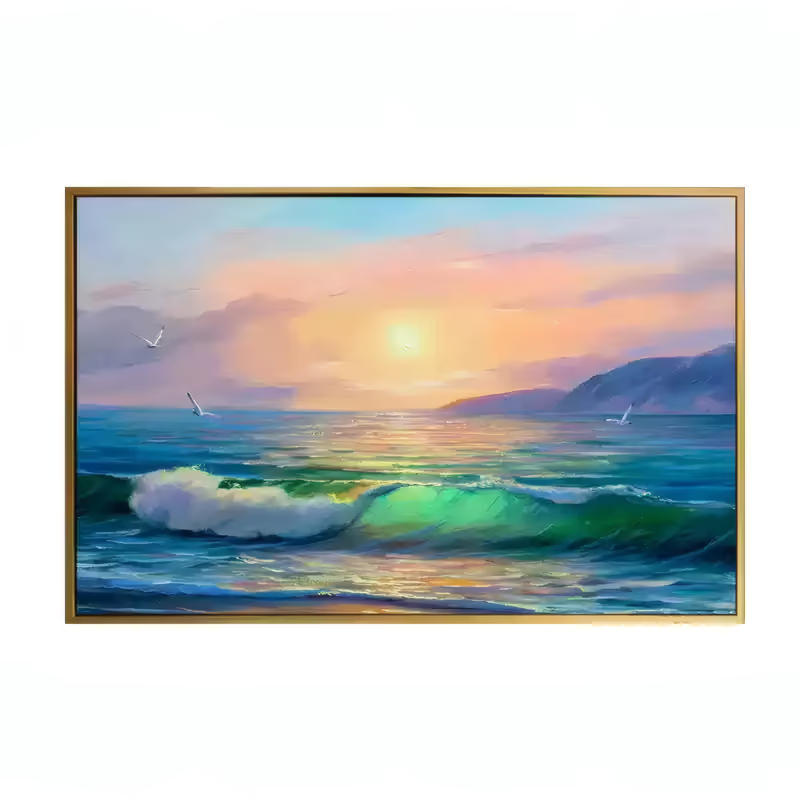
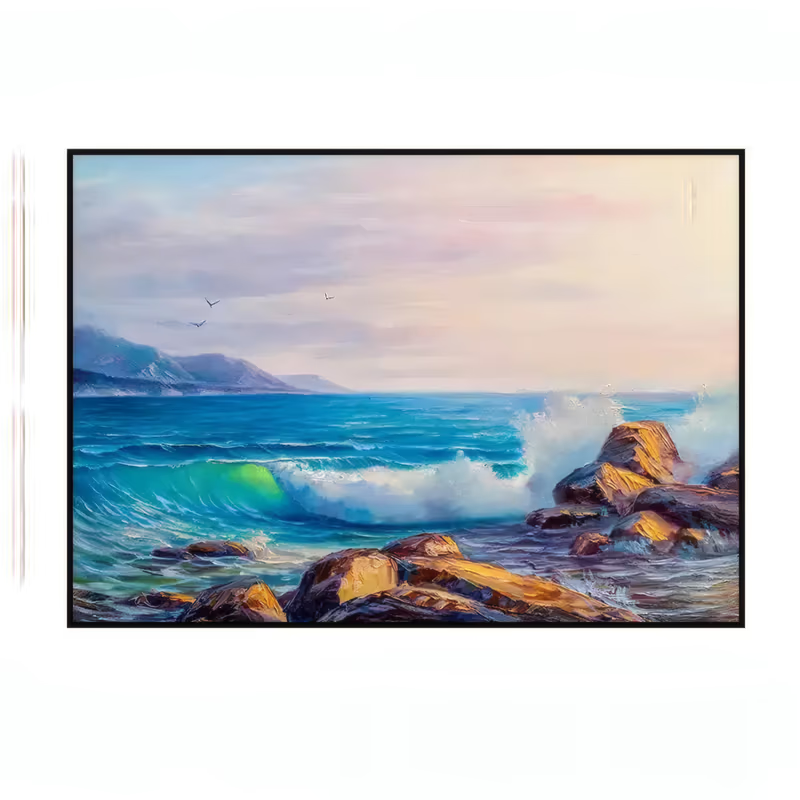
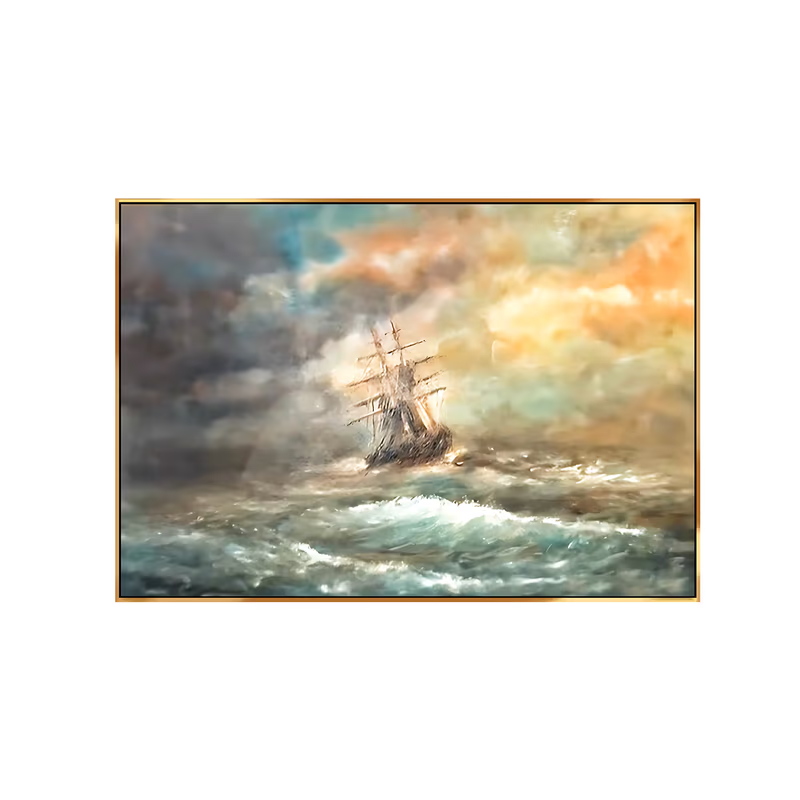
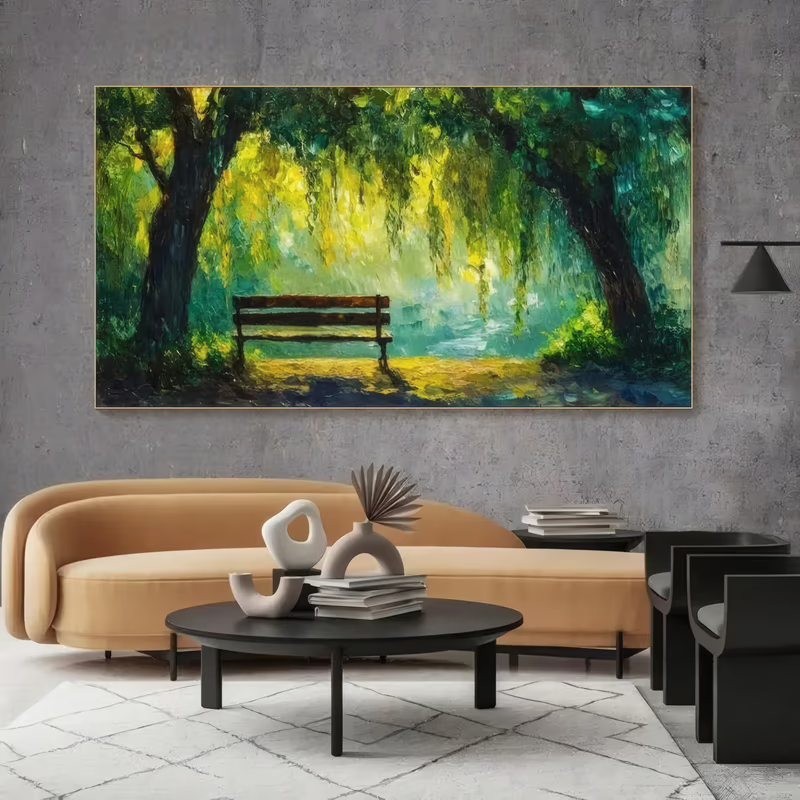
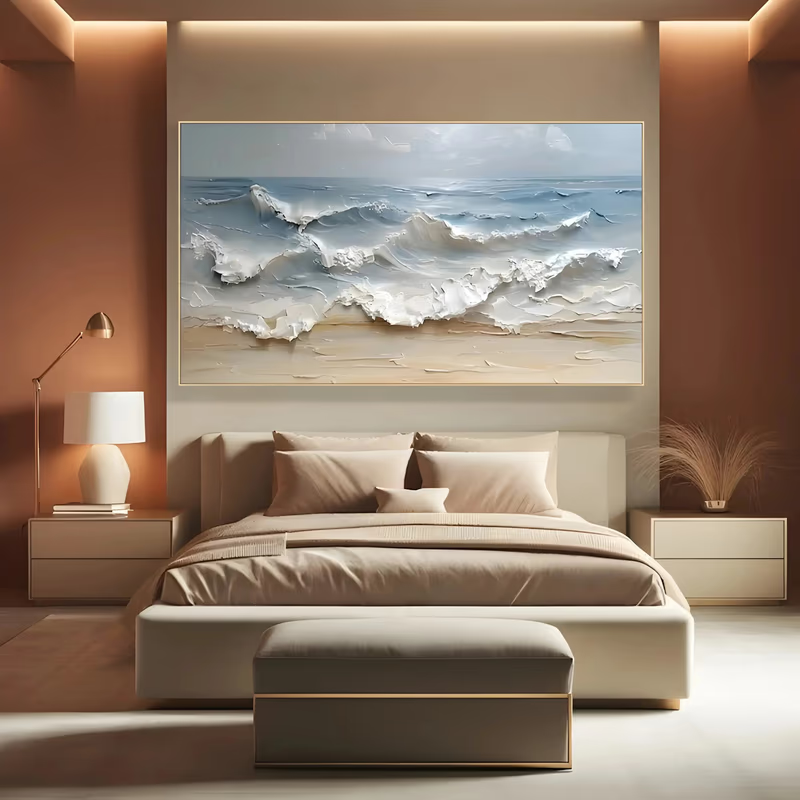
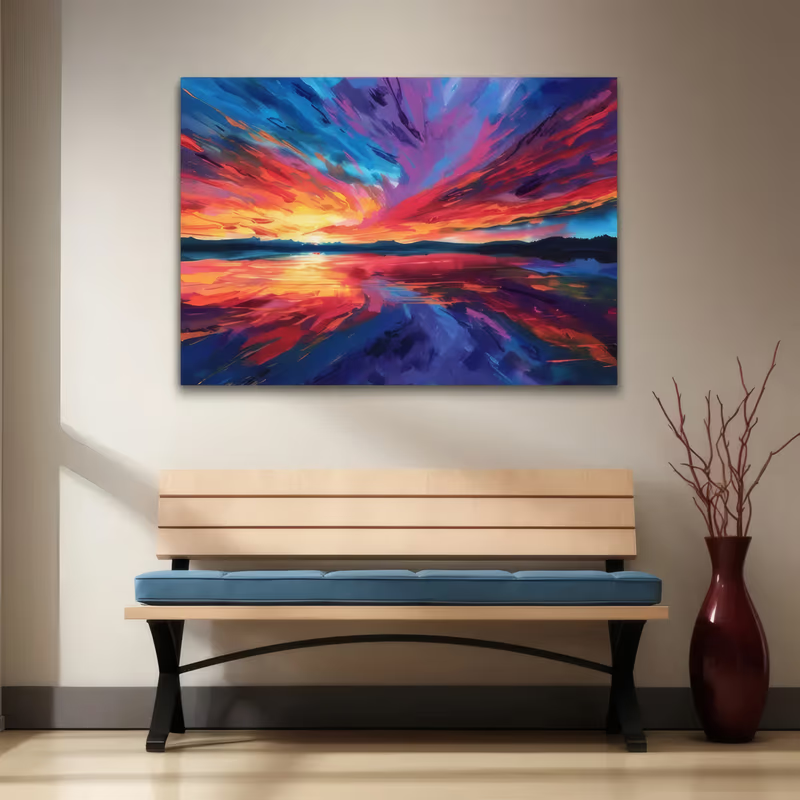
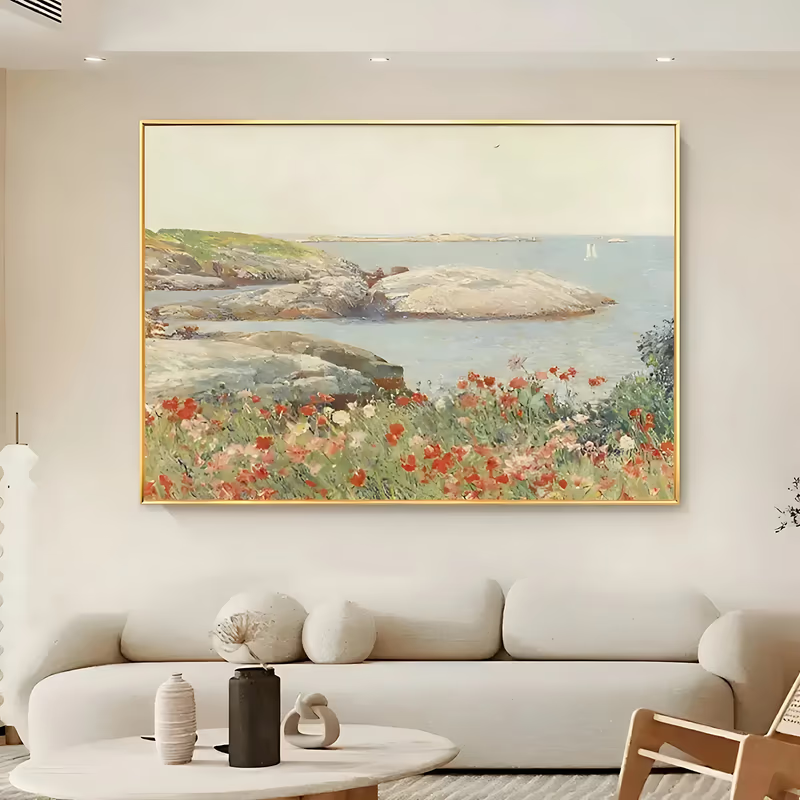
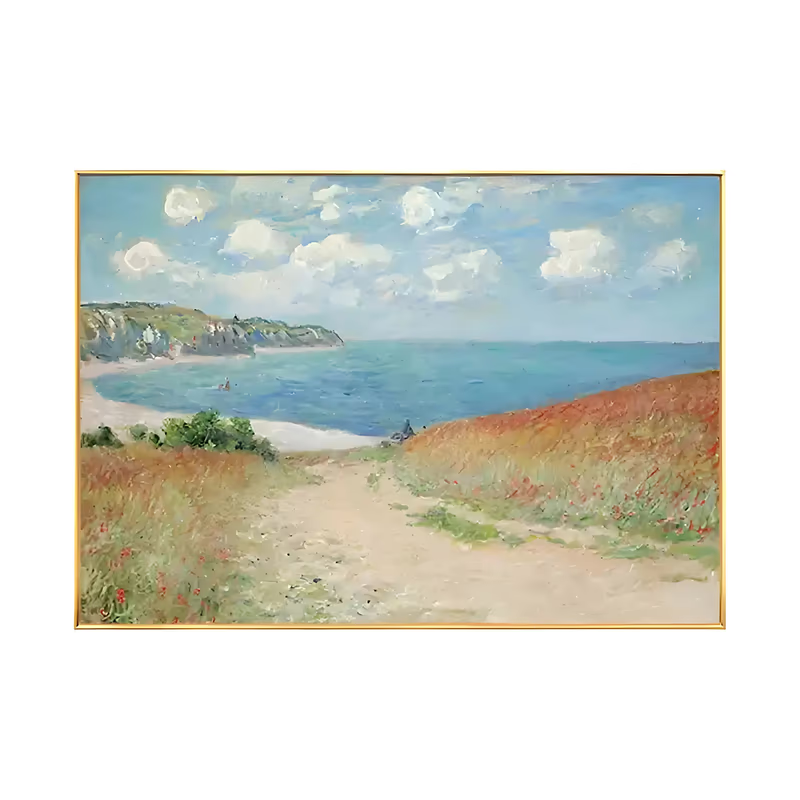
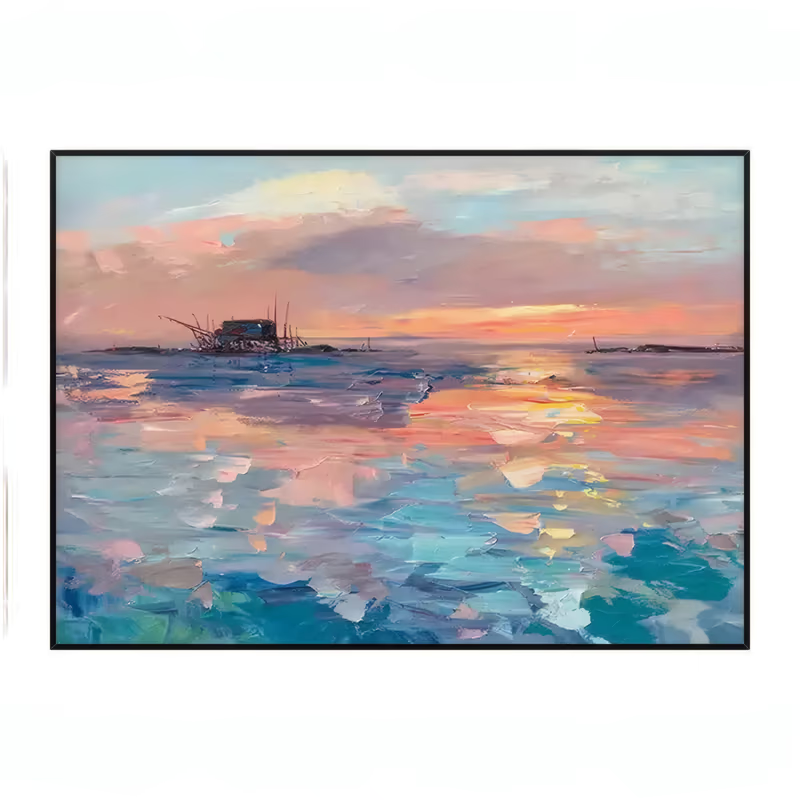
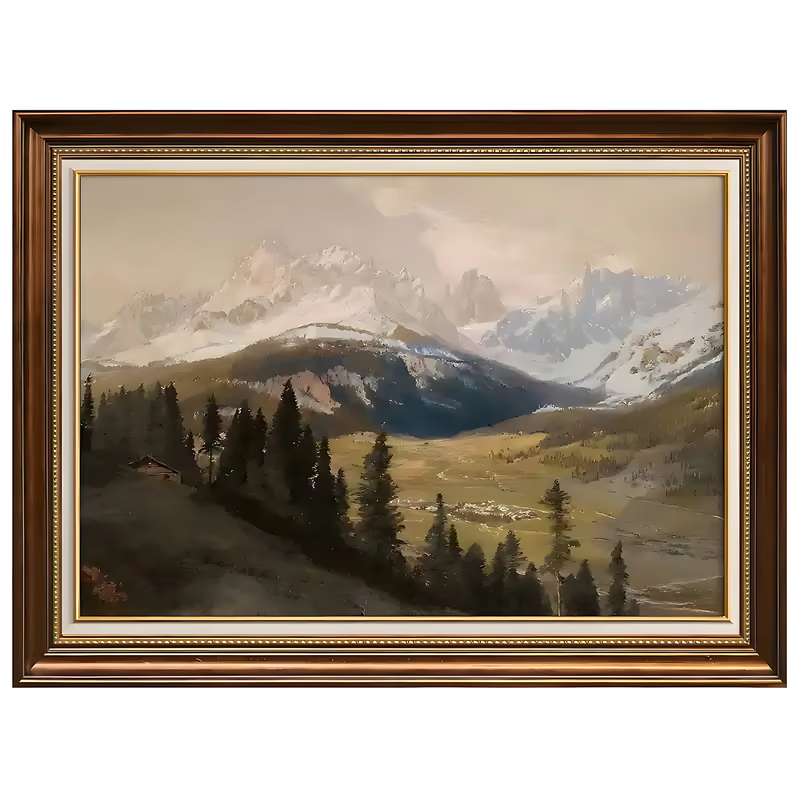
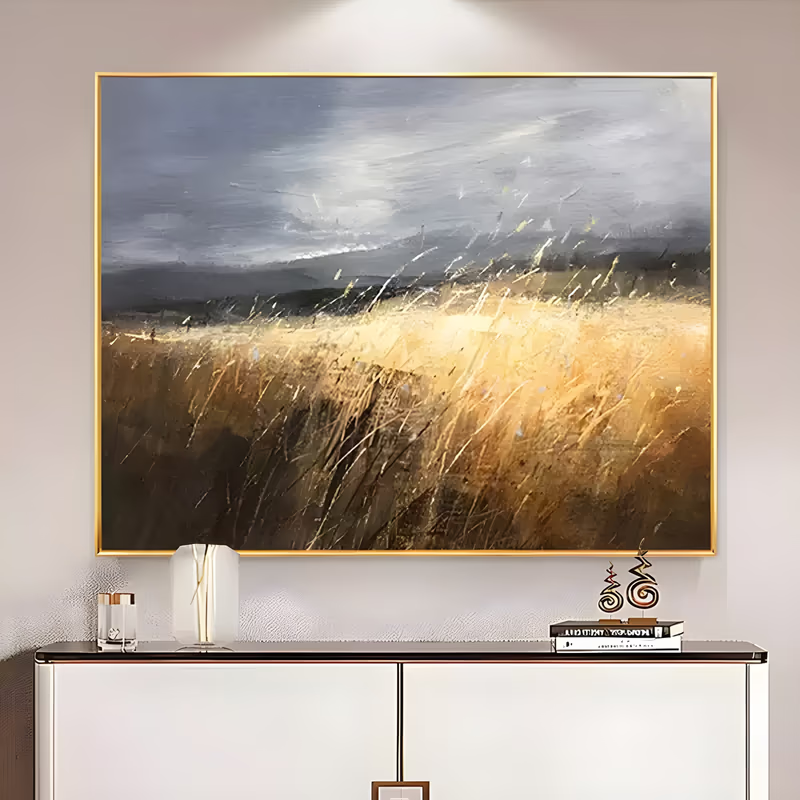
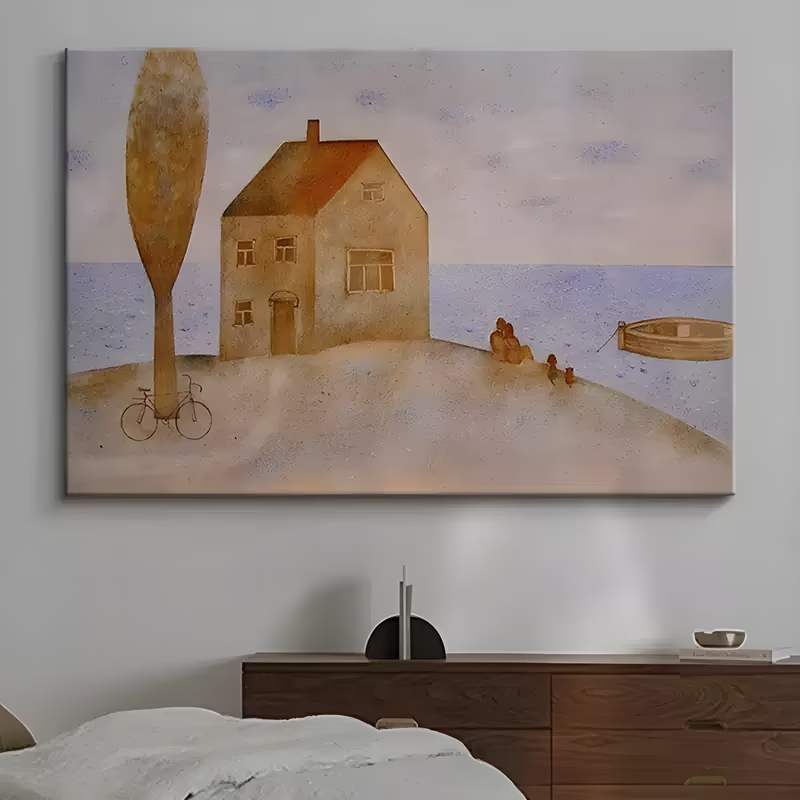
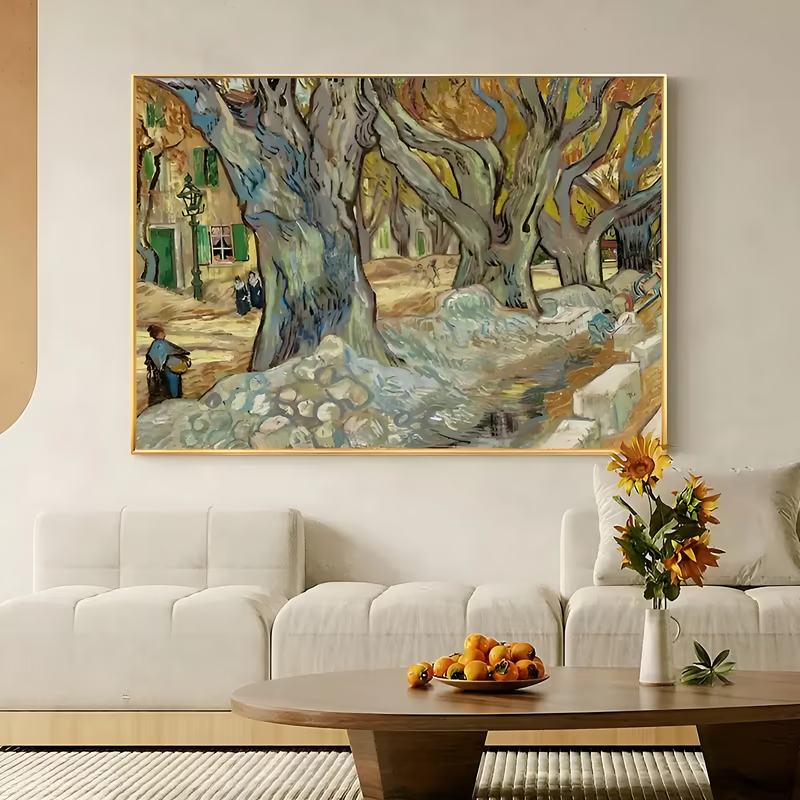
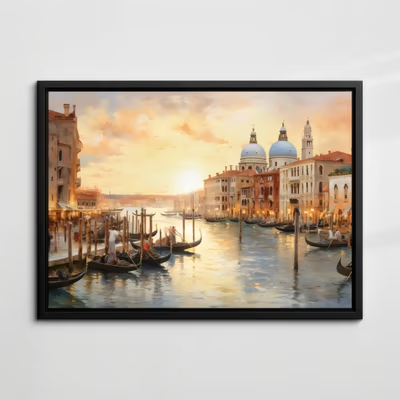
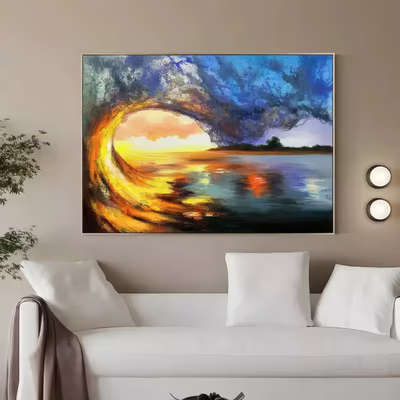
A horizon is the natural spine of a horizontal canvas. Mountain lakes, fields, autumn paths, coastlines and sunsets all open a wall like a window, which is why they are the first choice for living rooms, guest rooms and lobbies. All horizontal landscapes and seascapes.
Long bouquets and branches
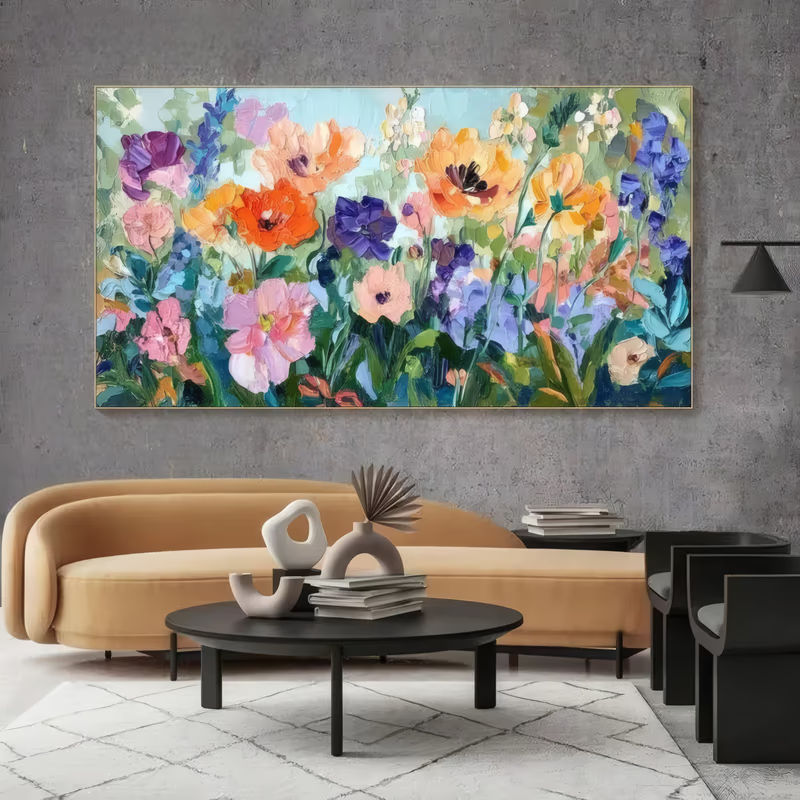
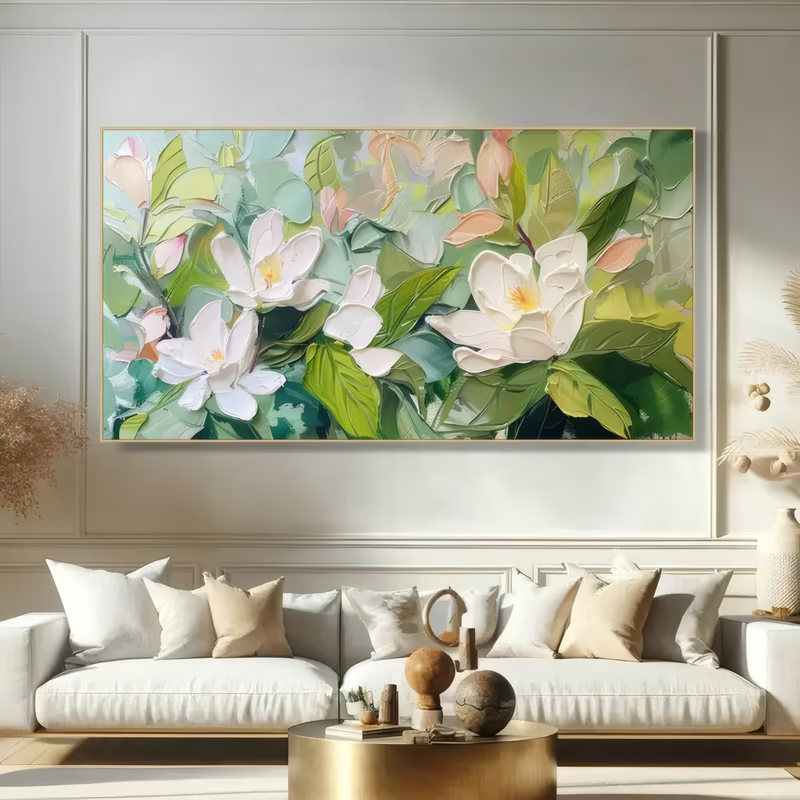
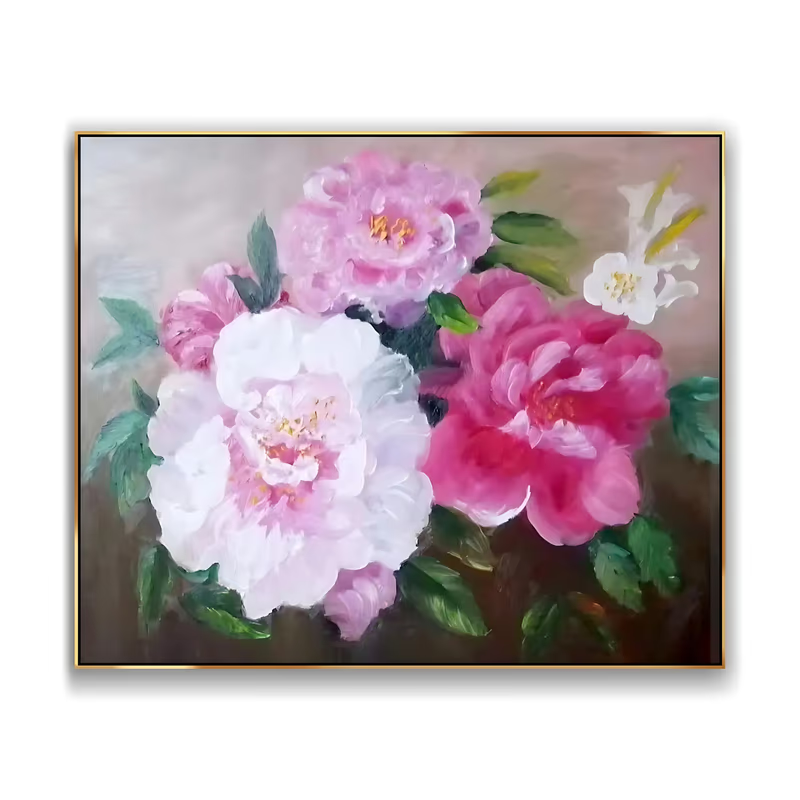
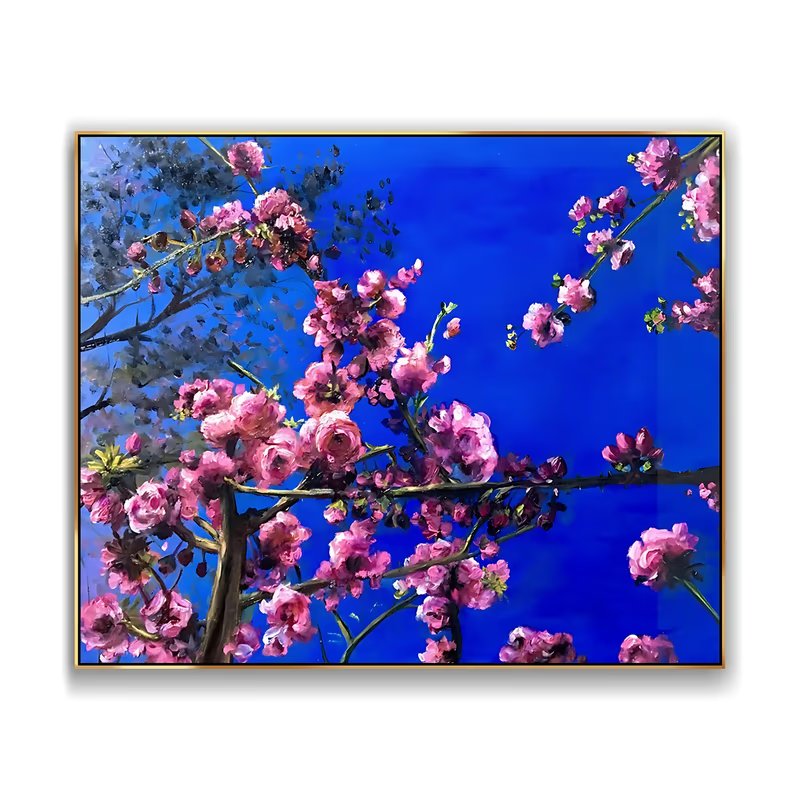
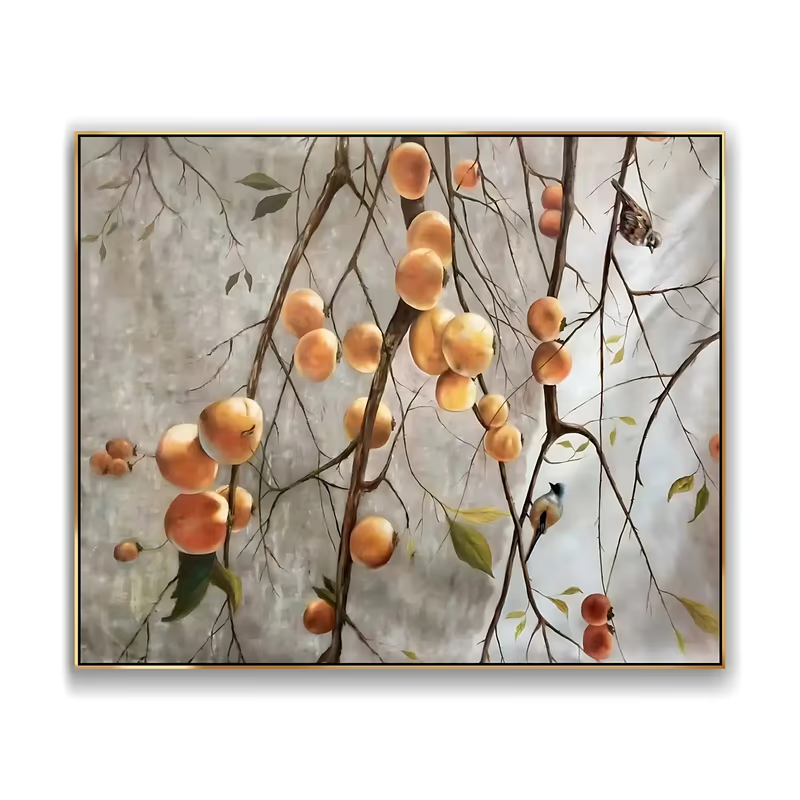
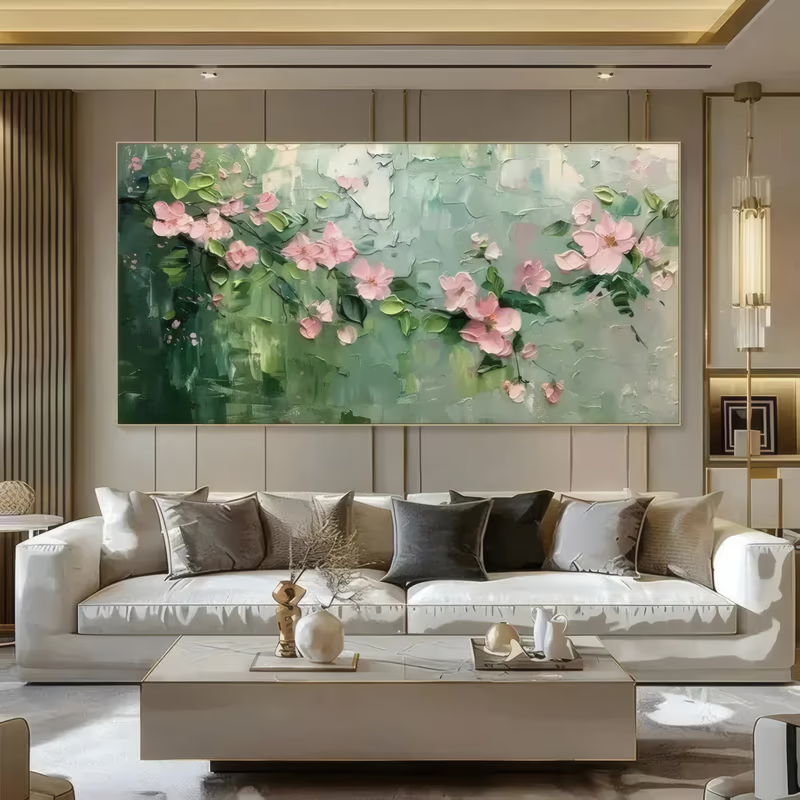
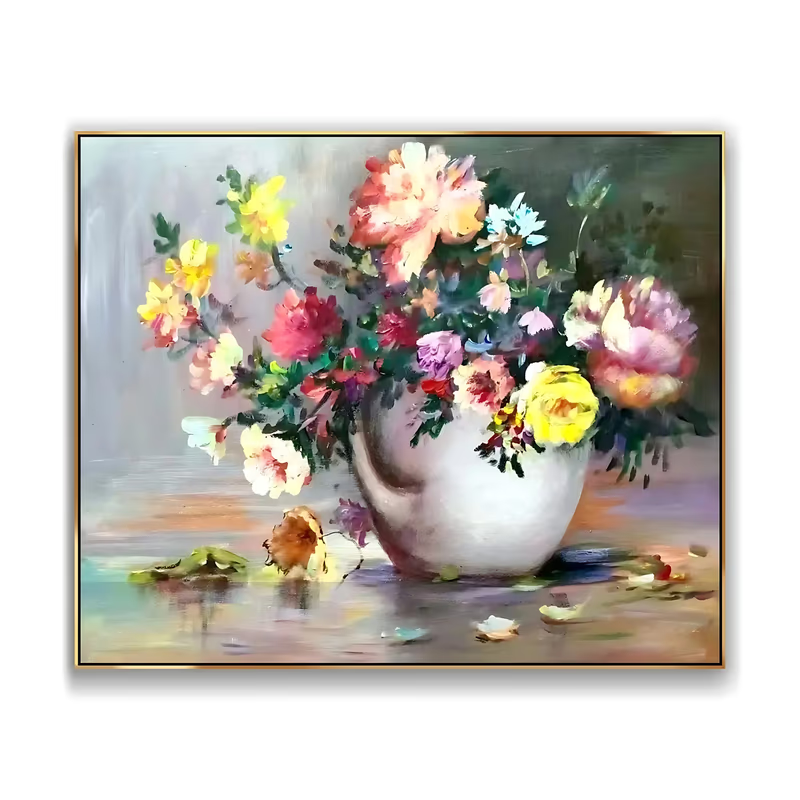
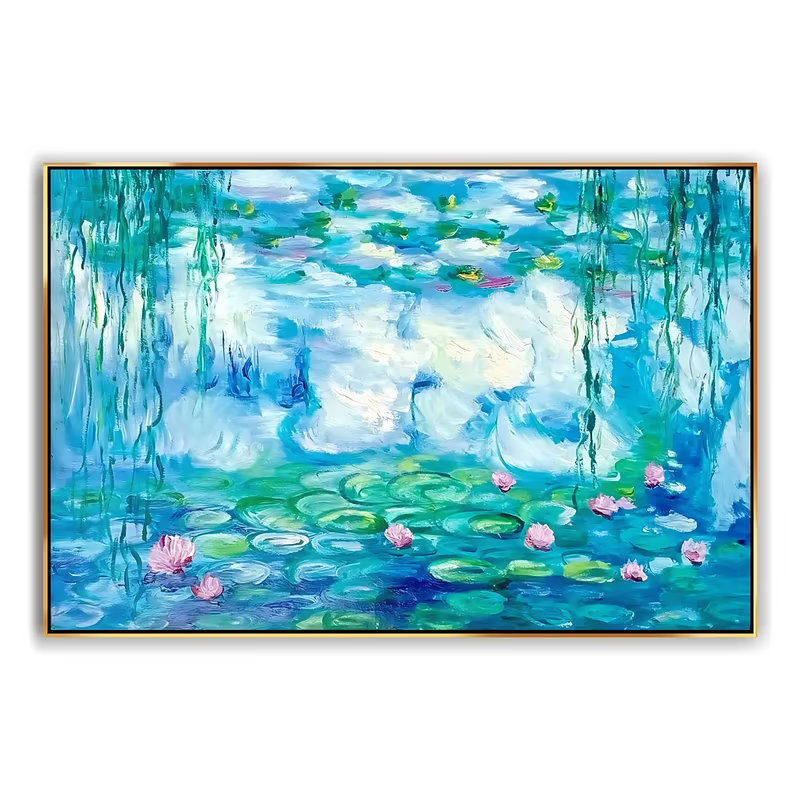
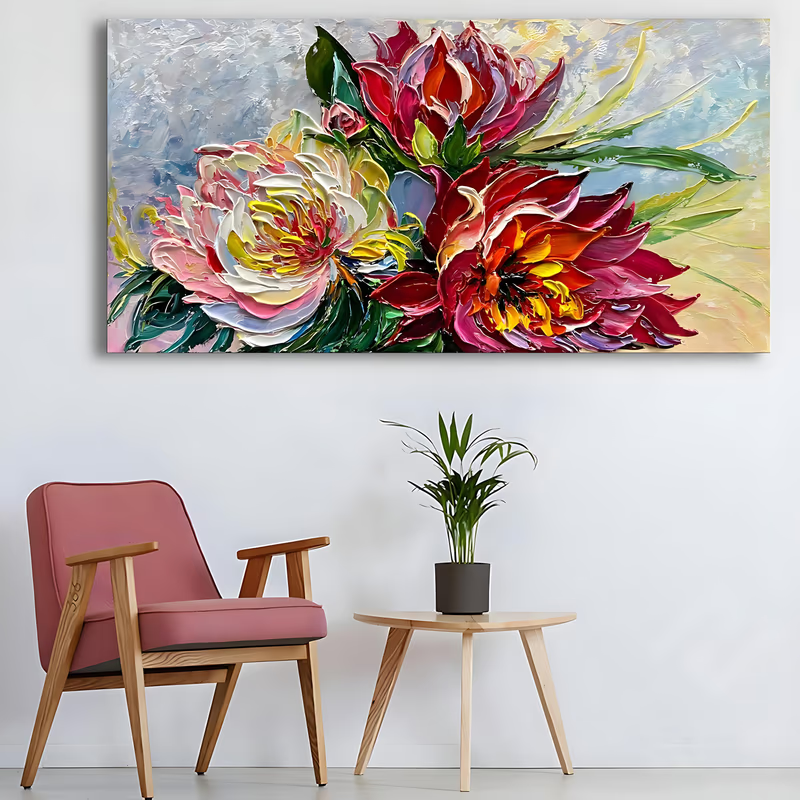
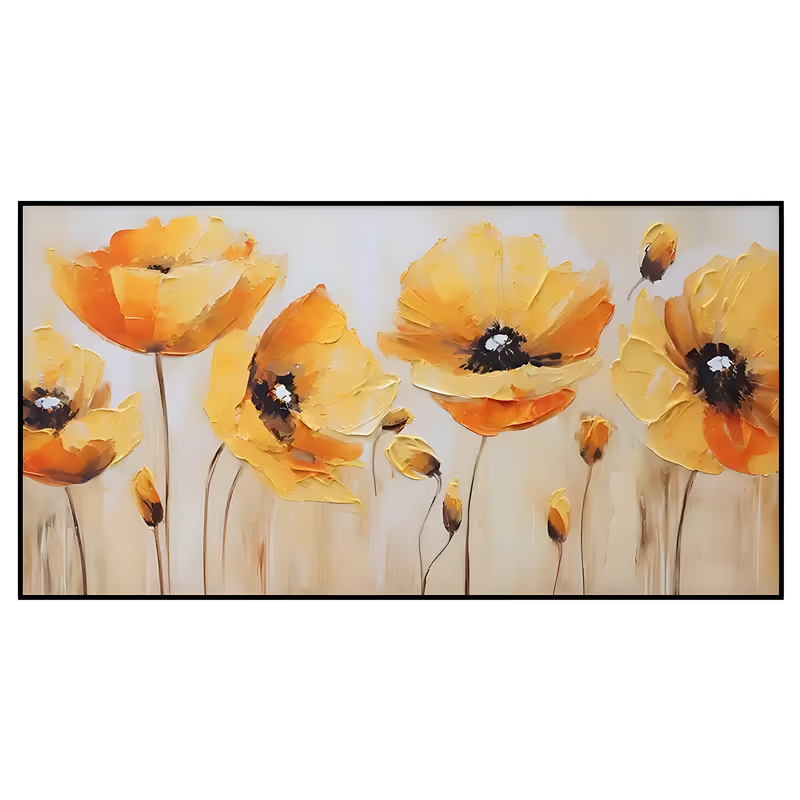
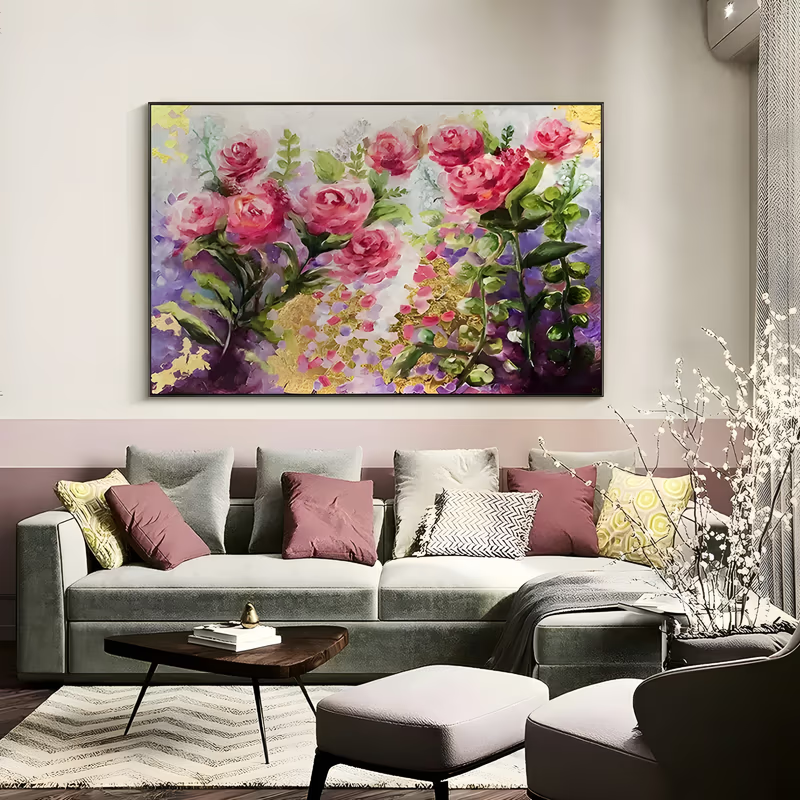
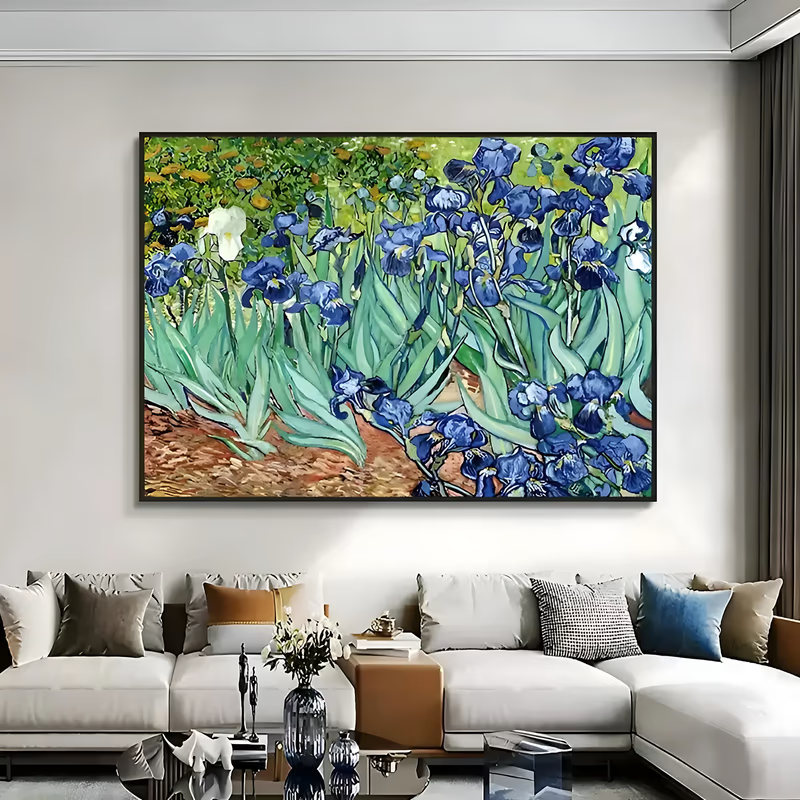
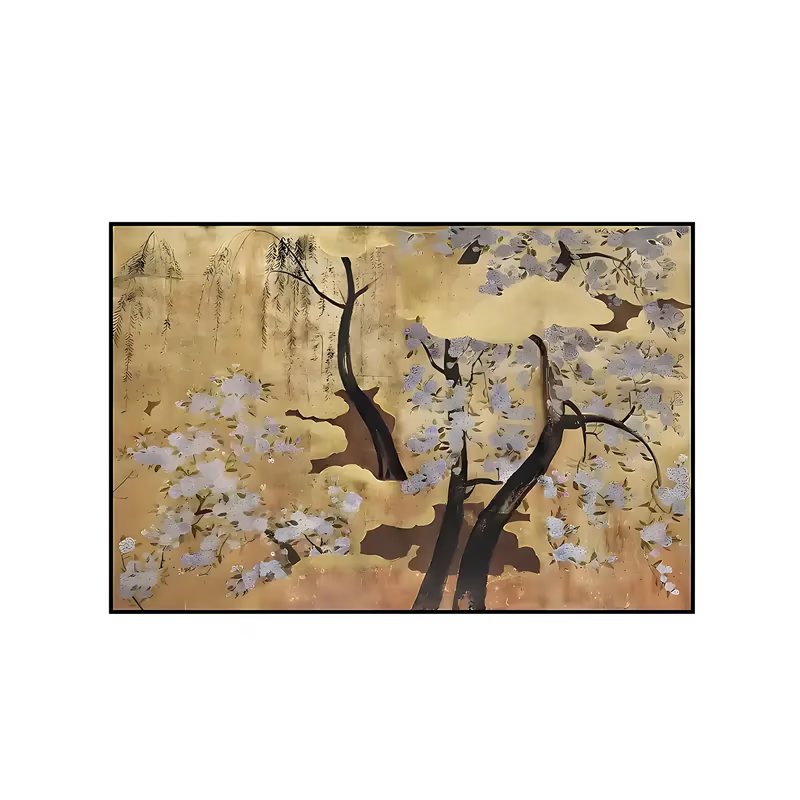
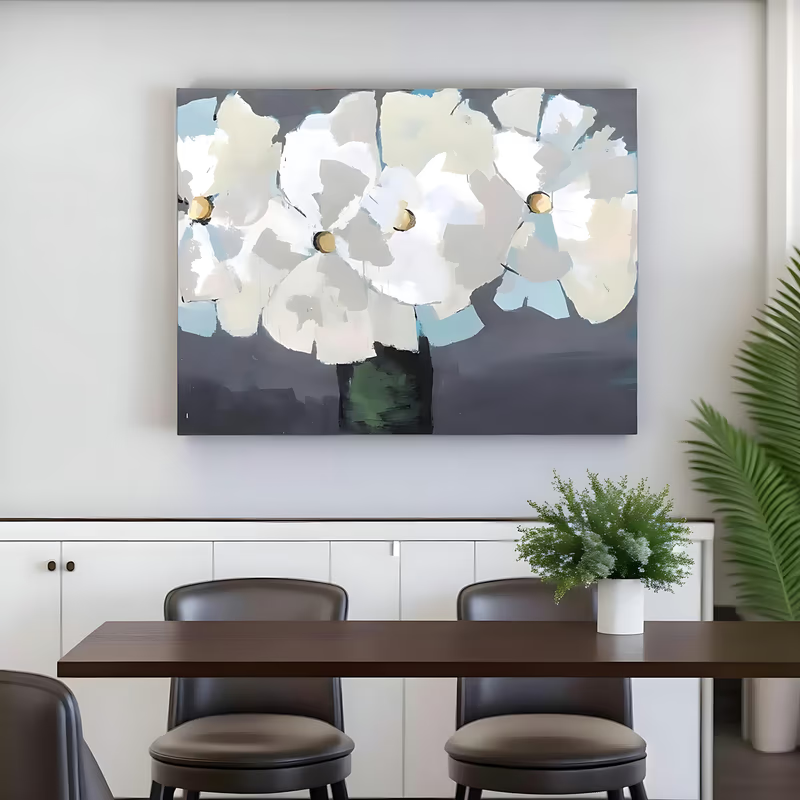
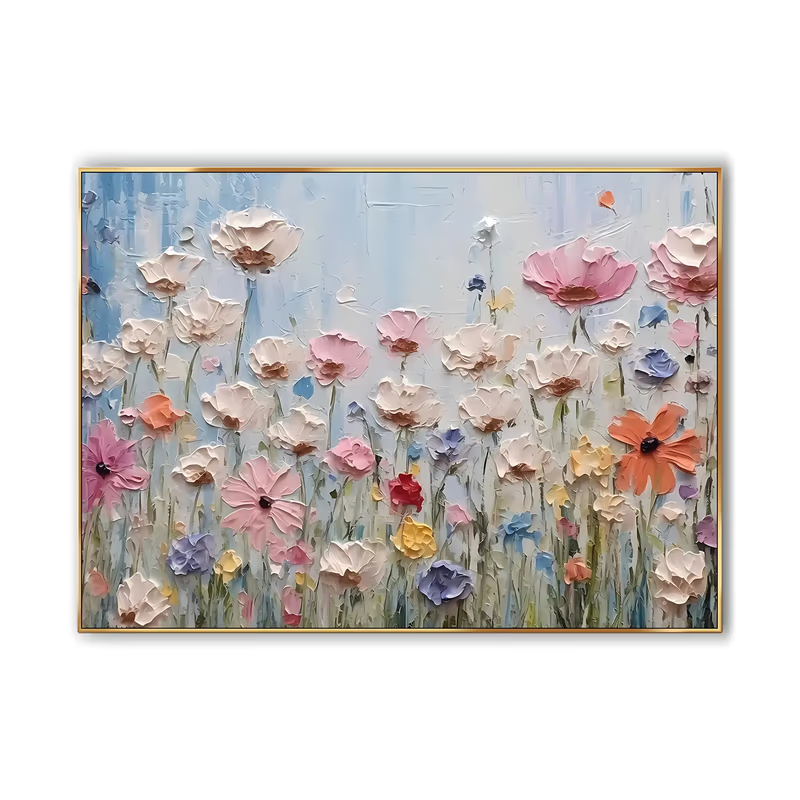
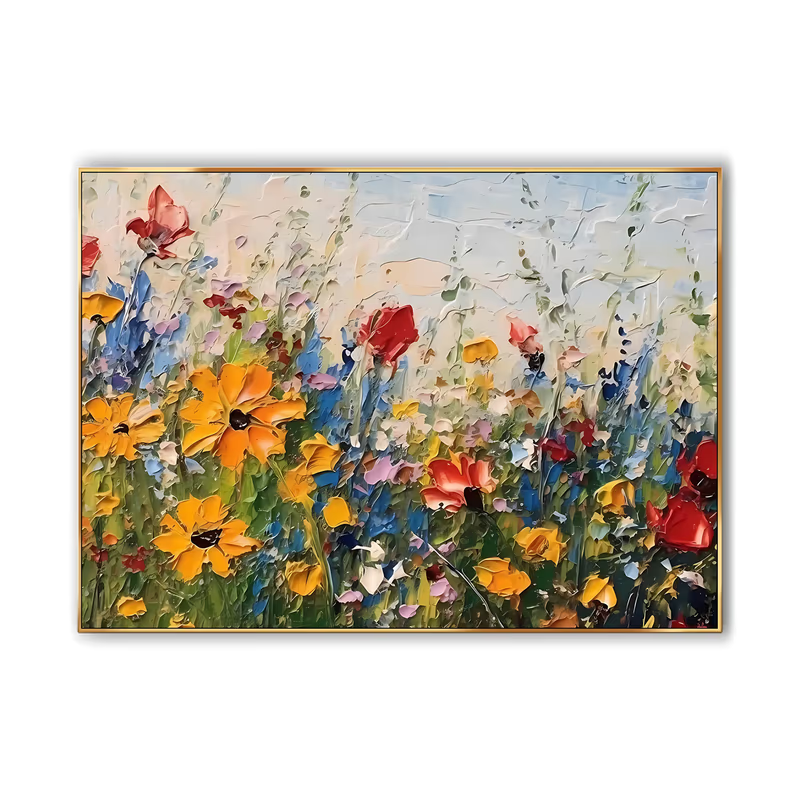
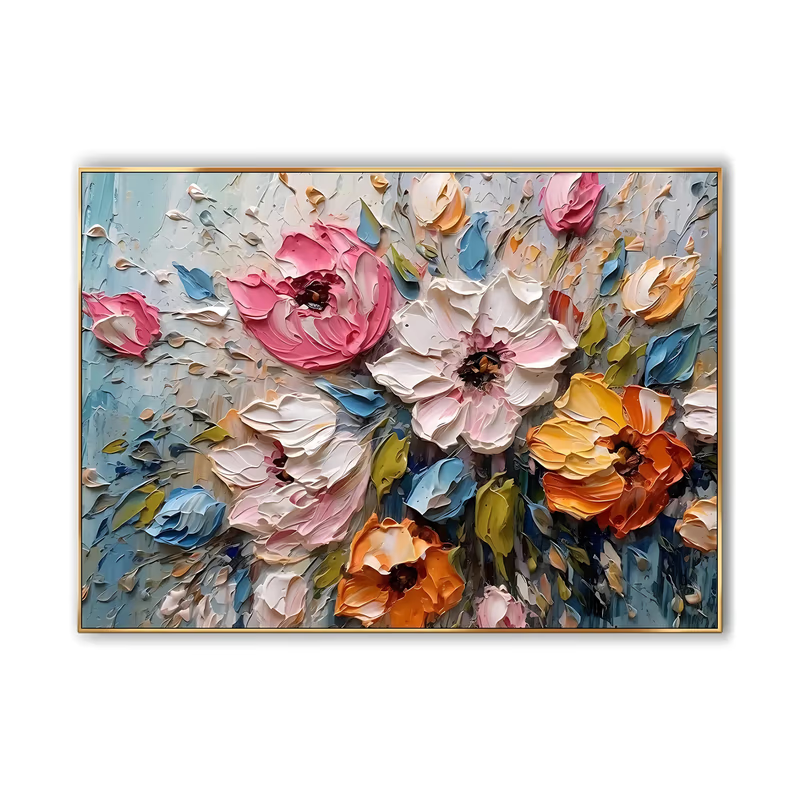
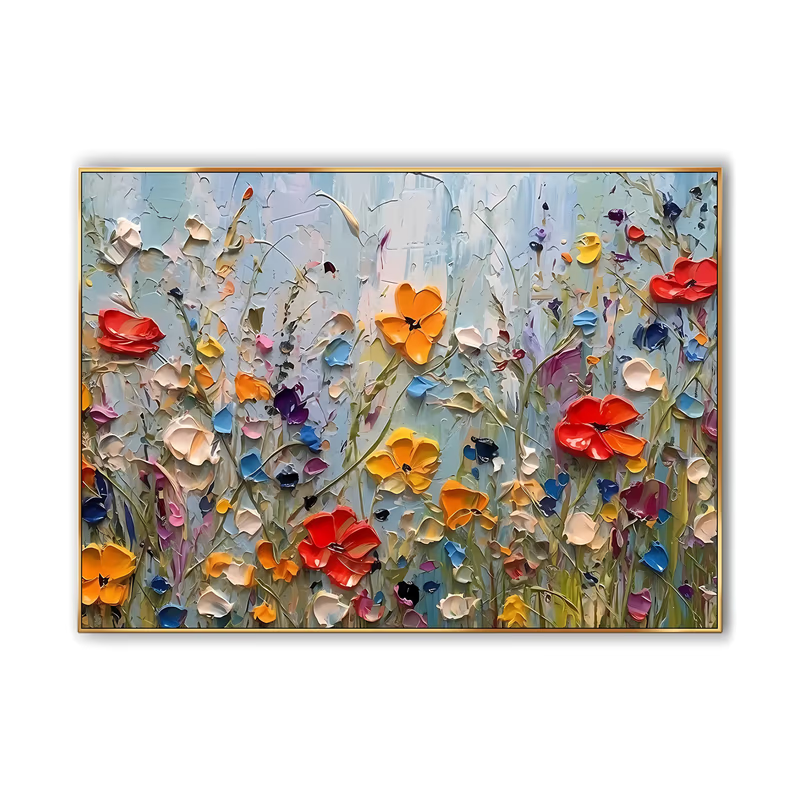
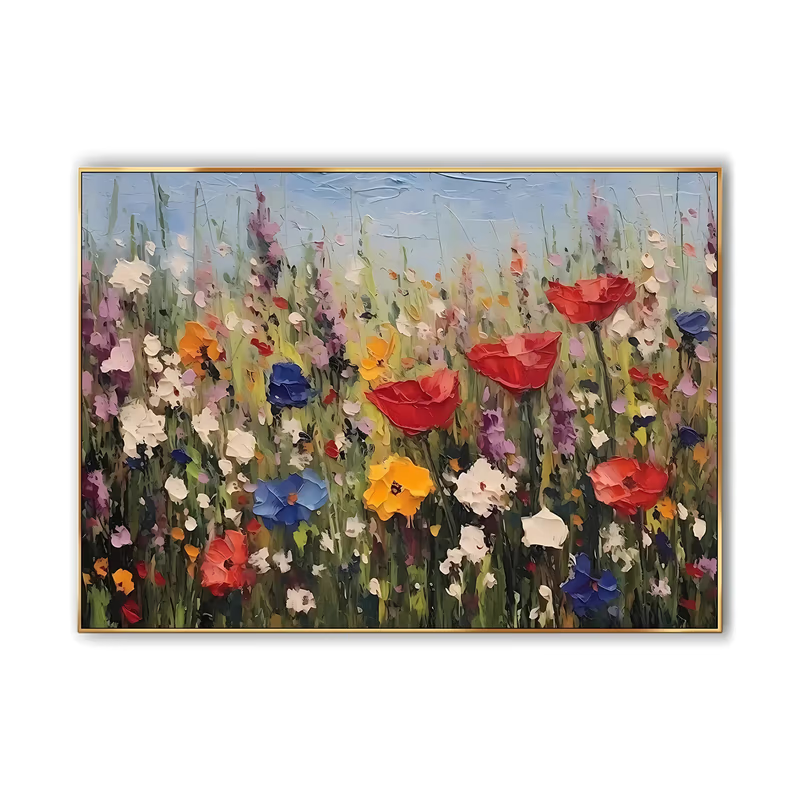
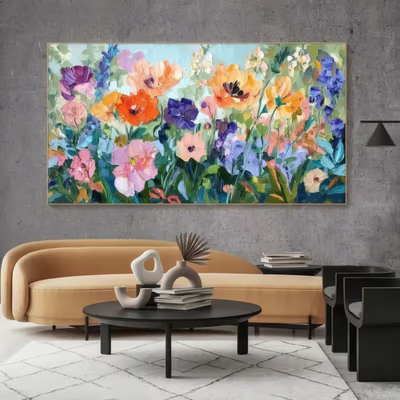
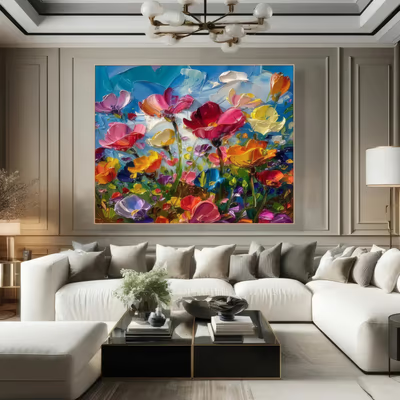
Flowers composed sideways, such as a low arrangement, a branch of blossom reaching across the canvas or a row of blooms, sit beautifully over a sideboard or a dining table, where the eye travels along them.
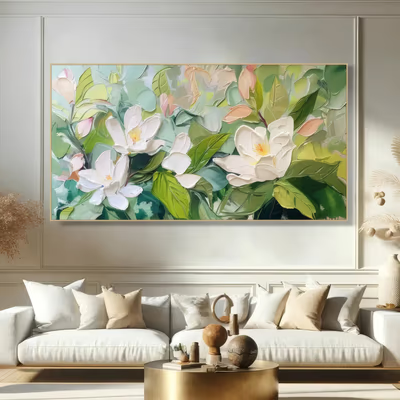
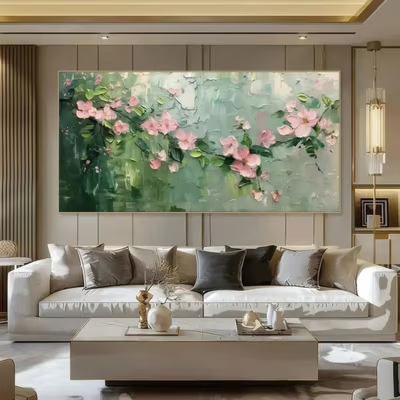
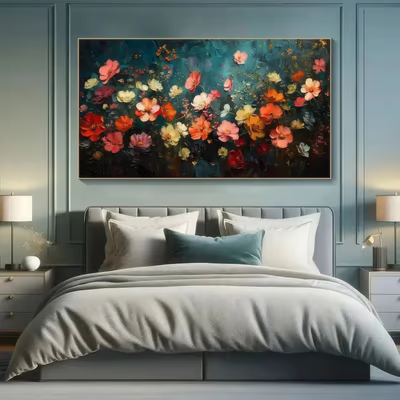
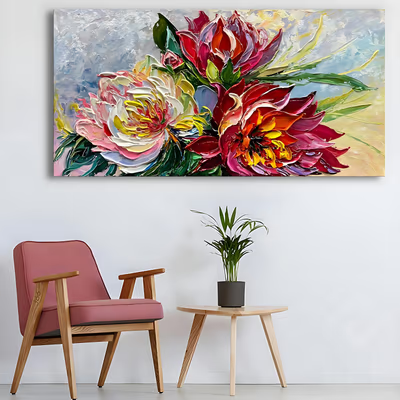
Scenes with figures, animals and cities
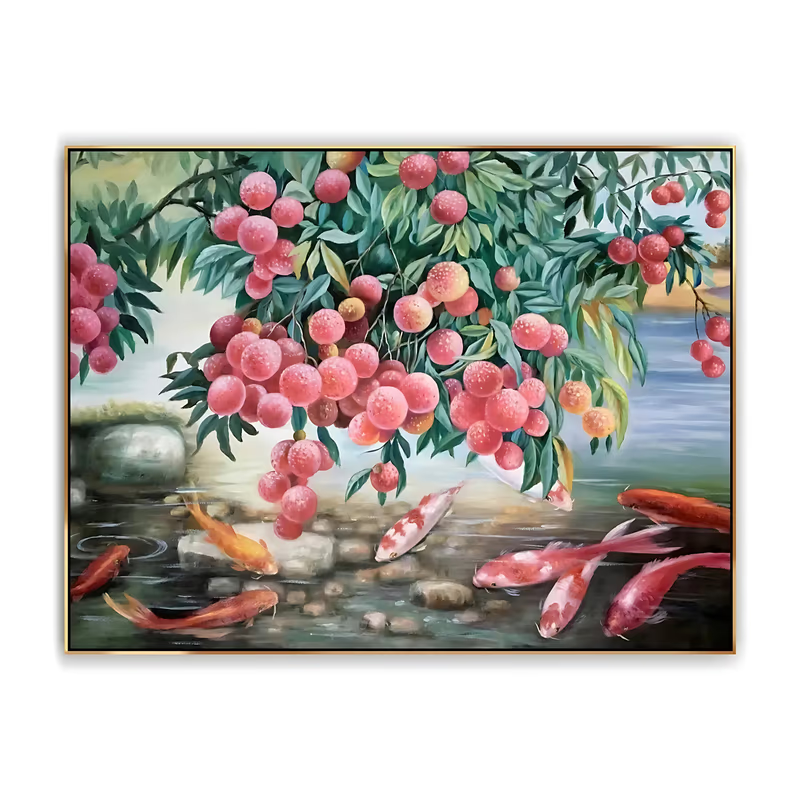
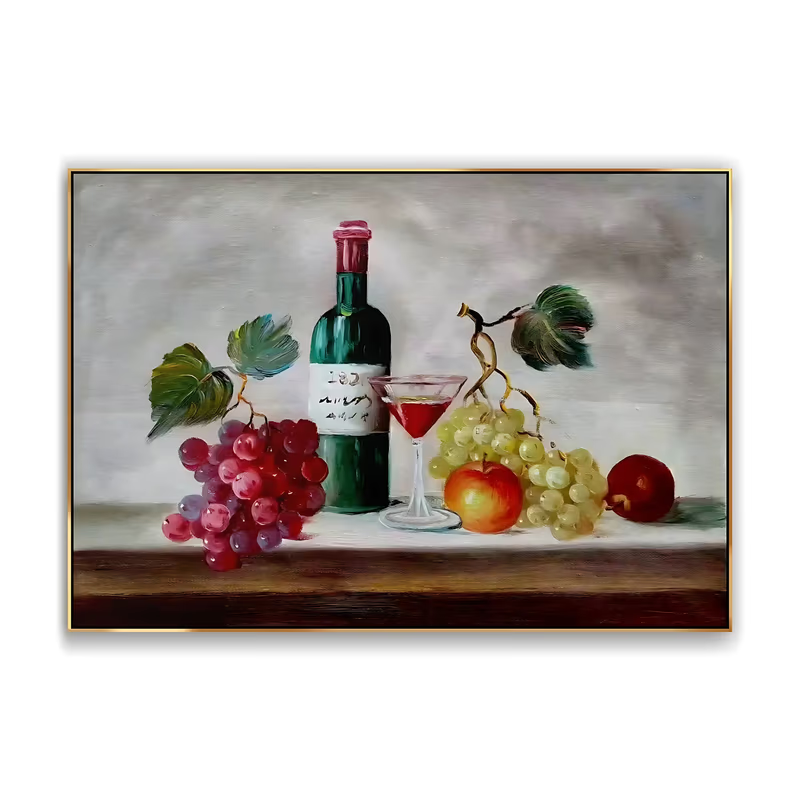
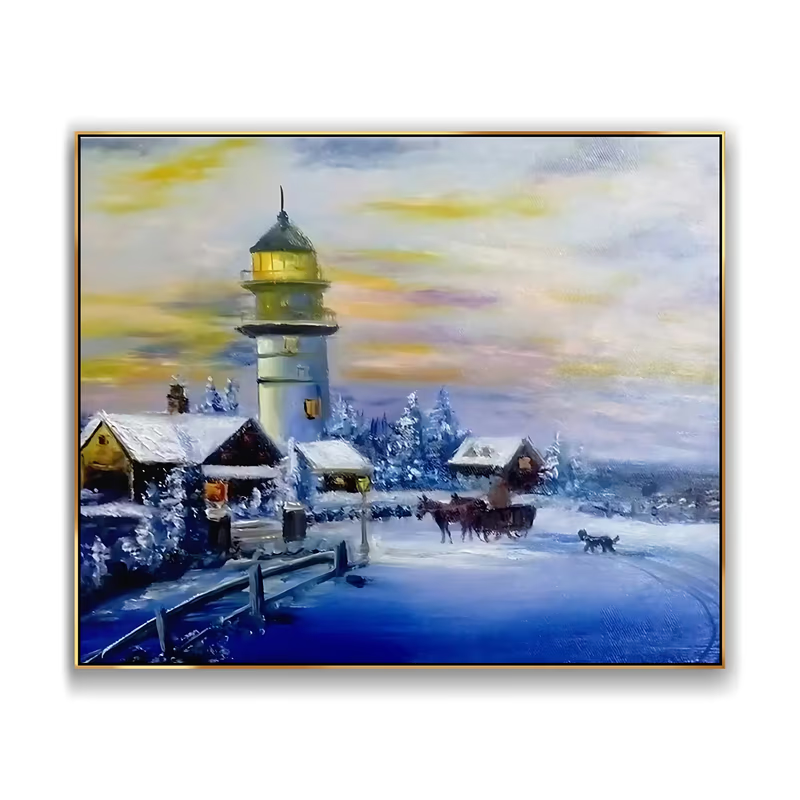
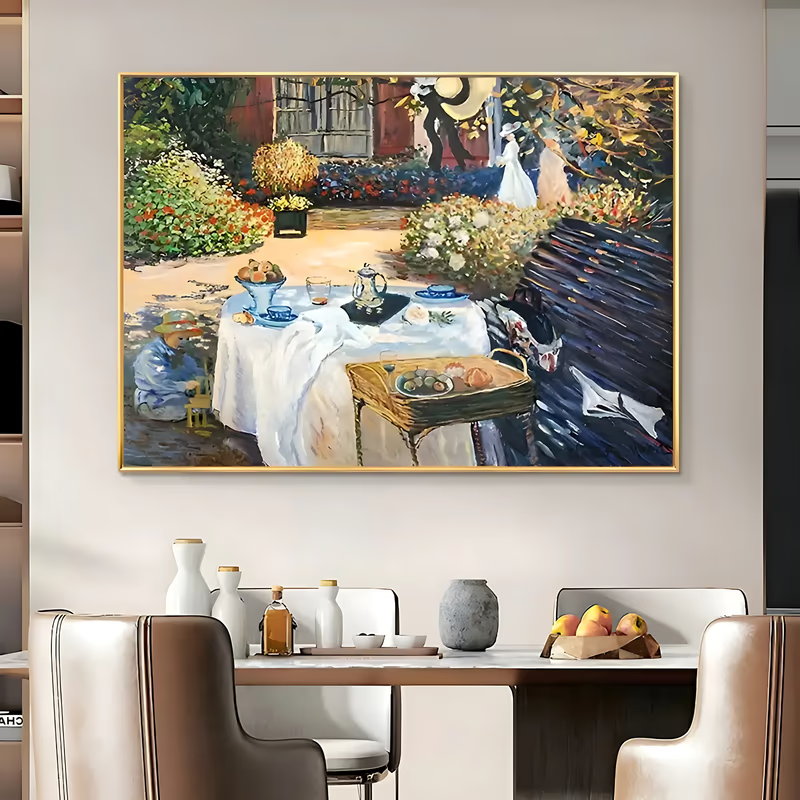
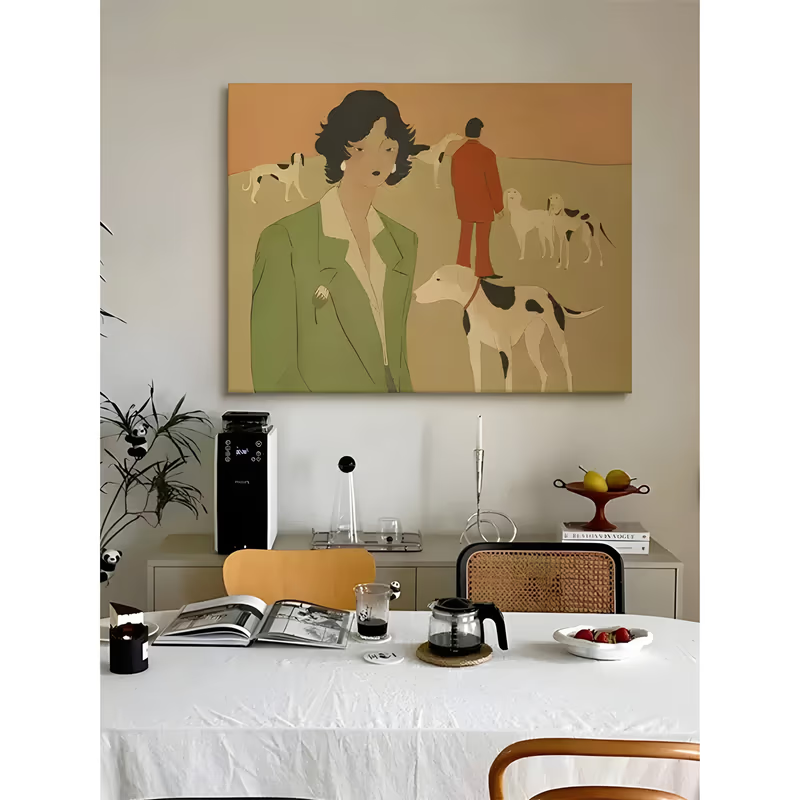
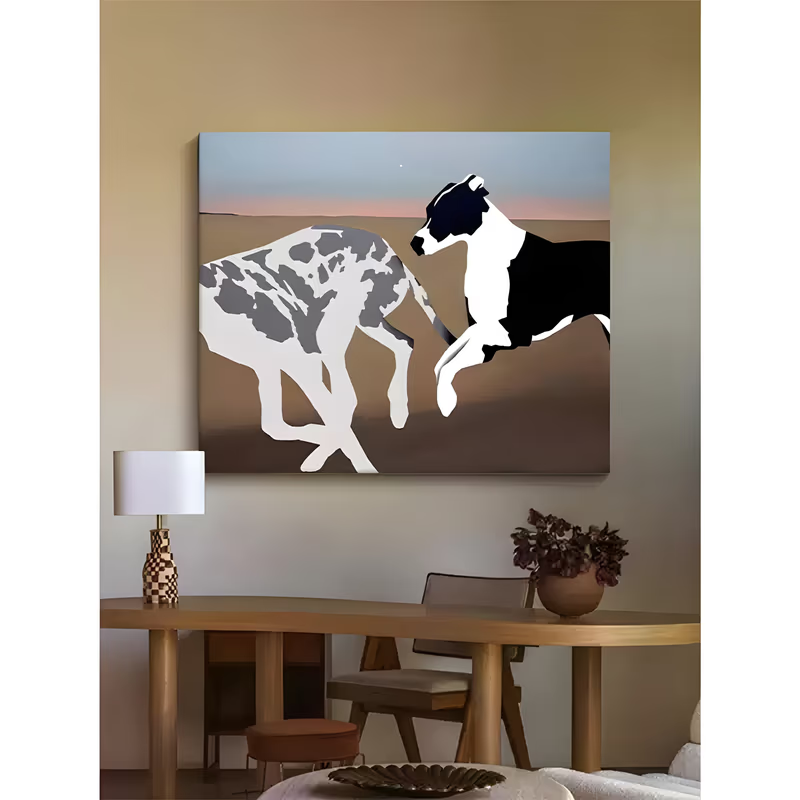
A wide canvas has room for a story: a still life laid out on a table, a group of animals, a street or a skyline. These suit restaurants, bars and lounges, where people look at a painting for longer.
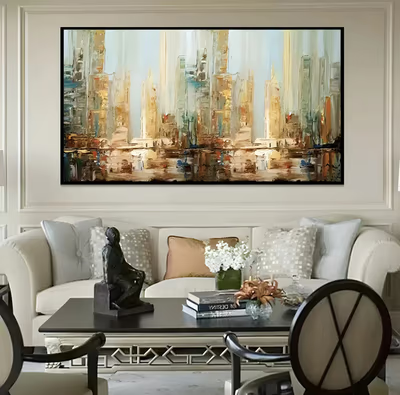
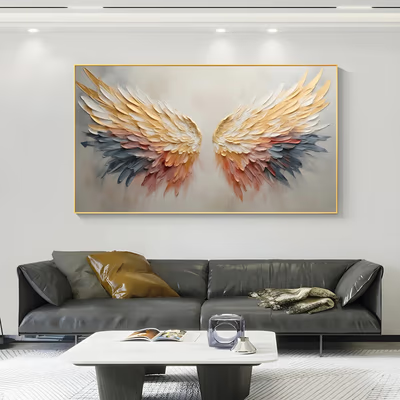
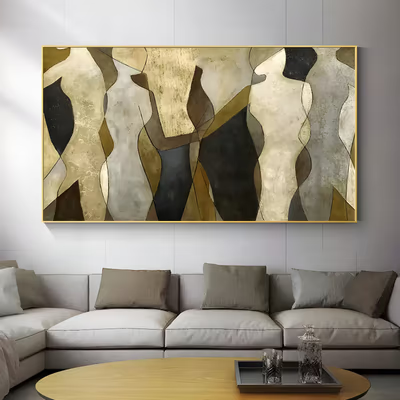
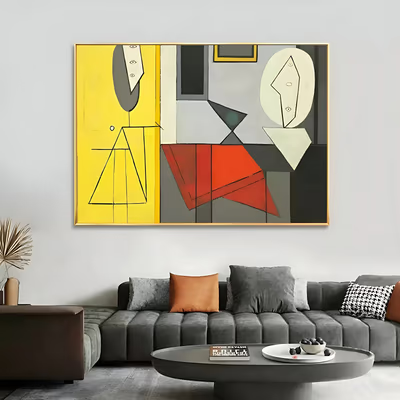
Abstract and textured work
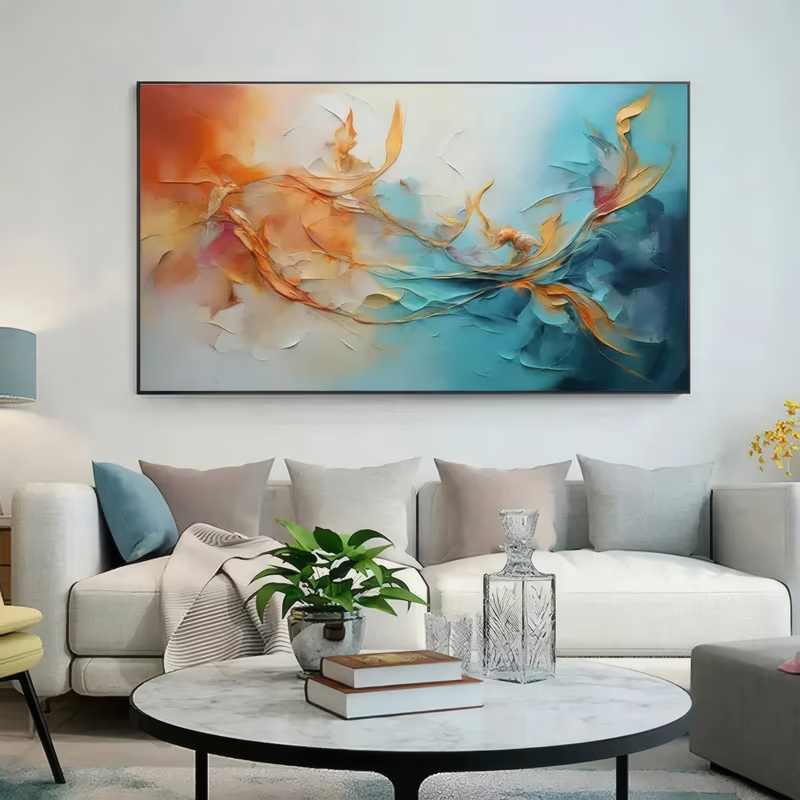
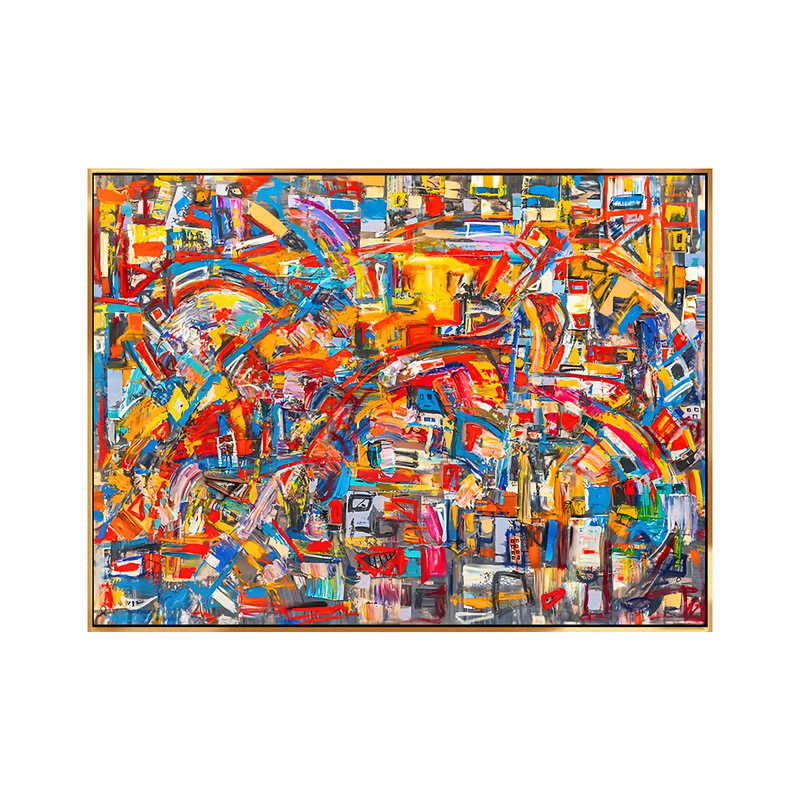
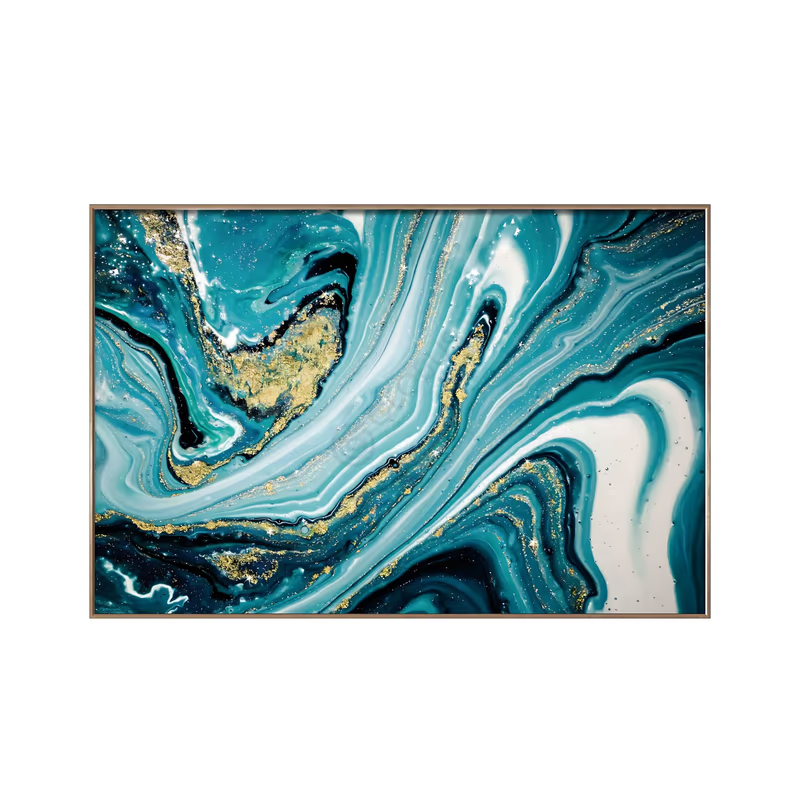
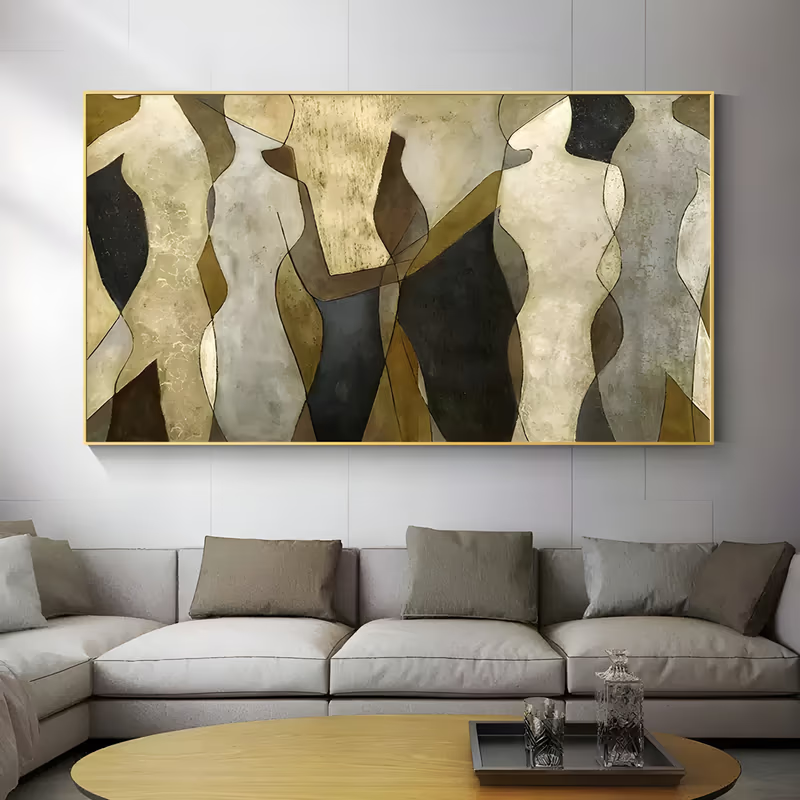
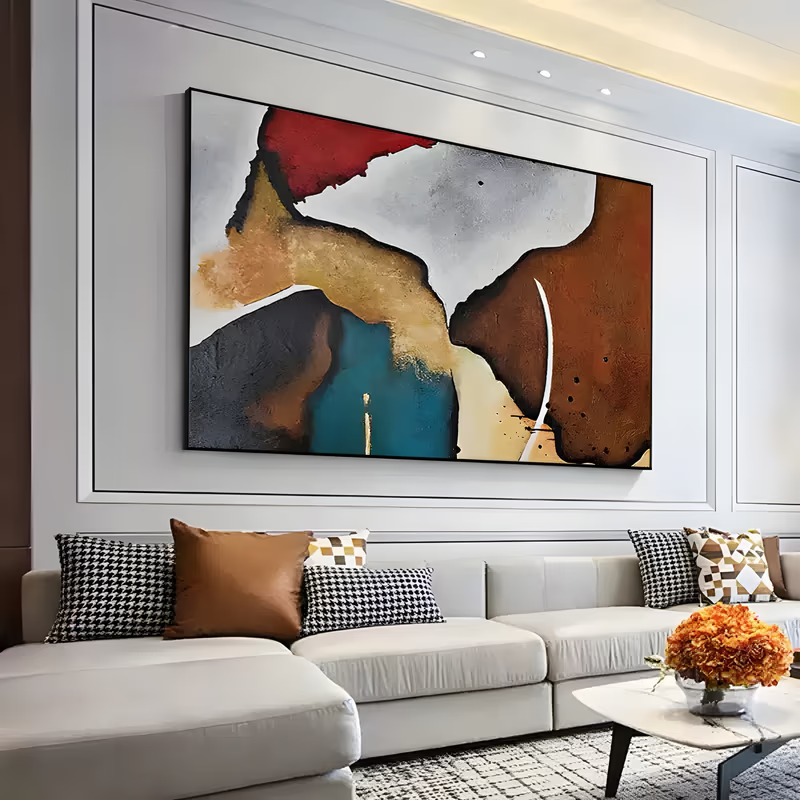
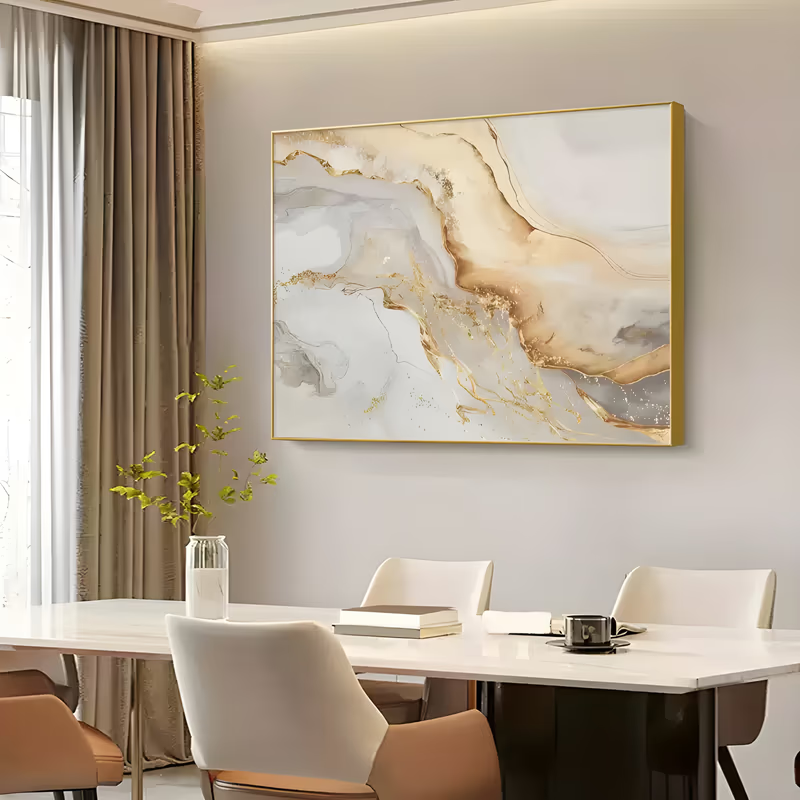
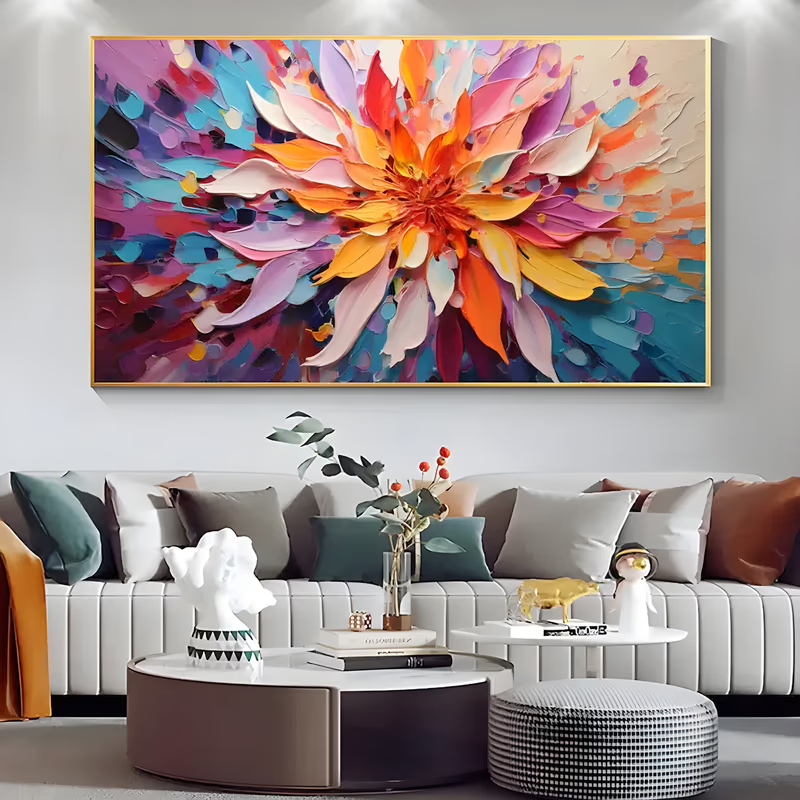
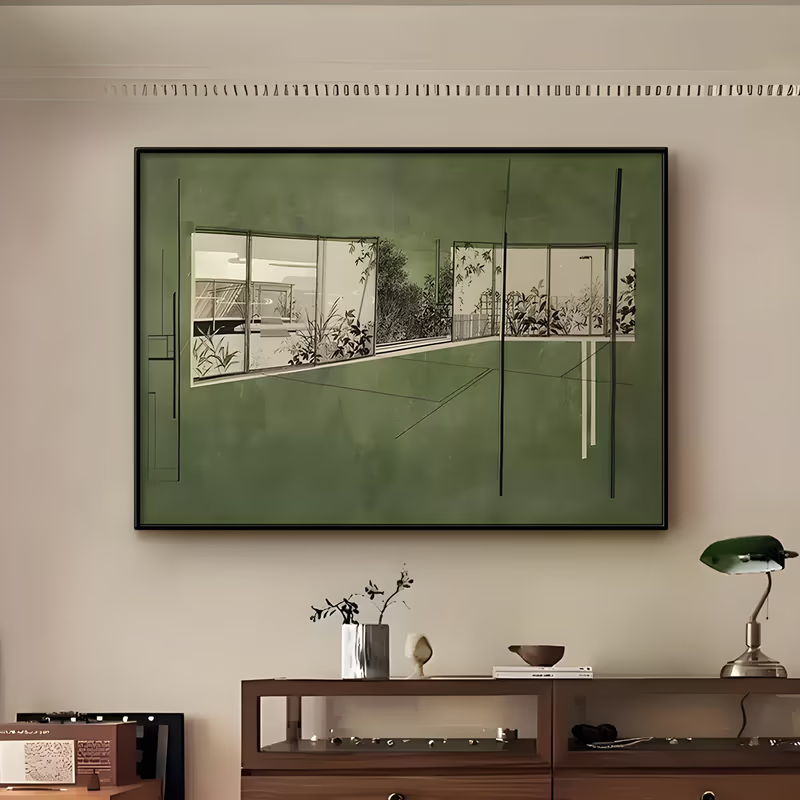
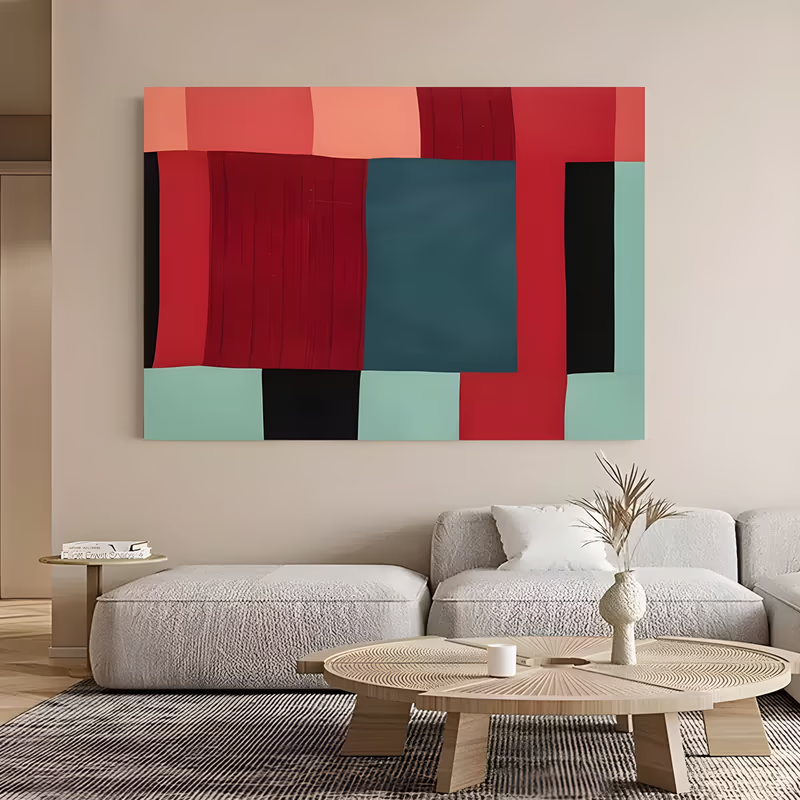
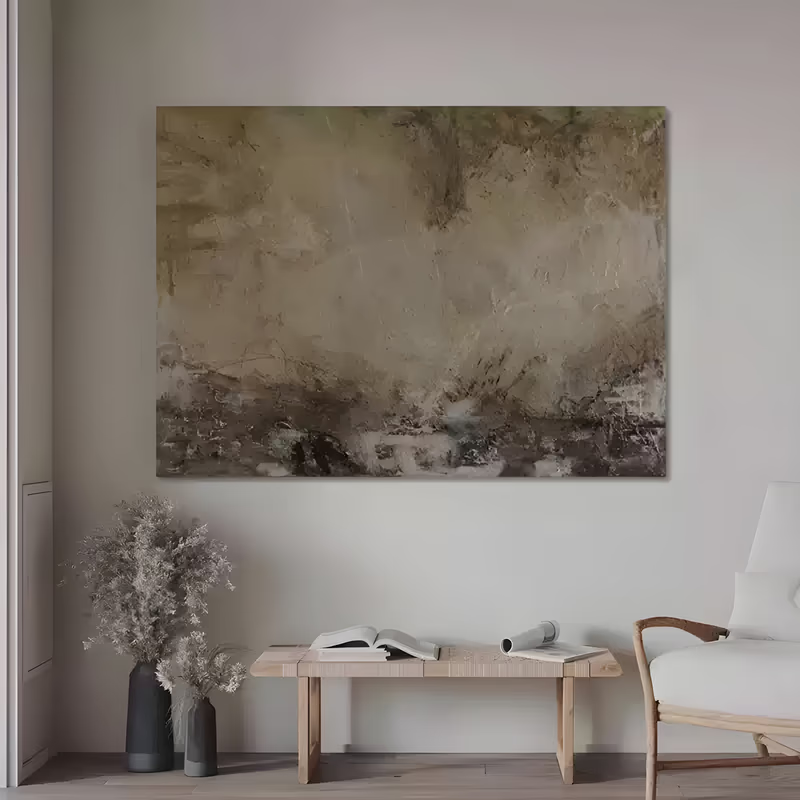
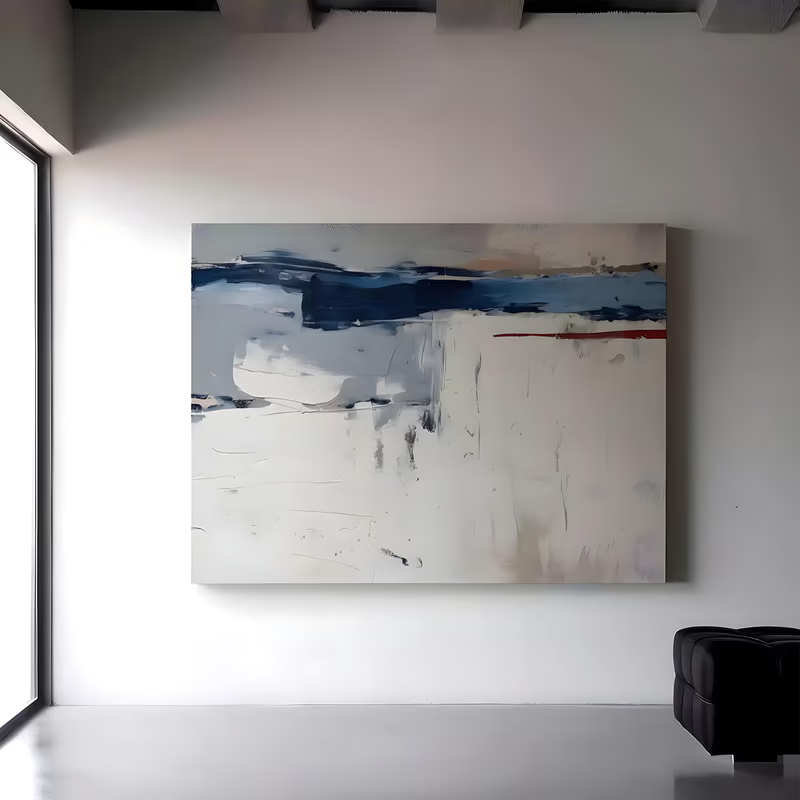
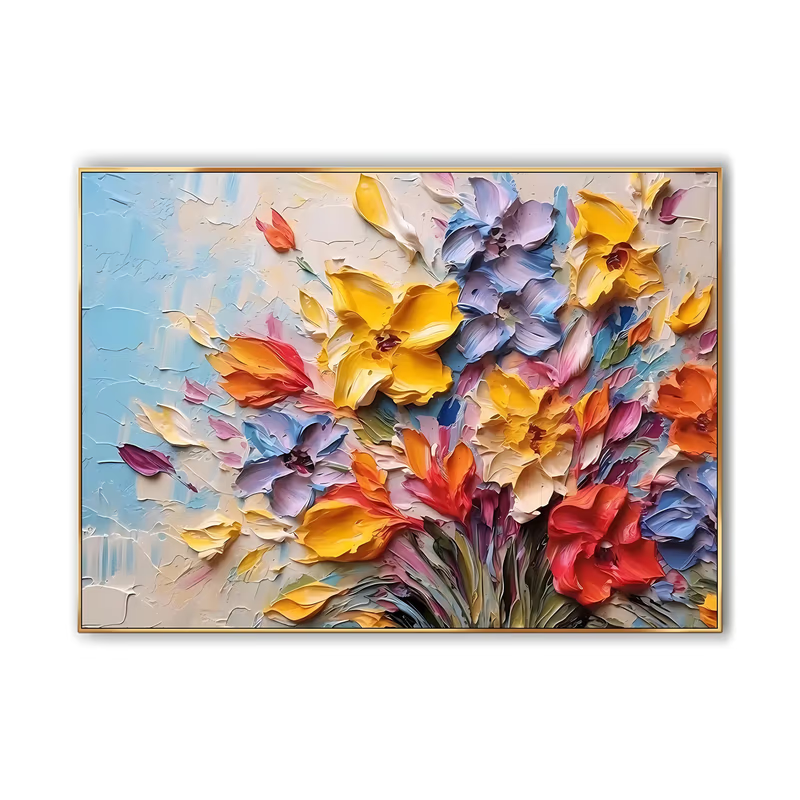
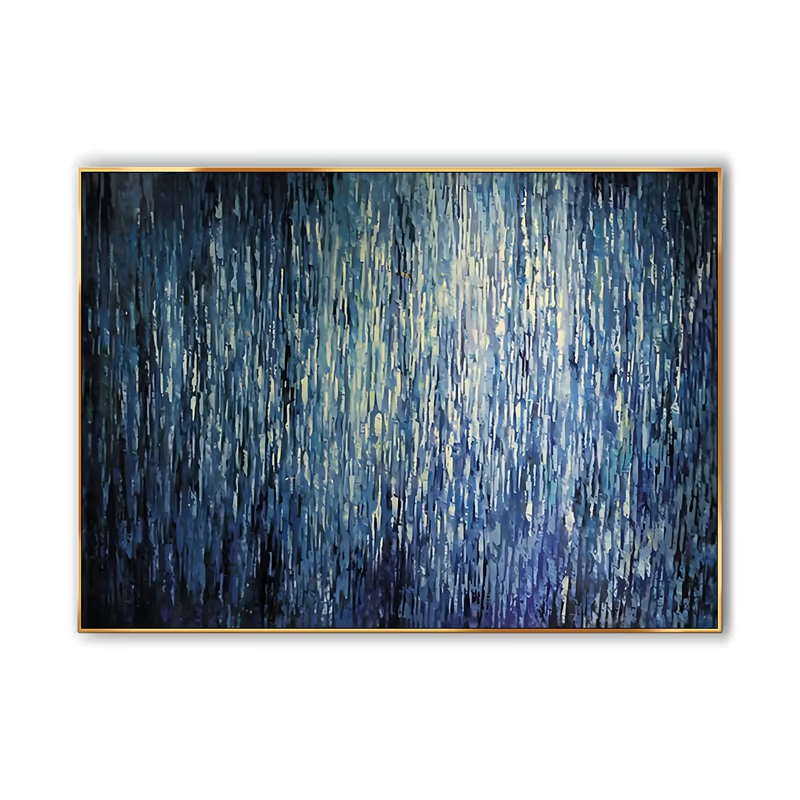
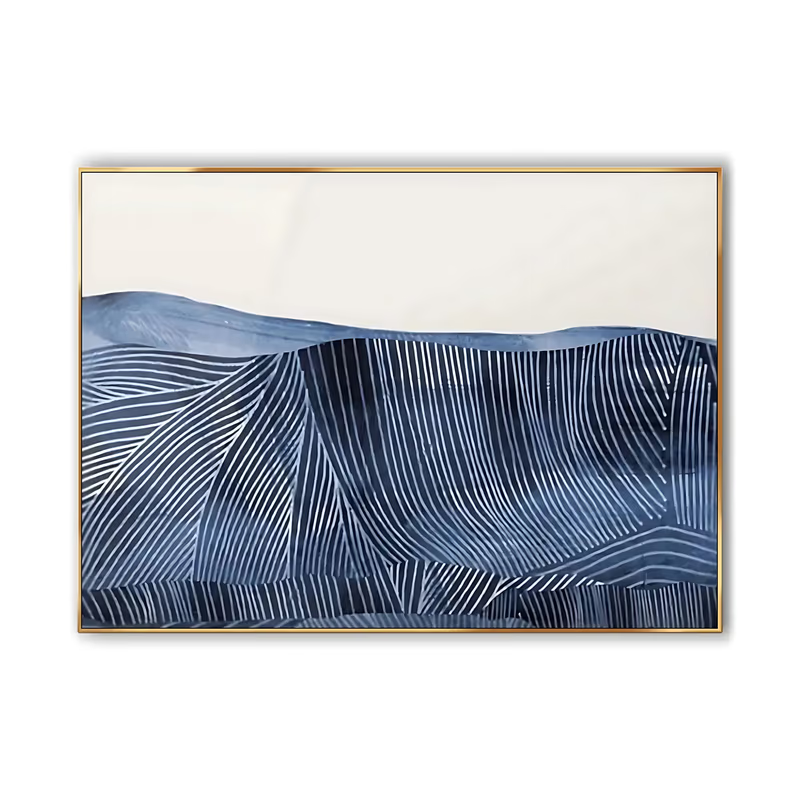
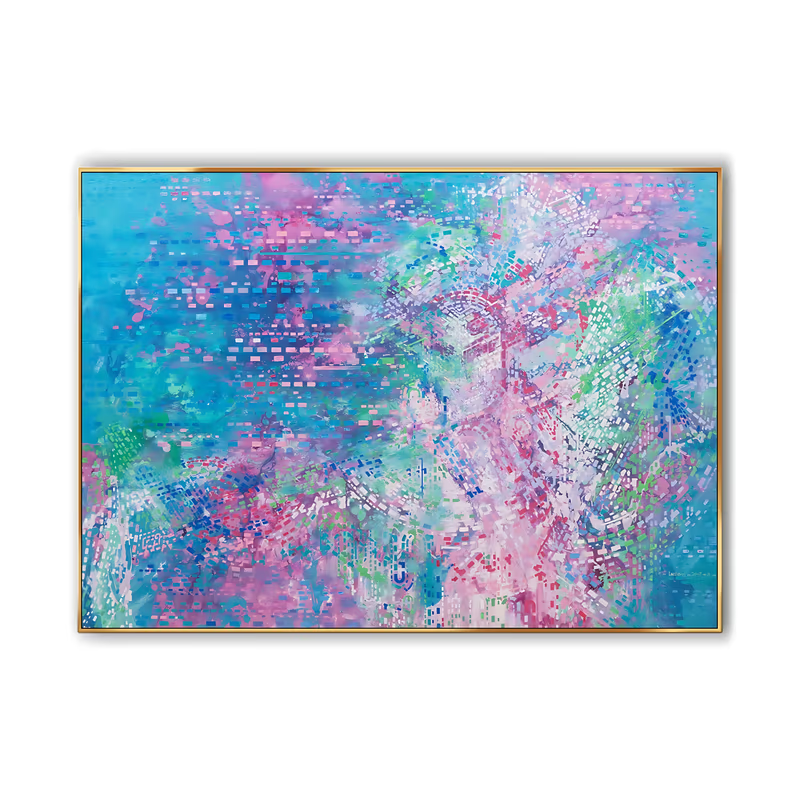
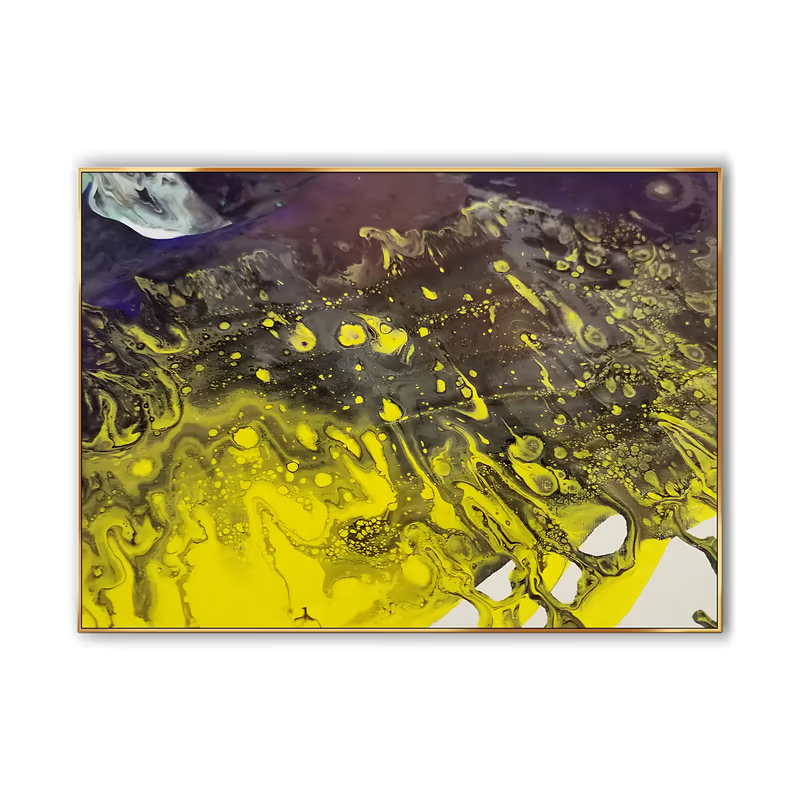
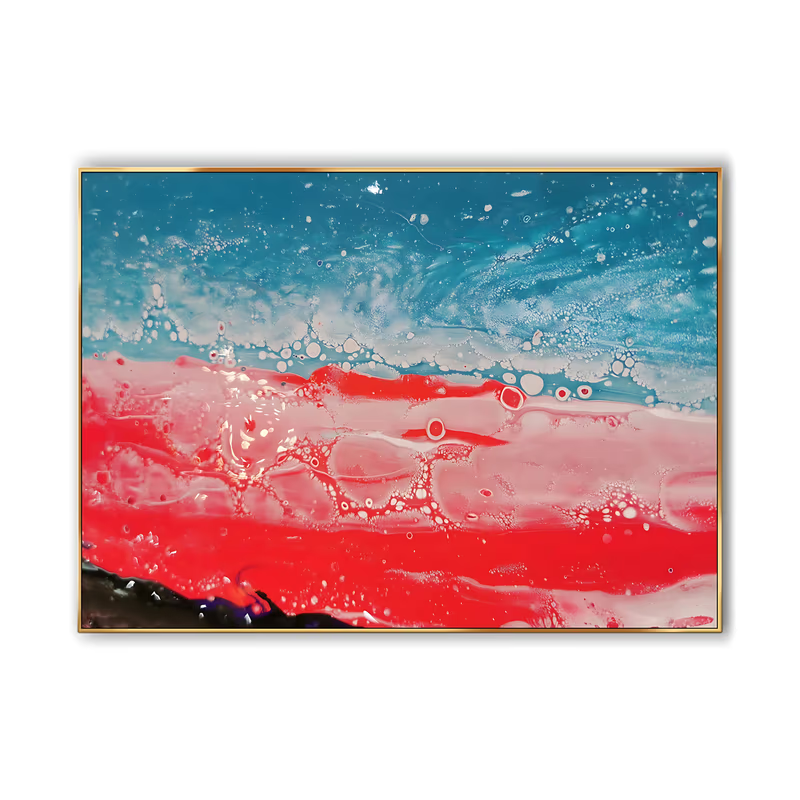
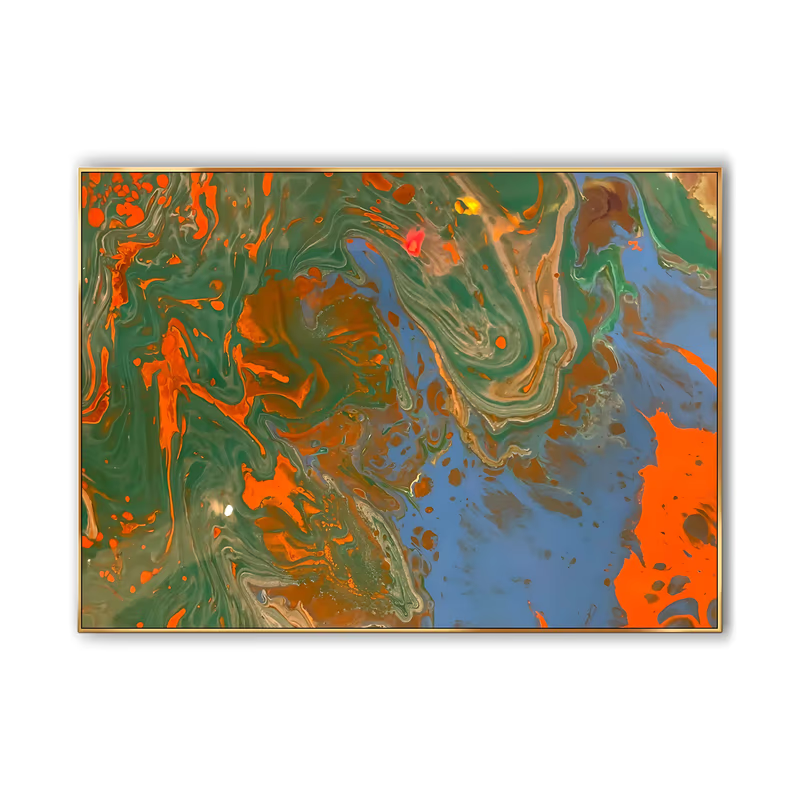
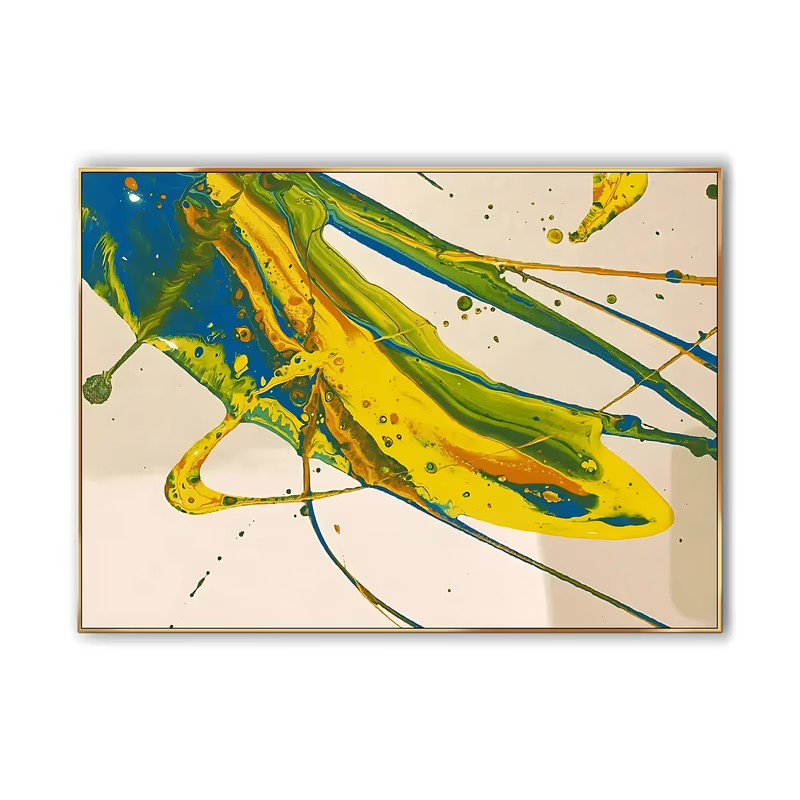
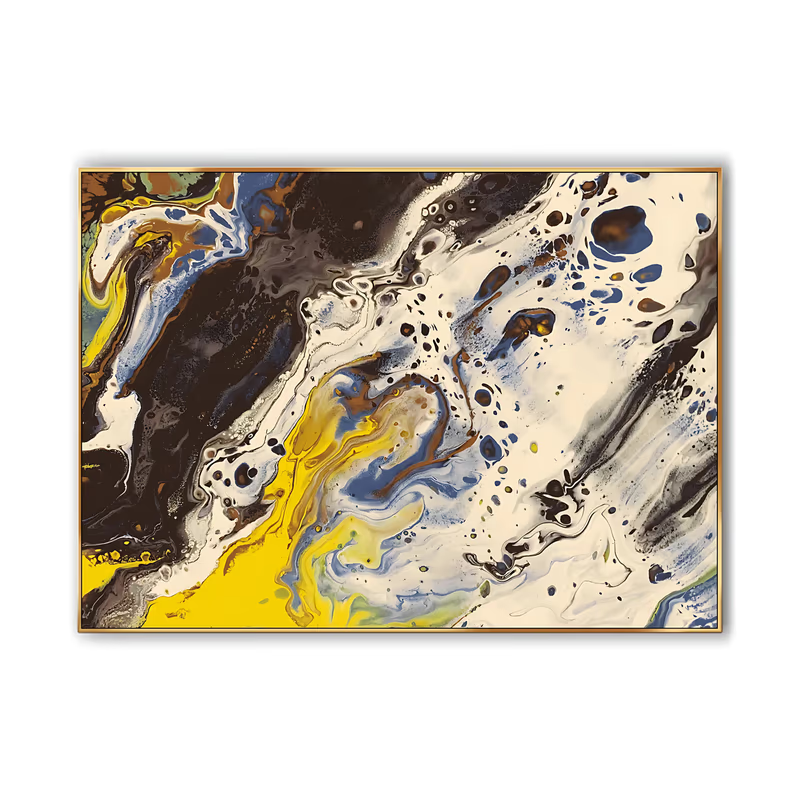
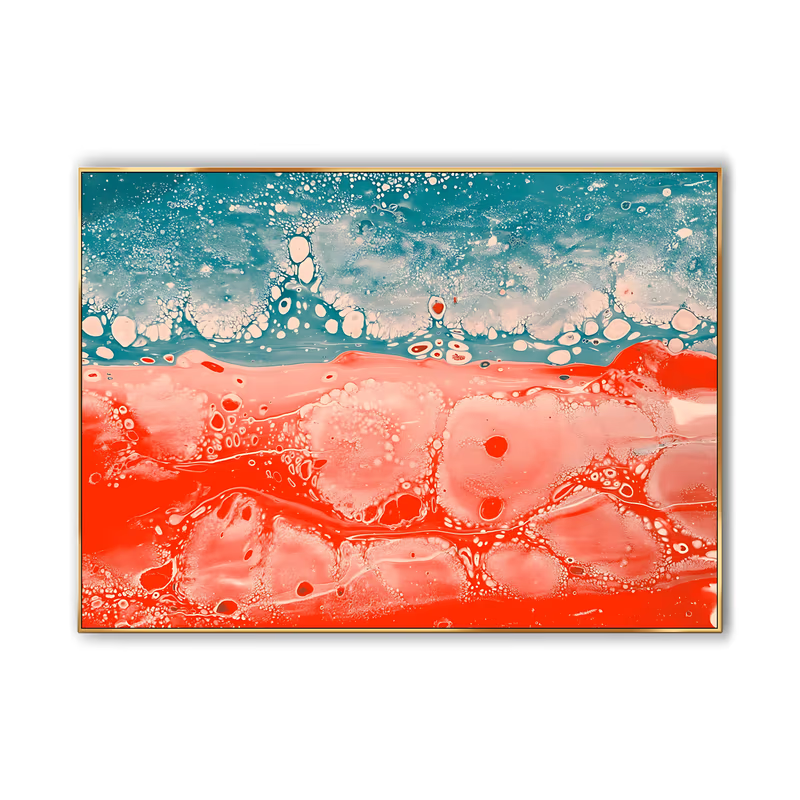
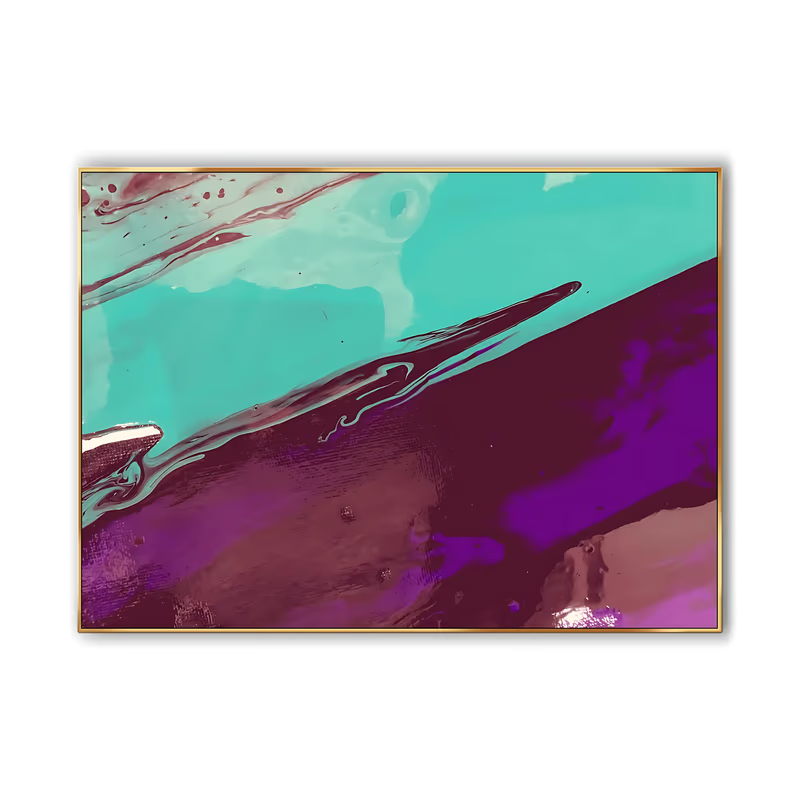
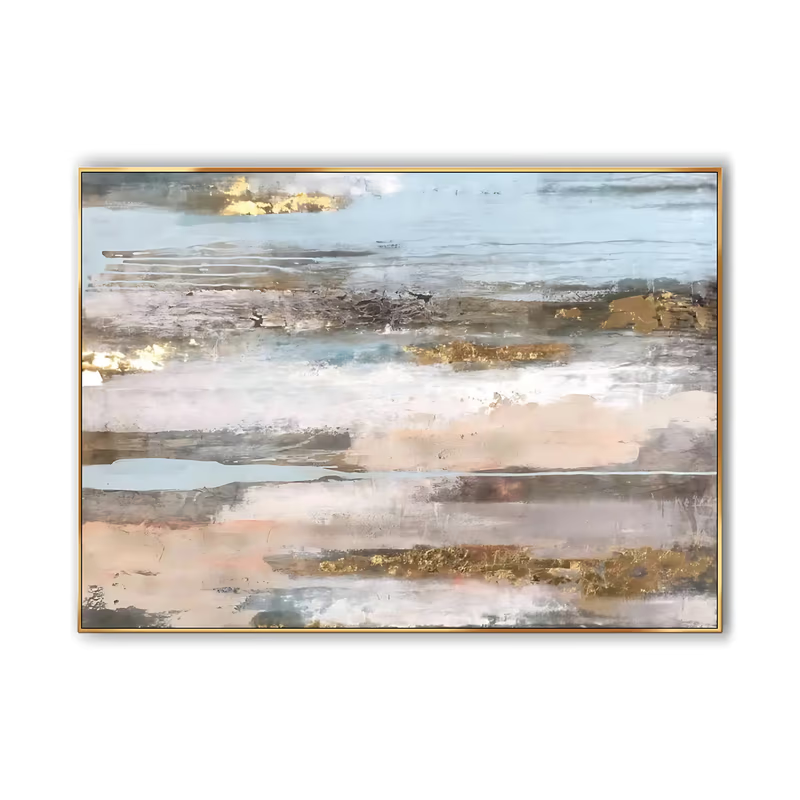
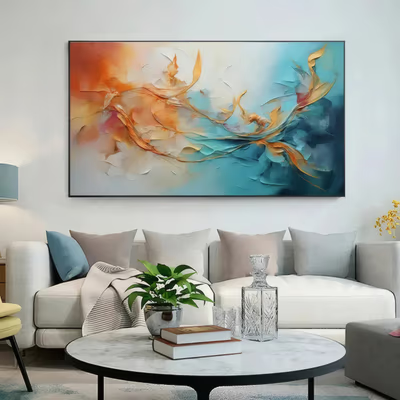
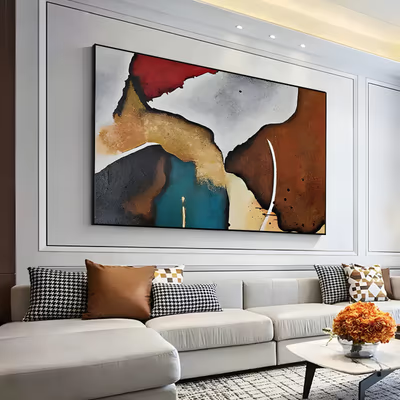
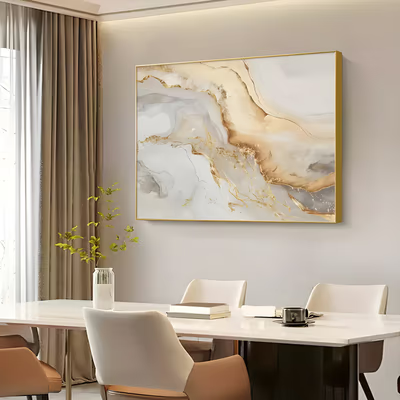
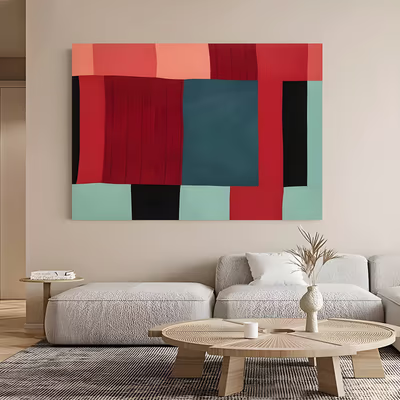
Flowing ribbons of colour, colour blocks, marbling and relief texture give a modern room a wide focal point without a subject. A horizontal abstract over a long credenza is a reliable choice for offices and meeting rooms. Horizontal abstract art.
How do you size horizontal wall art to the furniture and the wall above it?
Work out two numbers: the width from the furniture (roughly two-thirds to three-quarters of it) and the height from the clear wall above it (roughly half to two-thirds of that gap).
Width
Measure the furniture from end to end, not the wall. A horizontal canvas spanning about two-thirds to three-quarters of that length looks anchored; one that overhangs the ends looks top-heavy, and one under half the width looks lost. Room-by-room figures are on the living room, bedroom and dining room pages.
Height
This is where horizontal pieces most often go wrong. Measure from the top of the furniture to the ceiling, take off 15–25 cm (6–10 in) for the gap above the furniture, and keep at least about 30 cm (12 in) clear below the ceiling or cornice. The canvas height should take a good share of what is left, roughly half to two-thirds. A wide but shallow canvas in a tall room looks like a strip; a deep one in a low room presses on the ceiling. That height then decides the ratio: a tall gap suits 4:3, a shallow one suits 3:2 or panoramic.
On a bare wall
Without furniture below, centre the canvas about 145–152 cm (57–60 in) from the floor and let it take about two-thirds of the clear wall width.
Where does wide wall art work in hotels, restaurants and offices?
In commercial interiors, wide wall art belongs behind reception desks, above beds in guest rooms, along banquettes and booths, and over boardroom credenzas, wherever a long surface faces the room.
Reception and lobby
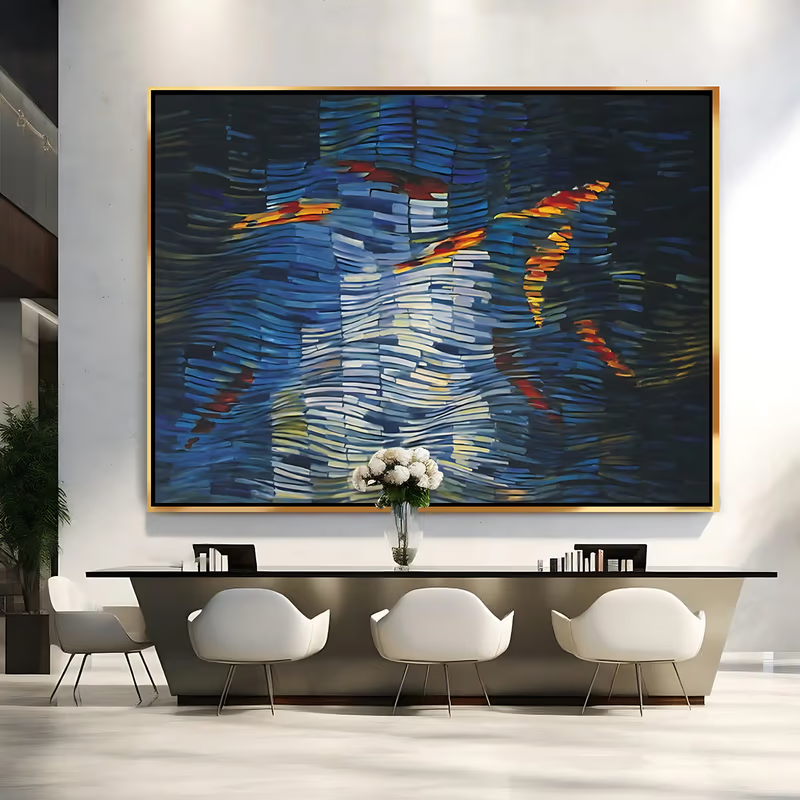
The wall behind a reception desk is seen square-on by every arriving guest; a wide canvas the length of the desk or a little less frames the people working there. See lobby statement art.
Guest rooms
A horizontal piece over the headboard is the backbone of most hotel room schemes. Across a floor, one composition can be painted in several colourways so rooms are related without being identical; guest room programmes explains how a roll-out is planned.
Restaurants and bars
Banquettes and booths want a run of horizontals, one per table or a continuous band. Warm landscapes and still life suit dining; city scenes and bold abstracts suit bars. See restaurant groups and bars and horizontal art for restaurants.
Offices and meeting rooms
Over a credenza or along the long wall of a boardroom, a horizontal landscape or a calm abstract gives a focal point that does not distract from the table. Horizontal art for meeting rooms.
Can a vertical painting be redrawn as a horizontal canvas?
Yes: any vertical or square work can be painted as a horizontal canvas, because the composition is redrawn for the wider proportion rather than cropped.
When a tall composition goes wide, the painter extends the scene sideways instead of cutting its top and bottom: a tall vase of flowers gains a low spread of foliage or a second stem, a portrait-format landscape gains more shoreline or hillside on each side, and an abstract gains a longer sweep of movement. The main subject is usually shifted off-centre, which suits a wide format, while colour and brushwork stay true to the original. If you have spotted a piece on the vertical or square pages, send its code with the width and height you need. A view or a place of your own can also be painted wide; see custom paintings.
How do you order horizontal wall art painted to your proportions?
Give the furniture width and the clear height above it, choose the work and the colours, and the horizontal canvas is painted to those measurements and approved at every stage.
A photograph of the wall with the furniture in place helps the painter judge the ratio. To match the room, send a paint code, a fabric swatch or a photo of the scheme, and the palette is adjusted before work starts. Progress photos or video follow each stage; nothing moves to the next stage until you approve, and a final photograph is approved before dispatch.
Painting takes about 10 days, then a wide canvas reaches you in 5–7 days by DHL, FedEx or UPS express, on a route iHomeArt arranges, with the shipping cost confirmed before dispatch. Choose rolled, stretched without a frame and ready to hang, or framed in gold, silver, black, white or wood. Plaster and deep relief pieces travel stretched or framed; they are rolled only if you accept a thinner texture. Request a quote: answers come within one business day.