


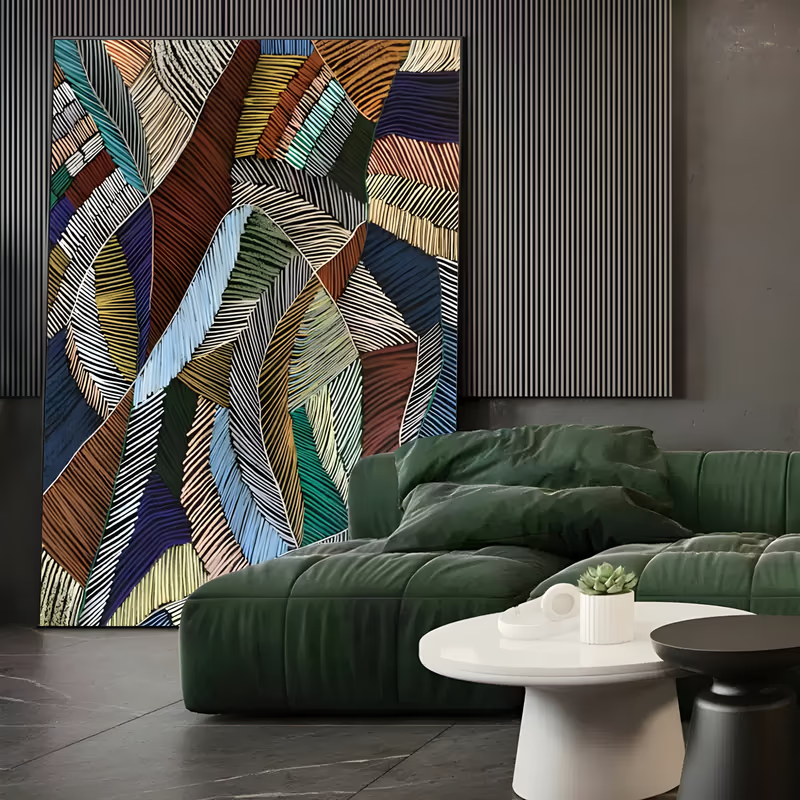
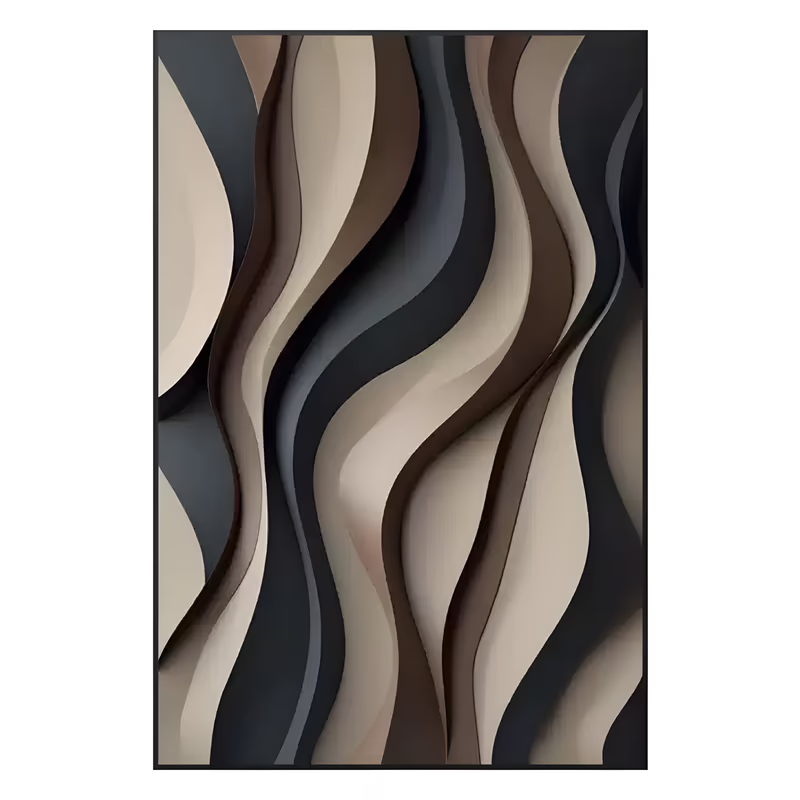
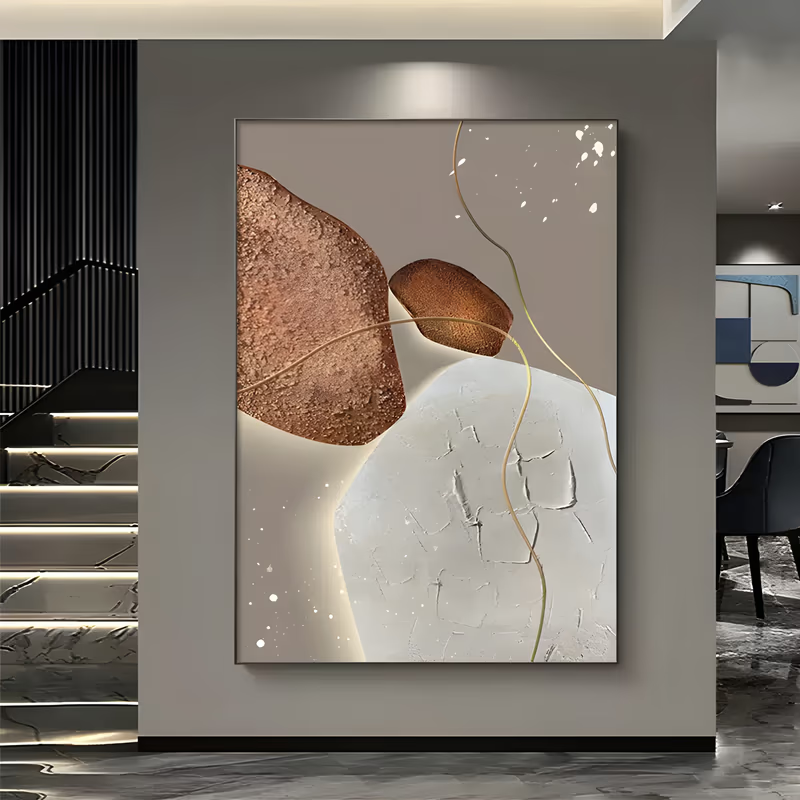
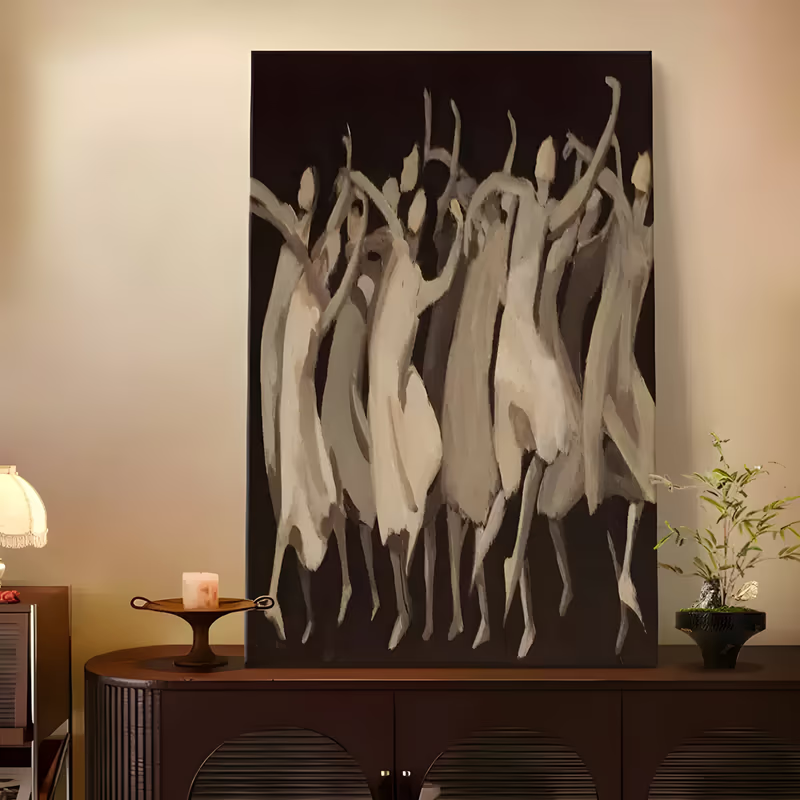
Brown wall art guide · Updated
Choosing brown wall art: shades, materials and rooms
Key takeaways
- Brown is a material colour: it reads as leather, timber, bronze and earth, so brown art ties a painting to the furniture already in the room.
- Light the dark browns: chocolate and walnut need a pale wall, a cream motif or a picture light; copper and caramel can carry a dim corner on their own.
- Change the texture, not the hue: set brown art against smooth plaster, linen or stone, and repeat its warmth in brass, cognac leather or oak.
- Size down a little, frame with care: deep brown carries visual weight, so a slightly smaller canvas still holds the wall; gold or brass frames lift it, a dark wood frame deepens it.
What does brown wall art bring to a room?
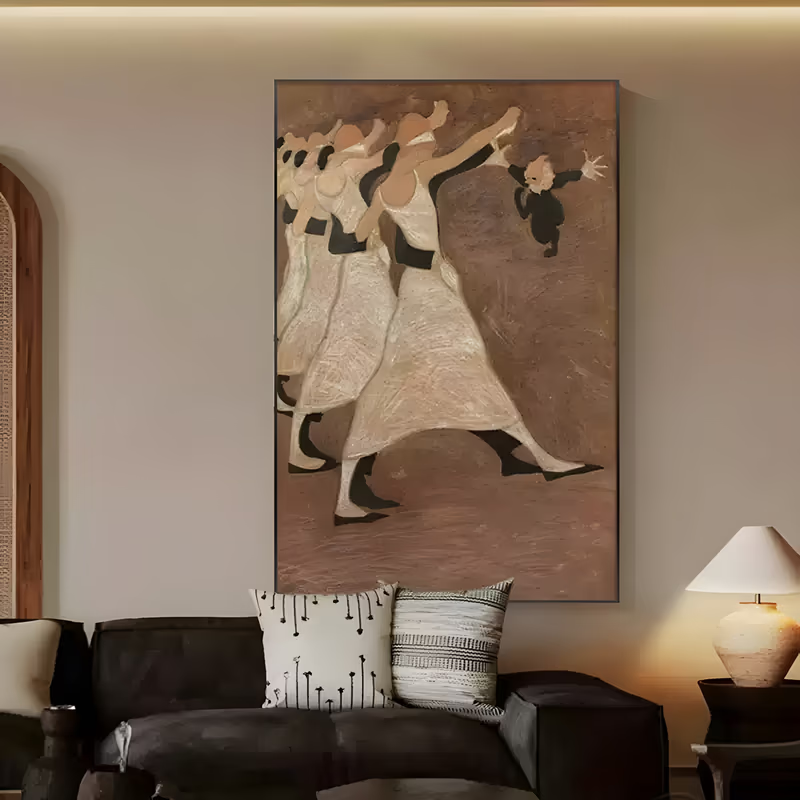
Brown wall art makes a room feel grounded, warm and settled, because the eye reads brown as wood, leather and earth rather than as paint.
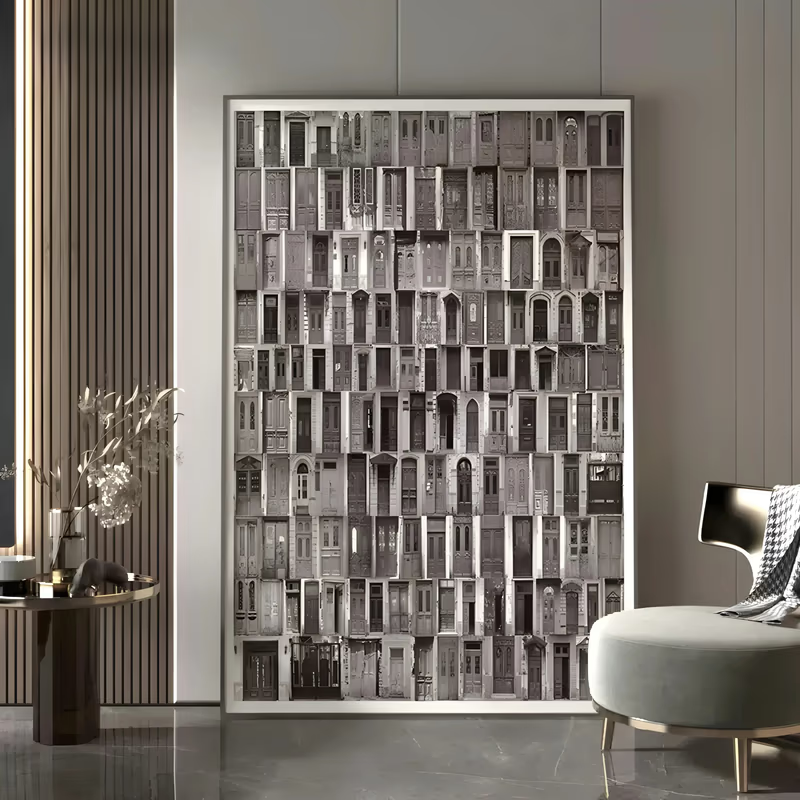
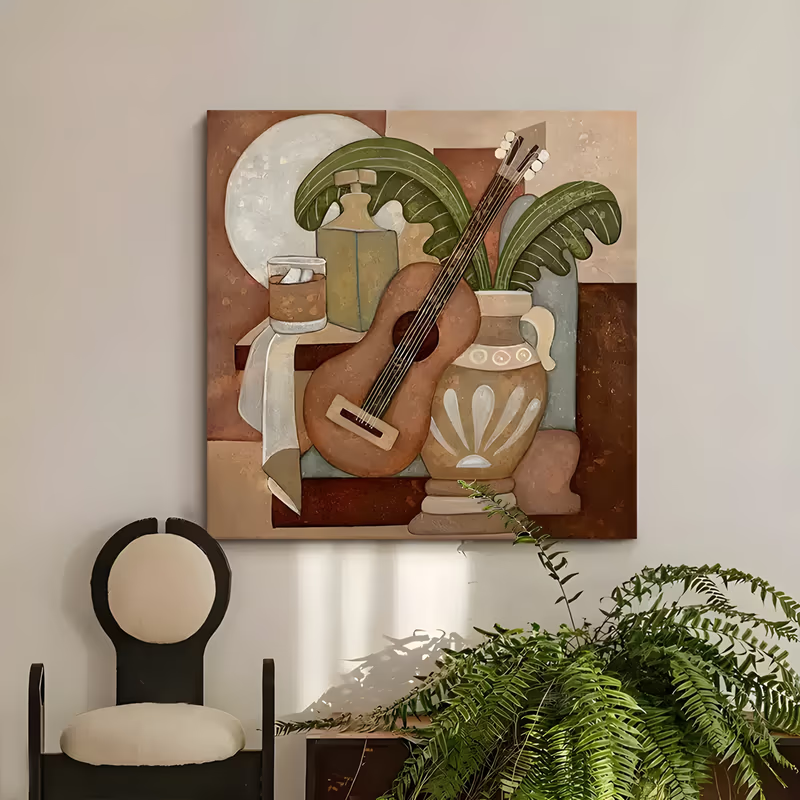
Most rooms already hold a lot of brown: a timber floor, a walnut sideboard, a leather chair, a jute rug. A brown painting picks up those materials and draws them together, so the room looks considered rather than assembled piece by piece. That is why brown suits the spaces people settle into for a while, such as a study, a snug, a members' lounge or a whisky bar. Brown also warms a cool grey or white scheme without introducing a new hue that has to be matched elsewhere. The risk is the opposite of a bright colour's: not that brown shouts, but that it sinks into the wall. The rest of this guide is about choosing a brown with enough light, contrast and texture to hold its place.
Chocolate, walnut, bronze or copper: which brown wall art should you choose?
Choose copper or caramel for warmth and glow, walnut for a calm, timbered feel, chocolate for depth and drama, and bronze where you want a metallic sheen.
| Brown shade | How it reads on the wall | Where it works |
|---|---|---|
| Caramel, tan and honey | Soft and sunny; the lightest brown, close to sand | Bedrooms, guest suites, Scandinavian and Japandi rooms |
| Copper and rust brown | Warm with a red glow; catches lamplight | Living rooms, dining rooms, restaurants |
| Bronze | Metallic and polished; reads expensive in relief | Lobbies, boardrooms, bars, a feature wall |
| Walnut and coffee | Steady and quiet, like a run of joinery | Studies, libraries, corridors, meeting rooms |
| Chocolate and espresso | Deep and enveloping; makes paler motifs glow | Snugs, media rooms, cigar and whisky lounges |
| Sepia | Aged and photographic, like an old print | Heritage hotels, traditional dining rooms, hallways |
A simple test is to hold the shade next to the largest wooden surface in the room. If the painting is a little lighter or a little redder than the floor or furniture, it will stand out from them; if it is the same brown, it will disappear into them.
What kinds of brown paintings are there?
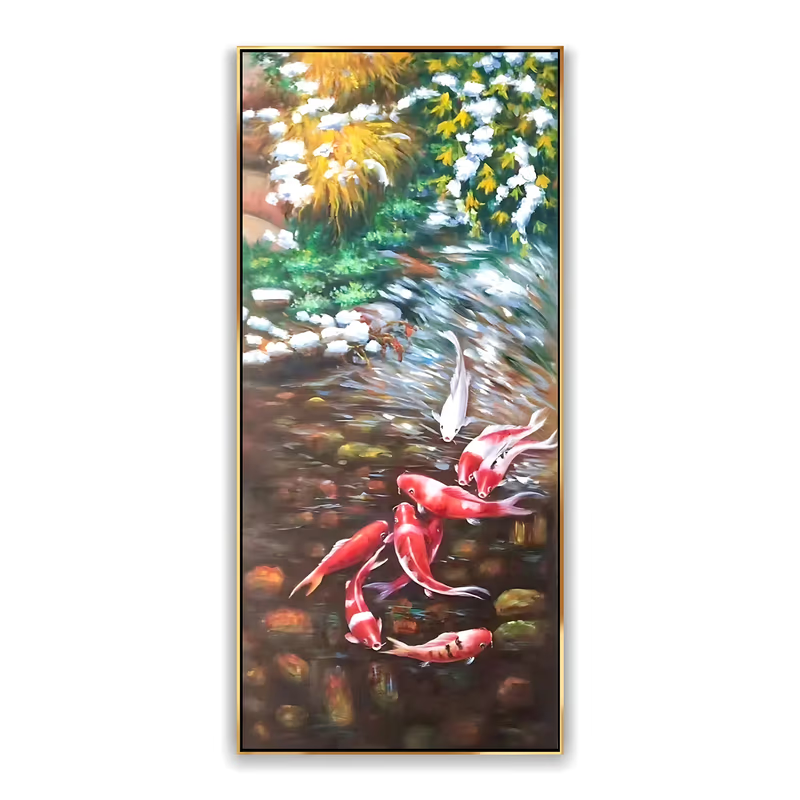
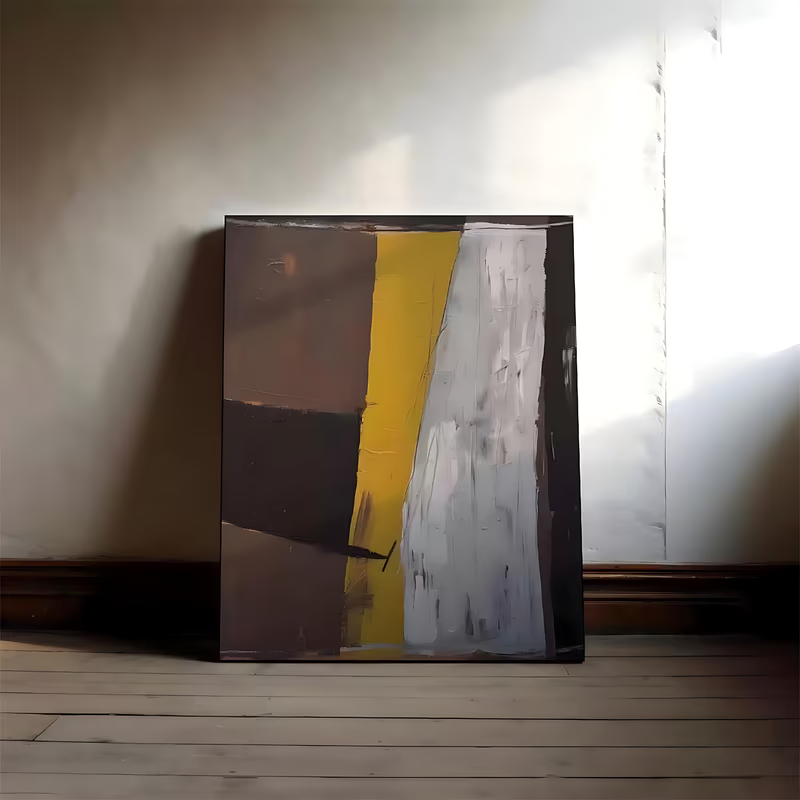
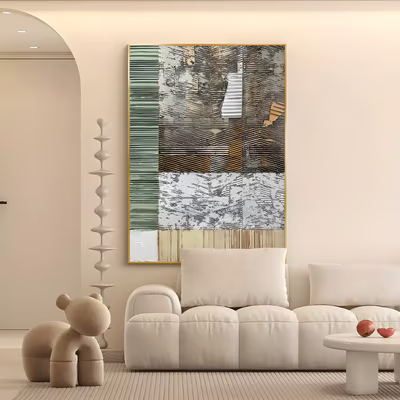
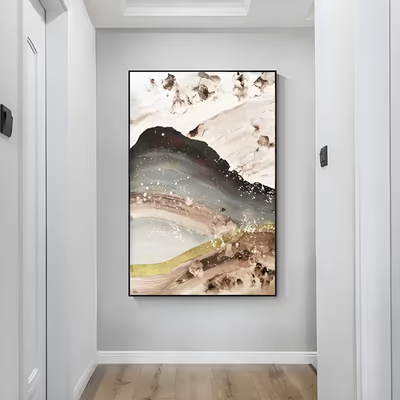
Brown wall art comes in four main kinds: sculpted plaster and metallic relief, horses and wildlife, pale flowers on dark brown grounds, and quiet wabi-sabi abstracts.
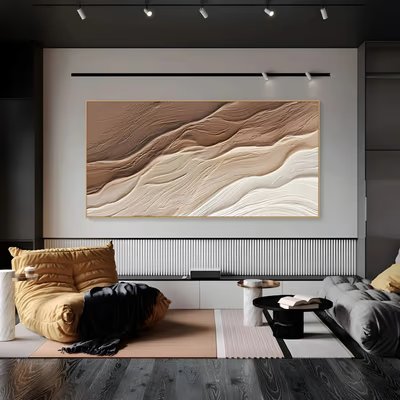
Brown textured and plaster relief art
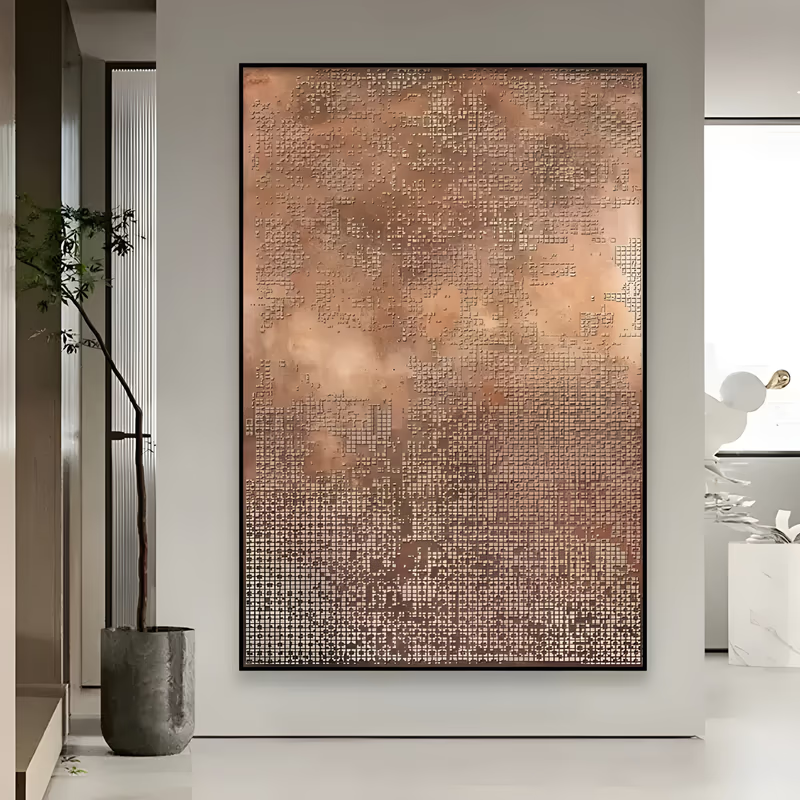
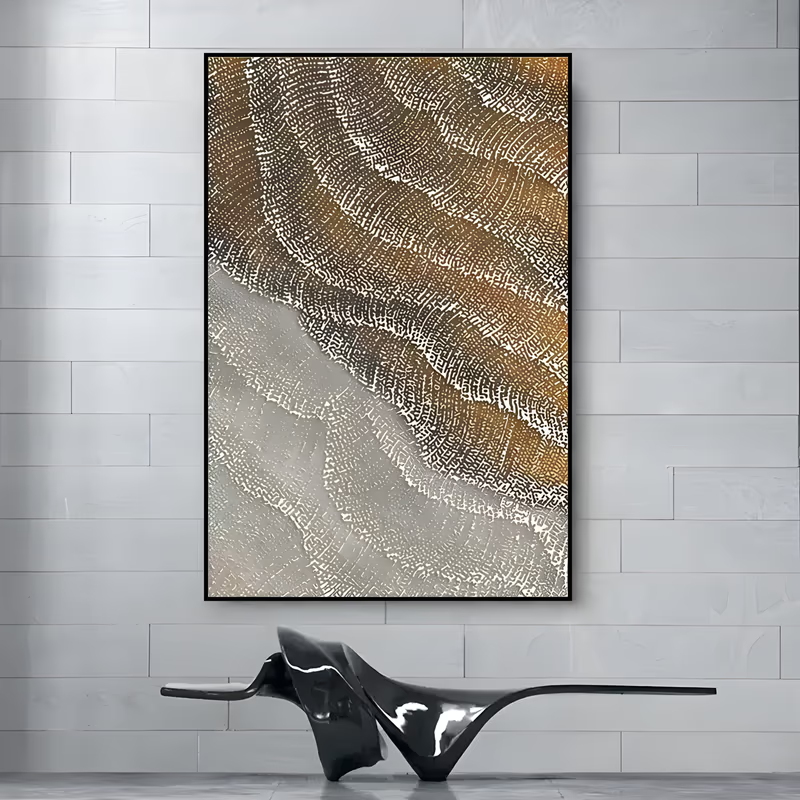
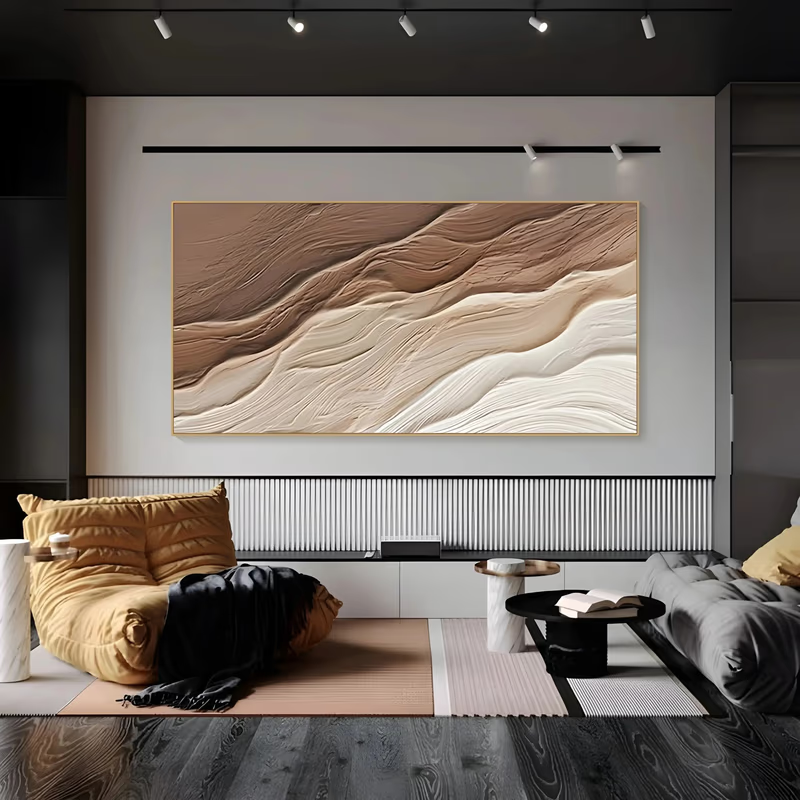
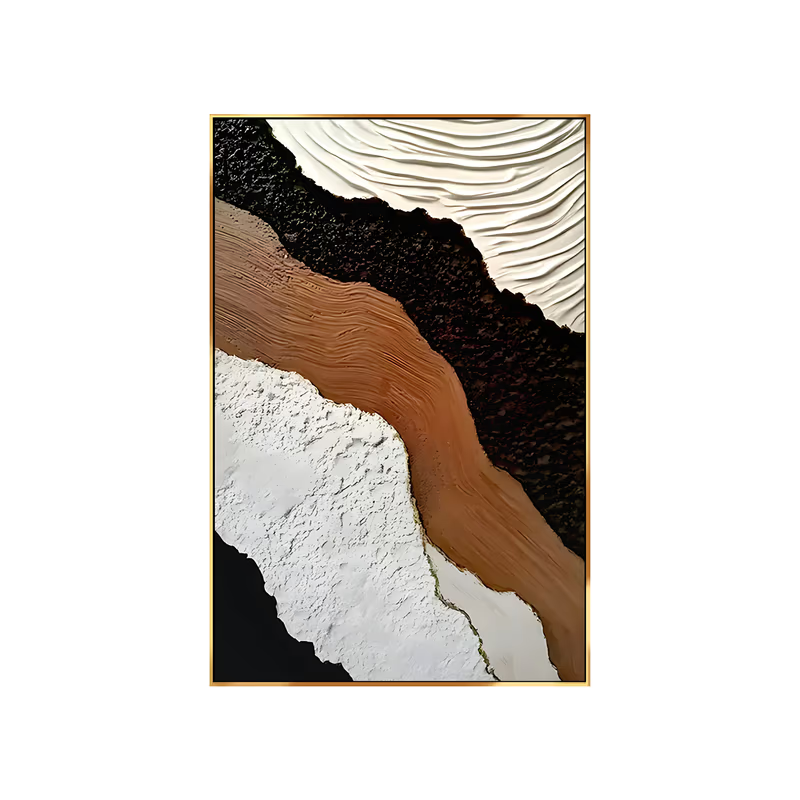
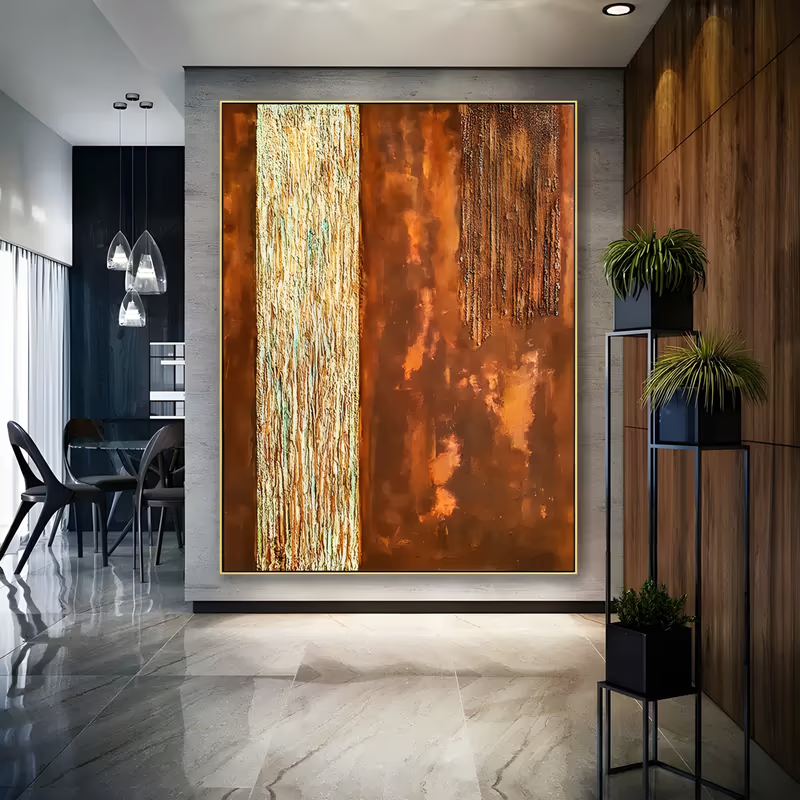
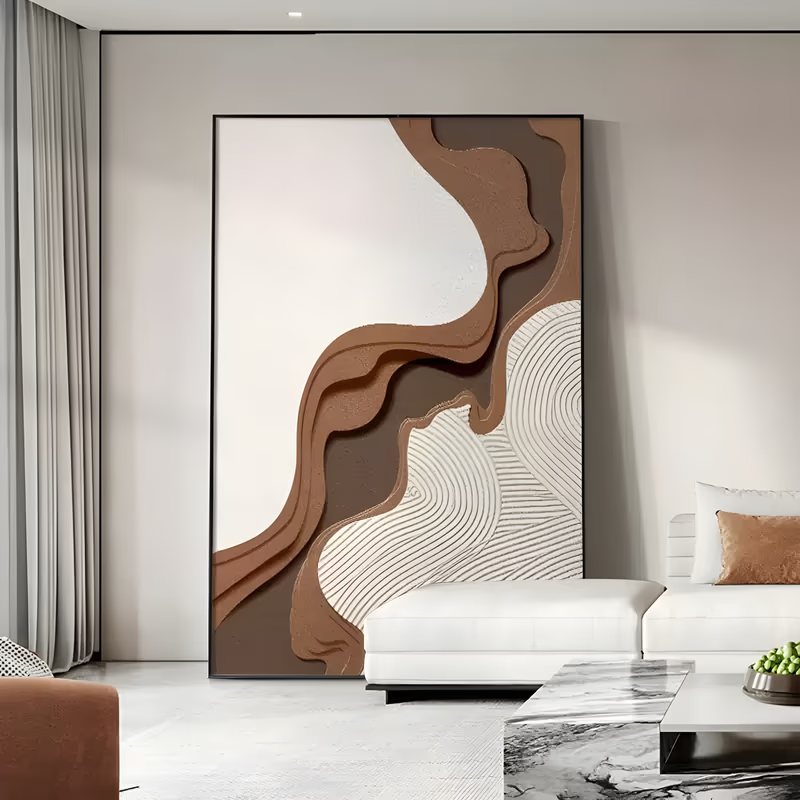
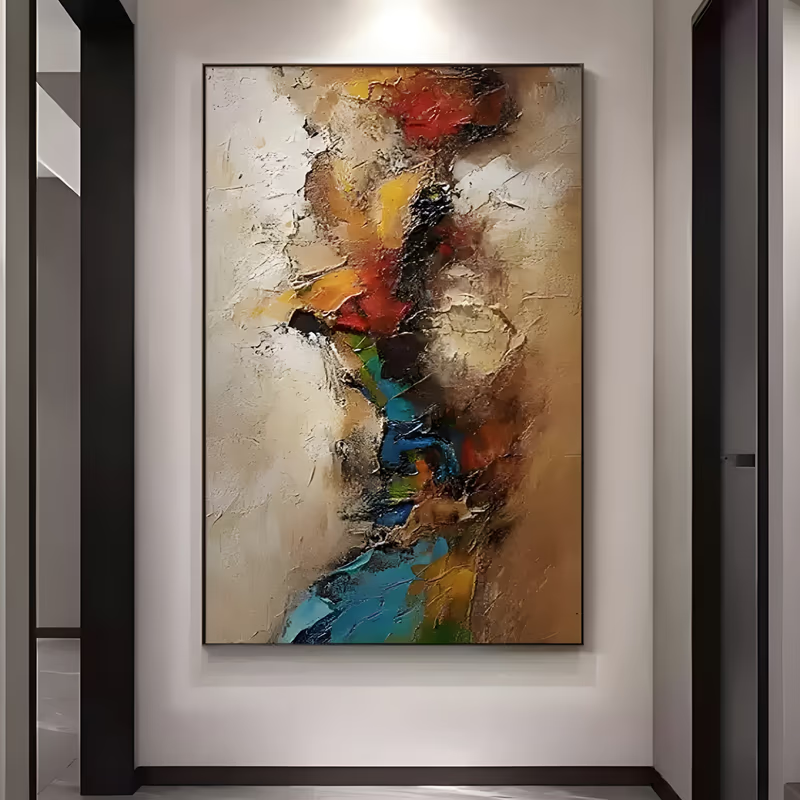
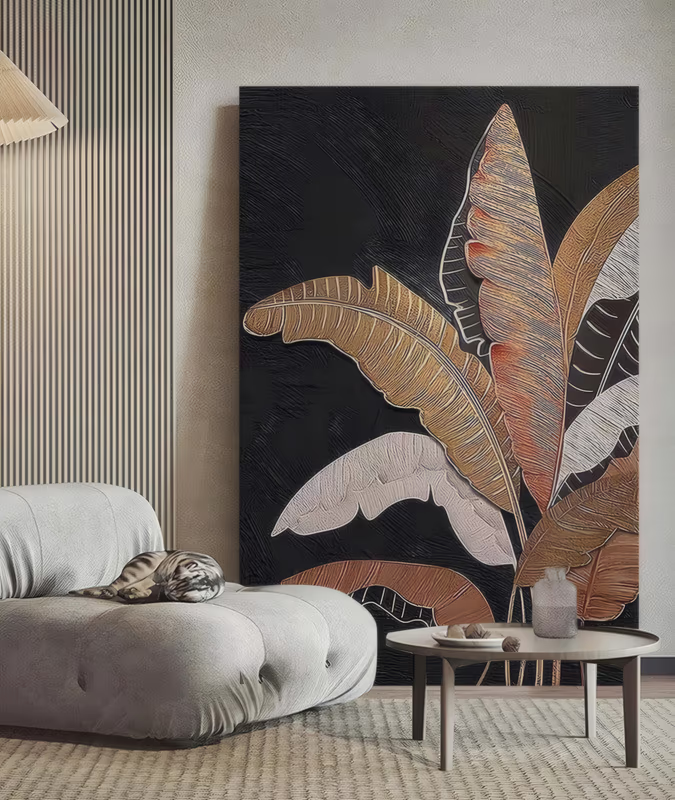
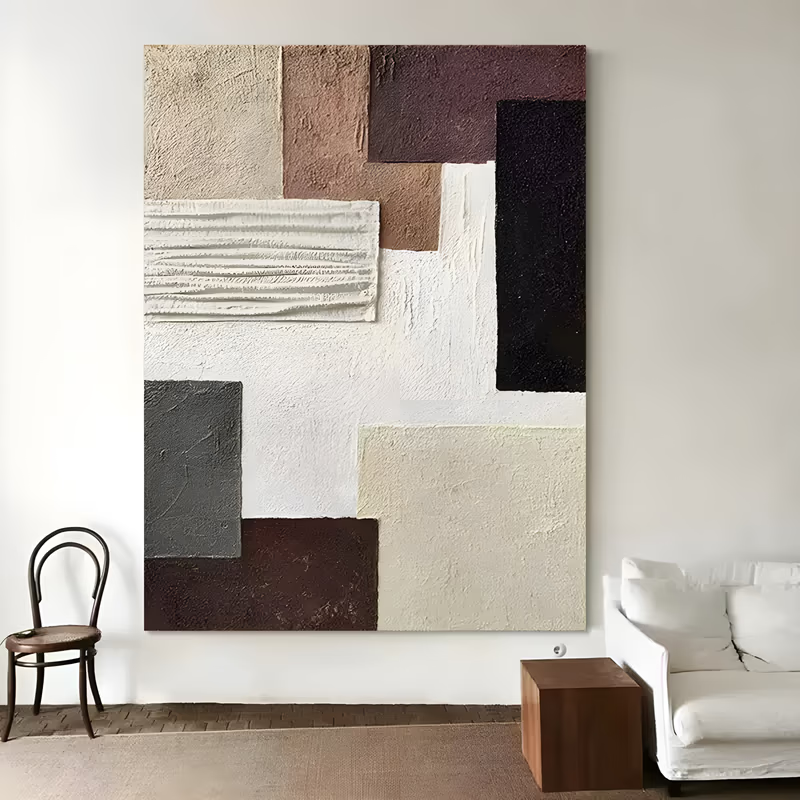
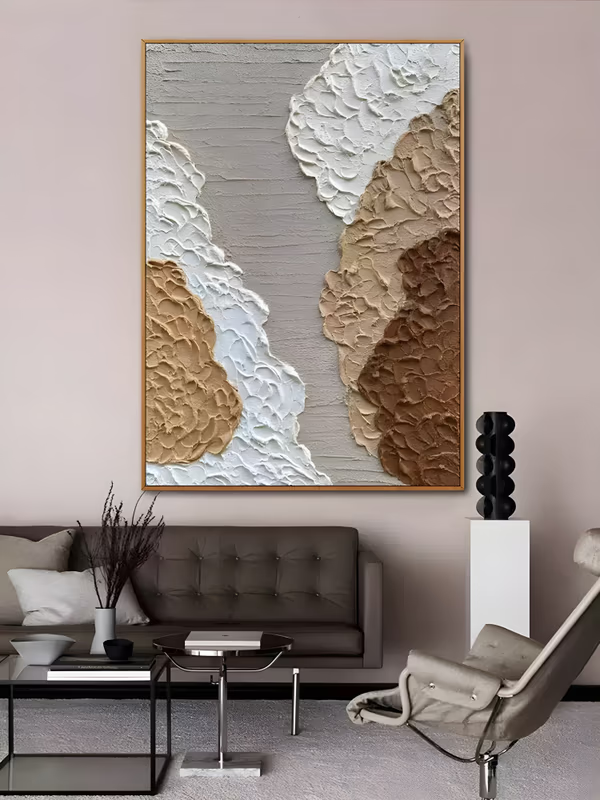
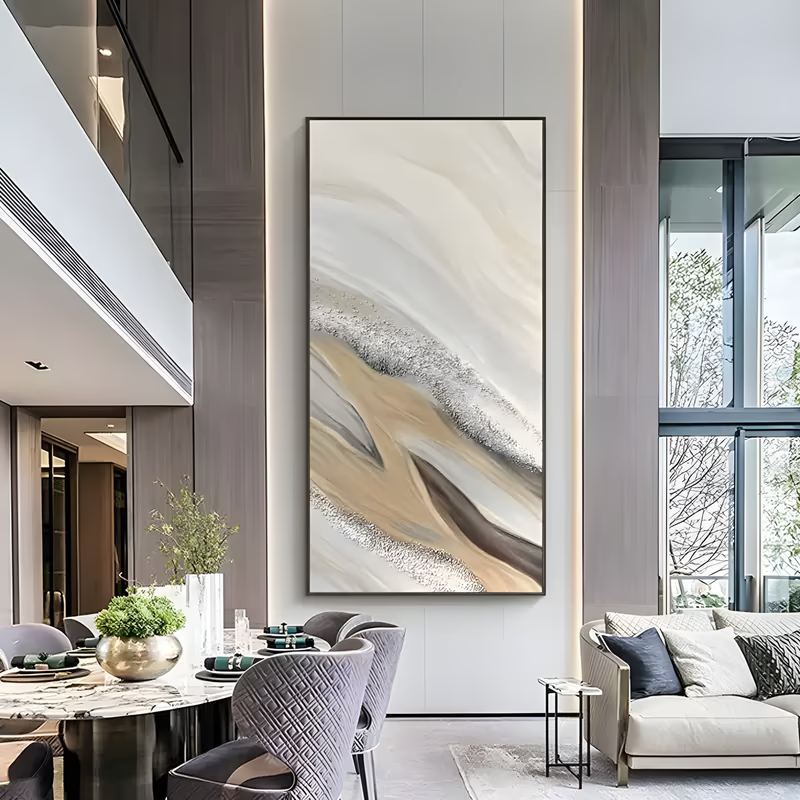
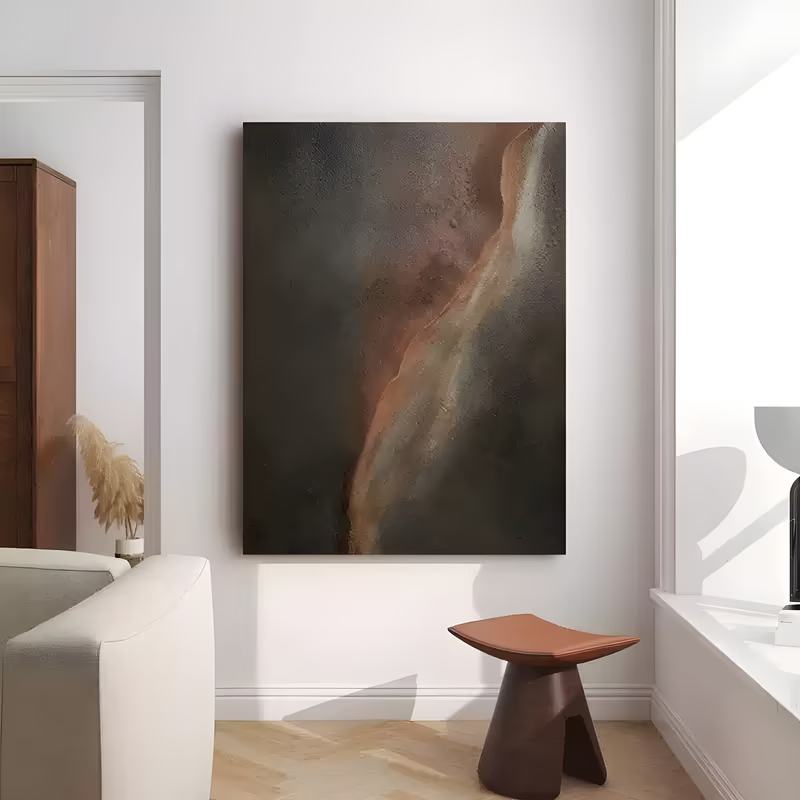
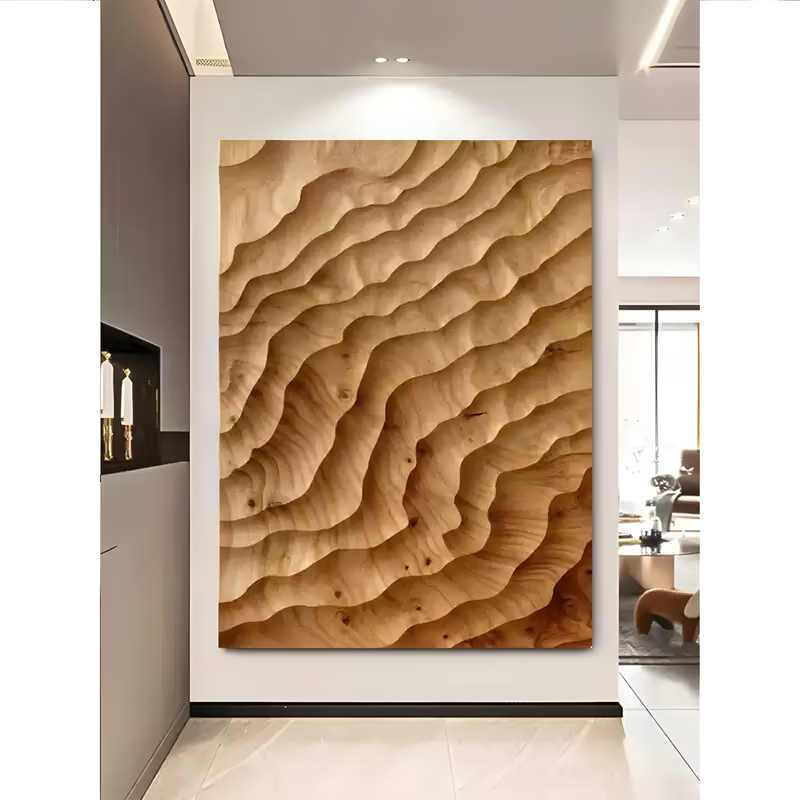
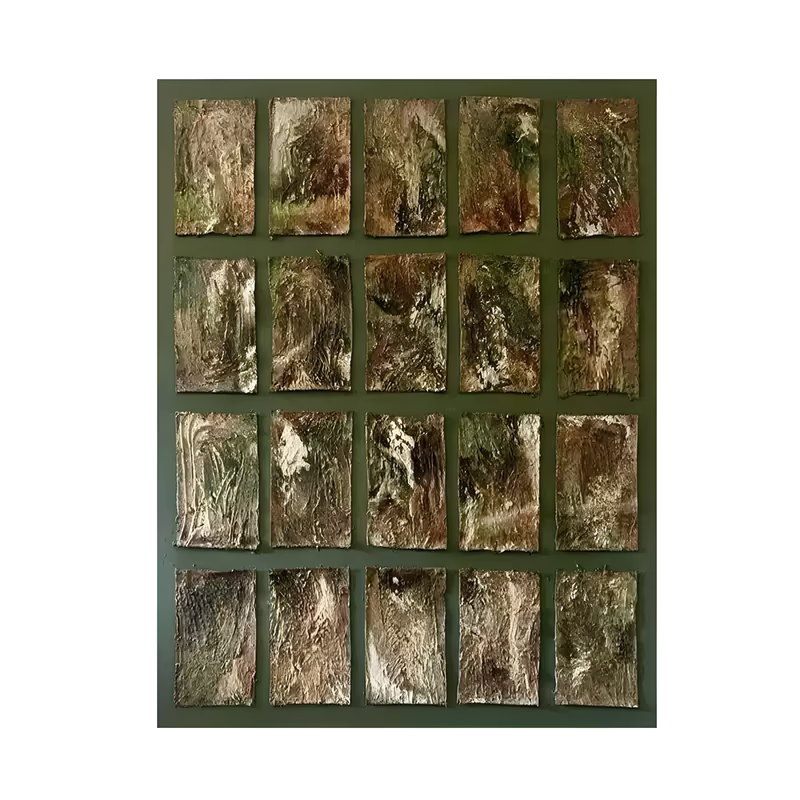
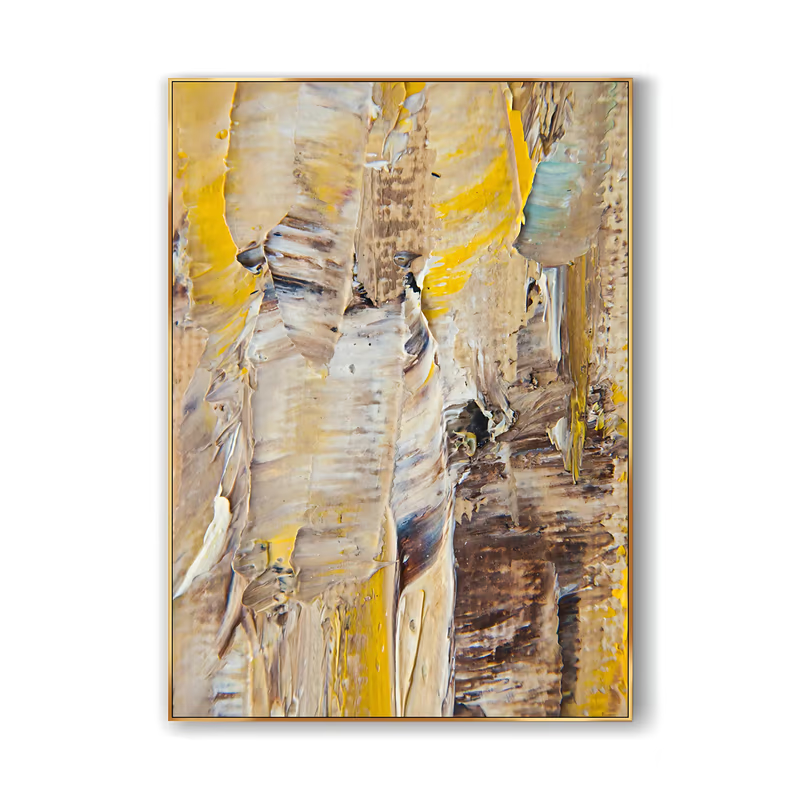
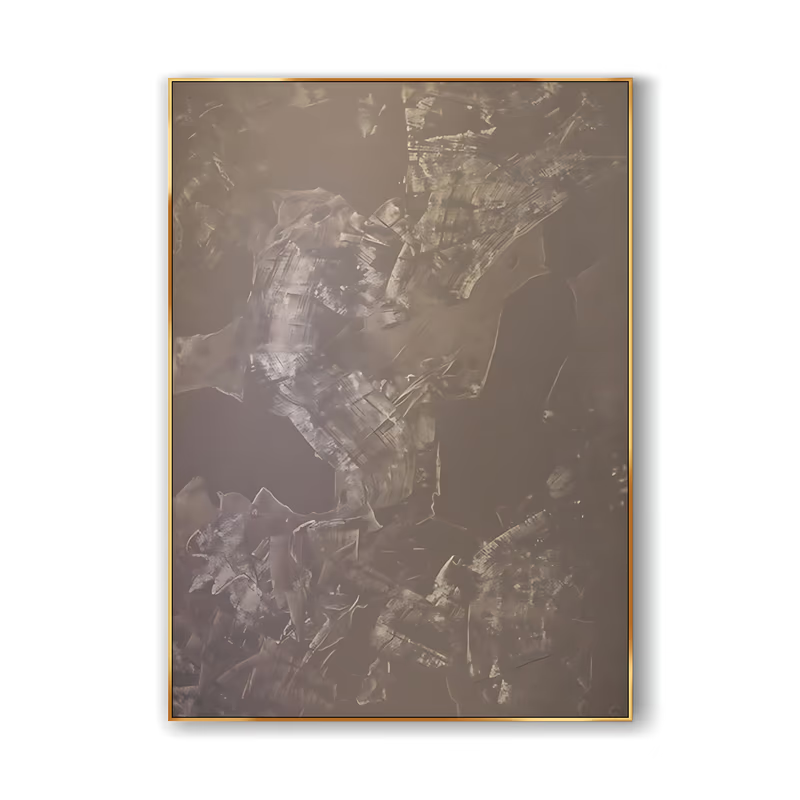
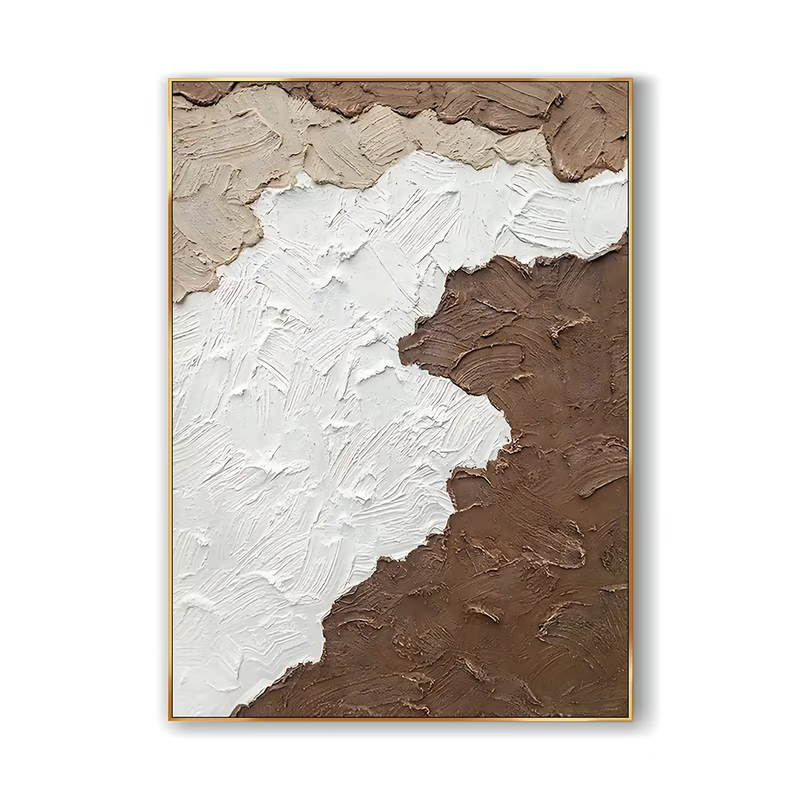
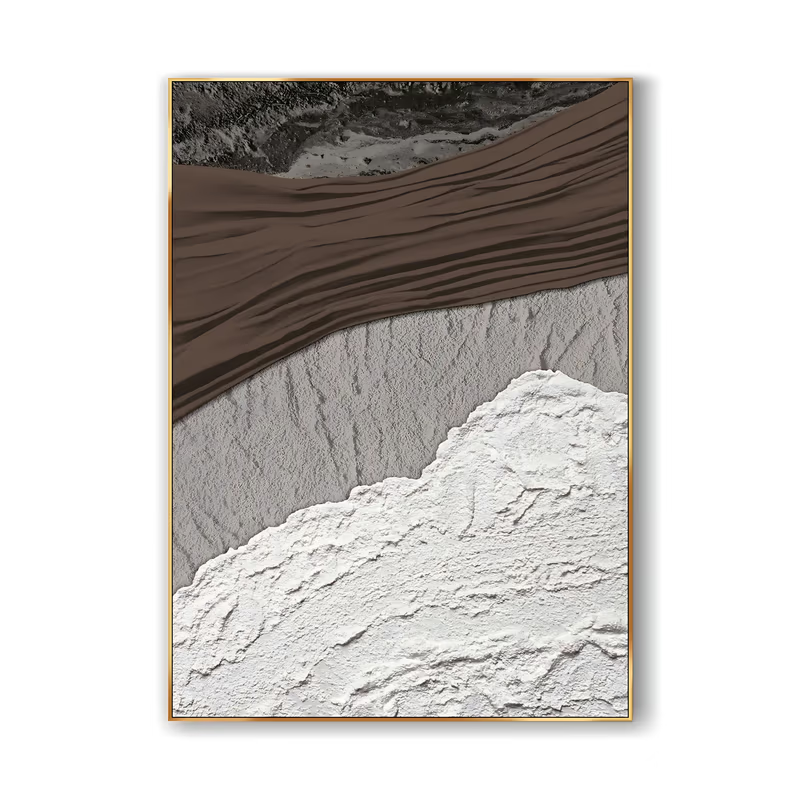
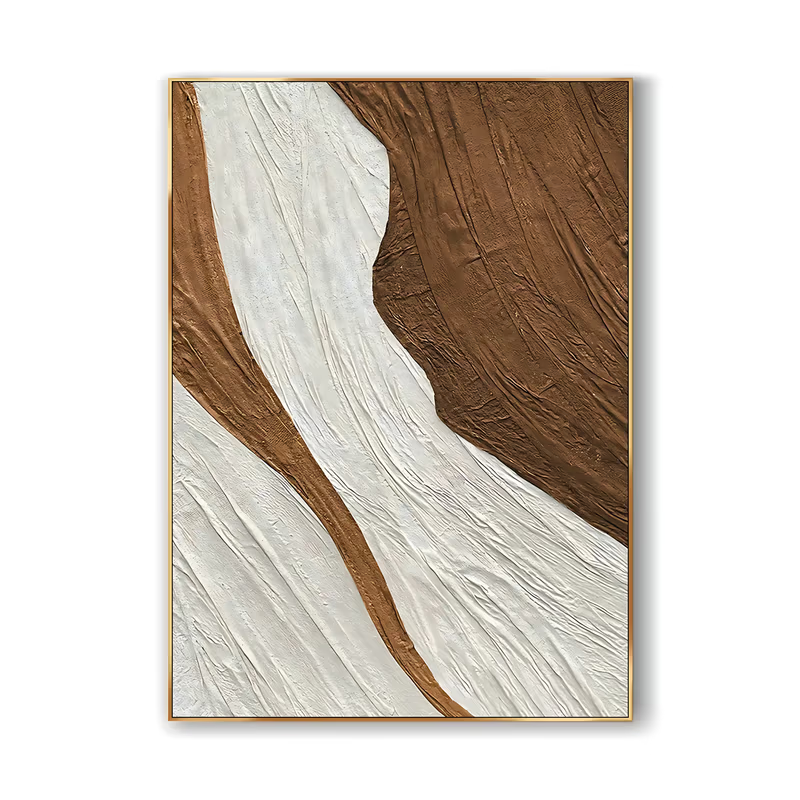
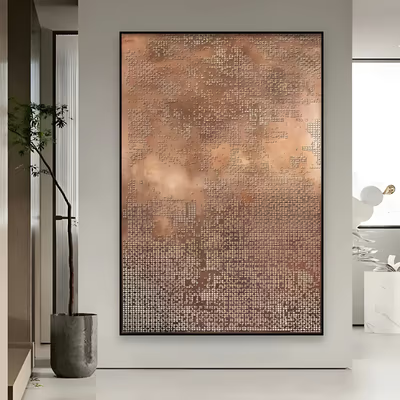
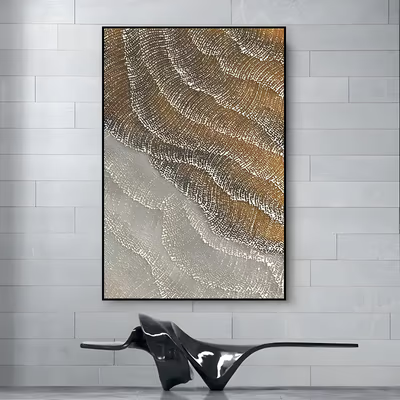
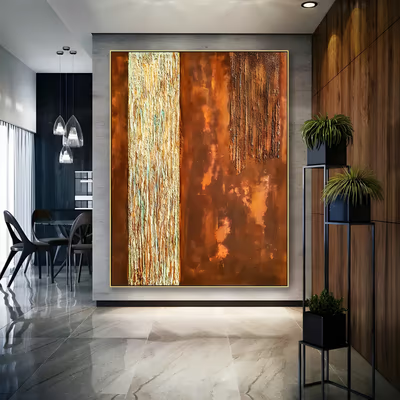
Combed dune ridges, carved wood-grain waves, troweled earth fields and raised grids in copper and bronze. Relief gives brown what it most needs, a play of light and shadow across the surface, so these pieces hold their own on a large wall in a lobby, a boardroom or a double-height living room.
Brown horse and animal paintings
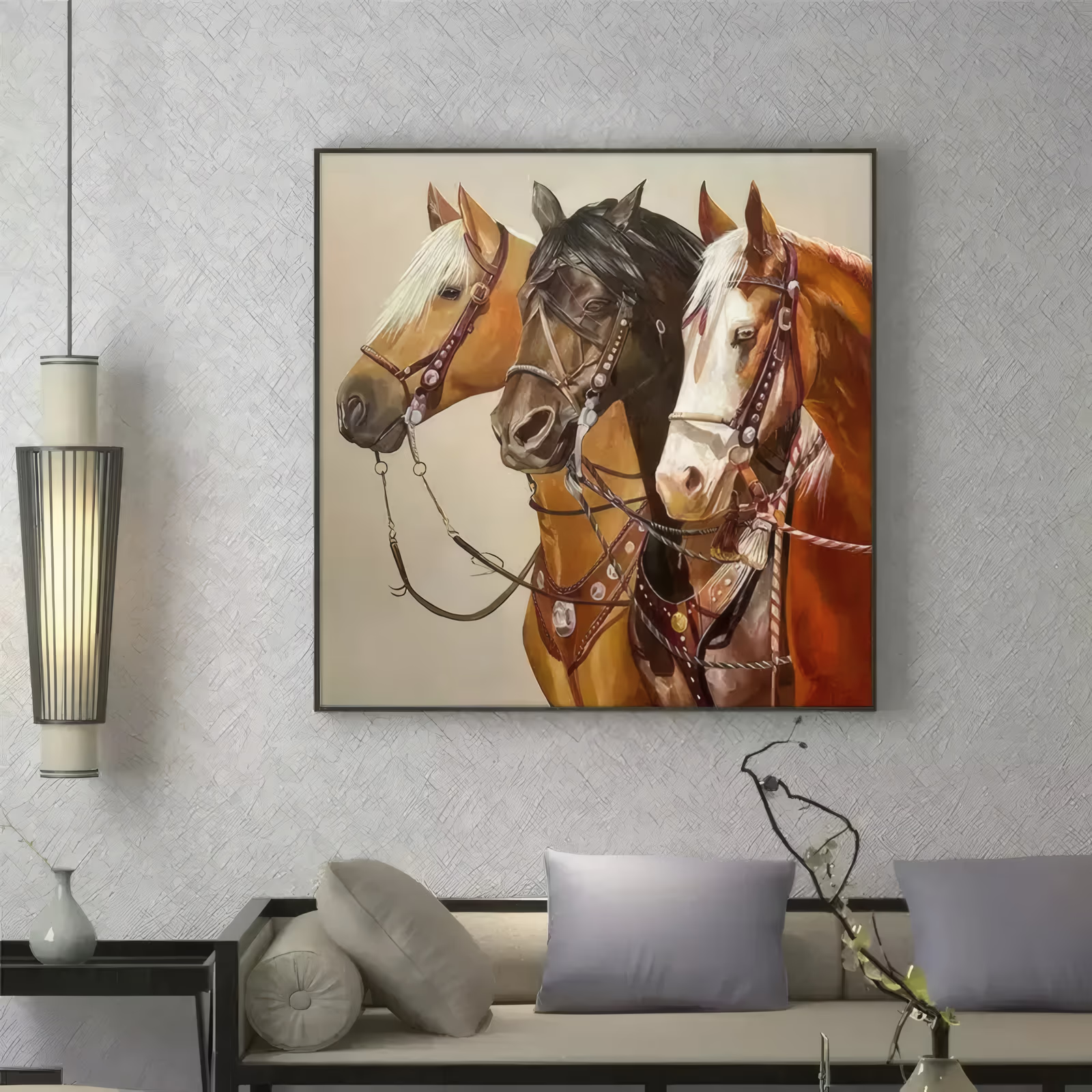
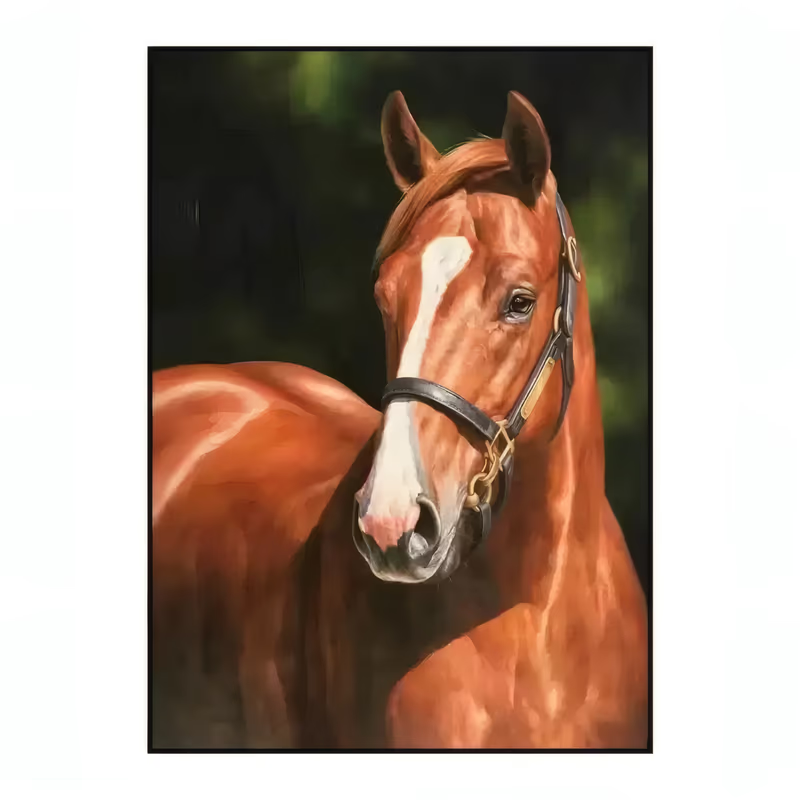
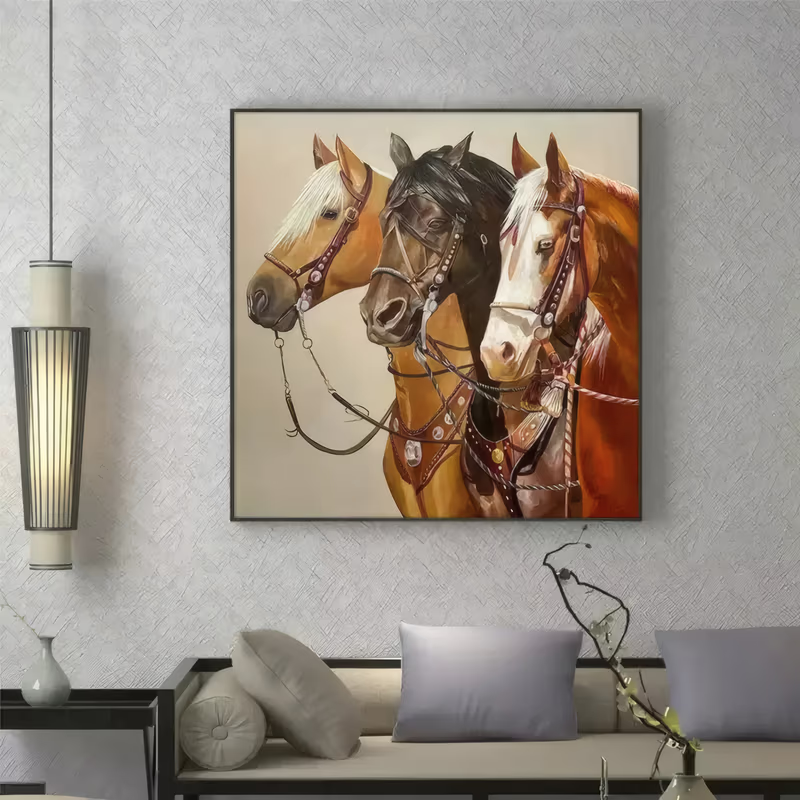
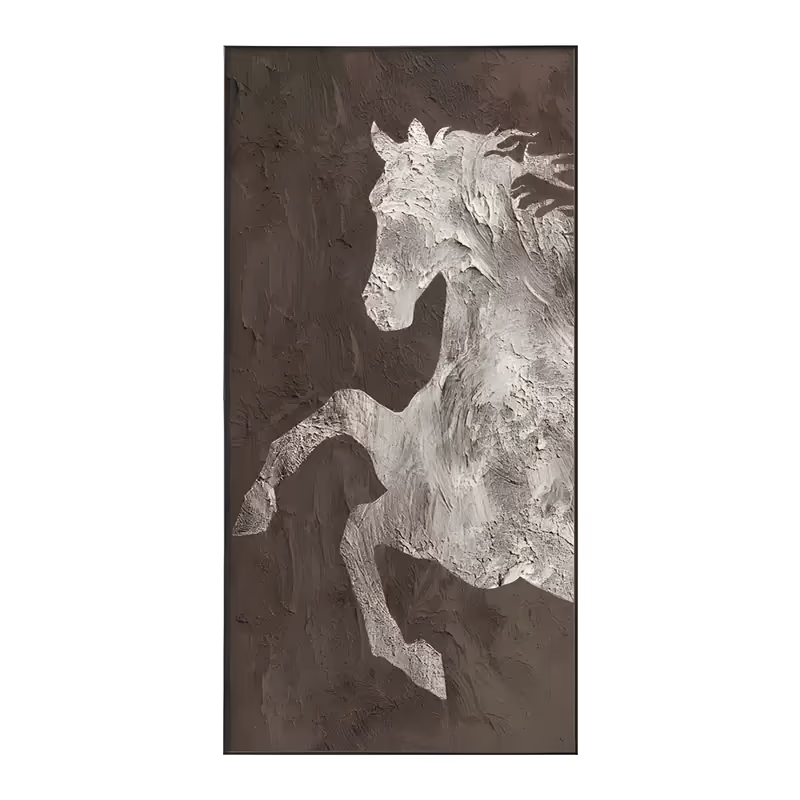
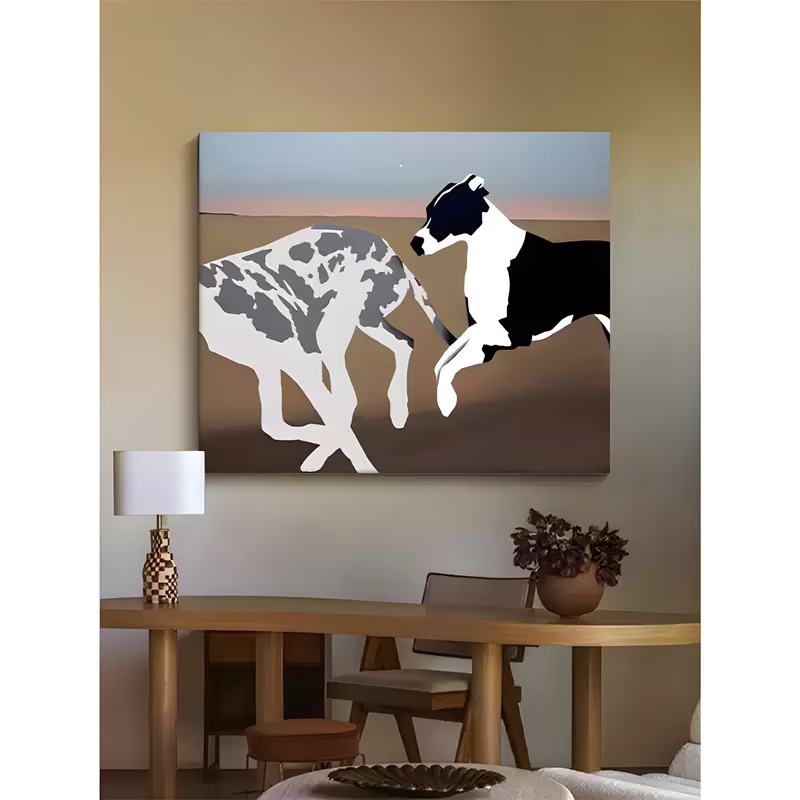
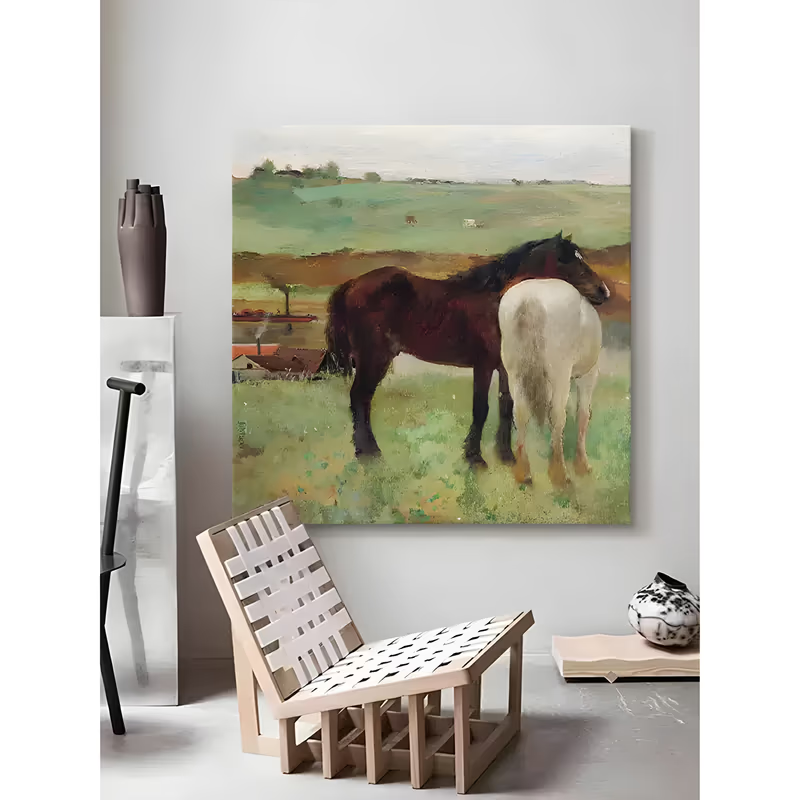
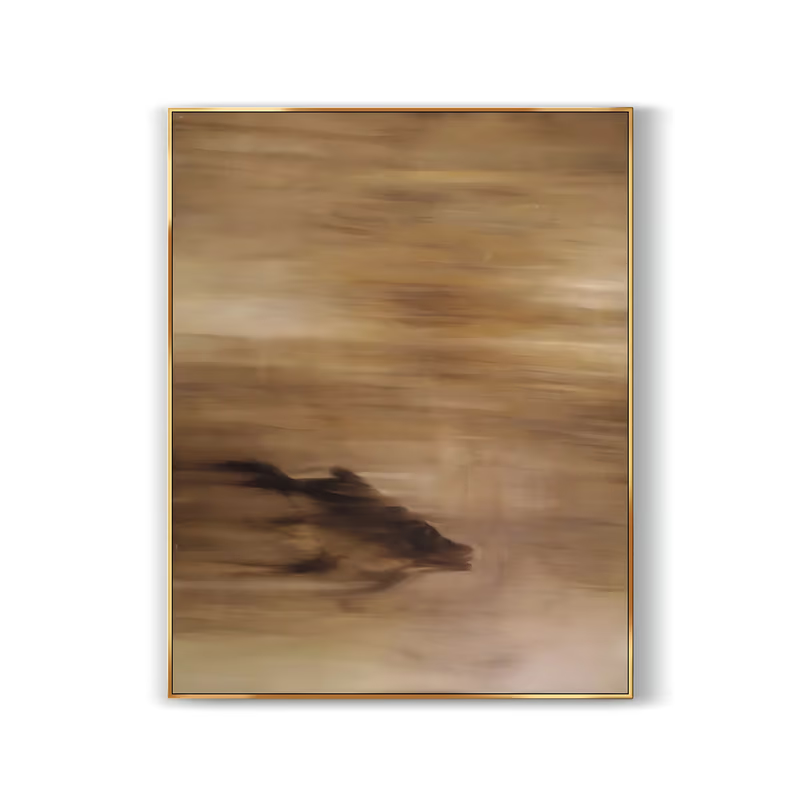
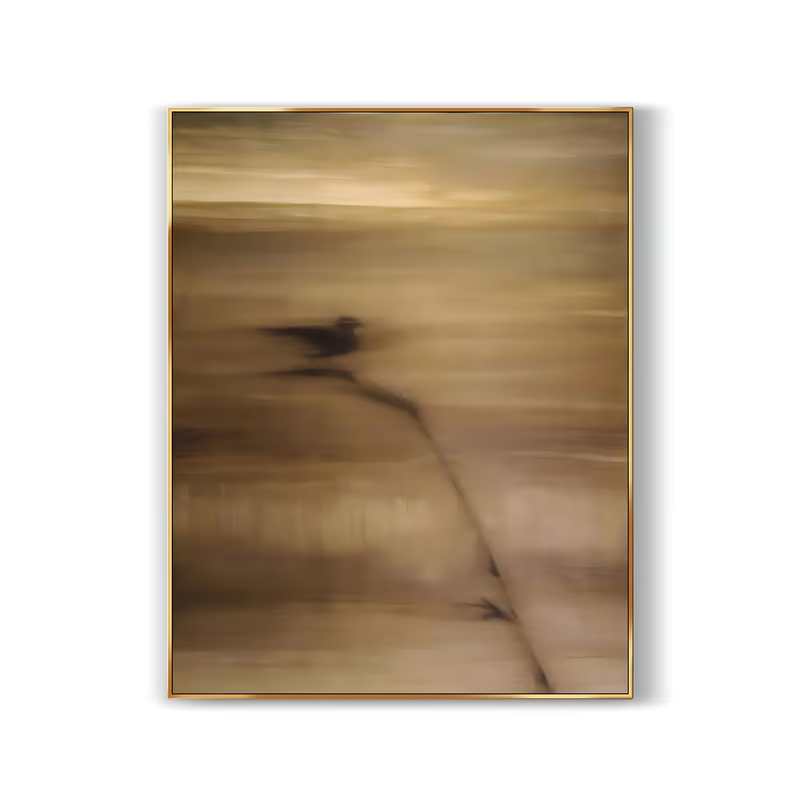
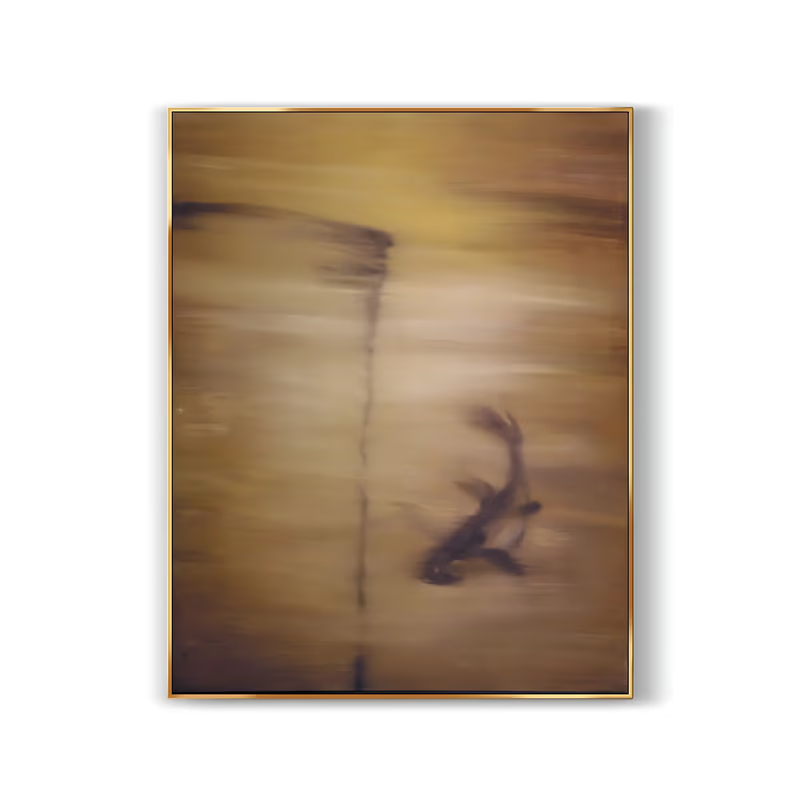
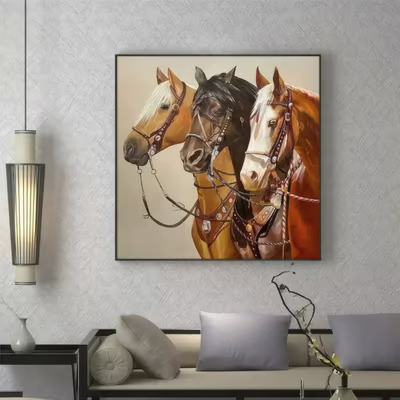
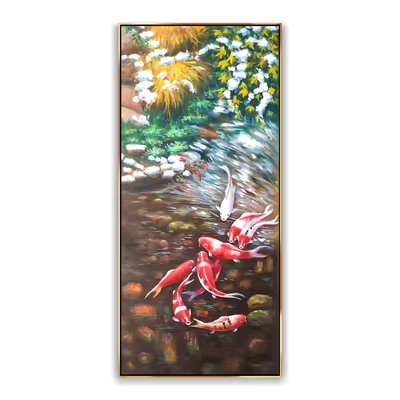
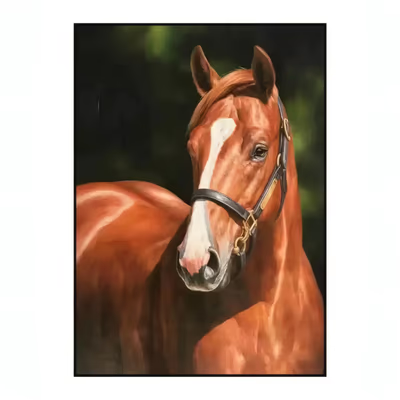
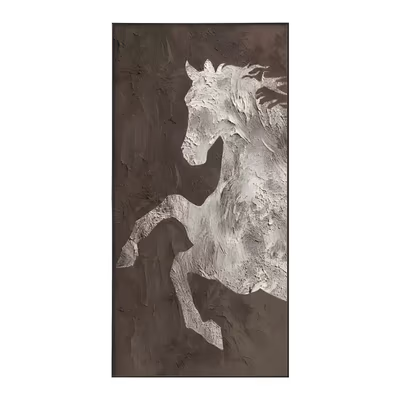
Chestnut horses with white blazes, horse heads in leather bridles, a rearing white plaster horse on a dark ground, and blurred sepia birds and fish. Equestrian brown is the natural fit for a study, a country house, a gentleman's club or a bar with a sporting theme, where it sits beside tack-room leather and dark timber.
Brown floral paintings
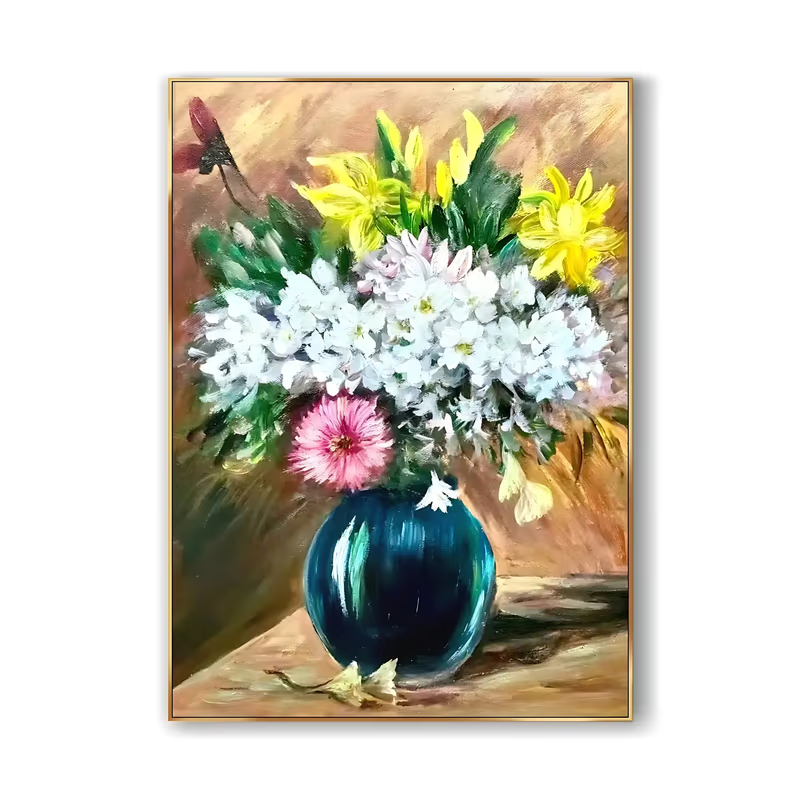
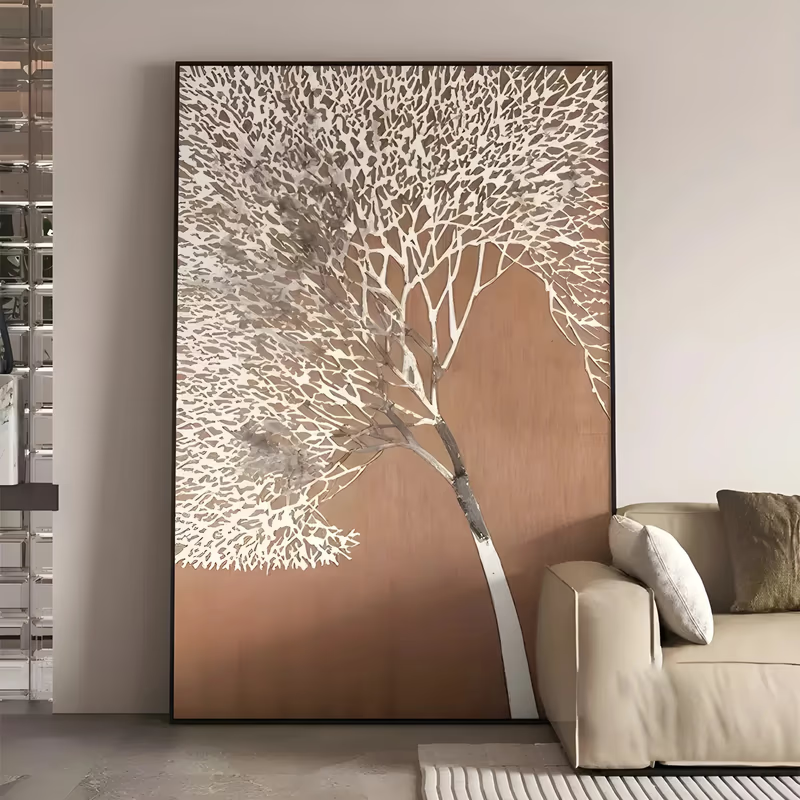
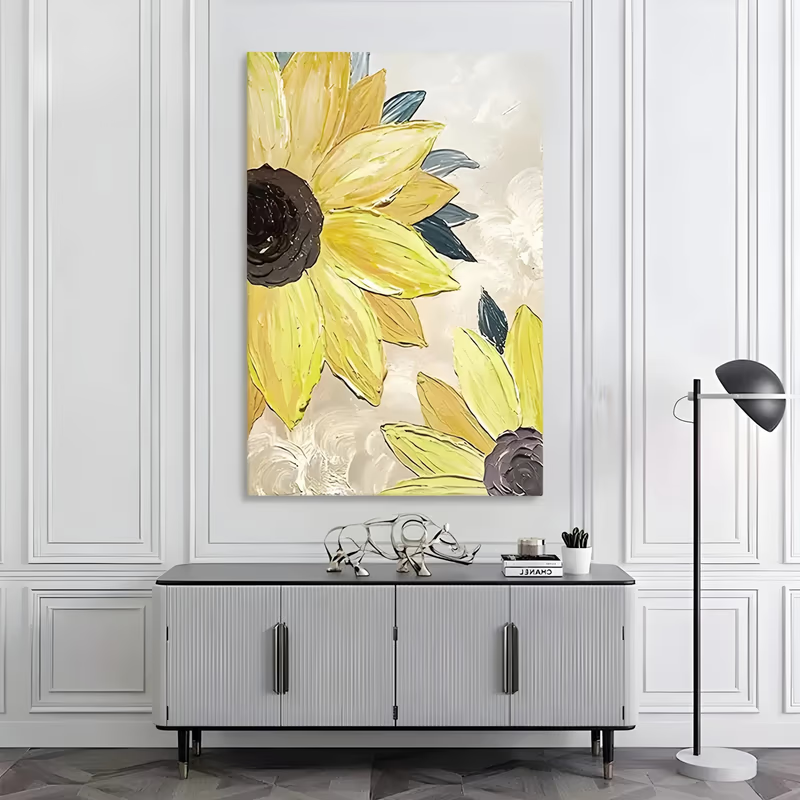
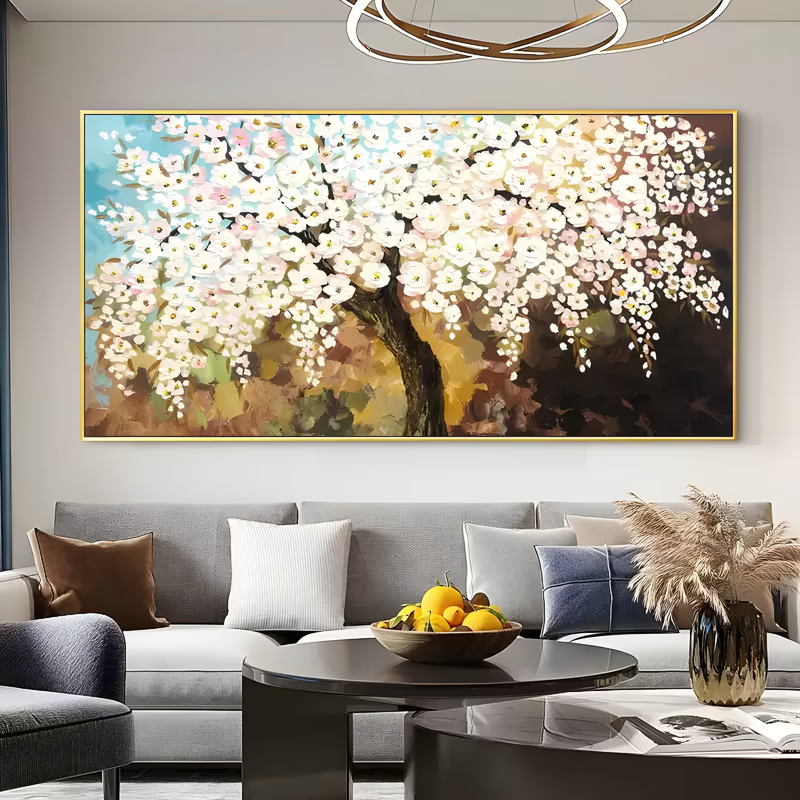
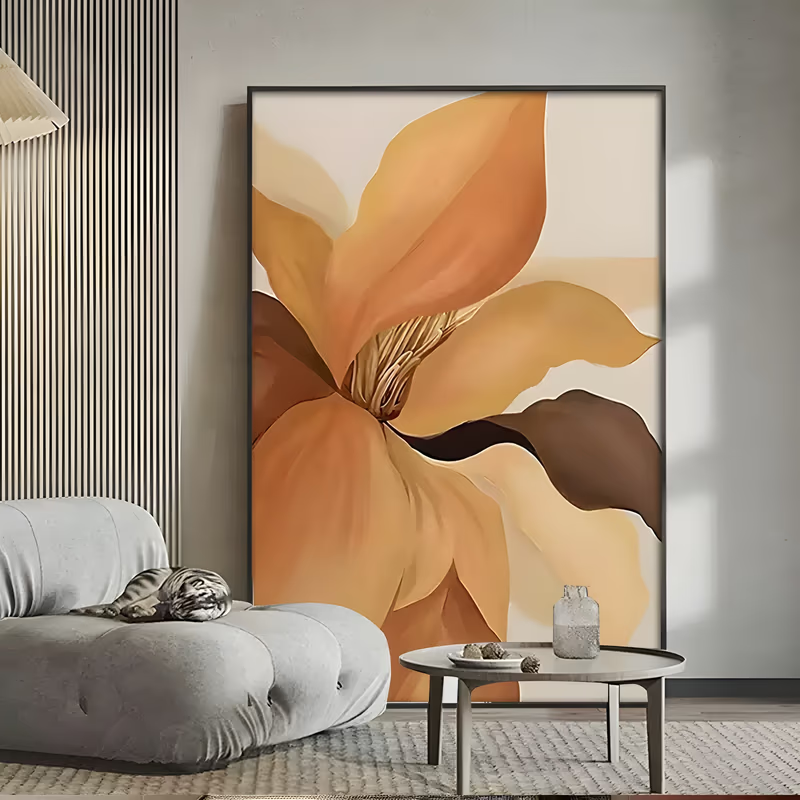
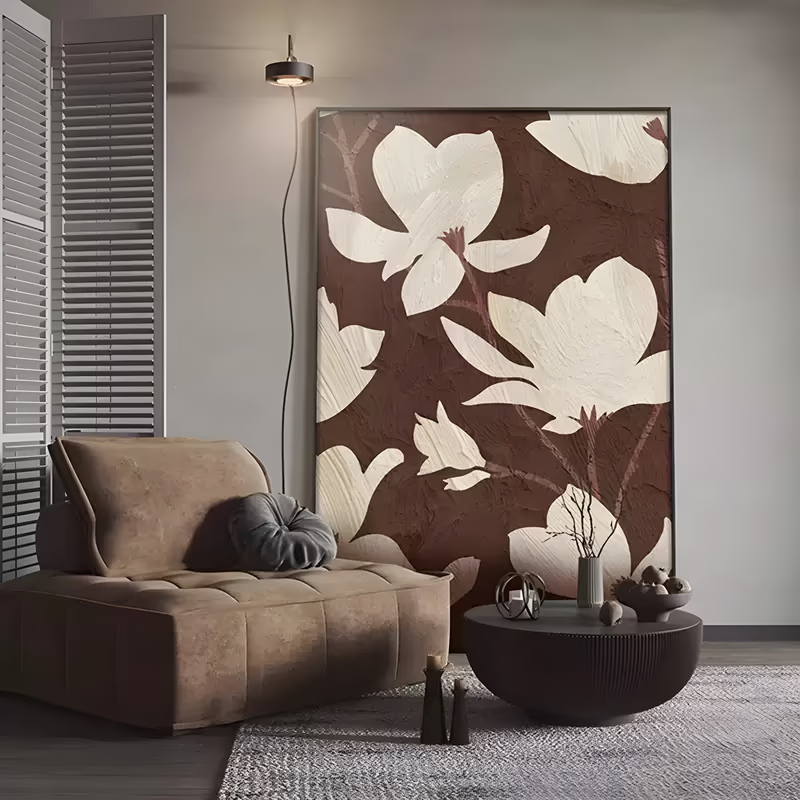
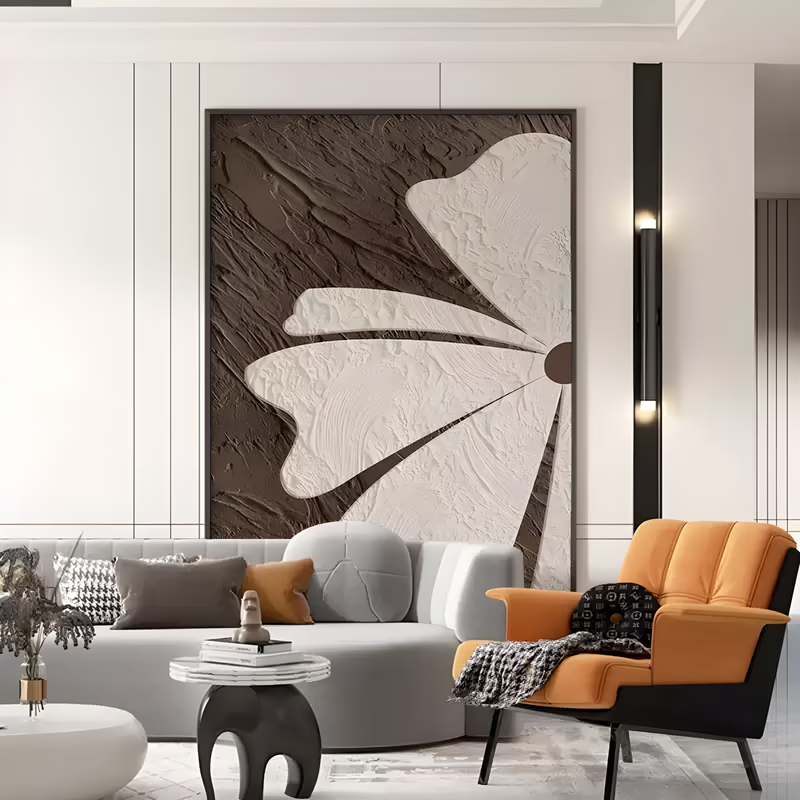
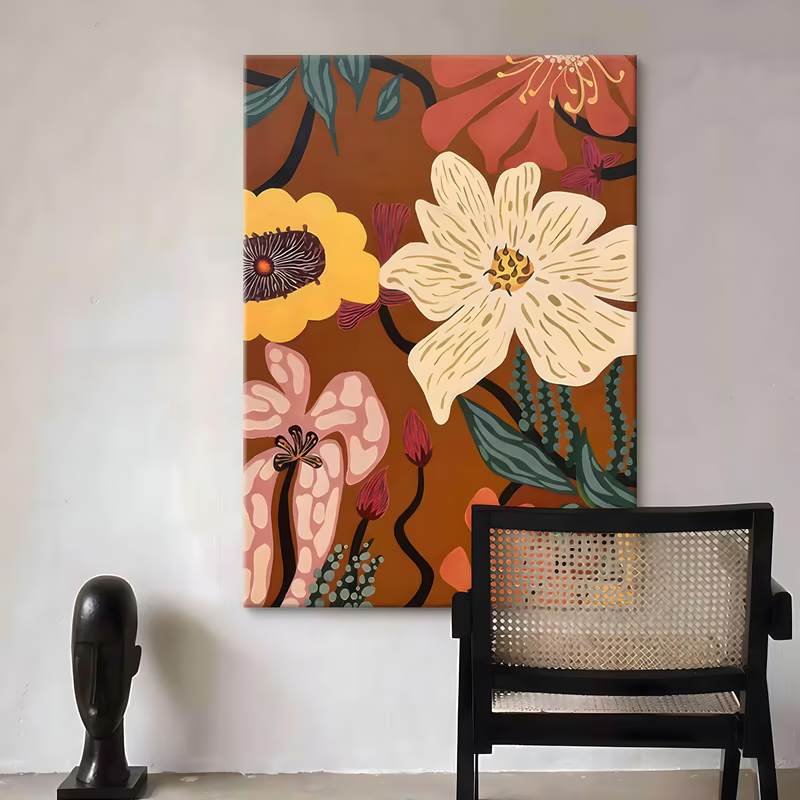
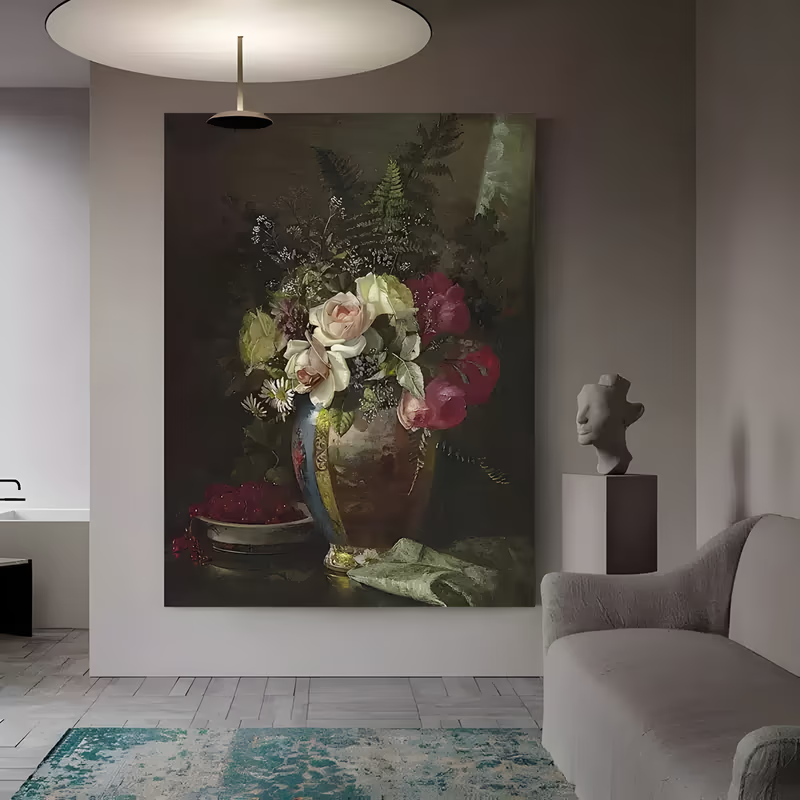
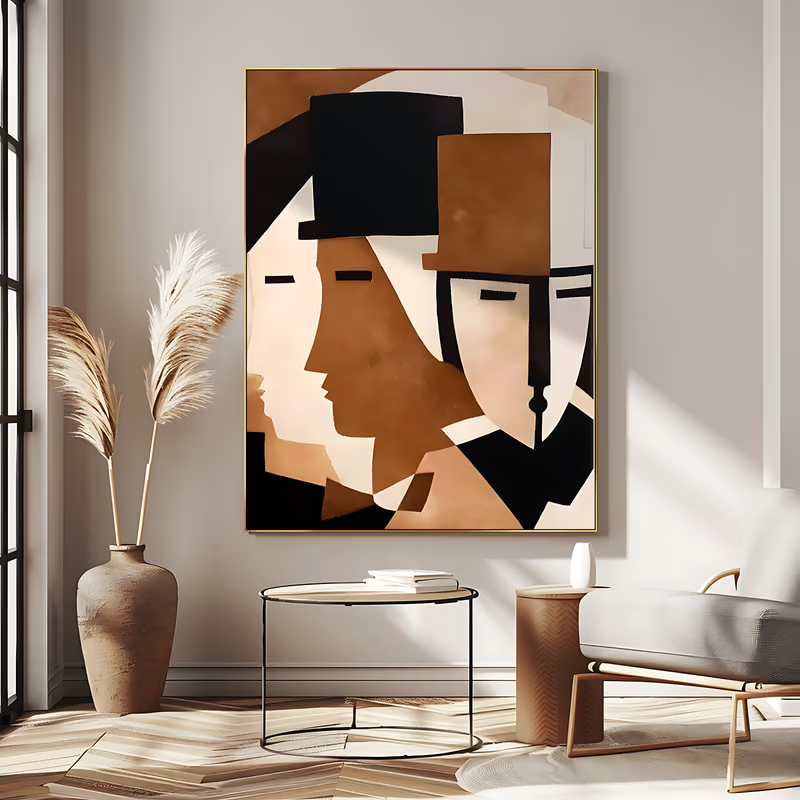
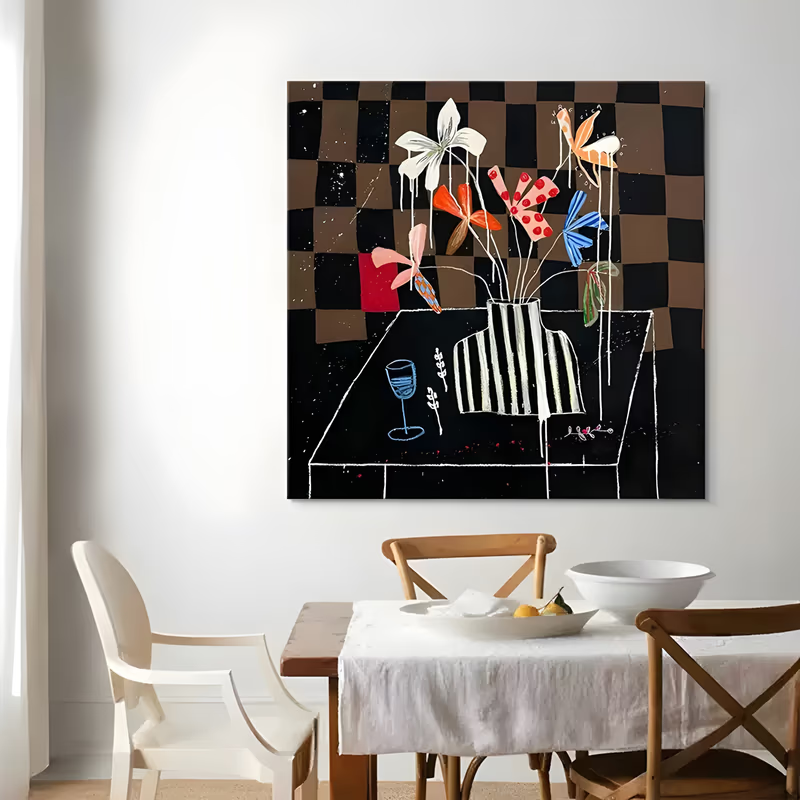
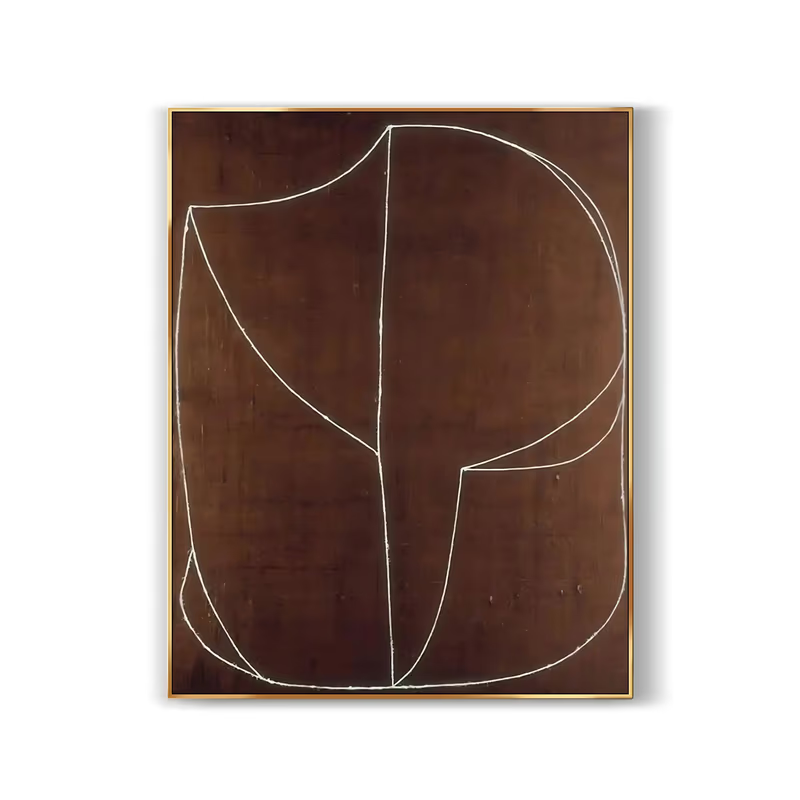
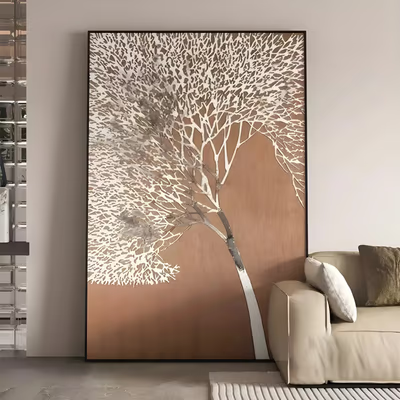
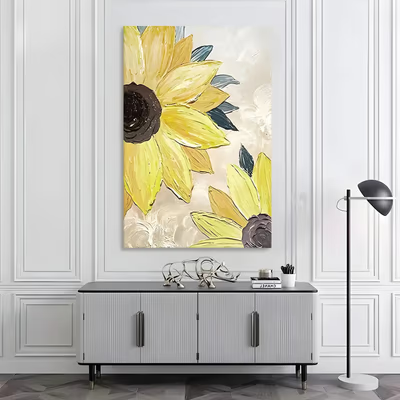
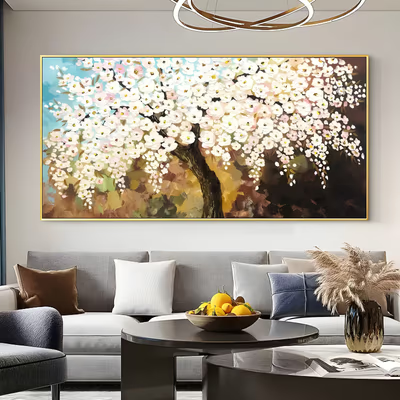
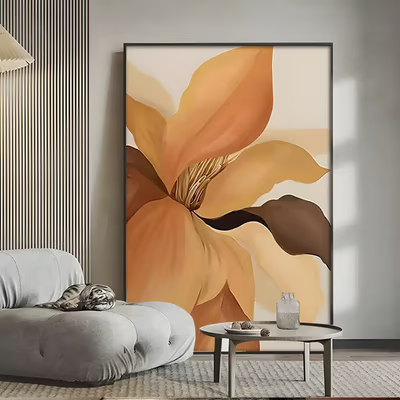
Cream magnolias on chocolate plaster, sculpted white petals, a lace-white tree on a copper ground, bronze palm leaves on black. The brown ground acts like a dark velvet backdrop and makes every pale bloom shine, which suits a bedroom, a dining room or a hotel suite that wants flowers without anything sugary.
Brown abstract and wabi-sabi art
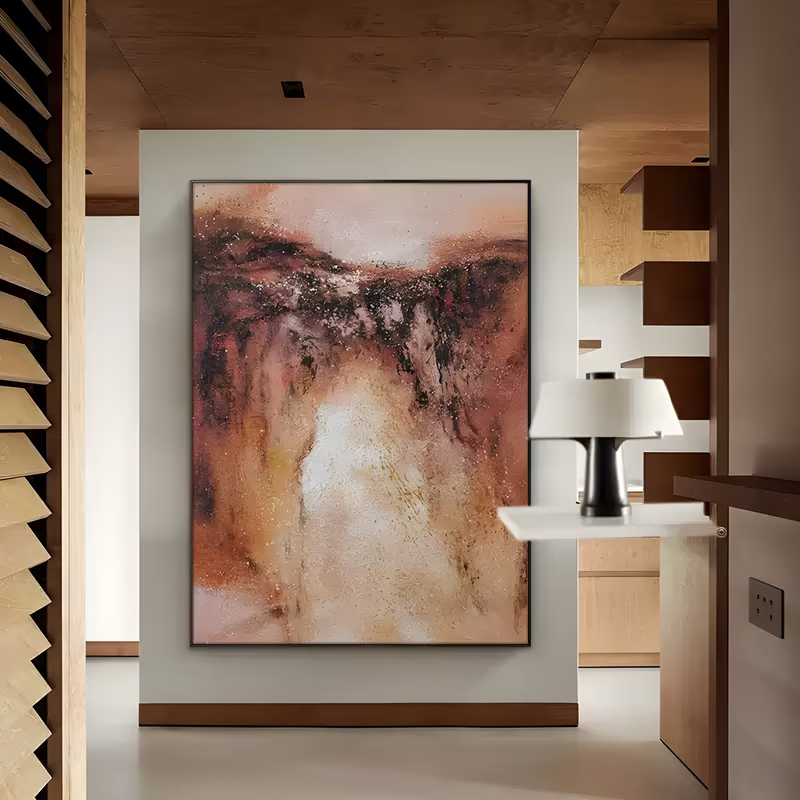
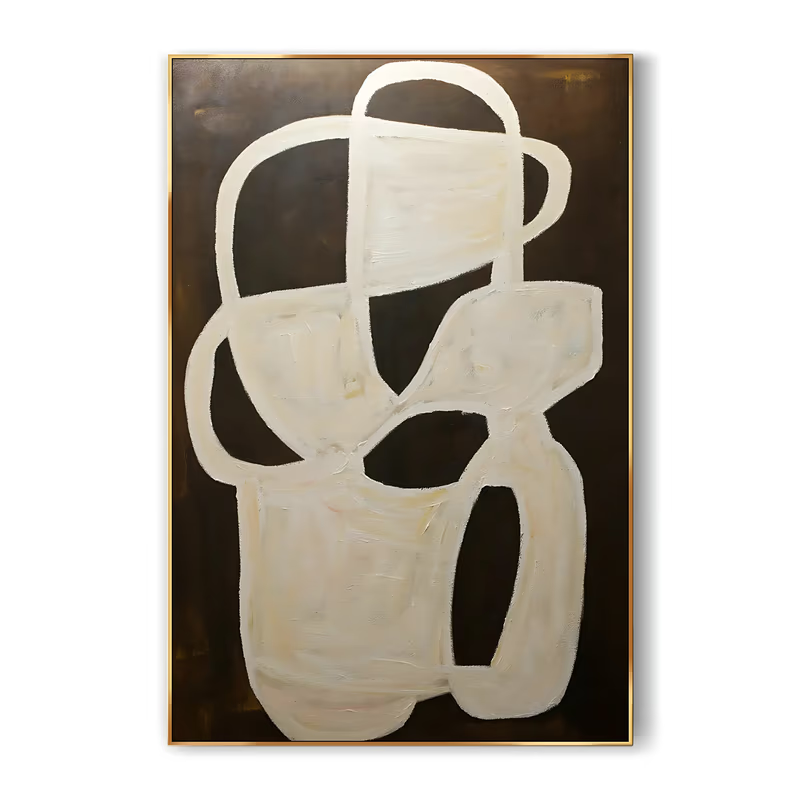
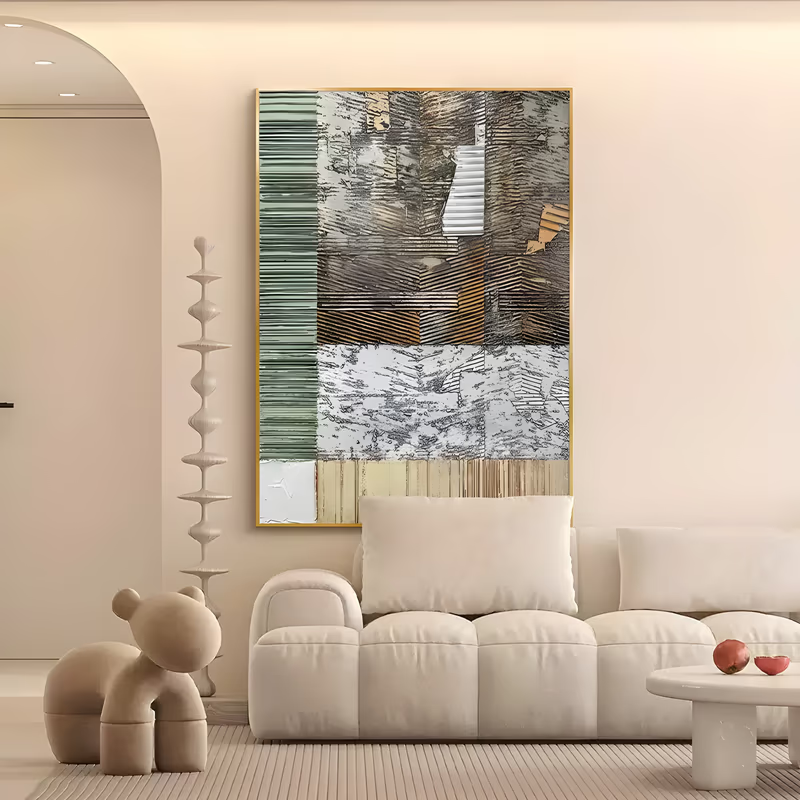
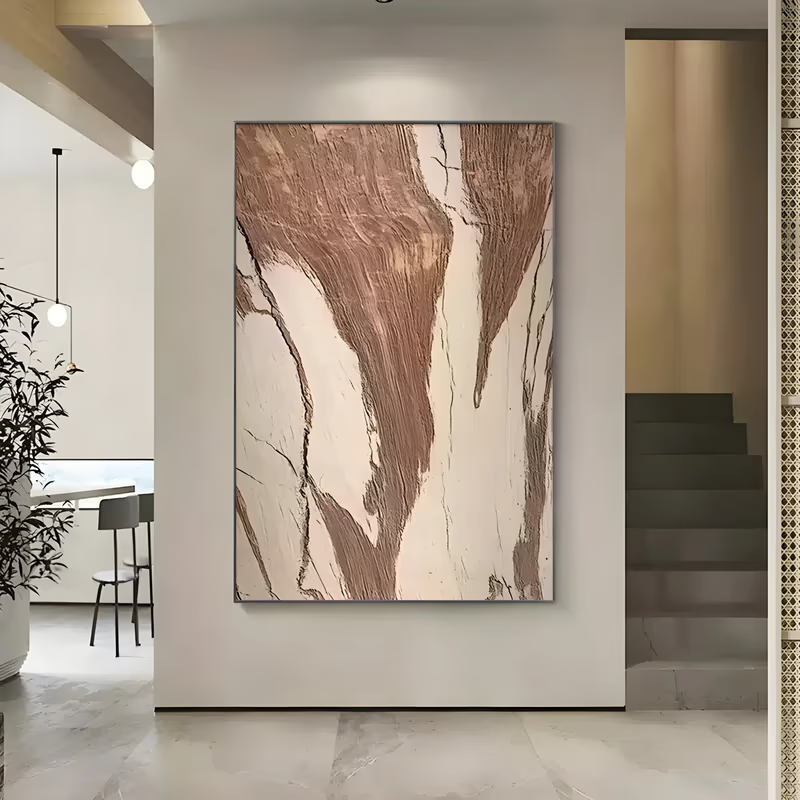
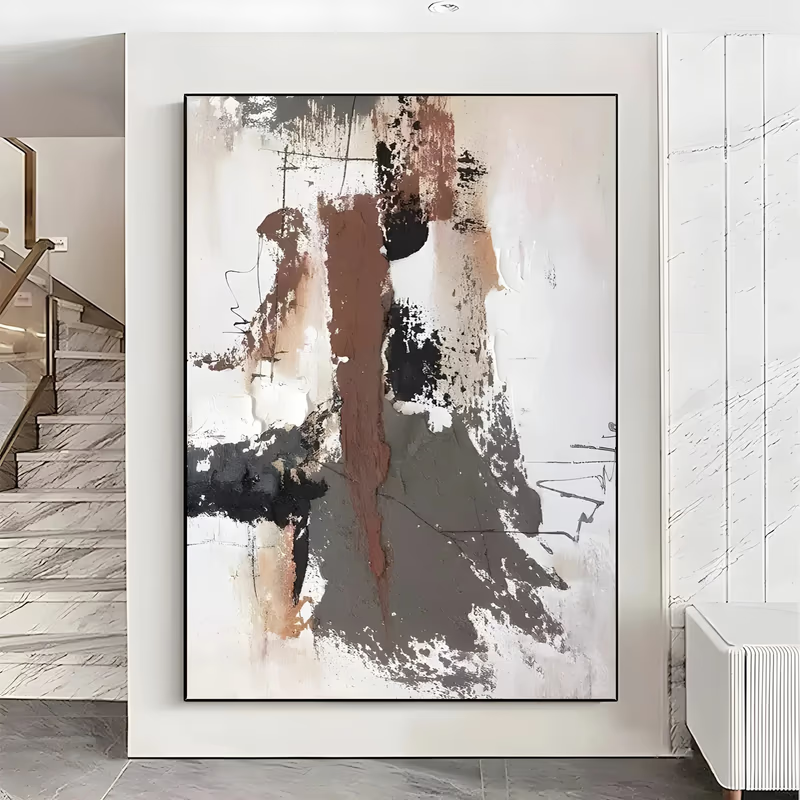
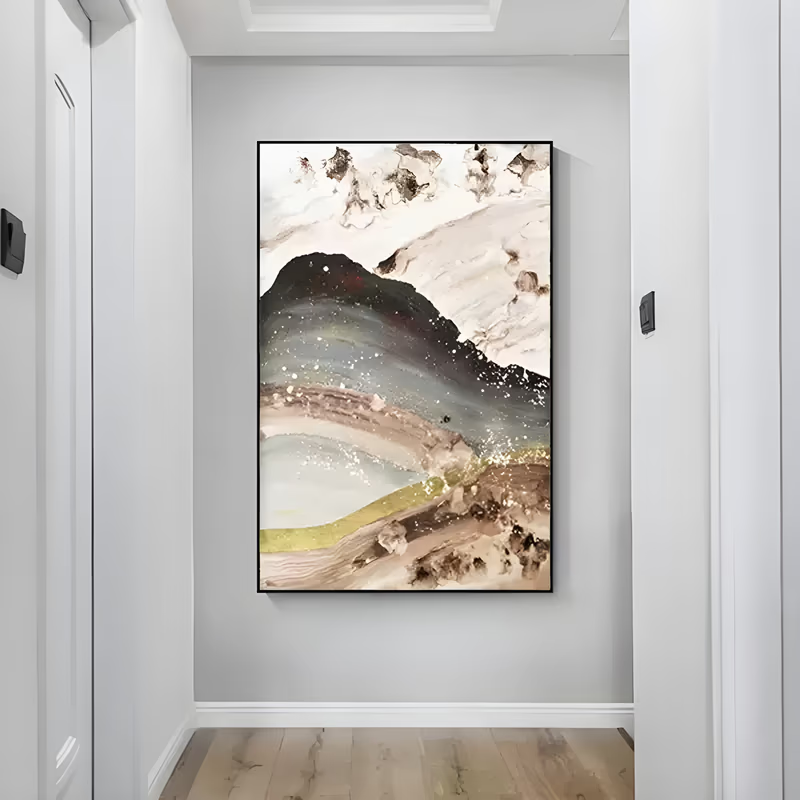
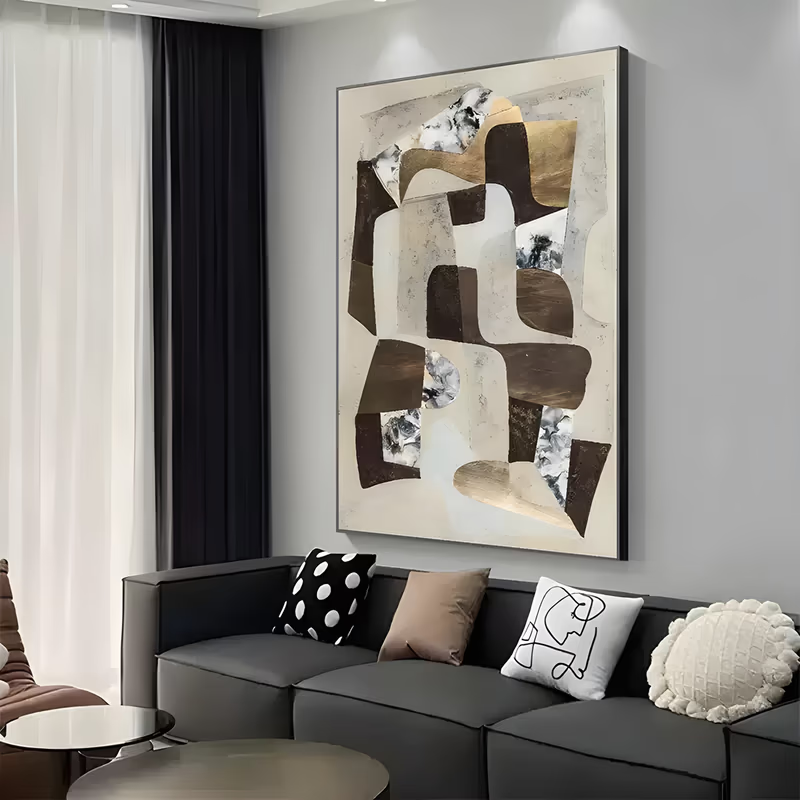
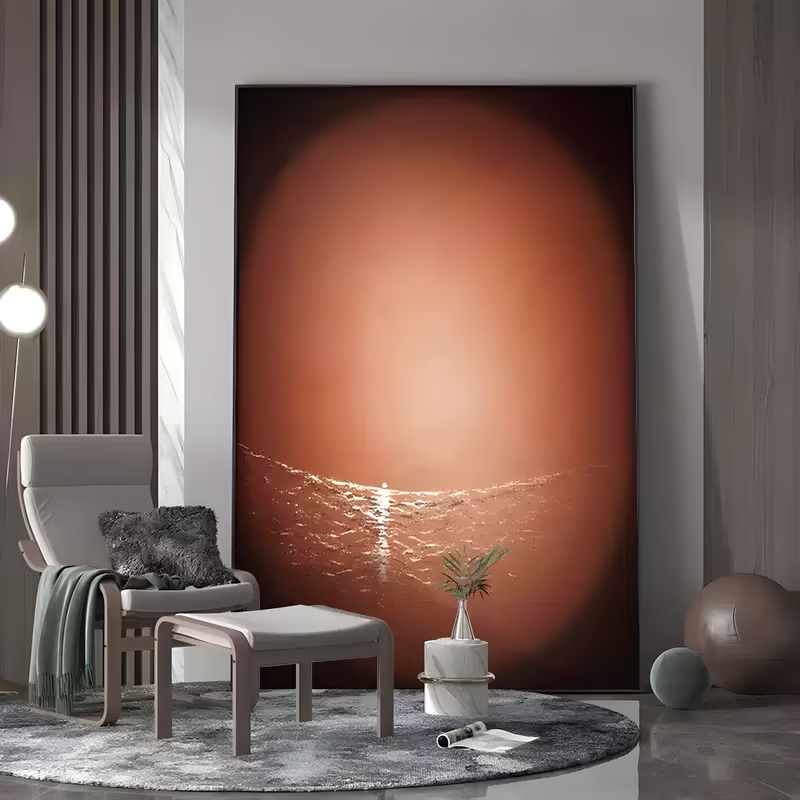
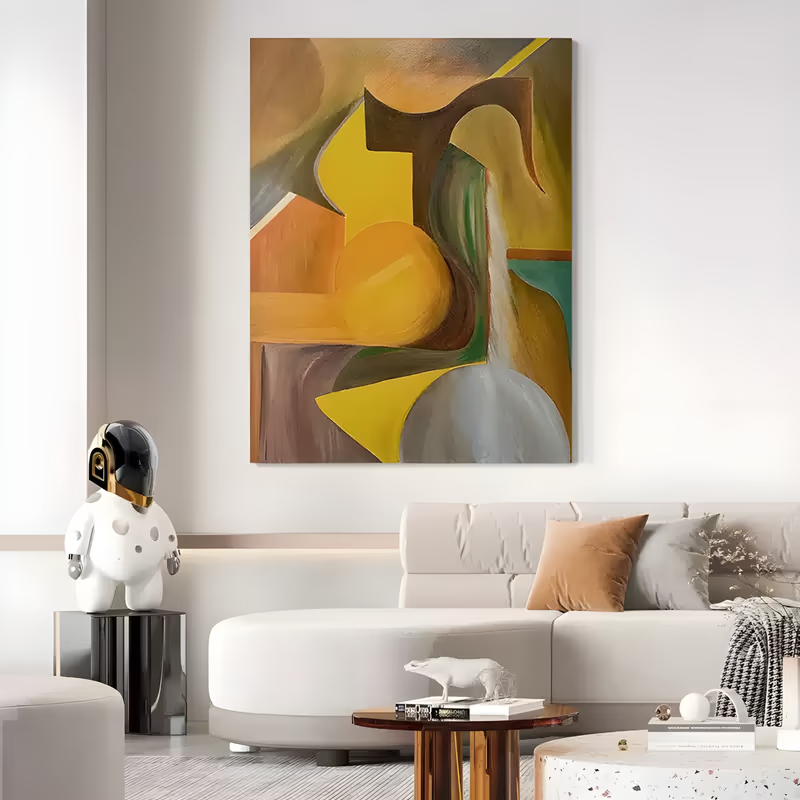
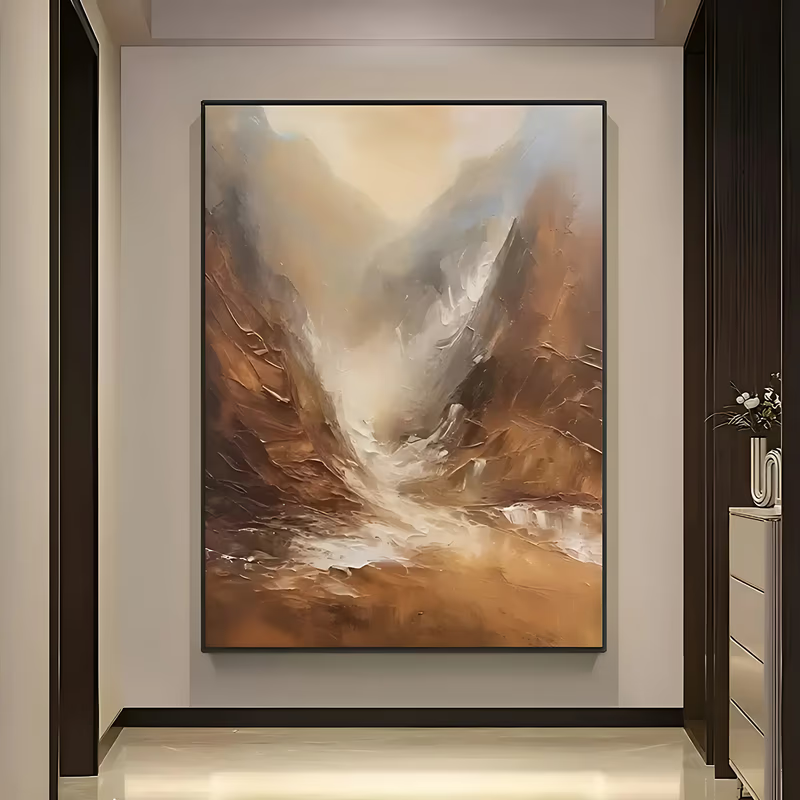
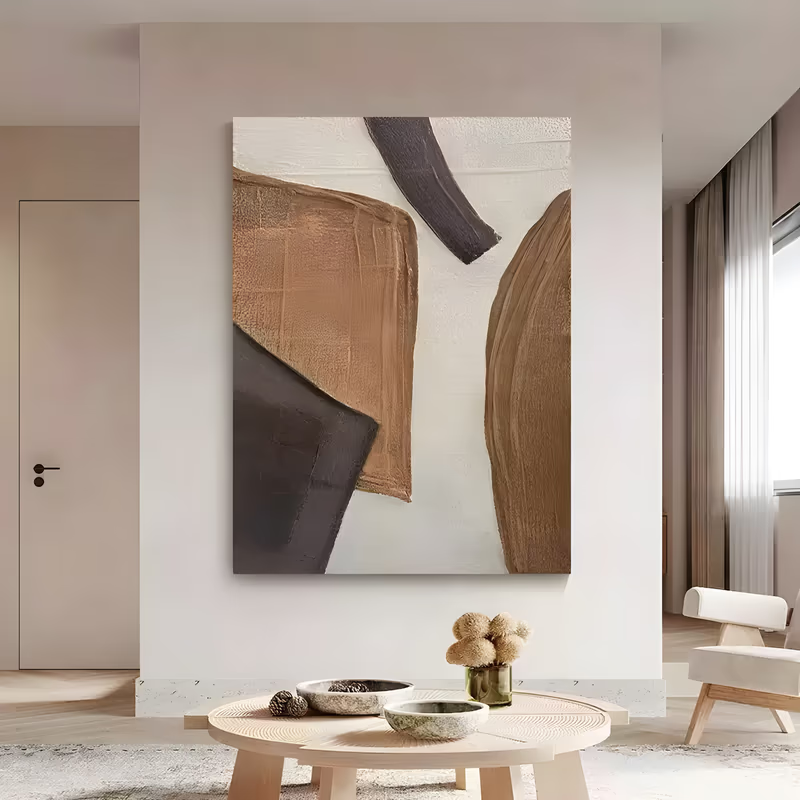
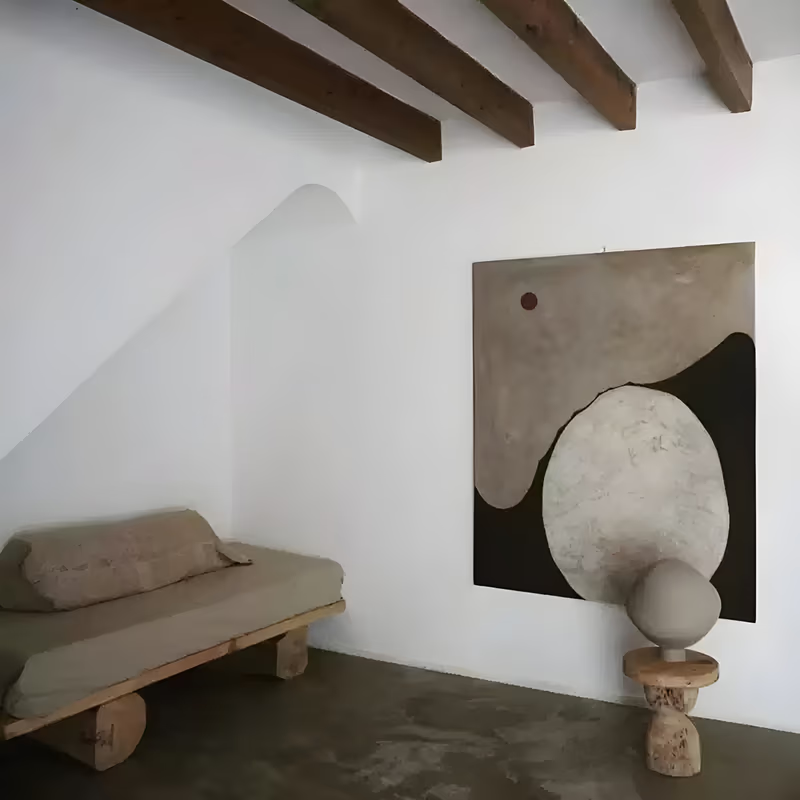
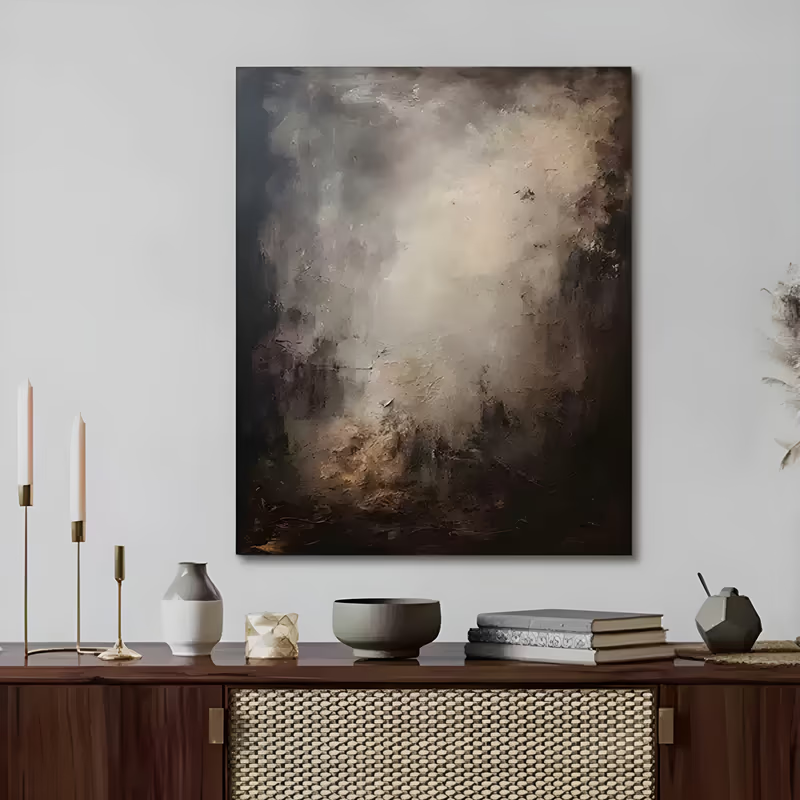
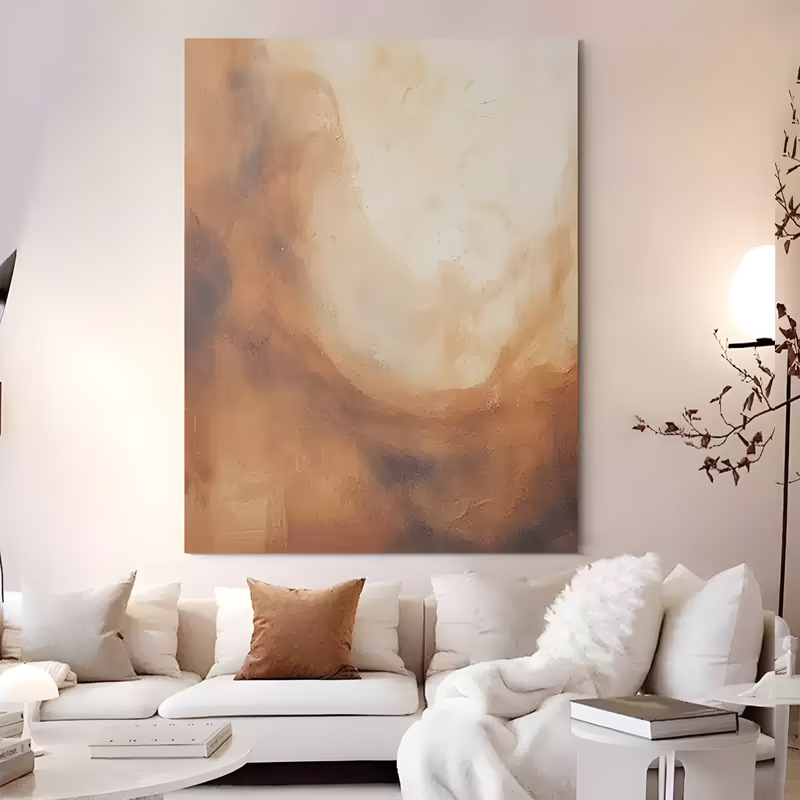
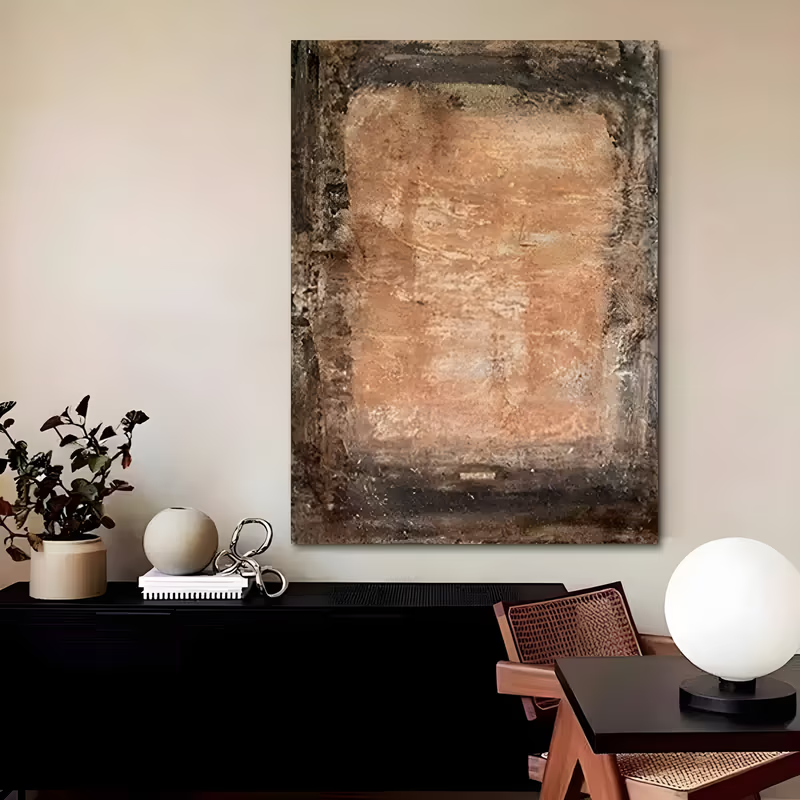
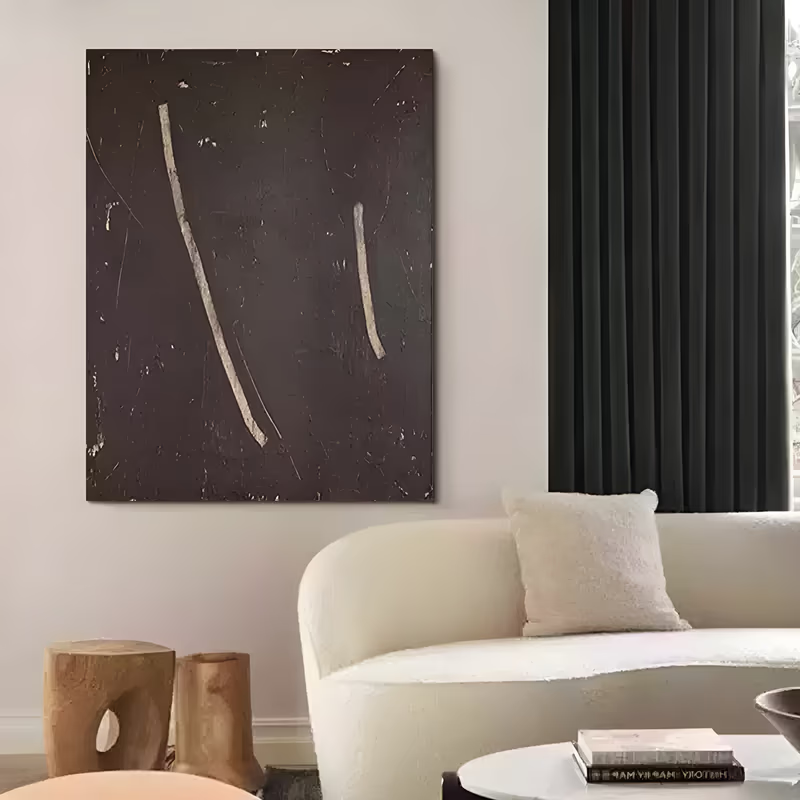
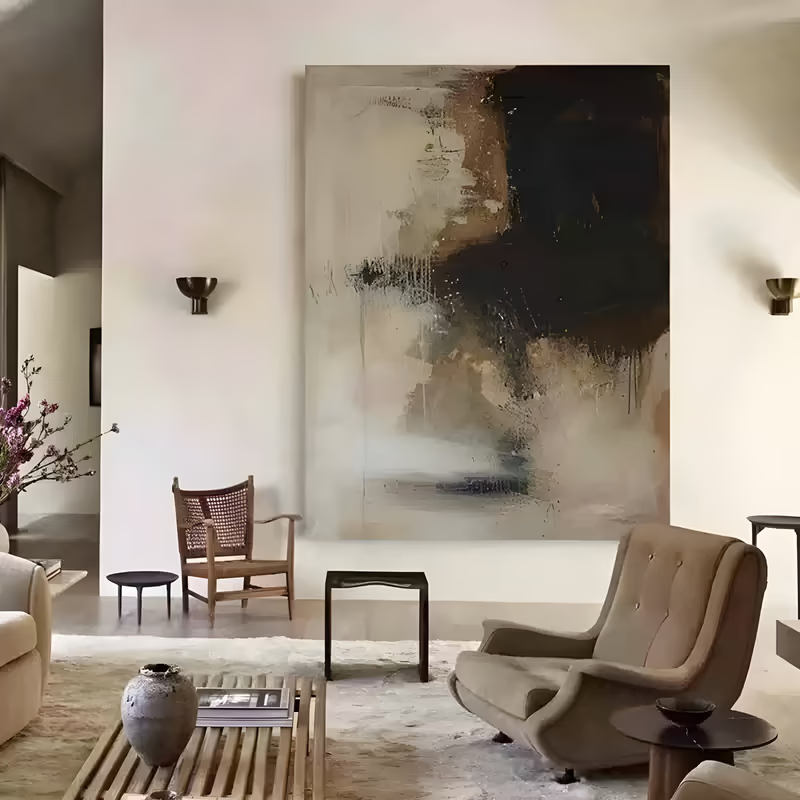
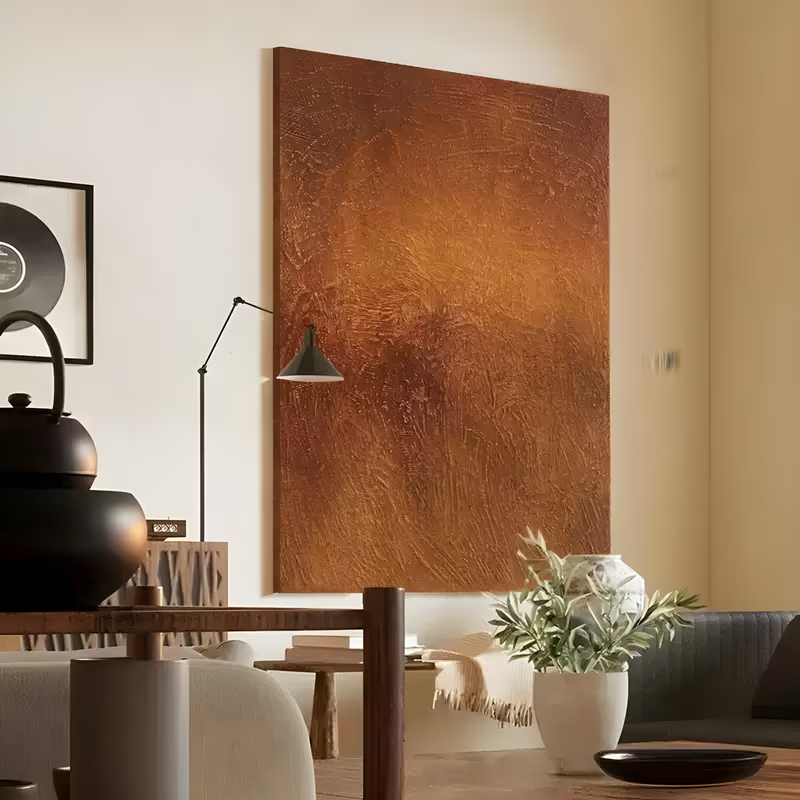
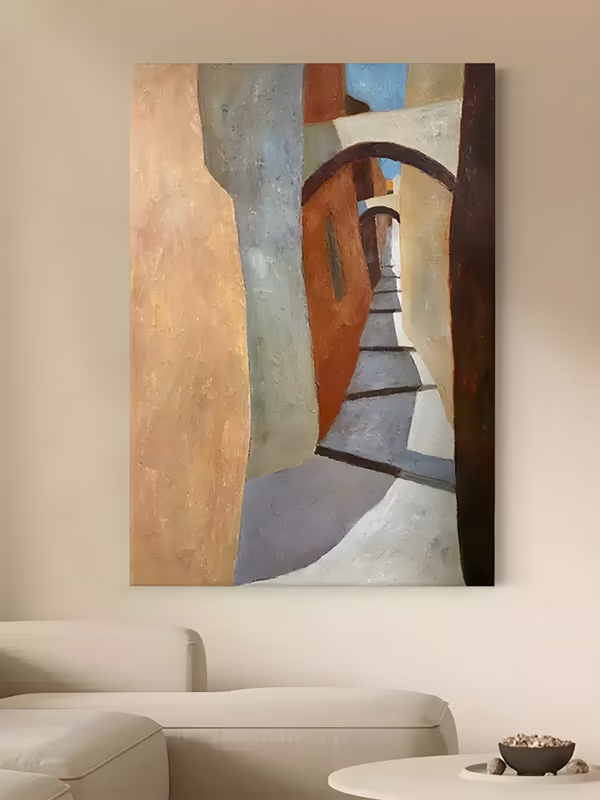
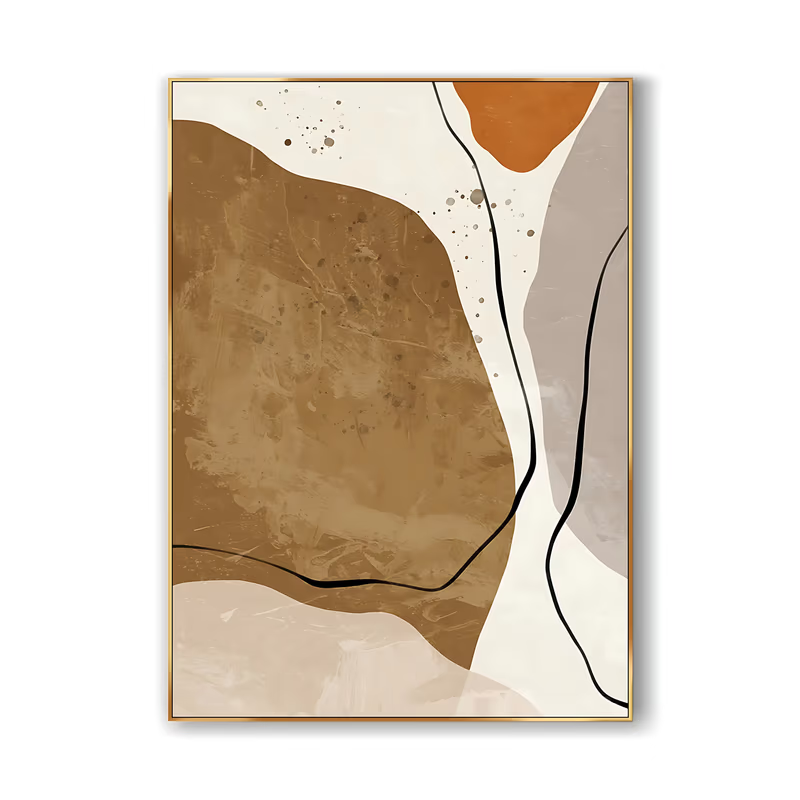
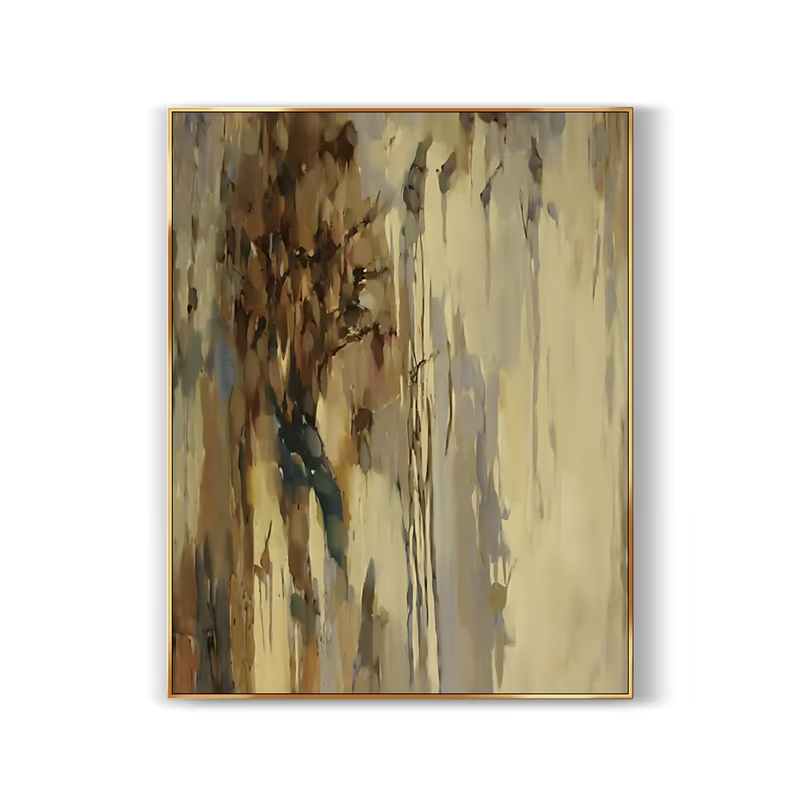
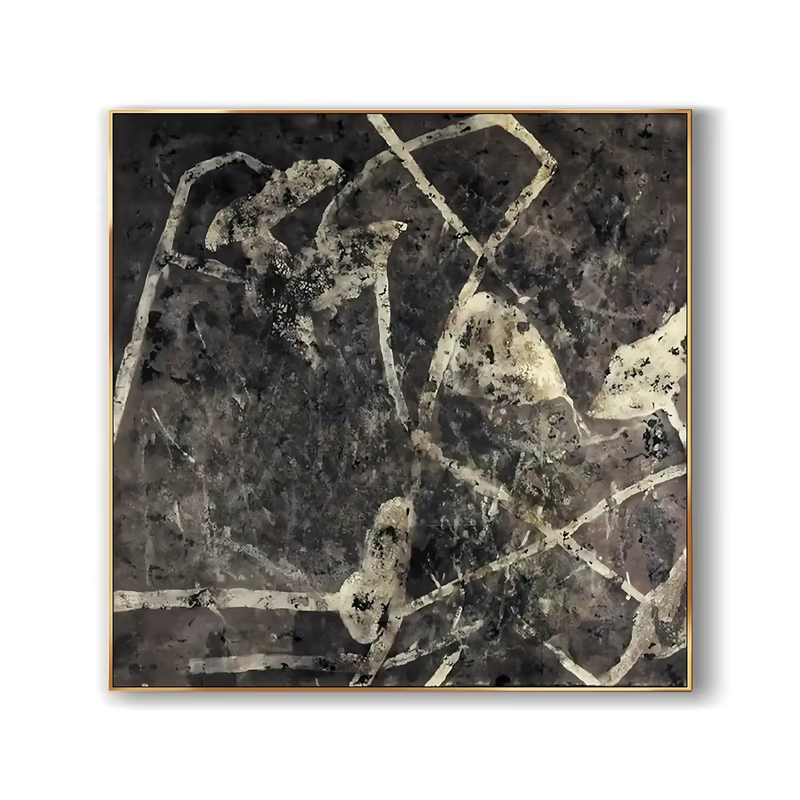
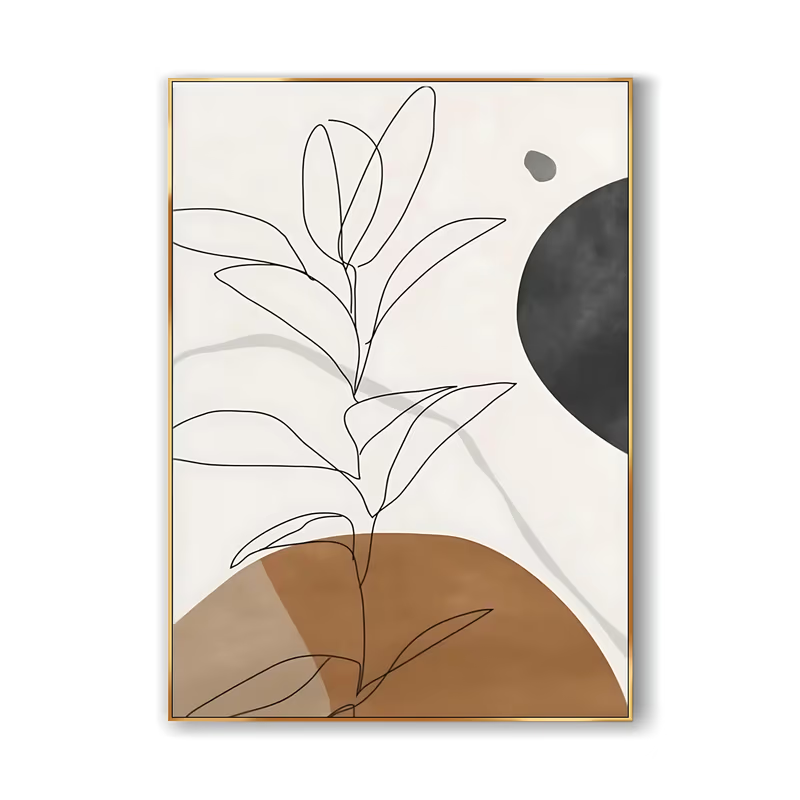
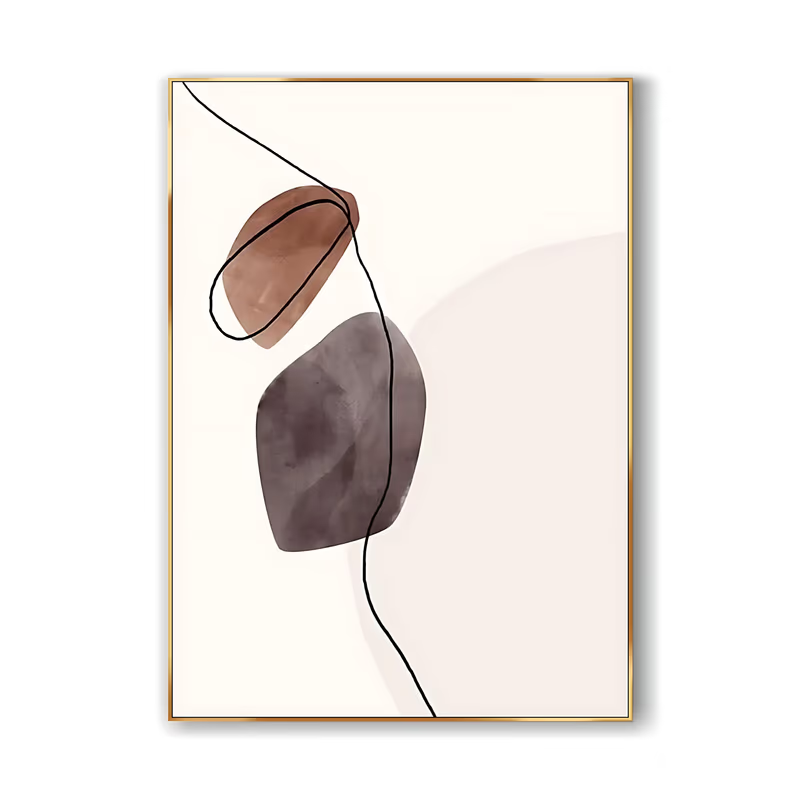
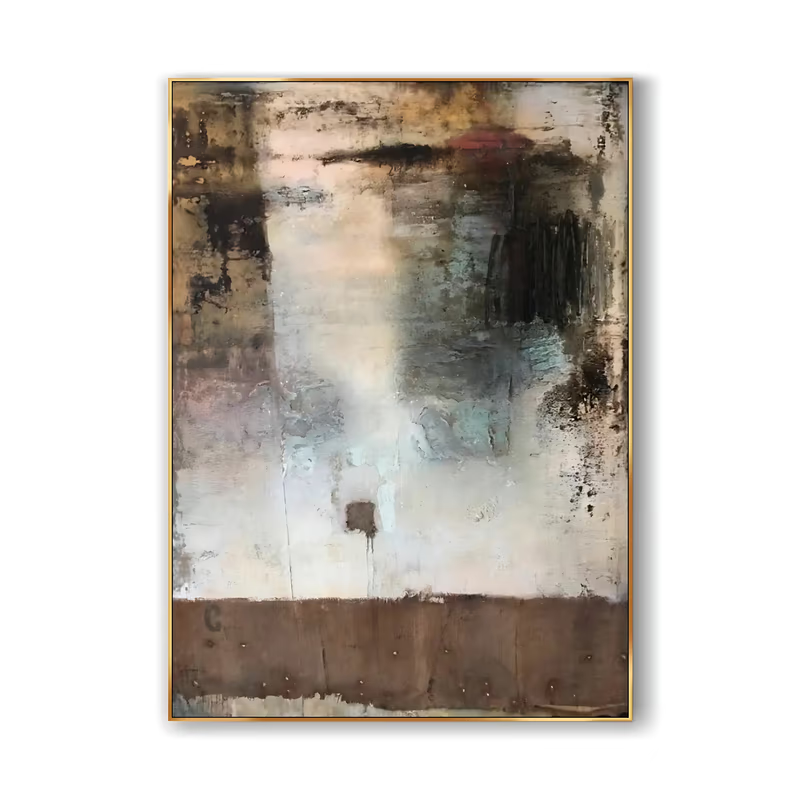
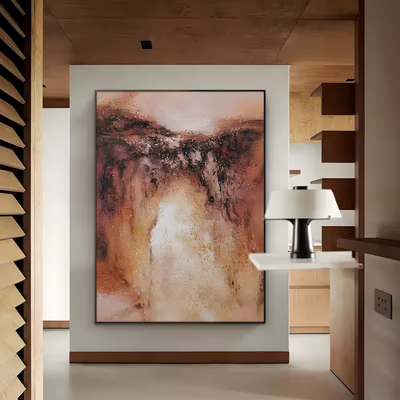
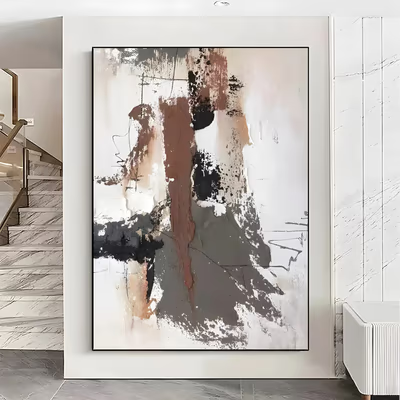
Scraped earth fields, a single pale stroke on scratched brown, misty glows and weathered rust panels. Calm, imperfect and close to nature, they belong in Japandi interiors, spa corridors and modern offices, and they reward a second look rather than demanding a first one.
Will brown wall art make a room feel dark?
Brown wall art only darkens a room when it has nothing to play against; give it contrast, light or texture and it reads as warmth instead.
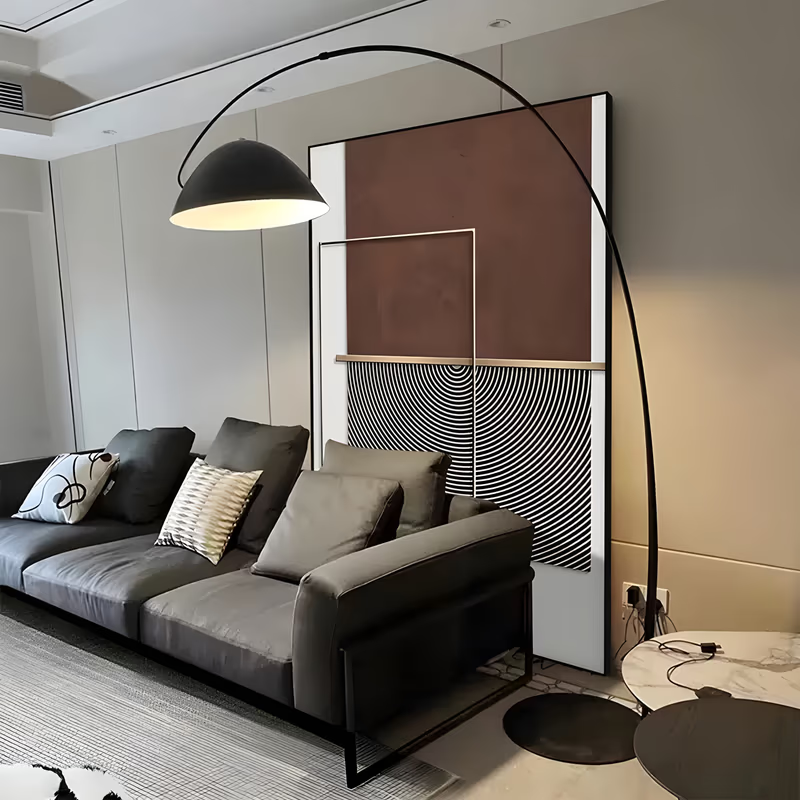
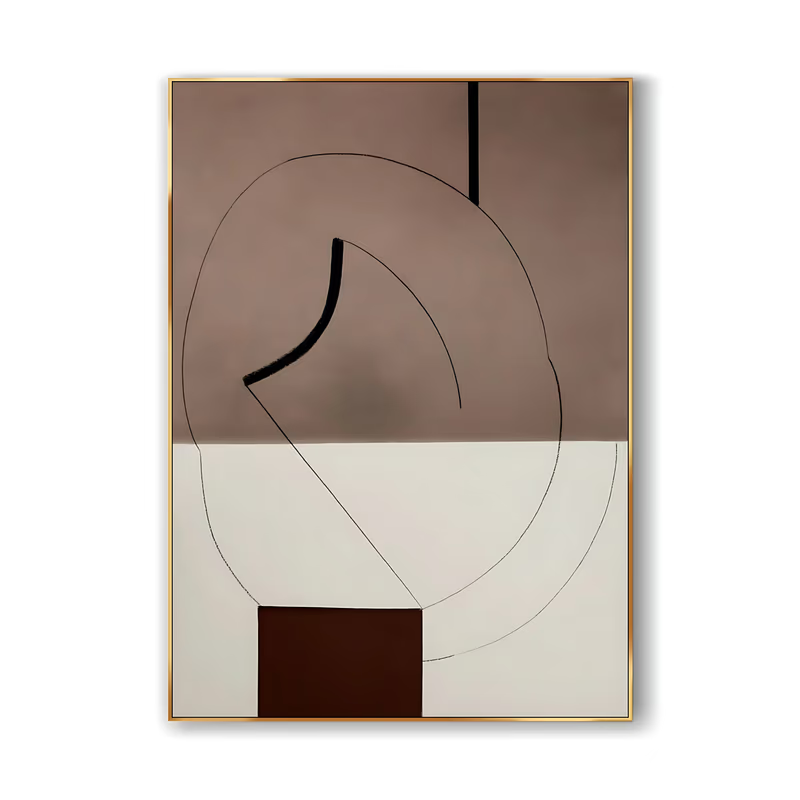
Three things keep brown art lively. The first is a pale element inside the painting: a cream loop, a white petal, a gold line or a glowing centre gives the eye somewhere to land, and the brown around it then looks deliberate. The second is the wall behind it. Chocolate and walnut look richest on chalk white, warm cream, stone or pale greige; on a dark wall they need a lighter frame or a mount of space around them. The third is light. A picture light or a wall washer turns a dark brown canvas into a glowing one, and plaster relief in particular comes alive when the light rakes across its ridges.
In a north-facing or small room, choose the warmer, lighter browns such as caramel, copper and honey, or a painting where brown is the frame around a bright centre. Save espresso and deep bronze for rooms with good evening lighting, where their depth is the point.
Where should you hang brown wall art?
Brown wall art is at its best in rooms meant for lingering: studies, living rooms, dining rooms, bedrooms and the bars, lounges and boardrooms of hotels and offices.
Study and home office
Walnut, sepia and equestrian brown sit naturally among bookshelves, a leather chair and a wooden desk, and they keep the room calm enough to work in. Brown art for home offices.
Living room
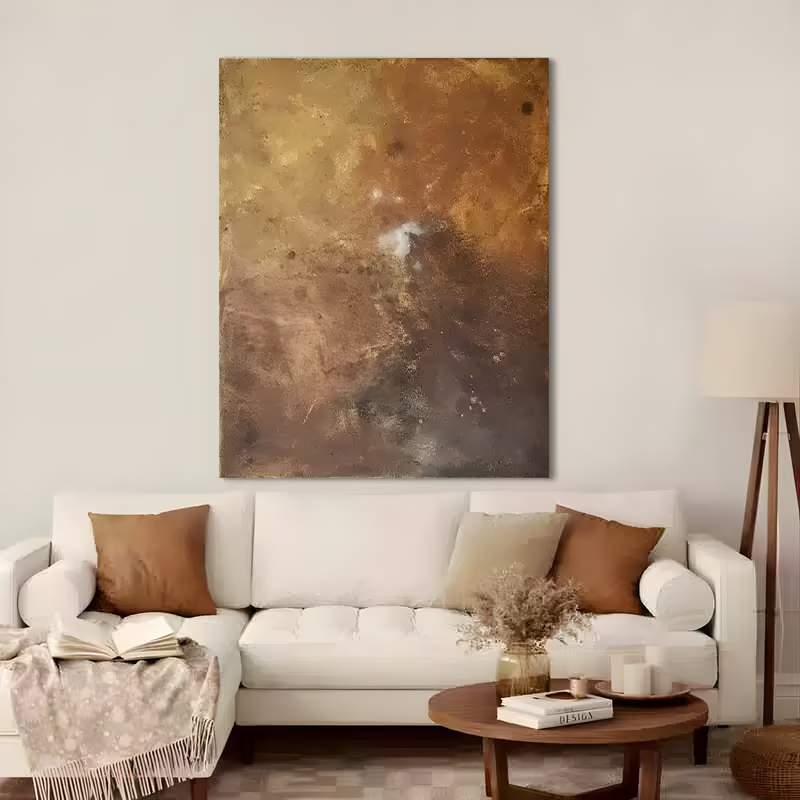
A copper or bronze relief over the sofa gives the room a warm centre that suits a leather sofa, a wool throw and an oak floor. Brown art for living rooms.
Bedroom
Caramel and cream abstracts, or pale flowers on a chocolate ground, make a quiet, cocooning wall behind the headboard. Brown art for bedrooms.
Dining room
Rust brown and copper deepen under pendant lights and candlelight and flatter a dark timber table. Brown art for dining rooms.
Restaurants, bars and lounges
Chocolate and bronze give a steakhouse, a wine bar or a hotel lounge the clubby, low-lit warmth guests settle into. Brown art for restaurants and bars.
Lobbies, boardrooms and meeting rooms
Large bronze and earth-tone relief signals solidity and permanence, which is exactly what a reception desk or a boardroom wall is meant to say. Brown art for lobbies and boardrooms.
What colours and materials go with brown wall art?
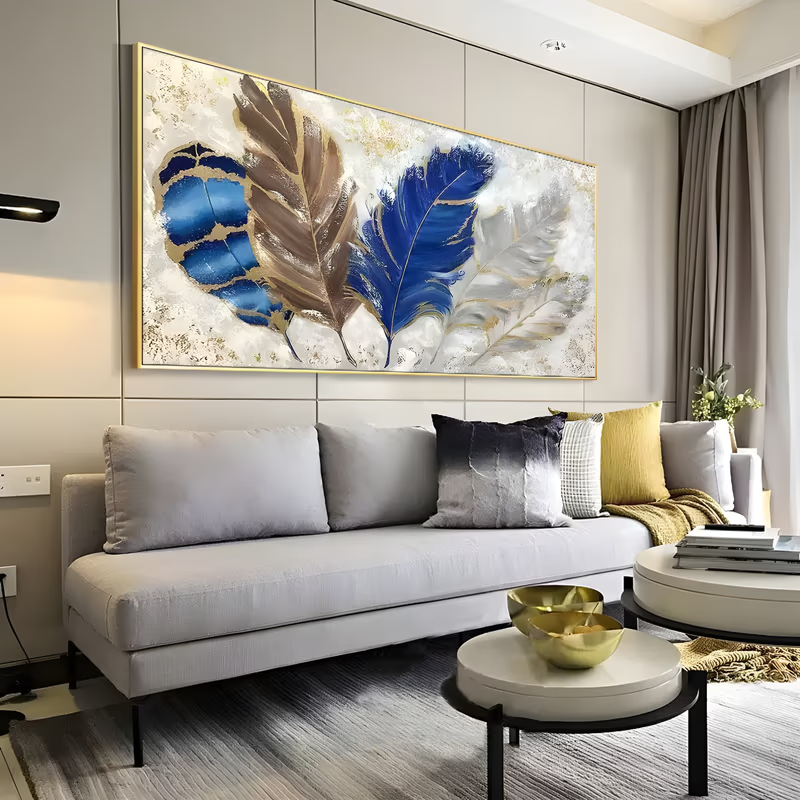
Brown art pairs best with cream, warm white and stone on the walls, and with brass, cognac leather, linen and green plants as accents.
| Brown shade | Walls and big surfaces | Materials and accents |
|---|---|---|
| Caramel, tan | Warm white, oatmeal, pale oak | Linen, rattan, sage green, terracotta pots |
| Copper, rust brown | Cream, greige, limewash | Teal, deep green velvet, aged brass |
| Bronze | Stone, warm grey, travertine | Black steel, smoked glass, marble |
| Walnut, coffee | Chalk white, sand, pale plaster | Cognac leather, tweed, navy, mustard |
| Chocolate, espresso | Cream, ivory, light stone | Gold, blush pink, cream bouclé, ferns |
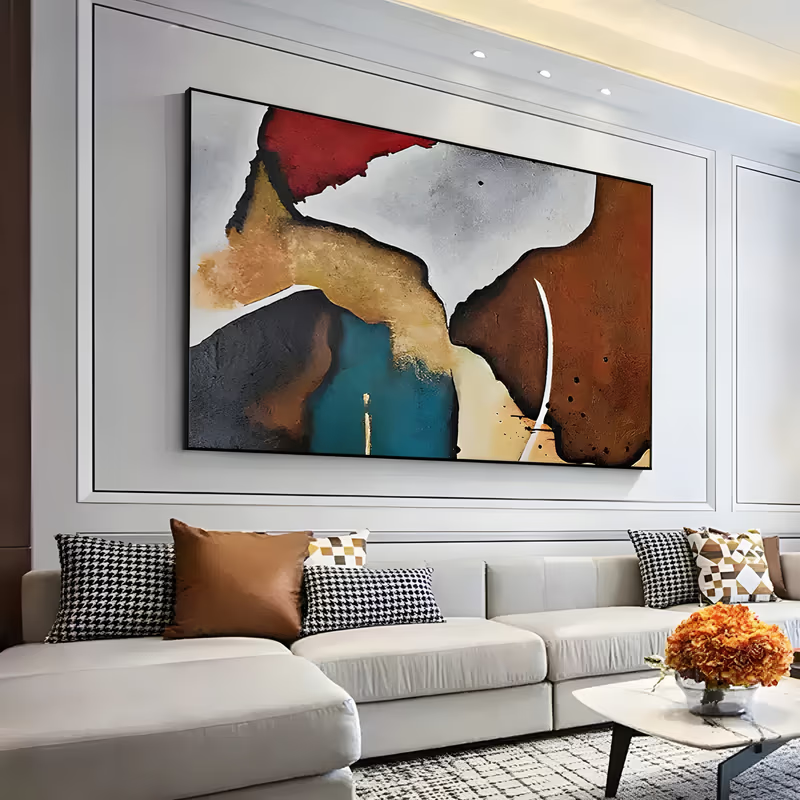
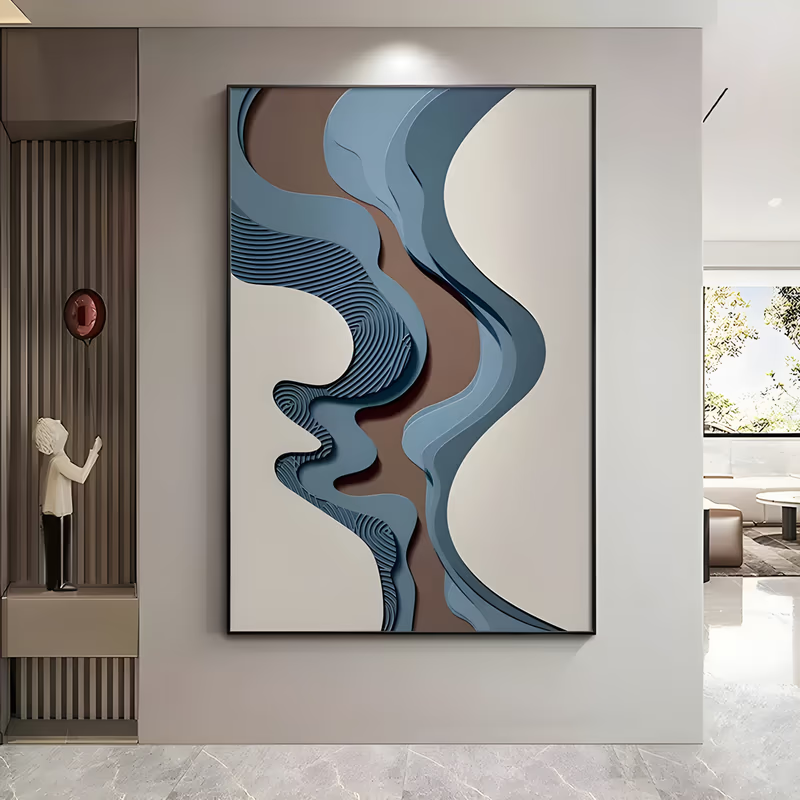
Brown looks best when the room varies its texture more than its colour. Put a ridged plaster painting against a smooth wall, or a flat brown canvas above a nubby wool sofa, and the browns stop competing. Blue is the classic counterpoint: navy, teal and steel blue cool brown down and make it look tailored. Green does the opposite and makes it look natural, which is why a brown painting next to a large plant always looks at home.
How big should brown wall art be, and how should you frame it?
Brown art can be a little smaller than a pale painting for the same wall, because dark, earthy colour carries more visual weight; aim for roughly half to two-thirds of the furniture width.
Over a sofa, console or bed, leave 15–25 cm (6–10 in) between the furniture and the canvas, and keep the centre of the painting about 145–152 cm (57–60 in) from the floor. Above a desk or in a study lined with shelves, a single vertical canvas between two bays reads as a piece of joinery and looks deliberate. A long panoramic relief suits a banquette, a reception desk or the wall above a low media unit.
Framing changes brown more than most colours. A gold or brass frame lifts a chocolate or bronze piece and gives it a traditional, library feel. A black frame sharpens it for a modern room. A wood frame in a matching timber makes the painting look like part of the panelling, which suits a calm study but can dull a dark piece, so choose a wood a shade lighter than the canvas. For heavy relief, a frameless stretched canvas lets the textured edge show.
How do you match brown wall art to your wood, leather or stone?
Send a daylight photograph of the floor, furniture or fabric you want to match, and the brown is mixed warmer, cooler, lighter or deeper before painting starts.
Browns vary more than people expect: one walnut leans red, another leans grey, and a copper can tip towards orange under warm bulbs. Because each piece is painted to order in acrylic, the shade can be set against your own samples, a paint code or a photo of the room as it is lit in the evening. You receive progress photos or video at each stage, and the next stage starts only when you approve it. A final photograph is approved before dispatch. The canvas then ships rolled, stretched frameless and ready to hang, or framed in gold, silver, black, white or wood.