Figurative art guide · Updated
How to choose figurative wall art for a home or a hospitality space
Key takeaways
- Figures change how a room feels: a face draws the eye first, so figurative art becomes the focal point of any wall it hangs on.
- Scale of the figure sets intimacy: close-up faces feel personal; small figures in a landscape or street feel like a view.
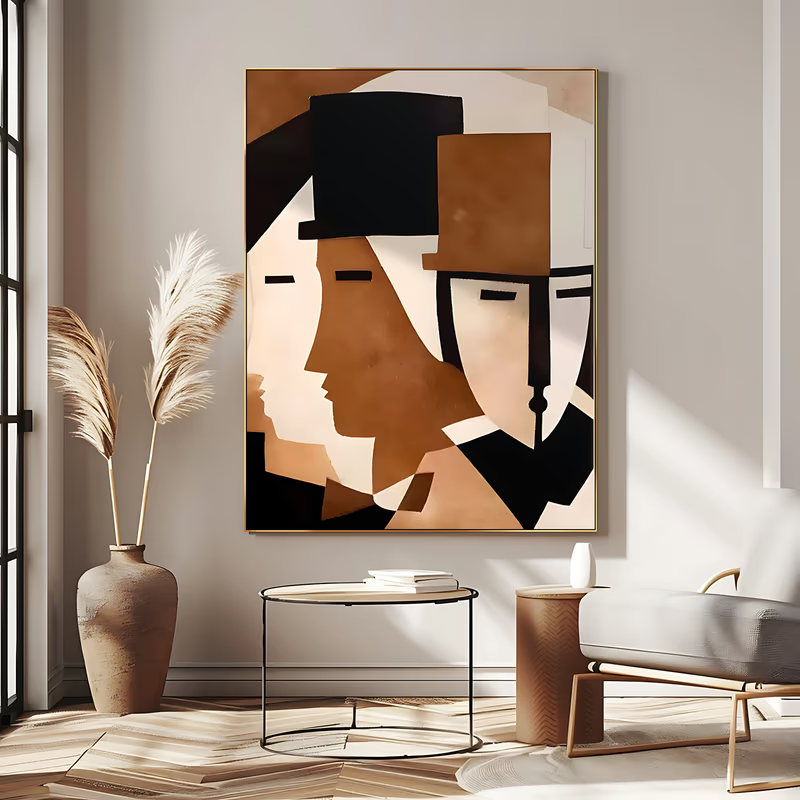
- Stylised suits shared spaces: cubist, line and silhouette figures add human warmth to hotels and restaurants without a recognisable face.
- Let the figure face into the room: hang profiles and walking figures so they look or move towards the centre, not out of a door.
What is figurative wall art, and is it the same as realism?
Figurative wall art is any painting with a recognisable subject, most often the human figure, and it is not the same as realism: a figure can be cubist, drawn in one line or reduced to a silhouette and still be figurative.
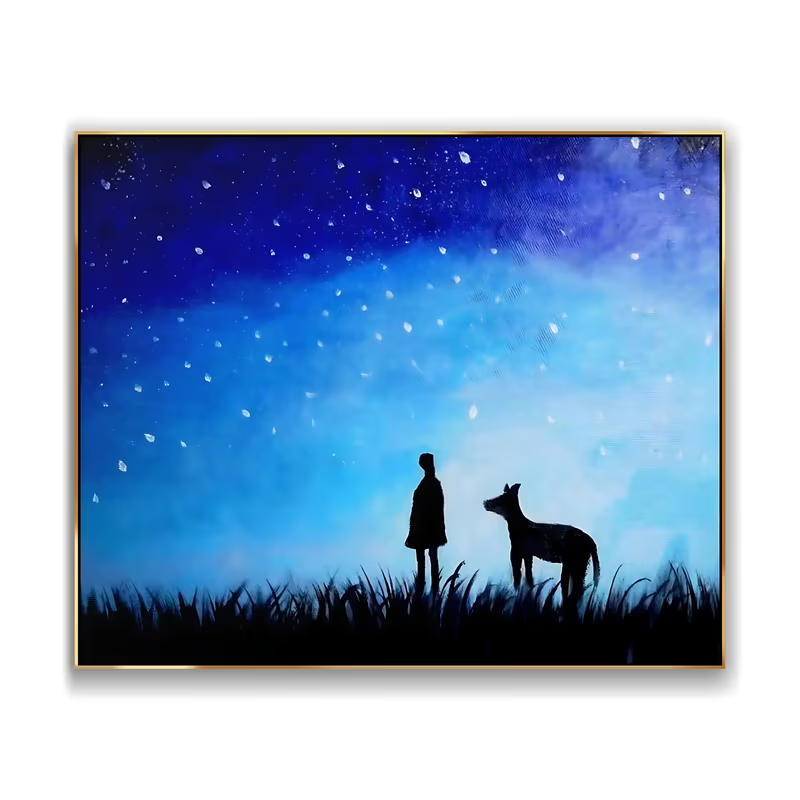
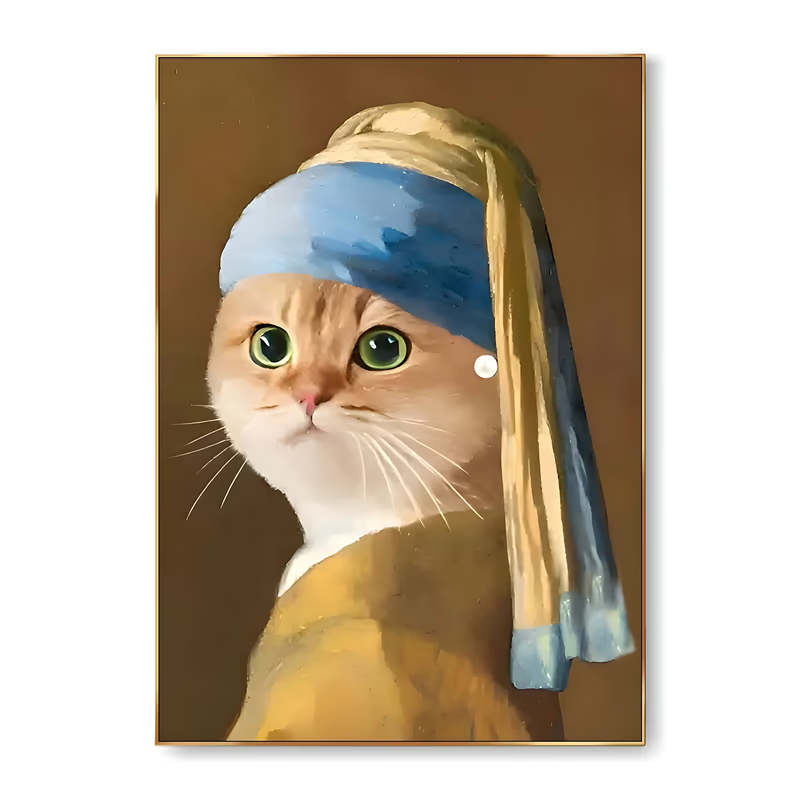
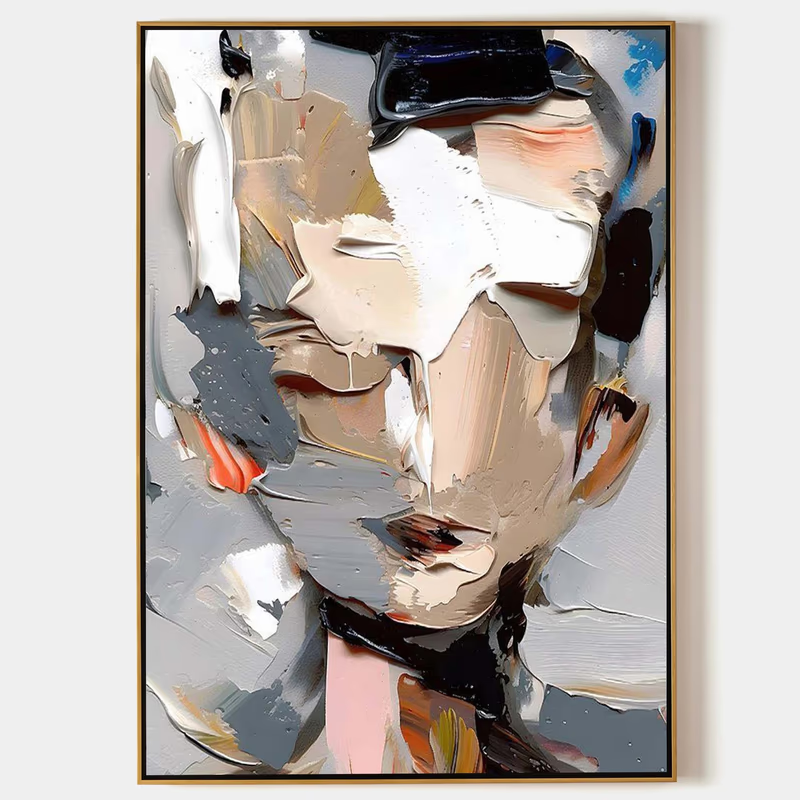
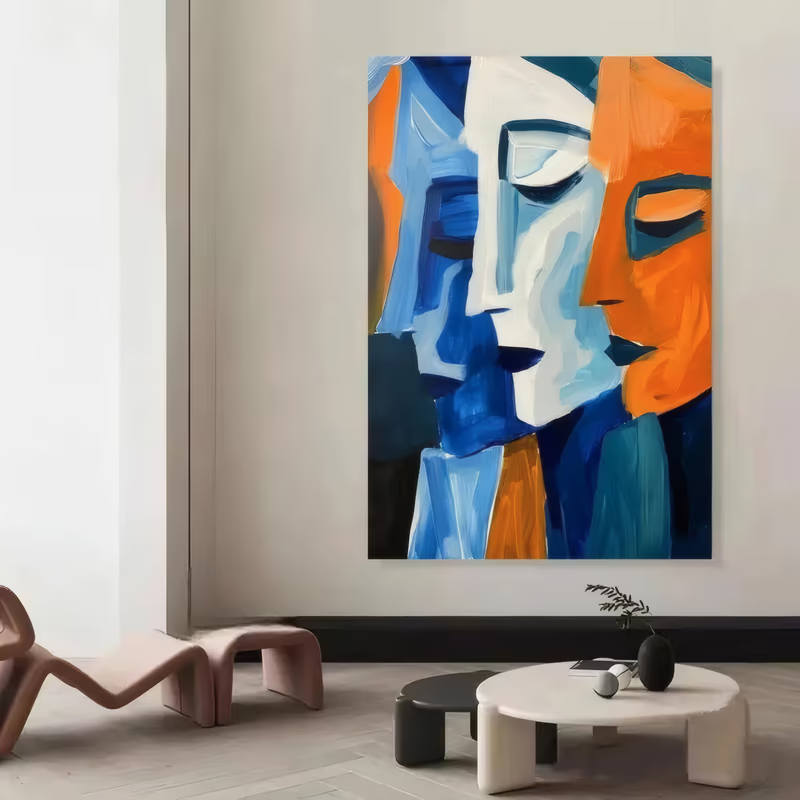
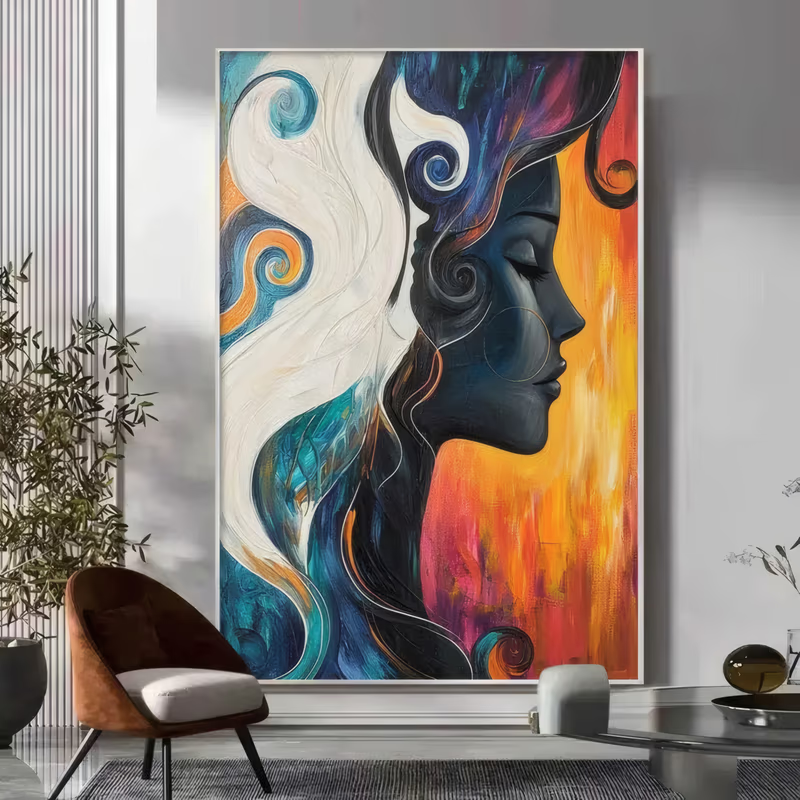
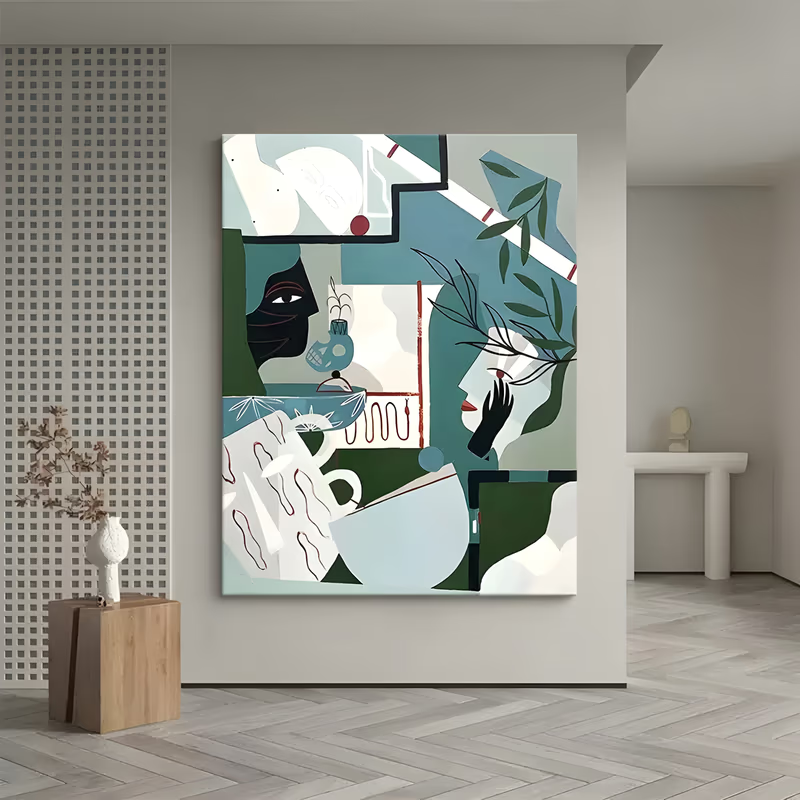
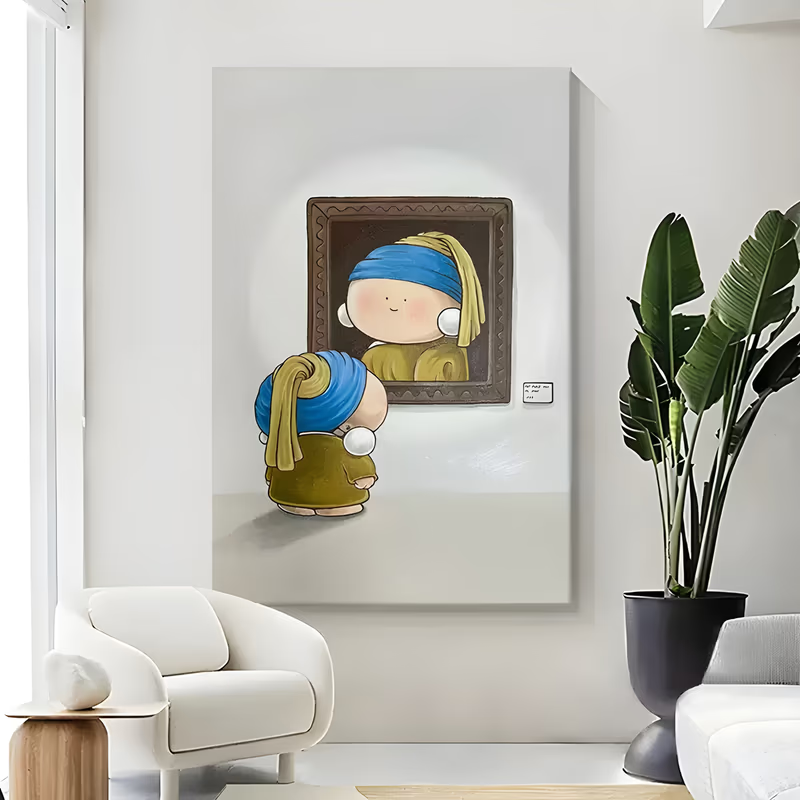
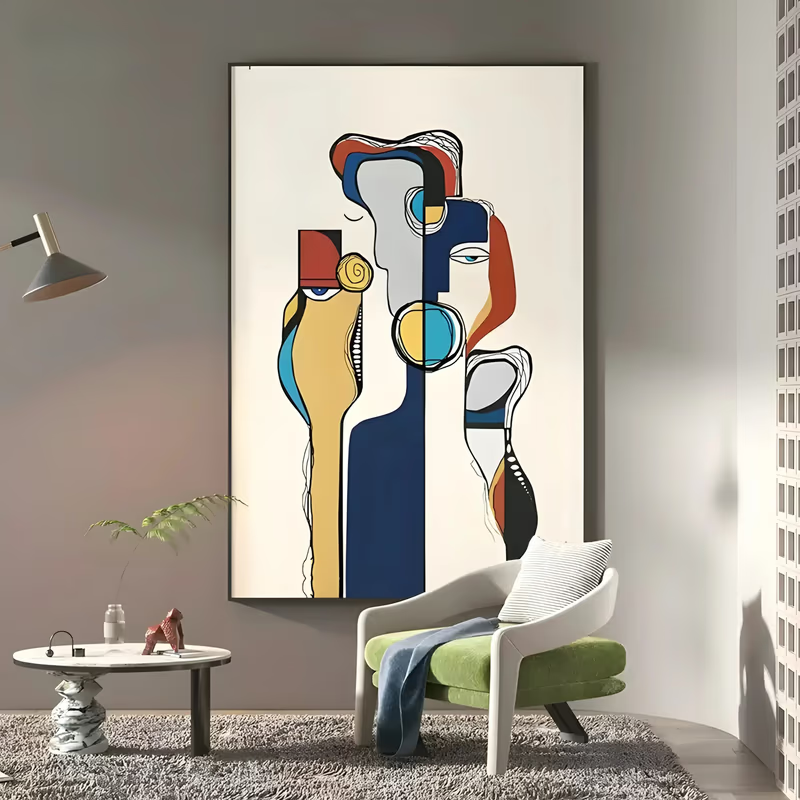
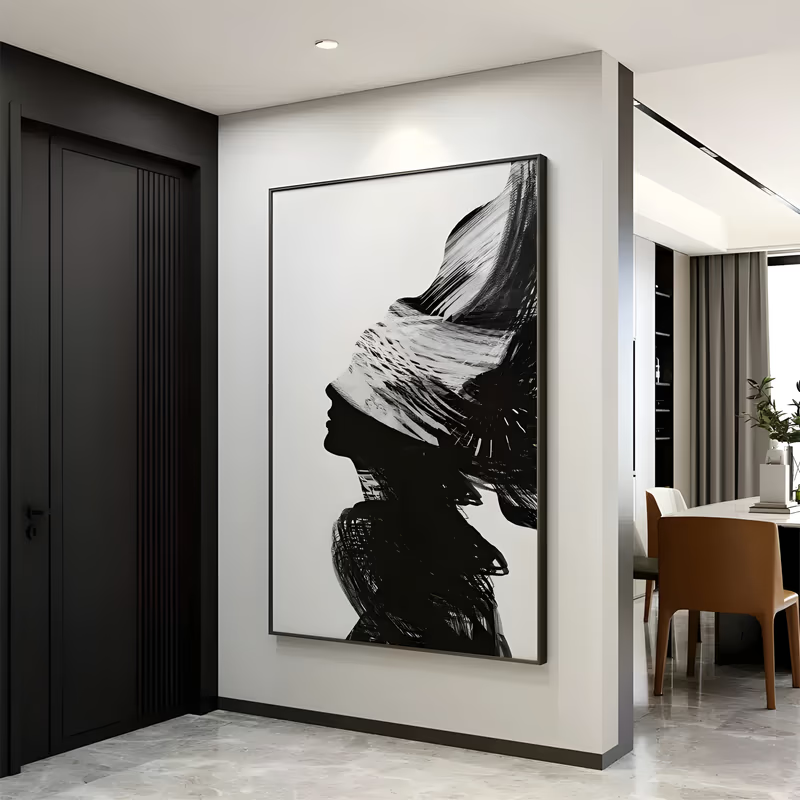
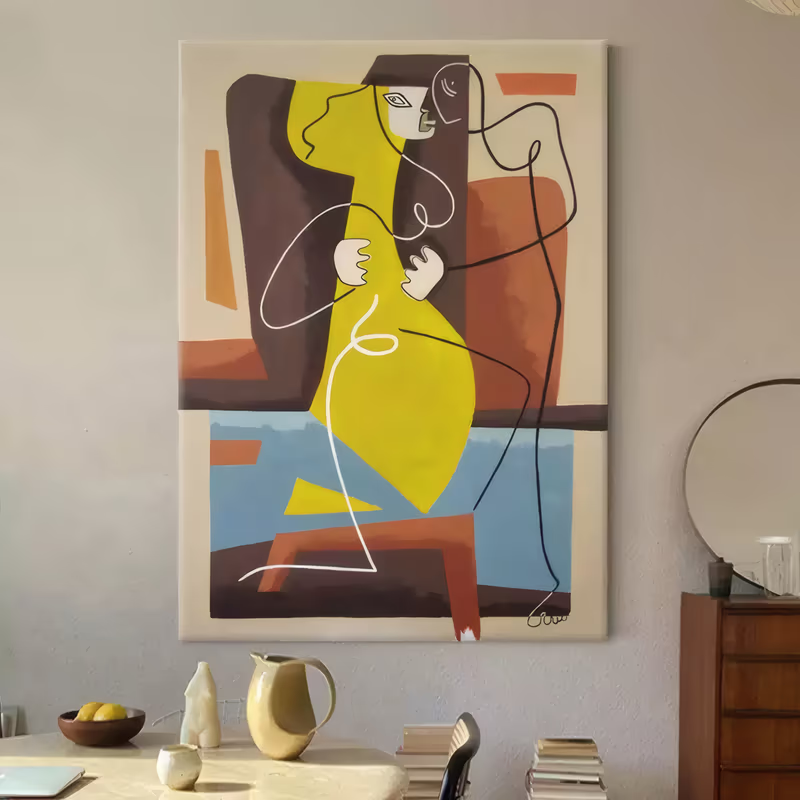
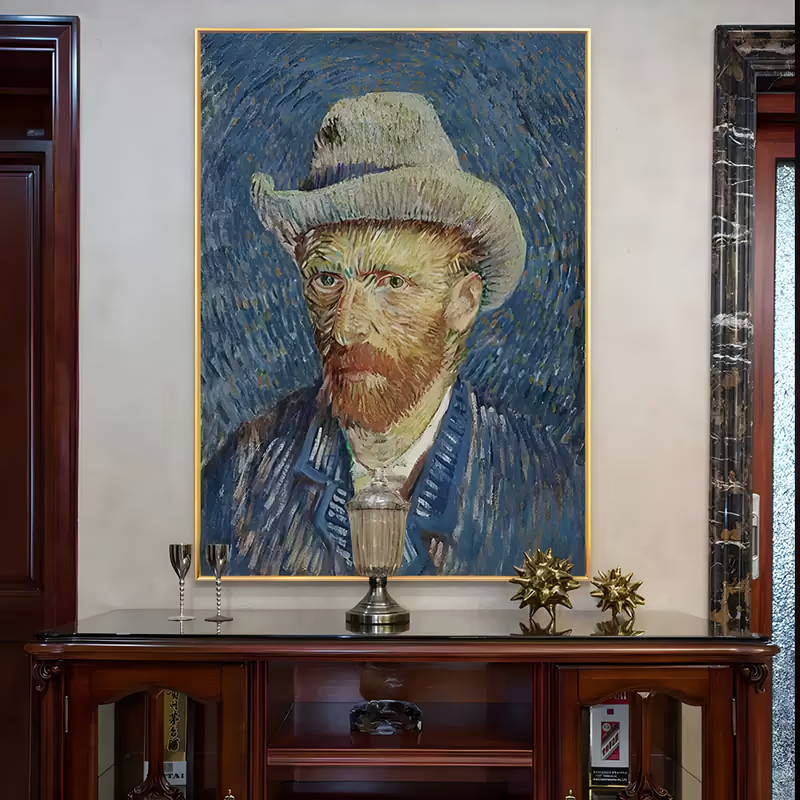
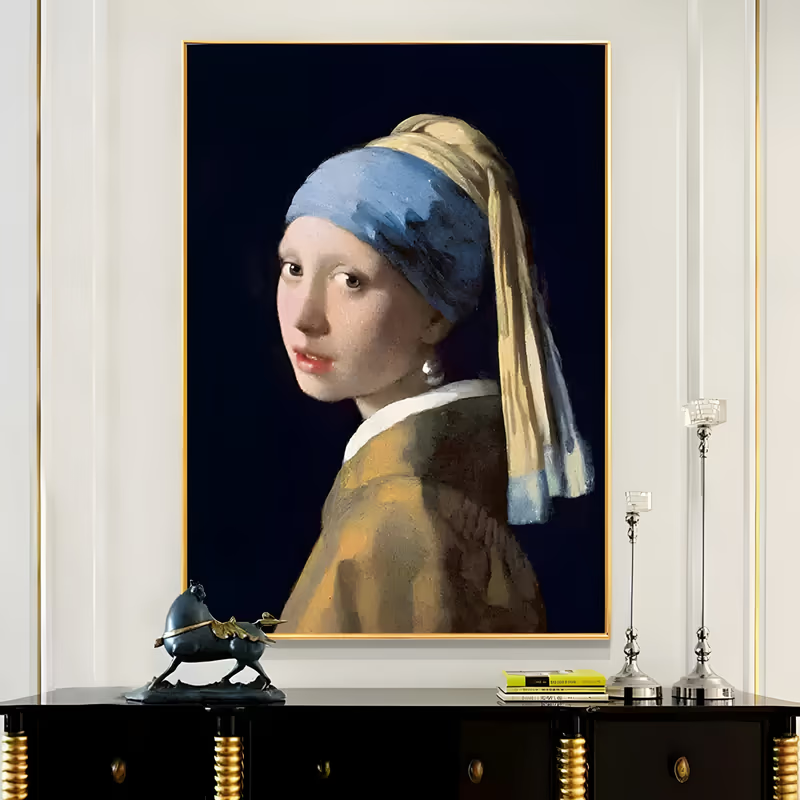
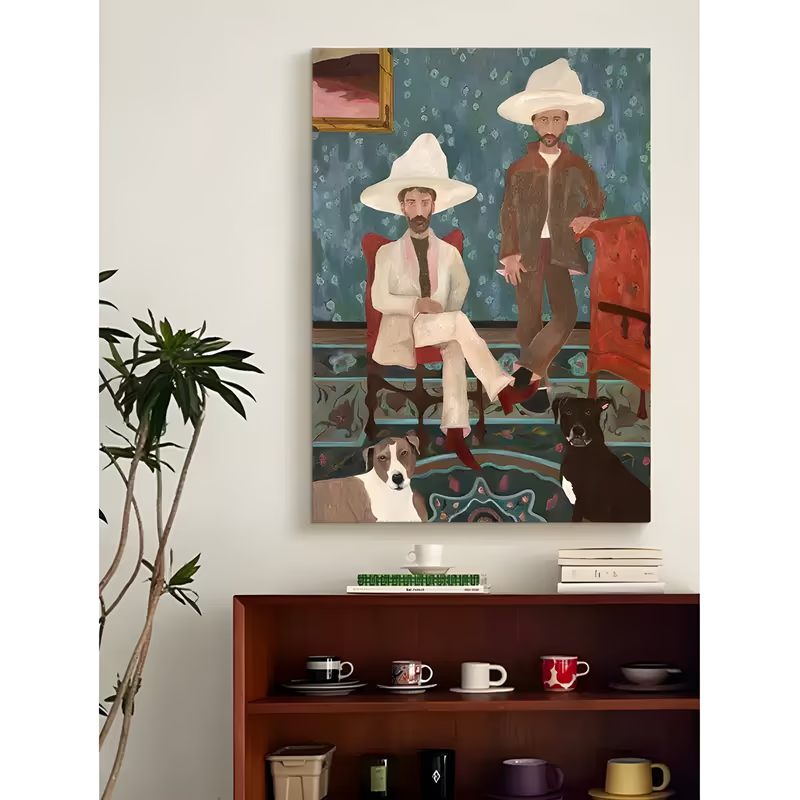
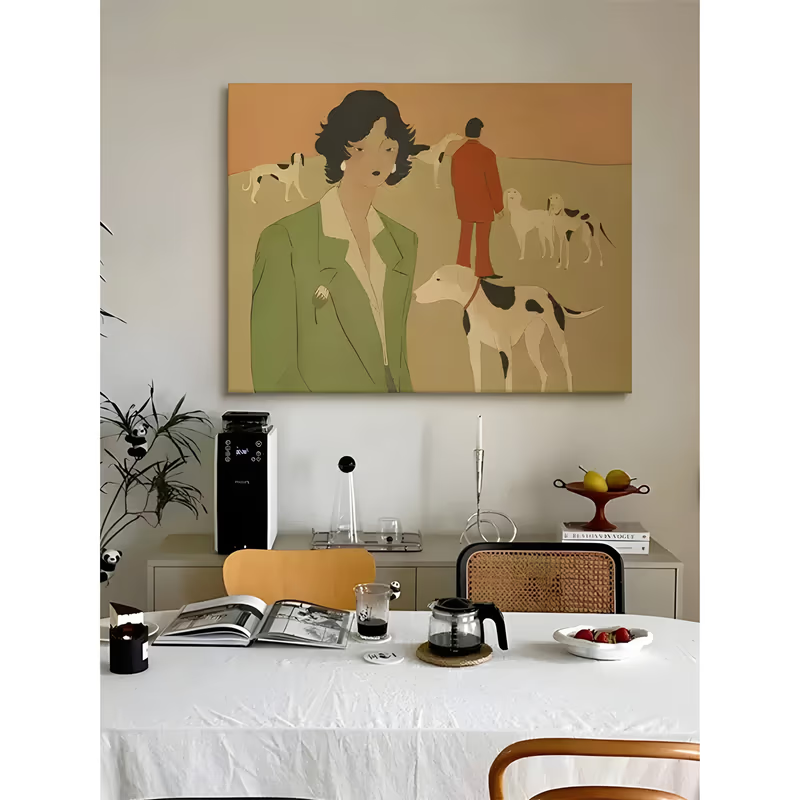
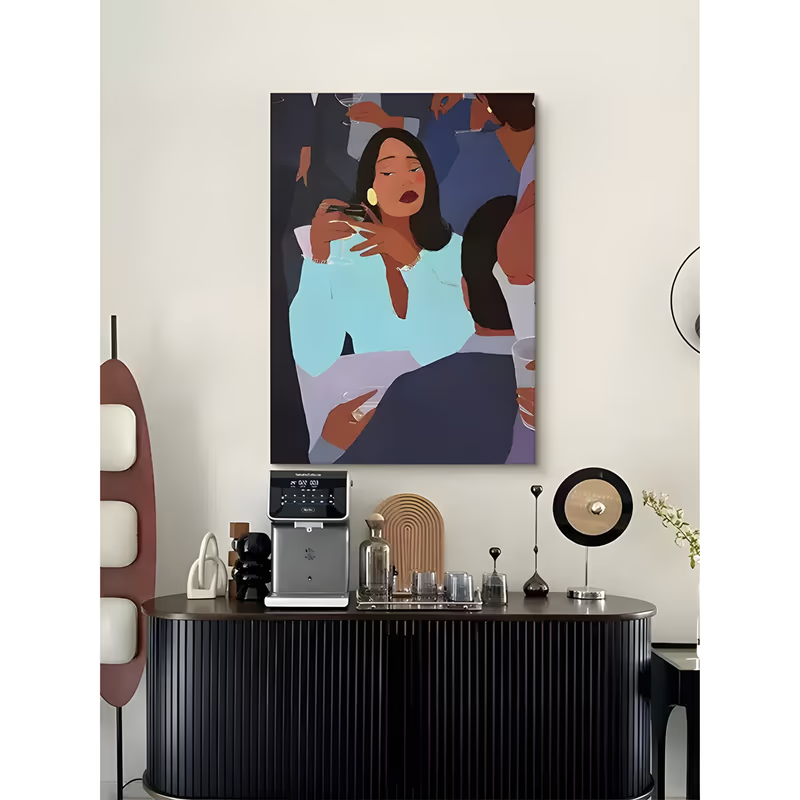
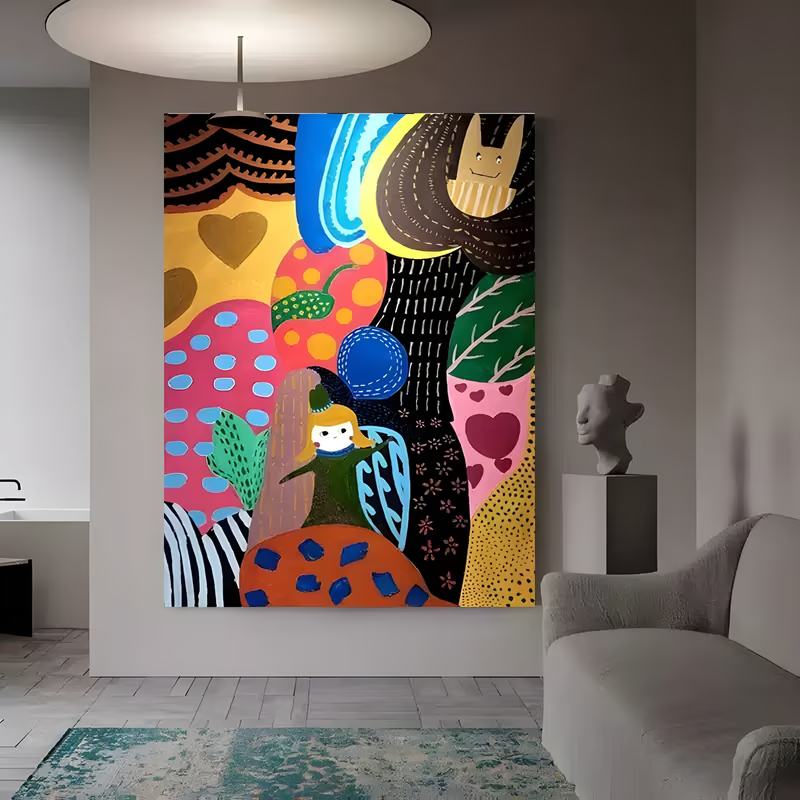
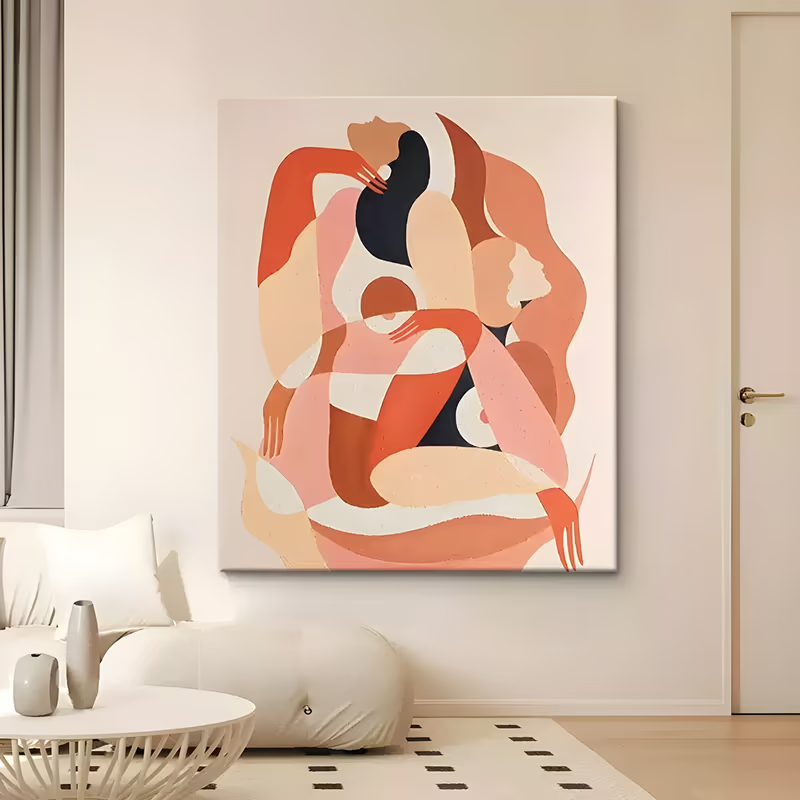
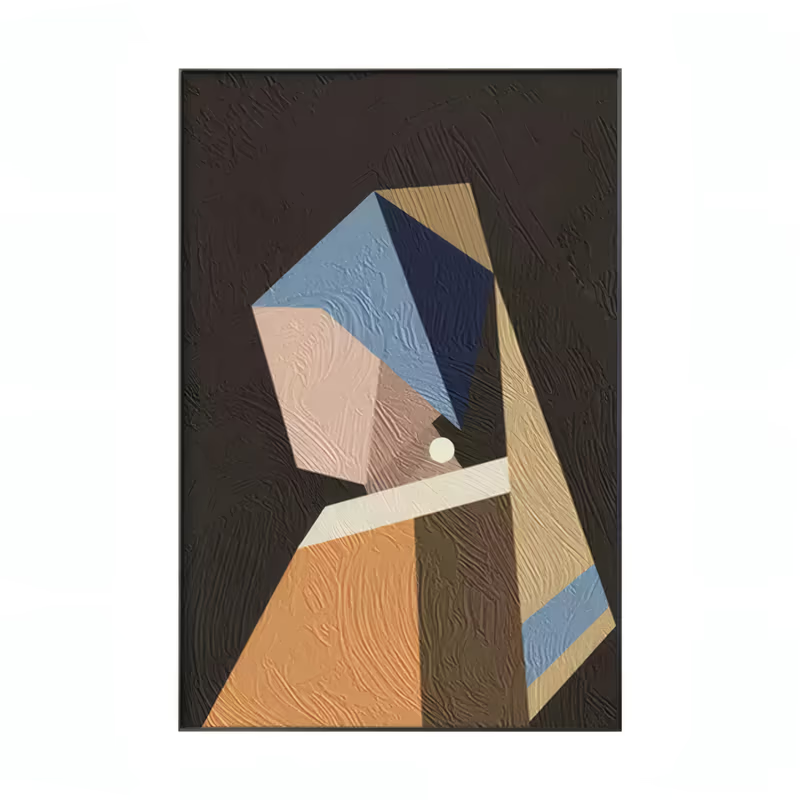
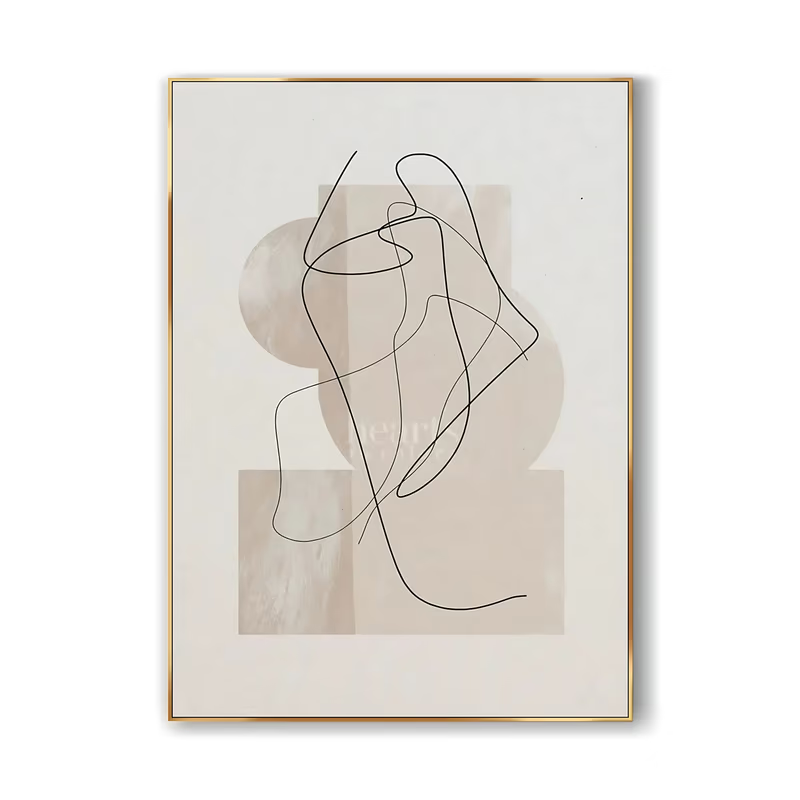
The word sets these paintings apart from abstract work, which has no subject at all. On this page the subject is people. Some are painted with near-photographic care, like a man in a felt hat or a girl in a blue turban after the old masters. Many more are simplified: faces split into coloured planes, a woman's profile flowing into swirling blue hair, a continuous black line that finds a body on a beige ground. That range matters when you buy. The more stylised the figure, the more it behaves like a pattern of colour and shape, and the easier it is to live with in a busy room.
Where people are part of a wider view, a city in rain or a beach at noon, the painting also lives on the cityscape or seascape pages.
What does a figure painting do to the feel of a room?
It adds presence: people are the first thing the eye looks for, so a figure painting becomes the focal point and makes a room feel inhabited, intimate or lively depending on how the figure is shown.
| How the figure is shown | Effect on the room | Good places for it |
|---|---|---|
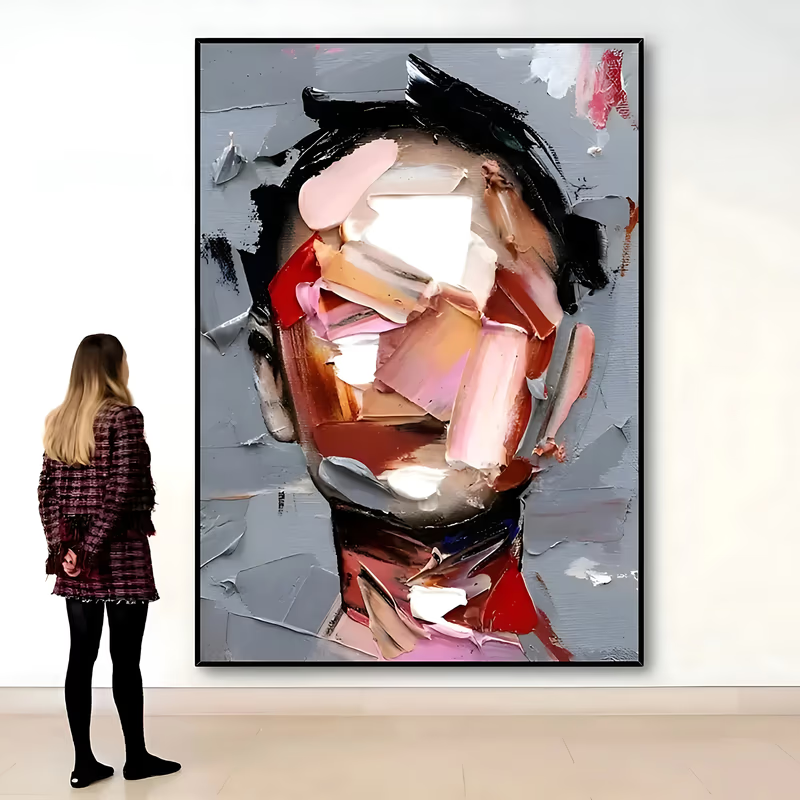
| Close-up face or portrait | Personal and arresting; holds the gaze | Living rooms, studies, a gallery wall, a bar's back wall |
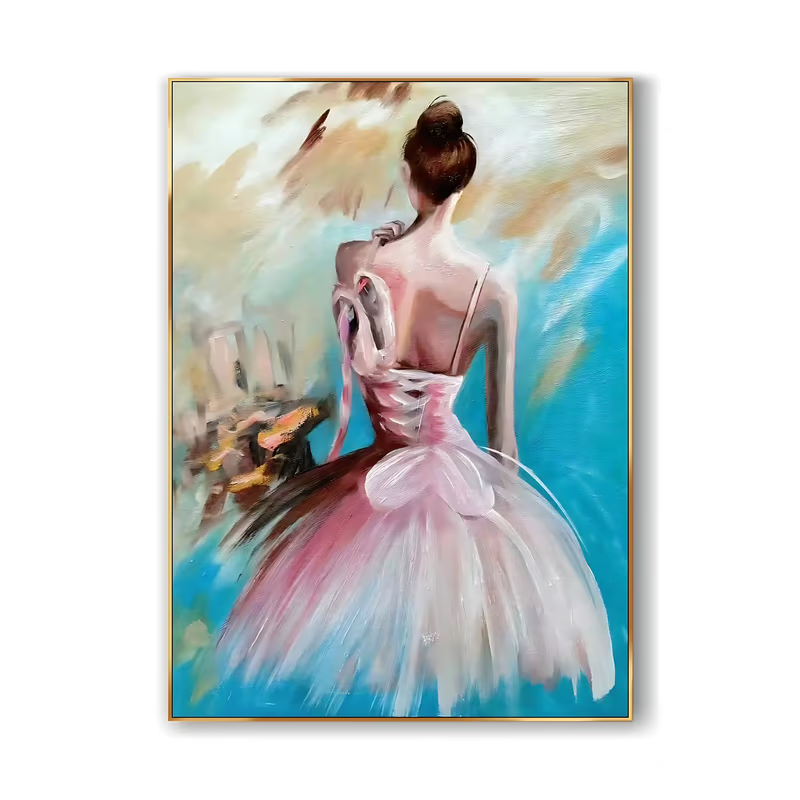
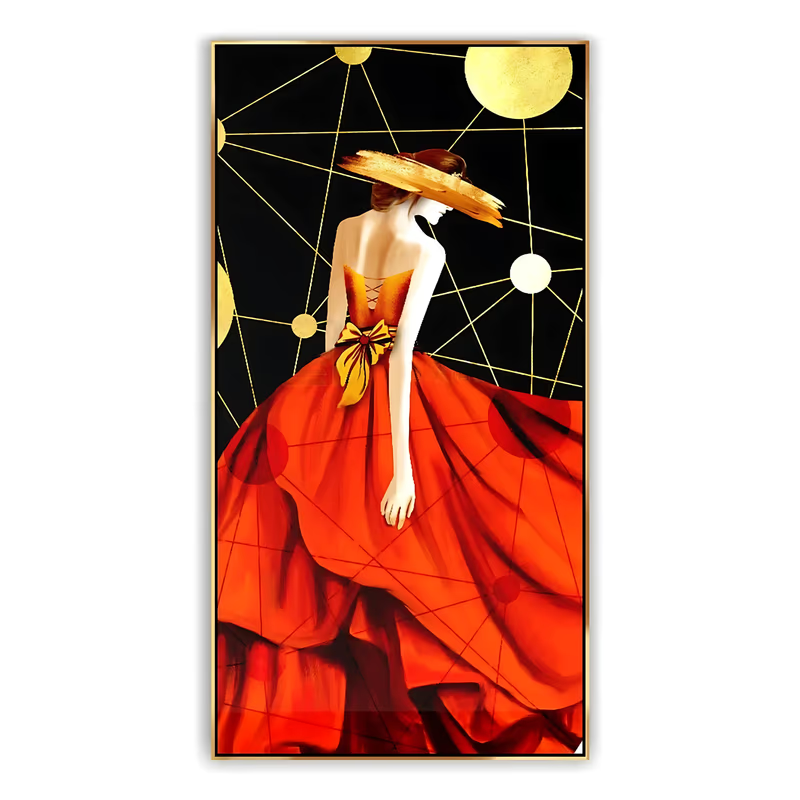
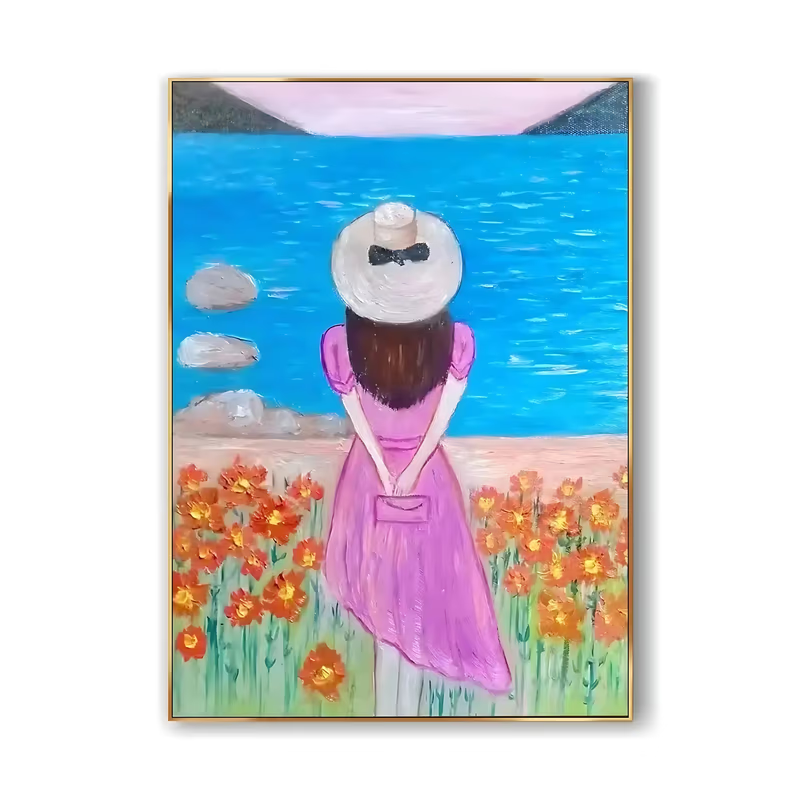
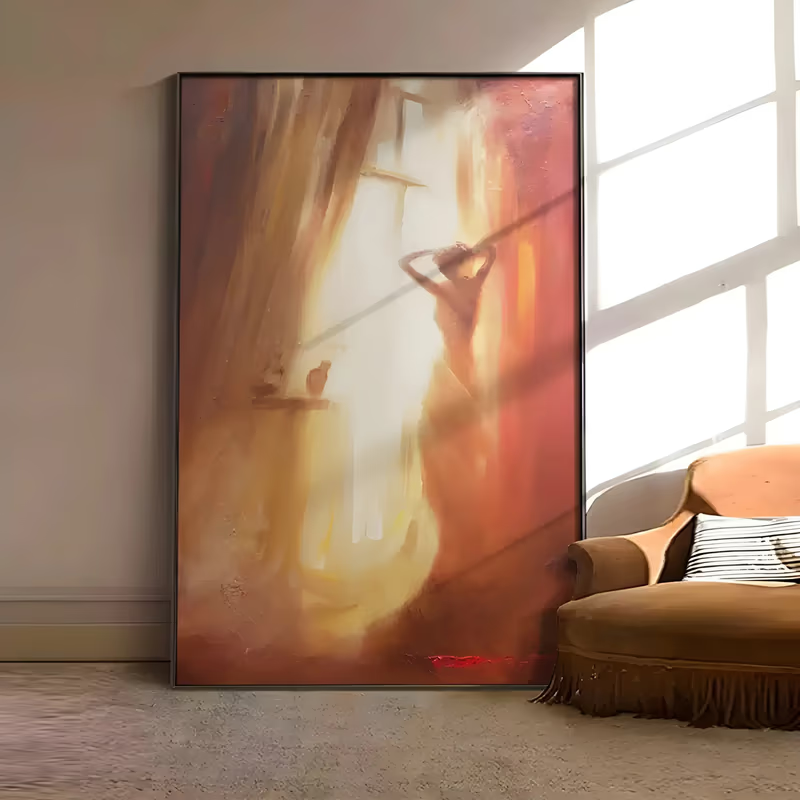
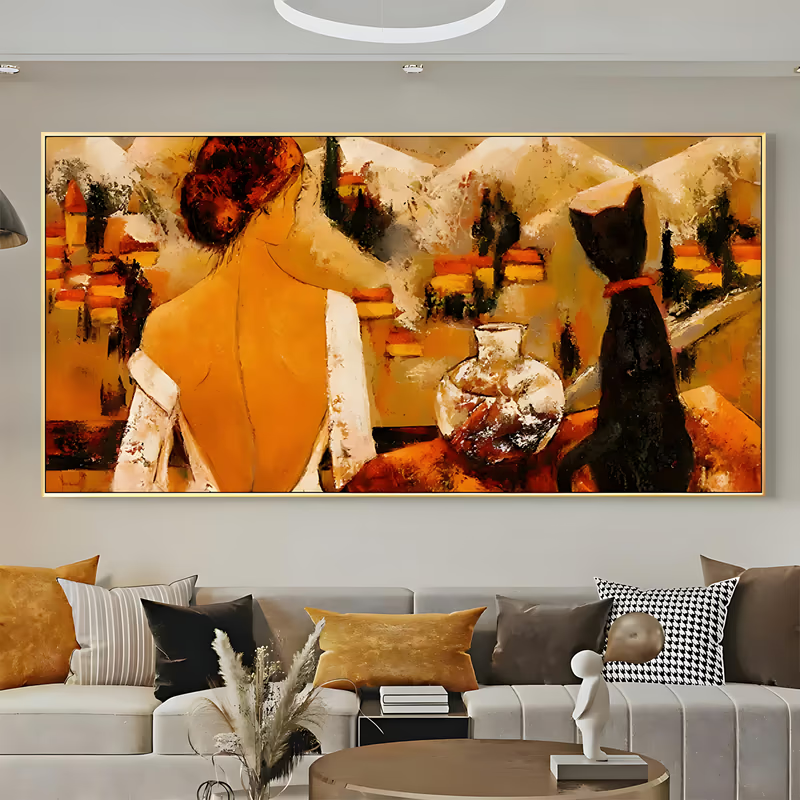
| Profile or figure seen from behind | Contemplative; the figure looks away, so the viewer is not watched | Bedrooms, guest rooms, reading corners |
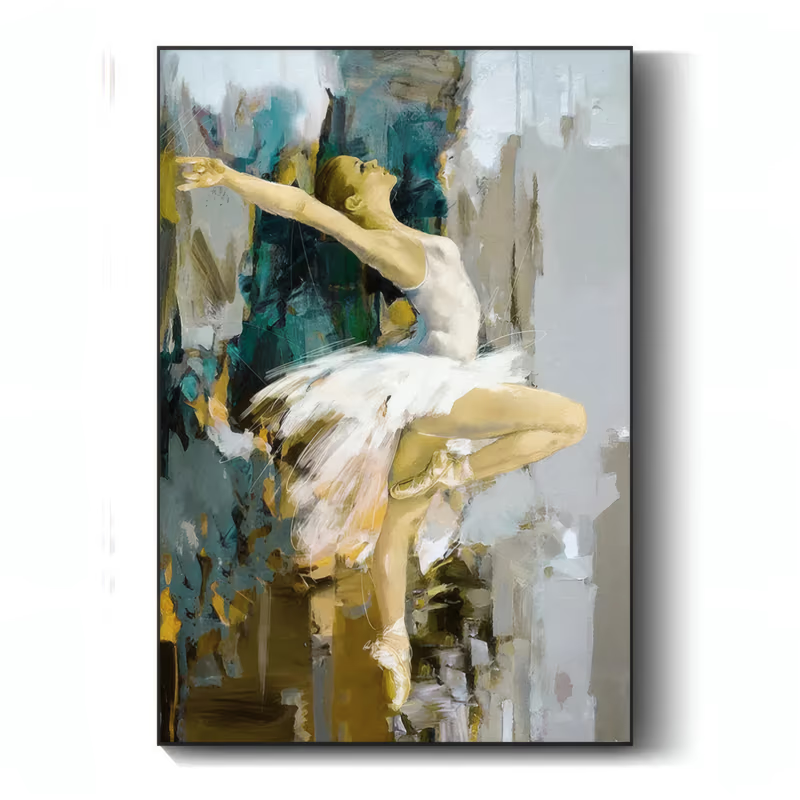
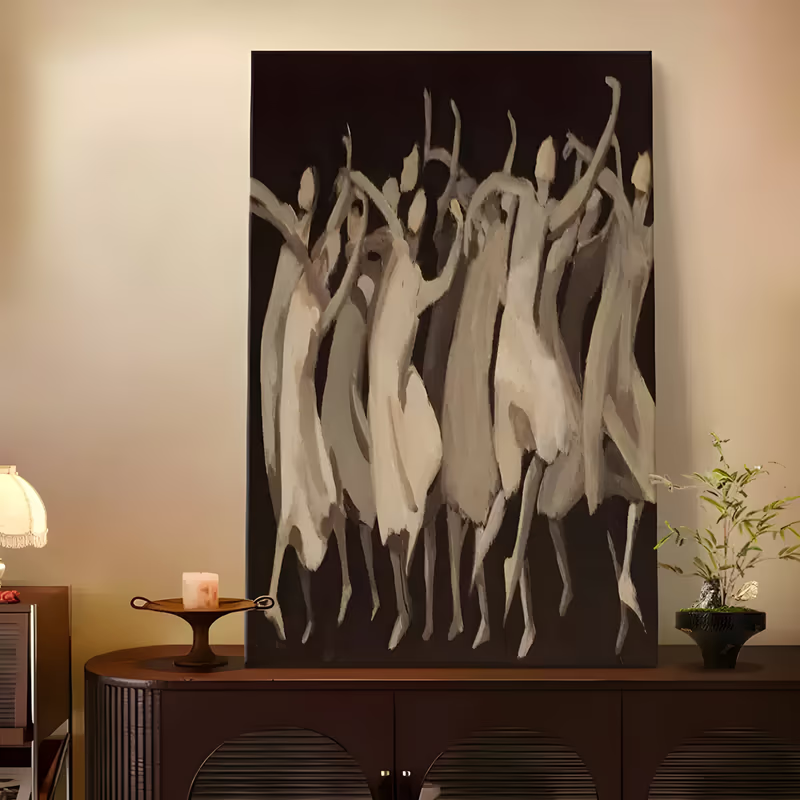
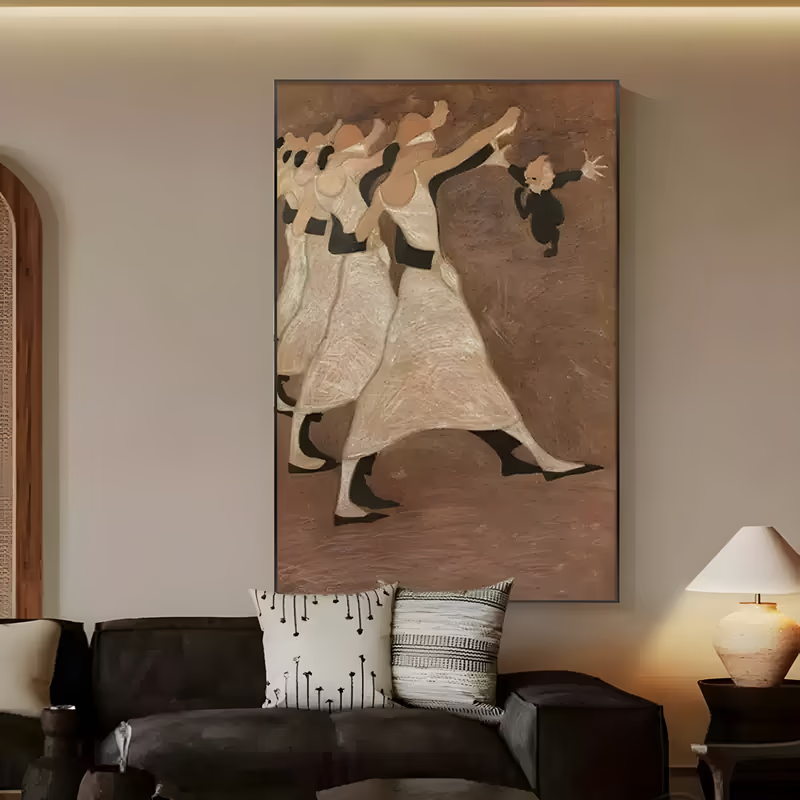
| Dancers and figures in motion | Energy and rhythm | Dining rooms, restaurants, entrances, studios |
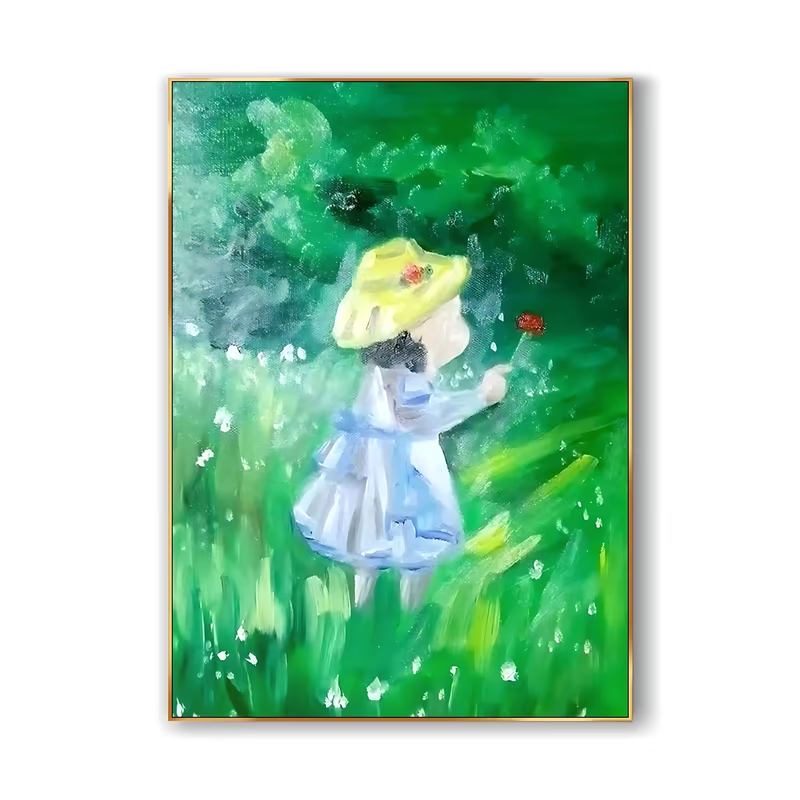
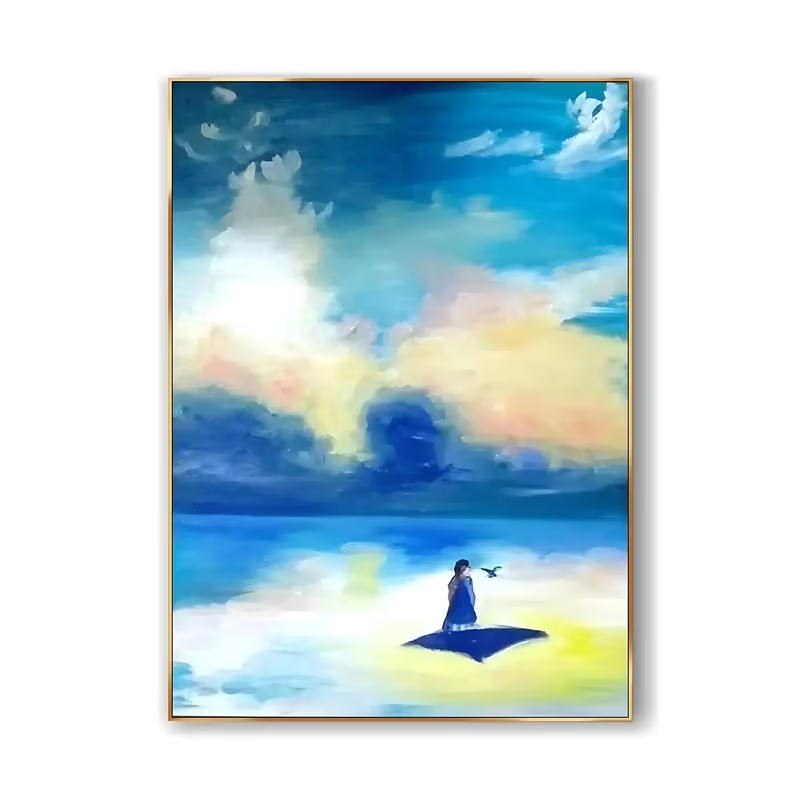
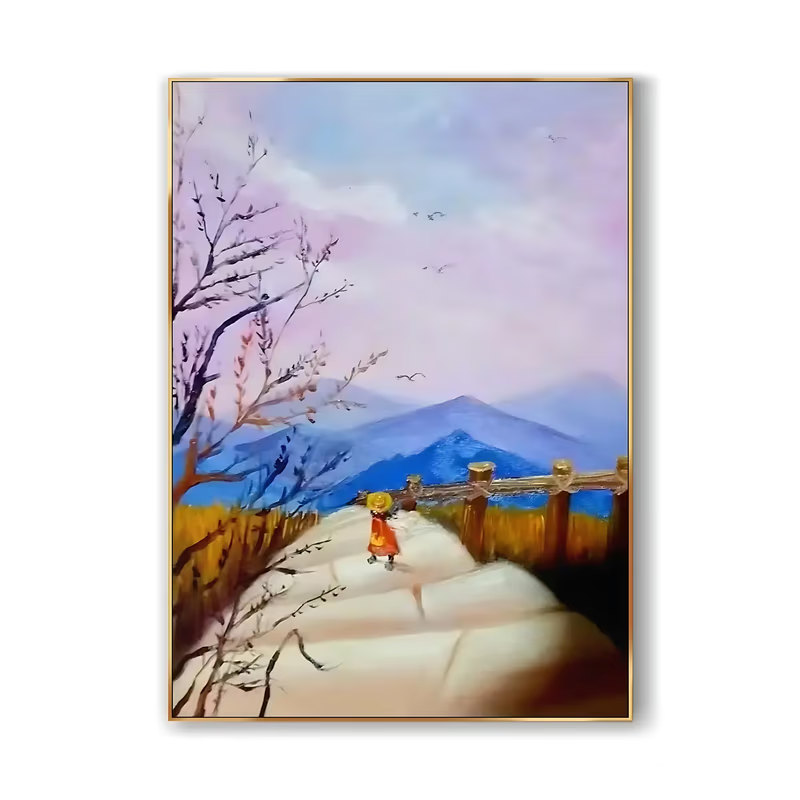
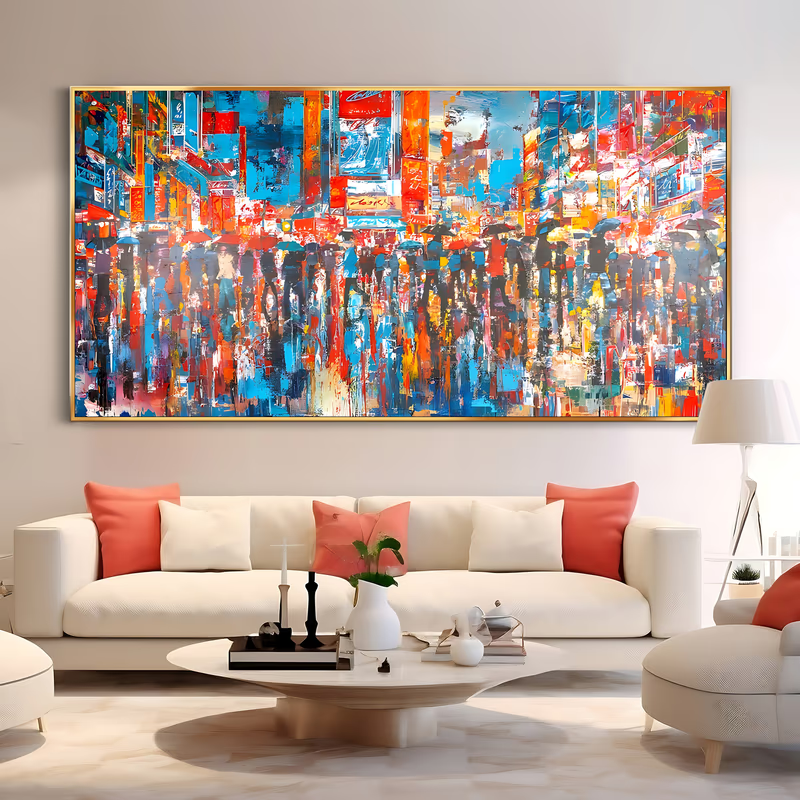
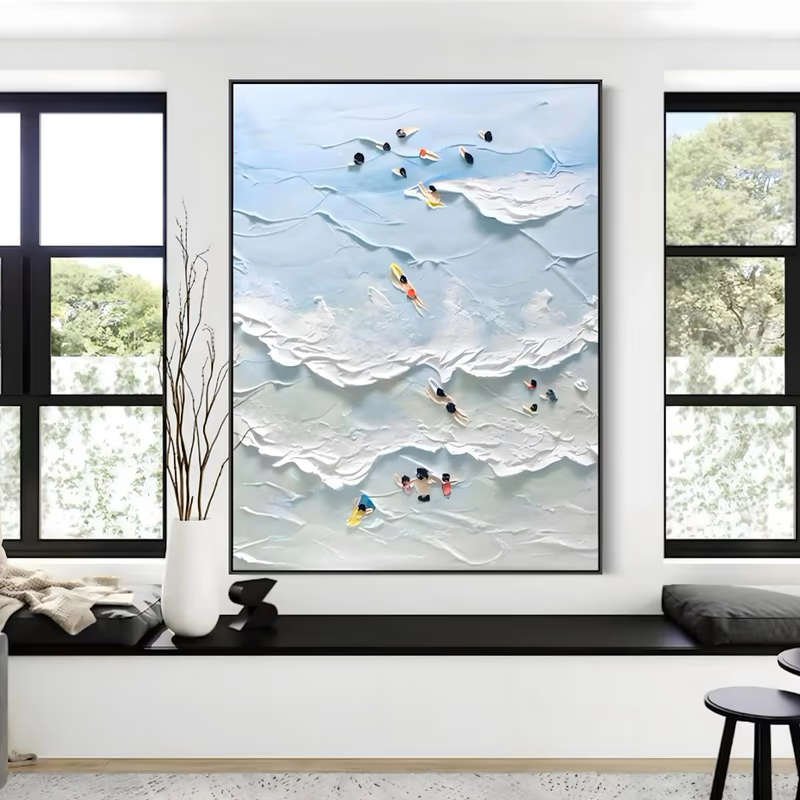
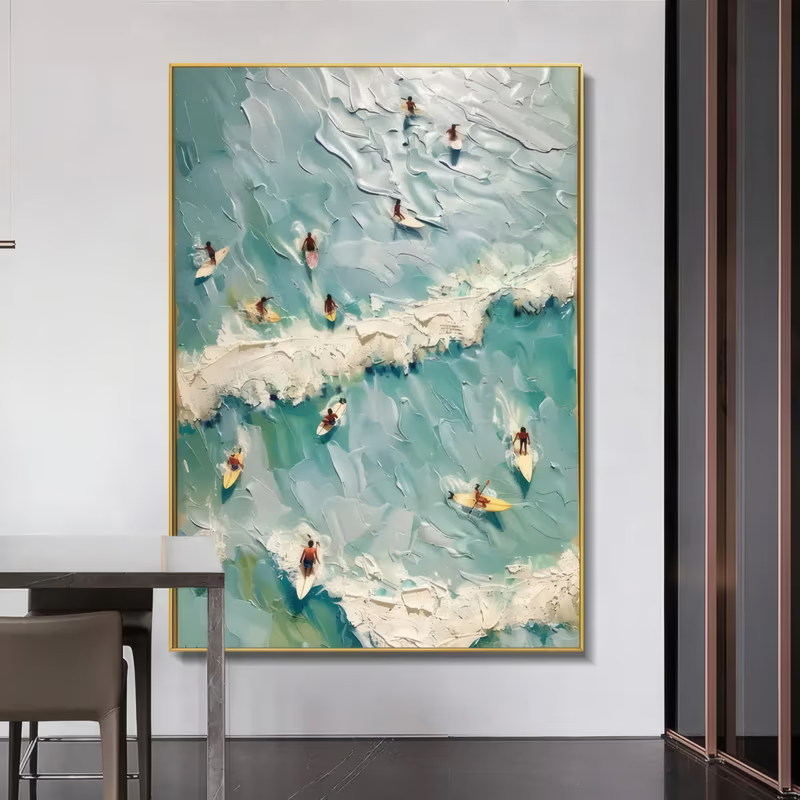
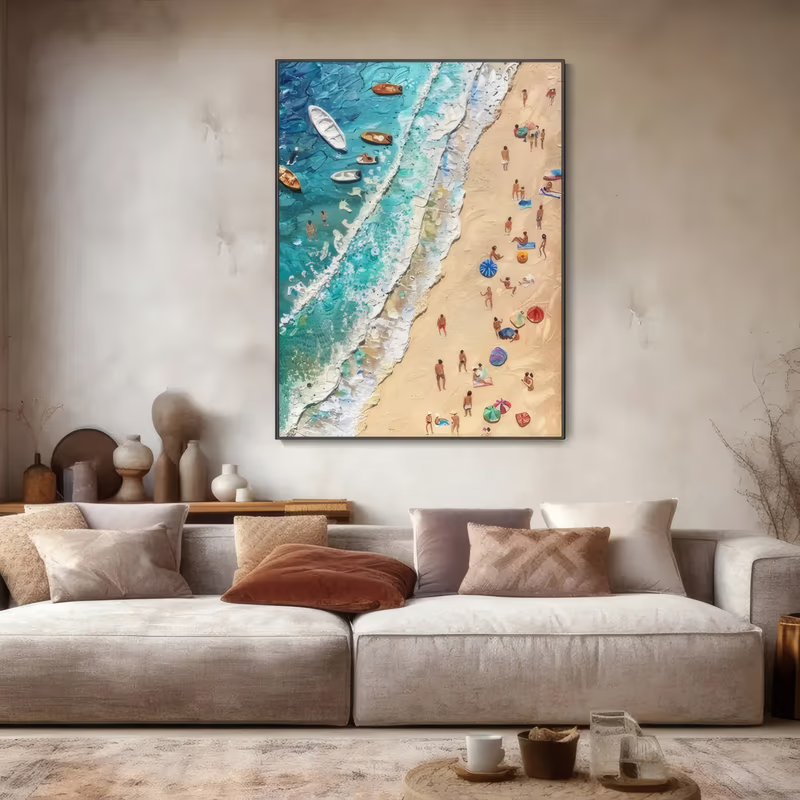
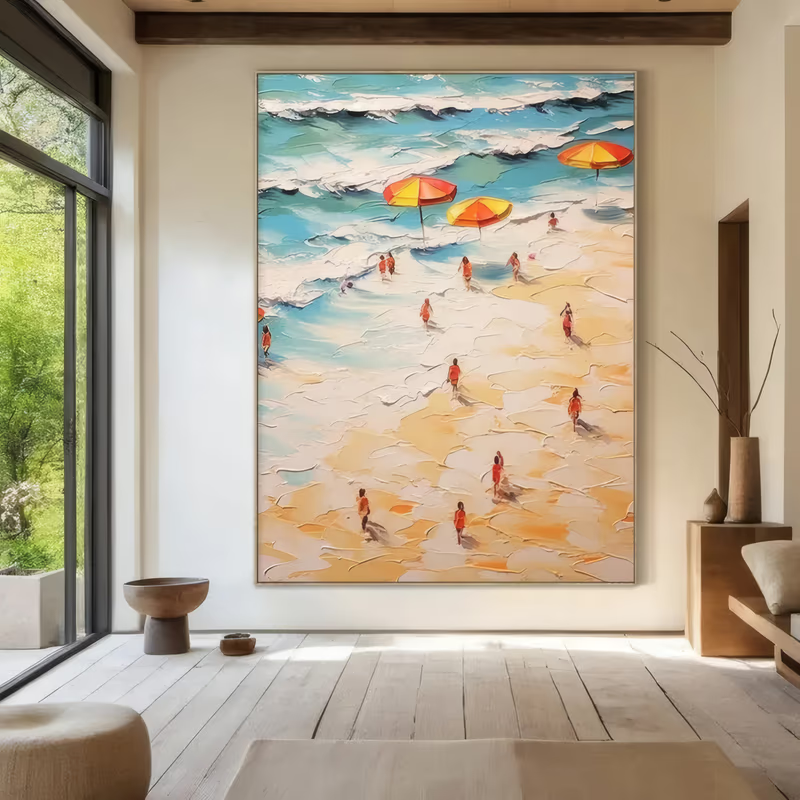
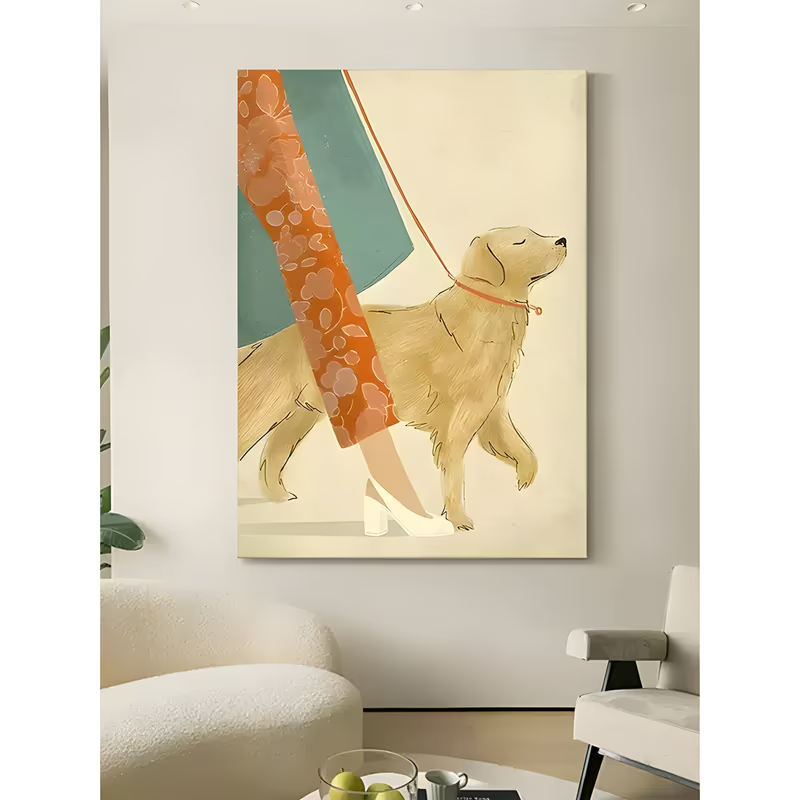
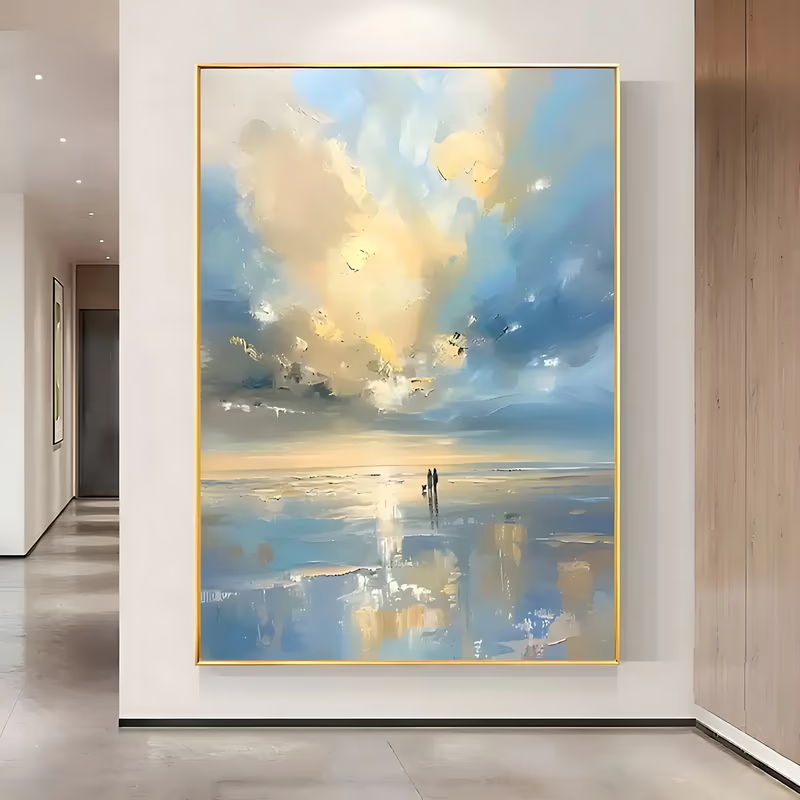
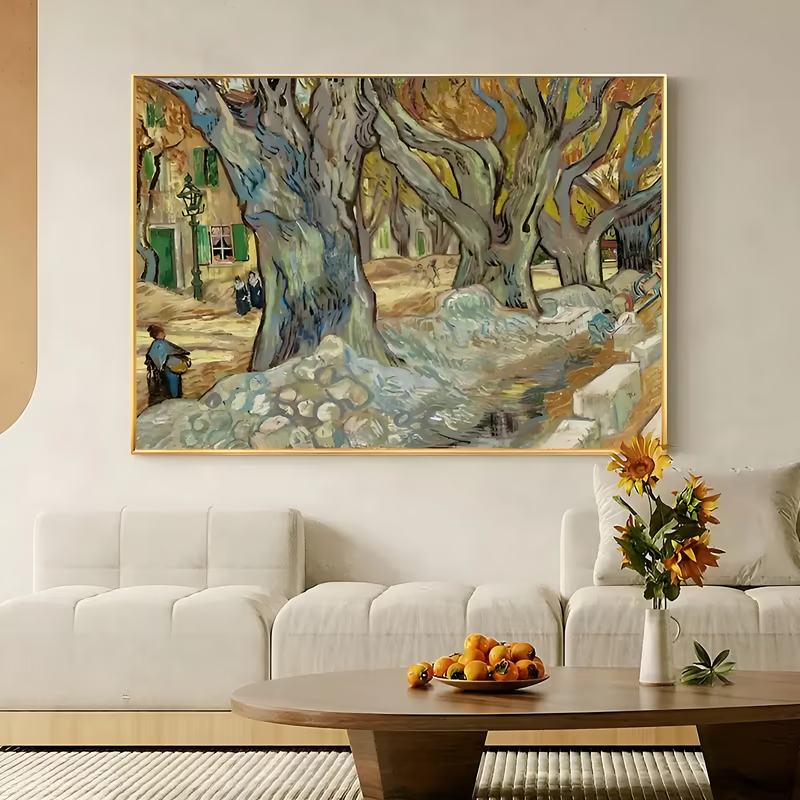
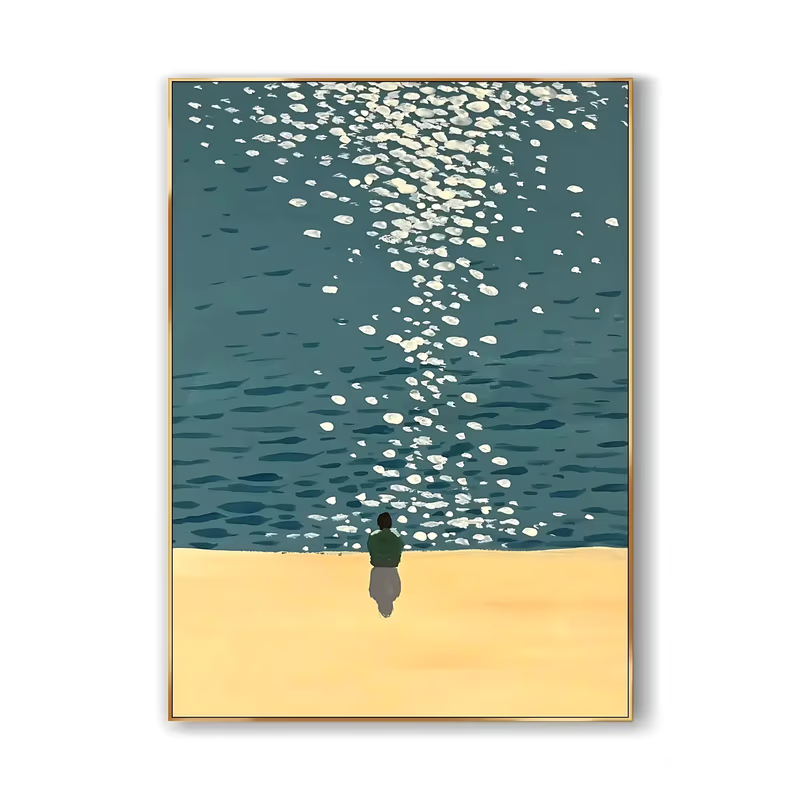
| Small figures in a street, beach or landscape | A view with life in it; calm, never confrontational | Hotel rooms, corridors, offices, family rooms |
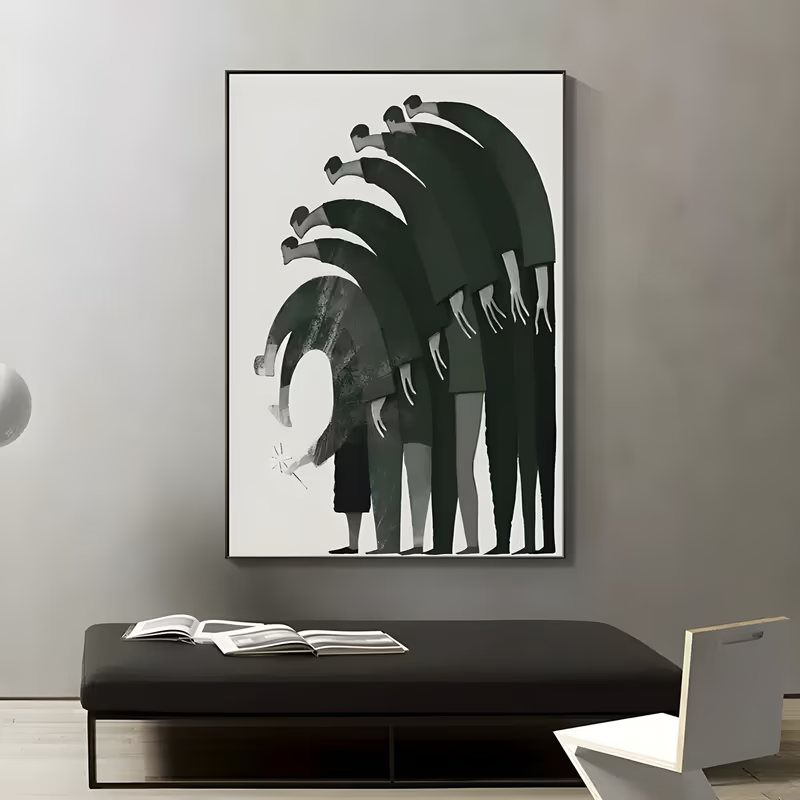
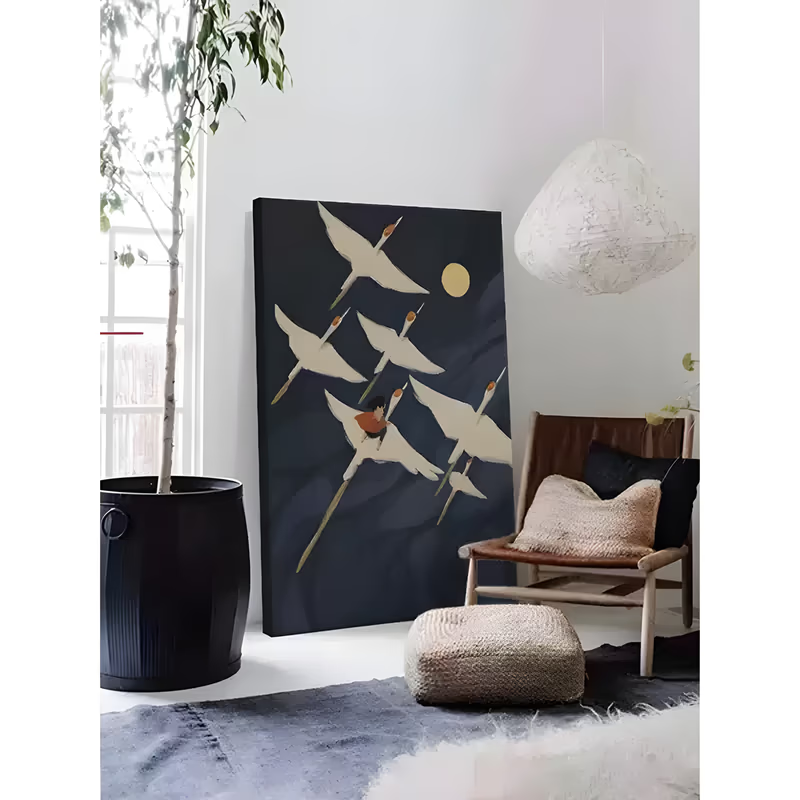
| Line drawings and silhouettes | Light, modern, almost graphic | Bedrooms, bathrooms, home offices, small walls |
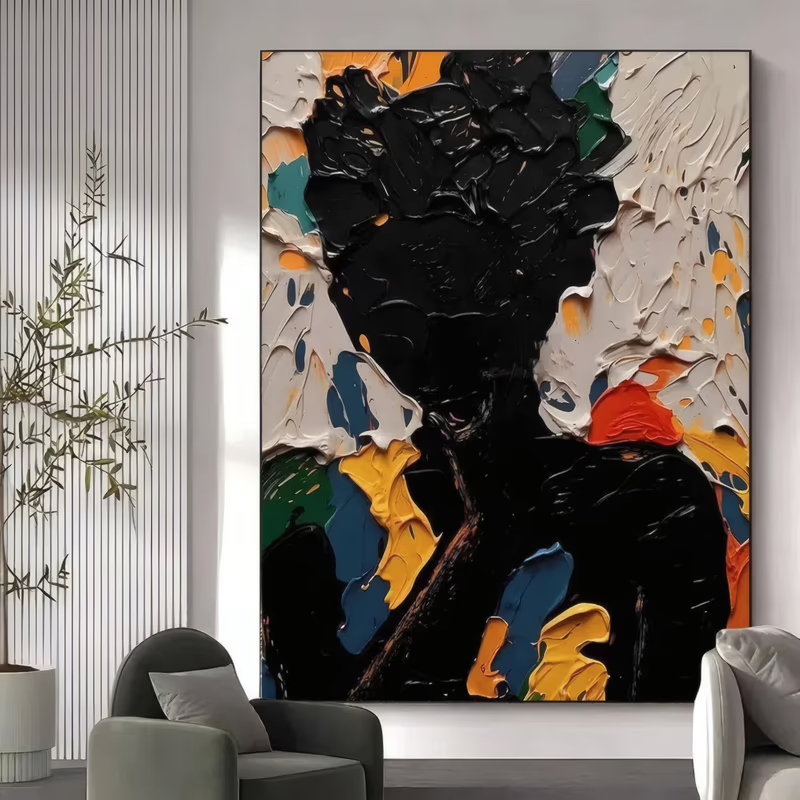
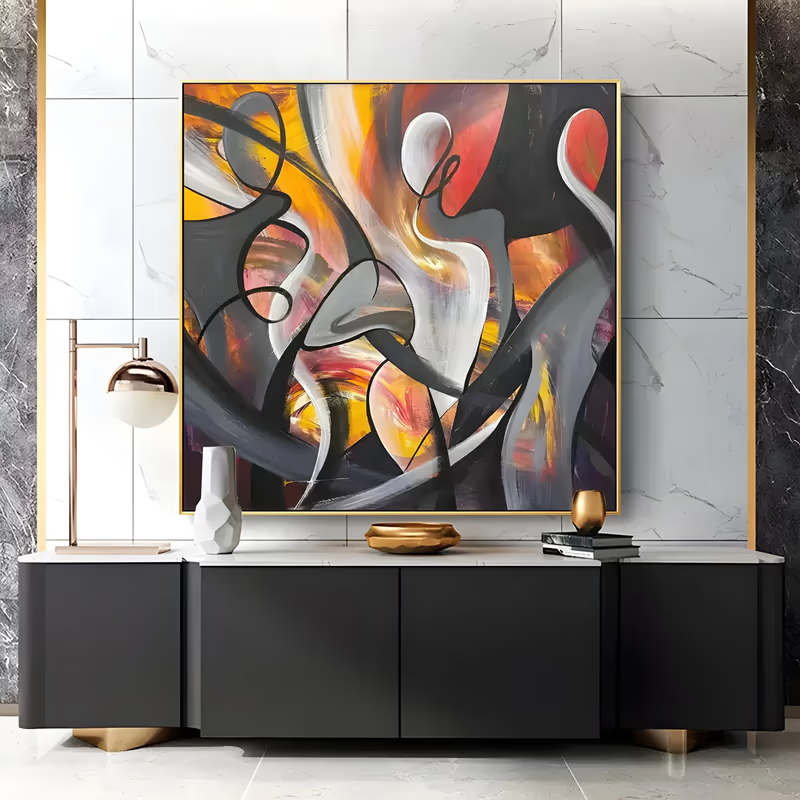
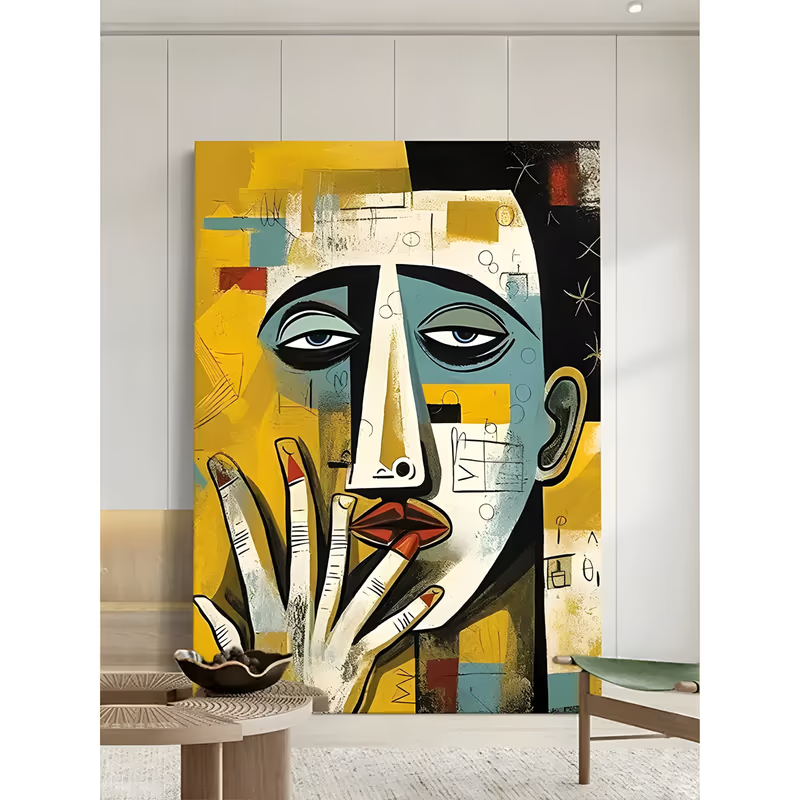
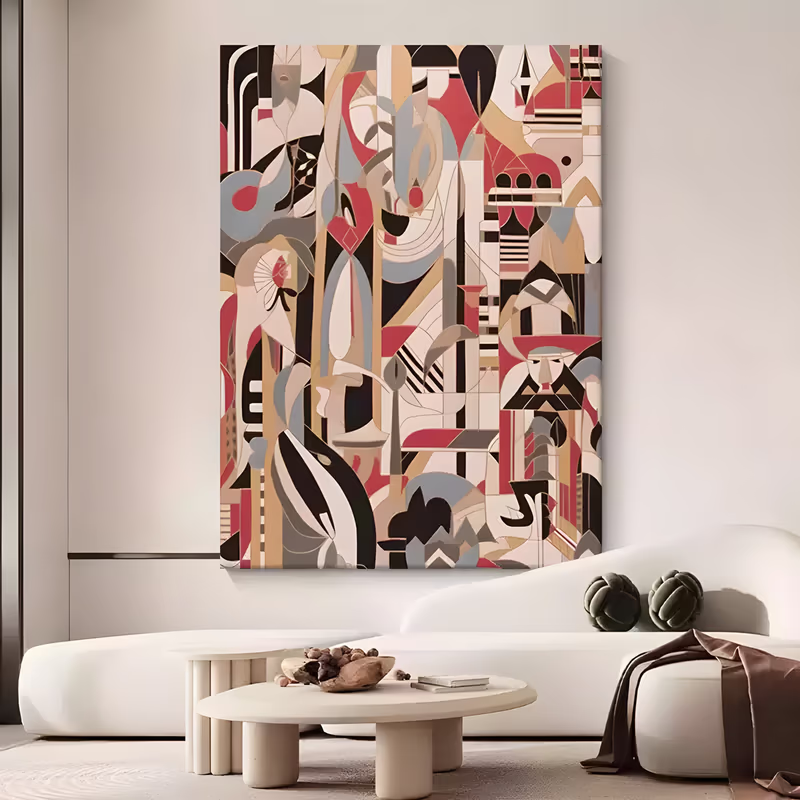
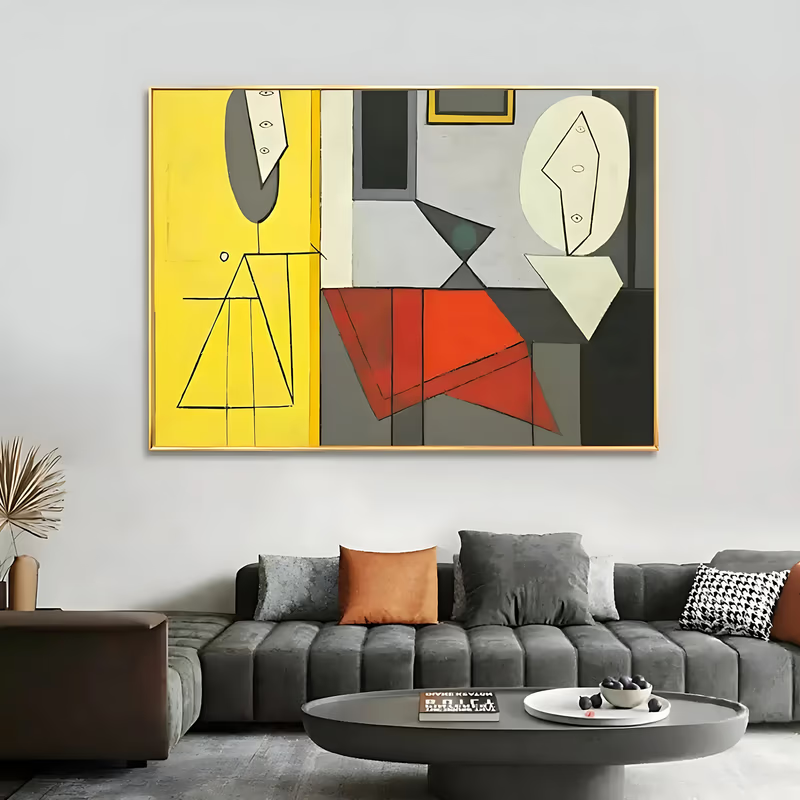
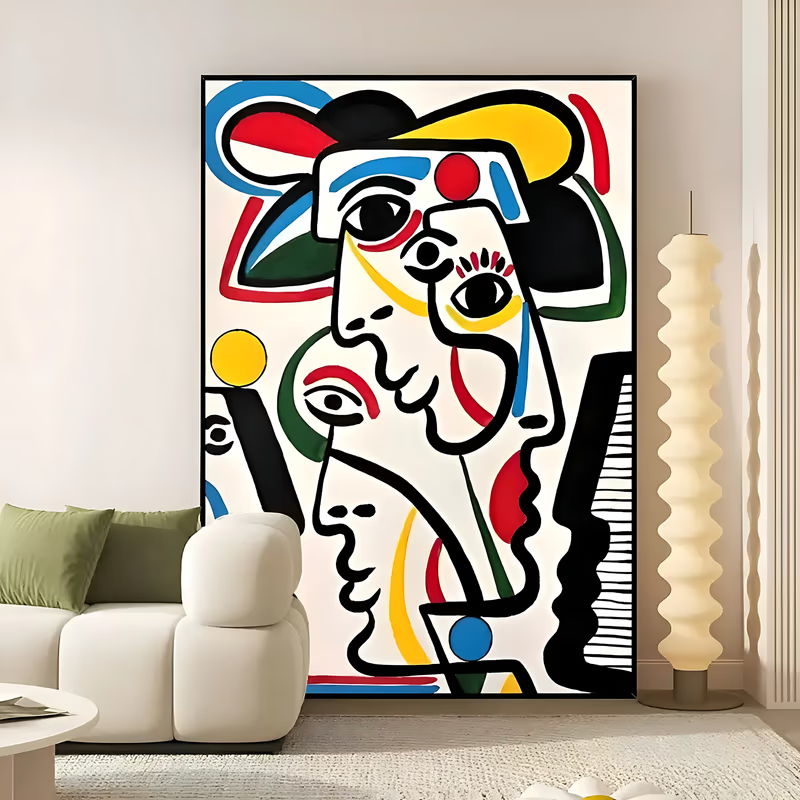
| Cubist and faceted figures | Bold, artful, conversation-starting | Living rooms, lounges, boutiques, galleries |
Filter by feel to narrow it down: romantic figure paintings, peaceful ones or bold and dramatic ones.
What kinds of figurative wall art are painted here?
Four broad kinds: colourful knife-painted portraits and women, cubist and abstracted figures, impressionist scenes with people, and line, ink and relief figures.
Colourful portraits, dancers and women
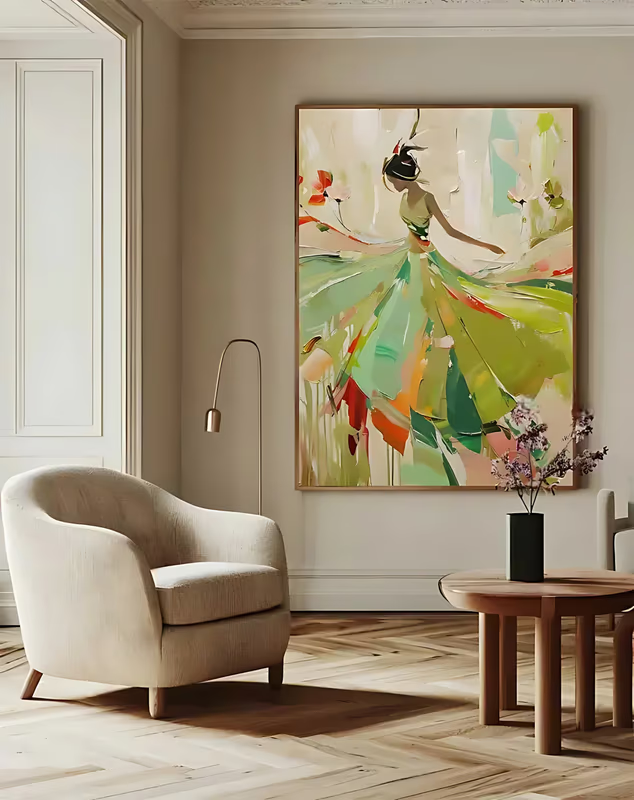
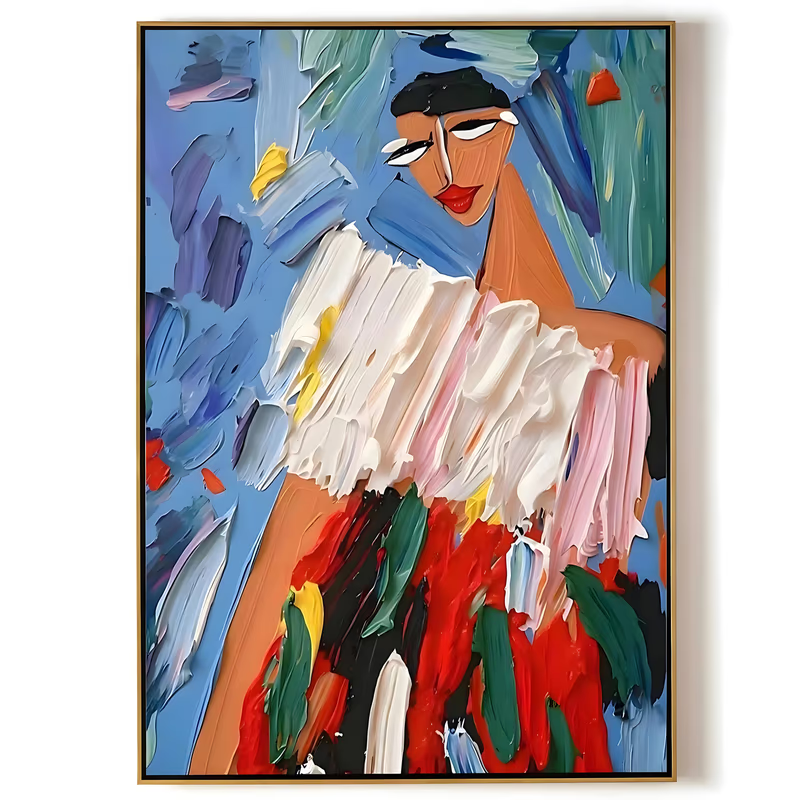
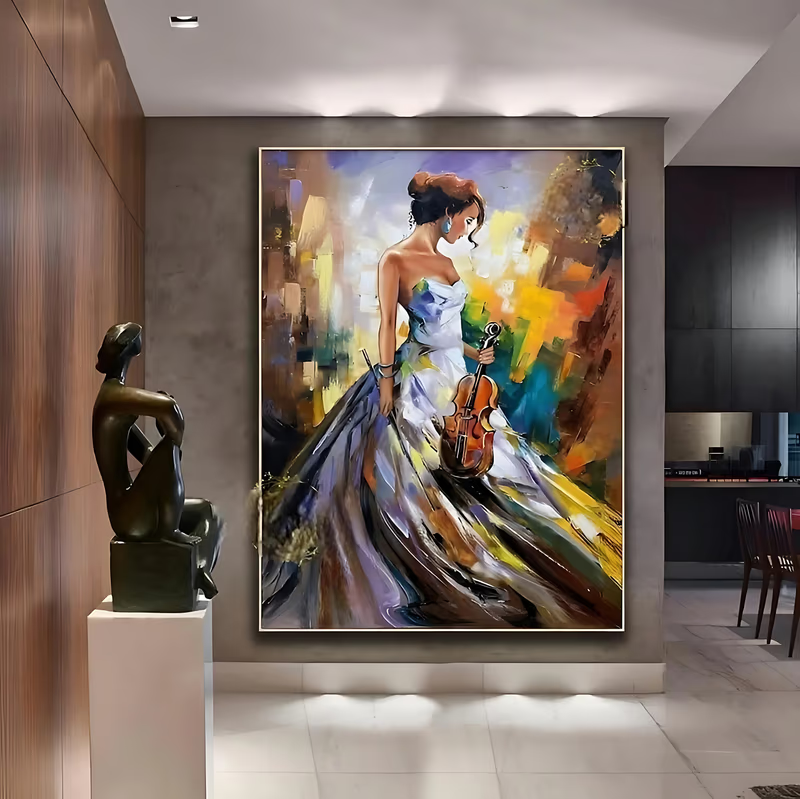
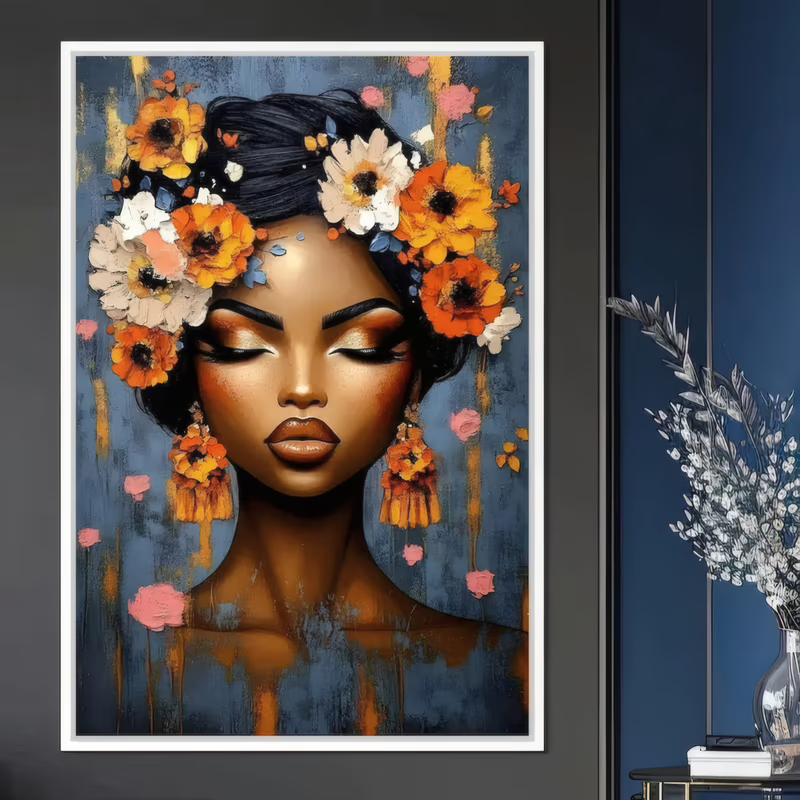
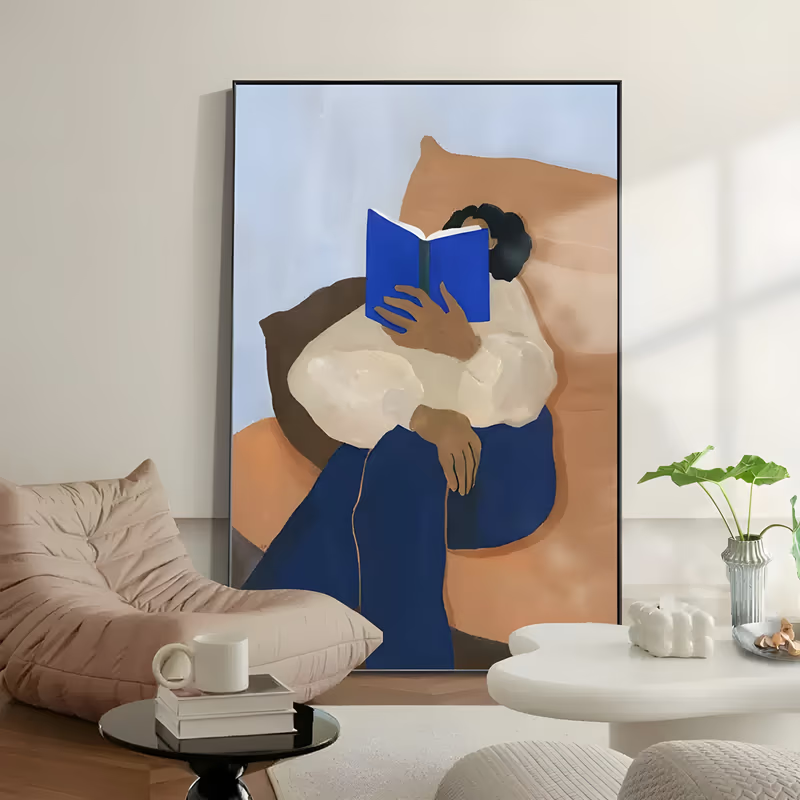
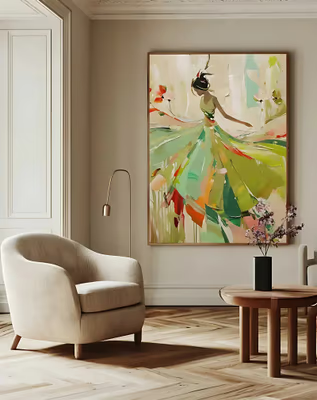
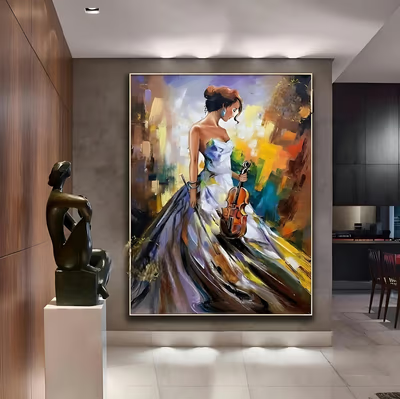
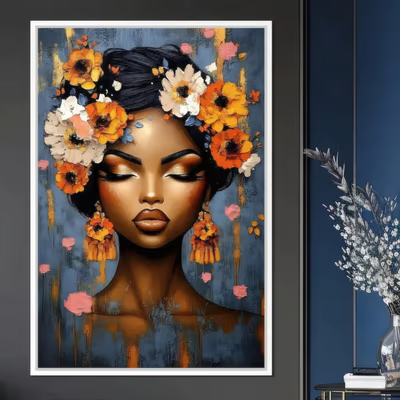
A woman with an orange flower crown, a ballerina in a pink tutu, a dancer in a flaring green dress, a reader in a terracotta chair. Thick knife paint and strong colour make these the warmest and most decorative of the figure paintings. More of this handling is in colourful art.
Cubist faces and abstracted figures
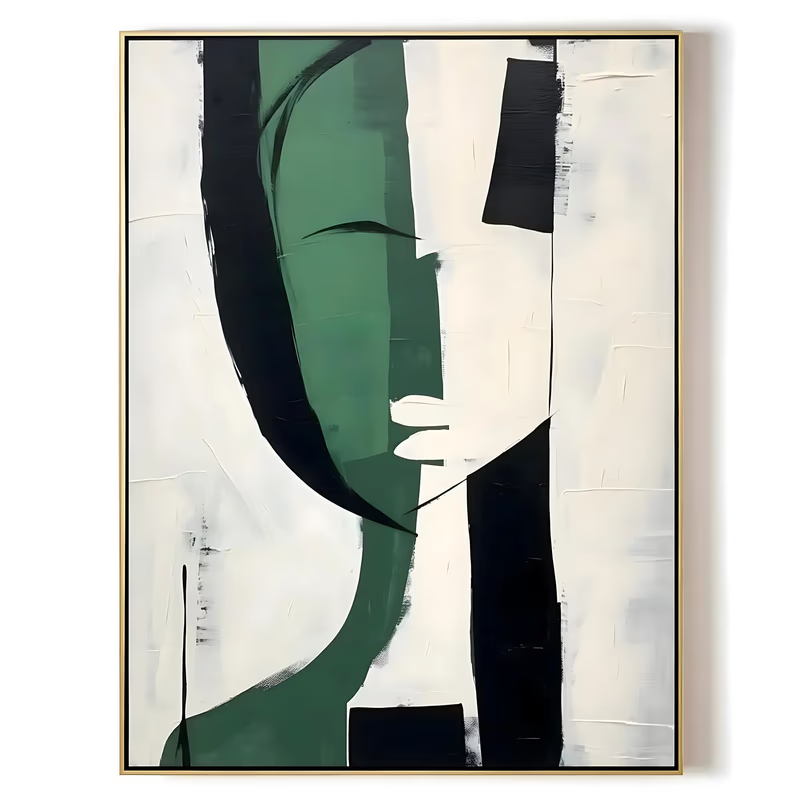
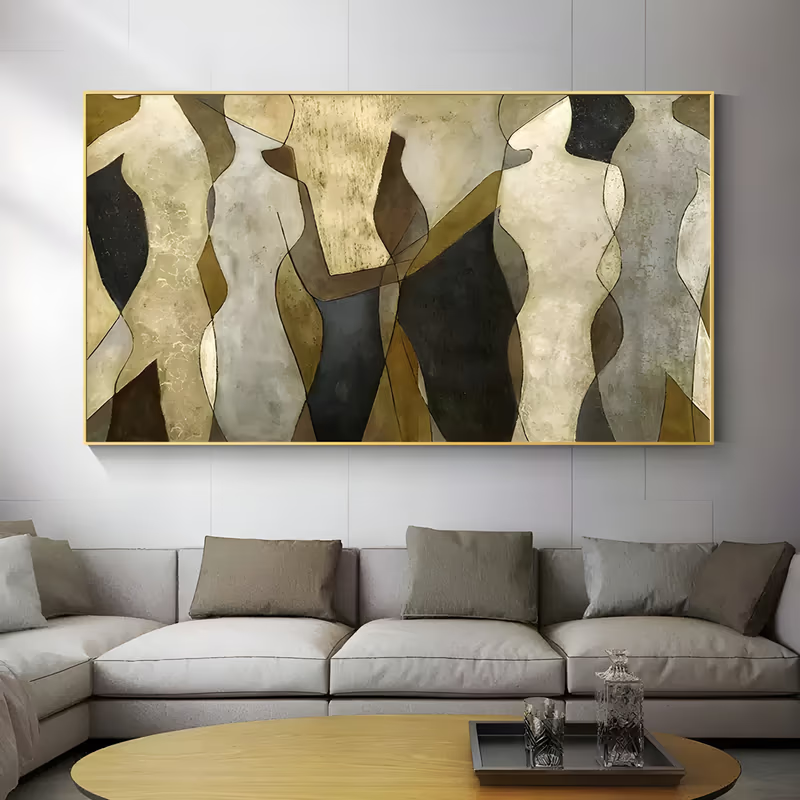
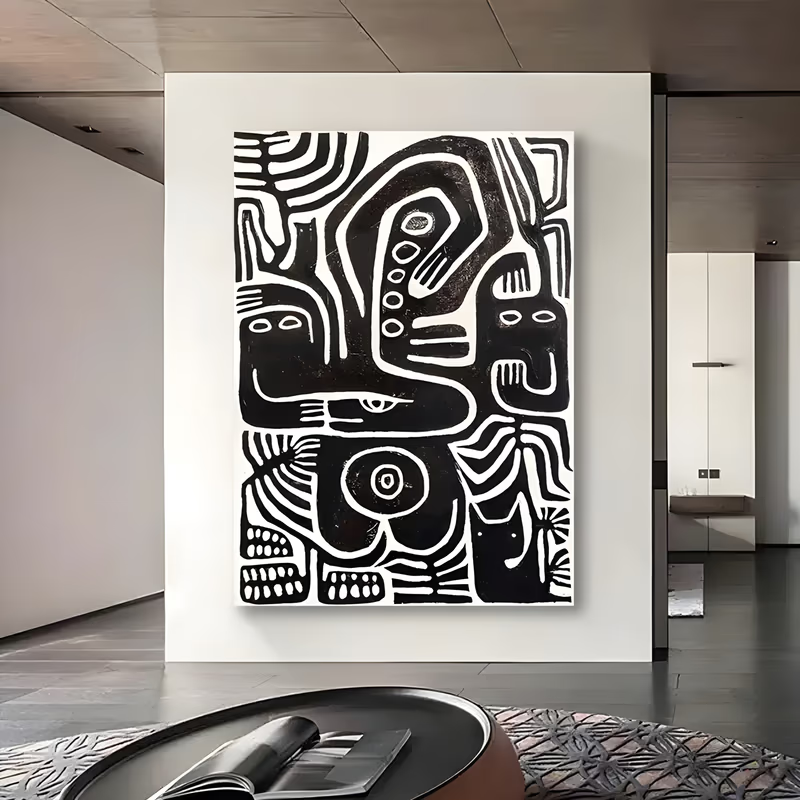
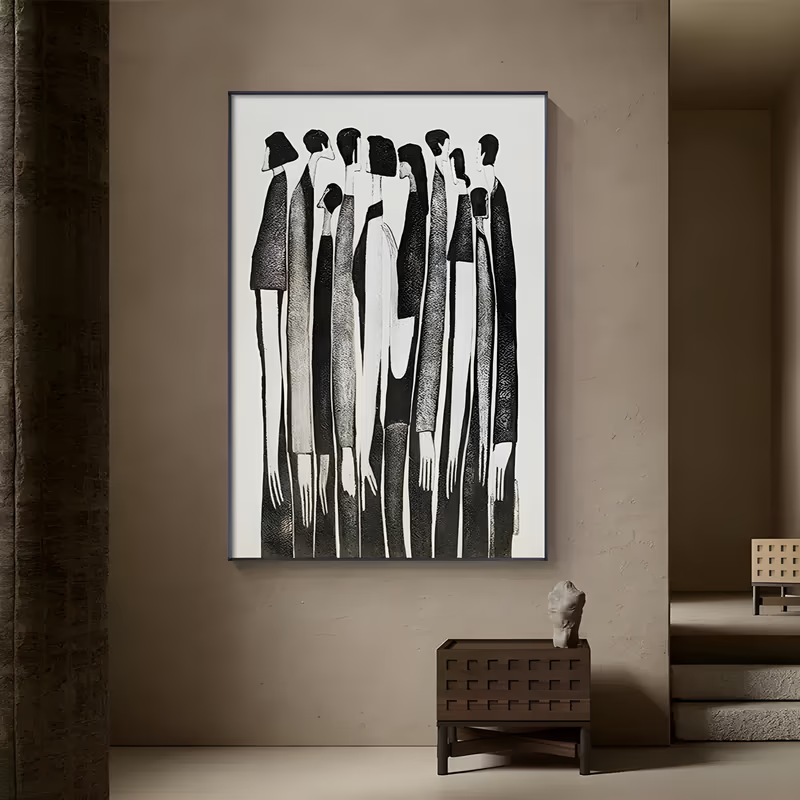
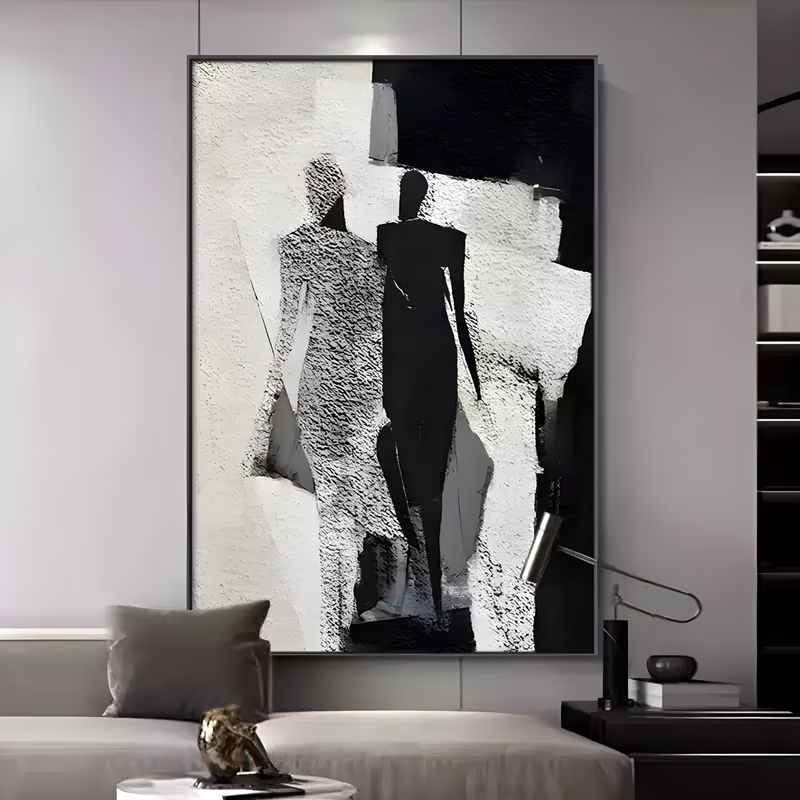
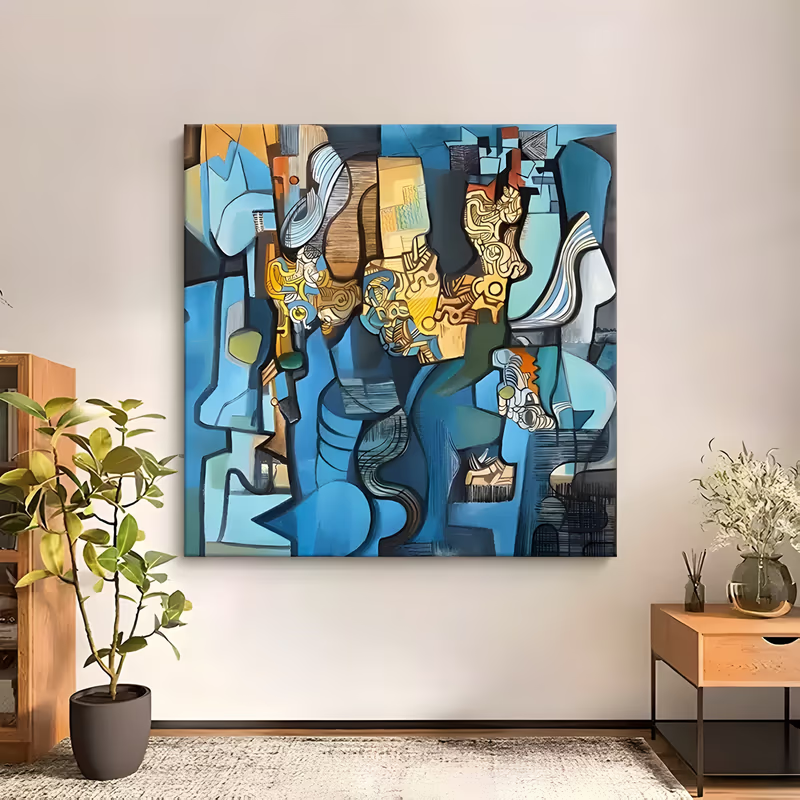
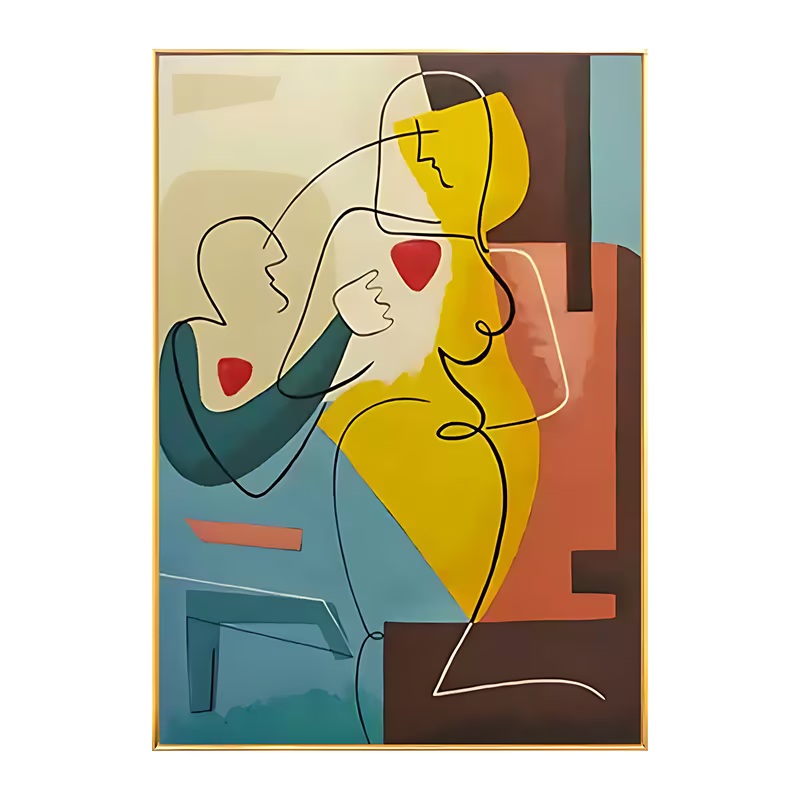
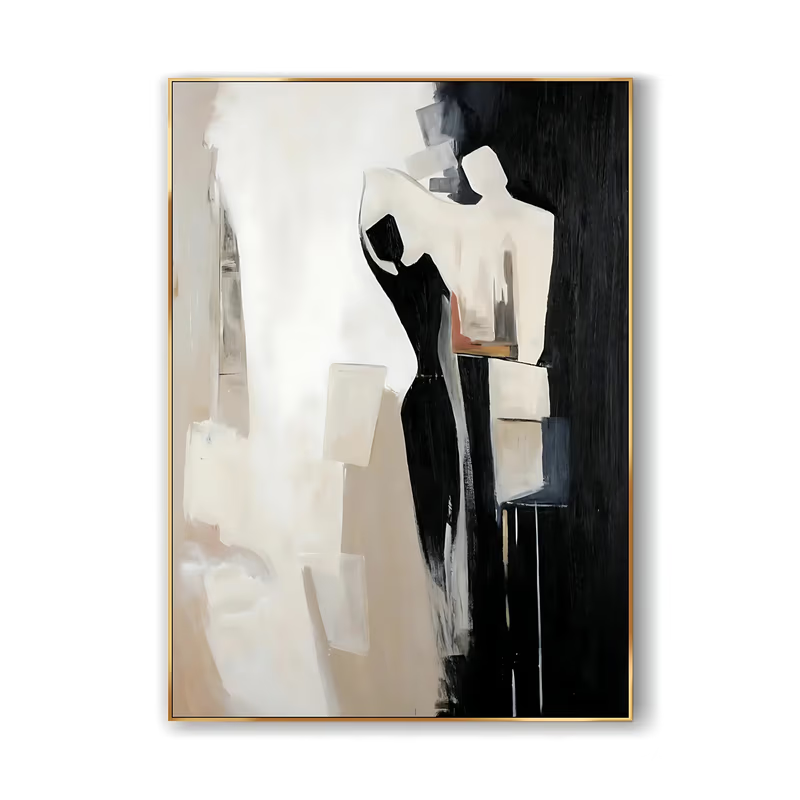
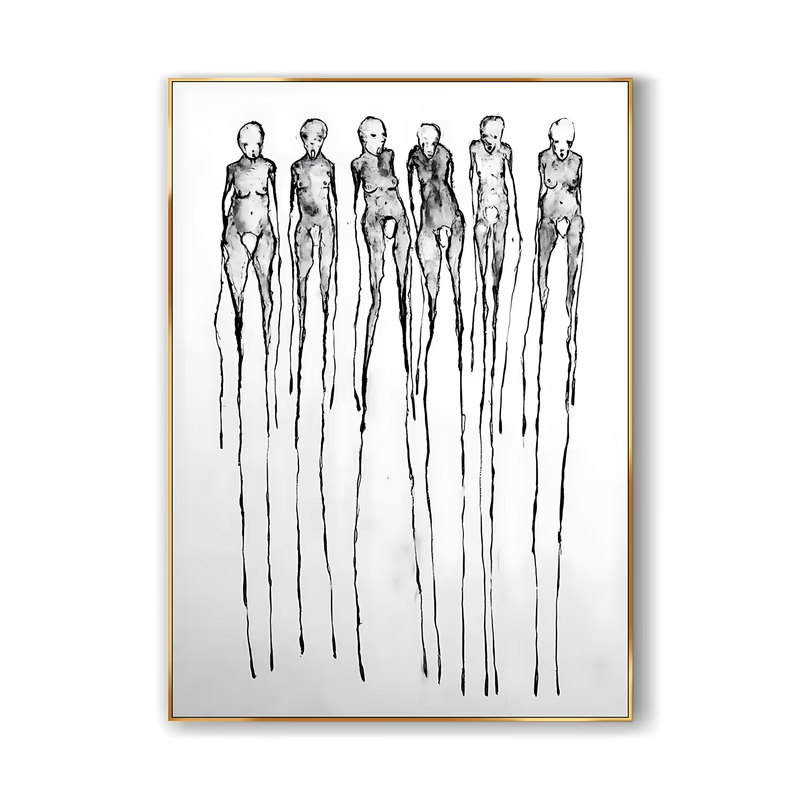
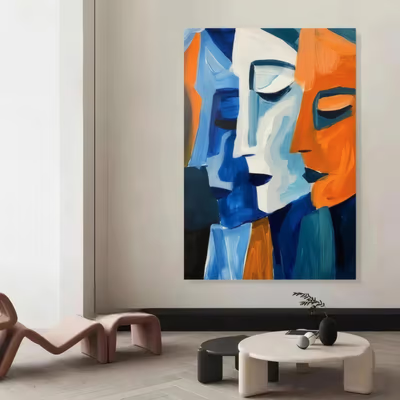
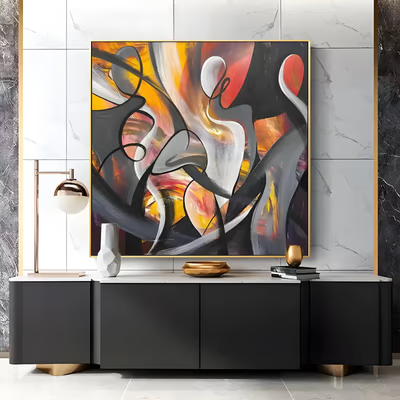
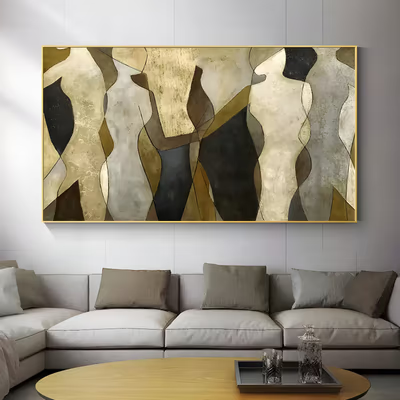
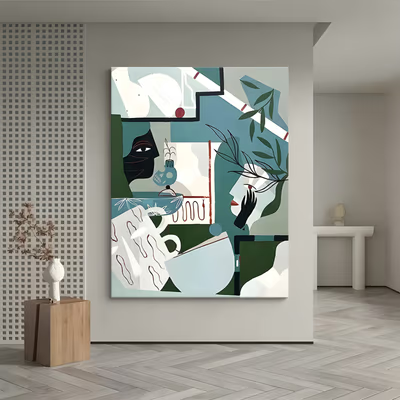
Faces split into planes of mustard, navy and coral, embracing couples outlined in a few strokes, elongated groups in black and white. The person is there, but colour and structure carry the picture, which is why these sit as comfortably in modern rooms as an abstract would.
People in impressionist scenes
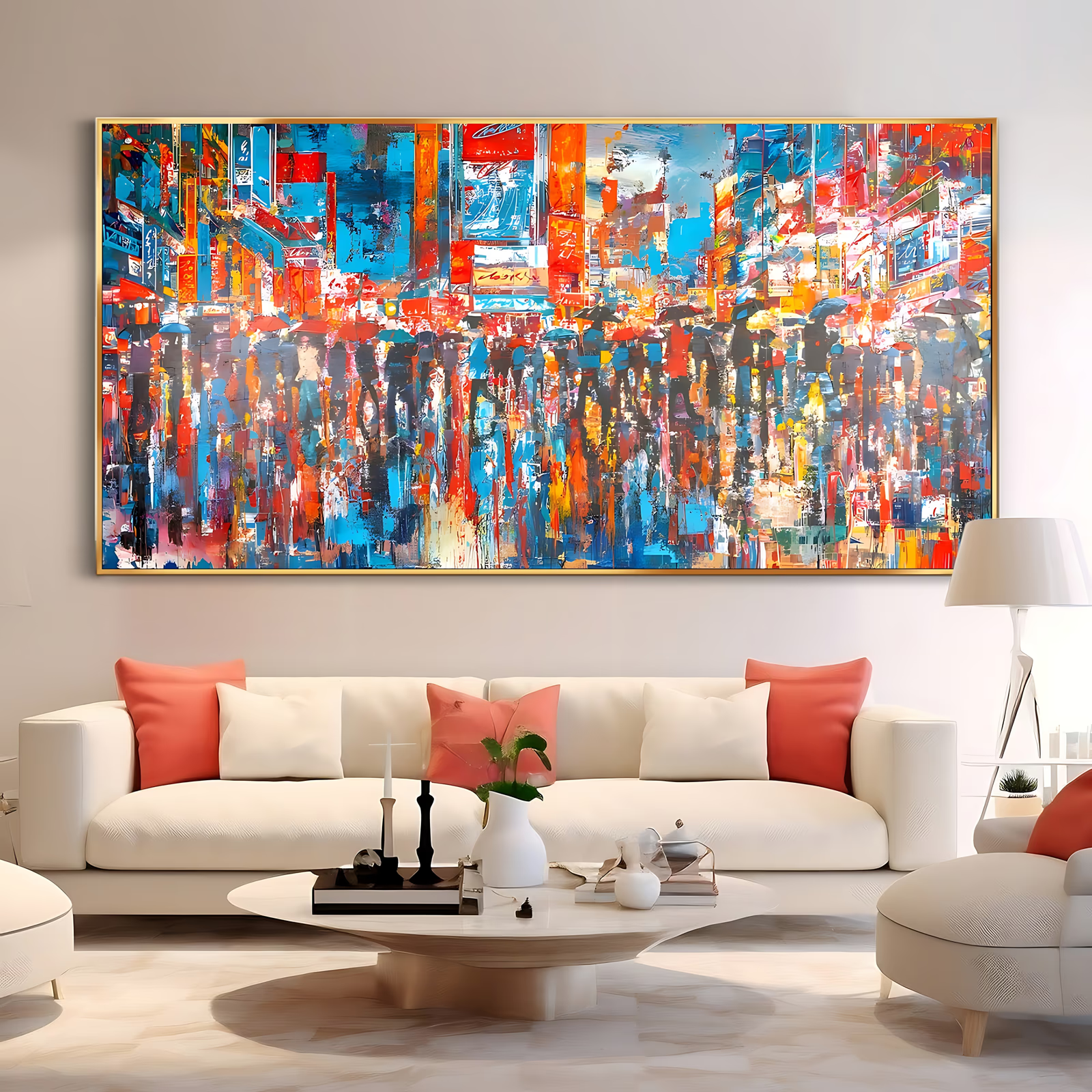
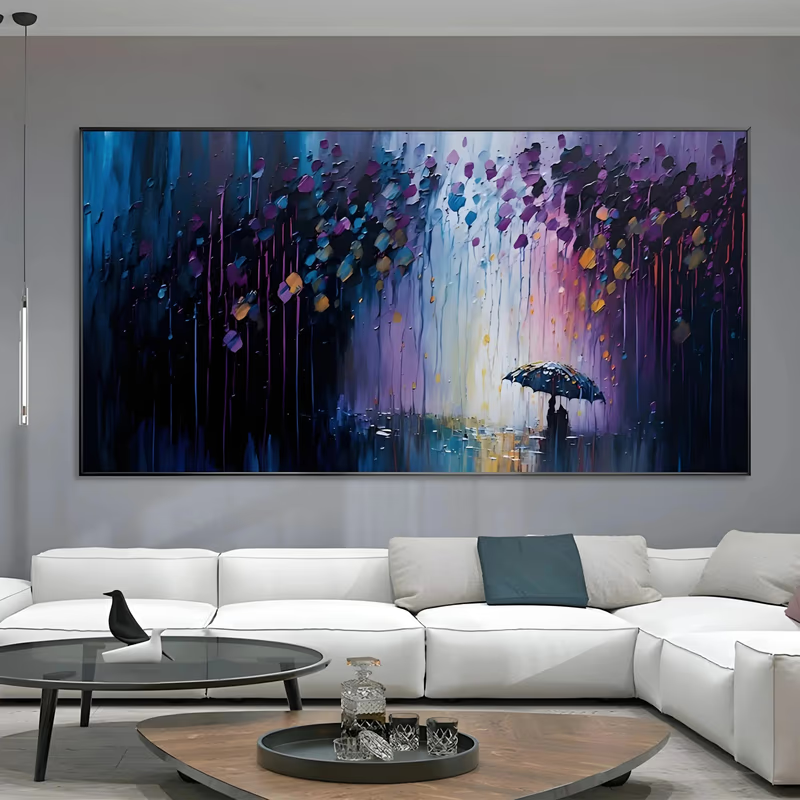
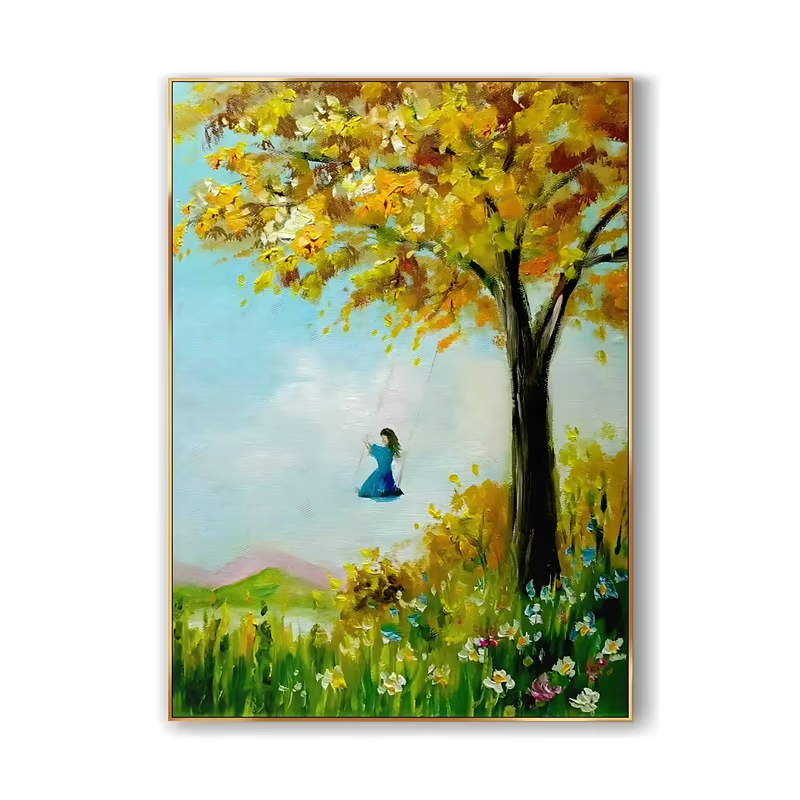
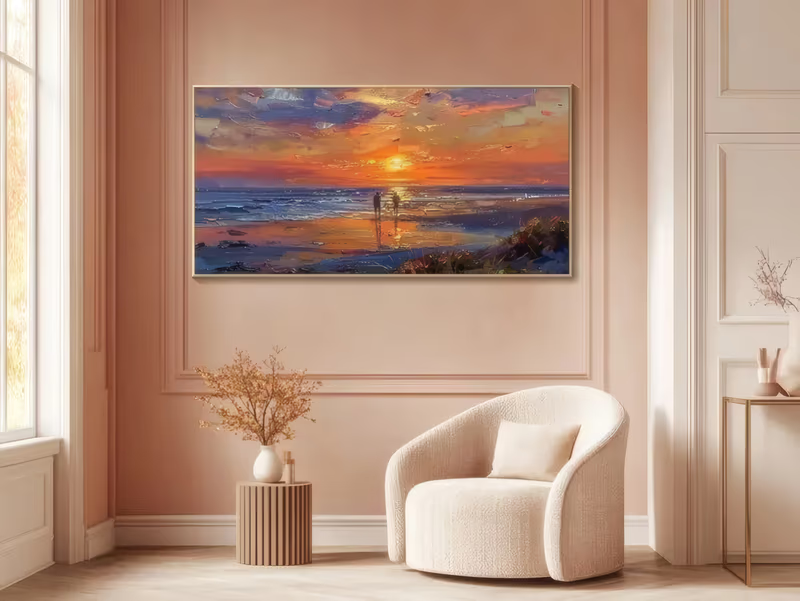
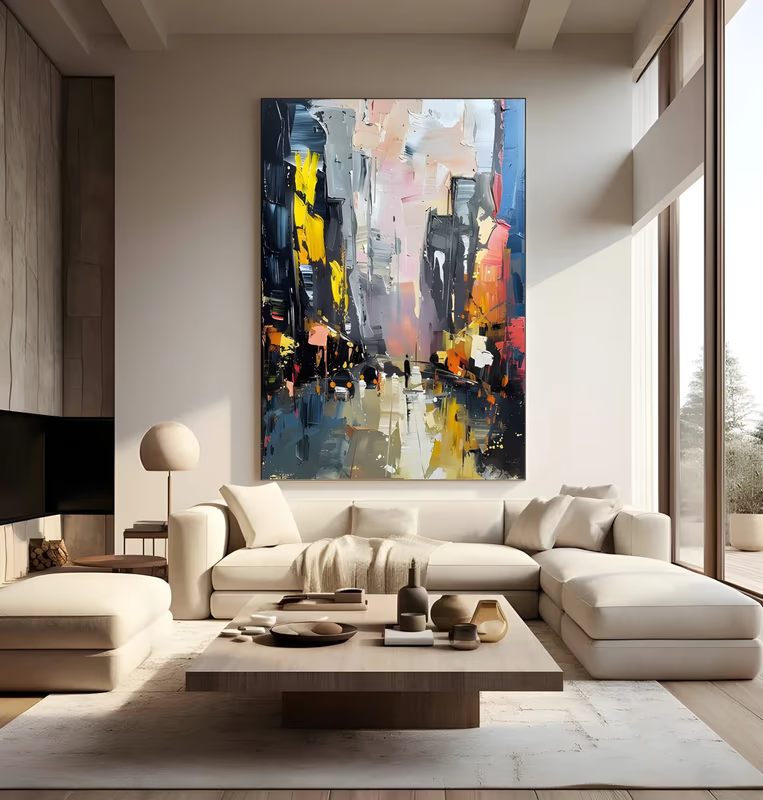
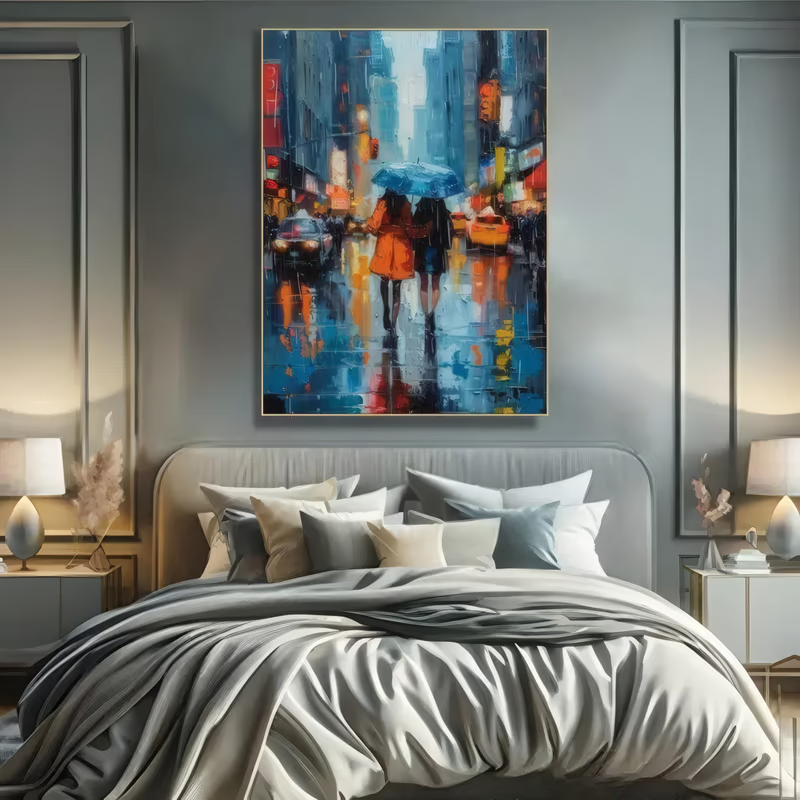
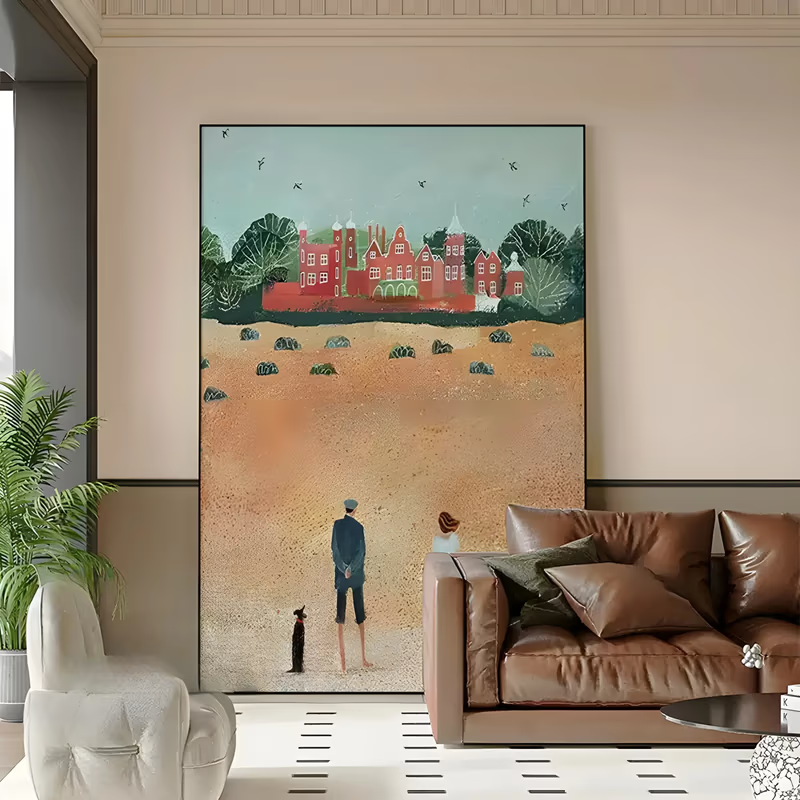
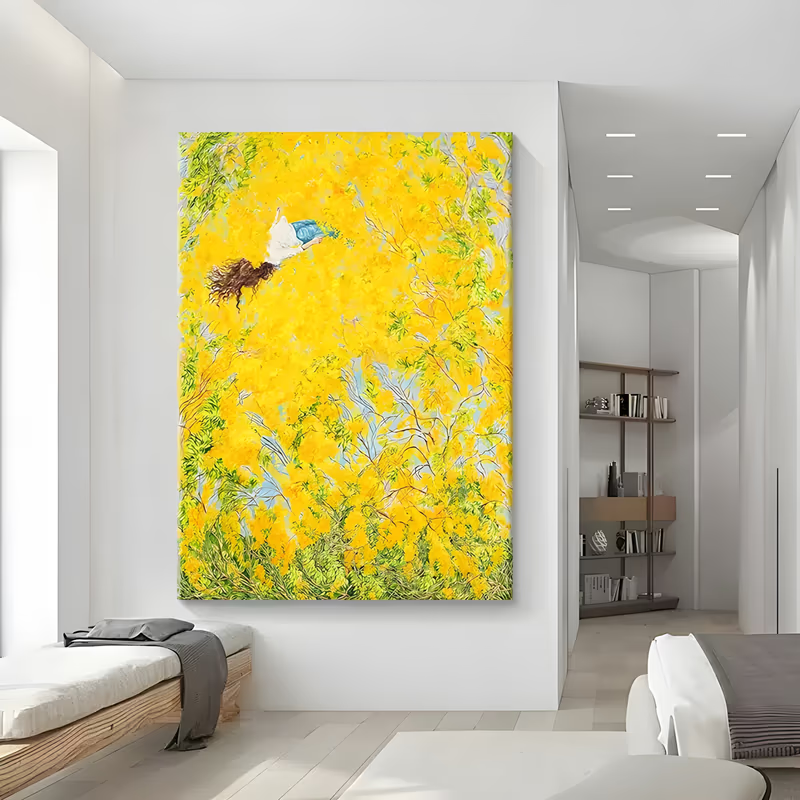
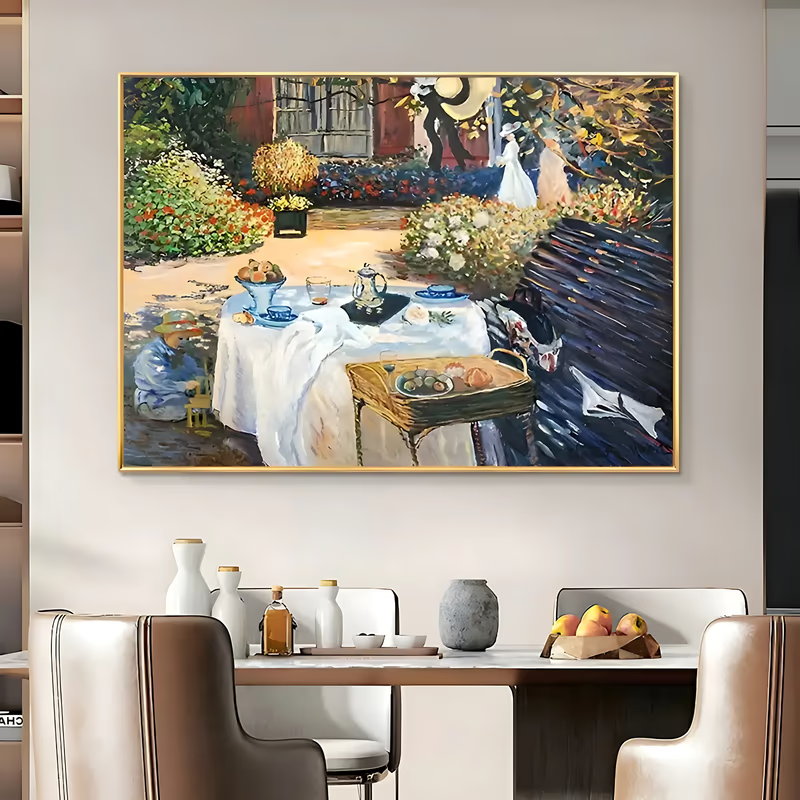
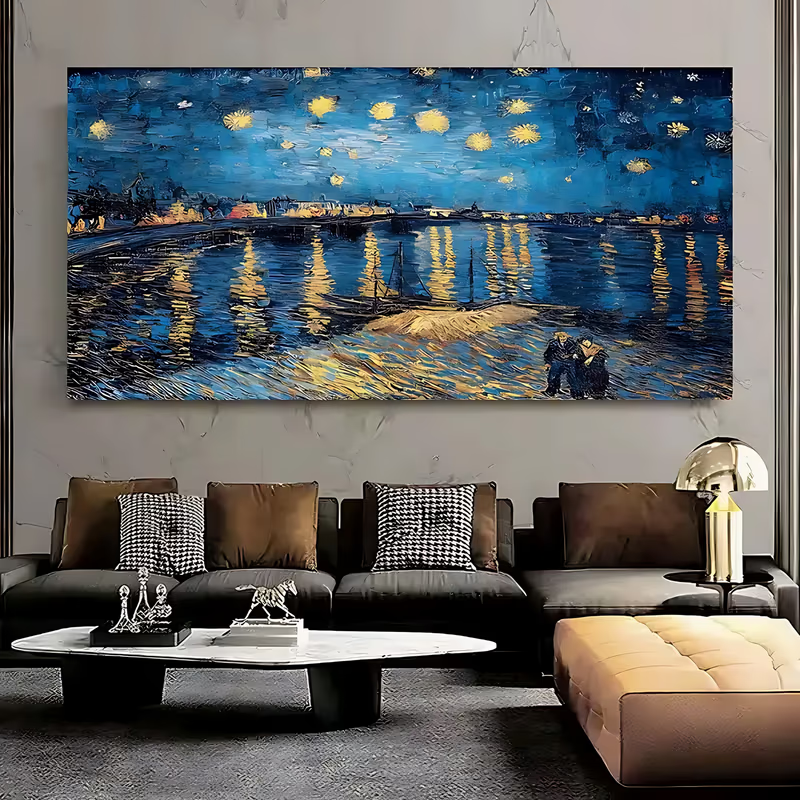
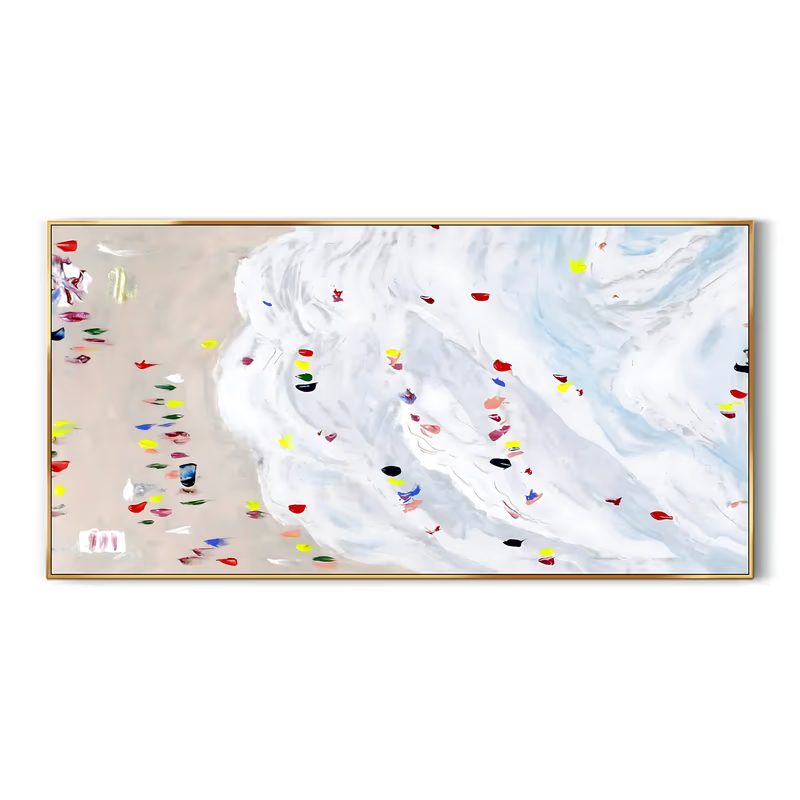
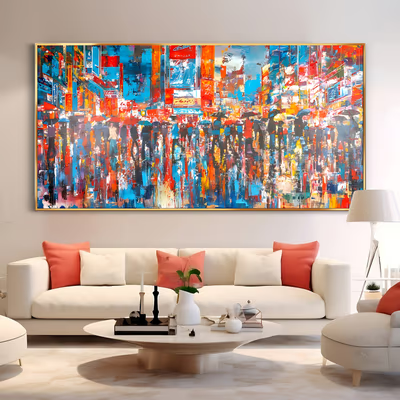
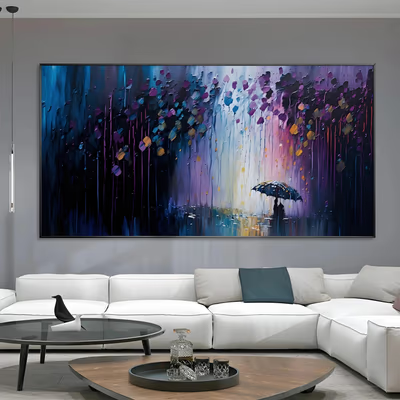
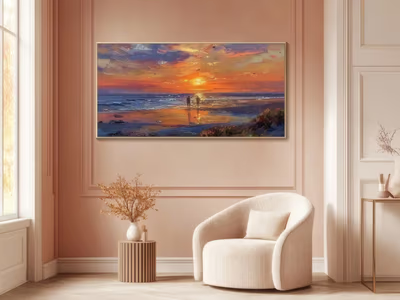
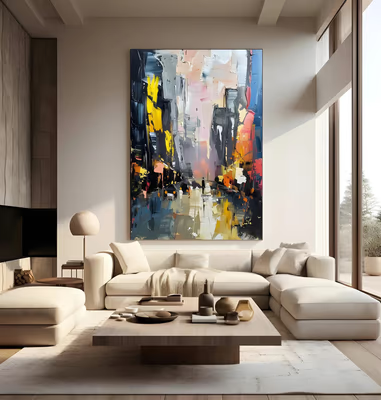
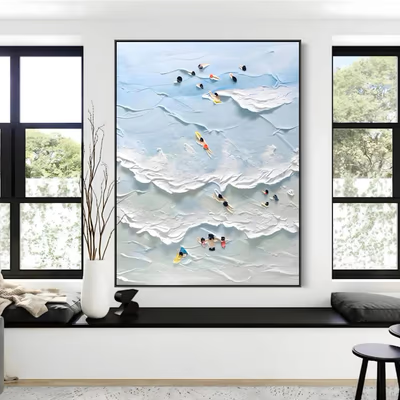
A couple under a red umbrella on a wet autumn path, a lone walker in purple rain, sunbathers seen from above on pale sand, a girl on a swing under a golden tree. Small figures, loose brushwork and a strong sense of weather and light. See also impressionist art.
One-line, ink and sculpted figures
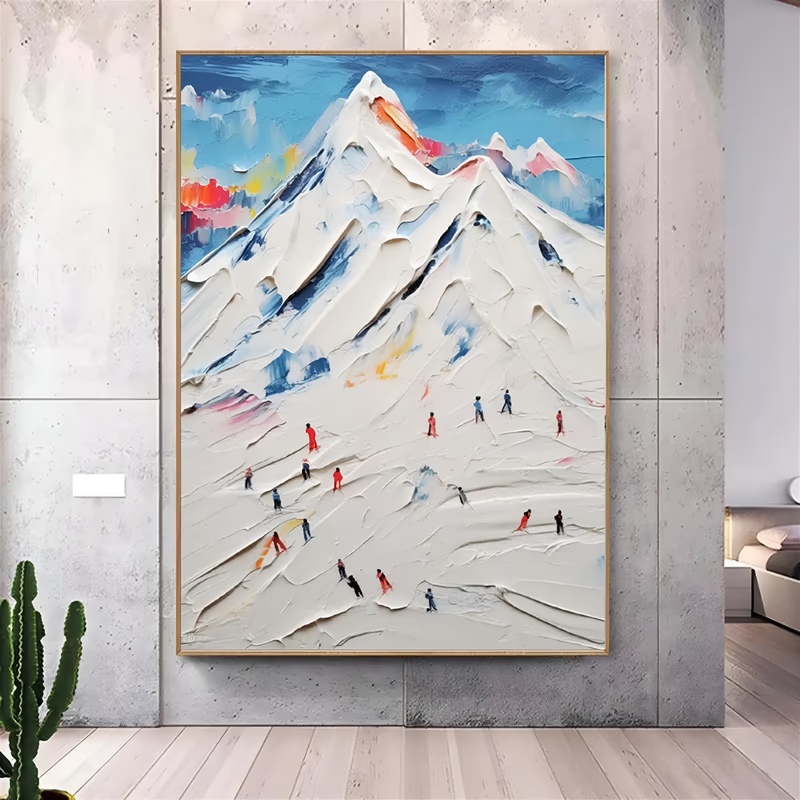
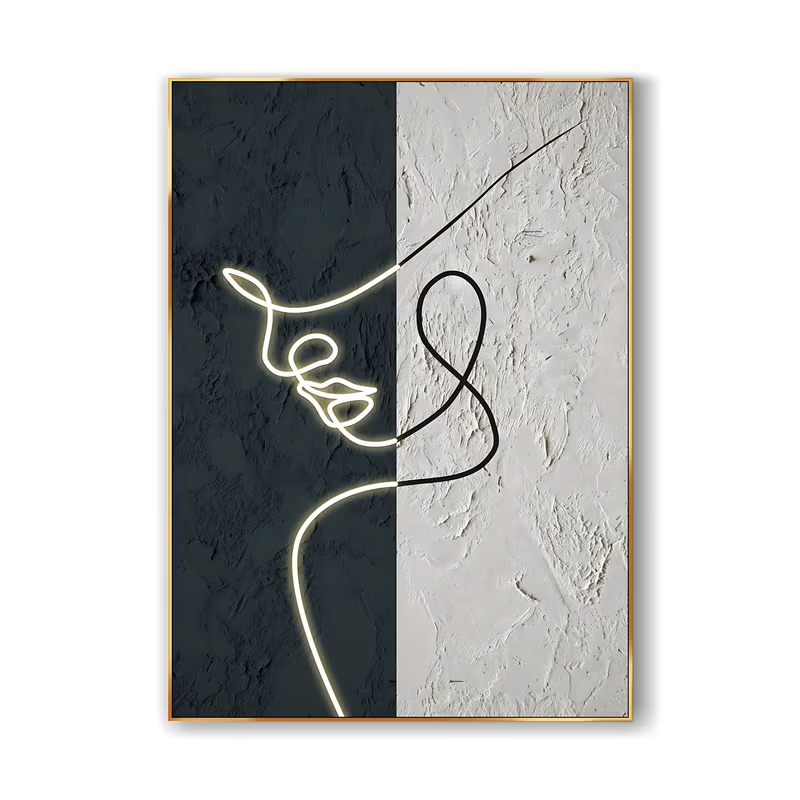
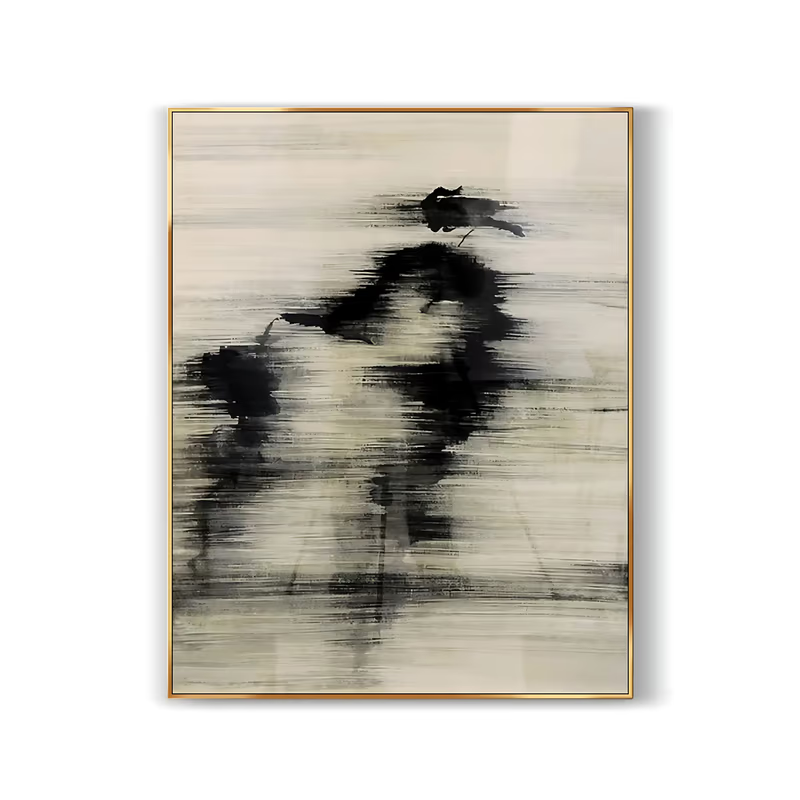
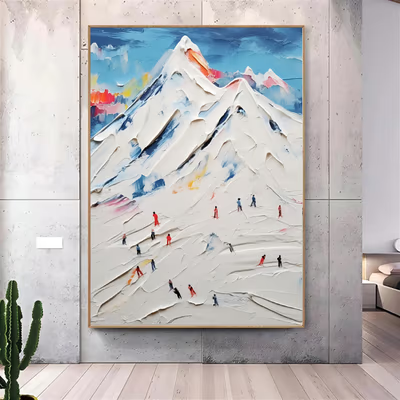
A continuous line tracing a body, drip-legged ink figures, a woman's profile in raised plaster on black, tiny skiers on a carved white mountain. Quiet, mostly monochrome and very easy to place.
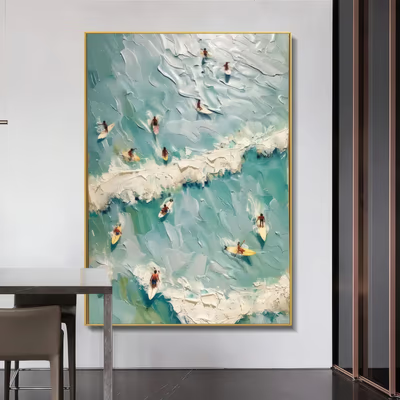
Which rooms suit figurative art, and which figures work in public spaces?
At home, figurative art suits living rooms, bedrooms and dining rooms; in hotels, restaurants and offices, choose stylised, anonymous or small-scale figures that welcome everyone and stare at no one.
Living and dining rooms
A large portrait or a pair of cubist faces gives a living room a personality; dancers or a garden party bring life to a dining wall. Figurative art for living and dining rooms.
Bedrooms and guest rooms
Choose figures that look away or rest: a profile, a back view, a figure on a distant beach. A direct gaze above a bed can feel watchful. Figure paintings for bedrooms.
Restaurants and bars
Musicians, dancers, couples and crowded streets suit the social energy of eating and drinking, and work well at large scale behind a banquette or a bar. Figurative art for restaurants; group projects are on the restaurant groups page.
Lobbies, corridors and offices
In shared spaces, keep figures stylised and inclusive: silhouettes, line drawings, faceted faces in non-literal colours, or small people within a wider scene. They add human warmth without asking guests to identify with one particular face. Figurative art for lobbies and corridors.
Where should a figurative painting hang, and which way should the figure face?
Hang it with the figure's eyes or face close to standing eye level, around 150–160 cm (59–63 in) from the floor, and place profiles and moving figures so they face into the room.
With a landscape you centre the canvas; with a figure you also think about where the face falls. If a portrait's eyes sit far above or below a standing viewer's, the picture feels awkward even when the frame is hung correctly. For seated rooms such as dining rooms and lounges, lower the whole piece a little so the face meets people at the table.
Direction is the second rule. A woman in profile or a walking couple creates a line of movement; let it point towards the centre of the wall, the bed or the sofa, rather than out of the room or into a corner. Two figure paintings either side of a bed or a doorway look best facing each other. For size, the usual guide applies: about two-thirds of the furniture width below, with 15–25 cm (6–10 in) clear above a sofa or headboard. A vertical figure painting suits a single standing figure; a panoramic one suits a crowd, a beach or a row of dancers.
What goes well with figurative wall art?
Plain walls, one colour picked from the figure's clothing or background and, if you are building a group, abstract or botanical pieces that let the figure stay the main character.
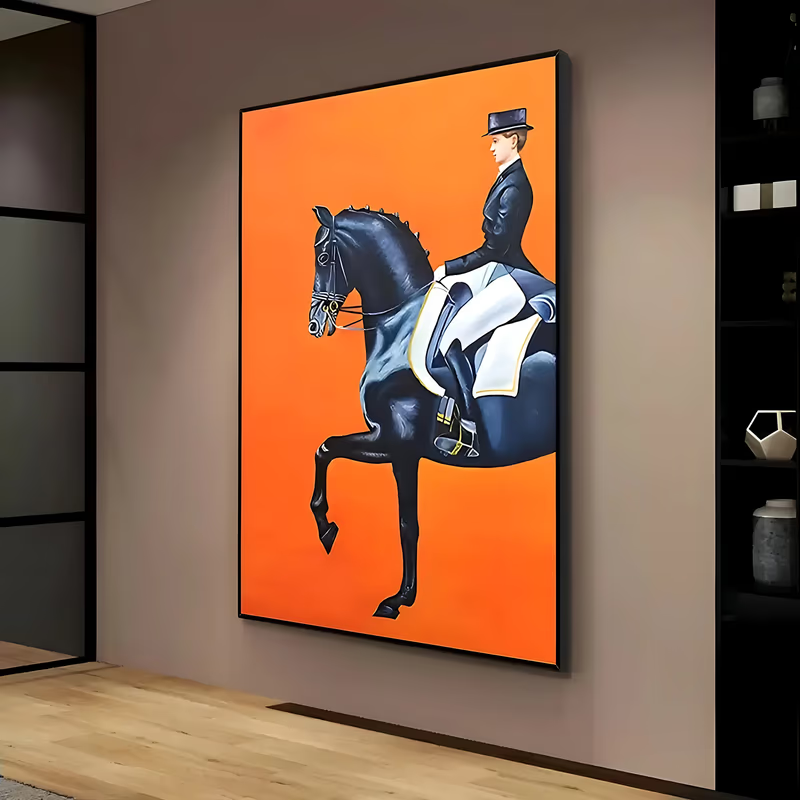
A figure painting carries a lot of attention, so give it a calm setting. Pick up one colour from the painting, the red of a gown or the teal of a background, in a cushion, a vase or a chair, and keep the rest neutral. On a gallery wall, place the figure painting at or near the centre and surround it with quieter work such as abstracts, botanicals or small landscapes; two strong faces side by side compete. A pair of related figures, two dancers or two cubist profiles, is the exception, because they read as a conversation. For frames, black or gold suits portraits and cubist work, and natural wood suits line drawings and ink figures.
How is a figure painting adapted to your room and approved before it ships?
The palette, clothing colours and background can be changed to suit your scheme before painting starts, and you approve progress photos at each stage, faces included, before the work continues.
Figure paintings are the most personal pieces on the site, so small changes matter: a dress repainted from red to navy to suit a room, a background shifted from teal to sand, a group of figures given a range of skin tones for a public space. Send a paint code, a fabric photo or a picture of the room, and the changes are agreed first. Faces and hands are where a painting succeeds or fails, which is why you see them at each stage; nothing goes on until you approve, and the final photograph is approved before dispatch. Painting takes about 10 days and transit 5–7 days by DHL, FedEx or UPS express, which iHomeArt books for you on the best route. Choose rolled, stretched ready to hang, or framed in gold, silver, black, white or wood. For a figure painted from your own photograph, see custom paintings; otherwise send a quote request.