
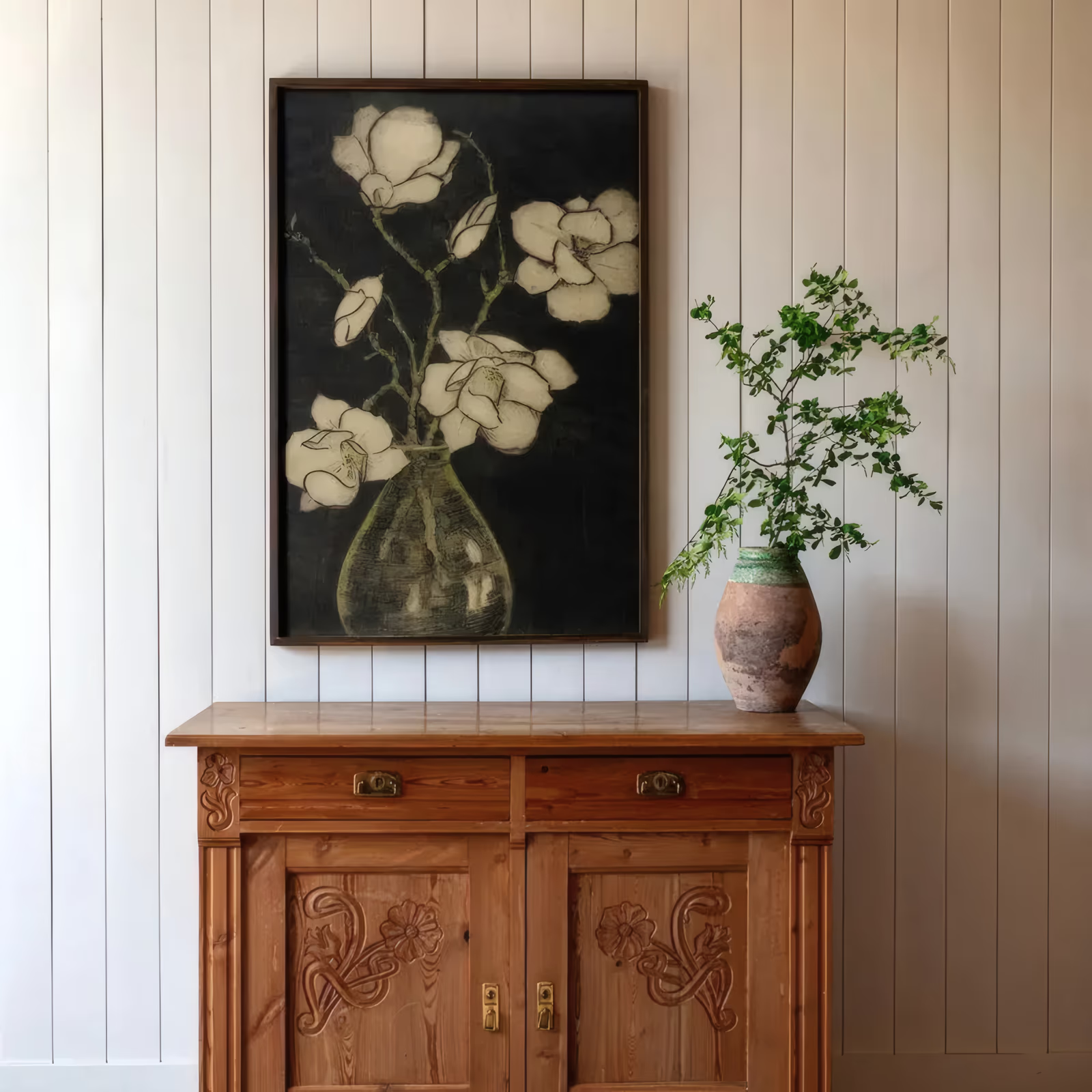
Wabi-sabi art guide · Updated
How to choose wabi-sabi and Japandi wall art
Key takeaways
- Look for the surface first: scraped plaster, dry brush, combed lines and soft, crumbling edges are what make a painting wabi-sabi.
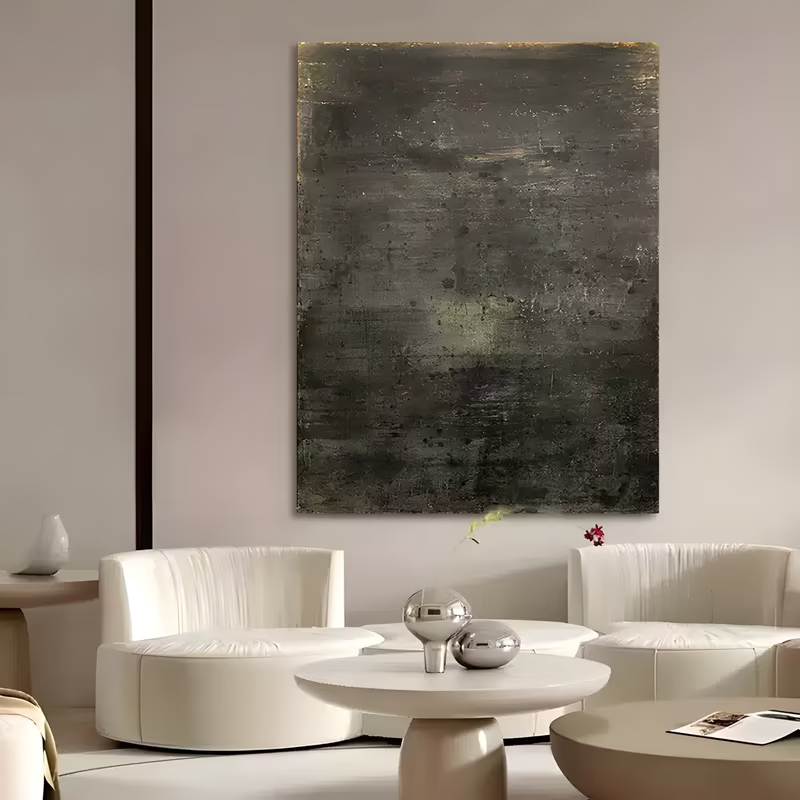
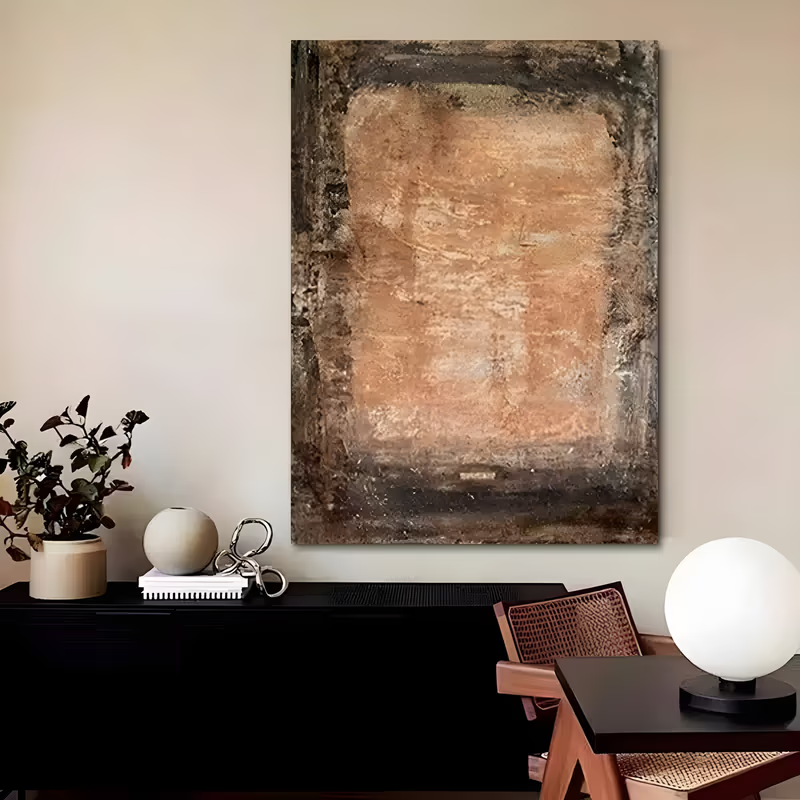
- Match earth to material: bone and sage with pale oak; rust, amber and charcoal with walnut; ash grey and olive with concrete or stone.
- Leave the wall empty around it: one piece with generous space either side does more than a cluster of small ones.
- Light it from the side: a lamp or window at an angle brings the texture to life; flat, frontal light makes it look plain.
What is wabi-sabi wall art?
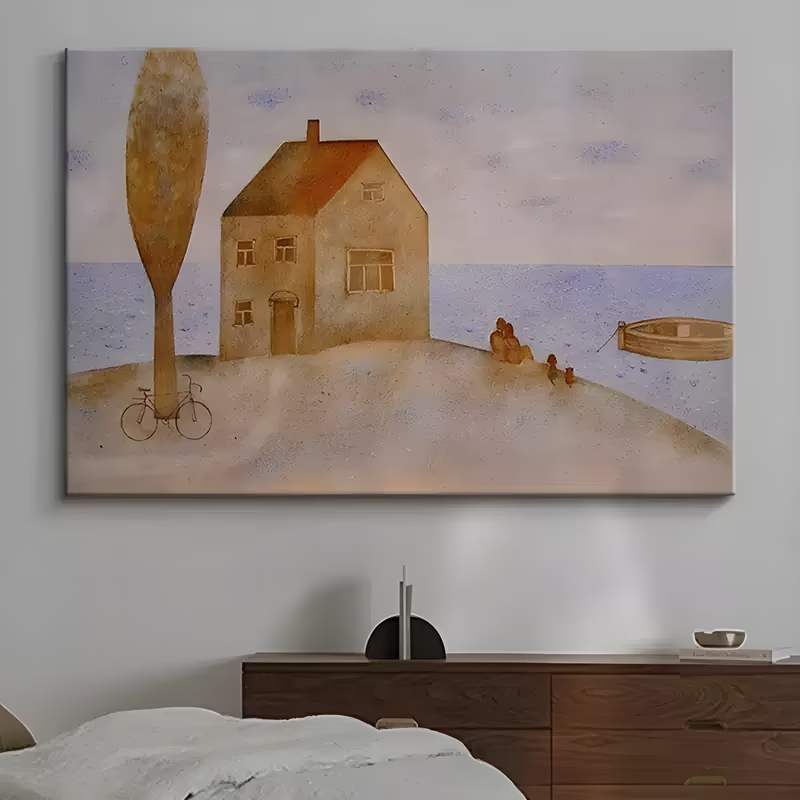
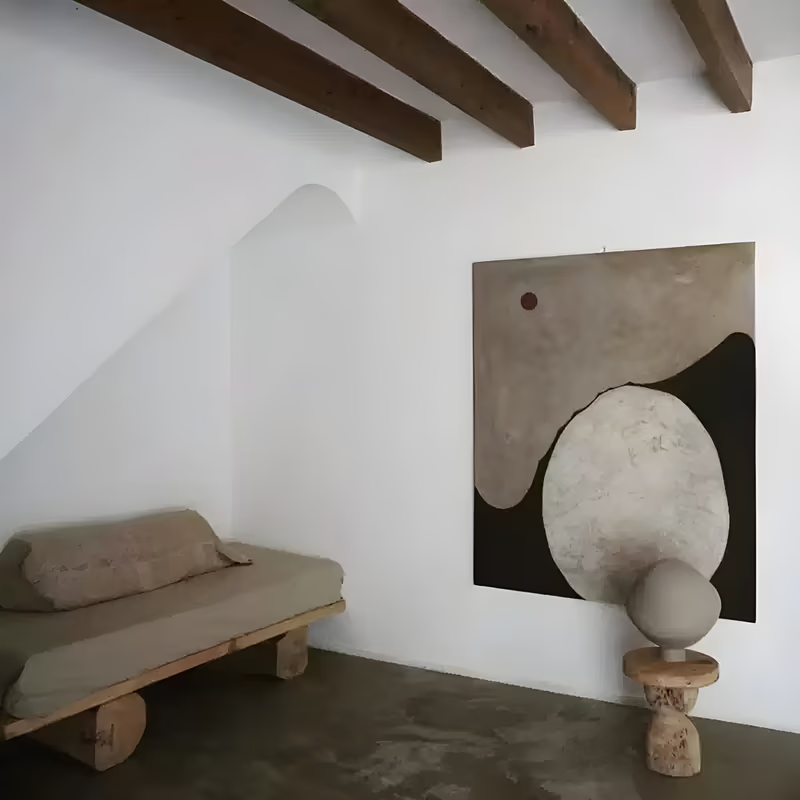
Wabi-sabi wall art is painting that finds beauty in the worn, the uneven and the unfinished: earthy colour, matte texture, off-centre forms and plenty of empty space.
The term comes from a Japanese way of seeing. Wabi is usually explained as rustic simplicity and quiet contentment; sabi as the beauty that time leaves behind, such as patina, fading and wear. In the tradition of the tea ceremony, a hand-thrown bowl with a lopsided rim was prized above a perfect one. A wabi-sabi painting carries the same attitude onto canvas.
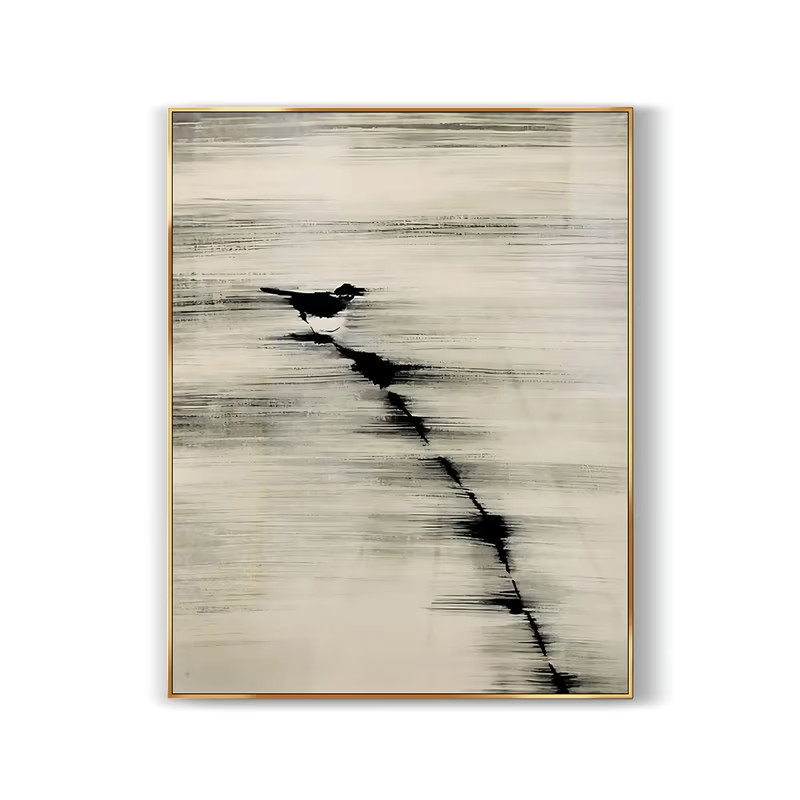
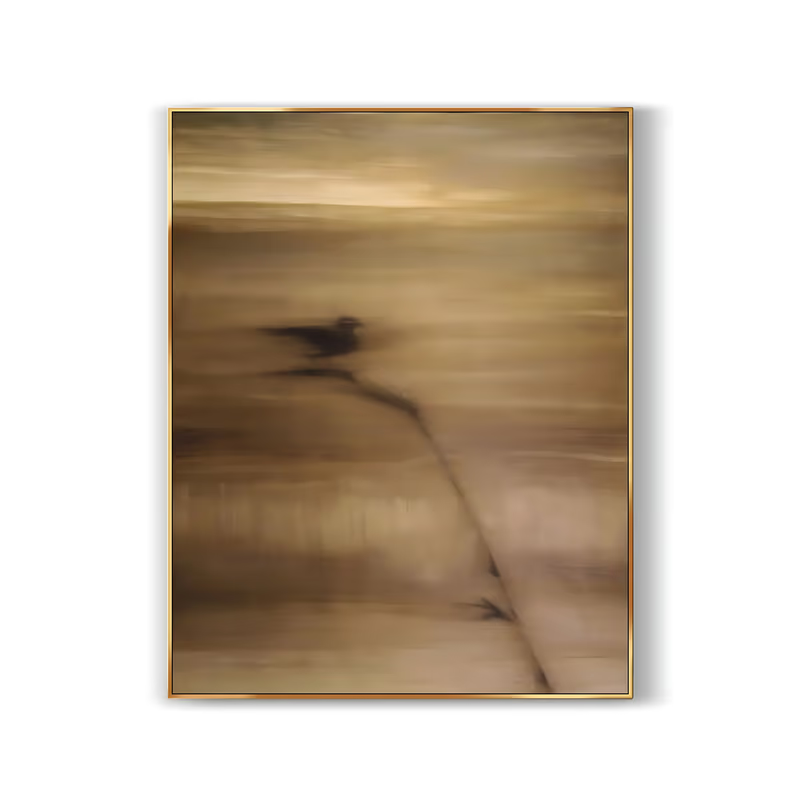
On the wall that means a surface you want to look at closely. Paint is troweled, scraped back and built up again, so it resembles an old plaster wall, weathered stone or stained paper. Colours are drawn from earth and ash rather than from a paint chart. A single form, a stone, a bowl, a bird on a branch, sits low or to one side, and the rest of the canvas is left to breathe.
How do you recognise wabi-sabi art up close and across a room?
Up close, wabi-sabi art shows its making: ridges, scrapes, cracks and dry, broken brush marks. From across a room it reads as one calm, softly toned shape with an irregular edge.
| Feature | Up close | From across the room |
|---|---|---|
| Troweled or scraped plaster | Ridges, pits and fine cracks under the fingertip | A soft, stony field that catches side light |
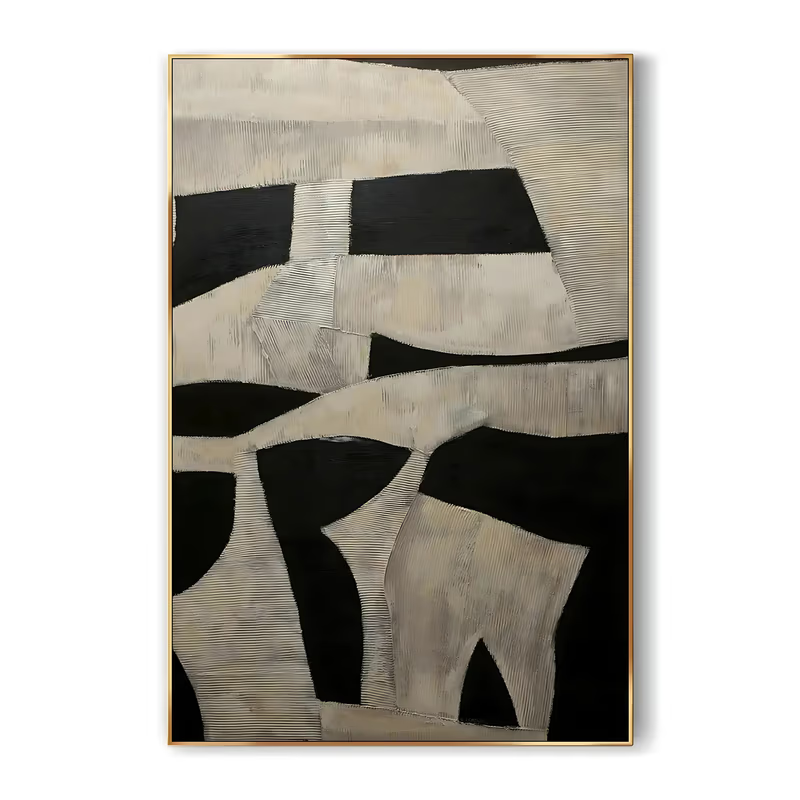
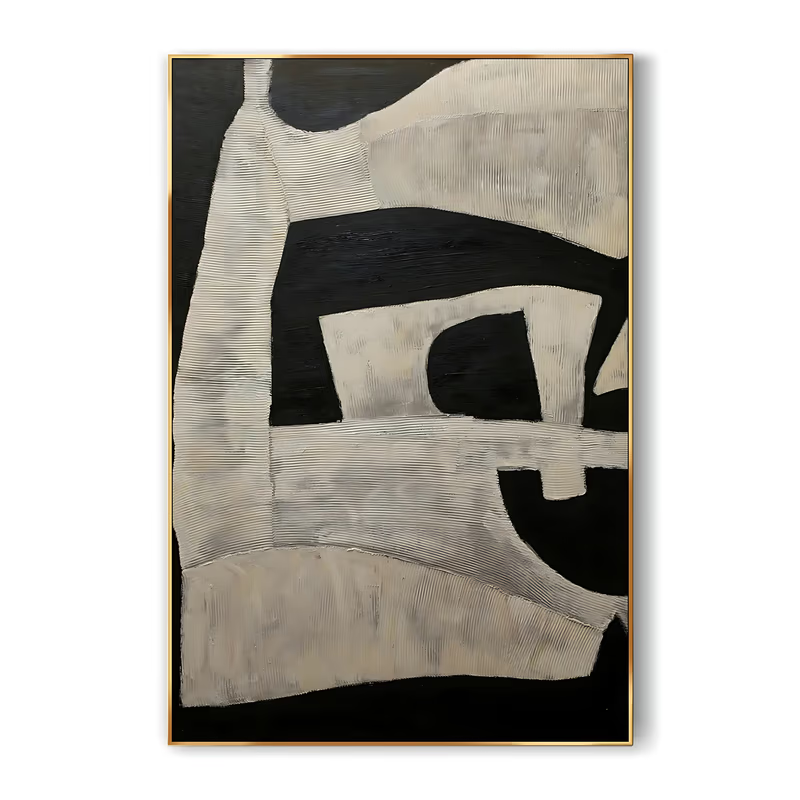
| Combed or raked lines | Parallel grooves pulled through wet paste | A gentle grain, like sand in a raked garden |
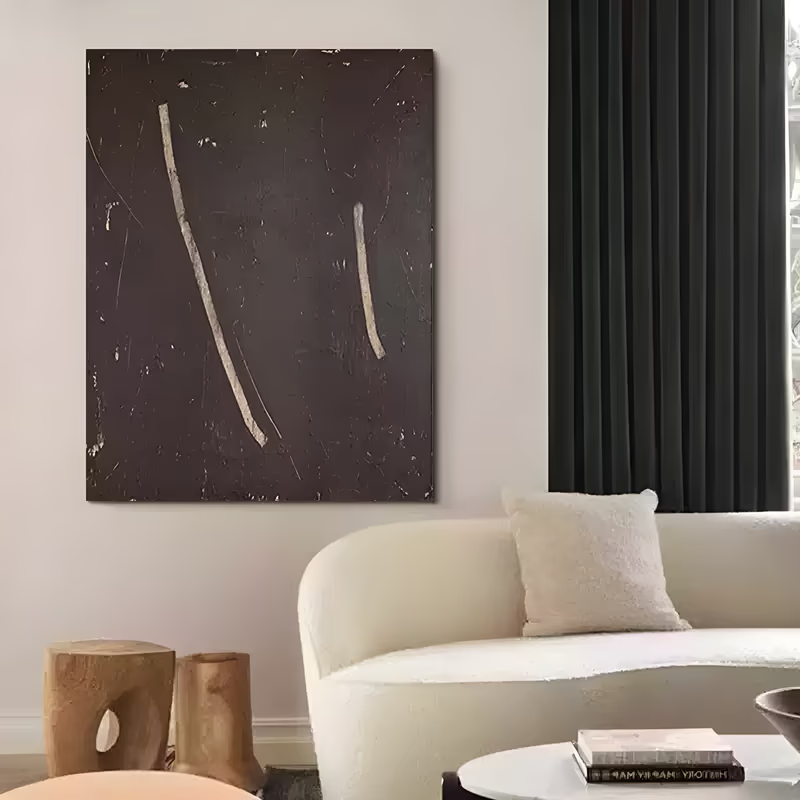
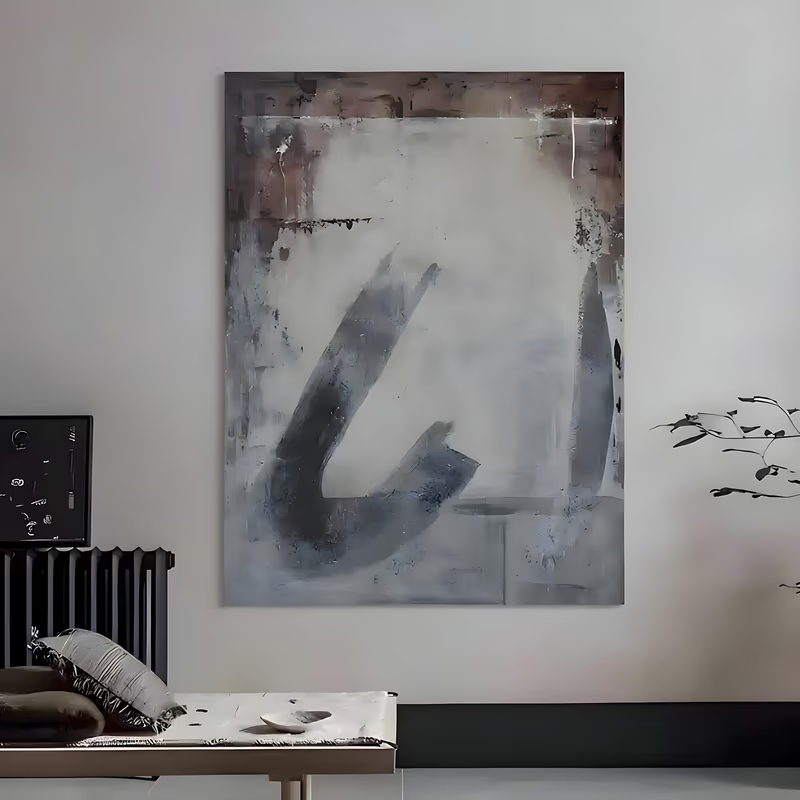
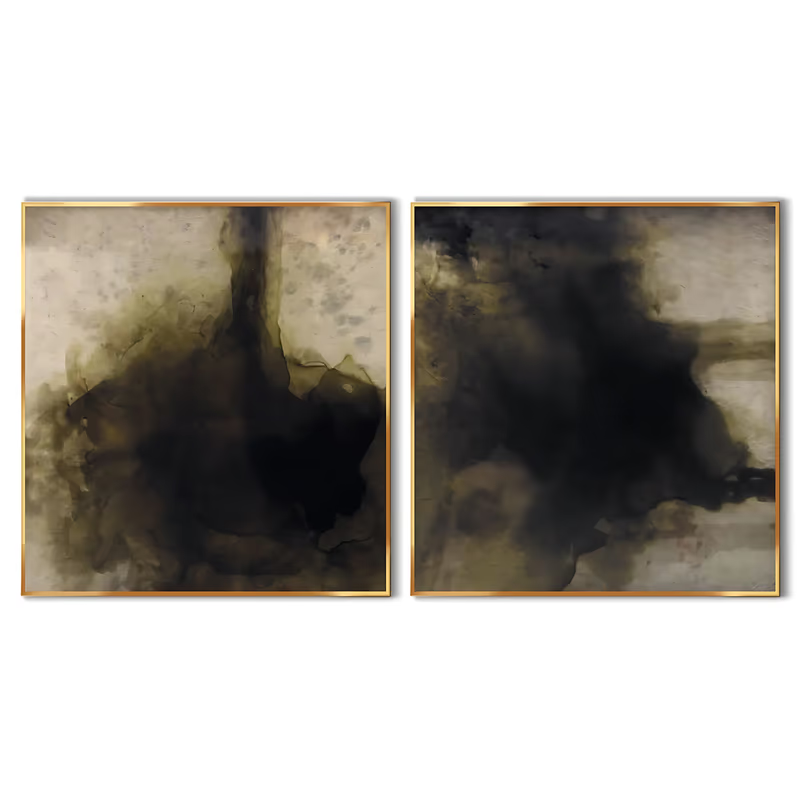
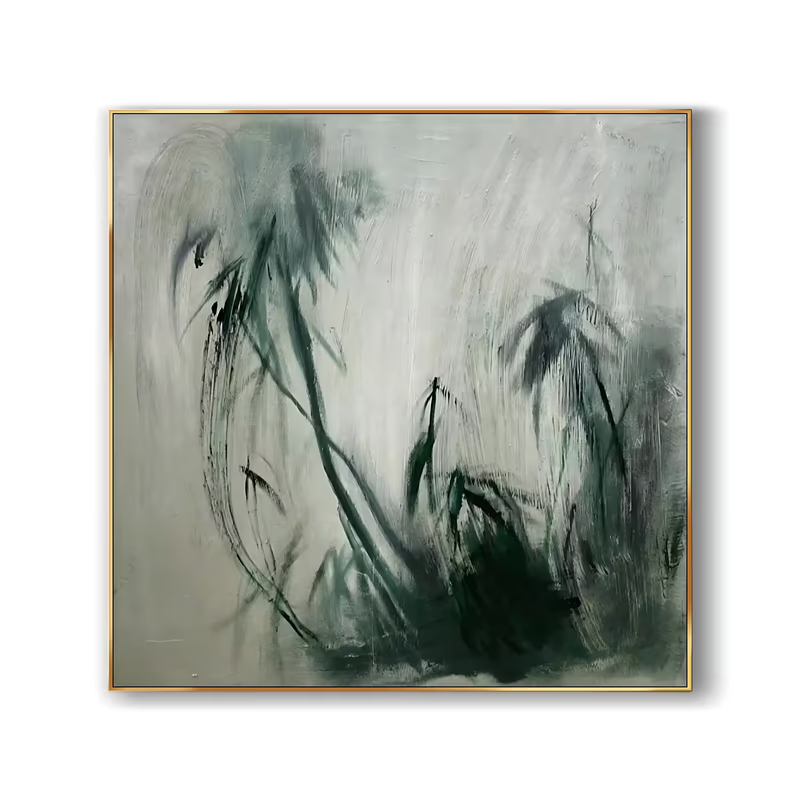
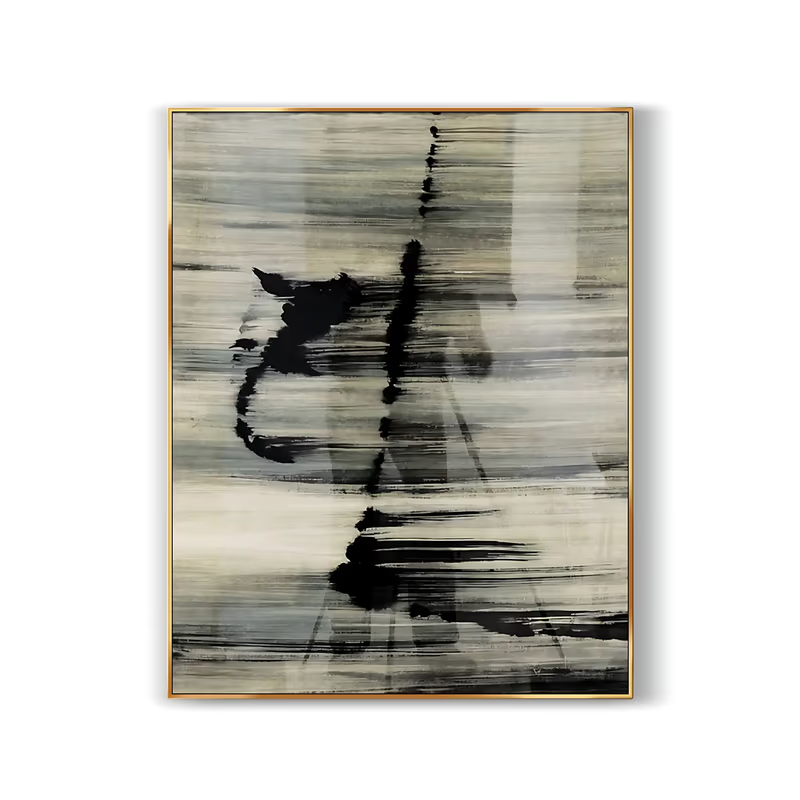
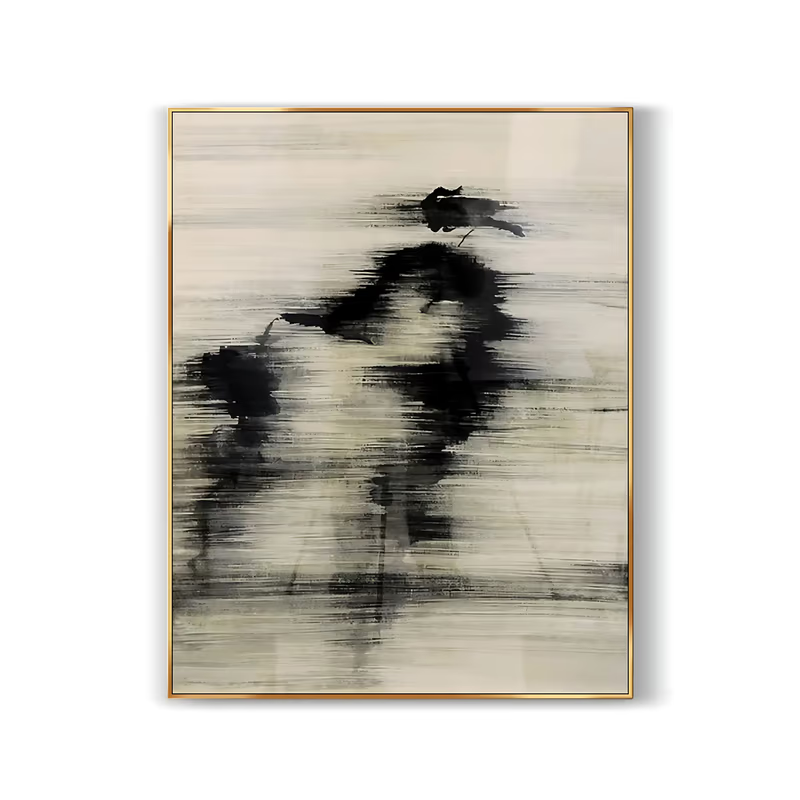
| Dry brush and ink wash | Bristle tracks, bleeding edges, smoky blooms | A haze or a single dark gesture on pale ground |
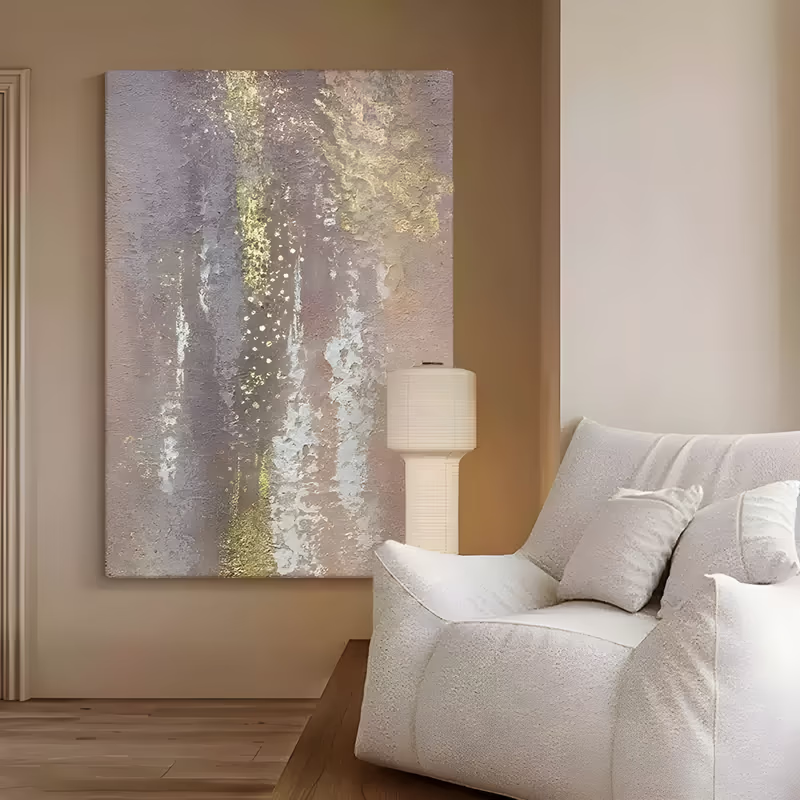
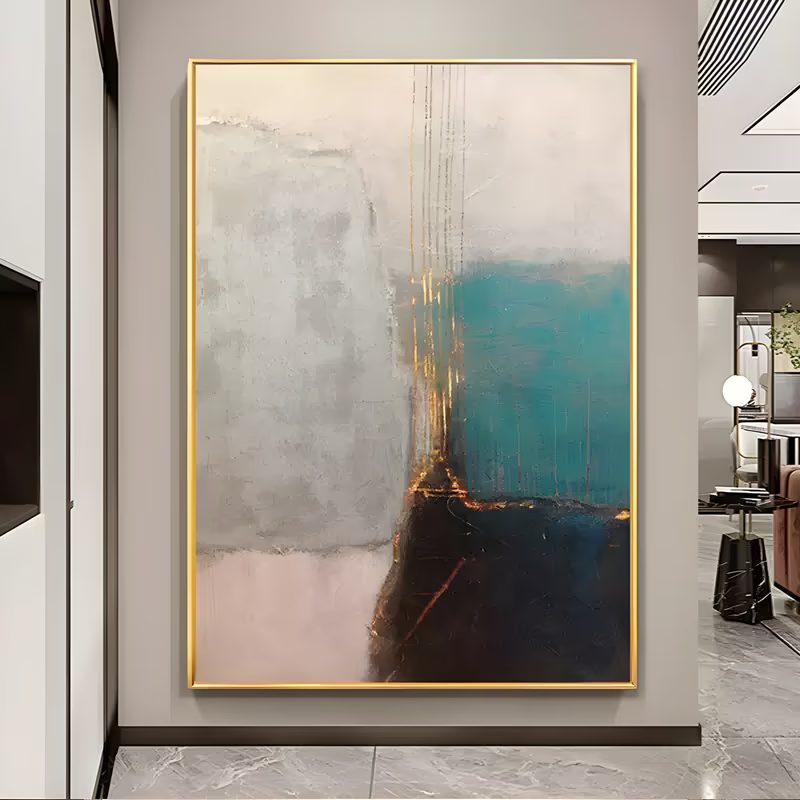
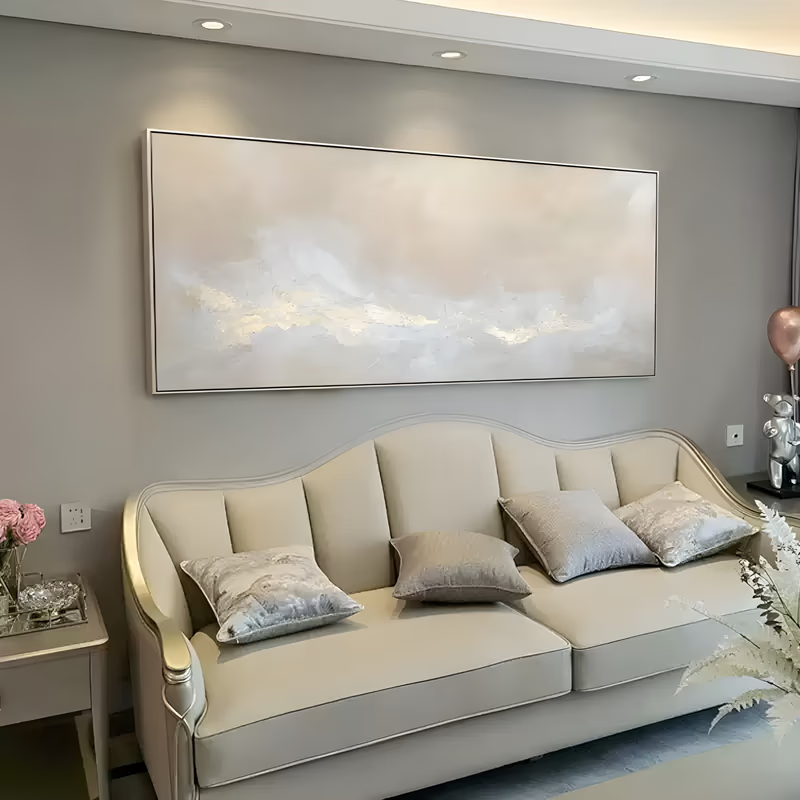
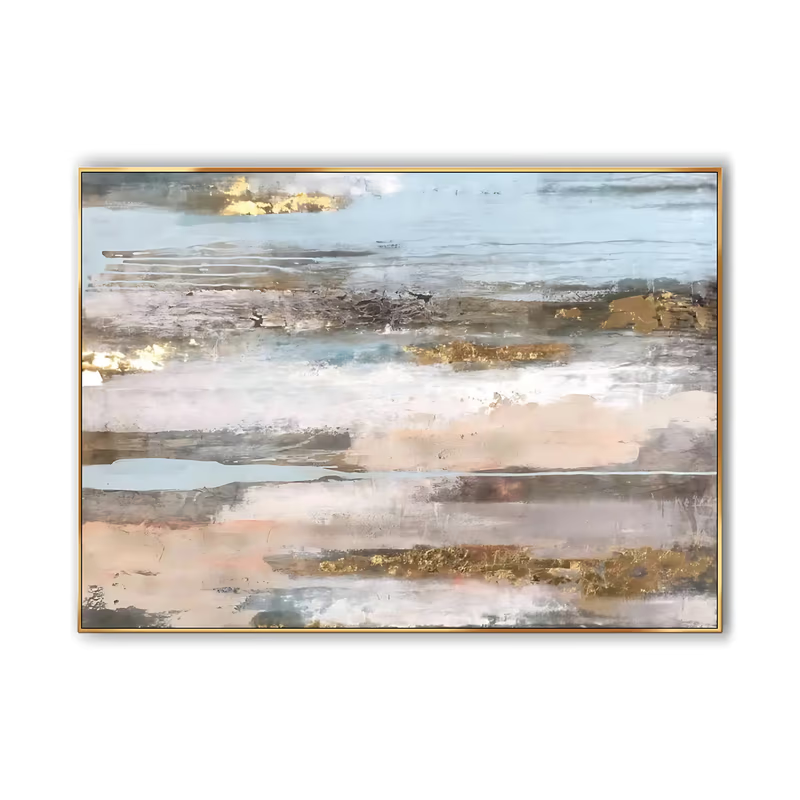
| Torn gold or copper leaf | Metal flakes along a broken edge | A thin line of light, like a repaired crack |
| Distressed borders | Edges darkened, chipped or left raw | A painting that seems old and settled, not new |
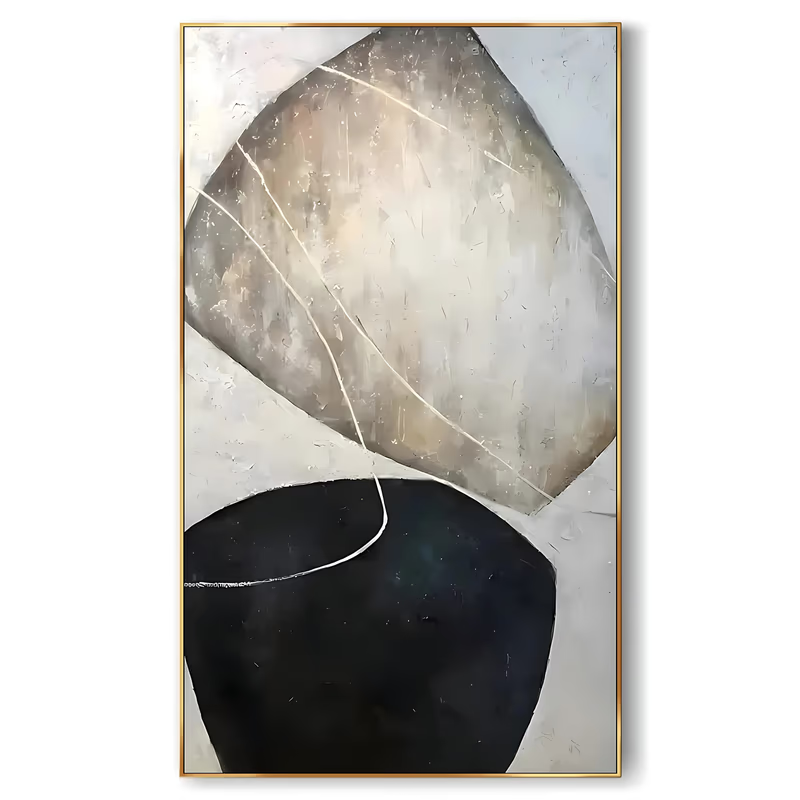
The gold-leaf seams nod to kintsugi, the Japanese craft of mending broken ceramics with gold so the repair becomes part of the object's story. Gloss is avoided: a matte finish keeps attention on texture and stops reflections from breaking the calm.
Wabi-sabi, Japandi or minimalist: which wall art does your room need?
Choose wabi-sabi art for warmth and texture, Japandi art for clean lines with a natural palette, and minimalist art when you want the flattest, most graphic calm.
| Style | Surface | Palette | Composition | Best for |
|---|---|---|---|---|
| Wabi-sabi | Rough, layered, visibly aged | Clay, rust, ash, moss, bone | Off-centre, soft edges | Rooms with lots of smooth, new surfaces that feel cold |
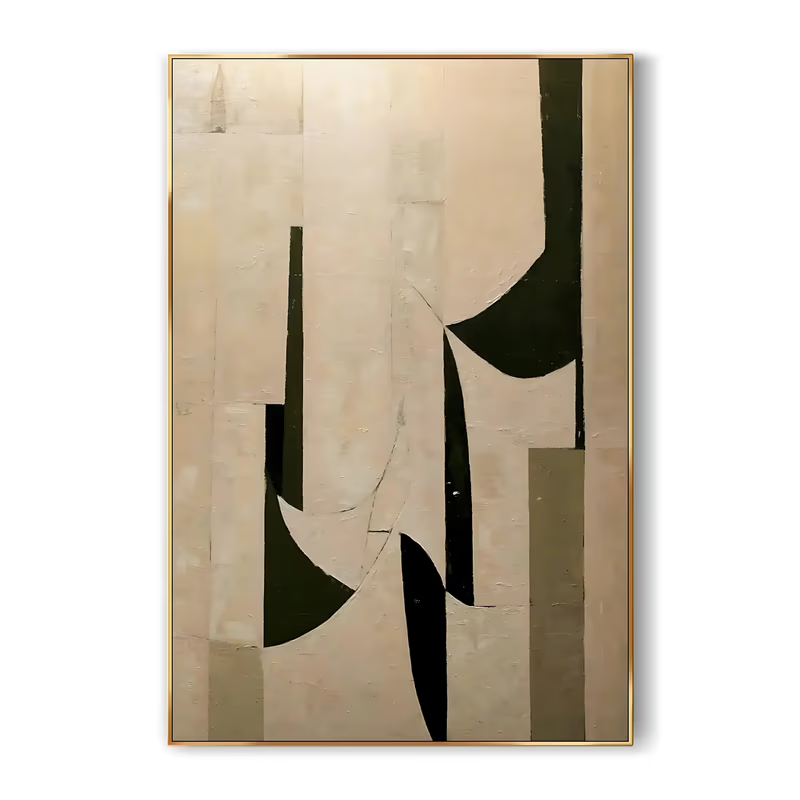
| Japandi | Lightly textured or flat | Oatmeal, sand, black ink, sage | Simple lines and arcs | Low furniture, pale oak, linen, paper lamps |
| Minimalist | Smooth and even | White, black, one accent | Crisp geometry | Sharp modern rooms, galleries, offices |
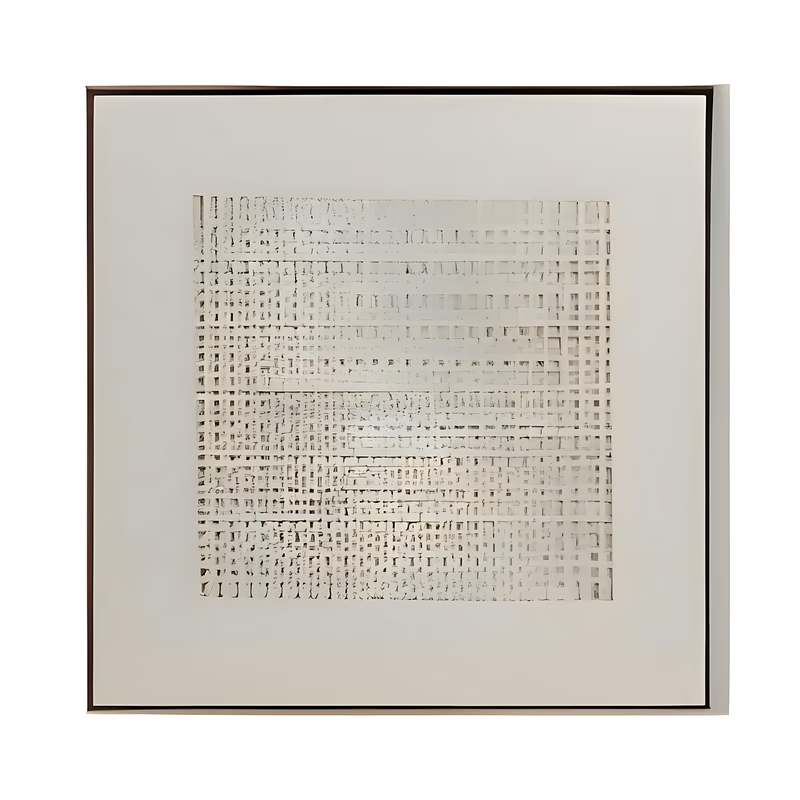
In practice the three overlap, and many Japandi rooms use a wabi-sabi painting as their one rough note against smooth cabinetry. If your room is already full of reclaimed timber, linen and handmade pottery, a smoother piece from the contemporary minimalist range can balance it. If you want the relief to be the subject, with deeper ridges and sculpted forms, browse textured and plaster art.
What kinds of wabi-sabi paintings are there?
Wabi-sabi paintings here fall into three kinds: weathered colour fields, stone and vessel forms, and nature drawn in an ink-like hand.
Weathered colour fields
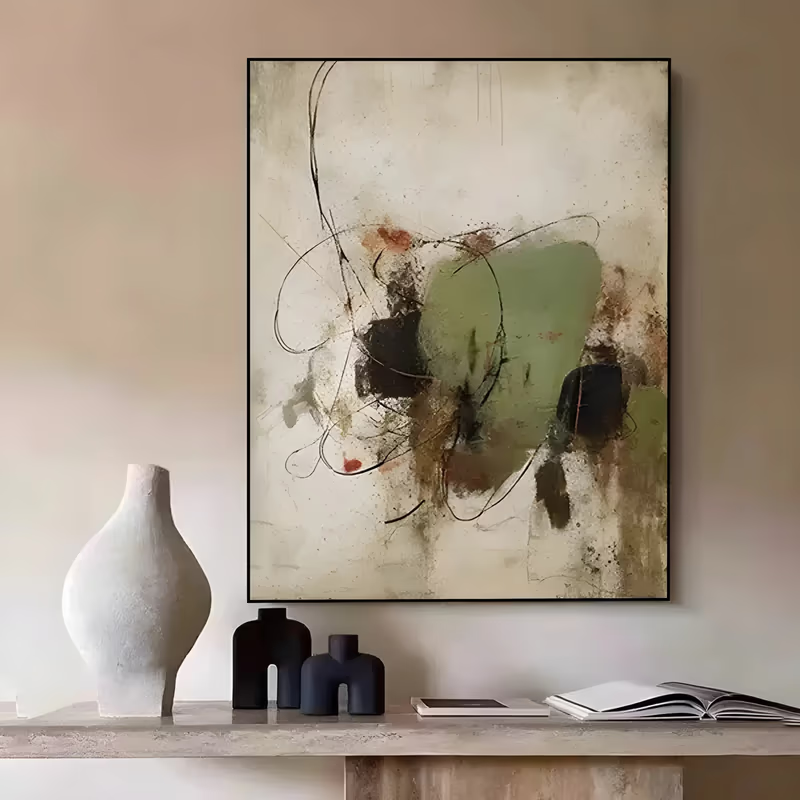
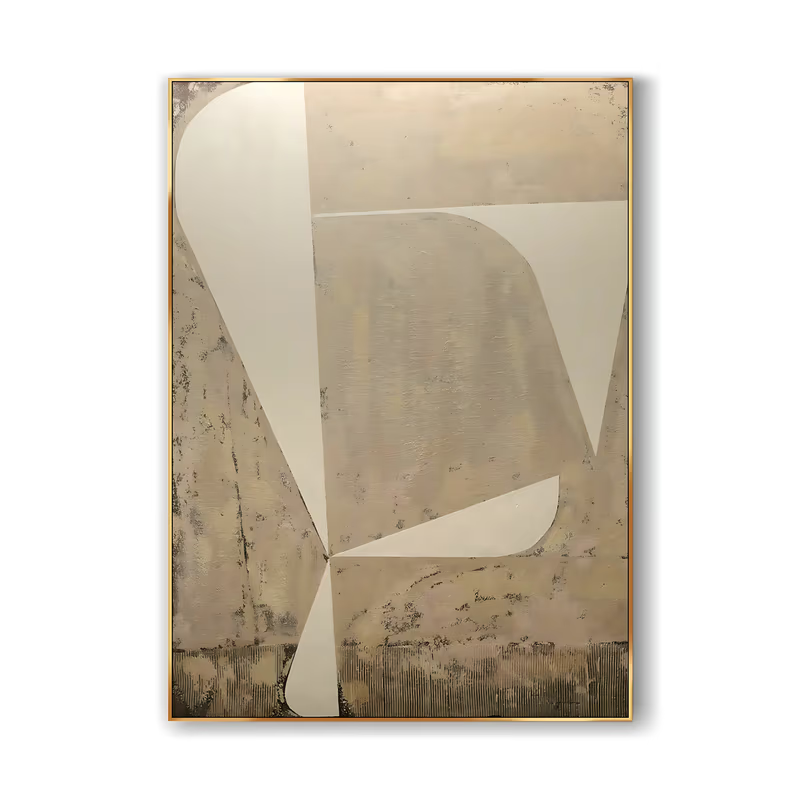
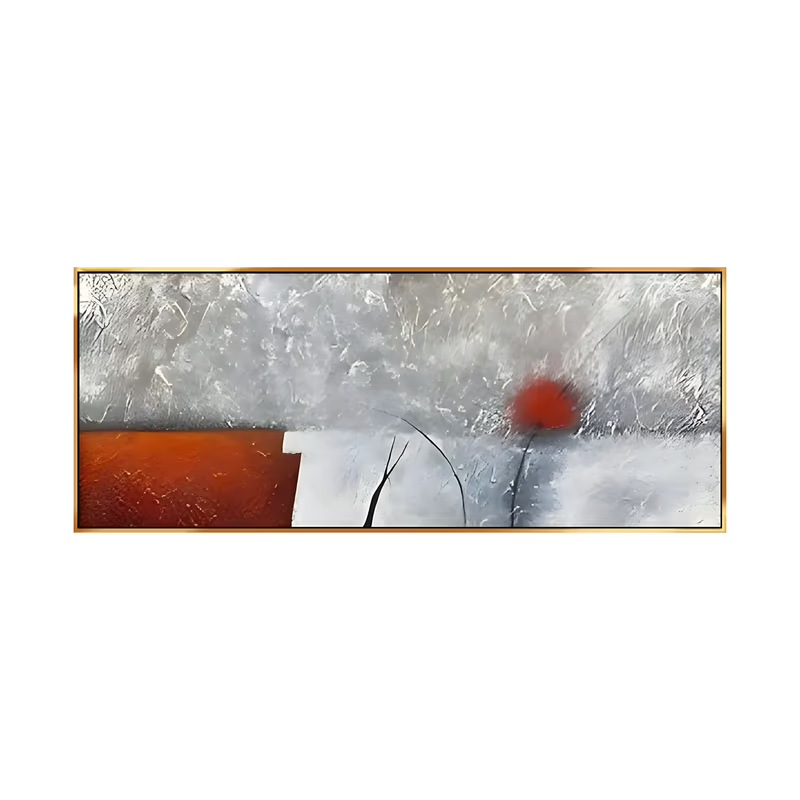
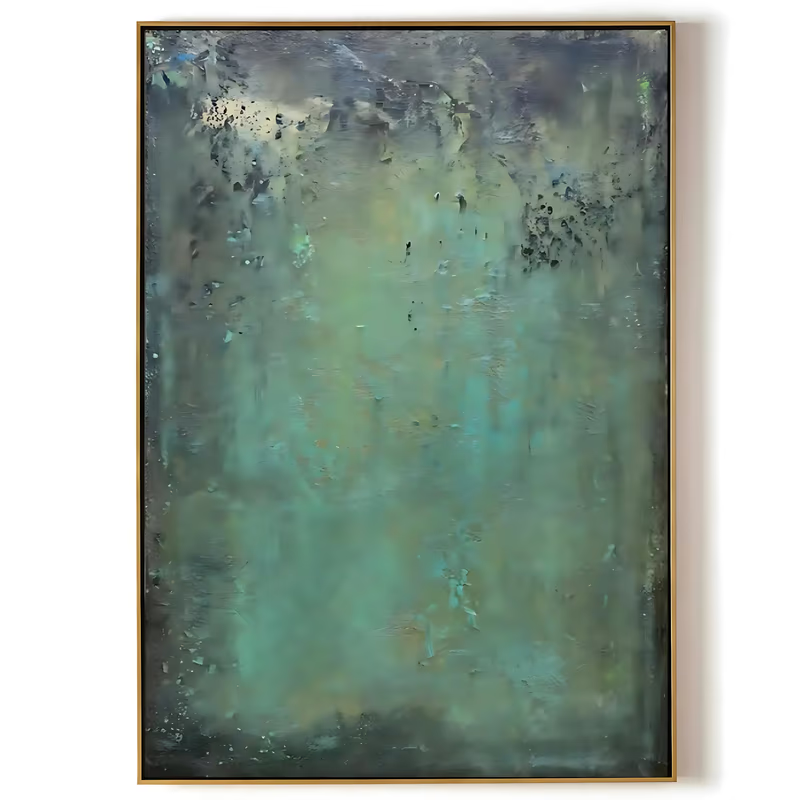
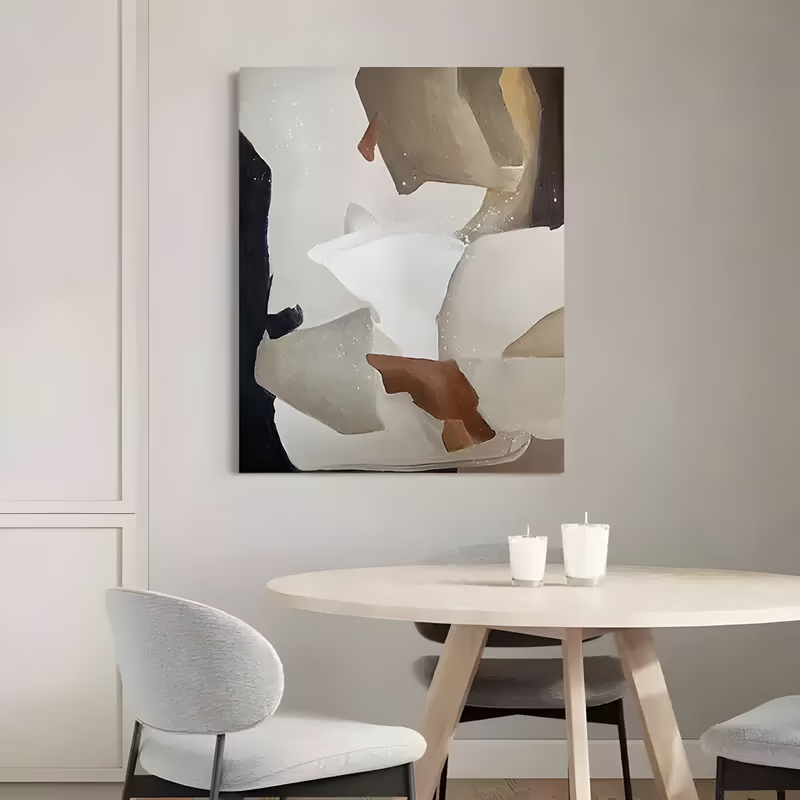
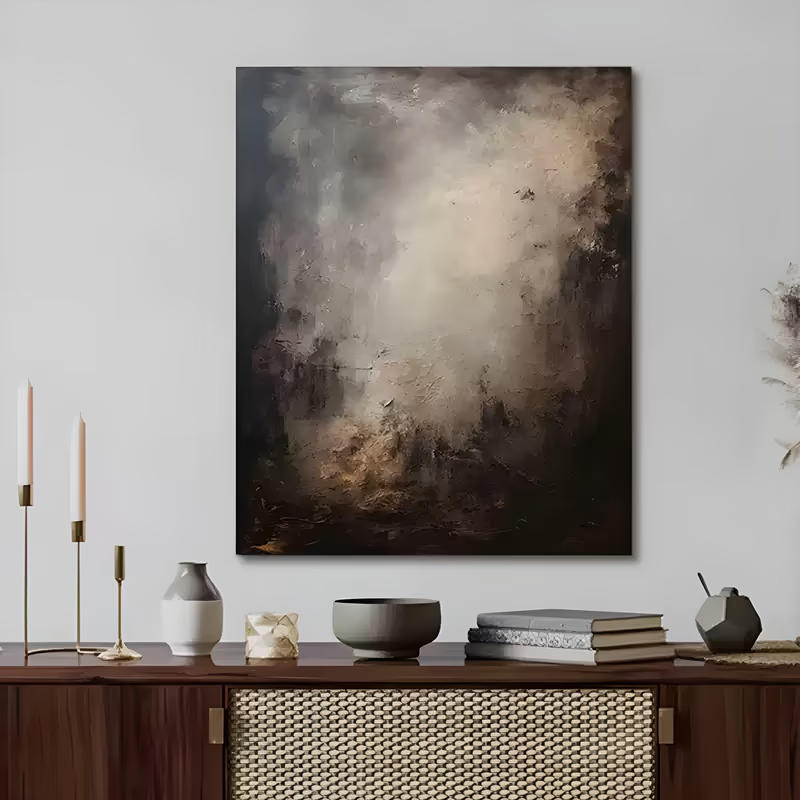
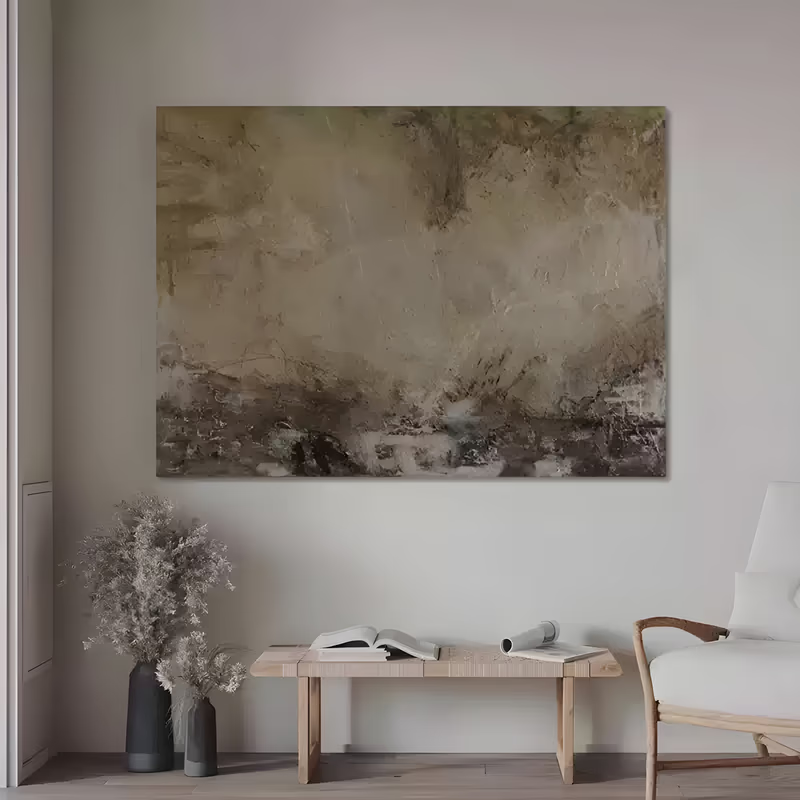
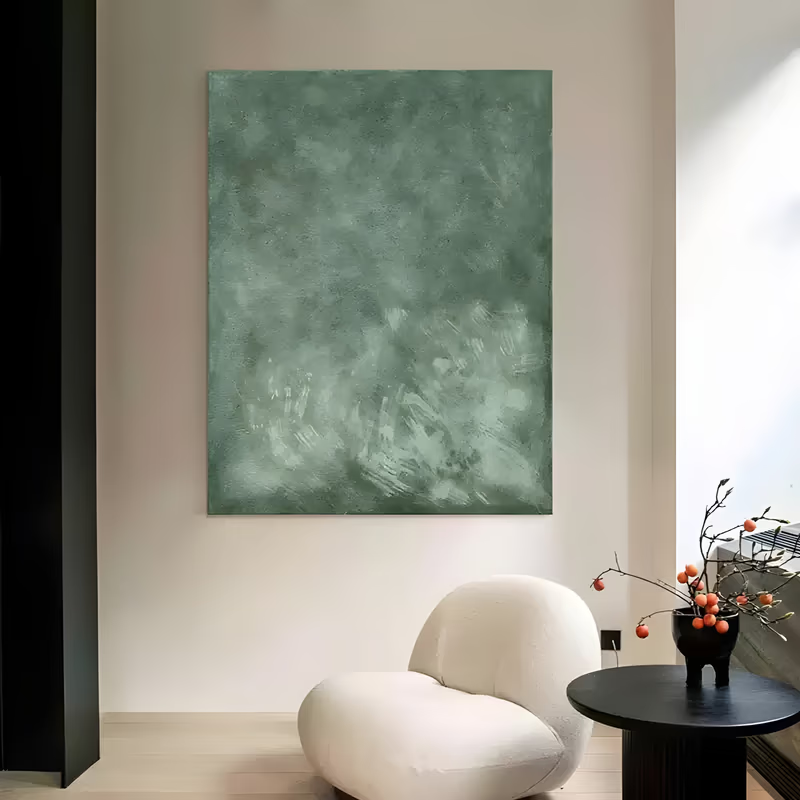
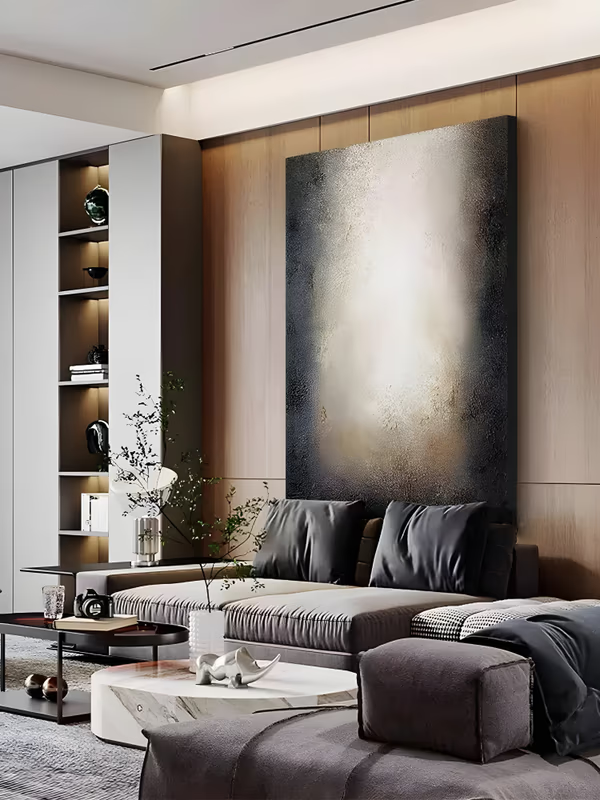
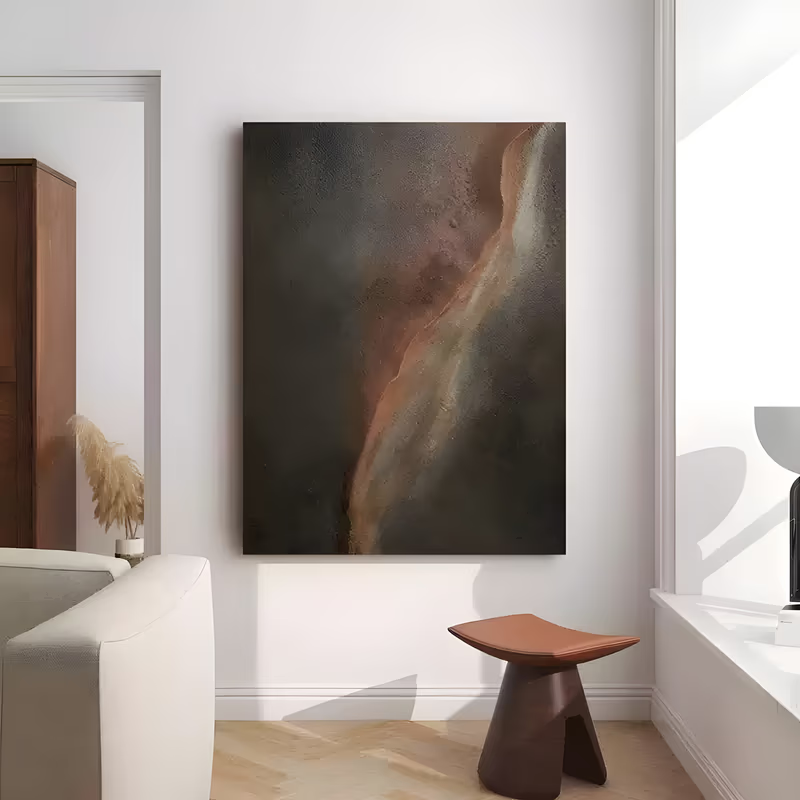
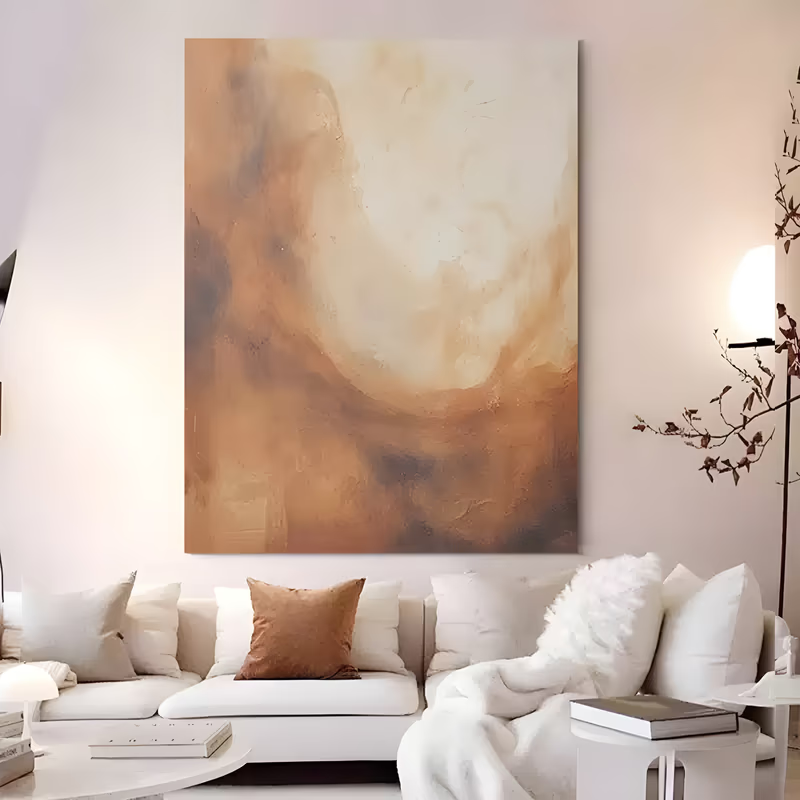
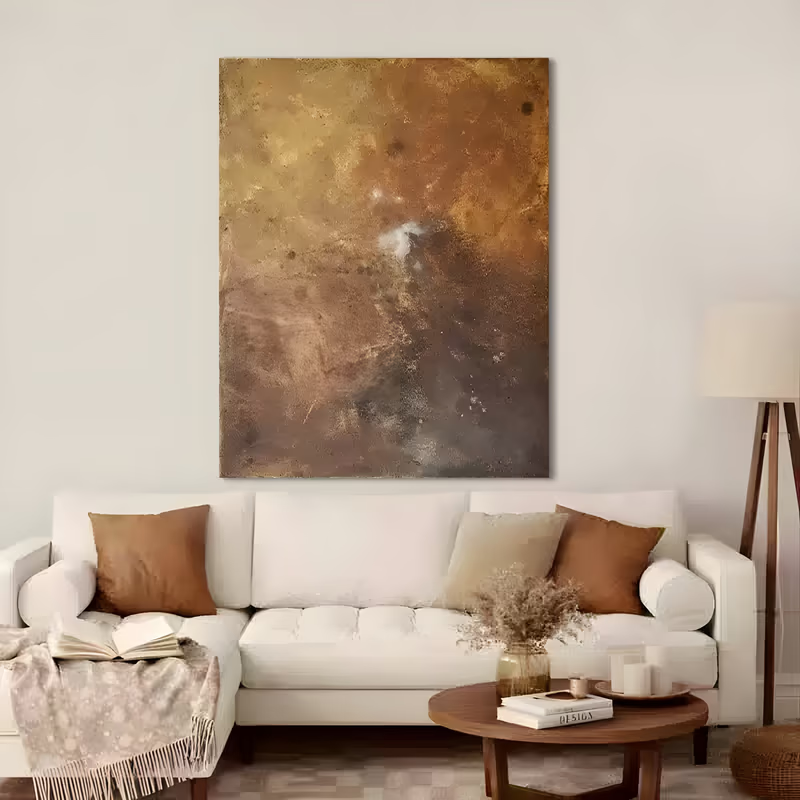
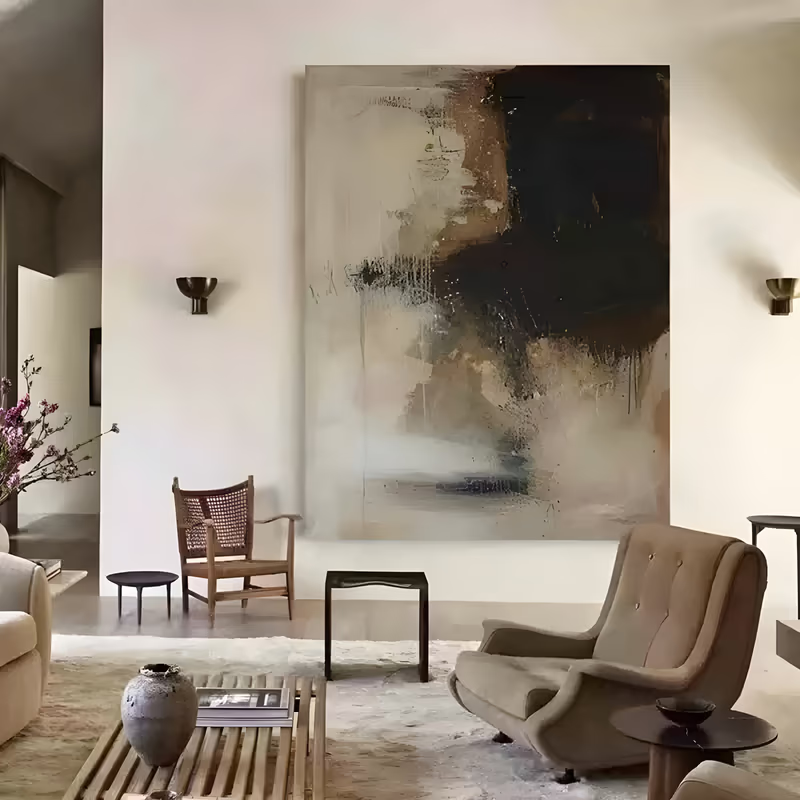
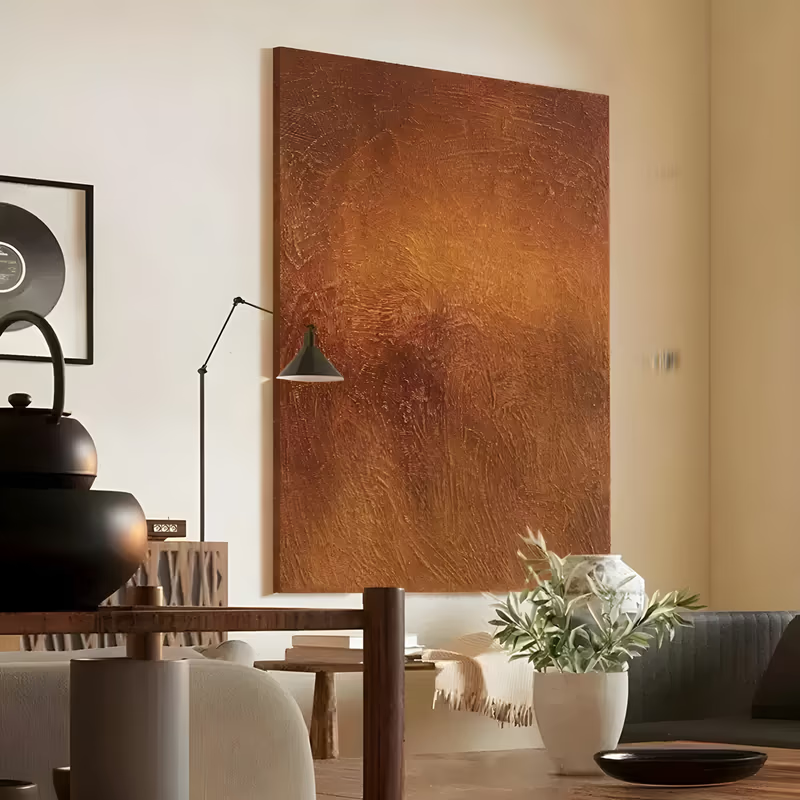
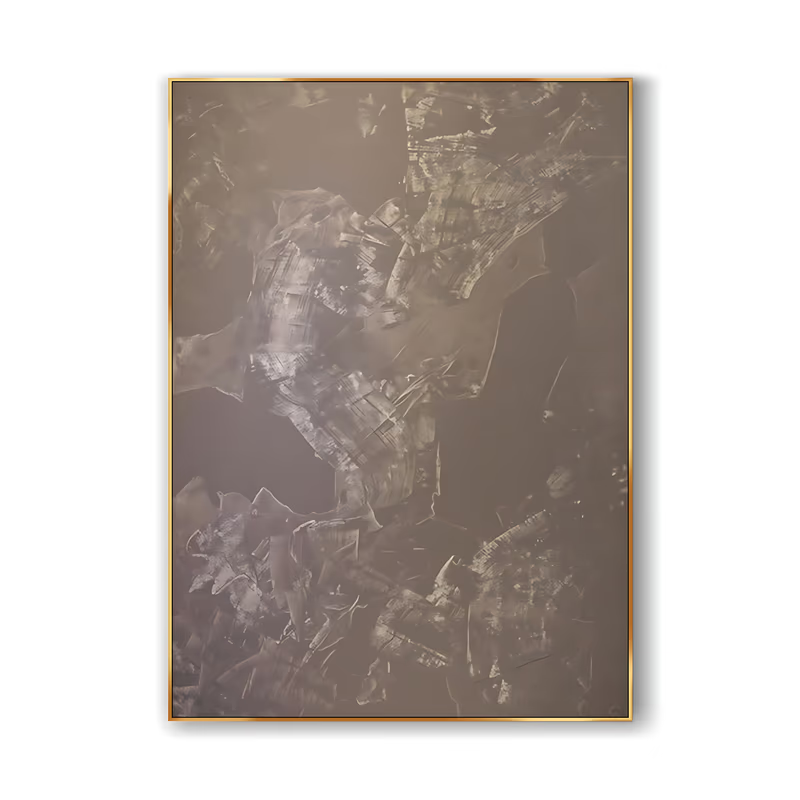
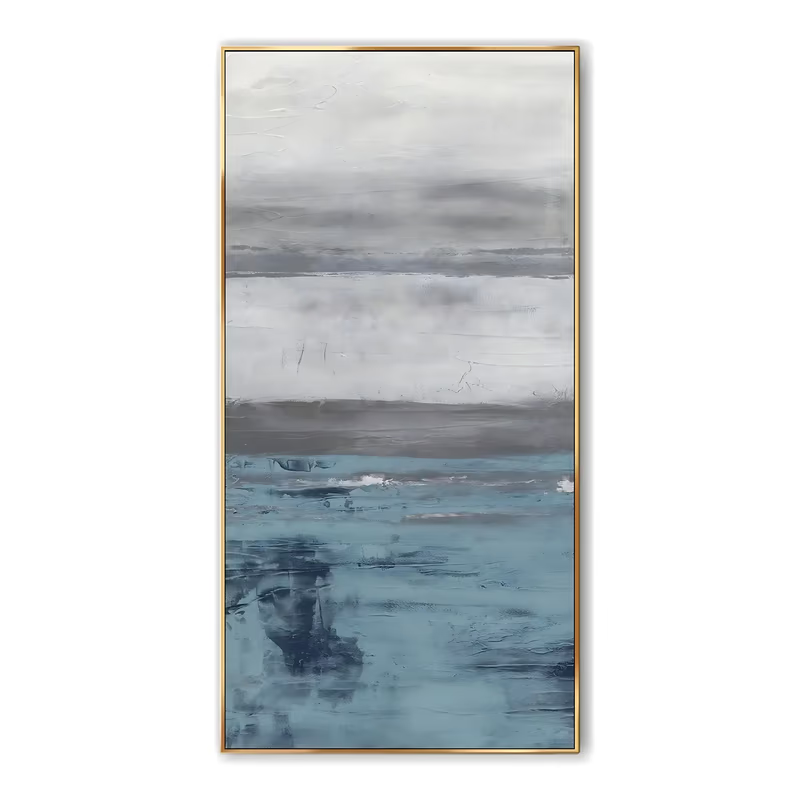
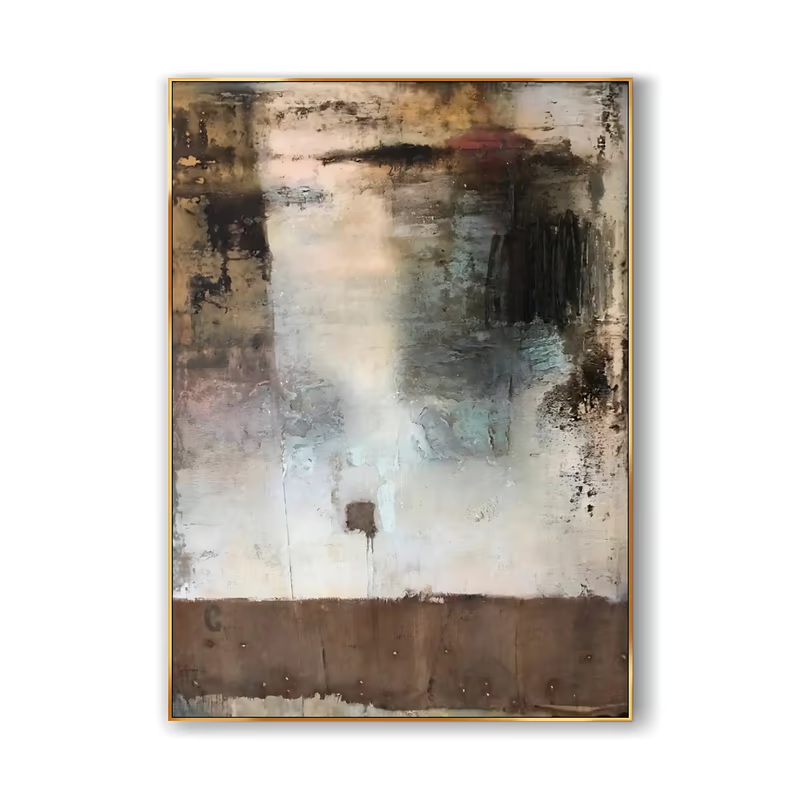
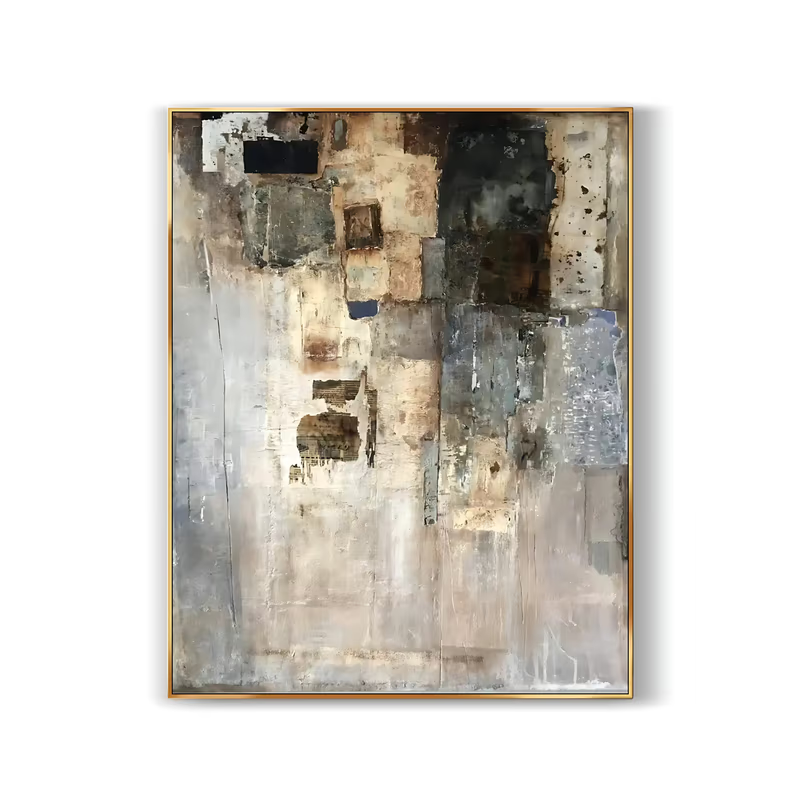
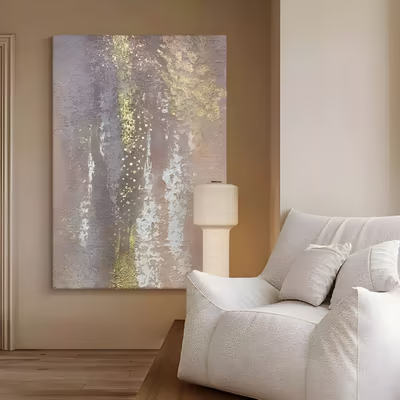
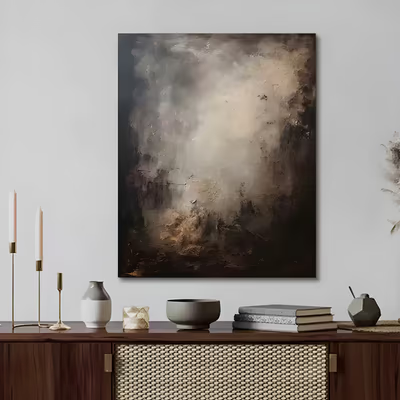
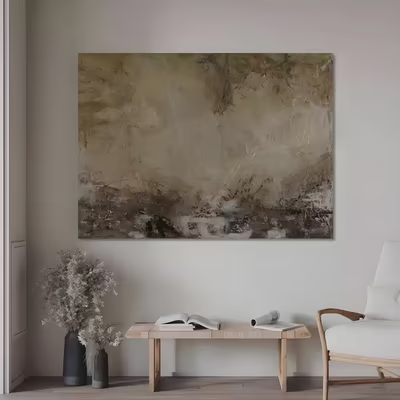
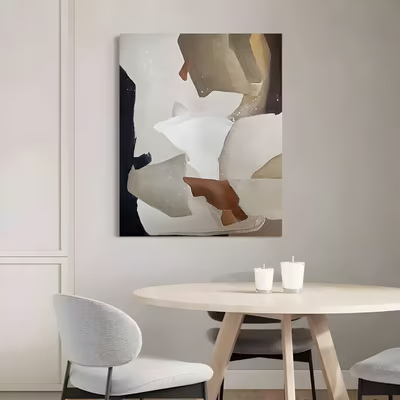
No subject at all, only surface: rust copper troweled in sweeps, charcoal pitted like old slate, a cream glow rising through dark brown, peeling layers of clay and pale blue. They hold a large wall in a lobby, a restaurant or a living room with great quiet authority.
Stones, vessels and quiet shapes
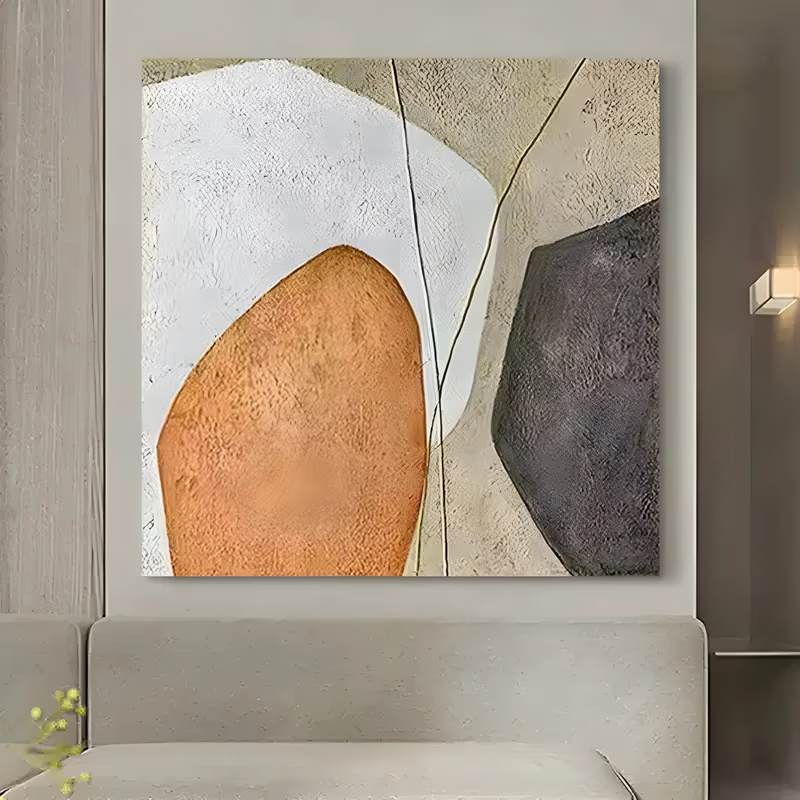
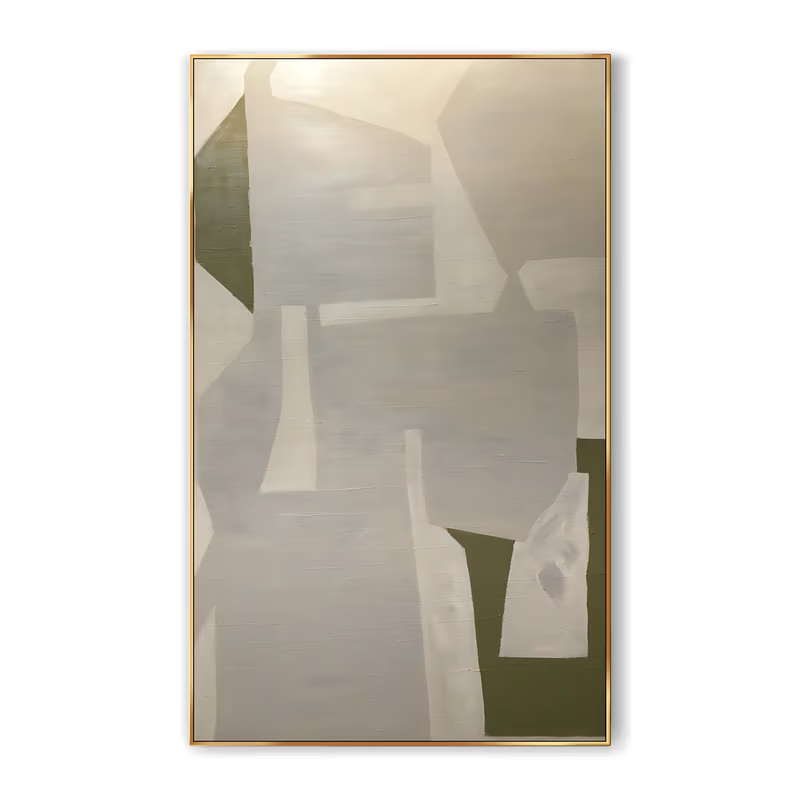
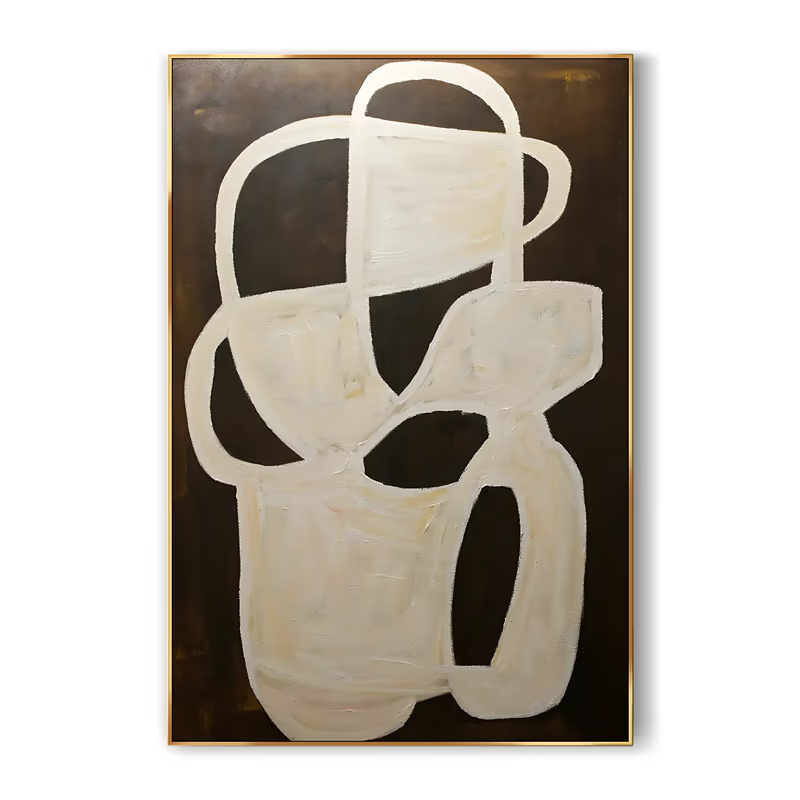
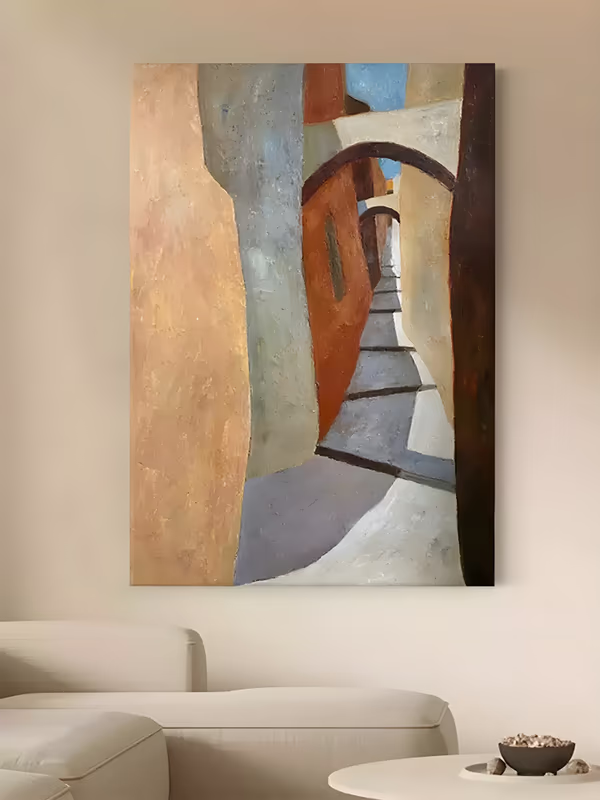
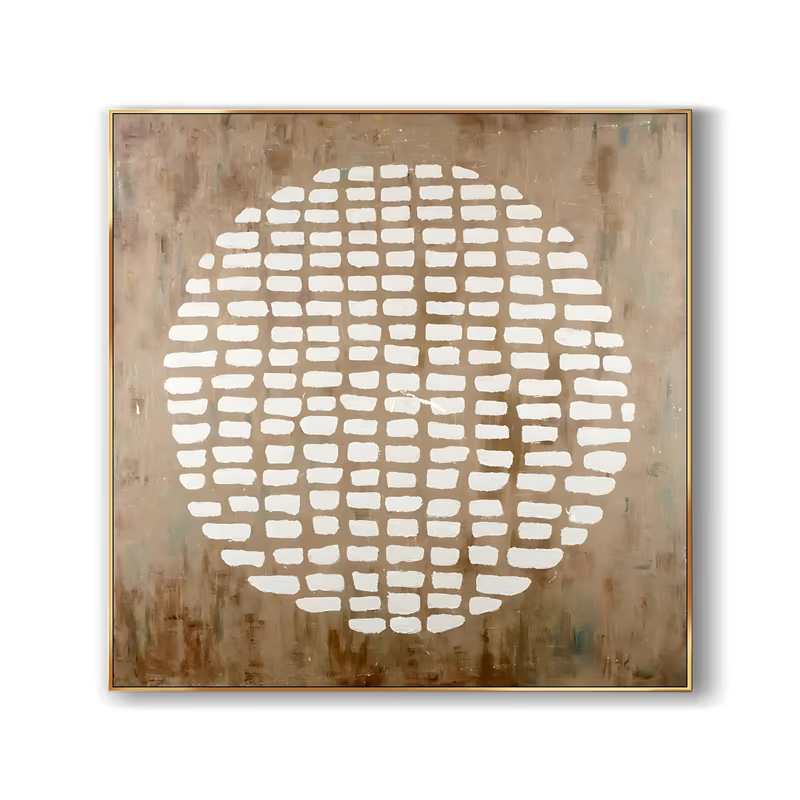
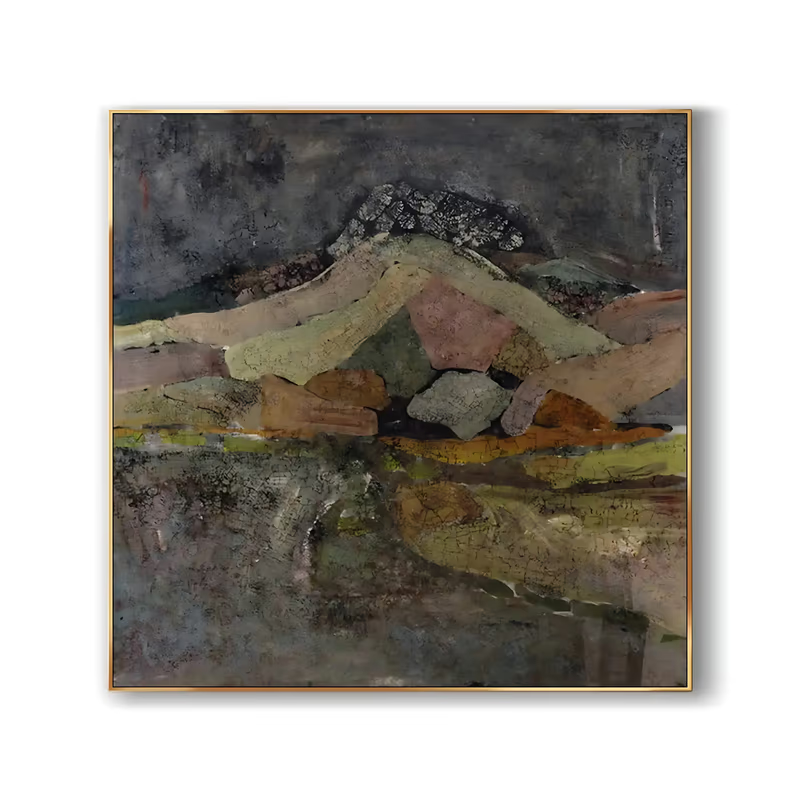
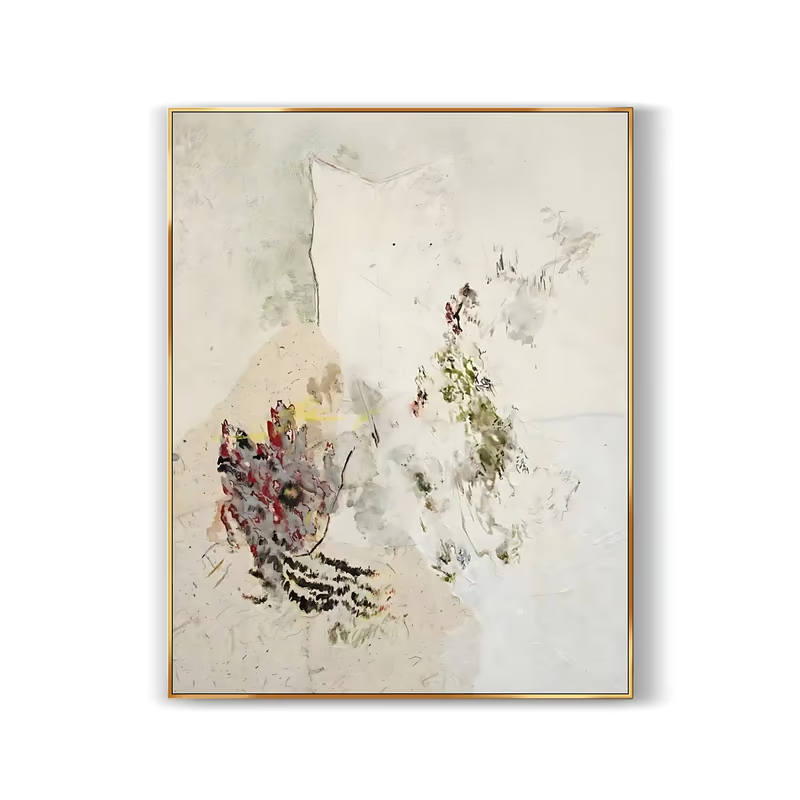
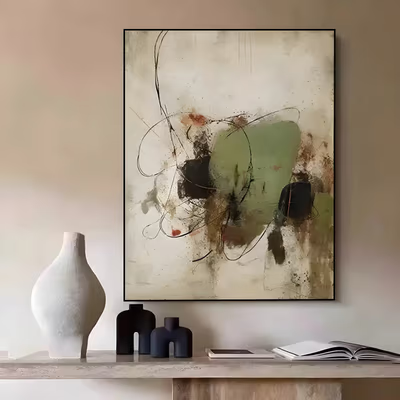
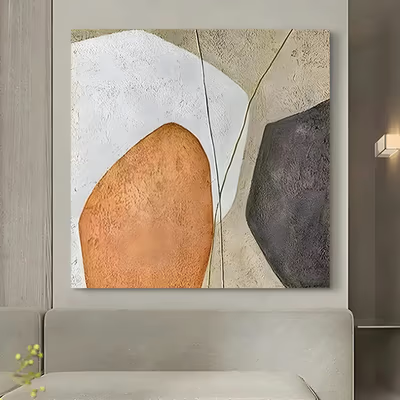
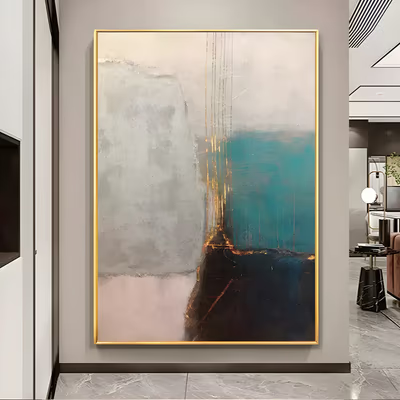
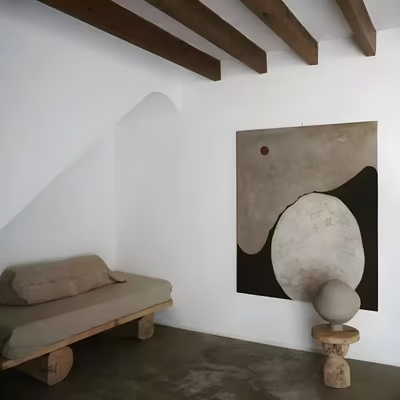
Pebble forms, a bowl beneath a stone, interlocking plaster shapes combed with fine lines, circles built from small dashes. Calm and balanced without being symmetrical, they suit studies, meeting rooms, guest rooms and spa corridors.
Birds, lotus, bamboo and still water
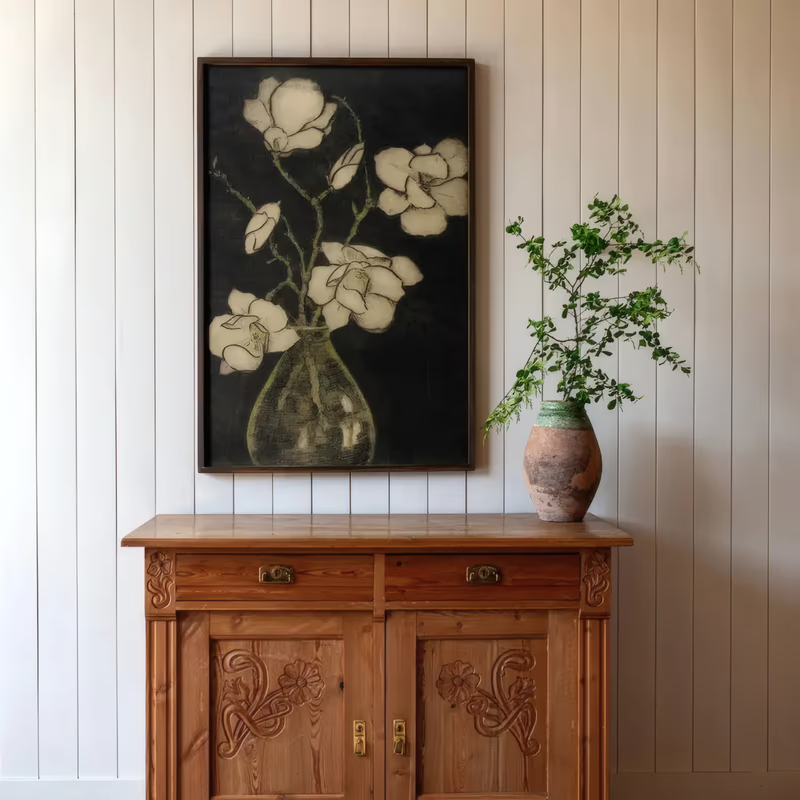
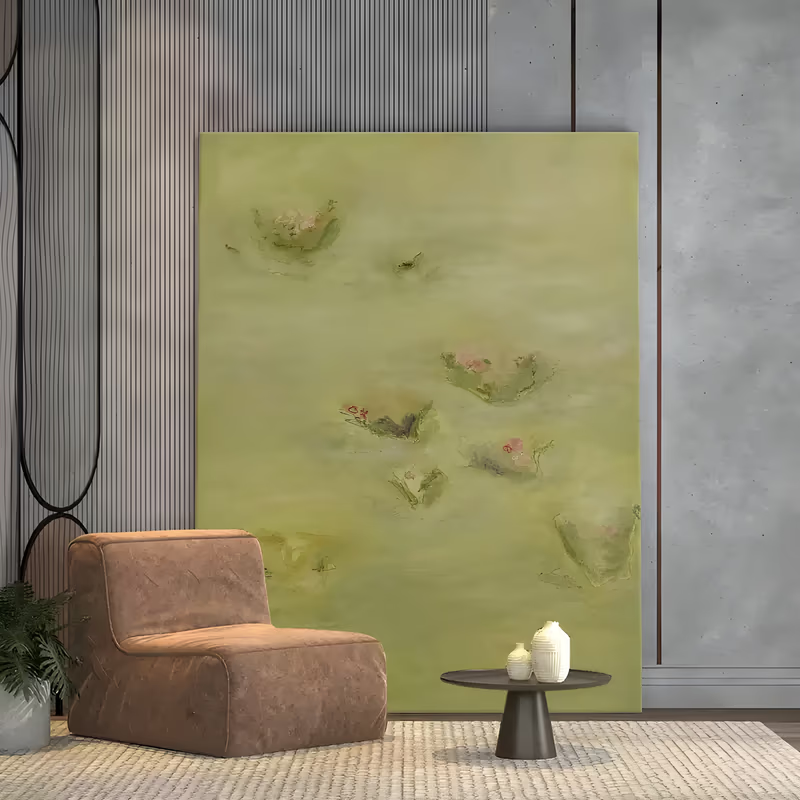
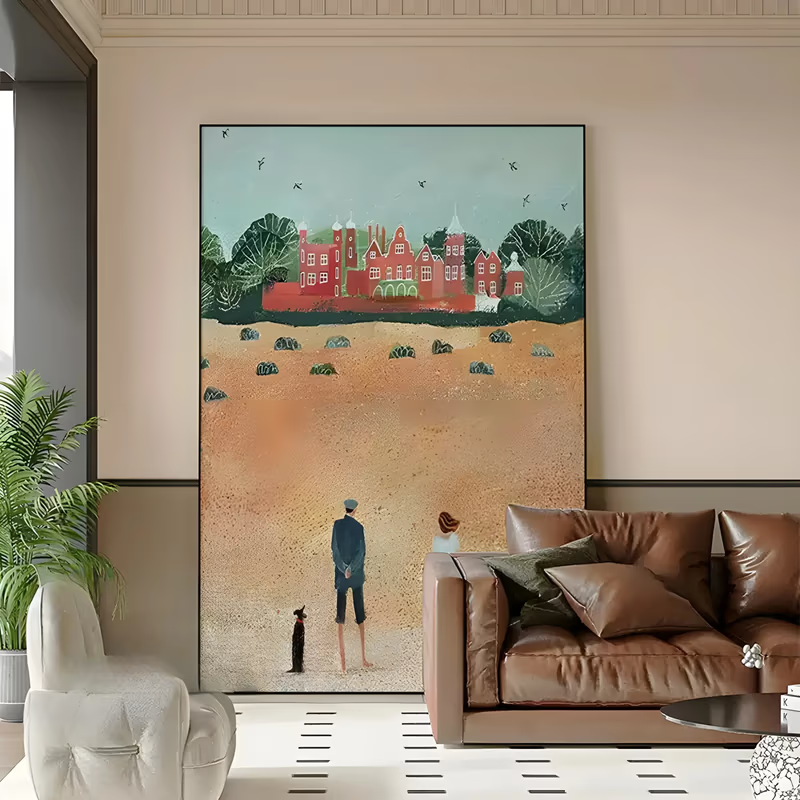
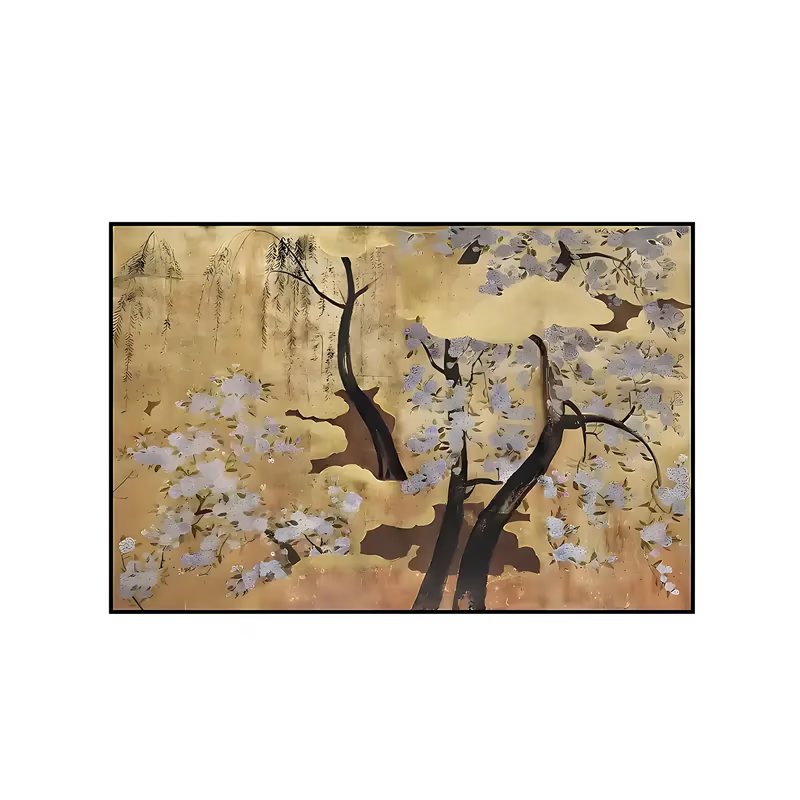
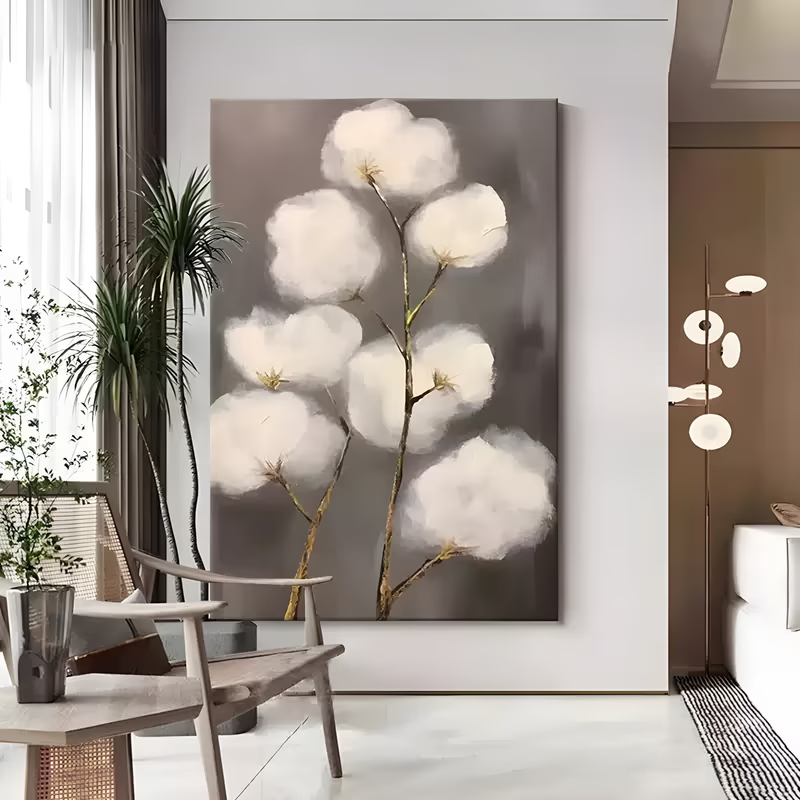
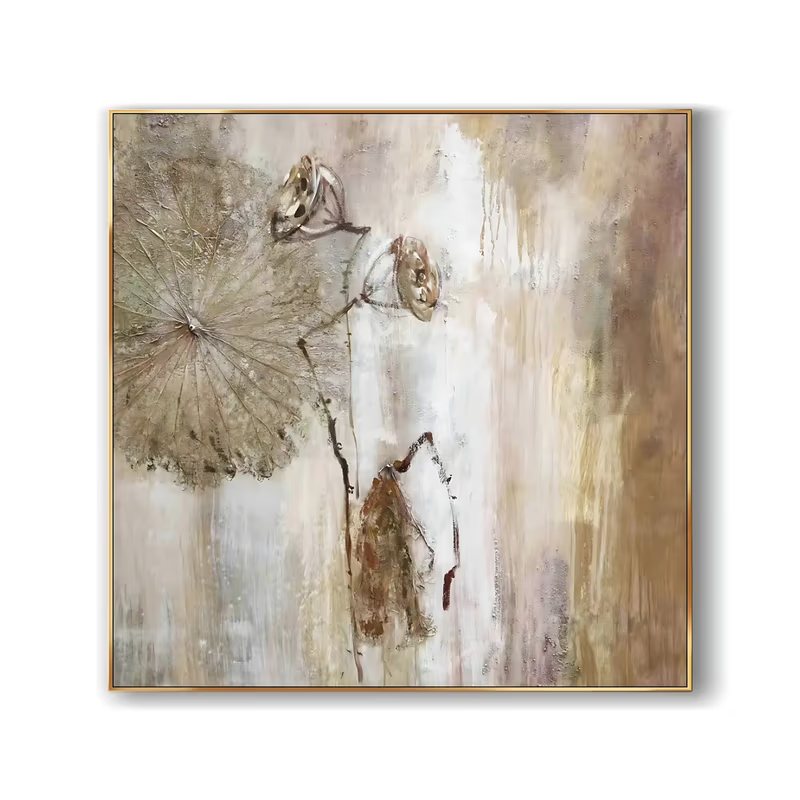
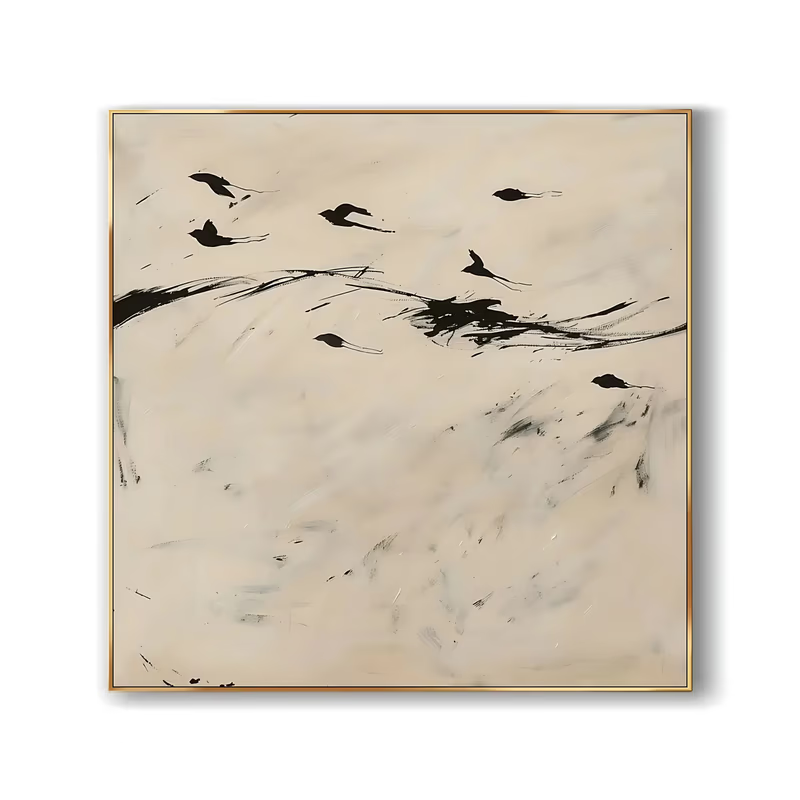
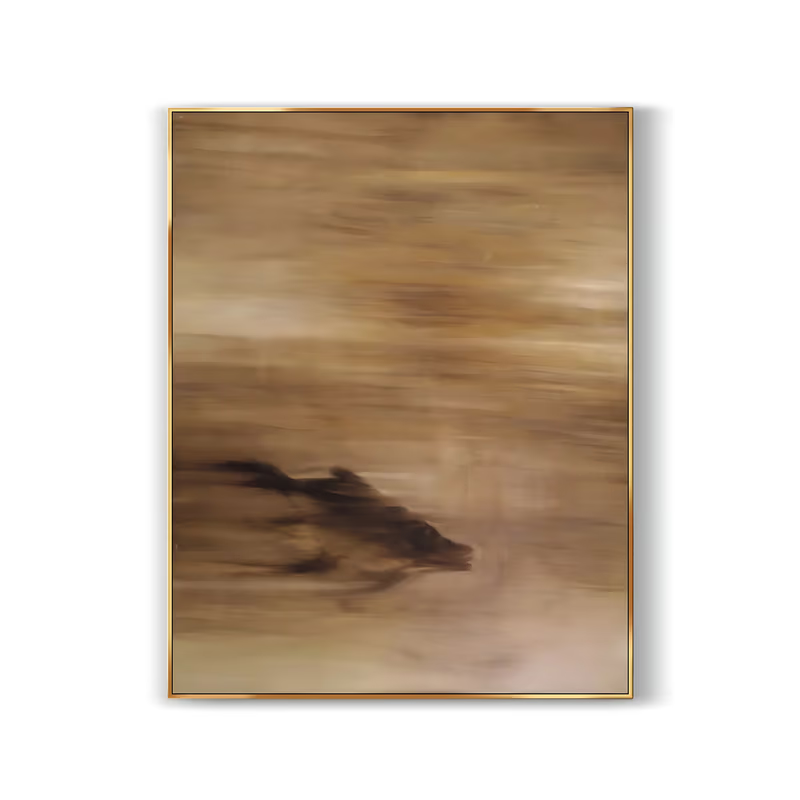
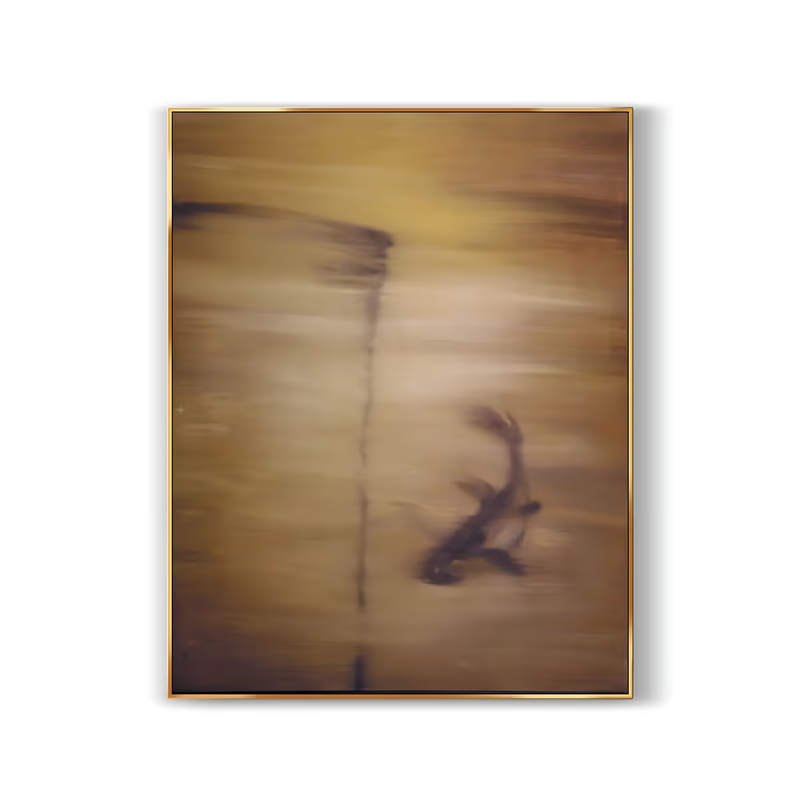
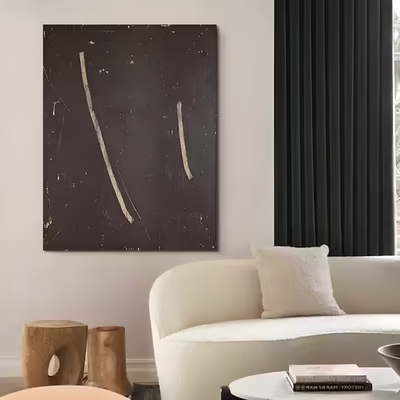
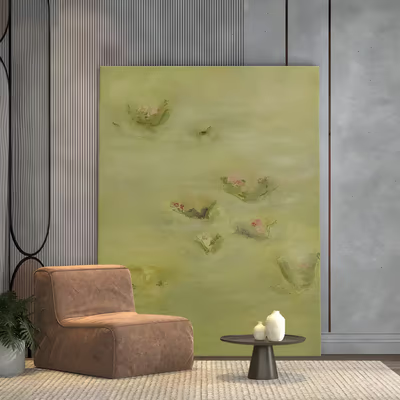
A small black bird on a bare branch, a flock crossing a cream sky, withered lotus leaves and seed pods, reed grasses in ink, a blurred fish in a sepia haze, a mountain mirrored in dark water. These bring a breath of nature to bedrooms and treatment rooms while keeping the restraint of the style. See also botanical paintings.
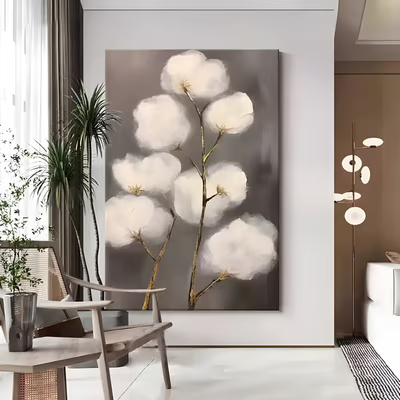
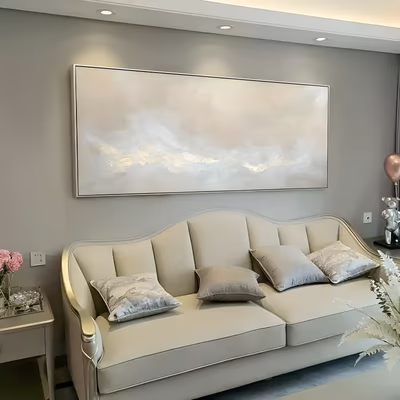
Which colours of wabi-sabi wall art suit wood, stone and linen?
Pick the painting's earth tone from the biggest natural material in the room: pale tones for light timber, darker rust and charcoal for walnut, and grey-greens for stone and concrete.
Pale oak, ash and birch
Bone, cream and sage keep a light Japandi room soft and airy. A single dark accent, an ink stroke or a black bowl shape, stops it from fading away. Cream and beige wabi-sabi art.
Walnut, smoked oak and leather
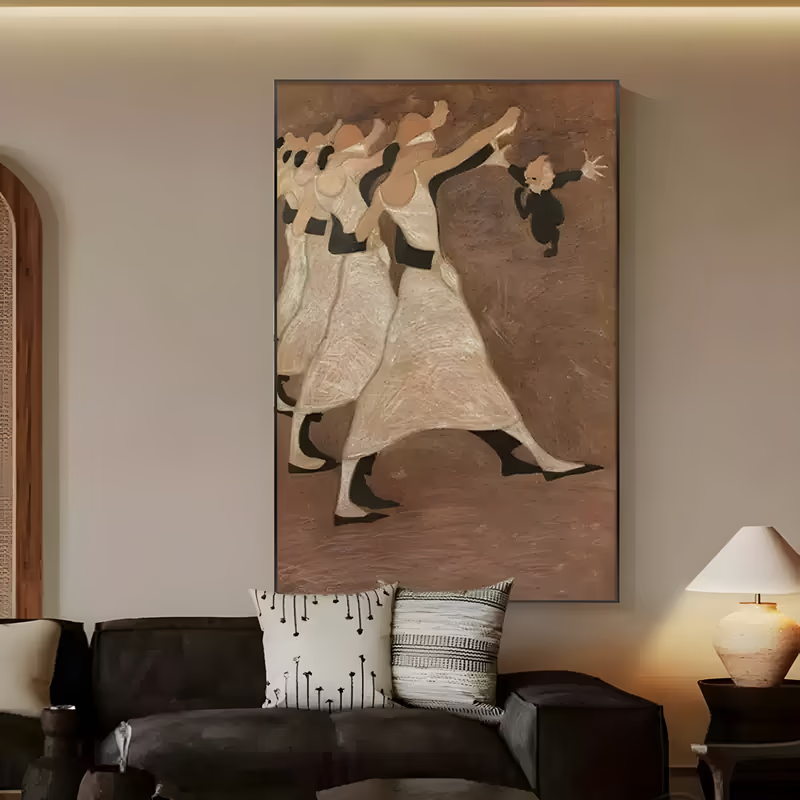
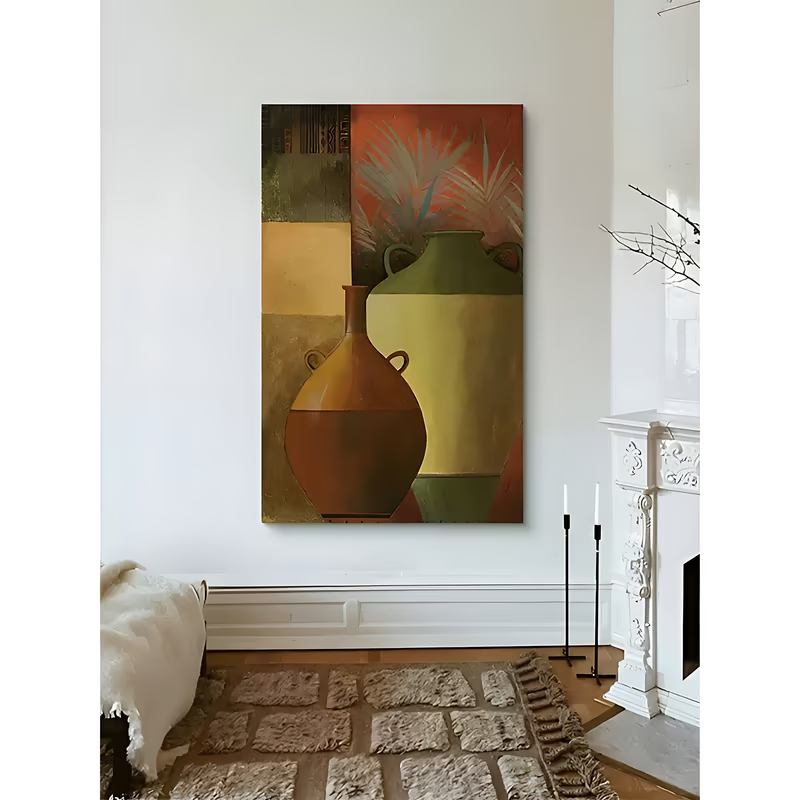
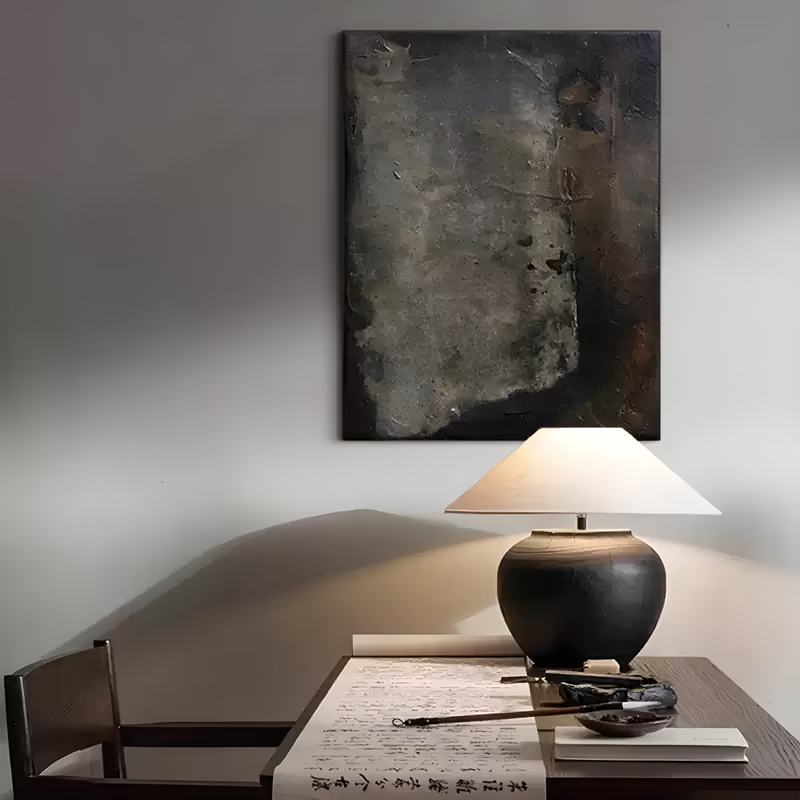
Rust, amber, umber and charcoal match the depth of dark wood and glow warmly in lamplight. Rust, brown and charcoal pieces.
Concrete, limestone and slate
Ash grey, olive and moss echo mineral surfaces and soften their chill with visible texture. Grey and green wabi-sabi art.
Terracotta, brass and blush plaster
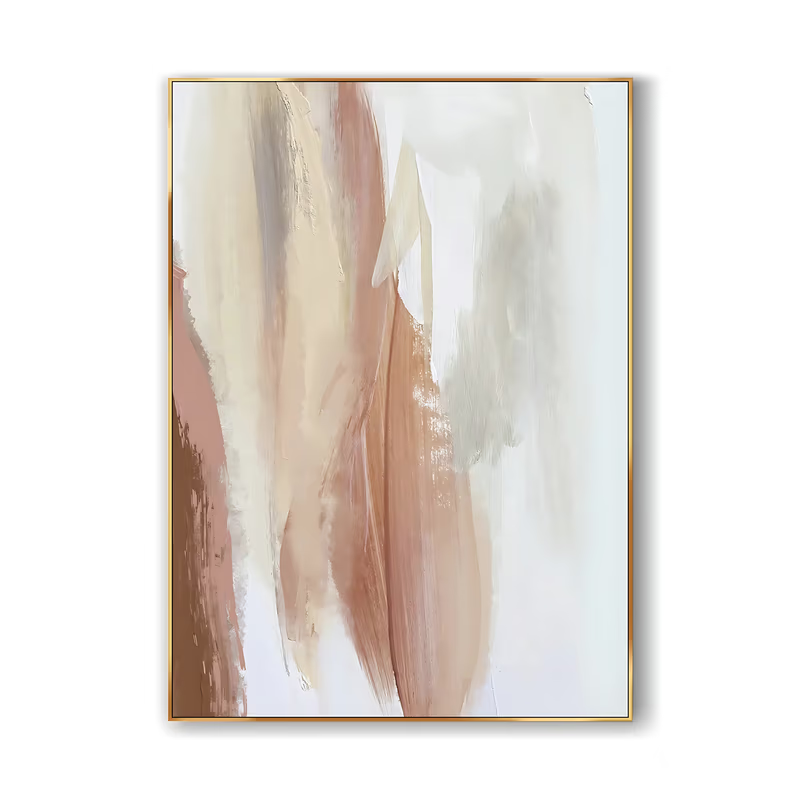
Clay, faded pink and a seam of gold leaf suit Mediterranean-leaning rooms and warm limewashed walls. Blush and gold pieces.
Keep the rest of the palette as close to the painting as you can. Wabi-sabi rooms read best when colour changes by small steps, so the texture, not contrast, does the work.
Where should wabi-sabi art hang, and how big should it be?
Hang one wabi-sabi piece where the room is meant to slow down, size it generously but leave clear wall on every side, and light it from an angle.
Good places are over a low bed or platform sofa, at the end of a corridor, behind a dining bench, in a reading corner, a spa treatment room or a meeting room where people need to think. Wabi-sabi art for bedrooms and living rooms; for spas and guest rooms; for meeting rooms and studies.
Japandi furniture sits low, so drop the painting with it: with a platform bed or floor seating, the centre of the canvas can come down to around 135–140 cm (53–55 in) from the floor, and the gap above the furniture can be a little tighter than usual. Let the canvas cover about half to two-thirds of the furniture's width and resist adding companions; the empty wall around it is part of the composition. An off-centre placement, with a lamp or vase balancing the other side, suits the style better than strict symmetry.
Texture needs side light. A window to one side, a wall washer or a picture light angled down across the surface will pull out every ridge; flat light from straight in front will make the same painting look almost smooth.
How is a made-to-order wabi-sabi painting approved?
You approve a wabi-sabi painting the same way you would choose a stone or a plaster sample: by seeing photographs of the real surface at each stage, with the palette set to your materials before painting begins.
Imperfection cannot be written into a specification, so the process is visual. Send photos of your timber, stone, plaster or fabric, or the paint codes on the walls, and the earth tones are adjusted to sit with them. You then receive progress photos or video, ideally taken with side light so the texture is visible, and the next stage starts only after you approve. A final photograph is approved before dispatch. Because each surface is worked by hand, two paintings from the same reference will never match crack for crack, which is the point of the style.
Natural wood frames and frameless stretched canvases suit wabi-sabi best, though black, white, gold and silver are also available. Pieces ship rolled, stretched ready to hang, or framed. For a series across a spa or a floor of guest rooms, see art for spas and wellness centres or request a quote.