Still life guide · Updated
How to choose a still life painting for your table, sideboard or restaurant
Key takeaways
- A still life is about the table: arranged objects echo the life of a dining room, kitchen or bar, which is why the genre has hung there for four centuries.
- Choose the period to match the room: realistic Dutch-style pieces for classic interiors, knife-painted bouquets for relaxed ones, cubist and folk tables for modern ones.
- Paint the objects near life size: a vase or a fruit bowl at roughly its true scale reads naturally from the table and looks convincing in a room.
- Hang it low and close: over a sideboard or a banquette, with a short gap above the furniture, so the painted table seems to continue the real one.
What counts as a still life painting?
A still life painting shows objects that do not move, arranged by the artist: flowers in a vase, fruit and food, jugs, bottles, porcelain, books or fabric on a table.
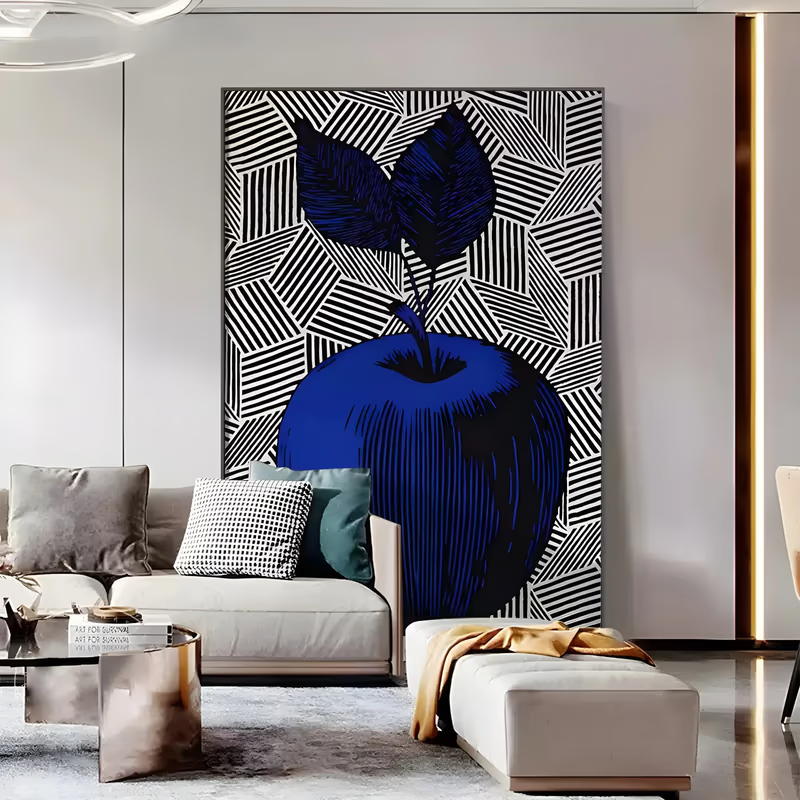
The name comes from the Dutch stilleven, and the genre took shape in the Netherlands and Flanders around 1600, when merchants hung paintings of flowers, fruit and fine tableware in their homes. The point was never only the objects. A still life is about how light falls on glass, peel and petals, and about the pleasure of an arranged table. That is why it still fits dining rooms and restaurants so naturally. Here the genre runs from classical bouquets in urns to a cobalt apple on black-and-white stripes. Flowers painted outdoors, without a vase or table, live on the floral wall art page.
Classical or modern: which still life painting suits your interior?
Match the still life to the age and attitude of the room: realistic, dark-ground pieces for classic interiors; loose and colourful ones for relaxed homes; cubist, folk and minimal ones for contemporary spaces.
| Approach | What you see | Interiors it suits |
|---|---|---|
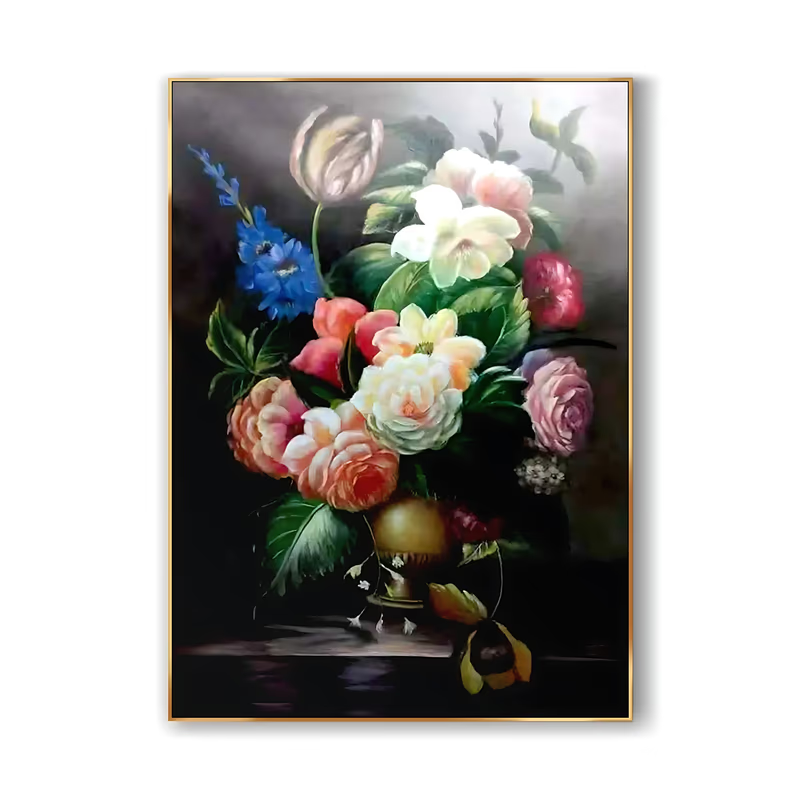
| Dutch-style realism | Bouquets in urns, grapes, wine bottles and fruit on dark grounds; strong light and shadow | Traditional and modern classic dining rooms, wine bars, private clubs |
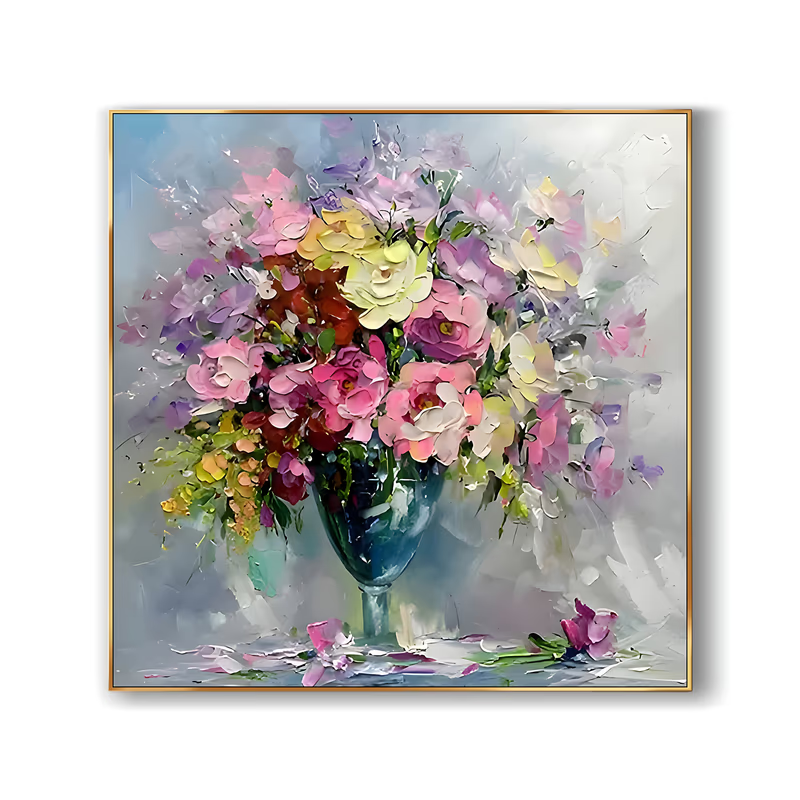
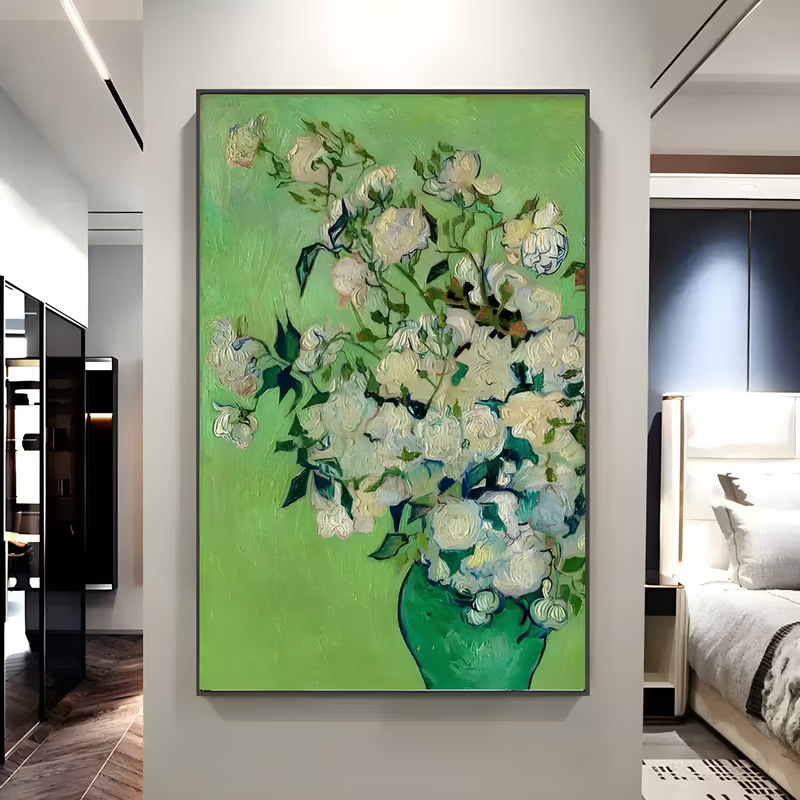
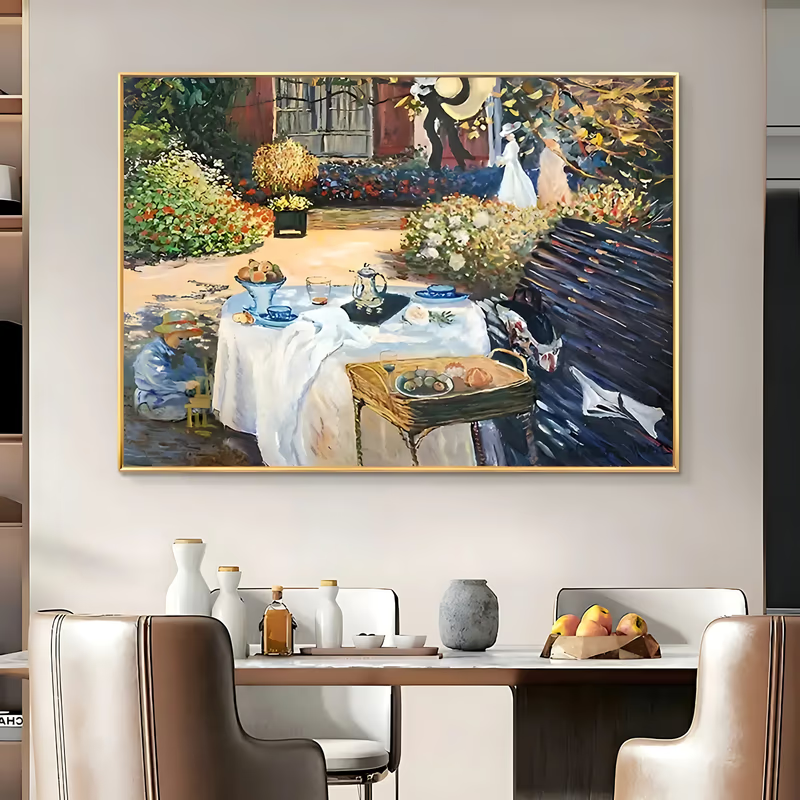
| Impressionist | Soft bouquets in glass and silver vases; light more than detail | Country and coastal homes, breakfast rooms, guest rooms |
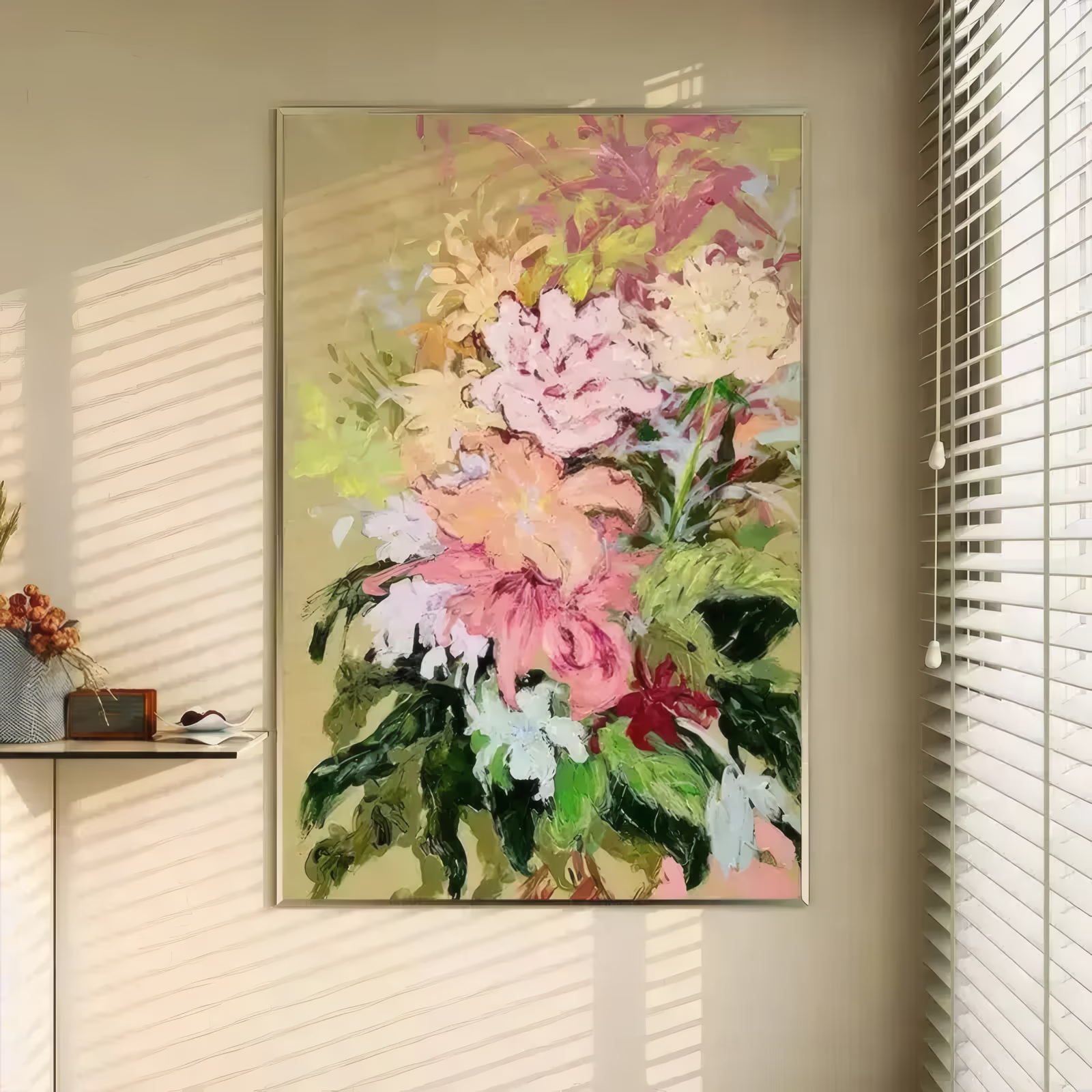
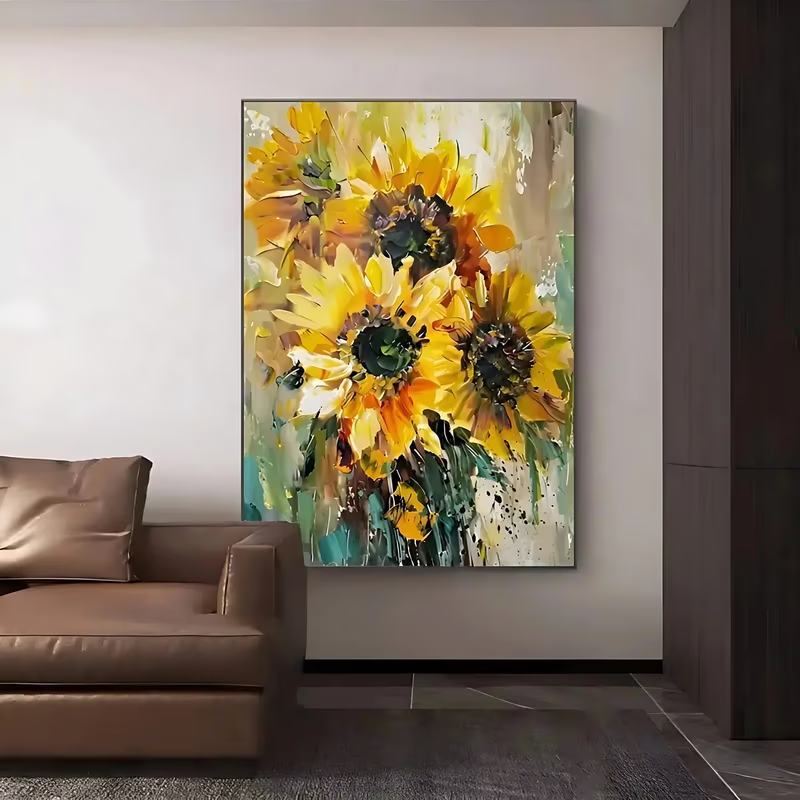
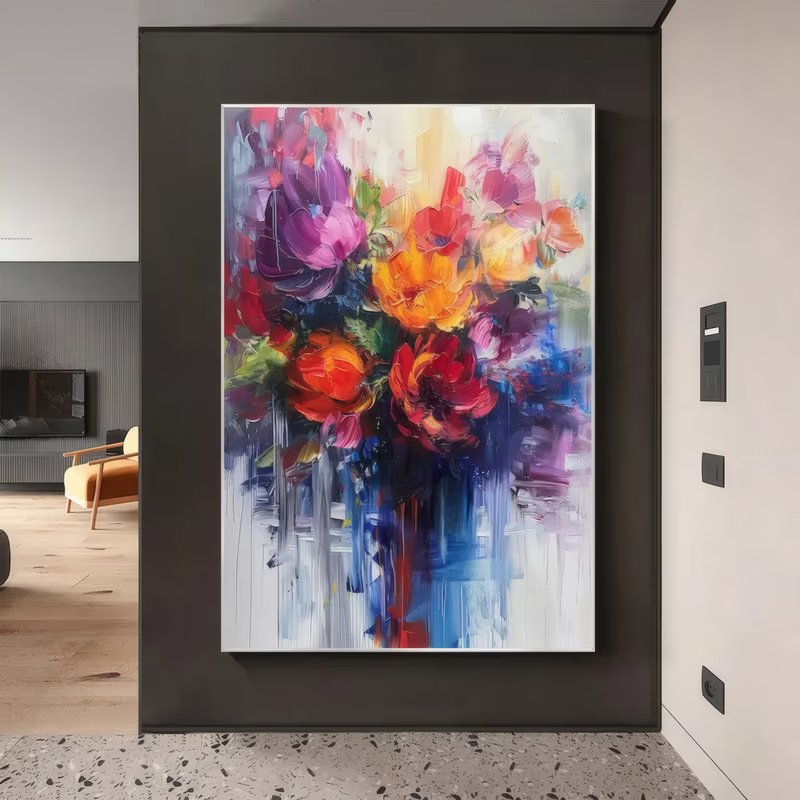
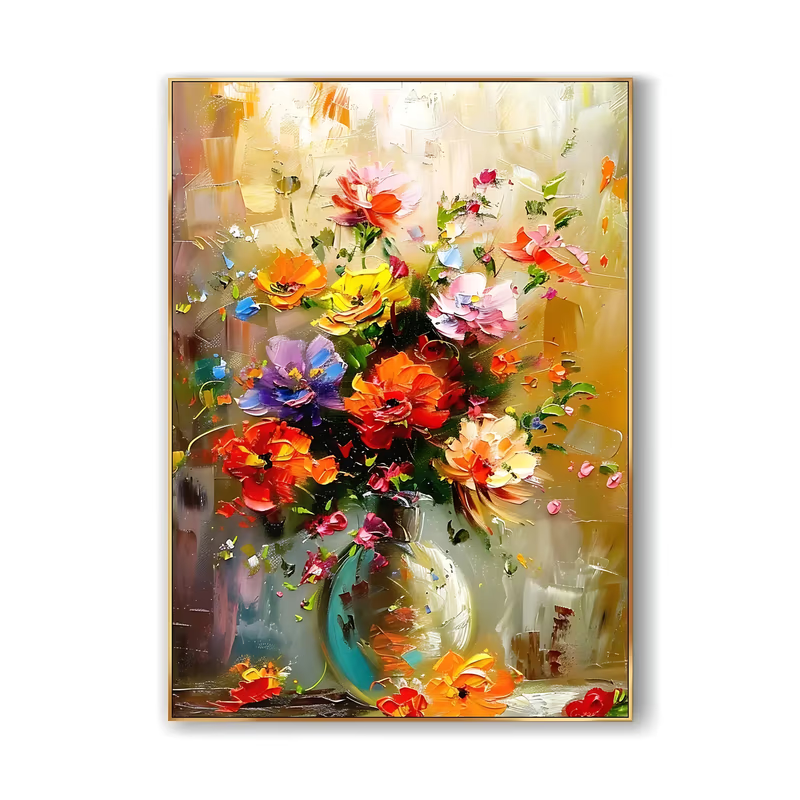
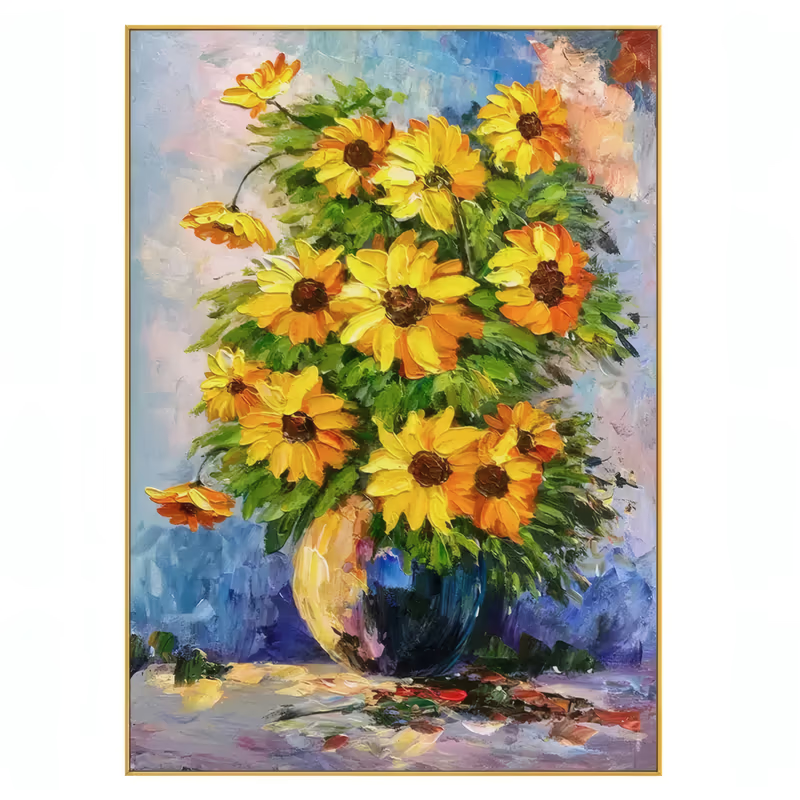
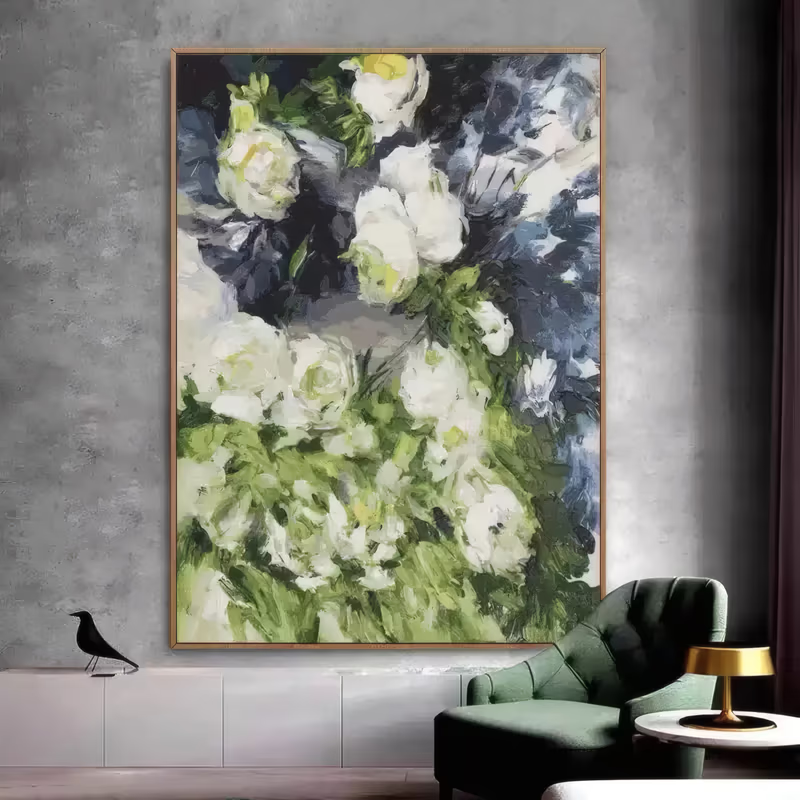
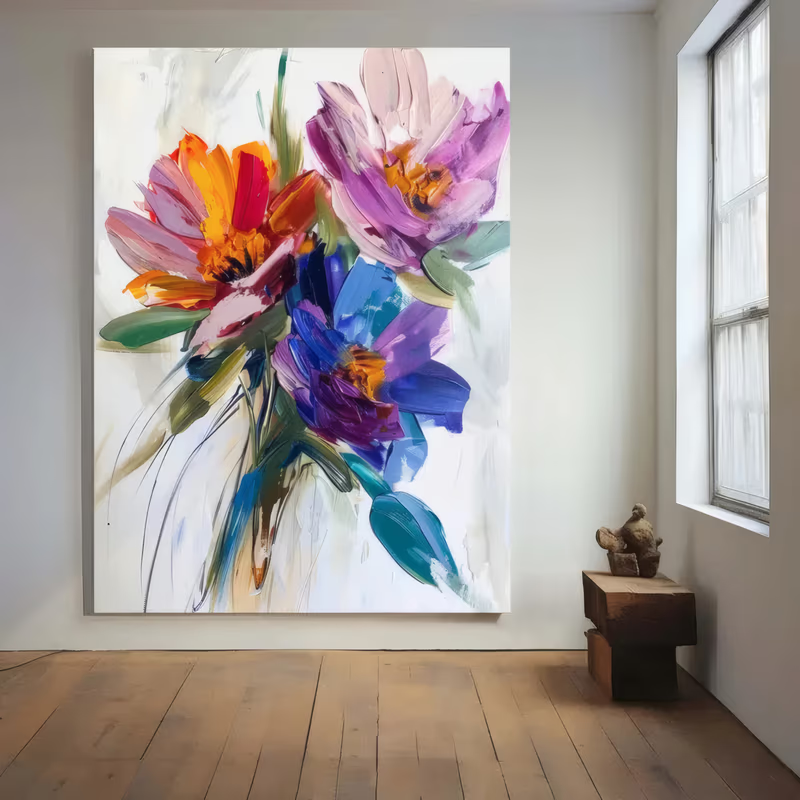
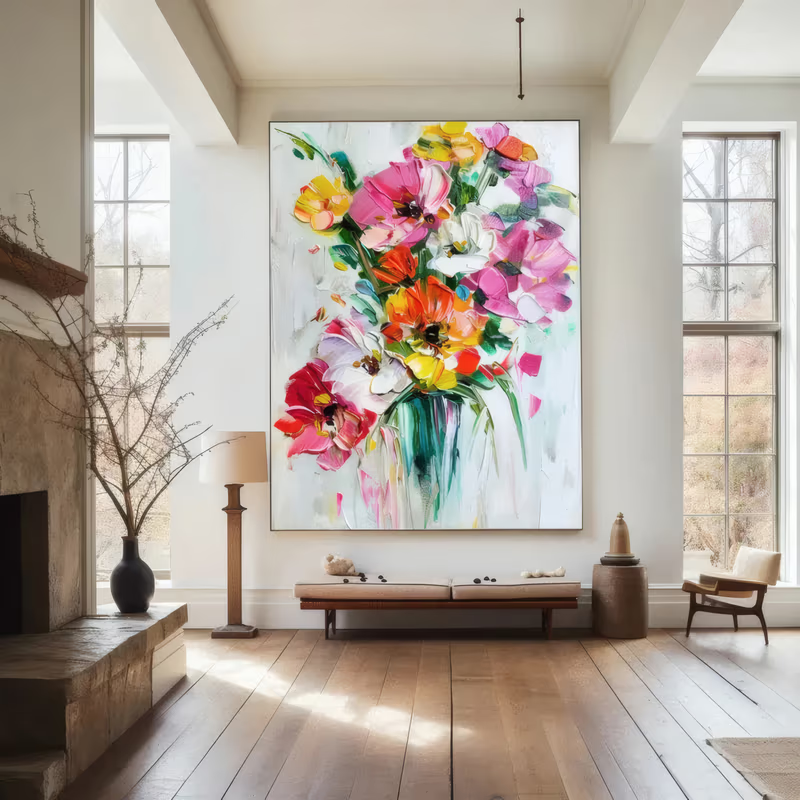
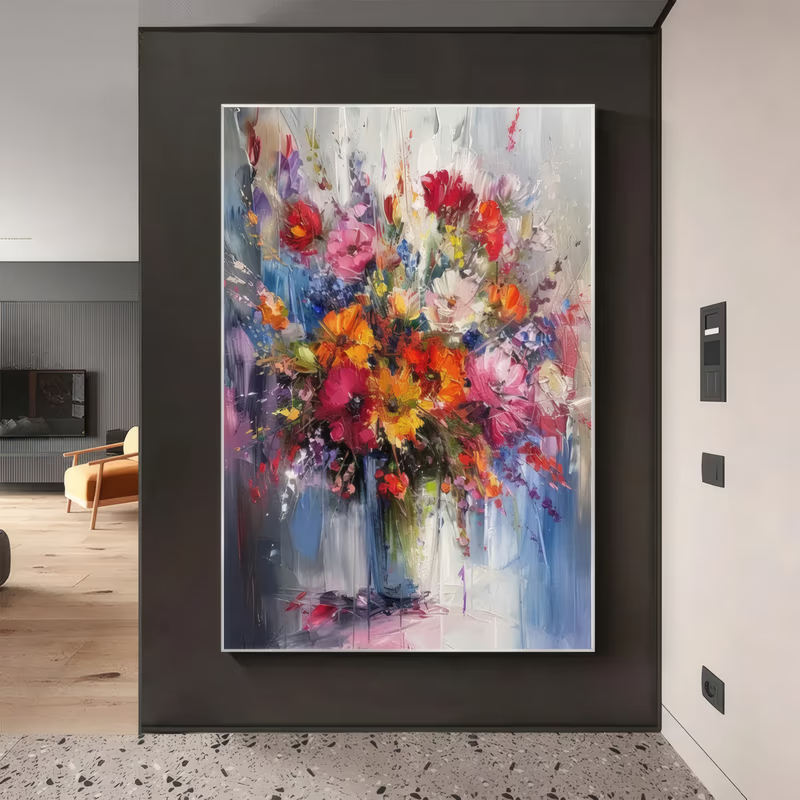
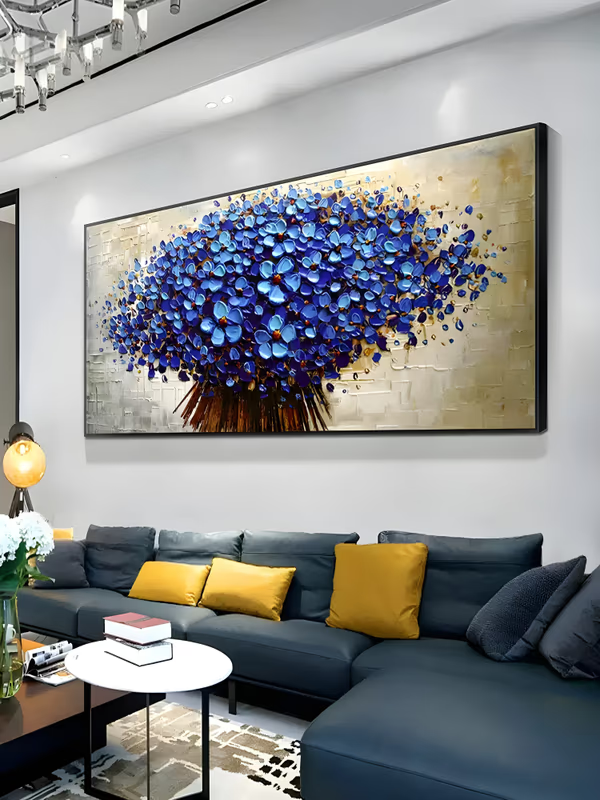
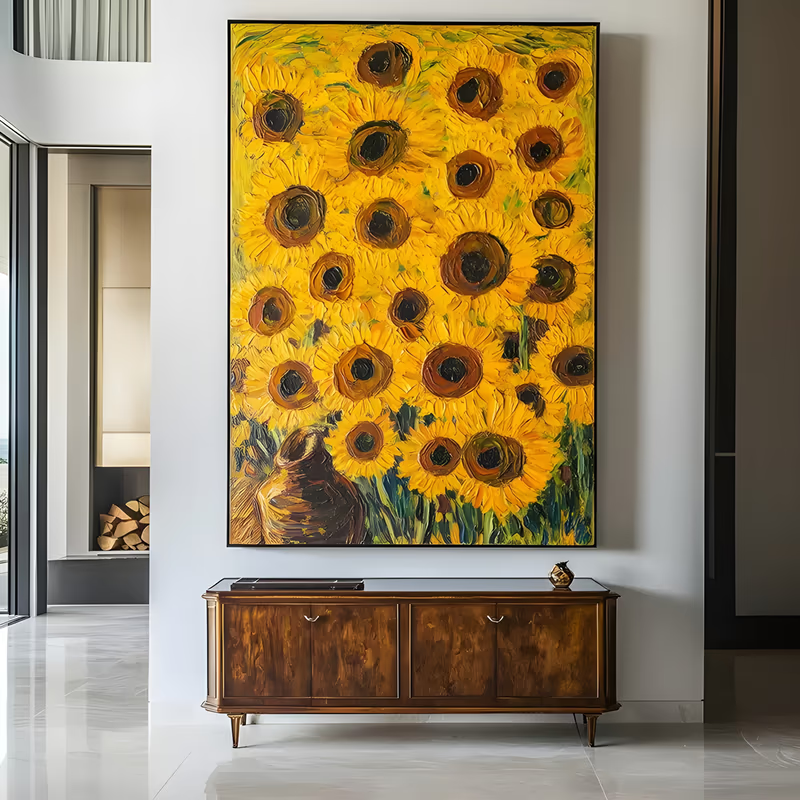
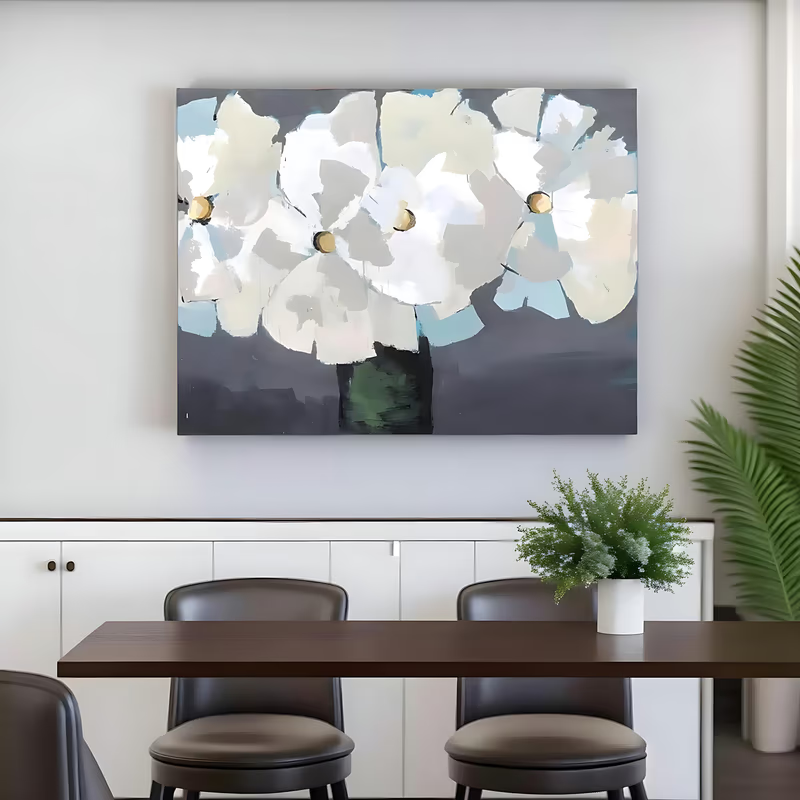
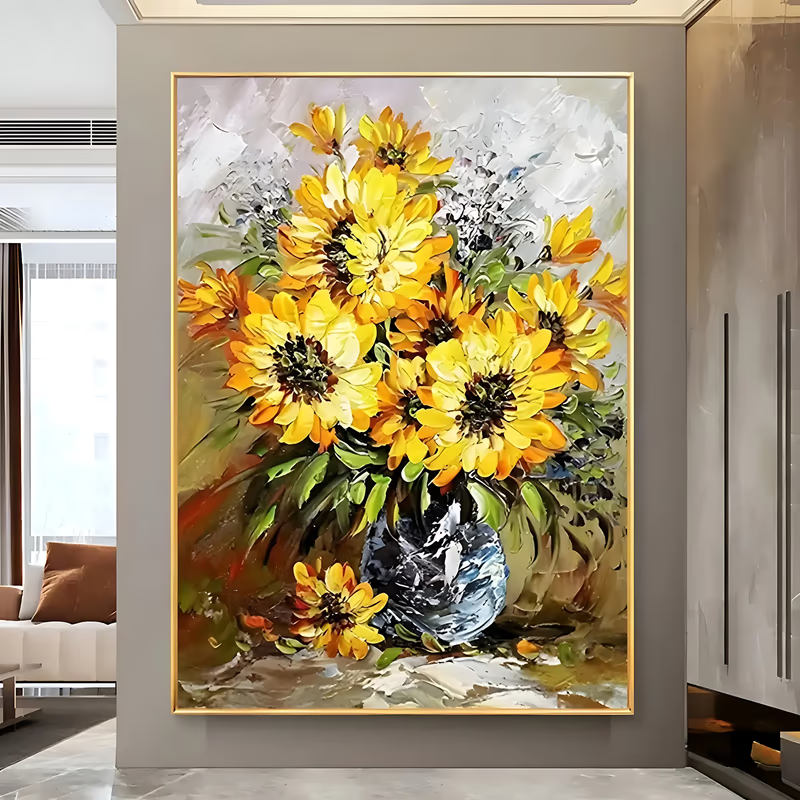
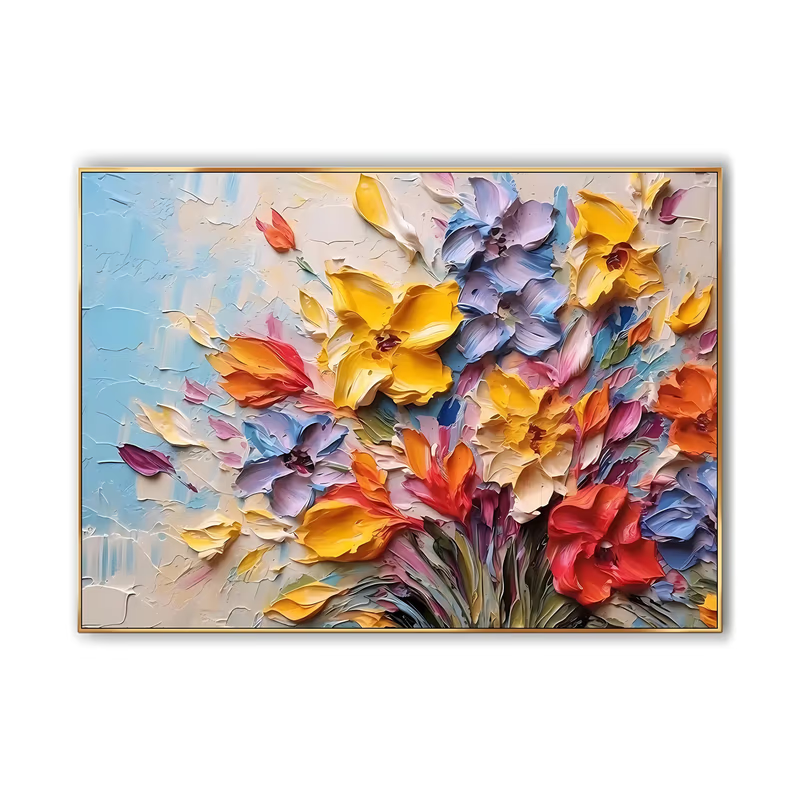
| Palette-knife colour | Thick sunflowers, poppies and wildflowers in jugs; bright and generous | Family kitchens, cafés, casual restaurants |
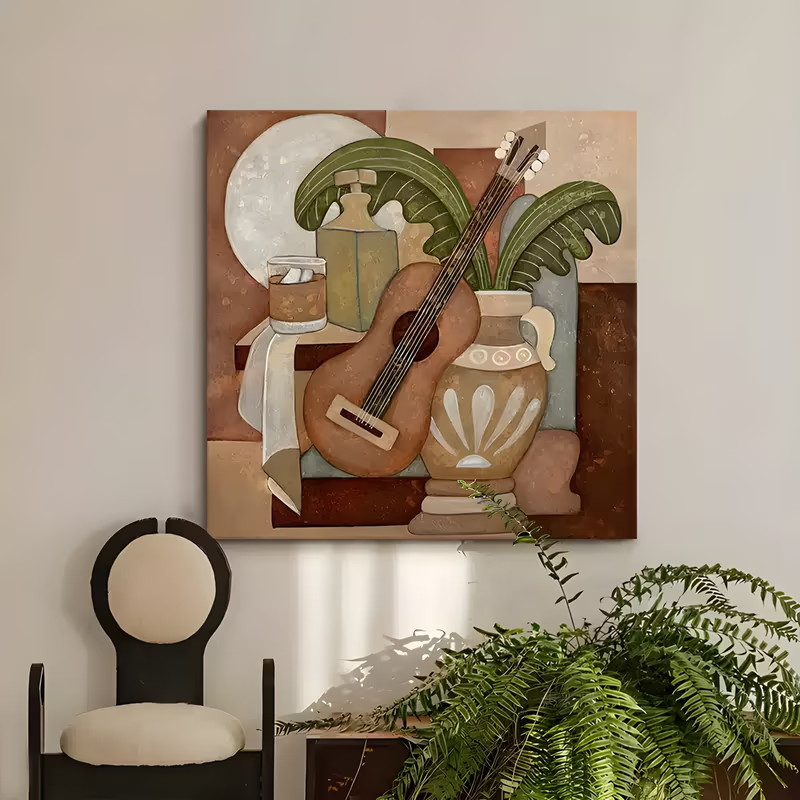
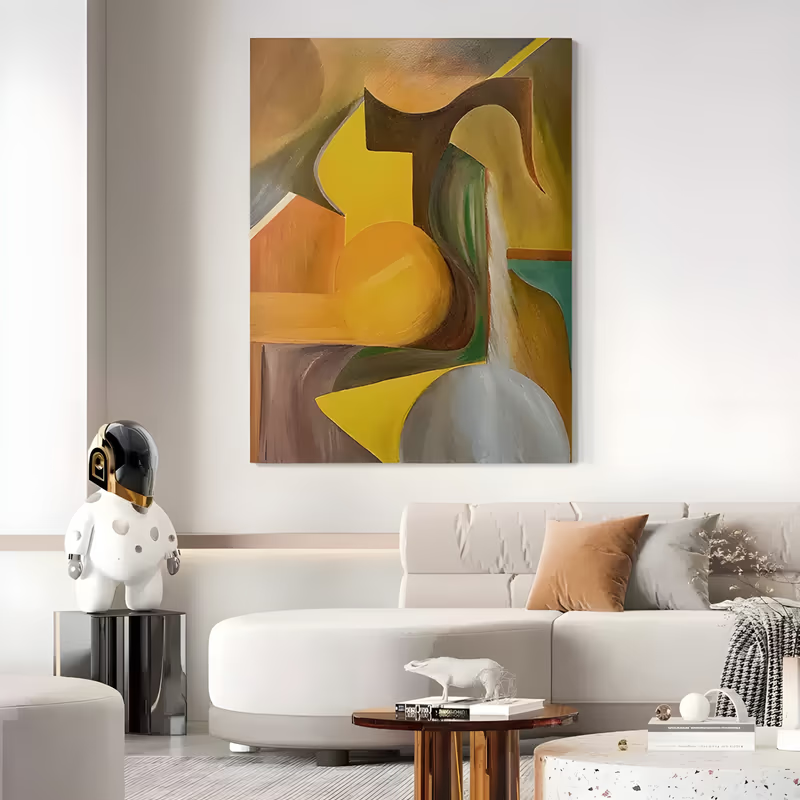
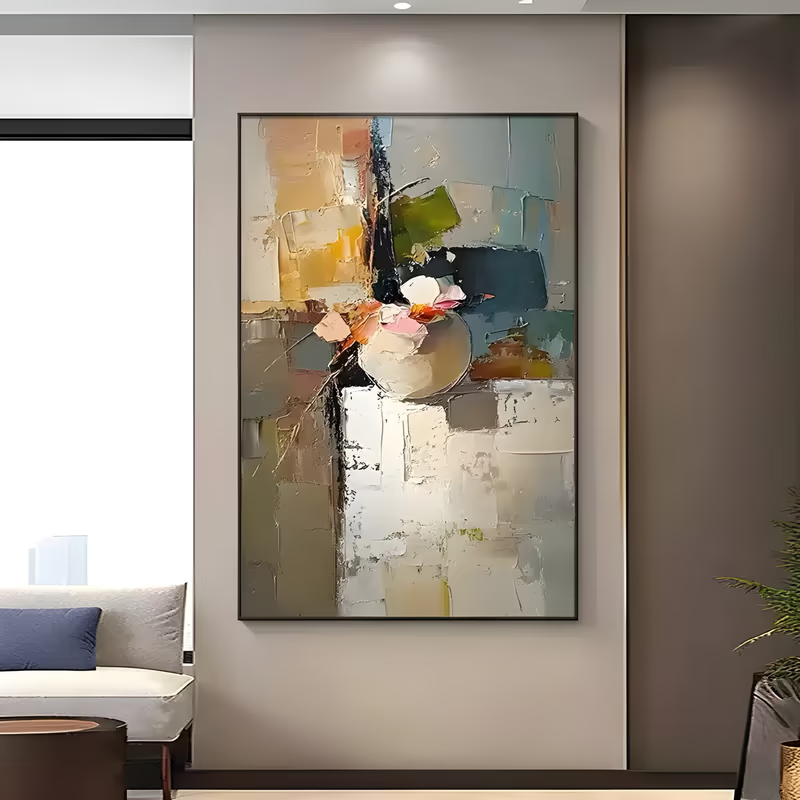
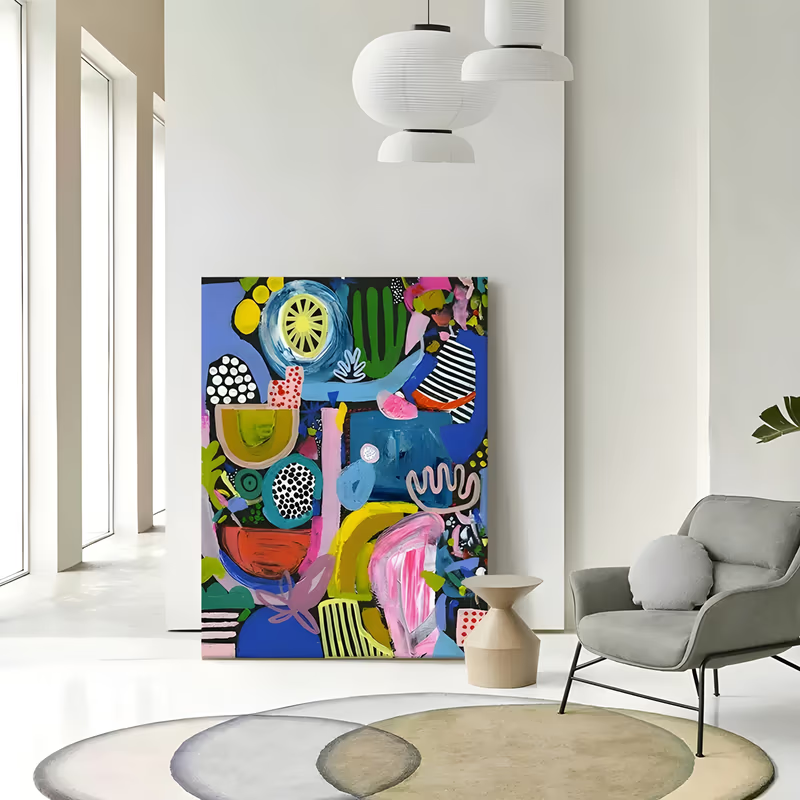
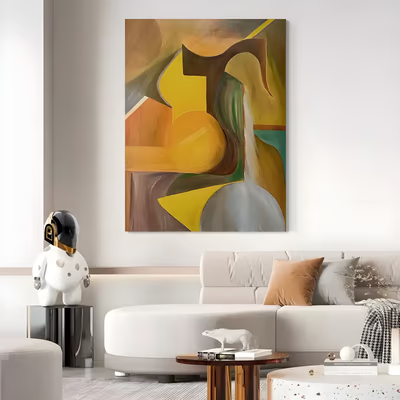
| Cubist and abstract | Jugs, fruit and guitars broken into planes of ochre, teal and cream | Contemporary dining rooms, gallery walls, design hotels |
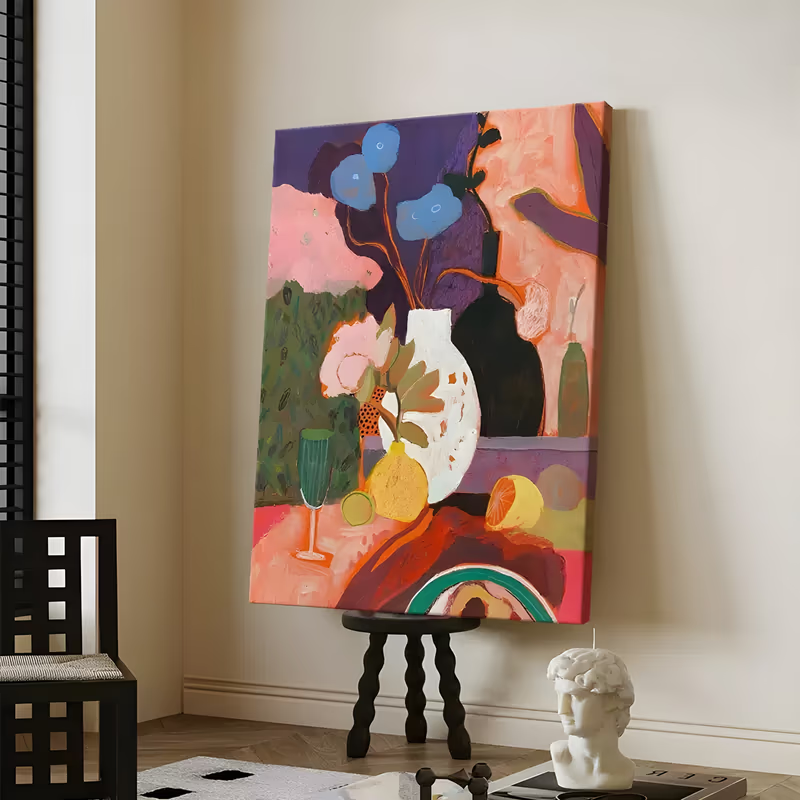
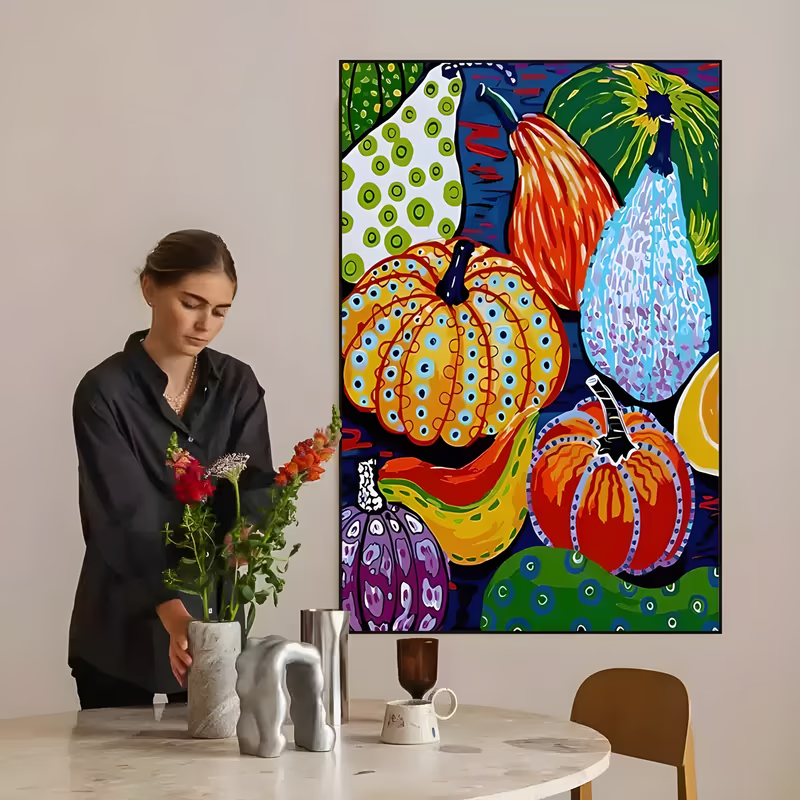
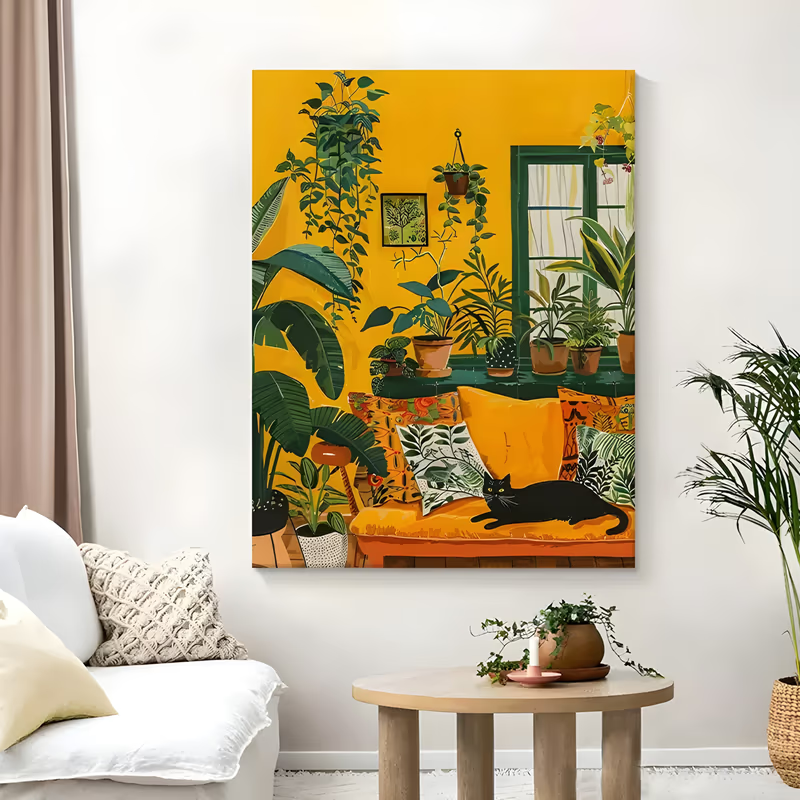
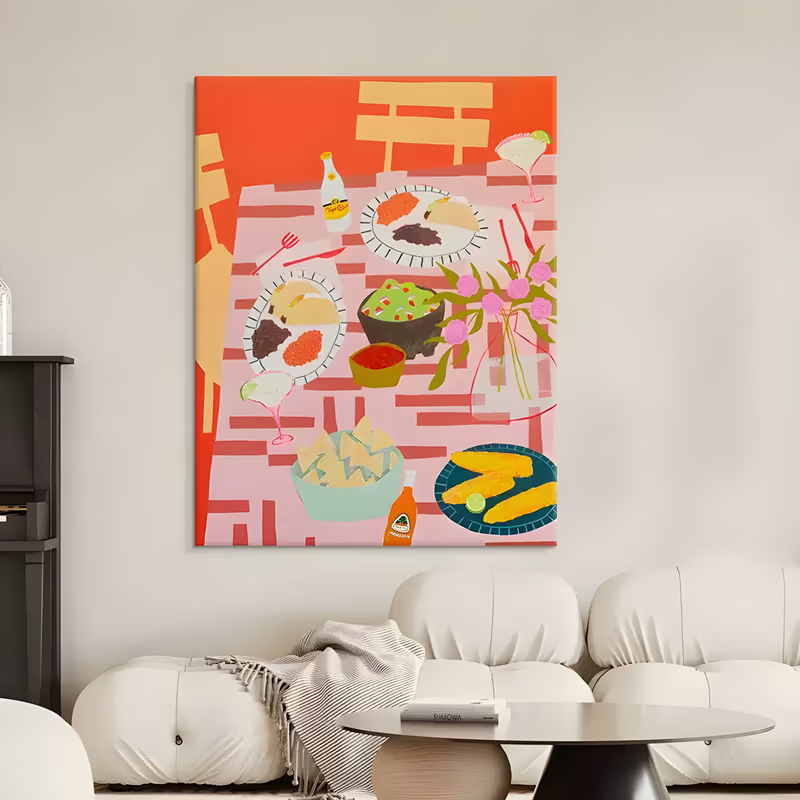
| Folk and pop tables | Polka-dot pumpkins, checkerboard cloths, a taco and margarita spread | Restaurants and bars with a theme, playful kitchens |
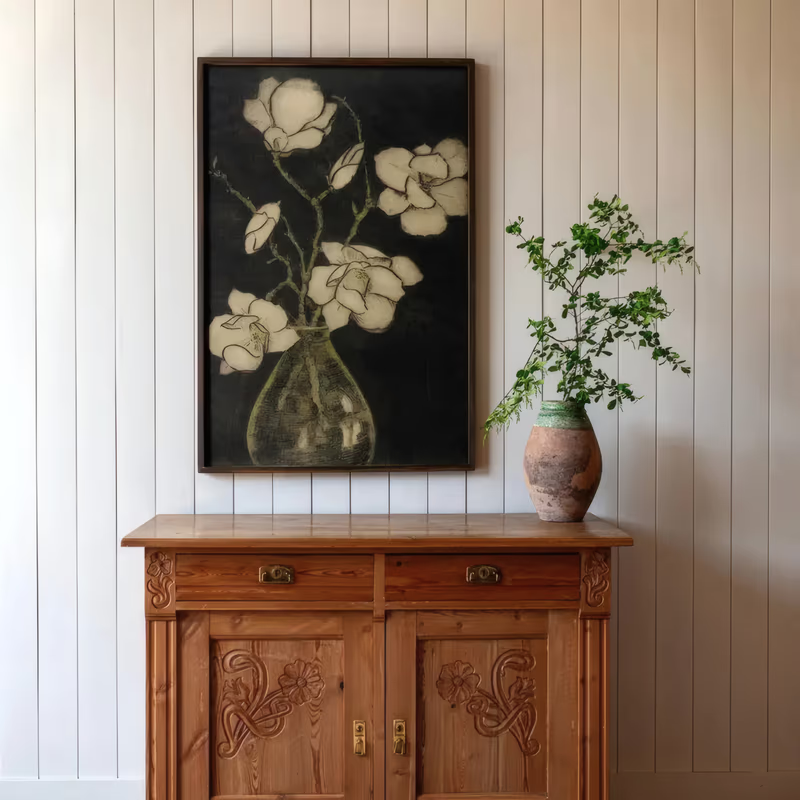
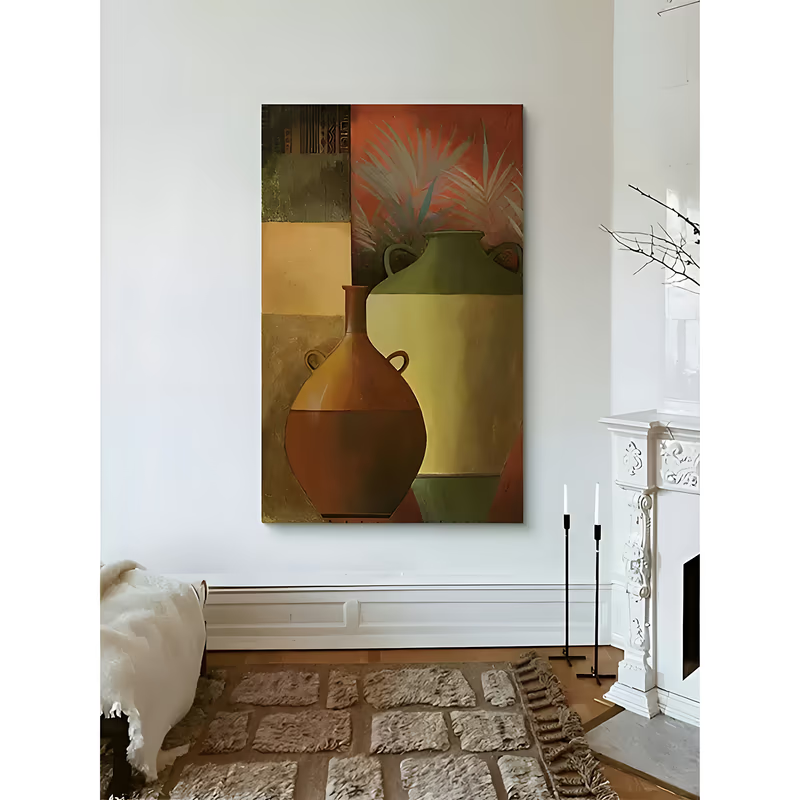
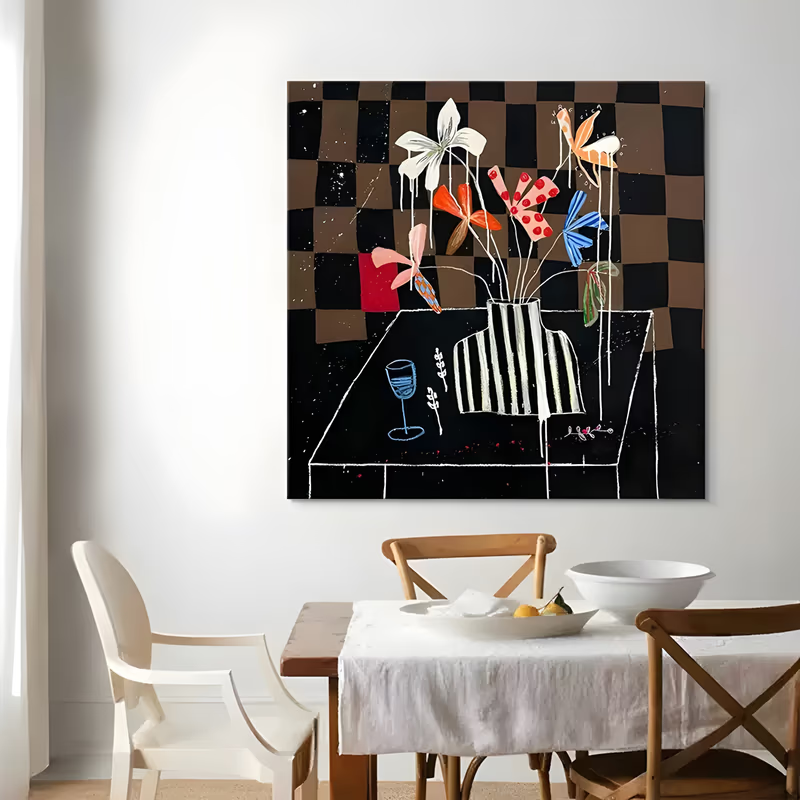
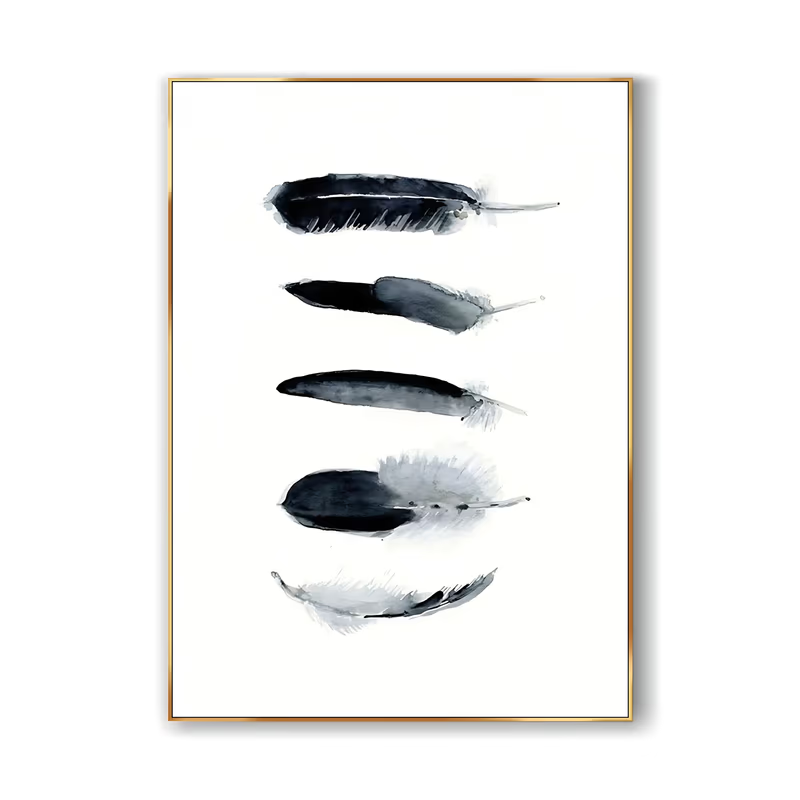
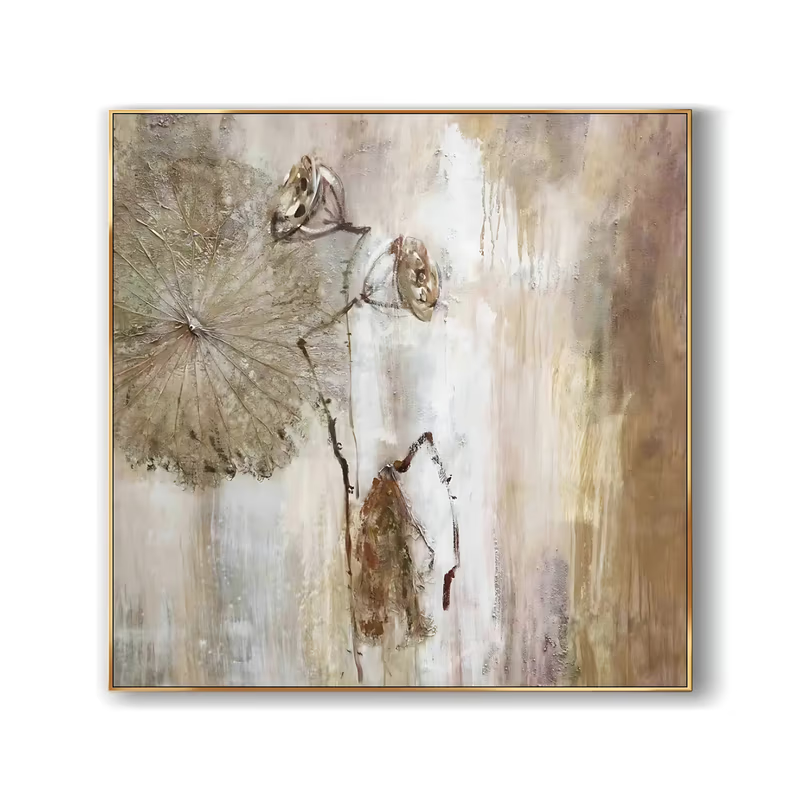
| Minimal and wabi-sabi | A single vase on black, a withered lotus pod, a terracotta jug with palm fronds | Japandi rooms, quiet entrance halls, spa lounges |
Browse by mood if the room has one already: warm still lifes, romantic ones or bold ones.
What kinds of still life paintings are there?
The still life paintings here fall into four groups by technique: bright knife-painted bouquets and tables, realistic studies, impressionist vases and modern abstract or minimal arrangements.
Knife-painted bouquets and tables
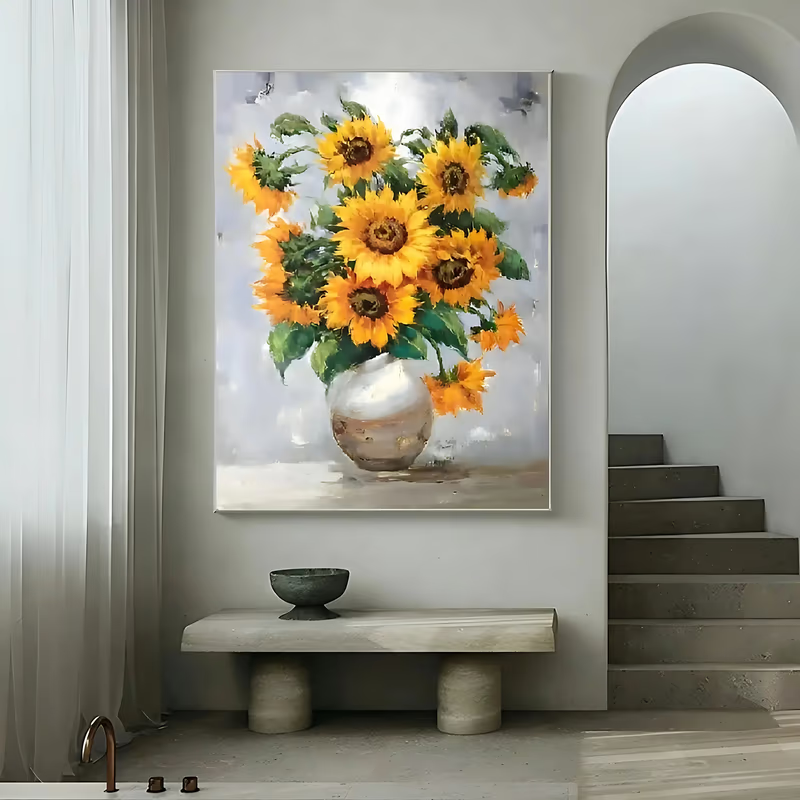
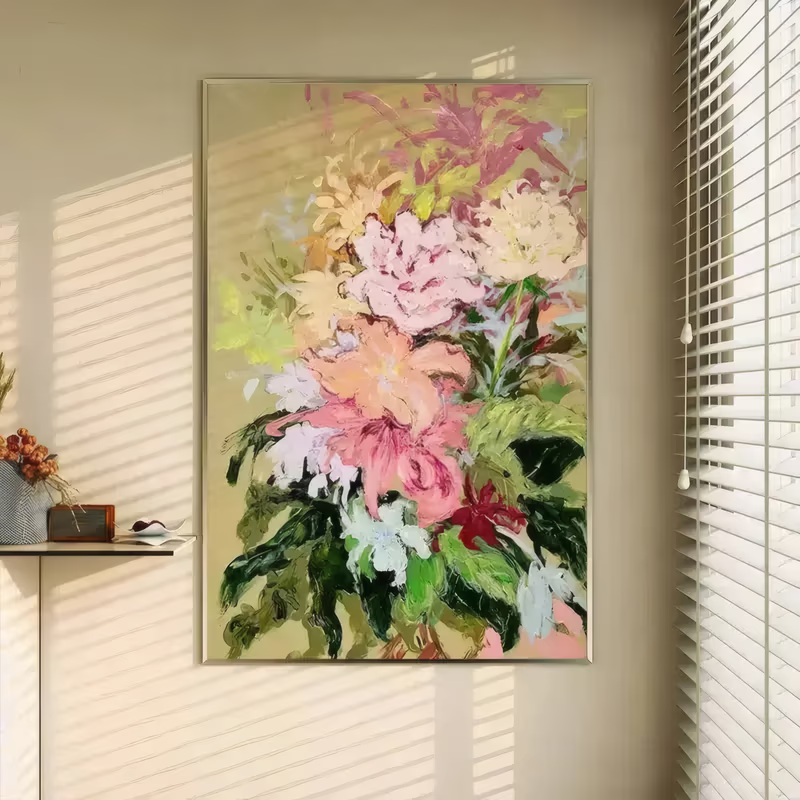
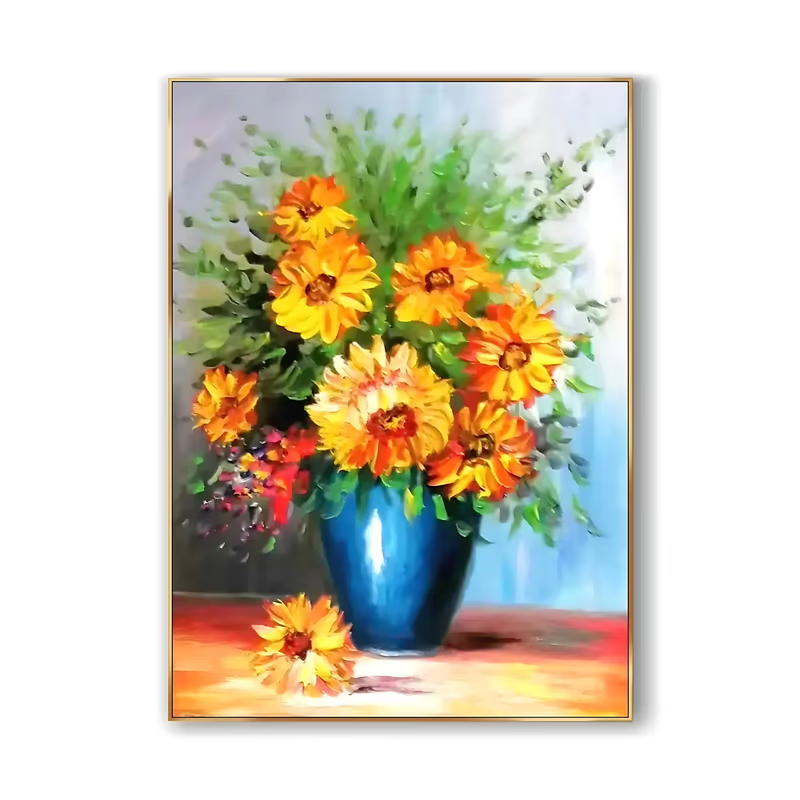
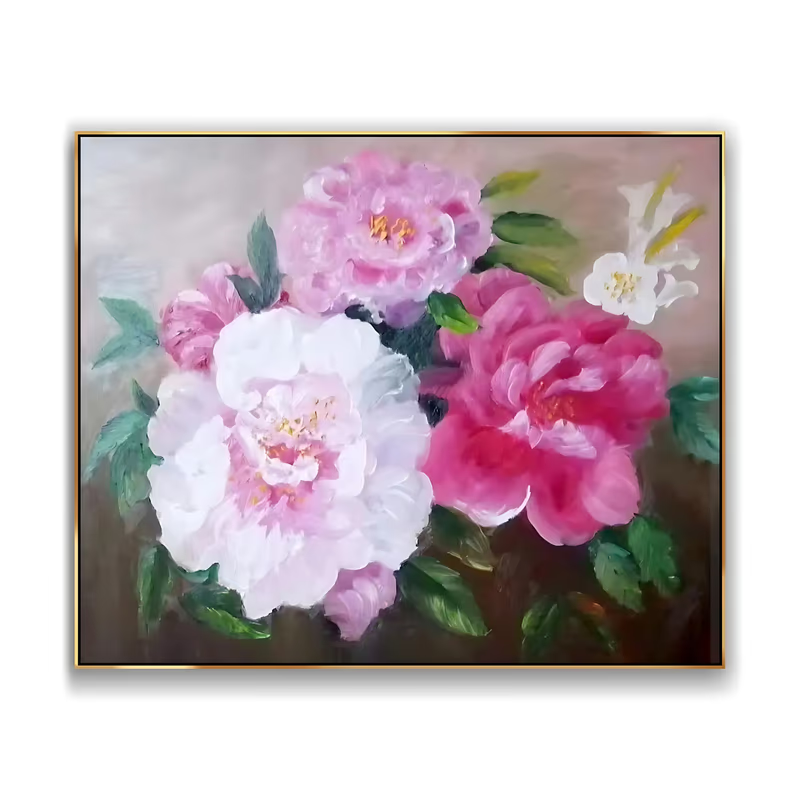
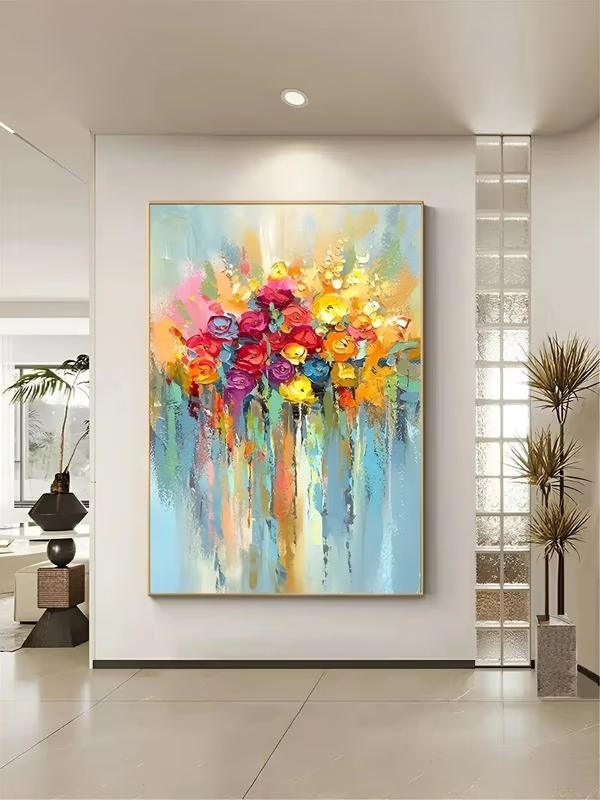
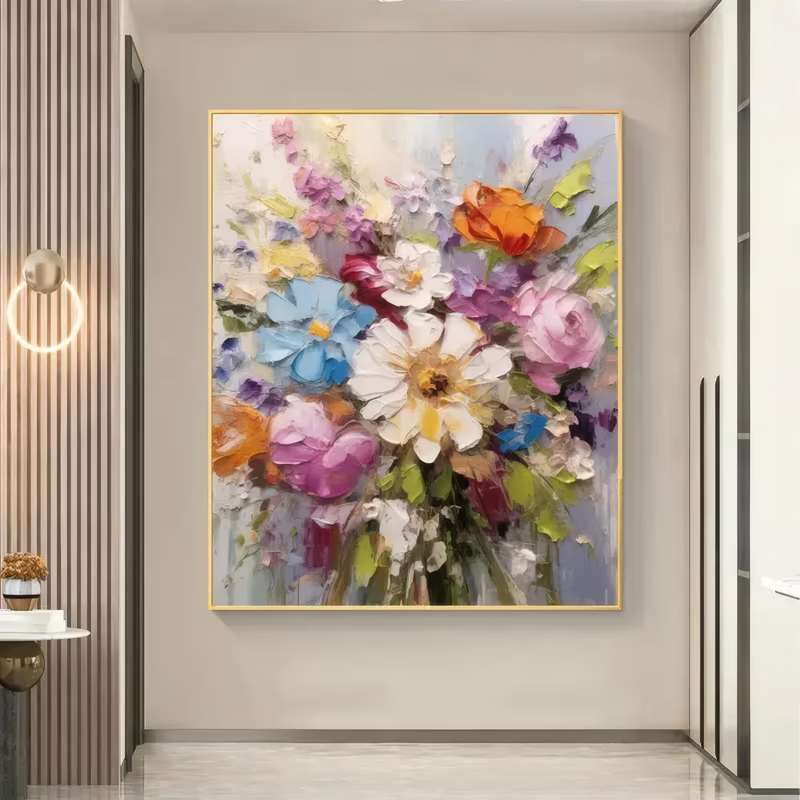
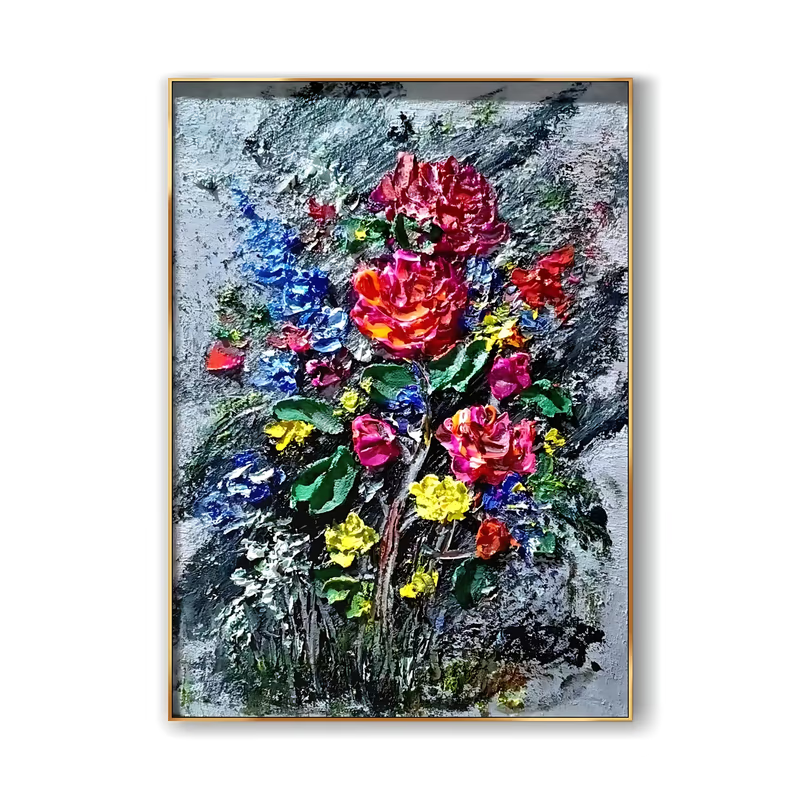
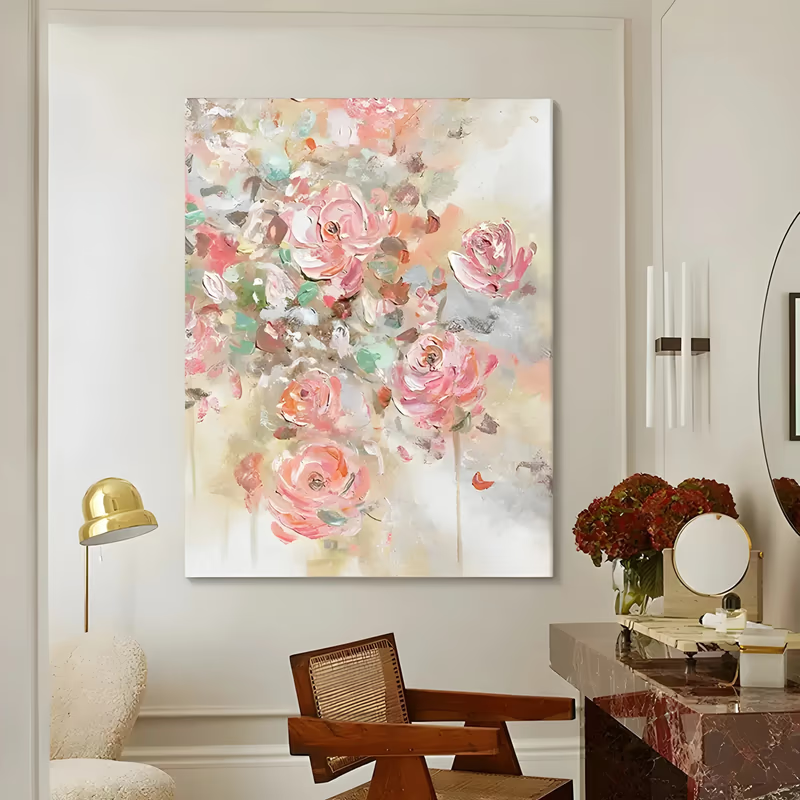
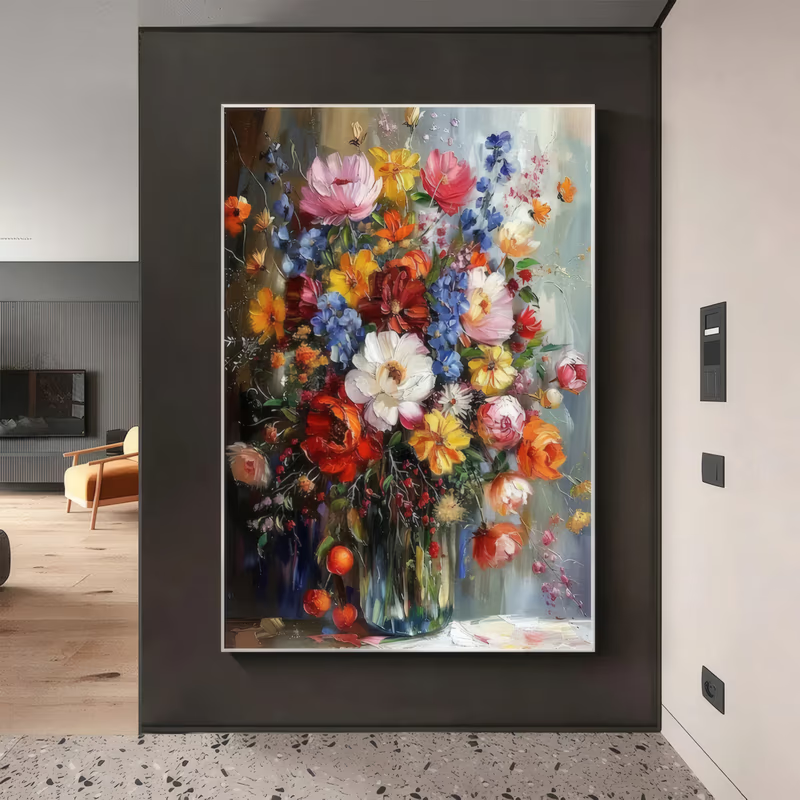
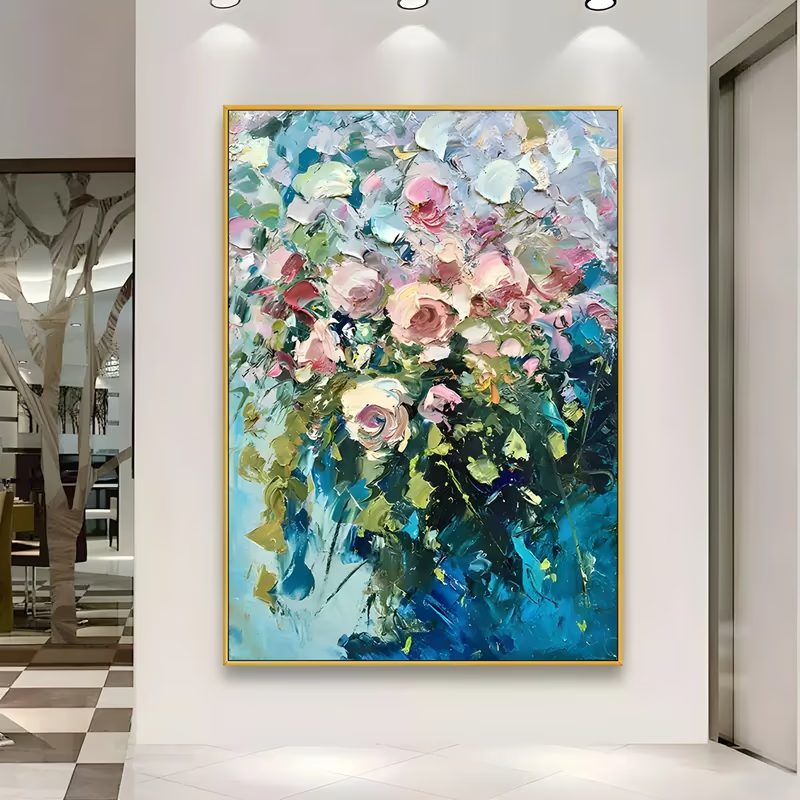
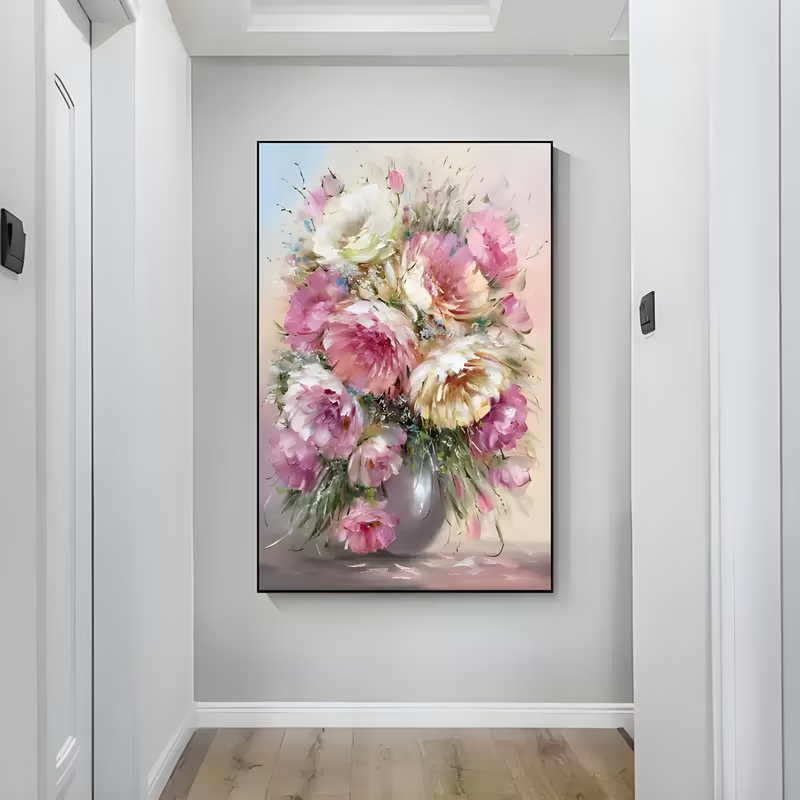
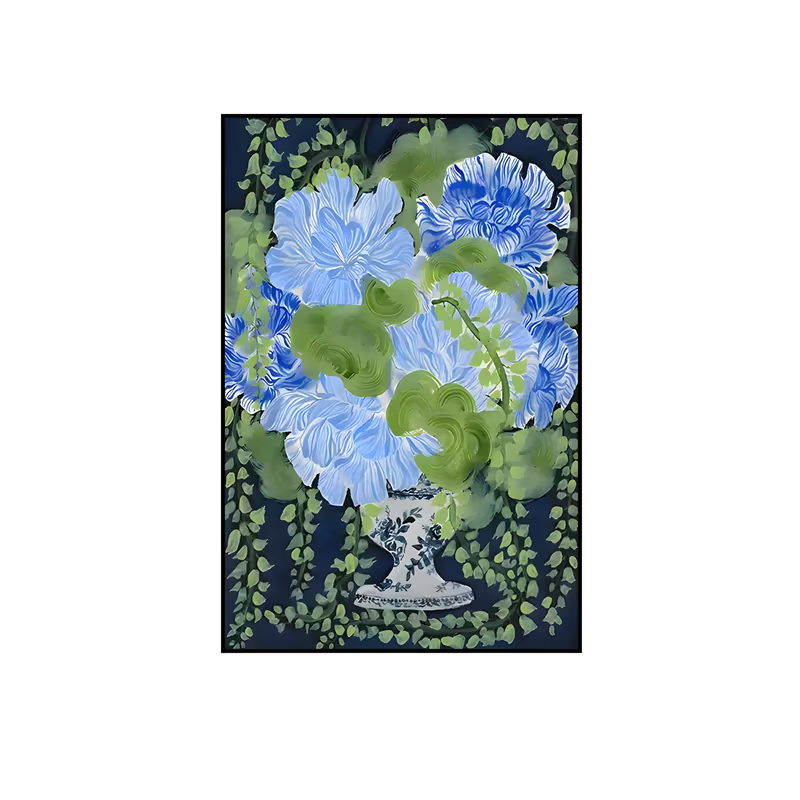
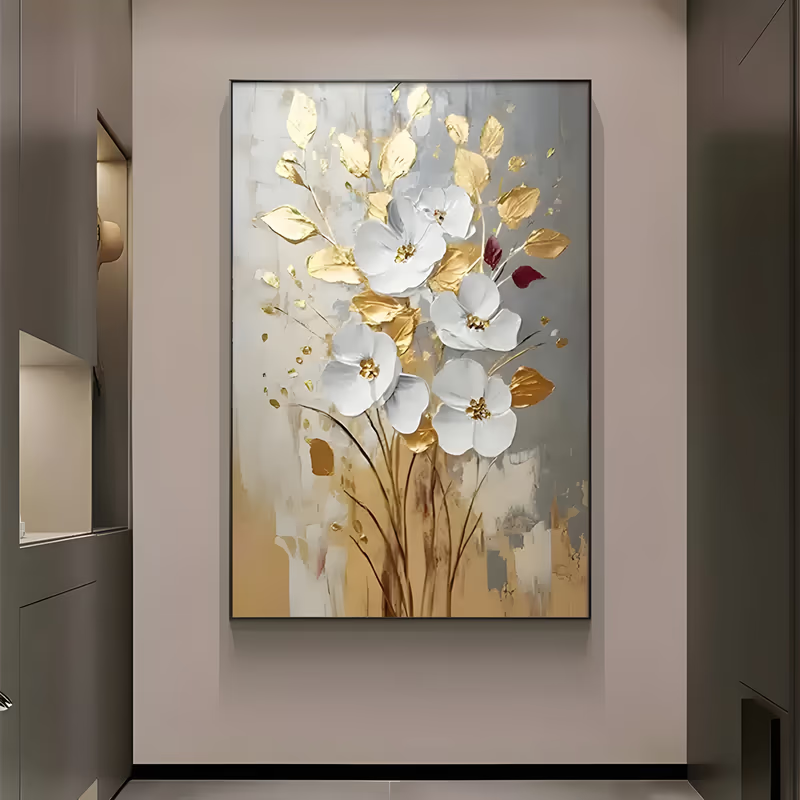
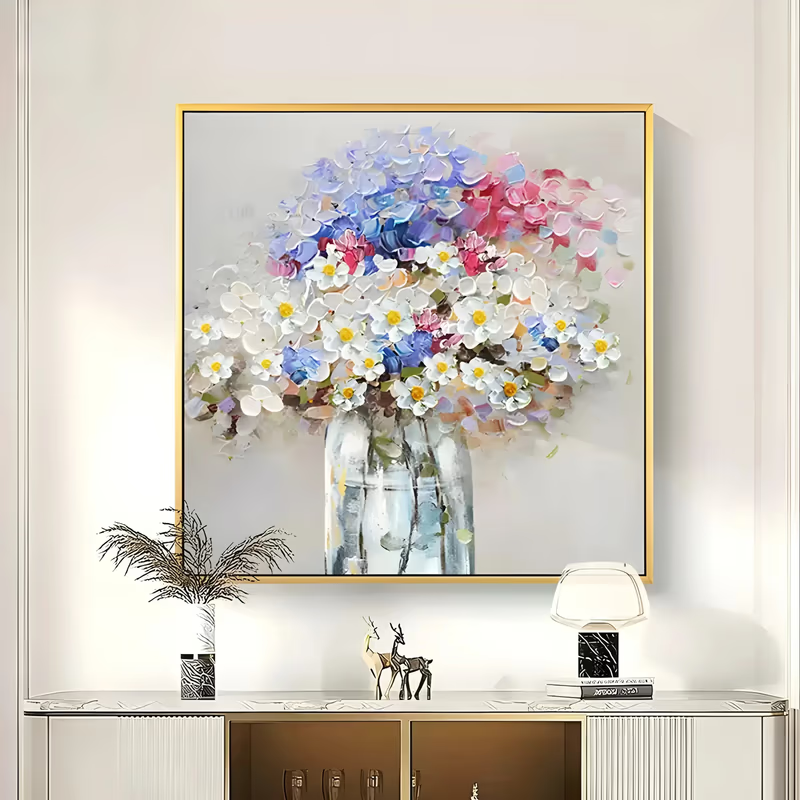
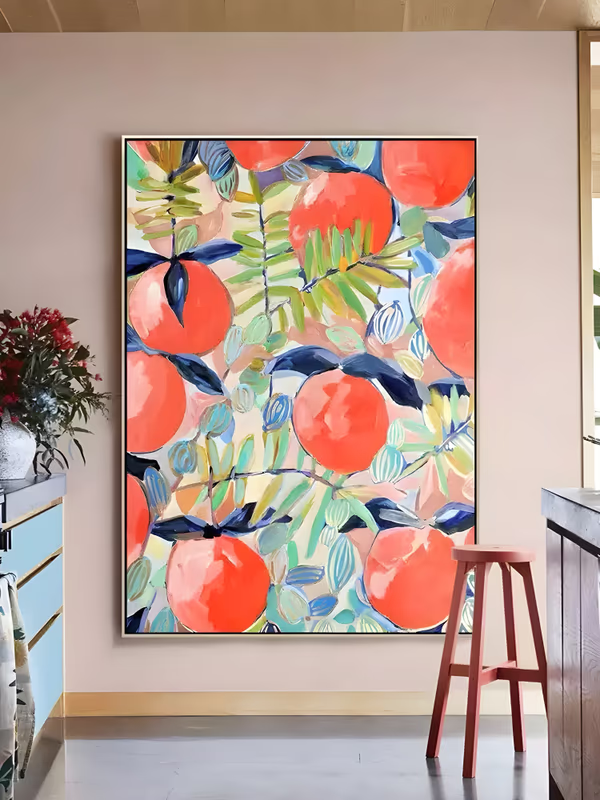
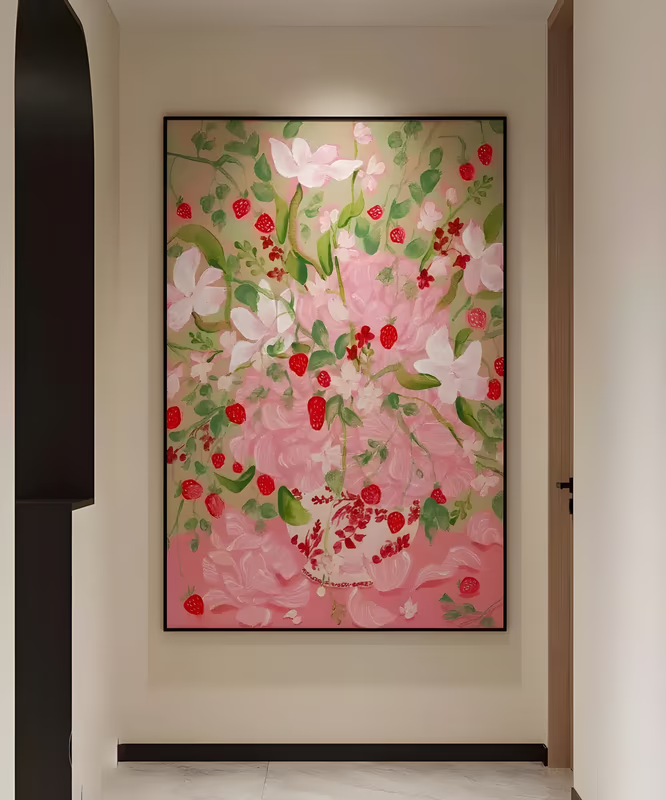
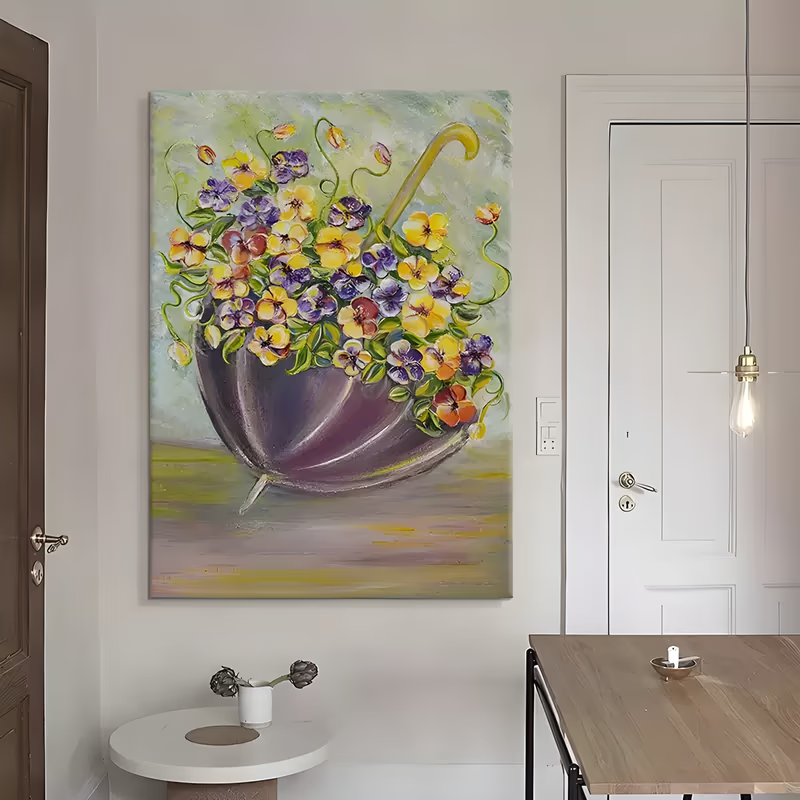
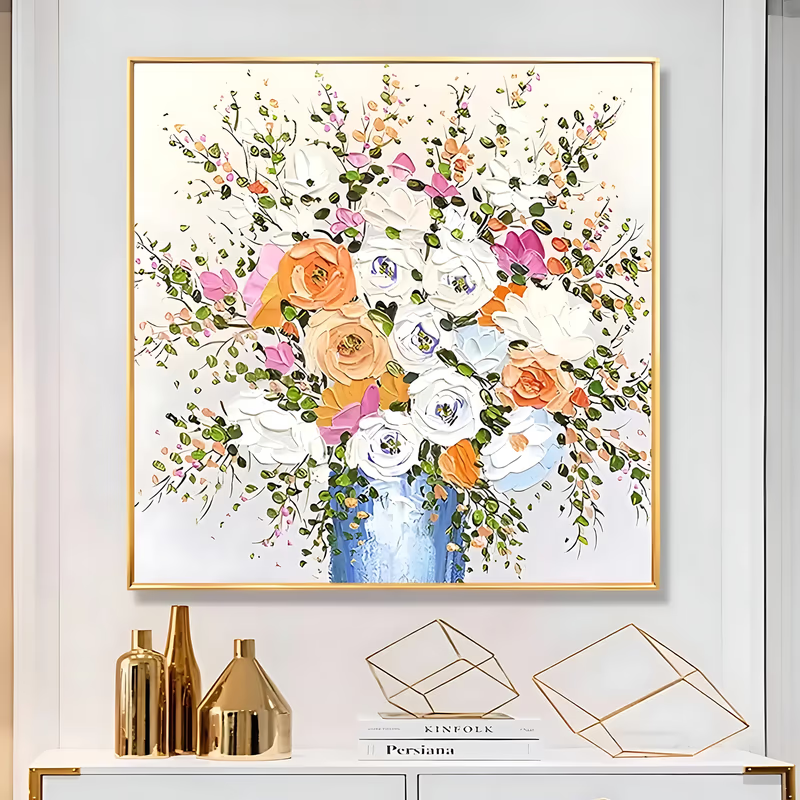
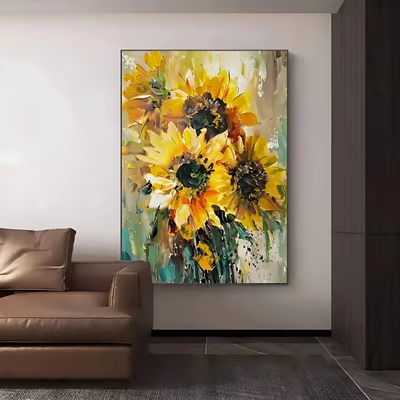
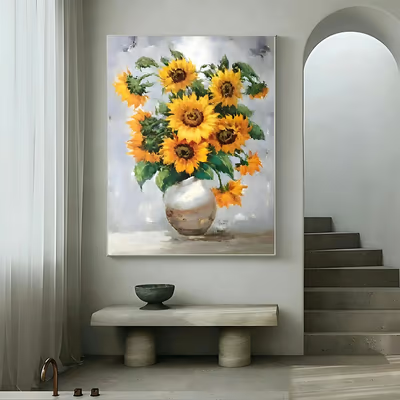
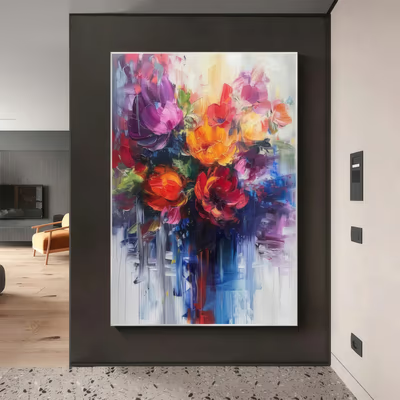
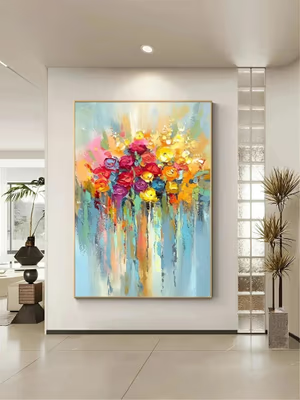
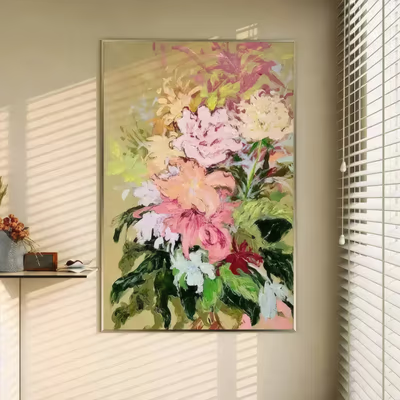
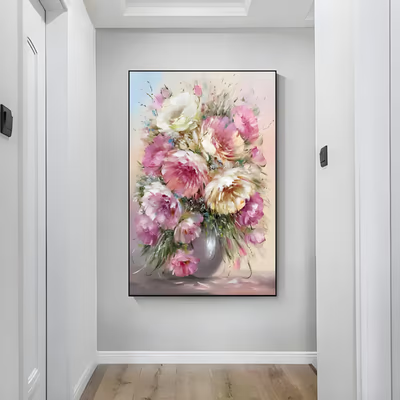
Sunflowers in an ochre vase, blue hydrangea beside porcelain, folk flowers in a striped jug, peonies with strawberries: paint laid on thickly with the knife so every petal catches the light. Warm and sociable, these suit kitchens, cafés and family dining rooms.
Realistic still lifes
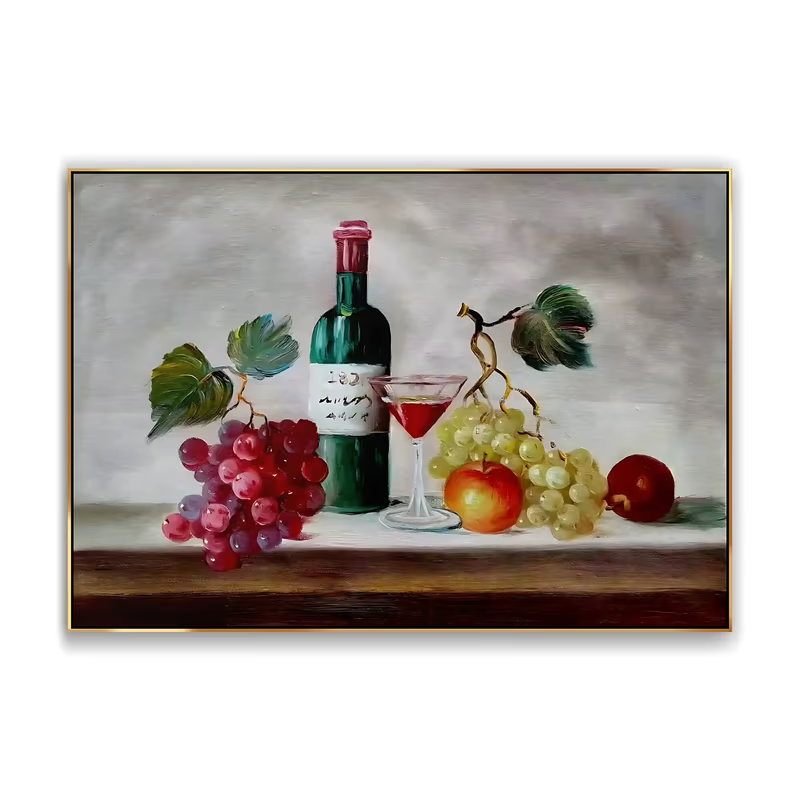
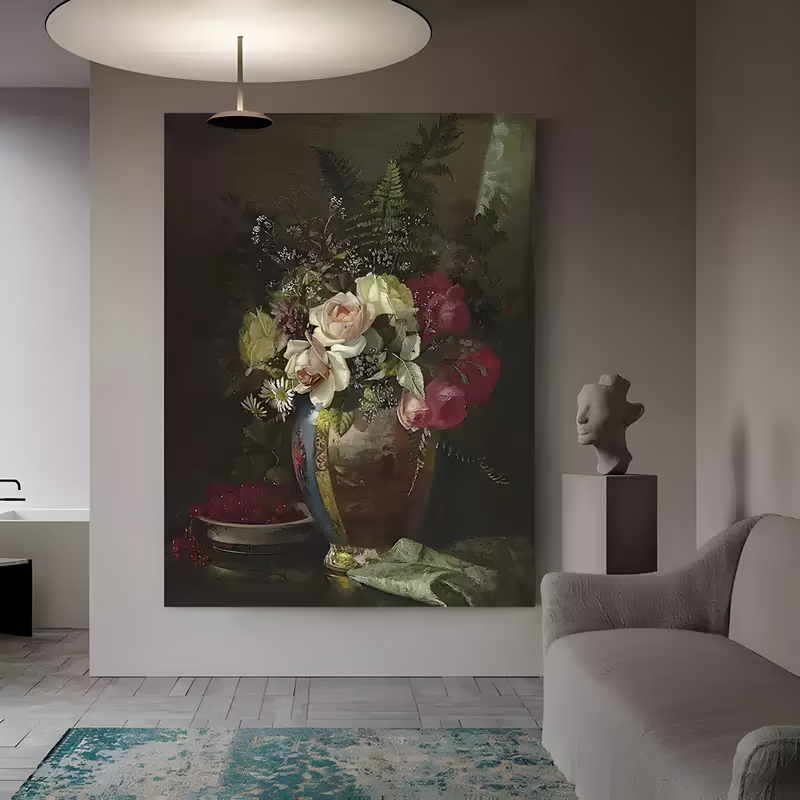
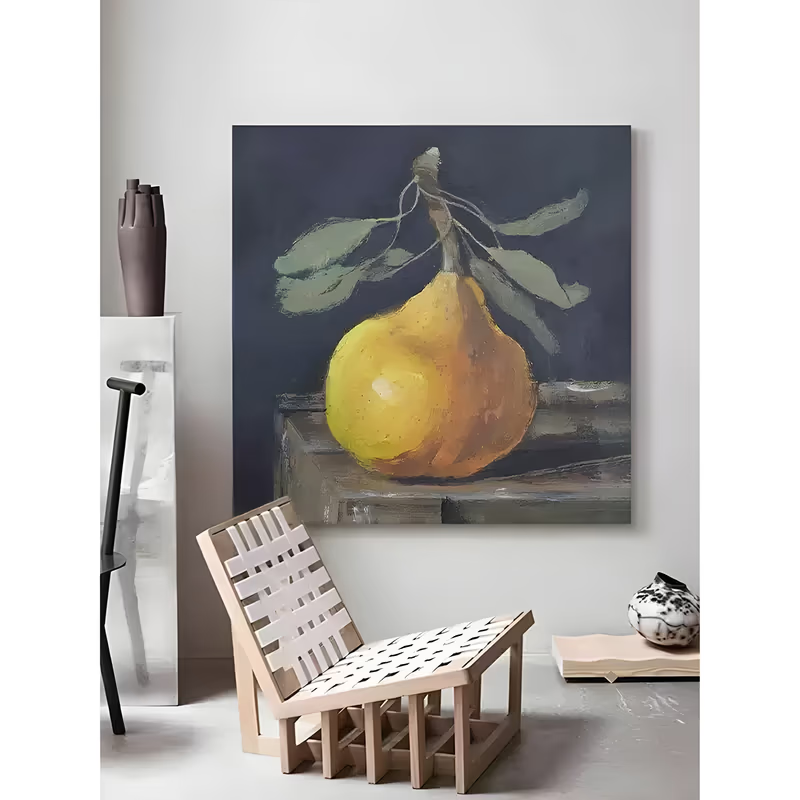
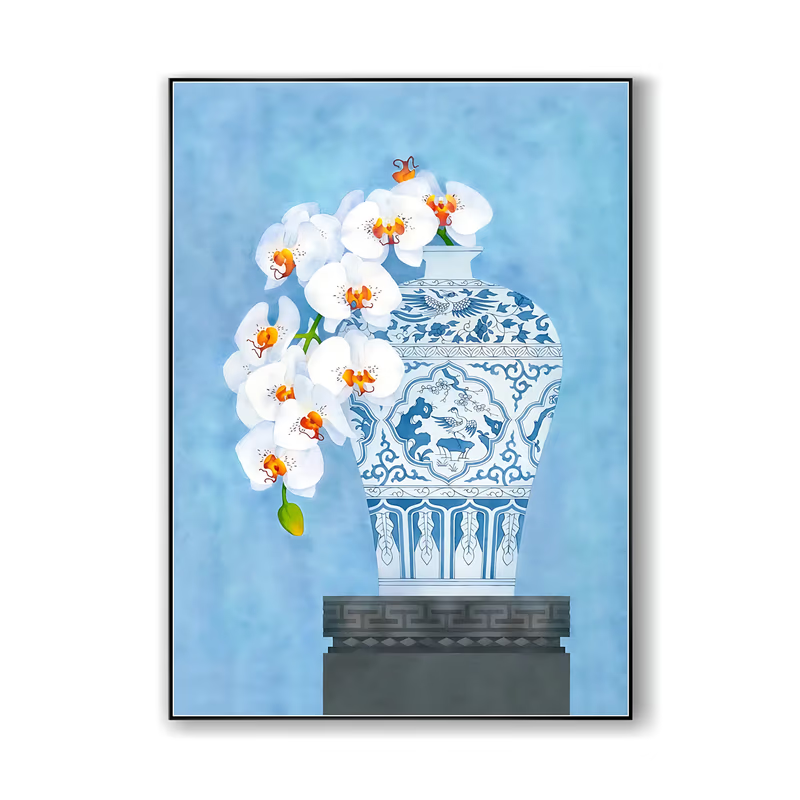
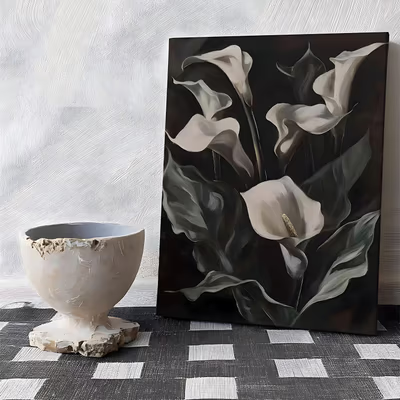
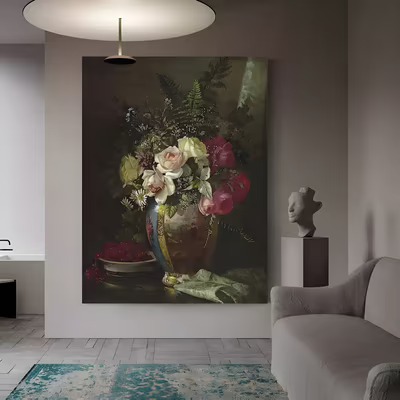
A rose and tulip bouquet in an urn, wine with grapes and apples, a golden pear on a stone ledge, white orchids in a ginger jar: precise light on glass, skin and porcelain in the Dutch manner. These give formal dining rooms, wine bars and hotel restaurants their sense of occasion. See hyperrealism.
Impressionist vases and fruit
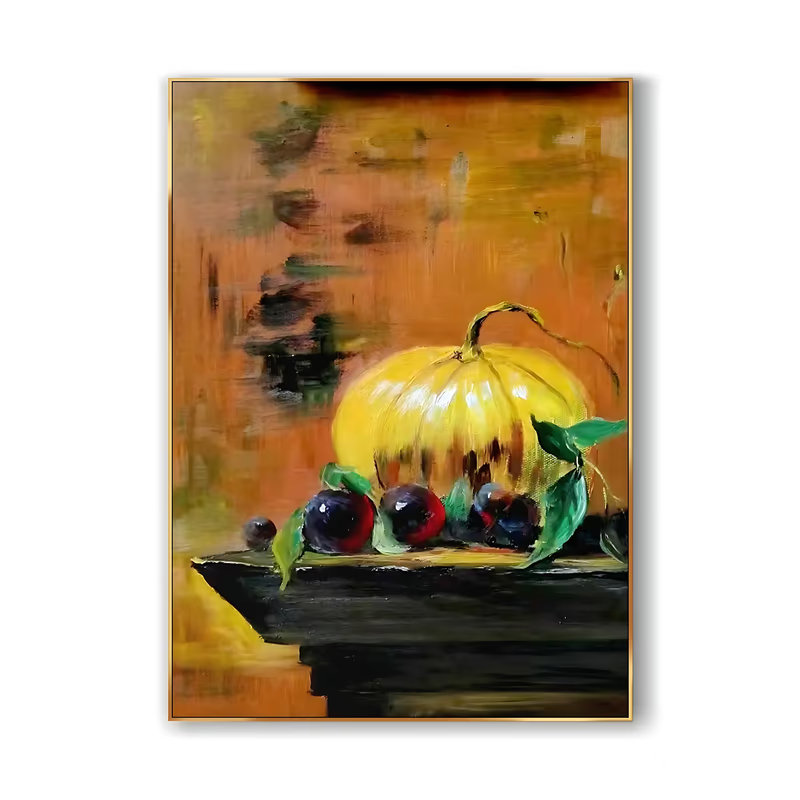
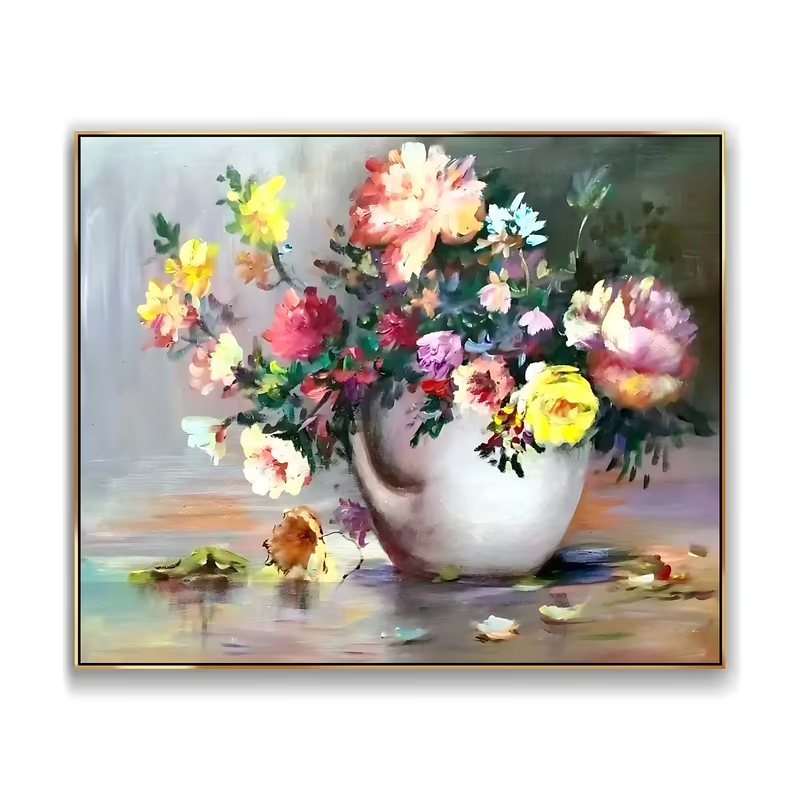
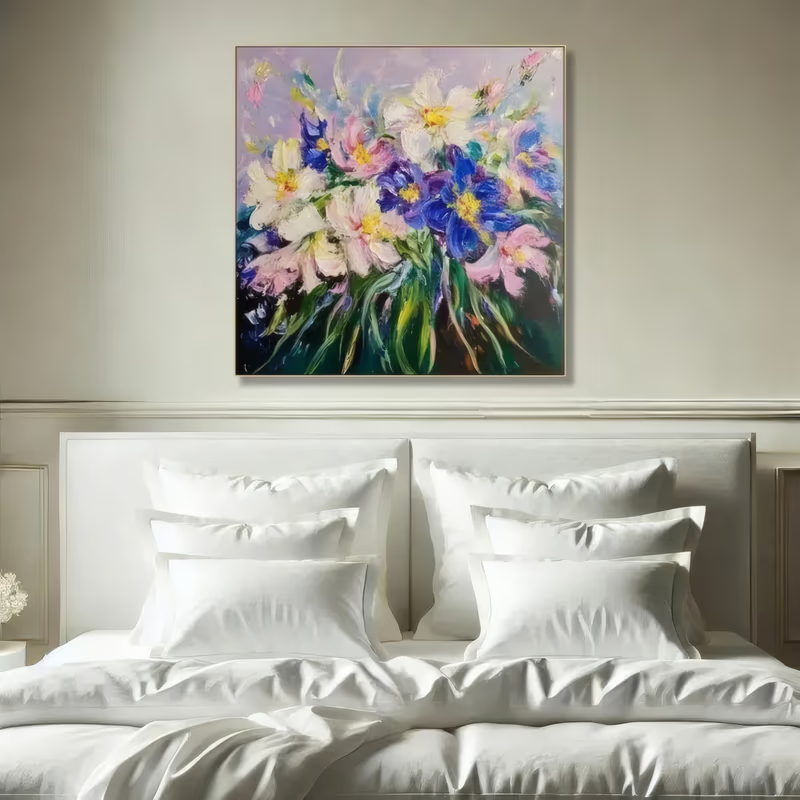
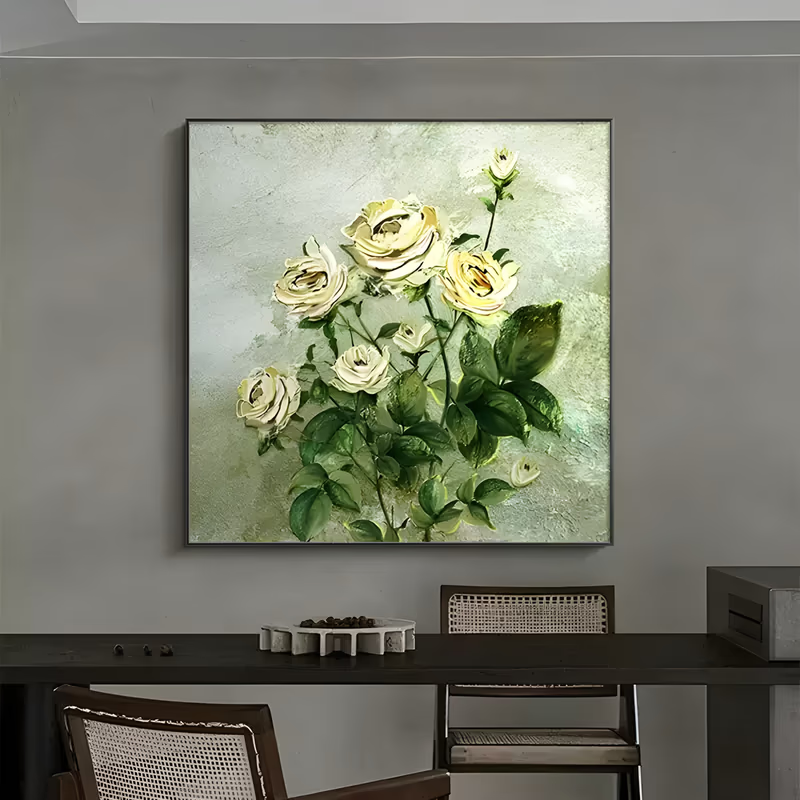
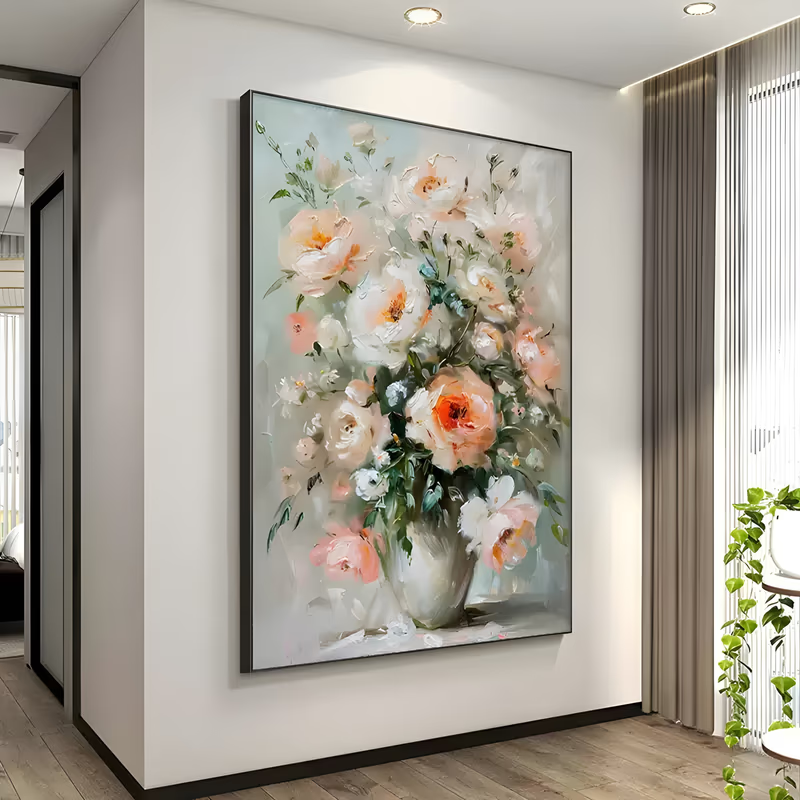
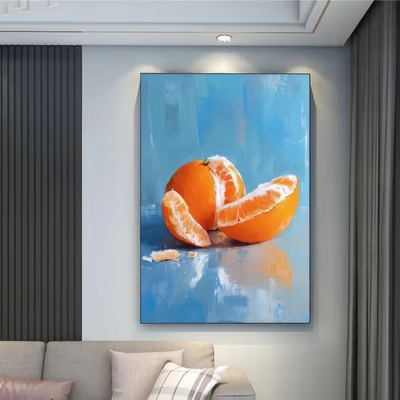
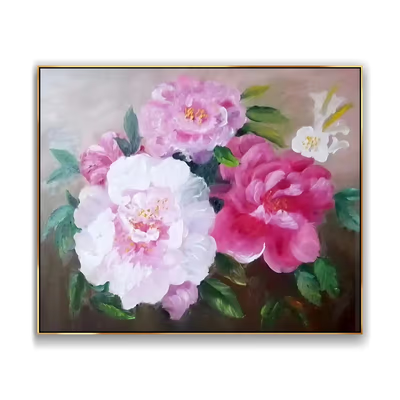
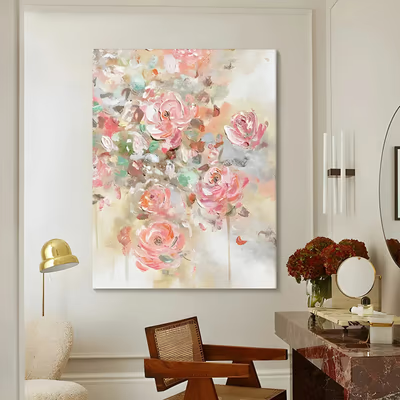
White roses in a green vase, peonies in silver, a pumpkin with dark plums: soft edges and visible brushwork that describe the moment rather than the object. The gentlest still lifes for bedrooms, breakfast rooms and guest suites. More in the impressionist style.
Modern, cubist and minimal still lifes
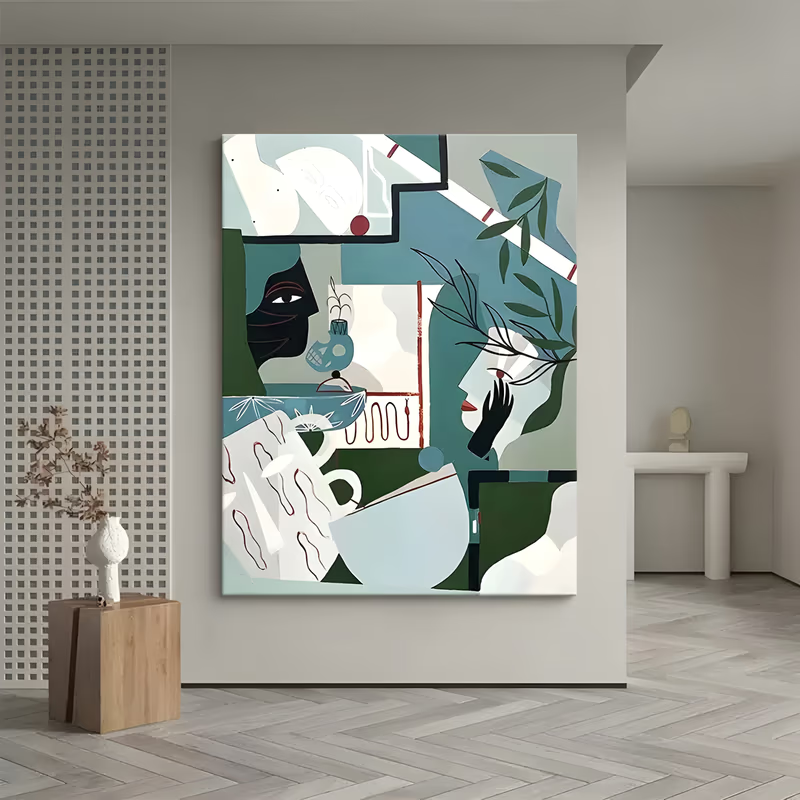
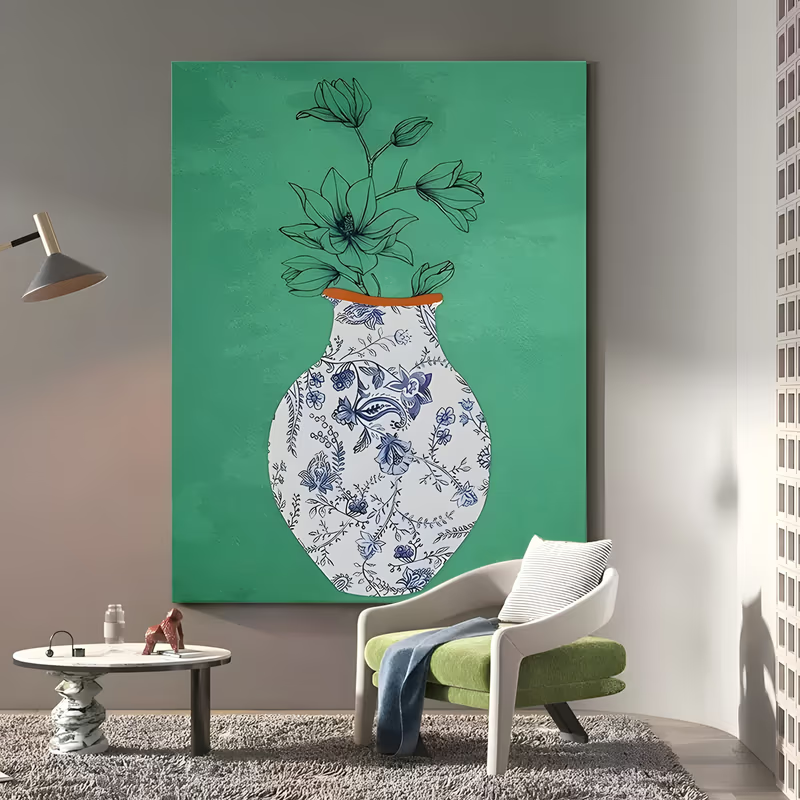
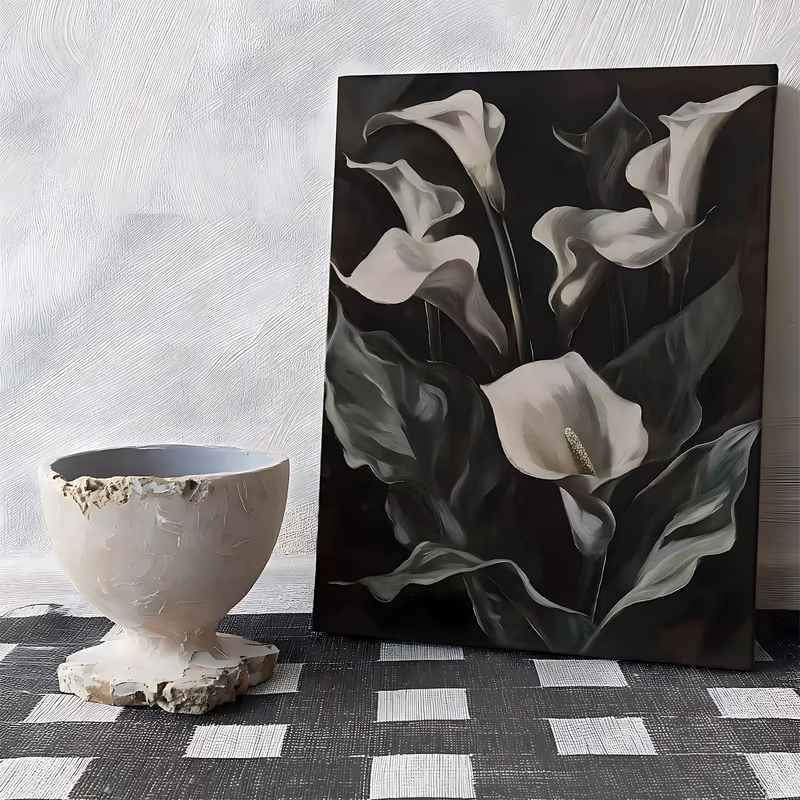
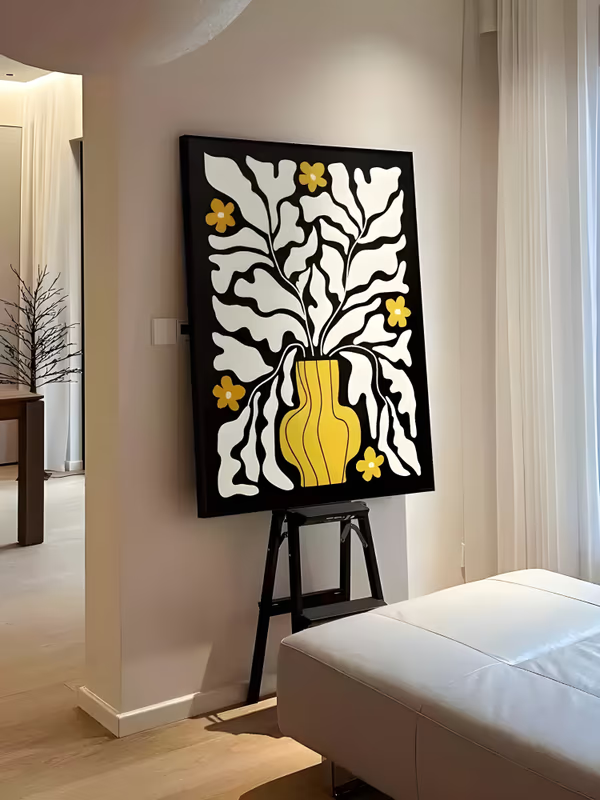
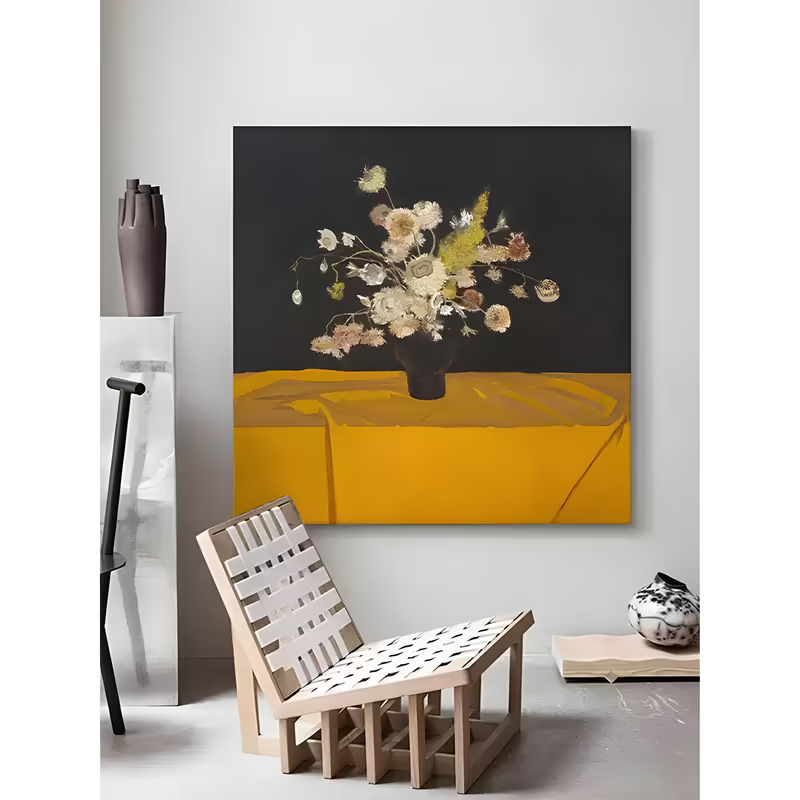
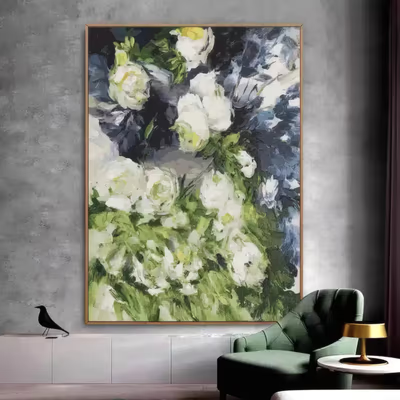
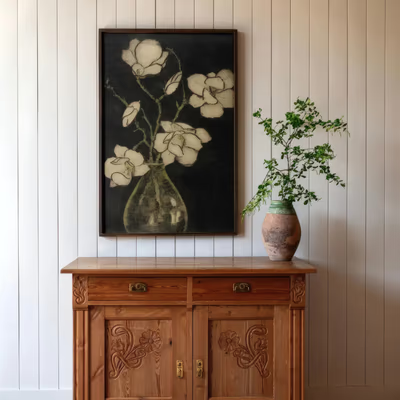
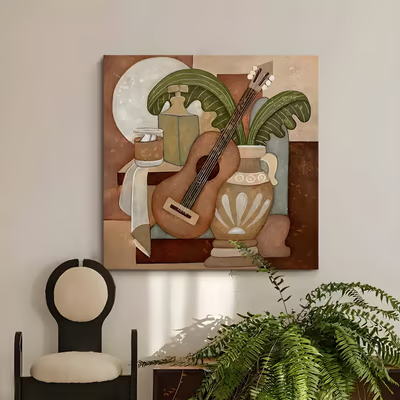
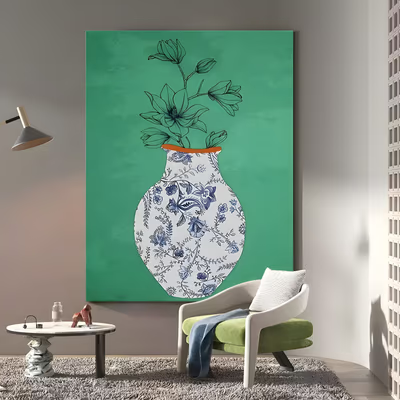
Ochre jugs and fruit split into planes, a terracotta guitar vase with a palm leaf, a yellow vase on black, a blue-and-white porcelain jar on emerald. These keep the genre's calm but read as contemporary art on a gallery or restaurant wall.
What do the objects in a still life painting mean?
Traditionally, fruit and bread stand for abundance, flowers for beauty that fades, porcelain and silver for wealth and travel, and wine for hospitality; today the objects mostly set the mood of the room.
Dutch painters loaded their tables with meaning. A ripe fruit at its peak hinted at decay to come; a blown tulip reminded viewers how quickly beauty passes; imported porcelain and lemons showed trade and prosperity. Modern buyers rarely choose a still life for its sermon, but the objects still send signals, so pick them for the room's use. Fruit, bread, wine and fish belong with food: dining rooms, kitchens and restaurants. Vases of flowers suit almost anywhere, from an entrance console to a bedroom. Blue-and-white porcelain and ginger jars bring a collected, travelled feel to classic interiors, and single jugs or urns suit rooms that should feel calm and uncluttered.
Where should you hang a still life painting?
Hang a still life where real objects and food are already arranged: over a dining-room sideboard, in a kitchen or breakfast nook, above an entrance console, or along a restaurant banquette.
Dining room
The classic place: a horizontal still life above a sideboard or a pair either side of it, echoing the table. Still lifes for dining rooms.
Kitchen and breakfast room
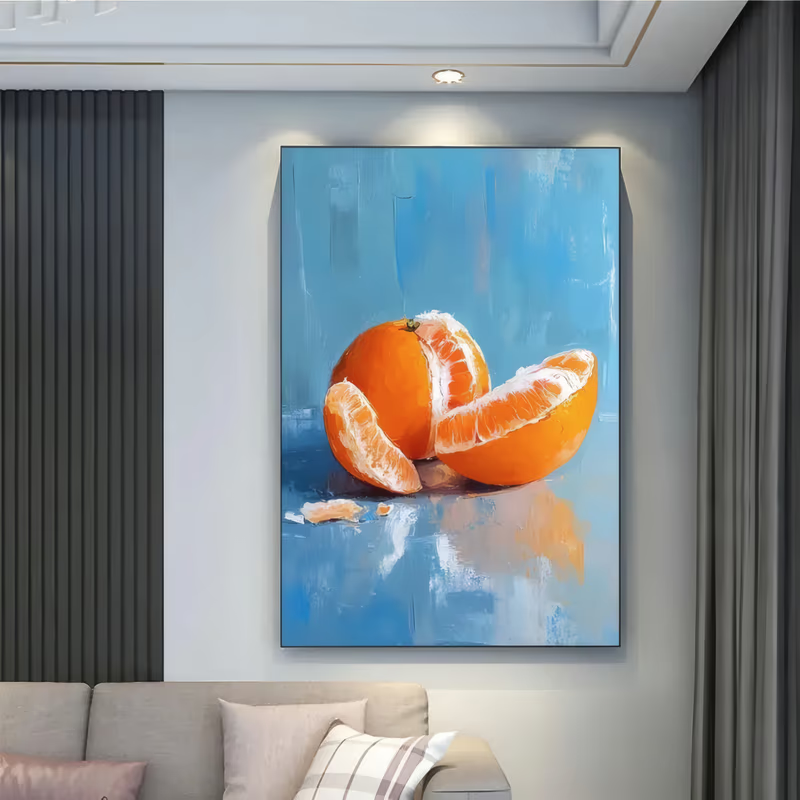
Fruit, sunflowers and jugs suit open shelving walls and the space above a banquette, away from the hob. Bright, uplifting still lifes.
Entrance hall
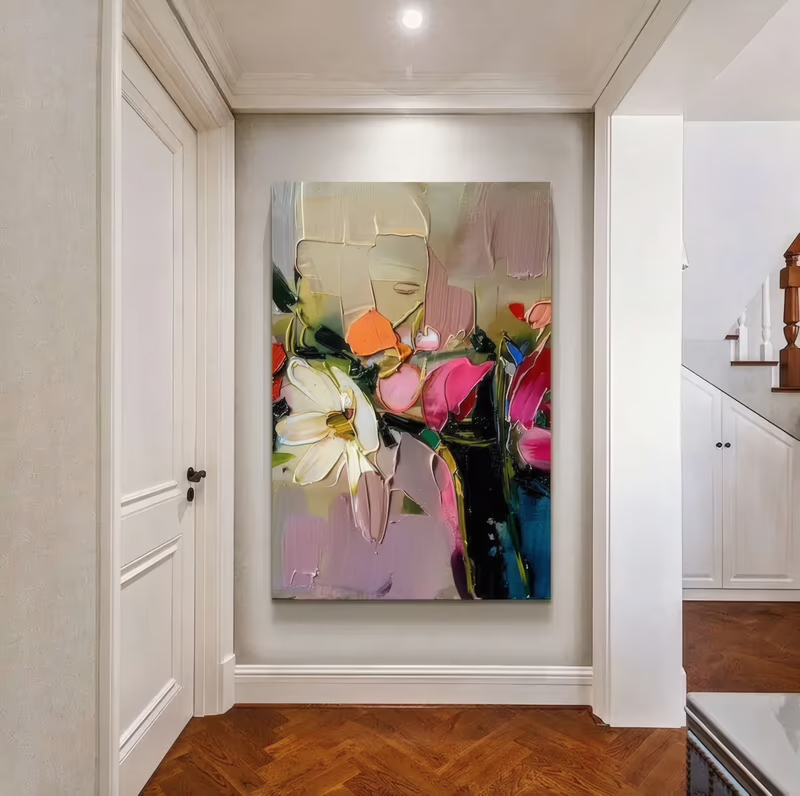
A vase of flowers above a console with a real vase beside it is an easy, welcoming composition. Still lifes for hallways.
Restaurants, bars and cafés
Still lifes are made for hospitality: a wine-and-grapes piece in a wine bar, a folk table in a taqueria, a sequence of vases along a banquette. Still lifes for restaurants and bars, and the restaurant buyer page.
What size should a still life painting be?
Size a still life so its objects appear near life size, then let the canvas span about two-thirds of the sideboard or console below it.
A painted vase or fruit bowl at roughly its true scale looks convincing from a dining chair, which is the distance most still lifes are seen from. Much larger, and the objects turn monumental, which can be a striking choice in a restaurant or lobby but feels heavy over a family table. Much smaller, and the picture reads as a postcard. Over a sideboard, hang the canvas 15–20 cm (6–8 in) above the top so the painted table seems to continue the real one. Most still lifes here are vertical or square, which suits a pair either side of a buffet, a narrow wall in a kitchen or a column of three along a banquette. For a single wide piece, any composition can be redrawn into a horizontal format.
How is a still life painting matched and approved before it ships?
Tell us the size, the colours of your room and any objects you want changed, and the still life is painted to that brief with your approval at every stage.
Because the arrangement is painted for your order, the vase can be recoloured to match your china, the cloth to match your upholstery, and the background to your wall paint or fabric. A busy bouquet can be thinned to fewer stems, or a dark Dutch ground lightened for a sunny room. Photos or video of each stage come to you, and the painter waits for your approval before going on. After a final photograph is approved, the canvas leaves rolled, stretched on bars ready to hang, or framed in gold, silver, black, white or wood. Ask for a quote or see custom options.