Abstract painting guide · Updated
How to choose a modern abstract painting by mood, surface and scale
Key takeaways
- No subject, so judge the energy: soft edges, close tones and open space read calm; hard contrast, crowded marks and hot colour read bold.
- Surface matters as much as colour: plaster relief changes with the light through the day, while a flat colour field reads the same from across the room.
- Go bigger than feels safe: an abstract with no focal object needs scale to hold a wall; aim for around two-thirds of the furniture or wall width.
- One design, many walls: an abstract composition can be repainted in a second or third colourway, which keeps a series related without repeating it.
What makes a painting a modern abstract, and what does it bring to a room?
A modern abstract painting is built from colour, line, shape and texture instead of a recognisable scene, and in a room it adds atmosphere and focus without telling a story.
A landscape or a portrait asks the eye to recognise something first. An abstract skips that step, so the first thing anyone notices is how it feels: warm or cool, still or restless, heavy or light. That is the practical reason designers specify abstracts so often. They do not tie a room to a season, a place or a period, and they sit as easily with a linen sofa as with a marble reception desk.
This page gathers paintings whose subject is abstraction itself. If you want the wider picture of the abstract style, including abstract florals, abstract seascapes and cubist work, see the abstract style collection. For hard-edged blocks, arcs and grids, the geometric theme goes further.
Does an abstract painting need to mean something?
No. An abstract painting works on a wall through its colour, rhythm and surface, so you can choose it the way you choose a fabric: by how it makes the room feel.
Many people hesitate in front of abstract art because they think there is a hidden message they are failing to read. For a living space, that worry is misplaced. Some painters start from a coastline, a sound or a memory, but the finished canvas is meant to be looked at, not solved. Ask simpler questions instead. Does it make the room calmer or livelier? Does the eye travel across it or stop on one spot? Do its colours connect to something already in the room, a rug, a timber, a cushion?
A useful habit is to look twice: once from the door, where you see only the big shapes and the overall colour, and once from close up, where texture, drips and knife edges appear. A good abstract rewards both distances, and the second look is what keeps it interesting after the first month.
How do you read the mood of an abstract painting?
Look at four things: how sharp the edges are, how far apart the tones are, how busy the marks are and how warm the colour is; together they decide whether an abstract calms or energises.
| What you see | How it reads | Where it suits |
|---|---|---|
| Soft blended edges, close tones, plenty of open ground | Quiet and restful | Bedrooms, spas, guest rooms, reading corners |
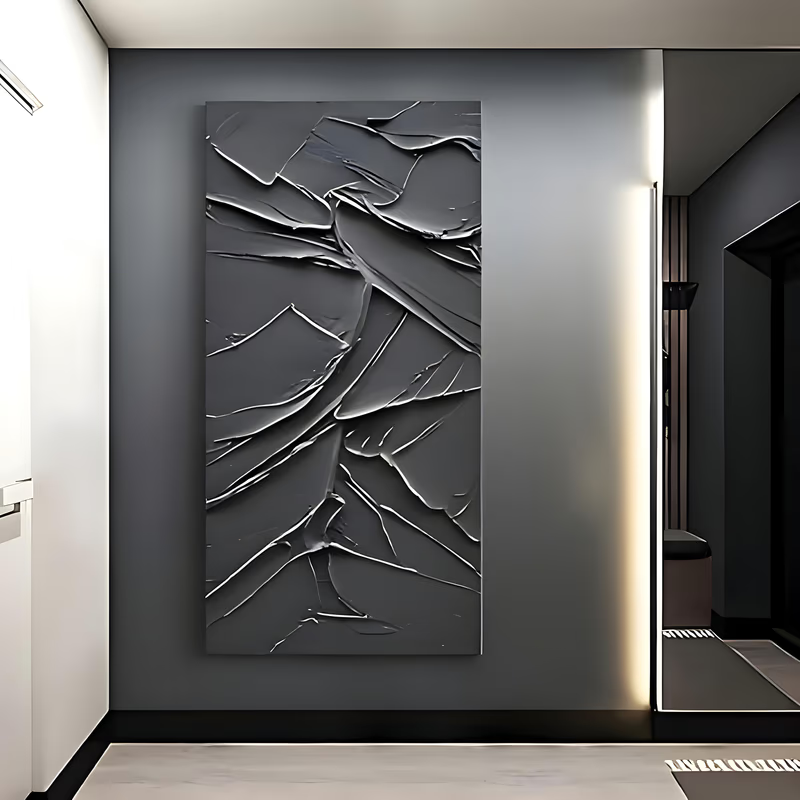
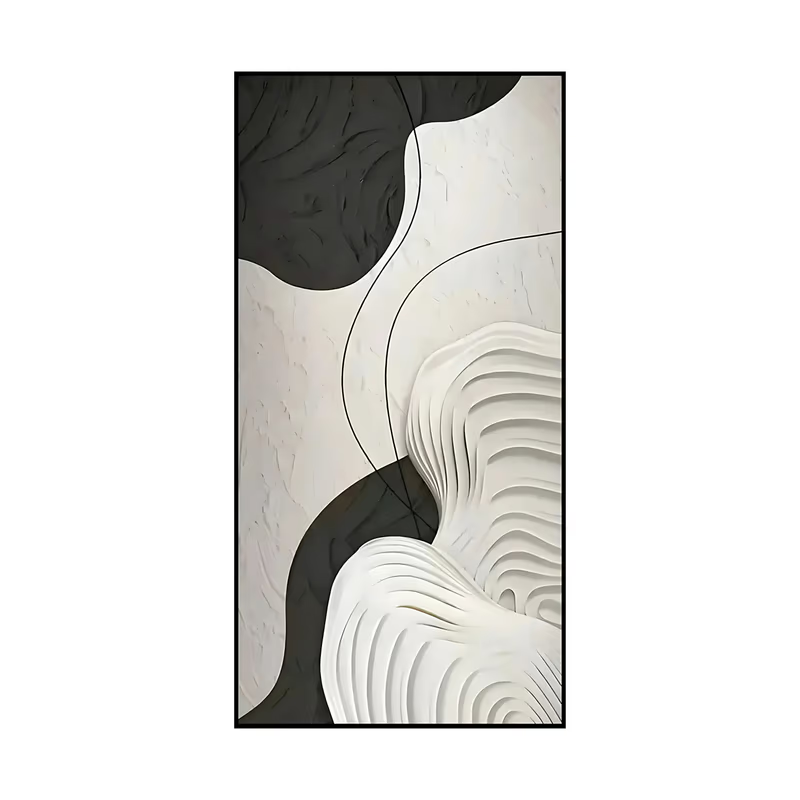
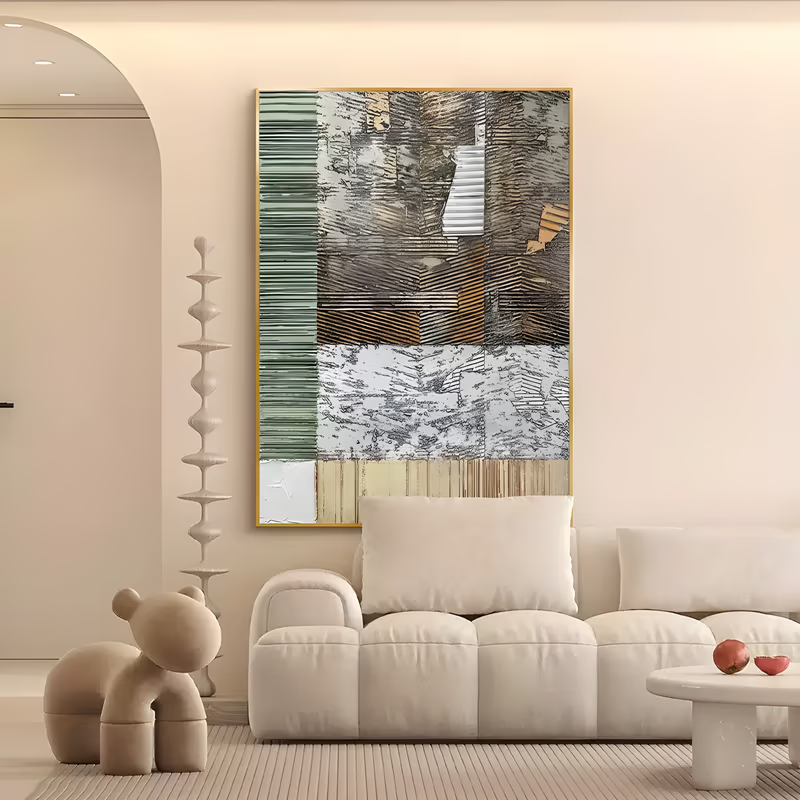
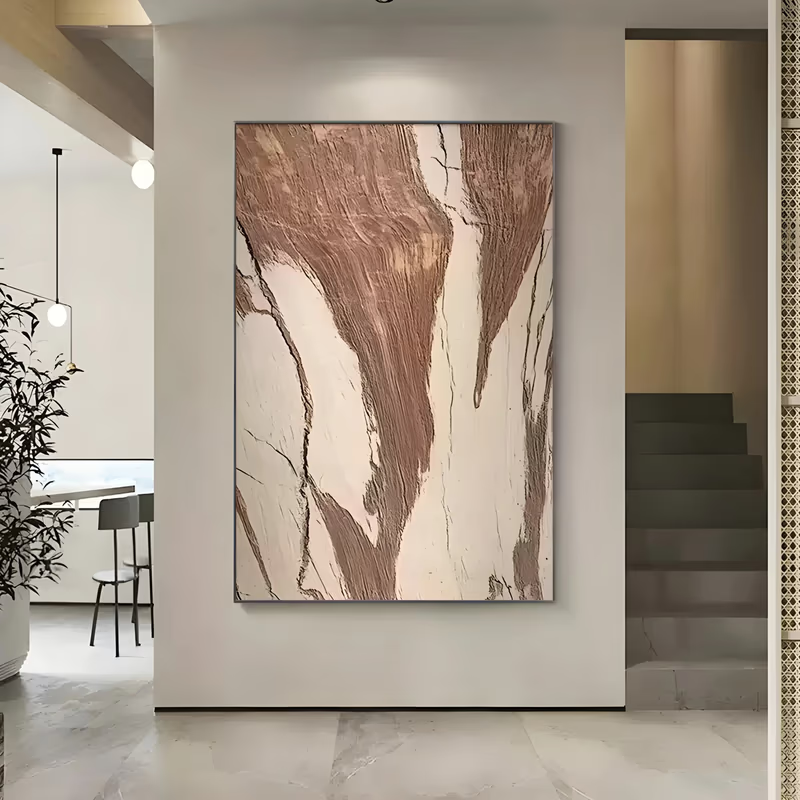
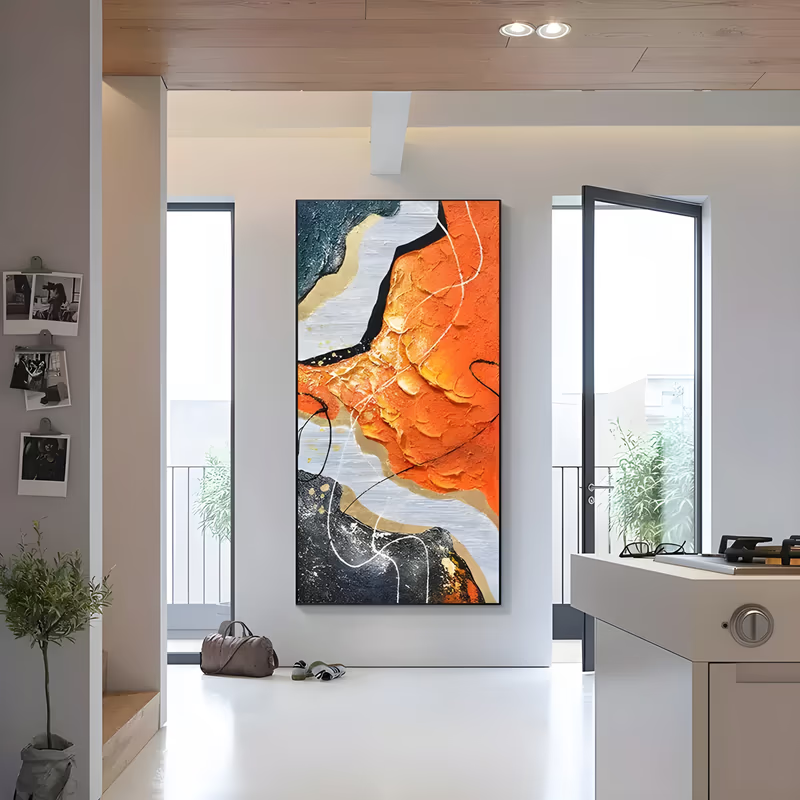
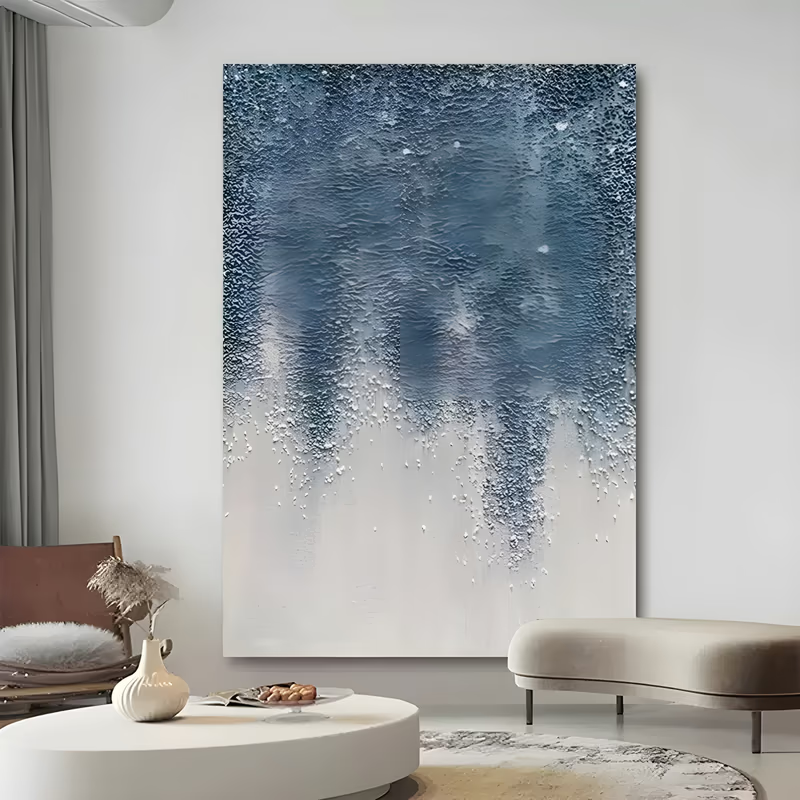
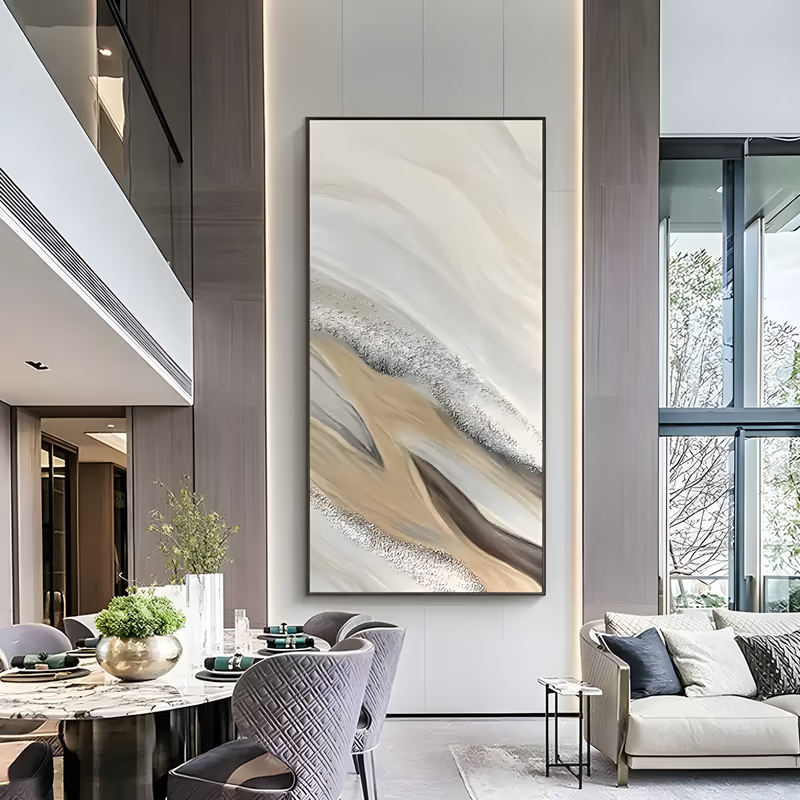
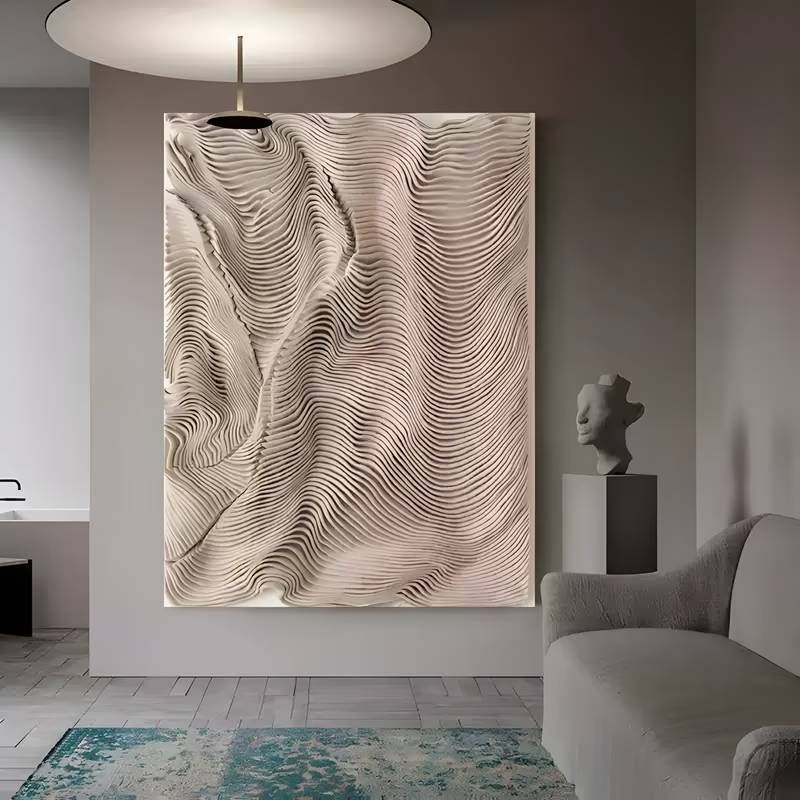
| Raised plaster in one or two colours | Calm but tactile; changes as light moves | Entrances, corridors, lobbies, living rooms in daylight |
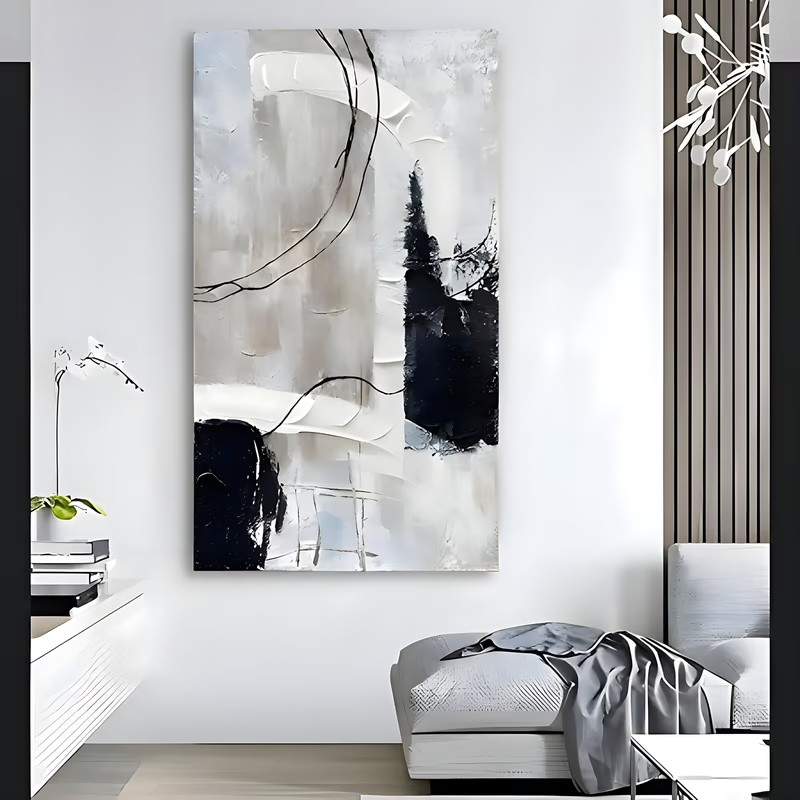
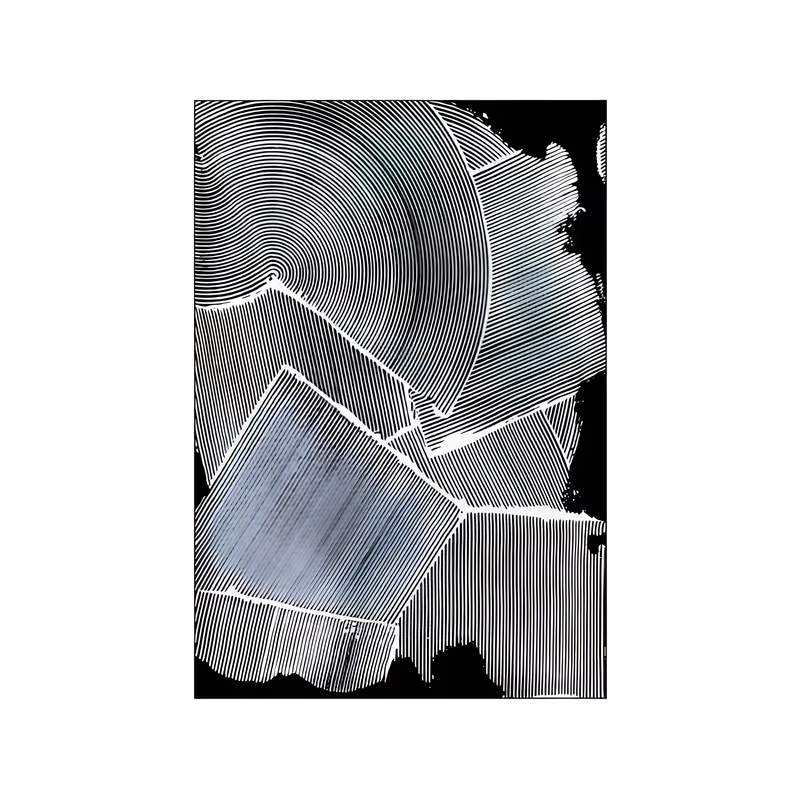
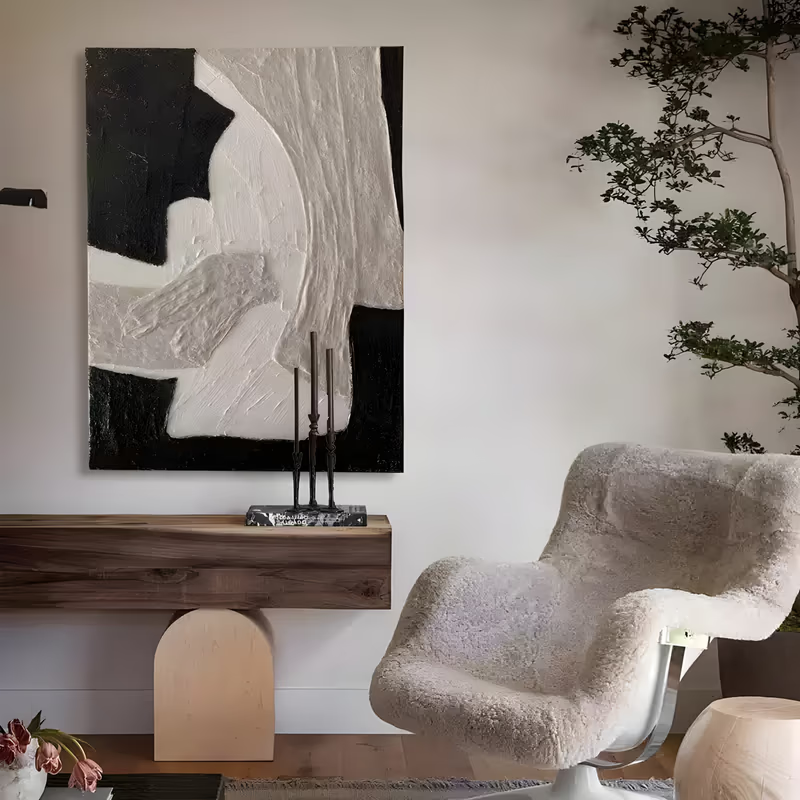
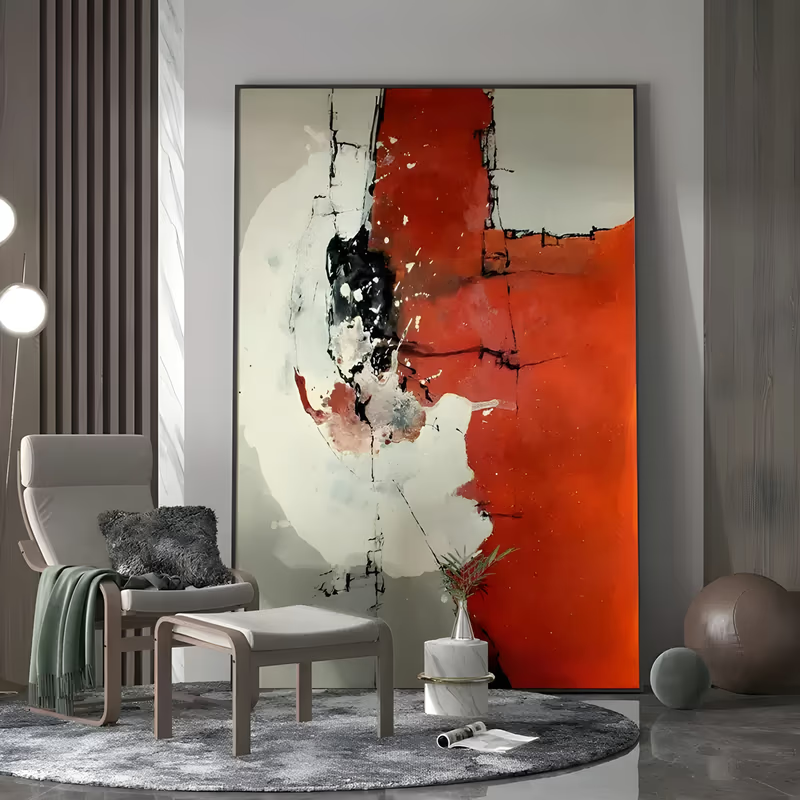
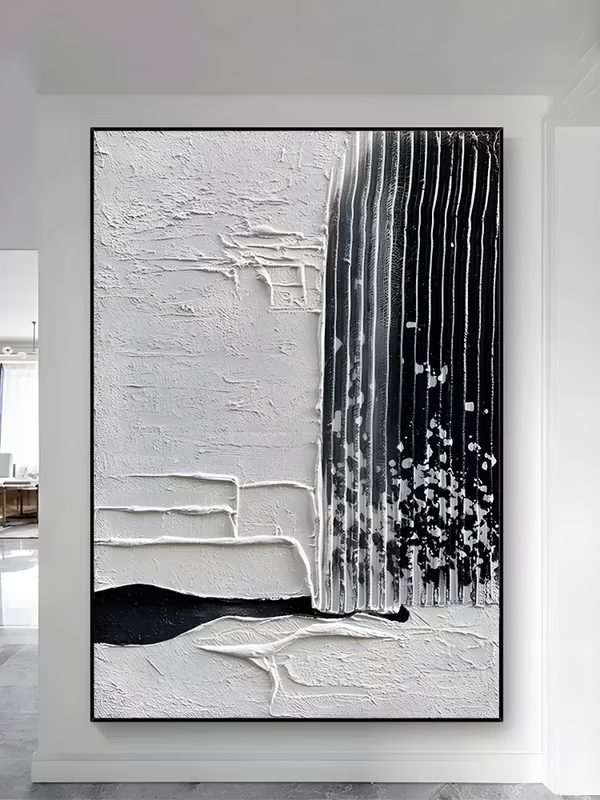
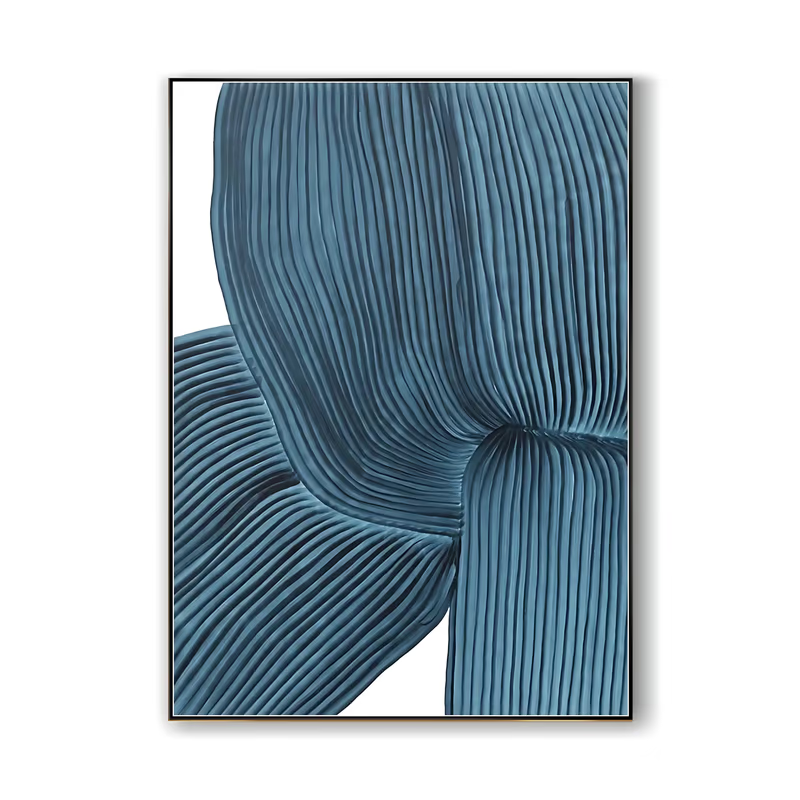
| Strong black against white or cream | Graphic and composed | Modern living rooms, boardrooms, galleries |
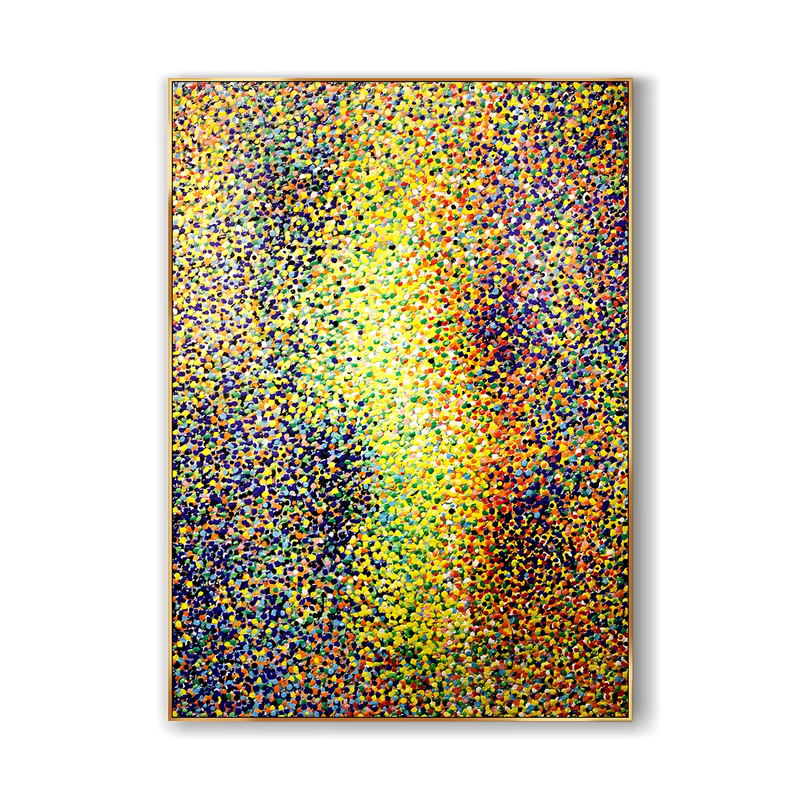
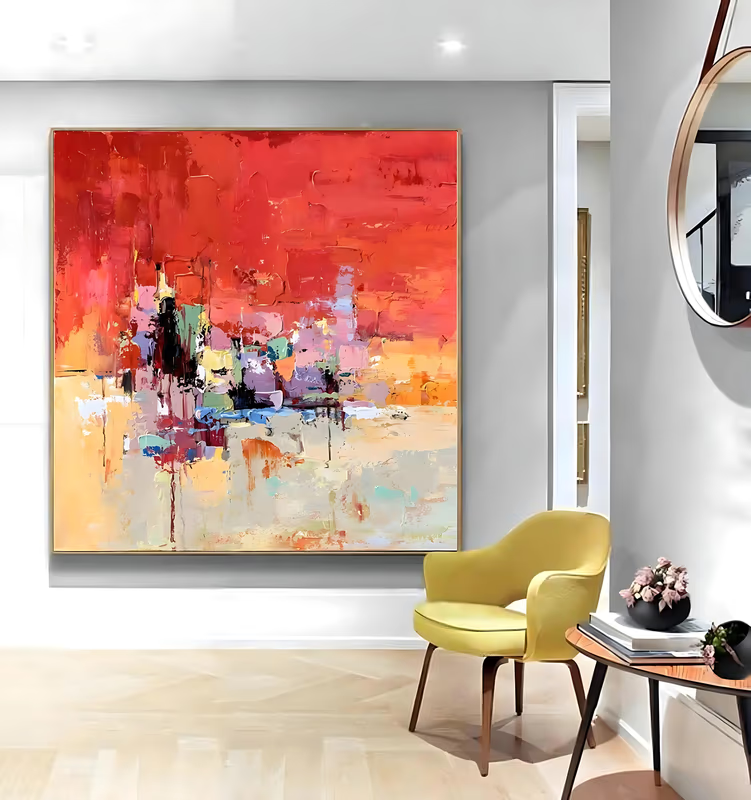
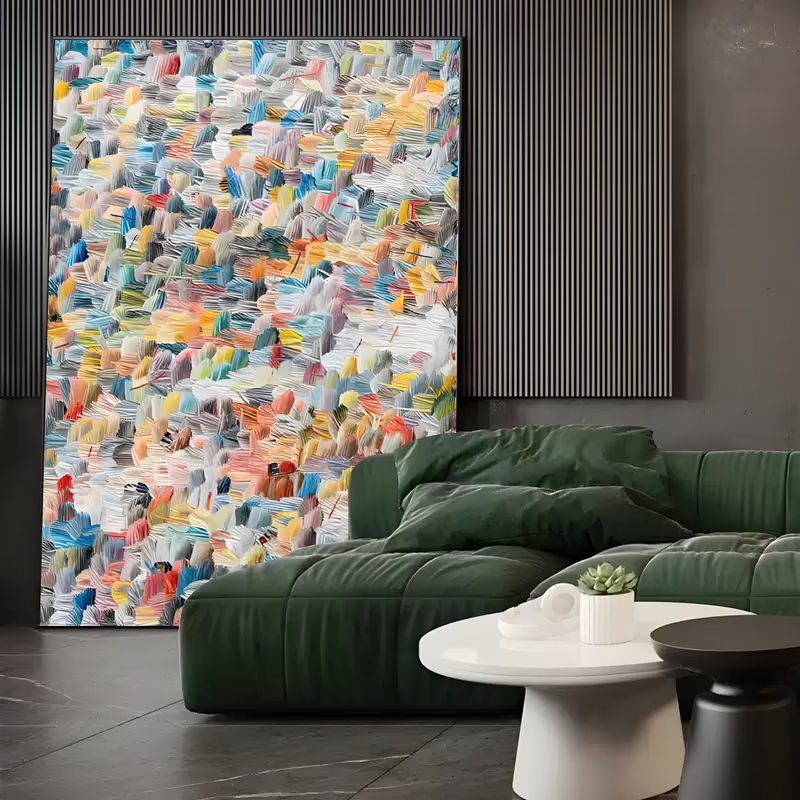
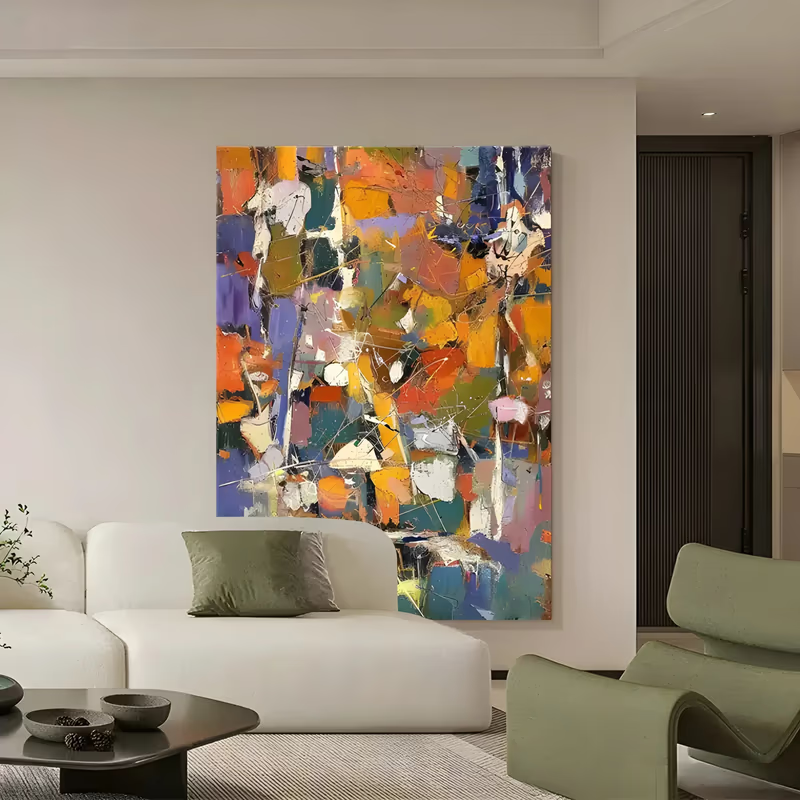
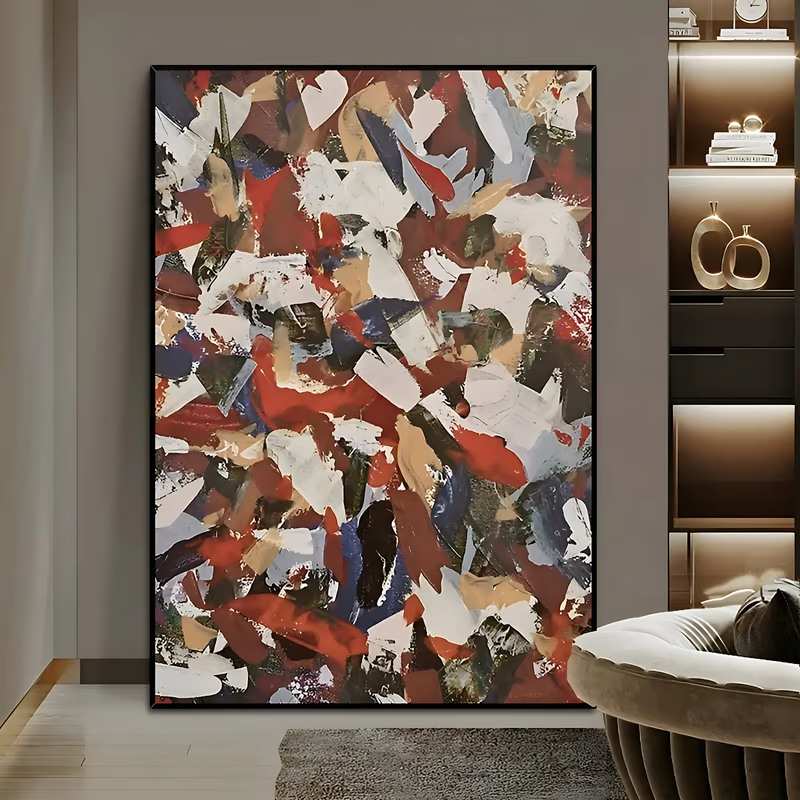
| Crowded knife strokes in warm, saturated colour | Lively and social | Restaurants, bars, open-plan kitchens, family rooms |
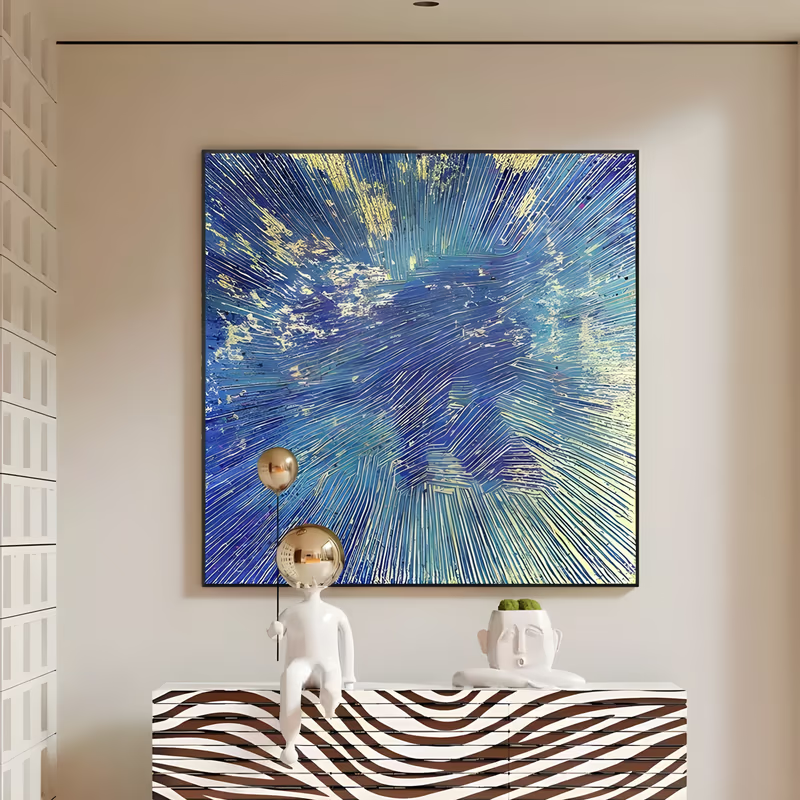
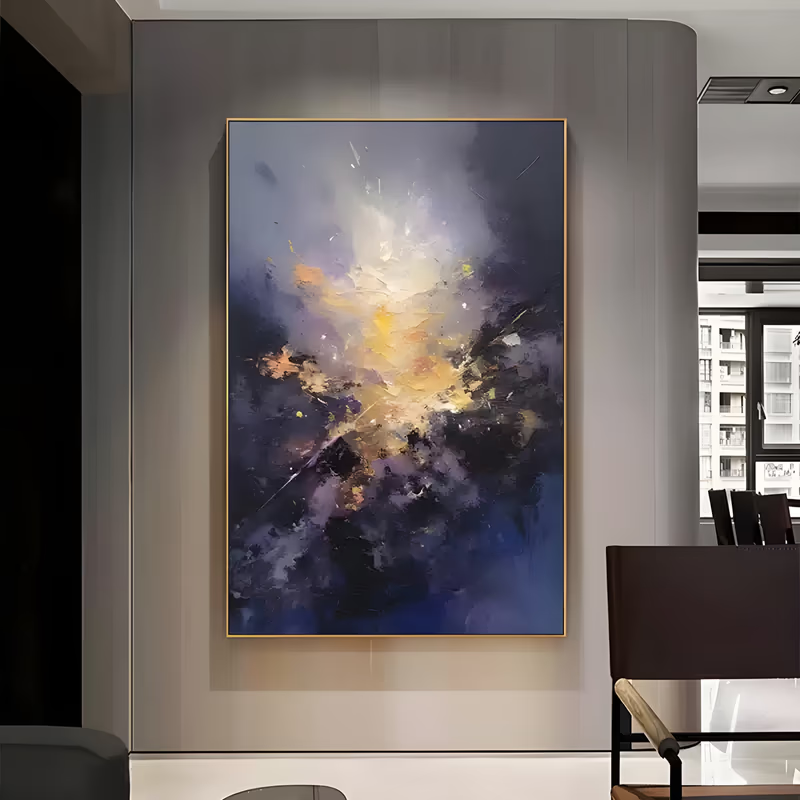
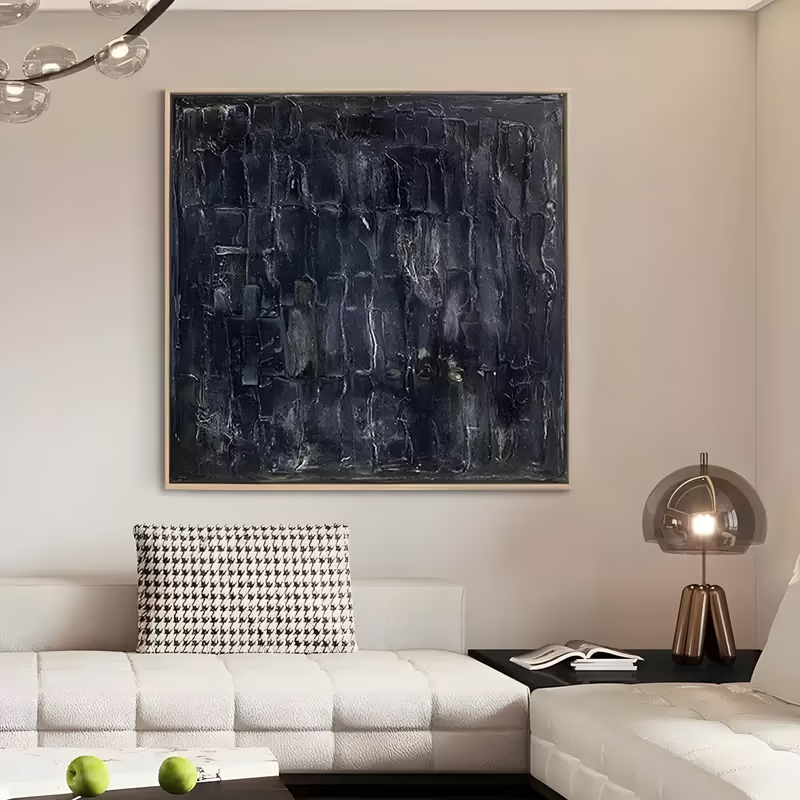
| Dark ground with a burst of gold or light | Dramatic and intimate | Lounges, dining rooms, lobbies after dark |
You can filter the works by mood directly: calm and peaceful abstracts, bold and uplifting ones, or dramatic and moody pieces. The same composition can also shift mood when its palette changes, which is useful when you love a layout but not its colours.
What kinds of modern abstract paintings can you choose from here?
Three families: sculpted plaster relief, gestural and colour-field painting, and knife-painted or minimal pieces; the difference lies in the surface as much as in the colour.
Sculpted plaster relief
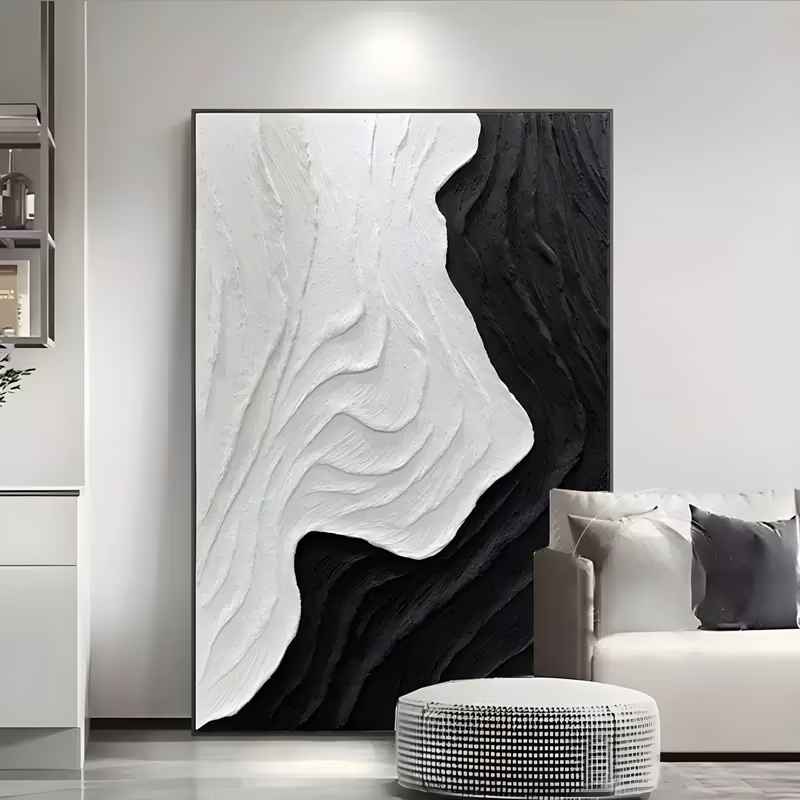
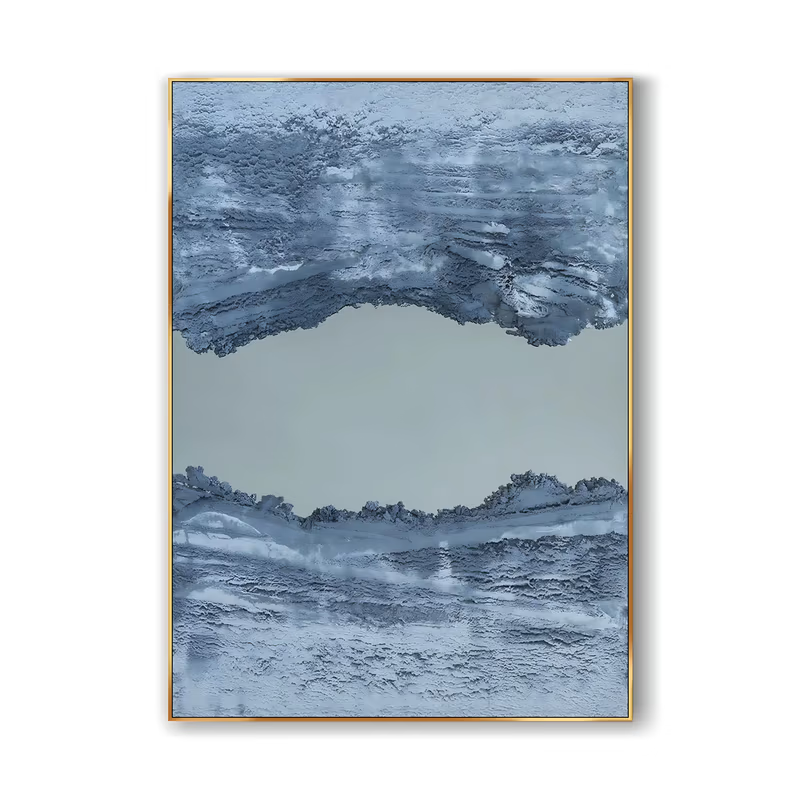
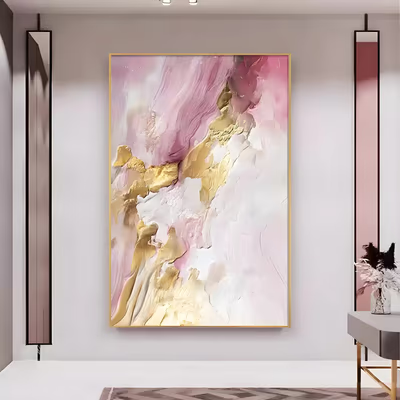
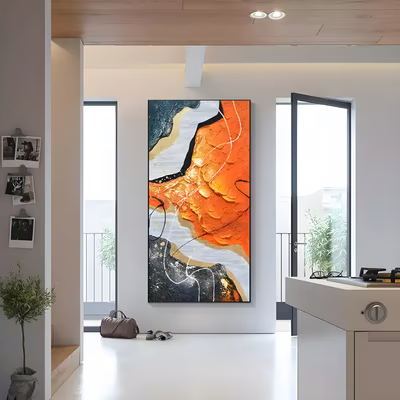
Ridges, sweeps and carved waves built up in plaster paste and painted over, often in white, cream, sand or black. These are the quietest abstracts in colour and the most physical in surface. Raking light from a window or a wall washer turns them into something close to low sculpture, which is why they suit entrances and lobbies. More of this surface across every subject is in textured and plaster art.
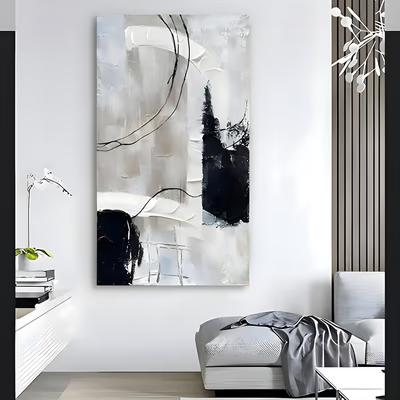
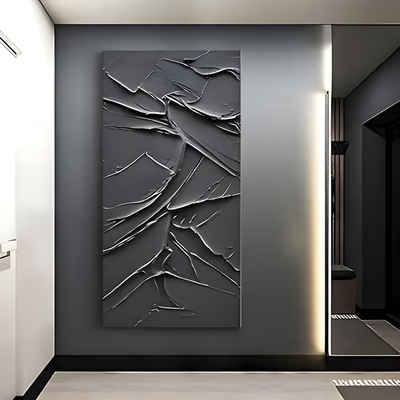
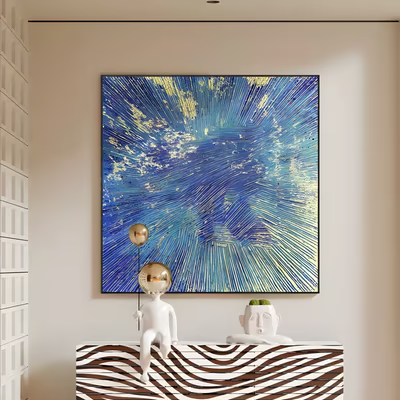
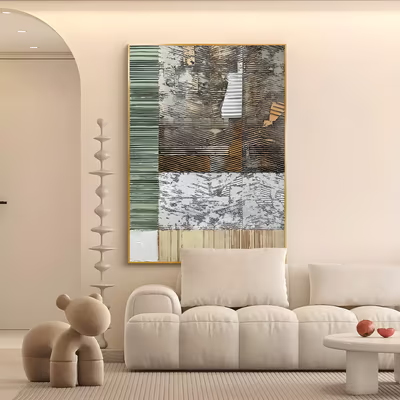
Gestural and colour-field painting
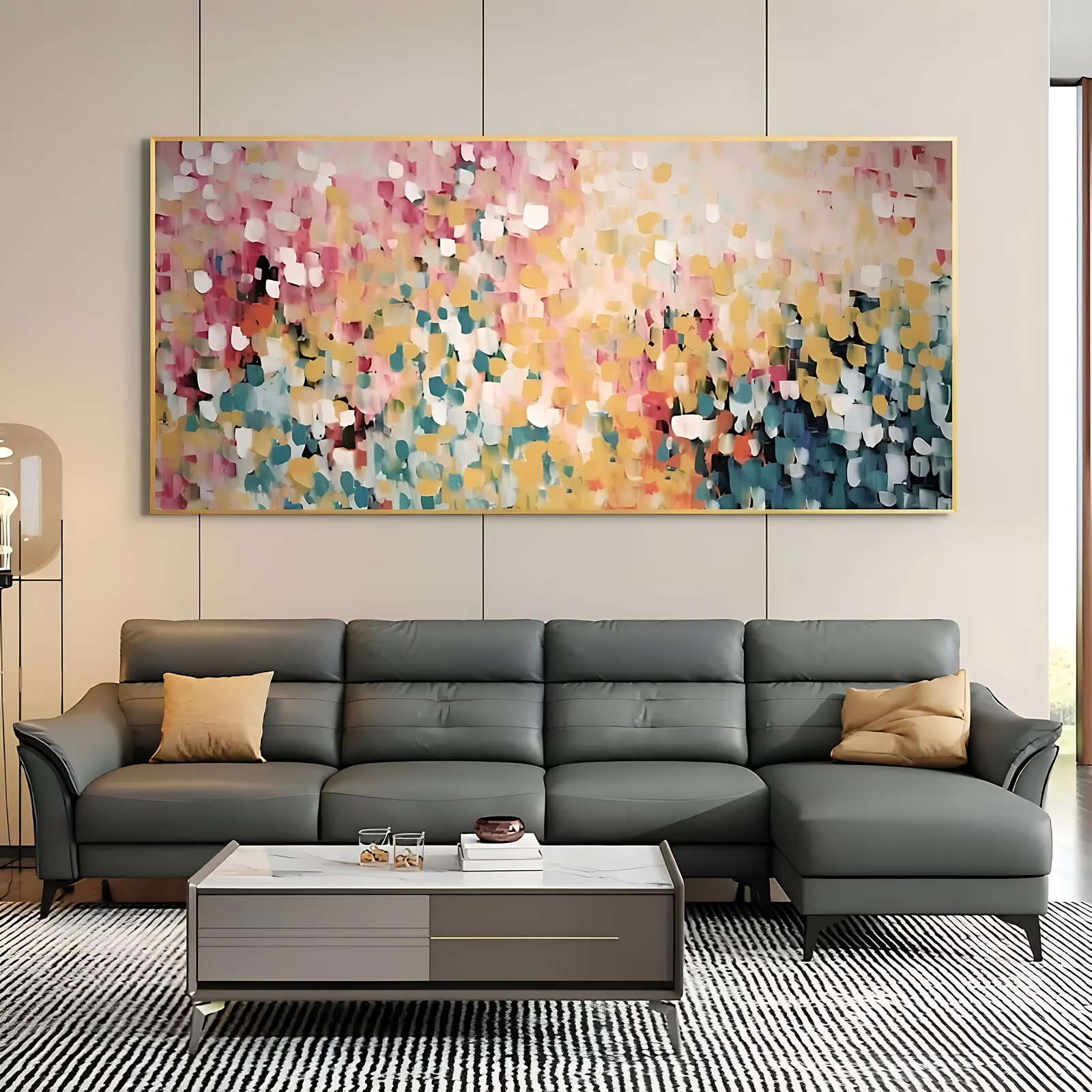
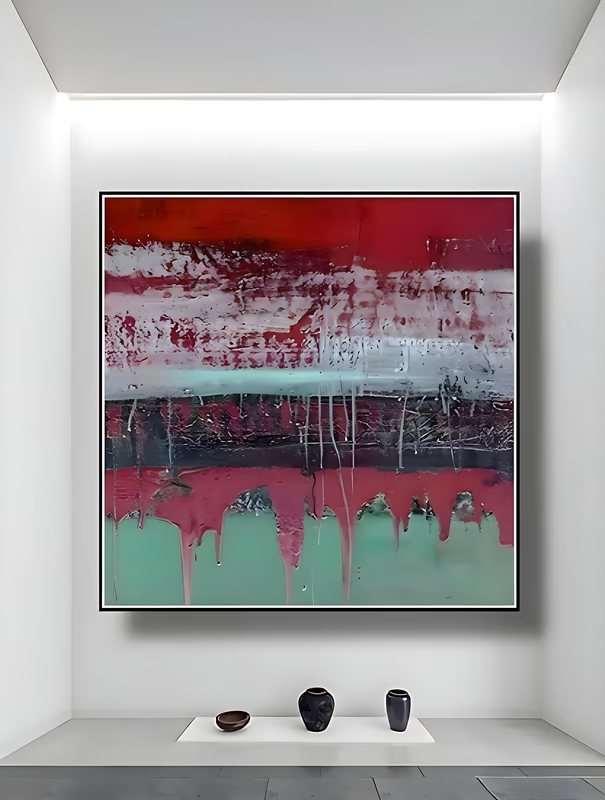
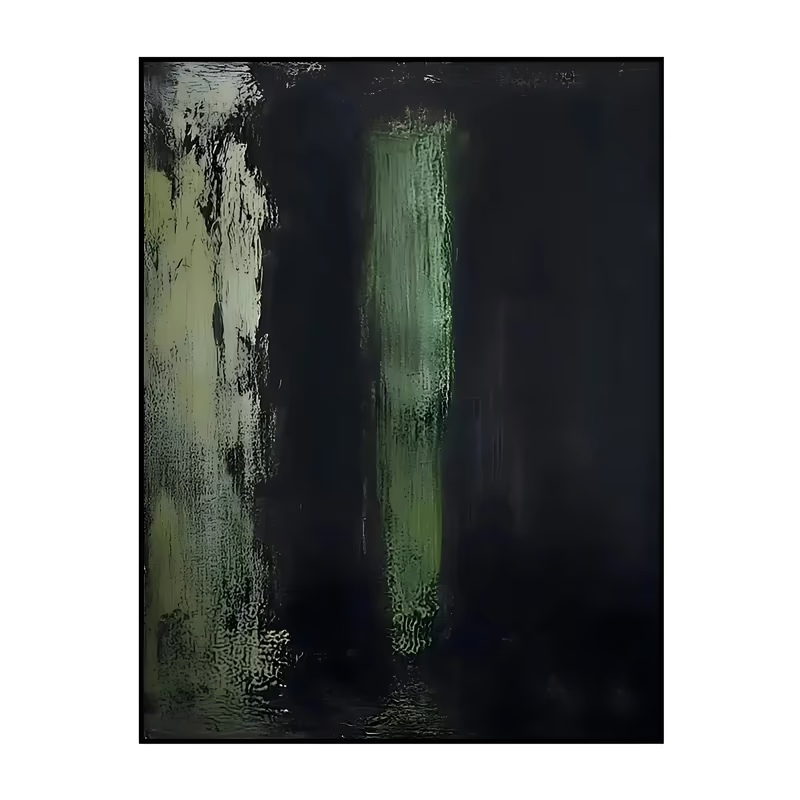
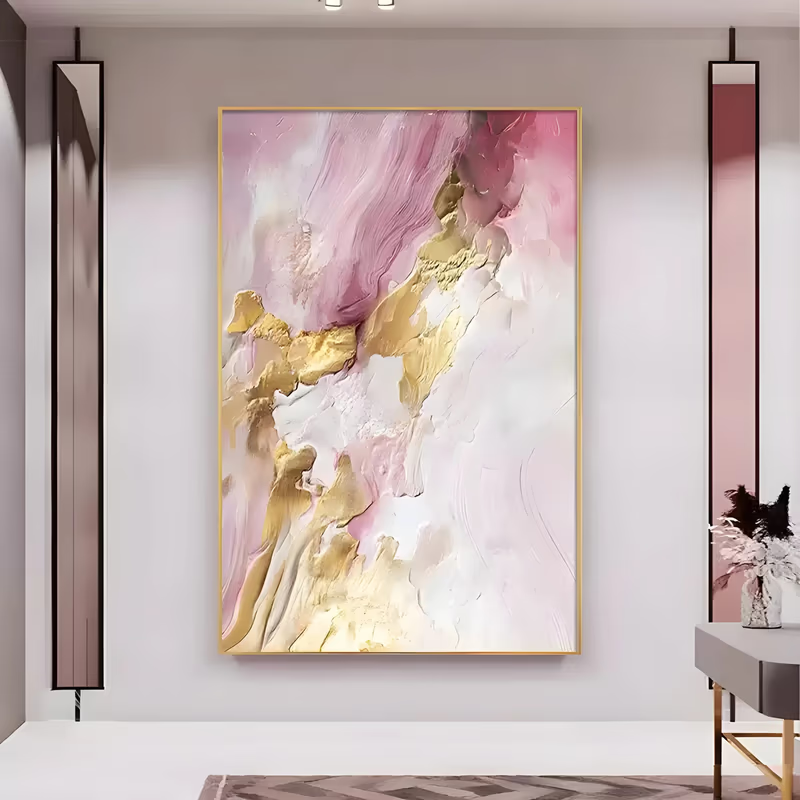
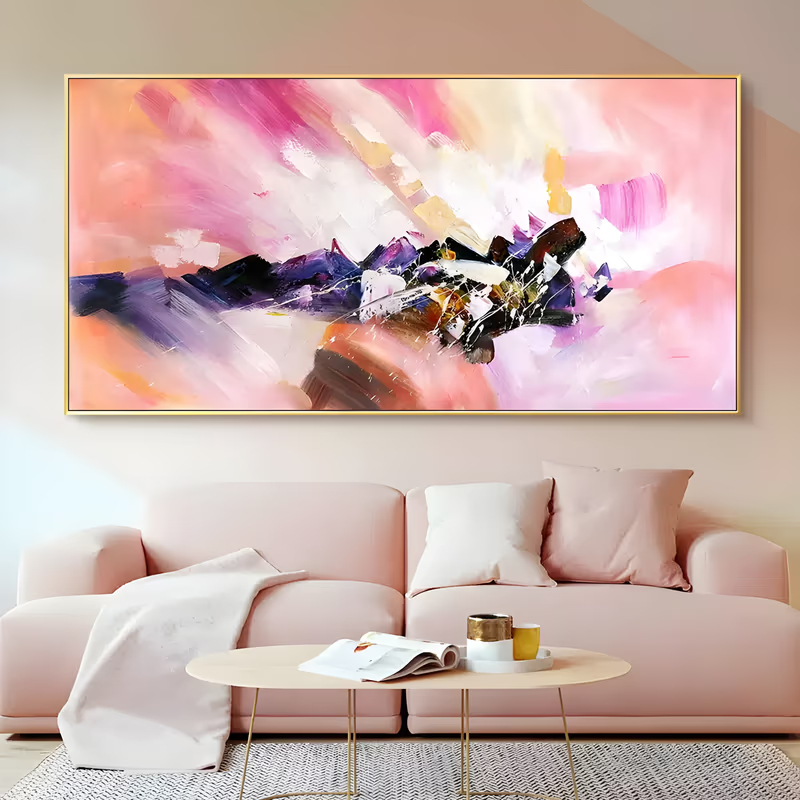
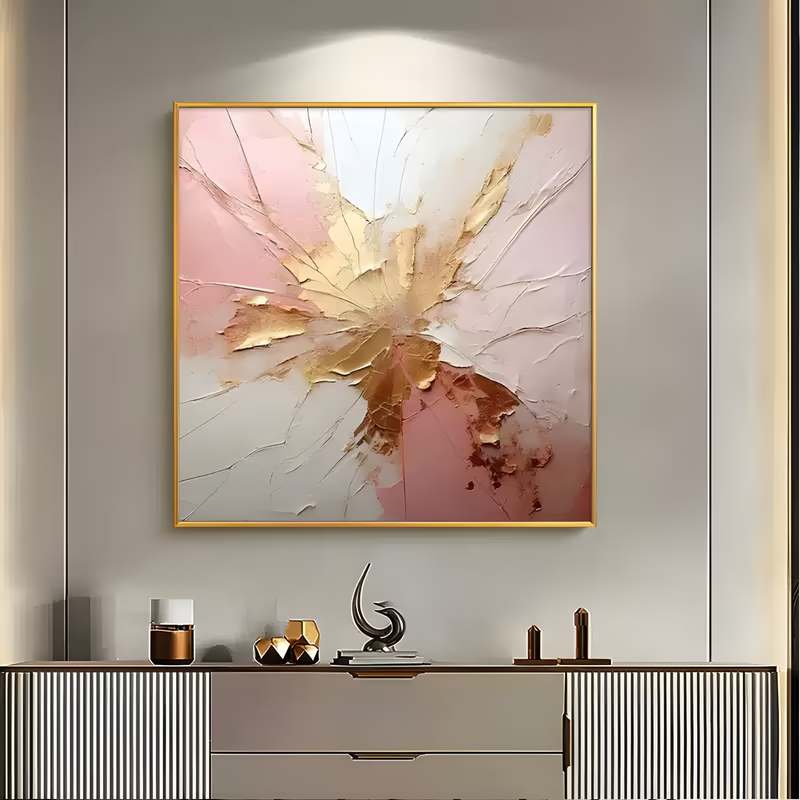
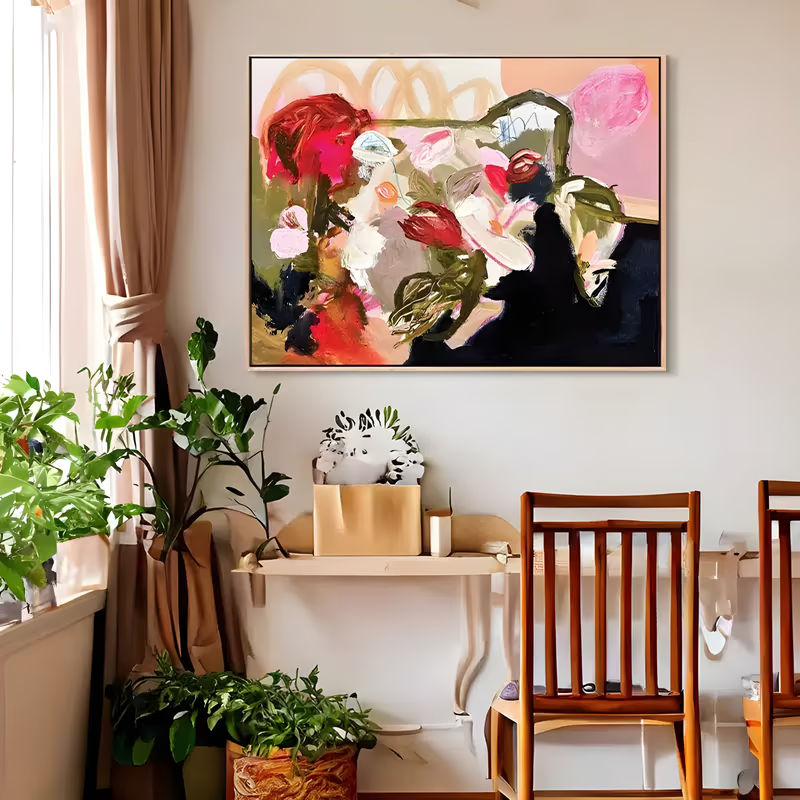
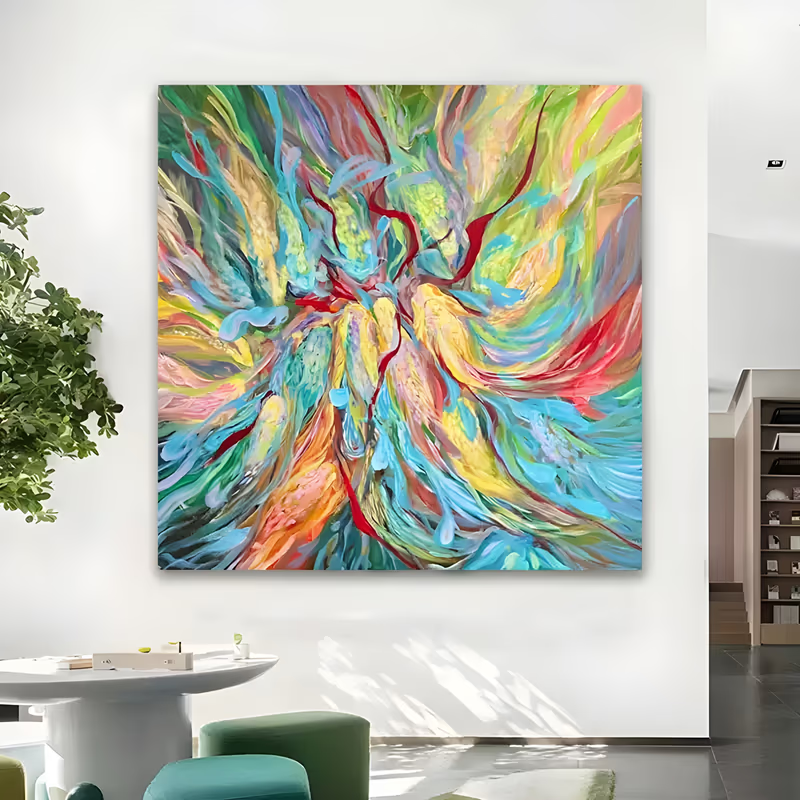
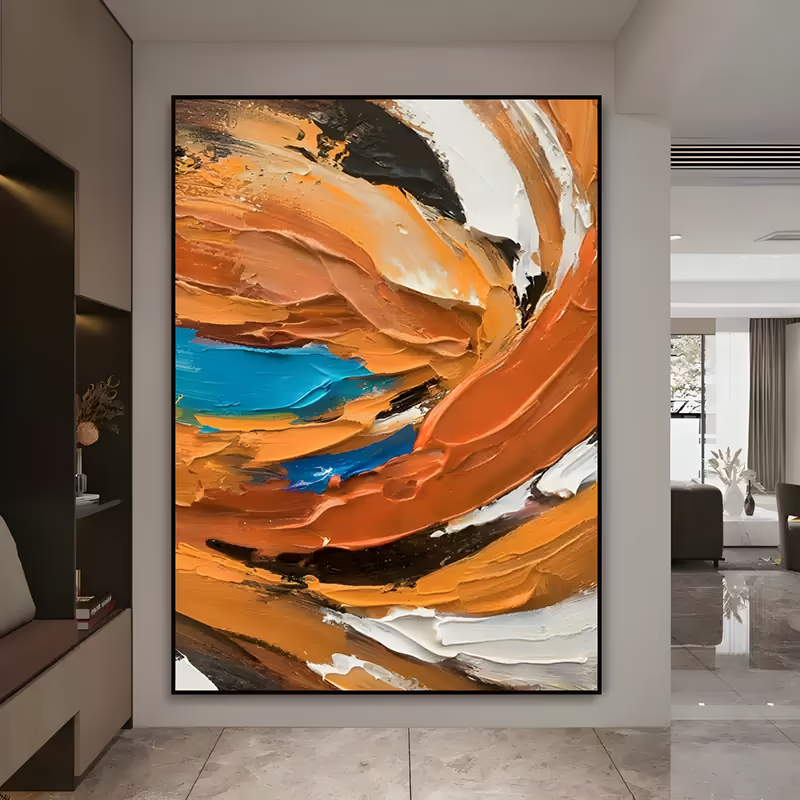
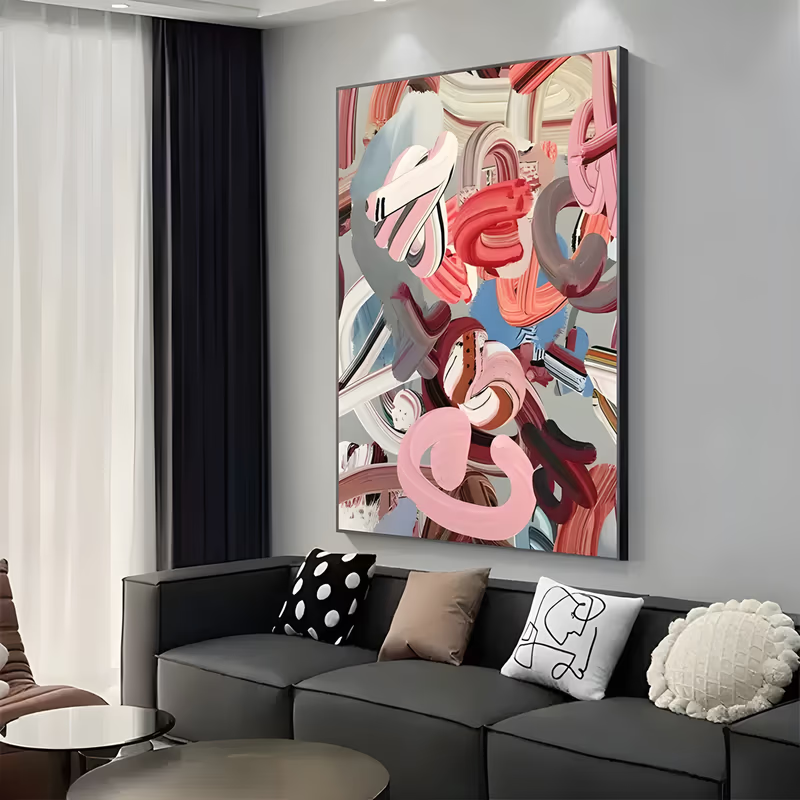
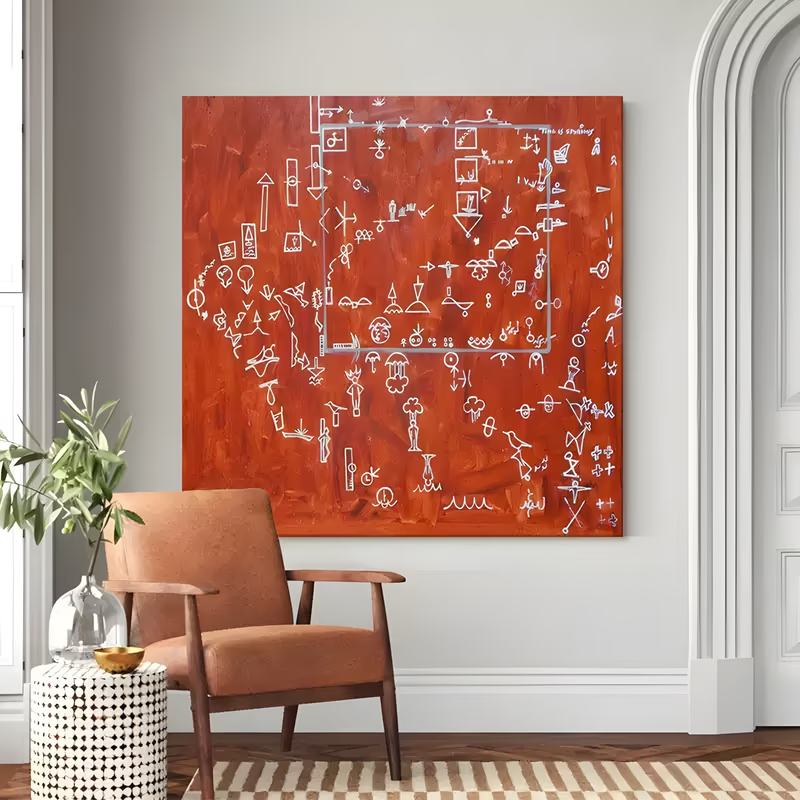
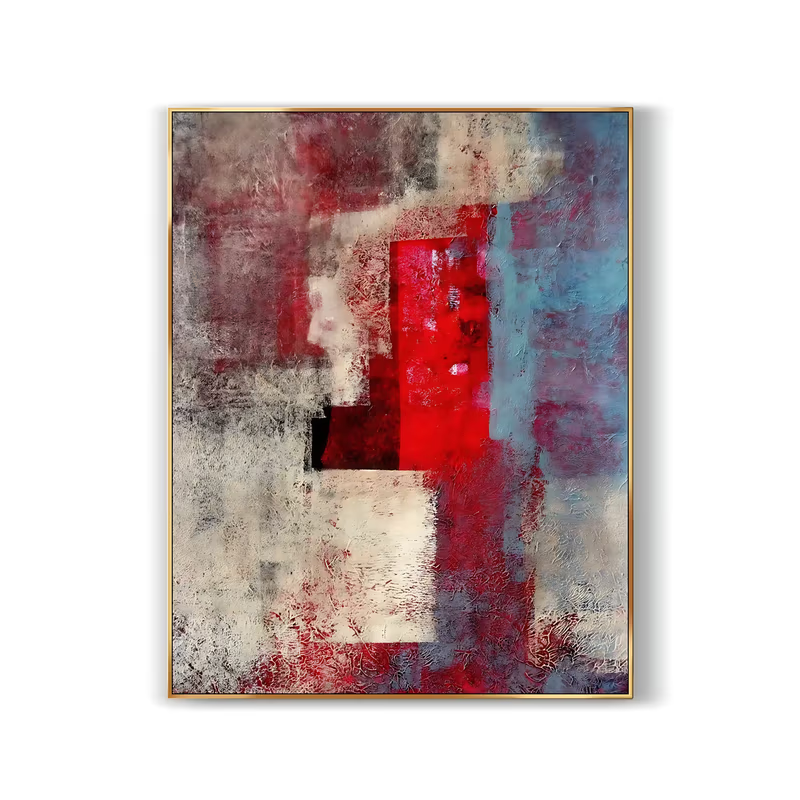
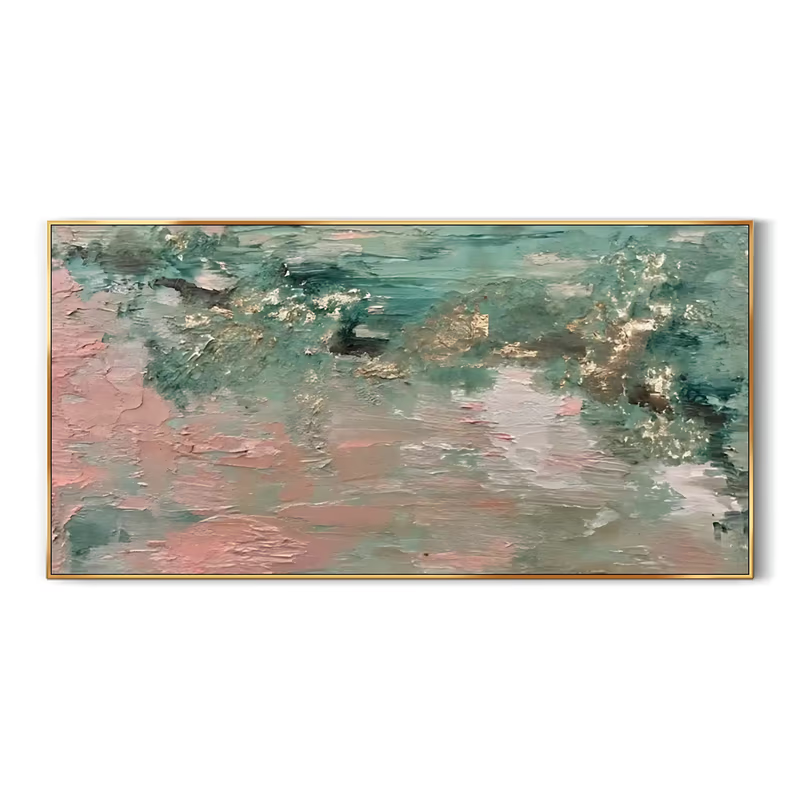
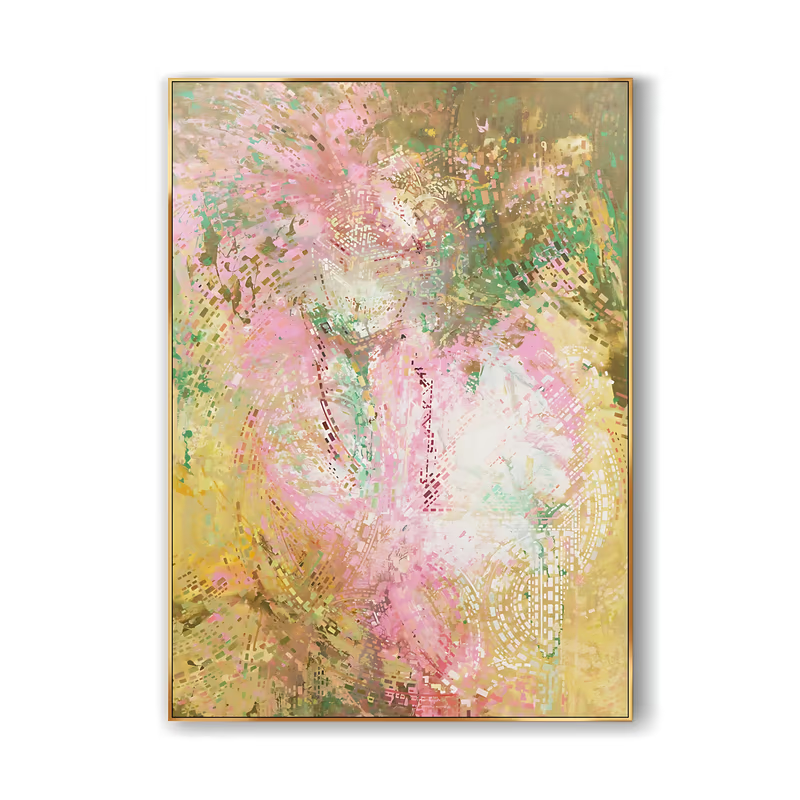
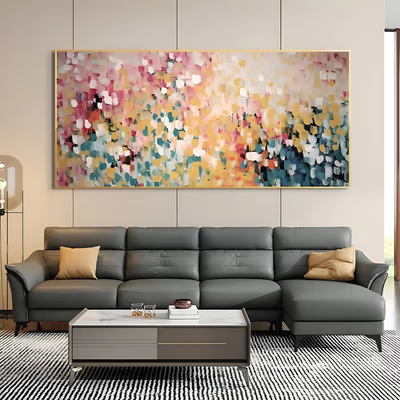
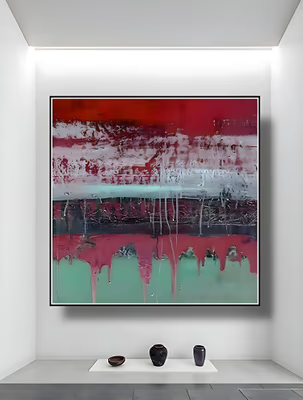
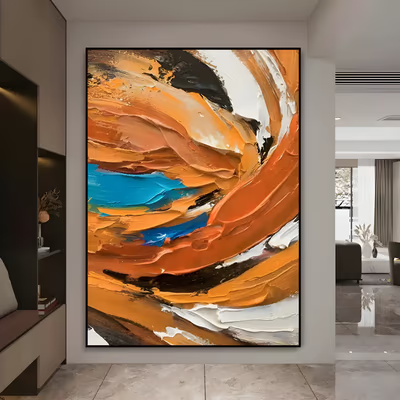
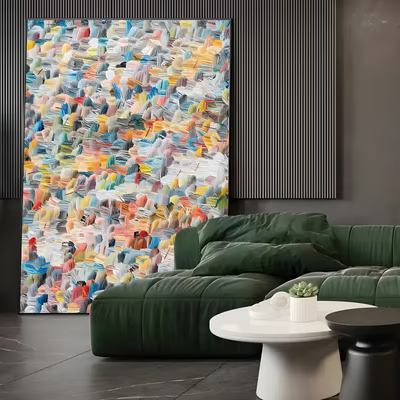
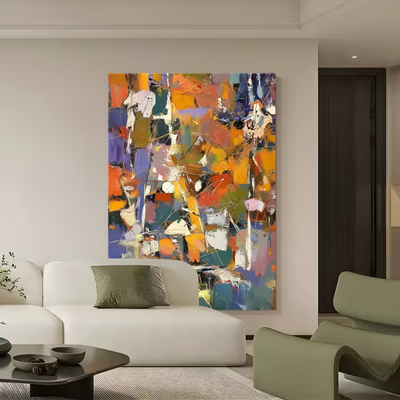
Broad fields of scarlet, rose, navy or teal, marbled pours, radiating bursts and ribbons of colour, sometimes with gold running through them. Here the colour does the work, and the brush or knife leaves a visible trace of how the paint moved. They hold a big wall in a living room, a restaurant or a reception area.
Knife-painted bursts and quiet minimal fields
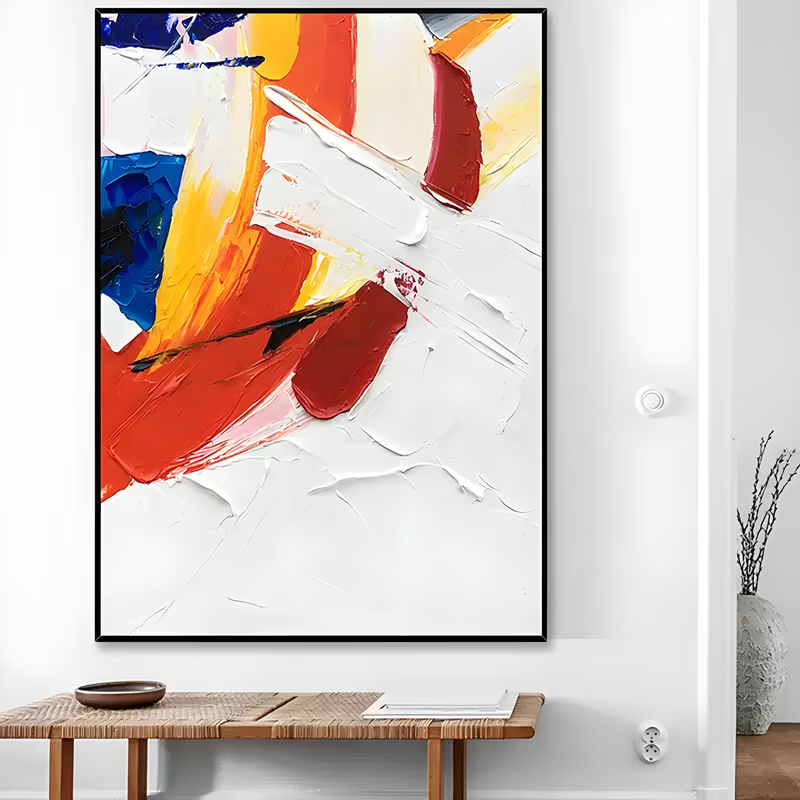
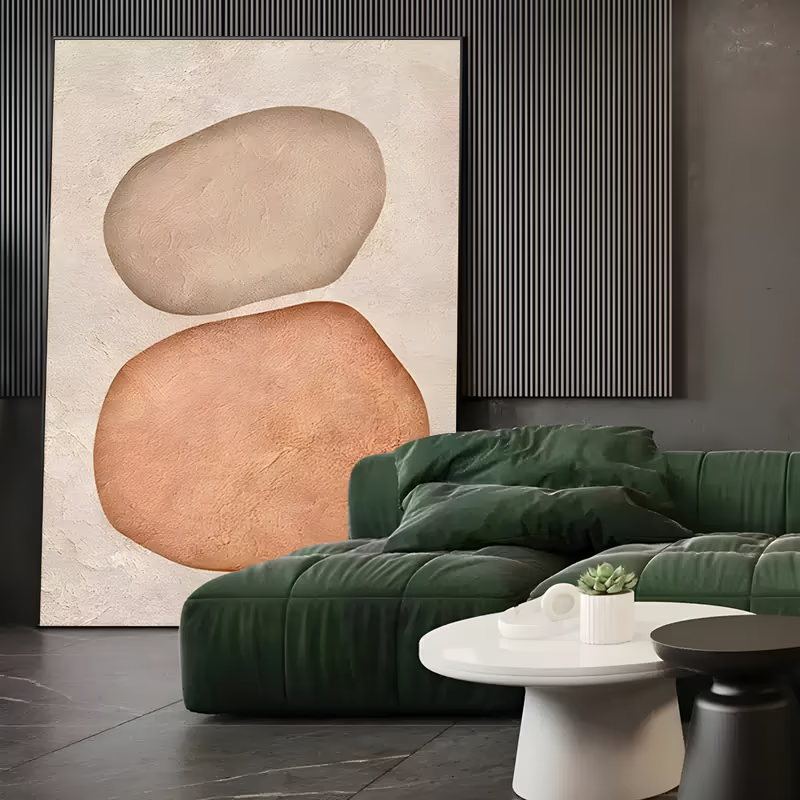
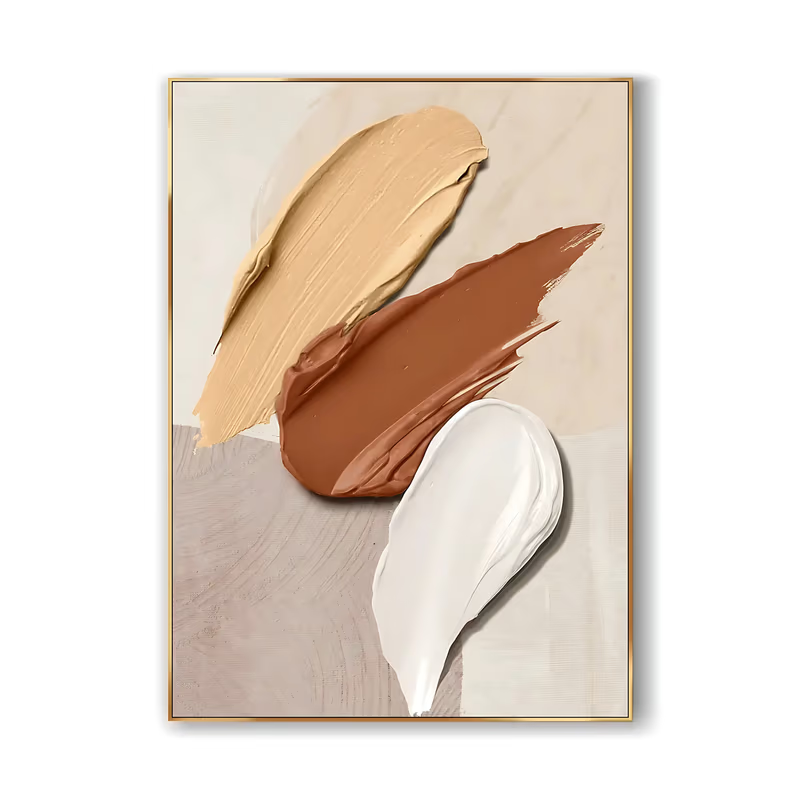
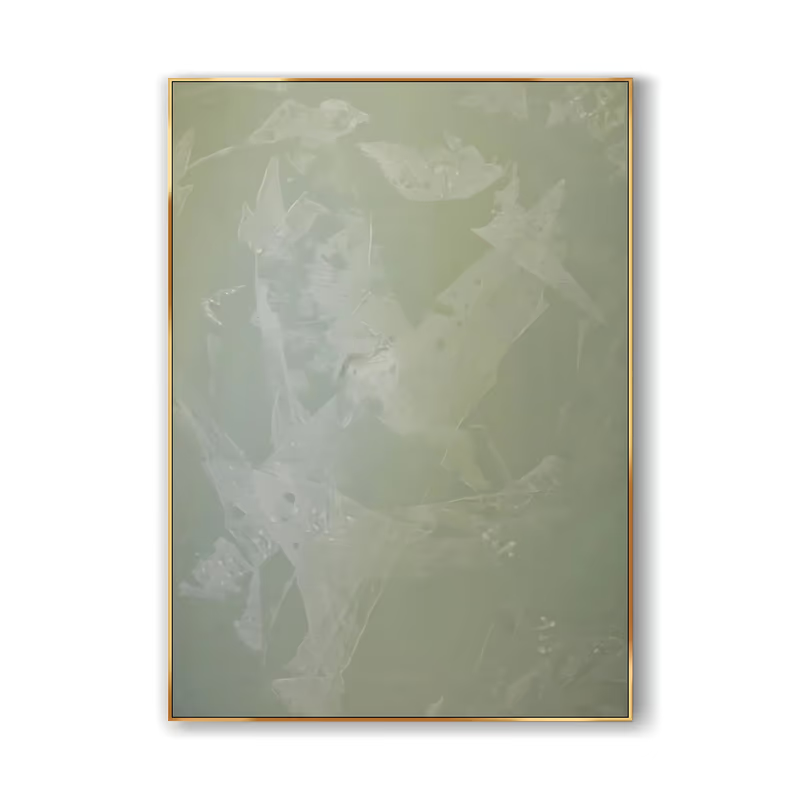
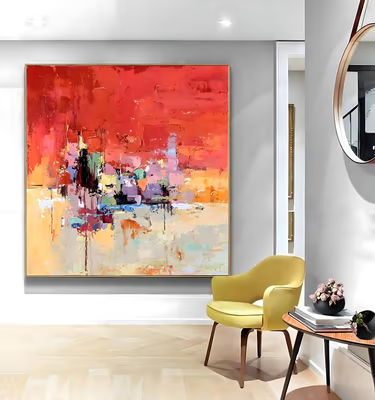
At one end, bright dabs and swirls of coral, cobalt and ochre laid on with a palette knife; at the other, a single scraped sage field or a stack of soft stone forms. Both are compact in idea, which makes them easy to place in a home office, a hallway or a guest room.
Where do modern abstract paintings work best, at home and in hospitality?
Anywhere a room needs a focal point that will not date or argue with the furniture, from a living room sofa wall to a hotel lobby or a long corridor.
Living rooms and bedrooms
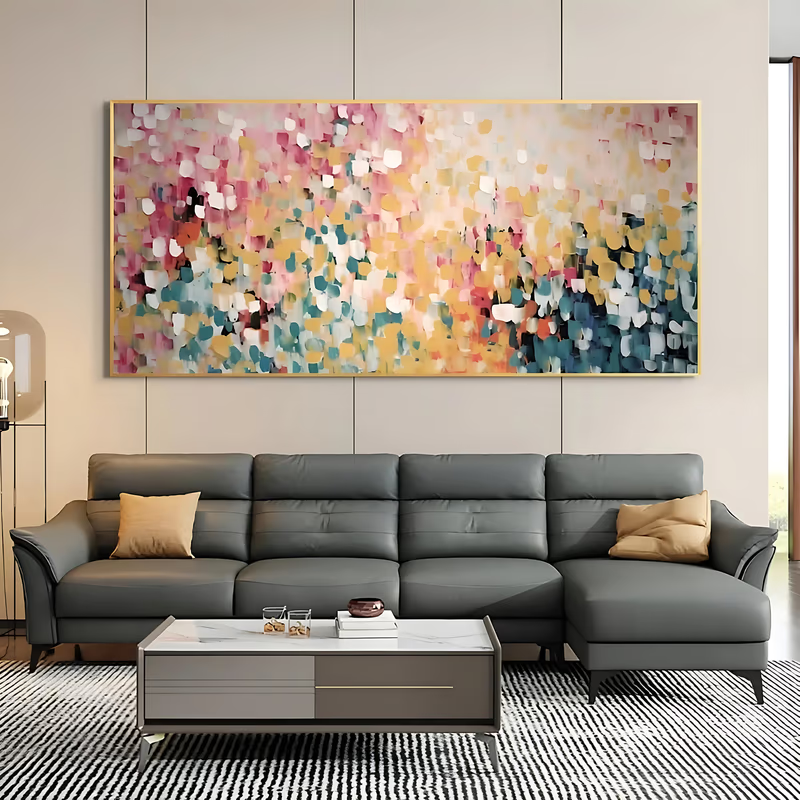
Over a sofa, a gestural field in colours lifted from the rug gives the room a centre. Over a bed, choose softer edges and closer tones so the wall stays restful. Abstracts for living rooms and for bedrooms and guest rooms.
Entrances, corridors and lobbies
Tall vertical abstracts suit the narrow walls of halls and lift corridors, and relief pieces read well at the walking pace of a passage. For a reception desk wall, scale matters more than detail. Abstracts for entrances and circulation; projects of this kind are covered in lobby statement art and the corridor series page.
Restaurants, offices and boardrooms
Warm, busy abstracts keep a dining room lively; cooler, more ordered ones suit work. In a boardroom, an abstract avoids the distraction of a recognisable scene during long meetings. Abstracts for dining and for offices.
How large should a large abstract painting be, and how should it hang?
Because an abstract has no single object for the eye to land on, it needs more size than a subject painting: about two-thirds of the furniture width below, or 60–75% of an empty wall.
Undersizing is the commonest mistake with abstract art. A small canvas with a figure or a boat still reads from across a room; a small abstract turns into a coloured rectangle. Before ordering, mark the size on the wall with painter's tape and look at it from where people will sit or walk. Hang the centre at roughly 145–152 cm (57–60 in) from the floor, and leave 15–25 cm (6–10 in) above a sofa or headboard.
Format changes the effect. A tall vertical piece adds height to a low room or a narrow wall, a square one sits steady over a console or between windows, and a panoramic abstract runs along a headboard, a banquette or a reception counter. Every work here is painted to order, so the composition is redrawn to your proportions rather than stretched; oversized walls are covered on the oversized and custom-size page.
Can one abstract design run as a series across several rooms or floors?
Yes. An abstract composition can be repainted in different colourways, so a hotel, office or apartment building gets pieces that clearly belong together without hanging the same canvas twice.
Abstraction is the easiest subject to run as a programme. Keep the structure of one design, the direction of the sweeps or the placement of the relief, and change the palette by floor, wing or room type: sand and black on one level, blue and white on the next. Guests read the family resemblance; nobody notices a repeat. A practical route is to approve one sample piece first, then roll the series out from progress photos of each canvas. One piece is the minimum order and volume pricing starts at 10 pieces, so a series of any length is quoted the same way. Hotel and apartment programmes are described on the guest-room programmes page.
What happens between ordering an abstract painting and hanging it?
Stage by stage: you see progress photos or video as the abstract is built up, painting continues only after you approve each stage, and a final photograph is approved before dispatch.
With abstract work, the things that matter are the ones a catalogue photo cannot fully show: how high the plaster stands, how much gold runs through a field, how dark the ground is. That is why the approvals happen on your piece, not on a sample. If the palette needs to suit a scheme, send a paint code, a fabric swatch or a photo of the room as it is lit, and the colours are adjusted before the first coat. Painting takes about 10 days, express transit 5–7 days by DHL, FedEx or UPS on the route iHomeArt arranges. Choose rolled, stretched ready to hang, or framed in gold, silver, black, white or wood; details are on the delivery page, and a quote request is answered within one business day.