Middle East · United Arab Emirates · Dubai · Abu Dhabi
Arabic wall art in the UAE: calligraphy, geometry, sand and gold
iHomeArt paints Arabic and contemporary wall art by hand and to order for villas, majlis rooms, hotels and offices across the UAE, in the subjects, colours and finishes your rooms are built around. This guide shows what makes Arabic wall art feel rooted in a UAE room today, from calligraphy and geometry to desert tones, gold and texture, and which subjects belong only in private rooms.
Ordering Arabic wall art in the UAE from iHomeArt
- 1 pieceMinimum order; volume pricing from 10
- Any sizePainted to the wall, oversized and multi-panel included
- About 10 daysTo paint, then 5–7 days by DHL, FedEx or UPS express to the United Arab Emirates
- Every stageApproved by photo or video before the next one starts
- 50 / 50Half upfront, half once you approve the final photograph
What UAE interiors ask of a painting's style
- The palette now
- Warmer: timber, brass, aged bronze, terracotta and amber in place of white marble and cool grey
- Majlis colours, 2026
- Beige and warm grey with touches of matte gold or bronze
- Art in the majlis
- Arabic calligraphy, geometric shapes and abstract compositions
- Art shown in public
- No nudity in any form; religious content must be respectful
What makes Arabic wall art feel right in a UAE room today?
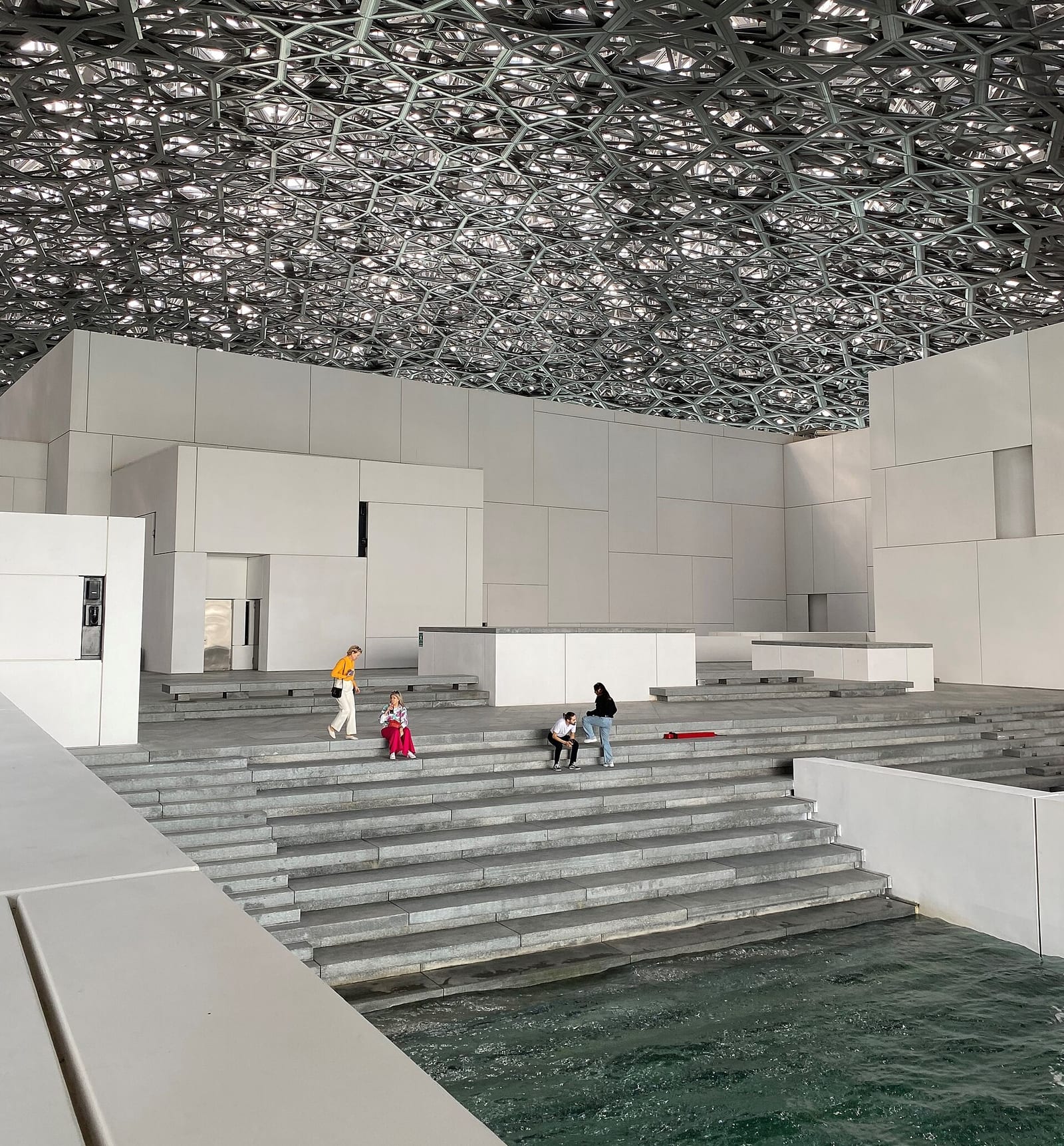
Heritage painted in a modern hand: letterforms, geometry, desert, sea and palm turned into composition and colour, so the canvas belongs to the UAE without having to illustrate it.
Look at how the country's own artists and museums treat the subject. Abdul Qader Al Rais, an Emirati pioneer among the first artists acquired for the Dubai Collection, built his landscapes from old-town doors, windows and palms, and his later canvases grew more abstract, often folding in Arabic letters. Louvre Abu Dhabi's 2021 exhibition 'Abstraction and Calligraphy' hung Kandinsky and Pollock beside Arab painters such as Dia Azzawi, as one conversation between images and letters, and the Bassam Freiha Art Foundation on Saadiyat presented Emirati abstraction in 2024–25 as experiments with geometry, calligraphy and architecture.
So a literal scene is rarely needed to make a room feel rooted. A geometric abstract in sand and gold, a desert horizon reduced to bands of colour, or relief that recalls carved gypsum sits as easily in a family majlis as in a Downtown apartment. Keep the recognisable heritage scene for rooms where storytelling is the point: a study, a hotel corridor, a restaurant. Start with geometric or abstract paintings.
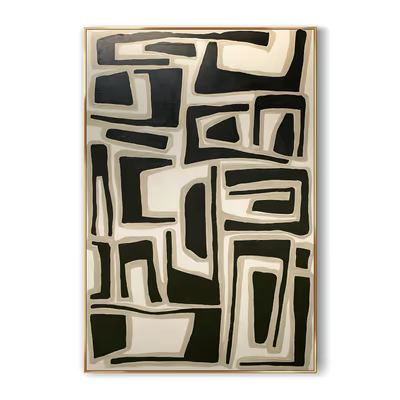
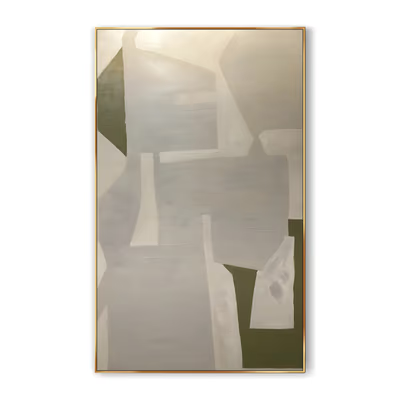
Islamic wall art and Arabic calligraphy: how do you get the letters right?
Start from a calligrapher's own artwork, used with permission, and decide first whether the words are meant to be read or felt as pattern.
Letters on a UAE wall come in two kinds. A text to be read, whether a verse, a line of poetry, a family name or a motto, has to be exact: it starts from a calligrapher's artwork, used with their permission, and a native reader checks the stage photographs before you approve the final one. A script felt as pattern uses the rhythm of the letters as composition or texture; take those letterforms from a calligrapher too, because Arabic readers notice mirrored or meaningless script at once.
Verses often hang where guests are received: a Dubai design studio notes that majlis artwork often includes Quranic verses or poetic calligraphy. Newer forms sit alongside the classical ones, such as the Quranic sound-wave artworks in a Green Community villa published in 2026. The format follows the wall: gold script on a deep ground, a soft line across a pale textured field, or one long canvas above the seating. More on paintings from your own image.
Which UAE subjects give a painting a sense of place?
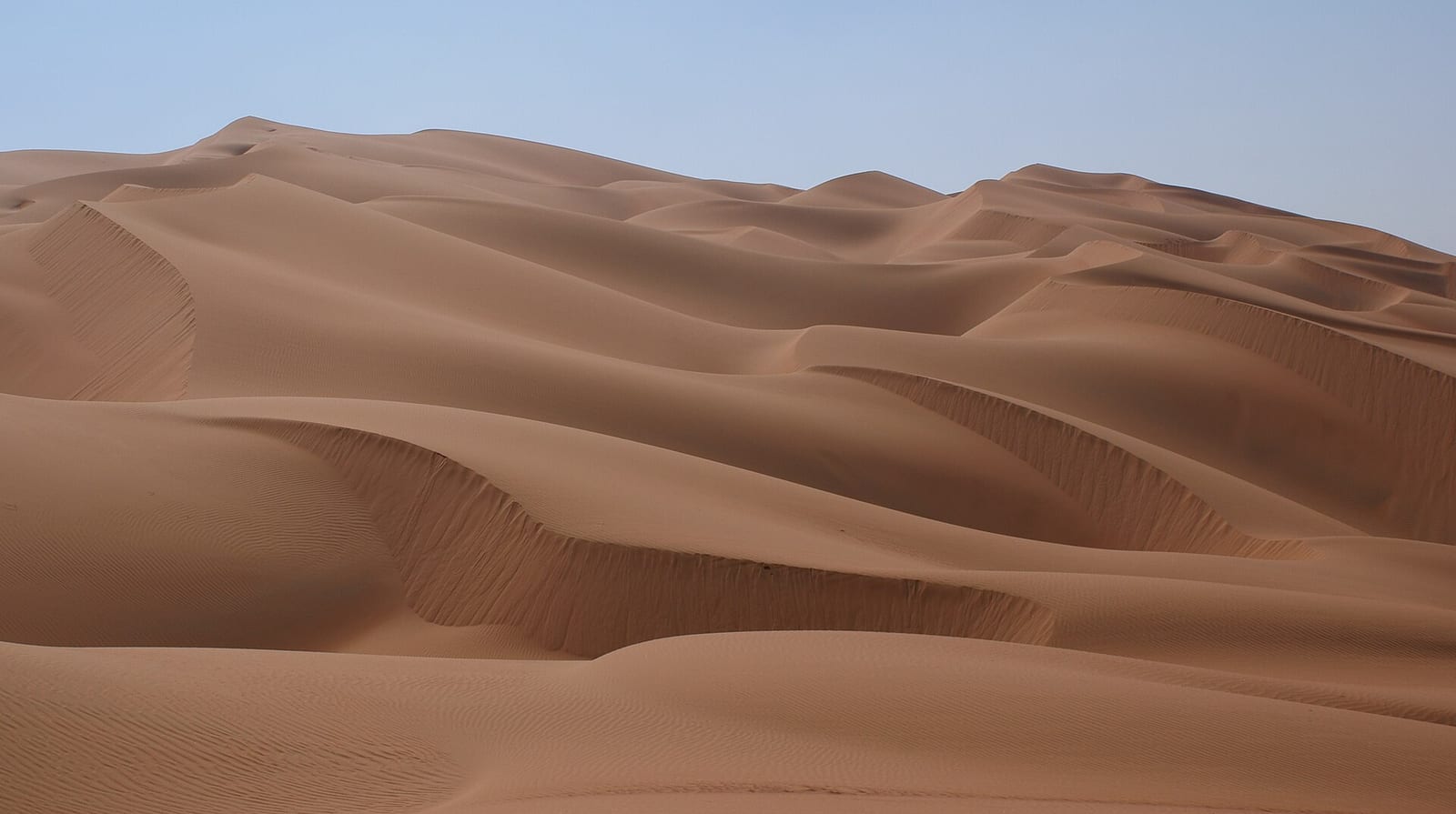
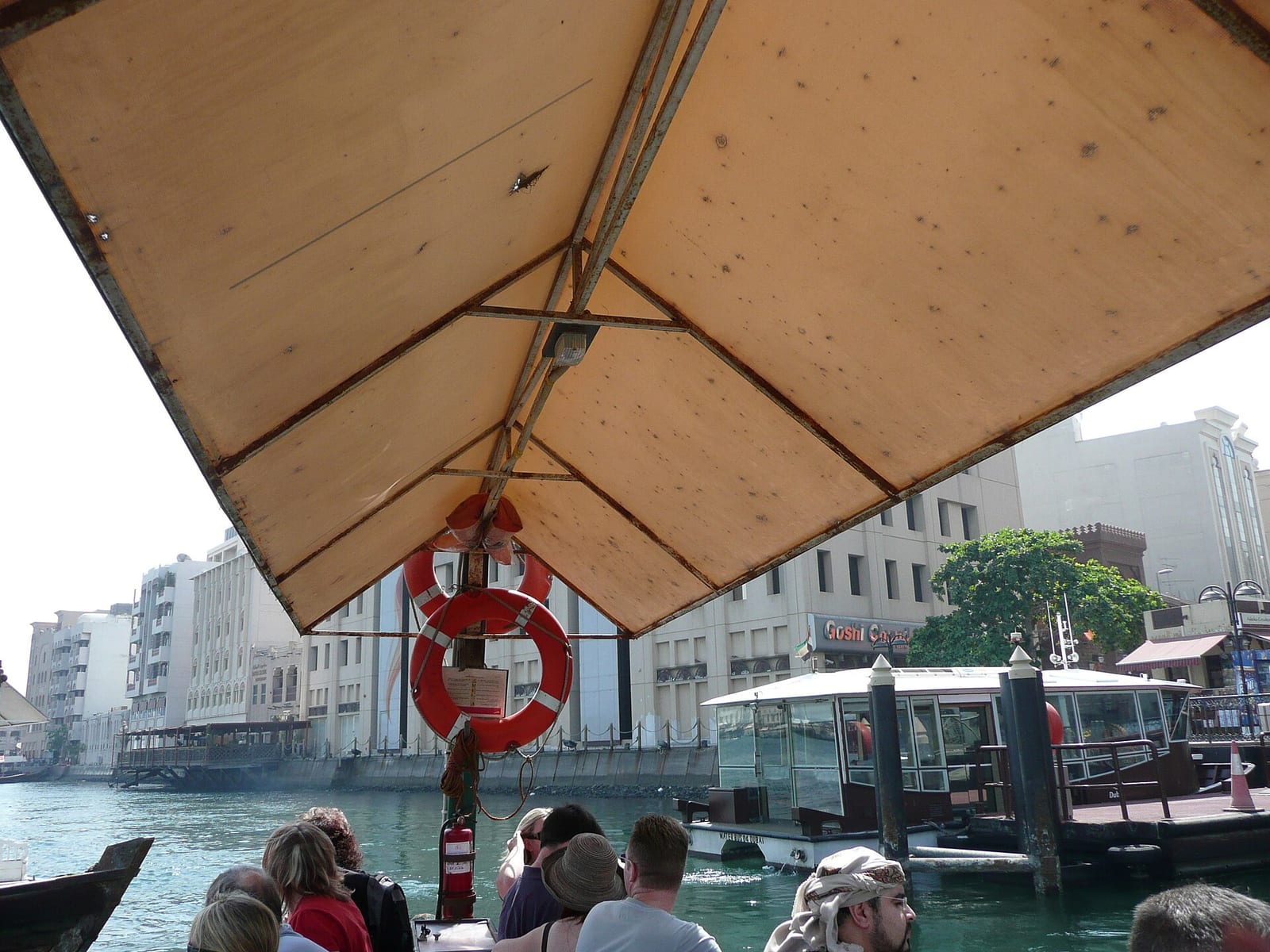
Desert, sea and pearl, palm and ghaf, the old Creek and the seven emirates: abstracted, they suit homes and offices; painted as recognisable scenes, they suit studies, corridors and restaurants.
The same few themes run through the country's best-known commissions. The desert gives a palette as much as a subject: Atlantis The Royal built its lobby around the first rain falling on dry desert. The sea and its pearl divers carry Abu Dhabi's story, which is how Four Seasons Abu Dhabi frames its collection, from pearl diving to cultural hub. The palm returns as weave and frond: the Union of Artists installation in Dubai pairs seven pillars, one for each emirate, with woven palm-frond areesh forms. The ghaf tree appears too, as a geometric wall piece by Kav Ahangar in a wealth-management office at ICD Brookfield Place.
Choose the register by the room. Where the family lives, the theme works best abstracted: dune lines in sand and clay, a Gulf horizon in blue and white, palm fronds as pattern. Where a story is wanted, a recognisable scene of dhows on the Creek or the Liwa dunes at dusk tells it. Browse landscapes and seascapes.
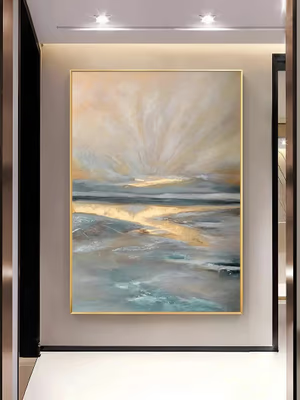
Which subjects should a UAE brief leave out?
In an Islamic-style majlis, people and animals; in any hotel, office or public space, nudity, political themes and religious symbols used as decoration; private rooms are the household's own choice.
The rule depends on who sees the wall. An Arabic-language UAE guide to majlis design advises avoiding paintings of people or animals in an Islamic-style majlis and choosing calligraphy or landscapes instead. Hold the rooms guests pass through, the entrance and the formal dining room, to the same standard, and decide the private rooms household by household.
For space the public sees, the line is firmer. A law-firm summary of the 2024 federal law on exhibitions puts it plainly: political content prohibited, religious content respectful, nudity prohibited in all forms. World Art Dubai, the city's affordable art fair, rules out nudity, sexual content, religious symbols and political themes on every wall. Write the same lines into a hotel, office or showroom brief before the first shortlist. At home you are freer: one couple in Old Dubai keep their walls white for the mostly figurative, colourful works they collect.
-
Majlis and reception
- Choose
- Calligraphy, geometry, abstraction, landscape, sea
- Leave out
- People and animals
-
Hotels, offices, showrooms
- Choose
- Local themes, abstraction, texture
- Leave out
- Nudity, politics, religious symbols as decoration
-
Private rooms
- Choose
- What the household loves, figures included
- Ask first
- Who else will see the wall
Which colours suit Arabic wall art in UAE interiors?
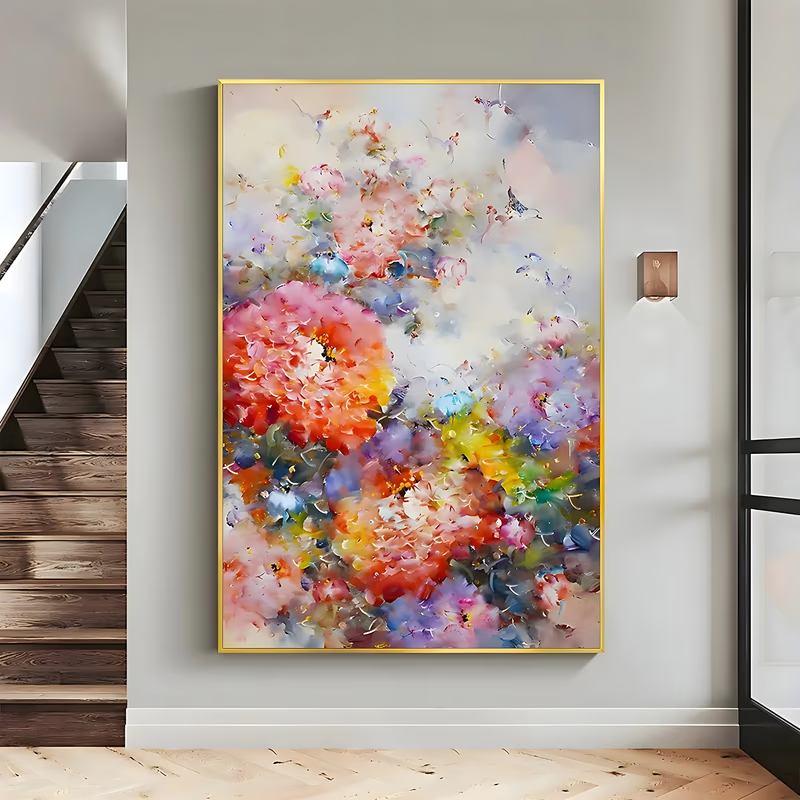
Warm neutrals with one stronger accent; let the room you already have decide whether that accent is gold, bronze, terracotta, deep green or Gulf blue.
Most UAE rooms are built on a warm, quiet base, and the painting carries the accent. One 2026 majlis styling guide sets sand, bone, camel and clay against a single saturated note such as olive, oxblood, indigo or bronze; Algedra describes the 'classic white and gold' majlis it sees favoured in Abu Dhabi homes as ivory walls, gold detail and polished marble floors. Read your room, then choose:
| Your room | Canvas palette | Accent | Frame |
|---|---|---|---|
| Warm minimal: bone, sand, greige, oak | Sand, clay, warm white | Bronze, terracotta or amber | Wood, or stretched without a frame |
| Classic white and gold: ivory, marble, crystal | Cream, ivory, pale blue or green | Gold | Gold |
| Neo-classical majlis: creams, gilding, velvet | Cream and gold | Burgundy or forest green | Gold |
| Coastal: the Palm, Saadiyat, beach towers | Gulf blue, turquoise, sand, white | Gold or silver | Silver or white |
| White walls, quiet furniture | Saturated colour | The painting is the accent | White or black |
The last row is a real Dubai choice: one interior designer drenched her own villa in light pink and blue with cobalt accents, saying vibrant colours suit the bright skies. Any catalogue design can be repainted in your palette from daylight photographs of the fabric or stone; browse beige, terracotta and blue paintings.
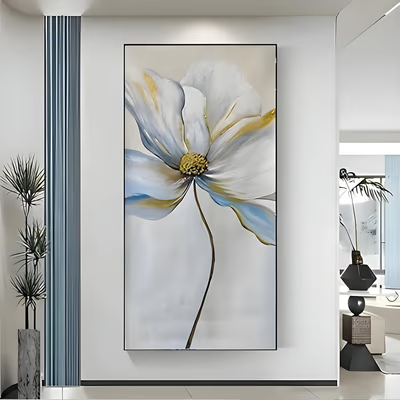
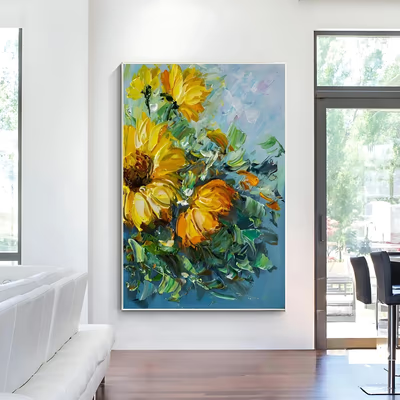
How much gold should a painting for a UAE home carry?
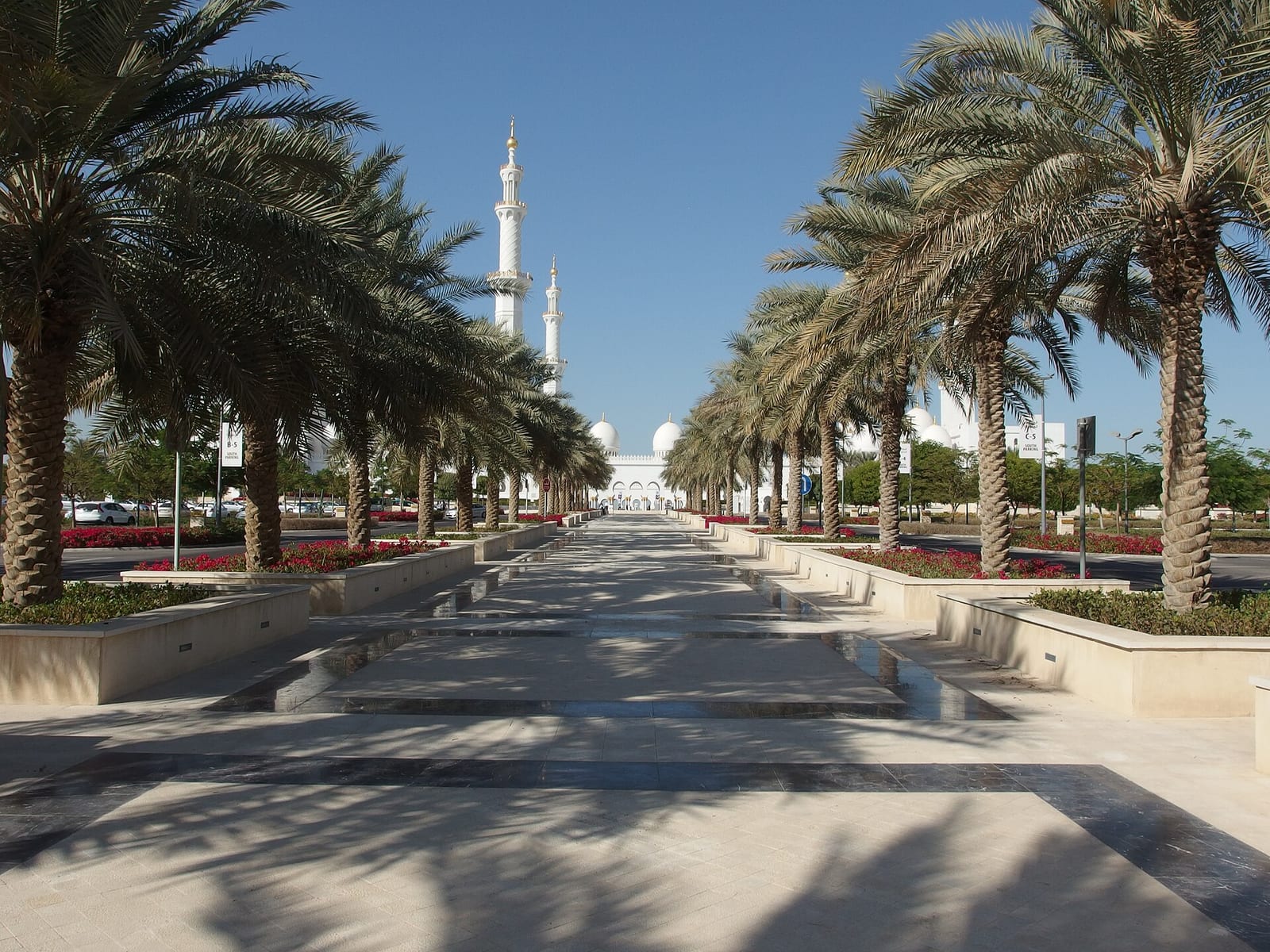
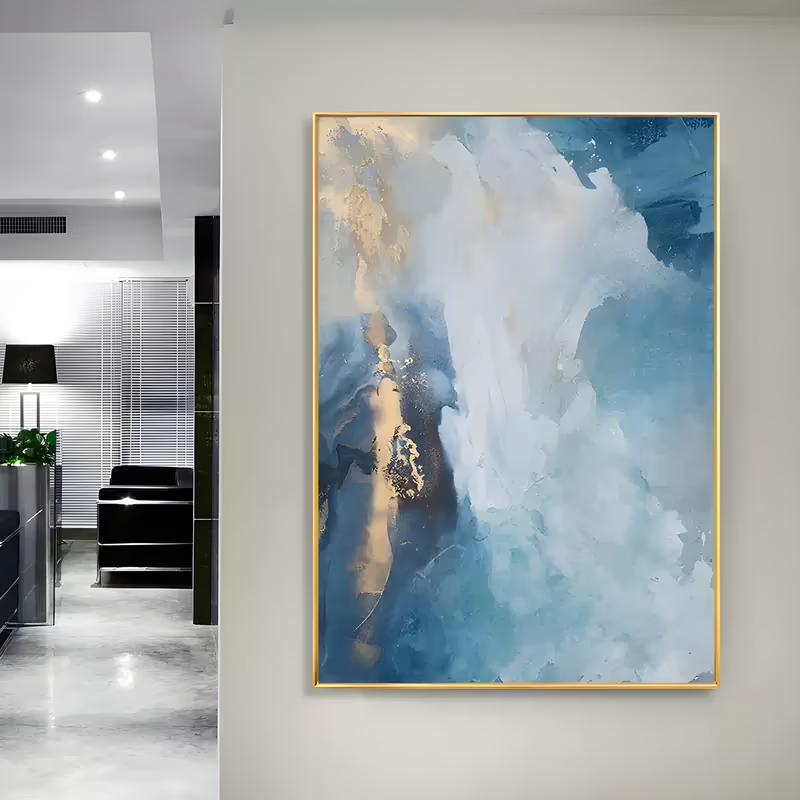
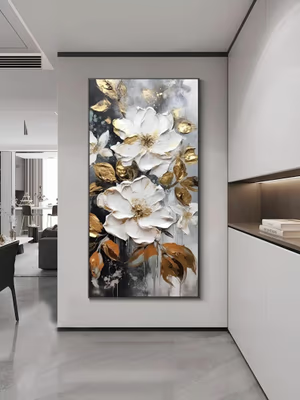
Usually a touch rather than a surface: a matte line, leaf or frame that answers the metals already in the room, with full gold kept for the classical white-and-gold majlis.
Gold carries meaning here. An Abu Dhabi interior studio reads gold accents as the 'wealth and splendour of heritage', and Emirati painters use it as a material: Salama Al Mazrouei works gold leaf onto raw, unprimed canvas. Today's taste is for gold as an accent, and 2026 Arabic-language guidance on the majlis speaks of touches of matte gold or bronze, although one Palm Jumeirah villa runs gold through every room and pairs it with blue in the living room.
Two rules of thumb follow. Let the gold in the painting answer the metals already there, the brass handles, bronze lamps or gilded cornice, rather than introduce a new one. And put the gold in the paint or in the frame; only a classical room wants both. Gold also changes with the light, and one Abu Dhabi majlis guide specifies warm light of 2,700–3,000 K, so ask for a short video at the stage the gold goes on. Browse gold paintings.
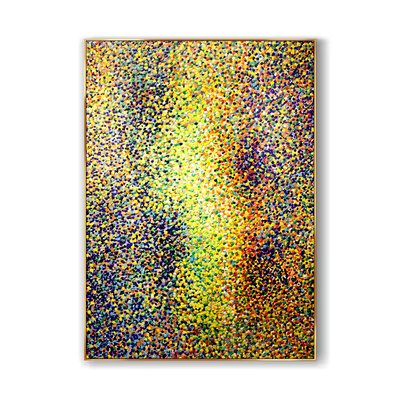
When does texture do more for a wall than colour?
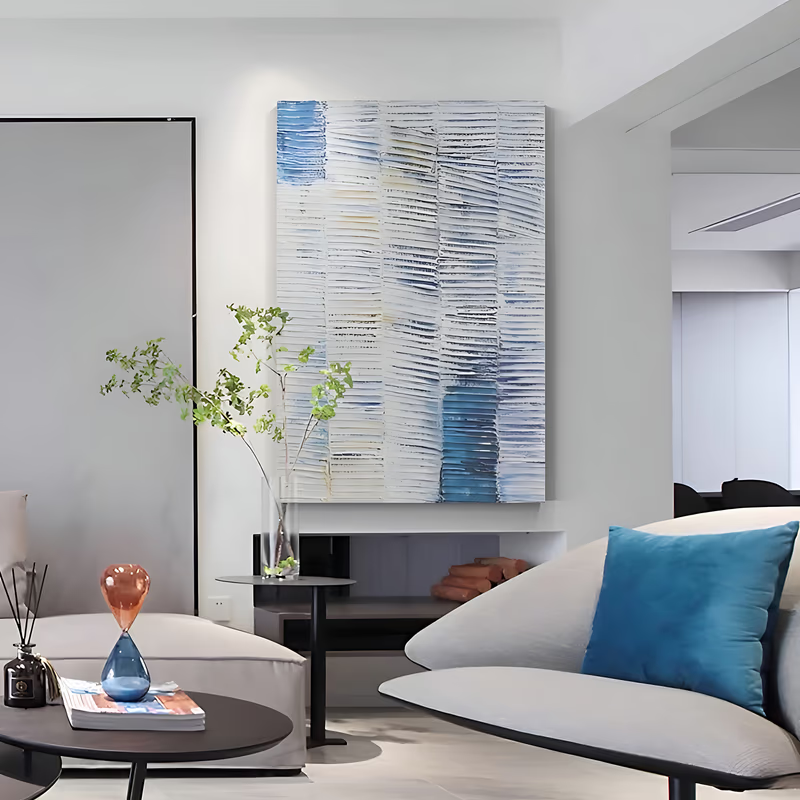
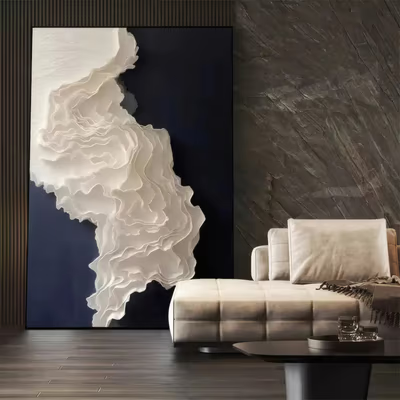
In a quiet, warm-neutral room: one textured canvas in the room's own tones adds depth and shadow without adding another colour.
Many of the most considered UAE interiors are deliberately quiet. One Dubai studio finished a 2025 Palm Jumeirah renovation in sand-washed neutrals under the idea of 'stillness as luxury', and a designer working on Saadiyat prescribes 'quiet stone, warm neutrals, and material depth over pattern'. In rooms like these, relief does the work bright colour once did: a Dubai designer describes a recent apartment 'in calm beige tones, but with textured art objects, custom art', and a collector in Victory Heights is drawn to tactile 3D, beaded, embroidered and resin pieces for her all-white villa.
Texture needs light across it. Hang a palette-knife or plaster canvas where daylight or a wall light rakes along the surface, and ask for a side-lit photograph once the relief is built up, so you see its depth before you approve. Heavy texture and plaster always travel stretched or framed, so check the route into the building early. See textured and wabi-sabi paintings.
How do you turn a style you like into a painting for your wall?
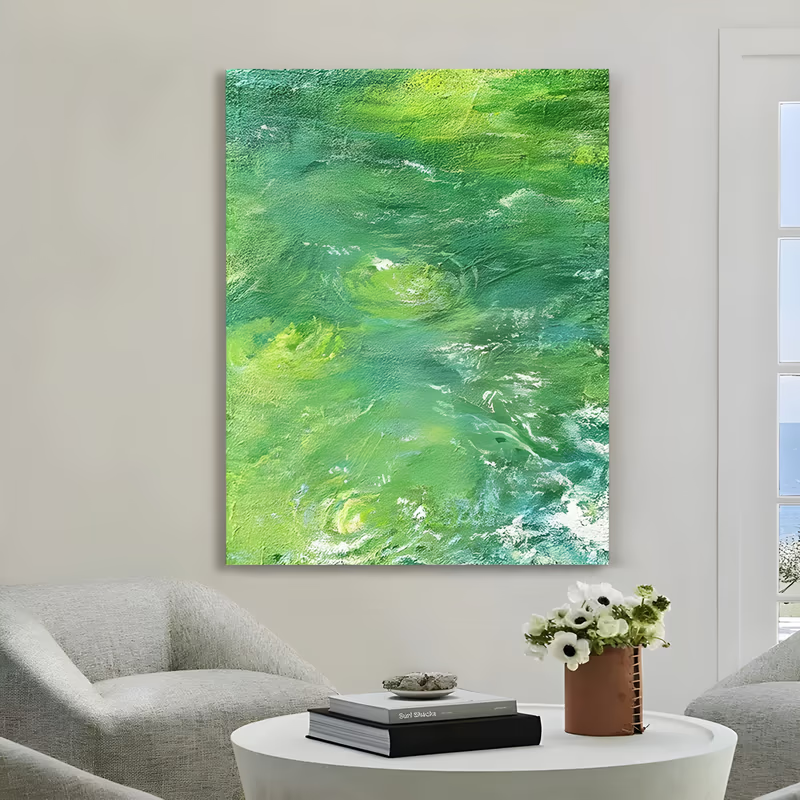


Send the room rather than a style name: a photo of the wall and daylight photos of its fabric, stone and metal; we shortlist designs in that palette or design one, and adjust colour and size before painting starts.
'Modern Arabic' or 'warm minimal' mean different things to different people. A photograph of the wall with its width and ceiling height, and daylight shots of the sofa fabric, the stone and the metal finishes, tell us exactly what the painting has to sit with. We reply with a shortlist from some 1,300 catalogue designs in that palette, or design a piece for your project; any design can be recoloured, resized to the wall, or varied into a pair or series painted in one hand.
Then you watch the style become your canvas, in photographs or video at each stage, approving each before the next begins. Rooms are covered in UAE villas and homes, sizes in the UAE size guide, and the whole market in our UAE wall art guide.
Arabic wall art FAQs
Can you paint Ayat al-Kursi or another Quranic verse?
Yes, from a calligrapher's own artwork used with their permission, so every letter is right before any paint goes on. Send it with the wall size and the room it will hang in, and we suggest the format, palette and finish. Ask a native reader to check the stage photographs before you approve the final one.
Can you paint the Sheikh Zayed Grand Mosque, the Burj Khalifa or the Dubai skyline?
Yes, from your own photograph or one you have permission to use. Tell us whether you want it recognisable or softened into light and pattern, and send it with the wall size; we suggest the size, palette and finish, and you approve each stage from photographs. A softer treatment suits a living room; a crisp skyline suits an office reception.
Can you paint a copy of a work by a well-known Arab or Emirati artist?
We paint hand-painted reproductions, but a work still in copyright needs the rights holder's permission first. If what you love is an artist's palette, geometry or way with letters, we can design a new piece in a similar spirit for your wall, or suggest catalogue designs that share it.
Can you take a figure or an animal out of a catalogue design?
Yes. Any design can be adjusted before painting starts: a figure or an animal left out, the palette changed to your room, the composition widened for a long wall. You see the change in the first stage photographs and approve it before we go further, which makes it easy to adapt a design you love for a majlis.
Can a painting pick up the Al Sadu or mashrabiya patterns in my home?
Yes, as a design for your project. Al Sadu, the Bedouin weaving that UNESCO added to its Register of Good Safeguarding Practices in 2025, and the lattice of a mashrabiya screen both translate well into geometric canvases. Send a photo of the rug or screen with the wall size, and we propose a design, palette and size.
Are Arabic paintings made in oil or acrylic?
Either. Acrylic on canvas is our standard: it dries quickly, which suits crisp geometry and built-up texture. Oil is available on request if you prefer its slower, softly blended colour. Either way, every piece is painted by hand and nothing is printed.
United Arab Emirates
Send us your room and its colours
Send a photo of the wall with its width, and daylight photos of the fabric, stone or metal the room is built around, on WhatsApp, with the quote form or by email. We usually reply within one business day with designs in your palette, a suggested size and finish, and a price for each piece.
More of the United Arab Emirates guide
The overview and each part of the guide answer one buying question for the United Arab Emirates.
- United Arab Emirates: overviewWall art in the UAE, hand-painted to the size of your wall for villas, majlis rooms, offices and hotels.
- Villas & homesWall art for living rooms in Dubai and Abu Dhabi
- Offices & institutionsOffice wall art in the UAE, space by space
- Hotels & restaurantsArt for hotels and restaurants in the UAE, space by space
- Where to buyWhere to buy art in Dubai and Abu Dhabi
- Size guideA wall art size guide for UAE homes
- DubaiWall art in Dubai for Marina and Downtown flats and Palm and Dubai Hills villas
- Abu DhabiWall art in Abu Dhabi, hand-painted to order for villas, majlis rooms, offices and hotels.
Sources
- Salama Al Mazrouei is reimagining Emirati heritage through portraiture – The National · 2026-08-20
- Artwork in ICD Brookfield Place Office | BNP Paribas Wealth Management · 2023
- Modern Arabic Majlis Design For Dubai Homes 2026 – BG Interior Arabia · 2025-12-20
- Majlis Interior Design In Emirati Style – The Studio By DH · 2026-01-26
- How to Incorporate Emirati Culture Into Your Villa's Interior Design in Abu Dhabi – Balcon Studio · 2024-09-18
- Al Sadu, traditional weaving skills in the United Arab Emirates – UNESCO ICH · 2025
- Union of Artists Installation Celebrates Emirati Unity – Art&Gulf Magazine · 2025-10-31
- دليلك بالصور لتصميم افضل ديكورات مجالس رجال حديثه ونساء في الإمارات – Matsmall (Arabic) · 2025
- identity – id50 2025 Power List · 2025-02-04
- Zen Interiors – The Palm Jumeirah Villa · undated (accessed Sept 2026)
- The Studio by DH – Palm Jumeirah Villa Renovation · 2025
- How to Style a Majlis in Your UAE Home – TopLatest · 2026-08-24
- This NFT Entrepreneur's Colourful Dubai Villa Was Inspired by a Vibrant Art Collection — AD Middle East · 2024-08-20
- World Art Dubai Curation Guidelines 2026 · 2026
- UAE Art Gallery and Exhibition Regulations — Nour Attorneys · 2026-08-22
- Artist: Abdul Qader Al Rais — Dubai Collection · 2026
- Interior Design Trends in Dubai for 2025 — Naz Interiors · 2025
- Dubai Dream: Tour chic, arty and quirky Victory Heights villa with queen of re-invention Dalia El Ali — Gulf News · 2025
- أحدث اتجاهات ديكورات المجالس العربية الفخمة في الإمارات 2026 — Elselsela · 2026-03-26
- Art Inspiration - Four Seasons Hotel Abu Dhabi · 2025
- Saadiyat Island Villa Design, Abu Dhabi | AKDG · 2026-08-12
- خيارات تنسيق المجالس المفضلة في منازل أبوظبي — Algedra · 2025-11-20
- Bassam Freiha Art Foundation to host series of exhibitions showcasing contemporary Emirati art — Abu Dhabi Media Office · 2024-10
- Louvre Abu Dhabi's first 2021 exhibition features abstract masterpieces in dialogue — Abu Dhabi Media Office · 2021-02
- Atlantis The Royal: a hotel with an extraordinary design story (Hotel Designs) · 2023-01-27
- Take A Tour Around Dina Alghussein's Colour Coded Chic Villa · 2026-07-12
- Layers of Joy: Inside Dubai-based Interior Designer Victoria Cronin's Vibrant Villa · 2022-03-30
Researched 2026-09-12. Prices and figures are as published by the sources on the dates shown.