Middle East · Qatar · Doha · Lusail
Islamic wall art in Qatar: patterns, subjects and colours
iHomeArt paints Islamic wall art and Qatari-inspired canvases by hand and to order for villas, majlis rooms, apartments, hotels and offices across Qatar: geometry, Sadu pattern, calligraphy from a calligrapher's artwork, desert, sea and abstraction. This guide shows which subjects, palettes and finishes suit Qatari rooms, and what to leave out of a majlis or a public space.
Ordering Islamic and Qatari-style wall art from iHomeArt
- 1 pieceMinimum order; volume pricing from 10
- Any sizePainted to the wall, oversized and multi-panel included
- About 10 daysTo paint, then 5–7 days by DHL, FedEx or UPS express to Qatar
- Every stageApproved by photo or video before the next one starts
- 50 / 50Half upfront, half once you approve the final photograph
The colours and patterns Qatar knows
- National colour
- Maroon, fixed in 1936 after red dye faded to brown in the sun
- Al Sadu weaving
- Bands of red, black, brown, beige and white; on UNESCO's list for Qatar since 2025
- The villa palette
- Beige limestone, soft white walls, natural wood, muted tones
- New hotel art
- Desert light and the coast, abstracted, by Qatari artists
- In public space
- Two nude statues covered and sent back in 2013, citing community standards
What does Islamic wall art look like in a Qatari home today?
Less often a framed text, more often geometry, letterforms and abstraction: Islamic wall art in Qatar is a family of styles, and calligraphy is only one of them.
Qatar's art history explains the range. Before the oil boom of the 1950s, paintings were rare here, and architecture, calligraphy and textiles carried the decoration. Letters were there from the start of modern Qatari painting: Yousef Ahmad, one of its pioneers, held the first solo hurufiyya exhibition in Doha in 1977, building abstractions out of Arabic script. Today the same vocabulary fills public walls, from eL Seed's 52 'Calligraffiti' murals to Fatma Al Sharshani's circular 'Al Noor' mural at Qatar Post Park, drawn from the poetry of Sheikh Jassim bin Mohammed Al Thani.
For your own wall that leaves three routes, and many homes use more than one. A Doha designer's 2025 rugs and prayer pieces show how freely the tradition is read today: crescents and spirals, no script at all.
-
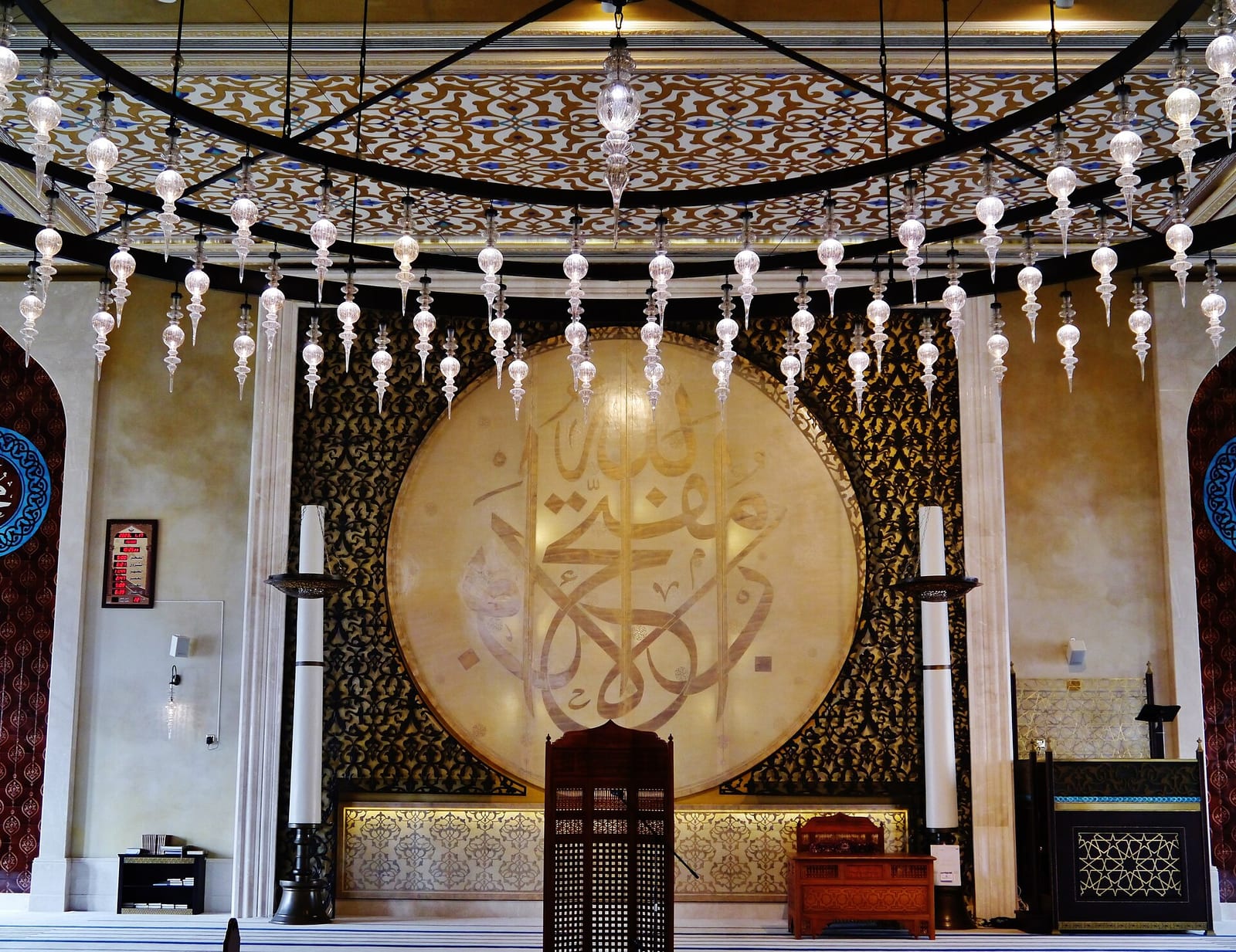
Letterforms
- What it is
- A verse, a name, a line of poetry, or Arabic script used as texture
- Suits
- The majlis, an entrance hall, a study
-
Geometry and pattern
- What it is
- Star lattices, mashrabiya rhythms, Sadu bands
- Suits
- Formal receptions, corridors, hotel lobbies
-
Abstraction
- What it is
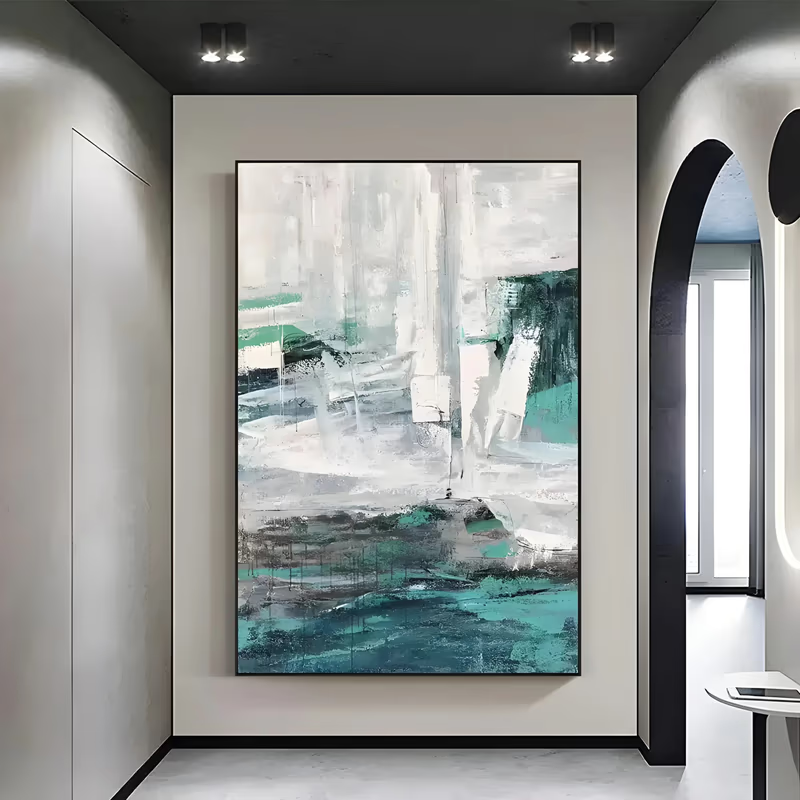
- Colour and gesture in turquoise, gold, sand or lapis
- Suits
- Living rooms, apartments, offices, guest rooms
How do you commission Islamic calligraphy wall art in Qatar?
Start from a calligrapher's own artwork, used with their permission; we paint it by hand at the size and in the colours of your wall, and you, or a native reader you trust, check the letters in the stage photographs before approving.
Calligraphy is bought in Doha, not only admired: at Katara's first Doha Symposium for Arabic Calligraphy in 2015, most of one calligrapher's paintings sold and almost all of another's carried a 'sold' tag. It belongs to family life too; Marhaba Qatar calls dressing the home for Ramadan and Eid a popular trend, and suggests an 'Eid Mubarak' in Arabic script for the wall.
For a verse, a name or a family motto, the letters must be right before any paint goes on. Ask a calligrapher for the artwork, or send one you already hold the rights to; we suggest the size, format and palette, paint it by hand and send photographs at each stage, so that you or a native reader can check every stroke. Gold letters on a deep ground suit a formal majlis; tone-on-tone script in sand reads as texture in a modern living room. More on paintings from your own image.
Which patterns feel Qatari: Sadu, geometry or mashrabiya?
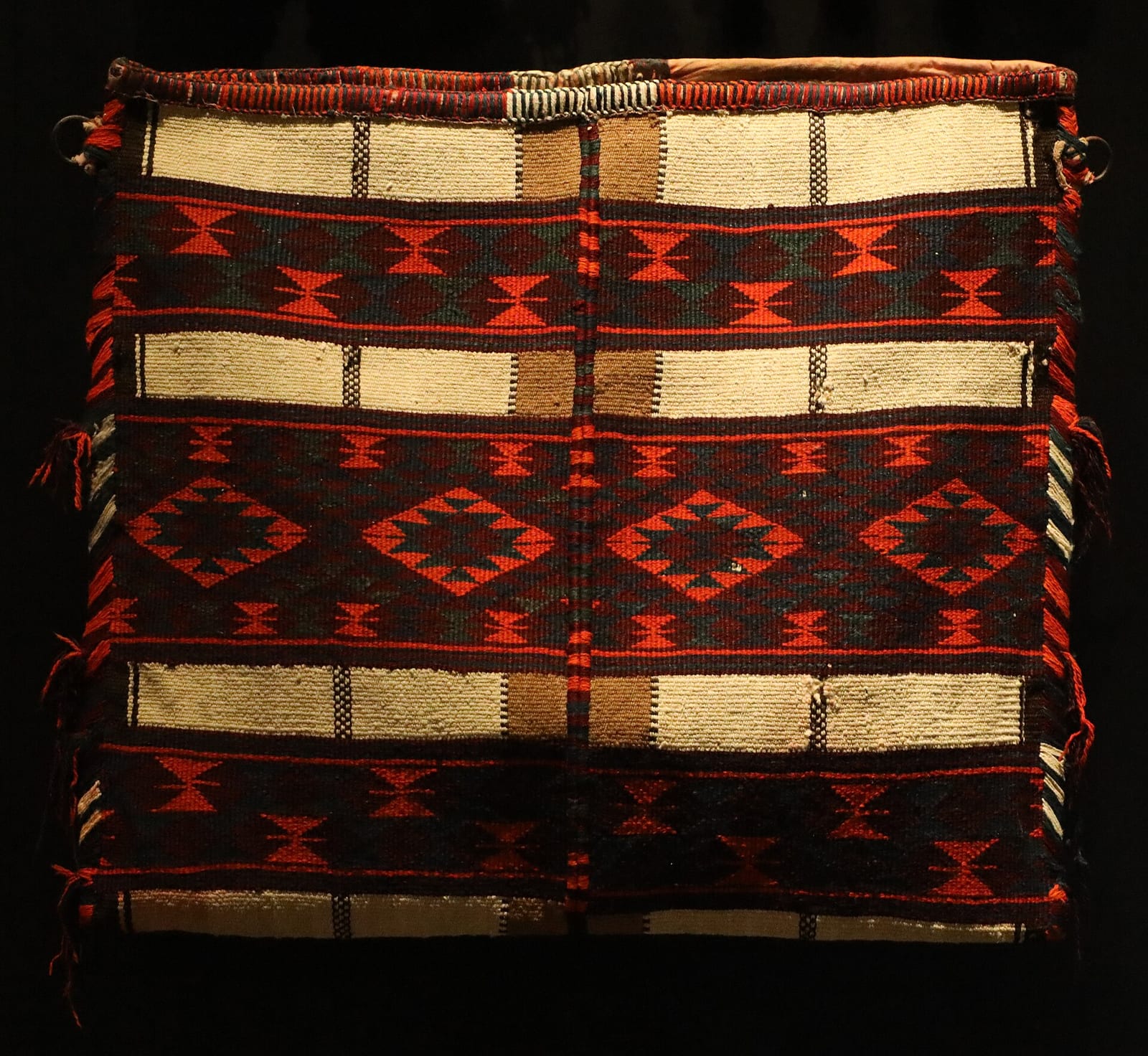
Al Sadu is the most Qatari of them, with its narrow bands of red, black, brown, beige and white; Islamic geometry and lattice suit formal rooms in gold, bronze and cream.
Al Sadu is Bedouin weaving in narrow geometric bands, its triangles and diamonds standing for stars, weather, dunes and animals; Qatar joined its UNESCO inscription in 2025. It has long left the tent: an art consultant says his studio made some 8,000 pieces for Swissôtel Corniche Park Towers, all designed around Sadu weaving. Geometry is the other constant. A Qatar fit-out firm puts geometric wall panels and mashrabiya screens in today's majlis, and the murals at Al Sadd metro station mix falcons and camels with geometric pattern.
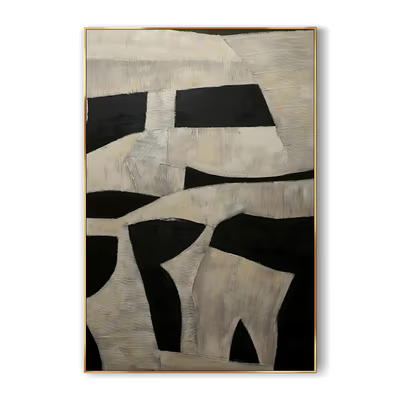
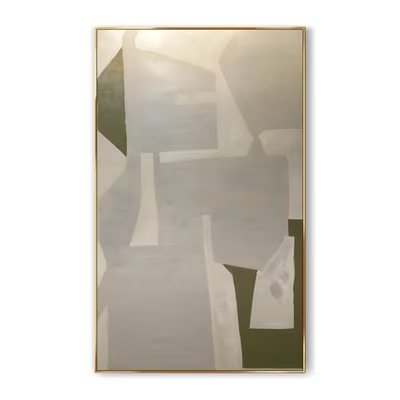
On canvas, pattern works best as rhythm and colour rather than a copy of the weave: Sadu's red, black and cream in a banded abstraction, or a star lattice in gold over sand. Where carved screens or patterned panels already line the room, choose a quieter canvas in the same tones.
Which Qatari subjects suit a painting: desert, sea, falcon or dhow?
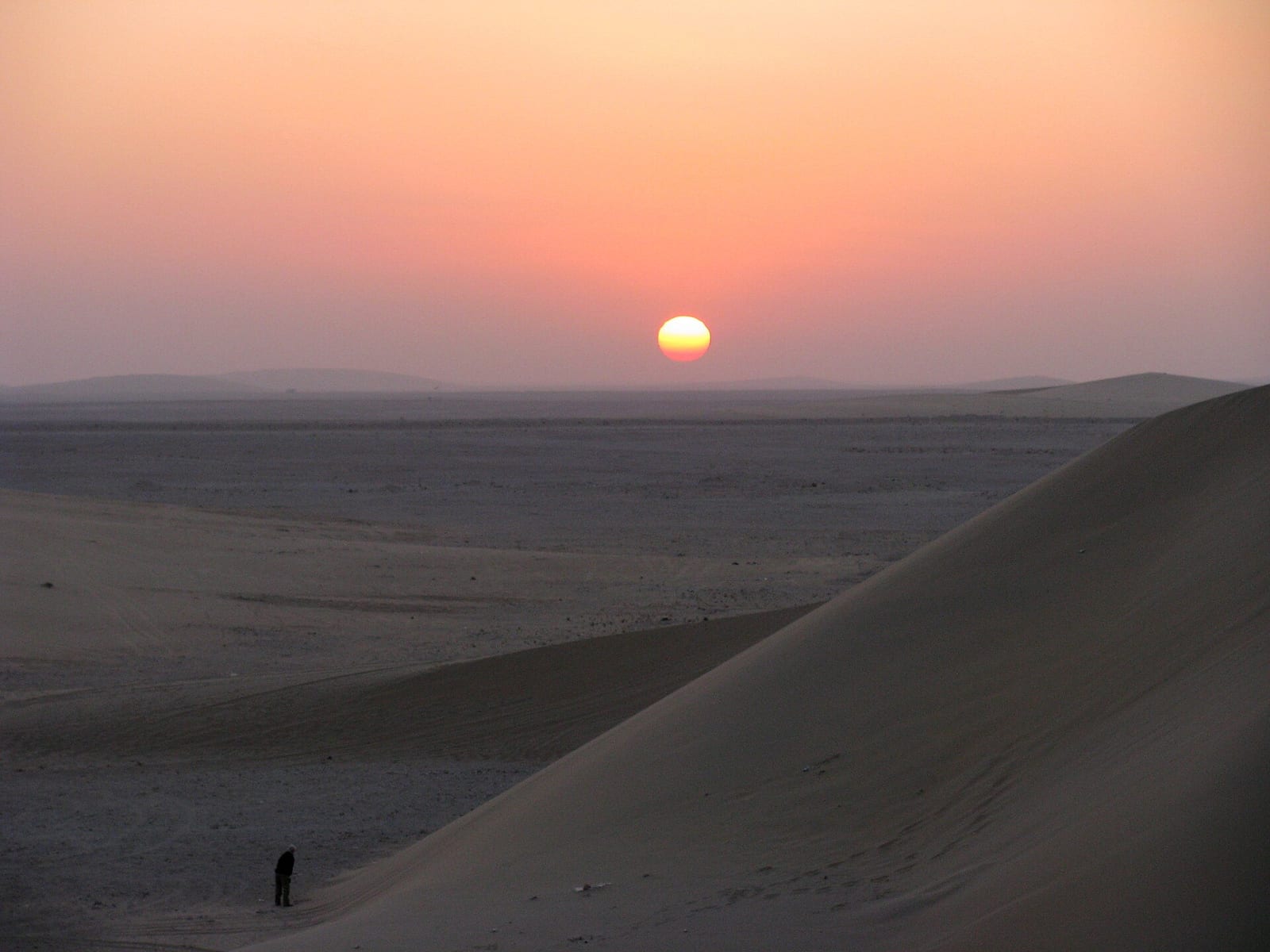
The desert, the Gulf coast and its pearling past, the dhow, the falcon and the Arabian horse; for a hotel or office, the same places painted as abstraction travel further than a literal scene.
Qatari painters keep returning to home ground: both of Katara's Qatari solo shows in early 2026 were rooted in heritage, and public art adds dugongs, pearl-diving songs, dunes and tents, with a falcon and Ali Hassan's 'Desert Horse' at Hamad International Airport.
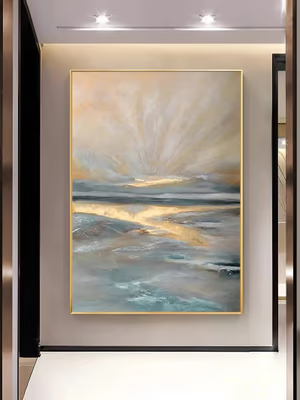
The treatment changes with the room. Hotels want atmosphere: Rosewood Doha describes its Qatari artists' work as 'abstract expressions of desert light' and moments drawn from the coast, and Four Seasons at The Pearl built its interiors on shells, sand and sea. Offices lean the same way: one Doha company's 2021 commission was mostly abstract, with a few realistic pieces about its own business. At home you can be literal: your own falcon or horse, the southern dunes, a dhow off the Corniche. Browse landscapes, seascapes and wildlife paintings.
Which colours suit wall art in Qatar's villas and apartments?
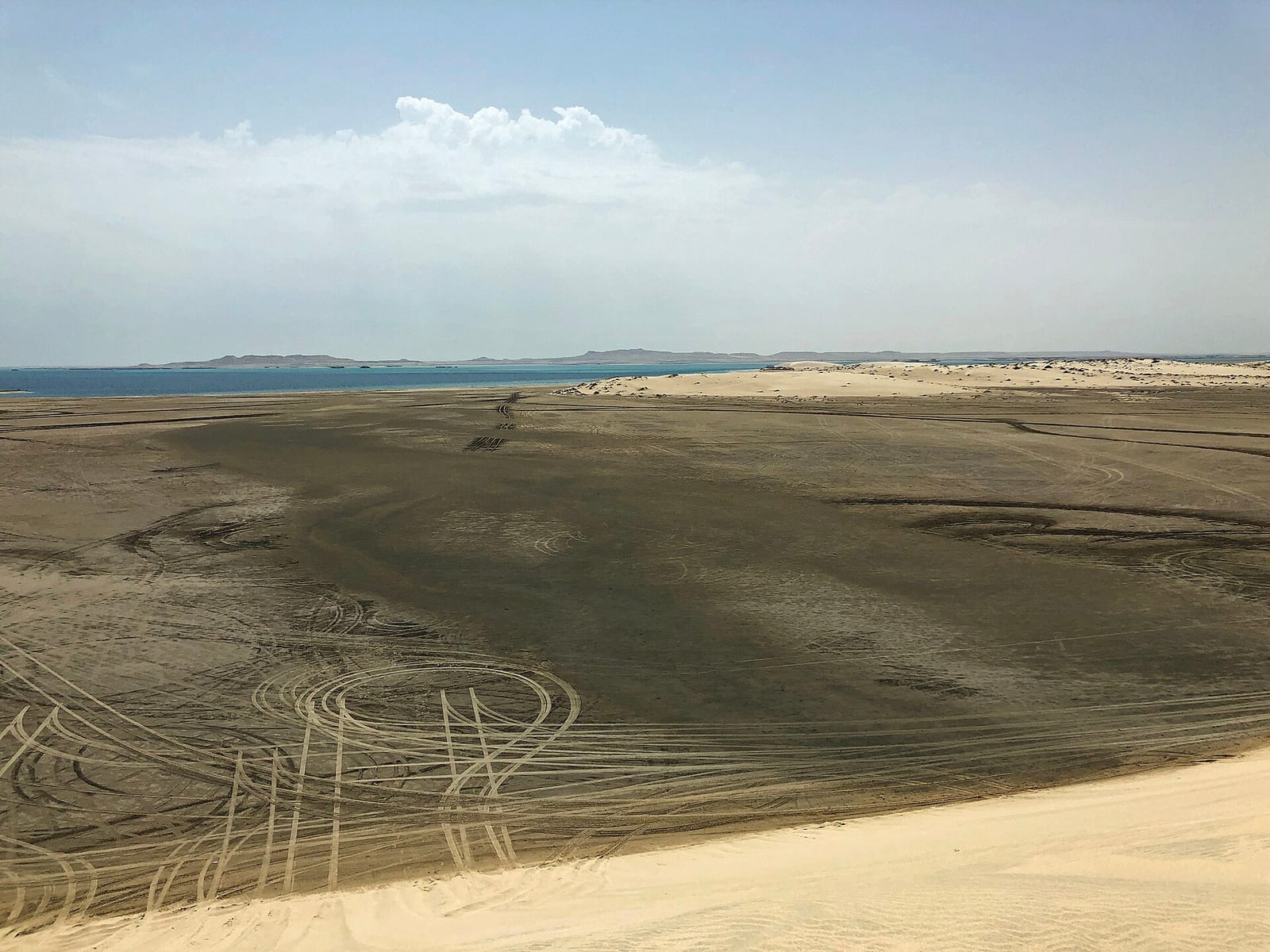
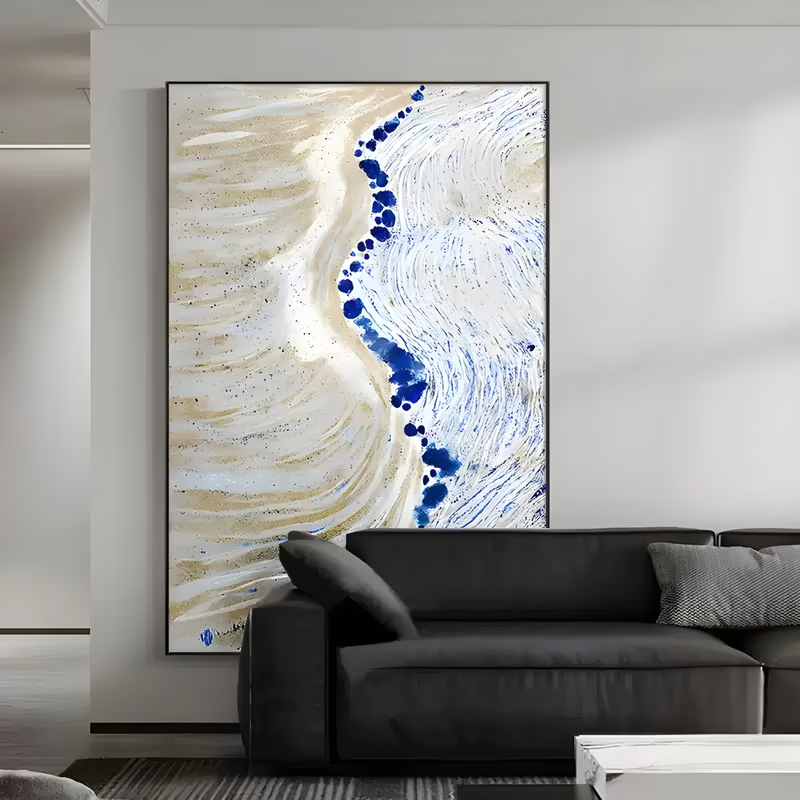
A calm base of sand, limestone, off-white and grey; Gulf blues and teals near the water; and gold, bronze or Qatar's maroon as the accent rather than the ground.
The base is neutral. A Qatar fit-out firm describes today's homes as beige limestone floors, soft white walls and natural wood, and a villa on The Pearl is marketed on 'a crisp neutral palette'. Pale walls leave the colour to the art: collector Tariq Al Jaidah keeps his Doha home mostly off-white so that the architecture frames his paintings.
Near the water the palette cools: Four Seasons Doha dressed its guest rooms in blues and beige for sky, sea, sand and earth, and Waldorf Astoria Doha West Bay pairs pale blue, jade and platinum. Accents come from Qatar itself: gold, as in Fairmont Doha's gold mosaic walls, bronze, and the maroon of the flag, best as a band or a stroke rather than the whole ground. Send us a daylight photo of your stone, fabric or paint and we mix the canvas to it. More in beige, teal and gold wall art.
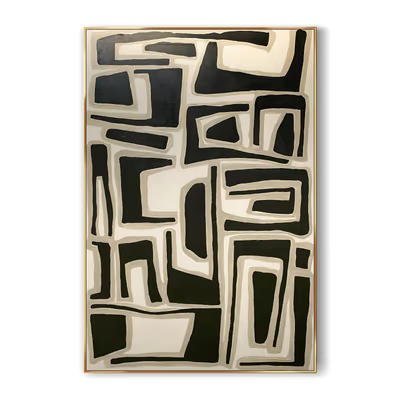
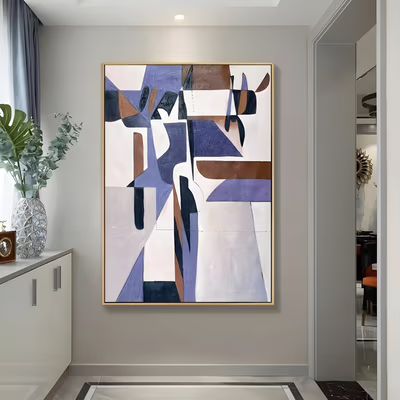
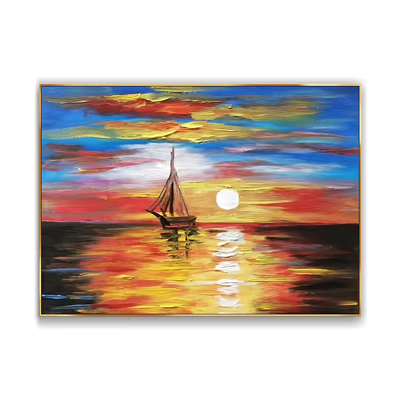
How much texture, and which frame, suits a Qatari interior?
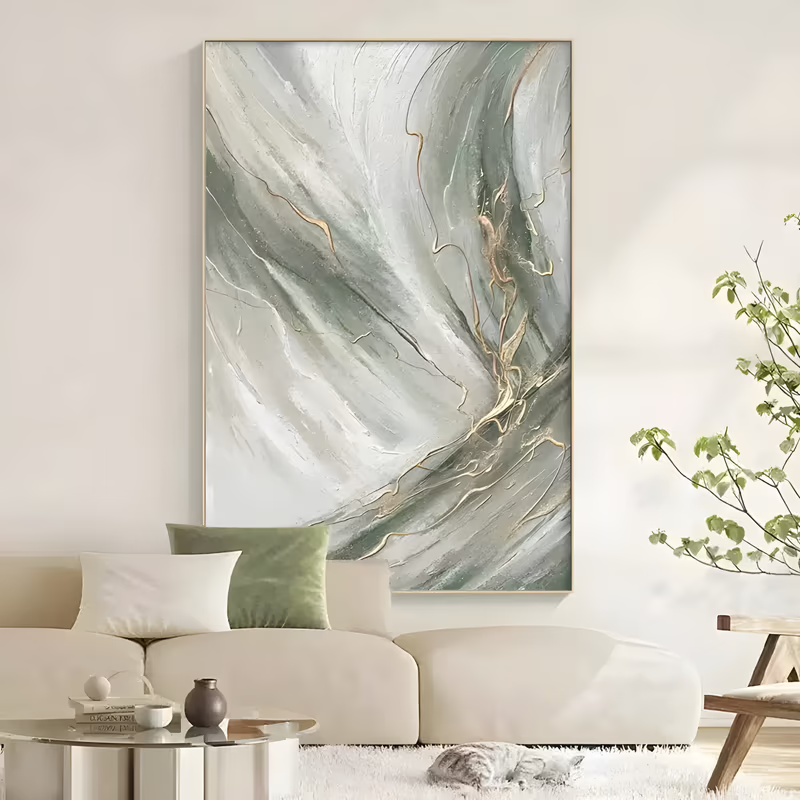
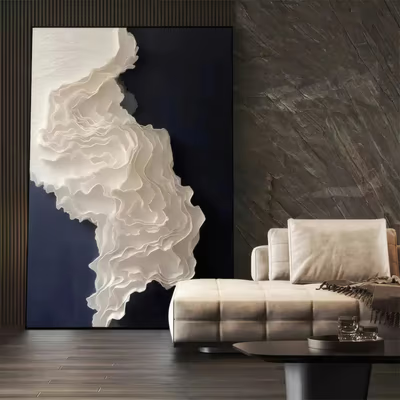
Where the walls are already carved, moulded or panelled, choose a calmer canvas in the wall's own tones; where the architecture is plain, raised plaster or palette-knife texture and a gold or bronze-toned frame give the painting its presence.
Many Qatari reception rooms are richly worked already. A Qatar design firm's 2026 scheme for a 150 m² 'Modern Neoclassic' majlis lines the walls with mouldings, a Doha palace majlis pairs water-jet-cut wall designs with gypsum ceilings, and Waldorf Astoria Doha West Bay has a full-height carved plaster wall.
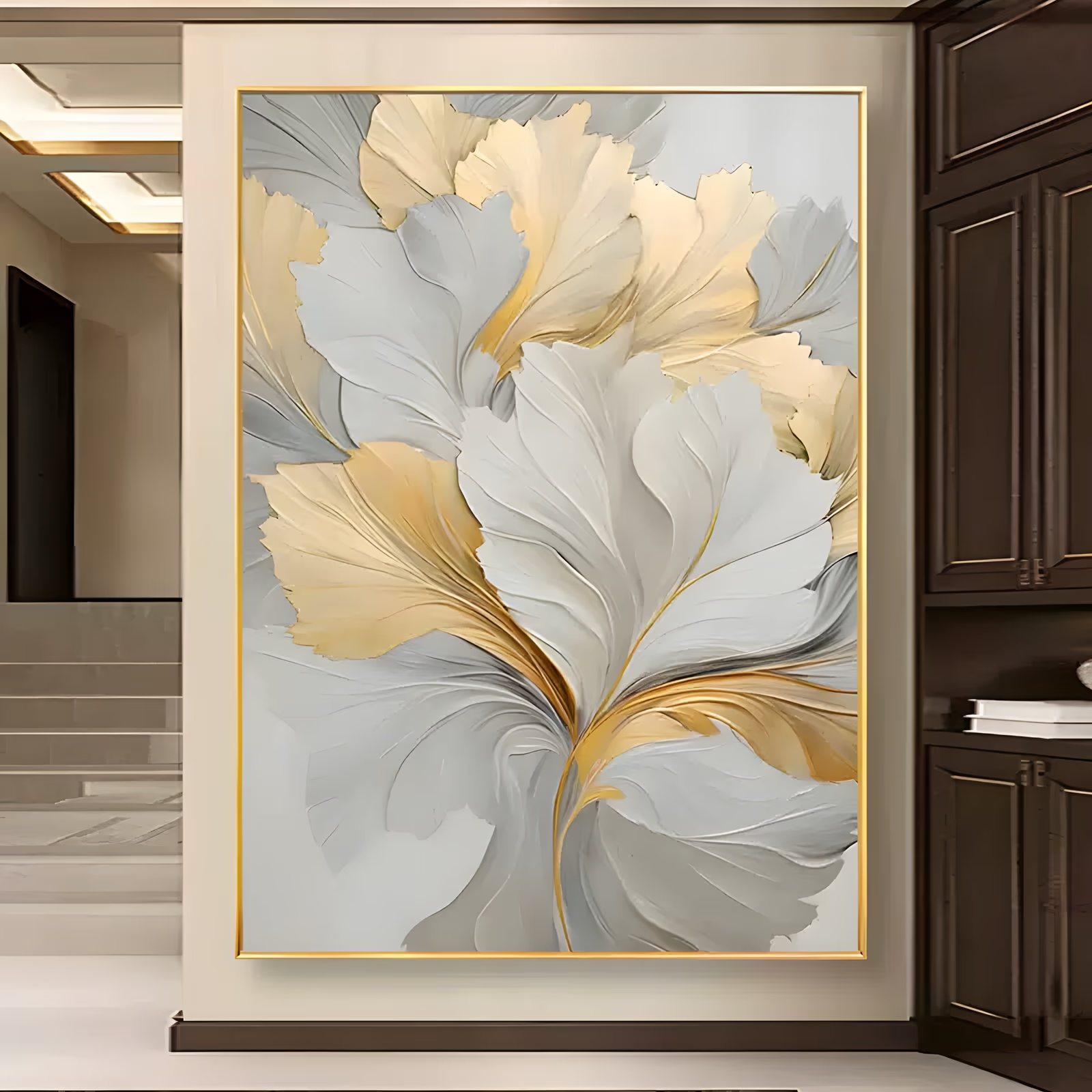
Against that much ornament, a flat, quiet field with a fine gold vein lets the room breathe. In a plain, modern villa, texture does the work: raised plaster petals or knife-cut waves that throw shadows in the low evening sun. Textured and plaster pieces travel stretched or framed, never rolled, and you can ask for a side-lit stage photo of the relief before you approve. Frames come in gold, silver, black, white or wood; in a house finished in brass and bronze, like one Doha family home by Katharine Pooley, gold picks up the metalwork. See our textured paintings.
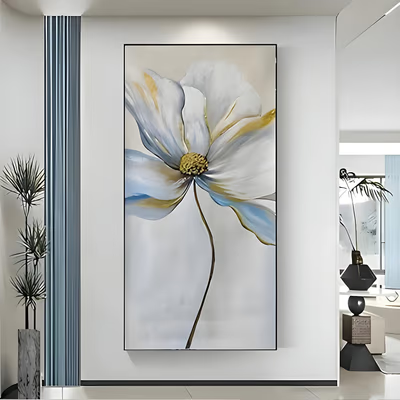
Classic or contemporary: which way is Qatari taste moving?
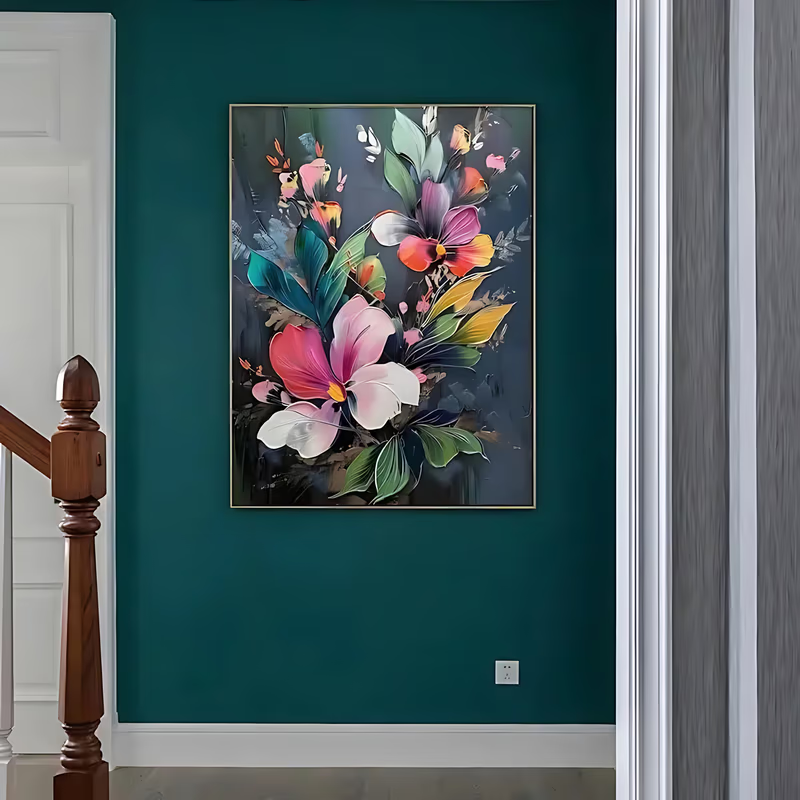
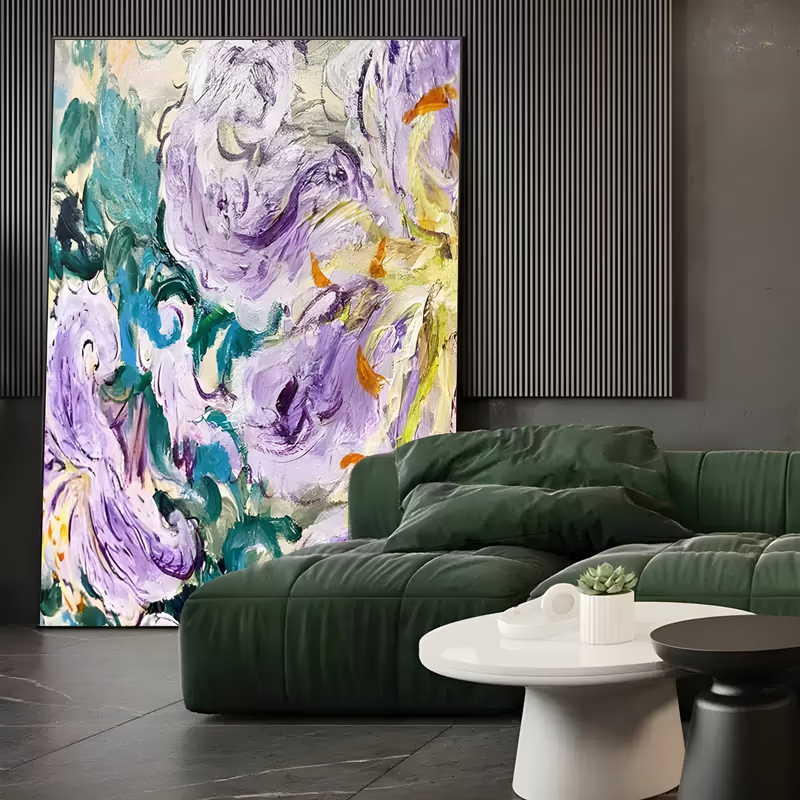
Both are alive: new apartments and younger owners lean to Modern Arabic and minimal contemporary, while many villa receptions stay classical, so decide room by room rather than for the whole house.
A Doha interiors firm describes a client who asked for a 'classical' villa and was steered toward a design suited to their age and way of life, which it calls typical of its residential work. A Qatar fit-out guide names Modern Arabic, minimal contemporary and Mediterranean fusion as the styles in demand, yet classical receptions remain: a recent private majlis in Doha is European classic, with a crystal chandelier and brown drapes. Pattern has its following too: in 2025 Mandarin Oriental, Doha re-dressed four rooms and suites in a London fabric house's bold florals.
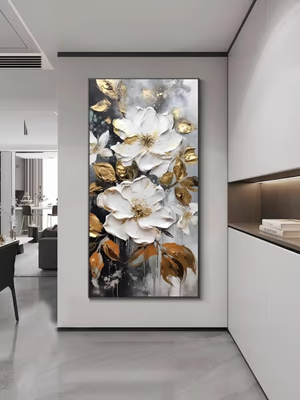
A practical split: in a classical room, landscapes, florals and gold frames; in a Modern Arabic room, texture, geometry and abstraction in sand and stone; in a minimal apartment, one large, calm canvas rather than several small ones. See our floral paintings and minimalist works.


What should a painting for a Qatari majlis or public space leave out?
Nudity and violence in any shared or public space; portraits and figures in a traditional majlis unless the household wants them; and anything that treats faith, the flag or the ruling family lightly.
The firm lines are public ones. In 2013 Qatar Museums covered two ancient Greek nude statues and returned them to Greece, citing 'community needs and standards', and a sculpture of a footballer's headbutt was removed from the Corniche within a month after critics said it glorified violence. Figures as such are not the issue: one of Katara's 2026 shows was 25 portraits. But many households keep images of people and animals out of the rooms where guests are received, so for a majlis, calligraphy, geometry, landscape and abstraction suit every guest.
Two details help too. Qatari etiquette avoids alcohol as a gift, so a still life with wine belongs in no reception room. And in a Qatari family house, Marhaba Qatar notes, the men's majlis sits near the entrance while women receive their guests in their own room inside: two receptions, two briefs.
Hotels, offices and clinics
Rule out nudity and violent scenes in the brief from the start, so no piece has to be replaced after installation.
Falcons and horses
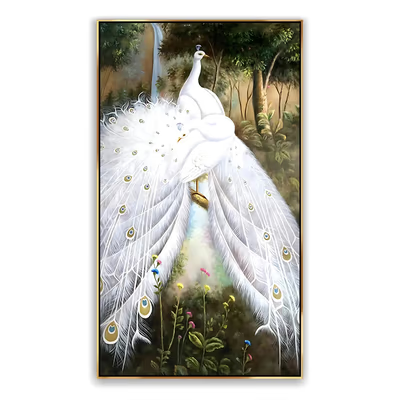
Much-loved Qatari subjects for a study, a family room or a lobby; for the majlis of a strictly observant household, ask before choosing any living creature.
How do you turn a Qatari style brief into a painting with iHomeArt?
Send a photo of the wall, the materials around it and two or three pictures of the style you like; we suggest designs or design one for you, adjust the colours and paint it by hand.
Start with what is fixed in the room: the stone, the wood, the upholstery, the metal of the light fittings. Photograph them in daylight, with the wall's width and the ceiling height. We suggest a shortlist from some 1,300 catalogue designs, or design a piece for your project, then resize it to the wall, recolour it to your materials or vary it into a set, so that the majlis, the family hall and the dining room share one palette across different subjects. Order one canvas first if you want to see the hand and the colour before the rest.
Every piece is acrylic on canvas as standard, oil on request, painted by hand and never printed. Sizes for Qatari rooms are in the Qatar size guide, villa walls room by room in villas and majlis, and the overview in our Qatar wall art guide.
Islamic wall art in Qatar FAQs
Can you paint Islamic geometric art to the size of my wall?
Yes. Send a photo of the wall with its width and the ceiling height, and the pattern you have in mind: a star lattice, a mashrabiya rhythm or Sadu bands. We suggest the size, format and palette that suit the room, and you approve the drawing and the colours in the stage photographs before the next stage starts.
Is abstract art a good choice for a majlis?
Often the easiest one. Abstraction carries no figures, so it suits every guest in a traditional majlis, and its colours can follow the room's stone, wood and upholstery. A guide to Qatari villas lists chandeliers, wall panels and rich fabrics as the majlis standard, so choose a canvas that holds its own beside them: wide, calm and in the room's tones.
Can you paint my own falcon or Arabian horse?
Yes. Send clear photographs of the bird or the horse taken in daylight, with the size of the wall, and we tell you how it will translate to canvas and suggest a size and finish. You need to own the photographs or have permission to use them, and the design can stay exclusive to you if you ask before we start.
Is Qatar's maroon a good colour for a painting?
As an accent, yes. Maroon is the colour of the flag, so it works best as a band, a brushstroke or a detail alongside sand, cream and gold rather than as the whole canvas. It also sits naturally with the red, black and brown of Al Sadu weaving, which makes a banded abstraction in those colours feel distinctly Qatari.
Can you make a painting to go with art I already own?
Yes. Send a photo of the piece you own and of the wall for the new one. We suggest catalogue designs in the same spirit or design a companion piece in the same palette, painted at the size the wall needs. Copying another artist's work that is still in copyright needs the rights holder's permission.
How long does a painting take to reach Doha?
About 10 days to paint, then 5–7 days by DHL, FedEx or UPS express to Doha, Lusail, Al Wakrah or anywhere else in Qatar. Larger orders may travel by air or sea freight instead; we choose the best route for your address and confirm the shipping cost before anything leaves.
Qatar
Send us your room and the style you have in mind
Send a photo of the wall, its width, the materials around it and a picture or two of the style you like, on WhatsApp, with the quote form or by email. We usually reply within one business day with designs that suit, the right size for the wall and a price for each piece.
More of the Qatar guide
The overview and each part of the guide answer one buying question for Qatar.
- Qatar: overviewWall art in Qatar, hand-painted to order for majlis rooms, villas, apartments, hotels and offices.
- Villas & majlisMajlis wall decor and villa wall art in Qatar
- Offices & institutionsOffice wall art in Qatar, painted by hand to order for lobbies, boardrooms, corridors and clinics in Doha and Lusail.
- Hotels & restaurantsArt for hotels and restaurants in Qatar
- Where to buyWhere to buy art in Doha
- Size guideA wall art size guide for Qatar
- DohaWall art in Doha by district
Sources
- Gulf Times – Katara art exhibitions display blend of heritage, modernity · 2026-01-28
- VCUarts Qatar students, alumna artistically capture GWC's corporate spirit - Gulf Times · 2021-04-02
- Qatar one of most inspiring destinations for contemporary art, hospitality design - The Peninsula Qatar · 2026-02-09
- Hamad International Airport Public Art Installations - Qatar Museums
- Public Art - Qatar Museums
- Al Sadd Metro Station features artistic murals in collaboration with Qatar Museums - The Peninsula Qatar · 2026-08-14
- Inside the Majlis - Marhaba Qatar · 2024-06-18
- Qatari art - Wikipedia
- Flag of Qatar - Wikipedia
- Al Sadu - Wikipedia
- Qatar Covers Nude Statues, Greeks Take Them Back - WUKY · 2013-04-30
- Coup de tête (sculpture) - Wikipedia
- Public art in Qatar - Wikipedia
- Classic calligraphy - Gulf Times · 2015-01-06
- How to Decorate Your Home for Eid - Marhaba Qatar · 2026-03-15
- Qatar - Language, Culture, Customs and Etiquette - Commisceo Global
- Mirabello Interiors - Portfolio
- Inside Tariq Al Jaidah's Doha Home, An Archive of Arab Civilisation - AD Middle East · 2026-04-08
- Finding the Right Interior Designer in Qatar - What You Should Know Before You Hire - Super Fitout
- Classic Majlis design, Private in Doha - Antonovich Design · 2026-09-08
- Grand Villas in Qatar - Modern Arabian Style by Algedra · 2025-09-08
- Rosewood Doha makes Qatar debut - Sleeper · 2025-07-30
- Inside the hotel that is said to redefine luxury in Doha - Hotel Designs · 2023-02-03
- IN PICTURES: Four Seasons Hotel Doha unveils complete redesign - Hotel Designs · 2020
- Four Seasons Resort and Residences at The Pearl-Qatar - Hotel Designs · 2024-03
- The Art of Modern Neoclassic Majlis Design | 150 sqm Qatar Project | AbdulRahman Mohammed · 2026-08-24
- Yousef Ahmad - Wikipedia
- Contemporary Doha Home – Katharine Pooley
- Qatar Palace Interior Design | Majlis interior Design Doha - Antonovich
- Giardino Village at The Pearl Island | 5BR Villa - Property Finder · 2026-09
- Fatma Al Sharshani - Wikipedia · 2026-09-18
- Mandarin Oriental, Doha and Liberty London Unveil Liberty Rooms and Suites - Marhaba Qatar · 2025-10-15
- Waldorf Astoria Doha West Bay: A Fusion of Modern Elegance and Art Deco Splendor - LUXUO · 2024
- Shaikha Al Sulaiti – Designed in Doha · 2025-11-11
Researched 2026-09-12. Prices and figures are as published by the sources on the dates shown.