
Middle East · Oman · Muscat · Salalah
Omani art styles on canvas: forts, wadis, silver and desert colour
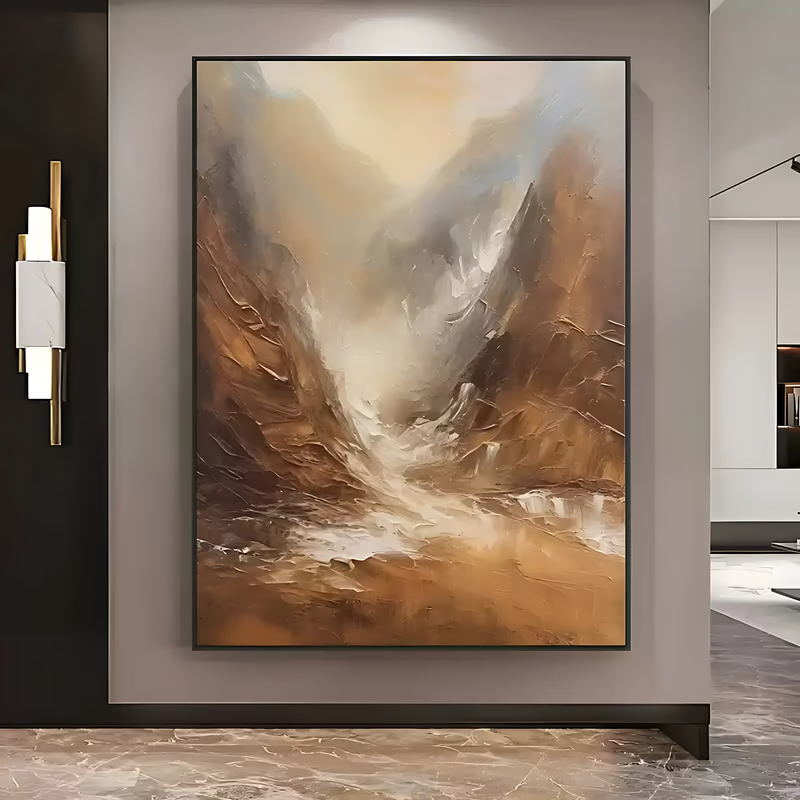
iHomeArt paints canvases in Omani art styles, by hand and to order, for villas, majlis rooms, hotels and offices in Muscat, Salalah and across Oman: forts and carved doors from your photographs, wadis, dunes and the sea, silver or gold, plaster and palette-knife texture. This page shows which subjects suit which walls, how the palette shifts from coast to mountains to sands, and how far to take texture and metal.
Ordering a painting in an Omani style from iHomeArt
- 1 pieceMinimum order; volume pricing from 10
- Any sizePainted to the wall, oversized and multi-panel included
- About 10 daysTo paint, then 5–7 days by DHL, FedEx or UPS express to Oman
- Every stageApproved by photo or video before the next one starts
- 50 / 50Half upfront, half once you approve the final photograph
What shapes Omani taste on the wall
- Heritage ornament
- Engraved silver, carved doors, gypsum plaster of triangles and circles
- Younger painters
- Colour blocks, faceless figures, calligraphy over photographs
- A resort palette
- Oceanic tones, tan and local stone at The St. Regis Al Mouj (2024)
- Calligraphy
- 63 works by 47 artists in Muscat's 'Ink' show, October 2025
- Oman at Venice, 2026
- Sand and suspended silver, drawn from the ornament of horse tack
Which subjects make Omani art feel Omani?
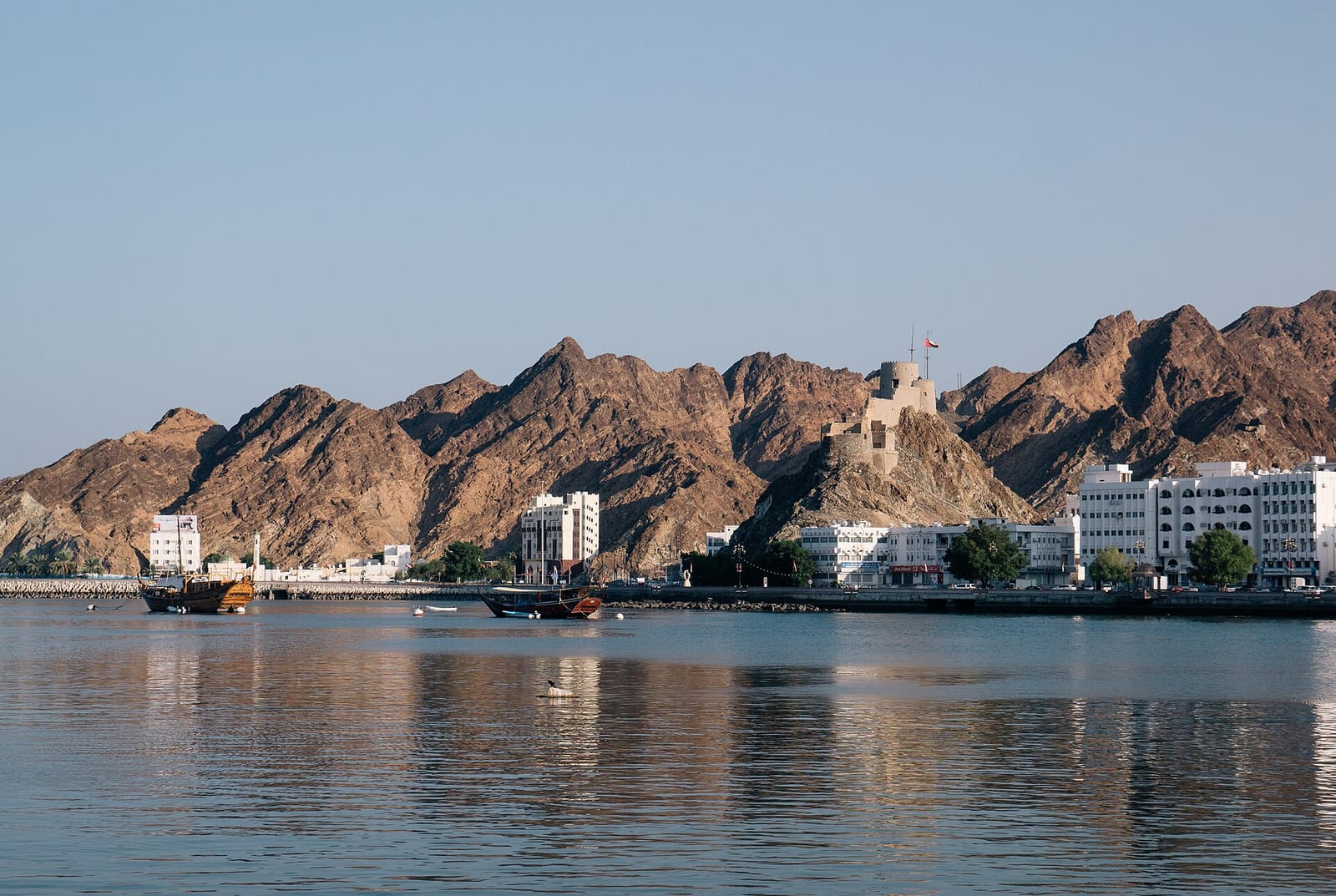
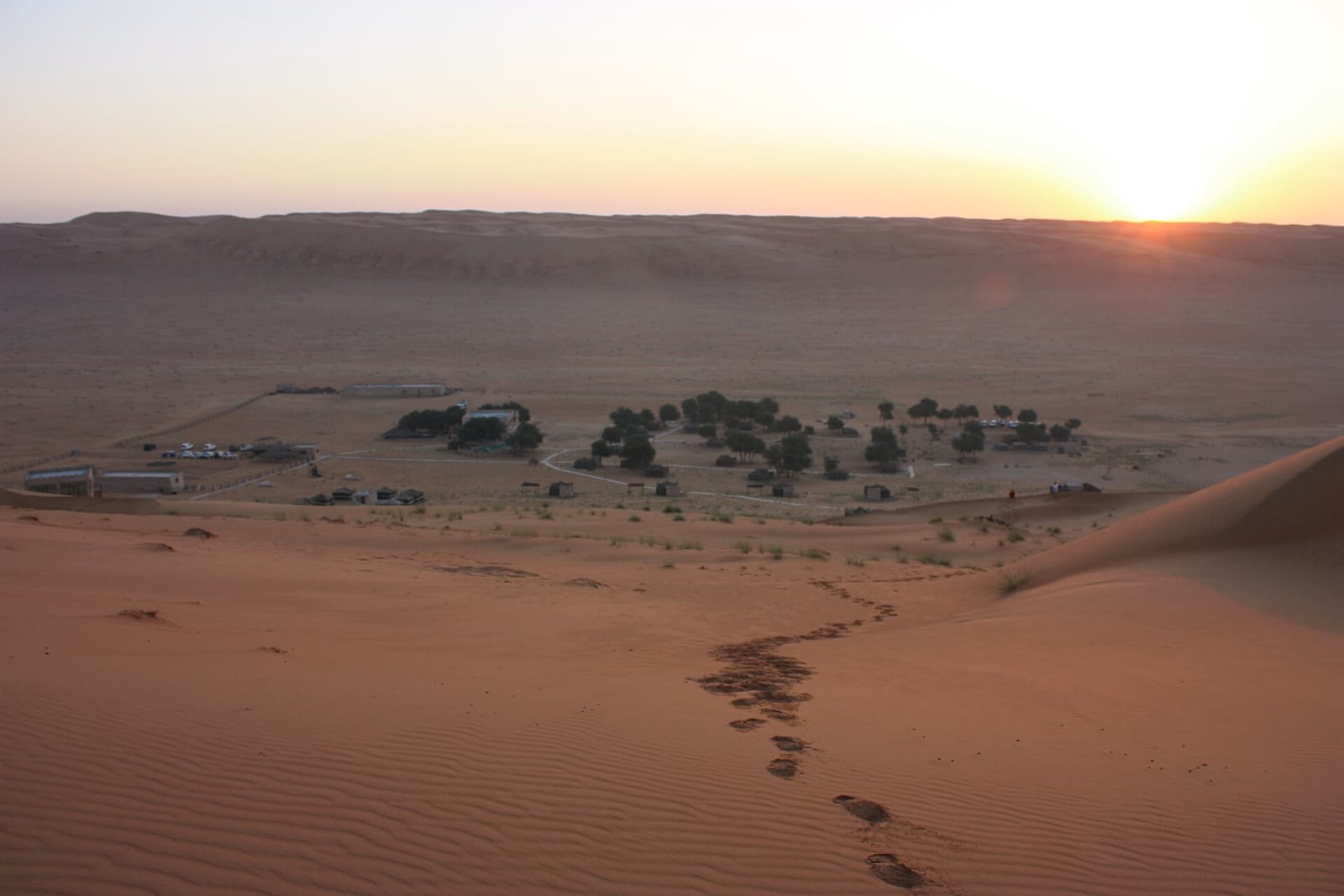
The places and crafts Omanis recognise as their own: forts and old towns, carved doors, wadis, mountains and dunes, the sea, silver ornament and Arabic letters, with people and animals kept for private rooms.
The Omani Society for Fine Arts, founded in 1993, sets out to enrich Omani art with elements of Omani and Arab heritage, and the National Museum in Muscat tells the country's story through its crafts and maritime trade. Those are the sources to draw on. Some come from our catalogue; the most personal are painted from your photograph:
| Subject | How it is painted | Where it suits |
|---|---|---|
| Forts and old towns: Nizwa, Bahla, Muttrah | From your photograph | Majlis, reception, boardroom |
| Carved doors and windows | From your photograph of the door | Entrance hall, the end of a corridor |
| Wadis, the Hajar mountains, the sands | Catalogue landscapes, or your photograph | Majlis, living room, office reception |
| The sea, the harbour, dhows | A catalogue seascape, or your photograph | Seafront villas, bedrooms, hotel rooms |
| Roses and palms | Catalogue florals and botanicals | Corridors, guest rooms, family rooms |
| Silver, plaster and textile pattern | Abstract and geometric designs | Any room, the majlis included |
| Arabic letters | From a calligrapher's artwork | Chosen with care (see below) |
| Horses and figures in traditional dress | Catalogue horses, or your photograph | The family's own rooms |
For a named Omani painter's own canvas, go to the artist or a gallery (see where to buy art in Oman); for the other walls, the table is a ready-made brief.
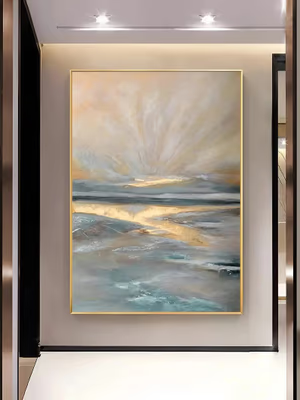
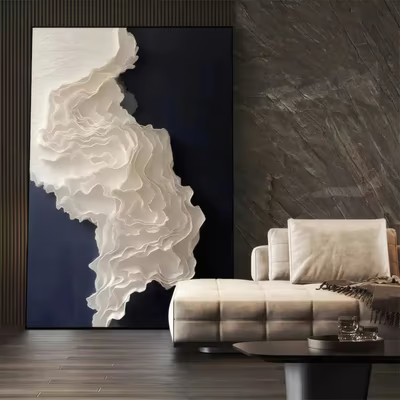
Which traditional Omani patterns can a painting carry?
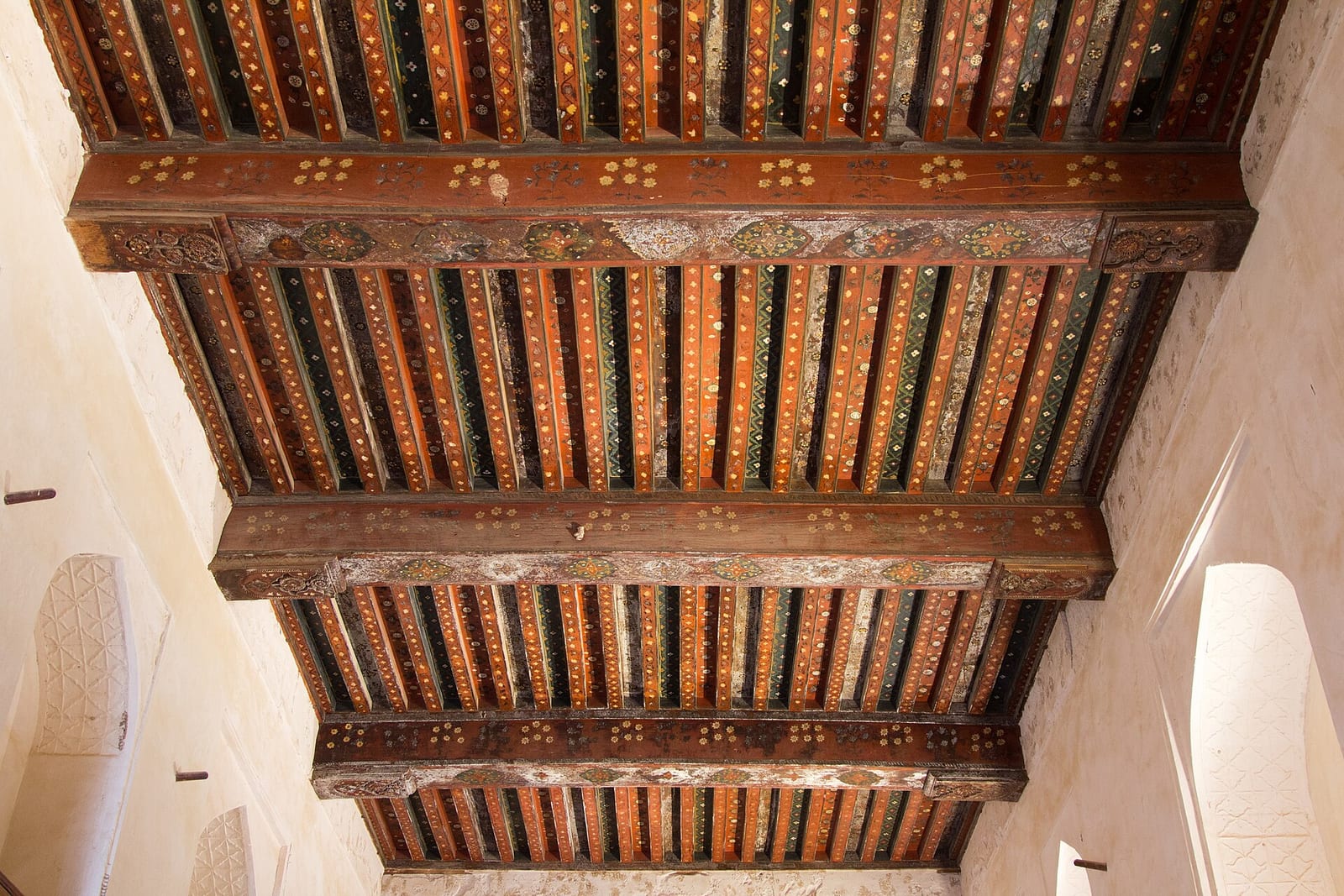
Gypsum plasterwork of triangles and circles, the flowers and geometry of painted fort ceilings, engraved silver and red, white and black weaving: abstracted onto canvas, each reads as Omani without depicting a scene.
Omani craft supplies the patterns. The state cultural quarterly Nizwa described it as engraved silver, carved doors and windows, and gypsum plasterwork built from triangles and circles interlaced with plant motifs; one designer describes the traditional woven patterns as geometric and mostly red, white and black. Painters keep returning to it: the Omani Society for Fine Arts gave Islamic ornament a show of its own, 'Ornament of Oman', with twelve artists, and Safiya Al Bahlani reworks the colourful doors of mountain villages into paintings.
Pattern is the safest choice where many people sit and look: a majlis, a lobby, a boardroom. Ask for one motif, plaster geometry or the studded panels of an old door, at the scale of the wall and in the colours of your cushions or stone. Our geometric paintings are a starting point, and any can be recoloured.
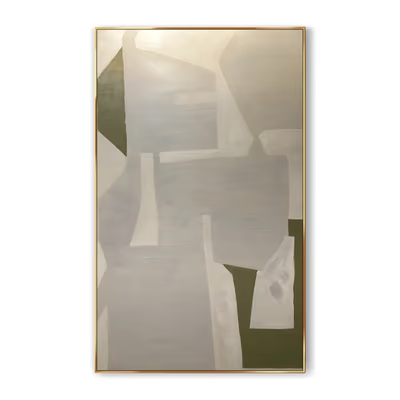
Should Omani art be a heritage scene or an abstract?
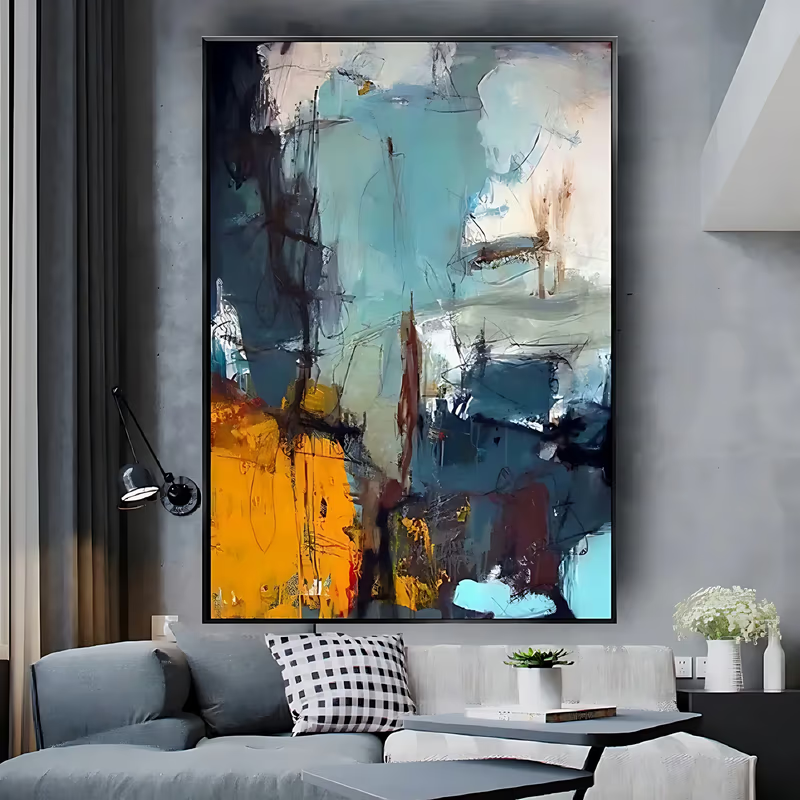
Let the viewer decide: a recognisable fort or harbour speaks to older guests in the majlis and to visitors in a lobby, while an abstract built from the same sand, sea and pattern suits a family room, an apartment or a modern office.
Omani painting is moving, but not away from Oman. A 2024 guide to the Muscat art scene found contemporary artists going beyond landscapes and cultural motifs towards identity and social themes; a Muscat gallery owner told National Geographic that local art used to be 'traditional and landscapey', and among the younger painters the magazine profiled is Humaid Al Aufi, who sets blocks of bright colour against white space. Yet the art of place holds its ground: the Omani Society for Fine Arts' 2025 watercolour show 'Oman's Perspective' kept to mountains, coasts, historic villages and traditional architecture.
Newer villas leave the choice open: the project page for one Al Mouj villa by a design studio speaks of clean, geometric lines and mentions no art at all. A loose, impressionist landscape sits between the two, with the wadi still there and the brushwork modern. See abstract paintings and impressionist landscapes.
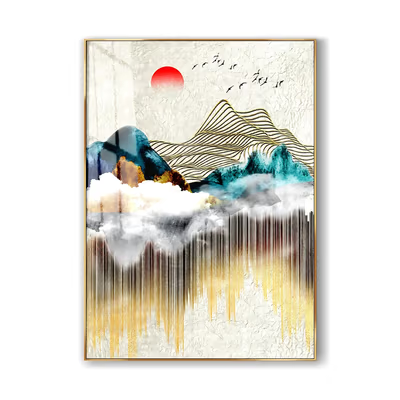
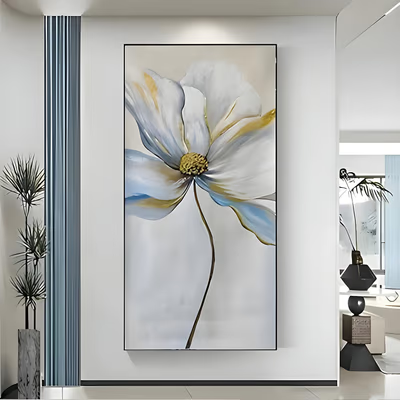
Coast, mountain or desert: which colours suit Omani art?
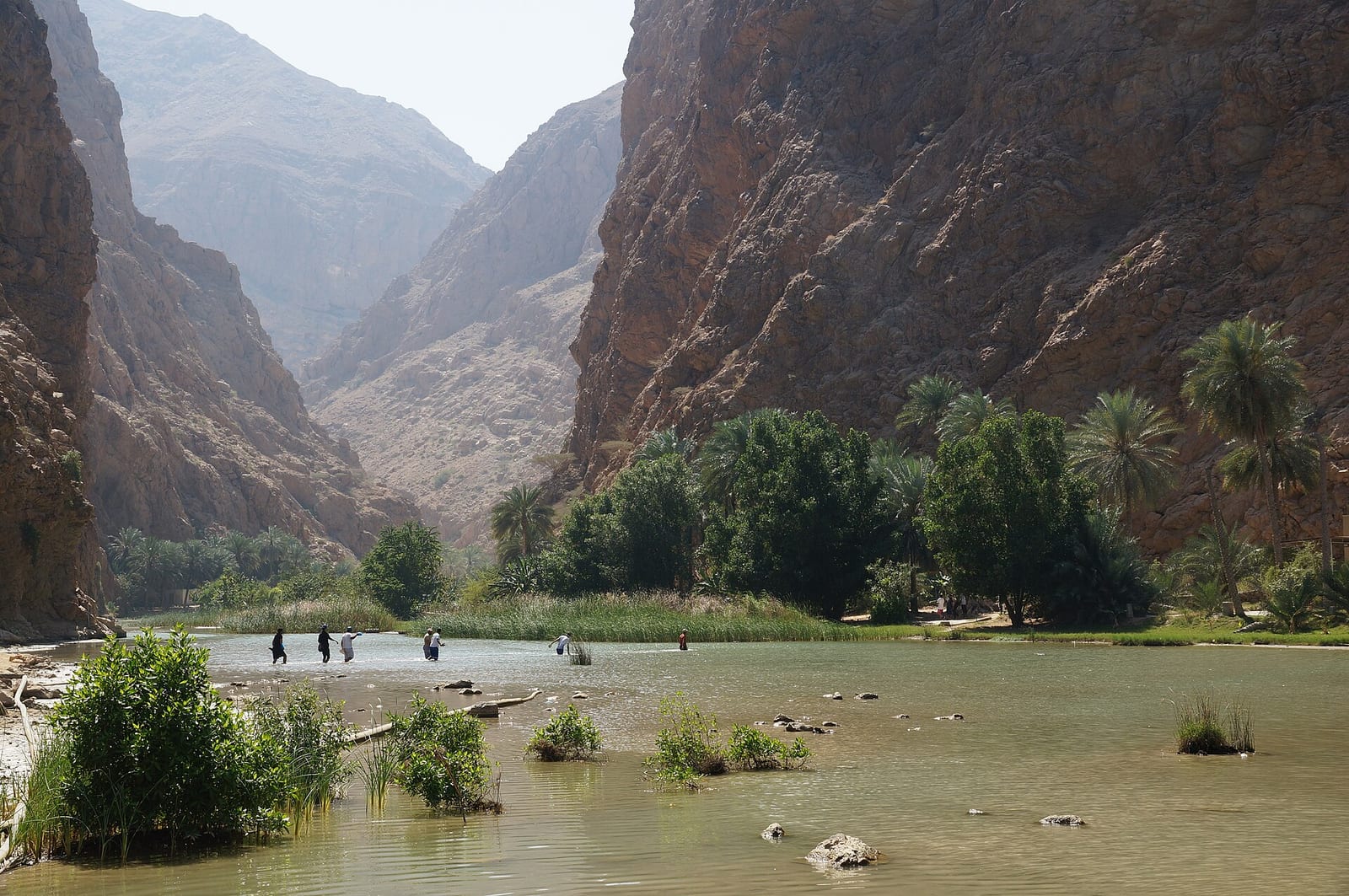
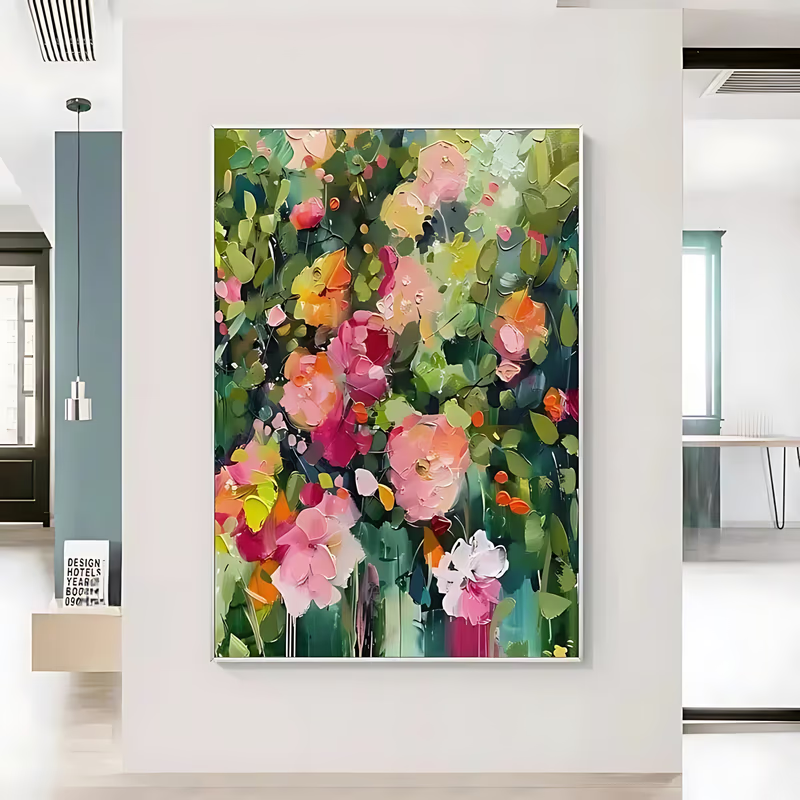
Take the palette from the landscape the room belongs to: sea blue, white and tan stone on the coast, rose and green from the mountains, sand, ochre and terracotta inland, with emerald, deep blue or burgundy as the accent.
The new hotels take their palettes from the landscape: The St. Regis Al Mouj works in oceanic tones, rich tan and local natural stone; Mandarin Oriental, Muscat gives its rooms the blues of the sea and the colours of the dunes; Hotel Indigo Jabal Akhdar echoes the colours and textures of the mountains around it. A home can do the same:
| Landscape | Palette | Rooms it suits |
|---|---|---|
| Coast and harbour | Sea blue, turquoise, white, tan stone | Seafront villas, bedrooms, resort rooms |
| Wadis | Turquoise water, palm green, grey rock | Family rooms, studies, offices |
| Jebel Akhdar | Rose, blush, terraced green | Corridors, guest rooms, bedrooms |
| The sands and the interior | Sand, apricot, ochre, terracotta | The majlis, formal receptions |
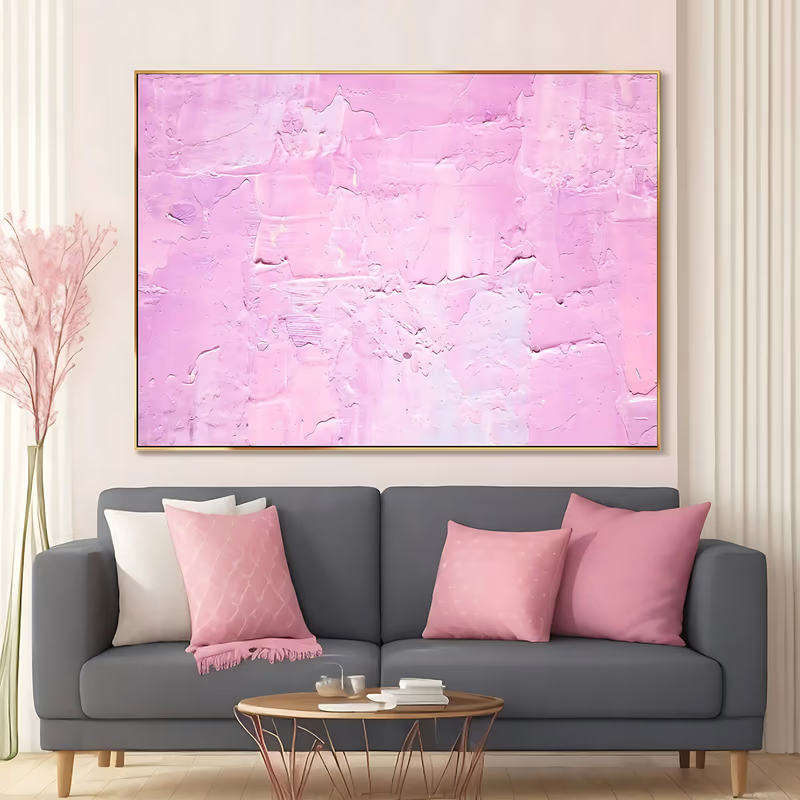
The majlis leans warm: a majlis guide on an Oman lifestyle blog proposes light and sandy beige, rich terracotta and dusty rose, with emerald, rich blue or burgundy accents. Take the base from the walls and floor, and let the painting carry the accent. Browse terracotta, teal and pink paintings.
Works to browse
-
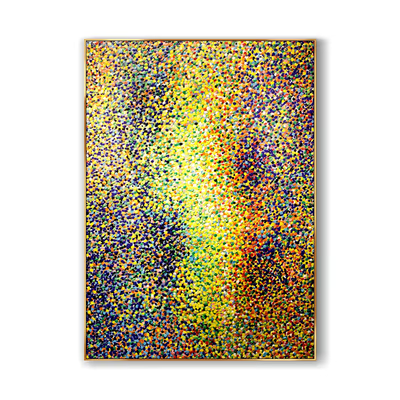 Abstract in sea blue, turquoise and sand — the coastal resort palette
-
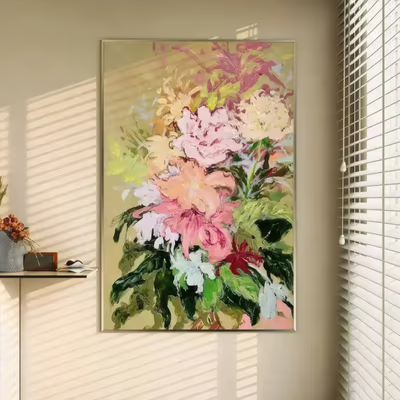 Florals in dusty rose and blush — the Jebel Akhdar rose register for corridors and guest rooms
-
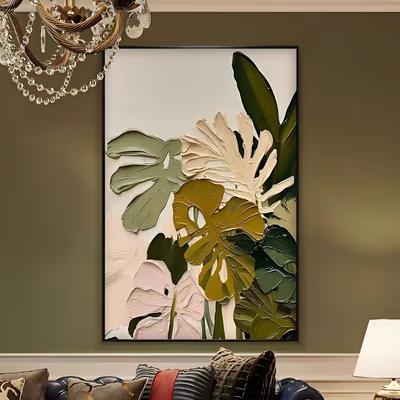 Botanicals in olive, sage and emerald green — palm and frond motifs
-
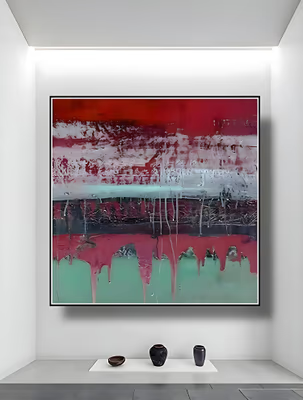 Bold abstracts in emerald, burgundy and rust — the jewel accents Muscat designers set against sand walls
Silver or gold: which metal suits an Omani room?
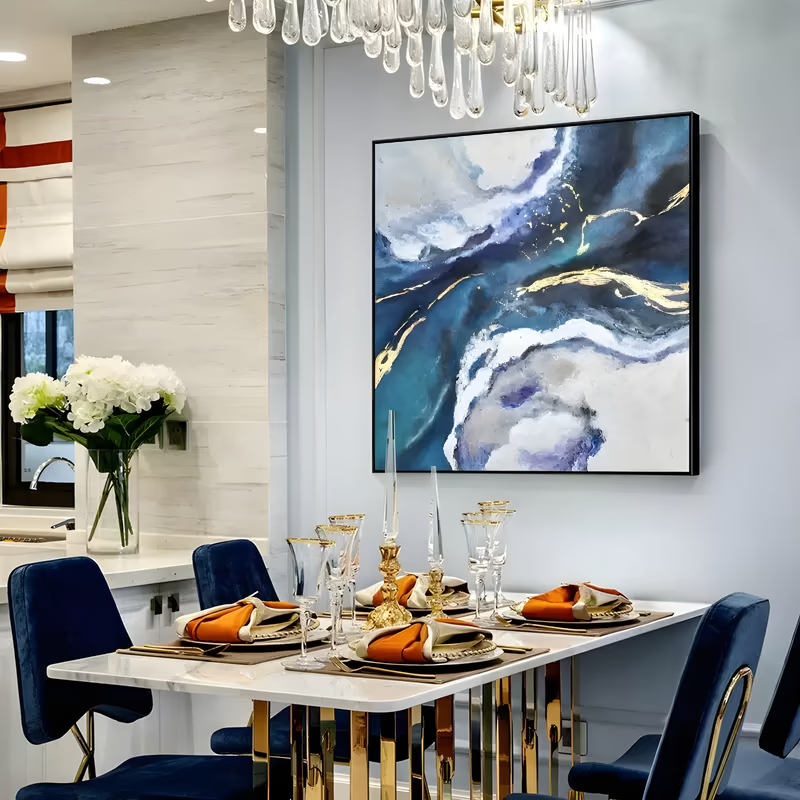
Silver is Oman's heritage metal and suits white, grey and sea-blue rooms; gold and brass warm a sand-and-terracotta majlis; choose one, in the paint or in the frame, and keep it a touch rather than a surface.
In Oman, silver is the heritage metal. Khanjars, swords, coffee pots, incense burners and jewellery were engraved in it, and the country's 2026 Venice pavilion hung silver forms over a floor of sand, drawn from the ornament of horse tack. Gold has its place too: the same designer describes the traditional register as earthy, with liberal gold, red, silver, ochre and orange, and newer interiors add brass and bronze, as in the woven-metal lobby sculpture at Mandarin Oriental, Muscat.
Match the metal to what already lives in the room, the lamps, the coffee service, the door handles, and use it once. Many catalogue designs carry gold accents, and a design can be recoloured with silver-grey in their place. Or put the metal in the frame: gold, silver, black, white or wood, and the canvas arrives ready to hang.
How much texture should a painting have in a room of stone and plaster?
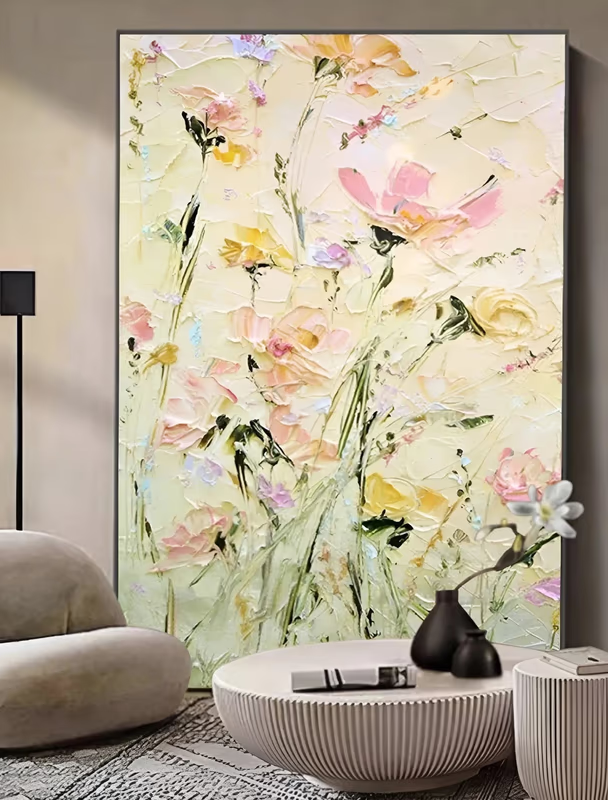
Enough to throw a small shadow in side light: Omani rooms are built from plaster, stone and carved wood, and impasto, palette-knife or plaster-relief canvases hold their own against them where a flat surface looks thin.
Omani rooms are made of textured things. One Muscat fit-out firm lists matte stone, fluted panels and organic surfaces among the 2025 trends, and in one coastal villa a guest bedroom's walls are moulded plaster in cascading wildflowers. With walls like these, a raised, knife-laid surface catches the low evening light and holds its own.
Heavy texture and plaster relief travel stretched or framed, never rolled. Depth is hard to judge head-on, so ask for a side-lit photograph once the surface is laid; you approve it before the next stage starts. See our textured paintings.
Arabic letters on canvas: words to read, or letters as pattern?
Decide whether the words must be read: a verse, a poem or a name starts from a calligrapher's artwork and a native reader's check, while letters used for their shape and rhythm can hang more freely.
Oman values both. In 2017 the Omani Society for Fine Arts hung 40 works of Quranic verses and poetry, among them a seventh-century Kufic page: every letter there is meant to be read, and read correctly. At the other end, letters become form, as on the suspended clay pillar of calligraphic poems in Oman's 2024 Venice pavilion.
If the words matter, start from a calligrapher's own artwork, used with their permission; a native reader checks the stage photographs before you approve the final one. Tell us the room, since a verse asks for care over where it hangs. If the letters are there for their shape, they can be loosened into an abstract in your palette, with a native reader's look so that no word appears by accident. More on paintings from your own image.
Where do horses, people and other figures belong in an Omani home?
In the rooms the family keeps for itself: horses and figures in traditional dress are loved Omani subjects, but for the majlis, a lobby or an office, landscape, pattern, letters or abstraction is the choice that puts every guest at ease.
Many Omani households keep paintings of people and animals out of the majlis and hang them, if at all, in private rooms, and painters have found graceful ways around the question: Safiya Al Bahlani, for one, paints figures in traditional dress without faces. The depiction of women divides opinion most: the photographer Eman Ali is described as one of the region's most controversial artists for her representation of women.
For a hotel, clinic or office, write "no figures, nothing explicit" into the brief from the start. At home, our horses and wildlife can be recoloured to the room, and a family picture painted from your own photograph. The rooms of an Omani home are covered in villas and the majlis.
The majlis and public rooms
Landscape, geometry, calligraphy or abstraction, chosen so that every guest is at ease.
The family's own rooms
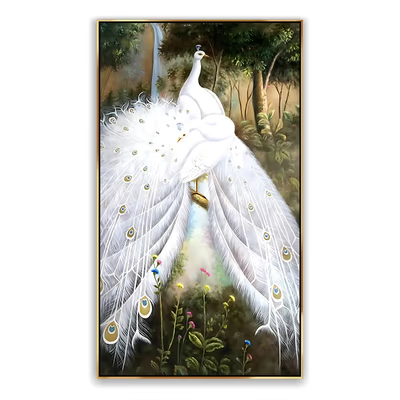
Horses, falcons and figures, a family picture included, for a study, an upstairs lounge or a bedroom.
Works to browse


How do you brief iHomeArt on an Omani subject or palette?
Send the reference with the wall: a photograph of the fort, door or view, your cushions or stone in daylight, and the room; we suggest a design, and you approve colour and texture in photographs at every stage.
Start from something you already have: a photograph of the family's village, a door, a stretch of coast, or a cushion whose colour has to be right. Send it with the wall's width and ceiling height; we reply, usually within one business day, with a size, a finish and a shortlist from some 1,300 catalogue designs or a design made for your room. You need to own the photograph or have permission to use it, and a design can be kept exclusive to you on request.
Planning a set, such as forts along a corridor? Order one canvas first; once you approve it, the rest follow in the same hand and palette. Sizes for Omani rooms are in the Oman size guide, the wider picture in our Oman wall art guide, and designers' workflow on art for residential interior designers.
Omani art FAQs
What makes Omani art different from other Gulf styles?
Its sources are Oman's own: forts and carved doors, wadis and the Hajar mountains, the sea, and silver as the heritage metal. Omani textiles widen the palette, with motifs as varied as Balochi, Sindhi, Zanzibari, Somali and Yemeni in women's traditional dress. A painting built from those references reads as Omani rather than generically Arabian.
Do you sell paintings by Omani artists?
We paint to order rather than represent artists: our canvases come from some 1,300 catalogue designs, from a design made for your project or from your own references, in Omani subjects and palettes. For a named Omani artist's own work, visit the artist, a Muscat gallery or Muscat Art, the country's art fair, each autumn. A happy combination: one Omani artist's piece for the main wall, made-to-order canvases in the same palette for the rest.
Is the khanjar a suitable subject for a painting?
Yes, painted with the respect it carries. The khanjar belongs to Oman's tradition of engraved silver and to its national emblem, so it reads at once as Omani. Paint it as an object of craft, a single khanjar in a study or a reception, or abstract its silverwork into pattern, rather than reproducing the national emblem itself, and keep the treatment dignified rather than playful.
Which Omani art suits a home or resort in Salalah?
Dhofar has a landscape of its own, and it paints well: hills that turn green in the khareef, coconut palms, frankincense trees and long pale beaches. That points to greens, sea blues and soft sand rather than Muscat's rock and fort palette. Send a photograph of the view you love, or choose from our seascapes and botanical works, painted to your wall and sent by express courier.
Can one painting combine Arabic calligraphy with an Omani landscape?
Yes. Send us the calligrapher's artwork, used with their permission, and a photograph of the landscape, and we suggest how the two sit together: a line of letters across the sky, or a band beneath the scene. A native reader checks the letterforms in the stage photographs before you approve the final one.
Oman
Send us the fort, the door or the colour
Send your reference, a photograph of the subject, the fabric or the stone, with the wall's width and ceiling height, on WhatsApp, through the quote form or by email. We reply within one business day with a suggested subject, palette and finish, a price for each piece and, if you would like one, a shortlist from the catalogue.
More of the Oman guide
The overview and each part of the guide answer one buying question for Oman.
- Oman: overviewWall art in Oman, hand-painted to order for villas, majlis rooms, offices and hotels in Muscat and Salalah.
- Villas & majlisMajlis wall decoration in Oman, room by room
- Offices & institutionsOffice wall art in Oman
- Hotels & restaurantsHotel wall art in Oman, space by space
- Where to buyWhat the art shops in Muscat sell, from home stores to galleries and private sellers, and where each stops.
- Size guideA wall art size guide for Oman
Sources
- The Art Fair Guy – The Art Lover's Guide to Muscat, Oman · 2025-08-30
- The Art Fair Guy – A Guide to the Art Scene in Muscat, Oman · 2024-05-13
- What Does 'Contemporary Art' Mean in Oman? – ArtReview Asia (Sarah Jilani) · 2025-04-17
- A touch of Middle Eastern charm – Oman Observer · 2018-04-20
- Omani Society for Fine Arts – Sultan Qaboos Higher Centre for Culture and Science · undated (page 403 on direct fetch; text via search index 2026-09-12)
- Women are at the forefront of Oman's contemporary art scene – Middle East Monitor · 2022-10-14
- 63 لوحة فنية تزين أروقة معرض «حبر» – Al Watan · 2025-10-07
- افتتاح معرض الخط العربي الهندي – Oman Daily · 2017-03-21
- ملامح التراث في الذاكرة التشكيلية العمانية – مجلة نزوى (Ministry of Information) · 2000-10-01
- The Art of Layered Living in Muscat – Marie Claire Arabia Maison · 2026-05-19
- A first look inside the new Mandarin Oriental, Muscat | MO Magazine · 2024
- 5 of the hottest new hotel openings in Oman - micebook · 2024-11-26
- How To Create A Luxury Majlis Interior Design: 15 Practical Ideas – Joussour to Oman · 2025-04-25
- Oman's landscape comes to life in 'Oman's Perspective' art exhibit - Oman Observer · 2025-08-31
- 12 artists shine in OSFA ornamentation art - Oman Observer · 2025
- Project 154 - Villa at Al Mouj Muscat - Design Nomad · 2022
- How boundary-pushing creatives are transforming Muscat's arts scene - National Geographic · 2024-12-09
- St. Regis Hotels & Resorts and Alfardan Group Unveil ... The St. Regis Al Mouj Muscat Resort - Marriott press release · 2024-06-14
- How Oman's National Pavilion at the Venice Biennale blends contemporary art with tradition - The National · 2024-05-24
- Oman launches Pavilion at Venice International Art Biennale - Muscat Daily · 2026-05-07
- Latest Interior Design Trends in Oman 2025 - Hornbill Interiors · 2025-09-19
- Muscat Art — official fair site (OCEC) · retrieved 2026-09-12
Researched 2026-09-12. Prices and figures are as published by the sources on the dates shown.