
Europe · United Kingdom · London · Manchester · Edinburgh · the Cotswolds and Surrey
Wall art ideas for UK rooms: subjects, colours and finishes
iHomeArt paints wall art by hand and to order for homes, hotels and offices across the UK, from London townhouses and Manchester flats to Edinburgh's New Town and Cotswold manors, in the subject, palette and finish each room calls for. These wall art ideas for UK rooms start from the walls British owners actually live with, from magnolia and pale plaster to bottle green and navy, and turn them into choices of colour, subject, texture and frame.
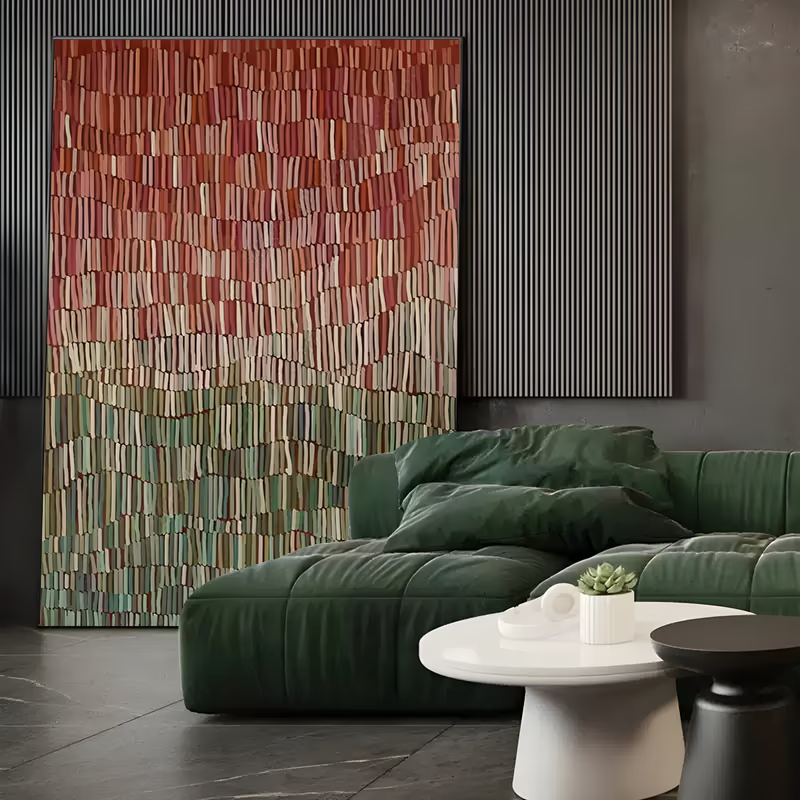
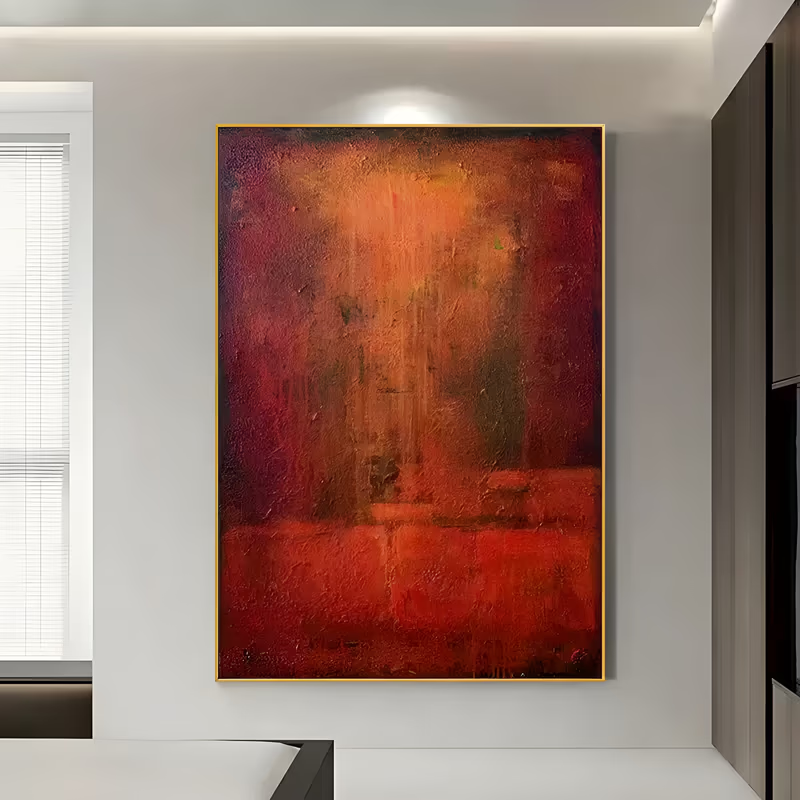
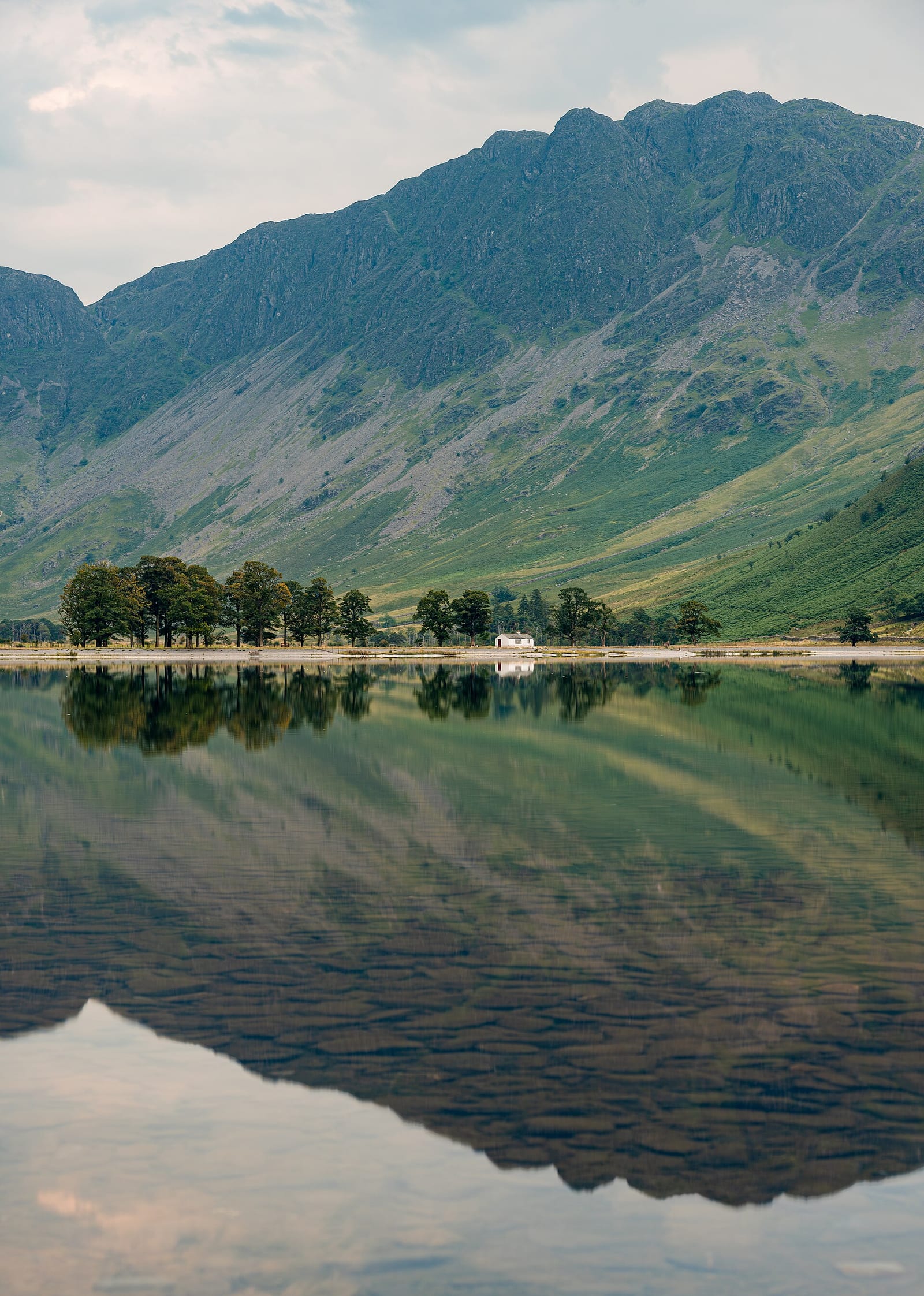
Ordering wall art in the UK from iHomeArt
- 1 pieceMinimum order; volume pricing from 10
- Any sizePainted to the wall, oversized and multi-panel included
- About 10 daysTo paint, then 5–7 days by DHL, FedEx or UPS express to the United Kingdom
- Every stageApproved by photo or video before the next one starts
- 50 / 50Half upfront, half once you approve the final photograph
What shapes taste on British walls
- Britain's favourite colour
- Blue; grey, white and fuchsia were the least liked (MORI, 1998)
- Redecorating
- 60% of homeowners decorated in a year; 61% plan to stay 11 years or more (Houzz UK, 2025)
- Pink on the rise
- Houzz UK searches for 'pink' up two and a half times in early 2025
- Faith
- 46.2% Christian and 37.2% no religion in England and Wales; a quarter of Londoners follow another faith (Census 2021)
Which wall art ideas suit British rooms now?
Four looks suit most British rooms: light against a dark wall, blue in its many shades, pale texture for calm rooms, and flowers in relief; pick the one your room already leans towards.
British rooms now run from pale plaster to bottle green, often within one house. Two of the UK's most-followed home accounts show the range: a 500-year-old stone cottage kept to a muted palette, and a Scandinavian-style home with 'maximalist tendencies'. Rather than copy either, pick the look your room already leans towards; the four below are good places to begin.
-
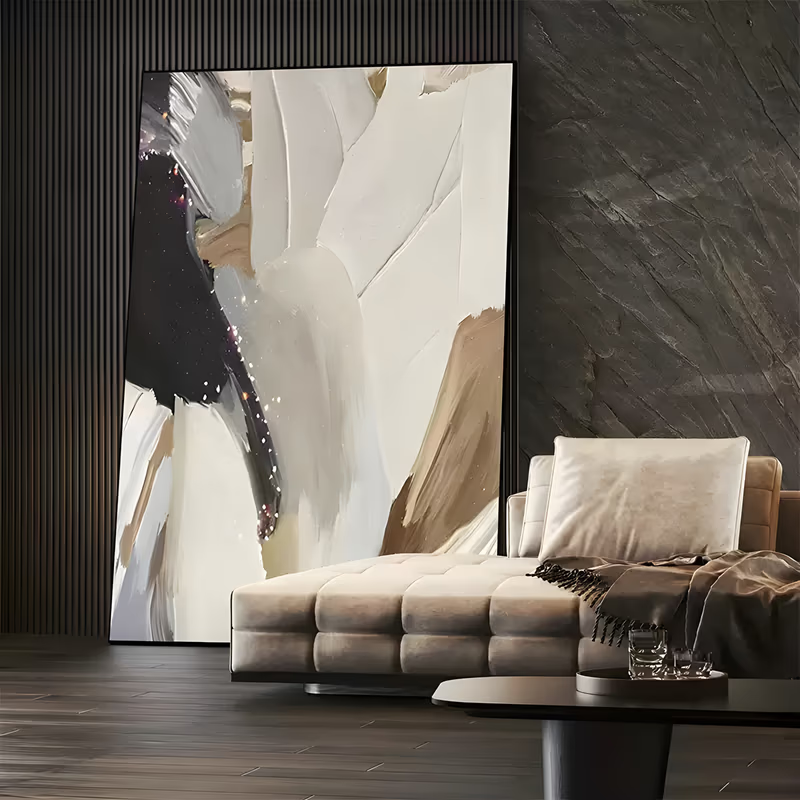 AA#618
Light against a dark wall
On bottle green, navy or oxblood, a canvas with a pale ground or a seam of gold gives the eye somewhere to land.
Moody paintings -
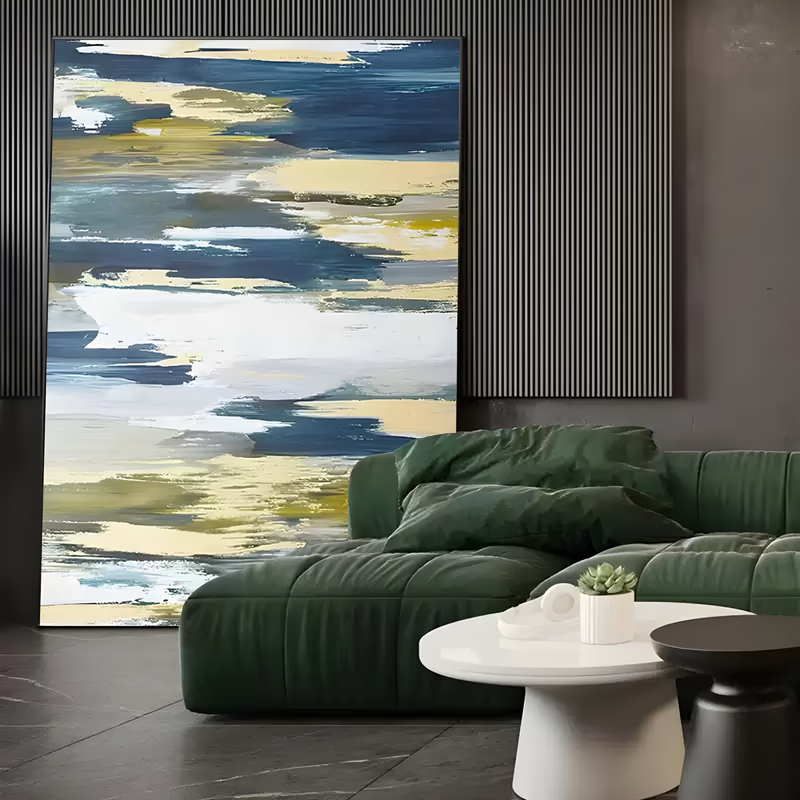 AA#303
Blue, the British favourite
Navy, slate and sea blue with gold or cream, at home in drawing rooms, studies and blue-painted dining rooms.
Blue wall art -
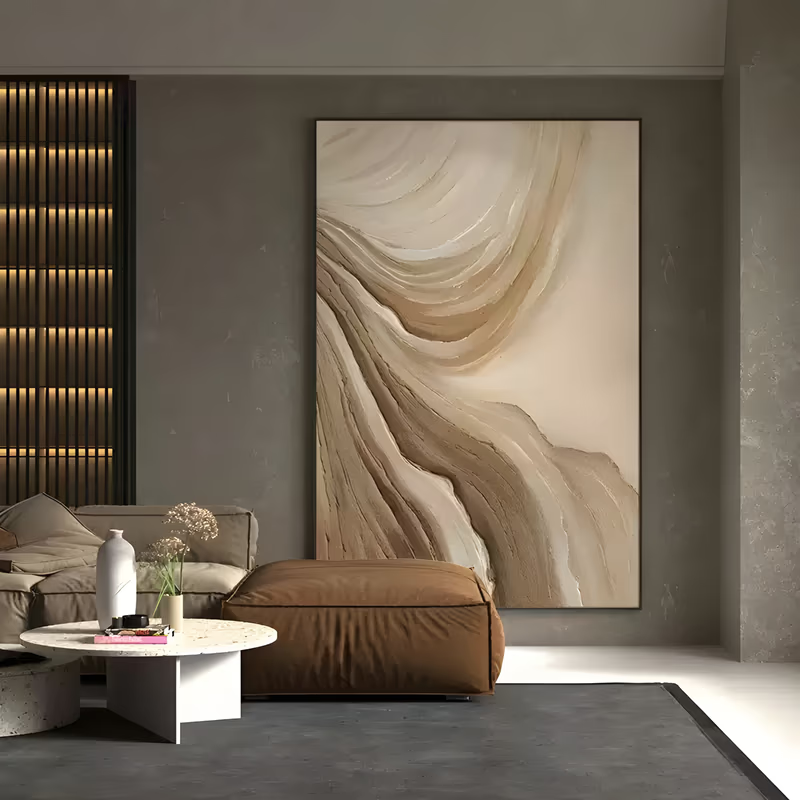 TA#681
Pale texture for calm rooms
Cream and stone in carved relief for limewash, pale plaster and oak, where texture does the work colour would.
Textured paintings -
 TA#472
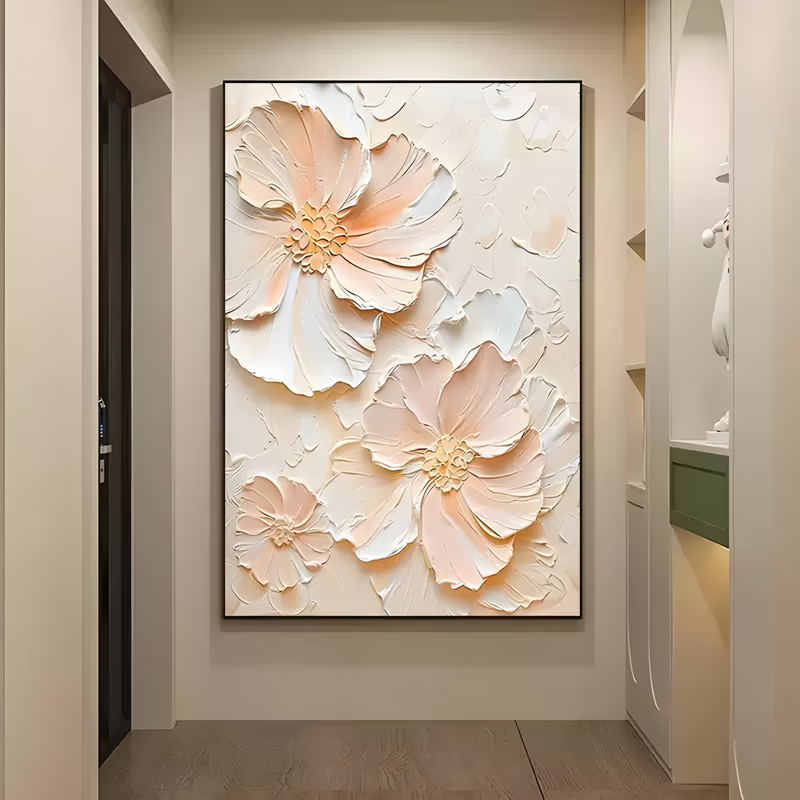
Flowers in relief
Large blossoms in raised relief for bedrooms, dining rooms and garden rooms, softer than a botanical print.
Floral paintings
Which painting colours go with your wall colour?
Bring warmth to cool walls, light to dark ones and one colour already in the room to all of them; the table pairs common British wall colours with the paintings and frames that suit them.
When MORI polled Britain's taste in painting in 1998, blue was the favourite colour and grey, white and fuchsia the least liked: a useful warning that a grey or white wall needs warmth from the painting rather than more of the same. Read the table from your wall outwards.
| Your wall | Paintings that work | Frame |
|---|---|---|
| White, magnolia or cream | Earth tones, blue, or cream-on-cream texture | Wood, black or none |
| Pale grey | Warm colour: terracotta, ochre, blush | Black or gold |
| Sage or soft green | Terracotta, blush pink, ochre, cream | Gold or wood |
| Bottle or forest green | Gold, amber and warm white, or a deeper green landscape | Gold |
| Navy or inky blue | Gold, ochre and cream; navy-and-gold abstracts | Gold or white |
| Pink or plaster pink | Sage, olive, terracotta, deep red | Gold or white |
| Oxblood or terracotta | Deep green and ochre, or a red field a shade deeper | Black or gold |
Browse by colour: green, pink and terracotta wall art.
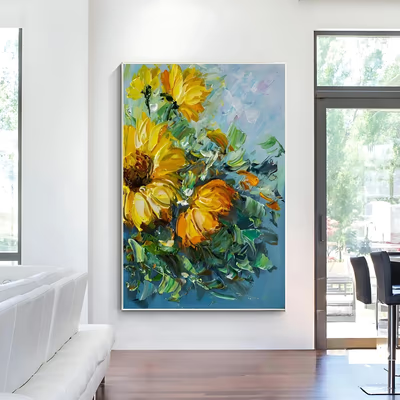
Landscape, abstract, flowers or animals: which subjects suit British walls?
Landscape and sea for almost any room, abstraction where there is no period detail to answer, and flowers and animals painted freshly rather than copied from old prints.
British subject taste moves more slowly than its colours. MORI's 1998 poll found that 'most people like wild animals' and wanted their ideal painting 'as large as a dishwasher', and at the 2018 Royal Academy Summer Exhibition the senior painters whose higher-priced works found buyers were the figurative and impressionist ones. Painted loosely, with weather and light rather than an exact view, a landscape or seascape hangs as happily in a London flat as in a Lakeland farmhouse.
Who the painting is for matters too. In the 2025 Art Basel and UBS survey of wealthy collectors, which covers the UK, Boomers concentrated on paintings while Millennials bought more prints, photographs and works on paper; for a younger couple's first home, a bold, graphic canvas sits more easily beside the prints they already own. Browse landscapes, seascapes, animal paintings and abstracts.
-
Landscape and sea
- Suits
- Almost any room, town or country
- Keep it fresh
- Loose brushwork, weather and light rather than an exact view
-
Abstract
- Suits
- Kitchen extensions, new-build flats, offices, and period rooms that want contrast
- Keep it fresh
- Choose by palette and surface rather than by movement
-
Flowers and gardens
- Suits
- Bedrooms, dining rooms and garden rooms
- Keep it fresh
- Large blooms in relief or loose paint, not a botanical print
-
Animals
- Suits
- Country kitchens, studies, boot rooms and children's rooms
- Keep it fresh
- A hare, horse or dog in a modern hand, not a sporting print
-
Your own place
- Suits
- The view, street or house that means something to you
- Keep it fresh
- Painted from your photograph, at the size of your wall
How do you choose wall art that outlasts your paint colour?
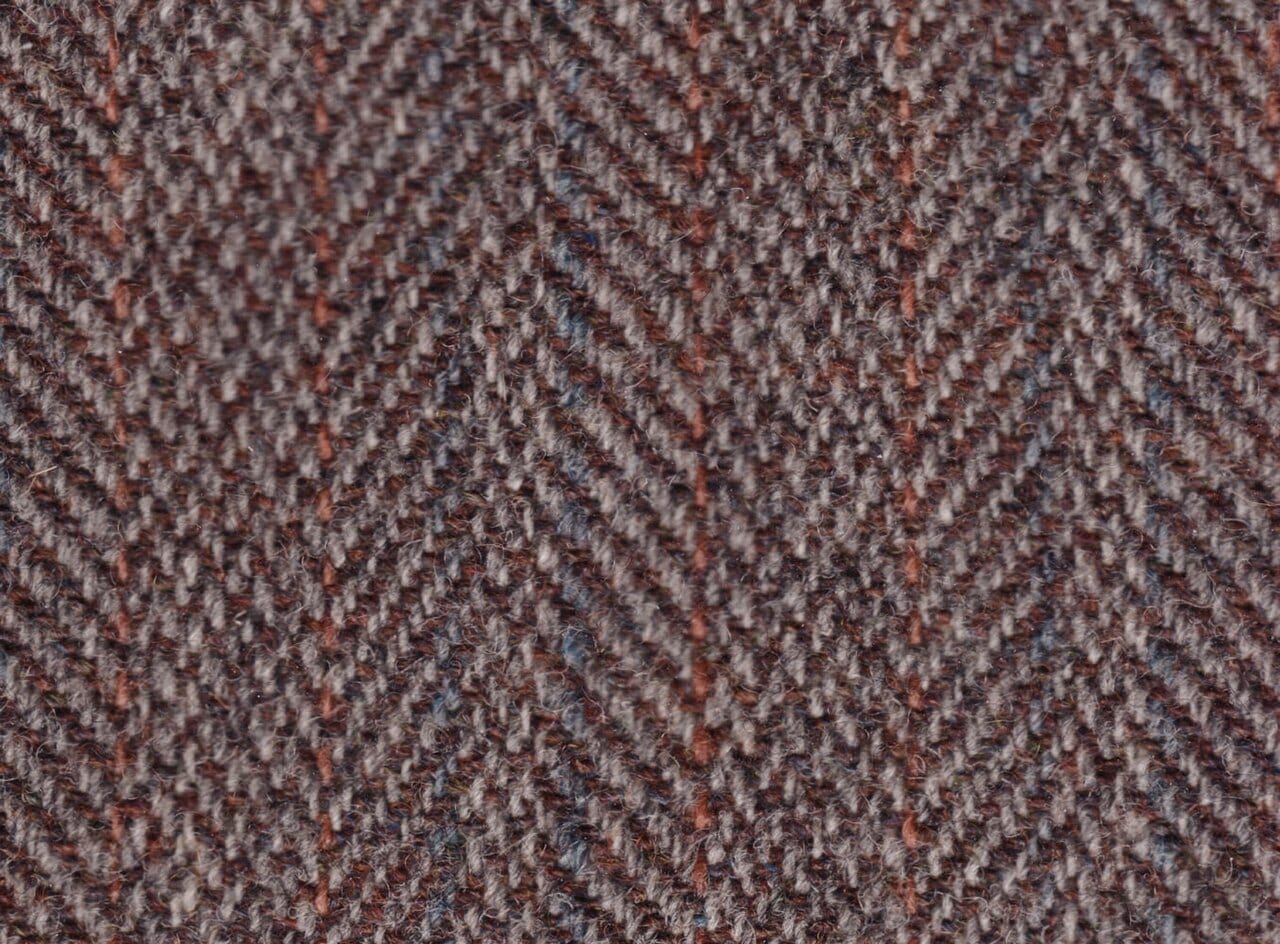
Take the palette from what stays, the floor, woodwork, stone and main upholstery, and let the wall colour be the note the painting answers rather than copies, because British walls change more often than British owners move.
British owners repaint often and move rarely. In Houzz UK's 2025 study, 60% of homeowners completed a decorating project in a single year, while 61% planned to stay eleven years or more. Fashion colours turn quickly: Houzz searches for pink bedrooms rose 59% and for pink kitchens 112% in early 2025, and next year's colour will be a different one.
So build the painting around what will still be there in ten years: the oak floor, the stone or marble of the fireplace, the brass, and the cloth. Tweed is a good guide: its heather, moss and peat sit with almost any wall colour, and a painting in the same earth palette will too. Let the paint colour be the accent, the one note the canvas picks up. If you do repaint, we keep your order codes on file, so the same design can be painted again in your new colours.
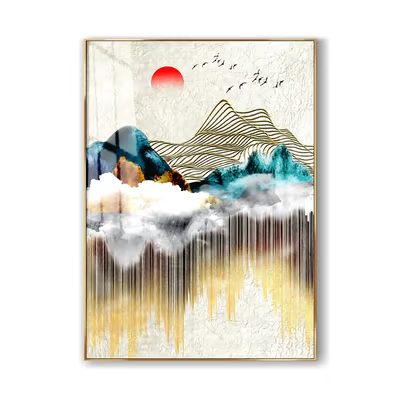
Is textured wall art right for a British room, and which frame suits it?
Yes, especially in calm, pale rooms and in the low side light of British windows, which shows relief at its best; then let the frame follow the room, gold where there is gilt or brass, black or wood against pale walls.
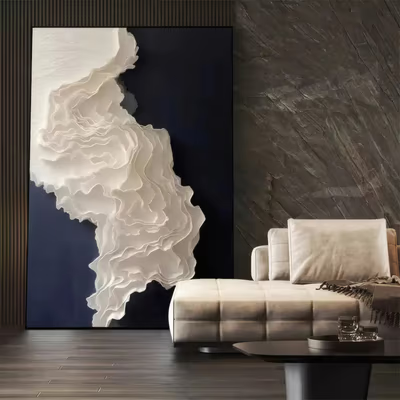
Texture has become a look of its own. Good Homes' 2024 pick of UK interior accounts includes a Northern Irish home described as 'Mediterranean-meets-Wabi Sabi', the kind of room where a cream-on-cream canvas in carved relief does the work bright colour does elsewhere. British light helps: low winter sun through a sash window crosses the wall at a slant and throws every ridge into shadow, so the surface changes through the day.
Frames take their cue from the room. Gilt still has its place in London's grandest interiors, from the gold-leaf map of Hyde Park at The Dorchester to a collage gilded over Savile Row tailoring patterns at The Chancery Rosewood; at home, gold suits rooms that already have brass or a gilt mirror, and black or wood suits the rest. We frame in gold, silver, black, white or wood. Plaster relief and heavy texture travel stretched or framed, and a side-lit stage photograph shows you the surface before you approve it. See wabi-sabi art.


How do you plan a set of paintings or a gallery wall?
Fix the outline of the whole group on the wall first, then have the pieces painted in one hand and palette at sizes planned for that outline, so the set reads as one decision rather than a string of purchases.
Grouped pictures are an old British habit. Victorian picture rails carried single cords with several frames hung one above another, and when Soho House first hung 76 Dean Street in 2015, it chose monochrome works by London artists in a salon-style arrangement. A Cotswolds and London interiors studio recommends mixing watercolours with prints in asymmetrical groups. What has changed is that you can plan the group before a brush touches canvas.
Three arrangements cover most walls: a pair either side of a window, bed or chimney breast; a run of three or more along a corridor, stair or landing; and a salon group, one larger anchor with smaller pieces around it. Mark the outline on the wall with low-tack tape, photograph it with a tape measure in view and send it to us. We suggest sizes and designs, vary one design into a series if you want the pieces related, and label each canvas by position with a packing list. Sizes for alcoves and stairs are in the UK size guide.
What do British buyers keep off their walls?

Nudes in family rooms, religious icons in shared spaces and the postcard Highlands; none is forbidden, but each belongs in the right room and only when the client asks.
The mainstream British home is reticent. The 1998 MORI poll found that 'hardly anyone wants a naked woman' in a painting, and that people disliked religious icons and sharp angles. London's clubs sit at the other end: Soho House hangs Hester Finch's 'Split Nude' at Shoreditch House. A nude, then, is a matter of setting: a members' bar or a private room when the client asks for one, something else for a family sitting room, a hotel corridor or an office.
Religious imagery is less a taboo than an absence. In the 2021 Census, 46.2% of people in England and Wales described themselves as Christian and 37.2% as having no religion, while a quarter of Londoners follow another faith; for a rental flat, hotel or office, leave sacred subjects out of the brief and let a private client raise them. In Scotland, avoid the souvenir: Landseer's The Monarch of the Glen was copied in so many engravings and advertisements that its stag had become a cliché by the mid-twentieth century. Suggest the Highlands through colour, weather and stone instead.
How do you choose a style for a UK room with iHomeArt?
Send a daylight photo of the room with the wall width and what the painting must sit with; we suggest a shortlist from the catalogue or design a piece for it, and you approve every stage from photographs.
Begin with the room rather than a style name: a photograph of the wall in daylight, its width, and the floor, fabric or paint the painting should answer. We reply with a shortlist from some 1,300 catalogue designs, or a design made for the room and its budget; any catalogue design can be resized or recoloured to your swatch. If one painting is the start of several, have that one painted and approved first, and the rest follow in the same hand.
You can bring your own subject too: a stretch of coast, your house, your dog or your company's crest, as long as you own the image or have permission to use it (see paintings from your own image). Designers will find how we work with studios on art for residential interior designers. The walls of a British home, room by room, are in wall art for UK homes, and the whole market is in our UK wall art guide.
Each canvas can travel stretched and ready to hang, framed, or rolled; a rolled canvas, the lightest and most economical way to send a large painting, arrives without stretcher bars, and any local framer can stretch it for you.
UK wall art ideas FAQs
What wall art suits a north-facing room in the UK?
North light is cool and even, so warm palettes help: terracotta, ochre, warm pinks and gold keep a north-facing room from feeling grey, while pale cool blues and greys can look flat in it. Textured canvases also do well there, because the steady, soft light shows the relief without glare. Send a daylight photo of the room and we suggest a palette and a shortlist.
Is abstract art too modern for a Georgian or Victorian house?
No. An abstract or loosely painted canvas often looks its best against cornicing, panelling and a marble fireplace, because each sets the other off. Tie it to the room through colour, taking one note from the woodwork, stone or upholstery, and size it to the chimney breast or the panel rather than the whole wall. A gilt or dark wood frame makes a good bridge if you want one.
Can you paint a Scottish, Welsh or Cornish landscape?
Yes. Choose a landscape or seascape from the catalogue and we adapt its palette and light to the place, or send your own photograph of the glen, valley or cove and we paint it by hand at the size your wall needs. You need to own the photograph or have permission to use it, and a design can be kept exclusive to you if you ask before we start.
Can you paint something in the spirit of a British artist I love?
Send us the work you admire and the size of your wall. We suggest catalogue designs in the same spirit, or design a new piece with the palette, scale and kind of brushwork you are drawn to. A copy of a particular work still in copyright needs the rights holder's permission; older paintings that are out of copyright can be painted by hand as reproductions.
Which wall art suits a kitchen extension or garden room?
These are often the brightest rooms in a British house, with glass on one or two sides, so the solid wall is precious: one horizontal canvas or a pair works better than many small pieces. Florals, loose landscapes that carry the garden indoors and bright abstracts all suit. Keep the canvas away from the hob and direct sun, and dust it with a dry cloth, never a spray.
What wall art suits a rented flat?
Let the painting bring the colour the walls cannot. One large canvas in a strong palette changes a rented room more than a cluster of small prints, and it moves with you. Leaning it on a sideboard or mantelpiece avoids new holes; ask the landlord before fixing anything heavy.
United Kingdom
Send us the room, not just the wall
Send a daylight photo of the room, the wall width and the colours it must sit with, on WhatsApp, through the quote form or by email. We usually reply within one business day with a shortlist in a style that suits it, a size and a price for each piece.
More of the United Kingdom guide
The overview and each part of the guide answer one buying question for the United Kingdom.
- United Kingdom: overviewWall art in the UK, hand-painted to order for period houses, new-build flats, offices and hotels, sized to your wall.
- Townhouses & homesLiving room wall art for UK homes
- Offices & institutionsOffice wall art for UK headquarters, law firms, clinics and universities, sized to modern floors and listed rooms.
- Hotels & restaurantsArt for hotels and restaurants in the UK
- Where to buyWhere to buy art in the UK
- Size guideA wall art size guide for UK homes
Sources
- Making A Mark – RA Summer Exhibition: a curious exercise in pricing and sales · 2018-08
- The People's Painting | Ipsos · 1998-02
- Inside the Soho House art collection | Soho House · 2023-10-05
- Religion, England and Wales: Census 2021 | ONS · 2022-11-29
- The Monarch of the Glen (painting) — Wikipedia · 2025
- Sourcing Artwork for Your Home | Sims Hilditch · 2026-09-19
- Galerie: The Most Spectacular Hotels to Book in London · 2026-05-13
- Wallpaper*: An around-the-world art tour with Rosewood · 2025 (undated on page)
- 2025 Houzz UK Emerging Trends Report · 2025-06-16
- 2025 UK Houzz & Home Renovation Trends Study · 2025-05-27
- Best interior accounts on Instagram : Goodhomes Magazine · 2024-12-16
- Top 27 Interior Designer & Home Improvement Influencers in the UK · 2026-03-23
- The Art Basel and UBS Survey of Global Collecting 2025 · 2025
- Soho House 76 Dean Street – Art collection · 2025
- Designing Buildings Wiki — Picture rail · 2023-04-17
Researched 2026-09-19. Prices and figures are as published by the sources on the dates shown.