Europe · United Kingdom · London · Manchester · Edinburgh · the Cotswolds and Surrey
Wall art size guide for UK homes: chimney breasts, sofas and stairs
iHomeArt paints original canvases by hand and to order for homes, offices and hotels across the UK, at the size your wall needs, from a Victorian alcove to a double-height stairwell. This wall art size guide gives the canvas size, in centimetres and inches, for the walls British homes have: the chimney breast and its alcoves, the sofa wall under a 2.4 m new-build ceiling, the bed wall and the staircase.
Ordering a canvas to your wall's size from iHomeArt
- 1 pieceMinimum order; volume pricing from 10
- Any sizePainted to the wall, oversized and multi-panel included
- About 10 daysTo paint, then 5–7 days by DHL, FedEx or UPS express to the United Kingdom
- Every stageApproved by photo or video before the next one starts
- 50 / 50Half upfront, half once you approve the final photograph
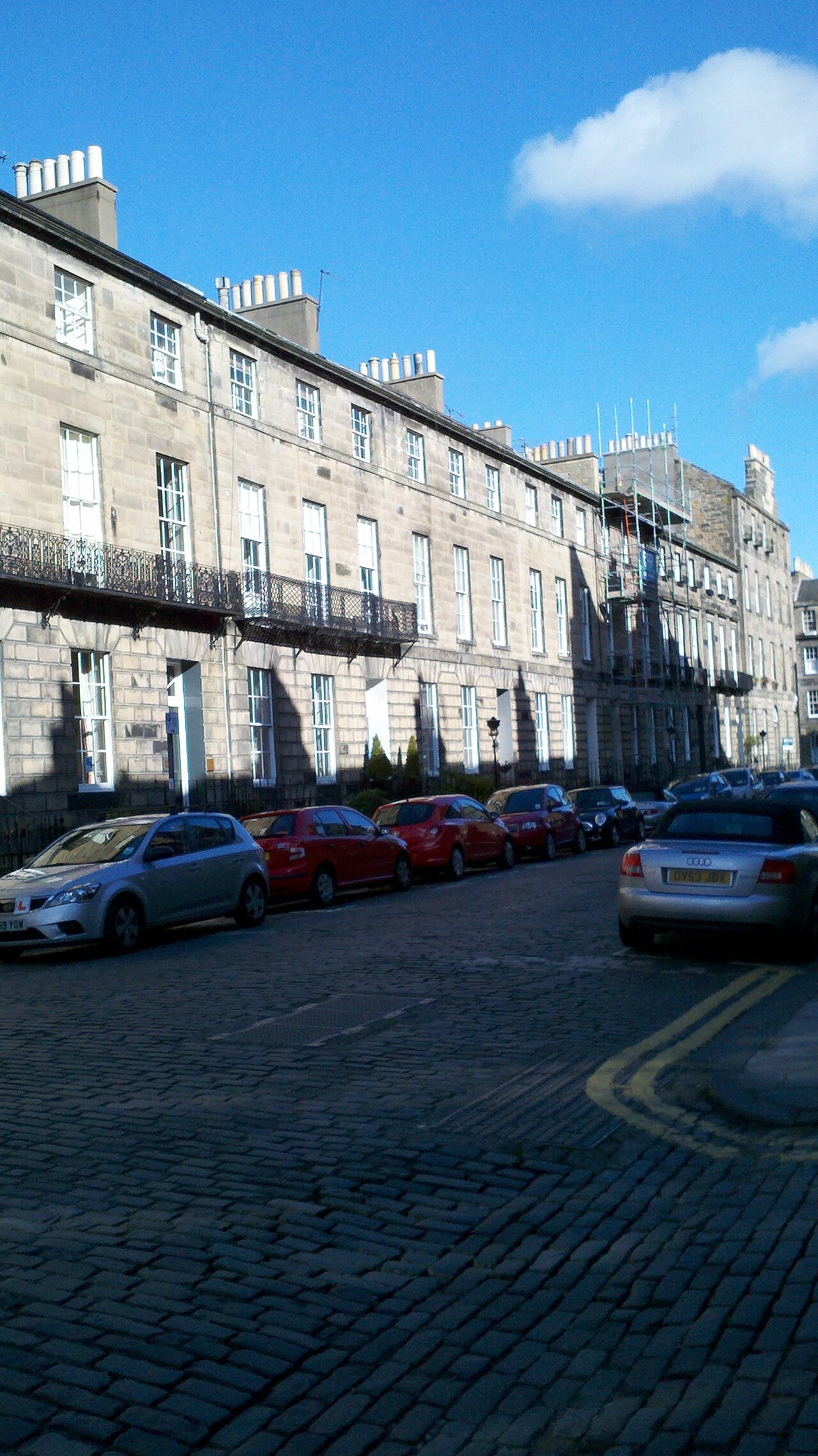
The British walls behind these sizes
- Victorian and Georgian ceilings
- Victorian rooms mostly 2.7–3.0 m; Georgian rooms 3.0–3.6 m
- New-build ceilings
- About 2.4 m on average; 2.5 m minimum for new homes in London
- Alcoves beside the chimney breast
- 600–900 mm wide in Victorian and Edwardian terraces, a joiner's rule of thumb
- The picture rail
- 300–450 mm below a 2.7–3.0 m ceiling; 250–300 mm below a 2.4 m one
- A new double bedroom in England
- At least 2.75 m wide and 11.5 m² under the space standard
What size of wall art goes on a chimney breast?
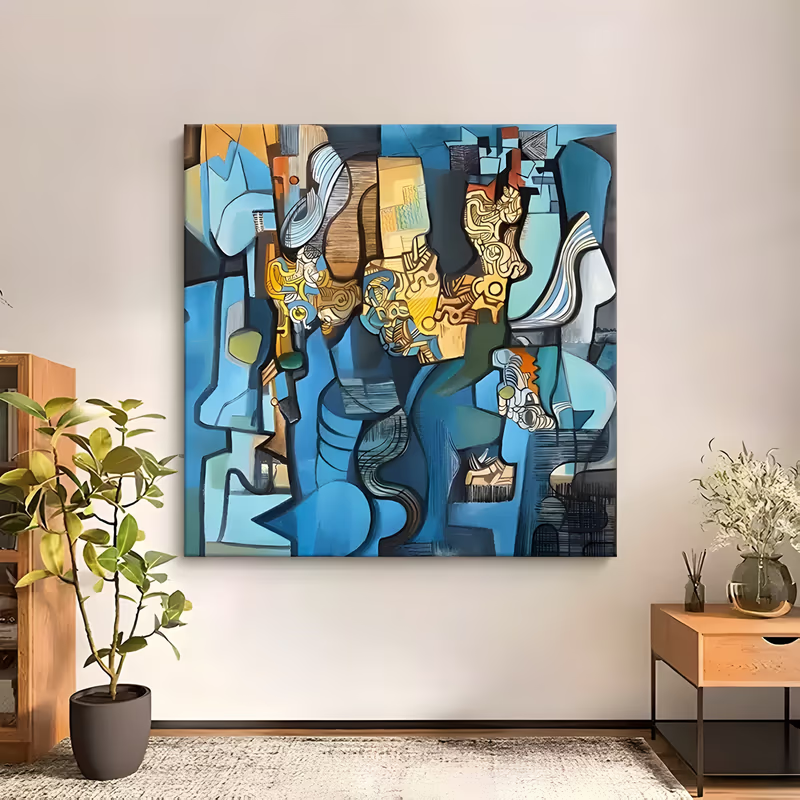
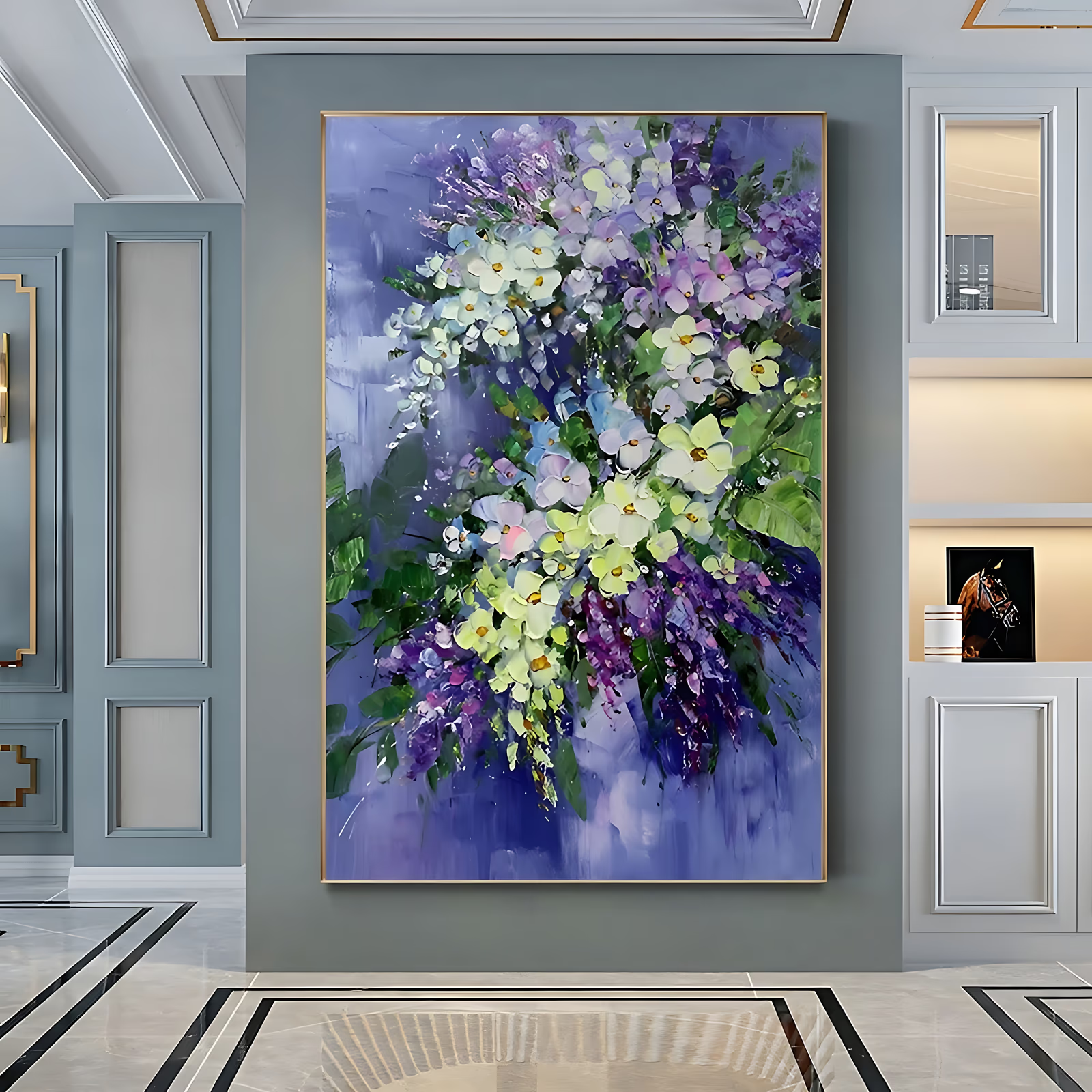
A square or upright canvas about two-thirds the width of the breast, which on most period breasts means roughly 80–120 cm (31–47 in), hung 15–25 cm (6–10 in) above the mantel shelf.
The chimney breast is the focal wall of most British living rooms, and it is taller than it is wide, so the canvas should be square or upright. Measure the face of the breast, not the room, and leave at least 15 cm (6 in) of plain wall either side: on a breast 150 cm (59 in) wide, that gives a canvas of about 100 cm (39 in).
The period sets the character. Georgian chimney breasts are slender and shallow with restrained mouldings; Victorian and Edwardian ones are more substantial, with bracketed mantels and heavy mouldings. A Georgian breast suits a narrower upright in a thin frame, a Victorian one a square canvas in gold. If the television sits on the breast, give the painting to the alcoves or the opposite wall. The rooms themselves are in UK townhouses and homes.
What fits in the alcoves either side of the chimney breast?
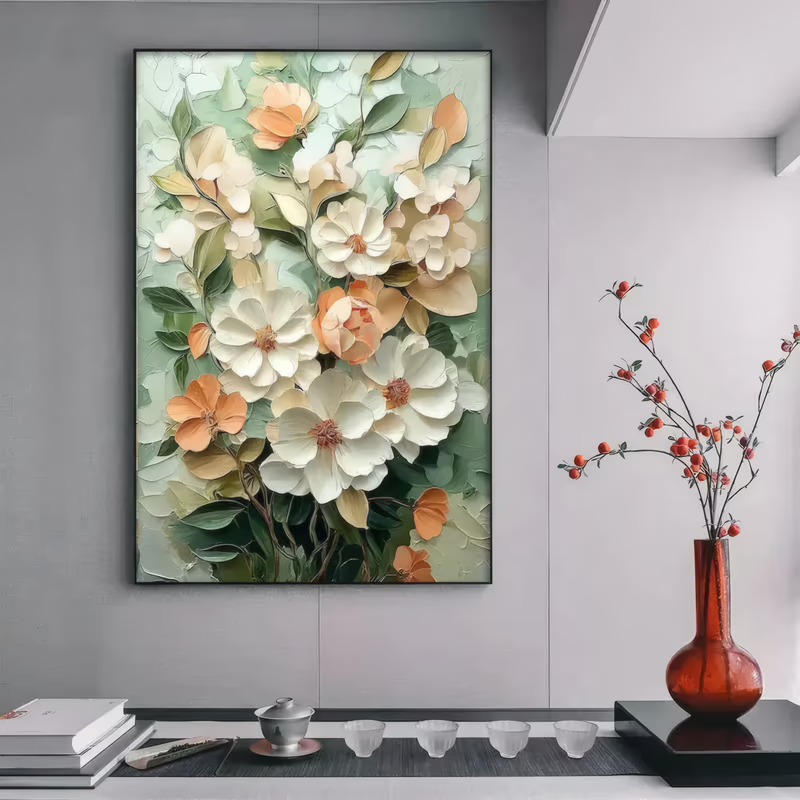
A matched pair of upright canvases, each 15–20 cm (6–8 in) narrower than the alcove at its narrowest point: about 45–70 cm (18–28 in) wide in a typical terrace.
A London joinery firm's rule of thumb puts Victorian and Edwardian alcoves at 600–900 mm wide and 300–500 mm deep, and warns that the width can vary by 10–20 mm from bottom to top. Measure both alcoves at hanging height, take the narrower, and size the pair from it: matched canvases look deliberate even when the alcoves are not quite equal. Many alcoves are fitted, as in a Grade II listed Bath townhouse whose dining-room fireplace is flanked by cupboards and shelves. What is built in decides where the art goes:
Shelves to the ceiling
Leave the alcoves to the books and give the chimney breast the painting.
Low cupboards
Hang a matched pair of uprights about 20 cm (8 in) above the cupboard tops, both at the same height.
Open alcoves
A pair of uprights, with a smaller, quieter piece on the breast between them or the breast left plain.
Why does wall art in British period rooms so often end up too small?

Because the habit is to buy about a metre of canvas, while period ceilings rise to 2.7–3.6 m and first-floor drawing rooms can run past 6 m: size to the wall, not to what looks big in a shop.
British instincts about size are modest. In 1998 a MORI survey of the nation's taste found people wanted a painting about "as large as a dishwasher", and in 2023 a Mumsnet poster planning a 100 × 100 cm (39 × 39 in) canvas called it "massive artwork". Yet most Victorian rooms are 2.7–3.0 m high and Georgian rooms 3.0–3.6 m, and more than half the renovating homeowners in Houzz's 2025 UK study live in homes built in 1940 or earlier.
The tallest room is usually upstairs: a Grade II listed Georgian townhouse in Bath has a first-floor drawing room of 6.11 × 4.13 m (20 ft 1 in × 13 ft 7 in). Our rule: on a wall longer than 4 m, start at 150 cm (59 in) wide; under a ceiling above 3 m, let the canvas be at least 120 cm (47 in) tall.
UK wall art size guide: which canvas goes in which room?
Use the chart as a starting point: sizes are for the canvas itself, with hanging heights for a standard British room, and every size can be painted larger or smaller to fit your wall.
Widths are for horizontal and square canvases, heights for upright ones. Unless the row says otherwise, hang the centre about 145 cm (57 in) from the floor, as a UK picture-rail guide advises.
| Wall | Canvas (cm) | Canvas (in) | Format | Hang it |
|---|---|---|---|---|
| Chimney breast, Victorian or Georgian | 80–120 wide | 31–47 | Square or upright | 15–25 cm above the mantel shelf |
| Alcoves, as a pair | 45–70 wide each | 18–28 | Upright | Same height in both |
| Sofa wall, new-build flat (2.4–2.5 m ceiling) | 100–140 wide, up to 90 tall | 39–55, up to 35 | Horizontal or a pair | 15–25 cm above the sofa back |
| Sofa wall, period room (2.7–3.0 m ceiling) | 120–180 wide | 47–71 | Horizontal or square | 15–25 cm above the sofa back |
| Knocked-through double reception | 180–250 wide | 71–98 | Panoramic, or two canvases | Centre about 145 cm |
| Over a double, king or super king bed | 90–120 wide | 35–47 | Horizontal or a pair | 20–30 cm above the headboard |
| Half-landing of a terrace stair | 60–90 tall | 24–35 | Upright | Centre about 145 cm above the landing |
| Double-height hall or stairwell | 150–250 tall | 59–98 | Upright or a stacked pair | Higher than usual |
| Boardroom or office reception | 150–200 wide | 59–79 | Horizontal or a triptych | Centre about 145 cm |
Between two rows, choose the larger; browse square, upright and panoramic paintings.
How big should wall art be above a sofa in a British living room?
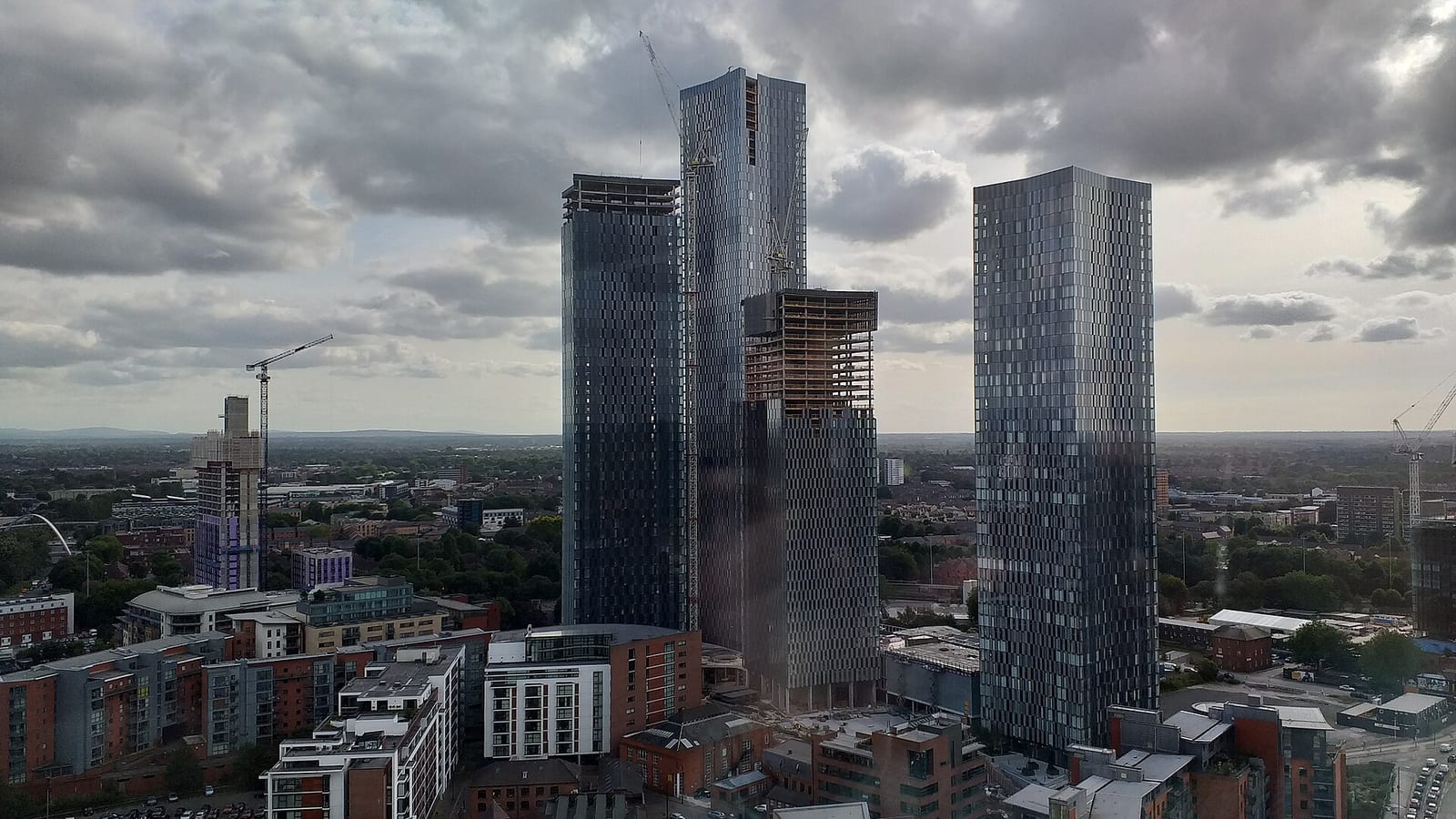
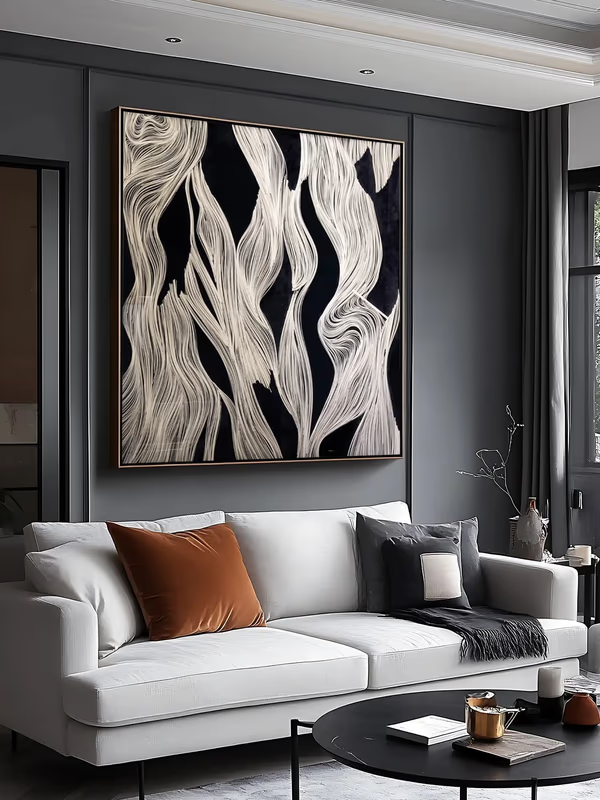
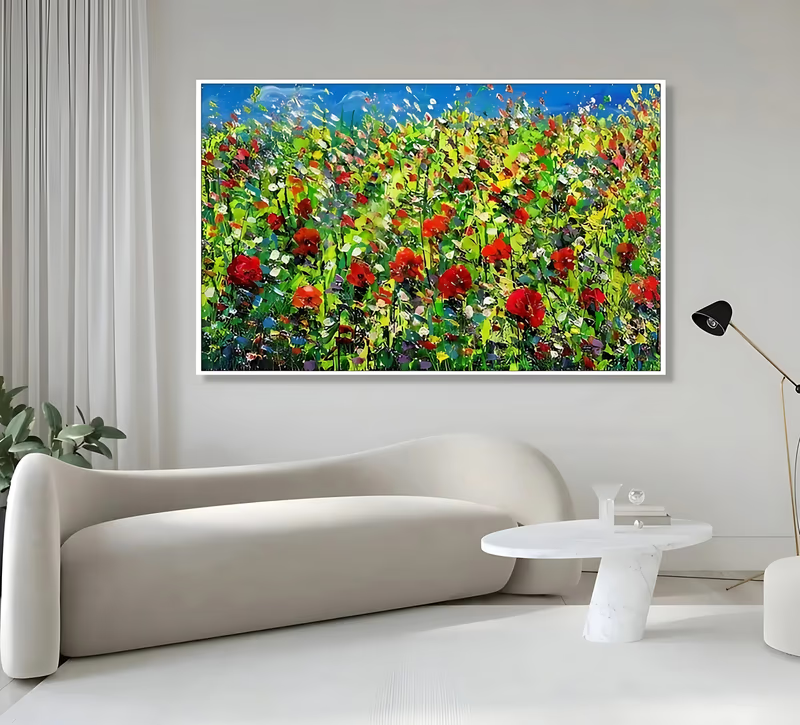
About two-thirds of the sofa's width, so 120–140 cm (47–55 in) over a typical three-seater; under a 2.4 m new-build ceiling, keep it to about 90 cm (35 in) tall.
In a new-build, height is the limit. Contemporary UK homes average a ceiling of about 2.4 m, and London asks for 2.5 m in new housing. With the sofa back at about 85 cm and a 20 cm gap above it, a 2.4 m room leaves roughly 90 cm (35 in) for the canvas once you keep clear of the ceiling, so keep it horizontal: 130 × 90 cm (51 × 35 in) rather than a big square.
Glass takes most of the remaining wall. A Battersea Power Station penthouse pairs 2.73 m ceilings with full-height windows; in flats like it, the wall behind the sofa is often the only solid one. The long wall of a knocked-through double reception, like the one a Knightsbridge house advertised in September 2026, can take a panoramic of 180–250 cm (71–98 in), or two canvases, one for each half of the room.

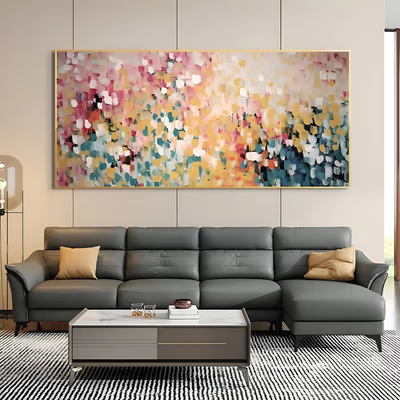
What size painting goes above a double, king or super king bed?
About two-thirds of the bed's width: roughly 90 cm (35 in) over a UK double, 100 cm (39 in) over a king and 120 cm (47 in) over a super king, hung 20–30 cm (8–12 in) above the headboard.
The bed-head wall is rarely generous: England's space standard asks only that a double bedroom be at least 2.75 m wide and 11.5 m², so with a bedside table on each side the painting should stay within the width of the bed. One horizontal canvas works, or a pair of uprights over the bedside tables. In a hotel guest room, keep the canvas narrower than the headboard; more in art for hotel guest rooms and art for bedrooms.
-
Double
- Bed
- 135 cm (4 ft 6 in) wide
- Canvas
- About 90 cm (35 in) wide
-
King
- Bed
- 150 cm (5 ft) wide
- Canvas
- About 100 cm (39 in) wide
-
Super king
- Bed
- 180 cm (6 ft) wide
- Canvas
- About 120 cm (47 in) wide
What size of art suits a staircase, landing or double-height hall?
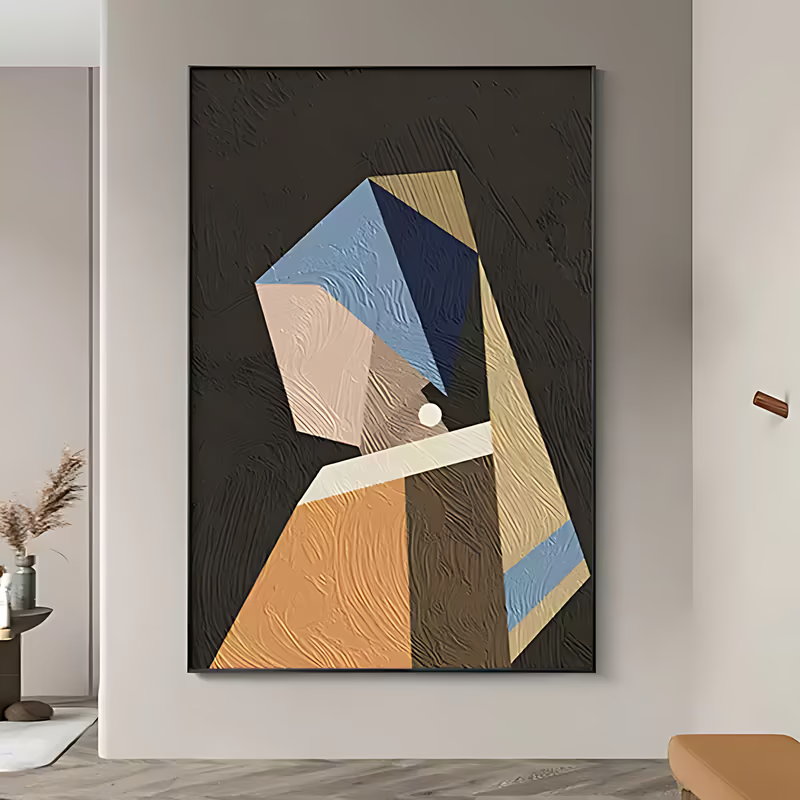
On a terrace stair, one upright of 60–90 cm (24–35 in) at the half-landing or a stepped run of smaller canvases; in a double-height hall or stairwell, one tall canvas of 150–250 cm (59–98 in) or a stacked pair.
On a narrow terrace stair, art is seen close up and from below. Give the half-landing the main piece, an upright you meet as you turn; if the flight needs art too, step three smaller canvases up the wall, their centres about 145 cm (57 in) above the treads. Stacking is an old British habit: Victorian households hung several frames one above another from a single cord on the picture rail.
The big walls are in grander houses: a double-height dining room in a Belgravia townhouse, a baronial hall lit by four large stone arched windows at Edgeworth Manor in the Cotswolds, a hall, drawing room and library under exceptionally high ceilings in a new mansion on St George's Hill, Surrey. Seen from the hall and the landing above, such walls want a canvas sized to the whole wall, not to eye level. Tall works are under upright paintings and art for entrance halls.
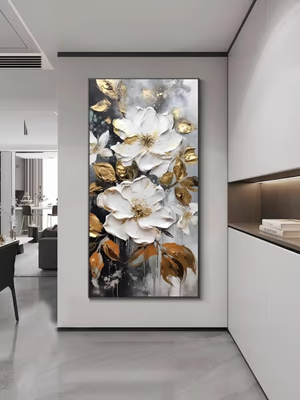


How high should a picture hang, and can it go on the picture rail?
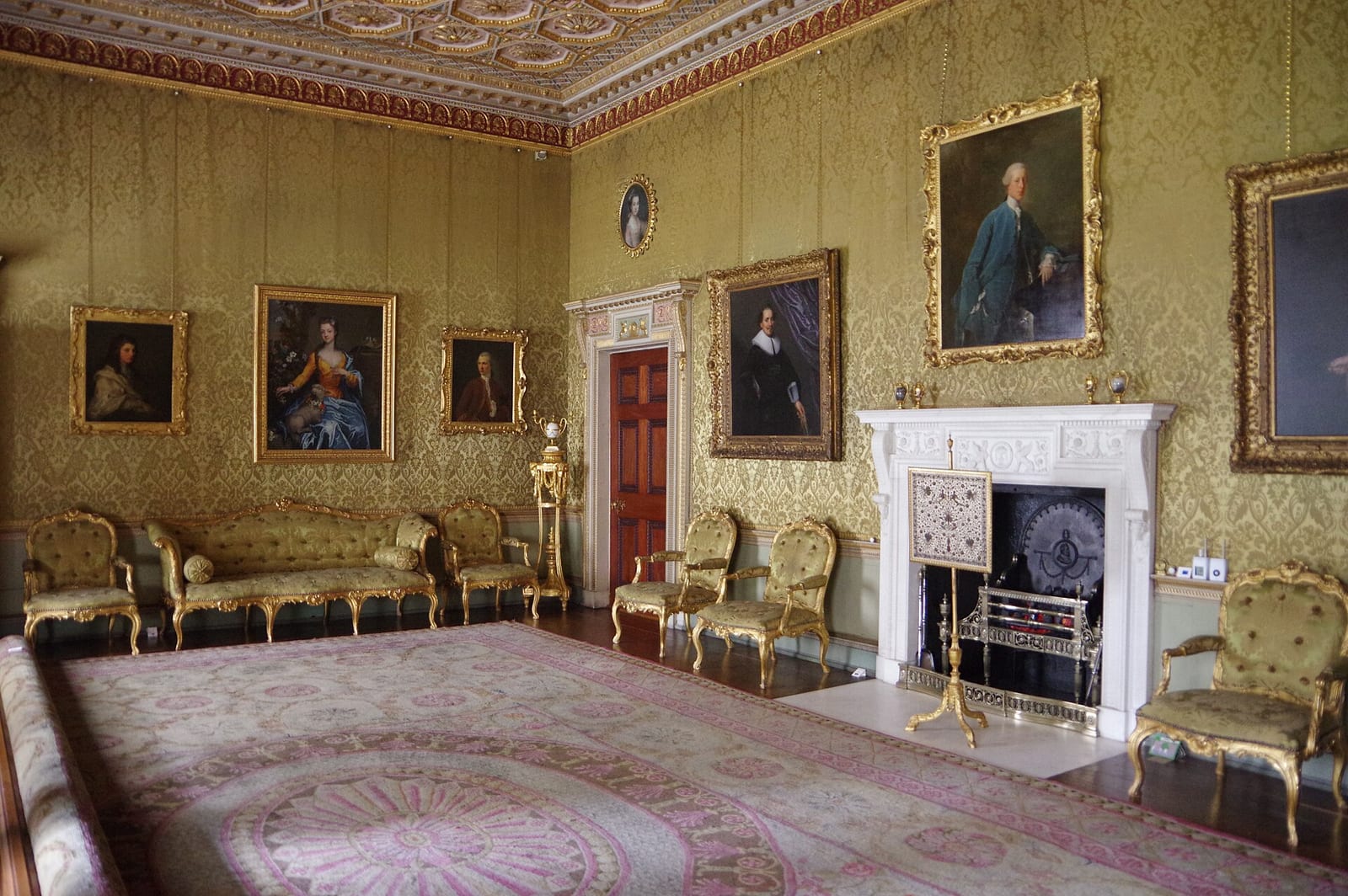

With its centre about 145 cm (57 in) from the floor; a picture rail simply carries the cords to that height, and in a listed house it spares the walls from drilling.
One UK picture-rail guide sets the centre of a main work at about 1,450 mm from the floor, with the rail 300–450 mm below a 2.7–3.0 m period ceiling. The cord then sets the limit: the same guide gives about 10 kg for traditional cord, 15 kg for perlon and 25 kg or more for steel cable. For a large piece on a rail, choose an unframed stretched canvas; a heavy frame or deep plaster relief wants steel cable or a wall fixing.
In a listed building, one estate agent's guide advises hanging pictures without nails or screws, and fixing into the mortar joints rather than the brick where you must drill, which makes the rail the natural choice. In a panelled room, size the canvas to the panel and hang it inside the mouldings, as in the photographs of a Grade II* Georgian house of about 1720 on the King's Road.
How do you order a canvas painted to the size of your wall?
Send a photo of the wall with its width, the ceiling height and the way into the room; we suggest the size and format, and you approve every stage from photographs before it ships.
Measure in whichever unit your tape shows: the width between the fixed points that frame the wall (the edges of the breast, the alcove at its narrowest, window reveal to corner), the ceiling and picture-rail heights, and the furniture in front. Then measure the way in, because in a terrace the front door and the turn of the stair decide how a large canvas arrives; rolled is the lightest, most economical way to travel and the easiest up a narrow stair. Your quote usually comes within one business day, with a size and a shortlist from some 1,300 designs, or a piece designed for the room; your own view or photograph can be painted too (paintings from your own image). See also UK taste and styles, the UK art market and our UK wall art guide.
Each canvas can travel stretched and ready to hang, framed, or rolled; a rolled canvas, the lightest and most economical way to send a large painting, arrives without stretcher bars, and any local framer can stretch it for you.
-
Rolled
- Best for
- The largest canvases, narrow stairs and tight doors
- Then
- Stretched before hanging; stretcher bars are not included
-
Stretched
- Best for
- Canvases that fit through the door and round the stair
- Arrives
- Ready to hang; the lightest choice for a picture rail
-
Framed
- Frames
- Gold, silver, black, white or wood
- Texture
- 3D plaster and heavy texture travel stretched or framed only
UK wall art size guide FAQs
Should I measure my wall in inches or centimetres?
Either. Estate agents' floor plans often give feet and inches beside metres, as the Savills plan of a Bath townhouse does. Send whichever you measured; we agree the canvas size with you before painting starts. As a guide, 100 cm is 39 in, 150 cm is 59 in and 200 cm is 79 in.
What size painting goes on a chimney breast with a TV on it?
Usually none above the screen: a painting there competes with the television and ends up hung too high. Move the art to the alcoves instead, as a matched pair of uprights about 45–70 cm (18–28 in) wide, or to the wall opposite the breast, where a horizontal canvas of 120–150 cm (47–59 in) faces the room.
What is the largest painting you can make for a UK home?
Send us a photo of the wall with its width, the ceiling height and the way into the room: front door, hall and the turn of the stair.
How long does a made-to-measure canvas take to reach the UK?
About 10 days to paint, then 5–7 days by DHL, FedEx or UPS express to London, Edinburgh, Manchester or any other UK address. Larger orders may travel by air or sea freight instead; we choose the best route for your address and confirm the shipping cost before anything leaves.
Can I return a painting if the size turns out wrong?
Every canvas is painted to the size you agree, and you approve photographs at every stage, the finished piece included, before it ships, so finished pieces are not returnable; that is why we check the size with you first. Transit damage is rare, under 0.01% of pieces; if it happens, we take it up with the carrier and work out a solution with you, such as a replacement or a refund.
Can I order one painting first to see the size on my wall?
Yes. The minimum order is one piece, so a single canvas for the chimney breast or a pair for the alcoves is welcome, and it can serve as the sample for a larger scheme. Volume pricing starts at ten pieces, for a whole house, an office floor or a run of hotel rooms.
United Kingdom
Send us your wall, in inches or centimetres
Send a photo of the wall with its width, the ceiling height and what stands in front of it, on WhatsApp, with the quote form or by email. We usually reply within one business day with the size and format we would choose, a shortlist of designs and a price for each piece.
More of the United Kingdom guide
The overview and each part of the guide answer one buying question for the United Kingdom.
- United Kingdom: overviewWall art in the UK, hand-painted to order for period houses, new-build flats, offices and hotels, sized to your wall.
- Townhouses & homesLiving room wall art for UK homes
- Offices & institutionsOffice wall art for UK headquarters, law firms, clinics and universities, sized to modern floors and listed rooms.
- Hotels & restaurantsArt for hotels and restaurants in the UK
- Where to buyWhere to buy art in the UK
- Taste & stylesWall art ideas for UK rooms
Sources
- The People's Painting | Ipsos · 1998-02
- Technical housing standards – nationally described space standard (DLUHC) · 2015-03-27
- Standard Ceiling Height UK – New 2025 Regulations (Wall Panels World) · 2026-06-26
- Standard Ceiling Height UK – Everything You Need To Know In 2026 (Marraum architects) · 2026
- Houses for sale in Belgravia, London – Savills · 2026-09-19
- Living Inside a London Landmark: Battersea Power Station – Beauchamp Estates · 2024
- A magnificent new mansion with interiors by Linley – Country Life · 2018-01-11
- One of the finest privately-owned houses in the Cotswolds is up for sale at £20 million – Country Life · 2022-11-22
- Chimney Breasts: A Thorough Guide – Lambleys · 2025
- Massive artwork - what would you choose? | Mumsnet · 2023-10-05
- 2025 UK Houzz & Home Renovation Trends Study · 2025-05-27
- Savills brochure: A Grade II listed Georgian town house, 5 Prior Park Buildings, Bath (Fourwalls floorplan, IPMS 2) · 2019
- Savills lettings brochure: Elegant Georgian house in the heart of Chelsea, Kings Road SW3 · 2018-10-05
- Noba & Stod — Alcove Cupboards & Shelving: Costs, Ideas & Design Guide (2026) · 2026-08-18
- BookaBuilderUK — Picture Rail Ideas for UK Homes: No-Drill Art Displays · 2026
- Designing Buildings Wiki — Picture rail · 2023-04-17
- Robert Holmes — What Can You Do to a Listed Building Without Consent? · 2026-06-15
Researched 2026-09-19. Prices and figures are as published by the sources on the dates shown.