Wall Art Size Guide: How Big Should Your Wall Art Really Be?
The sofa arrives at 108 inches wide instead of the 96 on the drawing. The canvas you specified for that wall was sized against the old number, and it now reads short by a foot. In one private living room you move a floor lamp and carry on. Across a twelve-suite handover, the same miss repeats twelve times and the client finds it on the first walkthrough.
Size art to what sits beneath it: about two-thirds to three-quarters the width of the furniture below, centred 57 to 60 inches off the floor, with 6 to 10 inches of air between the frame and the furniture top.
Those numbers hold in a private bedroom and in a hotel corridor. What changes when you specify professionally is the last step. Every iHomeArt piece is hand-painted to order, so the wall gives you the dimension and the studio paints to it.
How do you measure a wall before you specify art?
Measure the usable wall. Take the width between whatever interrupts it: a door architrave, a switch plate, the edge of a joinery run, a curtain stack at its open position. Take the height from the furniture top to the ceiling line. That rectangle is what you are filling.
Pull the furniture width from the specification sheet, never from a showroom model. Sofa widths drift between the render, the quote and the delivery. If the sofa is unconfirmed when you need to order art, size against the largest option on the table.
Note the viewing distance. A piece read from eight feet across a lounge needs more scale than one read from three feet in a study. Corridors are the extreme case, because nobody stops. Fine detail does no work in a circulation route.
Then tape the outline on site at the exact dimensions you intend to order and photograph it. That settles more arguments than a mood board, and it gives the client something to approve before a brush touches canvas.
Small, medium or large: which wall art size does the wall need?
Most specifications still use the three brackets below. They are starting points for a conversation about the wall, and nothing more.
Small wall art (8x10 to 18x24 inches)
Small work earns its place where people stand close. Powder rooms, a reading corner, the wall beside a window reveal, above a nightstand or a slim console. It is also the unit inside a gallery grouping, where the outer edge of the group sets the sizing.
The failure mode is scattering. One small canvas on a broad wall reads as an oversight. If the wall is large and the budget points small, cluster the pieces and apply the two-thirds rule to the cluster.
Medium wall art (24x36 to 36x48 inches)
This bracket covers most residential schemes and most guest rooms. It sits above a queen or king headboard, above a three-seat sofa, behind a desk, on a dining wall that is not enormous. It carries a wall without taking the room hostage, which matters when the client also paid for the joinery and the lighting.
Medium sizes pair well. Two matching canvases with a 3 to 5 inch gap, or a triptych across a longer wall, gives width without one large stretcher that has to get up a stairwell.
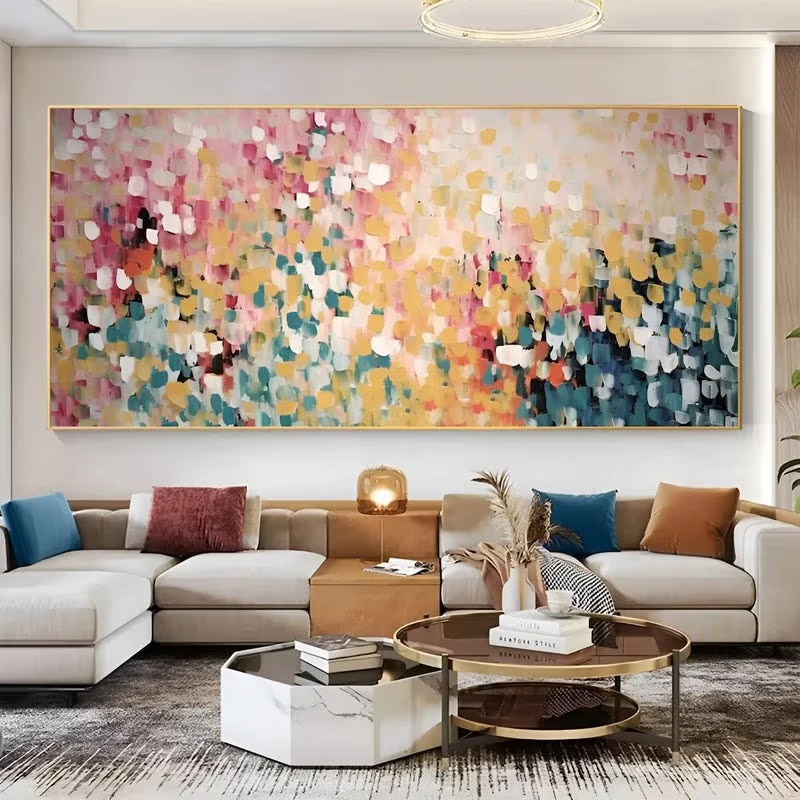
Large and oversized wall art (40x60 inches and up)
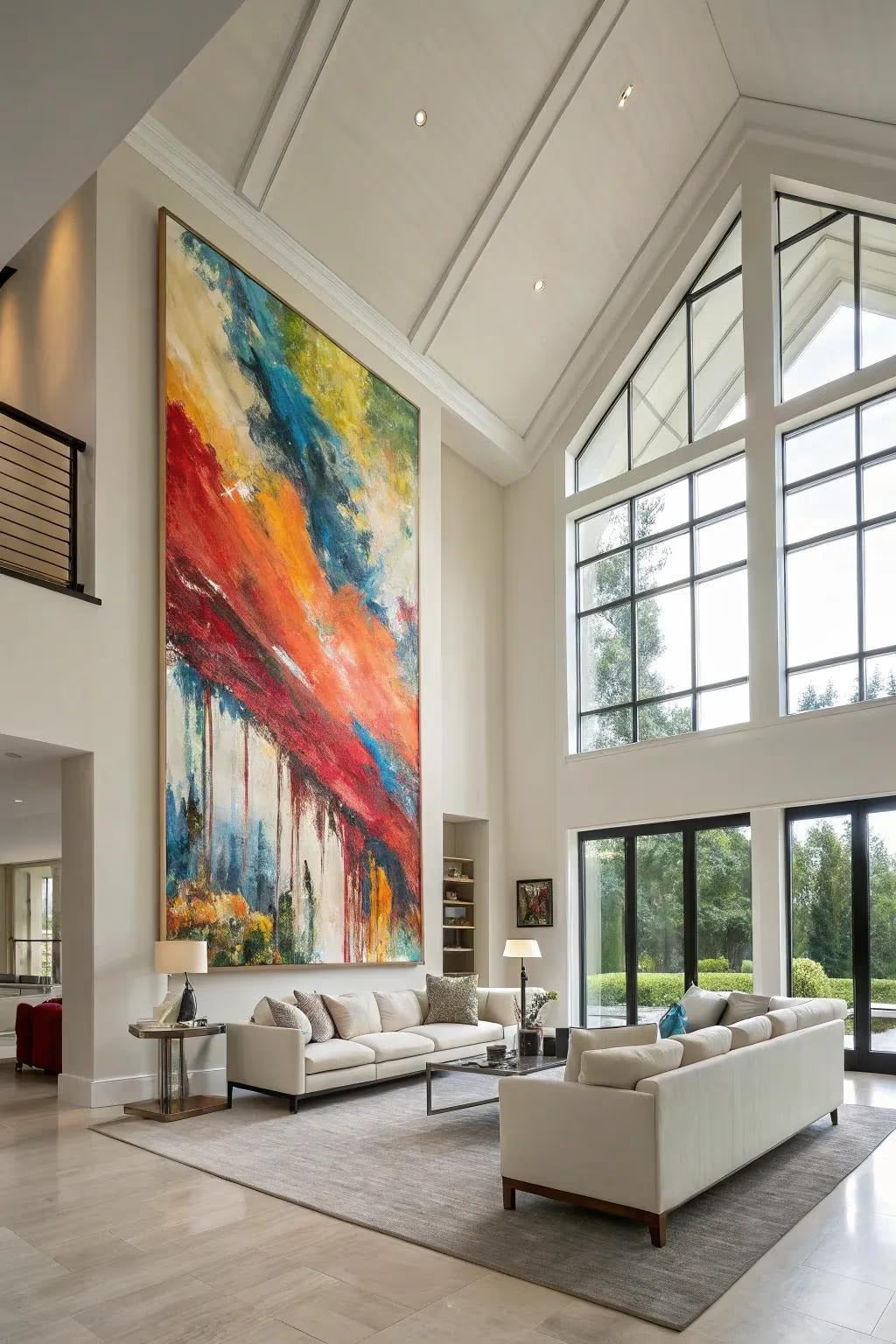
Large work belongs on walls with room to breathe: an open-plan living area, a double-height entry, a lobby, the wall above a long console or a sectional. It settles a big empty plane in one move, with no spacing logic to work out.
Keep it at least two-thirds as wide as the furniture beneath, with 6 to 12 inches clear on each side. Check the route to the wall before committing to a size. A 60 by 90 inch stretched canvas has to clear a lift door, a landing turn and a lobby threshold. Rolled canvas solves that, and stretching on site is routine work for a framer.
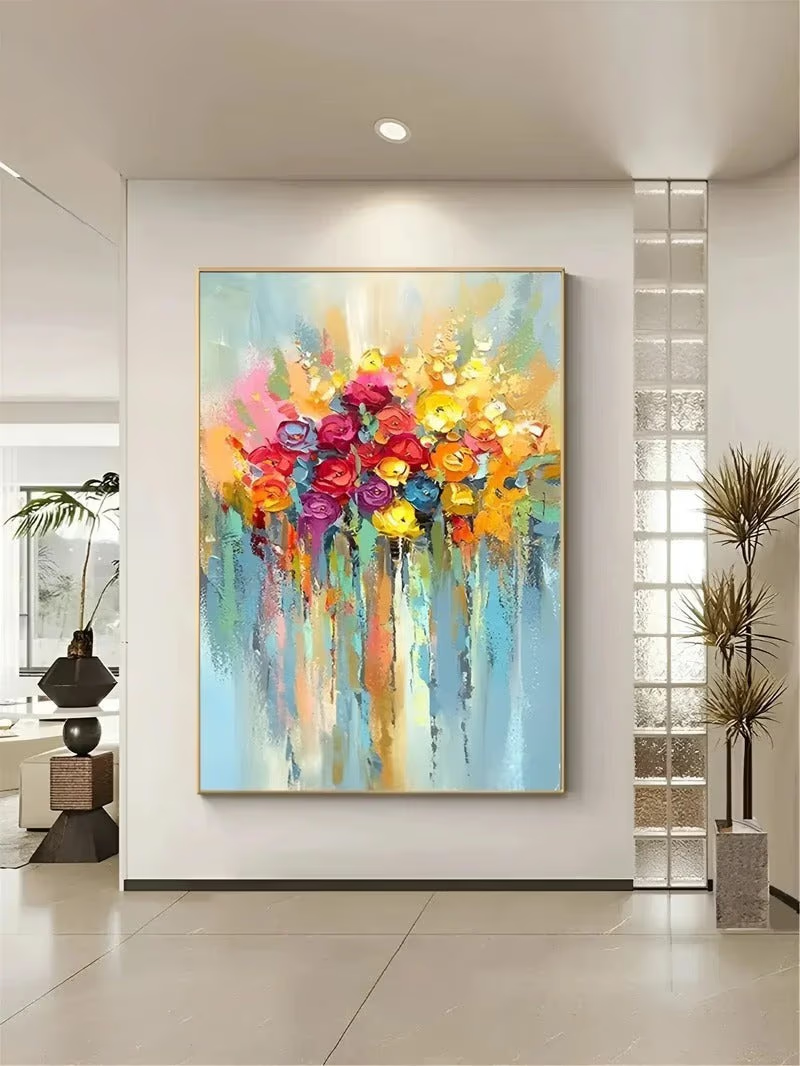
Standard wall art dimensions, and why you can ignore them
Print suppliers work to fixed formats. The A series is the most common, and it helps when you are matching an existing frame or working alongside stock pieces already specified.
- A4: 8.3 x 11.7 in artwork, roughly 10.3 to 12.3 in by 13.7 to 15.7 in framed
- A3: 11.7 x 16.5 in artwork, roughly 13.7 to 15.7 in by 18.5 to 20.5 in framed
- A2: 16.5 x 23.4 in artwork, roughly 18.5 to 20.5 in by 25.4 to 27.4 in framed
- A1: 23.4 x 33.1 in artwork, roughly 25.4 to 27.4 in by 35.1 to 37.1 in framed
- A0: 33.1 x 46.8 in artwork, roughly 35.1 to 37.1 in by 48.8 to 50.8 in framed
Framed depth runs 1 to 3 inches depending on profile. Add roughly 1 to 2 inches per side for the frame, more if you use a mat.
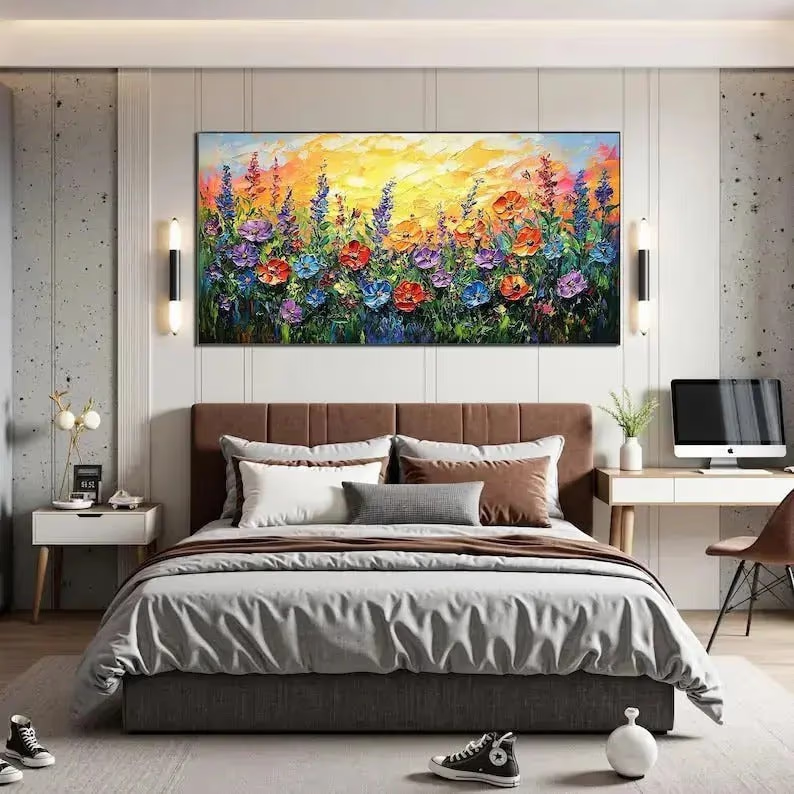
Know these numbers so you can decide not to use them. When a wall calls for 44 by 62 inches, a stock supplier makes you choose between 40 by 60 and 48 by 72, and one of those compromises ends up on your drawing. A made-to-order studio removes the decision. You send the dimension the wall wants, in the palette you are working to.
How does art size change the way a room reads?
Scale sets where the eye lands first and how large the room feels once it gets there. A wide horizontal canvas above a sofa stretches the seating group. A tall narrow piece pulls attention upward, the cheapest correction available for a low ceiling. In a long hallway, a run of horizontal pieces at one centre height opens the walls out. On a big blank plane, one oversized work resolves emptiness that three medium pieces would only rearrange.
Size also sets the register of the room. Small work asks for proximity, so it suits studies and the quiet end of a suite. Large work carries across distance, which is why lobbies take it well. Put a 60 inch canvas in a 9 by 10 foot bedroom and the walls close in.
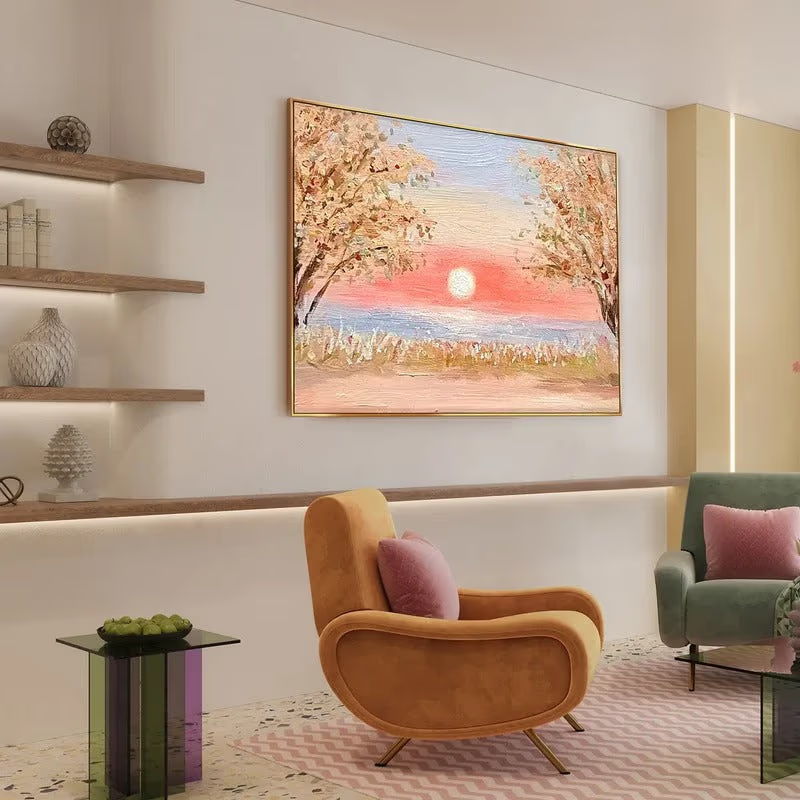
Living room wall art: getting the size right
The wall above the sofa is where sizing errors show up most, because a fixed reference line sits directly underneath.
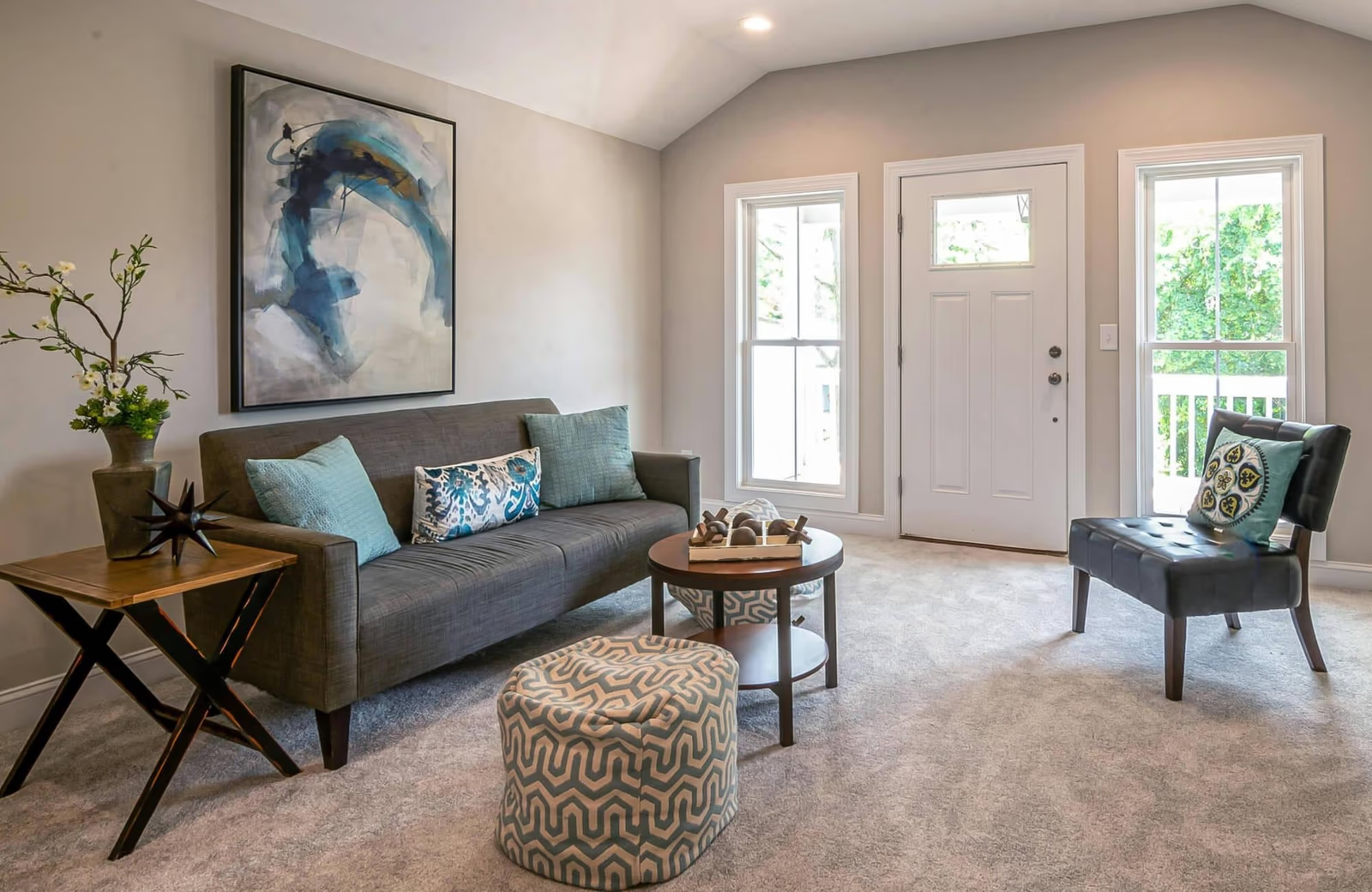
Take two-thirds of the sofa width as your floor and three-quarters as your ceiling. A 90 inch sofa puts you between 60 and 68 inches of artwork width, whether that is one canvas or a pair with the gap counted in. Sizes that land well are 24 x 36, 30 x 40 and 36 x 48 inches, though a made-to-order piece need not stop at those.
Focal walls in open-plan schemes are harder. There is no furniture to size against, ceilings are often 10 feet or more, and anything under 40 inches disappears. Size against the wall: fill roughly 55 to 65 percent of the usable width, keep the centre near 60 inches, and lift it only if the ceiling is very high. Photograph the taped outline from the room's main entry point, because that is where the client will judge it.
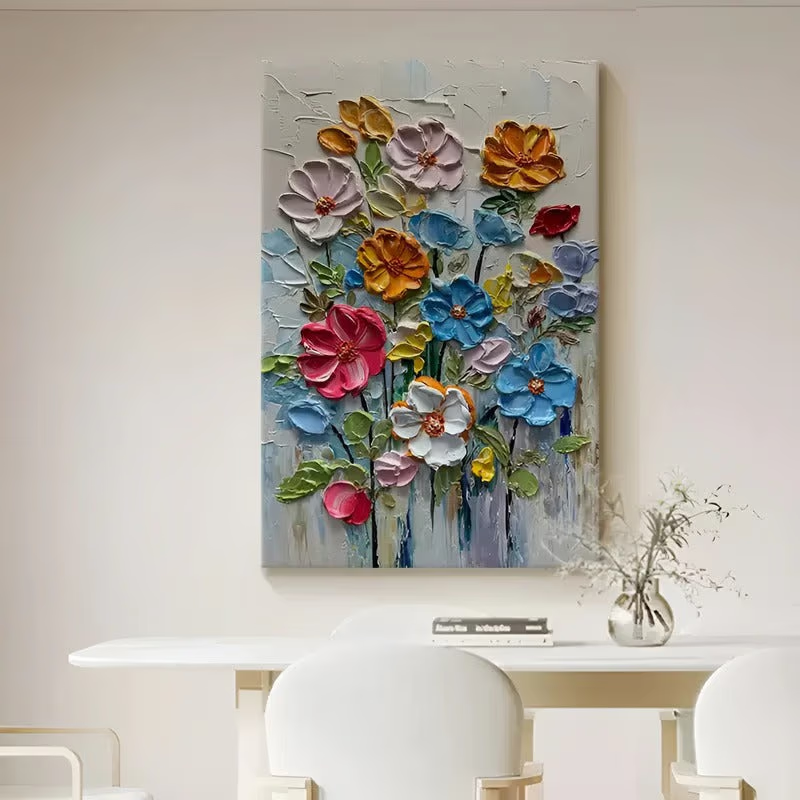
Bedroom wall art: sizing above the bed
The bed is the largest object in the room, so the art above it has to answer to headboard width rather than wall width. Two-thirds of a king headboard puts you around 50 to 60 inches, which is a single medium-to-large canvas or two pieces hung as a pair.
Keep the lower edge 6 to 10 inches above the headboard. In guest rooms and hotel suites, check the bed centre against the wall centre before ordering, because a fixed bedside run often shifts one off the other. Quieter palettes carry better here than high-contrast work, and since colour is adjusted on request, you can hold one composition across a scheme and pull its intensity down for sleeping rooms.
Home office and study walls
The wall behind a desk is read at close range for hours, so restraint matters more than scale. A medium abstract at 24 x 36 or 30 x 40 inches sits above a standard desk without crowding a monitor or a shelf.
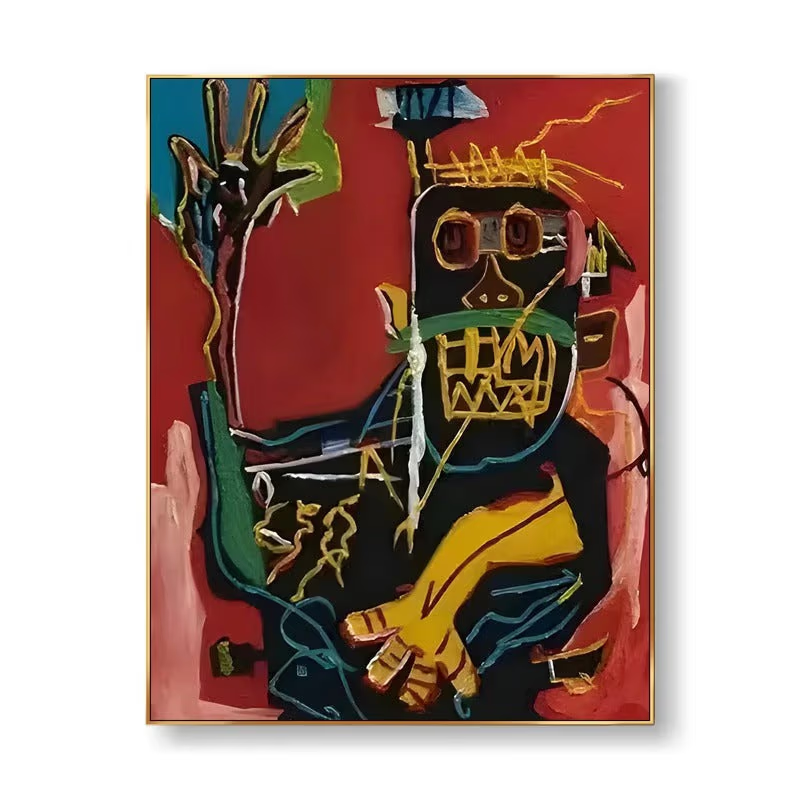
If the desk faces a camera, that wall is a backdrop and needs different sizing. A piece that reads well in the room can crop to a meaningless corner on a video call. Frame the shot first, then size the art to sit whole inside it, usually one larger piece off-centre behind the shoulder. Minimalist and textured neutral work survives compression.
Where a study includes a chair and a lamp as a separate zone, a larger canvas defines that zone without a partition. Size it to the chair, and let the lower edge drop closer to the seat back than you would over a sofa.
Dining rooms, hallways and children's rooms
Dining walls want work that holds the room together while people are seated. Size to the table rather than the sideboard where the table dominates, and keep the centre at 57 to 60 inches so it reads seated as well as standing.
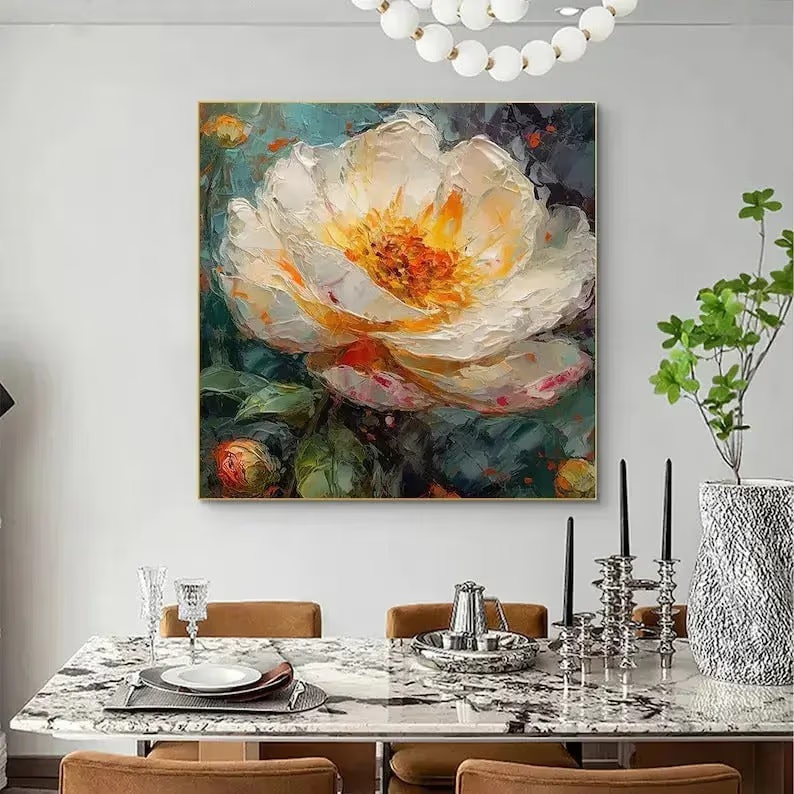
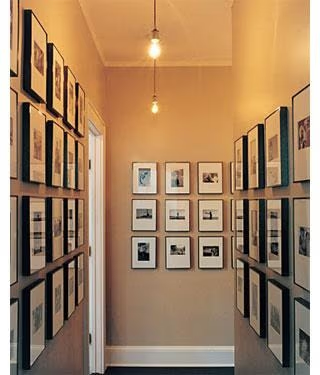
Hallways and entries are narrow, so horizontal proportions help and vertical ones fight the space. A run of three to five medium pieces at a fixed centre line and a consistent gap pulls a corridor along its length. Set the gap once, then calculate the whole run as a single dimension before checking it against the wall.
Children's rooms need sizes that survive a change of furniture. Smaller pieces around a bookshelf or a reading corner create close-range interest, while one larger piece gives the room a centre. Fluid and graffiti-influenced work ages better than anything pitched at a specific age.
How do you size wall art for commercial spaces?
Commercial walls change the maths in two ways: viewing distance grows, and circulation fixes the sightlines.
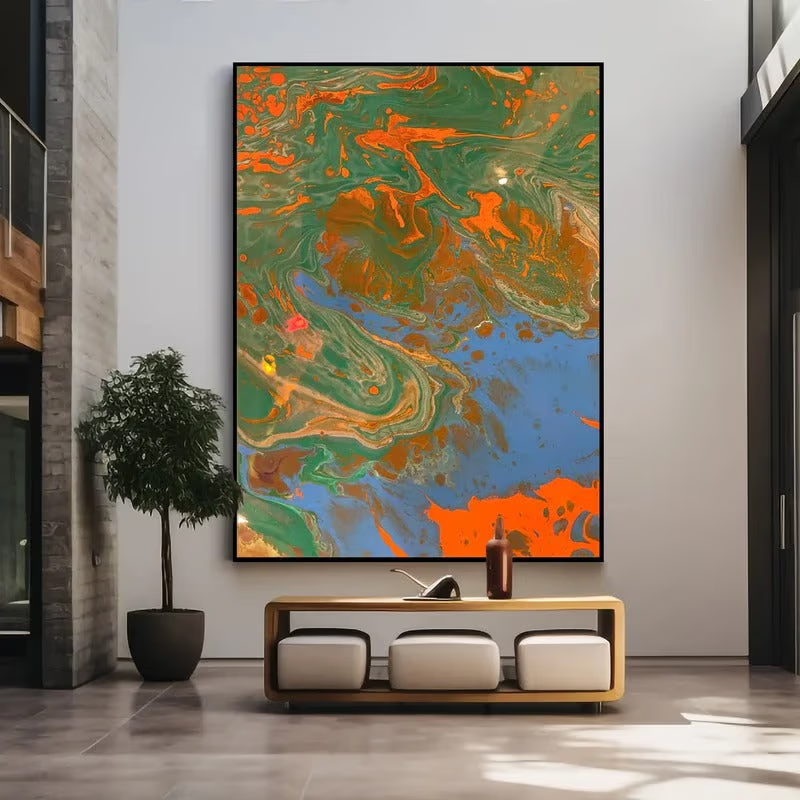
In a hotel lobby, size against the architecture, not the furniture. A reception wall read from 25 or 30 feet needs 60 inches and up, often much more. On a wall broken by columns, a set of three at that scale sits better than one very wide canvas.
Restaurants have a seated eye line. Where banquettes run along a wall, drop the centre to around 52 to 55 inches and keep the lower edge clear of head height at the seat back. Spa and treatment rooms take small to medium work at a low centre, since the room is used lying down.
Boardrooms want one dominant piece on the wall opposite the door, sized to at least two-thirds of the table length. Corridors take an evenly spaced run at one centre height, so the rhythm stays legible at walking pace.
Guest rooms are the volume item. Settle one size for the bedhead and one for the entry wall, then hold both across the programme so the install crew works from two numbers, not forty.
How do you repeat a scheme without every room looking the same?
Repeatability is the part a print catalogue handles badly. Forty copies of one print give you forty identical walls, and forty unrelated prints lose the thread of the scheme.
Hand-painted originals sit between those. Each piece is painted individually, so no two match exactly even when they share a size, palette and composition. The corridor reads as one scheme, and each room reads as its own once the door closes. The studio is backed by Siji Art Hub in Foshan and its partnership with the Foshan Academy of Art Creation, which is what makes that volume possible.

You can push the variation on purpose. Hold the composition and rotate three palette weights across floors. Keep one size constant so the fixings, crates and install drawing stay simple, and let colour carry the difference. Every piece comes with progress photographs and a final approval photograph, worth having when an owner or asset manager asks what is on the walls.
Lead time, handling and how the art arrives
Sizing decisions carry a date. Painting takes about 10 days and transit runs 5 to 7 days by DHL, FedEx or UPS; plan the order around both stages. We arrange the shipping on the best route and confirm its cost before dispatch. Set the order date against the handover, not the install week.

Approval is built in. You see photographs and video as the piece is painted, and you sign off each stage before work continues. Where a client has already changed the palette twice, that is the difference between catching it on a photograph and catching it on the wall.
Choose the format to suit the site. Rolled in a tube suits large sizes, tight access and long shipments, with stretching done locally before install. Stretched and boxed arrives ready to hang. Framed pieces ship with hanging hooks fitted.
FAQs
Can I order the same composition in several different sizes for one project?
Yes. Because every piece is painted to order, one composition can be produced at a bedhead size, a corridor size and a lobby size for the same scheme. Proportions are adjusted so it still works at each format, with no cropping.
How high should art hang when the ceiling is 12 feet or more?
Keep the centre nearer 63 to 66 inches and let the piece grow taller instead of lifting it further. Art hung high on a tall wall separates from the furniture beneath it.

Can I mix sizes on one wall and still keep the scheme tidy?
Yes, if you treat the group as one rectangle. Set the outer dimensions first, then arrange pieces inside them with a consistent gap. Vary the sizes, hold the palette and framing, and the wall reads as deliberate.
Can the palette be matched to a scheme I have already signed off?

Yes. Colour and composition are adjusted on request, so a piece is painted to your specified palette. Send the reference and you will see it in the stage photographs before the work is finished.
Sizing is the part of an art specification a client notices without being able to name what is wrong, so get the measurements onto the drawing early and tape the outline before anything is ordered. Once the dimension is settled, [iHomeArt](https://ihomeart.com/) paints to it: any size, any palette, painted in about 10 days and shipped by express in 5 to 7.