
Wall Art for Bedroom Above Bed: How to Size and Specify It
You walk the client through the principal bedroom two days before handover. The bed is dressed, the lamps are wired, the joinery is signed off. Then you look up and the wall above the headboard reads short, because the canvas you specified came in at 32 inches and the bed is a king. Nobody on the walkthrough mentions it. Everybody sees it.
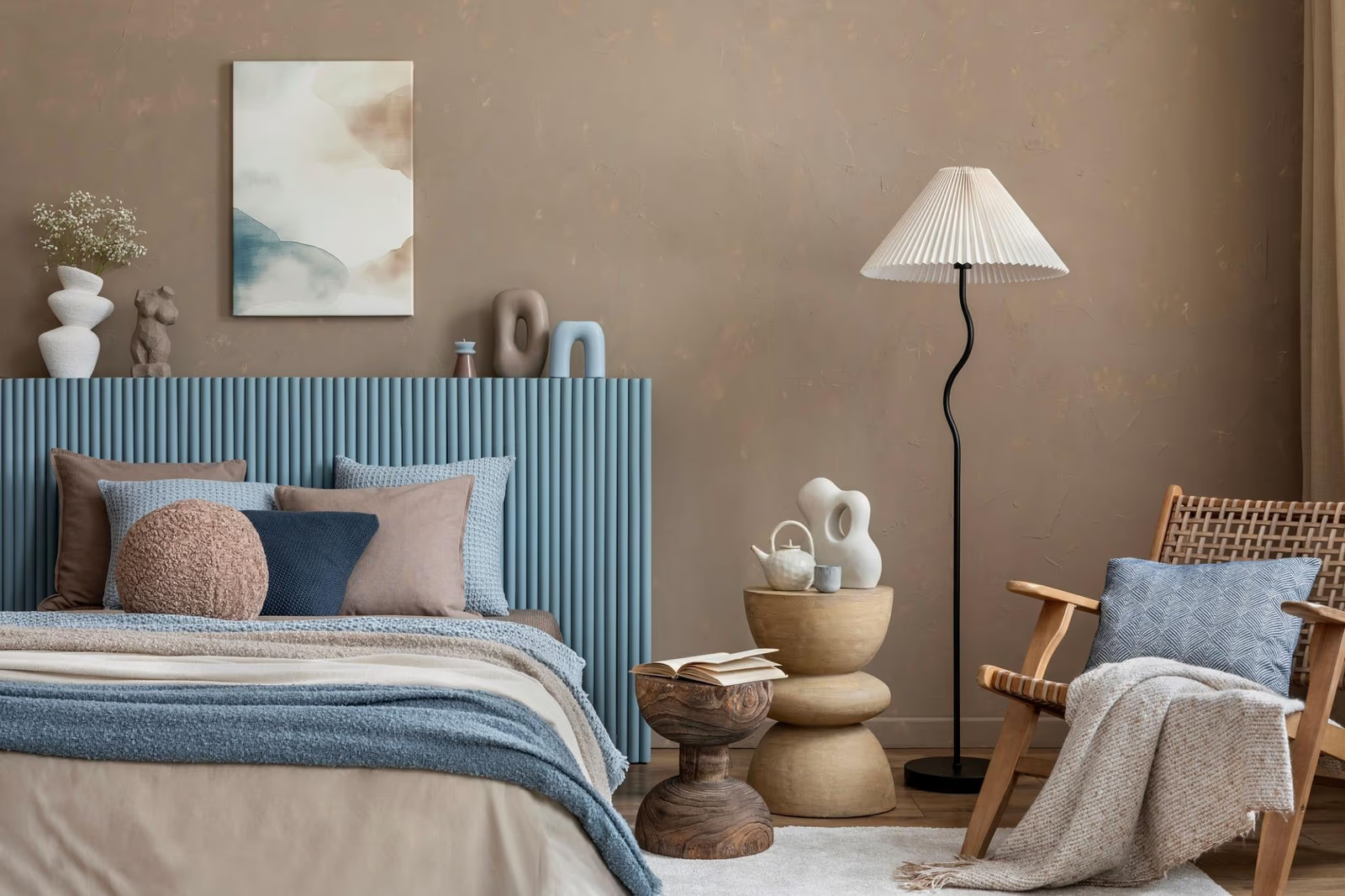
Art above a bed should span two thirds to three quarters of the bed width and hang 6 to 10 inches above the headboard, and when the piece is painted to order you specify that width to the inch instead of rounding to the nearest stock size.
The geometry below is the same geometry designers have used for years. What changes when you specify for other people is how many times you have to get it right, and the fact that a made-to-order studio hands you the exact number rather than the closest one.
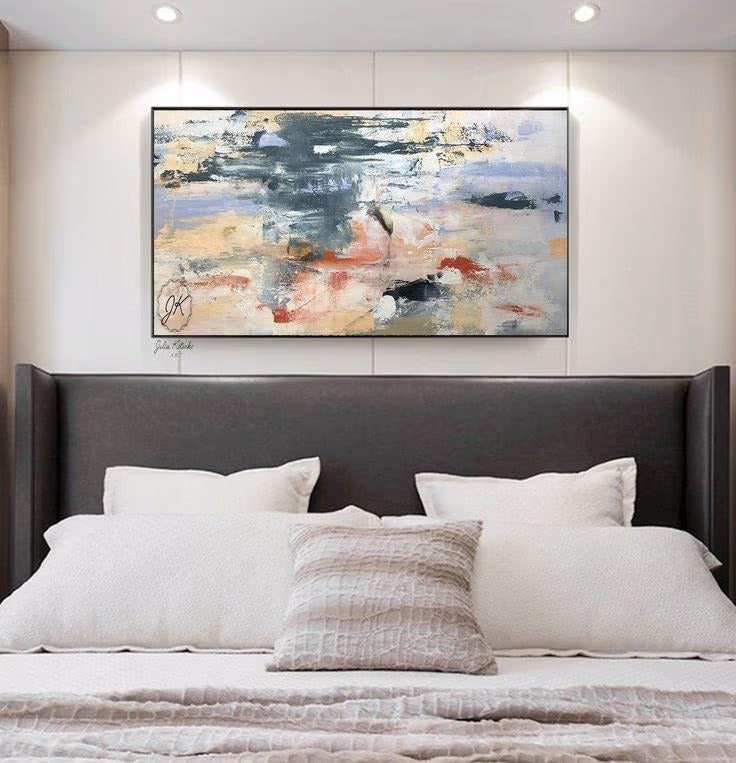
How big should wall art be above a bed?
Start from the bed width and take two thirds to three quarters of it. That range keeps the art visually attached to the furniture below without crowding the bedside walls or the sconces.
- Twin, 38 in wide: art 26 to 29 in
- Full, 54 in: art 36 to 40 in
- Queen, 60 in: art 40 to 45 in
- California king, 72 in: art 48 to 54 in
- King, 76 in: art 50 to 57 in
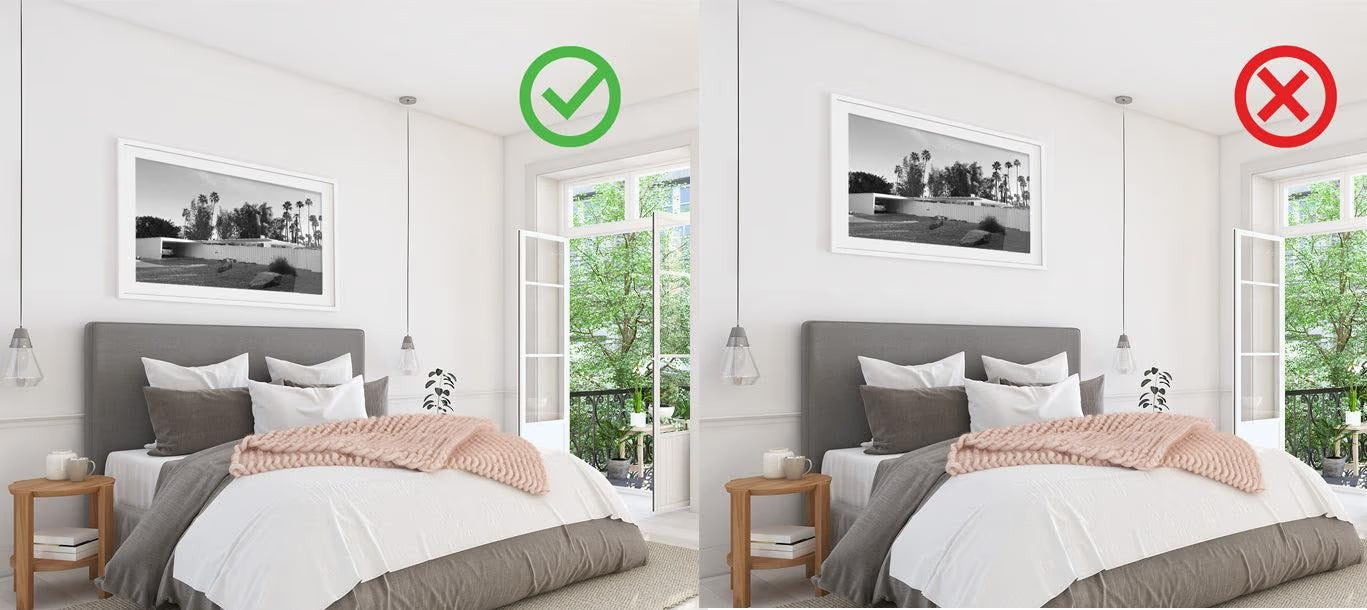
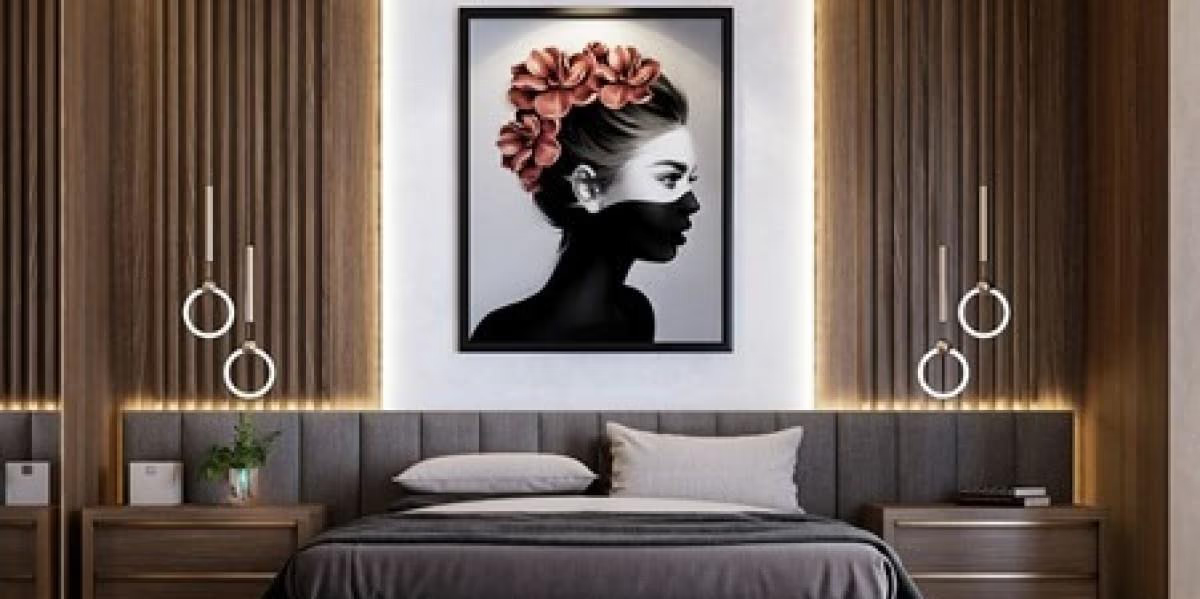
Horizontal formats do most of the work above a bed. A wide piece repeats the line of the headboard and settles the wall in one move. Vertical pieces need a reason to be there: a narrow gap between two tall wardrobes, a low platform bed under a high ceiling, a pair flanking a centred pendant.
Measure a set as one rectangle. Two 24-inch canvases with a 3-inch gap occupy 51 inches, and 51 is the number you check against the bed.
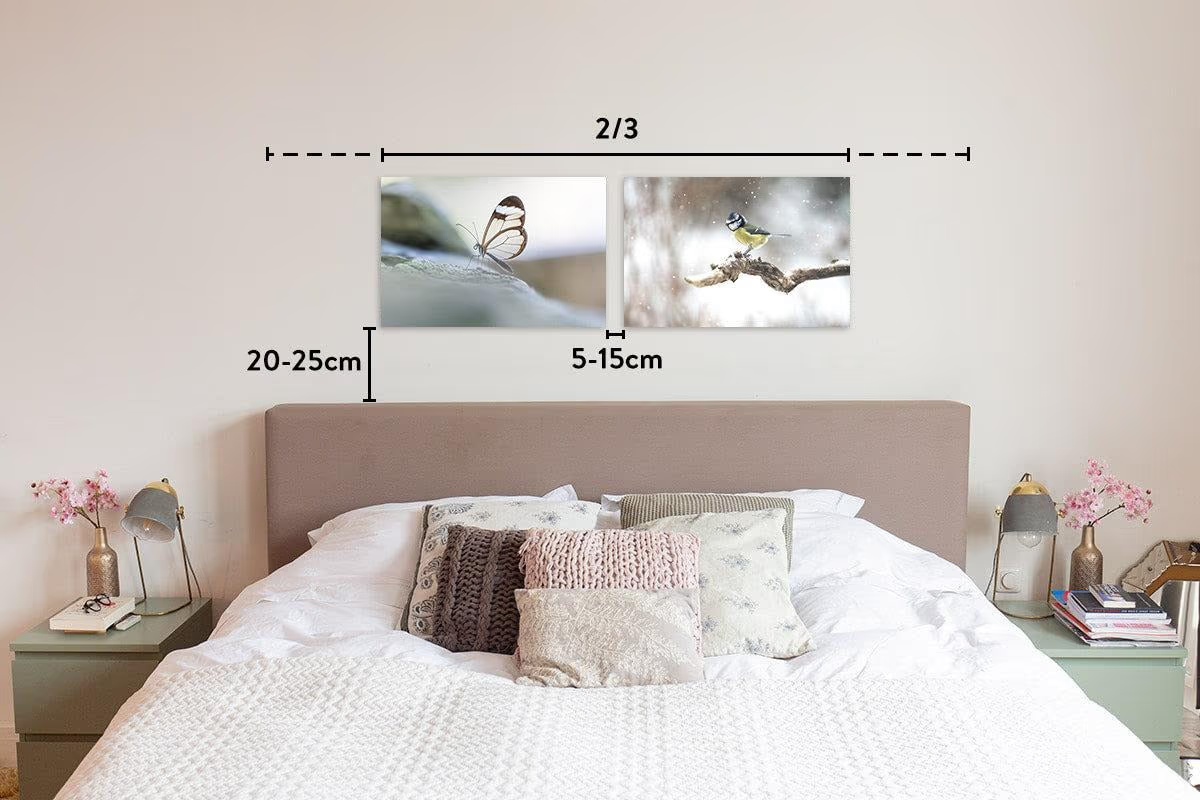
This is where a print supplier and a painting studio part company. If the clear wall between two sconces is 52 inches and you want four inches of air each side, the piece is 44 inches wide. A stock catalogue offers you 36 or 48. iHomeArt paints the 44. Every piece is an original made to order in any size and any palette, so the sizing maths stops being a compromise and becomes a measurement you hand over.
How high should art hang above a headboard?
Six to ten inches between the top of the headboard and the bottom of the frame. Measure from the headboard rather than the floor, and set aside the 57-inch centre line you use in corridors. Above a bed the headboard is the datum.

Tall upholstered headboards eat the wall fast. In a hotel guest room with a 54-inch headboard and an 8-foot ceiling, a ten-inch gap leaves room for a piece about 24 inches tall. Fix that height early or the FF&E schedule will decide it for you.
Where there is no headboard, measure from the top of the pillows as they will be dressed, then add the same six to ten inches. Dress the bed before the installer marks the wall if the programme allows it.
On site, tape the outline in painter's tape and look at it from the door. Five minutes of tape settles arguments that otherwise happen in front of the client.
How do you centre art over a bed that sits off-centre?
Centre the piece on the bed. The middle of the wall is a distraction, and in a room where a window reveal pushes the bed to one side, splitting the difference makes both positions look wrong.
Check the ceiling as well as the wall. Downlights, a sprinkler head, a bulkhead carrying services off the corridor, a return air grille: any of them will pull the eye, and a piece centred on the bed under an off-centre downlight photographs crooked. Coordinate the fixing point with the services drawing before the ceiling closes up.
Spacing a pair, a triptych or a short run
Leave two to four inches between pieces and hold the same gap the whole way across. Tighter than two and the set reads as one smudged object. Wider than four and the pieces stop talking to each other.

A studio painting to order can also run a single composition across two or three canvases so the gap falls inside the image. Specify that at the briefing stage, because the artist has to plan where the break lands and how the brushwork carries over it.
Does the wall above the bed need its own light?
Usually, yes. A picture light, sconces on a dimmer, or a wall washer set 12 to 18 inches off the surface. In a hotel room the guest will never operate a picture light, so put it on the master room scene or leave it out of the spec. In a private bedroom the client will use it nightly, so put it on a dimmer they can reach from the pillow.
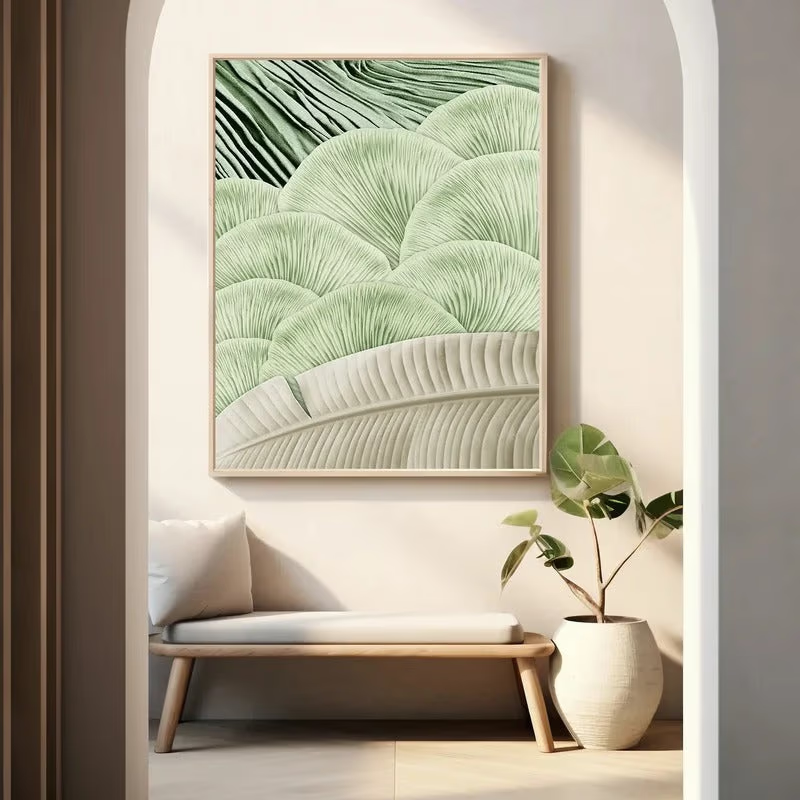
Dark rooms flatten texture. Heavy impasto and plaster work turn grey under a single central pendant. If the room is short of light and the budget will not stretch to another circuit, specify a flatter surface and let colour carry the piece.
Why texture matters more in a bedroom
Bedrooms are soft by definition: linen, wool, upholstered headboard, heavy curtains. A flat printed surface hung above all of that looks thin from the doorway. Canvas with visible brushwork, plaster and texture work, or oil with real depth in the paint holds its position against the bedding.
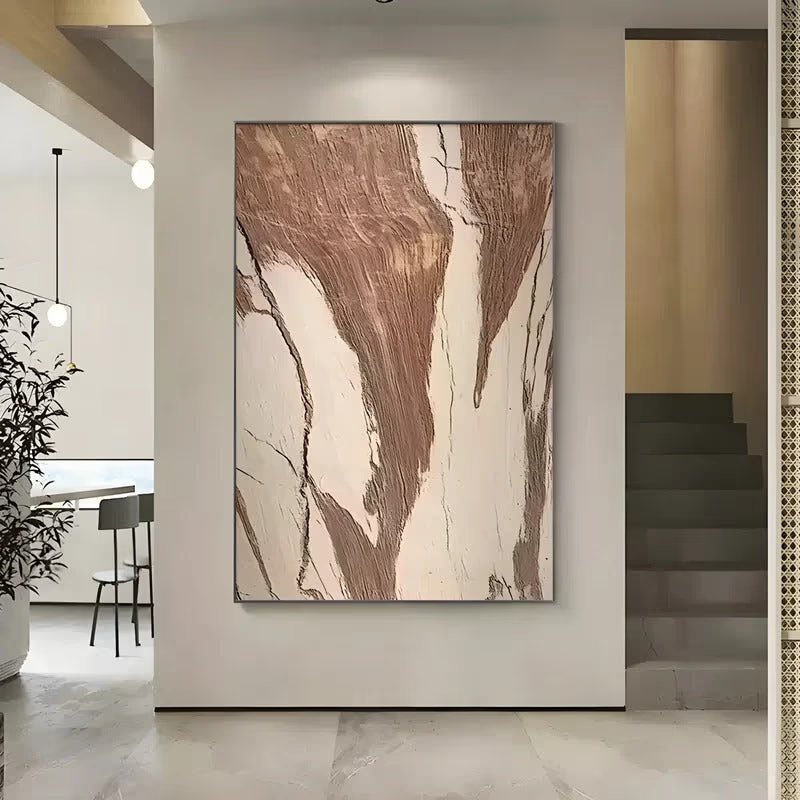
An original carries relief you can read from across the room, which is the practical difference between a hand-painted piece and a reproduction at the same size. It also gives the photographer something to light when the project goes to press.
How do you choose above-bed art by style?
The scheme is usually fixed before art comes up. You are answering a room that already exists on a drawing, sometimes before the fabric samples land. Rather than hunting for a piece that happens to sit close to your palette, send the studio the actual references and have the colour adjusted to them.
Minimalist and modern rooms
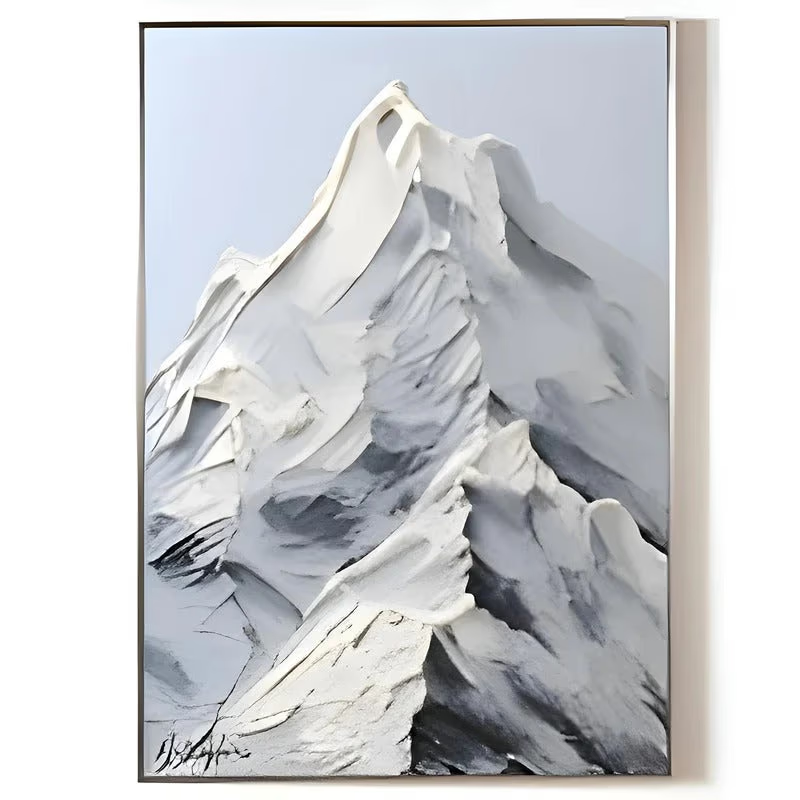
One piece, wide, quiet. A neutral ground with a single move in it works better than a busy composition: a horizon, a fold, a band of colour. Slim black, white or natural timber frames keep the edge tight.
Beige, cream, grey, black and soft earth tones sit well in these rooms because they carry the wall without competing with the bedding. Abstract compositions do the same job through shape and texture instead of subject matter.

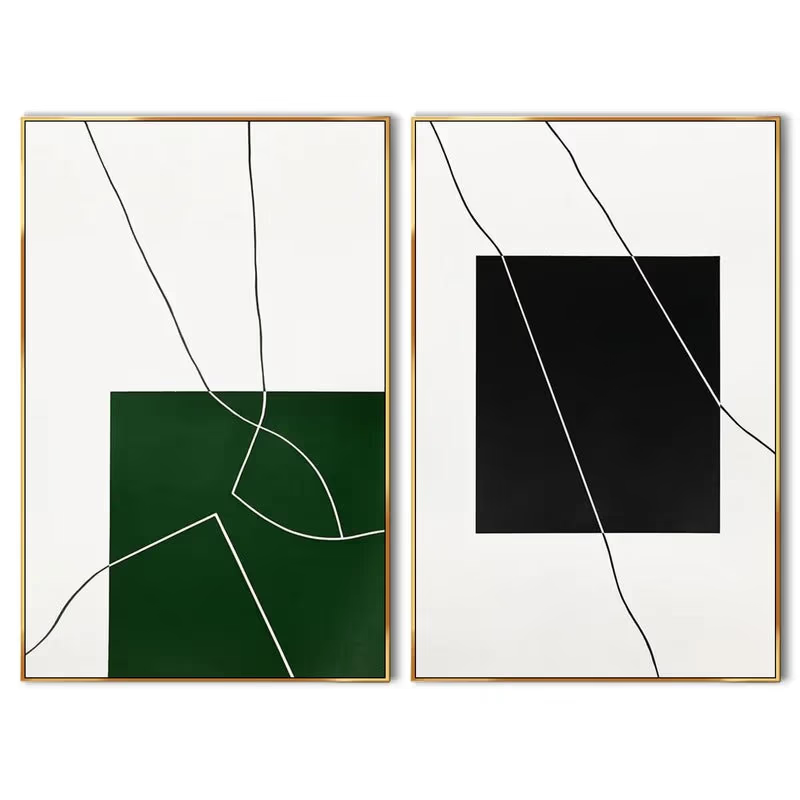
Clean lines and geometry read as deliberate at this scale. Ask for a composition with fewer elements and more space in it, then let the size do the work.
Warm and layered rooms
Cream, taupe, dusty blue, sage and blush hold a wall without demanding attention at eleven at night. That is the practical test for a bedroom piece.
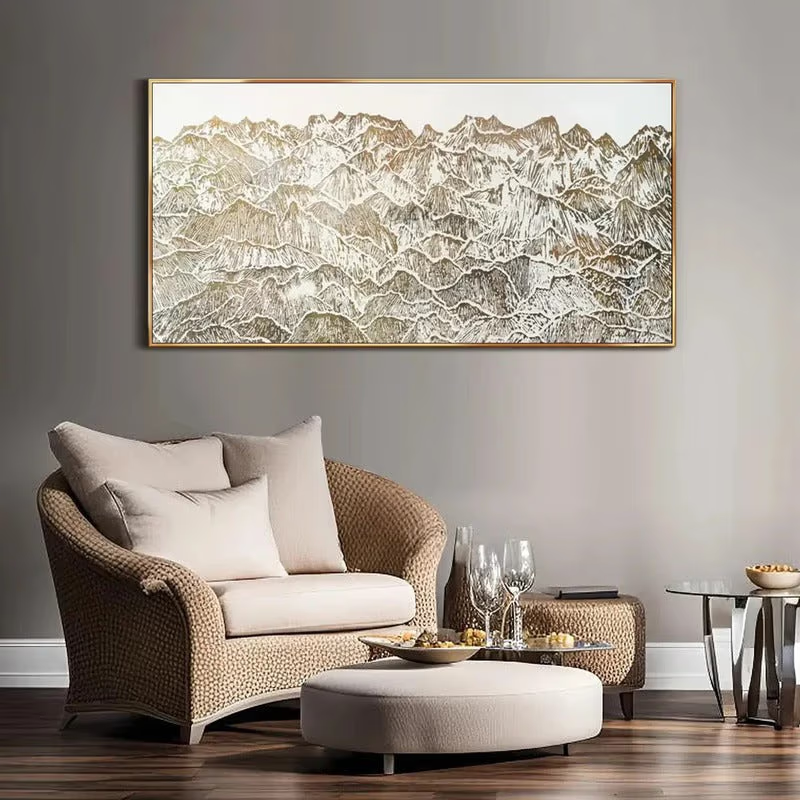
Landscape and botanical subjects work here for the same reason. A misty treeline or a shoreline gives the eye somewhere to go without the drama a living room can take.
For a client who wants warmth without pattern, plaster and texture pieces sit beside woven hangings and heavy throws without any of them fighting.
Suites, penthouses and statement rooms
Scale is the whole effect. One oversized piece above the bed does more for a suite than three medium ones, and it removes the coordination problem of aligning several fixings across a wide wall.
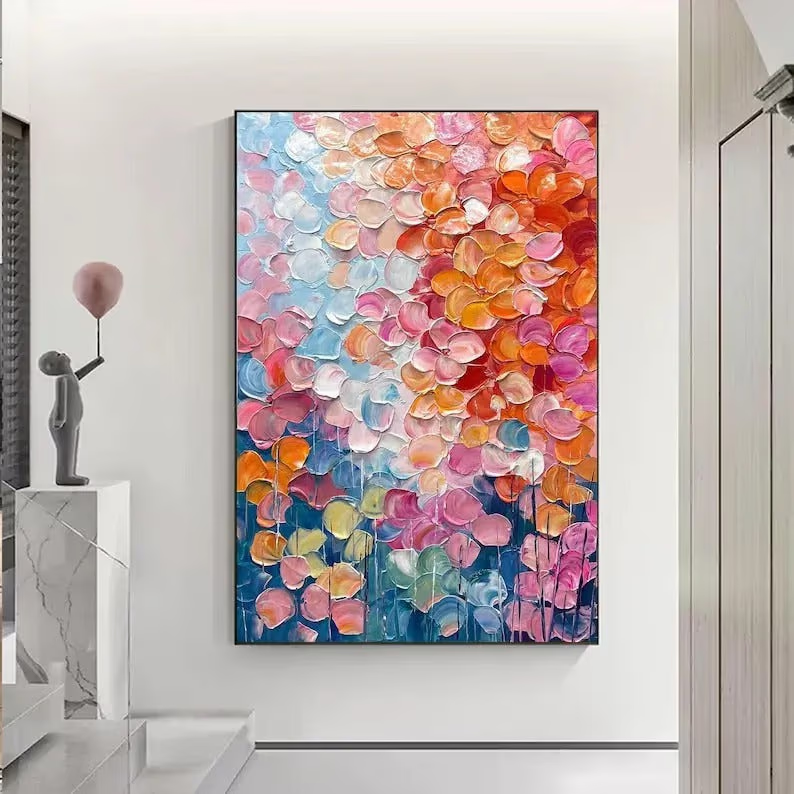
Gold, deep saturated colour and hyperrealist detail all read at this size. Check them against the headboard fabric first, because a rich painting over a rich upholstery can go heavy.
Black and white is the safe specification when the scheme is still moving. It holds against almost any palette the client lands on later, which protects you when the fabric changes after art has been ordered.
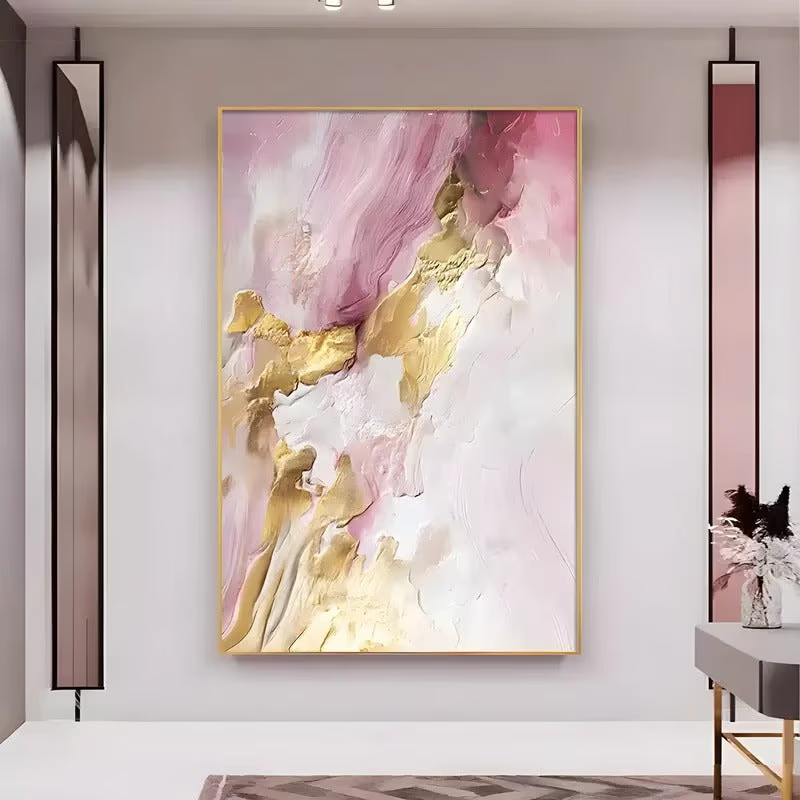
Small rooms, show units and tight plans
Vertical proportion buys apparent ceiling height in a compact bedroom, which is useful in show units where the room has to photograph larger than it is.
Light grounds bounce what daylight there is. Soft whites, creams and pale blues keep a small room from closing in around the bed.
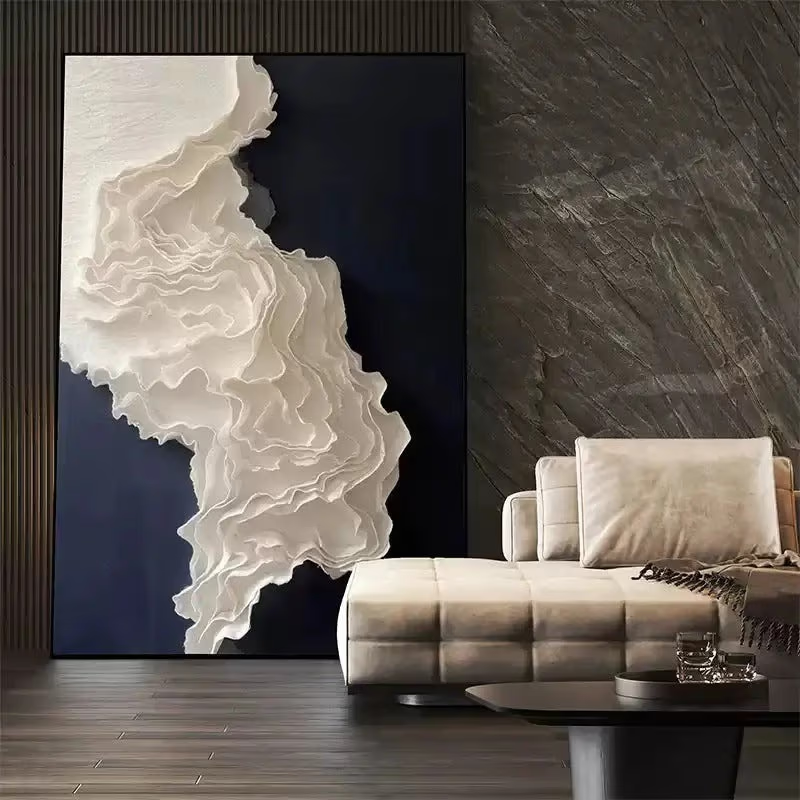
A short run of three small pieces can work in a compact room if the spacing is disciplined and nothing else shares the wall.
How do you repeat above-bed art across many rooms?
A 60-key hotel, a 40-unit development, a five-bedroom house: the same wall in every room, and no appetite for sixty separate decisions or sixty identical walls.
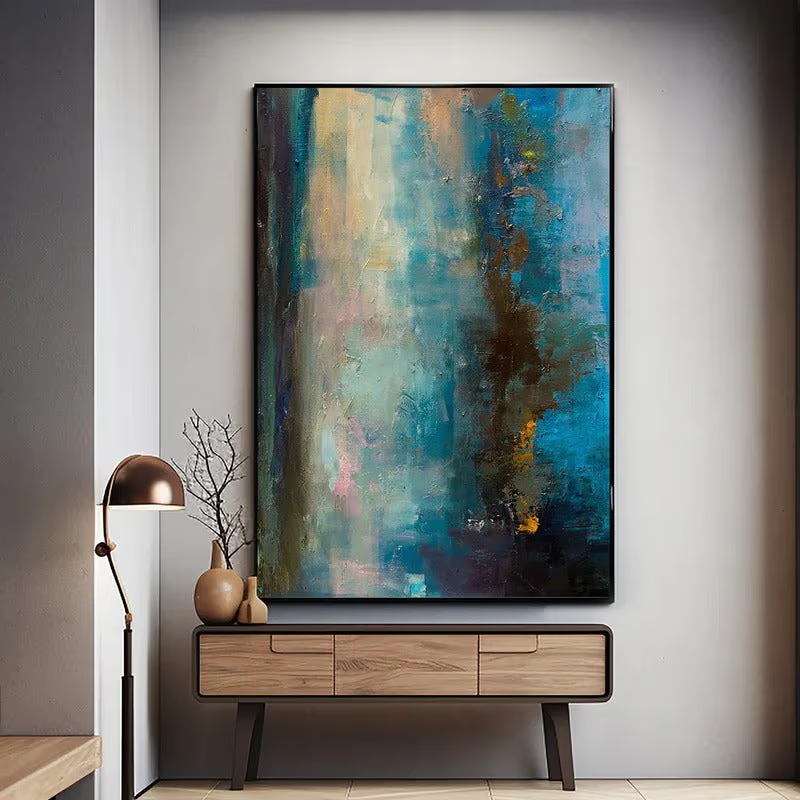
Work from one composition and vary it. Same subject, same hand, palette shifted by floor or by unit type. Guests never compare two rooms side by side. The operator sees the whole programme at once, and the photography stays consistent across the set. Because every iHomeArt piece is painted individually, that variation costs nothing extra, and two canvases from one brief will differ the way two originals always do.
Three rules that hold up on a programme:
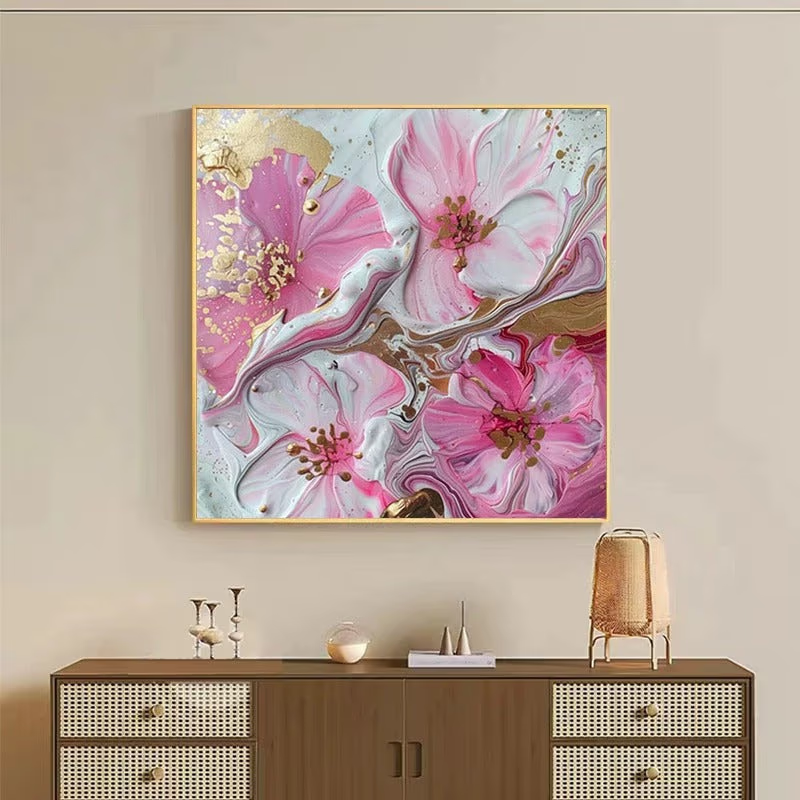
- Fix the size per room type before you choose the image. Standard king rooms take one width, twins another, suites a third.
- Keep the palette range narrow and let the composition move. Wide colour swings floor to floor make an open corridor look random.
- Sign off one sample piece before the batch runs. You see photos and video as each piece is painted and approve each stage, so the first canvas becomes the reference for everything after it.
The same brief carries into the rooms either side of the bedroom: a corridor run, a lobby wall, a restaurant, a spa, a boardroom. One studio, one palette, every size cut to its own wall.
What should you check for durability and fixing?
Above a bed is a quiet wall for wear and a serious one for safety. Housekeeping knocks the bottom edge with pillows every single day, and a piece over a sleeping guest has to be fixed properly.
- Match the anchor to the substrate and the weight. Plasterboard with no noggin behind it needs a rated toggle rather than a picture hook.
- Many operators will not accept heavy glass or mirror directly over a pillow. Check the brand standard before you specify it.
- Framed pieces ship with hanging hooks fitted. Unframed work arrives stretched and boxed, or rolled in a tube for large international shipments if you have a framer near site.
- A varnished original on canvas takes daily contact better than paper behind glass, and there is no print surface to fade along the sunlit edge of the wall.

How do you plan lead time against a handover date?
Art is usually the last line on the schedule and the first thing anyone notices missing. iHomeArt takes about 10 days to paint a piece and five to seven days in transit, with the shipping arranged for you anywhere in the world.
Place the order once the walls are painted and the bed sizes are confirmed, rather than waiting for the furniture to land. On a multi-room programme, order the sample piece a few weeks ahead so the approval loop on the first canvas does not eat into the batch. Colour corrections happen during painting, at the stage where they cost time instead of a reorder. Every piece comes with progress photographs and a final approval photograph, which are worth having in the handover file and in a developer's sales material.

What goes wrong above a bed?
- Hung too high. The gap opens, the piece floats, the bed looks orphaned. Ten inches from the headboard is the ceiling on that number.
- Too small. A 30-inch canvas over a king bed looks like an error to people who cannot explain why.
- An overloaded wall. Art, a shelf, a mirror and two sconces all in one plane. The wall above a bed carries one idea.
- Colour approved from a screen. Sign off against the real fabric and paint samples in the light of the room.
- Fixing left to the installer on the day. Put the centre point and the height on the drawing.
FAQs
Can we order the same painting in two sizes for different rooms?

Yes. Each canvas is painted to the size you give, so one brief can run at 40 inches in a guest room and 60 in the principal bedroom. The two will be close and never identical, because both are originals.
What if the client changes the palette after we approve the concept?

Colour and composition are adjusted on request. You see photos and video as the piece is painted and approve each stage, so a palette change caught in progress costs a few days rather than a reorder.
Do you deliver to a site address rather than a studio?

Yes, worldwide. We arrange the carrier and the best route, and confirm the shipping cost before dispatch. Give a delivery window that matches site access, since a rolled tube and a boxed stretched canvas need different handling on arrival.
Who paints the work?

iHomeArt is backed by Siji Art Hub in Foshan, a free-admission art complex holding more than 11,000 works with a partnership with the Foshan Academy of Art Creation. Every piece is hand-painted to order, never printed.
Most above-bed failures come down to two numbers: the width against the bed and the gap above the headboard. Get both onto the drawing, coordinate the fixing point with the ceiling services, and the remaining decision is which piece answers a room you have already designed. When the wall in front of you does not match anything in a catalogue, send the dimensions, the palette references and the handover date to [iHomeArt](https://www.ihomeart.com/) and have the piece painted to those numbers.