Palette Knife Painting: Specifying Textured Art for Client Walls
The scheme is signed off, the joinery is in, and you are walking the space with the client a week before handover. Everything works except the long wall behind the sofa. The print you shortlisted for it looked right on the mood board and now reads thin against the plaster, the boucle and the stone.
Palette knife painting solves that wall by putting real paint depth on the canvas, applied with a steel blade rather than a brush, so the surface carries its own shadow and holds a large wall the way a flat print never manages.
That depth is why the technique keeps turning up on specification sheets for lobbies, show units and private residences. It also behaves differently from other art you buy. Texture has to be lit, sized and handled with more thought, and ordering several pieces at once changes how you write the brief.
What Is Palette Knife Painting?
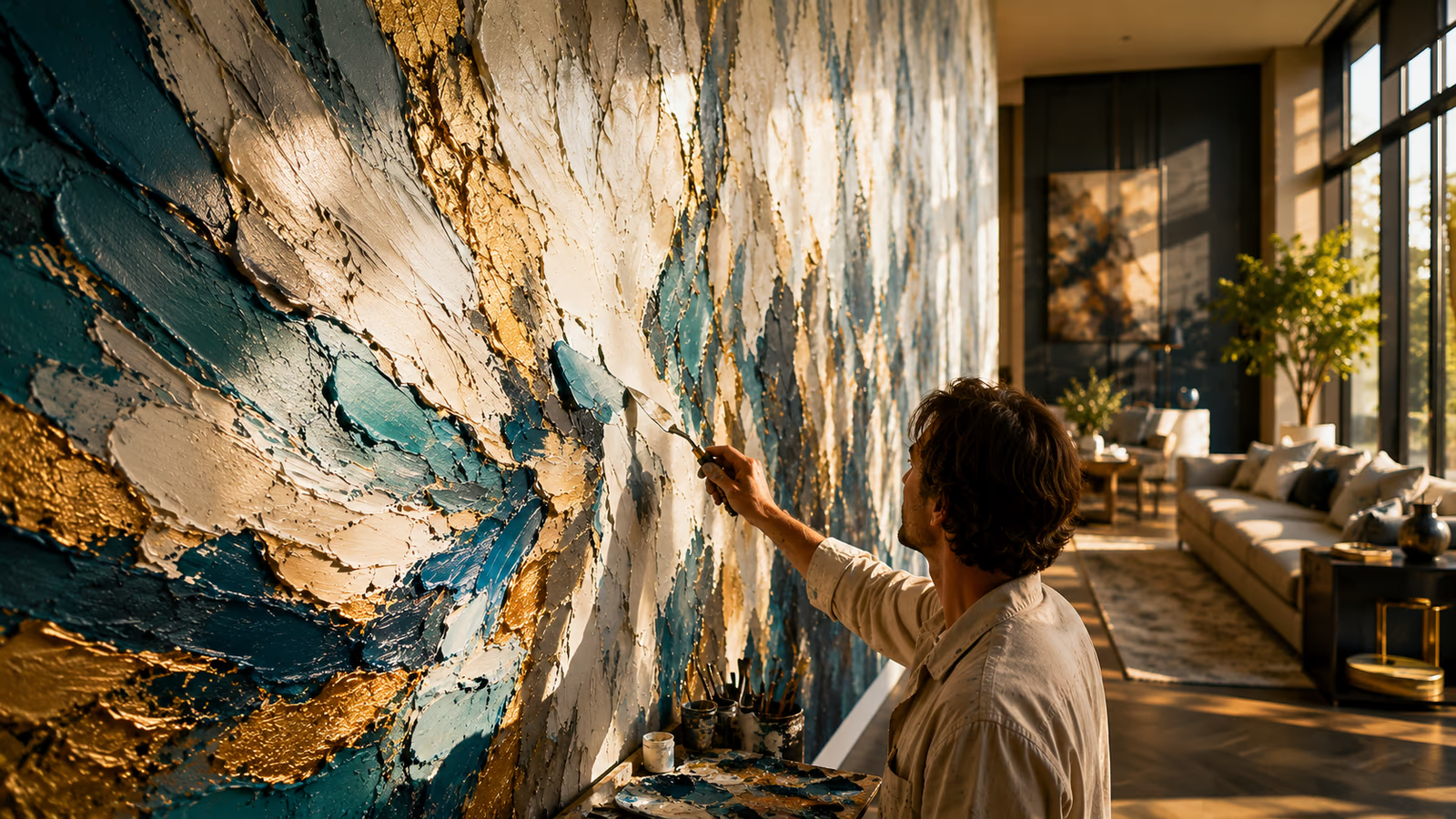
A palette knife is a steel blade with a flat, flexible end. Artists used them for centuries to mix colour on the palette, then began working the blade straight onto the canvas. The knife carries a load of paint and lays it down in one pass.
Think of spreading cold butter with a flat spatula. The motions are dragging, pressing and lifting, and each one leaves a ridge. Do that with heavy oil or acrylic, layer over layer, and the surface stands off the canvas by several millimetres.
One point of vocabulary, since it comes up with suppliers. A palette knife is long and straight and made for mixing. A painting knife is shorter and angled, with the handle cranked away from the blade. Most work sold as palette knife art is made with painting knives. The name stuck.
The technique sits at the centre of impasto, from the Italian for paste. Rembrandt built flesh and lace with it. Van Gogh made it the point of his surfaces. The same principle underpins most textured wall art in a hospitality scheme.
What Goes Into a Palette Knife Painting
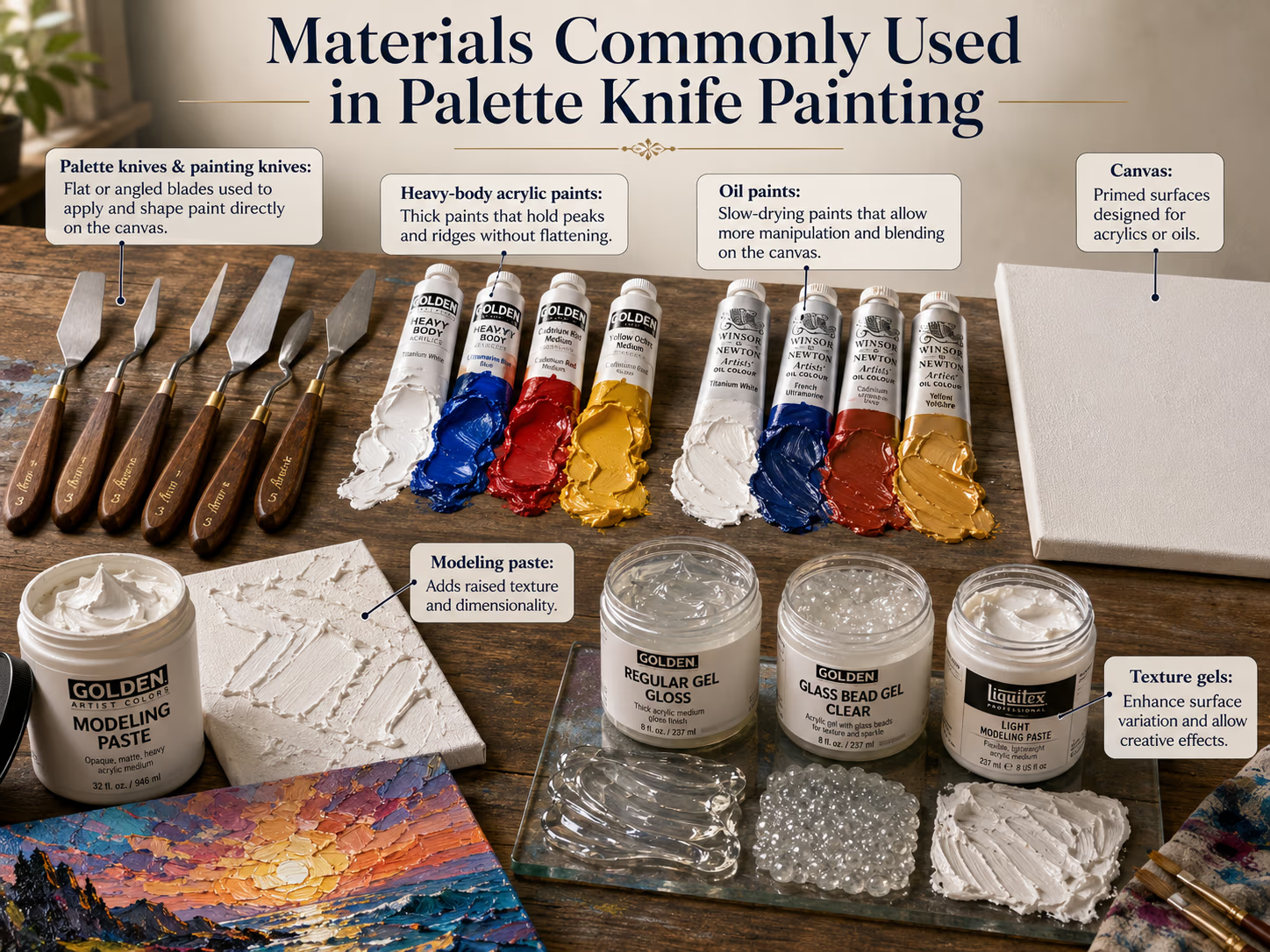
- Palette and painting knives: flat or angled blades that apply and shape paint directly on the canvas.
- Heavy-body acrylics: thick enough to hold a peak without slumping as they dry.
- Oil paints: slower to dry, so the artist can keep reworking on the canvas.
- Canvas: primed for oil or acrylic, on a bar that takes the added weight.
- Modelling paste and texture gels: build raised form and adjust the body of the paint.
Palette Knife vs Brush Painting: What Changes on the Wall?
The tool matters less than what it does to the finished surface. Four differences show up in a real room.
Texture
A brush pushes paint into the weave and levels it. A blade stacks paint on top, so the piece has real topography. Run a raking light across it and the paint casts its own shadow lines.
How light behaves
A brushed canvas reads much the same at nine in the morning and nine at night. A knife painting shifts. Ridges catch daylight from one side, then the picture restructures itself under warm evening lamps. That is an argument for it in a hotel lobby that has to work in both conditions, and an argument against hanging it under flat downlight.
Colour
Blending on the palette dulls colour slightly. A knife sets colours side by side in thick slabs and lets the eye do the mixing, which keeps them clean at distance. That matters when a piece has to read across a twelve-metre lobby.
Presence
Knife work is fast and committed, and the marks keep that energy. On a large wall you get a single object with enough weight to anchor a seating group without a gallery arrangement propping it up.
Which Palette Knife Techniques Should You Name in a Brief?
Naming the technique gets you closer to the piece you drew. Most finished works combine several, and that layering is where the complexity comes from.
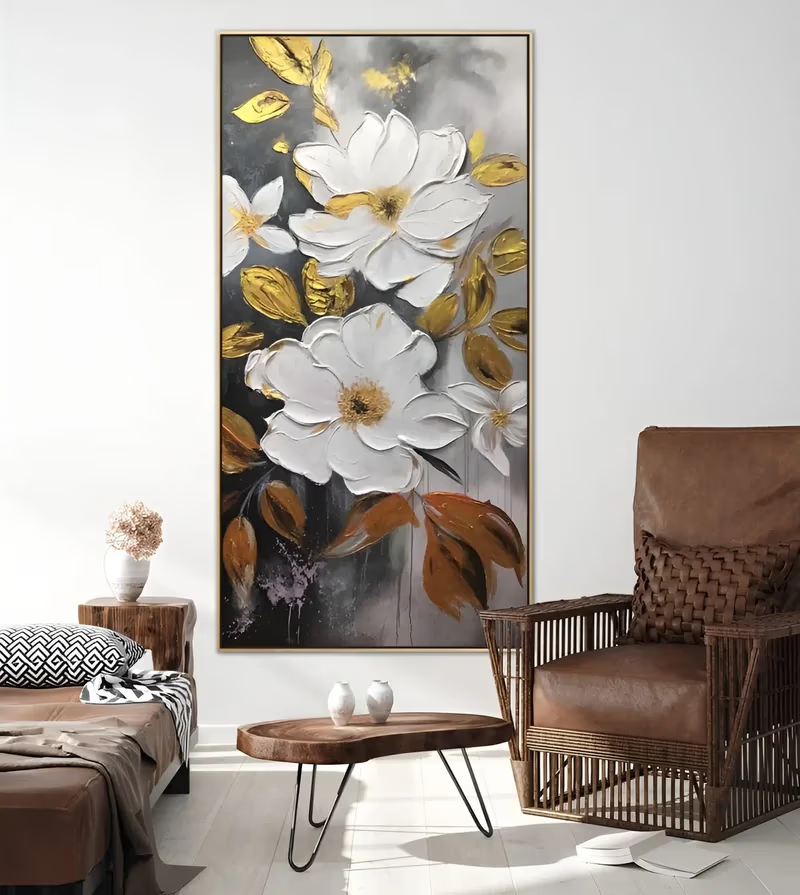
Impasto
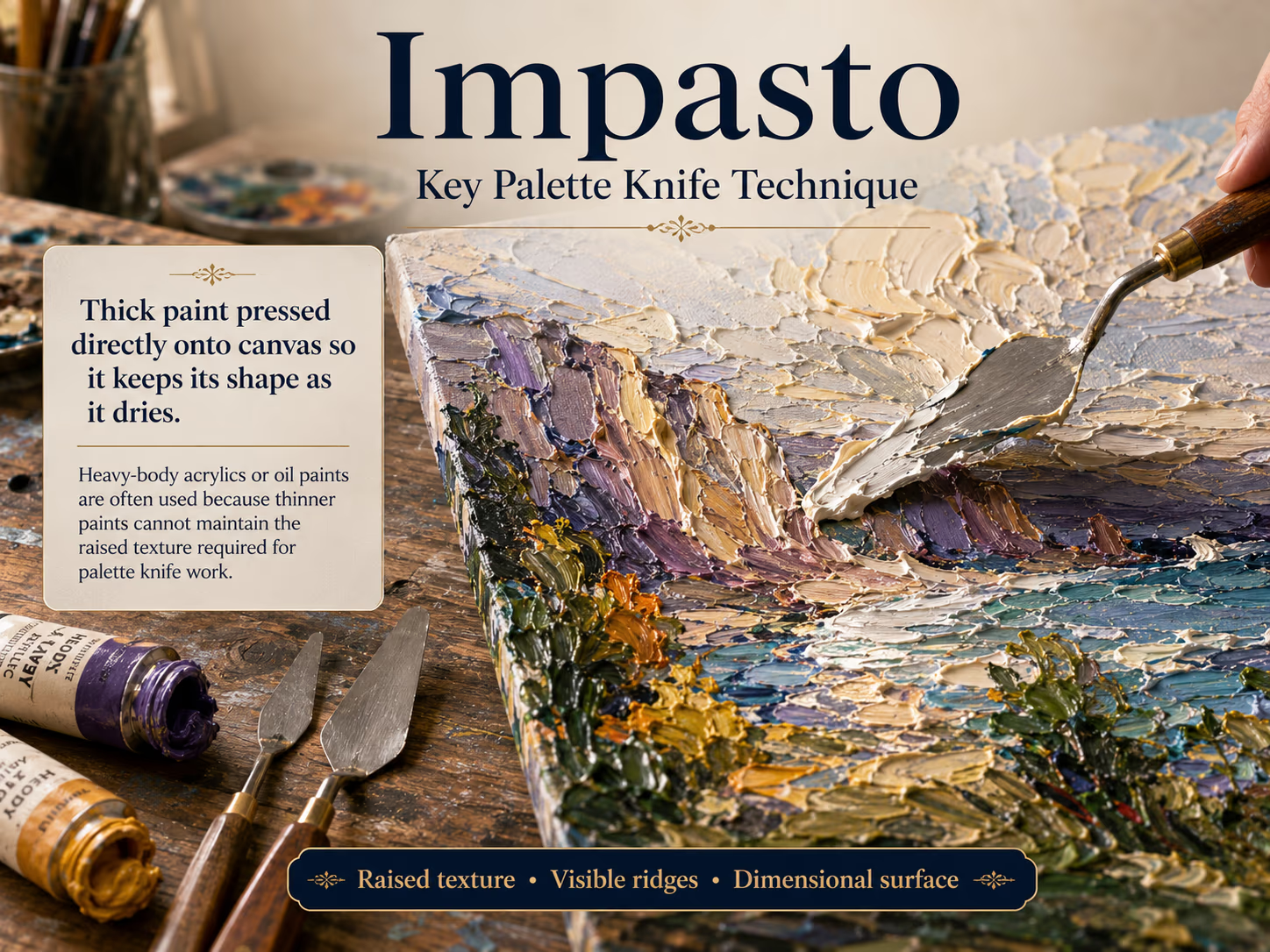
Paint pressed on thick enough to keep its shape as it dries. This is what produces the raised ridge you can feel with a fingertip. Heavy-body acrylic or oil is required, because thinned paint collapses flat before it cures.
Spreading
The blade held low and dragged across the surface, covering wide fields of colour with thinning edges where the canvas shows through. This is how a large calm ground keeps some texture.
Dabbing and stamping
The flat of the blade pressed down and lifted quickly. The centre stays dense and the edges feather. Good for petals, foliage and broken light on water.
Scraping
The blade edge dragged through wet paint to reveal the layer below. Ask for it when you want fine linear detail: bark, stone, or the scratched-back look in abstract work.
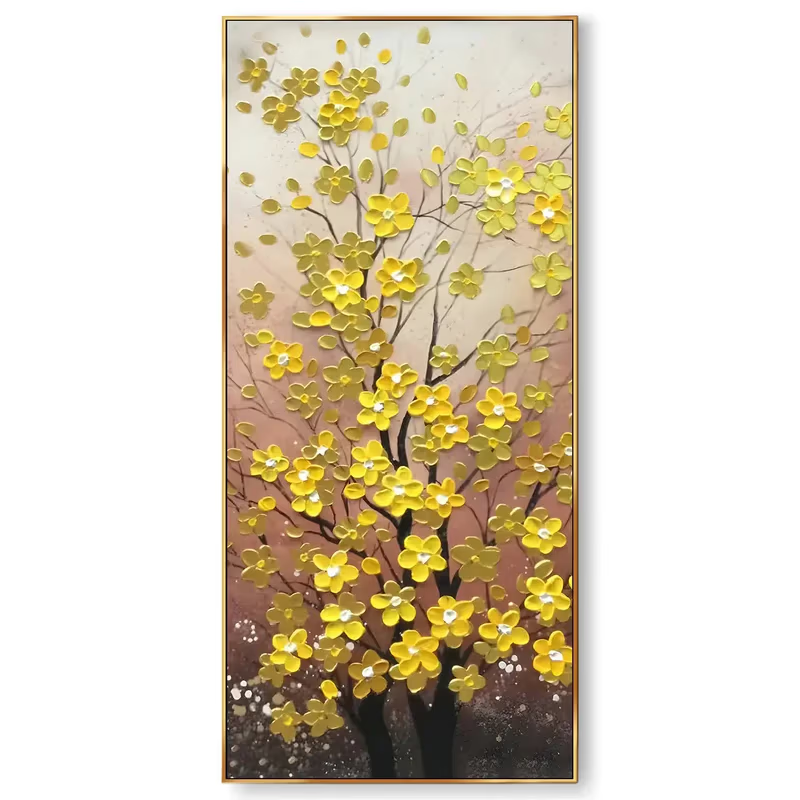
Feathering
The tip of the blade traced through soft paint for grass, hair or the edge of a wave. It adds detail without disturbing the texture around it.
Layering wet on wet
Fresh paint worked over paint that has not yet set. The layers merge at their edges and stay distinct elsewhere, which gives the surface movement.
Why Does Texture Earn Its Place in a Scheme?
It changes through the day
Hang a knife painting where daylight reaches it at an angle and it reads several ways between morning and closing time. That is worth something in a restaurant trading lunch and dinner, or a residence the client mostly sees after dark.
No two pieces repeat
Every iHomeArt piece is an original, hand-painted to order and photographed at every stage for your approval. Nothing is printed and nothing sits in stock. For a developer furnishing eight show units, that means eight related pieces rather than eight copies of one file, which is the difference between a scheme that reads as considered and one that reads as a bulk order.
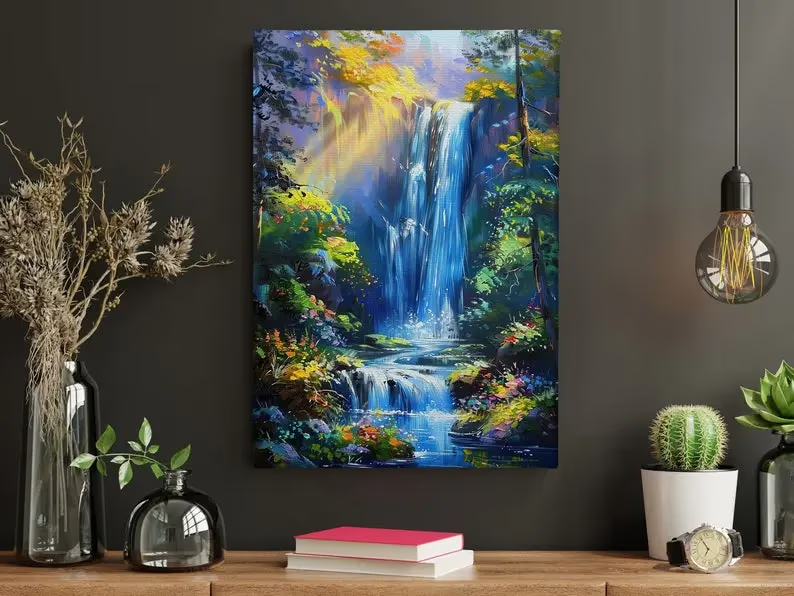
It gives the scheme material contrast
Smooth floor, flat paint, upholstered seating. Add one heavily worked surface and the room gains a register it did not have. Where the materials budget is already spent, a textured piece is often the cheapest way to give a wall depth.
Which Palette Knife Styles Suit Which Spaces?
Abstract palette knife art
With no subject to anchor the eye, colour and mark carry everything, which is where the knife performs. Sweeping slabs, abrupt shifts, a surface that looks made in one session.
One large abstract over a sofa is the standard move in a contemporary or minimalist room. It gives the space a focal point and pulls the palette together at the same time. In commercial work it goes onto the reception wall behind the desk.
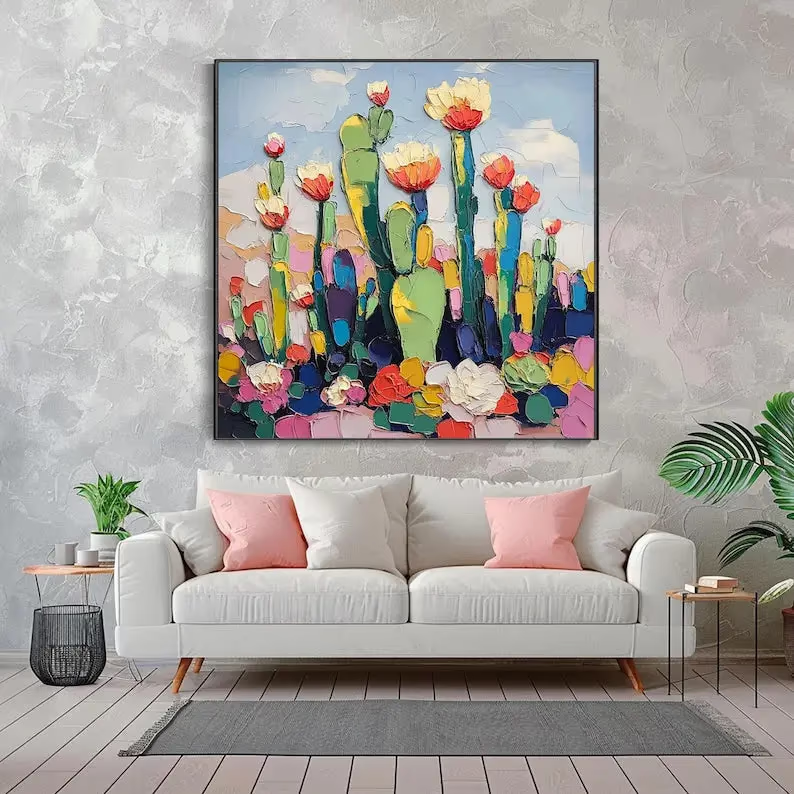
Floral palette knife paintings
Dabbing and stamping build each petal as a small raised form, heavier at the base and lighter at the edge. The result sits looser and closer to how a flower actually grows than a carefully brushed study.
Florals carry a room without being literal, so they end up in bedrooms, guest rooms, dining rooms and treatment areas. They also give you an easy family: one palette across a run of rooms, a different arrangement in each.
Landscape and nature
Skies laid in thick horizontal sweeps, treelines in dense vertical strokes, water dragged in overlapping silver and teal. You get the weather in the scene as well as the view.
These suit rustic, farmhouse and organic modern interiors. They also work in corridors and stair halls, where a guest sees the piece at an angle and in motion.

Textured plaster and 3D wall art
A close relative, working the same principle through modelling paste, mixed plaster and layered compounds. The results read as architectural, closer to a wall panel than a painting. They belong in minimalist and Japandi interiors, where colour is held back and the interest comes from material. They also hold up in spa and wellness settings, since there is nothing in them a guest gets tired of.
How Do You Specify Palette Knife Art Across a Whole Project?
Size to the wall, not to the nearest stock option
A made-to-order studio changes the arithmetic here. Rounding a 210cm wall down to a 180cm canvas and hoping nobody notices the gap stops being the only option. You give the studio the dimension you want.
The ratios still apply. A single piece above a sofa or console should cover about two thirds of the furniture width. On an open wall, aim for 60 to 75 percent of the usable span. Hang the centre around 145cm from finished floor, lower in a room used mostly seated. Tape the outline on site first, because a canvas that filled the frame in a photograph can look stranded on a real wall.
Pull the palette from the scheme, not the hero fabric
An exact match to the sofa looks timid once the room is dressed. Take a secondary colour from the rug or the undertone in the stone and ask for that to carry the piece. Colour is adjusted on request, so you can send a fabric reference and have the palette built around it.
Repeat without duplicating
The usual problem with a multi-room order is that every room looks identical or nothing relates at all. Fix the variables that create family and let the rest move. Hold the palette and the technique, change composition and format room to room. Six guest rooms with the same three colours and six arrangements read as one programme.
Order in quantity with staged approval
You see photographs and video as each piece is painted and sign off each stage before it continues. On a quantity order that is your quality control. Approve the first piece, use it as the reference, and check the rest against it before anything is packed.
Where Does Palette Knife Work Belong in Commercial Spaces?
A lobby wants one large piece, big enough to read from the door and interesting enough up close to survive a guest waiting to check in. Guest rooms want a repeatable family, usually one piece over the bed, sized so the headboard does not swallow it. A corridor run works as a rhythm: same size, same palette, a different composition at each door bay. Restaurants get the most out of texture, because the light changes across service and the surface changes with it. A boardroom wants one calm piece on the end wall that still holds the room when the screen is off.

What About Lead Time, Shipping and Handling?
Painting takes about 10 days. Transit takes five to seven days. Budget about 10 days for painting and 5 to 7 days for shipping, and order once sizes are locked rather than waiting on the last of the joinery. We arrange the shipping on the best route and confirm its cost before dispatch, so the freight line is known before the work leaves.
Work ships rolled in a tube or stretched and boxed, and framed pieces arrive with hanging hooks fitted. Rolled canvases need a local stretcher booked in, so allow for that in the programme. On site, handle textured work by the frame or bar and keep nothing resting against the face. Heavy impasto keeps curing for weeks after it leaves the studio, so hang it clear of guest contact zones and dust it with a dry soft brush rather than a cloth, which snags on ridges.
On framing, a float frame or no frame at all suits heavy texture. A moulding competing at the edge takes attention off the surface you paid for.
What Goes Wrong When Specifying Textured Art
- Sizing down to save budget. An undersized piece on a big wall costs you the wall. Specify one correct size rather than two small ones.
- Flat lighting. An even wash from a ceiling downlight kills the shadow that makes the texture work. Angle the light, or accept that you are buying a flat picture.
- Crowding it. A gallery wall dilutes a knife painting. Give it clear space and let it carry the elevation.
- Ignoring wall colour. Pale work on stark white washes out. Dark work on a dark wall disappears. Check the piece against the actual paint reference.
- Accepting printed texture. Plenty of suppliers print a photograph of impasto onto canvas and add gloss gel. It reads as manufactured from a metre away, which is where the client will be standing.

FAQs
Can you match a specific fabric or paint reference?
Yes. Send the reference and the palette is built around it. Colour and composition are adjusted on request, and you approve the piece in progress through photos and video before it is finished.
Is oil or acrylic better for a project?
Acrylic dries faster and layers cleanly, which suits a tight programme. Oil stays workable longer and gives softer transitions. Both hold heavy texture. Specify by the look you want and let the schedule decide the rest.
What documentation comes with each piece?
Every painting comes with progress photographs and a final approval photograph, which is usually enough for a client handover file or an FF&E schedule.
Who is behind the studio?
The work is backed by Siji Art Hub in Foshan, a free-admission art complex holding a collection of more than 11,000 works, in partnership with the Foshan Academy of Art Creation.

Can a piece be reordered if one is damaged on site?
A replacement is repainted to the same brief and palette, so it reads as part of the same family without being an exact copy. Allow the usual 10 days for painting and 5 to 7 days for shipping.
Palette knife art rewards a specifier who plans for it: the right dimension, a light source hitting it at an angle, and a palette drawn from the scheme rather than lifted off the nearest cushion. Get that right once and the same brief scales across a floor of guest rooms or a run of show units without anything looking duplicated. If you have a wall dimension and a handover date, [iHomeArt](https://ihomeart.com) paints to both.